
www.globaltrendmonitor.com
www.globaltrendmonitor.com

Aromas
Citronella
White Frangipani
Pink Frangipani
Sandlewood Vanilla
Japanese Honeysuckle
Vanilla
Sandlewood Vanilla
Aloe Vera Flavoured Soap
Rose Petal Soap
Orange Flavoured Soap
Moringa Flavoured Soap
Neem Flavored Soap
Lemon Grass Flavoured Soap
Mint Flavoured Soap
Rosemary Flavoured Soap
Basil Flavoured Soap
Goat Milk Flavoured Soap
Charcoal Flavoured Soap
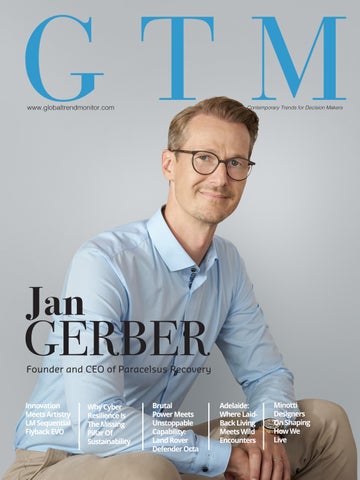
The Longevity Paradox
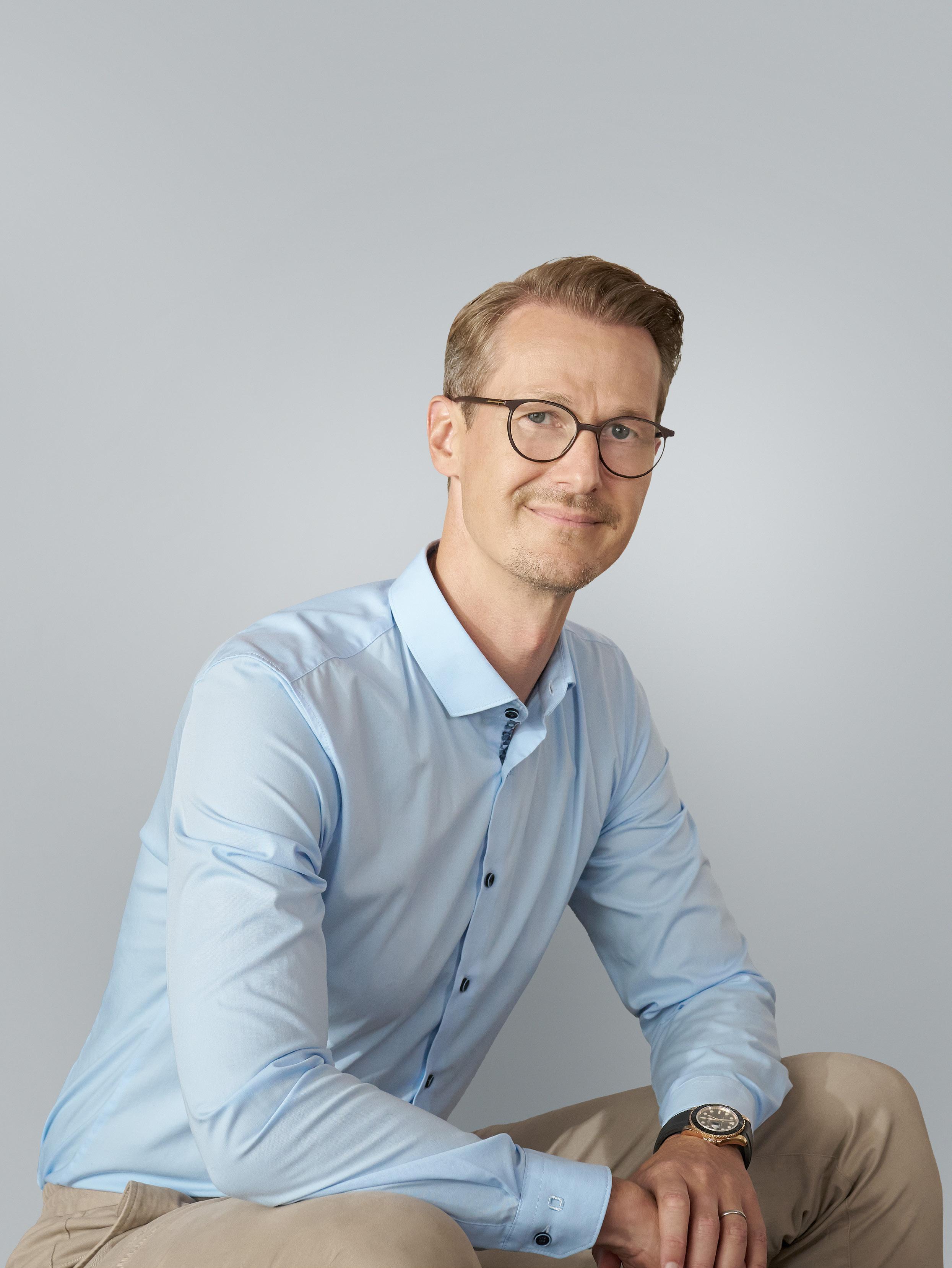
Jan Gerber On Mental Health,
And Why Living Longer Means Living Better
Asset Visibility And Attack Surface Management In The Age Of AI
Short Term Results Versus Long Term Performance
Hakan Ozel, Vice President Operations & General Manager, Shangri-La Dubai
Blue Zones: The Inspiration For Green Living In Dubai
How
Black Badge At 10 How Rolls-Royce Rewrote The Language Of Modern Luxury
The Year Of Resilience: What Will 2026 Demand From CISOs?
The Resilience And Sovereignty Mandate
How Critical Infrastructures Are Forcing Cybersecurity’s Evolution Why Cyber Resilience Is The Missing Pillar Of Sustainability
The Future Of Racing And Business Jaguar TCS Racing’s Technology-Led Approach To Efficiency
Star Alliance Strengthens Global Network With ITA Airways Integration
Adelaide Where Laid-Back Living Meets Wild Encounters
Where Supercars Meet Storied Hospitality Preferred Hotels & Resorts Launches A Grand Touring Escape Through The Alps
Dubai Accelerates E-Commerce Growth Through Business-Friendly Regulation
Keturah Resort Signals The Next Chapter Of Wellness-Led Luxury Living In Dubai
Milan To Host Global Hospitality Design Leaders As Industry Prepares For Its Next Evolution
A Night Of Ribs, Rhythm And Indulgence At Frank Meat & Taps Bold In Red
Elevated Essentials For Every Journey
Discover Heritage & Nahar By Batlah Curated Scents For The Discerning Connoisseur
New Technology Trends
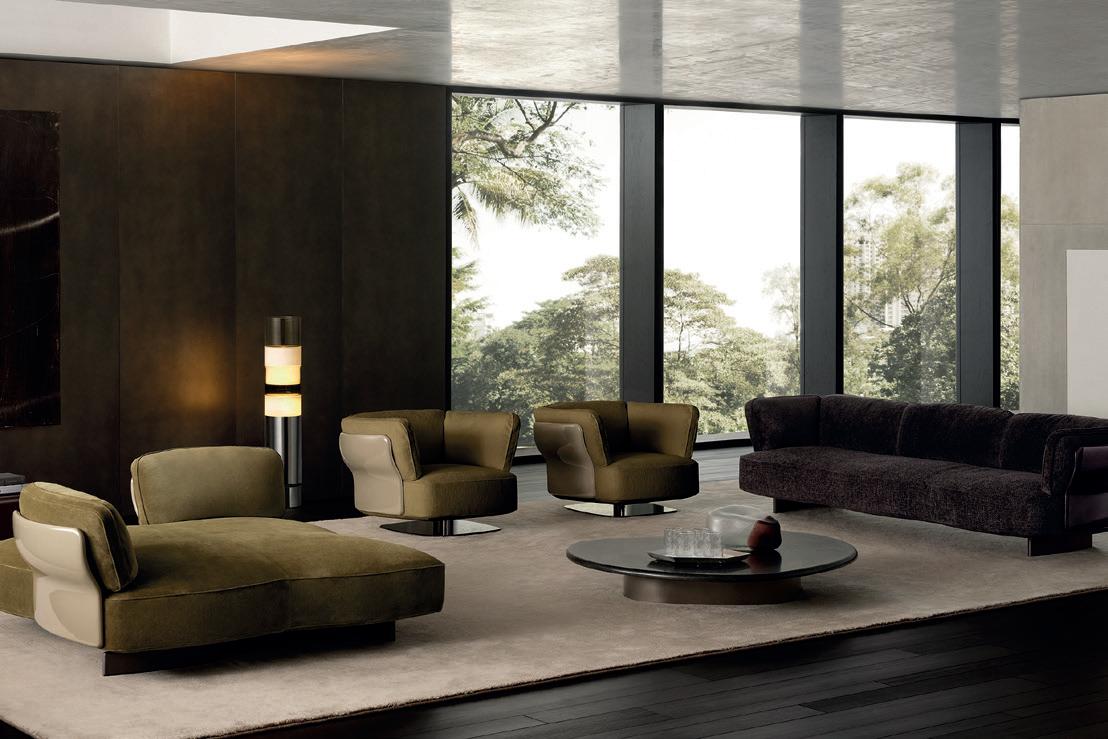
Minotti Designers On Shaping How We Live
Soft Luxury
Zara Home Unveils A

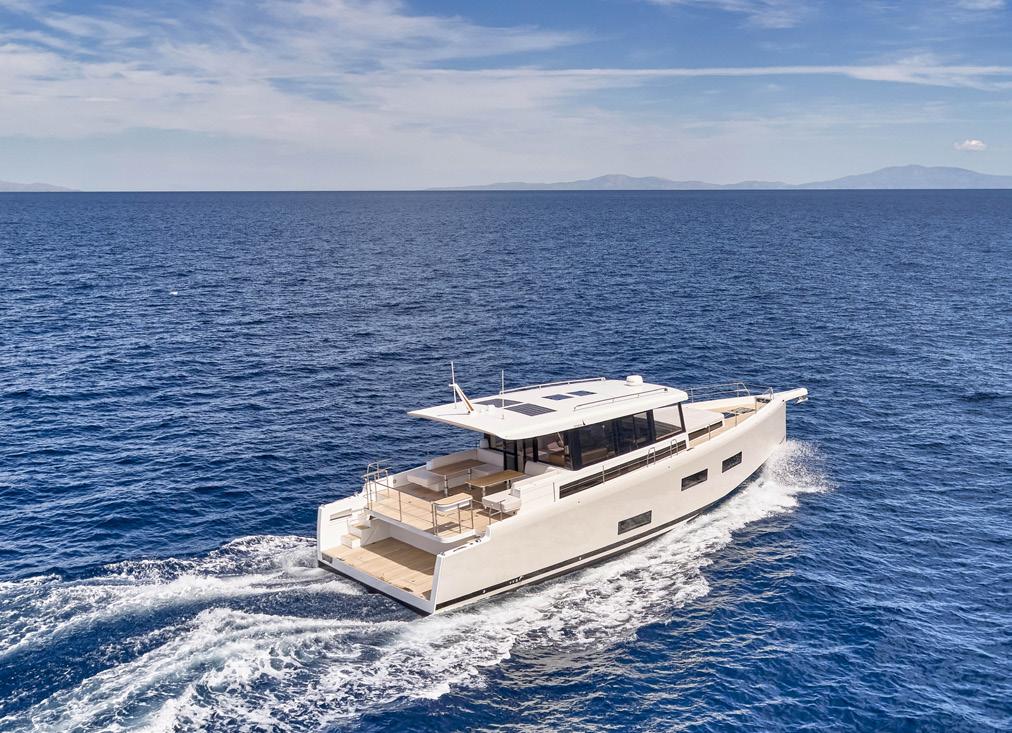
Omikron Yachts
The Greek Builder Bringing A New Calm To Modern Yachting
Style-First Urban SUV With Substance To Match Lynk & Co 06
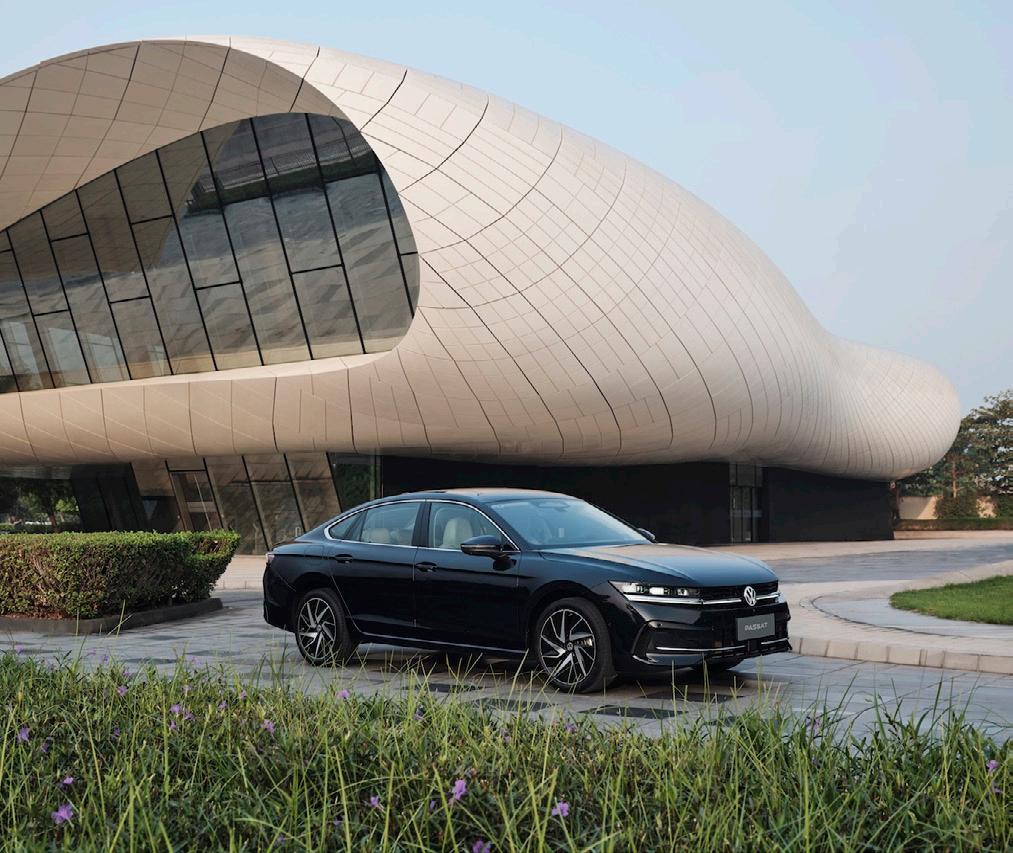
Volkswagen Passat — A Car Enthusiasts’ Sedan That Feels Familiar And Refined
Brutal Power Meets Unstoppable Capability Land Rover Defender Octa
RAM Tungsten Power, Presence, And A New Perspective On Luxury
Inanna Reborn
A Desert Awakening Of Myth, Memory And Modern Luxury
World Car Awards 2026

PUBLISHER
Catherine Gilbert
EDITOR IN CHIEF
Shereen Shabnam
Editorial Contributors
Siew Lin
Natasha Jasmin Dury
Nishrat Nazeen
Eric Richard Dury
Art Director
V. Suquila
Correspondence Address
H3J LLE
Office 404, Building B
Old Saaha Offices - Souk Al Bahar
Old town Island - Burj Khalifa District
P.O. Box 487177, DUBAI - U.A.E.
Tel: +971 50 769 0087
Impression/Printing
Silver Point Printing Press L.L.C
Shed No:05 Caterpillar Building Salah
Al Din St Al Khabaisi - Deira - Dubai
A Publication by
H3J FZ LLE
Magazine online sur www.globaltrendmonitor.com
International Owners
Business and Lifestyle Updates
RCBS201811862
Copyright: “All right reserved. No part of this publication may be reproduced without written permission from the publisher.”


Dear Readers,
We are living in an age obsessed with time. How to extend it, optimize it, and ultimately, how to master it. Yet as this issue of GTM explores, longevity is no longer just about adding years to life, but about adding life to those years. This is the paradox: in striving to live longer, we are being forced to ask what “living well” truly means.
Our cover story with Jan Gerber cuts to the heart of this conversation. In a world of constant acceleration and digital noise, mental health has become the defining currency of modern longevity. The pursuit of more productivity, more success and more years often comes at the cost of presence, balance, and purpose. Gerber’s perspective challenges us to reconsider whether longevity without quality is, in fact, progress at all.
Across this issue, that tension between short-term gain and long-term value reveals itself in many forms. From Hakan Ozel’s insights on operational leadership to the evolving priorities of CISOs navigating resilience in an AIdriven threat landscape, the message is consistent: sustainability, whether personal, corporate, or technological, demands a longer view.
We see this philosophy shaping industries in unexpected ways. The concept of Blue Zones is influencing Dubai’s next generation of luxury developments, where wellbeing is no longer an amenity but a foundation. Cyber resilience is emerging as a critical pillar of sustainable infrastructure. Even in automotive and motorsport innovation, efficiency and longevity are redefining performance itself.
And yet, longevity is not purely functional. It is also deeply experiential. Whether it is the quiet sophistication of Alpine hospitality, the sensory storytelling of curated scents, or the enduring appeal of design-led living, this issue celebrates a slower, more intentional kind of luxury. One that values meaning over excess, and legacy over immediacy.
Because ultimately, the future will not be defined by how long we live, but by how well we choose to live.
Welcome to The Longevity Paradox issue.
Enjoy the read.
Shereen Shabam Editor-in-Chief
Global Trend Monitor Magazine editor@globaltrendmonitor.com

Nestled in the heart of Dubai, a sanctuary of greenery and horses awaits you Here, elegance meets warmth, a place where families gather and memories are made From weddings to birthdays, to corporate gatherings, every event finds its perfect setting Dubai Polo & Equestrian Club more than a club, it’s an experience of its own
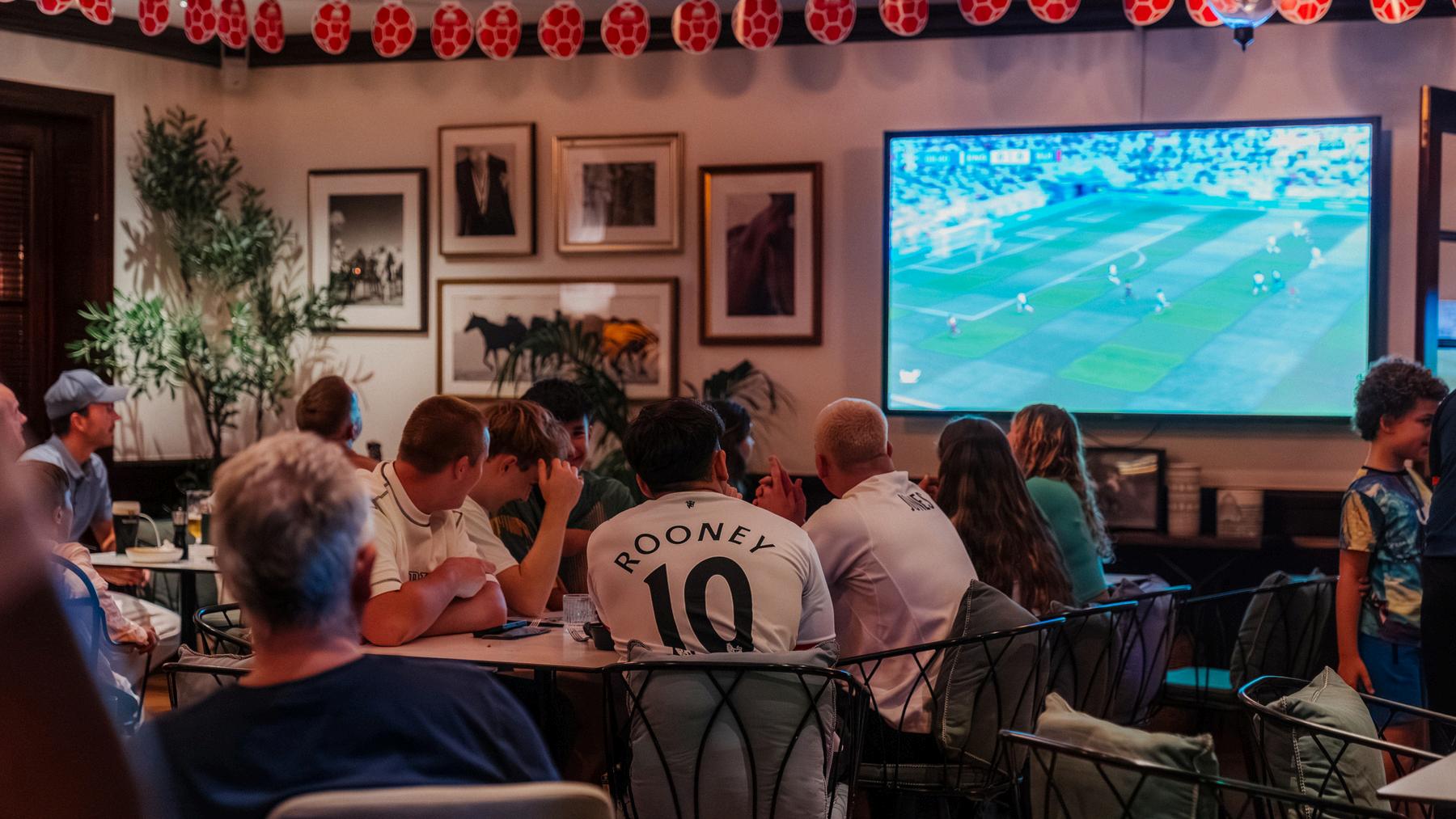

Enjoy great varieties of beverages, bar bites, hubby bubbly while catching up on your favorite sport with friends whilst soaking in breathtaking outdoor views and Polo action on the terrace

utmost relaxation & rejuvenation with our pampering signature treatments

Head outdoors in the sunshine and enjoy our pool where you can feast on fresh light bites, including sandwiches and healthy salads
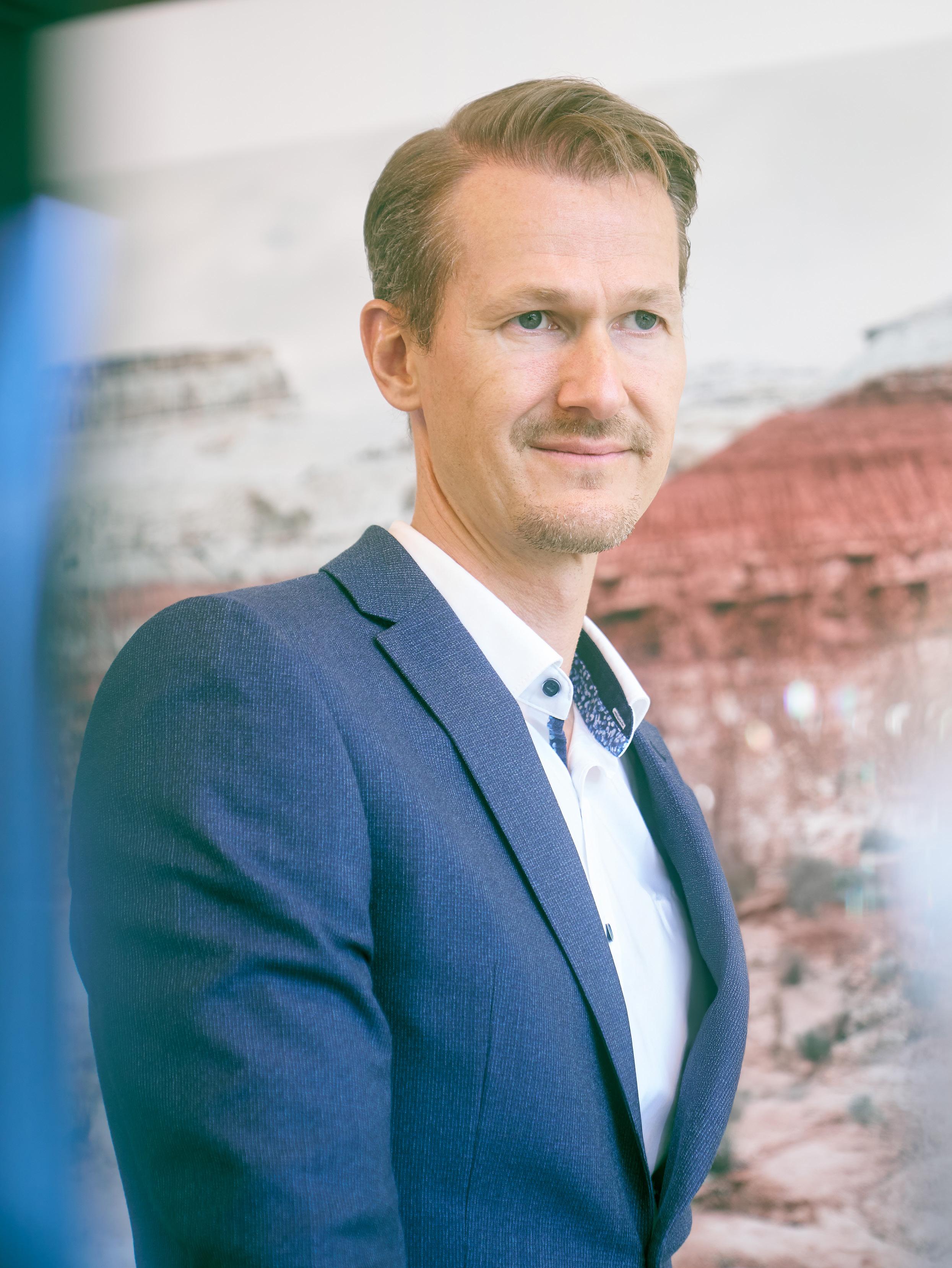
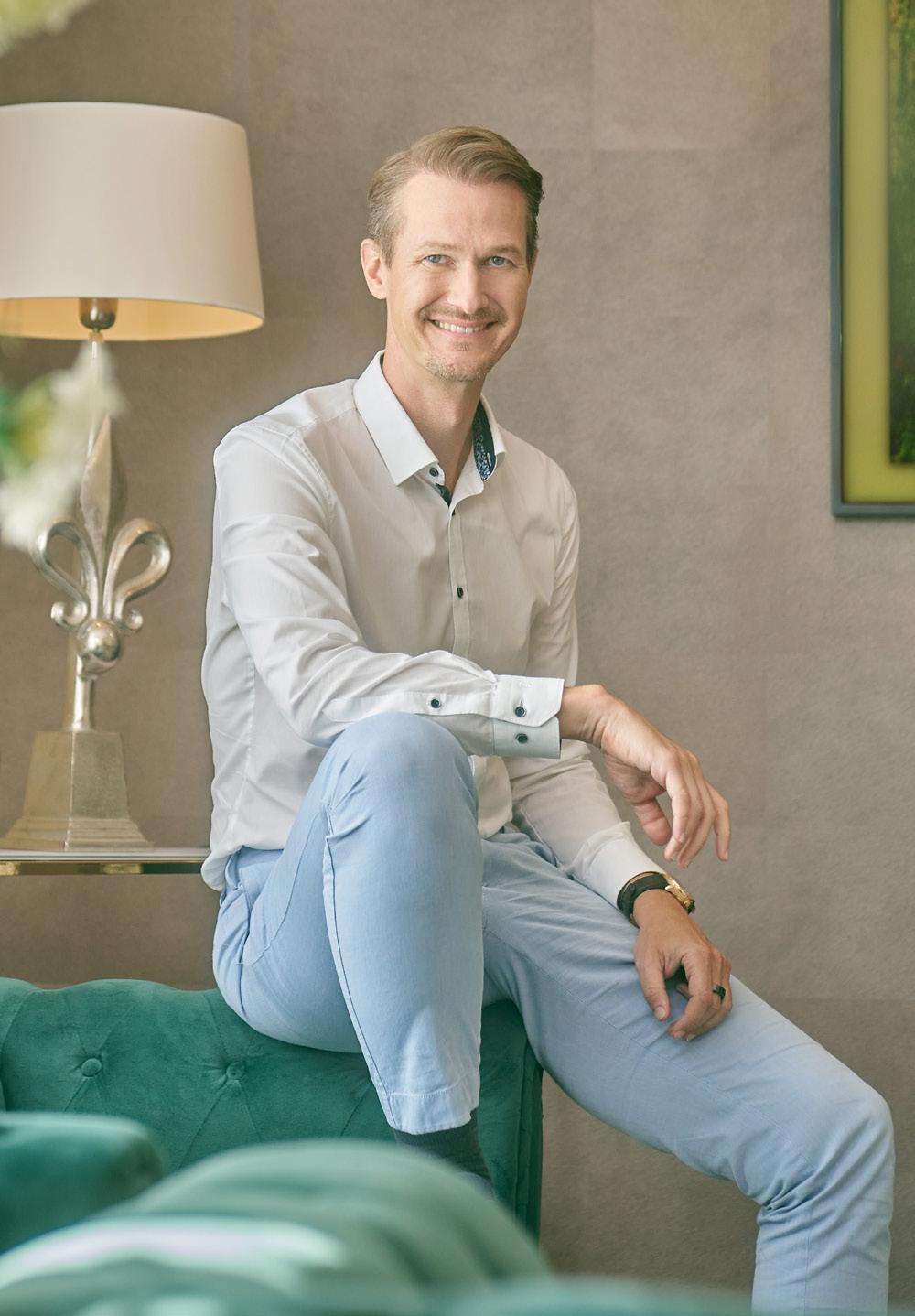
Jan Gerber on mental health, modern obsession, and why living longer means living better
By Shereen Shabnam


Longevity has become the defining health aspiration of our time. Once the domain of scientific research and niche biohacking circles, it is now a global lifestyle movement— tracked, measured and optimised with almost obsessive precision. From sleep metrics and supplement regimens to IV therapies and personalised diagnostics, the modern pursuit of a longer life has evolved into a multi-trillion-dollar industry. Yet beneath this relentless drive lies a more complex and often overlooked question: are we sacrificing our mental wellbeing in the process of trying to extend our years?
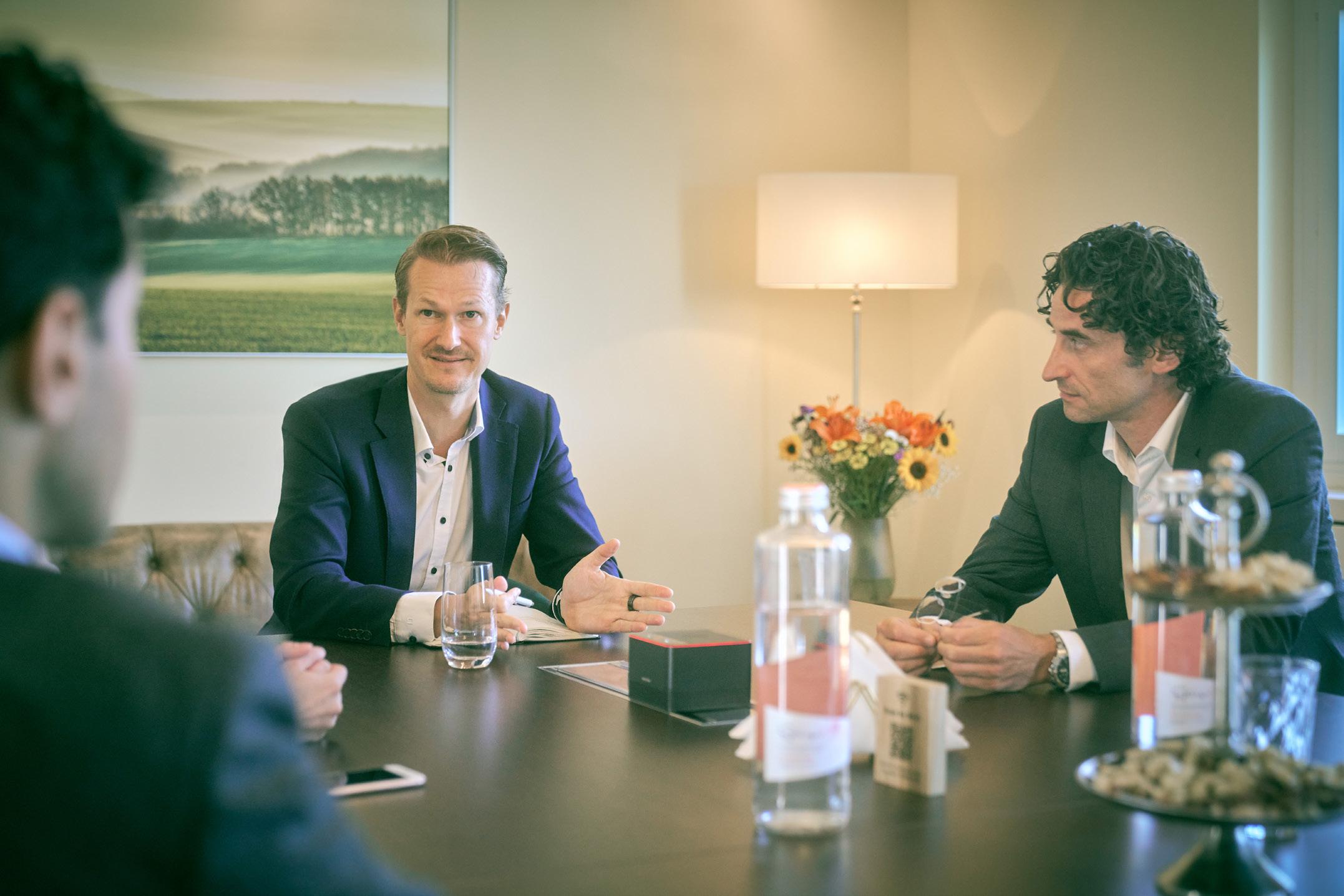
I met Jan Gerber, founder and CEO of Paracelsus Recovery recently in Dubai, and this question for him is no longer theoretical. At his Zurich-based clinic, widely recognised for its discreet, one-client-at-a-time approach
to mental health, he is witnessing a growing pattern among high-performing individuals whose pursuit of longevity has crossed into psychological strain.
What begins as self-care, he observes, can quietly transform into self-surveillance, where every fluctuation in the body becomes a source of anxiety rather than insight.
This phenomenon has been identified as Longevity Fixation Syndrome, a condition characterised by an obsessive focus on extending lifespan through rigid routines, constant monitoring and fear-driven health behaviours. Increasingly, individuals arrive seeking optimisation but find themselves depleted, mentally exhausted, emotionally disconnected and paradoxically further from the wellbeing they set out to achieve.


At the heart of this paradox lies a fundamental misunderstanding of longevity itself. The modern narrative tends to prioritise control over diet, sleep, performance and even ageing. Yet, as Gerber points out, the very stress created by this hyper-control can undermine the body’s natural balance. Elevated cortisol levels, disrupted sleep and chronic inflammation are not side effects of poor health habits, but often the result of trying too hard to perfect them.
For Gerber, longevity cannot be separated from mental health. “There is no longevity without mental health,” he emphasises a statement that reframes the entire conversation. It shifts the focus from external optimisation to internal equilibrium, from performance metrics to emotional resilience.
This perspective is supported by decades of research. Long-term studies consistently show that the most significant predictor of longevity is not diet, exercise or even genetics, but the quality of human relationships. Individuals who maintain strong, supportive connections tend to live longer, healthier lives, not simply because of emotional comfort, but because connection itself regulates stress, improves physiological function and enhances overall wellbeing.
It is a reality that stands in stark contrast to today’s hyper-individualised wellness

culture. While modern longevity practices often emphasise personal control, Gerber highlights that human beings are inherently social. Historically, survival and wellbeing were rooted in community, shared purpose and a sense of belonging. In many ways, the erosion of these structures has left a gap that no supplement or technology can fully replace.
At Paracelsus Recovery, this understanding shapes a deeply integrated approach to treatment. The clinic combines psychiatry and psychotherapy with what is now widely referred to as longevity or functional medicine, long before it became a global trend. Each programme is entirely tailored, examining not only mental health, but also the biological systems that influence it, from gut microbiome and hormonal balance to micronutrient deficiencies and inflammatory markers.
This convergence of disciplines reflects a broader shift in how health is understood. Rather than treating symptoms in isolation, the focus is on the individual as a whole. Advanced diagnostics, including genetic profiling and comprehensive laboratory testing, allow for highly personalised interventions designed to restore balance rather than impose rigid control.
Yet, despite the sophistication of these methods, Gerber remains clear that no treatment can replace the fundamentals of human connection. Many of the issues he encounters are not rooted in a lack of knowledge or access, but in deeper emotional challenges, loneliness, unresolved stress, or a loss of purpose.
This is particularly evident among high achievers, where success often comes at the expense of emotional balance. Anxiety, he explains, is the body’s natural response to uncertainty. But in an environment of constant stimulation, information overload and performance pressure, that response can become amplified, leading to chronic stress and burnout.
The challenge, then, is not to eliminate anxiety, but to understand it and to distinguish between healthy vigilance and spiralling control. The former allows for awareness and proactive care; the latter reduces life to a series of metrics, leaving little space for spontaneity, connection or joy.
As the global wellness industry continues its rapid expansion, the importance of this distinction becomes increasingly urgent. Longevity, once a fringe concept, is now embedded in mainstream culture. But as Gerber’s insights suggest, its true value lies not in the number of years we accumulate, but in the quality of those years.

By: Mohammed Al-Moneer, Sr. Regional Director, Türkiye, France, Africa & Middle East at Infoblox
Artificial intelligence is rapidly reshaping how organizations across the Middle East think about IT operations and cybersecurity. From predictive analytics to automated remediation, AI is widely seen as the engine that will finally reduce operational complexity and help enterprises move closer to a “zero-touch IT” model.
Yet despite this momentum, many AI initiatives struggle to scale or deliver tangible results. The reason is not the technology itself, but a more fundamental issue: a lack of accurate, comprehensive visibility into digital assets.
AI depends on data. If that data is incomplete, outdated, or inconsistent, automation becomes unreliable and risk increases rather than decreases. In today’s hybrid, highly distributed environments—spanning on-premises infrastructure, multiple clouds, SaaS platforms, and remote endpoints—
maintaining an accurate understanding of what assets exist and how they are connected has become one of the most pressing challenges for IT and security leaders.
Asset visibility is no longer just about keeping an inventory of servers and devices. It now extends to applications, workloads, virtual machines, containers, and the relationships between them. Every asset represents both business value and potential exposure.
Without clear visibility, organizations cannot confidently automate operations, enforce security controls, or respond quickly to incidents. In the age of AI, visibility is the foundation on which everything else is built.
One of the most common barriers to achieving this foundation is the Configuration Management Database (CMDB). In theory, the CMDB should act as a single source of truth for IT assets
and their dependencies. In practice, many CMDBs are significantly inaccurate, often reflecting only a fraction of what is actually deployed in the environment.
When accuracy falls to 20, 40, or even 70 percent, trust in the data erodes, and teams revert to manual checks and workarounds.
This challenge is universal. Across industries and geographies, organizations acknowledge that an unreliable CMDB undermines both operational efficiency and security posture. More importantly, it places a hard limit on what AI can achieve.
If AI systems are fed poor-quality data, the outputs—whether automated actions or security decisions—will be equally flawed. For this reason, fixing asset data accuracy is not an optional improvement; it is the first and most critical step in any successful AI initiative.
The traditional approach to this problem has been to rely on people and processes: periodic audits, manual updates, and strict governance rules. While well intentioned, these methods cannot keep pace with the speed and scale of modern IT. Assets are created, modified, and retired continuously, often without direct human involvement. Expecting teams to manually track these changes is unrealistic.
What is required instead is an automated, AI-first approach to asset discovery and validation. By continuously observing the network—where every device, application, and workload must communicate—organizations can build a dynamic, real-time view of their environment.
This approach reduces dependence on manual input and provides a far more accurate and timely representation of reality. With trustworthy asset data in place, AI can begin to deliver meaningful automation at the infrastructure and application levels.
However, asset visibility on its own is not sufficient to address today’s attack surface. Modern threats do not operate in silos. They exploit the connections between assets, identities, and data. A compromised credential, for example, can provide access to multiple systems and sensitive information in a matter of minutes. To respond effectively, organizations must be able to correlate asset intelligence with identity context and other critical data sources.
Integrating these perspectives enables faster detection and more precise response. When asset data, user identity information, and behavioral signals are aligned, security teams gain a clearer understanding of what “normal” looks like—and what does not. This crossdomain visibility allows AI-driven systems to prioritize risks accurately and automate containment actions before incidents escalate into major breaches.
The need for this integrated approach is becoming more urgent as adversaries themselves adopt AI and automation. Attackers are using advanced tools to rapidly scan for exposed assets, identify misconfigurations, and move laterally at machine speed.
Defending against these threats with manual processes is no longer viable. Organizations must match automation

with automation, powered by accurate, correlated data.
For enterprises in the Middle East pursuing ambitious digital transformation agendas, this represents both a challenge and an opportunity. AI can be a powerful enabler, but only if it is built on a solid foundation of visibility and data integrity.
Investing in accurate asset intelligence today will pay dividends across operations, security, and resilience tomorrow.
At Infoblox, we see asset visibility as a strategic cornerstone for AI-driven IT and security. By establishing a reliable,
continuously updated understanding of assets at the network level—and aligning that intelligence with identity and security workflows—organizations can reduce manual effort, shrink their attack surface, and move closer to the promise of zero-touch IT.
In an era defined by AI, success will not be determined by who adopts the most tools, but by who builds the most trustworthy foundations.
Comprehensive asset visibility and effective attack surface management are no longer optional. They are essential to making AI work—securely, reliably, and at scale.

Organizations, and even individuals constantly face a tension between delivering short-term results and investing in long-term performance. This is and will be inevitable as long as we are not alone in business, and most importantly, the crisis, for any reason affecting business, will always exist. On the surface, the choice can seem straightforward: immediate gains provide quick validation and ease of tension often ensure survival, particularly during the crisis periods. However, an exclusive focus on the short term can quietly and surely undermine the organization’s vision, purpose, creativity, innovation, customer care, sustainability, resilience and eventually business for the future.
Hence, understanding how these two approaches differ and how they can be
balanced is essential for any meaningful business and its success.
Short-term results are attractive because they are visible, measurable, and immediate in the areas of deliverables. In business, this might mean hitting daily, monthly or even quarterly targets, boosting sales through promotions, tactics, or cutting costs and expenses to improve margins. For individuals, it could look chasing quick financial returns, or prioritizing tasks that yield instant recognition in the office. These actions create a sense of momentum. They reassure investors, leaders, or even individuals that progress is being made to instantly react to situation.
There are reasonable advantages to this approach. First, short-term wins build
confidence. They can energize teams and create a culture of achievement, which I believe is the foundation of success. Second, they improve cash flow and resource availability, which can be critical for survival, especially in volatile markets. Third, they provide rapid feedback. When results are immediate, it is easier to test ideas, short term tactics and promotions test the market, support the adjusted strategies, and learn the reaction and behavior quickly.
However, the downsides of overemphasizing short-term outcomes are equally significant. One of the most common consequences is the erosion of quality, which is extremely critical in a business such as luxury service. When speed and desire for instant results become the priority, corners are
often cut, whether in customer service, product development or provision. This can damage reputation and trust in the brand and organization over time, even if the initial numbers look strong. Readers of this article should take note: customers will always remember either way in the future, how you took care of them particularly during the vulnerable moments, how you made them feel and valued.
Another risk is negligence in innovation. Breakthrough ideas rarely produce instant results. They require experimentation, failure, and progressive investment. Organizations which are only focusing on immediate returns may avoid these risks altogether but choose safer and incremental improvements instead. Over time, this leads to lack of progress, leaving them vulnerable to competitors who are willing to think further ahead.
In contrast, investing in long-term performance is about building foundations. It involves decisions that may not pay off immediately but create lasting value and give character to organizations. Examples include product development such as renovations at hotels, developing talent, strengthening brand identity and awareness in marketplace, digging out more in emerging and potential markets, revisiting the job descriptions, or building robust and more effective organizational structure in overarching manner. For individuals, this might mean acquiring deeper skills, maintaining physical and mental health, or cultivating and strengthening meaningful relationships.
The benefits of this approach are deep but often long term. Long-term investments tend to produce more sustainable growth. They enable organizations to adapt to change, analyze crises, and maintain relevance over time. They also support innovation, as there is space to explore ideas, run more brainstorming sessions, consider external support like business and brand partnerships without the pressure of immediate payoff.
Additionally, long-term thinking aligns more closely with strategic vision. Instead of reacting to short-term pressures, leadership can act with purpose, guided by where they want to be long term, say that in five or more years. This clarity can lead to more clear and impactful actions.
On the other hand, obviously, long-term investment is not without its challenges. The most obvious is uncertainty. The future is unpredictable and there is no guarantee that today’s investments will yield tomorrow’s rewards and desirable outcomes. This makes it harder to justify such decisions, especially when

stakeholders demand immediate or periodical returns, return of investment after product development enhancement. Furthermore, long-term strategies require patience and discipline whereas the qualities are often in short supply in fast-paced environments.
There is also the risk of disconnect. If an organization focuses too heavily on the future without addressing present realities, it may struggle to survive long enough to realize its vision. Cash flow problems, declining motivation, or loss of market share can disrupt even the most reliable long-term plans.
Given these trade-offs, the real challenge is not choosing one approach over the other but integrating both. The most successful organizations and individuals understand that short-term results and long-term performance are not mutually exclusive. They are interdependent and correlated. There is no business survival if one of which does not exist or support each other. Achieving this balance requires thoughtful strategy. One effective approach is setting dual goals: clear short-term targets alongside long-term objectives. This ensures that
immediate performance is maintained while progress toward future ambitions continues. Another approach is aligning employee benefits such as incentives with both purposes. If employees or leaders are rewarded only for short-term results, long-term thinking will inevitably suffer.
Transparency is also crucial and should be considered all the time. Stakeholders need to understand why certain decisions prioritize the future over immediate gains. They should share their vision with other stakeholders, too. When there is a shared vision, it becomes easier to accept short-term trade-offs in pursuit of long-term success. Ultimately, the tension between short-term results and long-term performance reflects a deeper question about priorities.
In a business world that increasingly rewards speed and instant satisfaction, maintaining a long-term perspective is more challenging and more valuable. Quick wins may create momentum, but lasting success is built on patience, investment, and the willingness to look beyond the next result. Hybrid drive is key to success.
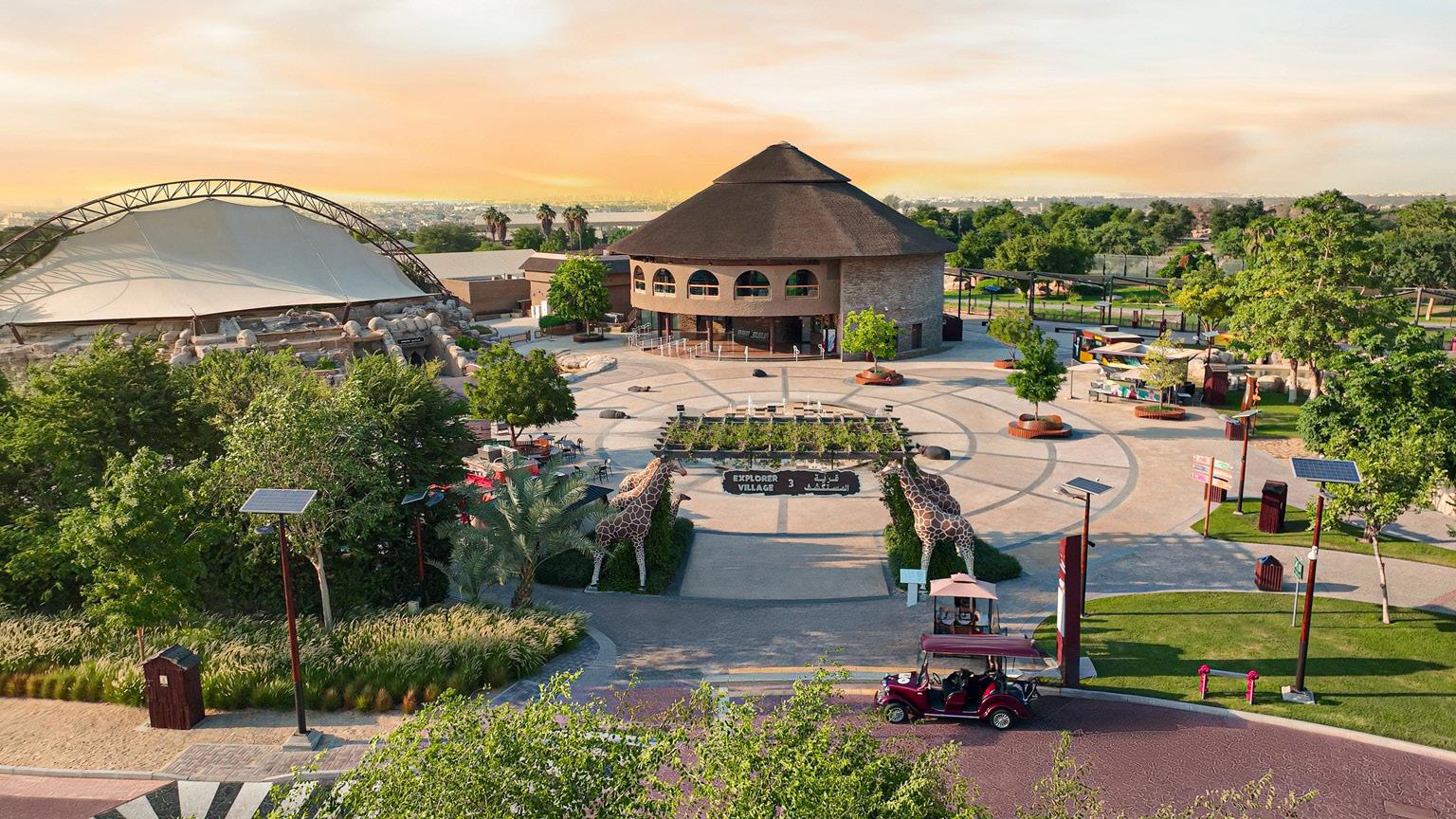
More than two decades ago, a pioneering body of scientific research set out to answer a deceptively simple question: where do people live the longest and why? The findings revealed five extraordinary regions, later termed “blue zones,” where longevity is not only common, but accompanied by sustained health and quality of life.
The concept was first introduced by Dan Buettner, who led an expedition to Okinawa, Japan in 2000 to investigate its unusually high concentration of centenarians. What emerged was a compelling pattern: longevity in these regions was deeply rooted in lifestyle, environment, and daily habits, many of them shaped by close interaction with nature.
By Shereen Shabnam
Buettner’s subsequent research identified four additional blue zones: Sardinia in Italy, the Nicoya Peninsula in Costa Rica, Icaria in Greece, and Loma Linda in California. Across these diverse geographies, common threads prevailed such as walkable communities, plant-based diets, strong social connections, and environments designed, intentionally or otherwise, to support wellbeing.
Today, this philosophy is extending far beyond academic study. It is influencing how cities, and more notably, how luxury communities are being conceived and built.
In Dubai, a city synonymous with innovation and ambition, the principles
By Shereen Shabnam
of blue zones are finding tangible expression. Talal M. Al Gaddah, CEO and Founder of the Keturah luxury brand, is among those translating this global insight into regional impact.
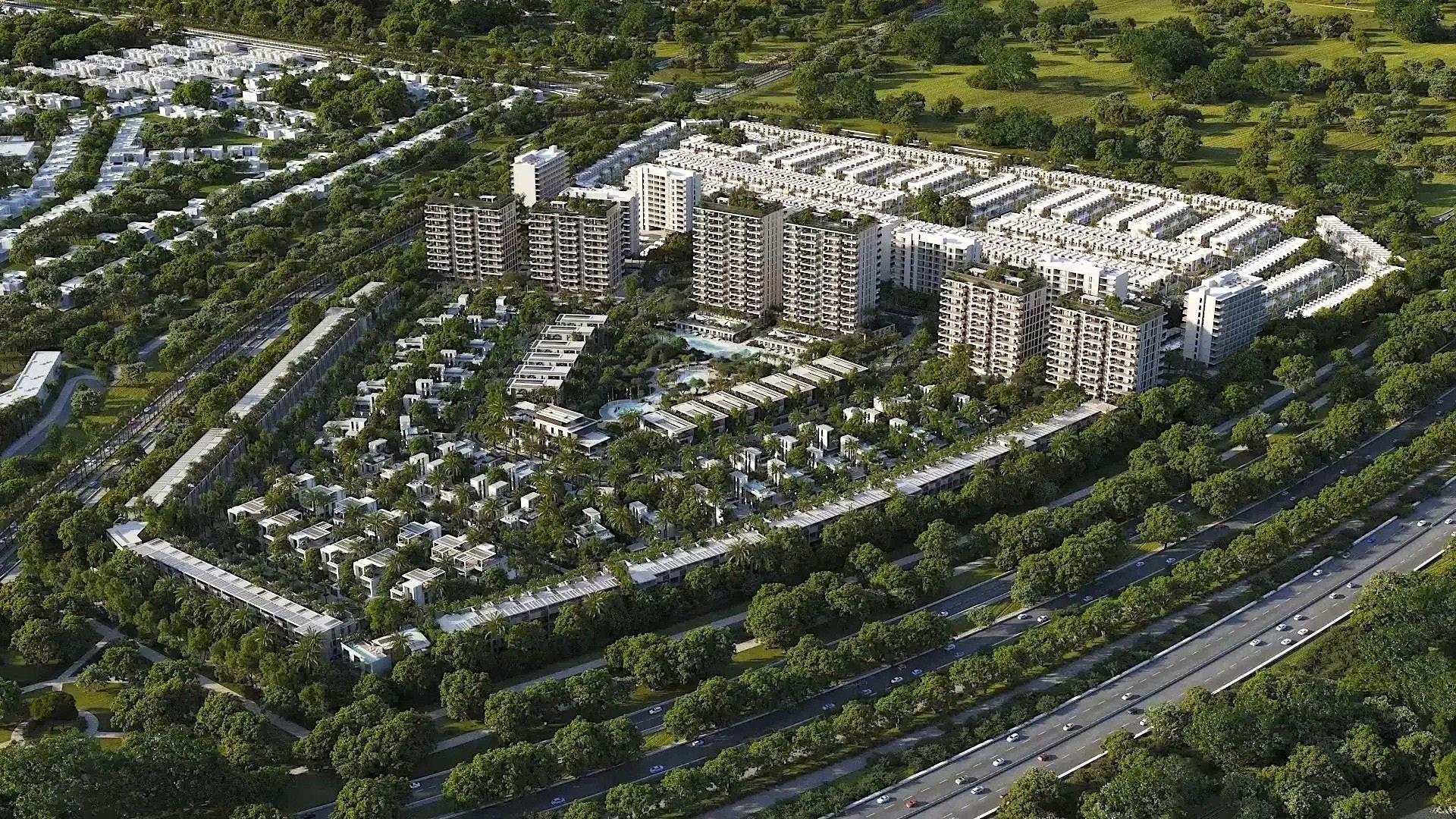
At the heart of this movement is Keturah Reserve, a AED5.7 billion bio-living community located in Mohammed Bin Rashid City’s District 7. Positioned as the first development of its kind in the Gulf, it represents a shift in how luxury is defined not by opulence alone, but by its ability to enhance human health and longevity.
The project aligns with Dubai’s broader sustainability ambitions. Recently unveiled at the World Governments Summit, Dubai Municipality’s Blue and
Green Spaces Roadmap outlines more than AED4 billion in projects aimed at embedding nature into the city’s urban fabric. Plans include planting 1.5 million trees, developing 120 new parks, and integrating over 200 sports and recreational spaces into interconnected green networks over the next five years.
Against this backdrop, Keturah Reserve stands as both a response and a catalyst. “It’s a masterful plan, showcasing the ingenuity and innovation that has made Dubai one of the world’s most desirable cities,” says Al Gaddah. “It inspires us to create communities where nature is not an amenity, but a fundamental design principle.”
At Keturah Reserve, that philosophy is operationalised through a focus on three essential environmental inputs: air, water, and light. Advanced air purification systems go beyond conventional filtration to remove chemical pollutants and pathogens. Water systems are engineered with equal precision, while lighting is calibrated to align with natural circadian rhythms, enhancing sleep, mood, and overall wellbeing.
The landscape architecture is equally intentional. The development features centuries-old olive trees, thousands of mature trees sourced internationally, and thoughtfully designed green corridors. Japanese-inspired dry gardens
and immersive outdoor environments further reinforce a sense of calm and connection.
For families, the emphasis on holistic living extends to education and recreation. The community includes safe play areas, a creche and daycare centre, Montessori-led programming, and a Bio Living Farm. Seasonal camps and outdoor learning initiatives encourage children to engage with nature from an early age, embedding healthy behaviours into daily life, much like the original blue zones. Beyond lifestyle, the business case for wellness-driven development is increasingly compelling.
“The data is clear,” Al Gaddah notes. “Wellness-centric properties in Dubai are achieving price premiums of up to 15%, while branded residences with strong lifestyle positioning can command between 15% and 25% above market.”
As global buyers place greater emphasis on health, longevity, and quality of life, developments that integrate green infrastructure, walkability, and community-centric design are expected to outperform.
What began as an exploration of remote, long standing communities is now shaping the future of urban living in one of the world’s most dynamic cities. In Dubai, the principles of the blue zones
are no longer observational. They are becoming foundational and personally in my circle, it has become a regular subject of discussion.

By Shereen Shabnam
There are few moments in the automotive world that can genuinely be described as culture-shifting. Yet when Rolls-Royce introduced Black Badge in 2016, it did far more than launch a darker, more assertive variation of its motor cars. It created an entirely new language for modern super-luxury and one rooted in confidence, rebellion and a more unapologetic expression of success.
Now, as Rolls-Royce marks the 10th anniversary of Black Badge, the significance of that decision has become unmistakably clear. What began as a bold response to a new generation of self-made, design-conscious and globally minded clients has evolved into one of the marque’s most transformative chapters. More than a product line, Black Badge became the alter ego of Rolls-Royce and a universe within the brand that redefined how luxury could look, feel and move.
At first glance, Black Badge appeared to challenge the traditional image of RollsRoyce. The house long associated with stately grace, polished chrome and quiet authority suddenly embraced darker finishes, more dynamic performance, technical materials and a distinctly contemporary attitude. Yet, in truth, Black Badge was never a departure from the

Rolls-Royce spirit. It was a continuation of something that had always been there with the willingness to disrupt, to resist convention and to create motor cars for those who do not wish to blend in.
That instinct can be traced right back to the marque’s founders. Sir Henry Royce and Charles Stewart Rolls were, in many ways, among the earliest disruptors
By Shereen Shabnam
in motoring history. Royce rose from poverty and ill health to become one of the greatest engineers of his era, while Rolls, born into aristocracy, chose the risk and thrill of racing and aviation over a life of inherited comfort. Their legacy was never simply about engineering excellence. It was also about daring to do things differently and believing that true distinction lies in refusing the expected.
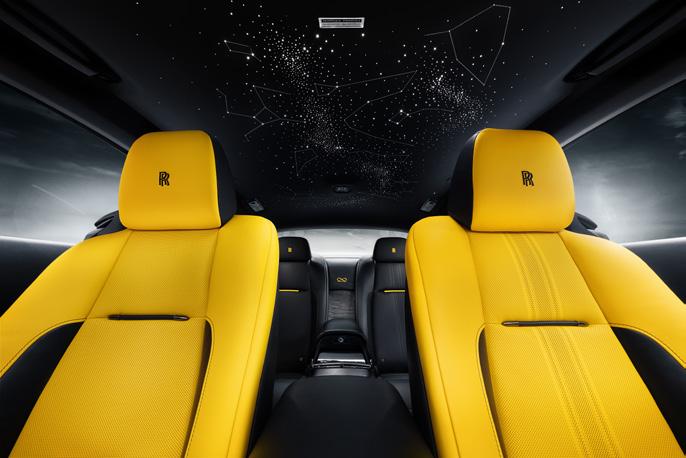

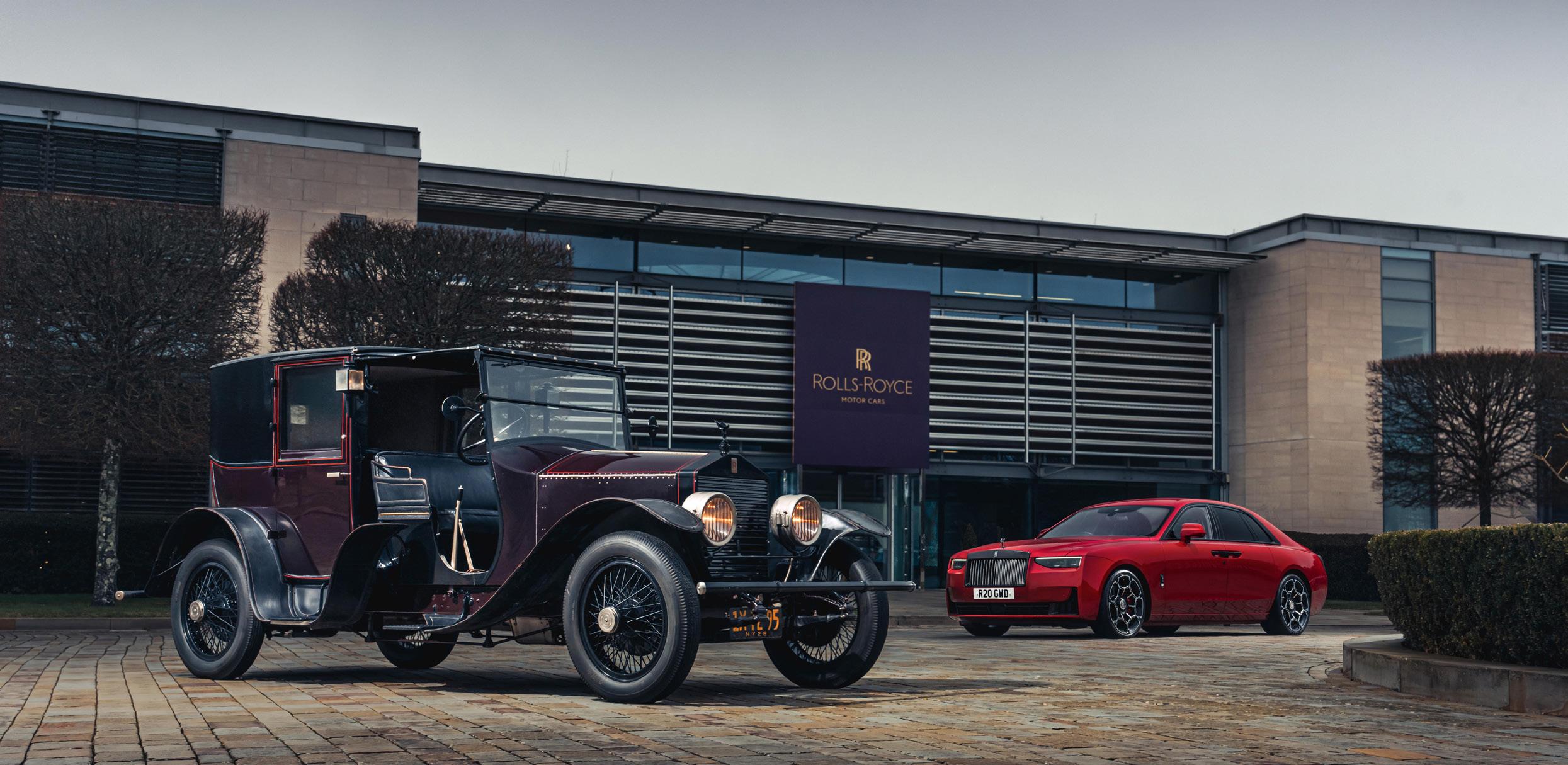
Black Badge taps directly into that DNA. In fact, the aesthetic spirit behind it existed long before the name itself was ever coined. During the digitisation of the Rolls-Royce archives, historians uncovered a striking precedent in the form of a 1928 Rolls-Royce 20 H.P. Brewster Brougham, commissioned with a black radiator grille and black Spirit of Ecstasy, a highly unusual specification at a time when bright metal signified prestige and modernity. Nearly a century later, it reads like an astonishing preview of the design codes Black Badge would come to embody: daring, individual and quietly defiant.
Then there was John Lennon’s 1964 Phantom V, arguably the first true expression of the Black Badge mindset. Ordered in all black, inside and out, with darkened glass and a deeply unconventional presence, the car was every bit as rebellious as the era that produced it. It was not simply luxurious; it was subversive.
By the early 2010s, Rolls-Royce began noticing a distinct shift in the clients coming to the marque. These were not necessarily traditional collectors or legacy buyers. They were often younger entrepreneurs, innovators and founders who had built fortunes through technology, media, design and entirely new industries.
They appreciated craftsmanship, heritage and exclusivity, but they wanted their motor cars to reflect something more dynamic, more expressive and more reflective of the worlds they were creating around themselves.
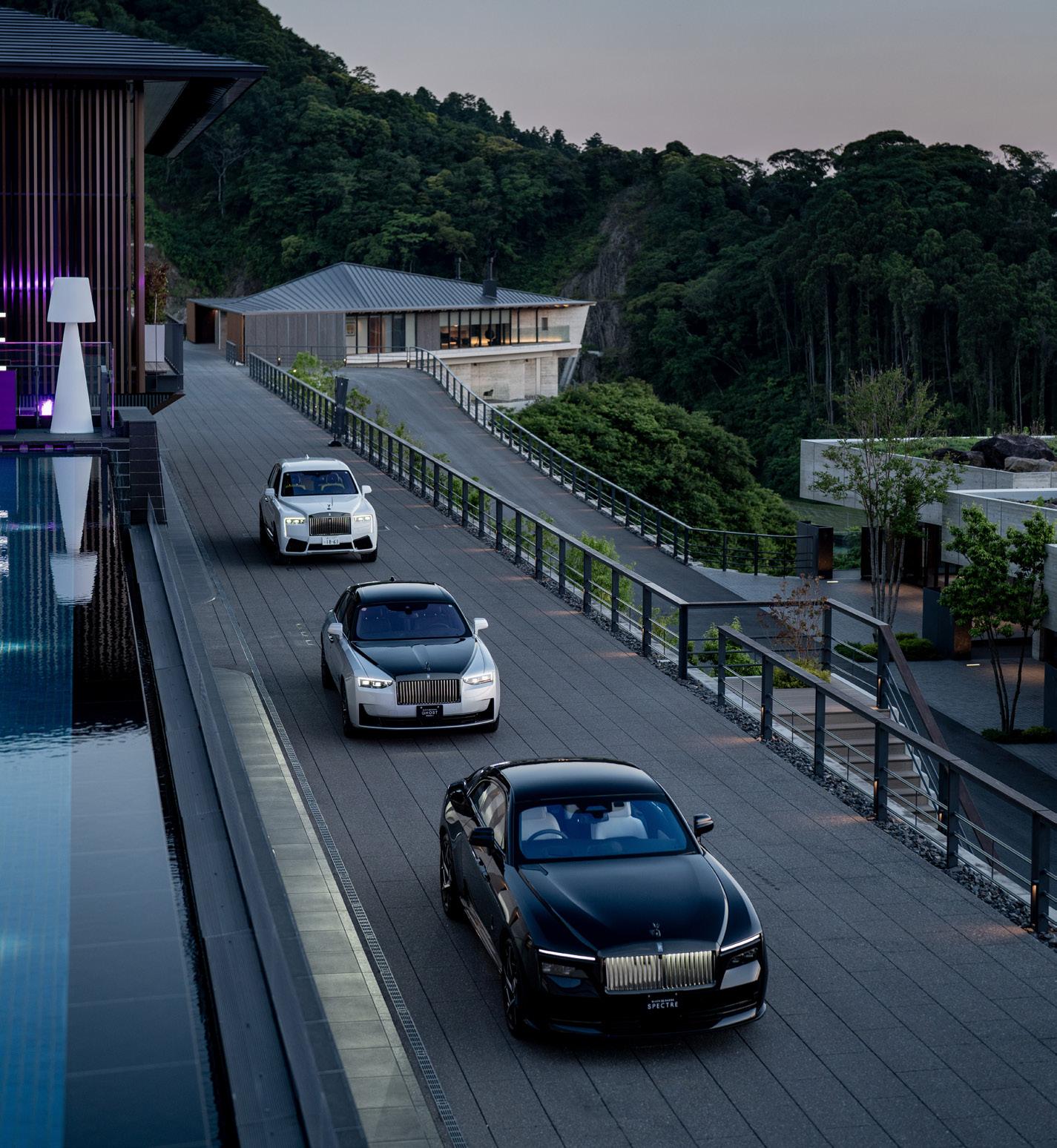
They were not interested in whispering success. They wanted to own it with conviction. Rolls-Royce’s answer was both strategic and daring. Rather than simply adapting its existing design language, it created an entirely new proposition within the marque. Black Badge emerged as a sanctioned space for a more intense, more disruptive expression of RollsRoyce. The iconic Spirit of Ecstasy, Pantheon grille, and double-R badge were cloaked in black. Power and torque were increased. Chassis settings were recalibrated. Exhaust notes became more sonorous. Interiors embraced carbon fibre, aerospace-inspired materials and darkened finishes that brought a sharper, more technical edge to the cabin. This was not merely a cosmetic shift. It was a re-engineering of attitude.
Even the colour black itself was treated with obsessive precision. Rolls-Royce engineers and craftspeople developed one of the deepest and most lustrous black finishes in the automotive world, applying layers of paint and clear coat before hours of hand-polishing created the signature piano-like sheen.
The Black Badge canon officially began with Wraith and Ghost in 2016, before expanding to include Dawn, Cullinan, and now Spectre, which has taken the alter ego into the electric era. But what has truly defined Black Badge over the past
decade is the way clients have made it their own.
Through the marque’s legendary Bespoke programme, Black Badge became a canvas for a new kind of luxury storytelling. Commissions drew inspiration not only from art and architecture, but from street culture, gaming, sneakers, music, speed records and the digital world. Suddenly, the codes of connoisseurship were changing. Luxury no longer had to look like old money or inherited tradition. It could be bold, culturally fluent, technically sophisticated and deeply personal.
Today, the Black Badge portfolio, spanning Spectre, Ghost and Cullinan, stands as one of the most compelling expressions of modern automotive luxury. It is for those who still value craftsmanship and heritage, but who want their luxury to feel more visceral, more contemporary and more aligned with the rhythm of modern success. It is Rolls-Royce with a pulse that feels slightly faster, a stance that feels slightly bolder, and a voice that is unmistakably its own.
Ten years on, Black Badge remains more than a design statement. It is a cultural signal. A reminder that the future of luxury belongs not to those who follow tradition blindly, but to those confident enough to reinterpret it on their own terms.

By Carl Windsor, CISO at Fortinet
AI-driven risk, geopolitical disruption, and nonstop cyber pressures are forcing CISOs to rethink resilience, governance, and business continuity
Last November, Fortinet published “CISO Predictions for 2026,” which outlined the forces shaping the year ahead, including rapid AI adoption across every business function, escalating geopolitical tension, expanding regulatory pressure, and the continued industrialization of cybercrime. The conclusion was direct: The attack surface is expanding faster than traditional security models can adapt.
While these predictions explain what is coming, CISOs will have to decide how to address these challenges in an environment where AI accelerates both innovation and risk.
According to the World Economic Forum’s Global Cybersecurity Outlook (GCO) 2025, 72% of organizations reported that cyber risk increased over the past year. In 2026, that risk will increasingly be shaped by AI systems making decisions at machine speed, often outside traditional security workflows.
The challenge for CISOs will not be preventing every failure. It will be ensuring the business continues to function when AI-enabled disruption occurs. Resilience is no longer simply a by product of security. It must be the organizing principle.
The boundary between IT risk and business risk has collapsed, accelerated by AI’s deep integration into operations, decision-making, and customer engagement. AI systems now influence supply chains, financial controls, hiring decisions, and customer interactions, often with minimal human intervention.
As a result, CISOs are no longer responsible only for securing systems. They are responsible for ensuring that AI-augmented business processes remain trustworthy, available, and controllable under stress. In practice, CISOs have already begun operating as chief resilience officers.
This evolution reflects reality. AI increases speed, scale, and dependency. In that environment, when failures occur, they propagate faster and farther. So in 2026, CISOs will need to assume that disruption will involve AI-enabled components, whether through compromised models, poisoned data, manipulated agents, or automated

misuse. Success will be measured by how well organizations absorb and contain those failures.
World Economic Forum Annual Meeting discussions and forum initiative activity have decisively moved AI beyond a purely technological discussion. It is now treated as a governance, risk, and resilience issue with direct implications for economic stability, national infrastructure, and global trust. Conversations increasingly focus on systemic exposure: the concentration of AI capability, reliance on shared models, cross-border data dependencies, and the risk of cascading failure when highly connected and automated systems behave unexpectedly.
Fortinet participates in these discussions, including at this month’s Annual Meeting in Davos, alongside government leaders, industry executives, and security practitioners, because what happens in these forums shapes how risk is understood and
managed at a global level. Cybersecurity is no longer framed as an enterprise problem, but as a shared responsibility that cuts across public and private sectors. For CISOs, such conversations matter because they influence regulatory direction, executive expectations, and the standards by which resilience will be judged.
This shift is also reflected in organizational governance models. CISOs are gaining more direct access to executive leadership because boards now recognize that AI-related risk cannot be delegated to isolated teams. Instead, decisions about AI deployment, data access, automation, and control structures have direct consequences for operational continuity, regulatory exposure, and corporate reputation.
For CISOs, the implication is clear. In 2026, resilience planning must explicitly account for AI-driven scale, speed, and opacity. The question is no longer whether AI will be used, but whether it is being deployed in a way that is secure, transparent, and aligned with business risk tolerance. The discussions taking place in Davos reinforce that this is no longer a theoretical concern. It is a leadership responsibility.

By Alain Sanchez, EMEA CISO, Fortinet
Meeting after meeting, keynote speech after keynote speech, I realize that the pursuit of 100% prevention has become an anachronism. The combination of systemic nation-state-level attacks make the total avoidance of incidents not only an impossibility but a dangerous concept.
For the modern Chief Information Security Officers (CISOs) and the executive leadership they serve, this is a sobering truth that necessitates a fundamental shift in strategy: the evolution from a singular focus on security to a comprehensive commitment to resilience.
Security, in its traditional sense, creates a false sense of protection—a fortress mentality designed to keep the adversary out. Resilience, by contrast, is about ensuring operational continuity when the walls have been, even slightly, breached. It carries a bit more modesty beyond the acknowledgment that the breach is inevitable, and the true measure of success lies in the speed and efficacy of the recovery.
More pragmatic, this new paradigm of resilience is defined by three core capabilities,
which move the focus from the perimeter to the core mission:
This isn’t just about spotting bugs; it’s about learning from a live attack as it happens. The idea is to use the attacker’s own moves to understand and respond to their attack in real-time. By connecting the dots, this posture can predict where the system might fail next and have recovery tools ready to go before the damage spreads.
This is the ability of an organization to maintain a limited, well defined set of critical services while assuming that other parts of the network might be compromised. It is the strategic decision to operate in a “degraded state,” ensuring that the most vital functions—be they financial transactions, power grid control, or patient care—remain operational, even if at reduced capacity.
The focus shifts from “if we are ever hit” to “how fast can we bounce back.” This capability is measured by the Recovery
Time Objective (RTO) and is underpinned by immutable data backups and robust, tested recovery playbooks.
While the shift to resilience is a trend for most organisations, it is rapidly becoming a legal and regulatory obligation for those operating Critical Infrastructure (CI). Critical Infrastructure encompasses the assets, systems, and networks—whether physical or virtual—that are considered so vital to a government that their incapacitation or destruction would have a debilitating effect on security, national economic security, public health, or safety. (3)
Historically, governments have set security standards for CI. However, the new resilience mandate represents a profound shift in the social contract between government and private entities that manage these vital systems. Governments are now declaring that the ability to withstand and recover from disruption is a matter of national security,
thereby assigning the obligation to be resilient to the private operators.
The concept of resilience is now inextricably linked to technological independence and the definition of “Local Control”(5) To meet the stringent requirements of the DNA and CSA2, new infrastructure models are emerging:
Cloud providers are launching environments that are physically and logically isolated as well as having a governance structure shielded from foreign jurisdictions, such as the AWS European Sovereign Cloud (ESC), where the management console, Identity and Access Management (IAM), billing, and executive management team are guaranteed to be located 100% within the EU. This ensures that the control plane for critical data remains within the required legal and physical boundaries.
Telecommunications companies are integrating security and processing directly at the network edge. This model ensures that sensitive industrial data is processed locally before it ever reaches the public internet, thereby enforcing the principles of Managed Degradation and data sovereignty simultaneously5
The regulatory push is mirrored by a powerful economic consensus. At the WEF annual meeting in Davos, Fortinet executives discussed this new deal, and in the very WEF’s 2026 report, we read that 92% of CEOs now prioritize “cyber recovery capabilities” over traditional “perimeter defense spending”1. This recent shift in executive focus is about to translate into market changes:
Major cyber-insurers have begun implementing “Resilience Audits.” Premiums are no longer calculated solely on the occurrence of a breach but are heavily weighted by a company’s RTO (Recovery Time Objective) and the immutability of their data. This financial incentive is forcing organizations to invest in recovery frameworks that can be quantitatively measured and validated both in terms of what they recover but also how fast.
The Organisation for Economic Cooperation and Development (OECD) has emphasized that ensuring CI resilience requires new governance models that limit service disruptions and promote crosssector collaboration(4). This has the merit

of defining national-level frameworks that incentivize redundancy, incident reporting, and infrastructure sharing.
The technological response to the resilience mandate is manifesting in the rise of Autonomous Resilience Agents and “SelfHealing Networks.” These tools move beyond simple blocking mechanisms. They are designed to allow a suspected attack to proceed in a sandbox environment to automatically generate and distribute immunity signatures across the entire infrastructure.
This AI-driven approach embodies the resilience philosophy: instead of failing to prevent the attack, the system uses the attack itself as a data point to rapidly learn, adapt, and restore. It is the ultimate expression of the Managed Degradation principle, turning a localized compromise into a global defense advantage.
The evolution from security to resilience, now compounded by the mandate for sovereignty, is a profound philosophical and operational pivot. For critical infrastructure operators, it is the new cost of doing business, enforced by government mandate and economic reality. Crucially, this shift cannot succeed through regulation alone; it relies on deep publicprivate partnerships.
By aligning the government’s security intelligence with the private sector’s operational expertise, these collaborations ensure that sovereignty mandates are both technically feasible and economically sustainable, turning a top-down requirement into a shared defense strategy.
The resilience approach can be understood through a medical analogy: immunization. Just as an organism is exposed to a weakened virus to learn and build a controlled, informed immune response, the resilient enterprise uses the very essence of an attack to its advantage.
Far from being a weakness, this approach turns an actual compromise into a learning event, allowing the system to understand the threat more deeply and trigger informed, controlled recovery scenarios.
The CISO’s mission is transforming from being the gatekeeper of the fortress to the architect of continuity. The focus is no longer on the impossible task of preventing every single attack, but on building systems that are inherently adaptive, capable of absorbing shocks, and designed for rapid, assured recovery within legally defined sovereign boundaries.
In this new, “war-grade” environment, the resilient and sovereign organization is the one that can take the hit, learn from the experience, maintain what matters most, and move forward with minimal disruption.
By Diego Arrabal, Vice President, Eastern Europe, Middle East & Africa, Check Point Software Technologies
Sustainability in the UAE and Saudi isn’t a slogan anymore. It’s in the plumbing of daily life: smart buildings that optimise cooling, ports that run on analytics, utilities that rely on connected control systems, hospitals that can’t afford downtime, and data centres that sit at the centre of everything from fintech to government services.
That’s the part we celebrate — and we should. The harder part is this: the more connected and automated these systems become, the more exposed they are. Sustainability gains can disappear quickly when a cyber incident hits the infrastructure that keeps energy, water, transport and public services running.
A ransomware attack doesn’t just lock up files. It creates operational chaos — delays, workarounds, emergency fixes, wasted resources — all of which carry real environmental and social costs. In that sense, cyber incidents directly undermine sustainability, even if they don’t look like environmental issues at first glance.
This is why cyber security can’t sit in a separate conversation anymore. If sustainability is about resilience and continuity, then cyber resilience belongs inside the sustainability strategy, not on a different slide deck.
Check Point Software doesn’t position sustainability and security as parallel tracks. Its messaging ties them together: a “secure, sustainable digital future,” where cyber protection acts as the foundation for trust and responsible digital transformation.
That framing matters, because it reflects how the region is building: digitisation first, optimisation second, scale always. In that environment, security failures become sustainability failures.
And the threat volume is not hypothetical. In its ESG report, Check Point points to the scale of what modern defence has to handle — including “over 10 million cyberattacks
prevented daily” and “more than 3.9 billion threats blocked annually” across organisations worldwide.
You don’t need to be in government or energy to feel the impact. If you run any system that people depend on — payments, logistics, healthcare, education, utilities, aviation — downtime is no longer a business inconvenience. It becomes a community problem.
Sustainability depends on connected systems: sensors, smart meters, building management platforms, analytics, and automation. Efficiency improves, but the number of entry points grows.
Buildings alone account for a significant share of global energy use. The International Energy Agency estimates that building operations represent around 30% of global final energy consumption and more than a quarter of energy-related emissions.
In the Gulf, cooling is a major part of that equation. When cyber incidents disrupt systems that manage cooling, access control, or ventilation, the impact goes beyond IT. It affects energy consumption, safety, and service continuity — especially during peak heat.
There’s another point that deserves honesty: cyber security consumes power too.
If organisations keep stacking security tools without thinking about efficiency, they can inflate the energy footprint of their digital operations while still not reducing risk. This is why how security is designed and deployed matters as much as what is put in place.
Check Point’s ESG positioning highlights two practical moves that are relevant here:
• 100% renewable energy usage at its global headquarters
• A focus on more power-efficient security appliances, aimed at helping organisations reduce power consumption while improving protection
That second point is where the market needs to head. Security that performs better while demanding less energy isn’t a nice-to-have — it’s the direction digital infrastructure needs to move if it’s going to be responsible at scale. AI-driven automation also plays a role.
Capabilities such as Check Point Infinity ThreatCloud AI and Infinity AI Copilot are designed to reduce resource-intensive manual tasks, helping minimise energy use across security operations centres and data environments.
On the environmental side, Check Point also communicates a longer-term ambition around carbon neutrality by 2040. Targets alone don’t prove progress, but they do signal intent — and intent becomes meaningful when it shows up in operational decisions and product design.
Most cyber incidents succeed because someone didn’t have the skills, the time or the governance to keep defences current. That’s a people issue, and people issues are sustainability issues.
Check Point highlights progress toward a goal of training one million people in cyber security by 2028, explicitly linking it to the global talent shortage.
In a region moving fast on AI, cloud, and smart services, this matters. Technology ambitions rise or fall on human capability — not just budgets.
Sustainability is rarely “in-house only.” Hardware, manufacturing, logistics, and disposal are part of the footprint — and part of the risk.
On the supply chain side, Check Point publishes policies and expectations that reference recognised standards such as ISO 14001 (environmental management) in manufacturing environments, along with other compliance and sustainability-related requirements.
Its supplier and business partner code also sets expectations around environmental protection, compliance, and audit rights — with sustainability, ethics, and security sitting in the same framework.
That’s the direction ESG is heading globally: value chain responsibility, not just internal reporting.
When ESG is treated as a reporting exercise, it stays polite. When it’s treated as risk management, it gets serious.
Check Point’s public filings point to ESG oversight through a board-level committee (Nominating, Sustainability and Corporate Governance) and day-to-day leadership by an ESG manager.
That’s the kind of structure organisations in the region should mirror: clear ownership, measurable outcomes, and accountability that survives leadership changes.
If you’re a CIO, CISO, COO or sustainability lead, here’s the practical shift: stop treating cyber resilience as a technical line item and start treating it as part of sustainable operations.
The future you’re building — smarter cities, smarter healthcare, smarter transport, smarter industry — only stays sustainable when it stays trustworthy.
Security is no longer the “IT department’s job.” It’s become a foundational element of protecting energy efficiency, service continuity, public confidence and national competitiveness.
That’s not fear-mongering. It’s the reality of how sustainability is being delivered in 2026: through systems that must keep working — safely — even when they’re under pressure.

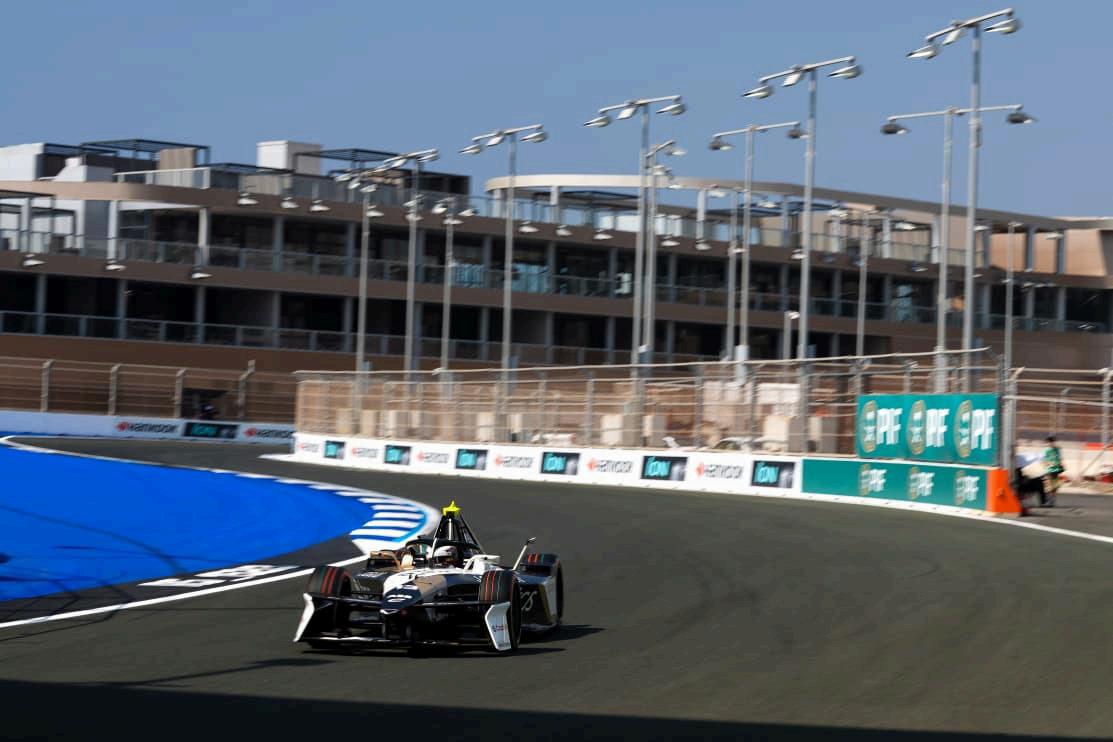
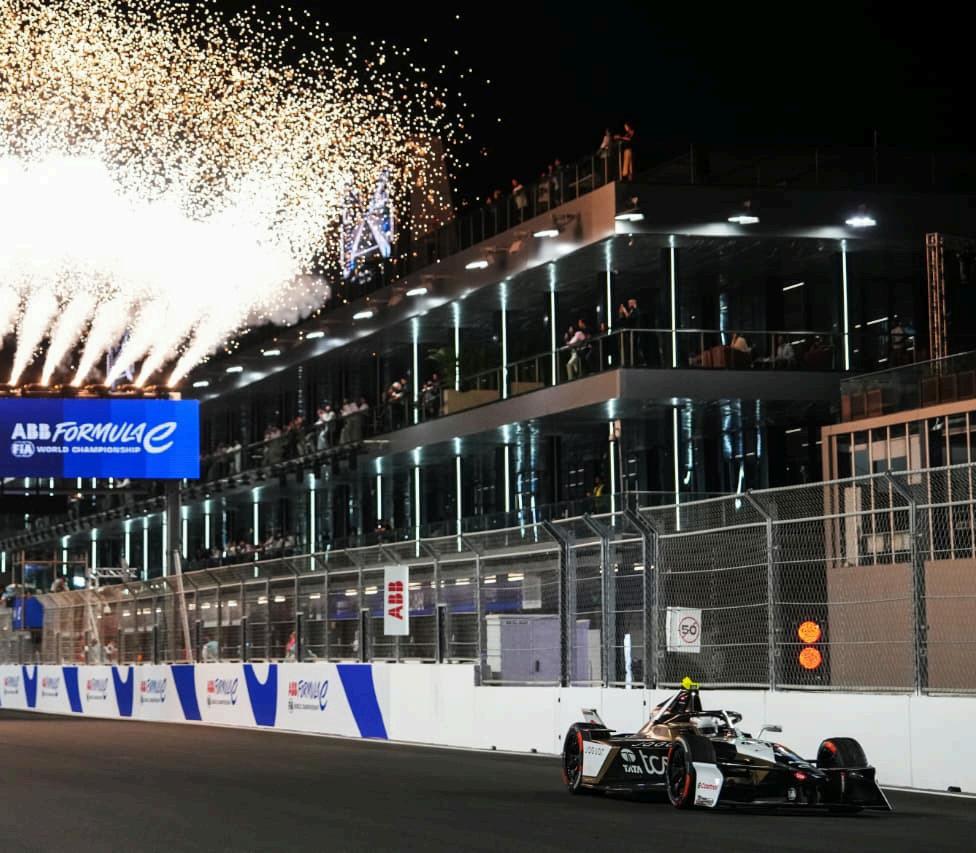
In most disciplines of motorsport, innovation is driven by budget and freedom to experiment. More budget and fewer regulations mean more innovation. The ABB FIA Formula E World Championship, however, is built on fundamentally different logic. Energy usage is strictly regulated, costs are tightly controlled, and sporting rules have been designed to keep the racing as competitive as possible. Formula E treats efficiency and adaptability as defining conditions of success. Every decision is taken under clearly defined limits, often in real time, with no margin for waste.
Rather than impacting progress, this purposeful framework has delivered measurable advances in efficiency; the current all-electric GEN3 Evo race cars competing in Formula E Season 12 are engineered to be among the world’s most efficient race vehicles, with more than 90% electric motor efficiency and advanced energy regeneration systems that can recapture up to 40% of energy across a race distance.
These outcomes point to a deeper reality. By requiring teams to work within fixed boundaries, Formula E has become one of the most fruitful environments for innovation in modern sport. It functions as a live experiment in extracting maximum performance from finite resources, where success is defined by intelligence. That dynamic increasingly mirrors the conditions businesses face today, where growth is shaped by a rapidly evolving global landscape.
Formula E drives teams to make sharper and faster choices under pressure. That very same discipline is required by organisations as they navigate regulations, sustainability targets, cost controls, and accelerating technological changes. Also, in today's geo-political environment businesses must constantly evolve and adapt accordingly to secure sustainable economic growth.
A validation model driving Jaguar TCS Racing Nowhere is this pressure more visible than in the challenge of vehicle testing. Formula E races often take place on temporary street circuits across global cities, leaving reduced scope for traditional track time and testing. Yet teams must still develop cars capable of competing at the highest level.
For Jaguar TCS Racing, this raised a fundamental question: could a vehicle’s ontrack behaviour be accurately replicated in a simulated environment, and could that simulation be trusted to guide last-minute performance decisions?
Answering that question sits at the heart of the partnership between Tata Consultancy Services (TCS) and Jaguar TCS Racing. Working alongside the team, TCS enhances the digital twin technology underpinning Jaguar TCS Racing’s preparation and development processes. This collaboration led to the creation of the Virtual Vehicle Validation Model (V3M), a mathematical framework
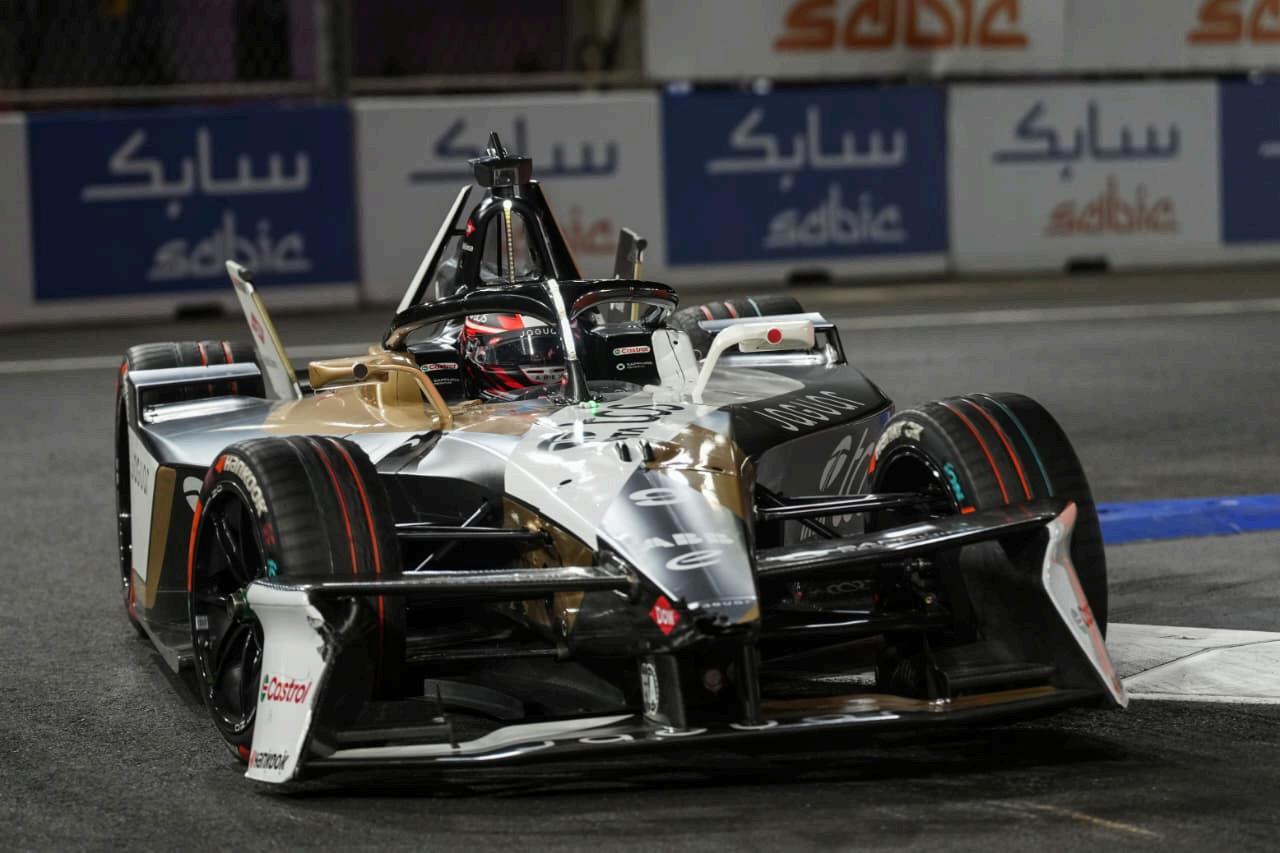
designed to guide the digital twin of the Jaguar I-TYPE 7 using multiple real-world inputs.
The V3M allows continuous simulations to run without human intervention, rapidly validating software changes before deployment This capability is critical in a championship where software adjustments can be made right up until the final moments of a race.
The V3M enables engineers to test, refine, and validate changes at speed, saving valuable preparation time and reducing risk on race day. When Jaguar TCS Racing drivers Mitch
Evans and António Félix da Costa step into the simulator, they do so with confidence that the data reflects real-world conditions.
The same logic increasingly applies beyond the racetrack. In business, digital twins are used to model factories, supply chains, infrastructure, and customer journeys, allowing organisations to predict outcomes, stress-test scenarios, and optimise performance before real-world deployment.
Research shows these systems can deliver up to 30% improvements in energy efficiency and operational performance, while more advanced AI-enabled digital twins have demonstrated reductions of up to 35% in unplanned downtime alongside measurable gains in energy optimisation.
Sumanta Roy, President & Regional CEO, Middle East, Africa, TCS says, “The partnership between TCS and Jaguar TCS Racing embodies this mindset, proving that when guided by data, intelligence, and discipline, organisations can unlock extraordinary efficiency and performance. Our work together demonstrates how advanced digital twin technology can transform not just motorsport, but every data-led organisation. By enabling faster, smarter decision-making under constraints, we are helping businesses across the region accelerate innovation, reduce risk, and drive sustainable growth. This is the blueprint for businesses navigating the complexities of today’s world.”
Formula E’s tightly regulated environment makes these lessons extremely important. With strict rules around energy, testing, and other factors, the championship rewards teams that can adapt fastest rather than those with the most resources.
Over 11 seasons, the all-electric championship has delivered rapid technological advances. In the current GEN3 Evo era, cars like the Jaguar I-TYPE 7 are now the fastest-accelerating FIA single-seaters in the world as the pinnacle of electric motorsport has continued to evolve and adapt.
Beyond performance, there is also a cultural lesson and mindset shift embedded in Formula E’s model. The championship demonstrates that sustainability and performance are not opposing goals.
Working within energy limits influences smarter design, better data usage, and more efficient systems. For business leaders and technologists, it offers a reminder that clearly defined boundaries can accelerate creativity and growth rather than suppress it.
As organisations across industries struggle with regulations, sustainability imperatives, and rapid technological changes, Formula E provides a compelling analogy for the future of innovation.
It shows that when resources are finite and the pressure is high, the winners are those who adapt fastest, make resourceful decisions, and trust data-driven insight over intuition alone. On the streets where Formula E races are won and lost, constraint is the catalyst.
By Shereen Shabnam
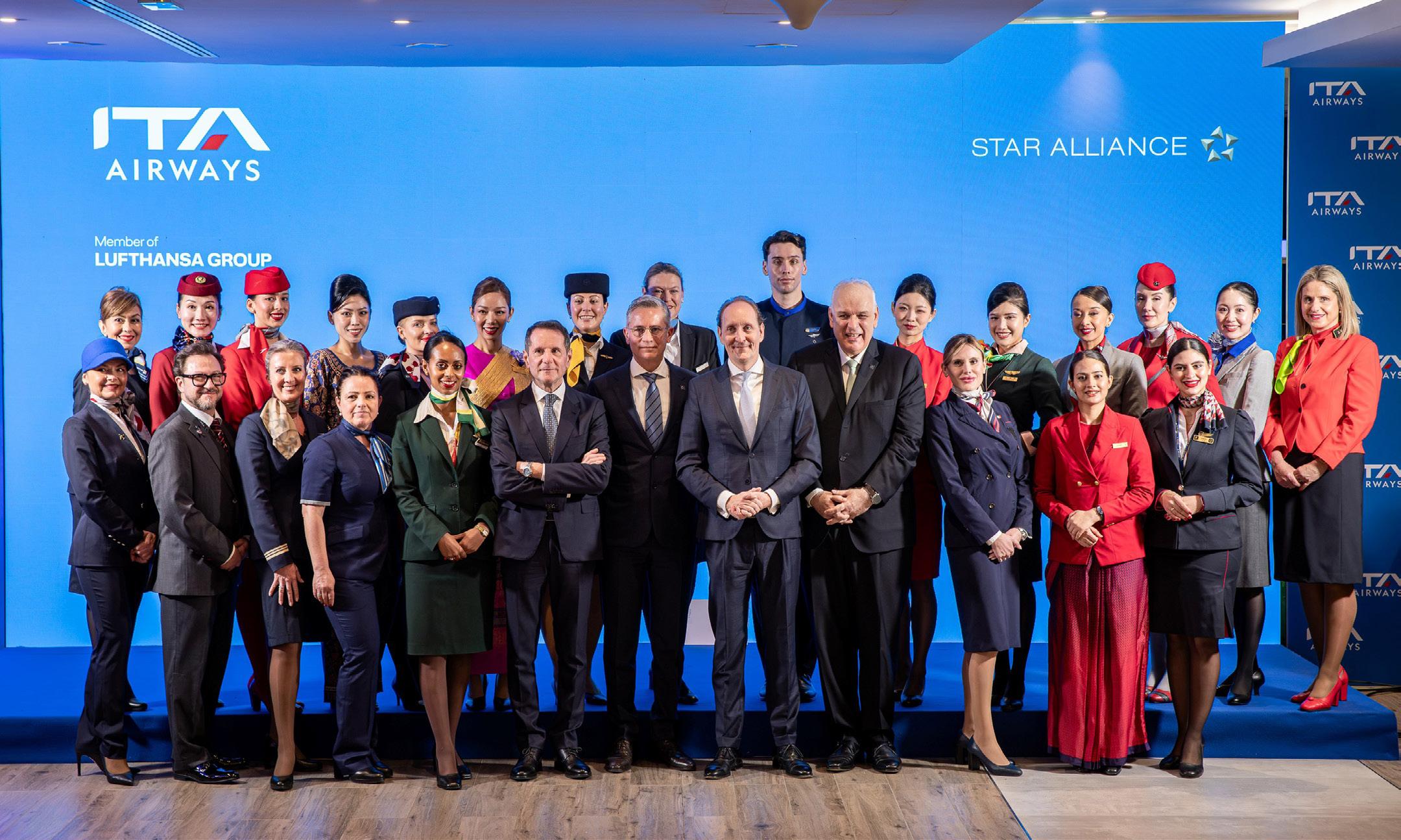
Star Alliance has further expanded its global footprint with the official induction of Italy’s national carrier, ITA Airways, as its 26th member, marking a significant milestone in the alliance’s continued growth and connectivity strategy.
The integration, formally announced during a ceremony at Rome Fiumicino Airport, underscores the alliance’s commitment to strengthening its European network while enhancing seamless travel across international markets. With ITA Airways now fully embedded within the alliance, key hubs including Rome Fiumicino and Milan Linate are directly connected to a global network of more than 1,150 destinations, served collectively by Star Alliance member airlines.
From a strategic perspective, the move reinforces Star Alliance’s position as the world’s largest airline network, while offering tangible benefits to both customers and partners. Travellers can now access a more
integrated experience, including through check-in, coordinated flight connections, expanded lounge access and enhanced loyalty programme interoperability as these are key differentiators in an increasingly competitive aviation landscape.
Leadership from across the alliance and its key stakeholders emphasised the importance of the integration as both a network expansion and a valuedriven partnership. Theo Panagiotoulias highlighted the collaborative effort behind the onboarding process, noting that ITA Airways’ inclusion strengthens connectivity to and from Italy while elevating the overall customer journey.
Meanwhile, Joerg Eberhart described the move as a defining step in the airline’s growth trajectory, positioning the carrier within a global ecosystem that enhances reach, service consistency and premium offering.
The integration has been supported by the Lufthansa Group, which played a key mentoring role throughout the process. Dieter Vranckx noted that the collaboration unlocks a broader value proposition across the alliance, benefiting customers, partners and the wider aviation ecosystem.
Operationally, ITA Airways contributes more than 350 daily flights and serves over 16 million passengers annually, significantly enhancing connectivity across Italy, Europe and key global routes. The addition also strengthens Southern Europe’s role as a strategic gateway within the alliance’s network.
With ITA Airways now onboard, Star Alliance comprises 26 member airlines, offering more than 17,500 daily flights across over 190 countries. The development not only expands geographic reach but also signals a continued focus on integrated, customercentric travel solutions in a rapidly evolving global aviation market.
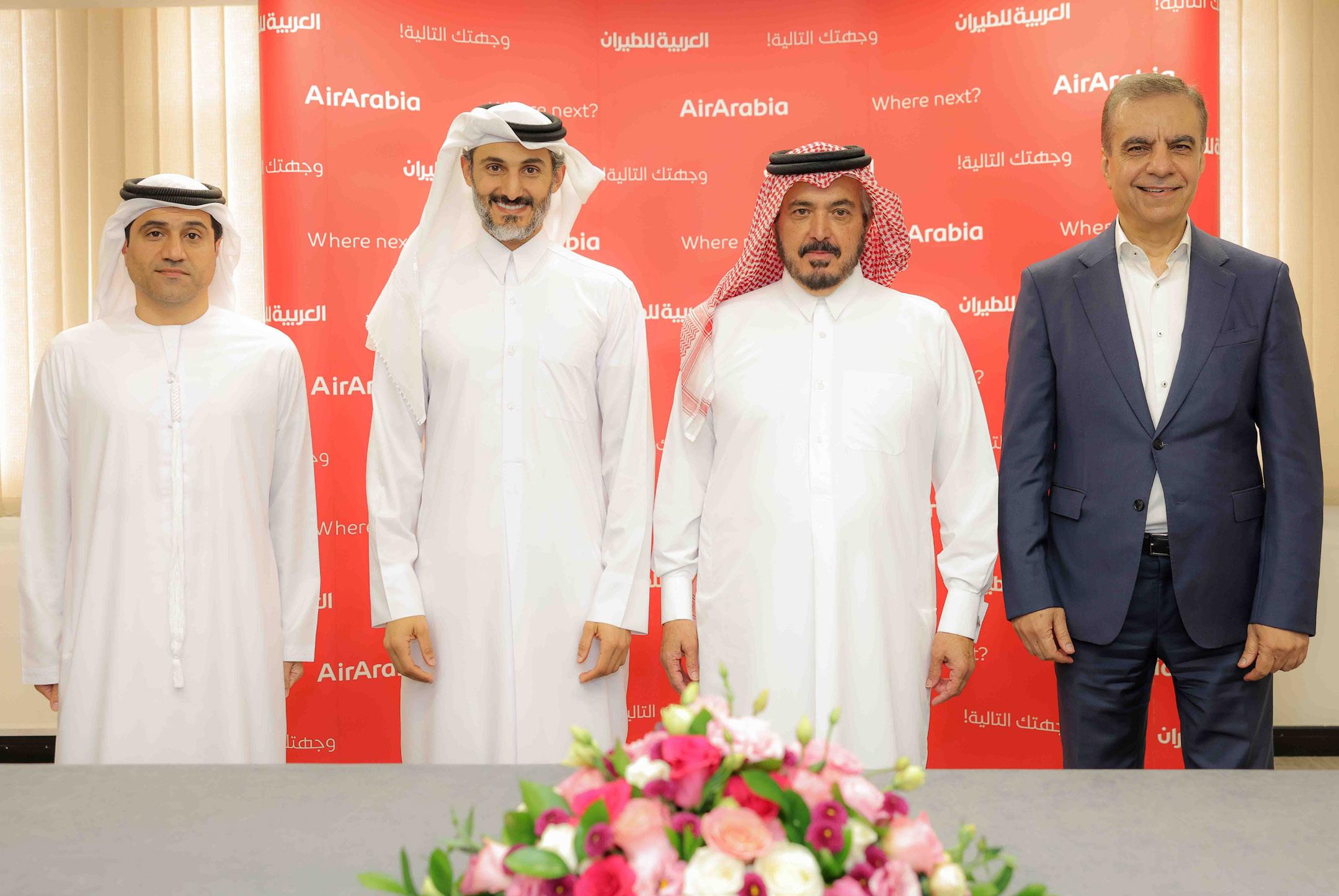
Air Arabia shareholders have approved a 30 per cent cash dividend distribution for the end of the last financial year, reinforcing investor confidence in the airline’s strong financial position and long-term growth trajectory.
The dividend, equivalent to 30 fils per share, was ratified during the company’s Annual General Meeting (AGM) and follows what the carrier described as the strongest financial year in its history. Air Arabia reported a record net profit before tax of AED 1.8 billion in 2025, representing a 14 per cent increase compared to the previous year and underscoring the resilience of its low-cost business model amid a dynamic operating environment.
The AGM also approved the company’s auditors’ report, balance sheet and profit and loss accounts for the year ending December 31, 2025. In addition, shareholders discharged the company’s
board of directors and auditors from liability for the financial year, appointed auditors for the upcoming fiscal year and elected a new board for the next three-year term.
Commenting on the airline’s performance, Sheikh Abdullah Bin Mohammed Al Thani said 2025 represented a milestone year for the group, driven by continued network expansion, increased operating capacity and growing demand for value-driven travel across its key markets.
Operationally, Air Arabia continued to scale its footprint across multiple geographies, adding 30 new routes during the year across its six operating hubs in the UAE, Morocco, Egypt and Pakistan.
The airline also expanded its fleet with the delivery of five new aircraft, while adding nine aircraft overall to support its broader growth strategy.
By year-end, Air Arabia’s fleet had grown to 90 Airbus A320 and A321 aircraft, serving more than 220 routes spanning the Middle East, Africa, Asia and Europe, a scale that continues to reinforce its role as one of the region’s most significant low-cost carriers.
Despite ongoing geopolitical pressures and broader economic uncertainty, the airline remains optimistic about the outlook for regional aviation.
Management pointed to the strength of its operating model, disciplined growth strategy and workforce capability as key factors underpinning its confidence moving forward.
For investors and industry observers alike, Air Arabia’s latest AGM outcomes signal not only strong returns, but also a business that continues to execute with consistency, scale and strategic clarity.
By Shereen Shabnam
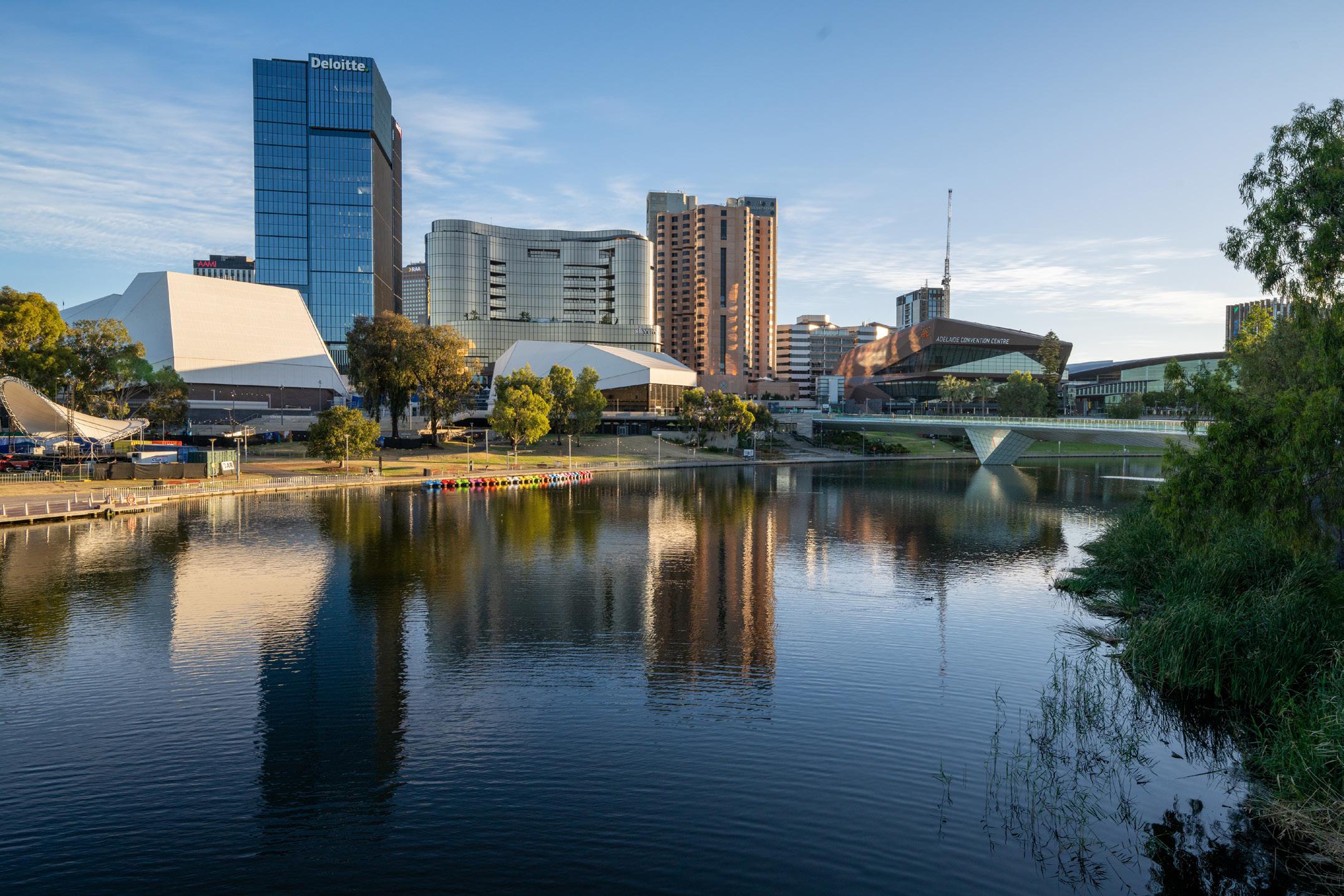
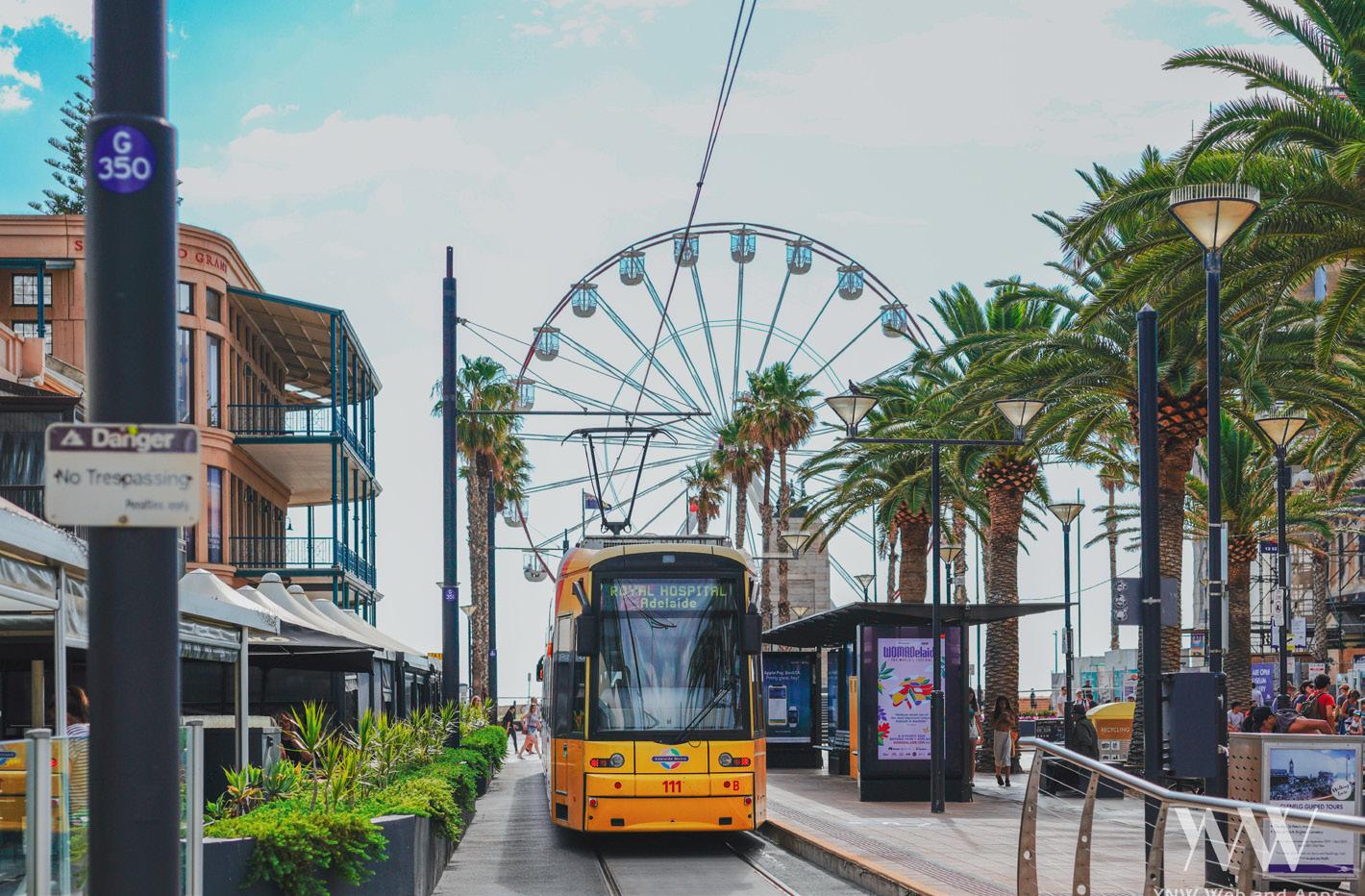
There is something quietly captivating about Adelaide as a city that doesn’t try too hard to impress, yet effortlessly does. Known for its easy rhythm, wide boulevards and seamless access to both vineyards and coastline, Adelaide offers a different kind of Australian escape.
It is not about rushing through landmarks but about experiencing life as locals do, which is unhurried, warm and deeply connected to nature.
Our time in Adelaide was made all the more special staying with my friend who is also my daughters god mother. Her family introduced us to the city beyond the guidebooks and through their eyes, Adelaide revealed itself as a place of hidden gems, community spirit and understated charm.


One of the highlights of our visit was a day at Adelaide Zoo, a beautifully curated sanctuary set within the city. Unlike larger, more commercial wildlife parks, this zoo feels intimate and immersive. Walking through its leafy pathways, you
find yourself just metres away from some of Australia’s most iconic animals.
Watching koalas lounging lazily in eucalyptus trees and kangaroos moving with quiet grace felt almost surreal. Beyond the visual experience, the zoo’s
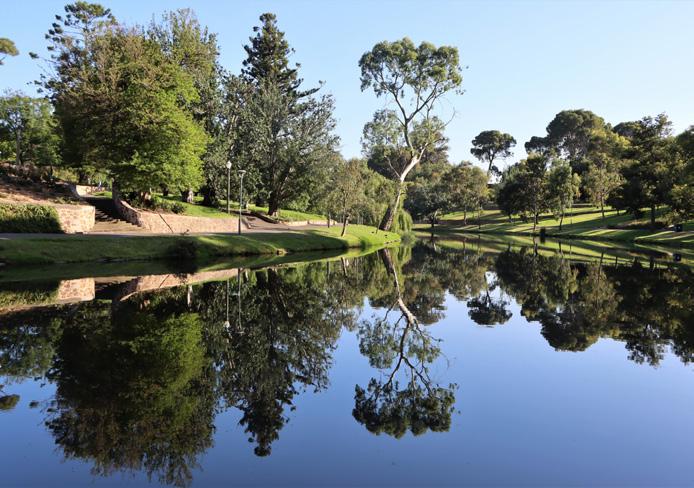
strong focus on conservation and education adds depth to the visit, making it both enjoyable and meaningful.
Exploring Adelaide with locals is where the experience truly comes alive. My friends curated an effortless itinerary that blended the city’s key attractions with their own personal favourites, creating a seamless mix of iconic and authentic.
A scenic drive through the Adelaide Hills revealed rolling vineyards, charming villages and winding roads that invite you to slow down. Back in the city, the vibrant energy of the Adelaide Central Market delivered a sensory feast, from fresh produce to artisan specialties, while a sunset visit to Glenelg provided the perfect coastal escape, with golden skies and a relaxed seaside atmosphere.
What sets Adelaide apart is not just its attractions, but its atmosphere. It is a city that invites you in rather than overwhelms you. There is a sincerity in the way people live here and this was evident while staying with my university friend and her large family.
Whether it is sharing a meal, cooking breakfast together, recommending a hidden café, or simply taking the time to enjoy some moments with us, they were the perfect hosts. Staying with my friends family added a layer of warmth that no hotel could replicate. It transformed the trip from a visit into a lived experience, shaped by laughter, local insights and a genuine sense of belonging.
Adelaide may not command the same global spotlight as some of Australia’s larger cities, but that is precisely its strength. It is refined without being pretentious, vibrant without being overwhelming, and deeply connected to both its landscape and its lifestyle. For those seeking a destination that blends nature, culture and a true sense of community, Adelaide offers an experience that lingers long after you leave.
There are luxury hotel brands that understand comfort, and then there are those that understand how a destination should feel. The finest hospitality experiences do more than provide a suite, a spa, or a tasting menu. They curate a sense of place. Increasingly, that includes how guests move through the landscape itself.
With the launch of The Preferred Experience, Preferred Hotels & Resorts has recognised something many motoring enthusiasts like myself have known for years: some roads deserve to be driven properly.
Created in partnership with InRadius, the five-day Alpine programme, debuting in July 2026, blends high-performance driving with a handpicked collection of exceptional hotels across Germany and Austria. It is a
By Shereen Shabnam
concept that speaks directly to travellers who appreciate both engineering and elegance and those who value a perfectly weighted steering wheel as much as impeccable turndown service.
For a motoring journalist, this is exactly the kind of travel concept that feels overdue. Too often, driving experiences are all machine and no soul, while luxury travel can become static and over-curated. Here, the car is not the destination, but the key that unlocks it.
Guests begin in Munich at the legendary Hotel Bayerischer Hof, one of Europe’s great grand hotels. It is a fitting overture: historic, polished, and unmistakably German in its sense of order and prestige. After a welcome dinner and briefing, participants head to Motorworld Munich before collecting their

sports cars and pointing them south toward the Alps. Then comes the real theatre.
The route takes in roads that enthusiasts speak about in reverential tones of the Hahntennjoch Pass, the Gerlos Pass, Tyrol’s
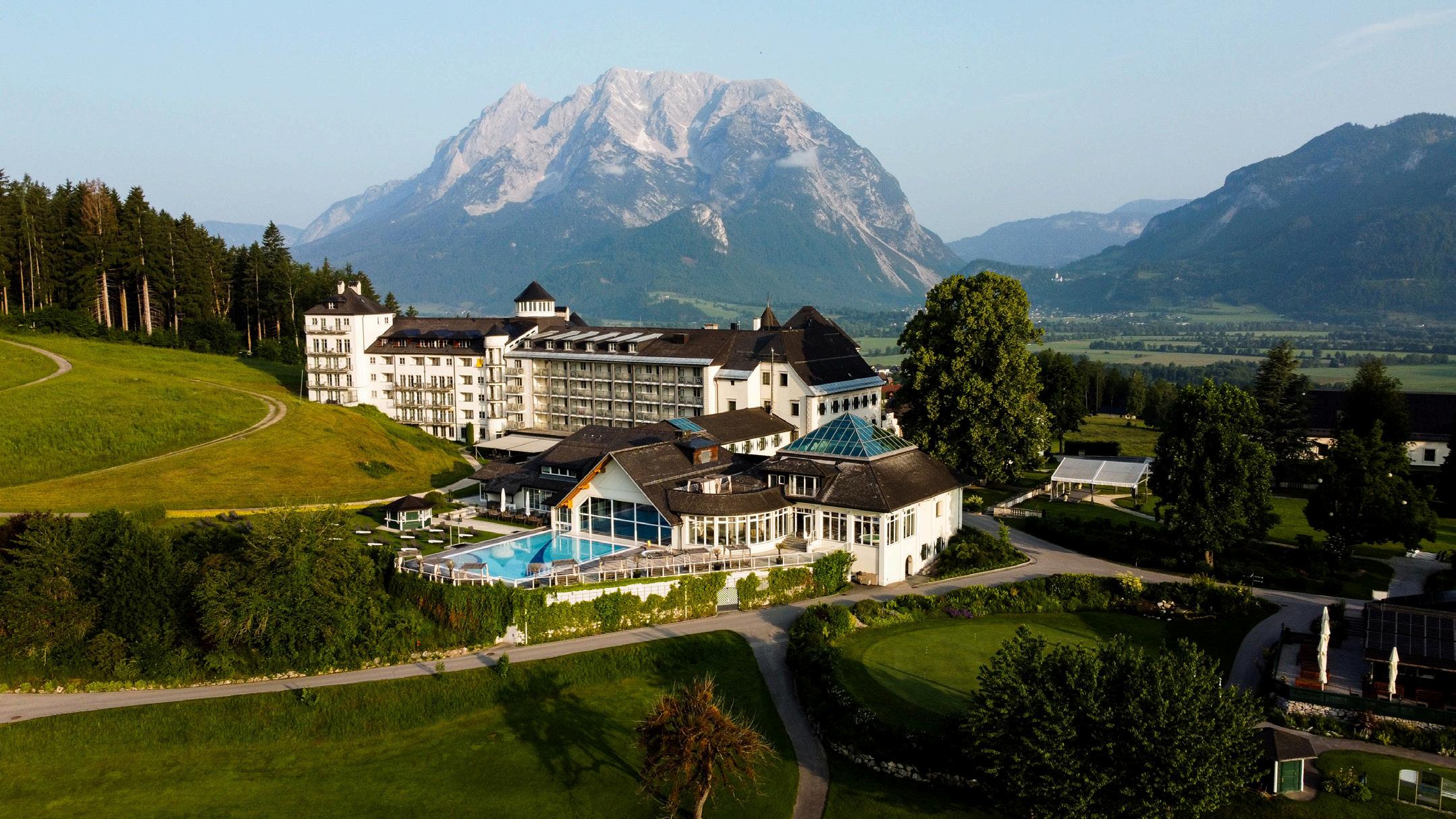
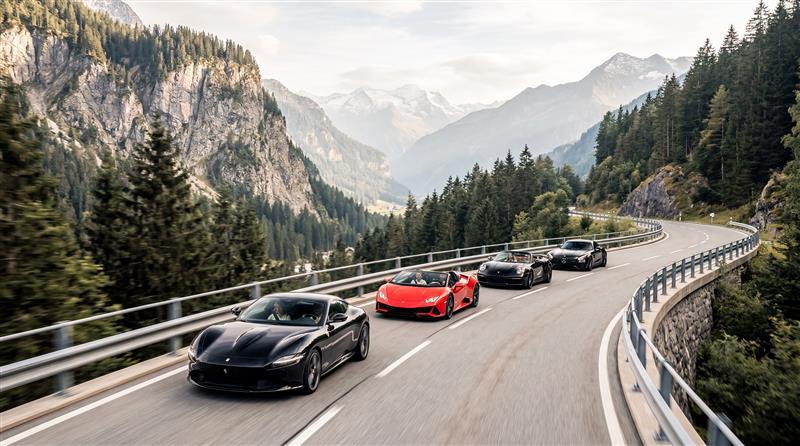
sweeping mountain tarmac and the scenic drama of Austria’s higher elevations. These are roads built not simply for transport, but for rhythm: second-gear hairpins, longsighted sweepers, changing gradients, and landscapes so cinematic they can distract from the apex if you are not careful.
Yet what elevates this beyond a supercar tour is what awaits at the end of each stage. Preferred’s selected properties
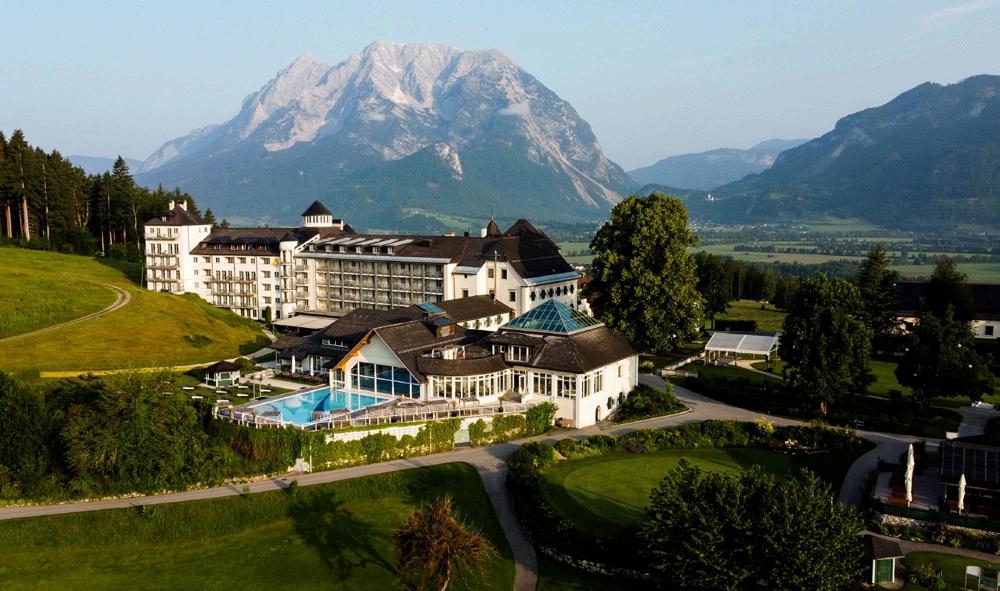
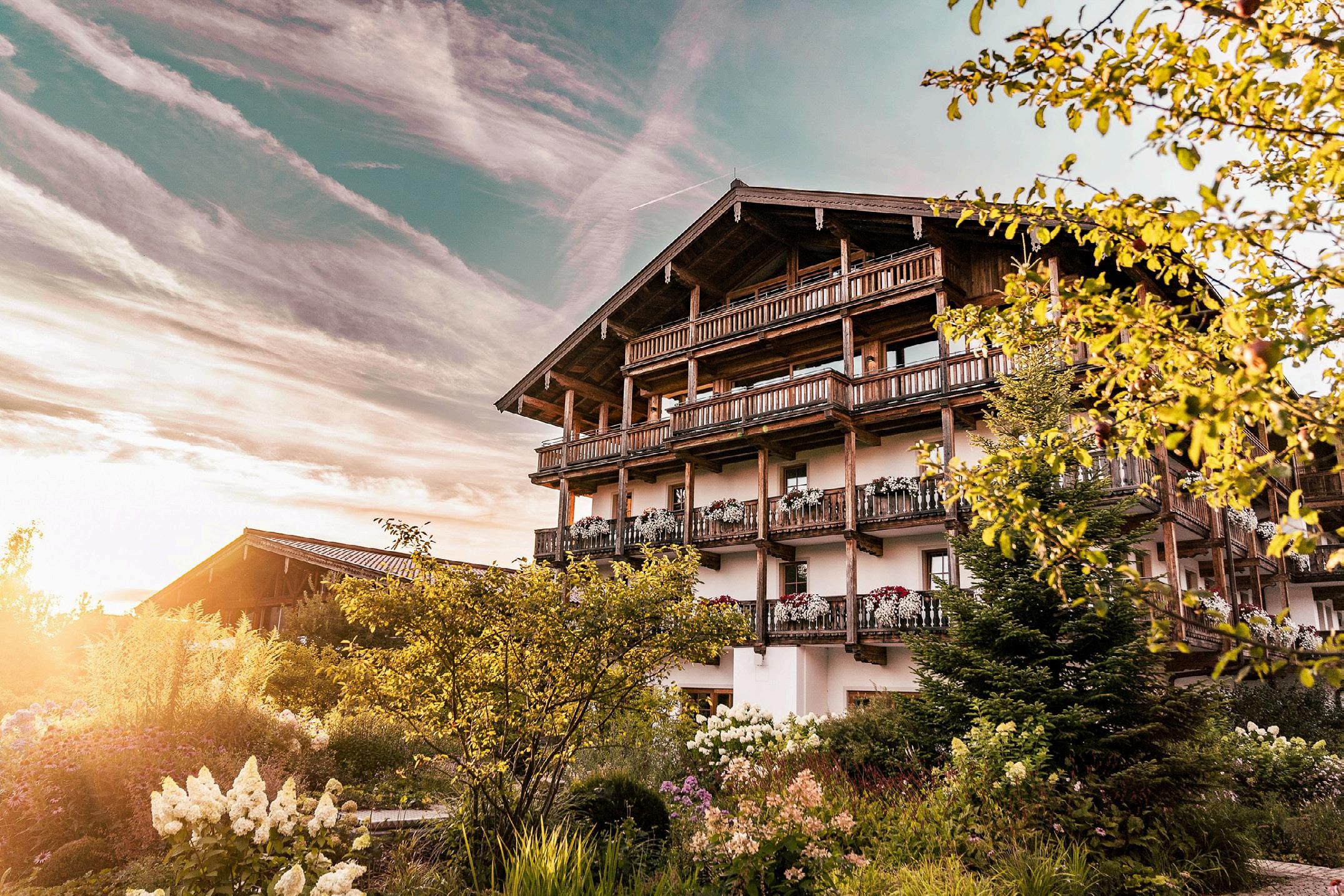
are not interchangeable five-star boxes, but destination hotels with personality. Interalpen-Hotel Tyrol delivers panoramic mountain serenity. IMLAUER Hotel Schloss Pichlarn adds castle grandeur and championship golf.
Das Achental, in Bavaria’s Chiemgau region, offers a refined finale with spa, leisure, and a farewell dinner worthy of the roads that preceded it.
Only 20 guests will take part in each departure, preserving the intimacy and exclusivity such an experience demands.
This is how luxury motoring travel should be done: not excessive, not superficial, but thoughtfully composed. Great cars, great roads, and great hotels with each enhancing the other.
By Natasha Dury

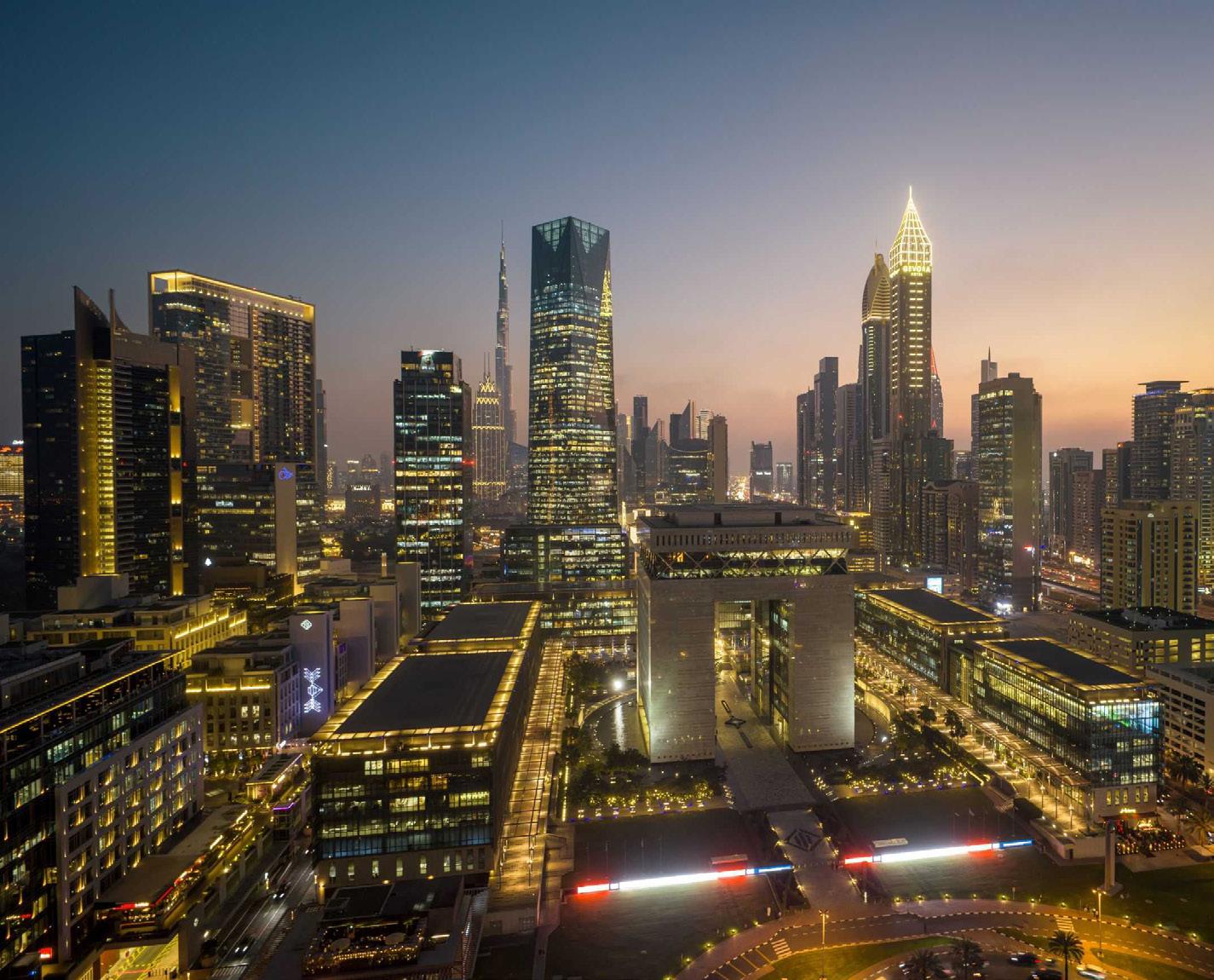
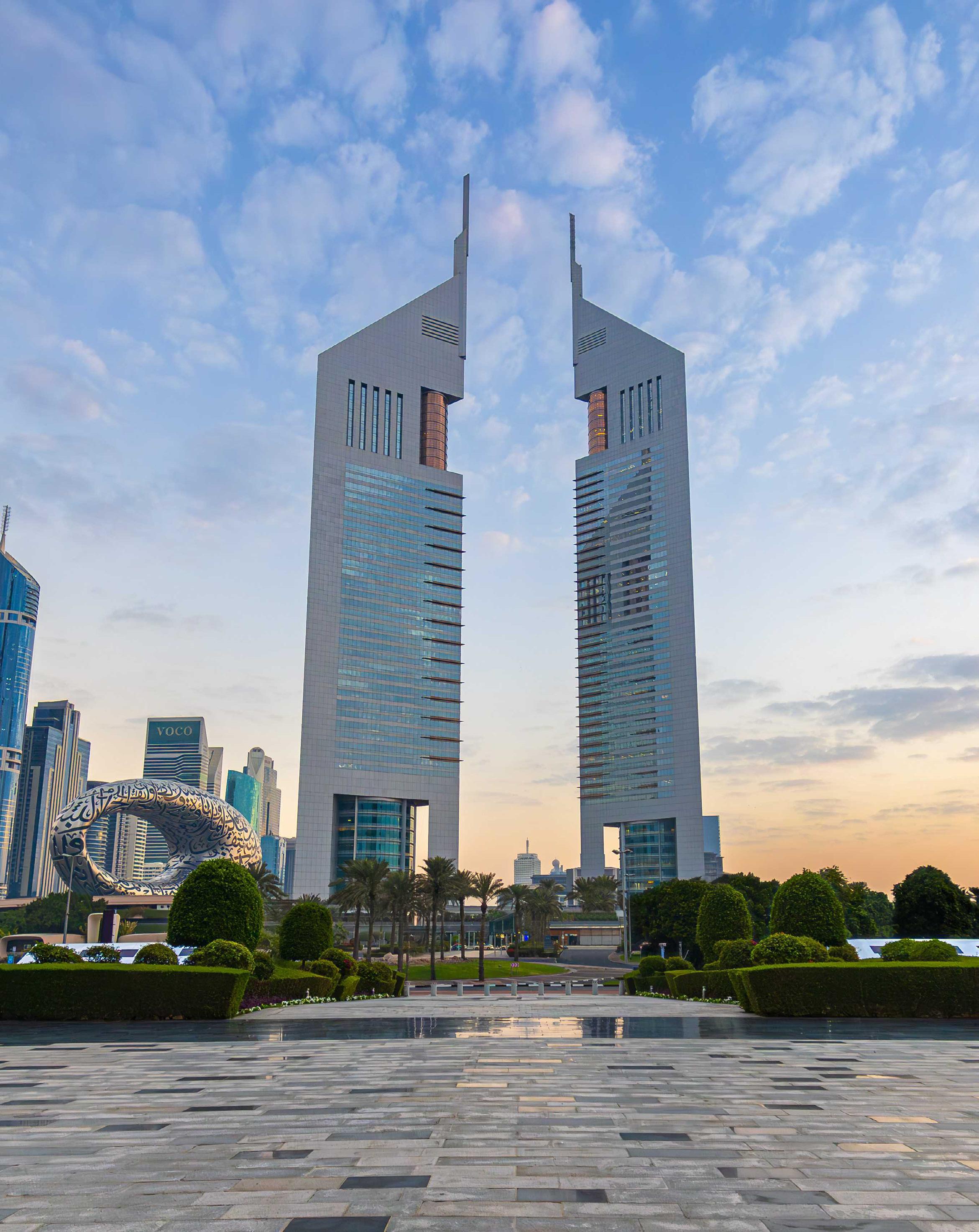
Dubai continues to strengthen its position as a leading global business hub, underpinned by a regulatory framework designed to enable growth, innovation and operational agility. A key enabler of this environment is the emirate’s streamlined approach to licensing, which allows retail, trading and F&B businesses to expand into digital channels without the need for additional approvals, provided activities remain within their existing scope.
This flexibility reflects Dubai’s broader economic philosophy, reducing friction for businesses while creating clear, scalable pathways for expansion. As a result, companies across sectors are increasingly integrating e-commerce and delivery platforms into their operations, unlocking new revenue streams and reaching wider customer bases while maintaining full regulatory compliance.
Under the current framework, licensed businesses can seamlessly adopt digital sales channels, from launching proprietary online stores to leveraging established marketplaces and digital payment systems. This accessibility significantly lowers barriers to entry, particularly for SMEs and emerging entrepreneurs, enabling faster market participation in an increasingly digital economy.
The F&B sector has similarly benefited from this progressive approach. Licensed establishments are able to partner with approved delivery platforms, extending their reach beyond physical locations without
compromising compliance standards. This has allowed operators to diversify income streams and enhance customer engagement in a highly competitive market.
Commenting recently on the evolving landscape, Ahmad Khalifa AlQaizi AlFalasi, CEO of Dubai Business Registration and Licensing Corporation (DBLC), emphasised the emirate’s commitment to fostering a supportive ecosystem for businesses of all sizes. He highlighted that Dubai’s regulatory framework is designed to minimise barriers while enabling companies to scale efficiently, leveraging digital channels to sustain growth and strengthen resilience.
Further reinforcing this ecosystem is the Dubai Traders programme, introduced under the Dubai Economic Agenda, D33. The initiative provides a structured pathway for businesses to enter and expand within the e-commerce space, offering preferential onboarding, competitive rates and dedicated support across key digital platforms. By facilitating smoother integration into online marketplaces, the programme accelerates digital adoption and enhances competitiveness at both local and regional levels.
Together, these measures position Dubai as a forward-looking economy where regulatory clarity and practical enablement converge. By empowering businesses to adapt quickly, embrace digital transformation and scale with confidence, the emirate continues to build a resilient and future-ready commercial landscape.
By Eric Dury
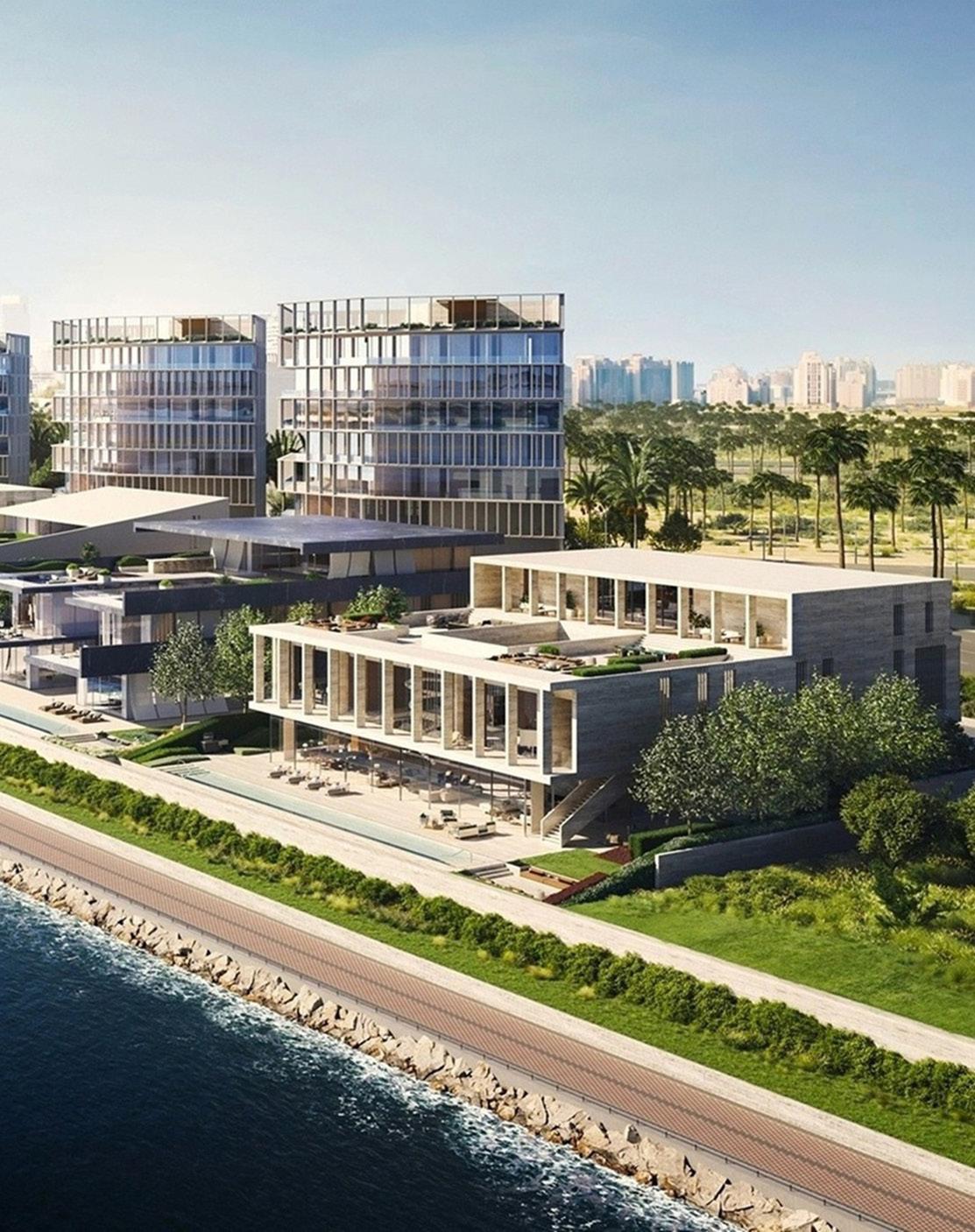
Dubai’s luxury real estate market continues to evolve beyond square footage and skyline views, with wellbeing, lifestyle quality and long-term liveability increasingly shaping buyer demand. Nowhere is that shift more visible than at Keturah Resort, where investor appetite is already underscoring the growing appeal of wellness-led residential communities in the emirate.
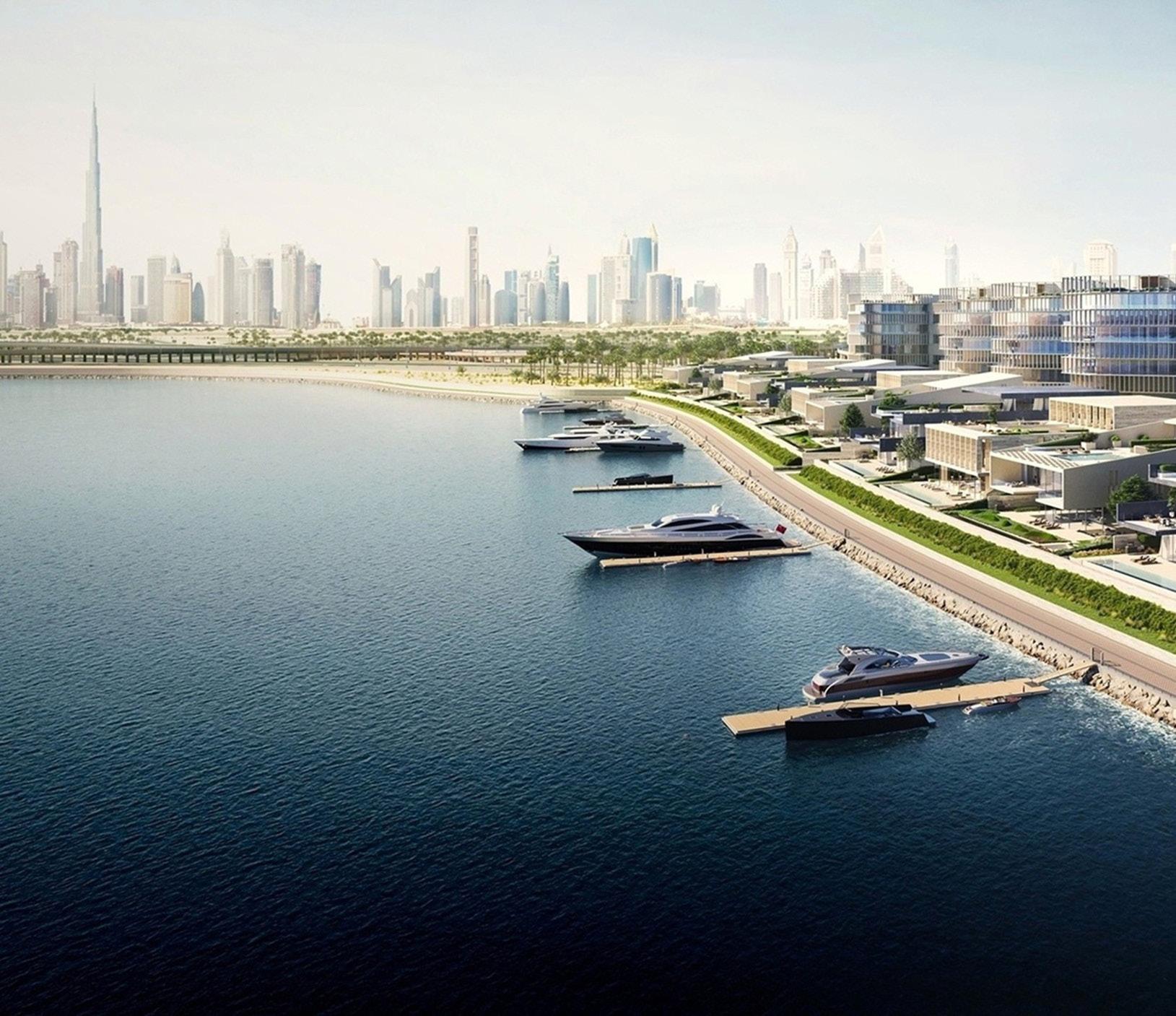
Positioned along the shores of Dubai Creek and adjacent to Ras Al Khor Wildlife Sanctuary, Keturah Resort is being developed as the Middle East’s first fully wellness-certified resort. The latest project update reveals that investors have already secured four of the ultra-prime waterfront mansions and more than half of the 193
apartments at The Ritz-Carlton Residences, Keturah Resort, highlighting continued confidence in branded, lifestyle-driven real estate in Dubai.
The gated waterfront development has been conceived as a highly exclusive residential destination, comprising 12 creekside mansions spanning approximately 42,000 square feet each, alongside eight residential buildings, a fivestar boutique hotel under The Ritz-Carlton brand, a standalone wellness centre and a private marina capable of accommodating yachts up to 120 feet. With eight mansions still available and priced between AED 335 million and AED 363 million, the project is positioned firmly within the ultra-prime segment of the market.
What makes the development particularly relevant within today’s property conversation is not simply its scale or address, but its alignment with a broader shift in buyer priorities. Increasingly, highnet-worth individuals are seeking homes that offer more than prestige alone.
Wellness, natural surroundings, sleep quality, emotional wellbeing and access to hospitality-grade services are becoming central to purchasing decisions, particularly among international buyers relocating to Dubai rather than purchasing solely for investment.
That positioning also mirrors a larger national trend. The UAE’s wellness economy is estimated at $40.8 billion, with the country ranking first globally for five-year wellness growth according to the latest Global Wellness Institute findings. The same report placed the UAE at the top of the MENA region for wellness real estate, spa revenue and personal care and beauty, reflecting how wellness is increasingly influencing both consumer behaviour and the development pipeline.
At Keturah Resort, that philosophy has been embedded into the design and certification process. The resort is certified by Delos and the International WELL Building Institute, reinforcing its positioning as a project designed around health-conscious living rather than wellness as an afterthought. Residents will also have access to a dedicated wellness centre complete with a five-star spa, health and fitness club, yoga studios and organic healthcare facilities, alongside Ritz-Carlton-managed concierge, butler and in-residence dining services.
Nature also plays a defining role in the project’s appeal. With more than 550 metres of waterfront promenade and approximately 80,000 square metres of landscaped green space, the development draws additional distinction from its proximity to one of Dubai’s most unique ecological settings. The neighbouring Ras Al Khor Wildlife Sanctuary, home to thousands of migratory birds including the iconic greater flamingo, offers a rare natural dimension that few luxury developments in the city can claim.
As Dubai continues to strengthen its position as a global destination for affluent residents and lifestyle investors, projects such as Keturah Resort point to where the upper end of the market is heading next: towards residences that promise not only exclusivity, but a more intentional way of living.
By Shereen Shabnam
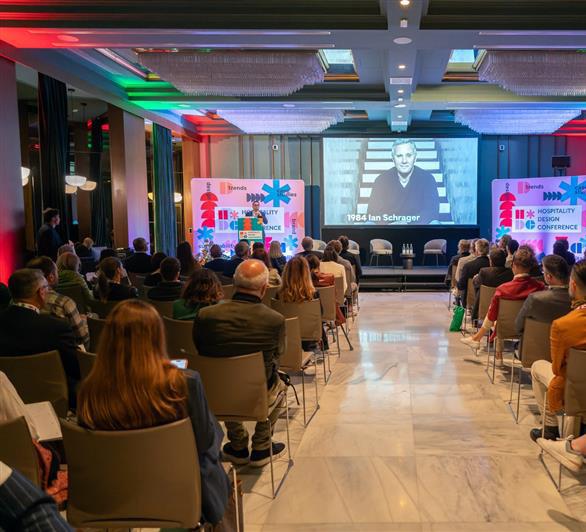
Milan is set to once again take centre stage in the global design and hospitality landscape as the Hospitality Design Conference returns for its third edition at Hotel Melià. Organised by Teamwork Hospitality, the Rimini-based consulting and training firm, the event continues to position itself as a key international platform for architecture, interiors and contract design within the hospitality sector.
With an expected attendance of approximately 700 industry professionals, the conference will bring together investors, hotel owners, operators, developers, designers and architects from across Italy and international markets. More than a
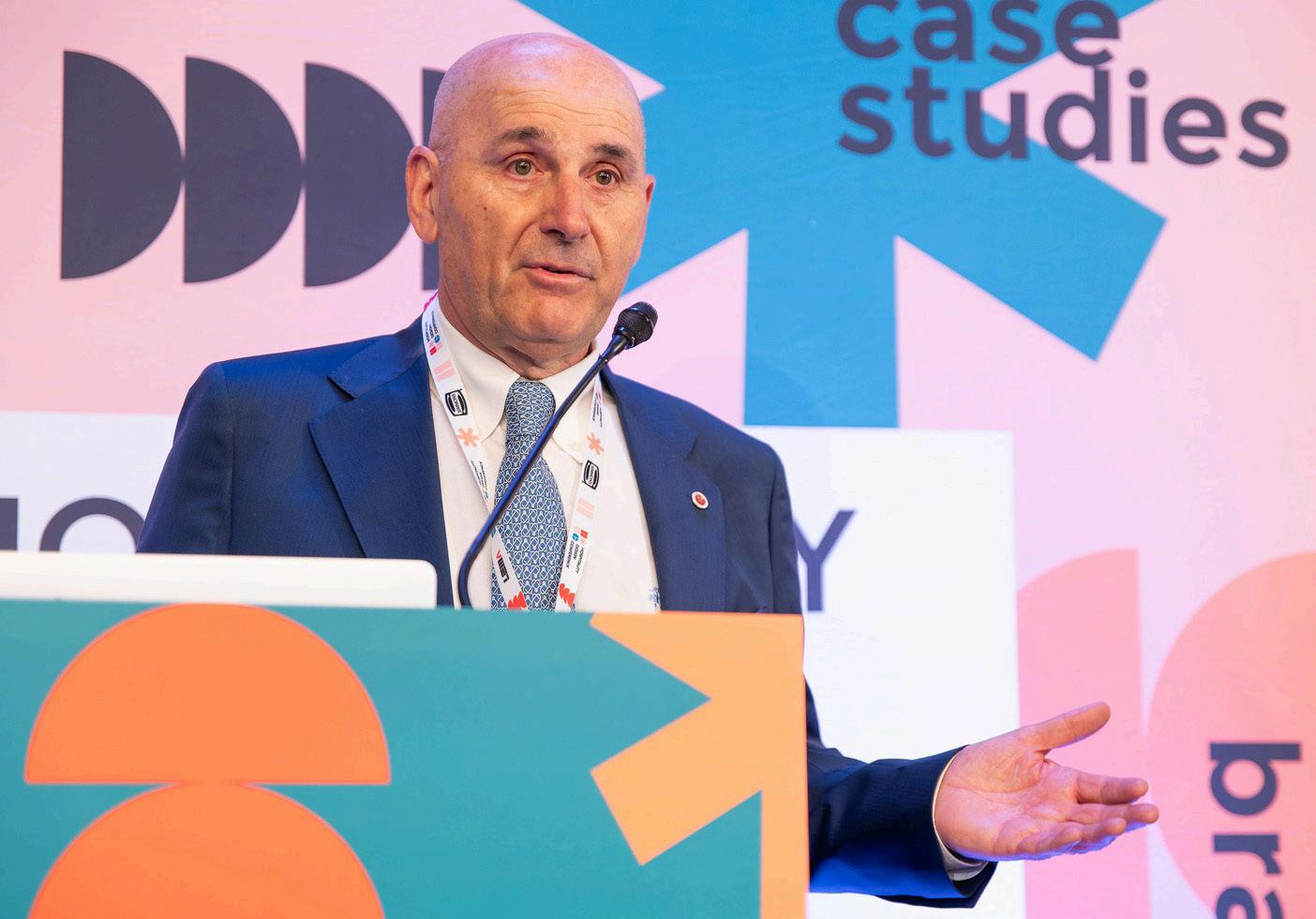
traditional industry gathering, the event is designed as a strategic forum for knowledge exchange, offering insights into the evolving dynamics shaping hospitality design, redevelopment and guest experience.
This year’s edition is built around a central theme that reflects a significant shift in the industry: hospitality is no longer defined by a fixed place, but by fluid, experience-driven environments. As the boundaries between residential, workspace and hospitality settings continue to blur, the sector is entering what organisers describe as an era of “liquid hospitality,” where adaptability, personalisation and emotional engagement become critical differentiators.
The conference will explore how emerging hybrid living models, artificial intelligence and experiential design are reshaping the way spaces are conceived, built and operated. From co-living and extended-stay concepts to multifunctional environments that evolve throughout the day, the focus will be on designing spaces that respond to a more dynamic and mobile global audience.
Key themes for 2026 include the integration of artificial and human intelligence in delivering seamless guest experiences, the growing importance of community-driven spaces that appeal to both travellers and local residents, and the role of sustainability and circular design in redefining long-term value creation.
The programme will also examine how inclusivity, neurodesign and emotional engagement are influencing the next generation of hospitality environments, alongside new business models that move beyond the traditional “per night” revenue structure.
A strong emphasis will be placed on the power of design detail, highlighting how materials, finishes and micro-interventions can significantly enhance perception and guest satisfaction, particularly in refurbishment and repositioning projects.
At the same time, discussions around luxury will explore how technology is enabling more intuitive, personalised and discreet high-end experiences.
The conference will feature an intensive seminar programme with more than 60 Italian and international speakers, offering perspectives across the entire hospitality value chain, from concept and design to development and operations.
Complementing the knowledge sessions, a dedicated exhibition area will host over 40 leading companies in the furniture and contract sectors, providing attendees with direct access to the latest innovations and solutions shaping the industry.
New for 2026 is the introduction of the Platform B2B, a digital networking tool that allows registered participants to connect ahead of the event, schedule meetings and maximise engagement during the conference itself. This addition reflects a broader shift towards more targeted, outcome-driven industry events.
As hospitality continues to evolve in response to changing consumer expectations and technological advancements, the Hospitality Design Conference in Milan is set to offer both strategic foresight and practical insights, reinforcing its role as a must-attend event for professionals shaping the future of global hospitality.

By Shereen Shabnam


There are restaurants you visit for a quick bite and then there are places like FRANK Meat & Taps, where the energy pulls you in before the first plate even lands on the table. Tucked away on Bluewaters Island just steps from Ain Dubai, this hip-hop-infused gastropub blends bold American comfort food with an atmosphere that feels instantly electric yet warmly welcoming.
The vibe is effortlessly cool with industrialchic interiors, upbeat music, buzzing conversations and a crowd that reflects Dubai’s multicultural spirit. Despite the lively setting, the service remains impressively attentive. The staff are friendly without being intrusive, knowledgeable about the menu, and genuinely enthusiastic about guiding you through the experience.

We began with meat cubes that were tender, flavour-packed and set the tone for what was to come. The corn dog delivered playful nostalgia with a crisp golden coating, popcorn and a juicy centre, while the smashed burger was everything you want from comfort food: juicy, perfectly caramelised edges, layered with just the right balance of pickles and sauce. We dined with a pescatarian who told us the prawn tempura and the salmon steak was done perfectly and a must try.
Then came the ribs and they truly are the heart of FRANK. Slow-cooked, generous, and beautifully glazed, they fall apart at the touch while still holding that satisfying bite. They are indulgent without feeling overly heavy, and it’s easy to see why they’re considered the signature order. Alongside them, the beef quesadilla offered a creamy, rich contrast, being hearty, well-seasoned and ideal for sharing.
Dessert deserves its own applause. The homemade Napoleon layered with cherry jam was delicate yet comforting, the pistachio Kunafa Fondant cleverly fused Middle Eastern texture with molten decadence, and the chocolate lava cheesecake was unapologetically indulgent. t
FRANK is not just about food; it is about mood. It is where big flavours meet big beats, where friends and family linger longer than planned, and where every dish feels generous, not just in portion, but in personality.

By Natasha Dury
There are moments in design when a single colour tells the entire story. For Fabiana, that colour is red which is confident, expressive and undeniably sophisticated. Our latest accessories edit brings together a curated selection of handcrafted leather pieces that transform everyday essentials into refined statements of style.
Crafted with precision and an eye for detail, the collection reflects a modern approach to luxury, where function meets aesthetic clarity. The rich red hue runs consistently across each piece, creating a cohesive visual language that feels both powerful and polished. Whether placed on a desk, carried into a meeting or styled within a living space, these accessories are designed to stand out without overwhelming.
At the heart of the collection are the travel and work essentials. The sleek laptop sleeve, finished in supple leather, offers a minimalist silhouette while ensuring protection with understated elegance. Complementing this are matching luggage tags, designed with clean lines and refined hardware, adding a subtle yet elevated touch to travel moments.
For the workspace, Fabiana introduces a series of desk accessories that bring warmth and personality to contemporary interiors. The structured leather tray is both practical and sculptural, ideal for organising everyday items while maintaining a sense of order. The tissue box cover, often overlooked, is reimagined here as a design piece that is clean, geometric and finished with impeccable stitching.

Adding a softer dimension to the collection is the leather-wrapped vase, paired with striking red roses. It reflects Fabiana’s ability to merge lifestyle with design, turning simple decorative elements into tactile, luxurious accents.
Completing the edit is the statement briefcase, carried with effortless confidence. Designed for the modern professional, it balances structure with fluidity, offering both

practicality and presence. The rich leather finish, paired with classic detailing, makes it as suitable for business settings as it is for everyday use.
Together, the collection speaks to a lifestyle that values detail, craftsmanship and quiet luxury. Fabiana’s red accessories are expressions of individuality and designed for those who appreciate beauty with practicality.

By Verna S.


In a fashion landscape often driven by speed and spectacle, IYMAA arrives with a quieter kind of confidence. Founded by Riyadh-based engineer and designer Abdullah Alkhorayef, the emerging fashion house is less about trend and more about feeling.
It is a thoughtful exploration of identity, memory and self-expression through clothing. For Alkhorayef, fashion is never simply about what we wear; it is about what we carry with us, what shapes us, and the unspoken ways we reveal ourselves to the world.
That philosophy sits at the heart of IYMAA, a new luxury label conceived not merely as a fashion brand, but as a creative universe. Rooted in cultural nuance and artistic dialogue, IYMAA is designed for those who see style as something deeply personal, an extension of thought, emotion and belonging.

With a vision shaped by creatives, for creatives, the brand moves fluidly between heritage and modernity, embracing a refined aesthetic that feels both intimate and globally resonant.
Its debut collection, Lost in Time, introduces this vision with quiet power. Rather than relying on overt drama, the collection speaks through layered textures, sculptural forms and a deliberate softness in construction. The pieces are reflective and emotionally charged garments that seem to hold memory within their seams.
Tailoring is balanced with fluidity, structure softened by movement, and subtle cultural references are woven into silhouettes that feel contemporary yet deeply rooted. It is a collection that reflects transition and moments in life where identity shifts,

fragments and reassembles itself into something new.
More than a label, IYMAA is being built as a collaborative cultural space, one that embraces artists, photographers, musicians and thinkers who understand clothing as a form of expression rather than decoration.
This ethos gives the brand a rare duality: elevated in craftsmanship, yet inclusive in spirit. It is fashion for individuals who seek depth, not noise; who dress not to perform, but to articulate who they are.
As the brand expands its presence through digital storytelling and future collections, IYMAA signals the arrival of a new kind of Saudi luxury, grounded not in excess, but in meaning.



Bil Arabi spotlights Hobb, through a contemporary approach to styling - where versatility, layering, and personal expression take center stage.
As one of the brand’s standout collections, Hobb continues to evolve, now introducing a new set featuring emerald baguette stones set in yellow, white, and rose gold, offering a more fluid approach to jewelry.
Designed to be stacked, layered, and reworked, each piece allows for multiple interpretations – transforming from

minimal, everyday styling to more elevated, statement looks.
Rooted in Bil Arabi’s distinctive design language, the collection subtly incorporates Arabic script, reimagined through clean, modern forms. While the essence of Hobb - or love - remains at its core, the collection is not limited to one meaning, but rather expands through how it is worn.
Highlighted pieces from the Hobb Collection include gold baguette diamond pendants, the iconic ‘Love’ ring, gold bangles adorned

with diamonds, and refined ‘Love’ hoop earrings. Each piece is designed to stand alone or be combined, creating a curated, layered look that adapts seamlessly from day to night.
Functioning as a capsule jewelry wardrobe, Hobb offers endless styling possibilitieswhere impact is built through layering, not replacement.
With this approach, Bil Arabi continues to redefine not just what jewelry represents, but how it is worn.
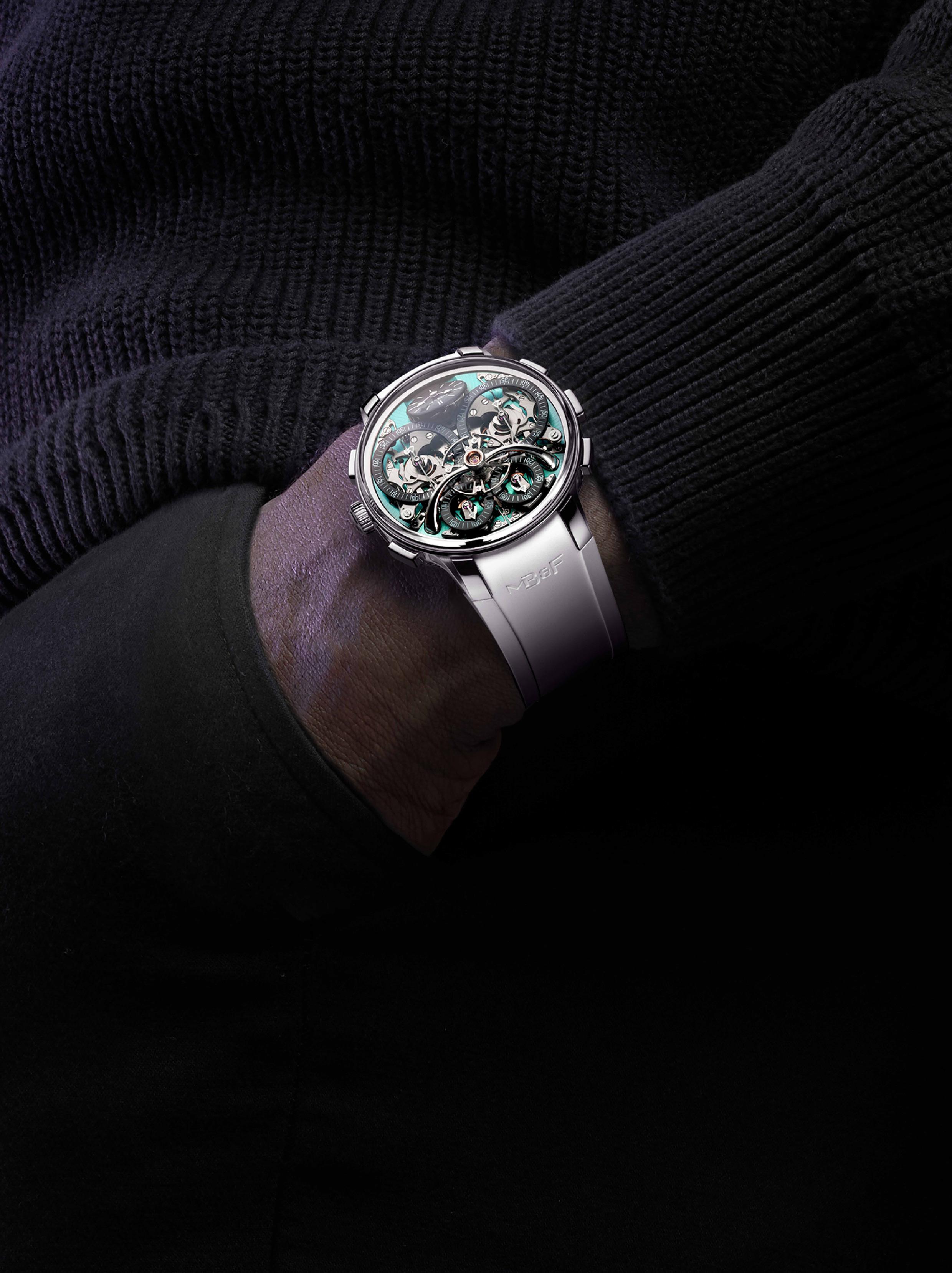
By Shereen Shabnam

In the rarefied world of haute horology, few creations manage to balance technical mastery with visual poetry quite like the LM Sequential Flyback EVO. With its latest evolution, MB&F introduces a striking new edition in grade 5 titanium, paired with an aquamarine dial plate that feels both contemporary and quietly captivating. It is a watch that redefines how we experience it.
I have been writing about MB&F creations for more than a decade and at first glance, the design unmistakably resonates with the brand. The domed sapphire crystal offers a theatre-like view into the movement, while the newly introduced tilted time display enhances legibility and adds a dynamic architectural dimension.
The absence of a traditional bezel allows the dial to feel open and immersive, drawing the eye into a mechanical landscape that is as intricate as it is beautiful. The aquamarine hue brings a sense of lightness and modernity, contrasting elegantly with the technical complexity beneath.
This latest EVO edition builds on a legacy that began a few years ago, when the original Sequential EVO marked MB&F’s first chronograph and its 20th calibre—an achievement that earned the prestigious ‘Aiguille d’Or’ at the Grand Prix d’Horlogerie de Genève. Conceived by master watchmaker Stephen McDonnell, the movement introduced an entirely new way of thinking about chronographs, combining two independent timing systems within a single mechanism.
What sets the Sequential Flyback EVO apart is the addition of the flyback function, now seamlessly integrated into the EVO collection. Originally envisioned in early prototypes, the flyback required years of refinement to perfect. Its inclusion allows the chronograph to reset and restart instantly with a single press, an elegant solution rooted in aviation

history, yet executed here with remarkable precision.
Functionally, the watch is as versatile as it is sophisticated. Its dual chronograph layout enables multiple timing modes— from independent timing to split-second, cumulative and lap timing, controlled by the ingenious “Twinverter” switch.
This binary system allows the wearer to invert the start-stop status of both chronographs simultaneously, opening up possibilities rarely seen in mechanical watchmaking. Whether timing laps on a racetrack, tracking multiple tasks, or simply exploring its capabilities, the watch transforms complexity into intuitive interaction.
Beyond its technical brilliance, the EVO designation ensures that the watch is designed for modern living. With 80 metres of water resistance, a screw-down crown
and an integrated rubber strap, it offers durability without compromising elegance. MB&F’s proprietary FlexRing shock absorber further protects the movement, reinforcing its suitability for an active lifestyle, an uncommon trait in such a high complication.
At its heart, the Sequential calibre represents a breakthrough in efficiency. By using internally jewelled vertical clutches and innovative engineering solutions, it overcomes the energy losses typically associated with chronographs, delivering exceptional precision and performance.
The LM Sequential Flyback EVO is not merely a timepiece. It is a statement of intent. It speaks to those who appreciate craftsmanship, innovation and individuality, where every detail is considered and every function serves a purpose. This truly is a watch that stands as a lasting expression of creativity and engineering excellence.
By Natasha Dury
When it comes to gifting with intention, few brands balance practicality and luxury quite like RIMOWA. Defined by its unmistakable design language, precision craftsmanship and travelfirst functionality, RIMOWA continues to create pieces that move effortlessly between style and purpose. From iconic aluminium suitcases to everyday leather companions and sleek travel accessories, the brand’s latest selection offers refined options for those who
appreciate thoughtful design and products built to last. Whether for frequent flyers, design lovers or anyone who values elevated essentials, these standout pieces make for timeless additions to any wardrobe or journey.
Crafted from high-performance polycarbonate, RIMOWA’s Essential Collection is designed for modern travel with a lightweight yet durable construction. Sleek, practical and easy to manoeuvre, it is ideal for those who want reliability without compromising on style. Colourways such as Clay and Terracotta bring warmth and sophistication, while glossy finishes in Red and Black add a bold, fashion-forward edge.

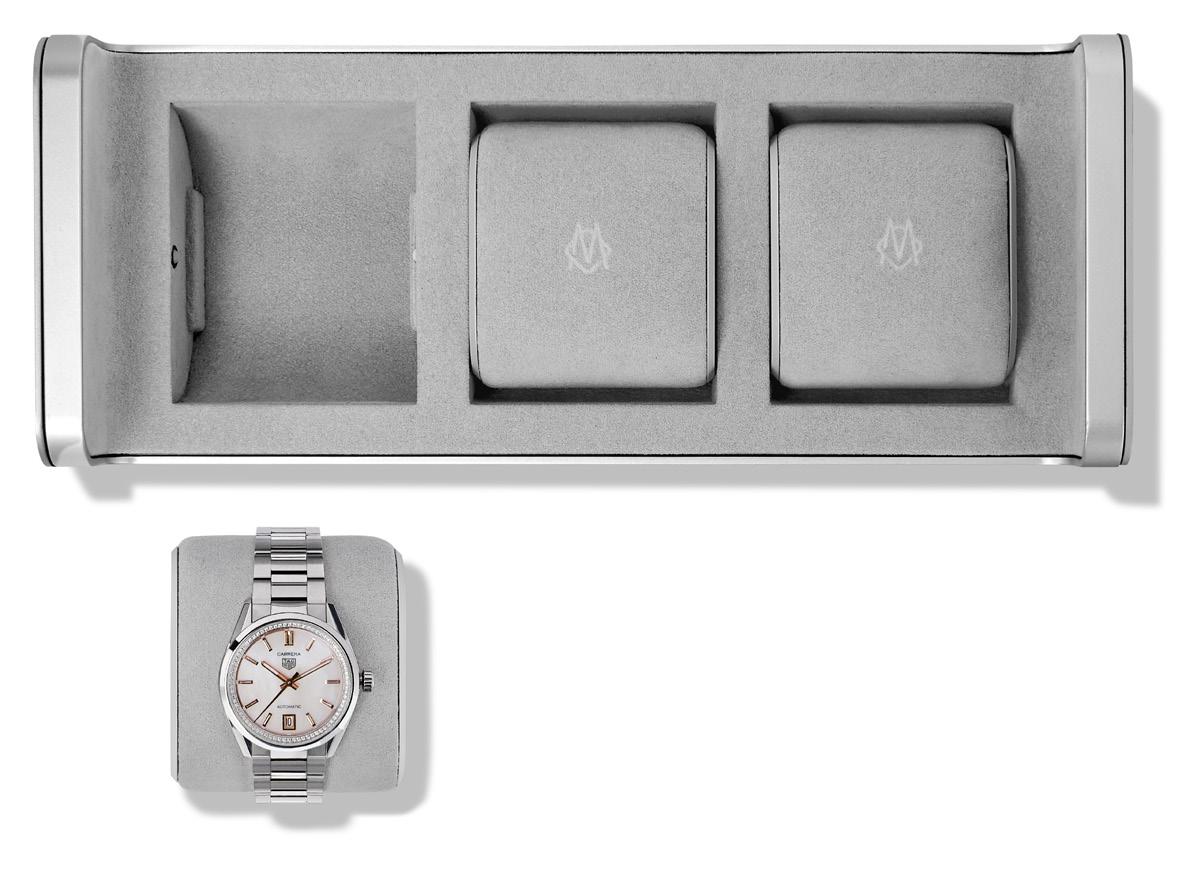
For those who appreciate the finer details, the RIMOWA Watch Case is a refined travel essential designed to securely hold up to three wristwatches. Compact enough to fit neatly into a suitcase or travel bag, it offers both protection and elegance for collectors and frequent travellers alike.

Blending heritage appeal with modern engineering, the Classic Collection offers a more timeless expression of travel luxury. Crafted in anodised aluminium and finished with leather handles and refined detailing, these cases are designed for those who appreciate understated elegance and enduring craftsmanship.
A standout for lovers of design-led accessories, the RIMOWA x MYKITA 2.0 collaboration continues the brand’s partnership with MYKITA through a sleek black monochrome eyewear release. Finished with mineral polarised lenses, the collection combines contemporary style with high performance eye protection, making it a strong addition to any travel wardrobe.
Expanding beyond luggage, the Groove Collection brings RIMOWA’s distinctive design sensibility into the world of everyday leather goods. The line includes the Groove Shopping Bag, Groove Sliding Hobo Bag, Groove Cross-Body Bag Large, and Groove Cross-Body Bag Small, each created to move seamlessly through daily life while maintaining a polished, elevated aesthetic.
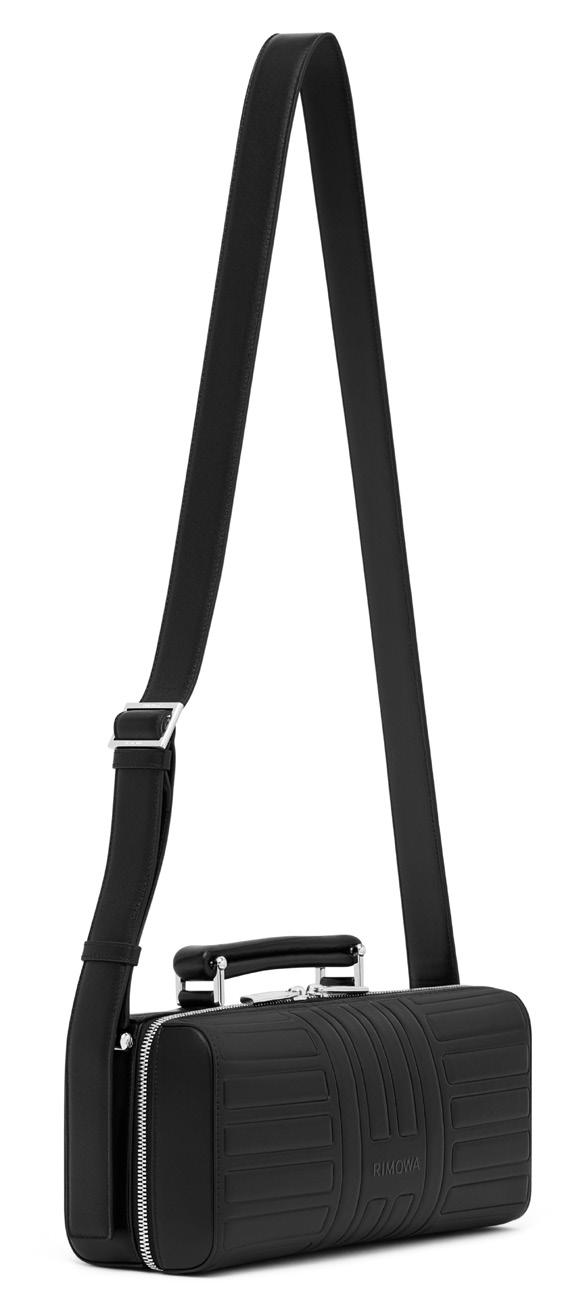

For those who prefer compact functionality, the Personal Cross-Body Bag offers a stylish way to carry everyday essentials. Practical, structured and easy to wear, it is designed for movement and convenience while retaining the signature sophistication associated with the brand.
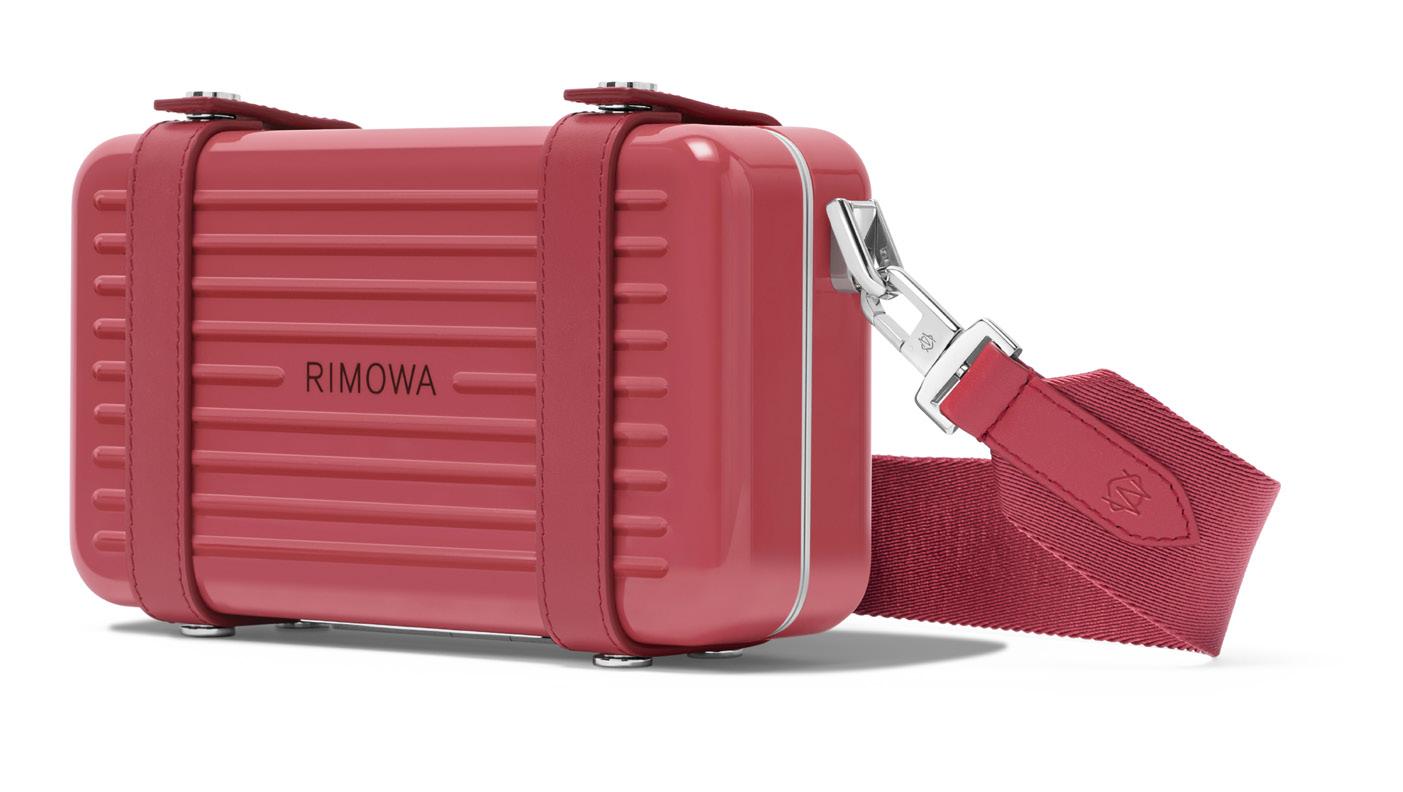
By Natasha Dury


Batlah, the Saudi-born brand of niche luxury fragrances, unveils its new limited-collection scents, Heritage and Nahar, a refined tribute to tradition and serenity.
Heritage, heralded as a royal heirloom, is crafted from a century-old formula featuring Taif Rose top notes, a heart of Musk, and
a deep Oud base, an enduring symbol of cultural legacy passed through generations. Nahar captures the essence of serene mornings, opening with Taif Rose, unfolding into a heart of Taif Rose and Frankincense, and settling into a warm Ambergris base. Whether you’re choosing a gift for someone special or a signature scent for your own
celebrations, it’s an effortless way to bring a touch of timeless elegance to the month.
With every note, Batlah reaffirms its place at the pinnacle of artisanal perfumery, offering a rare sensory experience for those who seek the extraordinary and demand the divine.
Many consumers across the world are looking for the perfect gift for their friends and family. Natasha Dury, Curator of New Technology Trends brings you the latest gadgets to gift loved ones.
The upcoming HONOR 600 Lite is designed to deliver a refined and reliable everyday smartphone experience, combining sleek craftsmanship with powerful performance and intelligent features. Built with an ultra-slim metal forged unibody, it offers both durability and comfort, complemented by a 6.6-inch full-view display with ultra-narrow bezels for immersive visuals and vibrant clarity. Photography is elevated with a 108MP ultra-clear main camera and a dedicated AI Camera Button that enables quick access and intuitive controls, alongside smart editing tools like AI Eraser and AI Outpainting for effortless enhancements. Backed by a class-leading 6520mAh battery with 45W fast charging and long-term durability, the device ensures extended usage and consistent performance over time. With added drop resistance certification and a range of stylish color options, the HONOR 600 Lite brings together premium design, advanced AI capabilities, and dependable power in a well-balanced, user-friendly package.


The HUAWEI MatePad 11.5 S positions itself as a thoughtful blend of analogue charm and digital efficiency, offering a paper-like experience without sacrificing modern productivity. Its Ultra-clear PaperMatte display mimics the tactile satisfaction of writing on paper while maintaining sharp visuals and smooth performance, especially when paired with the responsive HUAWEI M-Pencil Pro. Combined with upgraded apps like HUAWEI Notes and PC-level tools such as WPS Office, plus optional keyboard support, the tablet transitions seamlessly between creative expression and serious work. With strong battery life, efficient cooling, and versatile software like GoPaint, it ultimately feels less like a simple tablet and more like a portable, all-in-one productivity companion designed for everyday use.
The latest range of Panasonic Handheld Garment Steamers brings together convenience, versatility, and thoughtful design to meet everyday fabric care needs. Headlined by models like the Panasonic NI-GWF250 with its expandable hanger and garment-specific features, the dual-board Panasonic NI-GWG085 for added stability, and the compact Panasonic NI-FS780, the lineup caters to both home and on-the-go use. With powerful steam output, gentle care for delicate fabrics, and multifunctional designs that combine steaming and ironing, these devices offer a practical, efficient alternative to traditional ironing, making garment maintenance quicker, easier, and more adaptable to modern lifestyles.

Power up faster with a 10K power bank featuring Qi2 25W wireless and 30W USB-C fast charging, designed to keep pace with life on the move. Compact, TSA carry-on compliant, and pocket-ready, it delivers up to 34 hours of additional battery life while enabling simultaneous charging of two devices via its wireless pad and USB-C port. A built-in kickstand and digital display make it easy to stream content and monitor charge levels, while the integrated magnetic ring allows for seamless attachment of accessories such as PopSocket® grips or magnetic wallets. Engineered for convenience, it supports pass-through charging, features a camerafriendly design that keeps lenses unobstructed, and is finished in a lightweight, soft-touch silicone exterior. A 2 ft (60 cm) USB-C to USB-C cable is included for added versatility.
Engineered for the ultimate on-the-go gaming experience, the Pro case delivers power, protection, and portability in one premium package. A removable 10,000 mAh power bank delivers up to 30W fast charging and features an LCD screen to display remaining battery life. The Pro version builds on the standard model’s safe in case charging with a sleeker, integrated power bank design that adds even more convenience. Gamers can now recharge the power bank externally without opening the case, check battery levels at a glance, and enjoy uninterrupted play with the hinged power bank design that doubles as a tabletop stand. Additional features include a dedicated flap for organised game card storage, a hidden compartment for smart trackers such as AirTag and Tile, and rugged materials and heavy-duty zippers for long-term durability. Compact, stylish, and performance-driven, the Pro case delivers upgraded convenience and charging flexibility for players who demand more from their gear.

Interiors are moving beyond fixed “looks” toward homes that respond to real life: spaces that shift effortlessly between hosting and retreat, feel composed without being formal, and evolve over time without needing to be reinvented. Minotti’s current collections capture this through a team of designers whose perspectives are distinct, yet united by one coherent language.
Together long-standing collaborators Marcio Kogan / Studio MK27, Giampiero Tagliaferri, Hannes Peer, Nendo and GamFratesi offer a clear view of how contemporary living is being redefined, through comfort as a foundation, modularity as quiet intelligence, and forms that balance softness with architectural control.
GIAMPIERO TAGLIAFERRI COMFORT WITH MEMORY, REFINED FOR NOW
Tagliaferri’s work speaks to a growing appetite for pieces that feel emotionally familiar while remaining undeniably modern. The Coupé seating system draws on 60s and 70s references, rounded, overlapping volumes and an inclined seat designed to truly hold the body.
Describing the project as “a seating experience that is both nostalgic and forward-thinking,” Tagliaferri explains that Coupé reinterprets classic forms “through a contemporary lens, finding a balance between vintage charm and
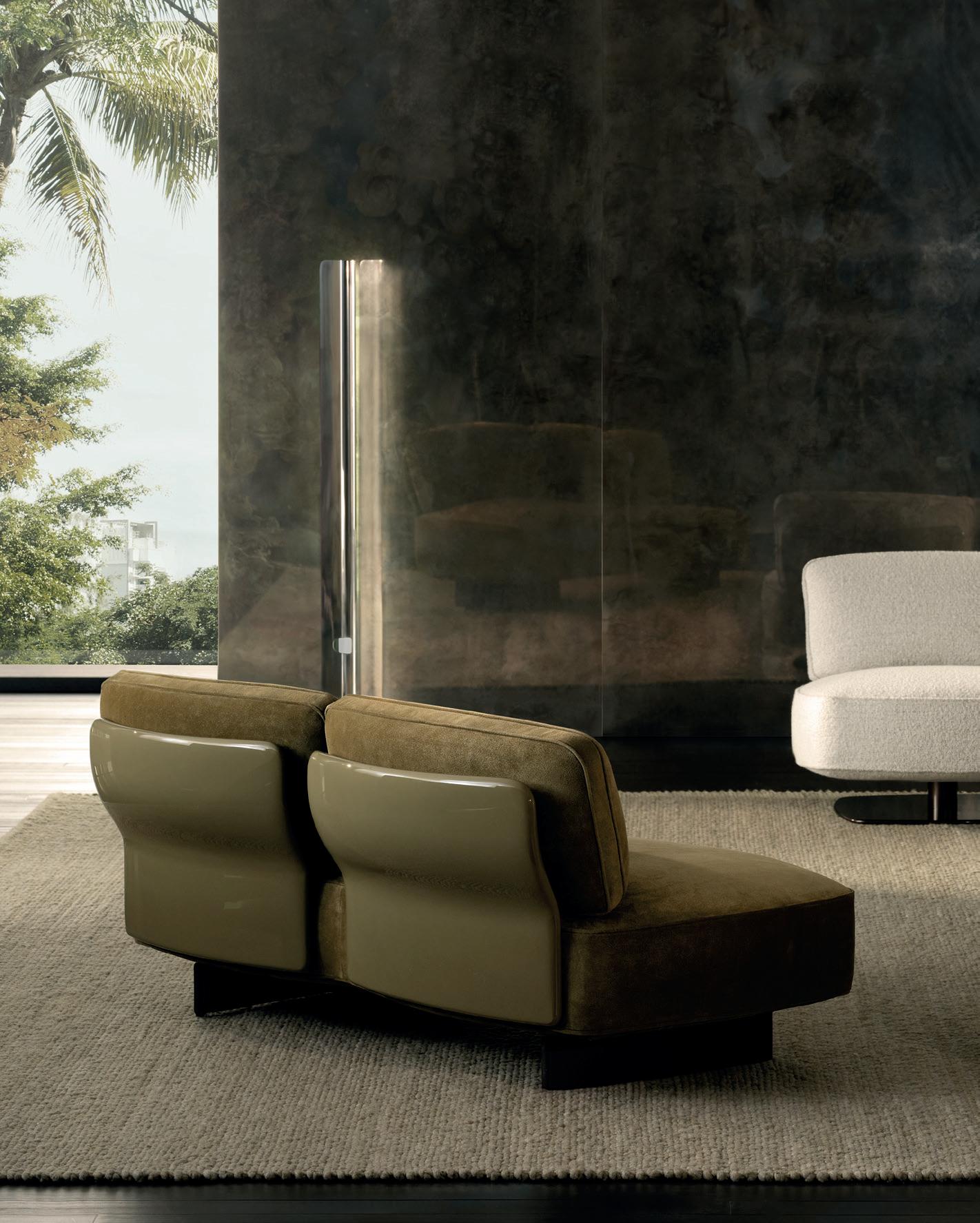
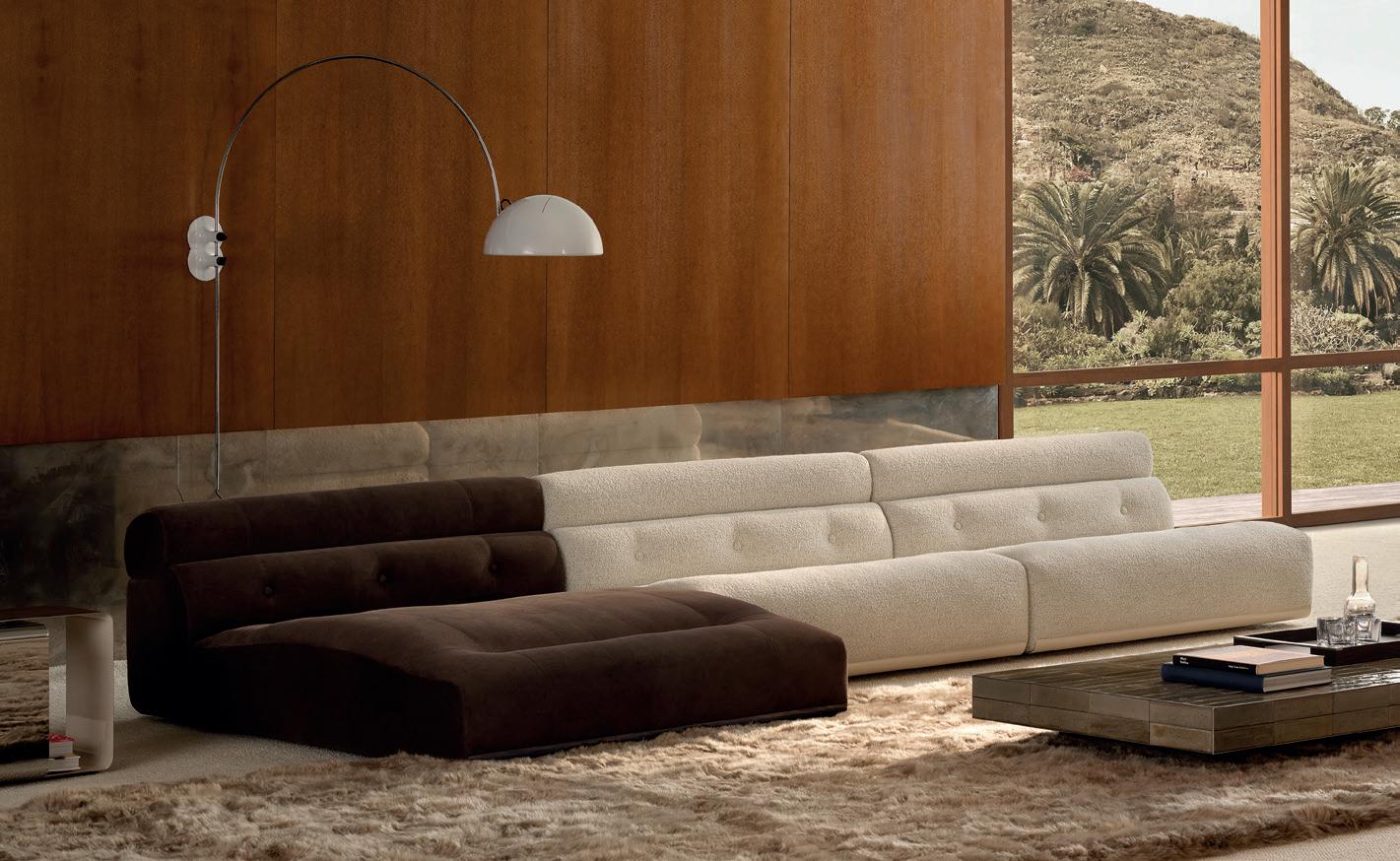
modern functionality.” Couture-like detailing, including tone-on-tone stitching, elevates the silhouette without overt decoration.
Conceived as a modular system, Coupé allows living spaces to adapt naturally as routines change, supporting both everyday comfort and more social moments. It reflects a return to seating as a long-term anchor within the home as expressive, comfortable and designed to endure.
As homes become more fluid, Kogan proposes furniture that encourages movement and gathering rather than fixed arrangements. The Bézier system replaces the traditional sofa with a series of organic elements that can be combined endlessly, creating “islands” for conversation, lounging or hospitality settings.
Quoting Niemeyer “the entire universe is made of curves” as Bézier channels Brazilian modernism through an architectural lens: curves that are disciplined, intentional and spatial. Its generous forms reshape the living area into a shared landscape, reflecting interiors that prioritise interaction and collective experience over a single focal point.
Peer’s design language reflects a strong sensibility: pieces that feel structured and timeless, yet carry a confident, recognisable detail. The Riley seating system is defined by its monolithic form rising from a recessed metal base, animated by vertical quilting and a distinctive stitched profile that traces the geometry of the back and arms.
Peer describes the design as “a dynamic and versatile piece that interprets the embrace of two complementary souls – one architectural
and outward-facing, the other softer on the interior.” This duality gives Riley its quiet confidence: graphic and disciplined, yet quietly luxurious and deeply inviting.
The same architectural thinking extends into complementary pieces such as Stage, a side table that introduces bold geometry while remaining functional, including a discreet sliding-top storage option. Together, these designs bring clarity and order to contemporary interiors without rigidity and as a balance of rigour and ease.
Oki Sato approaches the evolving home through quiet adaptability. The Saki seating family is built around modular elements and sinuous support panels that can be lacquered or upholstered, offering countless combinations without visual noise.
In Japan, the term “Saki” means blooming, and it is precisely to the unfolding of flower buds that Nendo pays tribute with a family of seats. Oki Sato interprets the idea of the bud
through “subtle incisions made on the top of the cushion, creating a balanced separation and cohesion that transitions seamlessly from backrest to armrest.”
The result is seating that feels protective and enveloping, enhanced by carefully considered ergonomics and tailored detailing. Saki’s adaptability is quiet rather than performative, supporting interiors that shift throughout the day while maintaining calm and visual coherence.
GamFratesi’s Vivienne seating system is defined by a thoughtful balance of curve and rigour, making it particularly suited to modern homes that seek warmth without compromising composure. Comfort is introduced through proportion and precision rather than excess, resulting in a silhouette that feels both inviting and architecturally assured.
Evolving from the curved backrest of the original Vivienne armchair, the system gently wraps the body in a soft, embracing form while maintaining a clear and disciplined outline. A recessed support structure subtly lifts the piece from the floor, lightening its visual footprint and allowing it to feel airy yet grounded - an elegant expression of modern comfort shaped by restraint.
Across modular seating systems, tailored detailing and architectural proportions, Minotti presents the home as a place designed to be lived in as adaptable, personal, and enduring. In a year defined by a desire for spaces that feel calm yet expressive, flexible yet grounded, these designers collectively point toward the same conclusion: the future of interiors is not about reinvention, but about designing environments that evolve with us.

Zara Home Unveils a Collection Inspired by Modern Elegance
By Verna S.

With interiors continuing to shift towards calm, comfort and understated sophistication, Zara Home’s latest collection arrives as a beautifully considered expression of modern living. Designed to bring softness, refinement and subtle glamour into the home, the new range spans the bedroom, dining space, bathroom and home fragrance, offering a cohesive aesthetic rooted in effortless elegance.
Defined by a palette of soft oyster white, delicate pastels, gold and silver accents, the collection embraces a quieter, more elevated approach to home styling. It is a look that feels fresh yet timeless, one that favours thoughtful details over excess and creates interiors that are both welcoming and polished. Delicate embroidery, satin finishes and tactile textures add a layer of visual depth while maintaining the minimalist sensibility that Zara Home has become known for.
At its core, the collection is about creating spaces that feel beautifully lived in. In the bedroom, standout pieces include leaf print cushion covers, geometric embroidered sateen duvet covers and premium pillowcases in mulberry silk and sateen, all designed to bring a sense of comfort and quiet luxury to the sleeping space. Coordinating fitted sheets and soft finishes help complete the look, offering a layered yet refined feel.
The bathroom selection continues this gentle design language with scalloped-edge bath towels in soft pink and green tones, adding a subtle decorative flourish to everyday rituals.
Meanwhile, the dining collection introduces elegant entertaining essentials such as floral satin tablecloths, plant-embroidered sateen linens, mother-of-pearl coasters and small glass tumblers with raised detailing. Each piece feels decorative without being overwhelming, making them ideal for both everyday styling and more curated table settings.
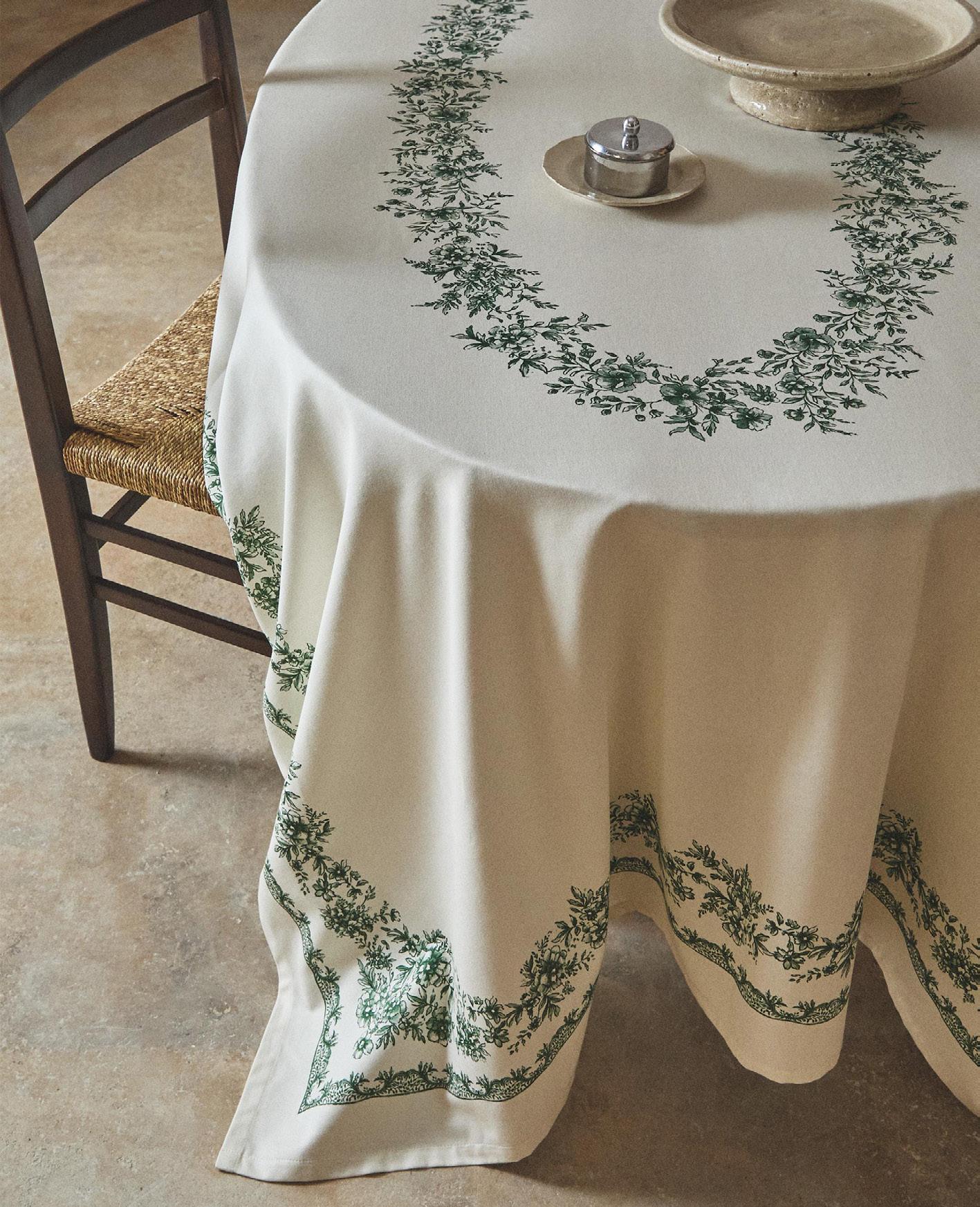

Home fragrances complete the collection, adding an atmospheric finishing touch that enhances the sense of warmth and serenity running throughout the range. Together, the pieces are designed not to just decorate a home, but to shape the mood and the experience of living within it.

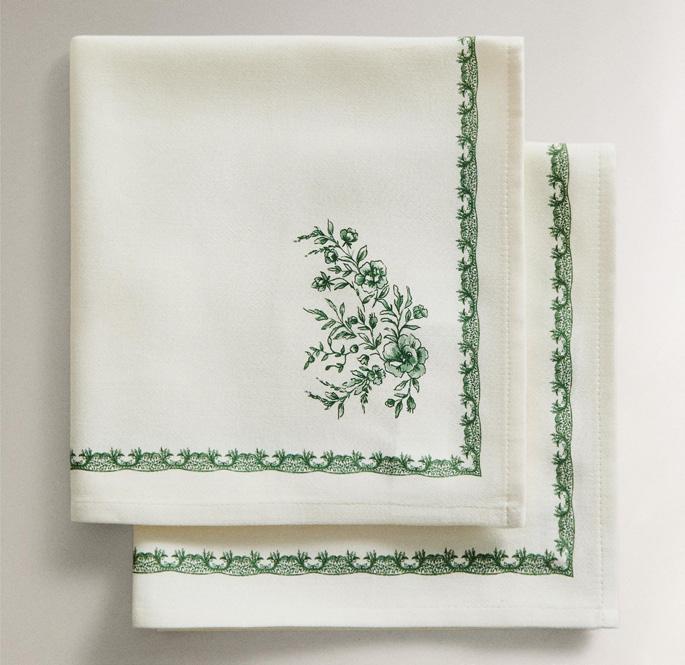
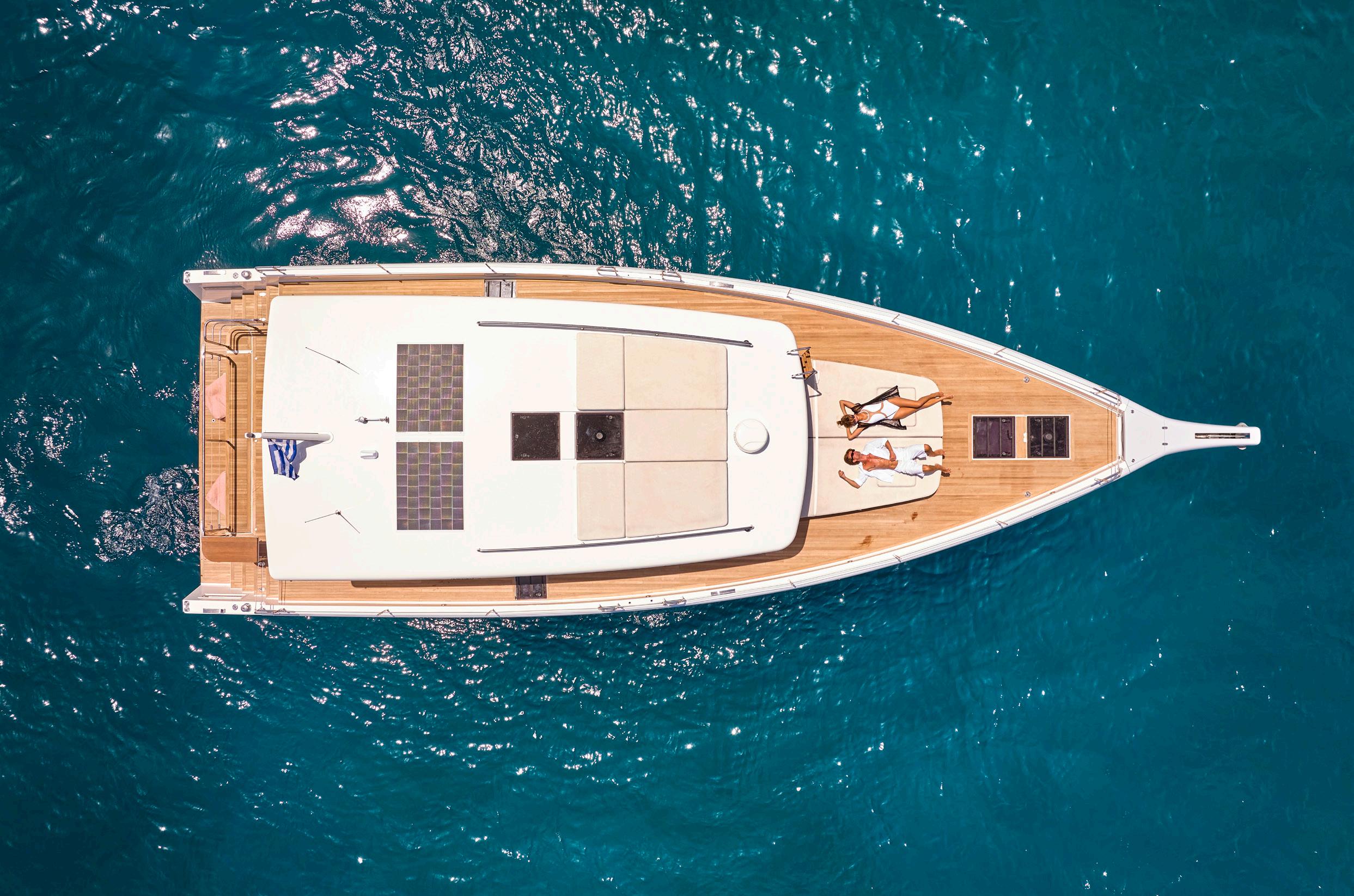
When I first started writing about yachts 20 years ago, the industry was often defined by spectacle, speed and everbolder statements of excess. Circling back to recent times, Omikron Yachts offers something far more nuanced - a quieter, more intelligent expression of life at sea. Rooted in craftsmanship, functionality and a refined philosophy of long-range cruising, the Greek yacht builder is steadily carving out a distinctive identity within the international yachting world, and early momentum in the United States suggests its understated approach is resonating well beyond the Mediterranean.
With its debut at the Palm Beach International Boat Show, one of the most influential events on the American boating calendar, Omikron Yachts is entering a new phase of visibility. For a brand still relatively new to many luxury lifestyle
By Shereen Shabnam
audiences, the upcoming showcase represents more than a trade show appearance. It marks a meaningful step in the company’s international expansion and a chance to introduce a wider market to a yachting philosophy built not around noise, but around thoughtful design and purposeful cruising.
Omikron Yachts is the yacht-building brand of Olympic Marine, the longestablished Greek marine powerhouse based in Lavrio, just outside Athens. While Olympic Marine has been part of the nautical world since 1969, Omikron Yachts was formally launched in 2019 to represent the group’s shipbuilding, refit and repair activities, bringing together decades of technical expertise under a more contemporary and design-forward identity. Its arrival signalled a clear ambition: to create a new generation of yachts that prioritise space, efficiency
and the emotional experience of being on the water.
That ambition is best expressed through the OT-60, the model that has quickly become the brand’s signature. Described by many as a “sailboat without sails”, the OT-60 stands apart from conventional motoryacht thinking. Designed for owners who value long-distance capability, ease of movement and a more serene onboard lifestyle, the yacht is the result of a carefully considered collaboration between some of the most respected names in yacht design.
The custom hull was created by renowned naval architect Juan Kouyoumdjian, while both the interior and exterior design were penned by Lorenzo Argento, resulting in a yacht that feels sophisticated, spacious and quietly modern.
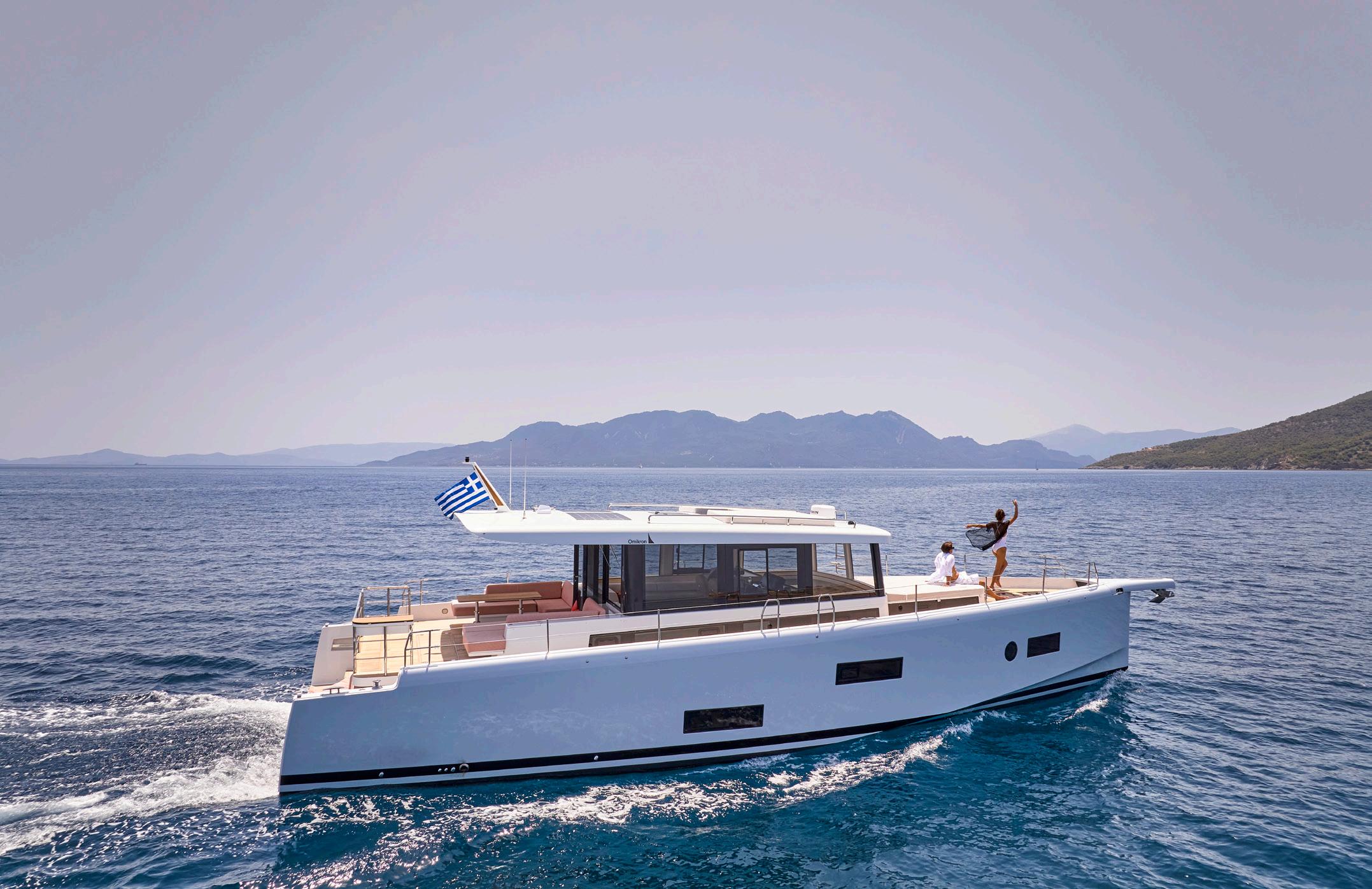
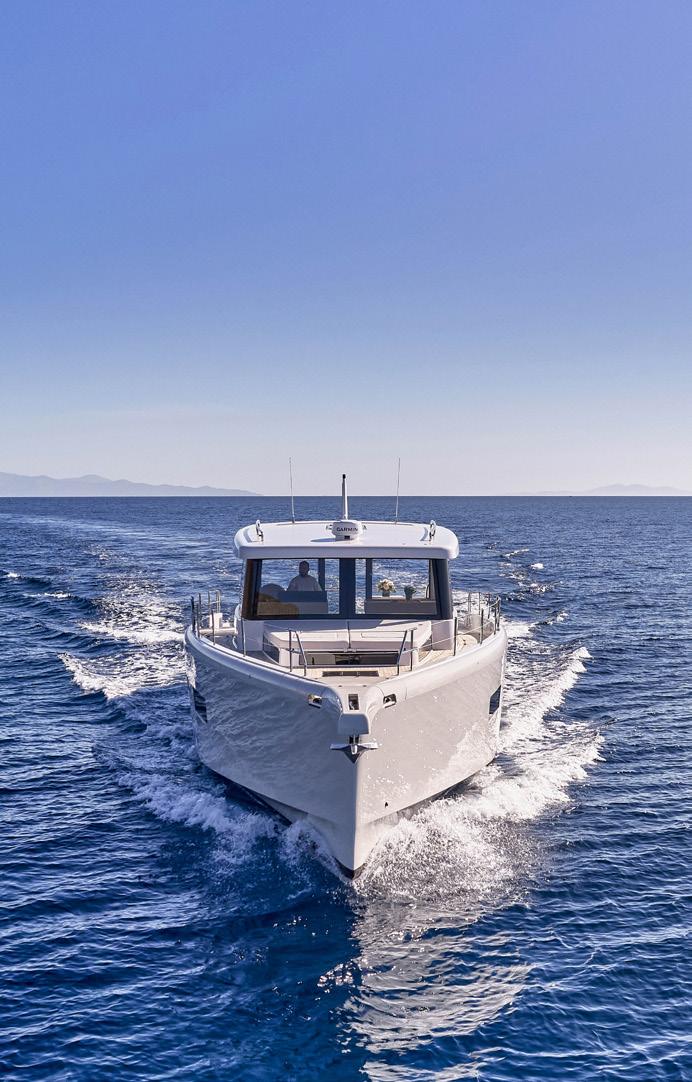
What makes the OT-60 particularly compelling is the way it balances elegance with efficiency. Conceived to maximise space, functionality and fuel economy, it delivers a range of approximately 1,000 nautical miles at 8 knots, while consuming just 1.25 litres per mile, a notable figure in a market where sustainability and operational intelligence are increasingly shaping buying decisions.
The layout and design language also speak to a different kind of luxury,
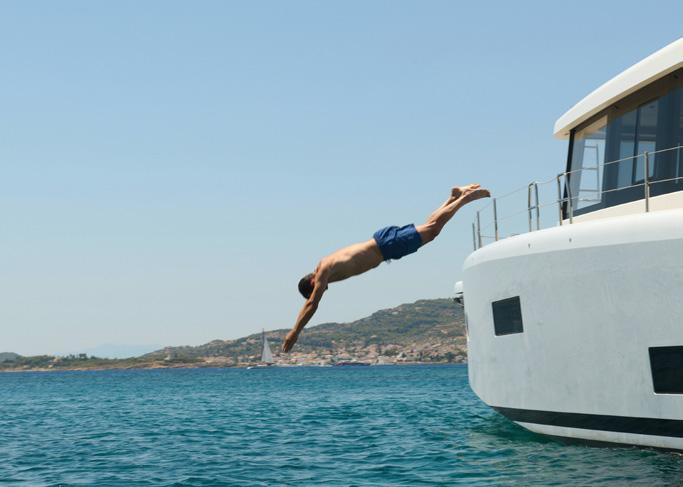
one where open living spaces, ease of circulation and connection to the sea matter as much as aesthetics.
This design philosophy appears to be translating well internationally. Only months after formally entering the U.S. market through a partnership with Jono Fleming of Axis Marine Group in South Florida, Omikron secured the sale of an OT-60 to an American owner and has since attracted strong interest from prospective buyers across the region. For a boutique European shipyard entering one of the world’s most competitive boating markets, that early response is a strong indication that Omikron’s approach is finding its audience.
Part of that appeal lies in authenticity. From GRP lamination to fine carpentry, the OT-60 is built entirely at the Omikron shipyard within Olympic Marine in Greece, allowing the brand to maintain full control over design, engineering and production. In an era where buyers are increasingly drawn to brands with both
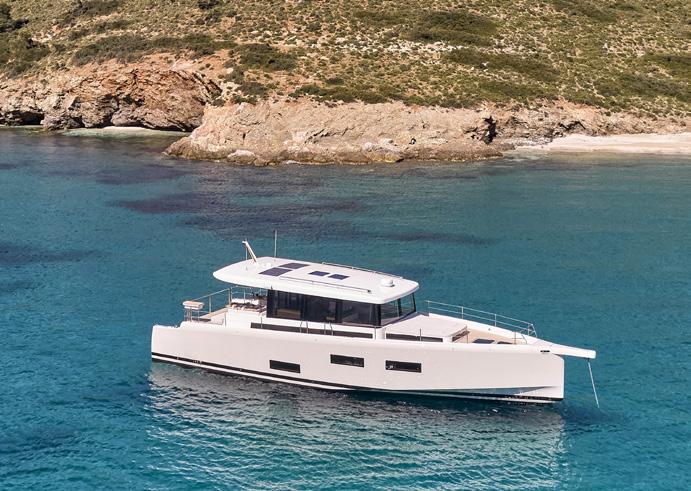
technical credibility and design integrity, that in-house capability gives Omikron a valuable edge.
The company is now scaling up operations to meet growing demand, including from North America, while continuing to expand its presence in key international markets. Its Palm Beach appearance is expected to be followed by participation in other important U.S. shows, including Annapolis, Newport and Fort Lauderdale, with new deliveries already scheduled for this year.
Many luxury brands are competing to be louder, larger or more ostentatious, but Omikron Yachts stands out for taking a different route. Its appeal lies in the idea that true luxury on the water is not always about excess, but about freedom, ease and beautifully resolved design.
And in today’s yachting world, that may be exactly the kind of thinking some owners are looking for.

By Shereen Shabnam
The Lynk & Co 06 positions itself as a design-led, tech-forward compact SUV aimed squarely at urban drivers who value individuality as much as everyday usability. Experiencing it on the roads of Dubai, the 06 feels perfectly in sync as it is compact enough to navigate tight urban spaces with ease, yet distinctive enough to stand out in a sea of more conventional crossovers.
It blends Chinese engineering with a distinctly European-influenced design philosophy, something Lynk & Co has leaned into since its inception. That dual identity comes through clearly from behind the wheel, where the car balances modern styling and digital integration with a driving experience tailored for real-world city life.
Our test drive began at home near Citywalk in the heart of Dubai to weaving through tight urban streets of Bur Dubai where its compact dimensions and light steering immediately proved their worth. Out on Sheikh Zayed Road, the pace picked up, and the 06 settled into a composed, confident cruise, showing a different side to its personality. Exterior
Visually, the 06 makes an immediate statement. It adopts Lynk & Co’s nowfamiliar split lighting signature, with slim daytime running lights perched high on the hood and the main headlamp units set lower into the bumper. The proportions are compact, yet the design manages to project a sense of solidity and presence.
Strong character lines along the sides and contrasting trim details give it a slightly sporty edge, while the overall stance feels more “urban chic” than rugged SUV.
Inside, the cabin reflects a modern, minimalist approach with a clear focus on digital integration. The layout is clean and uncluttered, anchored by a central touchscreen and a fully digital instrument cluster.
There is a noticeable influence from Volvo in the ergonomics and overall layout, which lends the interior a sense of familiarity and usability. Material quality is respectable for the segment,
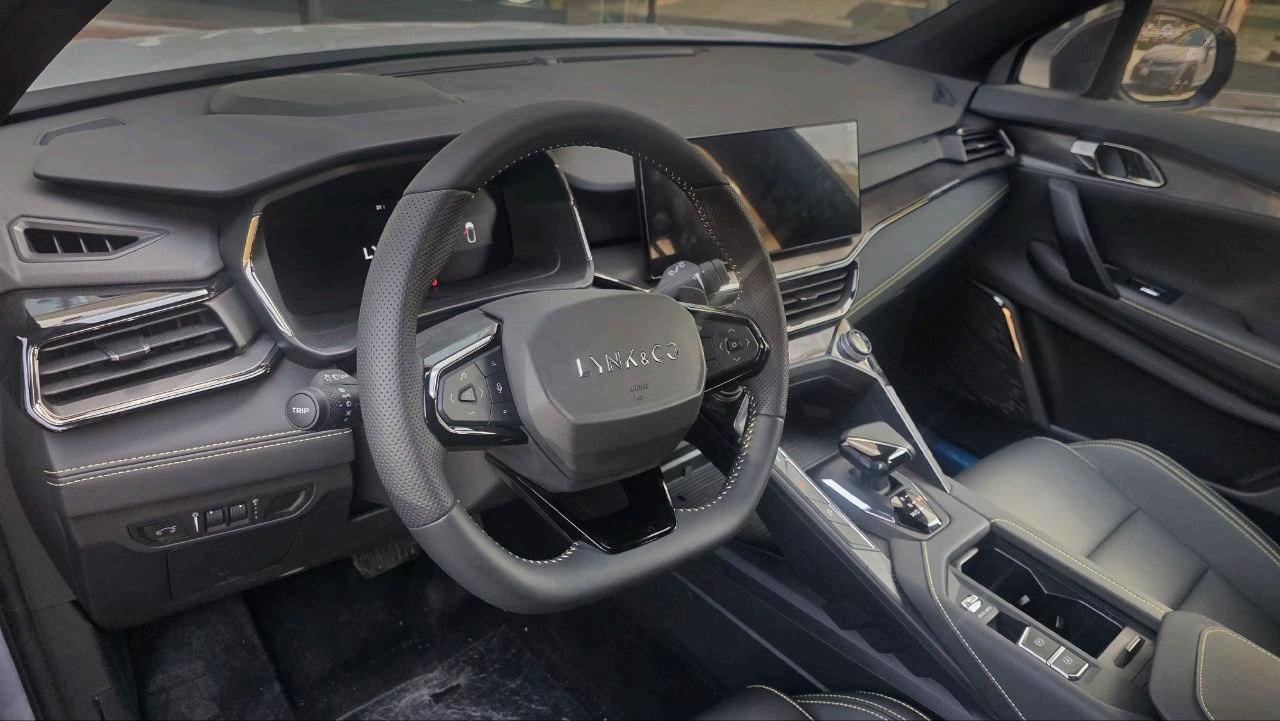
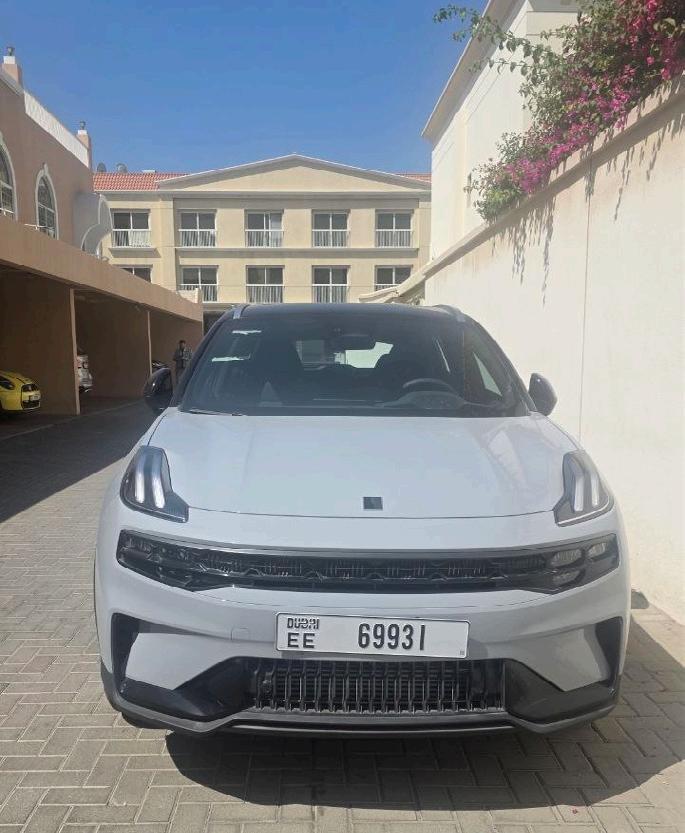

with soft-touch surfaces in key areas and more durable plastics lower down.
The seats are supportive and styled with a slightly sporty flair, reinforcing the car’s youthful positioning. Space in the front is comfortable, while the rear seats are adequate for daily commuting.
Technology is where the 06 punches above its weight. The infotainment system is modern and responsive, offering smartphone connectivity, a clear user interface, and a suite of convenience features that would have been considered premium just a few years ago.
Higher trims add a 360-degree camera system and a comprehensive set of driver assistance features, including adaptive cruise control and lanekeeping support.
The overall experience is very much screen-centric, with most functions routed through the touchscreen.
Under the hood, the Lynk & Co 06 is powered by a 1.5-liter turbocharged engine producing around 181 horsepower and 290 Nm of torque,
paired with a 7-speed dual-clutch transmission. On paper, the numbers are solid for the segment, and on the road, they translate into brisk, confident performance.
Acceleration is more than adequate for urban and highway driving, with enough punch for overtaking when needed. The transmission shifts smoothly under normal driving conditions, though it can feel slightly hesitant at low speeds, a common trait among dual-clutch setups.
The ride quality leans toward comfort, absorbing road imperfections well, while the steering is light and easy, making the car particularly well-suited to city environments.
First impressions are clear that Lynk & Co 06 comes with a distinct sense of style and a strong focus on technology, positioning itself as a fresh alternative for drivers who want something that reflects the energy and individuality of discerning drivers.
The Lynk & Co 06 stands out visually and offers strong value for money and filled with safe, predictable options which ultimately, is its biggest strength.
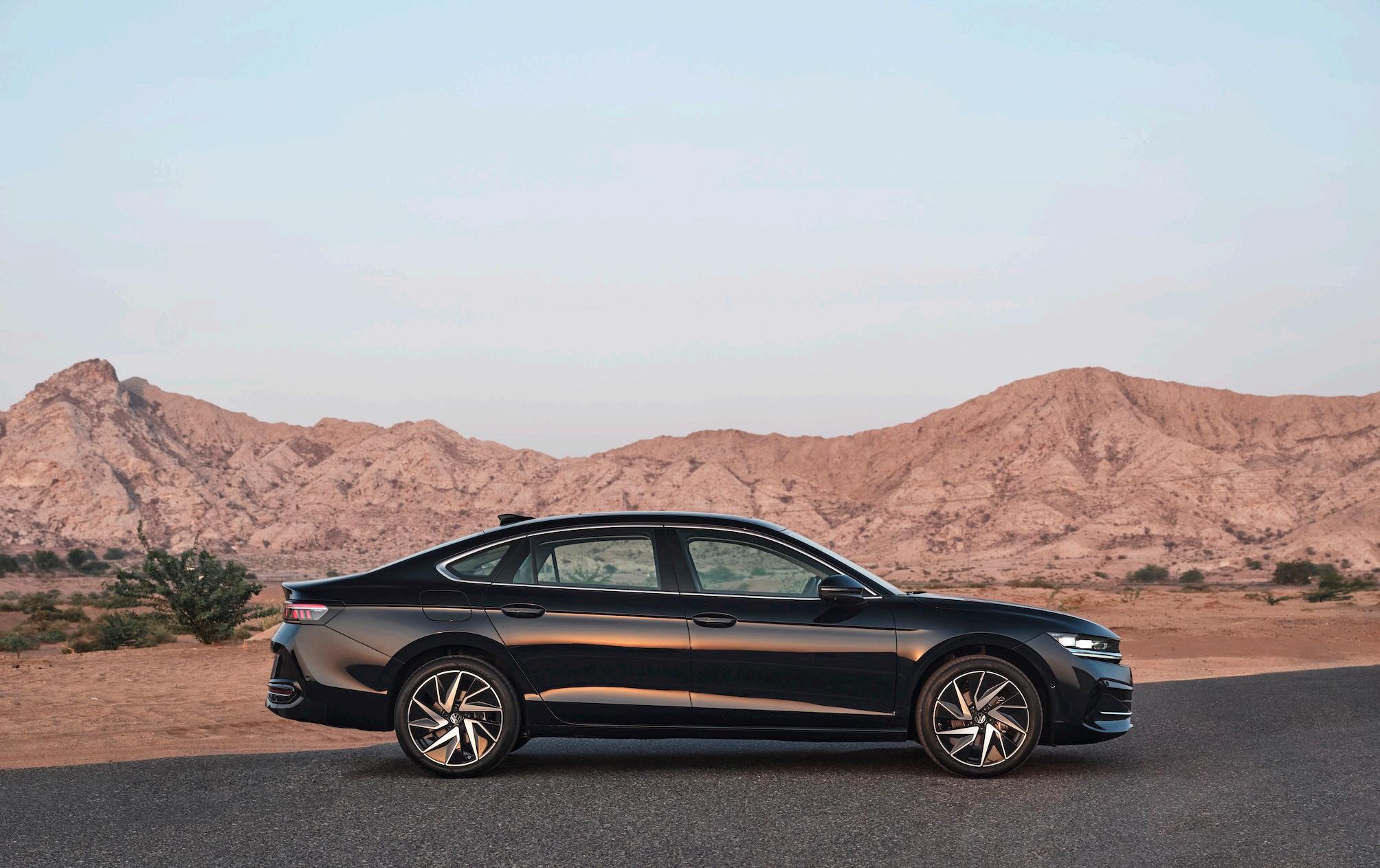
By Shereen Shabnam
There is a special kind of car that doesn’t chase headlines but earns respect. It is the kind your collector friends drive when they want to go unnoticed yet enjoy something meticulously engineered. The Volkswagen Passat has long been that car.
A midsize sedan that blends comfort, space, tech and everyday usability with an unpretentious nature. It is a spacious, practical and modern sedan that comfortably holds its own in the class while embracing Volkswagen’s refreshed design and technology ethos.
Over the years, I have met a few collectors in UAE who own garages full of rare exotics and high-performance machines but when it comes to errands around town, dropping by a café or driving with confidence without drawing attention, they almost instinctively reach for a Passat. It is the car that slips under the radar while delivering a genuinely satisfying driving experience.
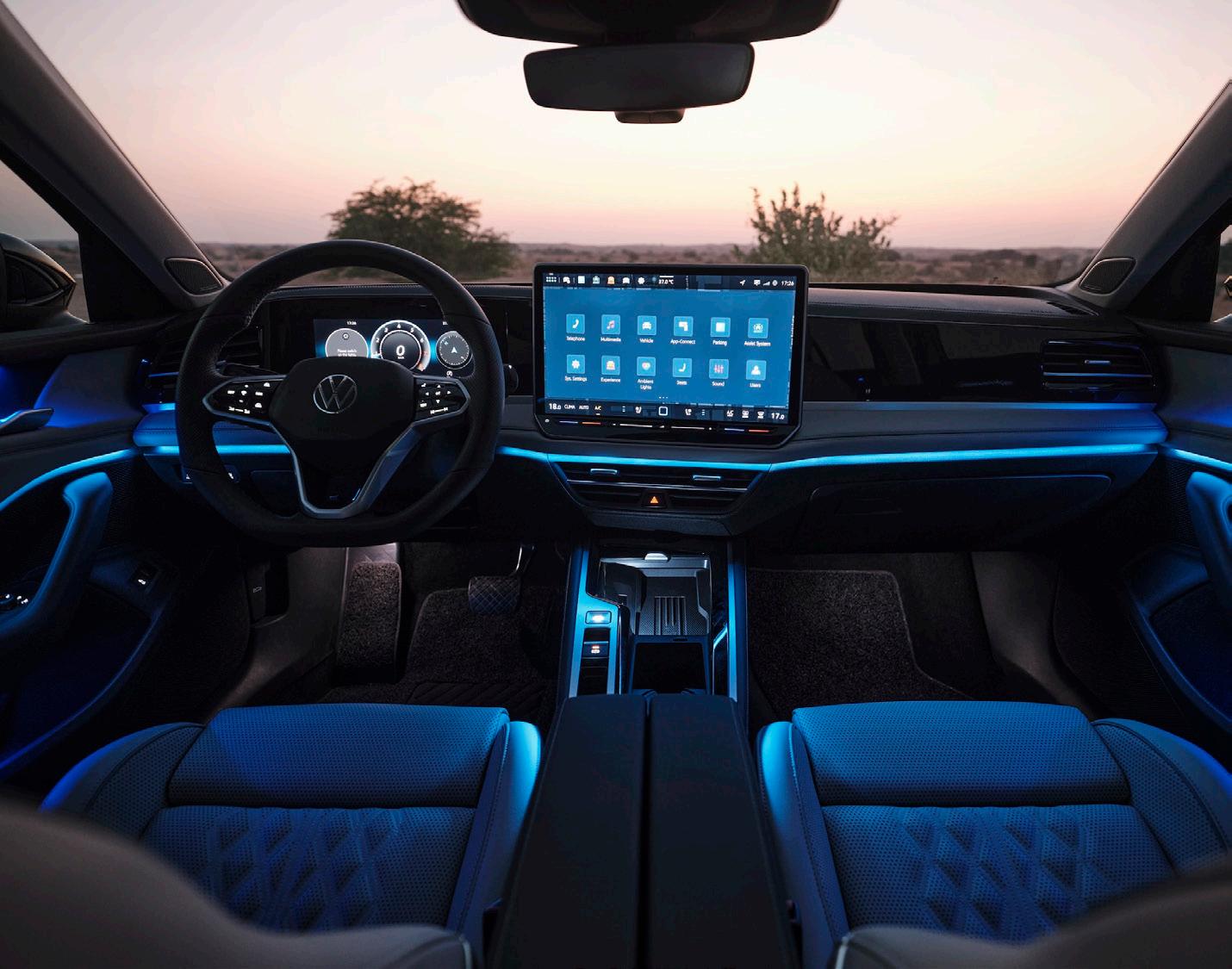
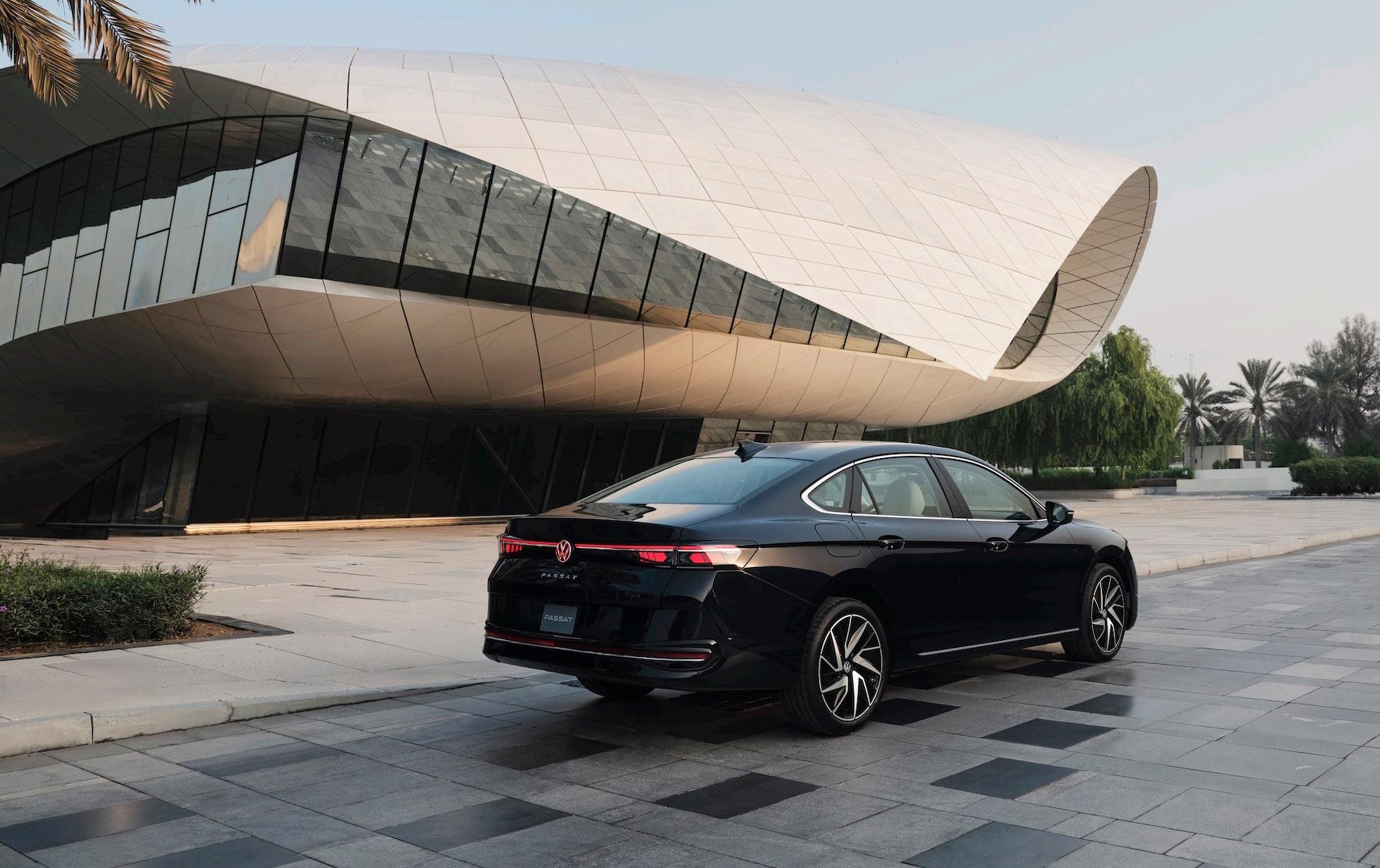
The Passat’s exterior is a study in understated elegance. While it might not command the same attention as larger luxury saloons, its proportions are refined and purposeful. The front fascia is clean and modern, accented by LED lighting elements that give it a confident yet composed presence on the road. Strong body lines and sleek surfaces provide it with a sophisticated silhouette, while the overall package feels both tasteful and contemporary. It is the kind of design that doesn’t shout but quietly announces competence.
Inside, the Passat delivers the kind of comfort and space that families and daily drivers appreciate. Recent reviews highlight its minimalist yet refined cabin with a balance of premium materials and practical ergonomics. Ambient lighting and high-quality soft touches give the cabin a premium feel. The seats are comfortable for long journeys and supportive in everyday traffic alike, while the rear legroom and luggage space make it versatile for group travel or weekend escapes.
Technology in the Passat has evolved to align with what modern drivers expect. The latest generation incorporates digital
instrument clusters, a generous central touchscreen, ambient lighting, wireless connectivity and a suite of safety systems that include adaptive cruise control, lane assist and wireless Apple CarPlay/ Android Auto.
It strikes the right balance between intuitive day-to-day usability and advanced features, keeping the focus on making the drive both safer and more enjoyable.
On the road, the Passat delivers a composed and confident ride with a balanced suspension, smooth automatic transmission and refined response on highways and city streets alike. Whether cruising at speed on the Sheikh Zayed Road or navigating urban Dubai traffic, it feels stable and at ease. This is the car that makes everyday journeys feel effortless, and this is exactly why enthusiasts who love thrilling machines still appreciate the Passat’s intelligent refinement for regular use.
The Volkswagen Passat may not grab headlines like a performance SUV or a luxury saloon, but that is where its strength lies. It is intelligently engineered, comfortable, spacious and impressively modern in its technology and safety suite.
For buyers seeking substance over flash, it is a compelling choice, particularly in a world where practicality and poise can often be overlooked. And from my own experiences talking with collectors and everyday drivers alike, the Passat holds a unique place: a car that serious enthusiasts willingly reach for when they want reliability, quiet confidence and realworld capability without unnecessary attention.
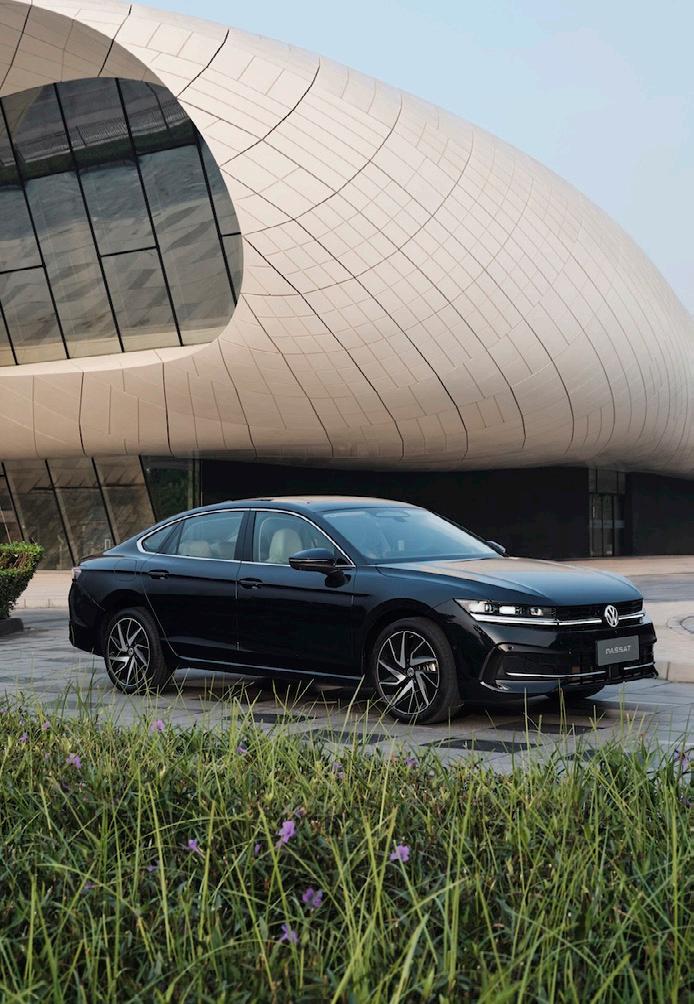
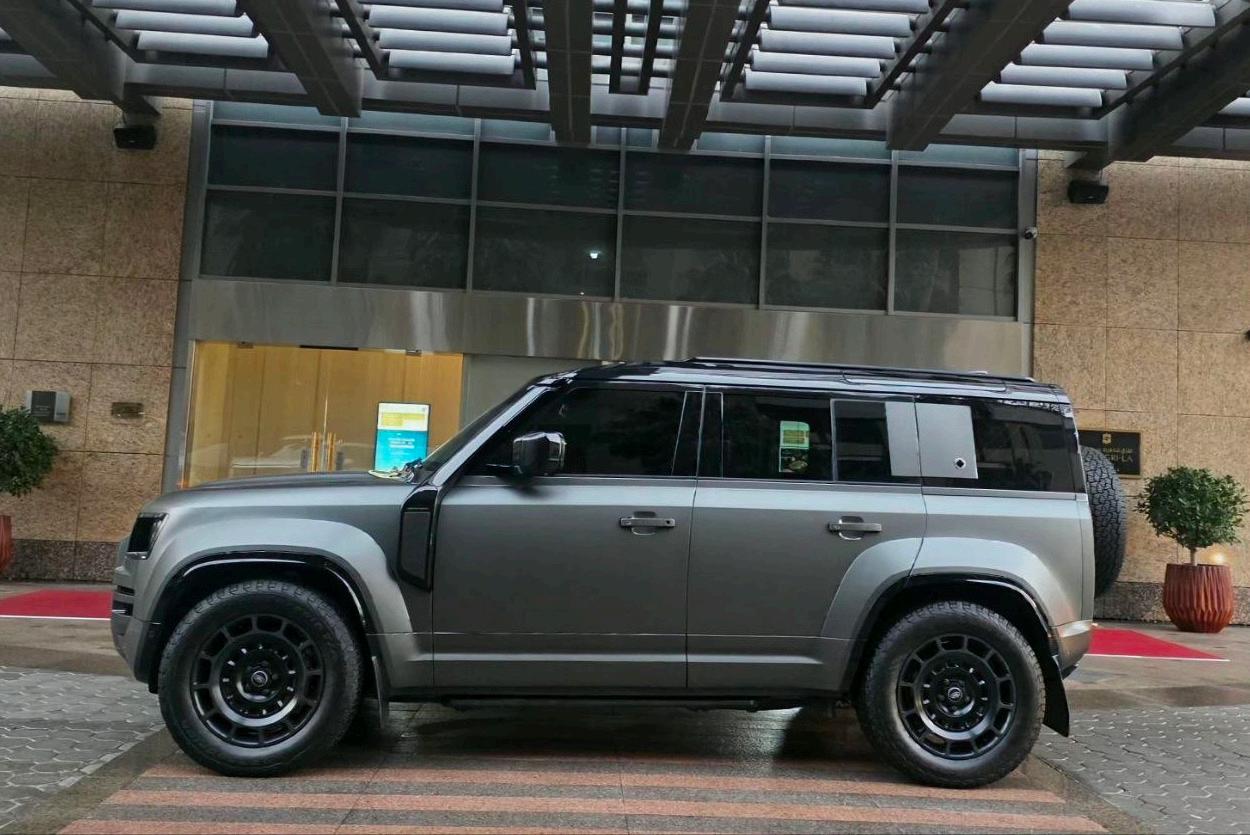
By Shereen Shabnam
The Defender OCTA is a high-performance SUV that is also one of the Top Five finalists for the 2026 World Performance Car title at the World Car Awards, immediately placing it among the most compelling cars of the year. That recognition alone made it a vehicle worth experiencing behind the wheel, because for a model so deeply rooted in rugged off-road heritage to be acknowledged on a global performance stage says everything about what Land Rover has achieved here.
Positioned at the very top of the Defender line-up, the OCTA redefines what a modern off-road SUV can be, blending the brand’s legendary go-anywhere DNA with immense power, advanced suspension technology and a surprising level of onroad dynamic precision.
What makes the OCTA especially impressive is that it never loses sight of what a Defender should be. It still feels authentic, engineered for real adventure and built with the toughness that defines the nameplate, yet now delivers the acceleration, composure and all-round capability to rival some of the most desirable SUVs in the world.
The Defender OCTA’s design shows wider stance, increased ride height and more assertive proportions that gives it a tougher, more planted look than the standard Defender, while still preserving the iconic upright silhouette that has become central to its identity. It looks muscular without becoming overstyled. The high-clearance bumpers, robust body cladding, enlarged wheel arches and offroad-ready stance all hint at what this SUV is capable of long before it leaves the tarmac. In darker finishes such as Narvik Black, particularly on the OCTA Black variant, it looks especially menacing and polished.
Step inside the Defender OCTA and the cabin immediately strikes a careful balance between toughness and sophistication. It retains the solid, readyfor-anything character you expect from a Defender, but introduces a higher level of performance-focused luxury that suits its flagship status.
The seating is supportive and substantial, and the materials feel appropriately premium, while the overall layout remains intuitive and driver-centric. There is also a reassuring sense of space throughout the cabin. Passengers sit comfortably, visibility remains excellent, and there is enough versatility to support both daily life and weekend escapes.

Technology plays a major role in defining what sets the Defender OCTA apart. Beyond the expected infotainment and connectivity features, what truly matters here is the way its systems have been engineered to enhance both performance and capability. One of the OCTA’s standout features is its advanced chassis and suspension setup.
The 6D Dynamics air suspension with hydraulically interlinked dampers transforms the way this SUV moves, helping it remain composed over rough surfaces while also significantly improving body control during spirited driving. It allows the OCTA to be capable on high-speed road performance and serious off-road terrain. There is also the addition of OCTA Mode, a bespoke driving setting calibrated for loose surfaces and demanding off-road environments.
The Defender OCTA earns its place among the Top Five finalists for the 2026 World Performance Car by delivering serious V8 power, rapid acceleration and genuine driver engagement without compromising its legendary off-road ability. With 635
PS, 750 Nm of torque and a 0–100 km/h time of around 4.0 seconds, it feels every bit a true performance SUV, yet remains composed, refined and immensely capable across challenging terrain. What makes the OCTA so impressive is that it blends thrilling on-road performance with authentic all-terrain strength, making it one of the most complete and compelling high-performance SUVs on the road today.
The 2026 Defender OCTA stands out as one of the most complete and compelling high performance SUVs on the market, taking the Defender’s trademark toughness, authenticity and off-road credibility and elevating it with remarkable power, sophistication and dynamic finesse.
It is undeniably large, specialised and unapologetically premium, and while fuel economy and urban manoeuvrability may not be its strongest suits, these are minor trade-offs in light of what it achieves. Whether tackling dunes, mountain trails and desert terrain or cruising at speed on the motorway and arriving in style in the city, the Defender OCTA proves it can do it all.
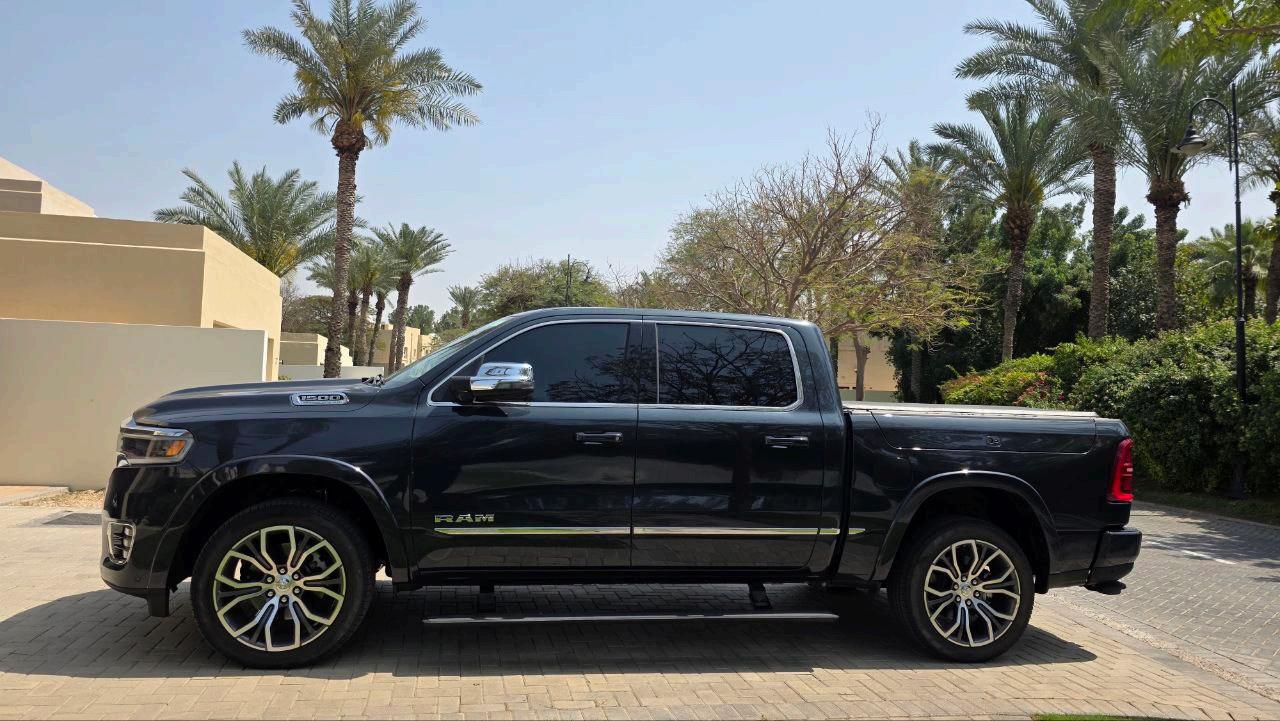
By Shereen Shabnam
In a segment traditionally defined by utility, the RAM Tungsten arrives with a very different ambition: to redefine what a full-size pickup can feel like. Positioned as the most premium expression of the RAM 1500 lineup, it blends capability with a level of refinement more commonly associated with luxury sedans.
Powered by a 3.0-litre twin-turbo inlinesix producing 420hp and 635Nm of torque, the Tungsten is as much about effortless performance as it is about presence. It is a truck that shifts the narrative from being a workhorse to a lifestyle statement.
The Tungsten retains the bold, unmistakable proportions of an American pickup as it is wide, imposing, and confident, while introducing a

more refined design language. LED headlamps with chrome bezels and signature daytime running lights elevate its visual identity, while clean body lines and a sculpted grille add a layer of
sophistication. The 18-inch alloy wheels complete a look that feels purposeful yet polished. It is a design that does not need to shout to be noticed.
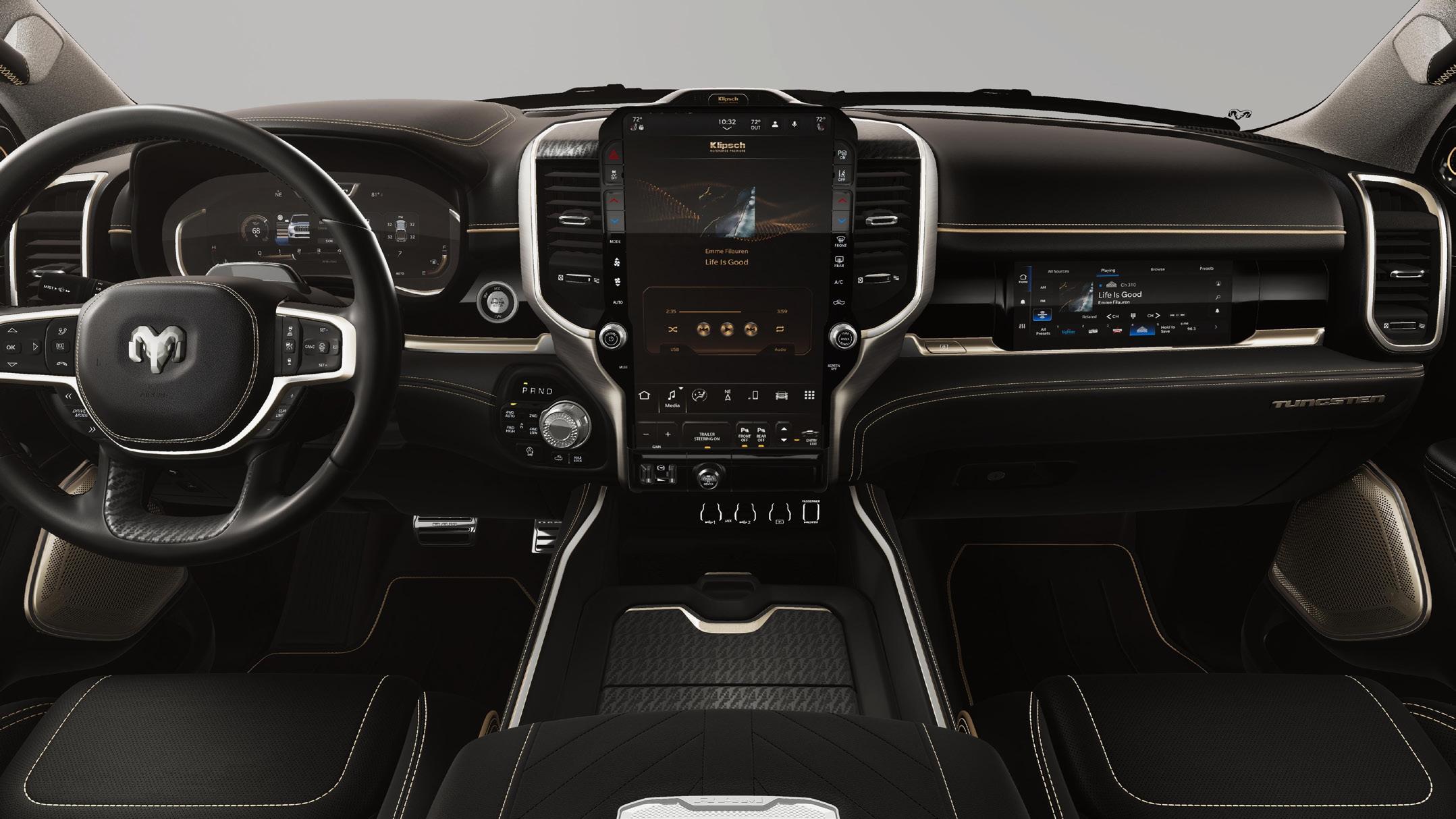
Step inside, and the Tungsten immediately sets itself apart. The cabin is spacious, thoughtfully designed, and unmistakably premium. An 8-way powered driver’s seat ensures comfort and adjustability, while the overall layout prioritises ease and calm over complexity. Materials and finishes lean toward a more luxurious interpretation of the pickup interior, transforming it into a space that feels closer to a lounge than a utility vehicle. It’s here that the Tungsten redefines expectations of what a truck interior can be.
At the centre of the dashboard sits an 8.4inch touchscreen running the Uconnect 5 system. It’s intuitive, responsive, and designed for ease of use rather than visual overload. Driver assistance features such as adaptive cruise control with stop-and-go functionality and a rear camera add everyday convenience and confidence. The technology suite feels considered, enhancing the experience without overwhelming it.
Under the hood, the 3.0-litre twinturbo engine delivers 420 horsepower and 635Nm of torque, offering strong, smooth acceleration and confident highway performance.
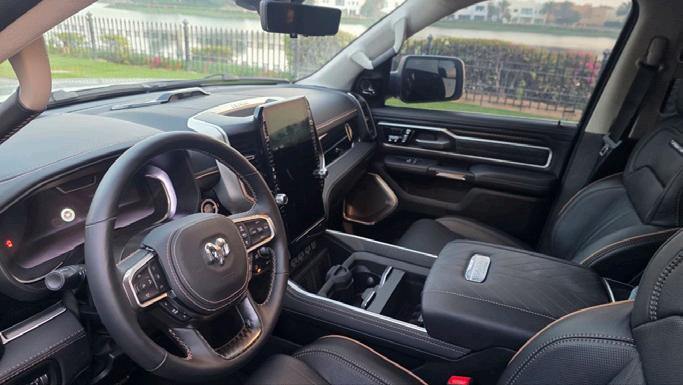
Power delivery is linear and refined, supported by an 8-speed automatic transmission that shifts seamlessly. Despite its size, the Tungsten offers a composed and comfortable ride, making long-distance driving particularly effortless.
While it remains a large vehicle in urban settings, on open roads and highways, it feels stable, capable, and surprisingly relaxed.
We drove it between Dubai and Abu Dhabi and it was a stable and comfortable experience.
The RAM Tungsten makes a statement by blending performance with genuine refinement. It challenges traditional ideas of both utility and luxury.
It may not be for everyone, but for those seeking presence, comfort, and capability in equal measure, it delivers a compelling proposition.
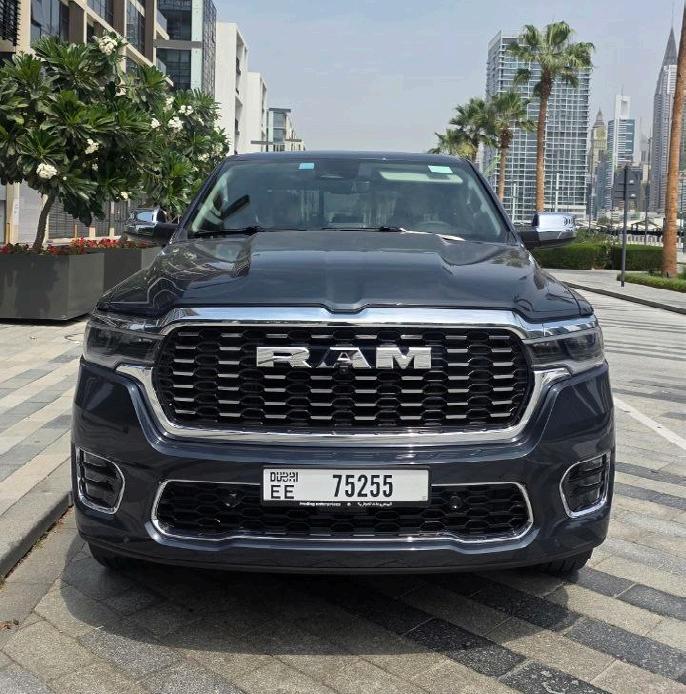

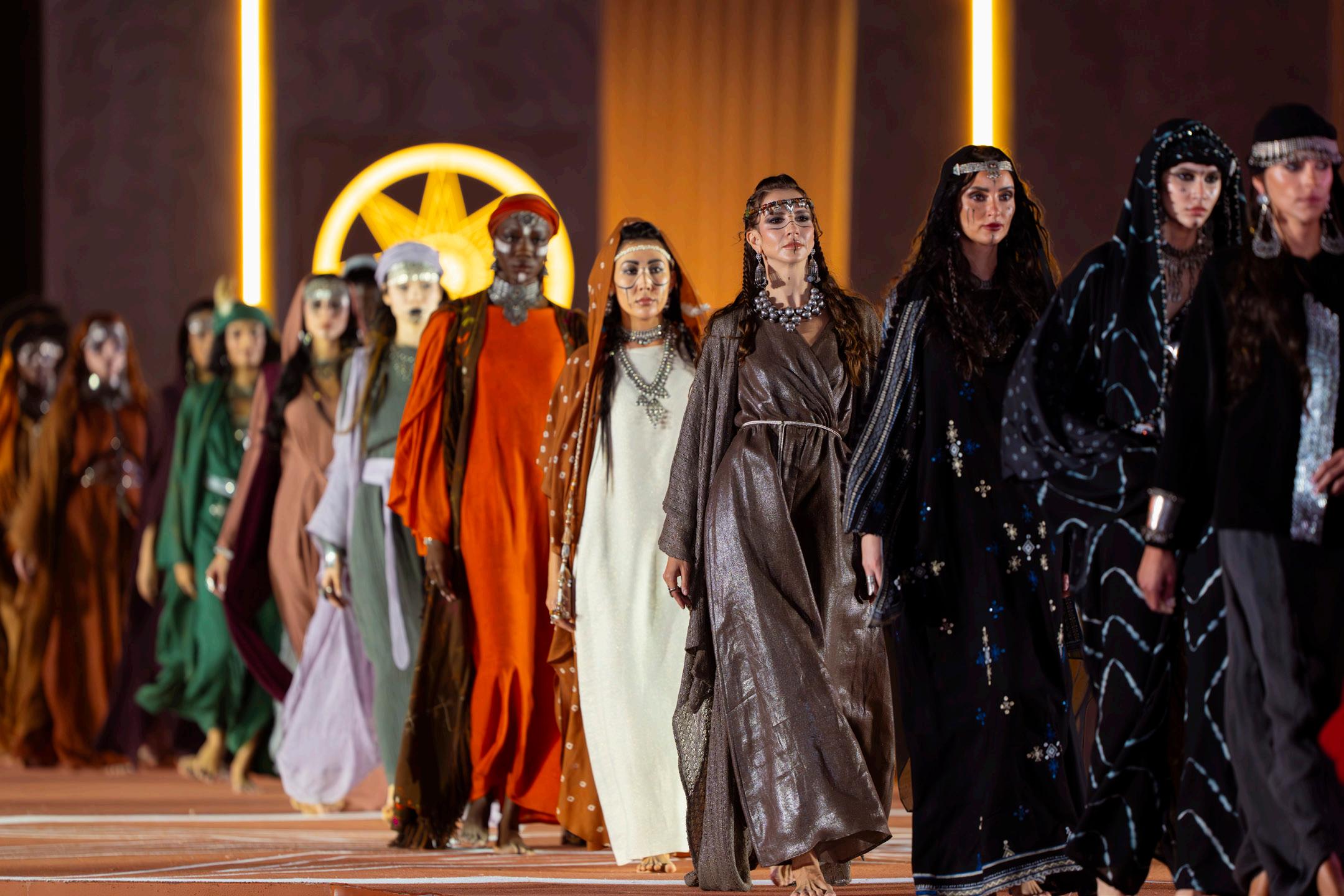
By Natasha Dury
Under the vast, open skies of Mleiha National Park, where ancient landscapes hold stories older than memory itself, a new chapter in luxury quietly unfolded. At dusk, as the desert shifted from gold to amber, Sheikha Bodour bint Sultan Al Qasimi introduced Inanna Reborn, not merely as a fashion label, but as an immersive expression of storytelling, ritual and identity.
This was not a conventional launch. It was a moment of transformation. One where fashion, culture and symbolism converged in a setting that felt both timeless and deeply intentional. The desert became more than a backdrop; it became part of the narrative itself, reflecting the soul of a brand rooted in memory, mythology and feminine sovereignty.
At the heart of Inanna Reborn lies a compelling proposition: that luxury can be more than material. It can be memory, awakening and meaning. The brand introduces what it calls Mythic Luxury, a concept where couture becomes a vessel for personal transformation and ancestral remembrance. Founded by Sheikha Bodour bint Sultan Al Qasimi after years of research into Arabian queens and mythology, the brand is deeply informed by themes explored in her recent literary work.
Set in Mleiha, a landscape known for its archaeological and cultural significance, the launch reflected the essence of
the brand with remarkable clarity. Guests were immersed in a carefully choreographed experience that included a runway presentation of the debut collection, a multisensory Chamber of Inanna installation, and an intimate showcase of selected pieces in a guest space known as The Caravan. Each element was designed to reinforce the idea of adornment as ritual rather than ornament. The result was an atmosphere that felt cinematic yet intimate, where fashion was experienced as something emotional, symbolic and deeply personal.
The debut collection draws on the legacies of powerful historical women including Zenobia, Sheba, Mavia, Samsi and Abi’el, translating their strength and
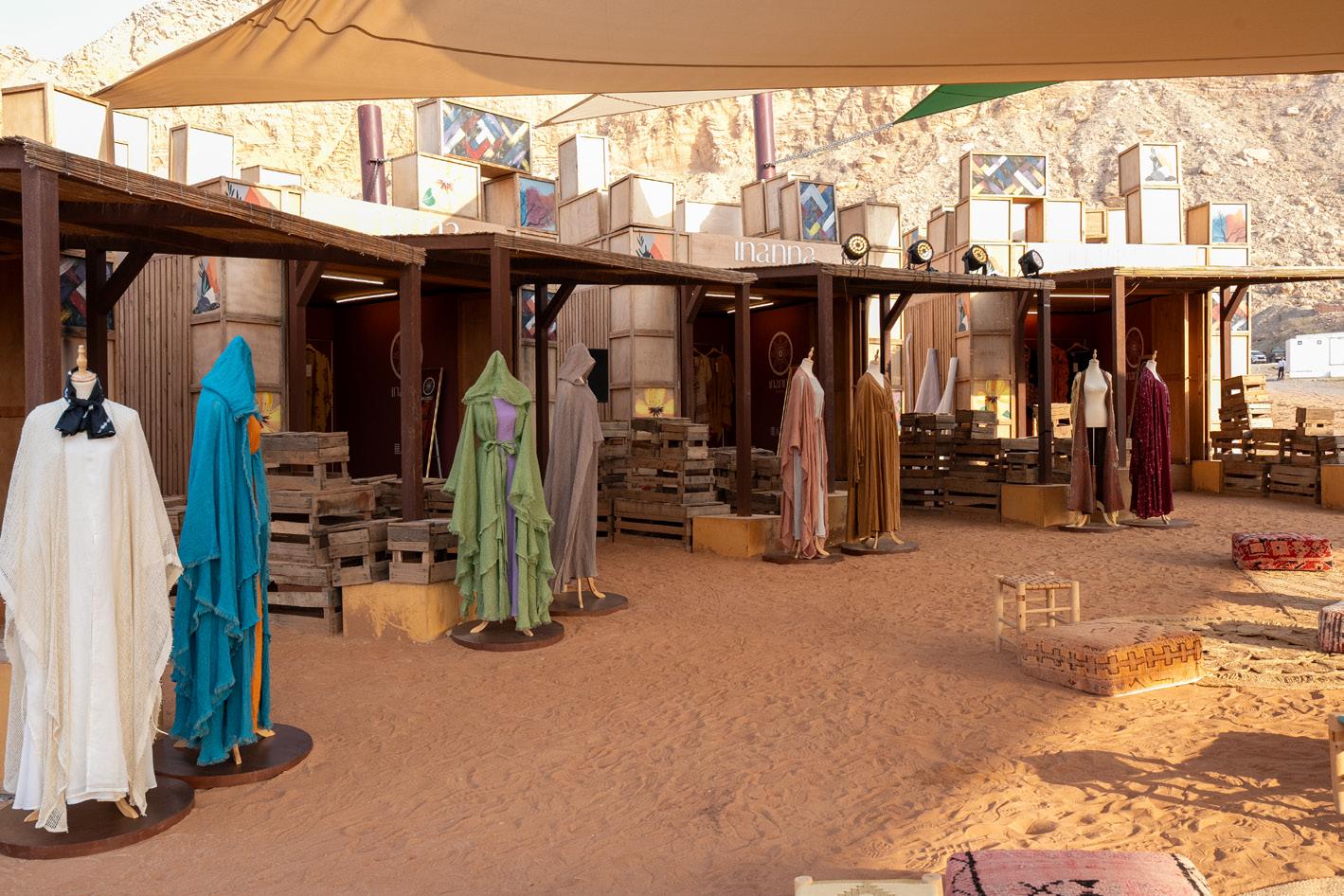

mystique into garments that feel both contemporary and ceremonial. There is a softness to the silhouettes, but also undeniable command. Fabrics move with grace, while structure and detail evoke a sense of quiet authority. The garments do not shout for attention; instead, they hold presence in a way that feels elegant, grounded and deeply intentional. Rather than chasing trends, the collection seems to exist outside them. It speaks to women who view clothing not simply as style, but as self-expression, armour and extension of identity.
Alongside the fashion collection, Inanna Reborn also unveiled its first jewellery line: Abi’el – The Desert Oath. Rooted in Emirati heritage, the collection reinterprets traditional adornment through a contemporary lens, using silver as its central material, a historic choice long associated with Bedouin women as both adornment and portable wealth.
Coin motifs, fluid forms and tactile movement give each piece the feel of a talisman rather than an accessory. These are not static objects designed merely to decorate, but meaningful pieces intended to be worn with purpose, memory and presence.

What elevates Inanna Reborn even further is its clear commitment to preserving artisanal heritage. The collection incorporates techniques such as Ikat weaving, Kantha and Phulkari embroidery, Shibori dyeing, hand block printing and Pashmina craftsmanship, all living traditions sustained through meaningful collaboration with artisans. The brand also embraces a deliberately slow and intentional production model, working with natural materials such as linen, cotton and wool, while minimising waste through thoughtful design and reintegration of offcuts. The launch of Inanna Reborn offers an experience rooted in reflection, craftsmanship and emotional resonance.
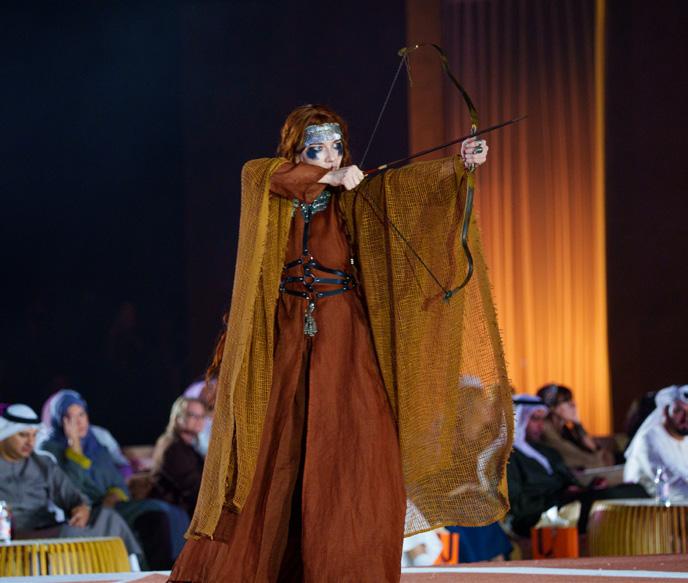
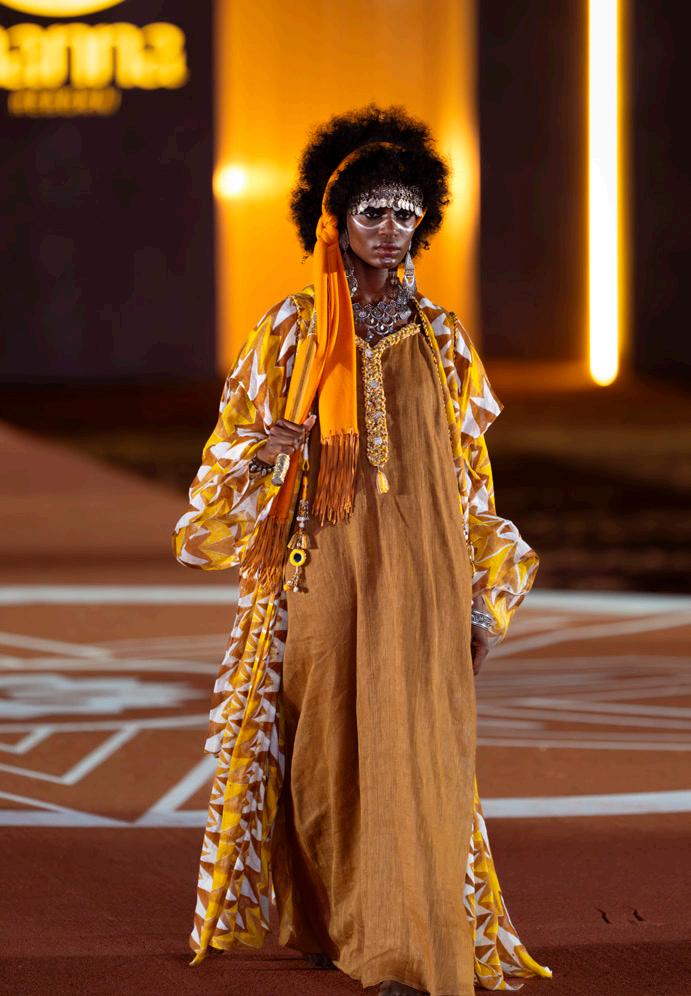
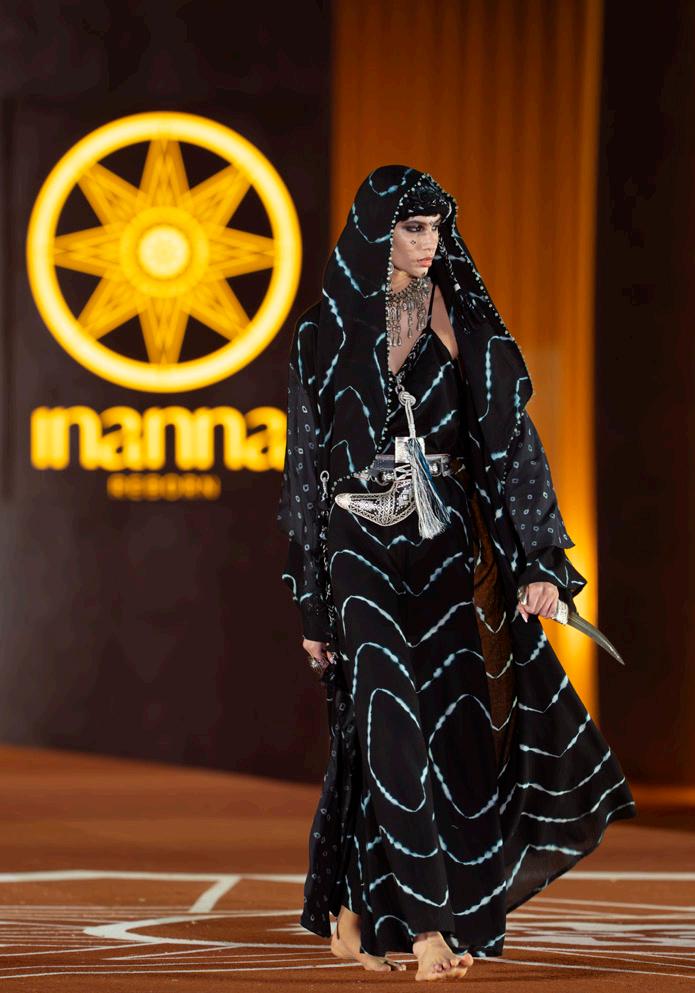
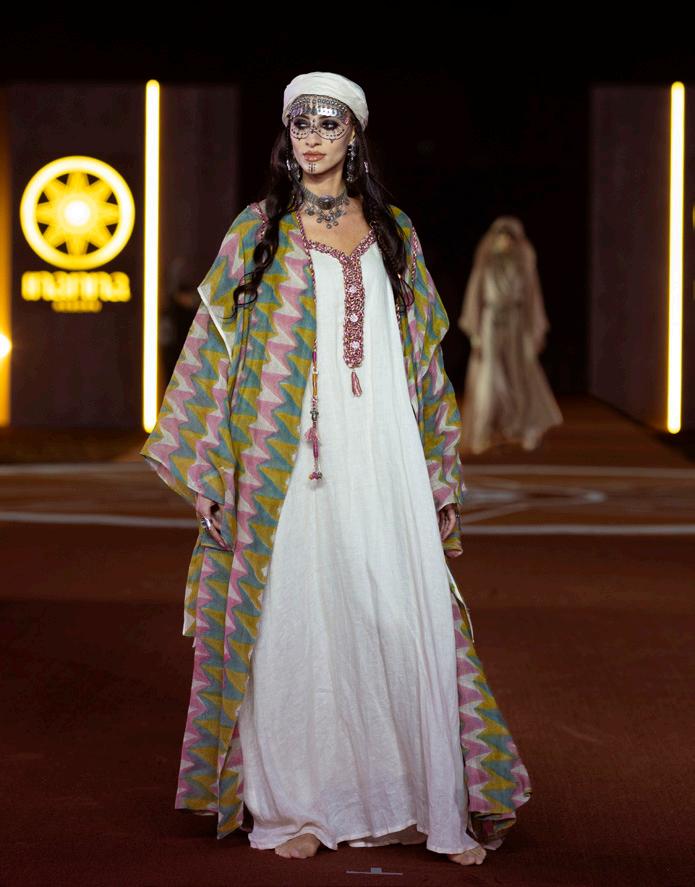

The road to automotive glory is narrowing fast. The World Car Awards 2026, powered by Brembo, has revealed its top contenders across six fiercely competitive categories, setting the stage for one of the industry’s most anticipated showdowns. The winners will be crowned live on
By Shereen Shabnam
April 1st at the New York International Auto Show, with results independently audited by KPMG.
Behind the scenes, a global jury of 98 automotive journalists from 33 countries—myself included, representing the UAE—has meticulously evaluated
each eligible vehicle. The process? Rigorous, confidential, and rooted in real-world testing. Brembo CEO Daniele Schillaci summed it up best: these awards are not just accolades, they are a benchmark for innovation, performance, and the future of mobility.
From an original pool of 58 contenders, ten standout vehicles now vie for the industry’s most coveted title:
• Audi Q5 / SQ5
• BMW iX3
• BYD Seal 6 DM-i
• Hyundai Ioniq 9
• Hyundai Palisade
• KIA EV4
• KIA EV5
• Mercedes-Benz CLA
• Nissan Leaf
• Toyota RAV4
A diverse mix of electrified pioneers and refined SUVs, this year’s shortlist reflects a market in transition—where innovation meets everyday usability.
Electrification continues its relentless surge, and the top five finalists prove just how competitive the segment has become
- These models aren’t just efficient— they’re redefining what electric mobility feels like behind the wheel:
• Audi A6 e-tron / S6 e-tron
• BMW iX3
• Hyundai Ioniq 9
• Mercedes-Benz CLA
• Nissan Leaf
From cutting-edge EV flagships to timeless executive sedans, luxury in 2026 is both progressive and purposeful. Premium is no longer just about plush interiors—it’s about experience, technology, and presence:
• Audi A6 e-tron / S6 e-tron
• Audi A6/S6
• Cadillac Vistiq
• Lucid Gravity
• Volvo ES90
Electrification has entered the performance arena, but raw driving emotion remains firmly intact. Speed meets sophistication in a category where adrenaline still reigns supreme:
• BMW M2 CS
• Chevrolet Corvette E-Ray
• Defender OCTA
• Hyundai Ioniq 6 N
• Mercedes-AMG GT 63 Pro

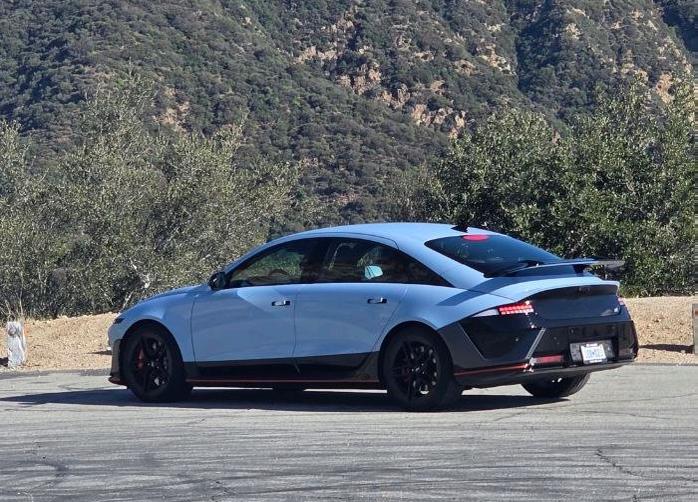
Designed for dense urban environments, these vehicles blend practicality with personality. Compact, clever, and cityready, these finalists prove that small cars can deliver big impact:
• Alfa Romeo Junior
• Baojun Yep Plus / Chevrolet Spark EUV
• Firefly
• Hyundai Venue
• Wuling Binguo / Ari Poly
Each represents a bold vision of automotive design, where aesthetics and aerodynamics work in harmony. Evaluated by a panel of globally respected design experts, the following five vehicles
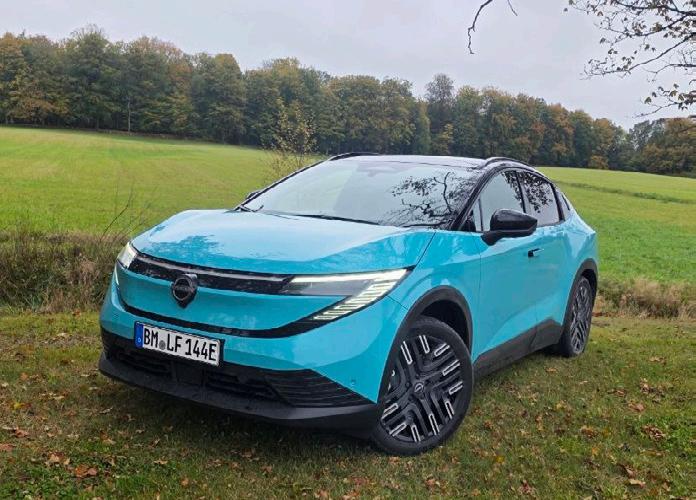
stand out for their visual and conceptual brilliance:
• Firefly
• KIA PV5
• Lynk & Co 08
• Mazda 6e / EZ-6
• Volvo ES90
The journey now accelerates toward its climax. The Top Three finalists will be revealed in early March, before the ultimate winners are announced in New York this April—marking the 21st year of partnership between the World Car Awards and the iconic auto show. As NYIAS President Mark Schienberg notes, these awards spotlight the innovation and performance shaping the future of mobility.
For the major part of my life, my father hammered one thread of thought into my head. He would say, “Child, whatever you do, understand the difference between ambition and greed. There is a fine line that separates the doer’s and the damned.
And what is the difference?’ I asked him. One is constructive and the other is destructive, he said. One has a conscience, the other does not. Ambition is the desire to achieve something, to discover your potential, to strive to be the best in whatever you choose to do and excel in it. Greed is a selfish desire to hoard at any cost. Ambition can be fulfilled; unfortunately, greed cannot. The reason why we are at crossroads today is because we are losing the ability to distinguish between the two.
As the years rolled by, those words took on a deeper meaning.
Now, I remain forever in awe of our species. First, for the immense intellect, potential, and perseverance we have and the heights we have reached from our very humble stone age beginnings, and second, for our equally immense ability to self-destruct.
Our destructive greed, self-obsession, petty politics, corrupt, overwhelming capitalism, and fanatic extremism are threatening to destroy the very fabric of the human race.
At the peak of our advancement, instead of mastering peaceful co- existence, here we are, still discussing peace, debating climate change, and denying all other species their fair share of the planet. We are unable to sympathize or empathize.
Yes, we are living in challenging times. The common man endures a sense of foreboding impotency, living in a state of suspended animation à la Matrix. He is an unwilling participant in the chaotic global drama unfolding at a dizzying pace fuelled by the endless greed of the political and powerful.
Sadly, the chaos is perpetuated by the very leaders who claim to guide the free world; they have gone rogue, and everyone is paying the price.
No other country has single-handedly wreaked global havoc like the USA. Within its
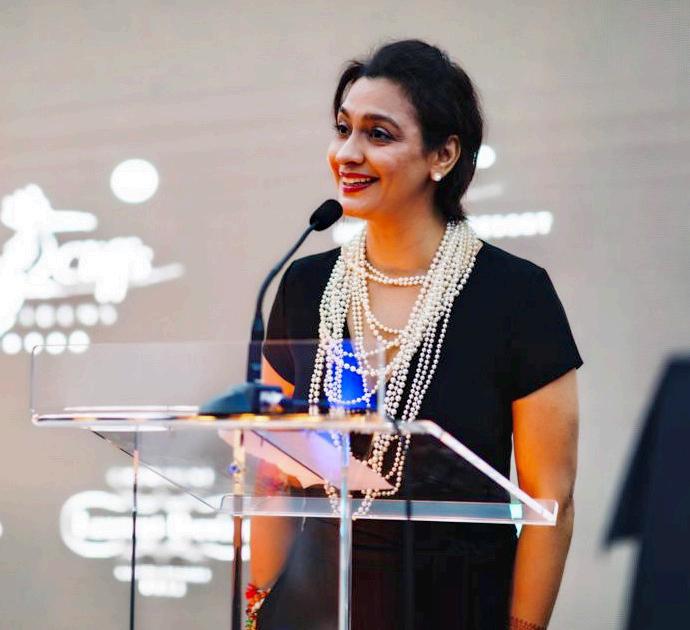
meagre 250 years of existence, it has engaged in more than 500 military interventions globally. Let that sink in for a moment.
America is a country whose economy is built on wars, and is the only country in my opinion that has gone from Discovery to Decadence without a civilisation in between.
We have come to a point where we just cannot turn a blind eye, or like the proverbial ostrich, bury our heads in the sand and pretend that nothing is wrong, because that sand has turned into sticky mud and will choke us soon.
Perhaps it would help us a great deal to go back to basics. The simple, rudimentary lessons needed for a comfortable, secure, and happy society.
We must bring back emotions that are fast disappearing – kindness, warmth and a tiny bit of sensitivity that is the essential fabric of humanity. None of this costs much, yet they
yield great results and fill us with hope and happiness. We must realize the importance of co-existing peacefully in the present rather than chasing an uncertain, dystopian future.
The dire need of the moment is not how rich, famous, talented, gifted, or powerful you are – but rather how kind and generous your actions are towards the weak and broken sections of society. This is what will set the example for the coming generations, and this is what will determine the future of the human race.
Compassion is what sets us apart from all other species – let’s not lose it.
Jani Viswanath is a humanitarian, artist, author and film producer who believes in the power of storytelling to inspire peace and empathy. She is dedicated to uplifting lives with stories that bridge cultures and has meaningful impact across communities worldwide