

The information in this research or upon which this research is based has been obtained from sources the authors believe to be reliable and accurate. While reasonable efforts have been made to ensure that the contents of this research are factually correct, ATMOsphere does not accept responsibility for the accuracy or completeness of the contents and shall not be liable for any loss or damage that may be occasioned directly or indirectly through the use of, or reliance on, the contents of this research.
©2026 ATMOsphere All rights reserved. Originally published in January 2026.
Founded in 2007 as shecco, ATMOsphere is a global, independent market accelerator for clean cooling and heating solutions using natural refrigerants and refrigerant-free technology. The company’s global team is located in Europe, the United States and Japan and boasts more than 50 years of industry experience.
ATMOsphere combines the company’s extensive natural refrigerant expertise with the power of its wider network of like-minded experts who share an ambition for scaling up the global clean cooling and heating economy.
ATMOsphere’s business includes news, a product marketplace, events and market research. As of December 2025, the company has held 86 events around the world. In 2022, ATMOsphere launched its natural refrigerants label, which serves as a global gold standard highlighting best-in-class manufacturers and contractors of natural refrigerant systems and components. Since 2025, the natural refrigerants label has included data on avoided TFA emissions.
Overall, the ATMOsphere platform offers a one-stop solution for investors, end users, original equipment manufacturers, component manufacturers, contractors and others with the goal of scaling up clean cooling and heating solutions.
The ATMOsphere core team includes journalists, analysts, engineers, event organizers, designers and other highly skilled individuals with diverse backgrounds. As industry experts in this field, the team offers unique insights into trends and market size.
However, the real power of the ATMOsphere brand lies in its network. It spans the globe and includes more than 50,000 industry stakeholders – including policymakers, end users, academics and manufacturers. ATMOsphere is not just a company but a community of people who believe that the future of cooling and heating is clean and natural.
For more information, visit atmosphere.cool
ATMOsphere Founder & CEO
Marc Chasserot
ATMOsphere Co-Founder & COO
Jan Dusek
Writers
Christina Hayes
Cinzia Verzeletti
Michael Hines
Editors
Jossi Herzog
Michael Garry
Art Direction & Design
Anna Salhofer
Vlad Koert
Ad Sales & Coordination
Silvia Scaldaferri



































































































Twenty years ago the first seeds of disruption in commercial refrigeration were planted by a handful of manufacturers. These clean cooling pioneers faced an uphill battle against entrenched incumbents using synthetic refrigerants, end users skeptical of new technologies and regulators yet to fully grasp the sector’s contribution to climate change and the threat posed by PFAS to humans and the environment.
Today the data center sector is in a strikingly similar position to where commercial refrigeration was two decades ago with one key distinction –it’s more ripe for disruption.
Companies and national governments are racing to unlock the full potential of artificial intelligence, which requires a massive data center buildout. Simultaneously regulators are mandating that data center operators increase their energy efficiency and cut their water usage. All the conditions are there for companies specializing in mechanical cooling using natural refrigerants and for manufacturers of ultra-efficient heat rejection equipment to thrive in this rapidly growing sector.
They just need to reach out and seize the opportunity. Many already have.
Hydrocarbon, CO 2 and ammonia chillers and CO 2 CRAC units are already cooling data centers in Europe and North America efficiently and without pumping high-GWP or PFAS refrigerants into the atmosphere. Manufacturers of heat rejection equipment are building larger and larger units that enable more free cooling and use water more efficiently and strategically. High-powered AI servers are being run at their limit thanks to liquid cooling systems. Heat exchanger and high-temperature heat pump manufacturers are enabling data centers to broaden their definition of energy efficiency to include waste heat reuse.
These companies have taken their decades of experience in commercial and industrial refrigeration, the pharmaceutical industry, oil and gas, and other mission-critical industries and are now applying them in the data center sector. They are challenging the industry’s incumbents and showing end users and regulators that it is possible to cool data centers without the use of harmful synthetic refrigerants.
However, there are headwinds. When it comes to mechanical cooling, the industry’s biggest players all use HFCs and HFOs. While natural refrigerants are established in many industries, they are relatively new to the data center space, and end users have to be educated on their benefits as well as the true nature of their challenges. While regulators are putting more scrutiny on the industry, the fear of losing ground in the AI race has limited their efforts in countries across the world.
Twenty years ago a small group of companies set out to change the commercial refrigeration industry. Today some of those same companies are seeking to change how data centers are cooled. ATMOsphere was founded at the start of this shift in commercial refrigeration, and our “Clean Cooling for Data Centers 2025” report is our first step into data center cooling. If history is any indicator, it definitely won’t be our last.
Jan Dusek Co-Founder & COO ATMOsphere
Data centers have been one of the hottest topics in the HVAC&R industry for a few years now, and we at ATMOsphere are excited to release “Clean Cooling for Data Centers 2025,” our first report on this fast-growing sector. Our team spent 2025 attending industry events in Europe, North America, Australia, Asia and the Middle East, meeting with a nearly endless supply of manufacturers of cooling technology.
What we learned is that data center cooling is an industry unlike any we’ve worked in before.
The industry’s biggest manufacturers of cooling and heat rejection equipment announce deals with large (and often unnamed) tech companies worth tens of millions or even hundreds of millions of dollars seemingly every few weeks. “Cooling” in this context is a relative term since servers are running hotter than ever, and with that has come a shift from air to liquid cooling that is upending the way data centers are designed. Perhaps the biggest lesson we learned was that natural refrigerants presently occupy a very small niche in this burgeoning industry.
Given this, we decided that “Clean Cooling for Data Centers 2025” should be broader in focus than our annual report on natural refrigerants in commercial and industrial refrigeration. Thus this report focuses on “clean cooling” as a concept for data centers, one defined by the use of natural refrigerant-based chillers and CRAC units, liquid cooling systems that use non-fluorinated fluids, heat rejection equipment that enables free cooling and the heat pumps and components that make it possible to recover and reuse waste heat.
We also decided that we wouldn’t attempt to quantify the impact of natural refrigerants on the data center cooling industry. Rather, we wanted to speak to the manufacturers who are already working in this space and have them give us the lay of the land. The nine manufacturers we interviewed for this report give a clear outlook on the future of natural refrigerants in the sector specifically – and clean cooling more broadly.
While this report surveys the state of affairs, our goal is to move from qualitative to quantitative research so that we can truly measure the growth and identify opportunities in clean cooling for data centers. That said, “Clean Cooling for Data Centers 2025” is a valuable addition to the industry as it’s the first report to focus entirely on clean cooling. As my colleague Jan Dusek wrote, it won’t be the last, either.
Michael Hines Managing Editor and Lead Author ATMOsphere
In this “Clean Cooling for Data Centers 2025” report, ATMOsphere aims to provide an overview of the current market and regulatory drivers shaping the sector. It also highlights the role of clean cooling technologies in data center cooling today. Desk research and in-depth interviews with manufacturers of cooling technology and components were the primary research methods employed.
The data gathering for this report was guided by the ATMO Model, which features a database of hundreds of clean cooling and heating companies and thousands of products. In addition to the database, the model features a proprietary algorithm for calculating the impact natural refrigerant-based heating and cooling solutions have on lowering CO 2 and TFA (trifluoroacetic acid) emissions.
Desk research was conducted into the current market and regulatory drivers shaping the data center industry. Industry reports, research articles, regulatory documents and more were analyzed to detail the forces currently converging on the data center industry.
This report features articles on individual manufacturers of clean cooling technologies for data centers, with the information sourced from in-depth interviews. In this report, “clean cooling” is defined as mechanical cooling (chillers, CRAC units) using natural refrigerants, free cooling via dry, hybrid or evaporative coolers, heat exchangers that enable waste heat reuse and liquid cooling systems that use non-fluorinated fluids.

The data center industry has experienced incredible growth in recent years thanks to the rise of high-performance computing (HPC) and its applications, including generative AI. HPC has led to higher server rack densities, creating a “thermal wall” where heat from chips cannot be effectively dissipated through air cooling. This has encouraged the development of liquid cooling technologies.
New data centers are being built around the world, with the majority of growth occurring in the United States. Growth in Europe hasn’t been as substantial as in the U.S., but the European Union does lead in sustainability and regulation. The Asia-Pacific region is an emerging market, particularly Southeast Asia, with China and Malaysia showing strong growth signs, too.
While air cooling is making way for liquid cooling, there is still a need for computer room air-conditioning (CRAC) and computer room air-handling (CRAH) units in the “white space” where servers, power distribution systems, network gear and other IT equipment are housed. However, the industry has been shifting to liquid cooling, particularly directto-chip liquid and immersion cooling.
The “gray space,” located outside of the white space, is where chillers, heat rejection equipment, switchgear and more are installed. Data center cooling is dominated by chillers using synthetic refrigerants, but CO 2 (R744), propane (R290) and ammonia (R717) chillers all have a presence in the industry.
Heat rejection equipment is becoming more important as end users seek to reduce water use and power consumption and increasingly capitalize on free cooling. Heat pump manufacturers are also eyeing the industry, particularly in Europe where data centers are beginning to look for ways to reuse their waste heat.
As the data center industry continues its rapid growth, the conversation around regulating it has grown louder. Setting mandatory PUE (power usage effectiveness) values is becoming increasingly popular. PUE is defined as total data center energy
consumption / IT equipment energy consumption, with a PUE of 1 indicating that 100% of a data center’s energy use goes toward powering IT equipment. Germany, China and Singapore all have regulations mandating PUE values for data centers.
Additional regulations that impact data center cooling include those targeting energy efficiency, PFAS and refrigerant GWP. The EU F-gas Regulation and the bloc’s potential ban on PFAS could fundamentally shift the market for chillers and CRAC units in the region away from synthetic refrigerants and toward naturals. Several states in the U.S. have passed legislation targeting PFAS, which include synthetic refrigerants in some cases. Along with regulations, various voluntary pacts have been issued with the intent of reducing the climate impact of data centers.
This report also contains in-depth interviews with leaders at nine manufacturers in the clean cooling for data centers space, which is defined here as mechanical cooling using natural refrigerants, direct-to-chip liquid cooling, immersion-cooling systems, heat exchangers that enable waste heat reuse and free cooling via heat rejection equipment.
Secon and Zudek spoke about their experiences bringing propane and ammonia chillers, respectively, to an industry unfamiliar with natural refrigerants. Fenagy detailed its plans to carve out a niche in the industry with its hydrocarbon heat pump-chillers. Jaeggi and Kelvion shared how their businesses have evolved alongside the data center industry’s need for increased heat rejection. Alfa Laval and SWEP shared similar experiences, albeit from the perspective of leading manufacturers of heat exchangers.
As a major player in the data center industry for decades, Carel offered insight into the future of the industry. BAC also shared a glimpse into the future, specifically the use of liquid cooling and the benefits its single-phase immersion technology brings to data centers.

Artificial Intelligence (AI) is the main force behind the massive infrastructure surge in the modern data center market, transforming it from a phase of consistent growth into a period of rapid, expansive development. This investment supercycle is defined by unprecedented capital deployment, with global data center capacity expected to nearly double from 103GW today to approximately 200GW by 2030.1
In the United States data center construction has shifted from a secondary infrastructure category to a primary economic engine. According to a report from the Brookings Institution, data centers currently consume roughly 4.4% of U.S. electricity, with that figure expected to grow to as high as 12% by 2028.2
Figures from the MOCA Systems (MSI) Data Center Outlook show that U.S. construction spending in this sector is projected to skyrocket to $86 billion (€74 billion) by 2026. 3 This represents a 681% increase from the 2022 baseline of $11 billion (€9.4 billion).
This capital surge is forcing a structural pivot in the HVAC&R industry; as AI-ready capacity demand rises by approximately 33% annually, specialized thermal management must evolve to handle racks exceeding 100kW. Consequently, the global data center cooling market is poised for an aggressive expansion.
While general cloud migration remains a steady baseline, the immediate surge in demand is fueled by AI training workloads. These tasks have led hyperscalers like Amazon, Google and Microsoft to front-load the construction of massive campuses designed for GPU (graphics processing unit) clusters.
However, the market is approaching a critical inflection point expected by 2027 where AI inference, the actual usage of these models by end users, will overtake training as the primary driver.4 This shift pushes infrastructure toward the edge computing market, 5 which is projected to reach $6 trillion (€5.1 trillion) by 2035, accelerating global electricity consumption to an estimated 500TWh per year by 2027.6
The physical architecture of data centers is bifurcated into the “white space” and the “gray space.” The white space is where servers, power distribution systems, network gear and other IT equipment are housed. The gray space, located in the data center apart from the white space or outside of it, is where chillers, heat rejection equipment, switchgear and more are installed.
Historically, the white space has relied upon air cooling predominantly supplied by computer room air-conditioning (CRAC) and air-handling (CRAH) units. However, as high-performance computing (HPC) pushes server rack densities from a manageable 15–30kW to over 100kW per rack, the industry has hit a “thermal wall.” At these densities, air cannot be circulated fast enough to dissipate heat, necessitating a transition to liquid cooling solutions – such as direct-to-chip (DTC) and immersion cooling – which are up to 3,000 times more efficient than air for dissipating heat and can be directed at the chip.7
1 Steele, K., JLL, January 6, 2026, “Global Data Center Sector to Nearly Double to 200GW Amid AI Infrastructure Boom,” https://www.jll.com/en-belux/newsroom/global-data-center-sector-to-nearly-double-to-200gw-amid-ai-infrastructure-boo
2 Turner Lee, N. et. al, Brookings Institution, November 5, 2025, “The Future of Data Centers,” https://www.brookings.edu/articles/the-future-of-data-centers/
3 Michalski, B., MOCA Systems, Inc., September 2025, “Sizing the Surge: U.S. Data Center Construction Outlook to 2030,” https://drive.google.com/file/d/1j0kWDo9dYDSQfrAOOEgLIzs0O5MChC_t/view?usp=sharing
4 Arora, C. et. al, McKinsey, December 17, 2025, “The Next Big Shifts in AI Workloads and Hyperscaler Strategies,” https://www.mckinsey.com/ industries/technology-media-and-telecommunications/our-insights/the-next-big-shifts-in-ai-workloads-and-hyperscaler-strategies
5 Precedence Research, December 22, 2025, “Edge Computing Market Size, Share and Trends 2026 to 2035,” https://www.precedenceresearch.com/edge-computing-market
6 Gartner, November 12, 2024, “Gartner Predicts Power Shortages Will Restrict 40% of AI Data Centers by 2027,” https://www.gartner.com/ en/newsroom/press-releases/2024-11-12-gartner-predicts-power-shortages-will-restrict-40-percent-of-ai-data-centers-by-20270
7 Bercovich, D., Enconnex, January 4, 2024, “Data Center Liquid Cooling vs. Air Cooling: Factors to Consider,” https://blog.enconnex.com/data-center-liquid-cooling-vs-air-cooling
The surge in AI infrastructure is a global phenomenon, yet the market dynamics vary by region. The United States remains the epicenter, accounting for nearly 50% of global capacity. The U.S. is expanding at a 17% supply CAGR (compound annual growth rate) through 2030, though it faces grid connection lead times exceeding four years in major hubs like Northern Virginia.8
Europe is growing at a 10% CAGR and it leads in decarbonization. Strict regulations like the EU Energy Efficiency Directive (EED) are mandating the reuse of waste heat, with roughly 85% of data center power expected to come from renewables and nuclear by 2030.9
Asia-Pacific (APAC) is projected to expand from 32GW to 57GW by 2030 and is growing at a considerable pace. Growth is primarily concentrated in China, Australia and Southeast Asia, with Malaysia becoming an emerging primary hub to support the supply constraints observed in the Singapore market.10 The Johor-Singapore Special Economic Zone is seen as particularly attractive for data centers.11
A new mandate for “sovereign AI,” i.e., the ability of a nation to run AI on domestic infrastructure, is driving specialized construction in Europe and the Middle East. These facilities often require localized, “sovereign cloud” regions that must comply with domestic privacy and energy laws. In the Middle East, projects like Saudi Arabia’s HUMAIN target nearly 2GW of capacity, using advanced adiabatic and hybrid dry coolers to maintain efficiency in extreme desert climates.
The transition toward sustainable cooling is also influencing refrigerant choices. While synthetic refrigerants still dominate, there is a growing footprint of natural alternatives like propane (R290), CO 2 (R744), and ammonia (R717).12 All three natural refrigerants are used in chillers for data center cooling (see the Deep Dive section of this report), and CRAC units using CO 2 are also used in data centers. In addition, high-temperature heat pumps, including those using hydrocarbons, have been installed in data centers to reuse waste heat in district heating networks (see Chapter 2: Technology Overview).
Despite this growth, the industry faces severe physical speed bumps. Critical supply chain delays for large power transformers can stretch from 80 to 210 weeks.13 This forces a complex tension between the need for rapid expansion and the reality of power shortages, prompting operators to explore on-site power generation and modular construction to bridge the gap.
8 AlphaStruxture, January 2026, “Before AI, After AI, Surveying the Data Center Industry as It Enters a New Age of Constrained Energy Supply,” https://drive.google.com/file/d/1PFXEaiS0qbXbzPq_2bEYsj3WNXKLGPaw/view?usp=sharing
9 IEA, January 2026, “Energy Supply for AI,” https://www.iea.org/reports/energy-and-ai/energy-supply-for-ai 10 Infocom Media Development Authority, January 2026, “Driving a Greener Digital Future: Singapore’s Green Data Centre Roadmap,” https://drive.google.com/file/d/1J6cK-LTBGvKbQ6E71765Ui9JZZ0sxk6j/view?usp=sharing 11 Enterprise Singapore, January 2026, “About the Johor-Singapore Special Economic Zone,” https://www.enterprisesg.gov.sg/JS-SEZ/about 12 Dusek, J., NaturalRefrigerants.com, October 13, 2025, “Kolo’s New DK5 Colocation Data Center in Copenhagen Uses R290 Chillers for Server Cooling,” https://naturalrefrigerants.com/news/kolos-new-dk5-colocation-data-center-in-copenhagen-uses-r290-chillers-for-server-cooling/ 13 Ciampoli, P., American Public Power Association, September 16, 2024, “National Council Publishes Report on Addressing Power Transformer Shortage,” https://www.publicpower.org/periodical/article/national-council-publishes-report-addressing-power-transformer-shortage
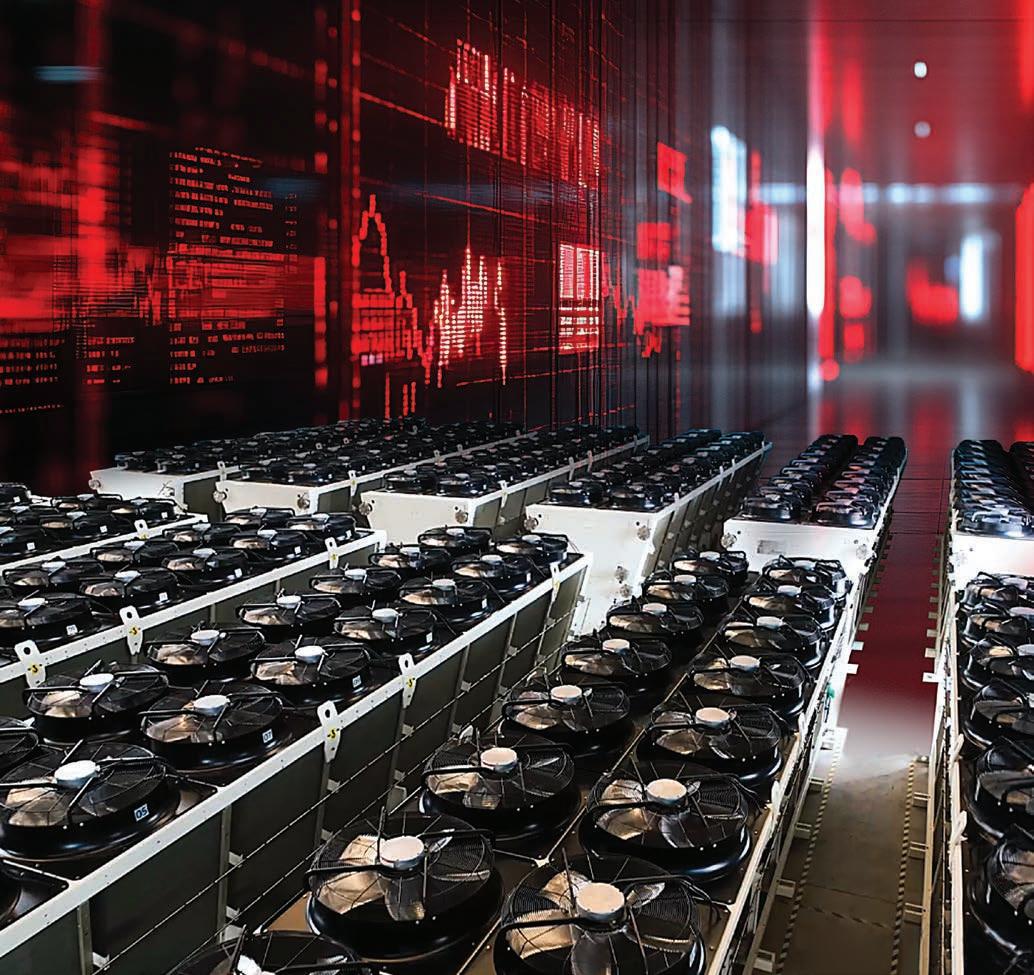
Our range of DRY COOLERS is designed to support data center cooling systems, delivering high performance and significantly reducing operating costs.
Thanks to their advanced technology, they dissipate heat, keeping IT infrastructures at optimal temperatures.
Easily integrated with advanced solutions such as free cooling, they deliver exceptional efficiency by reducing energy consumption compared to traditional systems, avoiding huge water consuption, minimizing
environmental impact, and ensuring continuous operation and reliable protection of electronic equipment.
Their flexibility allows seamless integration into hybrid systems and intelligent management of thermal loads, making them the ideal choice for modern data centers focused on performance, security, and environmental responsibility.
www.modinecoolers.com www.modineselect.com

Air cooling is the traditional method of cooling data centers and uses two main technologies: CRAC and CRAH units. ASHRAE (the American Society of Heating, Refrigerating and Air-Conditioning Engineers) recommends a temperature of 18–27°C (64.4–80.6°F) for air-cooled data centers.14
CRAC units: CRAC units are compressor-driven climate control systems that utilize a direct expansion (DX) refrigeration cycle to regulate temperature and humidity within the white space. Heat rejection is achieved via either air-cooled condensers or water-cooled loops, with capacities scaling from small-footprint units up to industrial 265kW (75TR) systems. CRAC units have traditionally used synthetic refrigerants, although CO 2 CRAC units have been available since the late 2010s.
CRAH units: Unlike CRAC units, CRAHs contain no internal compressors. Instead, they use chilled water supplied by chillers. Fans drive warm return air across a hydronic cooling coil, transferring thermal energy to the water loop, which is then pumped out of the white space. Because the mechanical work of cooling is offloaded to the central plant, CRAHs typically offer higher per-unit cooling capacities than CRACs.
While air cooling is still in demand, its status as the de facto method for data center cooling has eroded in recent years due to increasing server rack densities. Rather than continue to scale up CRACs and CRAHs, manufacturers have focused increasingly on more efficient liquid cooling technologies.
The rise of HPC and its numerous applications, including generative AI, have led to a spike in the power density of server racks driven by more powerful CPUs (central processing units) and the use of increasingly more powerful GPUs. This has necessitated the growth of liquid cooling, which can be divided into two categories: direct-to-chip and immersion.
Coolant distribution units: CDUs serve as the critical thermal and hydraulic interface between the facility’s primary cooling loop (gray space) and the sensitive secondary IT loop (white space). By using an internal heat exchanger, they transfer heat from the rack coolant to the facility water without fluid mixing, ensuring complete isolation between the systems. Heat transfer to ambient air, while less efficient, is a less expensive option. Beyond heat transfer, CDUs are responsible for the precise regulation of coolant flow, pressure, temperature and filtration, protecting the IT equipment from contaminants and hydraulic surges.
Direct-to-chip: Direct-to-chip liquid cooling involves placing a metal cold plate directly on top of individual CPUs/GPUs. Inside the plate, water, glycol or a dielectric fluid circulates through a microchannel heat exchanger to maximize thermal transfer. The system operates as a closed secondary loop, transporting the captured heat to a CDU, effectively bypassing the thermal resistance of air for the most energy-intensive components.
Two-phase direct-to-chip: Instead of water or glycol,a dielectric refrigerant is pumped into the cold plate, which functions as an evaporator. As the processor generates heat, the fluid boils, undergoing a phase change from liquid to vapor and absorbing significant thermal energy via latent heat. The resulting vapor flows to the CDU, where it is condensed back into a liquid for recirculation, allowing for significantly higher thermal flux limits than single-phase systems.
Single-phase immersion: In this setup, IT components are submerged in a non-conductive dielectric liquid that maintains a liquid state throughout the thermal cycle. Heat is transferred from the servers to the fluid via convection, and the heated coolant is mechanically pumped out of the tank to a CDU, which extracts the heat via a heat exchanger before returning the cooled fluid to the tank. Because the fluids used, typically synthetic oils or hydrocarbons, have high boiling points and low volatility, these systems generally use an “open bath” design, eliminating the need for the hermetic sealing required in two-phase systems.
14 ASHRAE, 2016, “Data Center Power Equipment Thermal Guidelines and Best Practices,” https://drive.google.com/file/d/1x7tgoWfRggvTd6SgyrAFSHIfFSMnyeaZ/view?usp=sharing
Two-phase immersion: This method submerges hardware in a hermetically sealed tank filled with a low-boiling-point dielectric fluid. Using the latent heat of vaporization, heat from IT components causes the fluid to boil, creating vapor that rises to a passive condenser coil at the top of the tank and precipitates back into the bath. While two-phase immersion cooling is an emerging technology, the types of fluids employed to this point have typically been fluorinated and PFAS (per- and polyfluoroalkyl substances).15
Because of the higher efficiency and targeted design of liquid cooling systems, the fluids used can be much warmer than the air used in air-cooled data centers. A typical temperature for DTC technology is 32°C (89.6°F), but some end users have increased this to up to 45°C (113°F).16 Two-phase immersion systems use fluids with a boiling point of 50°C (122°F), while the fluids used in single-phase systems are a few degrees cooler.17
The ability to use fluids at higher temperatures means there is a greater opportunity to use “free cooling,” which employs cooler ambient air temperatures or cold water to reject heat from the facility water or water-glycol loop. This is considered free because in this mode chillers run their compressors at partial load or not at all.
In data center cooling, the gray space is where chillers and heat rejection equipment cool the primary fluid loop, the facility supply water or a water-glycol mixture used in CRAHs and also in CDUs to cool the fluid in liquid-cooled setups. Depending on the size of the data center, a chiller can be used alone or in conjunction with heat rejection equipment such as a dry cooler, cooling tower or hybrid dry cooler.
Air-cooled chillers: Air-cooled chillers use a mechanical DX refrigeration cycle to extract heat from the facility’s primary fluid loop and reject heat directly into the atmosphere by drawing ambient air across finned condenser coils. Typically installed on rooftops to ensure unobstructed airflow, modern units often feature integrated free-cooling coils. This allows the system to bypass energy-intensive compressors and use low ambient temperatures for passive heat rejection when conditions allow.
Water-cooled chillers: Water-cooled chillers use a condenser water loop to reject heat from the refrigerant. Typically housed indoors within mechanical rooms, they offer superior cooling capacity per footprint compared to air-cooled units. They depend on external heat rejection infrastructure – cooling towers, traditionally, but increasingly dry coolers to conserve water. Because of this, they lack integrated free-cooling components. They instead use a heat exchanger to bypass the chiller’s compressor, transferring the thermal load directly to the external rejection loop when conditions permit.
The choice between an air- and water-cooled chiller is determined by many factors, including the climate, access to water and the size of a data center and the allotted space for cooling equipment.
Dry coolers: Dry coolers operate as closed-loop systems, circulating warm facility water through finned heat rejection coils. Fans draw ambient intake air across the coils to dissipate heat without water evaporation. While dry coolers are frequently integrated with chillers to enable free cooling, their efficiency is determined by the ambient dry bulb temperature, making them less effective than evaporative methods in hot climates.
Cooling towers: Cooling towers maximize heat rejection efficiency by using the latent heat of evaporation. In open-circuit towers, warm facility water is distributed over high-surface-area fill media, directly exposing it to ambient airflow generated by fans. Closed-circuit towers isolate the facility water within heat exchange coils, spraying them with a separate recirculation water loop to facilitate evaporative cooling without contaminating the process fluid. Both types leverage ambient wet-bulb temperature, allowing them to achieve lower supply temperatures than dry-air systems and extending the hours available for free cooling.
Adiabatic coolers: Adiabatic coolers function primarily as dry coolers. However, when ambient temperatures exceed the unit’s dry cooling capacity, the intake air passes through wetted pads or a misting system. This evaporates water to lower the air temperature before it passes over the heat rejection coils, boosting efficiency without wetting the coil itself.
15 MacDiarmid, A., Submer, January 2026, “PFAS Contamination: A Call to Action for the Datacenter Industry,” https://submer.com/blog/pfas-contamination-a-call-to-action-for-the-datacenter-industry/ 16 Bizo, D., Uptime Institute, March 20, 2024, “Performance Expectations of Liquid Cooling Need a Reality Check,” https://journal.uptimeinstitute.com/performance-expectations-of-liquid-cooling-need-a-reality-check/ 17 Gigabyte, January 2026, “Two-Phase Immersion Cooling With LiquidStack,” https://www.gigabyte.com/Solutions/liquidstack-two-phase

Hybrid dry coolers: Hybrid dry coolers optimize resource efficiency by operating as standard dry coolers during lower ambient temperatures. When ambient air temperatures rise or thermal loads peak, the system transitions to a wet mode, spraying water directly onto the heat rejection coils. This leverages the latent heat of vaporization on the coil surface to rapidly cool the internal process fluid, enabling the unit to maintain lower supply temperatures than a purely air-cooled system could achieve.
As with chillers, a variety of factors influence a data center’s selection of heat rejection equipment. In data centers where temperature settings and climatic conditions allow, heat rejection equipment alone can be used to cool the white space.
Air-cooled data centers produce waste heat at around 25–35°C (77–95°F), while liquid-cooled data centers can see waste heat temperatures as high as 50°C, neither of which is hot enough for direct use in traditional district heating networks. However, high-temperature heat pumps can raise the temperature of this waste heat to the required 60–80°C+ (140–176°F+) levels, enabling data centers to supply district heating networks. In specific setups, a single unit can both cool servers and lift the temperature of waste heat simultaneously.
High-temperature heat pumps: By using the return water as a heat source, high-temperature heat pumps can output water at 80°C or hotter, which is suitable for district heating networks. Four-pipe units can operate in simultaneous heating and cooling mode, chilling the water returning to the IT load while generating high-grade heat for district heating networks.
The close collaboration required between data centers and district heating networks means waste heat reclaim and reuse is still in its early days. However, some of the earliest examples of this type of sector-coupling feature heat pumps using hydrocarbons (see the Deep Dive section of this report).
In the EU, the landscape for data centers, including their cooling systems choices, is being reshaped by two key regulatory mechanisms: the EU Energy Efficiency Directive18 and EU Taxonomy.19 First, the mandatory heat reuse (EED Art. 26) stipulation requires that all facilities with ≥1MW of installed IT capacity conduct a cost benefit analysis for using their waste heat, with Germany imposing an even stricter national law mandating 10% heat reuse by July 2026. 20 In addition, the law mandates that data centers built after July 2026 must achieve a PUE (power usage effectiveness) of ≤1.3 within two years of commencing operation.21
Second, the EU Taxonomy, a crucial financial classification system, has the practical effect of making the formerly voluntary EU Code of Conduct for Data Centres22 the de facto mandatory rulebook for any data center operator seeking to access green bond financing and other sustainable capital streams. Of particular interest are the provisions mentioned in the “Best Practice Guidelines.” 23
The 2024 EU F-gas regulation mandates the phase-out of hydrofluorocarbons by 2050 and introduces immediate quotas that reduce the use of HFCs by nearly 50% between 2024 and 2027. Starting January 1, 2027, new stationary chillers with a capacity above 12kW (3.4TR) are prohibited from using fluorinated gases with a GWP of 750 or more, while smaller units under 12kW face an even stricter limit of 150 GWP.
Beyond equipment selection, the regulation imposes stringent maintenance and transparency requirements. Operators must implement permanent, automated leak detection systems and maintain digital logs for any equipment exceeding specific CO 2 -equivalent thresholds, with mandatory repairs required within one month of detection.
The escalating cost of virgin HFCs and the 2032 ban on using high-GWP gases for servicing existing equipment are driving a shift toward early decommissioning of legacy assets. Furthermore, the potential for future restrictions on PFAS is leading forward-looking operators to bypass HFOs entirely in favor of natural, water-based or evaporative cooling systems that remain immune to the tightening f-gas regulatory cycle.
On February 7, 2023, the European Chemicals Agency (ECHA) published the “Universal Restriction Proposal” developed by national authorities from Denmark, Germany, the Netherlands, Norway and Sweden. Formally known as the Annex XV Restriction Report, this proposal seeks to restrict PFAS under the REACH framework, the European Union’s primary chemical regulation.
The scope of this proposal is extensive, targeting the manufacture, use and sale of numerous fluorinated refrigerants as both pure substances and blends. This includes common HFCs and HFOs, such as HFC-125, HFC-134a, HFC-143a, HFO-1234yf, HFO-1234ze(E) and HFO-1336mzz(Z/E). Crucially, the restriction also applies to trifluoroacetic acid (TFA), a persistent atmospheric degradation product resulting from the breakdown of HFO-1234yf and HFC-134a, among other substances.
18 European Comission, January 2026, “Energy Efficiency Directive,” https://energy.ec.europa.eu/topics/energy-efficiency/energy-efficiency-targets-directive-and-rules/energy-efficiency-directive_
19 European Commission, December 17, 2025, “EU Taxonomy for Sustainable Activities,” https://finance.ec.europa.eu/sustainable-finance/tools-and-standards/eu-taxonomy-sustainable-activities_en
20 Smitten, B., Cundall, November 7, 2025, “Why Germany’s Energy Efficiency Act Makes Waste Heat Recovery a National Priority,” https://www.cundall.com/ideas/blog/why-germanys-energy-efficiency-act-makes-waste-heat-recovery-a-national-priority
21 Etalytics, December 11, 2024, “Navigating the New Norm: Germany’s Energy Efficiency Act in Data Centers,” https://etalytics.com/resources/blog/germanys-energy-efficiency-act-in-data-centers
22 European Commission, September 5, 2023, “The EU Code of Conduct for Data Centres – Towards More Innovative, Sustainable and Secure Data Centre Facilities,” https://joint-research-centre.ec.europa.eu/jrc-news-and-updates/ eu-code-conduct-data-centres-towards-more-innovative-sustainable-and-secure-data-centre-facilities-2023-09-05_en 23 JRC Publications Repository, January 2026, “2025 Best Practice Guidelines for the EU Code of Conduct on Data Centre Energy Efficiency,” https://publications.jrc.ec.europa.eu/repository/handle/JRC141521
If approved, the restrictions would become legally binding 18 months after the final text takes effect. The SEAC (socio-economic analysis committee) of ECHA has said its goal is to publish a draft opinion by April 2026. The public will have 60 days to respond and/or provide further evidence and information on the availability of alternatives.
The current text stipulates that the use of PFAS in heat transfer fluids for immersion cooling is permitted for 6.5 years after entry into force. This comprises an 18-month transition period plus a five-year derogation. The current proposal also contains one general exemption for the use of PFAS
refrigerants in HVAC&R equipment in buildings where national safety standards and building codes prohibit the use of alternatives.
The feedback from the public consultation will be analyzed and eventually integrated into the SEAC’s final opinion. It will be submitted to the European Commission, which is responsible for drafting the final text. It is unclear if the Commission will maintain the current structure of the text or if it will decide to separate the document into sectors in view of the current trend to simplify legislation. Member states will decide whether to approve the final text.
The Fluorinated Greenhouse Gases (Amendment) Regulations 2023, 24 along with subsequent policy updates leading into 2026, have significantly altered the decision-making process for data center cooling in the U.K. by accelerating the move away from high-GWP substances. While this specific amendment primarily focused on ensuring the HFC quota system remained functional after Brexit, its broader impact has been to signal a high ambition phase-down.
The U.K.'s Environment Act 202125 introduced a powerful new layer of environmental scrutiny specifically targeting the hidden impacts of data centers beyond just carbon emissions. Its influence is felt most strongly in how data centers manage water resources and local ecosystems, fundamentally shifting the industry away from water-intensive cooling methods.
Since February 2024, the Environment Act has mandated that all new developments in England must deliver at least a 10% biodiversity net gain. This requirement will be extended to Nationally Significant Infrastructure Projects, which includes data centers, from May 2026. 26 The Environment Act focuses on nature and works in tandem with the U.K. Energy Act of 2023 to drive the adoption of heat recovery units that capture thermal energy for local district heating.
The Climate Change Agreement (CCA) for Data Centres is a voluntary scheme that allows U.K. operators to claim a significant discount (up to 92% for electricity) on the climate change levy in exchange for meeting specific energy-efficiency targets. 27 A new six-year phase of the CCA scheme was just launched in January 2026.28 This agreement is a primary driver for cooling innovation because cooling remains the largest source of non-IT energy consumption in a data center.
24 Legislation Gov U.K., January 2026, “The Fluorinated Greenhouse Gases (Amendment) Regulations 2023,” https://www.legislation.gov.uk/uksi/2023/1161/contents/made
25 Legislation Gov U.K., January 2026, “Environment Act 2021,” https://www.legislation.gov.uk/ukpga/2021/30/contents
26 Gov U.K., October 21, 2025, “Biodiversity Net Gain for Nationally Significant Infrastructure Projects,” https://www.gov.uk/government/consultations/biodiversity-net-gain-for-nationally-significant-infrastructure-projects
27 Eyebright, January 10, 2022, “BESI Re-Opens CCA Scheme,” https://www.eyebrightutilities.co.uk/insights/beis-re-opens-cca-scheme
28 Million, Ross, K., October 16, 2024, “Government Confirms Six-Year Extension of Climate Change Agreements Scheme,” https://www.solarpowerportal.co.uk/energy-policy/government-confirms-six-year-extension-of-climate-change-agreements-scheme
The AIM Act of 2020 29 is the primary driver for transformation in the United States data center cooling market as it grants the U.S. Environmental Protection Agency (EPA) the authority to phase down HFC production and consumption by 85% by 2036. This legislative mandate creates a dual-track pressure on data center operators: It restricts the installation of new equipment using high-GWP refrigerants while simultaneously constricting the supply and increasing the cost of gases required to maintain existing fleets.
As of January 1, 2025, the EPA’s Technology Transitions Rule 30 has already prohibited the manufacture and import of residential and light commercial air-conditioning systems using refrigerants with a GWP above 700. For facilities using purpose-built CRAC units, a critical “compliance cliff” arrives on January 1, 2027, after which new installations of information technology equipment cooling systems must strictly adhere to the 700-GWP limit.
Beyond the hardware bans, the AIM Act’s Allowance Allocation Program is creating a refrigerant tourniquet for legacy systems. Following a 40% national reduction in HFC production and imports compared to baseline that began in 2024, the industry is preparing for an even steeper 70% reduction starting in 2029. For data centers operating legacy R410A or R134a systems, this supply crunch turns every leak into a significant financial and operational risk as the price of virgin gas continues to escalate.
Starting January 1, 2026, the EPA has lowered the threshold for mandatory leak detection and repair from 50lbs (22.6kg) to just 15lbs (6.8kg) for systems using high-GWP HFCs. This brings thousands of smaller edge data center units under strict federal oversight for the first time.
The EPA’s standard definition does not currently classify single fluorinated compounds as PFAS. However, specific federal reporting rules and several U.S. states have embraced the OECD definition of PFAS, which captures almost all modern synthetic refrigerants and trifluoroacetic acid, the degradation product of some f-gases.
Maine has established one of the most specific timelines, banning the sale of PFAS-containing HVAC and refrigeration equipment starting January 1, 2040. 31 This includes most HFCs and HFOs used in data centers. In Minnesota, Amara’s Law targets a total ban on all non-essential products containing PFAS by 2032. 32 Data center operators in Minnesota may soon have to apply for currently unavoidable use exemptions to prove that their cooling systems are essential and that no non-PFAS alternatives are viable.
Under the Toxic Substances Control Act, a major reporting cycle begins in April 2026. 33 Any data center operator or equipment manufacturer that has imported PFAS-containing equipment – including chillers with PFAS-based lubricants – since 2011 must submit detailed usage and exposure data to the EPA.34
29 U.S. EPA, January 2026, “Background on HFCs and the AIM Act,” https://www.epa.gov/climate-hfcs-reduction/background-hfcs-and-aim-act
30 U.S. EPA, January 2026, “Technology Transitions,” https://www.epa.gov/climate-hfcs-reduction/technology-transitions
31 Garry, M., NaturalRefrigerants.com, December 20, 2024, “Maine to Ban Sale of PFAS Refrigerants and PFAS-Containing HVAC&R Equipment in 2040,” https://naturalrefrigerants.com/maine-to-ban-sale-of-pfas-refrigerants-and-pfas-containing-hvacr-equipment-in-2040/
32 Garry, M., NaturalRefrigerants.com, January 29, 2025, “Minnesota Works on Process to Assess Whether PFAS Refrigerants Would be Banned in 2032,” https://naturalrefrigerants.com/minnesota-works-on-process-to-assess-whether-pfas-refrigerants-would-be-banned-in-2032/
33 U.S. EPA, January 2026, “TSCA Section 8(a)(7) Reporting and Recordkeeping Requirements for Perfluoroalkyl and Polyfluoroalkyl Substances,” https://www.epa.gov/assessing-and-managing-chemicals-under-tsca/tsca-section-8a7-reporting-and-recordkeeping
34 It is important to mention that several amendments have been proposed, but unless they will be approved before April 2026, the provisions of the current legal text are the ones that will enter into force and be immediately applicable.
Singapore has implemented a Green Data Centre Roadmap mandating advanced cooling, and this along with the Tropical Data Centre Standard (SS 697)35 have effectively ended the era of overcooling in the tropics. This initiative encourages operators to safely increase ambient operating temperatures to 26°C (78.8°F) or higher. This regulatory impetus is accelerating the adoption of high-temperature IT equipment designed to perform effectively in heat and humidity.
To support high-density workloads, particularly those associated with Singapore’s artificial intelligence goals, the Roadmap promotes a transition to advanced liquid cooling, specifically the use of rear-door heat exchangers and directto-chip systems.
In India, strict sectoral data sovereignty policies, particularly from the Reserve Bank of India 36 and the Securities and Exchange Board of India, 37 act as a physical catalyst for infrastructure development. While the overarching Digital Personal Data Protection Act of 2023 38 primarily focuses on compliance and consent, these sectoral mandates force critical financial and payment data to remain within national borders.
This localization requirement is forcing a massive, rapid expansion of domestic data center capacity, often in regions characterized by water scarcity and extreme ambient heat. Consequently, the act is indirectly dictating cooling choices that prioritize resource independence. To navigate the infrastructure risk of unreliable local grids and water shortages, Indian operators are increasingly adopting waterless, closed-loop cooling systems and modular data center designs that can be deployed rapidly.
In China, the Special Action Plan for Green and Low-carbon Development of Data Centers 39 sets aggressive performance targets that essentially disqualify traditional cooling methods for new large-scale projects. By the end of 2025, the national average power usage effectiveness (PUE) is mandated to drop below 1.5, with high-performance clusters in national hub regions pushed even lower to 1.25.
This regulatory ceiling has triggered a massive shift toward liquid cooling and indirect evaporative systems, particularly in the colder northern and western provinces where China’s “data in the east, computing in the west”40 strategy encourages the use of natural ambient temperatures to minimize mechanical cooling.
In Australia, the cooling landscape is being reshaped by a national focus on resource scarcity, particularly regarding water usage in the country’s arid and Mediterranean climate zones. While the government’s developing national data center strategy emphasizes energy efficiency, local utilities and state regulators are increasingly scrutinizing water usage effectiveness (WUE).
In major hubs like Sydney where data centers are projected to consume up to 25% of the city’s drinking water by 2035, 41 operators are being pushed away from traditional evaporative cooling towers. This environmental pressure is driving the adoption of waterless, air-cooled chiller systems equipped with oversized heat exchangers and free cooling economizers that can leverage Australia’s cool night temperatures without straining the municipal water supply as well as liquid cooling technology for data centers.
35 Government Singapore, August 22, 2025, “Singapore IT Energy Efficiency Standard for Data Centres Launched,” https://www.sgpc.gov.sg/detail?url=/media_releases/imda/press_release/P-20250822-1&page=/detail&HomePage=home
36 Ferreol, J., Marble, November 11, 2025, “Data Sovereignty & Infrastructure: The Situation in Asia-Pacific,” https://www.checkmarble.com/blog/data-sovereignty-infrastructure-the-situation-in-asia-pacific
37 SEBI, August 20, 2024, “Cybersecurity and Cyber Resilience Framework (CSCRF) for SEBI Regulated Entities (REs),” https://www.sebi.gov.in/legal/circulars/aug-2024/cybersecurity-and-cyber-resilience-framework-cscrf-for-sebi-regulated-entities-res-_85964.html
38 Ministry of Law and Justice, August 11, 2023, “The Digital Personal Data Protection Act, 2023,” https://drive.google.com/file/d/1oj_L6Sko8soQVBKn7xoKBQ4UE6DOVv_N/view?usp=sharing
39 CWR, July 23, 2024, “Special Action Plan for Green and Low-carbon Development of Data Centers,” https://cwrrr.org/regulation/special-action-plan-for-green-and-low-carbon-development-of-data-centers/
40 Ren, Y. et. al, Science Direct, December 2024, “Advancing High-Quality Development in China: Unraveling the Dynamics, Disparities, and Determinants of Inclusive Green Growth at the Prefecture Level,” https://www.sciencedirect.com/science/article/pii/S1470160X24013554
41 Shine, R., ABC News Australia, August 27, 2025, “Data Centres Are Vital for the Future and AI but Their Environmental Footprint Can Be a Problem,” https://www.abc.net.au/news/2025-08-27/ai-to-take-up-one-quarter-of-sydney-water-in-a-decade/1057009
South Korea and Japan are approaching cooling through the lens of energy security and carbon neutrality goals. Japan’s “Watt-Bit Collaboration”42 and its energy efficiency standards for data centers built after 2029 introduce financial penalties for facilities that fail to meet strict benchmarks. This has led to the development of highly specialized outside air-cooling modules and district cooling systems in urban centers like Tokyo and Osaka, where waste heat from data centers is increasingly repurposed for municipal use.
Similarly, South Korea’s Zero Energy Building mandates are expanding to the private sector, forcing data center designers to integrate advanced building energy management systems. These systems use AI-driven digital twins to dynamically adjust cooling loads, ensuring that the facility’s thermal profile remains within the strict energy quotas now being imposed by major metropolitan governments in the country.
Key metrics for efficiency include PUE (power usage effectiveness), WUE (water usage effectiveness), CUE (carbon usage effectiveness), ERF (energy reuse factor) and REF (renewable energy factor). These are calculated as follows:
● PUE: Total data center energy consumption / IT equipment energy consumption. A PUE of 1.0 means that 100% of a data center’s energy use goes toward powering IT equipment.
● WUE: Total water usage (liters) / IT equipment energy consumption (kWh). This is expressed in L/kWh.
● CUE: Total CO 2 emissions (kg CO 2 e) / IT equipment energy consumption (kWh). A CUE of 0 indicates that a data center produces no operational carbon emissions.
● ERF: Reuse energy / total data center energy consumption. ERF is shown as a decimal or percentage ranging from 0 to 1.0 (0–100%).
● REF: Renewable energy owned and controlled / total data center energy consumption. A value of 1.0 indicates that a data center’s energy use is completely met by renewable energy.
Voluntary pacts include the Climate Neutral Data Centre Pact (CNDCP), 43 in which major European operators commit to climate neutrality by 2030, with PUE targets (e.g., <1.3 for new facilities). Another example is the Code of Conduct for Data Centres, a voluntary scheme used as a basis for EU Taxonomy alignment.
In addition to industry-led initiatives there are also technical standards, which include the following:
● Tier classifications. While many modern hyperscale facilities target Tier III for concurrent maintainability, Tier IV remains the benchmark for critical fault tolerance and high redundancy.44
● ASHRAE guidelines 45 set thermal envelopes, with the Liquid Cooling Class (W45) becoming key for AI facilities.
● ISO/IEC 27001 is the standard for information security management.46
42 Ministry of Economy, Trade and Industry, June 12, 2025, “Report 1.0 of the Public-Private Advisory Council on Watt-Bit Collaboration Published,” https://www.meti.go.jp/english/press/2025/0612_001.html
43 Climate Neutral Data Centre Pact, January 2026, “Homepage,” https://www.climateneutraldatacentre.net/
44 Uptime Institute, January 2026, “Tier Classification System,” https://uptimeinstitute.com/tiers
45 ASHRAE, January 31, 2024, “Energy Standards for Data Centers,” https://drive.google.com/file/d/1yluIAqDq0_THn8keVzYyqkNDgWWbA1Mg/view?usp=sharing
The integration of efficiency metrics, voluntary industry pacts and rigorous technical standards hints that data center cooling is a primary architecture for legal and operational compliance. CNDCP dictates strict power usage effectiveness targets, requiring new facilities in cool climates to maintain a PUE of 1.3, while those in warm climates have a target PUE of 1.4.
This creates a complex engineering paradox when paired with WUE mandates of less than 0.4 liters per kilowatt-hour. Traditionally, operators achieved lower energy consumption by relying on evaporative cooling, which swaps electricity for high water consumption; however, the modern regulatory environment effectively bans this water-for-power trade-off. This dual pressure is forcing a transition toward adiabatic systems and closed-loop dry cooling, which use ambient air for the majority of the year and only deploy water during extreme temperature peaks to protect the facility’s effi ciency profi le.
As racks transition from traditional 10kW air-cooled cabinets to 100kW liquid-cooled clusters, the W45 standard, which allows for facility water supply temperatures up to 45°C, becomes the vital architectural benchmark. By operating at these higher temperatures, data centers can use free cooling or economizers almost 100% of the year, even in warmer climates, effectively eliminating the need for energy-intensive mechanical chillers. This not only satisfies the CNDCP’s PUE targets but also maximizes the ERF because the resulting high-grade waste heat is far easier to export to local district heating networks.
While effi ciency metrics drive the choice of cooling medium, technical standards like Tier IV classification and ISO/IEC 27001 define the system’s operational resilience and security. To achieve a Tier IV fault-tolerant rating, a cooling system must provide continuous cooling, meaning the facility must maintain thermal stability even during a total power failure through the use, for example, of massive chilled water storage tanks or uninterruptible power supplies for the pumping infrastructure.
ISO/IEC 27001 compliance now extends the boundaries of information security to include the operational technology of the cooling plant. Because modern cooling systems are managed by sophisticated building management software, they are currently viewed as potential entry points for cyber attacks 47. Consequently, cooling hardware must now be selected based on its ability to support encrypted communications and strict access controls, ensuring that the infrastructure remains as secure as the data it protects.

47 McLaren, C., Tech Monitor, September 26, 2025, “The Overlooked Cyber Risk in Data Centre Cooling Systems,” https://www.techmonitor.ai/comment-2/data-centre-cooling-systems-cyberattack/


Get the edge on the competition with M&M Carnot CO2-based cooling solutions

Our natural refrigerant cooling solutions are helping data center operators meet today’s demands for sustainability and energy efficiency. By delivering extended free cooling hours, improved PUE performance and higher capacities compared to conventional equipment, our adaptable and flexible solutions enable you to transform your data center into a resilient, future-ready facility.
Featuring our innovative Rain-Cycle™ technology and using a natural refrigerant with a global warming potential of 1 and ozone depletion potential of 0, our CO2-based cooling solutions ensure longer equipment lifespans while maintaining the reliability and serviceability of traditional DX systems. By investing in the switch to natural refrigerants today, you’ll reduce energy, maintenance and compliance costs over time – leading to a lower total cost of ownership.
Solutions include:
• Computer Room Air Conditioner (CRAC)

• In Row Cooling (IRC)
• Computer Room Air Handler (CRAH)
• Liquid cooling chiller
Stand out from your competitors as a leader in sustainable innovation.
To learn more about our natural refrigerant cooling solutions, visit mmcarnot.com/datacentersolutions











Find out more













- By: Michael Hines
Alfa Laval is a global manufacturer of heat transfer, separation and fl uid-handling solutions headquartered in Lund, Sweden. It was founded in 1883 and originally manufactured milk separators, with its first heat exchanger produced in 1938. Today, Alfa Laval has more than 30 manufacturing sites across the globe and 22,000 employees.1 Its HVAC&R portfolio includes gasketed plate heat exchangers (GPHE) and brazed plate heat exchangers (BPHE).
The company has worked in the data center sector for 20 years, according to Anna Blomborg, Head of Data Centers at Alfa Laval. Since then the segment has grown in lockstep with the sector’s rapid expansion, Blomborg said, adding that “the outlook remains strong.”
“The forecasts we’re seeing are extraordinary –some volume projections seem almost unrealistic,” Blomborg said. “Even after applying conservative adjustments, the numbers remain impressive. This level of potential has us energized and committed to investing for growth.”
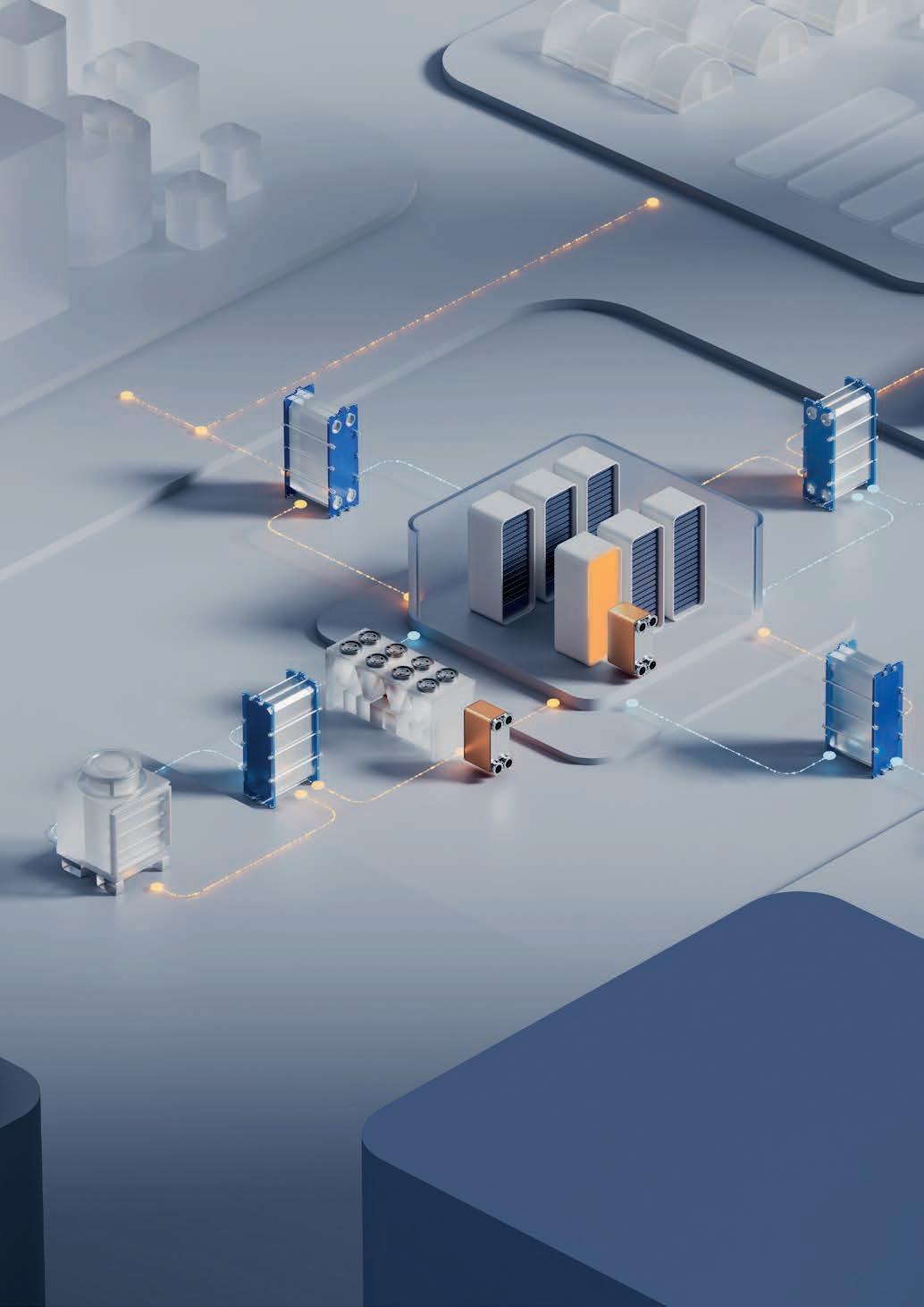
Alfa Laval first began supplying data centers with large gasketed plate heat exchangers that enabled evaporative cooling and free cooling using ocean or freshwater. Alongside them, the company’s brazed plate heat exchangers found their place in chillers, heat pumps, and heat reuse connections.
1 Alfa Laval, December 2025, “Our Purpose and How We Create Value,” https://alfalaval.inpublix.com/2024/our-purpose-and-how-we-create-value/
”
Today, we’re measured on delivery time, accuracy and quality. But we believe sustainability will soon become a key factor in supplier selection and we’re ready for that shift.
— Anna Blomborg, Head of Data Centers at Alfa Laval
It moved into the white space in 2022 when it first introduced compact BPHEs for coolant distribution units (CDUs) in liquid-cooled environments. Its first project was for a crypto mining operation in the United States with a single-phase immersion cooling system.
“The crypto industry was early in the adoption of liquid cooling,” Blomborg said. “Their compute density was far higher than traditional workloads, so they pushed for technologies like immersion cooling.’’
Since then, the industry's focus has shifted toward single phase direct-to-chip cooling systems, a technology now generating significant buzz, Blomborg noted. “Two-phase direct-to-chip cooling and immersion are alternative solutions that we are monitoring very closely,” Blomborg said.
The company is actively tracking the rapid evolution of coolant distribution units and recently released an extra-large brazed plate heat exchanger engineered specifi cally for 2.5MW CDUs. This development marks a significant step forward in meeting the growing demand for high-capacity cooling solutions, and also opens the door to new opportunities for Alfa Laval to innovate at scale, Blomborg said.
In recent years, the dynamic between data center operators and technology providers has shifted. Where Alfa Laval once primarily supplied OEMs building cooling skids or coolant distribution units, today hyperscalers and other end users are stepping forward to collaborate directly.
“We’re seeing a growing trend where the end user wants to be involved in the design process,” Blomborg said. “They’re looking at heat transfer solutions as a strategic lever for effi ciency.”
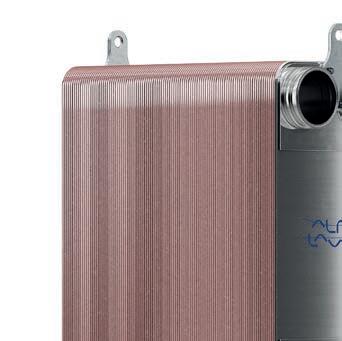
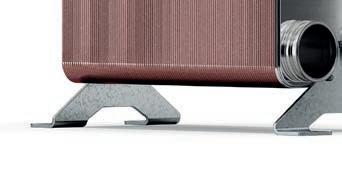
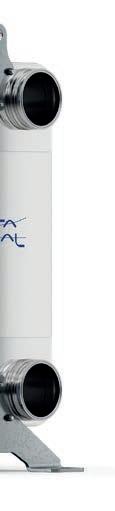
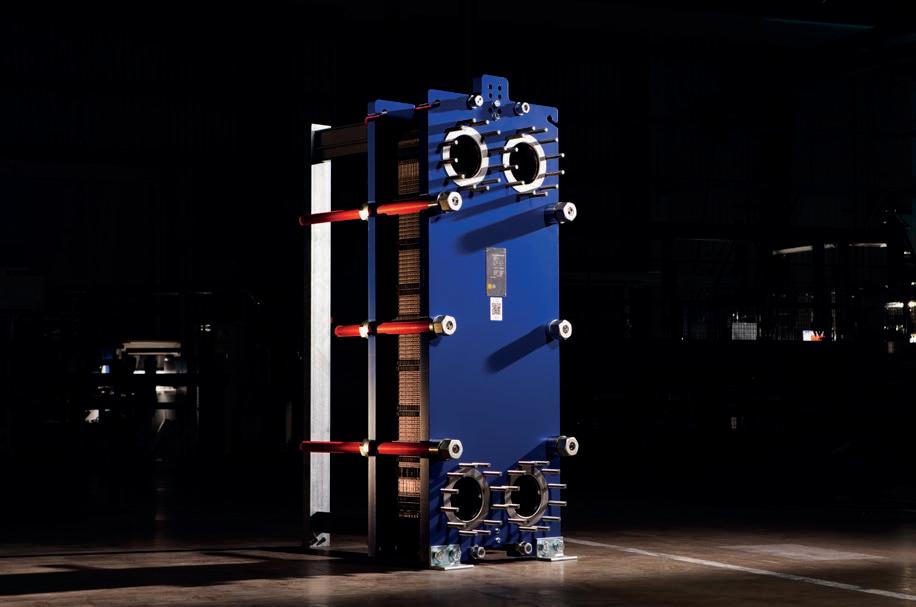
This interest is driven by the relentless pursuit of better PUE (power usage effectiveness) ratings. Even small improvements in heat exchanger design, down to a few degrees or tenths of a degree, can translate into massive energy savings across facilities operating hundreds of megawatts of IT power.
“There’s a lot you can achieve through precision in heat exchanger design,” Blomborg said . “Those incremental gains matter when you scale.’’
There are thousands of Alfa Laval heat exchangers installed in data centers across the world. The installed base is large and each year the industry adds hundreds of large gasketed plate heat exchangers alongside thousands of compact brazed units, according to Blomborg.
Not long ago, a 100MW facility was considered large in the data center sector. Today, Alfa Laval is supporting projects that scale to and above 1GW. The U.S. leads
the way, representing around half of Alfa Laval’s data center business, with Asia contributing 30% and Europe 20%. Looking ahead, the company sees strong opportunities in high-growth regions such as China, India and Thailand, as well as Northern Europe.
Rapid expansion brings both opportunity and complexity. Meeting demand at this scale requires significant investment, not only in advanced equipment but also in expanding manufacturing capacity and reducing lead times.
Alfa Laval is addressing this challenge head-on with strategic investments in new production lines and factory enlargements to boost efficiency and throughput, Blomborg said.
At the same time, accurate forecasting is critical as the industry navigates uncertainty around the pace of AI-driven growth. “The big question is what the AI growth curve looks like three or four years from now,” Blomborg said. “It’s shaping every decision we make today and we’re building flexibility into our operations to stay ahead.”
”
The forecasts we’re seeing are extraordinary. This level of potential has us energized and committed to investing for growth.
”
— Anna Blomborg, Head of Data Centers at Alfa Laval
The U.S. data center market is flush with opportunities because of its focus on speed. The EU’s focus on sustainability and regulation is also creating opportunities for Alfa Laval.
The company is targeting net-zero Scope 1 and Scope 2 emissions by 2027 and a 50% reduction in Scope 3 emissions by 2030 compared to a 2020 baseline. 2 It’s increasing its purchases of green steel and copper, too.
“Today, we’re measured on delivery time, accuracy, and quality,” Blomborg said. “But we believe sustainability will soon become a key factor in supplier selection and we’re ready for that shift.”
Regarding a possible PFAS (per- and polyfluoroalkyl substances) restriction in the EU, Blomborg said Alfa Laval would “welcome” such a regulation. She said the company is an ambassador for natural refrigerants and said there is “frustration internally that the industry isn’t pushing harder for natural refrigerants and that PFAS urgency is lacking.”
While a potential PFAS ban is still years away, there are already regulations in Europe mandating heat reuse for data centers. In September 2023, the EU revised its Energy Efficiency Directive, requiring data centers with 500kW or more of installed IT power to track waste heat utilization. 3 Facilities with 1MW or
more must implement waste heat recovery unless technically or economically unfeasible. Germany 4 and France 5 have gone further, introducing laws that mandate progressive waste heat reuse targets up to 20% by 2028.
Alfa Laval is actively supporting this transition. Its heat exchanger technology is designed to maximize energy recovery, enabling operators to capture and repurpose waste heat for district heating or internal reuse. By engineering efficient products that can easily integrate with many different reuse options, such as absorption cooling or organic Rankine cycle (ORC) systems, Alfa Laval helps data centers turn excess heat into a valuable resource, Blomborg said.
As chips get more powerful, the heat they generate becomes more valuable for reuse. Chip temperatures of 60°C (140°F) could enable waste heat to be turned into electricity, Blomborg said.
“Efficiency may not be perfect, but with the sheer volume of heat available, it might be interesting enough,” Blomborg said. “I’m excited about what’s possible.”
2 Alfa Laval, December 2025, “Annual Sustainability Report 2024,” https://drive.google.com/file/d/1_0kFkYUjEgM2biXihYh8ao9GiXdllx4s/view?usp=sharing
3 European Union, September 20, 2023, “Directive (EU) 2023/1791 of the European Parliament and of the Council of 13 September 2023 on Energy Efficiency and Amending Regulation (EU) 2023/955 (recast),” https://eur-lex.europa.eu/eli/dir/2023/1791/oj/eng
4 Holtermann, A., Bird&Bird, June 4, 2024, “Data Centres & Waste Heat: An Overview of the Legal Requirements for Waste Heat Utilisation,” https://www. twobirds.com/en/insights/2024/germany/rechenzentren-und-abwaerme-ein-ueberblick-ueber-die-gesetzlichen-vorgaben-zur-abwaermenutzung
5 Chandesris, S., Addleshaw Goddard, December 2025, “The Future of Data Centers in France,” https://www.addleshawgoddard.com/en/insights/insights-briefings/2025/real-estate/the-future-of-data-centres-in-france/



– By: Christina Hayes
BAC is a global manufacturer with more than 85 years of experience designing and producing heat rejection technology for the HVAC&R industry.1 Headquartered in Jessup, Maryland, BAC serves a broad range of applications, including central air-conditioning, commercial and industrial refrigeration, and process cooling.
The company operates 10 manufacturing facilities worldwide, enabling it to supply and support projects across the Americas, Europe, Africa and Asia. In the past 15 years, data centers have emerged as a distinct and rapidly growing vertical for the company, according to Jan Tysebaert, Global General Manager for Data Center Cooling at BAC.
The data center market is growing over 15% every year. Not only are we riding that wave, but the shift in technology in the data center industry is also favorable to the products that we sell.
—Jan Tysebaert, Global General Manager for Data Center Cooling at BAC
1 BAC, November 2025, “Homepage,” https://baltimoreaircoil.com/
BAC’s data center solutions range from evaporative cooling towers to dry coolers that use no water as well as hybrid systems that combine both technologies. The company also manufactures custom-built coils used in air-cooled chillers and computer room air-handling (CRAH) units. With the rise of high-performance computing (HPC), BAC has expanded its offerings to include equipment for liquid-cooled systems.
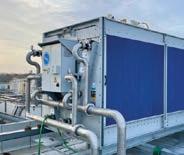
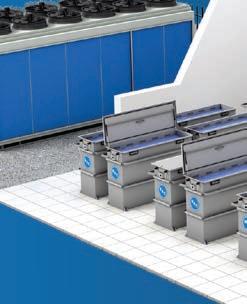
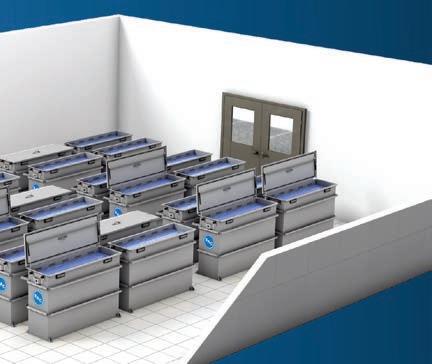
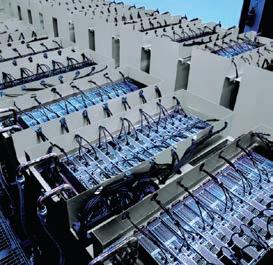
BAC’s COBALT immersion cooling system combines the company’s outdoor heat rejection equipment with patented immersion cooling tanks to create a complete end-to-end cooling solution, Tysebaert said. 2 Unlike conventional single-phase immersion systems, BAC’s immersion cooling tanks – powered by CorTex 3 technology – feature an in-tank heat exchanger that is fully immersed in the same dielectric fluid as the servers. 4 This design eliminates the need for a separate coolant distribution unit, keeping the dielectric fluid entirely contained within the tank.
“At BAC we believe that single-phase is not only the most practical and the safest type of immersion cooling but that it is also the most efficient solution,” noted Tysebaert.
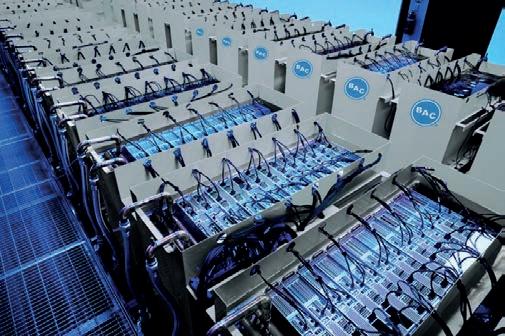
This integrated design creates a simpler, more compact and reliable system that minimizes the risk of cooling fluid leaks, reduces cost and saves space in the data hall, Tysebaert explained.
Each tank can accommodate up to 48U (rack units) of servers and supports various configurations for 19and 21-inch (48.3–53.3cm) server racks, allowing data centers to maximize rack density.5 With the use of the CorTex technology, the tank’s dielectric fluid circulates upward across the servers, efficiently absorbing heat before being recirculated through the integrated heat exchanger, which is designed to ensure uniform cooling and stable operating temperatures.
By delivering the entire cooling chain – from immersion tanks in the data hall to evaporative or dry coolers outside – operators can achieve maximum free cooling potential, according to BAC. In many climates, this design can eliminate the need for mechanical chillers entirely, reducing energy use and maintenance costs while simplifying the system architecture, according to the company.
2 COBALT is a registered trademark of BAC
3 CorTex is a registered trademark of BAC
4 BAC, November 2025, “COBALT Immersion Cooling System,” https://www.baltimoreaircoil.eu/en/products/Cobalt-immersion_cooling
5 BAC, November 2025, “Immersion Cooling Tank,” https://baltimoreaircoil.com/products/immersion-cooling/immersion-cooling-tank
Most high-density data centers – where liquid cooling provides the greatest efficiency gains – currently favor direct-to-chip (DTC) technologies, according to Tysebaert.
“Today, most applications use direct-to-chip cooling, which is largely being driven by server OEMs,” he noted. “They are making servers that are specifically designed for direct-to-chip cooling, which are a little harder to convert to immersion cooling."
From the server OEM perspective, DTC is the more familiar and readily integrated option. However, from a cooling and facility standpoint, it presents significant design complexity and an increased risk of refrigerant leaks. In contrast, immersion cooling offers what Tysebaert said is a simpler and more streamlined solution, with refrigerant eliminated from the cooling system. In addition, he added that IT hardware OEMs are constantly introducing new solutions to ensure material compatibility and chemical resistance.
Immersion cooling will ultimately prove to be the more efficient, sustainable and scalable long-term solution, Tysebaert said, noting that BAC is collaborating with OEMs to develop server designs optimized for the technology.
BAC has provided data center cooling solutions for more than two decades and entered the industry at a time when air cooling was standard. By the late 2000s, the company began working closely with hyperscaler and colocation providers to implement next-generation cooling strategies, such as economization, hybrid systems and free cooling. The industry shift toward liquid-cooled high-density computing increases demand for fluid-based cooling and free-cooling-optimized systems, areas in which BAC has longstanding expertise.
“Our decades-long experience in large-scale central cooling systems allow us to provide guidance and customization that go beyond equipment,” Tysebaert said.
BAC has supplied cooling systems to more than 1,000 data centers worldwide, delivering thousands of units annually to colocation facilities and edge sites.6
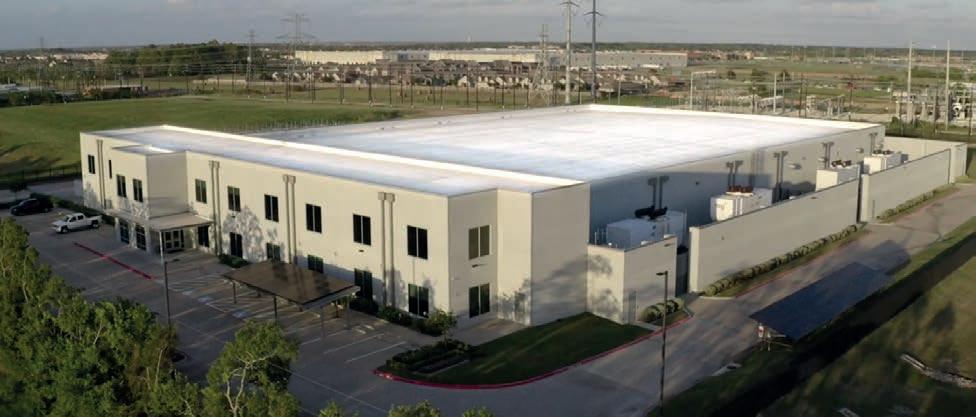
BAC’s COBALT immersion cooling system can be found in action at Skybox Houston One, an HPC data center located in Houston, Texas, with 4MW of installed IT power capacity. Operational since 2019,7 the facility runs entirely on renewable energy and operates in 100% free cooling mode year-round despite the notoriously hot and humid climate.8
I’m confident that immersion cooling is more efficient and simpler [than directto-chip], and there is now an ecosystem that is developing to make it possible.
—Jan Tysebaert, Global General Manager for Data Center Cooling at BAC
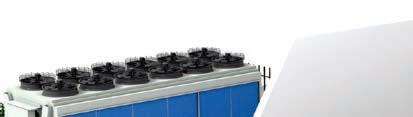
The system features more than 300 26U-wide immersion tanks, each housing 13 high-density servers submerged in dielectric fluid. These tanks are connected to a closed-loop cooling water circuit served by six BAC evaporative cooling towers for heat rejection and five pump sets that circulate water between the tanks and towers. Within the data hall, four computer room air-conditioning (CRAC) units provide limited, non-mission-critical comfort cooling.
The use of BAC’s immersion cooling technology substantially reduces the data center’s energy use compared to a setup using CRAHs and air-cooled chillers, Tysebaert said. IT power consumption was
6 BAC, November 2025, “Keep Your Data Center Operating at Peak Performance,” https://baltimoreaircoil.com.au/data-center
7 DUG, February 10, 2021, “Building One of the Greenest Datacentres on Earth. The DUG Skybox Story,” https://dug.com/building-oneof-the-greenest-datacentres-on-earth-the-dug-skybox-story/
8 Skybox Data Centers, November 2025, “Skybox Houston,” https:// www.skyboxdatacenters.com/locations/skybox-houston
reduced by 20% as server fans were no longer required. Combined with the use of free evaporative cooling –rather than mechanical cooling – and a streamlined system architecture, total energy savings reached around 80% for the cooling system and approximately 30% at the overall facility level.
While most facilities report power usage effectiveness (PUE) as their primary efficiency metric, BAC also highlights total-power usage effectiveness (TUE), which is defi ned as the ratio of total facility load to compute load.
“PUE looks at the facility, but it does not look at the effi ciency of the IT hardware,” Tysebaert noted. “It does not do justice to liquid-cooled facilities.”
PUE does not account for the effect of lowering IT load – such as by eliminating the need for server fans – and can therefore make a more effi cient data center appear to have a higher PUE. For Skybox Houston One, the immersion and evaporative cooling confi guration achieves a TUE of approximately 1.15 compared to 1.60 for a setup using air-cooled chillers and CRAHs.
Beyond efficiency, the approach adopted at SkyBox Houston One is “extremely simple” in design, resulting in low upfront costs and enabling easy scaling, according to Tysebaert. It can work with any type of server and at higher process fluid temperatures, he noted. By integrating the immersion tanks directly with the facility’s evaporative cooling system, BAC’s design also reduces the data hall footprint, enabling operators to maximize compute density within the same physical space.
“It's actually unbelievable why we're not doing this for all other data centers worldwide already,” Tysebaert said.
















– By: Michael Hines
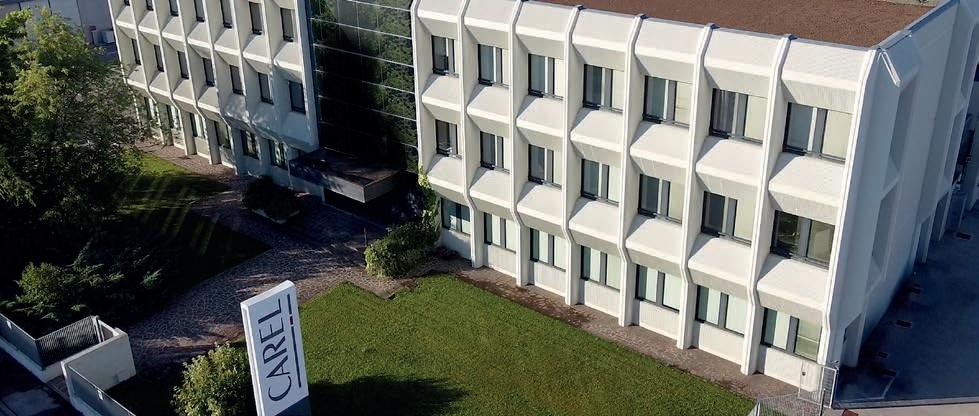
Carel is a global manufacturer of controllers, sensors and humidifiers for the HVAC&R industry as well as components, including inverters and electronic expansion valves. The company was founded in 1973 in Padua, Italy, originally as a manufacturer of electric cabinets for the air-conditioning industry.1
Enrico Boscaro, Group Marketing Manager for HVAC Industrial, said the data center industry is in the “DNA of Carel.” In addition to his work at Carel, Boscaro is also the chairman of the IT cooling task force at Eurovent, a European HVAC&R industry association made up of more than 1,000 companies, which are represented directly and indirectly through national membership associations.2
1 Carel, November 2025, “Chapter One,” https://www.carel.com/chapter-one
2 Eurovent, November 2025, “About Us,” https://www.eurovent.eu/about-us/
“Carel has been working in the data center industry since 1973,” Boscaro said. “We started providing technology to OEMs manufacturing computer room air conditioners [CRACs] to control temperature and humidity,” Boscaro said.
We’ve been involved in several projects for data centers to develop units for indirect evaporative cooling.
— Enrico Boscaro, Group Marketing Manager for HVAC Industrial at Carel
Boscaro organized the company’s offerings for data centers into three product groups: CRAC and computer room air handlers (CRAHs), free cooling and liquid cooling.
For CRACs and CRAHs, Carel offers controllers, sensors, electronic expansion valves and variablespeed compressor drives. Carel also provides controllers for chillers. Boscaro said Eurovent data shows that more than 60% of CRAC units use inverters. “The industry started [using inverters] much, much earlier compared to others,” he said.
On the free-cooling front, Carel is developing “special dampers” for data center air-handling units, which Boscaro said are designed to avoid thermal loss and preserve air quality. Indirect free-cooling solutions are available via Recuperator and Klingenburg, two companies acquired by Carel in recent years that manufacture rotary and plate air-to-air heat exchangers.
While CRACs and free cooling are a big part of Carel’s data center business, the growth in new products is coming from liquid cooling, which encompasses both coolant distribution units (CDUs) and immersion cooling. Carel is developing controls and sensors for CDUs and immersion cooling systems.
In May 2025, Carel announced that its data center controllers were compatible with the Redfish protocol. 3 Redfish enables the managing and monitoring of data center infrastructure, including cooling equipment.
“The Redfish protocol is very useful in liquid cooling as it enables the collection of data from both servers and cooling solutions to optimize control and minimize energy consumption,” Boscaro said. “We worked in advance [on Redfish integration], and now all over the world requests are appearing for this feature.”
3 Carel, May 28, 2025, “CAREL Integrates Redfish Protocol Into Data Dentre Solutions,” https://www.carel.com/news-detail/-/asset_ publisher/FWCUXAoY43Lv/content/carel-integrates-redfish-protocol-into-data-centre-solutions/10191
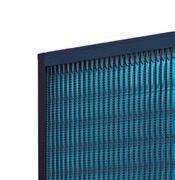
Recuperator’s B-Blue heat exchanger.
Photo credit: Carel.
Boscaro said most of the development in liquid cooling has been on direct-to-chip technology, which places cold plates with microchannels filled with a water–glycol mix or a dielectric fl uid on top of chips to remove heat. Immersion cooling, while promising, still isn’t available at scale yet and requires a setup that is starkly different from what many data center designers are familiar with, according to Boscaro.
“Direct-to-chip cooling is much more similar to the traditional deployment,” Boscaro said. “It’s racks and servers. With immersion you need a tank. It’s horizontal, not vertical, and you don’t have the same racks or connections. There are also big concerns about PFAS [per- and polyfl uoroalkyl substances].”
T here are two types of immersion cooling: single-phase and two-phase. In single-phase, servers are submerged in a dielectric fluid – a synthetic oil or hydrocarbon-based fl uid – that is pumped to a heat exchanger and doesn’t change state.4
In two-phase, a fluorocarbon-based dielectric fluid absorbs heat and evaporates, with the vapor changing back into a liquid after contacting a condensing coil in the tank.5 The two-phase immersion cooling industry received a shock in 2023 when 3M – which supplied coolant for two-phase immersion systems used by Microsoft6 – announced it would cease PFAS manufacturing by the end of 2025.7
4 2CRSI, November 2025, “Single Phase Immersion Cooling System,” https://2crsi.com/single-phase-immersion-cooling
5 2CRSI, November 2025, “Two Phase Immersion Cooling System,” https://2crsi.com/single-phase-immersion-cooling
6 Quincy, W., Microsoft, April 6, 2021, “To Cool Datacenter Servers, Microsoft Turns to Boiling Liquid,”
7 Judge, P., Data Center Dynamics, February 2, 2023, “Two-Phase Cooling Will Be Hit by EPA Rules and 3M's Exit From PFAS ‘Forever Chemicals,”’ https://www.datacenterdynamics.com/en/news/two-phase-cooling-will-be-hit-by-epa-rules-and-3ms-exit-from-pfas-forever-chemicals/
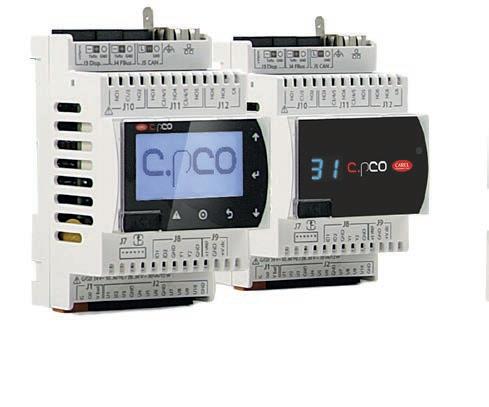
“Countless” was how Boscaro described the number of projects Carel has worked on in the data center sector. Regarding its future prospects, Boscaro said the data center industry is forecasted for double-digit growth, “which is why we keep investing into this sector.”
“We can say that we’re supporting most of the most important players around the world with one product or another,” Boscaro said.
Information from quarterly earnings calls provides further insight into Carel’s presence in the data center sector. Carel has seen “sustained demand” from data centers in North America in 2025, 8 with its HVAC segment, which includes data centers, growing 15% from the fi rst to second quarters.9
During a Q&A on Carel’s Q2 earnings call, CEO Francesco Nalini said data centers were the biggest contributors to the HVAC segment’s growth “in absolute terms.” He added that “smaller competitors and complementary technologies” were targets of acquisition in the space.
8 AlphaSpread, May 13, 2025, “Carel Q1 Earnings Call,” https://www.alphaspread.com/security/mil/crl/investor-relations/earnings-call/q1-2025
9 GuruFocus News, November 2025, “Carel Industries SpA (FRA:CIG) Q2 2025 Earnings Call Highlights: Strong Organic Growth Amidst Mixed Regional Performance,” https://www.gurufocus.com/news/3032162/carel-industries-spa-fracig-q2-2025-earnings-call-highlights-strong-organic-growth-amidst-mixed-regional-performance

We can say that we’re supporting most of the most important players around the world with one product or another.
— Enrico Boscaro,
Group Marketing Manager for HVAC Industrial at Carel

Boscaro has a unique vantage point into where the data center cooling sector is headed given his work at Carel and position as chairman of Eurovent’s IT cooling task force. The task force focuses on technical issues in the area of data center cooling, such as the energy effi ciency of cooling equipment, and communicates its opinions to regulators.
Below are a few of Boscaro’s insights into the work Eurovent is doing with regulators along with how Boscaro sees the industry evolving.






On the EU F-gas Regulation and possible PFAS ban
EB: Both f-gas and PFAS are concerning, and the [Eurovent IT] working group is trying to have a dialogue with the EU to clarify limits and timing because many of those go in opposite directions, such as energy efficiency versus the usage of certain refrigerants. PFAS is concerning because of immersion liquid cooling, which uses large quantities of fl uid in a tank, not gas in a sealed circuit. Any drop that falls might end up in the environment.
In addition, there are new regulations about the carbon footprint and declarations on the lifecycle assessment of products. PFAS is related to refrigerants, but it’s also related to components. The thought is that a lot of these components might have to be changed.

On the Eurovent IT task force’s work on energy e ciency
EB: For example, EU regulators are looking for parameters to measure the effi ciency of a CRAC unit, water- or air-condensed, and we gave them our minimum effi ciency parameters. We’re still far from a seasonal effi ciency approach, and are struggling to communicate what is typical in this industry and how we should leverage free cooling when determining energy effi ciency.
The task force’s opinion is that we should focus on effi ciency and not technology. They [regulators] have in their mind that propane [R290] is an exceptional refrigerant in terms of GWP, but here we’re talking about megawatts and having megawatts of propane on the roof of a skyscraper in Frankfurt. In an example like that, fi re risk is a great concern.
On American companies building data centers in Europe
EB: This is something we [the Eurovent task force] told the European Union, that the big players from the U.S. are coming. They will probably [build data centers] with chillers using R32, which is not PFAS and has the right GWP. The quota mechanism is an issue, as is its flammability.
[Note: The 2024 revision of the EU F-gas Regulation establishes a maximum GWP of 750 for chillers above 12kW – except if required to meet safety requirements at the operation site – that comes into effect in 2027.10 ]
On the future of air and liquid cooling in data centers
EB: Liquid cooling is growing at the fastest pace, and we’ve seen estimations of it taking 30% of the market by 2028. Liquid cooling is very well combined with AI and big data centers, but to support all of that you need the other data centers, which are growing at the same time. You need the internet to make AI run, and to run the internet you’ll still have some air cooling, which will probably be more free cooling.
On the importance of sensors in liquid cooling
EB: We are mostly involved with CDUs at the moment, and the big requirements are on sensors. There’s a lot of potential development there. Water quality is going to become very important. The heat exchanger that goes over a microprocessor is a microchannel heat exchanger with very tiny channels. CDUs have fi lters to remove small particles, as small as 20 micrometers, because one particle can clog a duct, and then one part of the microprocessor cannot be properly cooled.
EB: It’s probably CO 2 [R744]. Mechanical cooling won’t be eliminated in the short term due to the amount of power and the fact that you need to go everywhere in the world. It’ll probably be free cooling most of the time, but then you will need a chiller, a very large one.
10 EUR-LEX, February 7, 2024, “Regulation (EU) 2024/573 of the European Parliament and of the Council of 7 February 2024 on Fluorinated Greenhouse Gases, Amending Directive (EU) 2019/1937 and Repealing Regulation (EU) No 517/2014,” https://eur-lex.europa.eu/eli/reg/2024/573/oj

Since 1973 we have been offering high efficiency and sustainable technologies for Data Center

Feeding with innovation the evolution of equipment, from air cooling to liquid cooling, to optimise energy savings



- By: Christina Hayes
Fenagy is a Danish manufacturer of industrial heating and cooling systems headquartered near Aarhus, Denmark.1 Established in 2020, the company primarily develops heat pumps for the energy sector with a strong emphasis on heat recovery and integrating natural refrigerants into large-scale applications, such as district heating and industrial processing.2
Initially focused on CO 2 (R744)-based solutions, Fenagy has since expanded its portfolio to include isobutane (R600a) and propane (R290) systems in an effort to target a wider range of applications, including data centers.
Fenagy is partially owned by Swedish manufacturer and wholesaler Beijer Ref.
Fenagy largely views data centers as valuable sources of recoverable heat that can be reused for commercial- or industrial-scale heating.
“We want data centers to be located nearby big cities where you also have consumers who can benefit from the heat,” explained Klaus Hoberg Jensen, Sales Director of Industrial Refrigeration and Heating at Fenagy. “We want data centers to have this perspective in mind when they are choosing a location, especially the hyperscale data centers.”
The company designs modular heat pump-chiller systems that can cool server rooms via water/ glycol loops while recovering waste heat and lifting it from around 30°C (86°F) up to 80–95°C
1 Fenagy, November 2025, “Homepage,” https://www.fenagy.dk/ 2 Hayes, C., NaturalRefrigerants.com, January 15, 2025, “HOFOR Sets Benchmark for Decarbonized
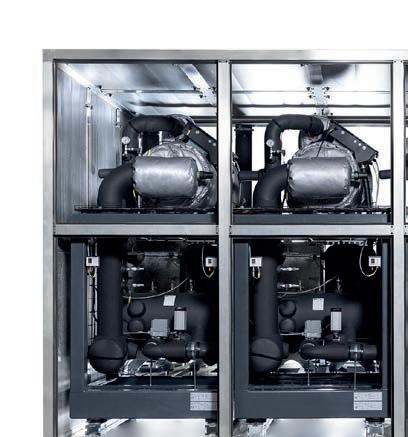

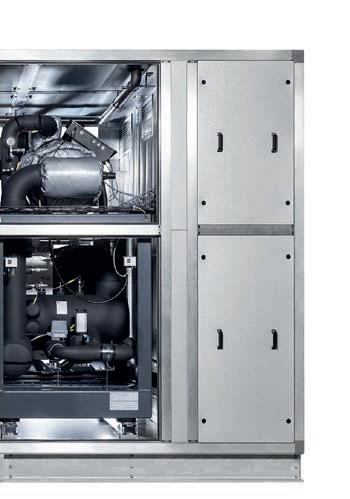
Fenagy's HCI-3000 heat pump in a design customized for the data center in Kajaani, featuring three 1MW compressors in the same cabinet. Six of these units were installed in the fi rst project phase. Photo credit: Fenagy.
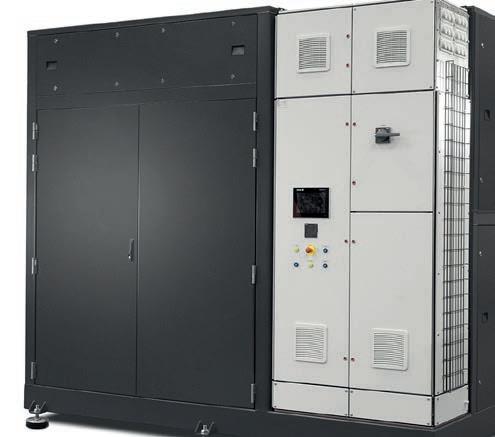


HCI-2000 heat pump with a 2MW compressor. The models can be connected in series of three (HCI-6000), and their modular design allows unlimited scalability - making multi-megawatt installations possible. Photo credit: Fenagy.
”
Around two years ago we introduced isobutane, which can be used for several applications. One of the most important is data centers.
— Klaus Hoberg Jensen, Sales Director of Industrial Refrigeration and Heating at Fenagy
(176–203°F), which is suitable for integration into district heating grids or local industrial processes. “From the beginning we knew that CO 2 was not the ideal refrigerant for all applications, especially data centers,” noted Hoberg Jensen. “Around two years ago we introduced isobutane, which can be used for several applications, but one of the most important is data centers.”
For combined cooling and heating applications, Fenagy promotes isobutane as the “ideal refrigerant” because of its efficiency and ability to deliver high supply temperatures regardless of return temperatures, unlike CO 2 . The company’s HCI range offers heating capacities from 500kW (142TR) to 6MW (1,706TR) per unit, with supply temperatures of up to 95°C.3
Where there is limited local demand for heating, Fenagy offers propane-based chillers as an alternative. Its HCP range delivers temperatures up to 75°C (167°F) with heating capacities of 500kW to 6MW per unit.4 For both the HCI and HCP, the cooling capacity is based on the heat source temperature. Both product lines are designed for water-to-water systems to ensure minimal refrigerant charge, according to the manufacturer.
Beyond environmental benefits, isobutane offers strong thermodynamic performance compared to HFCs and HFOs.
“Even if we take off the green cap, isobutane is a better refrigerant,” Hoberg Jensen explained. “It can deliver warmer water [for district heating] at a competitive cost level. That's probably our biggest advantage with our HCI and HCP units. We are competitive on simply commercial terms against HFCs and HFOs.”
Fenagy’s modular approach is particularly advantageous for colocation data centers, which rarely operate at full capacity upon opening, with server loads that grow over time. Fenagy’s systems can start as small as 500kW of cooling capacity and scale up in line with demand, ensuring efficient operation at both partial and full loads.
“When a data center is built, it may only require 1MW of cooling capacity,” he added. “A 30MW [8,530TR] ammonia [R717] system would not be able to operate efficiently at such a low load. They would have to build many smaller ammonia systems, which is not the way it is done. Here is where we have a competitive advantage.”
While the systems are effective in a wide range of climates, most of Fenagy’s projects to date have been in northern Europe where demand for waste heat is strongest.
3 NaturalRefrigerants.com, November 2025, “HCI-RANGE,” https://naturalrefrigerants.com/ product/hci-range-heat-pumps-chillers-and-combined-systems/
4 NaturalRefrigerants.com, November 2025, “HCP-RANGE,” https://naturalrefrigerants.com/ product/hcp-range-chillers-heat-pumps-and-combined-systems/
We want data centers to be located nearby big cities where you also have consumers who can benefit from the heat.
— Klaus Hoberg Jensen,
Sales Director of Industrial Refrigeration and Heating at Fenagy
To better address sector-specifi c needs, Fenagy is developing tailor-made modules that meet data center safety and redundancy requirements. These standardized-yet-customizable units can operate in cooling-only mode when heat recovery is not required or in combined mode when both cooling and heating demand exist, similar to the company’s existing heat pumps and chillers.
Around 90% of Denmark's future data centers are expected to be built on the west coast, near offshore windfarms but away from major population centers. While this provides cheap renewable power, it limits opportunities for heat reuse due to the remote location. To serve such facilities, Fenagy is developing system concepts that integrate free cooling with mechanical cooling to maximize fl exibility.
“If you don't have any need for the heat, you might as well use free cooling and avoid work on a mechanical compressor or chiller,” said Hoberg Jensen.
Fenagy has said it sees enormous growth potential in aligning Europe’s booming data center sector with its push to decarbonize heating through district heating networks.
The manufacturer is currently engaged in six large data center projects, mostly in Denmark and Finland, covering installed IT power capacities of 10–30MW. A potential 200MW hyperscale facility project is also in early planning.
“To enable the data center business case, they’re building a completely new industry next to it,” said Hoberg Jensen.
Within the next three to fi ve years, Fenagy expects data centers to represent as much as 25% of its total business due to the size of the projects and systems.
Natural-refrigerant heat pumps from Fenagy offer a future-proof, scalable solution for data center cooling and heat recovery. Our modular systems grow with your facility, delivering sustainable cooling while capturing waste heat for district heating or nearby industries. Designed and engineered in Denmark, our solutions provide high efficiency, reliable performance and significant energy savings. Turn server room cooling into carbon-free district heating
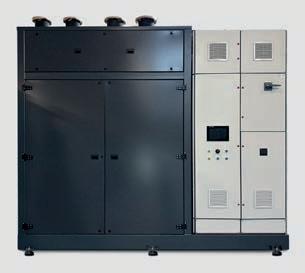

· Modular design for easy scalability
· Industrial design with stainless steel piping



Standardised, yet customisable heat pumps
· Fully factory-assembled systems with PLC control
· Optimised for high-temperature heat sources
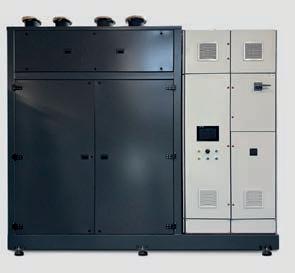
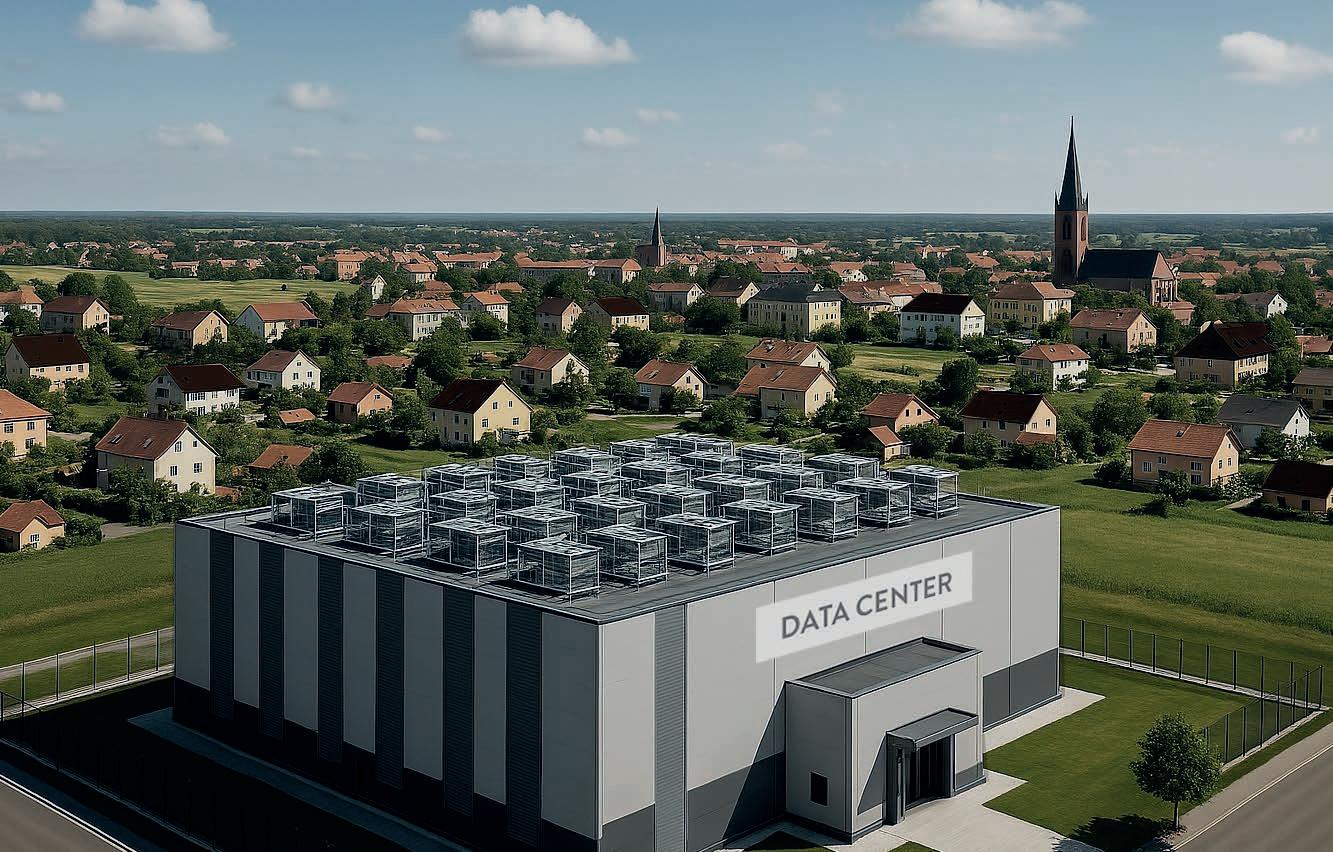
Fenagy’s first data center project is located in Kajaani, Finland, where an existing colocation facility is being expanded to provide additional server capacity. The installer on the project is Caverion.
The first phase of the project targets 13.5MW of IT power capacity matched by ~13.5MW (3,838TR) of cooling capacity. The heat pumps capture the resulting waste heat and reuse it in the local district heating network, delivering roughly 18MW (5,118TR) of heating output. Across operating conditions, the heating COP is expected to be between 4.2–5, with “the same scalability for the full installation,” according to Hoberg Jensen.
Previously synthetic chillers provided cooling for the facility’s servers, and excess heat was rejected via dry coolers. The expansion project replaces this setup with Fenagy heat pumps that cool the servers and recover waste heat for use in the city’s district heating network, which is operated by the local energy company.
While the new heat pumps can handle the facility’s full cooling load, its original chillers and dry coolers will remain in place to provide additional redundancy and cover cooling demand during periods of reduced heating demand.
The 18MW installation, scheduled for completion in early 2026, is the first phase of a larger 30MW upgrade. Once operational, the 18MW of waste heat will provide heating for roughly 3,500 households in the local community.
(104°F) Ca. 18MW

Number of Circuits 18
Capacity Regulation 1/18 of the full capacity
Refrigerant R600a and R290
Fenagy supplied six customized HCI-3000 units, each incorporating three independent refrigerant circuits – two using isobutane and one using propane. All three circuits have a charge of 50kg (110lbs) of refrigerant each. The modular approach ensures high reliability, according to Fenagy.
The units provide 20°C (68°F) water for server room cooling independent of the return temperature from the district heating network, which is about 50°C (122°F). The system then lifts waste heat from the cooling loop from around 30°C to 85°C (185°F) to meet the district heating network’s requirements.
Fenagy’s hydrocarbon solution was selected in an open public tender against HFC and HFO competitors, despite Finland having no bans or restrictions on synthetic refrigerants at the time.
“It was a straight-up competition that we won on the basis of having the best technical solution, price and COP,” said Hoberg Jensen. “With HFCs and HFOs, it’s going to be difficult to deliver 85°C.”
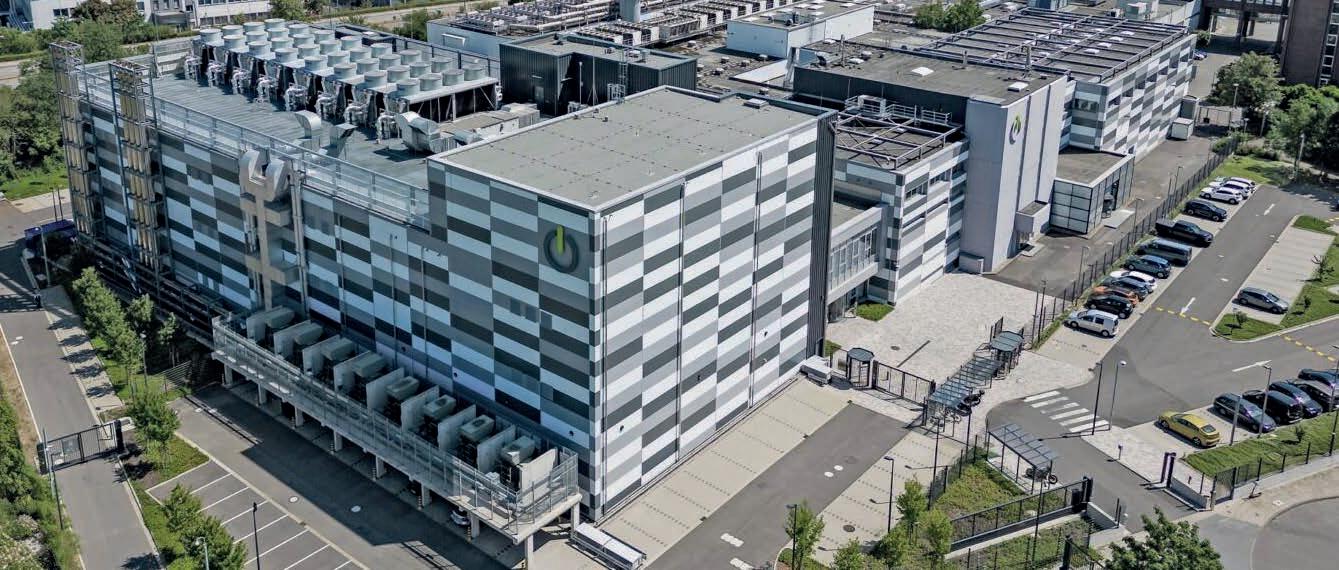
– By: Michael Hines
Jaeggi is a Swiss manufacturer of dry coolers and gas condensers, founded in 1929 in Berne. The company began producing finned heat exchangers for refrigeration systems in 1934 and later developed hybrid dry cooling technology, introducing its HTK hybrid dry cooler in 1988 and patenting the innovation in 1992.
The company was acquired by the Güntner Group in 1995, as part of a strategic move to expand the group’s advanced heat exchange and cooling technology portfolio, including hybrid dry cooling solutions. As Jeffrey Hargreaves, Business Development Director for Data Centers at Jaeggi, has noted, the strength of the HTK technology was a key factor in the acquisition.
Since then, Jaeggi’s hybrid dry cooler technology has contributed to the broader Güntner Group offering for high-performance and mission-critical cooling applications, including early data center projects such as its first installation in 1996 supplying HTK hybrid dry coolers.
Jaeggi manufactures adiabatic dry coolers and hybrid condensers, but its main product offering for data centers is its hybrid dry cooler. The hybrid system works as an air-cooled dry cooler, with the heat exchangers wetted with water when the ambient temperature climbs or when high cooling loads are required.
The HTK operates as a dry cooler until 18°C (64.4°F) and in wetting mode from 24°C (75.2°F) – these exact values are dependent on the location and load – with the temperature in between covered by either dry or wetting depending on the load.1 The HTK is available in 84 different models that vary by width, height and length and come with or without a self-draining function. It has a capacity of 100–4,000kW (28–1,137TR). 2
The HTK can be paired with chillers and either pre-cools or post-cools the water or water–glycol mixture coming
1 Jaeggi, November 2025, “HTK-SE,” https://drive.google.com/file/d/1MZOf8j3wmP50TP-54rxso_F9Jq_bZooE/view?usp=sharing
2 Jaeggi, November 2025, “Products,” https://www.jaeggi-hybrid.eu/products/
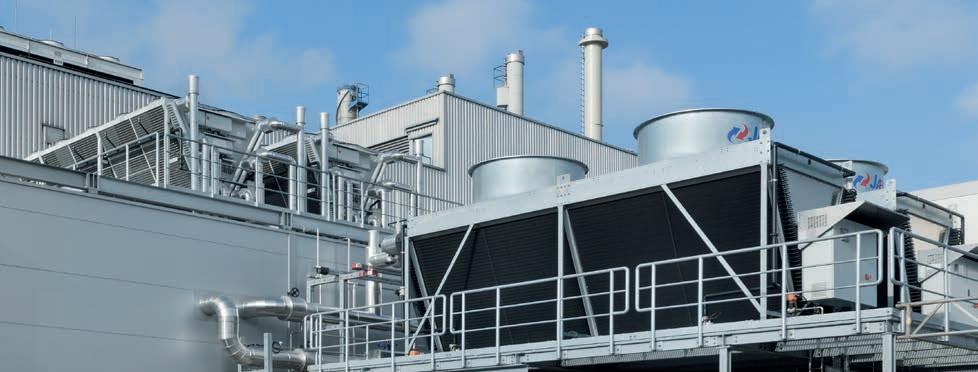
Jaeggi’s hybrid dry cooler. Photo credit: Jaeggi.
from the data center. There are some instances where the HTK is solely used to cool a data center, such as in the Nordic countries and elsewhere in Northern Europe, according to Hargreaves. While the HTK is often paired with chillers, a data center’s cooling system is typically designed to let the hybrid dry cooler handle as much of the cooling load as possible.
“Chillers use six to ten times more power than our units, so even when they’re using them with chillers they should be using our unit to do all the hard work,” Hargreaves said.
Jaeggi is far from the only company that offers a hybrid dry cooler to data centers. Hargreaves acknowledged pressure from competitors but noted that the HTK is built to a “high spec.”
”
Our product has a minimum design life of 25 years, and some have been running for more than 30 years.
—Jeffrey Hargreaves, Business Development Director for Data Centers at Jaeggi
“It’s easy to put the bolts and physical structure together, but they [competitors] don’t necessarily have the operational experience,” Hargreaves said.
Hargreaves said Jaeggi has worked on more than 200 data centers, which range in size from 300kW to 18MW, with a total installed IT power capacity for all projects of 1.8GW. The sector accounts for 40% of the company’s total business and 75% of its business by dollar value, with growth forecast at 30% year-over-year, Hargreaves said. The majority of its projects have been in Western Europe, the U.K. and the Nordic countries.
In addition to the industry’s general growth, its acceptance of higher water temperatures and simultaneous concerns around excessive water use have stoked demand for Jaeggi’s hybrid dry cooler. Hargreaves has been in the data center industry for more than a decade, and, since he started, acceptable water temperatures for cooling have climbed from 17°C (62.6°F) to as high as 28°C (82.4°F).
“That’s made our products more relevant because we can get close to cooling tower temperatures,” Hargreaves said. “Not quite as close, but now it doesn’t matter because we don’t need to be as close. The trends have moved the industry a lot more in our favor.”
One trend that’s working against Jaeggi is the push for data centers to use no water at all, which Hargreaves said is coming from the United States. Air-cooled chillers with free cooling offer a way to take water out of the cooling process. However, water is a more efficient
The trends have moved the industry a lot more in our favor.
—Jeffrey Hargreaves, Business Development Director for Data Centers at Jaeggi
heat transfer medium than air, and Hargreaves noted that the term “free cooling” is a misnomer because power is still required by the chillers.
“There’s nothing free about them because they’re using a ton of electricity,” Hargreaves said. “When a chiller is using a ton of electricity, the power generation is using a ton of water. In comparison, for the same amount of water we use, back at the electricity generation there can be at least 20 times more water to create the electricity needed to do the same cooling.”
Regarding future growth, Hargreaves said Australia is a particularly promising market. The Nordics are also being eyed because of the cool climate and potential to use the HTK without a chiller. He added that Eastern Europe, particularly Romania, will be a “big market.”
Jaeggi currently has more than 15 “major” data center projects. Of those, five are in the fast-growing Australian market.
In June 2025, Amazon announced plans to invest AU$20 billion (US$13 billion/€11.2 billion) in Australia from 2025–2029 to “expand, operate and maintain its

data center infrastructure” and “strengthen Australia’s cloud and AI capabilities.” 3 In October 2023, Microsoft said it would invest AU$5 billion (US$3.2 billion/€2.8 billion) to expand its hyperscale cloud computing and AI infrastructure in Australia, with its total number of data centers growing from 20 to 29.4
Bloomberg reported in April 2025 that Microsoft was pulling back from data center developments worldwide, including in Australia, 5 although the tech company later told the Australian Financial Review its plan remains on track.6 Despite Microsoft possibly pumping the brakes, the overall outlook for the Australian data center market is bullish, with installed IT power capacity forecast to increase from 1.3 to 1.8GW from 2025 to 2028, with demand expected to grow to between 2.5 to 3.5GW over the same period.7
While hyperscalers like Amazon and Microsoft have made the news for their investments in Australia, when it comes to data centers of this size, they aren’t the only ones operating in the space. That said, many of the companies opening data centers that rival the size of those operated by hyperscalers are doing so specifically with these companies in mind.
“People think there are hyperscalers – like Amazon, Google and Microsoft – and everything else is colocation,” Hargreaves said. “That’s true and not true. There are a lot of big companies, like Equinix, NTT and Vantage, that are developing big data centers based on supplying them to these hyperscalers. In reality, Equinix, NTT and Vantage are all hyperscaler builders.”
Hargreaves said the majority of the growth is concentrated on Australia’s east coast, particularly in and around Sydney and Melbourne. He added that most of the projects Jaeggi is working on are for “very big” data centers, with installed IT power capacities of 180MW and up. Jaeggi is currently working on a few AI projects around the 50MW range and has customers looking to put up six or seven AI data centers across Australia.
“They’re looking at higher temperatures, which means mostly we can run without water, and only for a very small amount of time per year will we have to use water,” Hargreaves noted.
In addition to Australia, the APAC region is also seeing a data center boom in Malaysia. The city of Johor Bahru, which is connected to Singapore by bridge, is attracting considerable attention. The Philippines and Indonesia are also seeing growing data center development. Still, in the APAC region, the action is primarily in Australia.
“There’s probably more projects in Australia than anywhere in the world I know of at the moment,” Hargreaves said.
3 Amazon, June 14, 2025, “Amazon Investing AU$20 Billion to Expand Data Center Infrastructure in Australia and Strengthen the Nation’s AI Future,” https://www.aboutamazon.com/news/aws/amazon-data-center-investment-in-australia
4 Microsoft, October 24, 2023, “Microsoft Announces A$5 Billion Investment in Computing Capacity and Capability to Help Australia Seize the AI Era,” https://news. microsoft.com/en-au/features/microsoft-announces-a5-billion-investment-in-computing-capacity-and-capability-to-help-australia-seize-the-ai-era/
5 Chan, V. et. al, Bloomberg, April 3, 2025, “Microsoft Pulls Back on Data Centers From Chicago to Jakarta,” https://www.bloomberg.com/ news/articles/2025-04-03/microsoft-pulls-back-on-data-centers-from-chicago-to-jakarta
6 Smith, P., Australian Financial Review, April 6, 2025, “Microsoft Pull-Back Casts Doubts on Local Data Centre Boom,” https://www. afr.com/technology/microsoft-pull-back-casts-doubts-on-local-data-centre-boom-20250404-p5lp48
7 CBRE, September 2025, “Why Australia for Data Centres,” https://drive.google.com/file/d/1Il6--w_S1K47M2G4MHnxeh-5ZjebTen4/view?usp=sharing


As the world changes, data keeps on growing. That’s why tomorrow’s data centers will need to stay sustainable as they stay cool. With automatically optimized efficiency and flexible dry-wet hybrid operation, Güntner products can maintain target temperatures without waste. And that benefits us all.
Advanced cooling for the data centers of tomorrow.



― By: Christina Hayes
Kelvion is a global manufacturer of heat exchangers, air coolers and heat rejection technology for a wide range of industries, including data centers, HVAC&R, power and energy, oil and gas, and service.1 The company was founded more than 100 years ago and first entered the data center sector in the 1980s when it installed five V-bank dry coolers at a 20MW data center near London, according to Timo Kivilaht, Senior Vice President of Global Sales and Solutions at Kelvion. While it got an early start, since around 2010 the company has grown alongside the data center industry as its thermal engineering expertise became increasingly relevant to the sector’s evolving cooling requirements, Kivilaht said.
1 Kelvion, December 2025, “Homepage,” https://www.kelvion.com/
“This period marked a step change in the scale and frequency of data center projects,” Kivilaht said.
Since 2016, the company's activity in the sector has expanded in parallel, supported by continued development of its cooling portfolio. More recently, accelerating demand for high-density and AI-focused data centers has further reinforced this trajectory. Broader market trends toward more efficient, scalable cooling architectures have increasingly aligned with the company’s technical focus, according to Kivilaht.
“The market has been trending in our direction when it comes to cooling solutions,” Kivilaht said.
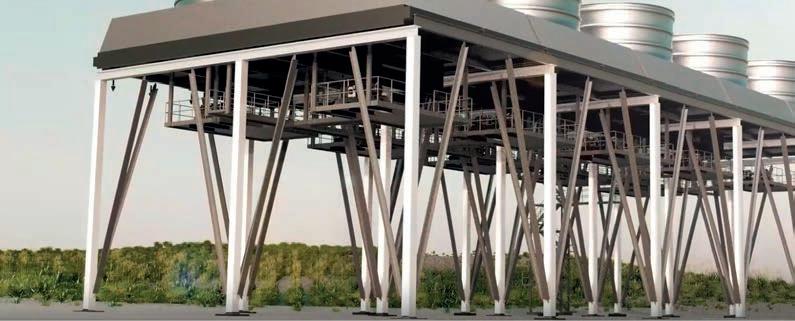

Kelvion’s heat rejection portfolio includes dry and wet cooling solutions from commercial HVAC to utility scale, including dry coolers, adiabatic coolers, cooling towers and hybrid solutions. Two of its key products are targeted specifically at large data centers: the Mega-Bay and Giga-Bay.
Both the Mega-Bay and Giga-Bay are large module dry coolers offering cooling capacities of 1.5–4MW (427–1,137TR) and 4–8MW (1,137–2,275TR) per module, respectively. The Mega-Bay is fi tted with fans measuring up to 4.2m (14ft) in diameter, while the Giga-Bay’s fans are up to 6.7m (22ft) in diameter.
“Demand in AI-driven facilities is increasingly centered on large-capacity heat rejection units that can deliver reliable cooling performance at scale,” said Kivilaht. “These systems are being selected not for headline size but for their ability to operate effi ciently, simplify plant layouts, and maintain consistent performance as thermal loads continue to increase.”
A new product in Kelvion’s portfolio is the MegaStack, its take on a stacked dry cooler, which can deliver high capacity with a reduced footprint. The company is bullish on MegaStack, with Kivilaht calling it “one of the main solutions going forward” for larger data centers moving from CPUs to GPUs.
Kelvion also offers cascade cooling, a hybrid approach integrating dry and wet cooling in one adaptive platform. While the dry cooler handles the cooling load in cooler conditions, a plate heat exchanger enables the cooling tower to cool the process fl uid to the required temperature when the ambient temperature rises. The cascade cooling system supports low-quality water sources, including seawater, and can be tailored to site-specifi c requirements.
“This is a great example of how you can combine products in our portfolio,” Kivilaht said.
Kelvion entered the white space around 2016, with its fi rst order consisting of air-handling units. Beyond air-handling units, the company also supplies hot air-containment units, brazed-plate heat exchangers and coolant-distribution units (CDUs).
Driven by customer demand for higher-capacity CDUs, Kelvion has developed centralized units with capacities of up to 10MW per unit, with plans to launch a 20MW model. Currently, the majority of CDUs sold by Kelvion are around 5–6MW per unit, but several of the manufacturer’s larger units have also been delivered, Kivilaht said. While larger CDUs are becoming more common, Kelvion is taking a different approach in the design of its units.
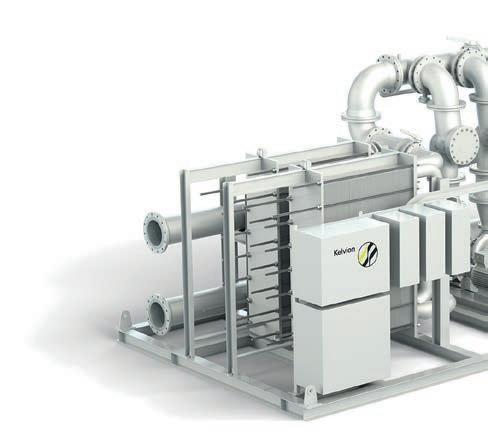
“We’ve come up with a centralized CDU that consists of a larger pump skid and a larger plate heat exchanger,” explained Kivilaht. “The acceptance of centralized CDUs is growing as operators look to scale cooling more effi ciently, lower redundancy-related capital cost and benefi t from higher thermal inertia in high-density environments. For large facilities, this refl ects a shift toward simpler architectures that can deliver stable, predictable cooling performance as loads increase.”
To support future growth, Kelvion is investing heavily in research and development. The company is expanding its U.S. and European manufacturing capacity with the addition of 55,000m2 (592,000ft 2) in production space across its facilities in Oklahoma and Poland.2
It is also building a dedicated R&D center in the U.K. designed to physically test data center equipment and cooling confi gurations rather than relying solely on theoretical models. This will strengthen Kelvion’s ability to validate performance, develop next-generation solutions and expand its role within the global data center ecosystem, according to Kivilaht.
"Physical testing of data center equipment and cooling configurations plays an increasingly important role in validating system performance beyond theoretical models,” said Kivilaht. “This approach underpins ongoing innovation aimed at meeting the technical demands of next-generation data center cooling."
In the data center industry, capital and operating expenditures (CapEx and OpEx) are both key considerations for end users, Kivilaht said. He noted that while CapEx is often the initial focus, “signifi cant value can be unlocked” by also considering OpEx and long-term ROI early in the decision-making process.
Achieving the optimal balance between CapEx and OpEx requires close collaboration with different stakeholders, he explained. Hyperscalers typically work directly with suppliers, leveraging their own engineering teams, while colocation operators often rely on consultants who favor tried-and-tested designs. In both cases, educating partners about innovative cooling approaches is critical.
“It’s important that we’re open minded on what's really the right approach in terms of water consumption, energy consumption and impact on the environment,” he noted.
That educational approach has shaped Kelvion's service program, which includes "heat exchanger efficiency audits." These audits "take a holistic view of cooling systems, recognizing how each component affects overall performance," Kivilaht said.
"By identifying bottlenecks and balancing system components, the audits help data center operators enhance reliability, extend equipment life cycles,and reduce energy consumption,” he added.
2 Kelvion, August 11, 2025, “Kelvion Scales Up Capacity to Meet Accelerating Demand for Data Centre Cooling,” https://www.kelvion. com/stories-media/news/detail/kelvion-scales-up-capacity-to-meet-accelerating-demand-for-data-centre-cooling
The market has been trending in our direction when it comes to cooling solutions.
—Timo
Kivilaht, Senior Vice President of Global Sales and Solutions at Kelvion
By 2024, data center cooling had emerged as a core business area for Kelvion. The company serves a wide customer base, with growth largely driven by the increasing size and number of hyperscale and colocation developments, along with the need to upgrade older facilities. Enterprise data centers represent a smaller share, as these sites typically rely on chiller-based systems outside Kelvion’s portfolio.
In 2025 Kelvion announced it had secured contracts for several large-scale data center projects in the U.S. These include a deal to provide over 250MW (71,086TR) of cooling – via its cascade cooling system – for a major U.S. data center expansion.3
Kelvion also announced that it will supply its Giga-Bays along with six centralized CDUs to a 200MW AI data center.4 The company will also deliver more than 150 Mega-Bay units for a new hyperscale data center in New Jersey.5
While the U.S. remains its primary market due to the scale of ongoing investments, Kelvion is also expanding in the EMEA (Europe, Middle East and Africa) and Asia Pacific regions, with countries of focus in the latter being those where government initiatives are driving data center growth. This includes Thailand, Malaysia, Singapore and India. In China, the market remains dominated by older technologies, but Kelvion is closely monitoring developments to adapt to rapid changes, Kivilaht noted.
With ongoing expansion in global digital infrastructure and substantial investment expected in both new builds and retrofits, the company is well positioned for continued growth in the sector, he added.
“Data centers are clearly one of our biggest growth drivers in the last eight years, and this is going to continue over the next couple of years with a lot of investments,” Kivilaht explained.
3 Kelvion, December 2025, “Kelvion secures $31.5M flagship order to deliver next-gen Cascade Cooling for major U.S. data centre expansion,” https:// www.kelvion.com/stories-media/success-stories/data-centre-cooling/kelvions-cascade-cooling-system-powers-major-data-centre-expansion
4 Kelvion, December 2025, “Kelvion Delivers $40M+ Scalable Cooling Solution for 200+ MW Phase of Major AI Data Centre in USA,” https://www.kelvion.com/ stories-media/success-stories/data-centre-cooling/kelvion-delivers-40m-scalable-cooling-solution-for-200-mw-phase-of-major-ai-data-centre-in-usa
5 Kelvion, December 2025, “Kelvion wins 380MW order to deliver Mega-Bay Air Fin Coolers for new hyperscale data centre in New Jersey,” https://www.kelvion.com/stories-media/success-stories/data-centre-cooling/kelvion-wins-55m-order-to-deliver-Mega-Bay-air-fin-coolers-for-new-350-mw-hyperscale-data-centre-in-new-jersey






























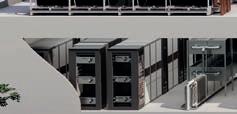
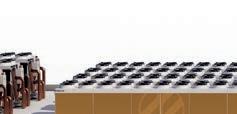




















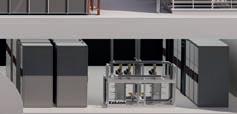
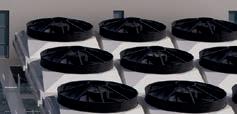










– By: Michael Hines
Secon is a German manufacturer of hydrocarbon heat pumps and chillers headquartered in Gondelsheim, Germany. The company was established in 2010 and has only worked with hydrocarbon refrigerants in its heat pumps and chillers.1 In addition to heat pumps and chillers, Secon also manufactures brine-cooled CO 2 (R744) racks for deep-freezing applications as well as dry coolers and adiabatic coolers.
Joachim Schadt, Owner and Managing Director of Secon, said the company works “in the field of critical applications,” such as pharmaceuticals, chemicals, food and infrastructure and is particularly active in the DACH region (Germany, Austria and Switzerland) of Europe.
1 Secon, October 2025, “Homepage,” https://secon-gmbh.com/
Penta Infra is a leading provider of reliable, sustainable and highly connected edge data centers in Europe. With locations in Germany, France, the Netherlands, Belgium and Denmark, Penta provides solutions ranging from full-service colocation to build-to-suit data centers. The company was established in 2015 and traditionally worked with synthetic refrigerants but is shifting toward natural refrigerants. Penta currently operates 2 isobutane (R600a) heat-pumps in its data center in Copenhagen and propane (R290) air-cooled chillers in its facility in Hamburg and is planning several future projects with propane.
2 Kjær Jacobsen, C., Danish Data Center Industry, April 29, 2024, “DDI Announces 2024 Awards Winners,” https://www.datacenterindustrien.dk/ddi-announces-2024-awards-winners
Secon manufactures both air-cooled and water-cooled chillers and has supplied both for data center projects. Secon’s hydrocarbon chillers can contain up to four refrigerant circuits, which reduces the amount of refrigerant that can leak out of an individual circuit in the event of an accident. Free cooling is standard, with Schadt noting that it is “the key to achieve low PUE values.”
Schadt noted that Secon’s hydrocarbon chillers are “not designed for the lowest possible price.” Instead, they’re “built for efficiency and operational reliability, which then translates into the lowest possible lifecycle costs,” he said, adding that Secon customizes its chillers for data center projects.
“We’re not selling out of a catalog,” Schadt said. “We talk to the customers, their consultants or both to get a feeling for their requirements. In the end, the only ‘identical’ chillers we produce are ones used for the same project.”
Schadt said customization is particularly evident in hydraulics and controls optimization. Secon’s chillers are equipped with ultrasonic flow meters that detect the “real flow” of water in cubic meters per hour as opposed to switches that detect whether water is flowing. The control systems for the chillers also come standard with uninterruptible power supplies (UPS) and automatic transfer switches (ATS) that move the power supply from one electricity supply to another while the UPS continuously supplies power to the control system in the event of an interruption.
Secon also manufactures dry coolers and adiabatic coolers. While Secon’s air-cooled chillers offer free cooling, Schadt said their free cooling capabilities are limited by the size of the unit.
The German manufacturer is also expanding its line of booster heat pumps to support waste heat reuse. Secon builds hydrocarbon booster heat pumps with a maximum capacity of 450kW (127TR) that can raise waste heat to 90°C (194°F) and is developing larger units with a capacity of 1.5MW (426TR).
Harmen Laan, Head of Engineering at Penta Infra, said that the transition to hydrocarbon chillers has been challenging, largely because the technology
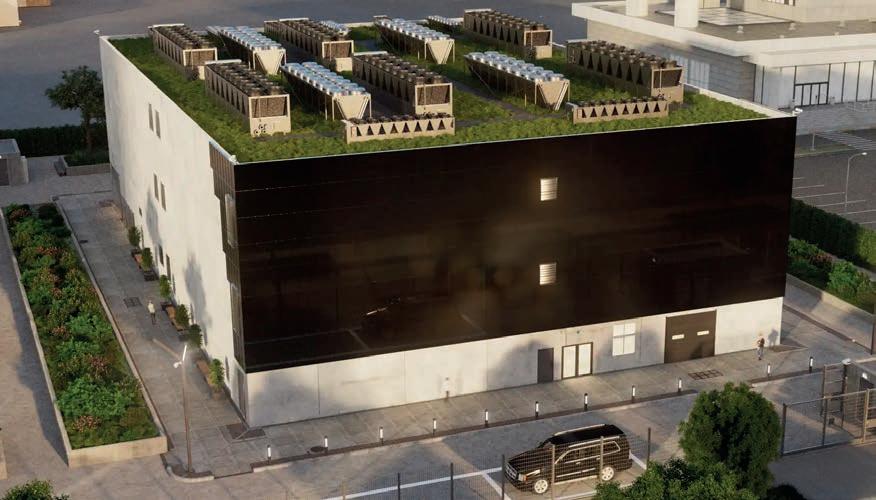
is still considered non-standard within the data center industry. He noted that much of the hesitation stems from unfamiliarity with hydrocarbon-based systems and “persistent myths” that range from concerns about safety and inefficiency to perceptions of outdated technology and the absence of recognized certifications like Eurovent.
“While these concerns are mostly unfounded, it is true that hydrocarbon chillers generally require a larger physical footprint, which remains a valid consideration,” Laan said.
To address these concerns, Laan and his team conducted a thorough investigation, benchmarking hydrocarbon solutions against synthetic refrigerant alternatives. This included multiple site visits to Secon’s manufacturing facilities in Croatia and Italy to ensure the systems met the high standards required for "mission-critical operations.”
Since 2018, Secon has completed 34 data center projects with a total of 95 chillers delivered. The vast majority of those projects have been in Germany. The company currently has 30 projects in the design and tendering phase and is seeing
“increased demand in this area,” according to Schadt. The majority of projects are for the DACH region and the company’s work in “critical fields” helped it enter the space.
“The data center providers always ask, what are your references,” Schadt said. “It can’t be a large data center as you are one of the first to approach us about this, but when you show them references in pharmaceutical applications as well as food and beverage, they trust you.”
He said that the European Union’s F-gas Regulation has driven increased demand for Secon’s hydrocarbon chillers, with the “PFAS issue” also contributing. Schadt said Secon’s data center business has grown by 10% in the past two to three years, and he expects even greater growth in the future.
In addition to the DACH region, the company has worked on data centers in France, the Netherlands and Denmark. The largest data center Secon has worked on to date – in terms of installed IT power capacity – is 4.4MW. Data center projects in its pipeline range from 1MW to 20MW of installed IT power capacity, with Secon’s chillers providing the entire IT cooling load.
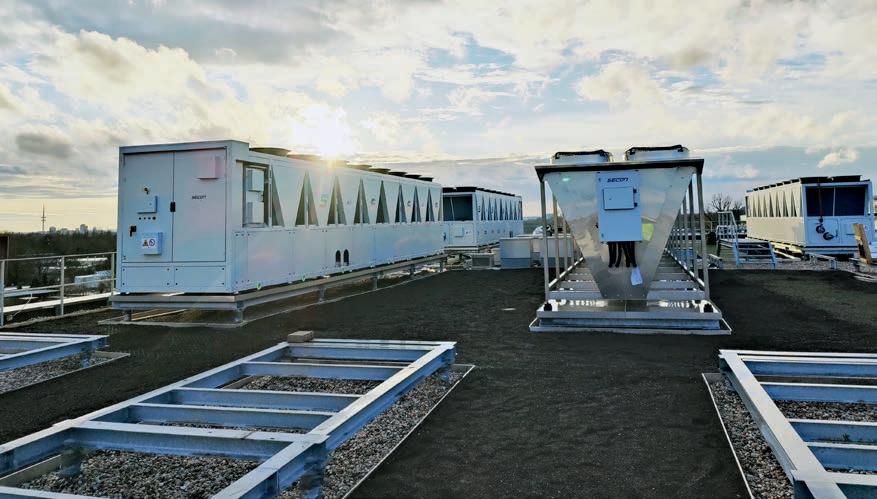
In September 2023, Penta Infra broke ground on a new 4.4MW colocation facility in Hamburg, Germany, located near the city’s airport. 3 The Hamburg colocation facility opened in the fi rst half of 2025 and boasts 2,500m2 (26,909ft 2) of IT space.4
The data center has been dubbed “Penta Infra HAM01” by Penta, with Ruben Uijtermerk, Mechanical Engineer at the company, stating that propane was chosen as a refrigerant because “it combines excellent thermodynamic effi ciency with a very low GWP, providing high energy performance while maintaining environmental responsibility.”
“Propane is particularly well-suited for medium-capacity applications like our Hamburg data center, offering reliable cooling performance with a proven safety record when installed with proper safety measures,” said Uijtermerk. “Secon’s extensive experience in implementing R290-based systems further ensures that safety and operational risks are minimized, adding confi dence to this solution.”
Six Secon air-cooled propane chillers were installed on the roof, each with a cooling capacity of 960kW (272TR) and a refrigerant charge of 38kg (84lbs) split across four separate refrigerant circuits. The water for the IT space is cooled to 20°C (68°F) and sent to computer room air-handlers, with the water returning to the chillers at a temperature of 32°C (89.6°F).
The chillers at the Penta Infra Hamburg data center feature a master-slave network, with two fully redundant and self-monitoring master controllers. They also come equipped with ATS and a UPS for the controllers. Secon’s chillers include free cooling, but due to size limitations they cannot cover as much cooling capacity as the two dry coolers (there are plans to install two more). While separate units, the dry coolers are integrated into the chillers in terms of hydraulics and controls.
3 Penta Infra, December 11, 2023, “Penta Infra Builds New Colocation Data Center in Hamburg and Continues European Expansion,” https://penta-infra.com/about-us/news/penta-infra-builds-new-colocation-data-center-in-hamburg
4 Penta Infra, October 2025, “Penta Infra Data Centers Hamburg,” https://penta-infra.com/data-centers/hamburg

WATER-COOLED CHILLERS

Cooling capacities up to 1.000 kW
Heating capacities up to 1.250 kW
Output
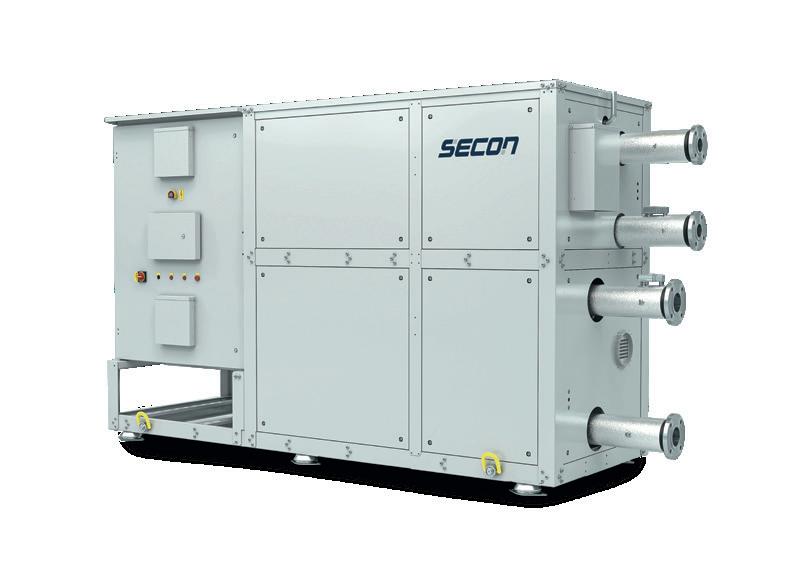

Cooling capacities up to 1.200 kW AIR-COOLED CHILLERS ALSO
Heating capacities up to 550 kW
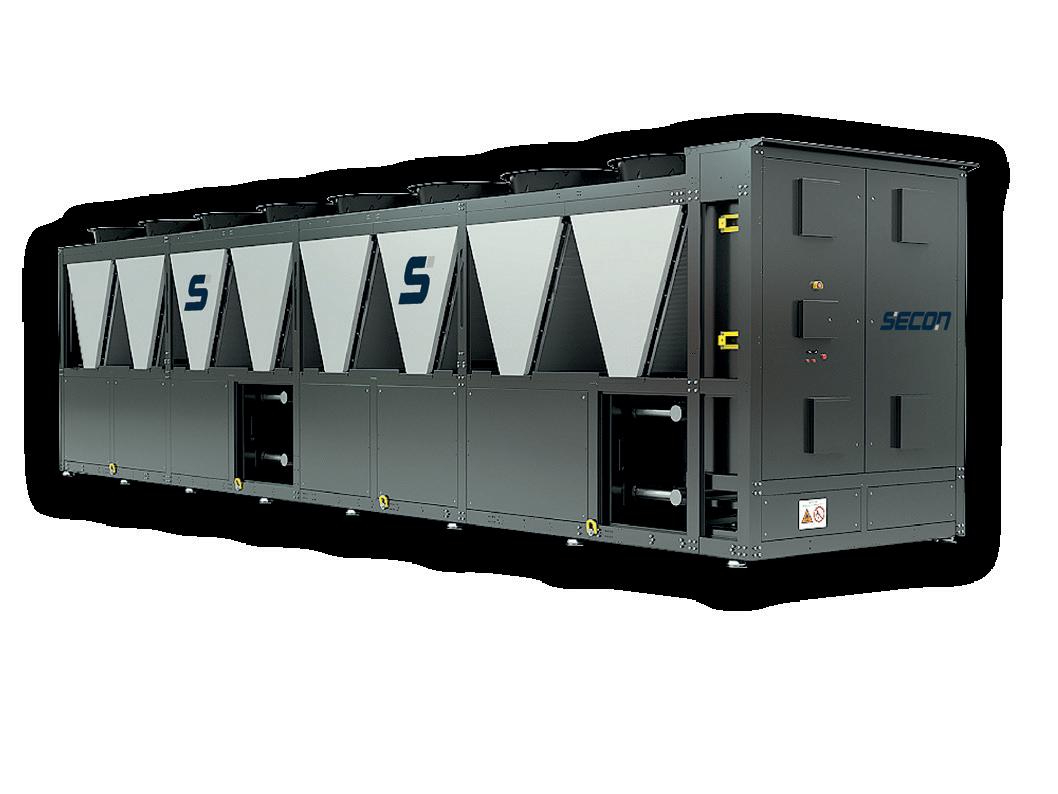
Data provided by Penta Infra. Note: Opex only takes into account energy consumption based on the suppliers’ provided SEER without considering differences in maintenance contracts, components etc.
Hamburg is located in north Germany and summer temperatures range from 10°C to 36°C (50°F to 96.8°F) with winter temperatures ranging from -3°C to 4°C (26.6°F to 39.2°F).5 Thanks to the mild climate, the data center is able to utilize free cooling for a significant portion of the year. The power supply and control of the free coolers is managed by the chillers, which enables the full cooling capacity to be covered by free cooling. Pre-cooling mode starts at 27°C (80.6°F) and full free cooling is available from 16.5°C (61.7°F).
“Up to 80% of the annual hours can be covered purely by free cooling,” Schadt said. “It’s a decisive factor in achieving a very low PUE value for the data center.”
The PUE value for the facility is dictated by the German Energy Efficiency Act (EnEfG), which went into effect in November 2023 and requires all data centers with a connected load of 300kW or more to meet energy efficiency and waste heat requirements. 6 Data centers commissioned before July 1, 2026 must have a PUE of ≤1.5 and a PUE of ≤1.3 by 2030.
“We design according to the requirement in the EnEfG of an annual PUE of 1.2, meaning the hydrocarbon type chiller must be efficient enough to support this,” said Uijtermerk.
The EnEfG also carries requirements to reuse waste heat, but as of 2025 there is no district heating network to connect to. Penta Infra HAM01 has two heat exchangers in the basement that enable it to connect to a district heating network, with the city and Penta Infra engaged in early discussions about a future district heating project. Uijtermerk said that in sites where district heating network connections are available, Penta sees “increased potential” in using reversible chillers, wherein heat is directly fed into the district heating network from the chiller; this would mitigate the need for dedicated heat pumps, increasing cost-effectiveness and maximizing the heat generating potential.
Neither the EnEfG nor the EU F-gas Regulation broach the issues of HFOs or PFAS. However, Uijtermerk said that Penta more frequently sees natural refrigerants mentioned in client requests for information and requests for proposals.
“There is increased awareness and appraisal by our clients for using natural refrigerants,” said Uijtermerk. “Penta believes that, if practically possible, hydrocarbons are the better choice over synthetic refrigerants.”
5 Seasons of the Year, October 2025, “Seasons in Hamburg,” https://seasonsyear.com/Germany/Hamburg
6 Data Center Group, October 2025, “Energy Efficiency Act,” https://datacenter-group.com/en/company/sustainability/energy-efficiency-act/
There is increased awareness and appraisal by our clients for using natural refrigerants. Penta believes that, if practically possible, hydrocarbons are the better choice over synthetic refrigerants. ”
— Ruben Uijtermerk, Mechanical Engineer at Penta Infra

6 SECON-CHILLER STRATOS VP16-4-2400 . S-I4-EFMV-PEC1-FCE-LN
Capacity Regulation 4x Inverter
Refrigerant R290
Sound Pressure Level 57 dB(A)/10m
Extras Fast-Restart ATS
Flowmeter Ultrasonic Efficient-Flow Integrated External Free-Cooling
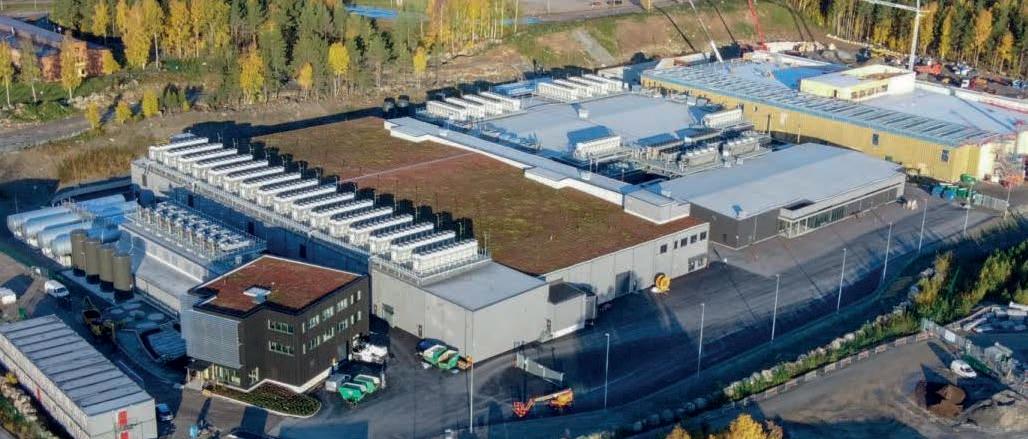
- By: Christina Hayes
SWEP, a global manufacturer headquartered in Landskrona, Sweden, has been producing brazed plate heat exchangers (BPHEs) since 1983.1 A subsidiary of the Dover Corporation since 1994, the company operates five production facilities across three continents and maintains entities in more than 20 countries. 2 In 2023 alone, the company produced and sold more than 3.5 million BPHEs worldwide.
SWEP’s products are designed for efficient heat transfer across a wide range of sectors, including comfort cooling, power generation, industrial manufacturing and data centers.
“We have been working with heat recovery for many years with applications like power generation and combined heat and power [CHP] systems, steel mills and paper mills,” said Christer Frennfelt, Business Development Manager at SWEP. “Now we have another heat source to work with: data centers.”
1 SWEP, November 2025, “Homepage,” https://www.swepgroup.com/
2 Dover Corporation, November 2025, “Homepage,” www.dovercorporation.com/
SWEP’s BPHEs are compact and efficient, allowing customization through plate count, configuration and thermal optimization. Using the company’s SSP DThermX software, customers can input precise thermal and hydraulic requirements to identify the ideal solution for their application.
The high thermal efficiency and compact design of SWEP’s BPHE technology make it ideal as an intermediate circuit, effectively separating external glycol loops from internal server cooling systems. Their compactness is designed to enable modular setups, providing reliability, improved part-load efficiency and cost-effective redundancy – all vital characteristics for data center systems.
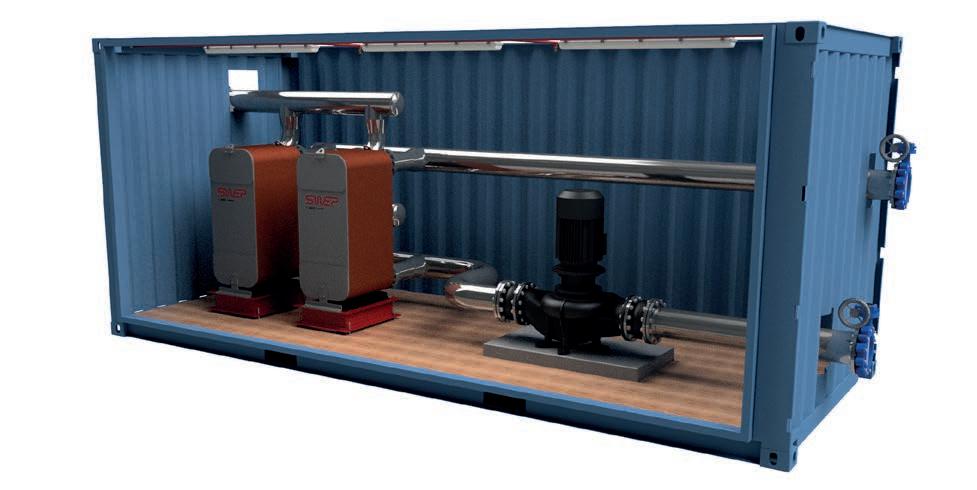
”
We have been working with
heat recovery
for many years with
applications like power generation and combined heat and power [CHP] systems, steel mills and paper mills. Now we have another heat source to work with: data centers.
—
Christer Frennfelt, Business Development Manager at SWEP
”
As thermal demands evolve – especially with AI driving higher rack densities – SWEP is developing multiple new BPHE models tailored for next-generation coolant distribution units (CDUs) and immersion systems.
“We’re seeing data centers moving from 30–33°C [86–91°F] for storage to 45–60°C [113–140°F] for AI workloads,” Frennfelt said. “We need a range of specially made heat exchangers for these CDU racks.”
One of SWEP’s new designs features asymmetric channels, where one side accommodates high-viscosity immersion fluids while the other handles low-viscosity water, optimizing flow and minimizing pressure drop. Upcoming products also focus on material efficiency, using fewer plates to reduce footprint while maintaining performance.
“Our brazed plate heat exchangers are compact and very efficient, which is a good match for the CDU systems where space is often a constraint,” he added.
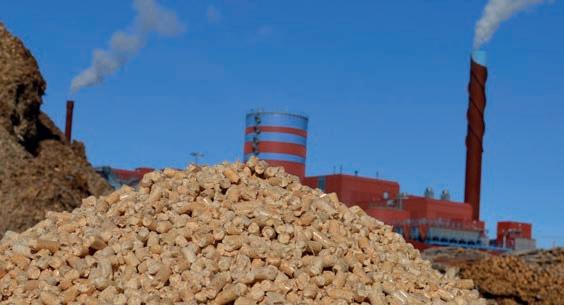
As computing demands surge, air cooling is becoming insufficient for high-density racks. Water, being 25 times more effective at transferring heat and capable of handling four times the cooling capacity of air, has emerged as the preferred medium, according to SWEP.
This shift toward liquid cooling not only enables greater computing density and efficiency but also opens the door to heat recovery, turning what was once waste into a valuable energy resource. “Excess heat used to be something data centers wanted to get rid of,” Frennfelt said. “Today it's business.”
SWEP supports this transition with a comprehensive range of heat exchangers designed for CDUs, offering solutions for water- or brine-based systems with inlet temperatures around 25°C (77°F) and up to 55°C (131°F) for propylene glycol. These systems capture excess heat from data centers, which can then be raised and reused via heat pumps in district heating networks to warm homes, businesses and swimming pools and even to support agricultural developments.
This is already a reality in several countries, particularly across Europe, where district heating networks are relatively common. In one example, SWEP’s BPHEs connect a hyperscale data center to the city’s heating grid. The installation consists of multiple 40-foot (12.2-meter) containers, each housing two heat exchangers, pumps and piping and recovering 10MW (2,843TR) of heat at 35–40°C (95–104°F), which is then boosted to 90–95°C (194–203°F) for district heating use.
Similar initiatives are expanding in the U.K. and U.S. where recovered heat is used in agriculture, leisure centers and industry. As heat reuse regulations tighten, particularly in Europe, data centers are rethinking their thermal management strategies to comply and capitalize on heat recovery.
Immersion cooling is emerging as another powerful and efficient alternative for heat management, and SWEP is actively exploring its potential, noted Frennfelt. Although the technology has existed for several years, real market interest is only now accelerating.
SWEP’s work in immersion cooling is still in its early stages. It has several ongoing test projects in collaboration with leading system manufacturers covering both single- and two-phase solutions.
SWEP’s work with data centers began more than a decade ago and was initially focused on free cooling. Around 2020, as data centers became denser and more energy-intensive, the company shifted toward liquid cooling, and around 2022 it began seeing increased interest in heat recovery and reuse from data center operators.
Since 2021, SWEP has supplied more than 70,000 BPHEs for data centers globally, with its products widely used in coolant distribution units as well as immersion and free cooling systems. “One of our strengths is our global reach,” Frennfelt explained. “We can support customers in the Americas, Europe and Asia Pacific.”
Another key advantage is SWEP’s extensive range of BPHEs, which delivers scalability into the megawatt capacity. “We always find a good product to fit most applications,” he added. “Other manufacturers are not able to offer that.”
For liquid cooling, SWEP is most active in the U.S., while the majority of its heat recovery work is in Europe, Frennfelt noted. He estimated that SWEP is currently working on 20 data center projects that involve heat recovery and reuse with several more in development.
SWEP’s data center business has grown significantly in recent years, driven by rising AI workloads and tightening efficiency and heat reuse regulations, particularly in Europe. The company expects to see strong growth opportunities in the urban centers of northern Europe where data centers will offer a valuable heat source for district heating.
Another interesting future market is the Middle East, where demand for data centers is on the rise. Growing concerns about water scarcity are driving the adoption of two-phase immersion cooling in the region. While excess heat is unlikely to be reused in the same way as in Europe, low-grade heat can be beneficial for use in water desalination processes, noted Frennfelt.
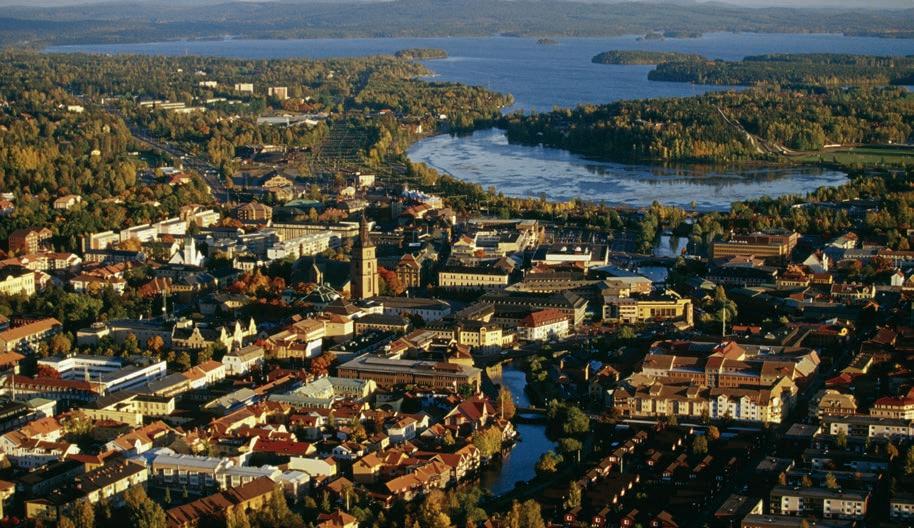
EcoDataCenter is a high-performance computing and artificial intelligence facility with 80MW of installed IT power capacity located in Falun, Sweden, and owned by real estate company Areim. 3 The site operates entirely on renewable electricity, with 75% coming from hydropower and the remaining 25% from wind.4
Across the facility, a total of 10 BPHEs from SWEP’s B220, B320 and B85 ranges have been installed. Some of these units support the data center’s free cooling system, which helps the facility reduce its dependence on mechanical cooling, particularly during Sweden’s long cool seasons, significantly cutting power consumption. The other SWEP heat exchangers are integrated into the facility’s heat recovery system, enabling efficient transfer of waste heat to external users and helping maintain a power usage effectiveness (PUE) of 1.2.
The heat recovery system captures low-grade heat from the data center’s chiller condensers at 30–32°C (86–90°F) and transfers it to a nearby combined heat and power facility operated by the municipal utility company Falu Energi & Vatten. There, the recovered heat contributes to the production of wooden pellets, supplementing the CHP plant’s biofuel supply. Roughly 50% of the plant’s total process energy is covered by the heat sourced from EcoDataCenter.
When pellet production pauses – typically outside daytime operating hours – the recovered heat is diverted into Falun’s district heating network, supplying local homes and businesses with heating and domestic hot water.
3 EcoDataCenter, November 2025, “EcoDataCenter1,” ecodatacenter.tech/data-center/ecodatacenter-1
4 SWEP, November 2025, “EcoDataCenter Sets High Standard for Sustainability,” www.swepgroup.com/about-us/ news-and-events/case-stories/ecodatacenter-sets-high-standard-for-sustainability
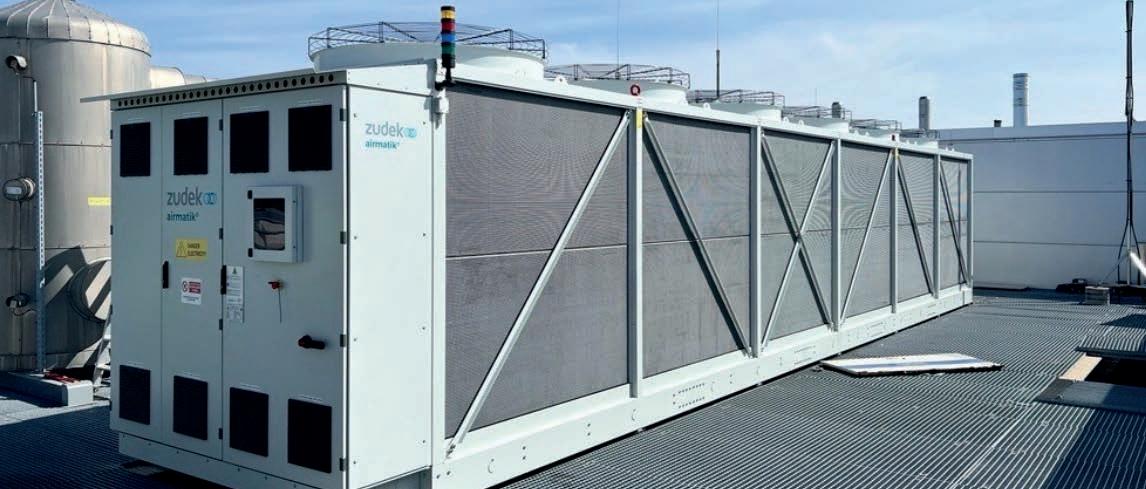
Zudek’s Airmatik ammonia chiller being installed at a data center. Photo credit: Zudek.
– By: Michael Hines
Zudek is an Italian manufacturer of ammonia (R717) air- and water-cooled chillers, ammonia heat pumps and water–ammonia absorption chillers. The company is based in Trieste, Italy, and has been working with ammonia since it was founded in 1990. Zudek also manufactures safety systems for ammonia chillers along with CO₂ purification and liquefaction systems.1
While Zudek has traditionally worked in the industrial refrigeration sector, the company said in 2024 that it sees “tons of potential” for ammonia in commercial HVAC and has more recently identified data centers as an area for growth.2
Zudek offers both air- and water-cooled chillers for data centers, with the type of chiller depending on the capacity and the efficiency goals of the data center. Fabrizio Amati, Sales and Marketing Director at Zudek, explained that water-cooled chillers are often preferred in higher-capacity data centers, with space being a major factor.
“The capacity of an air-cooled chiller is limited due to the condensing area and the transportation trucks as the units cannot be longer than 13.5m [44.3ft],” Amati said. “A high-efficiency ammonia system can reach a cooling capacity of around 1MW [284TR]. If you have space, you can place a series of air-cooled chillers or one or two water-cooled chillers with evaporative condensers or cooling towers.”
1 Zudek, November 2025, “About Us,” https://www.zudek.com/en/about-us/
2 Hayes, C., NaturalRefrigerants.com, December 17, 2024, “‘Tons of Potential’ for Natural Refrigerants in HVAC Sector, Says Zudek,” https://naturalrefrigerants.com/news/tons-of-potential-for-natural-refrigerants-in-hvac-sector-says-zudek/
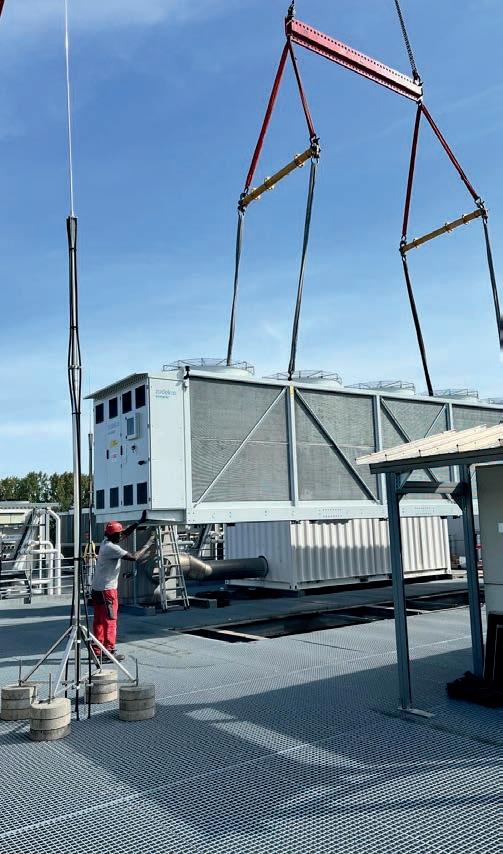

” ”
Windmatik is easier to use for people who aren’t used to working with ammonia. With the semi-hermetic compressor, it looks like a hydrocarbon or synthetic refrigerant unit. If I didn’t say there was ammonia inside, you wouldn’t know.
Zudek’s move into commercial HVAC is being spearheaded by Windmatik, a new air-cooled ammonia chiller that is also being targeted at data centers. Windmatik was launched in 2025 and is designed with V-shaped condenser coils to provide a large heat dissipation area while still maintaining a compact footprint with its modular design. 3 It offers between 300kW and 1.16MW (85TR to 330TR) of cooling capacity and can chill fluids to between −8°C and 15°C (17.6°F to 59°F) in ambient temperatures up to 45°C (113°F).
The V-shaped coil design increases the condensing surface by 20% compared with a traditional vertical condensing coil, according to Amati, and is equipped with EC fans. A unit can feature up to three semi-hermetic screw compressors with 25kg of ammonia refrigerant per circuit for configurations up to 1.16MW.
Ammonia is well known to those in industrial refrigeration, but for Zudek’s entry into the commercial HVAC and data center sectors the company wanted a chiller that would be familiar.
“Windmatik is easier to use for people who aren’t used to working with ammonia,” said Amati. “With the semi-hermetic compressor, it looks like a hydrocarbon or synthetic refrigerant unit. If I didn’t say there was ammonia inside, you wouldn’t know.”
Zudek built its first ammonia chiller for a data center in 2013 in South Africa. Since then it has provided chillers for four more data centers, two of which were in Germany: one with a cooling capacity of 700kw (199TR) and another with a cooling capacity of 6MW (1,706TR). The company is currently working on a new data center project, which it could not share the specifics of.
Ammonia is not widely used in data center cooling, and Zudek acknowledges that there is still caution in the market. The company’s chillers are designed with a low refrigerant charge and incorporate “advanced” safety systems.
“There is no problem using ammonia in an outdoor unit because the ammonia is lighter than air, and, in case of a leakage, a sensor inside the unit raises the speed of the fans to launch the air as high as possible,” said Amati. “For chillers installed inside a building, every installation has a system that extracts the air, which can be run through an optional scrubber, to release the air to the atmosphere with just a few ppm of ammonia.”
One of the aspects driving Zudek’s push in the data center sector is the increasing regulatory pressure in Europe regarding PFAS (per- and polyfluoroalkyl substances). Many synthetic refrigerants, including some HFOs, are PFAS and could be banned in the European Union 4 under the universal PFAS restriction proposal currently being reviewed by the European Chemicals Agency (ECHA).5 Amati emphasized that this could significantly impact the long-term viability of such refrigerants, while ammonia, being a natural refrigerant, remains a future-proof solution.
3 Haroldsen, J., NaturalRefrigerants .com, April 8, 2025, “ISH 2025: Zudek Showcases New Air-Cooled Ammonia Chiller for Commercial HVAC Applications,” https://naturalrefrigerants.com/news/ish-2025-zudek-showcases-new-air-cooled-ammonia-chiller-for-commercial-hvac-applications/
4 Garry, M., NaturalRefrigerants.com, June 23, 2021, “Certain HFCs and HFOs Are in PFAS Group that Five EU Countries Intend to Restrict,” https://naturalrefrigerants.com/certain-hfcs-and-hfos-are-in-pfas-group-that-five-eu-countries-intend-to-restrict/
5 Garry, M., NaturalRefrigerants.com, September 17, 2025, “More Regulation of F-Gases May Be Needed Because of TFA Link, Says ECHA’s Updated PFAS Proposal,” https://naturalrefrigerants.com/news/more-regulation-of-f-gases-may-be-needed-because-of-tfa-link-says-echas-updated-pfas-proposal/
In 2024, Zudek delivered an Airmatik ammonia chiller with 790kW (224TR) of cooling capacity to a data center located in the German state of Baden-Württemberg 6 that serves a company in the financial sector. The Airmatik chiller replaced an existing chiller of the same size using R407C. In selecting its new chiller, the data center operator prioritized a system that would reduce its environmental impact, be energy-efficient and guarantee maximum reliability, according to Amati.
The Airmatik air-cooled chiller is designed to cool water to 11°C or 14°C (51.8°F or 57.2°F) and is connected to a dry cooler with an integrated plate and shell heat exchanger for free cooling. Partial free cooling can be provided from an ambient temperature of 10°C (50°F) and full free cooling is available at 6°C (42.8°F).
By contrast, the replaced R407C chiller could only offer free cooling from an ambient temperature of −4°C (24.8°F). Zudek’s ammonia chiller can provide an annual average of 2,131 hours of free cooling compared to just 195 hours for the R407C chiller.
“Normally chillers with synthetic refrigerants have an additional coil on the chiller itself,” said Amati. “We don’t do that because it increases the energy consumption of the fans. The piping for an ammonia chiller is also different, so we need to use an external and more efficient dry cooler.”
Amati added that this setup enables Zudek to keep the glycol in the external circuit and only circulate water inside the data center, reducing the energy needed for the pumps as they have a less viscous fluid to move. This focus on energy efficiency and free cooling –along with the general efficiency of ammonia – led to the Airmatik chiller being 43% more energy efficient than the R407C chiller it replaced. This translates to annual savings of €185,752 ($195,128).
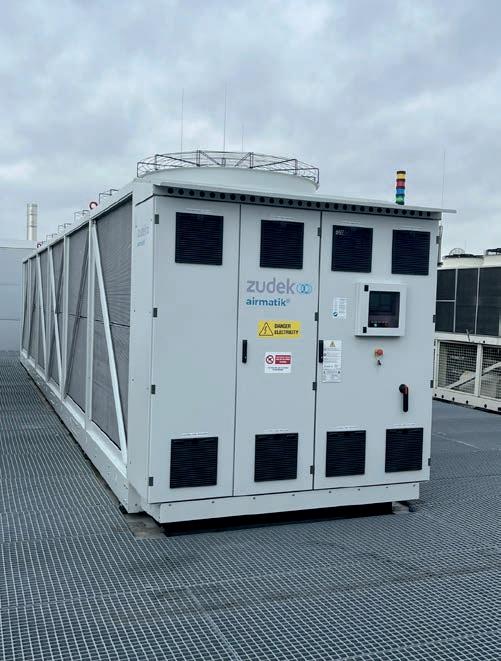
6 Haroldsen, J., NaturalRefrigerants.com, December 5, 2024, “ATMO Europe: Zudek Ammonia Chiller Reduces German Data Center’s Energy Use for Cooling by 43% Compared to R407C Chiller,” https://naturalrefrigerants.com/news/atmo-europe-zudekammonia-chiller-reduces-german-data-centers-energy-use-for-cooling-by-43-compared-to-r407c-chiller/

• Zero‑impact refrigerant
GWP = 0 - no global warming, ODP = 0 - no ozone depletion
• Superior efficiency the most efficient refrigerant available
• Significant energy savings


lower consumption, lower costs
• Future‑proof technology
aligned with ESG and sustainability goals


The natural solution for high-performance data centres.









www.atmosphere.cool