Architecture Portfolio
Shawna Chase
Fall 2023
Pg.2
Shawna Chase
Fall 2023
Margaret L. Smith Decker Scholarship
Grace Paul Trust Scholarship
HCC Annual Fund Drive Scholarship
Haven High School Alumni Scholarship
www.linkedin.com/in/shawna-chase-094a00232 LinkedIn: Intern at LK Architecture: Wichita, KS
Work:
3D Modeling in Revit
Sheet Set-Up in Revit (Elevations, Sections, Labels, & Picking up Redlines)
2023 - August 2023
Scoping Stores in the Field (Taking measurements, using Theta camera, & Scanner)
Project #1:
Downtown Wichita Public Center
Project #2:
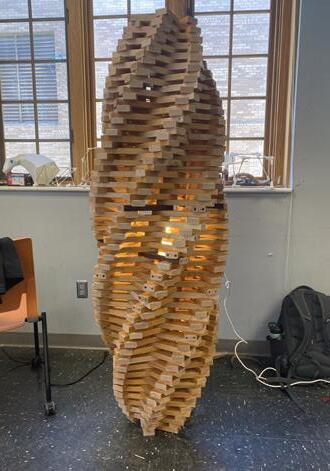
Baby Grand & Kaleidoscope
Project #3:
The Heritage Trail Center of Cultural Music
Project #4:
Rockefeller Nature Prairie Trail Center
Project #5:
Friends of the Kaw Observation Tower
Pages 6-13
Pages 14-19
Pages 20-31
Pages 32-45
Pages 46-50
Place: Intersection of English St & Broadway Ave
Downtown Wichita, KS
Program: Multi-use Center
Arch 508: Professor Van de Riet
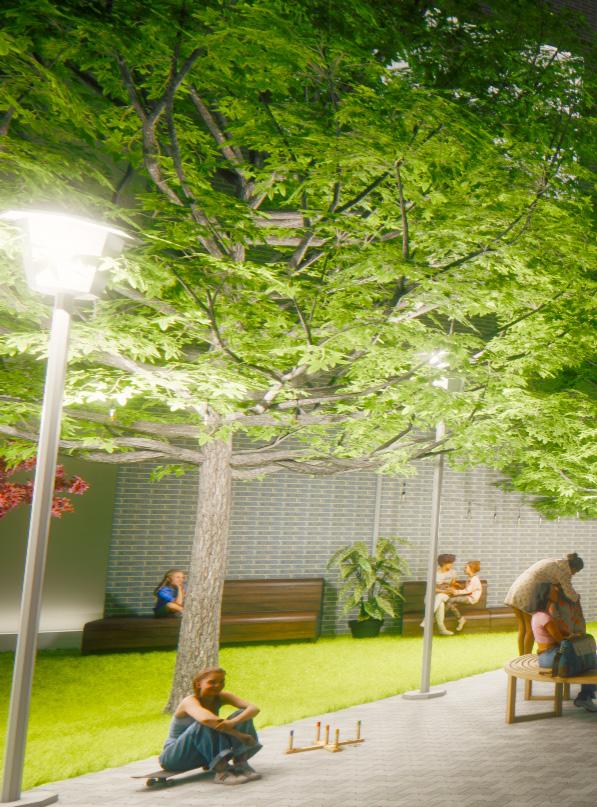
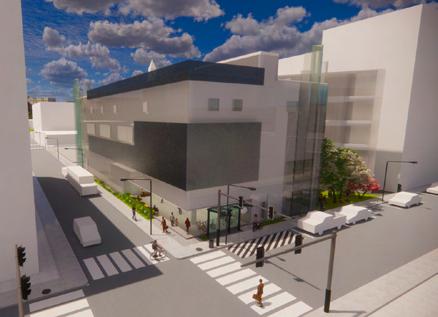
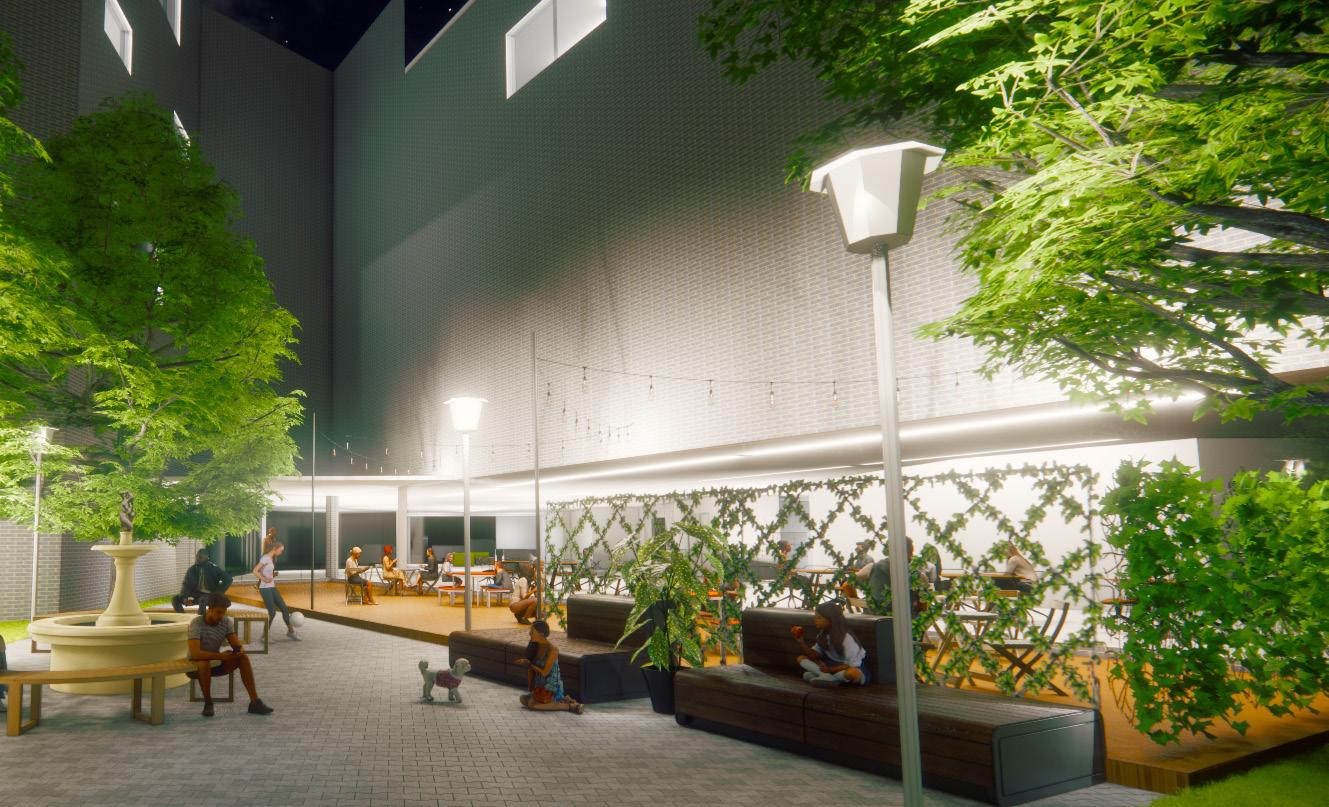
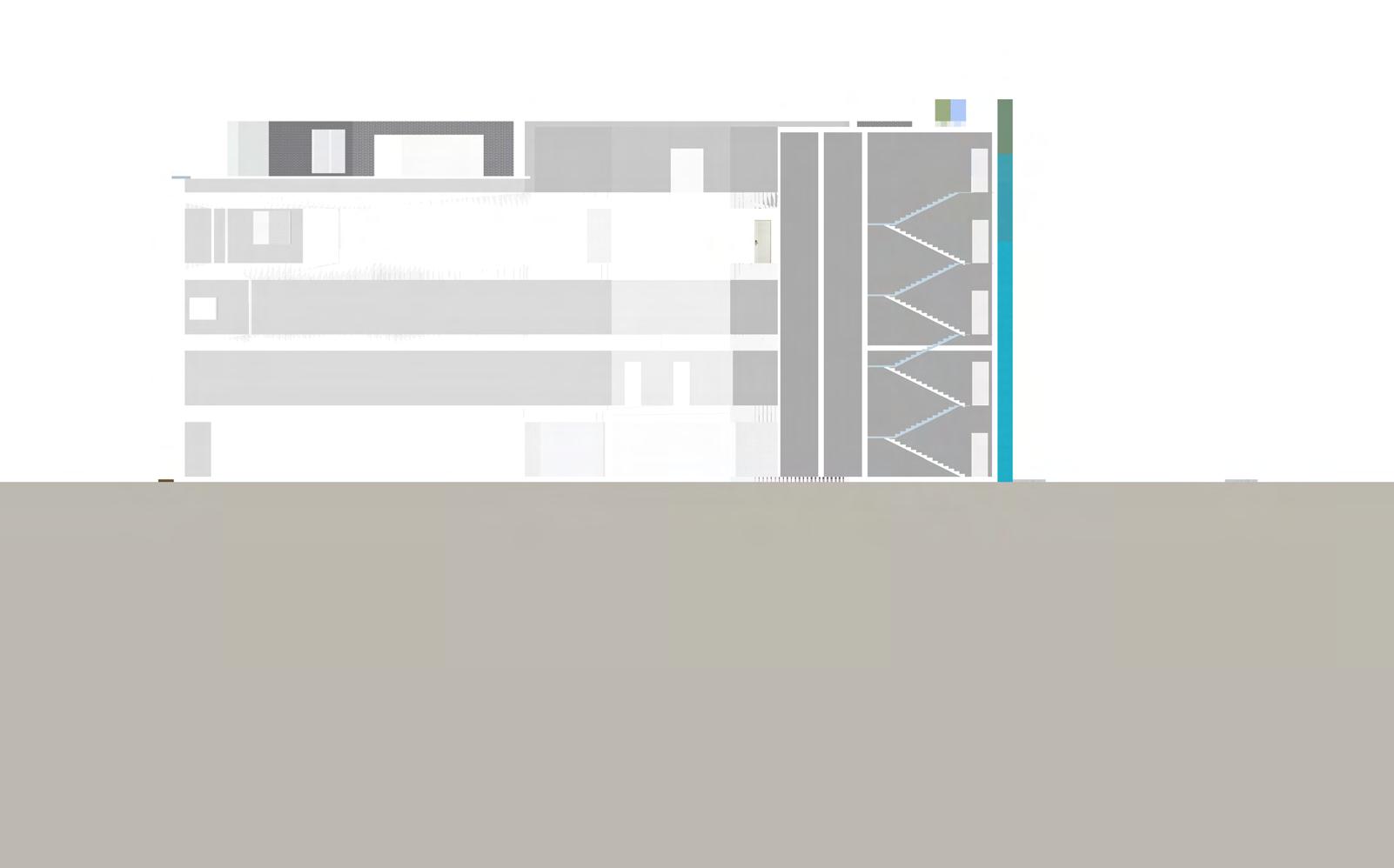
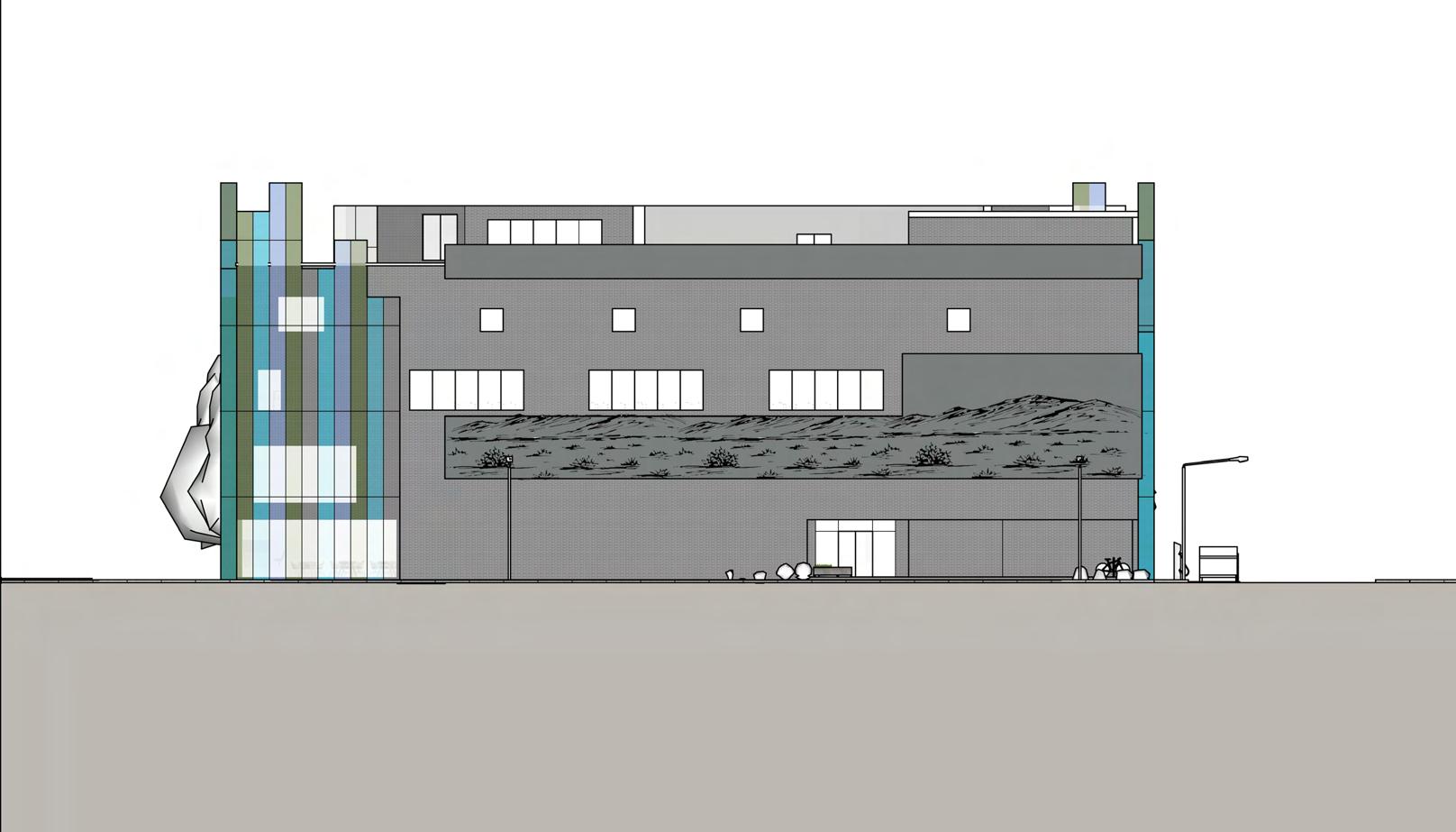
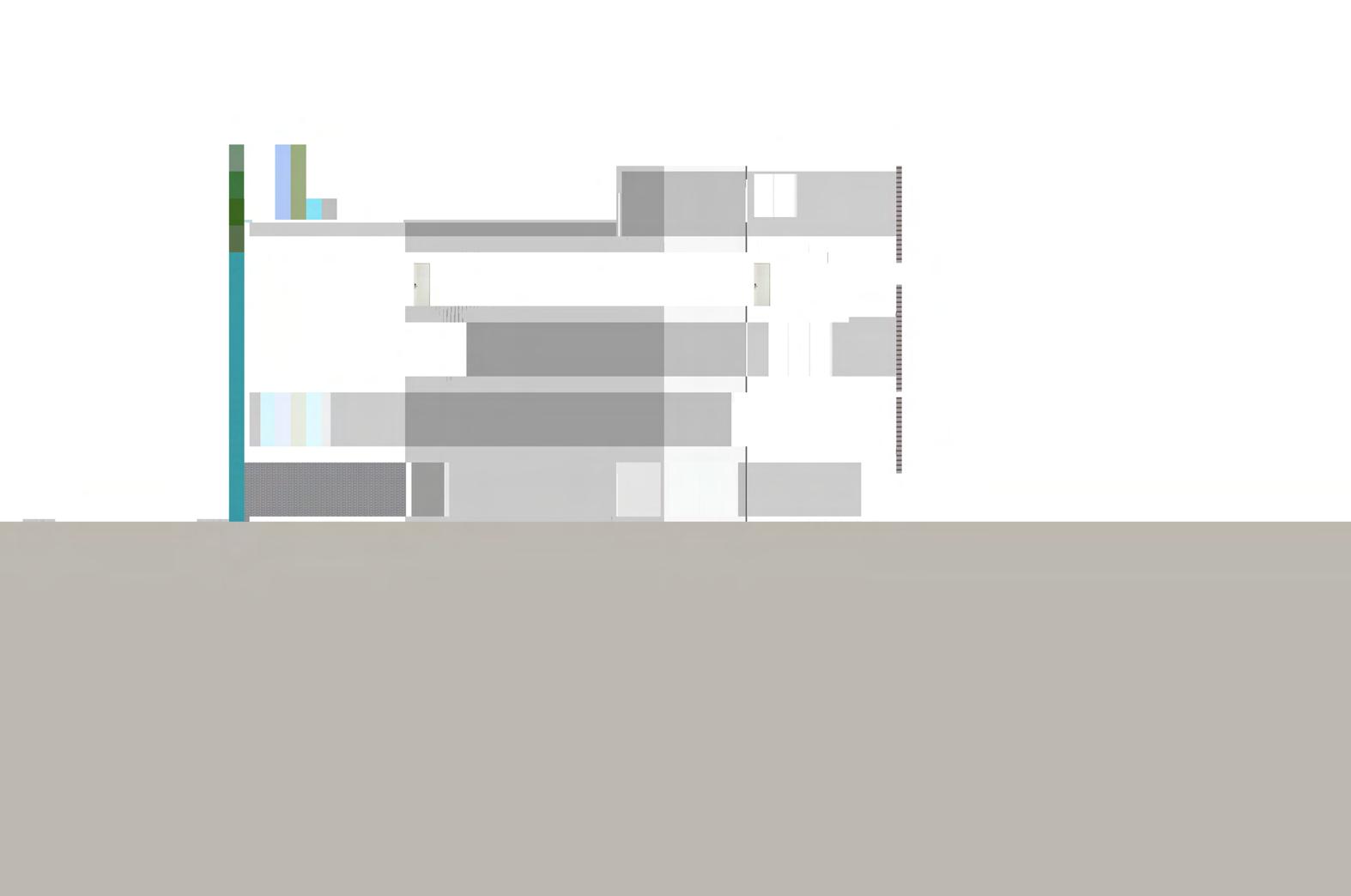
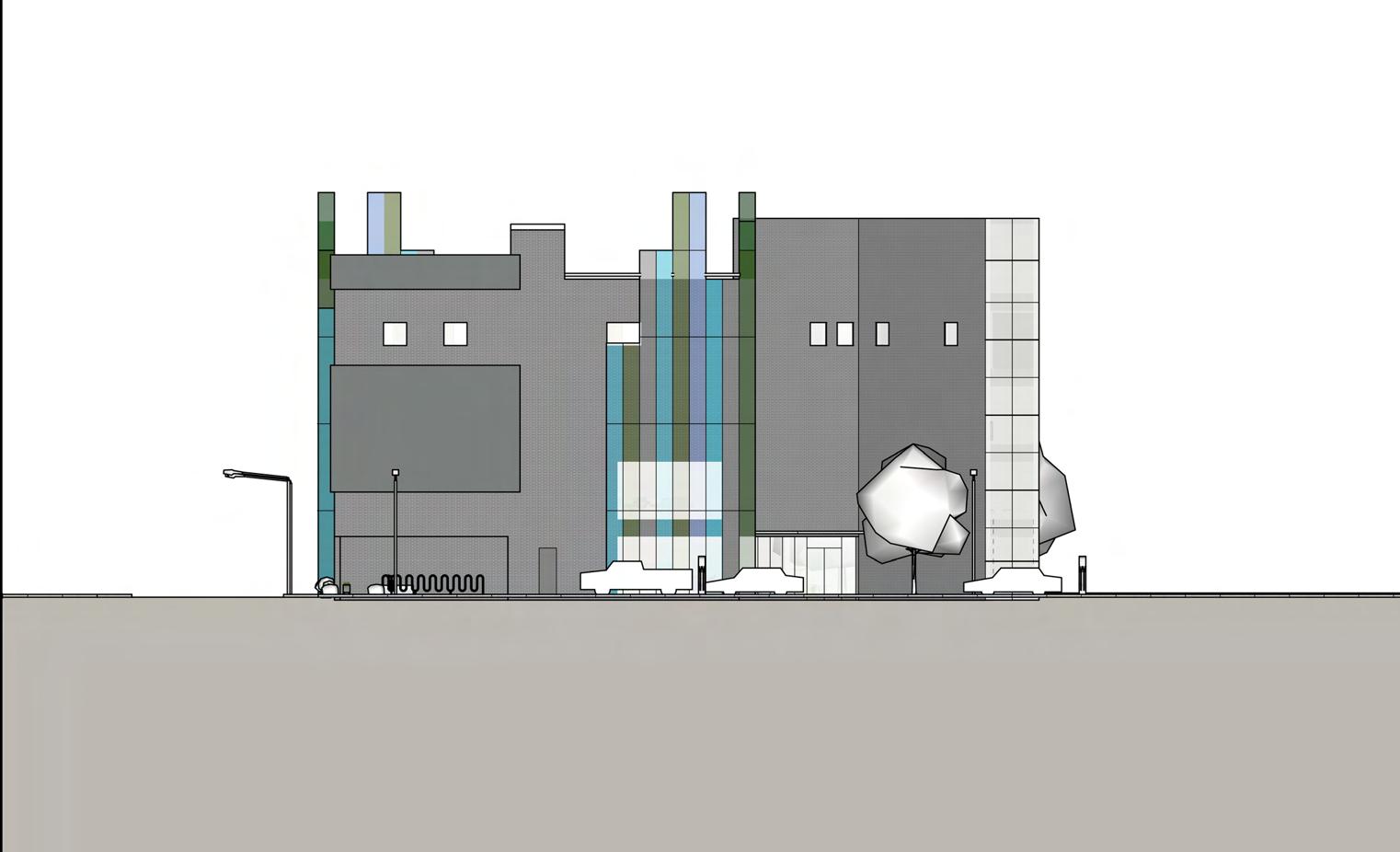
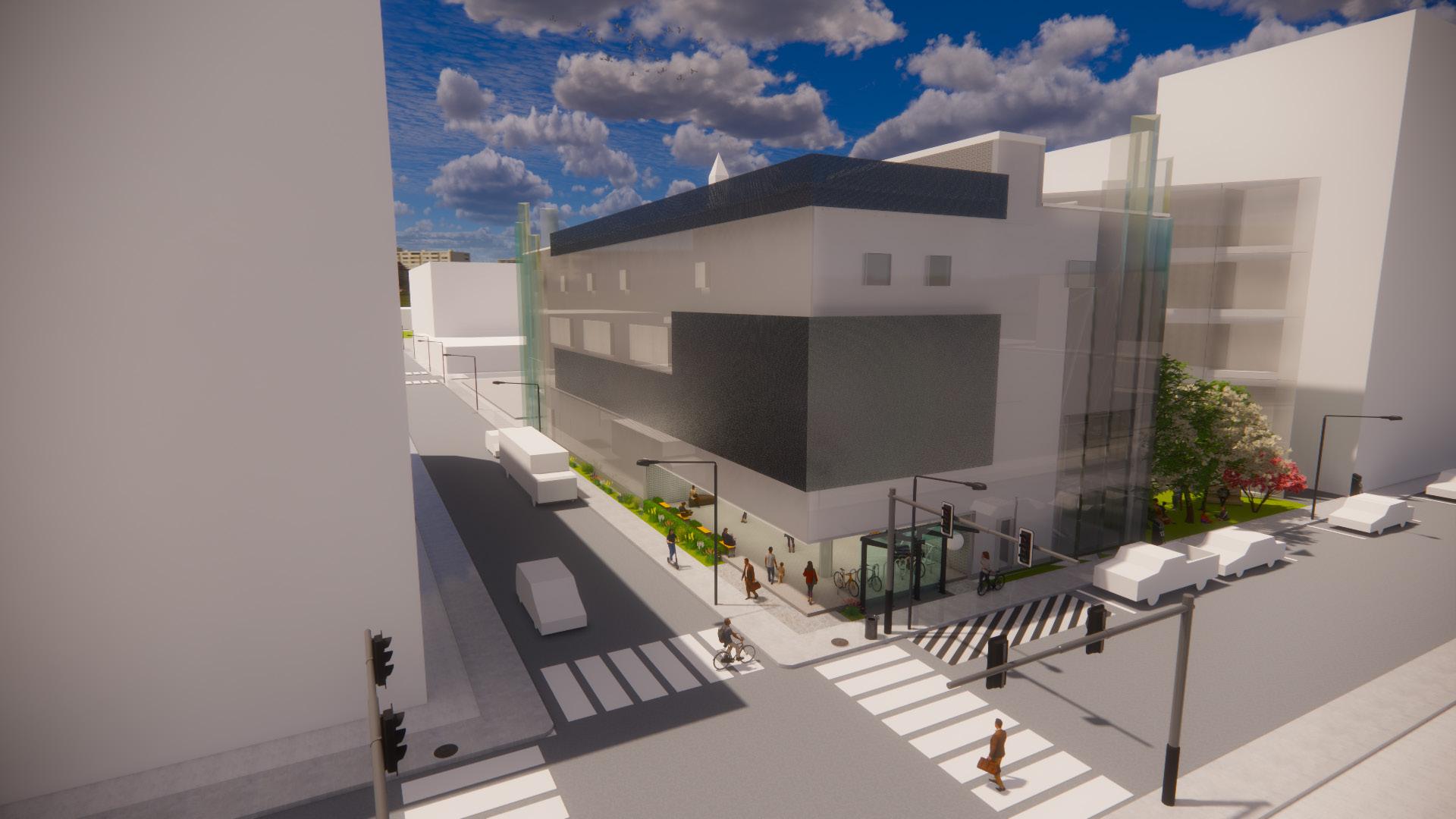
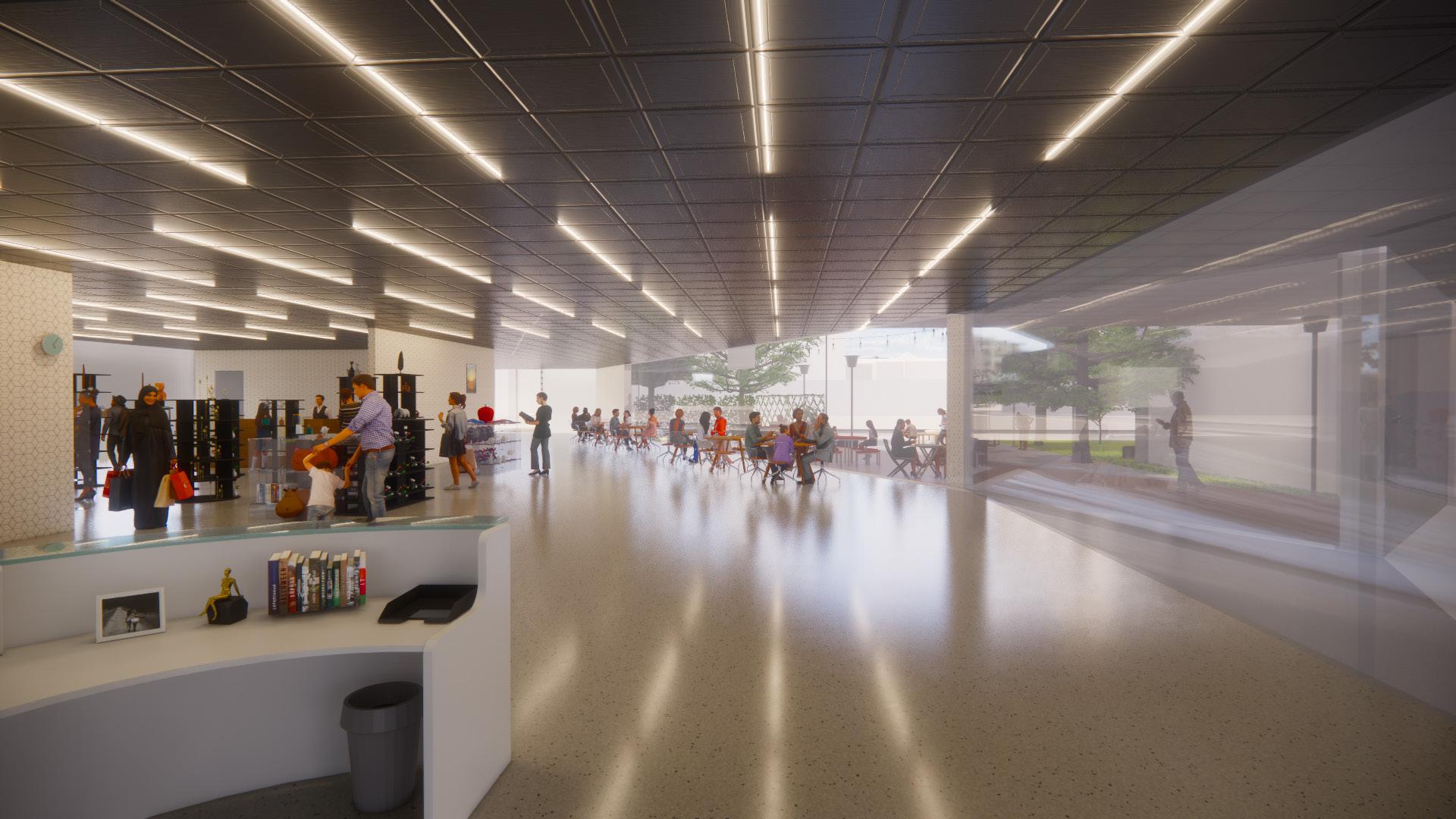
It is important that this multi-use community building for Wichita is there to serve the community properly, responds to the site and any issues the community may have, and is functional. Within this portion of the city there is a need for green spaces with seating, community event gathering spaces, and housing, all of which get incorporated into this design. There are 3 main focuses behind the design inspiration from the site itself, the lack of green spaces, the surrounding buildings, their shapes, and their height differences, and the alleyway across the street that creates a welcoming atmosphere. The surrounding downtown area also inspires the materials used as well as the facade.
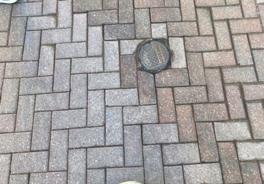
Site materials, buildings, and unique aspects
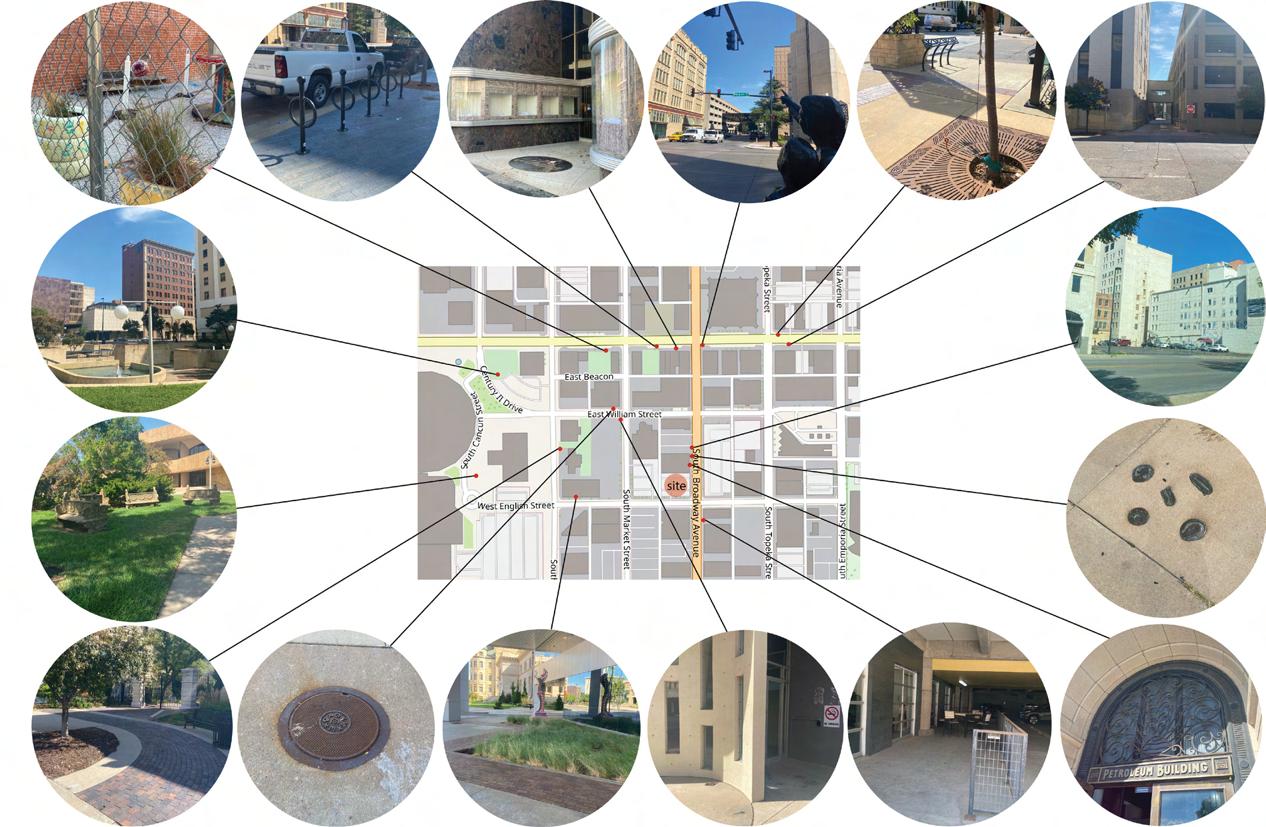
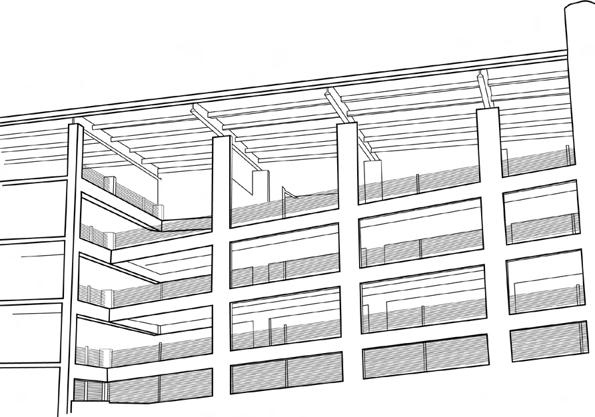
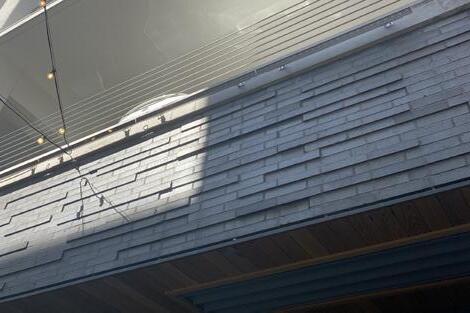
Neighboring parking garage that gave inspiration due to being able to see inside and having perforated metal
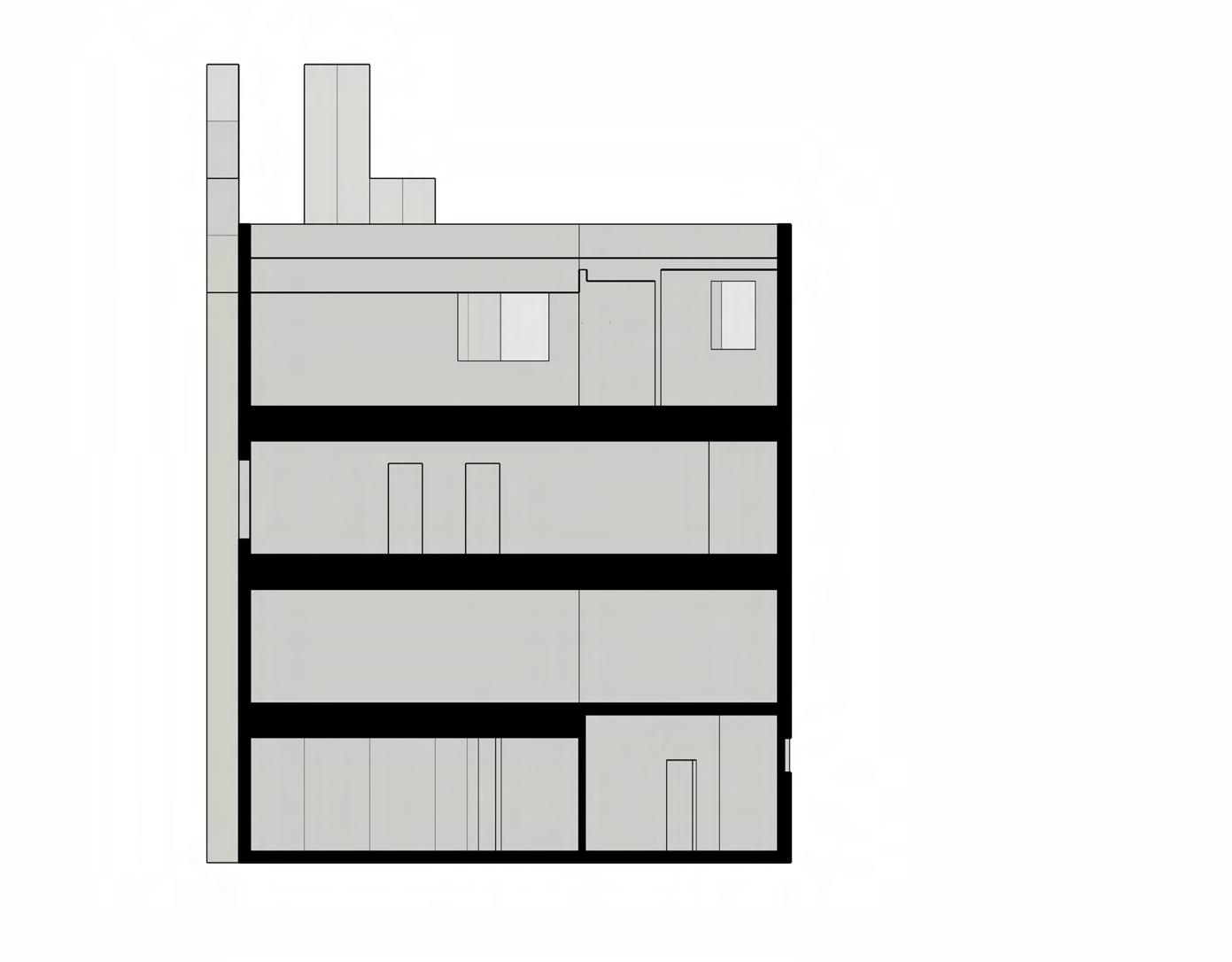
HVAC, Circulation, & Structural
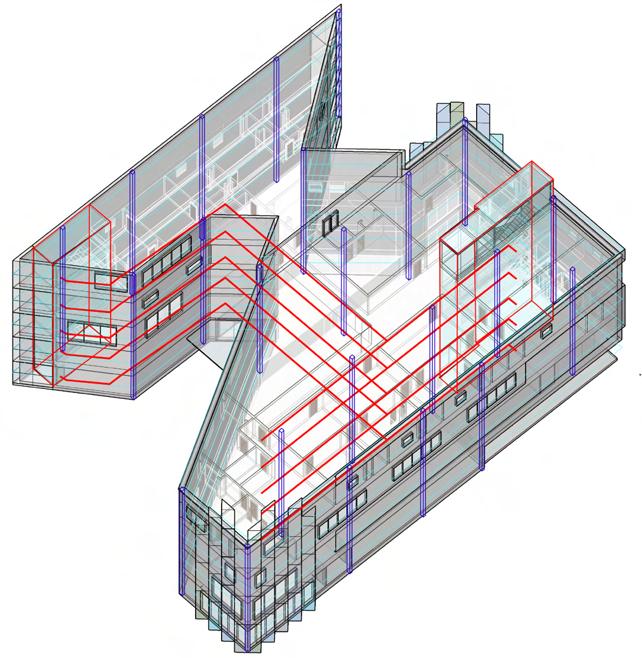

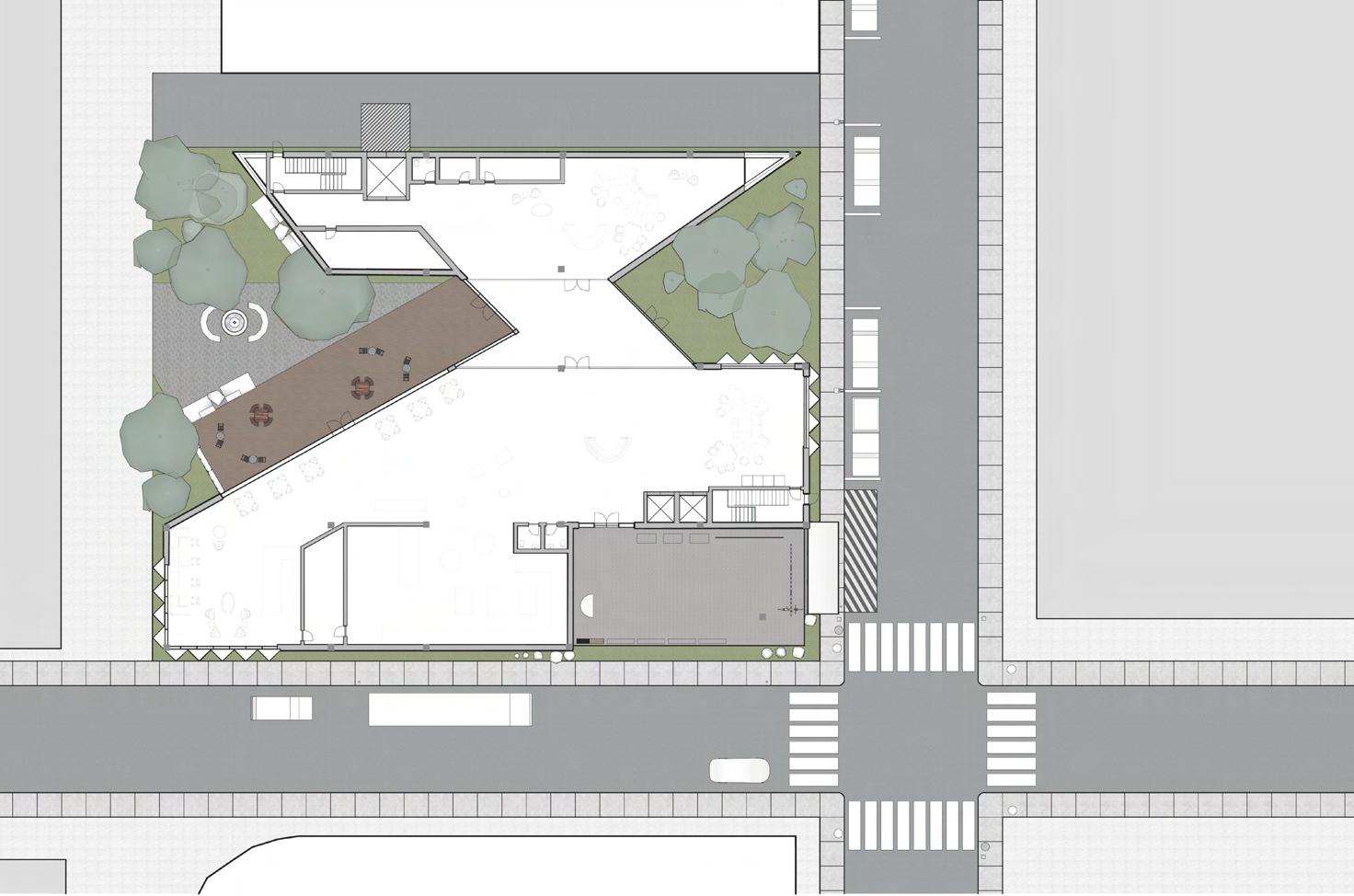
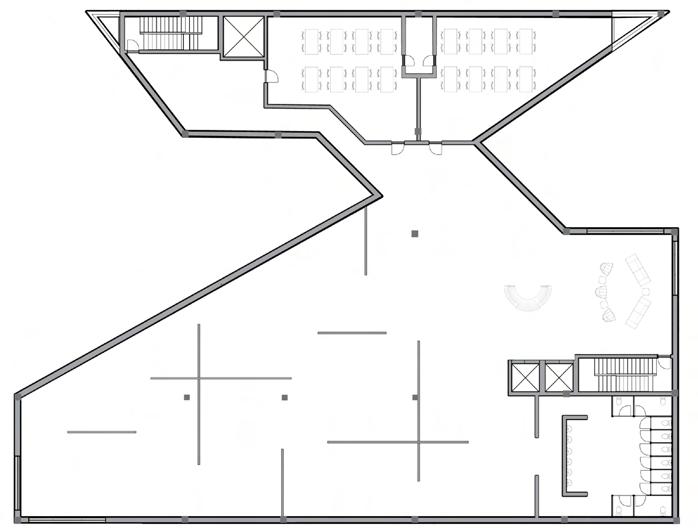
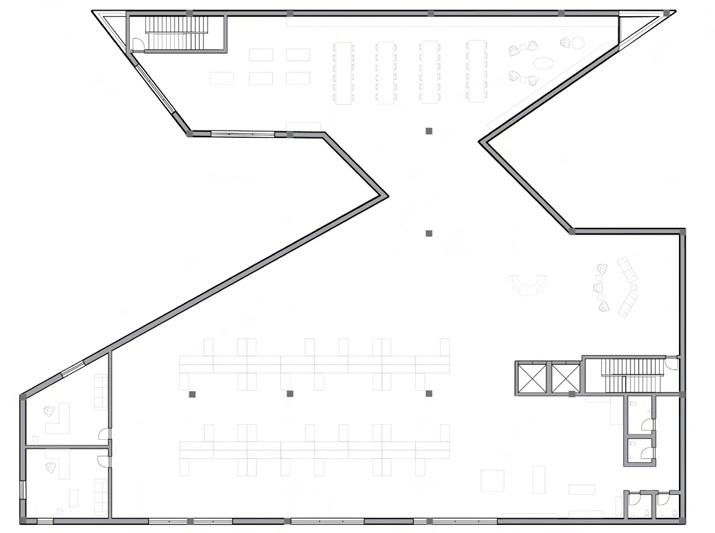
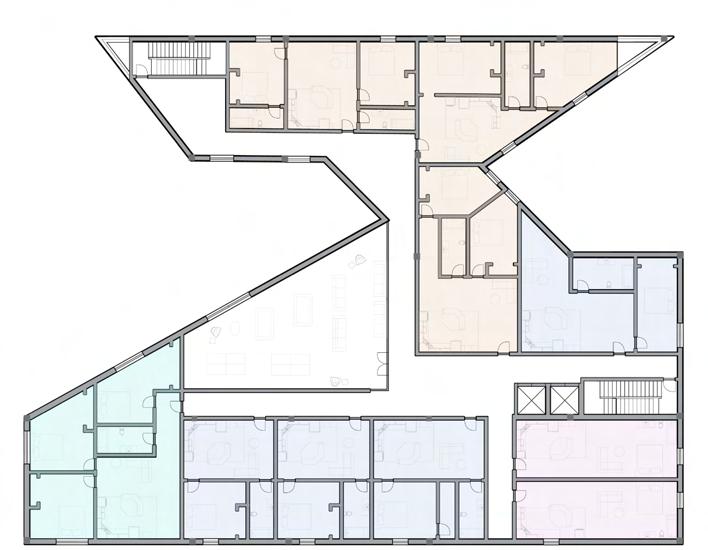
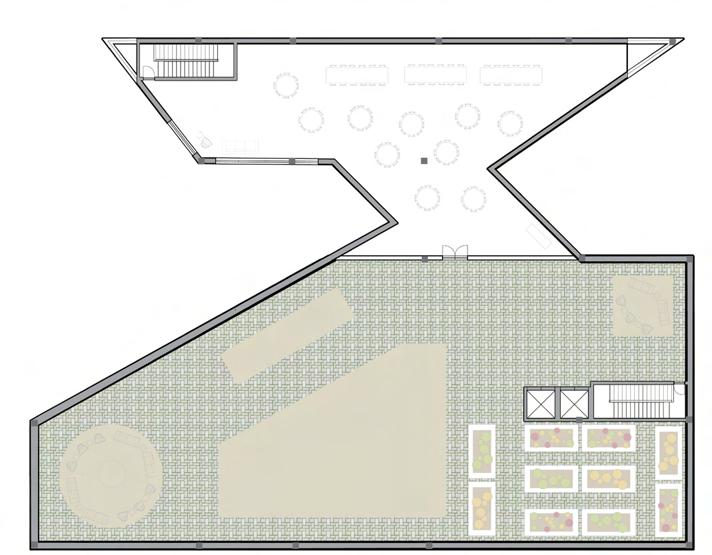
Colored glass on the 2 main corners add texture, color, and energy to these attraction points seen from both main roads where visitors may come from. At these points are the building’s entrance and the main outdoor courtyard space, which also mirror’s the bright atmosphere and energy from the well lit alleyway across the street.
1”=16’
1”=16’
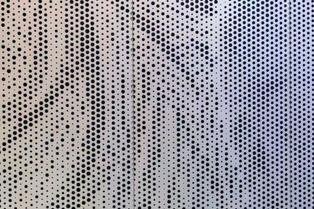
With using the perforated metal, an image of lands native Americans, whom are recognized widely in Wichita, used to occupy can be embedded and created from it to connect back to Kansas
1. Metal capping on top 2. Stone coping 3. Flashing 4. Thermal insulation 5. Cavity 6. Metal wall ties 7. Mortar 8. Masonry brick veneer 9. Mullions 10. Beam
12. Wedge insert boxes 13. Steel shelf 14.
19. Flooring
CMU 21. Premolded filler and sealant 22. Waterstop sealer 23. Pressure-treated sill plates 24. Protection board 25. Waterproofing membrane
Slab on grade 27. Polystyrene foam insulation
Foundation footing
1. Metal capping on top
2. Stone coping 3. Flashing
4. Thermal insulation
5. Cavity 6. Metal wall ties 7. Mortar 8. Masonry brick veneer 9. Mullions 10. Beam
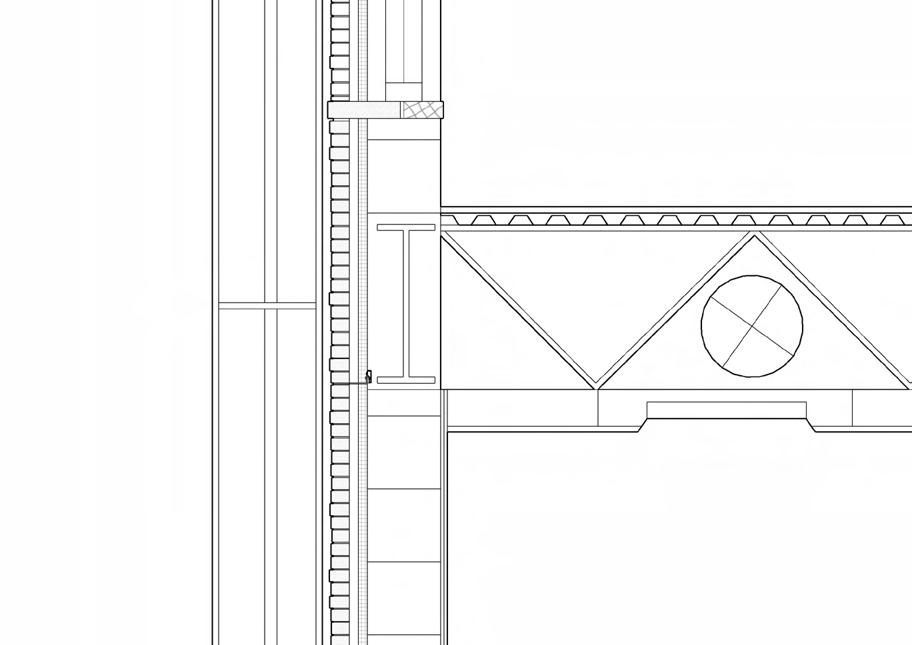
12. Wedge insert boxes
13. Steel shelf
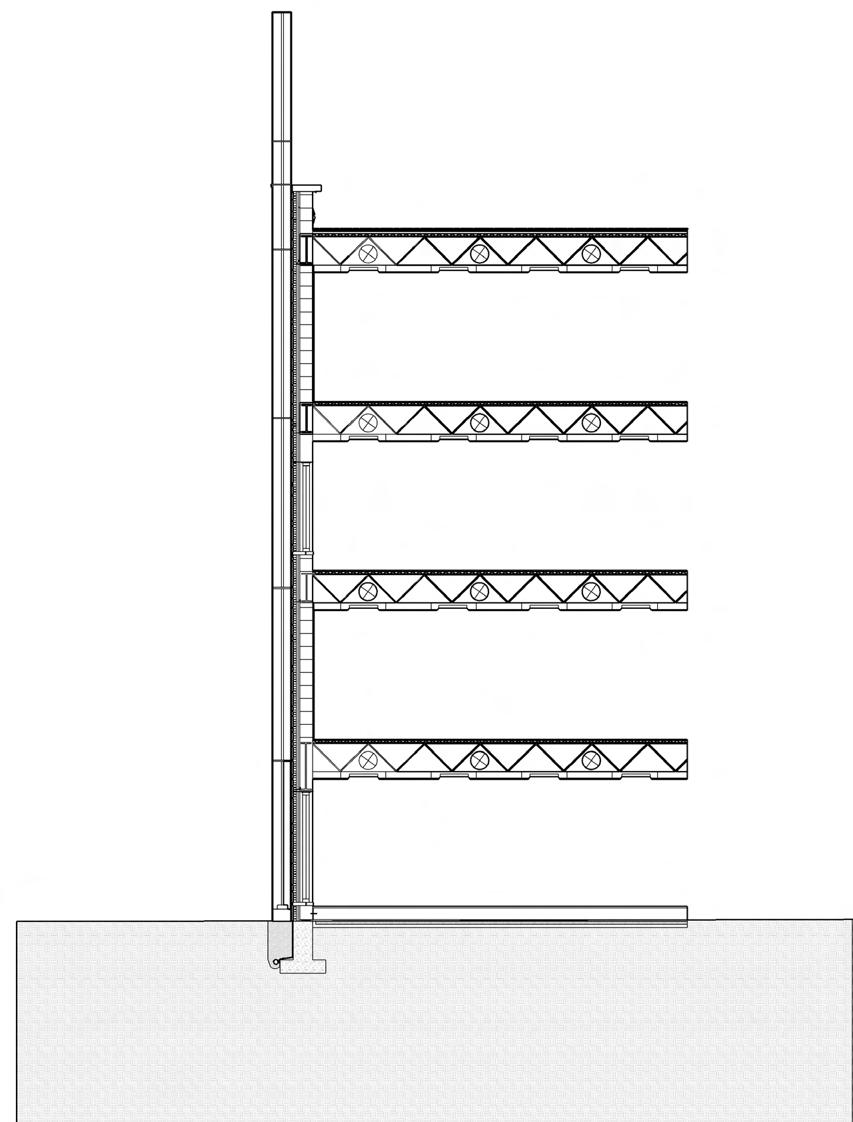
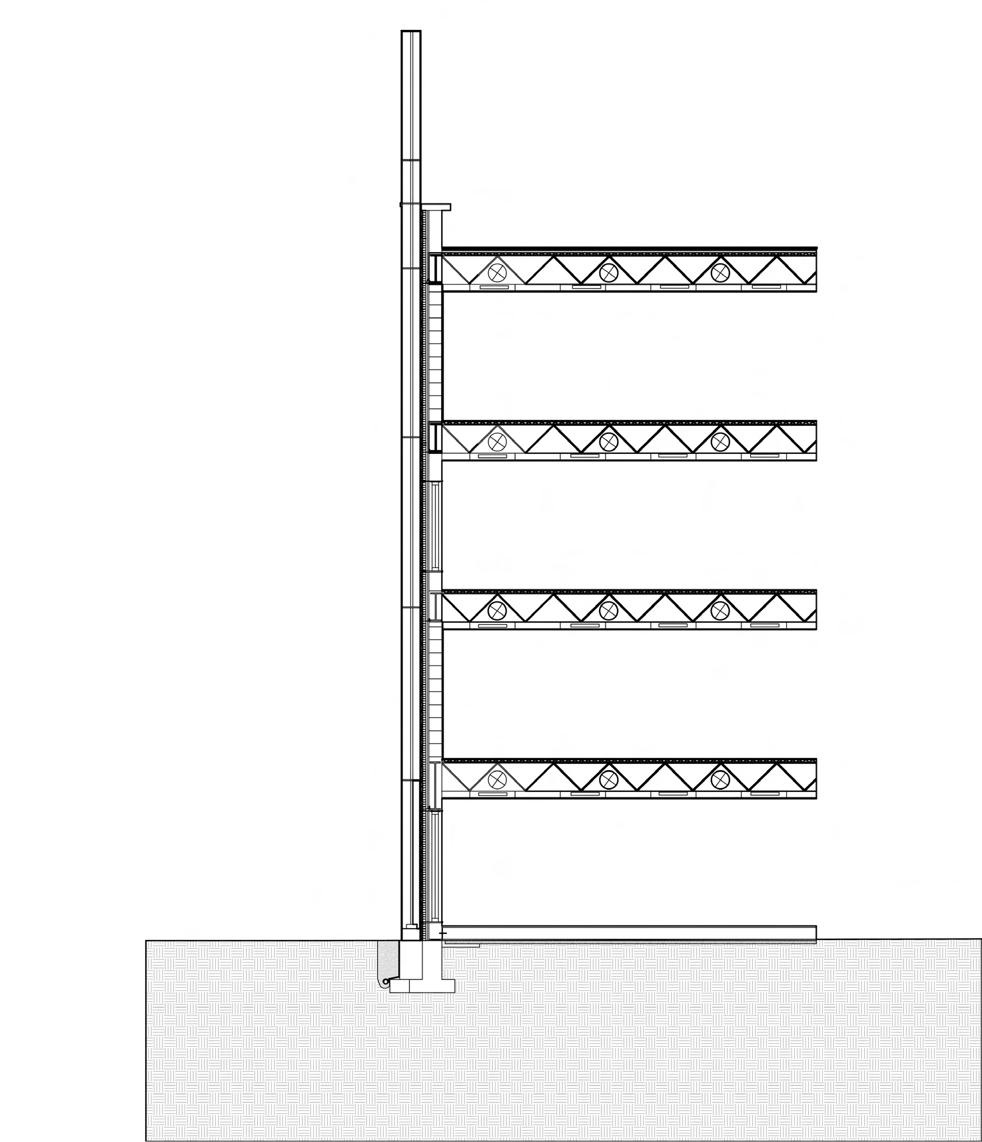
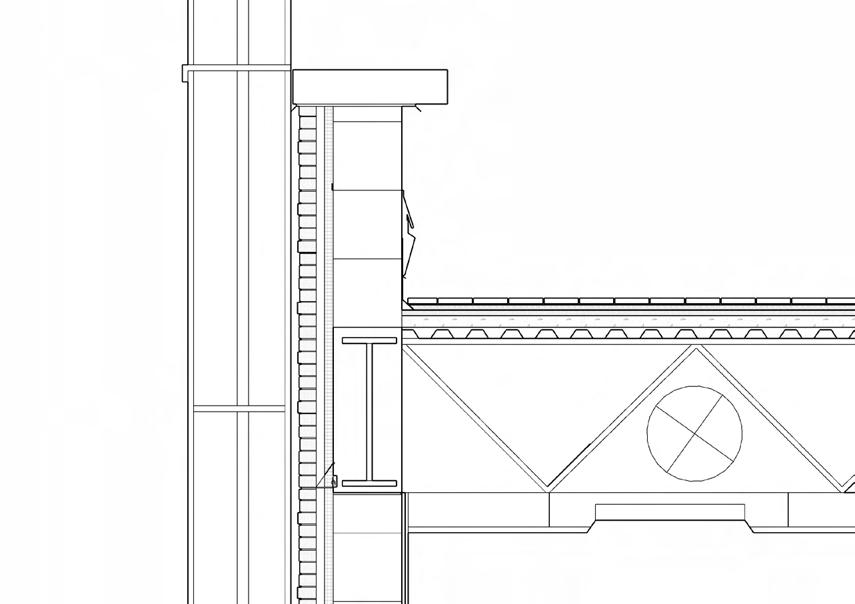
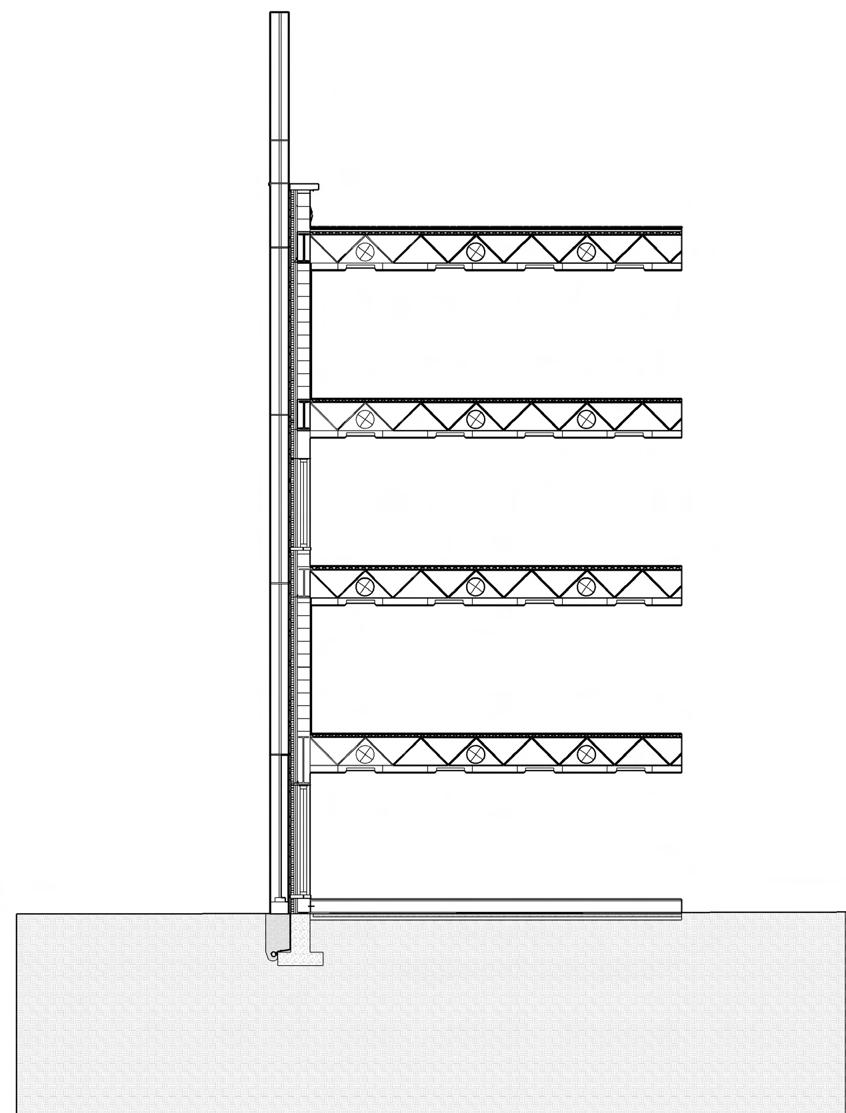
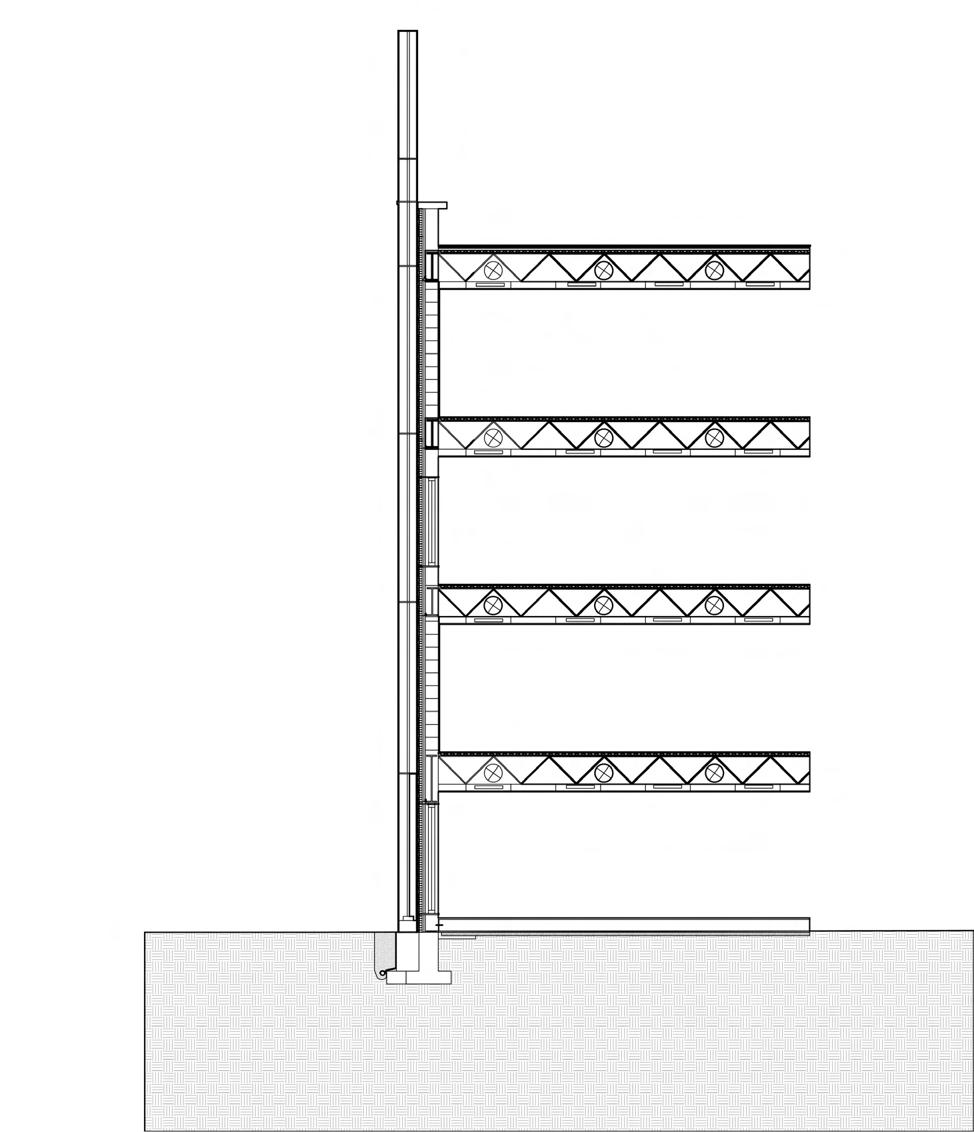
14. Compressible filler
15. Gypson board wall
16. CMU wall
17. Cap Reciever 18. Counterflashing 19. Base flashing 20. Plaza deck pavers
21. Drainage layer
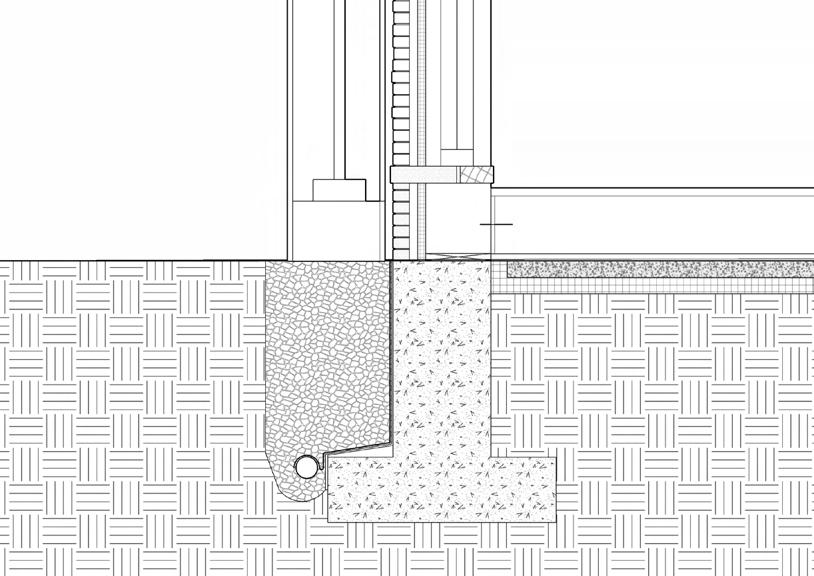
22. Roofing membrane
23. Thermal insulation 24. Vapor barrier 25. Roof deck 26.Decking with concrete 27. Flashing 28. Open web joists 29. HVAC unit ducking 30. Hangers 31. Lighting 32. Drop Ceiling
Place: KU Campus, Lawrence, KS
Program: Art Installations
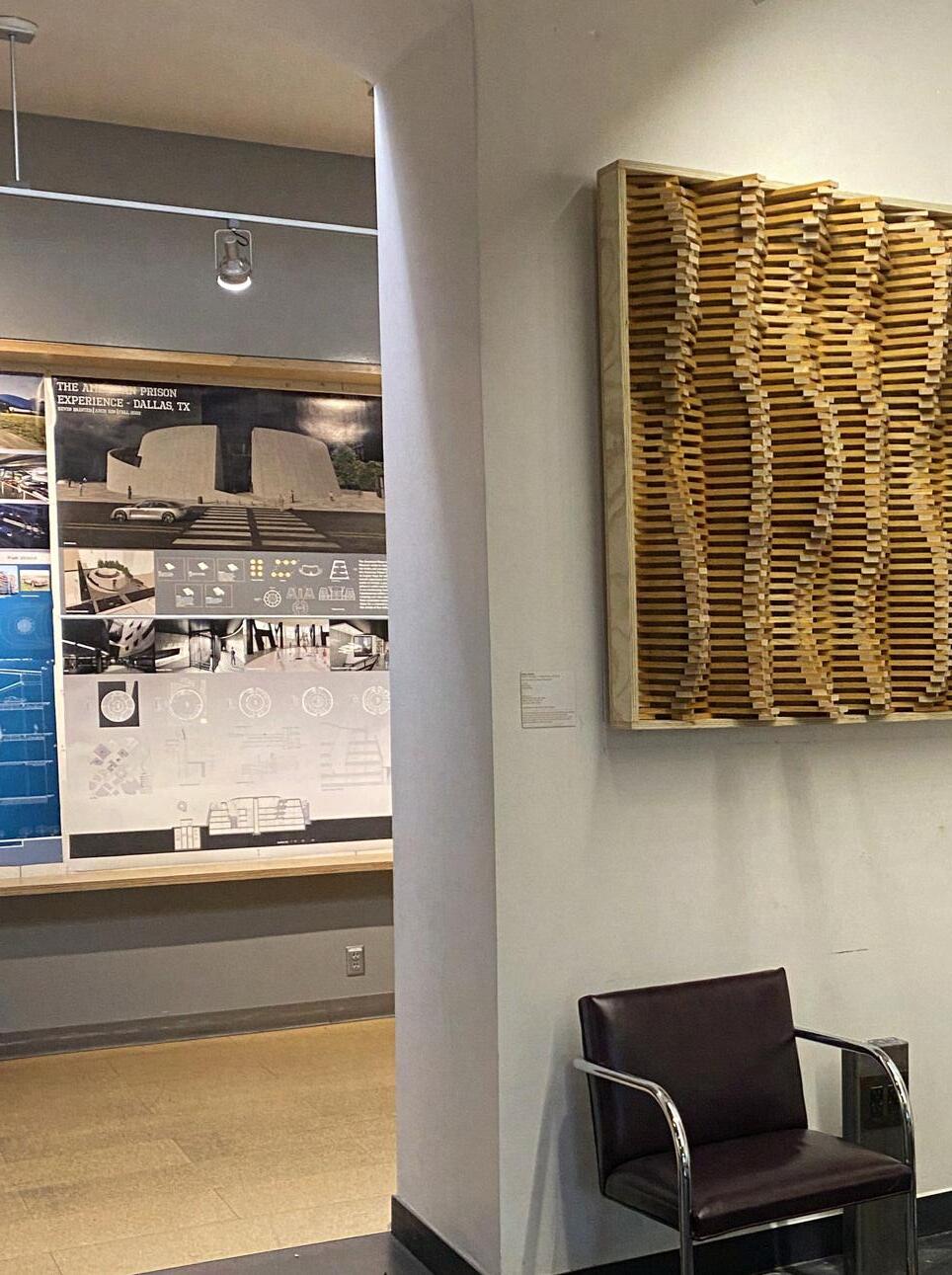
Both projects are in collaboration with Lin Jaw and Clara Scales
Arch 509: Professor Hong
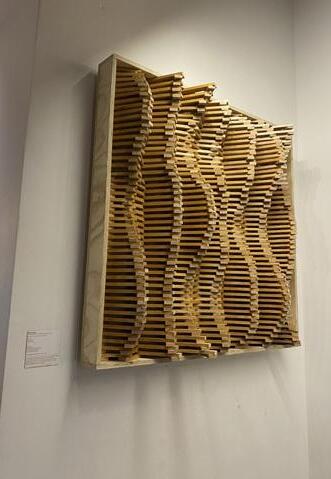
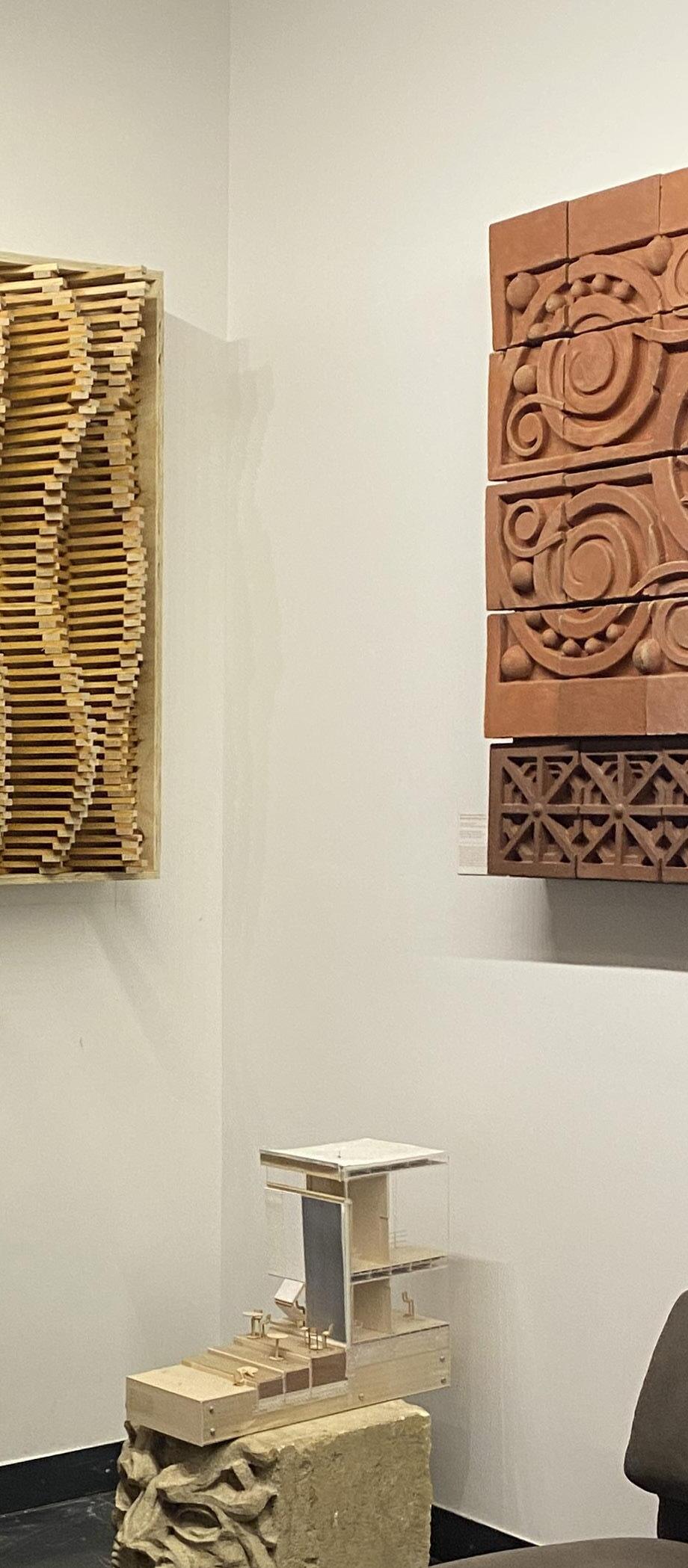
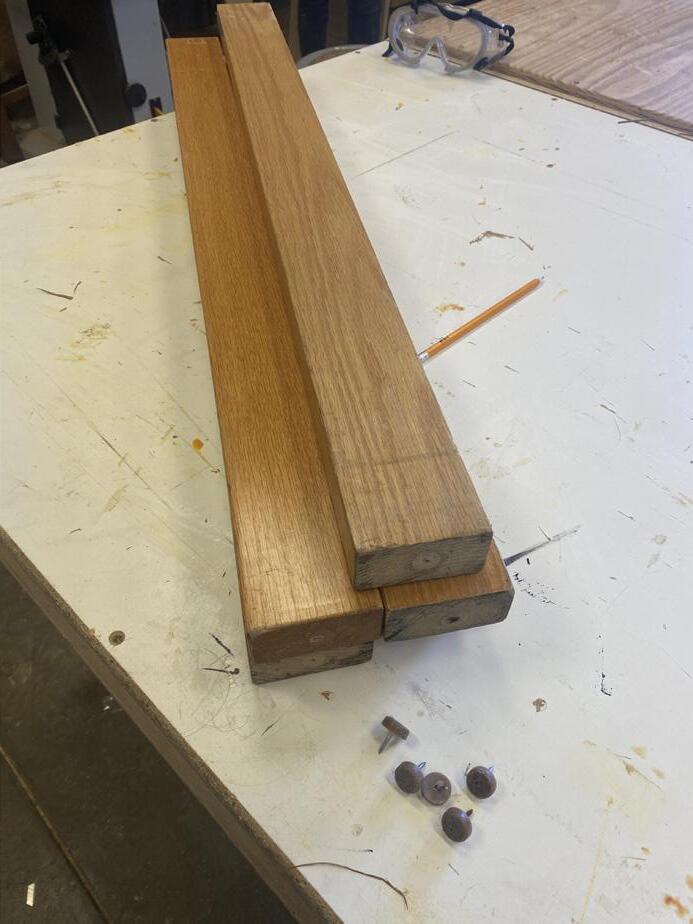
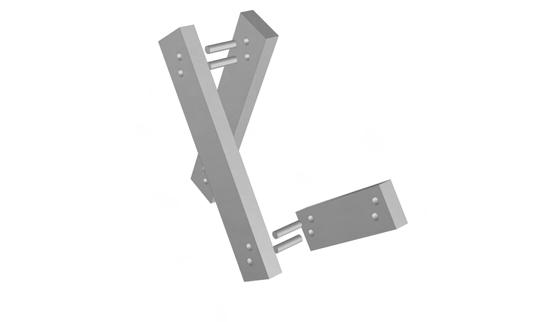
Baby Grand- The purpose of this piece is to use parametric design and recycled materials to create a 4ft x 4ft art frame piece to be hung in Marvin Hall. Our piece’s purpose is to demonstrate the use of sharp pieces and rough edges being put together can create a fluid shape that mimics sound. We combined the fluidity of sound waves with the physical likeness of piano keys. Our piece uses all recycled table legs from old desks from the University of Kansas. These legs perfectly incorporate the sharpness of our ideas through their original physical appearance, as well as when they are connected with wooden dowels to create peaks and valleys across the frame.
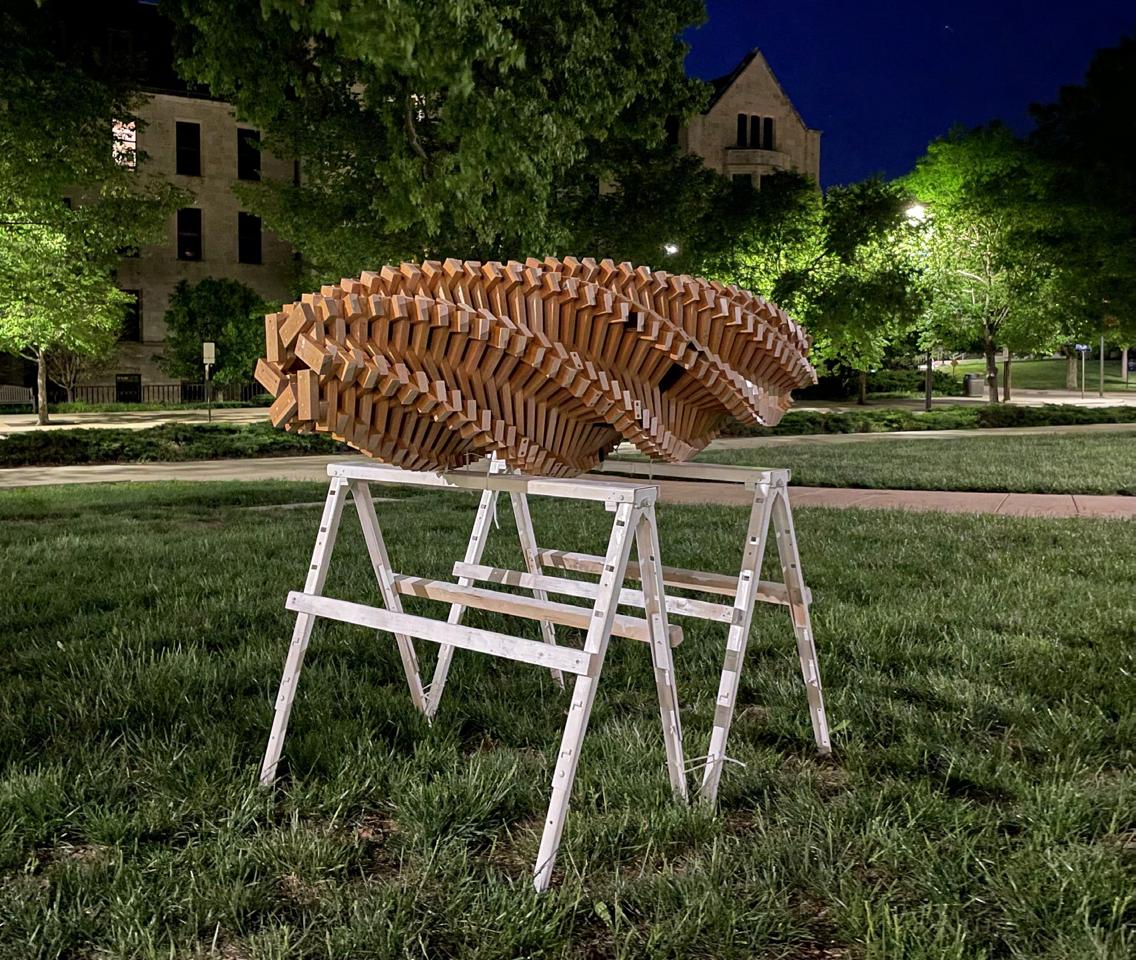
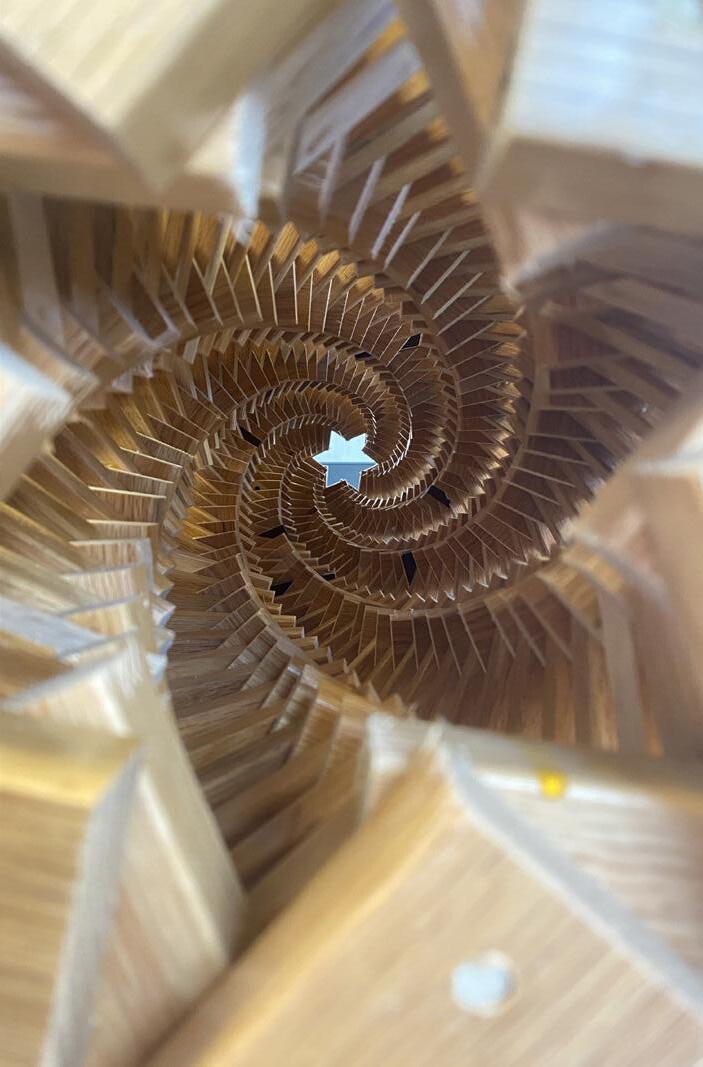
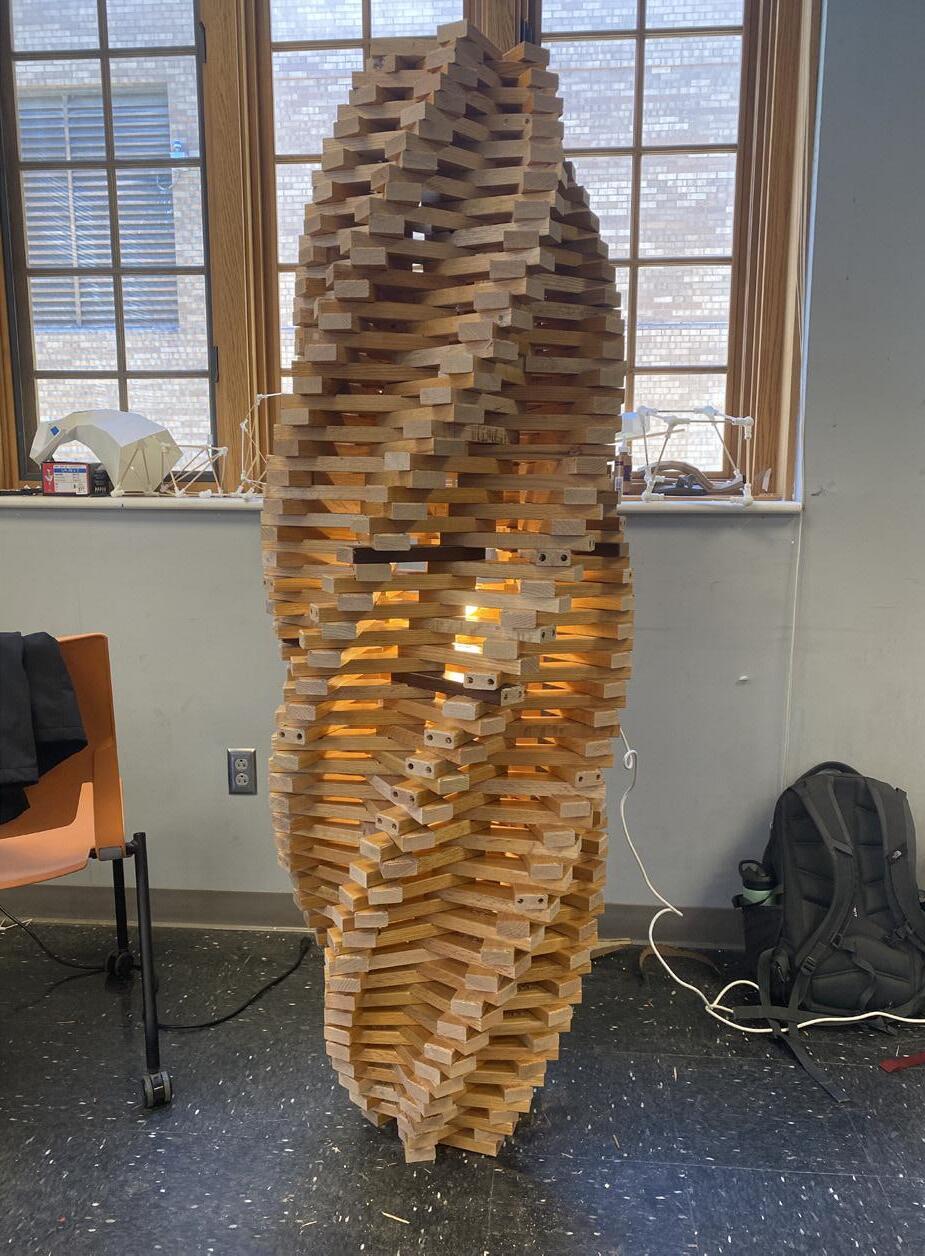
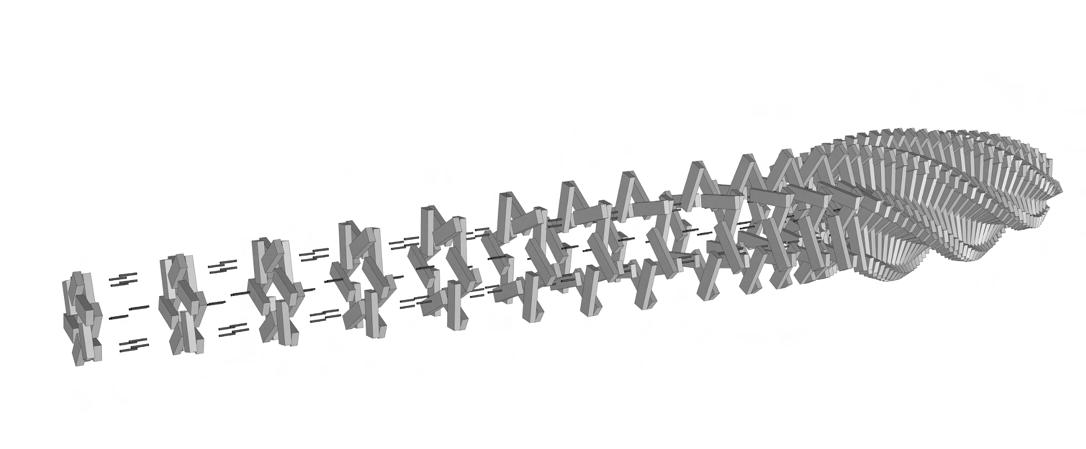
Kaleidoscope- The purpose of this piece is to create a human sized, sculpture using the same method of assembly as our first project. Our group decided to take the individual strips we created that when put together formed a fluid design from the first project and stretched them into a circle, which created a star shape. We then stacked these stars while rotating them to create the same fluid transformation that took place in our first project and translate it into this next one. The sharpness of the pieces and materials are still present by using recycled table legs, but once put together creates new movement throughout the piece.
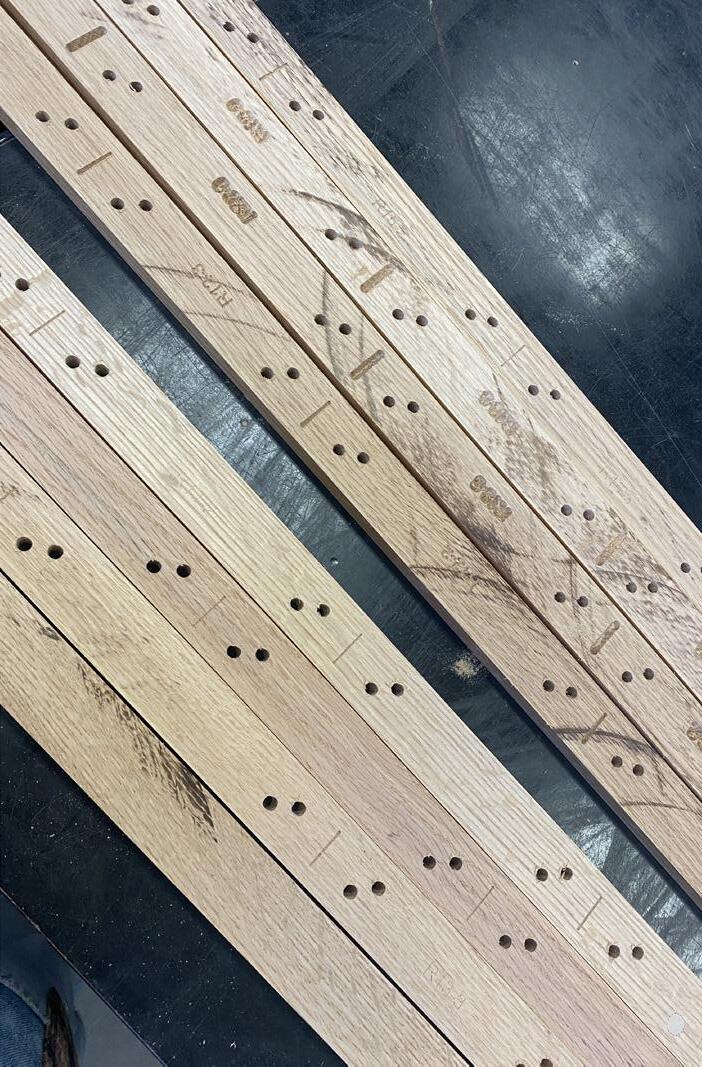
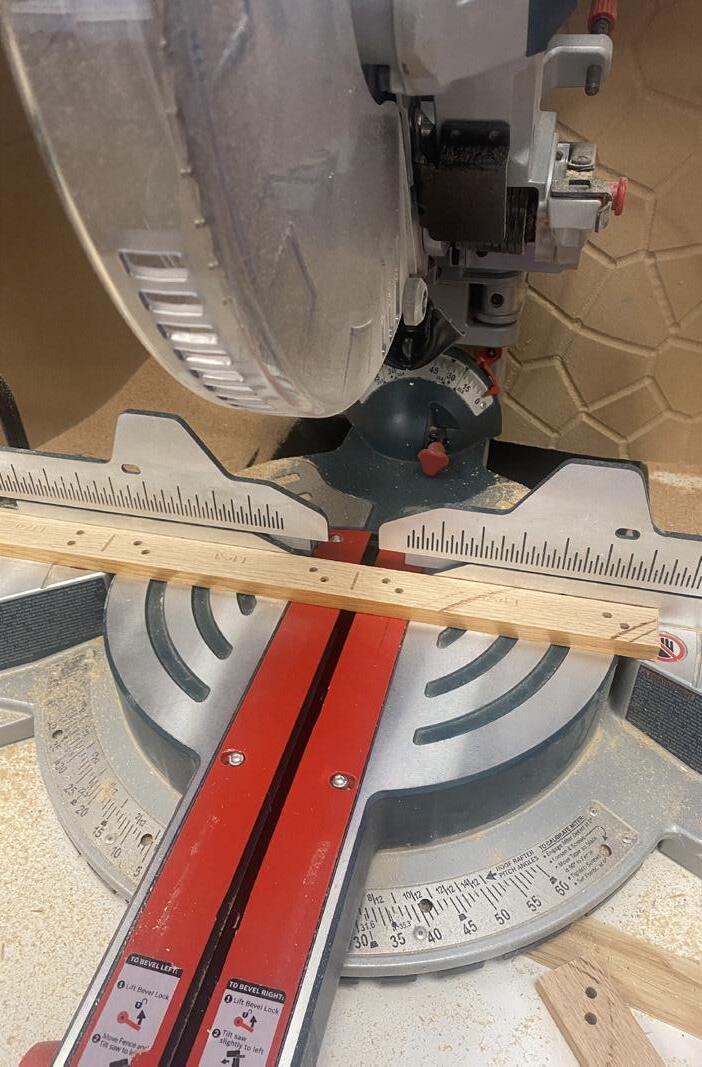
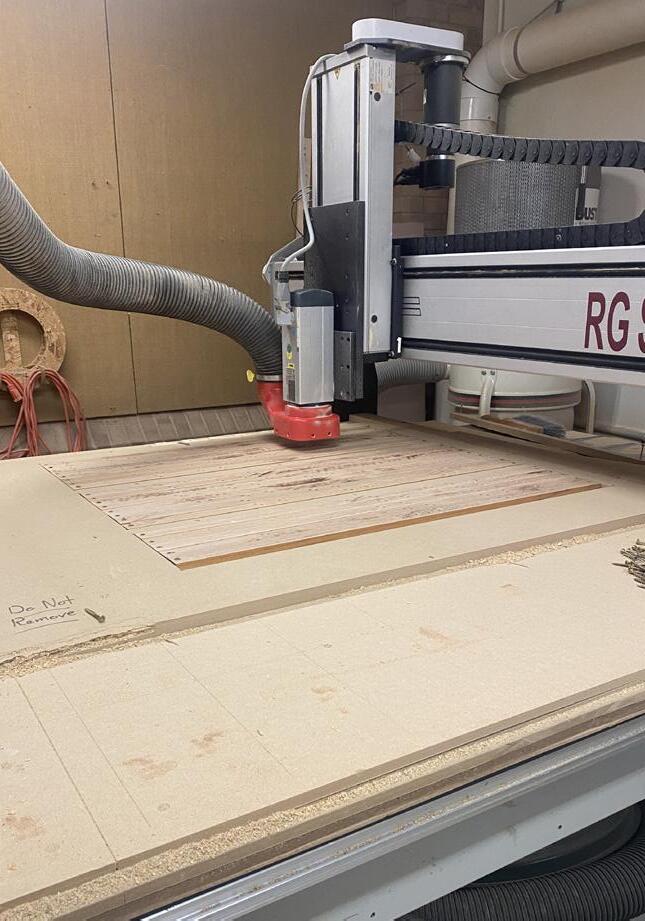
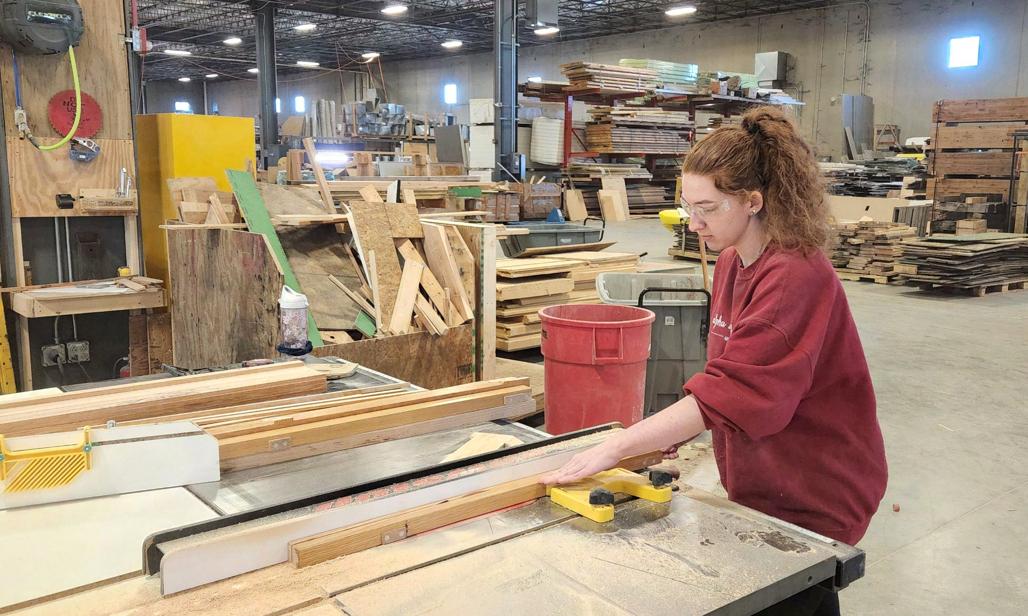
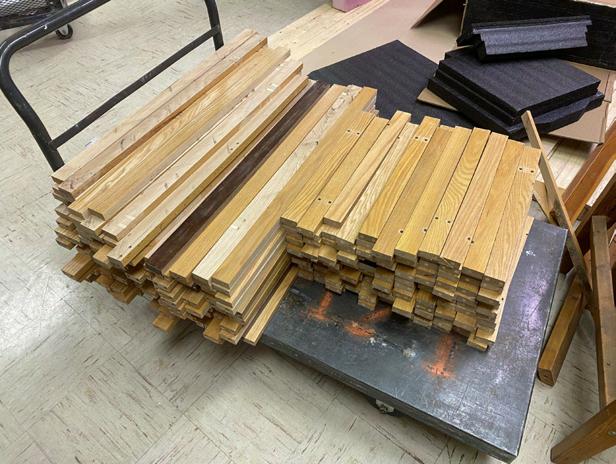
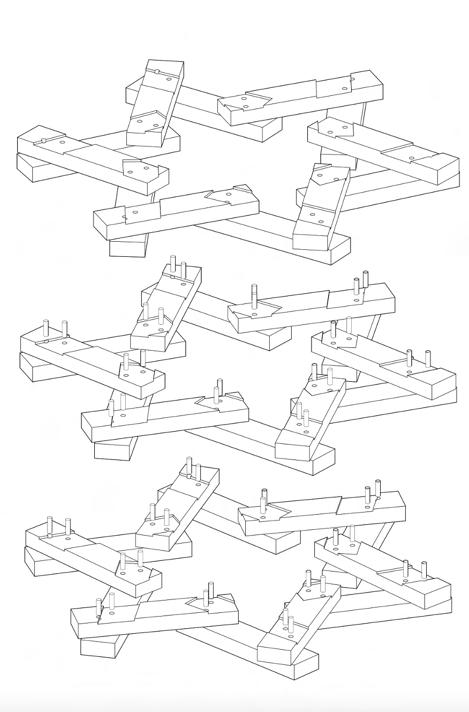
Once we chose our design after many rounds of exploring various designs and studying different sizes, lengths, and points as well as decided on a final idea we created a file for the CNC to precut all of the individual pieces from strips we cut down from the recycled table legs. Each piece cut from the CNC is a specific and unique length, as well as has a specific angle for the dowel holes to create the different angles in the strips. After the CNC, we cut the strips and dowels down with the saw, to then assemble and hammer the dowels into the holes. This created a zigzag looking strip that we placed into the frame we also built, by cutting down plywood and putting the sides into the CNC to make notches for each strip to set in. This ensured they won’t fall out, in addition to nails on the top and bottom.
Materials used: Recycled table legs, wooden dowels, wood plywood, & nails
Machines used: CNC, router, table saw, chop saw, & band saw
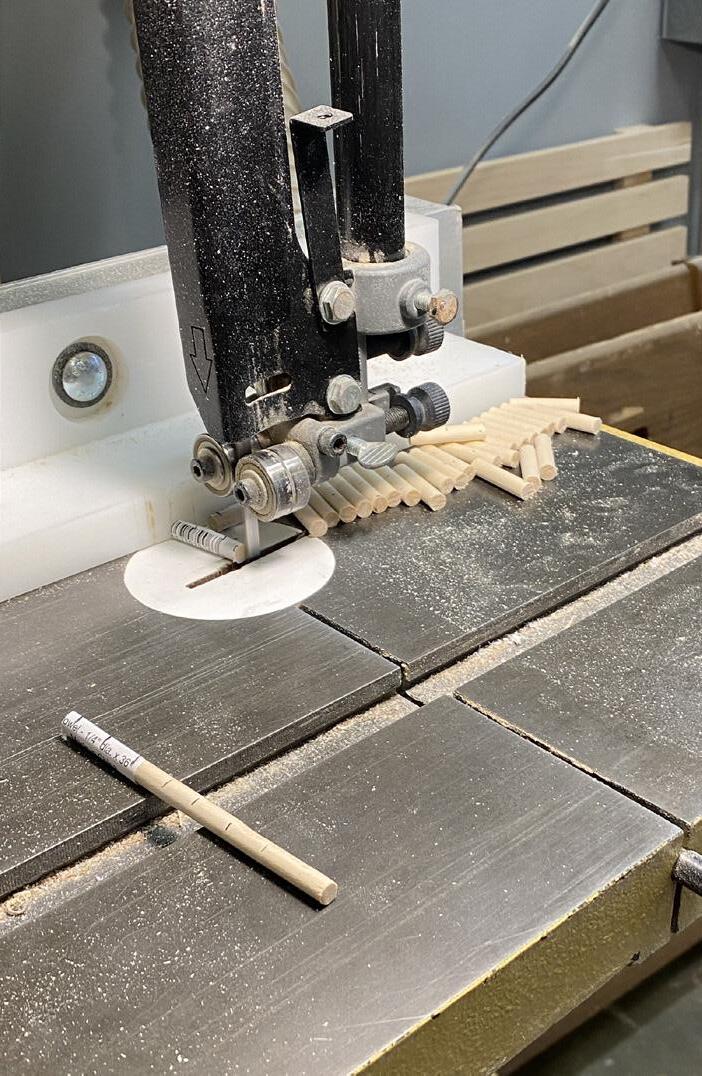
Total table legs used in project- 48
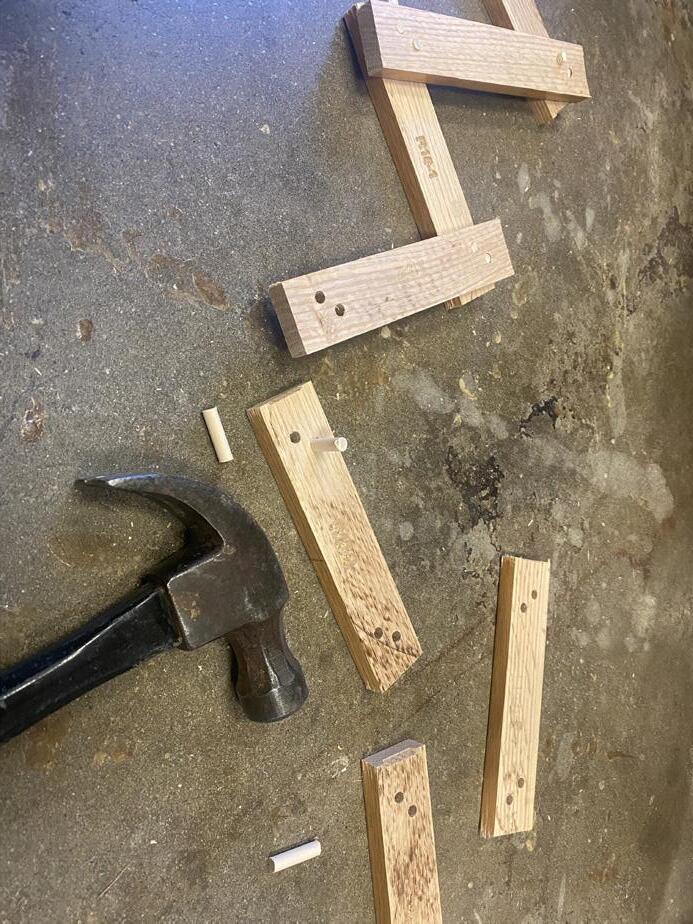
Total strips used in project- 192
Total individual pieces in project- 736
Total dowels in project- 1,380
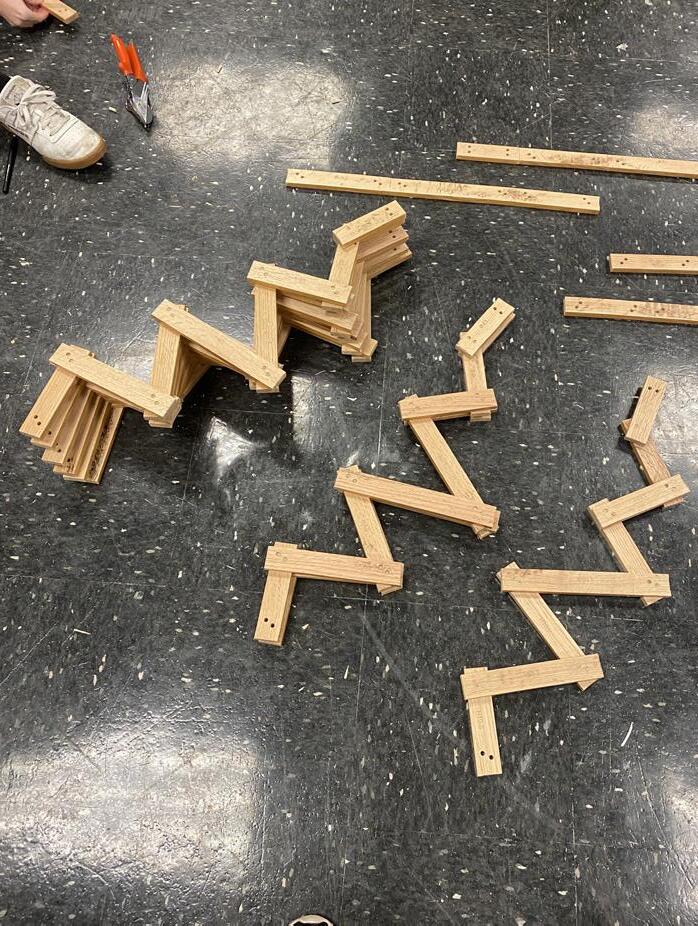
Total created strips in piece- 46
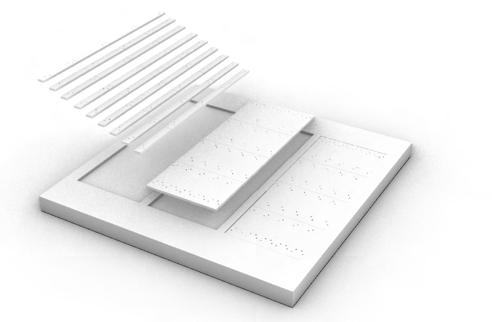
We also created a base from extra material to hold each strip down as it went through the CNC to ensure they would not move around.
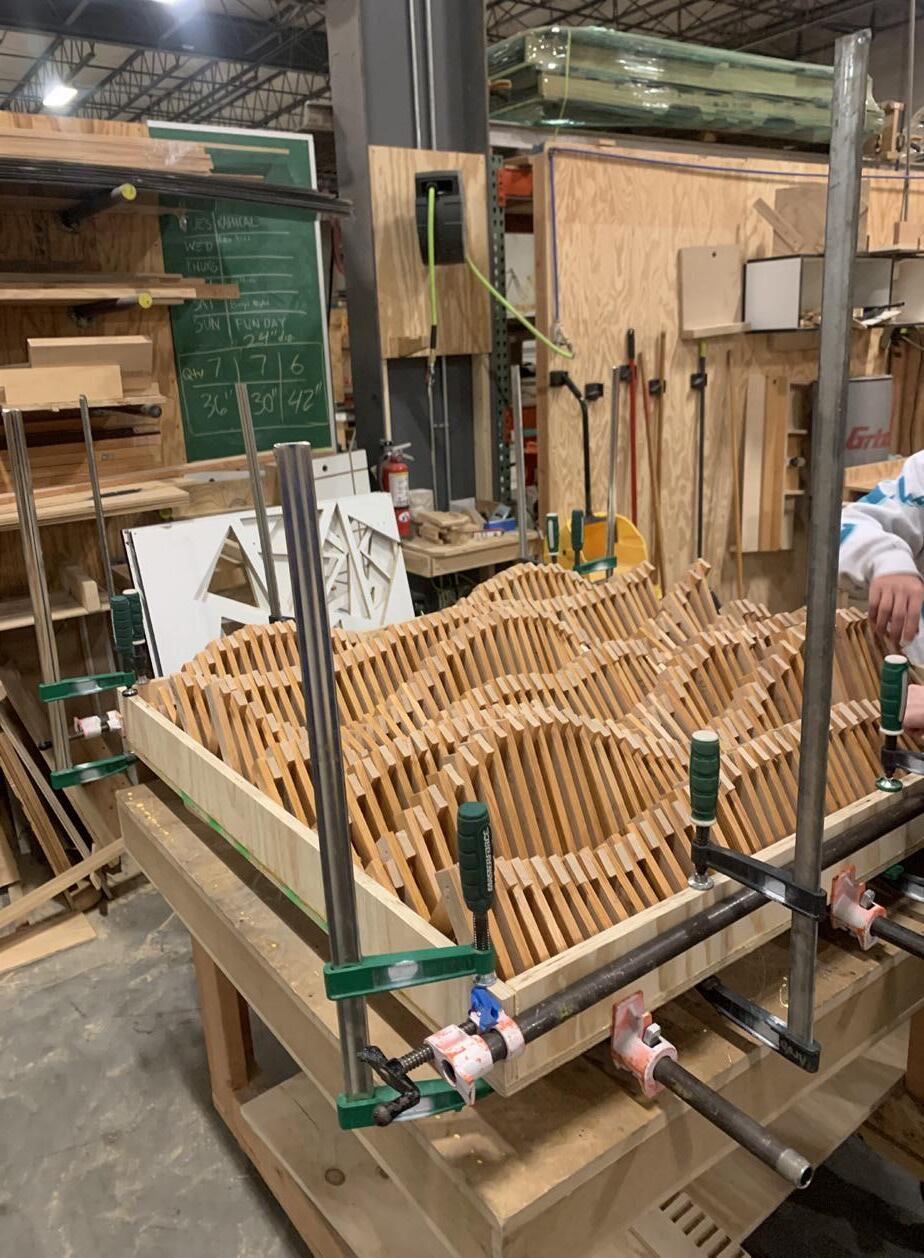
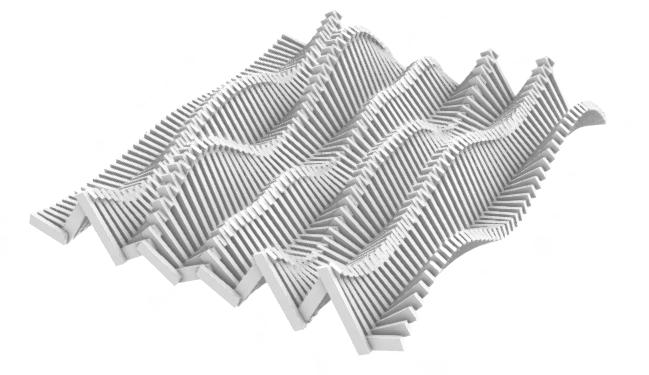
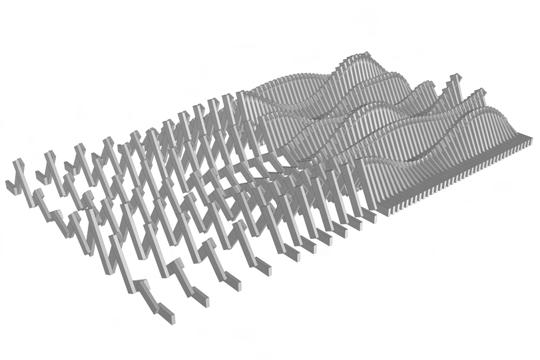
 This final piece is permanently installed in the 2nd floor lounge in Marvin Hall, the architecture building of the University of Kansas.
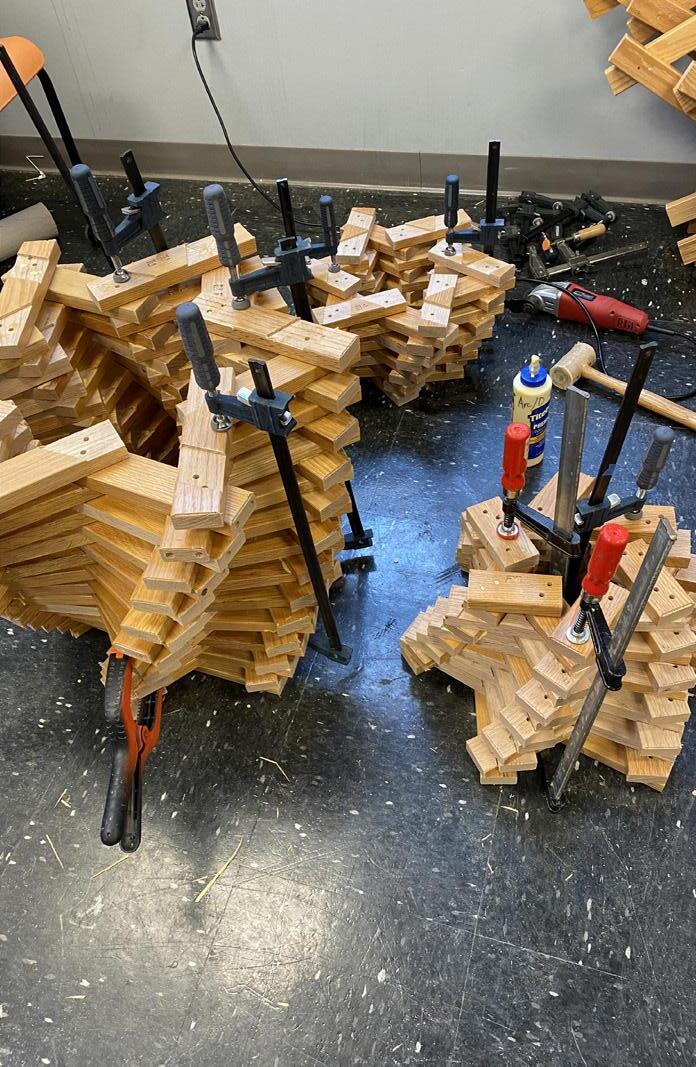
Since the prompt was to use the same method as before, the assembly process looks quite similar to Baby Grand’s. We again, explored different sizes of pieces, lengths, and the assembly process. We used Professor Hong’s program, The Shape Machine, to help us aid in testing various ideas to see which could work or fail. Once we finalized our design we had to alter our cut file for the CNC to include the new sizes, as well as the notch we decided to add so the rings could sit on top of each other, as well as it being a connection point by using glue. After that point the same process of cutting and assembly was the same as the first project until we got to stacking the rings and gluing them. We then created a stand from saw horses to display the project for the final presentation and its temporary home for the summer.
Materials used: Recycled table legs, wooden dowels, & wood glue
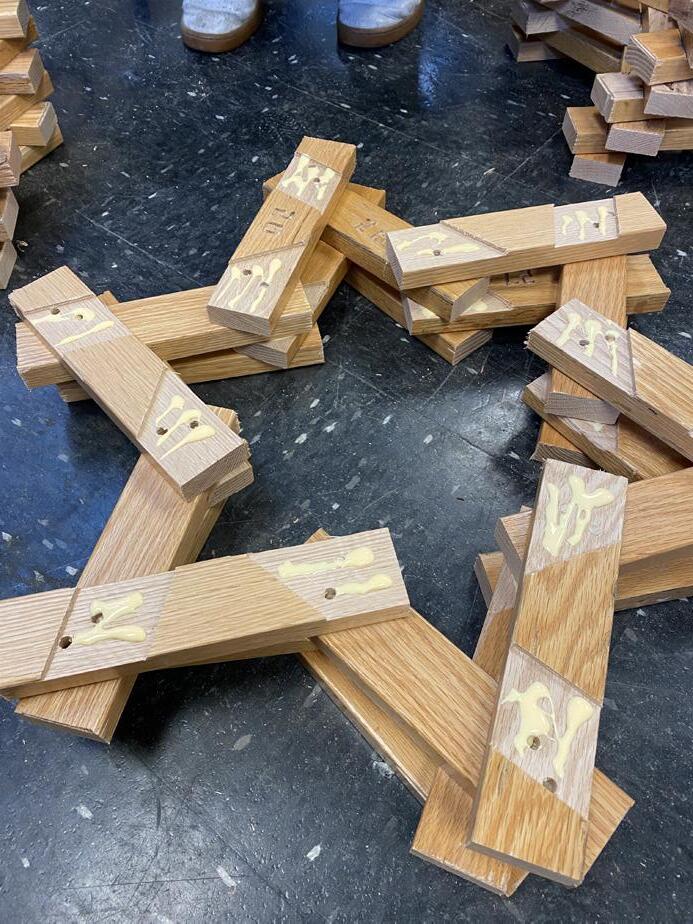
Machines used: CNC, table saw, chop saw, & band saw
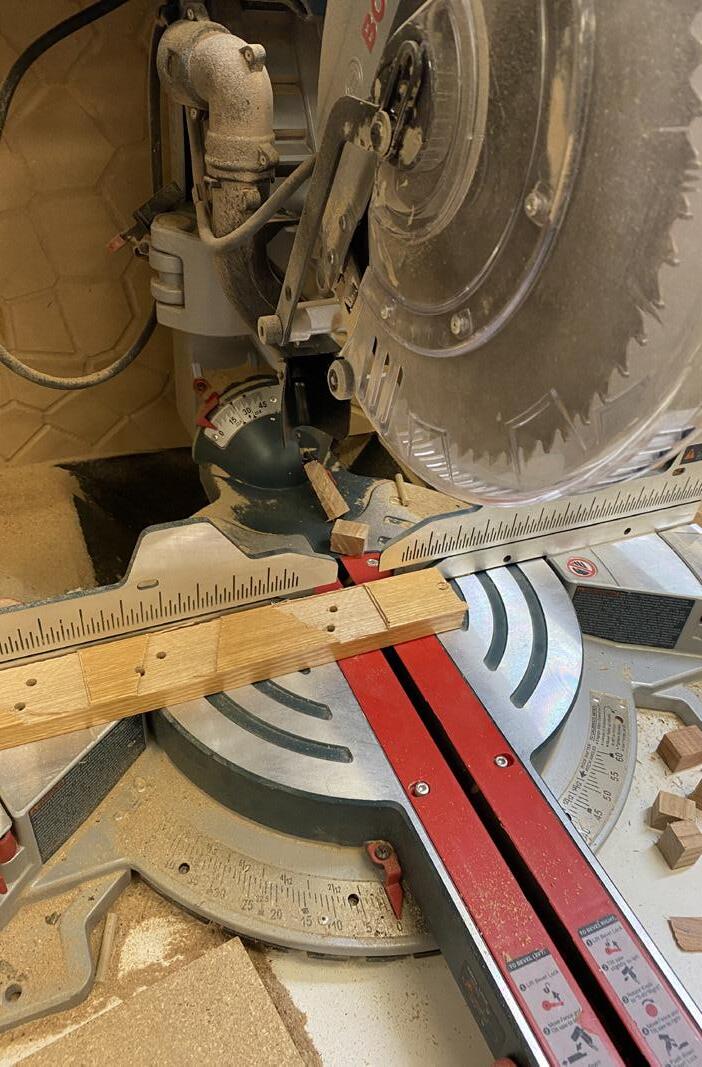
Total strips used- 142
Total rings in project -41
Total pieces per ring- 12
Total pieces in project- 492
Total dowels per ring- 24
Total dowels in project- 984
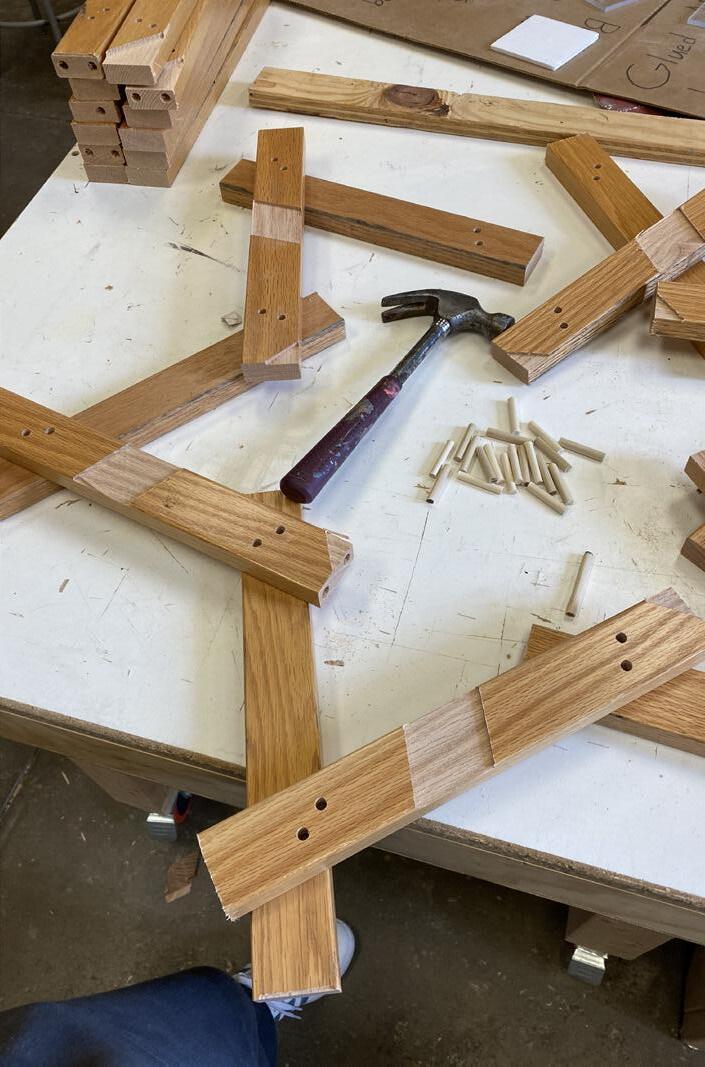
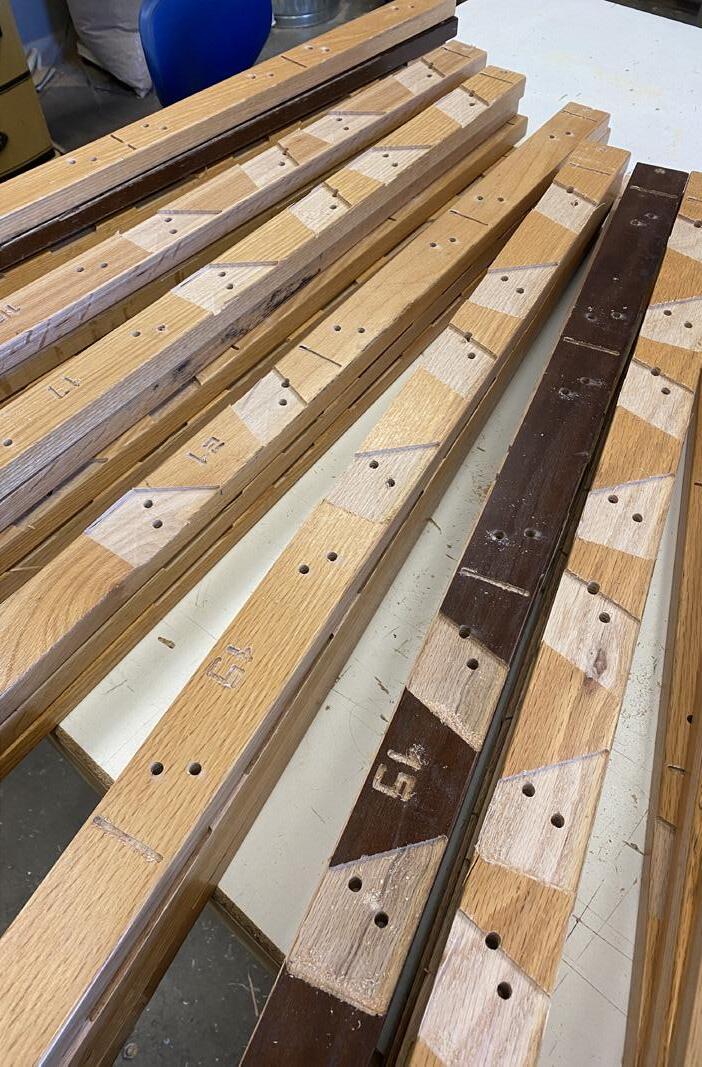
This final piece is to be permanently installed in Snow Hall, the mathematics building of the University of Kansas.
The Heritage Trail Center of Cultural Music
Place: Kaw Point Park: Kansas City, KS
Program: Community Center
Arch 209: Professor Criss
The mission of the center is to be able to show and display different music from the different local cultures and past ones that are historic to the area to the local public and surrounding areas and to bring the ability to learn and listen to music to everyone. To do this the center would provide a few spaces that go into depth to specify on music with 3 main courtyard areas outside that focus on different activities as well as indoor music rooms for people to come and practice for themselves and learn. The site programming is to draw people in into towards to the music and be a space for everyone of all ages and backgrounds to come and listen to music they are either familiar with because it is their own culture and they are excited to share it with others, or to come and learn about other cultural music as well, or like an exchange of these.
Key: Airport Cemetery Churches
Circulation/entrance
Courthouses
Grocery store
Highway
Hotel
Industrial
Jersey Creek
Main roads
Post office
Public library
Railroads
Residential
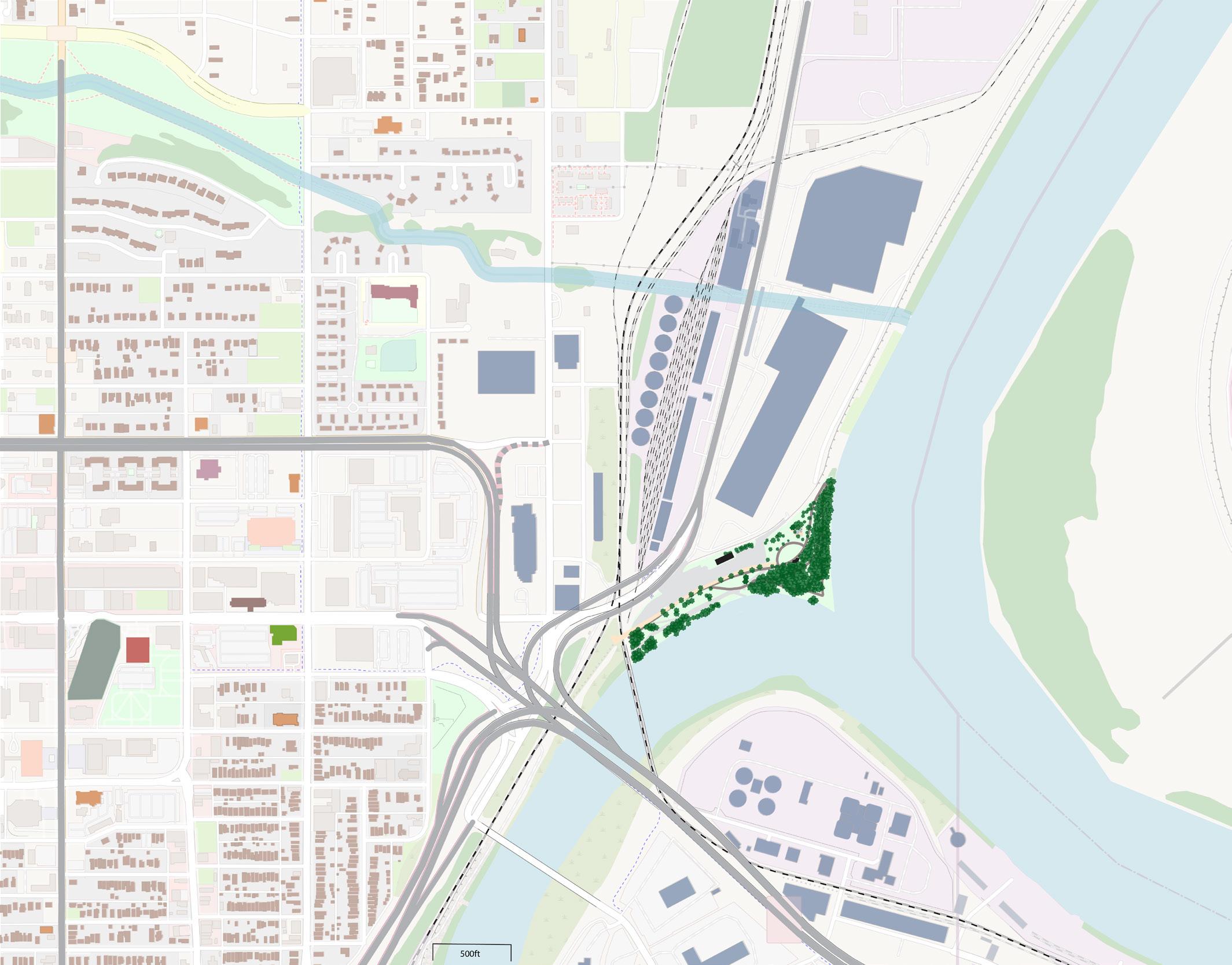
These native plants and flowers to the area are used to mask unpleasant smells in the area.
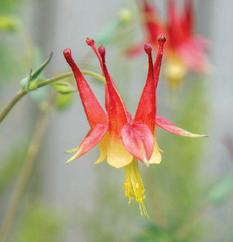
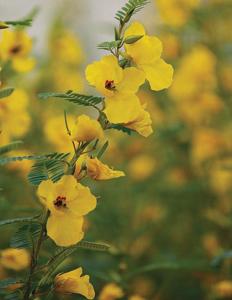
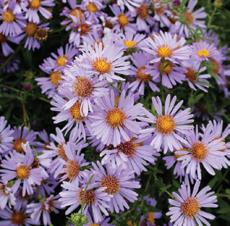
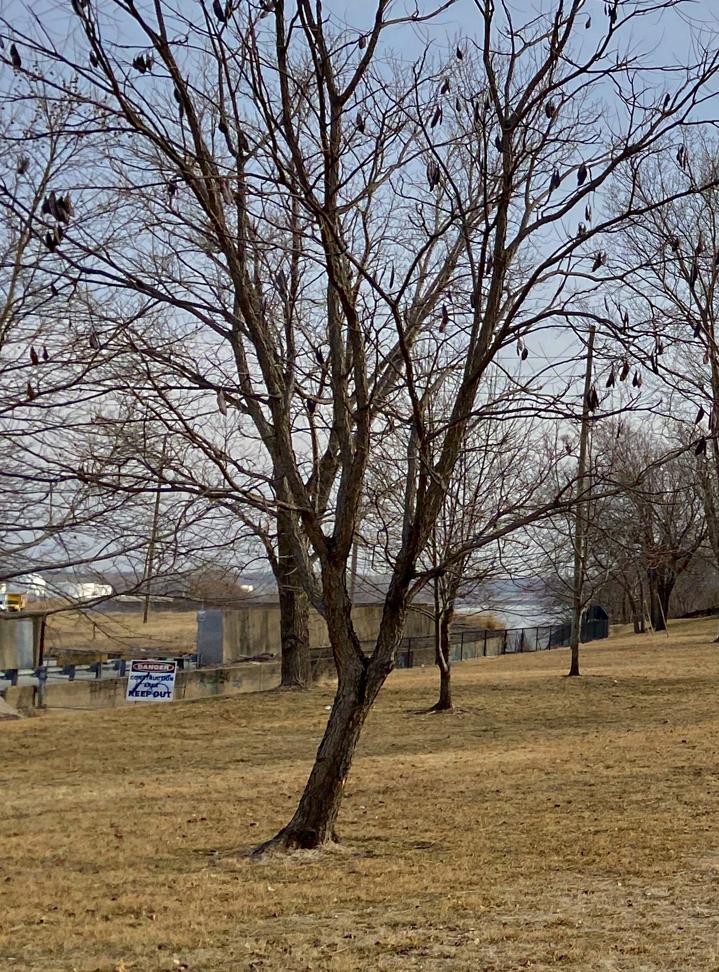
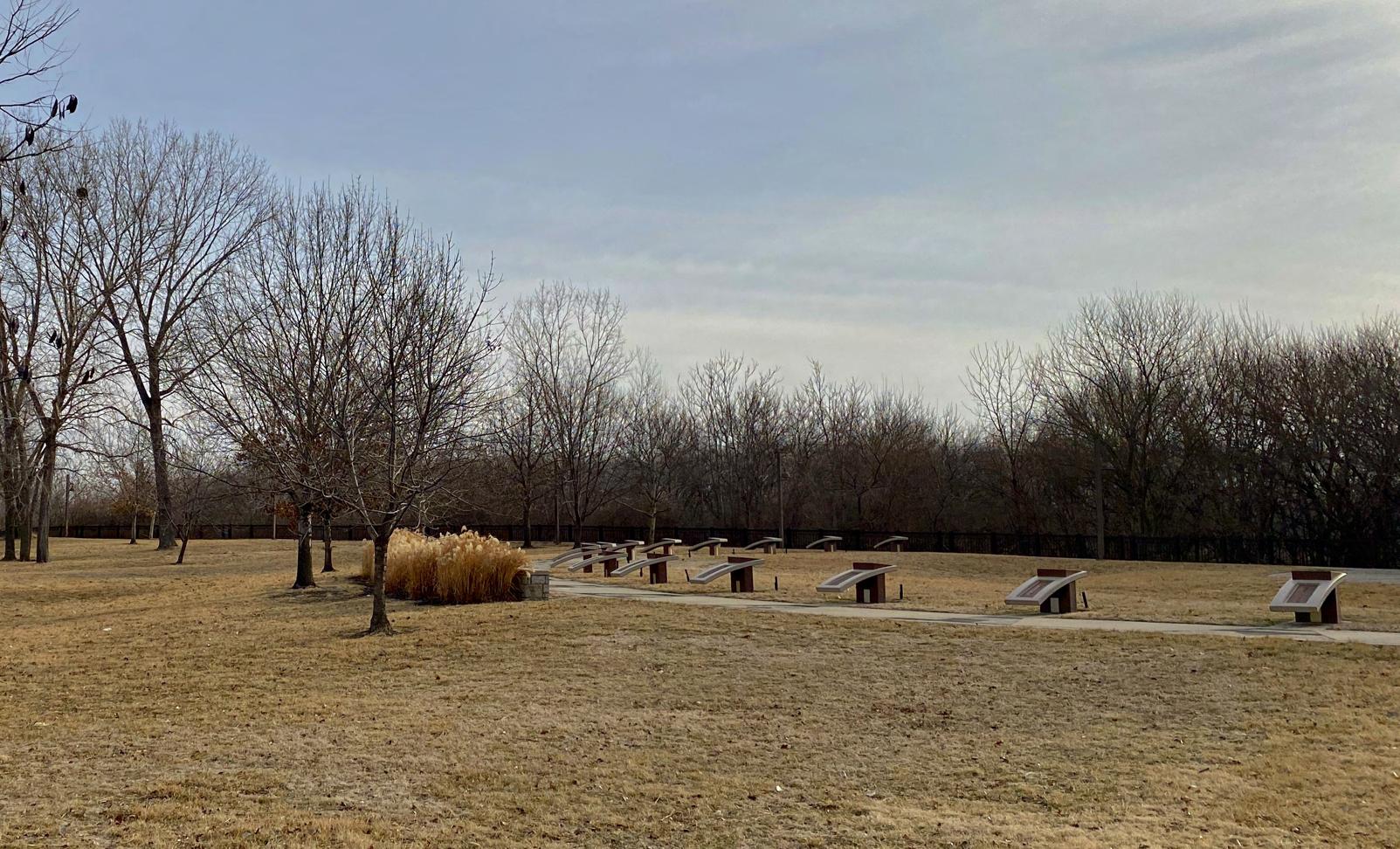
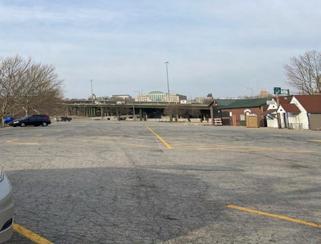
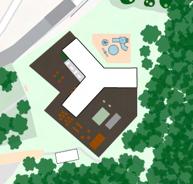
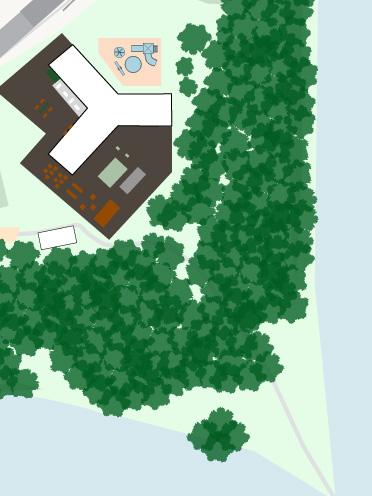
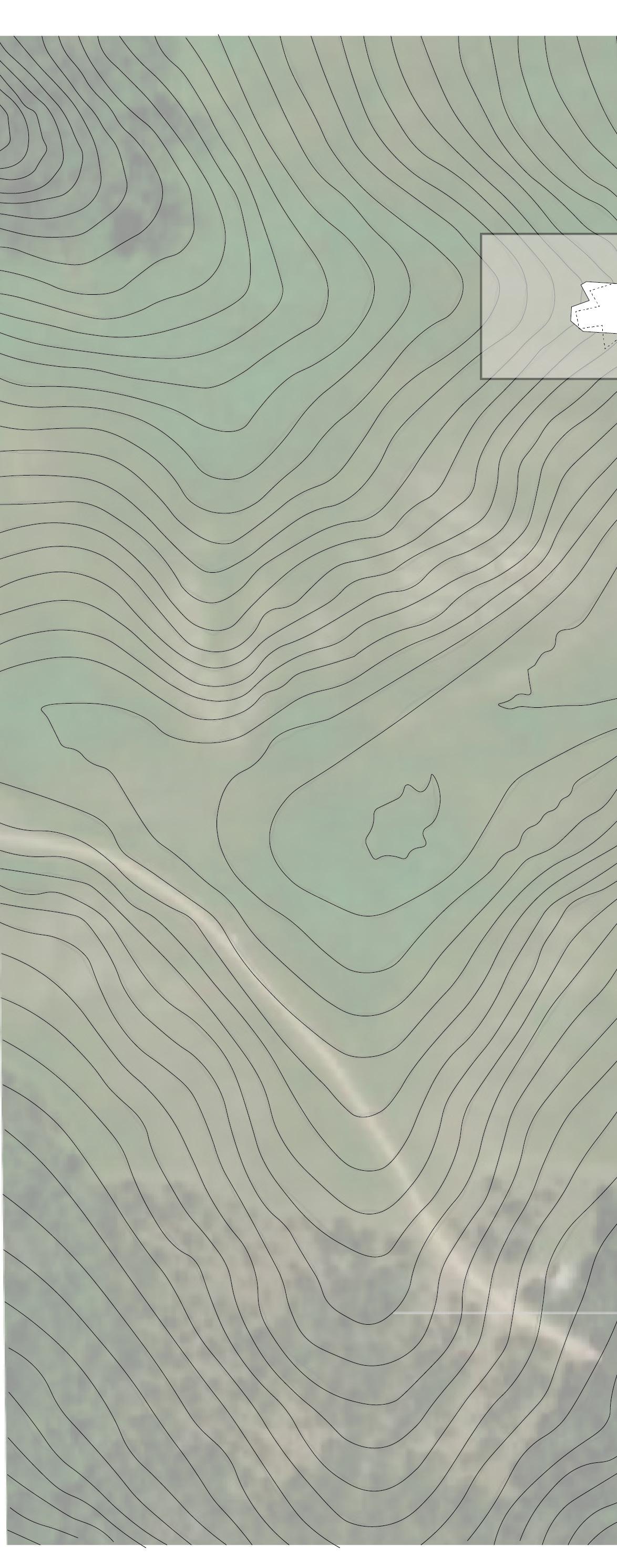
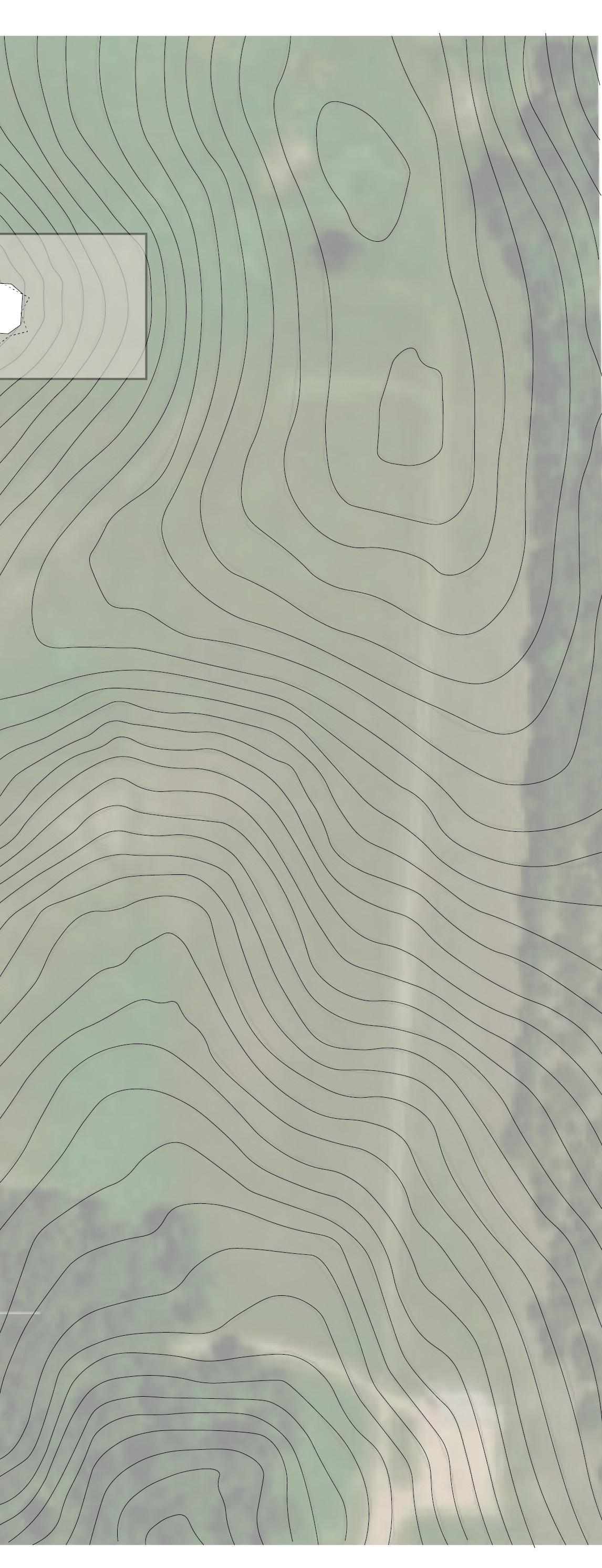
By knowing the surrounding area as well as the demographic of people going to be using the space it helps in the creating process so you can accurately serve them. By also seeing and visiting the site, this helps plan out the site and what to include like adding more trees and making use of an old parking lot, as well as knowing to put the main building away from unpleasant sounds and smells.
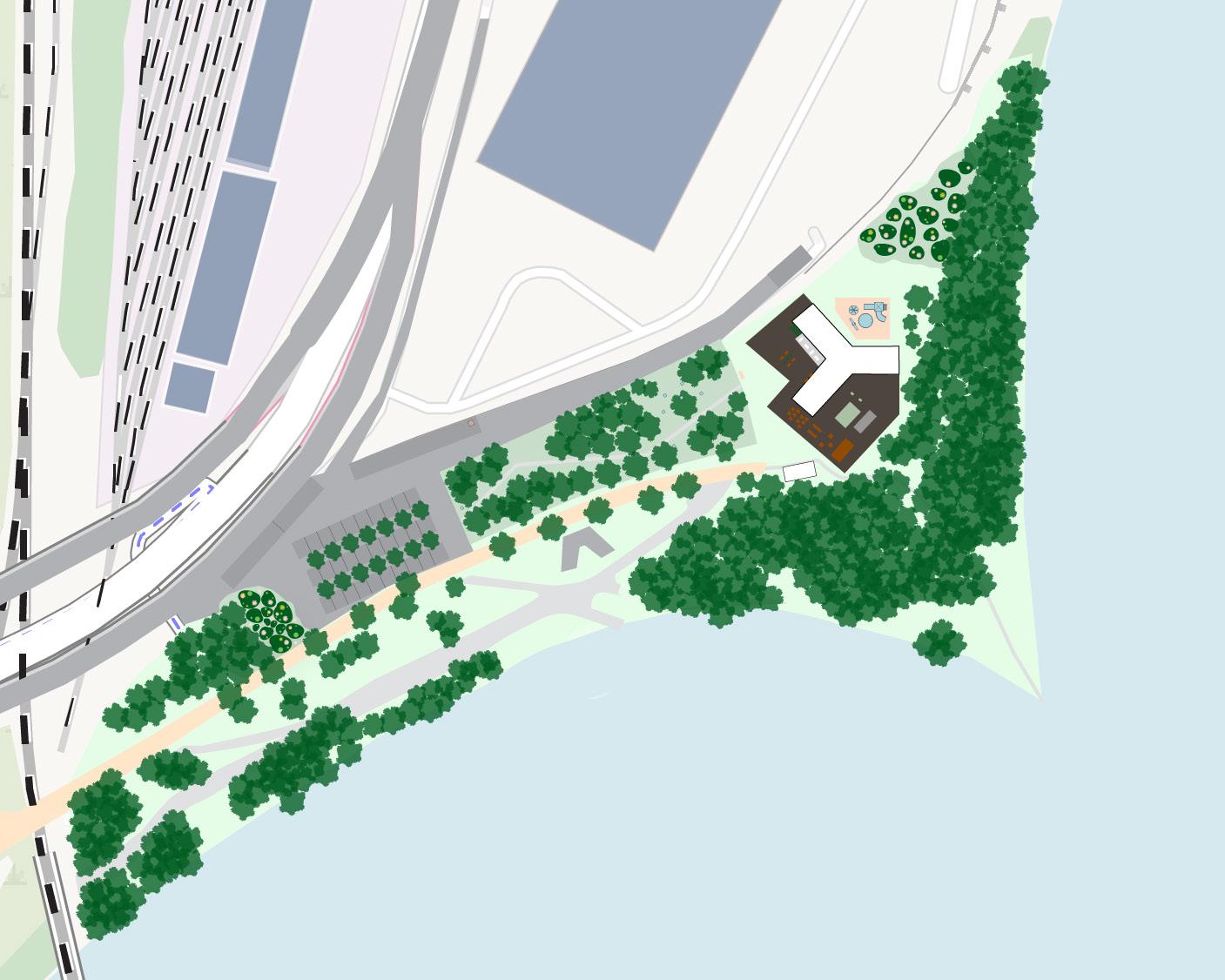
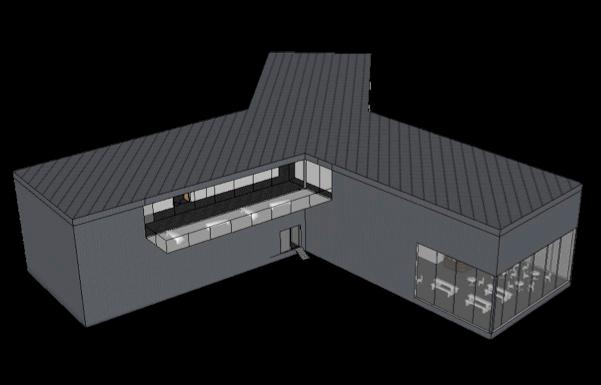
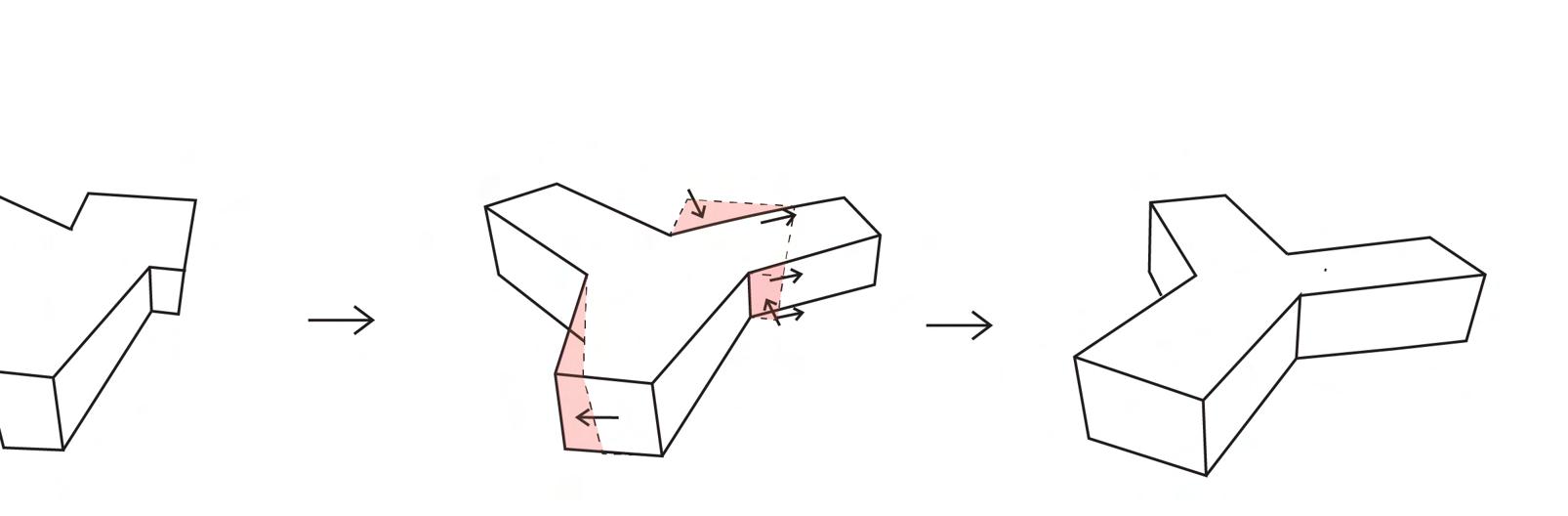
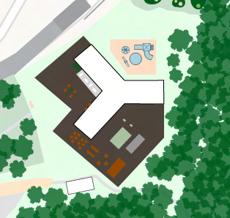
Taking into account of the site and the surrounding sounds, this was used to inspire creating a community center based around sound and music and therefore creating different spaces outside the building due to its shape to house these areas.
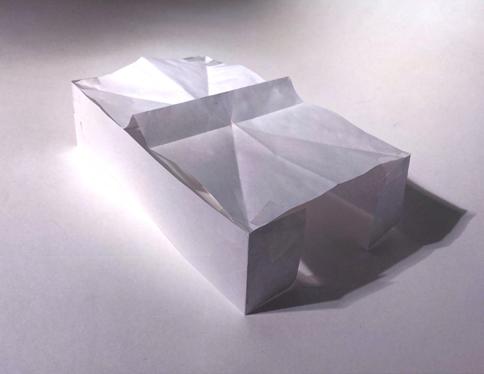
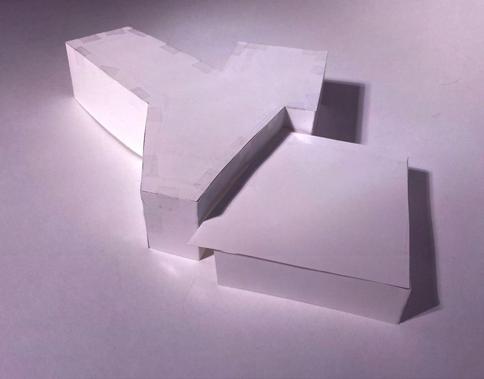
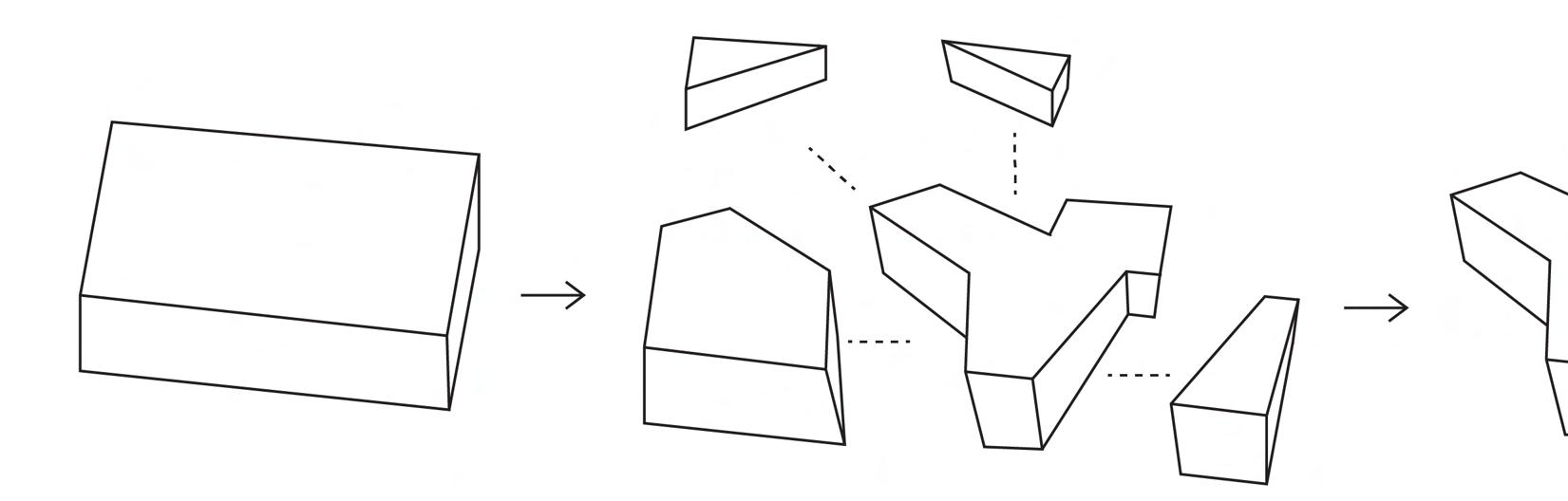
After more rounds of depth studies, more specific details like which angles to use and how the final form should look were figured out by playing with different angles to create those separate spaces for various activities.
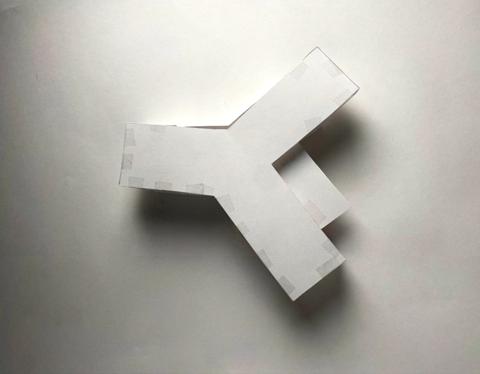
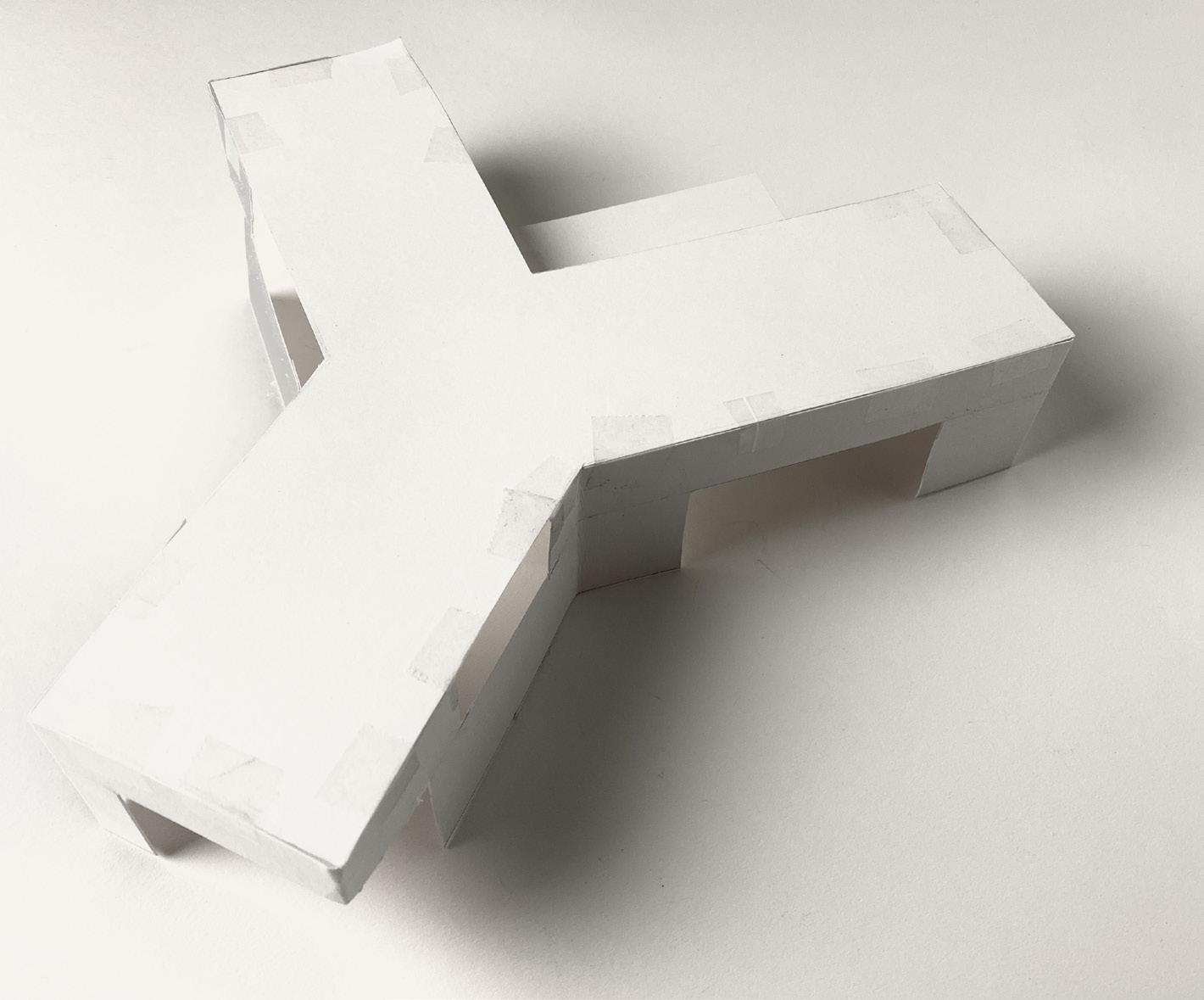
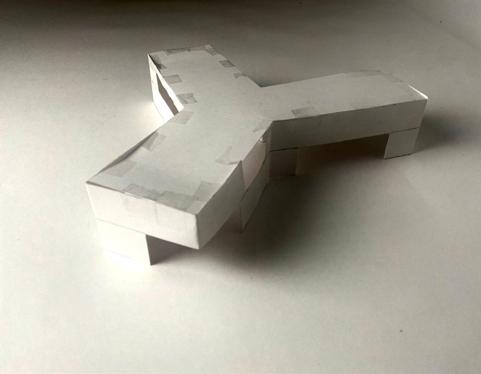
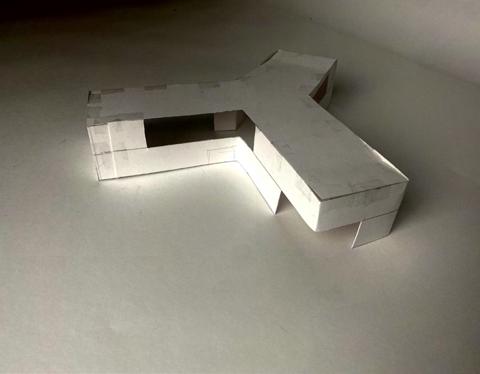
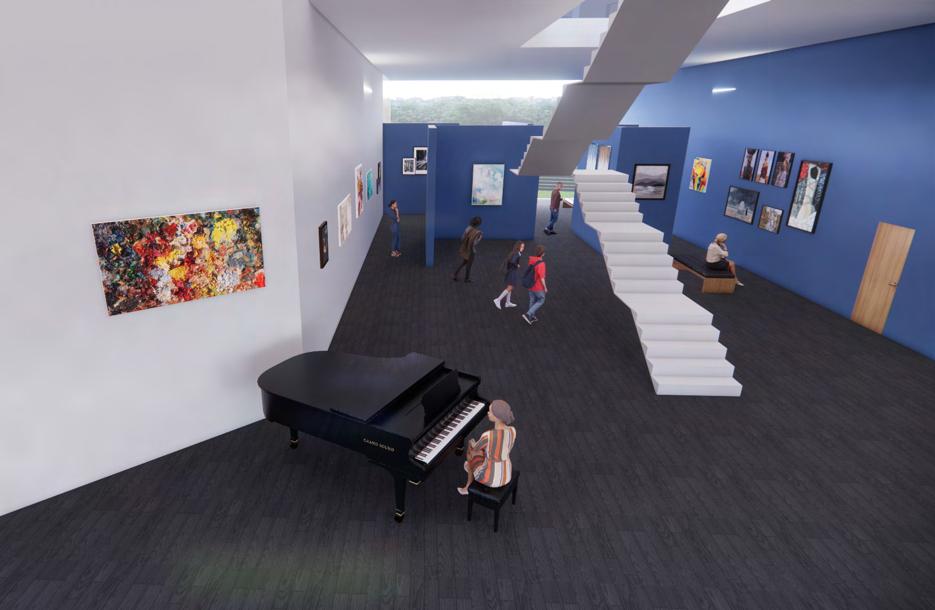 Entrance/ gallery
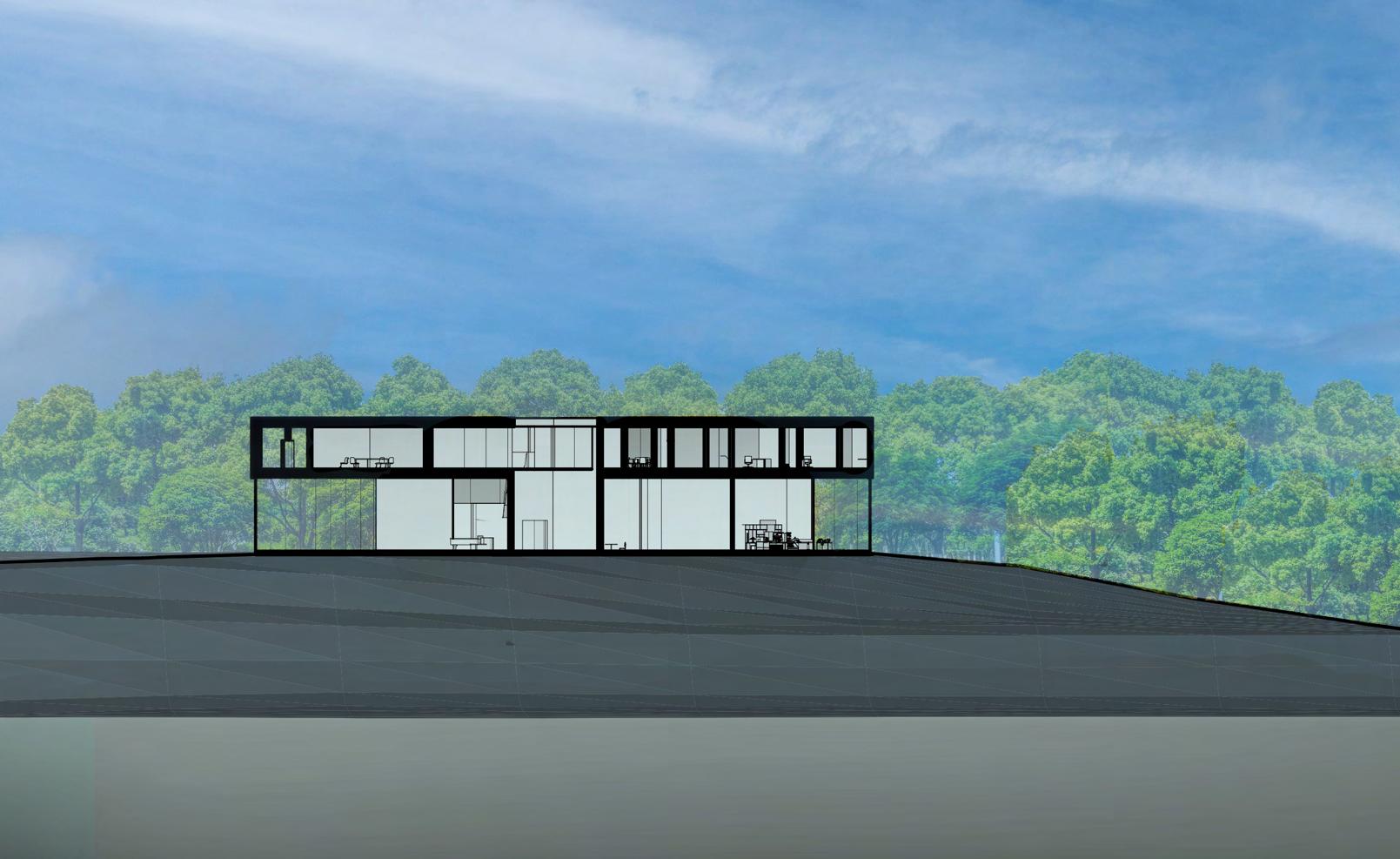
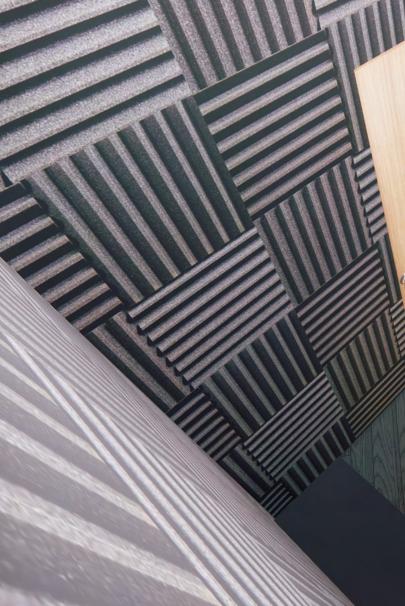
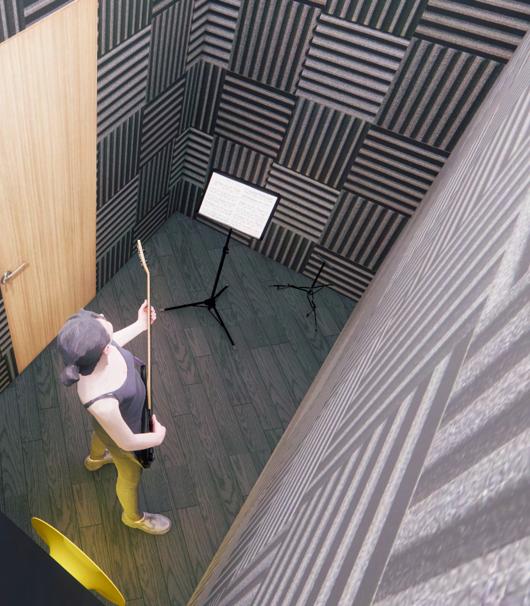
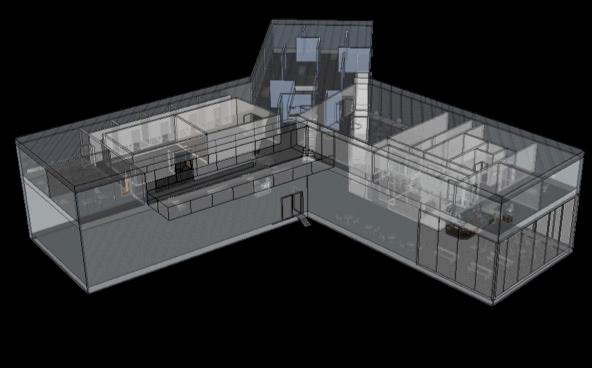
The specific wildcard spaces that focus around the theme of music and sound include music practice rooms, a recording studio, a radio room, an outdoor performance center, an outdoor bar and dance area, as well as a specific place for a piano player within the gallery.

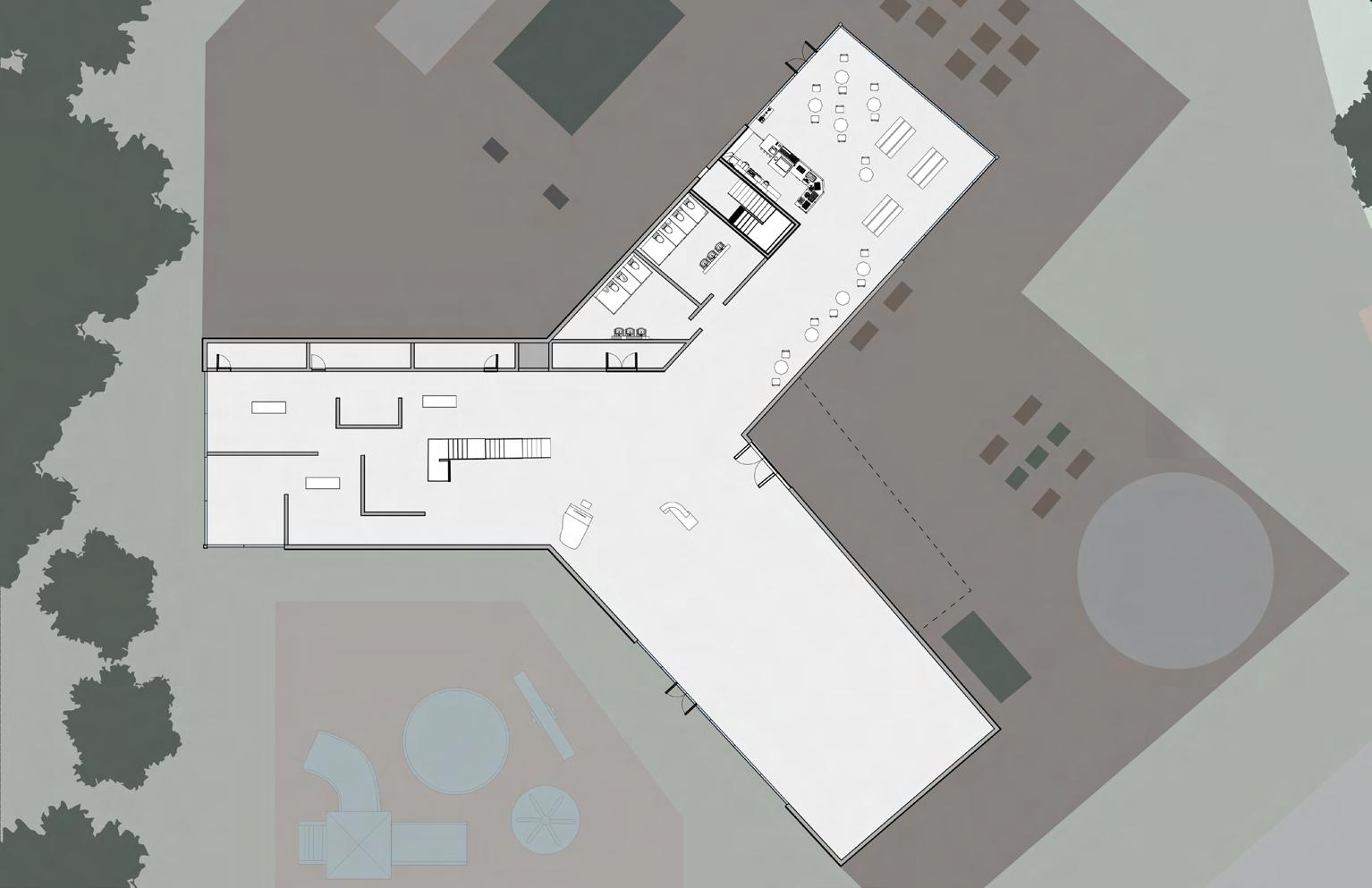
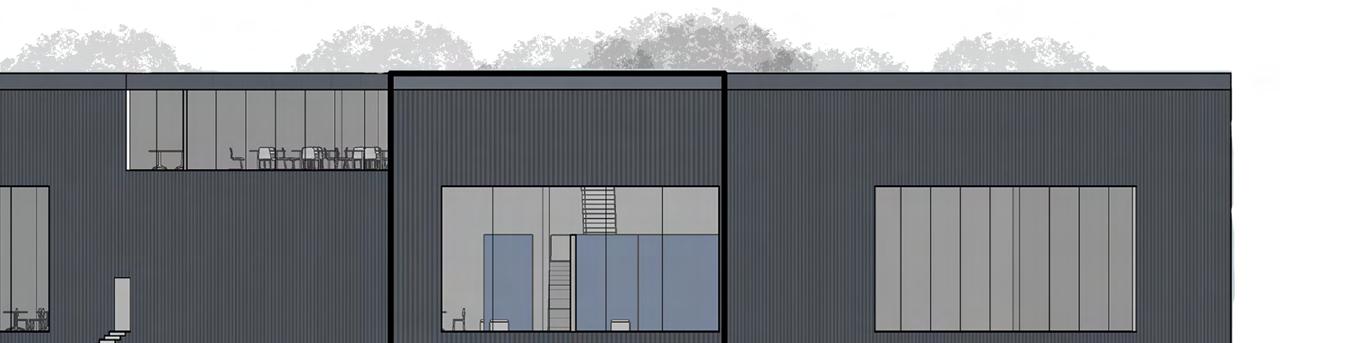
Further diagrams help show how the building and form are put together as well as the layout with the programming.





Place: Rockefeller Native Prairie Lawrence, KS
Program: trail center/pavilion/gathering space
Arch 209: Professor Criss
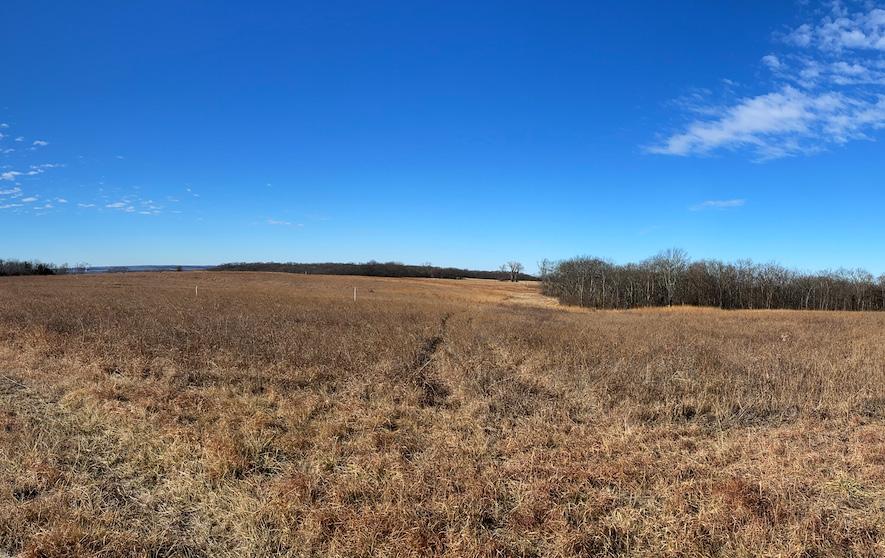
The trail center is centered on the Rockefeller Native Prairie, north of Lawrence, KS. It is a preserved and quiet prairie that provides an excellent space for people to enjoy time in nature. This project is also inspired by the KU common book, Braiding Sweetgrass by Robin Wall Kimmerer, recounting her time and relationships with nature and how this is seen historically but also currently. She tells stories about how nature is valuable, specifically how she values it as well as the community around her does, how precious it is, and how to respect and talk to it. With this trail center, the purpose is a way to enter nature respectfully and find peace within it, and learn how to correctly interact with nature as well.
winter winds
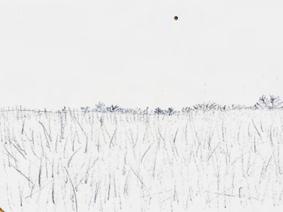
sunset
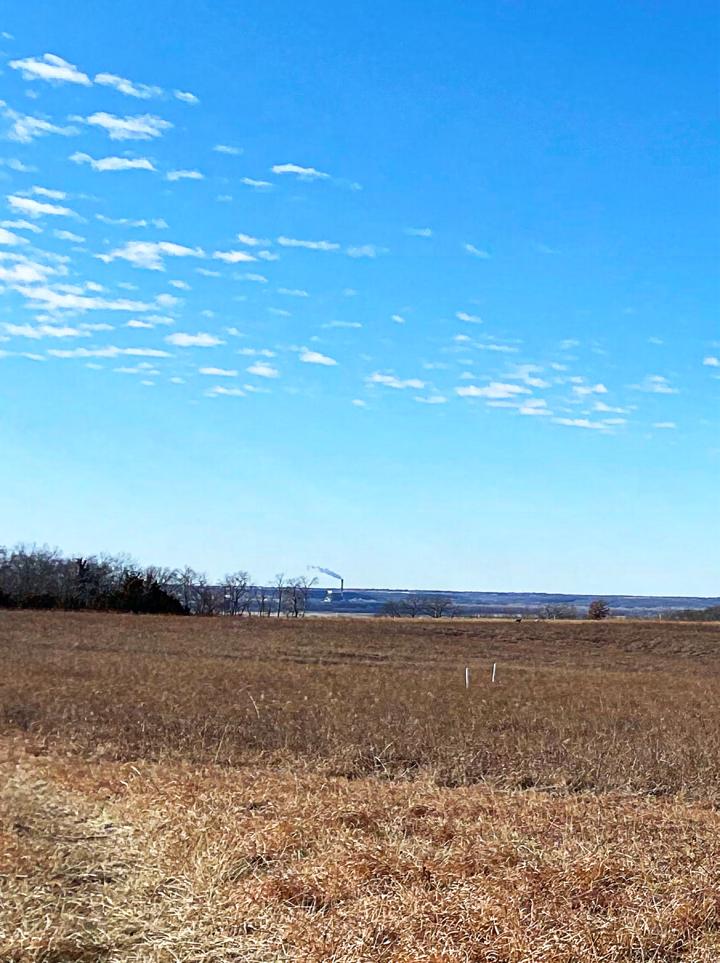
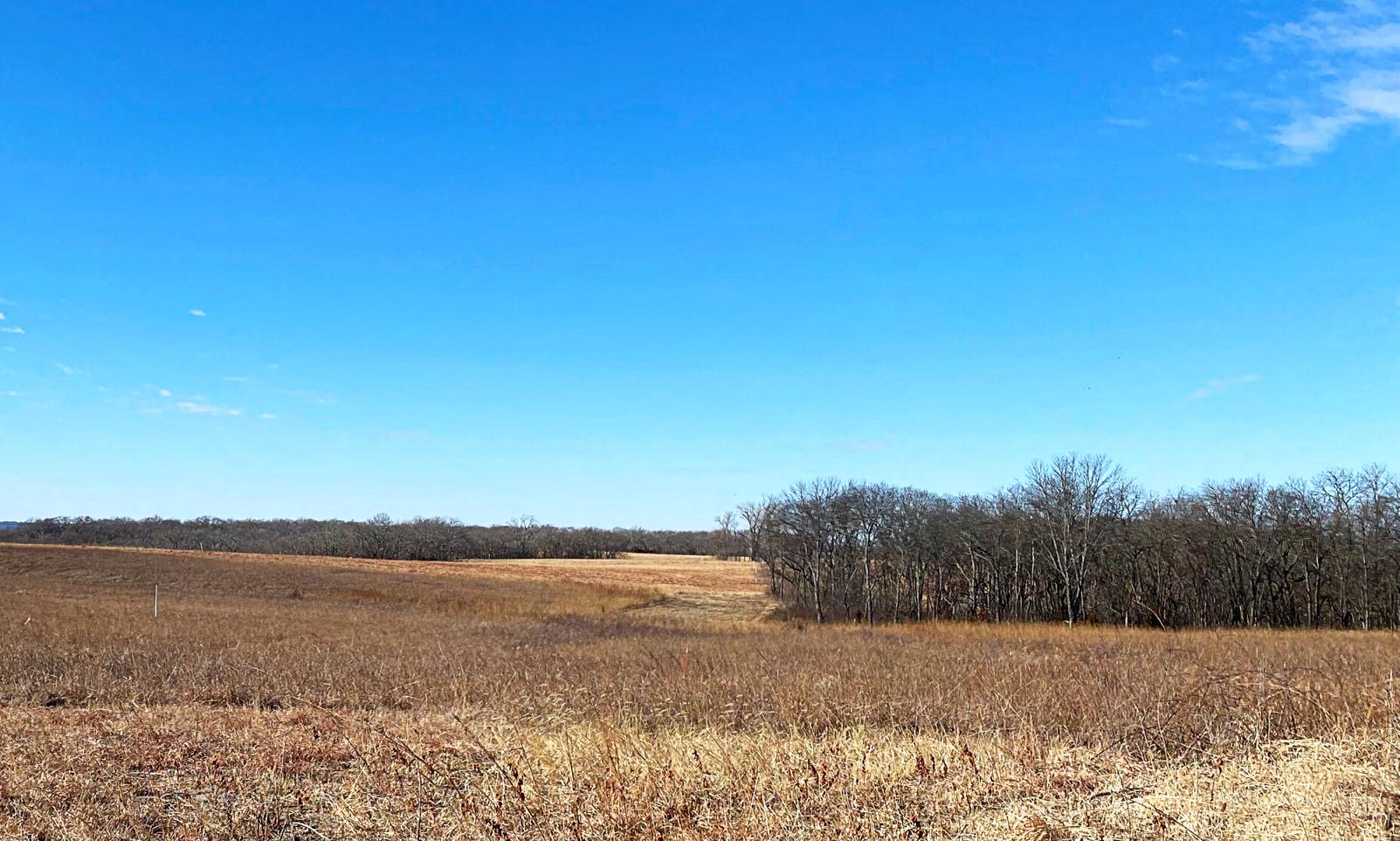
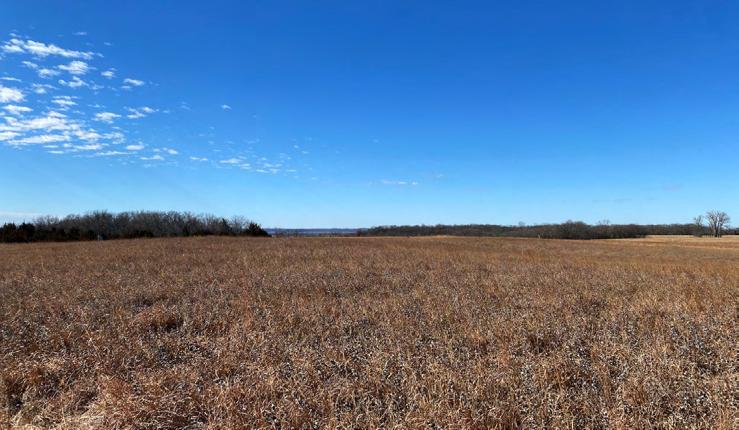
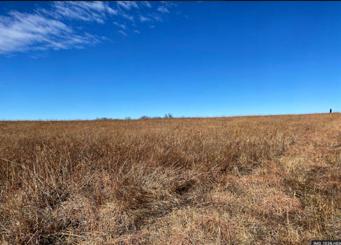
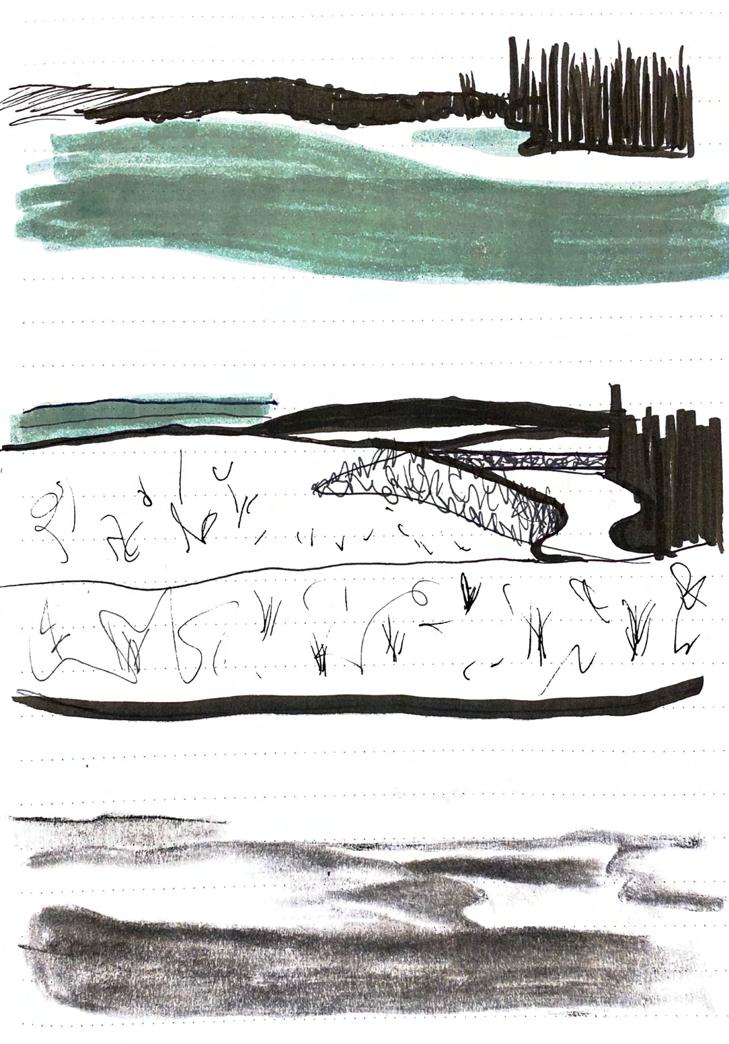
This view presents a peaceful landscape, where one can see for miles. This project is directly connecting the visitor to this place.
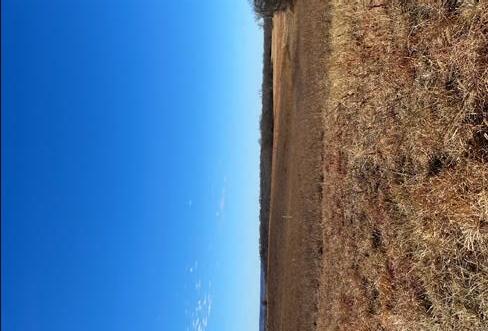
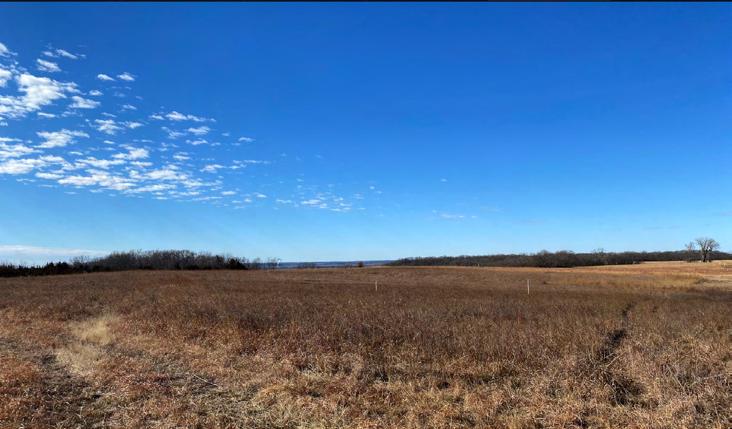
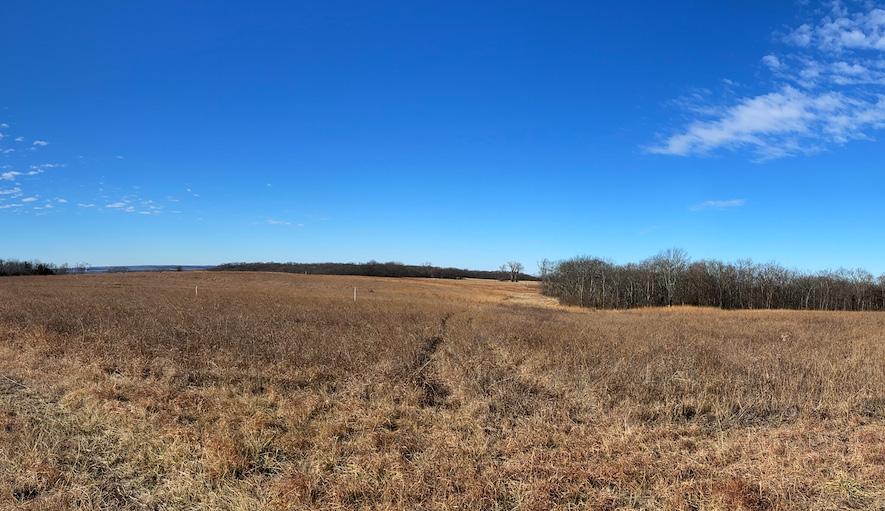
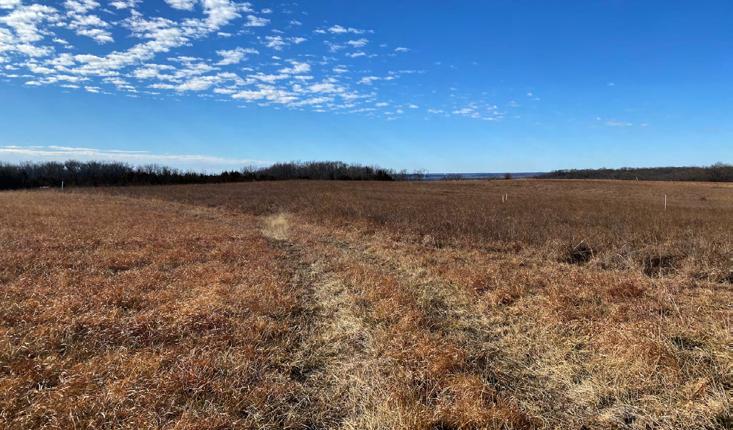
The area is largely open so there is no shade unless you are against the surrounding tree lines
site 90’ 1 2
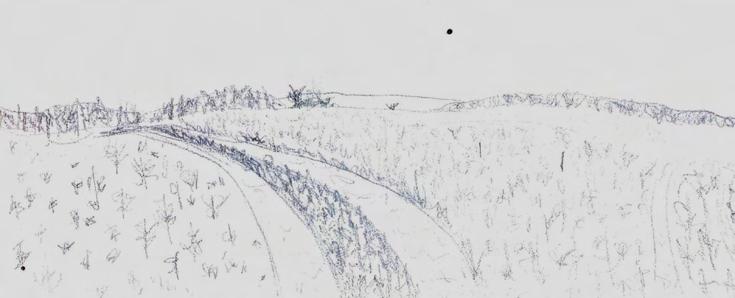
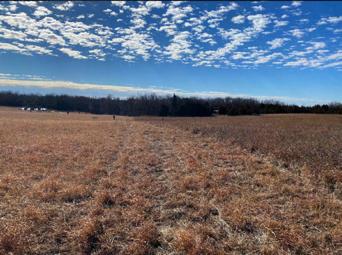
The emergence of the horizon as you make your way up hill summer winds 3

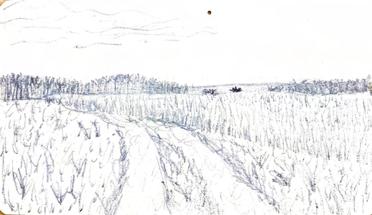
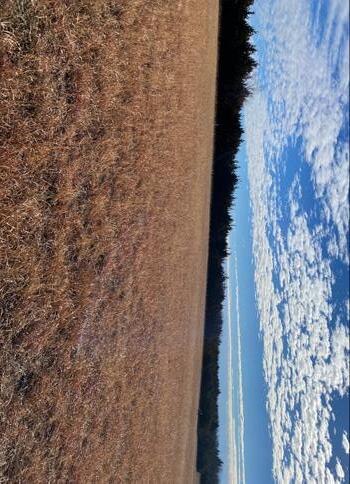
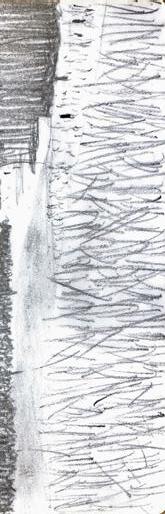
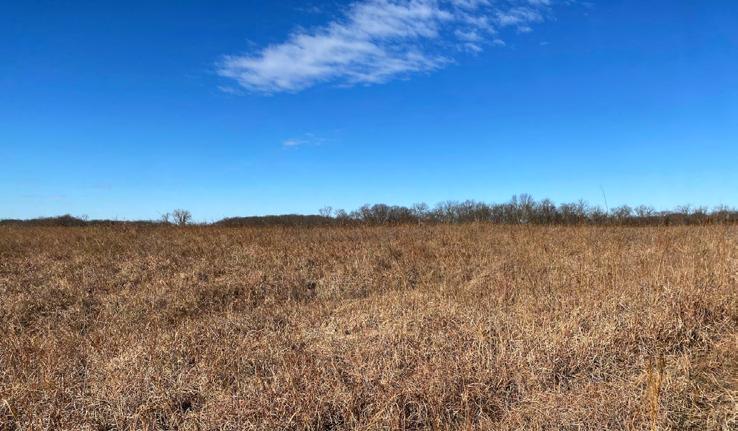
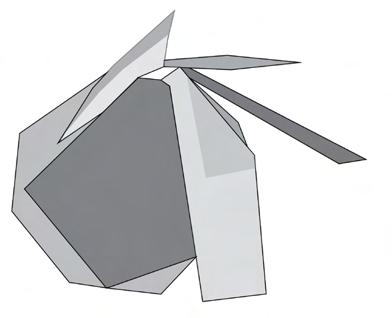
After seeing the design that would mimic the curving topography to match the site not work due to it limiting an entire side to see the rest of the prairie, and exploring how sun, light, and entrances can affect the model, the petal-like design was chosen to move forward with.
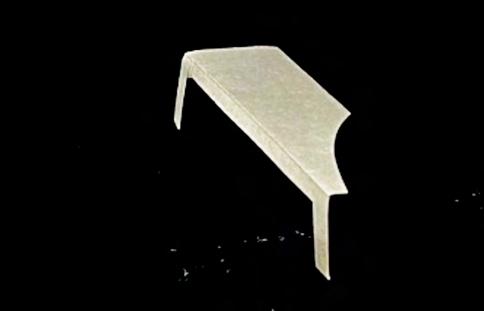
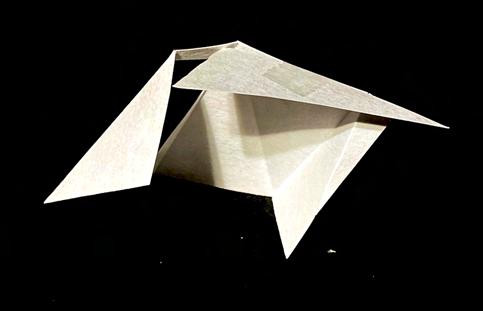
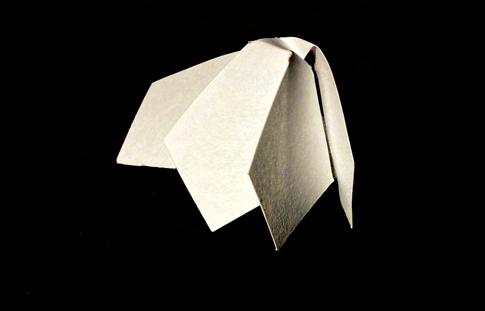
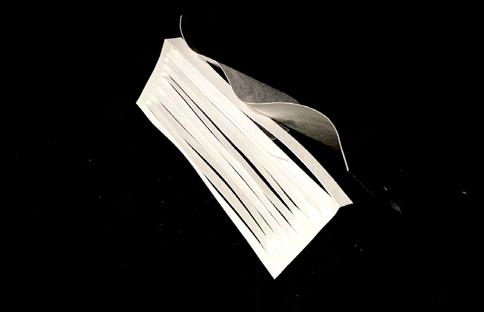
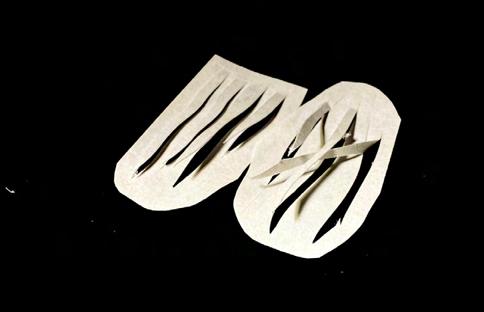
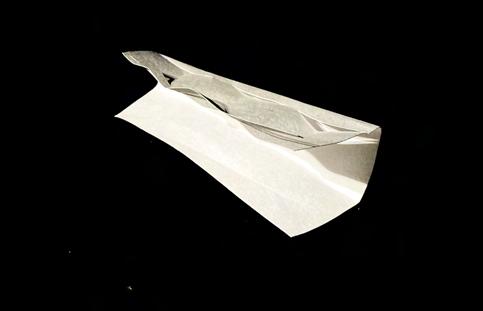

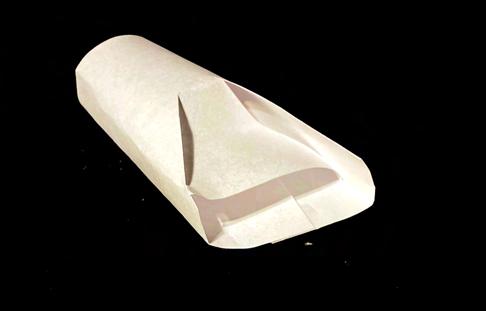
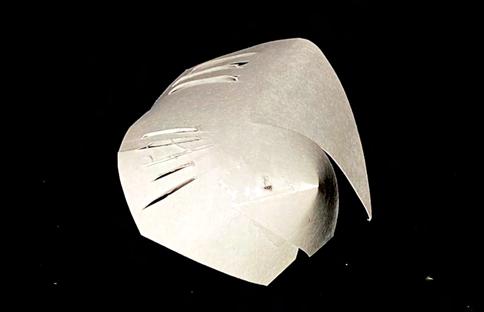
During designing, the idea of something organic was sought after to flow with the site, the ideas of nature, and the theme of Braiding Sweetgrass: don’t overtake nature but be peaceful and respectful towards it.
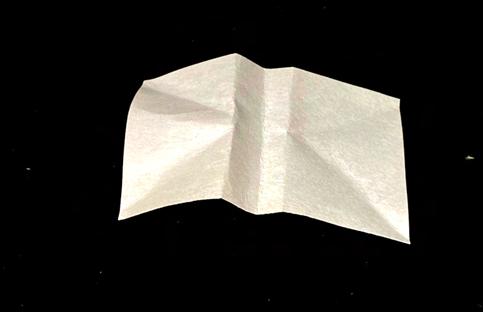
After scaling it to the correct size large gaps appeared between layers that would let in too much of the elements and sun so more layers were added.
Before deciding to add 5 ‘petals’, a top was added.
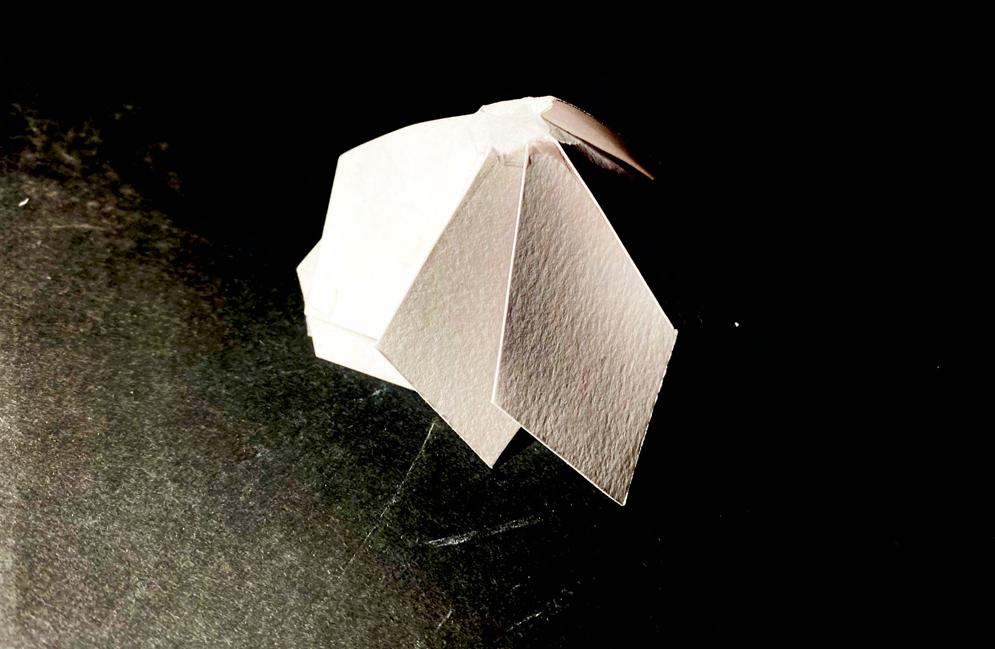
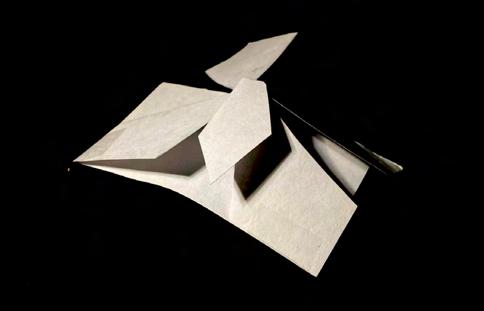
The final decision to continue with after only adding 1 more layer to the design and formatting a pattern for each layer.
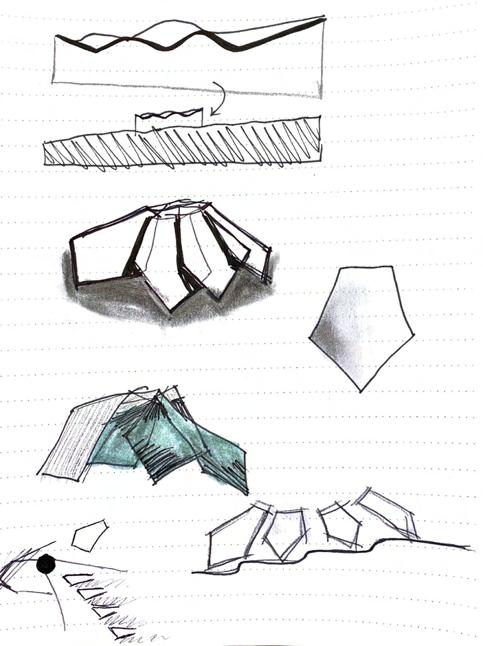
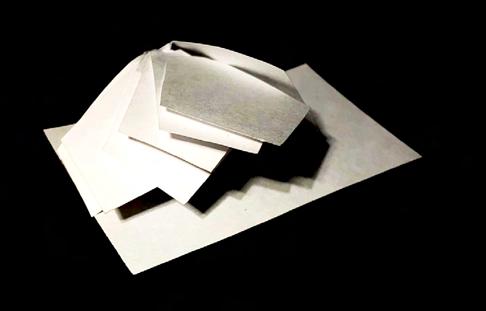


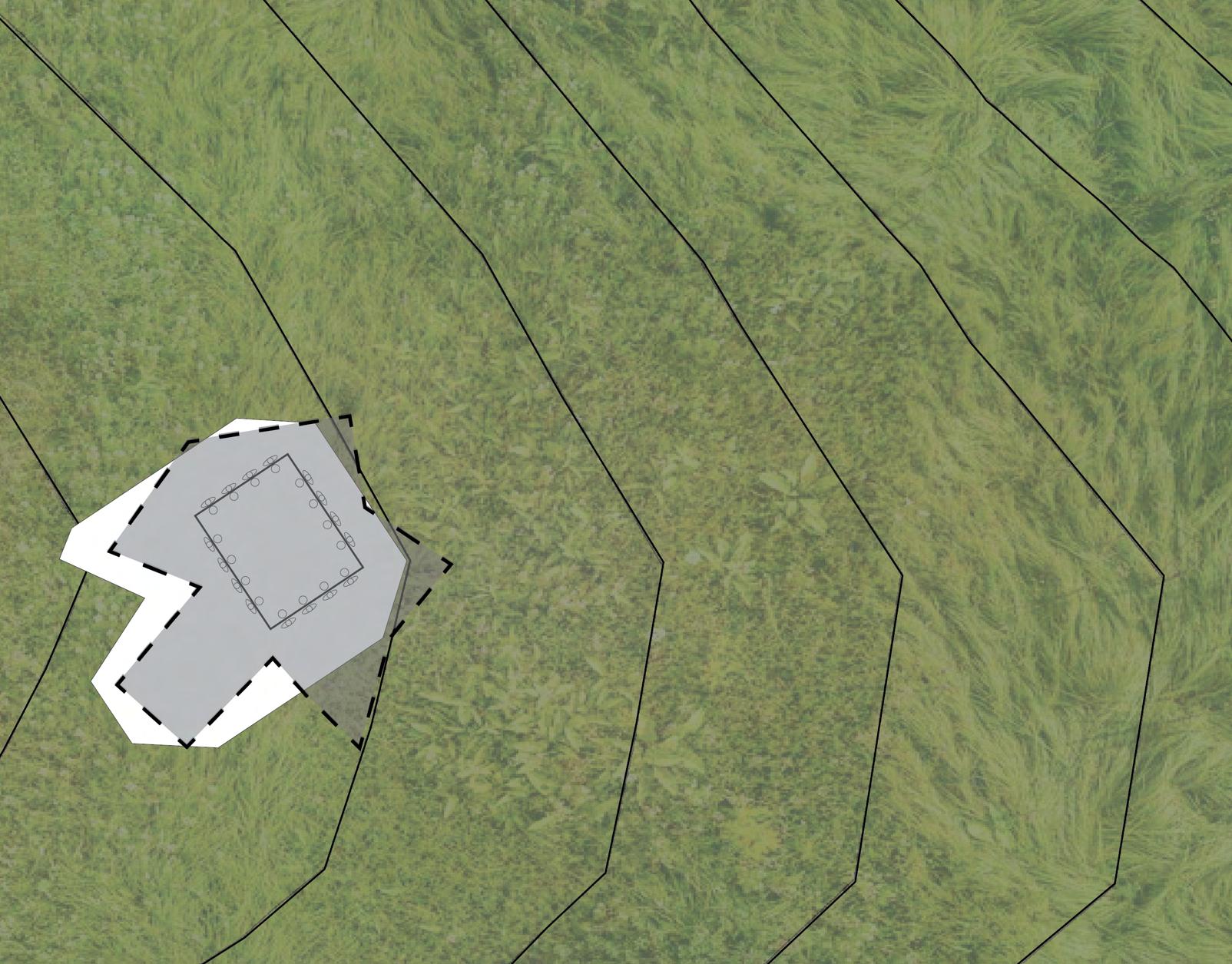
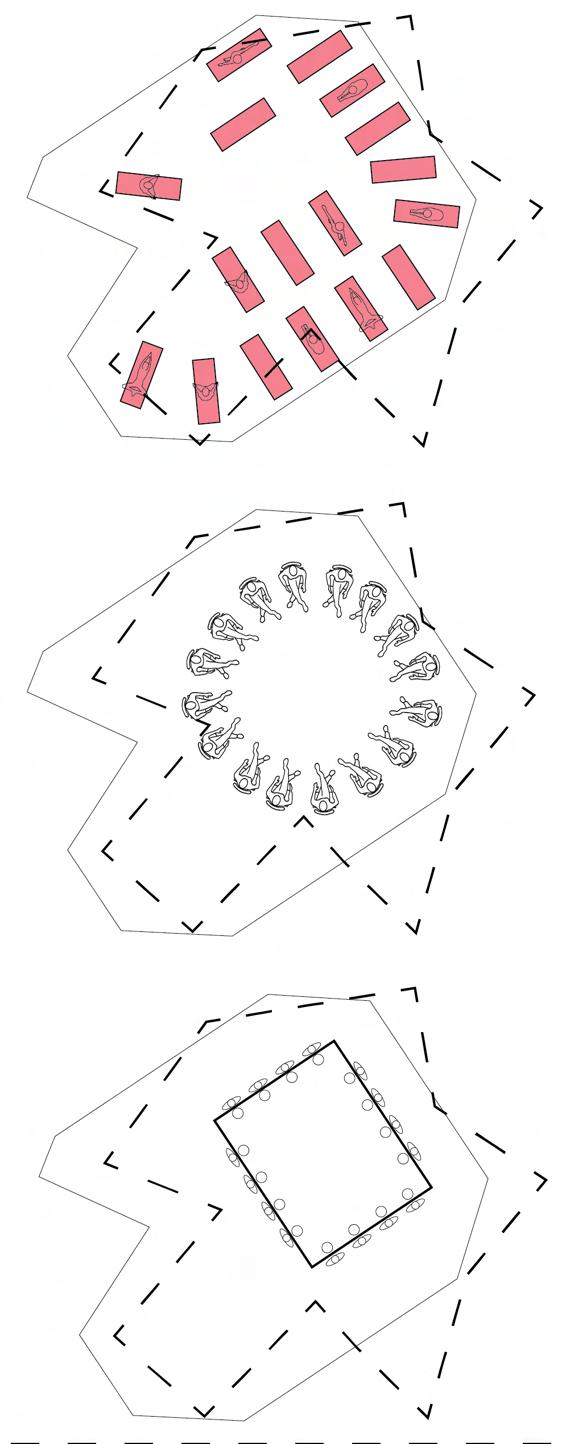
One main prompt of this project is to create a space that can allow an area for 16 people to gather to either partake in yoga sessions, sitting, or dining (not simultaneously). After using the scale of different objects like yoga mats, dinner plates, and humans, the proper size of an area that is needed could be determined. From there the floor plans were rearranged to fit within the model as well as create a combination that worked with each other.
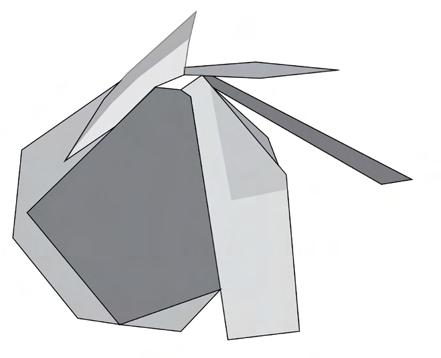
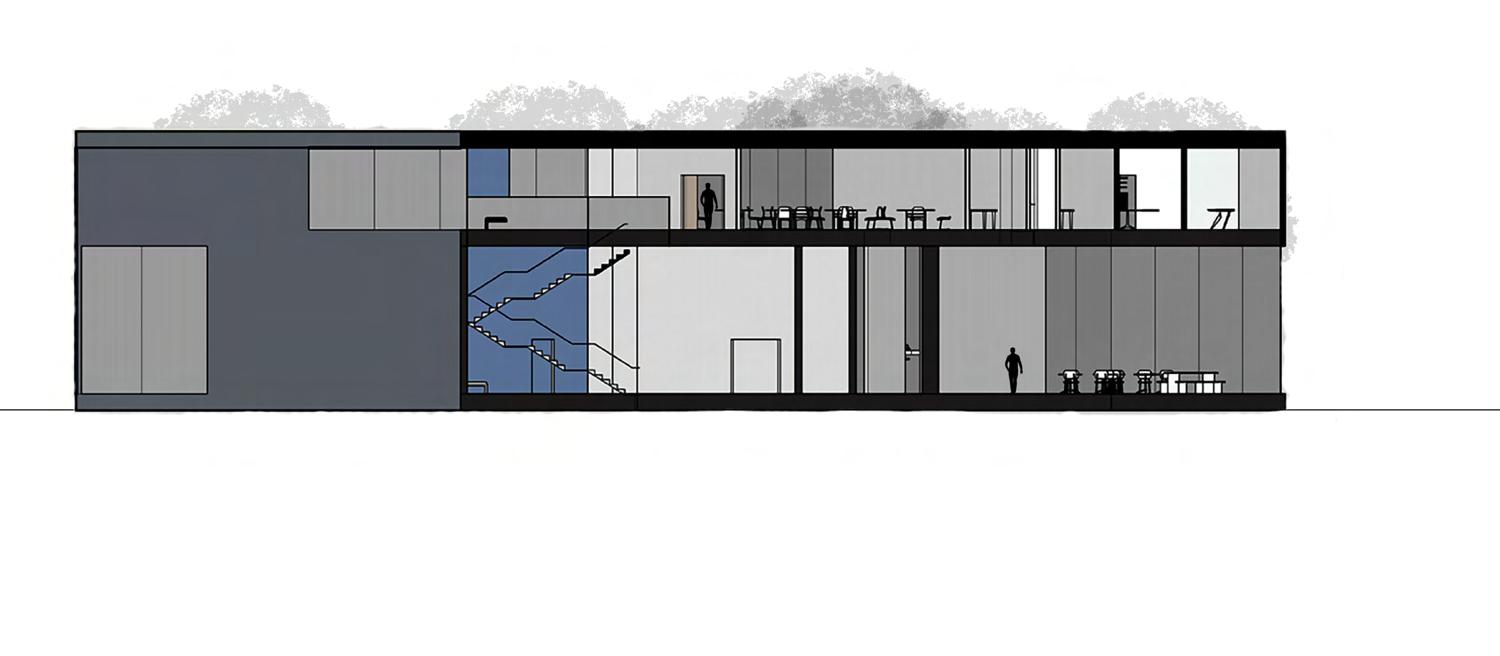
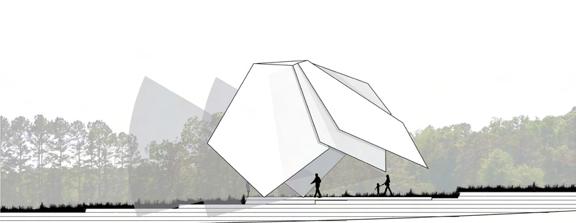
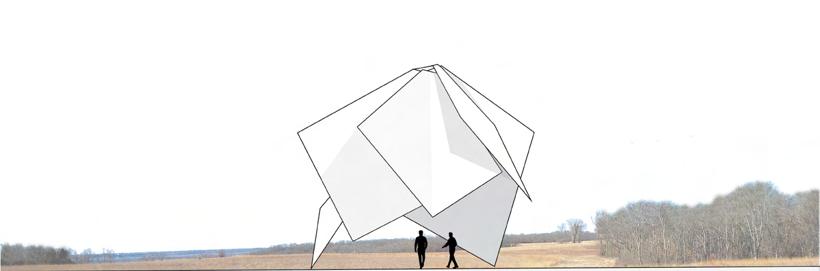
North elevation to illustrate the view of an approaching visitor
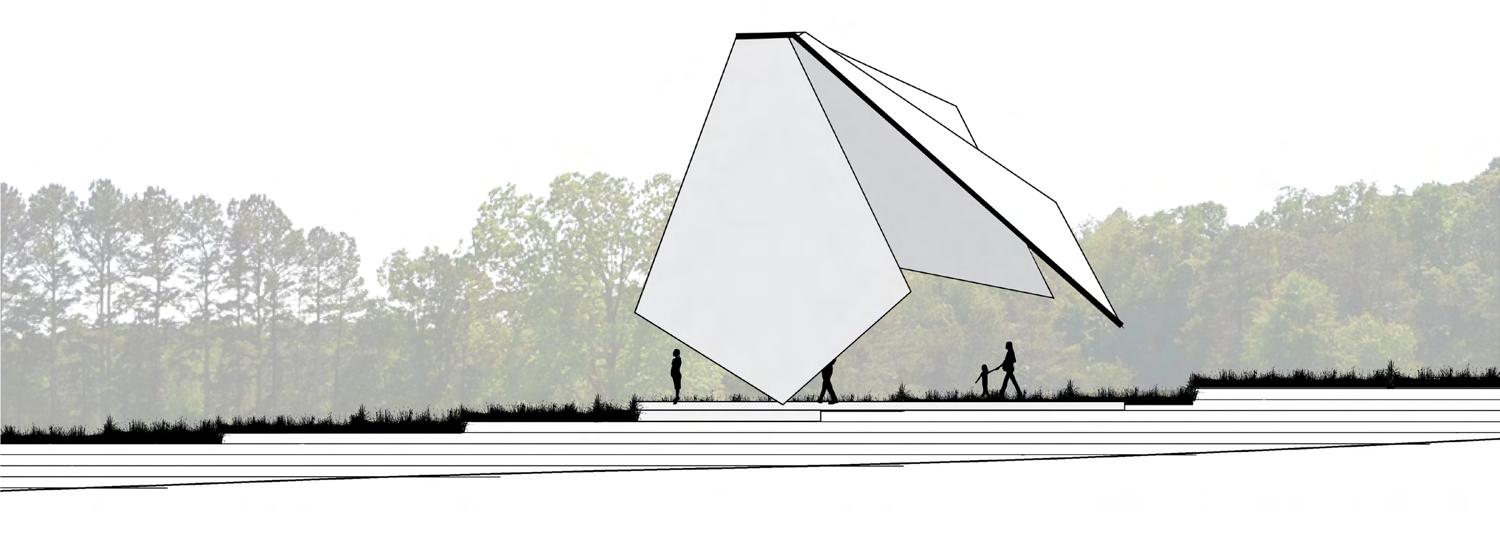
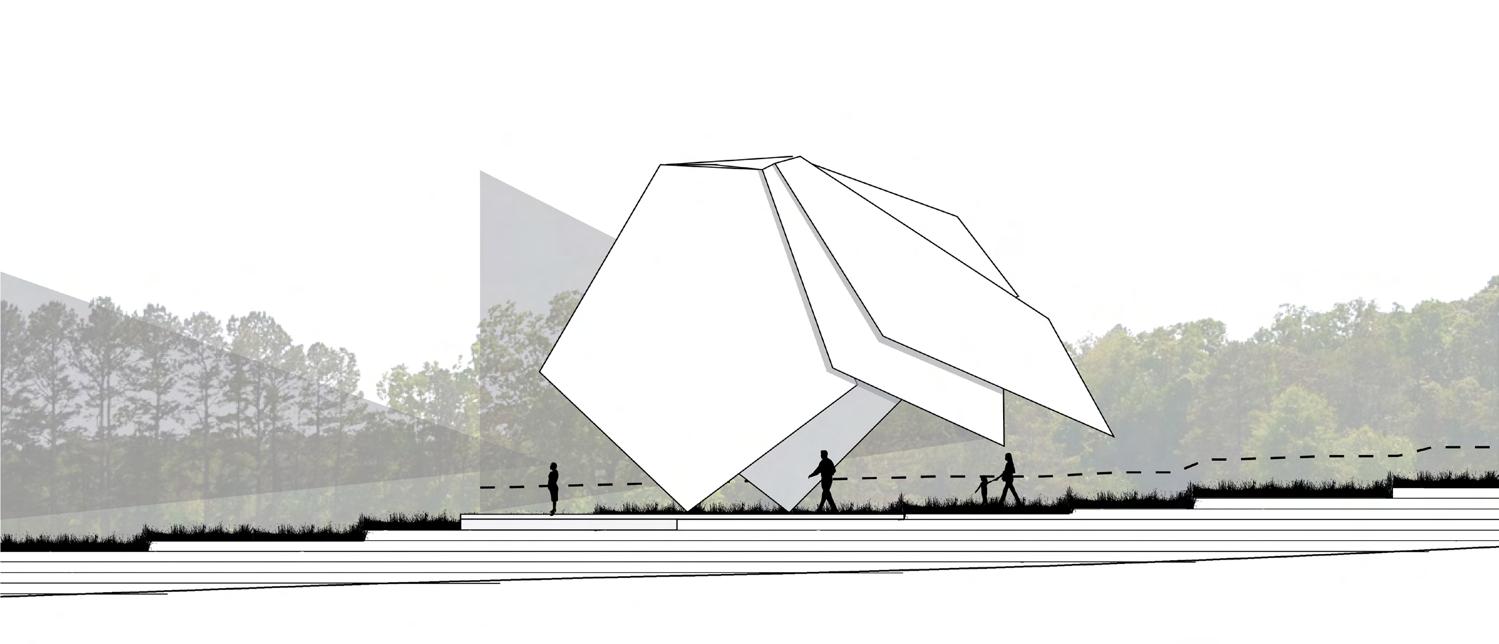
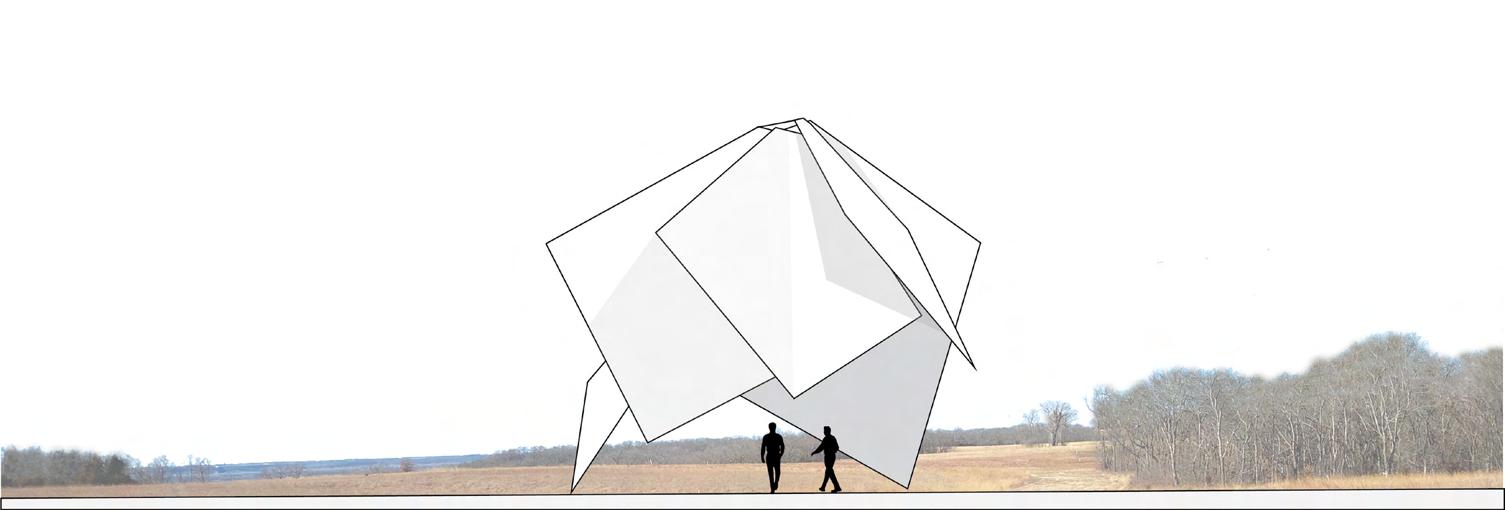
East elevation to illustrate the view meant to be enjoyed from the trail center
North section to illustrate how these diagrams connect to the physical section model and to see an interior view
This final design was chosen due to the way light can pass between each layer, as well as there is still a straight path that cuts through the trail center to continue the path and the idea of seeing the view of the prairie.
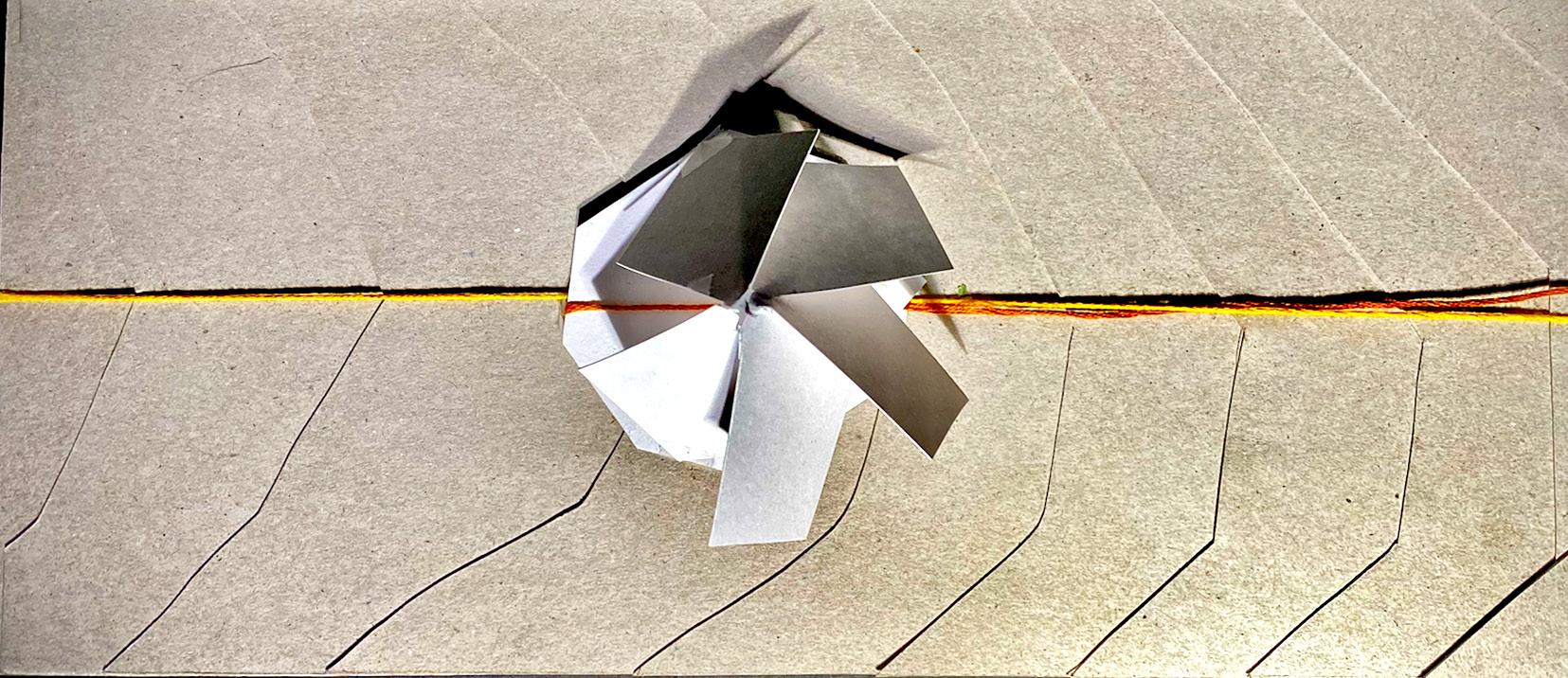
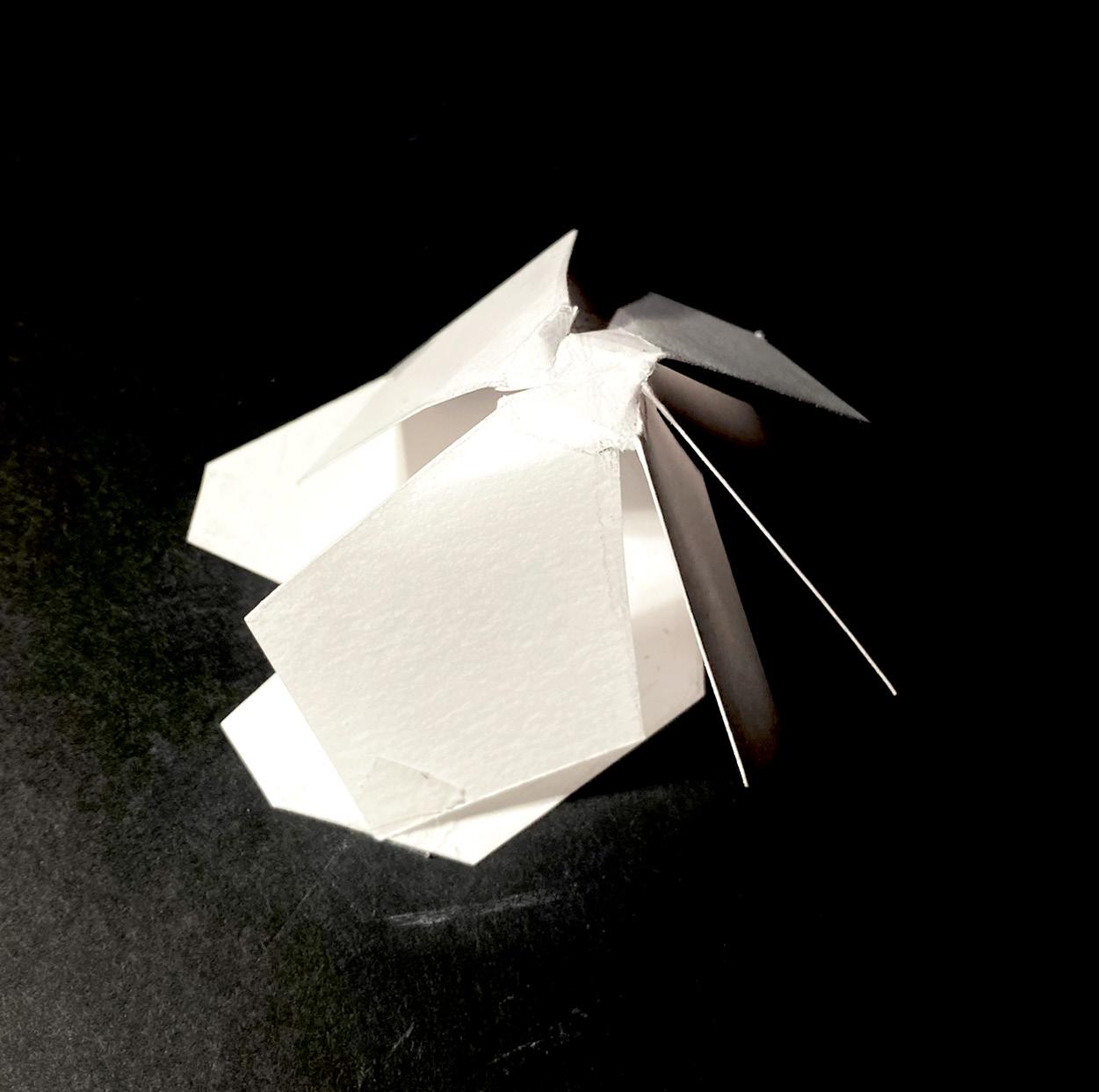
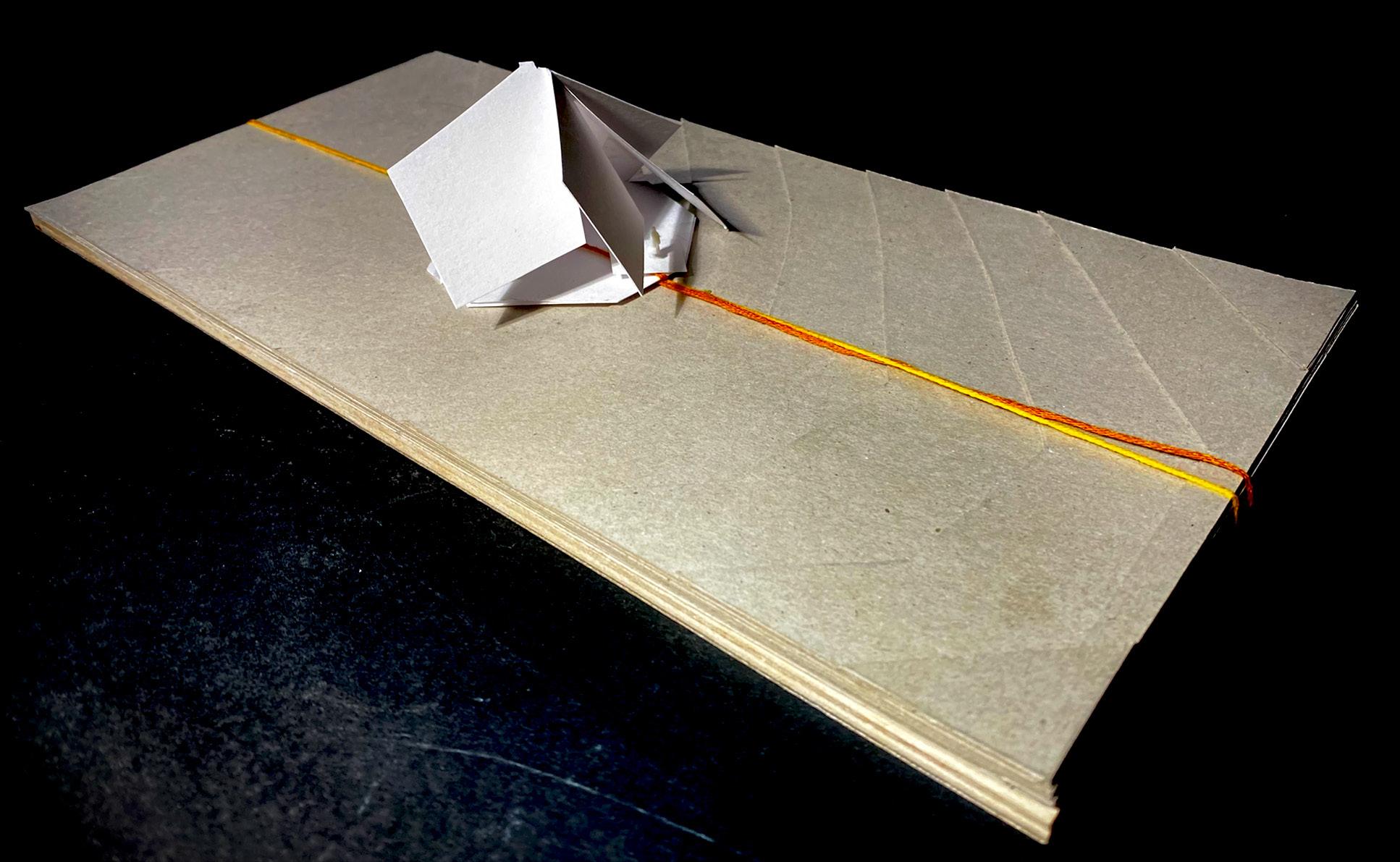
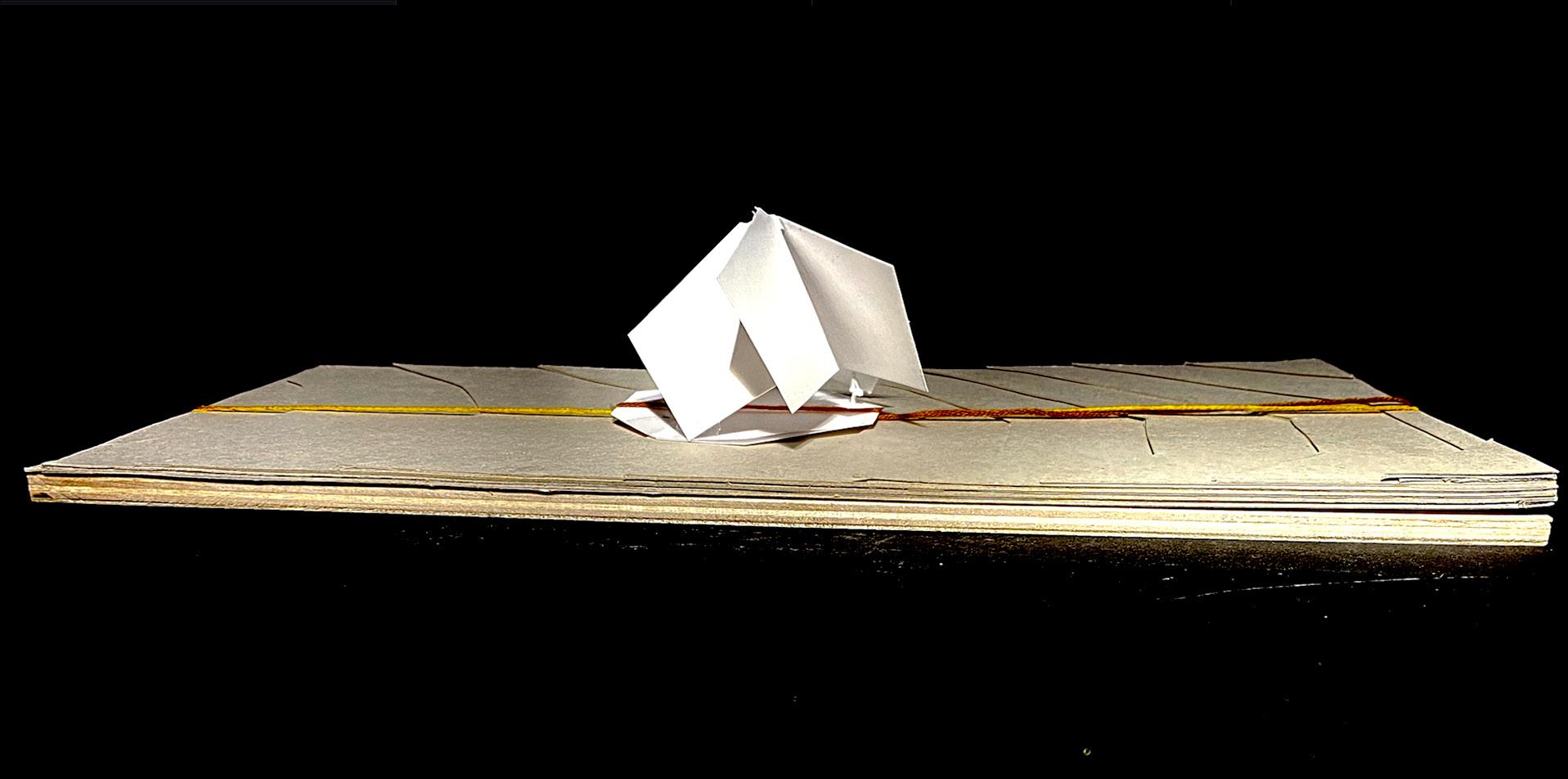
The morning sun creating many layers of shade on the west side of the structure.
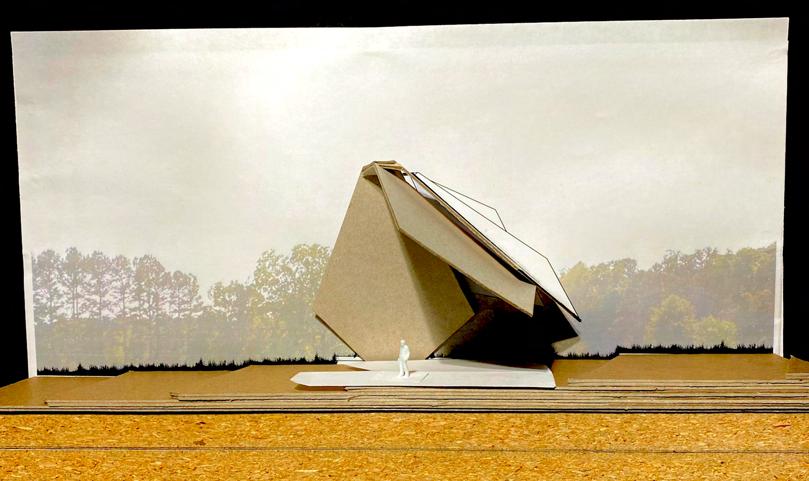
The afternoon sun yet these shadows are more on the ground rather than on top of the other layers as the morning sun would cause. These shadows are more separated as well and clearly show each layer’s shadow cast.
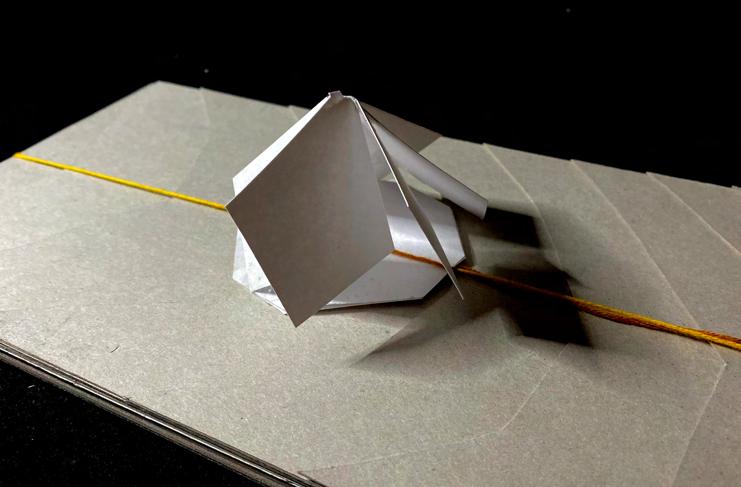
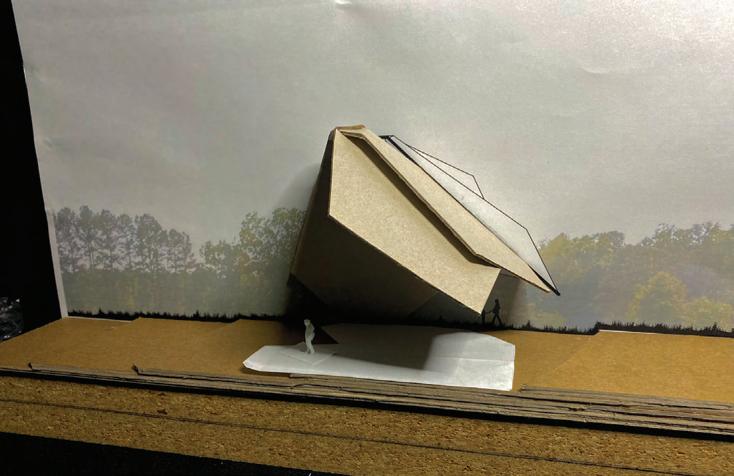
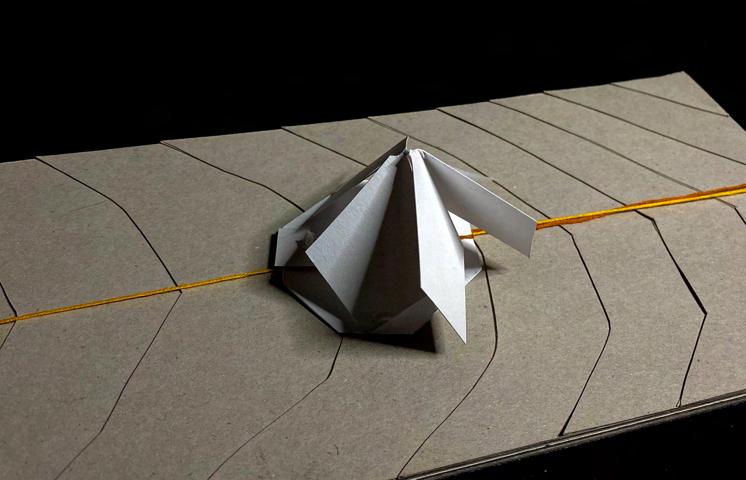
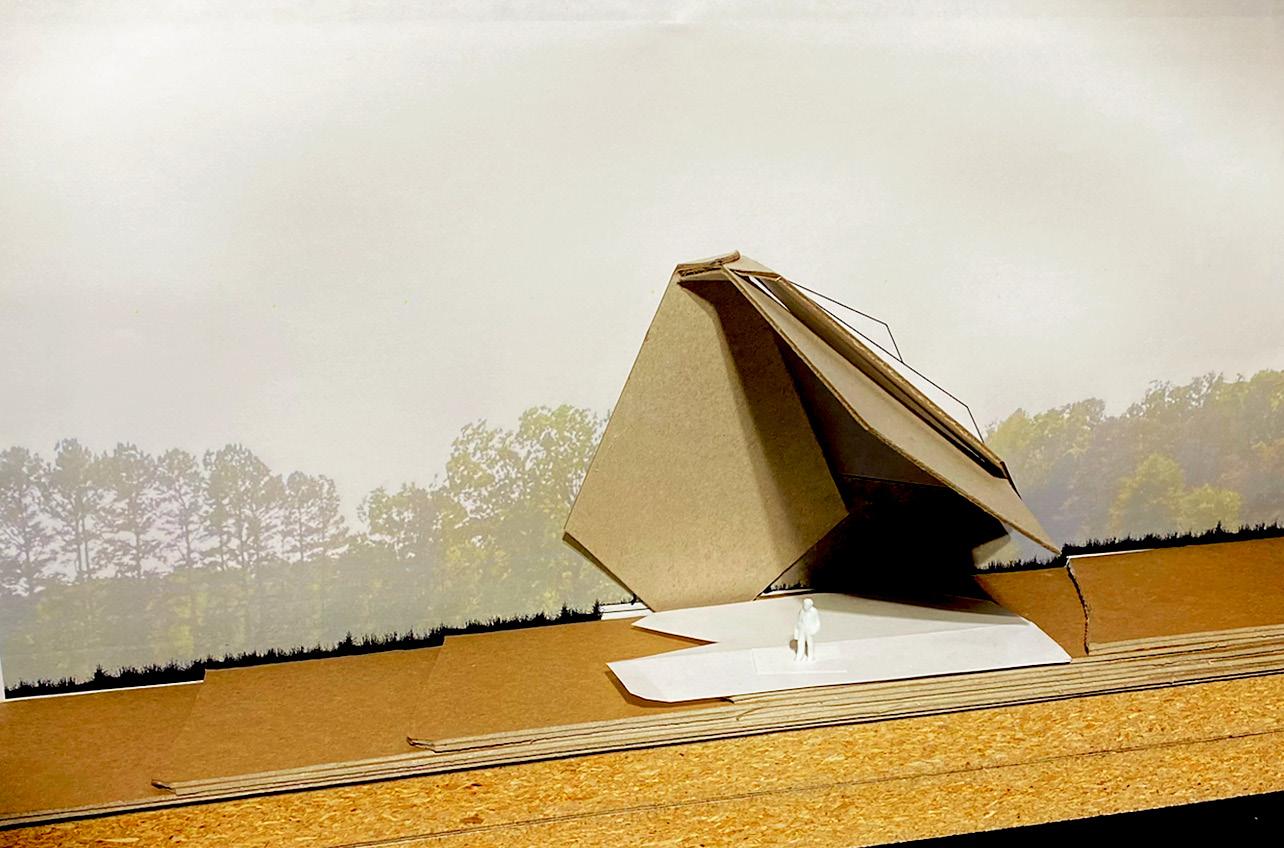
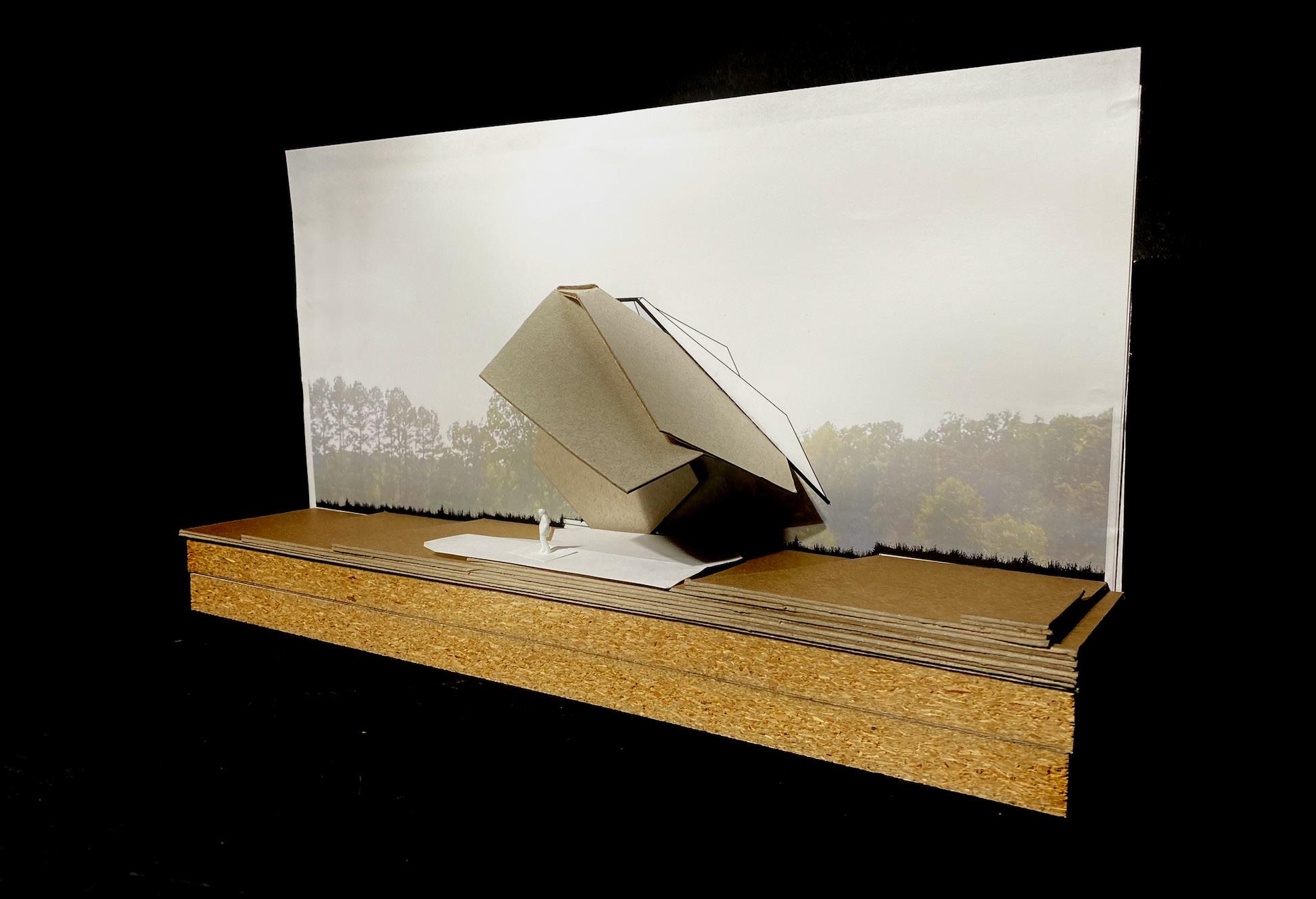 1/8th section model final model
Friends of the Kaw Observation Tower
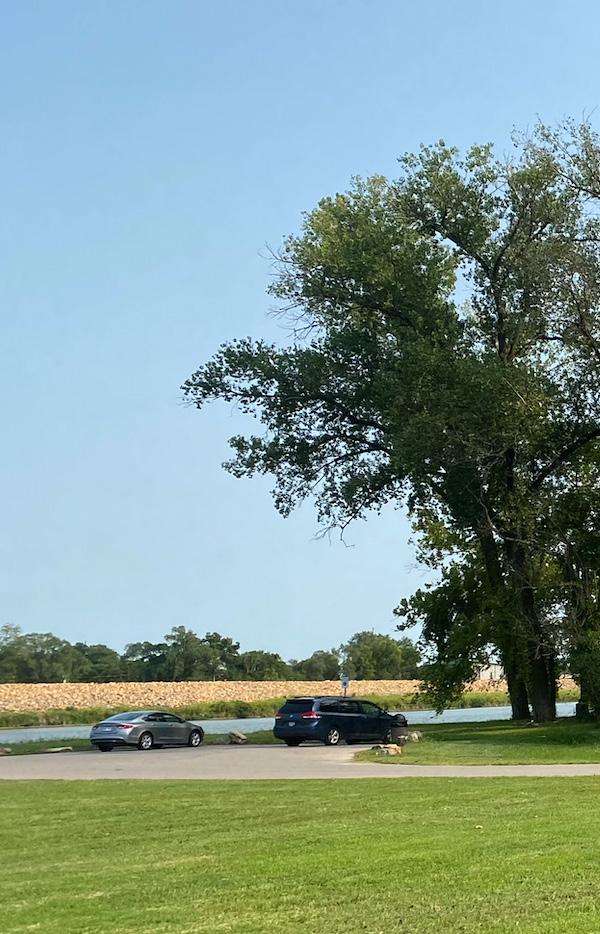
Place: Kaw Point Park, Lawrence, KS
Program: Observation tower/learning center
Arch 208: Professor Dietze
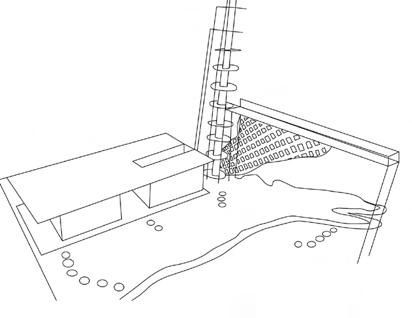
This observation tower is for Friends of the Kaw, a local organization that protects the river while also incorporates the community into using the river and find the beauty in it. Their mission is to provide more opportunities to the community to learn about nature and interact with it. This location serves as a hub for staff, volunteers, members, and educational programs. To incorporate all of these things an observation tower would be put up, housing an indoor ecology classroom/exhibition space, offices, public restrooms, kayak/canoe storage, as well as the observation tower itself while also connecting to the river and incorporating circulation.
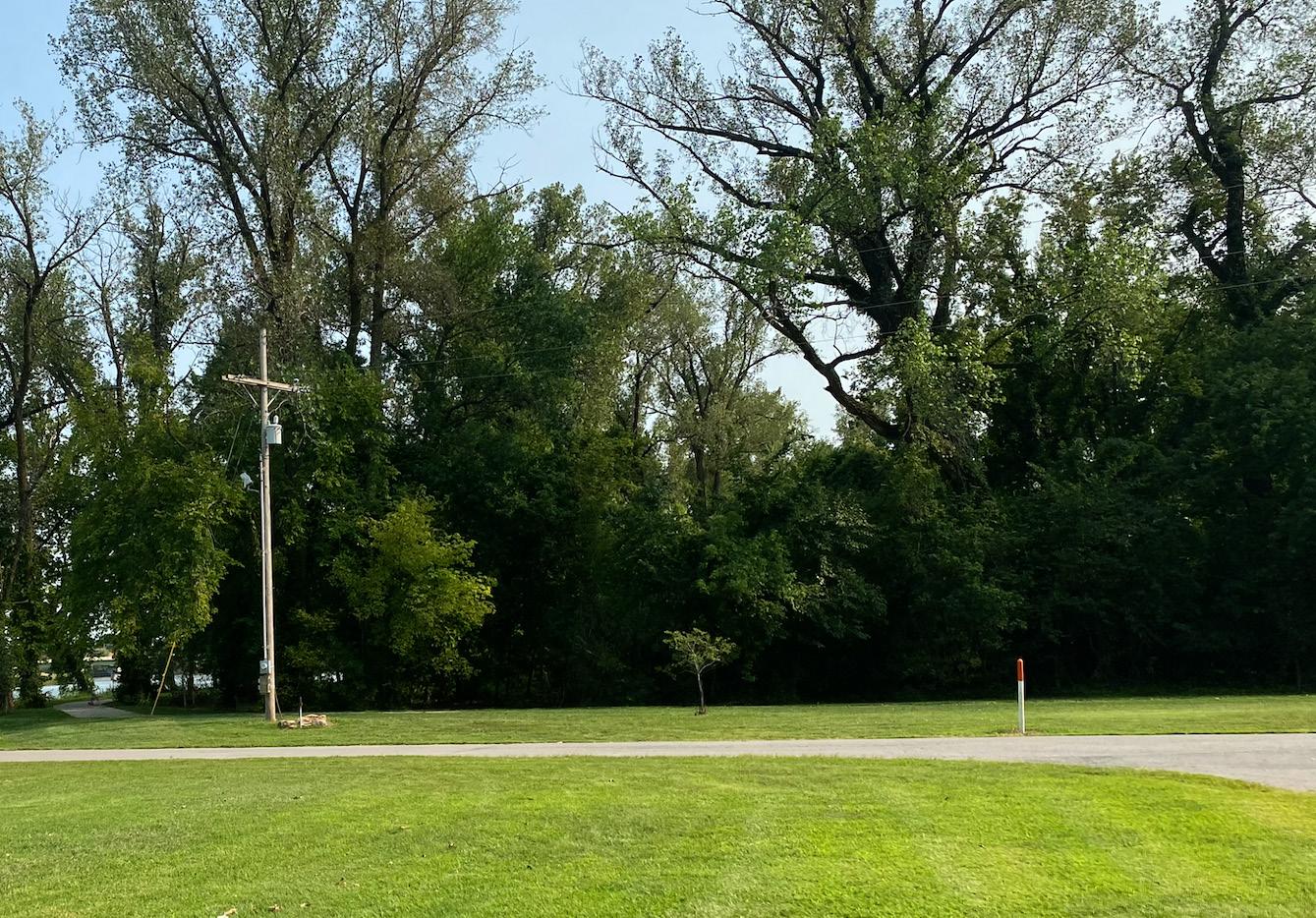
• Connecting to the river and nature, to be in it, see it, and to experience are the main ideals, it makes the learning experience better.
• Focusing on the circulation overall is also important in this design. There are multiple walkways, and paths for visitors to navigate the site and it makes it a nice, open space.
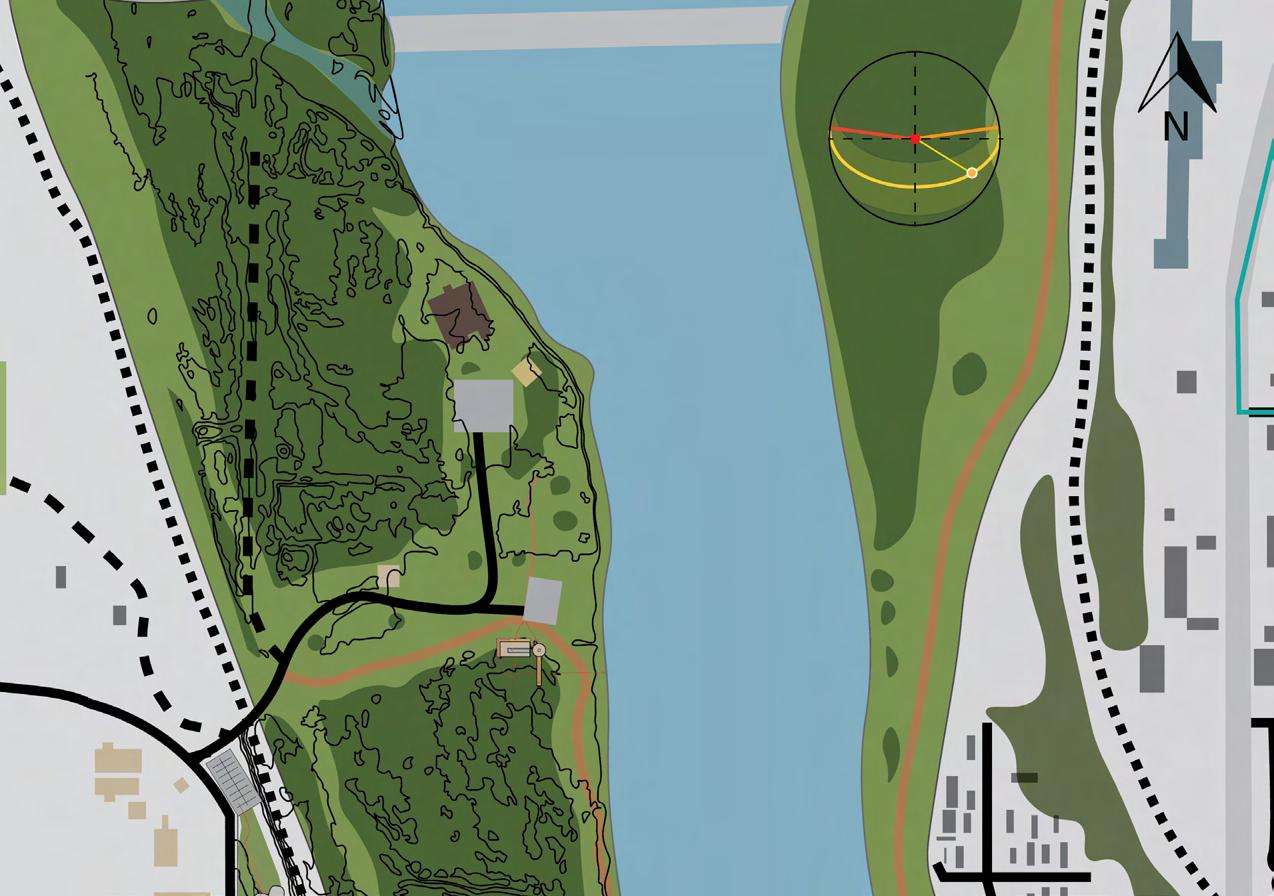
• The main interior circulation to the classroom gives visitors an experience with a longer hallway and a skylight to give them a journey to the classroom, with the classroom itself having an open glass wall to see into nature, while learning about it. Open access from boat storage and easy access and paths to the river is another important circulation.
Using the base concept to create a 3D shape that also takes into account entrances and how the building would be used
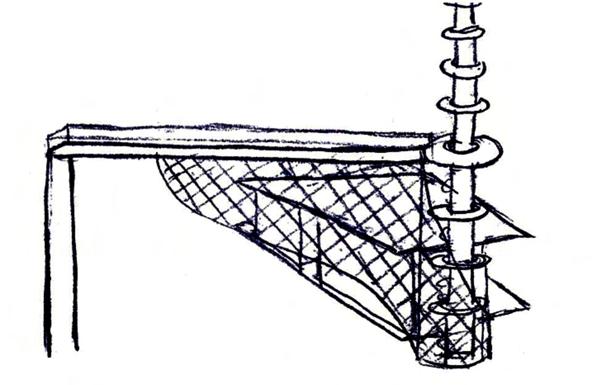
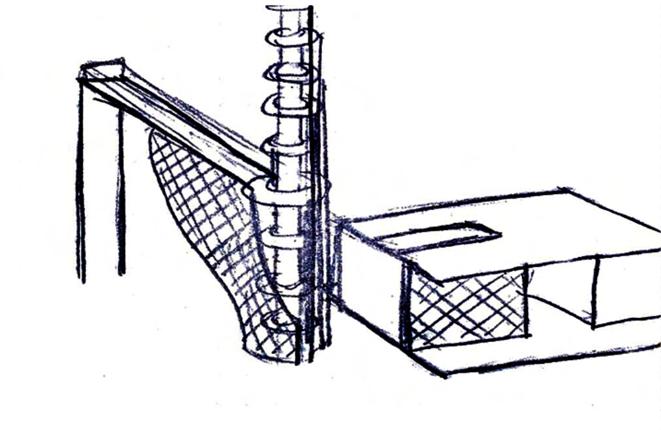
In this spot it is within nature to better connect to what visitors would be learning about as well as being close to the river so visitors can carry canoes to it, and it is near the main entrance of the park and easy to spot and can use the existing parking lot
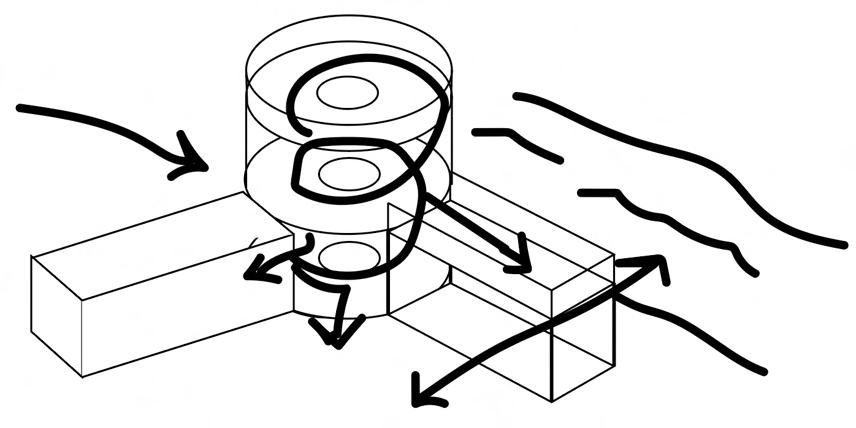
Within the final designs there are different height levels of observation decks to observe nature as well as open stairs to see outside the entire journey upwards.
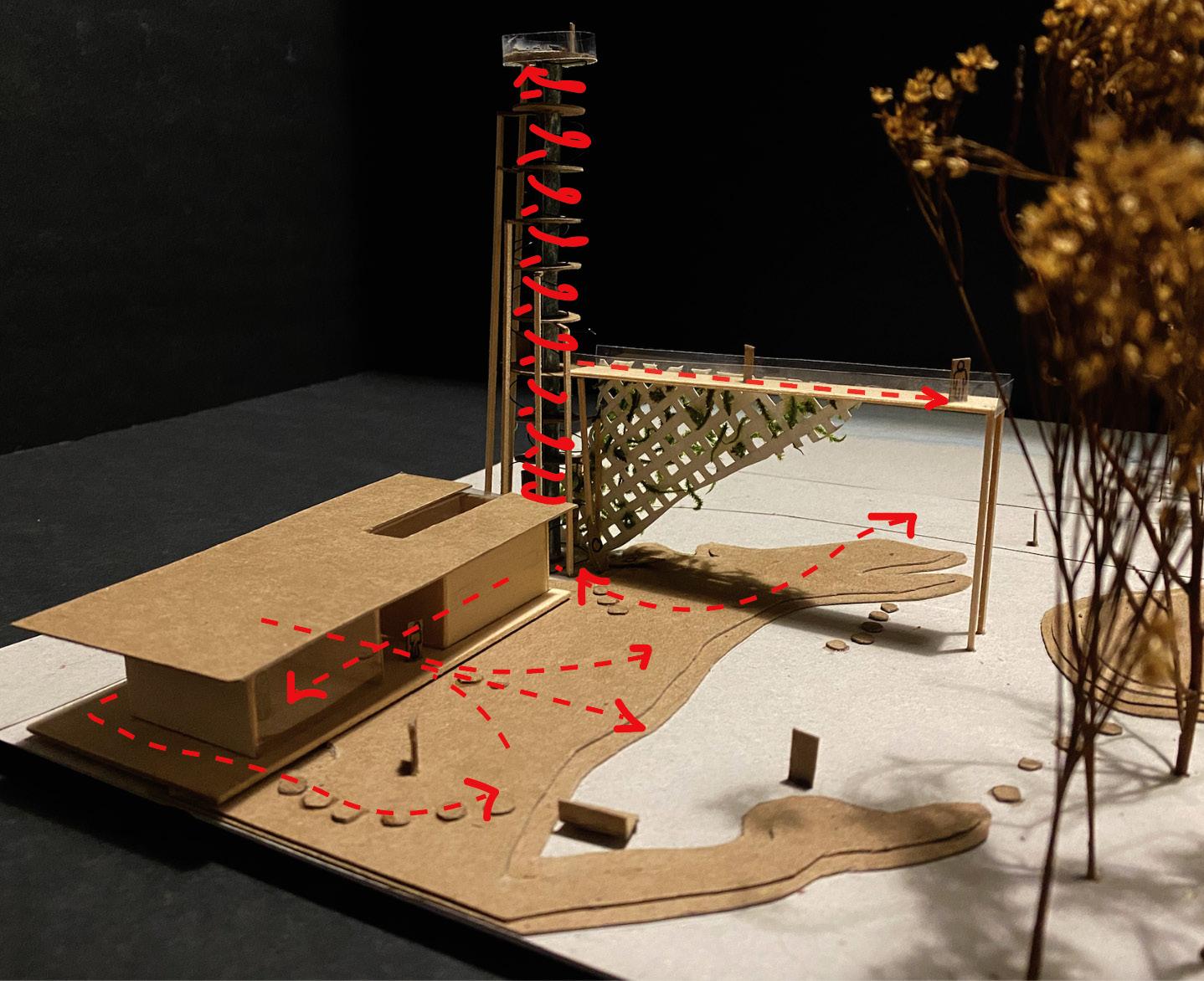
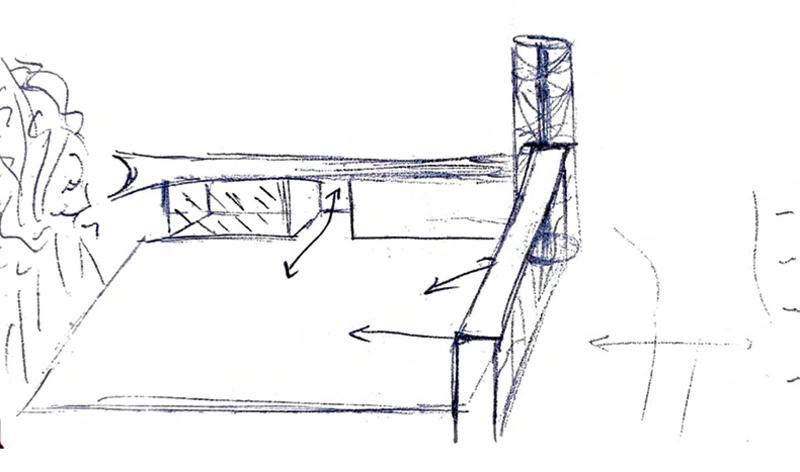
It is also very open and can flow in many directions mimicking the neighboring river that can be accessed for canoing and incorporates circulation.
The hallway to lead you towards the main learning room with a skylight to light up that journey as well as a large glass window within the classroom to see into nature.
Lattices that connect to the front of building that creates a shaded outdoor walking area, as well as the other lattice creates a shaded area to store items.
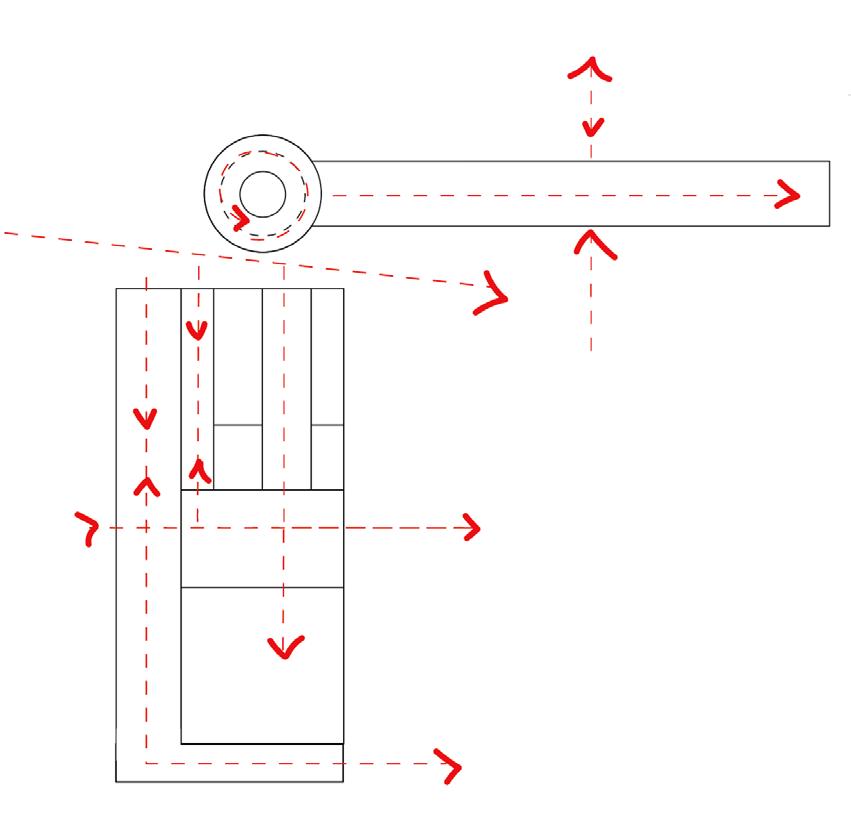
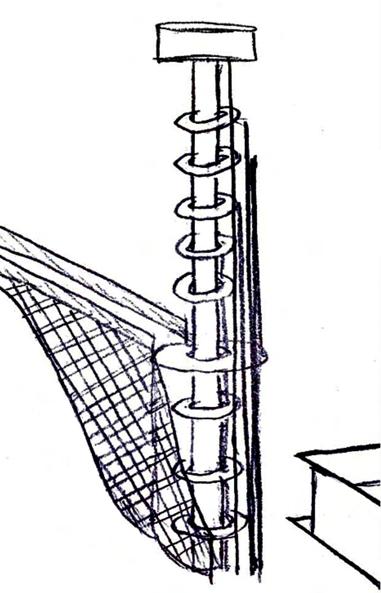
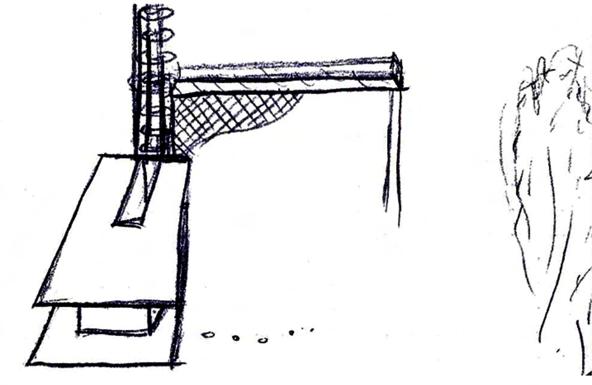
Looking at how circulation connects different areas and what paths and flows are created as well as working out more details
Sketches
Circulation