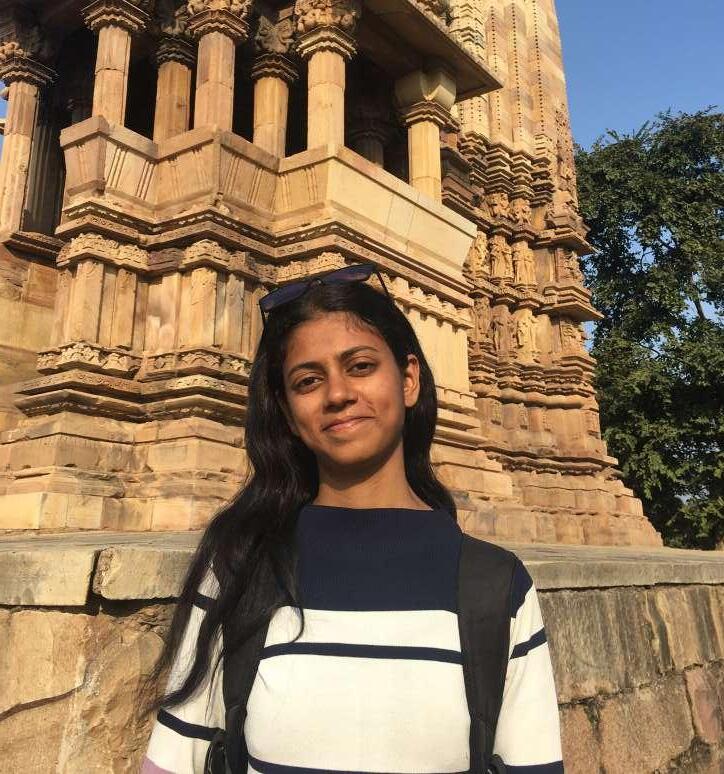
Hi, I am Shaurya Pawar currently studying in fourth year at School of Environment and Architecture, Mumbai. For me, architecture is about crafting spaces which includes the involvement of all humans and thus promoting it to be a space for the community by designing it in a way where one treats it to be familiar and hence can feel comfort in occupying it. The choice of materials, degrees of openness of a space, scale of the space highly affects the way individuals would inhabit the space.
LANGUAGES:
English
Hindi
Marathi
Gujrati (basic)
ACHIEVEMENTS:
THIRD YEAR- ELECTED STUDENT COUNCIL MEMBER
26th RANK IN MUMBAI UNIVERSITY SEM 6
12TH RANK IN M.U. ARCHITECTURAL DESIGN
FOURTH YEAR- ELECTED STUDENT COUNCIL MEMBER
EDUCATION:
Grade 1-10
PAWAR PUBLIC SCHOOL, KANDIVALI (W)
Grade 11-12 M.J. JUNIOR COLLEGE OF SCIENCE
B.Arch SCHOOL OF ENVIRONMENT AND ARCHITECTURE
SKILLS:
Software:
Autocad
Photoshop
Illustrator
Indesign
Sketchup
Rhinoceros 3D
Vray
MS Word
MS Excel
MS Powerpoint
Hand:
Hand drafting
Model making
Carpentry (basic)
Website: Wix
Google sites
WORKSHOPS:
2022- Performative Infrastructure - Mohit Shelare
Self and structure - Dipti Bhaindarkar
Product Design - Milind Mahale
2023- Thinking through mobility - Natasha Maru
Walking Mumbai - Alisha Sadikot
Urban Farming - Taanaz Davez
Urban Street Design - Urmi Kenia
2024- Summer Internship - Wagh Design Cell LLP
Participatory design and material exploration- Hunnarshala- Sandeep Virmani
01 SKIN AND PROJECTIONS
SEM 6- DESIGN, DETAIL AND LOCALISATION
Bimbisar Nagar, Goregaon (E)
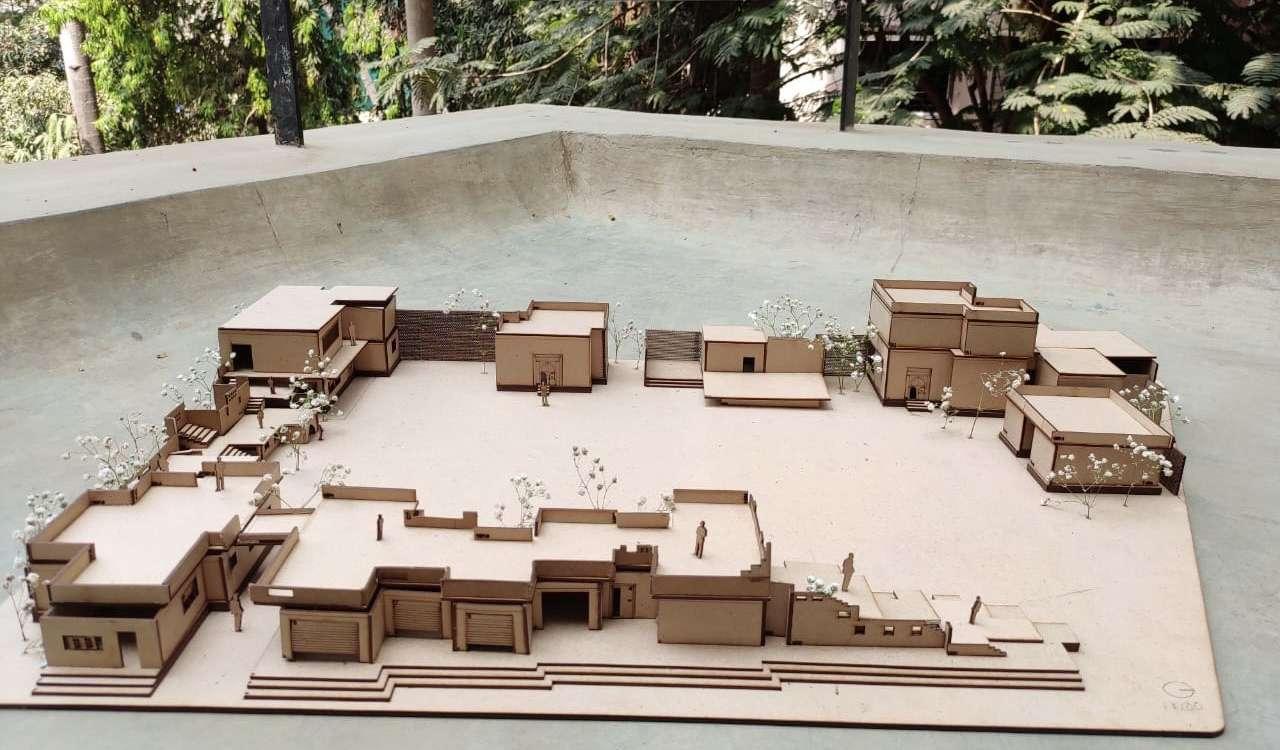
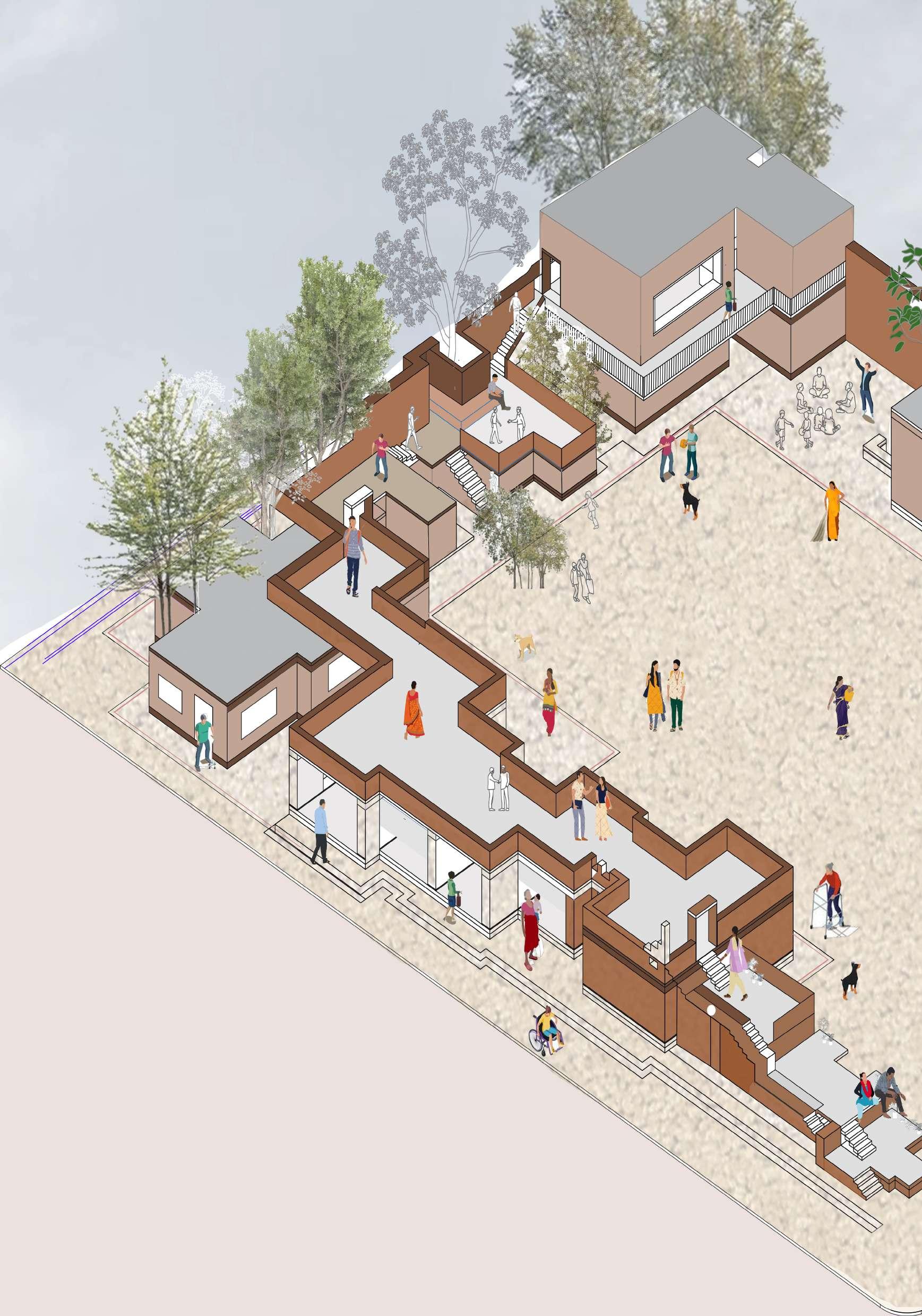
Spaces within public institutions and urban contexts are designed through standardised logics of such “public” but are produced and lived through several subjective contestations which often blur, defy, subvert, disregard or occupy them in awkward ways. The studio attempted to rethink local programmes that have emerged from public activities in neighbourhoods within peri urban areas and their specific socio-spatial encrustations.
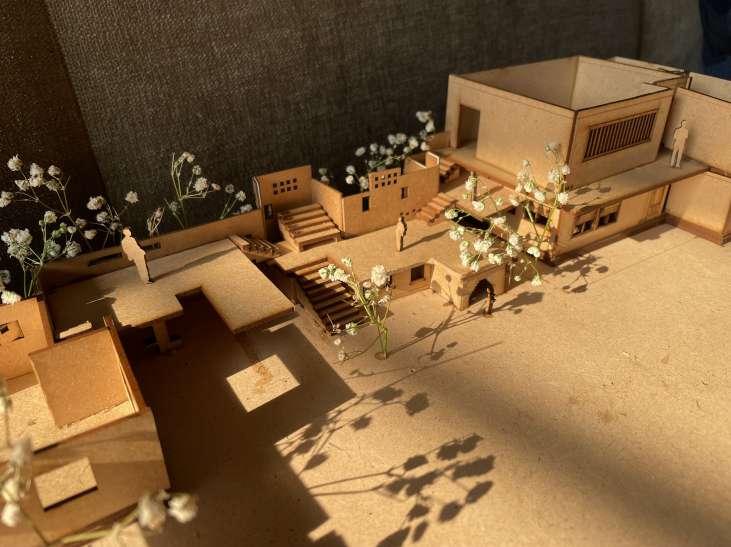
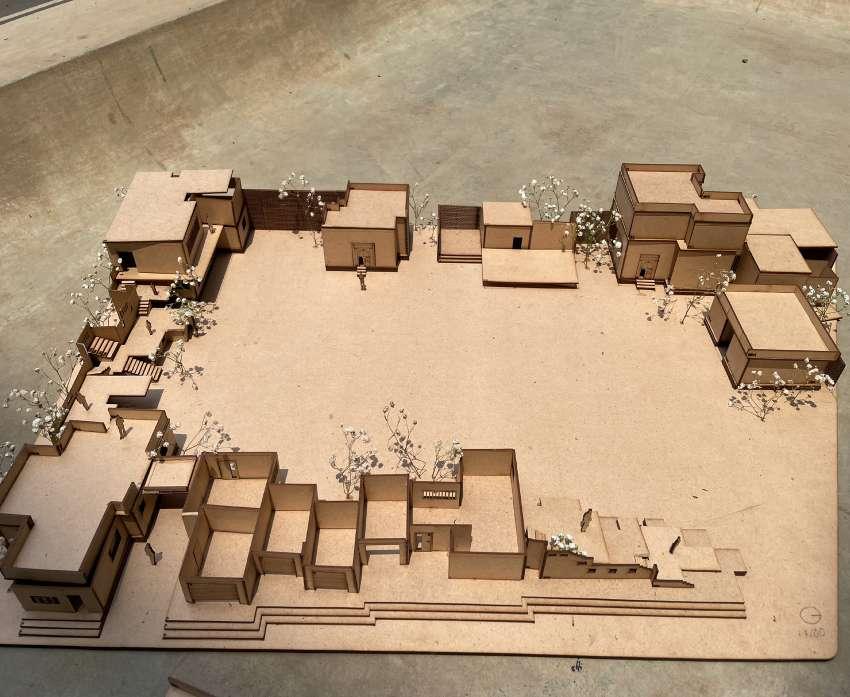
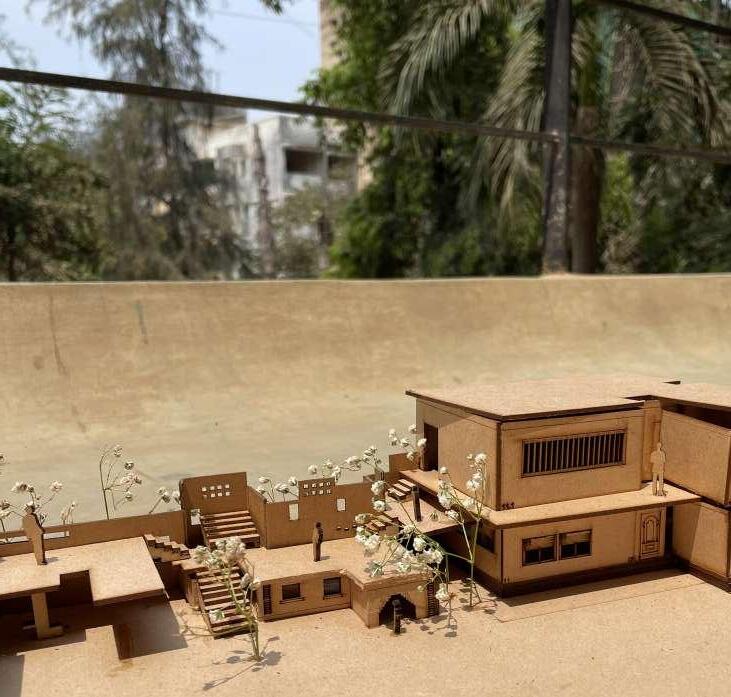
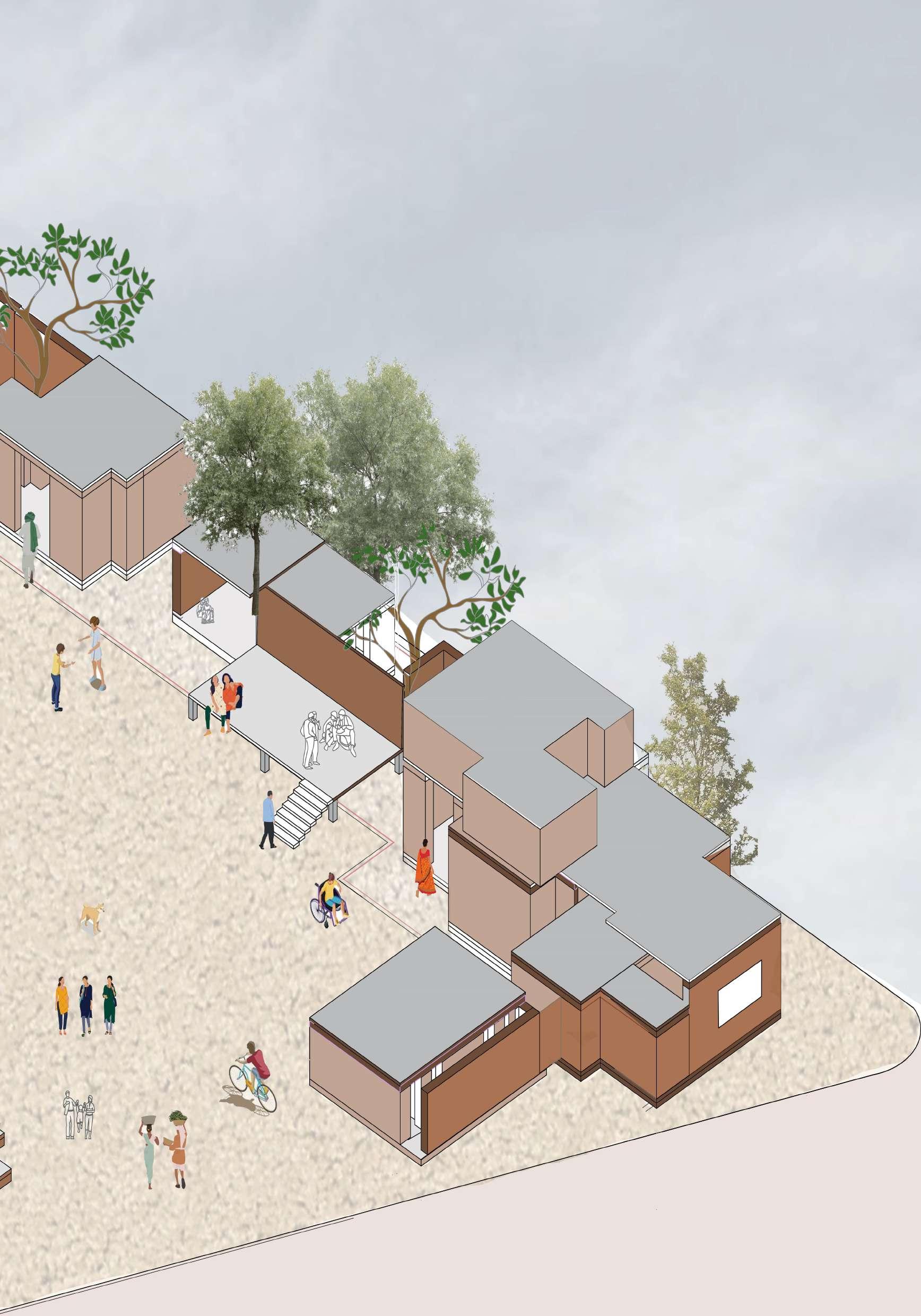
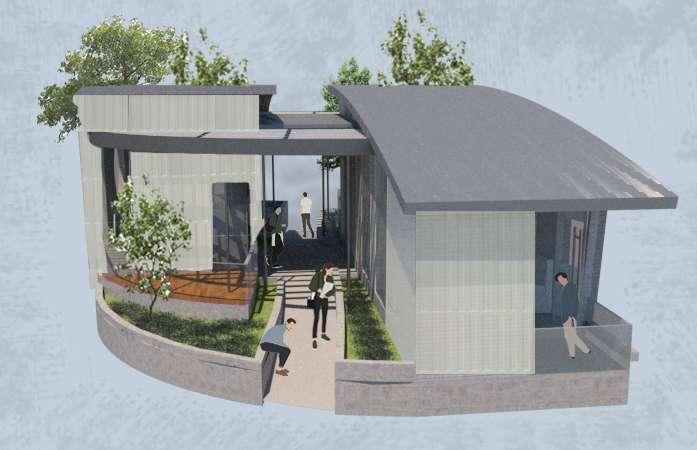
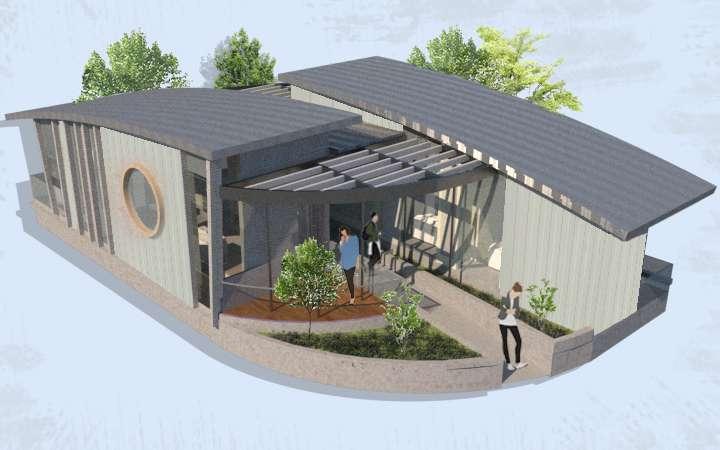
The larger intent of the project is focused on how the programs have a common wall which has these extensions and projections which becomes an interactive space/ gathering space. The programs are planned and placed in a way that they are porous yet have a sense of confindeness. The programs also have a level above the ground comprising of the viewing decks which make the space more engaging with the surroundings.
The main element is the wall acting as a wrapping element or the skin of all the programs has affordances such as seatings, extensions or the projections that are jutting out of the skin serves the purpose of a stage or a balcony. When the user enters the space an experience of entering from a more narrow space to an open space arises. The wall has niches which corresponds to the surrounding site context.
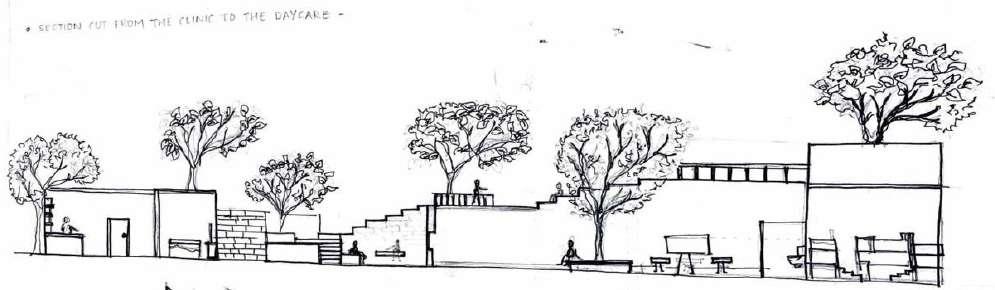
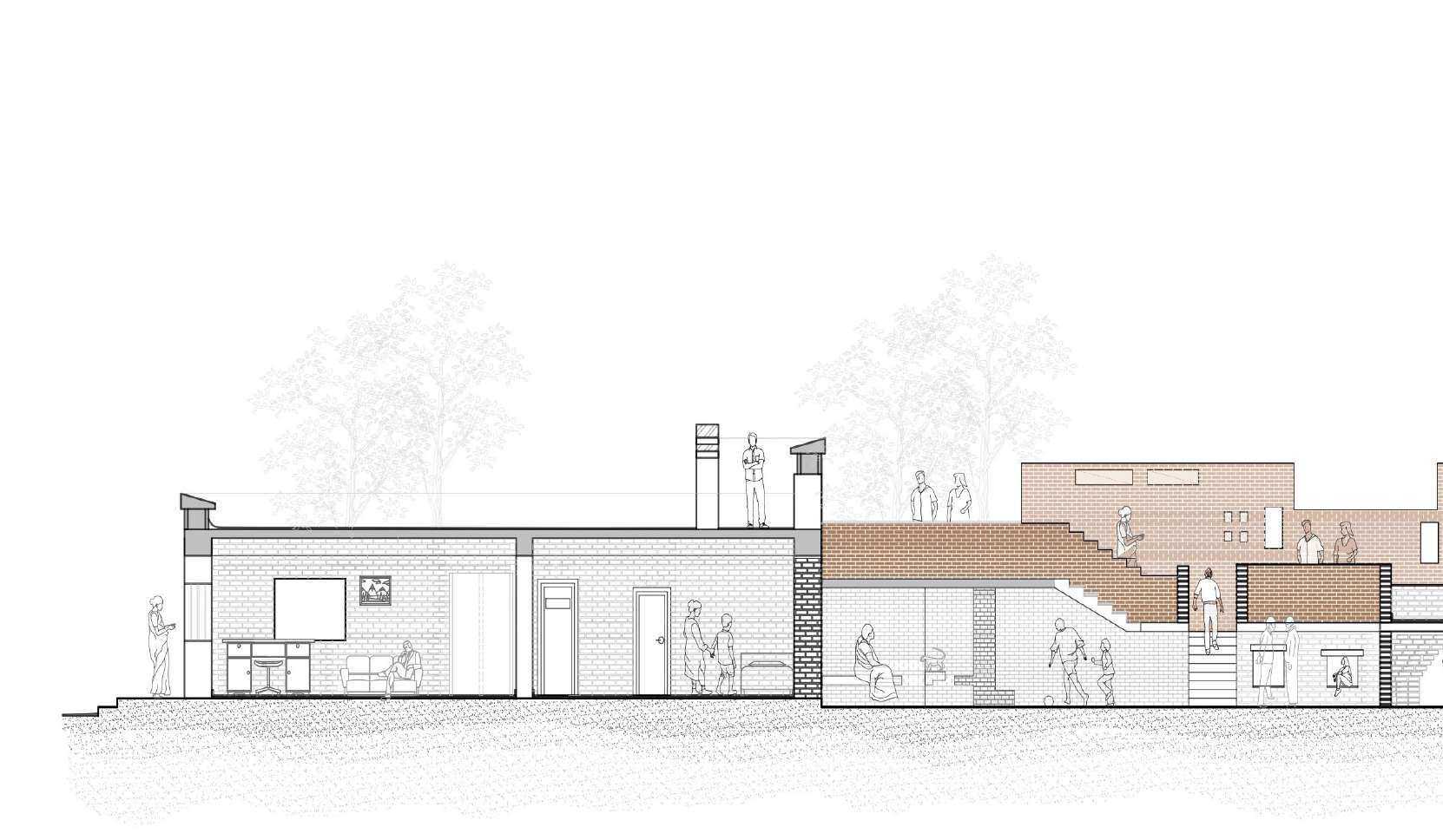
SECTION AND ELEVATION:
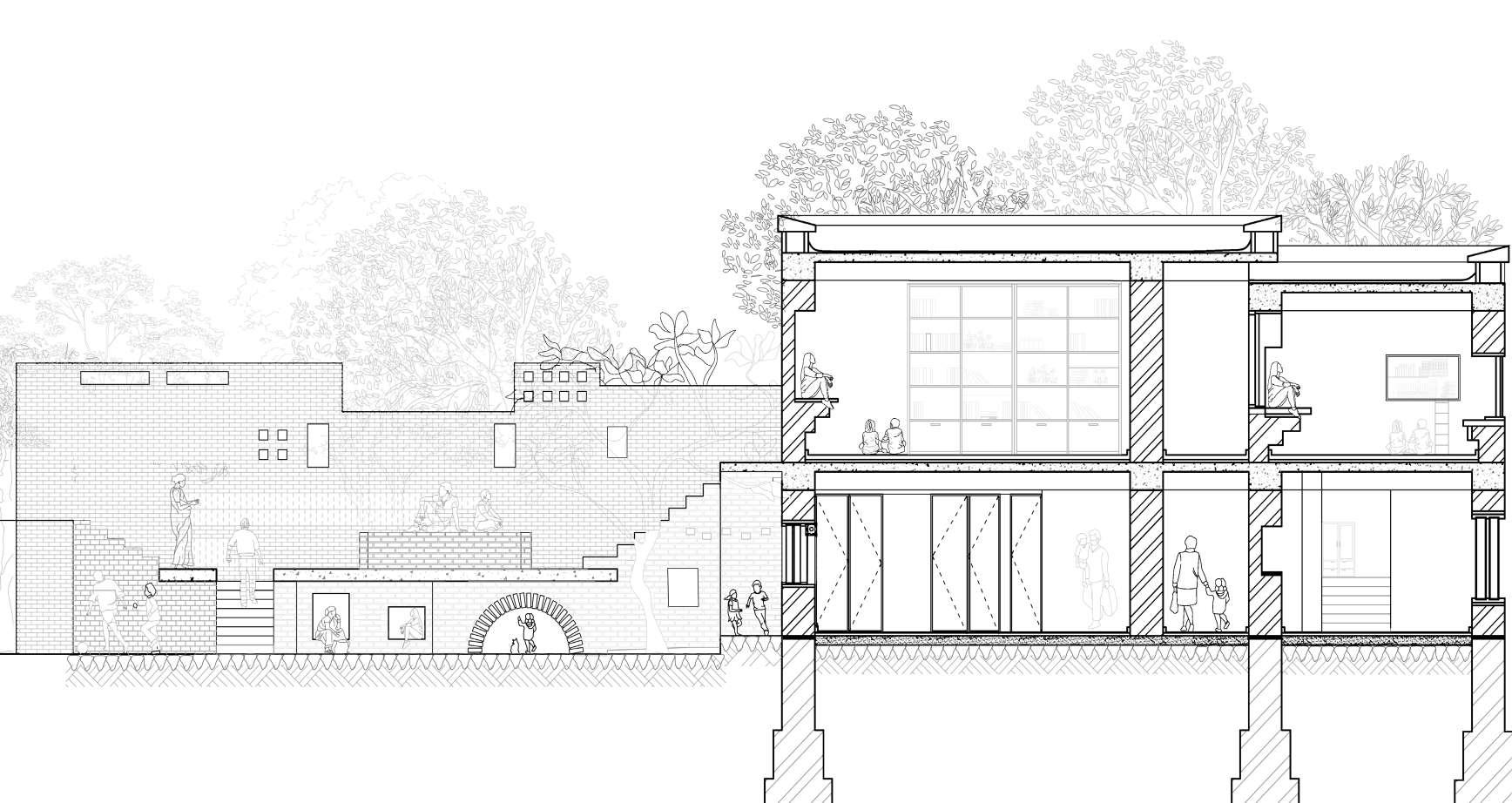
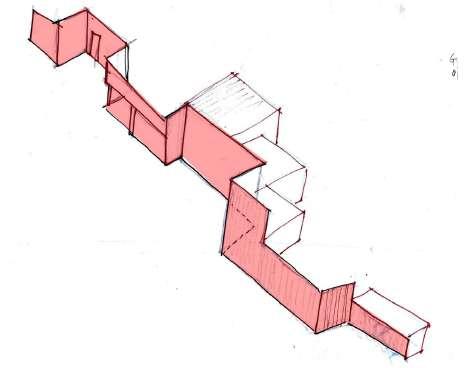
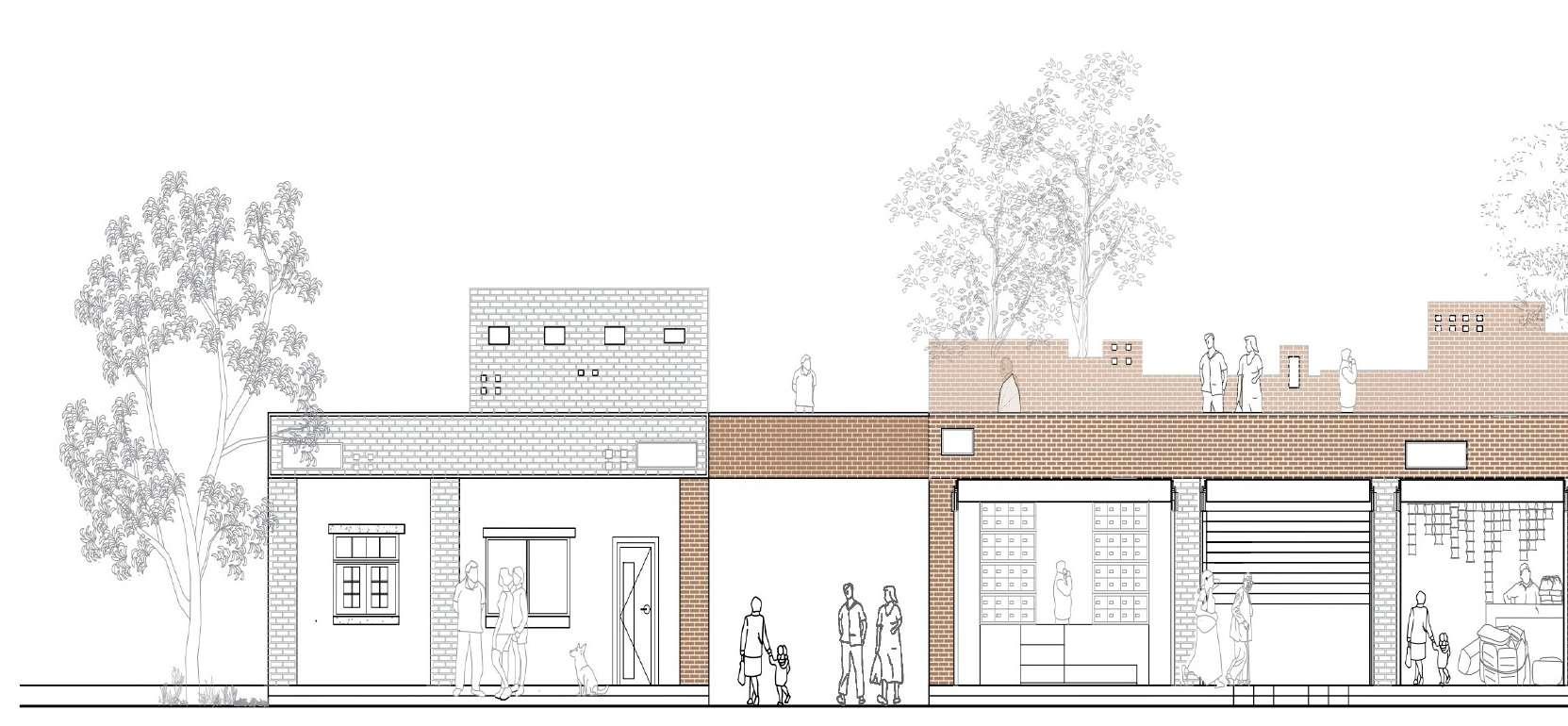
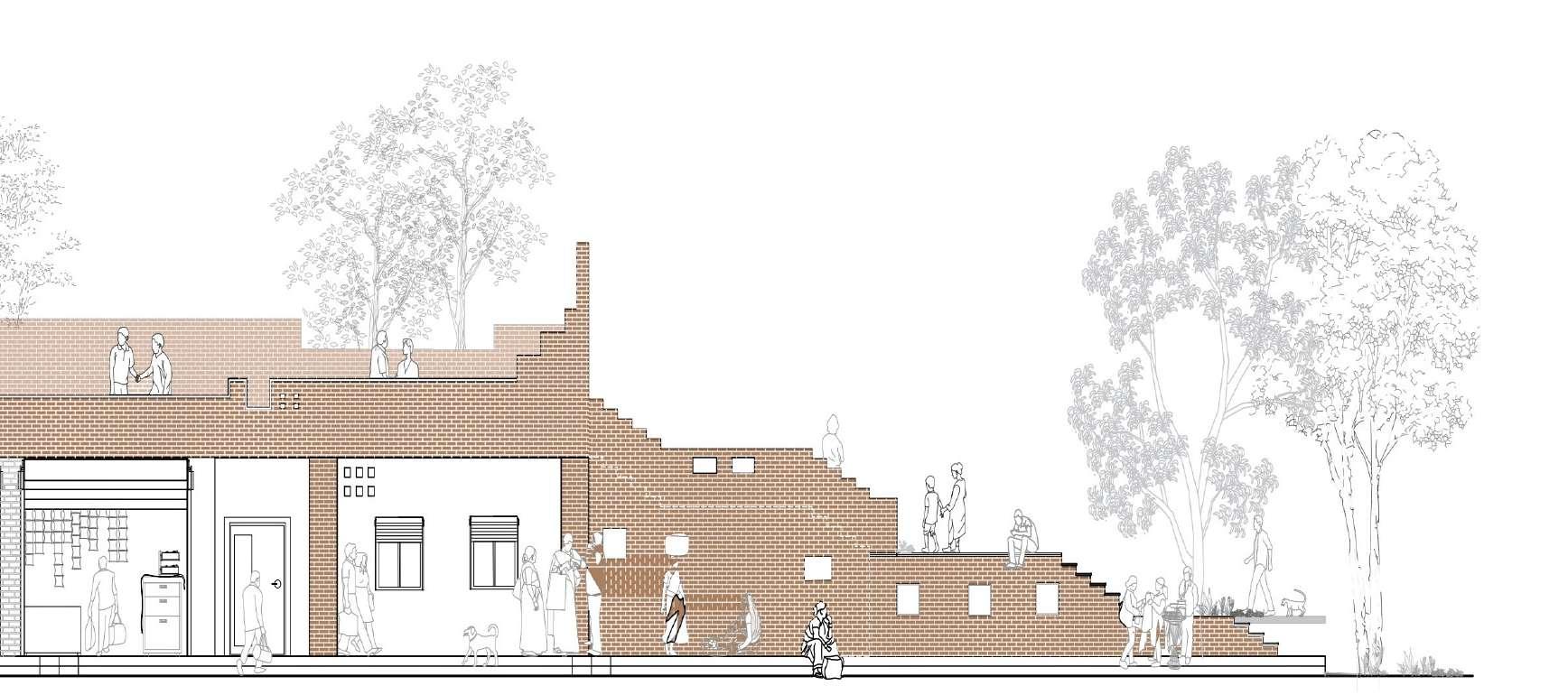
The highlighted wall in brown is the main skin which wraps around all the programs and this wall has varying levels of height according visual connect between the inside and the outside and also provides a sense of boundary.
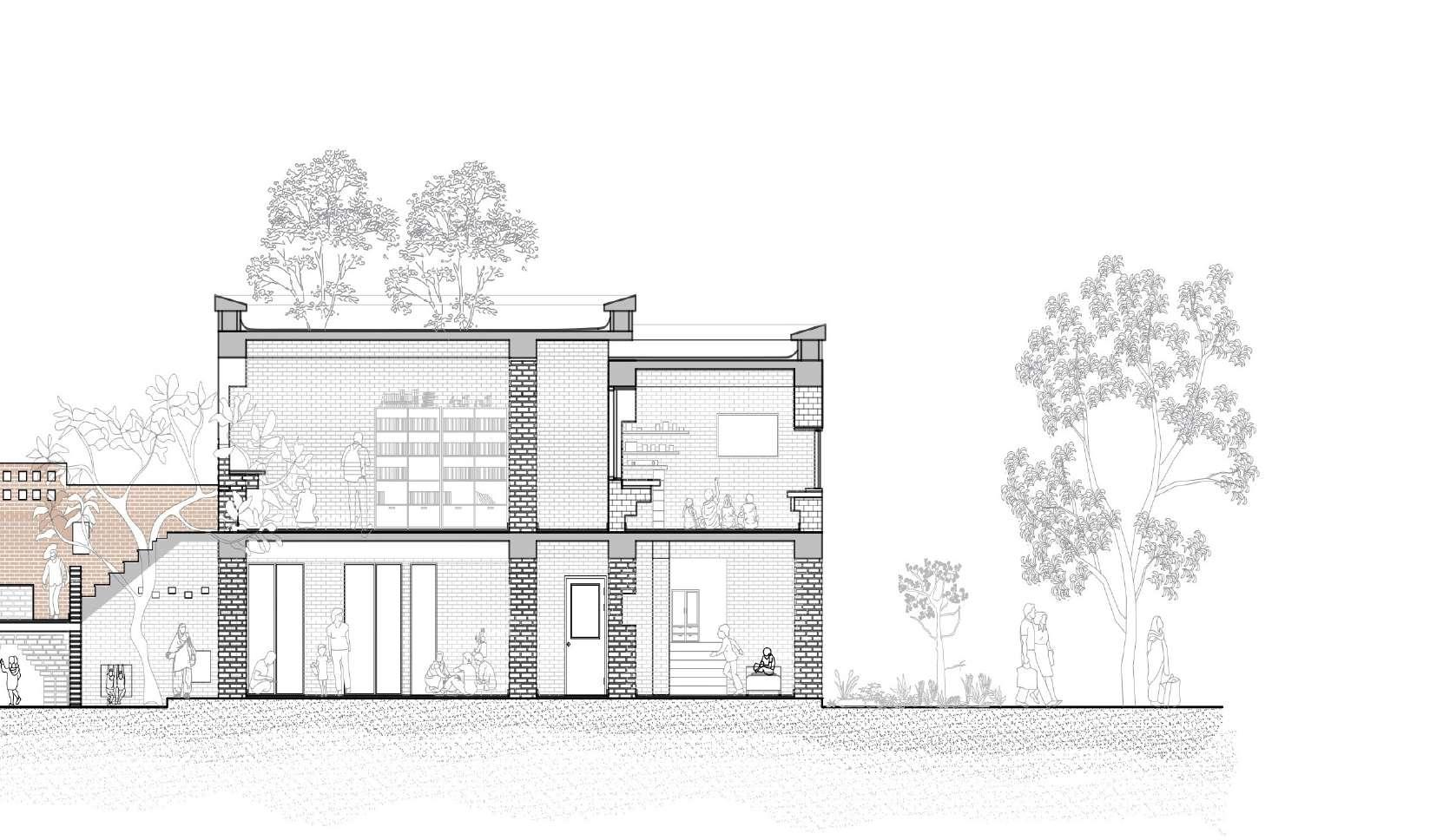
The section cuts through the balcony which connects the clinic and the daycare centre and the area under the balcony is a small heighted certain has openings which provides for more visual connection with the surrounding site context.
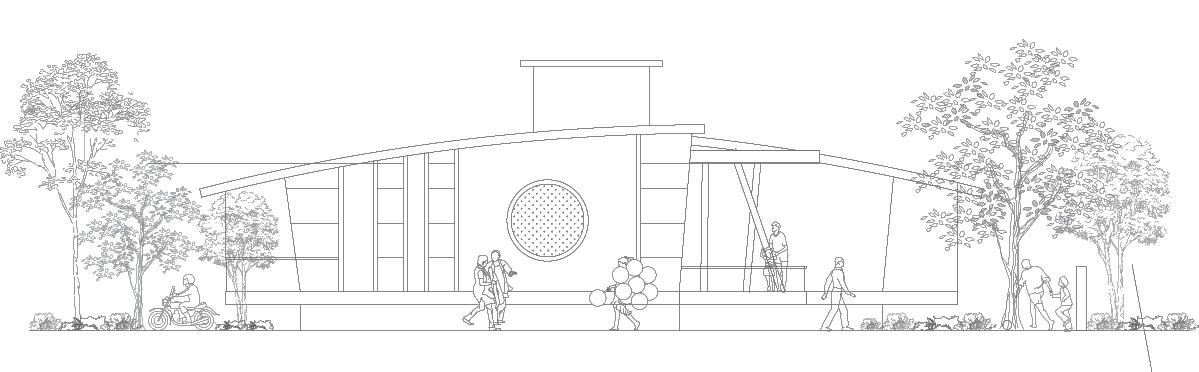
The front elevation shows a row of all the daily essential needs shops, the clinic and the nursery. The wall has varying levels where there connecting the roof of the shops to the roof of the clinic which is made accessible. The wall/ skin is also a parapet wall and has varying
according to how much intimacy or openess should be given to what spaces. The wall is also a jaali wall at some places which creates a
heighted area which serves to be a play area as a tunnel for the kids and a rest space for the animals. The wall behind this balcony has
there is a stepped nursery which further connects to the roof of the shops followed by a bridge like structure forming a pathway varying heights and also niches in the wall which creates a visual connection with the activities happenning on the ground floor.
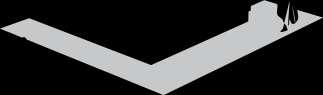
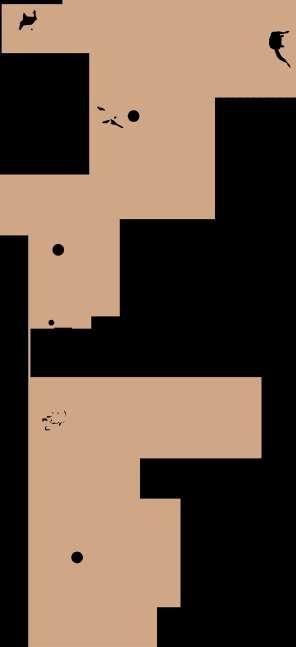
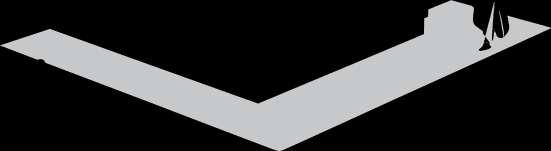
KEY PLAN:
SKIN AND PROJECTIONS:
One main wall which acts is the skin of the program wraps commonly around all the programs which has niches and punctures in them which inreases the transitional capacity of the wall by creating spaces for seating and having having furnitures embedded in the wall itself. The varying heights of the wall also defines the openess or intimacy of the space. Balconies jutting out from the main wall act acts as a space for interaction. These balconies also acts as a pathway from the programs on the first floor. The low height of this gathering spaces affords habitable spaces beneath them. The user on entering the space gets an experience of entering from a narrower space into a more open space. The jaali wall helps provide a visual connect between the inside and outside and also merges with the surroundings.
THE JALI WALL ALLOWS VISUAL POROSITY TO THE SPACE SO INSPITE OF IT BEING A BOUNDARY WALL, IT MERGES WITH THE SURROUNDINGS.
JUTTING OUT FROM A MAIN WALL WHICH GATHERING SPACE
WALL(SKIN) WHICH WRAPS AROUND ALL THE PROGRAMS
PUNCTURES IN THE BRICK WALL WHICH INCREASES TRANSACTIONAL CAPACITY OF THE WALL
02 BUILDING MAKING: Understanding Details
SEM 6- WORKING DRAWINGS
Bimbisar Nagar, Goregaon (E)
GROUND FLOOR PLAN
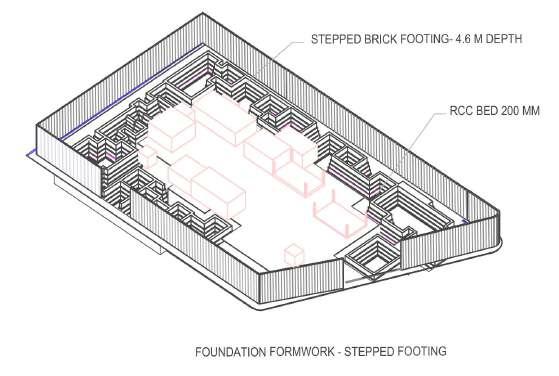
The course intended to develop further upon the design wherein we understood the process of how the actual construction and logics of how the structures are made starting from the foundation uptil the roof and the use of suitable materials It also included an understanding of how the costing of each material is and to know the construction cost of the project
The structure was an exposed brick load bearing structure and the design was structurally resolved by using shear walls walls run long lengths. Every single detail was focussed upon from chosing of the materials, the windows and doors joineries testing and treatment.
construction would be carried out. It introduced us to the concepts materials for construction. project which is to be built.
walls wherever essential and placing brick piers wherever the joineries and all the external waterproofing and material
RCC
RUNNER BEAM 300 MM DEPTH
EXPOSED BRICK JAALI WALL
CERAMIC FLOORING
RCC CHAJJA
03 STREET VENDING ZONES OF ANJAR
SEM 7- PARTICIPATORY DESIGN APPROACH
Anjar, Ahmedabad
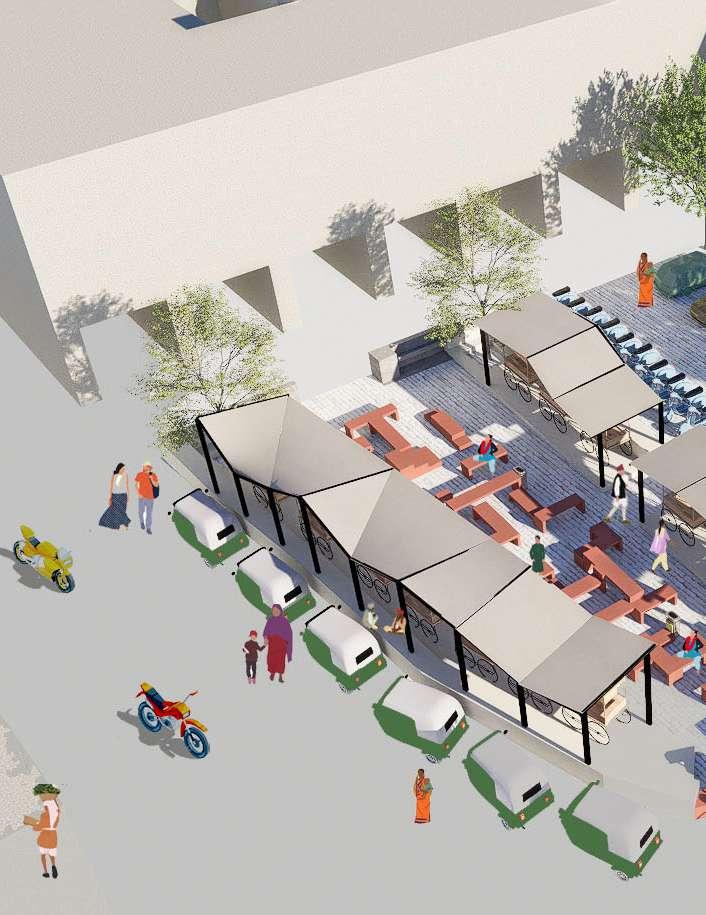
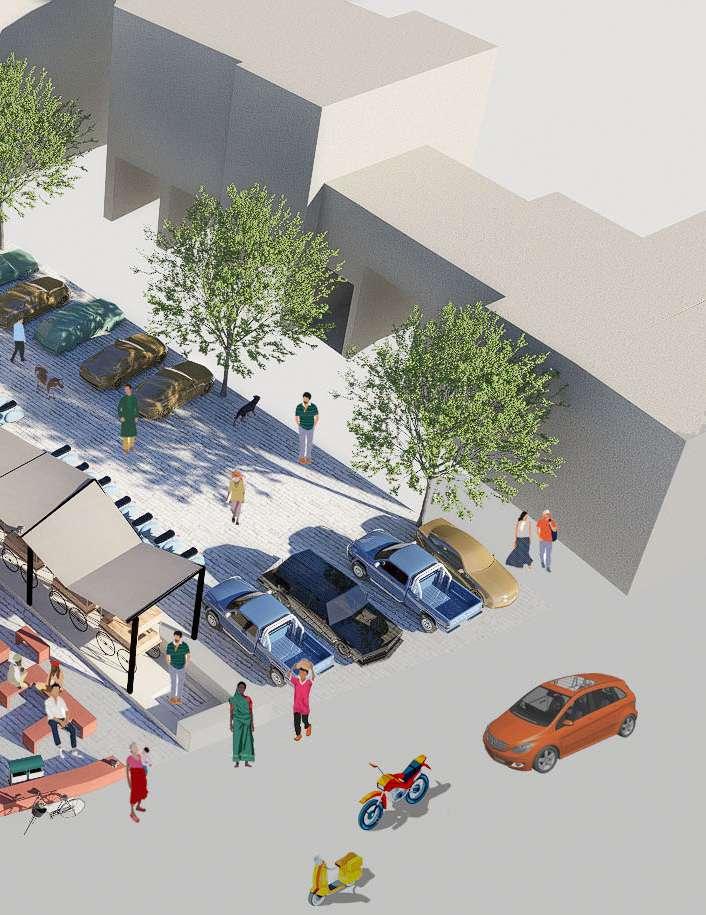
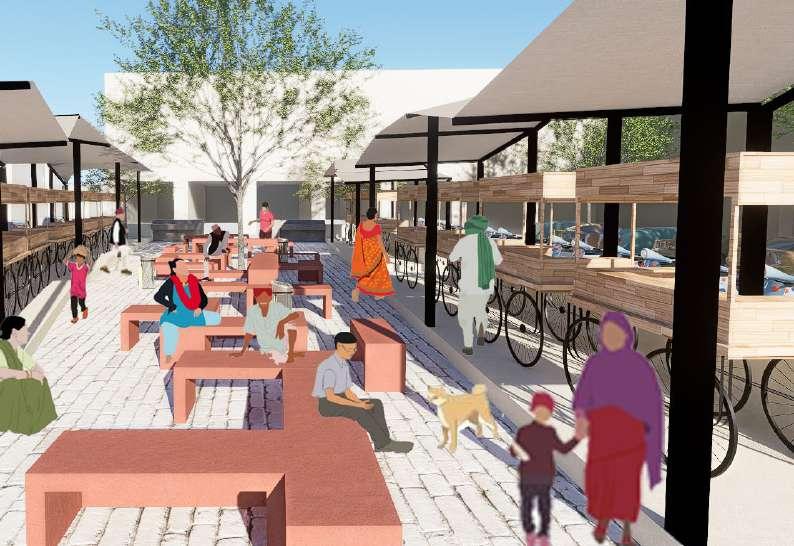
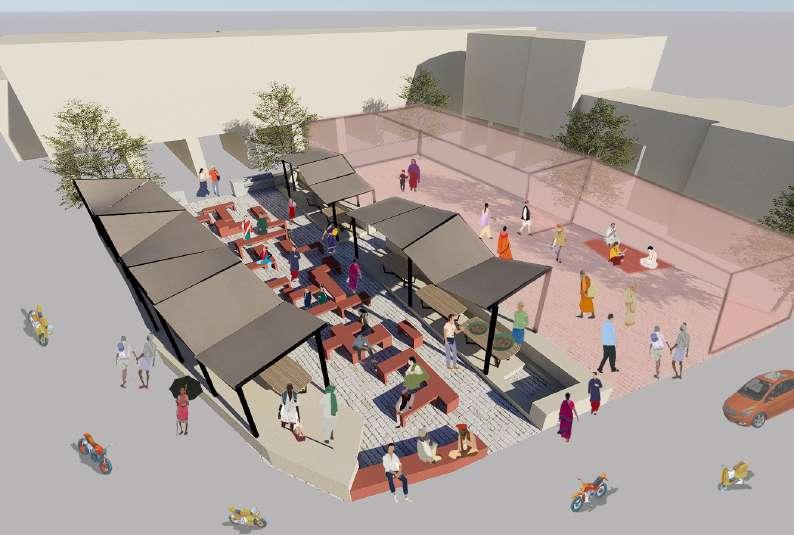
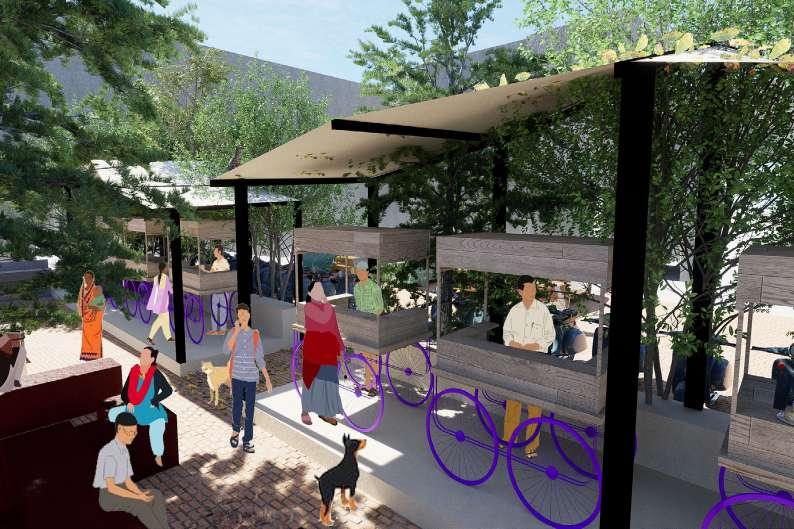
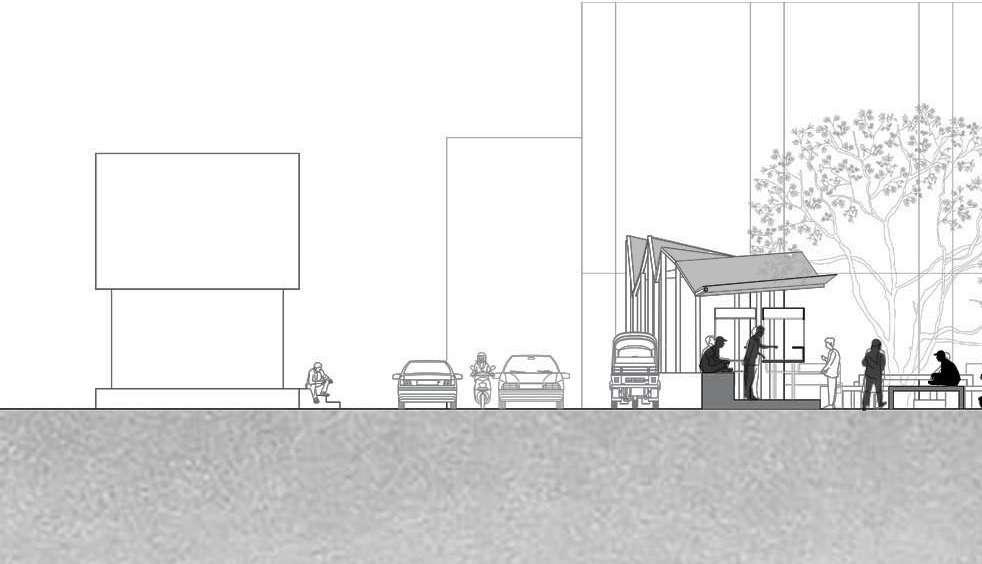
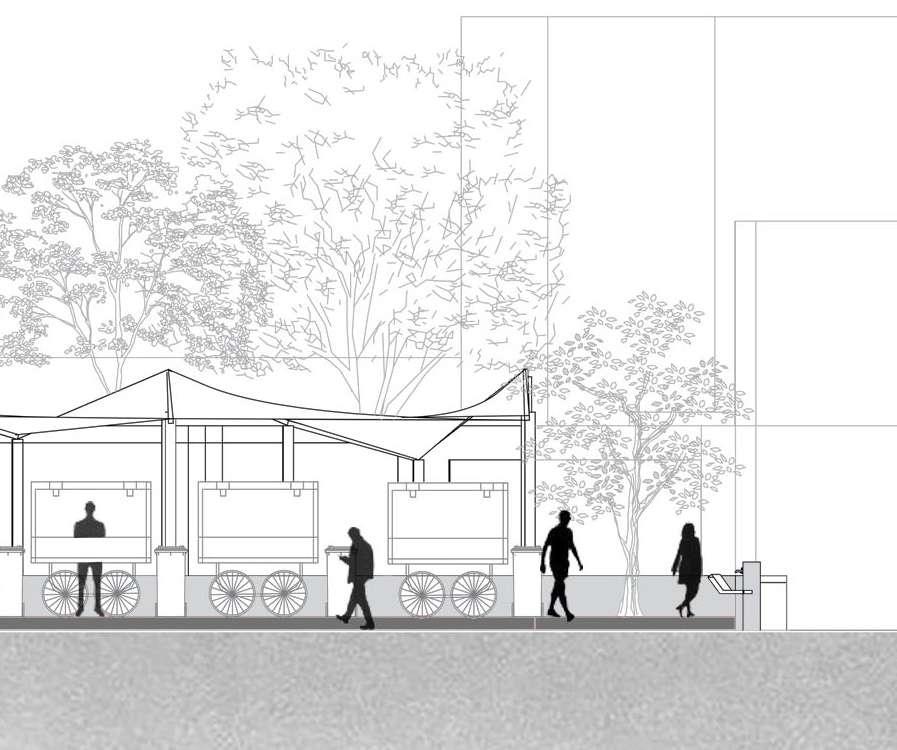
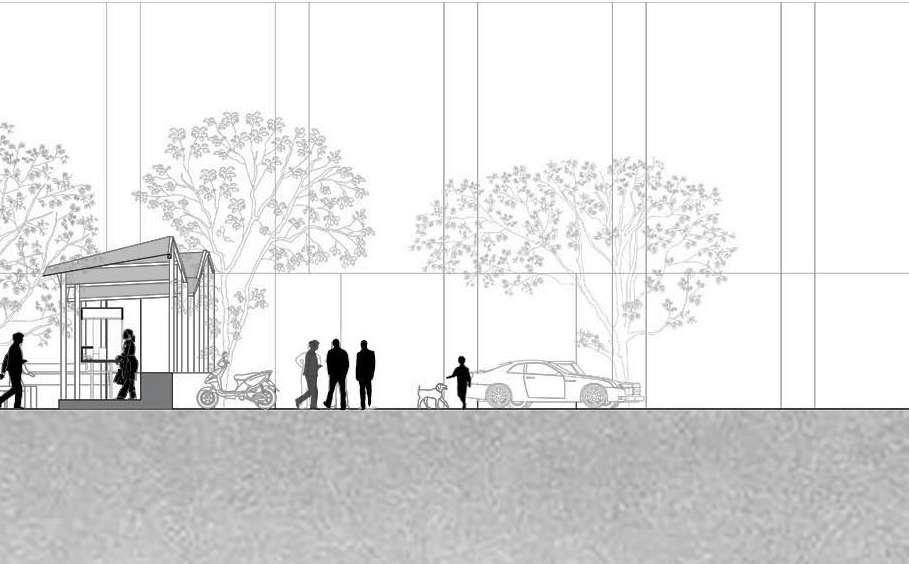
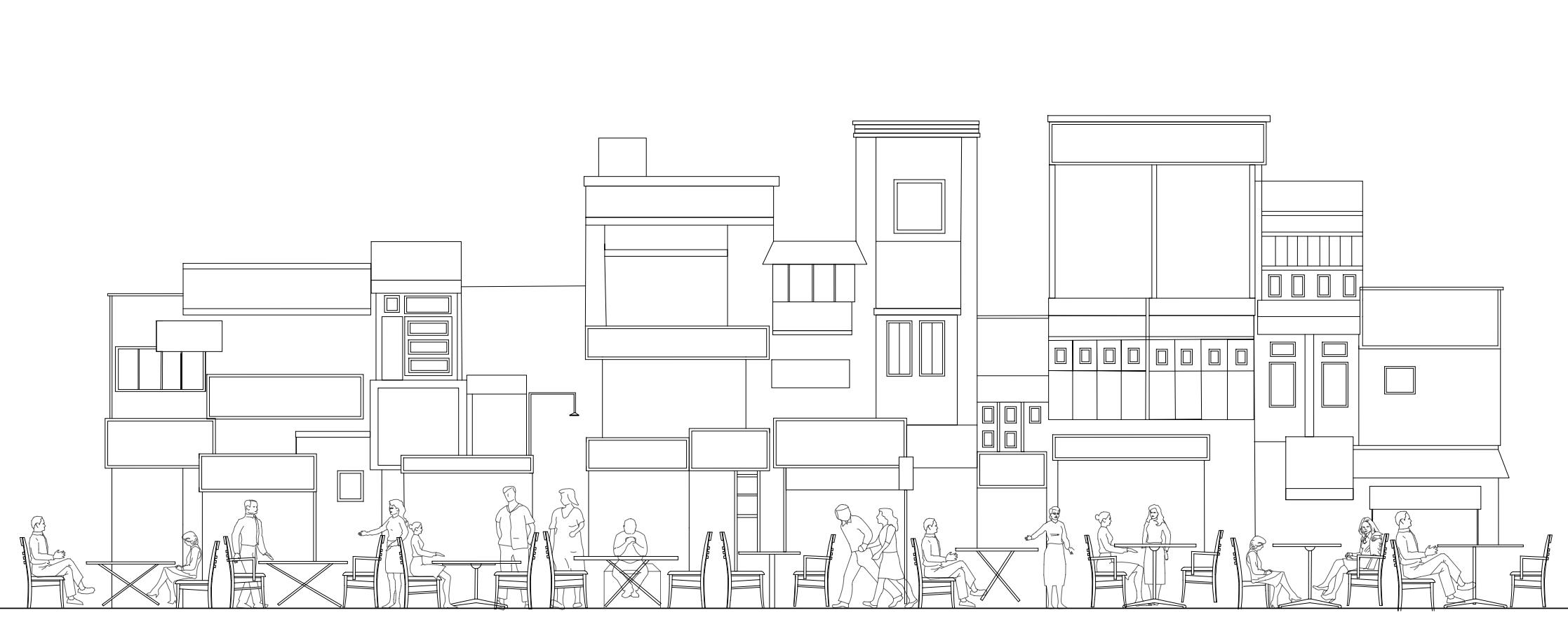
The course aimed at developing an understanding of the act of street vending and integrating these to form a safe and accessible public space, through participatory design processes. We focussed on mapping of street vending zones in Anjar, surveying and interviewing various stakeholders and street vendors afterwhich we identified the problems and designed the food vending plaza in a way where all the vendors have equal profit.
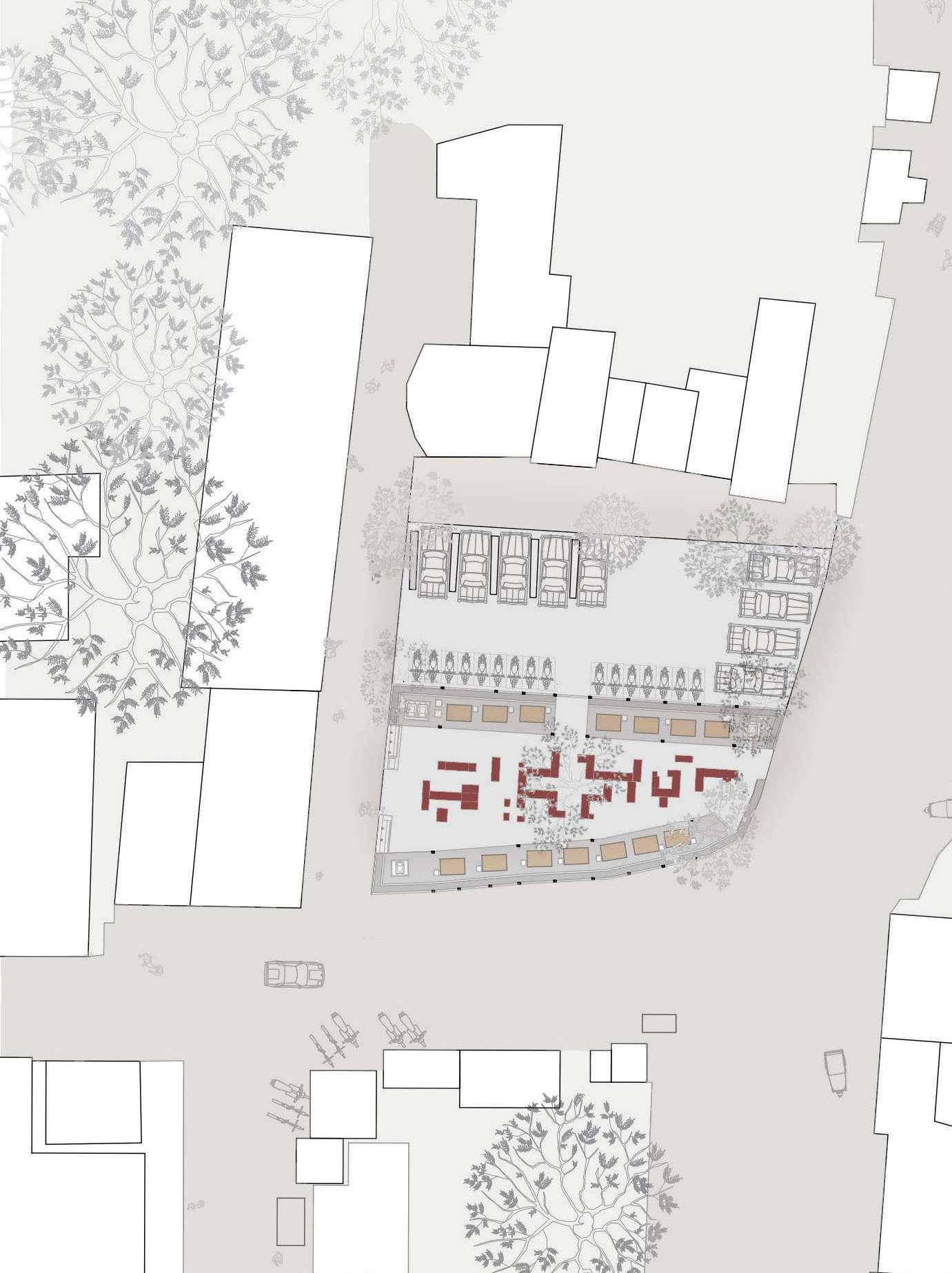
DESIGN PLAN
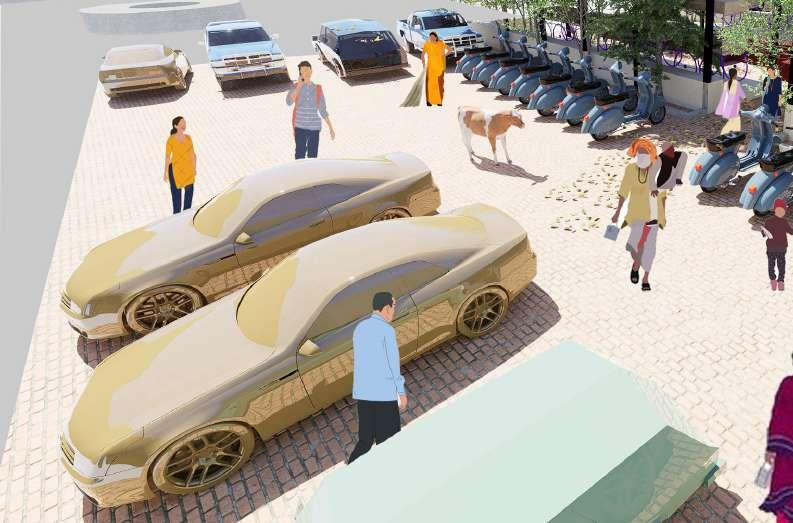
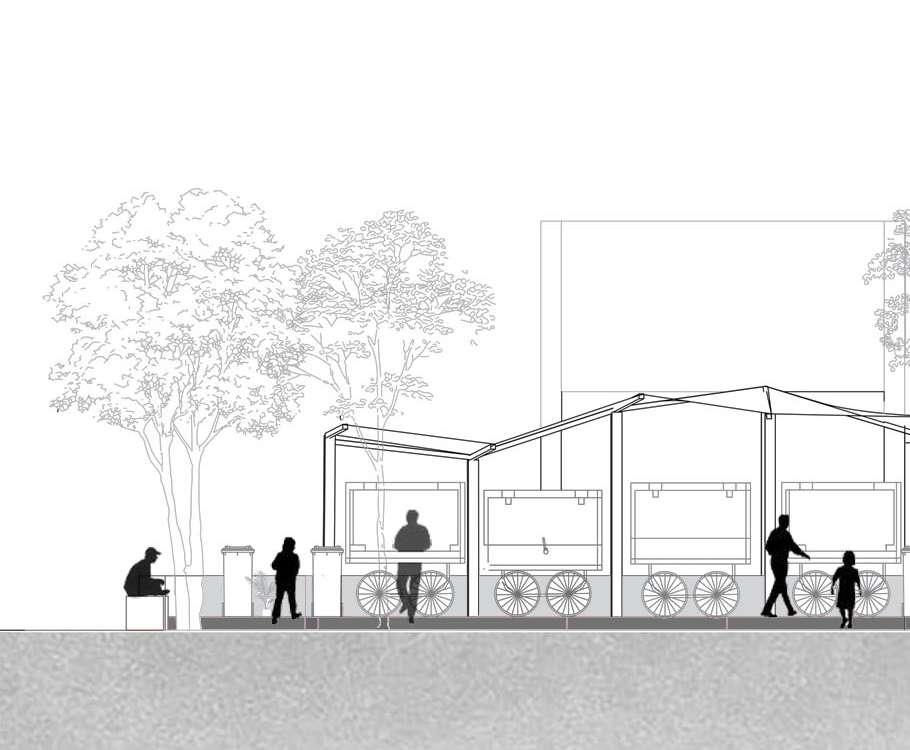
The layout of the plaza is such that the food vending stalls are located ath the sides and there is a common movable seating space located in the centre which would promote more interaction between customers. The site also comprises of parking for the public and private vehicles so the design is structured in a way where the parking and food vending zones are two diff areas but are not seperated by any hierarchial means.
Our site was Savasar Naka located in Anjar, Ahmedabad which is a food vending zone. The design process started by observing and analysing the site forces, the movement of all the customers and food vendors rethought in a way that the stalls are placed at the periphery and the central space is provided as a common seating with all the essential services such as washing and drinking facilities and waste disposal facilities are also provided. Therefore, the existing parking on the same ground as the food stalls is also not disturbed and also a sense of where the plaza
vendors and how the site responds during various times of the day . The main area of focus was how the plaza can be proper shade which also increases interactions between the different user groups. It is also thoght in a way where plaza happens and the parking is maintained.
04 WALLS CREATING INTIMATE SPACES
SEM 4- TYPOLOGY STUDIO
Malusare, Mahableshwar
‘Building type’ is a generic form made of sub-components where sub-components have specific relationships with each other. Building types have evolved over years and have consolidated through needs of climate, aspirations, patterns of living etc. A way of life and living is embedded in their configuration. Spatiality produces different possibilities of inhabitation. Hence, the spatiality of the sub-component determines the form of life that it can hold.
So the main aim was to study the idea of home and its type and how it could be modified to think of homes which are temporary, for guests, as rest space?
CURRENT TYPOLOGY
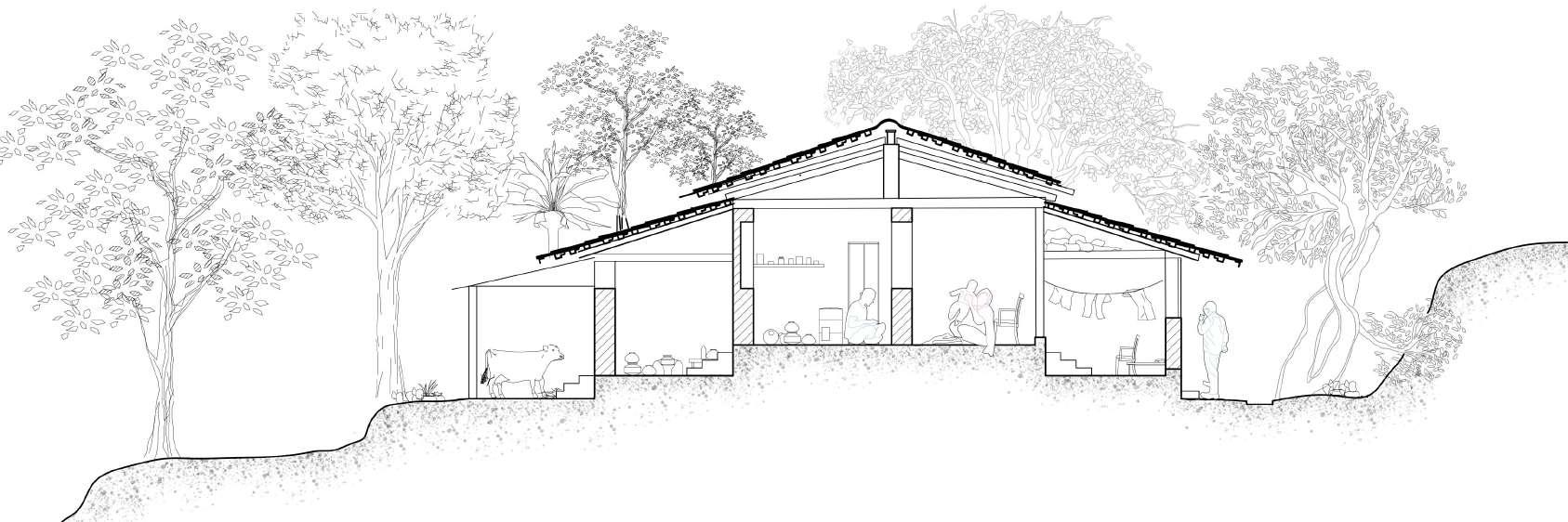
The diagram levels of porosity and openess of the space. The osari and padvi are the more social spaces of the house whereas the ghar is the more intimate space occupied only by the family members and the swayampak ghar is occupied only by the women of the house.
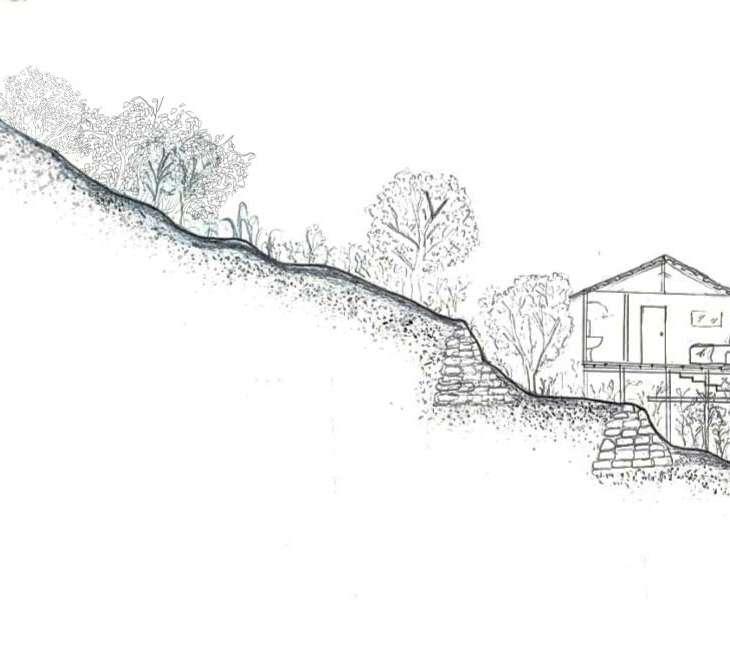
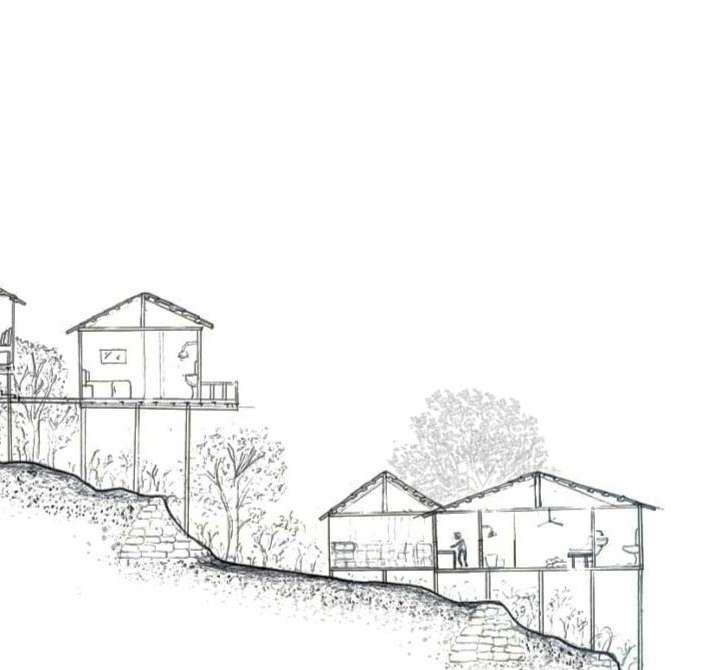
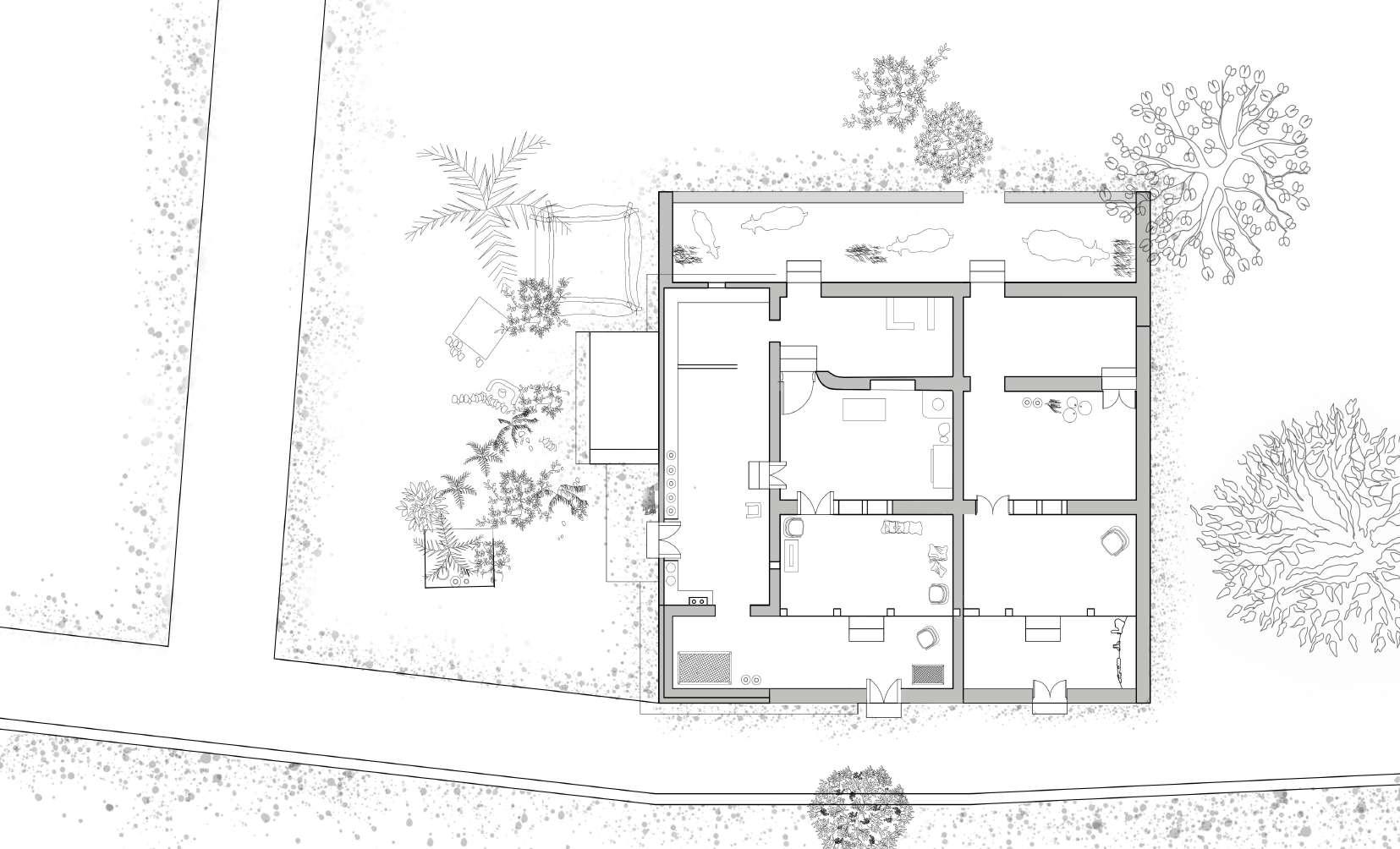
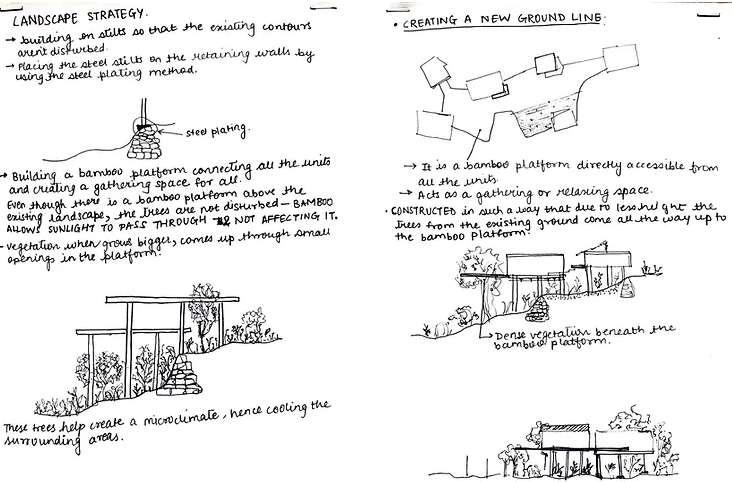
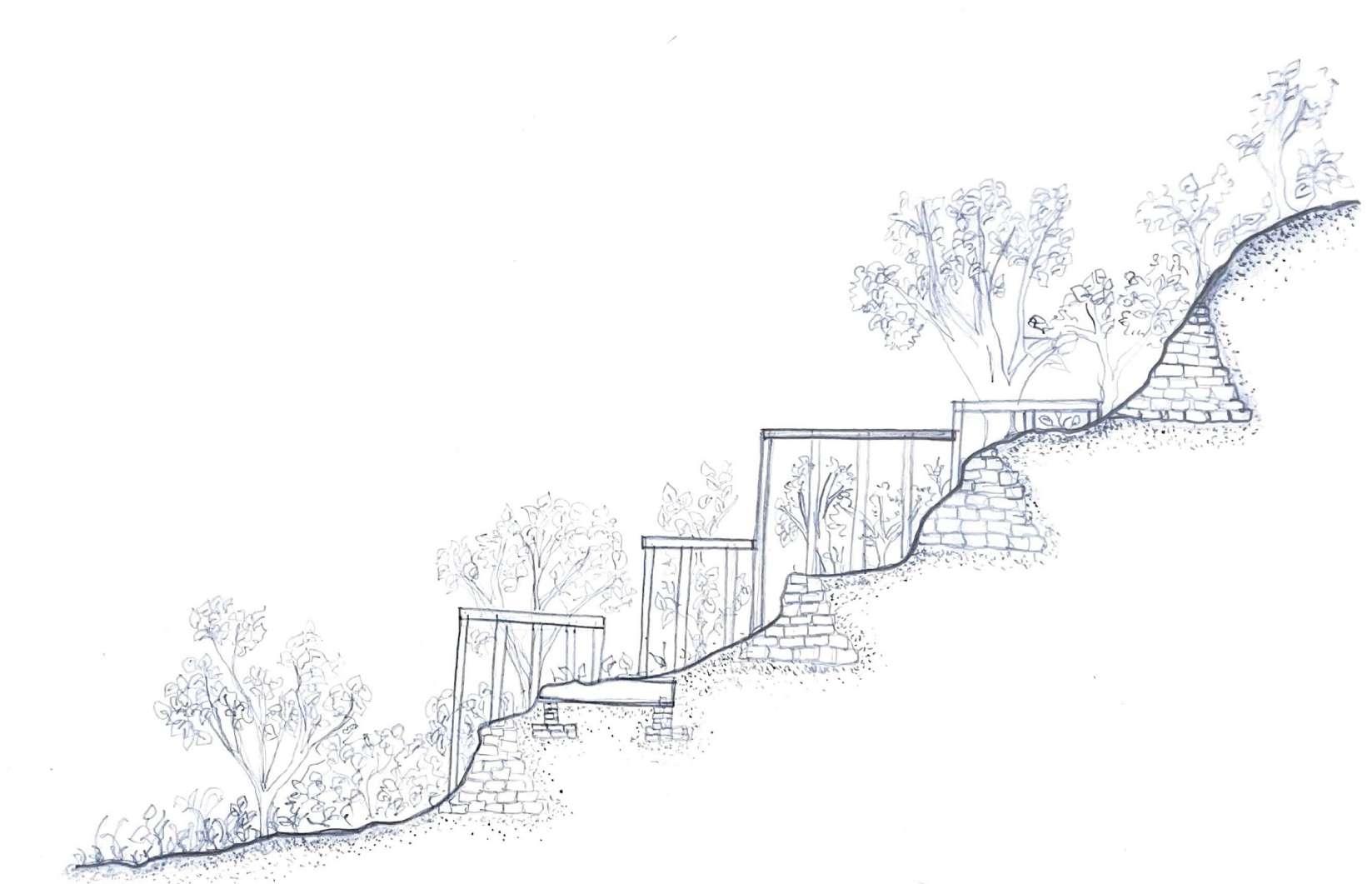
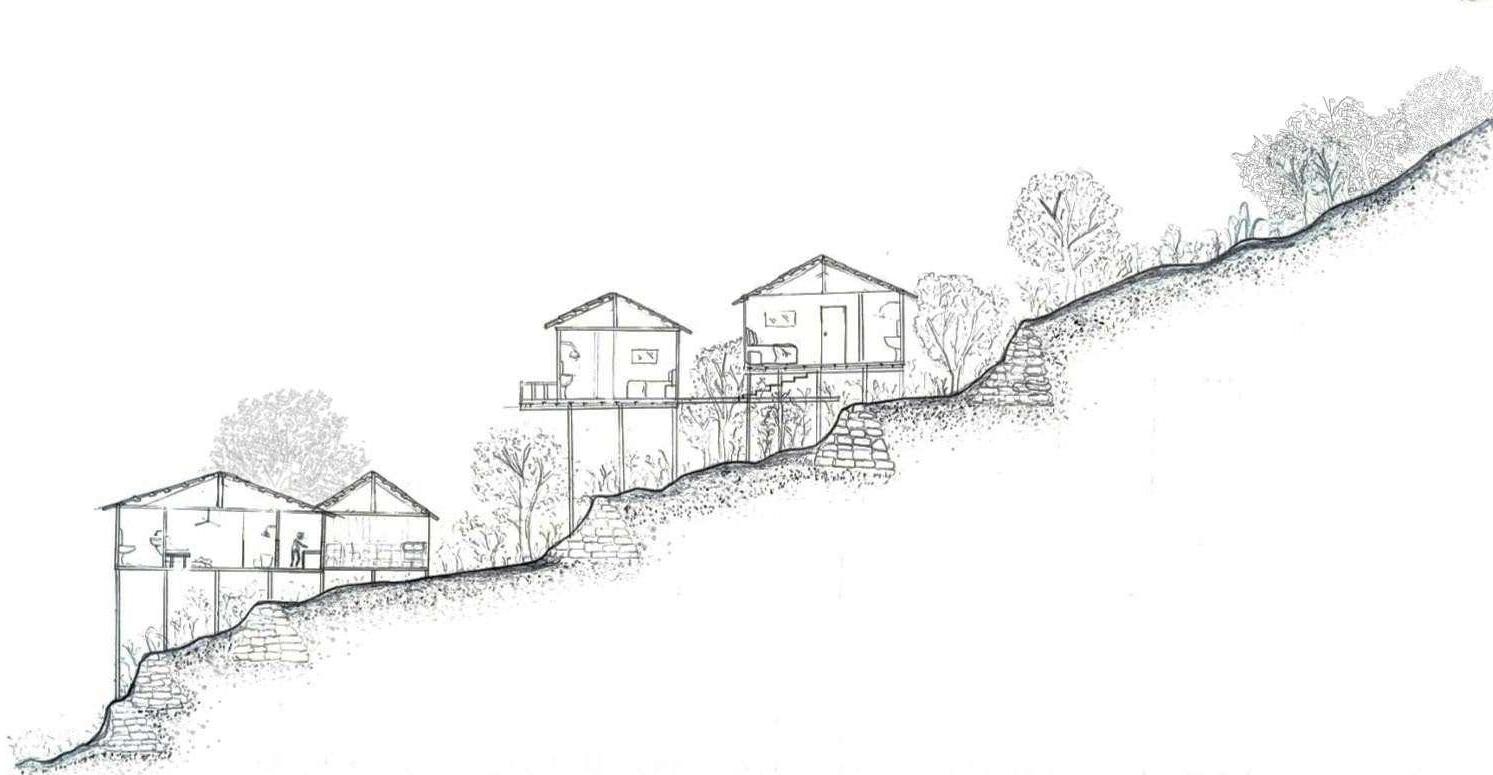
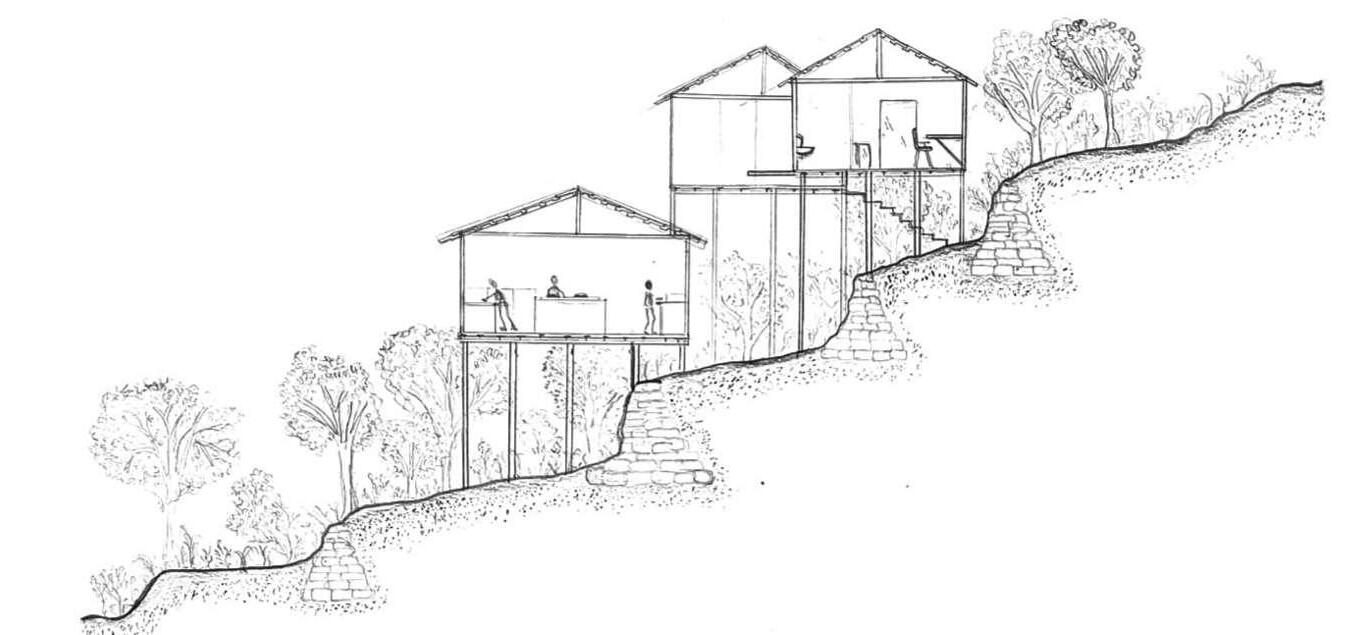
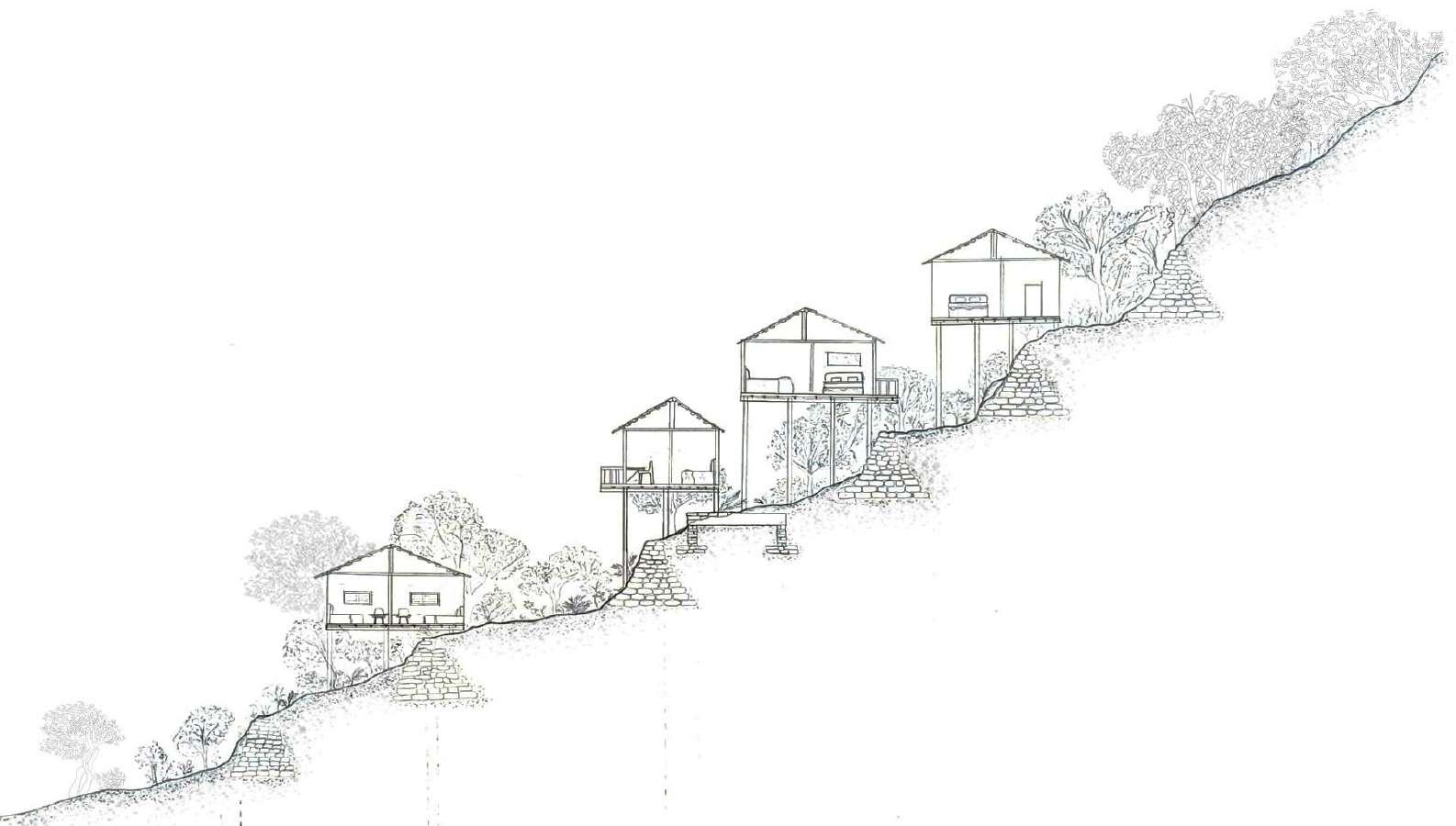
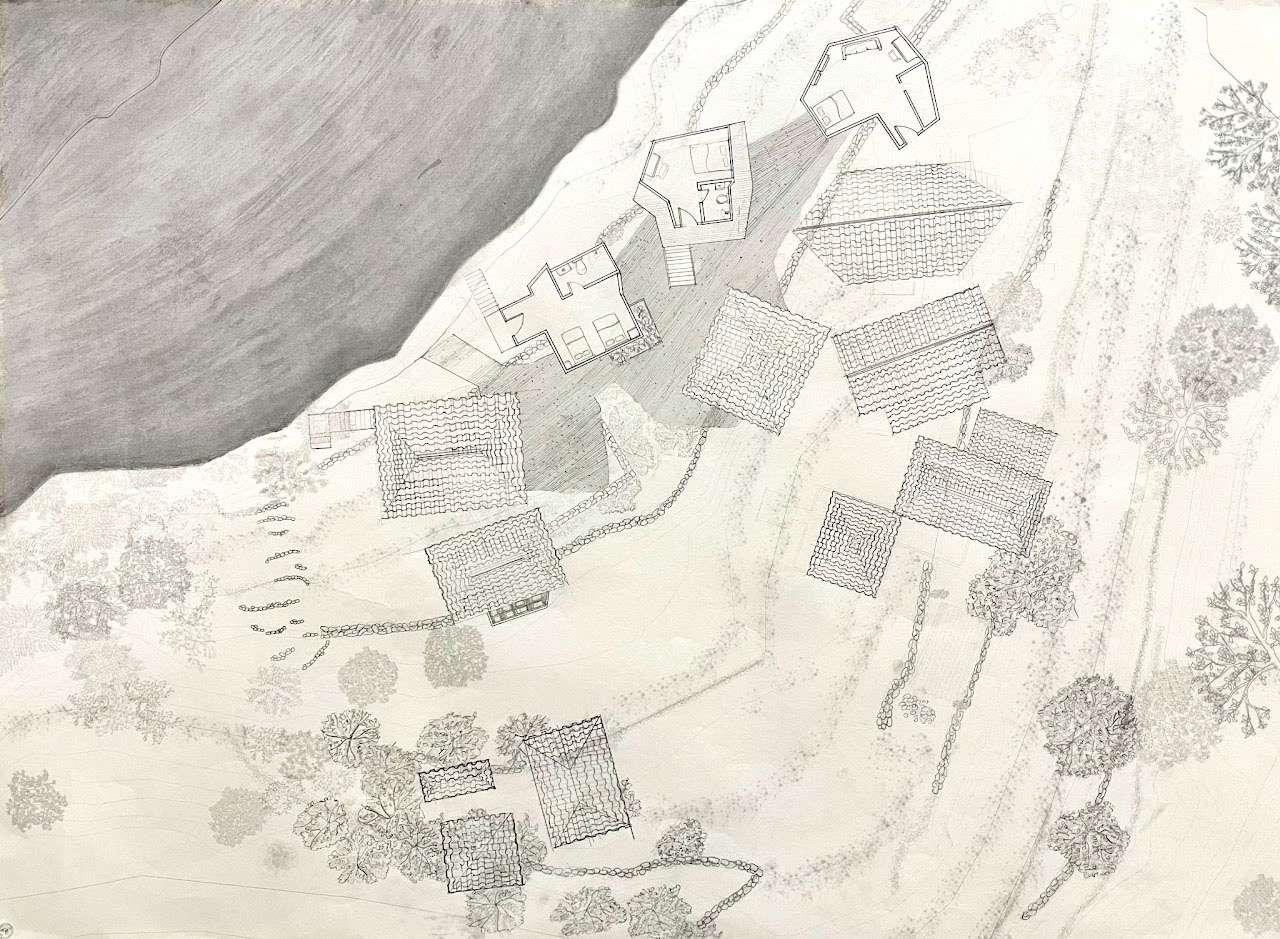
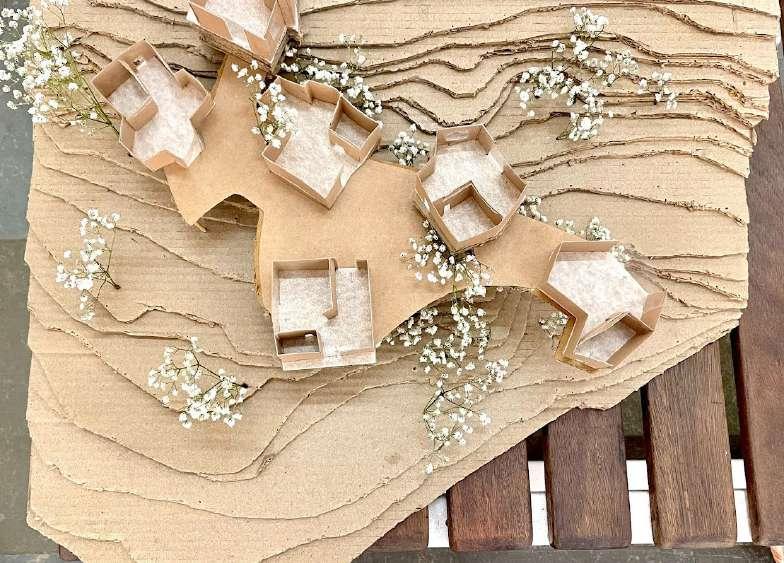
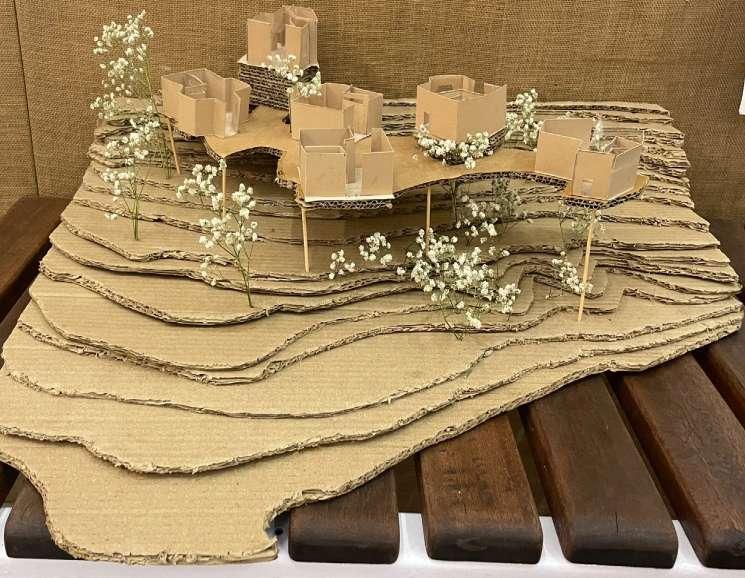
Building on stilts by creating a new ground line due to which the existing contours and vegetation is not disturbed. The programs are placed in a way where the landscape is anchored and they play an important role in creating social spaces to these programs.
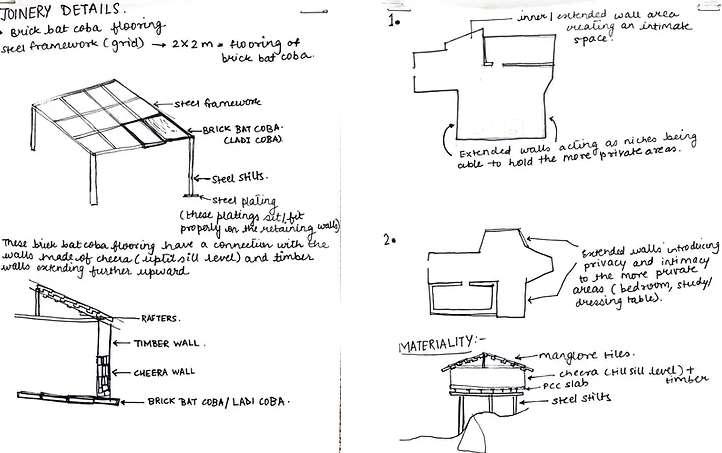
The rooms are designed in a way where the walls create a more intimate or an open space where the walls which are more extended inwards creates these pockets where more personal spaces are created and hence there are irregularities in spaces of every single room.
A common gathering platform as a common extension to all the rooms made of bamboo and having certain small seating spaces.
NARRATIVE DRAWING
SEM 4- SETTLEMENT STUDIES
Orchha, Madhya Pradesh
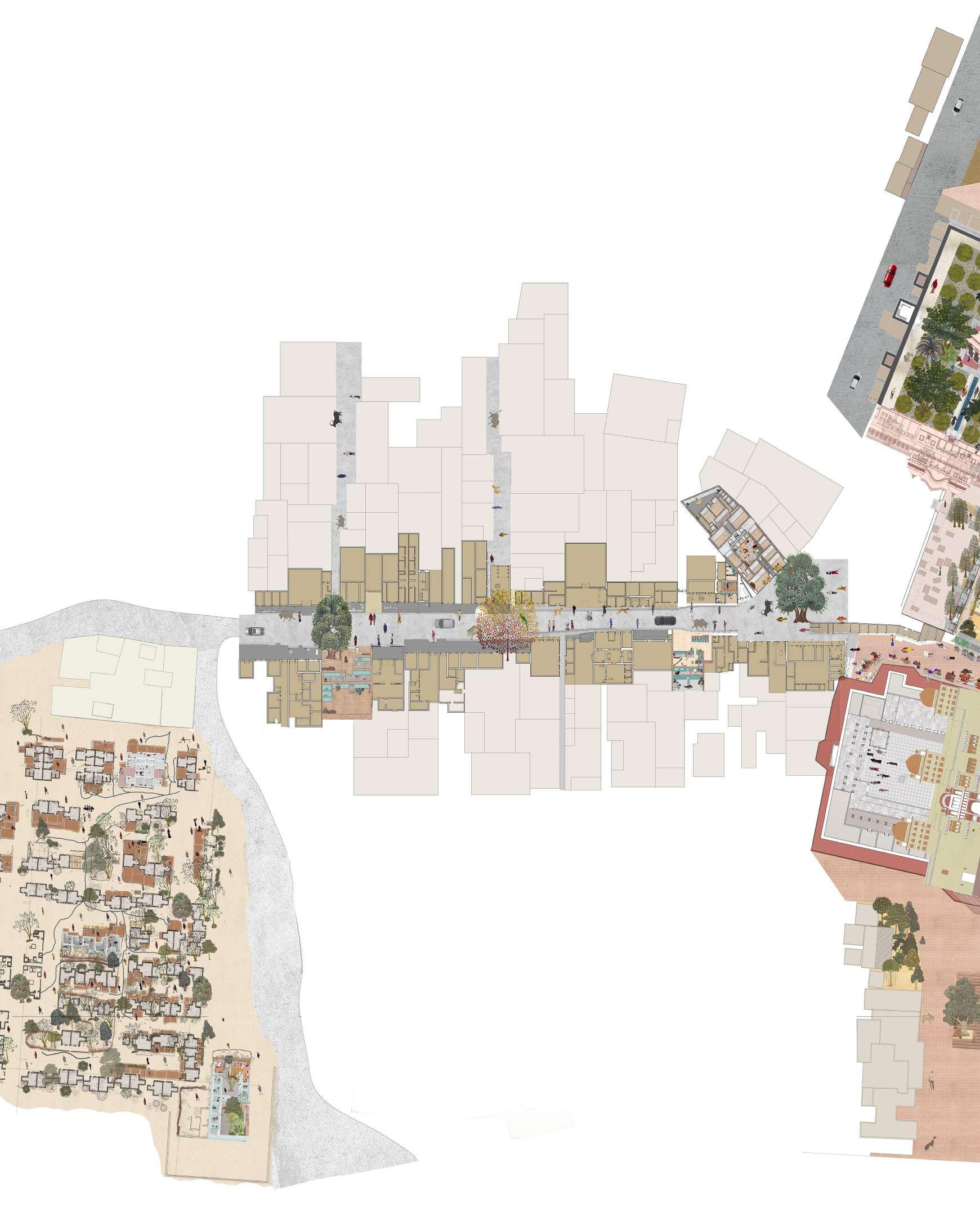
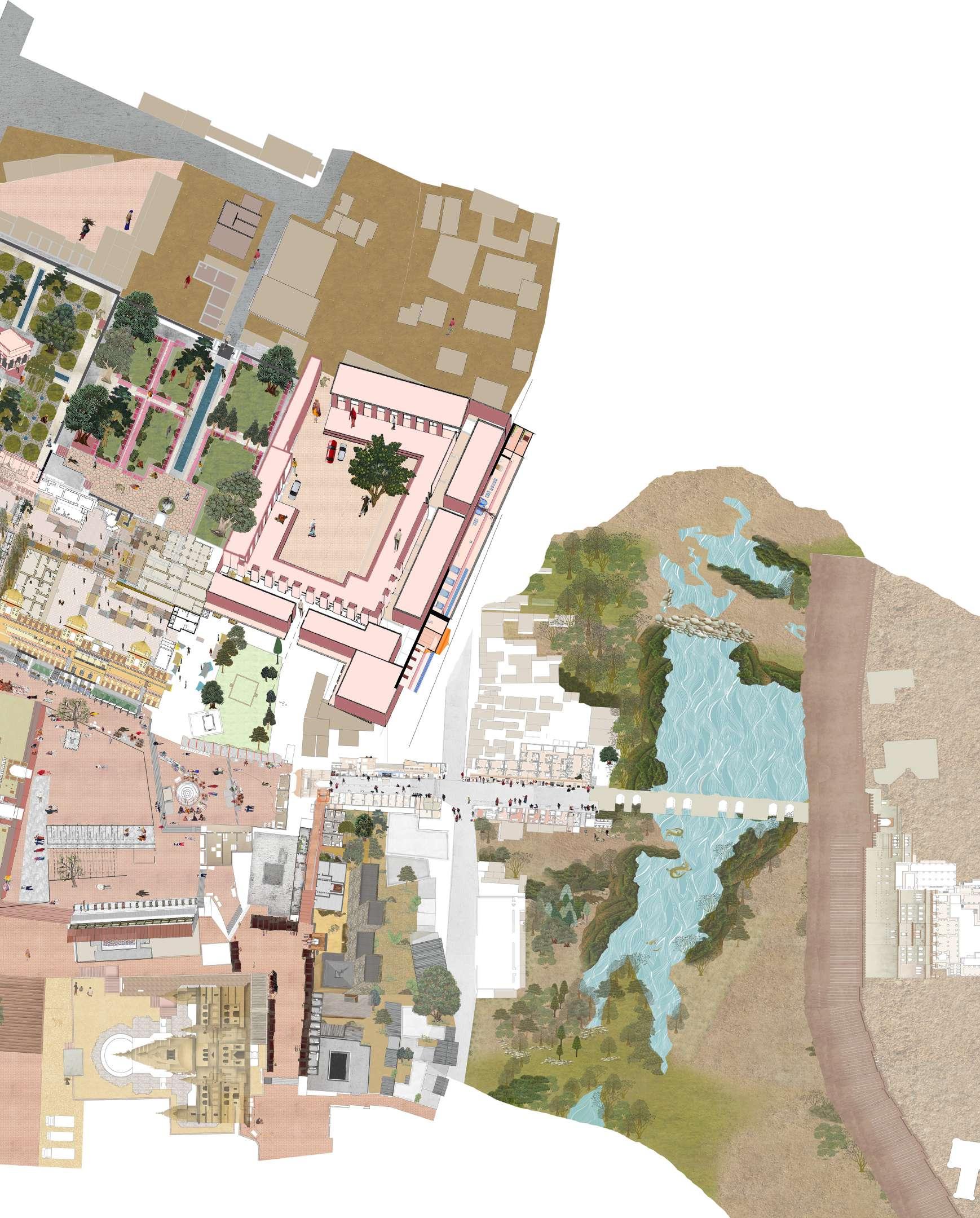
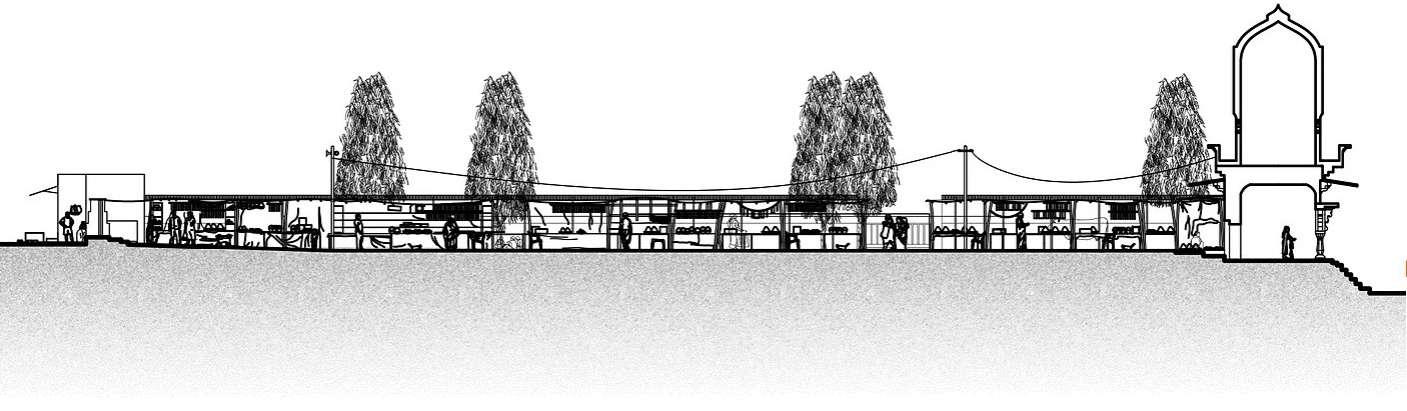
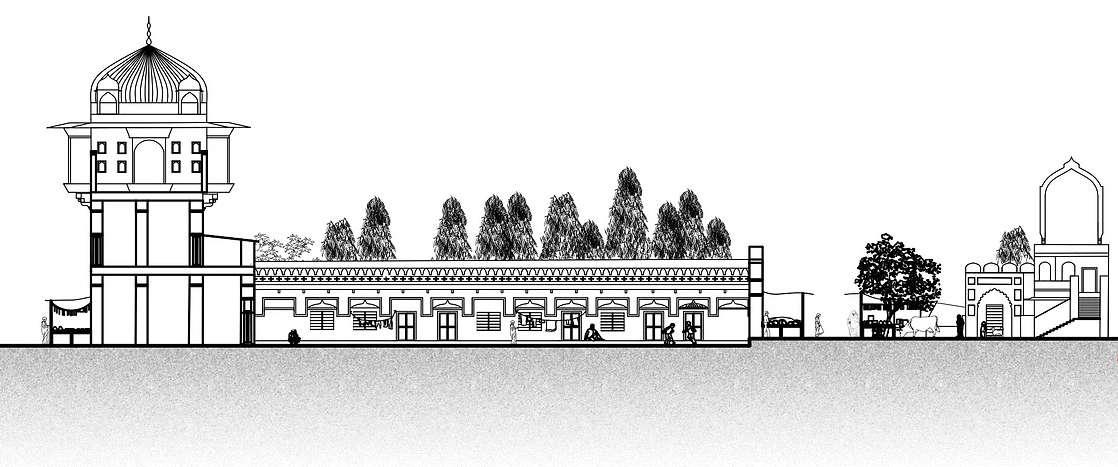
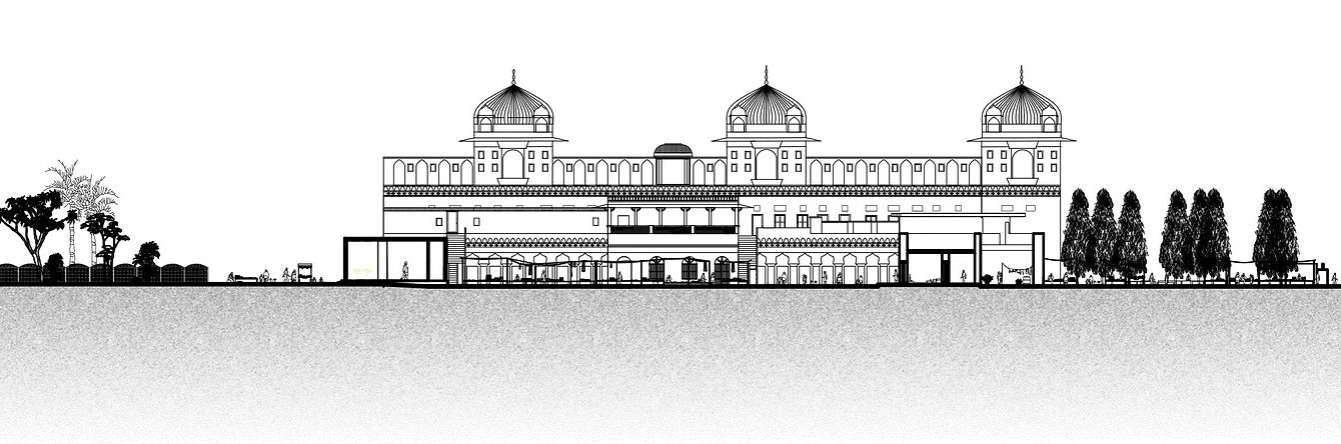
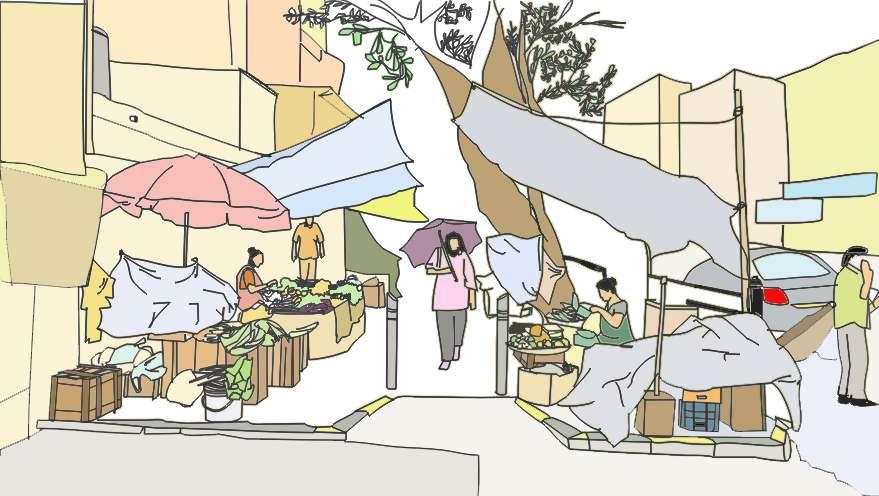
Orchha is a town located in the Niwari district of Madhya Pradesh encompasses a very dense collection of the historical buildings, gardens and traditional housings. We studied the Raja Ram temple, Chaturbhuj Temple Complex, Macchli Darwaza Market Lane, Phool Bagh Hardaul Baithak, The Palki Mahal and Market and the surrounding housings.
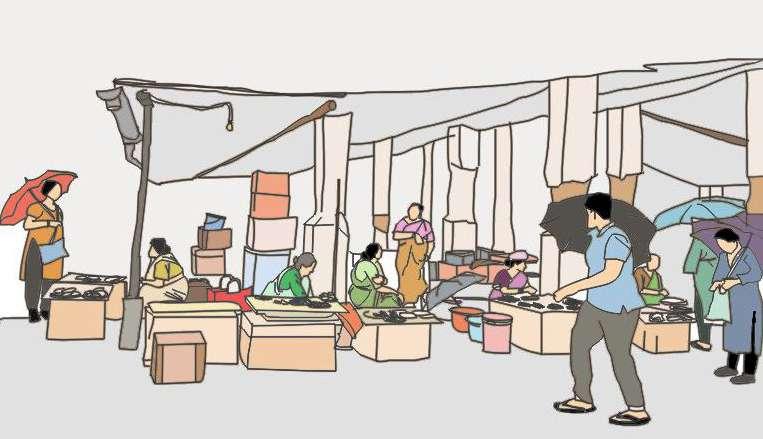
Orchha, is an ancient town in Madhya Pradesh located in the Niwari district. Our site comprises of the Palki mahal, the hardaul baithak, sawan bhado (the two wind towers) and the market comprising of lanes of shops on both sides of the road connecting the raja ram mandir and the hardaul baithak and these lanes of shop continue all the way from the hardaul baithak to the phool Bagh and then towards the sawan bhado. These stalls occupy the footpath made of paver blocks and stone materials and the stalls supported by steel rods to which tarps are attached which is collectively tied to the nearest trees or the chajjas created. The space has a very welcoming ambience and the chaos of the tourists as well as the local make the place even more lively.
The section cut across shows the market which has grown over the years among the ruins of the Palkhi Mahal and the Hardaul Baithak with stalls taking support of the ruins to stand selling a variety of products in a relatively small space. structure.
The section shows a contrast of inhabitation among the spaces starting from the hustling Raja Ram Mandir market road through the unshaded courtyard surrounded by the High Court magistrate and local residence. Further entering the busy market among the ruins and into the old Hardaul Baithak structure.
The long section cuts across the entire site showing how the idea of built and unbuilt doesn’t dictate the inhabitation of the space but further enlarges the discussion related to boundary, access and facilities. Proved by the attempt of fencing an open public space in spite of the residence in the palace ruins and the carved out bazaar between them.
06 INTERMEDIATE SPACES
JVPD, Juhu, Vile Parle (West)
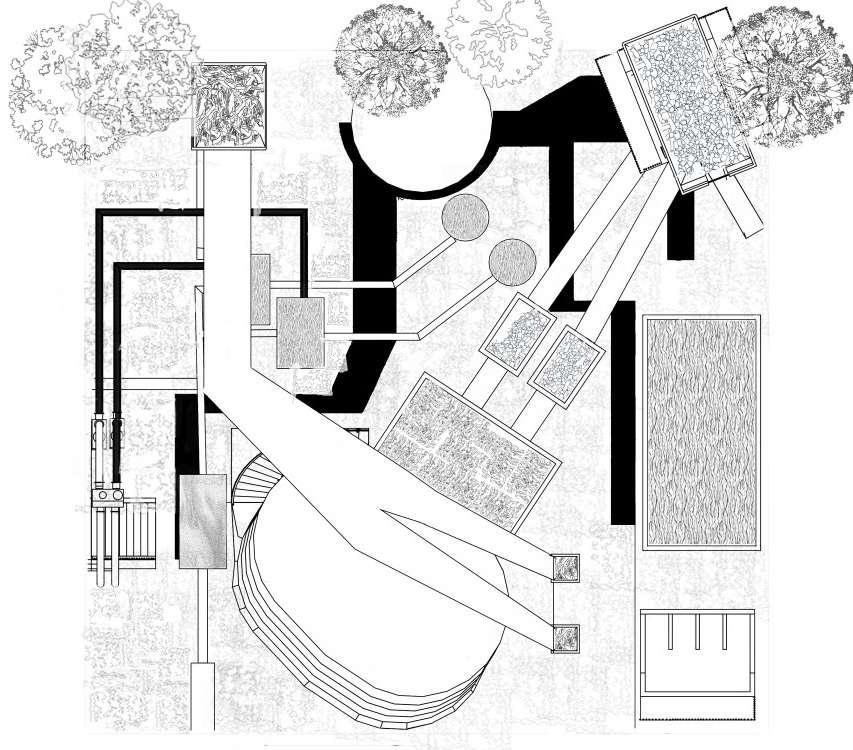
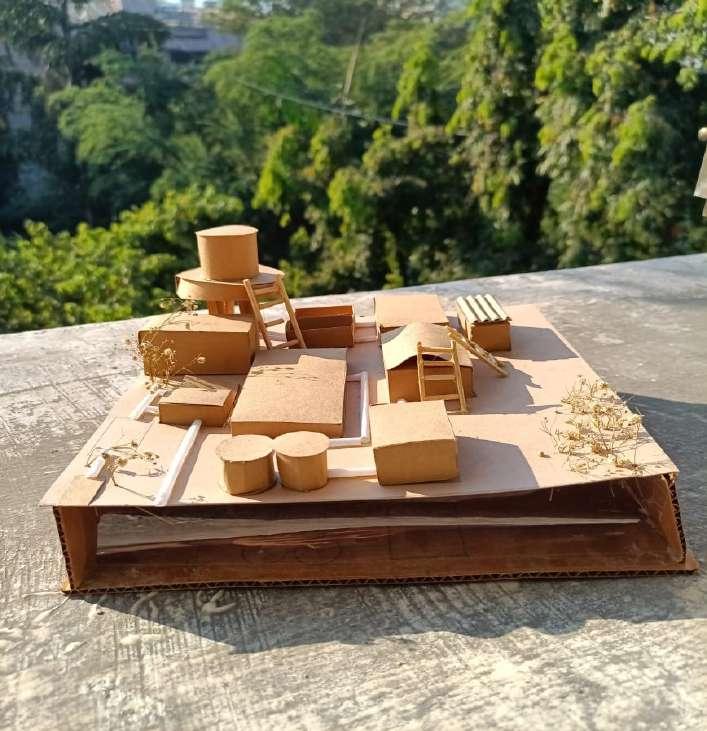
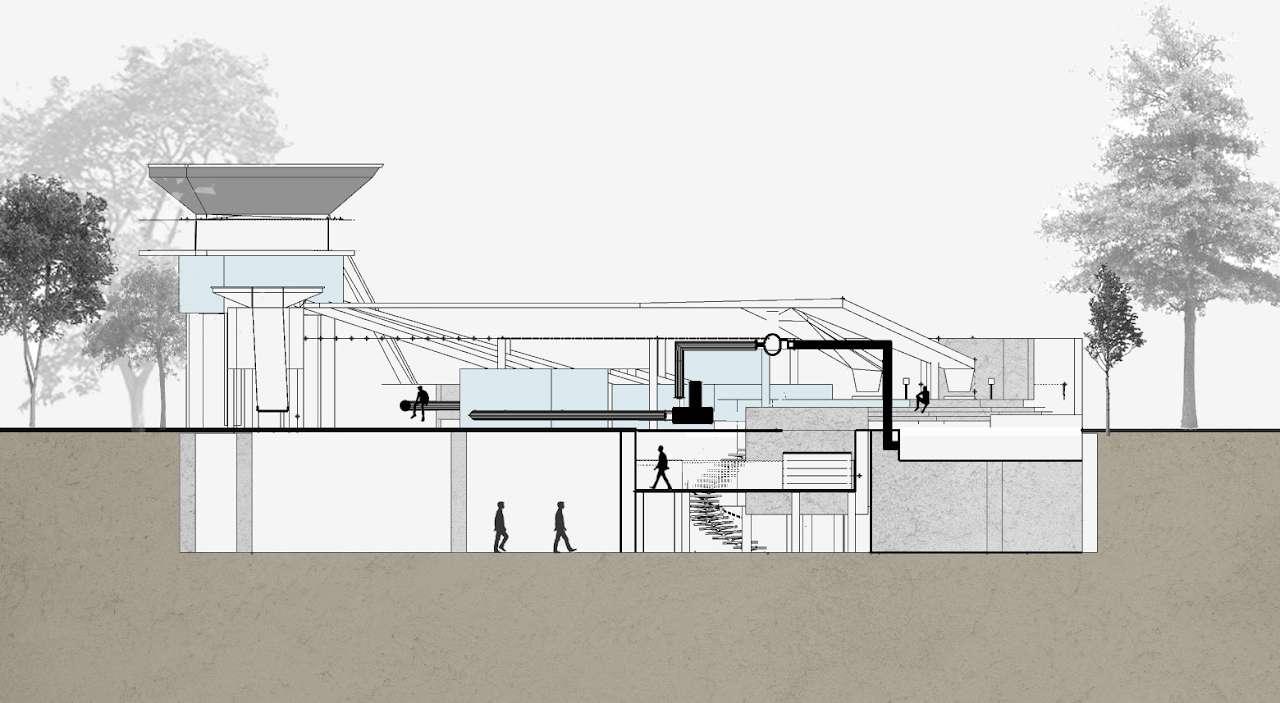
‘What is the architecture of resource consumption and regeneration (air, light, water) and how does the infrastructural requirement to harvest, store, consume, renew these resources inform the builtform and its spatiality?’ How can this systemic thinking become the mode to craft spaces and suggest informed relationship between the space, experience, behaviour, life and living to create comfort conditions? The climatic response becomes inherent to the design process.
The chosen site of intervention is a hybrid space of BMC infrastructure of garage for vehicles, dump yard for discarded vehicles, drainage department
What can be the architecture of a public space which is at the interface of two or more overlapping systems?
LAYOUT PLAN
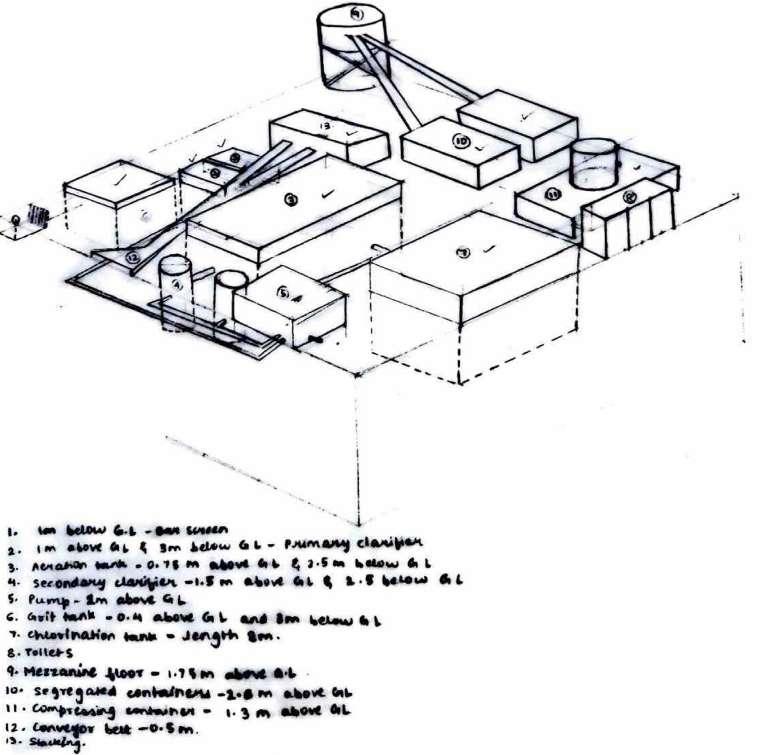
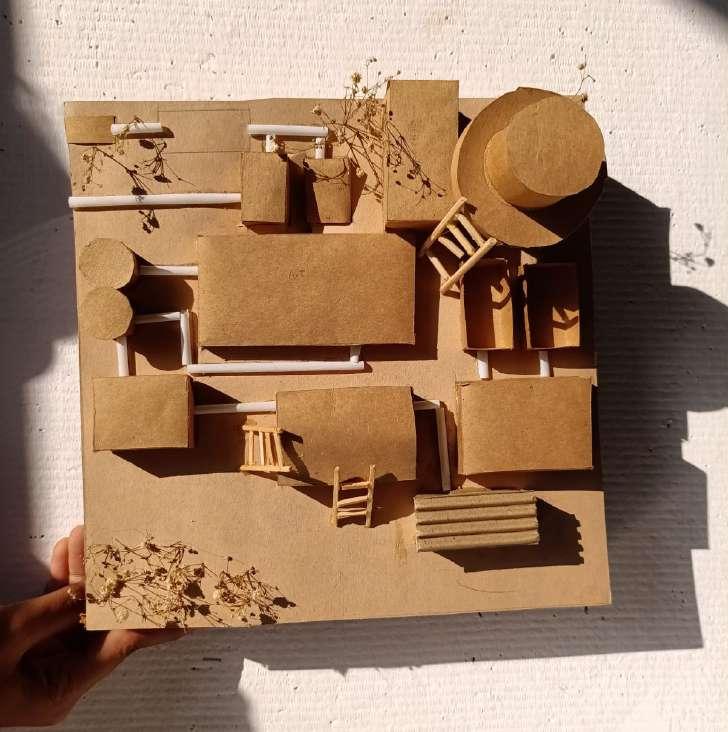
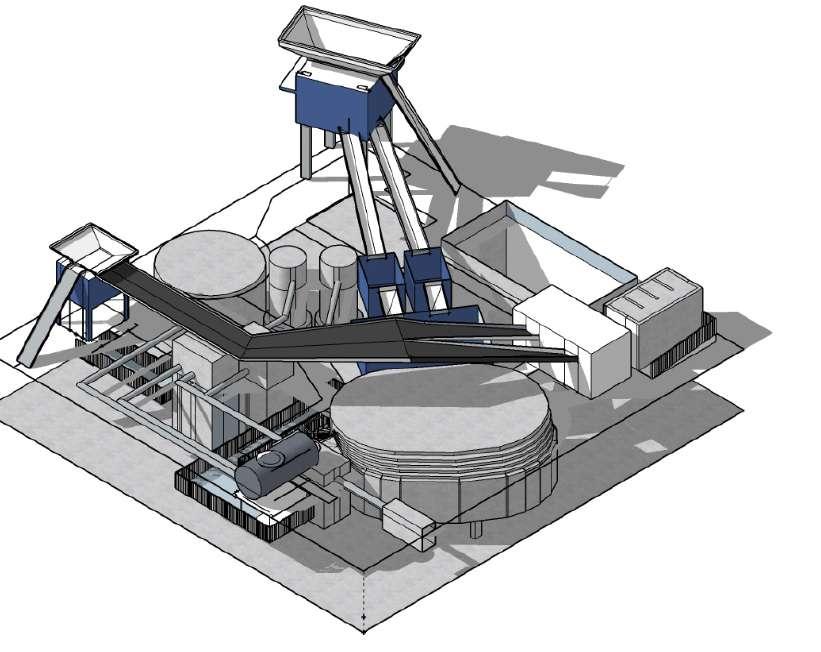
The site was re-thought such that the junkyard (where the scrap cars are put) and the dumpyard (plastic bottles are collected for recycling) are combined together and a system is designed wherein all the services such as pipes of the water treatment plant are placed above ground which can be used by people for sitting purposes. Simultaneously there is a conveyor belt which connects to furthermore segregation components used to sort out the plastic junk and other scrap materials.
07 INCREMENTALITY
SEM 3- PRODUCT DESIGN
Specialisation Course
The course aimed at introducing us to the various processes of making specific to a particular material and the parameters involved around it. It also helped us understanding of the interplay between specific material and correlated processes involved while designing/making the product.
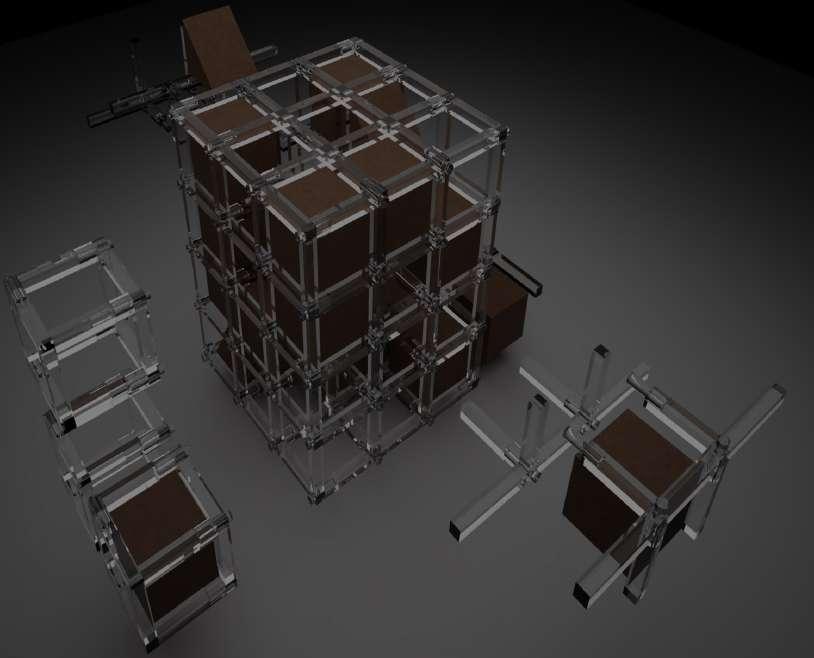
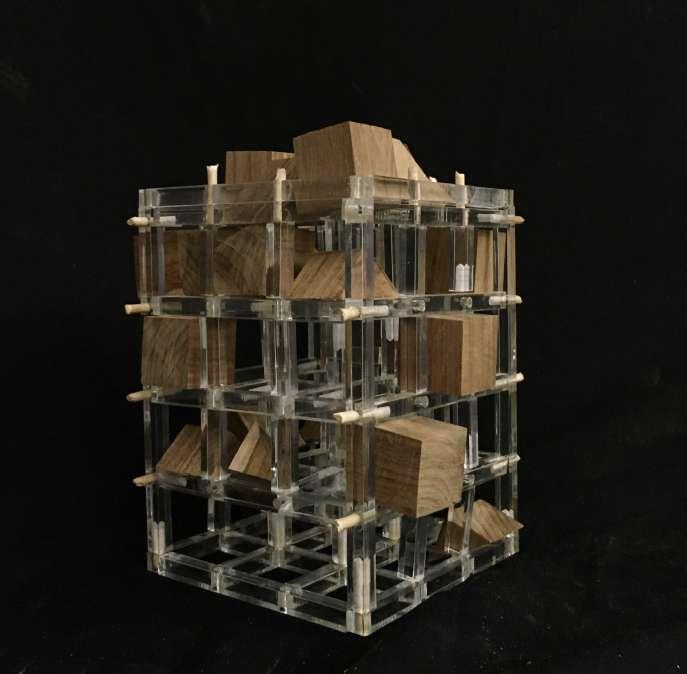
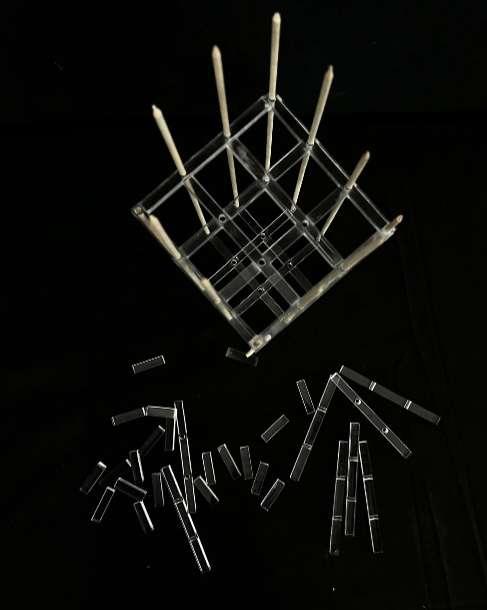
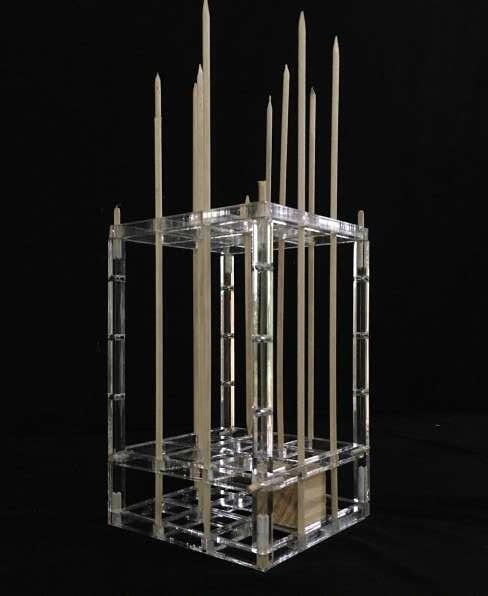
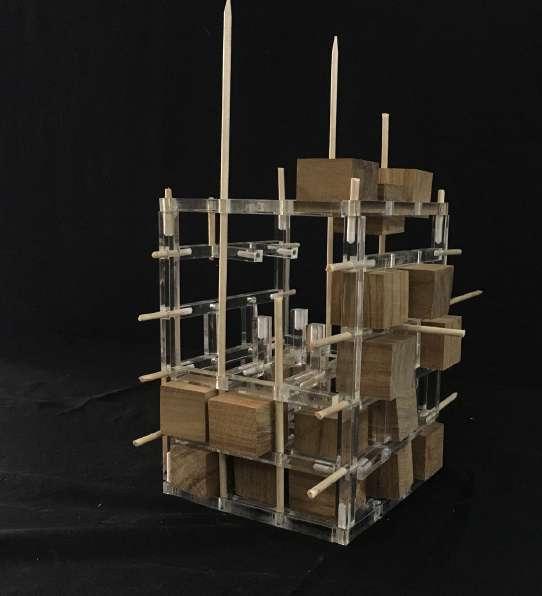
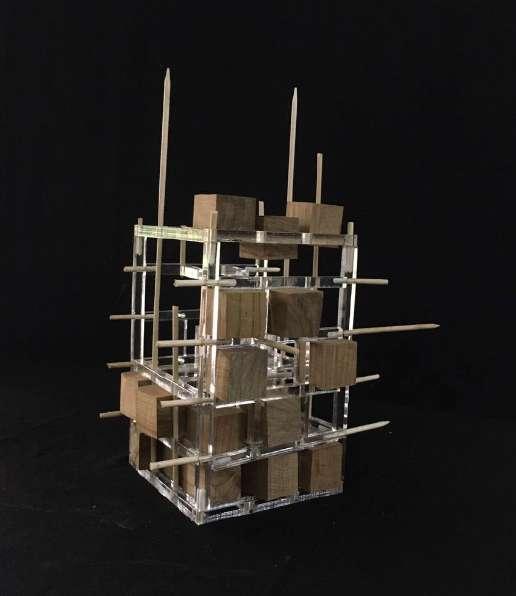
Incrementality is a way in which a series of small amounts of objects are collaborated together to make a specific larger structure.
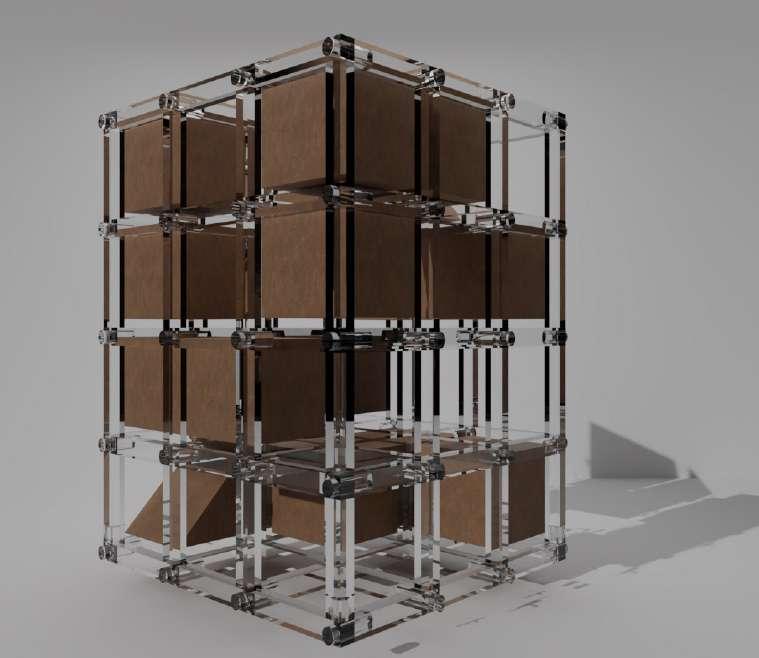
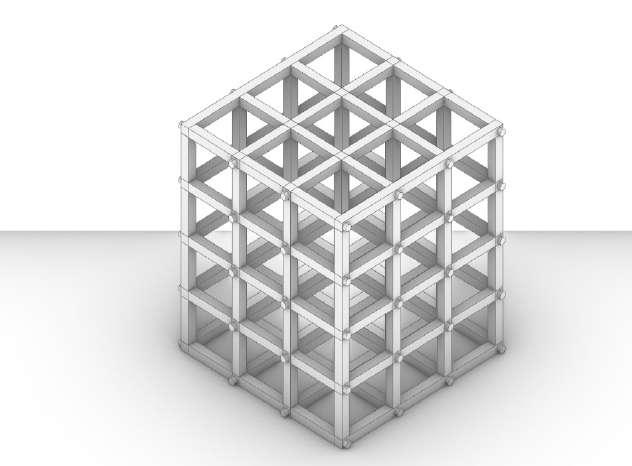
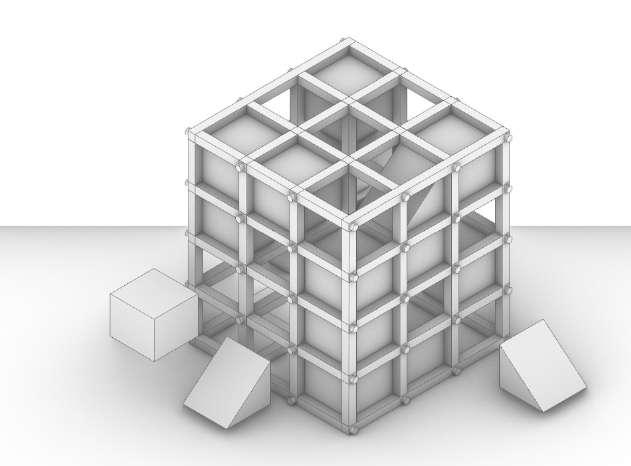
We started by figuring out some of the elements like ramps, staircase, arches, and windows which we would use by doing alternate permutations and combinations to finalize a structure. We created a Rubik’s cube type of structure by making a grid of 3 by 3. It will be a structure with cuboidal grids and have spaces to insert the cubes and pyramids.
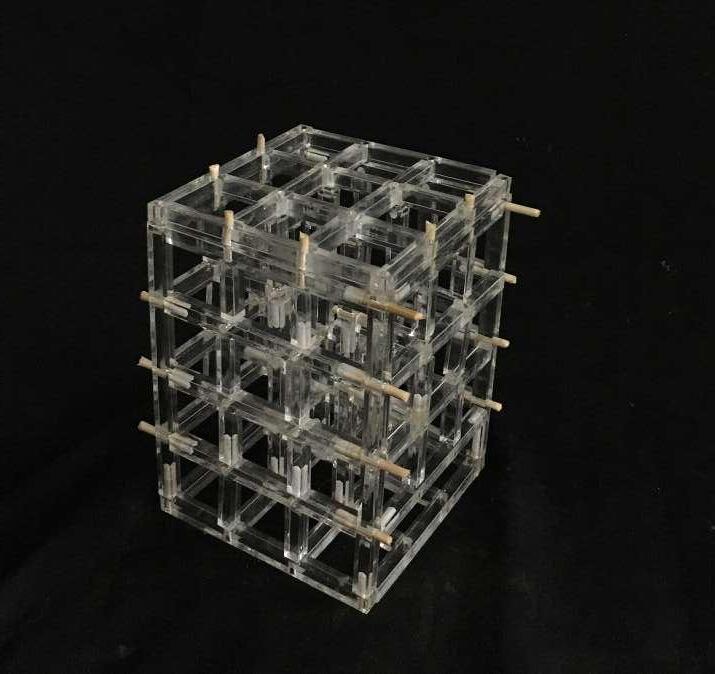
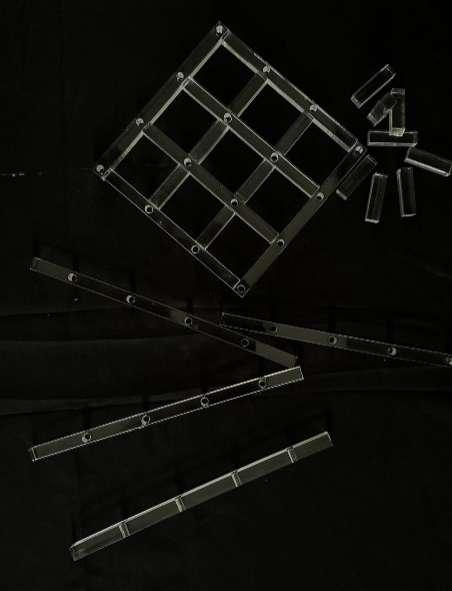
Next we finalized our material to be acrylic and the inserting elements in the grid of the above structure will be wooden cubes and pyramids. The dimension of each grid was 3 by 3 and the thickness of the acrylic was 8mm.
The topmost and the bottom most grids of the cuboid are kept fixed whereas the internal and adjacent members are movable and can be rotated to form a grid on the other side.
The movable grids are placed together by a peg joint i.e. using bamboo skewers. Hence they are easily detachable.