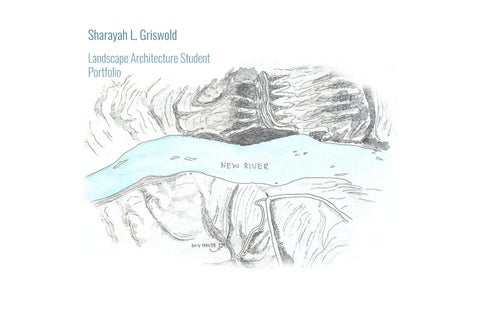
Landscape Architecture Student Portfolio
Education
Virginia Polytechnic Institute and State University CollegeofArchitectureandUrban Studies
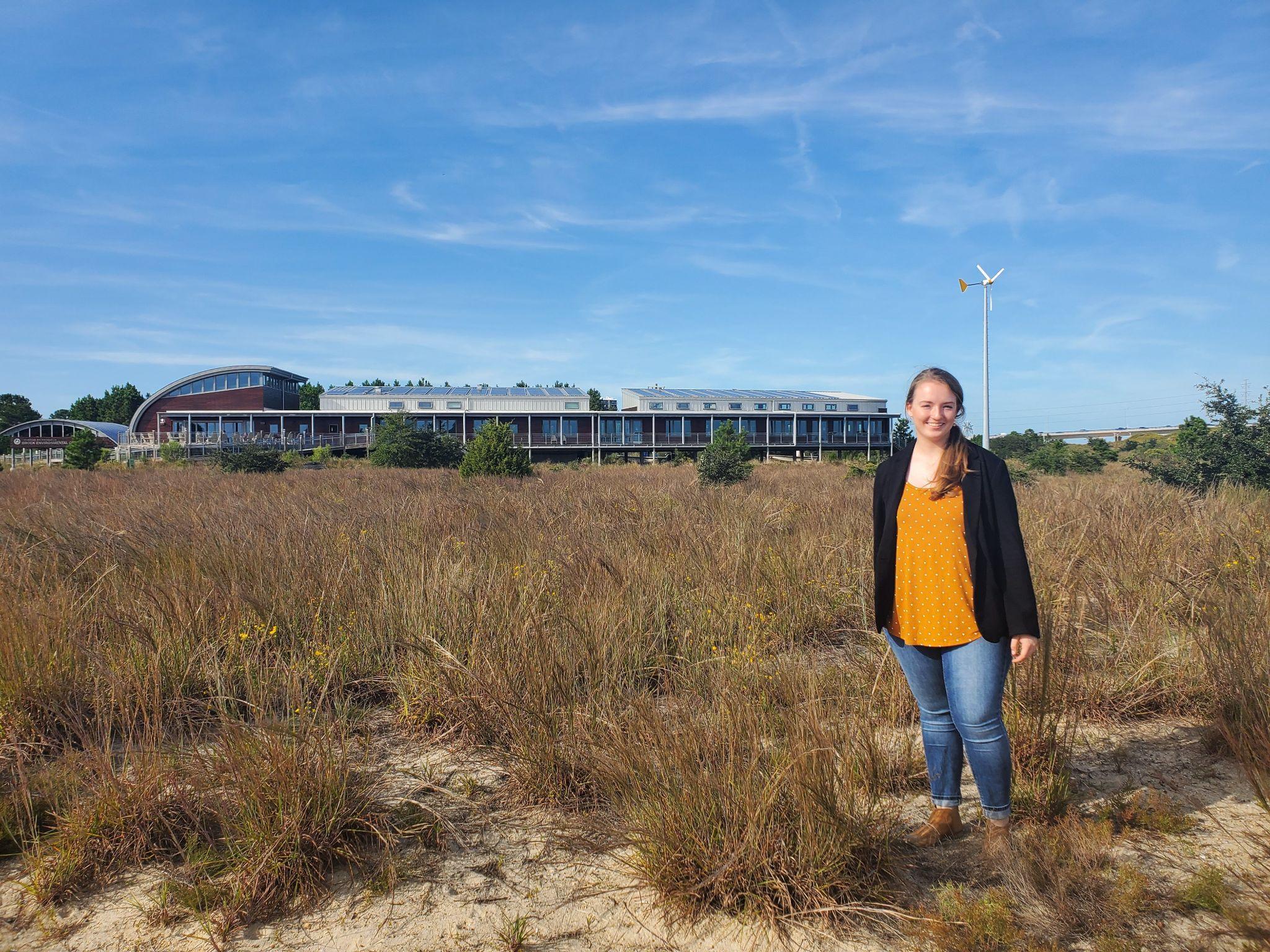
Bachelor of Landscape Architecture Graduating May 2023
Courses In:
Woody Plants Grading Hydrology GIS Universal Design Construction Documents
About Me
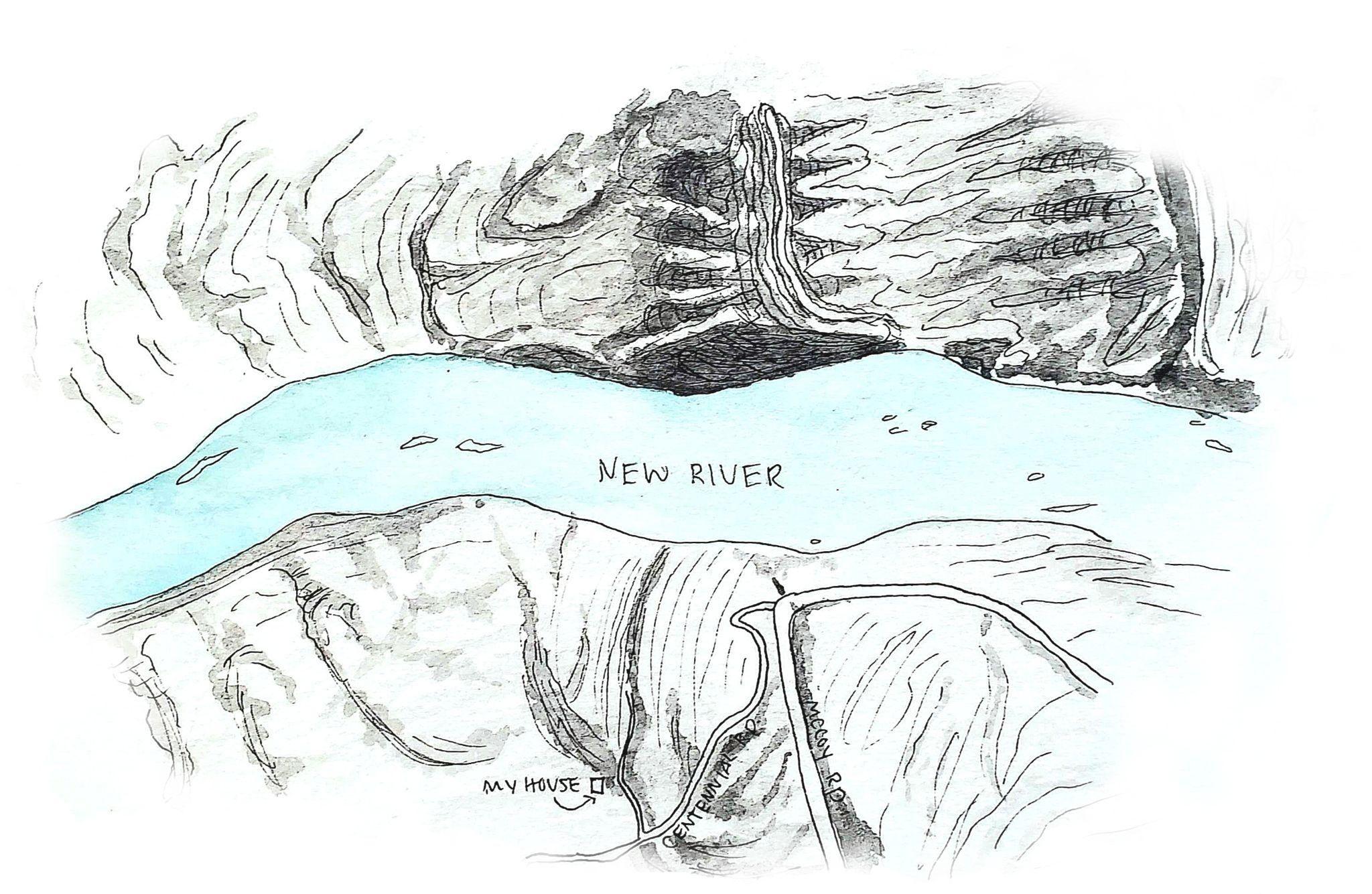
My name is Sharayah, but I go by Shay! I am currently a fifth year landscape architecture student at Virginia Tech. I am from Franklin, Tennessee, and I love learning new things. I grew to appreciate the landscape through my love for the outdoors, specifically through hiking and gardening. My hobbies include collecting vintage prints and growing uncommon tropical plants as well as cut flowers and vegetables in the summer. I am currently learning how to make natural paint pigments from some of Virginia's native flora. My sweet dog, Archie, accompanies me on many of my outdoor adventures and projects.
Currently, I work for Back to Nature Landscapes in Blacksburg, VA as their photographer and as a crew member on one of the install/maintenance teams. I also work as a landscape designer for Cicada Design LLC in Hillsborough, NC designing pollinator gardens and native landscapes, and I am involved with Virginia Tech’s horticulture department drafting landscape plans for FFA exams.
L. Griswold Skills ● AutoCAD ● Photoshop ● InDesign ● ArcGIS Pro ● Sketchup ● Hand Rendering ● Watercolor Painting ● Microsoft Office Suite
Brock Environmental Center - Chesapeake Bay Foundation VirginiaBeach,VA
Sharayah
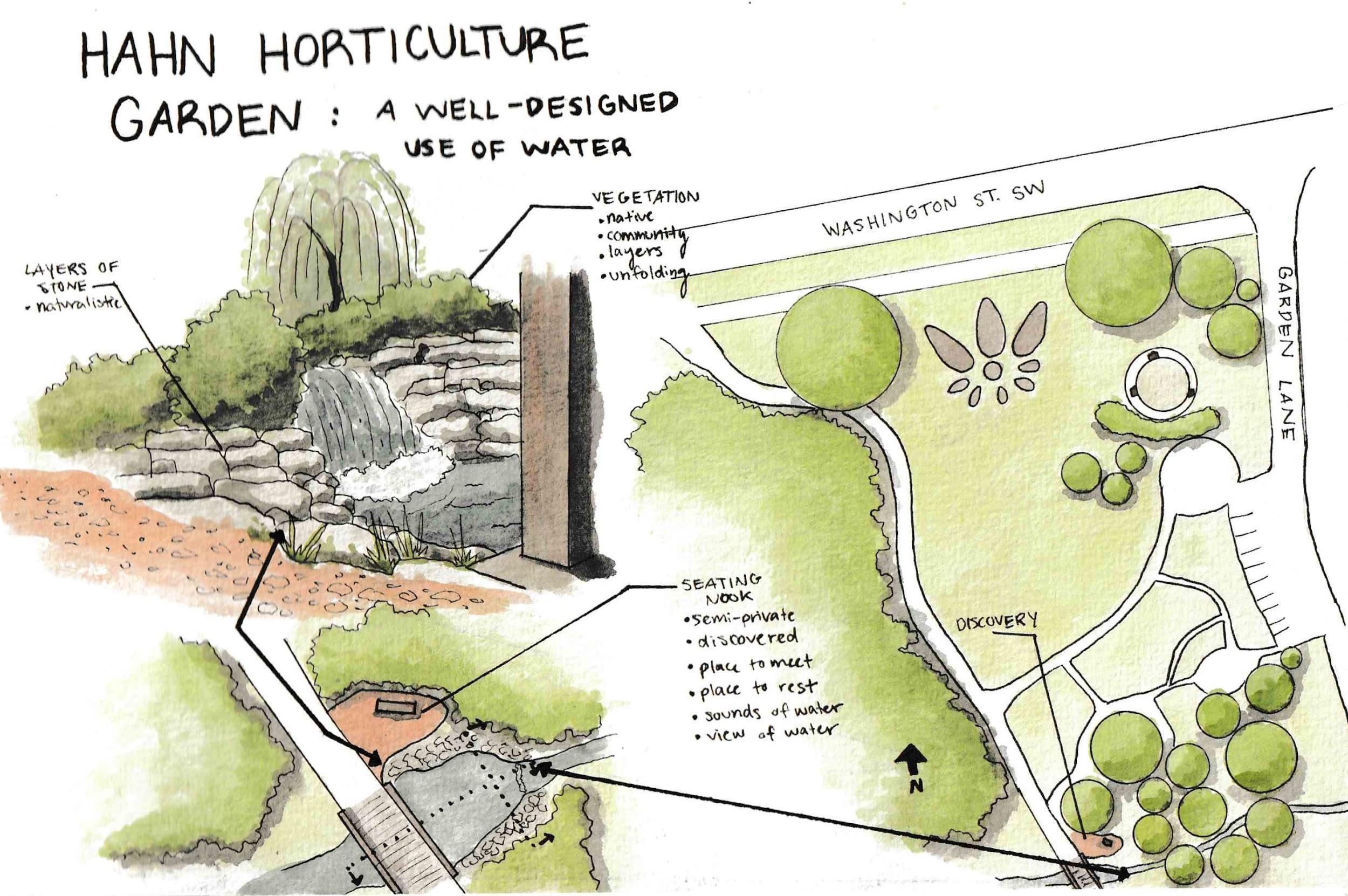
Hahn Horticulture Garden: AWell-DesignedUseofWater
Campus Sketches Fall 2020
Green Footprints Retreat: AnEnvironmentalCenterFoundedInTeachingPersonalSustainability
LAR Studio Fall 2020
From Home to Market: ASustainableCommunityinBlacksburg
LAR Studio Spring 2021
Lewis Ginter Botanical Garden: Floret-“OneofMany”
Construction Documents Spring 2022
Aberdeen Gardens: AModernDayHomestead
LAR Studio Fall 2022
The Legacy of Syracuse: ReunitingtheCity
Senior Thesis 2022-2023
01 02 03 04 05 06
Hahn Horticulture Garden: A Well-Designed Use of Water
01
Sharayah L. Griswold
Green Footprints Retreat: An Environmental
Goals:
Center
Founded In Teaching Personal Sustainability
● Educate visitors about the impact of one’s carbon footprint
● Teach alternative solutions for individual and household necessities in a low waste, low energy consumption, environment
● Provide a community-engaging family setting
Site Program
Environmental Education
-Outdoor classrooms dedicated to teaching about the carbon cycle, forests, impacts of climate change, and Protecting Water/Streams through personal stewardship -Basics of composting and home gardening in a community-style garden area
Teaching in a low waste, low energy consumption, environment
-Net-zero energy center with temporary living spaces dedicated to immersing visitors in what a low impact and futuristic lifestyle could Potentially be -low impact parking lot (space for 1 bus, 2 large vans, 15 cars, 3 ADA, and a drop-off location)
-dining with food and produce from local sources -Energy sources (Solar, Geothermal, etc.) that are renewable and structures built to be as efficient as possible
Provide a community-engaging family setting
-Nurturing outdoor spaces with natural elements and native plant species for enjoyment and outdoor engagement/learning
-Paths and trails for outdoor recreation and connection to the environment of southwest Virginia and the New River Valley
-Communal gathering spaces for learning and connecting with others
-paths/buildings that are universally accessible
Mission:
Foster an environment for learning sustainability at an individual/household scale
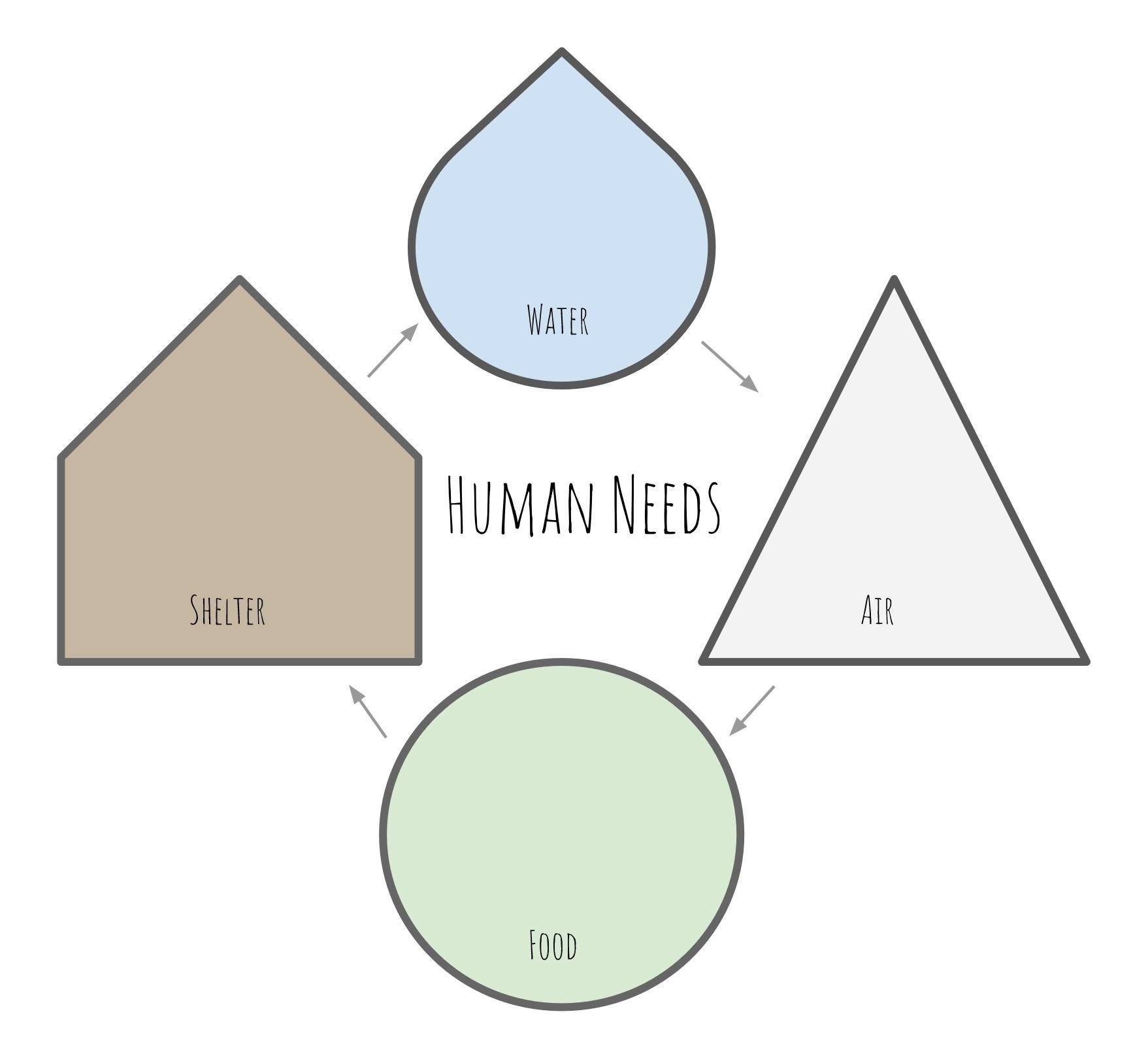
Educational Program
Indoor Classroom/Living Center (SHELTER)
-Elements of the building that make it sustainable
-Power (solar and geothermal and how they are the future) -Temperature regulation indoors (Ventilation, window glazing, natural lighting)
-Water sourcing and reducing water waste
-Reducing household waste by using items that are reusable, refillable, or recyclable/compostable
Garden Classroom (FOOD)
-Basics of gardening
-how to get started from seed
-how to plan a vegetable garden -general plant care and harvesting
-gardening year-round with greenhouses/ cold frames
-Basics of Composting
-How to start and maintain a compost pile
-in home compost buckets vs. outdoor compost bins -the Sharewaste composting community
“Forest” Classroom (AIR)
-Carbon cycle and the important role of trees
-”Re-foresting”/ Tree planting events
Creek Classroom (WATER)
-Creek/river ecosystems and connectivity
-Personal stewardship of environment in relation to health of waterways
02
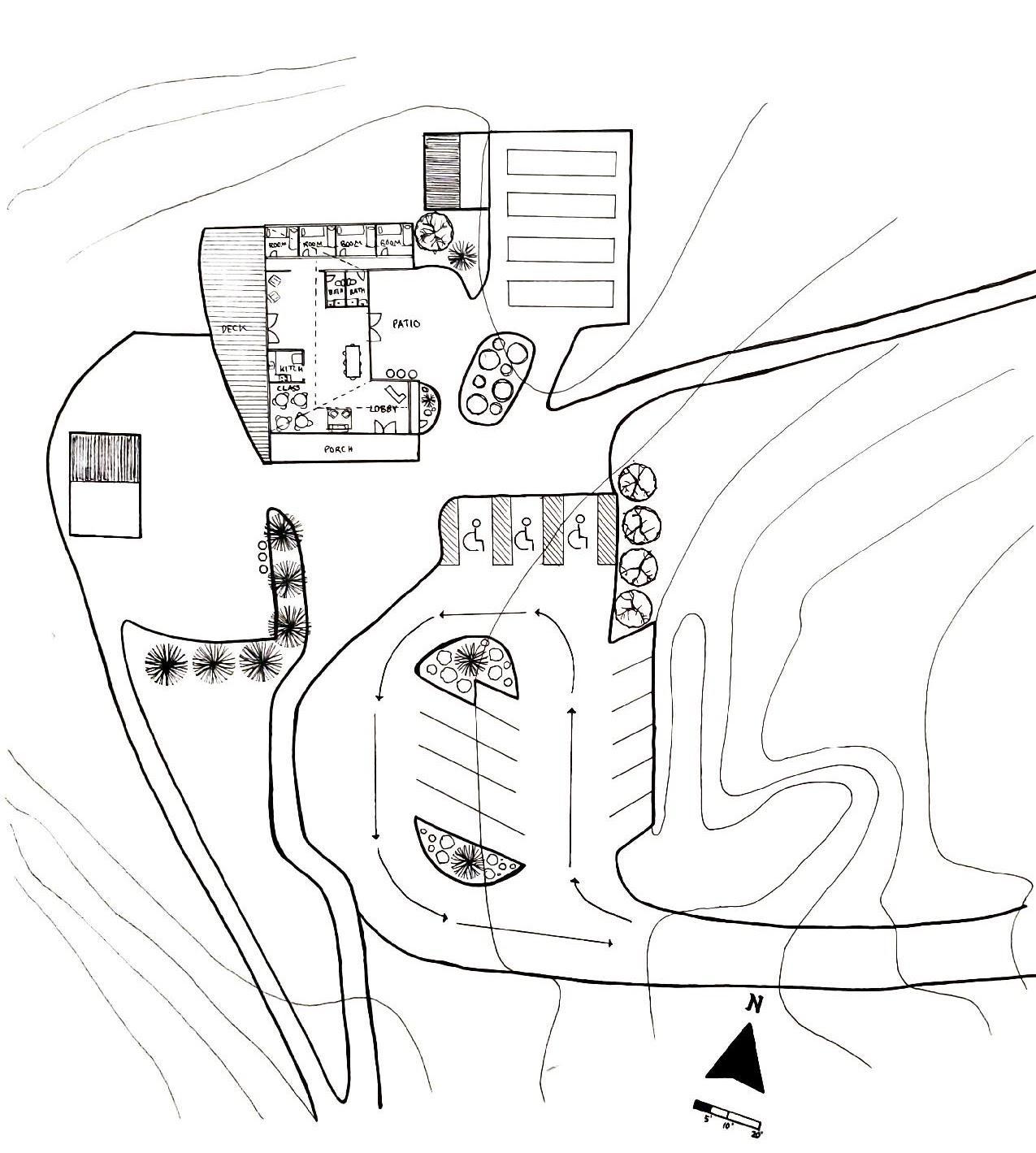
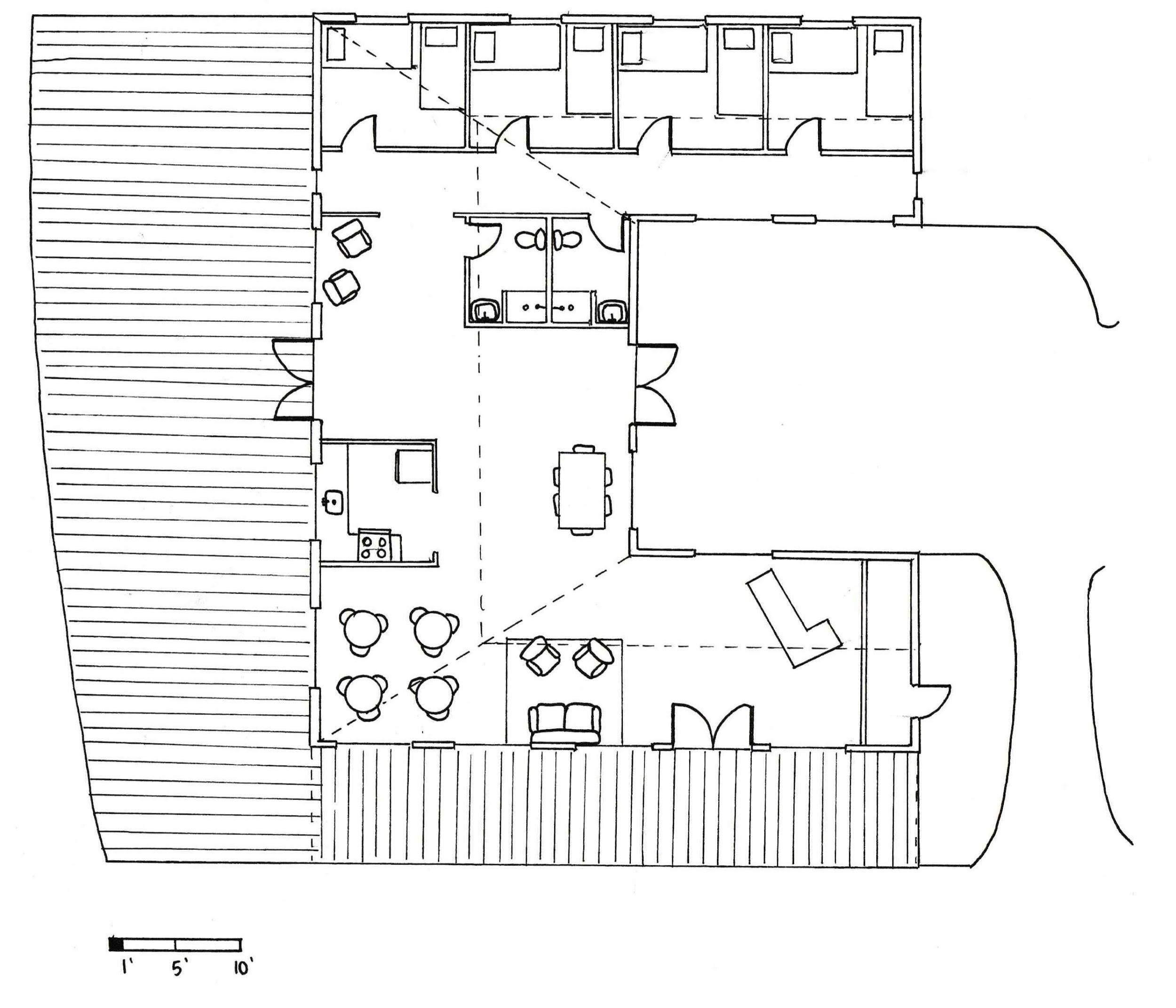
As a space for a conjunction of activities, the living center is located at a hilltop that provides panoramic views of the mountains and neighboring farmland. After entering the parking lot with a sweeping view in every direction, arrival at the welcoming front porch of the living center in imminent. One can also park and connect directly with the huckleberry trail, join an event under the pavilion and its patio space, relax on the deck to watch the evening sunset or holiday fireworks, live a futuristic lifestyle within the building and its high-tech amenities, or head straight to the community garden to dig right into the soil.
The center and its surrounding classrooms are intended for learning and experiencing personal sustainability by teaching how to first fulfill the basic human needs: water, air, food, and shelter.
Creek classroom
STrouble’sCreek
Building Floor Plan
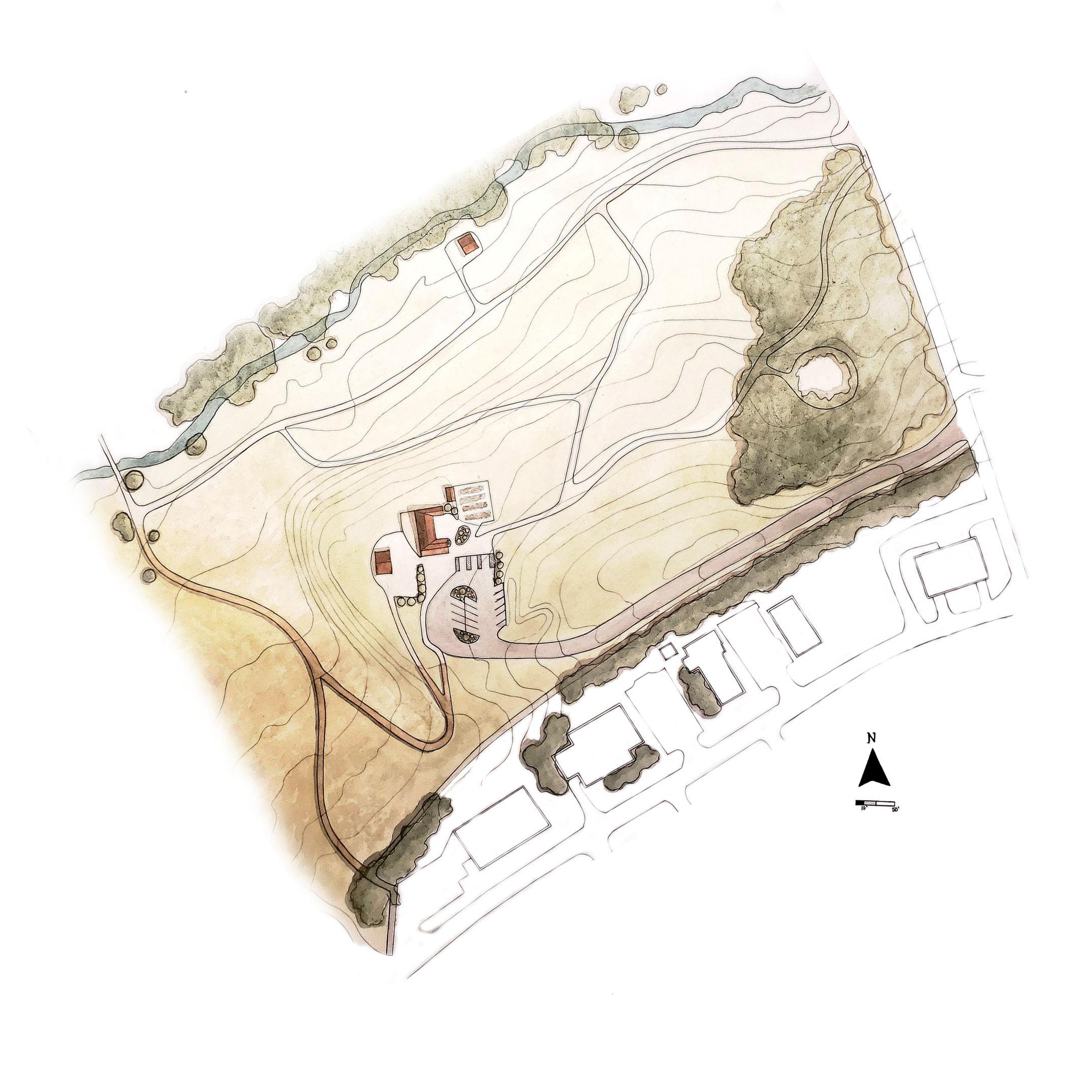
Forest classroom
Plantation road
Tall meadow grass Living center
Event space
Community Garden
Water flow from off the parking lot and road flow to the marsh and its enhanced vegetation to be filtered before reaching creek
Water sheets down shallow hill at a slow rate before reaching creek
Water is filtered by forest trees before running through swales that head towards creek
Marsh BoardwalkDetail Plan Master Plan
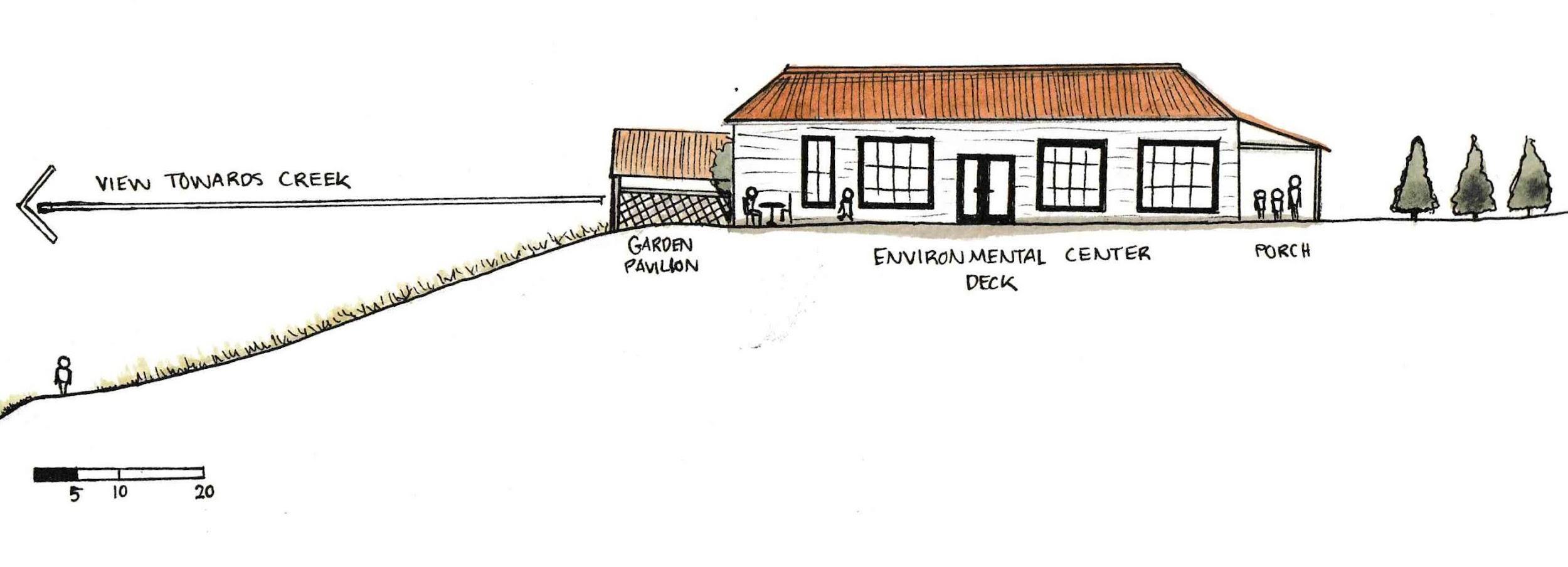
Living Center Western View
View from the event space towards the building, deck, and garden pavilion in the back.
Living Center Southern View
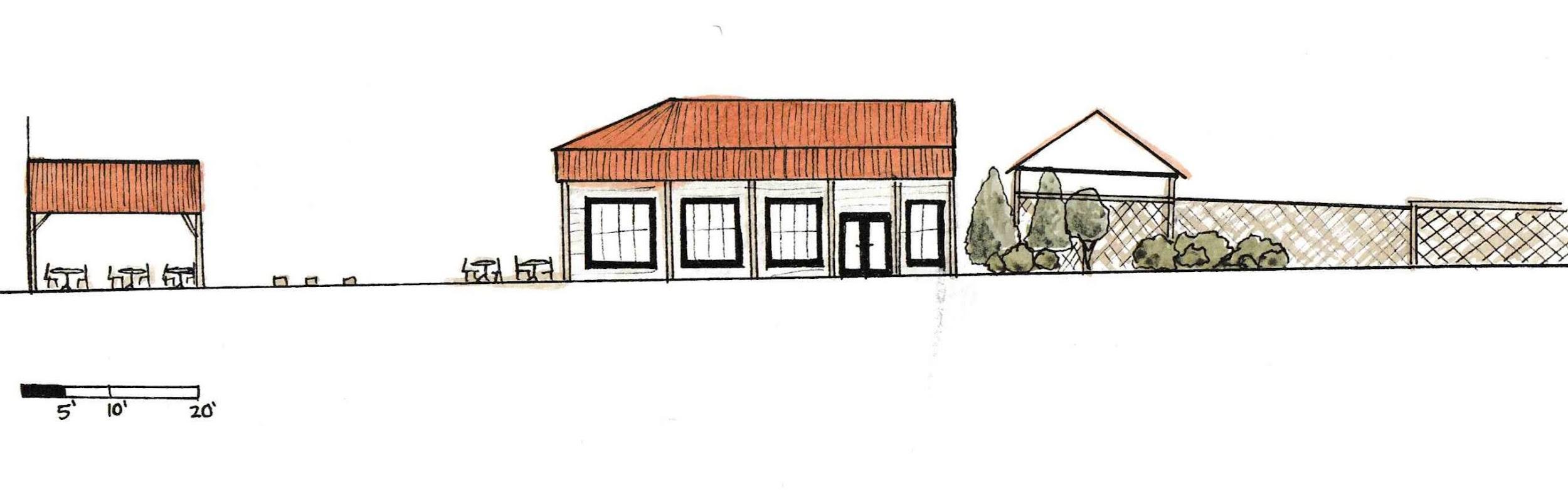
Entering from the parking lot gives one the option to enter directing into the building, walk the trails, garden, or join the outdoor event space.
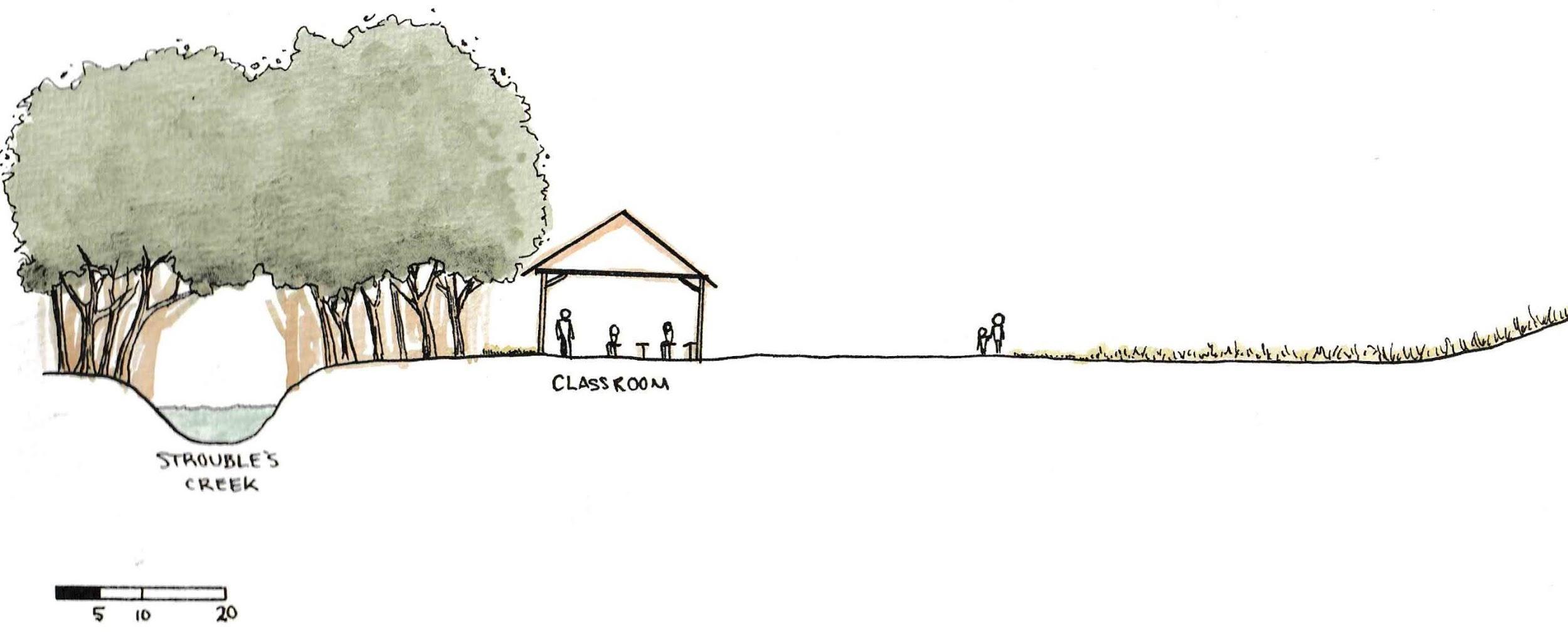
Creek Classroom
Down by the creek, a pavilion sits with fixed classroom-style benches for outdoor lectures and labs about creek health and the importance of personal stewardship of the environment.
From Home to Market: A Sustainable Community in
Blacksburg
“CultivatingaCommunityofSharing”
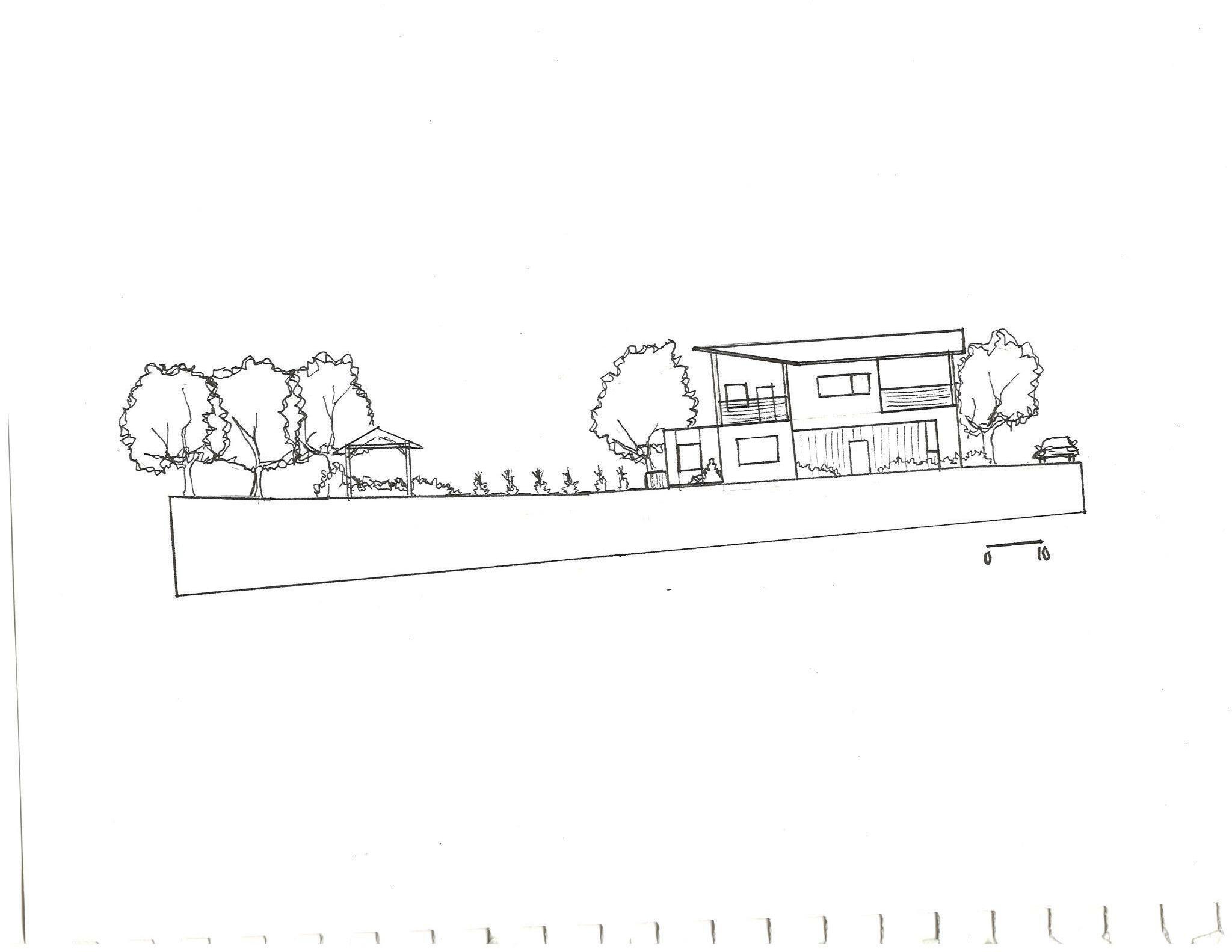
1. Provide public space for sharing agricultural goods and services
a. Fresh produce, tools, seeds, plants, compost, fertilizers, etc.
b. Jobs c. Entertainment d. Artisan wares e. Knowledge
2. Connect the hierarchy of spaces in a way that provides opportunity for all within the community to access garden sites
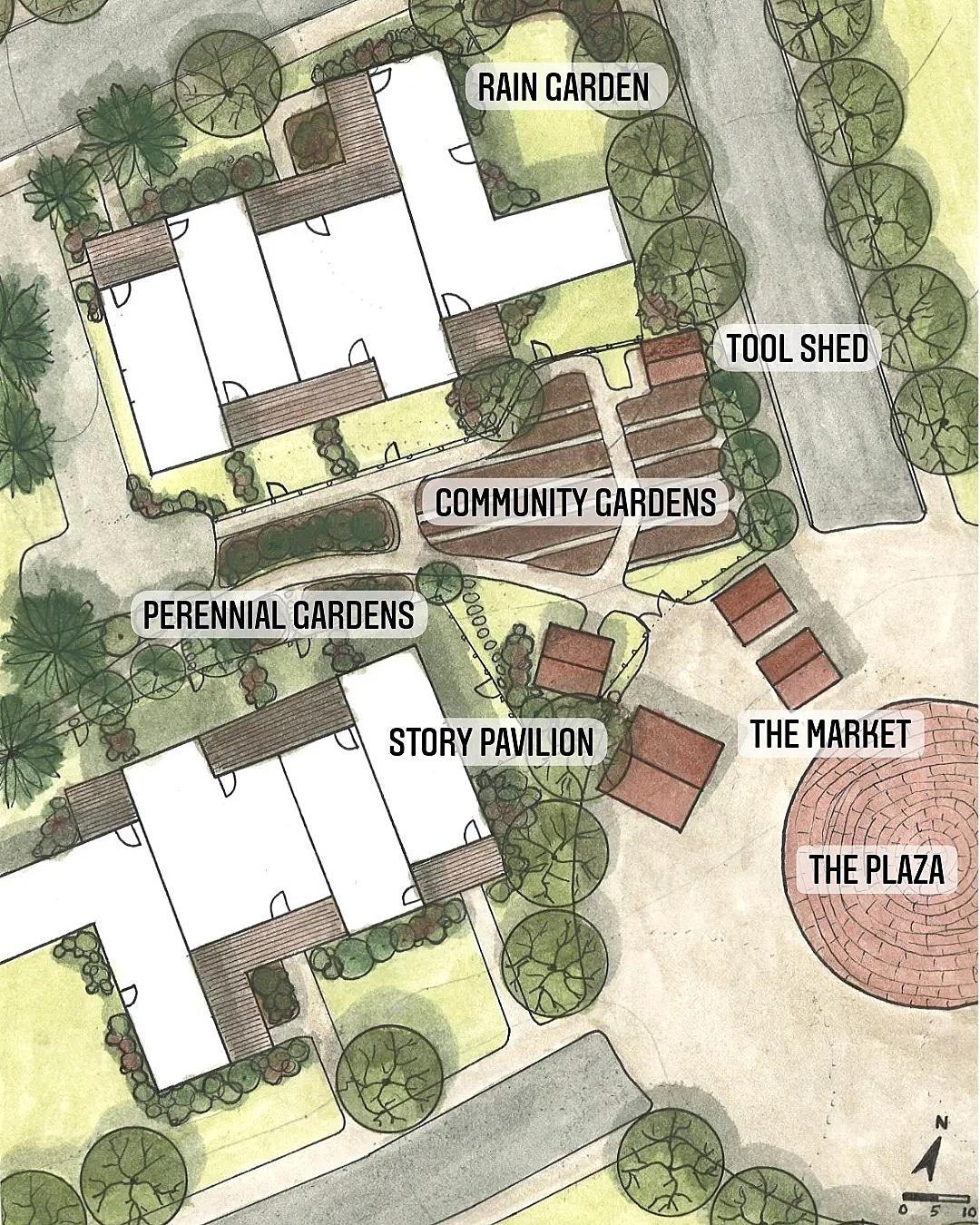
a. Pedestrian paths /connections between spaces with gates to the garden spaces b. Hierarchy of semi-private (yards), semi-public (gardens/ inner-block common space) and public spaces (farmer’s market+plaza)
c. Zones of defined space for different uses
3. Develop a planting scheme that serves as a creative and functional landscape
a. Medicinal herbs and other edible plants b. Perennial flower gardens c. Beds left for residents to make their own (vegetable, flower, or herb)
03
Lewis Ginter Botanical Garden: Floret -


EDUCATION
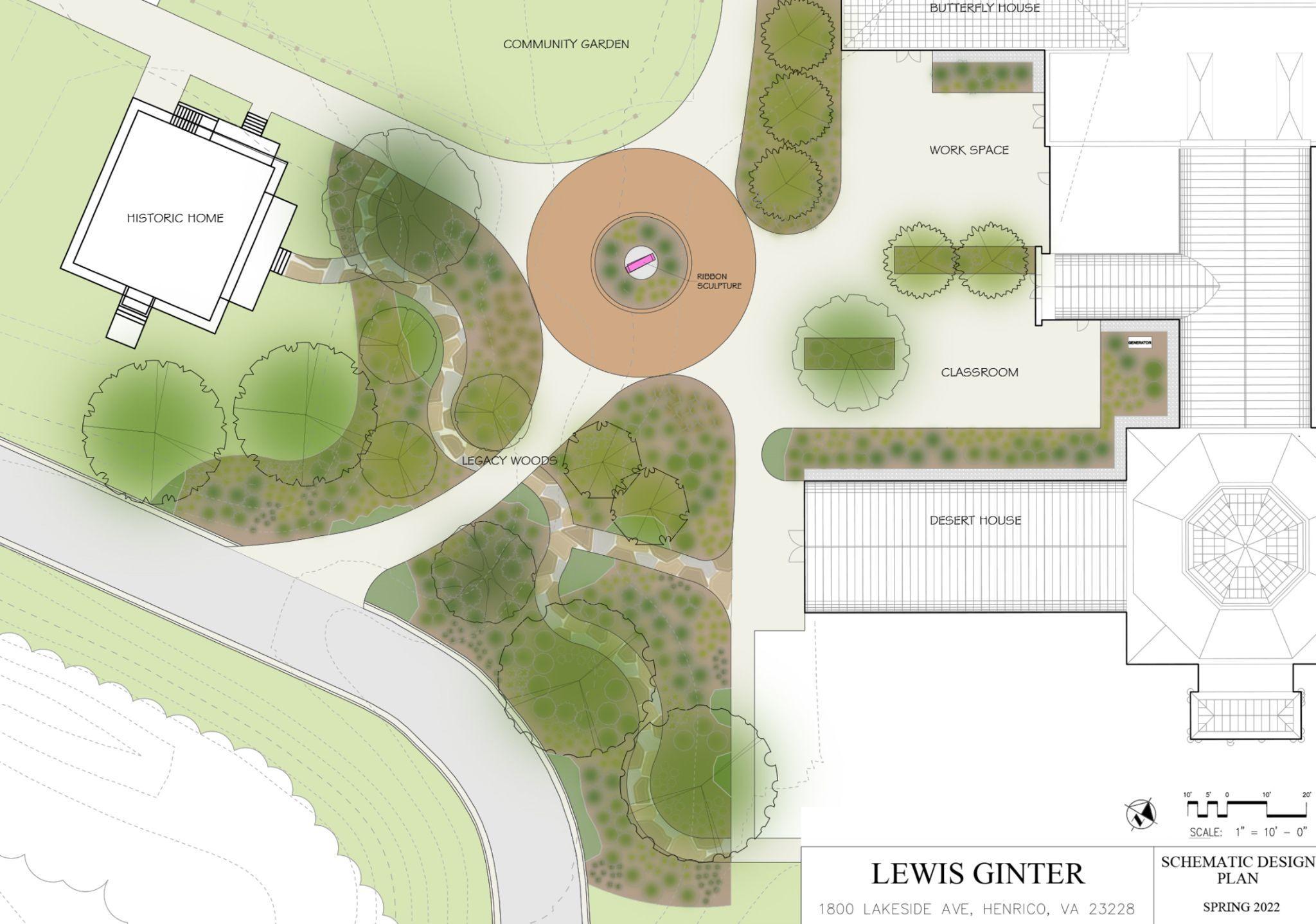
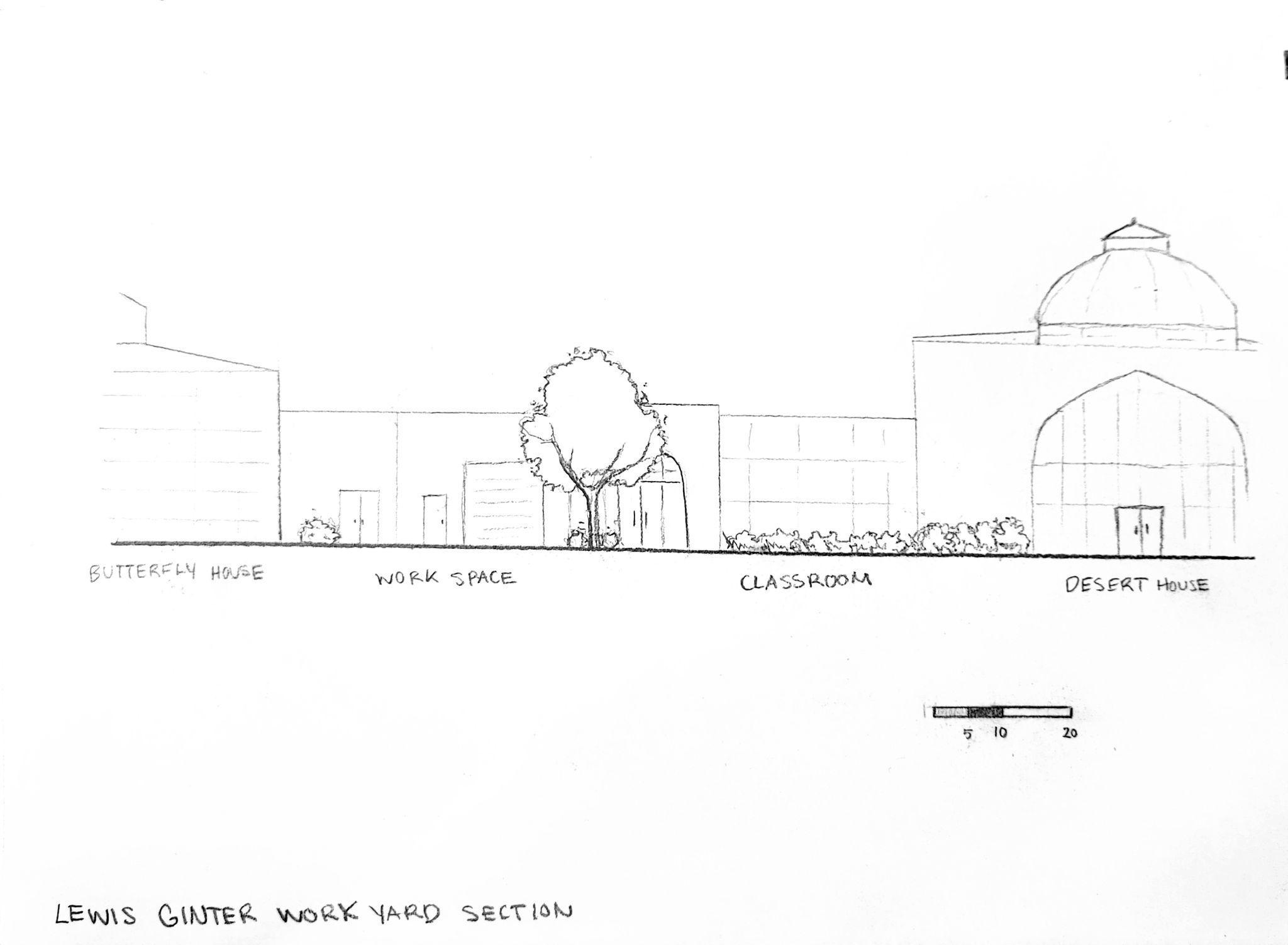
This courtyard at Lewis Ginter Botanical Garden in Richmond, VA is made up of many inter-working parts connected by a central radius. It is also part of the whole garden through its connectivity, flow, and material consistency. People can feel connected to their communities through learning opportunities and service. It is the courtyard most used by garden employees and volunteers for creating displays and exhibits throughout the year.
The hydrangea is a symbol of the chosen floret: a part of a whole, one of many. This courtyard is an integral part of that entire garden; it provides the tools and hands that nurture the whole.
The chosen materials reflect the rough, natural feel of a woodland forest, with lush undergrowth and winding stone paths that open into a broader clearing where the busyness of work, like that of bees or farmers who are earnestly buzzing about. The flagstone path through Legacy Woods winds through the vegetation with windows into the courtyard and views of the historic house. It is an intimate experience where one can wander and experience a serene nature experience. The Ribbon serves as a way-finding feature with its bright color and abstract shape. It attracts users into the space towards the community garden's arched entryways and acts as a meeting point for classes and workshops. The work space and classroom both have moveable furnishings for multi-use and flexibility.
04
“One of Many”
SERVICE HISTORY
Legacy Woods
Coming up the road from the southern side of the garden leads the wanderer into Legacy Woods, where native plantings, from bright flowers to large shade trees, provide textural interest and windows into the work courtyard beyond. The Ribbon is framed by the lush vegetation, drawing the user forward, and the flagstone path weaves through the woods making for an intimate and relaxing walk.
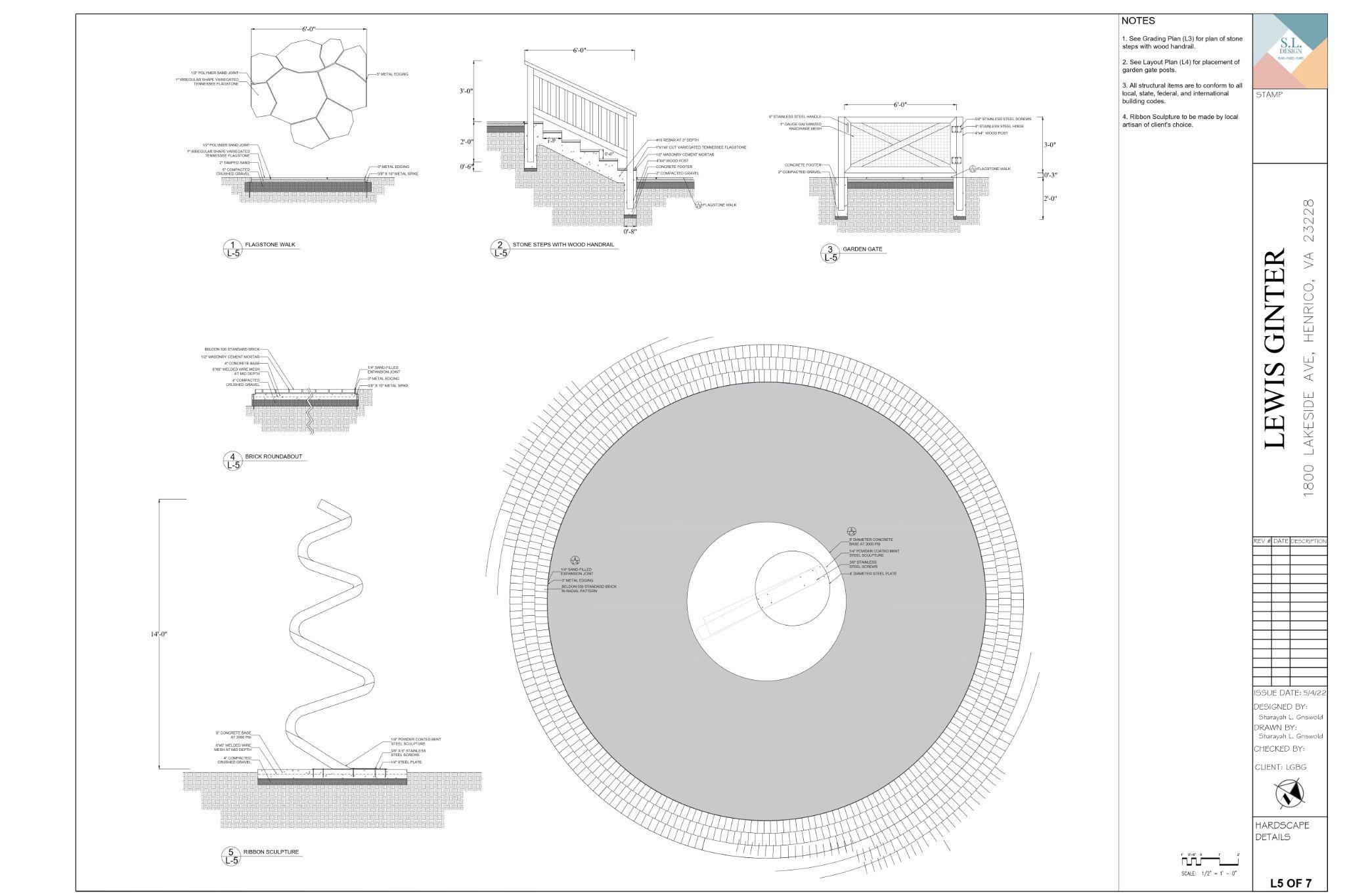
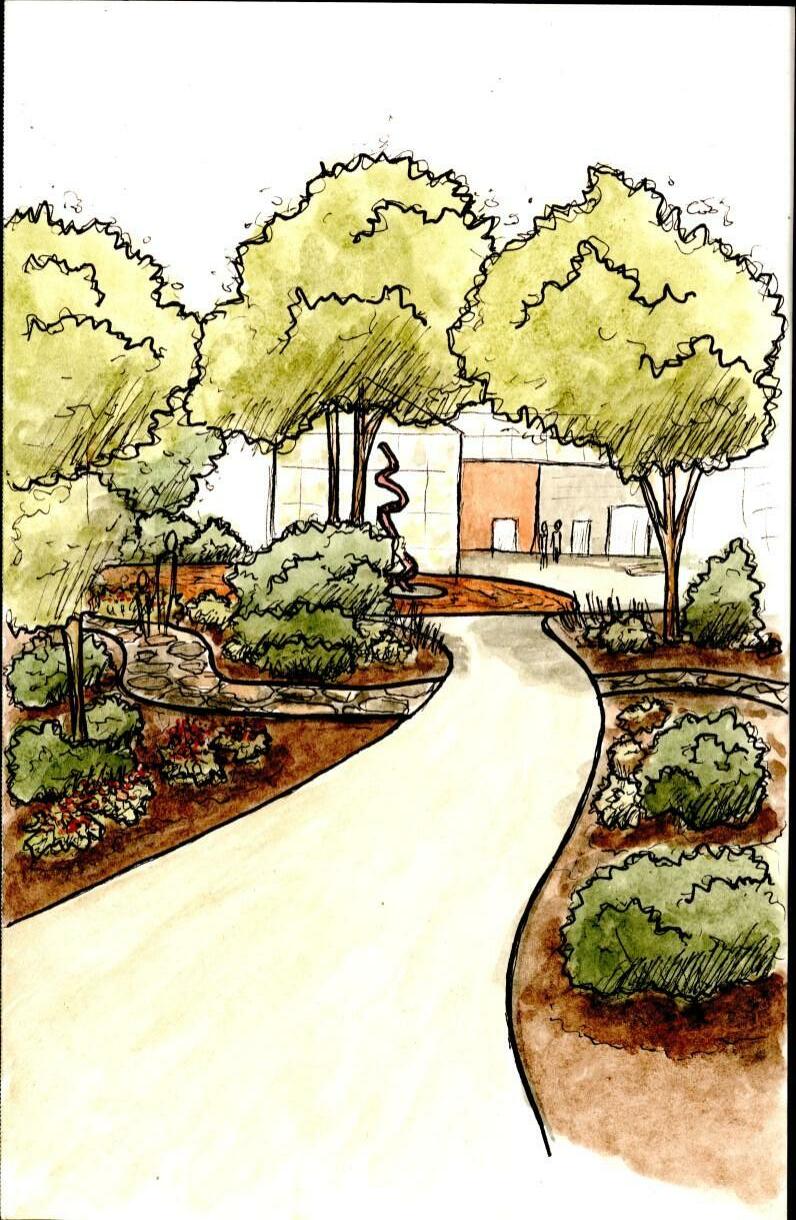
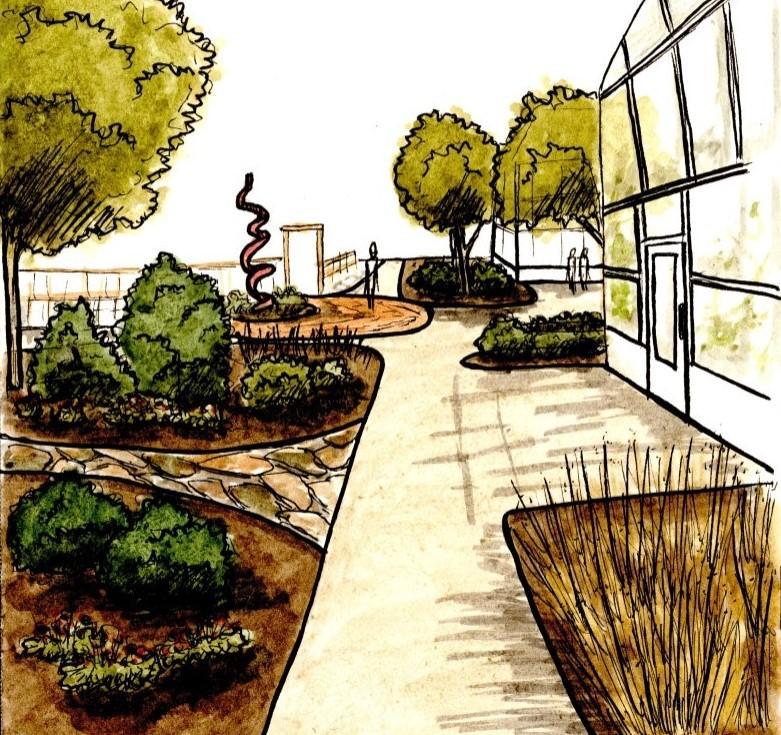
Hardscape Details
Goals and Objectives
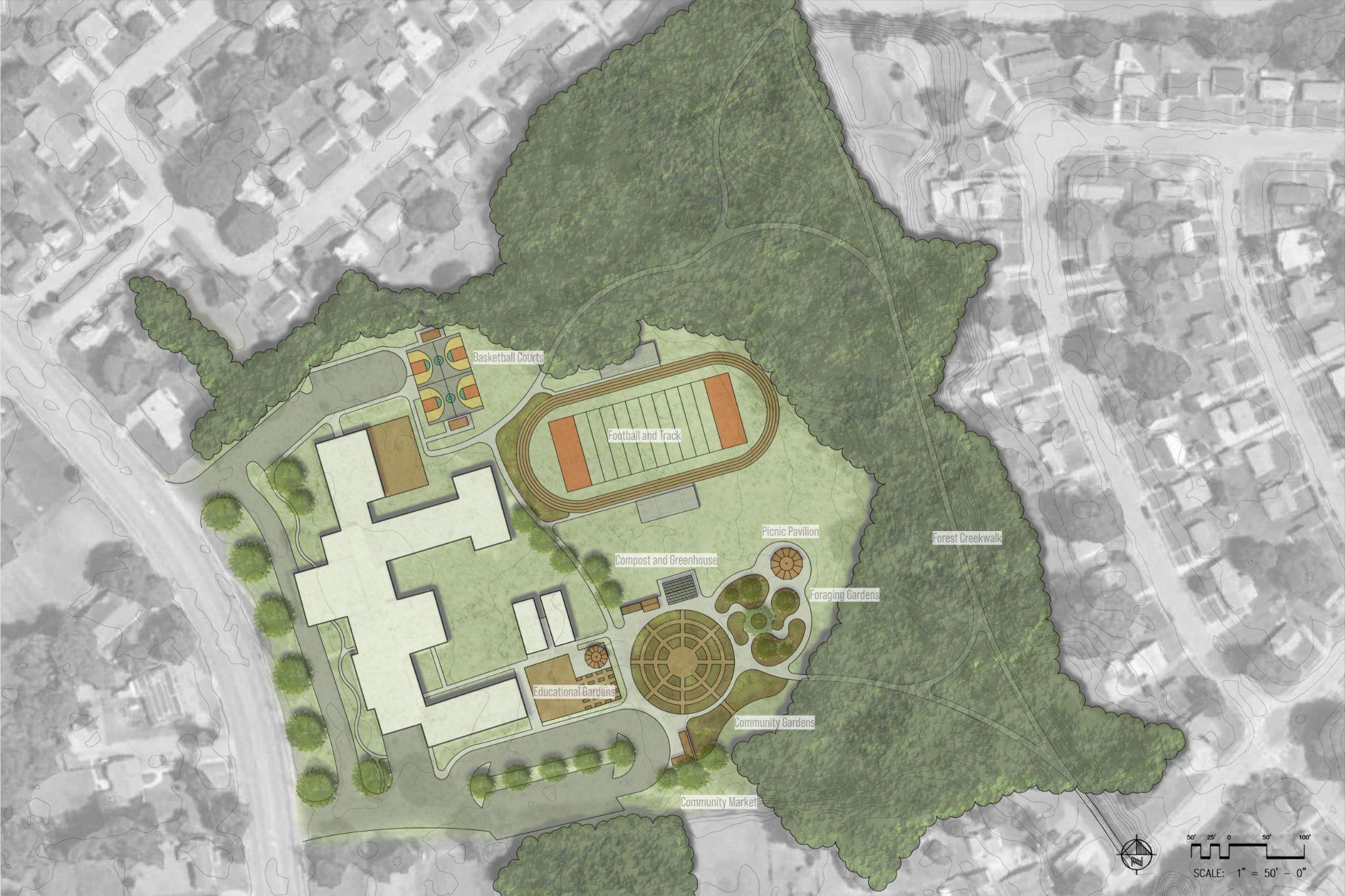
1.Embraceagriculturalsustainabilityindaytodaylife
a. Environmentally: compost sharing, reducing food waste, organic gardening
b. Economically: food easily accessible right outside one’s door, community gardening for learning and connectivity
2.ConnectthecommunityofAberdeenGardensthroughtheirhistoricalpastof victorygardensandmoderndaygardening
a. Connect network of homes at the pedestrian scale: paths through forest and across creek
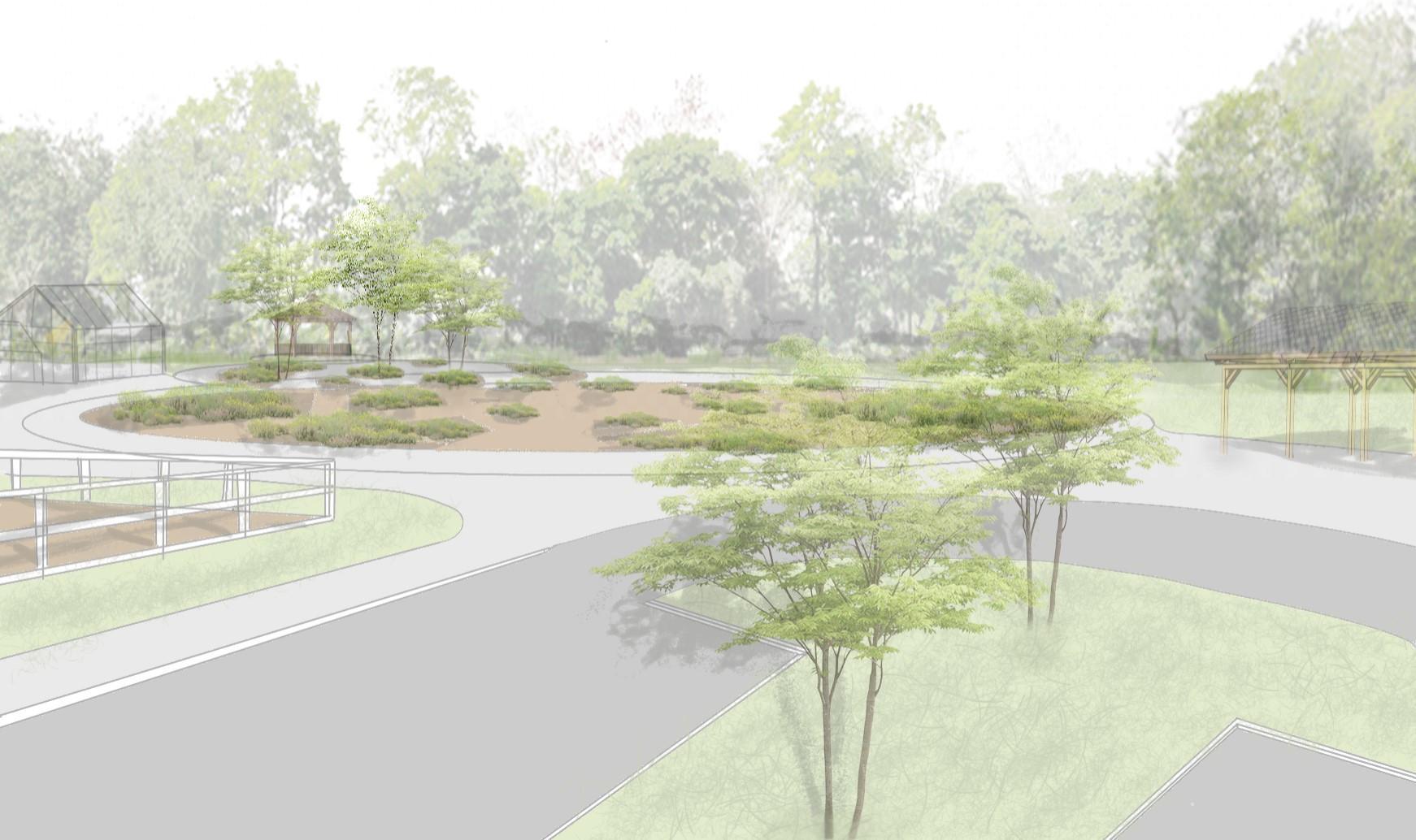
b. Hierarchy of semi-private and public spaces to keep community connections close

c. Shared garden and market spaces central to community
3.InvolveyoungergenerationsinthelegacyofAberdeen
a. Educational gardens as part of school programming
b. Opportunity to see and mimic others who use public community gardens
c. Designated spaces for the heritage of school football and other recreation MARKET (REACH OUTSIDE COMMUNITY)
COMMUNITY GARDEN (WITHIN COMMUNITY) HOME GARDEN
Aberdeen
Homestead 05
Gardens: A Modern Day
Aberdeen Gardens Masterplan
Preliminary Goals and Objectives
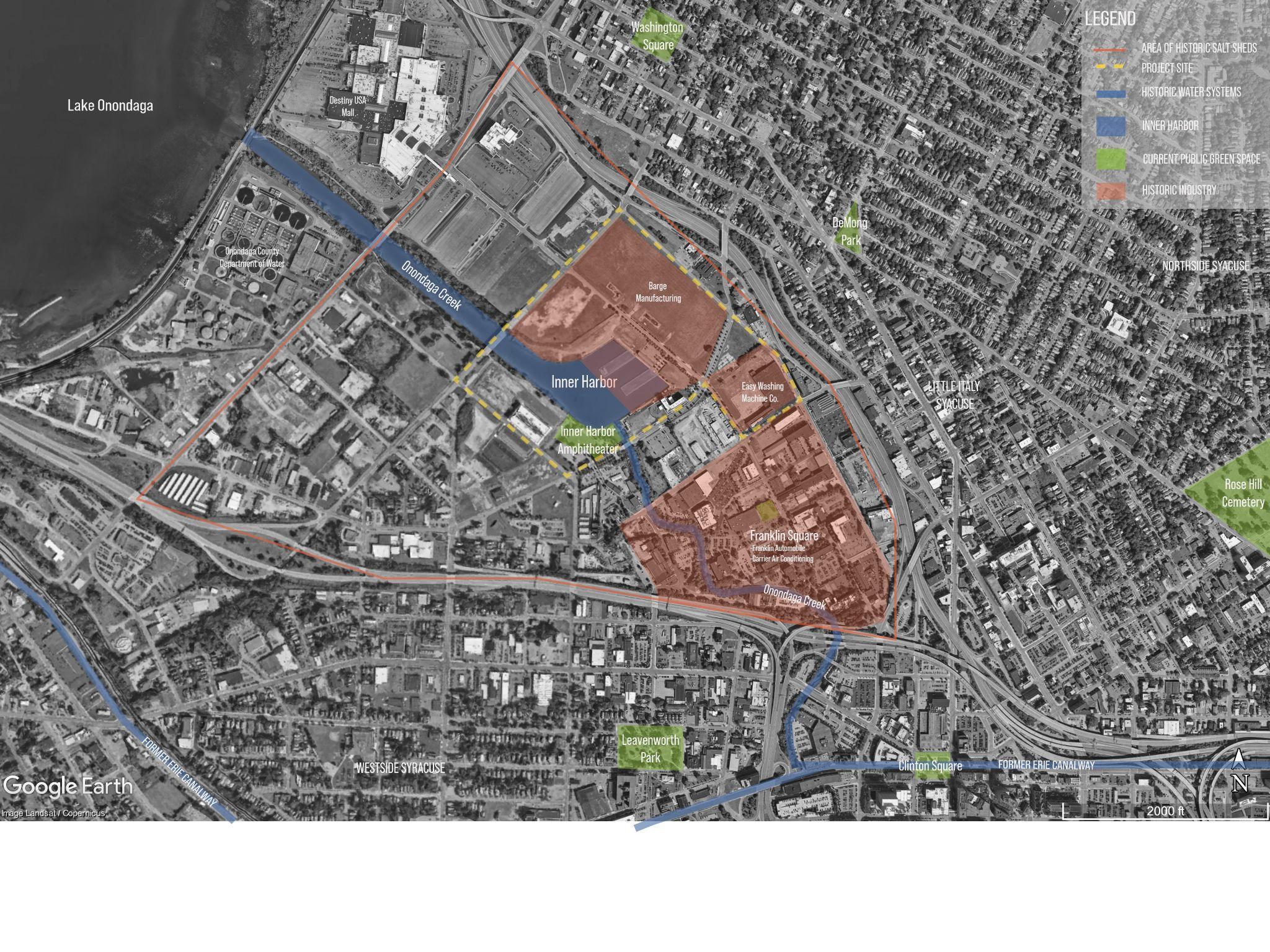
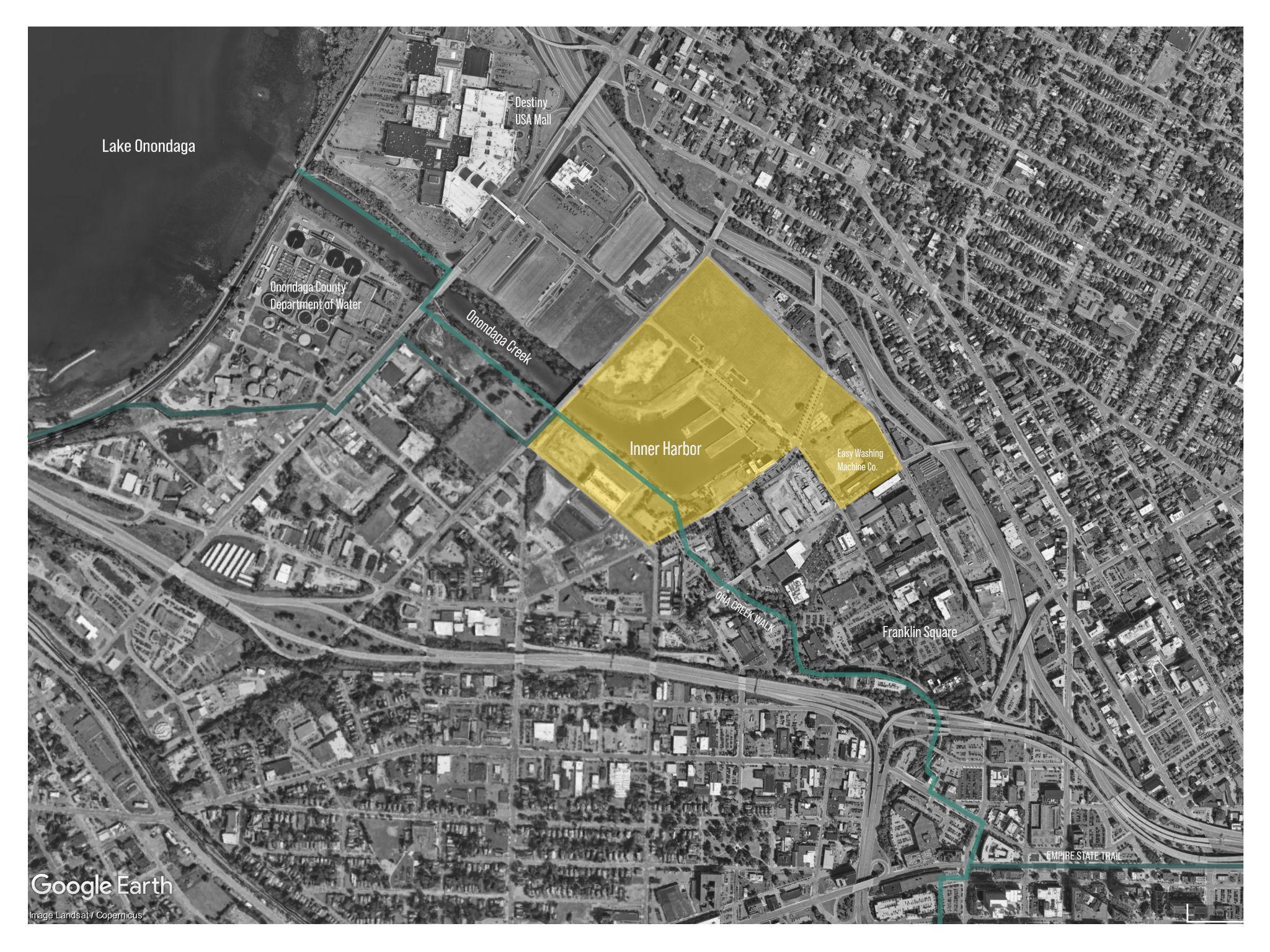
1. Work with the city’s plans for the inner harbor to create a cohesive design that reflects the industrial legacy of the area while still meeting modern day needs
i. Restore historic structures on site, but retrofit to fit new developments
ii. Create interactive spaces in places that artifacts that have been erased
iii. Provide spaces that accommodate all ages for cross-generational stories to be told
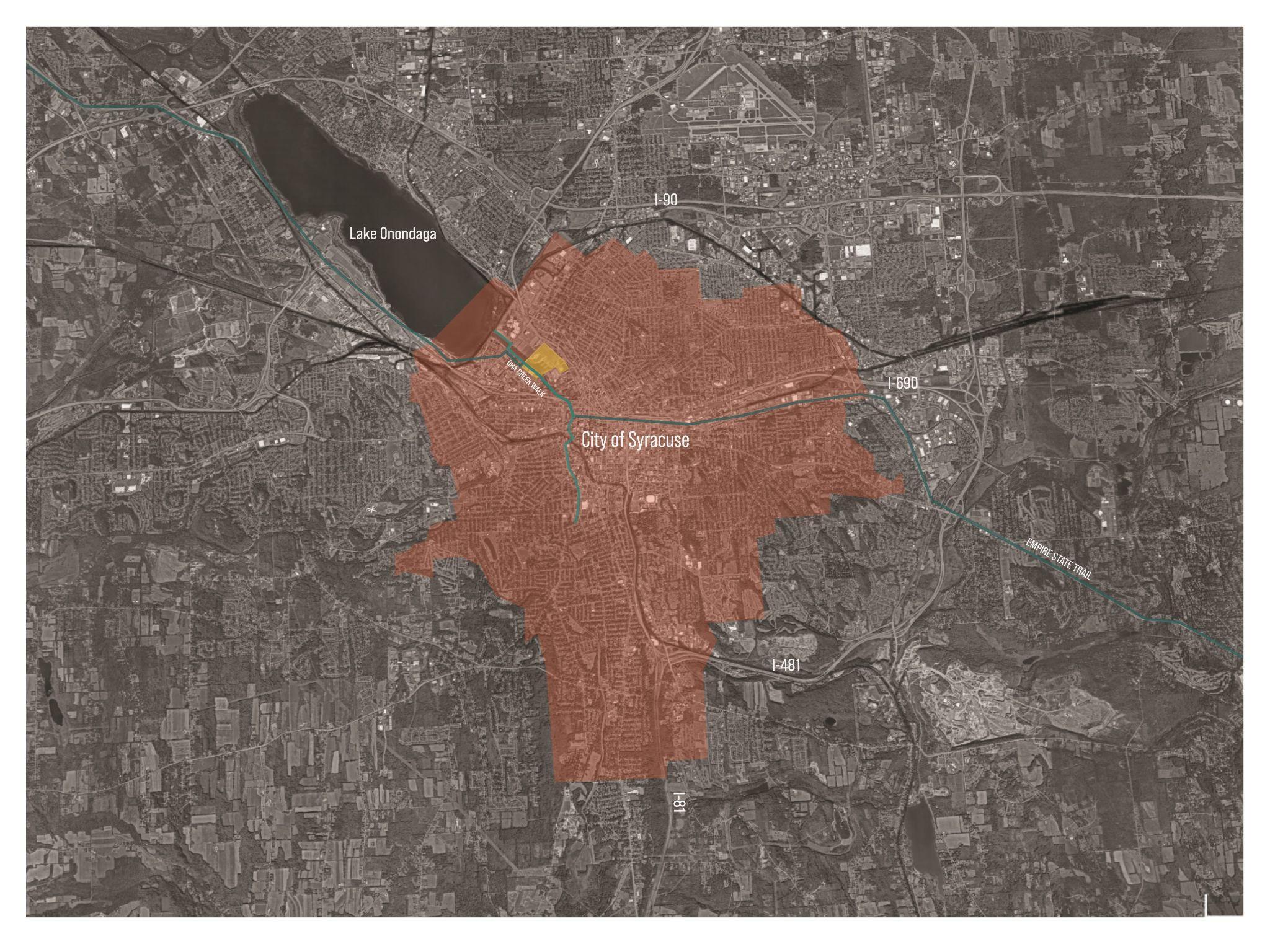
2. Connect the inner harbor to the city of Syracuse and Onondaga Lake
i. Add a greenway extension to the Onondaga Creekwalk to bring people into harbor
ii. Develop a docking system for water taxis to bring people out onto the water
iii. Create walkable streets for bringing in surrounding communities and encouraging site walkability
iv. Design to fit the proposed and existing landscape fabric and historic context
Make the inner harbor a place of destination and a place for surrounding community
i. Plan a large flexible space for events throughout the year
ii. Meet the proposed aquarium, retail, and residential spaces with green spaces that reflect their needs
iii. Create spaces that encourage visitors to stay rather than pass through
Work with ecological remediation efforts at Onondaga Lake
i. Retain and treat stormwater when possible before it enters Onondaga creek and its watershed
ii. Encourage native plantings and biodiversity
06
Historical Context
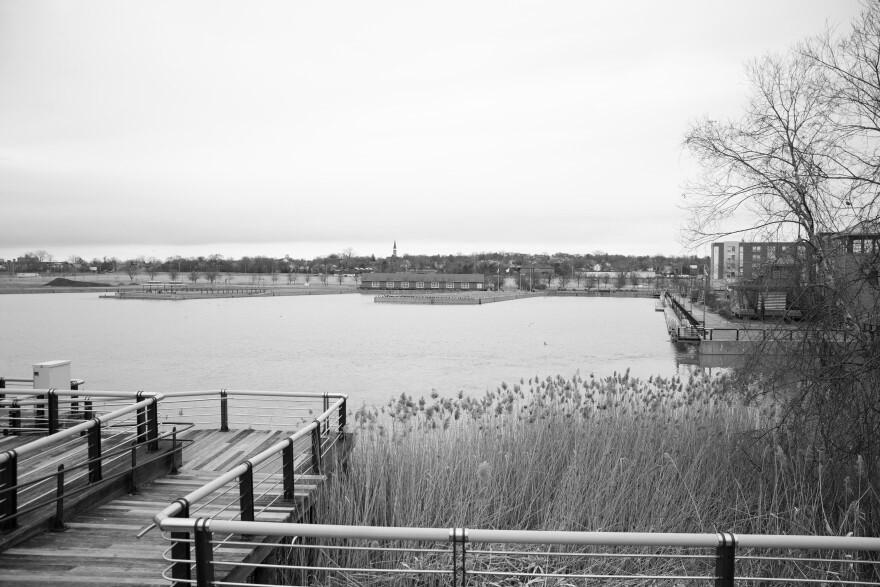
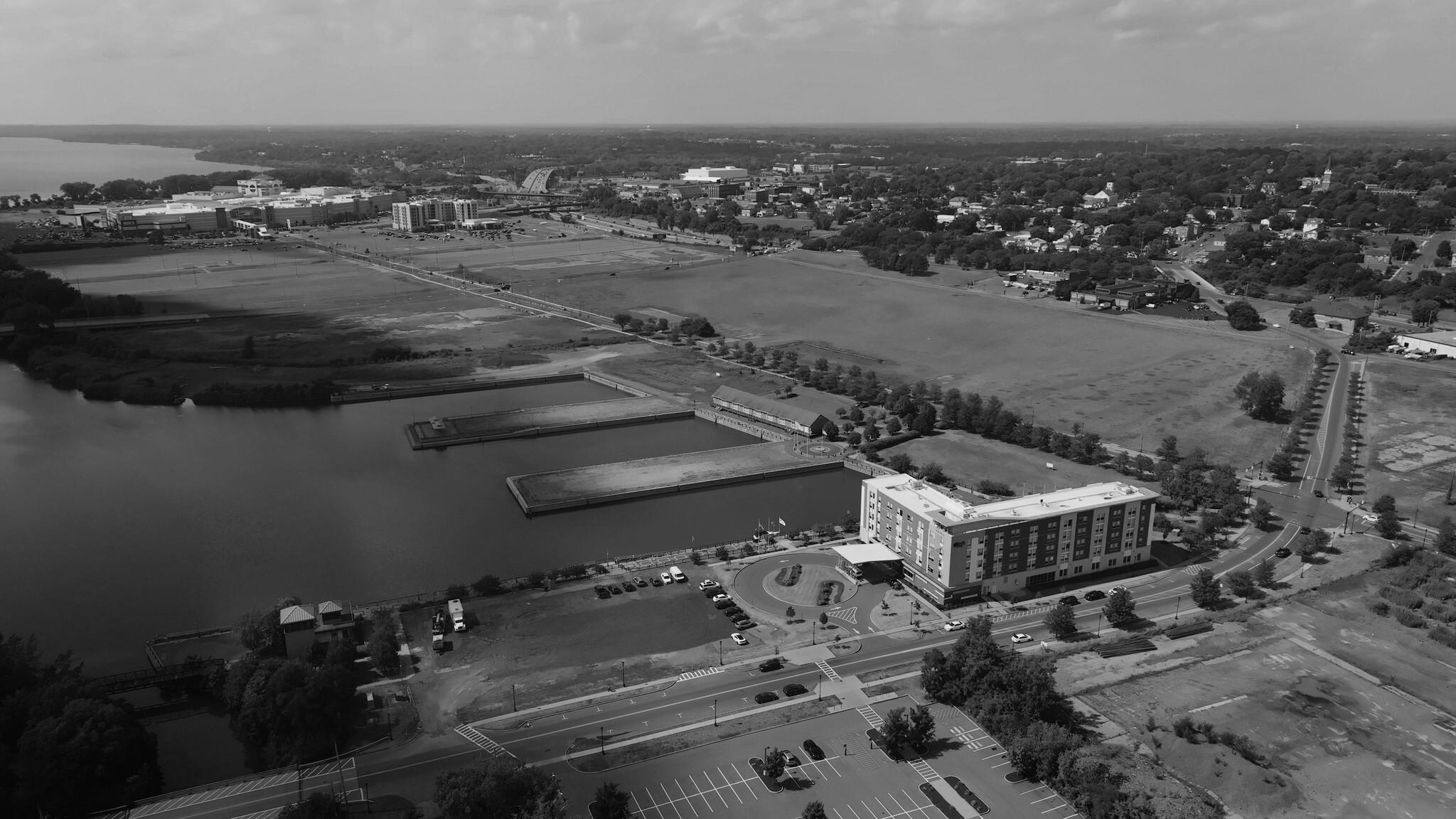
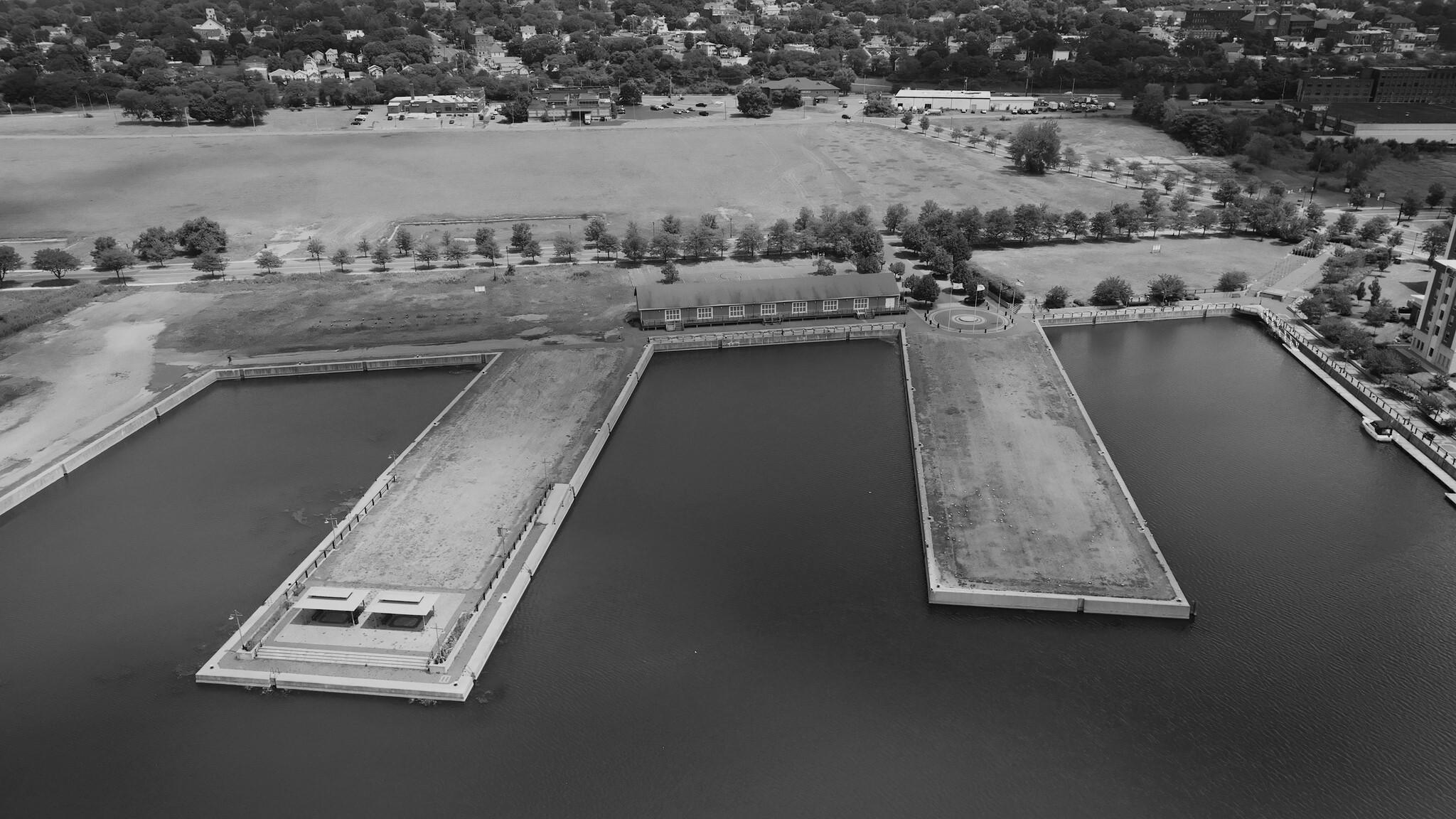
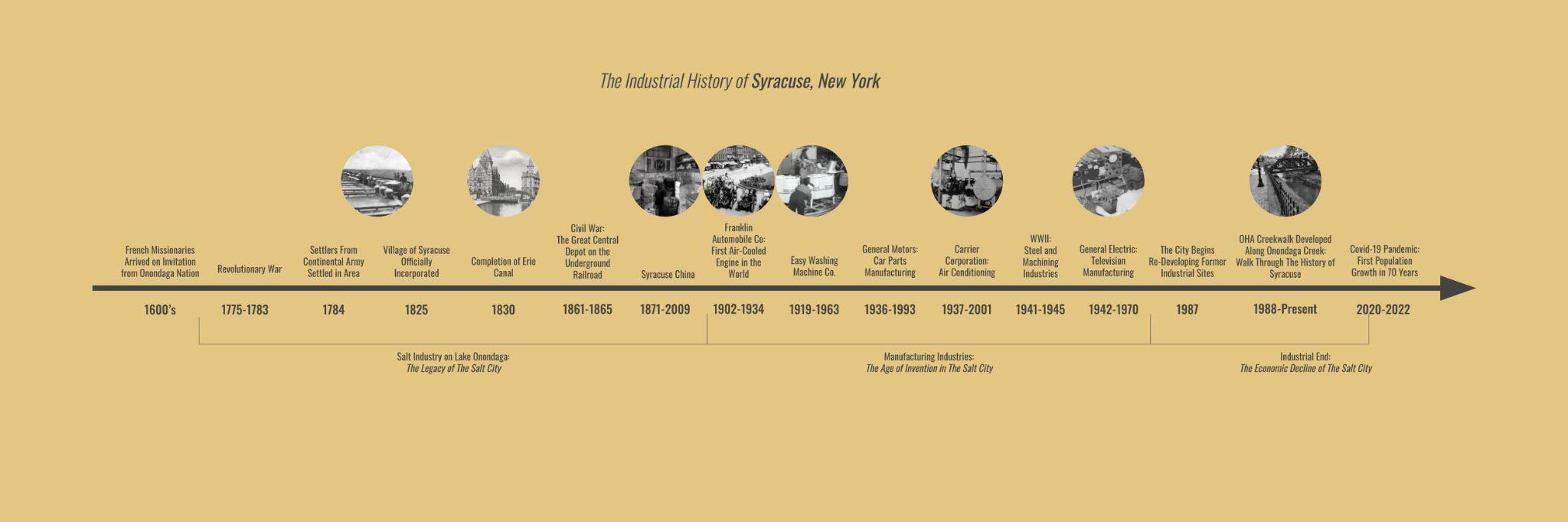
Syracuse is at the heart of New York state. With a rich industrial history and system of prominent neighborhoods, this former blue collar city is characterized by decades of innovation. The era of the American Dream (specifically the 1920’s-1960’s) led Syracuse to thrive as one of many booming cities where design and discovery met hand and hand as Americans strove for a more comfortable and enjoyable life. Syracuse’s industrial history starts at Onondaga Lake, where the salt industry once thrived, and with a significant portion of the western side of the city dedicated to its industrial legacy, the center of its industrial history falls upon the current day shopping mall and inner harbor. At its heyday, the city blossomed with infrastructure due to the completion of the Erie Canal, a major trade route that opened up the Midwest. However, as industries left the country to head overseas, empty shells of former businesses were left remaining. From empty crumbling structures to lots where only the scars of former vibrant industries thrived, shadows of the past still remain.
Why is this important?
Syracuse, like many former industrial cities, has been in a state of economic decline since the 1980’s. Paired with a global pandemic from 2020 and current day inflation, many places have been left abandoned as businesses go bankrupt. The city is left with a significant problem of underutilized structures and empty lots. The former industrial hub around lake Onondaga is no exception, with it being one of the last currently underdeveloped parts of the city today. Now, the city is asking its citizens for input to revitalize the Inner Harbor. With a rather rare waterfront opportunity, they seek to turn this area into a destination for locals and outsiders alike. However, the vibrant past should not be completely erased, so this projectaimstoworkwiththecity’shistoricalindustrialcontextas guidanceforblendinghistorywithcurrentdayneeds.
What’s Next?
In coordination with city plans and community needs, a design proposal for a green space at the Inner Harbor and connections to the lakefront neighborhoods will be produced by March 2023.