01 CH-CH-CHANGING STUDIO INTERRUPTED CLOISTER ARCHITECTURE 02 03
ARCHITECTURE OF THE CITY MONASTIC MUSEUM SPRINGDALE LIBRARY 04 05

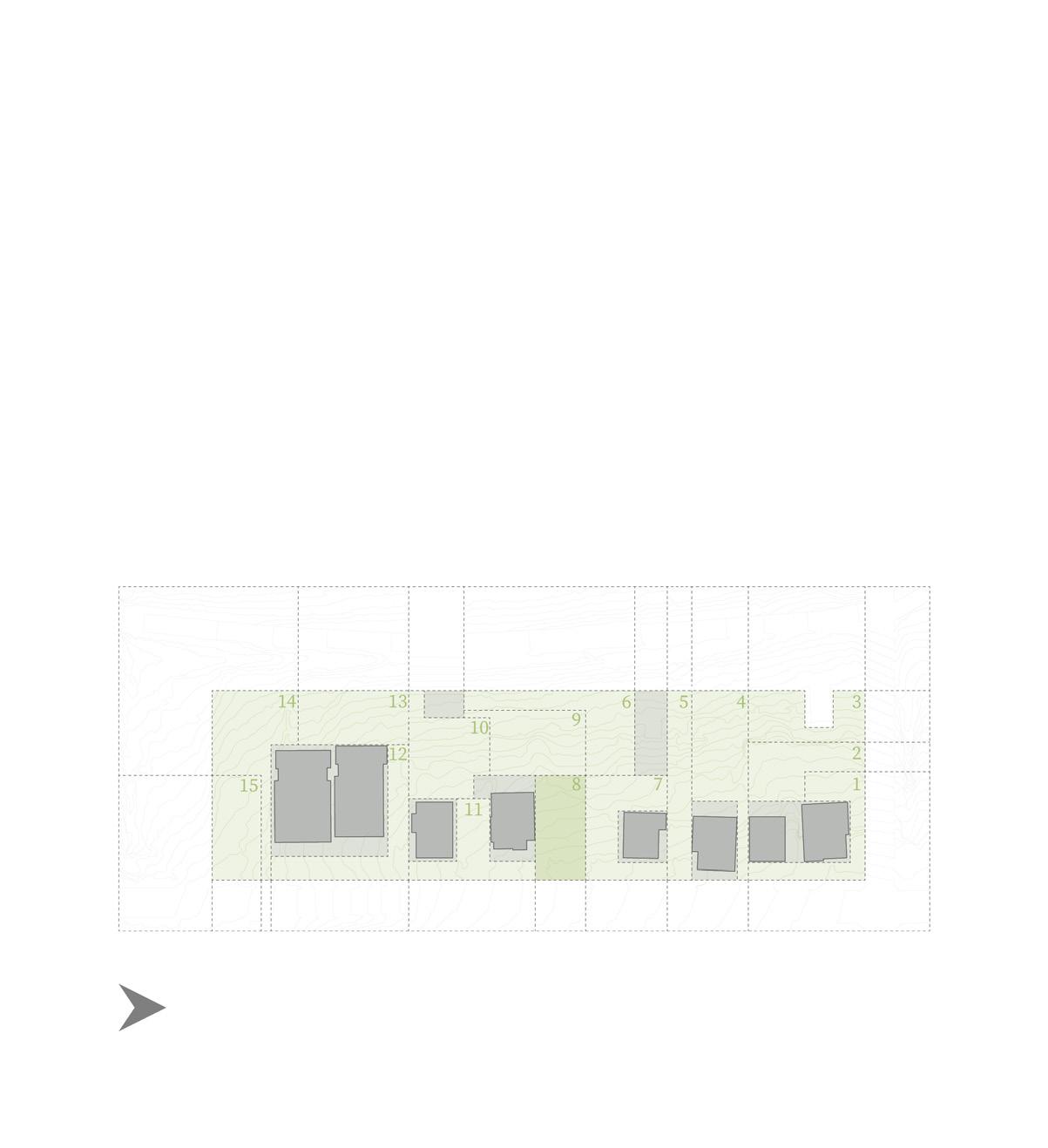
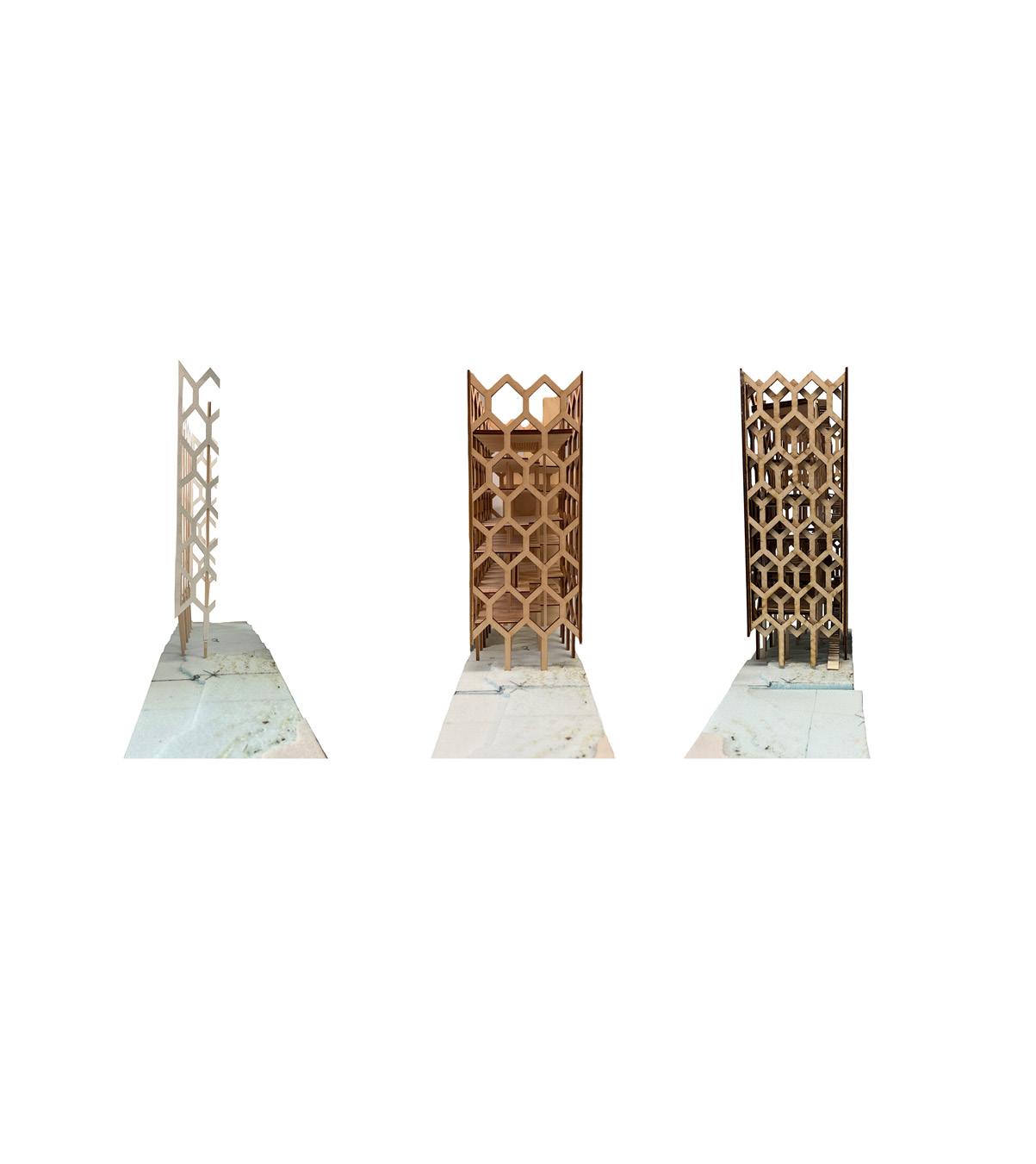
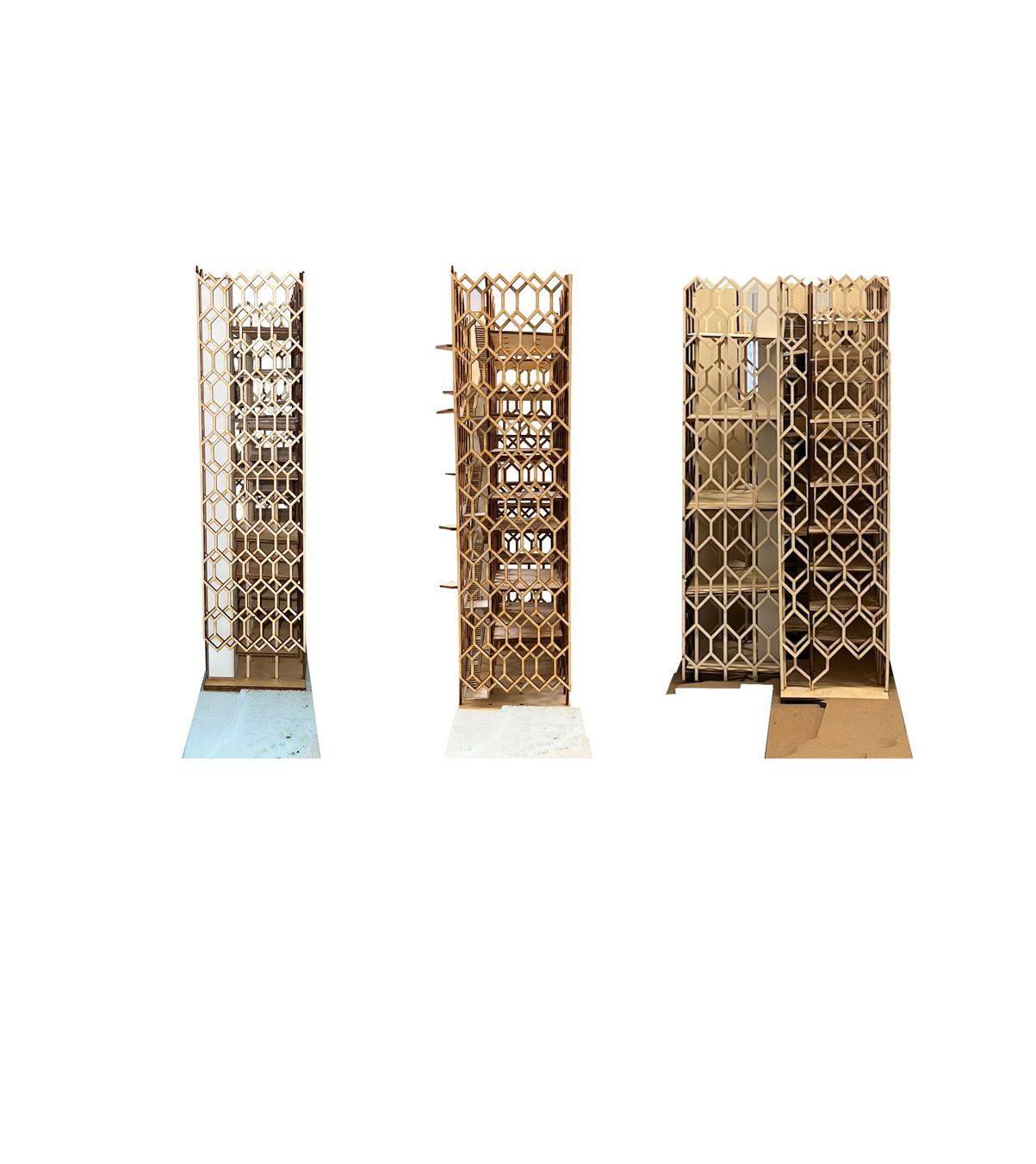
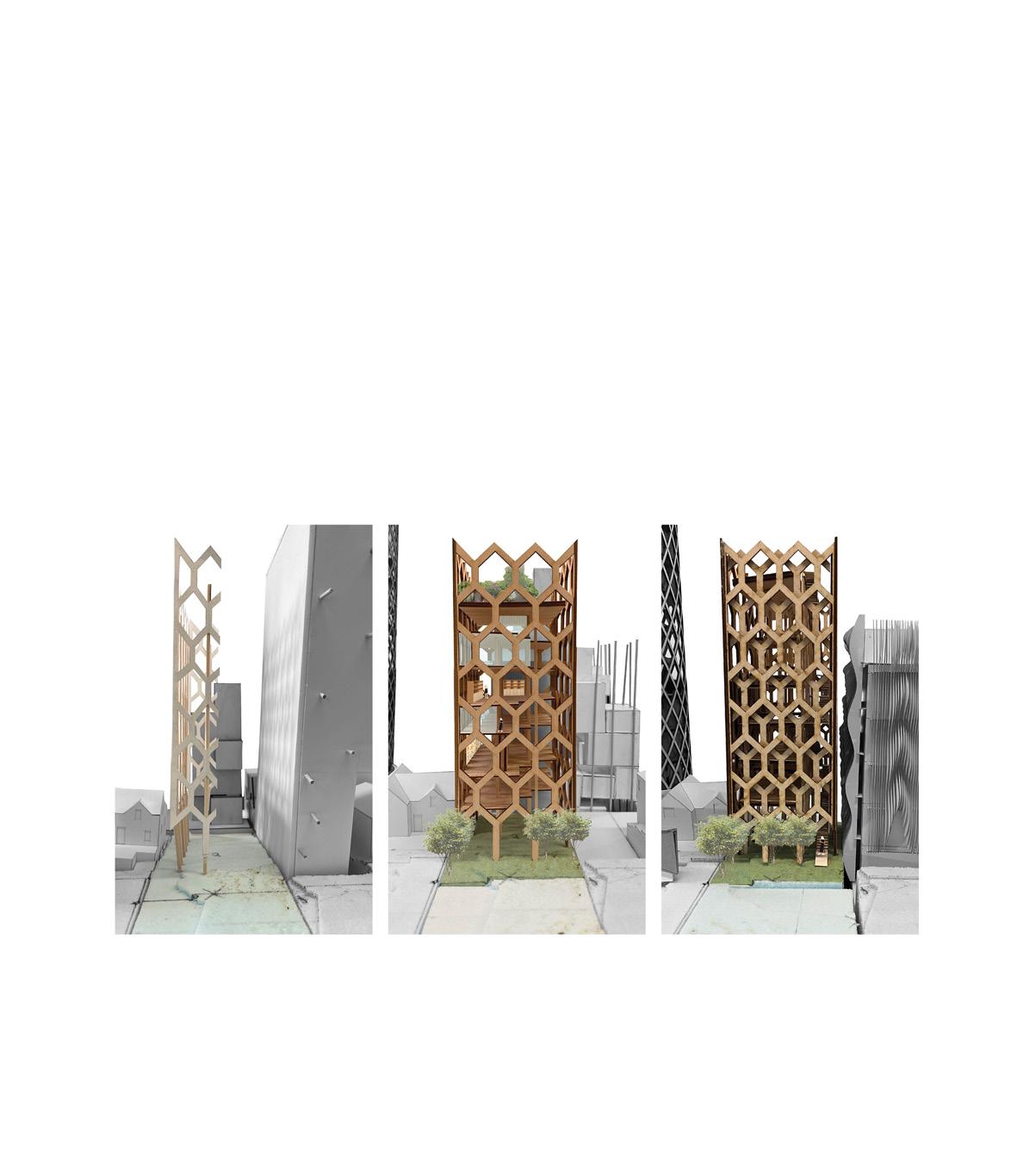
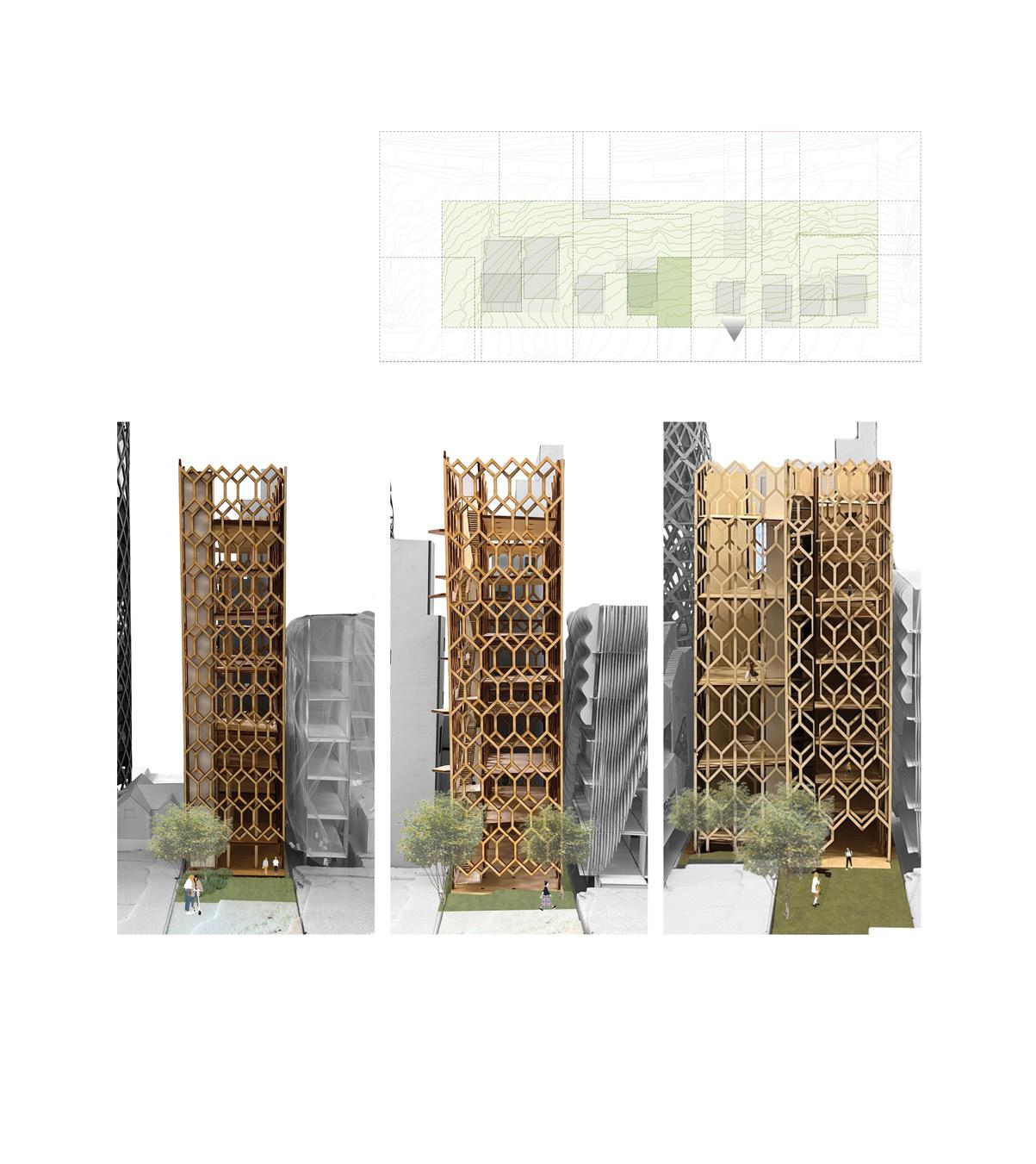
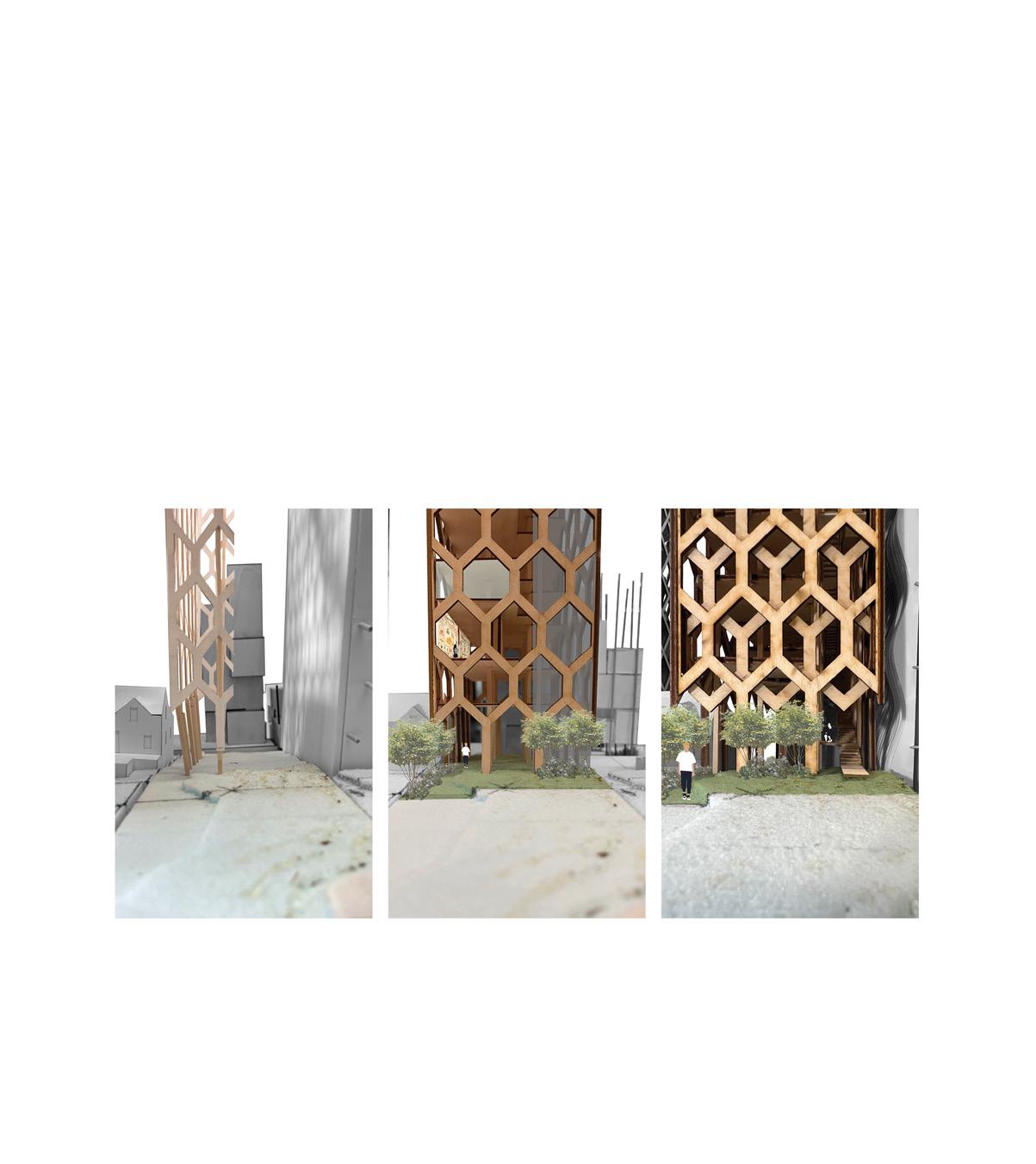
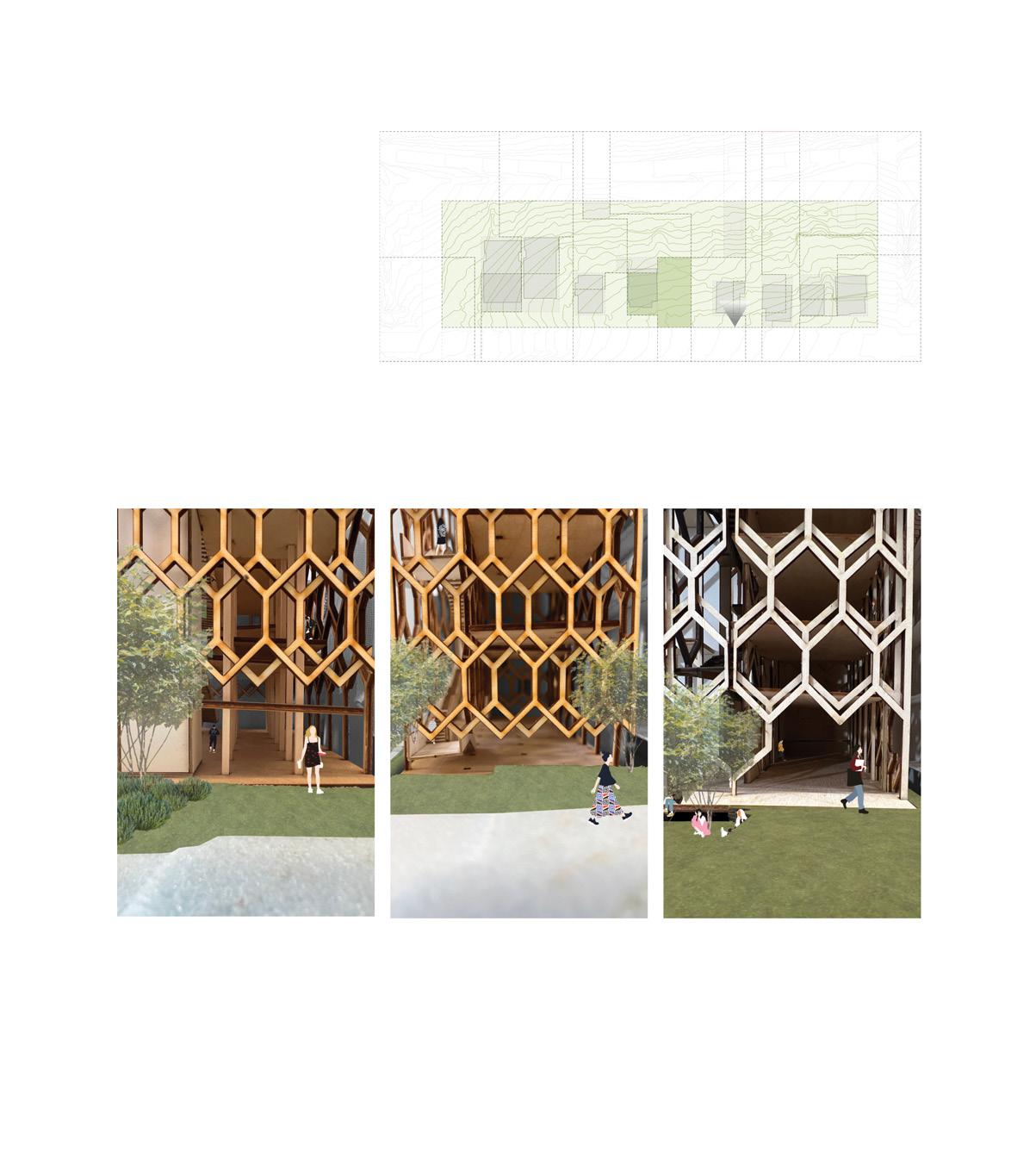
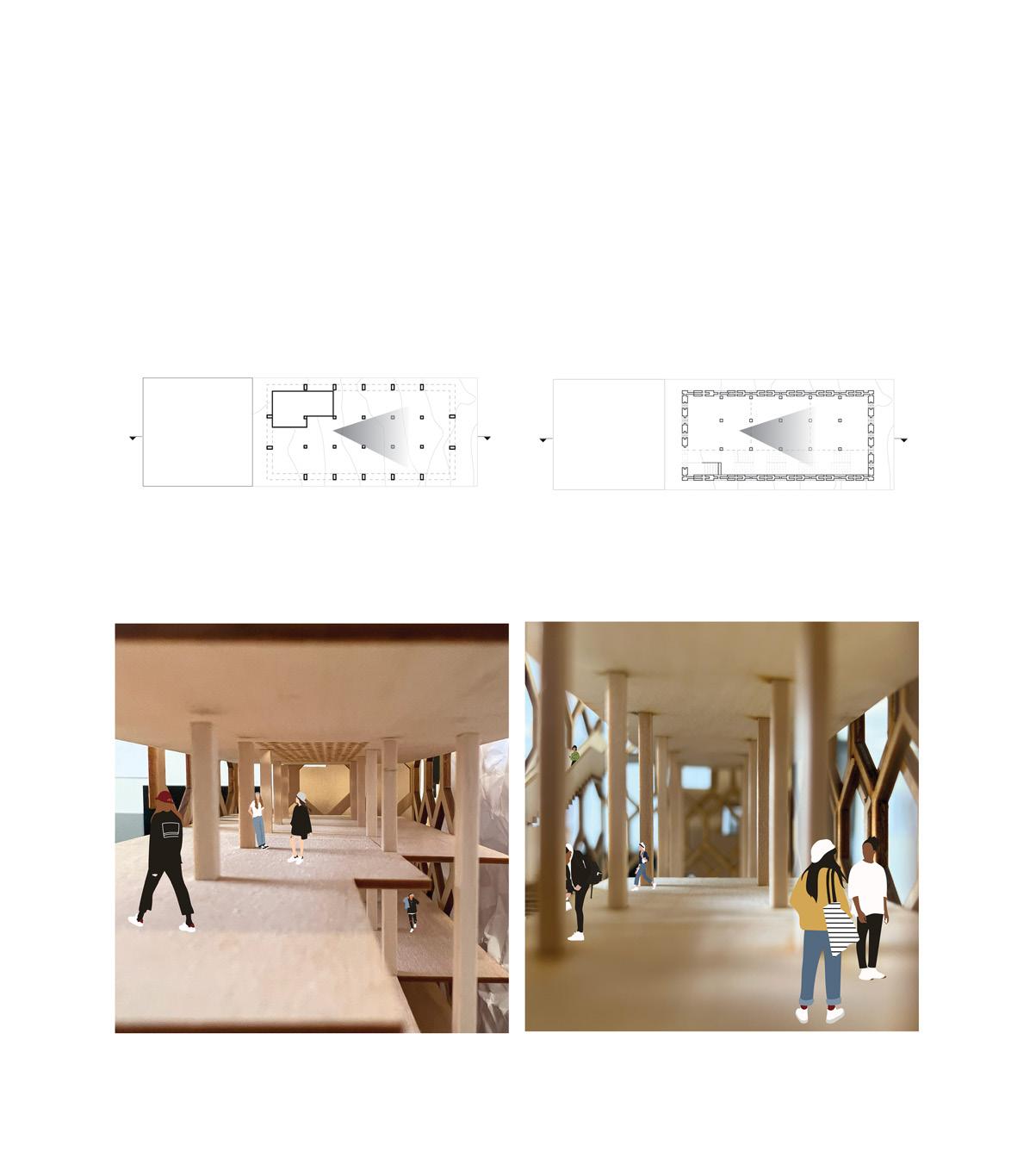
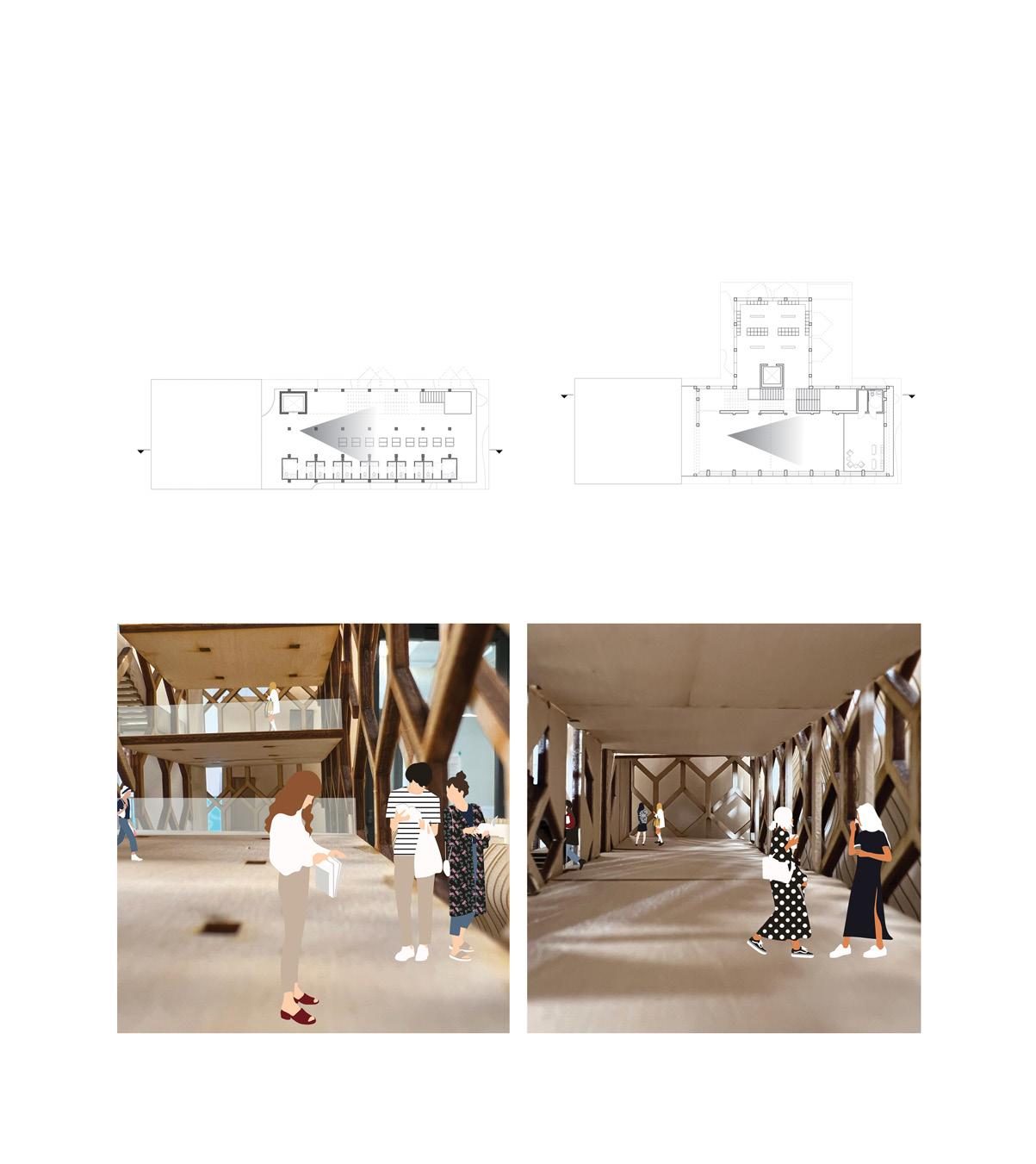
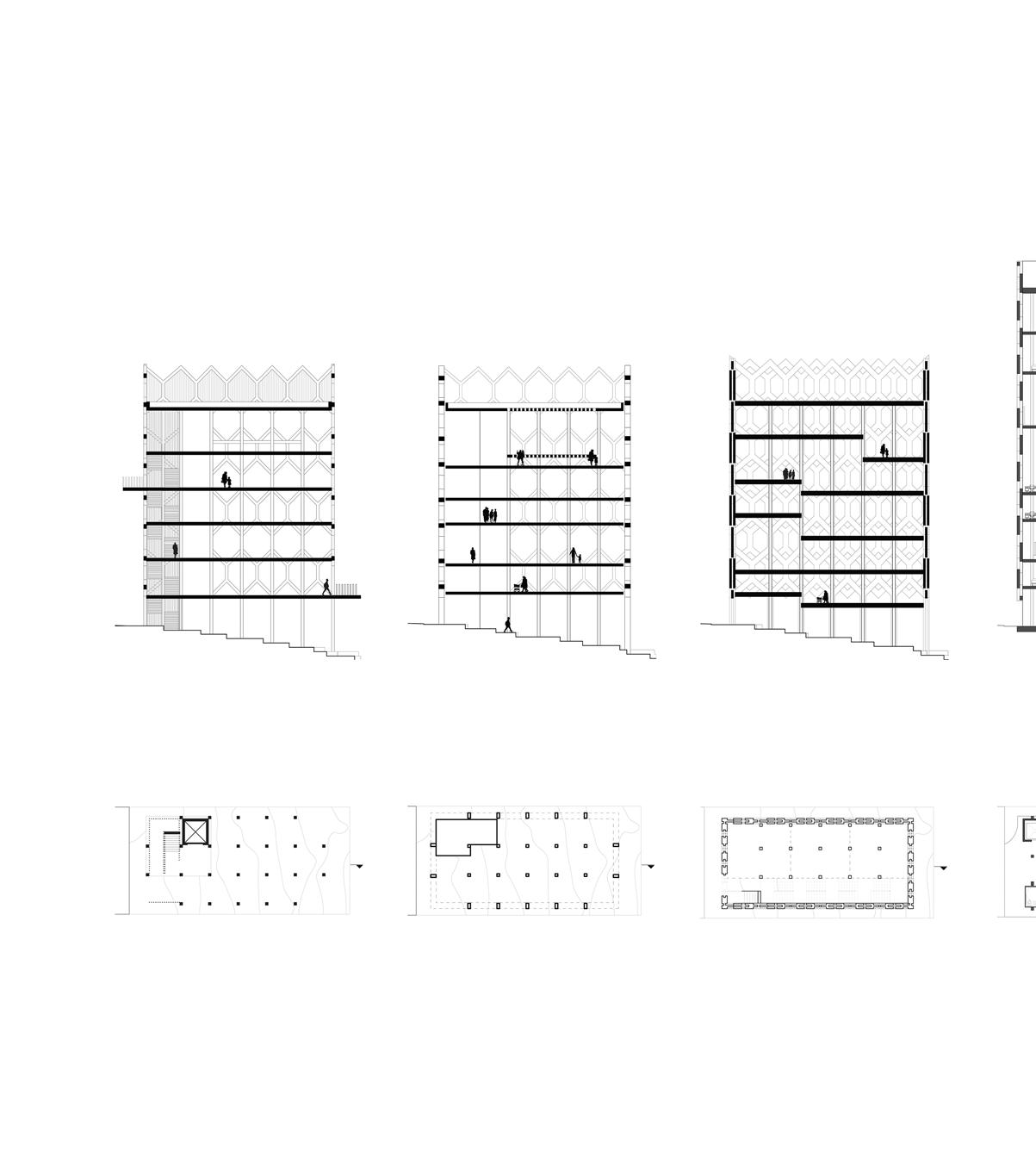
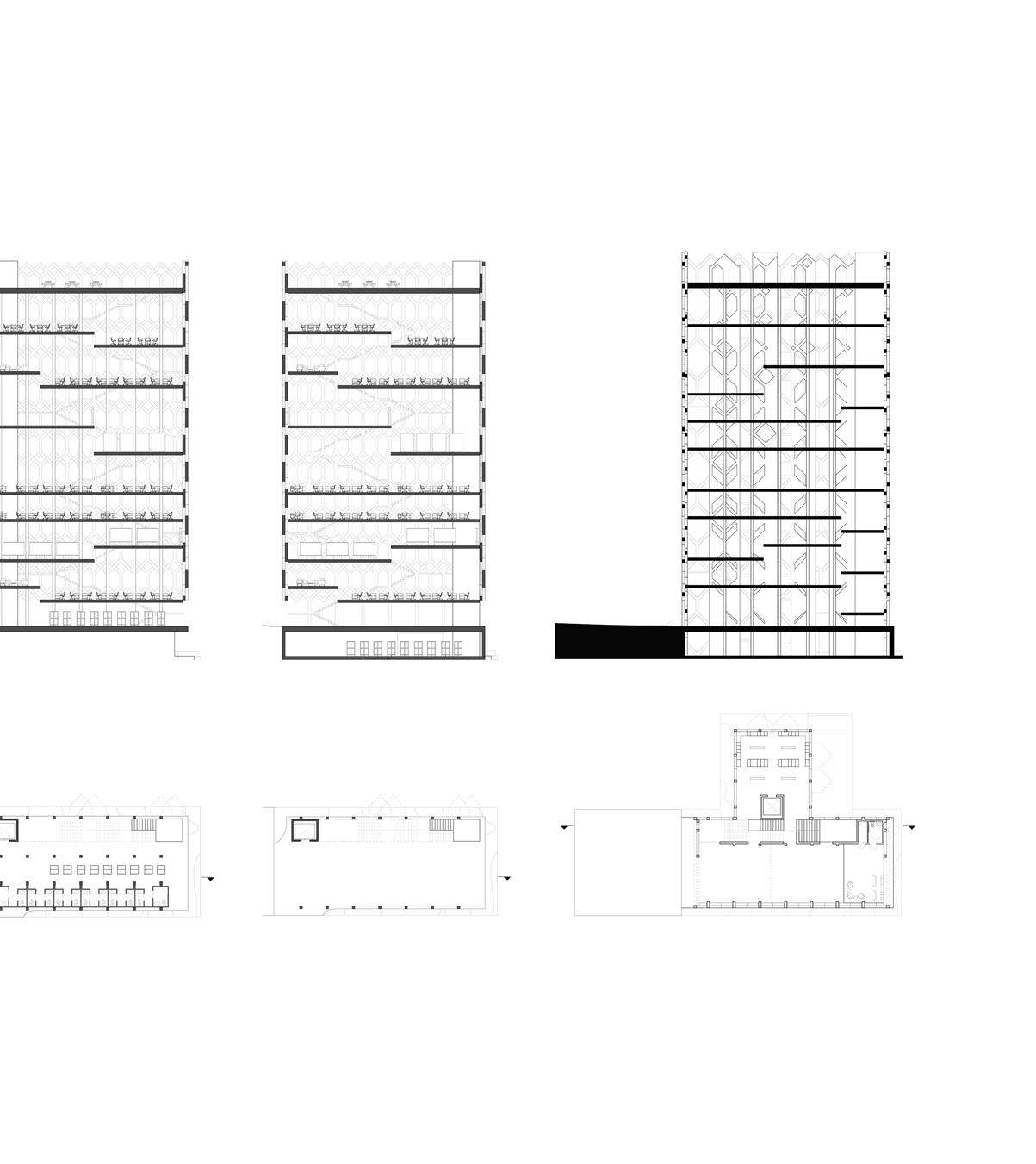
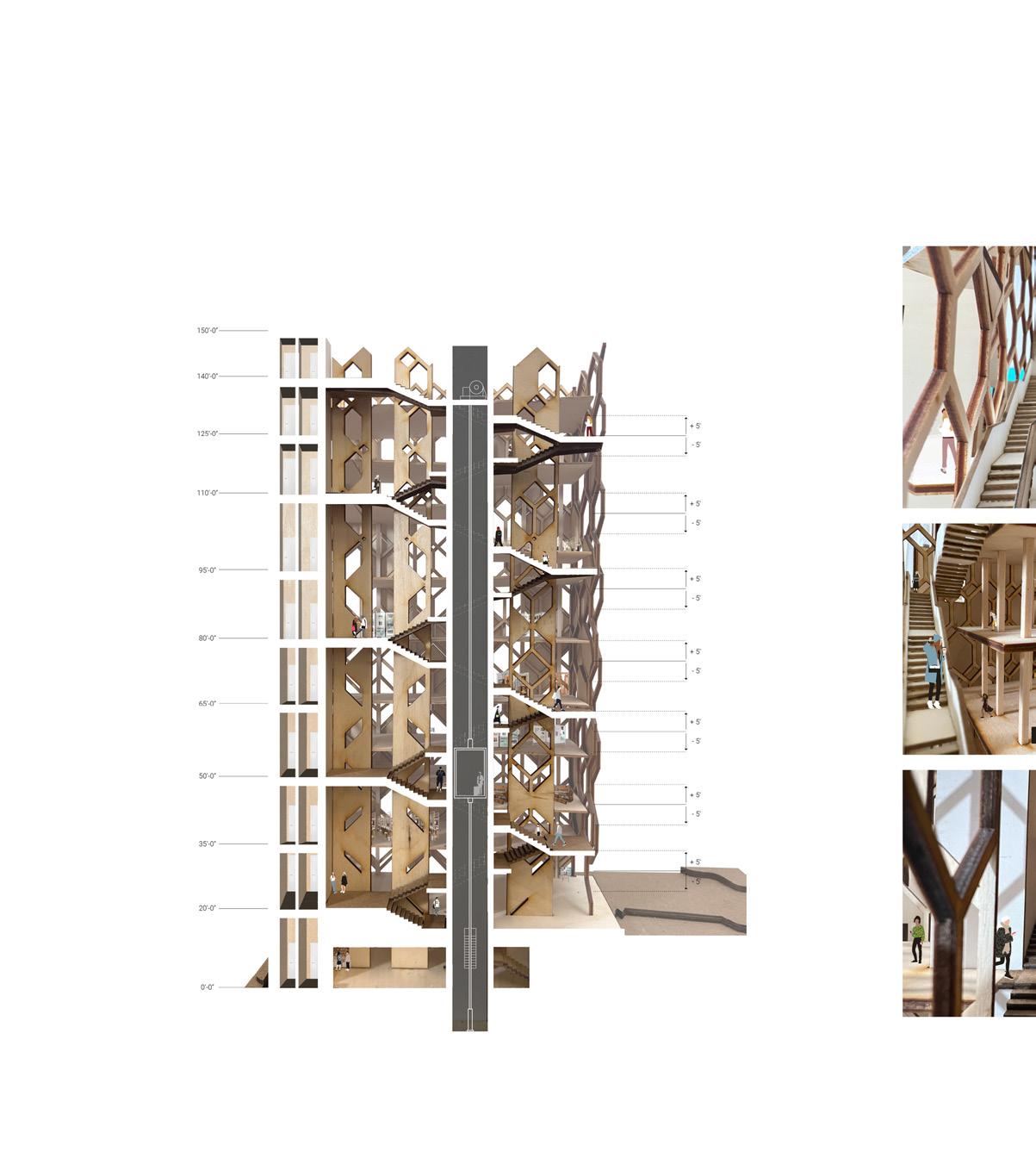
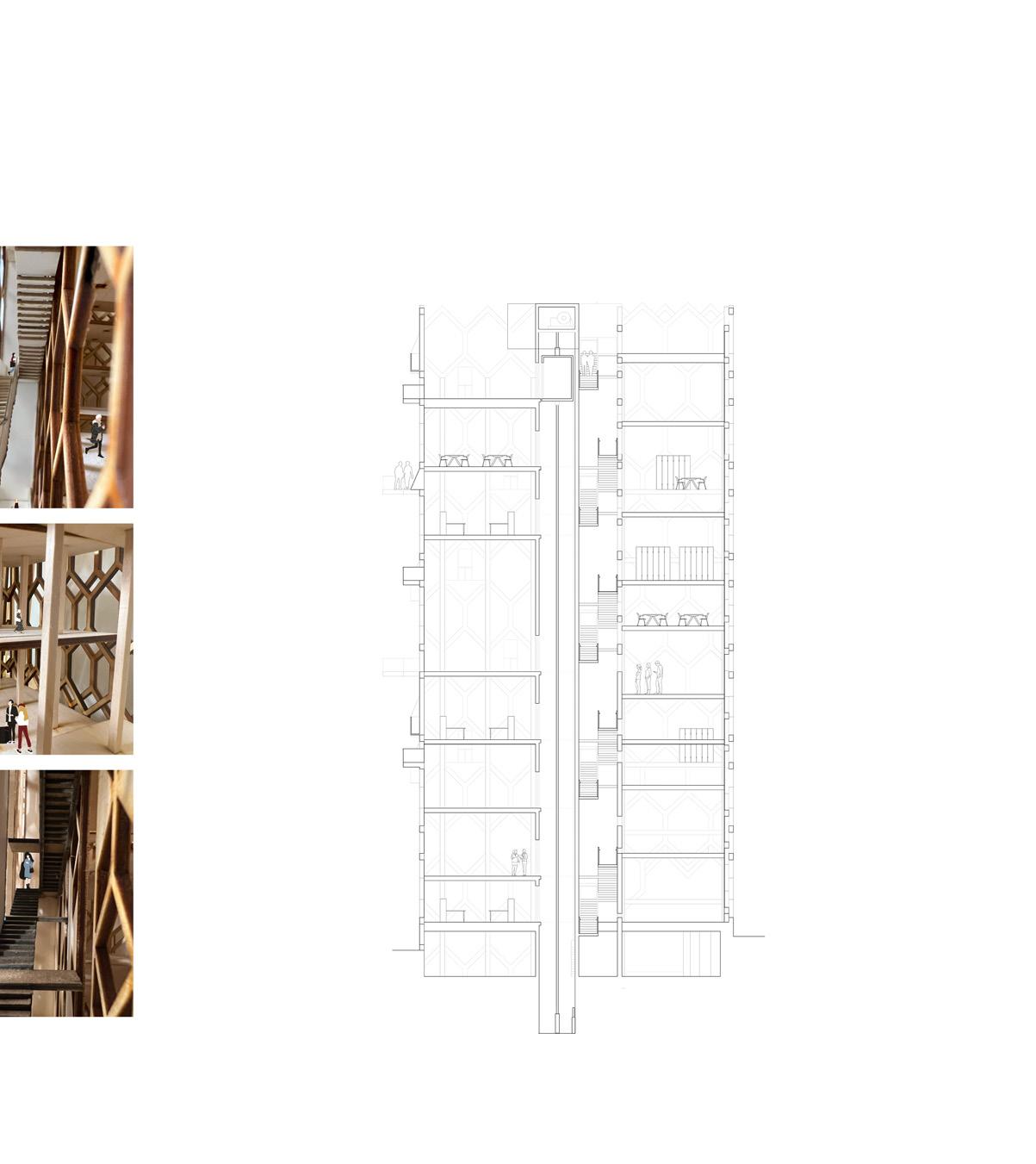
The challenge of designing for a continuous dialogue between building and context allowed for the Ch-Ch-Changing project to manipulate its interior scale in response to the needs of the inescapably changing exterior environment. It encouraged students to adopt the design practices of New Zealand’s Irving Smith Architects, who view architecture as an iterative process in an ongoing dynamic, rather than a fixed context. The iterative process for CHCH-CHANGING was measured in intervals of two weeks, which is equivalent to ten years in project development. Every two weeks the students would place their pieces together to create the site and its new form. While producing the model, students were also asked to create a transformative presentation to emphasize the iterative process of responses to the changing context. This design approach, known as “Soft Architecture,” was the subject of Jeremy Smith’s doctoral research at the University of Auckland. The goal is to design buildings that change as needed and participate with the landscape while responding to the modern needs of a community.
2023 YEAR YEAR YEAR 2033 2043
YEAR YEAR YEAR
2053
2063
2073
2023 YEAR YEAR YEAR 2033 2043
YEAR YEAR YEAR
2053 2063 2073
2023 YEAR YEAR YEAR 2033 2043
 YEAR 2033 PLAN
YEAR 2033
YEAR 2043 PLAN
YEAR 2043
YEAR 2033 PLAN
YEAR 2033
YEAR 2043 PLAN
YEAR 2043
 YEAR 2053 PLAN
YEAR 2053
YEAR 2073 PLAN
YEAR 2073
YEAR 2053 PLAN
YEAR 2053
YEAR 2073 PLAN
YEAR 2073
2023 YEAR YEAR YEAR YEAR
2033
2053
2063
2073
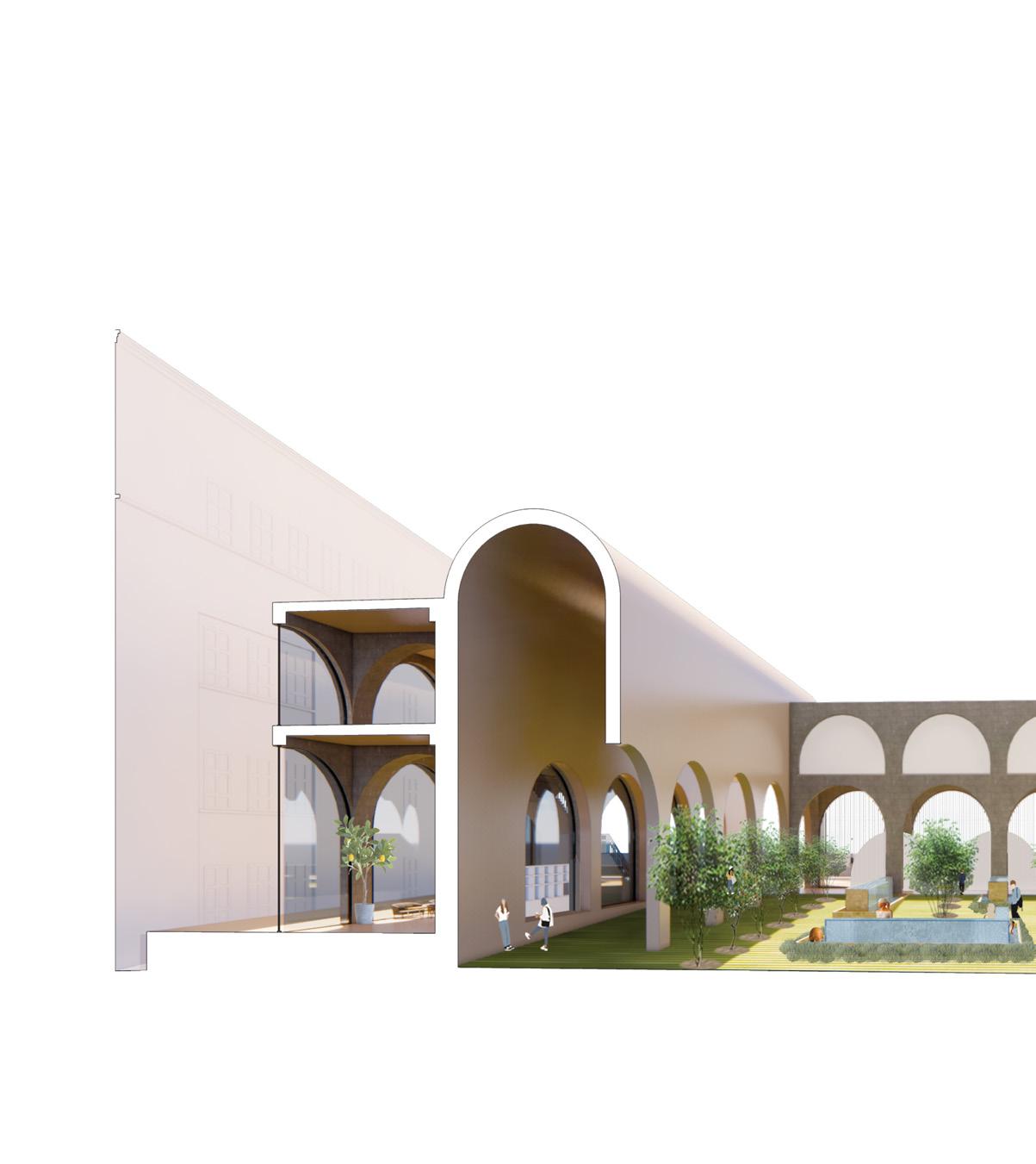
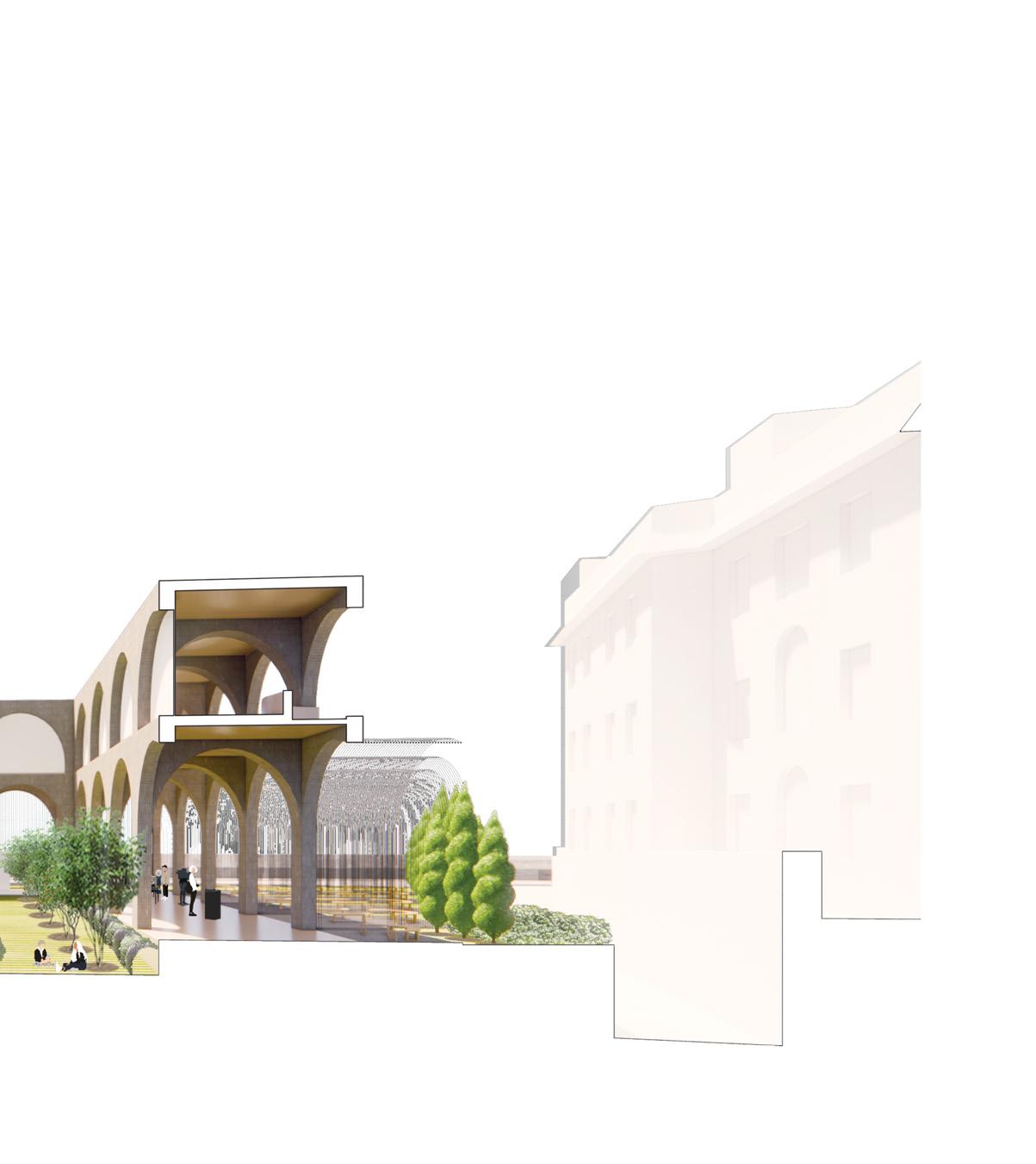
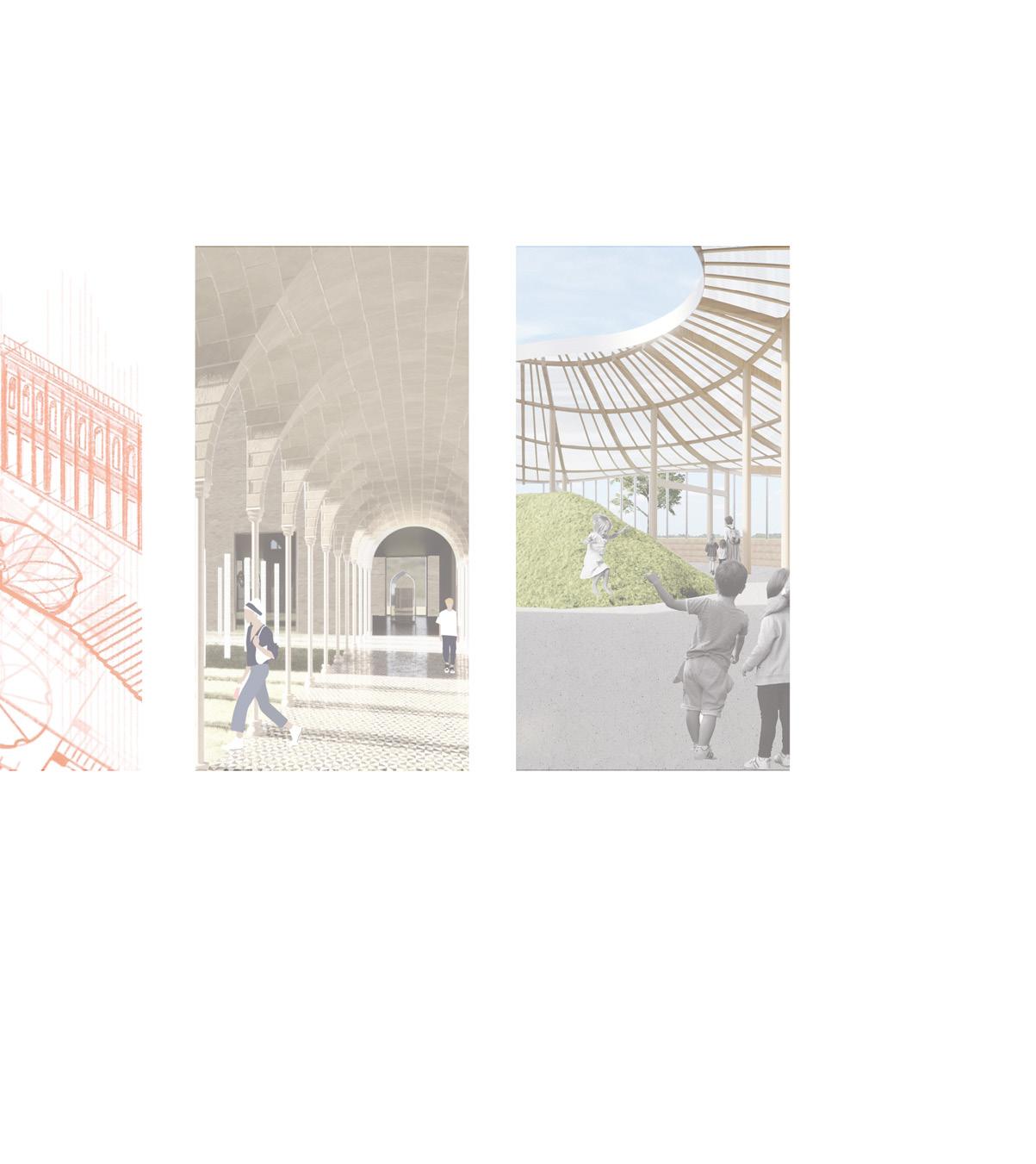
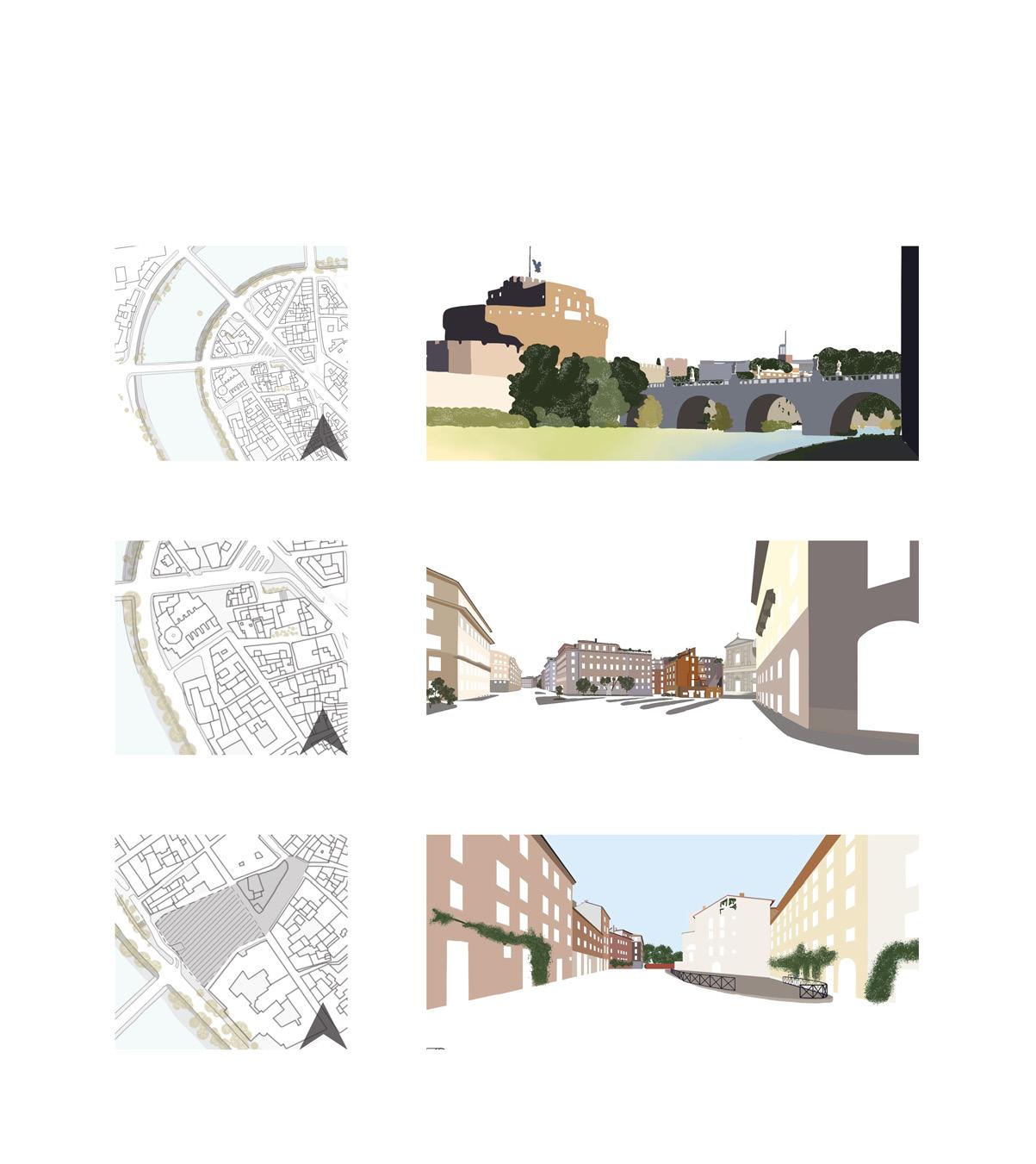
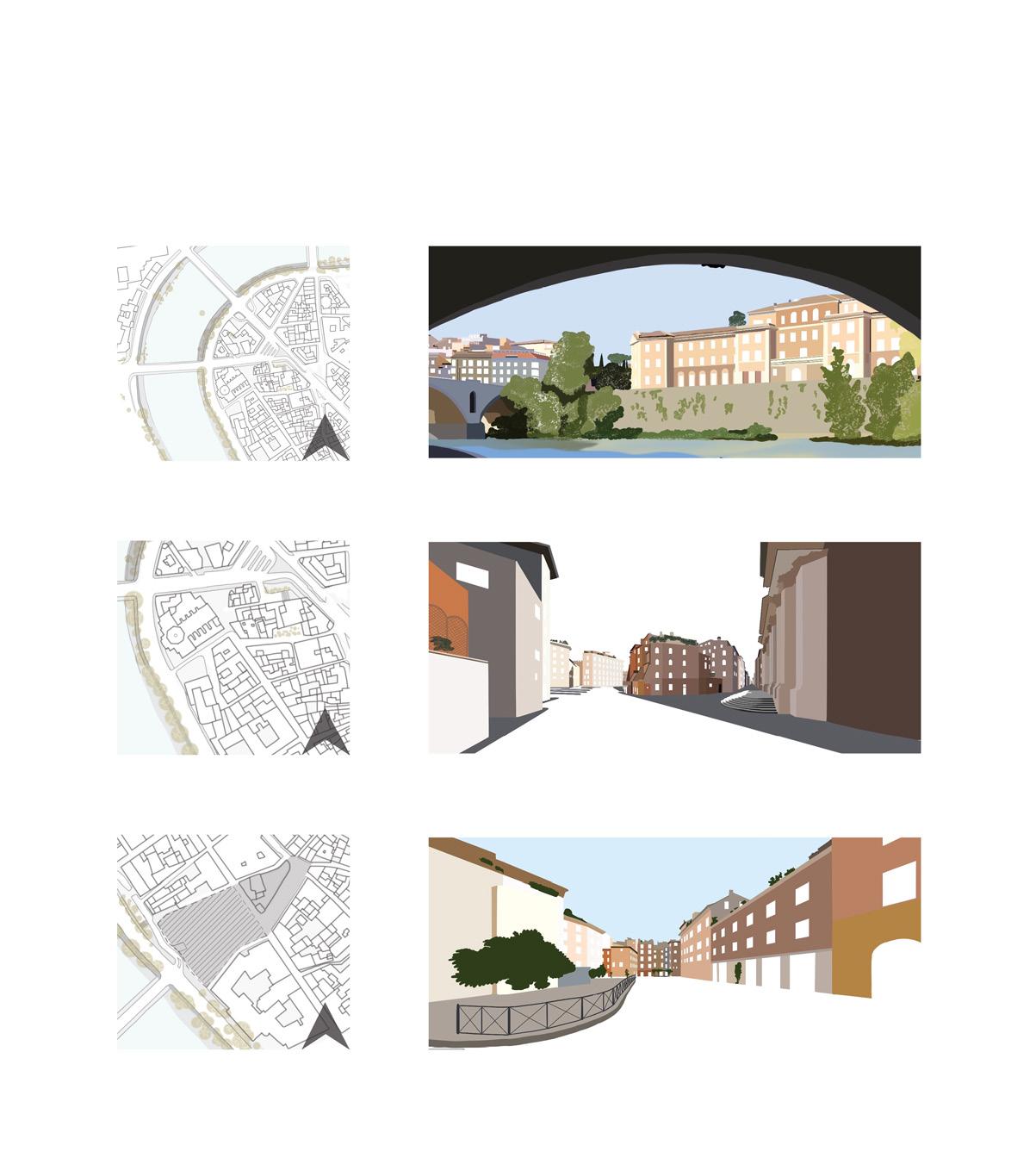
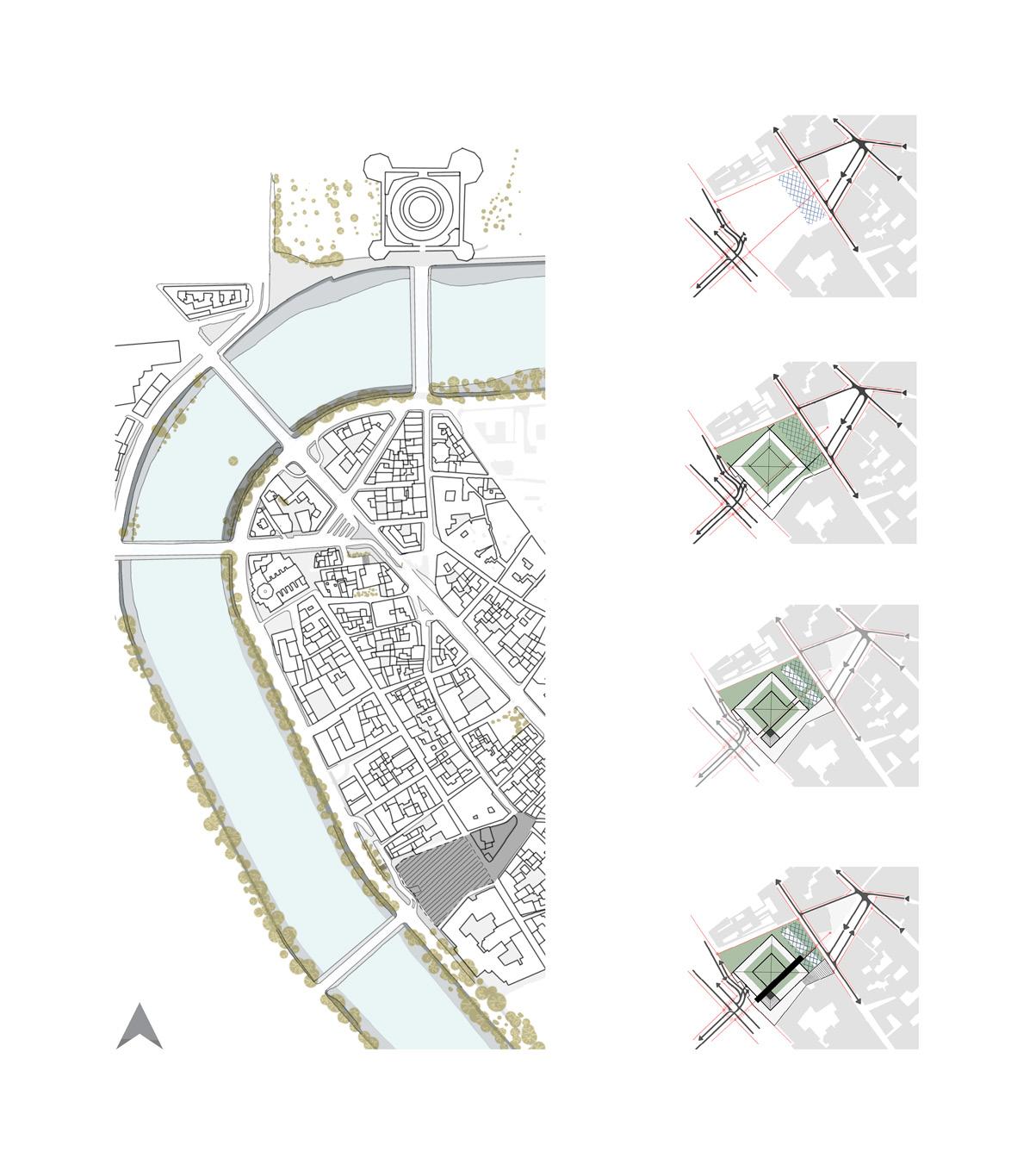
The chaos of the city inspired the design of the Interrupted Cloister by wanting to provide a place of refuge within the city. It is situated between Via Giulia and Lungotevere – a street with historical significance and a growing city infrastructure. The design of the cloister was inspired by the paths of Rome and their vibrant streets of soft tones and stone. The breaking of the bay allows for a path to reconnect to major landmarks within Rome. The circulation of Lungotevere now is able to interact with historical artisan shops along Via Giulia. The corridor houses an exterior sculptural exhibition, garden space, cafe, and archaeological remains. This unique design feature offers a seamless transition between historical and modern Rome, providing a peaceful oasis for relaxation and contemplation.
 SITE ONE
VIEW ONE
VIEW ONE
VIEW ONE
SITE TWO
SITE THREE
SITE ONE
VIEW ONE
VIEW ONE
VIEW ONE
SITE TWO
SITE THREE
 VIEW TWO
VIEW TWO
VIEW TWO
VIEW TWO
VIEW TWO
SITE PLAN
SITE CIRCULATION DIAGRAM
SITE CIRCULATION DIAGRAM
SITE CIRCULATION DIAGRAM
SITE CIRCULATION DIAGRAM
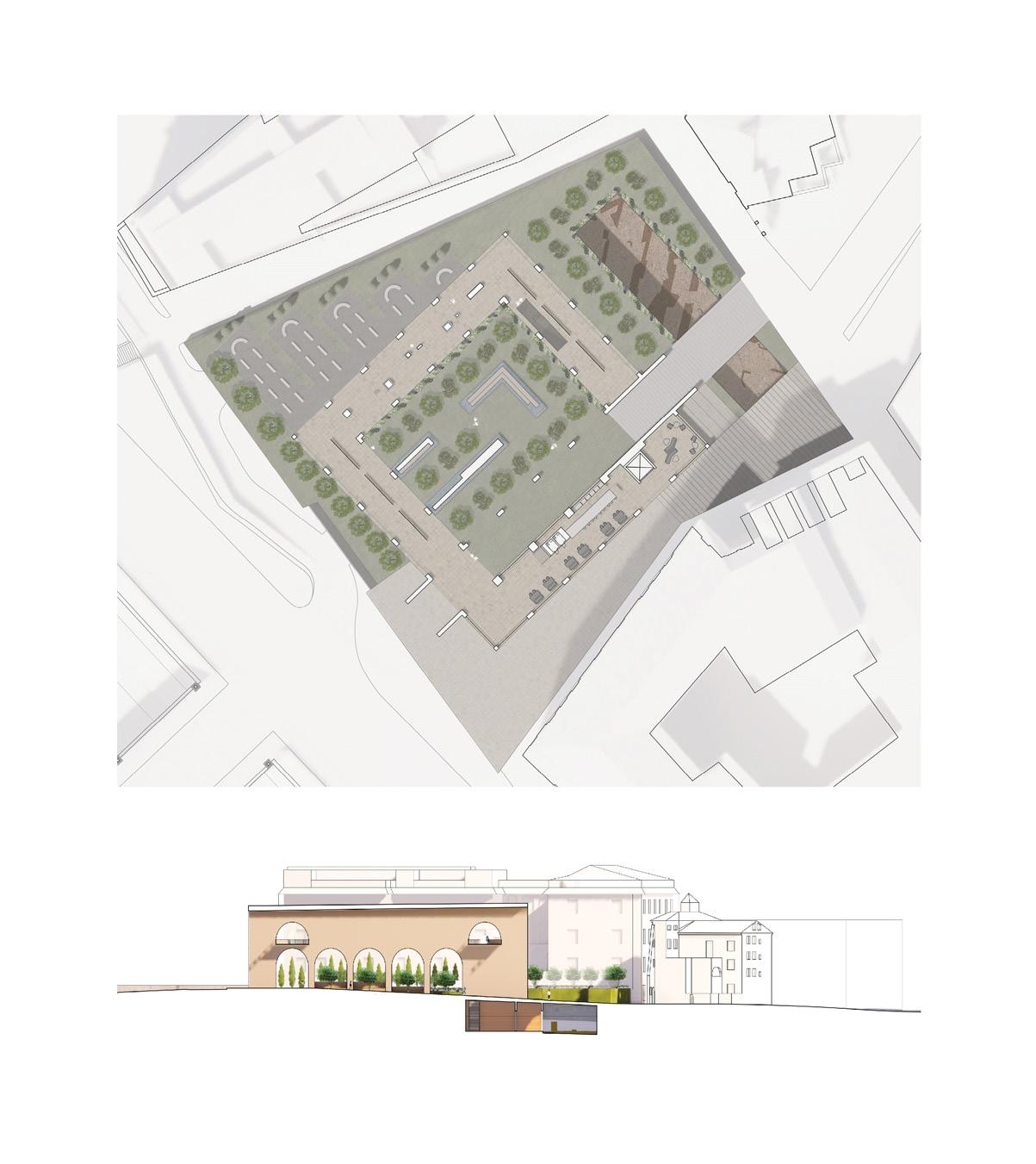 GROUND FLOOR PLAN
SITE SECTION
GROUND FLOOR PLAN
SITE SECTION
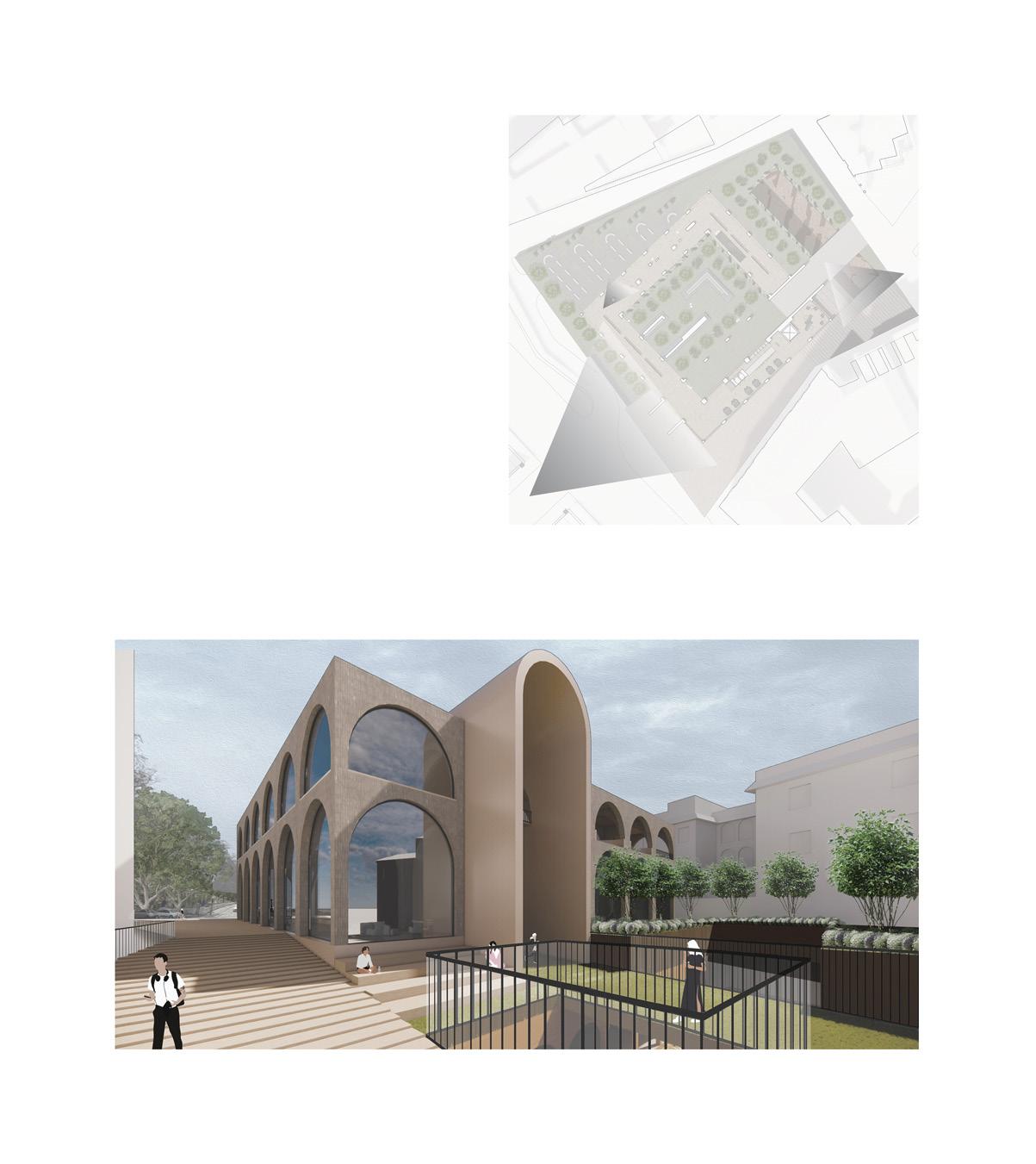
REFERENCE A PERSPECTIVE
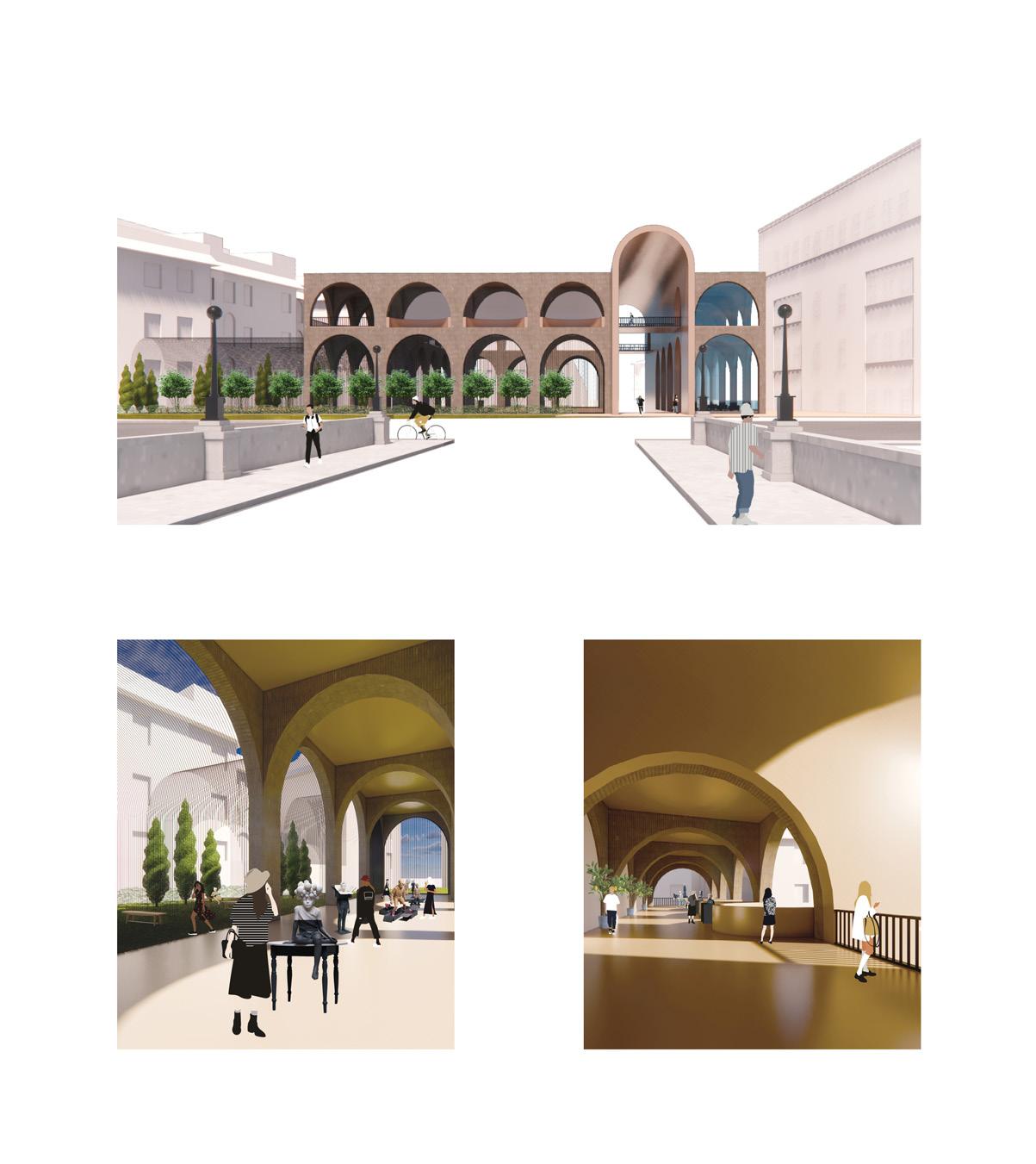
REFERENCE C PERSPECTIVE
UPSTAIRS BALCONY PERSPECTIVE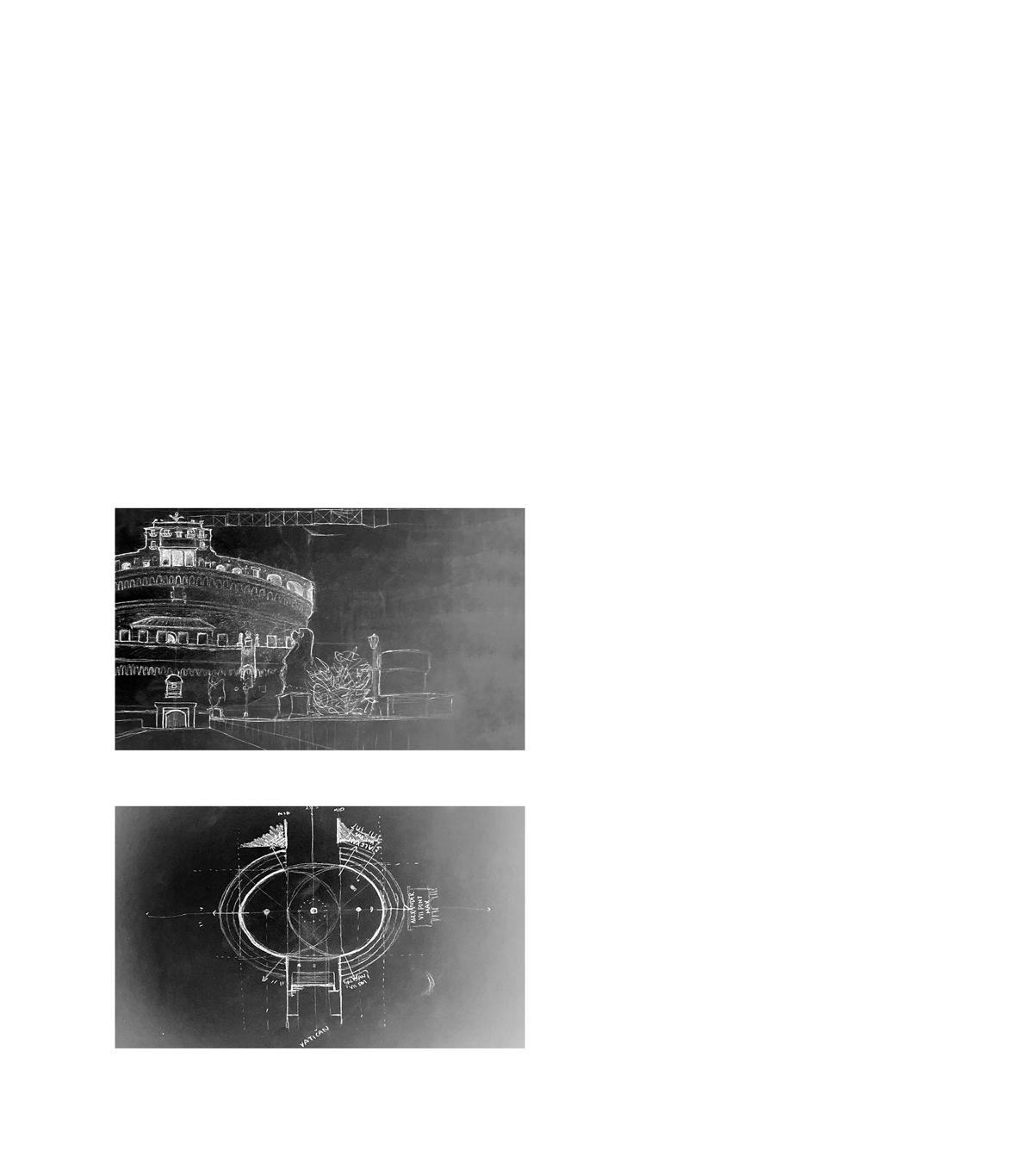
SKETCH CASTEL SANT’ANGELO
SKETCH PLAN OF THE VATICAN’S EXTERIOR PUBLIC SPACE
Architecture of the City challenged students to reconnect their eyes with their hands. This course allowed the students to explore the city through the procession of sketching. We were traveling along the Via Papalis capturing historical landmarks through perspective. It was a chance to go back to the basics and reconnect our eyes with the city. Every week we hit four major destinations and were asked to compile boards with our inventory and analysis of that week’s locations. This course challenged us to design through perspective and experience while respecting the typologies and design strategies of the historical context.
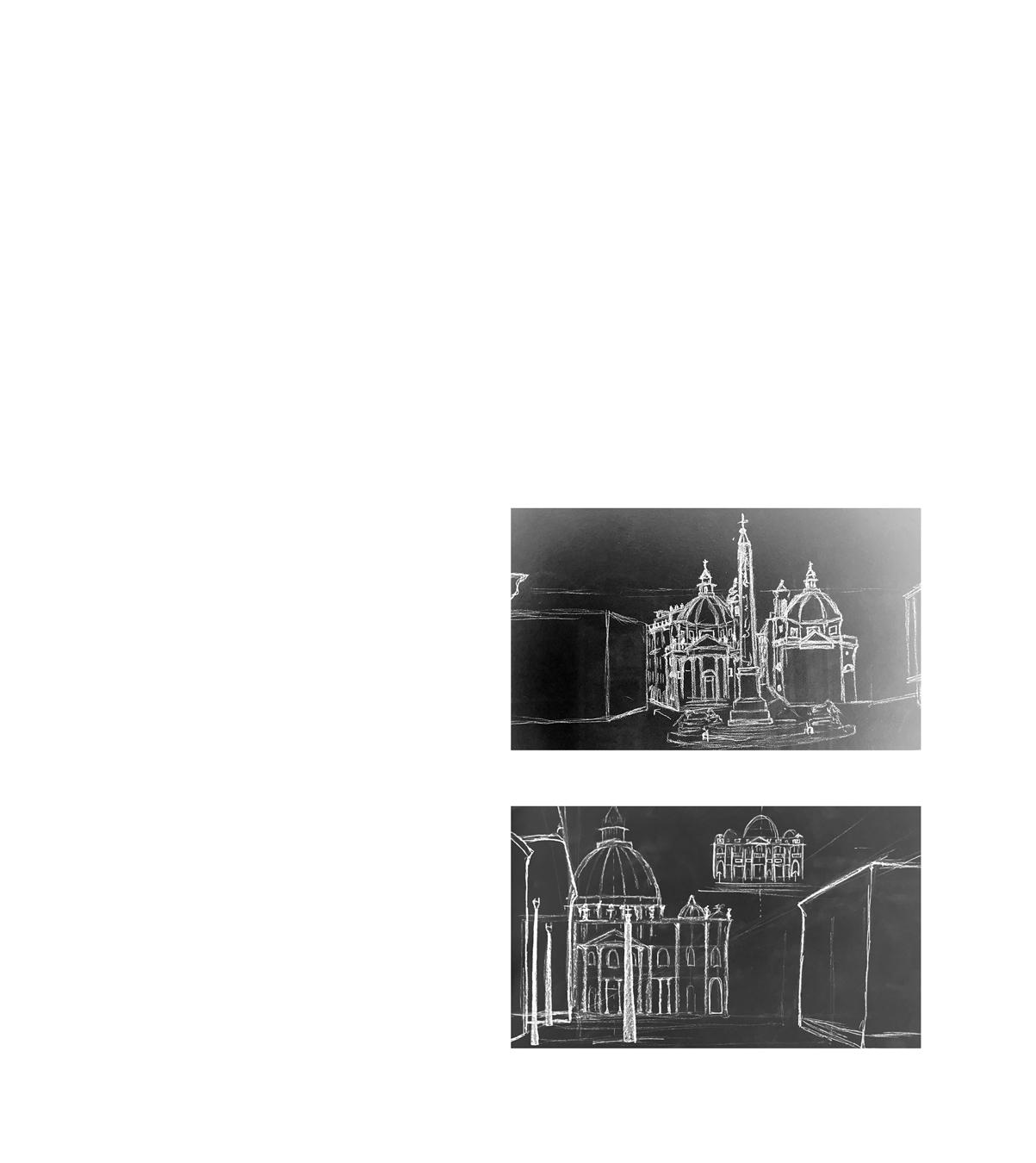 SANTA MARIA DEI MIRACOLI AND SANT MARIA DI MONTESANTO (TWIN CHURCHES)
SKETCH PROCESSION TO THE VATICAN
SKETCH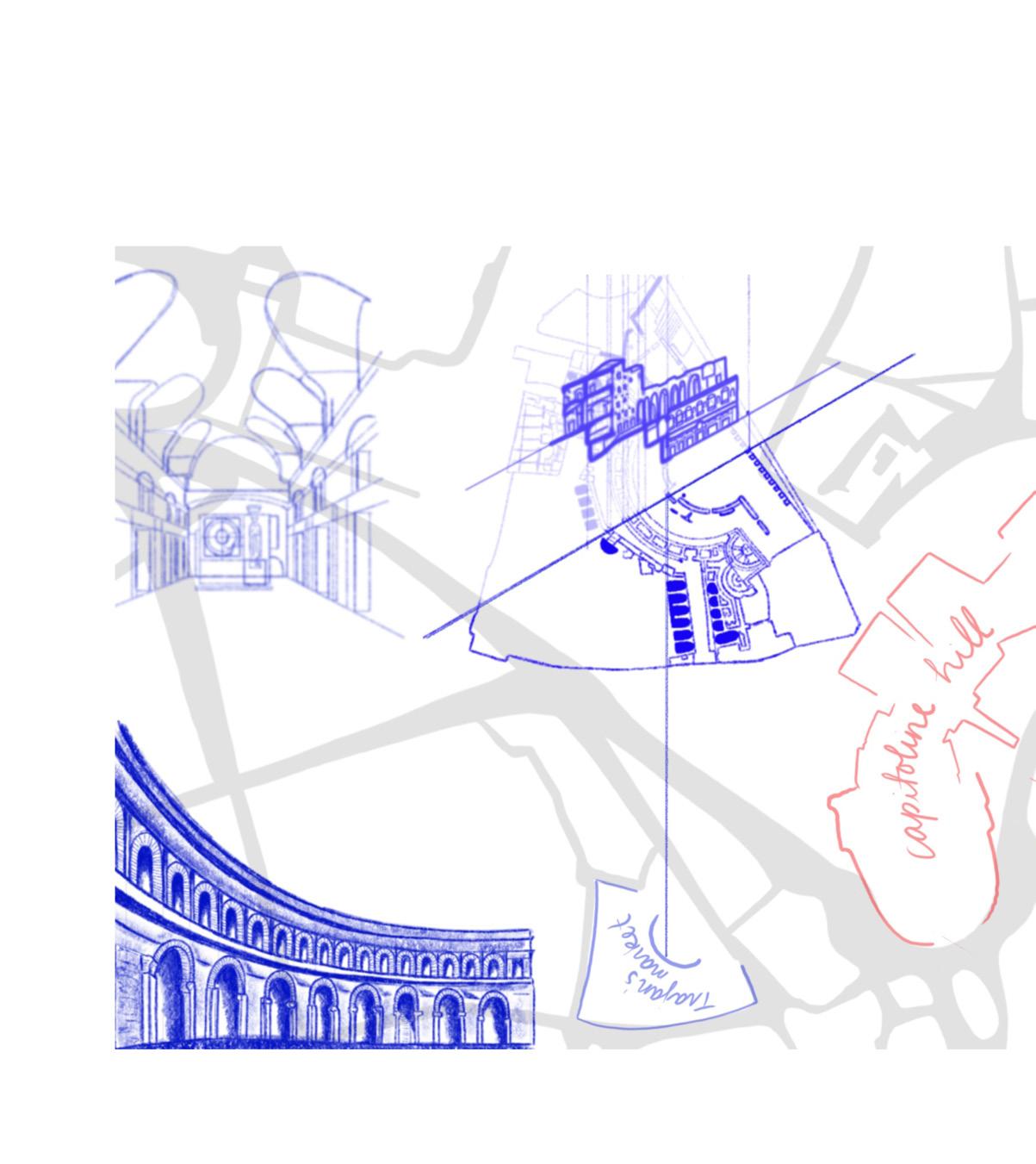 TRAJAN’S MARKET & CAPITOLINE HILL
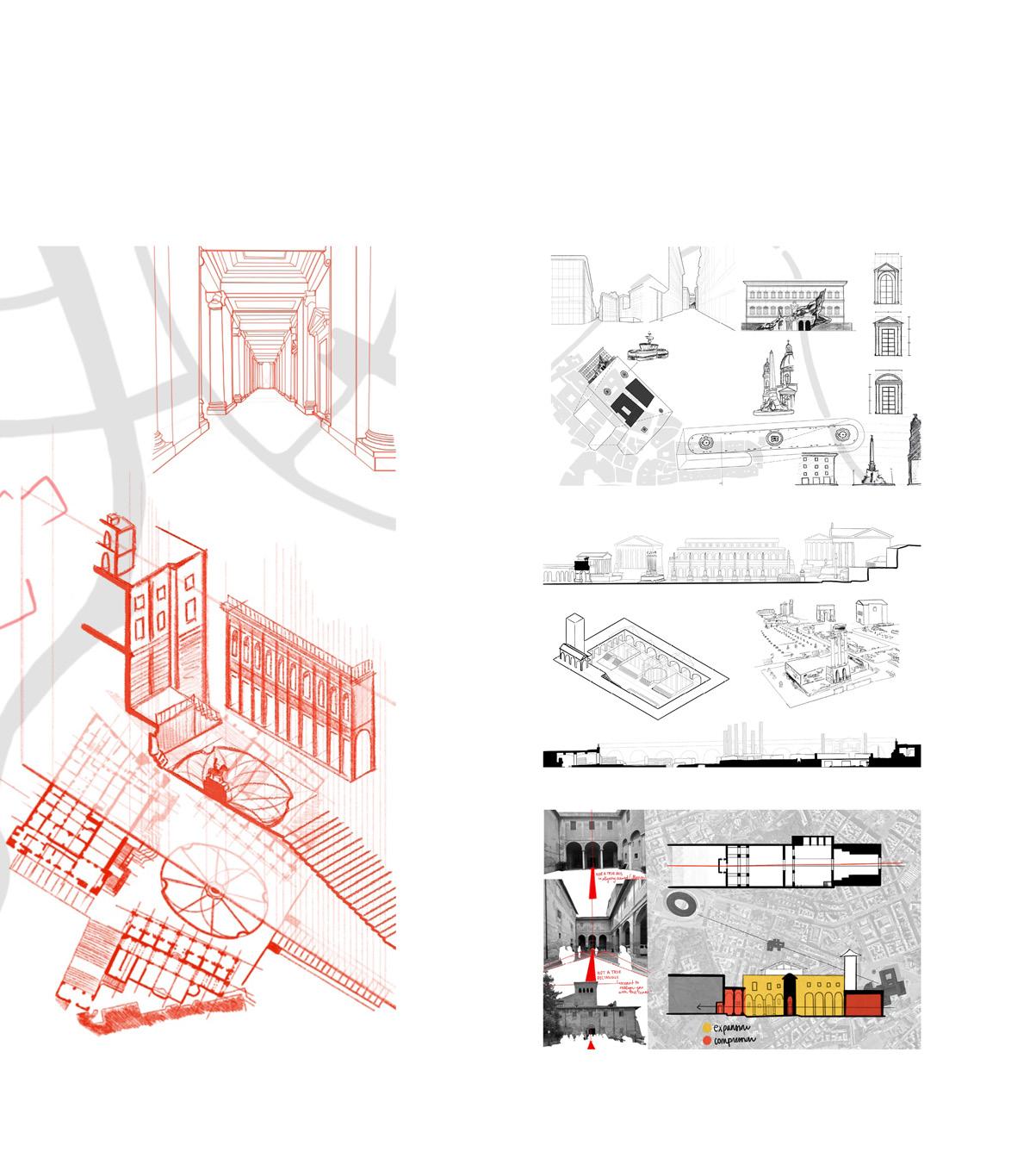 BASCILICA SAINT CLEMENT
ROMAN FORUM AND LARGO DI TORRE ARGENTINA
PIAZZA FARNESE, CAMPO DE ‘FIORI, AND PIAZZA NAVONA
BASCILICA SAINT CLEMENT
ROMAN FORUM AND LARGO DI TORRE ARGENTINA
PIAZZA FARNESE, CAMPO DE ‘FIORI, AND PIAZZA NAVONA
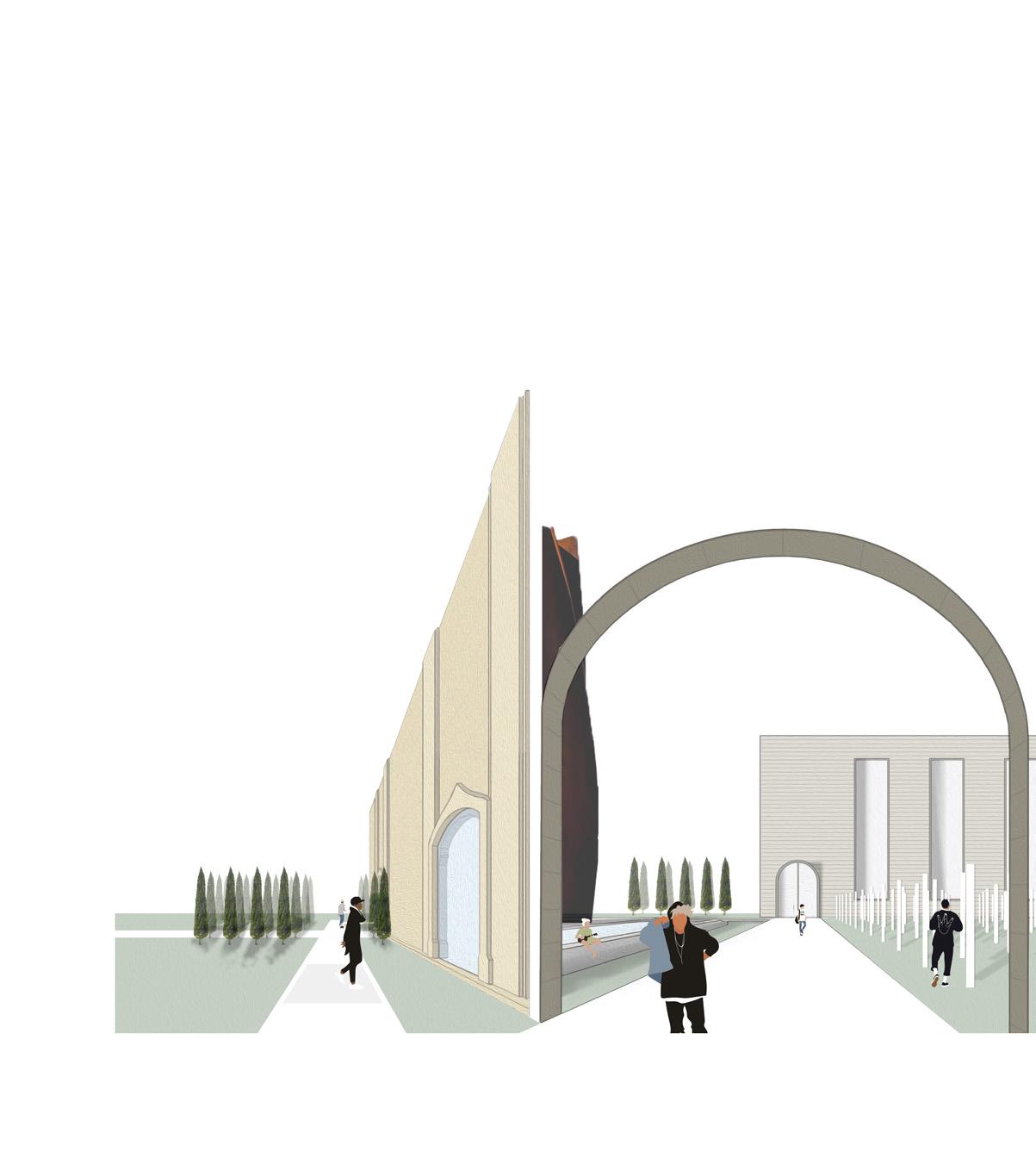
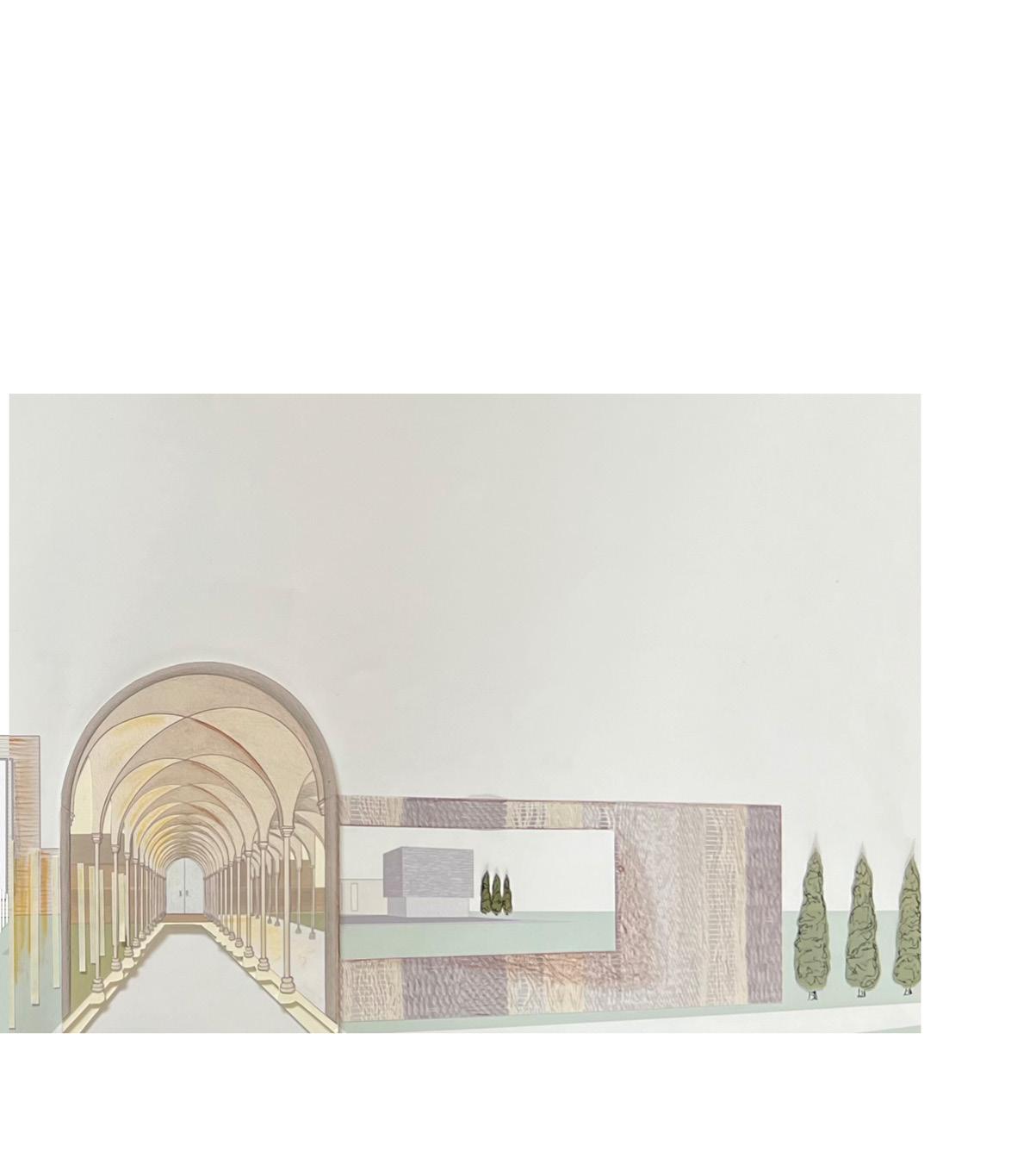
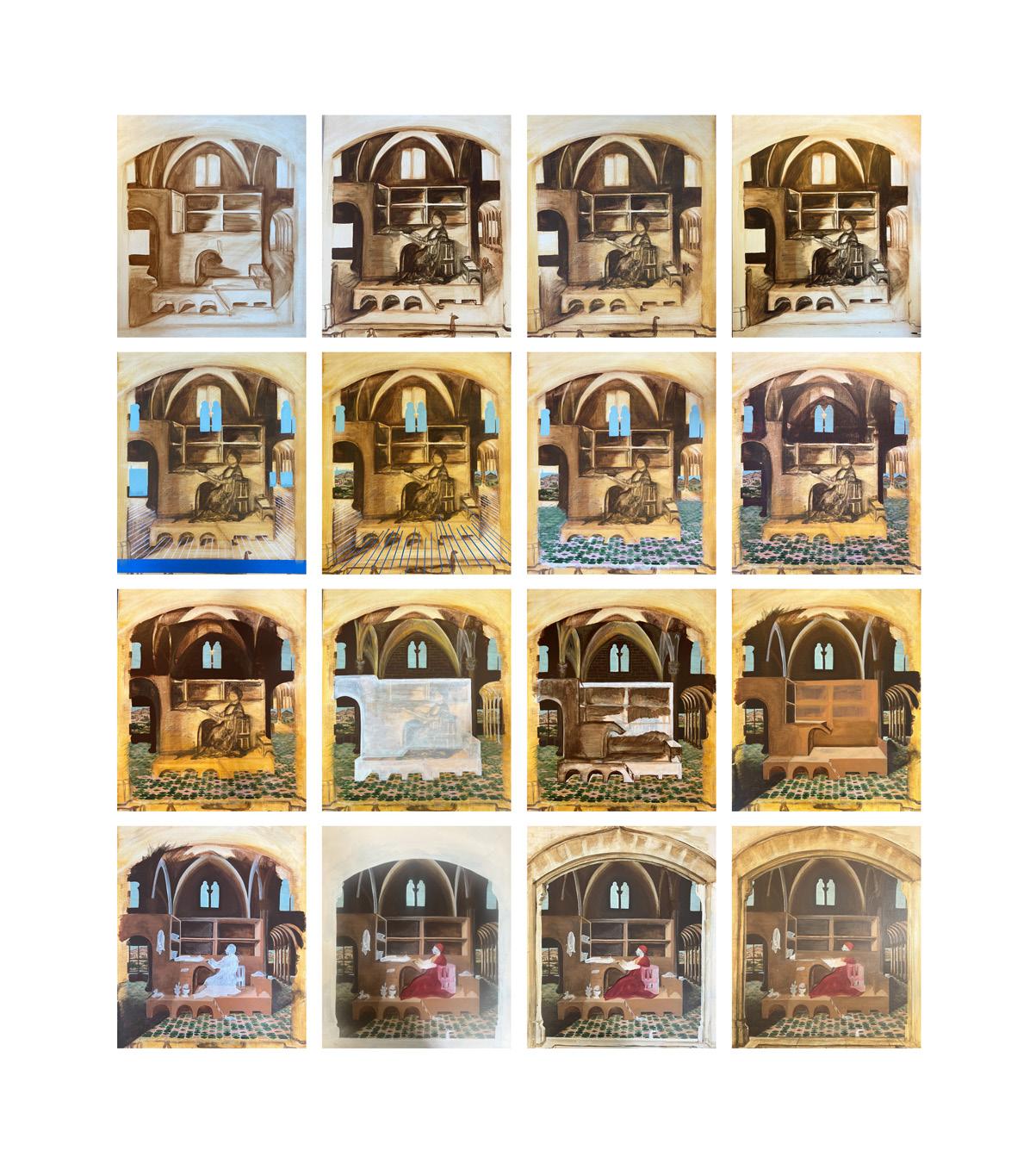
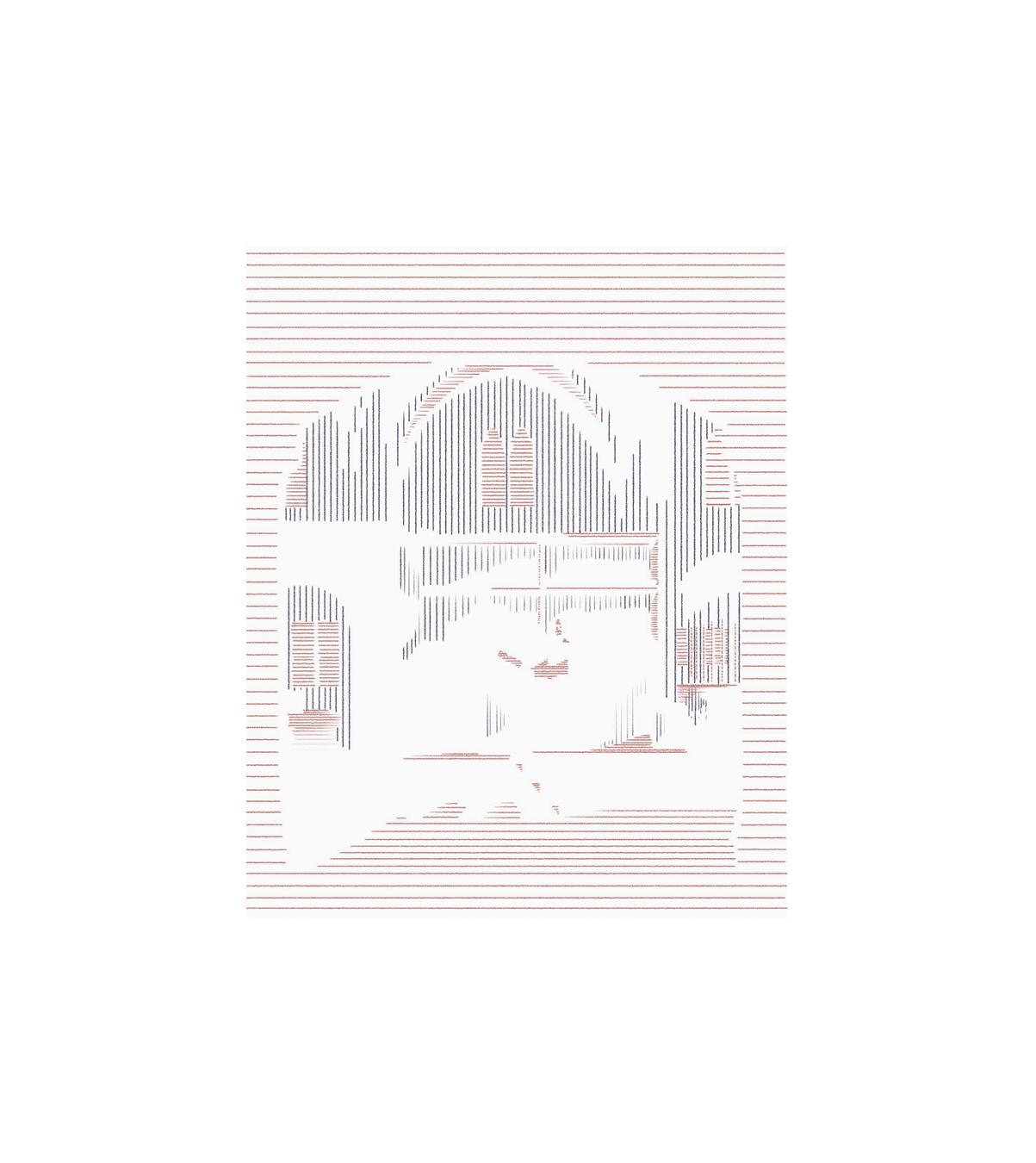
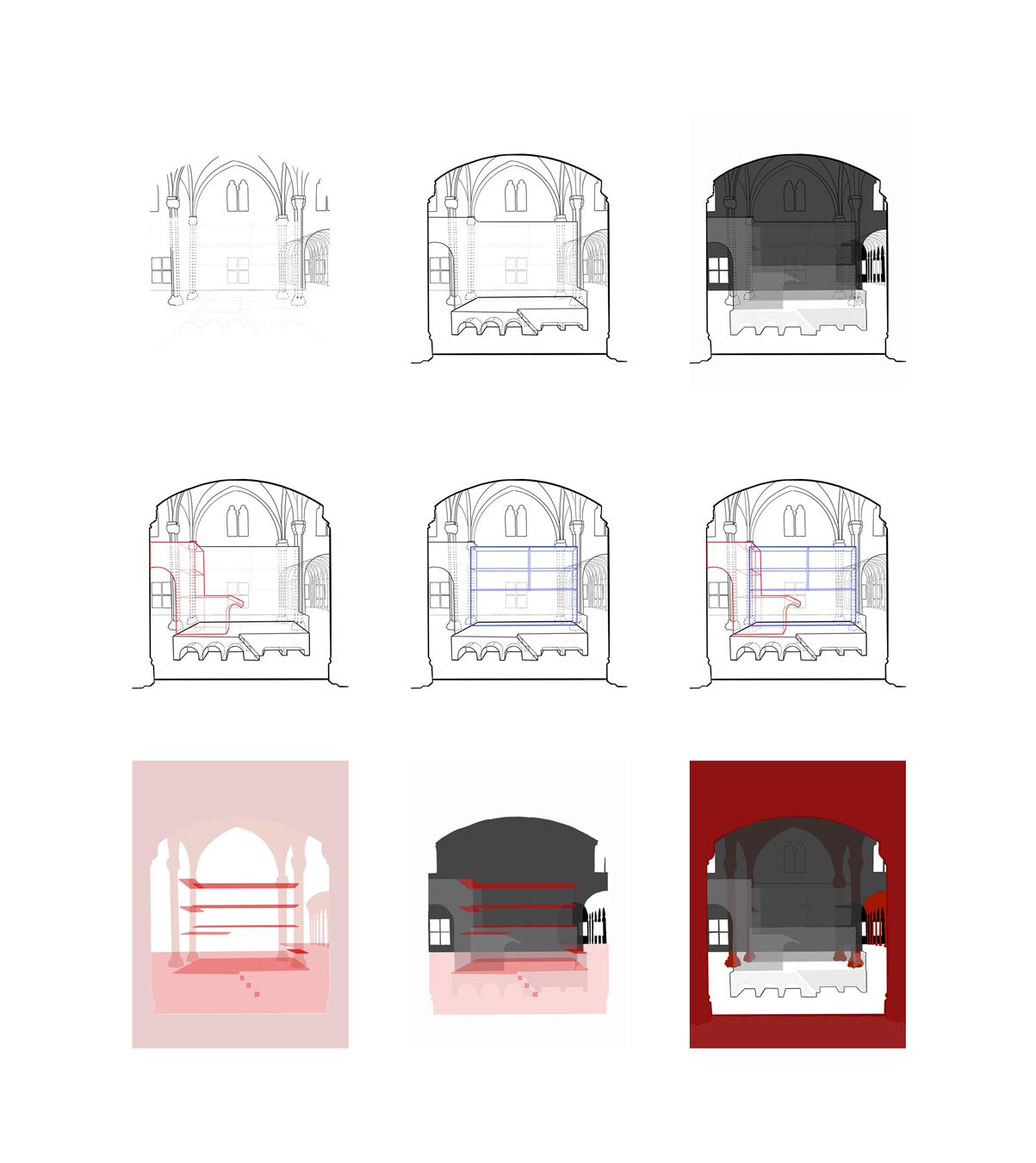
Using process-based techniques, Monastic Museum was constructed using tracing, deconstructing, and reassembling Antonello da Messina’s painting, “St. Jerome in His Study.” This allowed for a detailed investigation of design features, an understanding of spatial relationships, and project evolution. Students deconstructed existing buildings and shapes, gaining insight into their compositions and translating them into architectural concepts. Deconstructing and reassembling promoted experimentation and invention, resulting in unique solutions and refinement of the overall design concept. These rigorous approaches improved problem-solving and critical thinking skills, allowing individuals to gain a deeper understanding of architectural design and apply it to their projects.
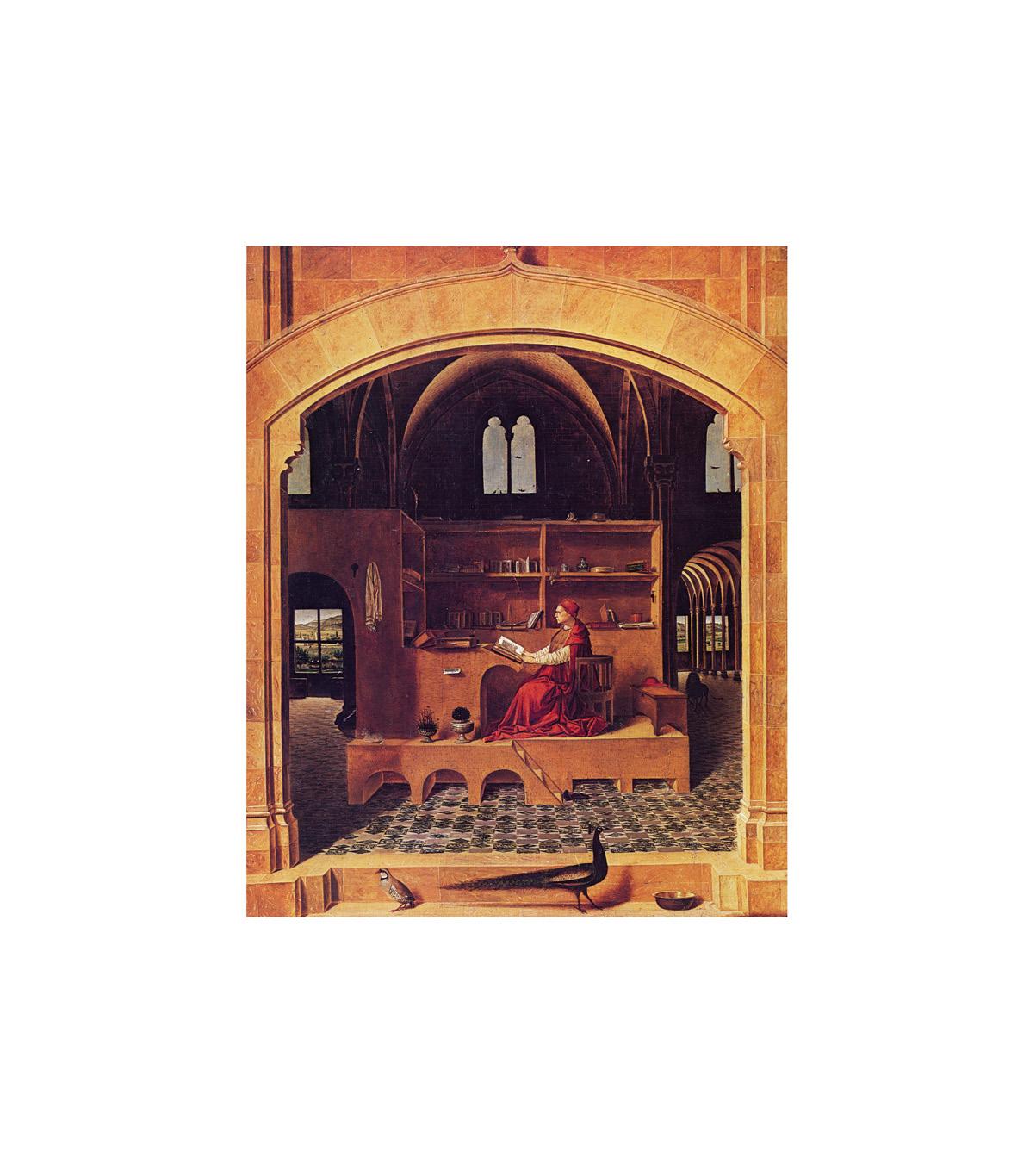 ST. JEROME IN HIS STUDY ANTONELLO DA MESSINA
DIAGRAM
LIGHT AND SHADOW REPRESENTED AS LINES
DIAGRAM
DIAGRAM
DIAGRAM
DIAGRAM
PIECE 1 OF STUDY
DIAGRAM
PIECE 2 OF STUDY
DIAGRAM
PIECE 3 OF STUDY
DIAGRAM
DIAGRAM
REALTIONSHIP BETWEEN DATUMS AND SHADE
DIAGRAM
SPACE BEHIND STUDY HORIZONTAL DATUMS SPACE BEHIND WITH STUDY SHADE & SHADOW SHADE OVERLAPPING STRUCTURAL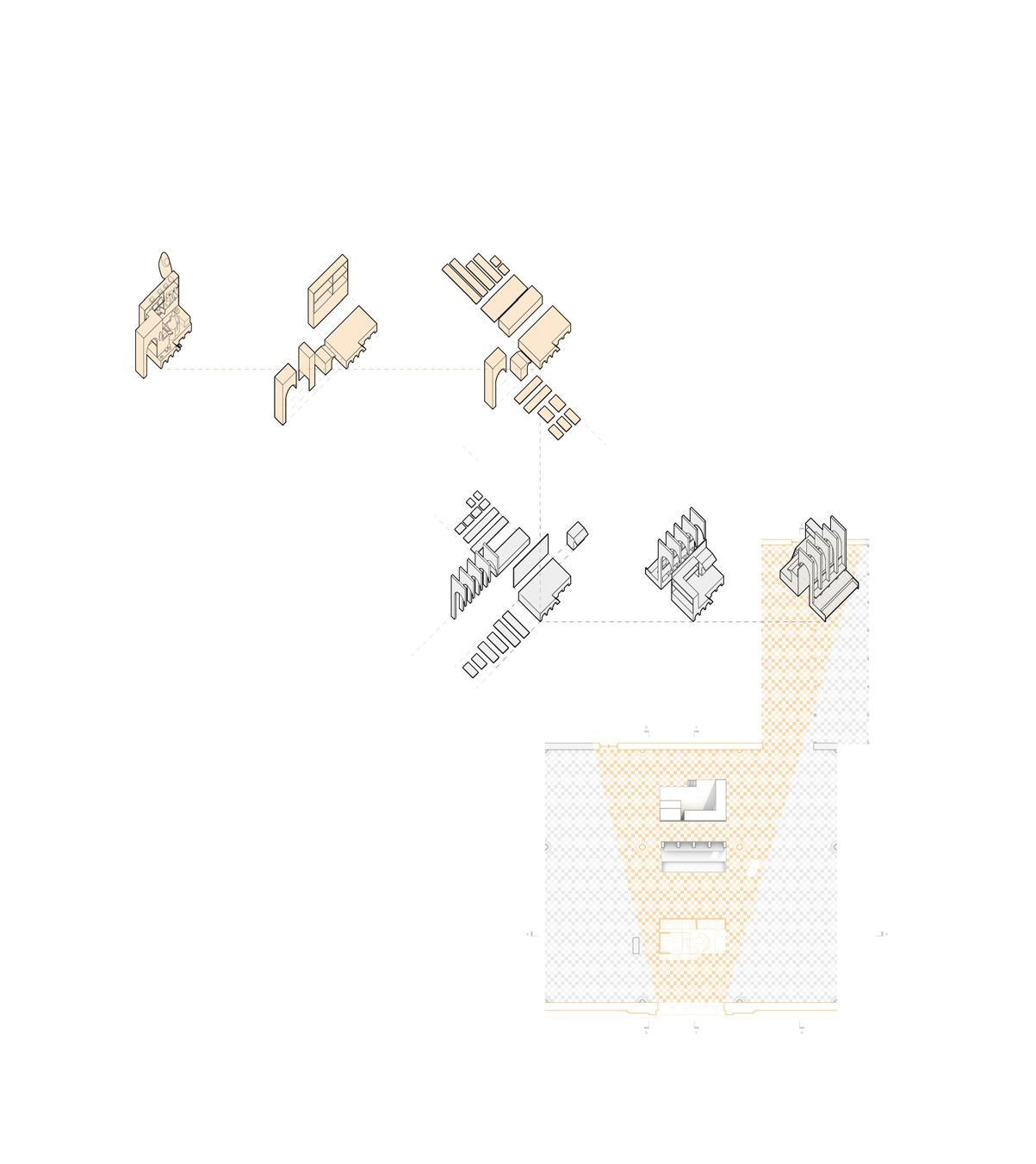
DIAGRAM
DISSASSEMBLED STUDY THEN REASSEMBLED
ONE POINT PERSPECTIVE REASSEMBLED STUDY PLACED INTO THE MUSEUM THROUGH PERSPECTIVE
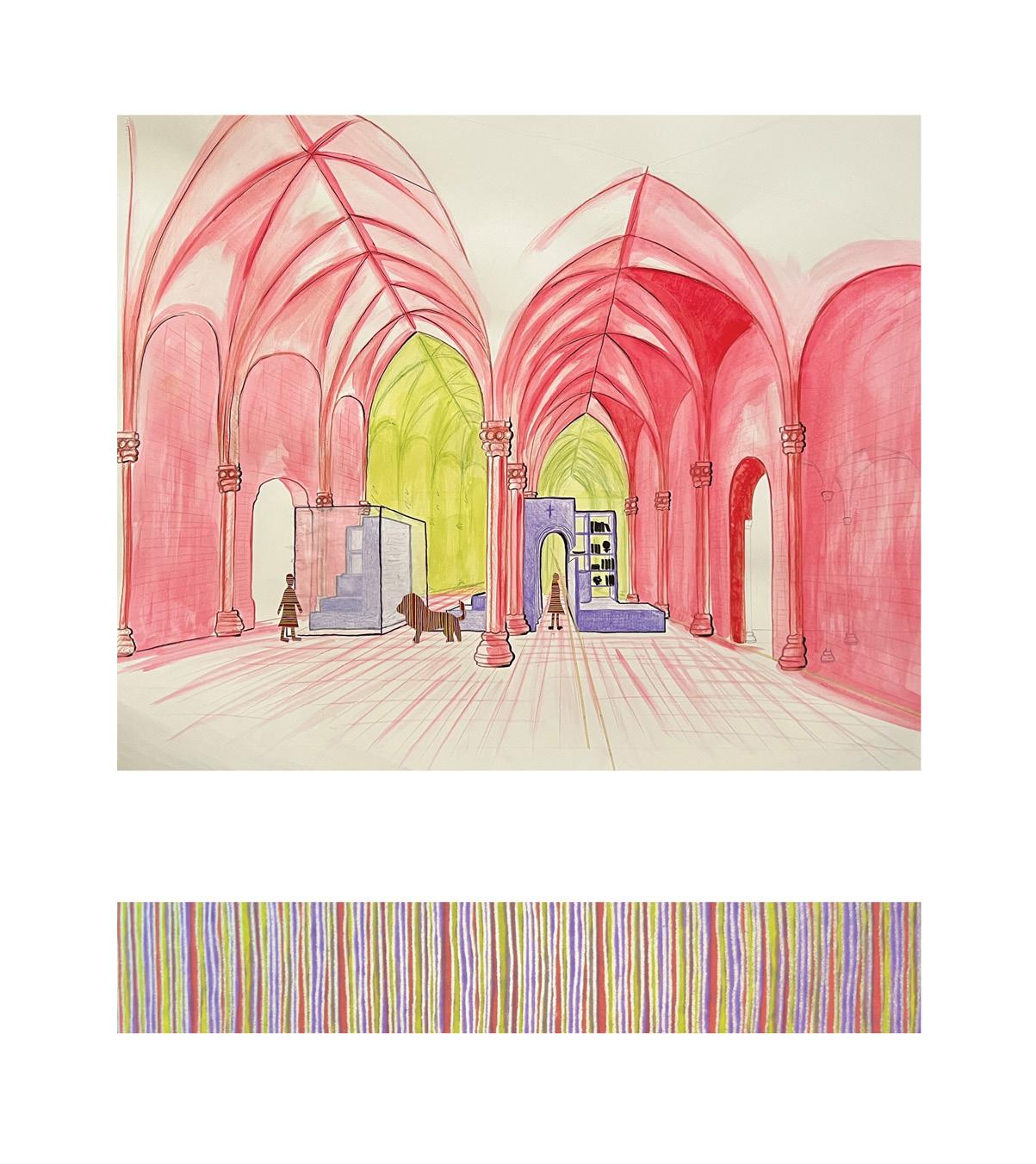
PROVIDED BY PROFESSOR, HAD TO BE INCLUDED IN PHYSICAL DRAWING
SWATCH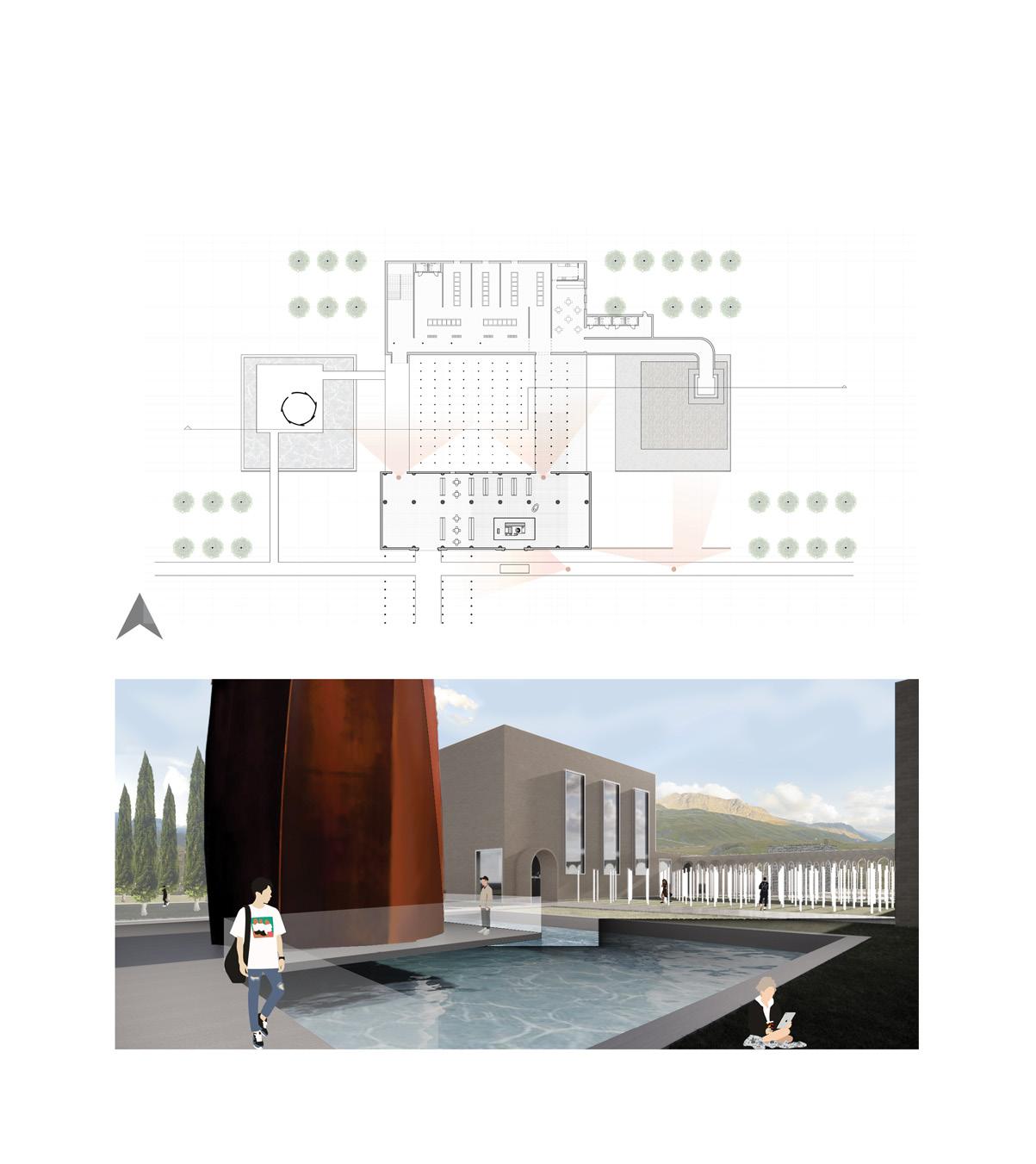
REFERENCES FOR HYBRID/DIGITAL RENDERING
LOOKING TOWARDS ADDITIONAL BUILDING AND LIGHT FIELD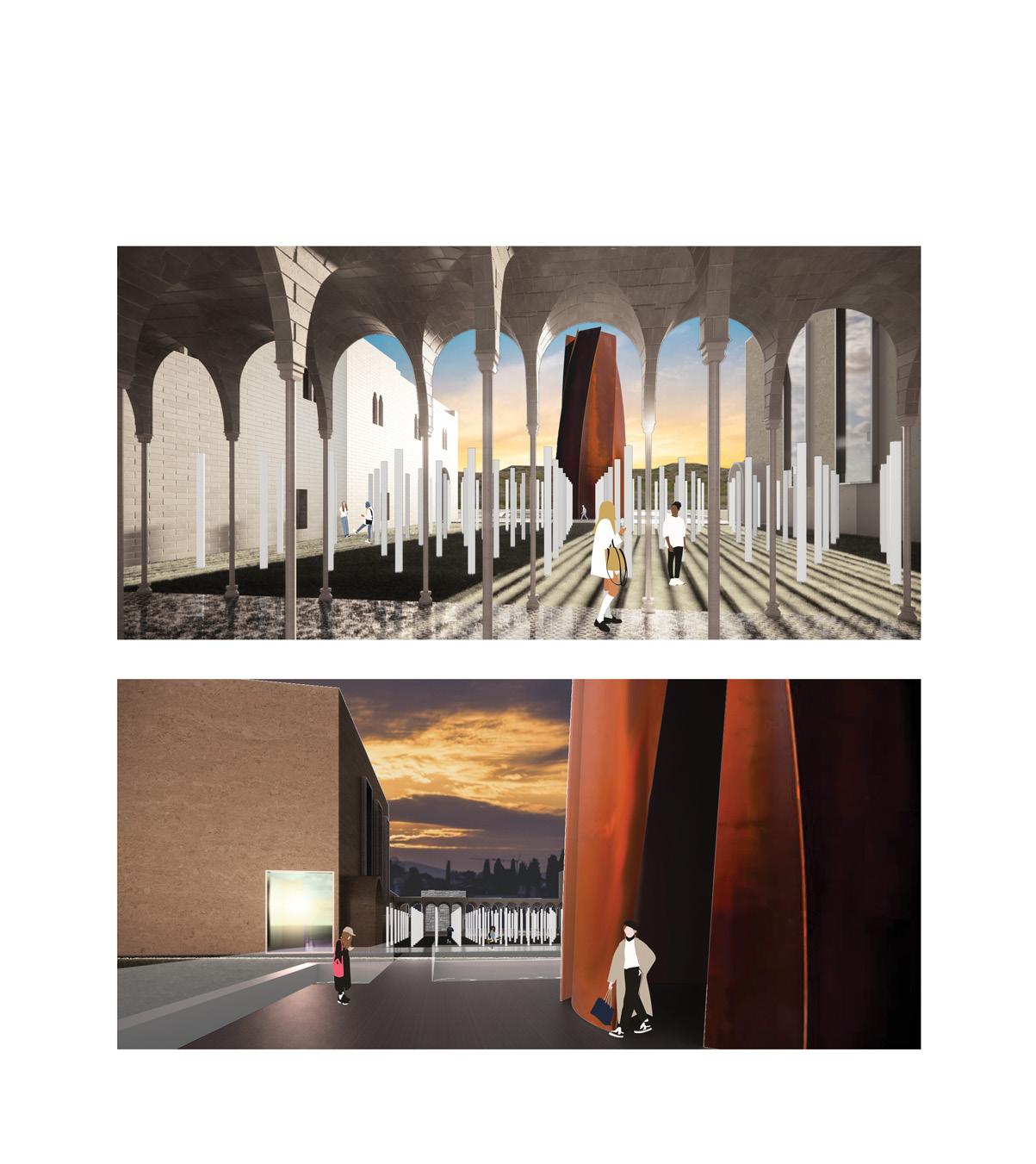 LOOKING TOWARDS VORTEX
LOOKING TOWARDS TENDING BLUE
LOOKING TOWARDS VORTEX
LOOKING TOWARDS TENDING BLUE
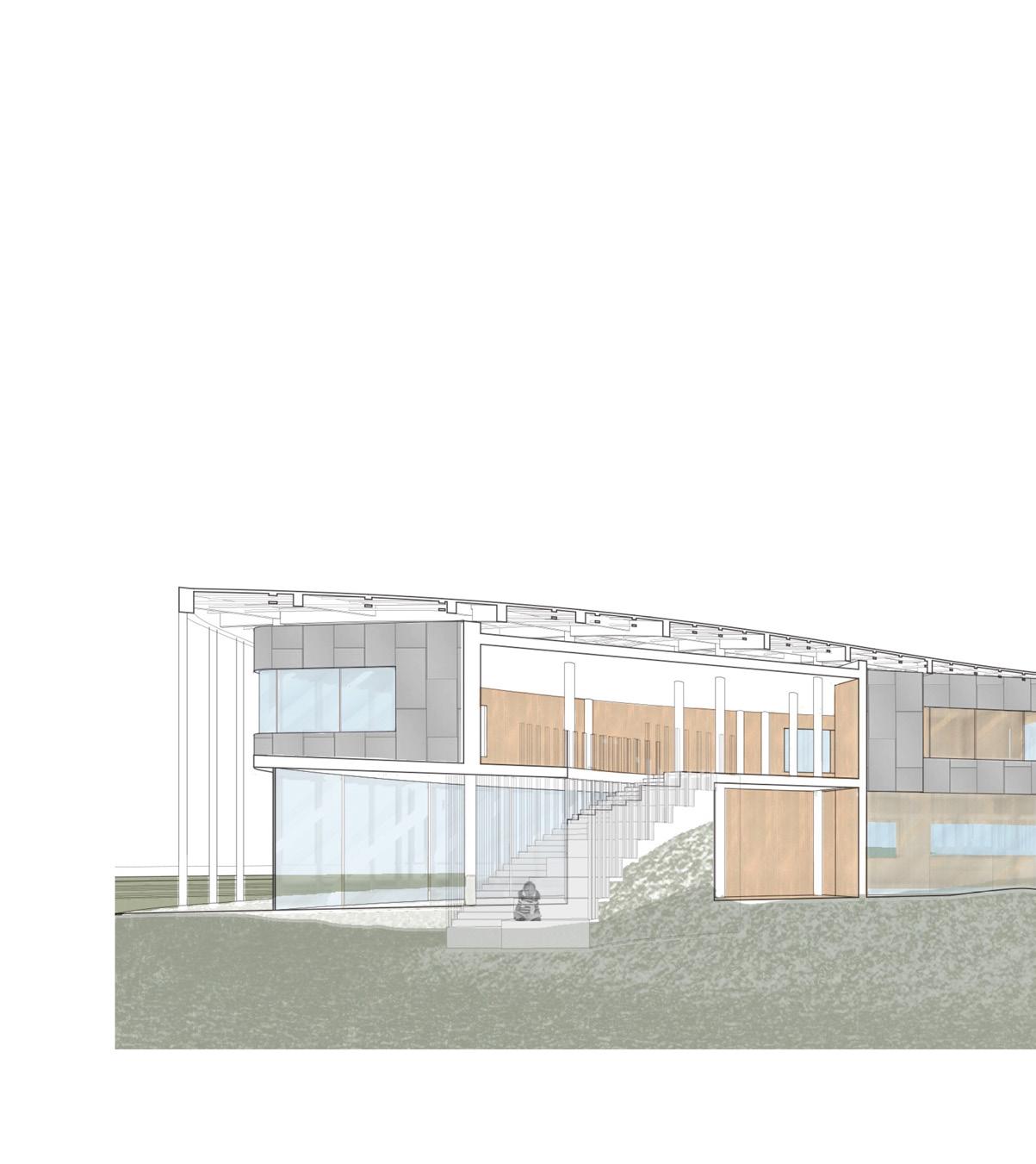
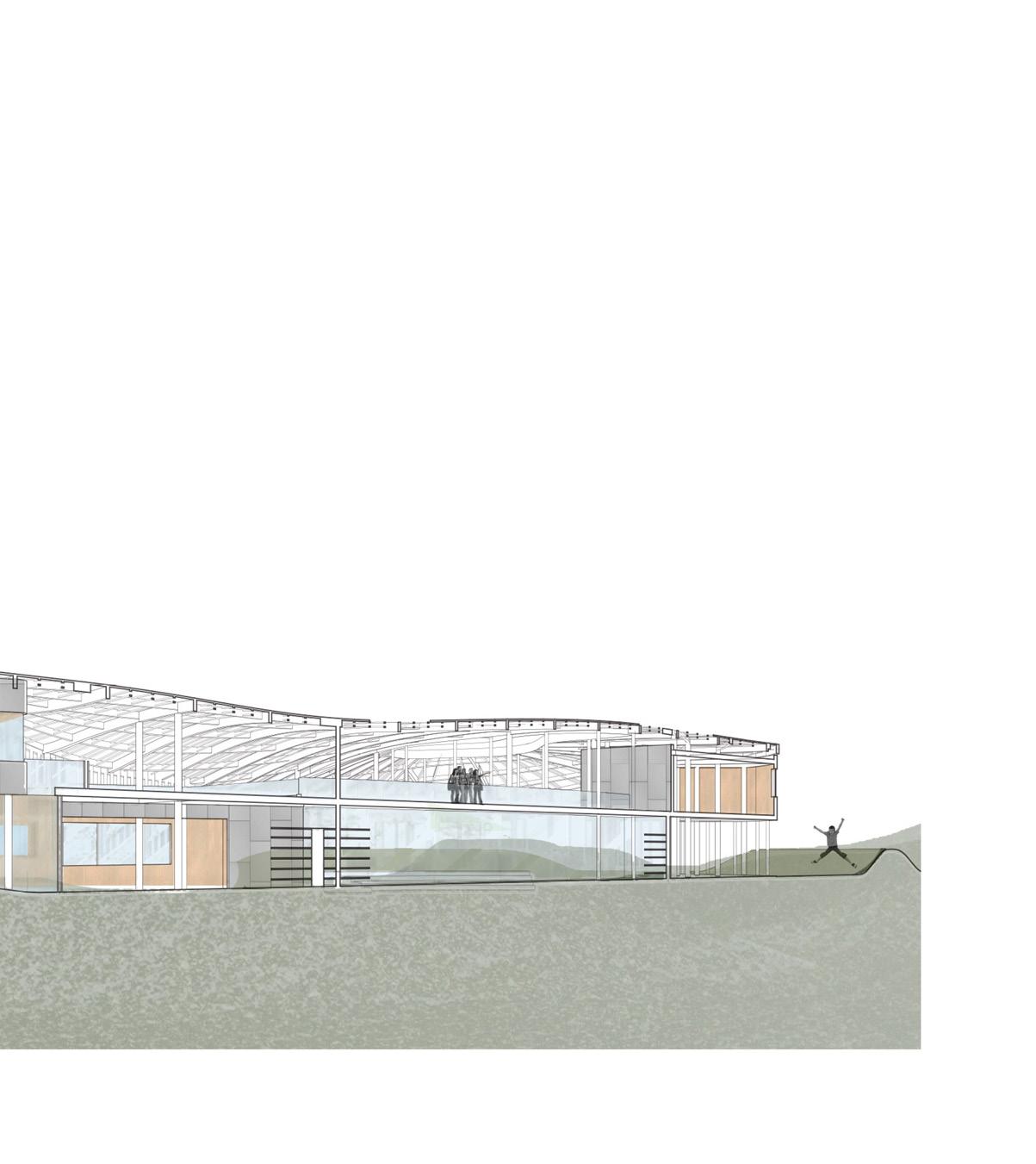
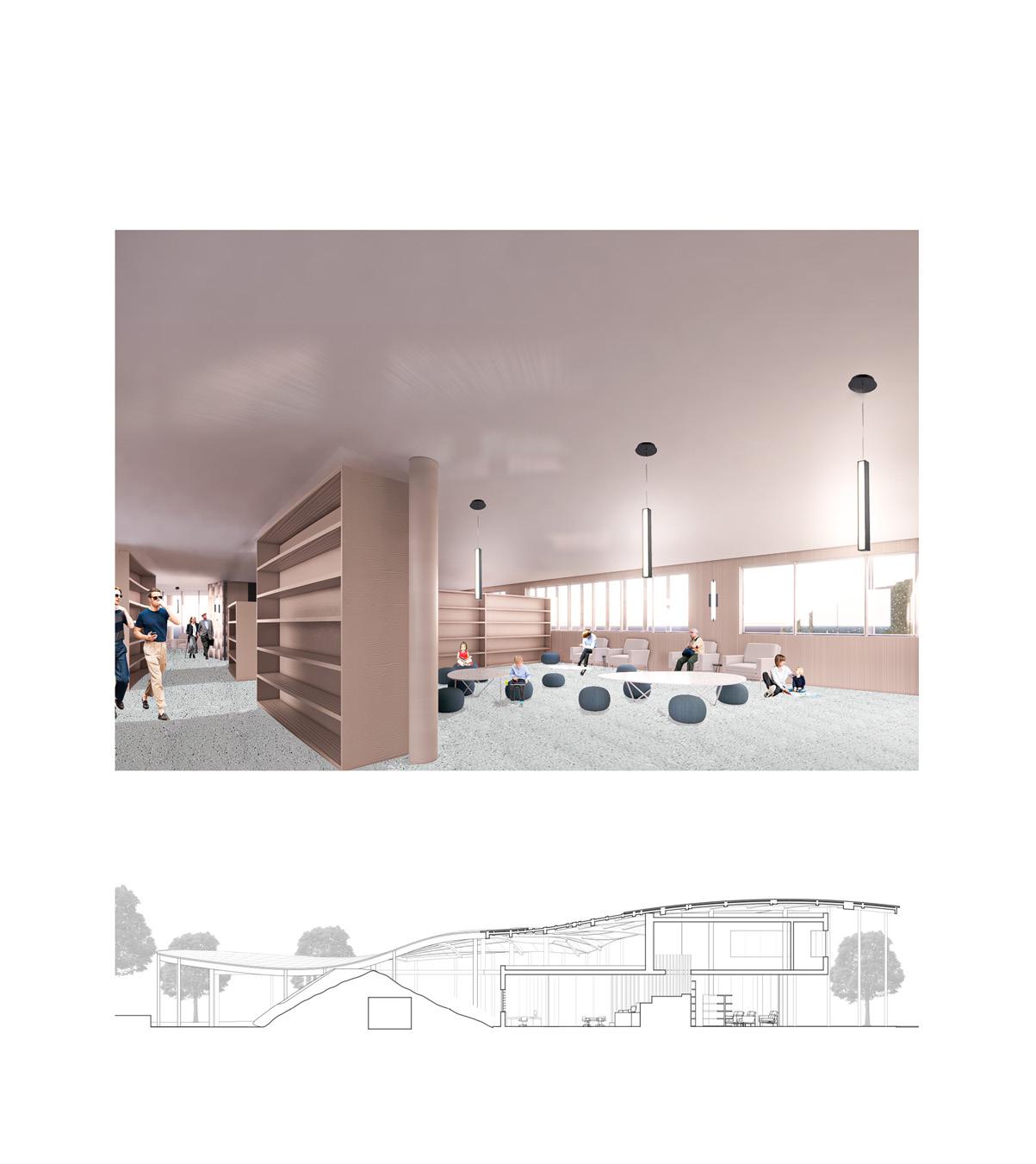
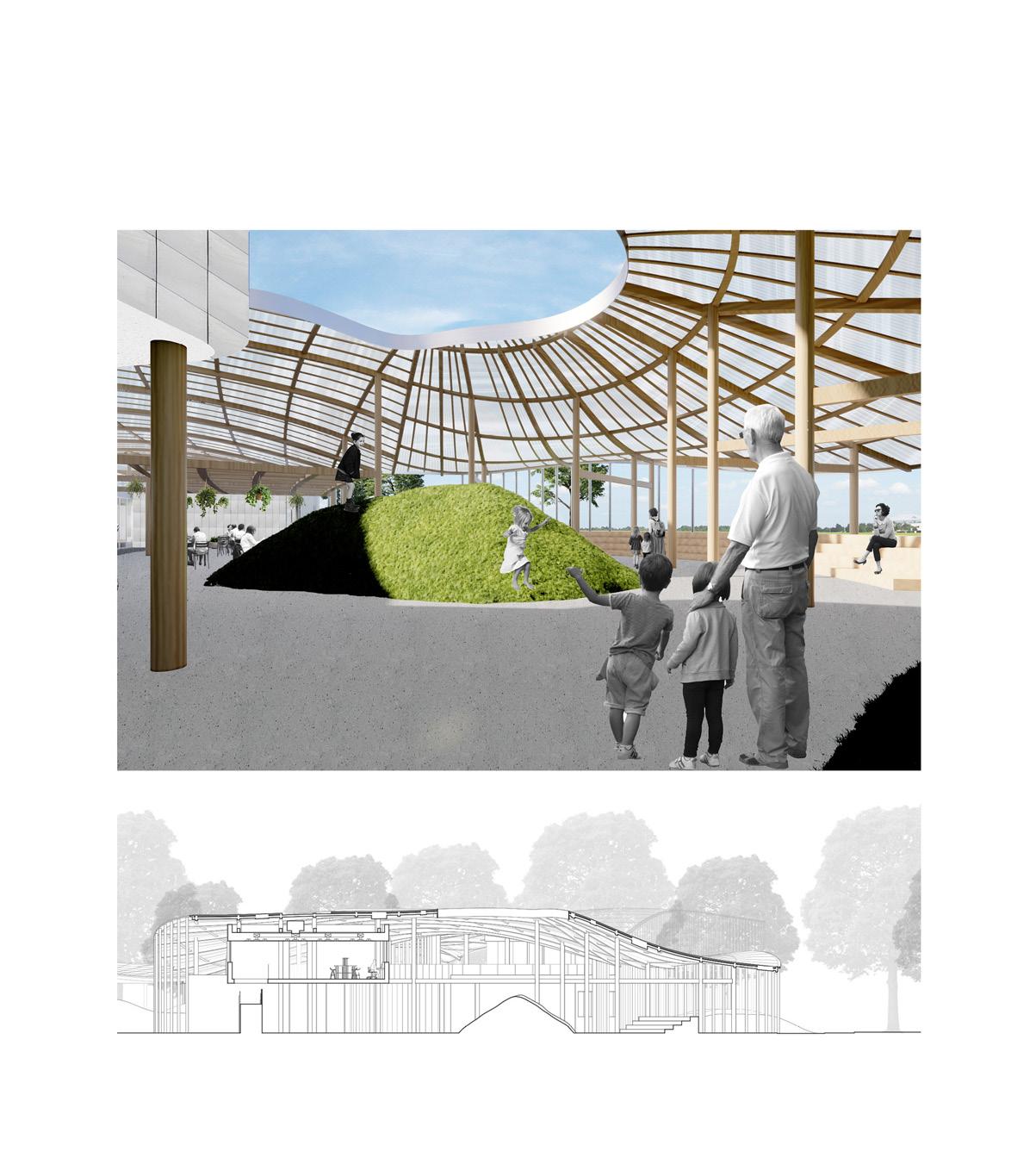
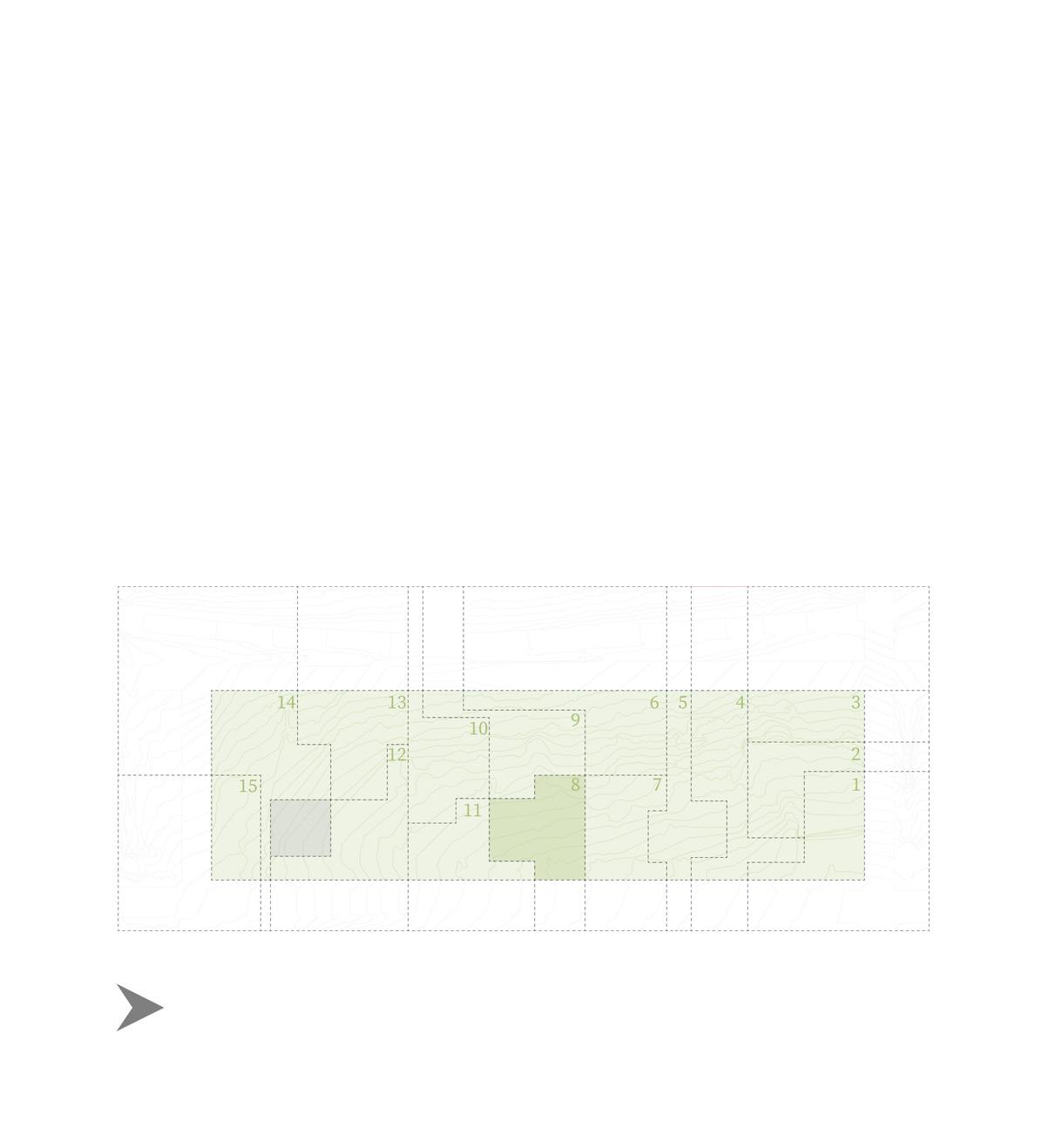
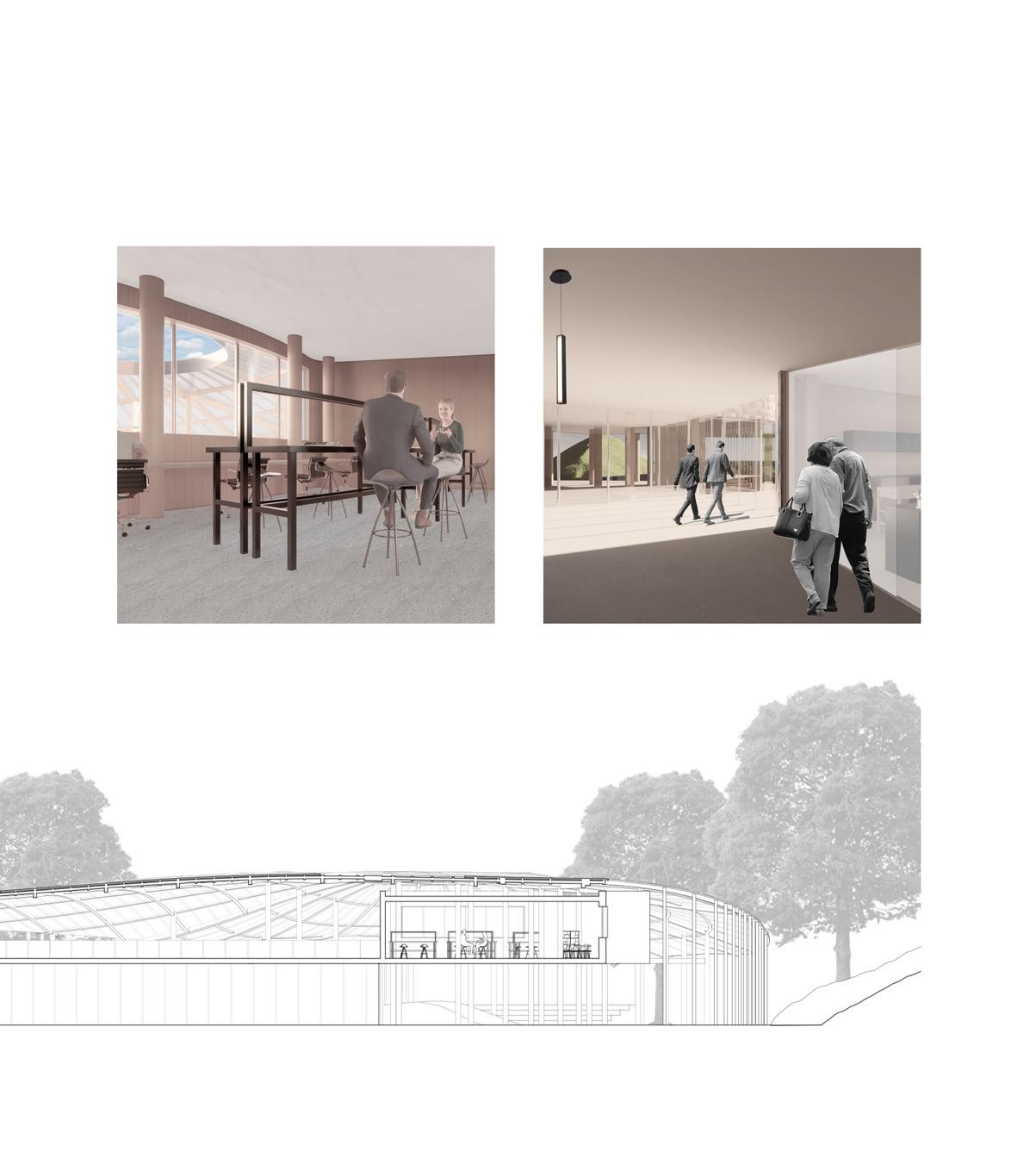
Located in Springdale, Arkansas, The library was inspired by the playful landscape that surrounds the site. The playfulness came through in both the structure and the additional site work done, with a double curvature canopy and mounds that begin to act as the inverse of the skating bowls to the west. The design developed into CLT pods nested under a Glulam and Polycarbonate Canopy Design, creating varying scales to interact with. This studio focused on the details and pushed students to produce a magnitude of drawings to gain a realistic perspective on how a project would come together. To give a professional aspect, we had a range of consultations with professionals to enhance our project development, including Marlon Blackwell Architects providing a graphic workshop on how to build a project through renderings.
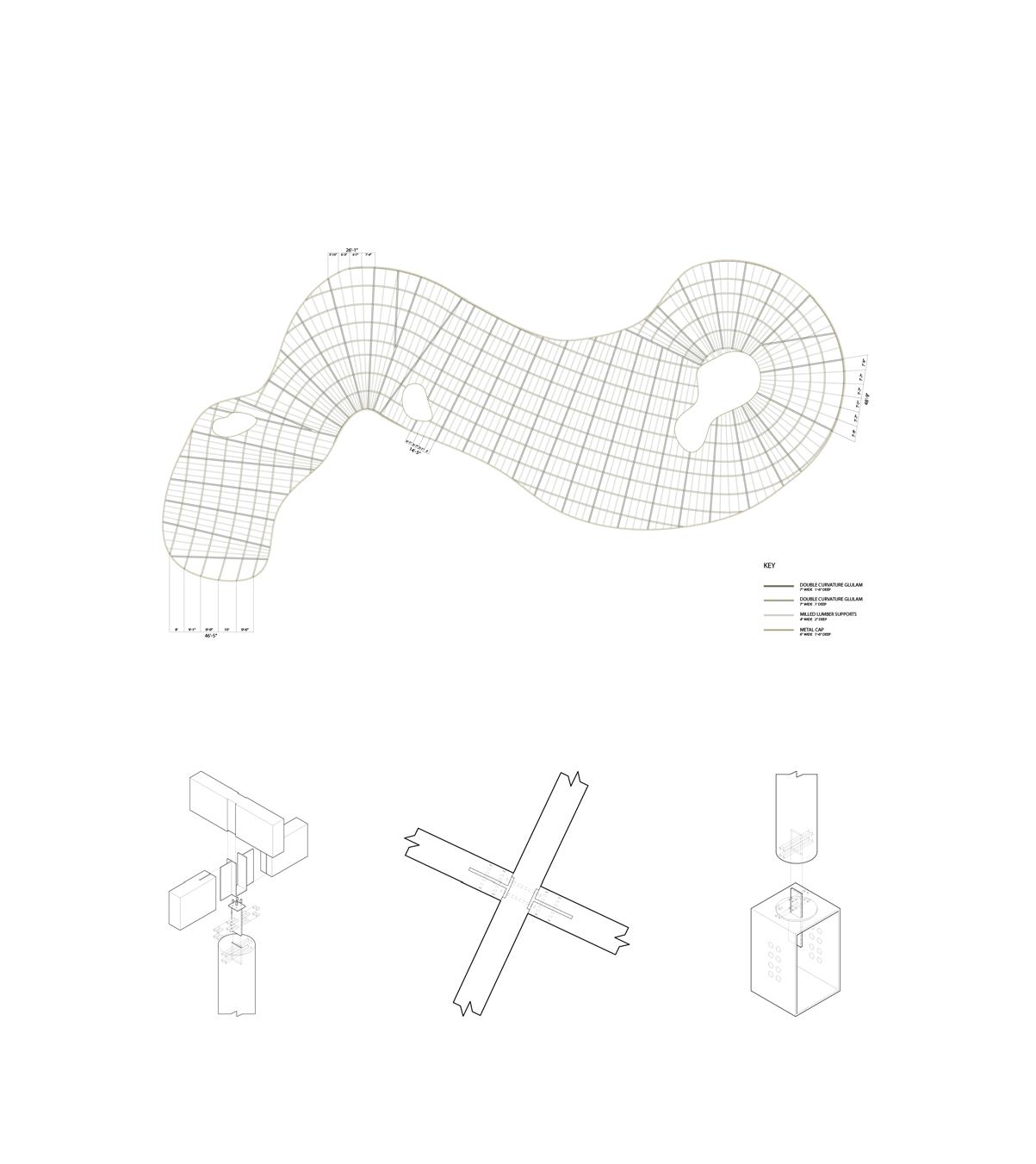
DIAGRAM ROOF PLAN
DIAGRAM GLULAM COLUMN AND BEAM CONECTION
DIAGRAM GLULAM BEAM CONECTION
DIAGRAM GLULAM COLUMN TO FOUNDATION
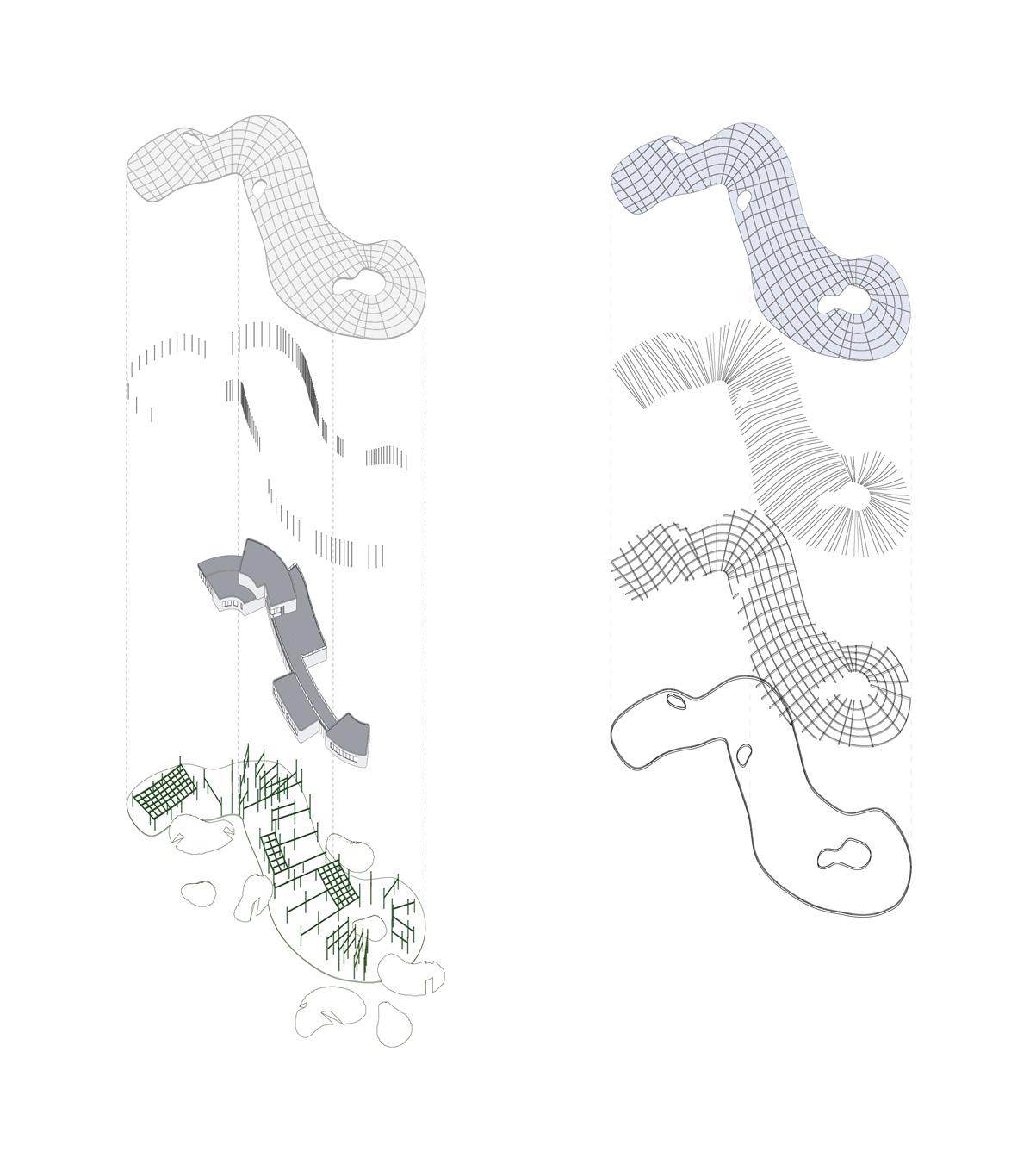 DIAGRAM EXPLODED STRUCTURAL AXON
DIAGRAM EXPLODED CANOPY AXON
DIAGRAM EXPLODED STRUCTURAL AXON
DIAGRAM EXPLODED CANOPY AXON
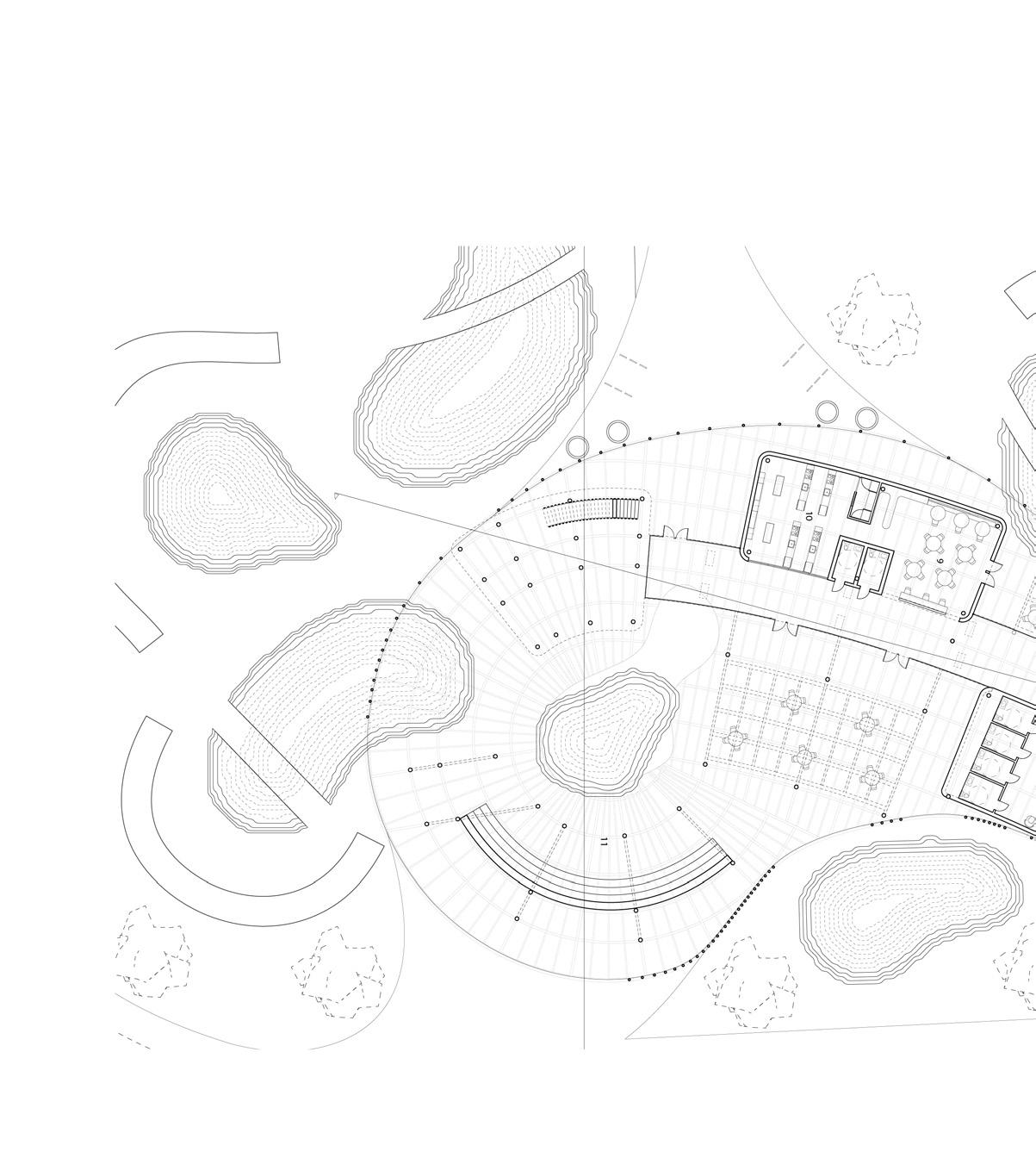
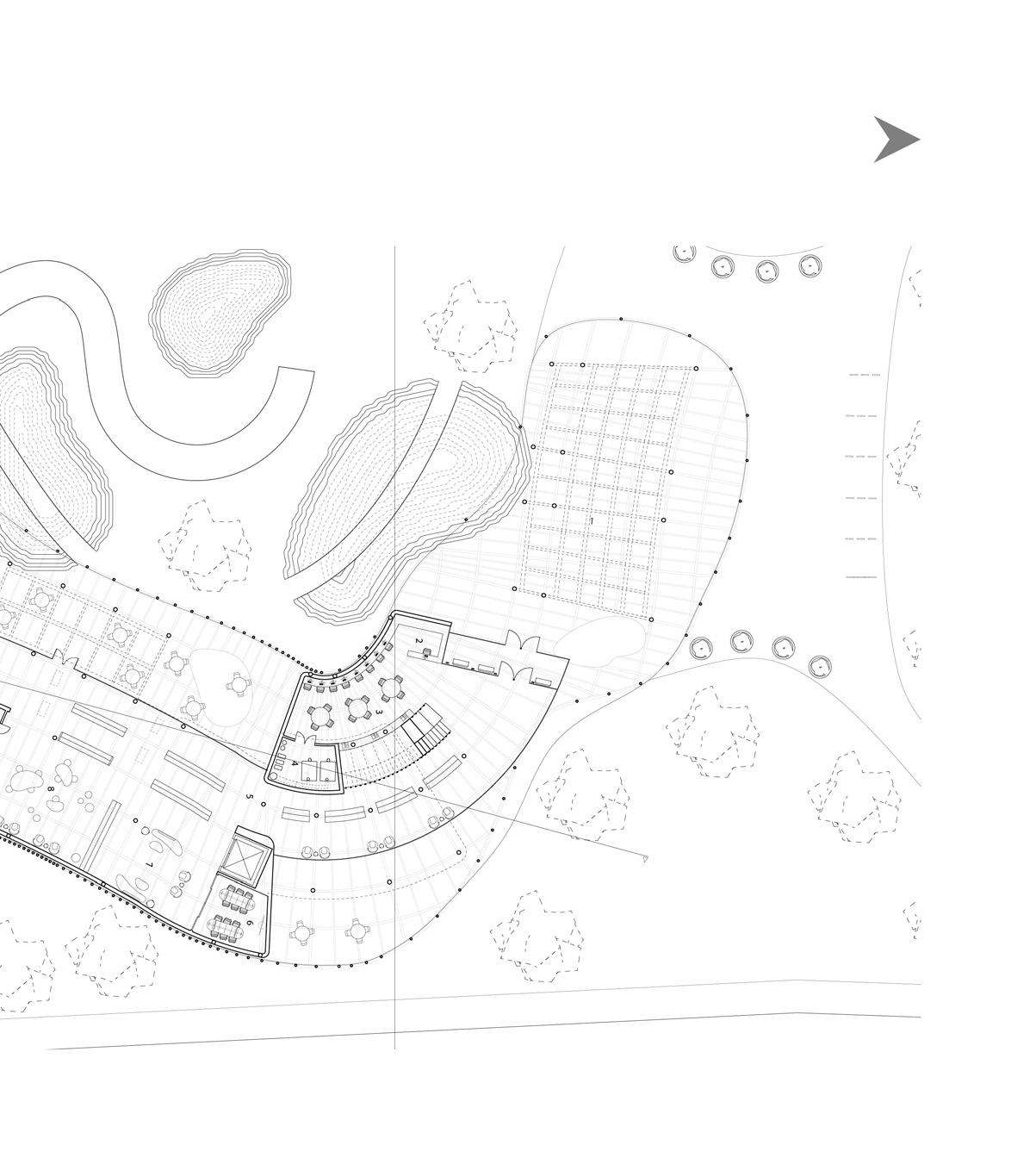
1. AIR LOCK VESTIBULE
2. BOOK DROP OFF
3. MEDIA CENTER
4. MECHANICAL ROOM
5. MAIN BOOK STACK
6. MULTIPURPOSE
7. TEEN CENTER
8. CHILDREN CENTER
9. CAFE
10. LEARNING CENTER
11. OUTDOOR AUDITORIUM
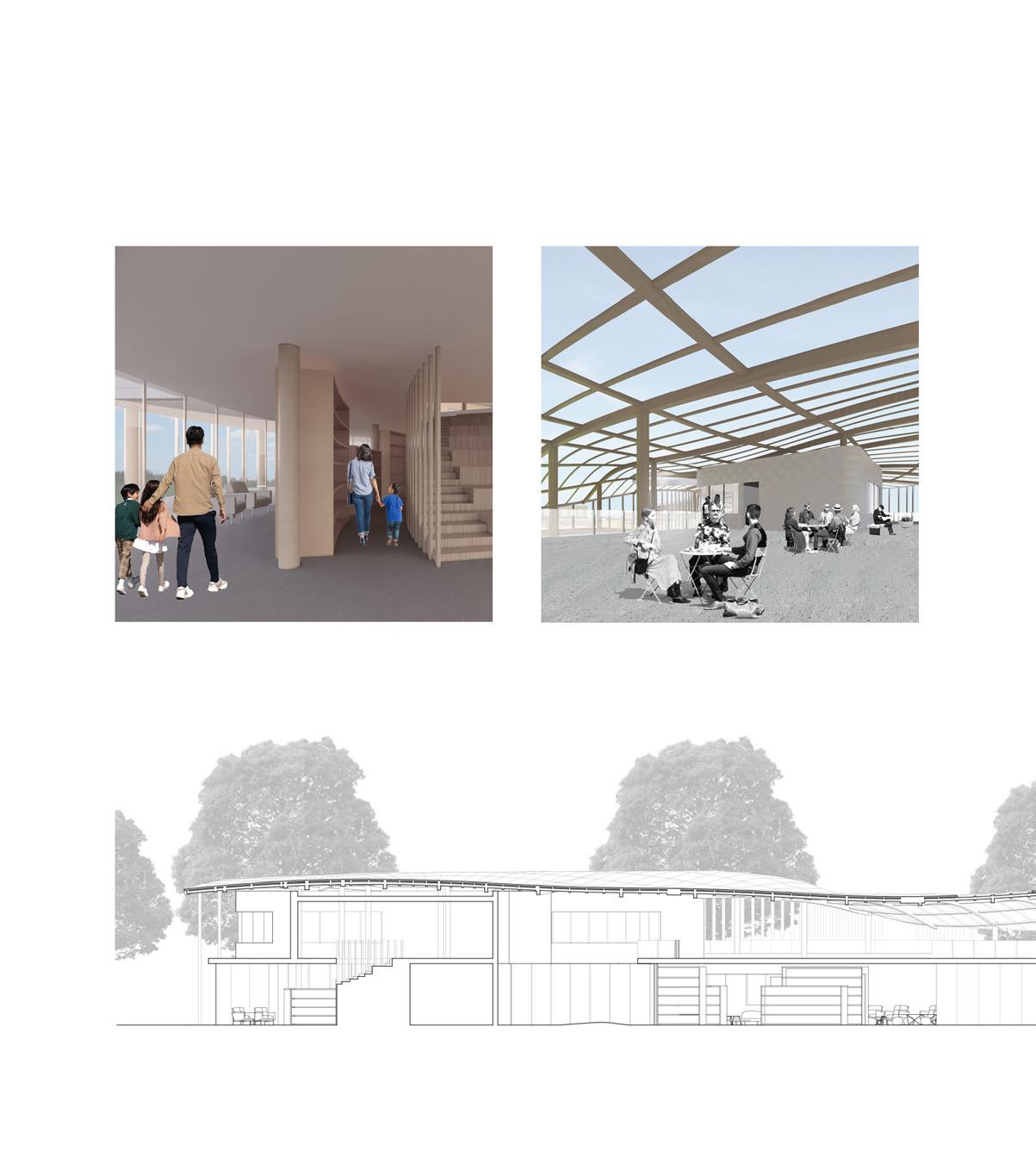
 SOUTHERN EXIT
STUDIO SPACE
SOUTHERN EXIT
STUDIO SPACE