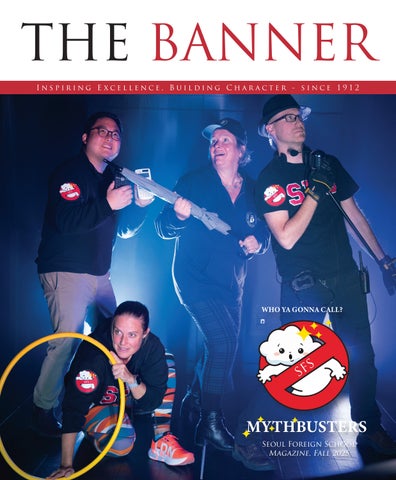
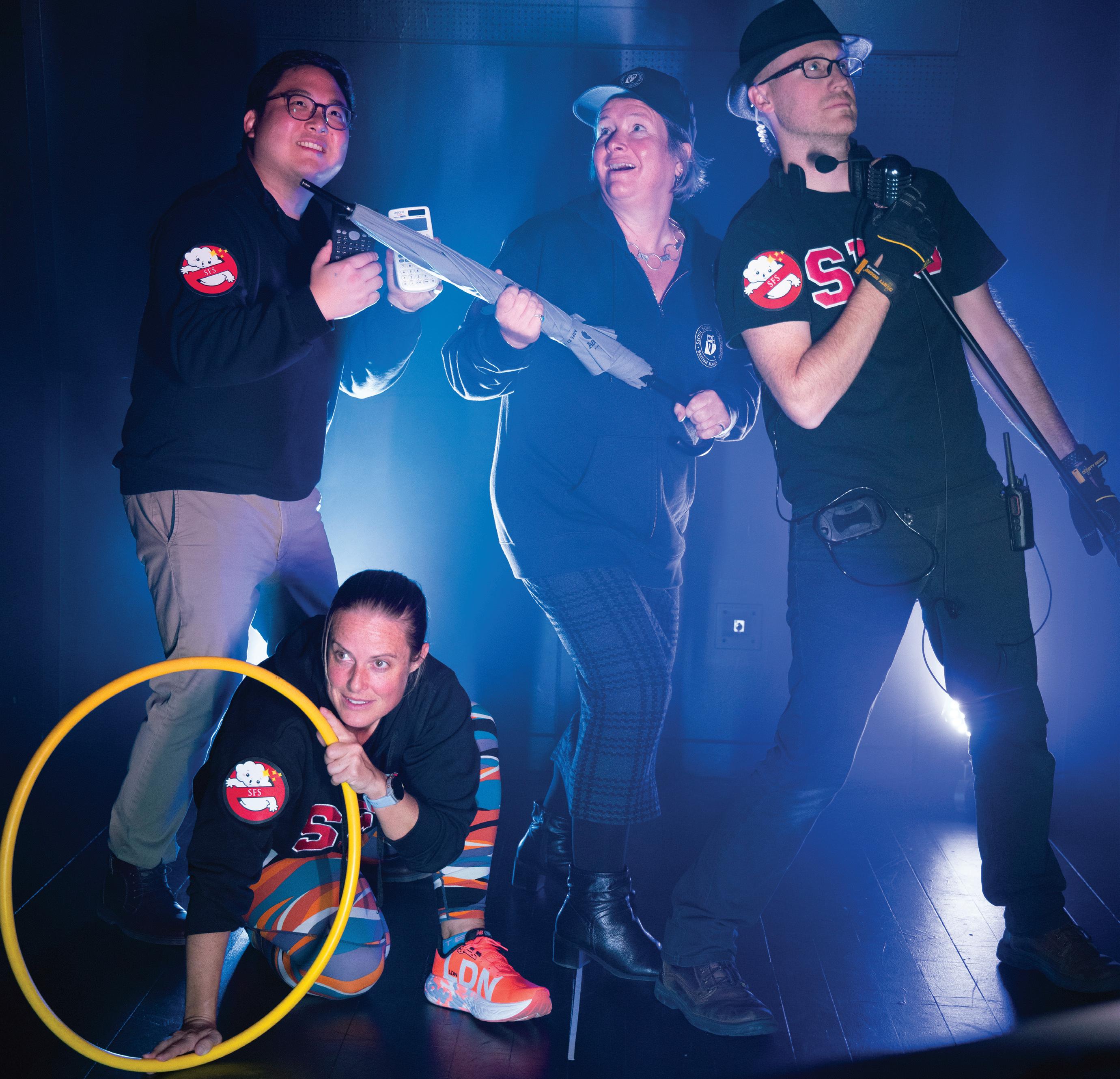
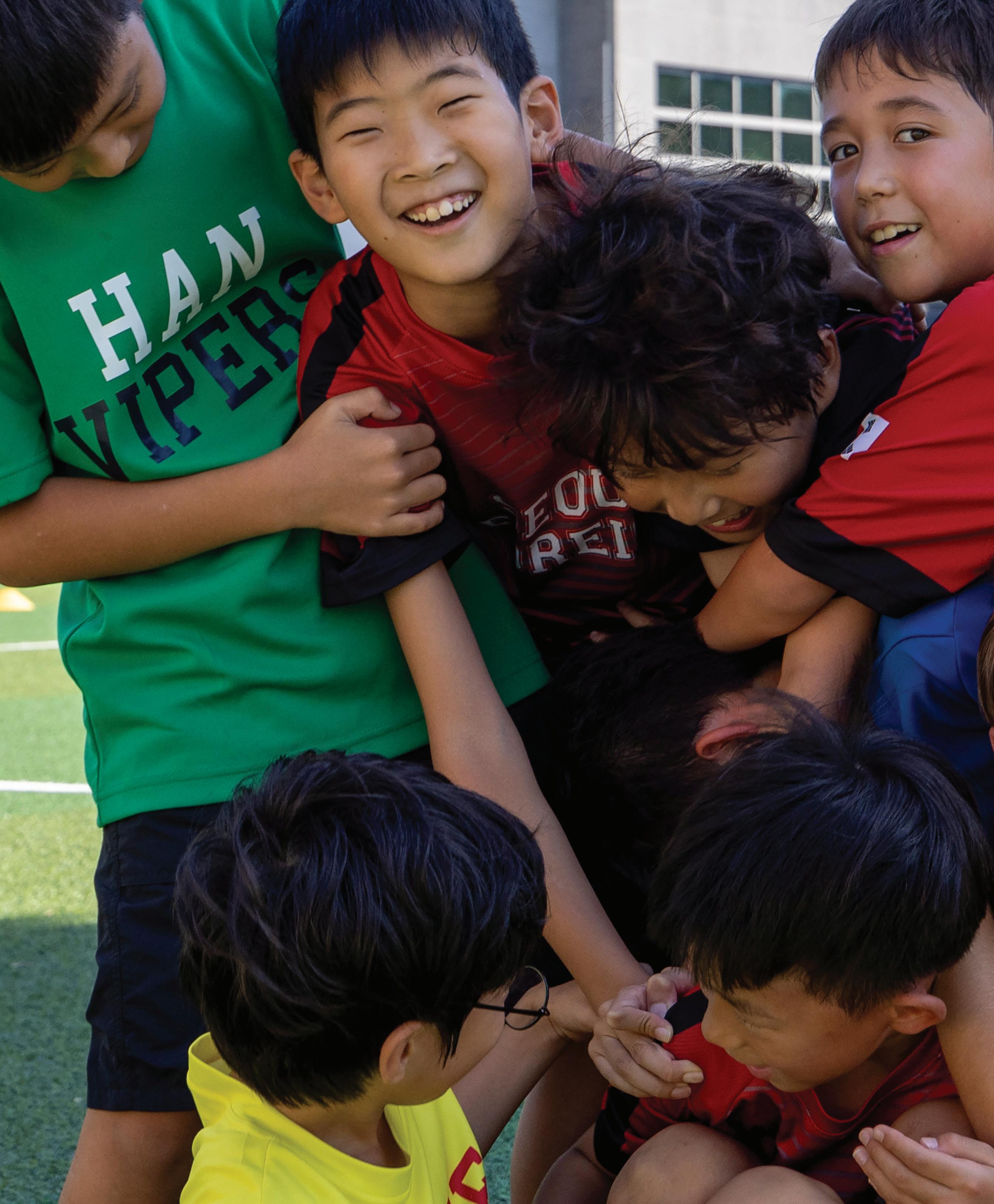
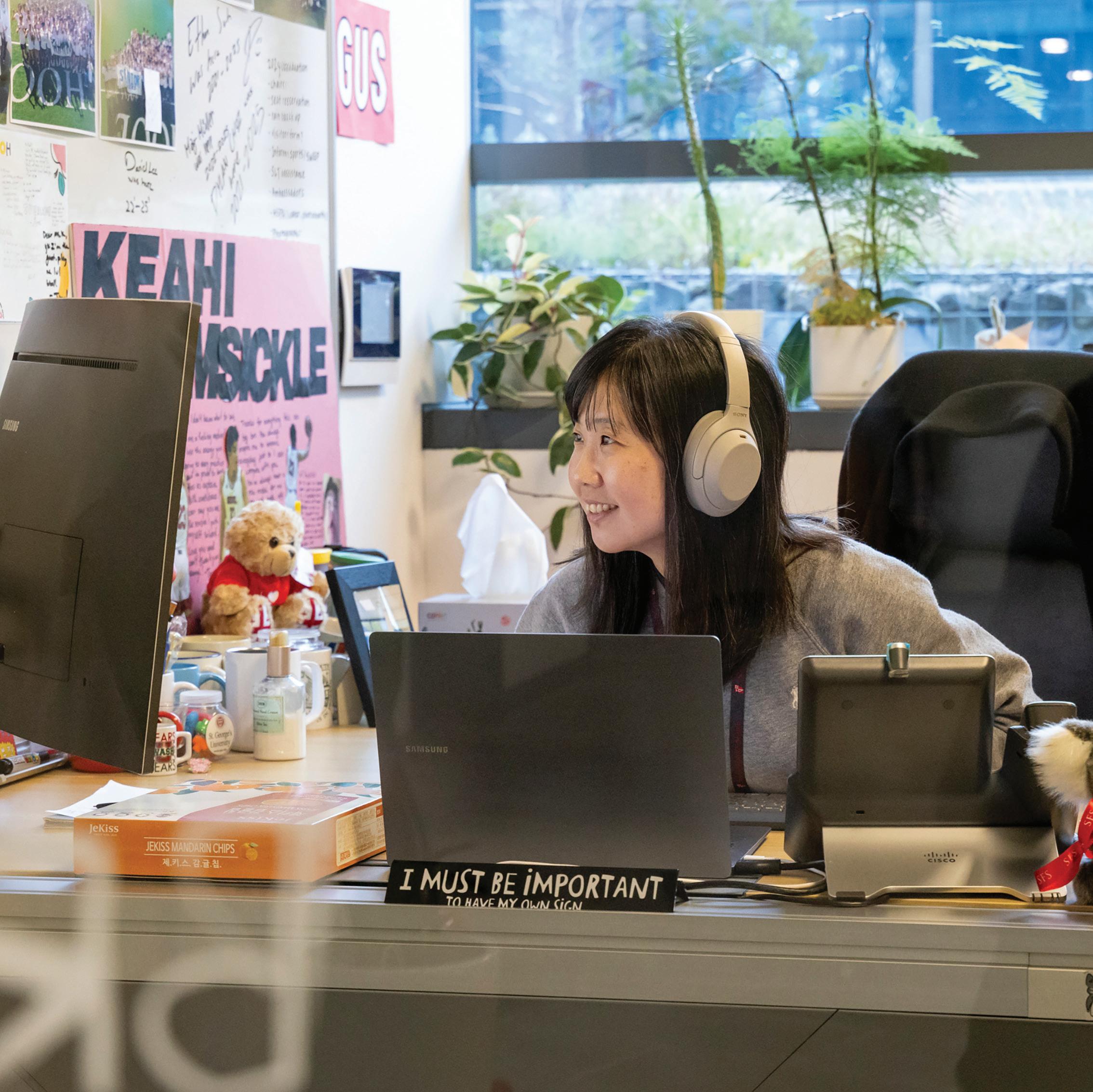
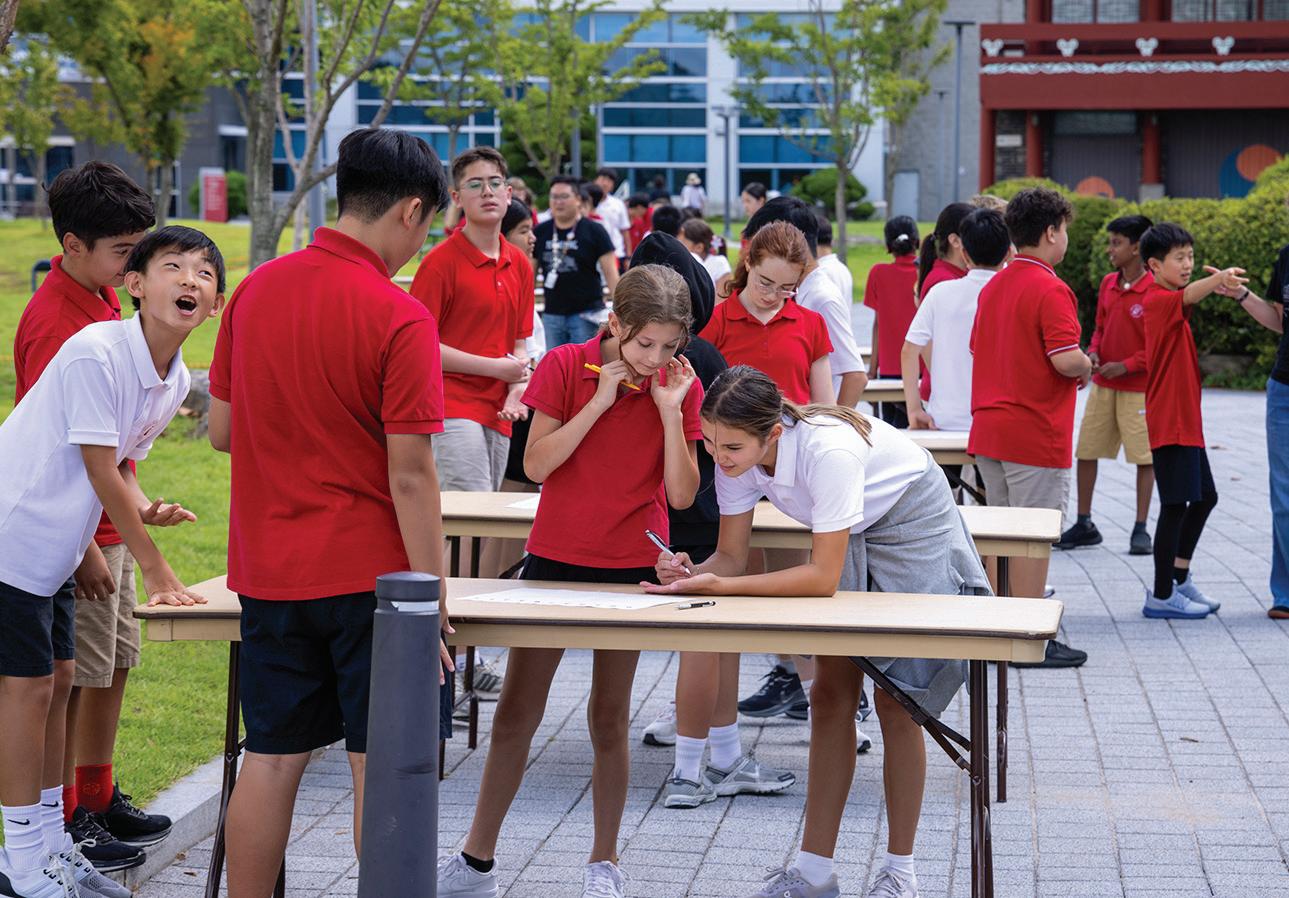
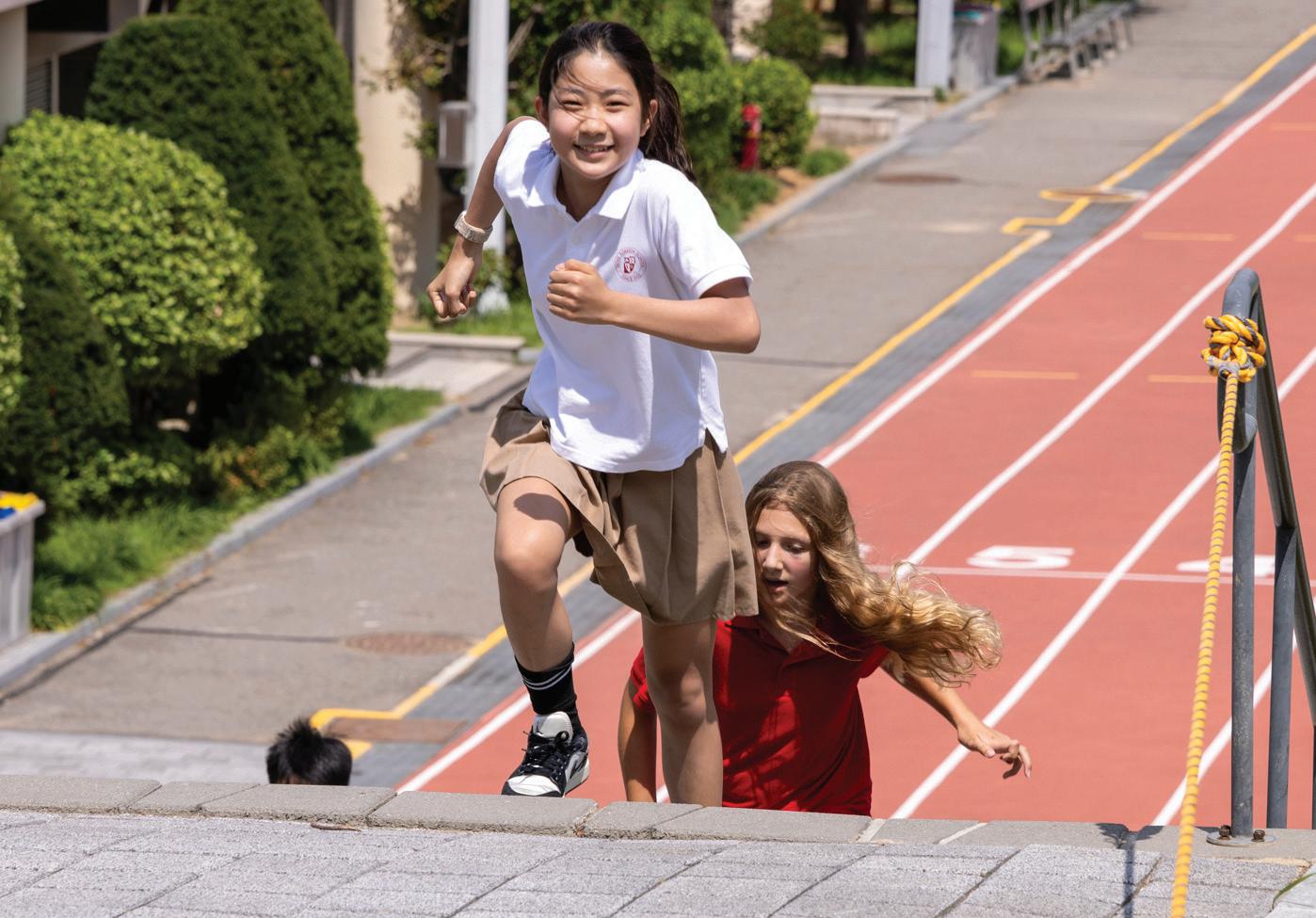
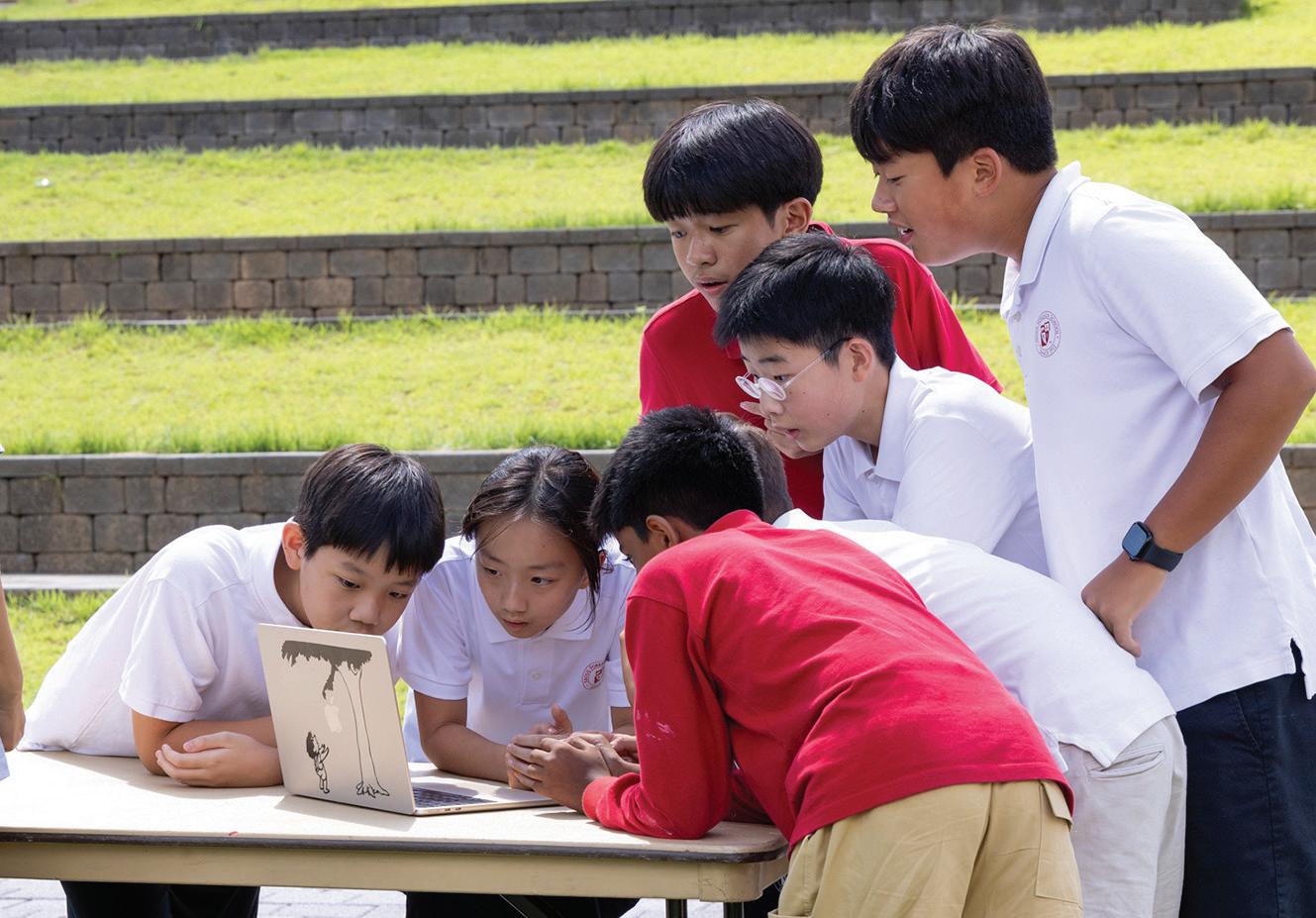
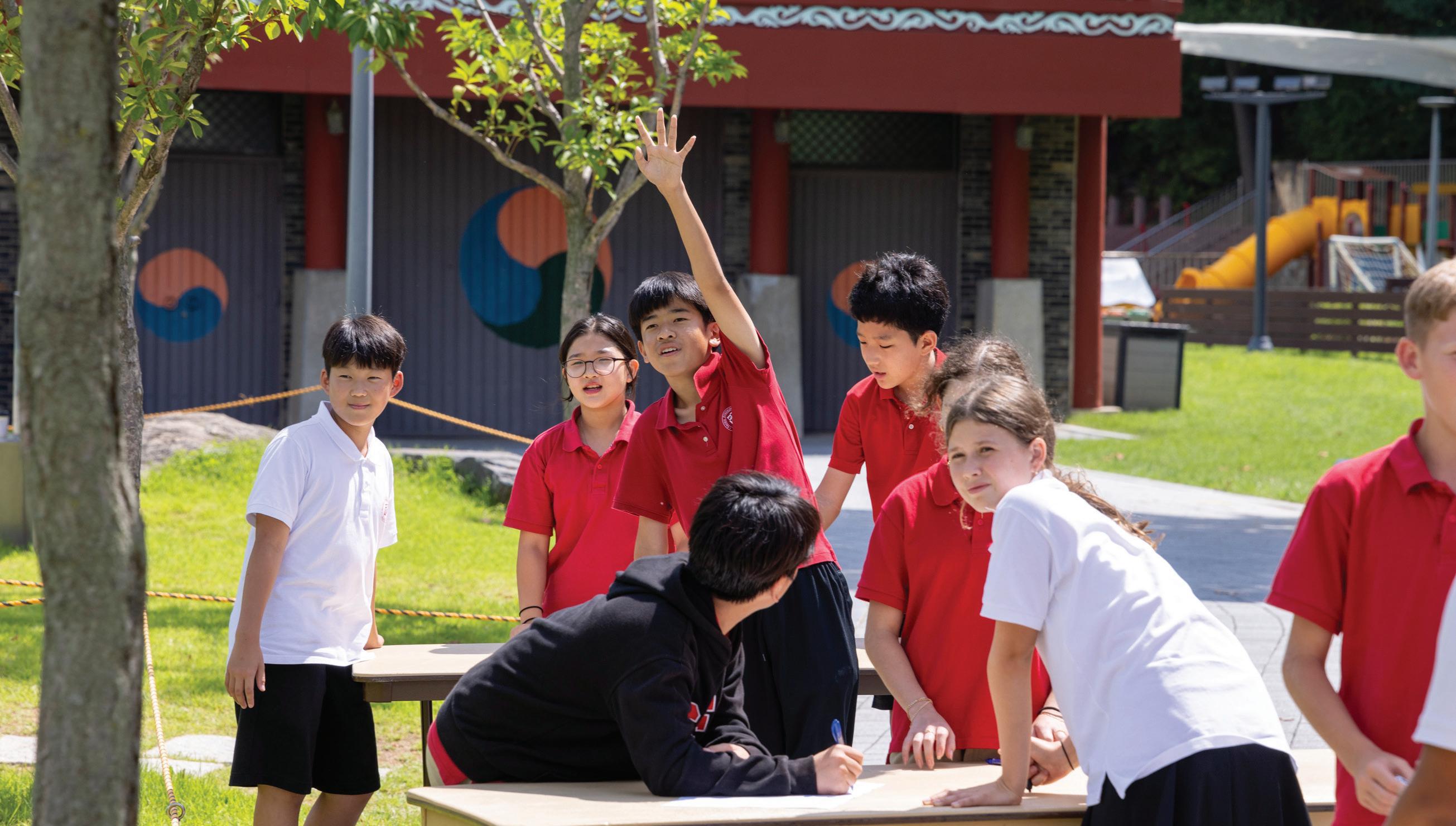
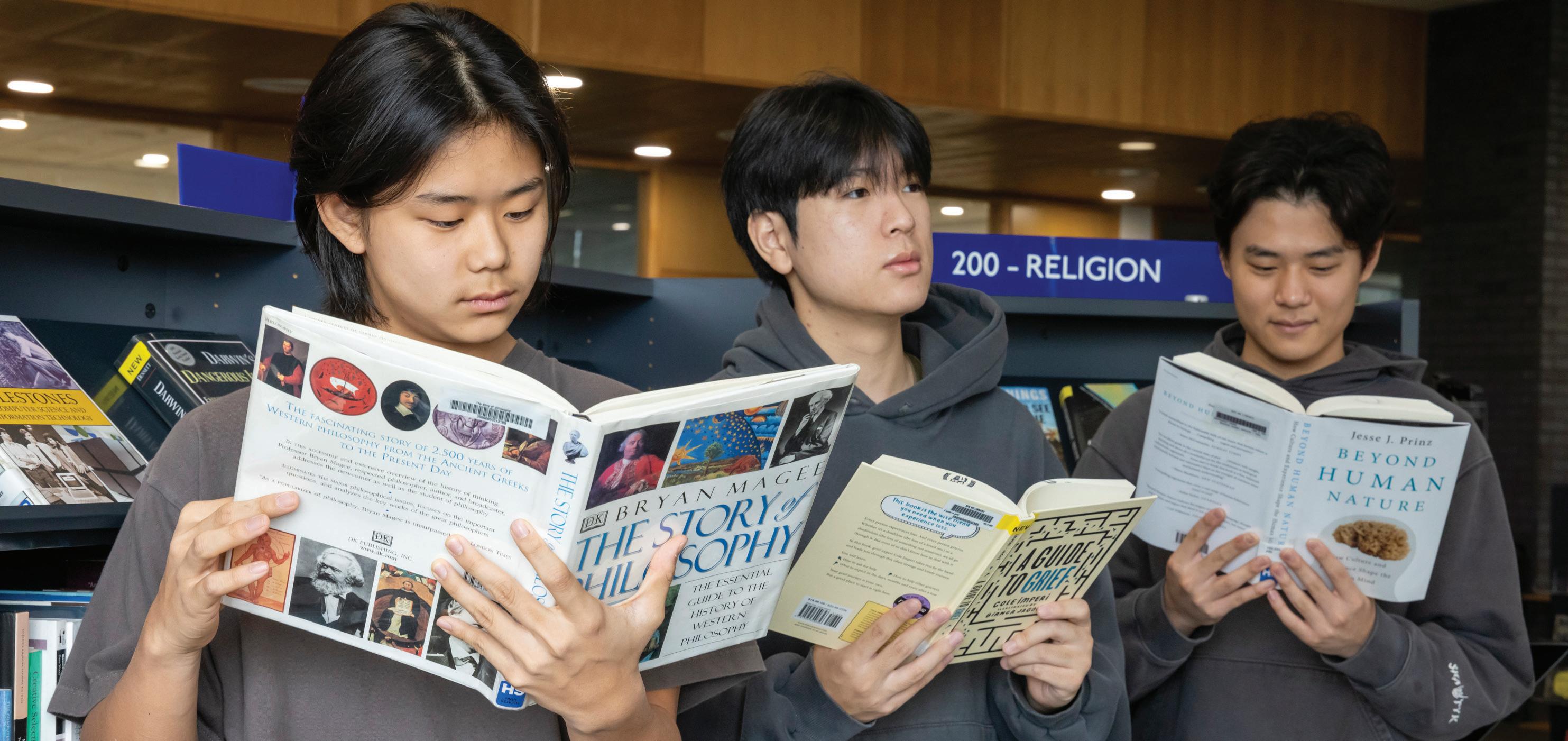
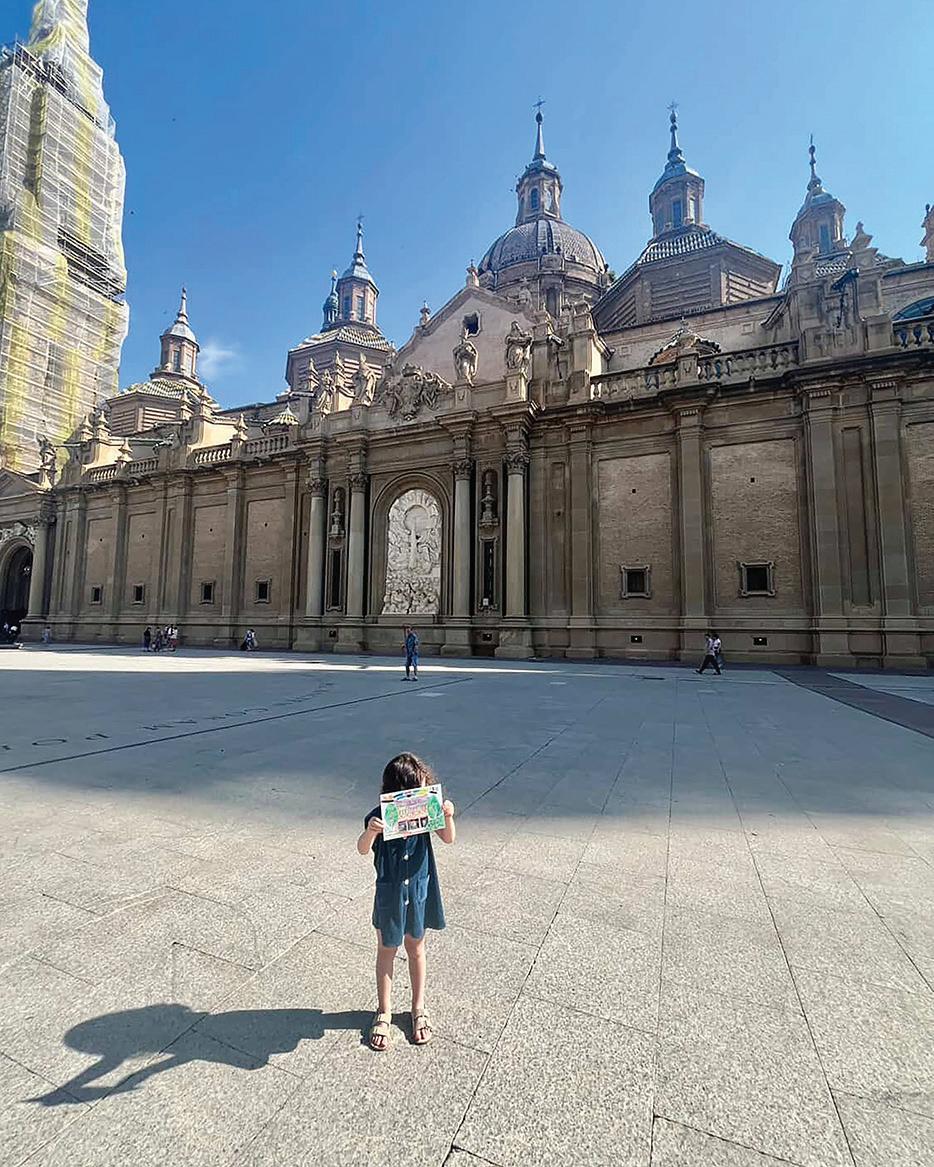
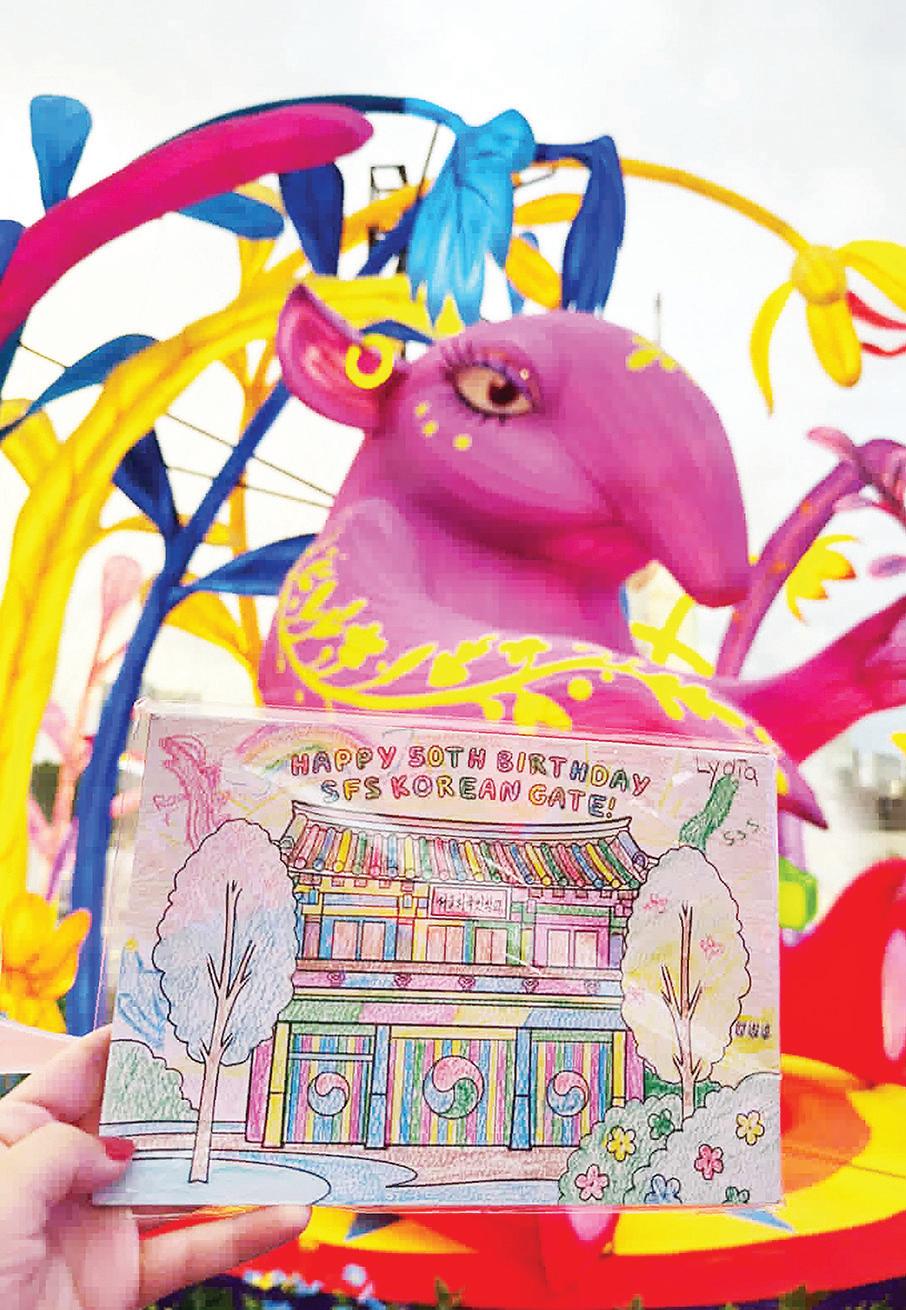
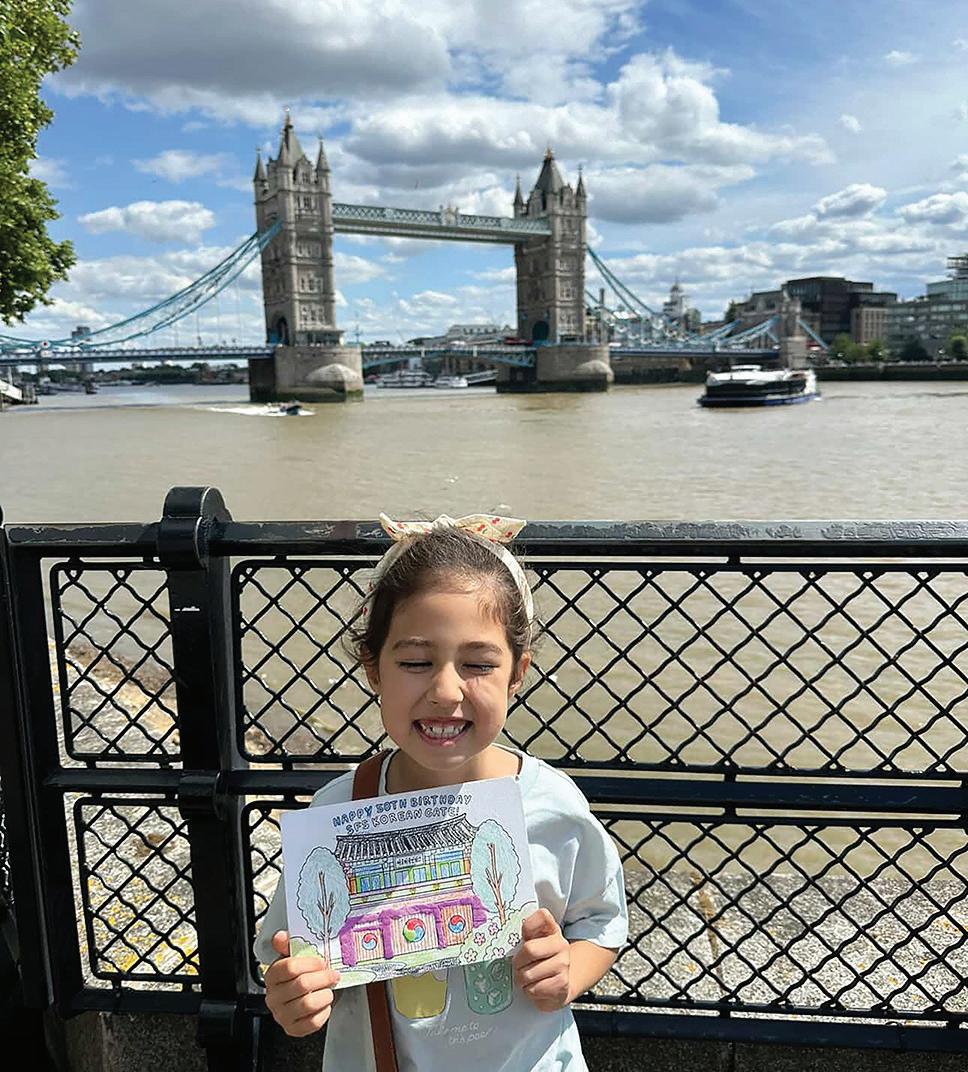
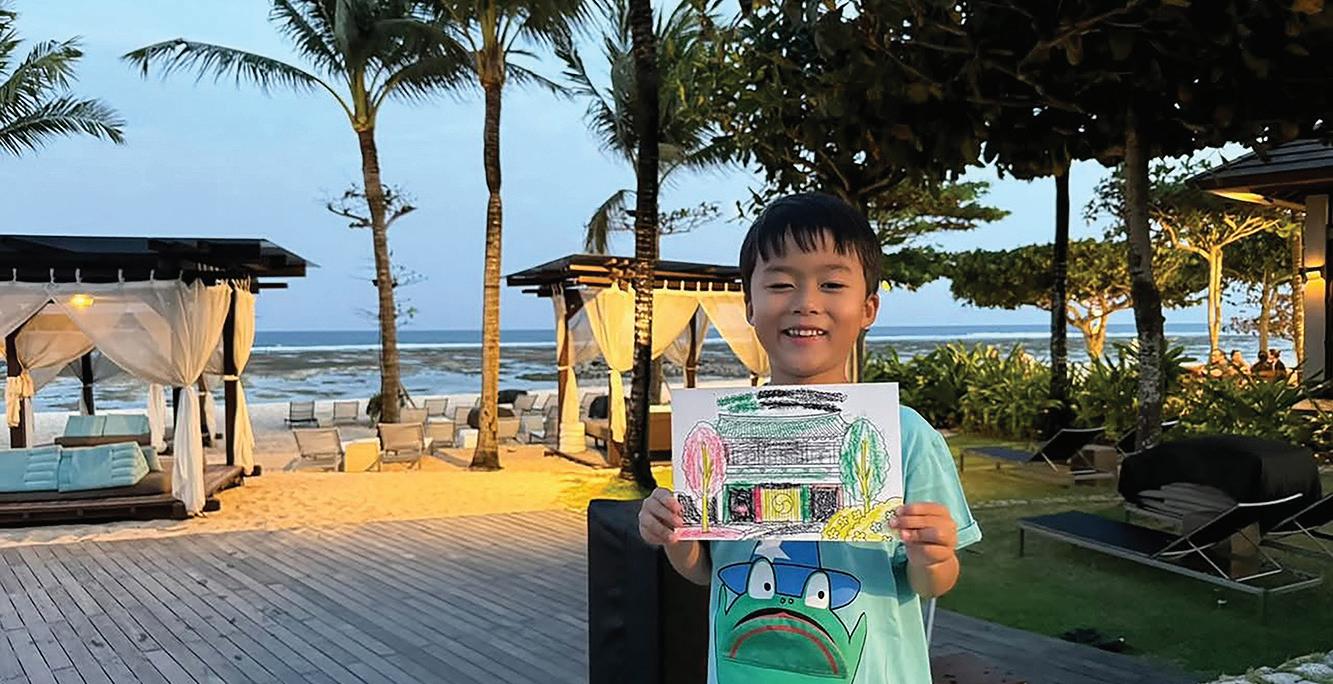
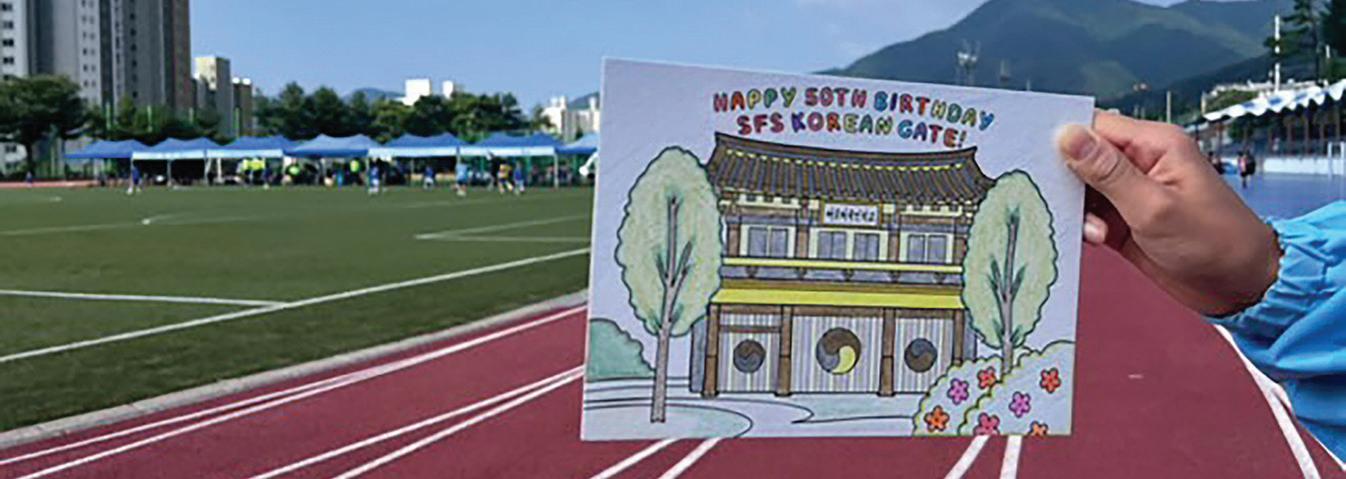
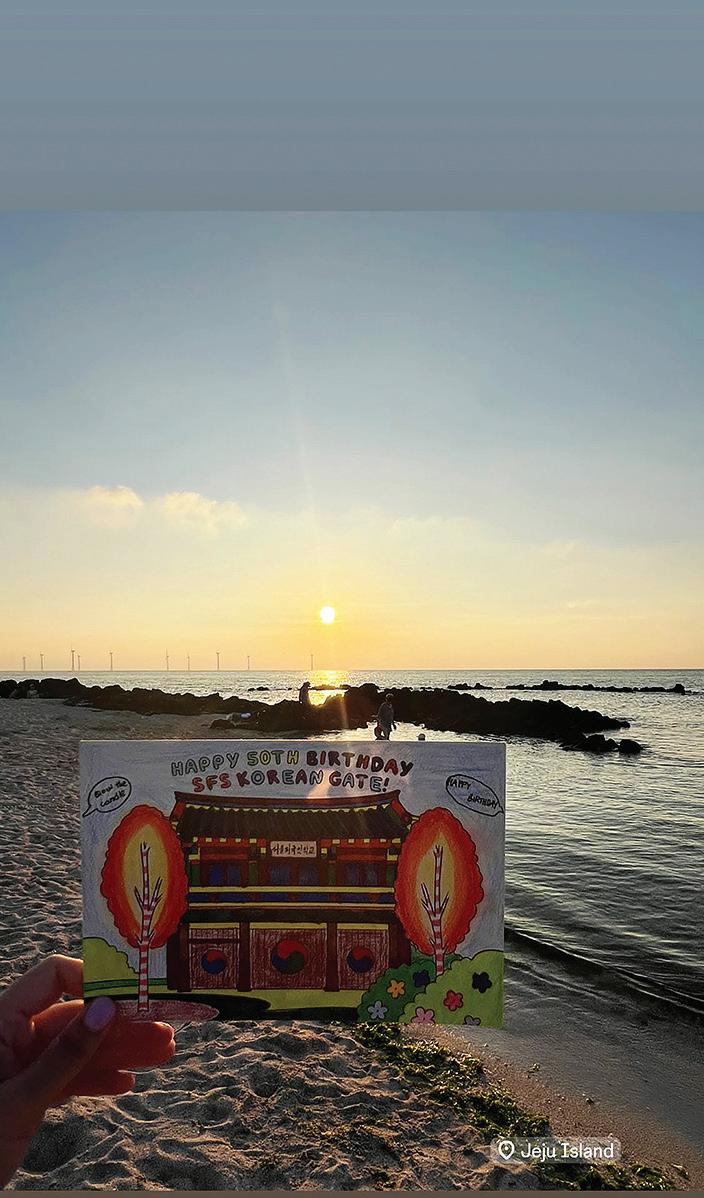
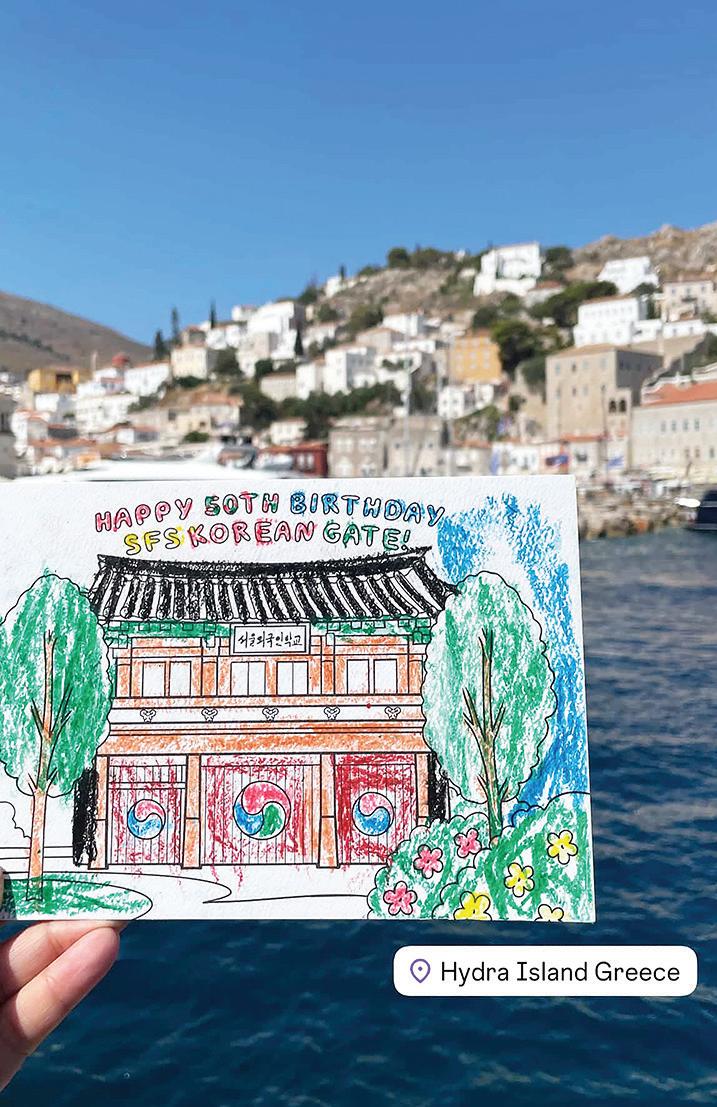
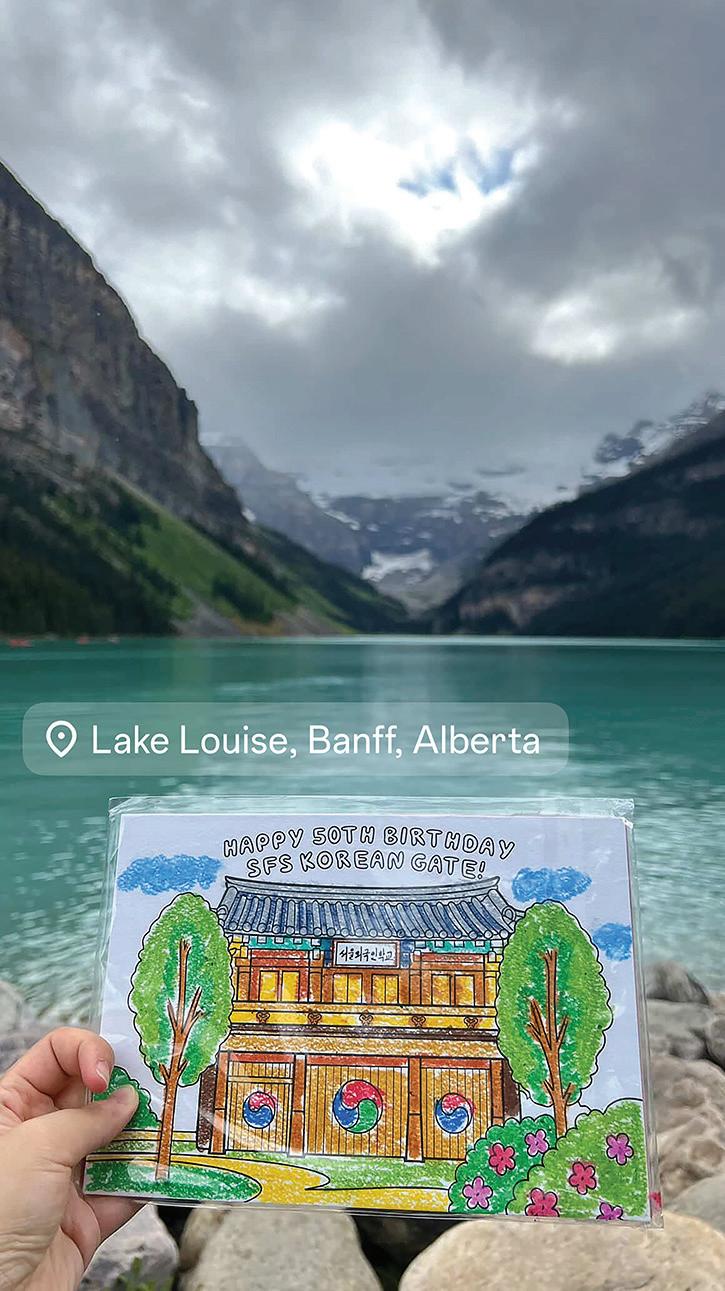
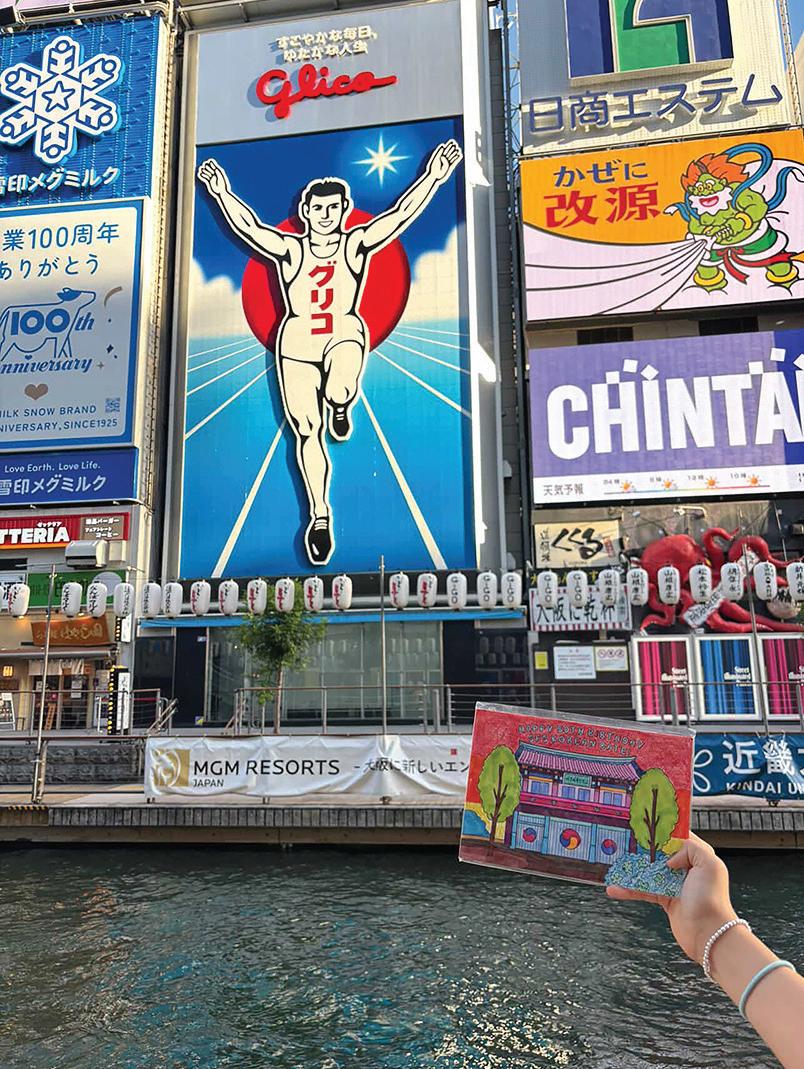
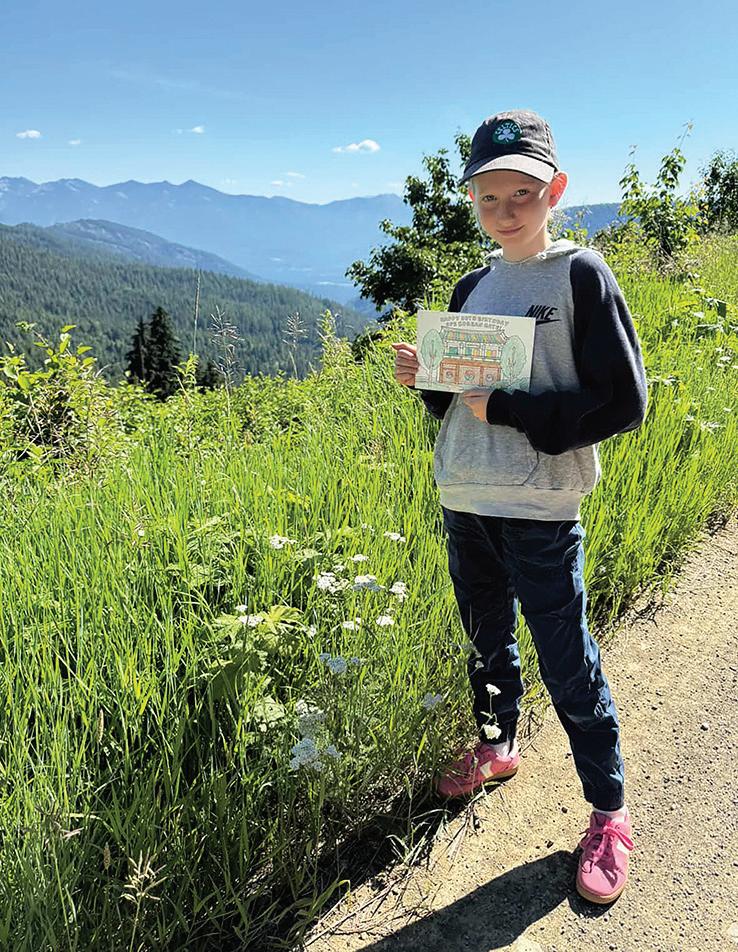
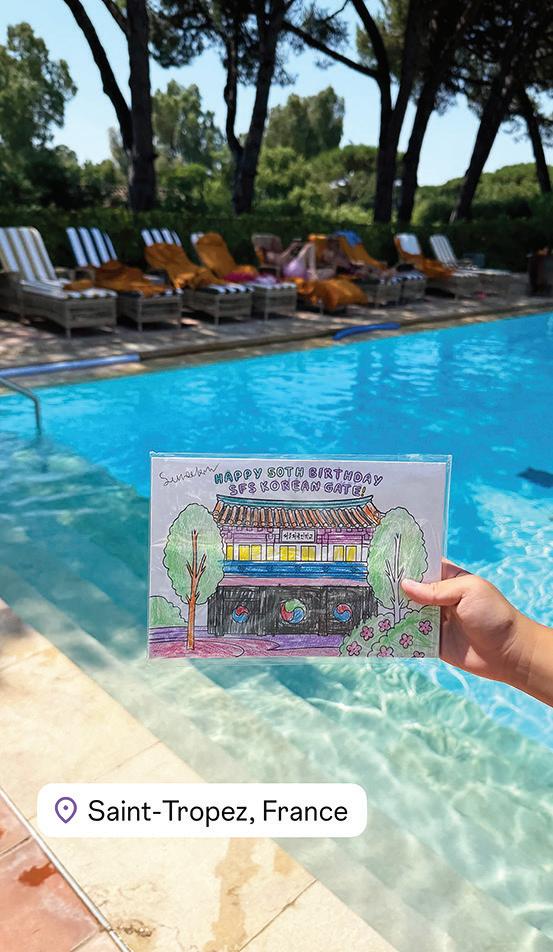
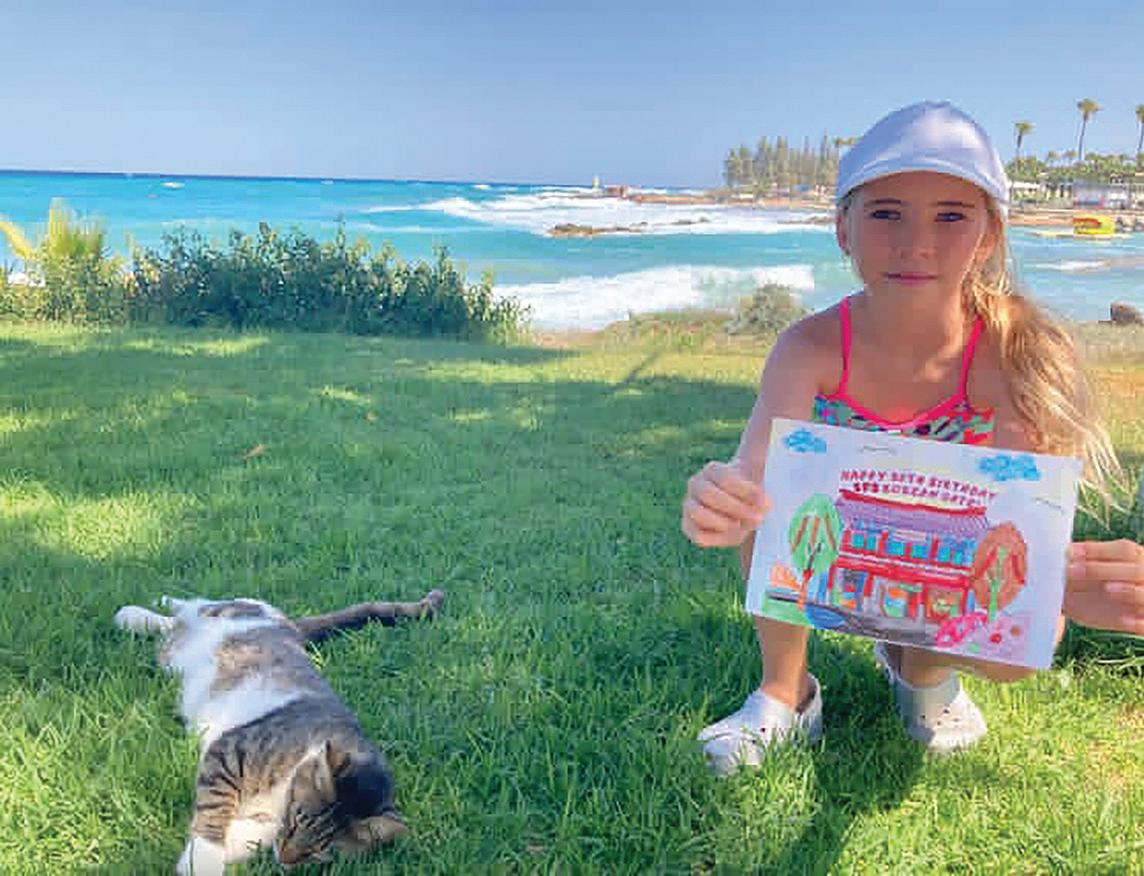
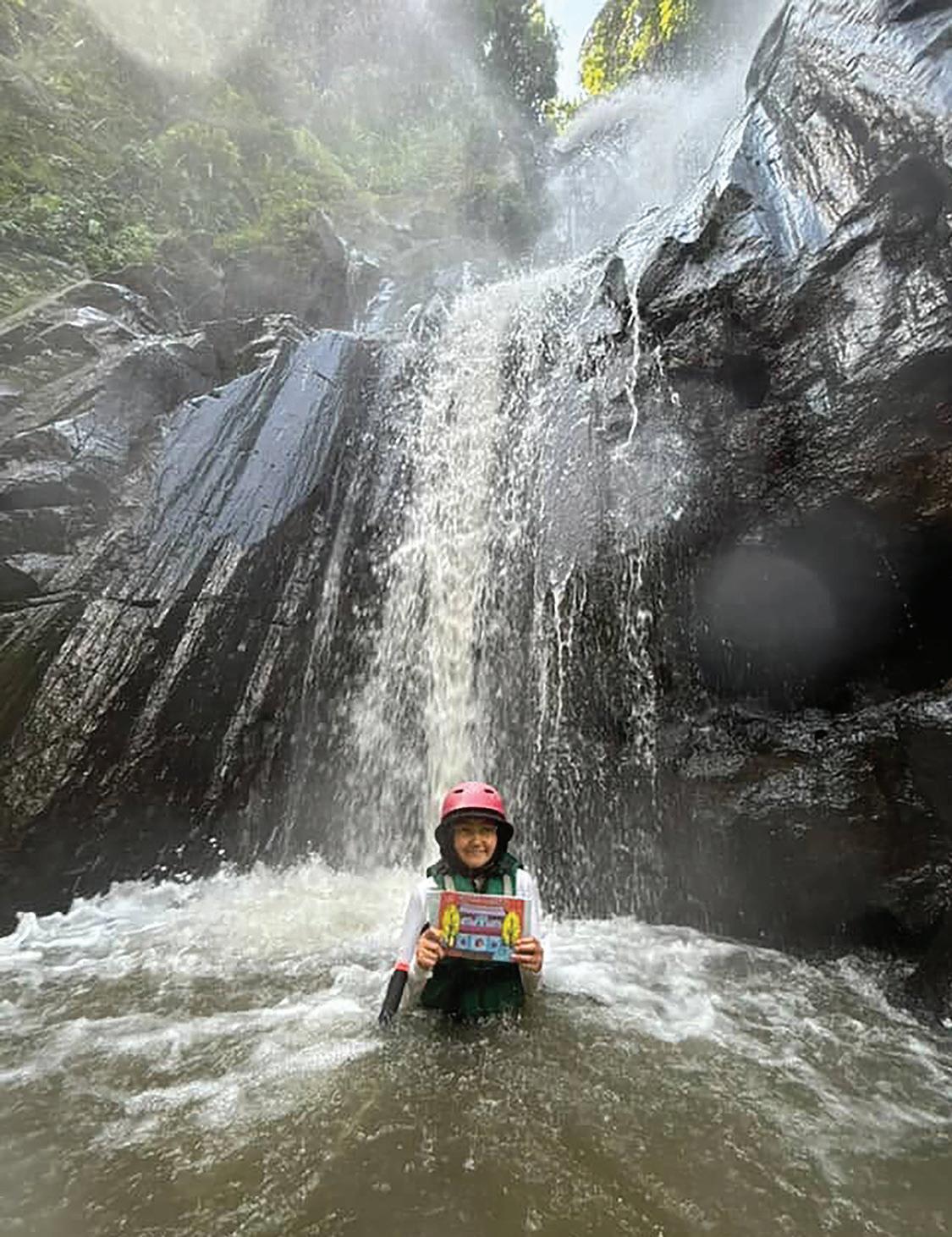
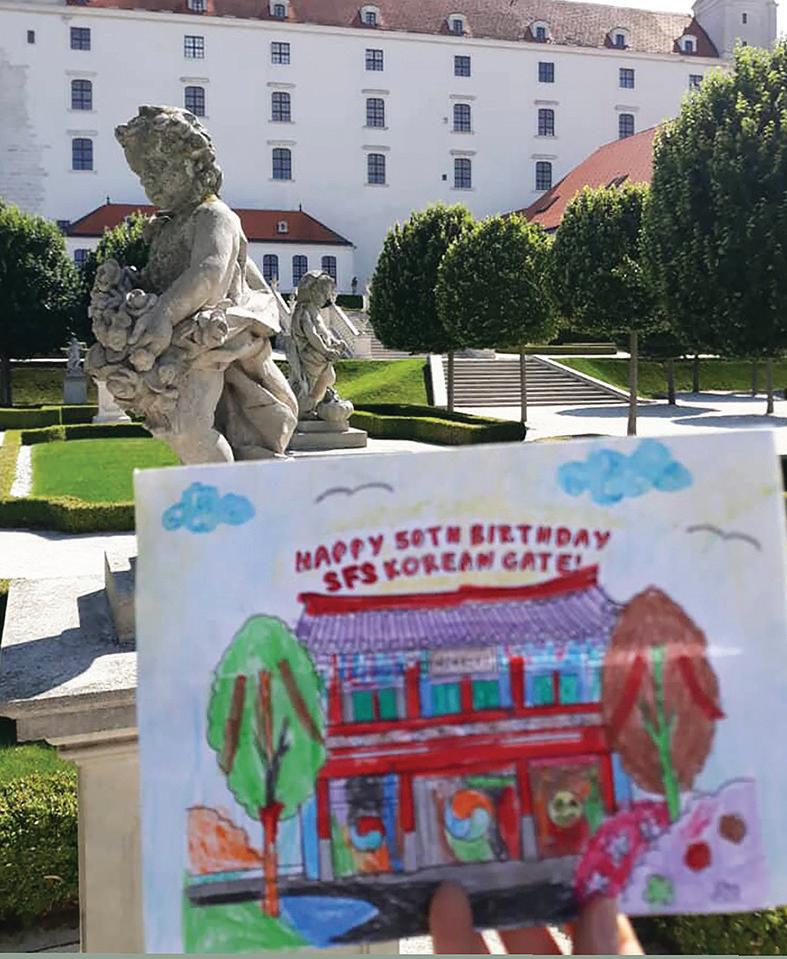
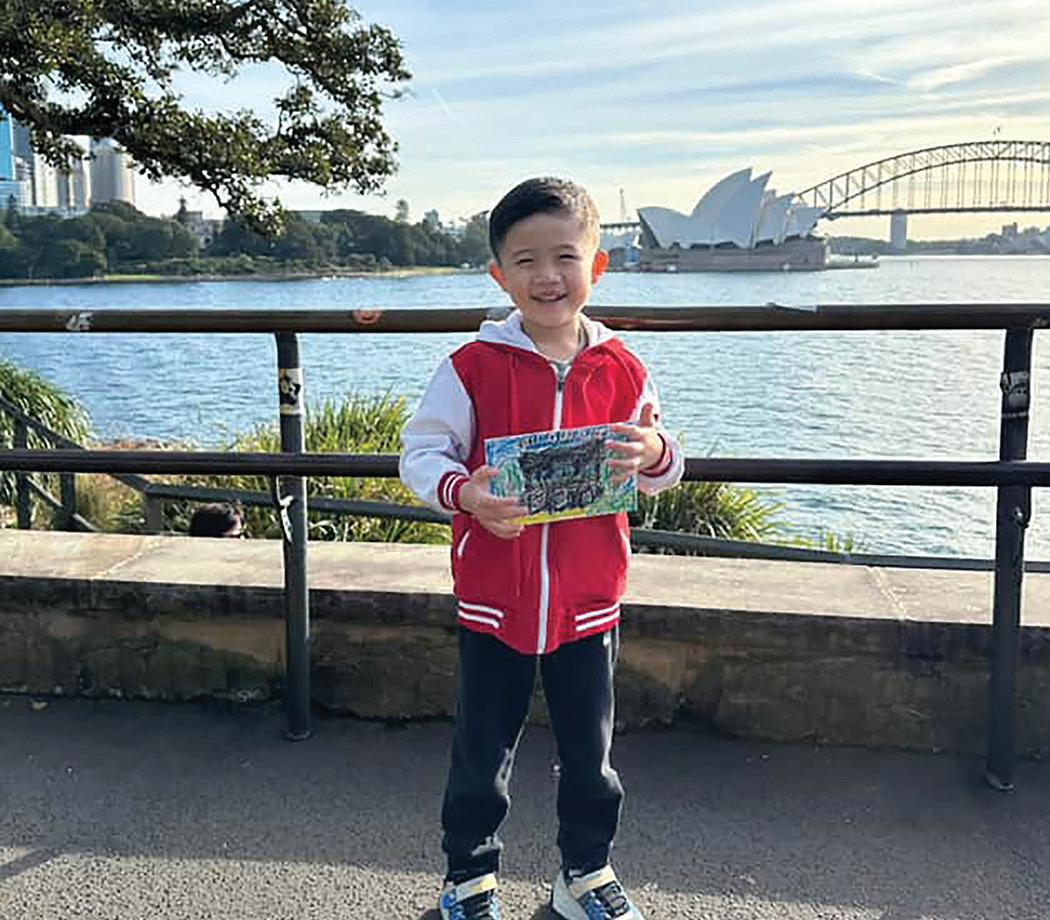
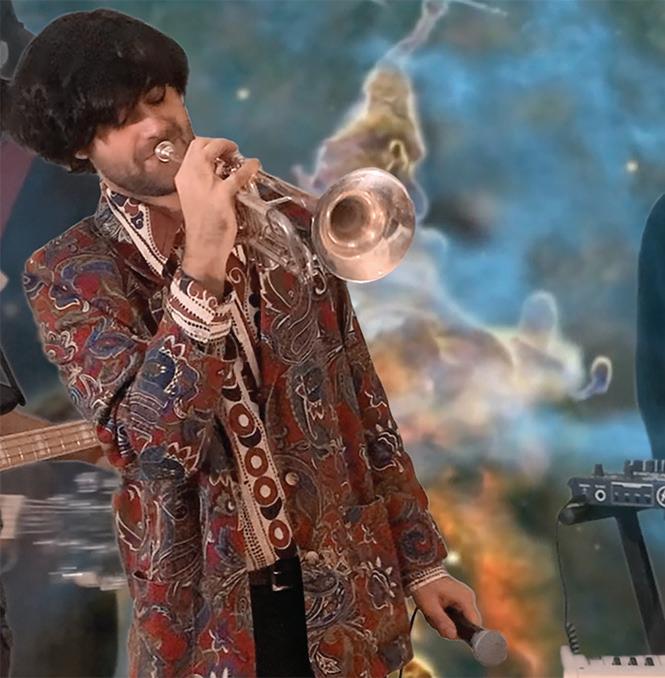
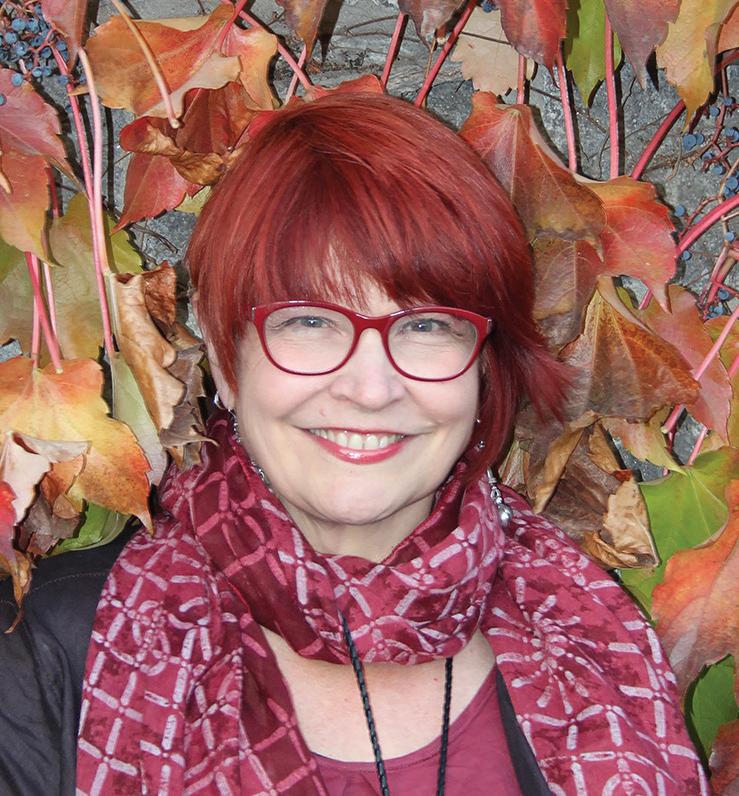
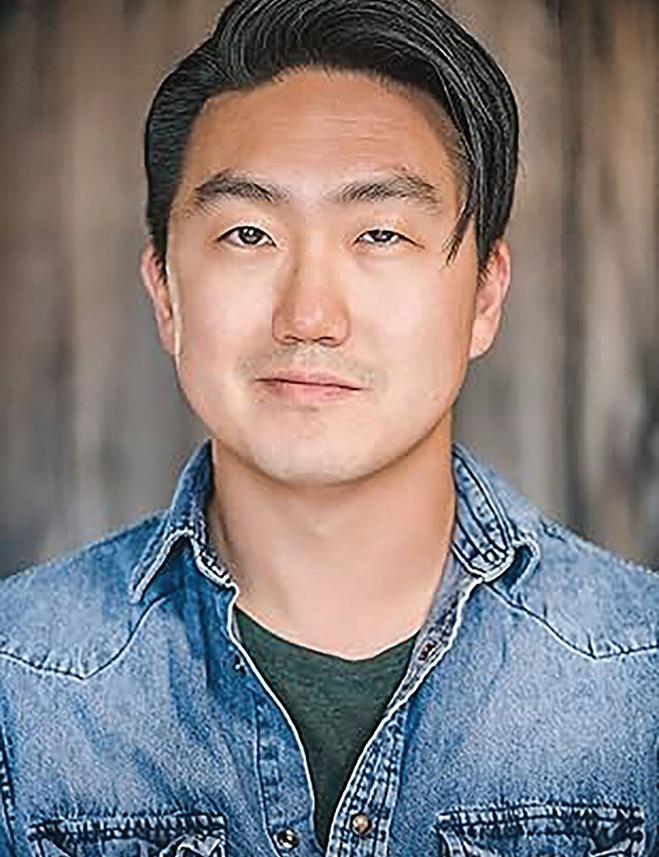
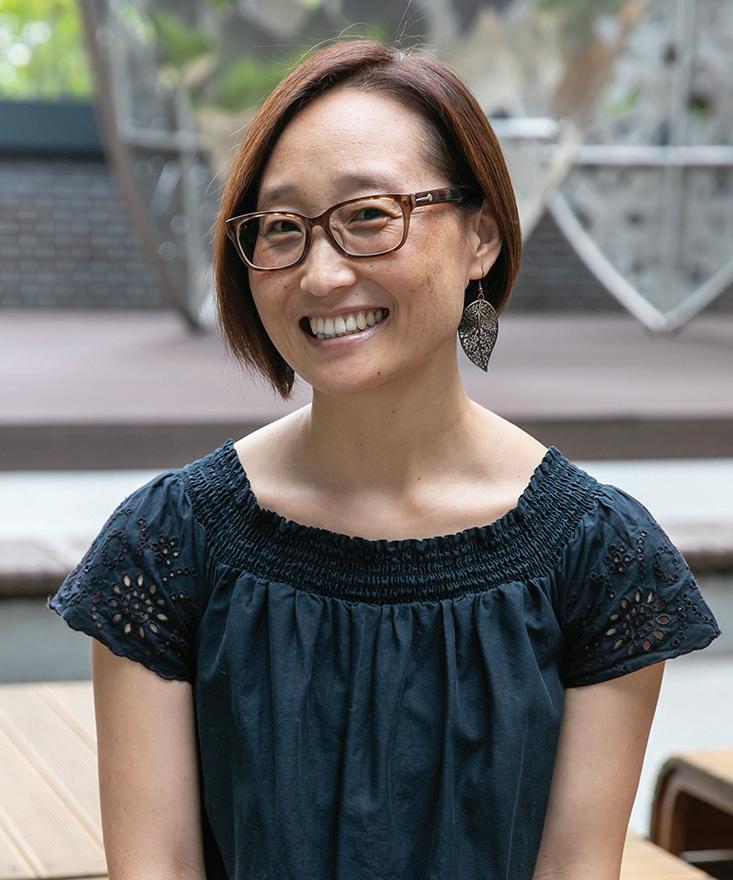
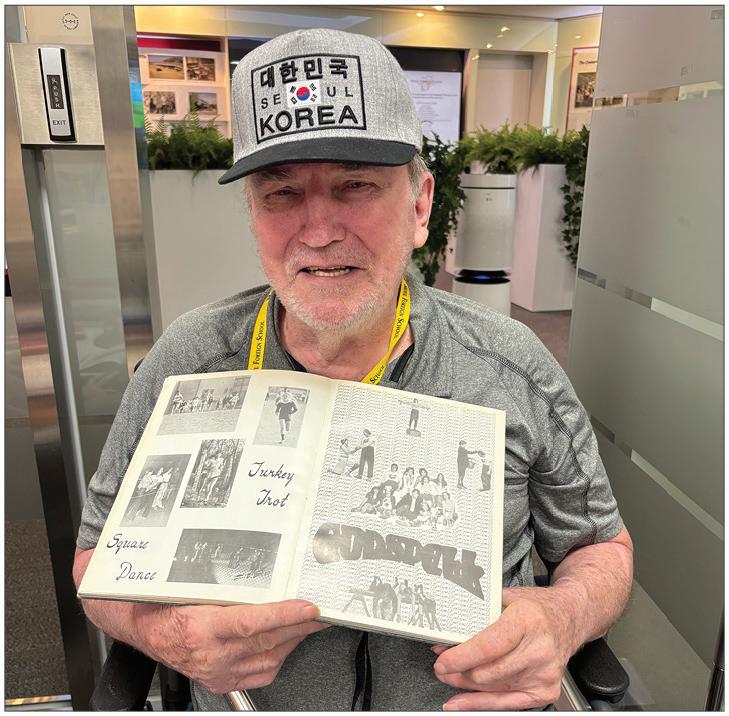
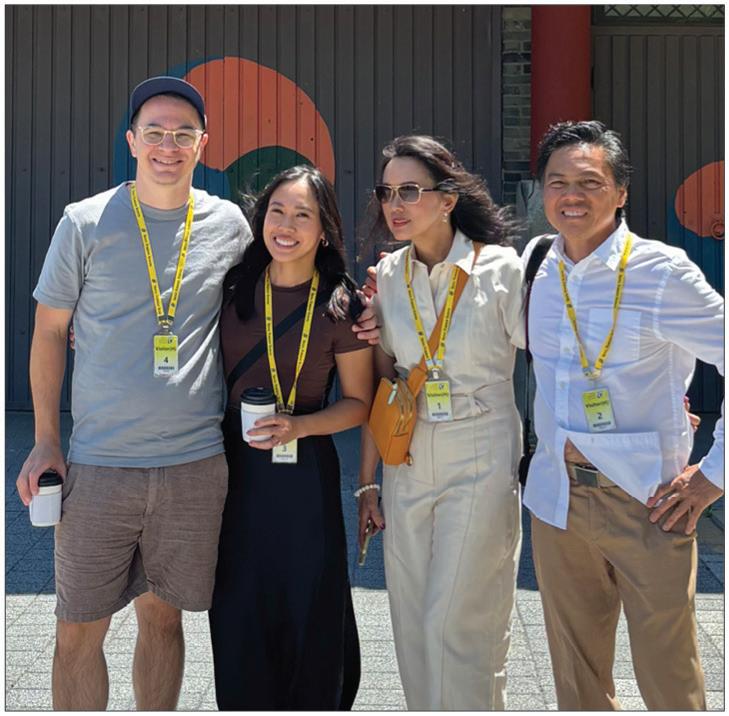
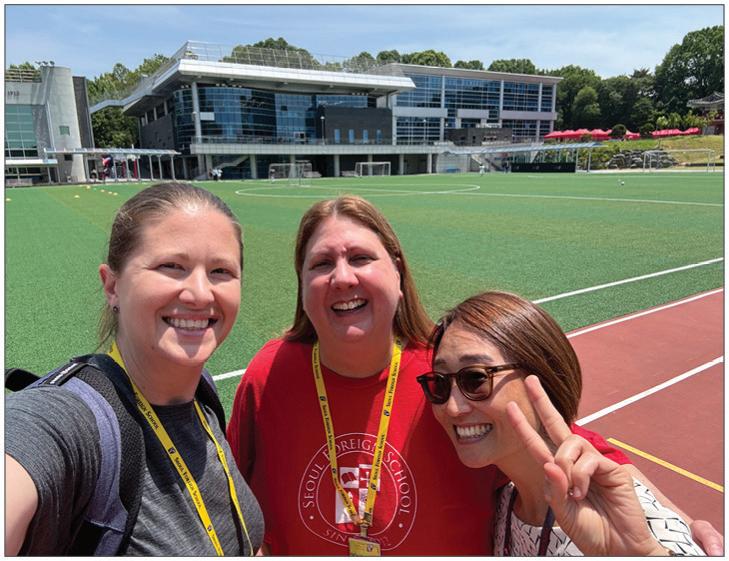
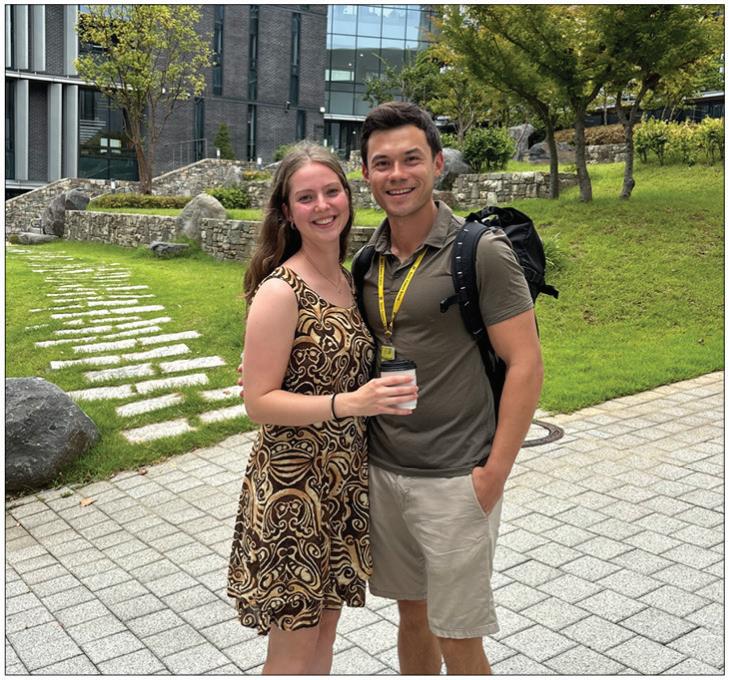
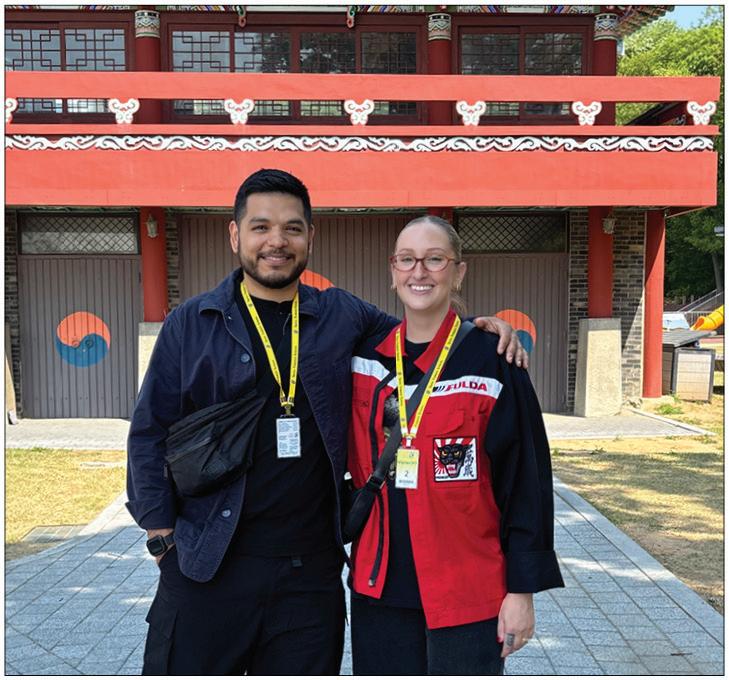
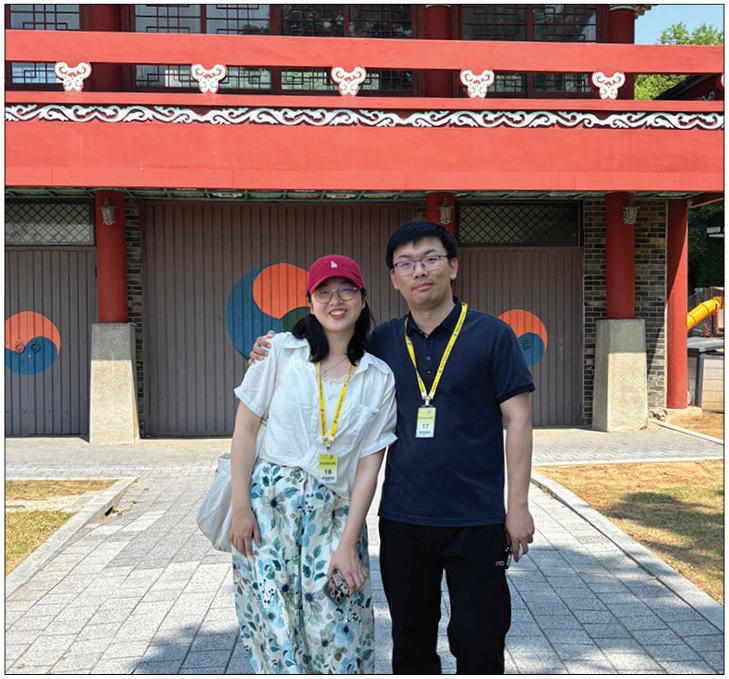
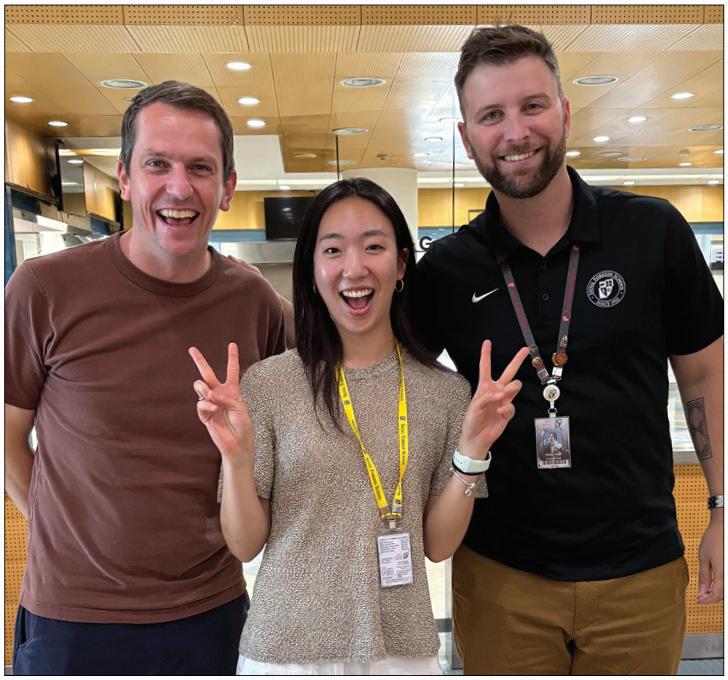
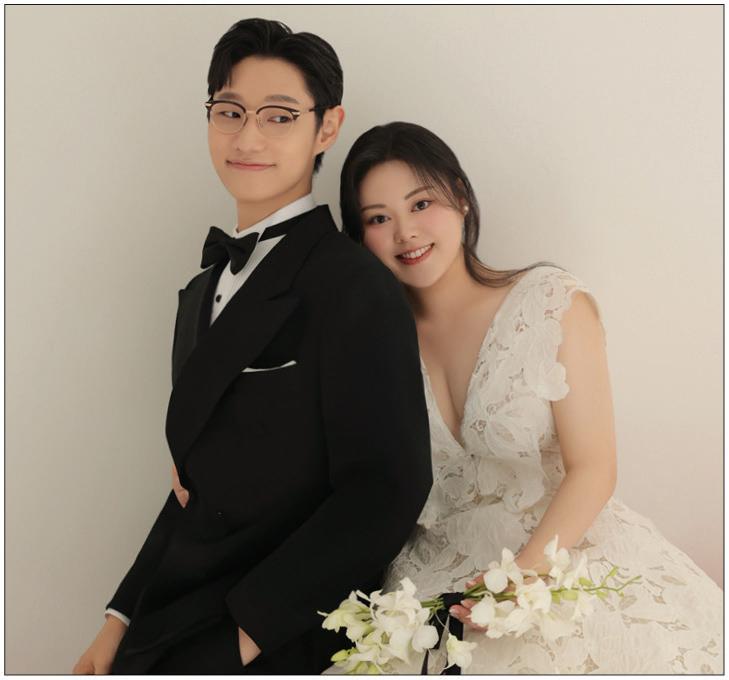
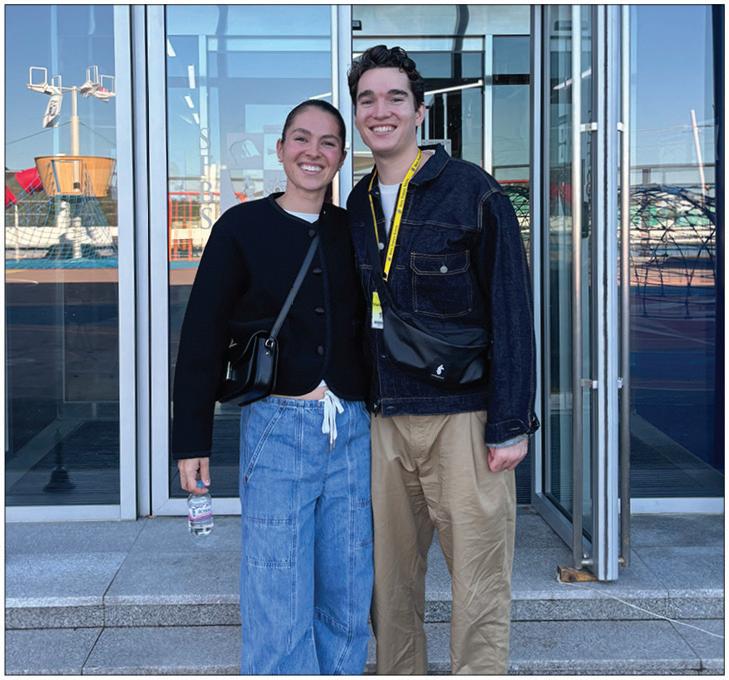
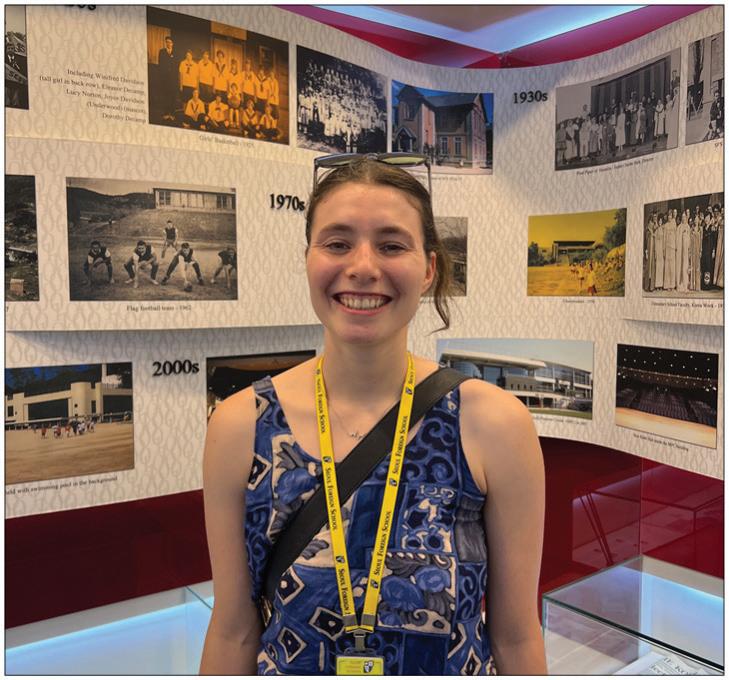
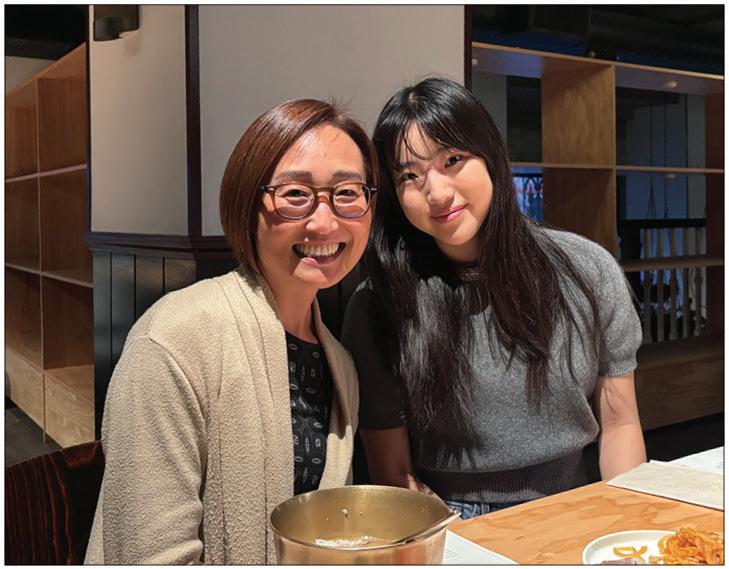
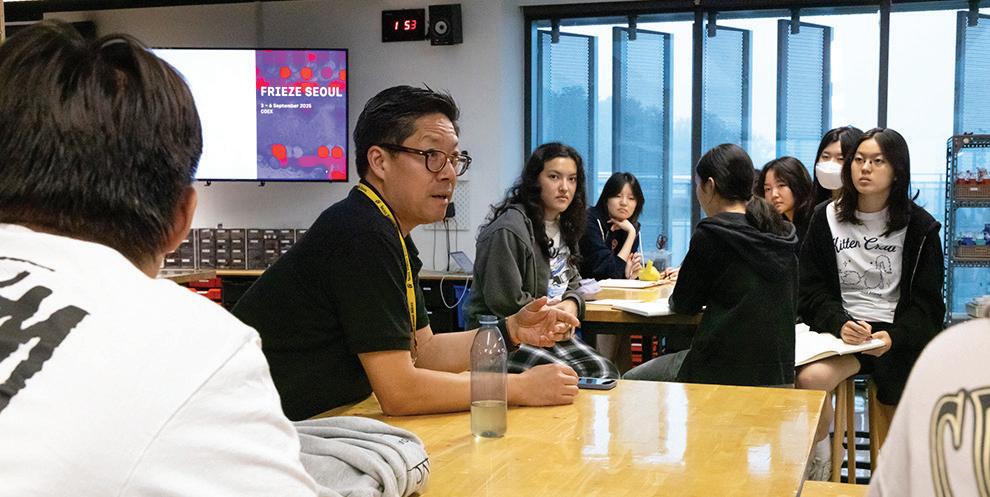
SFS Mythbusters Is the campus haunted? Is Coach Cary a professional dancer? Let's debunk myths!
12 Humans First Is AI going to replace teachers?
16 The Myths That Make Us: Revisiting the Narrative With Geo Yoo ‘20 A conversation between SFS alumni
20 Burning Questions: Live from High School from the PoV Club
From the Head of School
Dear SFS Community,
When I first arrived at Seoul Foreign School in 2014, I quickly discovered that service was already part of the school’s heartbeat. Our students were passionate, our staff were committed, and our community was generous. Yet most of our service work took place abroad. We were supporting projects overseas while, right here in our own neighbourhood, people often viewed SFS as “the school up the hill.”
That didn’t sit well with me. I believed then, as I do now, that service is most powerful when it begins close to home. I asked Jean Kim, our then Christian Ministries Coordinator (before “Service” also became part of her title), to start reaching out and to “make friends” with local organisations. She took that idea and ran with it. What began as a few friendly conversations quickly became genuine partnerships that changed how we see service today at SFS, and how others see us.
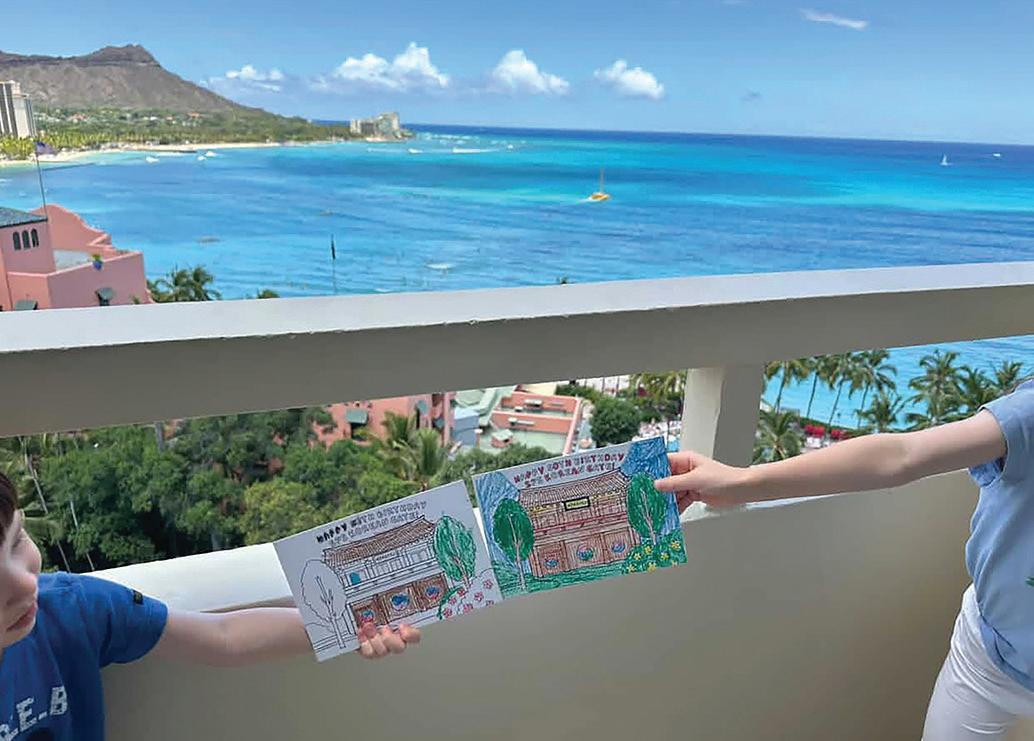
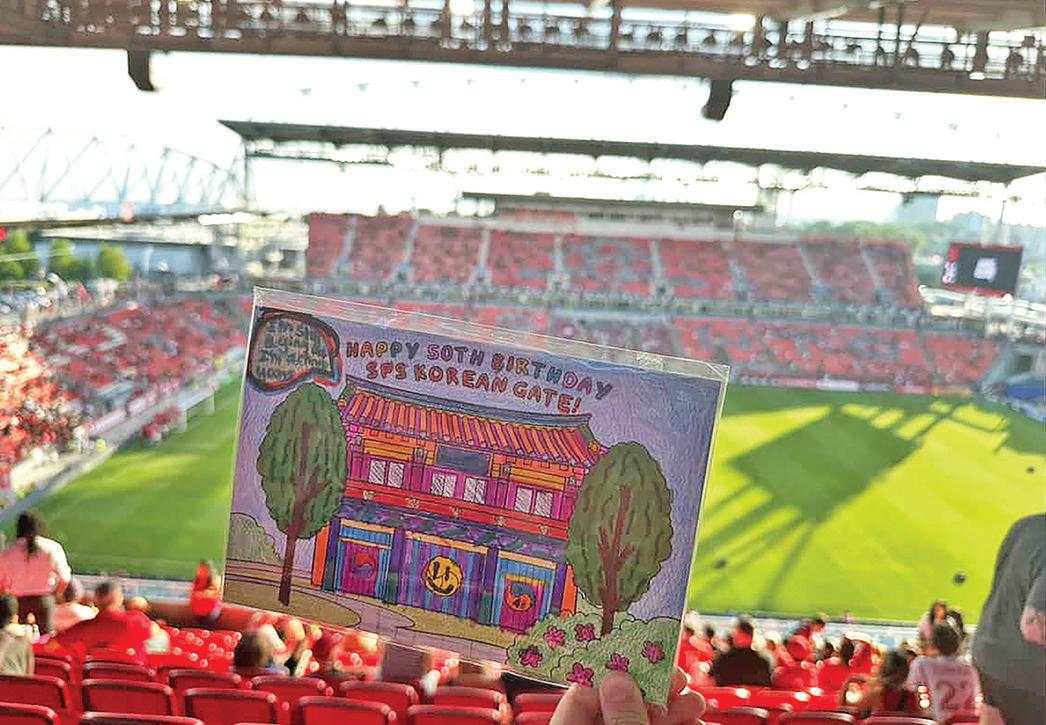
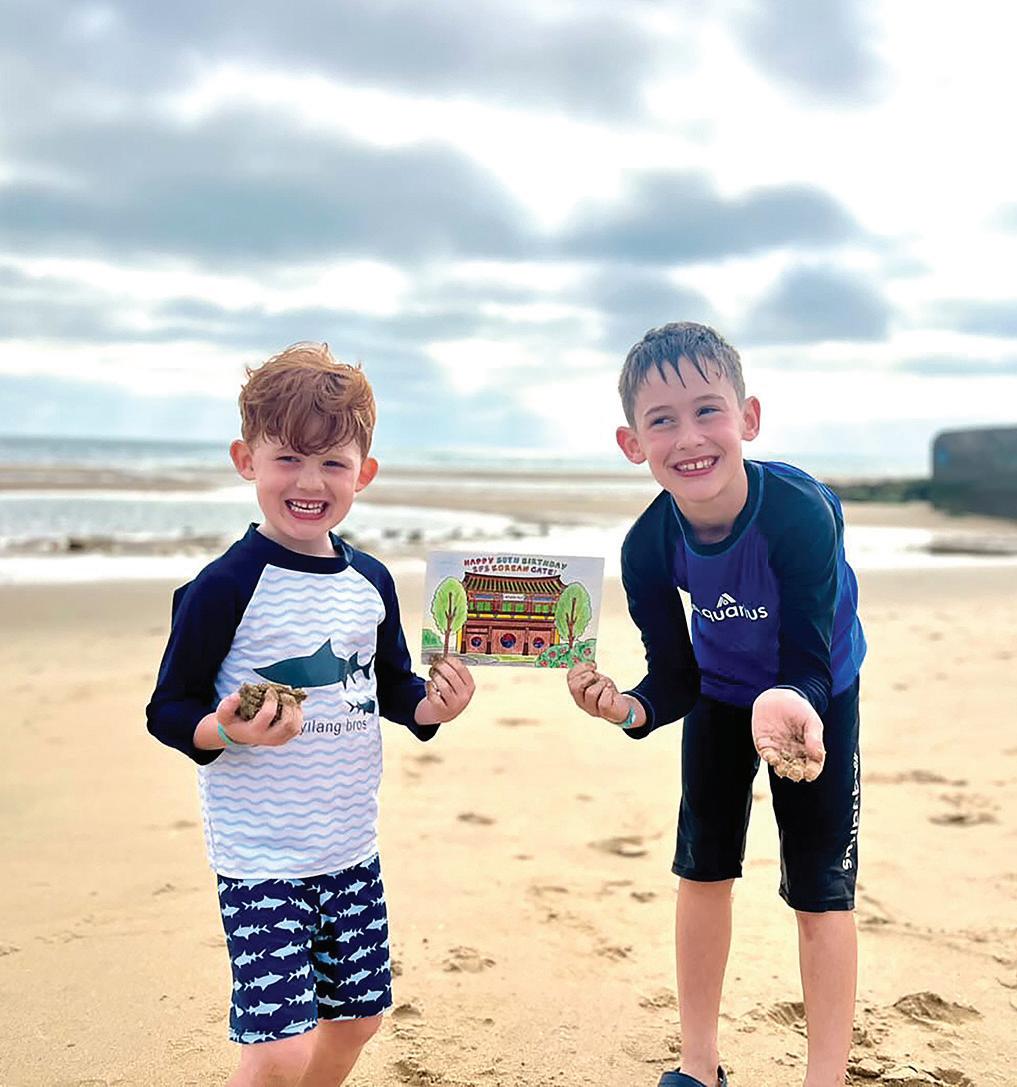
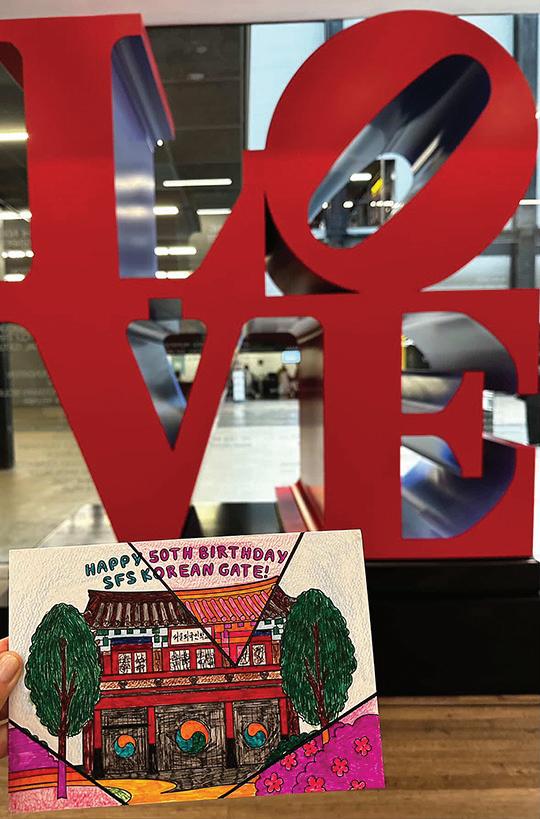
This year, we are celebrating the tenth anniversary of the first service project between SFS and Seodaemun-gu. It is a milestone that marks how far we’ve come. What was once something extra has become something essential. Service learning and community engagement are now part of who we are as a school. They are woven into our curriculum, our high school clubs, and our community events.
Looking back, I am proud of how our understanding of service has evolved. We are no longer a school that simply gives; we are a community that learns, listens, and grows alongside our neighbours. The myth of the “school up the hill” has been replaced by something far richer — a shared story of connection and purpose.
As we look ahead with SFS2030, our commitment to cultivating global citizens begins right here, with our students learning what it truly means to serve. In this issue of The Banner, we continue to dig into more myths worth rethinking, both within and beyond our walls.
God bless,
Colm Flanagan Head of School
THE BANNER
Seoul Foreign School Magazine, Fall 2025
Team
Published by:
Seoul Foreign School
External Relations
Editor-in-chief: Cyrielle Bazin
Design and Photography: Juhie Suh
Editors: AhYoung Chi, Sumin Park
A special thank you to everyone who contributed to this issue.
Address
Seoul Foreign School
39 Yeonhui-ro 22-gil Yeonhui-dong Seodaemun-gu Seoul, South Korea, 03723 www.seoulforeign.org
Unless otherwise noted, articles may be reprinted without permission—as long as they are not edited or revised—with appropriate credit given to “The Banner, the magazine for Seoul Foreign School.”
*All efforts have been made to check details and consistency. Please contact communications@ seoulforeign.org with any questions.
** All content in this publication is original, unless otherwise stated. Artificial intelligence tools may have been used solely to enhance readability or clarity. The Banner magazine upholds the same standards of integrity we expect from our students, ensuring authenticity, responsibility, and transparency in every piece of published work.
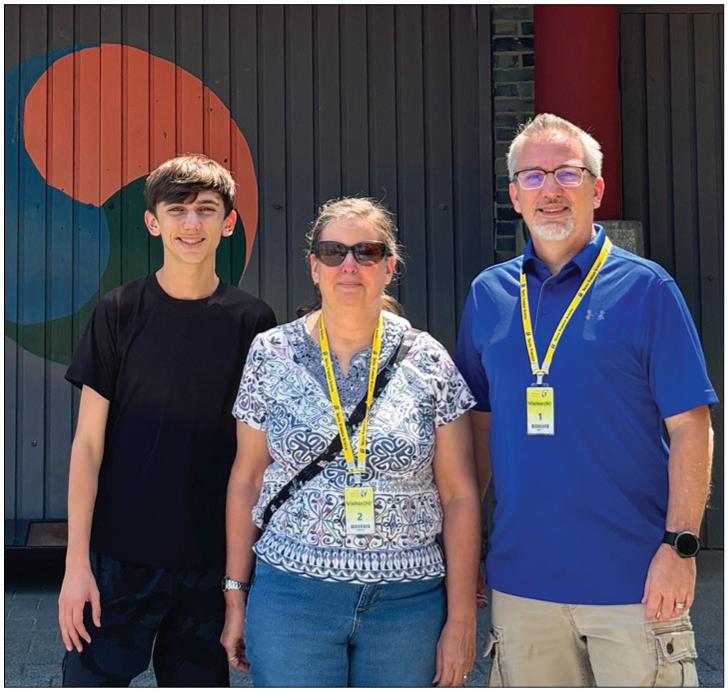
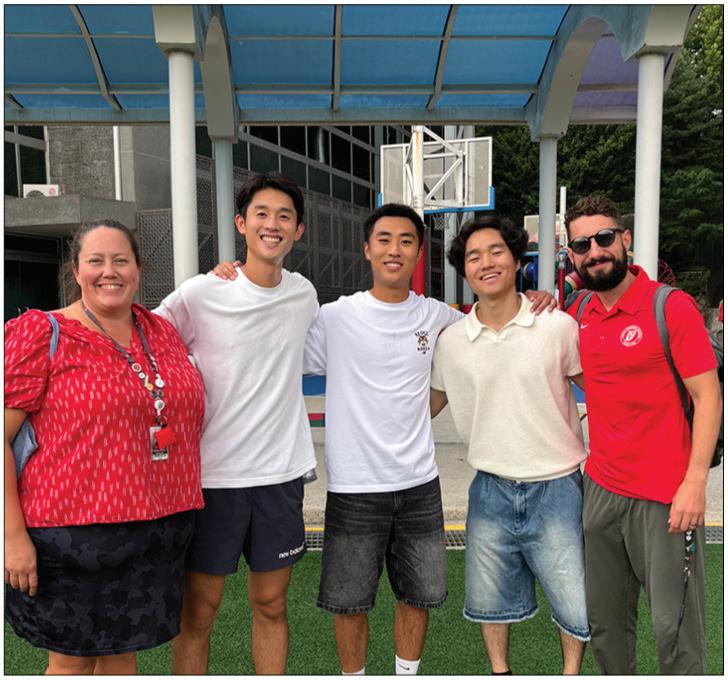
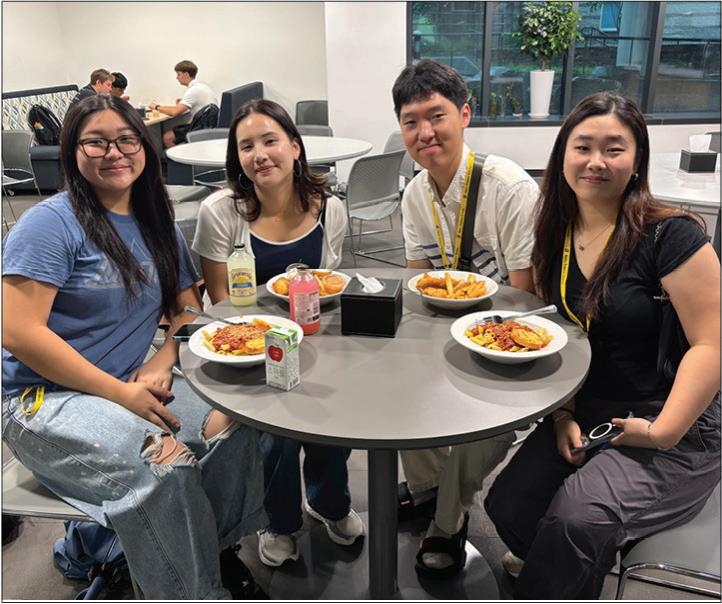
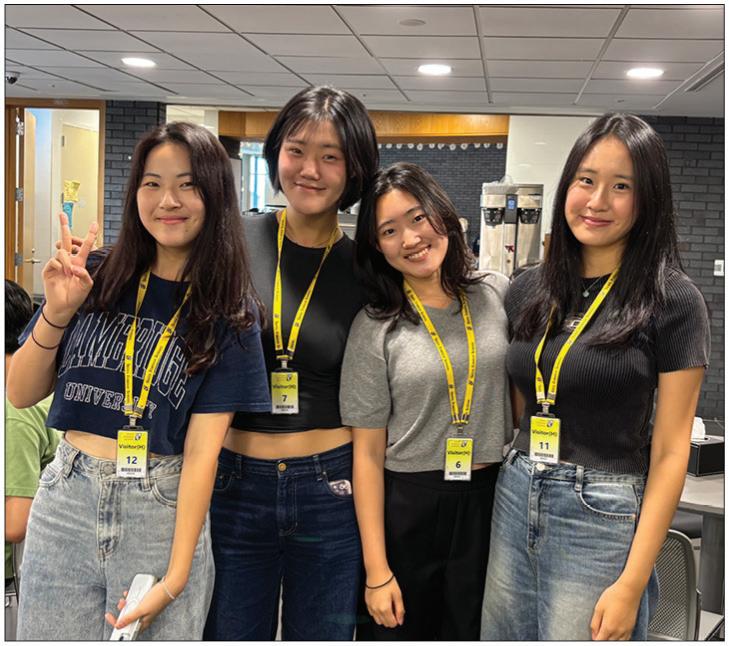
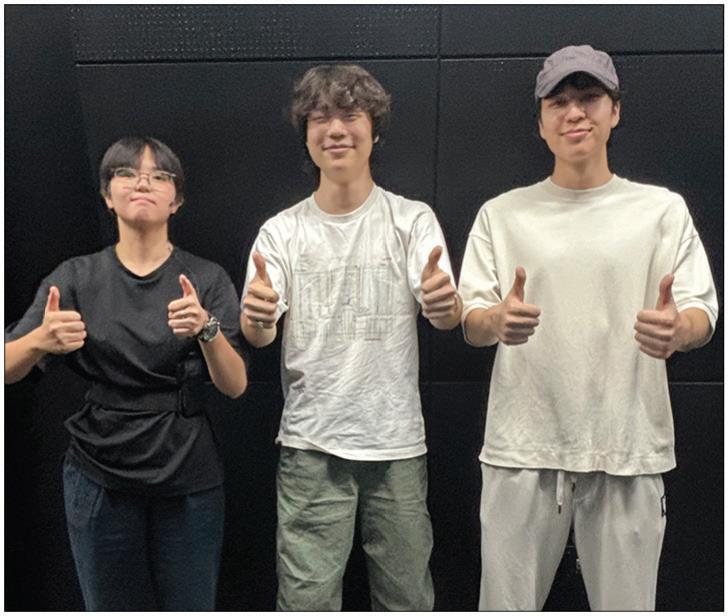
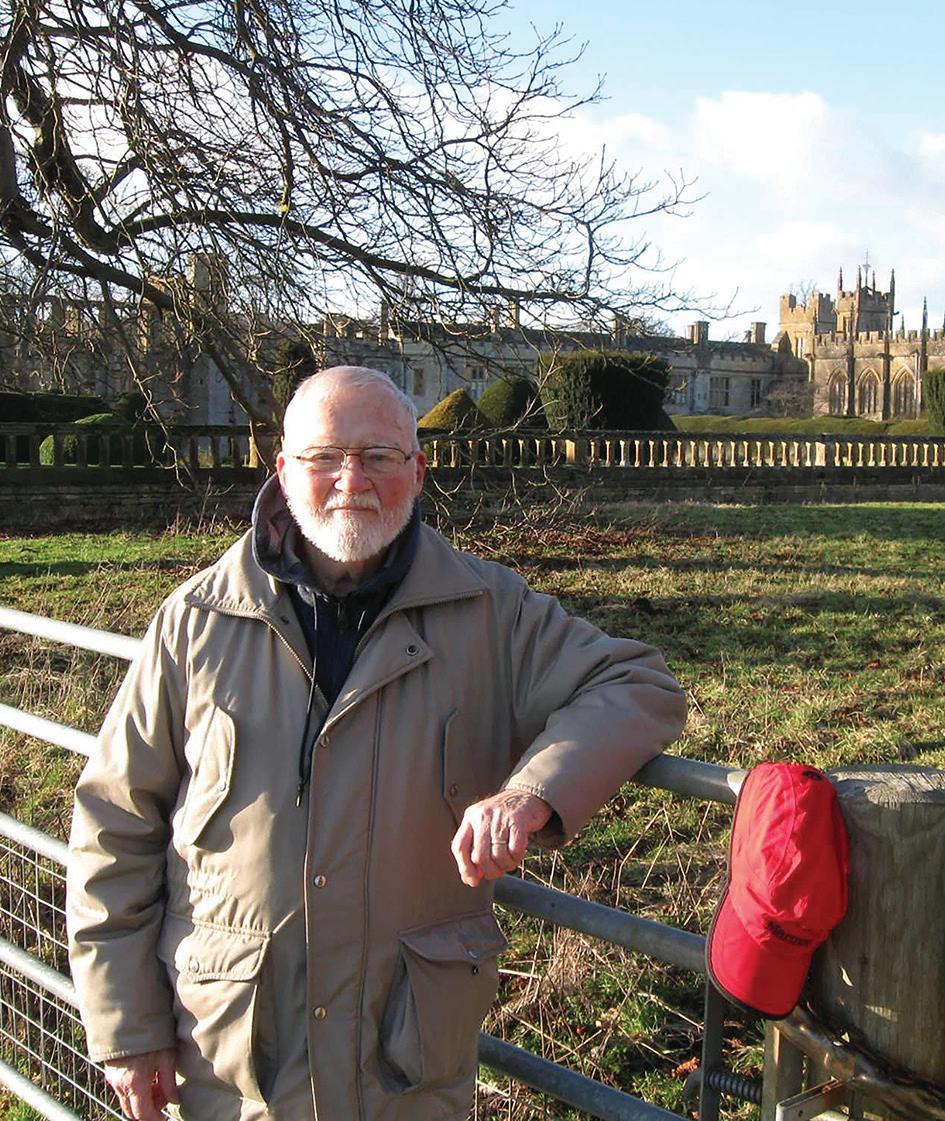
Cover: SFS Faculty Mythbusters ready to set the record straight about life at SFS.
From the Board Chair
Dear SFS Community,
Do you think of the Board as operating behind closed doors, discussing archaic topics that never become known to the rest of the community? Or perhaps that we operate in some distant and misty realms, where the air may be thinner? That’s the myth about the Board I’d like to “bust” today.
Did you buy tickets for activities at the International Fair last spring? Chances are you bought your tickets from a Board member. Were you at the high school Student Leadership Workshop in October? You might have heard a Board member give the keynote.
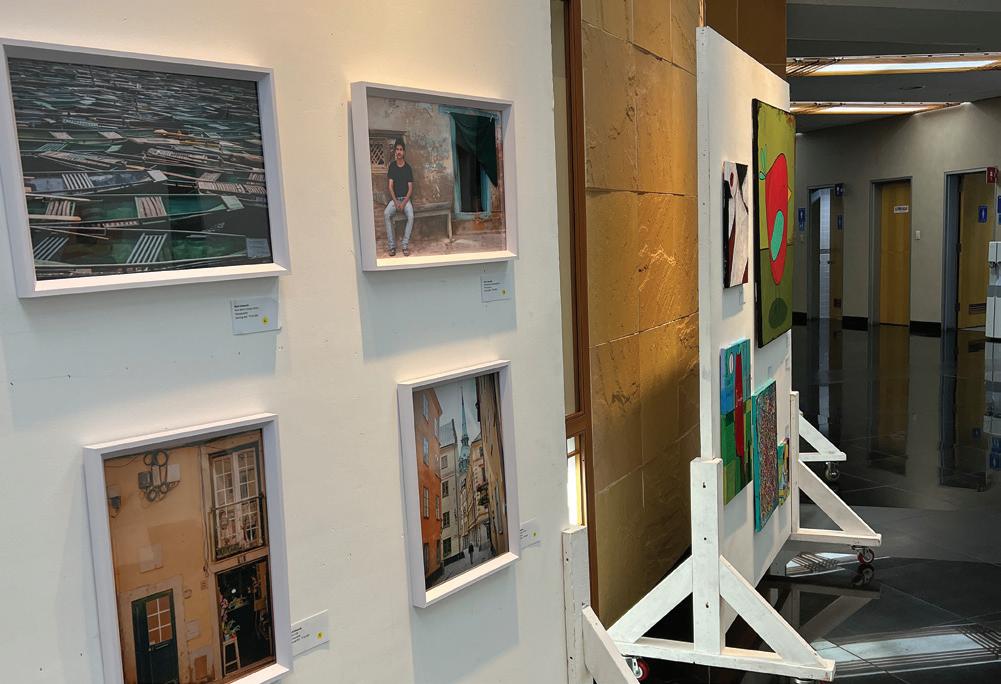
Board members are parents, alumni, and cheerleaders for SFS. We are on the fields, in the hallways, at concerts and shows and sporting games. We share our experiences at the High School Career Summit, we volunteer in the British School, and we serve breakfast to the teachers on the last day of classes. And even when we are in the boardroom all day on a Saturday, we sneak out to get a peek of the soccer game on the field, the AQT tournament in the high school building, or stop by the DP Visual Arts exhibit.
If there is any truth to the myth, it is true that we don’t focus on the “here and now” but on the “there and then.” We aren’t worrying about what’s for lunch on Monday. We are thinking about how we can improve service learning opportunities or whether our mission statement represents where we want to take SFS in the future. And yes, we are focused on the future. Our mission on the Board is to make sure that when Seoul Foreign School hits its 150th or 200th anniversary, it is just as vibrant and dynamic as it is today.
Hyungji Park ‘85 Chair of the Board of Governors
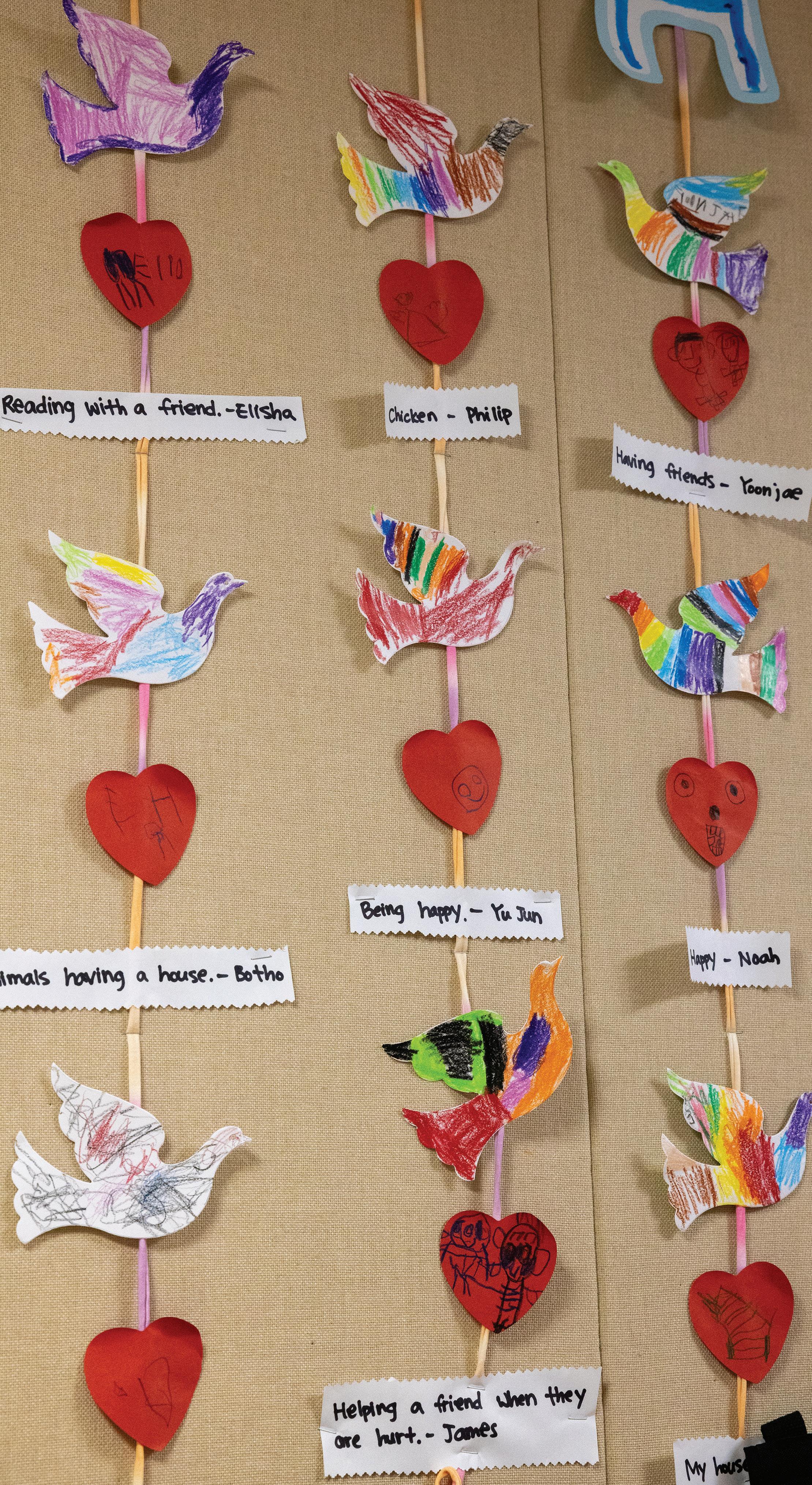
As Pre-K4 students prepared for this year’s United in Prayer's theme, “Peace into Action through Prayer,” they read Peace by Todd Parr. After reading and discussing what peace means and how it can look and feel, the children reflected on their own understanding of peace and drew their ideas on heart-shaped papers. They also learned that the dove is
SFS
SFS MYTHBUSTERS
Every school has its legends — the whispered stories passed down in classrooms, over coffee, and through the years. Some are true, some are half-true, and some are just too good to fact-check. In this issue, we dig into a few of Seoul Foreign School’s most enduring myths to separate fact from fiction. From wild boars to skybridges, secret lounges to family legacies, these tales reveal the quirks, surprises, and rich history that make life on the hill so unforgettable.
MYTH
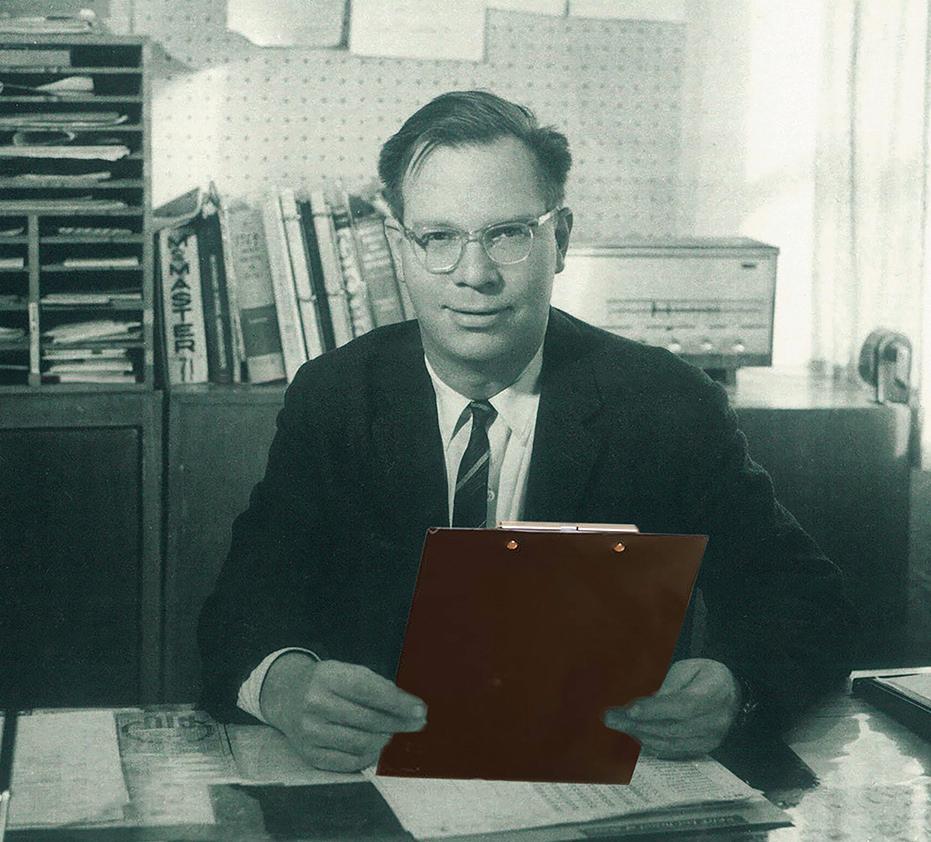
Richard Underwood, former Head of School, had a chauffeur and a clipboard of Very Important Things to Do.
TRUTH
Not quite. When new teachers arrived in Seoul, it was Mr. Underwood himself waiting at the airport — sign in hand, ready to load luggage. Talk about a “head” start to hospitality!
MYTH
MYTH
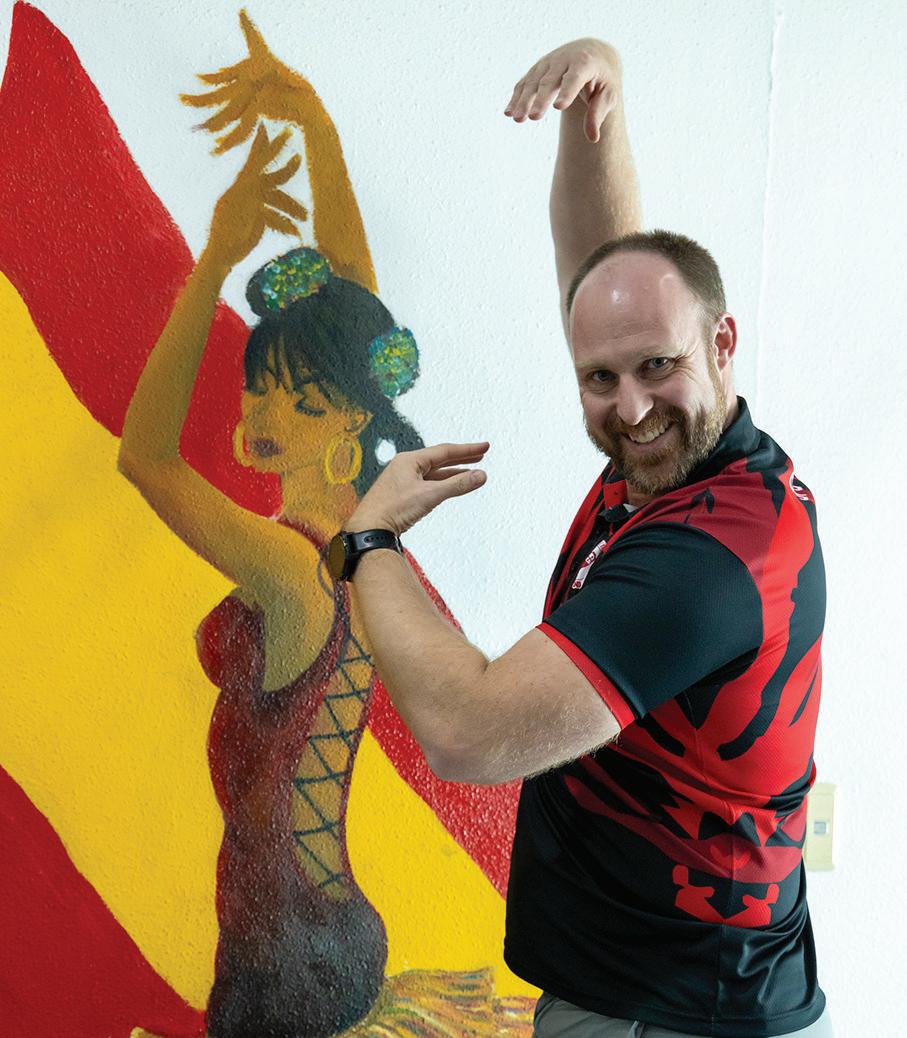
The mural outside the pool viewing deck was inspired by Coach Cary’s secret past life as a flamenco dancer.
The Rader name just keeps popping up around SFS because someone forgot to clear the attendance list.
TRUTH
Tempting theory — but no castanets were involved. Once upon a time, Spanish class was taught in that very building (before it became the IT office). So the flamenco dancer on the mural isn’t Mr. Cary’s alter ego — just a leftover echo of “¡Olé!” from SFS’s language-learning past.
TRUTH
Nope — it’s a family legacy worthy of its own K-drama. Three generations of Raders have studied, taught, and led at SFS, tracing back to the first Rader missionaries who enrolled their children — Edie ‘77, JP ‘79, and Jennie ‘83 — right here. The family tree has deep roots on this hill.
MYTH
The middle and high schools have always been divided by a moat of mystery and a few staircases.
TRUTH
Once upon a (rowdier) time, it was the main passageway. Everyone went through it, every day. Now, it opens just once a year — when the seniors, robed and radiant, pass through for the Cap & Gown Walk. The rest of the time, it naps in peace, dreaming of the foot traffic of yore.
TRUTH
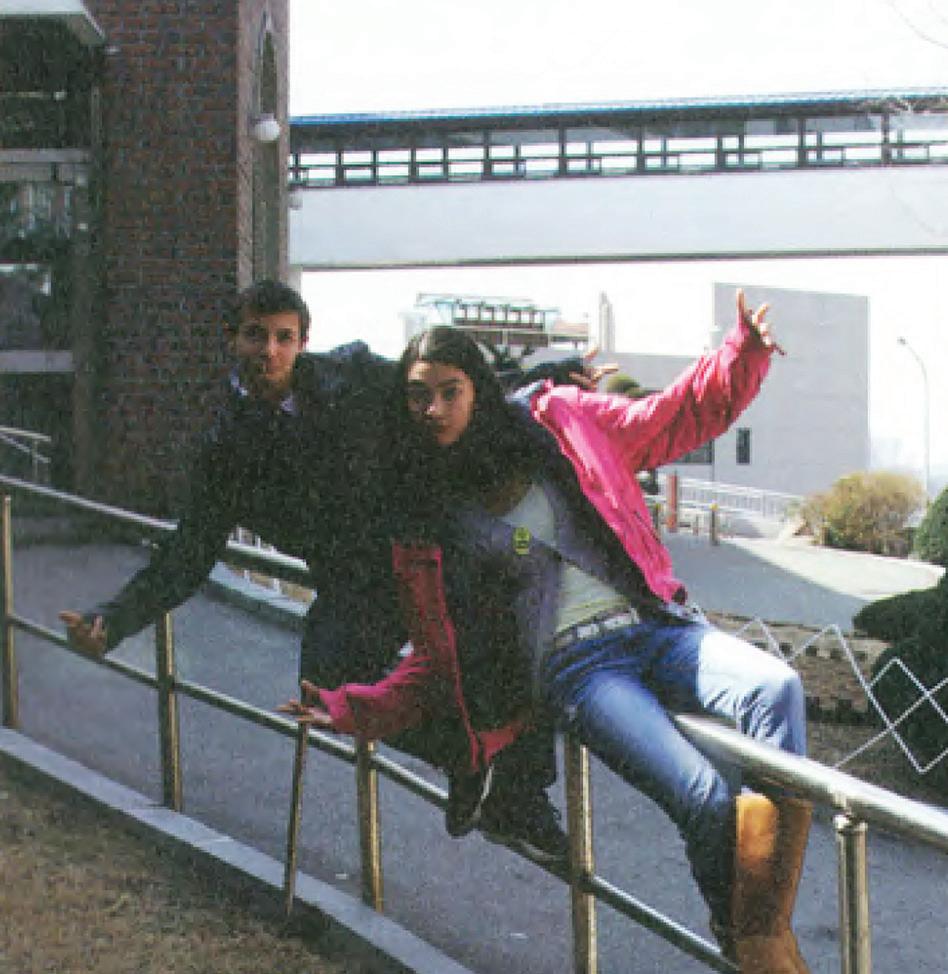
Once, skybridges connected them — real ones! Students could stroll from middle school to high school to the Lyso Center without ever touching the ground. When the old high school came down, the bridges went with it. Legends say a few students are still wandering the airspace above.
MYTH
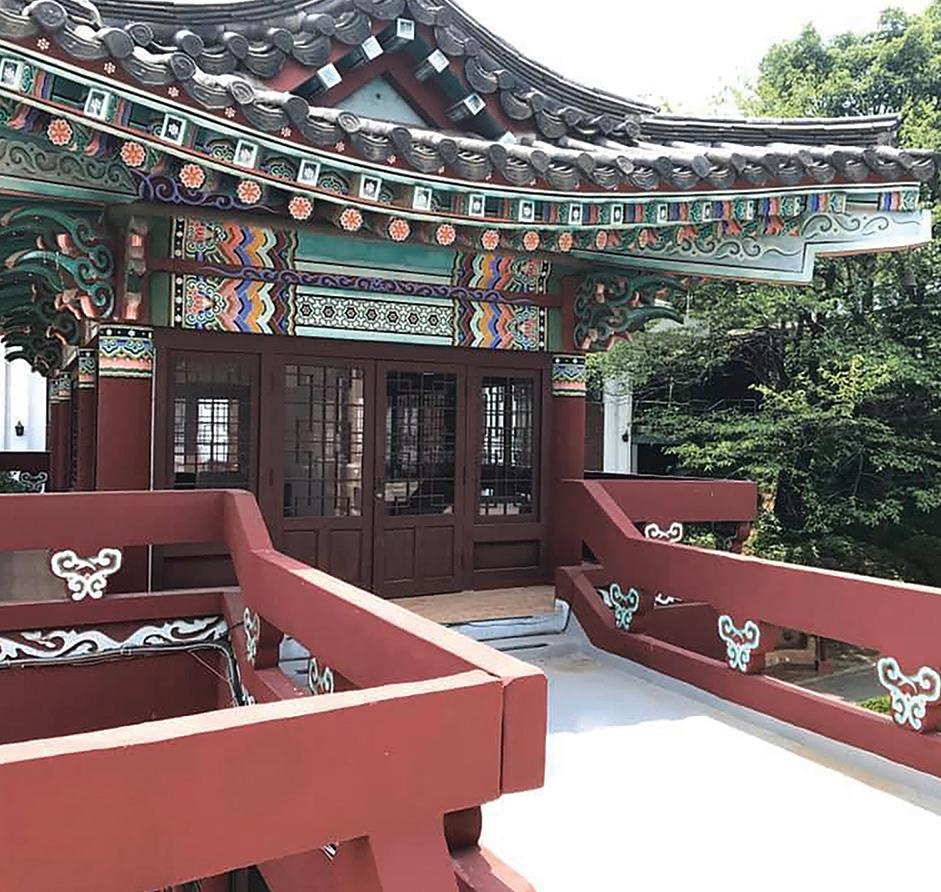
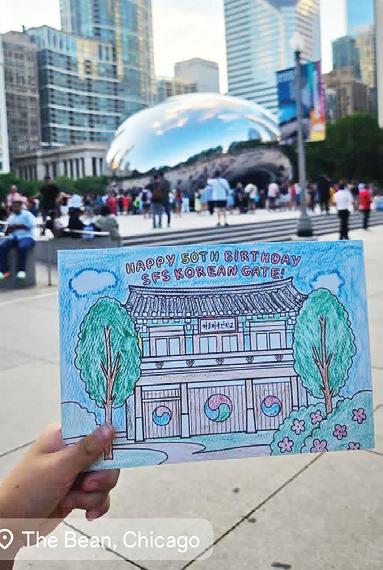
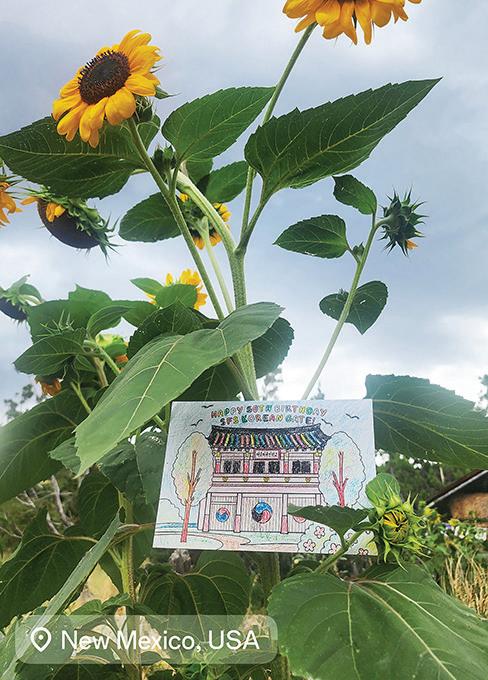
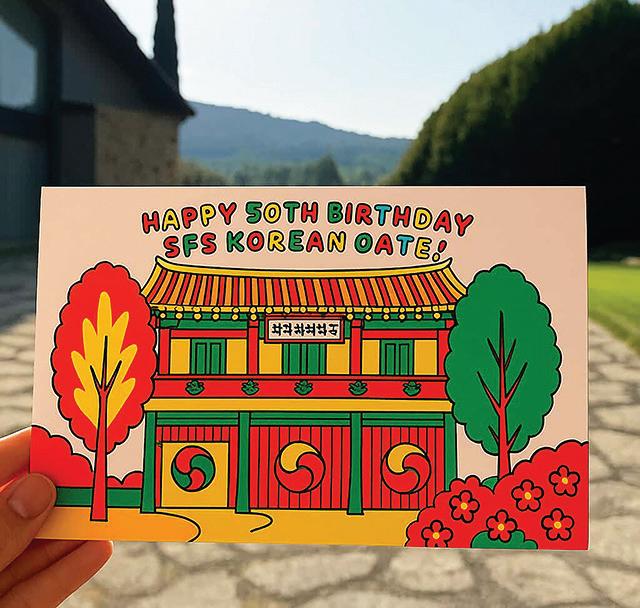
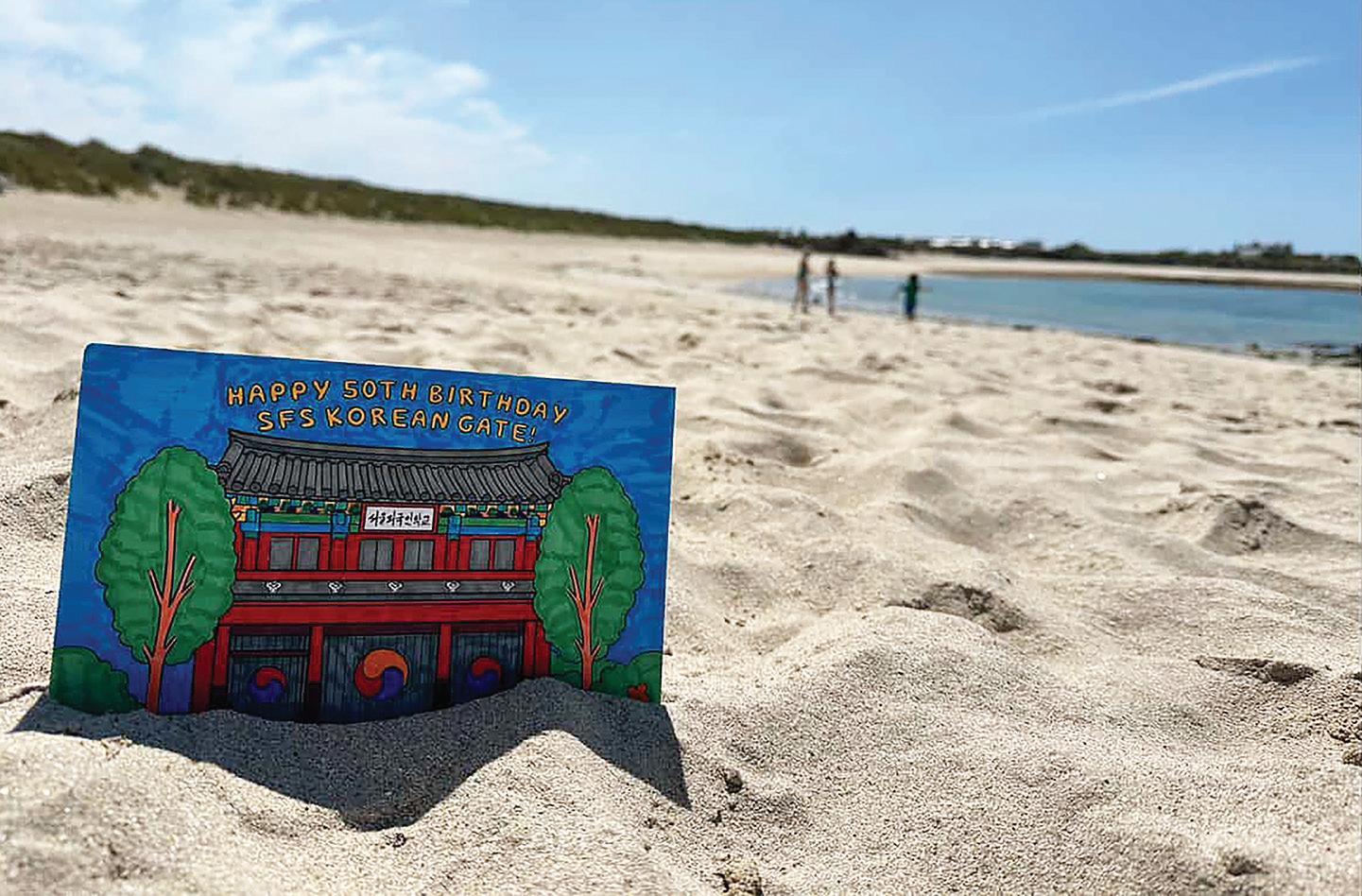
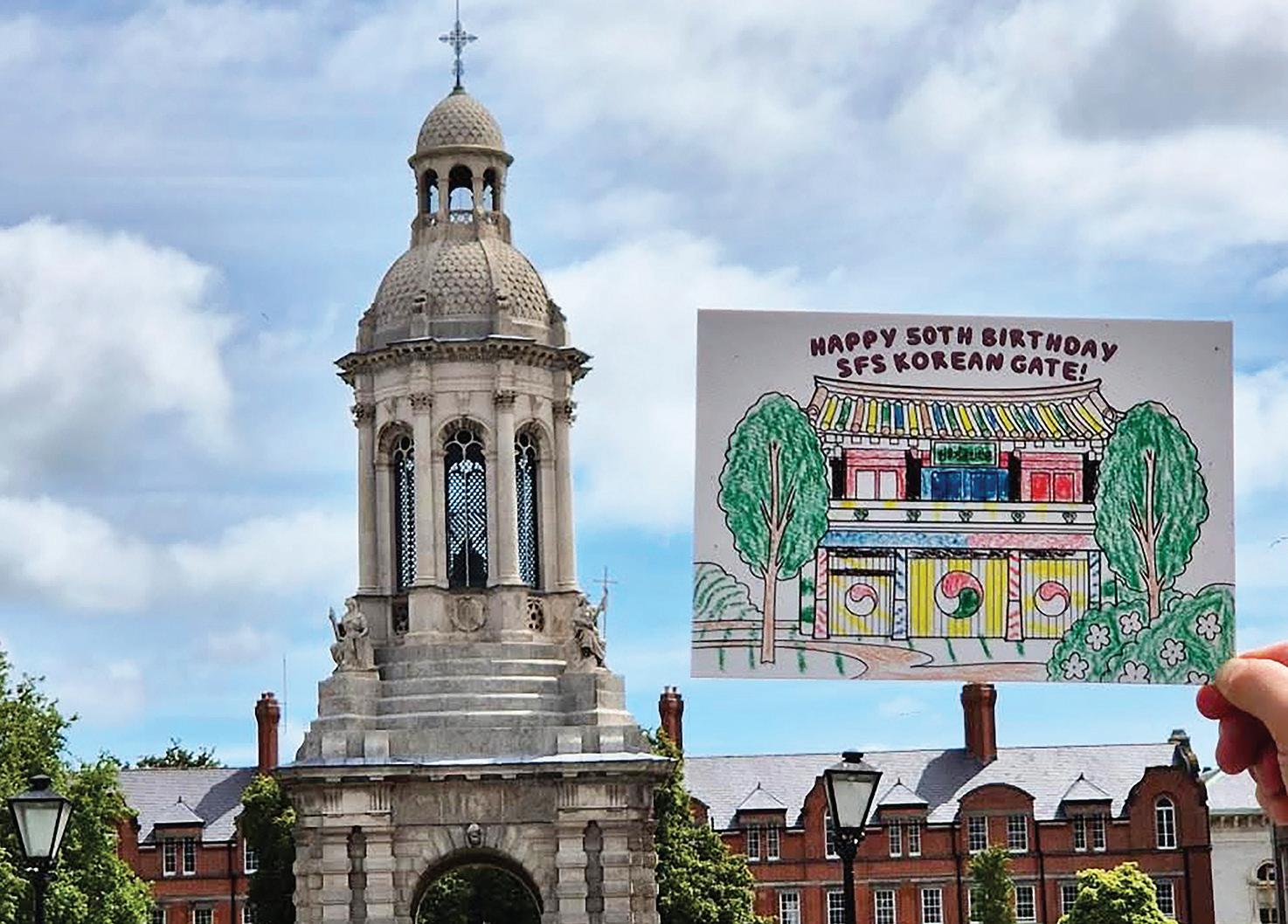
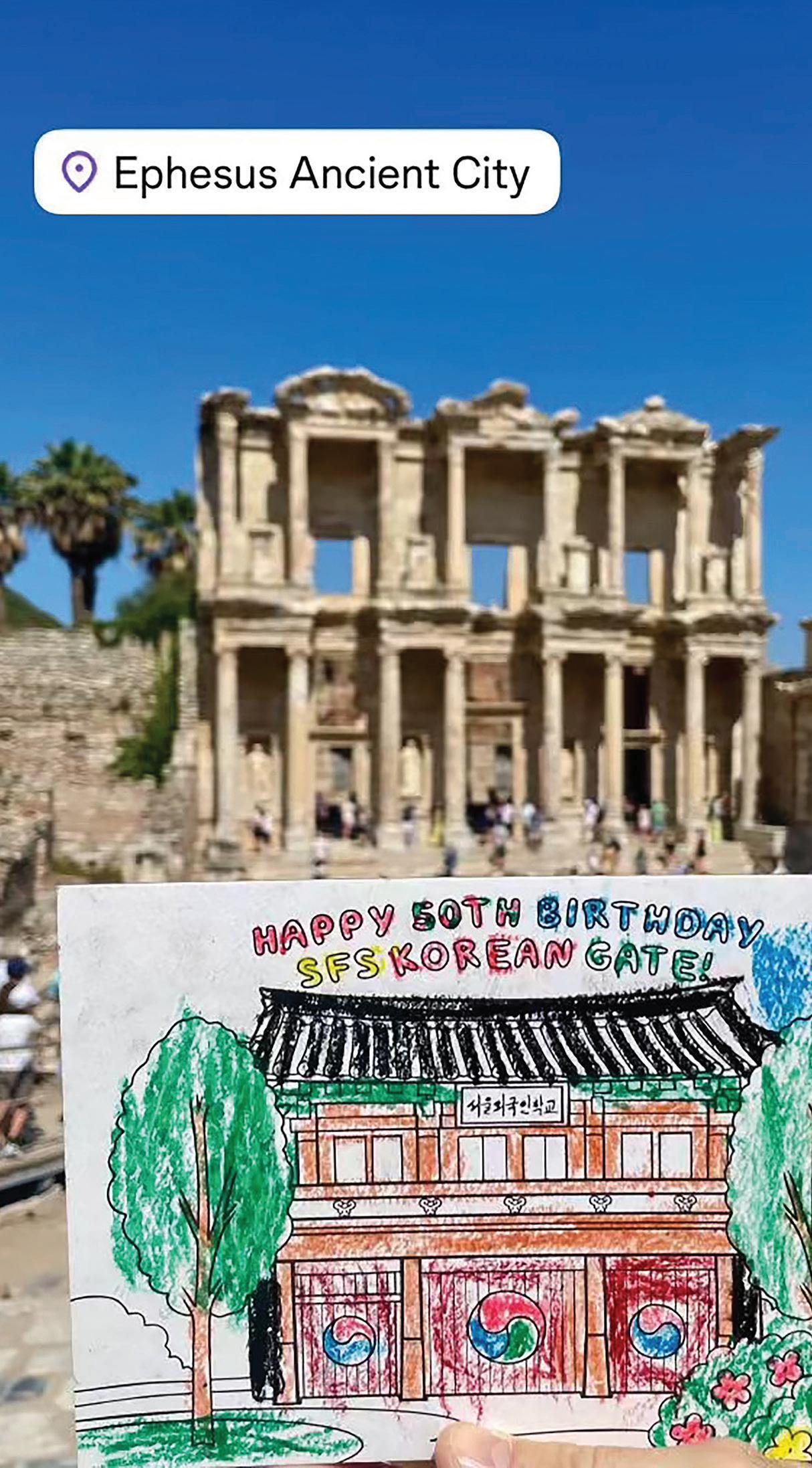
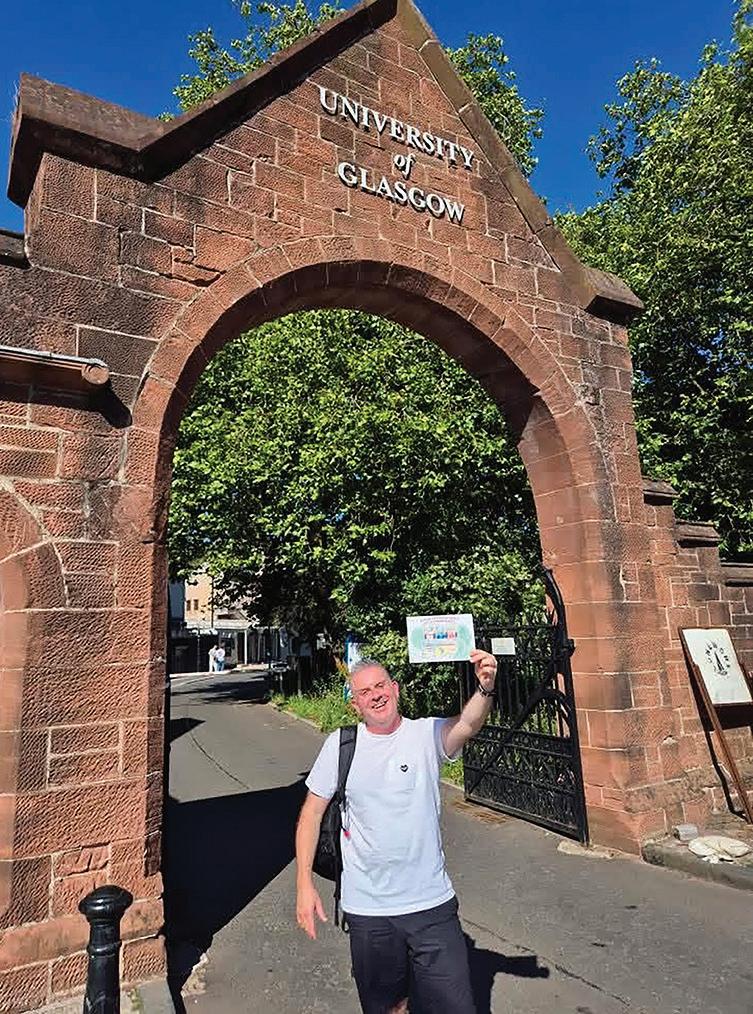
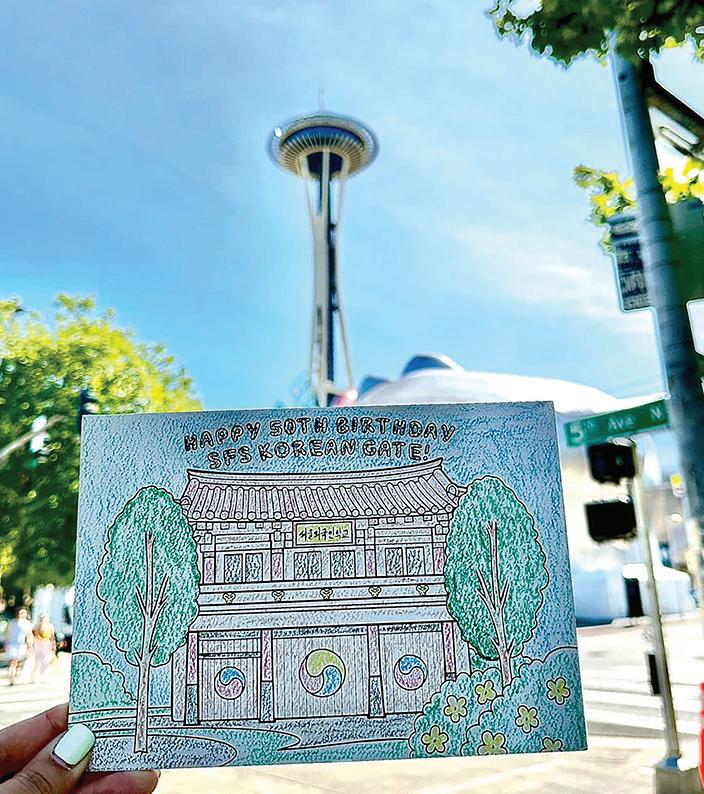
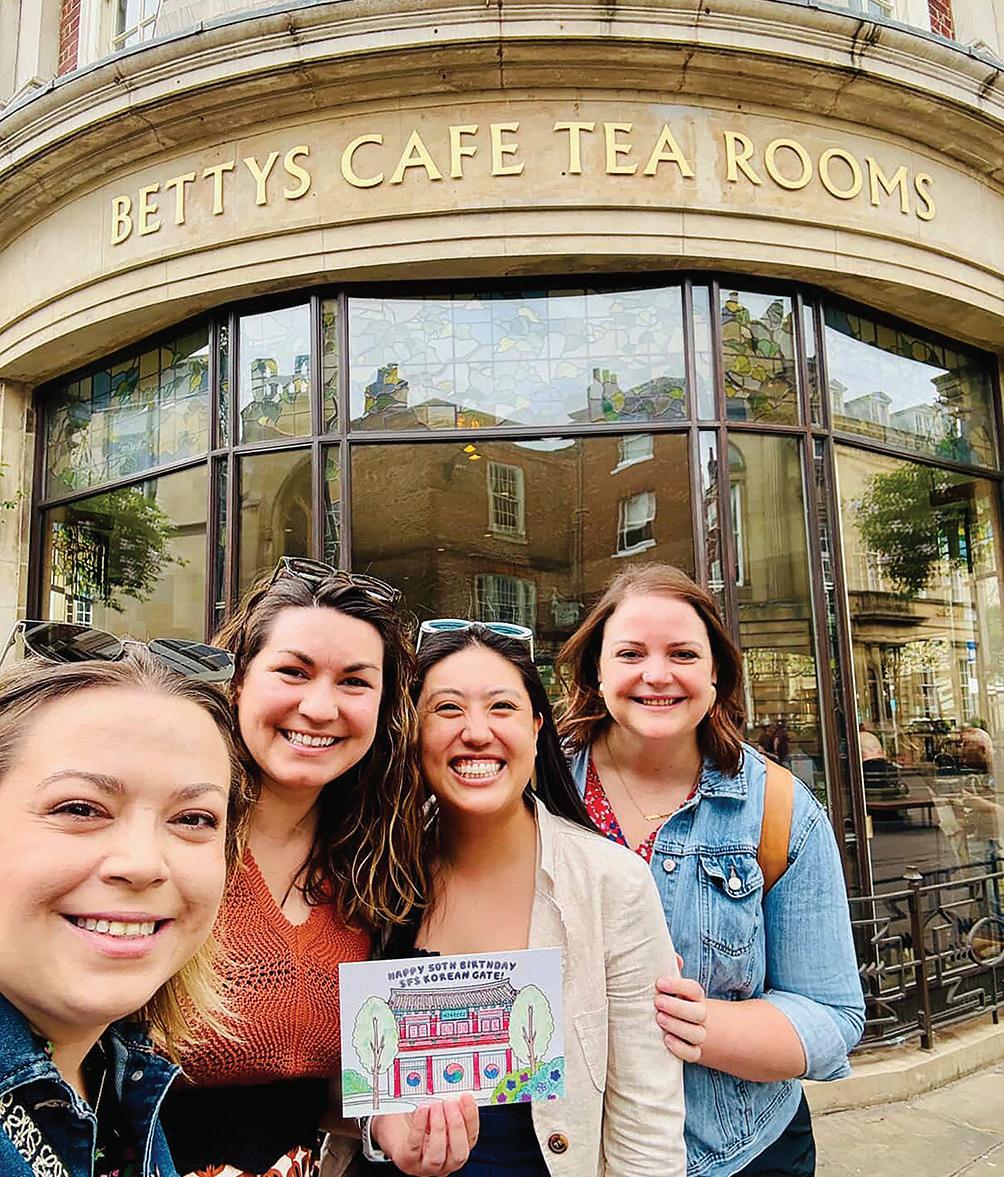
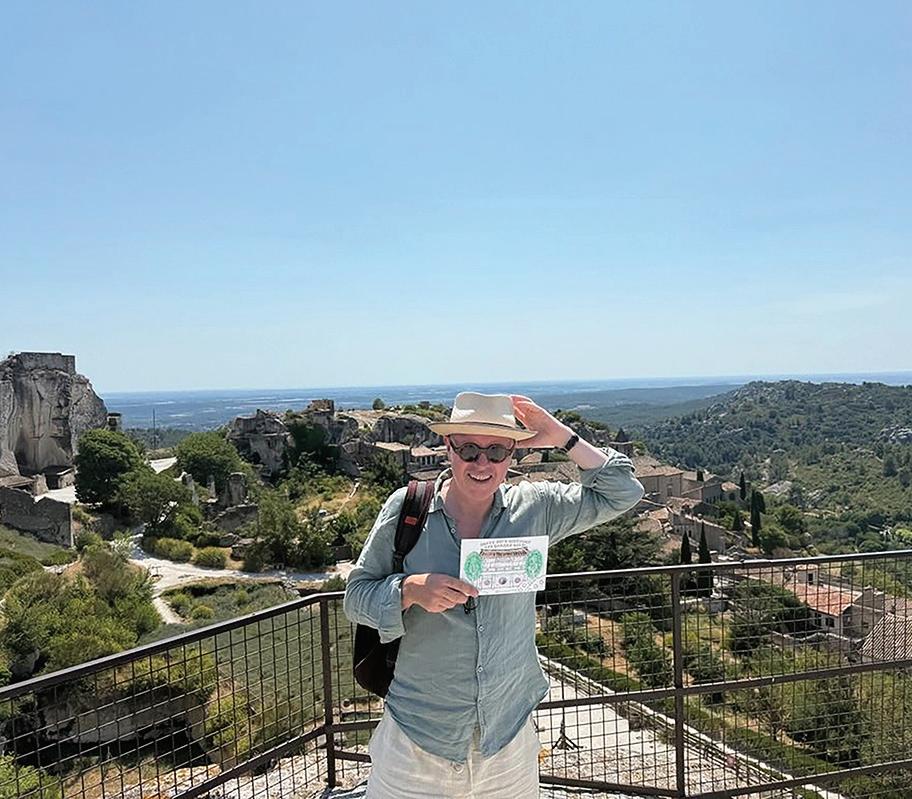
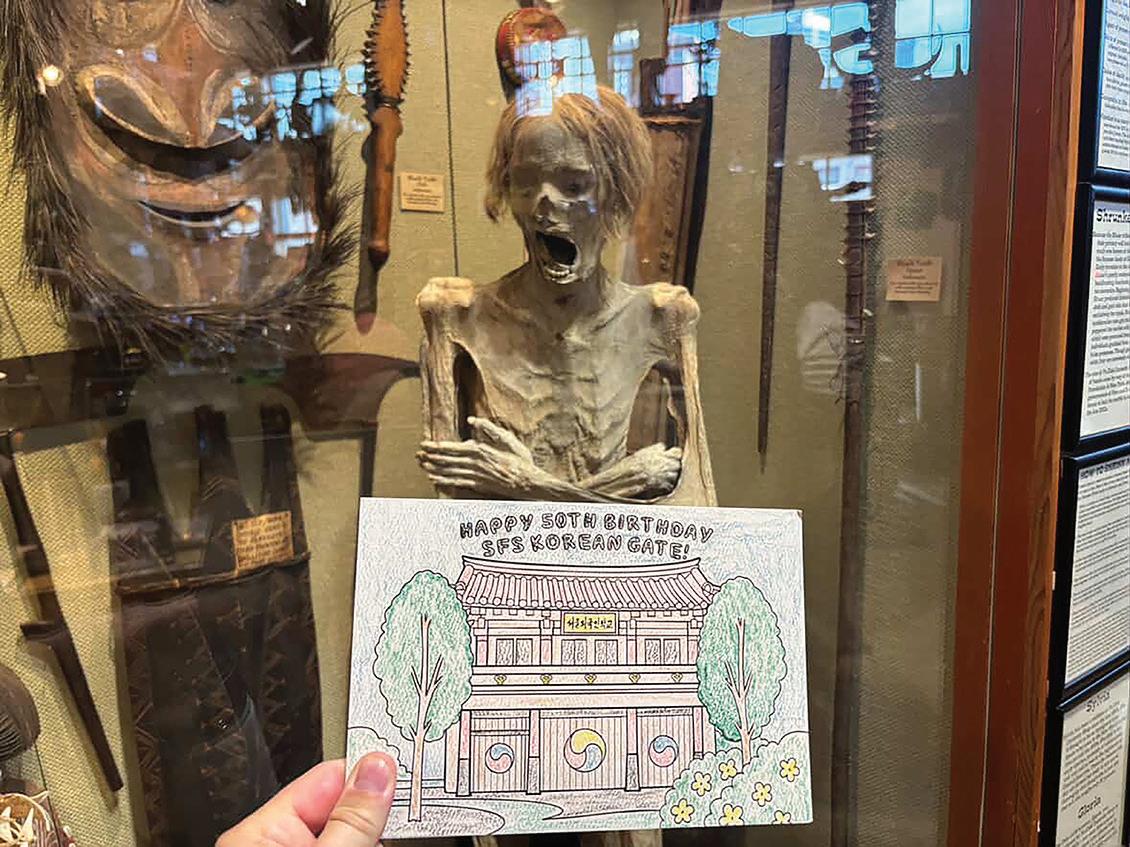
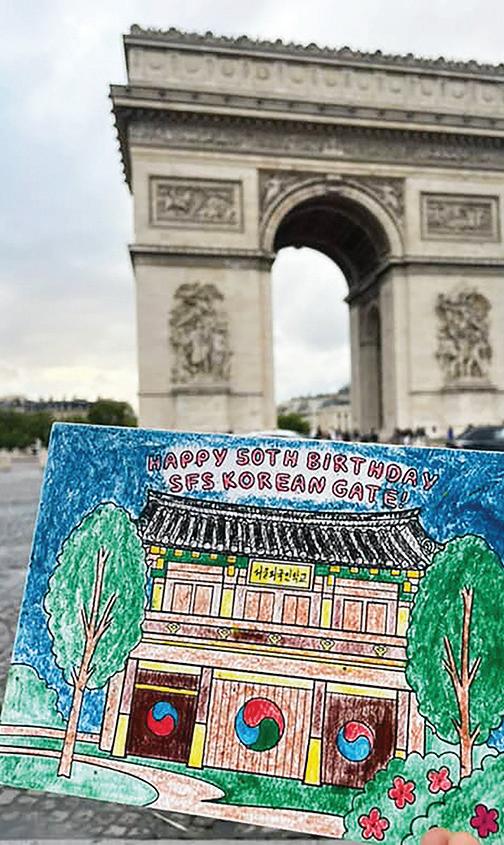
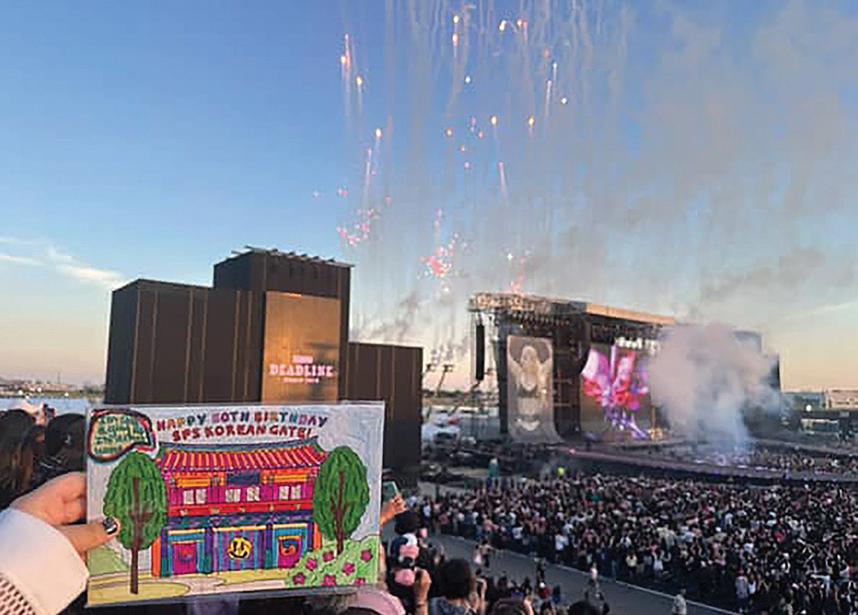
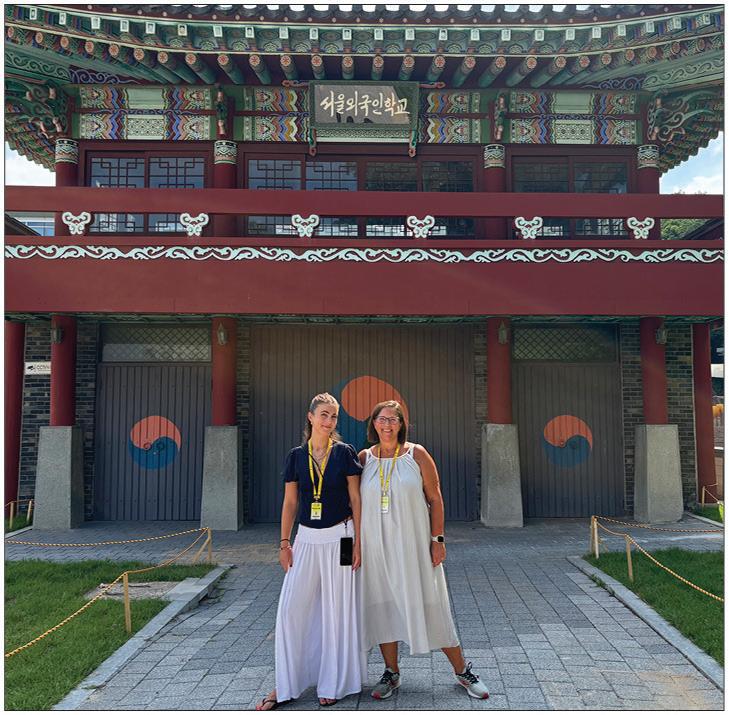
The Korean Gate has always been a serene monument — quiet, dignified, closed.
TRUTH
Technically true… if you count “Senior Lounge” as a cultural site. Before renovations, it was the unofficial HQ for the soonto-graduate — complete with panoramic views, deep life discussions, and probably a few microwaved noodles.
MYTH
The second floor of the Korean Gate has always been reserved for Very Important Cultural Purposes.
MYTH
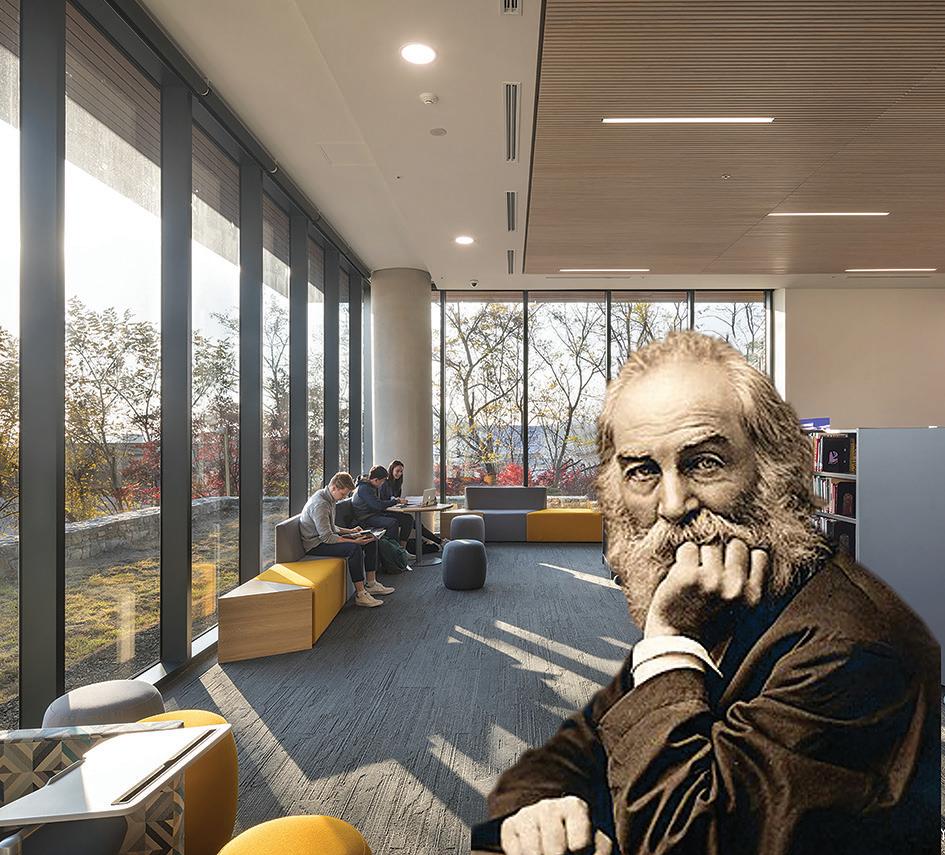
The Walt Whitman Library was named because Walt himself spent a gap year teaching English at SFS.
MYTH
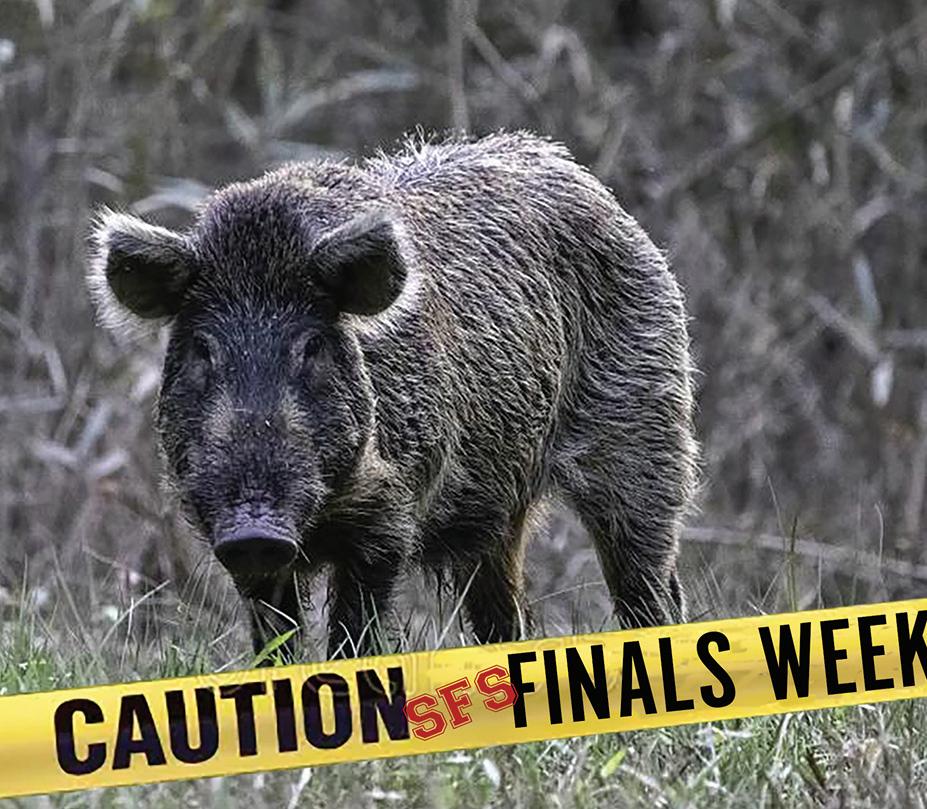
The “Wild Boar Incident of 2013” was an exaggerated metaphor for Finals Week.
TRUTH
Not quite — though we’d read that biography. The library’s name came from an anonymous donor who left the naming up to the school. “Walt Whitman” was chosen to honor the poet’s love of learning, exploration, and the kind of curiosity that feels right at home here.
TRUTH
Oh, it was real. A wild boar charged onto campus one afternoon, GA staff armed themselves with pitchforks and shovels, and a flurry of emails detailed the chase, the capture, and… the aftermath. Strangely, no one can find those emails now. Deleted? Hidden? Or did the boar take them with him?
MYTH
Before SFS moved here, this land was just an empty hillside waiting for a school.
TRUTH
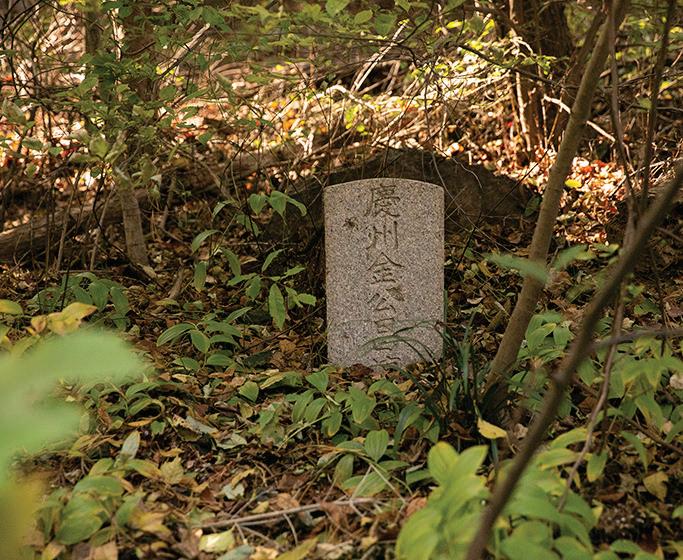
Not quite. The site was once a large cemetery, and the move required careful relocation of burial grounds. A few markers remain in B-dong — quiet witnesses to the campus’s layered history. Ghost stories? None confirmed. But maybe keep the lights on just in case.
TRUTH
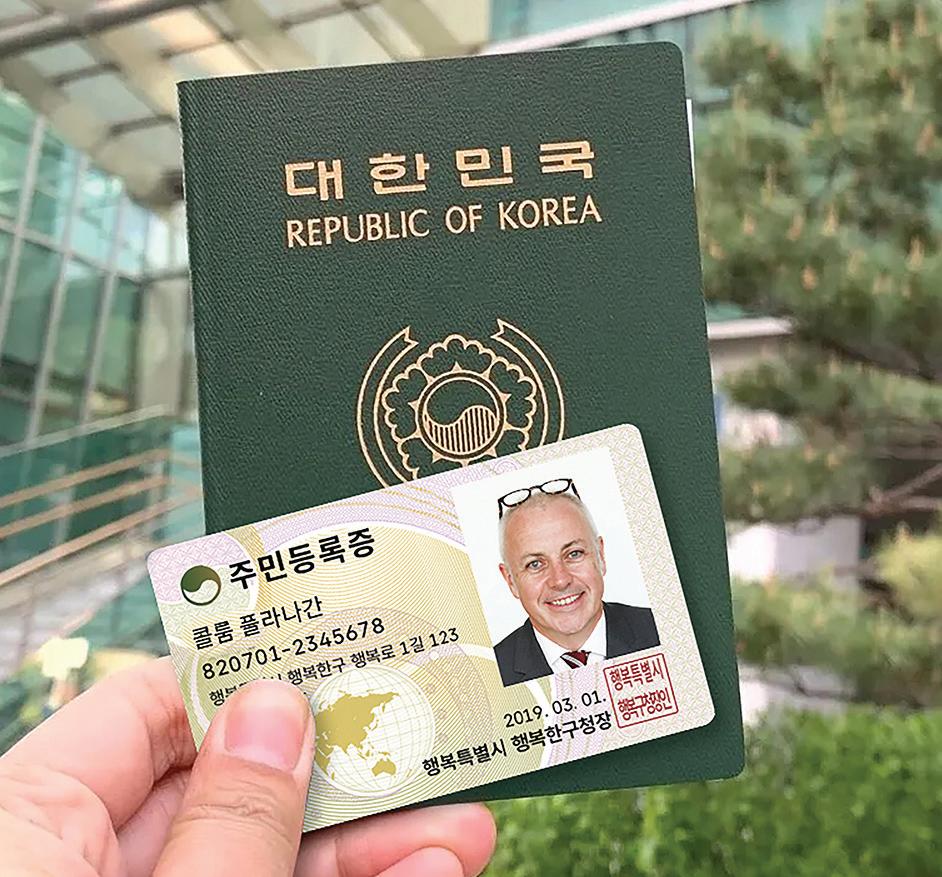
Almost! In 2019, Colm was named an honorary citizen of Seoul in recognition of SFS’s dedication to community service — an honor he accepted on behalf of the students and the wider SFS community. He also received the British Empire Medal for that same spirit of service in Korea… though he doesn’t like to brag about it.
MYTH
Colm Flanagan is a Korean citizen — complete with his own passport and resident registration card.
TRUTH
Not quite — no vaults, no shareholders, no hidden treasure. SFS is the only not-forprofit independent international school in Seoul, which means every tuition dollar goes straight back into the life of the school: our teachers, students, programs, facilities, and community initiatives. The only thing we invest in is excellence.
MYTH
Somewhere up on the hill sits a secret vault where SFS stores all its tuition money.
TRUTH
Almost true! Back in 2014, when North Korea sent propaganda leaflet balloons floating south, several landed right here on campus. What followed was part history lesson, part scavenger hunt, as Social Studies teachers ventured into the woods in search of these unique relics of modern Cold War propaganda. A decade later, in 2024, another balloon made an unexpected reappearance — this time full of paper trash, not manifestos — landing right after the United in Prayer event and briefly putting the school on lockdown. Some traditions, it seems, just keep floating back.
MYTH
Balloons from North Korea once delivered secret messages straight onto the SFS football pitch — and a few teachers kept them as collectibles.
Did you know? If you stand under the Korean Gate at midnight and whisper “SFS” 3 times, you’ll hear echoes of the 1912 choir.
HUMANS FIRST: THE AI CONUNDRUM
By Colm Flanagan Head of School
At this year’s Back-to-School Nights, I spoke about one of the most pressing issues facing education today: the rise of artificial intelligence and what it means for schools like ours. The conversation sparked energy, curiosity, and no small amount of apprehension. For many, the rapid acceleration of AI is both exhilarating and unsettling. Parents, like teachers, are wondering: How do we prepare our children for a future shaped by tools we ourselves are only just beginning to understand?
This year, our school has taken a deliberate step into this terrain. We are drafting a vision statement for AI, setting up a review loop to ensure that this vision evolves as the technology does, and convening a faculty working committee dedicated to exploring how AI should shape—and be shaped by—our teaching and learning. My own focus has always been simple: making sure we recruit and retain the very best teachers, and ensuring that they have the time and space to do what they do best—build relationships with students and spark curiosity in the classroom.
VISION
A vision for AI in education cannot be about adopting the latest tools simply because they are available. Instead, it must reflect the values and aspirations of our school community.
Singer-songwriter Nick Cave recently remarked that while AI can mimic creativity, it cannot suffer, and it cannot truly feel: “What makes a song great is not its perfection but the struggle and courage to make it at all.” His challenge reminds us that the work of students—and teachers—must be about the messy, difficult, and deeply human act of learning.
That means holding together three principles:
1. Safeguarding and Integrity. Students need to be protected—both from the risks of overexposure to
technology and from the erosion of their ability to think, write, and problem-solve authentically. Academic integrity remains non-negotiable; plagiarism cloaked in algorithmic polish is still plagiarism.
2. Maximizing Human Connection. Technology should never replace the relationships that sit at the heart of learning. Our classrooms are first and foremost spaces where trust, curiosity, and belonging are built.
3. Preparing for the Future. AI will be woven into nearly every career and field of study. We cannot responsibly prepare students for life beyond school if we ignore its presence. Our task is to help them develop the discernment to know when and how to use AI, and when to step away.
AI IN MY OWN LEARNING
One of the reasons I am convinced of the need to engage deeply with AI is because I have experienced its potential—and its limitations—in my own life.
In literature, I have revisited the poems of T.S. Eliot with the help of AI. Reading Eliot can sometimes feel like stepping into a dense thicket of allusions—biblical, philosophical, and literary. AI has helped me unpack references I might otherwise have skimmed past, offering insights that allow me to return to the text with greater clarity.
In music, I have leaned on AI to explore new connections between my long-standing love of classical lieder and my passion for jazz. My admiration for Chet Baker, Lee Morgan, or Billie Holiday remains rooted in the texture of their sound and the feeling it evokes—but AI has helped me situate those personal responses within a broader musical landscape.
Even in sport, and particularly boxing, I have found AI to be a provocative sparring partner. Whether considering the
A vision for AI in education cannot be about adopting the latest tools simply because they are available. Instead, it must reflect the values and aspirations of our school community.
nuances of footwork or reflecting on the distinction Oleksandr Usyk makes between motivation and discipline, AI has given me a lens through which to reflect on the psychology of sport, and by extension, on the psychology of learning.
By sharing these examples, I hope to show our students— and indeed our parents and teachers—that AI is not only a professional concern but also a personal tool. Used well, it can expand our curiosity. Used uncritically, it risks dulling it.
A TEACHER AT HEART
My reflections on AI are also shaped by my own journey as an educator. I began teaching in inner-city London in the 1980s, working with children whose resilience taught me as much as I taught them. Over the years, I have had the privilege of teaching students from ages four to eighteen, and one passion has remained constant: teaching children to read and write. There is nothing quite like the moment a child grasps the rhythm of a sentence, or begins to see themselves as a writer with something worth saying.
It is perhaps because of this lifelong commitment to language and learning that I am especially alert to the promise and the peril of AI. These tools can enrich literacy—but they can also short-circuit it. The human act of wrestling with words, of shaping meaning, remains irreplaceable.
Here, the words of Walt Whitman come to mind: “That you are here—that life exists and identity, that the powerful play goes on, and you may contribute a verse.” AI can draft, suggest, and mimic, but it cannot live, and it cannot contribute a verse. That remains the work of each student in our care
APPLICATION: USING AI TO ADD VALUE
The opportunities here are genuinely exciting. AI can:
• Free Teachers for Human Work. Administrative tasks—
drafting lesson outlines, generating practice quizzes, or summarizing reading—can increasingly be supported by AI. Every minute we save here is a minute we can invest in mentoring, coaching, or guiding students through deeper learning.
• Differentiate Learning. With careful use, AI can generate adaptive resources, meeting students at different levels and providing scaffolding or extension at scale.
• Support Skills Beyond Content. When deployed thoughtfully, AI tools can help students practice critical skills such as editing, reflection, or problem-solving.
Yet application is not the same as adoption. One of the most critical questions we face as educators is not “What can AI do?” but “What should AI do?” This requires deliberate choices.
POLICY: BOUNDARIES THAT PROTECT AND EMPOWER
Every international school must develop clear, transparent, and adaptable policies around AI. At our school, this means striking a balance between encouragement and prohibition.
• When to Permit. Drafting early ideas, conducting background research, or checking understanding.
• When to Prohibit. Writing an essay in class, solving a math problem step by step, or engaging in debate.
• Safeguarding. Protecting against exposure to harmful content, data misuse, and addictive design.
This balance echoes the Letter of St. James: “Show me your faith without deeds, and I will show you my faith by my deeds.” It is not enough to believe in responsible AI use; we must act deliberately—sometimes by allowing, sometimes by forbidding— to ensure students grow in both wisdom and integrity.
THE MYTHS THAT MAKE US:
By Kristin Yi
Editor’s Note
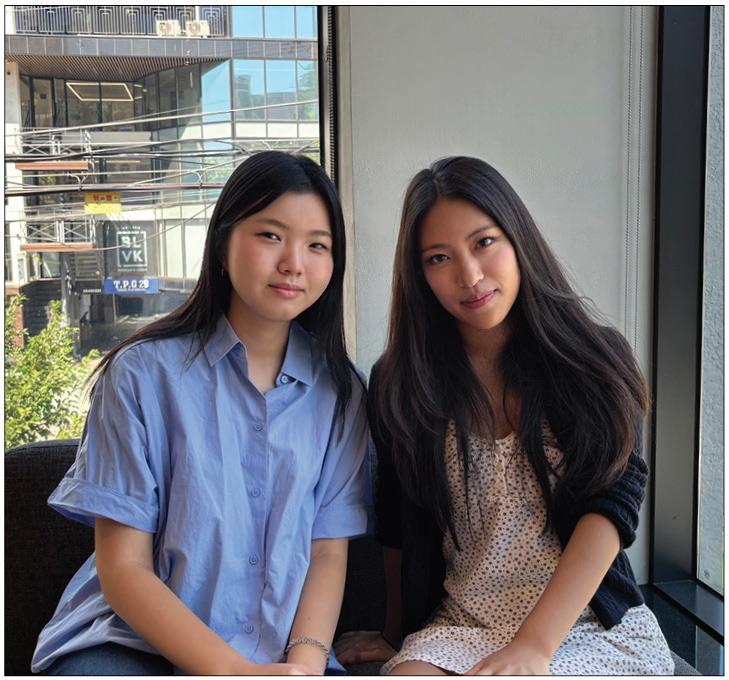
This story holds special meaning for our community: it was written by Kristin Yi ‘25, who interviewed fellow alum Geo Yoo ‘20—both now students at the University of Chicago. We’re deeply grateful to them for taking the time to connect and share this thoughtful conversation, which beautifully bridges SFS generations and perspectives.
Myths are defined as widely held but false beliefs. For example, the five-second-rule: the belief that dropped food is safe to eat if retrieved quickly enough. Most people know it isn’t true, yet many still act as if it is. The point isn’t about accuracy: it’s about comfort. The belief offers a manageable way to navigate uncertainty.
Seoul Foreign School, arguably, has many of its own myths. The myth that DP students have time to sleep. Just kidding. Maybe. Or that if you’re not stressed, you’re doing something wrong. Hence, the theme of this Banner issue: Mythbusters.
Ironically, however, the greatest myth might just be that all myths are meant to be busted. See, at a highly successful and well-resourced institution like SFS, certain myths are self-fulfilling. For instance, “SFS’ primary purpose is acting as a funnel into the most prestigious institutions.” Due to its consistent track record, high academic expectations, and the ambition embedded in its culture, the myth perpetuates itself. The most high-achieving students chase the image they’ve inherited, and in doing so, make it true.
Yet there is something that makes SFS distinctive. The true value in an SFS education is in teaching students how to navigate and reinterpret its myths: we are taught that the myth isn’t false; it’s incomplete. What SFS cultivates is a generation of students who don’t simply inherit these narratives—they test them, edit them, and pass them forward in more complex forms.
Geo Yoo, an SFS alumnus who graduated as Class of 2020, demonstrates this in practice. On paper, his trajectory looks mythic: SFS → UChicago → Economics & Computer Science Major → Morgan Stanley. But what appears perfectly linear from afar was, up close, full of pivots and recalculations. Through Geo’s story, three SFS myths unfold: each one tested, reshaped, and given new meaning through experience.
MYTH ONE: THE LINEAR PATH = SAFETY & CERTAINTY
From a distance, Geo’s story reads like the archetypal SFS success: study hard, aim high, and follow the well-marked route to achievement. But when I asked him whether the path ever felt as seamless as it looked, he laughed. “Not even close,” he said. “I think the ‘linear path’ only looks linear because we tell it that way afterward. In real time, it’s chaos.”
The “linear path,” he explained, promised stability: that if he worked hard enough, everything else would follow. But the further he went, the less that seemed to hold. “Things fell through, interviews didn’t work out, I’d think I was on track, and suddenly I wasn’t,” he said. “It’s not that the myth is false; it’s just incomplete. No one tells you how unstable the line feels when you’re standing on it.”
That instability, however, became formative. Instead of confirming the myth, Geo reframed it. The real measure of progress wasn’t how smooth the path looked but how he responded when it broke apart. “You start realizing what actually matters are the intangibles—the ability to pivot, to stay calm, to keep showing up,” he said.
In this, Geo didn’t reject the myth so much as redefine it. The path, he realized, was never meant to be straight—only forward.
MYTH TWO: PRESTIGE IS THE POINT
If the first myth promised safety, this one promised satisfaction. The name of the school, the university, the company: each was supposed to speak for itself. When I asked Geo whether prestige felt like an endpoint, he paused before answering. “It’s validating, for sure,” he said. “But it fades. You get in, you get the offer. Then, you realize none of it guarantees you’re good at what you do.”
Yet there is something that makes SFS distinctive. The true value in an SFS education is in teaching students how to navigate and reinterpret its myths: we are taught that the myth isn’t false; it’s incomplete. What SFS cultivates is a generation of students who don’t simply inherit these narratives—they test them, edit them, and pass them forward in more complex forms.
Prestige, he admitted, had its appeal. It opened doors, eased introductions, and built early credibility. “It gives you the benefit of the doubt,” he said. “But after that, it’s on you. You still have to prove you can deliver.” What he found behind the titles and logos wasn’t glamour, but pace: long hours, steep learning curves, and the constant pressure to adapt. “That’s where you figure out what really matters,” he said. “Not the name on the building, but whether you can keep up, solve problems, and work with people who are better than you.”
Geo’s view of prestige shifted from finish line to starting block. It became a launchpad: useful, but temporary. Its value was in access, not arrival. And, as he put it, “The door opens because of where you came from, but it stays open because of what you bring.”
MYTH THREE: SUCCESS = CONFORMITY
At SFS, the formula is well known: strong academics, respected majors, secure careers. Geo’s choices seemed to fit that template perfectly. “Yeah, I probably looked like I was checking boxes,” he said, smiling. “Econ, CS, finance—it’s the classic combo.”
But inside the mold, he found space to move. Layering Computer Science onto Economics wasn’t about adding another credential; it was about broadening how he thought. “It forced me to see problems from two angles,” he said. “Finance trains you to look at efficiency. CS makes you think about structure. Together, they make you think in systems.” The same applied beyond the classroom: he mentored younger students, joined crossdisciplinary projects, and kept looking for “room to do things differently within the system that everyone else was following.”
Conformity opened the door; divergence kept it interesting. “There’s value in the structure,” he said, “but if you only follow it, you never figure out who you actually are within it.” The myth
endures, but its meaning shifts: success might begin with fitting the mold, but the real value lies in learning how to reshape it.
And so, the paradox endures: all myths invite being disproven, yet some find new life in being lived. At SFS, myths don’t vanish under scrutiny; they evolve with every student who steps into them. Each generation encounters the same stories—of excellence, of success, of prestige—and each leaves their own revisions behind.
Geo’s story is one version of that inheritance: the myth of certainty turned into resilience, the pursuit of prestige into purpose, the structure of conformity into space for individuality. In this sense, SFS’s legacy isn’t about sustaining myths or ‘busting’ them. It’s about cultivating students who can think through them: who can read between the lines and rewrite them for whoever comes next.
The myths might make us; yet SFS teaches us that we have the power to make the myths.
Kristin Yi ‘25 is a first year student at the University of Chicago where she hopes to study a combination of business, economics, cognitive science / neuroscience, and philosophy. While at SFS, she founded IBPro and M.I. Space, AI- and VR-based learning tools developed under Dr. Howard Gardner’s advisory at Harvard GSE. Aside from these projects, she has pursued work in creative writing as an Amazon #1 best-selling author, in social entrepreneurship through founding It.Girl.Swim (a swimsuit brand supporting the Malala Fund), and in advanced scientific research of chromosome condensation.
Photo by Joon Woo Jeong & Seoyoon Jin, G9
BURNING QUESTIONS: LIVE FROM HIGH SCHOOL
By High School PoV Club
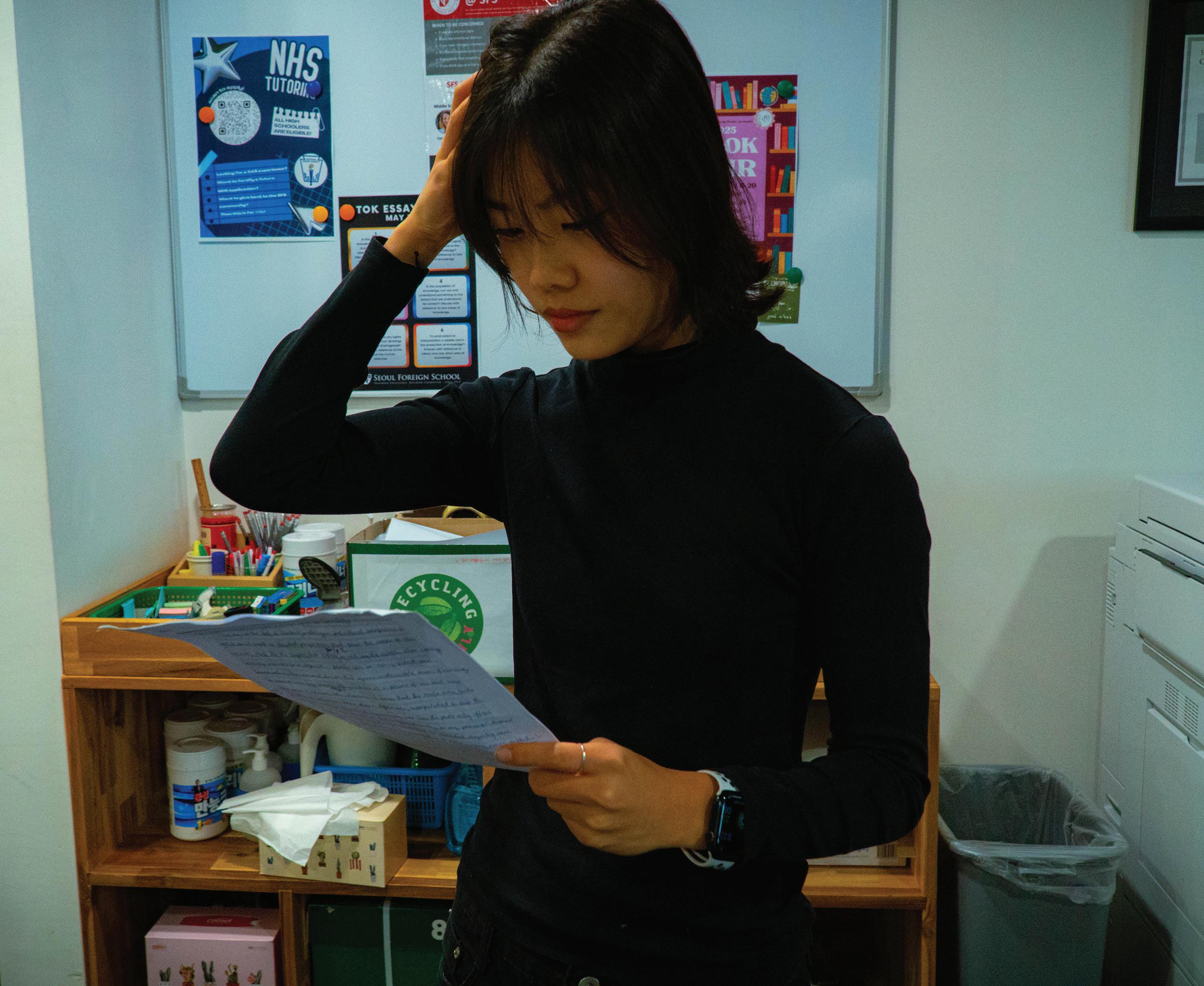
Is it true that smart people don’t need to study?
It seems like all the top-mark students breeze through all their assessments, seemingly taking no time to study. However, different students have different approaches to learning, with some able to grasp concepts and retain information more easily than others, so it may seem like they don’t need to invest as much time into their studies. Although, in the end, studying is a necessary habit for all students to better understand concepts learnt in class.
Myth, Truth & Photographs
by Amy Lee & Seoyeon Kang, G10
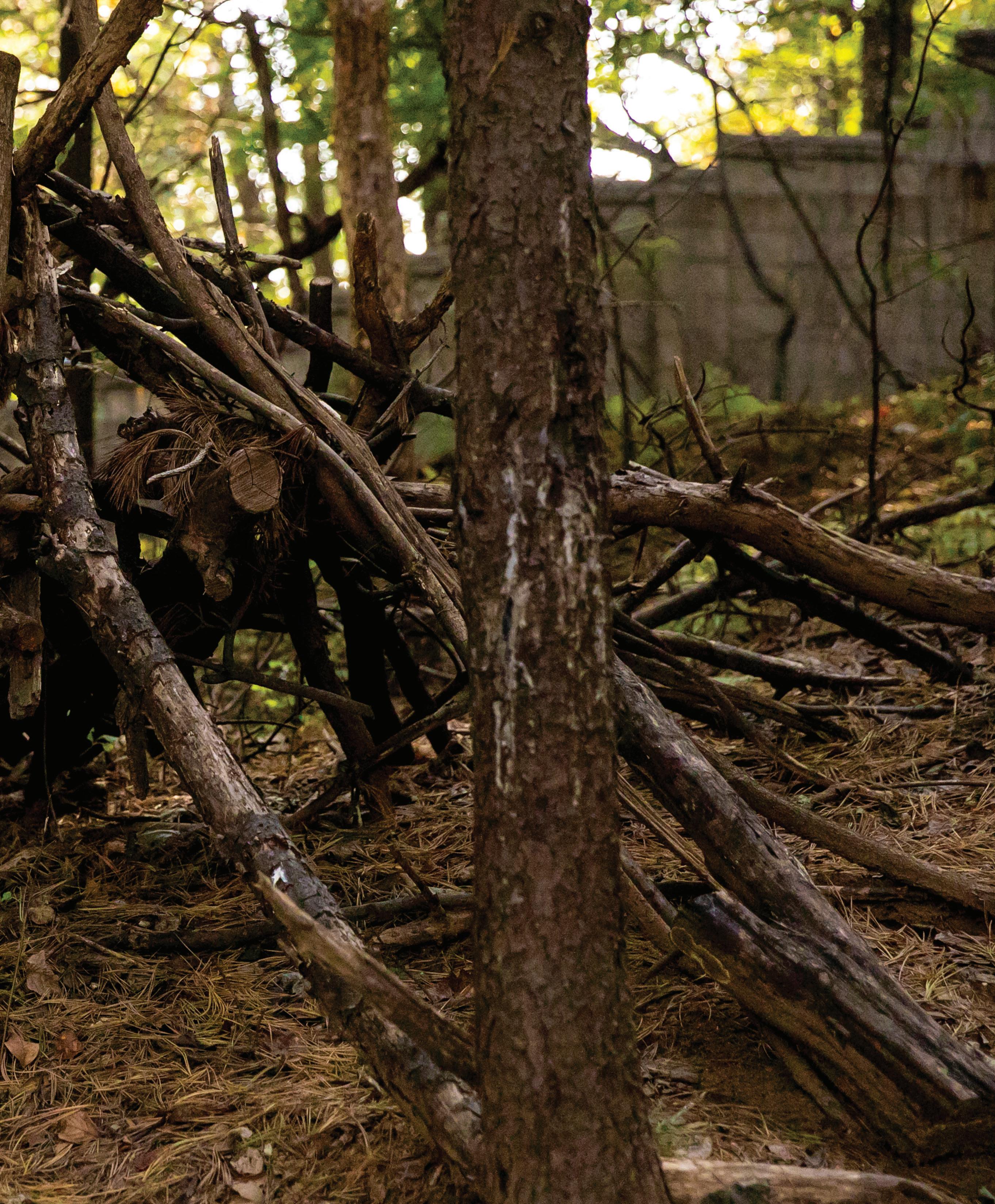
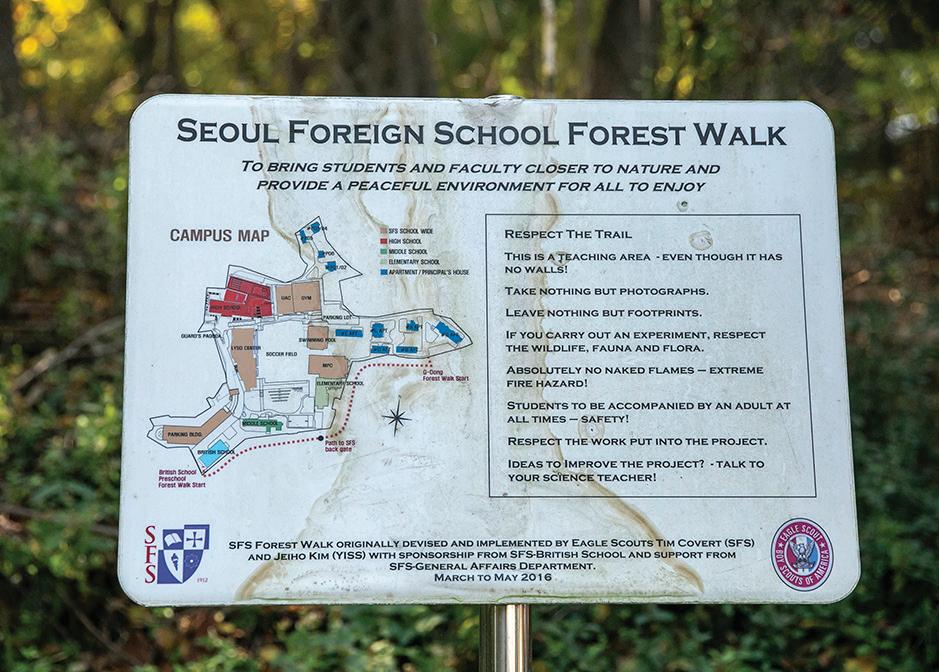
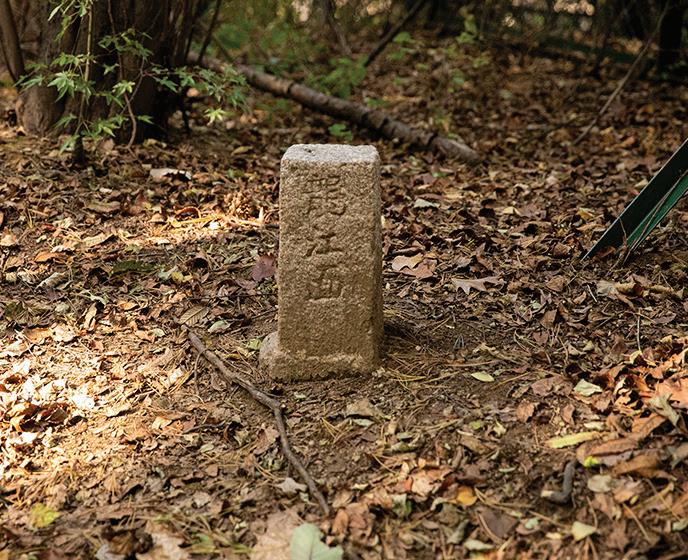
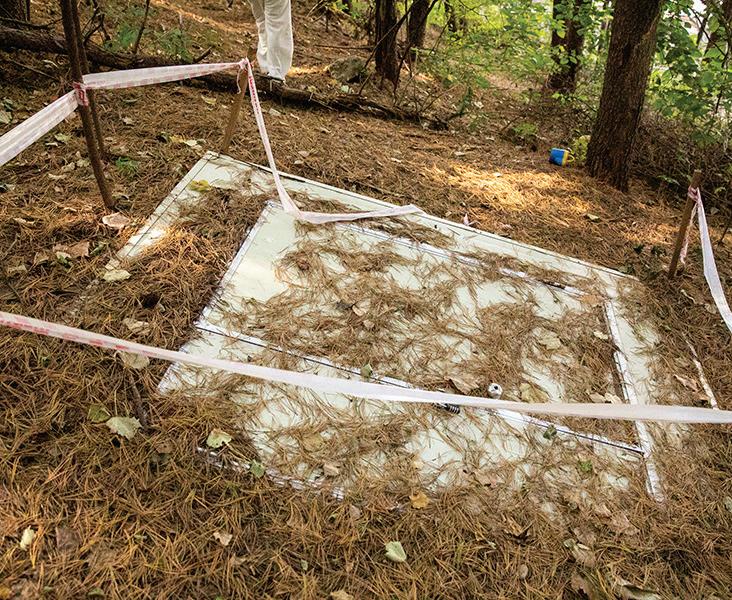
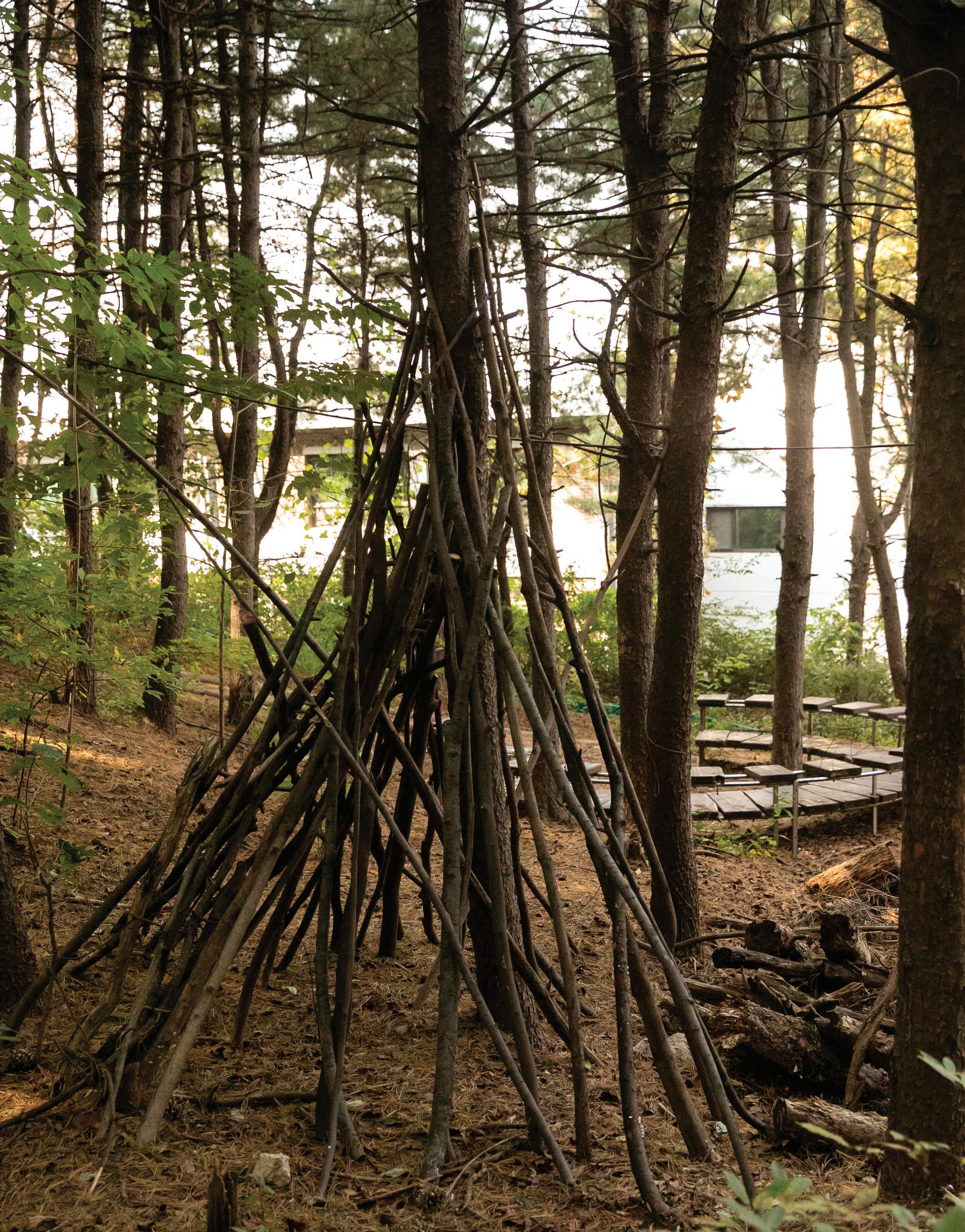
HThe SFS forest is haunted by the souls of those who once lay in the graveyard beneath it.
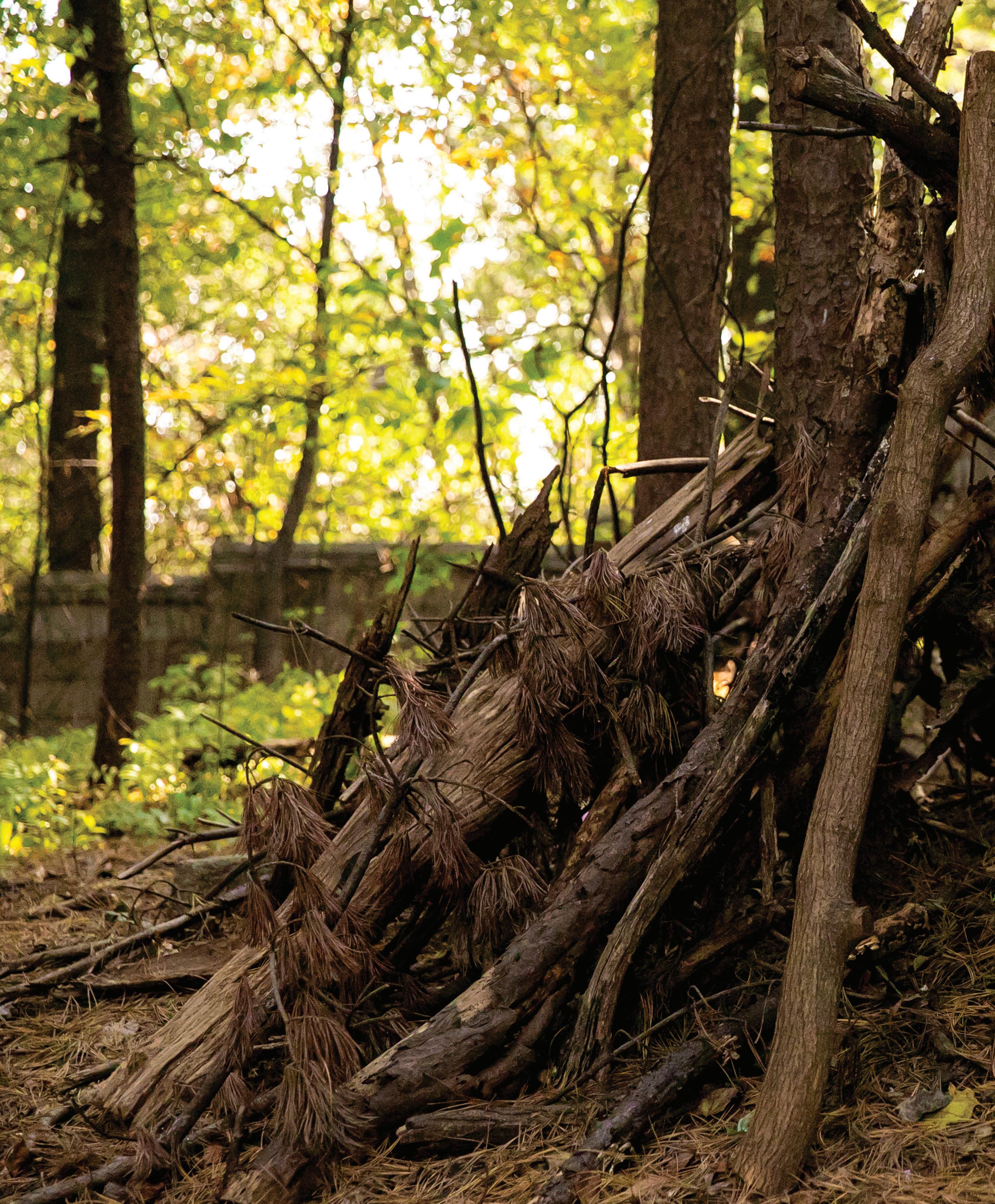
ave you ever wondered what happened to the graves that once lay beneath the land SFS was built on? It is said the souls still haunt the forest, leaving cryptic clues and remnants of their past. In reality, these “mysteries” come from elementary art projects, stray littering, or middle school science projects, often related to Mr. Knox’s alleged secret bunker. *And as we learned on page 10, SFS Mythbusters, all 2,400 graves were carefully relocated before the school was built.
Myth, Truth & Photographs
by Joon Woo Jeong & Seoyoon Jin, G9
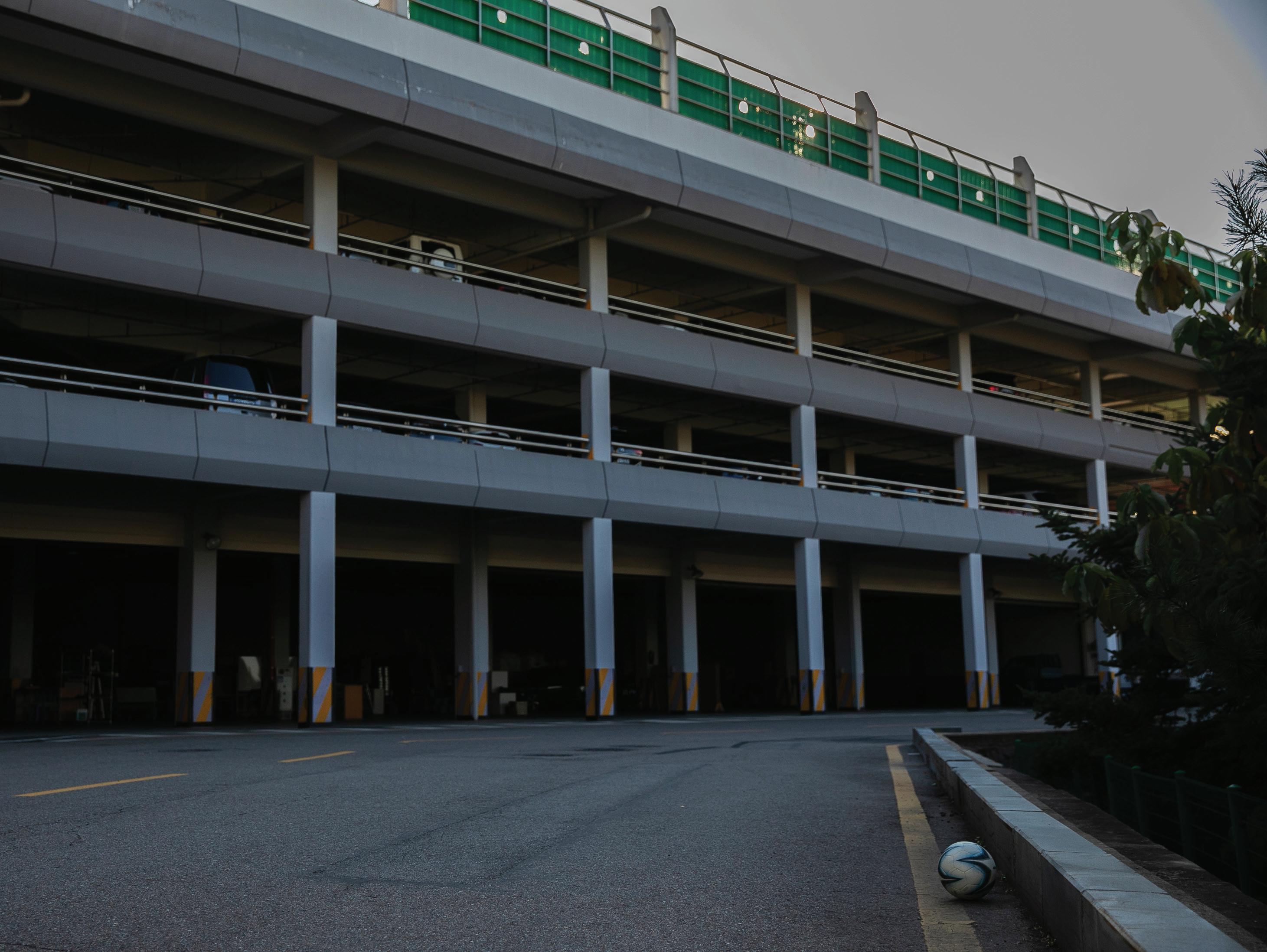
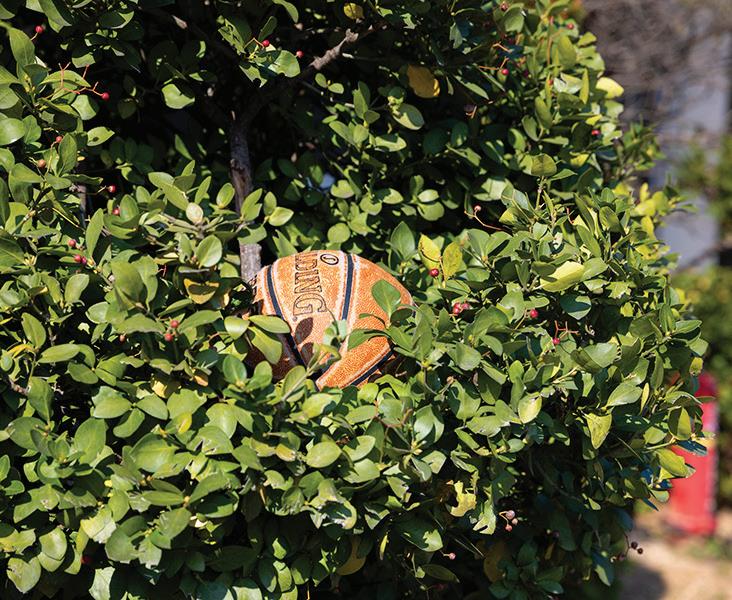
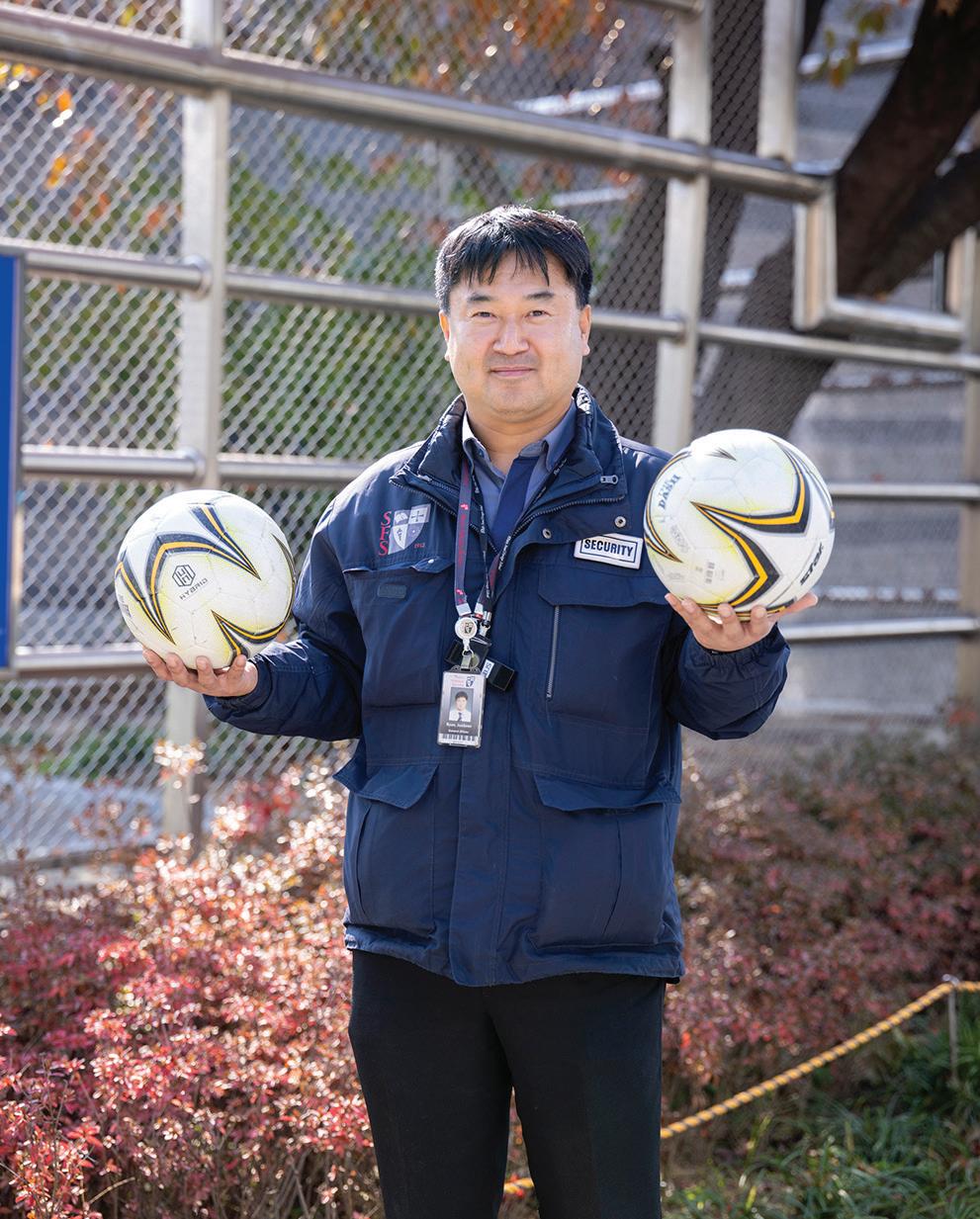
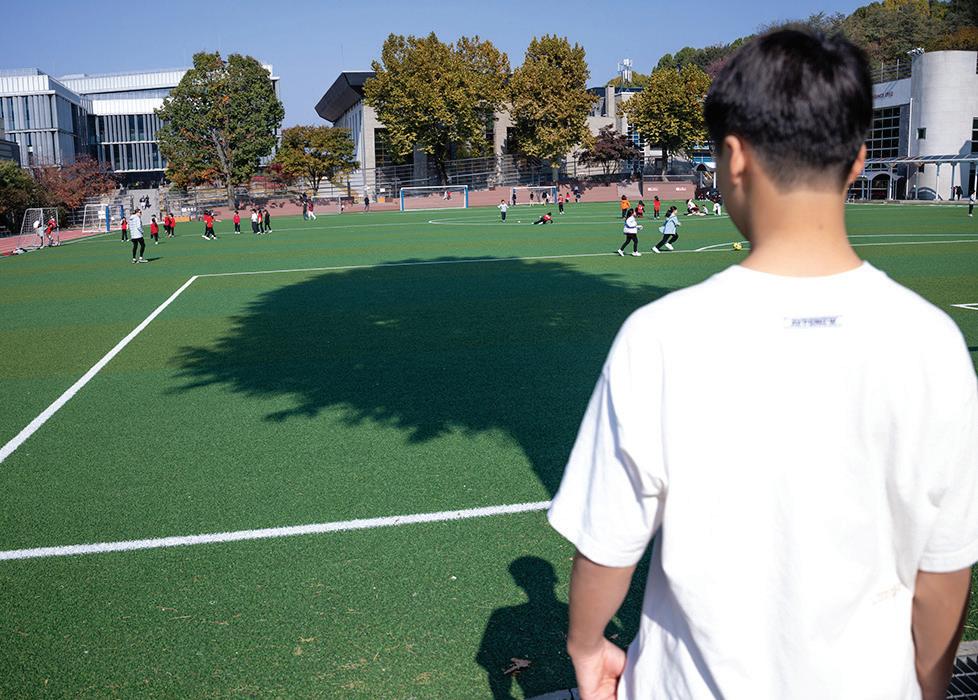
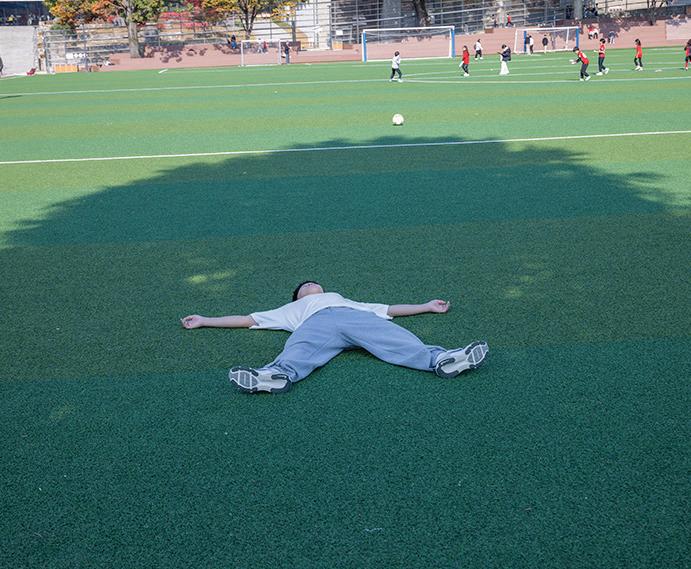
A playground mystery— Balls kicked over the British School fence vanish forever...
Have you ever wondered what happens to the balls that fly over the towering fences above the SFS parking lot? Well, it turns out that the balls don’t disappear… but they end up in the bus garage area and come to a rest or fall into the ditch right behind it. Most of them actually turn up on the playground or the field the next day thanks to our passionate security guards at SFS who retrieve them whenever a ball is seen. Sometimes, they even run after the ball rolling down the hill!
Myth, Truth & Photographs
by Eugene Jeong & Rohwi Ahn, G10
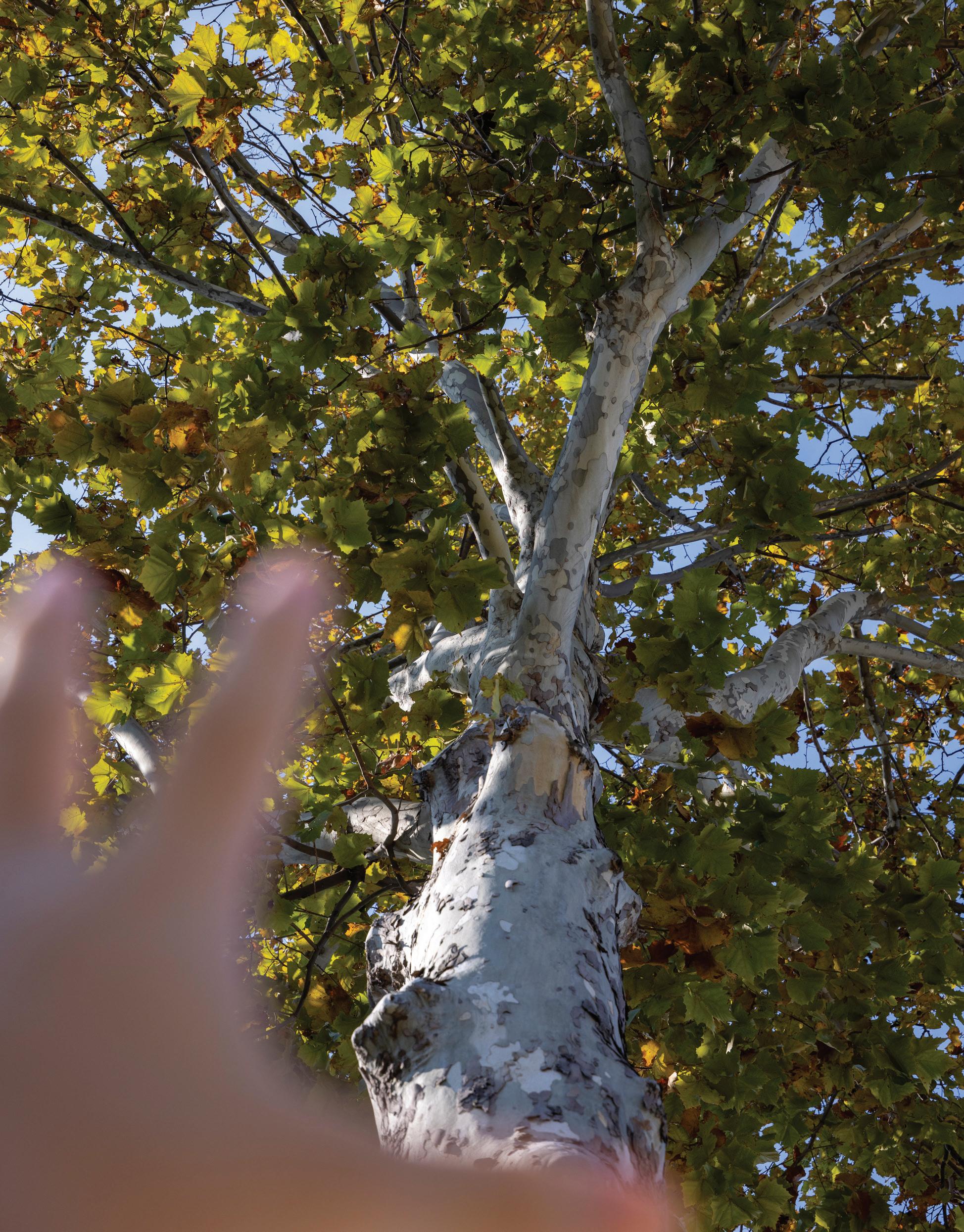
THow old is the tree next to the Middle School, really?
his tree is one that any SFS community member will recognize. It is the one on the hill, overlooking Yeonhui-dong with its branches extending out into the sky. This tree has been a part of our lives for many years, and it has always been there like a backbone to our school. While this tree may seem like it has only been around for a few decades, it actually has been around longer than the founding of SFS in 1912. The exact date of planting is unknown, but it is 100% older than SFS’ history.
Myth, Truth & Photographss
by Nicholas Ha & Tobias Kim, G9
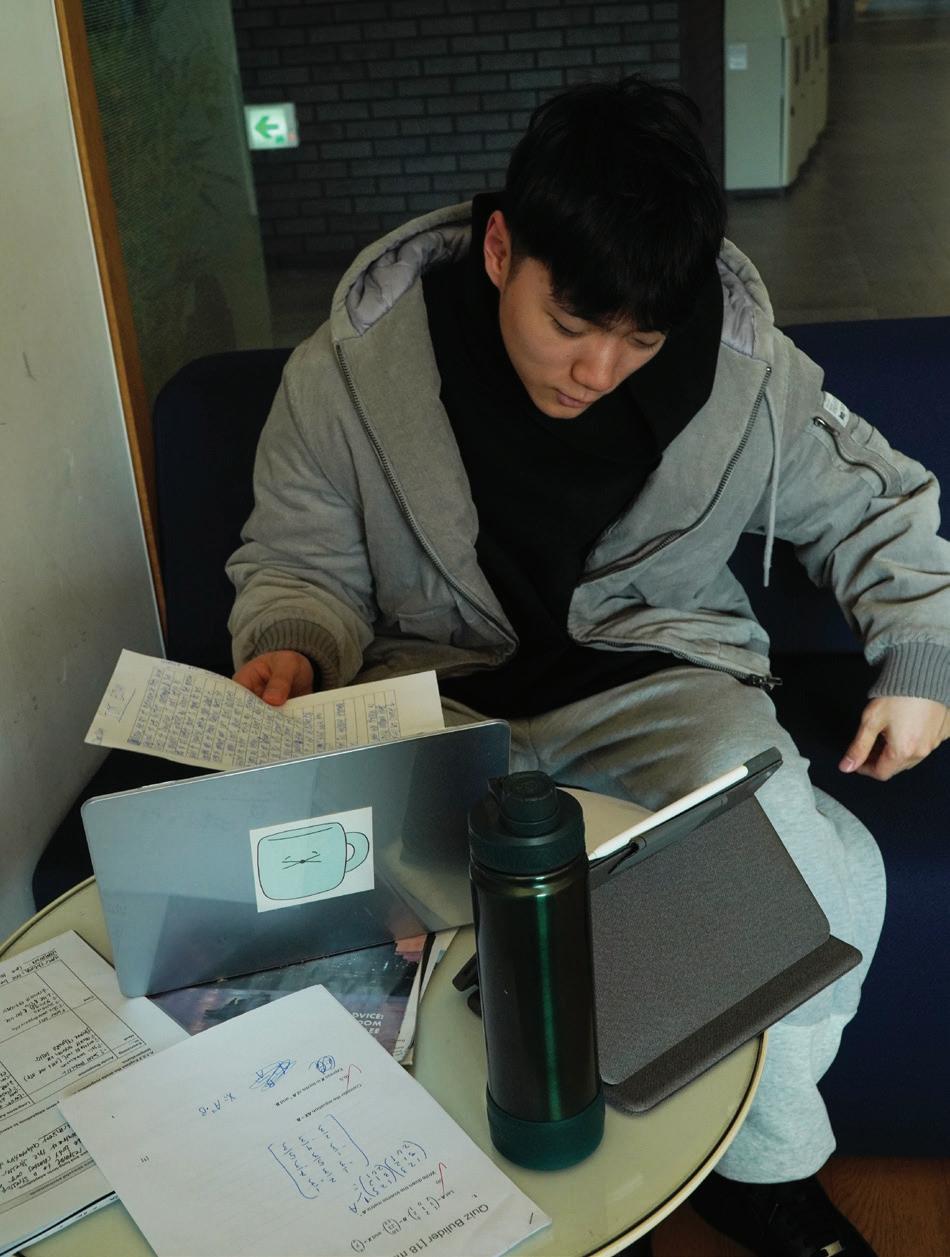
Can you earn a 7 by only studying the day before?
Sure, if the subject is lunch. IB rewards months of practice, past papers, and hard nights grinding, none of which fit into a single midnight spree. Cramming may have short term effects, but it lacks volume, reasoning, and most importantly, sleep. If you really want to get a 7, study over weeks, use the study blocks, take quality notes, and as I said before, SLEEP.
Myth, Truth & Photographs
by Isaac Kang & Aidan Song, G12
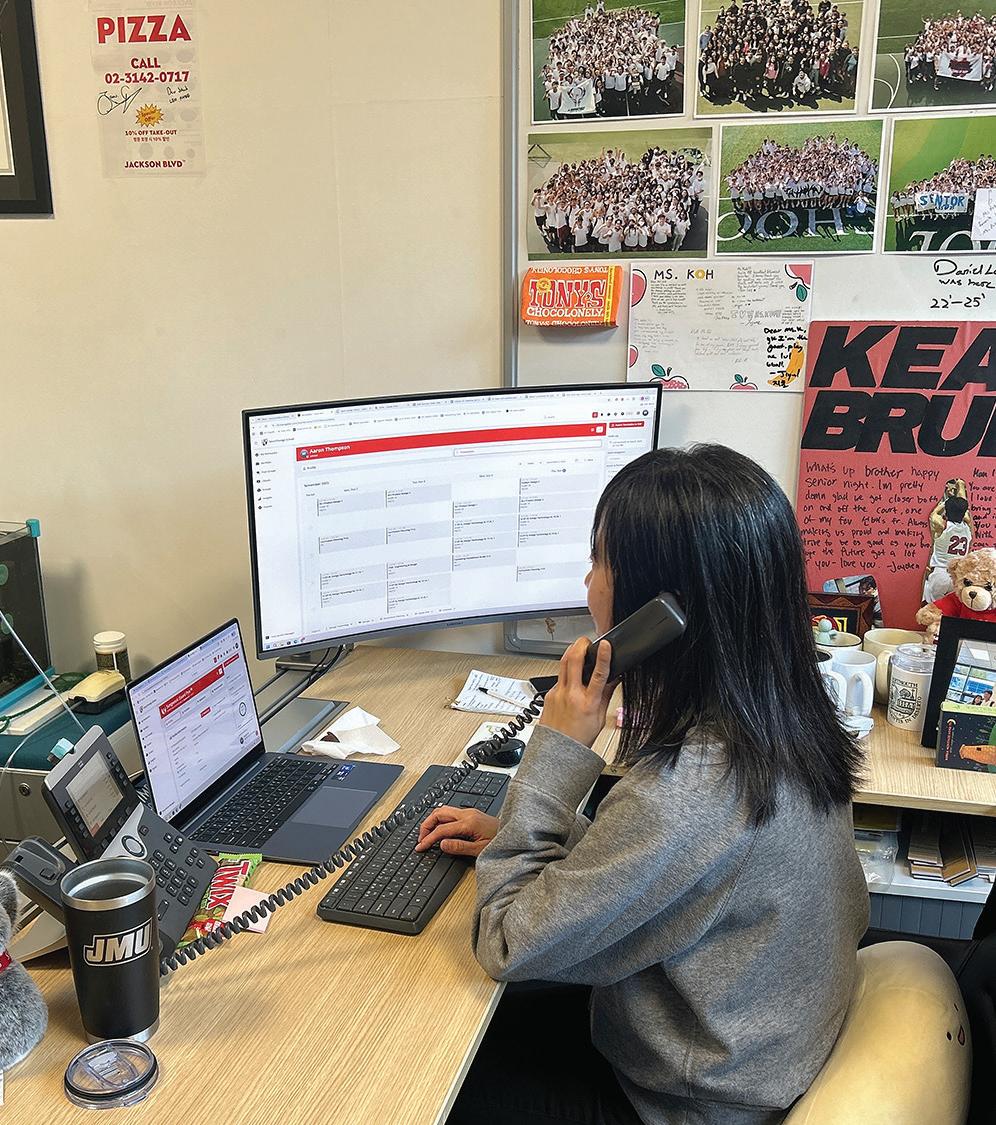
EMs. Koh plays games during school hours!
veryone knows that one of the busiest people in the High School is Ms. Koh — our ever-dedicated Administrative Assistant who keeps the whirlwind of high school life running smoothly. But one day, a curious myth began to spread: What if Ms. Koh secretly plays games during school hours, just like the students?
Determined to find out, we crept up quietly behind her desk... only to discover her juggling a phone call, an overflowing inbox, and a tangled calendar — all at once! It seems Ms. Koh’s “game” is mastering the ultimate challenge: keeping the High School in order!
Myth, Truth & Photographs
by Aiden Koo, Joanne Kim & Nathan Choi, G10
Math Isn’t (just) About Numbers
By Sam Han MYP Math Teacher
Mathematics should help people flourish.
Idid not understand what this statement meant when it was first introduced. Over time, I had to think about it, sit on it, and reflect on it to realize how I had not been as serious about math education as I thought I was. It was a subtle yet eyeopening experience, revealing how much I didn't know about the subject I have been teaching for almost a decade. Before I continue, I would like to give credit to Professor Darryl Yong of Harvey Mudd College, who came to speak at the EARCOS conference and turned my view around.
We have all heard this—as math teachers, as math students, as math parents. Among many other beliefs, we believe that in embracing a growth mindset, you find the grit to keep going, the strength to persevere, and the determination to turn challenges into success.
I am not here to say that these skills or mindsets or characteristics should not be used in math education. I still absolutely believe that these mindsets are essential for growth in math education. However, after listening to Professor Yong, I realized that I had all these tools to build something, but I did not know what I was creating. I had tools to help students succeed in math—to have a growth mindset, show perseverance, and demonstrate grit to overcome productive struggle. These tools are valuable too, but to what end? Just to score high on math assessments? To get into a good boarding school? To get into a good college? To get a good job? When Professor Darryl Yong urged secondary math teachers to approach math differently, I knew something was amiss. There had to be
something more than what I had been preaching to my students and parents.
Mathematics should help people flourish.
When I first heard this, I probably had the same reaction as many people do. What? Math? Flourish? What is he talking about? What do you mean, flourish? How does math help a person flourish? When I think about someone flourishing, I think about someone who is thriving. Someone who is really enjoying life; someone who has everything going their way. The world is opening up to them, and all paths are possible. Does math help people flourish?
During Yong’s presentation, I heard a word that I never thought I would hear in a math class: virtue. Math should not be a set of skills to learn and regurgitate. Math should cultivate virtues. Virtues like beauty, exploration, truth, and love.
Math should teach students how to see beauty. In math class, there should be a space for reflection and time to stop and wonder. What is one idea you found beautiful? Why is that idea beautiful to you? When we stop and wonder together, we can learn so much from our students and what they think about beauty.
Math should cultivate a basic human desire for exploration. In every math problem set, there should be an exploratory problem to enchant our students—to invite them to explore, to keep them coming back for more. Students should be given the opportunity to be lost in math and emerge from it as different people. Math should cultivate a desire for truth.
Math should keep our students’ thirst for truth alive. Pose an interesting question and let it dangle for a few weeks. Here was an interesting interview question shared by Professor Yong: How many times is a toilet flushed in New York City during a commercial break in the Super Bowl game? When employers ask this question, they are not looking for human calculators to compute what is given to them. They want to know how their future employee thinks. They want to know how their future employee can be resourceful. Where would they start in this process? They want to know their future employees’ virtues.
Math should cultivate a space for love. Throughout history, math has been used to discover, uncover, and unveil different people or circumstances. Math should be used to read people differently. Math should be used to make us learn about others whom we overlooked or not paid attention to.
Mathematics should help people flourish.
Sophie Germain. She was a brilliant mathematician in her time but had to use a pseudonym to pretend she was a man in order to share her ideas and brilliance in mathematics. If mathematics can cultivate love and truth, it should help reveal the unseen. Mathematics should help people to read others differently. Mathematics should be built around developing skills, and when it’s built, it should stand on the foundation of these skills with the pillars of virtues that help all humans flourish. Because the last thing this world needs is more human calculators. What it needs is people who can demonstrate virtues to bring the world together.
The Play Myth: Why Fun is Fundamental, Not Frivolous
By Bec Stockdale
PYP/IPC Early Years PHE Teacher and Coach
Play is far more than a way for children to pass the time; it is the foundation of their growth and development. Through play, children build independence, resilience, and problem-solving skills. It also supports crucial areas of cognitive and physical development, such as frontal lobe growth, hand and shoulder strength needed for pre-writing, and the ability of the eyes to track horizontally and vertically. These skills are not “extras” but essential building blocks for success in both learning and life.
Despite its importance, play is often undervalued in educational settings. A 2024 qualitative survey by the University of Teacher Education in Zurich revealed that 57% of children aged 4 to 8 did not demonstrate age-appropriate play skills, while 73% of kindergarten children exhibited atypical social behaviors. Parental pressures to accelerate development, coupled with overprotective tendencies, further limit children’s opportunities for free, functional play. Many children in Generation Alpha, surrounded by prefabricated toys, are missing the chance to practice motor skills that prepare them for unstructured play. As a result, they enter classrooms feeling overwhelmed and
underprepared, leading to increased disruptions and challenges for teachers.
This is where the concept of physical literacy becomes vital. According to PHE Canada, physically literate individuals move with competence and confidence across a variety of environments—on land, in water, in the air, on snow, or on ice. These movements benefit the whole person and contribute to lifelong health and well-being. Children who are physically literate are able to approach activity with confidence, competence, creativity, and strategy.
At the heart of physical literacy are fundamental movement skills, the building blocks for all physical activity. These skills include walking, running, jumping, catching, throwing, dribbling, skating, swimming, kicking, and cycling. Children typically develop these between ages 0 and 9, but they do not appear naturally; they must be practiced repeatedly. For longterm success in sport, recreation, and health, children must first master these foundational skills before progressing to sportspecific skills and techniques. Skipping this developmental sequence reduces performance and limits future opportunities.
Many children can flawlessly perform basketball drills on a court or swim smooth strokes in a pool. Yet when the structure is stripped away—in a spontaneous pick-up game or in the unpredictability of the ocean—those same skills often break down. This highlights the critical role of open play. Unlike drills, which isolate technique, open play creates opportunities to apply those techniques in dynamic, real-world situations. It pushes children to read their environment, anticipate change, and make decisions on the spot. Without these experiences, movement risks becoming robotic, leaving children unprepared for the very unpredictability that makes sport, recreation, and even everyday physical activity meaningful. Schools, therefore, must prioritize play not as a reward for finishing “real” work, but as the foundation through which children transform rehearsed skills into lifelong competence and confidence.
It is here that the issue of early sport specialization deserves close attention. While some argue that specializing in a single sport from a young age accelerates talent, the evidence strongly suggests otherwise. A rapid review of over 90 studies involving more than 60,000 athletes found that early specialization is consistently associated with higher injury risk, poorer
functional outcomes, and no clear performance benefit later in sport (PubMed, 2023). In professional basketball, high school multi-sport athletes were found to withstand heavier workloads, miss fewer games through injury, and achieve greater statistical and award success compared to those who specialized early. Similar findings emerge in baseball, where early specialization before high school significantly increases the risk of serious injury later in a career. These studies highlight that delaying specialization and encouraging varied play and sport experiences not only safeguard children’s health but also lay stronger foundations for future athletic achievement.
Ultimately, play is the “work” of childhood. It is instinctive, enjoyable, and deeply important to every child’s growth. As Jean Piaget famously wrote, “Play is an instinctive practice, without serious intent, of activities that will later be essential to life.” If we want to foster independence, resilience, and readiness for learning, we must give play the value it deserves—both inside and outside the classroom. And if we hope to raise healthier, more capable athletes, we must resist the pressures of early specialization and instead trust in the broad, developmental power of play.
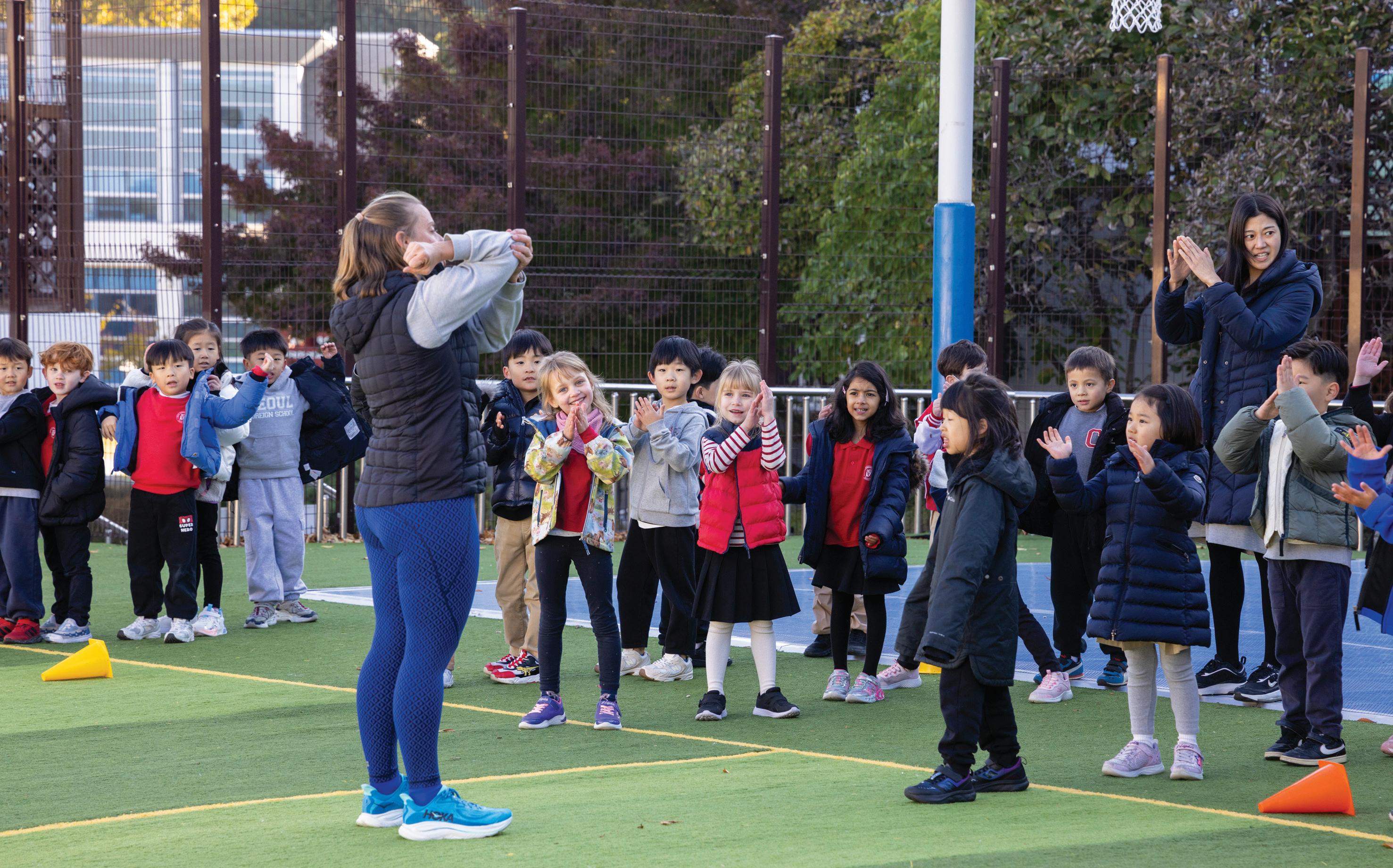
Kindergarten students are engaged in physical literacy exercises in Physical & Health Education with Ms. Stockdale.
When Learning Is More Than Academics: Understanding the Brain–Body Connection
By Priscilla Park British School Teaching Assistant and Private Practice Pediatric Occupational Therapist
Think of that one child who always has so many great ideas and produces great work when they can, but wanders around the room, struggles to stay seated at their desk, and often bumps into or touches peers. They can’t quite manage standing in line and sit very close to others on the carpet. Or maybe you yourself were once this child. You’ve probably heard the phrase: “All children want to do well—if they can.” So why might this child present in these ways? What is impacting their attention, focus, and participation?
The answer often lies beyond academics, in an area many of us overlook: sensory-motor development.
THE HIDDEN SENSES THAT SHAPE LEARNING
We’re all familiar with the five senses, but did you know there are actually eight senses that play a crucial role in development?
• Vestibular (balance & movement) sense: Helps you know where your body is in space. It affects balance, coordination, and the ability to move confidently. Do you get motion sickness easily, or dizzy on roller coasters? This is your vestibular sense working, with the receptors located in the inner ear.
• Proprioceptive (body awareness) sense: Tells your brain
Illustration by Benjavisa
how much force to use when holding objects or moving your body. It’s what allows you to touch your nose with your eyes closed, walk without staring at your feet, and grip a pen with the right amount of force. Receptors are located in your muscles and joints.
• Interoceptive (internal body signals) sense: Helps you recognize when you’re hungry, thirsty, need to use the bathroom, or when you’re tired. Receptors are located in your organs and affect regulation and energy levels.
Let’s consider the wandering child in relation to these senses:
• Perhaps their vestibular system is under-responsive, and their body needs more movement input to feel steady and alert—so they get up frequently to seek it out.
• Because vestibular input activates the muscles that keep the body upright, an under-responsive system could make sitting tiring, so they struggle to stay at their desk.
• If their proprioceptive sense provides unreliable information, they might seek stronger, “big” sensations to understand where their body is—pushing, bumping, sitting too close.
Their nervous system is essentially saying, “I need more movement and pressure input so I can tell where my body is in space, and to stay calm and focused.”
WHEN WRITING IS MORE THAN WRITING
Now imagine another child: bright, curious, but consistently struggling to produce written work. Despite knowing the content, their letters are uneven, words drift off the line, and copying takes far longer than expected. They avoid writing because it feels exhausting.
What might be happening here? Along with the sensory systems, several other underlying systems come into play, highlighting the critical link between brain and body in skill development:
• Motor planning (praxis): The brain’s ability to figure out what to do and tell the body how to do it. It’s about planning and executing the movement.
• Visual-motor integration: Coordinating what the eyes see with how the hands move. It’s about using vision to guide movement and strongly impacts hand-eye coordination.
• Visual perception: The brain’s ability to make sense of what the eyes see—recognizing lines, shapes, and patterns, remembering what they see, and noticing important details.
So, for our writing-avoidant child:
• They may very well know what they want to write about, but their brain struggles to send clear instructions to their hands. This makes writing challenging, not because of motivation or lack of ideas, but because of planning and coordination difficulties.
• Writing relies on their ability to visually scan the paper, form letters, and organize them spatially on paper. They might find copying written material accurately or writing from memory difficult.
Both of these children most likely want to do well. Their struggles are not fully explained by behavior, cognition, or lack of effort but by the underlying brain–body systems that support learning. By observing our children and breaking down the challenges—looking at vestibular, proprioceptive, interoceptive, motor planning, and visual-motor skills, among other skills—we gain a clearer picture of why they are struggling and how best to support them.
For example, a child who avoids pencil tasks because of poor proprioception might benefit from hand-strengthening activities and adaptive pencil grips, while a child struggling with visualmotor integration might benefit from highlighted margins and reducing visual clutter.
When educators and parents understand these hidden factors, interventions can become targeted and effective, optimizing regulation, participation, and a safe learning environment. We can provide the right support so every child can fully engage and grow in their learning.
QUICK TIPS: SUPPORTING THE BRAIN–BODY CONNECTION
• Build movement into learning. Short “brain breaks” like stretching, jumping, or chair push-ups can help reset focus.
• Encourage heavy work. Activities that push, pull, or carry (e.g., playground climbing, moving chairs, play-dough) give the body valuable proprioceptive feedback.
• Strength before skills. Core, shoulder, and hand strength activities—like crawling games, monkey bars, or bead stringing—lay the foundation for writing.
• Notice patterns. If a child consistently struggles with focus, handwriting, or motor tasks, look beyond motivation—sensory or motor planning may be involved.
TOK Doesn’t Matter… Or Does It?
By Kley Feitosa, High School Physics Teacher and TOK Coordinator & Piotr Kocyk, High School Assistant Principal – Curriculum and IB Diploma Coordinator
In a world of deepfakes, AI-generated misinformation, and algorithms, knowing how we know what we know has never been more important.
Just last week, The Guardian reported that an antirenewables group in Australia used AI to generate hundreds of fake academic citations, entirely made-up research, aimed at discrediting clean-energy projects in Queensland. It’s a chilling reminder of how easily truth can be manipulated and how fragile our sense of certainty has become.
So how do we prepare young people for a world where misinformation isn’t the exception but the norm? While Theory of Knowledge (TOK) may not be the cure-all, it’s a powerful starting point. TOK invites students to pause, question, and examine what most people take for granted. It teaches them to think critically about knowledge itself—to scrutinize sources, challenge assumptions, and explore how truth is constructed and shared.
At its heart, TOK bridges all disciplines, helping students connect what they know with how they know it. It’s about
perspective, meaning, and reflection, the very qualities that define an educated, globally minded person. That’s why TOK sits at the center of the IB Core and why, at Seoul Foreign School, we’re passionate about helping students and parents see its relevance in today’s fast-changing world.
If you’re new to the IB, TOK can sound mysterious, perhaps even intimidating. But think of it this way: every DP subject gives students knowledge. TOK is where they stop and ask, “How do we know this is true?”
It’s not abstract philosophy or an extra assignment for the sake of it. It’s a thinking toolkit that students carry into every corner of their learning. Writing an essay in History? TOK pushes them to question the reliability of their sources. Conducting a biology experiment? TOK prompts them to consider whether personal bias might affect their interpretation. Scrolling through social media? TOK helps them spot manipulation and hidden agendas before they go viral.
Parents often ask, “How is TOK assessed?” The answer reveals just how practical the course really is. Students complete
two tasks: the TOK exhibition, where they connect big knowledge questions to real-world objects, and the TOK essay, where they explore one complex question in depth. These aren’t theoretical drills; they’re exercises in curiosity, communication, and intellectual honesty.
And universities notice. Admissions officers consistently report that students who’ve studied TOK are better prepared to think independently, discuss complex issues, and approach problems from multiple angles (Cole et al.). But beyond university readiness, the real value of TOK lies in something deeper: it helps young people see themselves as thoughtful participants in the world, aware of their own biases, open to other perspectives, and confident in navigating uncertainty.
In an era when truth itself feels negotiable, that might just be one of the most important skills we can teach at SFS.
The authors used ChatGPT (OpenAI, 2025) to enhance the linguistic clarity, coherence, and readability of the article. The content and interpretations remain solely the authors’ intellectual work.
Works Cited:
• Cole, David R., Susanne Gannon, Jacqueline Ullman, and Paul Rooney. Theory of Knowledge (TOK): Exploring Learning Outcomes, Benefits and Perceptions. International Baccalaureate Organization, 2014.
• Readfearn, Graham, and Virginia Roberts Giuffre. “Queensland AntiRenewables Group Cited Nonexistent Papers in Inquiry Submissions Using AI, Publisher Says." The Guardian, 17 Oct. 2025, https://www. theguardian.com/australia-news/2025/oct/18/queensland-antirenewables-group-cited-nonexistent-papers-in-inquiry-submissionsusing-ai-publisher-says. Accessed 21 Oct. 2025.
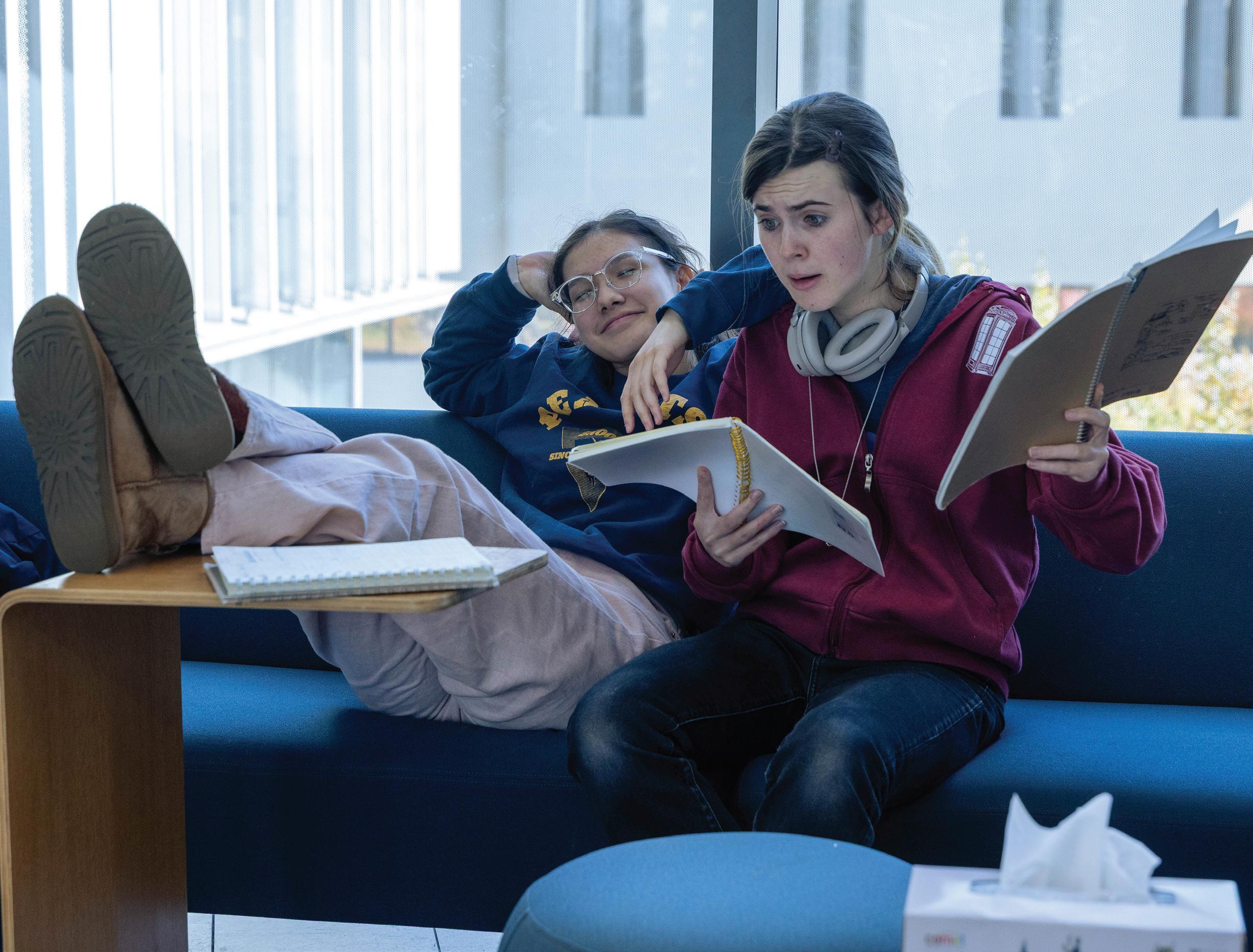
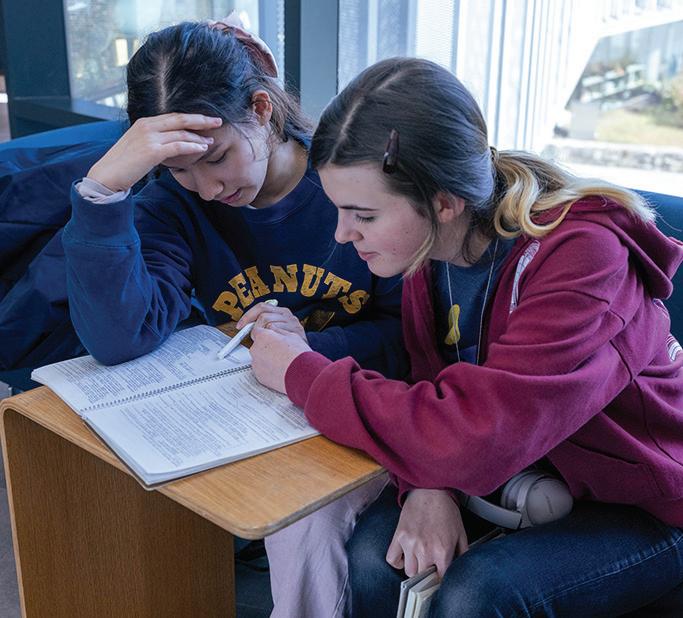
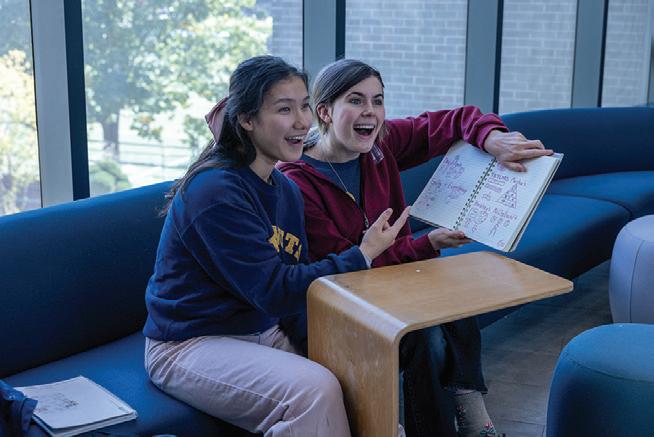
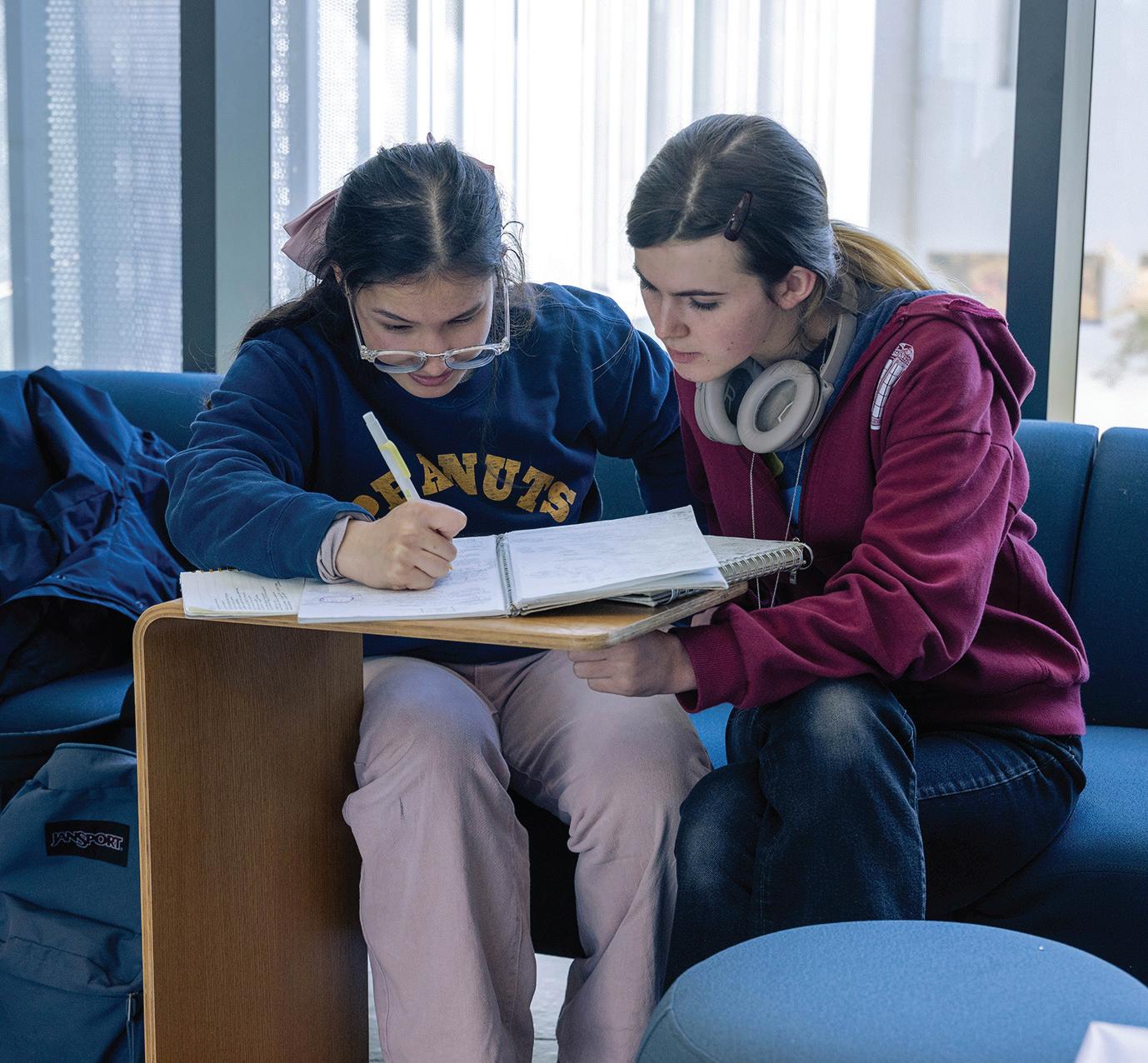
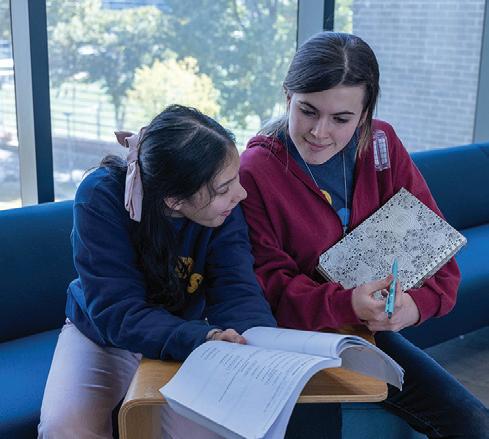
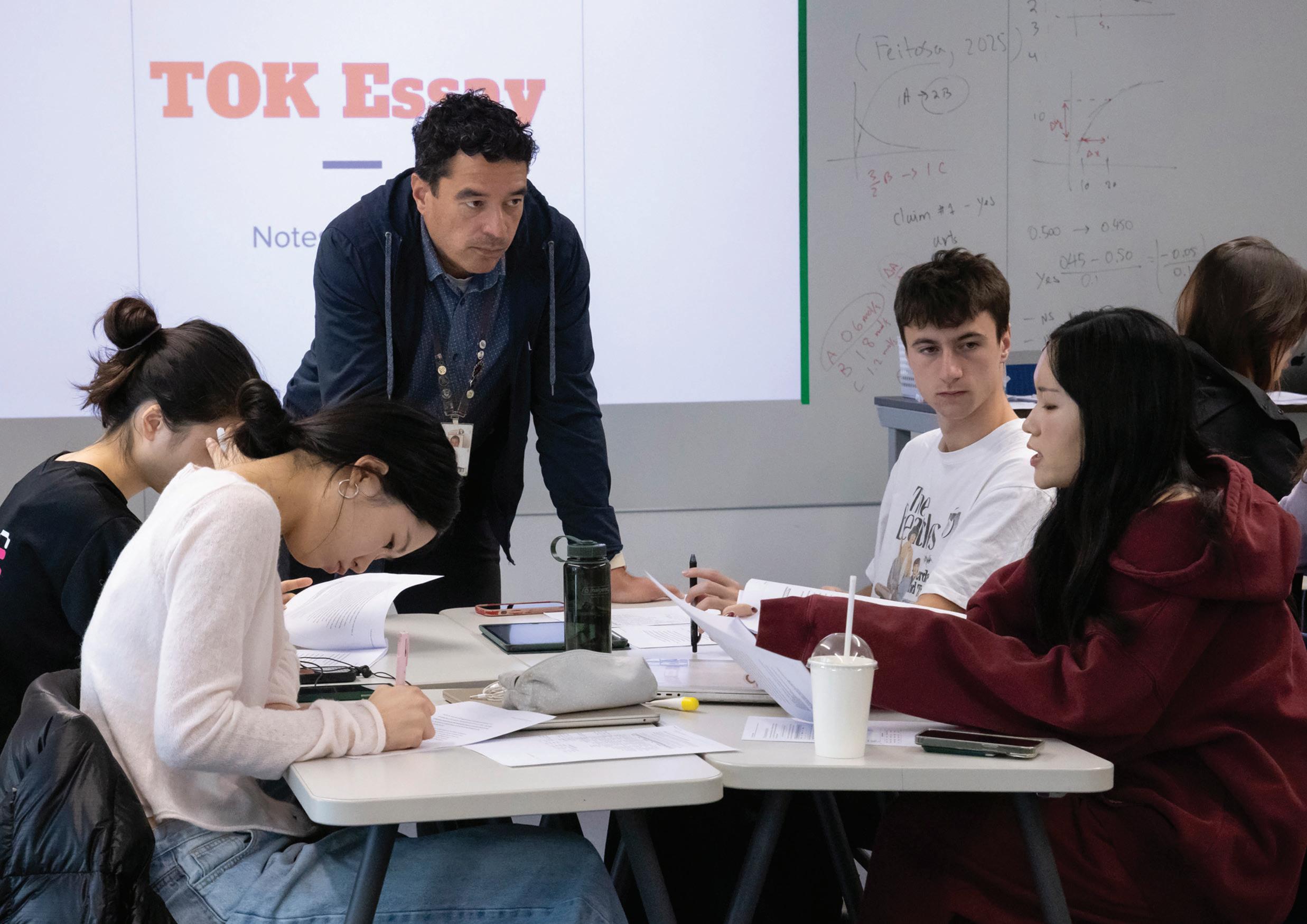
Grade 12 students discussing TOK essay examples to better understand the rubrics.
Busting the Myth of the Impossible Extended Essay: How Support, Not Talent, Cultivates Success
By Timothy Fuller Bazin EE Supervisor & High School Teacher
The DP Economics Extended Essay (EE) has a naughty reputation. Although a Top-10 subject by candidate choice, only 3.78% and 3.9% of candidates scored an A in 2024 and 2025, respectively (IBO). According to the last provisional statistical bulletin, less than one in five Economics EE students earn one of the top two grades. Many alumni and parents believe the Economics EE to be an impossible essay. It’s no surprise that students at many schools feel lost in the EE maze. The EE supervisor can do more than lead learners to the entrance; they can light the way through the maze’s darker corners. When we see challenges not as shortcomings but as signs of what kind of help a student needs, success will follow.
THE CHALLENGE
What makes the Economics EE so challenging is that inquiry is uniquely diverse for the subject. Students can choose from primary or secondary research; qualitative, quantitative, or mixed-methods designs. Each methodology demands a different set of skills. Whether guiding students through twostage least squares, differences-in-differences, instrumental variables estimation, or regression models, the range of research methodologies available to students sets an exceptionally high bar for self-management and research skills. It also poses a unique challenge for EE examiners: even at the university level, professors typically specialize in one area of economic research. In contrast, Economics EE examiners are asked to fairly assess work that spans the entire field.
And when students struggle, it’s rarely a sign of inability. My
experience tells me that it’s more likely a misalignment between challenges anticipated and the support provided. Research by Garcia-Campos et al. (2018) on executive functioning—also known as the skills behind planning, focus, and adaptability— shows why the EE can feel so impossible: it asks students to think months ahead, stay organized through setbacks, respond to feedback, and refine their ideas as their research evolves. Universal Design for Learning (UDL) presents supervisors with a unique opportunity to help students build those skills step-bystep so that perseverance, not perfection, defines their success.
THE OPPORTUNITY
The Class of 2026 is rewriting the story of what’s possible in my favorite subject. It’s already a talented group, with many medals earned through the World Economics Cup and National Economics Challenge competitions. Eight students took on the added challenge of writing an Economics EE, and another four blended Economics into their World Studies essays. Just a year earlier, only one student from the Class of 2025 had attempted an Economics EE. After guiding seven of these 2026 projects, and with support from UDL-based training and EE Coordinator Lauren Elliott, I’m optimistic that this is the year SFS charts a new path through the once-daunting maze of the Economics EE.
THE DIFFERENCE
During my own supervision, I have seen how supporting executive functioning can enhance the EE experience while preserving academic integrity. These scaffolds draw directly from
TOP 10 EXTENDED ESSAY SUBJECTS: GRADE DISTRIBUTION, SOURCE: IBO (2025)
(Subjects) A B C D E N
ENGLISH A
HISTORY
BUSSINESS
PSYCHOLOGY
BIOLOGY
WORLD STUDIES
PHYSICS
ECONOMICS
ENGLISH B
MATHEMATICS
10,000 15,000 (Number of Students)
Tim Bazin & EE Supervisees, Class of 2026.
The EE, at its best, prepares DP candidates for the lifelong management of complexity. Students who learn to plan, organize, self-monitor, improve working memory, and adapt through the EE carry those skills into university research, workplace tasks, and creative projects beyond school.
UDL “considerations,” which Diamond and Ling (2016) describe as a guidance system for complex cognitive control. The three UDL frameworks—multiple means of representation, action and expression, and engagement—map effectively onto the EF domains. By offering varied ways to visualize ideas, act on plans, and sustain motivation, supervisors open multiple pathways towards academic excellence.
The Center for Applied Special Technology (CAST, 2024) reinforces the idea that firm goals, flexible means, and curation of student choice help them learn by doing. A supervisor working with a student wrestling with planning may begin by showing the student how to break large goals into week-by-week tasks using an efficiency app like Trello or Google Calendar. Another student who struggles with working memory might be shown how to use an argument map to visualize connections between evidence and theory. When attention drifts, a Pomodoro routine can help refocus their efforts into 25-minute chunks. Whenever supervisors and students meet, the students should come with answers to two metacognitive prompts: “What’s working?” and “What’s unclear?” And, importantly, supervisors and students unsure of where and how to start can co-create “Step 1” supports section-by-section. For each issue, there is a low-effort, high-impact strategy that changes student perception from impossible into possible.
THE ROLE OF APPLIED TECHNOLOGY
It’s worth noting that AI has also completely reshaped
how I view what is possible through the supervisor role. Five years ago, it would have been impossible to provide unique executive functioning scaffolds to seven different extended essay supervisees. Today, my trained eyes can identify the problem or gap, curate the parameters for a desired scaffold, specify UDL considerations, and then generate supports before the end of lunchtime. By the time the first drafts are submitted, I am able to shift more of my focus towards advising students on how best to present data and synthesize their arguments.
WHY DOES THIS MATTER?
UDL is fundamentally about making Ariadne’s thread accessible to everyone. When supervisors provide sufficient support for every student, whether neurodiverse, multilingual, or simply overwhelmed, they all get to experience the benefit of extending their knowledge beyond the Course Guide. For some, like Theseus, independence appears innate, but most high functioning adults are cultivated through teaching, modeling, and constructive feedback.
The EE, at its best, prepares DP candidates for the lifelong management of complexity. Students who learn to plan, organize, self-monitor, improve working memory, and adapt through the EE carry those skills into university research, workplace tasks, and creative projects beyond school. As supervisors, when we design supports for open-ended tasks with executive functioning and UDL in mind, we send a quiet but powerful message: that the Extended Essay can be for everyone.
Why Study Philosophy in the Age of AI?
By Dr. Nancy LeNezet High School Principal
Acurrent misconception in education is that, to be successful, students need to focus exclusively on technology, science, and mathematics, with perhaps just enough English to be eloquent orally and able to prompt machines in writing. Among the casualties of this view are the humanities. Whilst people usually understand the uses of more practical disciplines like economics or psychology, they struggle to see the point of the more classical disciplines such as history and philosophy. Why would one need to study historical facts that can be found on the Internet in seconds? Why delve on the naive musings of Greek men who lived 3,000 years ago, or the endless existential crises of a few privileged European writers?
I come from a country that reveres the humanities: philosophy, history, and geography are compulsory subjects in the French baccalaureate, even in the scientific track. The International Baccalaureate, inspired in part by the French one, also values the humanities, with students picking at least one humanity as well as Theory of Knowledge. As a philosophy graduate, I have always believed that the humanities in general, and my subject in particular, were valuable. I would argue, however, that they have become essential, especially so in the advent of AI.
At the core of all humanities is an attempt to understand human behaviour, often in order to predict it. In philosophy, one of the most persistent questions has been a deceivingly simple
one: what makes us human? In the age of AI, nothing can be more important than paying serious attention to that question.
For a long time, the focus was on the difference between nonhuman animals and human ones: human beings were always keen to demarcate themselves from the world that surrounds them, which explains how threatened they were by Darwinian theories that tied us to animals. However, despite constant discoveries that show how evolved some animals really are (a 2025 study showing that baboons hang out with friends comes to mind), it isn’t difficult for human beings to constantly assert their supremacy over the animal kingdom. Animals are no real threat to what makes us human. Most of us have accepted we are indeed animals, but such advanced ones that we have no need to feel existential dread every time a primate uses a tool or chews leaves to make medicine.
No, the real threat to our humanity, as philosophers have been predicting for decades, is AI. This existential threat comes from the fact that much of what has made human beings distinct until now—intelligence, foresight, processing speed, complex thought patterns, creativity—is quickly becoming accessible to AI. Human beings love pointing out what AI cannot do and laughing at the strange three-legged creature and made-up research it produces, but we all know this is only the beginning of the AI revolution: AI is a baby, and laughing at it is like laughing at a toddler taking their first steps when we know full
well they will outrun us one day. The superior intelligence we have cited for centuries as what distinguishes us from animals is exactly what AI is starting to display and will likely master in the near future.
This forces us to ask the question again: what makes us human? What is it that we alone can do or be, that will remain inaccessible to AI? Many seem to be discovering this question for the first time, but philosophers have centuries of experience trying to answer it in different forms, and it would be foolish to ignore their attempts. There are different schools of thought on the topic, ranging from the firm belief that humans have been chosen by God and will always be distinct from other beings, to computer functionalism, according to which the brain functions exactly like a computer. These positions matter a great deal in the age of AI because they determine whether we believe we can replicate something close to a human mind or not. If what makes us human is nothing more than the sheer number of brain connections we have (the human brain remains the most complex structure in the known universe), then the difference between us and AI is simply a matter of degree, not of nature. Very recently, scientists at the University of Massachusetts Amherst managed to create an artificial neuron that could allow them to build a bio-computer similar to our brain, further reinforcing the computer functionalist vision that sees even the most human traits, such as consciousness, spirituality, and
abstraction, as mere manifestations of our physicality.
Examining these theories and their implications is highly relevant not only to anyone working in the development of AI but to all of us. There are major ethical implications involved in the way we define ourselves in relation to AI. For example, if we believe that consciousness is a product of a specific arrangement of neurons, there is no reason why we cannot one day create a fully conscious AI. The next questions will be: is consciousness what makes us a person? Is personhood what grants us rights? In which case, should a conscious AI have rights? A few years ago, these questions were outlandish. They have now become urgent ones, and it can only benefit students to engage with them.
Finally, education itself has a great deal to learn from philosophy. It is only by isolating what makes us human—and is unlikely to be replaced by AI soon—that we can serve today’s students. We must teach them what machines are not able to do and double down on that. Of course, there is an element of guesswork here, but at the very least we can focus on the most complex cognitive skills: discernment, critical thinking, lateral thinking, synthesis, etc. In addition, focusing on character traits and socio-emotional skills will likely become the core of education so that we can teach students the best of what it means to be human.
Arts
Actor.It was nine-thirty on Christmas Eve. As I crossed the long entrance hall of my house, on my way from the dining-room, where we had just enjoyed the first of the happy, festive meals, towards the drawing-room and the fire around which my family were now assembled, I paused, and then, as I often do in the course of an evening, went to the front door, opened it and stepped outside.
Such were the first words of the first production presented in the Black Box Theatre in the spring of 2004. At that time, non-IB Diploma students had the opportunity to undertake a senior capstone project as the culmination of their high school journey. In collaboration with my fellow thespians Alex Paik ’04, Jordan Williams ’04, and Leia Doran ’04, I produced, directed, and designed what would be the first full-length production in the newly opened Black Box Theatre—The Woman in Black, a ghost play adapted by Stephen Mallatratt from the book by Susan Hill. By this time, I had been working behind the scenes in SFS productions for around seven years and knew God had gifted me with technical and artistic production skills (I even wrote a piece about it titled
Putting the “Black” in Black Box Theatre?
By John Black ’ 04 Theatre Manager
The Concealed Artist, which Edie Moon ‘77 presented aloud at the end of my senior year). As I looked toward pursuing a degree and career in production, what better way to end my time at SFS than by producing a show.
There is a centuries-old superstition in the theatre world that every theatre has a ghost (or ghosts). In ancient Greece and Rome, the idea of spirits was related to deities. In the medieval period, performance was often tied to morality plays and a growing spread of ghost stories. During the Renaissance, Shakespeare blurred the lines between fiction and superstition (particularly in the “play that shall not be named”). In the 19th and 20th centuries, as permanent theatre buildings became more common, the idea of a theatre ghost stemmed from theatres being built on cemeteries or other old sites, from the dangerous nature of theatre (gas lighting, flammable scenery, etc.), or from former actors, dancers, directors, or technicians.
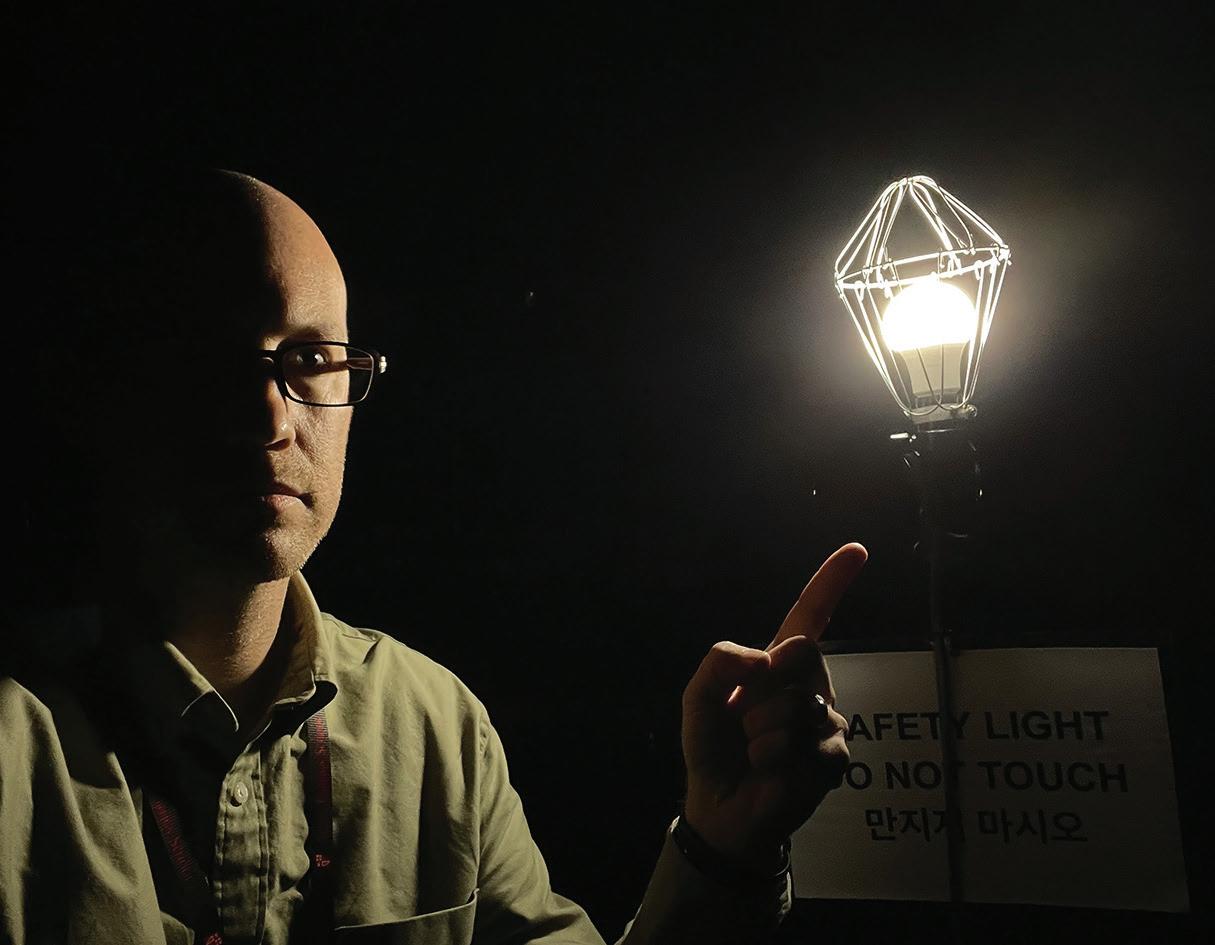
To appease these superstitions, theatres leave a single “ghost light” lit when the theatre is empty to prevent ghosts from causing mischief in the dark. When you visit any of our three theatres on campus when empty, you will see
that we too keep a ghost light lit, though today this is done for safety—to prevent falls or other accidents from happening. Or is it? Such is the practical purpose of the “ghost light,” though its roots stem from superstition.
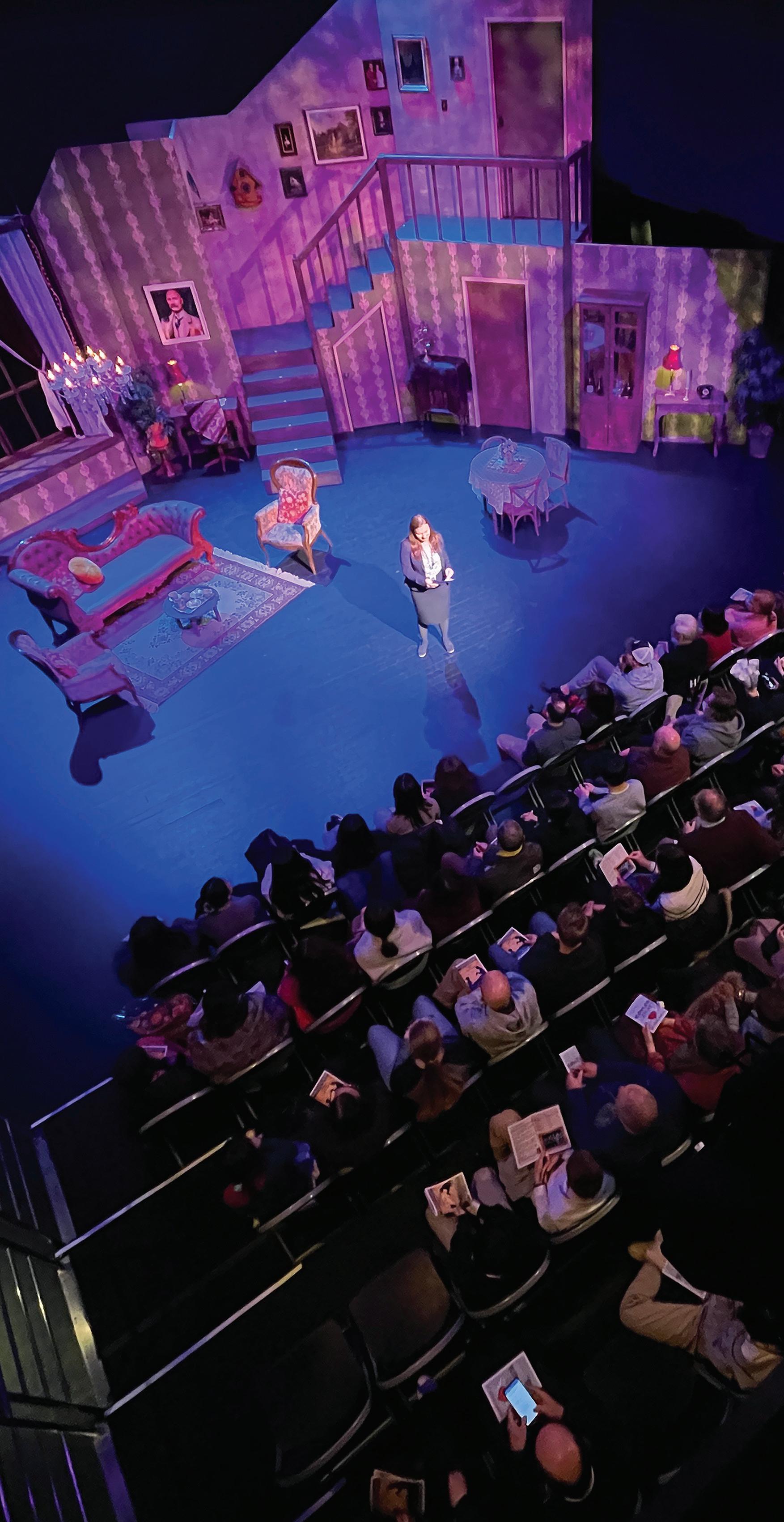
I now find myself 21 years older, in my 17th year as Theatre Manager at SFS, blessed to have served as technical director for almost 90 dramatic productions and over 500 music concerts, and to have worked with over 100 student crew members. More recent productions in the Black Box Theatre have included Polly Teale’s Mermaid, Joseph Kesselring’s Arsenic and Old Lace, and this year's high school play, Nikolai Gogol's The Inspector General. Though most of our community is more familiar with our larger theatres, the Black Box Theatre remains my favorite venue, not only due to its flexibility as a performance venue but also its intimacy. You become a part of the performance, not separated by what we call the “fourth wall.” In no other venue can the audience hear a performer's breath, see the fine movements of an actor's eye, smell the materials used to build the costumes, props, and set, or feel the heat generated by the lights. It’s raw.
I am often asked whether the Black Box Theatre was named after me. I chuckle and answer jokingly, “Of course!”—taking full advantage of the association of my name with the type of theatre that it is. When I step into the space, I can see and hear 17 years’ worth of memories held within its walls—17 years’ worth of laughter, tears, joy, and intrigue; 17 years of entertainment and stories presented by past SFS students of all ages. I see myself, 21 years ago as a high school senior, at the closing performance of The Woman in Black, chills running down my spine like when you see a great performance, listening to the final lines of the show:
Kipps. But the woman you found— the actress. The woman in black. Who was she? You organized it as a complete surprise—you had her come here and go through her part and… a young woman. With a wasted face— she…
Actor. A young woman?
Kipps. Is there anything the matter? You look unwell.
Actor. (at length) I did not see a young woman. CURTAIN.
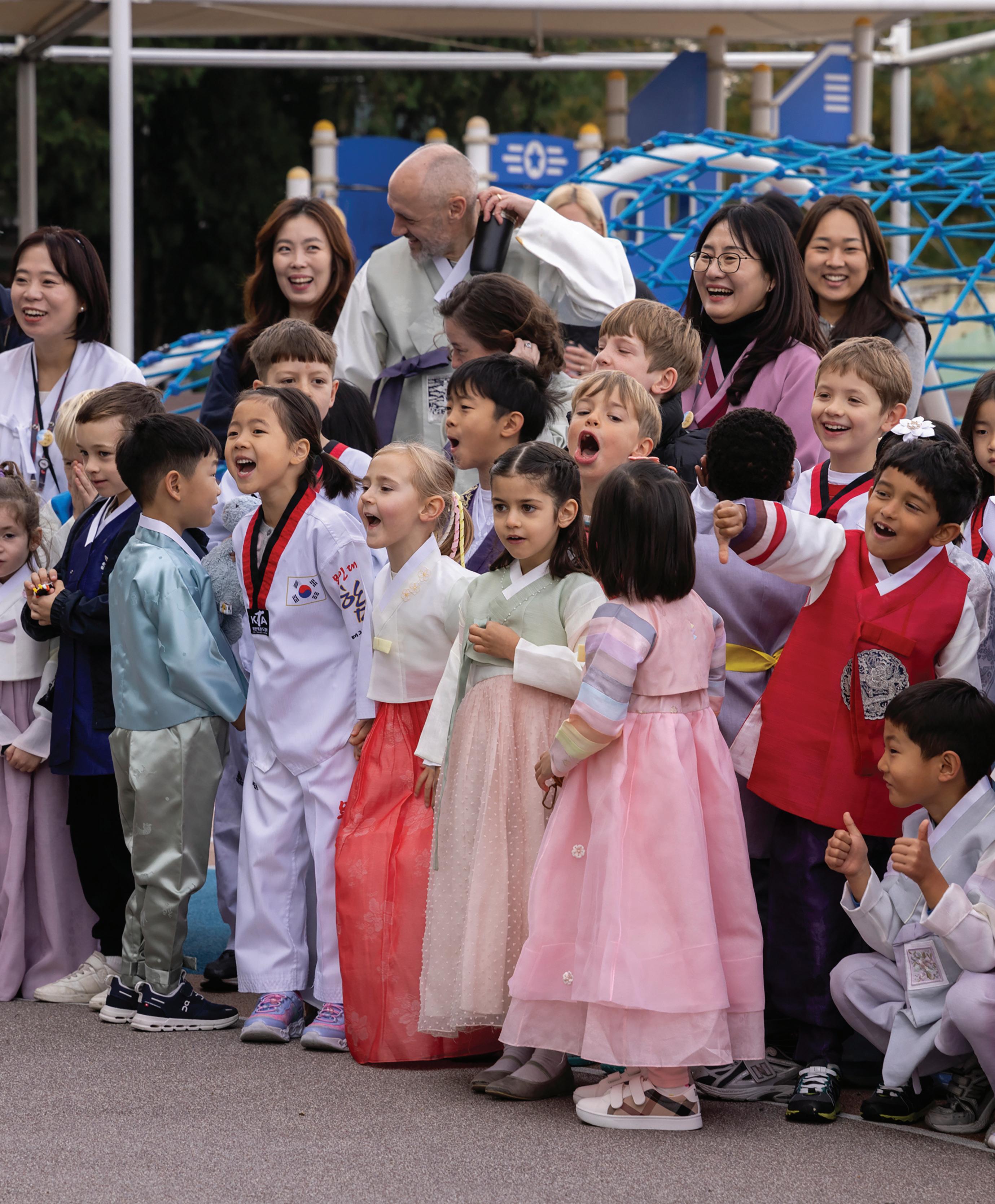
Students singing along to Golden from KPop Demon Hunters performed by Yonsei Gugak Research Society during the British School Korea Day.
The Principal Who Leads with Heart (and a Side of Toast)
Sarah Patterson’s journey has taken her across continents and classrooms, but her favorite thing about schools hasn’t changed—the children. From her global adventures to her morning Wordle routine, our new British School Principal is already making her mark on the SFS community, with plenty of laughter along the way.
TheBanner: Can you tell us about your background and what led you to Seoul Foreign School?
I was born in Cardiff, in South Wales, and when I was 11, my family moved to the States because my dad took up a position as a leader of a church. That’s really when I caught the travel bug. Not the plane bits so much, but the newness of everything. After a few years, we bounced around — Scotland, then back to Wales. I loved school, so it’s not a surprise I ended up teaching. And honestly, I thought I’d have to become a missionary if I wanted to travel, because that’s who we’d hear stories from in church. Turns out teaching opens a lot of doors too. Since then, I’ve taught in Birmingham, Kenya, Cambridge, Chile, Canterbury, Cornwall — where I took my first headship — Malta, and now, here I am in Seoul. Every place, every job, has brought something new, and it’s made me who I am as a principal.
The Banner: Was there a defining moment when you knew you wanted to teach?
You know, I floated between wanting to be a writer or a teacher for ages. But it was that first step into the classroom during teacher training that was like, “Oh! I’m actually pretty good at this.” Honestly, the reaction from everyone, even the older teachers, made me think I’d found my thing. It was a bit surreal. I was still a kid myself, really — just a few months out of school, suddenly standing up in front of a class. But something clicked, and I remember thinking, “Maybe this is what I’m meant to do.” I still love it.
The Banner: What excites you most about working in a school?
There’s honestly never a dull moment. I don’t do well with boredom, and in schools, every day is different. The energy from the children, the little moments of connection, even the “aha!” learning bits. Sometimes I’ll sit in on a lesson and think, “Gosh, that’s clever. I want to remember that.” It keeps me on my toes, and 30+ years in, I’m still picking up new tricks.
And of course, it’s the children. I think they’re fabulous wherever you go in the world. They’re not necessarily the same, but their hearts and that excitement for learning — that’s the same.
The Banner: What drew you to the British School at Seoul Foreign School?
After years of teaching in the UK and abroad, I wanted to work in Asia, just to see a whole new side of the world. The opportunity here ticked all the boxes: British, independent, international, and in such a unique place. Plus, a few people I’d worked with before always had great things to say about the school. When the job came up, it just felt right. Even though I think part of me thought I’d be in the UK for the rest of my career. Sometimes you just get that itch, a gut feeling, and I’ve learnt to trust it.
The Banner: What stands out about the recent transition at the British School?
The school now serves children aged 3 to 11, which opens new opportunities, especially for developing leadership skills among younger pupils. The smaller, more intimate setting fosters real community and deeper relationships. There’s an exciting challenge in communicating our school’s identity more clearly and ensuring the wider community understands who we are and what we offer.
The Banner: Let’s talk about curriculum. How does the
British School’s approach prepare students for the next steps in their education?
We run English and maths through the National Curriculum for England and Wales, which is rigorous and thorough, but we also teach the International Primary Curriculum (IPC) for a broader, more inquiry-based approach. I tell people, it’s not just about ticking boxes or prepping for tests. It’s about sparking ideas, making connections, keeping things fresh. We have specialist teachers for music, PE, languages, art… all of it. It’s inquiry-based, it’s robust, it’s coherent, it’s relevant for international pupils, but it also has that British dimension.
The Banner: What would you say makes the school’s culture special?
Everyone always mentions the vibe or the atmosphere that they feel as soon as they walk through the door. And I get it — it does feel warm and family focused, and that’s what I want. We’ve got six Core Values that are embedded in everything that we do: responsibility, respect, reflection, communication, collaboration, courage. We don’t just pay lip-service to the values because you see it in the way children look out for each other and in the way that they interact with their teachers. You don’t always get that in bigger schools.
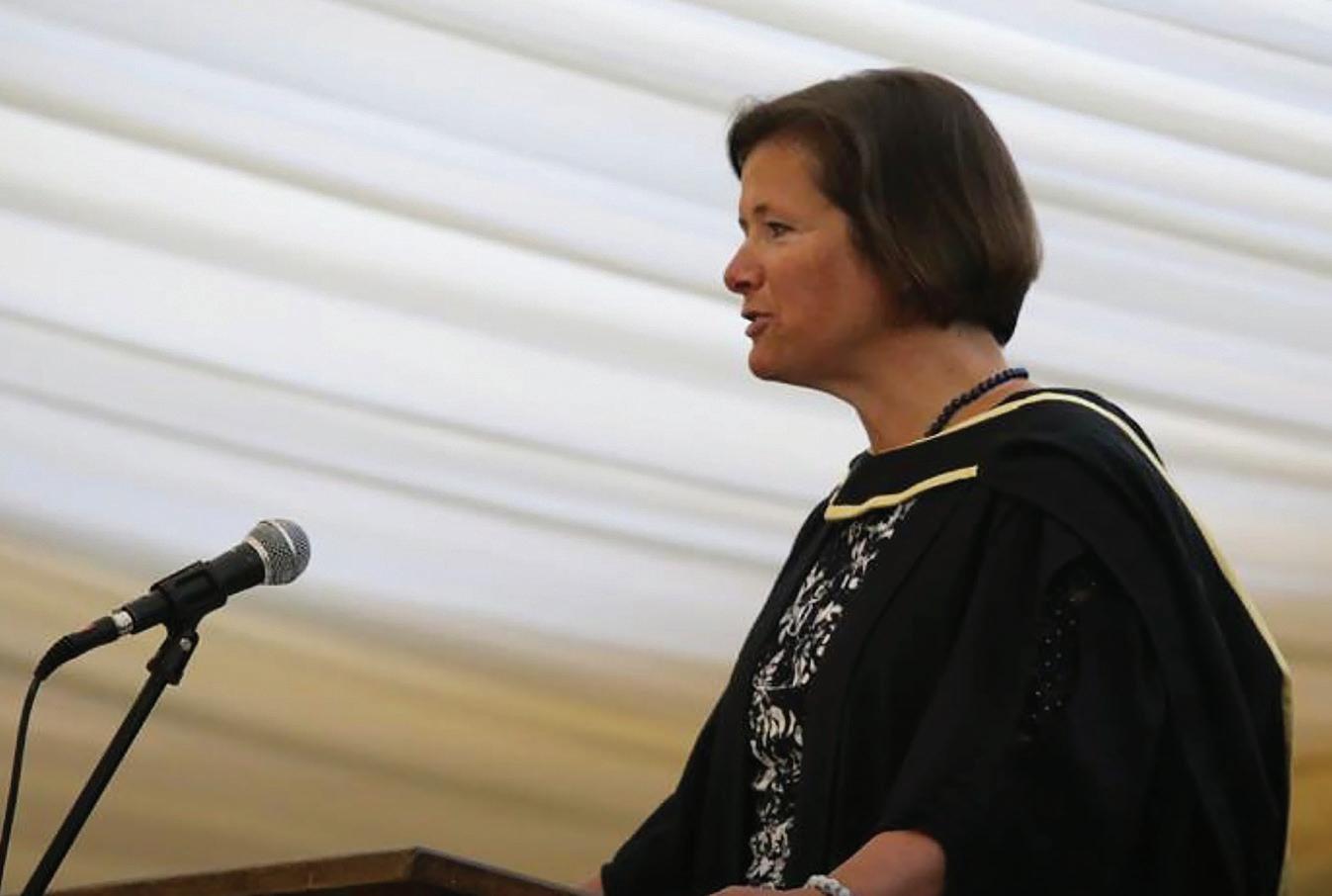
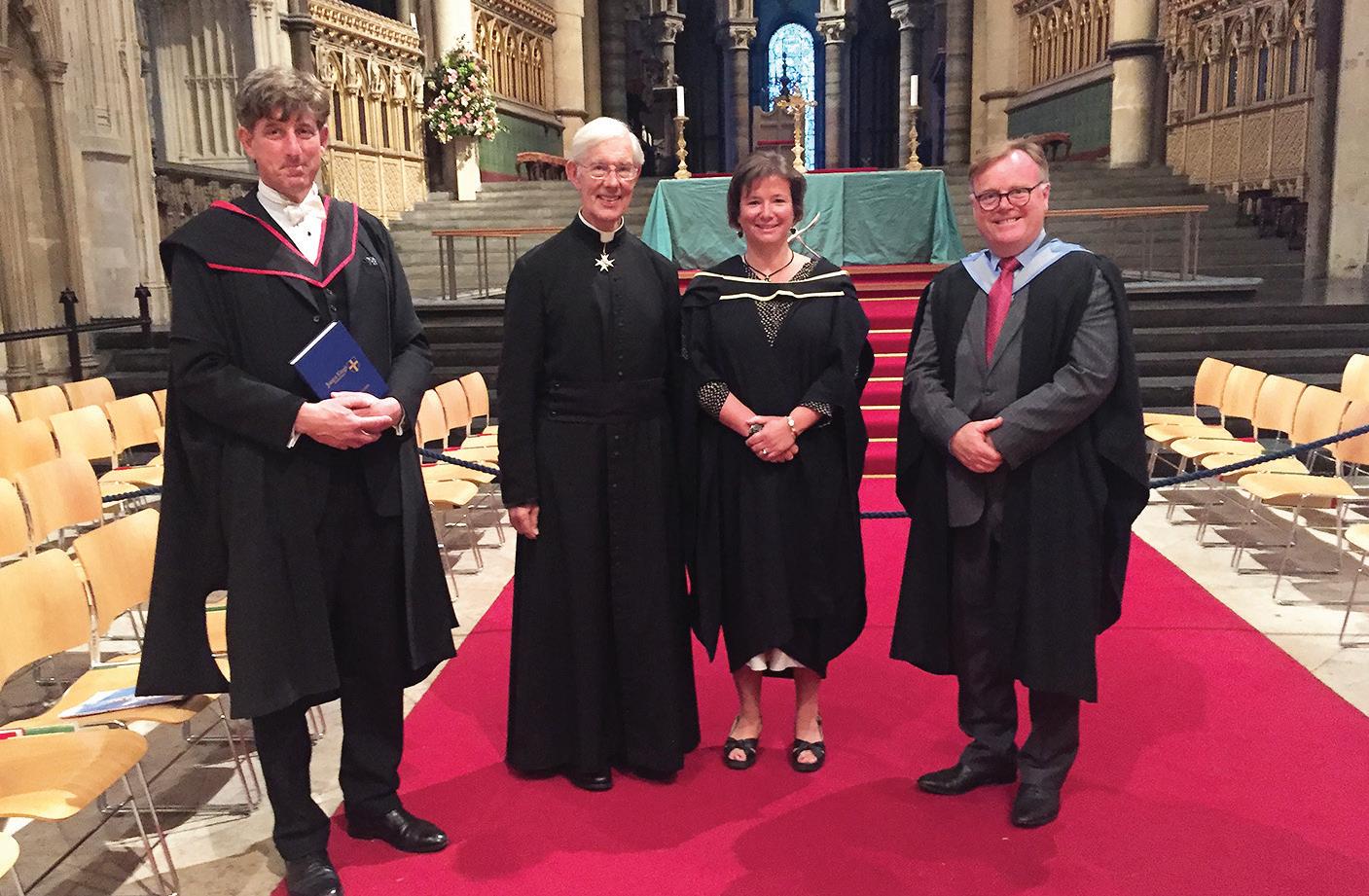
Sarah in the Canterbury Cathedral delivering a speech.
The Banner: If you could pick one thing for students to carry with them after leaving here, what would it be?
I want them to feel like they belong and that they are loved here. If they go out into the world with confidence, curiosity, a sense of purpose, and hopefully humility and a lot of kindness, then I’ve done my job.
The Banner: What were you like as a student?
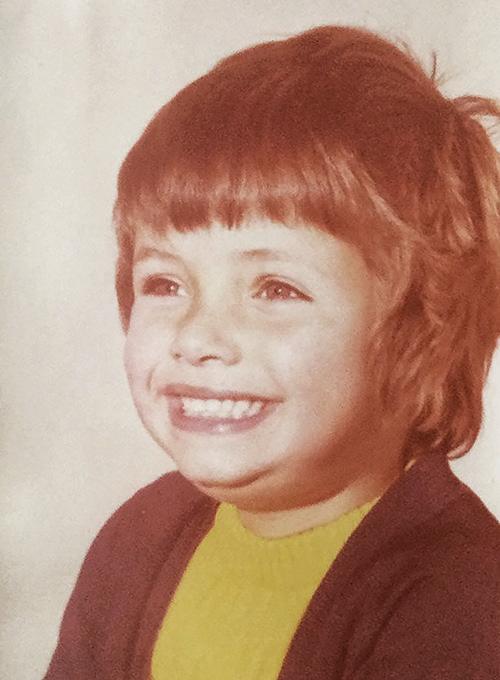
Honestly, I was somewhere in the middle, but I loved reading and being around my friends. I had a bit of a mischievous streak, always up for a bit of fun, but nothing too naughty. English, history, and art were my favourites; maths and science didn't come as easily to me. Even back then, I was all about the social side and the arts.
The Banner: If you returned to the classroom, what would you teach?
I’ve just come out of the classroom! In Malta, where I was before SFS, I had a 50% timetable and taught English to Year 7 and Year 5. I’ve had experience teaching other subjects, but English is my passion, and sharing that love of language is something I’ll never tire of. So English, always.
The Banner: What do you enjoy outside of school?
My family is everything. I don’t have children of my own, but my nieces, nephews, and siblings and I try to see each other as much as possible. I love walking, reading, films, spending time outdoors, and hanging out with friends. Korea is giving me plenty of new places to explore. I’d even love to travel to North Korea someday.
The Banner: Have you set any personal goals while in Korea?
I want to master driving here! I’ve driven all over the world but find it a bit intimidating in Korea. Recently I challenged myself to drive to IKEA. I’m hoping to build up confidence and see more of the country.
The Banner: Last question. Tell us something people wouldn’t know about you.
I can’t cook, honestly, not at all. I survive on toast and tea when left to my own devices. It’s my big insecurity—my friends joke that if I ever had to feed a family, it would be toast for days. Oh, and I do the New York Times Wordle every morning, without fail. That, and I love watching films. Anything with a good story, intriguing characters, and a big sky, I’m in.
Sarah with her family.
Students from Sarah's former school where she was a Head in Cornwall.
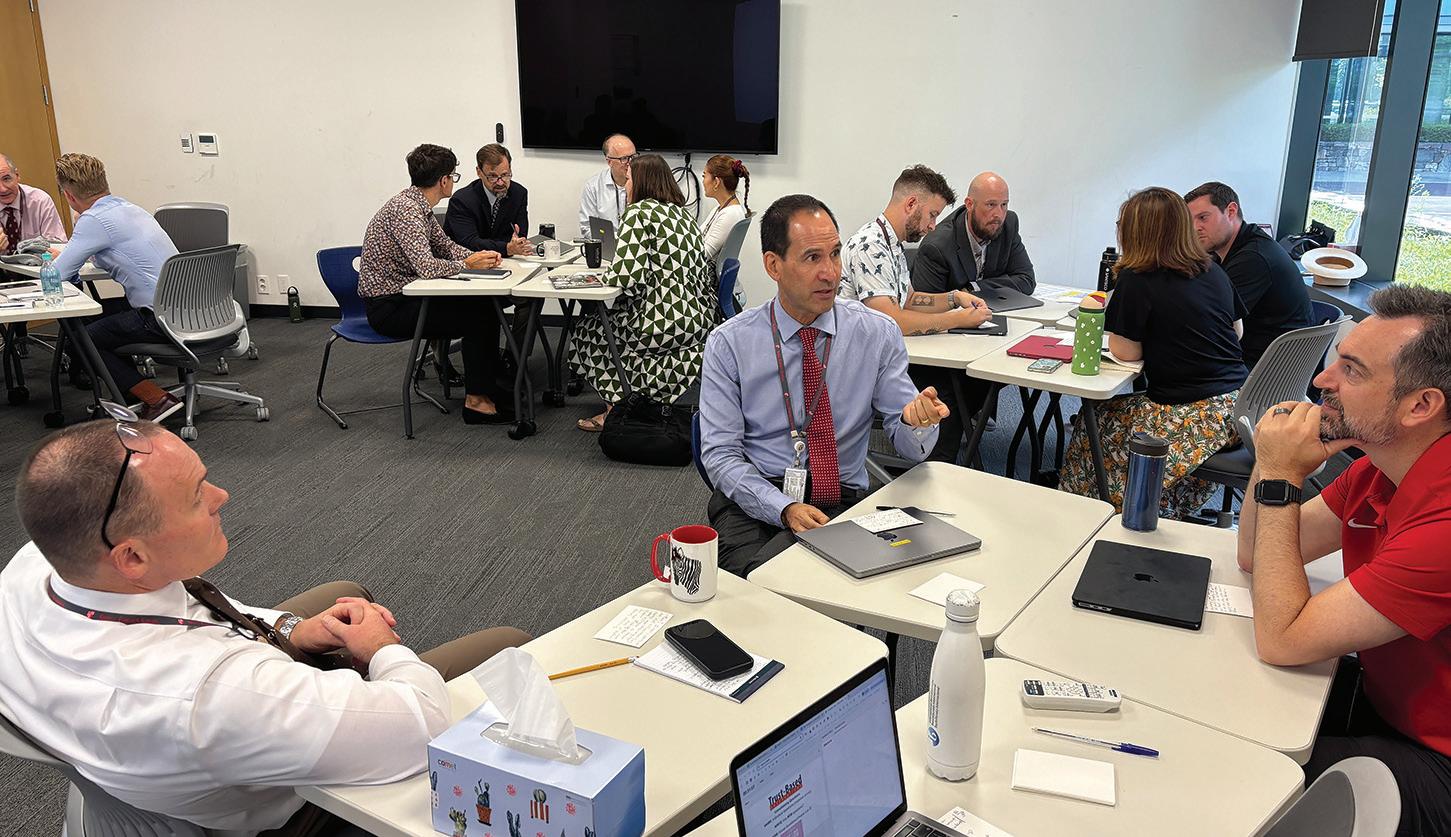
The SFS Journey with Trust-Based Observations
By David Han Whole School Academics Coordinator
MYTH: Observation is About Catching Mistakes
PROBLEM: Too many educators see an observation as a “gotcha” moment. Anxiety spikes. Performance replaces authenticity.
TBO SHIFT: Observations are about trust and growth. With TBO, the goal is psychological safety—educators reflect honestly and choose where they want to grow.
Adapted from an email exchange with Craig Randall, August 2025.
While on summer holiday in 2022, Head of School Colm Flanagan discovered the book Trust-Based Observations: Maximizing Teaching and Learning Growth by Craig Randall. He quickly directed all of the sectional principals to clear their fall calendars, and Craig Randall was booked to visit Seoul Foreign School for a full week of intense training.
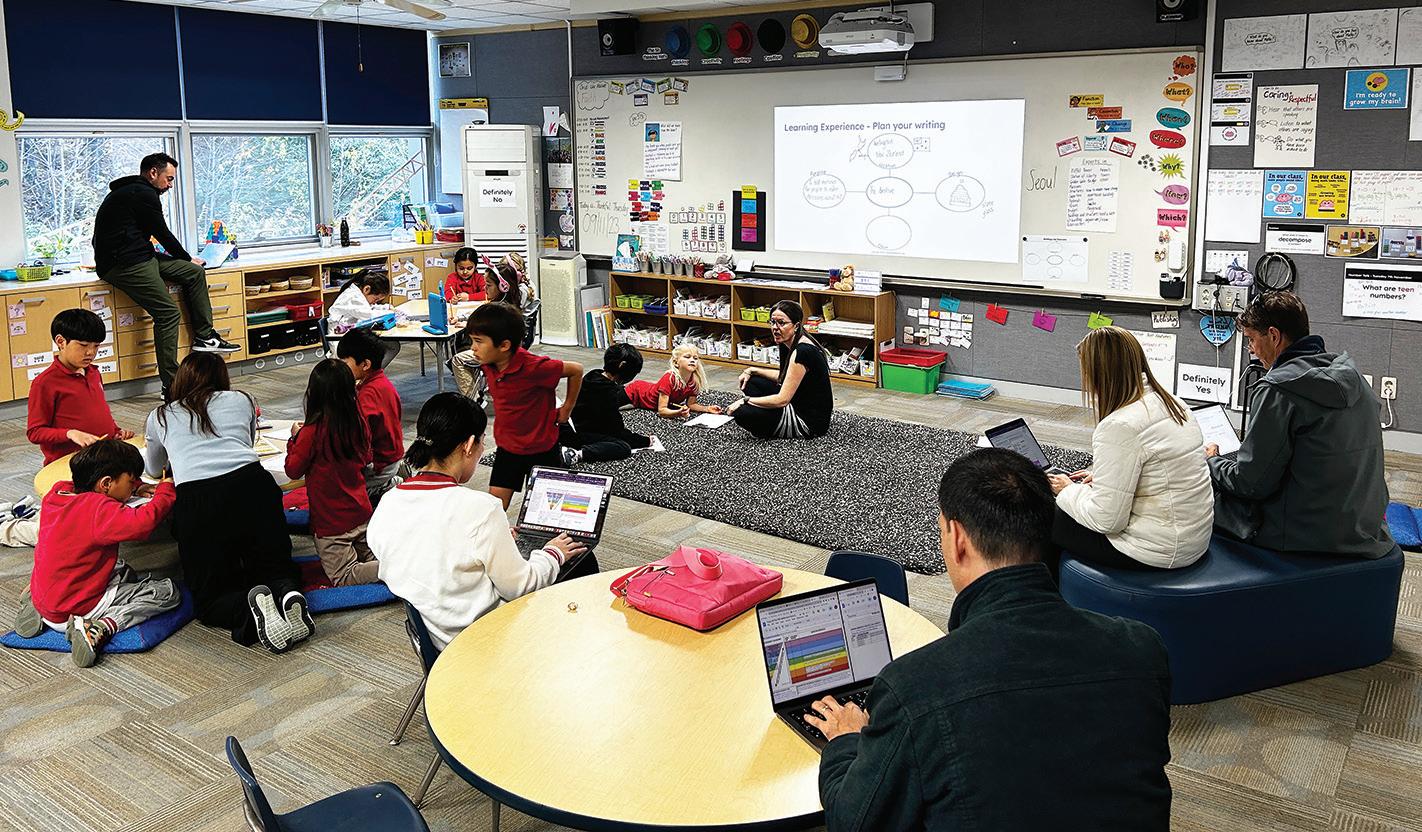
2022–2023: The beginning of the Trust-Based Observation (TBO) journey at Seoul Foreign School. Our first cohort of TBO observers was mostly principals and senior leadership. The goal of TBO in 2022 was to “Build TRUST: trust between any observer and any educator.” It remains the goal today. During this first year, full-time classroom educators received six observations. As designed by Craig Randall, TBOs were unannounced 20-minute visits scheduled at either the beginning, middle, or end of a lesson, followed by a 20-minute reflective conversation between observer and teacher.
2023–2024: TBO expanded beyond principals and senior leadership to include academic mid-level leaders (assistant principals, directors, and coordinators). TBOs continued to be well received by teaching faculty, and annual survey data confirmed a very positive attitude toward TBO. An overwhelming 90% of those observed shared that they had a trusting relationship with their TBO observer. Furthermore, those observed also believed that the main components of TBO visits—reflective conversations and the TBO form—helped them reflect more meaningfully on teaching and learning. These survey results mirrored what Randall and other researchers have long emphasized: relational trust is the catalyst for change (Randall Trust-Based Observations).
• 90% said they have a trusting relationship with their TBO observer(s).
• 79% said TBO visits helped them reflect more
meaningfully on teaching and learning.
• 83% said TBO conversations helped them reflect more meaningfully on teaching and learning.
• 71% said TBO forms helped them reflect more meaningfully on teaching and learning.
• 60% said the TBO process encourages them to try new teaching and learning strategies.
2024–2025: TBO at Seoul Foreign School continued to move beyond implementation. Another week of intensive training with Craig Randall and Kate O’Connell (Leadership Coach) included more teacher leaders as observers. Internally, SFS developed clear and consistent systems and structures to support equitable observation experiences for educators. Trust-Based Observations—or “TBO”—became more and more a part of the expected experience and vernacular at SFS. TBO was consistently used as a verb in conversations, sometimes pronounced tee-bee-oh or tee-bow.
SO… WHAT IS TBO?
At its core, Trust-Based Observation (TBO) is a professional coaching and growth model centered on trust, relationships, and growth. It is not an evaluation system and is not tied to contracts or pay. It is a structured opportunity for educators and observers to engage in authentic reflection about pedagogy: the art, science, and professional practice of teaching (Dewey Experience and Education).
The TBO model, as described in Trust-Based Observations: Maximizing Teaching and Learning Growth, builds from research showing that traditional, graded evaluations do not improve teaching. In his words, “We’ve tried to improve teaching through evaluation for fifty years—and it hasn’t worked” (Randall Trust-Based Observations). Instead, TBO emphasizes the relational conditions that make growth possible: safety, dialogue, and trust. It’s a process that honors teacher expertise, celebrates strengths, and encourages educators to take purposeful risks in their practice.
NUTS & BOLTS OF TBO AT SFS
TBOs follow a predictable rhythm designed to reduce anxiety and increase authenticity.
1. Observation
• Unannounced and informal: 20 minutes at either the beginning, middle, or end of a lesson.
• Frequent and cyclical: Each educator receives multiple visits each semester.
• Focused on strengths: Observers notice what is working well before exploring what could be strengthened.
2. Reflective Conversation
• Occurs within a day or two of the visit and lasts approximately 20 minutes.
• Educators share what they were doing (pedagogically speaking) to help students learn.
• Observers ask, “What, if anything, might you have done differently?”
• Observers listen, affirm, and ask permission before offering suggestions.
3. Form
• Each observer (not the educator) completes a TBO form capturing evidence of what was observed.
• The form is not a checklist, and each section serves as a space for authentic reflection.
• Empty sections are not a negative, they simply show that the focus of the lesson rested elsewhere.
TBO Norms at Seoul Foreign School
• Build TRUST
• Strengths based
• Ensure an equitable feedback and growth experience
• Ensure that TBO informs growth
• Empower educators to take risks
WHAT ARE OBSERVERS INTERESTED IN?
TBO observers at SFS look for what helps students learn. Specifically, we align our lens to nine pedagogical areas highlighted on the TBO form:
1. Learning targets / success criteria
2. Teacher / student relationships and rapport
3. Classroom / student behavior management
4. Cooperative learning
5. Working memory
6. Questioning / higher-order thinking
7. Formative assessment
8. Descriptive progress feedback
9. Specific differentiation / adaptive practice
These areas are not a checklist; they are conversation starters and entry points for noticing patterns, celebrating growth, and identifying next steps. TBO observers are curious about learning, not compliance. Our goal is to understand how an educator’s pedagogical decisions impact students and how educators can leverage their strengths to deepen learning.
MYTH: Frameworks and Rubrics Drive Improvement
PROBLEM: Checklists and ratings measure teaching, but they don’t necessarily improve it.
TBO SHIFT: Frameworks can still have a place, but TBO humanizes the process. Instead of compliance, the focus shifts to trust, reflection, and meaningful dialogue that sparks real growth.
Adapted from an email exchange with Craig Randall, August 2025.
WHAT DOES THE RESEARCH SAY?
To summarize the research shared in Craig Randall’s TrustBased Observations: Maximizing Teaching and Learning Growth, studies from 1969 to the present show one clear conclusion: observation systems that are also evaluative fail to improve teaching or learning, and systems designed for accountability rarely build professional growth (Randall Trust-Based Observations).
The common theme across this research is that trust is the foundation for improvement. In Trust in Schools (Bryk and Schneider 2002), researchers found that schools with high relational trust were three times more likely to improve student achievement. Similarly, Matt O’Leary’s work (2014–2017) revealed that graded or high-stakes observations reduce innovation and increase teacher anxiety. When educators feel judged, they retreat; in contrast, when they feel safe, they are willing to take risks (O’Leary Classroom Observation).
By removing evaluation, focusing on relationships, and emphasizing trust, TBO creates the conditions in which educators can reflect honestly, take creative risks, and view observation as an opportunity for authentic professional growth (Bryk and Schneider; Randall Trust-Based Observations).
I have seen TBO normalize vulnerability. When my teachers know observations are safe, they
are more comfortable risk-taking new strategies, and they feel more comfortable sharing their thinking readily about their planning process, and I, as the leader, get to really know my teachers. This means TBO builds relationships.
- Kate O’Connell
WHAT’S NEXT FOR SFS?
MYTH: Coaching Means Telling Teachers What to Do
PROBLEM: Top-down feedback can feel like judgment—and often gets ignored.
TBO SHIFT: Observers ask permission before offering suggestions. When educators say yes, support is practical and ongoing, walking alongside educators until strategies stick. Coaching becomes a partnership, not a prescription.
Adapted from an email exchange with Craig Randall, August 2025.
2025–2026: In the fourth year of Trust-Based Observations, Seoul Foreign School welcomed back Craig Randall and Kate O’Connell for another week of intensive training with new senior leaders, mid-level leaders, and teacher leaders. This round of training marked an important transition for SFS—from implementation to sustainability. During the visit, SFS began formally documenting the TBO training process for new observers and refining the systems and expectations for returning observers to ensure an equitable experience for all educators.
As Trust-Based Observations continue, our challenge remains translating trust into instructional risk-taking and innovation. Faculty survey data from recent years affirm the strength of trust between observers and educators, with 90% (2023–2024) and 86.7% (2024–2025) agreeing or strongly agreeing with the statement, “I have a trusting relationship with my TBO observers.” In contrast, 60% (2023–2024) and 66% (2024–2025) agreed or strongly agreed with the statement “The TBO process encourages me to try new teaching and learning strategies,” indicating one-third of our faculty still hesitated to take instructional risks.
Moving forward, our collective work as a learning community will focus on supporting educators with trust and continuing to build the psychological safety that makes innovation possible. As Craig Randall reminds us, trust and growth are inseparable: “When trust is high, learning is high” (Randall Trust-Based Observations).
Works Cited:
By removing evaluation, focusing on relationships, and emphasizing trust, TBO creates the conditions in which educators can reflect honestly, take creative risks, and view observation as an opportunity for authentic professional growth (Bryk and Schneider; Randall Trust-Based Observations).
• Bryk, Anthony, and Barbara Schneider. Trust in Schools: A Core Resource for Improvement. Russell Sage Foundation, 2002.
• Dewey, John. Experience and Education. Macmillan, 1938.
• O’Leary, Matt. Classroom Observation: A Guide to the Effective Observation of Teaching and Learning. Routledge, 2014.
• “Edit for grammar, verb tense, and citations” prompt. ChatGPT Version 5, version 5, OpenAI, 15 Oct. 2025, chat.openai.com.
7 Myths to Debunk About School Counselors
By Caroline Scott Middle School Counselor
School counselors play a vital role in every school community, yet, what we actually do is often misunderstood. Whether it’s students worrying about what others might think, teachers unsure how we can help, or parents wondering what really happens behind that office door, misconceptions abound. So, let’s set the record straight.
According to the American School Counselor Association (ASCA) and the International School Counseling Association (ISCA), school counselors help students thrive academically, socially, and emotionally by teaching coping skills, building confidence, and supporting personal growth. In other words, we’re not just here for “crises.” We’re here for growth.
Now, let’s bust some myths.
MYTH #1: ONLY PEOPLE WITH SERIOUS PROBLEMS OR MENTAL ILLNESS GO TO THE COUNSELOR.
TRUTH: While counselors certainly support students facing serious challenges, most students who visit us are just… being human. Maybe a friendship feels tricky, a test is stressful, or they’re struggling to stay organized. Everyone has difficulties, and learning how to handle them is part of growing up. Seeing the counselor isn’t a sign of weakness. It’s a sign of strength. And when students feel better, they do better.
MYTH #2: SEEING THE COUNSELOR MEANS YOU’RE IN TROUBLE.
TRUTH: Not at all! The counselor’s office isn’t a place for punishment. It’s a space for reflection and growth. We help students understand what’s behind their choices and find better ways forward. For example, if someone keeps having conflicts with friends, we might explore what’s really getting in the way of those relationships. Behavior is information, and our job is to help make sense of it so students can move forward with confidence and reduce the likelihood that they will need to receive consequences for their actions in the future.
MYTH #3: THE COUNSELOR TELLS YOUR PARENTS OR TEACHERS EVERYTHING YOU SAY.
TRUTH: Counselors follow a strict code of ethics, much like doctors. Confidentiality is at the heart of what we do. Students deserve a safe space to talk freely, and that means what’s shared stays private unless someone’s safety is at risk (for example, if a student wants to hurt themselves, someone is hurting them, or they plan to hurt someone else). We also share information only when students give permission. So relax! Your secret about forgetting homework again or crushing on your lab partner is safe with us.
MYTH #4: TALKING TO THE COUNSELOR WILL HURT YOUR COLLEGE OR BOARDING SCHOOL APPLICATIONS.
TRUTH: Not true at all. A counselor’s recommendation highlights a student’s growth, resilience, and strengths, not their struggles. In fact, reaching out for help shows maturity and selfawareness, which colleges love. And remember: conversations about personal challenges are not part of your recommendation file.
MYTH #5: FRIENDS WILL MAKE FUN OF YOU IF THEY FIND OUT.
TRUTH: Let’s be honest, sometimes students tease, but that’s usually because they don’t understand what a counselor really does. The truth is, lots of students meet with the counselor. It’s actually more unusual not to have at least one conversation during your school years. The more we normalize asking for help, the more we build a culture of strength, not stigma. And besides, everyone could use a little extra support sometimes.
MYTH #6: COUNSELORS JUST GIVE ADVICE OR TELL YOU WHAT TO DO.
TRUTH: If a counselor is constantly telling you what to do… that’s not really counseling, that’s lecturing. A good counselor
helps you find your own answers. We ask questions, highlight your strengths, and help you notice what’s already working so you can do more of it. Think of us as your personal strategy coach: we help you build the playbook, not run the game for you.
MYTH #7: FAMILY ISSUES SHOULD STAY IN THE FAMILY, AND SCHOOL COUNSELORS CAN’T HELP WITH THAT.
TRUTH: Families are complicated (and wonderful!) and sometimes they need a little extra support. School counselors can help students and parents find healthier ways to communicate, manage stress, or navigate change. We’re not here to “take sides”; we’re here to help everyone feel heard and supported. Parenting and growing up are both hard jobs, and it’s okay to ask for help along the way.
THE BOTTOM LINE
School counselors are here for everyone. We’re not just for crises or conflicts. We’re here for connection, growth, and well-being. Whether you’re sorting out a friendship, feeling overwhelmed, or just need a quick check-in, our door is open. So the next time someone asks, “Why are you going to see the counselor?” you can smile and say, “Because I’m smart enough to know it helps.”
Spoiler Alert: They’re Still Reading
By Lauren Elliott High School Librarian
AsSeoul Foreign School’s high school librarian, I spend a lot of time thinking about reading. Our SFS libraries are diverse collections that include a variety of genres, themes, and topics. We offer resources in print and digital formats and support student, teacher, and parent communities.
We know that reading helps to develop our language skills and subject knowledge. It improves test scores, helps us to develop empathy and understanding of others, reduces stress in our lives, and allows us to escape to other worlds.
This fall I surveyed our high school students to learn more about their reading identity. The questions focused on their reading habits: Why do they read? What format do they prefer to read in (print, ebook, audiobook)? How much time do they spend reading for pleasure? Where do they find the books they choose to read?
417 students from grades 9 to 12 responded to our survey. What did our students have to say about reading?
65% of our students stated they enjoy reading.
For a group that depends heavily on their devices, you might be surprised to hear that only 12% prefer to read in digital format. 63% prefer print, 5% said audiobooks, and 20% have no preference at all.
197 students choosing this option. Friend (152), teacher (82), and parent (76) recommendations were also highlighted.
As students progress through high school we see that our online research database usage increases while students spend more time reading for study and subject knowledge. An interesting statistic to note is that 70% of respondents shared they would read more if they had time in their day. In survey comments, multiple students shared they appreciate the grade 9 Language and Literature independent reading project, where students read books of their choosing and share stories about their reading journey through presentations in class.
Do you identify yourself as a reader? I encourage you to take time in your day or week to read for enjoyment. As adults, are we modeling reading behaviour for our children? Whether print or digital reading, are we consuming books for enjoyment? Did you know, parents are welcome to borrow from any of our 4 SFS libraries. We would love to see you!
When asked where they get the books they read, 221 students said from their school library. In answer to the question: “Where do you get ideas for what you want to read next?” The most popular response was Social Media (BookTok, Instagram), with
5 Most Popular Books Borrowed from the High School Library:
• Imustbetrayyou , by Ruta Sepetys
• Yellowface,by R.F. Kuang
• Unwind,by Neal Shusterman
• HumanActs,(소년이온다) by 한강(Han Kang)
• 1984,by George Orwell
The Korean Gate Turns 50 - In
Style!
Last summer, we asked the SFS community to help celebrate the Korean Gate’s 50th birthday in style. For this big milestone, she wanted to embark on a world tour and visit at least 50 places over the summer. And the community more than delivered! The Korean Gate had the best.birthday.ever. — traveling to over 100 locations across nearly every continent (Antarctica was just a bit too far).
On behalf of the Gate, thank you to the entire SFS community for joining the celebration! Here are some of the wonderful submissions we received over the summer (we wish we could have featured them all!).
... and the Winners!
Slater was our very first submission — he couldn’t wait to start the celebration.
Ella B. celebrated the 4th of July with the Korean Gate in true festive spirit.
Congratulations to our five winners — it was no easy choice! Each winner has been contacted to collect their Spirit Shop Gift Certificate. Well done!
Atticus shared his birthday with the Korean Gate (and even brought cake!).
Ella W. took the Gate diving in the Gili Islands.
Sybil brought the Gate along to a BLACKPINK concert.
The
Cinematheque
About Time
2013. Romance/Comedy. 15+
Recommended by Soo Yeon Lim
Purchasing Office Staff
A gentle meditation on love, time, and the beauty of ordinary days. “About Time” balances humor and heart, reminding us that every fleeting moment is a gift. Richard Curtis crafts a tender story that celebrates the small miracles of family, gratitude, and the courage to live deliberately.
Cleo de 5 à 7
1962. Drama/Melodrama. 12
Recommended by Cyrielle Bazin
Senior Director of External Relations
A masterpiece of the French Nouvelle Vague (New Wave), Agnès Varda’s film captures two hours in the life of a singer awaiting life-changing news. Set against the rhythm of Paris and shot in near real time, it becomes an exploration of identity, beauty, and mortality, both poetic and quietly revolutionary in its empathy.
Armageddon
1998. Sci-fi/Action. 12
Recommended by Haemin Woo
Parent of Grade 8 & 11
A spectacle of scale and sentiment, “Armageddon” embraces its own absurdity with gusto. Explosions meet emotion as Bruce Willis leads an unlikely crew to save Earth. Beneath the bombast lies an old-fashioned tale of sacrifice, heroism, and the deep love between fathers and daughters. Pure cinematic adrenaline.
Cleopatra
1963. Romance/War. 15+
Recommended by Aaron Thompson
MYP/DP Design Technology
A lavish epic of power, beauty, and ruin. “Cleopatra” dazzles with grand sets, unforgettable costumes, and Elizabeth Taylor’s magnetic performance. Beneath the spectacle lies a human story about ambition, love, and the cost of empire. It stands as one of cinema’s grand achievements.
What makes a movie unforgettable? We asked members of the SFS community to share one film everyone should see at least once in their lifetime. From timeless classics to modern masterpieces, this collection celebrates stories that make us laugh, cry, and see the world a little differently.
Avatar
2013. Romance/Comedy. 12
Recommended by Diego Esteban Fernandez MYP/DP French Language Acquisition Teacher
James Cameron’s masterpiece of world-building remains breathtaking. “Avatar” pairs revolutionary visuals with a timeless message about respecting nature and confronting greed. Its lush, glowing world of Pandora is a call for empathy and balance wrapped in thrilling science fiction.
Everything
Everywhere All at Once 2022. Action/Sci-fi. 15+
Recommended by Minju Bak Safety Monitor & Joon Woo Jeong HS Student
A deliriously inventive multiverse masterpiece. Michelle Yeoh anchors chaos with raw emotional truth as the film folds absurdity into existential grace. It’s an explosion of imagination and heart—a reminder that kindness, not perfection, might be the greatest power in any universe.
Cars
2006. Family/Comedy. All
Recommended by Aidan Song & Rohwi Ahn
HS Students
Pixar’s ode to slowing down and rediscovering purpose. “Cars” turns an anthropomorphic racecar story into a warm reflection on humility, community, and the value of taking the scenic route. Radiator Springs reminds us that the fastest road isn’t always the most meaningful one.
Gifted 2017. Drama/Melodrama. 12
Recommended by Yemo Lee
MS Administrative Assistant
“Gifted” gently examines genius, guardianship, and the meaning of a good life. Chris Evans delivers quiet strength as a man protecting a child prodigy’s right to be ordinary. The film shines through its sincerity, proving that intelligence without compassion isn’t brilliance at all.
* Please check the film’s rating to ensure it is appropriate for the intended audience before viewing.
Gladiator 2000. Action/Adventure. 15+
Recommended by Hana Choi
Staff Accountant
Epic in scope and emotion, “Gladiator” resurrects the grandeur of classic cinema. Russell Crowe’s Maximus embodies honor and vengeance with stoic grace. Ridley Scott’s sweeping vision fuses moral clarity and thrilling spectacle, reminding us that even in defeat, dignity is victory enough.
Forrest Gump
1994. Comedy/Romance. 12
Recommended by Dave Han
Schoolwide Academics
Coordinator
A sweeping tale of innocence and destiny, “Forrest Gump” turns one man’s extraordinary journey into a reflection on America’s modern history. Tom Hanks delivers a career-defining performance filled with warmth and sincerity. The film celebrates kindness, perseverance, and the unexpected ways an ordinary life can shape the world.
Harry Potter and the Philosopher's Stone
2001. Family/Fantasy. All
Recommended by Eileen Kim
MS Student
A spellbinding beginning to a generation’s modern myth. “The Philosopher’s Stone” conjures wonder and innocence, introducing a world where courage and friendship triumph over fear. Its magic endures not in effects but in the belief that love and loyalty are the truest forms of power.
Life is Beautiful. 1997. Comedy/War. 12
Recommended by Grace Song
Executive Assistant to the Head of School
“Buongiorno principessa!” Roberto Benigni’s masterpiece turns unimaginable tragedy into an ode to love and imagination. Humor and heartbreak intertwine as a father shields his son from horror. The result is a film that celebrates joy, courage, and the resilience of the human spirit.
Hidden Figures
2016. Drama/History. 12
Recommended by Erin Han
MS Student
An inspiring, impeccably acted story that reclaims history’s forgotten heroes. “Hidden Figures” celebrates the brilliance of Black women whose minds helped launch America into space. It’s both uplifting and essential—a cinematic correction wrapped in humor, grace, and triumphant spirit.
Manon des Sources
1986. Drama/Melodrama. 12
Recommended by Colm Flanagan Head of School
A visually stunning and emotionally rich continuation of “Jean de Florette.” “Manon des Sources” tells a story of vengeance, secrecy, and nature’s justice. Emmanuelle Béart’s luminous performance and the film’s pastoral beauty make it a masterpiece of poetic French cinema.
Home Alone
1990. Family/Comedy. All
Recommended by Jina
MacNeill
HS Student
A perfect mix of slapstick humor and heartfelt moments. “Home Alone” captures every child’s dream of independence and the comfort of family. Macaulay Culkin’s mischievous charm, paired with John Williams’ score, creates holiday magic that never loses its sparkle. A Christmas classic.
Mission Impossible, the whole series
1996. Action/Thriller. 15+
Recommended by Jean Yoo
MS Administrative Assistant & Eugene Jeong HS Student
Few franchises sustain this level of energy and craftsmanship. The “Mission: Impossible” films redefine action cinema through real stunts, escalating tension, and the sheer determination of Tom Cruise. Each entry celebrates trust, teamwork, and the thrill of pushing human limits.
National Lampoon's Christmas Vacation 1989. Comedy/Family. 12
Recommended by Lychelle Bruski
High School Language & Literature Teacher
A hilarious holiday classic that finds chaos in every tradition. Chevy Chase leads the Griswold family through a series of festive disasters with relatable desperation. Beneath the madness lies a fond look at family and the absurd pursuit of the perfect Christmas.
Soul Surfer
2011. Sport/Action. All
Recommended by Yoon Kang
SWEP Coordinator
A sincere portrayal of courage and faith inspired by Bethany Hamilton’s true story. “Soul Surfer” focuses less on tragedy and more on resilience. It shows how hope and determination can rebuild a life, offering a message of strength that transcends sport.
Nausicaä
of
the
Valley of the Wind 1984. Animation/Sci-Fi. PG
Recommended by Juhie Suh
Designer & Brand Curator
A highly acclaimed 1984 Japanese animated film written and directed by Hayao Miyazaki. It is a postapocalyptic fantasy adventure widely regarded as a masterpiece and a foundational work of what would become Studio Ghibli.
Sound of Music
1965. Musical/Romance. All Recommended by Jany Shim
ES Administrative Assistant
A film overflowing with joy, melody, and courage. “The Sound of Music” blends romance and moral conviction with sweeping musical grandeur. Julie Andrews’ luminous performance captures the power of love and song to restore faith in the human spirit.
Notting Hill 1999. Comedy/Romance. 12
Recommended by Sol Kim Parent of Pre-K3
Witty and deeply sincere, “Notting Hill” reimagines the romantic comedy with charm and heart. Hugh Grant and Julia Roberts bring warmth to a story about love that defies status and circumstance. The film’s humor and tenderness make it endlessly rewatchable.
Spirited Away
2001. Fantasy/Adventure. All Recommended by Jason Arnot
DP Physics and MYP Science Teacher
Hayao Miyazaki’s masterpiece of animation combines wonder and wisdom in every frame. “Spirited Away” explores identity and compassion through breathtaking imagery and imaginative storytelling. It is both dreamlike and profound, a journey that awakens the soul as much as the senses.
The Passion of the Christ 2004. Drama/Indie film. 15+
Recommended by Esther KJ Sim Parent of Pre-K3
Intense, reverent, and visually powerful. “The Passion of the Christ” confronts viewers with faith’s deepest story in all its brutality and beauty. It remains a moving and provocative experience that invites reflection on suffering, devotion, and forgiveness.
The
Book of Life 2014. Family/Comedy. All Recommended by Ana Park
HS Student
Vibrant and soulful, “The Book of Life” celebrates Mexican culture through art, music, and myth. The film’s dazzling animation feels like a living painting. It’s a heartfelt story about love, memory, and the beauty of honoring those who came before us.
* Please check the film’s rating to ensure it is appropriate for the intended audience before viewing.
The Goonies
1985. Family/Adventure. All Recommended by Joey Scott
High School PHE Teacher
Pure childhood adventure from start to finish. “The Goonies” turns friendship into treasure and mischief into courage. With its humor and heart, it captures the thrill of discovery and the nostalgia of growing up without ever losing a sense of wonder.
The
Shawshank Redemption
1994. Thriller/Crime. 15+
Recommended by Jennie Purvis High School
Counselor, ChangSun Yoo
Safety Guard, & Jinju Kim
Transportation Department Staff
A profound study of hope, friendship, and redemption. “The Shawshank Redemption” builds its emotional power slowly and beautifully, showing how resilience can outlast despair. The film’s closing image of freedom and forgiveness remains one of cinema’s most uplifting moments.
The
Lego Movie 2014. Family/Comedy. All Recommended by Isaac Kang
HS Student
An explosion of creativity and clever humor. “The Lego Movie” works as both parody and celebration, turning a toy universe into a story about imagination and individuality. Its energy and optimism remind viewers that true creativity lives in everyone.
The
Tunnel to Summer, the Exit of Goodbyes
2022. Romance/Fantasy. 12
Recommended by Amy Yena Lee
HS Student
A poetic and contemplative anime about regret and the passage of time. The story transforms its supernatural premise into a moving reflection on love and loss. Quiet and beautifully drawn, it lingers as a meditation on what it means to let go.
The
Lion King 1994. Family/Musical. All Recommended by Chris Sykes
British School Teacher
A majestic coming-of-age tale that continues to inspire. “The Lion King” blends unforgettable music, striking animation, and timeless lessons about identity and courage. It’s an emotional journey through loss and renewal that remains one of Disney’s greatest triumphs.
Up
2009. Family/Adventure. All Recommended by Tabitha Kho
HS Student
“Up” begins with one of film’s most moving openings and continues with humor and heart. Pixar’s tale of adventure and grief shows how new connections can heal old wounds. Whimsical yet wise, it reminds us that the true adventure is found in companionship.
The Pianist 2002. War/Drama. 12
Recommended by Yuna Yoo
Grade 1 Teaching Assistant
A haunting portrayal of survival and artistry amid horror. “The Pianist” tells Władysław Szpilman’s true story with restraint and quiet power. Roman Polanski and Adrien Brody craft a devastating yet hopeful meditation on endurance and the fragile beauty of music.
Winnie the Pooh
2011. Family/Comedy. All Recommended by Lily Freeman
HS Student
Gentle, sweet, and timeless. “Winnie the Pooh” brings A. A. Milne’s beloved world to life with warmth and simplicity. It celebrates imagination, kindness, and friendship, offering comfort through gentle humor and a reminder that simple pleasures often matter most.
Student Publication: Movie Proposal
By Erina Kim Grade 11 IB DP Film Student
“MovieProposal” is about an aspiring filmmaker, Miles, and his journey to getting his movie proposal approved. On this journey, he encounters 4 renowned directors from history: Sergei Eisenstein, Agnès Varda, Orson Welles, and Alfred Hitchcock, and each teaches Miles valuable lessons not only about filmmaking but also about himself and his identity.
The excerpt in this magazine presents the scene of Mile’s last pitch and encounter with director Alfred Hitchcock. It serves the crucial moment in the narrative as it shows a
reflective character embracing his past flaws, beginning to believe in himself. In addition, Hitchcock's message encapsulates the lessons Miles has learnt throughout his journey, revealing the true meaning of being a filmmaker. This message that failures are stepping stones to success and lessons in persistence stems from my own insecurities about failing. I believe many can also relate to the fear of failure and the constant doubt and disappointment that follow it. Through this book, I hoped that the readers could come to understand and accept that failures are what shape our journeys to success.
My main inspirations for this book were one of my favorite movies and my own insecurities. The narrative draws from Midnight in Paris (2011) by Woody Allen, a story about time travel into the Golden Age and encounters with historical authors. I wanted to write this comic book to remind others like me that failure is something to overcome and learn from. The idea initially stemmed from my interests as an aspiring film student and wanting to create a meaningful story that could portray my artistic vision and encourage others.
The book was entirely hand-drawn using pencil and pen, then colored with watercolor. A key visual element lies in the color contrast: during moments when Miles “travels” into alternate eras and meets historical directors, the background shifts to deep black; these are the only scenes depicted this way. The distinction between reality and the alternate eras is conveyed through the transitions between pitch-black and light-gray backgrounds.
*Movie Proposal is available for check out in the High School Library.
Don’t Major in Theatre or Go into the Arts After High School
-It’s
Too Hard to Make It in the “Real World”!
By Edie J. Moon ’ 77
IB Theatre Teacher and Schoolwide Drama Director 1983–2023
Whenyou have been at a school as long as I was at SFS, first as a student (1965–1977), then as a teacher from 1983–2023 (with a couple of sabbaticals and three repatriation years to America thrown in there for good measure), you see the SFS experience from a myriad of perspectives! You know a lot of the myths, but what may be most important is the debunking of said myths that you get to witness and observe.
What a gift this was for me as a teacher of literature and drama, and then later as the IB Theatre teacher and Schoolwide Drama Director for 23 years. I had hundreds of conversations with parents and students about the future and whether the “arts” were a viable option, and how one would pursue this in college and beyond. Of course, there are no easy answers to these questions. There weren’t then, and there aren’t now; however, what I did know as a person who has witnessed the power of artistic expression in the lives of students of all interests and backgrounds is that artists must find ways to express themselves as artists, regardless of their chosen careers. Convincing parents to allow their
children to study and pursue theatre is often a hard sell that comes with many stipulations. There is often a bit of skepticism as to how sustainable this might be. There are no guarantees, right? That said, take a look at the artists who have flourished after their years at SFS. And these, my friends, are just a few examples:
DEBUNK 1
Daniel Tessy ’10 was an IB Theatre student, actor, and musician in his years at SFS. I remember him acting in and being assigned as lighting director for our IB Theatre performance Metamorphoses. My memory is that he had over 80 lighting cues he had
created for the show—not bad for a beginner. Since leaving SFS, he has worked in the theatre industry of Vancouver in a variety of capacities as sound designer, lighting designer, composer, recording engineer, production designer, director, and musician. He moved to Toronto a year ago, after a stint working as a Technical Director for the Alberta Ballet Company. He is now pursuing the theatre scene there and teaching theatre production at the University of Toronto. To learn more about Daniel and his work, check out https:// danieltessy.ca/.
DEBUNK 2
Sarah Yejin Hahm ’16 was an IB Theatre student, actor, and singer in her years at SFS. As a senior, she co-directed the IB Theatre devised performance inspired by Shaun Tan’s picture book The Arrival, based on the immigrant experience. As a student at USC, she quickly established herself as the most requested student director. A thrill for me as a teacher was visiting USC and sitting in the theatre during one of her rehearsals for a play by Sam Shepard, which we had studied
together in IB Theatre. Since then, she has moved at breakneck speed. Sarah is working as a director, producer, performer, playwright, and curator of art in New York City and Scotland. She served as assistant director for the Broadway musical KPOP: The Musical at Circle in the Square Theatre. She not only creates her own art but is a significant advocate for other artists, including SFS artists. Most recently, she created a performance art experience entitled The Rites of Spring at The Sanctuary (her independent art gallery) in NYC, where she was able to raise over $2,000 for Doctors Without Borders in Gaza and Advocacy for Children NYC. She was recently able to attend the Tony Awards as part of the production team for Buena Vista Social Club, which won five Tonys. This past summer she was the Associate Producer for Sing Street in London, Associate Producer for Wild Rose in Edinburgh, and she is leading productions at Caledonia Productions over TV and theatre.
DEBUNK 3
Melissa Wilde ’12 burst through the doors of SFS as a junior. She acted in every single production, was assistant director in our middle school production, and helped student-direct one of our IB Theatre productions. Melissa majored in special education with the knowledge that she would follow her dream and be a theatre teacher and performer one day. Her major in special education has been integral to her understanding of students with special needs. Since university, she has taught all around the world, including Italy during the long years of COVID, where she taught in an Italian school, wrote the plays for her students, and then developed them into films. Now she directs, teaches, and choreographs at an international school
in Singapore while also performing on a regular basis in a singing drag cabaret and in a band.
DEBUNK 4
Becca Freeman ’18 grew up at SFS and then spent her later high school years at Interlochen. I had the joy of directing her as a child and then as a high school student. She is an actor, writer, and intimacy coordinator based in NYC, as well as being an MFA student at NYU for Dramatic Writing. Her writing has won awards from The Kennedy Center and the National Playwrights Conference, to name a few. She has developed work under the renowned artists Anne Bogart and Suzan-Lori Parks. Whether it is acting, playwriting, or coordinating intimacy scenes, Becca is present! To learn more about Becca, check out https://www. beccacarterfreeman.com/.
DEBUNK 5
Considered a bit of a "wild" child at SFS, Christopher Donaldson ’89 got involved in our small theatre program in the 1980s as a middle school student,
and I adored him. He later went on to become a renowned and highly respected film editor in Canada, winning awards and acclamations for his work on TV’s The Handmaid’s Tale and Reacher; Sarah Polley’s Women Talking; David Cronenberg’s Crimes of the Future; and Francis Ford Coppola’s Megalopolis. He is one of Canada’s premier film editors and one of the nicest people you will ever meet! He and his wife have been involved in the theatre production world for thirty years and continue to be so while raising their beautiful family of children, several of whom are also pursuing careers in the arts. To learn more about Chris and his work, check out https://www.christopherdonaldson. com/.
DEBUNK 6
Mia Yoo ’89. There have only been two artistic directors of the renowned La MaMa Experimental Theatre Club in the East Village of NYC. One was the founder, Ellen Stewart, and the second is Mia Yoo, former SFS student—and yes, actor and director. La MaMa is in its 60th season, and she is continuing to forge new territory in the field of avant-garde theatre, having spent 15 years as artistic director. In 2018, it was such a thrill to see Mia on TV accepting the Regional Theatre Tony Award for the experimental work and influence of La MaMa.
DEBUNK 7
Emma Sheldrick ’14 was an IB Theatre student and actor at SFS who now has had over ten years of experience working as a director’s assistant and producer, including Pachinko (Apple TV+) and the 93rd Academy Awards (The Oscars). She is based in London and has founded PLUS EIGHT TWO, a production company “with a mission to share British-ESEA stories,” under which she has produced five short films. She was also translator and director’s assistant for Gangs of London (Sky/AMC+). Every time I have met with Emma, she is creating new work or connected to a different project of artistic discovery. To learn more about Emma’s work, check out https:// www.plus-82.com/.
DEBUNK 8
Edward Hong ’05 was on the stage, in festivals, and in drama classes during his time at SFS. He is a young man of talent, ingenuity, and perseverance. He is an actor and producer based in Los Angeles, and he has created a working acting career for decades in TV/film, commercials, stage, and voiceover. Among other things, he is also the founder of the PGM VO List, which is a global majority (aka BIPOC/POC) voiceover database that has over 2k+ actors and over 300 casting directors, production companies, and talent agencies who use the resource for authentic and accurate casting in the VO realm. For more information, check out: https://edwardhongisloud.com/
About Edie J. Moon ’77
There’s David Yoonha Park ’00 (https://www.yoonhapark.com/), a brilliant director, and filmmaker. There’s also Kim Eun-jae ’10, known professionally as Ejae, a singer, songwriter, and record producer who stars in the film KPop Demon Hunters and who you might have seen on The Tonight Show Starring Jimmy Fallon! What a survivor and fighter she has been! And by the way, if you want to see one of the most successful SFS graduate artists, just march over to the office next to the Black Box and have a chat with Mr. John Black ’04, a brilliant technical director and master of sound, lighting, and design! He is one of my all-time favorite examples, as I have known and worked with him since he was a young boy!
Truth be told, I have a world of alum stories I could tell (and those are the ones I know about) of SFS artists who have made a significant mark in the world of the arts through theatre, music, poetry, fiction writing, dance, and beyond. I write to honor all of them for being true to their artistic spirits, but also for being willing to fight for what they could and would create despite the odds.
Most members of our community have likely spent time in the Lyso Center theater—named in honor of our very own Edie J. Moon ’77, a beloved former faculty member now semi-retired and living in Kentucky. After graduating from SFS in 1977, Edie returned in 1983 to teach English, and over the years, her role gradually evolved to focus more on theatre, eventually becoming the driving force behind countless school productions and the development of the schoolwide theatre program. When she retired in 2023, after 40 years of service to SFS and the performing arts, the theater was named after her in recognition of her extraordinary dedication and lasting legacy. Since leaving Korea, Edie has spent time traveling in America, helping to plan her daughter Kayla's wedding, working for Moms Demand Action for Gun Sense in America and other organizations, reading and writing, and being “present” for her 90-year-old mother. She is also exploring ways to support young artists and further develop her passion for directing and leading theatre workshops.
HELLO FROM THE ALUMNI ENGAGEMENT OFFICE
I’mso grateful for the opportunities this second year in my role has given me to meet and learn from the incredible alumni of SFS—alumni who carry their SFS experiences with them, embrace life with enthusiasm, and share their stories so generously. Hearing your stories, sharing in your laughter, and seeing the ways your experiences here have shaped your journeys is a true privilege. Each conversation reminds me how enduring and meaningful our community is and how much joy comes from staying connected across generations and around the world.
Thank you to everyone who has shared updates, memories, and milestones with us. Your stories make this community come alive. I always welcome the chance to catch up— whether on campus or over coffee in the city!
AhYoung Chi Associate Director of Communications and Alumni Engagement
Class Notes
The Banner always welcomes your Class Notes and submissions. To submit, please reply to emails or send notes to alumni@seoulforeign.org.
73~76
Bob Kurcz, former SFS faculty member, returned to Korea in June for the first time in 50 years! Bob taught at SFS from 1973 to 1976, and fittingly, his final year at the school coincided with the completion of the Korean Gate—which is also celebrating its 50th anniversary. His journey in Korea began even earlier, as a Peace Corps volunteer in Jumunjin, a coastal town east of Seoul. Wanting to stay in Korea after his service, Bob knocked on the door of the foreign school he’d heard about in Seoul and asked for a job. The principal at the time needed a PE teacher—and offered him both a position and a room in the gym!
During his three years at SFS, Bob wore many hats—coaching flag football, acting in school plays (including Godspell), and becoming part
of a close-knit campus community. He recalled fond memories, including coaching a talented 8th-grade quarterback, J.P. Rader ’79, and teaching another talented Rader, Edie Moon ’77. On his first return since 1976, Bob marveled at the transformation of both the school and the city into a whole new world. Now living in Massachusetts, he carries with him the joy of having been part of SFS’s early story.
73
Douglas Haines ’73 and Julie (Hunt) Spate ’76, joined by Doug’s children, came back to SFS for a nostalgic visit—Julie’s first time back in Seoul since 1996 and Doug’s since 1991. Though much of the campus felt new at first, memories quickly resurfaced as they walked the grounds. For Julie, stepping into the gym was the SFS equivalent of walking into the iconic Hoosier gym, instantly familiar and full of history. Their visit ended on a perfect note with a walk out the Yonsei back gate and a scenic hike up Ansan.
78
Our 2008 Alumnus of the Year, Chris Rice ’78, stopped by campus in September—a visit made extra special as he stood proudly beside his sister Liz Rice ’83, our 2024 Alumna of the Year, on the Wall of Honor. Chris was in Korea to speak at a conference on
Bob Kurcz, former SFS faculty member.
Bob Kurcz with his family.
Douglas Haines ’73 and Julie (Hunt) Spate ’76, joined by Doug’s children.
Chris Rice ’78.
Engaging North Korea, drawing on his years of NGO work while living in Chuncheon from 2014 to 2019. After spending several years in New York, he’s now happily settled in Durham, North Carolina.
85
Sarah Jones Moy ’85 returned to Korea for the first time since leaving in 1979 to continue her studies in the UK. Now an international educator, Sarah moved back to the UK after serving as Deputy Head of School at an international school in Madrid. Prior to that, she spent many years in London raising her family, following her graduation from the University of Liverpool in 1989. During her visit to SFS, she shared how much the campus had changed—everything felt new, yet familiar. She was especially happy to see the Korean Gate still standing. While reflecting on the walks she used to take through the Yeonhui-dong neighborhood to get to school, she noted how much Korea has transformed since her childhood days.
Roeland Kers ’85 visited campus while in Korea on a work trip from the Netherlands, where he works at Hotelschool The Hague. Though it had been many years since his last visit, Roeland shared that the school still felt familiar despite all the changes. He was especially glad to see
the Korean Gate preserved and appreciated the warm welcome from the campus security team during his visit.
87
Charito (Manalansan) Francisco ’87 made her first trip back to Korea in over 40 years and couldn’t wait to show her alma mater to her husband, daughter, and son-in-law. Charito attended SFS from 1981 to 1984 while her dad was posted in Seoul as a Philippine diplomat. While reminiscing, she talked about getting picked up by the SFS bus—white with red and blue at the time—for an hour-long ride to school. She also shared memories of playing volleyball, running cross country, and noted how the gym still looked the same. Flipping through yearbooks brought back even more memories, including fun photos from Guys and Dolls, the musical she performed in. She and her family live in the San Francisco Bay Area.
On August 15, 2025, Paula Yoo ’87—invited as a guest of honor for the National Liberation Day celebration—joined fellow alumni Jae Lee ’93 and LAPD Sgt. Larry JY Park ’93 at the Korean Bell of Friendship in San Pedro (Los Angeles) to commemorate the 80th anniversary of 광복절 or National Liberation Day. Together, they rang the bell in honor of peace, friendship, and of course, their alma mater, SFS.
89 Brothers Dean (Chang) Park ’89 and Nick Park ’93 caught up with their cousin Andrew Ikhyun Kim ’09 over dinner during his Spring visit to Seoul. It was a special family reunion that brought together three SFS alumni across generations.
92
Back in Korea for the first time since leaving midway through her junior year in 1990, Shannon Autry ’92 now lives in Arlington, Texas, and has spent more than two decades teaching and directing middle school bands, currently at Warren Middle School in Forney ISD. While much of campus felt new, she found comfort in familiar places like the gym (no longer home to band class!) and the dreaded hill leading to the entrance. One of the highlights of her visit was meeting Sophie Holbrook, one of our Band Directors, and “geeking out” over all things band. She also got a high five from a Grade 5 student musician for choosing the best instrument: tuba! Shannon credits her time in the SFS music and jazz programs under Mr. Raatz—“the best dressed teacher on campus!”— with inspiring her lifelong passion for music.
Mark Kendall ’92 attended SFS from 1985 to 1989 (Grades 5–9) while his parents were serving as missionaries in Seoul. This summer, he returned to Korea for the first time since then, visiting with his family during their summer vacation. After earning a degree in computer science from Florida Tech, Mark spent 25 years working as a software developer—most of that time with Envy Labs, a web development consultancy in Orlando. He recently retired from the industry
Sarah Jones Moy ’85 with her daughter.
Roeland Kers ’85.
Charito Francisco ’87 with her family.
Paula Yoo ’87, Jae Lee ’93, and Larry Park ’93.
(Photo credit: Hyungwon Kang)
Dean (Chang) Park ’89, Andrew Ikhyun Kim ’09, and Nick Park ’93.
Shannon Autry ’92 (center) with her friend.
to spend more time with family, volunteer, and dive into his hobbies, including 3D printing and plastic model building. He now creates YouTube content centered on those interests.
Talk about a small world! Mark Kendall ’92 and Shannon Autry ’92 visited campus, just one day apart, without knowing the other was in Korea. While flipping through the 1992 yearbook during his visit, Mark pointed out Shannon to his wife, recalling that she had even attended their wedding. That’s when we mentioned that Shannon was also in town—and scheduled to visit the very next day. The timing couldn’t have been better: the two reconnected over dinner in the city the following evening!
00~05
Justin Wild, who taught high school English from 2000–2005, visited SFS with his wife, Julie, in October. Since his time at SFS, Justin has served in schools around the world—including in Chile, Shanghai American School, and the American School of Bombay as High School Principal— before joining Kansas State University as a conflict mediator and performance coach. He now serves as the Middle School Associate Principal at Taipei American School. With Paul Rader ’04 leading them on a tour, they enjoyed walking around the campus, reconnecting with friends and sharing stories along the way.
02
Kristina Rader Erny ’02 returned to campus for two inspiring days this fall. A third-culture poet and visual artist who grew up in Korea, Kristina is the author of Elijah Fed by Ravens and Put a Comma in Front of a Person, with work exploring themes of third-culture identity, alienation, and growing up in South Korea. During her visit, she led poetry lessons in MS Language & Literature classes, guided a workshop with teachers, and spoke with BS Year 1 students about the life of a poet. In a special full-circle moment, Kristina returned to the very same Grade 6 classroom where she first fell in love with poetry—this time as the teacher—and one of her nephews was among the students in the lesson. Her visit concluded with a poetry reading in the HS Library, where she shared selections from both published and unpublished works.
04
Regina Yoon ’04 and Phillip Ahn ’04 found themselves back on campus this fall for a walk down memory lane, where they reunited with their longtime friend Paul Rader ’04. Back in high school, Paul was busy with sports while Phillip was busy discovering esports—a memory that sparked plenty of laughter among the friends. They explored the new high school building, marveling at the bright, open visual arts room and the impressive design labs. The middle school, however, felt
comfortingly familiar, bringing back vivid memories of where their classrooms once were.
06 Debbie Gim ’06 stopped by campus on June 12, 2025, accompanied by her husband, Adam, and their baby, Leo, while visiting Seoul. She was thrilled to be back and to see the many changes that have taken place since her last visit. Debbie currently serves on the Friends of Seoul Foreign School Board and continues to be a passionate supporter of SFS.
08
After 17 years away, Edwin Kim ’08 finally made it back to SFS! Now living in San Francisco and fresh off launching a new business (good luck, Edwin!), he was wide-eyed
Mark Kendall ’92 with his family.
Mark Kendall ’92 and Shannon Autry ’92.
Justin Wild with his wife.
Kristina Rader Erny ’02 with SFS Middle School students.
Phillip Ahn ’04, Paul Rader ’04, and Regina Yoon ’04.
Debbie Gim ’06 with her husband and baby.
Edwin Kim ’08 (left) with his partner.
walking through the new high school building and checking out the Golf Training Facility. Though he never took art classes as a student— and didn’t even realize there was an art room in the old building—he marveled at the beauty of the 4th floor art space. During his years at SFS, he kept busy with cross country, swimming, MUN, jazz band, and yearbook. Having started at SFS in Kindergarten, Edwin spent his entire school career here, making this return all the more meaningful.
09
Andrew Ikhyun Kim ’09 made an impromptu visit to SFS on Easter Sunday, almost getting turned away at the gate before Head of School Colm Flanagan happened to spot him. Colm welcomed Andrew and his partner, Luisely, and gave them a tour of campus. Andrew was amazed to see how much SFS has transformed over the years and shared his appreciation for the thoughtful work that has continued to shape the school since his time as a student.
Bree Anna (Bree) Nakamori ’09, who attended SFS for grades 7 and 8, is now an elementary school teacher in the Torrance Unified School District in California. Bree recently celebrated a new milestone—she got married in February 2024! She and her husband, Darren Uyeda, chose Korea as their honeymoon destination, inspired by Bree’s fond memories of living in
Seoul and attending SFS. It was her first visit back since middle school, and Darren’s first time experiencing Korea. They were excited to revisit meaningful places and make new memories together.
Antonin Kayser ’09 returned to campus in June—twenty years after spending his freshman year of high school at SFS. Now a physician working in oncology drug development in the pharmaceutical industry, Antonin lives in Berlin, Germany, with his wife. Though he was only at SFS for one year, he fondly recalled his time here, remembering every class and nearly every teacher by name. He was part of the APAC drama team that year and still remembers being warmly welcomed by his counselor, Mr. Jim Barekman, when he first arrived. While much on campus has changed, stepping into the gym sparked an immediate “oh yeah, this hasn’t changed!” moment.
Chris Oak ’09 married Eilish Zembilci this summer in Izmir, Turkey, where Eilish’s family lives. Chris and Eilish first met in Washington, D.C., and began dating in 2020 just before the pandemic. They got engaged in Seoul in 2023—a meaningful trip as it was Eilish’s first time in Korea and Chris’s first visit back since graduating in 2009. And of course, no SFS wedding would be complete without friends
from SFS in attendance! Andrew Ikhyun Kim ’09, Alex Shin ’09, and Matthew Kearney ’07 made the trip to Turkey to celebrate with Chris, making the occasion all the more memorable and fun. Congratulations to Chris and Eilish!
10Elisa dos Santos ’10 visited campus in May with her husband and parents. She attended SFS from sophomore through senior year, having moved from Brazil without knowing any English—something that initially worried her parents, but she quickly proved them wrong. During her time at SFS, Elisa played volleyball and basketball and fondly remembers her Korean Art class in the old high school building. On her tour, she reconnected with her former teacher, Anna Park ’81, who recognized her instantly and recalled their art classes surrounded by trees just outside the windows. Though she was a little “disappointed” to see the old building gone, she was impressed by the new high school facilities and the beauty of the campus. After graduating, Elisa went on to study Business Economics at Hofstra University in New York. She now lives in New Jersey and works as a Director in the Investment Banking Credit Risk division at UBS. Elisa shared, “My time at SFS was an amazing experience that truly prepared me for the real world—the challenges, the wins, and everything in between. It’s also where I made some of the closest friendships I still cherish today.”
12
Amber Kim ’12 returned to SFS this June as part of a professional fellowship through Oaks Christian School, where she now teaches. She visited campus with fellow middle school science and engineering teachers to learn more about our programs and practices, soaking up ideas and asking thoughtful questions—just as you’d expect from dedicated educators! They especially appreciated the fantastic learning spaces on campus. As a student, Amber was involved in choir, orchestra, and musicals, including Fiddler on the Roof, which she enjoyed watching at Oaks Christian as a faculty. She also paused near where the old music area tunnel
Andrew Ikhyun Kim ’09 with Mr. Flanagan.
Bree Anna (Bree) Nakamori ’09 with her husband.
Chris Oak ’09 with his wife on his wedding day.
Antonin Kayser ’09 with his wife.
Elisa (2nd from left), husband and parents.
used to be, reminiscing about the memories tied to that familiar spot.
13 Lily Ha ’13 was back on campus shortly after Chuseok with her husband and baby daughter, Charlotte, who had just celebrated her 100th day with family in Korea. The visit was especially meaningful, as Lily and her husband last stopped by a few years ago, before they were married and before Charlotte was born. An SFS lifer who attended from Pre-K through Grade 12, Lily went on to earn both her bachelor’s degree in neuroscience and her master’s degree in medical sciences and public health from Emory University. She now works as a physician assistant at Grady Memorial Hospital in Atlanta. While at SFS, Lily was a four-year member and captain of the swim team, fondly recalling the many hours spent at the pool and her favorite APAC meet at Brent in Manila. She also coached after-school swim programs, mentoring a number of record-breaking swimmers. On her visit, she stopped by the pool where many of her records still hang on the wall. Lily’s visit was filled with warm reunions, as she caught up with several teachers who still remember her with great fondness and were delighted to meet her family. The feeling was mutual, as Lily shared how deeply she treasures her years at SFS and the people who helped shape them.
14
Lukas Dahl ’14 made his first visit back to SFS since leaving in 2003! Now based in Stockholm, Sweden and working for Scandinavian Air, Lukas was in Seoul for a short stop with his fiancée (congratulations!)—but his main goal was to walk around the SFS campus. Walking through the ES hallways brought back a rush of memories from his early years at SFS. He remembered playing football on the dirt field in the cold and, though he admits he hated swimming, couldn’t help but smile as he stood by the pool where he once trained for FOBISIA. He also laughed recalling his mom driving around Seoul, unable to read the road signs at the time. After leaving Korea, Lukas went on to attend ISKL in Malaysia, where he completed the IB Diploma.
Mackenzie (Garle) Aldaco ’14 stopped by in April with her husband, Heriberto Aldaco. Originally from Melbourne and now living in Sydney, Mackenzie spent all four years of high school at SFS and appreciated being part of a community where working hard and caring about school was considered cool. She credits the rigorous academics with helping her transition smoothly to college life in the U.S., where she later met Heriberto in Los Angeles and completed graduate school before settling in Australia. During her time at SFS, Mackenzie
was actively involved in theater—performing in the musical all four years—as well as choir, volleyball, and cheer. She also remembers her Korean Art class with particular fondness.
16
Xinran Zhang ’16 visited campus with his wife, Yang Rui, as part of a 10-day trip to Korea—serving as a delayed honeymoon after their wedding in May 2024. Xinran attended SFS for grades 7, 8, and part of 9 before his family relocated to England for his father’s work with the Chinese embassy. At the time, his English was limited, and he fondly remembers the support he received through ESL and the kindness of Mr. Dale Swanson, the Middle School Counselor at the time. After completing his education in the UK, including a postgraduate degree from the London School of Economics, Xinran returned to China and began a career in journalism, earning accolades such as the prestigious China News Awards. He now works as an HR manager at China’s largest asset management firm. Reflecting on his time at SFS, Xinran credits the school for instilling core values like courage, compassion, and empathy—qualities that continue to guide his life and career.
17
Lynn Chong ’17 came to SFS this August, catching up with teachers who remembered her as a true all-rounder— excelling in academics, music, and sports, and
Lily Ha ’13 with Mrs. Yanghee Lim.
Lukas Dahl ’14 with his fiancée.
Mackenzie (Garle) Aldaco ’14 with her husband.
Xinran Zhang ’16 with his wife.
Lynn Chong ’17 with Mr. Kneeshaw and Mr. Rader.
Amber Kim ’12 (right) and colleagues.
earning the SFS Award at graduation. An oboist and standout tennis player, she fondly recalled DP math with Mr. Kneeshaw, who also coached her on the court. She credits him with making math fun for the first time in her life. While walking around the HS building, she spotted a friend’s artwork hanging in the library. After graduating from the University of Chicago and earning a Master’s in City Planning from UPenn, Lynn now lives in Brooklyn, NY, working as a consultant at HR&A Advisors, a real estate and urban planning firm in New York City.
High school sweethearts Aleena Choi ’17 and Andrey Ten ’17 got married in Korea this September! The couple’s story began in their junior year at SFS and has since spanned years and continents—Seattle, London, Cambridge, and now Seoul—bringing them full circle to where it all started. Aleena, a teacher at an English-education kindergarten in Seoul, studied Early Childhood and Family Studies and Psychology at the University of Washington. Andrey earned his PhD in Materials Science and Metallurgy from Cambridge and has joined Samsung Electronics. The two visited campus in August to invite former teachers and mentors to their wedding, sharing laughter and fond memories from their SFS days. Congratulations, Aleena and Andrey! For more on their story, check out the Alumni Spotlight in the August Alumni Newsletter.
Madeline Sargent ’17 visited campus for the first time since 2013, when her family moved to Minnesota after five years in Seoul. Madeline attended the British School from Years 5 to 9 and has fond memories of her time here—especially of FOBISIA swim meets, which she reminisced about while catching up with Sean Cary during her visit. Now based in New York City, Madeline works for a British interior design firm and was joined on her campus visit by her partner, Hans, who also grew up attending an international school in Switzerland. The two first met in high school, became best friends, and stayed in touch through college—Madeline
at Denison University in Ohio and Hans at Colgate University—before eventually finding themselves together in NYC. As she toured the campus, she was amazed by how much has changed since her time here, noting especially that the big building once attached to the Korean Gate is no longer standing. She also enjoyed seeing familiar places like her old third-floor classroom and the spaces where her science and art classes once took place.
21With a degree in Biosciences from Rice University, where she focused on Cell Biology and Genetics, Ana Park ’21 will begin her MD program at Baylor College of Medicine this fall. During a spring visit to SFS, Ana stopped by Mr. Bowins’ Grade 7 science classes to share how a heart dissection in his class first inspired her interest in medicine—an experience she even wrote about in her medical school essay.
While at SFS, Ana was an active member of the school community—participating in Student Council, MUN, PubCo, NHS, and Praise Team, and founding the World Wildlife Club. Her years at Rice were filled with discovery—she became passionate about stem cell research, founded a student club on the topic, and explored the ethical use of AI in healthcare. She was also part of the EMT student club and continued playing in a praise band, an experience so memorable
that nearly every medical school interview included questions about it (Baylor even asked to see a video!).
Ana credits her time at SFS for shaping her curiosity and resilience, especially through the people who challenged and inspired her to grow. She says she found her perfect fit at Rice and Houston—close to the Texas Medical Center, which played a major role in confirming her calling to medicine. Congratulations, Ana, on this next incredible chapter!
Emaline Relyea-Strawn ’21, who attended SFS from Grades 1 to 5, graduated from Skidmore College with a B.A. in International Affairs and Environmental Studies. She returned to Seoul for the first time in ten years, this time with one of her college roommates, making the visit a meaningful mix of nostalgia and new memories.
While in Los Angeles over the summer, AhYoung caught up with Madeline Lee ’21, who moved to the city to begin full-time work at PwC. Madeline graduated from Georgetown University with a Bachelor of Science in Foreign Service, majoring in Global Business. Wishing you all the best as you begin this exciting new chapter, Madeline!
Luke Kim ’21, Leon Lee ’21, and Kenzo Nakamura ’21 returned to campus together this summer, eager to revisit the places where they
Aleena Choi ’17 and Andrey Ten ’17 got married in Korea this September!
Madeline Sargent ’17 with her partner.
Ana Park ’21 with Mr. Bowins.
Emaline Relyea-Strawn ’21.
Madeline Lee ’21 with Ms. AhYoung Chi.
spent so much of their student days. Between catching up with teachers and wandering through favorite hangout spots, the trio even squeezed in a game of pick-up basketball—a nod to the countless breaks and after-school hours they once spent on the court. Now wrapping up their university studies, they’re each preparing to take on the next chapter of their journeys. Luke attended Washington University in St. Louis and is off to Boston to work for KPMG. Kenzo will graduate in September from Waseda University and begin work in April at Mitsubishi. Leon just completed a year-long co-op at AMD and will start his final year at the University of Toronto before graduating and joining AMD full-time.
This fall, Seawon Park ’21 spent time at SFS to give back to a community that shaped much of his journey—coaching middle and high school cross country alongside Coach Emrich and sharing his college and career experiences with students. While running cross country at Haverford College, where he studied political science and political economy, Seawon faced an injury that led him to discover a new passion behind the camera. What began as a way to stay connected to his team soon evolved into a career in sports photography, taking him to international events like the Track and Field World Championships in Tokyo. Now, he’s
preparing for his next chapter in New York, continuing to capture the stories of athletes through his lens. We’re grateful to Seawon for spending time with our students, sharing his story, and giving back to the SFS community.
After leaving SFS in 2015, Matthew Yoon ’21 made his way back to campus for the first time in nearly a decade—bringing back a flood of memories from his elementary school days. Now a Brown University graduate preparing to move to Madison, Wisconsin, for a position at Epic, a medical records company, Matthew took time to visit his former classrooms, greeting his Grade 5 teacher, Jo Bigwood, and even recalling exactly where he sat in Grade 1. In his old Grade 3 classroom, he recreated the moment he once handed out cupcakes for his birthday. The visit became even more special when he spotted his old friend Seawon Park ’21 across the football field and ran in for a hug—a joyful reunion that perfectly captured the warmth of coming home. Philip Han ’21’s time at SFS was filled with music and memorable performances—he played
clarinet and saxophone in the jazz band and, in Grade 9, took center stage in the musical Grease rather than playing in the pit. (He’s pictured here next to a photo from that performance, with himself right in the middle of the stage!)
After completing Grade 9, Philip went on to boarding school before attending Bates College for his undergraduate degree. He is now headed to NYU to pursue a master’s in Food Studies. During his campus visit, Philip was especially excited to tour the new Golf Training Facility, where his younger brother, now a senior, plays on the varsity golf team.
22~25
UChicago Bound! A group of SFS alumni in Seoul gathered for dinner to celebrate before heading off to the University of Chicago—some to begin their college journeys and others to continue them. Michael Oyeon Chung ’22 and JD Yoon ’22 are returning after completing their military service, while Dohyun Kim ’23 heads back for his third year. Zinna Kim ’24 and Irene Shin ’24 are gearing up for their second year, and first-
Kenzo, Luke, and Leon ’21 with Ms. Rebecca Emrich and Mr. Harry Creech.
Seawon Park ’21 with Mr. Paul Rader ’04.
Matthew Yoon ’21 (right) with Seawon Park ’21 (left). Philip Han ’21.
SFS alumni getting ready to head to U Chicago: (Left to right) Heejae Hwang ‘25, Dohyun Kim ‘23, Kevin Shim ‘25, Michael Oyeon Chung ‘22, JD Yoon ‘22, Ms. AhYoung Chi, Jeean Lee ‘25, Yena Kong ‘25, Irene Shin ‘24, and Zinna Kim ‘24.
years Heejae Hwang ’25, Yena Kong ’25, Jeean Lee ’25, and Kevin Shim ’25 are excited to dive into campus life. Also part of the UChicago crew (though not pictured) are Kristin Yi ’25, who’s starting her first year, and Geo Yoo ’20, returning for his final year. Best wishes to all of you!
23
We loved catching up with Hyeri Han ’23 and Seungah Lee ’23 over coffee this September. It’s always so fun to see our alumni thriving, and both of them are really leaning into this next stage of their lives.
Seungah is at Northwestern University, double majoring in Political Science and Economics. She recently locked in an internship with CF Private Equity for next summer—she’ll be working on buyouts and growth equity either in Connecticut or NYC. Fingers crossed it leads to an offer! She admitted her first year wasn’t easy— lots of rejections from competitive campus clubs—but those experiences ended up shaping her and making her stronger for internship recruiting. Now she’s one of the undergraduate admissions tour guides (which, according to the Northwestern student newspaper, is one of the toughest jobs to land on campus!).
Hyeri, meanwhile, is studying songwriting and performance at Berklee College of Music. At first, she felt a little disappointed to be the only SFS alum there, but that quickly changed when she realized SFS alumni often visit Berklee as guest speakers—industry experts she’s gotten to meet and learn from. She’s also carving out her own space in the music world: she founded a K-pop girl group called B-Girls (Berklee Girls) and helps organize K-Pop & Beyond, a program that brings students face-to-face with K-pop professionals. Through it all, she’s connecting with some amazing mentors—including a few SFS alumni.
that day due to being under the weather, he was later treated to a well-deserved brunch once he recovered. All are thriving at Northwestern, and Yeonjae and Seungah shared how meaningful it’s been to continue their SFS connections, promising to stay in touch even as the school year gets busier.
24
Matthew Kang ’24 and Siwoo Chung ’24 returned to campus to catch up with friends and former teachers. Matthew finished his first year at the University of Toronto, where he’s studying economics and computer science with a minor in mathematics, while Siwoo wrapped up her first year at the University of Southern California, where she’s majoring in business and accounting. Back in the spring, we laughed about their very different climates: Matthew braving the freezing Toronto winter, spending most days indoors studying, while Siwoo enjoyed the sunny, “chill” SoCal weather. Two very different first-year experiences—but both thriving!
23~25At Northwestern University, upperclassmen Yeonjae Choi ’23 and Seungah Lee ’23 treated underclassmen Jina Lee ’24 and Ina Choe ’25 to sushi and gelato—a perfect mix of good food and great company. Though Alex Yeum ’25 couldn’t join
Hyun Jun Ben Choi ’24 stopped by campus to say hello to his former teachers and counselors after completing his first year at Carnegie Mellon University. He’s currently pursuing a degree in computer science and art (BCSA) through CMU’s BXA Intercollege Program—and he’s loving every moment of it!
Tables at Crave were buzzing this August as members of the Class of 2024—Ethan Cho, Kristine Chung, Jia Dunsby, Ashley Hong, Garvin Kim, Ryuha Kim, Jessica Shin, and Janice Tsui—came back to campus before heading into their second year of university, paying delicious tribute to their high school days. For many, it was a familiar return to campus and favorite teachers, while for Ethan, it was his first time back since graduation. Everyone had amazing first-year experiences and is looking forward to another great year, with Ashley and Kristine going back early to serve as orientation leaders, helping guide first-year students as they settle into college life.
Seungah Lee ’23 and Hyeri Han ’23.
(Left to right) Seungah Lee ‘23, Ina Choe ‘25, Jina Lee ‘24, and Yeonjae Choi ‘23
Matthew Kang ’24 and Siwoo Chung ’24.
Hyun Jun Ben Choi ’24 with Ms. AhYoung Chi.
Ashley Hong, Jia Dunsby, Ethan Cho, and Kristine Chung ’24.
Ryuha Kim, Jessica Shin, Garvin Kim, and Janice Tsui ’24.
Nathan Park ’24 and Yoo Ho ’24 visited campus just days before Nathan headed back to college in New York for his second year and Yoo Ho returned to Singapore for his military service. It was great to reconnect with teachers and reminisce before diving into the next chapter of their journeys.
25Ashley Kwon ’25, Rosario Jeldres ’25, Chiara Tonidandel ’25, and Aditi Kumar ’25 were full of excitement as they prepared to start their university journeys this fall. Before heading off, they made sure to say one last round of goodbyes to the people, places, and traditions that shaped their SFS experience. Rosario is headed to Spain, Chiara to Belgium, and Aditi and Ashley to California, USA—off to new adventures around the world!
Before heading off to UCLA this fall, Nicole Kang ’25 is already making an impact back on campus. Volunteering as a teacher’s assistant in Ms. Heena Chung’s HL Psychology class, she jumped right in, helping lead a lesson on the importance of informed consent in research and the ethical considerations for reporting findings. It was inspiring to see her step into a teaching role with confidence and energy. Go Nicole!
Philip Kim ’25 stopped by campus during his fall break from Carnegie Mellon University, where he’s now in his first year. He came with a mission—to surprise his friends at the
Beauty and the Beast musical rehearsal—and it worked perfectly! The cast’s excitement was unmistakable when they saw him walk in. Philip also caught up with his friend Branson Taylor ’25, who’s volunteering for the musical
production while awaiting military service. As for college life, Philip describes it as “not too different from high school, not too hard, not too easy”—at least so far!
2025 Alumni Committee Award Recipient : Alex Kil '25
The2025 Alumni Committee Award was presented to Alex Kil, a member of the Class of 2025. Selected by the Alumni Committee (made up of members representing classes from 1965 to 2024), this award honors a senior who has made the most of their time at SFS and shows strong promise for staying connected after graduation.
Alex stood out to the Alumni Committee for his heartfelt reflection, sincerity, and forward-looking vision for the alumni community. Committee members were especially moved by his deep gratitude for the SFS community and his clear desire to give back. With thoughtful ideas for strengthening alumni connections and a strong sense of belonging to SFS, Alex embodies the spirit of this award and the values it represents.
Now a first-year student at Duke University, Alex is finding his rhythm in college life. When we caught up with
him, he shared that classes have been “fine so far” (knock on wood!), though his interdisciplinary FOCUS course—packed with heavy readings in philosophy—has kept him on his toes. He’s considering a shift from CS and linguistics to CS and math, statistics, or data science, while still hoping to weave his love of linguistics into his studies. Outside the classroom, he’s already reaching out for opportunities, from applying to research labs to exploring Duke’s highly competitive science and tech clubs. In fact, after hearing a business professor speak about innovation at orientation, Alex introduced himself and is now receiving mentorship from her, even though he isn’t a business student.
Of course, the adjustment hasn’t been without its quirks. Although the tacos and pizza are good, the kimchi fried rice doesn’t taste anything like kimchi fried rice— something his fellow students, Korean or not, seem to agree on. Still, Alex says he’s settling in well, grateful for a great roommate and excited for what lies ahead. What he misses most about SFS, though, is the people.
As the Alumni Committee Award recipient, Alex will serve as a liaison between SFS and the Class of 2025, continuing the spirit of gratitude, connection, and innovation that he carried with him through high school.
Philip Kim ’25 and Branson Taylor ’25 with current student Jaeun Oh ’28.
In Memoriam
In Loving Memory of Mrs. Youngja Yum
As many of you may have already heard, we lost a beloved member of the SFS community. Mrs. Youngja Yum, who served in the registrar’s office for many years, passed away in late May. A dear colleague, cherished friend, and fellow parent in the SFS community, she will be remembered by generations of students, families, and colleagues for her gentle voice, warm smile, and the quiet kindness she brought to our lives.
Edie Moon ’77, a former SFS teacher who worked closely with Mrs. Yum, shared this reflection: “She was such a source of encouragement and wisdom to me. I always wanted to write down everything she said so I could remember it in the future. She was truly a beautiful woman.”
Mrs. Yum was also the proud mother of David Yum ’88 and Brian Yum ’95, both SFS alumni.
Remembering Rev. Arthur Stanley
We are saddened to share the passing of Rev. Arthur (Art) Stanley, who served as Chaplain and Religious Education Coordinator at Seoul Foreign School from 1972 to 1978. The school community was much smaller at that time, and Rev. Stanley’s presence touched the lives of students, families, and colleagues alike. His warmth, faith, and dedication to service created an enduring sense of community that many still remember with gratitude.
His daughter, Kathleen Craig ’78, reflected that at the age of 98, her father “lived the fullest of lives with a rare sense of purpose and direction to serve others and his God,” and that she is “forever grateful for the love and confidence he gave me every day.” She also shared how deeply SFS shaped their family, recalling their arrival in Seoul when Richard Underwood picked them up at the airport and drove them home to the campus for the first time—an experience that set the tone for the many lives Rev. Stanley would go on to influence.
Letter from Advancement
Dear SFS Community,
I wish to extend our deepest gratitude for your continued generosity and philanthropic support, which have been instrumental in advancing our mission. Your benevolence has greatly enriched our students’ educational experiences beyond the scope of tuition alone—enabling opportunities such as distinguished author visits, the expansion of our Forest School program, significant enhancements in the arts, athletics, and faculty professional development
Building on this strong foundation, we have commenced the school year with remarkable momentum. We are proud to report full participation from the Senior Leadership Team, along with over 75% participation from our faculty and staff. As of October 27, 2025 contributions to the Annual Fund have totaled KRW134,163,848 with overall giving reaching KRW 196,615,451.
The Annual Fund remains a vital component of our fundraising efforts, directly influencing the quality of education we provide. These voluntary donations empower us annually to extend our capabilities—supporting new programs, upgrading facilities, and facilitating exceptional professional development for our educators. This year, donors have the option to designate their Annual Fund contributions to one of the following areas or to leave their gift undesignated:
• Academic Programs
• Facility Upgrades
• Professional Development for Faculty and Staff
• Tuition Assistance for Christian Workers in Need
• Use Where Needed Most (Undesignated)
In addition to the Annual Fund, your philanthropic commitments to other targeted initiatives—such as the Building for the Future Fund, Scholarships, and Temporarily Restricted Funds, Gifts in Kind—have profoundly enhanced our students’ academic journeys. You can read more about the scholarship recipients and their achievements on pages 84~86.
Every contribution, regardless of amount, makes a meaningful difference. We invite you to join us in this collective effort, confident that together we can effect enduring positive change. Your generosity not only sustains our programs but also inspires others to participate. Thank you for your ongoing dedication to SFS and our shared mission. We are excited about what the future holds and are committed to using your support wisely to continue making a difference.
With sincere appreciation,
Yoojin Um, Director of Advancement
For more information on giving
Celebrating Creativity and Community: SFS Faculty Art Exhibition
At the start of the school year, our talented faculty came together once again to share their artistic talents with the community through the SFS Faculty Art Exhibition
This inspiring event featured 21 remarkable works of art created by eight gifted artists from within our school.
Twelve of the pieces were generously offered for a silent auction, with all proceeds benefiting the SFS Annual Fund—an initiative that directly supports and enriches the
learning experiences of our students.
This exhibition was not only a celebration of creativity, but also a meaningful way for our community to connect and contribute to a worthy cause.
If you missed it this time, don’t worry—another exhibition is planned for the next academic year. We look forward to showcasing even more talent and continuing this wonderful tradition.
Connecting Through Art: A Gift from Frieze Seoul and Nick Park ’93
OurDP Visual Arts students experienced the global art world up close at Frieze Seoul 2025, exploring works from leading galleries around the world. Back on campus, they continued the dialogue with Patrick Lee, Director of Frieze Seoul, who encouraged them to approach art with humility, care, and confidence in their own voices.
This remarkable opportunity was made possible through the generosity of Frieze Seoul and the thoughtful connection facilitated by Nick Park ’93, whose continued engagement with SFS reflects the power of alumni to open new doors for students.
From exploring art’s global reach to hearing firsthand insights from an industry leader, our students gained fresh inspiration for their IB Visual Arts inquiries and creative journeys. We are deeply grateful to Frieze Seoul for welcoming our students and to Nick for making this meaningful experience a reality for our students.
2025 International Businessperson of the Future Award - Teodor (Teo) Bordean ’25
The ‘International Businessperson of the Future Award’ is given to a graduating senior who is pursuing a college degree leading to a career involved in the private international business sector. This scholarship was endowed anonymously in honor of Kevin and Ellen O’Donnell. Kevin O’Donnell forged a career in international business and along the way, he brought the Peace Corps to Korea. Ellen O’Donnell spent her early years in China, the daughter of medical missionaries. She happily moved a family of eight children from Ohio to Korea, to support her husband’s dream. Throughout their lives, Kevin and Ellen have been positive role models for values and ethics. It is in their honor that the Seoul Foreign School International Businessperson of the Future Award is presented to the graduating student who best exemplifies a strong set of personal ethics and fairness in dealing with others, who shows a facility for exchange and who visualizes a career supporting international understanding through private enterprise and business development. The recipient was Teodor (Teo) Bordean ‘25.
Teodor (Teo) Bordean is an outstanding student whose passion for business administration and economics has been shaped by rich personal experiences and a truly global perspective. From a young age, he accompanied his entrepreneurial father on business trips, sparking an early interest in international markets and economic systems. His stepfather later introduced him to investing and cryptocurrencies—interests that Teo pursued with maturity and discipline, making informed financial decisions that now yield monthly returns, a remarkable feat for a high school student.
Teo’s academic path reflects both depth and initiative. Through the IB Business Management program and a summer internship at a jewelry firm, where he contributed meaningfully to stock management and marketing efforts, he demonstrated a clear commitment to both theoretical
understanding and practical application. What truly sets Teo apart is his intellectual curiosity—evident in his thoughtful analysis of historical economic events such as the 1973 OPEC oil embargo—and his belief that economics is not just about money, but about its global impact and ethical implications.
After moving from Slovakia to Seoul, Teo embraced the international environment of a school representing over 50 nationalities. This experience nurtured his cultural awareness, adaptability, and desire to use business as a force for positive change. With plans to major in International Business in the Netherlands, he brings with him a well-rounded, entrepreneurial mindset and a strong sense of purpose.
Teo’s recent academic journey highlights his exceptional determination. Although his
background was in IB Mathematics: Applications and Interpretation (SL)—geared toward statistics and real-world applications—he was required to take an admissions exam based on the more calculusintensive IB Mathematics: Analysis and Approaches (SL). This posed a significant challenge, but Teo rose to the occasion, studying diligently and ultimately performing extremely well after flying to the Netherlands to take the exam. His success was also made possible thanks to the generous support of two dedicated math teachers who volunteered their time and expertise to help him prepare. Their contributions were instrumental, and their mentorship is deeply appreciated.
With his global mindset, resilience, and commitment to ethical entrepreneurship, Teo is a truly deserving recipient of this award.
SCHOLARSHIP AWARD RECIPIENTS
Jack R. Moon Biology Scholarship - Lily Freeman ’26
With Jack Moon’s retirement in December 2019, we announced the launch of the ‘Jack R. Moon Biology Scholarship’ to honor Jack’s 35 years of service at Seoul Foreign School and to help continue his passion for Biology and model the tradition of inspiring academic and creative excellence. This award of $1,000 (USD) is awarded to a Grade 11 student who has a passion for Biology and exhibits the mission and values of Seoul Foreign School. With the generous support of our SFS community, we were able to present the Scholarship for the fifth year. The 2025 recipient of this award was Lily Freeman ‘26 and she shares her summer experience below.
TheJack R. Moon Biology Scholarship supported my most memorable experience of my recent ‘vet summer’, my participation in the Royal Veterinary College Pre-Vet Summer School! Most of those who know me are aware of my passion for animal welfare. Whether it’s organising volunteer trips or inviting therapy dogs to our campus, I am always finding ways to be of service to animals and others.
My dream from a young age has been to work with animals, and after discovering my love for biologythanks to Dr Madge - this dream has transformed into an aspiration to work in the veterinary profession. As a curious individual, always asking questions, I was fascinated by the fundamental biological processes that shape the world around us. This curiosity is what led me to apply for this scholarship.
This scholarship helped fund the tuition for the RVC PVSS. Last year, as I began exploring the potential universities I could apply to and came across the pre-vet summer school at RVC. Not only did it appeal to me as a way to gain work experience, but also an opportunity to build connections with those of similar interests and
explore further what a career in veterinary medicine could entail. This two-week residential summer school is offered to 50 selected individuals who have demonstrated a keen interest in studying veterinary medicine through a competitive application process. It offers the
authentic ‘university experience’ as students attend lectures, stay in student accommodation, and visit the pathology and microbiology lab. Alongside this, RVC offers 5 days of work experience in their exclusive facilities: Boltons Park Farm, the equine hospital, the small animal referral hospital, a first opinion small animal and exotics practice, and a day studying pathology and microbiology.
Those 2 weeks were the best of my summer, and confirmation that I want to pursue a pathway in
veterinary medicine. Some of my most memorable experiences include birthing life (and weight!) size calf models in unnatural positions during my farm placement and performing physical examinations on the teaching ponies during my equine placement. A lecture that explored a veterinarian’s role in shelter medicine also allowed me to build on how my current interests and dedication to dog shelters could be a significant part of my future. My engagement, curiosity and positivity during these experiences allowed me to thrive, and led to an award from RVC in recognition of my enthusiasm.
Now, as I submit my applications to universities, the invaluable experiences I gained from this summer school are playing a big role in communicating my passion and preparations for studying veterinary medicine.
Thanks to the Jack R. Moon Biology Scholarship, I feel better prepared for the university application and interview process in the competitive field of veterinary science. I also feel settled in my decision that veterinary medicine is in my future based on the new learning I gained, the people I met and how each of the experiences resonated with me.
American Journal of Health Promotion Award - Cara Kim ’26
‘The American Journal of Health Promotion Award’, sponsored annually by our SFS alumnus, Michael O’Donnell ‘70, is awarded to an SFS Junior who best exemplifies optimal health in physical, intellectual, social, emotional and spiritual dimensions. Cara Kim was the recipient in 2025.
This
year's recipient of the American Journal of Health Promotion Award is Cara Kim, a Junior who exemplifies the values of this honor in every way. Cara is a standout student-athlete, often the only girl playing soccer during break times, showcasing both her skill and determination. She demonstrates intellectual curiosity, a strong work ethic, and consistently high academic
achievement. Cara builds strong friendships while also engaging collaboratively with peers beyond her immediate circle. Emotionally and spiritually grounded, she carries a deep sense of purpose and faith. In addition to being a star player on the Girls Varsity Soccer team, Cara also gives back by volunteering as a coach for the Middle School select soccer team.
2025 Langston K. Rogde Memorial Visual and Performing Arts Scholarship - Branson Calrissian Taylor ’25
This year’s scholarship recipient is Branson Calrissian Taylor. Branson exemplifies the very best qualities of a performing arts student—passionate, driven, and deeply committed to personal and artistic growth. His dedication to developing his vocal abilities is truly
This scholarship has been sponsored by Langston K. Rodge (Former Assistant Head of School - Operations) and Linda Rodge (Former Faculty) to a graduating senior who has demonstrated outstanding talent and abilities in either Performing or Visual Arts. The recipient of the ‘Langston K. Rogde Memorial Visual and Performing Arts Scholarship Award’ was Branson Calrissian Taylor ‘25.
remarkable, and the joy he brings to his singing continues to inspire those around him.
A lover of all musical genres, Branson holds a special passion for Barbershop music. This enthusiasm led him to create and lead a small acappella ensemble during both of his senior years, guiding the group to earn Korea International Music Educators Association (KIMEA) Platinum Awards each year. As Moonlight Choir leader in his senior year, he led the ensemble with both confidence and heart, resulting in a standout performance that reflected his musical and leadership abilities.
Branson’s development as a performer extends beyond music. His growth in theatre—particularly in honing his comedic timing—has been especially impressive. Demonstrating his commitment to continuous improvement, he also chose to study dance over the summer to broaden his performance skills.
In addition to his artistic accomplishments, Branson is intellectually curious and academically driven. His hard work has earned him a strong academic scholarship to Pace University, one of the top performing arts institutions in the United States.
The Crest Club $ 1,000 - 2,499 KRW 1,000,000 - 2,499,999
Centennial Club
$ 100 - 999 KRW 100,000 - 999,999
The Legacy Club Under $ 99 Under KRW 99,999
Annual Fund
THE MILLENNIUM CLUB
Ian Chung ᾿36
M. James and Sarah (Hubbard) ᾿71 Gunberg Family (A)
Yihan Kim ᾿32
The Kwon Family - Bryan ᾿22 and Grace ᾿30
Elliott ᾿36 and Ethan ᾿38 Park
RED AND BLACK CLUB
Anonymous (1)
Ashley Chung ᾿38 and Family
Colm and Sinead Flanagan (F/S)
Maryclaire Seo Yeon Kelly ᾿35
Doyi (Elsa) Kim ᾿32
Family of Hanna ᾿36 and Theo ᾿39 Schoenherr Lee
Jimin (Madison) Paik ᾿32 Family
Taedu Son ᾿32
THE CRUSADER CLUB
Hugo ᾿26, Mathilde ᾿21, Marieke and Jeff Doherty (F/S)
Roel Kim ᾿34
Family of Jacob Park ᾿33, ᾿01 (A)
THE CREST CLUB
Anonymous (1)
Isaiah ᾿38, Abe ᾿35, Tim and Cyrielle Bazin (F/S)
Sean, Stephanie, Spencer ᾿37 and Sullivan Cary ᾿39 Family (F/S)
Claire Francis (F/S)
Eason Ha ᾿26
Michael and Danielle Jarvis Lucchesi (F/S)
Agnes Ji (F/S)
Gahyun (Ellis) Kim ᾿33
Joanne Kim ᾿28
Joohun ᾿22 and Jueun ᾿25 Kim
Nancy Le Nezet and Adam Bernard (F/S)
Chloe Lee ᾿31 and Yoojin Um (F/S)
Seojin Lee ᾿27
Piotr, Marta, Jonasz ᾿27 and Aurelia ᾿31 Mazowiecki-Kocyk (F/S)
Charlotte McMurray ᾿32
Susan Park and Minhoo Bae (F/S)
The Prest Family (F/S)
Hoon Sagong
Shannon and Justin Smith (F/S)
Joanna and James Yoo (F/S)
CENTENNIAL CLUB
Anonymous (10)
Dong-Joon (Andrew) An ᾿24 and MinSung Kim (F/S)
Kurt, Andreea, and Zoey ᾿38 Amundson (F/S)
Jason Arnot (F/S)
Jamie Bacigalupo Song (F/S)
Lisa and Arnaud Boulestreau (F/S)
Melissa Brabon (F/S)
Lexis Fridden Calimlim ᾿30 (F/S)
SooJin Cho (F/S)
Hana Choi (F/S)
Makayla Choi (F/S)
Moses Choi, Dahee Kim, Adeline Lia Choi ᾿34
Reina Choi (F/S)
Andrew Chung ᾿97, Soo Youn Nam, Farrah ᾿29 and Micah ᾿34 Chung (A)
Chan Kun Chung (F/S)
Gwilym and Jyll Cox (F/S)
Peter Dorow ᾿79 and Cerise Kogl (A)
The Elliott Family (F/S)
The Feitosa Family (F/S)
Ann Fuell
Kelly and Tu Anh Gilmore (F/S)
Kirsten Gray (F/S)
Fuheng (Theo) Guan ᾿37
Jee Hye Ha (F/S)
Dongho Han (F/S)
Anett and Till Herrmann
The Holbrook Family (F/S)
Choongpyo Hong (F/S)
David and Judy Hwang
Won Joo Hwang (F/S)
Izzy ᾿28 and Dolly ᾿30 Innes
Bryan and Rebecca Johnson (F/S)
Samuel Joo ᾿13 (A)
Jiyoung Jung (F/S)
Jungkyo Jung (F/S)
Seung Min Kang (F/S)
Sophia Kang (F/S)
Yoon Kang (F/S)
Catherine Keep (F/S)
Anna Kim (F/S)
Crystal Kim (F/S)
Esther H. Kim (F/S)
Hannah Kim (F/S)
Jean Kim (F/S)
Marie Kim (F/S)
Minseok Kim, Safe One
Nikki Kim (F/S)
Paul, SueKyung, Hazel and Othniel Kim (F/S)
Michael and Ketklao Knox (F/S)
Eunha Ko (F/S)
Sarah Ko (F/S)
Dongwook Koh (F/S)
Soora Koh (F/S)
Jachun (Samuel) Ku (F/S)
Jae Eun Lah (F/S)
Eunjoo Lee (F/S)
Hugh Heungsang Lee (F/S)
Jayden Wonwoo Lee ᾿27
Jenn Lee (F/S)
Jinseop Lee (F/S)
Joshua Jihan Lee ᾿32
Kyoungjae Lee (F/S)
Seunghee Lee (F/S)
Seungjae Lee (F/S)
Arabella Lespine (F/S)
Marcus Li ᾿27 and Leo Malik ᾿31 (F/S)
Sooyeon Lim (F/S)
Yanghee Lim (F/S)
Vasile Lozneanu (F/S)
Zuzana Matusova (F/S)
Nat McClintick (F/S)
Elizabeth McGarroch-Slack (F/S)
Donghoon Moon (F/S)
Rebecca Murray (F/S)
Dooyoung Park (F/S)
Sarah Park (F/S)
Solnae Park (F/S)
Maria Puy Lopez and Benjamin Welter (F/S)
Paul ᾿04 and Hannah Rader (F/S)
Safe One Staff
Jany Shim (F/S)
Angela and Shin Son (F/S)
Hyesoon Shin (F/S)
Grace Song (F/S)
Chris Sykes and Family (F/S)
The Teather Family (F/S)
Kelly Yuan Tian (F/S)
Diego ᾿23 and Felipe ᾿26 Torrealba
Peter ᾿73 and Diana Underwood (A)
Nico and Carolyn Visahan (F/S)
The Walker Family (F/S)
Geoff and Marlene Ward (F/S)
Matt, Dee Dee, Lily ᾿24 and Olivia ᾿26 Wasmund
Mia and Joshua Yaniw (F/S)
Jeonghee Yoon (F/S)
Hanwen ᾿30 and Xianwen ᾿37 Zhang
THE LEGACY CLUB
Anonymous (10)
Mira Ahn (F/S)
Younjin Ahn (F/S)
Man Ok Baik, Safe One
Joanna Brown (F/S)
Sam Brunner (F/S)
Lychelle Bruski (F/S)
Timothy Cho ᾿11 (A)
Ja Yong Choi (F/S)
Hannah Chung (F/S)
Cristina Cockrum (F/S)
Ben Damaso (F/S)
Kang Hoe Do (F/S)
Yves Donval (F/S)
Ling Guo (F/S)
Haruka Hattori (F/S)
Seong Hoon Hong (F/S)
Michelle Hwang (F/S)
Rafael Jimenez and Ana Mazul (F/S)
HoSe Jeong (F/S)
Wootak Jeun (F/S)
Jin Hyuck Joo (F/S)
Dongsuk Kang (F/S)
Sang Oh Kang (F/S)
Borah Kim (F/S)
Chul Hoi Kim (F/S)
Daisy Kim (F/S)
Hyung Gil Kim (F/S)
Jihwan Kim (F/S)
Jinny Kim (F/S)
Jiyeon Kim (F/S)
Nampil Kim (F/S)
Sung Duck Kim (F/S)
Hong Seo Koo (F/S)
Seongeun Kye (F/S)
Christine Lee (F/S)
Jaehun Lee (F/S)
Jiwon Lee (F/S)
Jeong Seob Lee (F/S)
Jungmeen Lee (F/S)
Jung Young Lee (F/S)
Seogyeong Lee (F/S)
Seungwoo Lee (F/S)
Sua Lee (F/S)
Cathy Lorenz (F/S)
Christina Yuan Sheng Luo (F/S)
Andrew Palmer (F/S)
Indira Pappaterra (F/S)
Jay Park (F/S)
Justin Park (F/S)
The Pollock Family (F/S)
Alena Pyne (F/S)
Woochul Seol (F/S)
Dong Jin Shin (F/S)
Hamin Song (F/S)
Kee Ryeung Song (F/S)
Stephenson (F/S)
Gracie Suk (F/S)
Aaron Thompson and Candace Taylor-Weber (F/S)
Lily and Simon Trevor (F/S)
Elizabeth Watson (F/S)
Angie Won (F/S)
Emma Woo (F/S)
Chang Kun Yang (F/S)
Changsun Yoo (F/S)
Jiyae Yoon (F/S)
Dwayne Zamora (F/S)
Peize Zhao ᾿33 (F/S)
Xin Zhao (F/S)
Building for the Future Fund
THE MILLENNIUM CLUB
The Bang Family – Samuel J. ’01, Najin (Seung), Timothy ’38 and Daniel ’38 (A)
RED AND BLACK CLUB
Family of Dong-Yeob Daniel Hyon '27
THE CREST CLUB
Dae Woon Kim (F/S)
Hyungji Park '85, Dongkyun Nicholas '22 and Seoyun Natalie '24 Kim (A)
Jessica ‘15, Michael ‘18 and Stephanie ‘25 Woo (F/S)
CENTENNIAL CLUB
Youngwoo Cho (F/S)
Lilly and Scott Day (F/S)
Emily ‘31, Jake ‘33, Julie and Nate Doelling (F/S)
Catie Han (F/S)
Emma Han '27 and Erin Han '30 (F/S)
Yerin (Amy) Kim '32 and Yhu-Bin Lee (F/S)
Jina Lee (F/S)
Moonjin Lee (F/S)
Sumin Park (F/S)
Juyeon You (F/S)
Temporarily Restricted Funds
RED AND BLACK CLUB
Younghan, Grace, and Isaac '34 Hahm (F/S)
THE CRUSADER CLUB
SFS Catholic Mass (F/S)
The Striffler Family (A)
THE CREST CLUB
In Honor of Kevin and Ellen O'Donnell (A)
Jack R. Moon Biology Scholarship
THE CREST CLUB
Jerome and Silvia Kim (F/S)
Jennie Rader Purvis '83 (F/S) (A)
CENTENNIAL CLUB
Anonymous (1)
AhYoung Chi and David Han (F/S)
Minho Cho (F/S)
Katy Freeman (F/S)
Brian Hall (A)
Chris Een-soo Kim (F/S)
Neal Murphy and Trisha Hornickel (F/S)
THE LEGACY CLUB
Jong Chul Choi (F/S)
Gifts in Kind
Devin Allen (F/S)
Harrison Creech (F/S)
Mark Edwards (F/S)
Michelle Hwang (F/S)
Frieze Seoul
Endowment
CENTENNIAL CLUB
Anonymous (1)
Louise Fernandez-Hergrave (F/S)
THE LEGACY CLUB
Ikhwan Kwon (F/S)
Spot 10 Differences!
Santa Cryptogram!
Can you find the words by using the key below?
Multiplication Christmas Multiplication
Build Your Own SNOWMAN
Color and cut out the shapes below. Blue them together to build your very own snowman! Place the snowman onto construction paper to add a fund colorful background.
Build Your Own
Ho Ho Ho! Northpole
Word Search
Seoul Foreign School
39 Yeonhui-ro 22-gil Yeonhui-dong, Seodaemun-gu Seoul, South Korea 03723 www.seoulforeign.org
For the digital version of this issue, scan the QR code or visit https://bit.ly/banner2025fall