Baltimore Art House.................................................................................................................pgs. 1-6 2023 Piranesi Competition.....................................................................................................pgs. 7-10 the Institute for Broader Impacts.........................................................................................pgs. 11-16 the Tensegrity Gallery..........................................................................................................pgs. 17-18
Baltimore Art House 2023
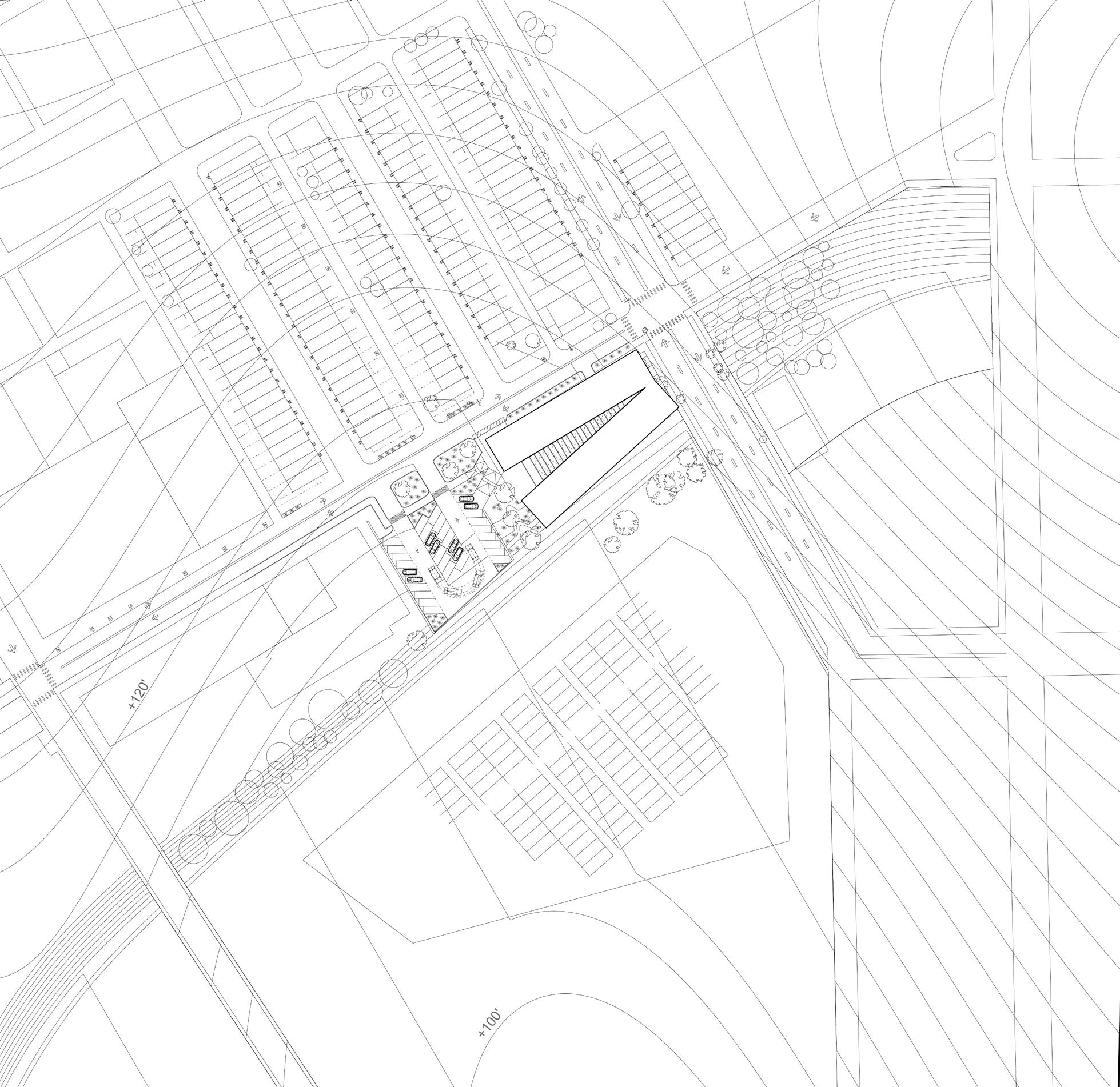
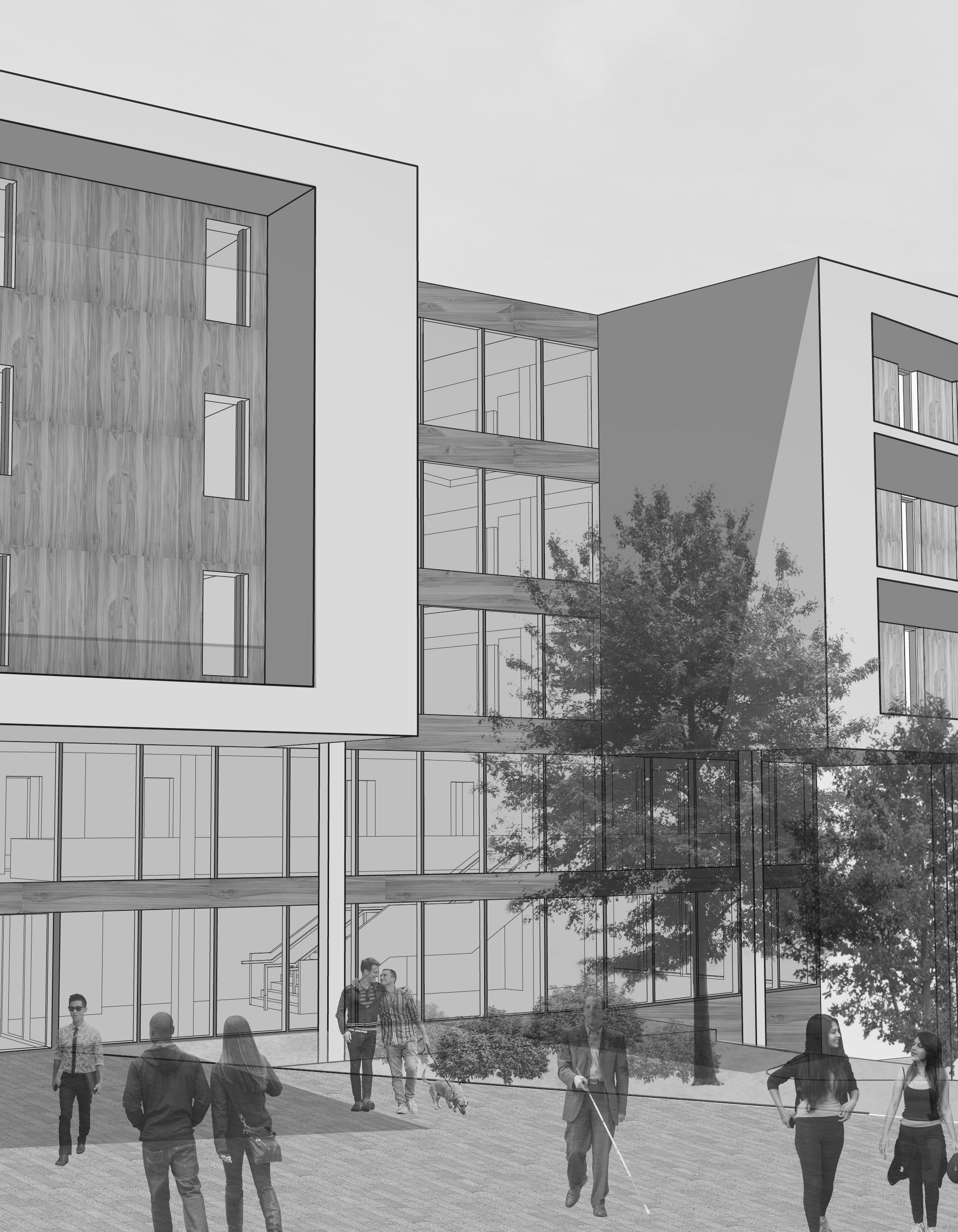
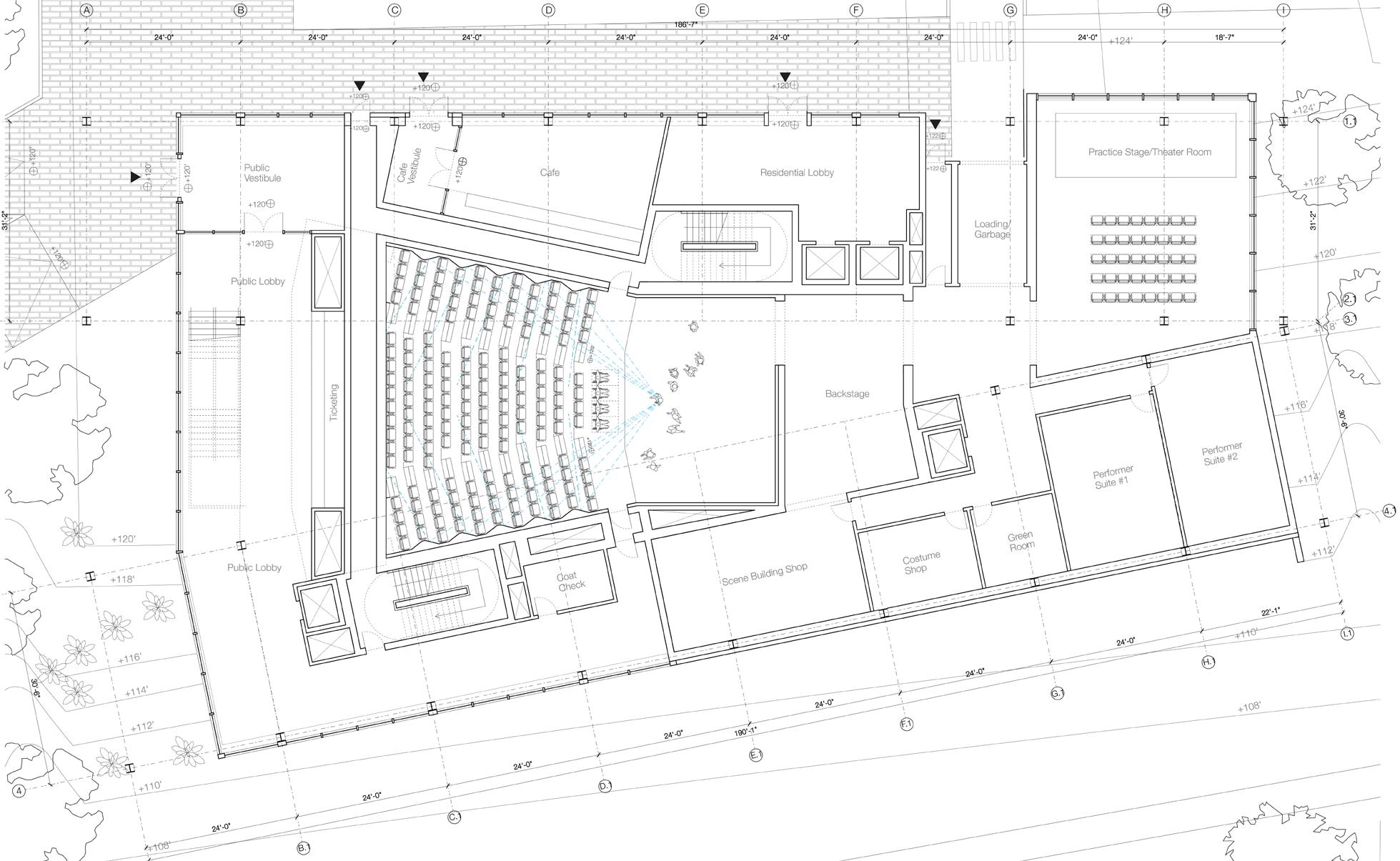
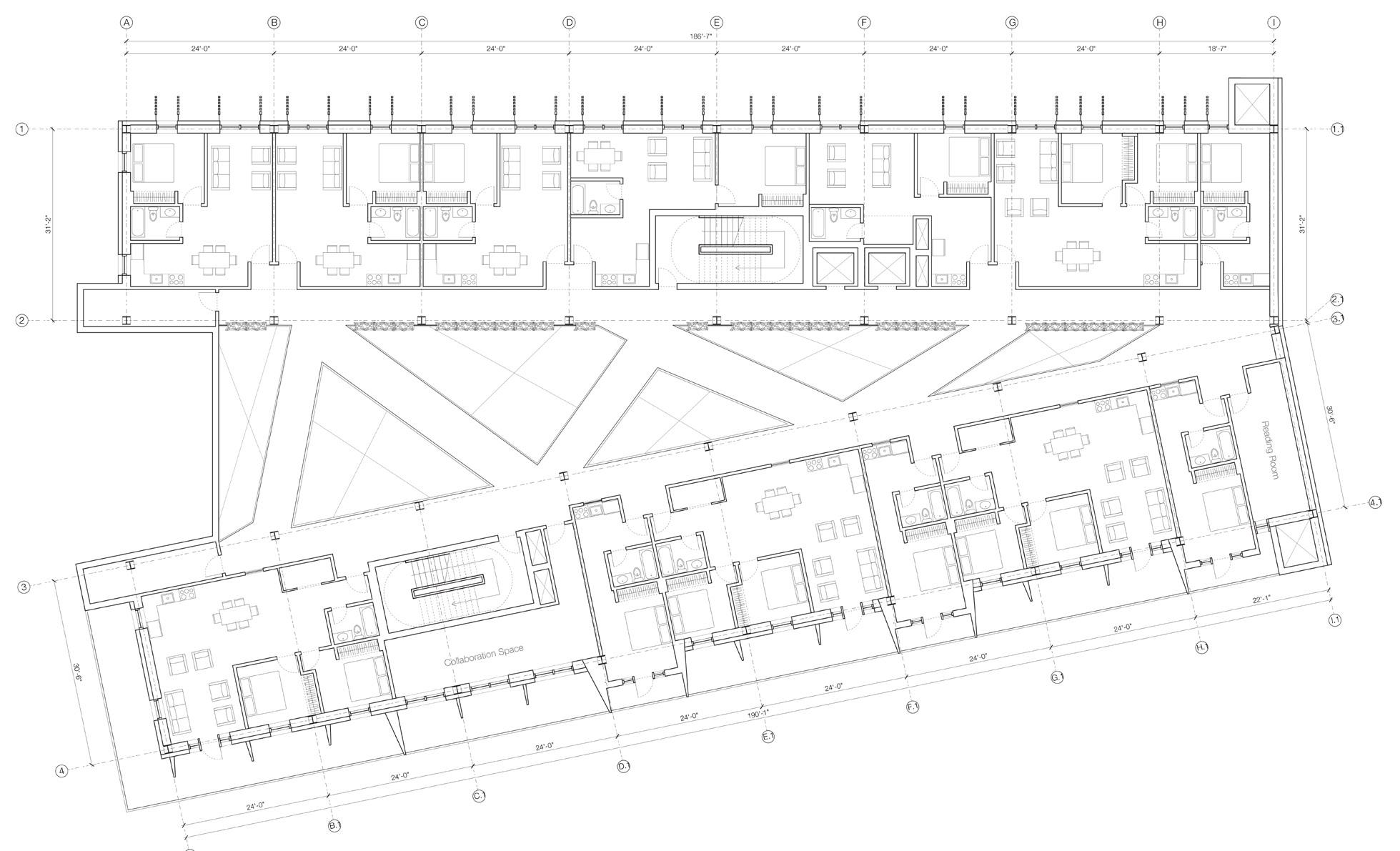
Nestled into the intersection of W 26th St and Hundington Ave of Baltimore, the Baltimore Art House is a multi-purpose public theater and apartment complex. Throughout the course of this project, the main design challenges were creating efficient layouts that contained egress for both the theater and the apartments above it, while utilizing the property site, which sloped downward, 14’ in the site’s 40’ width.
Oriented to True North 1/64” = 1’0”
2023/Architectural Design Studio 03/Baltimore Art House
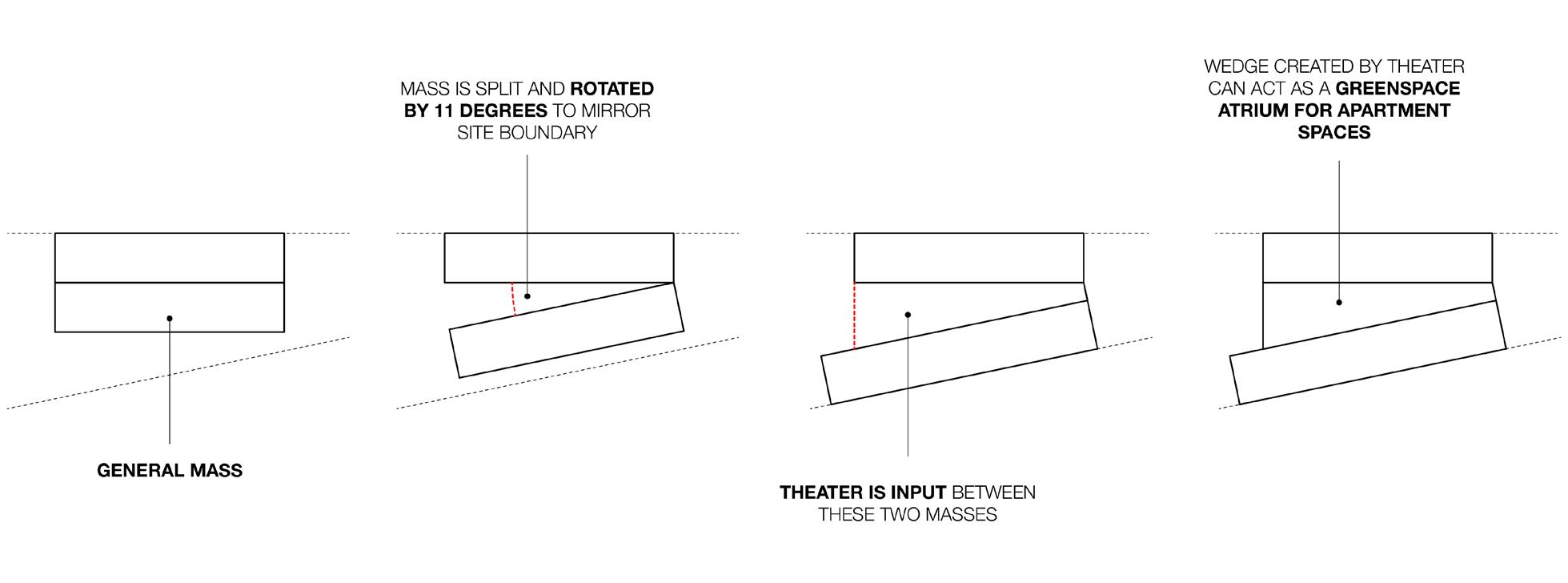
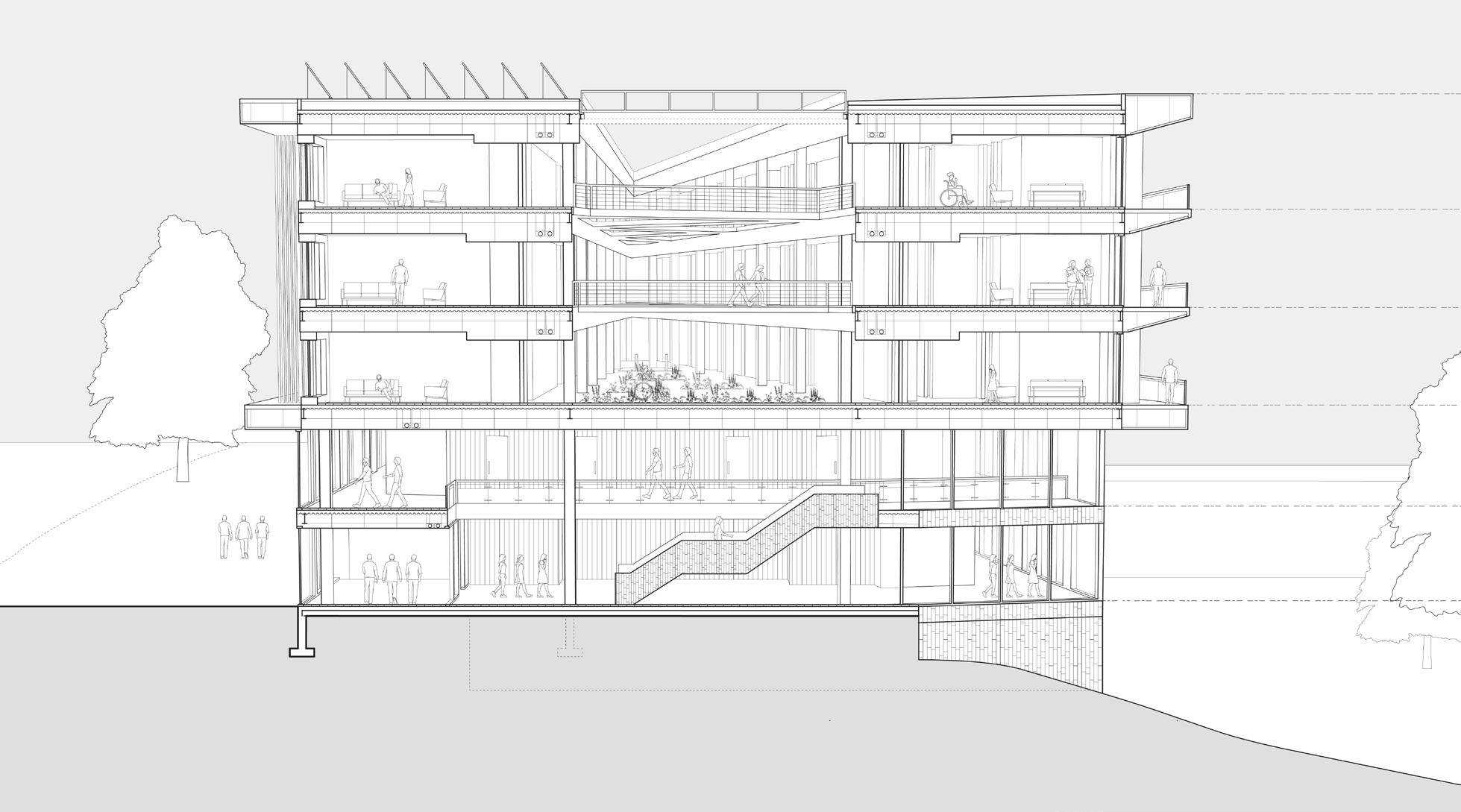
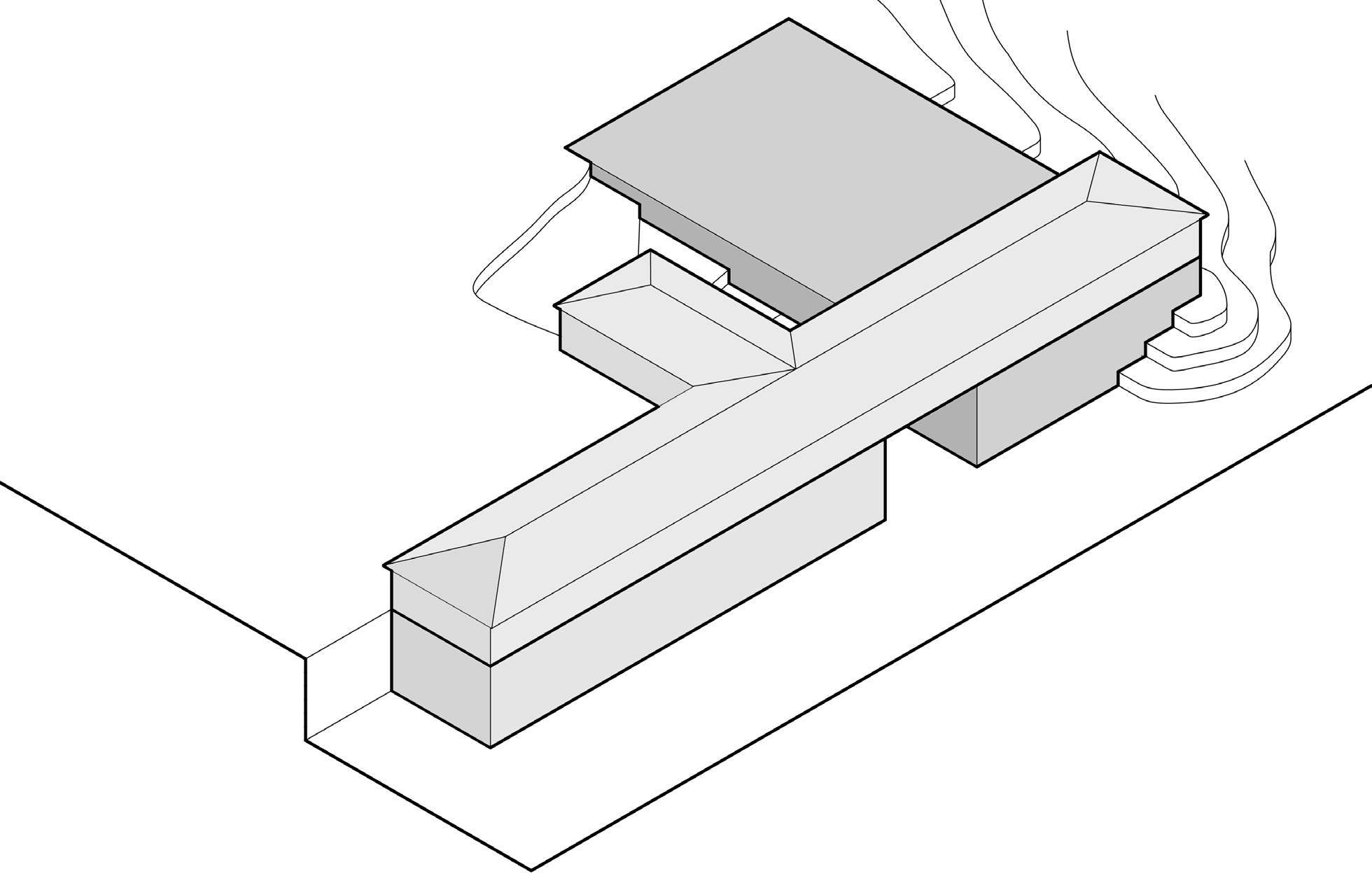
Due to this complexity in program, the challenge, architecturally, is determining program layout. To resolve this problem, it seemed apparent to utilize the ground floor as a lobby, theatre, and back of house program, with the apartment complex resting above the theater. However, to create efficient circulation and quality of life in these spaces, the complex volume was cleaved into two distinct blocks and then rotated by 11 degrees to mimic the site boundary for visual clarity. The resulting space was utilized as an atrium.
First Floor Plan (Project North)
1/8” = 1’0”
2023/Architectural Design Studio 03/Baltimore Art House
Fourth Floor Plan (Project North) 1/8” = 1’0”
Transverse Section 1/8” = 1’0”
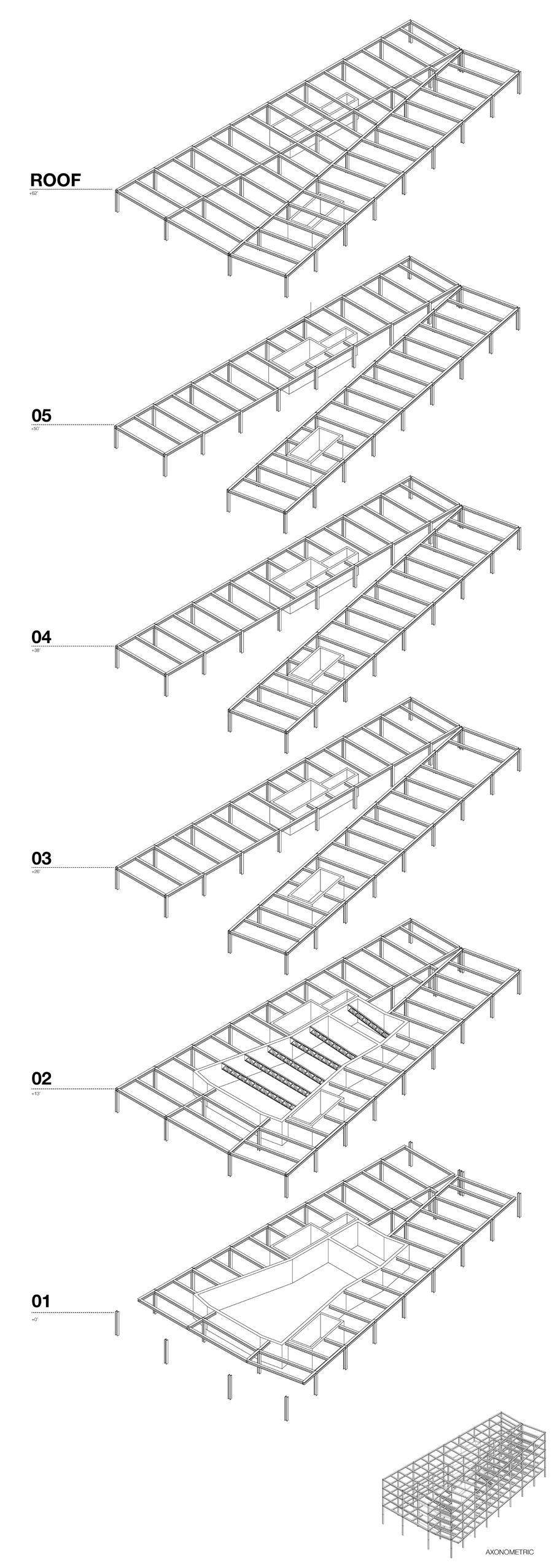
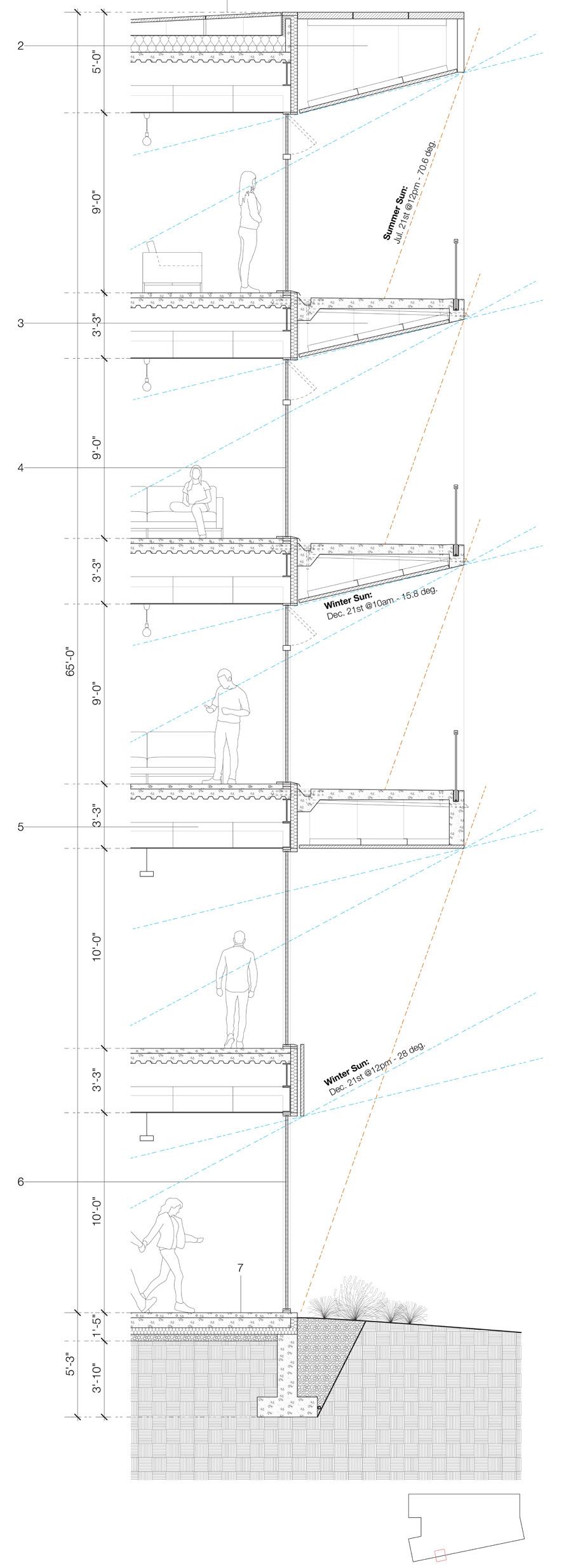
This project centered around comprehensive design throughout the stages of the design process. Within schematic design, I focused on creating a schema which intentionally focused on passive building standards and efficiency in sustainability. Then, throughout design development and eventually the final presentation, I fine-tuned my scheme and grounded my design in lighting/structural layouts as well as a building envelop that was cross-referenced with the IBC.
Design Studio 03/Baltimore Art House
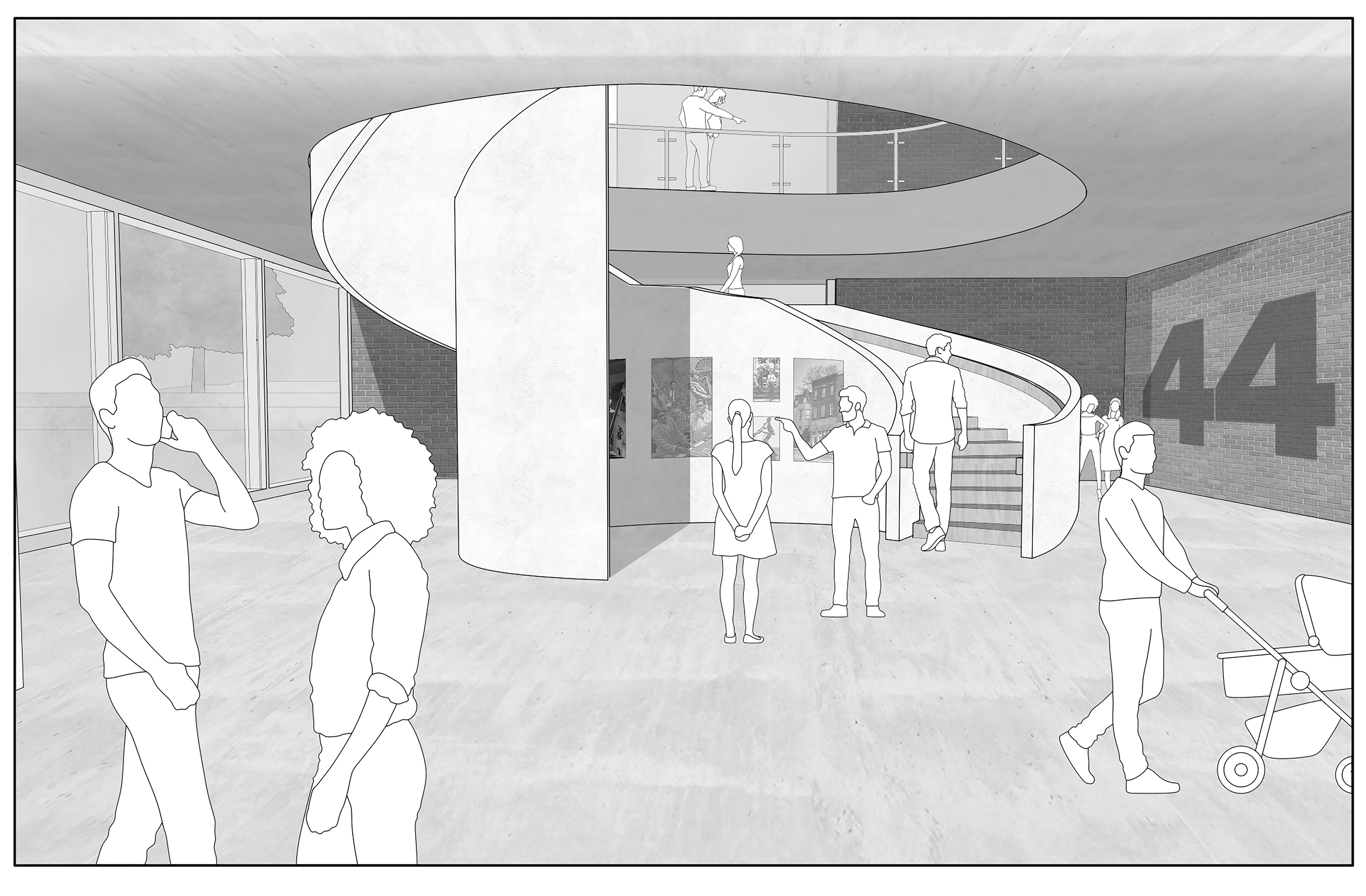
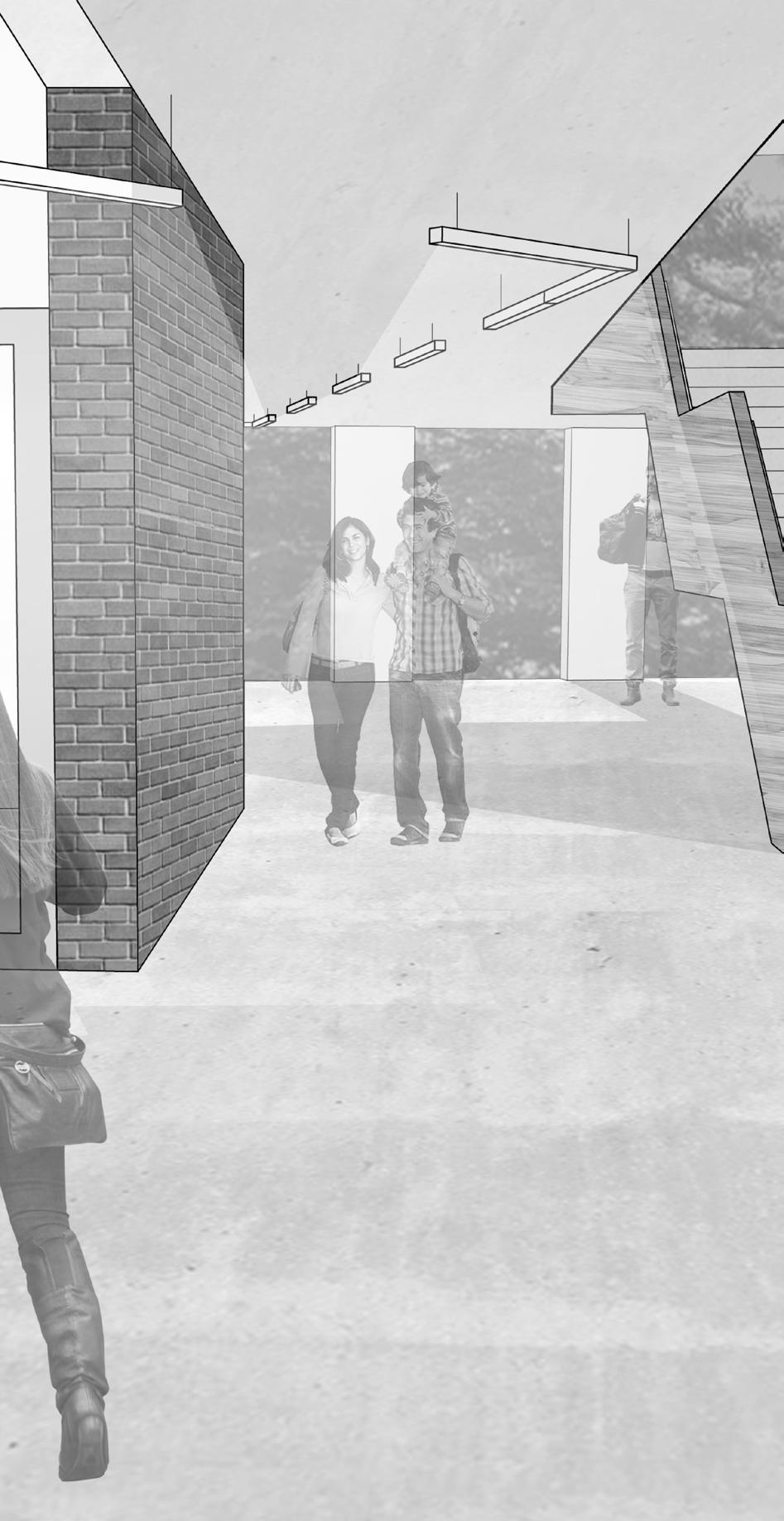
Lobby Lighting Perspective
2023/Architectural Design Studio 03/Baltimore Art House
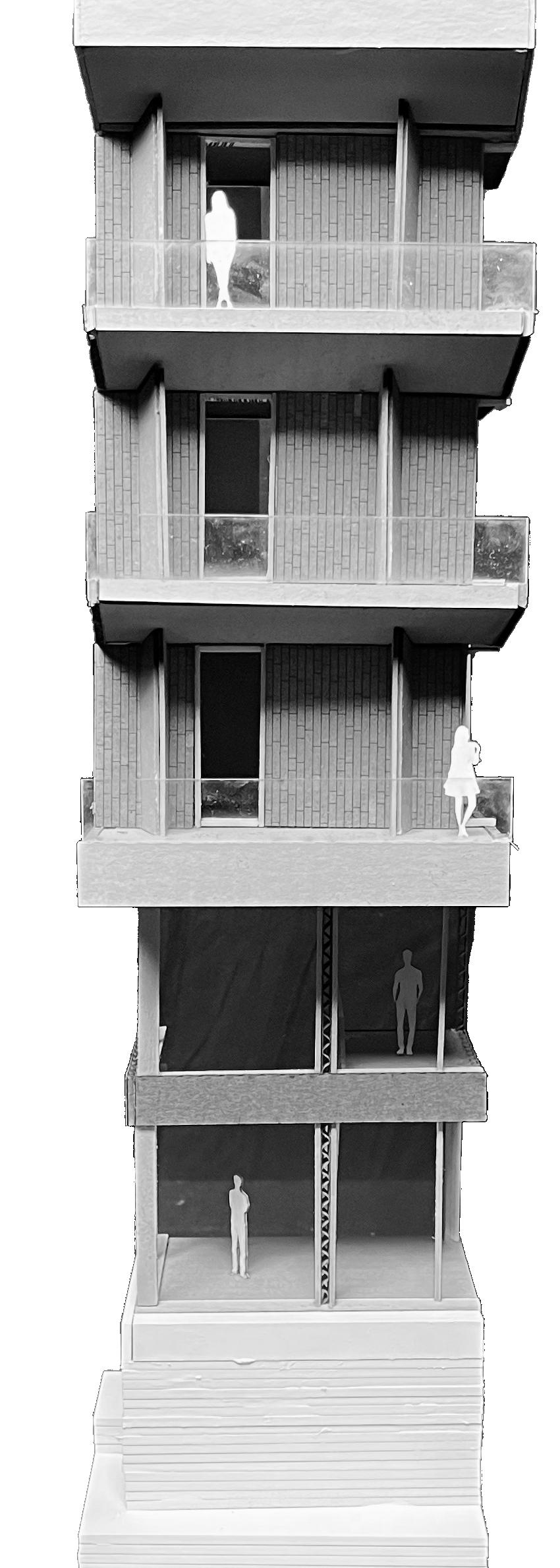
Wall Section/Sectional Model 1/4” = 1’0”
the Piranesi Competition 2023
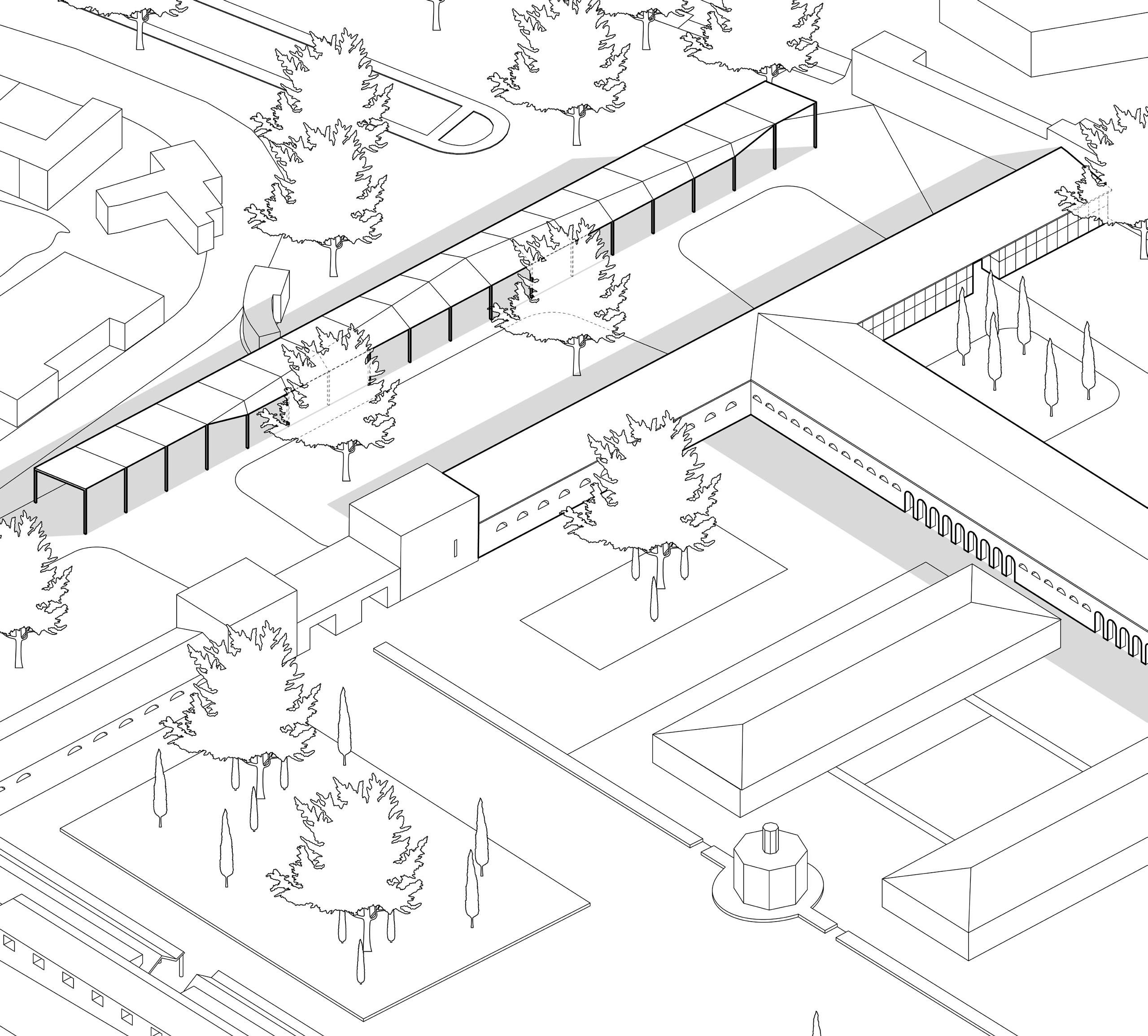
The 2023 Piranesi competition was a week long competition I entered, with a group, that centered around adding a thermal bath addition to the existing Anitquarium at Villa Adriano in Roma, Italy.
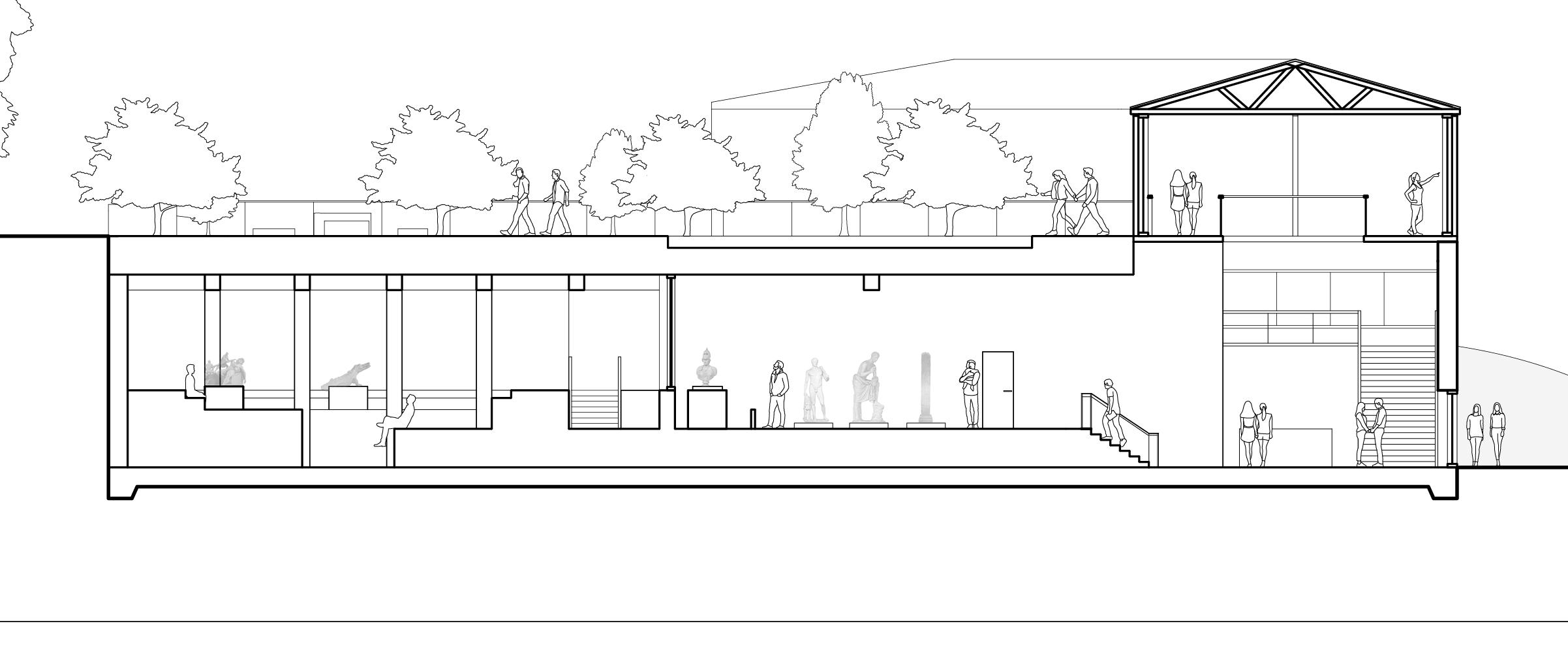
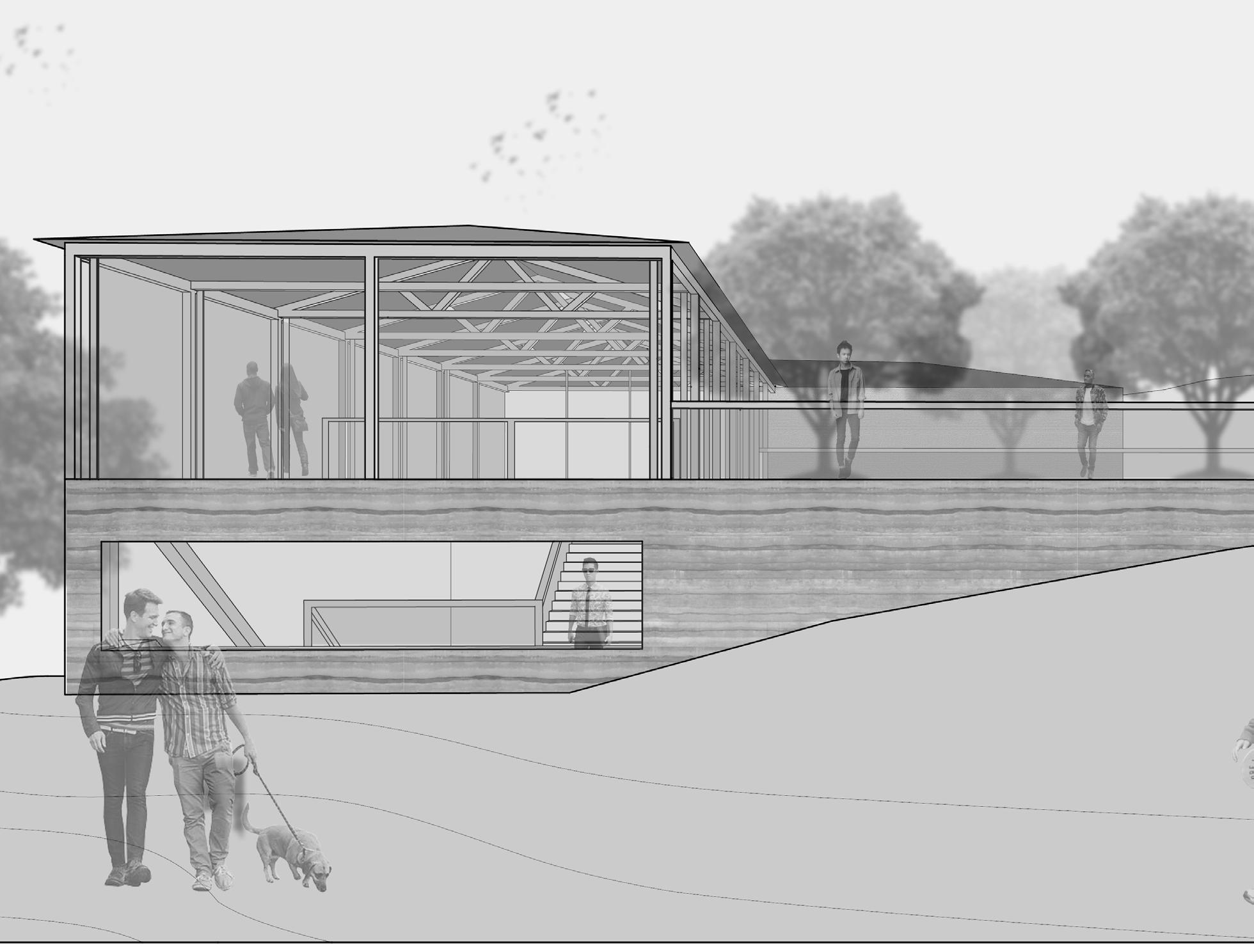
My group’s addition to Villa Adriano centered around bridging the connection between the existing antiquarium and the new addition to the site of thermal baths through “bridging” a cafe space between both of these structures - allowing for a piazza space underneath. These moves activate the mostly unused portion of the Villa Adriano site, as well as architecturally resolving the issue created with new construction on a UNESCO World Heritage Site.
2023/Architectural Design Studio Roma/Piranesi Competition 07
Transverse Section 1/16” = 1’0”
Exterior Perspective
2023/Architectural Design
Roma/Piranesi Competition
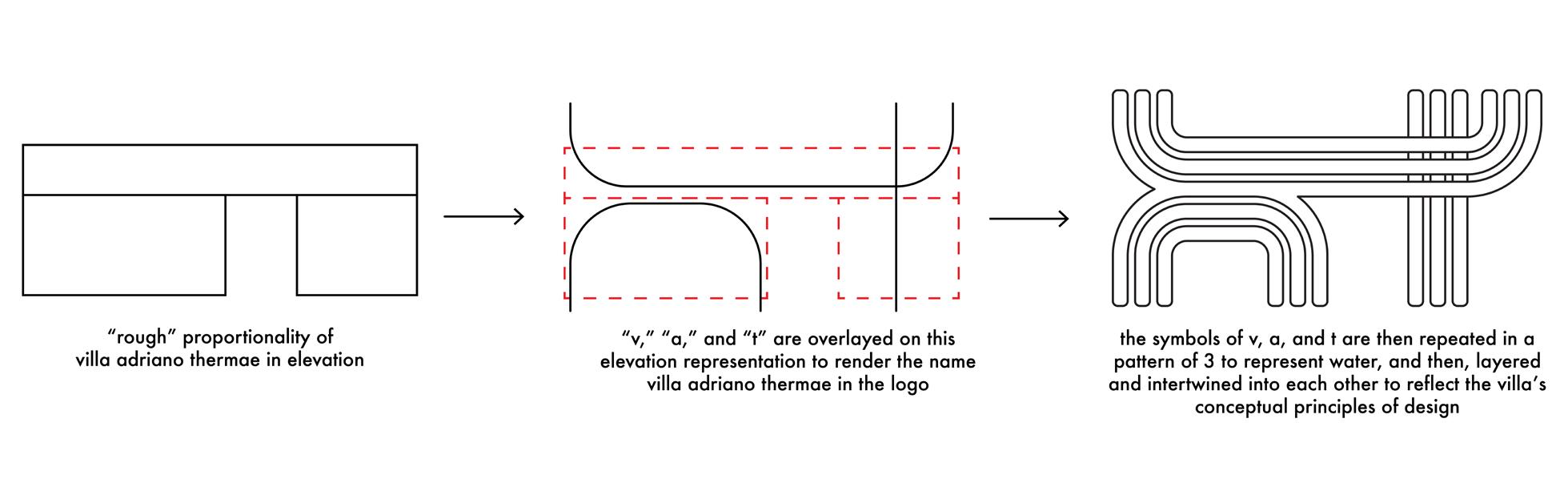
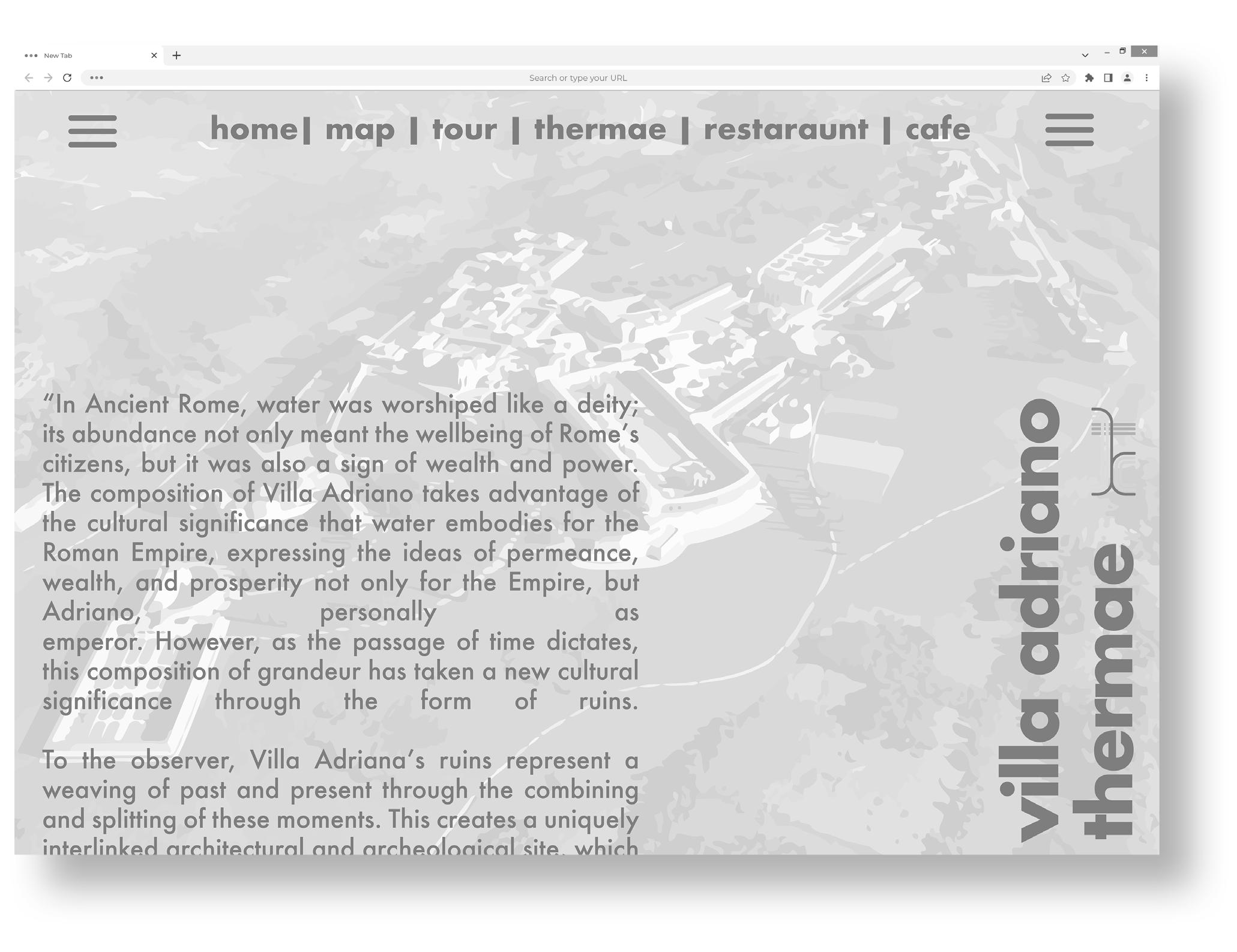
As well as the architectural intervention, this project also centered around a set of branding deliverables, marketing the addition to Villa Adriano to the public. My group placed 1st in this competition.
the Institute for Broader Impacts
site plan
1/32" = 1'
site plan
1/32" = 1'
This Design Research Studio was centered around testing AI technologies to generate an architectural project. The project: an Institute for Broader Impacts sits on Penn State’s Campus, at the current site of the Oswald Tower. Specifically, this project was created to house and display Broader Impacts developed from the field of Data Science.
2024/Design Research Studio 01/the Institute for Broader Impacts
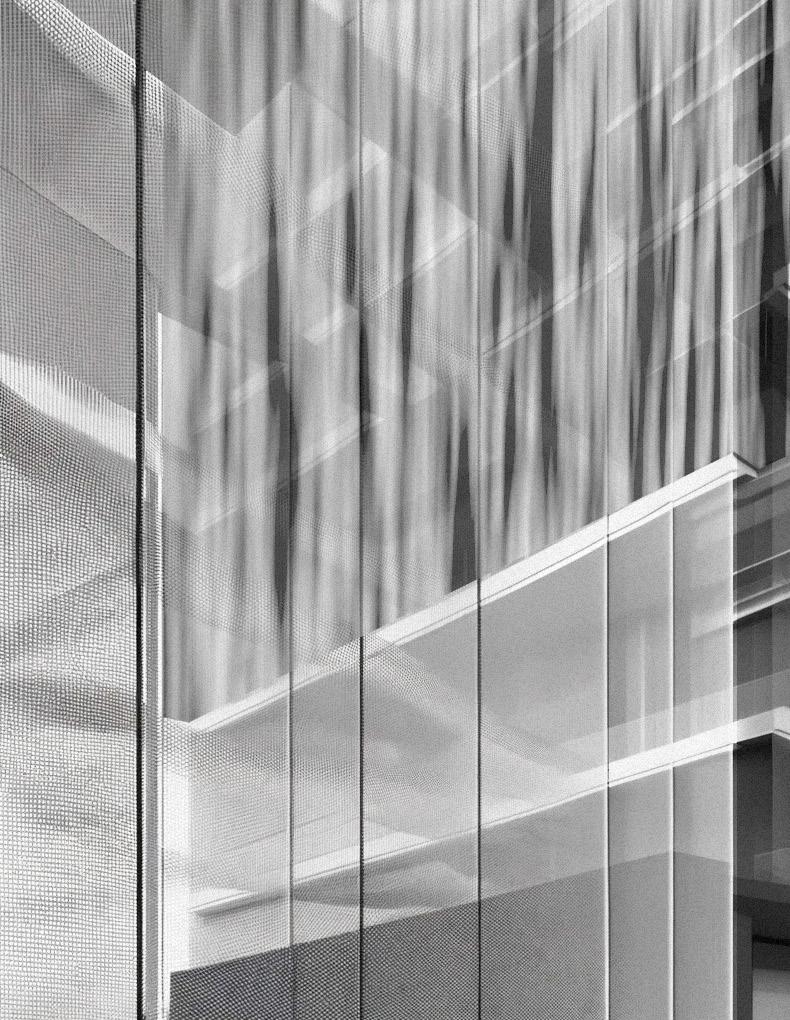
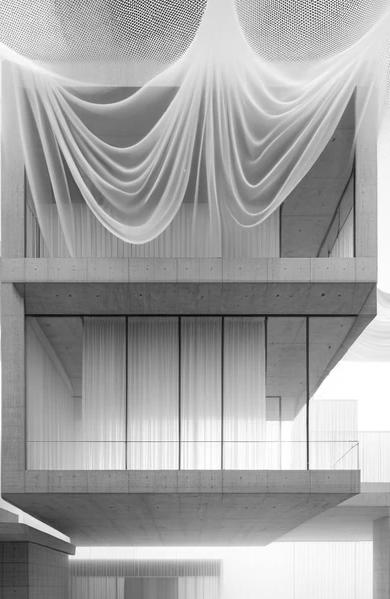
The essence of data science lies in its multidisciplinary approach, utilizing data for extracting insights, predicting outcomes, and guiding decision-making. Central to both data science and text-to-image AI visualization is the concept of composition. Historically, the exploration of composition can be vividly seen in the Greco-Roman and Italian Renaissance periods, particularly through the sculpted drapery that characterizes much of their artistic output. Incorporating such a design element serves a dual purpose: it underscores the institute’s commitment to the foundational principles of data science and AI, and it resonates with the historical and cultural significance of composition in art. The AI images throughout this project were generated via Dall e 2.
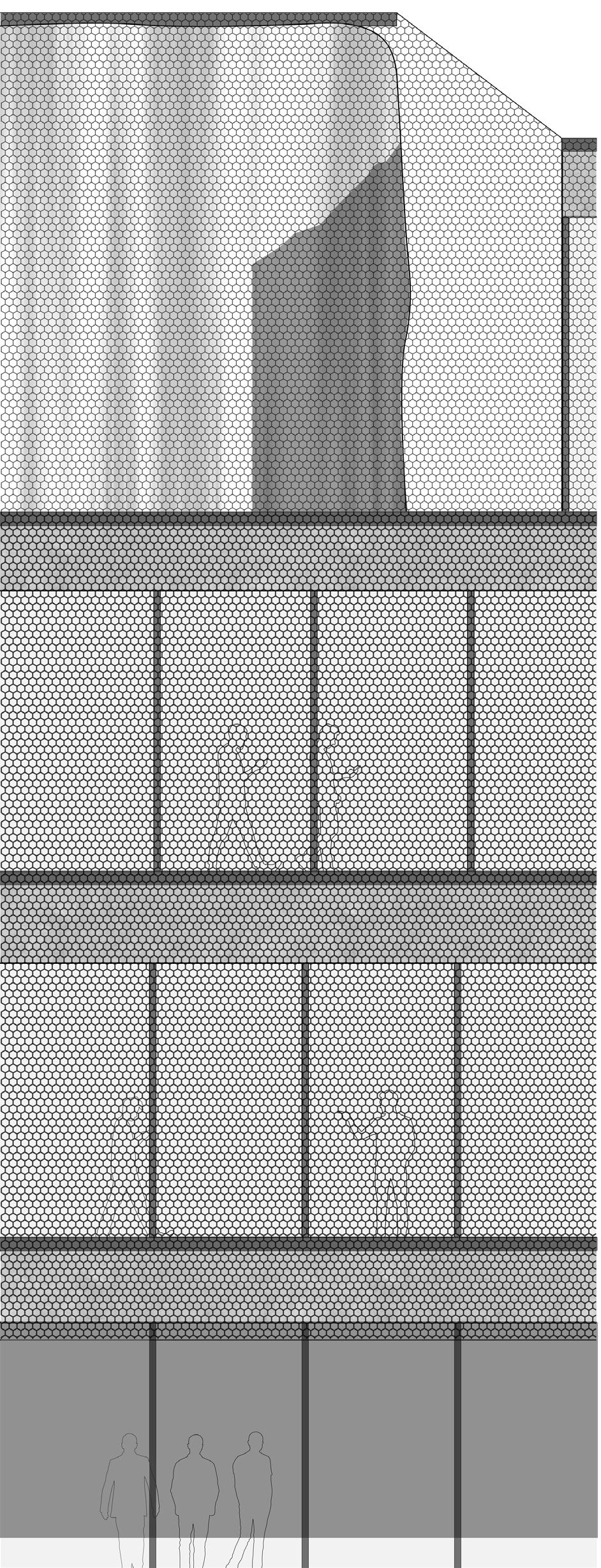
Partial Elevation 1/4” = 1’0”
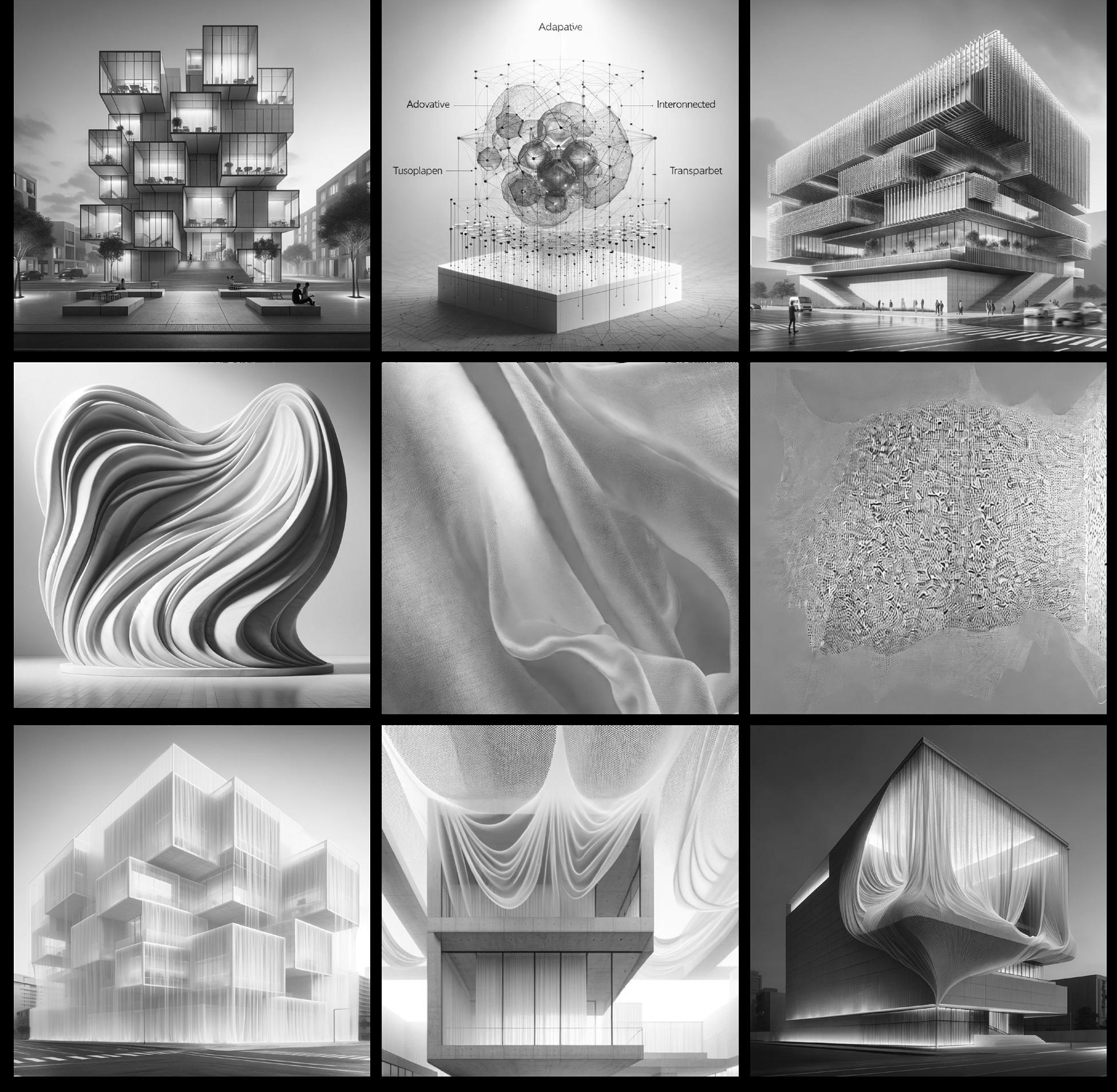
Image Generation from Dall e 2
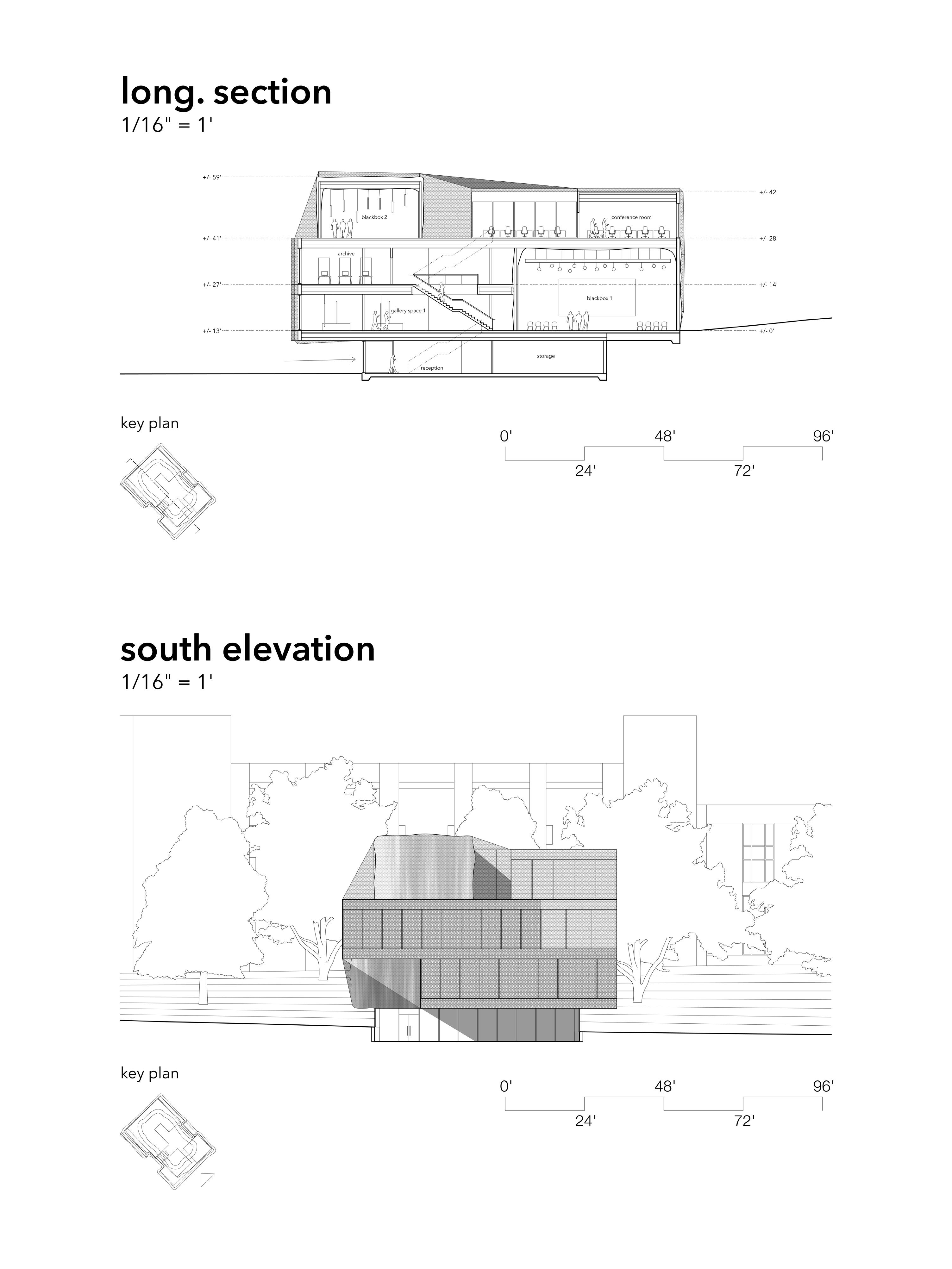
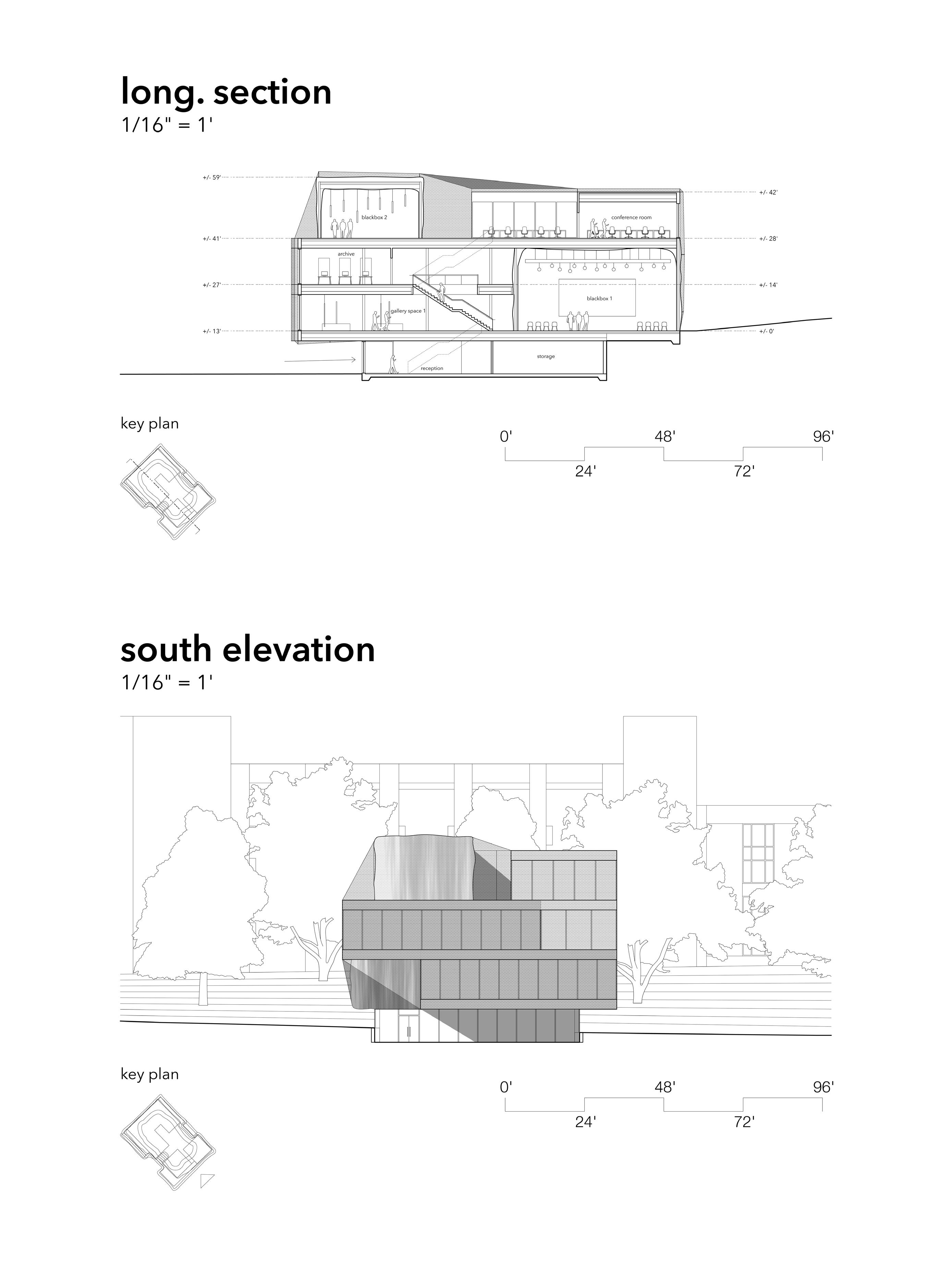
Longitudinal Section 1/16” = 1’0”
South Elevation 1/16” = 1’0”
south elevation - 1/16” = 1’
The motifs of composition and drapery play out along the Institute’s façade and interior/exterior form. Exhibition spaces throughout functioning as Black Boxes are created with a prefabricated sculpted shell encasing them. This gives a visual cue of composition and literally functions in the space as a piece of datum – what program happens here.
plan
The spatial quality of the interior of the Institute is treated as a piece of data itself. Each datum of program is treated as its own, separate form. It is then enclosed by a draping gradient of steel mesh over the entire constructed form – facilitating the art of composition. Fourth Floor Plan (Project North)
Image Generation from Dall.e 2
Prompt 1: “clean, modern aesthetic with a similar composition of geometric forms, perhaps varying the proportions of volumes to introduce a new dynamic.”
Prompt 4: “make an abstract volumetric sculpture that refers to Italian Renaissance drapery. aspect ration 16:9. it has more surface area compared to its height.”
Prompt 7: “exterior perspective of a three-story building made of glass and concrete. there is a layer of semi-transparent white fabric covering the entire building. it is wider than it is tall.”
Prompt 2: “design an object that encourages interaction not just among people but between the object itself to make tangible the impacts of data science in a physical manifestation.”
Prompt 5: “create an image of a draped, white, opaque fabric that draws parallels to italian rennisance archtiecture. it is taken from a scale of no context surrounding the cloth.”
Prompt 8: “create an interior perspective taken from the point of view of a person on a roof deck made of concrete and glass. the building is covered in white semi-transparent fabric.”
Prompt 3: “create an image of a building that is centered around kinetic architecture. it is responding to movement in and around the building. it is rectilinear in form.”
Prompt 6: “create a material that transitions from a draped opaque white fabric to a tensile semi-transparent mesh in a gradient based off varying layers of meshes.”
Prompt 9: “create a building wrapped in tensile mesh. the upper level of the building is a sculpted object, emitting diffused light. the object is wrapped in tensile mesh.”
the Tensegrity Gallery 2024
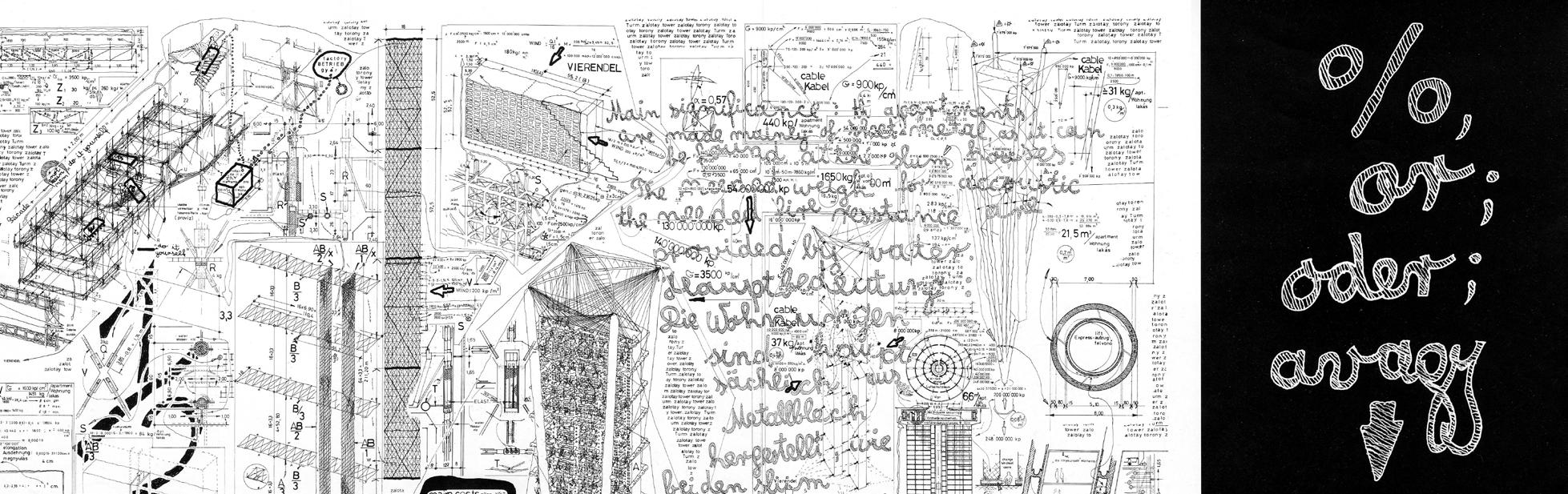
A selection from Elemer Zalotay’s ‘Tensegrity Skyscraper’
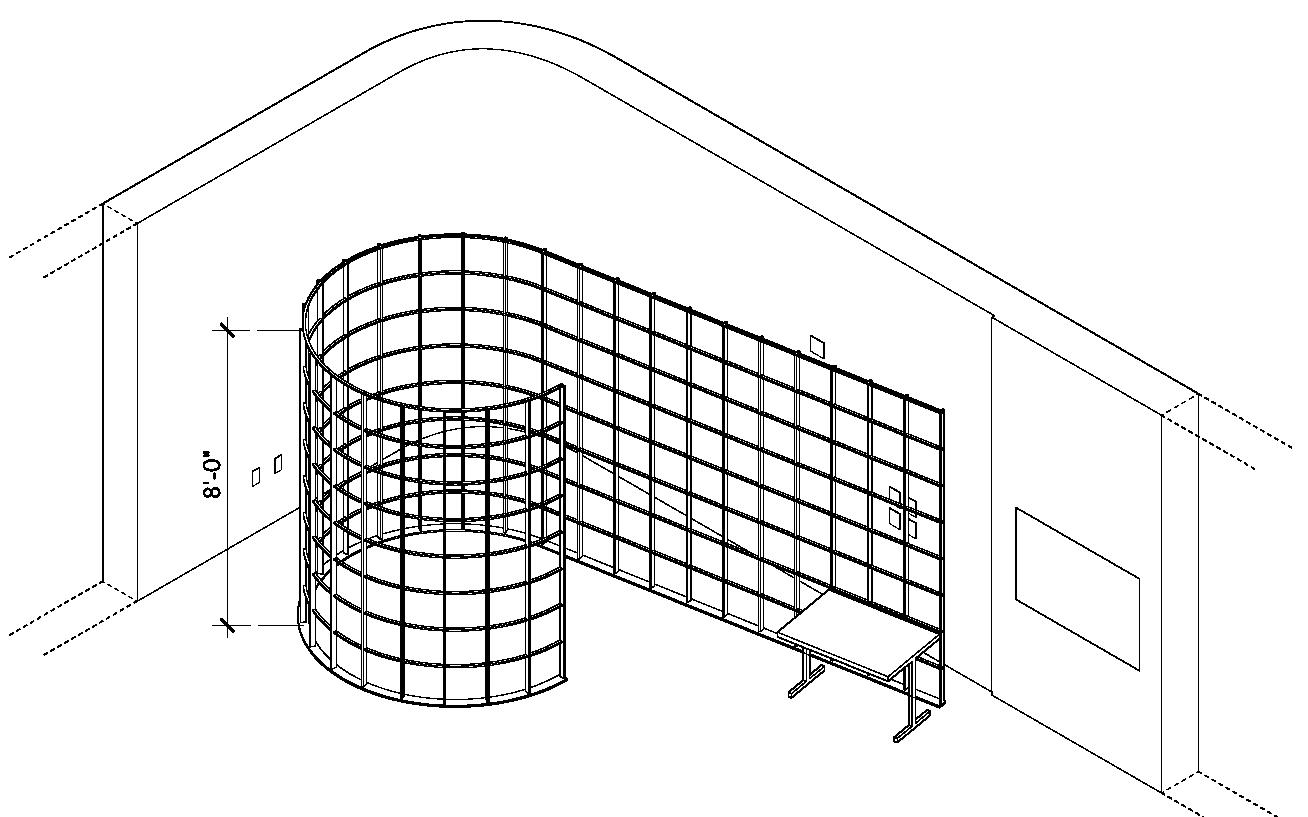
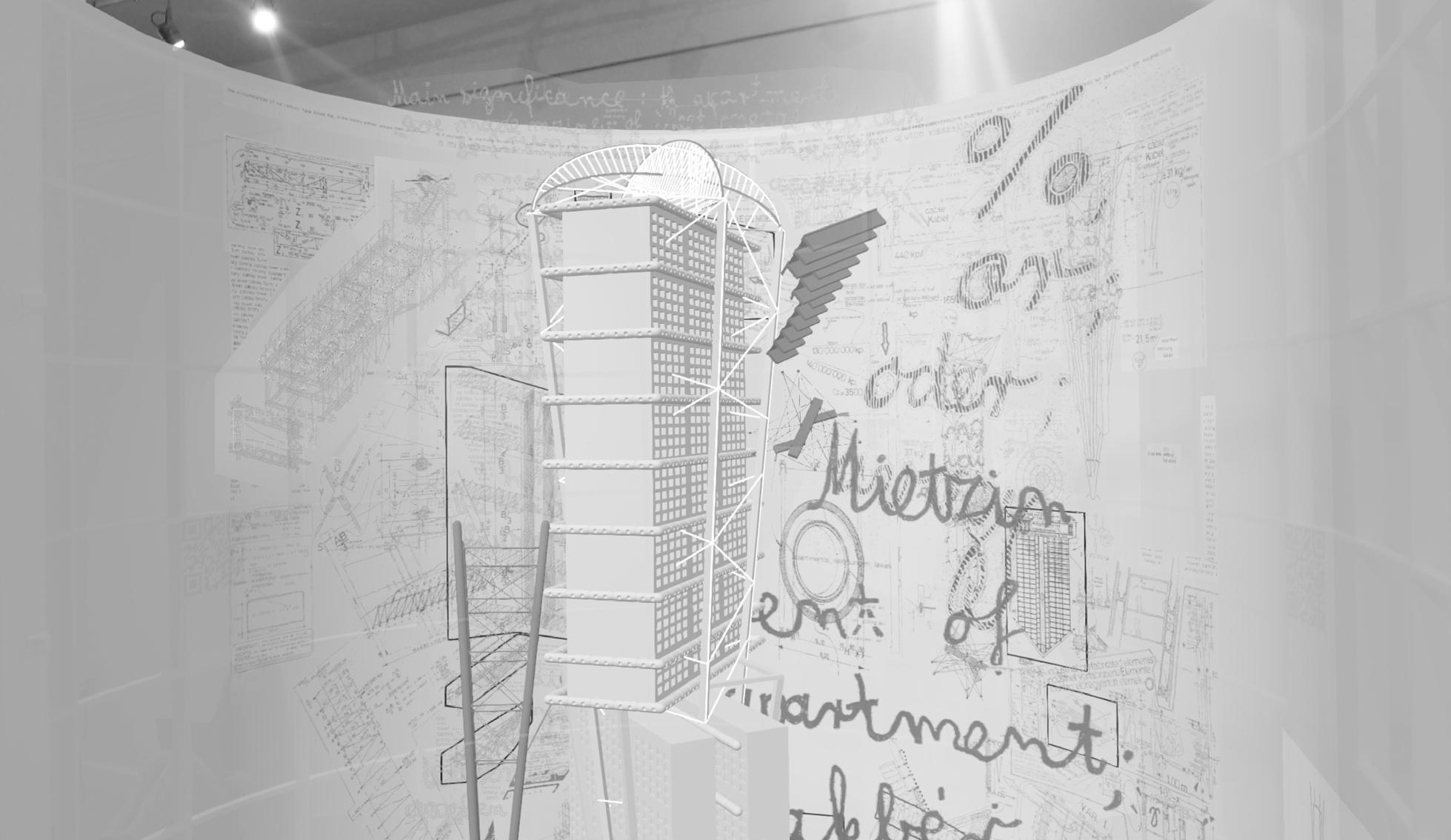
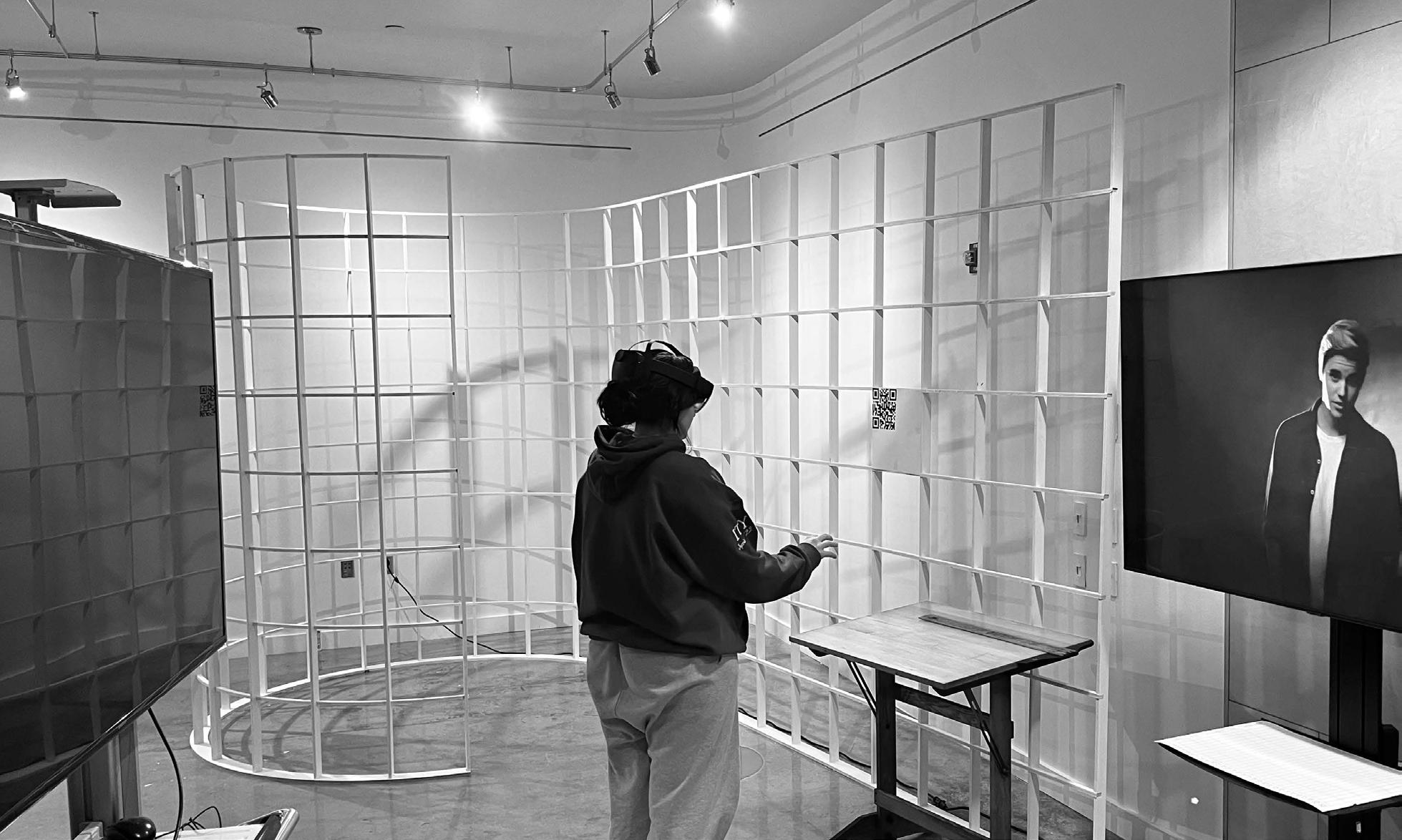
The ‘Tensegrity Gallery’ is an interactive Augmented Reality exhibition powered through Grasshopper and displayed through a Microsoft HoloLens Headset running Fologram. The exhibition allows the participant to re-interpret the 2D ‘Tensegrity Skyscraper’ drawing by Elemer Zalotay in 3D space. The end result is a user generated collage, compiled into a community of others, creating a datum of spatial experience. This exhibition created a dialogue with the ‘public’ about architectural representation.
2024/Design Research Studio 02/the Tensegrity Gallery 17
of
Exhibition’ in use to an observer
2024/Design Research Studio 02/the Tensegrity Gallery