Note from the editors
Welcome to our first edition of the Stamford School Geog Soc Magazine. Over the past term the Geog Soc team have been working on areas of geography which interest them the most. We do hope you enjoy reading the wide variety of concepts and issues that geography seeks to explore. A big thank you to all those who have contributed to the first edition of our magazine and hopefully many more to come.
As year 13 prefects, great joy has been brought to us as we have seen the magazine grow but also the students' knowledge of geography expand. Our contribution has been shadowed by the immense contribution from the students, this shows oG their improved understanding. Hopefully they are able to incorporate their knowledge into the geographical curriculum.
Henry and Rory

Contents:
1. Mayan Temples
2. How does the military use technology to support missions?
3. How Geography Shapes war?
4. How sustainable are you?
5. Geographical Mysteries – Bermuda Triangle
6. Why study Geography at A Level? – Interview with our Prefects.
7. Top Ten biggest eruptions of this Decade
8. Geography big quiz!
9. Politics and Geography
Mayan Temples
By Milo Robertson and Zachary Downs
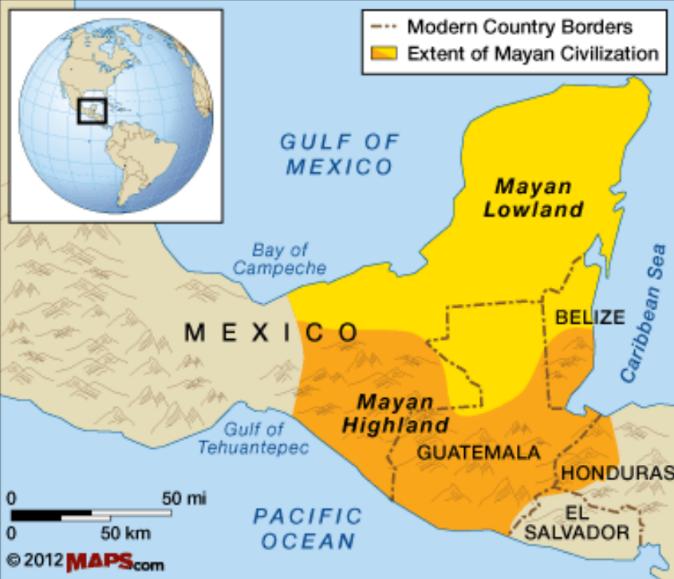
Roughly 2,000 years ago, there was an ancient civilisation known as the Mayans, who lived in Mexico. The place we are looking at is called Teotihuacan, and it is located just north-east of Mexico City, which is in the southern part of the country. However, we are looking at a more modern event, in 2017. There is an area in Mexico known as the Puebla region. In 2017, there was a massive earthquake, with a magnitude of 7.1! (That's absolutely huge in earthquake terms!) It was known as the Puebla Earthquake. It caused massive damage to Mexico City, destroying homes, but it led to the discovery of something far greater than anyone could have anticipated.
Low and behold, there was the Mayan temple. People were shocked to have this 2,000-year-old structure right under their noses and not notice it until now! There wasn't just one temple though. It was a whole city, with exactly 1,821 monuments suffering damage. However, the intriguing part is that they suffered little damage.
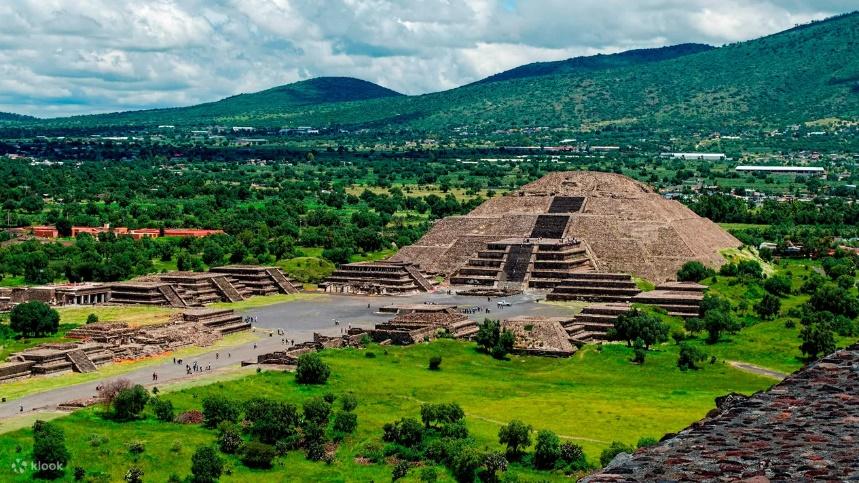
While they are far from the epicentre, they still felt it strongly in the Mayan city.
Now for the mystery of it all. The older the building, the less damage it suffered. Nobody quite knows why, and people are still trying to figure out how they constructed it for it to survive. It was constructed using limestone, tezontle, a porous volcanic rock with a reddish tinge, and easily worked building material, lime, and gravel for making mortar.
Mayan temples have a pyramid-like structure. These pyramids relied on intricate carved stone in order to create a stair-stepped design. Many of these structures featured a top platform upon which a smaller dedicatory building was constructed, associated with a particular Maya deity. The temples are meant to represent mountains, an important part of Mayan culture.
So, what do you think? How was it constructed? How did it survive the earthquake? Maybe you could go find things out for yourself! I hope this intrigued you; perhaps there will be more about Mayans in another article, maybe a future edition! If you love Geography, be sure to join Geog Soc if you want to be a part of our group!
How does the military use technology to support missions?
By Austin McCormack
Interview with serving RAF O1icer – Wing Commander G McCormack
The military use autonomous vehicles to conduct surveillance. They can use airborne drones that will fly through the sky and can use sensors to record videos of terrain. They also want to look at using high precision cameras and they also use infrared cameras so that they can view things at night and to be able to see past objects as well. Using infrared, they can see heat signatures of things on the ground. They also use technology for communications, Using advanced radios which use encryption coding to scramble the signal for people who are not intended to listen to the transmission. They also use space technology to bounce communication missions around the globe and for surveillance as well so that you can see using global satellites to put together a global image of a situation.
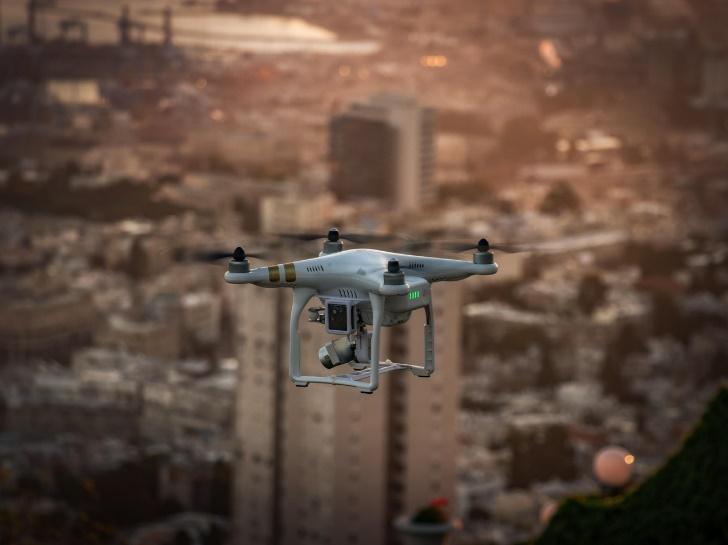
what is going on any part of the world. On land the military can use autonomous vehicles that are guided by artificial intelligence and work out the best route to get to a point, they can use that to resupply troops or evacuate the injured. In the Air Force we could use artificial intelligence to analyse the weather and the terrain and the threats that might be around and work out the best route to get to the destination by analysing all those factors with live data and processing them to come up with the optimal routing.
How is Geography shaping war?
By Milo R Robertson
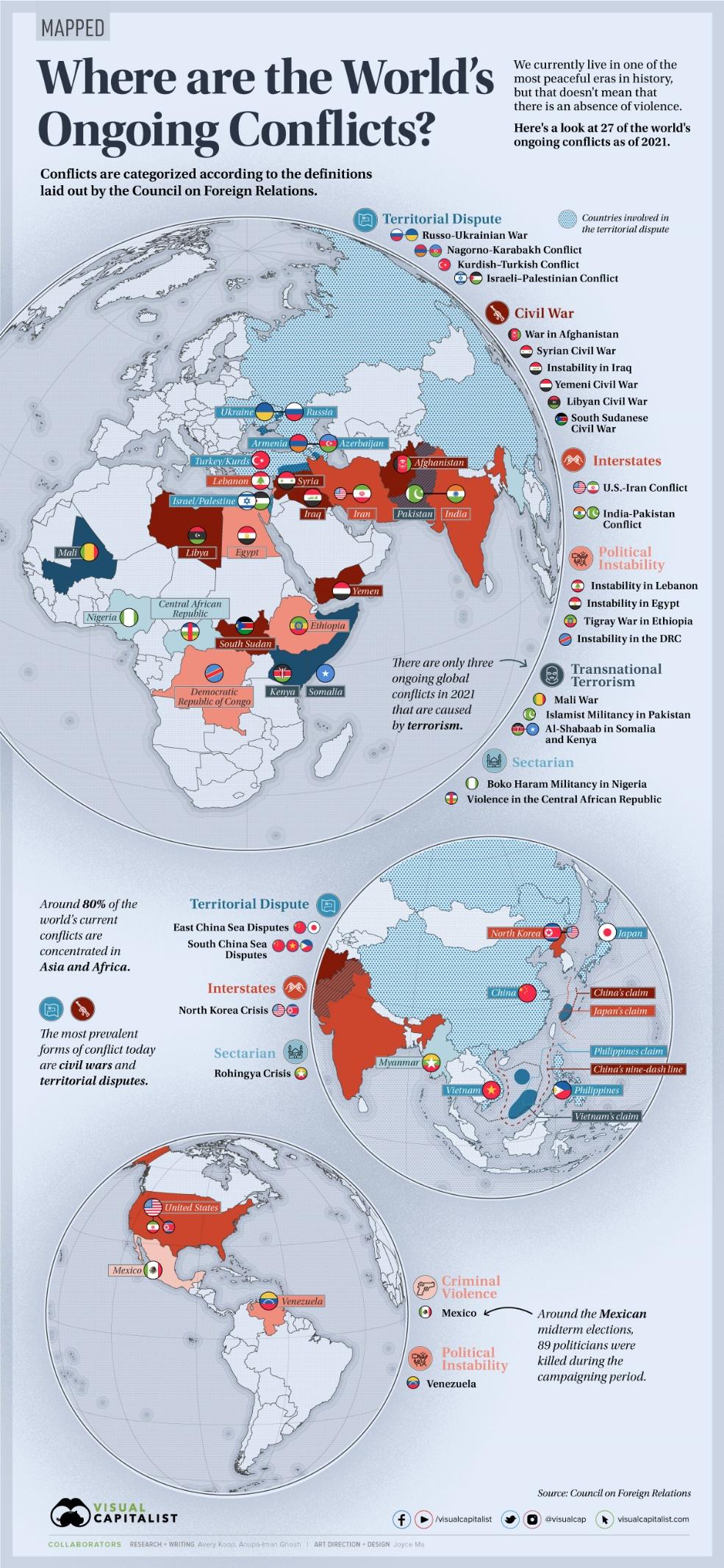
Over the course of time, Geography has shaped the outcome of wars, and it will continue to do so for much longer. Take a look at examples from long ago, such as the Spanish Armada or William the Conqueror. Both were a^ected by harsh weather conditions. For example, the Spanish never actually made it to England, as the tough weather conditions caused their fleet of ships to be diverted all around England. But it’s not just in the past that these things have happened. Take the war in Ukraine for example. One of the biggest reasons that
Russia invaded Ukraine was to gain access to the black sea, via Crimea, on Ukraine’s south coast. This is vital for Russia to defend themselves from any NATO attack, and for imports and exports.
Geography will still continue to change the events of wars. There are certain factors that could start a war, the classic example being one country or group having a certain characteristic or access to something that one other power wants and going to war over it. With the world having so much variety and di8erentiation across the globe, it is simply
human nature to want other things, and it is only a matter of time before even more wars begin.
Of course, there are many other reasons to go to war, and naturally some of these will come true, but there are many things which could happen and have happened. In the past, China and India have not been to war because of the conveniently placed Himalayas, and it would have been too di8icult to invade one another because of them.
We obviously have to touch on the sea levels rising. It is only inevitable that at some point in the future, whether it be sooner or later, some cities and coastal areas will be submerged This will greatly impact imports and exports, as some key port cities will be lost, and other areas will have to adapt. This could massively change the course of future wars, with less land to work with. Shipping could be damaged, which would result in countries resulting to other measures to ship weapons and travel troops.
Of course, not all of this is set in stone. The world is a very funny place, and anything could change between now and however far in the future this could happen. However, it is fun to theorize and predict, unfortunately it is near impossible to perfectly get it right. I hope that you enjoyed reading this and stay curious as we uncover the world’s mysteries and look into what is happening around us now, in the past, and in the future.
Map Reference: Mapped: Where are the World’s Ongoing Conflicts Today?
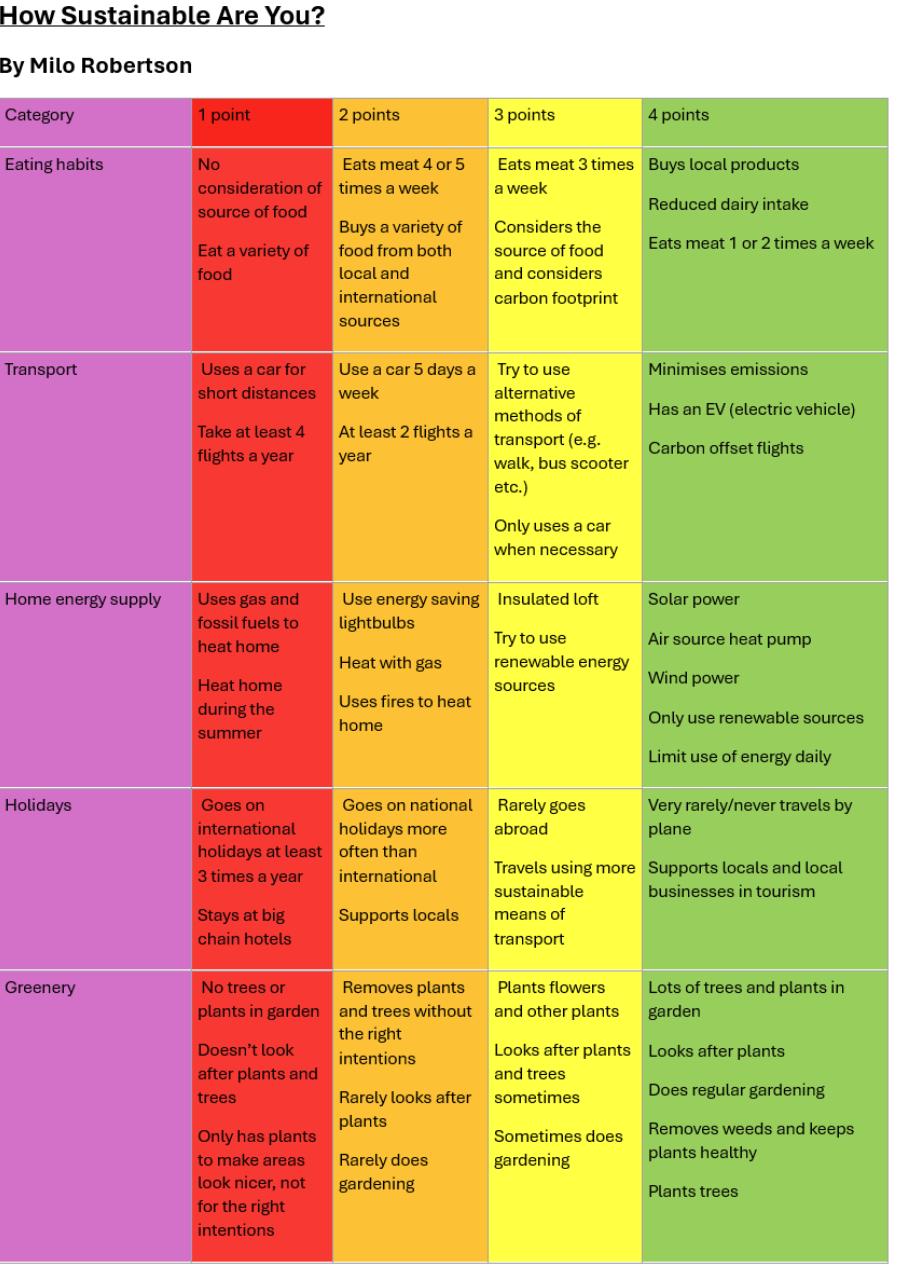
If you need help to improve your sustainability have a look at the sustainability article on
BBC Bitesize “How can we live more sustainably?”
Instructions:
1. Take the quiz and highlight the box applies to you.
2. Tally your total score.
3. Where do you fit on the Sustainability Scale?
Sustainability Scale
16-20 – Sustainability Hero!
10-15 – Well done – you’re doing well!
5-9 – Greater eLort needed
1-5 – Time to make a change!

Geographical Mysteries – Bermuda Triangle
By Charlotte Jia
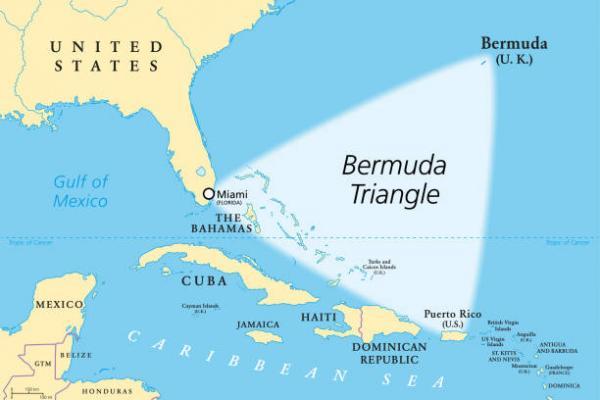
The Bermuda Triangle is a region of the North Atlantic Ocean, roughly bounded by the southeastern coast of the U.S, Bermuda, and Cuba, Hispaniola, Jamacia, and Puerto Rico.
There is much intrigue surrounding this 1,300,000km2 area of ocean, sometimes nicknamed the ‘Devils Triangle’, ‘The Twilight Zone’, ‘Hoodoo Sea’, among others. So, what makes it so mysterious?
A number of ships and aircraft have disappeared without a trace in this area. The exact number is unknown, but since 2024, the most common estimate is about 50 ships and 20 aircraft according to Brittanica.
One notable case is Flight 19, The Lost Patrol from Fort Lauderdale.
On December 5, 1945, five "Avenger" torpedo bombers, now known as "Bermuda Triangle Flight 19," took o^ from Naval Air Station Fort Lauderdale to practice bombing runs on a sunken ship. Six planes and 27 crew members disappeared, with no reports of hostile action or crashes. The mystery of the Bermuda Triangle has been blamed Flight 19 became known as "The Lost Patrol." Today, the Lost Patrol is memorialized in an old barracks building on the periphery of Fort Lauderdale-Hollywood International Airport. The museum displays uniforms, training equipment, posters, machines, flags, teletypes, mock training aircraft, medals, and more. Every Dec. 5, surviving veterans gather for a ceremony to honour the crew members of Bermuda Triangle Flight 19 and the 68 other flyers who died in WWII.
On December 5, Flight 19 took o^ towards the Bahamas, but upon arrival, the Naval Air Station's tower received a message from Mission Commander Charles Taylor that they were lost. Taylor reported that they could not see land and were o^ course. The tower then received another transmission from Taylor's Avenger, but this time from one of the crew members, who reported that they could not find West and were completely lost. The last words heard from Flight 19 were "It looks like we are entering white water. We’re completely lost." Hundreds of aircraft and ships searched the waters for survivors or wreckage, but nothing was found. Researchers have been trying to figure out what happened to the five planes of Flight 19 and the "Flying Boat" aircraft that went searching for them. Most experts believe that Flight 19 simply went o^ course, northward to the open sea rather than eastward toward the Bahamas, and then each plane ran out of fuel and had to be abandoned.
Today there is still no definitive answer. What exactly happened to the Lost Patrol? Was it an entirely logical circumstance? Or was it the Bermuda Triangle? As geographers we can bring together all the evidence but it might only be resolved once we are able to search the entire Pacific Ocean. The mystery lives on
Why study Geography at A Level?
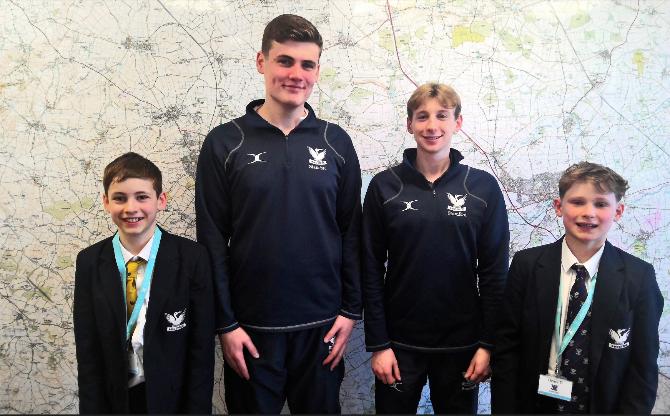
Our year 7 pupils Austin (left), Henry (right), William (not in photograph) interviewed two of our year 13 Geography Prefects – Rory (centre left) and Henry (centre right)
What are your thoughts on geography?
Geography is great, I really enjoy it as a subject. I feel that here at Stamford we have a good department of teachers which make the subject enjoyable. This is because they have so much excitement about what they’re teaching. I felt the same excitement from my first lessons in year 7 right through to my lessons today in year 13.
I knew that I was going to do geography for sixth form because it has such a wide variety of things to learn. We learn about such a wide variety of things including geopolitics to oceans, the atmosphere to the earth and how they all interlink in one way or another. We do this through
you, even with your other subjects. it really appliable. The knowledge you learn can be pulled into all sorts of subjects, especially at A level. You can pull it into politics, you can pull it into economics, business, A swell as other avenues of learning where you can grow your knowledge. It helps set you up for career opportunities when you're older, for example, real estate includes human geography, and you've got to take into
account lots of geographical terminology to develop a career in this industry.
how would geography develop in the future, what would you expect that be?
I feel geography is always evolving. On a human geography side, we have a constantly growing population and we're potentially going to have issues with that. we're not going to have the infrastructure to support this exponential growth in certain areas of the world. Are we going to have enough food to feed the everyone? These are questions that will be constantly asked into the future.
When it comes to the environment and climate change, I feel we need to invest more into green energy, solar farms and carbon capture plants. This will lower our energy consumption creating a better energy situation in the future for the people of the country we live in.
From your perspective do you think we will have enough food for the future?
Well, it depends on the population. If we carry on growing the food at the rate we are at the moment, and the population keeps growing, we will definitely not have enough food to sustain human life. It's just the issue of how we distribute the food to the people who need it. Aswell as the amount of food they're getting, and the quality of that food as well.
What would you what would your advice be to anyone who wants to do geography for GCSE?
If you take geography at GCSE, learn your case studies and learn them inside out. If you know the concept and you know the case studies, the GCSE will feel a lot easier Don't leave it to the last minute to learn specific facts because those will really boost your grades throughout your GCSE’S.
Why do you like geography?
The constant evolution of the subject means every lesson is di^erent Topics we learn this year might not be relevant for the next year, creating up to date topics which stay relevant. The context and case studies around the topic would have changed and evolved. This constant evolution is what keeps it an exciting subject for me.
What would your favourite type of geography be? Human geography, physical geography?
For me I prefer human geography, just the relation of how it a^ects people and the trade, the flows of money, flows of people, and how people live in a place and why they live there. Everybody’s perception of a place is something that interests me and how di^erent aspects of a place can really change how it can be viewed by di^erent people.
I also like physical geography because I enjoy learning about volcanoes and earthquakes. Not only do you learn about physical geography, but you also learn about human aspects like the e^ects of the volcano and tsunamis on environmental, social and economic factors. So, it is interlinked with human geography more than people may expect.
Staying on physical Geography. Do you think the rate of volcanic eruptions and tsunamis will increase? Or do you think they'll decrease?
Well, it is unpredictable, and it will always be that way Eruptions will always happen. We never know what's going to erupt and what the e^ects are going to be. S ome of the biggest eruptions in the world linking to human geography have some of the smallest e^ects on people because there is no one in the danger zone of the eruption. And if the eruption doesn't trigger secondary impacts like a tsunami, risk is going to be drastically reduced.
In Japan, in 2011, the earthquake (not quite volcanoes but still occur on fault lines) caused a tsunami, which caused mass destruction. The tsunami came as a secondary impact to the earthquake which, by itself, caused less damage than the tsunami The unpredictability of the tsunami meant that it was near impossible to prevent loss of useful land and life.
What has been your favourite topic in geography so far?
For me, I'd have to say changing spaces making places is currently my favourite topic. We covered this in year 12. The topic of how places evolve, through re- branding, regeneration and urbanization really stood out to me This is because of how we always talk about investing into a place, but actually seeing how that investment of anything from thought to money can change the place and how people veiw it I thought this was very interesting
I've also liked hazards covered in year 12. Because the e^ects of volcanoes, tsunamis, and earthquakes are such a big part in like. However, these are lives that we don't experience here in England because we're not on any plate boundaries So being able to see the direct impacts of these hazards as well as the attempts to mitigate against the impacts intrigued me.
Top Ten biggest Eruptions of the Decade
By Ashton Berry - Johnson
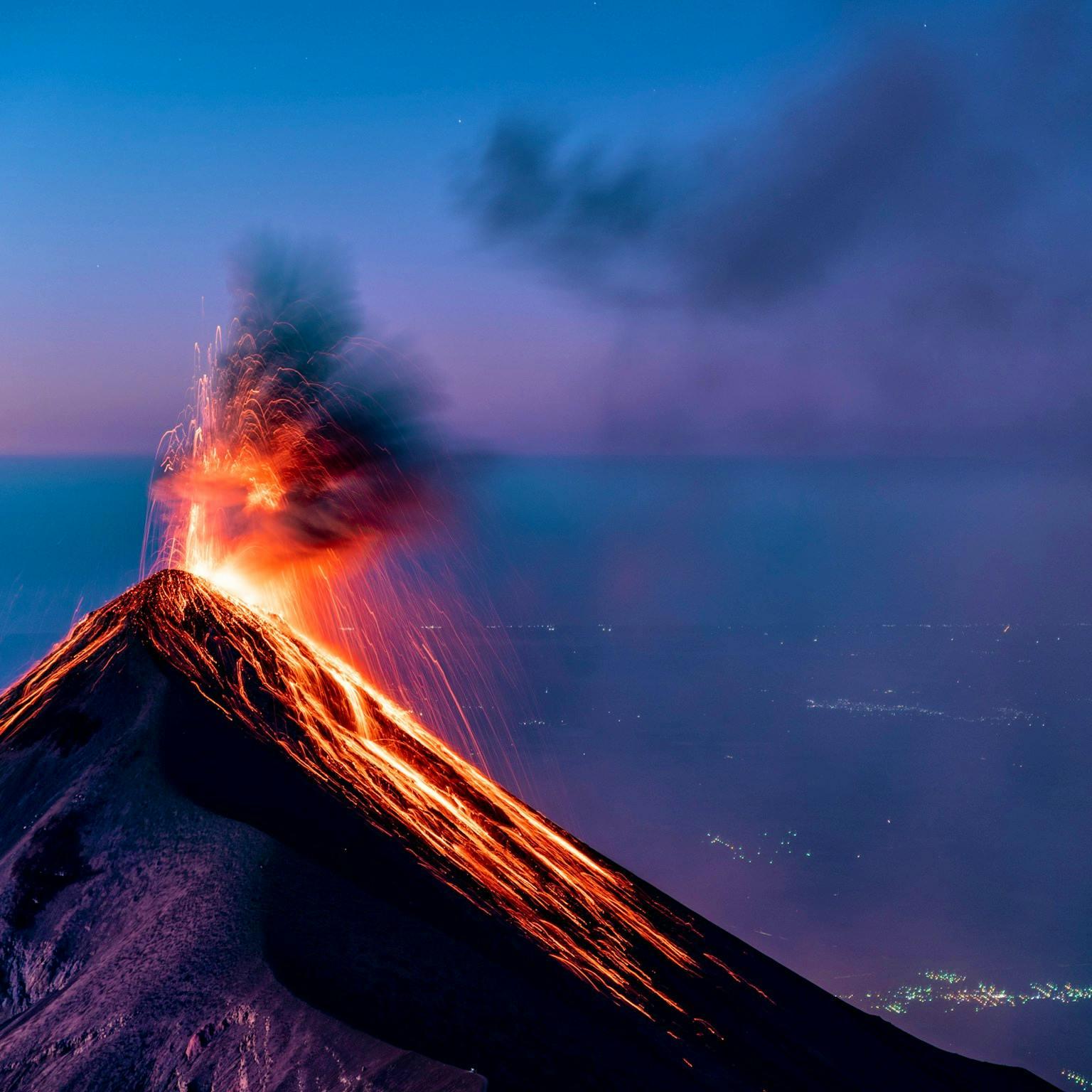
2025- Santiaguito Volcano, Guatemala
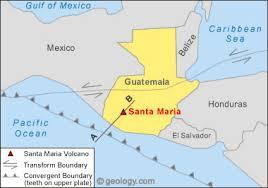
Facts: Santiaguito is located on the southwestern flank of Santa Marias volcano. It formed in 1922 after the eruption of Santa Maria two decades prior. It has been constantly erupting since it has been formed. It has four primary biomes, El Caliente, La Mitad, El Brujo and El Caliente. It is one of the most dangerous volcanos due to the fact that there is a possibility of the dome collapsing. There is a volcano monitoring program located at Santiaguito to detect any eruptive activity.
2024- Kilauea, Hawaii
Facts: Kilauea has been constantly erupting since 1983. Kilauea has over 24 craters surrounding it, Kilauea is known as the most active volcano in the world. It is home to Pele (the goddess of volcanos). Over five thousand people have died to this volcano. Kilauea sees eruptions every 2-3 years on average.
2023- Sundhnúkur in Iceland
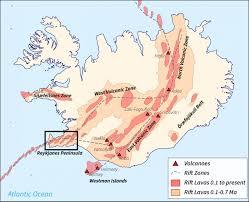
Sundhnúkur is a volcanic hill in Iceland. Its name translates to passage peak. It has had a series of eruptions on the Reykjanes Peninsula close to the town of Grindavík. It had seven eruptions from December 2023 to December 2024. Due to advanced mitigation methods only 1 person has died due to the recent eruptions in 2023.
2024-Hunga Tonga-Hunga Ha'apai
Hunga TongaHunga Ha'apai is located inbetween Hunga Tonga and Hunga Ha’apai. It is underwater volcano. When Hunga Tonga-Hunga Ha'apai erupted it created a massive tsunami. It erupted on the 15th of January 2024. It had a volcanic eruption index of 5.
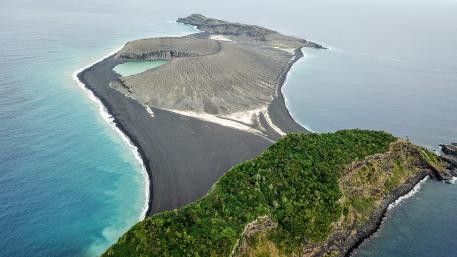
2021-Mount Nyiragongo in the DROC
Mount Nyiragongo erupted on the 22nd of May 2021, it created a deadly eruption that killed hundred and injured many
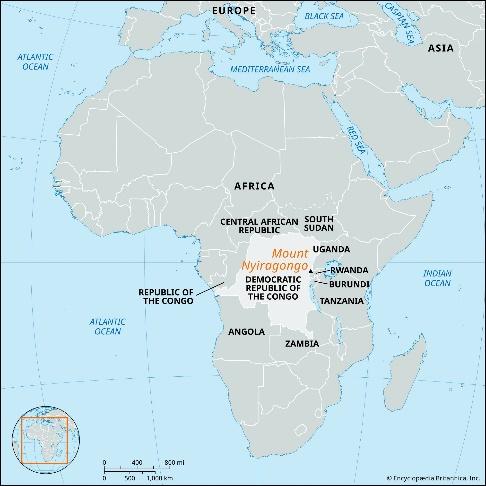
more, Mount Nyiragongo is located around the eastern border of the DROC near Rwanda , the Eruption lasted around six hours, but it had seismic activity for around the next 10 days.
2020-Taal Volcano in the Philippines
Taal Volcano erupted on the 12th of January 2020, with an eruption that aLected almost six hundred thousand people and caused significant damage to infrastructure and agriculture with ash that was ejected 15km into the atmosphere. The eruption also temporarily dried up the Taal Main Crater Lake.
2019-White Island Volcano, New Zealand
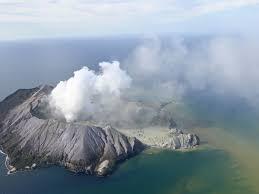
White Island Volcano erupted on the 9th of
December on Whakaari Island along the coast of the northeast part of the northern island of New Zealand. White
2015- Calbuco volcano, Chile
island volcanos erupted resulted in 22 deaths and many more injured.
2018-Kīlauea Volcano, Hawaii
The 2018 eruption of Kilauea was its largest in centuries with the eruption lasting a whole month. The eruption destroyed over 700 homes. Lava flowed out of the volcano and covered parks on the southeast part of Hawaii. The eruption sent ash thousands of meters in the sky.
2017-Mount Agung in Indonesia
Mount Agung erupted five times in 2019 in late November causing thousands of evacuations and killing thousands of people, and causing disrupting air travel it erupted on the 21st of November and lasted until the 5th of December with ash reaching up to 2km into the sky
2016- Piton de la Fournaise, Réunion
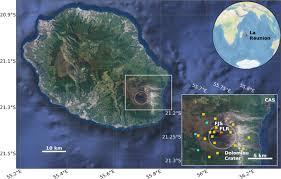
Piton de la fournaise in réunion and Kilauea is a highly active volcano mainly known for its frequent and its eLusive lava flows. Location on Reunion Island on the Indian Ocean.
Calbuco volcano erupted on the 22nd of April 2015, the eruption sent 15 kilometres into the sky. The eruption made the Chilean authorities evacuate everyone within a 12-mile radius of the volcano
By Alfie Neal
Question 1:
THE BIG GEOGRAPHY QUIZ!
Rank these from Most to Least Deforestation - Brazil - Russia - Canada - U.S.A
Question 2:
Which of the following is the primary reason for Deforestation?
a.) Agriculture and Livestock
b.) Mining for minerals
c.) Logging for timber
d.) Palm oil
Question 3:
How many acres a year are cut down for palm oil?
a.) 29,000 Acres
b.) 47,000 Acres
c.) 2,000 Acres
d.) 36,000 Acres
Question 4:
What Caused the wildfires in L.A. in 2024?
a.) Lack of Rainfall
b.) Dry Climate
c.) Strong Winds
d.) All of the Above
Question 5:
What caused the tropical Cyclone Dikeledi?
a.) Strong Winds
b.) Low pressure system
c.) Snow fall
d.) Tsunami Wave
Question 6:
Which one of the following causes the most pollution?
a.) Deforestation
b.) Transportation
c.) Burning of Fossil Fuels
d.) Excess water extraction
Answers: -Q1 Brazil, U.S.A, Canada, Russia. Q2- A, Q3- B , Q4 – D , Q5 – B , Q6 - C
Politics and Geography
Year 9 pupil, Charlie interviews Xenia Wickett on current geopolitical aLairs. Xenia Wickett is a highly decorated Geopolitician and has worked in many places and professional institutions including the White House, American State Department, PeaceNexus and attended Harvard and Oxford universities. She has many years of experience of politics, trade and global relations.
As the 2024 U.S. presidential election neared, experts speculated on how a potential second term for Donald Trump would shape global relations. Based on analyses available as of September 2024, this article explores the expected e^ects on key international alliances, trade agreements, and geopolitical tensions.
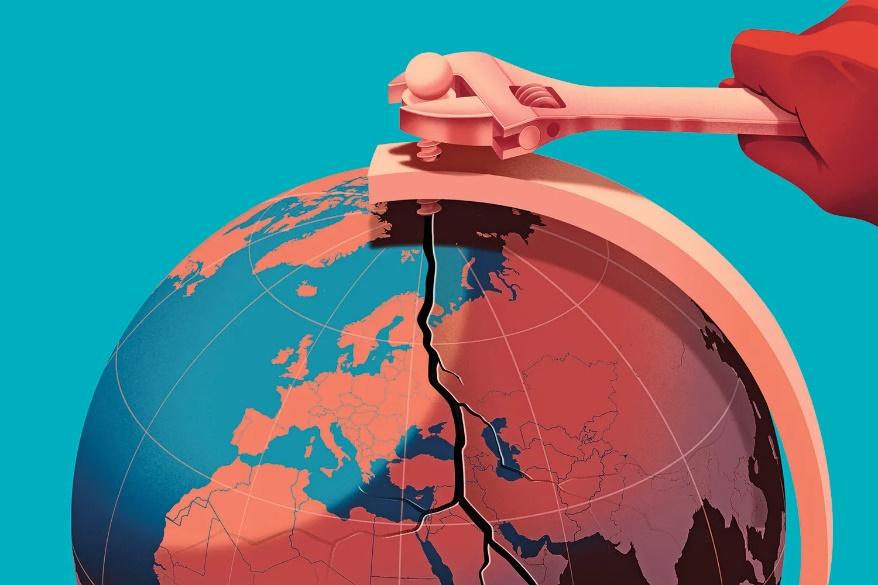
1. The Future of NATO and U.S. Alliances
During his first presidency, Trump repeatedly criticized NATO, questioning its funding structure and the commitment of European allies. Analysts anticipated that a second Trump administration could strain U.S. relations with NATO members, potentially leading to reduced U.S. involvement or even an attempt to withdraw from the alliance. This uncertainty might embolden Russia, raising concerns in Eastern European nations about security commitments.
Additionally, Trump's "America First" doctrine suggested a transactional approach to alliances, which could weaken long-standing partnerships with European and Asian allies. Countries such as Japan and South Korea might seek alternative security arrangements or bolster a military capability in response.
2. U.S.- China Trade and Political Tensions
Trade relations between the U.S. and China remained a major global issue. Under Trump, tari^s and economic restrictions defined the relationship, and experts believed a second Trump term would likely escalate trade wars, intensify technological decoupling, and impose stricter regulations on Chinese companies operating in the U.S.
Beyond trade, political tensions over Taiwan, the South China Sea, and human rights policies could worsen. A more aggressive stance toward Beijing might push China to strengthen ties with Russia and other U.S. rivals, reshaping global economic and security alliances.
3. Russia and the War in Ukraine
Trump's past comments about Russia and Vladimir Putin raised speculation that his return to the White House could alter U.S. policy on Ukraine. Analysts debated whether Trump would cut military aid to Kyiv or push for negotiations favouring Russia’s interests. Such a shift could change the balance of power in Eastern Europe and force European nations to take a larger role in supporting Ukraine.
4. Middle East and Energy Politics
Trump had strong relationships with Gulf states such as Saudi Arabia and the UAE, prioritizing economic deals and arms sales. A second term might mean renewed ties with Saudi Arabia, potentially shifting U.S. policy away from the Biden administration’s focus on human rights.
Regarding Iran, Trump was expected to maintain a hardline stance, possibly withdrawing from any revived nuclear agreements and reimposing strict sanctions. Such a move could increase tensions in the region, raising the risk of military confrontations or proxy conflicts.
5. Latin America and Immigration Policy
Trump’s tough stance on immigration suggested that border security and deportation policies would tighten under his administration. His return could see increased pressure on Mexico and Central American countries to curb migration flows, potentially straining diplomatic relations.
In economic terms, Trump's scepticism toward multilateral trade agreements could impact regional trade pacts, shifting investment and trade priorities between the U.S. and Latin American economies.
Conclusion
As of September 2024, predictions about Trump’s impact on global relations reflected a mix of continuity and uncertainty. His “America First” approach suggested a more isolationist U.S. foreign policy, likely challenging traditional alliances and shifting global power dynamics. While some nations might benefit from direct trade or security negotiations with a Trump -led U.S., others feared increased instability in key regions.
The final impact would depend on election outcomes, diplomatic manoeuvres, and global responses to shifting U.S. priorities.
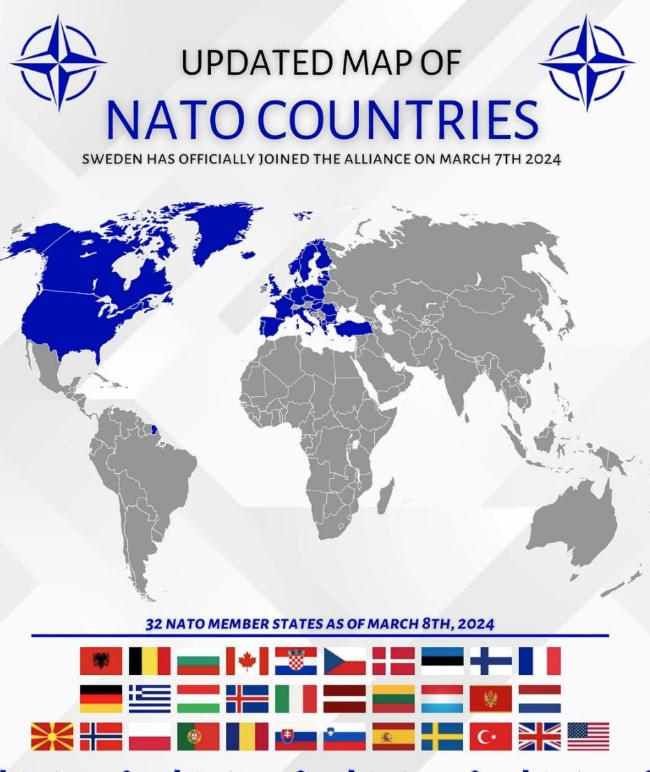
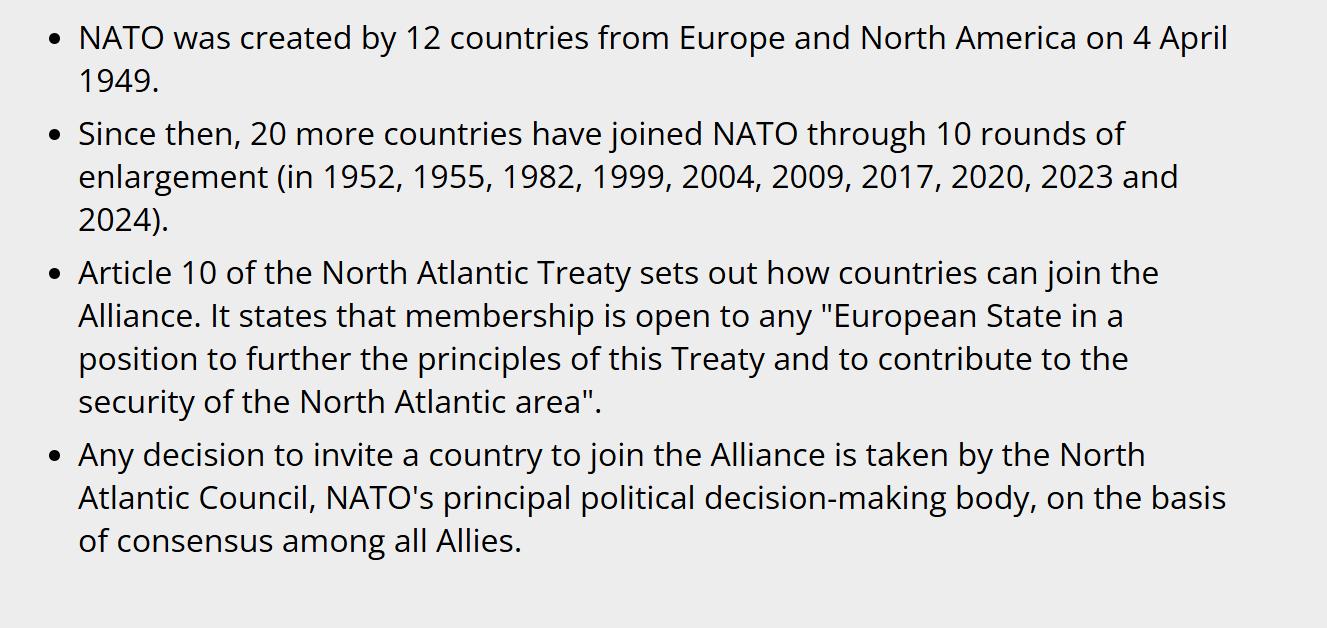
What is NATO? - Source: https://www.nato.int/cps/en/natohq/topics_52044.htm
Credits
Henry Roberts – Editor
Rory Fitzpatrick – Editor
Milo Robertson – Writer
Zachary Downs – Writer
Austin McCormack – Writer and Interviewer
Charlotte Jia – Writer
Ashton Berry – Johnson - Writer
Alfie Neal – Writer
Charlie Whiter – Writer
Henry Daunton – Interviewer
E^ie Lindley - Graphics