
Application for Westminster, Architecture MA
FOLIO PORT-
Serena Walker1
Referees
Jack Mutton - Tutor at Newcastle University - Jack.Mutton@newcastle.ac.uk
Fiona McMinn - Personal refereefionamcminn12@gmail.com
EDUCATION
2016 GCSE’s | 6A* 4A Tormead School, Guildford
2016 - 2018
AS Levels A Graphic Design
A Levels A* Art, B Maths, C Chemistry
Reeds School, Cobham
2018 - 2019
Art Foundation | Distinction
The Royal Drawing School, London
2019 - 2022
BA in Architecture | First Class Honours Newcastle University
SERENA WALKER
07518599172
serena.walker@rocketmail.com
@ser.ena_art Surrey, England
WORK HISTORY
HMKM, London - Work Experience
July 2016
A design consultancy for retail spaces around the world.
TP Bennett, London - Work Experience
July 2016
An independent architecture, design and planning practice.
UPDATED: DEC 2023
Stitchery - Shop Assistant 2016 - 2018 (weekends and busy periods)
Under The Rose - Distribution Assistant 2018 - 2020 (during busy periods)
Gift packaging, administration and jewellery making.
Wimbledon The Championships - Catering Assistant 2021 - 2022
Working on the Strawberries and Cream stand.
Oliver Bonas - Web fulfilment
Oct 2022 - Jan 2023
Gift packaging, dispatching orders etc.
Adobe Desktop expert in Photoshop and InDesign, and proficient in Illustrator.
AutoCAD full proficiency, used during undergraduate degree and at work for Aros.
SketchUp expert, developed over three years of undergraduate study and used regularly at work for Aros.
Enscape expert, skill developed at Aros.
Revit proficient level knowledge, learnt at Aros.
Vectorworks basic level knowledge.
Hand drawing and model making experience from art foundation and undergraduate work.
SKILLS AWARDS
- Art Scholarship to both Tormead and Reeds School.
- Painter-Stainers’ School Prize (2017)
- Graphic Design Subject Award (Reeds, 2017), Fine Art Subject Award (Reeds, 2018)
- Hockey Colours (Reeds, 2018),
LEEP Architects - Freelance Architectural Assistant April - May 2023
Helping out putting together information documents and drawings for clients on a freelance basis.
Aros Ltd - Part 1 Architectural Assistant May 2023 - May 2024
Year in industry to complete RIBA Part 1 requirements. Working with the planning team on RIBA stages 1 to 3, helping with design work, preparing drawings and visuals and putting together Design and Access statements.
VOLUNTEERING
CALABASH
August 2017
Helping with teaching and construction work across various schools in Port Elizabeth’s townships, South Africa.
Age Surrey
Feb - May 2023
CAUKIN
Signed up to volunteer for the Summer of 2024
To gain on site construction experience in a new context, with the chance to experience collaborating with different cultures and travel.
OTHER INTERESTS
I have a keen interest in bringing artistic influence and practice into my architectural process, working through drawing, making and method. I also paint and draw for pleasure and have completed a short Fashion Communication course at Central Martins and a Fashion Illustration course at the V&A, and have learned pattern cutting. Newcastle University introduced me to sustainable and ecological design, I am eager to incorporate these ideas to my understanding of a sensitive and site appropriate architectural approach. I am also a passionate field hockey player, enjoy film photography and reading.
This document starts with my final undergraduate design from third year, working backwards through a second year design project and finally work from my art foundation. This narrative highlights the progress I have made it in my abilities whilst also demonstrating how key architectural themes have developed in my work. I use my art foundations project to show where my keen interest in narrative, routes and routine and quietly beautiful architecture stemmed from. ‘Species and Space’ pushed me to explore the larger story a design can have through its lifetime. ‘Jesmond Dene
Arts Facility,’ demonstrates my interest in taking more of a bricoloage approach to design, and creating long lasting flexible spaces to cater for a change in building use, therefore avoiding potential future demolition. It also shows my passion for method and following a rigorous design process, bringing me full circle back to my art foundation and everything it taught me about processes and documenting my ideas. At the very end I highlight how I have recently returned to these original ideas, with the hope of turning them into a more direct architectural outcome.
2 2-12 24-28 13-19 Contents Undergraduate Design Project: Jesmond Dene Art Facility Art into Architecture: Routes and Routine Undergraduate Design Project: Species and Spaces Final Year Design Project September 2021 - June 2022 2019 - Ongoing February 2021 - May 2021
20-21 22-23 Year in Industry Project 1: Creekside, Deptford Year in Industry Project 2: Isle of Man August 2023 December 2023 - Ongoing
CV
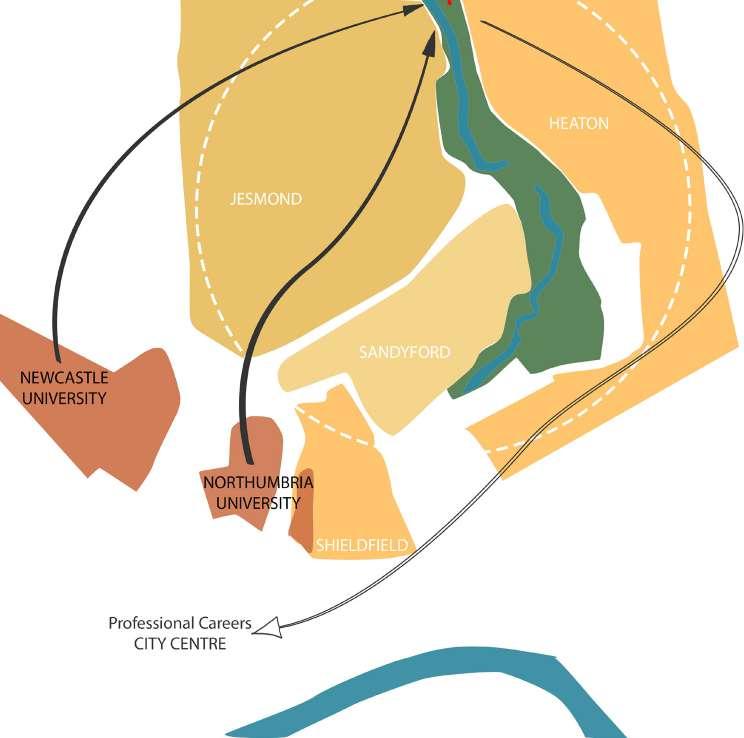
Home to two large universities, both with fine art courses, Newcastle has a vibrant yet underrated artist community. Newcastle City Council has a keen interest in promoting and supporting local artists to encourage them to stay in area, rather that moving to larger cities such as London.
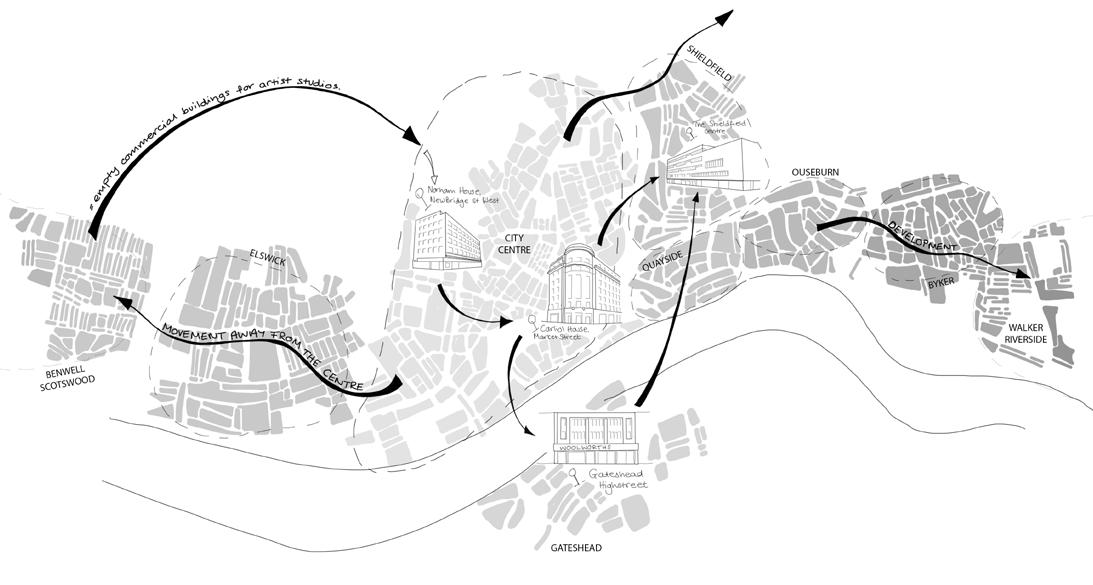
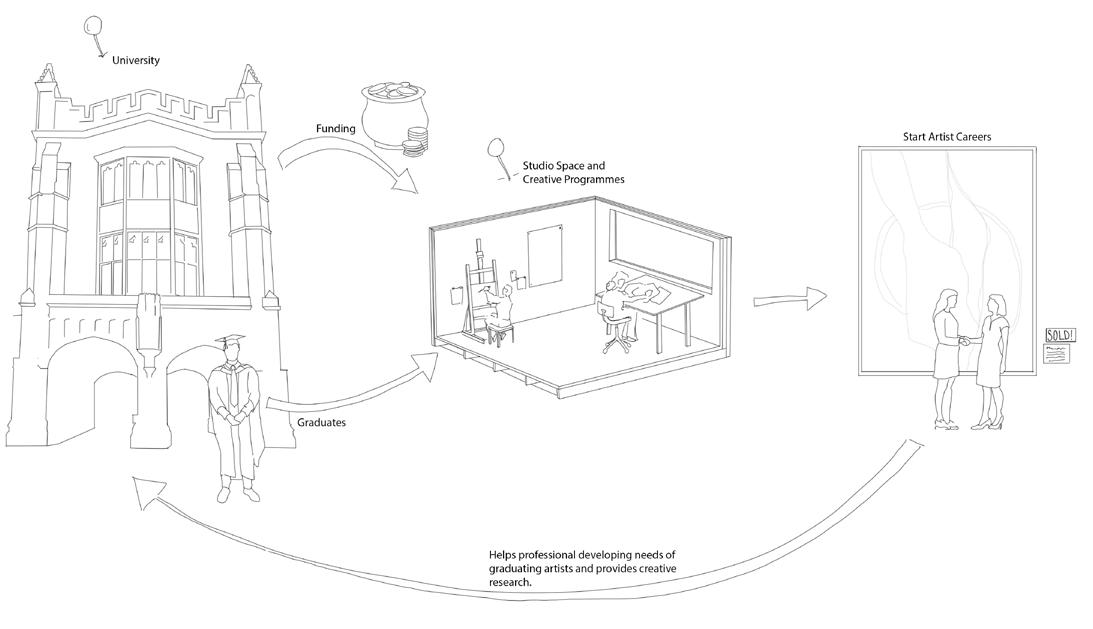
Investigating existing art organisations including East St Arts and VARC (Visual Arts in Rural Communities), I gained insight into how Meanwhile spaces around Newcastle are utilised by artists, as shown in diagram 1 I was particularly interested in local universities relationships to these organisations, and believed this alliance could be developed further, forming the basis for the projects narrative and building strategy, highlighted in diagram 2
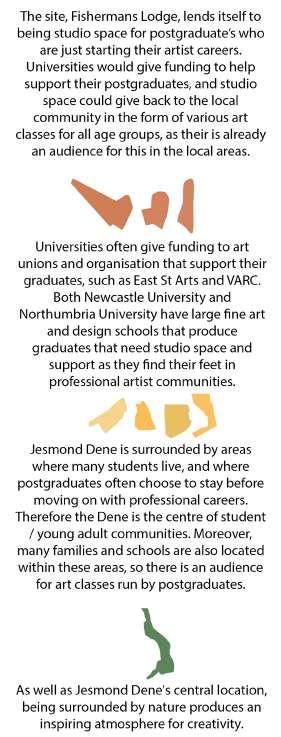
The Jesmond Dene Arts facility provides artists studios to fine art postgraduate students from Newcastle and Northumbria University, through funding from the universities and Newcastle City Council it aims to encourage artists to stay within Newcastle. The gallery space, classroom and shop also help engage the local communities and support the artists future careers. Further details are mapped out below.
3
NEWCASTLE UNI
NORTHUMBRIA UNI
ART COMMUNITY
CITY CENTRE
Curating a Brief
THE SITE: JESMOND DENE
1.1
Jesmond Dene Arts Facility
1 2
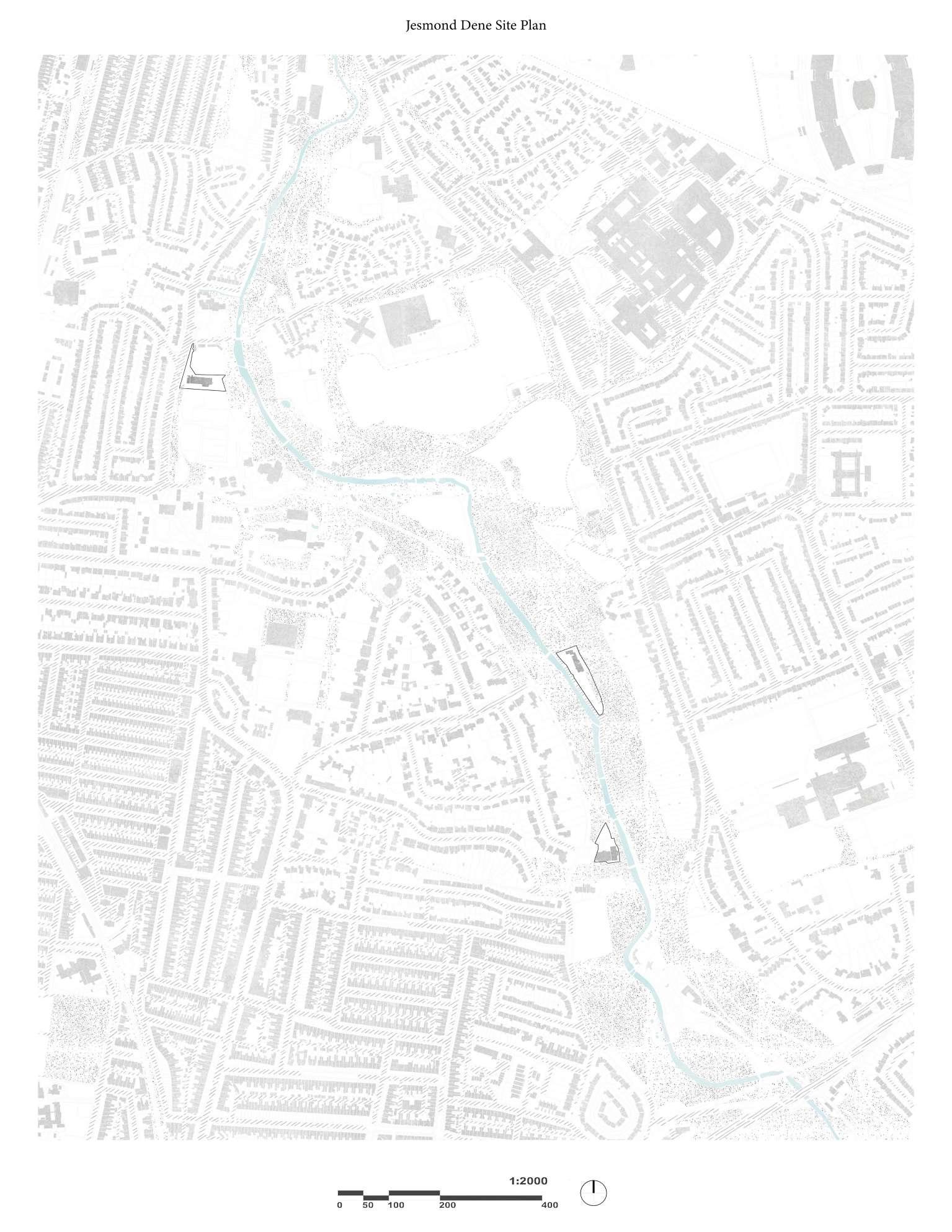
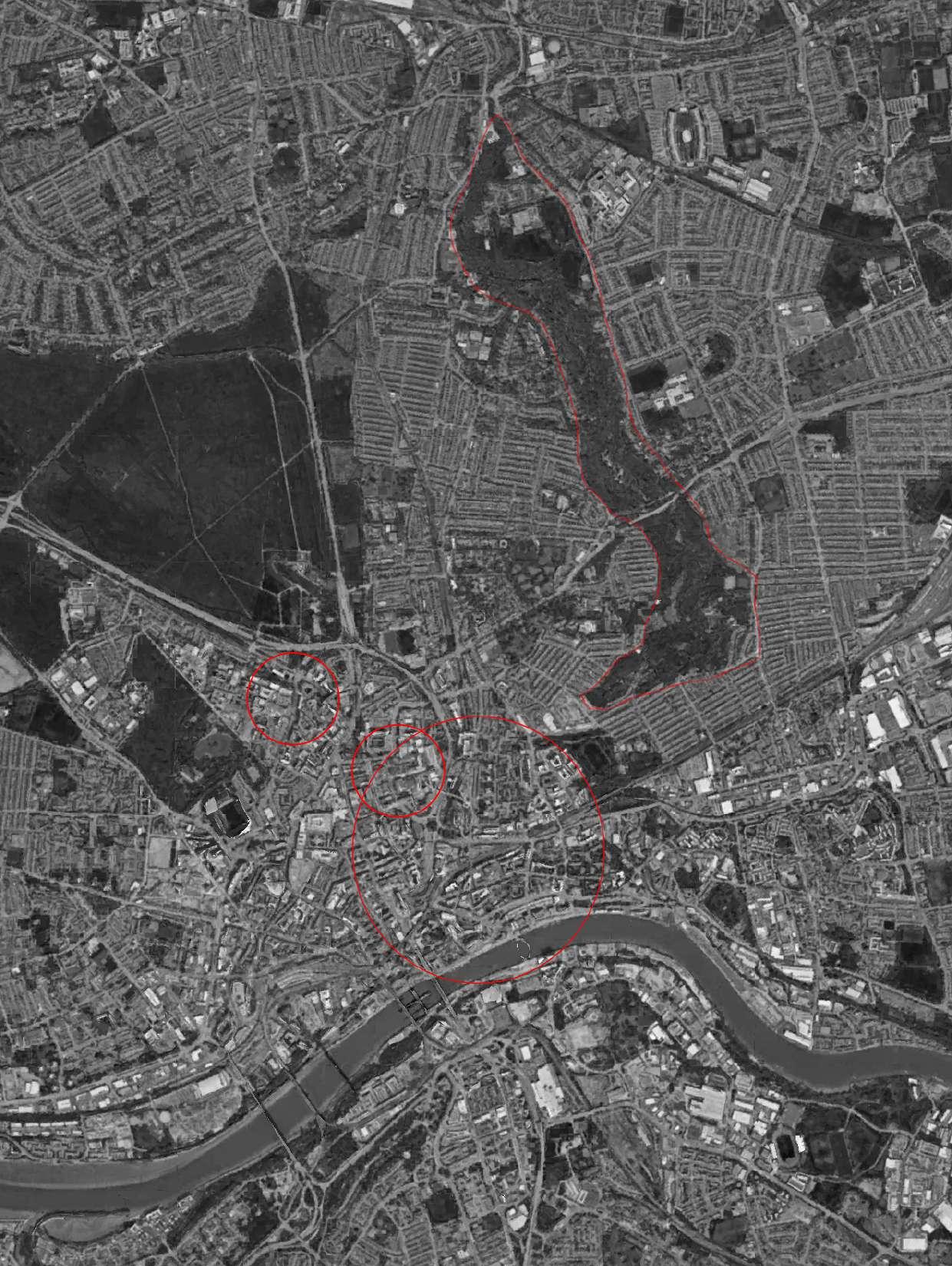
As a studio group we explored and researched our wider site of Jesmond Dene, through photos, drawings, historic research and site analysis. The Dene itself is a conservation area, is a man-sculpted romantic valley located to the north-east of Newcastle. Today, its a unique break into nature from the surrounding city where communities of both families and student mix.
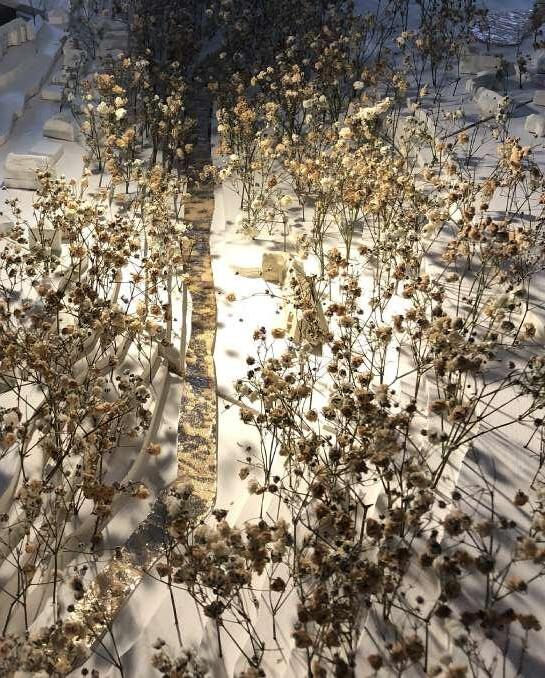
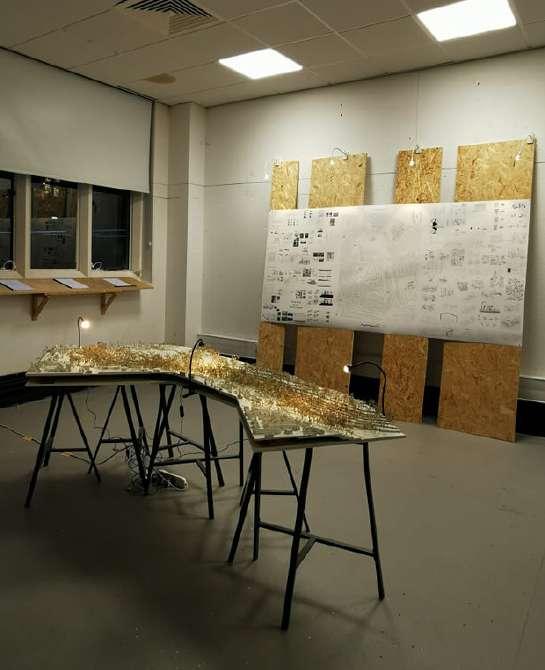
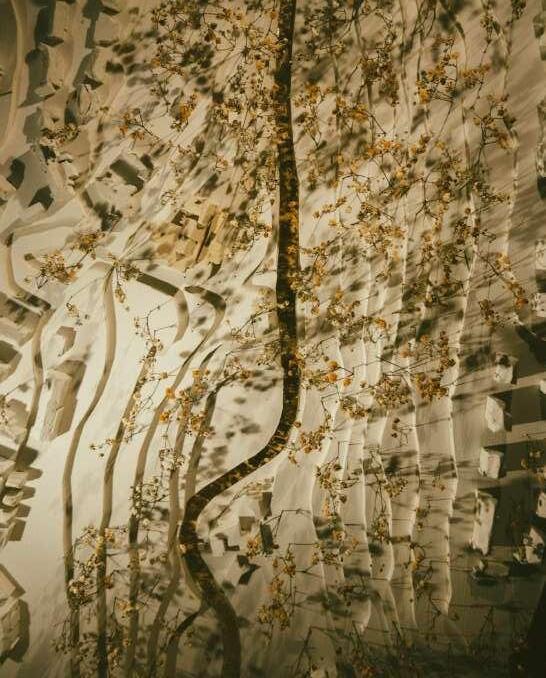
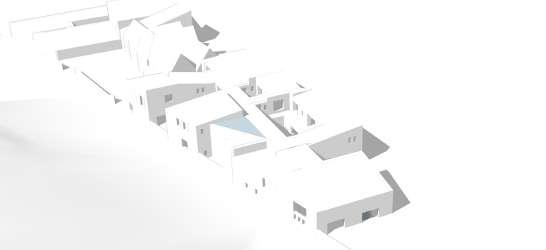
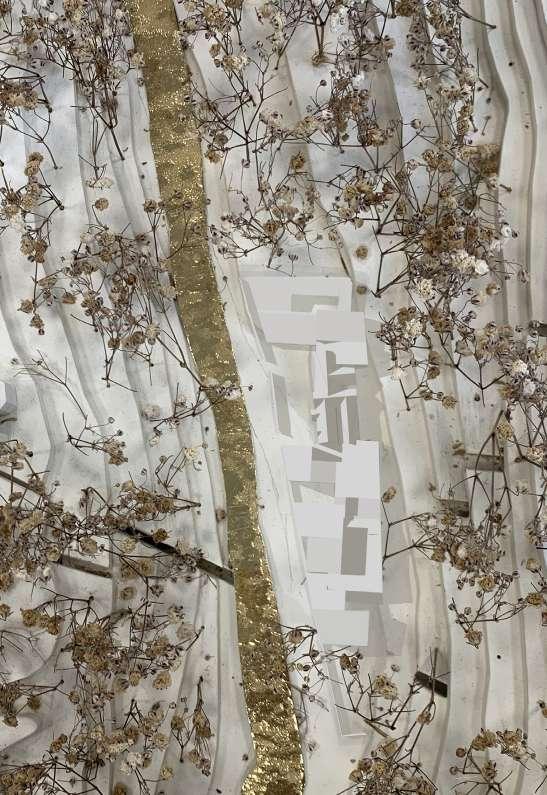
The urban areas around Jesmond Dene have dramatically grown in the last 200 years, creating a conversation between the urban and the rural, as demonstrated through the large 1:750 site model we created as a design unit. The aim was to give context to the history of the potential sites and the rich landscape that they sit on, picking up on key elements such as the river, the volume of trees and the pitched roof houses and the overall atmosphere these portray together. The improvisation of the model making group, bring together a collage of materials, relates to bricolage architecture which I had begun exploring.
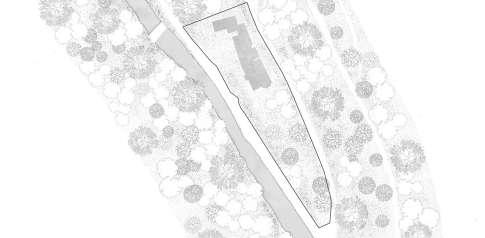
My chosen site, Fishermans Lodge, sits at the bottom of the Jesmond Dene valley, surrounded by footpaths and trees. After a fire in 2013 the pre-existing 19th century building was left abandoned.
*Site model and map of Jesmond Dene, shown on this page, were created as a design unit, along side initial research.
4 The Site 1.2 Jesmond Dene
The Process
Methods of Subtraction and Tracing
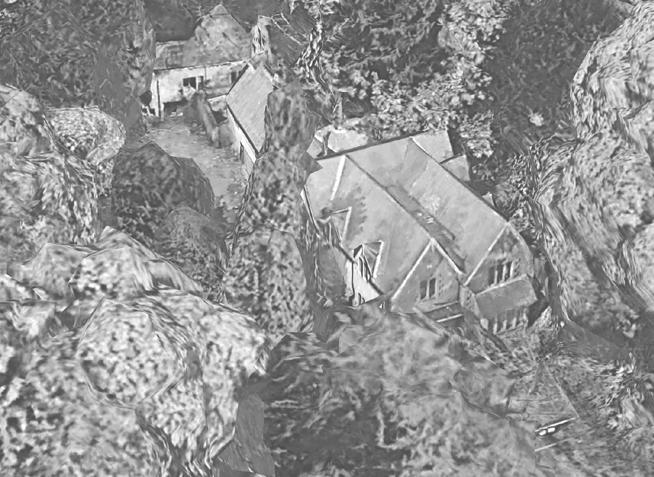
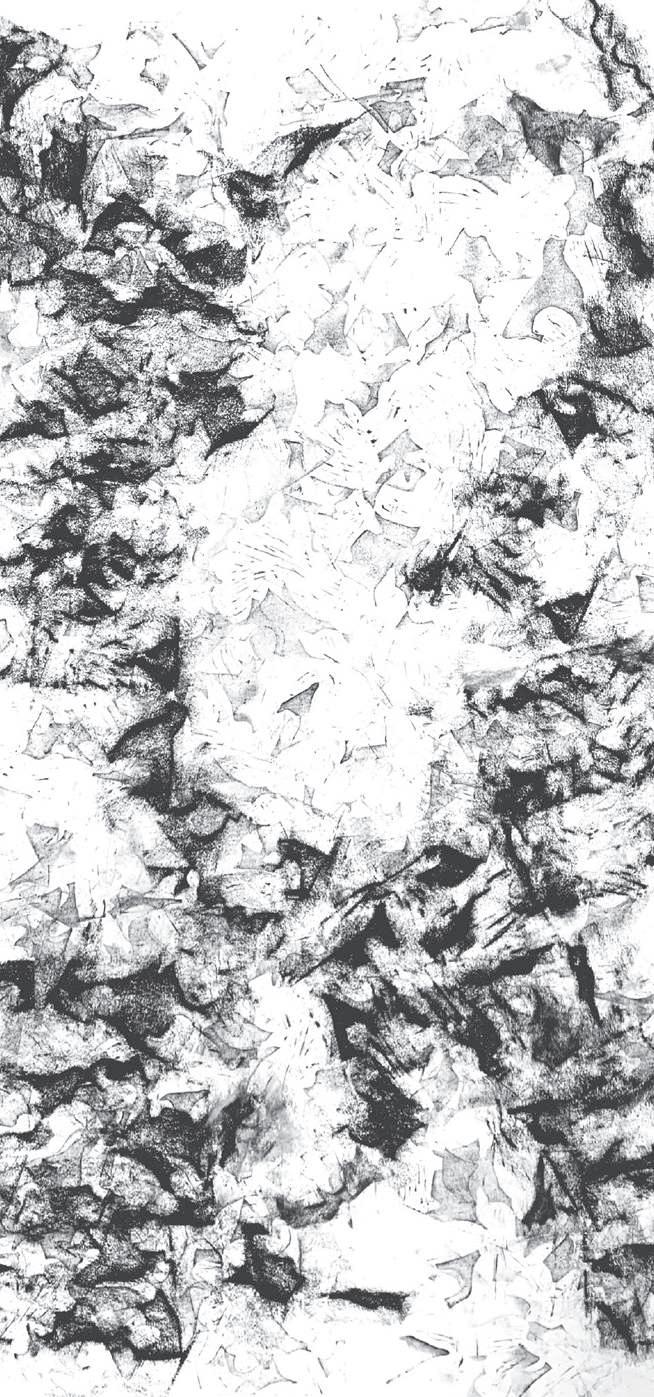
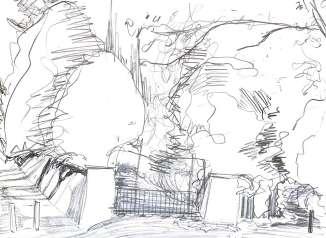
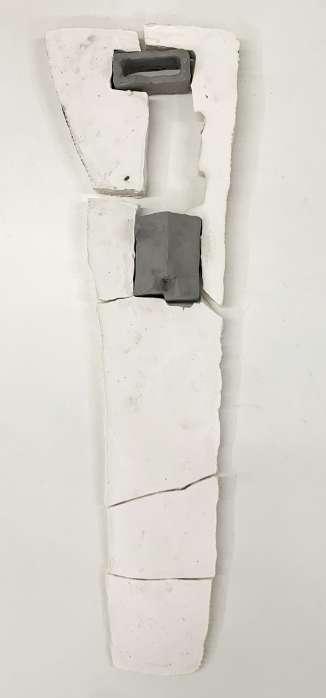
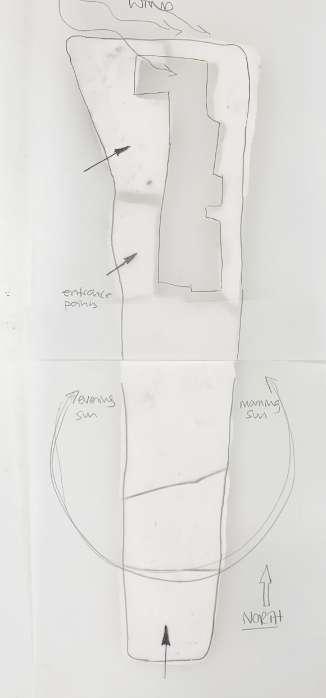
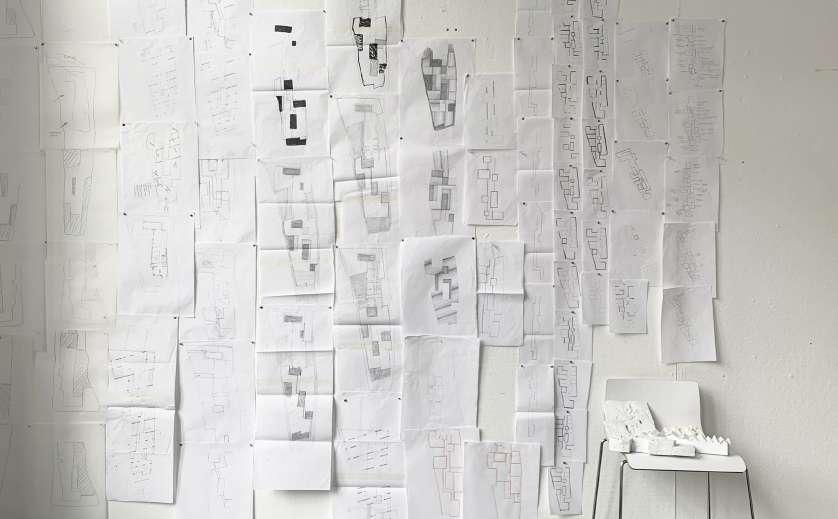
The design process started through observations of the site (1 & 3), documenting site visits through writing ans sketching (2). This generated key themes of negativespaceand movingthroughspacewhich formulated the narrative of the project. I translated these ideas into a piece of artwork (4) using charcoal to capture the transition of intensities and layers of trees, light and people that change as you move along the paths in Jesmond Dene.
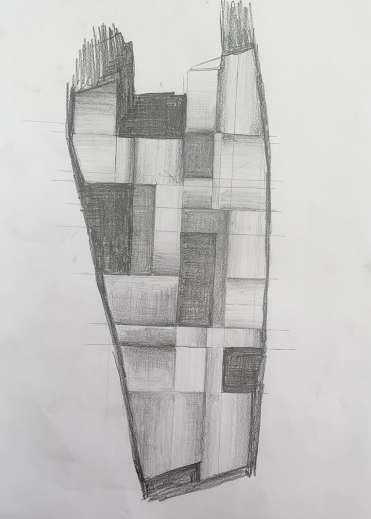
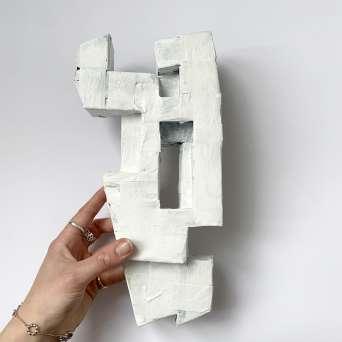
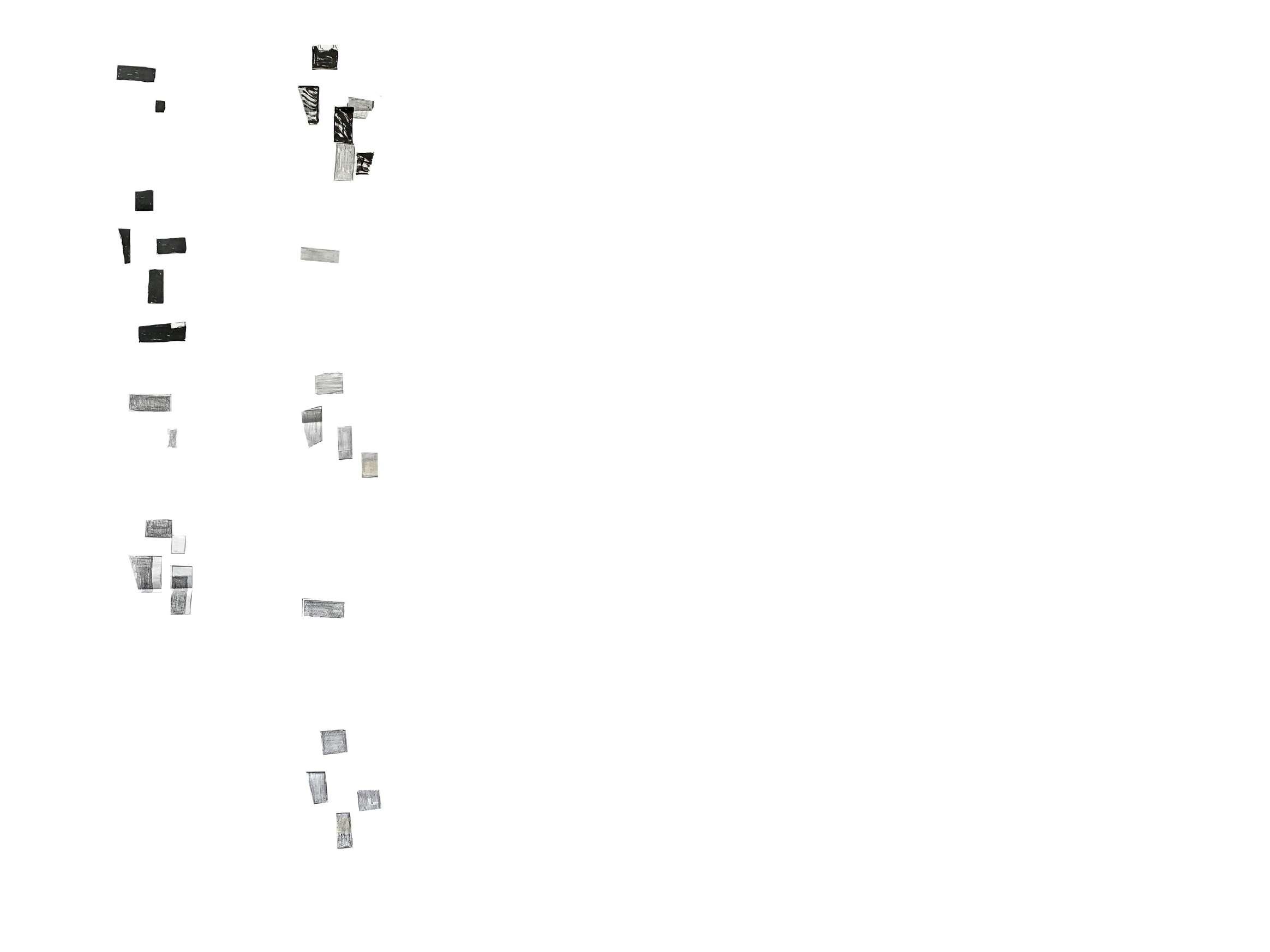
From here I started tracing repeatedly (10, 11 & 12) until I got the forms, compositions, and programme right. I even used line hierarchy to help make material decisions through sketching, and considering carefully the types of internal environment I wanted to create, and how the materiality can help define the spaces. This method became key to the projects development. Forming a narrative through my design process using acts of tracing, translation and repetition allowed me to think more impulsively and creatively about my work. My ideas and revisions where constantly documented through drawings and tracing, creating these stacks of tracing paper through which the layers of my progress could be seen. The outcome of my approach I believe is a design that has sensitively grown from the project brief, with a narrative that will continue to progress after its construction.
Whilst there was a certain order to how I worked through the stages of my design proposal, every new idea effected every previous idea. There was a cycle of refinement, making sure everything fitted and worked together rather then creating a design that felt stagnant.
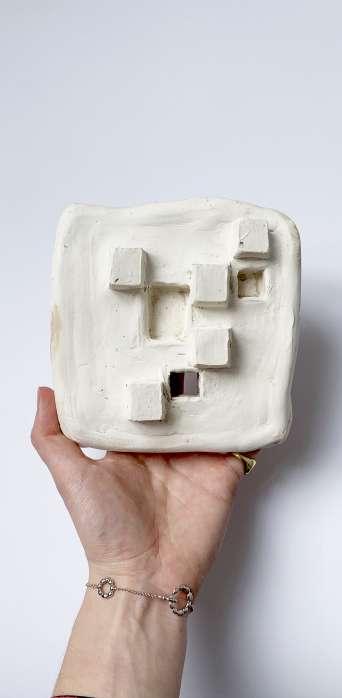
My main artistic inspiration came from Mary Martins reliefs, who used depth and shadow to create the illusion of movement. Her influence is apparent from the first plaster cast I did mimicking her work (7), to massing experimentations exploring the placement of courtyards (8, 9 & 13). Courtyards and routes through and around the building became key ideas in response to the key themes of negative space and moving through space. Finally the roof, involving a collage of different slopes developed on SketchUp also drew on Martins work, giving the design a more sculptural feel (13).
5 1 2 3
1.3
4 5 6 7 8 9 10 11 12 13 14 15
1 2 3 4 5
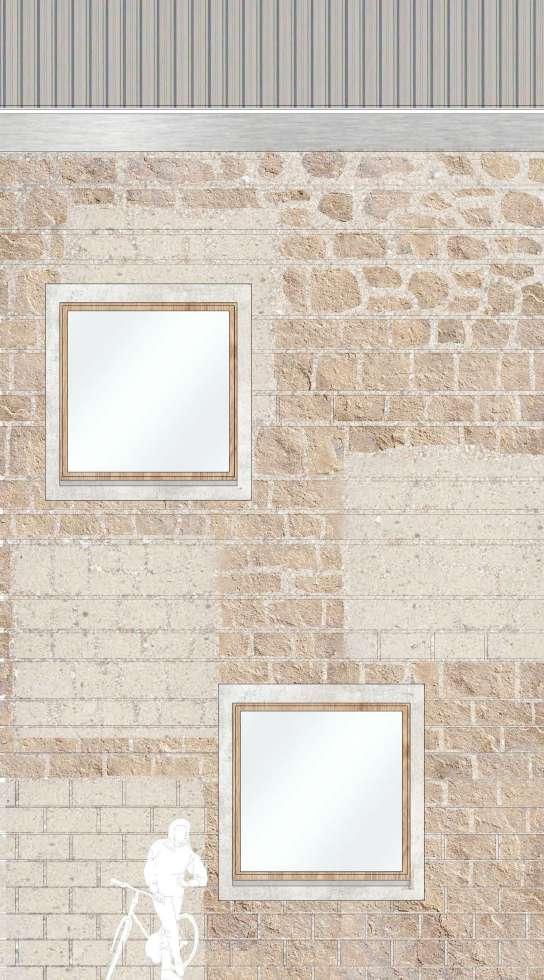
My design sits up against the site boundaries blending the pre-existing limestone wall into its facade. Limestone can be sourced from the north-east making it the most natural fit to ensure my design blends with the local areas character. I was inspired by Lewerentz’s thicker mortar joints, for a subtle muted appearance, David Chipperfields Jacoby Studios facade is washed with lime mortar for a softer look and Harquitects produced a rough gradient texture by casting the stone in the mortar. Ultimately I used a mix of these ideas, expanding the mortar joints gradually up the wall and using polygonal walling, so that the stones are less processed and don’t have a flat finish allowing the mortar to fill in gaps and achieve the faded appearance. The result is a playful take on the traditional construction material.
7
1.5
Materials
Technical Study
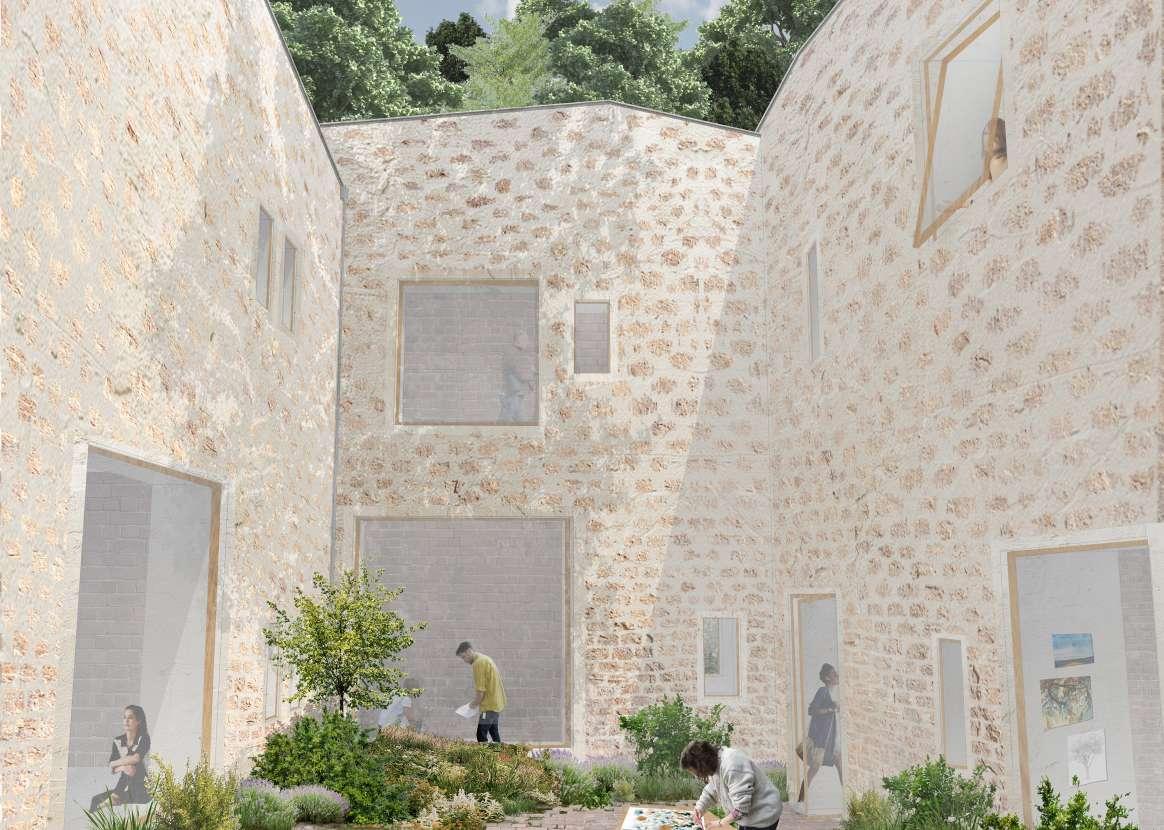
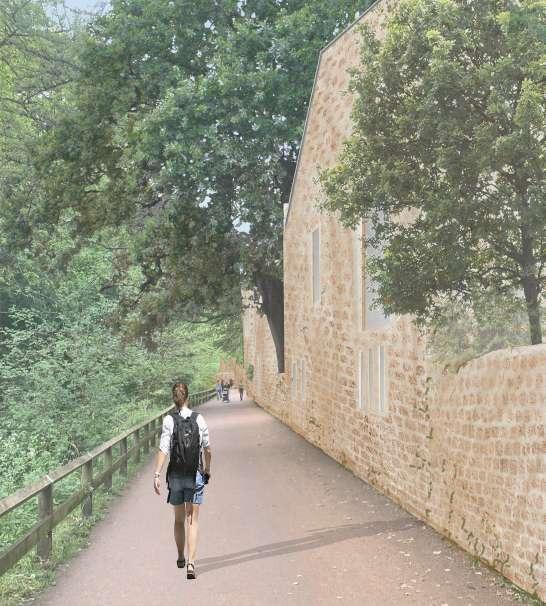
The Photoshopped renders help unite Jesmond Dene and my proposal, demonstrating how I utilised the character of the area and the romance of the surrounding nature, so that the design works as part of the Dene’s progression though time.
The image to the left shows my proposed design viewed from the key footpath, now integrated with the pre-existing stone wall. The visual above demonstrates the courtyards, some of which cut in from the footpath facade. The courtyards are an extension of the classrooms and workshops, providing out door exhibition and working spaces. Moreover, it allows Jesmond Denes natural environment to seep into these pockets of space, integrating the design into the landscape.
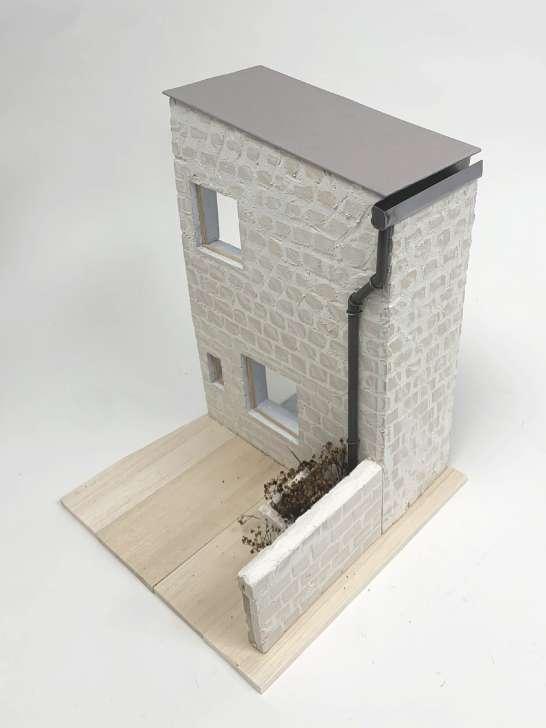
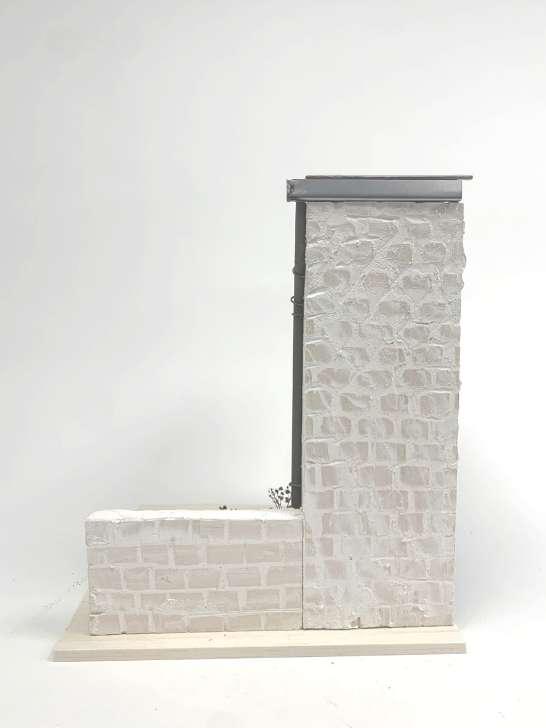
Bringing together some material experimentations I completed in the testing phase, I built the 1:20 facade model shown on the right of this page .Using a lino tool I carved into balsa wood to create the mortar gaps between the limestone. Then I used a clay kidney tool to wipe the plaster over the facade and into the gaps, mimicking the real construction process I had researched.
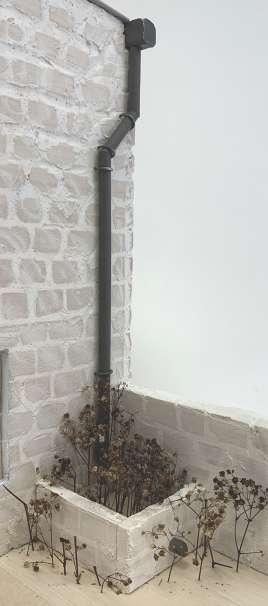
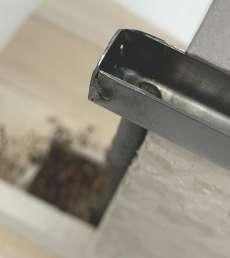
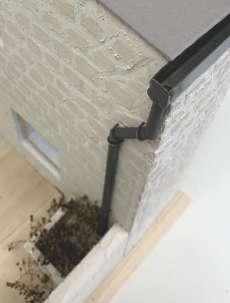
This corner of the facade links together the footpath running next to the site and a courtyard, showing the metal guttering and downpipes into flower beds (dowel, steel and dried baby breath flowers are used to model this). Using SUD systems in this location helps enhance the ecology of the courtyards and landscaped gardens as well as spreading water to surrounding trees and foliage rather than into the river which may cause flooding. In the above image the facade model demonstrates the footpath elevation, showing the existing stone wall transition into the building, and the guttering sitting flush on top of the limestone. Similar to how I considered the roof and facade design I wanted to pay tribute to traditional guttering that can be seen on the existing building, in a playful and unique way.
This small portion of the building helps to highlight how the varying window sizes sit almost collaged into the facade, as well as demonstrate how the guttering has become a feature of the design along with the gradient use of limestone. I think it is successful in showing how the design aims to fit with the character of Jesmond Dene, whilst playing with these features to add a modern touch.
8 Materials 1.5
Thinking Through Construction
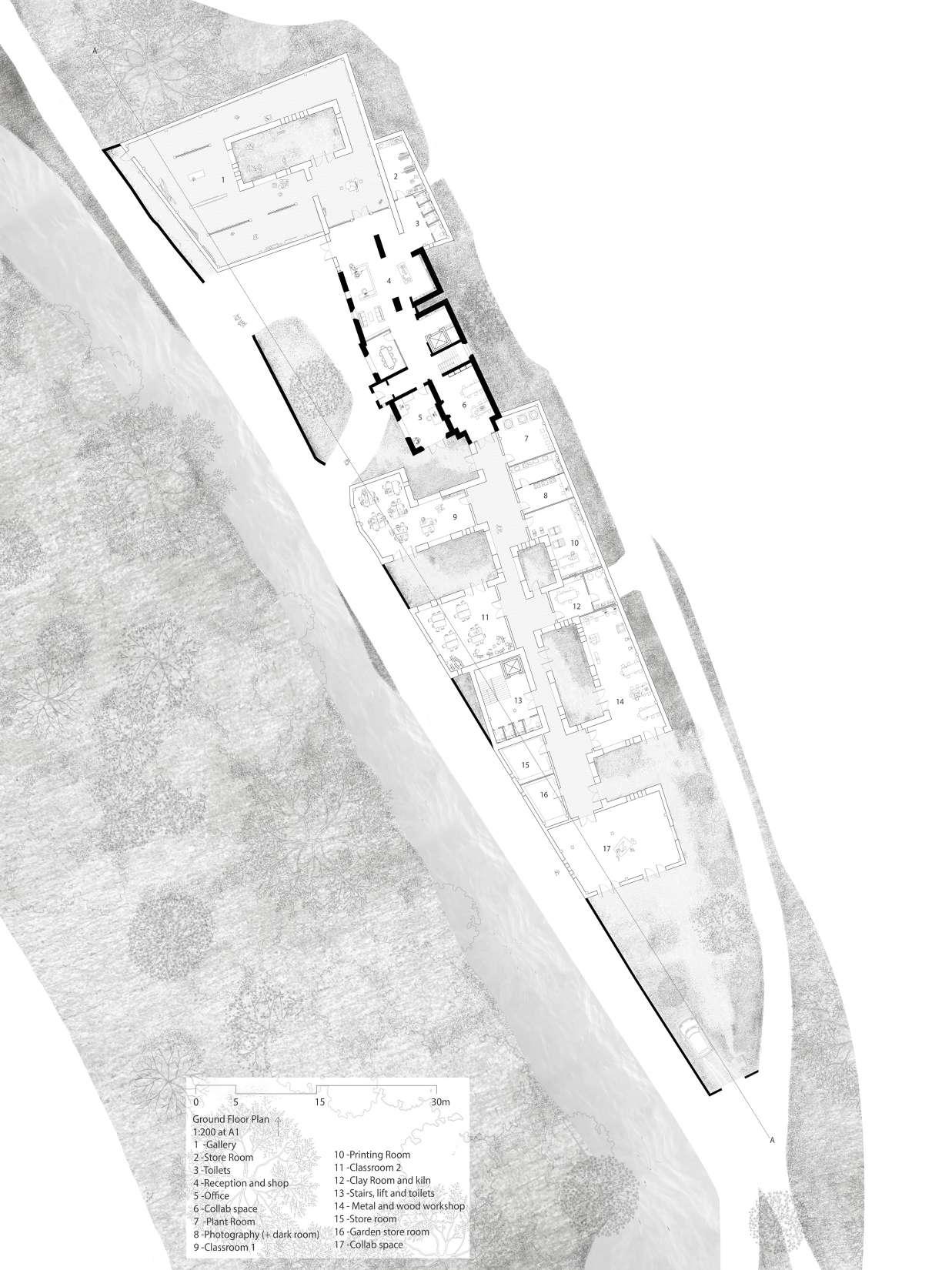
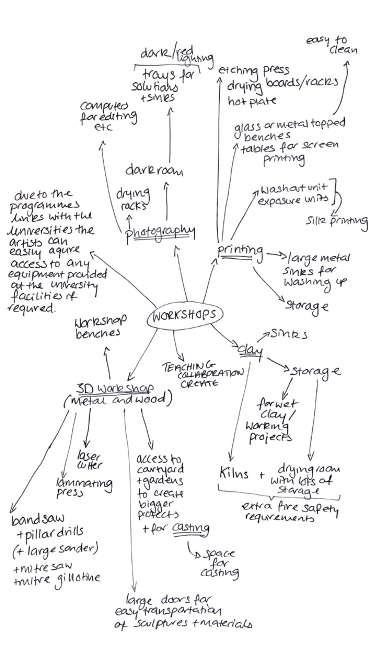
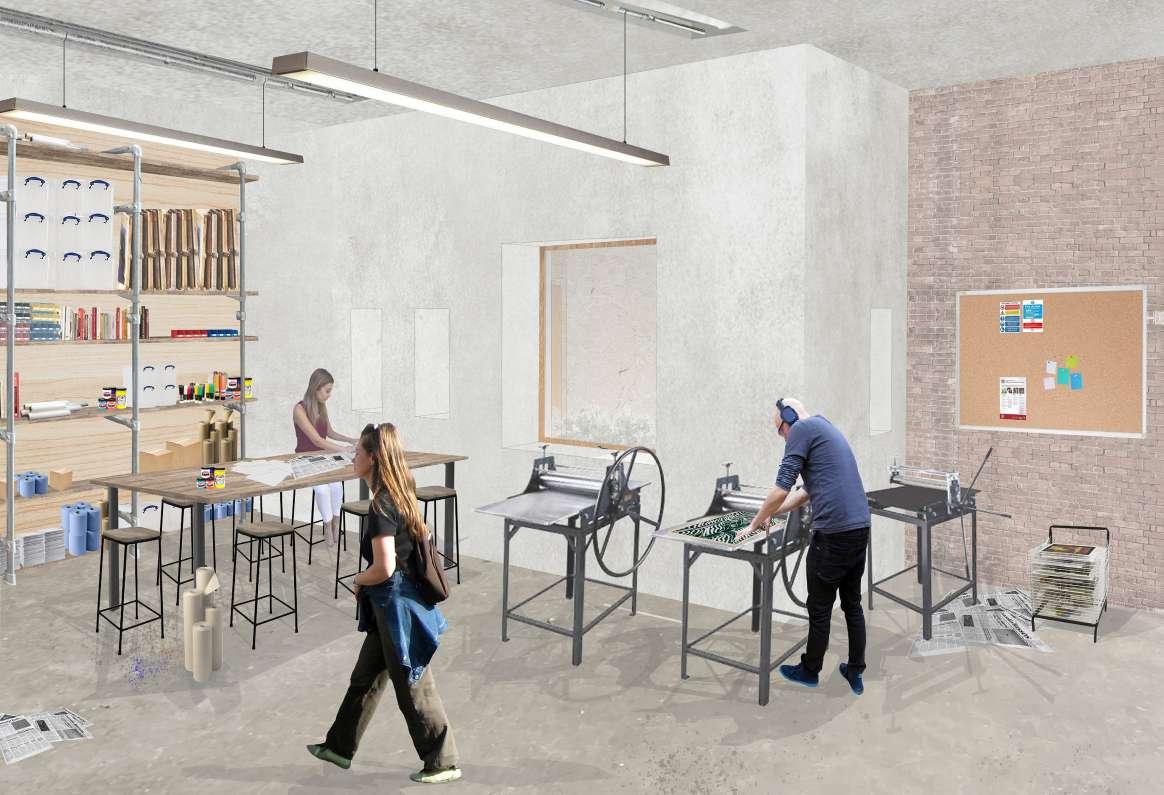
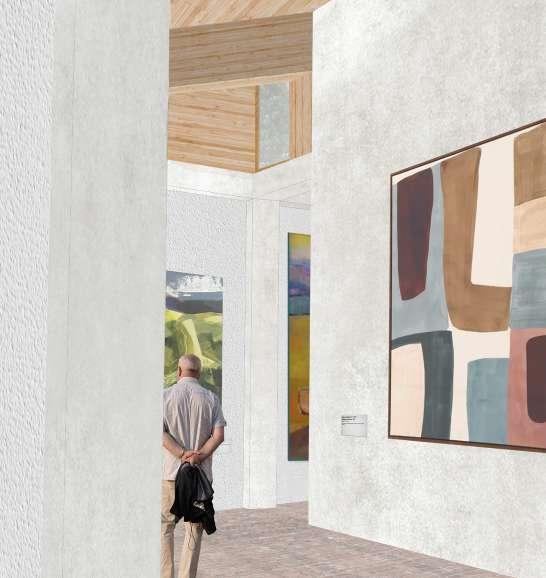
On the ground floor there is a gallery space for work from the art facility to be displayed, along with workshop spaces, classrooms and a collaborative area. This creates a more public ground floor which can be used by the local community. Workshop spaces include: printing room, photography room with a dark room, metal and wood workshop (3D room) and a clay room with drying space and kilns. Brick is used to define the walls that run along the central corridor. The workshop spaces are defined by concrete blocks and wood panels to separate spaces between the exterior wall and the interior brick channel. The concrete frame stretches into walls around the courtyards, creating deep window reveals for places to sit with a view.
As previously mentioned I thought closely about the routes through the design, for both artists and visitors. Making sure there was a definition between public and private areas whilst also giving space to social interactions between the different ages groups and communities. As a result of consistent careful consideration, multiple iterations and refinement I think my plans function to create a strategy that works effectively.
9
1.6
The Ground Floor
Pathways from Public to Private
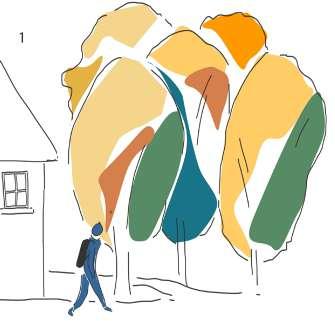
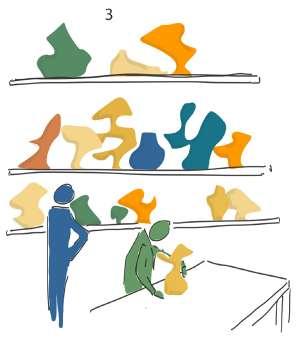
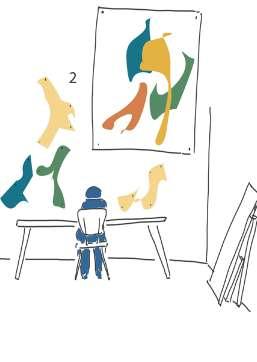
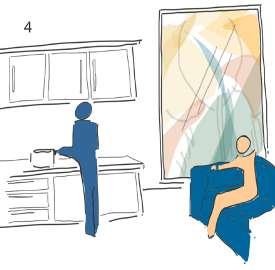
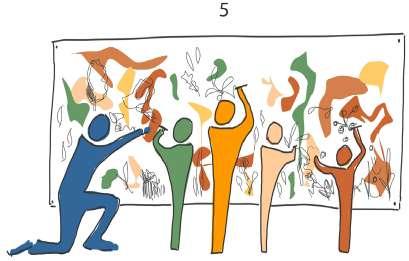
A DAY IN THE LIFE
1 - Walk from home through Jesmond Dene to reach the studio
2 - Studio time doing individual projects
3 - Check on clay work in the workshop
4 - Lunch in communal kitchen and social area, chatting to other artists
5 - Run a workshop for children before heading home
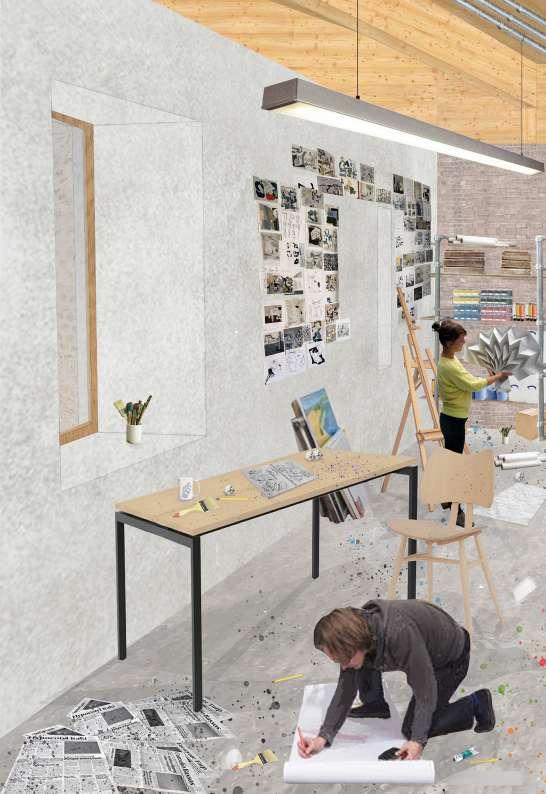
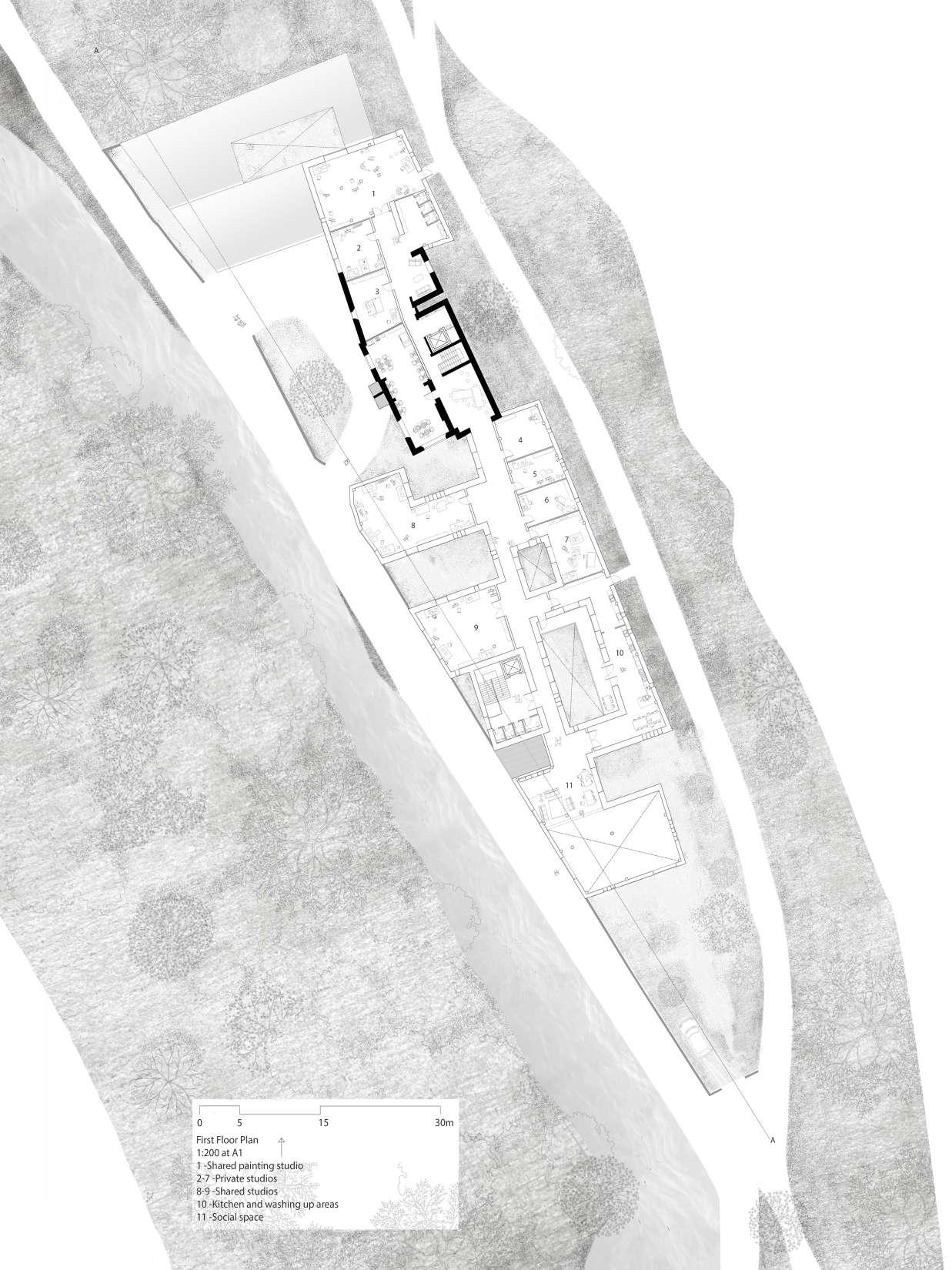
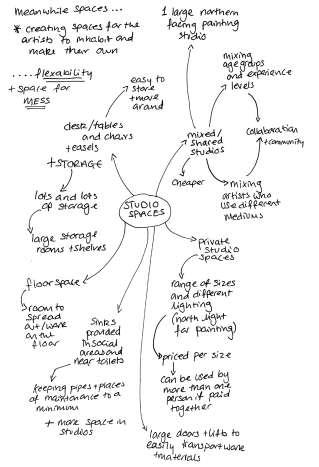
Going over the interviews from the start of the project with art organisations East St Arts and VARC I was able to refine the types of studio spaces I wanted to create. Key requirements included, a mixture of natural and artificial lighting, mixed spaces for artists to inspire and learn from each other, lots of storage and space to create mess. Reflecting on how artists draw inspiration from their environment, and can adapt in these meanwhile space to make them work, this level of undefined design in the space means they are studio for the artists to inhabit and take over, to make completely there own, rather than the environment control the artists.
The classrooms and studios would simply use plasterboard as its easy to pin up art work and paint over if it gets too messy. The roof structure uses wooden rafters to relate back to that of the pre-existing structure.
10
First Floor 1.6
Life
Artist Residence
The
A Day in the
of an
The Roof 1.6
Sculptural, yet Playful, Design
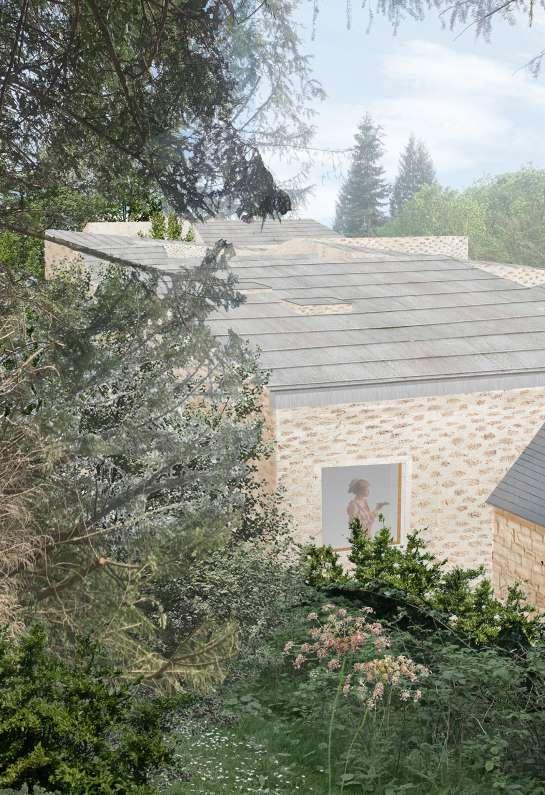
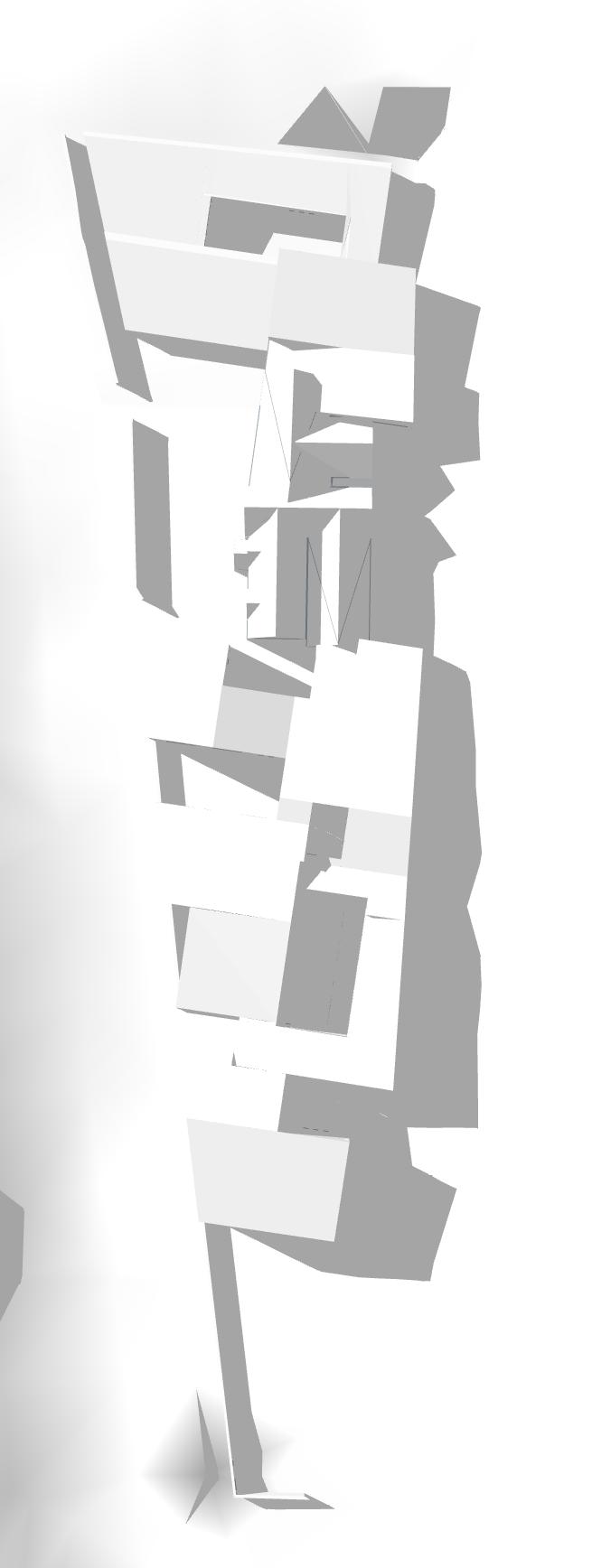
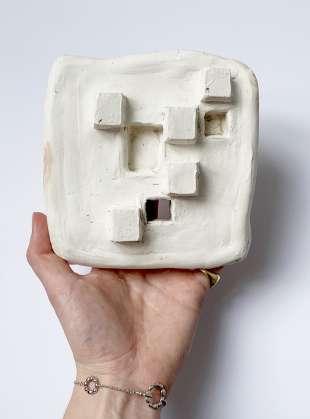
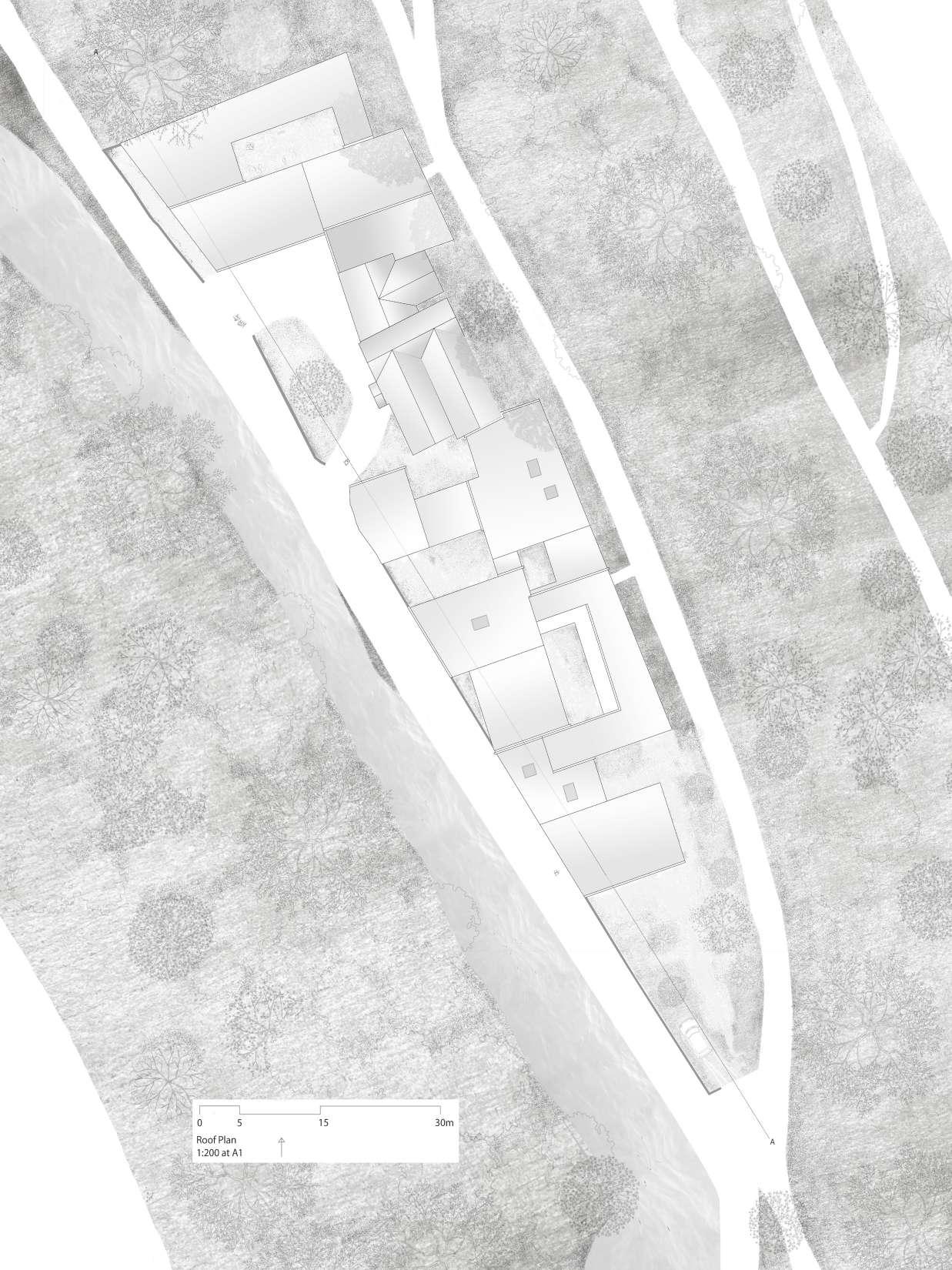
The footpaths, which greatly influenced the narrative of the building run both down the bottom of the valley by the river and down into the valley from above, joining at the southern end of the site. Hence, glimpses of the roof would be captured as well as the main facade. The playful sloping roof pay tribute to the existing structure, the nearby terraces in Jesmond and the contours of the valley slopes, whilst its sculptural appearance nods to the buildings artistic use. Just like the material details demonstrated in my 1:20 model, the roof was designed to be a unique play on tradition.
11
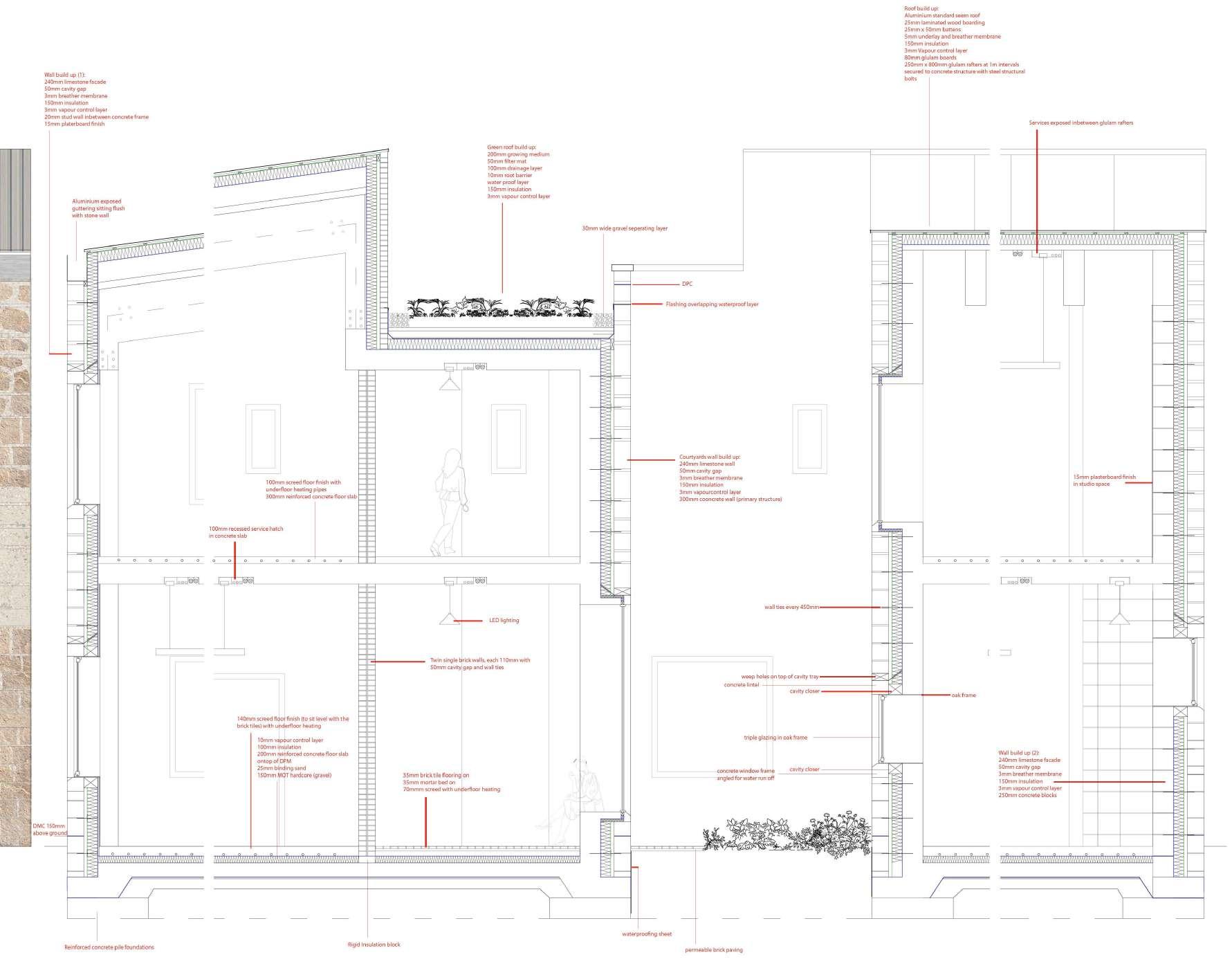
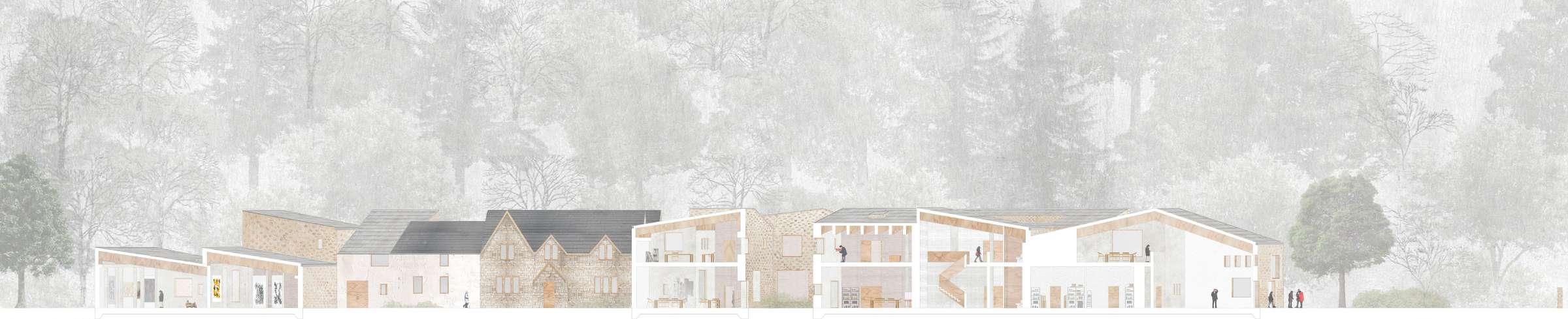
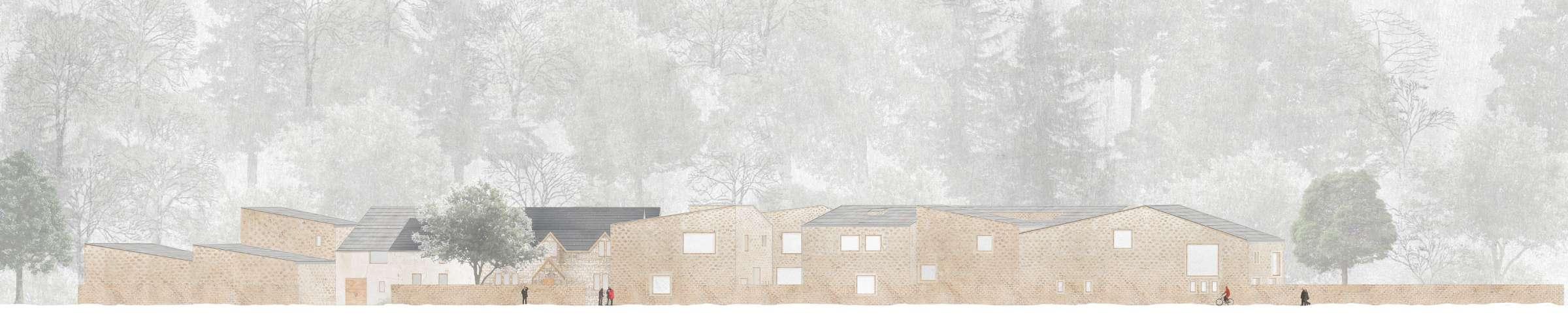
The busiest path runs along the west boundary wall, is shown in the below elevation. Since this would be the most viewed part of the building, from both visitors and people passing by, I spent a lot of time considering how the overall massing and roof design would also look from this elevation. Furthermore, as my interior circulation aims to mimic the footpaths to create narrative, the internal sequence of spaces move fluidly from public to private as demonstrated in the below section.
Long Section
12
Elevation
Section and
1.7 Pathways and Narrative
Proposal
Pre-existing Building
Pre-existing limestone wall along key footpath, blending in with the proposed limestone facade.
Proposal
Western Boundary Elevation
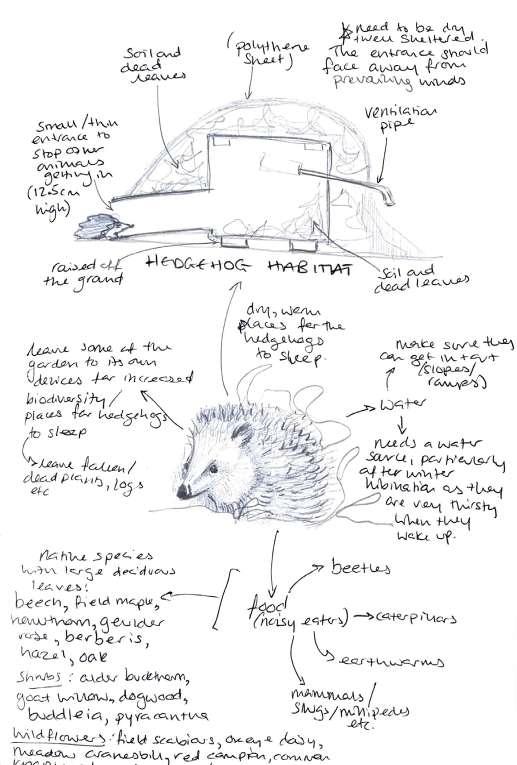
•The aim of this project, ‘Species and Spaces,’ was to consider an animals habitat as well as the human users within the building design. Whilst the project originally seemed juvenile to me, the project ended up being a driving force in my continued exploration of ecology and the environment.
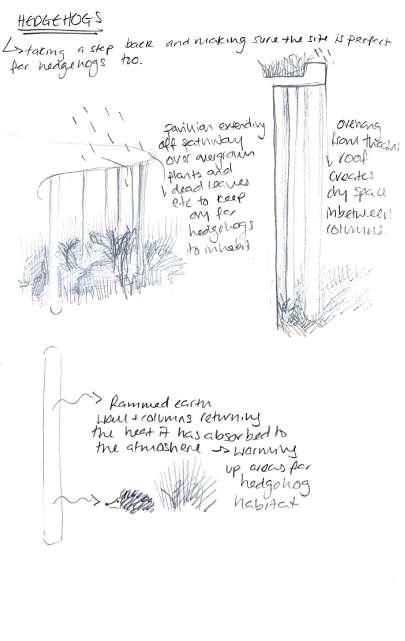
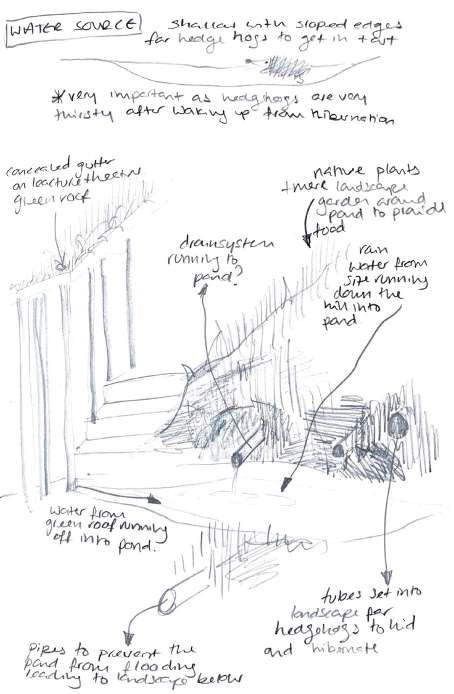
•I chose hedgehogs as my animal. Unable to make a feature out of their habitats, since they are nocturnal creatures, I carried the character of these animals into the project, picking up on their lonely wondering through rural and urban areas, roaming until they find food, water and a place to rest. These translated into ideas I had explored for my theory module, around Gilles Clements work and ideas on the Third Landscape and Planetary Garden. As a resulted I was reflecting a lot on future landscapes at the start of this project, which greatly influenced my design.
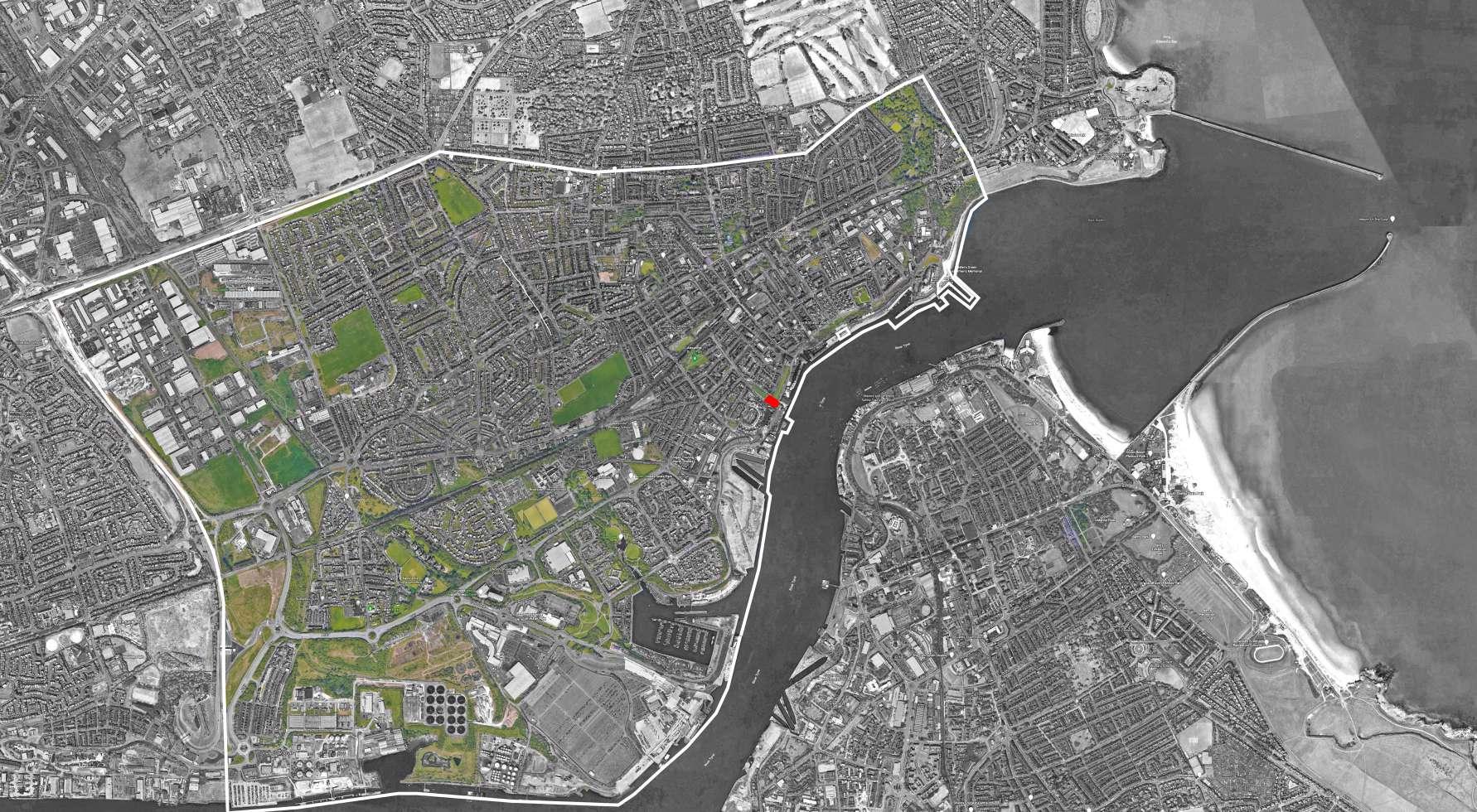
•The map on the right, of the wider site, North Shields in Newcastle, highlights the surrounding green spaces. As mentioned hedgehogs love to roam, they do not have one habitat they return to, and so it is important that the green spaces all connect as much as possible to allow the animals to navigate through the urban environment more easily.
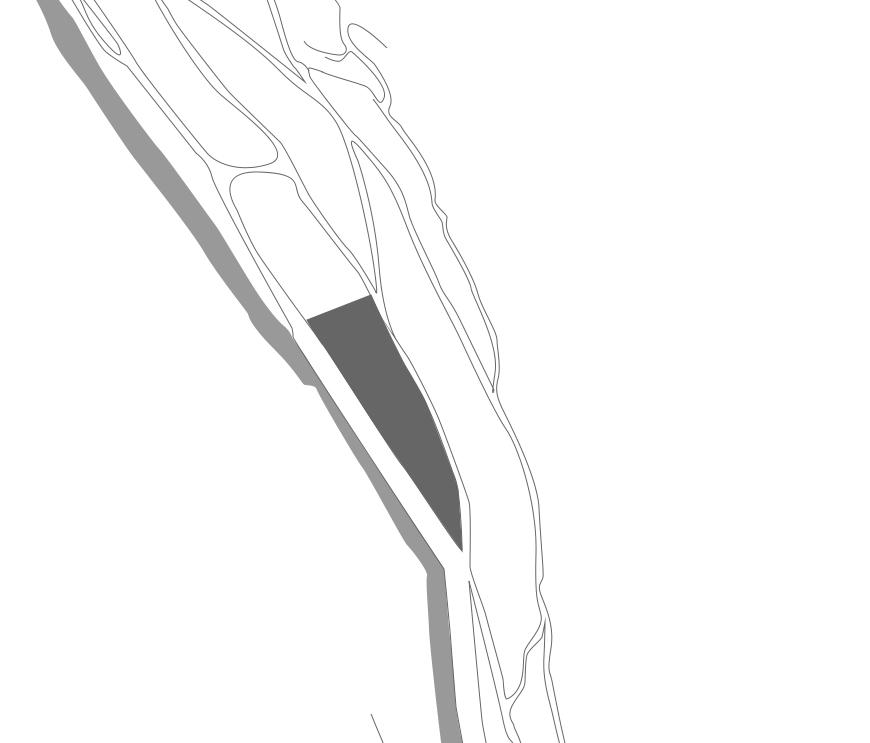
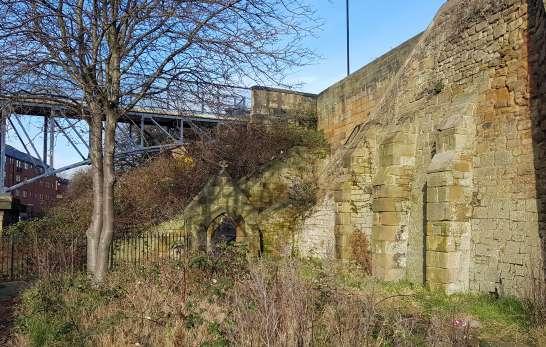
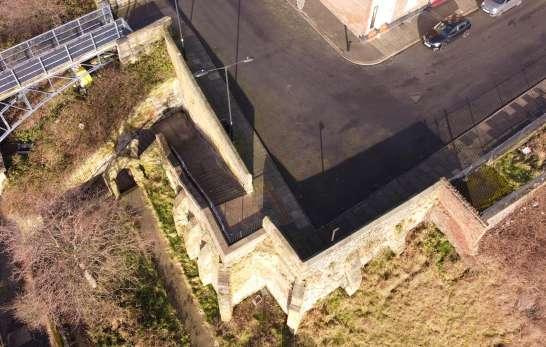
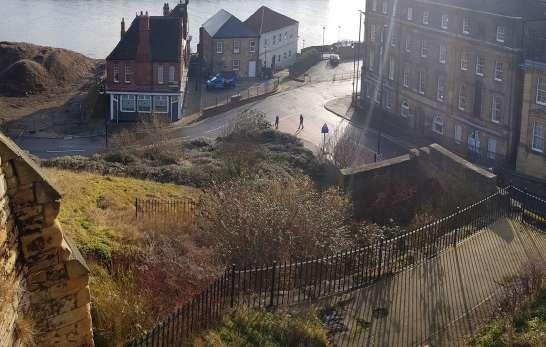
•There is a pre-existing limestone ruin already on the site which used to be a school as well as a church. Through research of the surrounding area and its council I discovered that the local community are very keen to maintain its historic past, through the use of traditional materials and sensitive design. Moreover, green spaces and low maintenance gardens are key to the areas future.
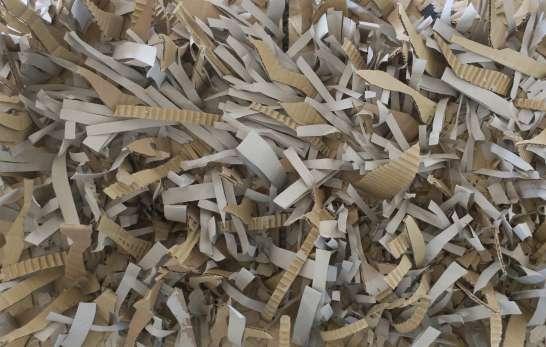
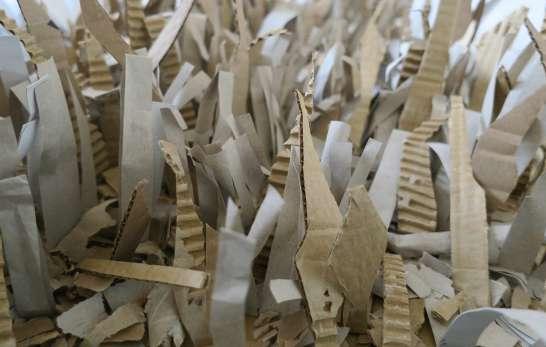
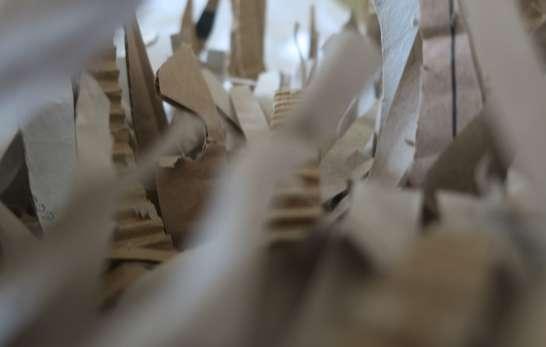
To start the design process we created art pieces based off our chosen animals. Mine focused on navigating the world from a hedgehogs point of view. Through research I discovered that hedgehogs have poor vision, their sight is often blurry and they see mainly brown, black and white. Utilizing cardboard, for its brown and grey colourings, I set about creating a patch of foliage. I cut strips and random shapes from the materials and then individually glued each piece it to a flat board. This exercise generated a key design theme: columns.
13 Species and Spaces 2.1 In North Shields
My design process often heavily consists of drawing, for this project I used a design journal to document my research and ideas, such as the development of columns.
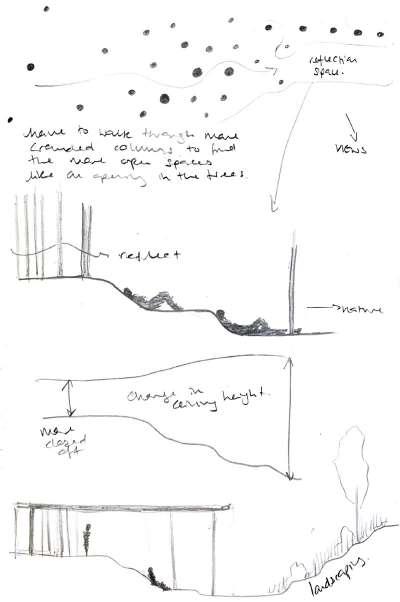
The inclusion of columns into the project stemmed from my art piece, and thinking about experiencing tall grass and planets from a hedgehogs perspective.
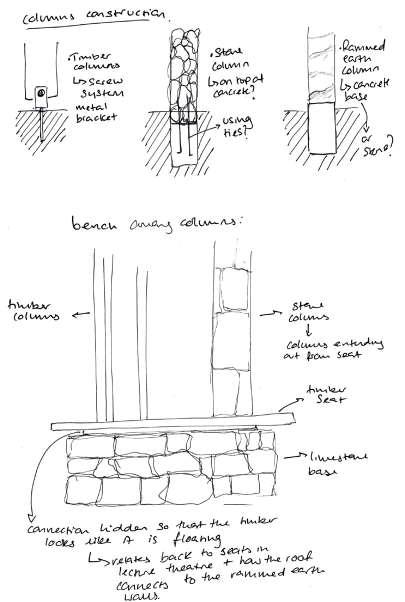
Through exploring precedents (the 2009 Serpentine Gallery Pavilion by SANAA, in the middle is a stadium in Bordeaux by Herzog&de Meuron, lastly on the right shows part of a hotel redesign in Zhengzhou, China, byt Neri&Hu) and materiality options I analysed how columns could be used as part of the building narrative. At first I considered different column shapes for a more dramatic result, however quickly settled on straight
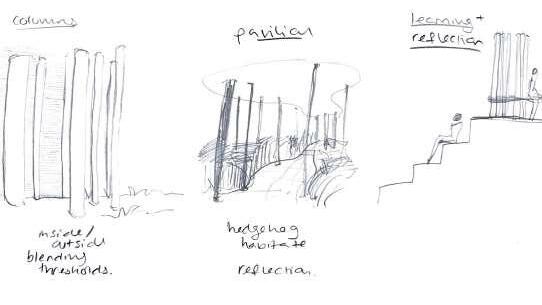
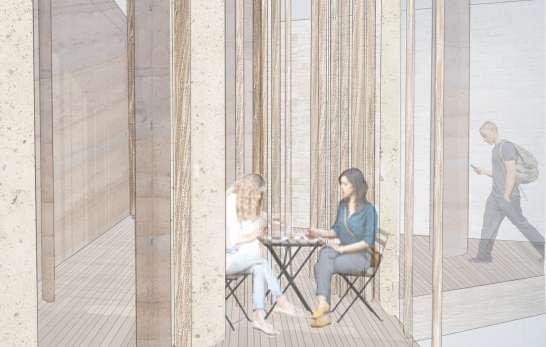
round columns to maintain an elegant appearance that isn’t overwhelming. I explored through drawing how the size of the columns and their distance from each other may guide someone through a space, and create these moments of privacy where one might stop and reflect.
14
Sketchbook
The Process 2.2
There is a pre-existing limestone ruin already on the site, seen in the images along the bottom of the page, which used to be a school as well as a church. Through research of the surrounding area and its council I discovered that the local community are very keen to maintain its historic past, through the use of traditional materials and sensitive design. Moreover, green spaces and low maintenance gardens are key to the areas future.
From my research I decided to design an educational space, with lecture theatres and learning rooms, specifically for teaching topics of ecology and environment. However, these topics are often overwhelming, and it is not uncommon for people to experience anxiety due to the world’s current circumstance, and so I felt it was important to include places for reflection and a calm atmosphere to prevent the visitors from feeling overcome. This element of privacy in a public space brings me in full circle back to the nature of hedgehogs. The key aspects of my design became clear; learning space, reflection space, the garden and hedgehog habitat, all whilst keeping in mind how the site will look in the future.
15
Ground Floor 2.3 Spaces to Learn
Lower
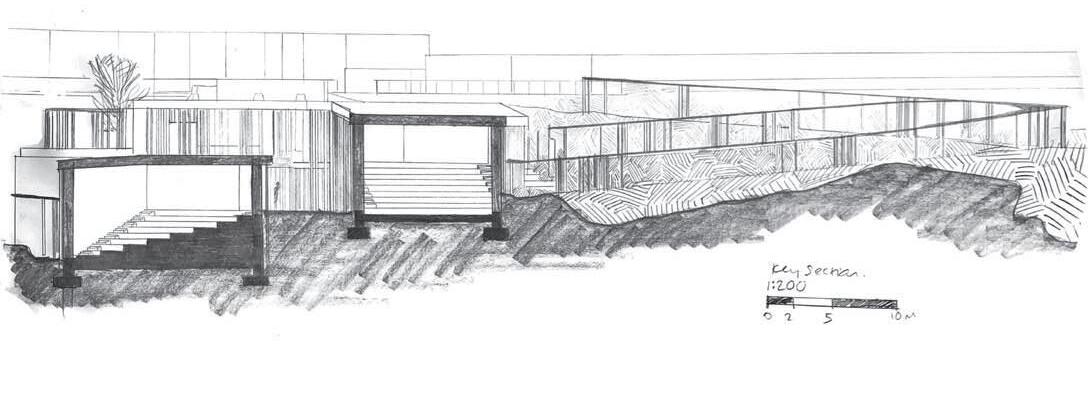
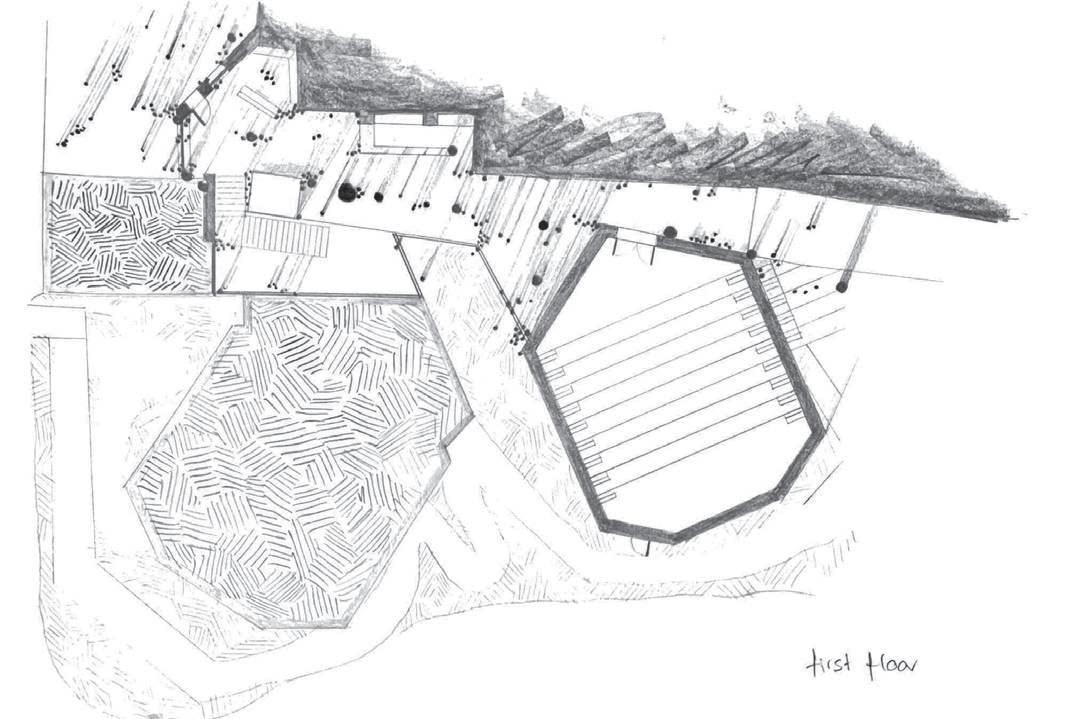
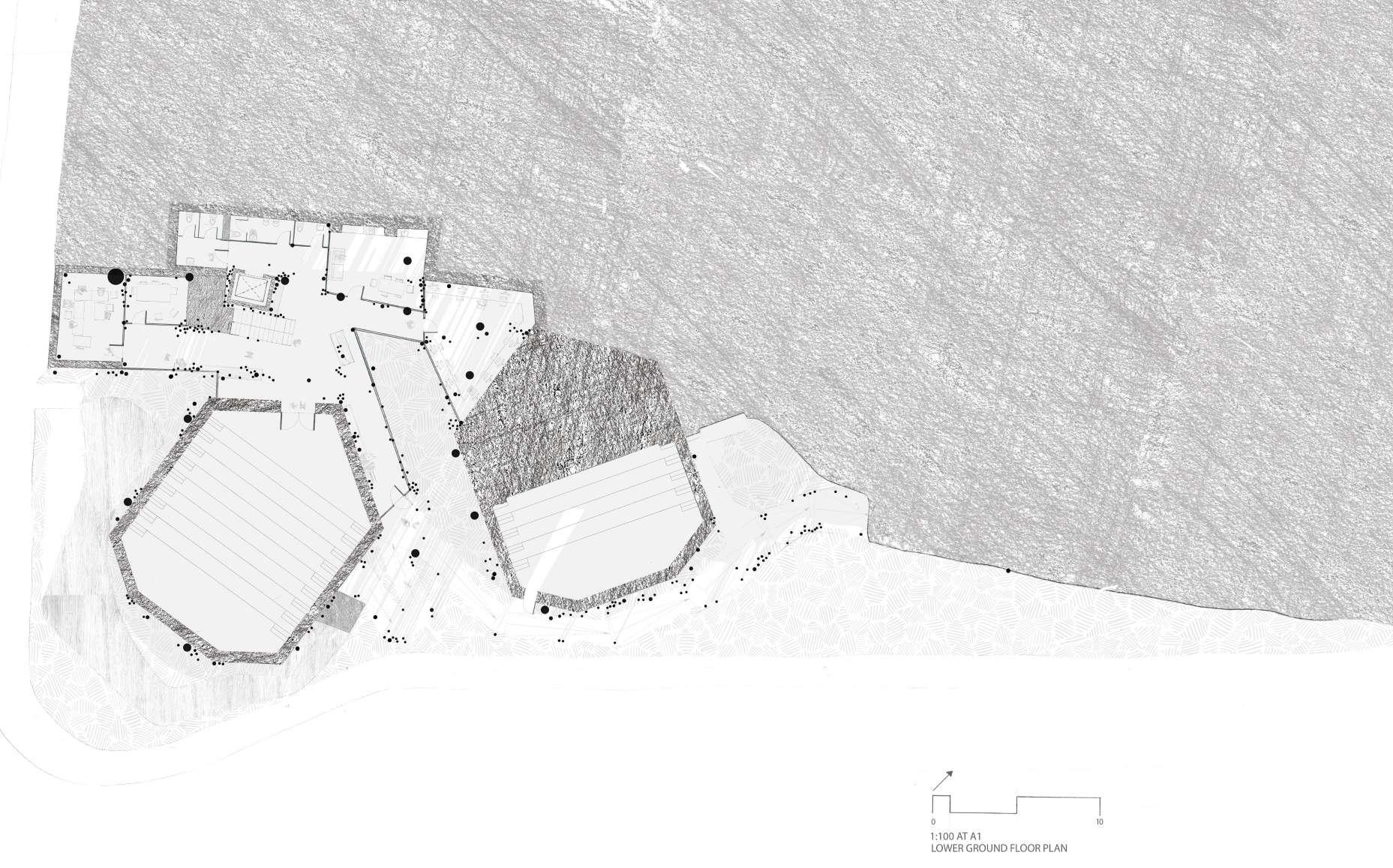
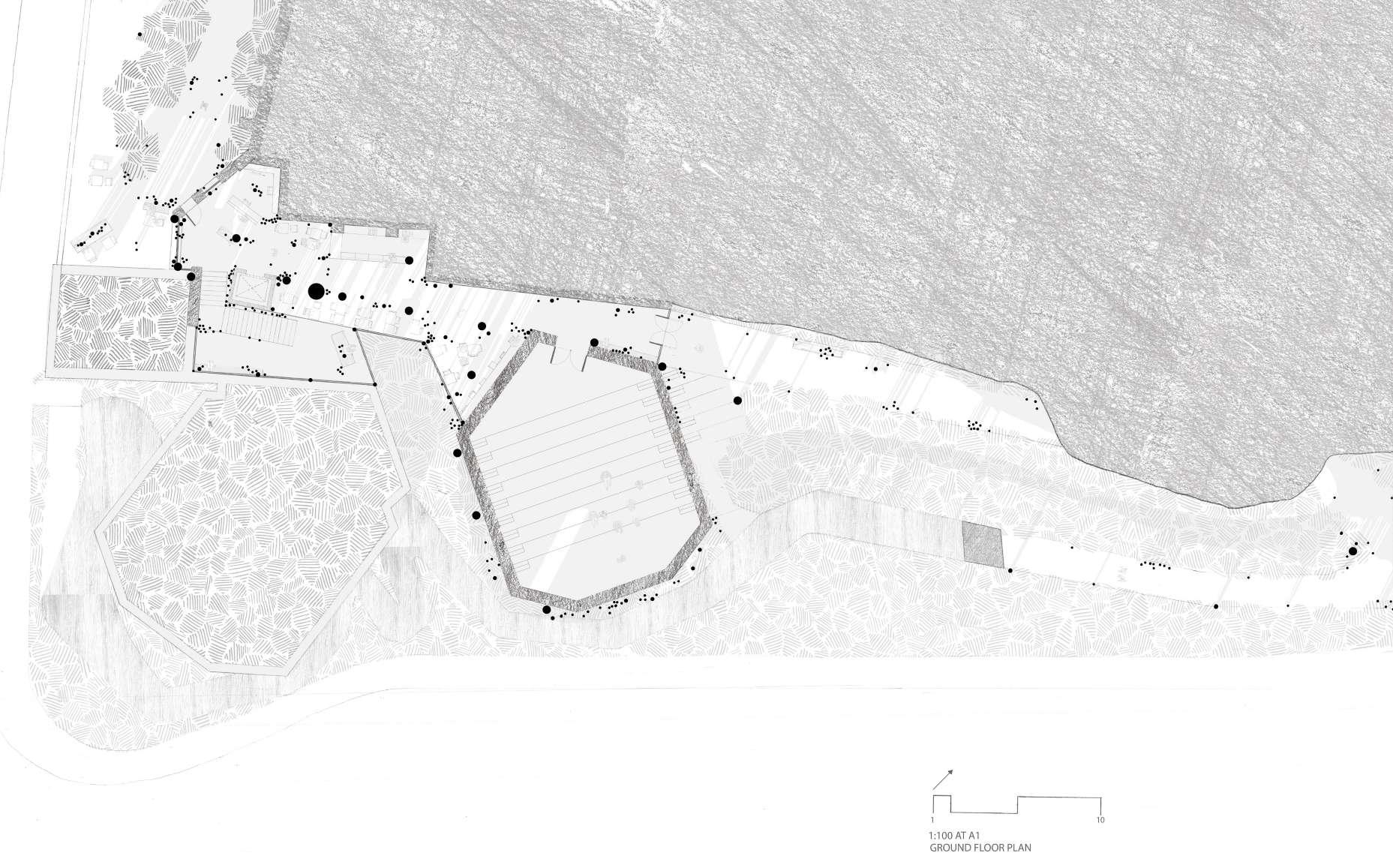
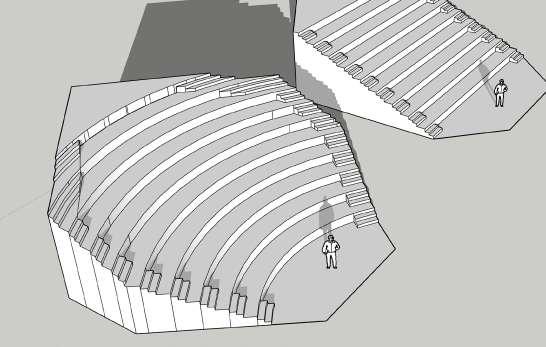
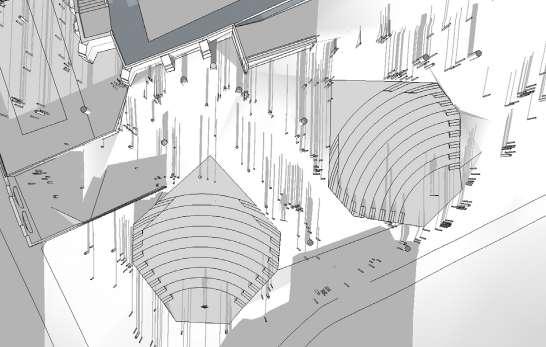
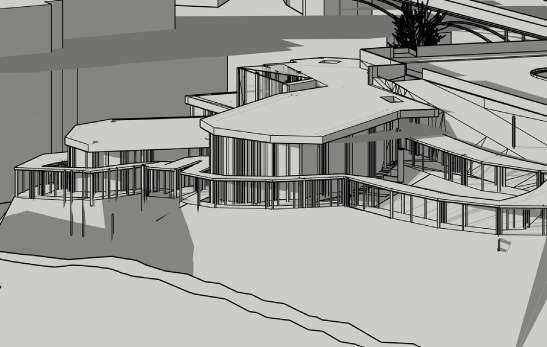
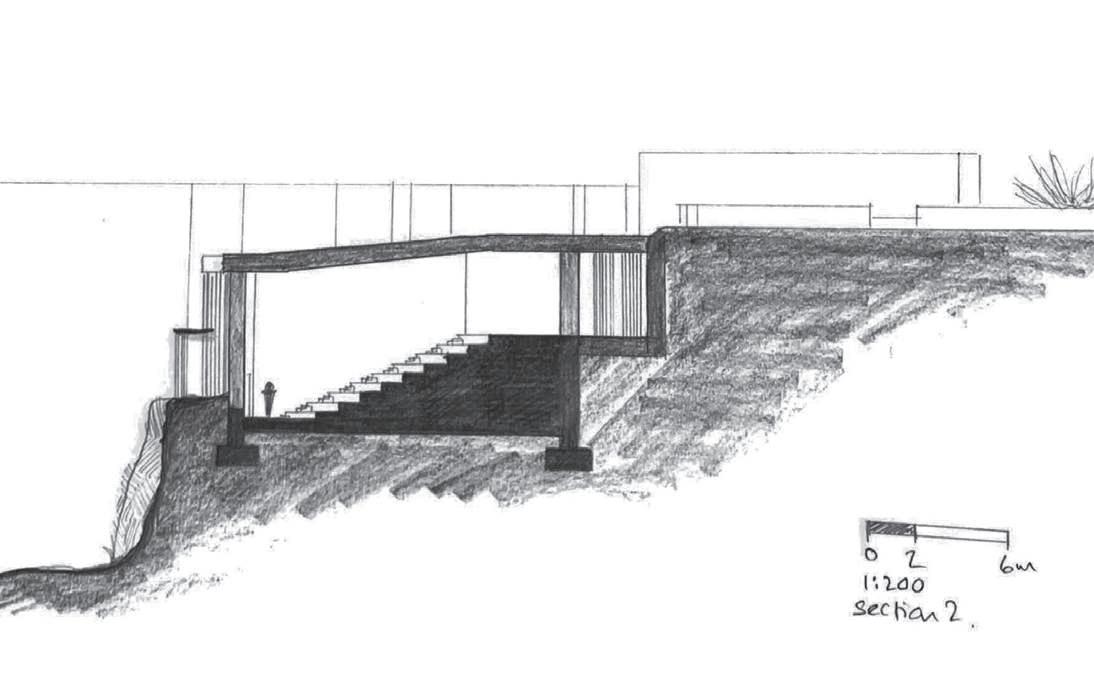
After a long period of working in 2D to generate my building plans I reverted to using Sketch Up, which allowed me to utilise the sites steep typography. I worked by first creating the theatre seats and then sinking them in to the landscape, angled towards their respective views. Next I brought in the columns, trying not to over think their placement I used them to start creating a narrative across the site. From here I was able to split the site into two floors that worked well with the typography and the already existing ruin. Finally it became a long process of building up the walls, adding the roof and adjusting the column placements. I tried to work section by section moving through each space, placing each column with thought and care.
I never intended on using SketchUp to generate my final outputs. However creating the model became incredibly time consuming and the representation of my design was becoming an afterthought. After some discussion at a review, and reflecting back to some of my original sketches which had a certain fluidity and playfulness I wanted to maintain, I turned back to hand drawing. I really enjoyed creating these floor plans, and thought they were effective in portraying the atmosphere of the design.
16
Ground Floor 2.4 Spaces for Reflection
Upper
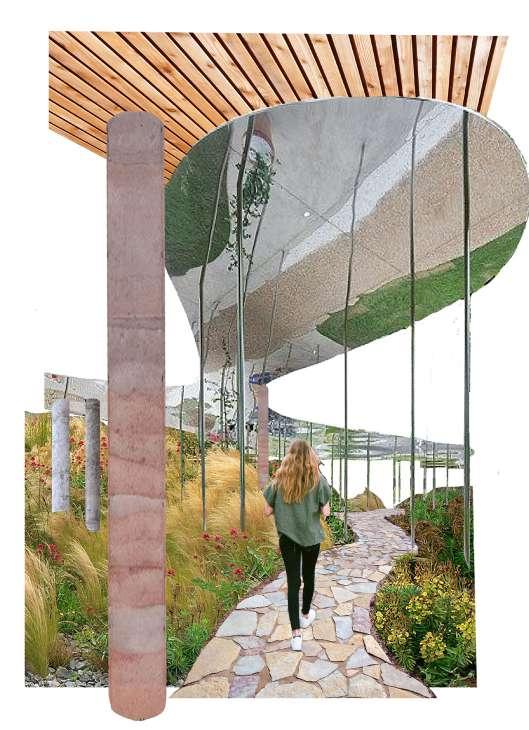
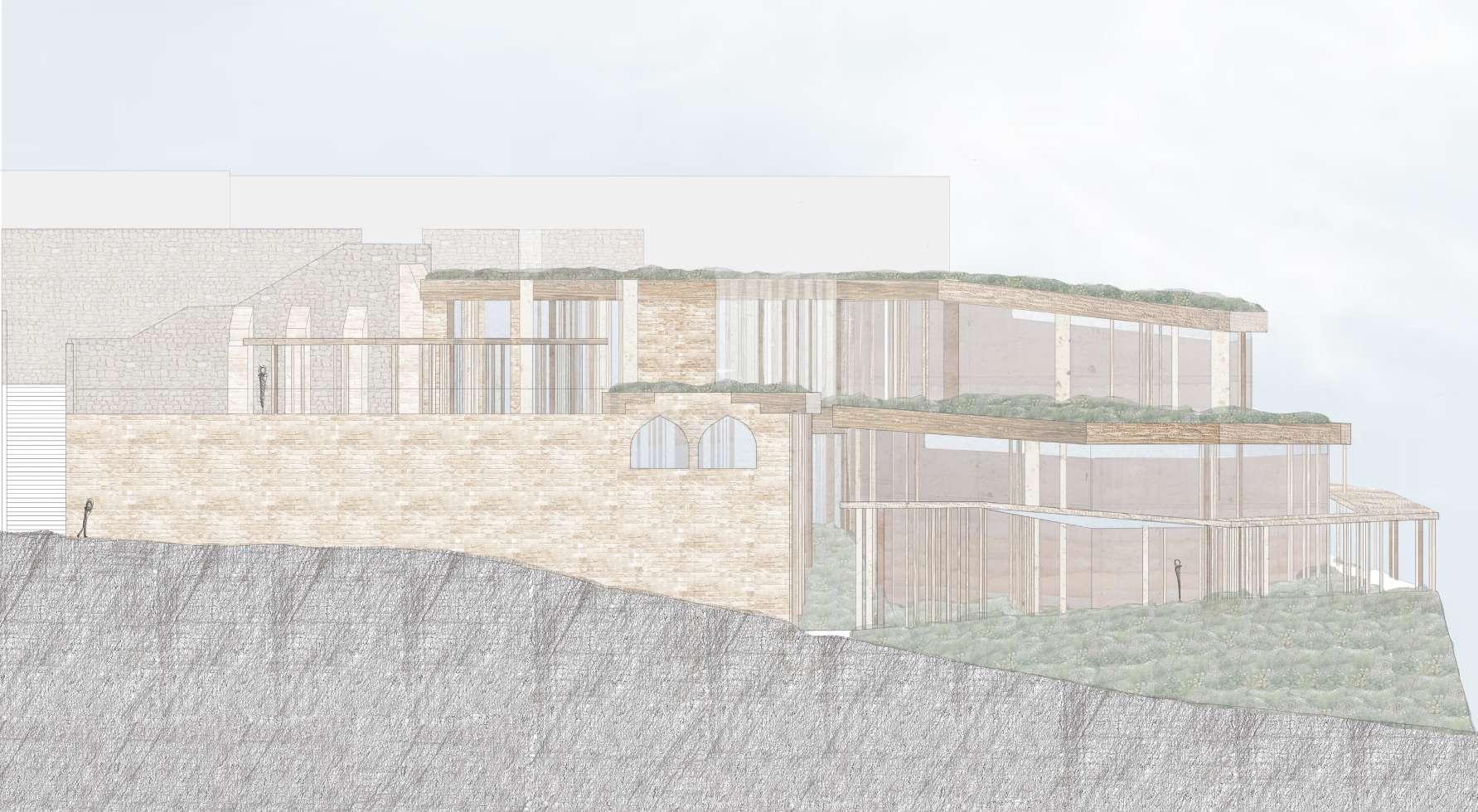

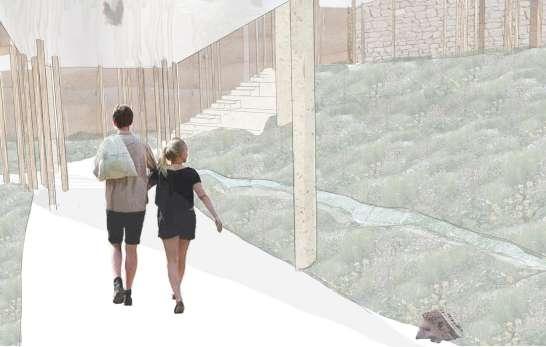
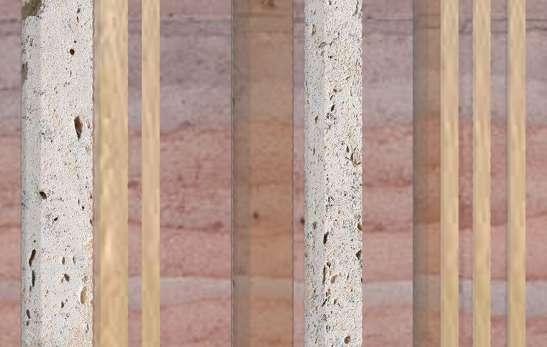
The elevation and supporting imagery on this page highlight how the building extrudes from the topography, the green roof and natural materials helping it to fuse into the landscape and pre-existing structure. The pavilion wraps around the facade, the columns softening and blending thresholds so there is less distinction between the internal and external.
17 North-East Elevation 2.5 To Wonder and Wander
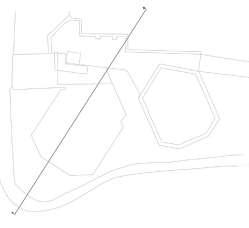
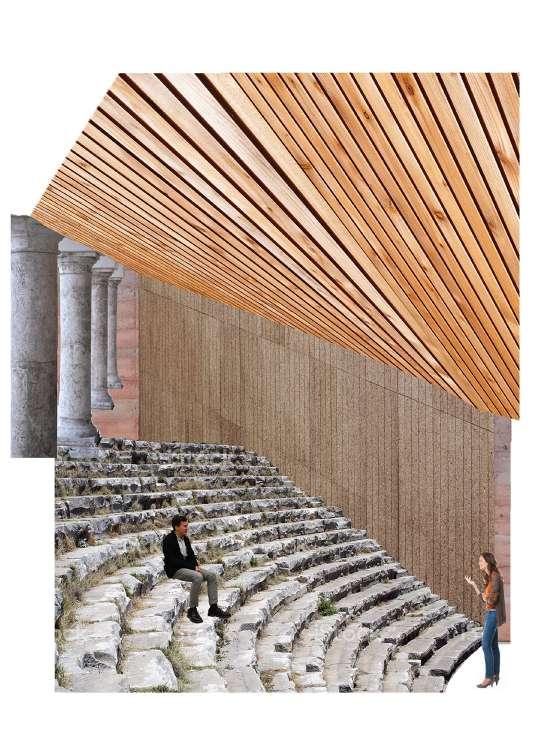
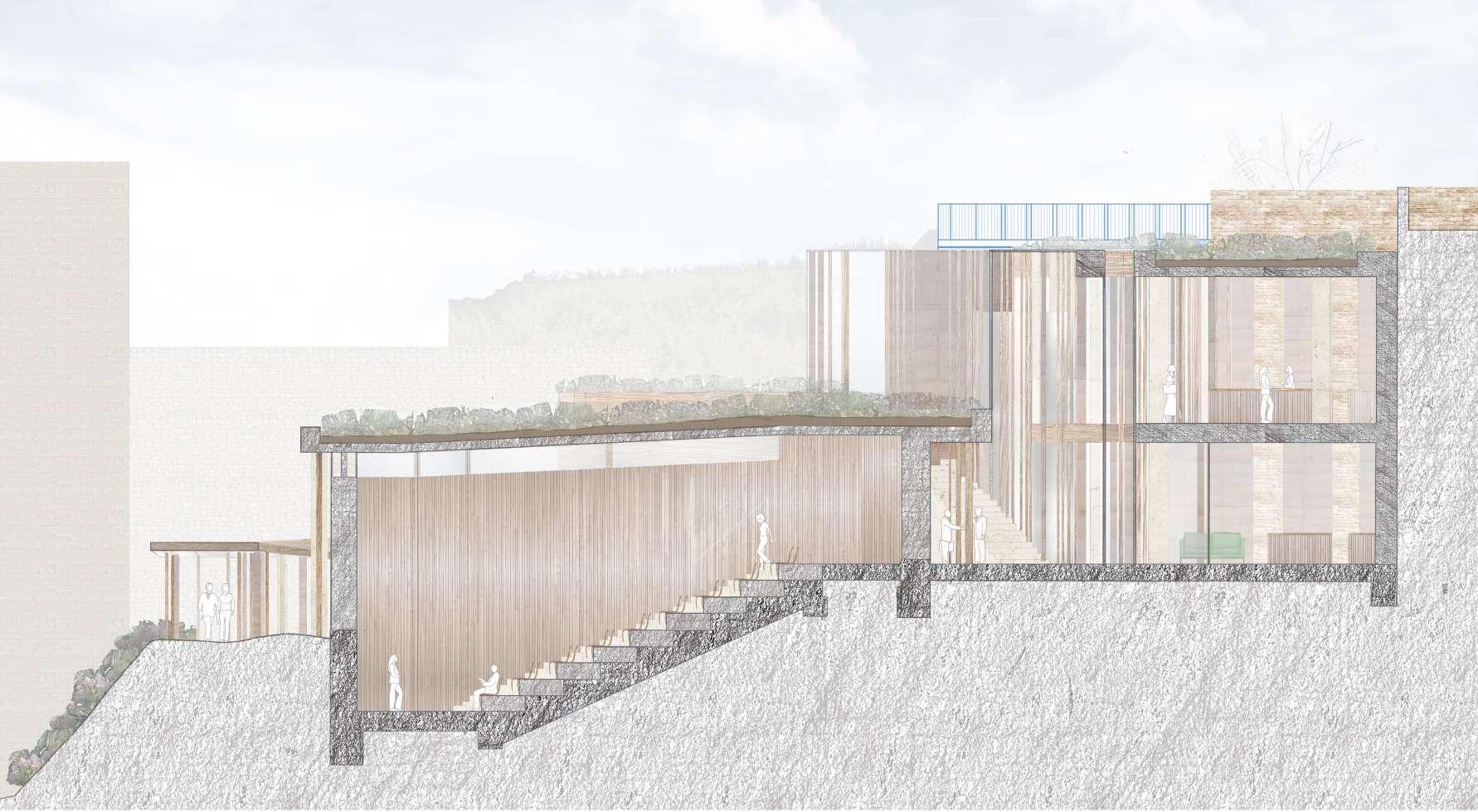
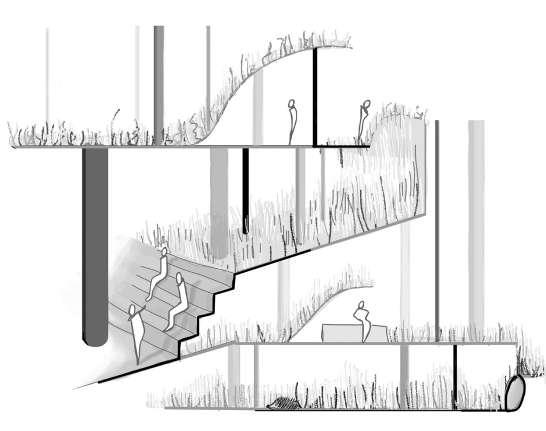
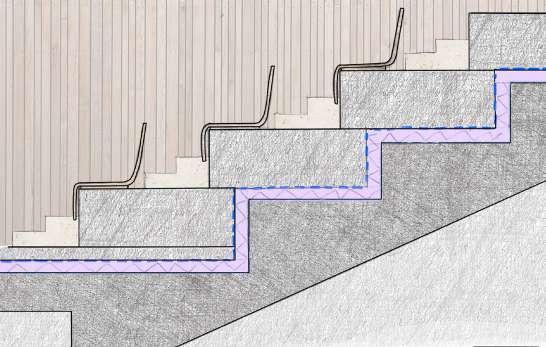
This key section and supporting imagery and process work demonstrate the atmosphere the chosen materials and columns create within the building, moving from more secluded private spaces to larger lecture theatres.
18 Key Section 2.6 To Wonder and Wander
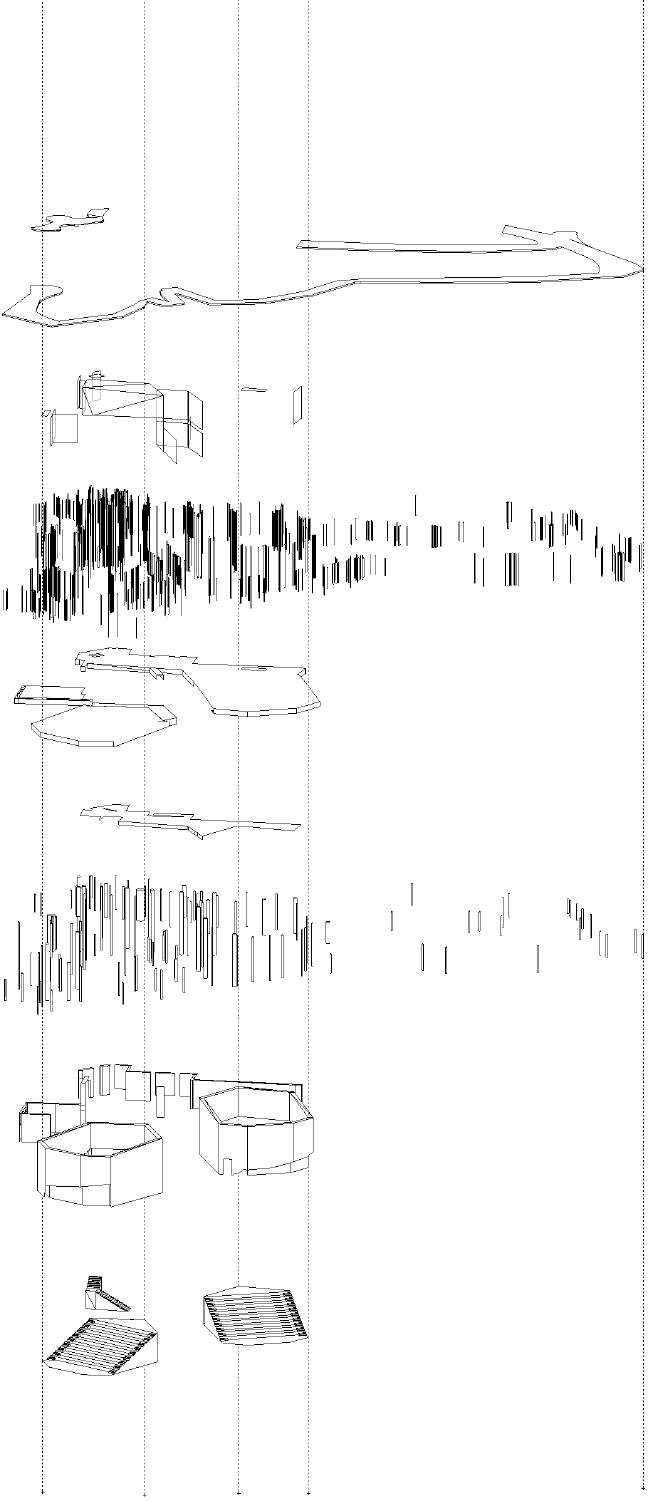
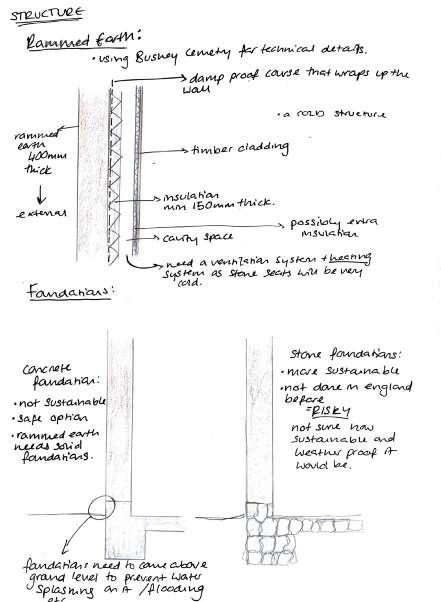
In order of construction, bottom to top, an exploded axonometric looking at material choices:
PAVILION ROOF - Timber with Mirror attached underneath - Mirrors glass is considered a green material, although it cannot be recycled only reused. Used to make the pavilion feel lighter and bigger, reflecting the surrounding green space.
WINDOWS AND INTERIOR WALLS - Glass - Can be recycled at the end of it life.
COLUMNS - Timber - Low embodied carbon, can be recycled or reused at the end of its life. Local source, Quay Timber, so low transportation energy and from a sustainable source.
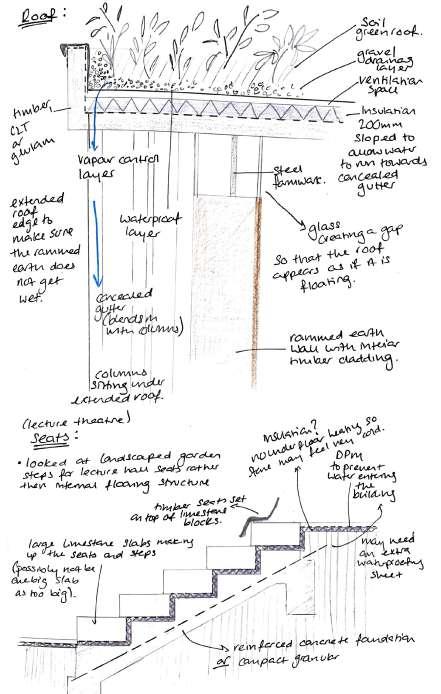
ROOF - Timber Green roof - Has a 1m overhang to prevent the rammed earth structures from getting wet. Water run off from the green roof will run into a water source for hedgehogs to drink from.
FLOOR - Glulam - Despite glue being used in this more processed material, it still has low embodies carbon and can be recycled or reused.
COLUMNS - Rammed Earth and Limestone - May be needed for structural support at some points. Most likes built up at the same time as the walls. Rammed earth will need to be covered from water until the roof is on.
WALLS - Rammed Earth - high thermal mass, soil from the site can be used so there would be less transportation energy. Will be knocked down at the end of the project, returning to the earth. Additional walls to be in limestone and timber.
THEATRE SEATS - Limestone - Stay more permanently on site, parts can be reused. There are many local Quarry’s on the North-East coast, therefore low transportation energy. Matches the ruins already on site to help the building fit with its surroundings
FOUNDATIONS - Concrete - needs to come above ground level for rammed earth walls, to prevent water splashing on it. Stone foundations could possibly be used in places as a more environmentally friendly alternative.
Construction and Materials 2.7 Designing for the Future
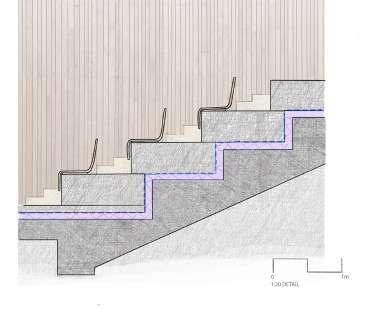
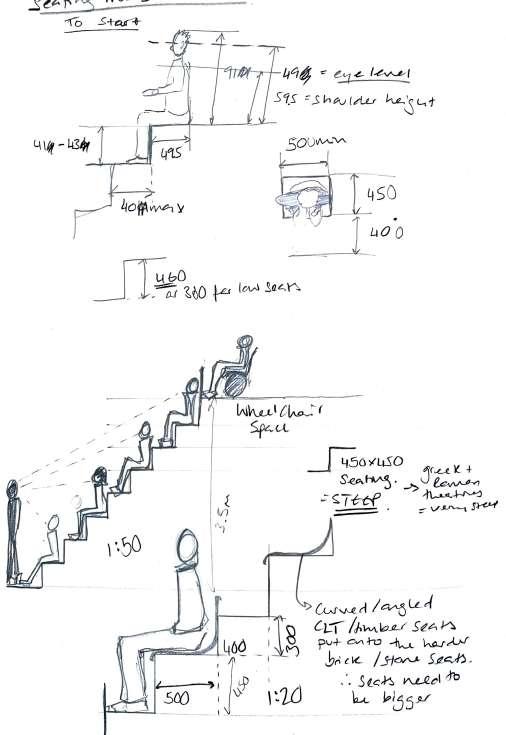
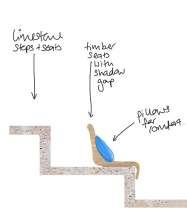
The limestone lecture theatre seats are built to last, looking out towards the river. Whilst the rammed earth walls are designed to be knocked down. Designing the space to be reused in this way was inspired by the ruins already on site, and ancient Roman and Greek amphitheatres. Whilst the rest of the construction materials can be reused or recycled, the limestone theatres can be reused as a space, for whatever it is needed for in the future, or let nature take its course.
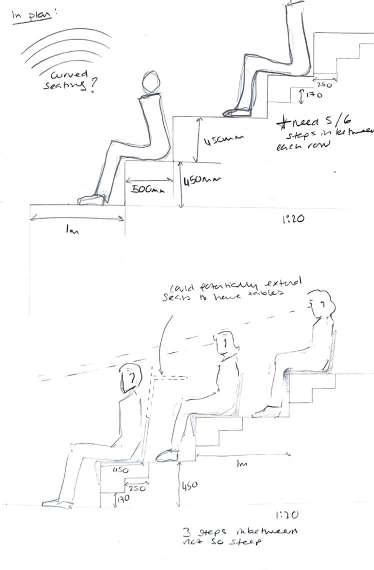
In the seats detail I looked as stone garden steps for research, so they act more as a landscape architecture piece. Timber seats would be attached to the stone, which would be too cold and hard to comfortably seat an audience. During
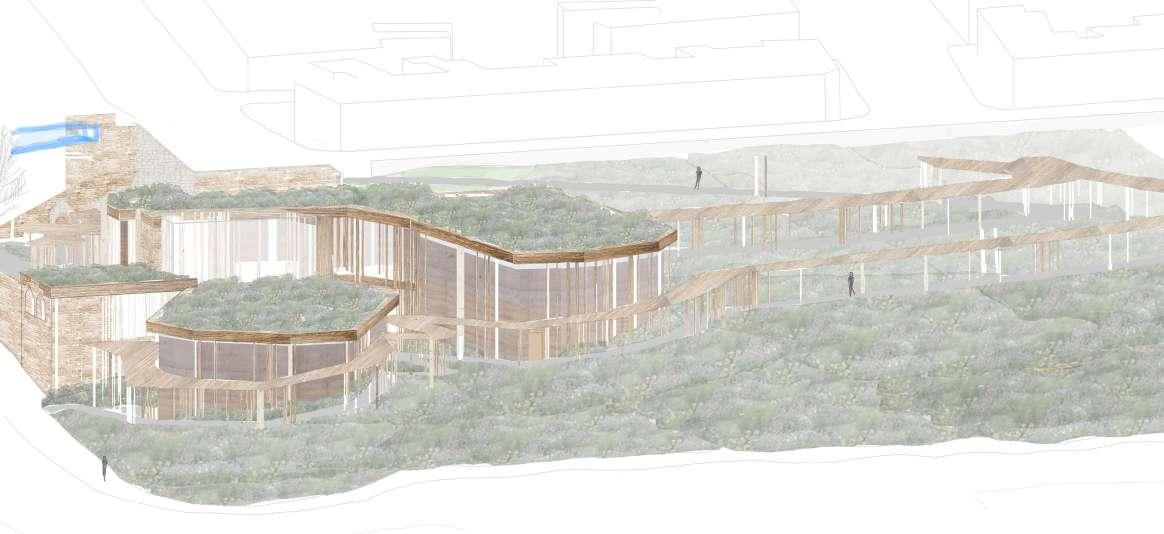
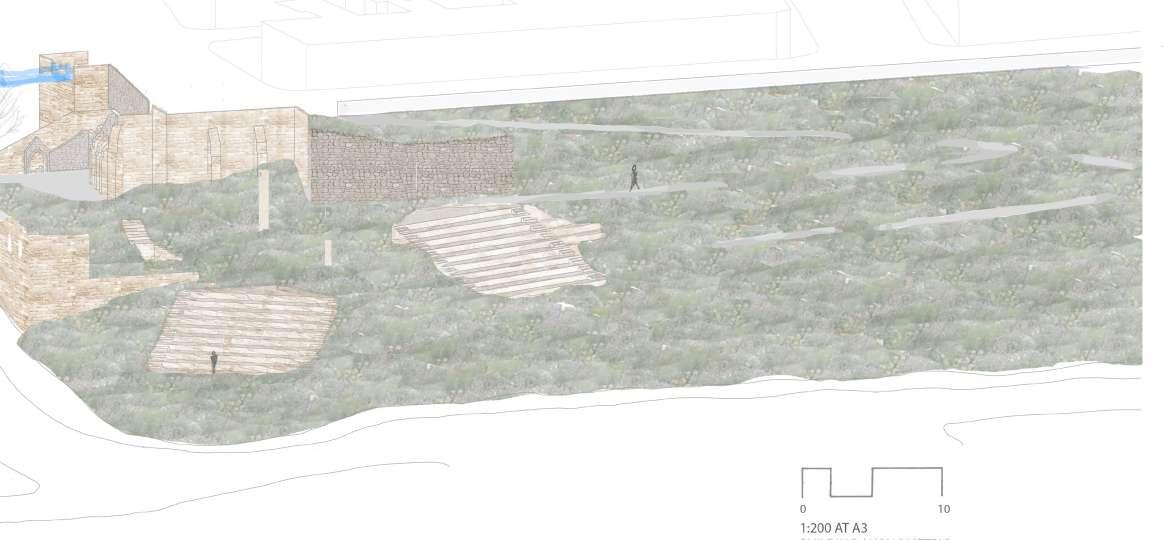
After
19
the buildings life
the buildings life
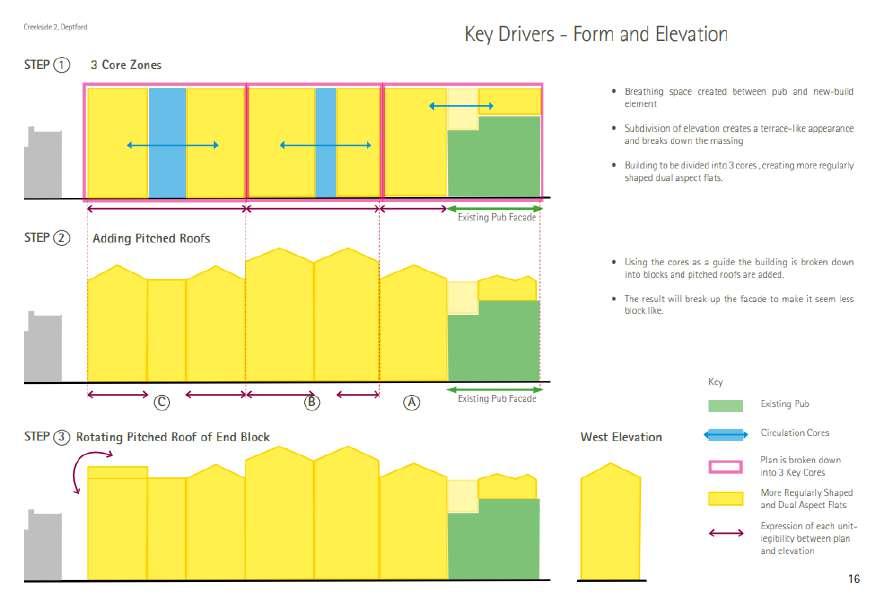
Working on the design team at Aros I have worked across 11 projects so far, including both big and small schemes. I chose to include this project as the document and visuals were produced nearly entirely by me alone. The work for the client involved a review of a design that has already been submitted for planning by different architects, that the client and planning officers were unhappy with. The document I produced included an analysis of the current scheme, followed by key drivers and then plans and visuals for the re imagined scheme.
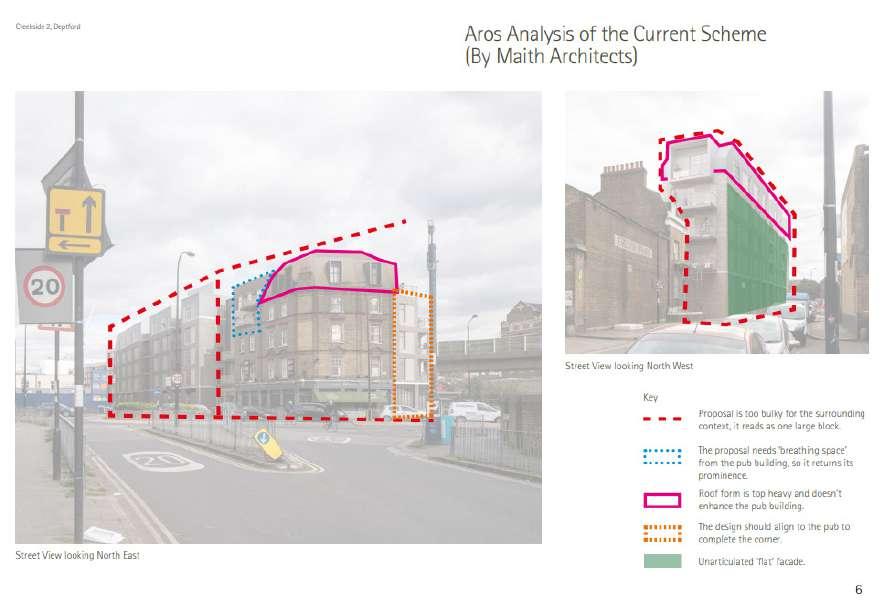
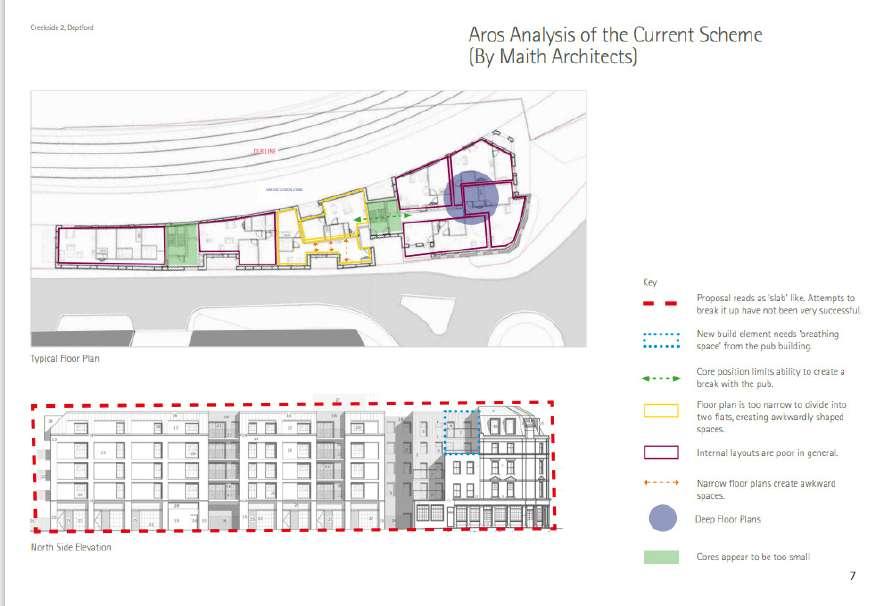
Analysis of proposal currently in for planning.
*The above page I had assistance in producing.
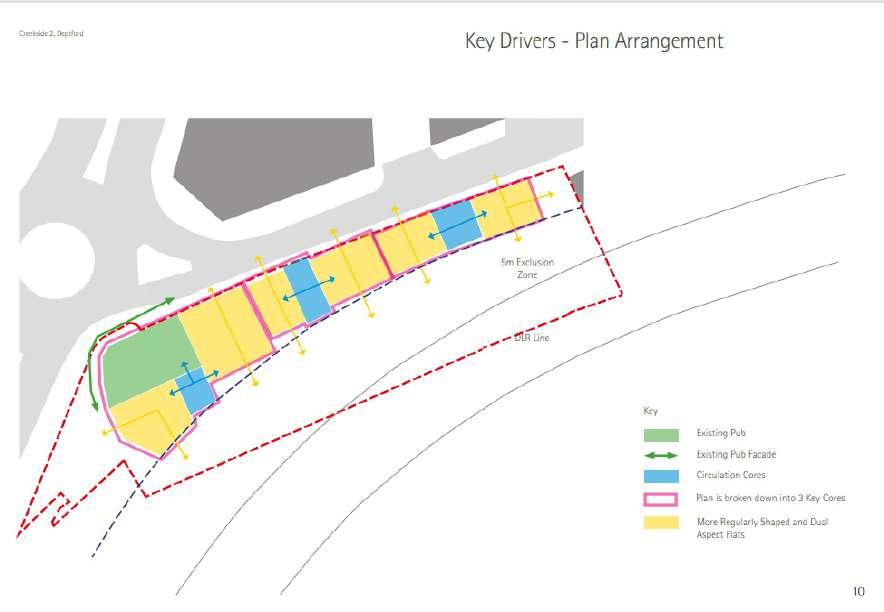
Key Drivers
20
Year in Industry Project 1: Creekside, Deptford 3.1 Analysis and Key Drivers
*Unless stated otherwise all work was produced by myself.
Year in Industry Project 1: Creekside, Deptford Proposed Design
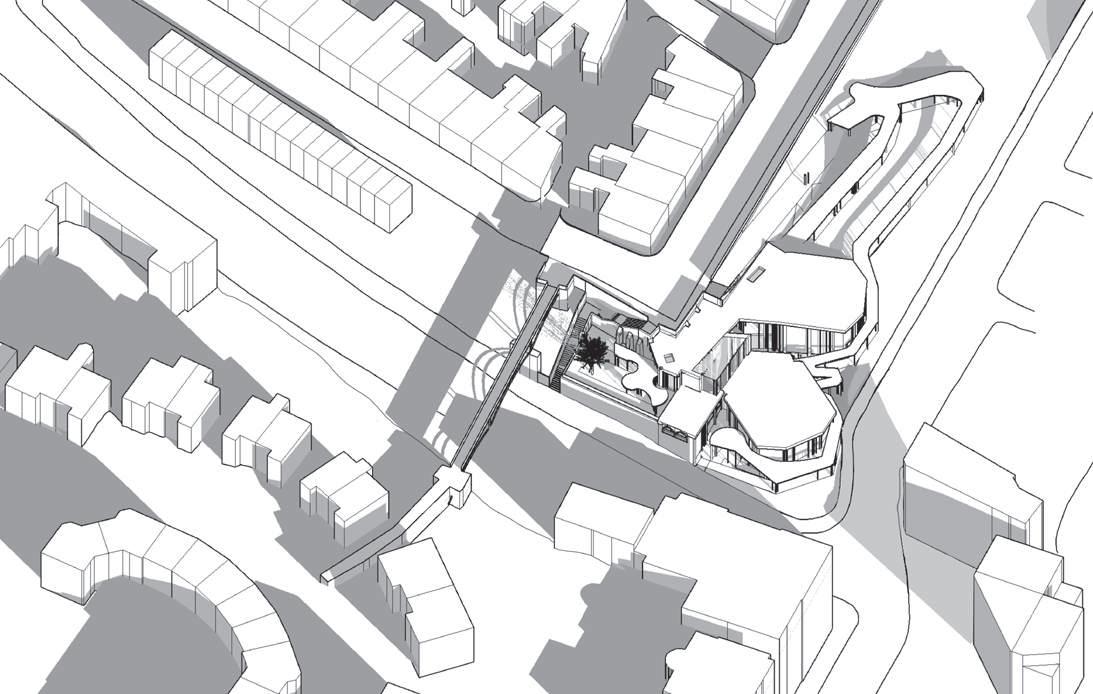
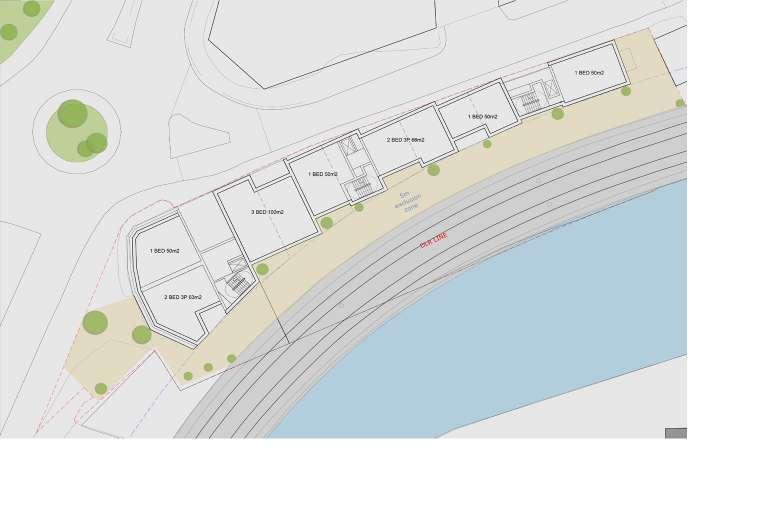
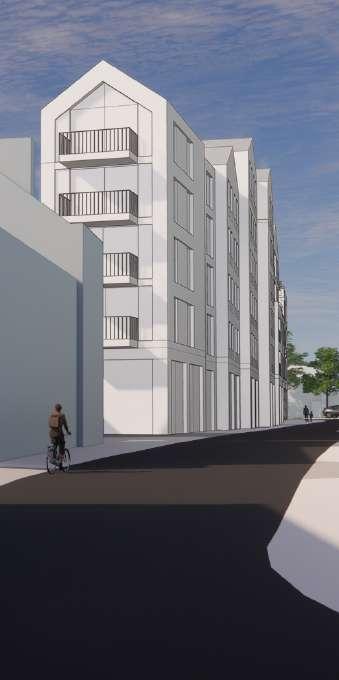
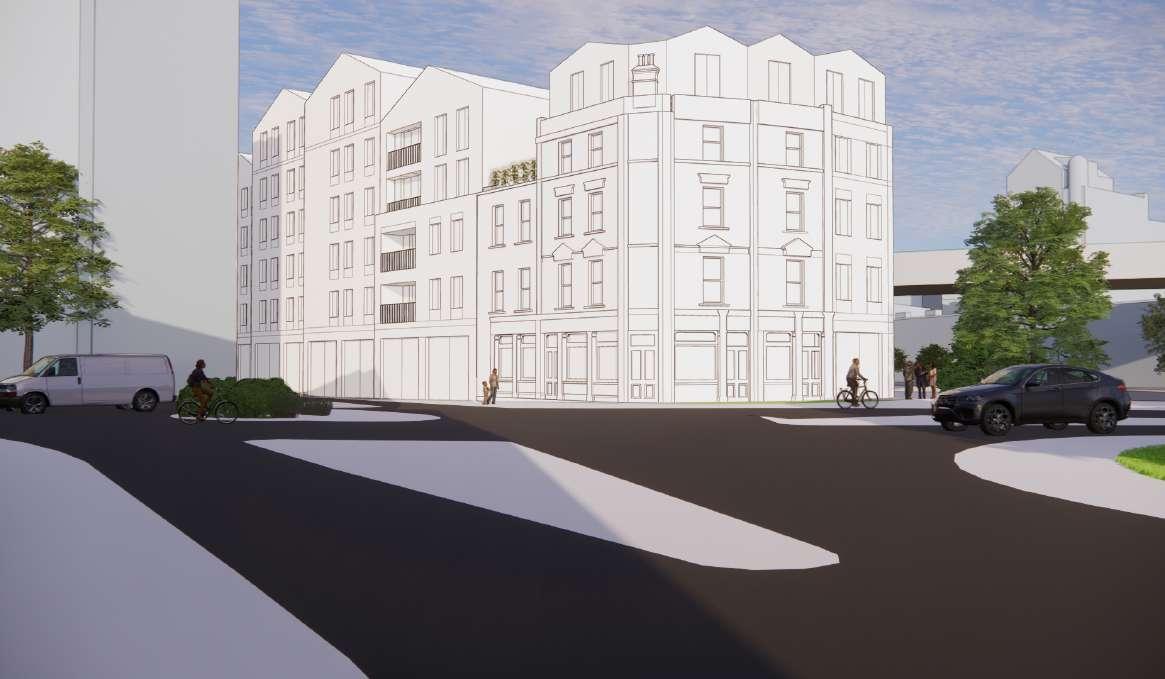
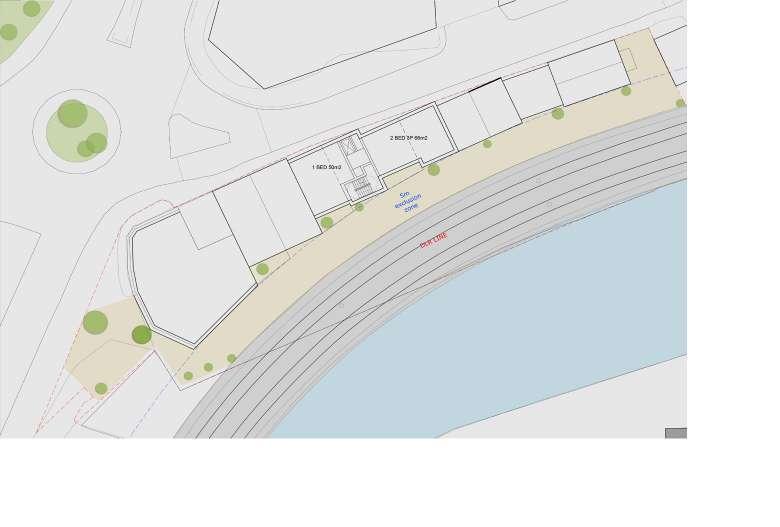
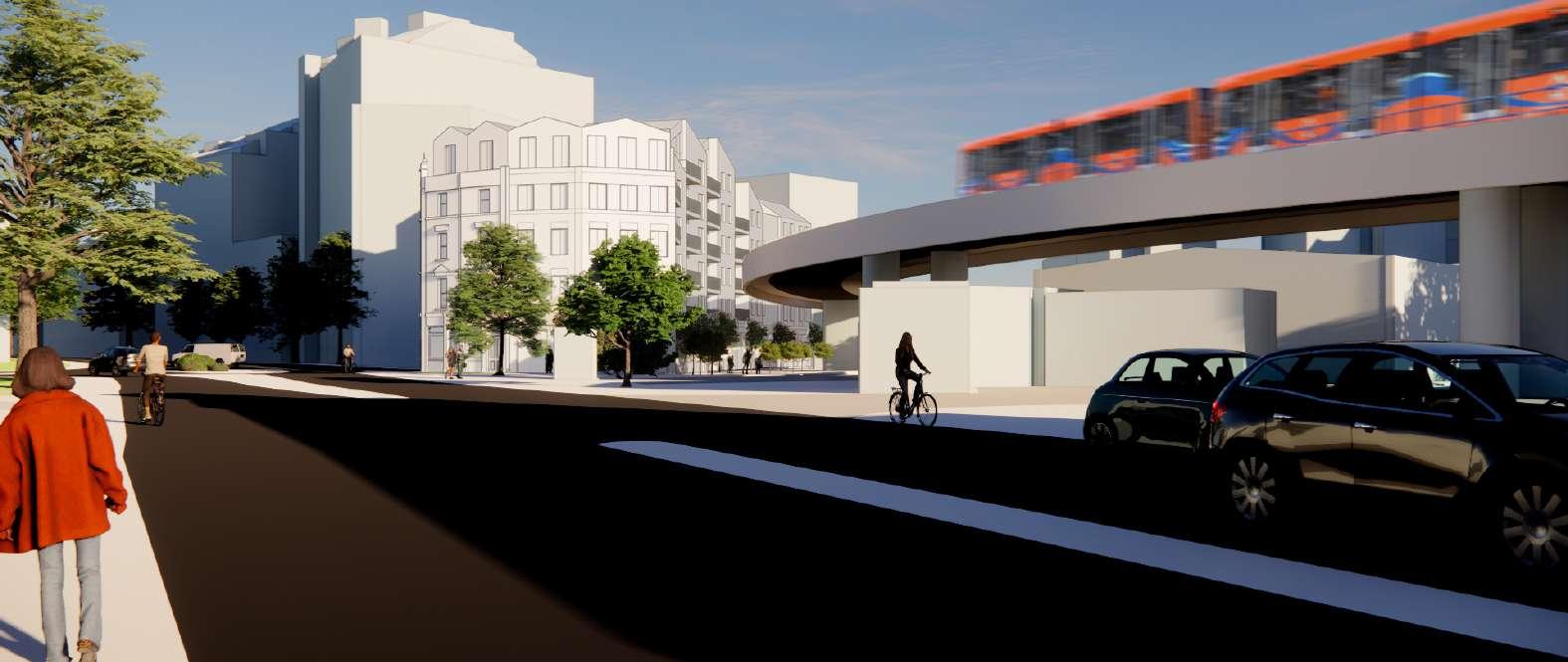
The scheme consisted of creating design unit spaces along the ground floor with residential flats above, all whilst retaining a pub, ‘The Nest,’ on the corner of the site which is beloved by locals.
This project was incredibly fun for me to do as it was the first time I was allowed slight freedom in my work as a Part 1. The director overseeing the project gave me a series of rough facade sketches for me to model on SketchUp, using my own understanding of dimensions and proportions to fineness details. The visuals were produced solely by me, using a blend of SkecthUp, Enscape and Photoshop.
*The below plans were produced by a colleague, but coloured by me.




21
3.2
*Unless stated otherwise all work was produced by myself.
4.1
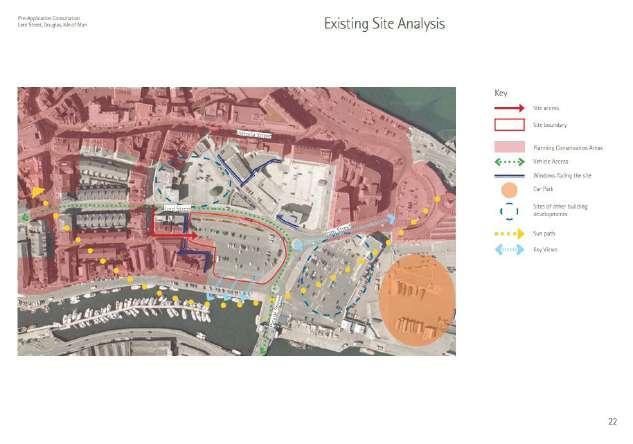
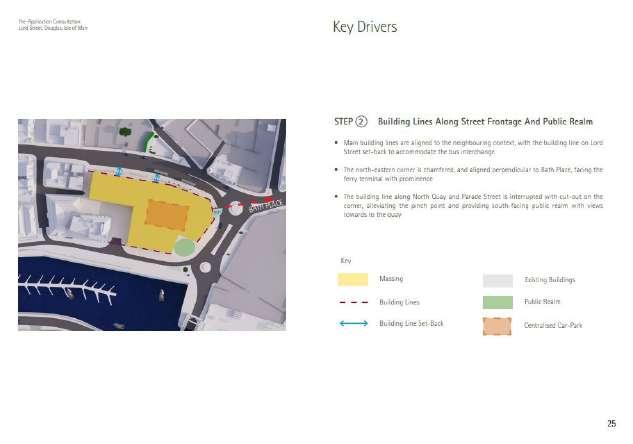
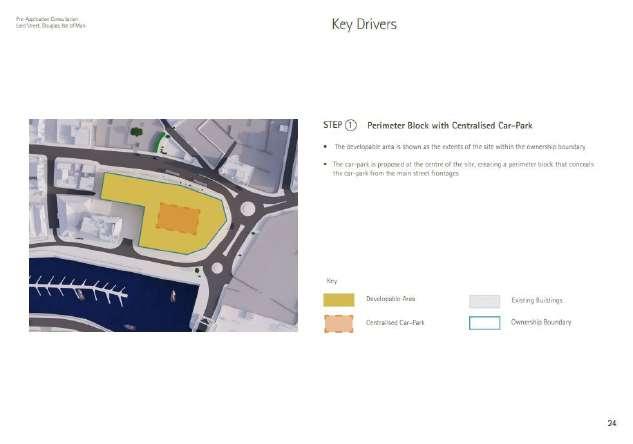
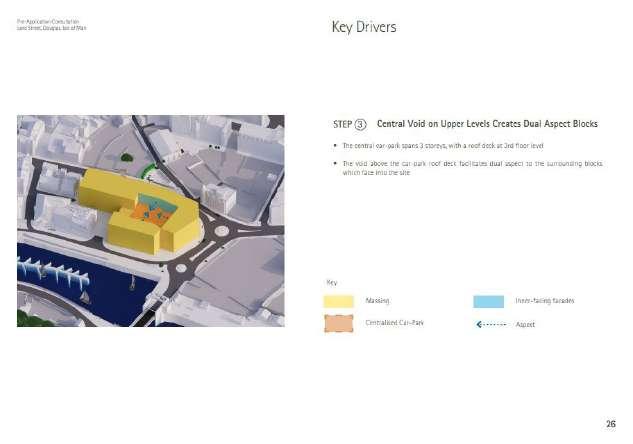
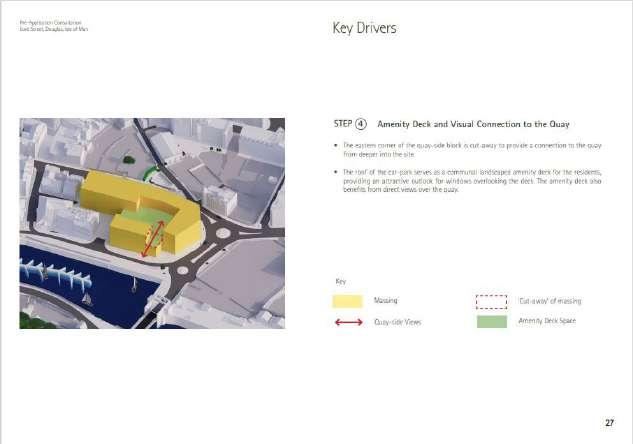
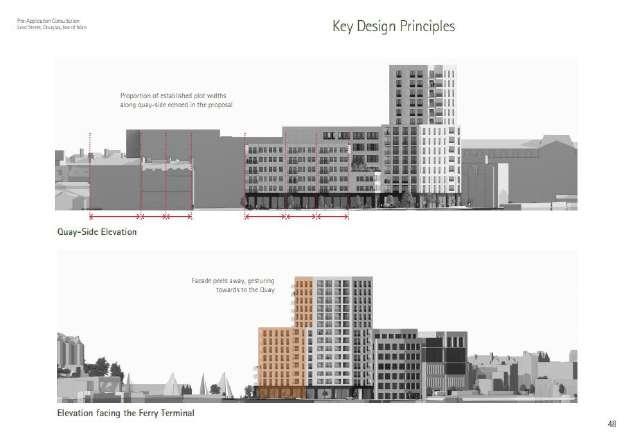
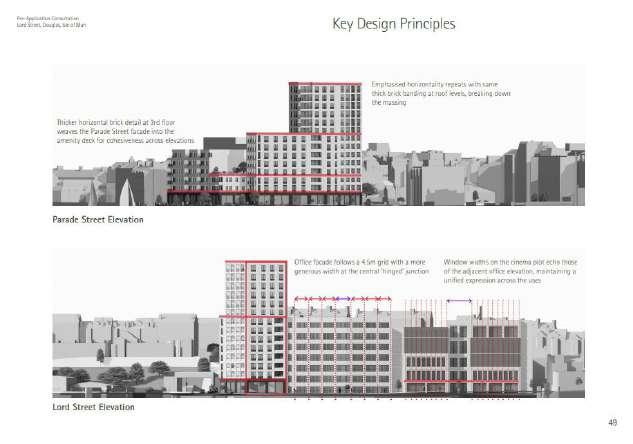
By far the largest project I have worked on to date, the Isle of Man proposal is a large mixed-up development located by the quayside in Douglas. The local council is eager to see the area redeveloped, and so in plot surround out site the are other high-rise buildings being proposed. The document pages below and drawings and visuals on the next page have been prepared as part of pre-application consultations.
The accommodation summary for the proposed mixed-use scheme is as follows:
- 85 Apartments
-4 Screen Cinema
- Office Space
-Retail / Leisure / Restaurant Space
-Private Car-Park
-Bus stations, public WC’s and seating areas
-Visitor Information Centre
Year in Industry Project 2: Isle of Man Design Development
The design development for this project was very rapid, due to time pressures from the client and planning consultants. Therefore there has been a lot of designing on the go, which has allowed me to be more involved in the process as I am a key member in building the SkecthUp and Revit models.
On this project I have been less involved in pulling together the document, and more involved in producing the drawings and imagery. It has been a steep learning curve for my SketchUp rendering abilities and for my Revit experience.
22
*Key Drivers not produced by me (helped with massing model used)
*Black and white elevations and Design Principles pages produced by me.
*Site analysis completed by me along side other project research.
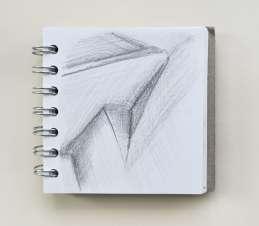
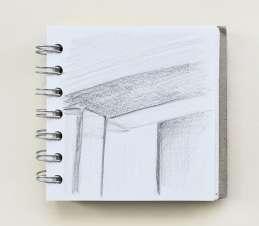
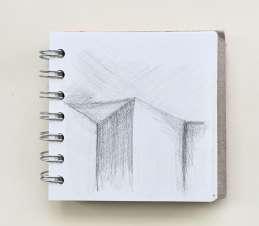
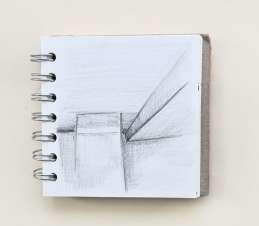
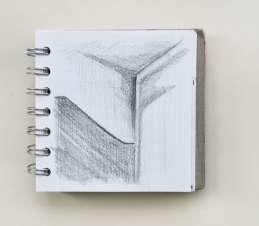
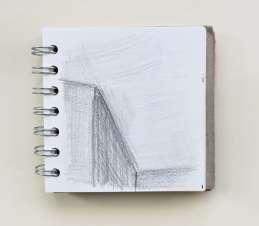
Routes and Routine
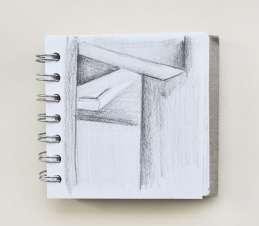
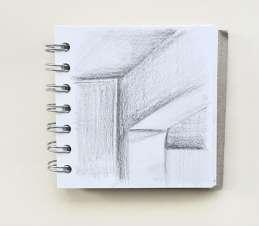
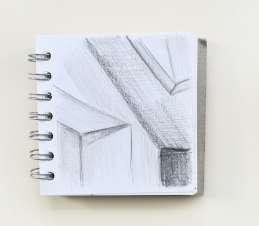
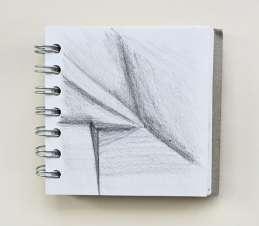
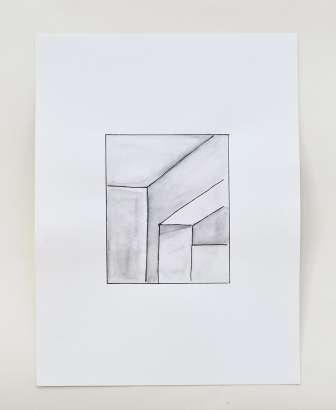
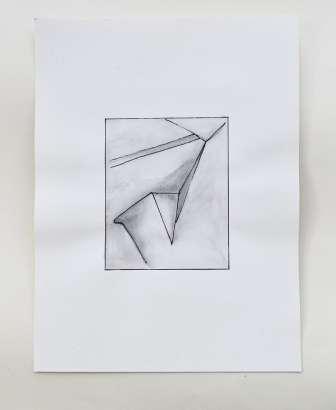
During my art foundation at The Royal Drawing school I heavily explored the themes of routes and routines, parts of which can be seen over the next few pages. This intrigue in daily routines and rituals have continued to influence my architectural ideas and design preferences, often finding its may into my work through the term ‘narrative.’ Approaching my work from this angle also means that I am consistently exploring my proposals at a human scale, using human metrics to check each detail.
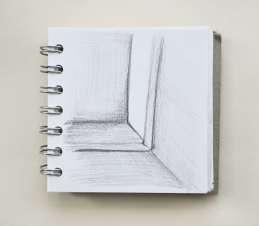
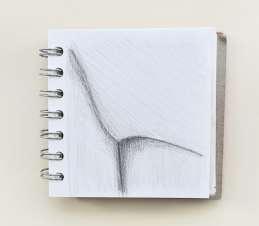
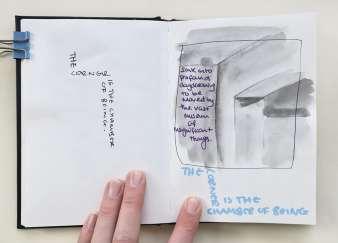
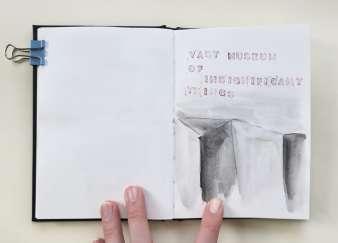
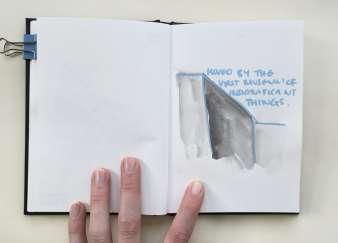
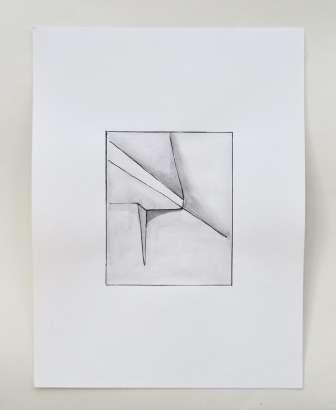
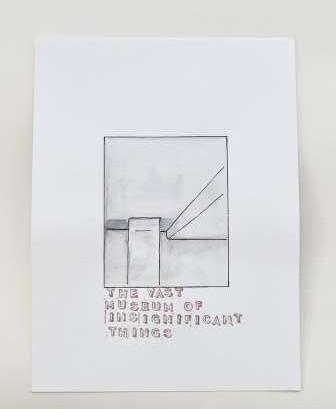
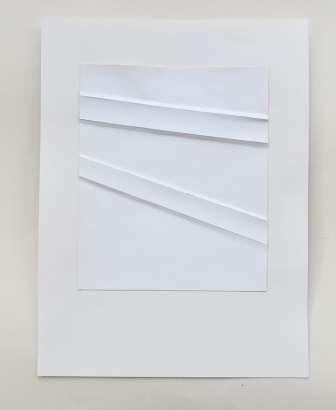
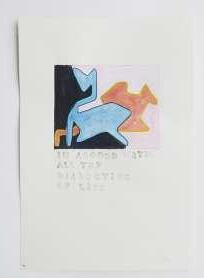
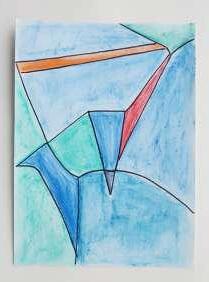
I started this project by sketching parts of my family home I see and pass on my daily routine. Quickly I realised I was most interested in drawing various corners of the house, creating abstract imagery when taken out of context. Even when abstracted I still know and recognise these corners as home. Yet whilst their angles and shadows are unique to me, I think the imagery can evoke feelings of familiarity for others too, reminding viewers of the corners of a room they have subconsciously observed for years.
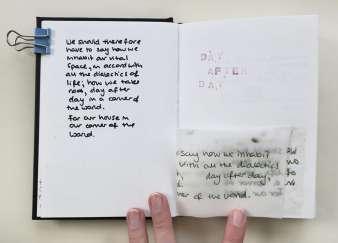
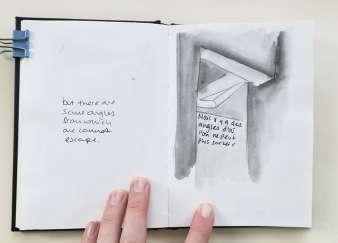
I started to integrate text from ThePoeticsofSpaceby Gaston Bachelard, which I think better describes what is so relevant and fascinating about seemingly unimportant corners of everyday architecture.
:”...we should therefore have to say how we inhabit our vital space, in accord with all dialectics of life; how we take root, day after day in a corner of the world...”

“...but there are some angles from which one cannot escape...”
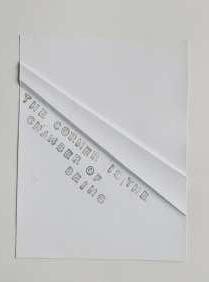
“...the corner is the chamber of being...”
“...sink into profound daydreaming to be moved by the vast museum insignificant things ...”
Art to Architecture 5.1
Process and Method
Documentation
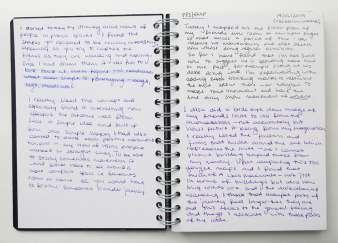
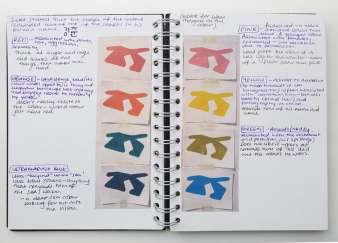
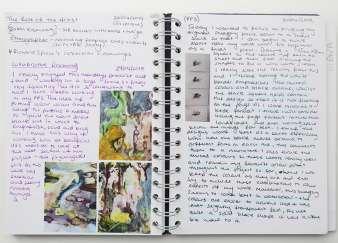
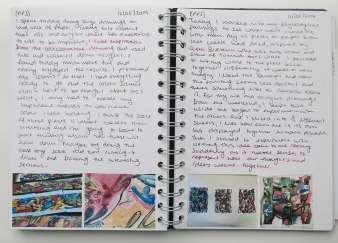
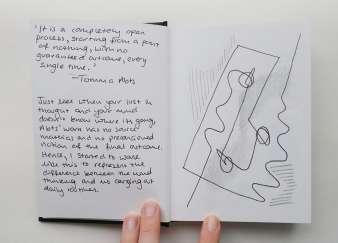
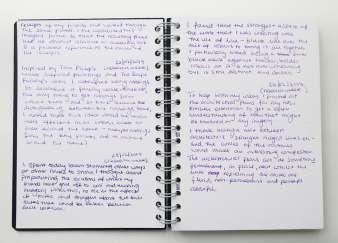
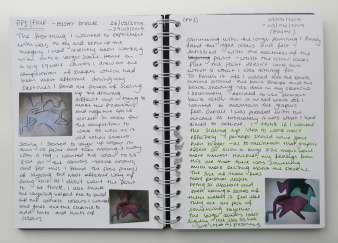
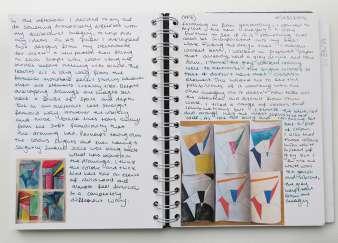
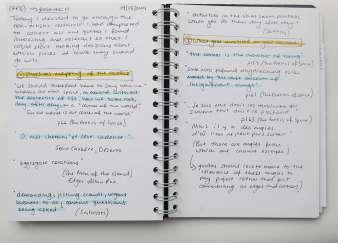
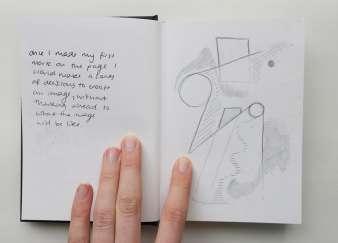
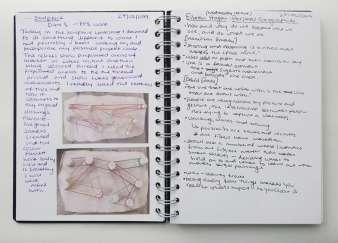
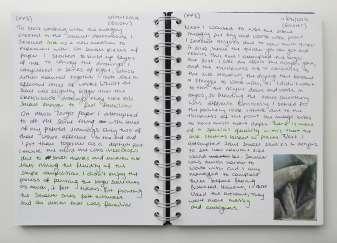
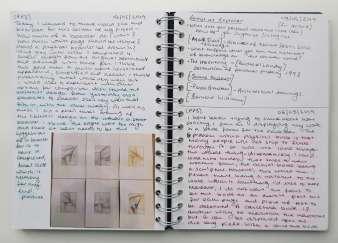
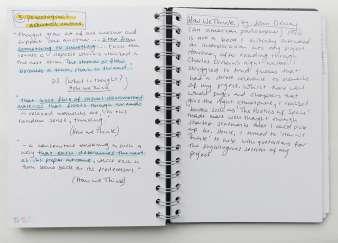
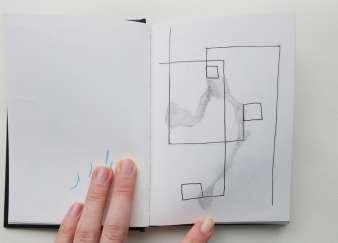
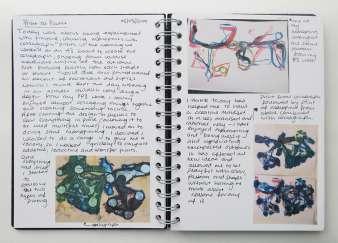
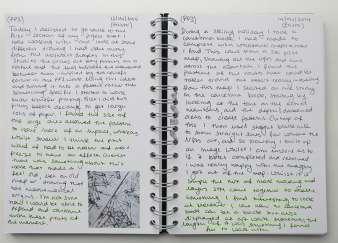
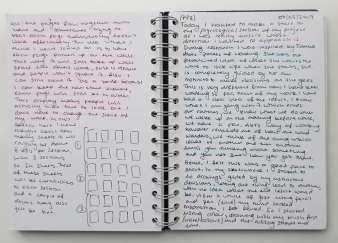
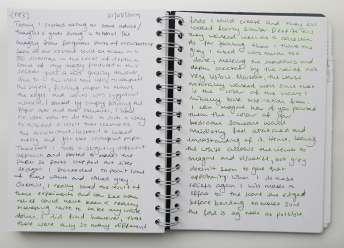
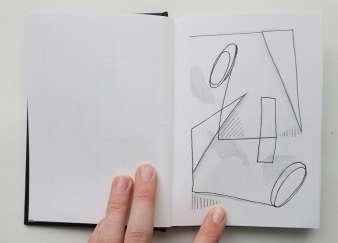
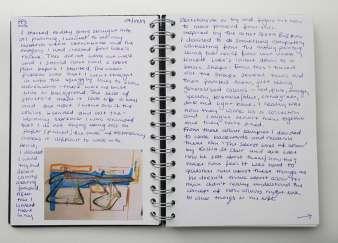
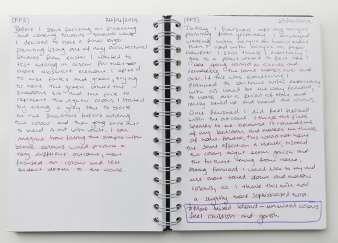
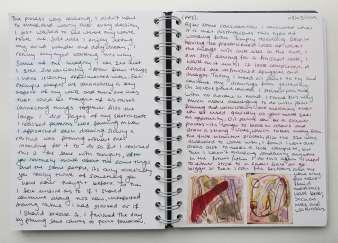
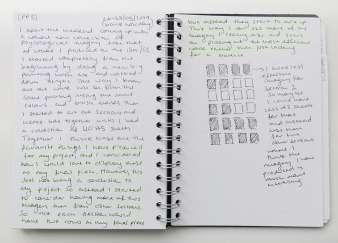
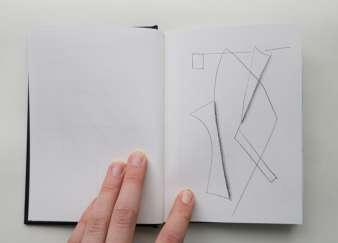
As well as being a starting point for key architectural themes which I have continued to explore, The Royal Drawing School also gave me to opportunity to investigate process, methods and how to document my work. Experience in developing personal projects, from original ideas, experimentation and curating a narrative, through to producing a final outcome, has given me invaluable insight on how to pull a project together.
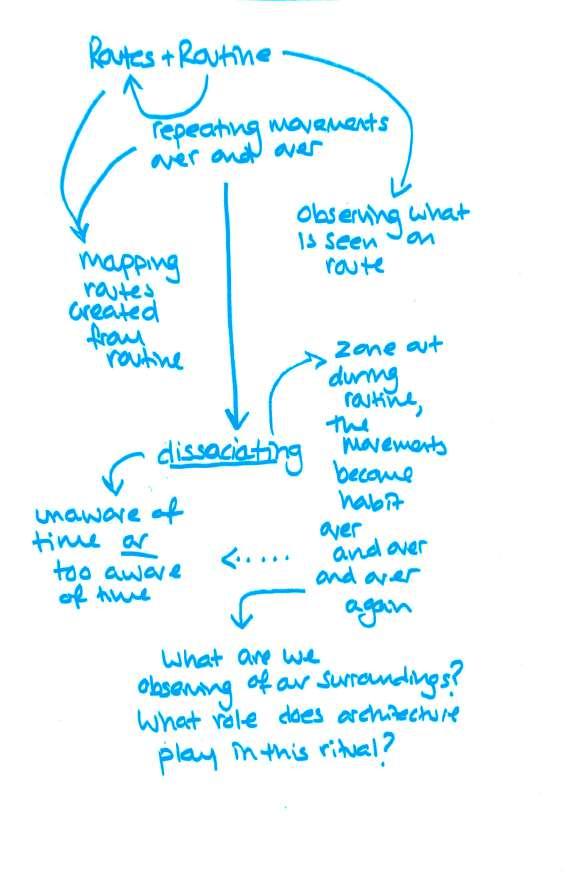
These pages are taken from my Design Journal, written in daily during this project. A Design Journal is kept along side other sketchbooks, and mainly used for written reflection. Whilst I no longer separate written reflection from my main sketchbook so distinctively, the rigorous upkeep of the Design Journal taught me the importance of consistency and depth in documenting my work and process.’
During this project I investigated what routes and routines really mean, and how they feel to perform, in a large variety of mediums from all sorts of perspectives:
5.2
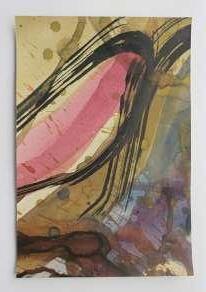
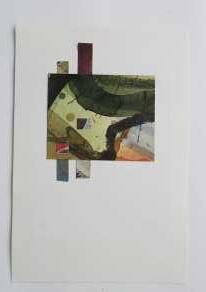
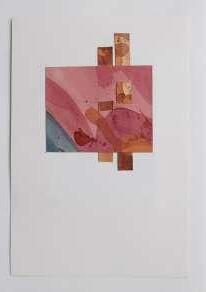
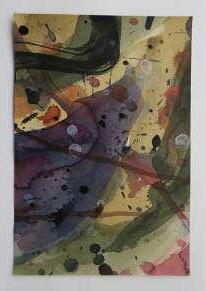
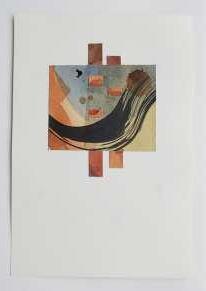
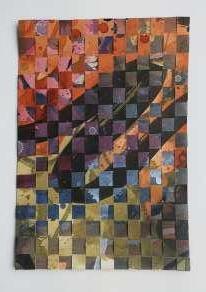
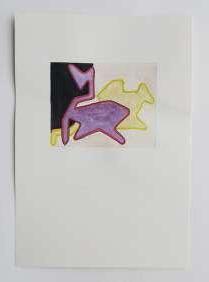
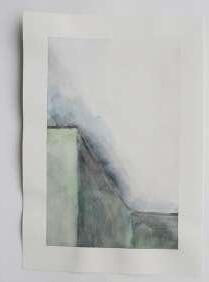
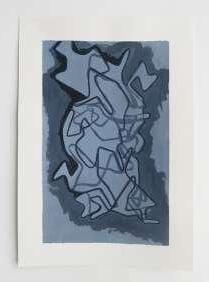
This piece, focused on the disassociating that can often come from repeatedly performing a routine, was created using acrylics and ink on paper. On large stretches of thick printing paper I used brushes to perform movements that feel familiar to me to build up a vast painting. Then, just as I had focused on the familiar corners of my home, abstracting them from the larger image, I cut up this painting to create smaller pieces, taken out of their larger context.
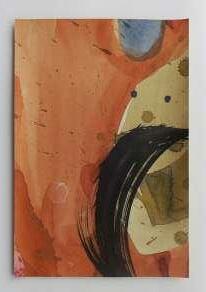
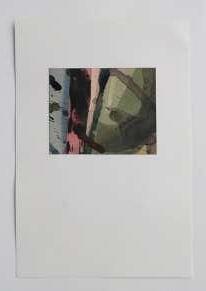
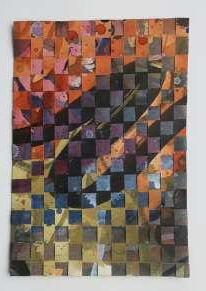
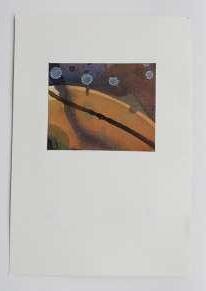
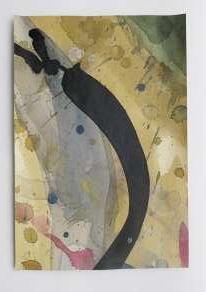
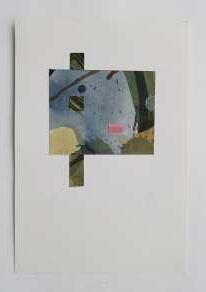
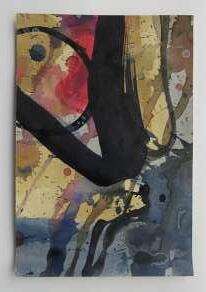
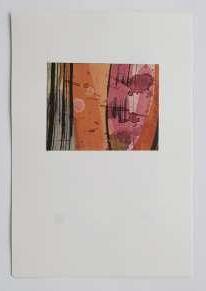
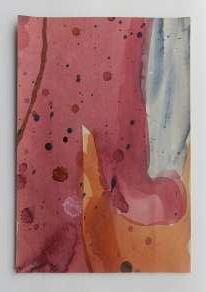
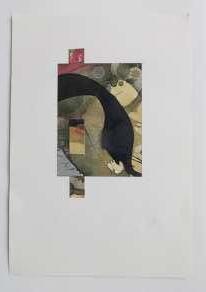
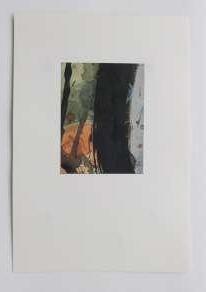
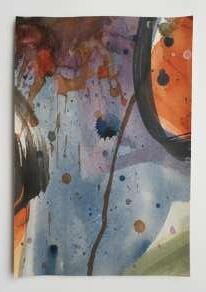
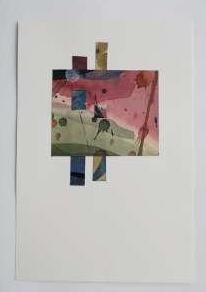
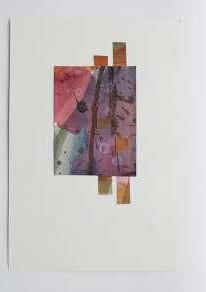
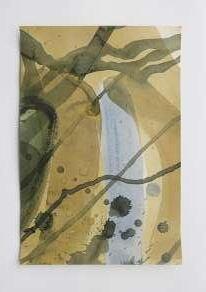
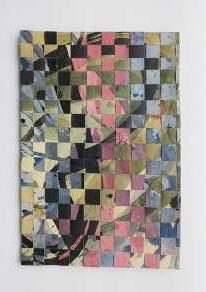
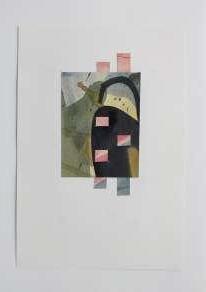
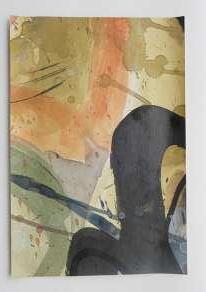
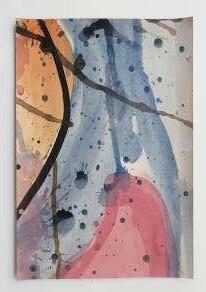
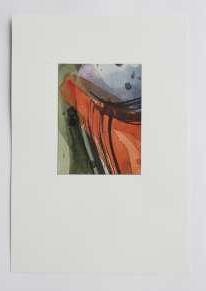
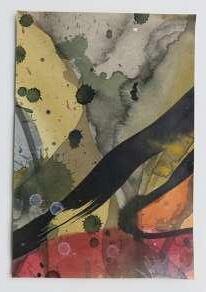
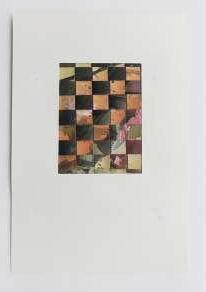
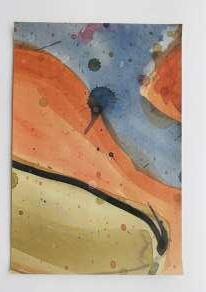
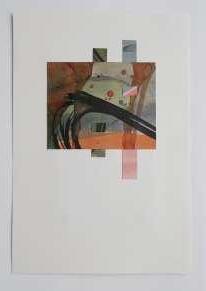
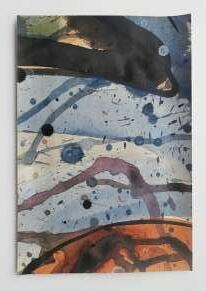
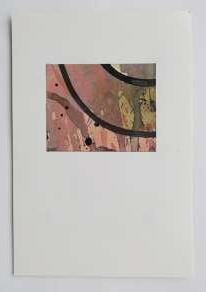
Abstraction 5.3 Dissociations and Routine
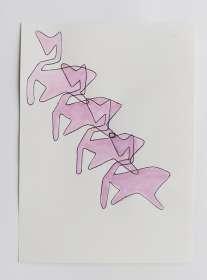
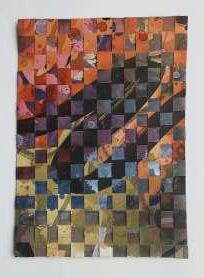
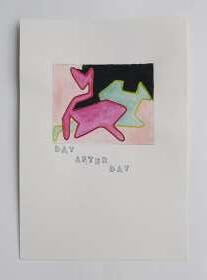
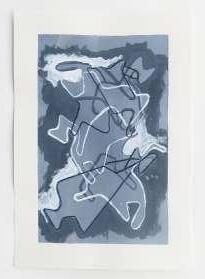
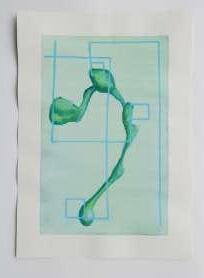
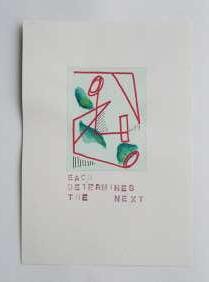
These unusual shapes formed from tracking mine and friends movements around familiar spaces during a ‘daily routine.’
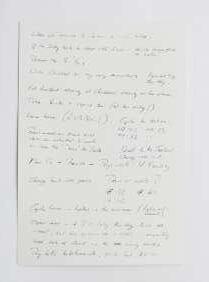
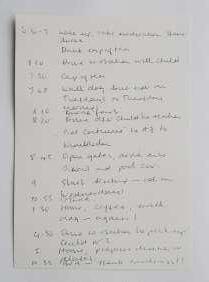
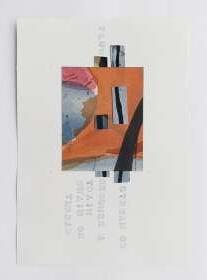
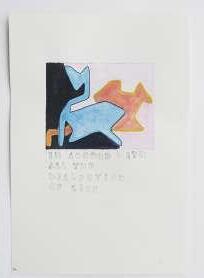
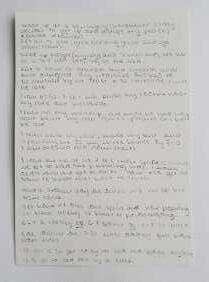
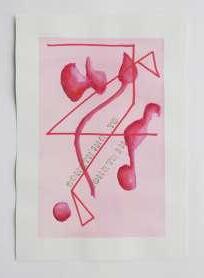
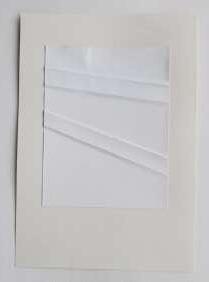
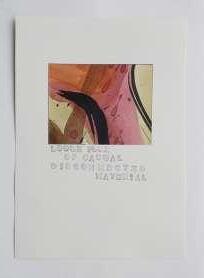
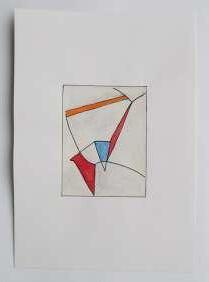
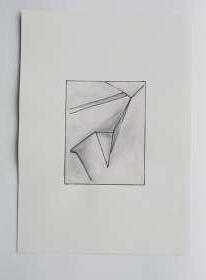
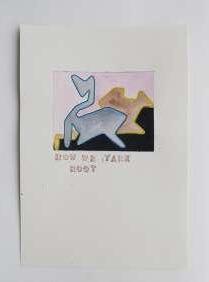
Written out routines from friends, which were used during my research.
Further iterations of the original sketches exploring dissociating during routine.
Continued experimentation using the shapes formed from tracking the physical movements of routines.
Further iterations of the original drawings, abstracting the shapes further to connect with the works based around dissociating.
My final outcome for my Art Foundation was a collection of work, representing each stage of my research and process strung together, mimicking the flow of movements one acts out during their daily routines.
This page shows a snippet of this collection.
Final Piece 5.4 Routes and Routine
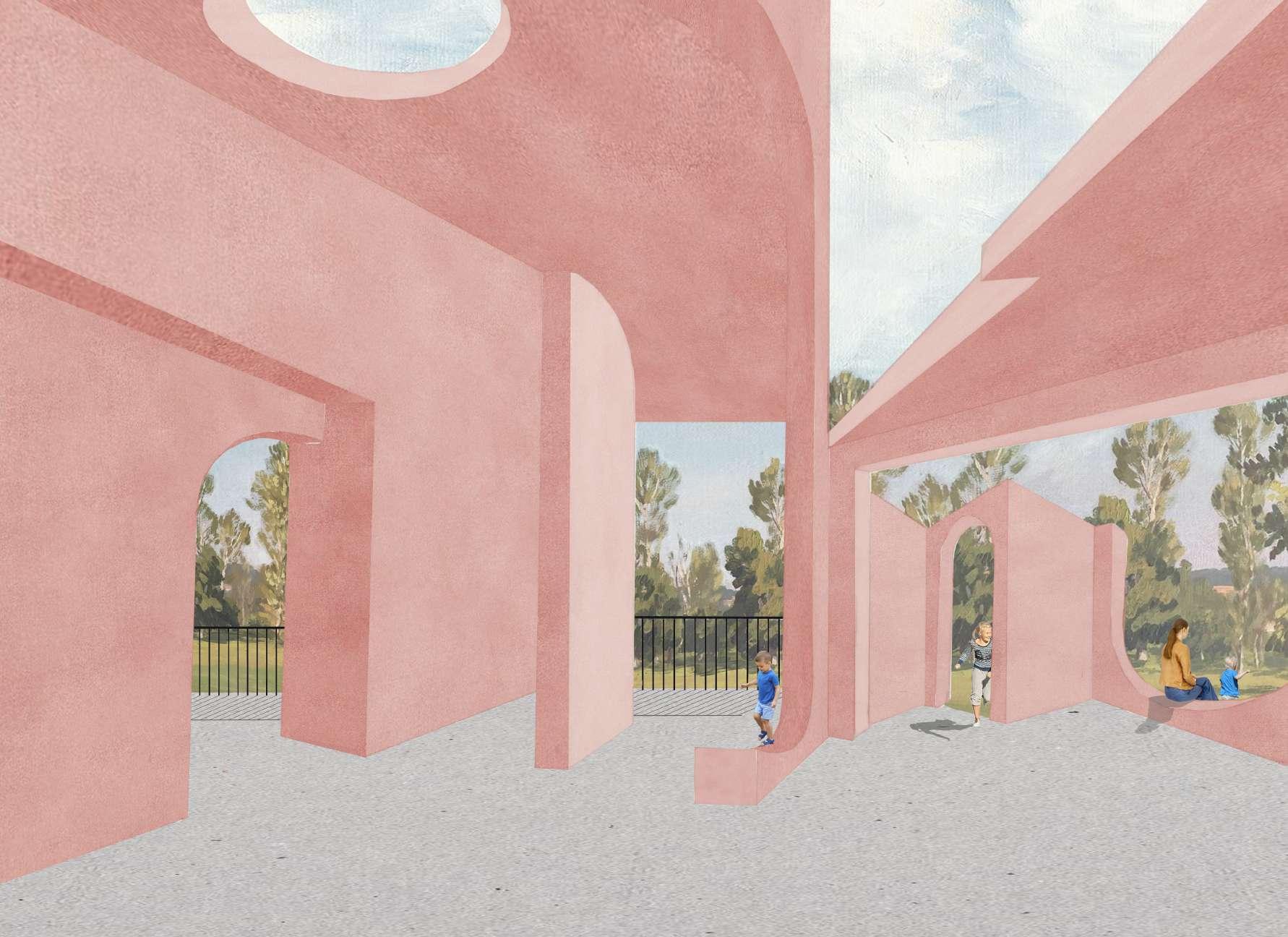
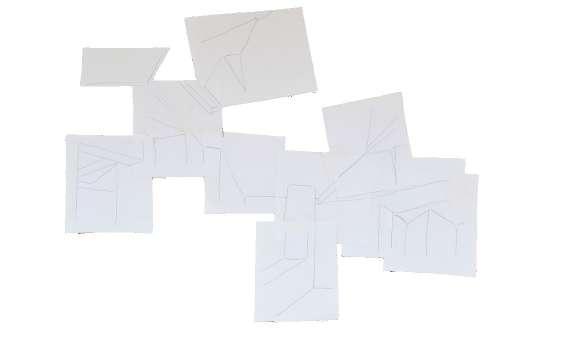
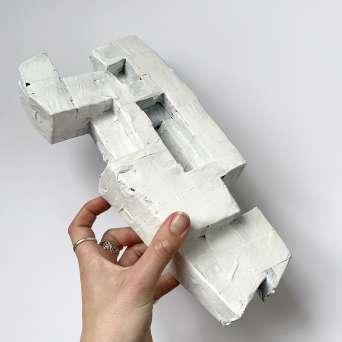
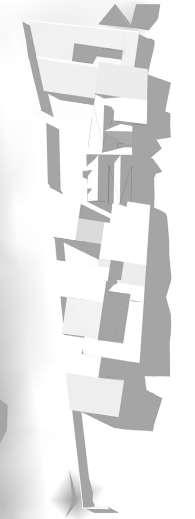
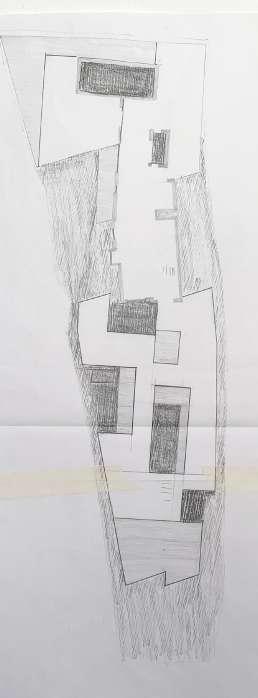
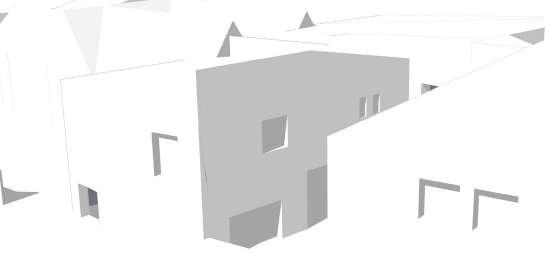
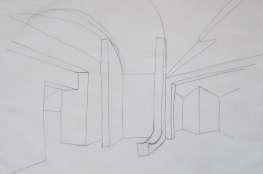
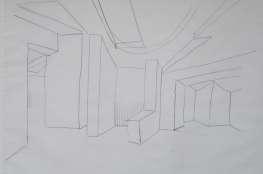
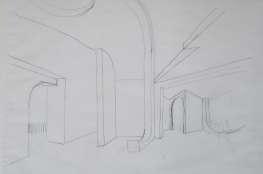
Recently I have began to explore ways of turning this art project into an architectural one, starting with my original drawings. I enjoy the idea of creating a pavilion, turning the personal and homely corners into a public space that might create a feeling of familiarity to everyone.
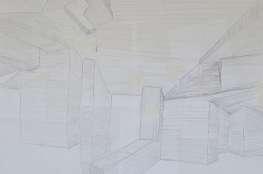
Using my sketches I traced and then collaged together the pieces to create a structure. Next I traced over the drawing several times, altering dimension and perspective along the way for a more realistic pavilion representation. I also introduced curves and arches to soften the environment, before collaging in potential material options in Photoshop.
My aim is to convey how curating unique corners, joins and columns can create a space that is playful, friendly and comfortable for its visitors. I have yet to work in my exploration of dissociating, but whilst this is only a starting point I am intrigued as to how all these idea I have accumulated could come together into one design.
5.5
Art to Architecture
Routes into a Pavilion