All rights reserved. No part of this publication may be reproduced, duplicated, stored in any retrieval system or transmitted in any form by any means without prior written permission of the Publishers.
The next issue of IPI will be published in Spring 2026. ISSN No.International Pharmaceutical Industry ISSN 1755-4578.
The opinions and views expressed by the authors in this journal are not necessarily those of the Editor or the Publisher. Please note that although care is taken in the preparation of this publication, the Editor and the Publisher are not responsible for opinions, views, and inaccuracies in the articles. Great care is taken concerning artwork supplied, but the Publisher cannot be held responsible for any loss or damage incurred. This publication is protected by copyright.
Agentic AI uses autonomous, goal-driven AI agents that apply their own reasoning, offering a step change beyond rule-based automation. For pharma, it promises improved decision-making across data-heavy functions such as pharmacovigilance and regulatory affairs. Jason Bryant of Arisglobal explains the potential benefits that include faster signal detection, pre-emptive safety actions and streamlined regulatory submissions.
REGULATORY
& MARKETPLACE
08 Mastering the New HTAR Environment as an MAH in Europe
The EU Health Technology Assessment Regulation introduces mandatory Joint Clinical Assessments for centrally authorised medicines, shifting HTA processes from voluntary collaboration to coordinated EU-level evaluation. ProPharma’s Katarina Ericson explains that while pricing and reimbursement remain national, MAHs must align evidence generation with JCA timelines and requirements. The new framework increases complexity and time pressure, demanding early planning, cross-functional coordination and integration of HTA considerations into development to meet diverse member-state expectations.
12 The Compass for Innovation: Regulatory Affairs at Ypsomed
The regulatory affairs function guides drug-delivery devices from early innovation to global market access. Embedded across development, regulatory experts provide intelligence, influence standards, anticipate authority expectations, and maintain lifecycle documentation. Supported by modular platforms and a global footprint, Stefanie Stark and Sandra Schaerer analyse how Ypsomed turns regulatory complexity into an enabler of innovation, ensuring safe, timely, and compliant access to self-injection technologies worldwide.
16 How AI is Reshaping Life Sciences Consumer Engagement
Mahesh Wal of Cognizant explains how AI is transforming life sciences consumer engagement, particularly in learning and using wellness and monitoring products. Consumers are more comfortable with AI for product discovery than for purchases, with older adults showing higher adoption in prescription and monitoring contexts. Companies must build trust, ensure data transparency, and leverage AI tools like virtual assistants. Proactive AI strategies will be essential as AI-driven buying and digital health interactions become mainstream within five years.
DRUG DISCOVERY, DEVELOPMENT & DELIVERY
18 Predictions for the Future of Risk-Based Quality Management (RBQM)
Predictions for the Future of Risk-Based Quality Management (RBQM) examines the evolution, benefits, and future of RBQM in clinical trials. The article traces its development from FDA Quality by Design principles to ICH E6(R3) guidance, highlighting the shift from source data verification to centralised statistical monitoring. Ken McFarlane of CluePoints explores how RBQM improves data reliability, reduces monitoring costs, and enhances trial quality.
20 The Necessity of Measuring PTMs for Optimal Drug Development
Post-translational modifications (PTMs) are vital to protein function, therapeutic quality and disease biology, but are historically difficult to measure due to low abundance, labile chemistry and limited analytical tools. MOBILion’s Daniel DeBord, Ashok R.Dongre and Dr. Frederick Strathma explain how new technologies including high-resolution ion mobility, advanced fragmentation methods and AI-driven data analysis now enable far more accurate PTM detection. This improved fidelity strengthens biologics development, de-risks programmes and supports the rise of PTM-based precision biomarkers.
CLINICAL & MEDICAL RESEARCH
24 Beyond the Drug: How Human Factors Shape CVOT Success
ICON’s Dr. Emad Basta and Dr. Jack L. Martin examine how cardiovascular outcomes trials (CVOTs) are vital for assessing drug safety and efficacy, especially for high-risk patients. Success depends not only on the drug but
also on human factors, including patient selection, investigator consistency, endpoint data capture, and retention. Tools like polygenic risk scoring, electronic data capture, wearables, and telehealth can enhance recruitment, adherence, and data quality.
GLP-1 receptor agonists, originally developed for type 2 diabetes and obesity, show wider therapeutic potential due to their systemic metabolic, cardiovascular and anti-inflammatory effects. Mike Cioffi for WCG explains how evidence supports benefits in cardiovascular and kidney disease, MASLD, and possibly neurodegenerative disorders. Early studies also suggest roles in substanceuse disorders and reproductive or inflammatory conditions. Ongoing trials will determine their clinical value beyond established indications.
MANUFACTURING
28 Precision Automation and Process Control for Medical Sensor and Device Manufacturing
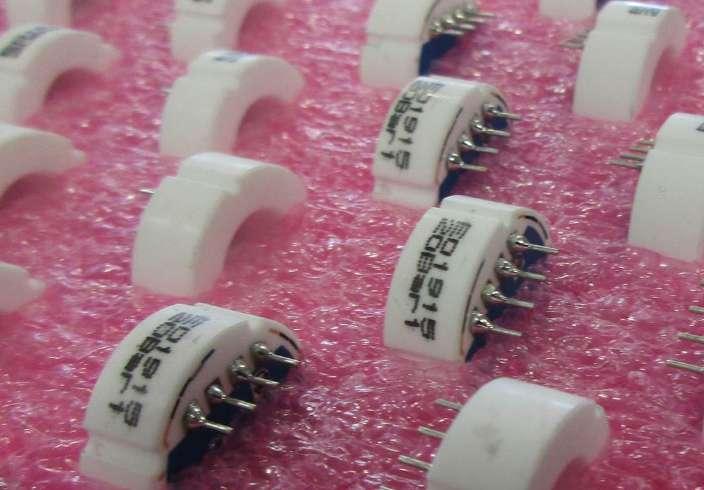
Drawing on expertise from semiconductor manufacturing, Elisa Buso at Sinergo examines how integrated, modular systems enable micrometric accuracy, full traceability and regulatory compliance. By combining micro-assembly, bonding, dispensing and testing, advanced automation ensures safe, reliable and scalable production of critical medical sensors that underpin modern healthcare technologies.
30 Electronic Manufacturing Batch Records and Digitalisation in Biopharmaceutical Manufacturing
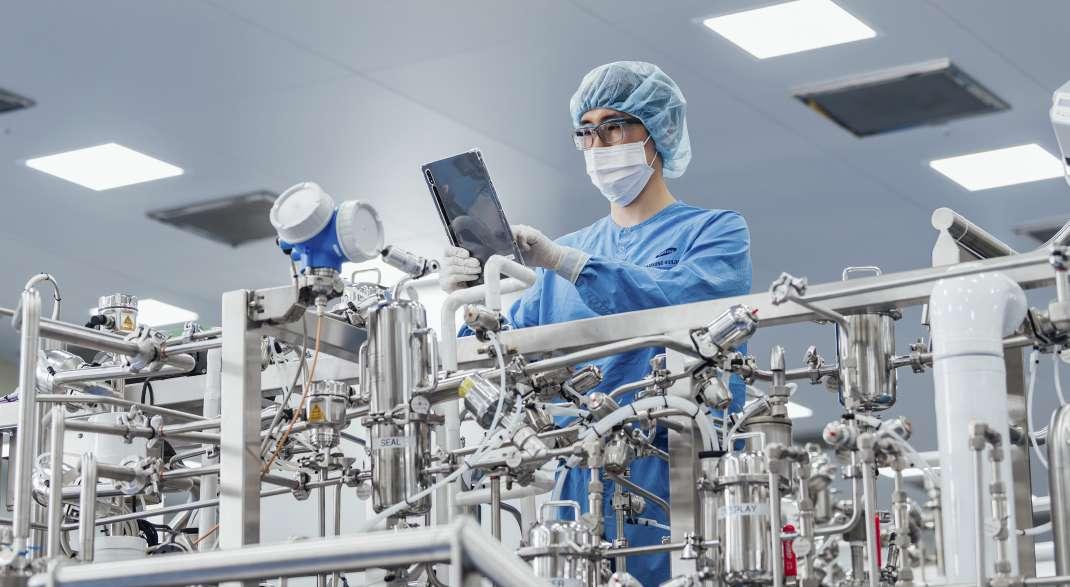
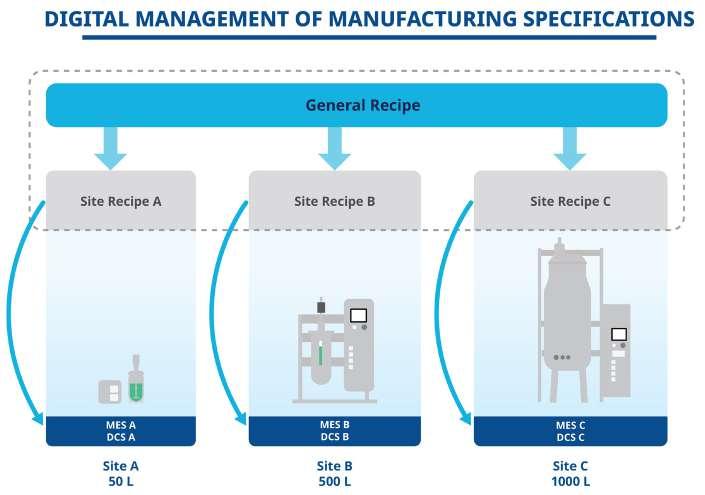
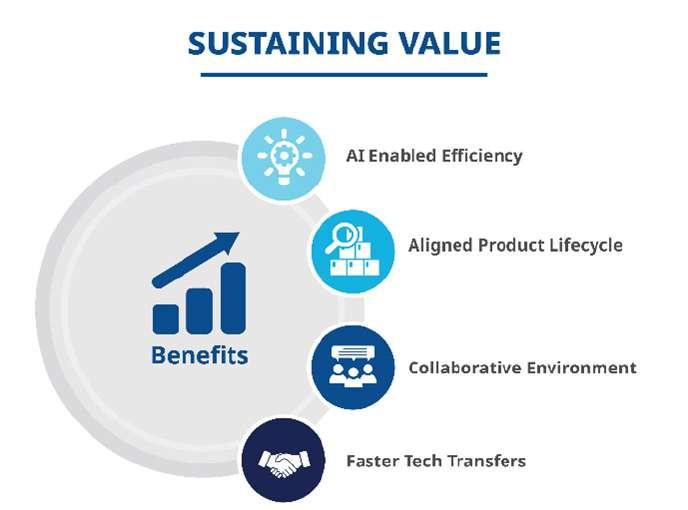
As the biopharmaceutical industry embraces digital transformation, electronic manufacturing batch records (eMBRs) are emerging as a cornerstone of efficient, compliant production. Samsung Biologics’ Bumjoon Cha and Dowan Kim examine how eMBRs replace paper-based systems to enhance data integrity, traceability and real-time oversight. By integrating manufacturing, quality and business data, eMBRs reduce errors, accelerate batch release and establish a foundation for intelligent, data-driven biomanufacturing.
34 Modernising Production Scheduling Using Digital Tools
Emerson’s Bob Lenic examines how pharma is accelerating drug development through digital transformation and automation. Modern software, including electronic lab notebooks (ELN) and process knowledge management (PKM) systems, reduces errors, streamlines technology transfer, and breaks down data silos from early research to commercial manufacturing. AI is emerging to further simplify mapping, recipe scaling, risk assessment, and facility selection.
38 Biotech Outsourcing Strategies: Why Integrated CMC Partnerships Are Key to Accelerating Timelines
Biotech companies face funding pressures, reduced pipelines and tighter timelines, making outsourcing essential. Paul O'Shea of Symeres explains how traditional multi-vendor models create delays and coordination burdens, especially for virtual biotechs. Integrated CMC partnerships streamline development by unifying chemistry, analytics, formulation and regulatory support within one organisation, reducing handoffs and accelerating IND-enabling work.
HEALTH OUTCOMES
43 Enhancing Care Through Early Detection of Low Oxygen Levels
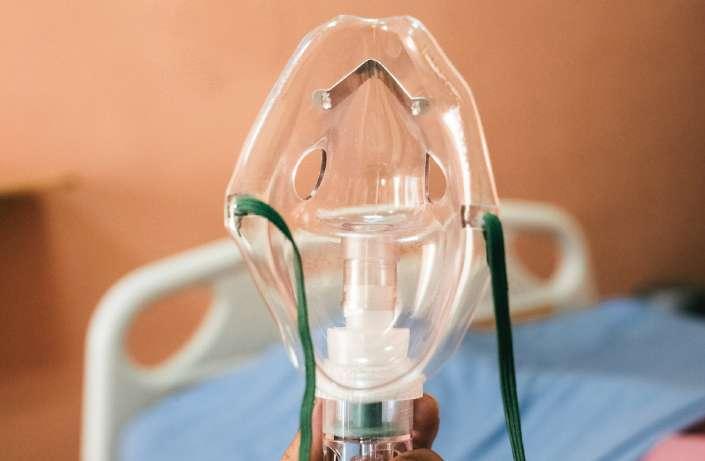
Dr. Bipin Patel of electronRx explores the critical role of monitoring blood oxygen saturation in patients with respiratory conditions such as COPD and ILD. This piece covers home oxygen therapy, its challenges, and current methods for measuring oxygen levels, including pulse oximetry and arterial blood gas analysis. It also examines emerging technologies such as wearable devices, smart clothing, smartphone apps, and smart oxygen concentrators.
48 Direct-to-Patient:
Delivering Clarity, Momentum and Choice on the Path to Therapy
Gifthealth’s Chip Parkinson argues that traditional, fragmented patient-support models slow access, increase drop-off and burden prescribers. Direct-to-patient (DTP) programmes unify access, fulfilment and support into one seamless experience, offering patients clarity and choice while reducing provider workload.
For manufacturers, DTP delivers real-time insight, improved adherence and stronger ROI. When implemented well, it enhances trust, expands access and improves outcomes across the healthcare ecosystem.
TECHNOLOGY
50 How Agile, Data-Driven Optichannel Marketing Can Maximise ROI
PharmaForceIQ’s Saraiyah Hatter explores how optichannel marketing enables pharmaceutical companies to overcome the limitations of traditional omnichannel approaches. By harnessing real-time data, AI and machine learning, optichannel strategies drive optimal channel selection, hyper-personalised engagement and measurable outcomes. The result is greater transparency, improved HCP targeting and significantly higher marketing efficiency, helping brands maximise ROI while reducing wasted spend.
52 The Indisputable Case for AI in Pharmacovigilance as Adverse Event Case Processing Demands Intensify
As adverse event reporting volumes surge, pharmacovigilance teams face mounting pressure to manage cases efficiently while ensuring patient safety. Qinecsa’s Adam Sherlock explains why AI has become essential to processing accuracy, speed and insight generation. By automating case handling and surfacing hidden safety signals, AI enables pharmaceutical companies to meet regulatory demands, control costs and transform PV into a strategic driver of drug development.
54 Catch a Fraudulent Scientist If You Can
Sneddden Campbell’s Ivor Campbell explores the rising threat of sophisticated recruitment scams in life sciences and medical technology. Illustrating how AIgenerated CVs, fake publications, and deepfake interviews could allow unqualified candidates to infiltrate highly specialised roles. This article examines the risks of fraudulent research, paper mills, and automated screening tools, and offers practical strategies for companies to verify credentials, protect patient safety, and safeguard scientific integrity in recruitment.
Xin Weisheng‘s Yuting Shao examines how artificial intelligence is transforming quality control in pharmaceutical manufacturing. The article explores the limitations of manual and traditional automated inspection, the regulatory landscape, and AI capabilities that improve defect detection, reduce waste, and enhance compliance. It also discusses implementation challenges, economic benefits, and future technological developments.
64 Moisture Control in Pharmaceutical Packaging: Comparing Silica Gel, Molecular Sieve, and Equilibrium Technologies
Elisa Le Floch and Valère Logel of Colorcon compares traditional desiccants, such as silica gel and molecular sieve, with emerging equilibrium humidity stabilisers that maintain target relative humidity levels. They explore how equilibrium systems like EQIUS offer precise, adaptive moisture management to safeguard capsules, tablets and inhalation devices. By preventing both moisture ingress and overdrying, these innovations enhance product stability, regulatory compliance and packaging efficiency across global supply chains.
68 Clinical and Commercial Packaging: Delivering the Next Generation of Pharmaceutical Therapies
The pharmaceutical packaging sector is evolving from a logistics function into a strategic, patient-focused discipline. PCI’s Paul Smallman explains how packaging now prioritises agility, late-stage customisation, high-potent containment, patient usability, sustainability, and digital traceability. Integration across clinical and commercial phases, combined with digital tools, AI, and lifecycle thinking, enables faster, safer, and more sustainable delivery.
Unrivaled quality with additional features
Pharmapack | January 21–22, 2026 | Paris Expo | Hall 4, booth 4G36
Gx® Elite Vials
Optimum drug product protection
– Industry-leading strength
– Drug protection in cold storage (-80°C)
– Quality by Design vial for lyophilization
De-risking fill-finish operations
– Smoother handling, fewer line stoppages and interventions
– Quality by Design vial to ensure CCI & excellent capping performance
Optimized total cost of ownership (TCO)
– Reduced cost of non-conformity
– Increase line speed
Available in non-sterile bulk & pre-sterilized RTF packaging formats
Editor's Letter
As we conclude 2025, this edition provides an opportunity to review several key developments affecting pharmaceutical research, regulation and product delivery. The articles included here examine current trends with practical relevance for organisations preparing for the requirements and expectations of the year ahead. Topics range from advances in artificial intelligence and its application across R&D and pharmacovigilance, to evolving regulatory and health technology assessment frameworks in Europe. The issue also explores innovations in drug delivery, packaging and patient monitoring, as well as emerging therapeutic opportunities and strategies for optimising operational efficiency across manufacturing and commercial function.
One piece that stood out in this issue was by Mike Cioffi for WCG. The article provides a thorough overview of how GLP-1 receptor agonists, initially developed for type 2 diabetes and obesity, are now being investigated for a broader spectrum of therapeutic applications. I found it particularly informative because it clearly outlines both the mechanistic rationale and the emerging clinical evidence for these wider uses. Established benefits include cardiovascular and renal protection, supported by large outcome trials, while emerging research suggests potential applications in metabolic liver disease, neurodegenerative disorders and substance-use conditions. The piece distinguishes clearly between well-supported outcomes and exploratory areas, offering a nuanced perspective on the evolving clinical landscape for this drug class and highlighting where further validation is required.
Editorial Advisory Board
The Health Outcomes section features another standout piece by Dr. Bipin Patel of electronRx, which examines the importance of Bakhyt Sarymsakova, Head of Department of International Cooperation, National Research, Center of MCH, Astana, Kazakhstan
Catherine Lund, Vice Chairman, OnQ Consulting
Deborah A. Komlos, Principal STEM Content Analyst, Clarivate
Diana L. Anderson, Ph.D president and CEO of D. Anderson & Company
Franz Buchholzer, Director Regulatory Operations worldwide, PharmaNet development Group
Francis Crawley. Executive Director of the Good Clinical Practice Alliance – Europe (GCPA) and a World Health Organisation (WHO) Expert in ethics
accurate and timely monitoring of blood oxygen saturation in patients with respiratory conditions such as COPD and ILD. This article provides a detailed overview of current clinical practices, including pulse oximetry and arterial blood gas analysis, while acknowledging the practical challenges of home oxygen therapy, such as adherence, side effects, and patient burden. I found the discussion of emerging technologies particularly compelling, with wearable sensors, smart textiles, mobile applications, and intelligent oxygen concentrators offering opportunities for continuous monitoring, early detection of deterioration, and proactive management of acute respiratory events. The piece provides a balanced and practical perspective on how technological advances can improve patient outcomes and support more consistent, personalised care.
I want to also highlight our PharmaPack subsection for this issue which includes a contribution from Colorcon’s Elisa Le Floch and Valère Logel. This piece provides a clear and practical comparison of conventional desiccants with newer equilibrium humidity systems. I found it particularly informative
because it demonstrates how adaptive moisture-management approaches can actively maintain a target relative humidity, avoiding the risks associated with both moisture ingress and overdrying. The article highlights how packaging decisions influence product stability across dosage forms such as capsules, tablets, and dry powder inhalers, while also impacting regulatory compliance and supply chain performance. This piece effectively illustrates the shift in pharmaceutical packaging from passive protection to intelligent environmental management, which is increasingly important as products become more complex and distribution networks more global.
As we move into 2026, these discussions will remain highly relevant. The coming year will require continued attention to regulatory alignment, responsible integration of advanced technologies and sustained commitment to evidence generation and patient safety. I hope the perspectives shared in this edition support informed decision-making and constructive dialogue across the industry.
Alice Phillips, Editorial Manager
Rick Turner, Senior Scientific Director, Quintiles Cardiac Safety Services & Affiliate Clinical Associate Professor, University of Florida College of Pharmacy
Jagdish Unni, Vice President – Beroe Risk and Industry Delivery Lead – Healthcare, Beroe Inc.
Jeffrey W. Sherman, Chief Medical Officer and Senior Vice President, IDM Pharma
Jim James DeSantihas, Chief Executive Officer, PharmaVigilant
Mark Goldberg, Chief Operating Officer, PAREXEL International Corporation
Maha Al-Farhan, Chair of the GCC Chapter of the ACRP
Steve Heath, Head of EMEA – Medidata Solutions, Inc
Patrice Hugo, Chief Scientific Officer, Clearstone Central Laboratories
Heinrich Klech, Professor of Medicine, CEO and Executive Vice President, Vienna School of Clinical Research
Robert Reekie, Snr. Executive Vice President Operations, Europe, Asia-Pacific at PharmaNet Development Group
Stefan Astrom, Founder and CEO of Astrom Research International HB
Machine lubricants for smooth and safe production
Sprays Oils Greases
The production and packaging of pharmaceutical products are subject to strict regulations. We offer a comprehensive lubricant concept with NSF H1 registered specialty products designed precisely for these conditions. With ELKALUB lubricating greases, oils, and sprays, your machines will not only run smoothly but also avoid possible downtime. Additionally, our products protect you from potential product recalls due to contamination. You can count on us.
› maximum safety with NSF H1 registration
Find the suitable product now!
› integrated lubricant concept
› specialty lubricants for all applications
› maximum output through reduced machine downtime
› strong sales and service network worldwide
Agentic AI in Life Sciences R&D: An Explainer
Interest in the next generation of AI is rising in the pharma industry. In this sector-specific guide, ArisGlobal’s Jason Bryant assesses agentic AI’s promise and some of the prerequisites for safe and successful adoption.
What is Agentic AI?
Agentic artificial intelligence (agentic AI) involves the autonomous coordination of goal-driven AI “agents”. It is the most significant leap in AI’s development since the launch of ChatGPT three years ago, because of the technology’s inherent potential to redefine the way organisations operate and the value they deliver.
This is due to agentic AI’s ability to apply its own reasoning – a step change from previous incarnations of AI which involved the automation of predefined processes according to given rules. With agentic AI, there is much greater autonomy in what AI does and how. Prompted with the desired outcome, individual specialist agents each invoke their own intelligence, experience and reasoning to fulfil their part in the most effective way possible.
All of this is co-ordinated by an orchestrator agent. As well as optimising the end-goal delivery, the orchestrator uses the collective insights to propose new ways to add value. In other words, this next phase of AI isn’t just about productivity; it is about informing and enabling new forms of value creation – where autonomous, multi-agent reasoning drives new insight and decisions.
Why is This Significant for Pharma?
The ability to reason, anticipate, generate insight and knowledge and make better decisions is ideal for pharma, as an industry that is data-rich, process-heavy and outcomecritical. Agentic AI is not just about doing the same things more efficiently and more accurately. It can help to challenge current processes and determine what else might be possible; what other opportunities might be leveraged.
So where is agentic AI now in pharma? Pre-agentic AI is already enabling new costefficiency in R&D functions such as regulatory affairs and drug safety/pharmacovigilance. To date, this has tended to be in discrete areas such as marketing authorisation application preparation, product change control/ regulatory impact assessment management,
adverse event case processing, and safety reporting.
Agentic AI’s vision is more ambitious, potentially enabling step changes in the role played and value contributed by Safety, Regulatory and adjacent teams.
Making Pharmacovigilance More Pre-emptive
The use of AI to streamline Medical Dictionary for Regulatory Activities (MedDRA) coding of adverse events offers considerable potential to transform the value of pharmacovigilance.
Already, AI has helped boost efficiency and accuracy around the classification of adverse event data, with the potential to invoke additional reference cross-checks, or expedite next actions. Combining autonomous MedDRA coding with proactive signal triage could help to eliminate manual bottlenecks. If designated agents detect an unusual combination of coded terms, for example, they could raise an automated “probable signal” alert; prepopulate a signal report draft (including proposed case lists, timeline and supporting evidence snippets); and recommend a triage priority for human safety reviewers.
The time to first credible signal would be shortened, and experts freed to focus on ambiguous/novel cases and investigation design. Meanwhile the system could route high-risk clusters to epidemiology/medical affairs automatically and suggest immediate risk-mitigation actions (e.g., targeted communications, batch holds, enhanced monitoring), aiding human decisions.
Shortening Regulatory Cycles
In a regulatory context, opportunities for agentic AI include reinventing the global management of product regulatory compliance. Autonomous, “regulationaware” dossier assembly and submission orchestration is within reach now. It is possible for orchestrated AI agents to continuously ingest clinical data packages, study reports, CMC documents, eTMF pointers and legacy submission artefacts. Agentic systems can also perform automated regulatory gapanalysis versus target-region requirements, draft region-specific CTD/eCTD modules (with citations and traceability to source documents), and orchestrate the technical
packaging (file naming, folder structure, etc). For any ambiguous points, the agentic system could generate a short “decision rationale” and a list of recommended human checks and run a rules/validation pass (file integrity, cross-reference checks, local appendices). This could inform autonomous routing of items to subject experts (e.g., CMC, clinical, labelling) with suggested edits and severity scores – providing human reviewers with a near submission-ready dossier.
Strategically, shorter regulatory cycle times promise to accelerate go/no-go decisions and speed up patient access, while sponsors would be in a position to iterate protocols more swiftly. Meanwhile agents’ gap-analysis outputs could be fed upstream to clinical operations and protocol teams, enabling trials to be designed that need fewer regulatory clarifications further down the line.
What Controls Need to be Put in Place to Ensure Effective and Trusted Deployment?
Agentic AI’s potential reinforces the importance of companies’ underlying data assets – their quality and completeness, as well as how well that data can be combined and leveraged in different contexts. Importantly, this includes consideration of how organisations’ own data agents safely connect into a wider multi-agent fabric outside their walls – both data-to-data and agent-to-agent.
It also challenges “trust” around AI reasoning. Where AI systems are being afforded new autonomy across extended workflows, the risks go well beyond incorrect outputs. They now include potential for unintended data movement, loss of operational control, misaligned decisionmaking and blurred lines of accountability.
Having guardrails to mitigate unintended behaviour is critical. This is sometimes referred to as “bounded autonomy.” At the same time, companies need to avoid being too prescriptive and limiting in their attempts to pin down good governance – because of the need to allow for future scenarios.
Although multi-agent frameworks are emerging to support the creation of AI
Regulatory & Marketplace Talking Point
systems, these do not inherently manage trust, context-sensitive decision making or risk-aware governance. Such provisions need to be both designed in from the start, and able to adapt to evolving needs. That is, governance needs to be viewed as a facilitator as well as a mitigator of risk.
Guiding Principles: How Can Pharma Organisations Maximise the Scope of Agentic AI?
If accounting for all eventualities and risks incurs too much complexity, companies risk undermining any economic benefits from the technology. Taking a “principles-based”
approach, rather than one that is hardwired around specifics, supports process stakeholders in defining scenarios and goals that agentic AI can help solve.
This principles-based approach – as advocated by the Council for International Organizations of Medical Sciences (CIOMS) Working Group XIV on AI in Pharmacovigilance – aims to create a common foundation for regulators, industry and technology providers that can keep pace with the unprecedented rate of technological advancement.1
In practice, organisations may complement such principles with their own systemicthinking or service-design methods – for example, developing journey maps to plot how agentic workflows trigger, interact and evolve. These tools help translate highlevel principles into operational governance models, including the degrees of autonomy afforded to individual agents.
Once fully understood these considerations could be built into adaptable provisions for human involvement, allowing companies to move at their own pace towards trusted use of agentic AI and the fullest associated benefits.
REFERENCES
1. Artificial intelligence in pharmacovigilance, CIOMS Working Group report, Draft, 1 May 2025: https://cioms.ch/wp-content/uploads/2022/05/ CIOMS-WG-XIV_Draft-report-for-PublicConsultation_1May2025.pdf
Jason Bryant is Senior Vice President, Product Management – AI, at ArisGlobal, based in London. A data science actuary, he has built his career in fintech and health-tech, and specialises in AIpowered, data-driven, yet human-centric product innovation. He previously led an AstraZeneca digital incubator and today remains on the board of a health charity, Scleroderma & Raynaud's UK (SRUK), which is dedicated to improving the lives of people affected by those conditions in the UK.
Email: jbryant@arisglobal.com
Linkedin: jabryant Web: www.arisglobal.com
Jason Bryant
Mastering the New HTAR Environment as an MAH in Europe
The European Health Technology Assessment (HTA) landscape has long been characterised by heterogeneity in the clinical evaluation of health technologies after they receive market authorisation. This leads to inconsistency in decision-making which originates from the fact that while the European Commission grants marketing authorisations at the central level with validity across the EU, decisions about pricing, reimbursement, relative clinical effectiveness and national launch are the competency of the individual member states.
While previous initiatives, such as the voluntary joint actions under the European Network for Health Technology Assessment (EuNetHTA), aimed to foster collaboration across member states, they were not developed with the purpose of fully unifying the process. The introduction of the EU HTA Regulation (HTAR) marks a transformative shift, introducing earlier and more coordinated efforts between EU member states in the clinical assessment of an HTA dossier across Europe.
ProPharma recognised this European HTA transformation early. With decades of experience in the HTA field, particularly in the HTA assessments and procedures under the EuNetHTA, the company has developed tools and capabilities that meets the evolving needs of Health Technology Developers (HTDs). These solutions support HTDs in pursuing a Market Authorisation while simultaneously navigating the organisational and competency shifts as required by the new European HTAR.
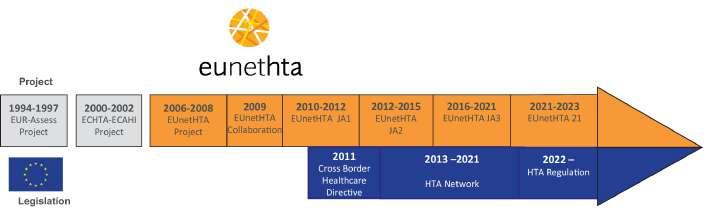
The Rise of Joint Clinical HTA Assessments on a European Level EU cooperation on HTA has a long history, leading to the legislative proposal for the HTAR. This history includes the EUnetHTA Joint Actions and the HTA Network. EUnetHTA Joint Actions were the scientific and technical components of EU cooperation on HTA, funded under the EU Health Programmes. They
began with the development of joint clinical HTA activities in 2010–2012 and, building on these successes, led to increased uptake by national HTA bodies from 2016 onwards. The HTA Network connected national authorities and bodies responsible for HTA and provided strategic guidance and policy orientation for scientific and technical cooperation.1
This evolution of the EU cooperation on HTA has therefore been a gradual and strategic journey, culminating in the adoption of the HTAR. This reflects years of collaborative effort to harmonise HTA practices across member states and improve the efficiency and consistency of clinical evaluations.2
With the adoption of the HTAR (and the associated Implementing EU Regulation 2024/1381, the first legal framework for a unified, EU-centric review process for HTA was established, while leaving the final responsibility for pricing & reimbursement decisions to the individual EU Member States.4 The regulation officially entered into force on January 11, 2022, with full application for new oncology medicines and Advanced Therapy Medicinal Products (ATMPs) going through a centralised European Market Authorisation Approval (MAA), starting January 12, 2025. By 2030, this framework will eventually apply to all new health technologies.5
The HTAR is structured around four key blocks; each designed to streamline and harmonise HTA processes across EU member states:2
1. Joint Clinical Assessment (JCA): Mandatory evaluation of clinical relative effectiveness of new health technologies going through a centralised European MAA;
2. Joint Scientific Consultations (JSCs): Voluntary early scientific advice to HTDs from HTA bodies and EMA ;
3. Horizon scanning: A coordinated system to spot new and upcoming health technologies that may impact European healthcare;
4. Voluntary cooperation: Knowledge exchange between member states on non-clinical and nonmandatory scope, e.g., around economic evaluations and ethical assessments.
From Voluntary to Mandatory: How to Manage HTAR Requirements as an MAH Joint Clinical Assessment is the first step of the HTA process, and involves the analytical task of gathering, assessing
Figure 1: Timeline of the Establishment of the Health Technology Assessment Network in Europe3
and summarising available information on benefits and potential harms of new health technologies. The JCA process runs in parallel with the European Medicines Agency (EMA) evaluation. JCA is restricted to evidence on the comparative clinical effectiveness and safety of new technologies versus clinical care in the EU while economic assessments, pricing, and reimbursement decisions will continue to be conducted at a national level.5
All HTDs will be required to use the JCA framework to provide clinical evidence of new health technologies in Europe. The implementation of the JCA under the EU HTAR therefore marks a pivotal moment in the evolution of EU HTA.
This shift is not merely procedural. It also demands a fundamental reconfiguration of how HTA agencies collaborate, share expertise, and align their organisational structures. Moreover, HTDs must also adapt, building internal competencies that reflect the new regulatory expectations. In addition, the HTAR requires a shift in mindset, where HTA planning becomes an integral part of the health technology development lifecycle. By building HTAR compliance into everyday regulatory processes, HTDs can help ensure smoother market access and better outcomes for patients across Europe.
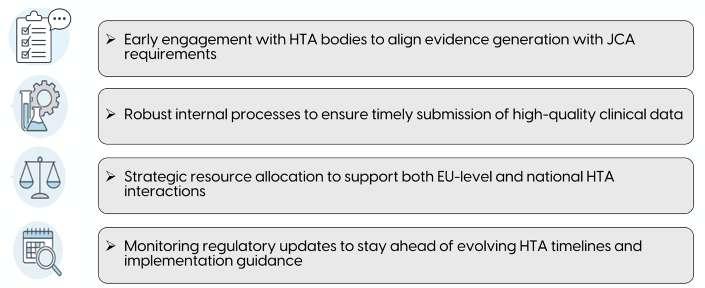
Thus, early engagement, transparent evidence generation, cross-functional coordination, a deep understanding of the procedural and methodological guidelines set forth by the European Commission and strategic alignment with EU-level regulatory requirements will be critical for success in this transformed environment (Figure 2).
Challenges: Complexity and Time Constraints
While the EU HTAR aims to harmonise clinical assessments and improve patient access, it also presents significant operational and strategic challenges, particularly for MAHs and around the complexity and intensity of preparatory activities, such as how to address multiple comparable scenario requests and the tight timelines required to produce meaningful evidence packages to meet the requests of 27 Member States.
One of the primary hurdles is the complexity of the JCA requirements for demonstrating relative effectiveness in evidence synthesis analyses among many comparative scenarios. The requirements for reimbursement still follow national policy and EU Member States have kept their autonomy in the cost-effectiveness decision making. Market Authorisation Holders must navigate a multi-layered HTA environment that demands alignment with both EUlevel relative effectiveness requirements and diverse national HTA expectations on pricing and reimbursement. This includes
managing variations in evidence standards and submission formats. Moreover, the alignment between the MAA procedure at EMA and the relative effectiveness analyses in the JCA is another aspect that needs to be carefully considered.
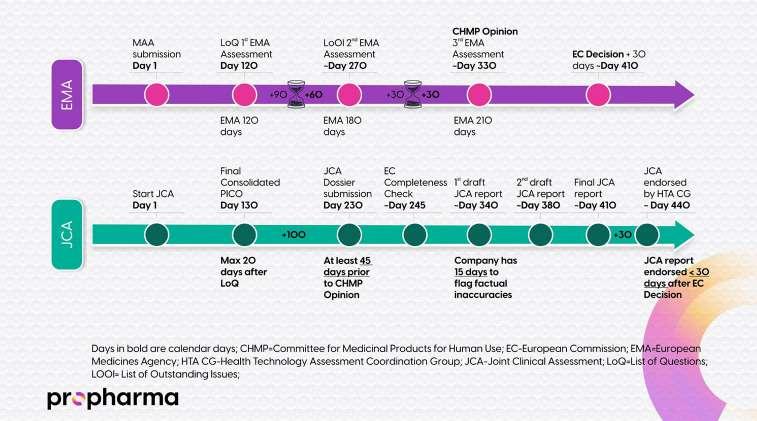
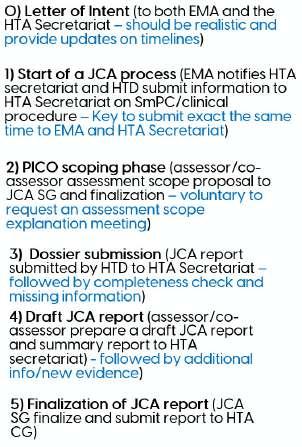
Another hurdle is the issue of time constraints. The JCA process operates on a fixed schedule that overlaps with the regulatory milestones and the MAA procedure at EMA (Figure 3). Health Technology Developers are expected to deliver comprehensive clinical evidence within constrained timeframes, leaving little room for revisions. This pressure can stretch internal teams and requires early planning and quick decisions.
To overcome these challenges, MAHs must invest in integrated regulatory and HTA planning from early development stages, clear internal workflows that align with JCA submission deadlines, and dedicated teams or partners with expertise in EU HTA procedures. As the HTAR framework continues to evolve, staying ahead of its operational demands will be critical for ensuring timely market access and long-term success.
Figure 3: Joint Clinical Assessment Timelines – How the Process Works
Figure 2: Key Priorities to Manage the Health Technology Assessment Regulation as a Market Authorisation Holder
Regulatory & Marketplace
Conclusion: The Future of HTAR
The EU HTAR and its JCA framework represent a transformative step toward a more unified and efficient evaluation process for health technologies across Europe. It aims to stay and be an integrated part of the new European HTA era. Its long-term success will however depend on how effectively the European Commissions own coordination group and assessors, the HTA member states and stakeholders, and MAHs can adapt to its demands.
Looking ahead, three key factors will shape the future of joint HTA assessments: operational alignment, methodological clarity, and stakeholder collaboration.
Operational alignment involves synchronising processes across national HTA bodies and the European-level regulatory MAA and JCA framework. This requires not only harmonised timelines but also a shared understanding of roles and responsibilities. For HTDs, it means integrating HTA planning into regulatory workflows early in the product development cycle to avoid bottlenecks and ensure readiness for JCA milestones.
Methodological clarity is essential to build trust and consistency in the assessment process. Clear guidance on evidence requirements, comparator selection, endpoints, and data interpretation will help reduce ambiguity and foster predictability. For HTDs, it is about understanding the requirements and competence needed for the JCA, where continuous refinement of methodologies will develop as the JCA framework evolves.
Stakeholder collaboration makes the process runs smoother. Effective communication and cooperation between EMA, the European Commission, HTA bodies, and clinical experts will be vital to ensure that the JCA analyses are both robust and reflect the required comparative analyses requested. For HTDs, transparent dialogue and shared learning will help bridge gaps between EU-level assessments and national decision-making processes.
With consistent engagement and refinement, the JCA process has the potential to become a cornerstone of European market access strategy.
In conclusion, for HTDs the implementation of the HTAR has created both challenges and opportunities. Those who invest early in HTA readiness, build cross-functional capabilities, and engage proactively with EUlevel processes will be better positioned to
navigate the evolving landscape. Ultimately, the HTAR framework aims to deliver faster, more equitable access to innovation for patients, an ambition that will require ongoing commitment and cooperation across Europe.
REFERENCE
1. European Commission. Behind the HTA Regulation; [cited 2025 Oct 27]. Available from: https://health.ec.europa.eu/health-technologyassessment/behind-hta-regulation_en
2. European Commission. Health technology assessment: overview; [cited 2025 Oct 30]. Available from: https://health.ec.europa.eu/ health-technology-assessment/overview_en
3. Ruether A, Imaz-Iglesia I, Bélorgey C, Lo Scalzo A, Garrett Z, Guardian M. European collaboration on health technology assessment: looking backward and forward. International Journal of Technology Assessment in Health Care. 2022;38(1):e34. doi:10.1017/S026646232200006X
4. European Commission. Implementing Regulation (EU) 2024/1381 on joint clinical assessment of medicinal products for human use; [cited 2025 Oct 30]. Available from: https://health.ec.europa. eu/publications/implementing-regulation-eu20241381-joint-clinical-assessment-medicinalproducts-human-use_en
5. European Commission. Joint clinical assessments; [cited 2025 Oct 30]. Available from: https:// health.ec.europa.eu/health-technology-
Katarina Ericson is Associate Director of Pricing & Reimbursement at ProPharma, specialising in market analysis, HTA submissions, and strategic engagement with European health authorities. With over 15 years of experience in the pharmaceutical industry, she brings deep expertise and insight to her role. Prior to joining ProPharma, Katarina served as an HTA assessor at a national HTA agency, equipping her with a strong market access perspective and a nuanced understanding of payer expectations across Europe.
Email: katarina.ericson@propharmagroup.com
Katarina Ericson
Over 40 years of expertise dedicated to making selfcare simpler and easier.
More than 70 combination products in 15 therapeutic areas, covering both originators and biosimilars.
Improving the quality of life of over 8 million people around the globe. Over 130 large, medium and small biopharma and biotech customers worldwide.
Scalable business models for clinical trials and full-scale production.
100% electricity from renewable sources since 2021.
For more information visit www.ypsomed.com or scan the QR code
The Compass for Innovation: Regulatory Affairs at Ypsomed
Pick up an Ypsomed injection pen or autoinjector and the first things you notice are likely the technology, design, or ease of use. These are the tangible outcomes of Ypsomed’s purpose: making self-care simpler and easier.
What is less apparent, but equally essential, is the framework that allows such innovations to become reality. Every new idea must navigate a complex landscape of global regulatory requirements before it can safely reach patients. As such, Regulatory Affairs plays an indispensable role in enabling and supporting innovation...
It is the part of drug delivery device development that rarely makes headlines. Yet it ensures promising concepts don’t remain sketches but develop into trusted solutions that meet the highest standards of safety and performance.
“If innovation is the visible face of device delivery development, regulatory is the compass that keeps it on course.”
In this article, we will highlight how regulatory strategy enables ideas to become solutions, supports development through the product lifecycle, and helps ensure that patients worldwide obtain safe and timely access.
Ypsomed’s Core Values and Their Regulatory Relevance
In today’s drug delivery environment, pace and complexity are increasing. The growth of innovative biologics, fast-emerging biosimilars, and rapid penetration of GLP-1 agonists into new indications are just a few examples of how therapy areas, molecules, and patient needs are all evolving.
There is a rising demand for devices that enable outpatient and, in particular, home care. This is partly driven by more engaged patients who expect user-friendly, sometimes connected solutions and a seamless experience with their medication.
Simultaneously, regulatory priorities are evolving in step with geopolitical shifts,
creating a growing trend toward mandatory localisation, more rigorous documentation, and enhanced supply chain visibility across different markets.
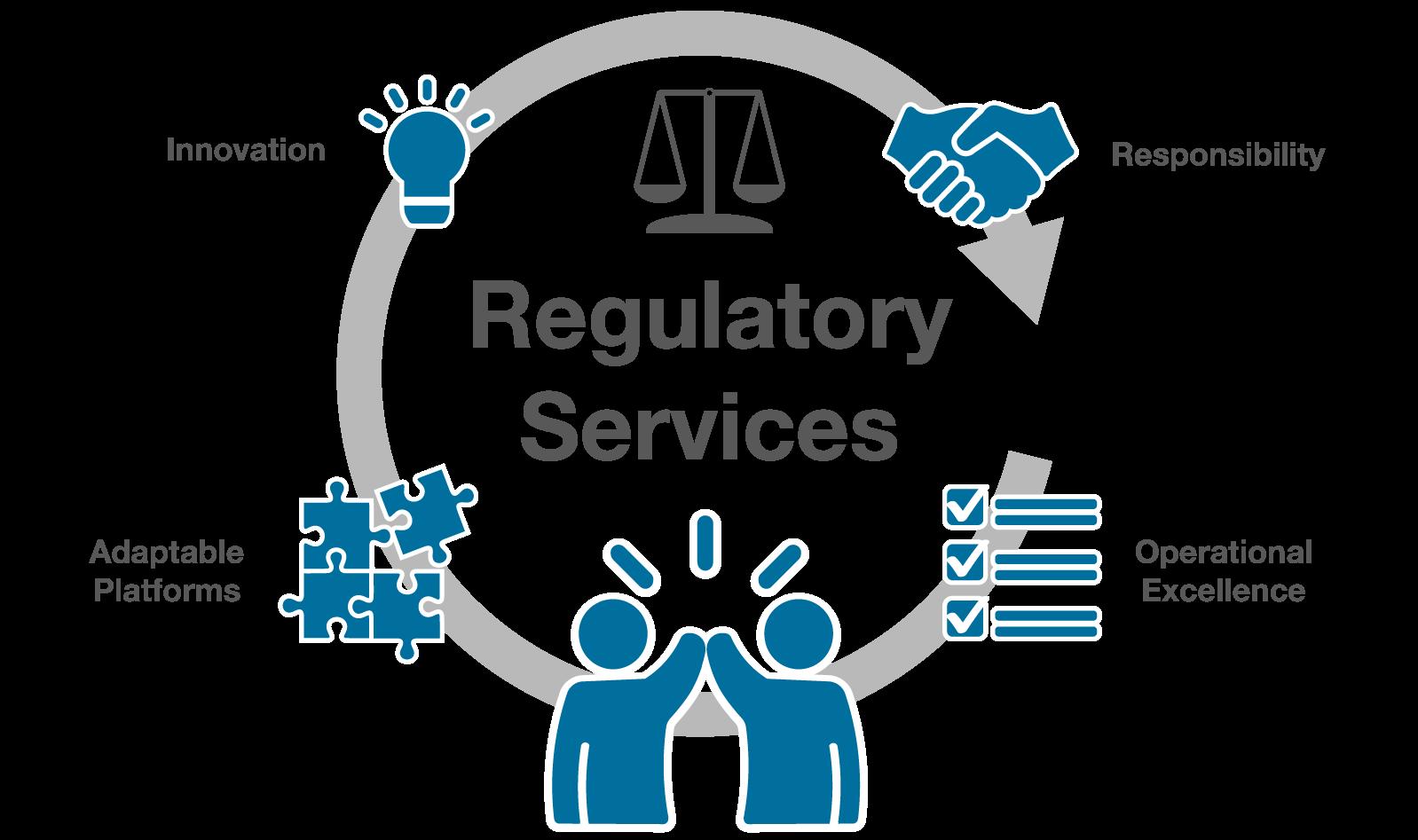
In this rapidly evolving environment, Ypsomed’s four strategic pillars serve as guiding principles: a commitment to innovation, standardised yet highly adaptable device platforms, operational excellence, and a deep sense of responsibility. Over the past decades, these values have enabled Ypsomed to establish a mature and proactive approach to regulatory partnership. Rather than simply reacting to new health authority requirements or waiting for the new guidelines to emerge, Ypsomed integrates regulatory expertise as one of several guiding factors throughout development: from innovation to early
platform design and through the product lifecycle. This philosophy ensures that innovation is consistently aligned with both regulatory expectations and the evolving needs of patients and pharma partners.
Usually, innovation often starts with a new idea. At Ypsomed, we consider regulatory feasibility early on, alongside user needs and technical design, asking: “Can this idea survive the scrutiny of global regulators?”
Platforms Supported by Regulatory Insight
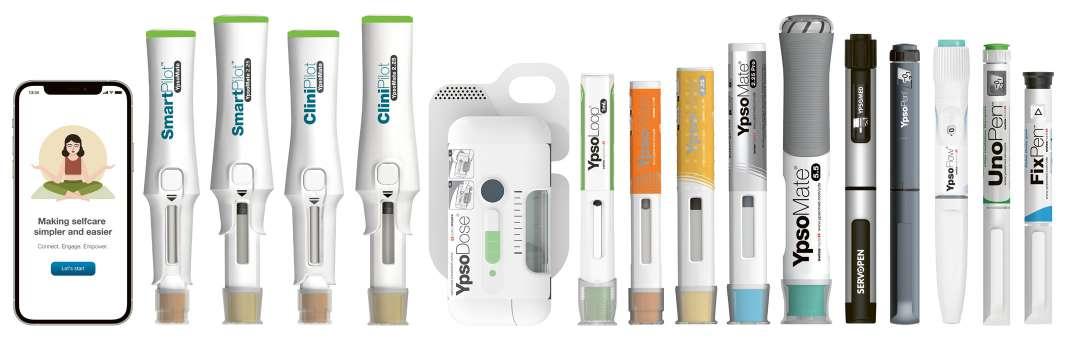
Our platform portfolio – ranging from injection pens to autoinjectors and patch injectors – embodies both technical innovation and regulatory strength, enabling pharma partners to advance new therapies with greater speed and reduced risk.
Figure 1: Ypsomed’s core values and their regulatory relevance
Figure 2: Ypsomed’s comprehensive portfolio including pens, autoinjectors, patch injectors, and digital health
To stay ahead in a rapidly evolving healthcare environment, Ypsomed invests dedicated resources in regulatory intelligence. This “regulatory radar” enables us to continuously monitor global frameworks, anticipate upcoming changes, and assess their impact on our product portfolio.
To remain aligned with evolving regulatory expectations, we follow a structured, crossfunctional process focused on the following practices:
• Proactive engagement – International regulatory trends are continuously monitored, with contributions made to public consultations on draft laws and standards when opportunities arise.
• Cross-industry insights – Beyond medical devices, regulations in related sectors such as pharmaceuticals and chemicals are observed to identify relevant best practices.
• Early requirement analysis – Our teams provide timely insights into new and emerging regulations, ensuring that potential impacts are considered early in product development.
• Continuous adaptation of processes –Our internal procedures are regularly updated to reflect the latest guidelines and regulatory requirements.
By doing so, we ensure our solutions remain compliant with the expectations of health authorities worldwide.
Regulatory & Marketplace
A key strength of Ypsomed’s strategy is the active participation of subject matter experts in international standardisation committees and industry associations. This involvement allows us not only to contribute our expertise – such as in the enhancement of the ISO 11608 series for needle-based injection systems –but also to anticipate emerging priorities like user-centric design and sustainability well before they become formal requirements.
For instance, when health authorities began placing greater emphasis on human factors data, Ypsomed responded proactively. Our Regulatory Affairs and Usability Engineering teams co-developed study protocols that directly addressed both FDA and EMA expectations.
This ability to adapt our platforms in real time demonstrates how regulatory intelligence supports compliance while fostering innovation and market readiness.
Innovation Behind Technology: Platforms That Evolve
At Ypsomed, innovation is not just about developing new devices or technologies. It is defined by how drug delivery solutions integrate with evolving therapies, regulatory frameworks, and the reality of real-world applications.
The shift from hospital-led to homeuse self-injection illustrates this perfectly. Patients now expect devices that are simple, easy to use, reliable, and increasingly connected – a demand that is reshaping both technical and regulatory pathways.
Ypsomed’s innovation strategy is closely tied to its standardised, configurable platform technologies for injection pens, autoinjectors, and patch injectors. Each new project builds on a foundation of proven expertise, transferring learnings and regulatory insights from previous projects. This platform approach ensures that when therapeutic requirement changes – such as higher-viscosity or larger-volume injectables – devices can be adapted without unnecessary compliance or development risk. Platform modularity, supported by regulatory insight, is engineered from the outset with flexibility in mind, making subsequent adaptation and scaling far more straightforward.
The Power of Platform Modularity
Ypsomed’s modular platform approach further accelerates development. As platform components are already characterised and validated in manufacturing, new projects can focus on therapy-specific adaptations rather than re-proving fundamentals.
This combination of proven platforms and robust technical documentation enables Regulatory Affairs, together with the project team and quality colleagues, to support or manage multiple submissions for drug-device combination products and medical devices in parallel. Our platform documentation is maintained as “living regulatory files”, continuously updated with authority feedback and systematic voice-ofcustomer input.
Overall, Ypsomed’s innovation process combines collaboration, multidisciplinary expertise, and transparency. With regulatory professionals embedded from the earliest concept stage, new developments are derisked, regulatory strategies are strengthened, and submissions worldwide become more predictable and timely.
From Innovation and Development to Global Regulatory Readiness
Ypsomed manages the transition from innovation to product development with precision, guided by its certified quality management system and global regulatory frameworks. Aside from Regulatory Affairs embedded across the organisation, several functions contribute to a compliant and efficient pathway from concept to market:
• R&D and Engineering – align device concepts with regulatory pathways from the earliest stages.
• Human Factors & Usability – design and conduct formative and summative
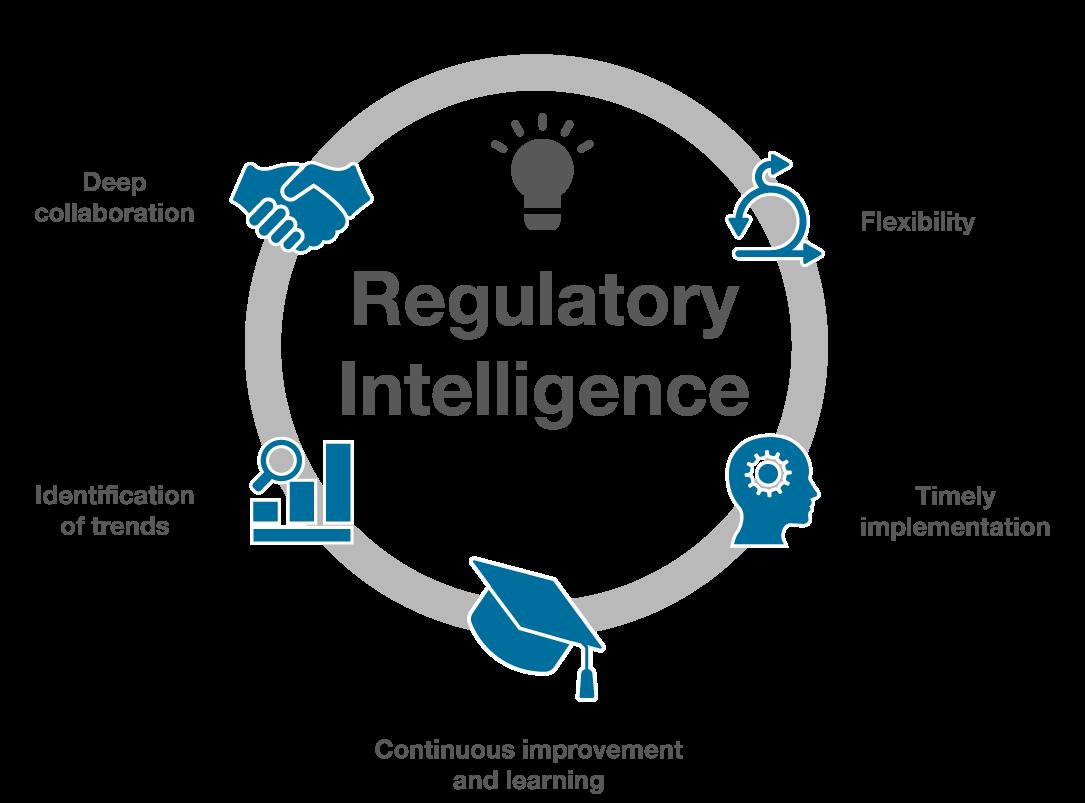
Figure 3: Regulatory intelligence as a differentiator
Regulatory & Marketplace
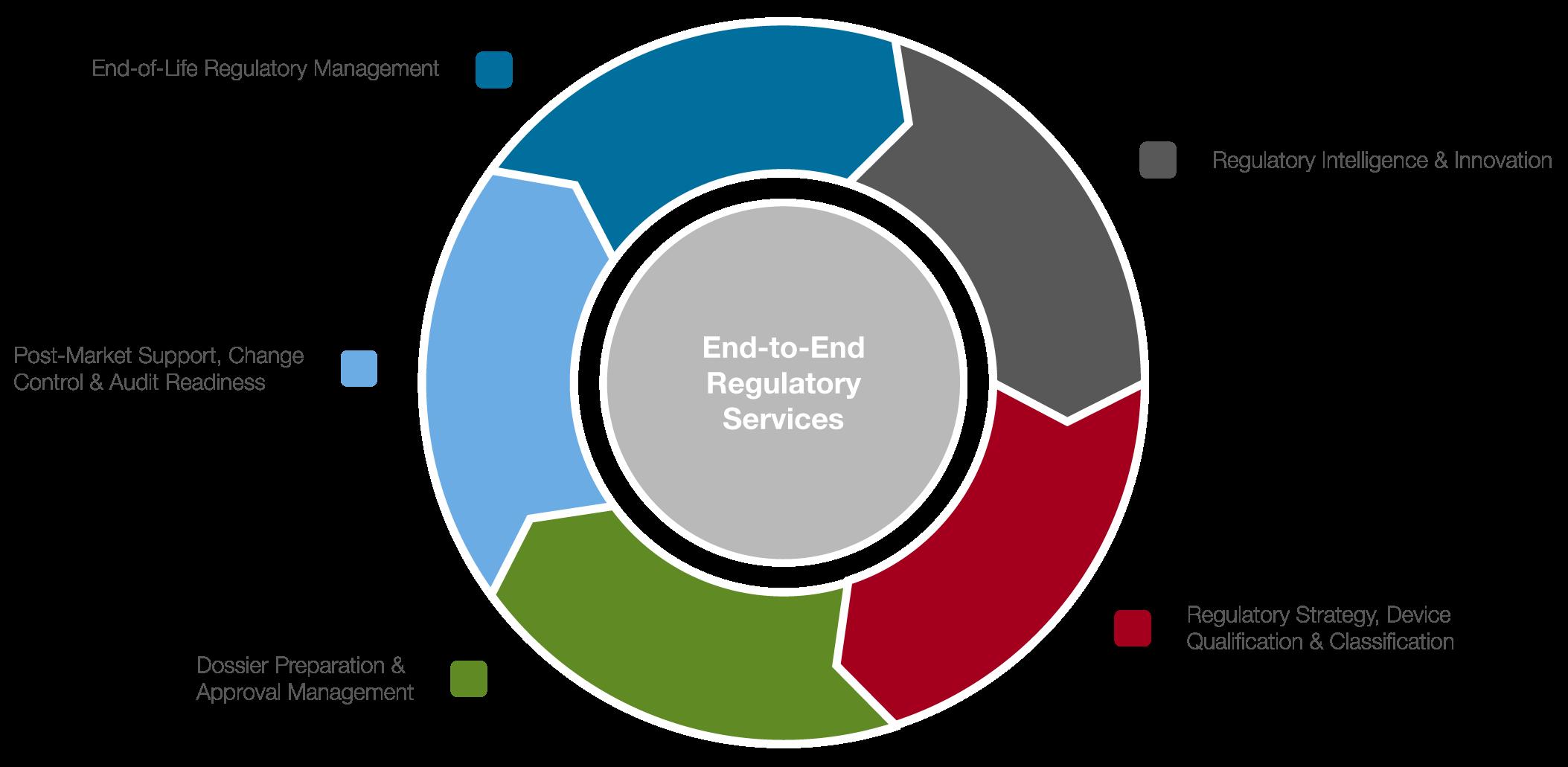
Figure 4: From innovation to end-of-life: regulatory
studies that meet the expectations of regulatory authorities.
• Risk Management – define and integrate risk mitigation measures into documentation and processes from the very beginning.
• Manufacturing and Supply Chain –anticipate requirements for scale-up, localisation, and traceability.
• Marketing and Communications – align labelling, claims, and global launch strategies.
• Business Development – translate regulatory insights into value propositions, partner strategies, and market-entry opportunities.
Throughout the development process, comprehensive documentation is prepared to ensure that all safety and performance requirements are consistently fulfilled. These records provide clear traceability to supporting test data and risk analyses, while also taking into account regional regulatory expectations.
Anticipating Authority Expectations
With decades of experience across drug–device combination products and medical devices, Ypsomed applies deep regulatory expertise to anticipate authority expectations, identify trends, and resolve contradictions before they impact partner projects. In this way, Ypsomed ensures that development is not only innovative and efficient, but also submissionready and highly standardised – enabling timely approvals and reliable market access.
Lifecycle Confidence Through Regulatory Continuity
Regulatory responsibilities do not end with approval; they extend throughout the entire product lifecycle. Ypsomed’s lifecycle management is driven by robust and agile change-control processes, rigorous updates and surveillance programs, and a
commitment to continuous improvement. By taking responsibility for ongoing file maintenance, implementing technical updates in line with evolving requirements, and managing interactions with health authorities, Ypsomed reduces the regulatory workload for its partners and helps ensure smooth, compliant market continuity.
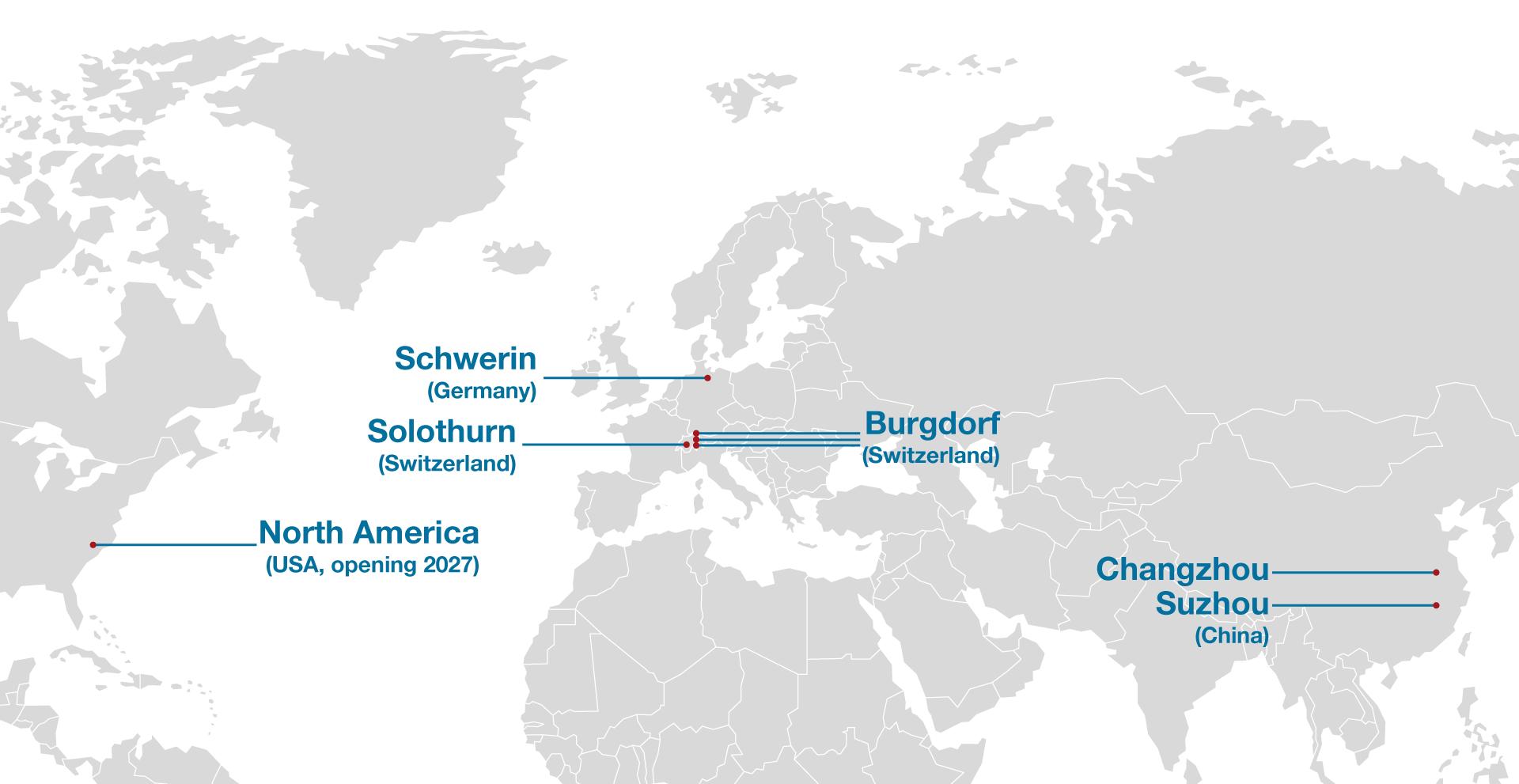
One of Ypsomed’s strengths is the ability to coordinate multi-regional launches – parallel or sequenced – in the US, EU, China, India, Japan, and other markets. Local regulatory teams, complemented by manufacturing and supply chain hubs (such as the company’s strategic presence in China), ensure regionspecific requirements are met and local market expectations addressed.
To further strengthen this global footprint, Ypsomed is also preparing for a physical presence in the US. This step carries strategic importance by:
• placing us closer to customers,
• enabling faster response to market expectations,
• and mitigating the impact of regional factors such as pricing pressures and tax frameworks.
Together with our European and Asian sites, a US hub will complete Ypsomed’s global network, ensuring agile, compliant, and cost-efficient access to all major healthcare markets.
Embedded Evolving Requirements
Ypsomed seamlessly embeds changes in regulations and requirements into its platform portfolio – from revisions of technical standards to growing sustainability demands. In parallel, a continuous stream of global submissions is supported by an ongoing and structured dialogue with health authorities, enabling the company to remain aligned with current expectations and to anticipate forthcoming regulatory developments. authorities, enabling the company to remain aligned with current expectations and to anticipate forthcoming regulatory developments.
Managing End-of-Life Responsibility
The end of a product’s lifecycle is not just discontinuation. Regulatory compliance and partner obligations must remain aligned until final withdrawal. Ypsomed’s regulatory affairs ensure that documentation, labelling, and authority requirements are maintained, providing predictability and transparency. In
leadership at every step
Figure 5: Ypsomed’s global footprint
this way, Ypsomed’s regulatory involvement spans the entire journey of a product – from innovation and development, through global submissions and market access, to end-of-life – ensuring consistent regulatory excellence at every stage.
What Sets Ypsomed Apart Ypsomed’s strengths in regulatory expertise stem not from a single process or capability, but from a unique combination of enduring factors:
• Deep collaboration with pharma partners.
• High submission volumes support, giving nuanced insight into how authority trends are enforced in practice.
• Timely implementation of new requirements.
• Organisational mindset of agility, continuous improvement and learning
This readiness – built on core values of innovation, platform flexibility, operational
Regulatory & Marketplace
rigor, and a genuine sense of responsibility – allows Ypsomed to anticipate the needs of both regulatory authorities and partners, providing a foundation for long-term trust and value.
Turning Complexity into Opportunity
In a world where drug delivery technology, regulatory expectations, and patient needs are all in continuous motion, the true measure of success is not simply compliance. It requires anticipation, adaptation, and leadership. For Ypsomed, this means embedding regulatory excellence at every stage: from the very first brainstorming of a new idea, through project development, market launch, to end-of-life.
With its regulatory compass, Ypsomed turns complexity into opportunity. With decades of expertise, trusted services, and a platform-based approach, we steer through complexity to ensure products are market-ready, compliant, and aligned with future trends on the horizon. That’s the hidden engine at work. And now you know the secret:
“By embedding regulatory excellence into every stage, Ypsomed supports improved patient outcomes and delivers long-term value for partners.”
Stefanie Stark is Manager of Regulatory Affairs for the Product Area Pen and Autoinjectors at Ypsomed AG. Since joining the company in 2021, she has led a team of regulatory professionals responsible for guiding drug–device combination products and medical devices from early innovation through regulatory strategy, global submissions, and life-cycle management in close collaboration with pharmaceutical partners. With more than 16 years of experience in regulatory affairs, she has held senior roles focused on international registrations as well as project and portfolio management. Stefanie holds a Diploma in Business Administration, is a certified medical documentalist and a trained nurse.
Email: stefanie.stark@ypsomed.com
Sandra Schaerer-Lickova is Regulatory Affairs Manager at Ypsomed, where she supports strategic regulatory projects for pen injectors and drug–device combination products. She started her regulatory career in the pharmaceutical sector, preparing CTDs and managing medicinal product submissions, before expanding into medical technology. Her expertise spans MDR CE marking, Article 117 assessments, and FDA CFR regulations for medical devices and combination products, alongside registrations in global markets including the US, China, Korea, Brazil, and Russia. With a background in chemistry and bioprocess engineering, she now focuses on lifecycle management, technical documentation, and guiding cross-functional teams to ensure regulatory compliance and successful market access.
Email: sandra.schaerer@ypsomed.com
Stefanie Stark
Sandra Schaerer
How AI is Reshaping Life Sciences Consumer Engagement
Artificial intelligence (AI) is transforming how consumers interact with brands across every industry – including life sciences. While sectors like retail and entertainment are already using AI to personalise engagement and optimise the customer journey, life sciences companies are now discovering significant potential in doing the same.
According to Cognizant’s New Minds, New Markets report, AI-driven buying, where AI agents search, recommend and purchase products without the consumer, will account for 55% of all purchases across industries, equating to £690 billion in the UK alone by 2030. But when it comes to life sciences and wellness companies who sell to consumers, the path is more nuanced due to regulatory complexities and varying trust levels. However, for the companies which can navigate this journey the opportunities are huge.
Meet the New AI Consumer
The consumer journey can be broken down into learn, buy, and use phases with people’s comfort of using AI fluctuating across them. To help understand this further Cognizant developed the AI Inclination Index (AII) which is calculated from our New Minds, New Markets survey data and examines comfort level within the industry, consumers attitude toward trying the latest technology, and how easily they can use AI tools to learn about products and services. This found customers are significantly happier to use AI to help sift through products and make a recommendation (AII 87) than manage the buying process itself (AII 50). For life sciences companies this means they need a precise and nuanced AI strategy for consumer engagement which captures the greatest areas of opportunity while avoiding low-value pursuits.
This strategy will also vary depending on what product category the company operates in. For example, prescription drugs and condition diagnosis are highly regulated, whereas at-home health monitoring and wellness products are much more retaillike.
Within the prescription drugs market, consumer interest in AI-supported product discovery sank to the lowest level of all four product categories. This dynamic is reflected both within consumers and pharmaceutical companies themselves. For instance, people are reluctant to rely on AI vs. speaking to a medical professional when it comes to selecting the right prescribed medication. Meanwhile, businesses face regulatory barriers when it comes to sharing data the AI would need to be effective.
Meanwhile, consumers’ perception of AI is more positive when it comes to learning about wellness products, where consumer choice takes primacy over practitioner advice. In fact, it is the one product category where the total AII score exceeds the global average. In this area consumers are swamped with multiple near identical options, so finding the best product for their needs can quickly result in decision fatigue. They are all too eager for a tool that will sift through online advertisements, ingredient information and reviews to discover what will really whiten their teeth, calm their stomach, or clear their congestion.
Consumers are also more comfortable with AI being injected into health monitoring devices. Here, AI can use the individual’s health data to automatically schedule appointments and provide personalised wellness recommendations. For instance, blood pressure monitors are highly dependent on correct positioning, timing, and other factors. AI could guide users with a range of customised languages and engagement styles to ensure a higher use rate and accurate readings.
Across all product categories though the purchase phase sees the most hesitation to use AI. Scores in all three areas of the AII are much lower than in the learn phase, particularly the technology comfort component, which drops 97% (or 19 points) between the phases. This indicates an historic inability or unwillingness to use digital technologies such as smartphone apps to buy a range of medical products.
Industry comfort is also lower across the board, demonstrating a particular squeamishness about using AI to purchase
life sciences products and services. As one consumer argued, “Your health data is quite private, so I’m not sure how much I want AI to know about it.”
Older Generations Are Leading the AI Charge in Life Science
Surprisingly, older people are more inclined than younger consumers to see the value in using AI to learn about and use life sciences products and services. While people 55+ are usually more resistant to using new technologies, these older age groups often have more experience with life sciences products and, accordingly, a greater desire to reduce the complexities involved with selecting and using them.
This is most evident in the prescription medications and health monitoring markets, with the AII score for consumers aged 55+ exceeding the youngest cohort (18–24) by more than 20 points. The reason is clear, older consumers are more likely to be taking a prescription drug and are so aware of the challenges around things like organising repeat prescriptions, tracking dosage and so on. In fact, according to the NHS less than 20% of consumers between the ages of 16 and 24 take a prescription drug, compared with over 60% of those aged between 55 and 64.
In health monitoring, while younger consumers are more likely to own wearable devices, solutions such as personal alarms and telecare monitoring systems are more prevalent among older individuals. As such, older consumers are more apt to have weathered the challenges of finding the best solution for their needs.
The only product area that deviates from this trend is condition diagnosis. Here, 35to 44-year-olds are the most inclined to use AI-powered product discovery. This aligns with the age when many consumers first start engaging with screening and diagnosis services. For example, diabetes screening in the US is recommended for people turning 35, while in the UK, annual health checks to screen out common health issues such as diabetes and heart disease begin at 40.
Finally, the one area consumers aged 25–54 lead the market in AI adoption is the buy
Regulatory & Marketplace
phase, scoring 12 points higher than the 45–54 age group. This generation has grown up in a digital world and is more comfortable and trusting of technological innovations, which explains their broader willingness to embed AI into the buying process for products and services.
Intelligent Use Cases Win Over Cautious Consumers
Consumers’ inclination to use AI shows a slight uptick in the use phase, especially in the wellness and monitoring product categories, where AII scores are nearly equal to or surpass the global average. From the buying phase to the use phase, technology comfort scores in wellness increase from 11 to 14 (a 24% jump), while in monitoring, industry comfort spikes from 11 to 17 (a 43% increase). The biggest reason for this upswing is the wide range of ways in which AI can support consumers as they interact with life sciences products and services.
Consumers, especially older demographics, recognise the value of AI-driven assistance –from reordering or amending prescriptions, to handling routing maintenance of their monitoring device. For example, the inclusion of virtual assistants and conversational AI interfaces within these tools can help users operate the devices more effectively.
What Should Companies Do?
Consumer use of AI is growing fast and, with it, the emergence of consumer AI agents. These AI agents will act like a personal digital concierge, orchestrating complex tasks across the purchase journey. While consumer AI uptake may be somewhat slower in life sciences, leaders have less than five years to navigate this change.
To prepare for the AI-driven consumer era ahead, life sciences businesses will need to rethink how they operate across these five areas of consumer engagement. Building trust with the consumer is the most important thing businesses should focus on. Life sciences businesses need to be transparent about how consumer data, including any interaction with a virtual assistant, will be used and protected, with the option to delete data upon request. Organisations can also build trust by imbuing AI interactions with as much of a human sensibility as possible. When implementing a virtual assistant or virtual nurse, for example, it is essential to work with the most cognitively sophisticated technologies available to avoid roboticsounding interaction.
It is also vital life sciences businesses are visible to consumer AI agents. However,
they are often unable to promote their products directly due to logistical and regulatory challenges. To overcome this, organisations should ensure research and clinical data is available to online community groups and forums. This will make the information accessible to consumers and their bots, who often turn to these groups for information on specific diseases.
It Is Time to Become AI-Ready Consumers of life sciences products and services have plenty of reason to use AIdriven tools. Whether it’s choosing from the clutter of wellness products on store shelves, navigating the often-byzantine process of refilling a prescription drug or figuring out how to properly use a new monitoring device or diagnosis testing kit.
It is clear the AI-driven buying process has arrived, and even in highly regulated industries like life sciences companies need to understand it is changing how consumers search for, buy and manage products. If they want to maintain their connection to their consumers, businesses need to take a proactive approach to engaging with the new AI-driven buying process now.
Mahesh Wale, Business Unit Head of Life Sciences and Consumer Goods
UK&I, at Cognizant, Mahesh lead the strategy, growth, and delivery of digital transformation across the UK and Ireland. With over 24 years of experience at Cognizant, he has successfully managed and delivered large-scale and complex solutions for clients in various industries.
Mahesh Wale
Predictions for the Future of Risk-Based Quality Management (RBQM) Drug Discovery, Development &
Regulatory changes, including the launch of ICH E6(R3) and Good Clinical Practice (GCP) updates, have highlighted the value of, and need for, risk-based quality management (RBQM) approaches. With benefits including higher quality in clinical trial implementation and lower monitoring costs, the average proportion of clinical trial implementing RBQM is expected to increase to around 80% by 2027.1
So, how has RBQM evolved, what benefits does it offer and what does the future hold?
The History of RBQM
RBQM has been around for more than a decade. Its conceptual foundation was laid by the FDA in 2004 when it set out its Quality by Design (QbD) principles in drug development. Regulators began encouraging RBQM as a specific approach in 2011 and it was more firmly entrenched in guidance in 2016 with the publication of ICH E6 (R2).
Earlier this year ICH E6 (R3) provided greater clarity on proactively designing quality into clinical trials, identifying critical-to-quality issues and adopting riskproportionate approaches. It also shifted the focus from data integrity to data reliability. Further refinements from regulators are expected in ICH E8 (R1).
This regulatory support, combined with a growing evidence base, is helping to drive a shift within the industry and wider adoption of RBQM approaches.
The Principles
There is no one-size-fits-all approach to RBQM but it does have two main principles –1) setting clear organisation goals to drive improved quality oversight and 2) ensuring proportionality, effectiveness of actions and mitigations align to the risk profile of the study.
If we consider RBQM throughout the study lifecycle, the start of improving quality begins with a protocol which aims to drive quality outcomes. But as we all know, no protocol can completely eliminate risk or quality concerns
for patients. We must accompany improved protocol design with proper risk planning and mitigation to further enhance the quality of the trial.
Different organisations will be at different levels of maturity with initial risk assessment. Research published by the Tufts Center for the Study of Drug Development earlier this year mapped levels of RBQM maturity by company size. It found larger companies were likely to be more mature in their adoption of RBQM.2 Whatever the level of maturity, the goal should remain a tireless push to become more proactive with the monitoring of efficacy and safety data. As we move from the start of the study into execution, the two main principles should continue to remain in view as we start the site monitoring activity.
Moving Away from Source Data Verification
Analysis published in 2014 found just over 1% of EDC data was impacted by 100% source data verification (SDV).3 All reviews resulted in 3.7% of data being corrected or impacted. This meant a huge investment for what appears to be a very modest return on investment (ROI) in terms of corrected data. It also raised the question of whether traditional methods were finding the errors that matter.
Experienced site monitors would argue that the more effective actions driving quality data entry are attributed to better site training on the protocol, assisting sites to understand CRF requirements, providing guidance on query resolutions, and spending more time reviewing source data to look for missing data, adverse events and concomitant medications.
SDV was a necessary step when most studies were using paper CRFs, as transcription errors were prevalent in this paradigm. But the technology landscape has evolved drastically, with a large majority of studies using electronic data capture (EDC). The more eSource and electronic health record (EHR) integration that occurs, the more focus can be paid to reviewing the source content for such missing data elements. This provides the entire clinical trial team with more time to focus on data oversight and review practices which yield higher quality.
Growing Evidence for an Updated Clinical Operating Model
There is a growing body of evidence that RBQM based quality review, with central statistical monitoring (CSM) as an added component, works effectively to identify systemic issues.
Examples where CSM has been proven to yield results, include:
• Identifying a site where recorded patient weights were obviously very different and suspiciously lacking in variability compared to other sites.
• A statistical test caught the mean temperature of patients in one country was in a distinctly, but very slightly lower, range than the average in all other countries. The root cause was found to be a problem with the thermometers shipped to that country.
In both these examples, traditional, manually intensive reviews are highly unlikely to have identified the issues.
The value of centralised approaches was further demonstrated using data from a large Japanese multicenter trial in advanced gastric cancer. A blinded team was asked to use CSM software to detect intentionally contaminated data points within the dataset. They found the approach could detect atypical data in a multicenter trial with a specificity better than 93%.4 Because it eliminated the need for time-consuming SDV, unless triggered by an atypical data alert, the approach freed up resources to be diverted into more critical tasks.
If we look at improved quality in the aggregate, analysis of 1,111 sites in 159 clinical trials found statistical data monitoring (SDM) quality metrics showed improvement in 83% of the sites across therapeutic areas and study phases.5 In contrast, only 56% of sites showed improvement in two historical studies that did not use SDM during study conduct.
A previous similar analysis on nine common key risk indicator (KRI) metrics found similar results, with improvement more
Regulatory & Marketplace Drug Discovery, Development & Delivery
than 80% of the time.6 There was also a 73% improvement in the underlying metric value towards the expected value. So, for both KRIs and SDM, we have really strong evidence of improved quality.
Predictions for the Future
As we continue to face ever-increasing regulatory scrutiny, increasing trial complexity, and expanding data volumes, the need for an updated operating model is paramount. The technological capabilities exist to dig into data with greater depth and clarity. The goal is to simplify the process, drive enriched analysis, and provide clearer line of site to effective action and mitigation. Tools like machine learning (ML), deep learning (DL) and advanced analytics will help us to elevate data analysis, automating the aggregation, review and analysis of clinical and operational data to deliver fully transparent and traceable insights. Much like RBQM, the use of technological advances has been backed by regulators. Draft guidance released by the FDA earlier this year said the use of AI and ML could “significantly enhance” data integration efforts.7
As we incorporate new methods, the goals of each organisation need to be clearly stated
to get all required stakeholders aligned to how those goals will be achieved. There is no automatic solve for evolving to this new operating model, but the results are achievable with the right starting principles.
RBQM as an Added Value Proposition
Effective RBQM is now much more than just a “nice-to-have” in trial delivery. It’s a proven operating model that provides tremendous value opportunity, not just in higher data quality, but also addressing the everincreasing complexity of trial requirements. By keeping the two main principles of RBQM in view throughout the study life cycle we can help to future-proof our clinical trials and turn data into positive outcomes in clinical development.
Ken McFarlane, VP, Strategic Consulting at CluePoints, has spent that last 24 years in the Clinical Trial R&D space. 12 of those 24 years was spent working in various clinical operations roles within Sponsors & CROs, with a large focus in monitoring, project management and clinical trial oversight. The other 12 years Ken has spent working for clinical trial technology vendors, where he's been working to innovate and streamline clinical trial processes to benefit sponsors, CROs, sites, and the patients they serve.
Ken McFarlane
The Necessity of Measuring PTMs for Optimal Drug Development Drug Discovery, Development & Delivery
Post-translational modifications (PTMs) govern protein structure, function, and stability, influencing nearly every biological process. In biopharmaceuticals (biologics), PTMs such as glycosylation and phosphorylation are critical quality attributes that affect efficacy, stability, and safety, with variability linked to altered activity and immunogenicity.1 Beyond bio-therapeutics, PTMs can serve as translational biomarkers that connect disease biology, as well as pharmacology to clinical outcomes. Comprehensive and systematic characterisation of these modified proteoforms remains challenging due to analytical limitations in resolution, sensitivity, and specificity. This article explores the essentiality of PTM measurements at scale across the drug development continuum and highlights emerging separation and mass spectrometry technologies that close the analytical gap, thereby improving specificity, sensitivity and overall fidelity to elucidate biological processes and associated pharmacology.
The Biological and Commercial Imperative for PTM Characterisation
In the high-stakes, high-cost environment of drug discovery and development, where capitalised costs exceed $2.5 billion and clinical attrition rates remain high,2,3 a comprehensive understanding of PTMs is not merely an academic exercise but is a core risk mitigation strategy (Figure 1). Incomplete molecular characterisation of the biopharmaceutical as well as its underlying mechanism of action introduces significant risk, with the potential to trigger late-stage failures that may compromise patient safety and eventually impact financial investment.
carbohydrate structures (glycans) attached to the antibody's constant region directly modulate its effector functions, i.e. the ability to engage with the immune system to eliminate target cells.5,6 Furthermore, the cell lines used for production, such as Chinese Hamster Ovary (CHO) or murine myeloma (NS0) cells, can introduce glycan structures not found in humans, such as galactose-α-1,3-galactose or N-glycolylneuraminic acid. These non-human glycans can be immunogenic, triggering an anti-drug antibody response that neutralises the therapeutic and can cause adverse events.6
Other common PTMs routinely monitored as CQAs for therapeutic proteins include:
• Oxidation: Particularly of methionine residues, which can affect protein stability and function.7
• Deamidation: The conversion of asparagine or glutamine residues, which introduces charge heterogeneity and can impact biological activity.6
• N-terminal Pyroglutamate Formation: The intramolecular cyclisation of an N-terminal glutamine residue, which removes a charge and introduces heterogeneity. It is often monitored as a CQA to ensure manufacturing process consistency.6
Glycosylation Common PTMs
PTMs as Critical Quality Attributes (CQAs)
In the context of biopharmaceutical manufacturing, a Critical Quality Attribute (CQA) is a physical, chemical, or biological property that must be controlled within an appropriate limit to ensure the desired product quality.4,5 PTMs are among the most important CQAs for protein-based therapeutics. A prime example is the glycosylation profile on monoclonal antibodies. The specific
Beyond the Therapeutic to the Biological Context
PTMs are essential for governing complex cellular processes by regulating protein activity, stability, localisation, and molecular interactions; consequently, dysregulation of PTMs is intimately associated with the pathogenesis of many diseases, including cancer neurological and metabolic disorders.8 Measuring PTMs, therefore, is crucial for understanding disease patho-biology and its modulation by pharmaceutical agents, supporting drug development. Since PTM regulatory enzymes, such as kinases and methyltransferases, are highly attractive therapeutic targets, proteomics-based PTM characterisation facilitates the identification of novel disease mechanisms, PTM-based drug targets and the elucidation of the precise mechanisms of action (MoA) of therapeutic agents.9 For instance, phosphoproteomics can provide a global view of how a drug modulates the underlying cellular signalling network, helping monitor drug efficacy and reveal resistance mechanisms, such as the activation of compensatory signalling pathways like MAPK/MEK, regulating cell growth, division and survival. Furthermore, PTM measurements can be vital for assessing potential drug toxicity and adverse effects and may provide insight into underlying biochemical mechanisms. This imperative to fully understand the molecular landscape of a
Common PTMs
Glycosylation
Addition of sugar structures (e.g. therapeutic antibodies)
Addition of sugar structures (e.g. therapeutic antibodies)
Phosphorylation
Phosphorylation
Addition of phosphate groups (e.g. kinase inhibitors)
Addition of phosphate groups (e.g. kinase inhibitors)
Deamidation
Deamidation
Removal of an amino group (e.g. therapeutic proteins )
Removal of an amino group (e.g. therapeutic proteins )
Potential indicator of molecular aging and disease (e.g., Alzheimer’s disease)
Figure 1. Common PTMs and their impact on drug efficacy, toxicity and utility as biomarkers.
Potential indicator of molecular aging and disease (e.g., Alzheimer’s disease)
Regulatory & Marketplace Drug Discovery, Development & Delivery
drug target and its therapeutic leads directly to a central question: what are the technical barriers preventing a more comprehensive analysis, and how can they be overcome?
The Analytical Chasm: Limitations of Current PTM Characterisation
Despite the universally acknowledged importance of PTMs, their comprehensive and accurate measurement is hindered by fundamental limitations in both traditional and modern analytical techniques. This gap between the need to measure PTMs and the ability to do so creates an analytical chasm, leaving drug developers with an incomplete understanding of their therapeutic and underlying pharmacology including MoA as well as biomarkers of response, efficacy and stratification.
The Inherent Limitations of AntibodyBased Methods
Antibody-based methods like the enzymelinked immunosorbent assay (ELISA) have long been used in clinical diagnostics. However, when applied to the broad and complex world of PTMs, they present significant challenges:8
• Limited Availability: The sheer diversity of PTMs far outstrips the number of commercially available antibodies capable of recognising them on target proteins. Creating a specific, high-quality antibody for every PTM of interest is not feasible.
• Specificity Issues: Many commercially available anti-PTM antibodies suffer from substantial specificity issues and cross-reactivity, leading to unreliable and difficult-to-interpret results.
• Lack of Reproducibility: The majority of anti-PTM antibodies are polyclonal, which results in significant lot-to-lot variation. This variability compromises the reproducibility of assays, a critical requirement for both regulated drug development and clinical diagnostics.
Ultimately, reliance on antibody-based methods forces development programs to depend on a limited and often unreliable toolkit, creating a high risk that functionally important proteoforms will be missed entirely due to lack of sufficient recognition of the proteoform by the antibody.
Challenges in Mass Spectrometry-Based Proteomics
Mass spectrometry (MS) is unquestionably the premier tool for discovering, identifying, and
quantifying PTMs.10 However, conventional MS-based proteomics workflows face their own set of inherent challenges.
Challenge 1:
Detecting Low-Abundance and Labile PTMs
Many of the most biologically important PTMs, especially those involved in cellular signalling, are present at very low levels. Compounding this challenge, many modifications are chemically fragile, or "labile." PTMs such as phosphorylation and malonylation are prone to disruption (a phenomenon known as neutral loss) during energetic fragmentation processes like Collision-Induced Dissociation (CID). In this fragmentation process, “intact” PTMs may not be detected as a result of neutral losses (e.g. CO2 or H3PO4), making it extremely difficult to confidently detect the PTM and, crucially, to pinpoint its exact location on the protein backbone.11 This analytical failure obscures the very molecular details that govern signalling pathways and disease mechanisms.
Challenge 2: Spectral Complexity and Dynamic Range
Biological samples, particularly clinically relevant ones like blood plasma, present an enormous analytical challenge due to their extreme dynamic range of protein abundance, which can span over ten orders of magnitude. Low-abundance modified proteins are often masked by a handful of high-abundance proteins like albumin, making them nearly impossible to detect without extensive sample fractionation.10 This masking effect means that critical molecular markers may remain hidden, leading to an incomplete understanding of disease biology.
Challenge 3:
Current Separation Technology Limitations
Limitations of traditional separation technologies are rooted in fundamental incompatibilities between historic separation method requirements and compatibility with mass spec detection. Traditional nondenaturing separation methods essential for characterising large proteins, such as Ion Exchange Chromatography (IEX) and Size Exclusion Chromatography (SEC), most often use buffers containing non-volatile salts (e.g., phosphate, TRIS). These salts are incompatible with the ion source of a Mass Spectrometer, making direct coupling challenging. Attempts to circumvent this using volatile, MS-compatible buffers often result in compromised chromatographic efficiency, loss of resolution, and distorted peak shapes due to non-specific interactions with the stationary phase.4
The workhorse of protein analysis, Reversed-Phase Liquid Chromatography (RPLC), often relies on ion-pairing reagents like Trifluoroacetic Acid (TFA) to achieve acceptable separation selectivity and peak shape. However, TFA causes profound ion suppression and forms undesirable gasphase adducts in the electrospray ionisation source, leading to dramatically lower MS sensitivity.4 This is particularly problematic for PTM analysis, as the modified species are often present at low stoichiometry or low abundance (e.g., PTMs on signalling proteins) and thus fall below the detection threshold.11
Finally, current LC techniques lack the resolving power needed to separate structural variants that exhibit subtle differences, specifically positional and structural isomers. 5 The inability to differentiate these species, such as distinct phosphopeptide isomers or specific glycan variants, leads to ambiguous PTM site localisation and inaccurate quantification.11 Furthermore, the harsh chemical and thermal conditions (strong acidic mobile phase and elevated temperature) often required for optimal RPLC performance can induce artificial modifications (like deamidation or carbamylation) during the analysis itself, complicating the identification of native PTMs.4
Bridging the Gap with Next-Generation Analytical Technologies
The analytical chasm that has long hindered comprehensive PTM characterisation is now being bridged by a convergence of innovations in gas-phase separation, ion fragmentation, and data science. These next-generation technologies are providing unprecedented depth, speed, and confidence in PTM analysis, transforming it into a practical tool for modern drug development.
Advances in Gas-Phase Separation: The Role of High-Resolution Ion Mobility (HRIM)
HRIM-MS introduces a powerful new dimension of separation that occurs in the gas phase, after ionisation but before mass analysis. This technique separates ions by their size, shape, and charge, which are collectively summarised by a physical parameter known as the collision crosssection (CCS).5,10 This provides several key benefits:
• Enhanced Peak Capacity and Resolution: HRIM can resolve molecules that are isobaric (have the same mass) but are structurally different. This is critical for
Drug Discovery, Development & Delivery
distinguishing positional isomers of PTMs, which are indistinguishable by mass spectrometry alone.5
• Reduced Spectral Complexity: By separating ions based on their CCS before they enter the mass analyser, HRIM effectively "cleans up" the data. This deconvolution results in less complex MS/MS spectra, which leads to more confident and accurate identification of peptides and their modifications, including site localisation.5
• Increased Throughput: HRIM overcomes the throughput limits of traditional MS/MS by replacing slow, sequential quadrupole isolation with rapid, timebased separation. HRIM isolates and fragments ions at rates exceeding 500 Hz,12 with parallel accumulation methods cutting MS1/MS2 analysis cycles to ~400ms.
• Increased Sensitivity: HRIM delivers order-of-magnitude sensitivity gains by eliminating the signal losses inherent to quadrupole-based MS/MS, which discard most ions during precursor selection. HRIM isolates ions in time rather than filtering them out, achieving near -100 % ion utilisation through parallel accumulation and MobilityAligned Fragmentation (PAMAF).12
Innovations in Fragmentation and Ion Preservation
To address the challenge of analysing labile PTMs, new fragmentation techniques have been developed. In contrast to the more energetic CID method, electron capture dissociation (ECD) and electron transfer dissociation (ETD) were developed to address these limitations and preserve the intact, labile PTM groups while generating more complete fragment ions. By preventing the neutral loss of labile groups like malonylation and phosphorylation, ECD and ETD generates fragment ions that retain the PTM, allowing for confident and unambiguous site localisation.11 This capability is critical for understanding a PTM's functional role.
Complementing these advanced fragmentation methods are innovations in ion optics that dramatically improve instrument sensitivity. Technologies such as "trap-andrelease" features can significantly enhance the signal of fragment ions, a crucial advantage for detecting the low-abundance PTMs that are often involved in critical biological signalling pathways.11
The Rise of Intelligent Data Acquisition and Interpretation
The massive datasets generated by modern proteomics experiments require sophisticated computational tools for analysis. Artificial Intelligence (AI) and Machine Learning (ML) are revolutionising the entire proteomics workflow, from experimental design to biological interpretation.10 Deep-learning algorithms can now accurately predict peptide behaviour, which greatly enhances the confidence of PTM identifications from complex spectra. Furthermore, AI is proving invaluable for extracting potential biomarker candidates from large clinical cohort datasets and for accelerating the biological interpretation of results, helping researchers connect molecular changes to disease mechanisms. This multifaceted technological evolution is making comprehensive PTM analysis a practical reality and is paving the way for its deeper integration into translational science and regulatory frameworks.
The Translational Pathway for PTMs
The ultimate value of advanced PTM analytics is realised when it is translated from the research laboratory into actionable insights that guide clinical development and satisfy regulatory requirements. As analytical technologies mature, the systematic measurement of PTMs is shifting from a specialised research activity to a core component for precision medicine.
Biomarkers are essential tools for making drug development more efficient and successful. A 2018 report by Booz Allen Hamilton found that clinical trials utilising a predictive biomarker between 2006 and 2015 had a three-fold higher likelihood of new drug approval compared to those that did not.13 The advanced analytical technologies detailed previously, particularly the sensitivity of ECD for signalling PTMs and the structural resolution of HRIM, are precisely what is needed to unlock the potential of PTMs as the high-value biomarkers that make development more efficient. PTMs can serve in several key biomarker roles including:
• Predictive Biomarkers: To identify patients who are most likely to respond to a specific therapy.
• Prognostic Biomarkers: To predict the likely course of a disease or the risk of recurrence.
• Safety Biomarkers: To indicate the potential for toxicity or adverse events related to a treatment.
A clear example of a PTM's clinical utility is the measurement of phosphorylated tau (p-tau) proteoforms for Alzheimer's disease. Specific p-tau proteoforms have emerged as critical blood-based biomarkers that correlate strongly with amyloid and tau pathology in the brain. The ability to measure these specific PTMs is revolutionising the diagnosis of Alzheimer's and is being used to monitor patient response in clinical trials for new therapies.14
Conclusion and Future Outlook
PTMs are not an analytical afterthought; they are the crucial, dynamic architects of biological function. They are fundamental to the quality, safety, and efficacy of biopharmaceutical drugs and central to the future of biomarkerdriven precision medicine. For decades, the sheer complexity of PTMs was obscured by the limitations of historical analytical technology, preventing a full accounting of the molecular intricacies that define biological function and disease. That era is over. Today, a revolutionary convergence of nextgeneration analytical power and algorithmic proficiencies are unlocking unprecedented capabilities. HRMS provides the superior sensitivity and resolving power necessary to map and quantify these marginal molecular changes. Innovations like HRIM eliminate limitations in traditional quadrupole-based analysis, promising unprecedented speed and sensitivity and throughput. Coupled with these analytical advances, algorithmic mastery through artificial intelligence and machine learning accelerates data processing, enhances spectral interpretation, and integrates complex multi-omics data with ruthless ease. This combined technological capability transforms the pharmaceutical industry’s capacity to elucidate complexity, revealing novel PTM-based drug targets and systematically uncovering the mechanisms of action and pathophysiology of disease. By embracing these advancements, the industry moves beyond managing product heterogeneity to strategically designing and controlling it, ultimately delivering safer, more effective, and truly precise medicines to patients.
REFERENCES
1. Donini, R., Haslam, S. M. & Kontoravdi, C. Glycoengineering Chinese hamster ovary cells: a short history. Biochem Soc Trans 49, 915–931 (2021). https://doi.org/10.1042/bst20200840
2. DiMasi, J. A., Grabowski, H. G. & Hansen, R. W. Innovation in the pharmaceutical industry: New estimates of R&D costs. Journal of Health Economics 47, 20–33 (2016). https://doi.org/ https://doi.org/10.1016/j.jhealeco.2016.01.012
Regulatory & Marketplace Drug Discovery, Development & Delivery
3. Singh, N. et al. Drug discovery and development: introduction to the general public and patient groups. Frontiers in Drug Discovery 3 (2023). https://doi.org/10.3389/fddsv.2023.1201419
4. Khalikova, M. et al. What is the role of current mass spectrometry in pharmaceutical analysis? Mass Spectrom Rev (2023). https://doi. org/10.1002/mas.21858
5. Skeene, K., Khatri, K., Soloviev, Z. & Lapthorn, C. Current status and future prospects for ion-mobility mass spectrometry in the biopharmaceutical industry. Biochimica et Biophysica Acta (BBA) – Proteins and Proteomics 1869, 140697 (2021). https:// doi.org/https://doi.org/10.1016/j.bbapap. 2021.140697
6. Jefferis, R. Posttranslational Modifications and the Immunogenicity of Biotherapeutics. J Immunol Res 2016, 5358272–5358272 (2016). https://doi.org/10.1155/2016/5358272
7. Campuzano, I. D. G. & Sandoval, W. Denaturing and Native Mass Spectrometric Analytics for Biotherapeutic Drug Discovery Research: Historical, Current, and Future Personal Perspectives. J Am Soc Mass Spectrom 32, 1861–1885 (2021). https://doi.org/10.1021/ jasms.1c00036
8. Hermann, J., Schurgers, L. & Jankowski, V. Identification and characterization of posttranslational modifications: Clinical implications. Mol. Aspects Med. 86, 101066 (2022). https://doi. org/https://doi.org/10.1016/j.mam.2022.101066
9. Zhai, L. H., Chen, K. F., Hao, B. B. & Tan, M. J.
Proteomic characterization of post-translational modifications in drug discovery. Acta Pharmacol Sin 43, 3112–3129 (2022). https://doi.org/10.1038/ s41401-022-01017-y
10. Guo, T., Steen, J. A. & Mann, M. Massspectrometry-based proteomics: from single cells to clinical applications. Nature 638, 901–911 (2025). https://doi.org/10.1038/s41586-02508584-0
11. Bons, J. et al. Localization and Quantification of Post-Translational Modifications of Proteins Using Electron Activated Dissociation Fragmentation on a Fast-Acquisition Timeof-Flight Mass Spectrometer. J Am Soc Mass Spectrom 34, 2199–2210 (2023). https://doi. org/10.1021/jasms.3c00144
12. DeBord, D., Rorrer, L., Deng, L. & Strathmann, F. Abandoning the Quadrupole for Mass Spectrometry Fragmentation Analysis: Towards 1,000 Hz Speeds with 100% Ion Utilization Using High Resolution Ion Mobility Precursor Isolation. bioRxiv, 2024.2010.2018.619158 (2024). https:// doi.org/10.1101/2024.10.18.619158
13. Booz Allen Hamilton. Cost Drivers in the Development and Validation of Biomarkers Used in Drug Development. (U.S. Department of Health and Human Services. Office of the Assistant Secretary for Planning and Evaluation, Washington, DC, 2018).
14. Luo, R. Y. et al. Post-Translationally Modified Proteoforms as Biomarkers: From Discovery to Clinical Use. Clinical Chemistry (2025). https:// doi.org/10.1093/clinchem/hvaf094
Daniel DeBord
Dr. Daniel DeBord is the Chief Technology Officer at MOBILion Systems, guiding the R&D team in developing and derisking technologies for inclusion into future SLIM-based products. He holds a Ph.D. in Analytical Chemistry from Texas A&M and has worked in academia and industry, including roles at Florida International University, BASF, and 1st Detect. His expertise spans ion mobility, mass spectrometry, miniaturised MS systems, and early Trapped Ion Mobility Spectrometry innovations.
Ashok R. Dongre
Dr. Ashok R. Dongre is Senior Scientific Director and Head of Proteomics at Bristol Myers Squibb in Cambridge, MA. With 27+ years at BMS, he leads proteomics innovation supporting discovery and translational programmes, including targeted protein degradation, phenotypic screening, and biomarker research. His work has contributed to approved drugs, numerous publications, patents, and the BMS Ondetti & Cushman President’s Innovation Award.
Dr. Frederick Strathmann
Dr. Frederick Strathmann is Senior Vice President of Global Business at MOBILion Systems, leading commercial, applications, and strategic initiatives for next-generation ion mobility technologies. With 15+ years in laboratory medicine, he has held academic, clinical, and industry leadership roles and is board certified in Clinical and Toxicological Chemistry. Dr. Strathmann holds an MS/PhD from the University of Rochester, completed clinical chemistry training at the University of Washington, and earned an MBA from the University of Utah.
Clinical and Medical Research
Beyond the Drug: How Human Factors Shape CVOT Success
In recent years, cardiovascular outcomes trials (CVOTs) have become prominent in studies of GLP-1 receptor agonists, demonstrating clinical heart health benefits of these blockbuster drugs. As long-term trials designed to assess a drug’s impact on cardiovascular (CV) health, CVOTs provide critical information on the safety and efficacy of treatment –even for non-CV drugs – protecting highrisk patients from serious events such as heart attack or stroke.
The case of Merck’s Vioxx – a nonsteroidal anti-inflammatory drug for arthritis and acute pain – illustrates the risks of inadequate oversight. Approved without dedicated CV safety studies, it was later withdrawn due to increased risk of heart attack and stroke.1 Vioxx remains a cautionary tale, underscoring the importance of CVOTs that safeguard participants, while prioritizing human factors – a coordination challenge central to trial success.
While these trials are critical to demonstrating clinical value, they can also be complex and costly. Among the most challenging aspects are the people involved – from patients to investigators and committee members – whose participation directly impacts trial timelines, internal consistency, endpoint data capture and the overall quality of the study.
Employing Strategic Patient Selection
Selecting the right patients for a CVOT is one of the first steps to a successful study. A pivotal element of this process is the inclusion/ exclusion criteria, which can be used to enrich the study population for individuals at a higher risk of CV events within the trial timeframe. Selected correctly, these criteria can help to ensure that a study does not have to run over many years of follow-up, thereby reducing the resource commitment necessary.
An emerging tool for this purpose is polygenic risk scoring, which assesses an individual’s genetic predisposition to conditions such as heart disease. As these methods become more widely accepted, they have the potential to guide CVOT patient
selection. Studies suggest that combining polygenic risk scoring with commonly used CV risk assessment tools, such as SCORE2, improves the ability to identify individuals at risk of CV conditions, particularly in groups that are generally considered lower risk, such as younger people and women.2 This more robust risk assessment may lead not only to the recruitment of patients with higher relevance to the trial, but also the enrolment of a potentially more diverse and representative trial cohort.
Ensuring a Consistent Knowledge Base
Conducting a CVOT consistently across all trial sites, particularly international ones, helps minimise confounding variables and supports the validity of the trial’s findings. As a result, a key concern is ensuring that investigators have the knowledge and resources to carry out trials with consistency across all sites.
A key method of doing so is to select investigators from diverse regions where the disease in question is prevalent. Additionally, for conditions that may be harder to diagnose, sponsors should be certain to provide investigators with objective eligibility criteria that are applicable across regions to avoid the inclusion of patients with milder cases of the disease, or without the disease at all.
One example illustrating the importance of consistency of trial conduct is in the TOPCAT study, which examined how spironolactone – a diuretic often used to treat high blood pressure and heart failure – impacted CV outcomes in patients with heart failure with preserved ejection fraction (HFpEF).3 The trial showed conflicting results across regions: Patients in Russia and the neighboring country of Georgia had unexpectedly low event rates, raising concerns about whether the drug was properly administered or whether patients truly had HFpEF. These discrepancies cast doubt on the study’s validity and highlight the importance of consistent diagnostic criteria and oversight across international trial sites.
Enabling Efficient Endpoint Data Capture and Review
Capturing clinical endpoints in a CVOT can be an arduous task for patients and sites alike. But technology offers numerous options
that can ease this burden. Electronic data capture can facilitate the collection of source documents for clinical endpoint adjudication and can provide an audit trail of activities for complete transparency; this also ensures that data is available in a timely manner to support the early detection of potential safety signals.
In addition to hard clinical events, CVOTs often capture multiple secondary endpoints. This can be supported by digital tools for collecting patient reported outcomes and multiple wearable devices, including ECG patches, 24-hour ambulatory blood pressure monitors, and actigraphy. In many cases, patients may be able to use their own devices, such as smartphones or tablets, to create further engagement.
Another critical element for data capture and assessment is to prepare the relevant professionals in advance. Because a composite of clinical events is commonly the primary endpoint of a CVOT, independent data monitoring and endpoint adjudication committees should be set up well before the first patient is enrolled. This gives committee members the necessary resources, such as charters and endpoint definitions, from the outset of the trials, enabling them to begin their work as soon as possible.
Supporting Patient Retention and Adherence
Successful execution of a CVOT depends on patient retention, particularly in long-term studies or when the investigational product is associated with significant adverse events, such as the gastrointestinal side effects seen with GLP-1 receptor agonists. To support retention, the schedule of assessments must not be overly burdensome for patients and caregivers, while still meeting the needs of the study.
To enhance patient retention, sponsors should keep the assessment schedule flexible, realistic to everyday life, and aligned with the frequency of standard care visits. Providing patients with alternatives to frequent site visits – such as video calls, more frequent phone contacts, or home healthcare – may also help to lighten patient burden.
Additionally, adherence to medication and study protocols is critical for the validity of CVOTs, which, in many cases, includes continuing standard CV therapies in addition to the investigational drug. However, patient adherence to CV treatment is often low, with factors such as forgetfulness, low motivation and low health literacy contributing to nonadherence. As also noted above, the use of digital health technologies, including text messaging, apps and telehealth, can improve patient engagement and increase adherence. Preferred tools require little
Regulatory & Marketplace Clinical and Medical Research
effort from participants and use passive data collection as much as possible, thereby reducing disruption to participants’ everyday lives, while providing consistent dataflow.
Optimising CVOTs
CVOTs remain essential to ensuring drug safety, regulatory compliance, and clinical impact. Integrating modern technologies and careful preparation can contribute significantly to supporting and enhancing the performance of the people who make
these trials function. With the right tools and a strategic approach that considers the human element of CVOTs, sponsors can remove barriers, increase efficiencies, and ultimately lay the groundwork for long-term success.
REFERENCES
1. Krumholz, Harlan M., et al. “What Have We Learnt from Vioxx?” BMJ : British Medical Journal, vol. 334, no. 7585, Jan. 2007, pp. 120–23, https://doi. org/10.1136/bmj.39024.487720.68.
2. Wernly, Bernhard, et al. “Assessing the Role of Polygenic Risk Scores in Cardiovascular Risk Prediction: A Cross-Sectional Analysis from the Paracelsus 10 000 Cohort.” European Journal of Preventive Cardiology, Apr. 2025, p. zwaf206, https://doi.org/10.1093/eurjpc/zwaf206.
3. De Denus, Simon, et al. “Spironolactone Metabolites in TOPCAT – New Insights into Regional Variation.” New England Journal of Medicine, vol. 376, no. 17, Apr. 2017, pp. 1690–92, https://doi.org/10.1056/NEJMc1612601.
Dr. Emad Basta
Dr. Emad Basta, Director of Medical and Scientific Affairs for ICON Biotech, has over 25 years of clinical research experience across Phase I to IV studies in the United States and internationally. He specialises in cardiometabolic diseases including ATTR-CM, HCM, heart failure, hypertension, diabetes, obesity and lipid disorders, and has expertise in gene therapy for cardiomyopathy. At ICON he supports study design, protocol development and feasibility assessments.
Dr. Jack L. Martin
Dr. Jack Martin, Senior Director of Cardiovascular Therapeutics at ICON, is board certified in Cardiovascular Diseases and Interventional Cardiology and has more than 35 years of clinical and research experience. He has led major international drug and device trials, advised companies on product and study design and held senior academic and hospital roles. At ICON he provides medical oversight for cardiometabolic studies and supports effective cross functional trial delivery.
Expanding Therapeutic Horizons: Uses of GLP-1 Receptor Agonists Beyond Obesity
Glucagon-like peptide-1 receptor agonists (GLP-1 RAs) have revolutionised the management of type 2 diabetes mellitus (T2DM) and obesity. However, emerging evidence demonstrates a broad spectrum of clinical benefits extending beyond glycaemic and weight control. This article attempts to summarises current and emerging therapeutic indications for GLP-1 RAs outside obesity. While not an exhaustive list, it provides insight into the possible future development and clinical uses of GLP-1 RAs.
Glucagon-like peptide-1 receptor agonists (GLP-1 RAs) are incretin-based therapies that mimic endogenous GLP-1 to stimulate insulin secretion, inhibit glucagon release, delay gastric emptying, and promote satiety. Initially developed for T2DM management, these agents have demonstrated profound weight-loss effects and have been widely adopted for obesity treatment.
Beyond metabolic control, GLP-1 receptors are expressed in diverse tissues, including the heart, vasculature, kidneys, liver, and brain, implicating broader physiologic functions.1–3 The pleiotropic actions of GLP-1 RAs ranging from antiinflammatory and anti-oxidative effects to modulation of cell signalling and fibrosis have prompted clinical trials across multiple organ systems.4
GLP-1 RAs act through both central and peripheral pathways. In addition to their incretin effects, they influence endothelial function, lipid metabolism, and inflammatory signaling.5 Preclinical studies demonstrate that GLP-1 activation reduces oxidative stress, improves mitochondrial bioenergetics, and inhibits apoptosis in cardiomyocytes and neurons.6
These mechanisms underpin observed clinical benefits, suggesting that GLP-1 RAs exert direct organ-protective effects independent of glucose or weight modulation.
The Broad Case for GLP-1 RAs GLP-1 receptor agonists (GLP-1 RAs) offer
significant therapeutic benefits well beyond weight management and type 2 diabetes treatment, leveraging their systemic effects on multiple organs. The most established uses are in cardiovascular and renal health. Certain GLP-1 RAs are approved to reduce the risk of major adverse cardiovascular events like heart attack and stroke in high-risk patients. They also play a crucial role in slowing the progression of chronic kidney disease, reducing the risk of kidney failure. Tirzepatide has gained approval for obstructive sleep apnoea by targeting excess upper airway tissue.
Emerging research indicates potential off-label applications across various other conditions: they show promise in neurodegenerative disorders such as Alzheimer's and Parkinson's due to their neuroprotective properties; they are being investigated for treating metabolic dysfunctionassociated steatotic liver disease (MASLD) by reducing liver inflammation and fibrosis; and they may aid in managing substance use disorders by modulating the brain’s reward pathways to reduce cravings for alcohol and nicotine. Furthermore, they are explored for conditions like polycystic ovary syndrome and knee osteoarthritis, benefiting from both weight loss and direct anti-inflammatory actions. This broad range of effects highlights the extensive therapeutic potential of GLP-1 RAs across various medical disciplines. Below, we will go into further detail on some of the potential use cases for GLP-1 RAs.
Large cardiovascular outcome trials have firmly established the cardioprotective effects of GLP-1 RAs in patients with T2DM. The LEADER (liraglutide), SUSTAIN-6 (semaglutide), REWIND (dulaglutide), and EXSCEL (exenatide) trials collectively demonstrated significant reductions in major adverse cardiovascular events, driven by decreases in cardiovascular death and stroke.7–10
A meta-analysis of over 60,000 participants confirmed an approximate 14% reduction in MACE with GLP-1 RAs versus placebo, with benefits extending beyond glycaemic control.11
GLP-1 RAs has also demonstrated robust benefits in heart failure with reduced ejection
fraction, GLP-1 RAs may offer complementary advantages in heart failure with preserved ejection fraction by improving vascular function and reducing inflammation.12
Renal benefits of GLP-1 RAs were first observed as secondary endpoints in cardiovascular trials, showing slower decline in estimated glomerular filtration rate (eGFR) and reduced progression of albuminuria.13 Subsequent meta-analyses demonstrated a 17% reduction in composite kidney outcomes across multiple GLP-1 RA trials.14
Metabolic dysfunction–associated steatohepatitis (MASLD, formerly NASH) represents a leading cause of liver-related morbidity. Weight reduction remains the cornerstone of management, but pharmacologic options have been limited.
GLP-1 RAs reduce hepatic steatosis by enhancing insulin sensitivity and reducing lipogenesis. In the phase-2 Semaglutide in NASH trial, 59% of participants receiving semaglutide achieved histologic resolution of NASH without fibrosis worsening, compared with 17% in the placebo group.15 Subsequent phase-3 trials have confirmed improvements in liver fat and inflammation, though fibrosis regression remains modest. These data have positioned GLP-1 RAs as leading candidates for pharmacologic NASH therapy.
GLP-1 receptors in the central nervous system modulate neuroinflammation, synaptic plasticity, and neuronal survival.16
In small human trials, exenatide slowed motor progression in Parkinson’s disease, while liraglutide improved cognitive performance in mild cognitive impairment.17,18 Ongoing phase-3 studies are evaluating semaglutide and liraglutide in Alzheimer’s disease (EVOKE, EVOKE+).
Although preliminary results are mixed, the mechanistic rationale remains strong, and neurodegenerative applications represent a frontier of GLP-1 RA research.
GLP-1 receptors are expressed in rewardrelated brain regions, including the ventral tegmental area and nucleus accumbens.
Preclinical studies reveal that GLP-1 agonism decreases alcohol, nicotine, and cocaine selfadministration.19 Early human pilot studies suggest that exenatide and liraglutide reduce alcohol craving and intake.20
Access and cost remain barriers in many regions, and demand for GLP-1 RAs continues to outstrip supply due to their popularity for weight loss. Equitable allocation for medically indicated uses remains an ethical and logistical challenge.
GLP-1 receptor agonists have transcended their origins as antidiabetic agents to become versatile metabolic and organ-protective therapies. Evidence now supports their role in cardiovascular and renal disease, NASH, and potentially neurodegenerative and reproductive disorders. While enthusiasm must be tempered by recognition of off-label limitations and safety considerations, GLP1 based therapies are poised to redefine chronic disease management across multiple specialties.
In summary, GLP-1 RAs have emerged as one of the most transformative drug classes in modern medicine, extending their impact far beyond glycaemic and weight control. Mounting evidence demonstrates clinically meaningful benefits in cardiovascular and renal protection, while ongoing studies are defining their roles in metabolic liver disease, neurodegenerative disorders, and reproductive endocrinology. These diverse effects underscore the centrality of metabolic regulation to multi-organ health and highlight the therapeutic promise of targeting the incretin axis. As dual and triple agonists enter clinical practice, the next decade will clarify how far this pharmacologic paradigm can extend across chronic disease management. GLP-1–based therapies are poised not only to reshape diabetes and obesity care but to redefine prevention and treatment across multiple interconnected systems of human health.
REFERENCES
1. Drucker DJ. The cardiovascular biology of glucagon-like peptide-1. Cell Metab. 2016;24(1):15-30.
2. Nauck MA, Meier JJ. Incretin hormones: their role in health and disease. Diabetes Obes Metab. 2018;20(Suppl 1):5-21.
3. Holst JJ, Rosenkilde MM. GLP-1 receptor agonists: mechanisms and future directions. Diabetologia. 2020;63(5):971-982.
4. Meier JJ, Nauck MA. Clinical use of incretinbased therapies: beyond glucose control. Lancet Diabetes Endocrinol. 2022;10(1):52-64.
5. Drucker DJ, et al. Mechanisms of action of GLP-1
Regulatory & Marketplace Clinical and Medical Research
receptor agonists in multiple organ systems. Nat Rev Drug Discov. 2021;20(10):721-739.
6. Svegliati-Baroni G, et al. GLP-1 receptor signaling in nonalcoholic fatty liver disease. J Hepatol. 2023;79(1):36-49.
7. Marso SP, et al. Liraglutide and cardiovascular outcomes in type 2 diabetes. N Engl J Med. 2016;375(4):311-322.
8. Marso SP, et al. Semaglutide and cardiovascular outcomes in patients with type 2 diabetes. N Engl J Med. 2016;375(19):1834-1844.
9. Gerstein HC, et al. Dulaglutide and cardiovascular outcomes in type 2 diabetes (REWIND). Lancet. 2019;394(10193):121-130.
10. Holman RR, et al. Effects of once-weekly exenatide on cardiovascular outcomes in type 2 diabetes. N Engl J Med. 2017;377(13):1228-1239.
11. Sattar N, et al. Cardiovascular, mortality, and kidney outcomes with GLP-1 receptor agonists. Lancet Diabetes Endocrinol. 2021;9(10):653-662.
12. Rao VN, et al. GLP-1 receptor agonists and heart failure: a review. Heart Fail Rev. 2024;29(3):399410.
13. Mann JFE, et al. Liraglutide and renal outcomes in type 2 diabetes. N Engl J Med. 2017;377(9):839848.
14. Zelniker TA, et al. Effects of GLP-1 receptor agonists on kidney outcomes. Lancet Diabetes Endocrinol. 2021;9(12):840-849.
15. Newsome PN, et al. Semaglutide for nonalcoholic steatohepatitis. N Engl J Med. 2021;384(12):1113-1124.
16. Hölscher C. The potential of GLP-1 receptor agonists in neurodegenerative disease. Nat Rev Neurosci. 2022;23(5):277-290.
17. Gejl M, et al. Liraglutide in Alzheimer’s disease: a randomized pilot study. Front Aging Neurosci. 2021;13:734907.
18. Kahal H, et al. GLP-1 receptor agonists in polycystic ovary syndrome: a systematic review and meta-analysis. Diabetes Ther.
2023;14(4):911-929
19. Wilding JPH. Safety and tolerability of GLP1 receptor agonists. Diabetes Obes Metab. 2021;23(Suppl 1):44-52.
20. Frias JP, et al. The future of incretin therapies: dual and triple agonists. Nat Rev Endocrinol. 2024;20(3):169-183.
Mike Cioffi currently serves as the Senior Vice President, Clinical Solutions and Strategic Partnerships for WCG. Mike brings more than 25 years of pharmaceutical industry experience to his role providing unique insight and expertise to industry leaders in support of project delivery and implementing global enterprise solutions that will drive continuous improvements in efficiency, output, and quality. Before joining WCG MedAvante-ProPhase in July 2017, he held various positions at Roche in early phase development, where he was responsible for developing, integrating and operationalising strategic innovations throughout drug development. Prior to that, he has held multiple global leadership positions in clinical development and operations with a therapeutic focus on neuroscience.
Mike Cioffi
Precision Automation and Process Control for Medical Sensor and Device Manufacturing
Automation as an Enabler in Medical Device Production
The role of sensors in medical devices has grown dramatically over the past two decades. Once peripheral components, sensors are now central to safety, performance, and connectivity in modern healthcare systems. Devices such as infusion pumps, ventilators, cardiovascular monitors, and diagnostic platforms all rely on sensors capable of delivering accurate and reproducible data in real time.
However, these sensors cannot exist without highly specialised manufacturing equipment. Unlike consumer electronics, medical devices demand not only technical excellence but also strict compliance with international regulations, full traceability of every component, and biocompatibility of materials. Sensor production lines must therefore integrate precision, automation, and process control at every stage.
This article explores recent developments in equipment for medical sensor manufacturing, emphasising automation, electrification, and the integration of multiple processes into modular and adaptable production systems. It also highlights challenges and solutions in producing a variety of medical sensors – such as pressure, flow, and temperature sensors –ensuring they meet the highest standards of safety, reliability, and regulatory compliance.
From Semiconductor Automation to Medical Sensor Lines
The origins of precision automation in medical sensor manufacturing lie in the semiconductor industry. For decades, equipment developed for the assembly of power electronics and micro-components has refined techniques such as micro-assembly, precision bonding, and in-line functional testing. These same principles are now essential in the production of medical sensors, where tolerances are equally demanding but the consequences of failure are far greater.
Medical device manufacturing places additional constraints:
• Traceability requirements, to comply with ISO and FDA regulations.
• Validation of processes, ensuring repeatability across thousands of cycles.
• Biocompatibility and sterilisation, requiring careful selection of materials and assembly methods.
Automation specialists have adapted knowledge from microelectronics and applied it to medical sensor lines. Today, dedicated equipment can integrate mechanical, electrical, and software functions into compact systems capable of producing sensors at scale while meeting stringent regulatory demands.
Companies such as Sinergo, with a background in precision automation for power semiconductor and electronic component manufacturing, have applied this expertise to medical sensor production. The equipment integrates multiple processes into unified systems designed to meet strict requirements for quality, traceability, and compliance.
Process Control and Electrification in Automated Lines
At the heart of medical sensor manufacturing lies the ability to control every process parameter with precision. Variations in force, position, or bonding quality that might be acceptable in other industries cannot be tolerated in medical devices.
Precision machines specifically designed for sensor production measure minimal variations in signals with micrometric accuracy. The automation systems provide:
• Precise force and position control, monitored in real time.
• Data capture for every operation, ensuring full traceability.
• Stable and repeatable movements, minimising variability between units.
Integrated Processes in Automated Machines
The production lines integrate many essential processes:
• Micro-assembly of components (connectors, electrical contacts, sensing
elements) with precise force and positioning control.
• Cutting and insertion of electrical contacts with high dimensional accuracy.
• Micro-dispensing of adhesives or conductive materials for reliable and reproducible bonding.
• Automated soldering of electrical connections, ensuring stability and durability.
• Inline functional testing, validating the electrical response of each sensor in real time.
By consolidating these steps into a single system, handling errors are minimised, production time is reduced, and regulatory compliance is ensured.
Modular and Customised Production Approaches
Production lines are designed using a modular approach, dividing machines into functional blocks. This ensures flexibility for future upgrades, ergonomic layouts for operators, and ease of maintenance.
Customisation allows each project to meet specific client requirements, enabling:
• Reduced production time and costs.
• Enhanced and verifiable product quality.
• Complete traceability of every component throughout the process.
• Maximum flexibility for manufacturing different types of medical sensors.
• Minimisation of human error through integrated process controls and full automation.
Conclusion
The production of medical sensors demands far more than conventional electronics assembly. It requires dedicated automation systems capable of delivering micrometric accuracy, complete traceability, and validated compliance with international standards.
Pressure sensors provide a clear example of how integrated, electrified, and modular manufacturing lines enable devices that are safe, reliable, and essential to modern healthcare. Similar principles apply across flow, temperature, optical, and motion
sensors, all increasingly critical to medical devices and pharmaceutical systems.
Automation and process control are therefore central enablers of the medical technology ecosystem. By integrating microassembly, dispensing, bonding, welding, and testing into cohesive systems, advanced
manufacturing equipment ensures that medical sensors can be produced consistently, at scale, and in compliance with the most demanding standards.
As the industry moves towards greater connectivity, miniaturisation, and regulatory oversight, precision automation in sensor
production will continue to play a key role – supporting the development of devices that safeguard patient health and enhance healthcare efficiency worldwide.
Elisa Buso is Marketing and Communication Manager at Sinergo S.r.l., a leading Italian company specialising in custom automation also for the pharmaceutical and medical industries. She holds a master's degree in Languages and Communication and wrote her thesis on the technical translation of a medical textbook. Fluent in multiple languages, she bridges the gap between engineering expertise and market communication, helping to convey complex automation solutions to a global audience. Her work focuses on strategic communication, international publishing, and the promotion of high-tech, compliancedriven manufacturing systems.
STEAMING SOLUTIONS FOR ALL INDUSTRIES
Elisa Buso
Electronic Manufacturing Batch Records and Digitalisation in Biopharmaceutical Manufacturing
In response to the evolving expectations of the biopharmaceutical industry, contract manufacturing organisations (CMOs) are facing mounting pressure to optimise processes, uphold data integrity, and scale operations. Traditional paperbased manufacturing batch record (pMBR) practices have become barriers to agility. They limit process visibility, introduce transcription and review errors, and generate bottlenecks that can delay batch release and delivery.
The growing regulatory requirements for ALCOA++ principles, quality, and safety have pushed the industry to transition from paperbased to digitalised record systems, known as electronic batch records, often referred to as electronic manufacturing batch records (eMBRs). Through eMBRs, biomanufacturers can secure data traceability, achieve realtime process oversight, and enable faster, more reliable operations. However, the digital transition has faced roadblocks due to the lack of systematic know-how and expertise.
eMBR systems electronically manage data flow related to operations on the production floor. Unlike paper records that require human transcription, eMBRs interface with various data platforms – enterprise resource planning systems, laboratory information management systems (LIMS), manufacturing execution systems (MES), equipment control systems (distributed control system or individual programmable logic controller), and quality management systems. This interconnectivity enables real-time data flow across business, manufacturing, and quality operations.
Critically, eMBRs support the execution of manufacturing processes step by step through validated, standardised templates. They reinforce procedural adherence, eliminate transcription mistakes, enable immediate access to records, and address key vulnerabilities of paper-based systems. By safeguarding record integrity and providing a robust audit trail, eMBRs generate trustworthy data that meet the expectations of global authorities, such as the U.S. Food and Drug Administration and European Medicines Agency.
Challenges in Traditional Batch Record Management
Historically, pMBR has relied on manual document preparation, change management, and data entry. Operators consult multiple external systems, write down process information on paper, and later transfer the data to other systems. All activities are cross verified, then reviewed by the quality team to ensure integrity. These procedures are timeintensive, error-prone, and dependent on human vigilance.
Several issues consistently challenge traditional batch record practices:
• Document management: Numerous batch records are generated during the manufacture of diverse biologics, particularly those that require high-mix, low-volume production. When records are formatted and entered by hand, template changes and operational process adjustments require manual implementation across all pMBRs. This
Manufacturing
can lead to inconsistencies, which can complicate management.
• Inconsistent terminology: Variations in naming conventions, equipment recipes, units of measure, and language can cause confusion during audits and interdepartmental collaboration.
• Transcription errors: The manual copying of data from one source to another increases the chance of human error.
• Redundant reviews: Paper records require multiple layers of manual review and sign-off, which prolongs batch record release timelines.
• Data silos: When batch records are paper-based, digitising and correlating the myriad data sources becomes difficult, delaying process monitoring and slowing investigations.
• Regulatory vulnerabilities: Paper documents are harder to trace, more prone to missing pages, and less secure against unauthorised changes, increasing compliance risks under good manufacturing practice (GMP) frameworks.
The Leading Digital Approach eMBR systems integrate standardised recipes and real-time data within a validated computerised environment. These digital integrations replace handwritten data entries and manual, paper-based verification with automated, stepwise batch executions.
Standardised eMBR templates encompass all critical process parameters, including
raw material details, equipment recipes and tracking, manufacturing instructions, sampling requirements, and deviation management processes. These templates establish uniformity across manufacturing sites, promoting cross-site standardisation and compliance.
By aligning eMBR systems with GMP guidelines, CMOs can address compliance gaps, improving overall batch-to-batch consistency, safety, and operational excellence.
Securing Competitive Advantages with eMBRs
One of the strongest benefits of eMBR integration is enhanced data integrity. eMBR systems capture data in real time, apply rolebased access permissions, and generate an unalterable audit trail and activity system log.
Hence, regulatory authorities increasingly prefer digital systems, as they simplify the audit process. With eMBRs, data is easier to retrieve, review, and verify, reducing inspection times and the risk of costly remediation efforts or manufacturing holds.
Human error mitigation is also a key advantage. Without eMBRs, operators would have to refer to pMBRs and manually execute individual equipment recipes, which could lead to misinterpretation or incorrect information being imported from the manufacturing control system monitor. Through eMBRs, instructions are sent directly to each piece of equipment. Batch records are automatically logged with validated data from laboratories or equipment monitoring devices, eliminating the difficulties associated with later reconciling handwritten notes with digital databases.
Moreover, rule-based verification allows for review by exception, where quality teams can focus on investigating flagged events and deviations rather than reviewing hundreds of pages of batch records, associated logbooks, and attachments. As a result, the time spent reviewing batch records significantly decreases, enabling teams to focus entirely on highervalue tasks for continuous improvement and risk mitigation.
In summary, eMBR integration is now imperative for fostering a shift toward a proactive quality oversight culture that goes beyond reactive error correction.
Manufacturing
Foundation for Operational Excellence in Biomanufacturing
The eMBR is one of the most adaptable digital tools that can be leveraged for developing and manufacturing a wide range of biologics – monoclonal antibodies, multispecific antibodies, antibody-drug conjugates, Fc fusions, and mRNAs. In addition to unit operations, eMBRs provide a consistent data layer to support uniform data capture, management, and traceability across all stages of the manufacturing process.
The integrated eMBR platform provides opportunities for further integration with advanced technologies, including artificial intelligence (AI), bioprocess digital twins, and real-time process analytical techniques. These future-oriented tools can build upon the eMBR foundation to foster more intelligent and autonomous manufacturing capabilities.
Although eMBR implementation requires an upfront investment in change management, validation, and user training, the long-term payoff is a harmonised, datarich environment that promotes innovation and scalable growth.
From a process monitoring perspective, eMBRs monitor real-time data and use automated statistical analyses to proactively detect and prevent deviations from process
parameters, ensuring consistent performance and product quality.
Quality assurance (QA) teams also benefit from eMBRs through the ability to instantly visualise production data and associated attachments and access to a secure, timestamped audit trail. As a result, eMBRs simplify deviation investigations, improve traceability, and reduce the time needed to address potential noncompliance.
While laboratory quality control (QC) generally uses LIMS for raw data, eMBRs provide transparency on sample handoffs and drive collaboration among manufacturing, QA, and QC teams. With this digital backbone, there is less reliance on offline communications, fewer missed handoffs, and better alignment on issue resolution.
Addressing Strategic Industry Challenges
For biopharmaceutical companies, a perpetual challenge is the efficient management of time and resources to transition from batch completion to release to ensure long-term business sustainability in the industry. By integrating eMBRs, companies can transform this challenge into a practical and viable opportunity to achieve operational excellence and business success.
When integrated with standardised facility and process designs, eMBRs become
robust tools that companies can leverage to streamline operations and secure a competitive edge in the market. eMBR integration eliminates variations in work instructions, process languages, equipment recipes, measurement units, and operations across products and sites.
Automated controls, equipment, and data interfaces that eMBRs bring to the manufacturing floor optimise workforce management. The need for fewer operators enhances efficiency and reduces human variation in process control, leading to improved consistency and quality in operations.
Comprehensive and timely data packages –including material genealogy, equipment logs, and process input and output parameters –ensure that all information is readily available for optimising the batch release process. Easily accessible, structured, and organised data enable a holistic process investigation by comprehensively analysing numerous records. All told, eMBRs establish a robust foundation for continuous manufacturing, a robust quality system, and on-time batch release and delivery.
Strategic Relevance: CMO Competitiveness
For CMOs, adopting eMBRs demonstrates a commitment to data integrity and regulatory compliance.
Manufacturing
In an industry where the slightest quality incident can impact patients, advanced digital capabilities become a vital differentiator. These capabilities demonstrate a CMO’s readiness to partner with biopharmaceutical companies that expect operational excellence, rapid scaling, and robust compliance.
The biopharmaceutical industry has traditionally taken a conservative approach to production records. However, the growing complexity of biologics, coupled with lessons learned from previous pandemics, has underscored the need for greater supply resilience and highlighted the fragility of paper-based systems. As a result, the trend toward digitalisation, in general, and eMBR adoption, in particular, has gained momentum.
Future Outlook
eMBR systems are expected to integrate even more deeply with advanced MES, rulebased, and AI-driven data review and to offer expanded data connectivity with enterprise data lakes. These future capabilities will support the creation of closed-loop quality management systems, where deviations can be automatically flagged, analysed, and corrected in real time.
Additionally, emerging frameworks, such as digital twins, can build upon eMBRs’ data backbone to enable more sophisticated predictive simulations, process optimisation, and continuous improvement.
As regulatory frameworks evolve to accommodate AI and advanced analytics, eMBRs will become a critical component of the digital quality-by-design ecosystem, providing the trusted data required to train and validate predictive process control models while maintaining traceable and compliant oversight.
Broader Impact on the Biopharmaceutical Ecosystem
The benefits of eMBRs extend beyond CMOs’ internal operations. Regulatory authorities are increasingly turning to remote or hybrid inspections, where digital access to records supports faster audits. Biopharmaceutical companies gain confidence in supply chain management based on their CMOs’ abilities to deliver on schedule with reduced risk of noncompliance.
Ultimately, patients stand to gain the most from eMBR adoption. By minimising errors, eMBRs contribute to a more reliable and resilient drug supply. In therapeutic areas with critical timelines, such as oncology or rare diseases, these improvements mean improved access to life-saving treatments.
eMBR systems lay the foundation for a standardised, harmonised, and datadriven biopharmaceutical manufacturing environment. By championing the eMBR as part of a broader digitalisation strategy, CMOs can position themselves as trusted partners for clients seeking quality, regulatory assurance, and operational excellence.
Bumjoon Cha is the director of manufacturing science and technology digitalisation at Samsung Biologics. He leads corporate-wide digital transformation initiatives in technical transfer and the commercial management of biopharmaceuticals at the global CDMO. Previously, he was a postdoctoral researcher at the University of Massachusetts, Lowell. Cha holds a Ph.D. in Chemical Engineering from Yonsei University.
Dowan Kim, a senior scientist at Samsung Biologics, has over a decade of experience in implementing numerous technology transfer projects at Samsung Biologics. He works as a subject matter expert, developing eMBR systems and strategies for process improvement at the global CDMO. Kim holds a bachelor’s degree in Applied Biology & Chemistry from Seoul National University.
Bumjoon Cha
Dowan
Kim
Fast Forward: Pharma’s New Normal
The pressure to deliver lifesaving therapies in record time is transforming pharmaceutical operations. Modern software solutions and targeted automation now streamline processes to eliminate errors, reduce complexity, and move promising treatments from the lab bench to commercial manufacturing at unprecedented speed.
In just the last decade, the biopharmaceutical landscape has changed dramatically. Ever since scientists and organisations developed and released the COVID-19 vaccine in record time, quick delivery of new treatments and world-changing life sciences innovations are no longer anomalous, but an expectation.
This shift has put a great deal of pressure on life sciences companies as traditional treatment development methods are not appropriate for this new paradigm. As patients around the world increasingly expect rapid delivery of life-improving and lifesaving treatments, organisations are seeking new operating strategies and technologies to speed drug development. Compressing the time from when companies have a new treatment in development to when they can start producing for clinical trials and, ultimately, for full-scale commercial manufacturing, is paramount.
Fortunately, digital technologies have evolved to meet the changing needs of organisations around the globe. Targeted application of modern software solutions can eliminate wasted time, errors, and complexity that contribute to long development lifecycles. Understanding where delays most commonly originate in the drug development process, and then applying fit-for-purpose solutions designed to build a seamless digital environment from end-to-end, can dramatically shorten the time from discovery to delivery.
Early Phase Digital Transformation Is a Good Start
While modernising commercial drug production with automation software and technologies is commonplace, life
sciences companies have also been addressing the need for digital technology in their development pipeline process. Many companies are implementing extensive digital transformation initiatives to move away from traditional paper-based workflows and adopt modern, digital standards, and those initiatives have been highly successful.
In early phases, most organisations moved away from paper records and into digital solutions, like electronic lab notebooks (ELN), to capture and store their data and process/material/equipment specification decisions. This approach significantly reduced the organisational challenges of capturing the complexity of data and managing collaboration within a work team. Teams using ELN are much less likely to lose data or generate errors in transcription of notes, and they frequently improve their long-term record keeping capabilities.
However, digital transformation that ends with an ELN conversion still creates digital silos. ELN software provides a very efficient way to capture unstructured data and retain it for long-term use, but it is often much less capable in making that data easily available
further into the development process. But when that type of environment is put in place, teams can take the next steps to begin extracting data from ELN and other software tools and then put it into a broader digital framework so they can use the information more consistently across the development pipeline and enterprise (Figure 1).
As a new treatment is developed, teams will need to keep track of how steps, materials, equipment, calculations, and other critical parameters and variables evolve. Even more importantly, they will need to transfer that data to other personnel – often in other groups and sometimes at other sites –while using different systems. With ELN, data is in an electronic format but moving that data to later phases is still a complex, manual undertaking that slows transfers from development to clinical trials, and then commercial manufacturing.
Improving the Technology Transfer Process Is Essential
The technology transfer process is where significant delays in drug development tend to occur. As a treatment moves from process development to clinical trials, and
Figure 1: As teams standardise on tools like electronic lab notebooks, they do away with the complexity of paper records but often do not fully eradicate digital data silos.
from clinical trials to manufacturing, each step involves new people, equipment, and automation, all at new scales. As a team moves a treatment from bench-scale to 1,000-litre scale operations, and from 1,000-litre scale to 10,000-litre scale, someone must be responsible for transforming the required data structure necessary to ensure operations will go as planned at the next phase (Figure 2).
Though today that process requires less time than digging through file cabinets full of paper records, it can still mean collating data from a wide variety of spreadsheets, running reports from ELN software or other proprietary tools, tracking down the right people to determine where other additional files are stored, and other manual tasks.
This data can easily contain thousands of parameters, and each one potentially needs to be transformed and mapped to meet the needs of the systems in the next phase. And as a treatment scales to new manufacturing sites, the process occurs again.
Someone must gather all the data and reports from the process development team, carefully comb through the information, extract everything from the destination’s distributed control system (DCS) and manufacturing execution system (MES), and then manually compare parameters, transforming and mapping everything again. All of this must be done under strict change
control processes before any manufacturing can begin.
Performing these tasks even a single time can take months. In the case of larger organisations creating many treatments, where the process must be repeated with each new drug, the lost time adds up very quickly.
Software is a Key Solution
Eliminating the potential digital silos created
after implementing ELN is easiest when a team leverages enterprise recipe software designed to connect across digital silos and eliminate rework by driving consistency. Today, many organisations are taking advantage of modern process knowledge management (PKM) software to introduce more structure into the technology transfer process, and to drive increased collaboration across every functional area of the treatment development pipeline (Figure 3).
Figure 2: As a team moves a treatment from bench-scale to full manufacturing, they must collate massive amounts of data and manage changing parameters.
Figure 3: PKM software dramatically reduces the duration and complexity of the technology transfer process.
PKM software provides a structured repository and collaborative platform to facilitate global teamwork, effective recipe specification, efficient production line scaling and propagation, and seamless integration with existing systems. The software captures the results of every process specification decision made in the treatment development process and stores it in a standardised, electronic repository. Data is more intuitive to locate, use, and share.
Teams utilise common definitions across the software and regularly update them to reflect new information. Those changes can be pushed simultaneously to multiple recipes, dramatically simplifying management and reducing manual workloads. Most importantly, each change is tracked, providing a clear audit trail in support of traceability and validation.
From lab to benchtop…
In the earliest stages, teams have parameters, materials, and more coming in from the ELN. PKM provides an endpoint structure to start converting this information into a useful digital process specification that becomes the basis for tech transfer and scaleup across the development process. The process of
extracting data from an ELN (unstructured data) into PKM (structured data) needs to be performed initially to create a dynamic data map. Once that process is done the first time, PKM maintains the structure going forward, and it can then easily extract updated values from the ELN as new information is developed.
As the cross functional teams work through process development, the PKM software continually updates and maintains critical data within a consistent structure. The software empowers teams to bring together a digital version of their treatment details and more easily work with, update, and manipulate those variables, all while under change management control.
Stakeholders across different teams can all access the data, and edits are reflected in a standardised format. As the process changes, the current recipe, variables, materials, and other factors are all tracked and maintained in a single place, so everyone across every team knows exactly where to look for what they need. As the recipe changes and the team scales up, the PKM software manages those changes so plant personnel can easily adjust scale, equipment, steps, materials, and calculations accordingly.
…to full-scale manufacturing
Once the combined process specification data is in the PKM software and the team has built a recipe version for the current phase, they need an efficient way to move those parameters to the DCS, MES, enterprise resource planning (ERP), and laboratory information system (LIMS) software that will be used to produce the new treatment. Fast, reliable and traceable access to this data is essential for the manufacturing team so they can understand how to produce the treatment and prove it is meeting quality targets.
This phase of technology transfer complicates the development pipeline in new ways. Unlike in the lab, the manufacturing environment for clinical or commercial needs to follow Good Manufacturing Practice (GMP) guidelines and regulations. That means a new array of variables must be closely monitored to ensure safety and efficacy.
For example, the manufacturing team must focus on step sequences with instructions, operating and alarm ranges, set-up and cleaning needs, and other task. The DCS will need those details to run properly –temperature targets will map to temperature setpoints, operating limits will help define
alarms for when the process is out of range, and other actions will be taken. In addition, the DCS will have its own parameter naming conventions that must be mapped to variables from the PKM software.
If a variable is Production_Bioreactor_ Inoculation_Temperature_Target in PKM, but it is set as Bioreactor_1_Jacket_Temperature_ Setpoint in the DCS, that conversion will need to be mapped so that updates can be automatically propagated as the process evolves. Moreover, with flow rates and other factors, the team might need to perform conversions based on the sizing of specific equipment, i.e., metric vs. imperial.
Managing all this information within the PKM software is the first step because it eliminates the need for the team to manually collect all the data from the various software applications each time before they can be cross-referenced with a new version of a recipe.
Moving from a non-validated or less stringent environment to a GMP environment means teams must be meticulous about traceability and signoff. They need a structure and a mapping record, and everything must be tracked – histories, logs, and audit trails. Fortunately, modern software can facilitate such tracking.
Today’s most advanced PKM solutions also offer transfer hub technology to drive a fully integrated process of mapping and converting variables from PKM to the other systems, like DCS or MES. Teams perform
mapping up front, and once they have that map in place, the transfer hub allows future PKM recipes to be converted automatically –instantly ready for operation in the DCS and MES. Instead of mapping every variable every time the team moves to manufacturing, they simply update the newest variables, validate the mappings to ensure nothing else has changed, and use the transfer hub to complete the process.
AI Will Further Drive Increased Speed and Simplicity
Modern automation software has dramatically reduced the complexity of technology transfer, making it far faster and easier to speed drug development. However, today’s tools are only the beginning. As AI tools increase in capability and reliability, they will continue to make the process even easier.
AI’s ability to identify relationships within large data sets will help facilitate alignment, making it easier to perform initial mapping steps as teams implement their PKM software. Today, as treatments leave initial development, someone must still map content from ELN to the PKM software the first time. Likewise, when a treatment moves to full-scale manufacturing, someone must also perform the initial mapping between PKM and the DCS/MES. Today’s automation suppliers are already building AI solutions into PKM software, relying on AI’s ability to quickly make connections and identify patterns and trends. These powerful AI engines will someday perform the mapping to further reduce the time spent by personnel, with only cursory checks by staff required.
Automation companies are also rapidly developing AI copilot tools to help teams more easily write and scale up recipes. These tools can use pattern recognition capabilities to explore ways the organisation has done things in the past and suggest steps they might take to improve success, speed, or quality. In addition, AI copilots can use the history of other products to perform risk assessments, showing teams what happened in previous instances where they operated under identical conditions.
AI will also prove extremely useful for performing facility-fit assessments. While tools like PKM can already explore equipment capability, AI tools will soon let them further refine their assessments using capacity, availability, and many other factors. Eventually, AI tools will likely extract data in real-time from scheduling software, ERP, reliability systems, and more to help teams quickly and accurately choose the best line or facility to manufacture a treatment.
Automation Brings and Sustains Value
Data silos and slow technology transfer processes have long been barriers to rapid treatment development. Fortunately, modern automation software provides the advanced digital capabilities necessary to break down silos and promote faster technology transfer, while improving standardisation and traceability (Figure 4).
Moreover, modern automation architectures also pave the way for the AI capabilities that will drive the future of biotechnology, making today’s investments in software a win-win that will deliver value for decades to come.
All figures courtesy of Emerson
Bob Lenich is director of global life sciences at Emerson. He is a life-long learner who stays engaged in new technology and organisational trends. In his 40+ years in the industry, Bob continually aims to solve operating issues across the process industries to help Life Science manufacturing improve people’s lives. Bob has a BS in Chemical Engineering from Rose Hulman Institute of Technology and an MBA from the University of Texas.
Bob Lenich
Figure 4: Modern automation software brings sustained value across every stage of the drug development pipeline.
Biotech Outsourcing Strategies: Why Integrated CMC Partnerships Are
Key to Accelerating Timelines
Recent years have marked one of the most challenging periods for research and development within the global pharmaceutical and biotechnology (biotech) sectors. Funding headwinds, shrinking candidate pipelines and heightened competition have fundamentally altered the way small and emerging biotechs approach drug discovery and development. Programmes that do secure financing must now advance under tighter timelines and leaner budgets, with little or no room for inefficiency or error. This has led to substantial shifts in contract research and manufacturing approaches and the refinement of outsourcing models to meet ever-changing market needs.
Many biotechs are virtual organisations with no in-house infrastructure, making outsourcing a necessity, not an optional extra. Every discovery and development function, from chemistry to toxicology, pharmacology and DMPK to formulation, must be externally sourced. However, the traditional multi-vendor outsourcing model is showing its limitation in today’s challenging environment. Outsourcing to multiple partners can introduce delays, demand constant coordination across time zones and force already stretched teams to act as de facto programme managers.
Integrated chemistry, manufacturing and controls (CMC) partnerships, which consolidate chemistry, analytical, formulation, quality assurance and regulatory services within the same partner, are increasingly becoming a preferred outsourcing strategy. These partnerships not only reduce the friction associated with multiple contracts but also deliver the speed, consultative expertise and cultural alignment that emerging companies need to thrive in the current competitive and resource-constrained market. In this article, Paul O’Shea, Founder and Chief Scientific Officer at Exemplify BioPharma (a Symeres company), explores the current trends in biotech outsourcing and how integrated CMC partnerships can help accelerate timelines.
A Market Under Pressure: The Changing State of Discovery and Development Outsourcing
The contract research business has faced significant challenges in recent years, driven primarily by external economic and geopolitical factors. The tightening of venture capital has constrained many early-stage preclinical biotechs that rely on external investment to fund development. As a result, numerous projects have been delayed, deprioritised or cancelled.
This contraction in funding has had a direct effect on the outsourcing ecosystem. With fewer funded programmes in the pipeline, the total number of companies seeking outsourcing partnerships has diminished, creating intense competition among contract research organisations (CROs) and contract development and manufacturing organisations (CDMOs). In this more competitive market, many sponsors now base selection decisions not only on technical capability and quality, but also on a partner’s ability to move quickly, mitigate risk and align culturally – factors that are critical to programme success for early-stage biotechs.
As a result, greater emphasis is being placed on outsourcing strategies that simplify supply chains and support more agile, riskaware development while also providing a solid cultural fit. Early-stage biotechs often operate with lean teams and virtual business models and have no in-house laboratory or manufacturing capacity. This means every aspect of CMC development must be outsourced, including:
• Active pharmaceutical ingredient (API) synthesis
• Analytical testing
• Formulation development
• Quality assurance
• Regulatory filings
Transitioning a candidate from discovery into preclinical development marks a critical phase for emerging biotechs. With all CMC activities outsourced, completing INDenabling studies and delivering clinical supplies for Phase I trials requires precise coordination across multiple functions.
Tight timelines, limited budgets and high regulatory standards mean that achieving the right balance between speed, cost and quality is both essential and challenging at this stage.
Fragmented Outsourcing in the Biotech Industry
The operational model of virtual biotech further impacts these competing requirements. Companies frequently face resource and staff constraints and must typically coordinate multiple vendors across different time zones. For example, U.S.-based companies managing multiple contracts with partners in Asia can often face calls outside of normal business hours and day-to-day delays driven by time differences. This logistical complexity diverts focus from strategic and technical decision-making and increases the risk of misalignment between interdependent workstreams.
For virtual biotechs, outsourcing every function inherently increases the management burden. When chemistry, analytics and formulation are handled by different vendors, each handoff introduces coordination demands and potential delays.
Even with experienced project managers, multi-vendor models can lead to duplication of effort and slower decision-making. Issues identified in formulation, for instance, may necessitate changes to the API synthesis process. If those activities are split across different providers, resolving the problem can require weeks of back-and-forth communication, additional costs and requalification steps.
The Rise of Integrated CMC Partnerships
The current biotech landscape and the challenges faced by virtual companies have accelerated the move toward integrated CMC partnerships that consolidate chemistry, analytical and formulation services within a single organisation. This model provides several clear benefits:
• Fewer vendor interfaces
Managing one partner instead of multiple providers reduces administrative overhead and simplifies communication.
• Seamless tech transfer
Workflows that remain within one organisation avoid the delays and costs associated with transfer of technical know-how external shipping, documentation exchange and method requalification.
• Aligned oversight
A single team with visibility across CMC activities can anticipate downstream requirements, ensure phase-appropriate planning and minimise the risk of rework.
An integrated structure helps to progress activities in a continuous and coordinated manner. For example, analytical characterisation data can directly inform formulation strategy without the lag associated with inter-vendor handoffs. Physical transfers of materials are eliminated, where work is progressed within the same facility, significantly reducing turnaround times.
In an environment defined by aggressive timelines and constrained funding, operational efficiency offers a distinct advantage. Integrated CMC partnerships also provide access to broader scientific expertise and regulatory insight. Many early-stage biotechs are discovery-focused and lack deep in-house CMC knowledge, particularly around
regulatory requirements for IND submissions. Having this deep expertise available throughout a programme is invaluable –cross-functional teams work in parallel to maintain progress and proactively mitigate risk, reducing complexity and accelerating innovation during the critical phases of discovery and development.
The Right Outsourcing Partner Can Help Accelerate Timelines
For early-stage biotechs, choosing the right outsourcing partner can be the difference between meeting aggressive timelines and falling behind or failing to reach IND. An integrated CMC approach can help simplify the outsourcing process, but biotechs should also consider a series of other factors, including speed, adaptability, expertise, alignment and cultural fit when evaluating potential collaborators.
1. Prioritise speed and operational agility
Timelines in early development are often compressed, especially once funding is secured. Partners that can move quickly by executing contracts, mobilising teams and initiating work without delay provide a clear advantage. Streamlined onboarding processes, fast legal reviews and responsive project kick-off practices can help reduce weeks or months of administrative burden and are all things that should be considered when selecting a partner.
Once projects are underway, operational agility becomes even more important. Development rarely progresses in a straight line, particularly with first-in-class molecules or complex delivery systems. Effective partners are able to pivot rapidly in response to new data, unforeseen technical challenges, shifting programme priorities or budget adjustments, ensuring that momentum is maintained despite inevitable course changes.
2. Seek consultative expertise and technical depth
The most effective outsourcing partners go beyond just being service providers. They provide strategic guidance to help small teams avoid missteps and deliver real value. Experienced partners can guide companies through the entire process, ensuring that critical activities are sequenced correctly, data packages are complete, and potential risks are identified early. This consultative support is particularly valuable for emerging biotechs without deep in-house CMC expertise, as an experienced partner can help prevent costly rework or regulatory delays.
Technical capability is equally vital. Early development often involves complex molecules or novel delivery modalities that demand inventive problem-solving. Providers with strong track records in challenging synthetic chemistry, robust analytical
Manufacturing
characterisation and formulation optimisation offer essential expertise for overcoming these hurdles and keeping programmes on track.
3. Evaluate cultural fit and communication
Beyond technical capability, cultural alignment is a decisive factor. Biotechs benefit from partners who operate with a collaborative mindset, maintain open communication and provide consistent points of contact. Highly responsive providers excel here, offering a level of engagement that mirrors an internal team and builds the trust needed when committing a single, high-value asset to an external organisation.
Reputation also remains an important indicator. In a sector where confidentiality limits public proof of success, referrals and recommendations from investors, peer companies or experienced industry contacts are key. Testimonials can also be compelling signals of value, as they demonstrate a level of satisfaction and trust strong enough for a client to attach its name publicly. These insights can reveal how potential partners perform under pressure and whether they integrate effectively with client teams.
4. Look for clear, credible positioning
With competition among discovery and development partners increasing, differentiating between providers can be
challenging. Confidentiality constraints limit how much proof providers can publicly share, leading many to rely on similar messaging around speed, quality and flexibility.
Websites remain useful for verifying legitimacy and can act as an important starting point. The most effective digital presences provide clear, concise descriptions of integrated capabilities and emphasise solutions tailored to early-stage biotechs. In addition to service offerings, evaluating the experience of a provider’s leadership team and the volume and complexity of projects they’ve supported can provide an additional layer of confidence in their ability to deliver.
Combining this with targeted conversations, reference checks and responsiveness during early interactions offers a more accurate picture of whether a partner can deliver the technical depth, consultative guidance and operational speed needed to accelerate IND-enabling CMC development.
Looking Ahead: Integrated CMC Partnerships as a Strategic Imperative for Biotech
The funding environment for early-stage biotechs is likely to remain challenging. As development programmes must achieve
more with fewer resources, outsourcing strategies and decisions will continue to carry more weight than ever before. With fewer funded opportunities in the market, every milestone matters and companies must focus on strategies that reduce risk and accelerate progress.
For biotech companies, integrated CMC partnerships are a strategic imperative because they align scientific innovation with the operational discipline required to reach the clinic efficiently and compliantly. By engaging experienced CMC partners early – spanning process chemistry, analytical development, formulation, manufacturing and regulatory strategy – biotechs can anticipate and resolve scale-up challenges, secure high-quality material for nonclinical and clinical studies, and maintain regulatory readiness throughout development. This integrated approach ensures that CMC decisions are made with full awareness of downstream toxicology, clinical and commercialisation needs, reducing the risk of rework, delays or clinical holds. In a resource-constrained environment, such partnerships transform CMC from a reactive function into a proactive driver of programme success, safeguarding both timelines and investor confidence.
For biotechs evaluating their options, considering partners with integrated services, deep expertise and the ability to move quickly may offer an effective way to manage risk and keep development on track.
With over 25 years of multidisciplinary experience in pharmaceutical R&D, Paul brings a wealth of expertise in process chemistry and CMC development. His career spans leadership roles at Merck in Ireland, Canada, and the US, where he guided programmes from late-stage lead optimisation through to first-in-human clinical studies. Paul has developed synthetic routes for 40+ new chemical entities, from gram to ton scale, and has deep experience transferring API technologies from lab to pilot and full manufacturing. He has also coauthored 40+ publications and patents and continues to bring sharp insight and strategic vision to drug development programmes worldwide.
Paul O'Shea
// Pharmaceutical production of the future – Maximum safety and highest quality through glove-free aseptic production. ///
Setting new standards in ATMP production reliability
GENEX is a groundbreaking machine concept designed specifically for small and medium batch production. This innovative system redefines the future of pharmaceutical production. With GENEX, Bausch+Ströbel has developed an innovative approach that significantly reduces the risk of contamination and sets new safety standards in aseptic processing. The fully automated GENEX filling and packaging system utilizes robot technology, automating size changes and environmental monitoring while ensuring full compliance with GMP regulations. GENEX is the key to tomorrow’s pharmaceutical production, combining the highest safety standards and product quality.
GENEX Features
Health Outcomes
Enhancing Care Through Early Detection of Low Oxygen Levels
Home oxygen therapy forms a key component of the treatment of respiratory conditions, including chronic obstructive pulmonary disorder (COPD) and interstitial lung diseases (ILD), particularly in patients who experience low blood oxygen saturation levels. Oxygen therapy involves breathing air containing higher than normal levels of oxygen, either through a mask or a nasal cannula.1 Oxygen is usually provided by way of an oxygen cylinder or, more commonly, is generated using a machine called an oxygen concentrator.1 The amount of oxygen delivered (i.e. flow rate) will differ depending on the individual’s needs. Home oxygen therapy can increase blood oxygen levels, helping to improve sleep, concentration and reduce disease symptoms.2 According to current estimates, around 85,000 patients in England alone are receiving home oxygen therapy.3
Despite the obvious benefits, home oxygen therapy can be burdensome and restrictive for patients and can contribute to an increased risk of falls. The continuous use of home oxygen therapy is also associated with side effects, such as a dry nose and mouth, as well as nosebleeds and morning headaches.4 If blood oxygen levels are too high, it can also lead to oxygen toxicity, causing damage to the brain, heart and lungs and can even be fatal.1 Additionally, oxygen concentrators are expensive to run, as they require electricity, the costs of which are usually met by healthcare systems. The costs to the UK NHS in providing home oxygen therapy are currently estimated at £110 million a year.3
Regular monitoring is important to ensure patients are coping with the treatment and that they are receiving the correct level of oxygen.4 When commencing home oxygen therapy, patients are initially reviewed after six weeks, and then every six months.4 The monitoring of blood oxygen saturation levels is usually carried out using a blood test or a pulse oximeter, a sensor attached to either your finger or your earlobe.1 The early detection of suboptimal oxygen levels could help guide oxygen therapy and enhance the
care of patients suffering from respiratory diseases.
Suppliers of Home Oxygen Therapy
To access home oxygen therapy services, patients must obtain a prescription from their healthcare provider, who will then send this on to a home oxygen therapy
company. Some key examples of companies that provide home oxygen therapy services are presented in Table 1. These companies offer a range of different products, including small and large oxygen cylinders, static and portable oxygen cylinders, liquid oxygen systems and remote oxygen monitoring systems.
Cylinders (large and portable), Static and transportable oxygen concentrators, Liquid oxygen systems UK (London, SW of England), Australia
Cylinders, Static and transportable oxygen concentrators, Liquid oxygen systems
Cylinders (large and portable), Static and portable oxygen concentrators, Liquid oxygen systems
Dolby Medical Home Respiratory Care Ltd (Dolby Vivisol)
Koninklijke Philips N.V. (Philips Respironics)
UK only (NW of England, Yorkshire and The Humber, West Midlands, Wales) N/A
UK only (E of England, East Midlands, Northern Ireland)
Cylinders (large and portable), Static oxygen concentrators, Liquid oxygen systems UK only (NE of England, SE of England, Scotland)
and portable oxygen concentrators, Liquid oxygen systems
Teijin Ltd Japan Static oxygen concentrators, Remote oxygen monitoring system Japan, US, Europe
Taiyo Nippon Sanso Corp Japan
Cylinders, Oxygen concentrators, Remote oxygen monitoring system
Table 1: Some key suppliers of home oxygen therapy
Company Headquarters Products
Air Liquide S.A. France
Health Outcomes
Most respiratory disease patients who require home oxygen therapy will be provided with an oxygen concentrator. These are electrically powered machines that use molecular sieves to remove nitrogen from the air and provide a concentrated supply of oxygen. They are more convenient than cylinders as they do not need replacing or refilling. Oxygen cylinders are typically only provided for those who require oxygen for a short time or as a backup for their oxygen concentrator. Oxygen cylinders are impractical for long-term use as they are bulky, heavy and need to be replaced periodically to replenish the oxygen supply. Liquid oxygen systems, which enable the storage of larger quantities of oxygen, are also available for home use and are a good option for patients requiring higher flows of oxygen.
Importance of Detecting Low Oxygen Levels
Maintaining blood oxygen saturation levels within the target range is crucial for ensuring tissue oxygenation and organ function. For most healthy individuals, normal blood oxygen saturation levels should fall
condition termed hypoxemia, can indicate further deterioration in a patient's lung function and the need for hospitalisation and oxygen therapy.
For patients receiving home oxygen therapy, the monitoring of blood oxygen saturation levels can help guide further treatment decisions. Low oxygen saturation levels can necessitate adjustments in therapy, including increases in treatment duration, oxygen flow rate and the fraction of inspired oxygen, to achieve oxygenation levels within the target range. The monitoring of blood oxygen saturation levels can also help to determine if patients are adhering to oxygen therapy. The levels of adherence to home oxygen therapy are generally low, with rates
between 95–100%.5 However, for individuals with respiratory conditions, such as ILD, baseline levels are often lower because of impaired gas exchange in the lungs. For many respiratory patients, a normal blood oxygen saturation level may fall between 88–92%.6 Oxygen saturation levels lower than this, a
reported to be around 11–28% in those with mild or moderate ILD.7 Poor adherence to home oxygen therapy is associated with increased episodes of hypoxemia and a poor quality of life.8
Many respiratory conditions are also characterised by acute exacerbations, or the sudden worsening of respiratory symptoms, which are often accompanied by significant declines in oxygen saturation.9 These declines in oxygen saturation precede the event, and consequently, the monitoring of oxygen saturation levels can aid in detecting oncoming respiratory exacerbations. A recent study reported significant decreases in oxygen saturation levels two weeks before exacerbation onset in patients with fibrotic ILD.10 ILD patients who experience exacerbations often require hospitalisation, where they receive supportive measures, including supplementary oxygen. Currently, around half of ILD patients who suffer an acute exacerbation requiring hospitalisation will not survive to discharge.11
Health Outcomes
Methods for Detecting Low Oxygen Levels
Measurement of blood oxygen saturation levels and the determination of home oxygen requirements are typically performed using pulse oximetry or arterial blood gas analysis. A pulse oximeter transmits two wavelengths of light through the tissue, red at 660 nm and infrared at 940 nm, using a pair of small lightemitting diodes.12 The amount of absorbed light is then detected by a photosensor on the other side of the device, and differences in the absorption of different haemoglobin species can be used to determine the portion of oxygenated haemoglobin present within the blood.12
Undoubtedly pulse oximetry has become widely used for measuring blood oxygen levels in the clinical setting due to its noninvasive nature, ease of use and ability to provide near-immediate results. It is already frequently used in the home environment to monitor patients who are receiving home oxygen therapy. However, pulse oximetry is known to provide less precise blood oxygen measurement than other methods, such as arterial blood gas testing. The accuracy of pulse oximetry readings can be affected by a range of factors that can impact the absorption of light, including motion, improper device placement, ambient light, skin pigmentation and certain medical conditions.13
Arterial blood gas analysis is a bloodbased test that can provide a direct measure of the partial pressures of carbon dioxide and oxygen, and the pH of the blood, as well as the presence of certain electrolytes and metabolites. Other parameters that can be indirectly derived from these parameters include bicarbonate, acid-base excess/deficit, and oxygen saturation levels. Arterial blood gas analysis requires an arterial blood sample, which is typically taken from the wrist (radial artery) or alternatively from the brachial or
femoral artery. This blood sample is analysed using a machine called a blood gas analyser, which utilises specialised electrodes to carry out these measurements.
Arterial blood gas analysis can provide a more accurate measure of oxygen saturation than pulse oximetry. However, inaccurate results can still occur due to factors such as venous contamination, excessive anticoagulant use, sample air bubbles and delays in analysis. Arterial blood gas testing also provides additional metrics that can help provide a better picture of a patient’s respiratory status. However, the test does require an arterial blood sample, which must be carried out by a trained professional, and access to specialised equipment to analyse the sample. Consequently, the use of arterial blood gas analysis is largely restricted to the clinical setting and is not suited to the routine monitoring of blood oxygen saturation.
Emerging Technologies for Home Oxygen Monitoring
Emerging technologies for home oxygen monitoring include wearable devices, smartphone apps, smart clothing, and smart oxygen concentrators. Already, several wearable devices with the ability to measure blood oxygen saturation levels have reached the market, including smart watches. These devices offer real-time, continuous monitoring of oxygen saturation and can help provide a more comprehensive picture of the patient's oxygen status. The collected data can also be synced with an associated app, making it easier for users to share information with their healthcare providers. The use of wearables to monitor oxygen saturation in patients receiving home oxygen therapy has not been fully evaluated.
Another technology that will likely play a role in home oxygen monitoring in the future is smartphone apps, which can measure a range of cardiorespiratory metrics, including heart rate, respiratory rate, and oxygen saturation, utilising only the smartphone's camera. Apps such as these also allow the tracking of trends and direct transmission of data to healthcare providers for review. One study evaluating the use of smartphone apps for monitoring home oxygen therapy in patients with COPD found that their use could help promote self-care and confidence, helping to improve quality of life.14
Other emerging technologies that could find utility in this setting include the use of smart clothing. A notable example includes a
Health Outcomes
smart shirt, which contains textile-embedded sensors that enable the continuous monitoring of a three-lead electrocardiogram, blood oxygen saturation levels, blood pressure, respiration rate, skin temperature, and physical activity. The associated vital signs monitoring platform also allows realtime synchronisation and visualisation of the collected data. The use of smart clothing has yet to be specifically applied to the monitoring of oxygen saturation in patients receiving home oxygen therapy.
These monitoring technologies are also being paired with oxygen concentrators to provide smart oxygen therapy. An example of this approach automatically adjusts the oxygen flow rate based on the individual's breathing patterns, helping keep blood oxygen saturation levels within the desired range. Smart oxygen systems can provide the personalised and efficient delivery of oxygen therapy and help to reduce the risk of complications associated with too high or low oxygen levels.
Prediction and Proactive Treatment of Respiratory Exacerbations
Home oxygen therapy is an essential component in the care of respiratory diseases in those patients suffering from low oxygen levels. Further, low oxygen levels are also known to characterise and precede acute respiratory events. The ability to detect low oxygen levels in patients can enhance patient care by enabling the proactive treatment of respiratory exacerbations and more efficient delivery of home oxygen therapy. Specifically, those technologies that enable the continuous real-time monitoring of oxygen saturation could open the way for the dynamic adjustment of home oxygen therapy and help improve patient outcomes.
7. Tikellis, G., Hoffman, M., Mellerick, C., et al. Barriers to and facilitators of the use of oxygen therapy in people living with an interstitial lung disease: a systematic review of qualitative evidence. Eur. Respir. Rev. 32(169) (2023).
8. Ramadan, A., Ashour, A.R., Sadek. A.M., et al. Revitalizing respiration: A comprehensive review of oxygen therapy in interstitial lung diseases. Health Sci. Rev. 13:100202 (2024).
9. Egashira, R., Raghu, G. Acute exacerbation of fibrotic interstitial lung disease beyond idiopathic pulmonary fibrosis: time to intervene. Eur. Respir. J. 61(5):2300459 (2023).
10. Fu, H., Wang, Z., Hu, Z., et al. Pilot study of home-based monitoring for early prediction of acute exacerbations in patients with fibrosing interstitial lung diseases. Sci. Rep. 14(1):21101 (2024).
11. Collard, H.R., Ryerson, C.J., Corte, T.J., et al. Acute Exacerbation of Idiopathic Pulmonary Fibrosis. An International Working Group Report. Am. J. Respir. Crit. Care Med. 194(3):265–275 (2016).
12. Chan, E.D., Chan, M.M., Chan, M.M. Pulse oximetry: Understanding its basic principles facilitates appreciation of its limitations. Respir. Med. 107(6):789–799 (2013).
13. Silverston, P., Ferrari, M., Quaresima, V. Pulse oximetry in primary care: factors affecting accuracy and interpretation. Br. J. of Gen. Pract. 72(716):132–133 (2022).
14. Naranjo-Rojas, A., Perula-de Torres. L.Á., CruzMosquera, F.E., et al. Efficacy and Acceptability of a Mobile App for Monitoring the Clinical Status of Patients With Chronic Obstructive Pulmonary Disease Receiving Home Oxygen Therapy: Randomized Controlled Trial. J. Med. Internet Res. 27:e65888 (2025).
Bipin Patel Ph.D. is the CEO and Founder of electronRx, a deep-tech startup developing novel chronic disease and hospital patient management solutions. He is a key digital health thought-leader with over 20 years’ experience in medical engineering, drug development and commercialisation and holds a PhD in Medical Engineering from UCL, UK.
Email: enquiries@electronRx.com
Dr. Bipin Patel
Health Outcomes
Direct-to-Patient: Delivering Clarity, Momentum and Choice on the Path to Therapy
The traditional pharmaceutical supply chain is not working – not for patients, not for prescribers and not for manufacturers. Existing patient support services reach only a tiny proportion of new-to-brand patients, patient drop-off is too high, prescribers are overburdened with administrative tasks and brands are losing margins and failing to capture ROI.
Legacy patient support was built to navigate access hurdles, not deliver a modern-consumer grade experience. To challenge the status quo and deliver clarity, momentum and choice on the path to therapy, the industry needs to move towards integrated, direct-to-patient (DTP) models which combine technology, real-time data and human support.
This is not about fixing a broken system. It is about transforming it to meet people where they are and help them meet their desired health outcomes.
Legacy Patient Support – The Start Line, Not the Finish
When patient support services were first launched two decades ago, they were a necessary measure to counter a distorted pharmaceutical supply chain. At the time, these services were a logical response to an illogical system which too often shifted cost and complexity onto those least able to cope with it.
However, these services have only helped a tiny proportion of new-to-brand patients navigate a system which was never designed for them. They are vendor-fragmented, manual and capital intensive, creating handoffs, data silos and delays. Low awareness and difficult enrolment mean only a small proportion of patients engage. At the same time, because programmes are anchored to dispensing workflows and cannot act until the right HIPAA authorisations and signatures are in place, help is pushed later in the prescription journey. This drives drop-offs, slows time to therapy and weakens adherence.
Put simply, legacy patient support was the start line – not the finish line.
Taking Direct Responsibility for the Patient Journey
Patients today are accustomed to seamless digital experiences – and they expect the same speed, transparency and choice in their pharma care. At the same time, shifting policies like most-favoured nation (MFN) are putting increasing pressure on manufacturers to prove that every dollar spent delivers value.
To meet these shifting demands, and optimise profitability, manufacturers need to take direct responsibility for the patient journey in a way which both honours patient choice and ensures provider autonomy.
Traditional pharmacy hubs are often vendor-fragmented and call-centre heavy, making it difficult to deliver the seamless experience patients expect. This structure creates disparate, uncoordinated outreach that adds complexity for providers and patients alike. This results in patients facing delays and higher costs, providers shouldering extra admin work and adherence rates declining. When refill success drops and patient outcomes suffer, prescriber confidence is eroded putting formulary access at risk.
Instead, manufacturers need to take direct ownership of the prescription journey in a way that combines the best of digital and legacy hub models, merging both speed and flexibility. When done correctly, this can preserve provider autonomy, safeguard patient choice and create a frictionless experience from start to finish.
Direct-to-Patient – A Unified Experience
Direct-to-patient (DTP) programmes unify the prescription journey from provider to patient, combining access, fulfilment and patient services into one frictionless, branded experience. They also provide manufacturers with real-time visibility and measurable outcomes – finally allowing them to align resources with patient outcomes, not intermediaries’ margins.
DTP is not a storefront bolted onto existing support programmes or a traditional hub rebranded. It is a patient-first layer that provides a consistent, auditable experience
which increases manufacturer insight and profitability while decreasing patient and provider burden.
It results in faster therapy starts, falling abandonment, days in therapy increasing and satisfaction increasing for both patients and providers. These gains reinforce each other because the system itself builds, rather than eroding, trust.
Improved Patient and Provider Experience
For patients frustrated with long lines, confusing co-pays and prescription delays, DTP offers a smarter way to get their medication. A transparent affordability ‘waterfall’ – covered benefit, copay support, assistance then cash – gives patients the truth up front. They can choose the fulfilment option which works for them, whether that is home delivery, a preferred local pharmacy or a manufacturer programme channel, without hidden nudges.
Just like any other consumer experience today, patients can also track the progress of their order. If they experience any issues, they can talk to a knowledgeable human. Once they have started treatment, a combination of technology and the human touch increases adherence. Patients can be supported with a combination of AI-enabled reminders, live pharmacist, proactive refill scheduling and financial assistance integration. The result? Reduced anxiety, increased fill and refill rates and improved brand satisfaction.
For providers, time spent dealing with prescriptions is time spent away from their patients. DTP allows providers to shed logistical burden while retaining full clinical independence. With better supported patients throughout the prescription journey, callbacks are reduced. At the same time, a single point of contact simplifies even the most complex path to fulfilment and common pain points like prior authorisation (PA) are removed via automation.
Benefits for Manufacturers, Payers and Policy Stakeholders
With DTP manufacturers can finally align resources with measurable patient outcomes, not middle-man margins. Onboarding rules, routing and service level agreements (SLAs)
Health Outcomes
can be configured once and then applied consistently across markets. This offers manufacturers a decision-grade, real-time view of access, speed and persistence and results in faster, data-driven decisions which improve adherence and build brand performance.
When HCPs, field teams and pharmacy operate on a single source of truth, brands can increase pull-through, reduce time to therapy and drive more effective field engagement. When friction is removed, patients are more likely to complete checkout, reducing abandonment and improving brand conversion and satisfaction from day one. At the same time, features like built in co-pay with auto-enrolment can improve access and stickiness ensuring patients start and stay on therapies longer.
In an MFN era, policy makers want to see measurable ROI on every dollar spent. DTP offers more transparency and less waste, helping brands to optimise their gross-to-
net by routing prescriptions down the most profitable path automatically. By validating prescriptions up front, DTP models can also prevent incomplete or incorrect submissions from reaching payers, eliminating common points of friction. This leads to faster PA cycles, fewer rejections and smoother onboarding.
The Prize for Getting it Right
When DTP is done right, the prize is significant: expanded patient access, reduced abandonment, improved refill rates, richer real-world data and a patient experience that builds trust. This is not about owning the prescription. It is about owning the entire experience responsibly to create a frictionless experience and better outcomes for all.
When that happens, manufacturers can stop outsourcing what defines their brand and start delivering much-needed clarity, choice and momentum. The future of access, adherence and trust will belong to those who do.
Chip Parkinson is the CEO of Gifthealth, where he leads the company's strategic vision to transform the complex and fragmented patient journey, ensuring consumers receive clear, convenient, and affordable access to their prescribed medicines. Previously, he served as President of OmedaRx and Chief Pharmacy Officer for Regence BlueCross BlueShield health plans, managing $1.7 billion in annual pharmacy spend. Before that, he held senior roles at Myriad Genetics, where he was instrumentalin securing more than 75 insurance contracts, and began his career at Pfizer, ultimately overseeing a $275 million primary care portfolio.
Chip Parkinson
How Agile, Data-Driven Optichannel Marketing Can Maximise ROI
Despite the promise of omnichannel marketing, many pharma leaders are failing to see results. Here PharmaForceIQ’s Saraiyah Hatter unpacks the challenges of omnichannel and shares how an optichannel strategy leverages live data to drive optimal channel selection, optimise campaigns and maximise budgets.
Around half of leading pharmaceutical organisations now consider themselves “advanced” when it comes to omnichannel maturity.1 However, despite increasing adoption, almost 4 in 5 pharma leaders say omnichannel strategies have had little to no impact on customer engagement.2 At the same time, almost 7 in 10 pharma marketers rate the medical marketing industry’s progress in adopting AI as “behind where it needs to be”.3
In a changing life sciences landscape, we need to understand why omnichannel approaches are underperforming and how we can harness artificial intelligence (AI) and advanced technology to overcome barriers to campaign success.
Optichannel marketing overcomes gaps and delivers transparent, data-driven impact. It allows companies to maximise campaign relevance, efficiency and spend by making the optimal channel selection for each customer based on real-world data and AI applications. It also offers the opportunity to adjust and optimise throughout campaigns based on dynamic customer behaviour data and deliver on business outcomes like Rx lift.
Challenges with Omnichannel Approaches
In an era of increasing budget pressures, pharmaceutical companies can no longer afford to spend on broad, costly campaigns which fail to reach their intended audiences. If they do, many HCPs report feeling bombarded due to uncoordinated deployment and orchestration from companies leveraging static, always-on media. Up to 2 in 3 new product launches in the US are missing projected revenue targets.4
The shifts from blockbuster drugs to specialty medicines and from field-driven
to digitally-driven engagement have also seen a deepened focus on personalisation. Almost half of pharma leaders say they need to learn how to better use data to offer more personalised experiences.2
Limited budgets, siloed systems and a lack of clear vision are all seen as barriers to omnichannel campaign success. A historic lack of transparency in media buying also makes it hard to track spend – and understand what is delivering results, namely prescription lift. Even when insights are unlocked, lagging indicators often result in optimisation only happening a few times a year. This means spend can be left inefficient or wasted for months at a time.
So, how can we overcome these issues and harness data to create more personalised experiences which lead to better business outcomes?
The Role of Optichannel Marketing in Pharma
Much like omnichannel strategies, optichannel marketing emphasises the need to create coordinated customer experience across different channels. However, it harnesses new technology and data to go much further.
Optichannel approaches ensure omnichannel best practices are implemented to sync field and digital in real-time and deliver tailored content. They then layer on real-world data-driven precision by instantly incorporating audience and engagement data. This drives optimal channel selection, personalises and optimises campaigns, creates agility, and maximises budget.
As budgets continue to tighten, optichannel marketing enables investment in the set of channels that make the most sense for an audience rather than aiming for broad cross-channel coverage. These decisions are data-driven based on both channel performance and granular customer behaviour and preference insights.
This approach has several benefits. Firstly, it avoids wasting budget on platforms which are not right for the target audience. Secondly, it focuses on efficiency and making trade-
offs. The priority is high quality engagement which will lead to more impactful customer experiences rather than a “spray and pray” approach. Thirdly, a narrower channel mix makes it easier to track investments. Understanding what is working, and what is not, allows for agile pivots as conditions shift. Finally, machine learning (ML) can power continual iteration and rapid improvement as behaviour and performance data is ingested and analysed in real time.
Using Data to Optimise Campaigns
Optichannel campaigns are data-driven to enable real-time optimisation and flexibility. Grounded in a deep understanding of audiences and channels, they require a clear data strategy and a robust two-way data infrastructure. Compliant flow of data across all relevant internal systems is also key, although this can be challenging when dealing with legacy systems.
Because optichannel campaigns are rooted in analytics, campaign optimisations based on engagement data can be made in real time to maximise investments, as opposed to waiting months to identify engagement deficits. This rapid assessment of audience preferences and behaviours allows maximum engagement for the least spend.
Optichannel also makes the most of new technologies. By using direct from source data pipelines and harnessing ML models, it dynamically adjusts to inform the next best action for channel and vendor media selection. This optimises healthcare professional (HCP) engagement rates without locking in specific channel buys.
Instead of casting a wide net and trying to use every available platform, optichannel champions quality over quantity by making the most of the optimal channels that truly engage the target audience.
Connecting Deployments to Concrete Outcomes
The same two-way data integrations which optimise channel selection can offer further insights for marketers. Dynamic dashboards share real-time insights via intuitive visualisations. Insights into engagement and script lift can be combined with NPI-level
tracking to connect specific deployments to concrete outcomes.
Transparency is the goal throughout. Internal teams or optichannel partners should be able to share data and recommendations throughout the campaign to optimise performance and improve business outcomes.
The opportunity for customisation throughout makes this a truly flexible approach which can maximise ROI. Companies using optichannel approaches have increased HCP engagement while saving 20–30% or more on media compared to traditional campaigns.
A Hyper-Personalised Experience
Optichannel campaigns build on the omnichannel experience companies have already invested in. They then go further to deliver hyper-personalised content by layering a deep understanding of individual audience preferences and behaviours.
By matching client target lists to AI-driven profiles for each HCP, optichannel reveals the specific channel, vendor, format, and message type that will resonate most with each provider. It then deploys assets in individualised next-best-action sequences according to those preferences to create a more efficient campaign and improve performance. Triggered media deployments based on real-world signals mean you can also pull non-list HCPs who have eligible patients into campaigns to expand impacts. They also allow for real-time targeting of critical HCPs unable to be reached via traditional personal promotion channels, which becomes increasingly important for rare and ultra-rare diseases.
Marketing teams can also be empowered with data integrations which provide instant updates based on current behaviours. Insights can include HCP’s most visited medical sites, whether they prioritise efficacy or safety data and their preferences around peer-to-peer learning or rep touchpoints. This allows teams to target those most likely to engage and supports true personalisation.
For example, a brand team launching a niche cancer treatment focused on the tactics and channels target providers were most likely to engage with. These decisions were based on up-to-date real-world data. The campaign deployed targeted content via endemic display and custom media with toppreference publishers. It also included emails, electronic health records (EHRs) and sales rep
visits based on up-to-the-minute insights into audience interests and behaviours. Ongoing optimisations throughout the campaign were made based on real-time engagement data. The result was engagement with 40% of target providers in year one – and the brand achieved 1.9 times the industry standard for monthly Rx share during launch.
Time for a Change in Marketing Strategies
The pharmaceutical industry has changed, and marketing strategies need to evolve alongside it. With budgets under increasing pressure, we cannot afford to keep pouring resources into channels which do not perform. An integrated data structure, combined with new technologies, offers the opportunity for efficient data sharing and real-time insights.
Optichannel marketing maximises personalisation, effectiveness, and resource allocation. Unlike traditional opaque approaches, it offers transparency, and the ability to invest in the set of channels which make the most sense for the target audience. Ultimately, this allows campaigns to deliver on business outcomes like Rx lift faster and more transparently than ever before.
As a Director of Optichannel Engagement at PharmaForceIQ, Saraiyah Hatter partners with biopharma clients to deliver branded and unbranded campaigns that drive strategic, data-driven patient and provider engagement across complex therapeutic areas including neurology and oncology. Previously, she held consulting roles at Eversana and Syneos Health, supporting global life sciences clients in commercial strategy, launch planning, and marketing analytics. Saraiyah holds a Master of Business and Science in Biotechnology from the Keck Graduate Institute, combining scientific expertise with business intelligence to navigate the evolving healthcare landscape. Beyond her corporate career, Saraiyah is the founder of a nonprofit organisation focused on empowering women and girls from underserved communities, with the goal of creating lasting equitable impact.
Saraiyah Hatter
The Indisputable Case for AI in Pharmacovigilance as Adverse Event Case Processing Demands Intensify
Ongoing drug safety monitoring is critical to containing risk and keeping patients safe and with so many channels for reporting adverse events, the workload in processing cases is rising exponentially. But fit-for-purpose PV isn’t just about absorbing those extra volumes without driving up costs; it is also about maximising the positive impact of products for patients. This is especially true as ambitious new therapies enter markets with less predictable outcomes and side-effects over time. These converging requirements make harnessing AI non-negotiable, says Qinecsa’s Adam Sherlock.
As pharmacovigilance (PV) demands have soared over the years, the priority has been to optimise processing, handle more adverse event (AE) cases for less. Outsourcing arrangements, and use of technology, have been geared largely to enabling those improved efficiencies.
But as a raft of critical new therapies and drug applications enter the market, with less predictable long-term effects, there are other priorities driving the PV technology agenda. Such products include GLP-1 receptor agonist/ weight loss injections (WHO plans to officially support their use to treat obesity in adults). They also include messenger ribonucleic acid (mRNA) technology in approaches to cancer. Then there are the pioneering COVID-19 vaccines of 2020–2021 that were approved at speed for use by significant populations around the world – populations that still need to be closely observed for emerging side-effects.
In such contexts, there is a heightened need to detect issues and emerging patterns swiftly. This is compounding the need for technology-enabled PV transformation – as a means to hone accuracy, precision and speed, in addition to operational efficiency. It is for these reasons combined that AI is starting to make its mark as a mature and viable solution to AE case processing.
The Rise of PV-Specific AI Applications
A number of AI solutions designed for PV are
available now, and being put through their paces by leading pharma organisations, with promising results.
Generally, AI-based PV tools have been shown to reliably handle large volumes of data, extract key information from various sources, and even detect subtle patterns that might be missed by human reviewers. (According to the US FDA, implementing AI in PV has improved the detection of potential drug risks by over 25%).
The need for pharma companies to diversify as a means of new brand differentiation and long-term growth, on top of their already soaring AE case volumes, gives them little choice about harnessing nextgeneration, AI-driven process automation.
Applying AI: Best Practice Approaches
The best approach to implementing AI will depend on a company’s existing PV ecosystem, the volumes of work it underpins, and the existing technology infrastructure that’s in place. However impressive the promise from the tech vendor, individual organisations will need to understand how a solution would fit their ‘as is’ set-up, and also how its deployment might translate into tangible benefits, including cost reduction and improved productivity.
Even for large pharma, with daunting AE case volumes to process, it isn’t just the scale of the operation that will determine
the best path to AI use. Retiring legacy safety databases can be onerous, so implementing AI may require special wraparound software.
For organisations with more modest product portfolios, immediate PV pressures are more likely to revolve around limited internal resources, scalability and associated challenges with meeting AE reporting timescales in key markets. Here, the best approach initially may be to establish a digital-first capability starting with the inbound AE case capture process. The more that cases can be captured digitally at source, the greater the potential impact of AI in their assessment and processing.
Thinking Laterally About the Broader Benefits
However companies go about transforming their AE case processing capability, the goal should be to act sooner rather than later – and be clear about why. Facilitated cost efficiencies will help support a strong business case, for example, but it’s important not to overlook the strategic benefits on offer.
As more pharma companies look to novel and advanced products and therapies to drive new value for patients, and as a source of vital new growth, parallel advances in technology will help not only to streamline the pharmacovigilance function, but also to deliver important new insights that will enhance patient safety and inform future product development.
Underpinned by the right technology, the PV function could become a more strategic partner in drug development and product lifecycle management. That’s assuming there is integration with risk management and technology is leveraged to streamline processes, surface new insights and hone decision-making.
Timely PV-driven insights could inform new studies to be considered for instance (in England, reports of pancreatic issues linked to weight-loss injections have triggered a new study into side effects of the treatments); or
identify potential new use cases for existing drugs for further exploration, following reports of unexpected side benefits. Any moves pharma companies make now to modernise and advance PV will help create that future.
REFERENCES
1. WHO to back use of weight-loss drugs for adults globally, raises cost issue, Reuters, May 2025: https://www.reuters.com/business/ healthcare-pharmaceuticals/who-set-back-useweight-loss-drugs-adults-globally-raises-cost-
issue-2025-05-01/
2. World Health Organization COVID dashboard: https://data.who.int/dashboards/covid19/ vaccines
3. Pharmacovigilance market, Market Research Future, June 2025: https://www.marketresearch future.com/reports/pharmacovigilance-market8451
4. Weight loss jabs study begins after reports of pancreas issues, BBC News, June 2025: https:// www.bbc.co.uk/news/articles/c4ged0r1n3wo
Adam Sherlock
Adam Sherlock, CEO of Qinecsa, is a deeply experienced pharmacovigilance strategist and leader, after more than three decades advising the life sciences industry. He has previously held CEO or senior leadership roles at Synapse Partnership, CSC, ProductLife Group, Kinapse (now part of Syneos Health), and Rephine.
Web: qinecsa.com
Linkedin: adamsherlock65
HIGH PURITY. HIGH DEMANDS.
purity equipment for clean steam
Catch a Fraudulent Scientist If You Can
Let me tell you a story. A global life sciences company – let’s call it Biospec International – was looking to recruit a lead scientist to help develop its pioneering treatment in matrix-assisted laser desorption/ionisation (MALDI).
MALDI has significant implications for studying and treating diseases involving tissue-specific molecular changes. Key applications include cancer, neurodegenerative and infectious diseases, cardiovascular and metabolic disorders.
The number of people working in this highly specialised area of mass spectrometry globally is limited, and Biospec was fortunate to receive an application from Dr Carl Voss, who seemed to fit the bill perfectly. Dr Voss’s CV was impeccable – a PhD from an Ivy League university, a list of high-impact publications, and glowing references from industry leaders. More importantly, it was highly relevant to the kind of work the company was doing. His LinkedIn profile was polished, his cover letter compelling, and his initial video interview flawless. The hiring team was highly impressed and was delighted when he accepted the job.
The only problem for the company was that Dr. Voss didn’t exist – at least, not in the way he presented himself. His PhD was fabricated by AI, complete with a counterfeit university transcript. His publications were all AI-generated papers, uploaded to preprint servers with fake author lists. His references? Paid accomplices or AI-generated voice clones. His interview performance? Scripted by ChatGPT, with real-time AI assistance feeding him answers through an earpiece. For months in his new role, Dr Voss performed well, until the company discovered his research was unreproducible, his credentials were fraudulent and his work was dangerously flawed. By then, millions of dollars in R&D funding had been wasted, clinical trials compromised, and the company’s reputation damaged.
The above scenario is fictional and couldn’t possibly happen in real life because companies of the type described
do extraordinary due diligence to ensure that the people they recruit are honest and credible. Or could it? The same claims were made by the aviation industry, which allowed Frank Abagnale – played by Leonardo DiCaprio in the film Catch Me If You Can – to bluff his way into the cockpit of a passenger airliner. AI and modern communication tools have made it easier than ever for scammers to infiltrate high-stakes industries like medical technology, biotech, and life sciences.
The Rise of Fake Research
Over the past decade, fraudulent operations that mass-produce fake research have industrialised the sale of bogus academic papers. These so-called “paper mills” profit by flooding scientific literature with fabricated studies, undermining trust in research used by doctors, engineers, and policymakers. To date, more than 55,000 fake academic papers have been withdrawn, but experts estimate that hundreds of thousands more fraudulent studies remain undetected. Fake research slows legitimate scientific progress, particularly in critical fields like medicine and cancer research. When fraudulent papers go unnoticed, they mislead researchers who waste time analysing fabricated data. Even when identified, journals often delay retractions, allowing flawed studies to persist in academic databases.
Many life science companies believe that their greatest protection against fraud is the highly specialist nature of the work they do, which makes it next to impossible to fake. But are they being dangerously complacent?
A growing number of people within the sector fear that, similar to what happened in the financial service industry almost two decades ago, the very complexity of the work actually makes it easier for scammers to go undetected. The 2008 financial crash happened because securitised assets and other financial instruments, used to underwrite the global mortgage market, became so complicated that they were not understood by even the world’s most brilliant economists.
Life science researchers have developed tools that scan millions of papers weekly for signs of fraud, but detection remains
challenging because of the sheer volume of publications and sophisticated manipulation tactics, including fake peer reviewers and bribed journal editors. In 2018, oncologist Frank Cackowski encountered a paper claiming a link between a molecule (SNHG1) and prostate cancer. His team found inconsistencies, including duplicated graphs, and exposed the study as fraudulent. The journal retracted it, but such cases highlight how fabricated research can misdirect scientific efforts. The peer review system, which is meant to ensure research quality, has become vulnerable to exploitation, according to critics who believe some publishers prioritise profit over rigour, accepting flawed papers to collect publication fees. In some extreme cases, fraudsters have created fake peer-review rings or infiltrated editorial boards to push through sham studies.
Estimates suggest that between 1% and 3% of published papers may be fraudulent, with higher rates in biomedical fields. Publishers like Wiley have retracted more than 11,000 papers and shut down 19 journals linked to paper mills. Jennifer Byrne’s research found that nearly 6% of cancer studies screened showed signs of fraud.
The New Age of Recruitment Scams
The digital era has made deception easier for scammers and more difficult for employers to ensure that job applications from seemingly highly qualified and experienced candidates are what they purport to be. Whereas, in the past, a fraudulent applicant might have been caught out by a poorly forged degree certificate or an inconsistent employment history, today’s scammers use AI to craft flawless CVs, generate fake research papers, and even simulate professional networks. Large language model AI platforms can produce realistic-sounding academic papers, project summaries, and technical jargon, making it difficult for hiring managers to distinguish between genuine expertise and fabricated knowledge.
A determined fraudster can create entirely fictional referees to vouch for their skills and experience, while AI-powered voice modulation and video deepfakes can, in theory, allow a candidate to outsource
their interview answers to someone else in real time. The problem is compounded by the fact that many biotech and life science roles are highly specialised, making it hard for hiring managers, who may lack the technical depth to thoroughly assess a candidate’s claims, especially if they rely on automated screening tools that prioritise keywords over genuine expertise.
Why This Matters for Medical Tech and Biotech Firms
Unlike in other industries, where the fallout from a bad hire is primarily financial, life sciences and medical technology firms operate in a space where errors can have life-or-death consequences. A researcher falsifying clinical trial data could, for example, cause unsafe medical products to reach the market, while an unqualified engineer designing diagnostic equipment might introduce flaws that produce incorrect results. Even beyond outright fraud, the increasing reliance on AI in recruitment poses subtler risks. Automated systems may inadvertently filter out strong candidates who don’t fit algorithmic patterns while letting through polished but unqualified applicants.
How Companies Can Protect Themselves
To mitigate these risks, firms must adopt more rigorous, human-centric hiring practices. Here are ten key measures:
1. Conduct in-person or live video interviews: AI-generated text is one thing, but real-time conversation is harder to fake. Technical discussions, whiteboard exercises, and problem-solving sessions can reveal gaps in knowledge.
2. Verify credentials directly: Contact universities and previous employers using official channels, not the contact details provided by the candidate.
3. Require hands-on assessments: Lab tests, coding challenges, or case studies force candidates to demonstrate skills rather than just describe them.
4. Scrutinise publications properly: A quick search on PubMed or Google Scholar can confirm whether a candidate’s cited research actually exists.
5. Use multi-stage interviews: – Different interviewers – including technical leads and HR – should assess candidates to reduce the risk of one person being fooled.
6. Beware of overly perfect profiles: If a candidate’s career trajectory seems too good to be true, it may well be. If it rings an alarm bell, dig deeper.
7. Check each candidate’s digital footprint: A lack of verifiable online presence – or one that appears newly created – can be a red flag.
8. Train hiring managers in fraud detection: Awareness of common scams can help interviewers spot inconsistencies.
9. Avoid over-reliance on AI screening: Algorithms can be gamed; human judgment is still essential.
10. Implement and enforce probation periods: A trial period with close supervision can reveal whether a new employee’s skills match their claims.
Ivor Campbell
Ivor Campbell is Chief Executive of Angusbased Snedden Campbell, a specialist recruitment consultant for the medical technology industry.
The pharmaceutical industry continues to grapple with quality control issues. Traditional inspection methods are failing to meet the demands of modern production, with high-profile contamination incidents like stainless steel particles in Moderna vaccines exposing critical vulnerabilities.1 Manual inspection remains prone to human error, whilst conventional automated systems can only detect what they've been programmed to find. As regulatory scrutiny intensifies and production complexity increases, manufacturers need a solution. AI automated technology represents a sophisticated evolution in visual inspection that addresses fundamental limitations of both manual and traditional automated approaches. Promising to transform pharmaceutical quality assurance, artificial intelligencedriven inspection offers the capability to achieve zero-defect production whilst maintaining commercial viability.
The Regulatory Imperative Regulatory bodies, including the U.S. Food and Drug Administration (FDA), European Medicines Agency (EMA), and Medicines and Healthcare products Regulatory Agency (MHRA), are progressively expecting manufacturers to demonstrate robust quality control capabilities that extend beyond traditional compliance measures.
Current Good Manufacturing Practice (cGMP) incorporates strict contamination control protocols designed to prevent foreign particles from compromising pharmaceutical products, with enforcement becoming increasingly stringent across global markets.
The FDA’s Guidance for Industry on the Inspection of Injectable Products for Visible Particulates requires that all medicinal products intended for parenteral administration be visually inspected for particulate matter, and that any container showing visible particulates must be rejected.2 In addition, the United States Pharmacopoeia guidance on visible particulates in injections establishes regulatory requirements for visual inspection of parenteral products, enforcing
demonstration through 100% visual inspection that batches are "essentially free of visible particulates" before release.3 These regulations underscore the critical importance of comprehensive inspection capabilities in pharmaceutical manufacturing.
Currently, no AI-specific regulations are in place, though the EU has drafted GMP Annex 22 (Artificial Intelligence) and Annex 11 (Computerised systems), which are under review. A key regulatory principle emerging from these drafts is that for critical GMP applications, only static or deterministic models are permitted, whilst dynamic or continually learning models are not acceptable for critical GMP uses.4,5
This regulatory framework means AI models must be locked and static when deployed in inspection machines for production, with self-learning capabilities reserved for development and future releases rather than automatic onsite production model updates.
Given that AI-specific regulations remain in draft stages, AI-based inspection machines are currently governed by the same regulatory framework as traditional inspection machines. The EU policy on automated visual inspection (AVI) states: “where automated methods of inspection are used, the process should be validated to detect known defects (which may impact product quality or safety) and be equal to, or better than, manual inspection methods”.6
Many AI automated inspection systems support the various compliance frameworks by creating comprehensive audit trails that satisfy regulatory documentation requirements, providing manufacturers with defensible quality assurance processes.
Technological Advancement and Capabilities
AI automated technology represents a sophisticated evolution in visual inspection that addresses fundamental limitations of both manual and traditional automated approaches. Manual inspection remains subject to human error, fatigue, and inconsistency, whilst traditional automated inspection can only identify defects for
which it has been explicitly programmed.7 AI automated technology offers significant advantages, including novel defect detection capabilities and continuously improving detection through self-learning algorithms, fundamentally changing the inspection paradigm.
AI-based inspection machines achieve substantially reduced false negative rates, decreasing the percentage of acceptable products incorrectly rejected from 10–20% to approximately 2%.8 This dramatic improvement in accuracy translates directly to significant cost savings and reduced waste. Additionally, AI technology can analyse sequences of images as video content, gaining insights from motion patterns and multi-angle views of suspected defects to inform final good or bad determinations, providing a more comprehensive assessment than static image analysis.
The operational mechanism of AI automated inspection involves training deep neural network models with extensive datasets comprising images of acceptable products, which are labelled good, alongside images of defective products, labelled bad, with defect areas indicated.
Comprehensive training typically utilises one million acceptable images and 2.5 million defective images. Acceptable images include perfectly good products as well as images containing expected distractions such as bubbles, scale marks, and engraved logos.
Defective images encompass typical contamination types within pharmaceutical products, including glass, particles, and metal contaminants, though the range of defect types need not be exhaustive. Following training, models learn to recognise features of acceptable products with expected distractions, contrasted against defective products.
During deployment, inspection machines capture multiple images of each product, feeding these to the model for good or bad determinations. Models render 'good' judgments when all features contained in images match those expected from acceptable products. While 'bad' judgements
are made when either of two criteria are met: certain features align with defect patterns from training, or certain features do not conform to the acceptable product feature profile, even when not directly matched to a specific defect type.
This second criterion operates on a 'fail safe' principle, ensuring potentially problematic products are flagged for further evaluation. Inspection machines also assess capping defects, container cosmetic defects, and fill level control, each utilising separately trained deep neural network models following essentially identical methodologies.
Economic Benefits and Performance Metrics
AI automated inspection has the potential to deliver substantial cost-saving benefits through reduced labour costs, minimised waste, and avoidance of recall expenses. Implementing more sophisticated visual inspection technology can reduce regulatory compliance costs, prevent reputational damage from quality issues, and avoid loss of market opportunities. The most significant cost saving derives from waste reduction, with false rejection rates decreasing from approximately 15% to 2%, saving 13% of final products that would otherwise be unnecessarily discarded.9
Performance evaluation of inspection systems relies on two primary metrics: false negative rates (miss rates) and false positive rates (false rejections). False negative rates measure the percentage of defective products not rejected by the inspection process, whilst false positive rates measure the percentage of acceptable products mistakenly rejected.
PharmaPack Subsection
Probability of Detection (PoD) or detection rate represents the inverse of false negative rates, calculated as (1 – false negative percentage).
According to the United States Pharmacopeia, visual inspection is a probabilistic process rather than an absolute one, with detection likelihood influenced by particle size, shape, colour, density, and reflectivity. The human eye has a theoretical resolution limit of ~11 µm, though practical resolving power is closer to 85–100 µm. Under controlled conditions, manual inspection demonstrates a PoD only slightly above 0% for 50 µm particles, rising to about 40% for 100 µm single-seeded spherical particles (polystyrene beads), approximately 70% for 150 µm particles, and exceeding 90% for 200 µm and larger particles.10
For glass-based containers, where delamination or breakage makes glass particles a major contamination risk, differences in detection performance between methods are pronounced. Studies show that manual inspection detects only about 40% of units containing a single glass particle sized between 50–400 µm, missing the majority. By comparison, traditional automated inspection systems typically detect around 90%, while AI-based vision systems can achieve up to 98.5% detection, corresponding to a missed fraction of only 1.5%.11 These performance improvements represent a substantial enhancement in safety and quality assurance for sterile products.
For plastic-based containers, where foreign matter is harder to distinguish due to transparency and refractive similarity,
performance disparities are even more pronounced. Manual inspection achieves about 25% PoD for a single plastic particle, increasing to ~45% when five 400 µm particles are present. Traditional automated systems show limited capability, achieving ~65% detection, whereas AI-based inspection systems report ~95% PoD. Regarding false rejection rates, conventional machine vision is often confounded by bubbles and cosmetic features, resulting in 10–20% false rejections, compared with ~2% for AI-based systems, a performance level comparable to human inspection.11
Implementation Challenges and Solutions
Transitioning from manual or automated visual inspection to AI automated inspection presents specific challenges that manufacturers must navigate carefully. One significant challenge involves setting explicit parameters for acceptance thresholds, which differs markedly from manual inspection, where acceptance thresholds are often verbally communicated and relatively vague. Pharmaceutical companies frequently encounter varied opinions on machine threshold settings among different departments, including quality control, production, and financial teams. Achieving consensus on numerical threshold levels can prove challenging during initial implementation phases, requiring careful change management and stakeholder alignment.
Successful implementation requires comprehensive validation processes that demonstrate equivalence or superiority to existing methods. Companies must establish robust training protocols for personnel operating new systems, develop standard operating procedures that accommodate AI-driven processes, and ensure integration with existing quality management systems. Additionally, manufacturers must address data governance requirements, including proper dataset curation, bias management, and comprehensive documentation of model development and validation processes.
Future Technological Developments
Visual inspection technologies continue evolving towards improved performance and broader applicability. Current development focuses on creating more generic computer vision neural network models, similar to trends in large language models. Present approaches require training different models for different container formats and, in some cases, different drug solutions. Given similarities between acceptable and
PharmaPack Subsection
defective samples and recent algorithmic developments, efforts are underway to combine and fuse different models into unified general inspection models. This consolidation saves customers effort in switching between models and reduces potential operational risks, whilst significantly alleviating machine manufacturers from numerous calibration iterations.
Depth of field limitations in camera imaging have constrained inspection capabilities for decades, particularly when detecting small particles within relatively large containers such as 30ml vials. Leveraging AI model predictive capabilities, algorithms are being developed to forecast particle trajectories in three-dimensional space based on the first 20% of image sequences. These predictions enable realtime liquid lens control to adjust camera focus planes according to predicted particle trajectories. This approach overcomes shallow depth of field limitations and obtains significantly sharper images of suspected particles. In doing so, false negative rates could be cut from 2% to 0.2%, and probability detection rates improved from 99% to 99.8%.12
Advanced AI techniques also enable enhanced defect classification and characterisation, providing manufacturers with more detailed information about contamination sources and patterns. Machine learning algorithms can identify trends in
defect occurrence, supporting predictive maintenance programmes and process optimisation initiatives. These capabilities extend AI benefits beyond immediate inspection to broader manufacturing intelligence applications.
Strategic Implementation Considerations
Successful transition to AI-driven pharmaceutical visual inspection requires strategic planning that encompasses technical, regulatory, and organisational dimensions. Manufacturers must assess their current quality control infrastructure, identify specific improvement opportunities, and develop phased implementation approaches that minimise operational disruption. Regulatory considerations should inform technology selection and validation strategies, ensuring compliance with evolving requirements whilst positioning organisations for future regulatory developments.
Training and change management programmes are essential for successful implementation, as staff must understand new technologies and adapt established working practices. Quality assurance professionals require training in AI system validation and ongoing monitoring, whilst production personnel need familiarity with automated system operations and exception handling procedures. Management support and clear communication about implementation benefits help ensure organisational buy-in and successful technology adoption.
When it comes to financial considerations, decision-makers should evaluate not only initial capital costs but also ongoing operational benefits, including reduced waste, improved compliance, and enhanced product quality. Total cost of ownership analyses should incorporate labour savings, reduced recall risks, and competitive advantages from superior quality control capabilities.
Conclusion
The pharmaceutical industry stands at a defining moment. The leap from manual inspection to AI systems achieves much higher accuracy, representing more than a technological advancement as it embodies a turning point in how we safeguard human health. Manufacturers embracing this transformation are not merely upgrading equipment; they are positioning themselves as leaders in an industry where precision directly translates to lives protected and trust earned.
Whilst manual and traditional methods have likely reached their performance ceiling, AI-driven inspection continues evolving with algorithmic breakthroughs. Future developments could promise detection rates approaching 99.8%, transforming today's ambitious goals into tomorrow's minimum standards. The technology transcends business metrics, becoming an instrument of global health protection where every contaminated
PharmaPack Subsection
vial prevented represents a patient safeguarded.
As regulatory frameworks become increasingly stringent and market dynamics continue evolving, AI-driven visual inspection transitions from emerging technology to essential infrastructure. Forward-thinking manufacturers implementing these systems today establish competitive advantages that will prove increasingly difficult to replicate. In a regulatory environment where quality assurance capabilities determine market access and operational sustainability, AIdriven inspection represents a fundamental component of future pharmaceutical manufacturing excellence.
REFERENCES
1. Chooi, W.H. et al. (2022) Vaccine contamination: Causes and control, Vaccine. Available at: https:// pmc.ncbi.nlm.nih.gov/articles/PMC8860342/ (Accessed: 20 August 2025).
2. (2021) Inspection of Injectable Products for Visible Particulates – Guidance for Industry. Available at: https://www.fda.gov/ media/154868/download (Accessed: 20 August 2025).
3. (2014) The United States Pharmacopeia. Chapter 790. Available at: https://doi.usp.org/USPNF/ USPNF_M7197_01_01.html (Accessed: 21 August 2025).
4. (2025) Annex 22: Artificial Intelligence. Available at: https://health.ec.europa.eu/ document/download/5f38a92d-bb8e-42648898-ea076e926db6_en?filename=mp_vol4_ chap4_annex22_consultation_guideline_en.pdf (Accessed: 20 August 2025).
5. (2011) Annex 11: Computerised Systems. Available at: https://health.ec.europa.eu/ system/files/2016-11/annex11_01-2011_en_0. pdf (Accessed: 20 August 2025).
6. (2022) Annex 1: Manufacture of Sterile Medicinal Products. Available e05af55b-38e9-42bf-8495194bbf0b9262_en (Accessed: 21 August 2025)
7. (2020) Vision Inspection Using Machine Learning/Artificial Intelligence. Pharmaceutical Engineering (November–December 2020). Available at: https://ispe.org/pharmaceuticalengineering/november-december-2020/visioninspection-using-machine (Accessed: 20 August 2025).
8. Xin Weisheng (2025) Internal research on AIdriven visual inspection performance compared to traditional visual inspection machines. Unpublished internal data.
9. Xin Weisheng (2025) Internal research on AIdriven visual inspection performance compared to traditional visual inspection machines. Unpublished internal data.
10. Cherris, R. (2016) Visual Inspections of Injections – NGVF Masterclass Slides. PDA/PharmOut. Available at: https://www.pharmout.net/wpcontent/uploads/2018/02/NGVF-2016-VisualInspections-of-Injection.pdf (Accessed: 21 August 2025).
11. Mazaheri, M. et al. (2024) ‘Monitoring of Visible Particles in Parenteral Products by Manual Visual
Inspection – Reassessing Size Threshold and Other Particle Characteristics that Define Particle Visibility’, Journal of Pharmaceutical Sciences. Available at: https://www.sciencedirect.com/ science/article/abs/pii/S0022354923004112 (Accessed: 28 August 2025)
12. Xin Weisheng (2025) Company prediction on future AI visual inspection detection rates. Unpublished internal estimate.
Yuting Shao, Director of Xin Weisheng, is a passionate serial entrepreneur with over 11 years of experience delivering customised solutions to international pharmaceutical clients. She is the Director of Xin Weisheng, a global leader in pharmaceutical machinery, specialising in aseptic processing lines, AI-driven visual inspection systems, and high-speed packaging solutions. Yuting holds a BA (Hons) in Economics from the University of Cambridge and an MBA from Judge Business School, University of Cambridge.
Email: yuting@shxws.net
Yuting Shao
PharmaPack Subsection
Moisture Control in Pharmaceutical Packaging: Comparing Silica
Gel, Molecular Sieve, and Equilibrium Technologies
Moisture is one of the most prevalent risks to pharmaceutical stability. From oral solid dosage (OSD) forms such as tablets and capsules to inhalation devices, fluctuations in humidity can compromise drug quality, alter dissolution profiles, and shorten shelf life. Excess moisture can catalyze hydrolytic degradation or polymorphic changes, while overly dry conditions may cause excipients and gelatin capsules to lose mechanical integrity.
Traditionally, packaging has relied on desiccants such as silica gel and molecular sieve to mitigate moisture ingress. These technologies remain widely used and effective in many applications. However, their inherent adsorption behaviours – either too gradual or too aggressive –do not always align with the specific needs of modern drug products. This has prompted interest in engineered equilibrium systems designed to maintain a target relative humidity (RH) rather than simply reducing it as far as possible.
This article reviews the strengths and limitations of silica gel and molecular sieve, and explores the role of equilibrium humidity stabilisers, such as EQIUS®, in balancing product stability with packaging efficiency.
Silica Gel:
Versatile and Economical Moisture Control
Silica gel, composed of amorphous silicon dioxide, has long been favoured in pharmaceutical packaging. Its internal network of pores adsorbs water vapor through capillary condensation, allowing it to function across a broad RH range.
Advantages of Silica Gel
• Cost-Effective and Scalable: widely available, suitable for high-volume packaging with options to further moderate costs through bulk purchasing or optimised usage.
• Versatile formats: available as packets, canisters, capsules, or washers, adaptable to different packaging designs.
Limitations of Silica Gel
• Limited efficiency at low RH: struggles to achieve or maintain ultra-low humidity levels required by highly hygroscopic APIs or the amount of silicagel required to achieve low RH is very important.
• Potential overdrying: in certain cases, may reduce RH below optimal thresholds, causing gelatin capsule brittleness or tablet friability and can stress sensitive dosage form.
Silica gel remains a practical solution for many products where moderate moisture control suffices, but may fall short when precise or low-RH environments are essential.
Molecular Sieve:
Targeting Low RH with High Capacity
Molecular sieve, typically a crystalline aluminosilicate (zeolite), offers a sharper tool for moisture control. Its uniform pore sizes selectively adsorb water molecules, enabling aggressive uptake even at very low ambient humidity.
Advantages of Molecular Sieve
• Strong low-RH performance: effective in maintaining near-zero humidity, essential for APIs that degrade under even slight moisture exposure.
Limitations of Molecular Sieve
• Risk of overdrying: extreme adsorption can reduce humidity below the stability window for certain formulations, leading to capsule brittleness or altered drug release profiles.
Molecular sieve is therefore particularly useful for highly moisture-sensitive products, diagnostics, or biologics, but requires careful evaluation to avoid overdrying effects.
Beyond Traditional Desiccants:
The Role of Equilibrium Systems
While silica gel and molecular sieve provide broad moisture protection, their limitations underscore a key challenge: not all products benefit from an environment that is simply
“as dry as possible.” For many OSD forms and inhalation devices, stability depends on maintaining RH within a defined window rather than at extremes.
Equilibrium humidity stabilisers, such as EQIUS®, represent a different approach. Instead of adsorbing moisture indefinitely, these systems are engineered to buffer the internal package environment to a target RH – for example, 25–45% RH.
Working Principle of Equilibrium Systems
Equilibrium stabilisers are composed of materials conditioned to a specific RH. Once sealed within packaging, they act as a buffer – adsorbing or releasing moisture to maintain the defined equilibrium. This differs from conventional desiccants, which only adsorb.
Such stabilisation is valuable when product performance depends on avoiding overdrying. For instance, gelatin capsules may become brittle below ~30% RH, while tablets require strong moisture protection to prevent degradation or loss of efficacy.
Applications in OSD Packaging
• Capsules: Hard gelatin capsules are vulnerable to brittleness or cracking under excessively dry conditions. Equilibrium stabilisers help maintain capsule flexibility and integrity over time.
• Tablets: By controlling RH within the package, degradation pathways such as hydrolysis or polymorphic transitions can be minimised, supporting consistent dissolution and bioavailability.
• Medical devices and biosurgery products: Where device performance or sterility is influenced by environmental moisture, equilibrium solutions provide a controlled microclimate without extremes.
PharmaPack Subsection
Feature Silica Gel Molecular Sieve Equilibrium Stabiliser
RH range effectiveness Low to medium Very low RH Targeted RH (e.g. 25–45%)
Risk of overdrying Possible High None
Format flexibility High High High
Suitability for capsules Variable Risk of brittleness Maintains integrity
Customisation potential Limited Limited High
Comparative Overview
Regulatory and Industry Considerations
Moisture control strategies are increasingly guided by regulatory frameworks and quality standards. The USP <671> permeation test provides a benchmark for evaluating moisture barrier performance of pharmaceutical containers, while ICH Q1A stability testing underscores the need to simulate climatic conditions across global markets.
In this context, equilibrium technologies offer advantages in demonstrating compliance and predicting long-term stability. By maintaining a consistent internal RH, packaging systems can meet regulatory expectations for reproducibility and patient safety.
Strategic Implications for Packaging Science
From a broader industry perspective, equilibrium stabilisers illustrate the evolution of packaging from passive barriers to active
environmental management systems. Rather than only protecting against moisture ingress, packaging can now actively regulate internal conditions to align with product needs –including avoiding excessively low humidity, which can be as detrimental as high humidity for certain sensitive products.
This shift supports a more holistic view of pharmaceutical stability, in which dosage form, excipients, packaging, and storage interact dynamically. For companies, it also provides a means of differentiating products by ensuring consistent performance across varied climates and distribution chains.
Conclusion
Silica gel and molecular sieve remain essential in pharmaceutical packaging, offering reliable moisture control for a wide range of products. However, both technologies have limitations silica gel may not provide sufficient low-
RH protection, while molecular sieve risks overdrying and higher costs.
Equilibrium humidity stabilisers, like EQIUS, go beyond traditional solutions by actively maintaining the precise RH level each product requires – unlike other desiccants that simply dehydrate. This tailored approach ensures optimal stability for oral solid dosage (OSD), capsule, and inhalation applications, protecting therapeutic integrity with unmatched precision.
As pharmaceutical formulations become more complex and global distribution grows, moisture control strategies will continue to evolve. Equilibrium systems mark a gamechanging shift in packaging technology – from passive protection to adaptive, adaptive moisture management – ensuring medicines stay safe, effective, and reliable throughout their lifecycle.
Elisa
Elisa Le Floch, Global Product Manager, Colorcon, has over 14 years of experience in active pharmaceutical packaging. At Colorcon, she is responsible for developing and deploying functional packaging solutions focused on improving drug stability and protection. Her expertise lies in controlling the drug microenvironment (moisture and oxygen), supporting pharmaceutical, nutraceutical and diagnostic applications. She leverages her background in pharmacy to maintain a practical, medicine-focused approach, always linked to real product use and patient safety.
Valère Logel, Global Head of Innovation, Colorcon Functional Packaging, is a leading topic expert in the field of preservation packaging. With over 15 years of experience, he has led the development and market introduction of innovative packaging solutions for moisture control, oxygen adsorption and multi-layer polymer barriers.
Le Floch
Valère Logel
PharmaPack Subsection
Clinical and Commercial Packaging: Delivering the Next Generation of Pharmaceutical Therapies
The global pharmaceutical packaging sector is entering a decisive phase of transformation. As pipelines fill with targeted therapies, biologics, and complex drug-device combinations, the role of packaging is expanding well beyond protection and compliance. It now encompasses agility, patient usability, sustainability, and digital traceability –all under mounting regulatory and cost pressures.
According to Grand View Research, the global pharmaceutical packaging market was valued at USD 139 billion in 2023 and is projected to reach USD 265 billion by 2030 – a CAGR of 9.7%. The contract packaging segment alone is expected to double within a decade, reflecting pharma’s growing reliance on outsourcing partners for specialised expertise.
This expansion is matched by complexity. Accelerated development timelines, smaller patient populations, and diverse global markets are reshaping packaging operations from a linear process into a strategic discipline. Whether for oral solid dose (OSD) forms or injectables and drug-device combinations, the common denominator is the need for integrated, flexible, and compliant packaging solutions that can adapt quickly to scientific and commercial realities.
Agility and Late-Stage Customisation in Oral Solid Dose Packaging
Traditional packaging strategies were built around scale: long production runs, stable SKUs, and predictable demand. That model is increasingly unfit for purpose in a world of precision medicines and regionalised launches. A more adaptive framework – often referred to as Late-Stage Customisation (LSC) – is now emerging as an industry best practice.
LSC allows manufacturers and CDMOs to postpone the final printing, labelling, or configuration of packaging until demand is clearer or regional destinations are confirmed. Digital printing technologies make this possible: rather than producing large volumes of pre-printed components,
companies can maintain a neutral “brite stock” and add variable data, artwork, and language versions at the final stage. It is important to establish the highest common denominator of the core component –whether that is a nude blister, an assembled device, or another base configuration – so manufacturers can still capitalise on largervolume runs for that shared element while applying appropriately scaled, flexible techniques for market-specific or even named-patient customisation.
This approach tackles what engineers sometimes call the “trumpet syndrome” –where complexity widens downstream as multiple SKUs, languages, and regulatory variants accumulate. Late-stage flexibility narrows that funnel.
The benefits extend across the product lifecycle:
• Reduced waste and inventory – fewer obsolete printed components and more efficient warehouse utilisation.
• Accelerated speed-to-market –particularly for drugs with short shelf lives or limited stability data.
• Enhanced compliance – real-time adaptation to regulatory or language changes.
• Improved working capital – less money tied up in pre-configured packaging stock.
LSC can be implemented at several levels, from simple on-demand printing purchased from suppliers to fully integrated in-house systems that print everything from lidding foil to patient inserts. The choice depends on a company’s investment appetite and throughput needs.
For clinical programmes – where protocols evolve and batch sizes remain small – ondemand labelling offers critical agility. For commercial production, integrated digital printing and serialisation capabilities ensure consistency and traceability across markets. Increasingly, automation, AI-driven forecasting, and even blockchain-based traceability are being layered on top to enhance responsiveness and oversight.
In short, agility is replacing volume as the defining measure of efficiency. For OSD products, late-stage customisation has become one of the most effective levers to achieve that flexibility without compromising quality or compliance.
High-Potent Packaging: Safety, Containment, and Control
The industry’s pivot toward highly potent active pharmaceutical ingredients (HPAPIs) – particularly in oncology and other targeted therapies – has redefined packaging operations. These compounds, often requiring occupational exposure limits in the low nanogram range, demand facilities
PharmaPack Subsection
that combine containment precision with manufacturing and packaging efficiency.
Modern high-potent packaging suites exemplify this evolution. Built around stringent airflow management, segregated zones, and dedicated HVAC systems with up to 20 air changes per hour, they maintain negative-pressure environments that prevent cross-contamination. Many facilities now perform SMEPAC testing (using surrogate materials to model particulate behaviour) to validate containment performance before any commercial run.
Automated inspection systems play an equally vital role. High-potent blister and bottling lines integrate multiple verification layers – infrared and electromagnetic
sensors for tablet counting, vision systems to confirm label accuracy, and in-line serialisation to comply with the EU Falsified Medicines Directive and U.S. DSCSA.
Even the materials used in such environments are specialised: low-roughness stainless-steel surfaces (Ra ≤ 0.8 μm) that resist product adhesion and enable manual or semiautomated cleaning; wall panels and flooring engineered for smooth, easy decontamination; and sealed dust extraction systems designed for micro-particulate capture.
The design philosophy is one of containment through flow: unidirectional personnel and material movement, airlocks separating primary and secondary packaging zones, and “de-boxing rooms” to remove
cardboard before entry. These controls, once confined to manufacturing, now extend seamlessly into packaging.
The commercial driver is clear. The rise of small-batch, high-value therapies means packaging lines must handle frequent changeovers without compromising safety. Achieving that balance – throughput with containment – represents the cutting edge of modern pharmaceutical packaging engineering.
Injectable and Drug-Device Combination Packaging
If OSD packaging is evolving toward agility, injectable and drug-device combination products (DDCPs) embody complexity. The market for self-injection devices alone is expected to reach USD 97 billion by 2031 – driven by biologics, chronic disease management, and the shift toward homebased care.
Packaging for these products sits at the intersection of sterility assurance, mechanical precision, and patient usability. Components must protect sensitive formulations from oxygen, moisture, and light while integrating seamlessly with delivery devices such as prefilled syringes, autoinjectors, or on-body injectors.
Best-in-class CDMOs now offer end-toend solutions encompassing:
• Device assembly and functional testing –ensuring correct alignment, torque, and activation forces.
PharmaPack Subsection
• Labelling and serialisation – maintaining full traceability through global supply chains.
• Cold-chain management – with validated environments from 2 °C down to −196 °C for cell and gene therapies.
• Kitting and final packaging – combining multiple components (device, instructions, ancillaries) into a single, compliant unit.
Equally important is human factors engineering. Regulatory authorities increasingly expect usability studies to demonstrate that patients – including those with dexterity or vision impairments – can safely and effectively administer therapy. Packaging design therefore influences not only logistics and safety but also regulatory approval.
The manufacturing infrastructure supporting these capabilities is changing rapidly. Device assembly lines are now modular and scalable, running from small pilot operations (a few units per minute) to fully automated commercial systems (hundreds of units per minute). Serialisation and aggregation are integrated from the outset, allowing serialised data to flow through manufacturing execution systems and enterprise resource planning platforms.
These operational advances are transforming injectables packaging from a linear finishing step into a precision manufacturing discipline in its own right – one that unites engineering, patient experience, and data integrity.
Balancing Sustainability with Safety and Performance
Perhaps no challenge is more pressing – or more difficult – than embedding sustainability into pharmaceutical packaging. The market for sustainable pharma packaging is projected to grow from USD 99 billion in 2024 to nearly USD 377 billion by 2034, at a CAGR of over 14 %.
However, implementing environmentally responsible materials within a highly regulated, safety-critical industry is far from straightforward. For oral solid doses, transitioning to recyclable or bio-based films and cartons is feasible; for injection devices, it is considerably harder. Materials must maintain barrier properties, chemical compatibility, and sterility – without compromising device function or patient safety.
To address this, packaging engineers are turning to life-cycle assessment (LCA)
tools to quantify environmental impact and identify “hotspots” for improvement across materials, transport, and disposal. Even small interventions can deliver significant results: resizing or reconfiguring secondary packs can cut packaging volume by up to 30 %, reduce cold-chain footprint, and save hundreds of thousands of litres of water or fuel annually.
Paper-based or bio-derived alternatives, certified under ISCC+ mass-balance standards, are beginning to replace petroleum plastics in certain device trays and cartons. Hybrid approaches – for instance, downgauged thermoplastics reinforced with renewable fillers – maintain strength and barrier properties while lowering carbon impact.
But sustainability extends beyond materials. It encompasses process efficiency (shorter print runs, less overstock), logistics optimisation (regional packaging to reduce transport), and circular design (easier separation of recyclable components). In this respect, digital printing and late-stage customisation directly support environmental goals by reducing waste and obsolescence.
Ultimately, sustainable packaging is less about a single innovation than a systems approach – one that unites materials science, engineering, usability, and data to deliver measurable carbon and cost reductions without compromising quality.
Integration and Lifecycle Thinking
A defining trend across the industry is the integration of clinical and commercial packaging operations. Historically, clinical supply and commercial manufacturing existed in separate silos; today, the ability to scale seamlessly from early-phase studies to market launch is a critical differentiator.
Integrated CDMOs have begun designing packaging networks that can:
• Support both small-batch and largescale production within the same validated framework.
• Transition from clinical randomisation and blinding to commercial serialisation without re-validation.
• Employ common packaging materials and components across phases to streamline qualification.
• Combine packaging data with manufacturing execution and ERP systems for full product traceability.
This “bench-to-shelf” philosophy improves not only efficiency but also quality governance. It minimises handovers, reduces transport risk for high-value or temperaturesensitive products, and enables rapid response to regulatory changes.
In practice, the integration of manufacturing, packaging, and distribution is reinforced by digitalisation. Real-time data capture, predictive maintenance, and AI-driven forecasting are reshaping how packaging lines are scheduled and optimised. The future lies in connected packaging ecosystems that unite material suppliers, manufacturers, and distributors through shared digital standards.
Toward Packaging as a Strategic Discipline
Across oral solids, injectables, and combination products, several principles now define best practice in pharmaceutical packaging:
1. Agility over scale-smaller, more flexible runs beat monolithic production in a fragmented global market.
2. Containment by design-high-potent
PharmaPack Subsection
handling must extend seamlessly into packaging.
3. Integration across the lifecycle-clinical and commercial packaging should operate as a continuum.
4. Sustainability with accountabilitymeasurable LCAs, recyclable materials, and process efficiency will become baseline expectations.
5. Patient-centric functionality-usability,
labelling clarity, and device ergonomics must guide packaging decisions.
6. Digital traceability-serialisation and data integration are now central to compliance and supply-chain resilience.
Packaging, once a finishing step, is now a strategic enabler – shaping how effectively therapies reach patients, how sustainably they are produced, and how rapidly companies can adapt to change.
Conclusion: The New Front Line of Therapeutic Delivery
The coming decade will see pharmaceutical packaging evolve from logistics to leadershipbecoming the interface where science, regulation, and sustainability converge. CDMOs and pharma manufacturers that treat packaging as an innovation platform rather than a constraint will gain decisive advantage.
Late-stage customisation is redefining responsiveness; high-potent containment sets new safety benchmarks; device and combination product packaging blends engineering with empathy; and sustainability reframes the industry’s environmental footprint.
The most successful organisations will integrate these disciplines – not as isolated capabilities, but as elements of a holistic, digitally connected value chain from molecule to market. In that future, packaging is not the last step in drug delivery. It is the first signal that innovation has reached the patient –safely, efficiently, and responsibly.
Paul Smallman is a senior technical leader at PCI Pharma Services, bringing over 30 years of expertise in pharmaceutical packaging and drug delivery systems. At PCI, Paul plays a key role in delivering innovative technical solutions across the entire drug product lifecycle –from stability studies and clinical trial supplies to full-scale commercial launch. He leads cross-functional technical teams to ensure the successful design, development, and implementation of packaging formats and processes that meet the unique needs of each client. Partnering with a wide range of small, mid-size, and large biopharmaceutical companies, Paul has a proven track record of directing complex projects from concept to commercialisation, helping to bring life-changing treatments to patients around the world.
Paul Smallman
Pack your bags for Paris, unpack the
Explore the event
IPI
Media and Communications
Peer Reviewed, IPI looks into the best practice in outsourcing management for the Pharmaceutical and BioPharmaceutical industry.
www.international-pharma.com
JCS
Peer Reviewed, JCS provides you with the best practice guidelines for conducting global Clinical Trials. JCS is the specialist journal providing you with relevant articles which will help you to navigate emerging markets.
www.journalforclinicalstudies.com
IAHJ
Peer Reviewed, IAHJ looks into the entire outsourcing management of the Veterinary Drug, Veterinary Devices & Animal Food Development Industry.
www.international-animalhealth.com
IBI
Peer reviewed, IBI provides the biopharmaceutical industry with practical advice on managing bioprocessing and technology, upstream and downstream processing, manufacturing, regulations, formulation, scale-up/technology transfer, drug delivery, analytical testing and more.
www.international-biopharma.com
PNP
Pharma Nature Positive, is a platform for all stakeholders in this industry to influence decision making by regulators, governments, investors and other service providers to achieve Nature Net Positive Results. This journal will enable pharma the ability to choose the right services to attain this goal.
www.pharmanaturepositive.com
PHARMA POD
‘Putting science into conversation, and conversation into science.’Join some of the most esteemed and integral members of the Drug Discovery & Development world as they give insights & introspect into the latest movements, discoveries and innovations within the industry. senglobalcoms.com
Advertisers Index
OBC Aptar
Page 41 & 42
Bausch + Ströbel Maschinenfabrik Ilshofen GmbH + Co. KG
Page 47 Biopharma Process Systems Ltd.
Page 5 Chemie-Technik GmbH (ELKALUB)
IBC Cold Chain Technologies
IFC EyeC GmbH
Page 3 Gerresheimer AG
Page 55 Krautz Temax
Page 65 Nipro
Page 67 PCI Pharma Services
Page 73
Page 29 & 53
Senglobal Ltd.
Valsteam ADCA
Page 11 Ypsomed AG
Subscribe today at www.international-pharma.com or email info@senglobalcoms.com
I hope this journal guides you progressively, through the maze of activities and changes taking place in the pharmaceutical industry
IPI is also now active on social media. Follow us on: