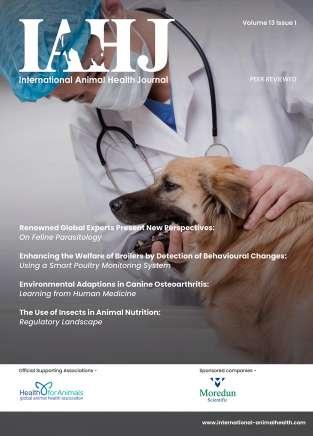
Renowned Global Experts Present New Perspectives: On Feline Parasitology
Enhancing the Welfare of Broilers by Detection of Behavioural Changes: Using a Smart Poultry Monitoring System
Environmental Adaptions in Canine Osteoarthritis: Learning from Human Medicine
The Use of Insects in Animal Nutrition: Regulatory Landscape
Official Supporting Associations - Sponsored companies -
Your partner in (pre)clinical development
Do you need a contract research organisation to support you throughout the pre-clinical and clinical development of you product? Then partner up with Royal GD!
With our advanced facilities and one of the largest veterinary laboratories in Europe, we are equipped to meet even the most complex research requirements. We excel in controlled environment studies involving poultry, pigs, cattle and small ruminants. We can run multi-country clinical trials in collaboration with our daughter companies throughout Europe, and in compliance with the VICH Good Clinical Practice (GCP) guidelines.
International Animal Health Journal – ISSN 2752-7697 is published quarterly by Senglobal Ltd.
04 EDITORS LETTER
REGULATORY & MARKETPLACE
06 Veterinary Biologics and Biosimilars: Routes to Approval and Commercialisation in the U.S., EU and UK IBiological veterinary medicinal products (“biologics”) are an innovative and fast-growing component of the veterinary pharmaceutical market. Biologics provide veterinarians with valuable new treatments to improve the health and welfare of their animal patients by addressing unmet need, while providing value to pet owners. Chris Boyle, Emily Marden and Kevin Sforza of Sidley provide a practical overview of the regulatory considerations for approval and commercialisation of biosimilars in the U.S., EU, and UK.
RESEARCH/INNOVATION/DEVELOPMENT
10 Renowned Global Experts Present New Perspectives on Feline Parasitology
For the 5th time, Vetoquinol hosted the Scientific Roundtable Parasitology – this year in Malta. The annual event once again saw a respected group of global leaders in parasitology, pharmacology, feline medicine and One Health meet and discuss the latest research and thinking. Katrin Blazejak and Norbert Mencke of Vetoquinol discuss how the three-day programme was structured around four key pillars – science and innovation, feline parasitology, feline medicine and behaviour, and One Health and zoonoses. This gave ample opportunity for a spectrum of topics to be covered including building on discussions from the previous meetings. This included numerous feline parasitological challenges that stem from the fact that most cats have limited or no contact with veterinarians.
14 Enhancing the Welfare of Broilers by Detection of Behavioural Changes Using a Smart Poultry Monitoring System
The behaviour of broilers can provide valuable insights into their health and welfare. Early de-tection of deviations from normal behavioural patterns allows for timely intervention in response to potential health or welfare issues. Jessica Hirsch-van Stek of GD Animal discusses how FlockVision continuously monitors six core behaviours using camera-based observation, generating objective, AI-analysed data. This information is brought to farmers via an app. It provides them with reliable, real-time insight into the status of the broilers, enhancing farm management efficiency and supporting the maintenance of flock health and welfare.
LIVESTOCK & DISEASES
The opinions and views expressed by the authors in this journal are not necessarily those of the Editor or the Publisher. Please note that although care is taken in the preparation of this publication, the Editor and the Publisher are not responsible for opinions, views, and inaccuracies in the articles. Great care is taken concerning artwork supplied, but the Publisher cannot be held responsible for any loss or damage incurred. This publication is protected by copyright.
Volume 13 Issue 1 Spring 2026
Senglobal Ltd.
16 Transboundary Animal Diseases (TADs) and the Needs for Global Preparedness
The word ‘transboundary,’ underestimates the scale and the impact of TADs. It suggests regional or bilateral problems. Transboundary Animal Diseases are a global challenge. Addressing TADs requires mobilising economic and political resources to enhance preparedness and provide a global response. Protecting livestock is not just an agricultural issue, it should be a geopolitical priority. Albert Picado and Dr. Pascal Hudelet of Animal Health Comms discuss how African Swine Fever (ASF), Highly Pathogenic Avian Influenza
(HPAI), Foot-and-Mouth Disease (FMD) and Lumpy Skin Disease (LSD) are much closer than we think and spare no livestock species and region.
20 Solid Dose Vaccines: Transforming Veterinary Medicine Through Innovation
Vaccination is central to animal health, yet its delivery remains rooted in needle-based, cold-chaindependent systems. While conventional liquid vaccines have served the veterinary sector well, they bring persistent inefficiencies. Vaccine wastage resulting from cold chain failure, needlestick injuries to personnel, carcass damage caused by broken needles, labourintensive administration and limited reach in low- and middle-income countries (LMICs) all constrain the effectiveness of vaccination programmes. Robin Cohen and Christopher Macgregor discuss how the Solid Dose Vaccine (SDV) technology offers an innovative alternative, designed for today’s challenges of disease control, sustainability and access & cost.
COMPANION ANIMALS
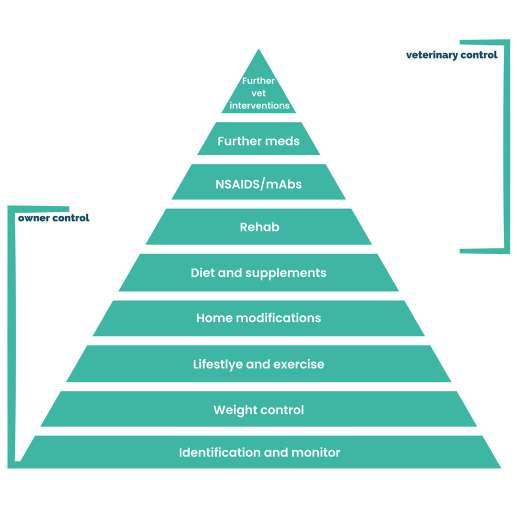
24 Environmental Adaptions in Canine OsteoarthritisLearning from Human Medicine
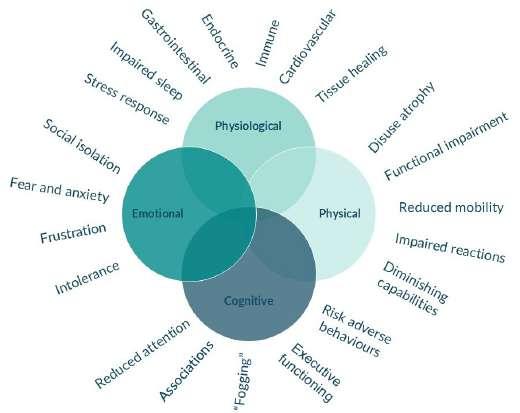
Osteoarthritis in dogs has long been considered an appropriate model for study of the disease in humans, but the knowledge gained from it has not been applied equally to both species. Environmental adaptations are considered essential in human OA management and the time is long overdue for it to be the same in dogs. Hannah Capon and Siân Burwood of Canine Arthritis discuss how the environmental adaptation is a powerful yet underused tool in managing canine osteoarthritis (OA). Drawing from human healthcare, where home modifications are standard in the management of this chronic disease, veterinary care can be improved by addressing environmental factors that influence OA progression and expression. Despite clear benefits, it is often overlooked due to psychosocial barriers, but there is a compelling case to routinely include environmental modification in OA management strategies.
28 Exploring Genetic Diversity in the Olfactory Receptors of Dog
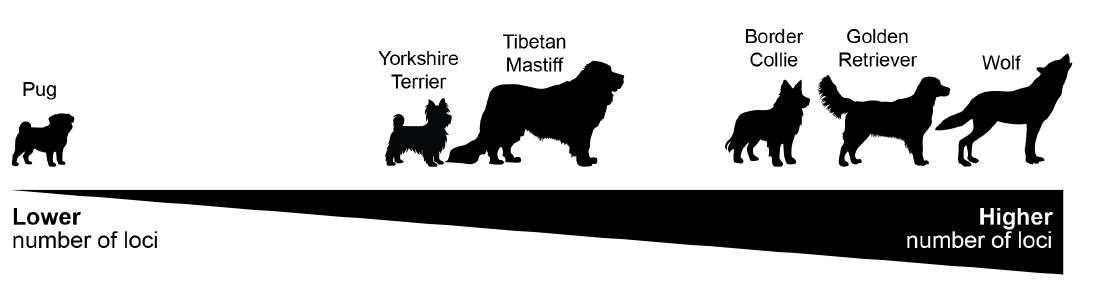
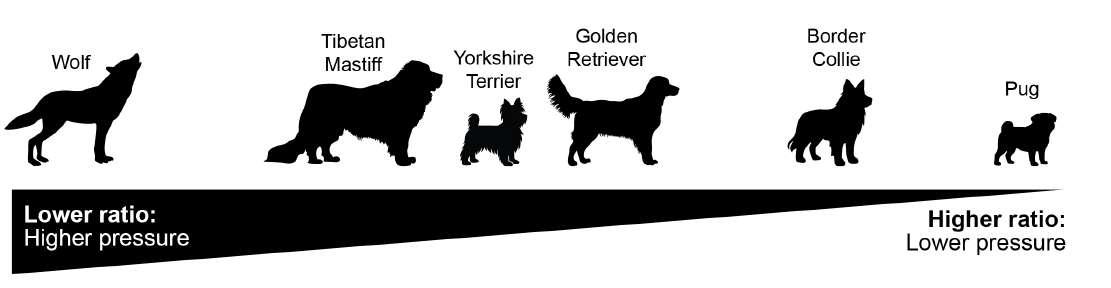
Despite general assumptions based on their characteristics and the visual distinction between scent hounds and brachycephalic dogs, studies that have compared olfaction between different dog breeds have revealed some inconsistent results. Dr. Scott J. McGrane of Mars Petcare discuss how in the main olfactory system, olfactory receptors (ORs) are expressed in the main olfactory epithelium of the nasal cavity, where they detect odours.
FOOD AND FEED
32 Opportunities for Data Sharing Under EFSA’s Latest Read-Across Guidance
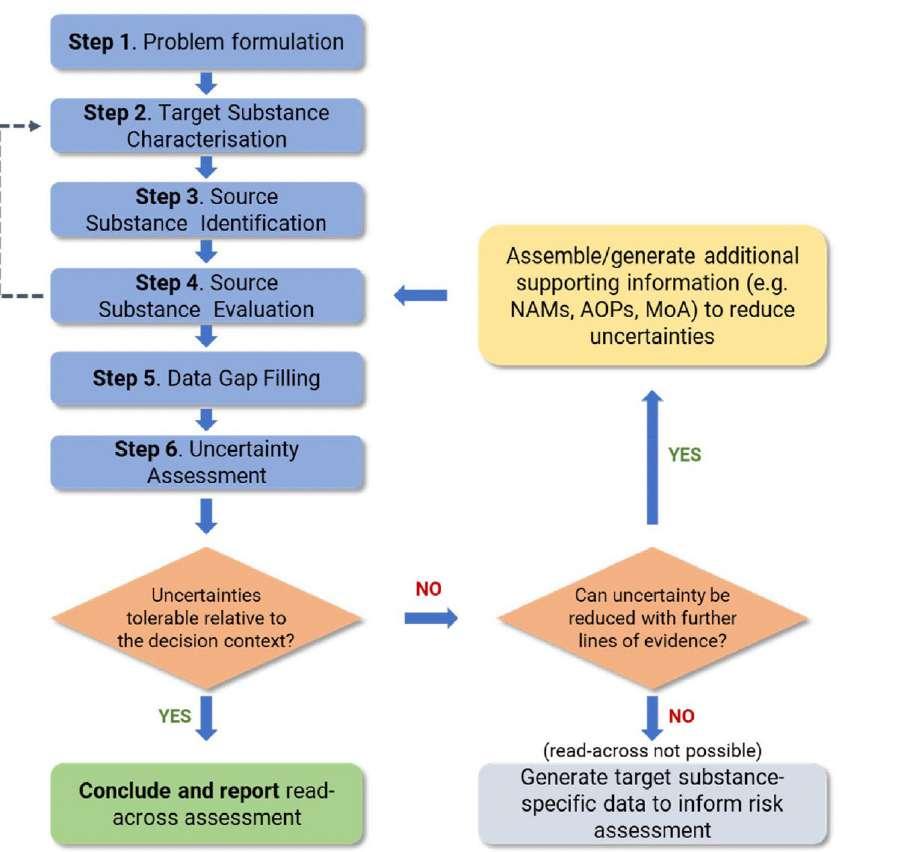
Read-across allows for the prediction of toxicological properties of a data-poor target substance based on relevant information from one or more structurally and mechanistically similar, data-rich source substances. Consistent with the approach established by ECHA, EFSA distinguishes two principal read-across strategies: The analogue and category approach. Dr. Regine Schreiner and Dr. Regina Ohlmann of 4ReValue GmbH discuss
the irrespective of whether an analogue or a category approach is applied, both follow a common, structured workflow comprising problem formulation, data gap analysis, identification and evaluation of suitable source substances or analogues, data gap filling and uncertainty assessment.
36 2025 Harvest Insights and 2026 Feed Risk Assessment: Implications for Animal Health and Feed
Safety
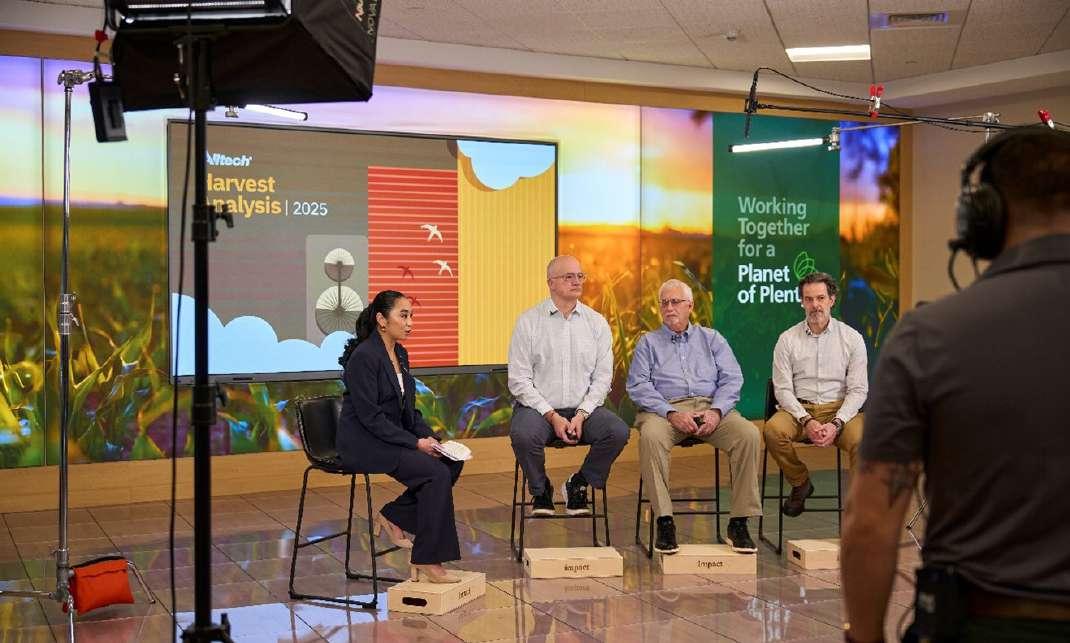
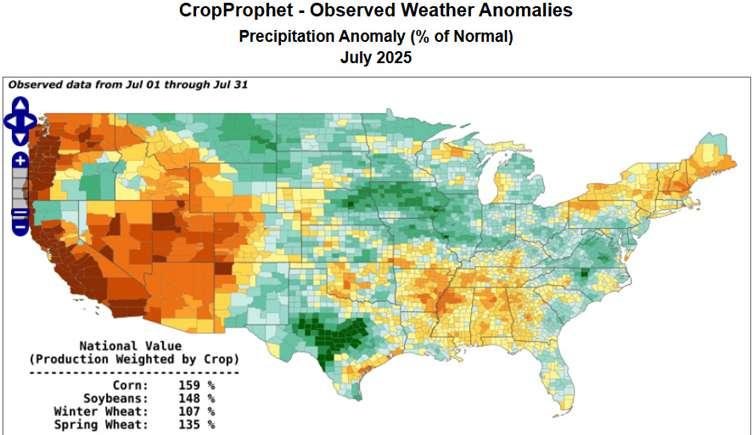
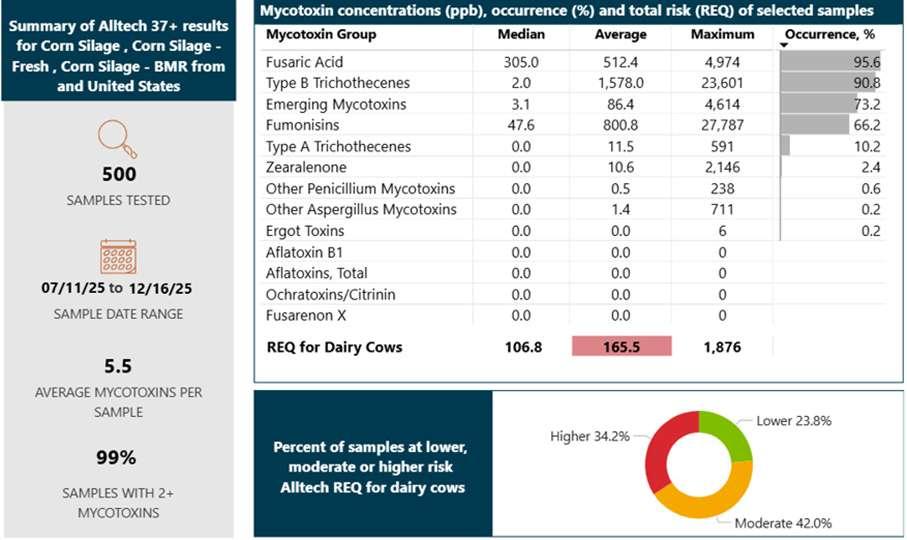
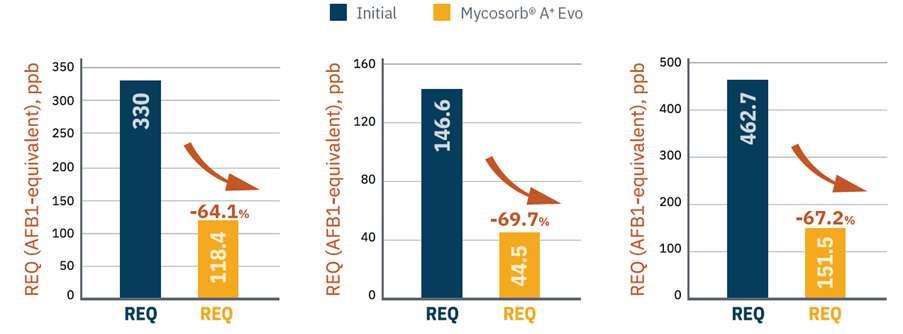
The 2025 harvest presented region-specific challenges in feed safety across Europe, the United States and Canada, with significant implications for livestock health and productivity. Evie Johns of Alltech discusses how these findings emphasise the importance of proactive, evidence-based feed risk management and the need to understand both mycotoxin prevalence and cooccurrence in order to safeguard animal performance.
40 The Use of Insects in Animal Nutrition: Regulatory Landscape
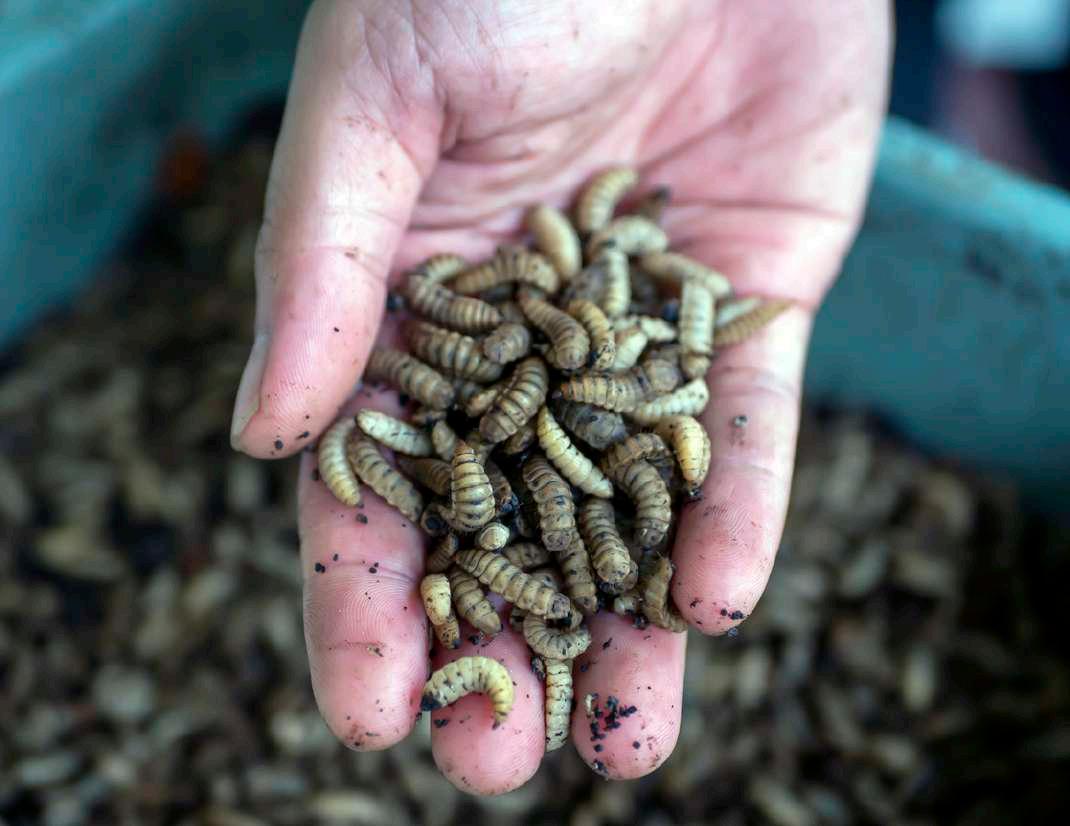
In recent years, growing concerns around the sustainability and environmental impact of conventional protein sources, combined with the need to secure sufficient protein supply to meet the increasing demand in a growing global population have driven significant interest in alternative proteins. Daniel Pagés of Argenta discusses how the market for insects is opening and it comes with uncertainty and opportunities, however they could become a new staple ingredient in sustainable in animal nutrition. Understanding these frameworks will be essential for industry and feed formulators seeking to navigate the opportunities of this emerging sector.
One Argenta. One Partner. From Molecule to Market.
Argenta is your fully integrated, global partner in animal health and nutrition - designed to simplify complexity and accelerate your path to market.
All capabilities. One team.
• Regulatory Affairs
• Pharmaceutical Development
• Pre-Clinical & Clinical Studies • Technology Transfer
• Contract Manufacturing
From early development through to commercial manufacturing, we deliver expertise, capabilities, and collaboration you need – all in one place.
Integrated expertise.
Global reach.
One seamless partner.
argentaglobal.com
Email: info@argentaglobal.com
EDITORS LETTER
As it begins to get warmer, we welcome you to our first edition of IAHJ in 2026. We hope you enjoy reading! In this Spring issue of IAHJ, it draws together all of the diligence and commitment carried out globally to maintain and share animal public health and welfare.
Katrin Blazejak and Norbert Mencke share how it was the 5th time Vetoquinol has hosted the Scientific Roundtable Parasitology in Malta of this year. This annual event once again saw a respected group of global leaders in parasitology, pharmacology, feline medicine and One Health meet and discuss the latest research and thinking. This gave ample opportunity for a spectrum of topics to be covered including building on discussions from the previous meetings. This included numerous feline parasitological challenges that stem from the fact that most cats have limited or no contact with veterinarians. In an ever-changing field like parasitology, facilitating a global perspective on the key challenges is important to ensure that those challenges can be met and mitigated. Five years on from its inception, this Roundtable meeting is still met with such energy by its attendees – both new and established.
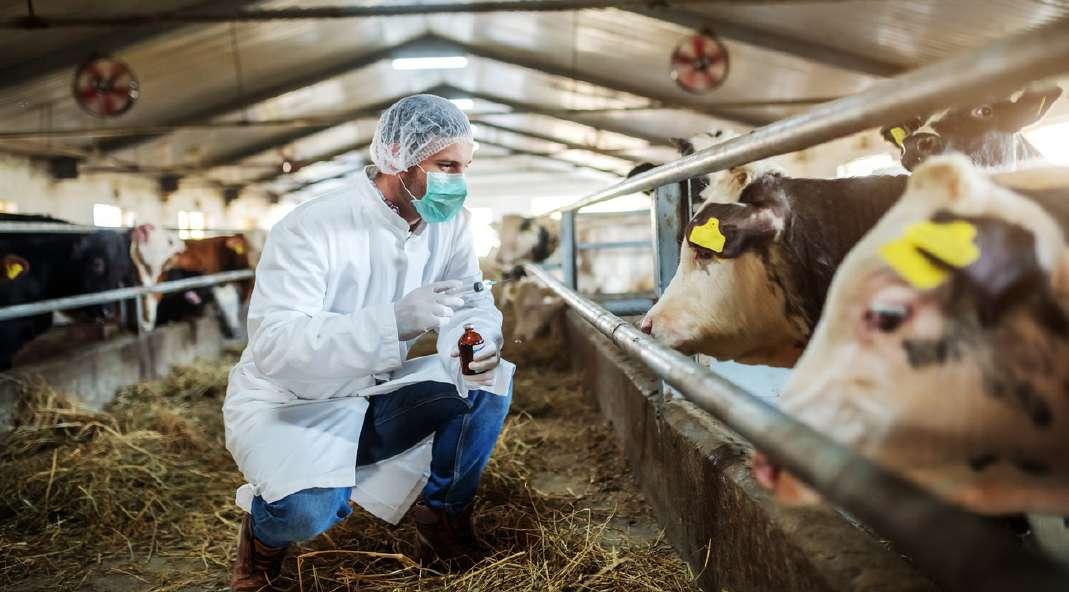
The behavioural patterns of animals are widely recognised as valuable indicators of their welfare status, comfort and the presence of health disorders. However, continuous visual monitoring of livestock is impractical in commercial production systems. Furthermore, human presence within the barn can influence animal behaviour and may disrupt normal flock activity. Jessica Hirsch-van Stek delves into how FlockVision, developed by poultry health specialists at Royal GD, addresses these challenges through continuous camerabased monitoring of broiler behaviour. This system enables the collection of thousands of behavioural observations on a 24/7 basis without any physical disturbance to the flock.
The recognition of insect protein’s potential has been reflected in policy over the past decade, with a series of regulations expanding the scope of its authorised use. Yet commercialisation of insect-derived ingredients in animal nutrition remains governed by a complex and still-evolving regulatory framework that varies considerably between jurisdictions. Daniel Pagés provides a structured overview of the current regulatory landscape in the two most relevant markets: the European Union (EU) and the United States (US).
EDITORIAL ADVISORY BOARD
Amanda Burkardt, MSc, MBA – CEO of Nutripeutics Consulting
Germán W. Graff – Principal, Graff Global Ltd
Fereshteh Barei – Health Economist & Strategy Advisor, Founder of BioNowin Santé Avenue Association
Carel du Marchie Sarvaas Executive Director Health For Animals
Kimberly H. Chappell – Senior Research Scientist & Companion Animal Product Development Elanco Animal Health
Dr. Sam Al-Murrani – Chief Executive Officer Babylon Bioconsulting & Managing Director at Bimini LLC
Sven Buckingham – Buckingham QA Consultancy Ltd.
Dawn Howard – Chief Executive of the National Office of Animal Health (NOAH)
Jean Szkotnicki – President of the Canadian Animal Health Institute (CAHI)
Dr. Kevin Woodward – Managing Director KNW Animal Health Consulting
Melissa Cavner, Editor
Efficacy Studies
• Broad portfolio of infectious disease models in livestock and fish
• New model and protocol development
• VICH-GCP compliant studies
Target Animal Safety Testing
• GLP compliant studies
• All species of livestock
• Aquaculture species
• All types of biological & pharmaceutical products
Animal Health Facilities
• GLP accredited animal facilities
• Conventional farm animal accommodation
• Category 3 containment
• Specific Pathogen Free
• Gnotobiotic units
• GLP accredited lab facilities
Aquaculture Facilities
• Seawater
• Freshwater
• GLP compliant small scale
• Larger scale biocontainment
• Commercial scale
• Warm water for fish and shrimp
www.moredun-scientific.com For further information please visit www.moredun-scientific.com or contact: Moredun Scientific, Pentlands Science Park, Bush Loan, Penicuik EH26 0PZ, Scotland, UK Tel: +44 (0)131 445 6206 Email: info@moredun-scientific.com Follow us:
REGULATORY & MARKETPLACE
Veterinary Biologics
and Biosimilars: Routes to Approval and Commercialisation in the U.S., EU, and UK
Biological veterinary medicinal products (“biologics”) are an innovative and fast-growing component of the veterinary pharmaceutical market. Biologics provide veterinarians with valuable new treatments to improve the health and welfare of their animal patients by addressing unmet need, while providing value to pet owners. Biologics differ from traditional pharmaceuticals because they are produced by, or extracted from, a biological source and therefore may have different regulatory considerations. Of note, in the U.S., animal biologics are subject to the regulatory oversight of the U.S. Department of Agriculture (USDA) rather than the U.S. Food and Drug Administration (FDA), which regulates other therapeutic products, including animal drugs. In contrast, in the UK and EU, biologics do not have separate regulatory frameworks or regulators and there are clear approval routes for biosimilars. In this article, we provide a practical overview of the regulatory considerations for approval and commercialisation of biosimilars in the U.S., EU, and UK
Routes to Market Authorisation in the U.S.
In the United States, animal biologics and animal drugs are distinct categories. The definition of animal drug is very broad, under the Federal Food, Drug, and Cosmetic Act (FDCA) and includes any substance “intended for use in the diagnosis, cure, mitigation, treatment, or prevention of disease in man or other animals,” 21 U.S.C. § 321(g)(1) In contrast, animal biologic is a much narrower category – in addition to a general intended use requirement “for treatment of animals,” an animal biologic must fit certain subject matter and mechanism of action criteria. If a therapeutic product does not meet both of these additional criteria, it is not regulated as an animal biologic and generally, by default, will be considered an animal drug.
Both product categories require premarket authorization –licensure for biologics, and approval for drugs – but they are regulated under different statutory frameworks implemented by different agencies, and are thus subjected to different regulations.
Animal Biologics
U.S. animal biologics are regulated under the Vaccine-SerumToxin Act1 (VSTA) by the Center for Veterinary Biologics (CVB) in the USDA Animal Plant Health and Inspection Service (APHIS) Veterinary Services. This distinct jurisdiction grew out of early 20th Century concerns about tainted vaccines for livestock, a category not then regulated by the precursor to the FDA, and has remained with USDA ever since. The regulatory requirements for licensure of an animal biologic by CVB are generally determined between CVB and the sponsor, in a manner distinct from the FDA approval pathway for animal drugs.
Under USDA regulations, an animal biologic includes “all viruses, serums toxins (excluding substances that are selectively toxic to microorganisms), or analogous products” at any stage of production, shipment, distribution, or sale, for use in the treatment of animals. In addition to this subject matter requirement, the definition also requires that the
substance “act primarily through the direct stimulation, supplementation, enhancement, or modulation of the immune system or immune response.”2 The regulations include examples of the types of products that may be included in this definition, among them vaccines, bacterins, allergens, antibodies, antitoxins, toxoids, immunostimulants, certain cytokines, antigenic or immunizing components of live organisms, and diagnostic components, that are of natural or synthetic origin, or that are derived from synthesizing or altering various substances or components of substances such as microorganisms, genes or genetic sequences, carbohydrates, proteins, antigens, allergens, or antibodies.3
Elsewhere, APHIS explained what it means for a product to act primarily through the direct stimulation, supplementation, enhancement, or modulation of the immune system. Specifically, it stated that “stimulation” refers to active immunization, “supplementation” refers to passive immunization (such as through blood or other components), and “enhancement” or “modulation” refers to the upregulation or fine-tuning, respectively, of the immune system to generate an effective immune response.4
The VSTA authorizes USDA to ensure that veterinary biologics are pure, safe, potent, and efficacious.5 Today, licensure for a new animal biologic by USDA requires preclinical and clinical studies demonstrating purity, safety, potency, and efficacy in target species,6 facility and product licenses, including facility inspections, and labelling review to ensure claims are supported7 by product data and license conditions.8 USDA has also issued guidance that describes a case-by-case basis by which it determines the scope of regulatory requirements. Notably, under the VSTA, there are no user fees for animal biologics licensure, no fixed timeline for review, and no pathway for approval of animal biosimilars. In addition, and in contrast to the animal drug pathway, there are no available regulatory exclusivities.
Animal Drugs
Animal drugs, on the other hand, are regulated under the FDCA by the FDA Center for Veterinary Medicine (CVM). Importantly, products intended for the treatment of animals that do not fall within the scope of the animal biologic definition are, by default, regulated as animal drugs, which has a much broader definition.9
The definition of drug in the FDCA includes “articles intended for use in the diagnosis, cure, mitigation, treatment, or prevention of disease in man or other animals;” and “articles (other than food) intended to affect the structure or any function of the body of man or other animals.”10 Notably, FDA will regulate articles intended for use in the diagnosis, cure, mitigation, treatment, or prevention of animal disease “if the primary mechanism of action is not immunological or is undefined (unknown).”11 Approval of an animal drug requires a showing that the product is (1) safe for the animal, (2) safe for humans consuming food from treated animals, and (3) effective for the intended use. 21 U.S.C. § 360b(d)(1). When a new animal drug application is submitted to FDA’s Center for Veterinary Medicine (CVM) for approval, CVM evaluates the drug for safety and effectiveness, and as part of the review process, determines whether the drug will be classified as a
REGULATORY & MARKETPLACE
prescription only drug, a veterinary feed direction (VFD) drug for use in animal feed, or as appropriate, an over-the-counter (OTC) drug.
US Summary
The distinct statutory authorities for USDA and FDA make determining whether a product is an animal biologic or drug central to the discussion of regulatory approval. As novel biotechnologies develop, the definition of a biologic and three-step inquiry will determine under which authority new products will be approved. Whether an animal therapeutic is classified as a biologic or a drug will have significant implications for regulatory approval and oversight.
Routes to Approval in the EU
Biologics, like other veterinary medicinal products, may only be placed on the EU market with a valid marketing authorisation (MA). An MA is comprised of a decision granting the MA issued by the relevant competent authority, and a technical dossier with the data submitted by the applicant in accordance with the EU Veterinary Medicines Regulations (EU VMR). Specific requirements for biologics are provided in Section III of Annex II EU VMR, including potential flexibilities to Good Manufacturing Practice (GMP) requirements. In the EU, biologics are typically authorised through the mandatory centralised procedure, resulting in an MA valid across all EU 27 and EEA 3 States. Under the centralised procedure, the MA application is submitted to European Medicines Agency (EMA). The scientific evaluation is carried out by the Committee for Veterinary Medicinal Products (CVMP) of the EMA.
CVMP will assess the “benefit-risk balance” by evaluating the positive effects of the biologic in relation to any risk relating to the quality, safety, and efficacy of the VMP as regards animal or human health, any risk of undesirable effects on the environment, and any risk relating to the development of resistance. The EU Commission determines whether or not to grant the MA after consulting the Standing CVMP (which is composed of the representatives of the Member States and chaired by the Commission).
In the future, EU veterinary biotech products could also benefit from additional valuable IP protection which may
help incentivise their development. Specifically, under the recently proposed EU Biotech Act (which still needs to go through the full legislative procedure), veterinary medicinal products developed by means of biotechnology processes to diagnose, treat or prevent zoonotic diseases (diseases transmissible between animals and humans) may be entitled to an extension of their supplementary protection certificate (SPC), which would effectively extend their patent protection for the product by one year.
Manufacturing and Supply Chain Considerations
Biologics manufacturers must provide a detailed and comprehensible description of the manufacturing method when applying for marketing authorisation. Producers of veterinary biologics are required to operate validated manufacturing processes and maintain rigorous inprocess controls throughout development and commercial production. Furthermore, the manufacture of biologics must take place in facilities that are certified to GMP standards. These requirements ensure batch-to-batch consistency and safeguard product quality, which is central to regulatory approval and commercialisation.
Great Britain
Post-Brexit divergence requires strategic planning for commercialisation of veterinary biologics in the UK. Great Britain (GB) is governed by the Veterinary Medicines Regulations 2013 (UK VMR). Under UK VMR, veterinary biologics require a national GB MA. GB accepts applications supported by Annex II-type data and applies flexibilities for novel therapies. By contrast, Northern Ireland (NI) remains aligned with the EU VMR through the Windsor Framework. Biologics marketed in NI therefore required centralised EU authorisation or a national NI authorisation aligned with the EU data standards. A single EU-wide authorisation no longer enables full UK coverage. Companies now require a dual regulatory strategy for GB and the EU (including NI). Consequently, early planning of MA applications and procedural considerations is essential to avoid launch delays.
Approval Routes for Biosimilars
A biosimilar is a biological medicine that is highly similar to an existing, approved biological medicine (the “reference
REGULATORY & MARKETPLACE
medicine”) in the EU in terms of structure, biological activity, safety, efficacy, and immunogenicity. Biosimilar veterinary products can be approved under the hybrid procedure (Article 19 EU VMR).
In contrast, generic authorisation (Article 18 EU VMR) requires bioequivalence to a reference veterinary medicinal product. Importantly, a biosimilar is not considered a generic version of a biological medicine as the characterisation of biologicals is intrinsically linked to the raw and starting materials, production process, and controls, which are usually proprietary and not available to the biosimilar manufacturer.
Biosimilar veterinary products applications must go beyond the requirements of generic small-molecule drugs. Applicants are expected to conduct a robust comparability assessment, quality, safety, and efficacy studies appropriate to the molecule’s complexity; and engage in consultation with the relevant regulatory and scientific authorities (e.g. under the oversight of European Medicines Agency/CVMP for veterinary biologics) to justify similarity and approve market authorisation.
EU / UK Summary
Biologics offer significant therapeutic and commercial potential – but their complexity brings regulatory and operational challenges. Ultimately, successful commercialisation in the EU and UK requires strong manufacturing and quality systems, early engagement with regulators, and coordinated strategies for the GB and EU markets. Companies that invest early in regulatory planning, process development, and market access strategies are best positioned to capture the growing opportunities in veterinary biologics.
REFERENCES
1. 21
2.
3. Id. Additional examples of products that act primarily through the immune system were included in a 2013 memorandum of understanding (MOU) and include certain forms of interferons, viruses, antiserums, diagnostics, immunomodulators, serum, and plasma for passive transfer. See Memorandum of Understanding Between CVB and FDA (executed Feb. 4, 2013, amended Aug. 9, 2024) [hereinafter, the 2013 MOU].
The views expressed in this article are exclusively those of the authors and do not necessarily reflect those of Sidley Austin LLP and its partners. This article has been prepared for informational purposes only and does not constitute legal advice. This information is not intended to create, and receipt of it does not constitute, a lawyer-client relationship. Readers should not act upon this without seeking advice from professional advisers.
Dr. Chris Boyle
Dr. Chris Boyle, Partner, Sidley Austin LLP, combines his qualifications as a veterinarian and life sciences lawyer to guide animal health companies through regulatory, compliance and litigation matters in animal health. He advises across the full lifecycle of veterinary medicines, devices, diagnostics, and feed, including in multijurisdictional projects. Chris founded and chairs Sidley Austin LLP's Animal Health Legal Forum, a platform for industry professionals to connect and discuss evolving legal and regulatory challenges.
Emily Marden
Emily Marden, Senior Counsel, Sidley Austin LLP, is trained in the life sciences and her practice focuses on regulatory and strategic questions across the development and lifecycle for innovative products, including complex drugs and biologics for human and animal populations, regenerative medicine and human and animal food, agriculture and dietary supplements. Emily also teaches at NYU School of Law and writes on topics relating to innovation.
Kevin A. Sforza
Kevin A. Sforza, Managing Associate, Sidley Austin LLP, advises companies in the human and animal food, agricultural, and life sciences industries on FDA and USDA regulatory matters, as well as AAFCO frameworks, product development and regulatory risk evaluation. He counsels clients throughout the product lifecycle on marketing authorisations, product classification, labeling and advertising and the safety and regulatory status of novel, biotechnology-derived and Generally Recognised as Safe (GRAS) substances.
Your Gateway to the World of Fine & Speciality Chemicals
Europe’s No.1 trade fair for fine & speciality chemicals - your chance to connect with key global suppliers and thousands of key industry professionals all under one roof in Cologne.
• Pharmaceuticals
• Agrochemicals
• Paints & Coatings
• Contract & Toll Manufacturing
• Construction
Key Industries
• Oil & Gas
• Household & Industrial Cleaning
• Metal Surface Treatment
• Electronics & Batteries
• Flavors & Fragrances
• Food & Feed
• Plastics & Rubber
• Pulp & Paper
• Water Treatment
• Automotive
• CDMO & Custom Synthesis
• Personal Care & Cosmetics
• Inks, Pigments & Dyes
• Recycling
• Consulting & services
• Equipment providers
Renowned Global Experts Present New Perspectives on Feline Parasitology
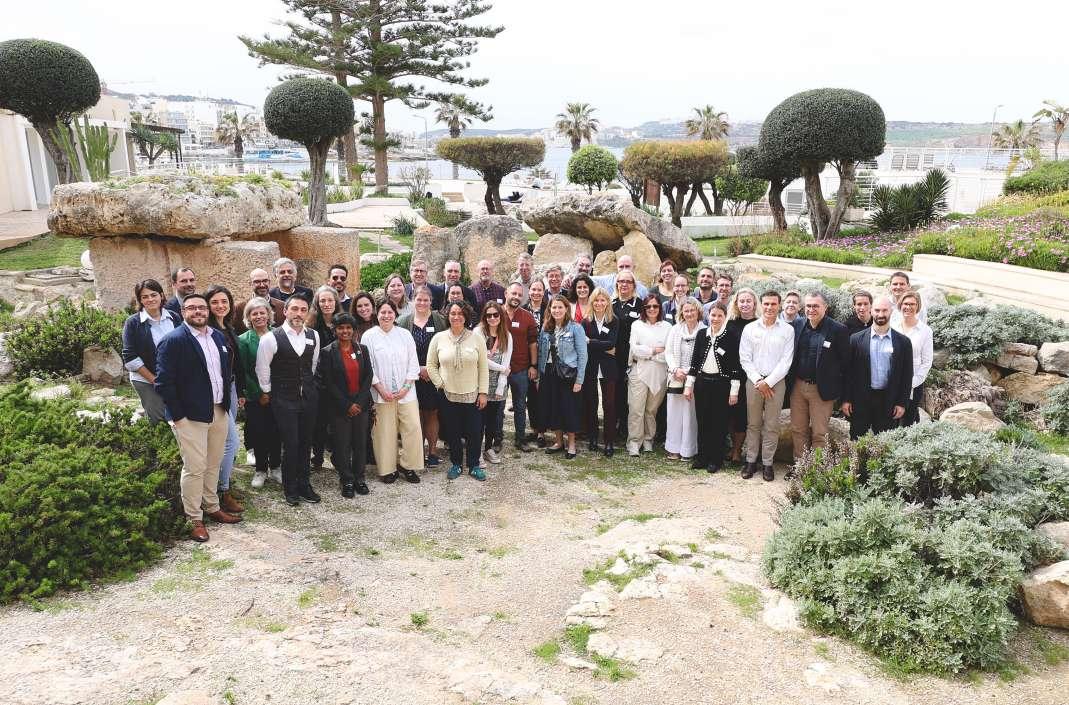
For the 5th time, Vetoquinol hosted the Scientific Roundtable Parasitology – this year in Malta. The annual event once again saw a respected group of global leaders in parasitology, pharmacology, feline medicine and One Health meet and discuss the latest research and thinking. The three-day programme was structured around four key pillars – science and innovation, feline parasitology, feline medicine and behaviour, and One Health and zoonoses. This gave ample opportunity for a spectrum of topics to be covered including building on discussions from the previous meetings.
‘This meeting is a highlight of the year, as it brings together a diverse group of people from lots of countries, allowing stakeholder discussions about really important problems.’
From considering the perspectives of different stakeholders, to exploring innovative methods for investigating the parasites themselves, the meeting provided greater understanding of the challenges that exist in feline parasitology. In order to continue this event’s mission to advance feline parasitological care, the ultimate aim of all the meeting discussions is to identify the opportunities that exist to tackle these challenges most effectively.
‘As a veterinarian and parasitologist, I think we need more of these meetings. The world of parasitology is changing – in terms of science and human connection. We must always be prepared for challenges.’
Donato Traversa, University of Teramo, Italy
Feline Medicine and Behaviour
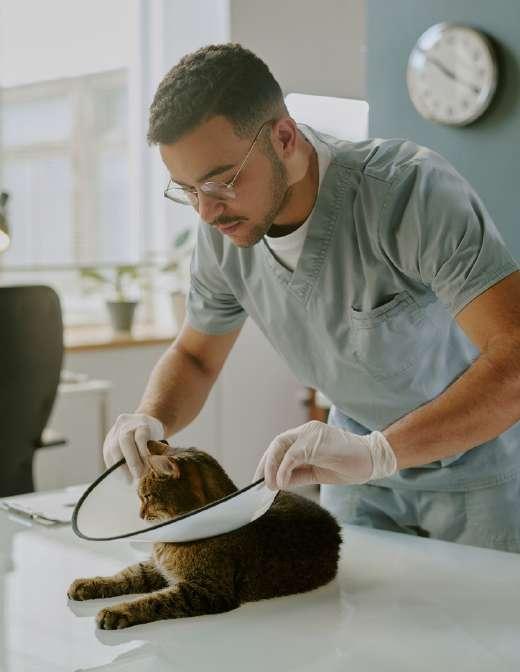
Numerous feline parasitological challenges stem from the fact that most cats have limited or no contact with veterinarians. Indeed, when asked about their opinion on the biggest challenge in feline parasitology, many of the experts at the meeting said, ‘getting the cat to the vet.’ Understanding the reasons behind this is an important first step to being able to improve access to parasitological care – to the benefit of the cats, but also the humans living around or alongside them.
‘More cats around the world don’t go to the vet than those that do.’
Séverine Tasker (Veterinary Strategic Lead, iCatCare) explained how unowned cats have been identified by feline welfare charity, International Cat Care (iCatCare), as a key group to focus on to achieve their mission of improving the lives of cats worldwide. Often acting as reservoirs of parasitic species, these populations are implicated in many feline and, in the case of zoonotic parasites or parasite-transmitted diseases, human health concerns.
Placing more emphasis on the development of preventative strategies and interventions, including neutering, iCatCare have analysed the current situation and attitudes regarding unowned cat populations in four countries with varying feline welfare challenges. The data collected shows differing and
often conflicting perspectives of key stakeholders, but the key message is that upstream action is essential. Rehoming and rescue cannot provide the solutions to managing these populations alone and this requires empathetic collaboration between the many stakeholders. The findings of this research have been turned into short- and long-term strategic frameworks that will not only aid the studied countries, but also those facing similar challenges. Further details can be found at https://go.icatcare.org/country_insights.
Key challenges in managing unowned cats, identified in the iCatCare ‘Understanding cats, country by country’ research:
- Most work is downstream (rescue & response) rather than upstream (prevention & coordination).
- Inconsistency in capacity and funding of municipal support.
- Limited data/visibility, leading to decisions without full information.
- Welfare and conservation tensions.
- Efforts fragmented, so progress is limited.
- Public feeding & more fluid ‘ownership,’ shaping cat population dynamics.
- Weather & tourism influence how cats live and attitudes to cats.
For pet cats, the cat caregiver is obviously an important gatekeeper of appropriate parasitological care, so their perspective matters hugely. This is a topic that has come up numerous times in previous Roundtable meetings, with important discussions about how to help caregivers access veterinary care – often focusing on the reduction of feline stress. Building on this, Rachel Korman (Cat Specialist Services, Qld. Australia) shared her clinical experience of how to improve feline diagnostics, an area often fraught with conflict of feline and practitioner perspectives. By considering the impact of ‘stressor stacking’ – the phenomenon of multiple stressors combining to create a cat that is unable to cope and becomes uncooperative – she described simple techniques to minimise stress and consequently improve sampling and imaging success.
‘Taking a more cat friendly approach benefits everyone,’ Rachel Korman, Cat Specialist Services, Qld. Australia
Benefits of a more ‘cat friendly,’ clinical approach1
- Improved feline welfare
- Higher disease detection rates for improved clinical care and outcomes
- 12% more diagnostics
- 17-20% more revenue per visit
- Lower staff injury rates
Science and Innovation
Christopher Fernandez Prada (Université de Montréal, Canada) encouraged a new way of thinking about drug
RESEARCH/INNOVATION/DEVELOPMENT
resistance; while we know the way there, what about the way back? Using Leishmania as his study subject, he presented fascinating insight into how drug-resistant parasites change after drug withdrawal. Instead of resistance simply ‘fading’, changes in gene expression – particularly those linked to protein and lipid metabolism, and metabolic rate - create an entirely new phenotype, distinct from the original ‘wild type’ and previous resistant parasite. This has implications for the response of these parasites to future treatments (including cross-drug consequences) and the host-parasite interaction.
‘Two parasites that are morphologically identical may behave in very different ways, raising obvious clinical challenges.’
Christopher Fernandez Prada, Université de Montréal, Canada on phenotype changes in drug-resistant parasites, following drug withdrawal
The next phase of this research is aimed at studying other parasites and how to make identification of parasite phenotypes more accessible, to help guide the most effective clinical interventions.
As well as questioning how we think about parasites, finding new ways to investigate is an excellent way to gain novel insight. Kathryn Reif (Auburn University, USA) described how the use of electropenetrography (EPG) is being used to visualise the feeding habits of blood feeding parasites via the observation of electric waveform patterns. The team have (and continue to) worked hard to refine the technique for human, rather than plant models, but the data collected has already demonstrated how infection with pathogens alters some parasite feeding behaviour. Intense discussion about the potential applications of this technology ranged from assessing the influence of the skin microbiome or variation in volatile organic compounds on parasite behaviour, to scrutinising the application of study data from lab strain parasites to real-world scenarios.
Another example of an innovative investigative technique came from Andy Moorhead (North Carolina State University, USA), whose team has developed a novel gerbil research model. He described how non-permissive hosts have been used to investigate infection with Dirofilaria immitis and the potential future applications of this knowledge.
‘Our research contributes to understanding about host specificity of D. immitis, and eventually potentially other parasites.’
Andy Moorhead, North Carolina State University, USA
Feline Parasitology
Climate change, parasite evolution, increased global travel and changing host dynamics were all identified during the meeting as contributors to an ever-changing parasitology landscape. As such, ongoing surveillance is essential to ensure that our understanding of the parasitological landscape is accurate, and that shifts or trends can be identified early.
Many of the presentations at the meeting reported updated prevalence data, helping to add further detail to the picture of risk distribution for many important parasites. Jacques Guillot (Nantes Veterinary College, France) shared recent data on tick prevalence in France, Smaragda Sotiraki (Veterinary Research Institute ELGO-DIMITRA, Greece) did the same for helminths in Greek public parks and Jeba Jesudoss Chelladurai (Auburn University, USA) for helminth and protozoal parasites in SouthEastern USA. All data demonstrated parasite and pathogen prevalences that reinforce the need for regular parasite treatment and pet caregiver education to help protect pet and human health.
‘Our research emphasises the need for responsible pet ownership, routine deworming programs, and strengthened public health awareness measures to mitigate zoonotic transmission risks,’
Smaragda Sotiraki, Aristotle University of Thessaloniki, Greece
However, prevalence is only the start of the risk mapping process. Veronica Risco Castillo (Alfort Veterinary School, France) shared research investigating the link between urban wildlife and tick/tick-borne disease risk in cats. As well as perpetuating the continued lifecycle of these parasites, wildlife populations (and the tick populations that they support) also may act as epidemiological reservoirs of pathogen infection.
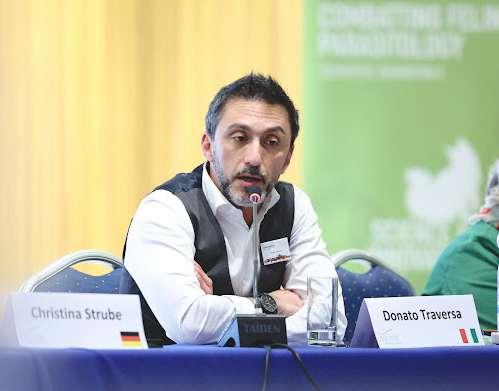
And while surveillance data is powerful, clinical cases of infection are literal examples of the consequence of parasite risk. Donato Traversa’s (University of Teramo, Italy) presentation on feline lungworm warned about not letting these cases go undetected – both typical and atypical presentations. He stressed that clinical signs often do not correlate with radiographic changes, and in many cats radiographic changes may precede clinical presentations.
‘The pulmonary damage caused by lungworm infection sometimes can lead to long-lasting or permanent clinical compromise for some cats. Timely treatments are crucial to achieve parasitological and clinical recovery, and prevention is especially important for cats in regions where lungworms are enzootic.’
Donato Traversa, University of Teramo, Italy
Signs that should prompt the inclusion of lungworms in the differential diagnosis list:
- Compatible respiratory signs
• Cough
• Dyspnoea (including open mouth breathing)
- Neurological signs
- Pulmonary hypertension
- Pulmonary radiographic changes (even in the absence of clinical signs)
It is also important to regularly question what we think we know about parasites to advance diagnostics, treatments and guidelines. Andrei Mihalca’s (University of Cluj-Napoca, Romania) presentation of the extra-intestinal nematode species known to affect cats in Eastern Europe highlighted the surprising array of body systems where nematode infection can be implicated. Too often, he says, these parasites are neglected by clinicians, despite their clinical relevance and sometimes zoonotic potential. In Gad Baneth’s (Koret School of Veterinary Medicine, Israel) presentation, sensitivity comparisons of various Leishmania spp. diagnostic methods in cats showed that the technique used can hugely influence the conclusion of prevalence.
‘It is not always a case of ‘one test is better than another’. Instead, a more complex picture often exists, where different test methods provide different aspects of diagnostic value.’
Gad Baneth, Koret School of Veterinary Medicine, Israel
One Health and Zoonoses
‘Zoonotic disease often puts the risk presented by parasites into perspective, prompting meaningful action. People need
to understand that managing these parasites is about more than the cat – that there are real and present human health risks.’
Ryan O’Handley, Adelaide University, Australia
Manuela Schnyder (University of Zurich, Switzerland) and Ryan O’Handley (Adelaide University, Australia) both shared data relating to parasitic contamination of food. Presence of parasitic species (including zoonotic species) found in ready-to-eat food products sold in Europe, such as salad, herbs and berries, highlighted inadequacies of commercial washing techniques, as well as the need to assess the source of contamination. While wildlife and/or unowned pet populations are implicated, the role of domestic pets in this problem should be considered. The important role that vets play in managing this risk must also be recognised and championed. Investigation of readily available commercial raw cat food in Australia revealed a 60% prevalence for Toxoplasma gondii DNA.2 With a case example of a pet cat that has never had outdoor access testing positive for this parasite in Adelaide, the risk of transmission via raw food has been demonstrated, raising concerns over the implications for human health.
These examples illustrate just how vitally important the work that parasitologists do in recognising, quantifying and managing the risk of zoonotic parasitic disease. Their clear underlying message is that educational messages for the public and clinical veterinarians must be clear, consistent and loud. Here, guidelines such as those from ESCCAP, TroCCAP and CAPC can be useful, providing easy-to-understand advice about parasite management.
“The One Health approach is a pertinent example of the need to balance different perspectives. On one hand, any shedding or presence of zoonotic parasites presents
RESEARCH/INNOVATION/DEVELOPMENT
a risk to human health, but this must be balanced against the risks of over-treatment of pets, with its potential environmental impact. A risk-based approach is therefore recommended when it comes to treating pets for parasites, based on the regional prevalence of parasite species and their pre-patent periods, alongside pet lifestyle and who is living with the pet.”
Ian Wright, ESCCAP Chairman & Director
A Global Perspective – For Now and for the Future
‘Bringing experts from different countries together like this is a special opportunity for us to discuss our research, the importance of the impact that we can achieve – often together through new collaborations.’
Christopher
Fernandez Prada, Université de Montréal, Canada
In an ever-changing field like parasitology, facilitating a global perspective on the key challenges is important to ensure that those challenges can be met and mitigated. Five years on from its inception, this Roundtable meeting is still met with such energy by its attendees – both new and established. This enthusiasm has already seen important topics discussed, inspirational knowledge sharing and collaboration to explore
and address some of the key issues in feline parasitology. Keen to keep the momentum going, Vetoquinol is committed to facilitating continued development of the ideas that the meeting started as part of its commitment to meaningfully advance feline parasitology.
‘Parasitology is a massive and evolving field, with regards to treatments, spread of vector-borne diseases and polarising, emotive topics, such as environmental contamination and developing resistance. As such, KOL meetings where research can be shared are incredibly important.’
Ian Wright, ESCCAP Chairman & Director
Vetoquinol
Vetoquinol is a leading international player in animal health, with operations in Europe, the Americas and Asia/Pacific. Independent and a pure player, Vetoquinol innovates, develops and markets veterinary medicines and nonmedicated products for farm animals (cattle, pigs) and pets (dogs, cats). Since its creation in 1933, Vetoquinol has combined innovation and geographic diversification. The strengthening of the product portfolio and acquisitions in high-potential territories ensure hybrid growth for the Group. At December 31 2024, Vetoquinol employed 2501 people.
REFERENCES
1. Denis K, et al. (2023) Cat Friendly Practice improves feline visits, resulting in increased laboratory testing and increased diagnosis of certain common feline conditions. J Feline Med Surg. 2023 Nov;25(11):1098612X231204199. doi: 10.1177/1098612X231204199. PMID: 37961891; PMCID: PMC10812006.
2. Ryan O’Handley (2026) Prevalence of Toxoplasma gondii in raw cat food in Australia. Vetoquinol 5th Scientific Roundtable Parasitology
Katrin Blazejak
Katrin Blazejak studied Veterinary Medicine at the University of Veterinary Medicine, Hannover, Germany. After, she commenced her specialisation in parasitology with a doctoral degree (Dr. med. vet.) and obtained a German veterinary specialisation degree as a certified Veterinarian for Parasitology (Fachtierarzt für Parasitologie) in. Following positions at Bayer Animal Health and Elanco, she joined Vetoquinol in September 2021 as Global Medical Manager Parasitology and is based in Paris, France.
Norbert Mencke
Norbert Mencke studied Veterinary Medicine at the University of Veterinary Medicine, Hannover, Germany. After graduation in 1987, he commenced his PhD studies at the Department of Agriculture in Adelaide, Australia. In 1995 he became a certified Veterinarian for Parasitology, and in 2003 a European Veterinary Specialist in Parasitology. He has lectured in veterinary parasitology and tropical veterinary medicine at the University of Hannover since 2003. In 2020, he joined Vetoquinol and holds the position of Global Medical Manager Parasitology.
RESEARCH/INNOVATION/DEVELOPMENT
Enhancing the Welfare of Broilers by Detection of Behavioural Changes
The behaviour of broilers can provide valuable insights into their health and welfare. Early detection of deviations from normal behavioural patterns allows for timely intervention in response to potential health or welfare issues. FlockVision continuously monitors six core behaviours using camera-based observation, generating objective, AI-analysed data. This information is brought to farmers via an app. It provides them with reliable, realtime insight into the status of the broilers, enhancing farm management efficiency and supporting the maintenance of flock health and welfare.
The behavioural patterns of animals are widely recognised as valuable indicators of their welfare status, comfort and the presence of health disorders. However, continuous visual monitoring of livestock is impractical in commercial production systems. Furthermore, human presence within the barn can influence animal behaviour and may disrupt normal flock activity.
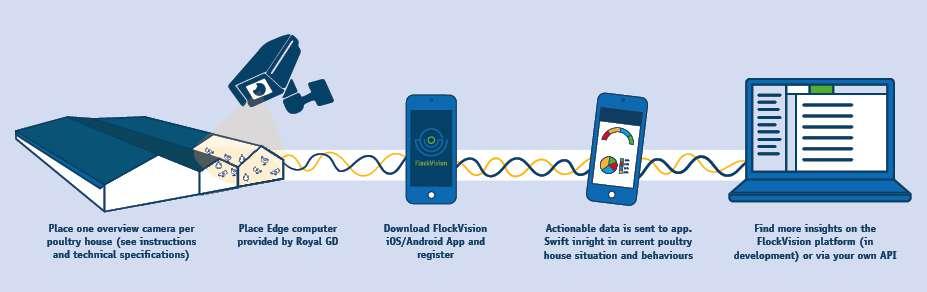
FlockVision, developed by poultry health specialists at Royal GD, addresses these challenges through continuous camerabased monitoring of broiler behaviour. This system enables the collection of thousands of behavioural observations on a 24/7 basis without any physical disturbance to the flock.
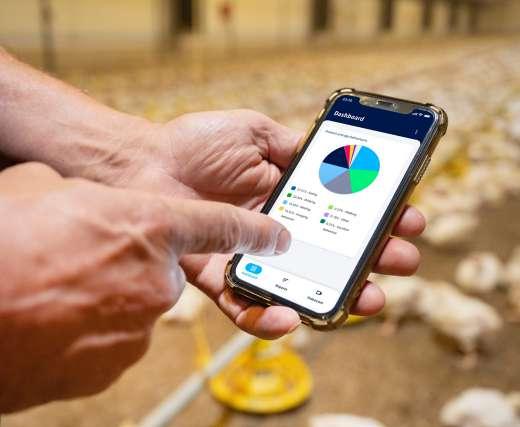
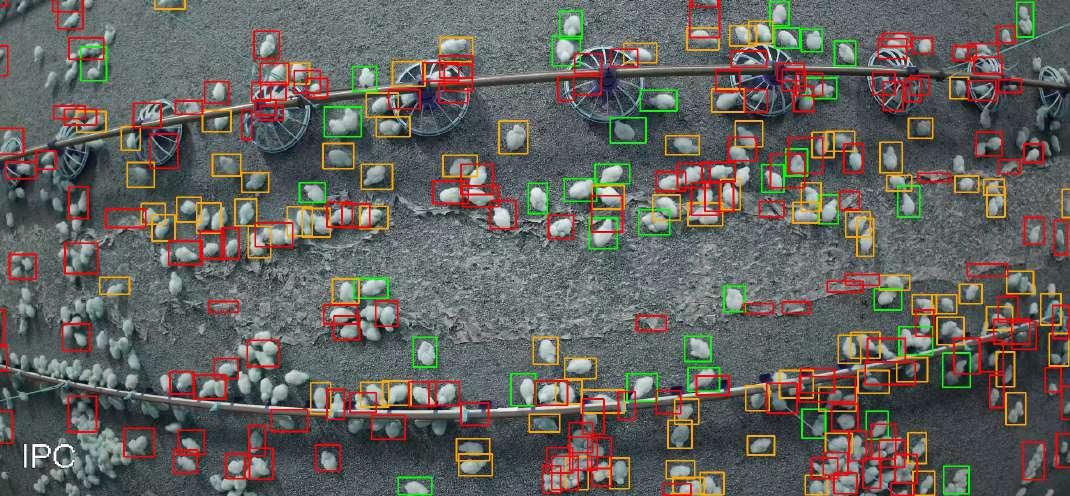
Advanced artificial intelligence algorithms are used to ensure that broilers are detected. Following detection, the AI model quantifies sixteen distinct broiler behaviours, which are classified into six behavioural categories: eating, drinking, foraging behaviour, comfort behaviour, walking and resting. The processed data are visualised in a dedicated application that farmers can access on a mobile device.
The clear dashboard in the app provides real-time insights into behavioural dynamics at flock level, supporting the early detection of changes associated with compromised welfare or emerging health issues. Additionally, the system allows behavioural comparisons between flocks housed in different barns, enabling timely and informed management interventions in response to potential risks.
Behaviours Detected through Video-based Monitoring
The surveillance camera installed in the barn provides continuous video footage, which is used to identify the broilers. The recorded images each focus on a single animal. Poultry specialists from GD reviewed and annotated over 40,000 fragments, assigning behavioural labels to each sequence. These labelled behaviours are considered representative of both individual broilers and overall flock behaviour. In total, sixteen distinct behaviours were defined and systematically classified into six key behavioural categories.
These include:
• Drinking: Picking a drinking nipple or drinking from a cup.
• Eating: Eating with the head above or in the feeder.
• Foraging behaviour: Activities such as ground scratching, where the animal scrapes through the bedding with its claws, and ground pecking, where the animal makes
pecking movements in the bedding.
• Comfort behaviour: Activities such as preening, where the bird uses its beak to clean its own plumage and keep its feathers in good condition, and stretching, where the bird stretches its wing or leg.
• Walking: The bird moves around.
• Resting: Sitting or standing idle. The animal remains stationary without any other activity, and sitting, where the animal lies down or sits without any other significant activity.
Development of FlockVision
The AI-driven monitoring system was evaluated on five commercial broiler farms in the Netherlands that operate under different management and housing conditions, including differences in drinking systems, floor substrate use, enrichments and barn layouts. This diversity allowed assessment of system performance across a range of practical production environments.
Using camera footage in combination with the domain expertise of GD poultry specialists and feedback from participating farmers, FlockVision was further refined into a robust and reliable system capable of accurately recognising and analysing broiler behaviour in different housing systems. This iterative development process contributed to improved behavioural classification accuracy and practical applicability under field conditions. FlockVision was officially launched in 2025 and is currently implemented by a growing number of broiler farms in the Netherlands. In addition, the system is available to GD’s international clients. Ongoing system development is supported through continuous learning: with user consent, anonymised camera footage is used to further train and optimise the AI model.
Beyond its current application in broiler production, FlockVision has the potential to be used in other poultry sectors, such as breeding operations, and can be adapted to additional animal species and livestock sectors.
RESEARCH/INNOVATION/DEVELOPMENT
Advantages for the poultry farmer
• Preventive rather than reactive health management
Continuous behavioural monitoring enables the detection of deviations from normal. This enables early intervention, potentially reducing disease severity, treatment intensity and associated costs.
• Reduced labour demands and increased management efficiency without disturbance of the flock
Twenty-four-hour monitoring decreases the need for frequent physical inspections of the barn, while still providing comprehensive insight into flock status and activity.
• Objective, real-time reassurance
Quantitative, real-time behavioural data provide farmers with an objective overview of flock health and welfare, reducing reliance on subjective assessment.
• Demonstrable animal well-being
The availability of objective, animal-based welfare indicators allow farmers to substantiate that broilers are healthy, comfortable, and managed in accordance with welfare expectations.
Jessica Hirsch-van Stek
Jessica Hirsch-van Stek is a Product Manager at Royal GD, specialising in the development of innovative, AI driven solutions for the animal health sector. With 13 years of experience in data enabled product innovation, she has led projects integrating artificial intelligence, sensor technologies, and predictive analytics to enhance disease monitoring and welfare insights. Her work includes launching tools such as FlockVision, which applies behavioural analysis and growth prediction algorithms. By combining strategic vision with emerging technologies, she contributes to building intelligent product ecosystems that advance animal health and support evidence-based decision making.
LIVESTOCK & DISEASES
Transboundary Animal Diseases: A Global Challenge that Requires Action
The COVID-19 pandemic caused by a new coronavirus was a powerful reminder that certain human pathogens can generate health crises with global impact. The rapid spread of the virus caused millions of deaths, stretched health systems to their breaking points and disrupted global economies. Although they receive less attention, animal pathogens can have a similar or even greater impact, in particular those causing Transboundary Animal Diseases (TADs). These diseases, mostly affecting livestock, spread quickly across borders, posing an imminent threat to animal health, economies and food security.1,2 They result in the loss of hundreds of millions of animals leading to annual industry-wide damage of 48 to 330 billion USD.3
TADs are a Truly Global Concern – Now More than Ever The term Transboundary Animal Diseases was introduced in the 1990s,1 yet the scale and complexity of today’s TADs situation extend far beyond that original definition. While TADs disproportionally affect emerging countries, they represent a global threat due to the globalisation of trade and commerce, but also due to climate change, regional conflicts or demographic change. They often have unusual names that may sound distant to most of us, such as African Swine Fever (ASF), Highly Pathogenic Avian Influenza (HPAI), Footand-Mouth Disease (FMD) and Lumpy Skin Disease (LSD), but they are much closer than we think and spare no livestock species and region.4
Animal and Public Health at Risk:
The Unprecedented Spread of HPAI in Recent Years
Few examples illustrate the global dimension of TADs better than HPAI. This disease cannot be considered a regional concern limited to certain borders. Today, HPAI is a global threat to wildlife and the poultry industry in Africa, Europe, the Americas and Asia.5 HPAI outbreaks have resulted in the culling of hundreds of millions of birds in recent years, constricting the supply of poultry meat and eggs, a crucial source of protein for a large part of the world population. The increase of HPAI spillover to other species has raised concern about its impact on biodiversity due to the death of hundreds of thousands of wild birds and marine mammals. Being a zoonotic disease, avian influenza can also infect humans. There have been very few human cases so far and according to health authorities, the risk for humans remains low, but further mutation of the virus could lead to a potential new pandemic.
ASF Devastates Pig Populations and the Economy
Similarly, African Swine Fever, once confined to Africa, has been spreading across Europe and Asia since its introduction into Georgia in 2007.6 This lethal virus, which causes up to 100 percent mortality in affected pigs, wiped out more than half of China’s pig population when it entered the country around 2018.7 The economic consequences were far-reaching, as China is the world’s largest pork producer.8 ASF was recently introduced in Spain, the largest pig producer in the European Union.9 The virus is now circulating from the Iberian Peninsula in Europe to Indonesia in Asia. Not even the Americas are completely free as ASF is present on the Caribbean Island of
Hispaniola since its introduction in 2021.10 The global spread of ASF is mainly due to human activities, such as the legal and illegal trade of animals and animal products across and within borders.11
FMD and LSD Threaten Cattle Health and Livelihoods
Another TAD that has received public attention in recent months is foot-and-mouth disease (FMD), a fast-spreading viral disease affecting cloven-hoofed animals such as cattle, pigs, sheep and goats. It causes fever and painful blisters on the mouth, tongue and feet of affected animals, leading to severe weight loss, reduced milk production, lameness and mortality in the young. FMD, which is endemic in parts of Africa and Asia, resurfaced in Europe in 2025. Two separate incursions in Germany after 36 years of being FMD-free and then Slovakia and Hungary, caused trade bans and billions in losses in the agricultural sector. The risk of introduction in FMD-free regions remains high as shown by the rapid spread of FMD serotypes SAT2 (from 2022) and SAT1 (2023 and 2025). Once restricted to Southern Africa, these serotypes have disseminated through neighboring regions, underscoring the ongoing risk of FMD spread towards Europe.
Similarly, Lumpy Skin Disease has spread across Asia and Europe in recent years. LSD affects cattle by causing firm, painful skin nodules. These lesions can lead to secondary infections, mastitis and reduced milk yield, significantly impacting
LIVESTOCK & DISEASES
productivity. In severe cases, LSD can even lead to death. LSD has a disproportionate impact on poor rural communities. The LSD outbreaks in Pakistan and India during 2021–2022 caused a substantial economic burden for smallholder cattle farmers. The direct and indirect costs associated with LSD forced rural households into debt selling assets, or abandoning farming altogether, which exacerbated poverty.14,15 Beyond economic losses and animal welfare impacts, TADs also have significant social consequences. In Europe, the culling of cattle to limit the risk of spread of LSD has resulted in protests from farmers seeing their livelihoods at risk.16
The Need for Robust TADs Preparedness
Paradoxically, control tools and strategies for most Transboundary Animal Diseases do exist. Biosecurity, movement restrictions and vaccination have allowed the elimination of some of these diseases from entire continents. While international institutions like the World Organisation for Animal Health (WOAH) advocate for stronger preparedness to address health security threats, including TADs,17 the response to TADs is often limited, delayed or non-existent. The reasons for this are complex and diverse.
First of all, research is essential to improve our response to known TADs and emerging animal diseases. It requires resources and appropriate long-term funding. As an example, since its first description in 1921 in Kenya, ASF research has attracted limited funds. This, combined with the complexity of the ASF virus, resulted in the lack of safe and efficacious vaccines when ASF started spreading globally. For several TADs, effective vaccines and diagnostics exist, but for various reasons they often don’t come into play. To ensure sustained access to high-quality veterinary products for TAD control in the required quantities and timelines, appropriate planning and
financial incentives are essential. Mechanisms to guarantee or accurately predict production volumes would allow the animal health industry to invest in manufacturing capacity. Similarly, a robust but rapid regulatory process would encourage the production and accelerate the access of vaccines and diagnostics for TADs where and when they are needed. Enhancing public-private partnerships (PPPs), which the WOAH actively promotes,18 is essential to improve the development and access of these control tools. Strategic stockpiles, also known as vaccine and diagnostic banks, are the only solution for immediate access to these essential countermeasures in case of outbreak. Such banks already exist for several TADs in Europe, North America and Australia and they have proven essential to respond to recent FMD and LSD outbreaks in Europe [19] . This approach could be expanded to other TADs and other regions, whether they are endemic or threatened by these diseases. Even when vaccines are available, their use can be restricted by international regulations as some countries ban imports from vaccinating countries. With HPAI for example, this happens due to concerns about reliably distinguishing vaccinated birds from naturally infected birds. So-called DIVA (Differentiating Infected from Vaccinated Animals) vaccines and adequate surveillance are crucial to ensuring safe global trade with vaccination. Other international agreements such as the Nagoya Protocol may result, unintentionally, on the delay or even the stoppage of vaccines and diagnostics developments for TADs such as FMD.21 The eradication, elimination and control of these animal diseases require commitment and coordinated efforts across countries, regions and economic sectors.
The word ‘transboundary,’ underestimates the scale and the impact of TADs. It suggests regional or bilateral problems. Transboundary Animal Diseases are a global challenge. Addressing TADs requires mobilising economic and political
LIVESTOCK & DISEASES
resources to enhance preparedness and provide a global response. Protecting livestock is not just an agricultural issue, it should be a geopolitical priority.
REFERENCES
1. Jean-Philippe, A. and Bernard, T. (2019) LES MALADIES ANIMALES TRANSFRONTALIÈRES. Épidémiol. et santé anim. 27–36. https://aeema.vet-alfort.fr/images/Documents/ Ressources_en_%C3%A9pid%C3%A9miologie/ Revue_%C3%A9pid%C3%A9miologie_et_sant%C3%A9_ animale/Publications/2019/AEEMA_2019-75-07_Amat-T.pdf.
2. Lubroth, J. and Balogh, K. de (2009) Transboundary animal diseases. In: Session 1: Prevention/control of transboundary diseases, zoonoses and emerging infections, Ed: F.A.H. Service. https://www.woah.org/fileadmin/Home/eng/Conferences_ Events/sites/deans2009/deans_abstract/day2/session1/de%20 balogh.pdf.
3. FAO (2025) Transboundary animal diseases pose urgent threat to global food security, FAO warns. https://www.fao.org/northamerica/news/details/transboundary-animal-diseasespose-urgent-threat-to-global-food-security--fao-warns/en. Accessed January 30, 2026.
4. Nguyen, T.-Q., Hutter, C.R., Markin, A., Thomas, M., Lantz, K., Killian, M.L., Janzen, G.M., Vijendran, S., Wagle, S., Inderski, B., Magstadt, D.R., Li, G., Diel, D.G., Frye, E.A., Dimitrov, K.M., Swinford, A.K., Thompson, A.C., Snekvik, K.R., Suarez, D.L., Lakin, S.M., Schwabenlander, S., Ahola, S.C., Johnson, K.R., Baker, A.L., Robbe-Austerman, S., Torchetti, M.K. and Anderson, T.K. (2025) Emergence and interstate spread of highly pathogenic avian influenza A(H5N1) in dairy cattle in the United States. Science 388, eadq0900.
5. Bellido-Martín, B., Rijnink, W.F., Iervolino, M., Kuiken, T., Richard, M. and Fouchier, R.A.M. (2026) Evolution, spread and impact of highly pathogenic H5 avian influenza A viruses. Nat. Rev. Microbiol. 24, 45–60.
6. Penrith, M.L. (2020) Current status of African swine fever. CABI Agric. Biosci. 1, 11.
7. Business, P. (2021) African Swine Fever Surge Hits Small Farms in China’s Sichuan. https://www.porkbusiness.com/news/hogproduction/african-swine-fever-surge-hits-small-farmschinas-sichuan. Accessed January 28, 2026.
8. The $100-billion toll of a pig epidemic in China (2021) . Nature 598, 11–11.
10. Schambow, R.A., Carrasquillo, N., Kreindel, S. and Perez, A.M. (2025) An update on active and passive surveillance for African swine fever in the Dominican Republic. Sci. Rep. 15, 2244.
14. Ground Report: Lumpy Skin Disease has created a livelihood crisis for India’s small dairy farmers . https://www.downtoearth.org.in/ economy/ground-report-lumpy-skin-disease-has-createda-livelihood-crisis-for-india-s-small-dairy-farmers-85245. Accessed January 30, 2026.
15. Saqib, S.E., Yaseen, M., Visetnoi, S., Sikandar and Ali, S. (2023) Epidemiological and economic consequences of lumpy skin
disease outbreaks on farm households in Khyber Pakhtunkhwa, Pakistan. Front. Vet. Sci. 10, 1238771.
16. French farmers’ union calls for ‘blockades’ as cows slaughtered over skin disease - France 24 . https://www.france24.com/en/ france/20251212-farmers-clash-with-police-as-dozens-ofcows-culled-in-france-due-to-skin-disease. Accessed January 30, 2026.
17. WOAH Emergency Preparedness. https://www.woah.org/en/ what-we-offer/emergency-preparedness/. Accessed January 28, 2026.
18. WOAH The WOAH Database of Public–Private Partnerships - WOAH Bulletin. https://bulletin.woah.org/?panorama=04-3-1-2023-1_ ppp-database. Accessed January 30, 2026.
19. WOAH (2025) GF-TADs information webinar on the FMD situation in certain Member States of the European Union - WOAH – Europe. https://rr-europe.woah.org/en/Events/gf-tads-informationwebinar-on-the-fmd-situation-in-certain-member-states-ofthe-european-union/. Accessed January 30, 2026.
20. USDA (2023) USDA Protects U.S. Poultry with Restrictions on Poultry and Poultry Products from France and the European Union. https://content.govdelivery.com/accounts/USDAAPHIS/ bulletins/373425f. Accessed January 30, 2026.
21. Horsington, J., Abbeloos, E., Kassimi, L.B., Seeyo, K.B., Capozzo, A.V., Chepkwony, E., Eblé, P., Galdo-Novo, S., Gizaw, D., Gouverneur, L., Grazioli, S., Heath, L., Hudelet, P., Hyera, J.M.K., Ilott, M., King, A., Lefebvre, D.J., Mackay, D., Metwally, S., Mwiine, F.N., Nfon, C.K., Park, M.-K., Pituco, E.M., Rosso, F., Simon, F., Ularamu, H.G., Vermeij, P., Vosloo, W. and King, D.P. (2023) Application of the Nagoya Protocol to veterinary pathogens: concerns for the control of foot-and-mouth disease. Front. Vet. Sci. 10, 1271434.
Albert Picado
Dr. Albert Picado is currently serving as Principal Scientist within the Viral Diseases Research team at Boehringer Ingelheim in Lyon, France, where he provides strategic epidemiological support for the development of vaccines targeting priority infectious diseases. His work includes a strong focus on Transboundary Animal Diseases, contributing to global efforts to improve disease prevention and control through innovative vaccine solutions. Dr. Albert Picado is a Veterinary Epidemiologist with over 20 years of experience in designing and conducting epidemiological studies, as well as in the development, evaluation, and implementation of control tools for infectious diseases affecting both animals and humans.
Dr. Pascal Hudelet
Dr. Pascal Hudelet is the Head of Technical Services at the Veterinary Public Health department of Boehringer Ingelheim. Based in Lyon, France, he oversees a global team of veterinary specialists supporting countries in the control of Transboundary Animal Diseases, focusing on vaccine use and antigen bank management. A graduate of the Lyon Veterinary School, France, Dr. Pascal Hudelet also holds a degree in epidemiology from the Grenoble University. With over 20 years of industry experience, he has held roles in R&D, clinical development and vaccine project management, including the development of vaccines against bluetongue virus and foot-and-mouth disease.
LIVESTOCK & DISEASES
Solid Dose Vaccines: Transforming Veterinary Medicine Through Innovation
Vaccination is central to animal health, yet its delivery remains rooted in needle-based, cold-chain-dependent systems. Solid Dose Vaccine (SDV) technology offers an innovative alternative, designed for today’s challenges of disease control, sustainability and access & cost.
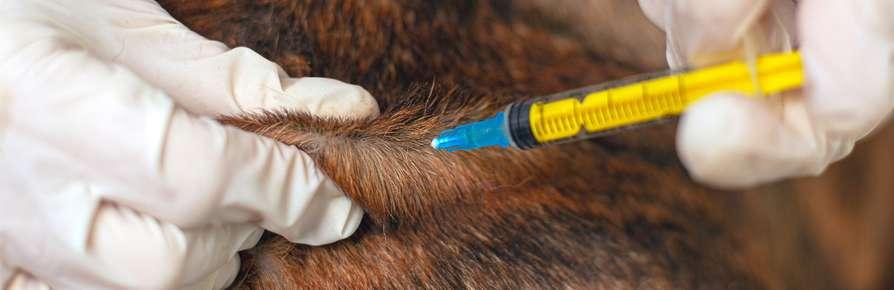
While conventional liquid vaccines have served the veterinary sector well, they bring persistent inefficiencies. Vaccine wastage resulting from cold chain failure, needlestick injuries to personnel, carcass damage caused by broken needles, labour-intensive administration and limited reach in low- and middle-income countries (LMICs) all constrain the effectiveness of vaccination programmes. SDV technology offers a fundamentally different approach by addressing these limitations through stable, needle-free delivery formats (Box 1).
Key Advantages of Solid Dose Vaccine (SDV) Technology
Logistics and Delivery
• Thermostable formulations remove cold chain storage and transport requirements.
• Compact, lightweight doses reduce shipping volume, packaging and waste.
• No reconstitution, mixing, or multidose vial management.
• Suitable for stockpiling and rapid deployment during outbreaks.
Medical and Immunological Benefits
• Antigen sparing enables effective immunity with lower antigen quantities.
• Adjuvant sparing reduces reactogenicity while maintaining immunogenicity.
• Needle-free delivery eliminates needlestick injuries and sharps disposal.
• Faster administration with reduced handling and restraint.
• No risk of broken needles or retained metal fragments in carcasses.
• Reduced injection-site trauma and stress responses.
Economic and Environmental Impact
• Reduced antigen wastage from syringe ‘dead space,’ cold chain failure and open-vial discard.
• Reduced labour and handling costs in large-scale systems.
• Reduced energy use and greenhouse gas emissions by eliminating refrigeration across the entire distribution, storage and handling processes.
• Eliminates glass waste coupled with less plastic and metal waste across the vaccine lifecycle.
• Reduced overall cost-per delivered dose and improved cost-effectiveness of vaccination campaigns.
Global Access and Disease Control
• Enables vaccination in remote and resource-limited settings.
• Supports high-coverage campaigns for endemic and transboundary diseases.
• Facilitates rapid response to emerging and zoonotic disease threats.
Understanding SDV Technology
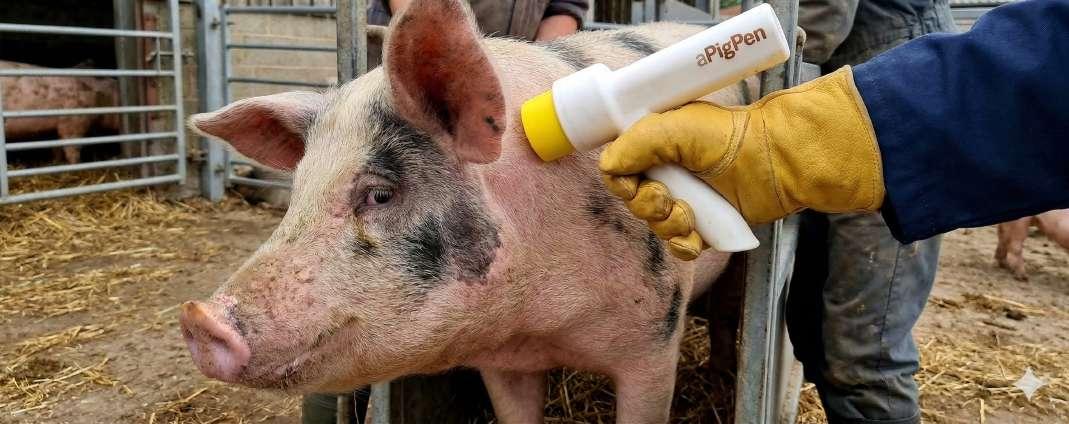
SDVs are fully self-contained and include adjuvants (where required) and a single dose of antigen, in contrast to liquid solutions used for conventional vaccines. The resulting SDV takes the form of a small, solid dose (micro-tablet) – that is delivered using a multi-dose needle-free delivery pen. The multi-dose delivery pen employs a spring based mechanism to insert the SDV into the subcutaneous layer where it fully disperses within minutes. Safety features in the delivery pen ensure that the SDV is delivered only when the device is pressed against the skin.
The solid dose formulations are highly thermally stable.
The Hidden Costs of Liquid Vaccines
Liquid vaccine wastage – defined as doses discarded, lost, damaged, or destroyed without administration – is a significant problem. While rarely causing outright program failure, it introduces inefficiency, raises costs and reduces optimal use of vaccines. SDV technology eliminates these inefficiencies.
One of the most consistent sources of wastage is the residual vaccine left in syringes and vials. During human COVID-19 campaigns, such losses ranged from 6% to 35% per dose depending on syringe design.1 Standard high-dead-space syringes can waste up to 0.3 mL per 1 mL dose, while optimized versions reduce this to approximately 0.03 mL. Veterinaryspecific data is limited, but high-dead-space syringes remain common in field settings, particularly in resource-constrained environments.
The problem is compounded by multidose vials, which are frequently used in livestock vaccination, especially in lower-middle-income countries (LMICs). Research in human medicine shows that multidose vials cause five to ten times more wastage than single-dose formats,2 due to contamination risk, stopper puncture limits and end-of-day discard policies.
Cold Chain Failure
It is also important to consider the impact of cold chain storage. Cold chain failure is one of the main causes of liquid vaccine wastage. Vaccines contain a wide range of antigen types which may be de-natured or destroyed by elevated temperatures. For protein based vaccines exposure to elevated temperatures
LIVESTOCK & DISEASES
can cause these proteins to unfold, aggregate and degrade,3 whereas freezing temperatures can result in the formation of ice crystals,4 disrupting the protein structure and leading to irreversible denaturation. Live or attenuated based vaccines are also highly susceptible to damage caused by temperature excursions, impacting their effectiveness.
This means that most veterinary vaccines require continuous storage at 2–8 °C. Maintaining these temperatures across the supply chain, from manufacturer to warehouse, transport, and finally to the veterinary clinic or field, is costly, logistically complex, vulnerable to interruption and has a significant negative environmental impact.
The cold chain now accounts for 38% of the pharmaceutical market costs, with logistics costs estimated at $21.3 billion in 2024.5 According to the WHO and EIC, up to 50% of vaccines are wasted globally due to cold chain failures, while a 2018 University of Bristol study found that none of the UK dairy farms assessed monitored medicine storage temperatures.6
With no visual indicators of damage, many degraded vaccines may still be used, potentially resulting in failed immunization, disease outbreaks and financial loss. SDVs are thermostable, removing the need for cold chain storage, simplifying delivery and improving both economic and animal health outcomes.
Antigen Sparing
Another key advantage of SDV technology is its potential for antigen sparing – the ability to achieve equivalent or enhanced immune responses using a reduced amount of antigen compared with conventional liquid vaccines.
Recombinant protein vaccines are well suited to dosesparing strategies due to their precision, stability and compatibility with advanced delivery technologies. Unlike live attenuated vaccines, which rely on replication of the organism to amplify antigenic exposure, protein-based vaccines can stimulate protective immunity even at low antigen doses, provided antigen presentation and immune activation are efficient.
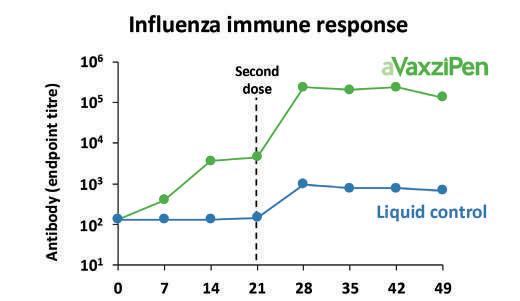
This effect has been demonstrated in preclinical studies. In a rabbit model using a recombinant influenza H7 antigen, a solid dose formulation (aVaxziPen) induced significantly stronger immune responses than its liquid comparator.7 Following a second booster immunization, antibody titers in animals receiving the SDV were up to ten-fold higher than those in the liquid vaccine group (Figure 1). Additionally, onset of the immune response was more rapid after the primary dose, indicating more efficient early immune activation.
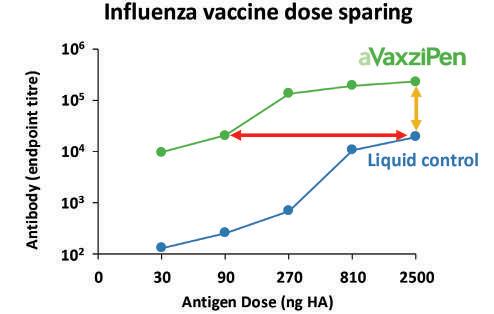
Importantly, equivalent immune responses were achieved using approximately 20-fold less antigen in the solid dose formulation compared with the liquid vaccine (Figure 2). These findings illustrate the dose-sparing potential of SDVs. As antigen is typically the most resource-intensive component of vaccine manufacturing, reductions of this magnitude offer a direct, scalable route to cost savings, particularly in highthroughput livestock systems, where many millions of doses may be administered annually.
2. Antibody titers at different antigen doses illustrating the dosesparing potential of a solid dose formulation. The SDV achieved an equivalent immune response using 20 times less vaccine (red arrow) and ten times greater antibody titers after the second dose (yellow arrow).
Mitigating Reactogenicity
Lower antigen doses may also mitigate vaccine reactogenicity – that is, the local and systemic inflammatory response to immunization. While some innate immune activation is essential to trigger protective immunity,8 excessive reactogenicity can lead to adverse outcomes that have both animal welfare and commercial implications.
Local reactions, particularly at intramuscular injection sites, are well-documented in livestock. These may include inflammation, swelling, or lesion formation and in meatproducing animals, such effects have direct commercial consequences. A study conducted at Colorado State University demonstrated that approximately 9.7% of beef round cuts contained visible lesions at the injection site, requiring an average of 212 grams of meat to be trimmed and discarded.9 Moreover, meat from the tissue surrounding the lesion exhibited reduced tenderness due to increased collagen deposition and localised fibrosis. The study concluded that intramuscular injection-site lesions caused significant muscle damage, affecting both yield and meat quality.
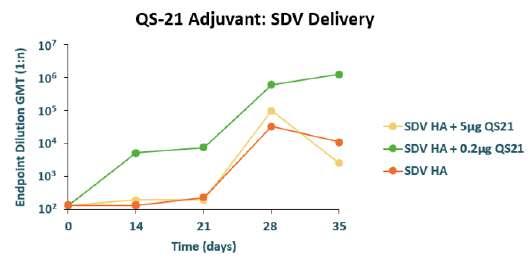
Adjuvant Sparing
Closely related to antigen sparing is the concept of adjuvant sparing – achieving robust immune responses with lower quantities of adjuvant. Vaccine adjuvants are chemicals, microbial components or proteins that enhance the immune response to an antigen.10
However, adjuvants account for much of the reactogenicity associated with vaccination – the local inflammation, injectionsite reactions and systemic side effects that may be seen. As already discussed, in production animals local reactions can have implications for welfare and carcass quality. Furthermore in cats, chronic inflammation at the site of vaccination has been linked to the development of feline injection-site sarcomas (FISS). While the precise role of adjuvants in FISS pathogenesis is unknown, vaccines containing adjuvants tend to induce more local inflammation than non-adjuvanted formulations and chronic inflammation is a known risk factor for FISS development.11,12
Figure 1. Antibody titers following primary and booster vaccination in a study using recombinant influenza H7 antigen in rabbits. The SDV achieved a more rapid antibody induction after the first dose and a larger boost after the second dose.
Figure
LIVESTOCK & DISEASES
In horses, intradermal testing has shown that some animals with a history of vaccine hypersensitivity react specifically to adjuvant components.13 This suggests that adjuvants may act as sensitising agents, priming the immune system for exaggerated responses to future exposures. Reducing adjuvant exposure may therefore help to lower cumulative exaggerated immune burden.
Adjuvant Sparing Potential
The adjuvant sparing properties of SDVs are highlighted in a preclinical study using an influenza vaccine and the aVaxziPen SDV platform.7 Solid dose formulations containing just 0.2 µg of QS-21 elicited a strong antibody response, despite using a 25-fold lower adjuvant dose compared to another SDV group (Figure 3).
These findings highlight the potential of SDVs to achieve effective immune responses while substantially reducing adjuvant content. Reducing adjuvant content in vaccine formulations can offer significant safety and tolerability benefits, particularly in veterinary settings where animals may receive repeated vaccinations over their lifetime and where field conditions may complicate post-vaccination monitoring.
Needlestick Safety
While often overshadowed by other vaccine-related concerns, needlestick injuries represent a significant occupational hazard. Needlestick injuries are particularly common in livestock settings, where animal movement, time pressure and volume all increase the chance of accidental contact. As well as local trauma to the handler, these injuries can lead to exposure to biological agents or vaccine components, as well as lost working time, compensation costs and litigation risk for commercial operators.
The Veterinary Medicines Directorate (VMD) holds many reports of people suffering from prolonged pain, inflammation and restrictions to mobility because of a veterinary needlestick injury.14 The demographic of people at risk is wide-ranging, from staff in clinical veterinary facilities, to farmers administering routine medication to large numbers of livestock.
SDV delivery devices contain no sharps, require no needle handling or recapping, and can be safely discarded in ordinary waste streams after use. For large-scale vaccination campaigns, this safety advantage scales significantly.
Beyond human safety, needle-free delivery also confers important benefits for animals and food safety. Needle breakage during injection is a recognised risk in livestock vaccination, particularly in pigs and cattle, where sudden movement can cause needles to snap and become embedded in muscle tissue. Retained needle fragments may only be detected at slaughter, resulting in carcass trimming, condemnation, or removal of the animal from the food chain entirely. This represents a direct economic loss to producers and a potential food safety concern.
Protection Against PRRS
A key question for any novel delivery format is whether it translates beyond preclinical models into protection in target livestock species. A recent study evaluated a needle-free solid dose delivery of a modified-live PRRSV vaccine in pigs and found it generated neutralising antibody responses and protection comparable to standard needle-and-syringe vaccination.15 Protection was evidenced by reductions in viremia, virus shedding, and gross lung lesions following challenge. This study marks a significant step forward in the development of SDVs for commercial use.
Expanding Access in Resource-Limited Settings
The potential benefits of SDV technology are apparent in high-throughput livestock systems, such as intensive pig or poultry systems, where millions of doses may be administered annually. They are equally compelling in LMICs, where cost, logistics and infrastructure constraints remain major barriers to effective vaccine deployment.
Many of the infectious diseases where vaccination is central to control - including foot-and-mouth disease (FMD), peste des petits ruminants (PPR) and lumpy skin disease (LSD) – are endemic or recurrent in LMICs. These transboundary diseases not only undermine local livestock productivity and
Figure 3. The adjuvant sparing potential of an influenza SDV. A strong antibody response was achieved with a 25-fold lower dose of QS-21.
LIVESTOCK & DISEASES
food security but also pose ongoing risks to regional and global animal health.
In such settings, the ability to deploy vaccines that are thermostable, scalable and easy to administer by livestock workers is critical. SDV technology supports rapid scale-up of vaccine production and distribution during outbreak scenarios, while reducing dependence on cold chain infrastructure and lowering costs per delivered dose of vaccine. This enables wider coverage, more reliable immunization campaigns and greater resilience in disease control programs.
Conclusion
As global agriculture faces increasing pressure to decarbonize, manage emerging disease threats and improve production sustainability, the veterinary sector must evolve. SDV technology addresses the fundamental limitations of liquid vaccines and offers a path toward more efficient, sustainable and accessible animal health interventions. By aligning scientific innovation with practical delivery, SDVs have the potential to strengthen disease control, support animal welfare, environmental goals and global food security, whilst at the same time improving the cost-effectiveness of vaccinations.
REFERENCES
1. Smith, D. M. et al. Quantification of COVID-19 vaccine needle and syringe dead space volumes. Cureus. 13,10 (2021). doi: 10.7759/cureus.18969
2. Drain, P. K. et al. Single-dose versus multi-dose vaccine vials for immunization programmes in developing countries. Bull World Health Organ. 81(10), 726-32 (2003.) PMCID: PMC2572331
3. Brandau, D. T. et al. Thermal stability of vaccines. J Pharm Sci. 92(2), 218–31 (2003). doi: 10.1002/jps.10296
4. Fortpied, J. et al. Stability of an aluminium salt-adjuvanted protein D-conjugated pneumococcal vaccine after exposure to subzero temperatures. Hum Vaccin Immunother. 14(5), 1243–50 (2018). doi: 10.1080/21645515.2017.1421878
6. Rees, G. M. et al. Storage of prescription veterinary medicines on UK dairy farms: a cross-sectional study. Veterinary Record. 184, 153-153 (2019). https://doi.org/10.1136/vr.105041
7. aVaxziPen preclinical study (2025). Data on file.
8. Hervé, C. et al. The how’s and what’s of vaccine reactogenicity. npj Vaccines. 4, 39 (2019). https://doi.org/10.1038/s41541-0190132-6
9. George, M. H. et al. Injection-site lesions: incidence, tissue histology, collagen concentration, and muscle tenderness in beef rounds. J Anim Sci. 73(12), 3510-8 (1995) doi: 10.2527/1995.73123510x
10. Spickler, A. R. & Roth, J. A. Adjuvants in veterinary vaccines: modes of action and adverse effects. J Vet Intern Med. 17(3),
11. Day, M. J. et al. A kinetic study of histopathological changes in the subcutis of cats injected with non-adjuvanted and adjuvanted multi-component vaccines. Vaccine. 25, 40734084 (2007). doi: 10.1016/j.vaccine.2007.02.049
12. Mikiewicz, M, et al. Metallothionein expression in feline injection site fibrosarcomas. BMC Vet Res 19, 42 (2023). doi: 10.1186/ s12917-023-03604-5
13. Gershwin, L. et al. Equine IgE responses to non-viral vaccine components. Vaccine. 30:52, 7615-7620 (2012). doi: 10.1016/j. vaccine.2012.10.029
15. Schiavone, A. et. al. Evaluation of a strategy to enhance the efficacy and ease of application of porcine reproductive and respiratory syndrome virus vaccines. Vaccine. 64, 127757 (2025) ISSN 0264-410X https://doi.org/10.1016/j.vaccine.2025.127757
Robin Cohen
Robin Cohen, Chief Executive Officer & Executive Director, has over 25 years of experience in the pharmaceutical industry with a strong commercial and business development focus. Robin has worked in both commercial and Business Development roles at Janssen Cilag (Johnson & Johnson) as well as executive level positions in the biotech space. Prior to joining aVaxziPen, Robin worked as Chief Business Officer at Emergex Vaccines. Robin leads all aspects of commercial development and partnering for the organisation.
Email: robincohen@avaxmed.com
Christopher Macgregor
Christopher Macgregor, Head of Research & Development, has worked in novel pharmaceutical delivery technology development for more than 12 years and has a strong background in process development and pharmaceutical engineering. Prior to his current role, Chris worked as a Manufacturing Engineer and subsequently Head of Manufacturing, where he led development from laboratory bench to GMP-scale operation. Chris manages the R&D team within aVaxziPen and supports technical, Business Development and strategic activities within the company.
Email: chrismacgregor@avaxmed.com
Environmental Adaptions in Canine Osteoarthritis Learning from Human Medicine
Environmental adaptation is a powerful yet underused tool in managing canine osteoarthritis (OA). Drawing from human healthcare, where home modifications are standard in the management of this chronic disease, veterinary care can be improved by addressing environmental factors that influence OA progression and expression. Despite clear benefits, it is often overlooked due to psychosocial barriers, but there is a compelling case to routinely include environmental modification in OA management strategies.
The Underappreciated Game Changer
Environmental and routine modifications are well-established in human OA care, as they are affordable, accessible and scientifically sound.
Highlights of Environmental Modification Include:
• They can have an immediate and positive impact.
• They are truly holistic approaches that address both physical and psychological well-being.
• They have the potential to slow the progression of the OA illness with emerging support that they may act as mediating factors in OA development.
• These changes are within the caregiver's control, allowing them to play an active role in the management plan, which can combat feelings of helplessness.
So why are environmental modifications not well publicised in veterinary medicine, in the same way as they are for conditions such as Feline Lower Urinary Tract Disease? Limited adoption is not simply due to a lack of awareness, with several other factors to consider:
• Environmental modifications are difficult to neatly package, feeling vague and intangible in comparison to tests or medications.
• Environmental modification plans are highly individualised, adapting to the specific needs of the dog, the caregiver and their daily routines. Explaining why environmental changes matter, teaching the key principles and helping caregivers implement them requires time that many clinicians simply don’t have.
• Much like the field of occupational therapy, environmental adaptations lack robust clinical evidence (Mille, McClement & Lauer, 2023). It can be argued that their value is clear without needing extensive proof, yet without funded research these strategies struggle for legitimacy.
• Clinicians may feel that discussing the caregiver’s chosen lifestyle and environment for their pet is intrusive and clinician despondency develops rapidly when clients, sold on traditional medical approaches, fail to act on advice.
• Advocacy for environmental modifications can be equally challenging within the clinic team. If one team member dismisses them as ‘over the top,’ it can undermine the collective belief system.
Shifting towards a more holistic approach to OA management requires not only educating caregivers but also gaining collective buy-in from the veterinary team
(Marcellin-Little, 2020). The whole team must understand the physiological, physical, emotional and cognitive consequences of chronic musculoskeletal pain.
Why
Does It Matter?
Osteoarthritis is not just a disease of the joints, as it cannot be viewed in isolation of the environment that the individual lives in.
Persistent Pain
Persistent pain is all-encompassing, influencing physiology, cognition and emotion. It initiates a constant stress response, impairs brain function and affects emotional well-being (Roberts et al., 2021). As seen in Figure 1, persistent pain is linked to disturbed sleep, reduced cognitive capacity, low mood, poor cardiovascular health and diminished quality of life (Smith, Mendl & Murrell, 2022). It is more than a sensory experience; it’s an emotional and cognitive burden, with the inability to control or predict pain fuelling chronic stress and anxiety, which lead to heightened threat sensitivity and avoidance behaviours such as disobedience or withdrawal.
Pain fosters inactivity and altered movement patterns, which can cause muscle loss, postural changes and declining mobility (Mille, McClement & Lauer, 2023). Cognitive impairments, including reduced grey matter and neurogenesis, are exacerbated by sleep deprivation, medication and stress (Phelps, Navratilova & Porreca, 2021).
Figure 1: The consequences of living with chronic pain are extensive, impacting physiological, physical, cognitive and emotional domains Falls
Among humans over 65, 28–35% fall annually; of these, 68% sustain injuries, 25% require medical intervention and 33% experience a functional decline afterward. Falls are linked to morbidity, hospitalisation, institutionalisation and even mortality (MDTea Podcast, 2016b). In response, robust fallprevention strategies have been developed in human healthcare.
While bipedal humans are more biomechanically vulnerable to falls than quadrupedal dogs, many contributing
COMPANION ANIMALS
factors are shared and canines, especially those with OA and associated muscle imbalances, experience similar challenges in stability, pain and coordination (Kapatkin et al., 2007; Meeson et al., 2019). Though exact canine fall statistics are unavailable, the human data offers useful context.
A common misconception is that dogs’ digitigrade stance, pads and claws prevent slipping. In reality, pads serve mainly to absorb force and provide sensory input, while claws only engage traction on diggable surfaces. With age, dogs’ pads harden and smoothen, reducing grip and their claws are often ineffective on hard indoor floors. These age-related changes mirror human frailty, where once-manageable surfaces become hazardous.
Acute Flares
Osteoarthritis-associated pain is acute-on-chronic in nature. Persistent nociceptive signaling drives complex neuroplastic changes, leading to pain that extends beyond the site of tissue damage and a hypersensitive nervous system that is hypervigilant to further insult (Dagnall & Covey-Crump, 2023). In veterinary medicine, informal descriptions such as ‘weekend warrior syndrome,’ or as animals having simply ‘overdone it,’ are more likely acute flares of OA.
Human healthcare promotes proactive, preventive management by identifying and avoiding flare triggers, such as activities performed in the preceding 24–72 hours. Similarly recognising this ‘trigger relationship,’ in dogs encourages hesitant caregivers to implement necessary environmental and lifestyle modifications for their pets.
Functional Mobility Associated with OA
Pain transforms simple tasks into significant challenges. A once effortless step from the back door becomes daunting; stairs once climbed with ease turn into obstacles. Even approaching a food bowl on a tiled floor may provoke anxiety. These changes reflect the importance of functional mobility –the ability to move freely and comfortably to perform everyday activities (Wells et al., 2024). Metz and Bracke (2025) stress that daily mobility is as vital for all dogs as it is for humans and Wells et al. (2024) have gone further and defined two categories of canine activities of daily living:
• Basic Activities for Daily Independent Mobility (BADIM): rising, moving through doorways, posturing to eliminate or eat.
• Instrumental Activities for Daily Quality of Life (IADQOL): climbing stairs, getting into a car, playing, exploring and maintaining continence.
Pain restricts both voluntary and involuntary movement. Mobility limitations often appear first in complex tasks requiring coordination, strength and motivation, while simple linear walking may remain unchanged (Wells et al., 2024). Traditional veterinary assessments of impairment may be insufficient as they tend to focus on more linear outdoor activity and not complex indoor mobility, which is where dogs spend most of their time, spending on average only 30–60 minutes per day on outdoor exercise. In addition, our indoor environments are fraught with smooth floors, compact spaces and stairs far removed from a dog’s natural terrain (Clark et al., 2023).
Advances in available technology can provide insights into functional challenges at home and surpass our observations from in-clinic assessments, as well as highlight to the caregiver key areas of the home that need to be adapted to meet the capabilities of their dog.
Psychological Safety
Insecurity due to slippery floors, frustration from being unable to access certain areas and feelings of isolation due to limited mobility are well-recognised in humans. Dogs living in environments unsuited to their functional needs may experience persistent stress – ironically caused by the very surroundings meant to keep them safe and comfortable (Metz & Bracke, 2005; Kapatkin et al., 2007).
Comorbidities
Osteoarthritis often begins in young dogs but becomes more clinically evident with age, frequently going undiagnosed until the senior years. Older dogs commonly have multiple comorbidities – up to seven organ system issues, 80% of which may be previously undetected (Davies, 2023). With this in mind, a holistic approach to OA management is essential. Age-related impairments like sensory loss, cognitive decline, cardiac or respiratory issues and sarcopenia, combined with chronic OA pain, can significantly affect a dog's physical and psychological well-being, as well as reducing mobility and increasing injury risk.
Frailty
Frailty in companion animals is an emerging concept, but well understood in human healthcare. Frailty describes a decline in physiological reserve and resilience and increasing vulnerability to adverse health events. It correlates with disability, hospitalisation, falls, surgical risks and death. Physical inactivity is a major contributor to frailty, but importantly, frailty has been shown to be reversible with exercise in humans (Bray et al., 2016). Screening tools, like the frailty phenotype, aim to identify earlier loss of strength, slower walking speeds, fatigue, weight loss and reduced activity in humans.
Lemaréchal et al. (2022) recognised five frailty domains in dogs: weakness, slowness, low endurance, inactivity and shrinking (i.e. weight loss as reported by the caregiver) and it was found that dogs showing three or more signs were twice as likely to die within six months. Russell et al. (2024) have introduced another similar tool assessing nutrition, exhaustion, weakness, social withdrawal and mobility and found that frail dogs were nearly five times more likely to die within the same period.
These frailty tools aim to identify dogs’ intrinsic capacity and those needing more support and guide caregivers on how to reduce risk and maintain quality of life, often through environmental adaptations and appropriate exercise. It’s hoped through emphasising what the dog can still do rather than solely focusing on deficits may help shift caregiver mindset and improve the uptake of recommendations.
Polypharmacy
Older dogs with OA often have multiple chronic conditions and frequently receive polypharmacy. Veterinary medicine lacks comprehensive guidance on the cumulative effects of multiple medications in individual patients, unlike human healthcare, where polypharmacy is a recognised risk factor for adverse events and decreased physical resilience and mobility.
Effect of Environment on Welfare
In most homes with a beloved pet, the concept of poor welfare may be too distressing, alarming or insulting to introduce to a caregiver without losing their trust. Traditional welfare frameworks such as the Five Freedoms have focused on avoiding negative welfare states, but recent moves to the Five Domains model reminds us to consider the animal’s psychological needs alongside their physical ones, prompting
LIVESTOCK AND DISEASES COMPANION ANIMALS
The Five Freedoms The Five Domains
Freedom from hunger and thirst
Freedom from discomfort
Freedom from pain, injury and disease
Freedom to express normal behaviour
Freedom from fear and distress
Nutrition – giving sufficient, balanced, varied and clean food and water
Environment – comfort through temperature, substrate, space, air, odour, noise and predictability
Health – enabling good health through absence of disease, injury, impairment with a good fitness level
Behaviour – providing varied, novel and engaging enrichment through sensory inputs, exploration, foraging, bonding, playing, retreating and others
Mental state – the animal should benefit from predominantly positive states, e.g., pleasure or comfort, while reducing negative states such as fear, frustration, hunger, pain, or boredom
respected Five Freedoms have been recently reviewed to include ‘freedom to,’ rather than solely focusing on ‘freedom from’ and are now called the Five Domains Model of Animal Welfare
us to not only prevent suffering but also to actively enrich their lives in a world that we control and may be more intuitively palatable to caregivers.
Sleep Needs
The bidirectional relationship between disturbed sleep and chronic pain is well established. Osteoarthritis has been shown to disrupt sleep in humans and activity monitoring has demonstrated similar findings in dogs with OA (Smith, Mendl & Murrell, 2022).
While definitive guidelines for sleep hygiene in dogs do not yet exist, logic suggests that dogs – being polyphasic sleepers that require significant amounts of sleep – require undisturbed opportunities both day and night and that we should accommodate their preferences through offering choice. Beds should be firm, supportive, stable and easy to access and exit. Providing multiple beds of different designs and locations – situated away from slippery floors, stairs, walkways, drafts, excessive heat, or bright lighting – can help create secure, undisturbed rest environments that promote restorative sleep.
Mental Engagement Needs
Cognitive processing – the mental processes involved in acquiring, processing and using knowledge – has a bidirectional relationship with chronic pain. Attention to pain facilitates the experience, whereas distraction has an inhibitory effect. In fact, it has been proposed that the development of chronic pain is in part related to dysfunctional extinction of pain related memories (Phelps, Navratilova & Porreca, 2021).
Encouraging clients to frequently provide mentally stimulating and rewarding activities - especially for less mobile patients – can counter the loss of less suitable activities. Extending feeding times through achievable puzzle feeders, scatter feeding and hide and seek games can provide both pleasure and distraction. Increasing caregiver interaction via play, training, scent work and games – along with enriching the animal’s environment with novel smells, sights, sounds and tactile experiences – can activate neuromodulatory mechanisms that influence their perception of pain.
What do Environmental Modifications Look like for Canine Osteoarthritis Patients?
Environmental adaptations are not prescriptive; rather, they are patient-centred, aiming to preserve the individual dog’s quality of life and must remain flexible and tailored to the unique context of each case. They should align with the
caregiver’s physical, emotional, time, financial and belief budgets.
To help guide caregivers, the acronym SEE can be used as a practical and memorable framework when discussing environmental changes:
Figure 2: The globally
Figure 3: S – Safer, E – Easier, E – Enjoyable, a memorable acronym when adapting the home environment
COMPANION ANIMALS
Joint Protection in the Veterinary Setting
‘Joint protection,’ is a well-established concept in human healthcare involving environmental modifications, activity pacing, task adaptations and the use of assistive devices to make daily activities more manageable through reducing joint load, maintaining joint function, minimising pain and avoiding overuse (Hammond, 2013). Studies show that individuals engaging in joint protection programmes report reduced pain, improved functional capacity and slower disease progression. As a result, joint protection is strongly recommended by the Osteoarthritis Research Society International (OARSI) as a core component of osteoarthritis management (McAlindon et al., 2014).
While strong veterinary-specific evidence is currently limited, it is reasonable to infer that consistently minimising repetitive, concussive, or rotational forces on compromised joints and surrounding soft tissues can help reduce pain and potentially slow the progression of joint disease in dogs, as seen in human medicine.
Initiating conversations about home modifications can be challenging. Posing targeted questions, such as ‘Guide me through a typical day from when you first wake up,’ or gaining visual context through caregiver-recorded videos can help identify key environmental challenges. Ensuring that the
Figure 5: Incorporating environmental adaptations into a standardised approach, as seen here in Canine Arthritis Management’s caregiver’s volume of influence pyramid cement their importance in the multimodal approach. *Further veterinary intervention
client has access to further resources post consultation is essential to continue to motivate them to complete necessary changes. Environmental adaptations are not ‘logical,’ to caregivers and even engaged clients take multiple prompts before a suggested change is implemented. Human behaviour change is fraught with difficulties because we are effectively attempting to rewire deeply rooted habits, beliefs and social norms. Recognising these barriers, implementing a graded introduction and providing inspiring resources can help.
Normalising environmental adaptations by embedding them within already accepted approaches, rather than presenting them as a standalone or optional extra, may improve caregiver uptake and compliance by shifting adaptations from being perceived as ‘add-ons,’ to being recognised as fundamental components of a management plan.
Conclusion and Key Points
Osteoarthritis in dogs has long been considered an appropriate model for study of the disease in humans, but the knowledge gained from it has not been applied equally to both species. Environmental adaptations are considered essential in human OA management and the time is long overdue for it to be the same in dogs.
We have an opportunity to involve the caregiver in impactful interventions but also need to ourselves identify the importance of environment and subsequently provide guidance to the clients and their pets in our care.
Hannah Capon
Hannah has worked in a wide range of veterinary settings and has a strong interest in chronic pain management, geriatrics, musculoskeletal health and rehabilitation. Her dedication to these fields has been widely recognised, earning her many awards, including the 2025 World Small Animal Veterinary Association Welfare Award in 2025. She is the founder of Canine Arthritis Management (CAM), an online educational and support platform designed to help both pet owners and veterinary professionals improve the care of arthritic dogs.
Siân Burwood
Siân is a small animal vet and freelance veterinary writer with a passion for communication and contextualised care. She produces client support materials for Canine Arthritis Management.
Figure 4: Common Obstacles in a Typical Home
Exploring Genetic Diversity in the Olfactory Receptors of Dogs
From Wolf to Pug: What Sequence Variation Tells Us About the Evolution of Smell
Dogs are widely considered to have an excellent sense of smell, which is much more sensitive than that of humans. Since their domestication from grey wolves over 15,000 years ago, almost 400 breeds of dog have developed over time, with different abilities and traits, including sense of smell. Certain breeds have a strong reputation for their keen nose, whilst others are perceived to be less skilled in this area. Behavioural traits and anatomical features may account for some of these differences, but dog breeds also differ in their olfactory receptor genes. This article will summarise key findings from a recent article (Inoue et al. 20251) that used whole-genome data sets from hundreds of dogs across many breeds, to investigate differences in the number of functional genes and variants for three chemosensory receptor gene families - olfactory receptors (ORs), vomeronasal receptors type 1 (V1Rs), and bitter taste receptors (T2Rs).
Olfactory Performance in Dogs
Scent hounds such as Beagles, Basset Hounds and Bloodhounds have been bred selectively for olfactory performance and, along with others such as Labrador Retrievers and German Shepherds, are used in the workplace as ‘sniffer dogs,’ in a range of critical tasks including detection of drugs or explosives and identification of people and even medical conditions. Such is their ability, that in many cases detection dogs are much more effective, reliable and versatile than instrumental detection methods.
Conversely, brachycephalic breeds such as Pugs and Bulldogs have short-nosed facial features and are considered to have impaired sense of smell compared with other breeds.2 This is due to structural changes to the nose leading to reduced airflow to the nasal cavity and alterations in brain anatomy affecting the olfactory bulb.
Despite general assumptions based on their characteristics and the visual distinction between scent hounds and brachycephalic dogs, studies that have compared olfaction between different dog breeds have revealed some inconsistent results. In training-free olfactory tests, scent hounds and handreared grey wolves outperformed brachycephalic dogs and other breeds.2 However, Pugs have been shown to outperform German Shepherds in odour discrimination tasks, especially when odorants were diluted.3 It is possible that behavioural motivation may have contributed to those results. Thus, while olfactory capacity can be affected by physical features, behavioural factors or traits also play a role.
The Genetic Basis of Olfaction
In the main olfactory system, olfactory receptors (ORs) are expressed in the main olfactory epithelium of the nasal cavity, where they detect odours. Dogs have around 810 functional OR genes – twice as many as humans (~400), but fewer than half as many as African elephants (~2000).
In the accessory olfactory system, or vomeronasal system, there are two types of receptors – vomeronasal receptors type 1 and type 2 (V1Rs and V2Rs) – for which the numbers of genes also vary greatly across mammalian species. V1Rs generally detect small molecules whereas V2Rs detect peptides and proteins. Around 8 to 9 functional V1R genes have been reported in dogs, but all V2R genes are pseudogenised and no longer produce functional receptors.
Sweet, umami and bitter tastes are mediated by taste receptors type 1 and type 2 (T1Rs and T2Rs), which are expressed on the tongue. There are three T1R genes in most mammals, including dogs, whereas T2R gene numbers vary across species.
A study published in early 2025 showed that, at the level of gene copy number, dogs have lost some functional OR gene copies over evolutionary time, with wolves and coyotes retaining larger OR gene repertoires compared with domestic dogs.4 However, no differences in OR gene copy numbers were detected between dog breeds. This suggests that loss of OR gene copies in dogs occurred as part of the domestication process, but prior to breed formation.
Analysing Types of Genetic Variation in OR Genes Across Breeds
An analysis of single nucleotide variations (SNVs) published at the end of 2025 has built upon previous genetic studies and revealed genetic differences within chemosensory receptor genes across 121 breeds of dog and 8 grey wolves.1 This study used data from the Dog Biomedical Variant Database Consortium – an international scientific collaboration established to support canine genomics and medical genetics research, for which Mars Petcare UK is a contributor of dog genomes. Whole-genome sequencing data across 635 individual dogs and 8 wolves were analysed to characterise SNVs in OR, V1R and T2R genes. Variants were classified according to predicted functional impact, with particular attention to nonsense mutations and frameshift mutations likely to disrupt receptor function. Overall, this revealed that numbers of V1R and T2R genes were similar across all animals studied, but the number of functioning OR genes varied.
COMPANION ANIMALS
Number of functional OR gene loci: Repertoire of OR genes (upper image)
Placement of breeds is illustrative and not all comparisons were made directly or significant; see Inoue et al. for full analyses and results.
Olfactory Receptor Gene Variation Among Dogs and Wolves
The number of functional gene loci was not significantly different between dogs and wolves for any of the three chemosensory receptors. However, SNV analysis showed that within those loci, dogs had higher ratios of nonsynonymous to synonymous substitutions in OR and T2R genes compared with wolves, suggesting less evolutionary pressure for these olfactory genes to stay unchanged and functional in dogs. This is in keeping with, and builds upon, findings from an earlier study, which concluded that dogs had fewer functional OR gene copies.4 Thus, not only has the number of OR genes in dogs decreased since the domestication from grey wolves 15,000 years ago, but the remaining genes have also accumulated more mutations. The number of OR genes in a species’ genome is closely related to size of the cribriform plate (CP) – a bony structure that forms part of the ethmoid bone found in the roof of the nasal cavity.5 The CP supports the olfactory bulb, allowing olfactory nerves to pass from the mucosa to the bulb, and so is crucial for olfaction. CP size is reduced in domestic dogs compared with wolves and the main olfactory bulb is less developed.4,6,7
Number of Olfactory Receptor Genes in Scent Hounds
Across the 121 breeds included in the SNV study, seven were classified as scent hounds according to the Fédération Cynologique Internationale; these were Alpine Dachsbracke, Basset Hound, Bavarian Hound, Beagle, Dalmatian dog, Petit Basset Griffon Vendeen and Rhodesian Ridgeback. Surprisingly, the analysis revealed that these scent hounds did not have more functional OR genes compared with several other breed groups, including sight hounds. This is contrary to the common belief that scent hounds have been selectively bred for enhanced olfactory abilities. Other studies have also found that scent hounds and other breeds are comparable in terms of relative CP size and estimated numbers of OR
genes.4,6 However, in scent detection tests scent hounds can outperform other breeds and they are widely used for roles that require olfactory performance.2 It may be that their aptitude for such roles is due to factors such as trainability, rather than substantial differences in olfactory genes and function.
Number of Olfactory Receptor Genes in Pugs
While scent hounds are commonly believed to have superior sense of smell, brachycephalic dogs are not generally associated with such skills.2 Accordingly, in SNV analyses, Pugs had the fewest functional OR gene loci or unique functional OR genes compared with all other breeds with 10 or more samples. Pugs also showed a significantly higher nonsynonymous to synonymous substitution ratio than other breeds. This suggests that the functional OR gene repertoire has degenerated in the Pug lineage and that selective pressure to maintain functional OR genes is relaxed. Thus, not only are Pugs brachycephalic, which can affect olfaction, but their sensory genome has also been eroded. While this is consistent with the existing view that Pugs have reduced sense of smell, there are data showing that Pugs can do well in olfaction tests.3 Again, this may be due to other characteristics such as behavioural motivation.
Another interesting finding was that one particular OR gene locus, Dog-OR7D4-1, was completely pseudogenised in Pugs, but remained mostly functional (>90%) in all other breeds. This gene evolved from the same ancestral gene as OR7D4 in humans, which encodes a receptor for androstenone. This steroidal pheromone in boar saliva acts as a sex pheromone in pigs but has measurable effects in dogs and humans. The functional implications for radical alteration and potential loss of this specific OR gene in Pugs are unknown, however it suggests that Pugs are missing one ‘dimension,’ of smell that other dogs retain.
LIVESTOCK AND DISEASES COMPANION ANIMALS
Summary
• Generally, numbers of V1R and T2R genes were similar across all dogs studied, but the number of functioning OR genes varied.
• Dogs were found to have a higher ratio of nonsynonymous to synonymous substitutions in OR and T2R genes compared with wolves suggesting less evolutionary pressure for these chemosensory genes to stay unchanged.
• Scent hounds did not have more functional OR genes compared with other breeds, including sight hounds.
• Pugs had the fewest functional OR gene loci or unique functional OR genes compared with other breeds and had a higher nonsynonymous to synonymous ratio.
• Pugs appear to have lost the receptor for androstenone, whereas this remains functional in most other breeds.
Chemosensory Diversity Across Dog Breeds
The differences in OR gene repertoires across dog breeds
demonstrated in this study provide insights into the genetic basis of chemosensory diversity. These findings, in turn, can help us understand some of the differences we see in olfactory function between dog breeds that exist today, such as reduced sense of smell in Pugs. The results also shed some light on the possible effects of domestication from wolves, namely, a relaxing of functional constraints on OR and T2R genes.
Acknowledgments
This article is based on a previously published study: Inoue H, Gibbs M, McGrane SJ, Niimura Y. Diversity in chemosensory receptor genes in dogs and wolves: degeneration of the olfactory receptor gene repertoire in the brachycephalic Pug. Chem. Senses. 2025 Jan 22;50:bjaf062. doi: 10.1093/chemse/ bjaf062.
The study was supported by Japan Society for the Promotion of Science KAKENHI Grant Number 22K06341 to Yoshihito Niimura. The study was also partly funded by the Waltham Foundation, Waltham Petcare Science Institute, Mars Petcare, Waltham on the Wolds, Melton Mowbray, Leicestershire, LE14 4RT, UK.
REFERENCES
1. Inoue, H., Gibbs, M., McGrane, S.J., and Niimura, Y., Diversity in chemosensory receptor genes in dogs and wolves: degeneration of the olfactory receptor gene repertoire in the brachycephalic Pug. Chem. Senses. 50 (2025).
2. Polgár, Z., Kinnunen, M., Újváry, D., Miklósi, Á., and Gácsi, M., A Test of Canine Olfactory Capacity: Comparing Various Dog Breeds and Wolves in a Natural Detection Task. PLoS One. 11(5), e0154087 (2016).
3. Hall, N.J., Glenn, K., Smith, D.W., and Wynne, C.D.L., Performance of Pugs, German Shepherds, and Greyhounds (Canis lupus familiaris) on an odor-discrimination task. J. Comp. Psychol. 129(3), 237–246 (2015).
4. Mouton, A., Bird, D.J., Li, G., Craven, B.A., Levine, J.M., Morselli, M., et al., Genetic and Anatomical Determinants of Olfaction in Dogs and Wild Canids. Mol. Biol. Evol. 42(3) (2025).
5. Bird, D.J., Murphy, W.J., Fox-Rosales, L., Hamid, I., Eagle, R.A., and Van Valkenburgh, B., Olfaction written in bone: cribriform plate size parallels olfactory receptor gene repertoires in Mammalia. Proc. Biol. Sci. 285(1874) (2018).
6. Bird, D.J., Jacquemetton, C., Buelow, S.A., Evans, A.W., and Van Valkenburgh, B., Domesticating olfaction: Dog breeds, including scent hounds, have reduced cribriform plate morphology relative to wolves. Anat. Rec. (Hoboken). 304(1), 139–153 (2021).
7. Ortiz-Leal, I., Torres, M.V., López-Callejo, L.N., Fidalgo, L.E., López-Beceiro, A., and Sanchez-Quinteiro, P., Comparative Neuroanatomical Study of the Main Olfactory Bulb in Domestic and Wild Canids: Dog, Wolf and Red Fox. Animals (Basel). 12(9) (2022).
Dr. Scott J. McGrane
Scott has a PhD in Applied Chemistry from RMIT University. He has worked for Mars Petcare for 26 years specialising in pet sensory science and palatability research and has ~50 publications and patents in the field. Scott is a Senior Research Manager leading the sensory team at the Waltham Petcare Science Institute, the global science centre for Mars Petcare.
Email: scott.mcgrane@effem.com
@Anna Rose Heaton
Opportunities for Data Sharing Under EFSA's Latest Read-Across Guidance
In 2025, the European Food Safety Authority (EFSA) published the Guidance on the use of read-across for chemical safety assessment for food and feed.1 The readacross approach itself is not new; it has been formally recognised by the European Chemicals Agency (ECHA) since the introduction of REACH2 in 2007. While REACH defines the legally binding framework for read-across, the EFSA guidance provides a practical assessment approach in a different regulatory context. Both authorities agree that ‘read-across (…) is one of the most common alternatives to animal testing.’ This article highlights the animal welfare perspective and explores the datasharing opportunities arising from the new EFSA guidance.
The preparation and submission of an application for regulated products as assessed by ECHA or EFSA such as chemicals, novel foods, feed additives or pesticides is widely recognised as a time- and resource-intensive process, requiring comprehensive compliance with regulatory guidance and a robust demonstration of safety under the intended conditions of use. In this context, the recent EFSA guidance on the use of read-across provides a valuable, non-legally binding, opportunity to streamline dossier preparation while simultaneously supporting the reduction of animal testing. By enabling the use of existing data, the guidance has the potential to reduce both development costs, developmental risks and the need for additional toxicological studies. To assess this potential, it is essential to examine the underlying principles of the read-across approach as described by EFSA.
Read-across allows for the prediction of toxicological properties of a data-poor target substance based on relevant information from one or more structurally and mechanistically similar, data-rich source substances. Consistent with the approach established by ECHA, EFSA distinguishes two principal read-across strategies:
(i) The analogue approach, which compares the target substance with a limited number of closely related source substances.
(ii) The category approach, which relies on structural similarity and, where applicable, observed trends or patterns across multiple source substances to predict the properties of the target substance.1
Irrespective of whether an analogue or a category approach is applied, both follow a common, structured workflow comprising problem formulation, data gap analysis, identification and evaluation of suitable source substances or analogues, data gap filling and uncertainty assessment. A critical final step in establishing confidence in the application of the read-across approach is the provision of structured, transparent and sufficiently detailed documentation.
EFSA has beautifully illustrated an overview of those steps formulated in this read-across guidance document –including further potential approaches to reduce animal testing such as using NAMs (new approach methodologies), assessing AOPs (Adverse Outcome Pathways) or comparing mode of actions (MoA).
The EFSA guidance on the use of read-across for chemical safety assessment describes a structured workflow in which Step 4 plays a pivotal role in evaluating the plausibility of the read-across hypothesis. In Step 4, once relevant source substances have been identified (Step 3), the assembled or generated data are organised in a data matrix. EFSA emphasises that the final decision on source substance evaluation requires expert judgement, since conclusions cannot reliably be derived solely from automated systems or structural alerts. The outcome of Step 4 is therefore a decision either to proceed with data gap filling in Step 5 or to refine the read-across hypothesis through further information gathering in a new iteration. This step is critical for the subsequent uncertainty assessment, as it determines the strength of the supporting evidence and whether additional data are necessary to confirm the proposed read-across.
EFSA’s emphasis on expert judgement in Step 4 reflects the guidance’s central focus on uncertainty analysis. Uncertainty assessment is essential for a scientifically robust readacross and can be reduced through improved mechanistic understanding between source and target substances. As EFSA highlights, the reliability of read-across depends on high-quality experimental data and either a shared mode of action or clear, consistent trends within a category that support endpoint prediction.
While the EFSA guidance1 does not explicitly specify the origin of data used for read-across, clearer direction is provided by the REACH Regulation.2 Under REACH, data sharing is mandatory (Article 30) and the generation of new in vivo data is considered a last resort, to be undertaken only when existing information is insufficient to perform a risk assessment (Article 25).
This raises the practical question of where and how suitable data for read-across can be obtained.
Importantly, data contained in previously submitted dossiers that have become publicly accessible following the introduction of EFSA’s Transparency Regulation3 cannot be freely reused. EFSA explicitly states in its Intellectual Property Rights Notice4 that: ‘the reproduction, distribution, or further use of information and data made available on EFSA’s website may be subject to intellectual property protection and that their use without prior permission of the rights holder may constitute a legal violation.’
The same holds true for ECHA chemical data,5 where every user of the ECHA database must consider that: ‘The reproduction, distribution or further use of information, documents and data contained in the ECHA website and/ or in ECHA’s databases may be subject to protection under intellectual property rights and other rights and their utilisation without obtaining the prior permission from the rightholders(s) of the respective information, documents and data might violate the rights of the rightholder(s).’
Consequently, when relevant data are neither available in the open literature nor owned by the applicant (e.g. from previous registrations), alternative routes like contract data sharing must be considered. One option is to directly approach
FOOD & FEED
Figure 1: Structured workflow on read-across from the EFSA Guidance on the use of read-across for chemical safety assessment in food and feed. EFSA Journal, 237.2025. https://doi.org/10.2903/j.efsa.2025.9586
companies holding the relevant data and negotiate ‘letters of access,’ or complete copy rights. In practice, this is often challenging – due to the need to keep new product pipelines as confidential as possible, or simply due to difficulties in identifying appropriate contact persons. As an alternative, specialised data brokers, such as 4ReValue GmbH,6 have emerged that focus specifically on facilitating access to toxicological study data. This service includes:
- Anonymised presentation of the data sets available for sale and/or of required data sets.
- Independent scientific rating of data quality.
- Assistance with pricing and contract drafting for both parties.
- Service charge only in case of concluded data-sharing contract as brokerage fee.
A match can help save laboratory animals lives, recapitalise the assets of the data provider and save time and money for the data customer (including risk reduction – as the experimental outcome is clear).
Evidence on how frequently read-across has been applied under REACH is provided by Roe et al. (2024),7 who evaluated ECHA dossiers submitted between 2008 and 2023 against multiple criteria. Approximately 23% of submitted dossiers included read-across adaptations and nearly half of these (49%) were ultimately accepted. Notably, category-
based read-across approaches were more successful than analogue approaches. It remains to be seen how frequently read-across will be submitted to and accepted by EFSA in the context of food and feed safety assessments.
Beyond data sharing, EFSA’s read-across guidance is also characterised by a strong animal welfare perspective. Compared with the REACH framework and the 2017 ReadAcross Assessment Framework (RAAF), a notable feature of the EFSA guidance is its explicit emphasis on the integration of new approach methodologies (NAMs). These include in vitro methods and in silico models, which can be used to support and strengthen mechanistic plausibility and thereby increase confidence in read-across justifications. Importantly, NAMs are not excluded under the RAAF, which is method-neutral and allows NAM-derived evidence provided it is relevant, robust and transparently documented. In this respect, EFSA’s guidance complements the REACH/RAAF framework by explicitly promoting the use of NAMs in a food and feed safety context and by clarifying their role in reducing uncertainty.
However, despite this regulatory momentum, the translation of NAMs into routine assessment practice remains uneven. It is striking that a substantial proportion of current EU research funding is directed towards the development of NAMs (Table 1: not exhaustive but illustrative), highlighting a potential gap between methodological innovation and its systematic regulatory uptake.
Call
FOOD & FEED
Translating Disruptive NAMs into Practice (EIC-AIC-02)
Integrating NAMs to advance research (HLTH-01-TOOL-03)
(January 2026)
/ Timeframe
Until 02/26/2026
Until 04/16/2026
Support to European Research Area (ERA) Action on accelerating NAMs (HLTH-01-TOOL-06) OPEN / ONGOING Until 04/16/2026
NAM experience & regulatory confidence (HLTH-2024-IND-06-09)
Until 04/11/2024
Alternative methods to animal testing (BMFTR*) OPEN / ONGOING Until 03/15/2026
Animal Welfare Research Award (BMLEH**) OPEN / ONGOING Until 03/31/2026
Felix-Wankel Animal Welfare Research Award OPEN / ONGOING Until 09/30/2026
*BMFTR: Bundesministerium für Bildung, Forschung, Technologie und Raumfahrt (German Federal Ministry of Education, Research, Technology, and Space)
**BMLEH: Bundesministerium für Landwirtschaft, Ernährung und Heimat (German Federal Ministry of Agriculture, Food, and Rural Affairs)
Table 1: EU research funds for NAM projects
A notable precursor to current NAM-focused research was the SEURAT-1 (Safety Evaluation Ultimately Replacing Animal Testing) program, launched on 1 January 2011 and running for approximately five years until 2016, represents an example of early efforts to bridge this gap. SEURAT-18 was a European public–private research consortium aimed at advancing animal-free testing strategies while maintaining a high level of consumer protection. Although its long-term vision was the development of an initio toxicity predictions based on a comprehensive mechanistic understanding, the initiative explicitly acknowledged that, in the nearer term, data generated from innovative testing methods would be used to support read-across arguments. This approach was illustrated through case studies that integrated in vitro assays, computational models and mechanistic information to strengthen readacross justifications. The resulting conceptual framework for an integrated assessment strategy has since informed international developments in the use of alternative approaches and 21stcentury tools for chemical safety evaluation.
In summary, EFSA’s new read-across guidance aligns with the conceptual framework established by ECHA, while placing explicit emphasis on reducing animal testing, accepting alternative methodologies, and recognising data sharing as a legitimate means of assembling evidence to support readacross justifications. The extent to which these provisions will be adopted in future regulatory practice remains to be determined and will ultimately depend on their practical implementation and the generation of sufficient confidence in NAM-based evidence. Practical solutions for data-sharing are offered by specialised contract research data brokers like the 4ReValue GmbH.
REFERENCES
1. Bennekou, S. H., Álvarez-Ordóñez, A., Bearth, A., Casacuberta, J., Castle, L., Čoja, T., … & Serafimova, R. (2025). Guidance on the use of read-across for chemical safety assessment in food and feed. EFSA Journal, 23(7). https://doi.org/10.2903/j. efsa.2025.9586
2. Regulation (EC) No 1907/2006 of the European Parliament and of the Council of 18 December 2006 concerning the Registration, Evaluation, Authorisation and Restriction of Chemicals (REACH), establishing a European Chemicals Agency, amending Directive 1999/45/EC and repealing Council Regulation (EEC) No 793/93 and Commission Regulation (EC) No 1488/94 as well as Council Directive 76/769/EEC and Commission Directives 91/155/EEC, 93/67/EEC, 93/105/EC and 2000/21/EC, https://eurlex.europa.eu/homepage.html
3. Regulation (EU) 2019/1381 of the European Parliament and of the Council of 20 June 2019 on the transparency and
sustainability of the EU risk assessment in the food chain and amending Regulations (EC) No 178/2002, (EC) No 1829/2003, (EC) No 1831/2003, (EC) No 2065/2003, (EC) No 1935/2004, (EC) No 1331/2008, (EC) No 1107/2009, (EU) 2015/2283 and Directive 2001/18/EC
4. https://open.efsa.europa.eu/ipr-notice
5. https://echa.europa.eu/legal-notice
6. https://4revalue.com/
7. Roe HM, Tsai HD, Ball N, Wright FA, Chiu WA, Rusyn I. A systematic analysis of read-across adaptations in testing proposal evaluations by the European Chemicals Agency. ALTEX. 2025;42(1):22-38. doi: 10.14573/altex.2408292. Epub 2024 Nov 22. PMID: 39584503; PMCID: PMC11976166.
8. Gocht T, Berggren E, Ahr HJ, Cotgreave I, Cronin MT, Daston G, Hardy B, Heinzle E, Hescheler J, Knight DJ, Mahony C, Peschanski M, Schwarz M, Thomas RS, Verfaillie C, White A, Whelan M. The SEURAT-1 approach towards animal free human safety assessment. ALTEX. 2015;32(1):9-24. doi: 10.14573/altex.1408041. Epub 2014 Nov 5. PMID: 25372315.
Dr. Regina Ohlmann
The veterinarian Dr. Regina Ohlmann recognized the strong potential of read-across approaches to efficiently close data gaps in the preparation of authorisation dossiers for food and feed applications. Together with Dr. Schreiner, she founded 4ReValue GmbH to enable structured data sharing and provide solutions for missing data, while actively contributing to the global reduction of animal testing.
Email: ohlmann@4revalue.com
Dr. Regine Schreiner
Dr. med. Vet. Regine Schreiner founded Feed and Additives GmbH in 2014. Her experience in the approval of feed additives led to the idea of initiating the data sharing portal, 4ReValue GmbH, in May 2023 with Dr. Ohlmann. 4ReValue GmbH stands for reducing animal studies in contract research by sharing data and initiating calls for common sponsorships.
Email: schreiner@4revalue.com
IPI
Media and Communications
Peer Reviewed, IPI looks into the best practice in outsourcing management for the Pharmaceutical and BioPharmaceutical industry.
www.international-pharma.com
JCS
Peer Reviewed, JCS provides you with the best practice guidelines for conducting global Clinical Trials. JCS is the specialist journal providing you with relevant articles which will help you to navigate emerging markets.
www.journalforclinicalstudies.com
IAHJ
Peer Reviewed, IAHJ looks into the entire outsourcing management of the Veterinary Drug, Veterinary Devices & Animal Food Development Industry.
www.international-animalhealth.com
IBI
Peer reviewed, IBI provides the biopharmaceutical industry with practical advice on managing bioprocessing and technology, upstream and downstream processing, manufacturing, regulations, formulation, scale-up/technology transfer, drug delivery, analytical testing and more.
www.international-biopharma.com
PNP
Pharma Nature Positive, is a platform for all stakeholders in this industry to influence decision making by regulators, governments, investors and other service providers to achieve Nature Net Positive Results. This journal will enable pharma the ability to choose the right services to attain this goal.
www.pharmanaturepositive.com
PHARMA POD
‘Putting science into conversation, and conversation into science.’Join some of the most esteemed and integral members of the Drug Discovery & Development world as they give insights & introspect into the latest movements, discoveries and innovations within the industry. senglobalcoms.com
2025 Harvest Insights and 2026 Feed Risk Assessment: Implications for Animal Health and Feed Safety
The 2025 harvest presented region-specific challenges in feed safety across Europe, the United States and Canada, with significant implications for livestock health and productivity. Over 2,000 new-crop samples were analysed globally, revealing a complex profile of multi-mycotoxin contamination. These findings emphasise the importance of proactive, evidence-based feed risk management and the need to understand both mycotoxin prevalence and co-occurrence in order to safeguard animal performance.
Alltech Harvest Broadcast: Expert insights In mid-January 2026, Alltech hosted its global Alltech Harvest Broadcast, ‘From Field to Feed: 2025 Crop and Mycotoxin Analysis,’ from its headquarters in Kentucky. The broadcast brought together international experts to discuss harvest outcomes, regional weather impacts, mycotoxin prevalence and practical strategies for producers.
Dr. Jan Dutton, CEO of Prescient Weather Ltd., emphasized the critical role of weather variability in determining both crop yields and mycotoxin risk, saying, ‘Weather and climate are among the biggest drivers of both crop performance and mycotoxin risk and those impacts vary dramatically by region and year.’
Dr. Dutton highlighted the utility of predictive tools such as CropProphet, which integrate weather, soil and crop data to help producers manage production and market risks. 2025 patterns observed included:
• United States: Significant heat in early and late July, with mild weather during corn silking.
• Canada: Oat-growing regions experienced substantial dryness from May through June.
• Europe: Above-normal temperatures during the early corn-growing season, with dry conditions in June followed by modest recovery in July.
Dr. Max Hawkins, global technical support at Alltech, noted, ‘This year, we saw mycotoxin risk shift west in the U.S., while risk in the east declined – a clear reminder that risk patterns change year to year depending on weather and crop stress.’
Dr. Alexandros Yiannikouris, research group director at Alltech, highlighted advances in AI for pre-harvest mycotoxin prediction: ‘Decades of research into effective mitigation tools are now being enhanced through AI-driven predictive modelling, integrating more than 200 factors that influence mycotoxin risk, allowing us to identify elevated risk even when visual crop quality or historical averages suggest conditions are safe.’
These insights reinforce the importance of proactive management, including thorough testing, predictive modeling and targeted interventions such as the Mycosorb® Evo range of mycotoxin adsorbents, which are designed to protect animals from diverse toxins, including DON and fusaric acid, in an increasingly variable mycotoxin landscape.
Harvest Analysis Methodology
The Alltech 2025 Harvest Analysis drew on more than 1,232
European samples (tested through Alltech® 37+ and SGS), more than 1,000 samples from across the U.S., and 800 samples from Canadian crops and forages. Analytical protocols included quantitative determination of aflatoxins, deoxynivalenol (DON), zearalenone, T2-HT2 toxins, fusarenon X and emerging mycotoxins. Multi-mycotoxin occurrence was emphasised, reflecting the growing recognition that cooccurring toxins can exert additive or synergistic effects on animal health.
Samples were collected over a broad time frame, from July through December 2025, and encompassed grains, silages, whole-crop feed and forages. Advanced data modeling, including AI-driven predictive tools, was used to correlate environmental factors, historical trends and agronomic data with mycotoxin prevalence.
Europe: High Mycotoxin Risk and Regional Variability
The Alltech 2025 European Harvest Analysis showed significant multi-mycotoxin prevalence across all commodities, with an average of 6.8 mycotoxins per sample. Prolonged dry conditions during spring and summer, followed by lateseason rainfall in some regions, created a highly variable contamination landscape. Drought stress reduced natural fungal suppression, favouring the development of certain toxin groups, particularly aflatoxin B1 in corn, while late rainfall increased risk in grains and forages.
Key Regional Insights:
• Western Europe (Ireland, U.K., France)
• Small grains presented low to moderate risk, with barley consistently riskier than wheat.
• Emerging mycotoxins were most prevalent, followed by fumonisins and type A trichothecenes, with type A trichothecenes and fusarenon X posing the greatest concern.
FOOD & FEED
• Forages, especially grass silage, carried higher risk, with average Penicillium toxin levels of 273 ppb. Corn silage and whole-crop silages showed moderate risk, primarily driven by type B trichothecenes.
• Northwestern Europe (Germany, Denmark, Finland)
• Corn silage presented elevated risk from type B trichothecenes and zearalenone.
• Wheat and barley showed low to moderate risk, with barley again more affected.
• Corn contained moderate levels of fumonisins, aflatoxins and T2-HT2 toxins, with T2-HT2 toxins posing the greatest risk.
• Central and Southern Europe (Czech Republic, Poland, Hungary, Bulgaria, Romania, Croatia, Serbia, Spain, Portugal, Greece, Italy)
• Corn silage showed moderate risk, with T2-HT2 toxins, DON and aflatoxins most prevalent. Extreme hotspots were noted, including 733 ppb aflatoxin B1 in Serbian corn.
• Barley was moderately risky, largely due to fusarenon X, while wheat remained lower risk.
• Forages were impacted by emerging mycotoxins, Aspergillus toxins and type B trichothecenes.
• Eastern Europe (Baltic States, Ukraine, Russia)
• Grass silage carried high risk, dominated by Penicillium toxins.
• Wheat and barley showed generally high risk, with barley more affected.
• Corn had moderate risk, driven by T2-HT2 toxins and DON, with aflatoxin B1 averaging 13 ppb and reaching a maximum of 57 ppb in Russian corn.
Overall, the combination of multi-mycotoxin contamination and species-specific sensitivity underscores the importance of evaluating both toxin concentration and co-occurrence,
Figure 1: CropProphet U.S. observed precipitation anomalies in July 2025
FOOD & FEED
particularly for high-performance livestock such as dairy cows, pigs, broilers and youngstock.
United States: Corn and Corn Silage Challenges
The 2025 U.S. growing season was marked by variable weather, including early and late July heat and mild conditions during corn silking. Disease pressure from Southern corn rust, tar spot, wind damage and localized excessive rainfall contributed to multi-mycotoxin accumulation.
Corn Silage:
• Average of 5.5 mycotoxins per sample, predominantly Fusarium species.
• Risk increased as the harvest progressed, emphasizing the need for continuous monitoring.
• High-risk regions correlated with disease hotspots and areas experiencing late-season rainfall.
Corn Grain:
• Average of 6.5 mycotoxins per sample, with Fusarium mycotoxins predominating.
• Type B trichothecenes were present at more than twice the concentration of corn silage, highlighting the vulnerability of grain to late-season stressors.
• Average of 7.2 mycotoxins per sample, with Fusarium toxins again most common.
• Progressive contamination through the harvest period reinforces the importance of post-harvest monitoring and storage management to limit risk in finished feed and TMRs.
Canada: Broader Geographic Risk in Forages
Canadian crops exhibited moderate to high multi-mycotoxin prevalence, with clear differentiation between grains and forages:
• Grains: DON and zearalenone were the primary contaminants, with moderate overall risk.
• Forages: Multi-mycotoxin prevalence was higher, including DON (69% of samples), T2-HT2 (54%) and zearalenone (79%).
• Risk distribution was broader geographically in forages, highlighting the importance of careful storage and monitoring throughout the season, particularly for grass silages and haylage destined for high-producing livestock.
Multi-mycotoxin Exposure: Mechanisms and Implications
The presence of multiple mycotoxins in a single feed sample can produce additive or synergistic effects, which may not be apparent when evaluating single toxins in isolation. Potential impacts include:
• Reduced feed intake
• Impaired immune function
• Intestinal inflammation
• Reduced nutrient absorption
• Subclinical performance losses in growth rate, milk yield or egg production
High-producing animals are particularly sensitive to these cumulative effects.
This emphasises the need for comprehensive risk assessments that integrate species-specific tolerance, toxin co-occurrence and cumulative load, rather than relying solely on single-toxin thresholds.
AI and Predictive Modeling for Pre-harvest Risk
Artificial intelligence is becoming a critical tool for anticipating mycotoxin risk prior to harvest. Collaborative European research integrates over 200 agronomic, climatic and historical variables into AI-driven predictive models. These tools allow for:
Figure 2: Summary of Alltech 37+ results for corn silage in the U.S. in 2025
FOOD & FEED
• Early identification of high-risk regions
• Quantitative assessment of likely toxin combinations
• Informed decisions for preventive interventions, including targeted use of adsorbents, binders and other feed additives.
According to Dr. Yiannikouris, these AI models can detect elevated risk even when crop appearance and historical averages suggest safe conditions. Thus, AI can provide a more proactive approach to feed safety management.
Preparing for 2026: Forecasts and Risk Mitigation
Looking ahead, climatic variability and emerging weather patterns, such as the development of El Niño in mid-2026, could bring wetter-than-normal conditions across U.S. corn regions, increasing mycotoxin risk.
Effective mitigation strategies for 2026 should include:
1. Regular pre- and post-harvest testing to identify multimycotoxin contamination
2. Region-specific risk assessment integrating climatic, crop and storage data
3. Proactive feed formulation using evidence-based nutritional interventions
4. Integration of predictive AI modeling into feed safety and production planning
These approaches enable producers to safeguard livestock health, maintain performance, and reduce economic losses associated with subclinical mycotoxin exposure.
In addition to these proactive strategies, the use of nextgeneration mycotoxin mitigation tools is increasingly important in managing the complex, multi-toxin feed environment highlighted by the 2025 harvest. Alltech’s Mycosorb® Evo range combines yeast cell wall extract with a novel bacterial ingredient to provide broad-spectrum protection against key mycotoxins, including DON, fusaric acid and Penicillium toxins. For higherrisk scenarios or sensitive animals such as breeders, ruminants and youngstock, Mycosorb® A+ Evo delivers enhanced binding efficacy by integrating yeast, algae and bacterial components, helping to reduce the impact of multi-mycotoxin exposure on animal health and performance.
Alltech’s REQ (Risk Equivalent Quantity) tool measures mycotoxin risk in animal feed using a single value for multiple toxins. Lower REQ values mean safer feed. This tool helps producers quickly evaluate contamination and make
informed decisions to protect animal health. The below figure shows REQ at baseline and with the use of Mycosorb A+ Evo.
Incorporating Mycosorb Evo into feed programs ensures a proactive, science-based approach to mycotoxin management, helping producers maintain animal health and performance even in highly variable and challenging seasons.
Conclusion
These Alltech 2025 Harvest Analysis results highlight the dynamic and region-specific nature of mycotoxin risk across Europe, the U.S. and Canada. Multi-mycotoxin contamination remains prevalent in grains, silages and forages, with significant implications for animal health.
Evidence-based, scientifically informed feed management is essential to mitigate risk. This includes rigorous testing, risk analysis and targeted interventions. By applying the lessons from 2025, producers can enhance feed safety, protect animal health and maintain performance in 2026, despite ongoing climatic uncertainty.
Evie Johns
Evie Johns is the digital content specialist within the Technology Group at Alltech. She is responsible for planning and delivering high-quality content for all technologies and services alongside the Technology Group marketing leads and wider Alltech creative team. Evie holds a master's degree in psychiatry and has a background in the finance and agriculture sectors. She is based in Stamford, U.K.
Figure 3: REQ reduction with the inclusion of Mycosorb A+ Evo at three different levels of contamination
Insects’ Protein in Animal Nutrition: The Regulatory Landscape in the EU and US
In recent years, growing concerns around the sustainability and environmental impact of conventional protein sources, combined with the need to secure sufficient protein supply to meet the increasing demand in a growing global population have driven significant interest in alternative proteins. When it comes to animal feed, one protein source attracting great scientific and commercial interest is insect protein.
Insects offer a combination of nutritional quality, production efficiency and environmental sustainability that sets them apart from other alternatives. From a nutritional standpoint, insects are a rich source of high-quality and digestible protein. From a production standpoint, insects are efficient converters of organic matter that require less land, water and feed than conventional livestock to produce an equivalent unit of protein.
The recognition of insect protein’s potential has been reflected in policy over the past decade, with a series of regulations expanding the scope of its authorised use. Yet commercialisation of insect-derived ingredients in animal nutrition remains governed by a complex and stillevolving regulatory framework that varies considerably between jurisdictions. This article provides a structured overview of the current regulatory landscape in the two most relevant markets: the European Union (EU) and the United States (US).
Regulatory Context in the European Union
In the EU, the first insect-specific authorisation came in 2017 with Regulation (EU) No 2017/893 which permitted the use of processed animal proteins (PAPs) derived from insects in aquaculture feed. This was followed in 2021 with Regulation (EU) 2021/1372 which extended the authorisation of insect PAPs to poultry and pig feed, covering seven species: Hermetia illucens (black soldier fly), Musca domestica (common housefly), Tenebrio molitor (yellow mealworm), Alphitobius diaperinus (lesser mealworm), Acheta domesticus (house cricket), Gryllodes sigillatus (banded cricket) and Gryllus assimilis (Jamaican field cricket). Shortly after, Regulation (EU) 2021/1925 added Bombyx mori (silkworm) to the list, bringing to eight the total number of authorised species for insect PAPs.
These authorisations finally opened the market for insect protein in animal feeds, but they do not stand alone. They are embedded within a broad regulatory architecture governing all animal feed in the EU that applies to insect PAPs directly and indirectly.
Other horizontal EU regulations are applicable to the insect feed sector. Regulation (EC) No 178/2002 , the General Food Law, constitutes the overarching legal framework, establishing the fundamental principles and general requirements governing food and feed safety. The hygiene and safety standards for feed production are laid down in Regulation (EC) No 183/2005. This regulation requires insect producers placing products on the feed market to be registered or approved as feed business operators and implement appropriate hygiene procedures.
Furthermore, Regulation (EC) No 767/2009 governs the placing on the market and use of feed in the European Union, covering aspects such as labelling, presentation and claims made for insect-derived feed materials.
TSE Framework
A particularly significant law for the insect protein sector is Regulation (EC) No 999/2001 , which for many years represented the biggest regulatory barrier to the use of insect-derived ingredients in animal feed. Originally adopted to prevent, control and eradicate transmissible spongiform encephalopathies (TSEs), this regulation established a broad feed ban on processed animal proteins (PAPs) for all farmed animals. Under this ban, insects along with other PAPs, were not permitted for use in feed food-producing animals. Based on the scientific assessment of the European Food Safety Authority (EFSA), which confirmed that insects do not present a TSEs risk, the restrictions were progressively lifted with the amendments to Reg. 999/2001, first lifting the ban for insect PAPs in aquaculture feed through Reg. 2017/893, and subsequently extending this derogation to poultry and pig feed through Reg. 2021/1372. The ban has not been fully lifted, as insect PAPs remain prohibited in feed for ruminants and the feeding of insects with blood products or proteins from ruminants continues to be prohibited by this regulation.
Animal By-product Legislation
Another central element of the regulatory framework for insects are the laws on Animal by-products (ABPs), Regulation (EC) No 1069/2009 and its implementing Regulation (EU) No 142/2011 , which establishes the health rules regarding ABPs and derived products. These regulations directly affect insect production: Reg.1069/2009 defines any vertebrate or invertebrate as an ‘animal,’ and establishes that a ‘farmed animal,’ includes any animal kept for food production or other farming purposes, thereby formally bringing insect producers within the scope of EU farm animal legislation. Under this framework, insect-derived products are treated as ABPs, subject to processing, traceability and establishment approval requirements.
In the case of using insects for pets, animals raised for fur and zoo animals, since these animals do not enter the human food chain, the biosafety concern is removed. For pet food, Article 35 defines the eligible materials from which pet food may be derived, insect-derived ingredients as ‘products of terrestrial invertebrates.’ For fur and zoo animals, of the same regulation provides a derogation from the standard rules of ABPs in farmed animal feed.
A regulatory constraint for insect production is the substrates that may be used for insect rearing. On one hand, Reg. 767/2009 requires that feed must not consist of any material prohibited under the list provided in the Annex III of the same regulation. On the other hand, Reg. 142/2011 establishes the raw material requirements for PAPs derived from farmed insects, including the permitted substrate list and the explicit prohibition on manure, catering waste and other waste. These restrictions, while based on biosafety principles, reduce the practical implementation of circular economy models in insect production. It is worth noting that these substrates rules apply to insects reared for PAPs, but no equivalent list exists for use
as live insects, which are approved feed materials as specified in the next section.
Catalogue of Feed Materials
The formal inclusion of insect-derived ingredients as feed materials is stablished in Regulation (EU) No 68/2013 the EU Feed Material Catalogue. This catalogue is the official reference list of ingredients that are legally recognised for use in animal feed in the European Union. Four entries are directly relevant to insects and one specific to insect PAPs:
• Entry No 9.16.1 – Terrestrial invertebrates, live: Live terrestrial invertebrates, in all their life stages, other than species having adverse effects on plant, animals and human health.
• Entry No 9.16.2 – Terrestrial invertebrates, dead: Dead terrestrial invertebrates, other than species having adverse effects on plant, animals and human health, in all their life stages, with or without treatment but not processed as referred to in Regulation (EC) No 1069/2009.
• Entry No 9.4.1 – Processed animal protein: Product obtained by heating, drying and grinding whole or parts of land animals, including invertebrates in all their life stages from which the fat may have been partially extracted or physically removed.
• Entry No 9.2.1 – Animal fat: Product composed of fat from land animals, including invertebrates other than species pathogenic to humans and animals in all their life stages.
Regulatory Context in the US
The regulatory context in the US differs greatly from that of the EU, both in the structure of the legal framework and in the routes available to obtain market authorisation for new feed ingredients.
Under the Federal Food, Drug and Cosmetic Act (FD&C Act) animal feeds are classified as food and any ingredient must meet one of the three conditions: approval as a food additive under a Food Additive Petition (FAP), the recognition as Generally Recognised as Safe (GRAS) under 21 CFR Part 570 and 582 , or the listing as a defined ingredient in the official publication (OP) of the Association of American Feed Control Officials (AAFCO). AAFCO is a voluntary membership organisation that has maintained the AAFCO OP since 1920. The OP contains a comprehensive list of animal food ingredients. Most states adopt the ingredient definitions under their state laws, facilitating the marketing of animal food ingredients.
Another relevant regulation is the Food Safety Modernisation Act , a milestone in the preventive approach towards food safety in the US. Its section 21 CFR Part 507 on current good manufacturing practice, hazard analysis and risk-based preventive controls for food for animals, requires all food and feed manufacturers, including insect producers, to proactively identify hazards and implement preventive controls.
The first approved insect-ingredient arrived in 2016, with the AAFCO definition of Hermetia illucens (dried black soldier fly larvae – BSFL) as a feed ingredient for feeding of salmonid fish. In 2018 the definition was reviewed to include poultry, in 2019 to include swine and in 2021 to include adult dogs. In 2022, three new definitions were incorporated such as dried whole BSFL, partially defatted BSFL meal, and BSFL oil for use in finfish, poultry, swine, adult dogs and adult cats. Only in 2024 the AAFCO approved a new insect species with the definition
FOOD & FEED
for dried Tenebrio molitor (yellow mealworm) meal for adult dogs, the second to receive an AAFCO definition.
AFIC and SRIS: New
Pathways
Insect-derived ingredients have been introduced in the US via AAFCO listing so far, however a significant structural change occurred in October 2024, when the memorandum of understanding (MOU) between FDA and AAFCO, under which FDA provided scientific review support for the AAFCO ingredient definition process, expired ending so the most common route that the industry had to bring insects to the market.
In October 2024, the FDA published the Guidance for Industry (GFI) #293 confirming they do not intend to initiate enforcement action with respect to the food additive approval requirements of the FD&C Act for ingredients listed in chapter six of the 2024 AAFCO Official Publication. This meant that BSFL and mealworm definitions in the 2024 OP retain their regulatory standing under federal law. As an alternative to the previous MOU, in January 2025 the FDA published GFI #294 stablishing the Animal Food Ingredient Consultation (AFIC) as the new interim pathway for companies seeking FDA input on novel animal food ingredients, this is therefore the primary route for new insect species seeking regulatory recognition in the US.
In parallel, AAFCO established a new independent review pathway through a partnership with Kansas State University's Olathe Innovation Campus. This new pathway was introduced to offer a fast and accurate scientific assessment of new animal food ingredients, currently known as the Scientific Review of Ingredient Submissions (SRIS) . Submissions are evaluated by experts specifically recruited across the country, according to the FDA GRAS framework, and approved definitions are incorporated into the AAFCO Official Publication. SRIS represents a practical pathway for insect companies seeking to introduce new species or products into the US market.
Both pathways end in the listing of a non-proprietary AAFCO definition, but each of them offers advantages and limitations. AFIC represents a recognition at the federal level, with direct FDA involvement and does not require pivotal safety data to be in the public domain. SRIS, on the other hand, does not incorporate an FDA review, operates on the basis of an independent GRAS conclusion, which requires that peerreviewed safety data is available in the public domain, delaying the process if the information has not already gone through the publishing step and potentially limiting the ability of companies to protect sensitive information. The treatment of information also differs: AFIC publishes a public notice of the consultation filing, containing the company name, substance, date and intended use, while SRIS dossiers are not subject to Freedom of Information requests, providing greater confidentiality during the process (a summary of the expert panel findings will be published only towards the end of the process, when scheduled for discussion by the AAFCO Ingredient Definitions Committee). Finally, the two pathways differ in terms of cost and timeline – SRIS operates on a fee-based model and offers a defined review timeline of approximately nine months. The AFIC consultation does not involve a fee but does not provide a fixed review timeline. The choice between these pathways therefore depends on the nature of the data, the tolerance for public disclosure and the need for timing certainty.
Conclusion
The regulatory framework governing the use of insects in animal nutrition has evolved considerably over the past decade in both the EU and the US, yet the two systems remain structurally different. The EU has built a more comprehensive, species-specific framework that requires legislative action
FOOD & FEED
for the addition of new species, while the US has relied on a submission-driven, ingredient-by-ingredient process that delivered an earlier feed approval in 2016, but that currently only covers two fully authorised species while undergoing significant changes following the establishment of two new review pathways.
The market for insects is opening and it comes with uncertainty and opportunities, however they could become a new staple ingredient in sustainable in animal nutrition. Understanding these frameworks will be essential for industry and feed formulators seeking to navigate the opportunities of this emerging sector.
Daniel Pagés is graduated in veterinary medicine and specialises in regulatory science for animal nutrition. He is part of Argenta's feed and food regulatory affairs team, providing support in navigating complex approval pathways and regulatory frameworks. Previously, he worked at the European Food Safety Authority (EFSA) where he participated in the risk assessment of additives and products used in animal feed. part-570
Daniel Pagés
October 26-28 | Boston
Discovery • Development • Delivery
Dr Christie Long Chief Medical Officer
Modern Animal
Dottie Cimino Brown VP Science & Healthcare Innovation Mars Veterinary Health
Douglas Aspros Chief Veterinary Officer Veterinary Practice Partners
SAVE 10% WITH CODE IAHJ
ATTENDEES
Paula Bamford Chief Operating Officer
United Veterinary Care
Ben Olson Chief Medical Officer COVE Animal Health
Jennifer Welser Chief Strategy Officer CityVet
OBC Alltech
Page 3 Argenta
Page 9 Chemspec Europe
IFC GD Animal
Page 43 Kisaco
Page 31 Krautz Temax
Page 5 Moredun
IBC Nipro
Page 35 Senglobal
Page 17 Trilogy Writing and Consulting
Subscribe today at www.international-animalhealth.com or email info@senglobalcoms.com
I hope this journal guides you progressively, through the maze of activities and changes taking place in the animal health industry.
IAHJ is also now active on social media. Follow us on: www.twitter.com/AHMJournal www.facebook.com/Animal-Health-Media www.plus.google.com/+Animalhealthmediajournal www.animalhealthmedia.tumblr.com/