
2025
Communication + Place
Introduction
The Society for Experiential Graphic Design (SEGD) is a multidisciplinary community collectively shaping the future of experience design. We are designers of experiences connecting people to place.
We are a thought leader and an amplifier in the practice of experience design. Our work puts people at the center. We are motivated by our impact and our belief in the power of design to improve the human experience in the environments we create. We cultivate equity and inclusion because we value diversity in many forms, advocating for representation of all voices and equitable access to our profession. Learning is at the heart of our mission; we promote mentorship, knowledge-sharing, and continuing education. We build relationships, encourage strategic collaboration, and value a multidisciplinary, cooperative, and user centric-design process. We encourage sustainability, conservation, and preservation of resources to ensure a healthy future for our planet and its people. Our work is defined by professionalism, and we foster skill, judiciousness, and a code of ethics. Above all, we are propelled by the pursuit of excellence, challenging ourselves to make meaningful and inspiring work.
We live all of these values through the work of our committees, who support SEGD initiatives in education, inclusion, sustainability, and accessibility.
For over fifty years, SEGD has been the go-to resource for wayfinding, placemaking, and experience design. SEGD’s education conferences, events, and webinars span our practice areas including: branded environments, digital experiences, exhibition, placemaking, public installation, strategy / research / planning, and wayfinding. SEGD actively collaborates with and provides outreach to design programs at internationally recognized colleges and universities. Our signature academic education event is the annual SEGD Academic Summit, a two-day virtual event. Design educators and researchers from around the world are invited to submit papers for presentation at the SEGD Academic Summit and publication in SEGD’s blind peer-reviewed Communication + Place journal, which is published electronically on an annual basis. The Summit and e-publication are platforms for academic researchers to disseminate their creative work, models for innovation in curriculum, and best practices for research related to experiential design.
2025 Academic Task Force
Chair: Joell Angel-Chumbley | University of Cincinnati DAAP, City of Cincinnati
Aija Freimane | TU Dublin School of Creative Arts, Ireland
Angela Iarocci | Sheridan College
George Lim | University of Colorado School of Environmental Design
Christina Lyons | Fashion Institute of Technology
Tim McNeil | University of California Davis
Muhammad Rahman | University of Cincinnati DAAP
Debra Satterfield | California State University, Long Beach
Neeta Verma | Researcher, Designer, Educator
Michele Y. Washington | Designer, Design Researcher, Strategist
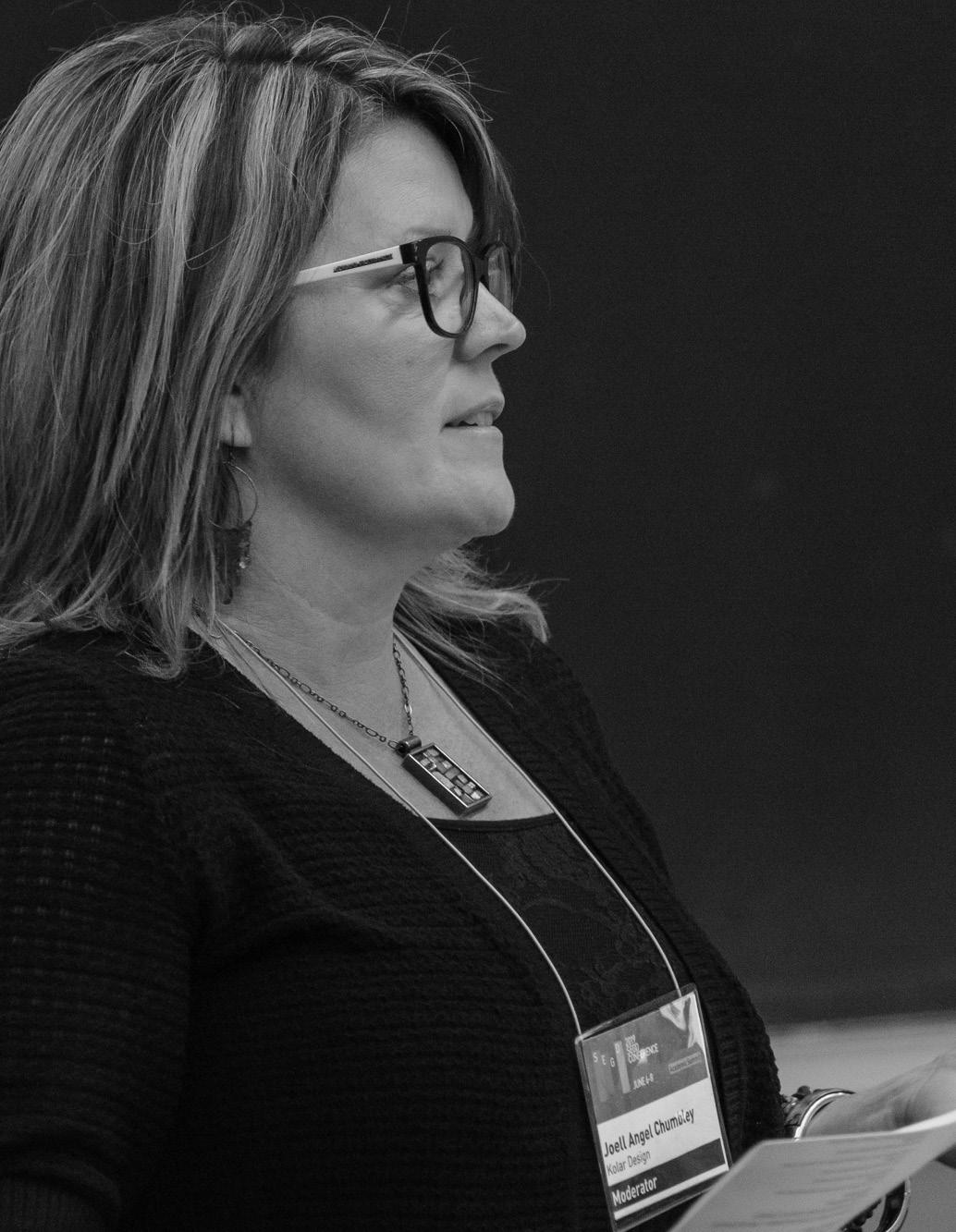
The annual SEGD Academic Summit … “creates an inclusive, global forum where diverse voices connect through dynamic panels and breakout sessions that open space for shared ideas and transformative learning.”
On behalf of SEGD — and the Academic Task Force (ATF), we celebrate the selected authors whose research will be featured in the 2025 Communication + Place academic journal. These contributions advance our collective mission to foster collaboration and community in practice, ensuring that design education is a space for knowledge, shared exploration, and co-creation. By highlighting the critical role of experience design in shaping communities, the research reinforces the importance of engaging with diverse perspectives and navigating the ethical responsibilities inherent in storytelling and public-facing design.
The SEGD Academic Task Force is a global, multidisciplinary collective of educators, researchers, and practitioners dedicated to cultivating inclusive and transformative approaches to design education, research, and professional development. At the heart of its work is the annual SEGD Academic Summit — a forum where authors, selected through a rigorous, anonymous peer-review process, present their research, share insights, and publish full papers.
More than a showcase of research, the Summit serves as a collaborative forum for dialogue and open exchange. Through dynamic panels and breakout sessions, participants examine design’s social impact, confront ethical challenges, and collectively envision the future of experiential learning and practice. Here, the politics and ethics of storytelling move beyond abstract debate, becoming lived, practiced, and shared experiences.
To learn more about the SEGD Academic Task Force or explore ways to engage, please contact:
Joell Angel-Chumbley, MFA Chair, SEGD Academic Task Force academic@segd.org
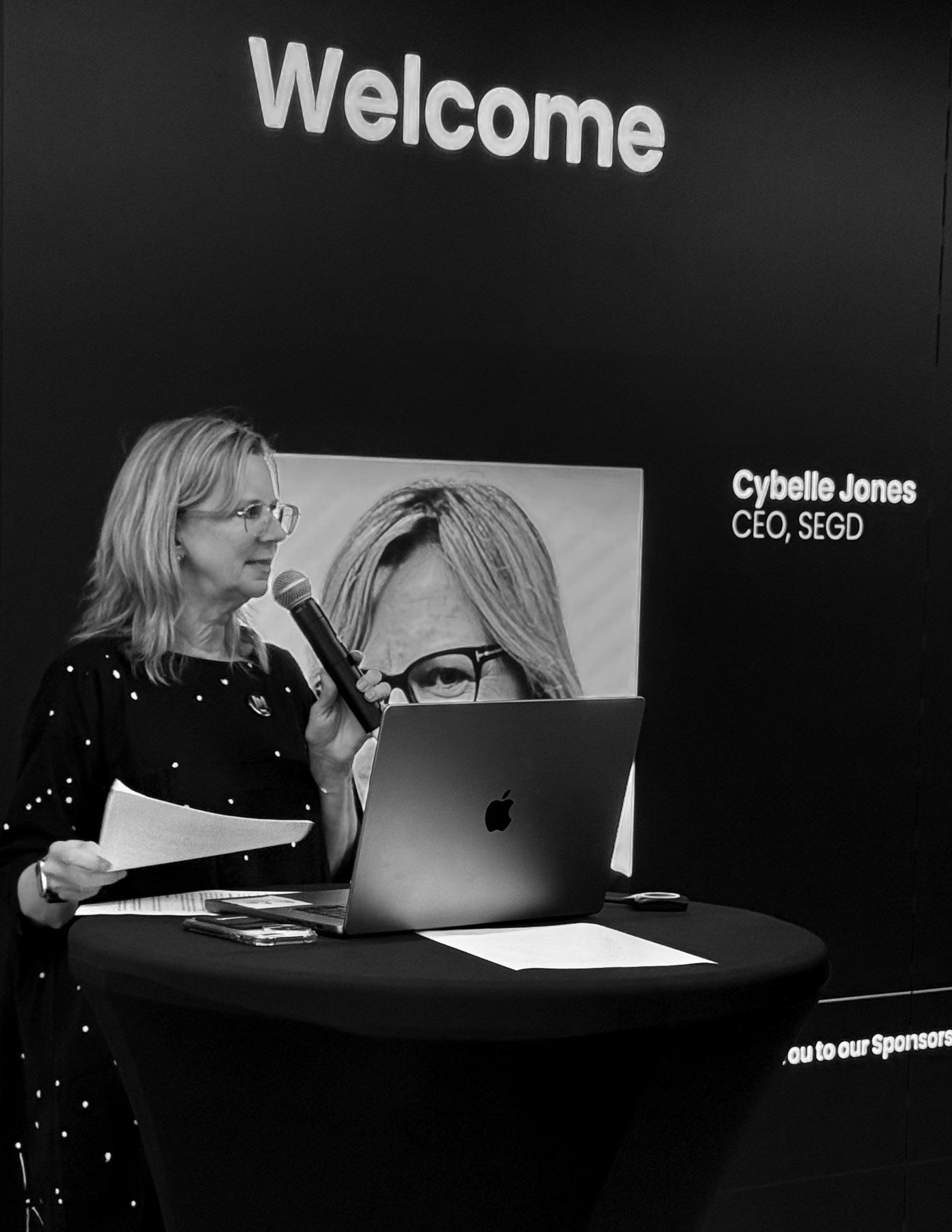
“The future of design lives where bold ideas meet thoughtful inquiry—led by minds unafraid to question, explore, and reimagine what’s possible.”
This year marks a powerful milestone for the Communication + Place Academic Journal and Summit. With our highest number of submissions to date—and of the strongest caliber yet—it’s clear that the academic arm of SEGD is not only growing, but flourishing. These contributions reflect a rising energy across our field, one fueled by curiosity, rigor, and a commitment to shaping more meaningful experiences through design.
At SEGD, we believe in creating space for dialogue between generations, disciplines, and perspectives. The SEGD Academic Task Force continues to play a vital role in amplifying brilliant minds and elevating critical discourse that shapes our future. From students and emerging professionals to tenured educators and seasoned practitioners, our community thrives on this dynamic exchange—one that nurtures growth, challenges norms, and pushes our collective understanding of design’s role in society.
In this edition of Communication + Place, we celebrate the convergence of research, experimentation, and purpose. The ideas presented here reveal not just where our field is headed, but how we might get there—with empathy, equity, creativity, and care.
To everyone who contributed their voice, we thank you. Your work helps illuminate the future of our profession and the value of academic inquiry within it.

With gratitude,
Cybelle Jones Chief Executive Officer, SEGD
Transforming Public Spaces Enhancing Community Engagement through Experiential Graphic Design in a Street Parking Garage
Huiwon Lim Assistant Professor of Graphic Design, Pennsylvania State University
Phil Choo Professor of Graphic Design, Pennsylvania State University
Abstract
This study explores the potential of experiential graphic design (EGD) to activate overlooked public infrastructure and enhance community engagement. Conducted within an undergraduate graphic design studio course, the project challenged students to reimagine a multi-story parking garage in downtown State College, Pennsylvania, as a space of cultural storytelling and inclusive public interaction.
Working in teams, students applied human-centered design methodologies—including site analysis, interviews, surveys, user journey mapping, and persona development—to understand the physical and emotional dynamics of the space. Their process was iterative and collaborative, informed by community feedback and local narratives. The project emphasized accessibility, identity, and sustainability, encouraging students to consider design as both visual communication and social infrastructure.
Each team developed a distinct concept and visual strategy that reflected shared community values. The final outcomes included high-fidelity mockups, 3D simulations, process books, and public presentations, all of which were showcased to local stakeholders and exhibited at a regional sustainability event. Community members responded positively to the designs, highlighting their cultural relevance and visual impact.
This project demonstrates how EGD can serve as a catalyst for reimagining civic space and contribute meaningfully to design pedagogy. It also offers a replicable model for integrating community engagement into design curricula, fostering critical thinking, interdisciplinary collaboration, and civic responsibility. Future plans include exploring pilot installations and continued partnerships with local organizations to bring select concepts to life.
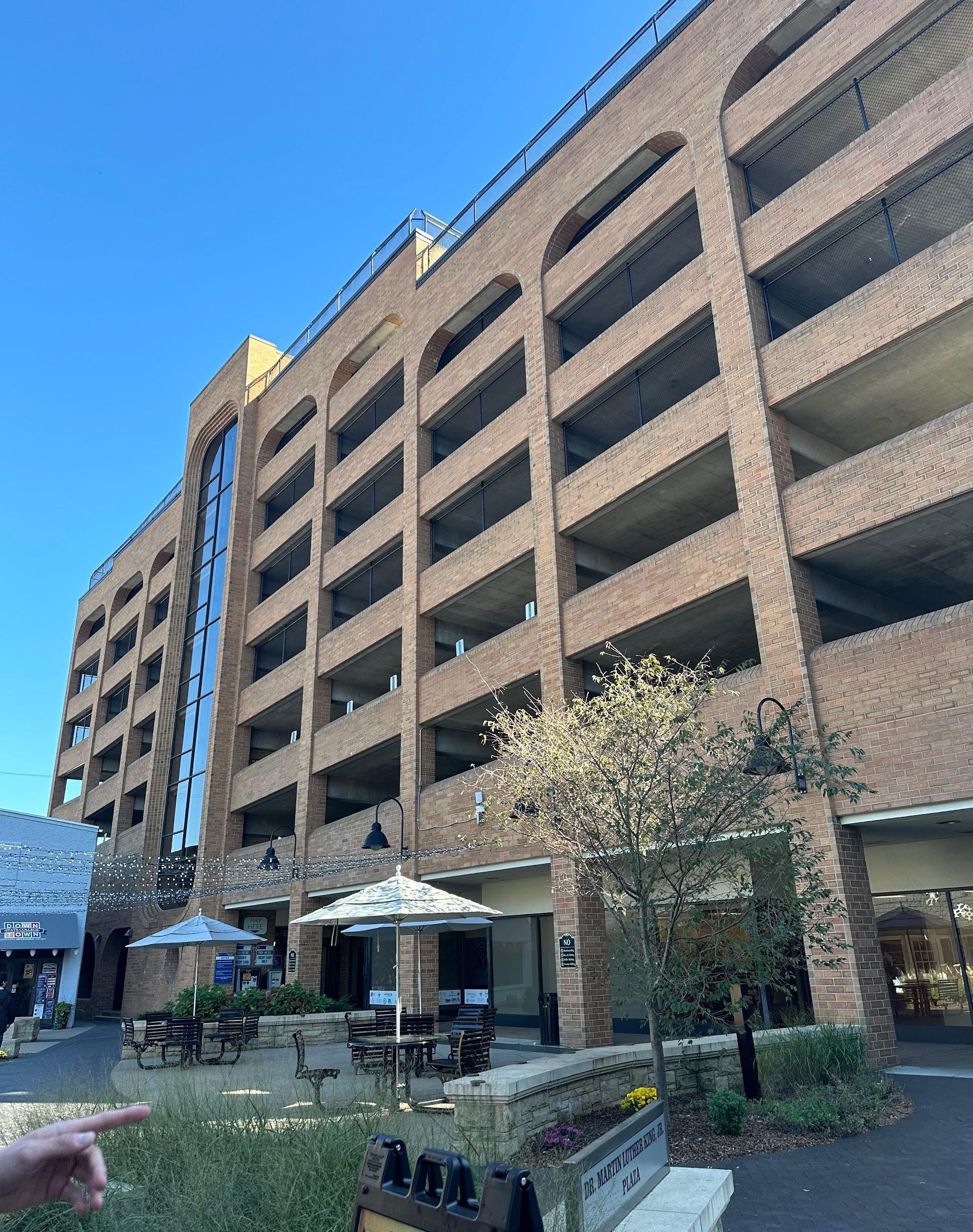
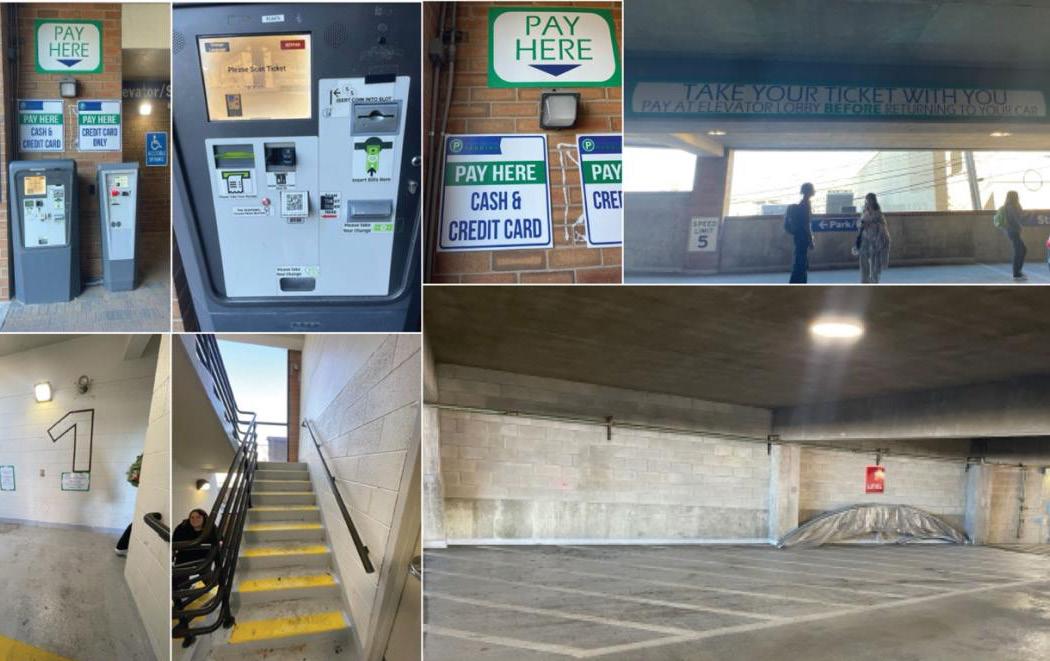
Figure 1. Fraser Street Parking Garage, site of the experiential graphic design project. (Photo by author)
Introduction
Public spaces play a vital role in shaping social interactions, cultural identity, and collective memory. However, many urban infrastructures—such as parking garages—are often overlooked in the discourse of place-making and remain underutilized in terms of community engagement and cultural activation. As cities seek to create more inclusive and responsive public environments, experiential graphic design (EGD) offers a compelling approach for transforming utilitarian spaces into meaningful community assets.
This paper presents a design initiative conducted within an undergraduate graphic design studio course that explored how EGD can activate a street parking garage as a site for community engagement, visual storytelling, and cultural expression. The project was situated in State College, Pennsylvania, and involved collaboration between graphic design students, local government officials, and community stakeholders. Through
methods grounded in human-centered design and cocreation, students developed context-sensitive design interventions that reflected the lived experiences and values of the surrounding community.
This project aims to address the following research question: How can experiential graphic design be used to reimagine public infrastructure as a platform for community engagement and cultural identity? By examining the design process, pedagogical structure, and outcomes of this initiative, this paper contributes to the discourse on EGD’s role in participatory urban transformation and design education.
Pedagogical Framework & Institutional Collaboration
This project was embedded within a second-year undergraduate studio course, Graphic Design Studio I (GD200), at Penn State University. The course emphasized experiential learning through the
Figure 2. Site visit photos of the Fraser Street Parking Garage taken during the initial research phase. (Photos by students)
application of human-centered design principles, aiming to equip students with the skills necessary to address real-world challenges with empathy, cultural sensitivity, and collaboration.
Students were introduced to and practiced a range of research methods rooted in human-centered design, including site analysis, user journey mapping, persona development, interviews, and surveys. These tools enabled students to gather both observational and selfreported data about how the space was used, who the users were, and what values and stories were embedded in the community. By combining direct engagement with users and contextual analysis, students developed nuanced insights into the physical and social dimensions of the site.
In addition to research and inquiry, the course incorporated systems thinking, visual storytelling, and the integration of physical and digital media as key components of the design process. These frameworks encouraged students to move beyond surface-level aesthetics and consider how design could foster interaction, inclusivity, and a stronger sense of place
The project was supported by a cross-sector collaboration involving the Department of Graphic Design, the Penn State Sustainability, and the State College Borough. This partnership enabled direct engagement with the site and community stakeholders, and provided platforms for public presentation and feedback. The collaborative structure also served as a model for integrating community engagement and social responsibility into the design curriculum.
Methodology
The project followed a structured, four-phase design process grounded in human-centered and co-design methodologies. Each phase built upon the previous, integrating community input and iterative development to ensure that the final design proposals were contextually relevant and culturally meaningful.
Phase 1: Research & Site Analysis
Students began by conducting site visits to observe the physical environment, patterns of use, and user behaviors within the parking garage. They developed user journey maps to visualize how different users
interact with the space and identified friction points or opportunities for engagement.
Through interviews with local residents, municipal staff, and nearby business owners, students gathered qualitative insights into community perceptions, cultural narratives, and values associated with the site.
Additionally, surveys were used to collect broader input from community members, including preferences, memories, and aspirations related to public space.
This combination of observational and participatory methods provided a comprehensive understanding of the site’s social and spatial dynamics.
Phase 2: Concept Development
Based on their research findings, students generated a range of design concepts that aimed to reflect the cultural identity and needs of the community. Each team synthesized their data into design directions that emphasized inclusivity, storytelling, and spatial awareness.
Initial ideas were visualized through sketches, mood boards, and design frameworks. Teams underwent critique sessions and later regrouped based on conceptual alignment, fostering shared authorship and collaboration.
Phase 3: Design Execution
Selected concepts were further developed into detailed proposals. Students produced both physical prototypes (such as scaled models and mockups) and digital renderings to simulate the integration of experiential graphics within the existing architecture of the parking garage.
Attention was given to materiality, accessibility, legibility, and interaction, ensuring that designs could be implemented in real-world public contexts.
Phase 4: Final Presentation
The project culminated in formal presentations to local government officials, community stakeholders, and the general public. Presentations were held both
on campus and at a regional sustainability event to gather diverse feedback.
Students communicated their design process, rationale, and intended impact, creating a platform for community dialogue and validation of their proposals.
Outcomes
This project culminated in four distinct, researchdriven design proposals that reimagine the Fraser Street Parking Garage as a site for cultural connection, environmental awareness, and community storytelling. Each team demonstrated a unique conceptual direction informed by field research, community input, and human-centered design methodologies. Below, each team’s concept and contribution is described in detail.
Team-Based Design Concepts Team 7 Wonders
Members: Cori Chen, Ava Conner, Lillian Gerhart, Erin Gibbs, Charlie Papiernick, Emma Wassel and Harris Woodward
This team transformed each of the garage’s seven levels into a historical tribute to local landmarks, capturing the evolution of State College’s identity. Iconic locations— like Old Main, The Corner Room, and Mount Nittany— were featured through stylized visuals and educational signage. Color-coded wayfinding and inclusive graphic strategies were used to enhance navigation while promoting community pride and place-based storytelling.
Team The Voice
Members: Karalina Ptakowski, Abby Droege, Mia Lane and Kaitlyn Crenshaw
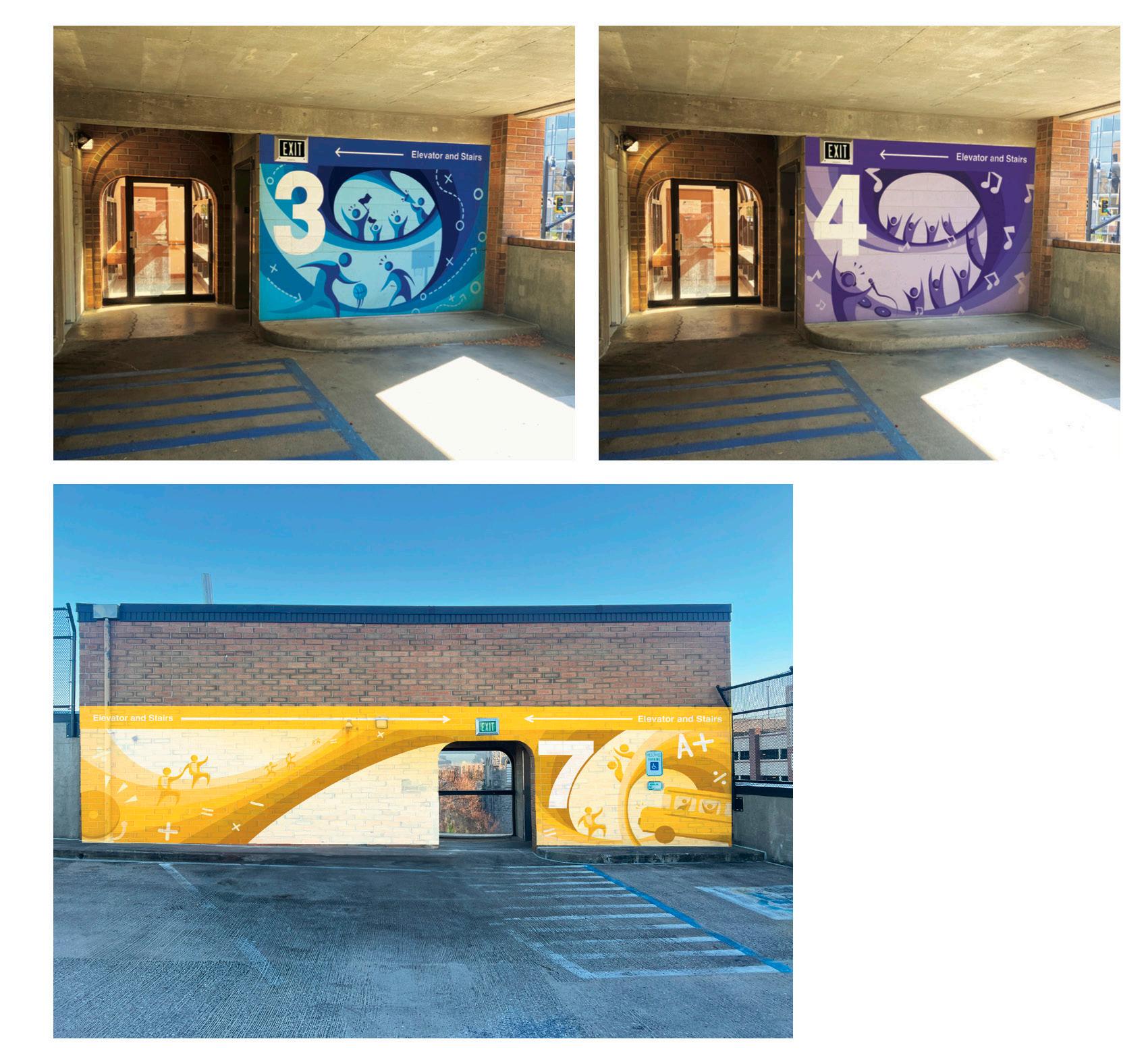
This team developed a concept rooted in musical metaphors, using sound as a symbol for unity and expression. Each garage level represented a unique “sound” or theme, such as ambition, pride, and celebration. Vibrant silhouettes of musicians and dynamic graphic rhythms conveyed emotional resonance, tying into the civic energy of the adjacent MLK Plaza.
Team Garage Goblins
Members: Shalini Prasath, Lillian North, Abigail Dougherty, Catherine Frank, Elias Kronberg, Kristin Muir and William Shin.
This team’s concept embraced “unexpected delight” and whimsy. Inspired by fantasy folklore and hidden narratives, they introduced playful goblin-like characters to engage users of all ages. The visual system turned mundane garage elements—like pipes, corners, and ramps—into imaginative scenes where “goblins” were discovered building, playing, or offering advice. This approach subverted expectations of public space aesthetics and encouraged re-enchantment through visual surprise.
Team TreeHugger
Members: Hannah Mattamana, Ella Hummel, Bianca Eckhardt, Jaime Franchino, Mazie Kemper,Cory Korsah, Juliana Lavinio and Dean Alcaro.
This team developed a layered environmental theme that used Mount Nittany as both a literal and symbolic structure. Each garage level represented a different layer of nature—from forest roots to sky and stars— symbolizing community growth and environmental stewardship. The visual language included handdrawn textures, flowing typography, and a narrative ascent toward a peak where a Nittany Lion planted a sustainability flag. The mural and graphic system emphasized local ecology, unity, and a collective future.
Visual Documentation
Each team submitted a comprehensive set of visual artifacts, which served both as design deliverables and reflective tools:
• Research Posters distilled user insights from interviews, surveys, and journey maps.
• 3D Mock-up Posters visualized the spatial integration of design proposals within the actual garage architecture.
• Design Proposals detailed each team’s visual systems, typographic strategies, placement plans, and thematic justifications.
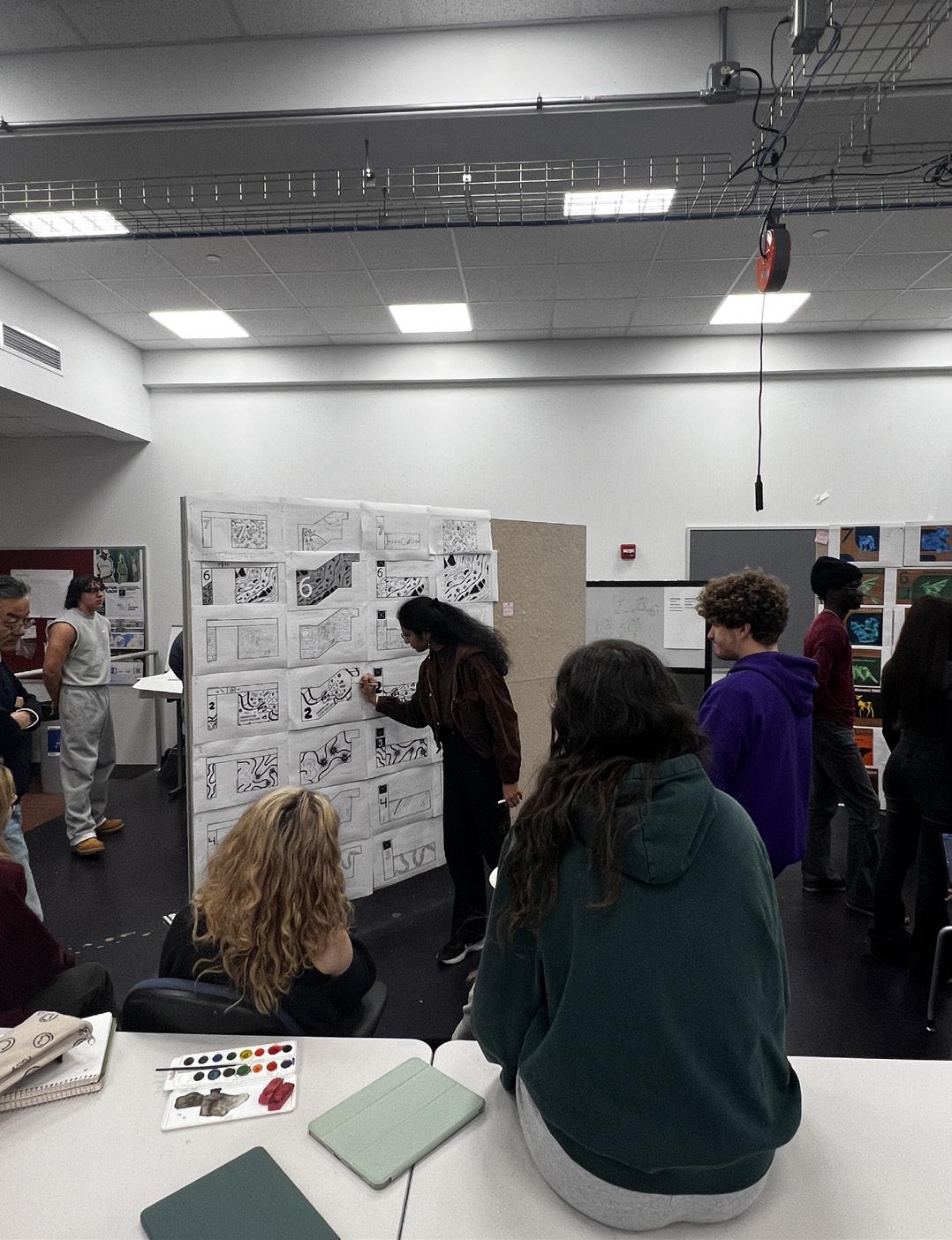

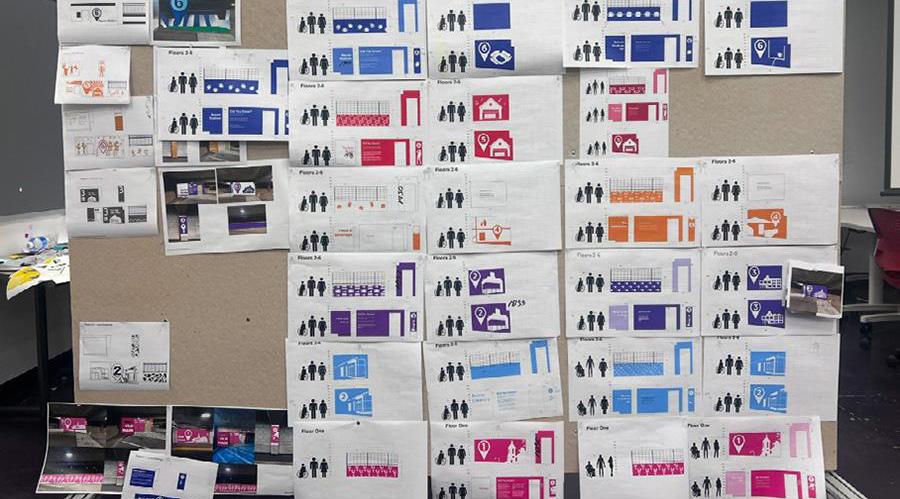
Figure 5. Progress wall used during group discussions to visualize design development and organize peer critique. (Photo by author)
Figure 4. Peer feedback and discussion during a concept development critique. (Photo by author)
Figure 3. Students presenting initial design explorations during a studio critique session. (Photo by author)
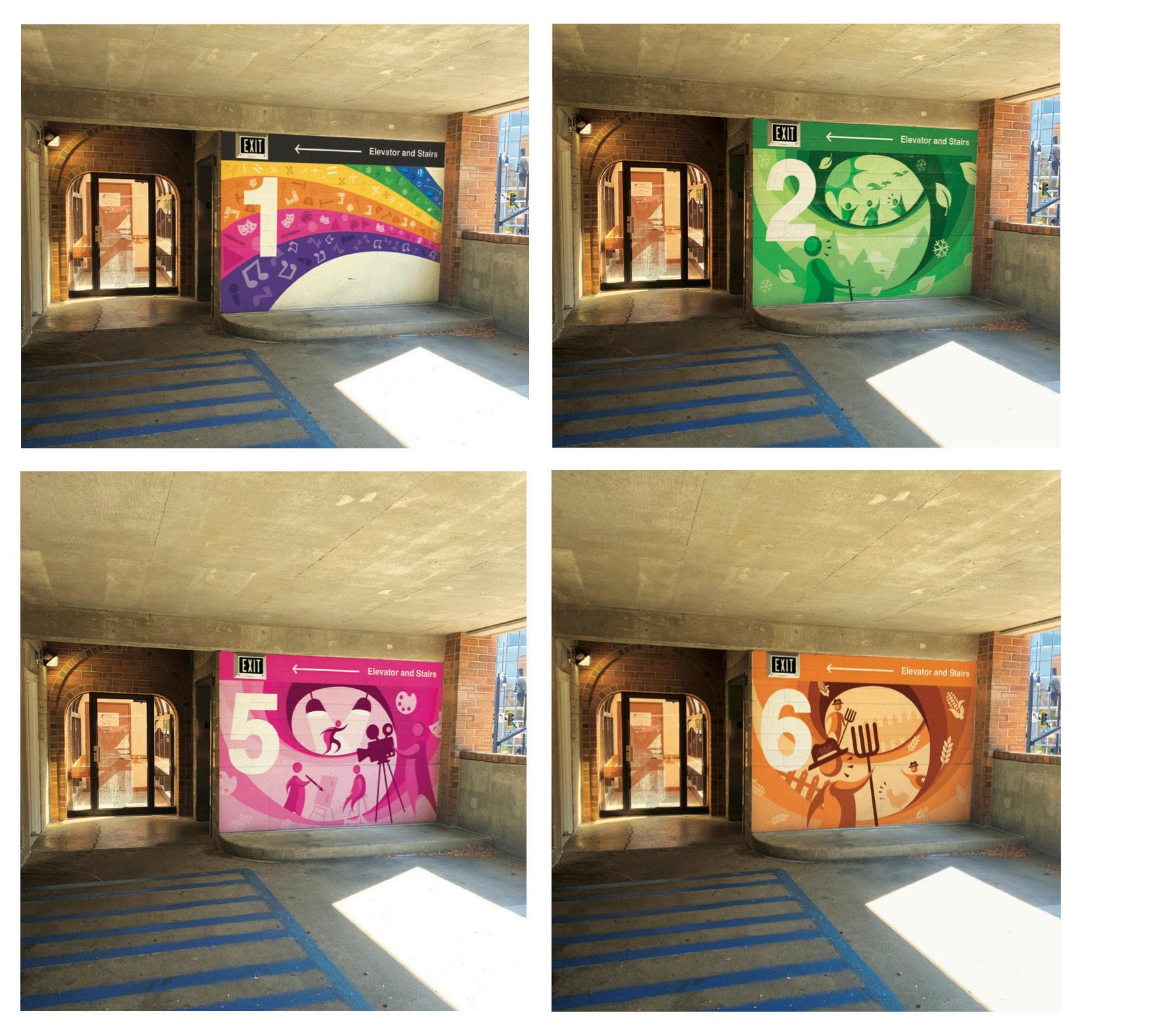
Figure 6. Final design proposal by Team Voice, featuring a seven-level wayfinding system using music-inspired themes and bold, colorful illustrations to convey shared community values. (Image courtesy of the designers)
“This project really helped us grow together, get closer, and learn more about each other and our strengths.”
- A student
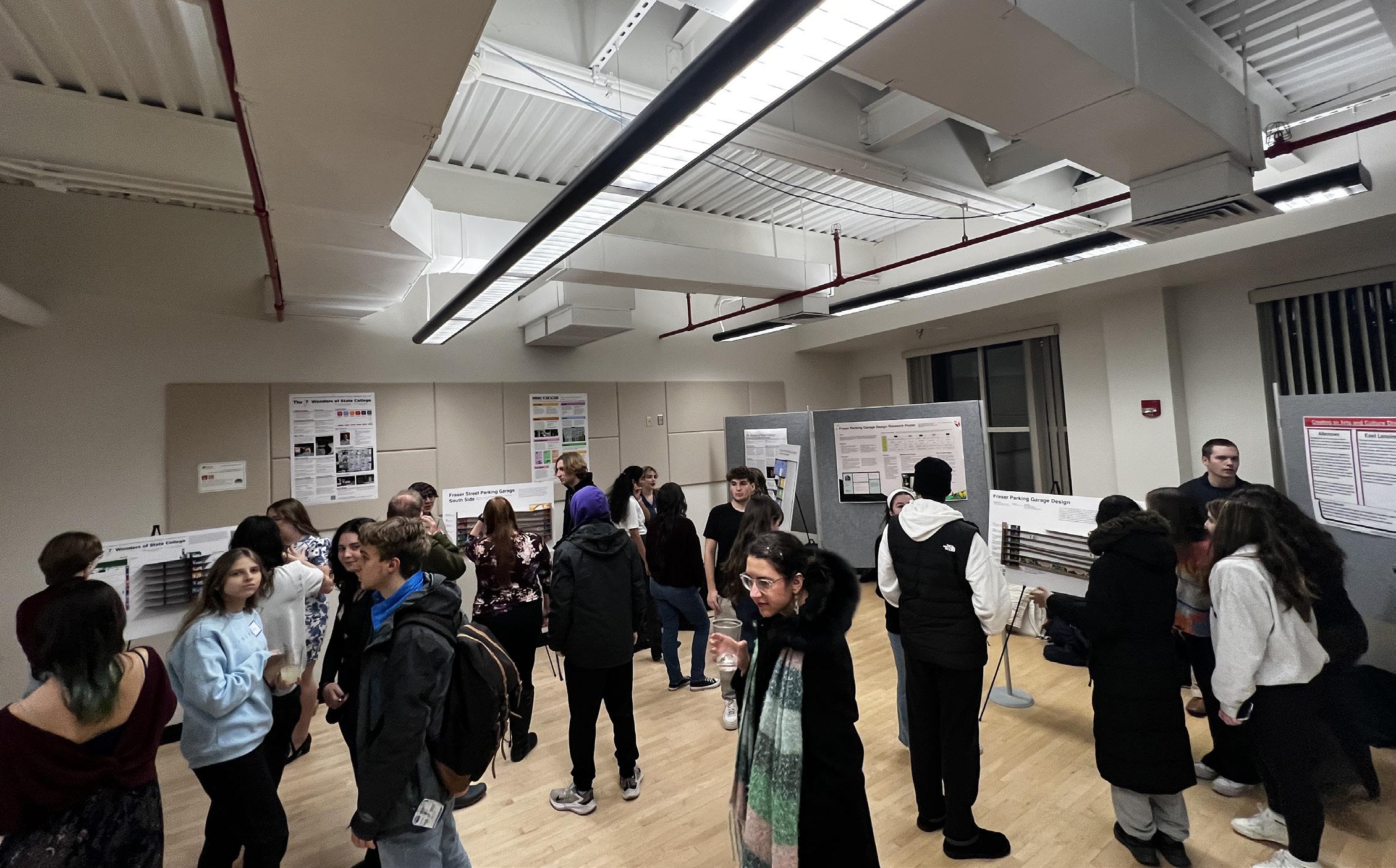
Figure 7. Students presenting their design proposals at the Sustainability Expo held at the State College Borough Building.
(Photo by author)
• Presentation Boards were used in classroom critiques and public events to communicate the value and feasibility of the designs.
• Process Books chronicled each team’s full trajectory— from initial observation through synthesis and refinement—demonstrating a rigorous application of human-centered design methods.
These visual materials will be reproduced in the final publication to offer readers a rich, layered understanding of each proposal’s evolution, impact, and potential.
Educational Impact
This project served as a pedagogical model for integrating human-centered design, community engagement, and interdisciplinary collaboration into undergraduate graphic design education. Through a structured, research-driven process, students were challenged to navigate the complexities of public space design while considering the social, cultural, and emotional dimensions of visual communication.
Students gained direct experience in:
• Applying research methods including interviews, surveys, site analysis, and user journey mapping.
• Synthesizing qualitative data into visual narratives and experiential graphic systems.
• Collaborative authorship, adapting to team restructuring and shared conceptual development.
• Communicating with non-design stakeholders, including local government officials and community members, to justify design intent and receive constructive feedback.
The course design emphasized reflective practice through iterative critiques, in-class peer reviews, and process documentation. At the conclusion of the project, a peer evaluation survey was conducted to assess individual and team performance. Students evaluated dimensions such as role clarity, communication, accountability, and group dynamics. These results were anonymized and shared back with the class to facilitate reflection and guide future team-based work.
Importantly, the project underscored the role of design education in preparing students to become active participants in civic discourse and community
development. By positioning students not only as visual problem-solvers but also as social collaborators and cultural interpreters, the course expanded their understanding of what it means to design for—and with—the public.
Contribution to the Field
This project contributes to the evolving discourse of Experiential Graphic Design (EGD) by demonstrating how public infrastructure can be reframed as a site for community participation, cultural storytelling, and pedagogical experimentation. By engaging undergraduate students in real-world, place-based design challenges, the project serves as a replicable model for embedding public engagement into the design curriculum.
From a theoretical perspective, the project aligns with Christian Bason’s (2017) notion of public design leadership, which emphasizes empathy, collaboration, and user insight as drivers of innovation in civic systems. Likewise, it resonates with Gregor H. Mews’ (2022) advocacy for co-creation in public spaces, particularly through playful and narrative-based design interventions that activate emotional and cultural memory.
More specifically, the work extends EGD practice by:
• Shifting its application from branded environments and institutional signage to civic infrastructure and community-scale spaces.
• Incorporating participatory research methods such as interviews, journey maps, and persona development to deepen context-driven design.
• Highlighting the importance of co-authorship, not only between students but also between academic institutions, municipalities, and residents.
Educationally, the project supports the growing need to reframe design education beyond commercial problemsolving toward socially engaged, interdisciplinary learning. By anchoring the studio in real civic contexts, the initiative reflects how EGD can bridge aesthetic practice with public value, and how students can meaningfully contribute to conversations about identity, belonging, and sustainability in everyday urban environments.
Future Opportunities & Implementation
While this project was initiated as a pedagogical exercise, its outcomes have generated momentum for potential real-world implementation. In partnership with the Penn State Sustainability and the State College Borough, discussions are underway to explore the feasibility of a pilot installation based on one or more of the student design proposals.
Future steps include:
• Selection of pilot elements that are low-cost, high-impact, and logistically feasible—such as mural components, signage prototypes, or modular wayfinding systems.
• Collaboration with local artists to refine and adapt student designs for installation, ensuring alignment with community values and technical constraints.
• Grant funding applications, including proposals to the Hamer Center for Community Design and municipal sustainability initiatives, to support fabrication and maintenance.
Beyond physical implementation, the project has set the foundation for expanding community-based design studios as part of the graphic design curriculum. This model can be applied to other underutilized civic infrastructures such as transit stops, pedestrian walkways, or park facilities, allowing students to work across scales and mediums.
Importantly, the process has opened long-term possibilities for university–community partnerships, where design is framed not only as a product but as a process of ongoing dialogue, care, and co-creation. Through its emphasis on accessibility, identity, and public interaction, this initiative positions EGD as a vital contributor to the social and emotional fabric of urban life.
Conclusion
This project demonstrates the transformative potential of experiential graphic design when applied to overlooked public infrastructures such as parking garages. By engaging students in a process that combined research, co-creation, and contextual storytelling, the initiative redefined a utilitarian structure into a canvas for cultural expression and community engagement.
The four design proposals generated by students reflect diverse perspectives, interdisciplinary thinking, and a strong commitment to place-based design. Through themes such as local history, musical identity, environmental stewardship, and playful storytelling, each team articulated a vision of public space that is inclusive, participatory, and emotionally resonant.
Educationally, the project positioned students as active agents in civic dialogue, encouraging them to design not just for but with communities. Their work exemplifies how design education can extend beyond classroom boundaries to foster real-world impact, critical thinking, and collaborative authorship.
Looking ahead, the potential for physical implementation and continued university–community collaboration reaffirms the value of integrating public engagement into the design curriculum. This initiative not only enriches students’ educational experiences but also contributes meaningfully to the discourse on how EGD can cultivate belonging, visibility, and connection in the built environment.
Resources
Bason, Christian. Leading Public Design: Discovering Human-Centred Governance. Danish Design Centre, 2017.
Crawford, Margaret. Everyday Urbanism. Monacelli Press, 2008.
Mews, Gregor H. Transforming Public Space through Play: The Role of Play in the Design of Public Space. Routledge, 2022.
Rendell, Jane. Art and Architecture: A Place Between. I.B. Tauris, 2006.
Sanders, Elizabeth B.-N., and Pieter Jan Stappers. “Co-Creation and the New Landscapes of Design.” CoDesign, vol. 4, no. 1, 2008, pp. 5–18. Taylor & Francis, https://doi.org/10.1080/15710880701875068.
Tunstall, Dori. Decolonizing Design: A Cultural Justice Guidebook. MIT Press, 2023.
Perception of Space
Participant Activated, Experience Oriented Exhibition Design
Sofia J Ingegno Graduate Student, Human Experience
Design Interactions
California State University Long Beach
Abstract
Exhibition spaces within educational and for-public institutions, such as Museums, traditionally strongholds of curatorial authority, are facing a growing need to engage audiences in a more active and meaningful way. This project proposal explores the limitations of the current “observer” model and proposes a framework for participatory exhibition design. Through a review of existing literature, case studies, and a proposed research plan, the project investigates how museums can shift their focus from static displays to collaborative environments, empowering visitors to become stakeholders in the cultural narrative. While the essence of Perception of Spaces’ structure can be analogized as a new twist on a familiar recipe, the project’s engagement is captured through the metaphor of a community potluck. Each participant brings a unique dish (their perspective), and the collective gathering forms a richer, more diverse cultural experience.
Project Themes
Exhibition, Active Participant, Passive Participants, Connection, Community, Public Space, Cultural Artifacts, Cultural Narratives, Co-Creator
Introduction
Public arts and education institutions, such as museums, act as vital community stakeholders in society, contributing significantly to the economy while fostering education, enjoyment, and cultural exchange. However, the traditional model of exhibition design, where visitors passively observe curated objects, is increasingly questioned. This project proposal argues that a shift towards participatory design is necessary to develop a more engaging and meaningful experience for the visitor.
Domain & Value
The project targets the domain of public exhibition spaces. According to the American Alliance of Museums, “museums contribute $50 billion to the U.S. economy each year”, annually receiving nearly “55 million visits” from student school groups. Addressing the desire for an engaging and educational exhibition experience, as valued by 97% of Americans, through transforming static exhibitions into collaborative environments fosters curiosity and empower communities to actively participate in cultural narratives. This ultimately strengthens the economic and social fabric, as valued by 89% of Americans, of the surrounding area.
The value of this project lies in enhancing engagement in exhibition spaces and transforming static displays into dynamic environments that foster curiosity and active participation. Interactive and immersive exhibits encourage visitors to become active participants, revitalizing the experience. This transformation empowers communities by incorporating their voices and perspectives into the cultural narrative, ensuring inclusive and authentic representation. Increased visitor engagement also strengthens the social and economic fabric of surrounding communities, attracting more visitors, generating revenue, and promoting cultural tourism. While this value is not directly tied to the project’s outcomes, its societal implications further legitimize the need for its inclusion. This approach demonstrates the powerful role exhibition spaces can play in education and societal development.
Research Questions
Published in the 2022 issue of the Journal of Applied Science and Engineering, Sun and Wang’s research on Digitalization Exhibition Design underscores significant shifts in exhibition formats. The study emphasizes a transition from object-oriented information delivery towards a people-oriented approach, facilitating greater participation and engagement among attendees. This evolution is exemplified by the progression from “Designer-led Design” to “Participatory Design,” highlighting a move towards collaborative and inclusive exhibition planning and execution. Moreover, the research introduces the concept of immersion as a bonding experience within exhibitions, suggesting that deep engagement and sensory involvement foster stronger connections between visitors and the displayed content. Through these themes, Sun and Wang’s work offers valuable insights into the evolving landscape of exhibition design, emphasizing the importance of interactivity, collaboration, and experiential engagement.
Furthermore, the work of authors Popoli and Derda, published in the 2021 issue of the Journal of Museum Management and Curatorship, reveals overlaps in several key themes pertinent to modern museum practices. The authors discuss the transition from an encyclopedic approach to a co-creator/co-producer model, wherein museums shift from being repositories of knowledge to fostering collaborative relationships with their audiences. This transformation also entails changing passive visitors into active participants, engaging visitors in co-creating and co-curating content within the museum space.
The existing curatorial models in exhibition spaces prioritize the curator’s narrative, fostering passive observation among visitors rather than encouraging active participation in cultural exploration. This direction prompted the formulation of two key research questions that framed the preliminary investigation for this project.
1) How can an exhibition become a collective experience? A space that is actively changing and grounded by the audience rather than the institution and curators?
2) What makes an exhibition space become a participatory environment where visitors and patrons activate their atmosphere?
The Challenge
The prevailing “curatorial authority” paradigm positions visitors as passive observers, limiting the potential for self-discovery and active engagement. Research by Popoli & Derda (2021) highlights the need to move beyond the “encyclopedic approach” towards a model where visitors become “co-creators” and “story translators” rather than storytellers. Similarly the findings of Sun & Wang (2022) emphasize the importance of a “people-oriented” approach, fostering emotional connection and immersive interaction.
Project Statement
Perception of Space, redefines exhibition engagement by elevating the collective experience over the presentation of artifacts within artistic spaces Through a flexible layout, hands on engagement, and human dialogue, participants become stakeholders in a dynamic public environment, empowering active collaboration and curiosity with cultural narratives
Perception of Space’s approach to exhibition design, centered on active engagement and collaboration. The framework emphasizes three key components to enhance the visitor experience and promote community involvement. Firstly, a flexible layout enables the exhibition space to be modular and adaptable, facilitating dynamic reconfiguration. This feature not only accommodates various exhibition formats but also encourages community participation in shaping the exhibition’s narrative and layout. Secondly, the incorporation of hands-on engagement through interactive elements promotes active exploration and interaction with the cultural content. These interactive features enrich the visitor experience by allowing them to engage with the exhibits in a tangible and meaningful way. Lastly, the project underscores the importance of human dialogue by facilitating interactions between visitors. This approach fosters a sense of community and shared ownership of the exhibition, creating a more inclusive and engaging experience for all involved.
CSULB Art Park
With a deep rooting history of public art display dating back to the mid - twentieth century the CSULB campus has a vast range of public sculptures, murals and even a mosaic on the public outdoor grounds, however the context and content behind the works seen is difficult to locate. Presently the histories of each work that is included in the self guided tour map of the Art Park is only accesible by request through the website of the Carolyn Campagna Kleefeld Contemporary Art Museum.
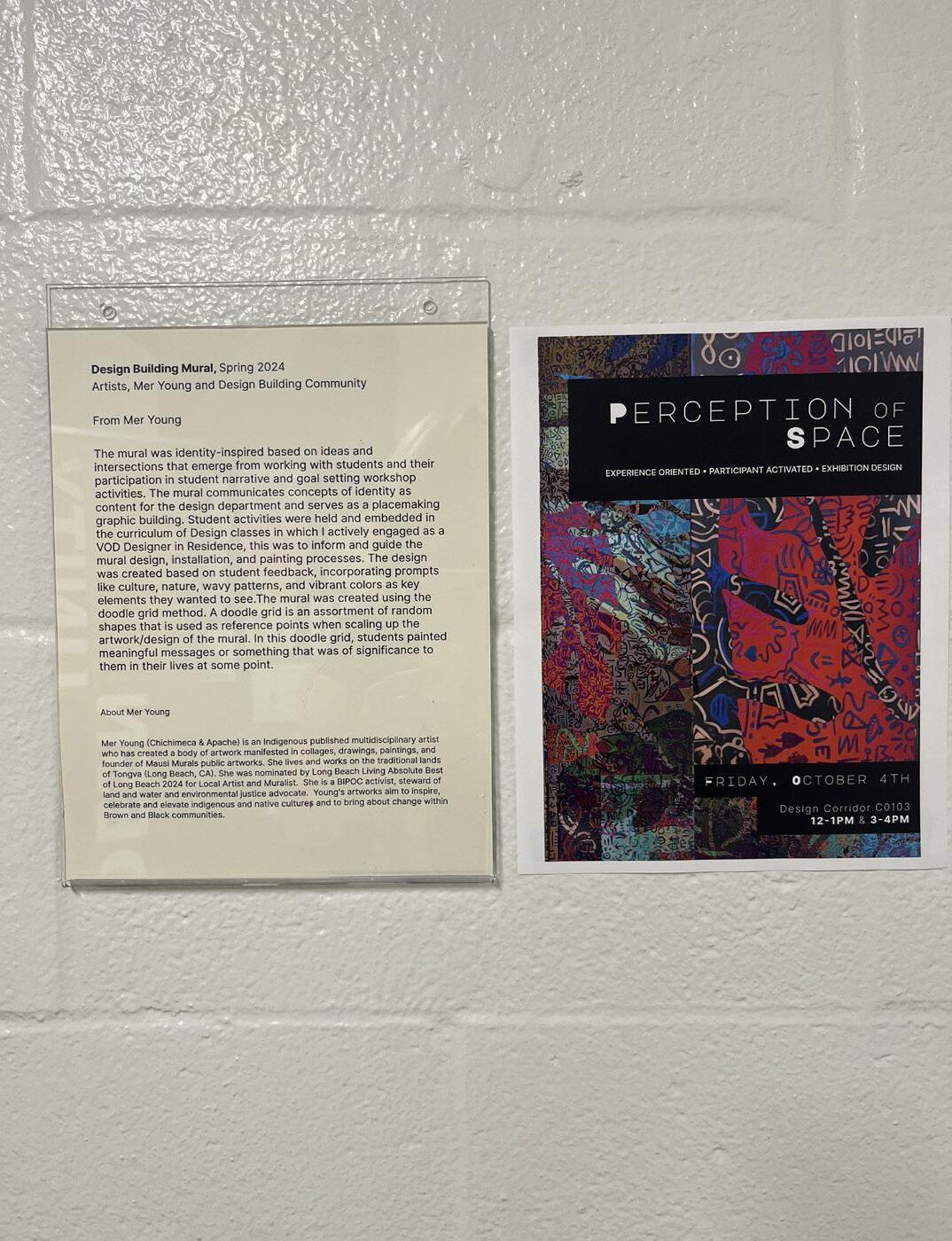
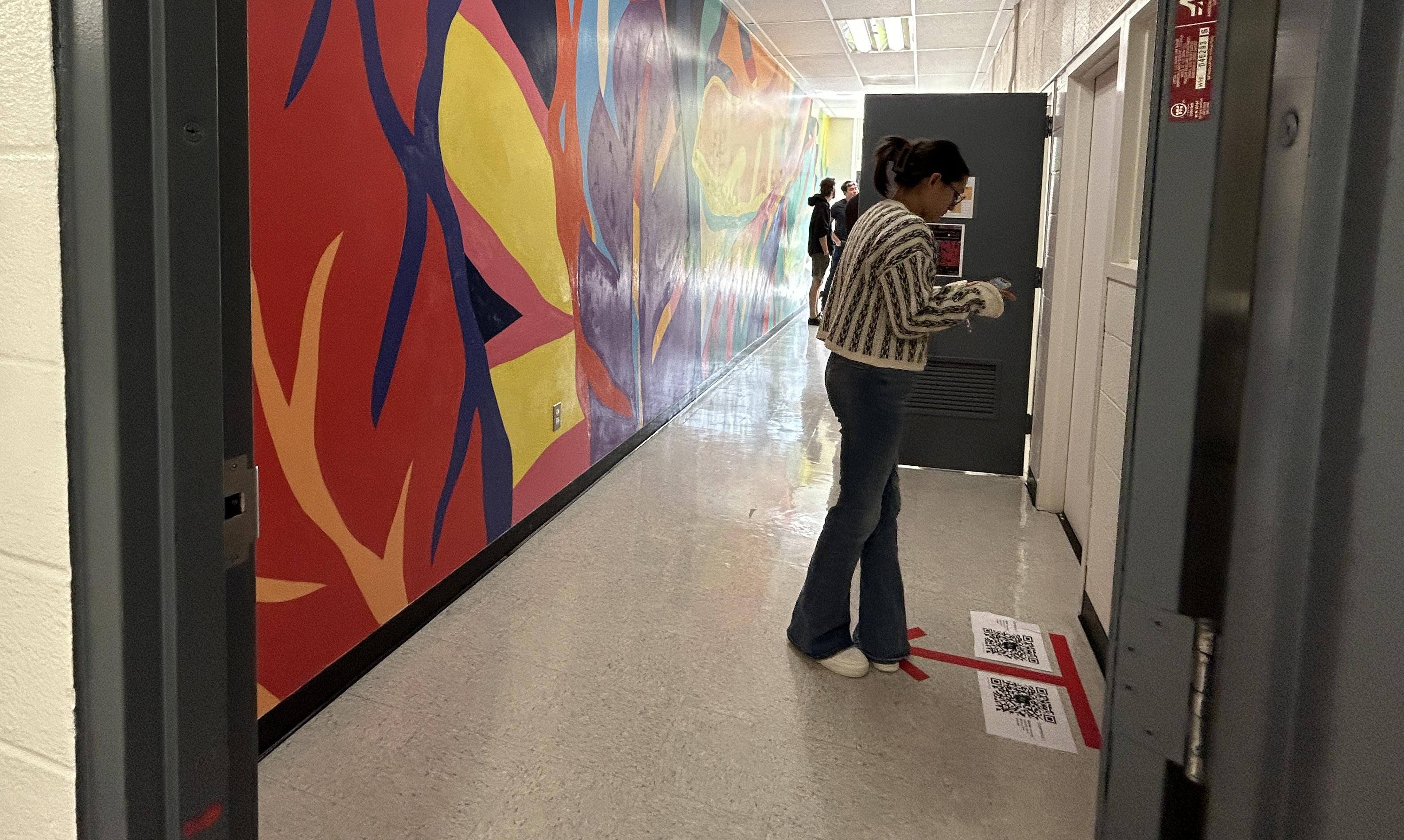
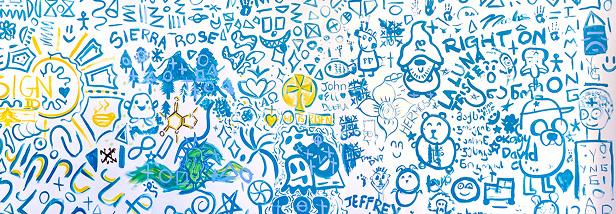
In spring of 2024 the design student community came together to design, collaborate and paint a mural with local indigenous artist Mer Young. It used a doodle grid to scale the final design, allowing for a unique, flexible, and expressive format in the process of making. It is located in located in design corridoor 112 A.
User Research and Data
A total of 50 indivuduals were surveyed with 8 indepth interviews conducted.
Survey Results:
• 65% exhibition spaces could improve on display and overall description
• 36% people felt the doodle grid represented “people” and “experiencing new things”
• 42% felt the mural represented “unity”
• 66% were unaware of the murals location
Development
Over the course of 2 months the project was developed and launched with the final event hosted on October 4th, 2024. To balance digital and analog elements, Perception of Space consisted of three main groups with in these realms.
1) AR Filters (digital) and Wall Didactics (analog)
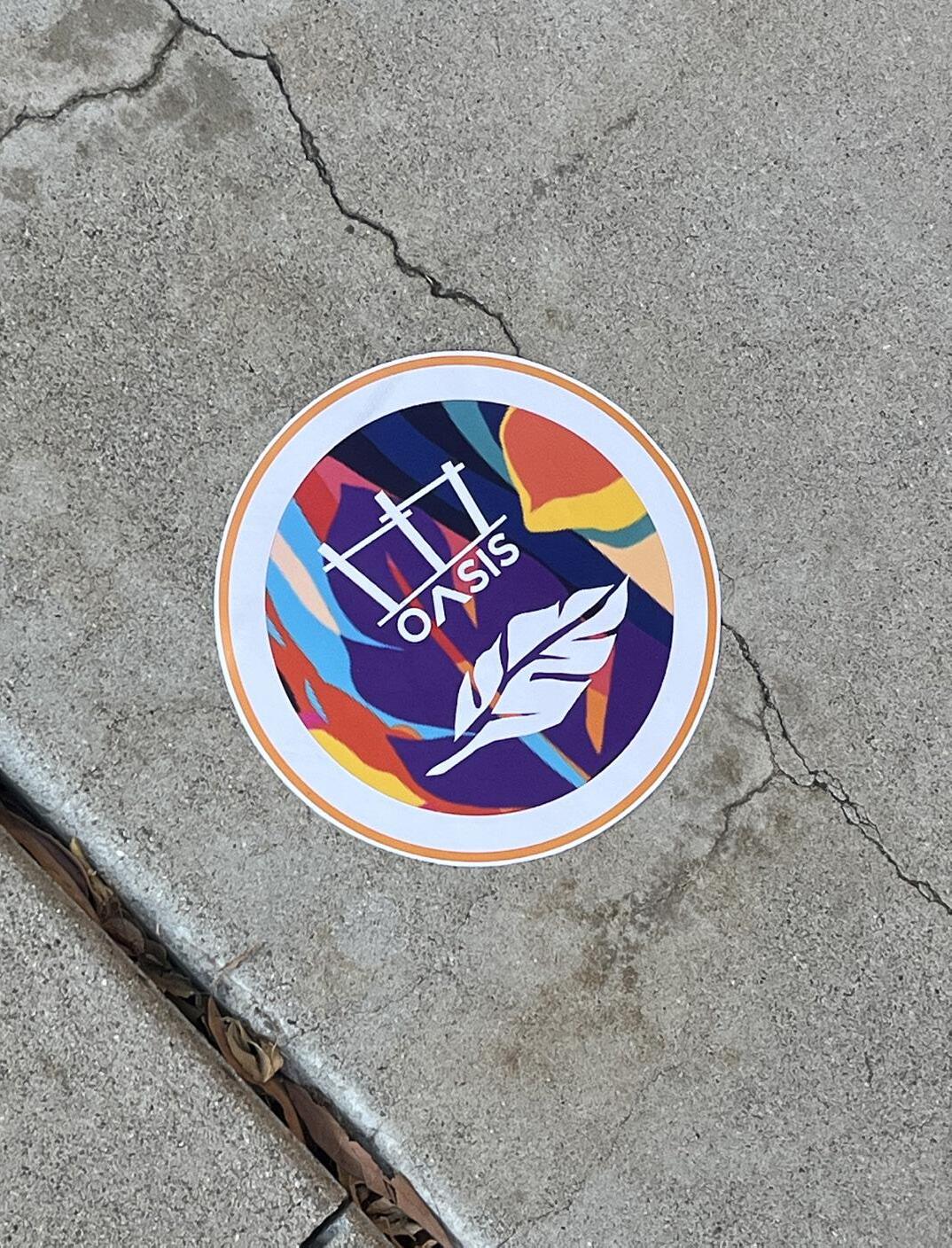
2) Wayfinding Floor Decals (analog)
3) “Leaf Your Mark” Pin Board (analog)
The AR filter prototypes consisted of experiementing with Location Anchors, in which the augmented reality
filter is anchored by the location of the outdoor class room and interior mural hallway and Image Anchors where the augmented reality filter is anchored by a sectional image of the mural. The prgram used was AdobeAero due to its user ease and stability in development.
When prototyping the floor decals, usability testing found that 50% of people noticed the decals when walking in the halls. Further more people who noticed them, proceeded to look into the mural hallway.
Delivery and Results
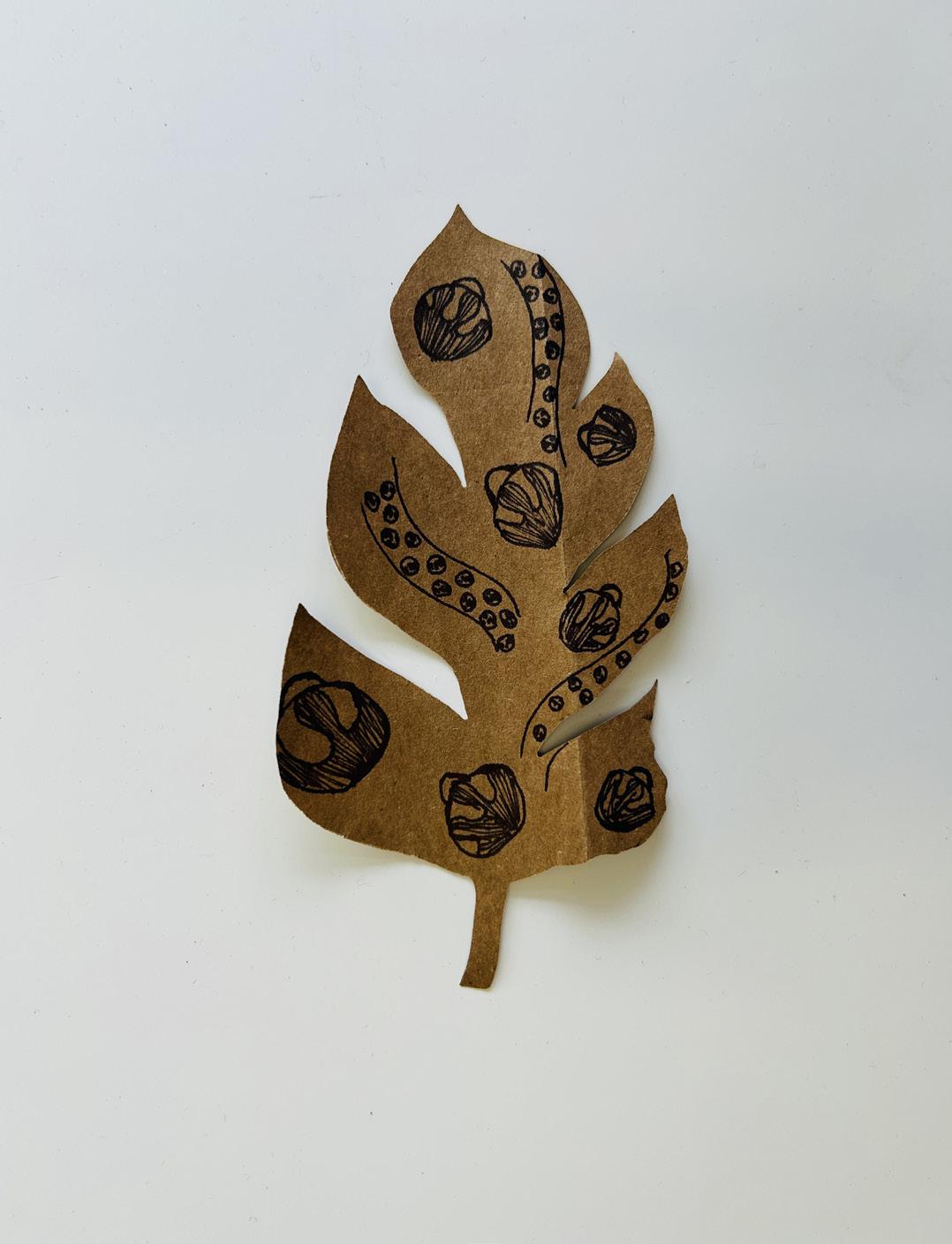
Hosted on October 4th, 2024, the pilot event for Perception of Space was held. Fliers were posted througout the student body on campus, emails send and posts made through social media platforms. When individuals entered the Design Building, they were directed by the wayfinding floor decals to the design corridoor and prompted to scan the QR codes with their mobile device and visualize or particiapte in each interaction. There were a total of 4 interactions, three were digital and one was analog. The first “Tap to Break” had prompted participants to tap the screen and break the wall revealing the a doodle underneath the section of painted mural, the second “Whats Underneath” revealed the doodle grid as it was in full scale accompanied by an audio voice over of the murals meaning intentions and development along side the students at CSULB, the third and final filter “Through The Leaves” revealed a video of artist Mer Young teaching students how to paint a mural. The fourth and final engagement was the “Leaf Your Mark” pin board in which participants were encouraged to draw a doodle or write a message on small lazer cut leaves from recycled paper bags and then pin it to the larger leaf styled pin board. It acted as not only a balance of digital and analog activities but as a play on the sentiment behind the development of the Design Building Mural the semester before.
Event Results:
• 46 total participants
• 82% of people experienced all AR filters
• 70% felt inspired by cultural narratives
• 73% left their mark on the “leaf your mark” pin board
Testing and feedback showed that some filters took a long time to load, sound was not made to be a clear part of the experience, additionally Android phones were unable to load the filters due camera recognition because of the hallway depth. Many explained that the user flow of the space and location of the QR codes should be improved upon. This feed back was vital as having feed back enables the project to meaningfully improve and grow.
The next steps in this project are to refine the user flow in the design corridor, refine the AR filters for the space and resolve the technical issues that arose during testing. On a larger scale, this project can expand experiences across the entire CSULB campus, contextualizing cultural narratives of the public art included in the Art Park.
Thank you to the HXDI X5 Cohort, my comittee members: Debra Satterfield, Judit Samper-Albero, Mer Young and Michael LaForte as well as the SEGD community.

Povuu’ngna
Tongva leaf created by Mer Young
“A museum is a collaborative institution with storytellers and community stakeholders.”
Katie Naber · Exhibition Designer · The Walters Art Museum
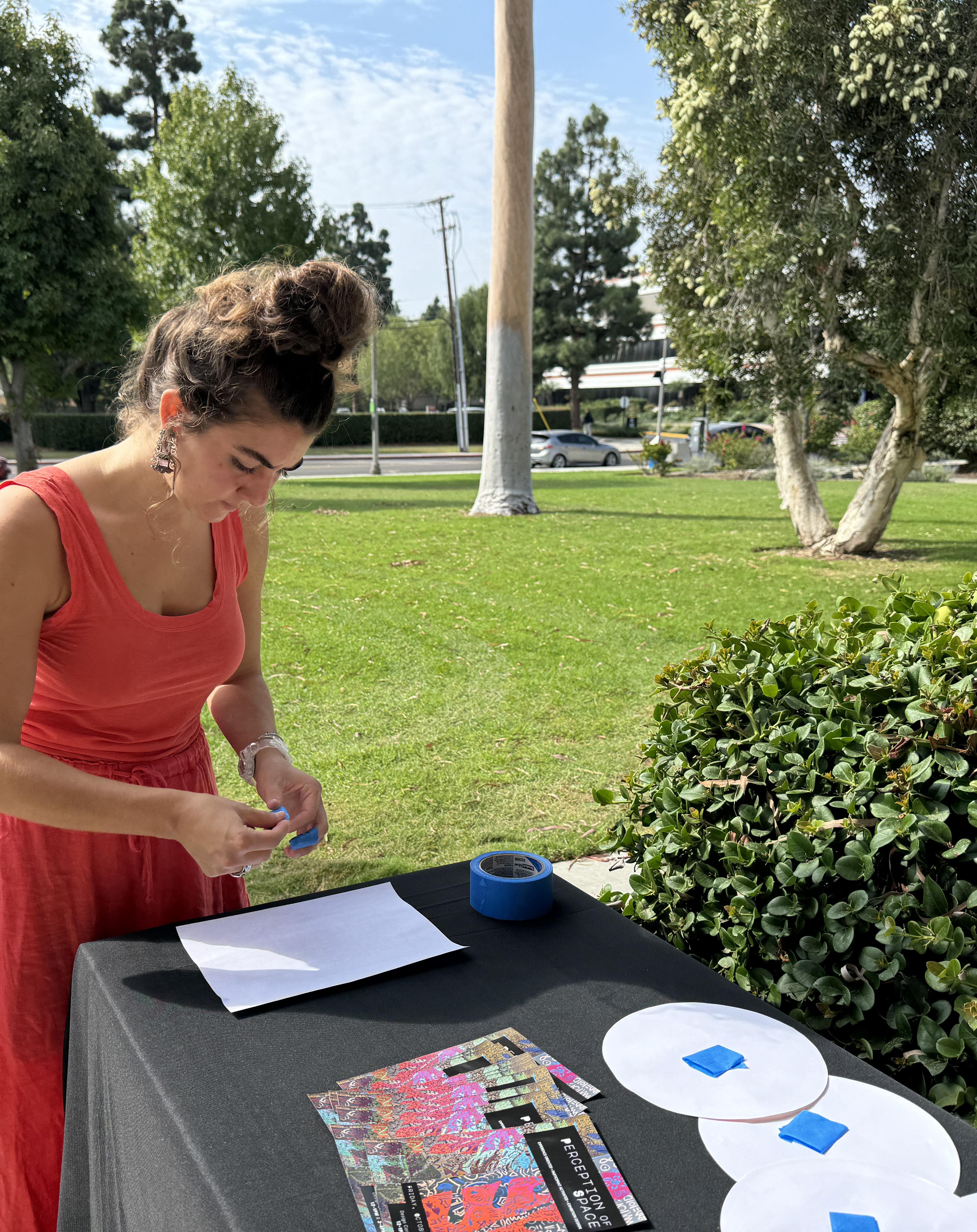
Setting up for the Perception of Space event on October 4th, 2024. Temporary wayfinding decals were installed as well as fliers being handed out.
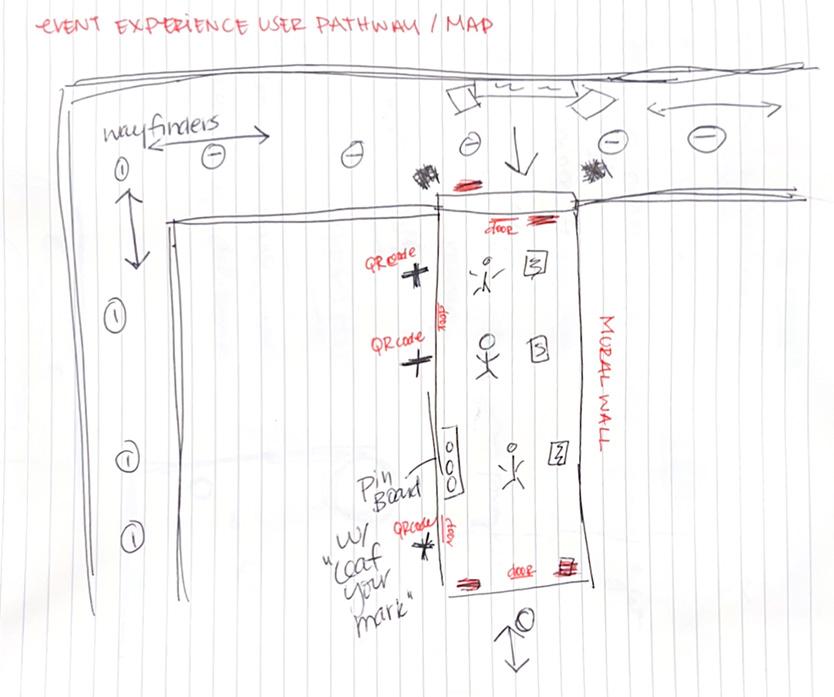
A preliminary sketch of the user experience throughout the space with in the CSULB Design building.
“How might we develop an exhibition design space where visitors actively collaborate with cultural narratives, sparking curiosity?”
Perception of Space · Challenge Statement
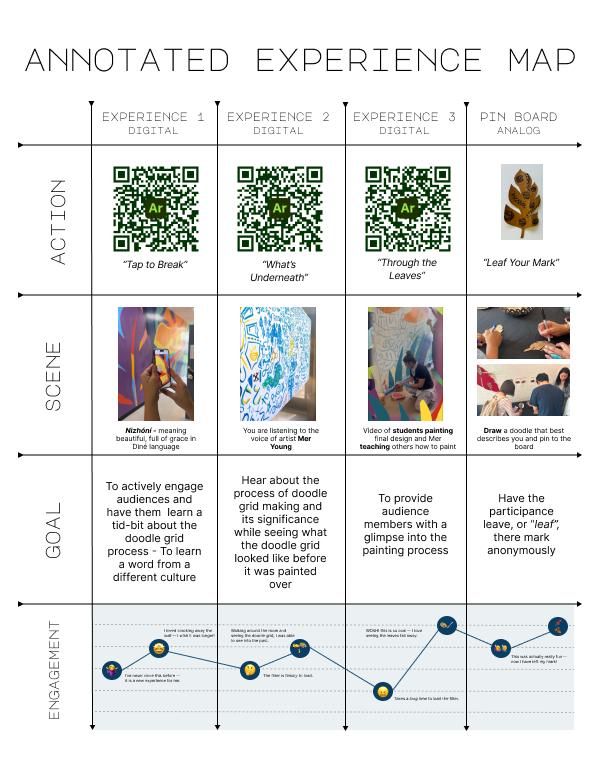
A final annoted experience map developed based upon survey results and observations from users the day of the event.
Caption text
A doodle leaf for the “leaf your mark pin board.
for the event
“There are over 21 public art installations or spaces on display across the CSULB campus, dating from 1965 to present and yet there is only context provided for one of the installations.”
Perception of Space · Statement of Need
The first iteration of the way finding decals used
Caption text
Caption text
Caption text
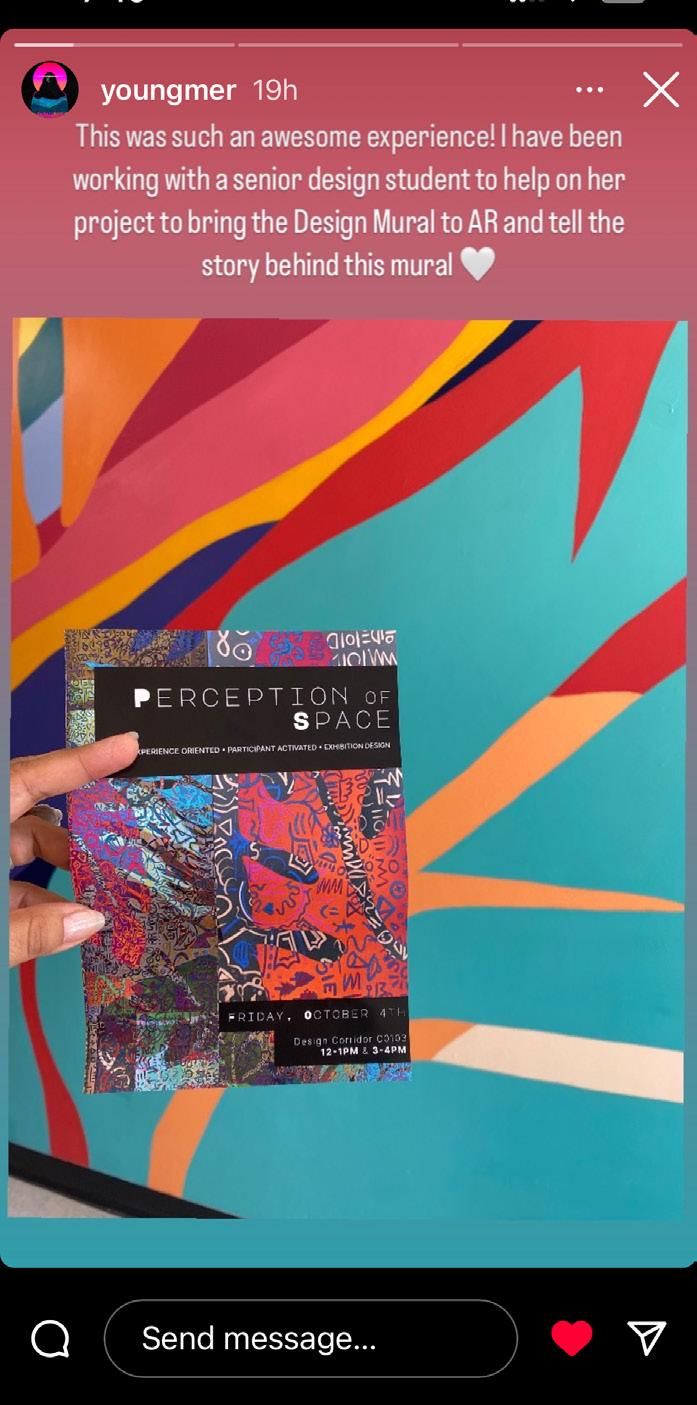
Social Media Post for the event
Wall didactics and event fliers
A student user scaning the filter QR codes

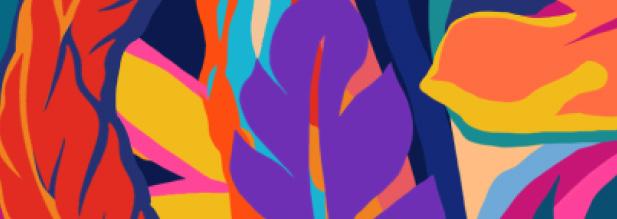
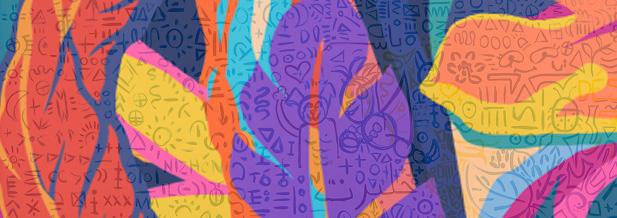
The doodle grid used as the guide to paint and scale the final mural design.
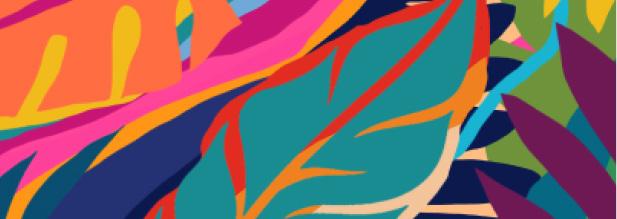
The final mural design
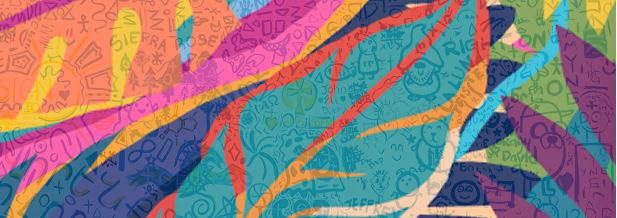
This is a representation of what the images look like atop of one another, to demonstrate how the doodle grid was used to scale the final design that was super imposed aboved the doodle grid
Resources
American Alliance of Museums. “Museum Facts & Data.” American Alliance of Museums, www.aam-us.org/ programs/about-museums/museum-facts-data/#_edn28 . Accessed 25 April 2024.
American Alliance of Museums. “Learning from the Double Diamond: How Divergent and Convergent Thinking Can Improve Collaboration and ProblemSolving in Museums.” American Alliance of Museums, 5 Apr. 2024, www.aam-us.org/2024/04/05/learningfrom-the-double-diamond-how-divergent-andconvergent-thinking-can-improve-collaboration-andproblem-solving-in-museums/. Accessed 25 April 2024.
Derda, Izabela, and Zoi Popoli. “Developing Experiences: Creative Process behind the Design and Production of Immersive Exhibitions.” Museum Management and Curatorship, vol. 36, no. 4, 2021, pp. 384-402.
Design Council. “The Double Diamond.” Design Council, www.designcouncil.org.uk/our-resources/the-doublediamond/. Accessed 1 May 2024.
Madsen, Kristina Maria, and Mia Falch Yates. “Mapping and Understanding the Potentials of Co-Creative Efforts in Museum Experience Design Processes.” Academic AAU, Akademisk Kvarter; Quarter Research from the Humanities, vol. 23, 2021, pp. 123-139.
“Street Art Factory.” Accessed 1 March 2024, https://www.streetartfactory.eu/en/maua/.
Sun, Hongxia, and Xiong Wang. “Research On Digitalization Of Museum Exhibition Design Based On Image Emotional Semantics.” Journal of Applied Science and Engineering, vol. 26, no. 5, 2022, pp. 739-746.
“The Punk Rock Museum.” Accessed 28 February 2024, https://www.thepunkrockmuseum.com/.
American Alliance of Museums. “Museum Facts & Data.” American Alliance of Museums, www.aam-us. org/programs/about-museums/museum-facts-data/#_ edn28.
American Alliance of Museums. “Learning from the Double Diamond: How Divergent and Convergent Thinking Can Improve Collaboration and ProblemSolving in Museums.” American Alliance of Museums, 5 Apr. 2024, www.aam-us.org/2024/04/05/learningfrom-the-double-diamond-how-divergent-andconvergent-thinking-can-improve-collaboration-andproblem-solving-in-museums/ .
Beale, Gareth, et al. “Digital Creativity and the Regional Museum: Experimental Collaboration at the Convergence of Immersive Media and Exhibition Design.” ACM Journal on Computing and Cultural Heritage, vol. 15, no. 4, 2022, article 78, pp. 78:1-78:23.
Beisiegel, Katharina, editor. New Museums: Intentions, Expectations, Challenges. Translated by Robert McInnes and Russell Stockman, Hirmer Verlag, 2017.
Derda, Izabela, and Zoi Popoli. “Developing Experiences: Creative Process behind the Design and Production of Immersive Exhibitions.” Museum Management and Curatorship, vol. 36, no. 4, 2021, pp. 384-402.
Design Council. “The Double Diamond.” Design Council, www.designcouncil.org.uk/our-resources/the-doublediamond/.
Dewey, John. Art as Experience. Capricorn Books, 1958.
Diaz, Abigail, and Sunewan Paneto. “The Human Condition: Health, Wellness, & Emotional Connection in Museums.” Curator: The Museum Journal, vol. 63, no. 4, 2020, pp. 579-83.
Janes, Robert R. “Why I Don’t Like Museums: A Reply to the Commentary ‘Personal, Academic and Institutional Perspectives on Museums and First Nations’.” The Canadian Journal of Native Studies, vol. 14, no. 1, 1994, pp. 147-56.
Kim, Dubeom, Byung K. Kim, and Sung D. Hong. “Digital Twin for Immersive Exhibition Space Design.” Webology, vol. 19, no. 1, 2022, pp. 4736-4744.
Lanir, Joel, et al. “Visualizing Museum Visitors’ Behavior: Where Do They Go and What Do They Do There?” Personal and Ubiquitous Computing, Nov. 2016, https://doi.org/10.1007/s00779-016-0994-9.
Lee, Jihye Park, et al. “Do Immersive Displays Influence Exhibition Attendees’ Satisfaction?: A StimulusOrganism-Response Approach.” Sustainability, vol. 14, 2022, pp. 1-20.
MacLeod, Suzanne. Museums and Design for Creative Lives. Routledge, 2021.
Madsen, Kristina Maria, and Mia Falch Yates. “Mapping and Understanding the Potentials of Co-Creative Efforts in Museum Experience Design Processes.” Academic AAU, Akademisk Kvarter; Quarter Research from the Humanities, vol. 23, 2021, pp. 123-139.
Simon, Nina. The Participatory Museum. Museum 2.0, 2010.
Sun, Hongxia, and Xiong Wang. “Research On Digitalization Of Museum Exhibition Design Based On Image Emotional Semantics.” Journal of Applied Science and Engineering, vol. 26, no. 5, 2022, pp. 739-746.
Creating with Community Imagining
Collaborative,
Justice-Oriented
Spaces
Kellyn Nettles Worker-Owner + Designer, Àrokò Cooperative
Abstract
This paper explores some of the necessary parameters, including concepts, physical structures, and strategy, for exhibition designers to consider as part of the cocreation process in local communities, with the goal of sustaining movements for broader social change. Through research and applied design practice, I aim to unpack how the principles of co-design and co-collaboration can be utilized in the exhibition design field to increase community engagement and education with important issues, thus creating change to the lived experiences of Black communities experiencing the impacts of repeated systemic failure under capitalist infrastructure.
My goal is to create an incubation space that showcases strategies for utilizing historical and educational venues for liberatory practices and encourages Black community members to collaborate on creating change and strengthen a sense of mutual belonging in their neighborhoods. The proposed solution is based around the precolonial Igbo mikiri, a style of meeting where women could exercise their power. This collective meeting style could often lead to protests, and can be seen as the initial fire behind the Aba Women’s War in 1929, when thousands of Igbo women gathered to protest British colonial chiefs that restricted their access to these gatherings. The “Mikiri” exhibition project explores the Igbo concept of mikiri as a way of bringing power back to the people of Kingsborough Houses, a New York City Housing Authority (NYCHA) property in Crown Heights, Brooklyn. The exhibition contains two central features: an interactive experience and a research hub for work, study, live programming, and events. I envision local organizations utilizing these assets to encourage education around social issues, giving Kingsborough Houses residents the space and resources to collaborate on how they will affect change in their community.
Overall, this project reflects that, by utilizing the design strategies of facilitation and planning to help communities engage with liberatory work in imaginative and speculative ways, exhibition designers can be integral to the cocreation process for grassroots liberation organizations.
Key principles of this research were outlined by members of Àrokò Cooperative in the Design to Divest manifesto.
Introduction
Historically, community-led collective action creates change. Current political systems in the United States exist because of documents produced at Constitutional Conventions—what can also be seen as a handful of community collaborations. Although the systems and policies that developed from these documents were exclusive to the white landowning men of the country, today many social justice-oriented designers have begun to focus on how collective imagining can help us rewrite these rules and create futures that are ecologically, economically, and socially prosperous and equitable.
Dr. Lesley-Ann Noel writes: “This [collective imagining] process is useful because it gives oppressed people space to dream where they might otherwise not have been able to … it gives people the space to be critical of their circumstances and to start thinking about a better way. This opens everyone up to move to action through design” (Noel 70). What Dr. Noel discusses here is also described by Dr. Arturo Escobar as autonomous design: “a design praxis with communities that has the goal of contributing to their realization as the kinds of entities they are” (Escobar 184). Autonomous design features five key elements:
“Every community practices the design of itself; every design activity begins with recognition that people are practitioners of their own knowledge; what the community designs is an inquiry or learning system about itself; every design process involves a statement of problems and possibilities, and the exercise may take the form of building a model of the system that generates the problem of communal concern” (Wizinsky).
The strategic collaborative focus on Black liberation in groups like The Combahee River Collective (a Black feminist collective formed in 1974) and The Black Panther Party for Self Defense (a militant Black power organization formed in 1966) showcases prime historical examples of autonomous design in action in the U.S., including specific details about what Indigenous, African, and ancestral African-American groups have done pre-colonialism to not only work together but to support each other. Today, there is a strong need and desire for good educational starting points, funding, and even sometimes common understanding on issues amongst community members. Interpretive exhibitions created by collaborative activist group visions can help
provide these solutions—in fact, there is already a small but emerging sector of physical activist spaces where experience and exhibition design around movement work can flourish: small archives, bookstores, and locallyfunded event spaces that center the values, voices, and identities of vulnerable members of Black communities. These places are passionate about preserving history and building environments that recognize the importance of our interconnectivity as living beings. They have a deep interest in educating the public on issues directly affecting them, and often become venues for community meetings and town halls. They also serve as incubators for cross-collaboration among liberation groups: they provide resources unique to each group and bring people together from diverse backgrounds to help build towards social change.
One prime example is Mayday, a community center in Bushwick, Brooklyn that serves as an organizing hub for activist groups (Mayday). Oftentimes spaces like Mayday encounter a few common obstacles when creating exhibitions: limited space for large crowds, poor sound control, and lack of sustained funding to name a few. Mayday space is currently experiencing grant funding delays, staff turnovers, and increasing access limitations from Bushwick Abbey, the church that owns the space the center runs out of (Mayday). These issues have forced them to put most of their organizing efforts towards fundraising just to keep the doors open. These obstacles can have a big impact on visitor experience and engagement with the space and the subject matter. They create barriers to entry, disability accessibility issues, and generally deter long-term engagement with the space—regardless of its intentions. Weaving exhibition and experience design strategy into these spaces, in a cross-cultural and co-created way, would provide better foundations for activist spaces to firmly address the needs of Black communities and leave room for larger dialogue amongst diverse communities. I believe that weaving exhibition design strategy into the creation of exhibitions in activist spaces will enable the educational, fundraising, and community support efforts of grassroots liberation organizations to be more effective in providing outlets for Black communities to grow and learn together for the purpose of autonomy and liberation.
I believe that experience and exhibition design in activist and/or community-centered spaces can define a new mode of existence for exhibitions beyond museums and brand environments—spaces that are created in, by,
with, and for Black communities, that feature engaging activations, and that encourage education. Autonomous design can help distinguish this space further, creating a push towards alternative modes of conceptualizing the future from the past.
Background Research
Designs for the Pluriverse: Radical Interdependence, Autonomy, and the Making of Worlds by Dr. Arturo Escobar
In this book, Dr. Arturo Escobar puts forth ideologies for designing for pluriverses, or the concept of designing beyond the idea of one universe or plane of existence. With contextual examples from Afro-descendant Latin Americans and activist organizations like Las Zapatistas, Dr. Escobar explores how autonomous design allows communities harshly impacted by the detriments of capitalism and Western ideology to change circumstances for themselves, as opposed to waiting for said change from oppressive government structures. Dr. Escobar describes the outcomes of autonomous design as ontological approaches that provide “paths towards imagining design practices that contribute to people’s defense of their territories and cultures” (Escobar, 76). He investigates how this working approach differs from other scholarly perspectives, and he explores the multitude of ways formally trained designers can begin to contribute to this work. Ideas like decentering modernity, “degrowth,” and transition design are key pathways towards autonomous design featured throughout Dr. Escobar’s research. A big component of Dr. Escobar’s work is decentering both the designer and the human in the design process. I find this research to be highly compelling both to the future of design and to determining the potential outcomes of our future.
The positionality of this book suggests that design can be reflected in our systems, infrastructure, and everyday modes of living. Dr. Escobar encourages Western thinkers and designers to look to organizers and Indigenous groups in Latin America for real-life examples of people utilizing collective, transitionary imagination. For example, the post-development concept of Buen Vivir, or “Good Living”, that came out of Ecuador and Bolivia, “reject[s] the linear idea of progress, displace[s] the centrality of Western knowledge by privileging the diversity of knowledges, recognize[s] the intrinsic value of nonhumans (biocentrism), and adopt[s] a relational
conception of all life” (Escobar, 148). Dr. Escobar identifies practices of Buen Vivir as ways to build towards autonomous design, and reckons with what it would look like to incorporate these practices in the West, or other more urban populations.
Towards the end of the book, Dr. Escobar provides potential examples of what designing for pluriverses might look like in the Cauca River Valley, a place where capitalist development and demand for sugarcane devastated the thriving ecology of the region. Dr. Escobar proposed a number of ideas for autonomous transition design in the region, all of which involve the inclusion of a co-design team comprised of social movement organizations, marginalized communities of women and children, activists, intellectuals, non-governmental organizations, and academics. I found this example to be very poignant in my considerations of key stakeholders in the exhibition design process, and where I will be situated as the trained designer on the project. This book, overall, sets up ideological frameworks that helped guide the process of building out the exhibition design concept for this thesis research, and I strive to create an exhibition design that follows the transition design principles—one that “seeks to imbue design with a nondualist imagination” (Escobar, 157). I also appreciate Dr. Escobar’s exploration of transition design and autonomous design ideas as a new way to consider sustainability in design—not just considering sustainable materials, but considering the ways in which the natural environment designs human worlds and workflows.
Interview with Dr. Lesley-Ann Noel, Ph.D.
Dr. Lesley-Ann Noel is the Dean of Design at Ontario College of Art and Design (OCAD). Her design work takes emancipatory, critical, and anti-hegemonic approaches, focusing on equity, social justice, and the experiences of people often excluded from design research. Her research interests are community-led and involve design-based learning and thinking. She is co-chair of the Pluriversal Design Special Interest Group of the Design Research Society. In 2018 she received a Ph.D. in Design from North Carolina State University, where her focus was on agency and empowerment through design and education.
I was fortunate enough to be able to speak with Dr. Noel about her journey into co-design and co-creation after completing my case study on her book Design Social
Change. We discussed how her work began to take focus in co-design after her experience working on export product development. She expressed her discontent with the process of creating a product, and then sending it off to artisans to do the design work: “I just felt that the top down way that I had been trained to think as a designer didn’t make sense [for this work], and I felt that there were other ways to get people involved in the process” (Noel). Dr. Noel would later discover that getting other people involved in the design process would allow her level of participation in the process to shift, as began to take on the role of a facilitator as opposed to an expert designer.
The shift between designer and facilitator became a highlight of our conversation. As she elaborated on her transition from top-down design work into co-designed projects, we discussed the differences between the two work styles: In co-designed projects, control over individual design visions is relinquished in favor of the visions of the collective. This not only democratizes the design process, but allows the broader co-design community to grasp the level of personal impact they have on any design project. While the results might not always be readily tangible, Dr. Noel shares an example of the long-term effects co-designing can have on community members, as also illustrated in Sherry Arnstein’s Ladder of Citizen Participation:
“There’s some work that I did with people in New Orleans, and I don’t recall specifically a specific project, but I do remember us doing several kind of collaborative projects with them, and I don’t know if I can point to the exact outcome in the one project, but I know I met [a woman from the project] maybe some years later, and she was doing a lot more organizing in her community. She says it’s because she gained some power from the co-design work so that she then felt she could organize other things and do other things” (Noel).
This story highlights the very distinct impacts grassroots liberation organizations can have in local communities when it comes to engaging with ideas of agency and self-determination. These impacts can be built on the foundations of place-keeping—making sure that Black and Indigenous communities feel a sense of ownership to their homes—but Dr. Noel also reflected on concepts of place-building: the idea that the foundations of our communities serve as fertile ground for imagining new
realities beyond what is currently being preserved.
Dr. Noel provided additional insights into how facilitation of the co-design process still serves as an integral design element that makes co-creation and co-design successful:
“Sometimes I have to remind myself to be patient with the people who don’t want to dream, but over the years, I’ve been able to use a lot of techniques from design, from design studio, to get people to think about creating many solutions. Sometimes it is about me explaining the work that we do as designers, and letting people know we don’t just come up with one solution…so if people ask “why is this design?” that’s (emphasis added) why it’s design, to me. The fact that we’re brainstorming, and coming up with new ideas, and evaluating the ideas—all that makes it design” (Noel).
Co-design not only enables community engagement with design practices, but also expands the impact of the traditional designer: beyond the final design, the impact of the traditional designer is most felt in the sharing of strategies, and the guidance through different creative strategies with clarity and efficiency. This discussion allowed me to think more thoroughly about how to develop an exhibition design framework that provides ample room for community design and participation. This discussion also touched on useful tools from the exhibition design process that could help prepare communities for creative development in museum-like settings. The strategy behind determining materiality, narrative, and spatial integration of designed elements, once shared, can create a high level of impact in the design process, and allow for exhibitions about important issues to exist within communities and be approachable.
We closed our conversation by discussing the timing of the co-design process. In order to produce the most effective work, and achieve peak levels of community engagement, Dr. Noel emphasized the importance of lengthening the timeline of any co-design project. She detailed challenges she experiences in her current role as Dean of Design at OCAD, where at times the codesign process doesn’t seem accessible due to a sense of urgency around decision making: “It’s something to keep in mind—that it really slows down the process. Not every project has that budget to be able to do so much,
or to go on for so long” (Noel). Allotting time for fluidity in decision making is essential to the process—this will alleviate stress, and allow for more fruitful possibilities to be generated from the group.
Applied Practice
The Mikiri exhibition speculates on the co-design process—showcasing an exhibition experience and design opportunity for visitors to engage with decision making styles of the Western Nigerian Igbo women, formally known as mikiri. This focus stems from the autonomous nature of precolonial Igbo society: communities weren’t set up in the same political sense that we observe today: groups were formed based on shared values, principles, and spiritualities, and decisions were made in conversational environments. Mikiri gatherings were where women of the community were able to exercise their collective power:
“Mikiri were held whenever there was a need. In mikiri the same processes of discussion and consultation were used as in the village assembly. There were no official leaders; as in the village, women of wealth and generosity who could speak well took leading roles. Decisions appear often to have been announced informally by wives telling their husbands. If the need arose, spokeswomen to contact the men, or women in other villages - were chosen through general discussion. If the announcement of decisions and persuasion were not sufficient for their implementation, women could take direct action to enforce their decisions and protect their interests” (Allen, 169).
While relationships with men were common topics at mikiri gatherings, women would also discuss matters of trading and farming, setting the norms to be set in these spaces. If any of the norms set in mikiri weren’t aboded by, the women would “sit on” or “make war on” a man:
“‘Sitting on a man’ or a woman, boycotts and strikes were the women’s main weapons. To ‘sit on’ or ‘make war on’ a man involved gathering at his compound, sometimes late at night, dancing, singing scurrilous songs which detailed the women’s grievances against him and often called his manhood into question, banging on his hut with the pestles women used for pounding yams, and perhaps demolishing his hut or plastering it with mud and roughing him up a bit. A
man might be sanctioned in this way for mistreating his wife, for violating the women’s market rules, or for letting his cows eat the women’s crops. The women would stay at his hut throughout the day, and late into the night, if necessary, until he repented and promised to mend his ways. Although this could hardly have been a pleasant experience for the offending man, it was considered legitimate and no man would consider intervening” (Allen, 169).
The exhibition design interpretation of this research takes the form of a design incubator and interactive experience that explores the concept of mikiri at Weeksville Heritage Center, a historic site located across the street from Kingsborough Houses (in Crown Heights, Brooklyn) that preserves the legacy of one of the largest free Black communities in pre-Civil War America (Weeksville). In 1968, community members gathered and created the Weeksville society to take a stand and stop the destruction of the Hunterfly Houses, the only existing remnants of 19th century Weeksville (Zenz). This is the same kind of collective action that would take place in a traditional mikiri, and allows the exhibition to deepen visitors’ understanding of the center and their continued commitment to the community.
This experience utilizes interactive elements to explore visitor’s relationships to community initiatives and projects, giving them the opportunity to get involved with local working groups or the inspiration to start their own. There are two interactive activities that offer visitors the opportunity to engage with the history of a mikiri. The first interactive is a digital “portal” that guides visitors through a world-building experience on individual-yetconnected tablet screens. They will learn about The Social Change Ecosystem, a framework that can help individuals, networks, and organizations align with social change values, individual roles, and the broader ecosystem, and have the opportunity to decide which of the framework’s outlined movement roles align with how they envision themselves showing up in community work. Based on the selected role, visitors can then determine a new norm for the group, reflect on their decision with other interactive participants, and receive information about an upcoming event or social action they can participate in within the Brownsville, Crown Heights, and Bedford-Stuyvesant area. These events would be regularly reviewed and developed by members of the codesign team—forming a continuation of the exhibition’s design opportunities for the community and additional
conduct independent
opportunities for connection to additional grassroots liberation organizations.
The second interactive gives visitors an opportunity to explore protest-like actions within the setting of a museum, engaging with the concept of “sitting on” or “making war” on a man. To incorporate this action into the exhibition environment, visitors will have the opportunity to “slam” their provided stickers onto an aluminum wall structure—simulating the feeling of noise making actions. This experience will allow visitors to feel a moment of energy release, while also being able to assess the roles of others, and experience being a part of something bigger than the exhibition.
To supplement this content, a research hub will be available next door to the interactive space. This research hub, called “The Forum,” utilizes an open floor plan design to allow for natural conversation amongst visitors and provide space for research and engagement with ancestral and indigenous practices that ground
this collective action work. To make this engagement feel approachable, this space is modeled after a living room—a place where, in Black American households, conversations and decisions are often made. The space will also feature digital workstations that allow for online research and connection to the digital Mikiri exhibition community. This space will also be open to live programming and events—hosted by community members, grassroots liberation organizations, or members of the co-design team.
In the outdoors portion of the exhibition, visitors will learn about Mmuo Mmiri, or “Mamy Wata”—an Igbo Water spirit said to be the bringer of change. A spiral pathway will lead visitors to a fountain, while snakelike stanchions guide visitors through the folktale Mamy Wata and the Monster, which tells a tale of Mmuo Mmiri’s generosity and openness and showcases ways we can show love and care for our neighbors.
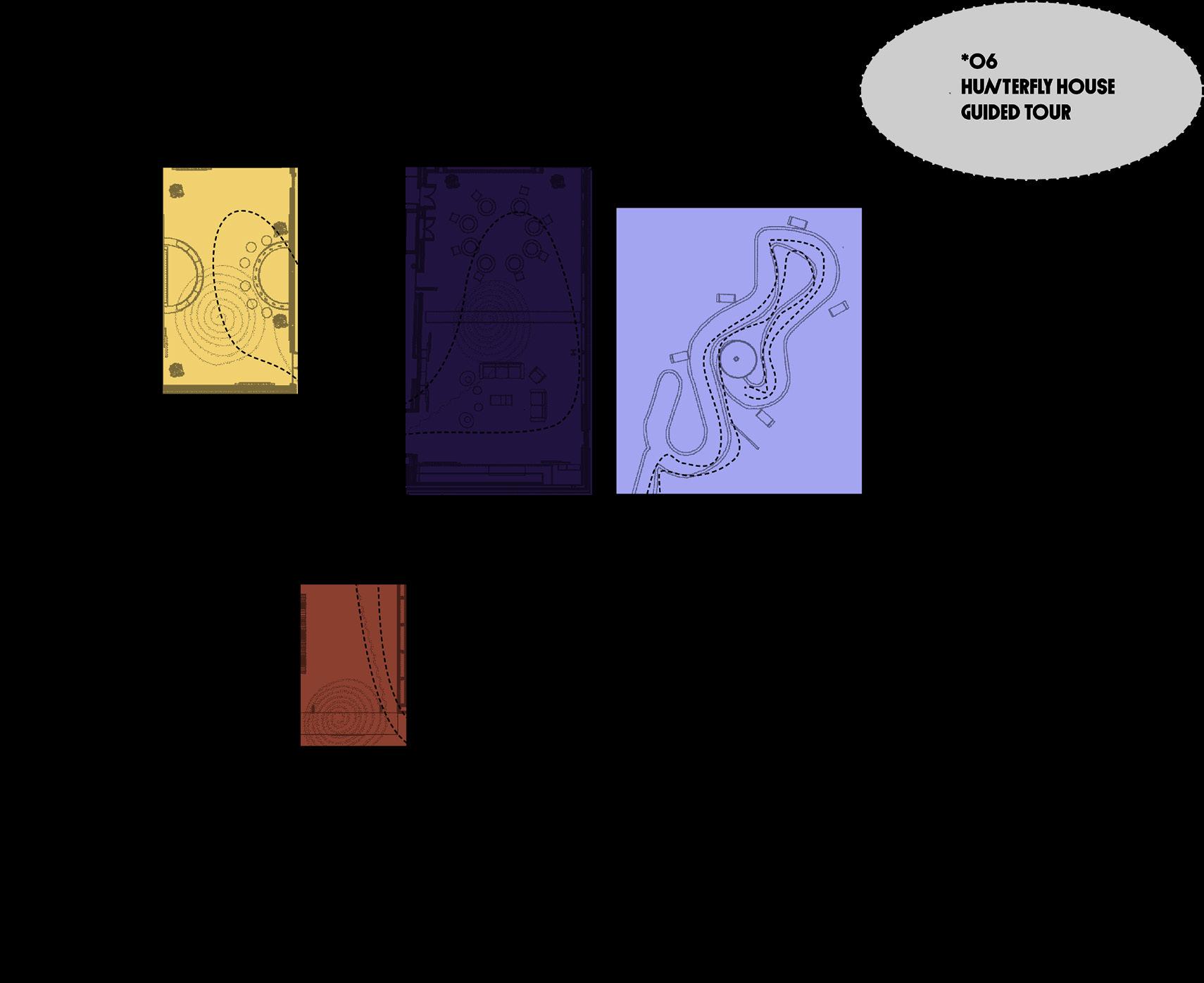
Fig. 1. Area Floor Plan diagram. Visitors of the Mikiri experience can engage with an interactive exhibition,
research, and enjoy a meditative walk outdoors.
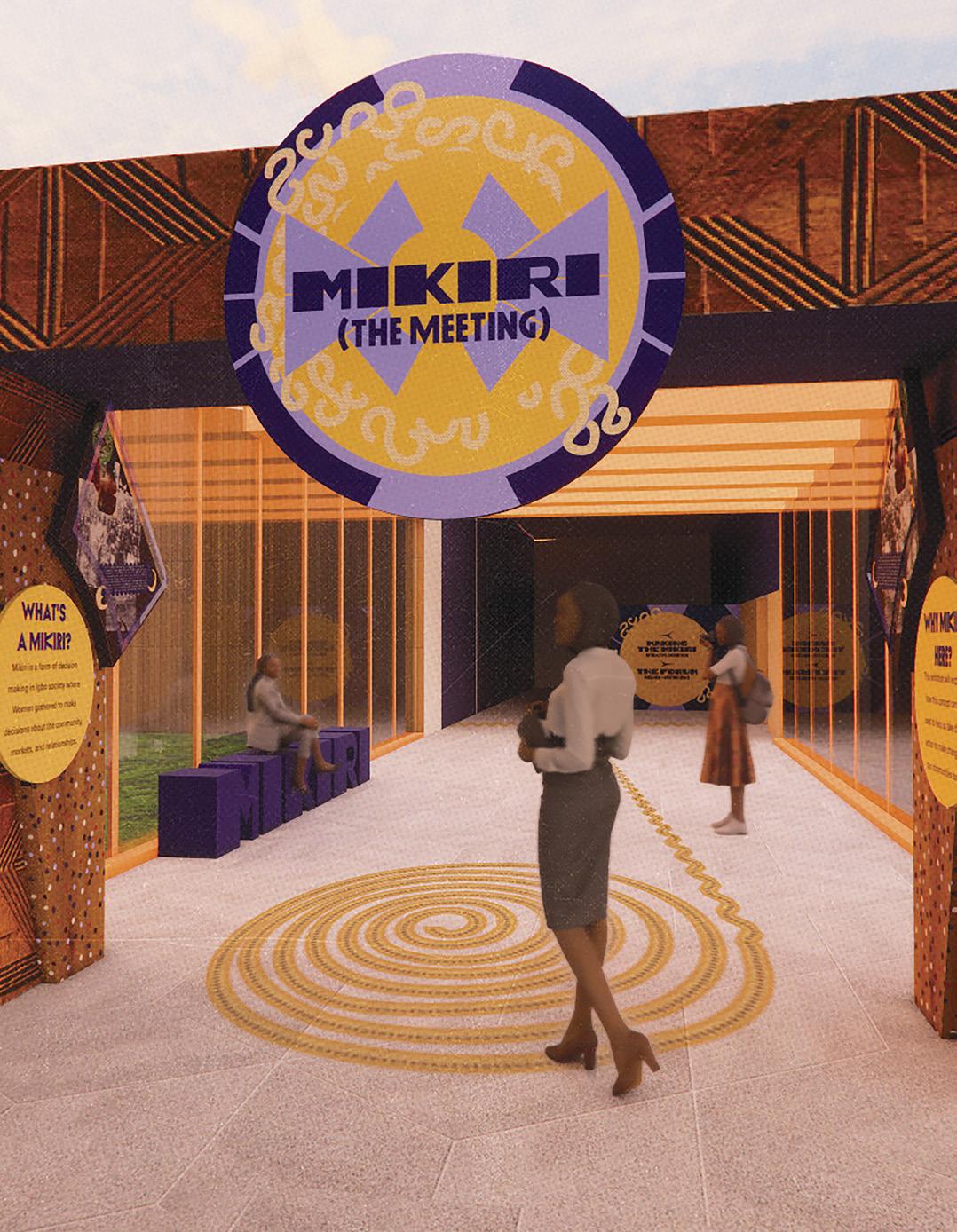
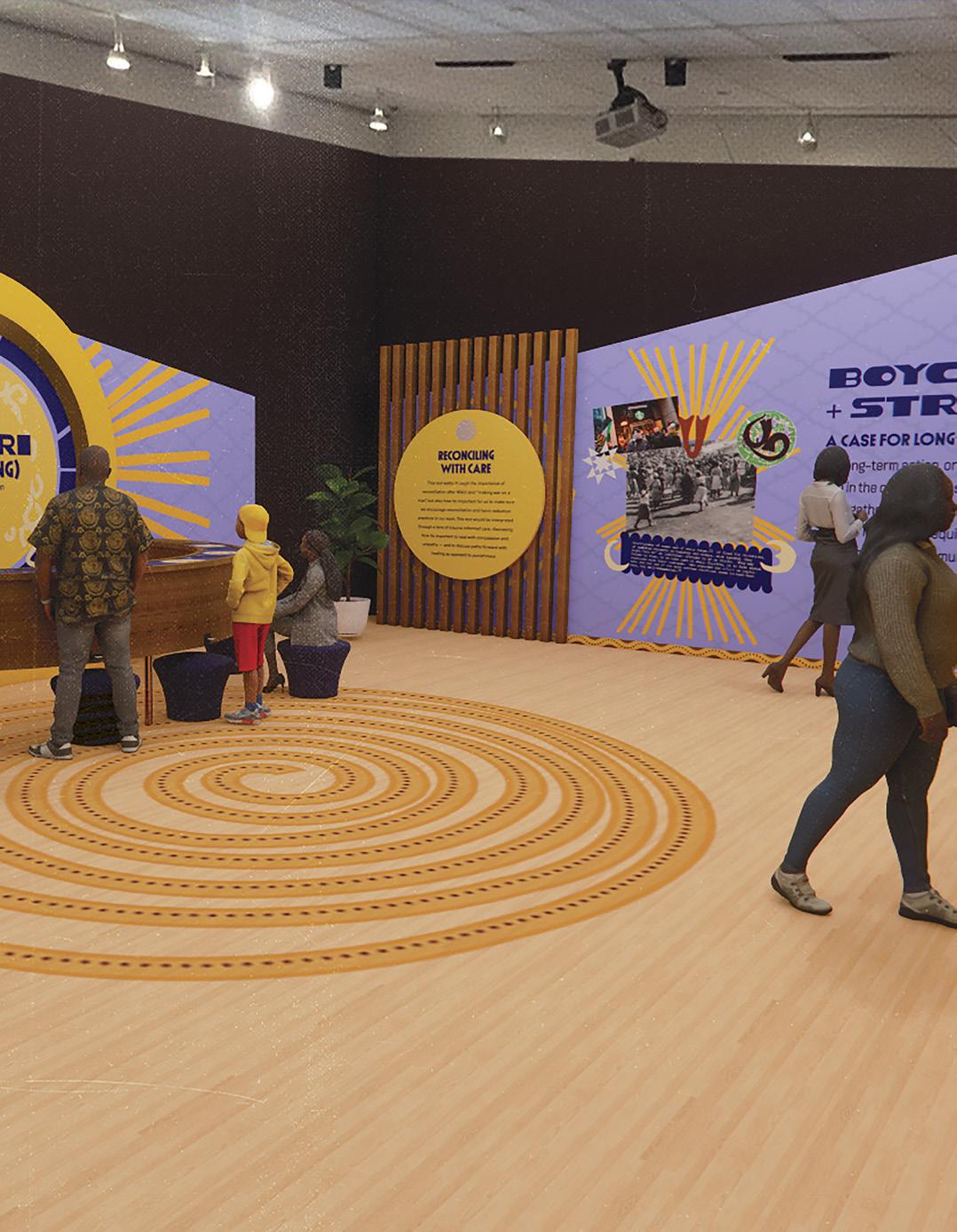
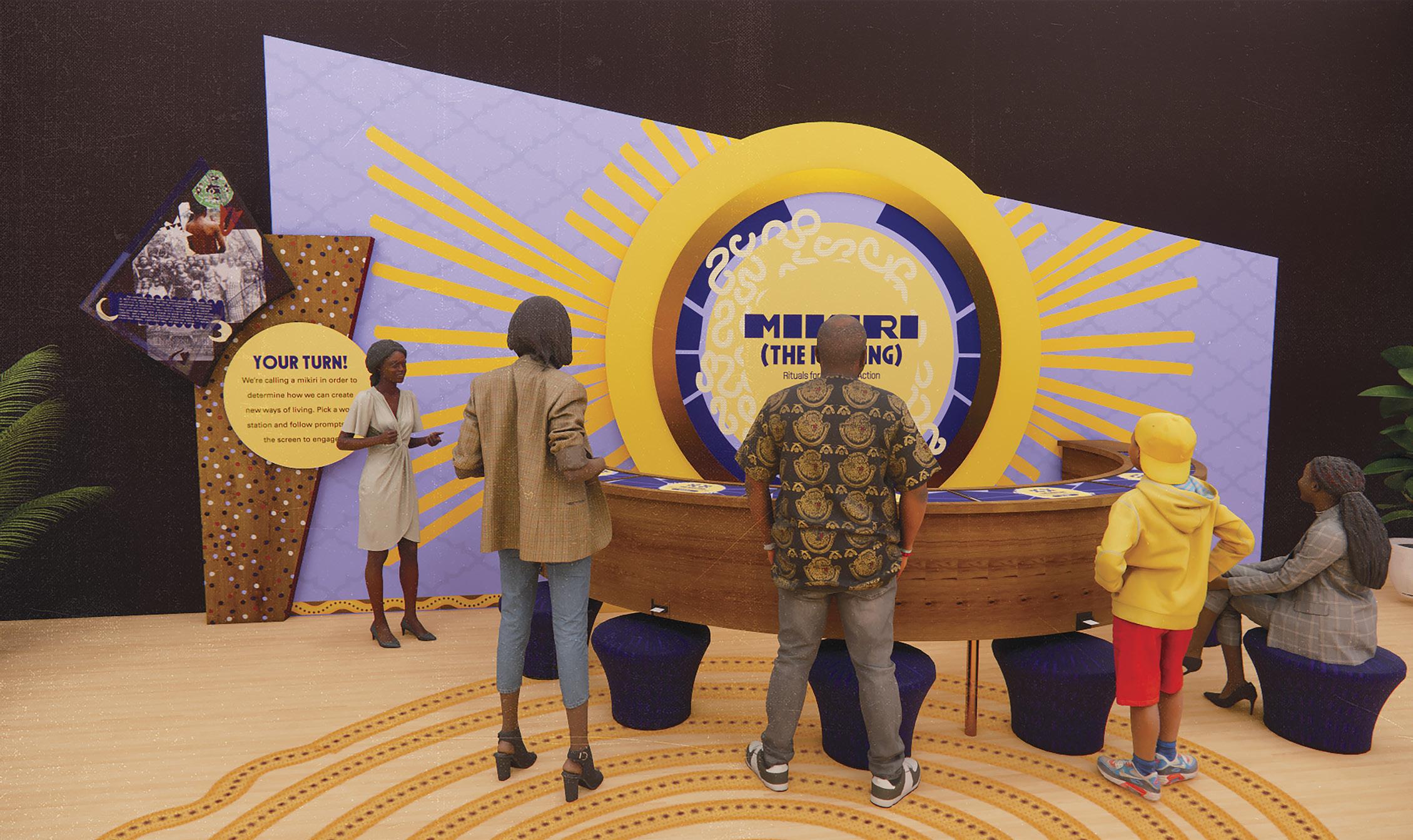
Fig. 4. “Making the Mikiri” digital interactive. A docent will be present at this interactive to facilitate any questions from participants.
Fig. 2. Exhibition entryway rendering and description.
Fig. 3. “Making the Mikiri” exhibition space overview rendering.
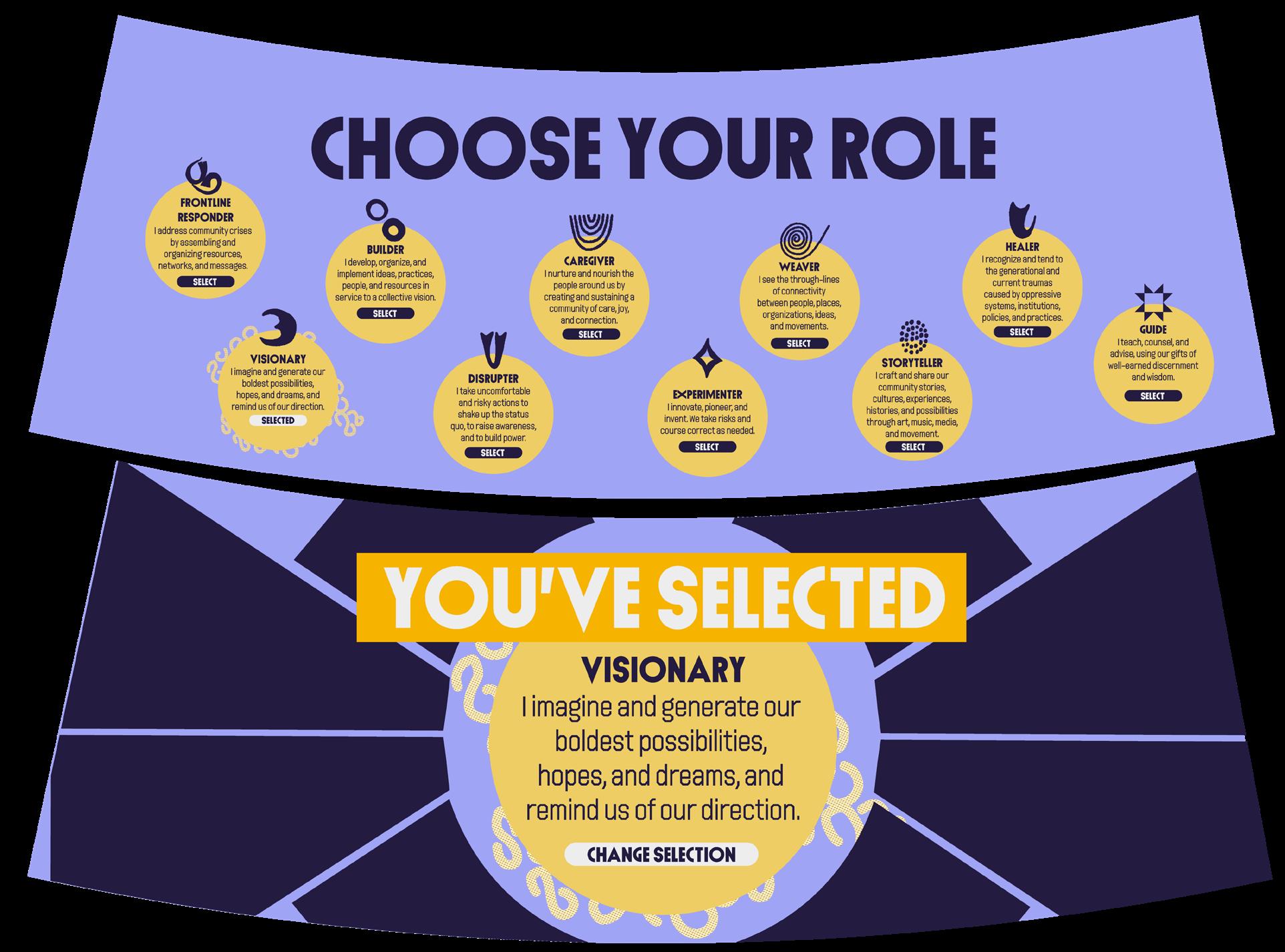
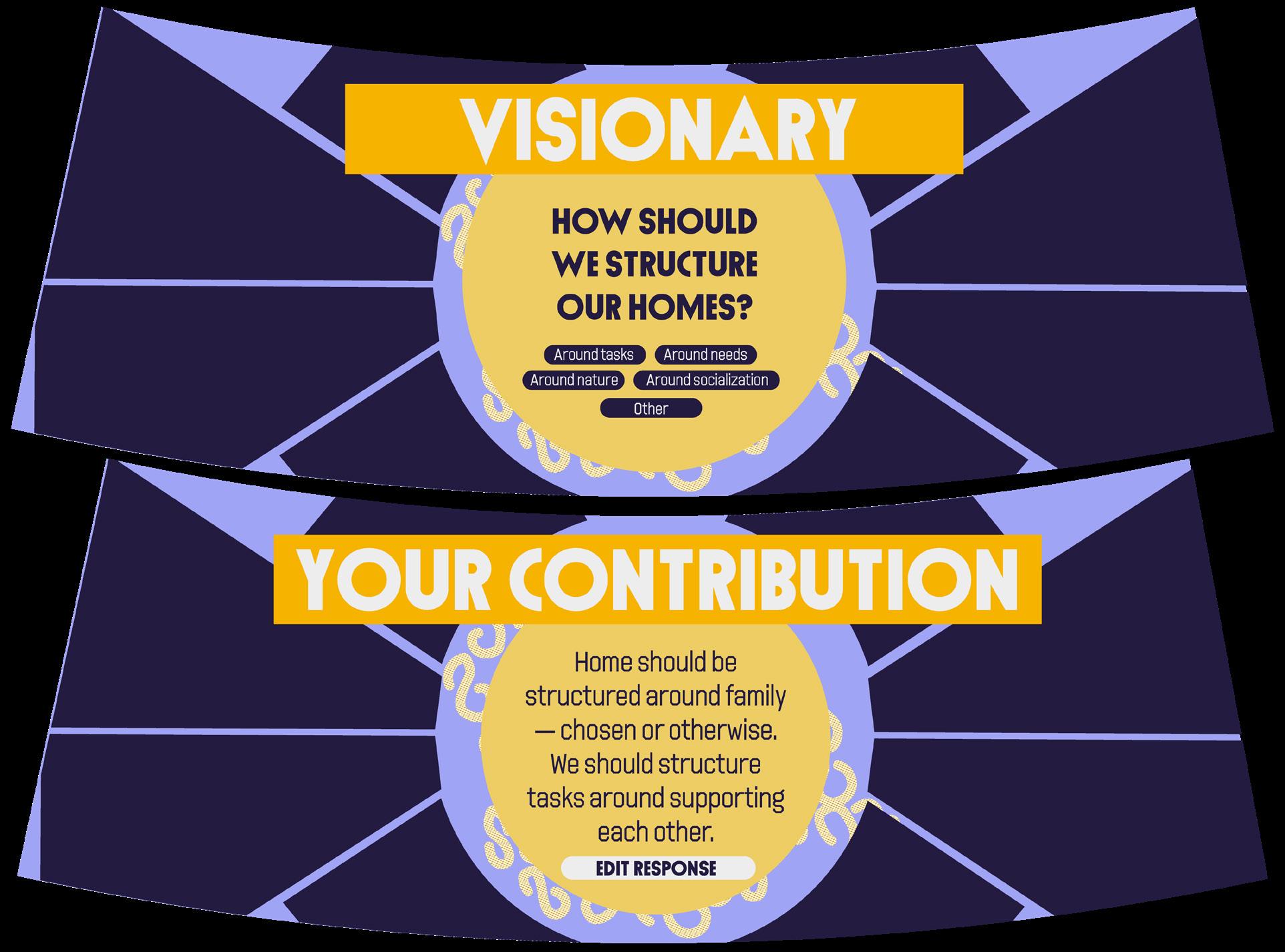
Fig. 5. Digital interactive. Visitors can select from provided options and will be prompted to provide a reasoning for their selection.
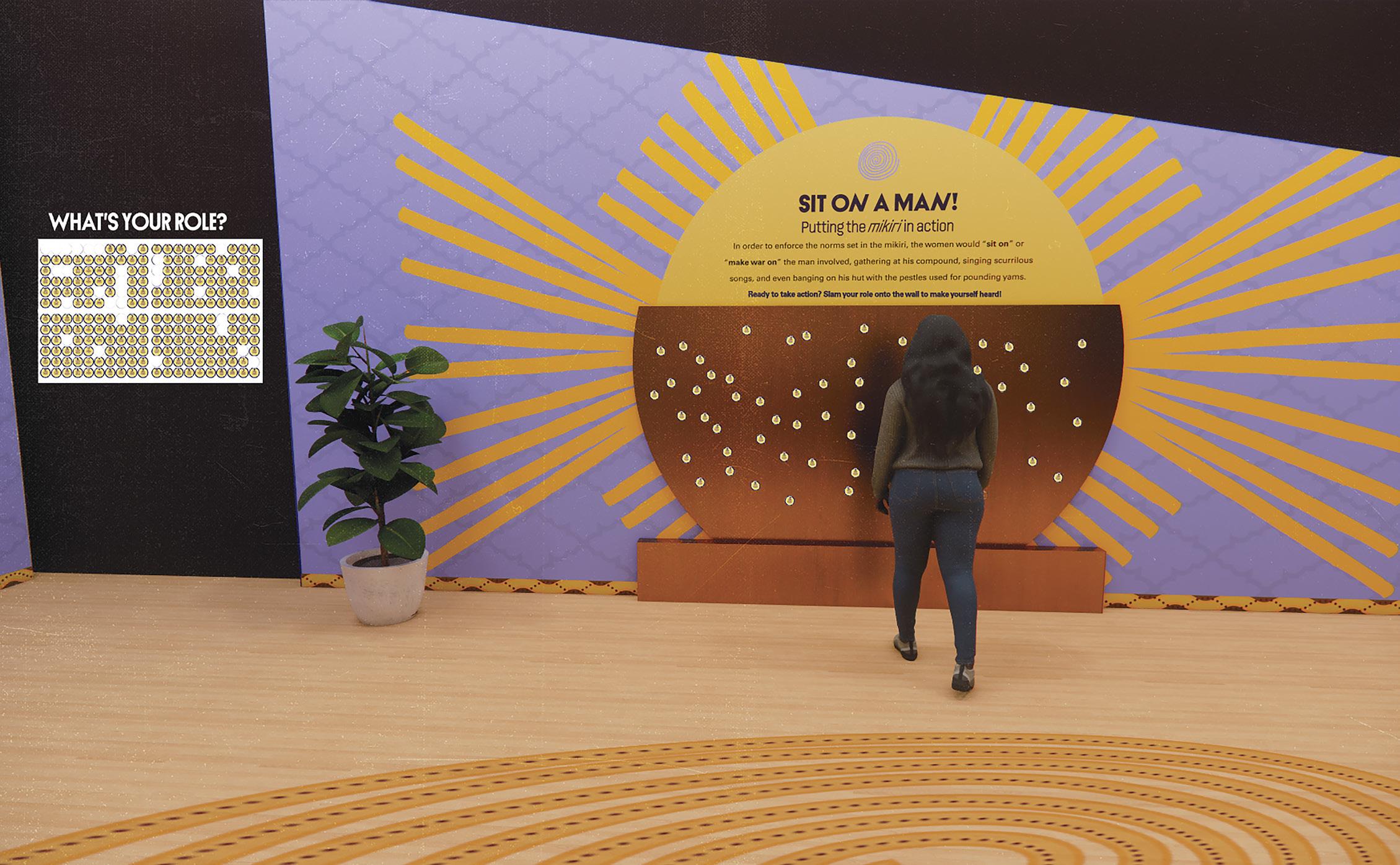
Fig. 6. “Making the Mikiri” sticker interactive. Visitors can choose a sticker that outlines their role, and slam it onto the aluminum wall.
The graphic design of this exhibition is heavily inspired by traditional Igbo community design and uses Afrofuturist themes in collage to speak to the connection of the past to the present and future. Colors are pulled from the natural items used to make paint in Igbo murals, with pattern decals and motifs that also show up frequently in the architecture and mural paintings of the community. Font selections utilize Black type designers and reference moments in history where people took actions into their own hands to make a change: Vocal Type’s “Eva” font is pulled from signage from the Buenos Aires women’s suffrage demonstration in 1947, and Univers was the font commonly used in the Black Panther Party Newspaper. Stickers serve as the main source of collateral for this exhibition because of their sharability— allowing visitors to expand the reach of the exhibition to their interpersonal communities. Visitors should feel encouraged to take action in their neighborhoods, and feel proud to take home some of these items as a token of the work that they’ve done to make their communities a place they enjoy.
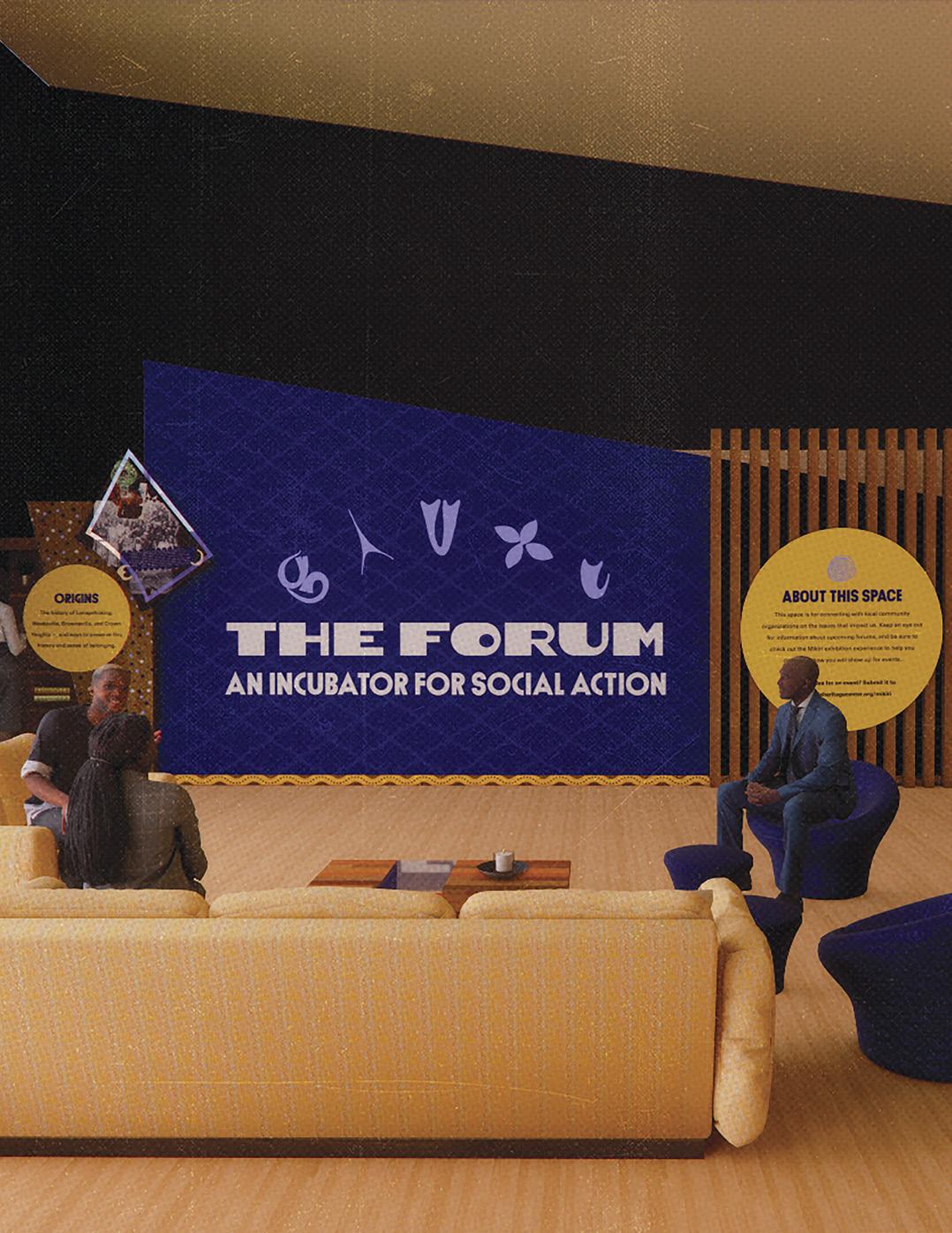
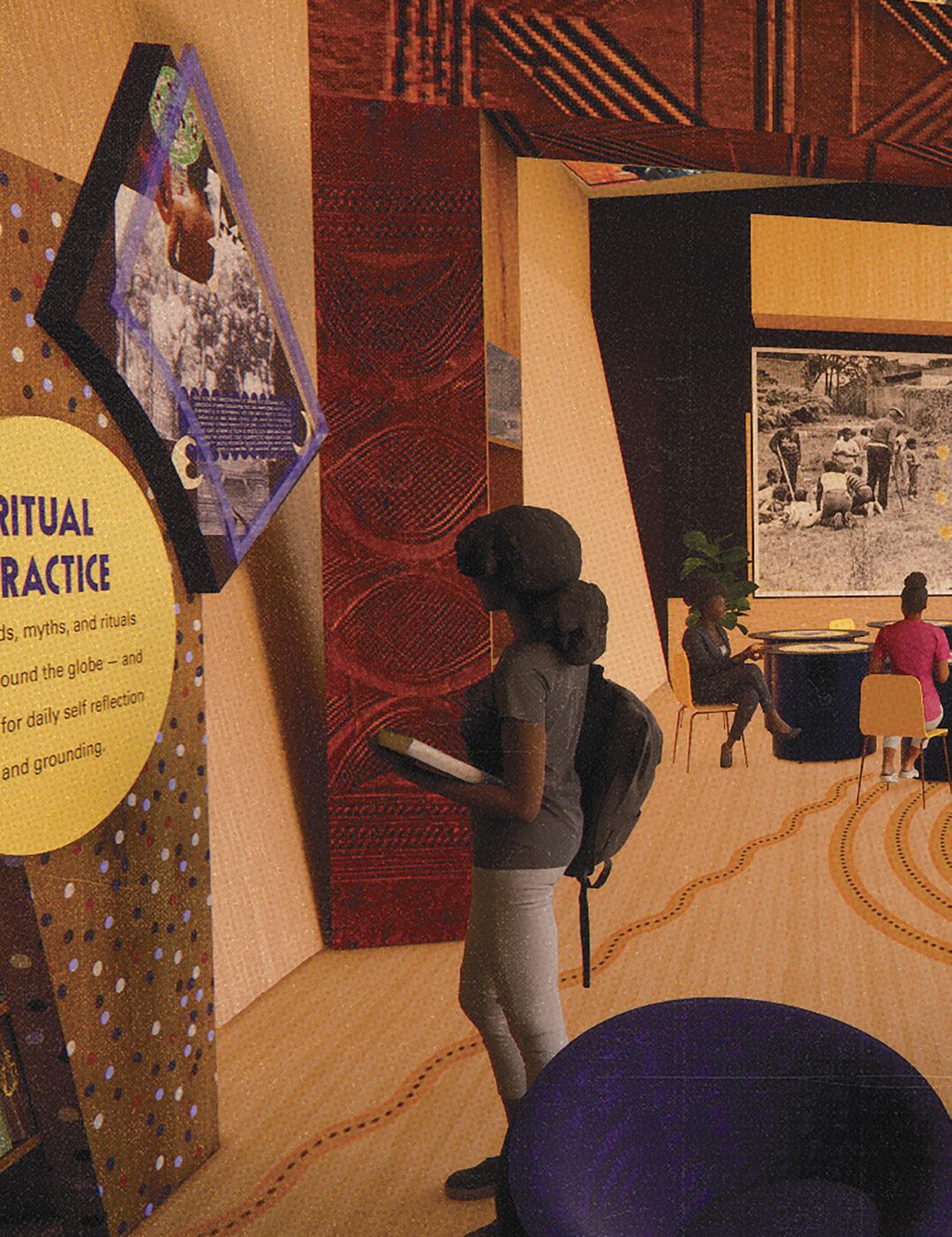
7 & 8.
Forum” renderings. This area is for independent research and can feature live programming from local organizations.
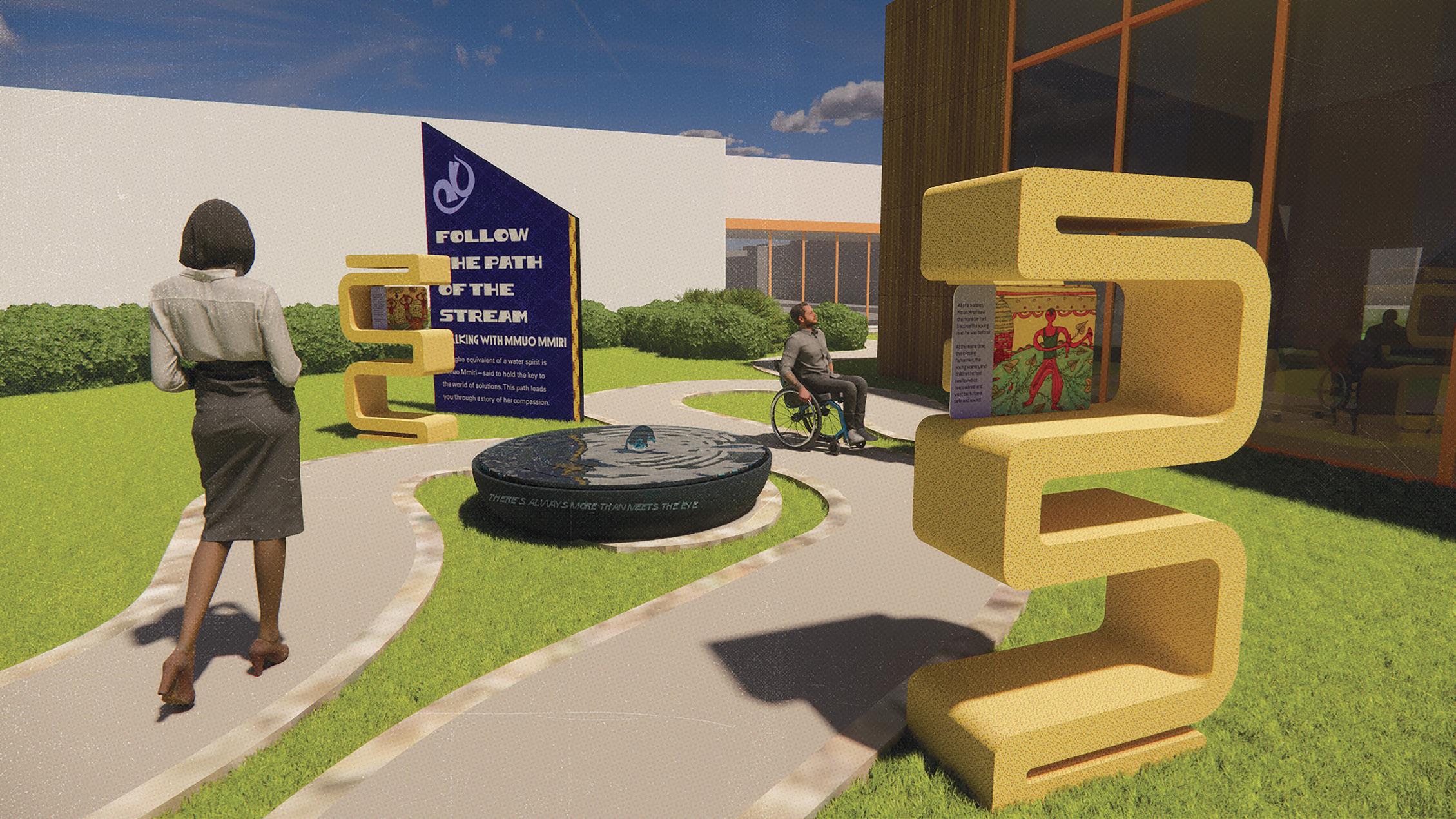
Fig. 9. “Follow the Path of the Steam” rendering. This outdoor walking path gives visitors an opportunity for reflection and relaxation.
Fig.
“The
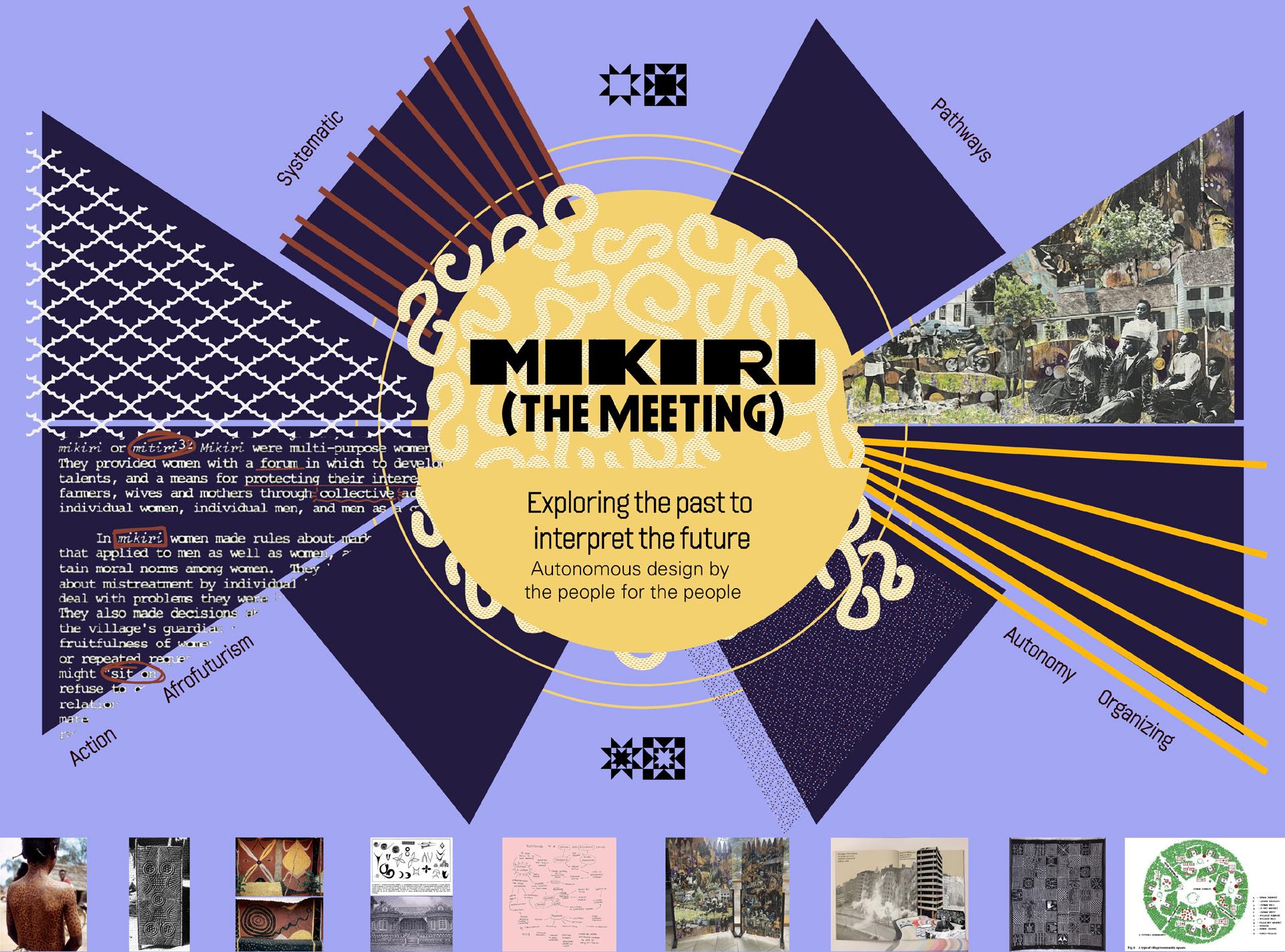
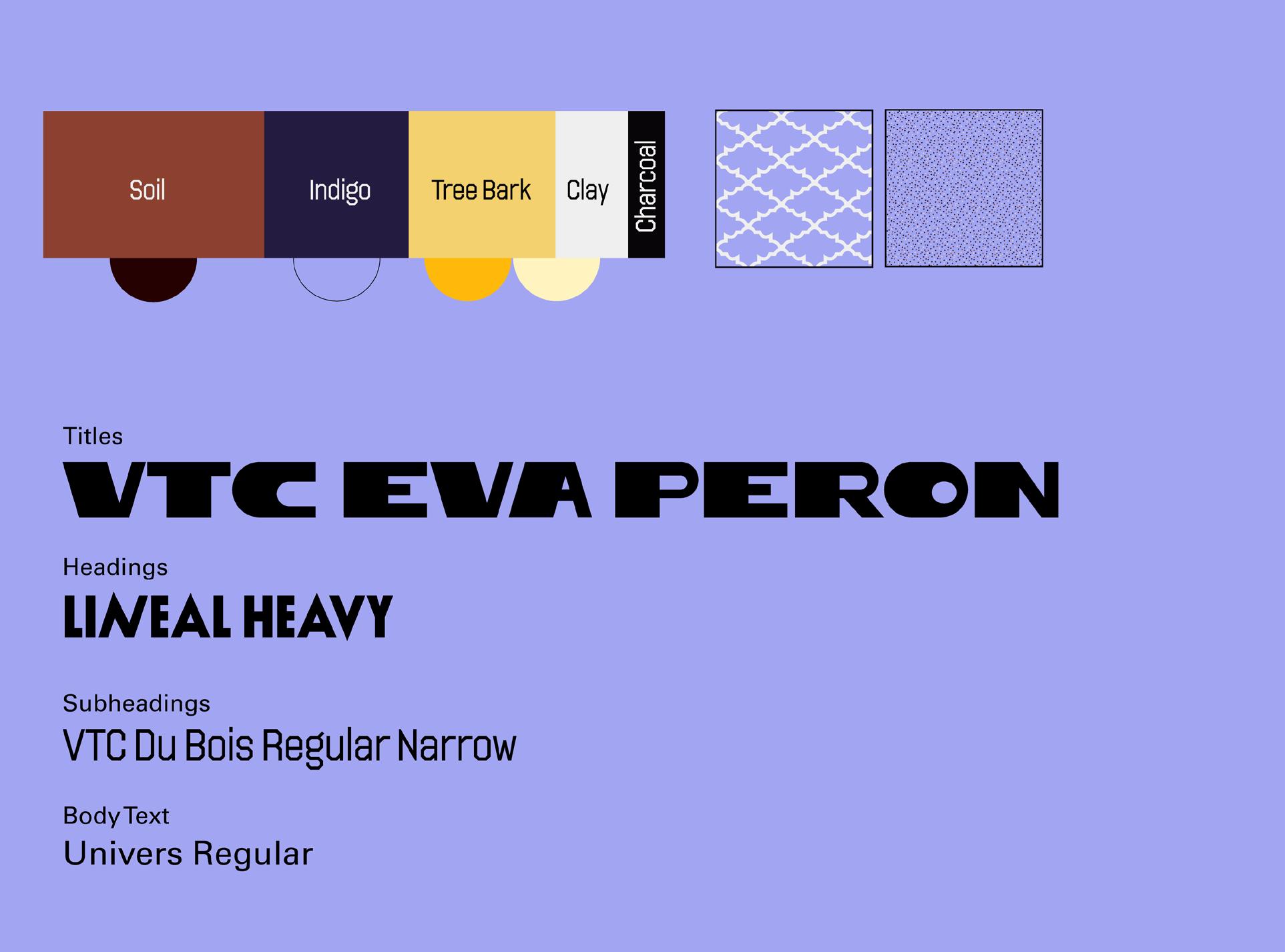
10. Exhibition graphic system. References to Igbo architecture and collage serve as a tie between the past, present, and future. The typography of the exhibition includes typefaces from Black designers, and references to revolutionary media and actions.
Caption text
Fig.
Conclusion
This project outlined how exhibition designers can be integral to the co-creation process for grassroots liberation organizations: by utilizing facilitation and planning strategies to help communities engage with liberatory work in imaginative ways, exhibition designers can help develop community-centered approaches to expanding movement work. I showcased an exhibition with multiple levels of visitor interaction, and how it succeeded in expanding on visitor knowledge and engagement with topics set forth by the chosen grassroots clients. The exhibition experience provides audiences with the opportunity to establish their own meetings to determine the actions necessary to have autonomy in our own neighborhoods. It asks visitors to meaningfully show up and participate in the best way they can, and aims to reflect back onto visitors how they can continue this participation in their local community. Utilizing Weeksville Heritage Center as an incubator for future change activates a close-proximity audience, and engages them with the same movement building work that led to the creation of the Weeksville Society. Not only will visitors gain an understanding of the foundations of the Weeksville Heritage Center, but they will additionally gain new resources for taking action and creating change for themselves beyond government support. While it may not fully restructure
the way Brooklyn thinks of public housing, this exhibition gives visitors a strong place to start, providing a variety of ways to show up for one another in the neighborhood, opening the imagination to new decision making strategies, and providing a space for gatherings around issues that impact the community on micro, meso, and macro-social levels.
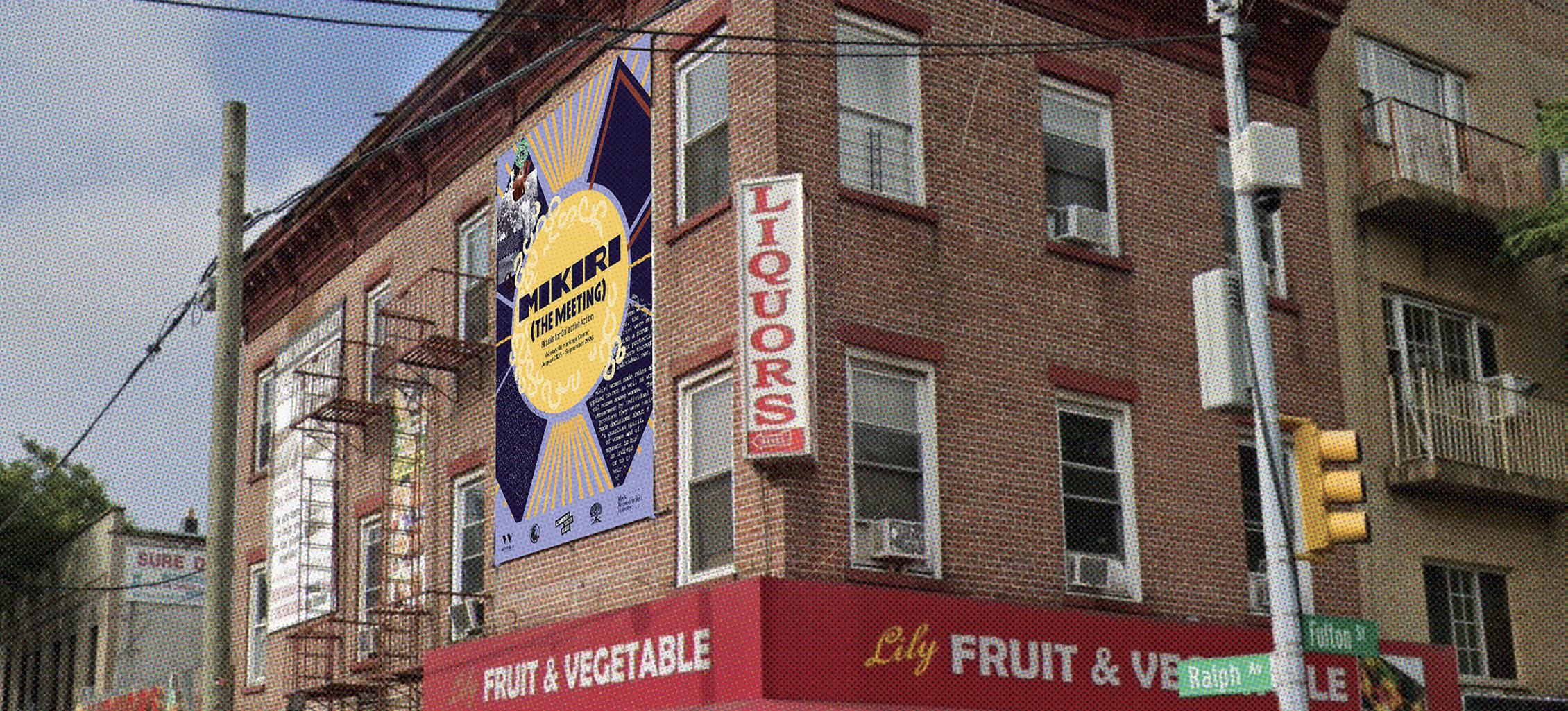
Fig. 11. Exhibition poster promotion rendering.
Resources
Allen, Judith van. “‘Sitting on a Man’: Colonialism and the Lost Political Institutions of Igbo Women.” Canadian Journal of African Studies / Revue Canadienne Des Études Africaines 6, no. 2 (1972): 165–81. https://doi. org/10.2307/484197.
Escobar, Arturo. Designs for the Pluriverse: Radical Interdependence, Autonomy, and the Making of Worlds Duke University Press, 2018.
Mayday. “About Mayday.” Mayday, 2020. https:// maydayspace.org/about/.
Mayday. “What’s Been Going on at Mayday?” Instagram, September 17, 2024. https://www.instagram.com/p/ DABrJIHPgMw/?img_index=3.
Noel, Lesley-Ann. Design social change: Take action, work toward equity, and challenge the status quo Emeryville, CA: Ten Speed Press, 2023.
Noel, Lesley-Ann. Interviewed by author. Zoom, December 2, 2024.
“Weeksville Heritage Center | About Us.” Weeksville Heritage Center, January 2, 2024. https://www. weeksvillesociety.org/about-us/.
Wizinsky, Matthew. “Autonomous Design.” Design after Capitalism, 2022. https://designaftercapitalism.org/ autonomous-design.
Zenz, Cassandra. “Weeksville, New York (1838- ).” BlackPast, October 14, 2010. https://www.blackpast. org/african-american-history/weeksville-newyork-1838/#:~:text=Weeksville%20residents%20 established%20churches%2C%20schools,country’s%20 first%20African%2DAmerican%20newspapers.
Shaping EGD Education Case Studies in Industry Collaboration and Urban Design
Julie Hurley Department of Design, California
State University Long Beach
Abstract
This paper outlines the design and delivery of an upperdivision studio course in Experiential Graphic Design (EGD) focused on public spaces, narrative environments, and industry collaborations. The course has two key objectives: (1) to develop students’ applied design competencies, and (2) to provide exposure to professional practices through high-impact, project-based experiences. Throughout the semester, students participated in three major projects, each developed in collaboration with a professional. These various collaborations emphasized signage, wayfinding, lighting design, spatial storytelling, and civic engagement. Through these experiences, students encountered the realities of practice, developed critical thinking, and built confidence in navigating complex design challenges. The course provides a scalable model for integrating experiential learning, virtual internships, and civic partnerships within EGD curricula.
Introduction
As the boundaries between design disciplines continue to blur, Experiential Graphic Design (EGD) stands out as a field uniquely suited to addressing the complexities of contemporary public environments. Positioned at the intersection of graphic design, architecture, urban planning, and interaction design, EGD enables designers to shape how people perceive, navigate, and emotionally connect with space (Calori and Vanden-Eynden 3537). In response to the integration of multiple areas of design, the education structure must continue to evolve by incorporating the realities of professional practice into academic coursework, thereby better preparing students for the demands of the industry. By simulating the process of professional studios within the classroom, students gain experience navigating real-world constraints while addressing audiences, context, and outcomes. This pedagogical approach aims to close the gap between academia and practice (Davis). Students are not only developing technical skills but also assuming the roles of designers, collaborators, storytellers, and engaged citizens who shape the built environment.
To operationalize this philosophy, we structured an upper-division EGD studio around three sequential projects, each developed in partnership with industry collaborators. Students worked in small teams, mirroring professional practice and encouraging peer-to-peer learning and collaborative problem-solving (Ambrose et al.; Hurley et al.). The curriculum centers on three thematic pillars: identity in urban space, storytelling through environmental experiences, and civic design via signage and branding systems. Projects progressed from speculative installations to immersive environments and systems-oriented interventions.
Each project incorporated high-impact educational practices, including site visits, iterative critique, formal client presentations, and sustained professional mentorship. These strategies grounded learning in authentic contexts, deepening engagement, and expanding student insight (Kuh; Provencher and Kassel).
Key industry partnerships—with organizations such as Cantara, Angel City Football Club, and RSM Design— brought external expectations and accountability into the classroom, fostering a collaborative environment that promoted learning and growth. Additionally, an ongoing relationship with the Society for Experiential Graphic
Design (SEGD) has provided students with access to a professional design community and opportunities for networking and critique (SEGD).
By the end of the course, students were completing assignments and working as emerging professionals. The students engaged in various design processes, managed collaborative tensions among teammates, and created solutions that were responsive to civil needs and compelling in their spatial storytelling. This experience reframed design education as a public practice rooted in empathy, purpose, and civic engagement.
Methodology
This course employed a case study model that involved three distinct professional collaborations: architectural lighting, sports branding, and civic signage. Students applied core EGD principles — research, narrative, systems thinking, and iterative prototyping — within contexts that challenged them to adapt and refine their approach. The course followed a scaffolded structure, where each project increased complexity, from core conceptual development to system-based urban design thinking. We employed high-impact practices — not just for exposure, but for immersion. Students engaged in real-world design contexts, critically navigating constraints, audiences, and public space dynamics. (Satterfield et al. 2023; Hurley et al.)
Unlike traditional internships, this course provided multiple opportunities for professional engagement during a single semester, including: three distinct client relationships, two field visits, ongoing virtual mentorship, peer critique, and group leadership. We also partnered with SEGD, whose involvement enriched the course through mentorship and professional feedback, bridging academia with the larger EGD community.
The use of collaborative digital platforms, such as Zoom and Miro, enabled students to replicate current professional workflows while overcoming geographic and financial barriers. These technologies played a crucial role in facilitating access to mentorship and professional feedback.
To support returning students, Instructors designed the course with new collaborations and client briefs offered each term. This scaffold structure enables students to build knowledge over time while engaging with evolving
industry challenges. Students completed the course with portfolio projects, enhanced communication abilities, and greater readiness for professional environments.
Case Study 1: Lighting Design with Cantara
For the first project, the studio introduced students to the critical role of lighting design. The students were divided into teams of three and assigned to develop a lighting concept for an imagined commercial environment. To embed the project in a professional reality, the studio partnered with Cantara, a firm specializing in the integration of technology-based design experiences. Under the mentorship of Violet Estes, Senior Lighting Designer at Cantara, students engaged in a highly interactive and iterative design process that mirrored the workflows of professional studios. Each team conceptualized a complete branded environment, including naming, visual identity, and spatial programming, all anchored by a lighting strategy that enhanced and embodied the brand’s values and tone.
Weekly virtual sessions with Estes were conducted via Zoom and facilitated through Miro (Figure 1), which served as a collaborative digital workspace. This hybrid feedback model enables real-time dialogue and detailed critique across the globe, simulating the increasingly remote and interdisciplinary nature of contemporary design practice. Estes guided the students in weekly sessions from conceptual ideation to technical documentation, offering targeted feedback on lighting
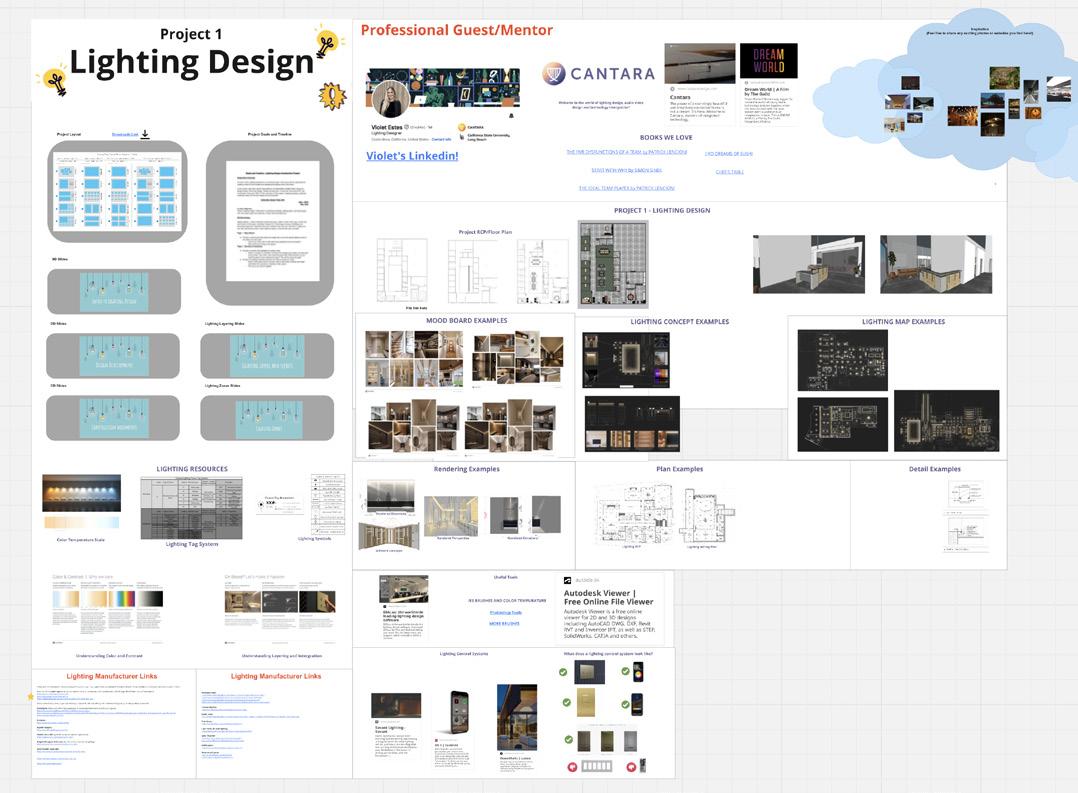
logic, storytelling, and the integration of brand identity with the context of lighting and architectural intent.
The project followed four formal design phases outlined by Estes and based on industry standards.
• Schematic Design: Students developed initial concept narratives, mood boards, and spatial diagrams to establish the tone and story of their environment.
• Design Development: Teams refined their spatial plans and began integrating lighting systems that responded to materiality, function, and brand voice.
• 50% Construction Document Review: Students produced preliminary lighting plans, including fixture types and placement strategies, and received technical critique from the industry mentor.
• Final Construction Documentation: Each team delivered a comprehensive lighting plan set, including fixture schedules, lighting legends, and diagrammatic annotations that linked lighting to spatial intent.
Throughout these four phases, students created schematic lighting diagrams, annotated plans, and detailed fixture specifications—project deliverables not typically encountered in standard upper-division design courses. In doing so, they not only gained technical fluency in lighting design but also developed a detailed understanding of how lighting influences the experiential quality of space. Each team explored how lighting can create a mood, guide users, express the brand’s story, and define the atmosphere of the space.
Student Project Highlights:
1) Oasis: A nature-inspired fragrance boutique company that uses soft, diffused lighting and cool, organic palettes to evoke tranquility and sensory immersion. The team designed the lighting to mimic natural daylight cycles, reinforcing the brand’s alignment with botanical elements throughout the commercial space (Figure 2).
2) Horizon: A recreational brand headquarters designed around themes of exploration and movement. The team employed directional lighting, textured surfaces, and varying light levels to simulate sunlight and natural landscapes, thereby creating a dynamic and uplifting space (Figure 3).
Figure 1. Lighting Design project intro and assets provided by Cantara on Miro
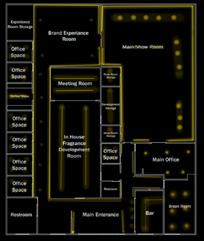
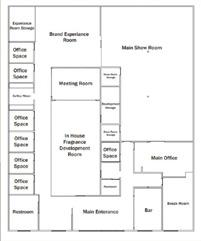



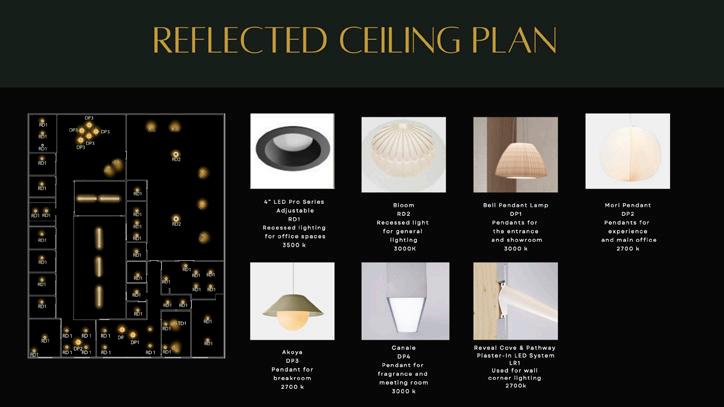
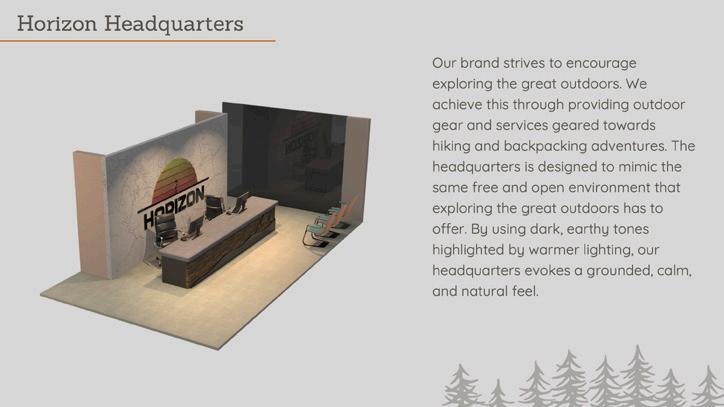
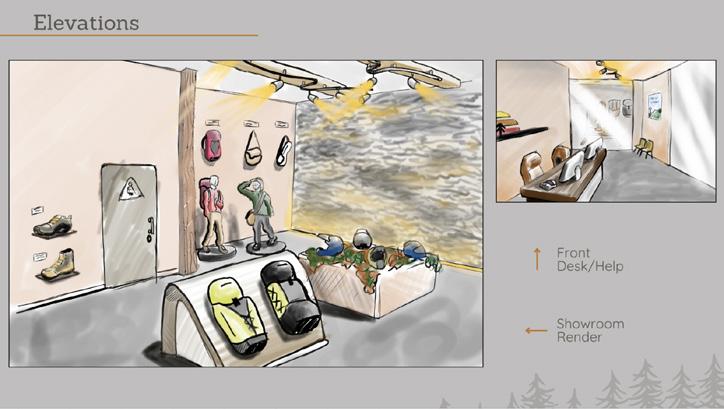
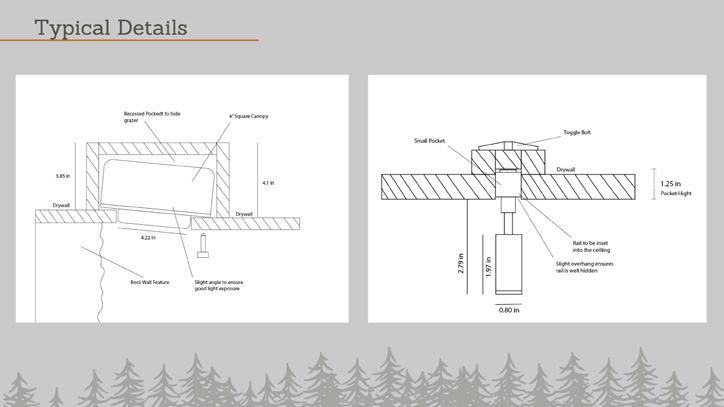
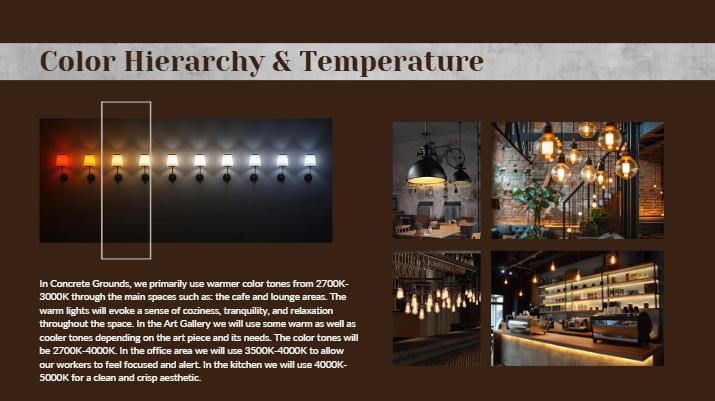
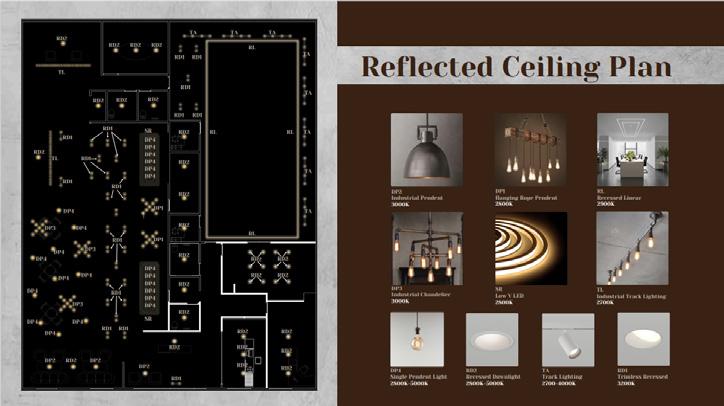
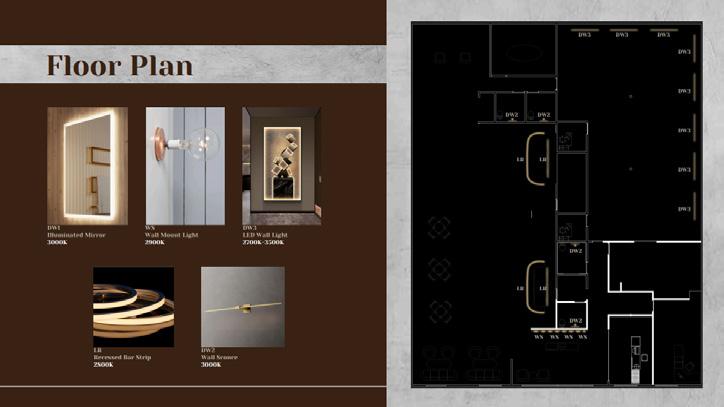

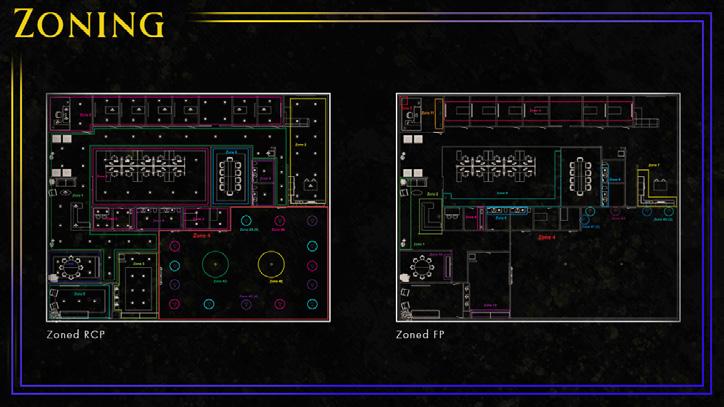
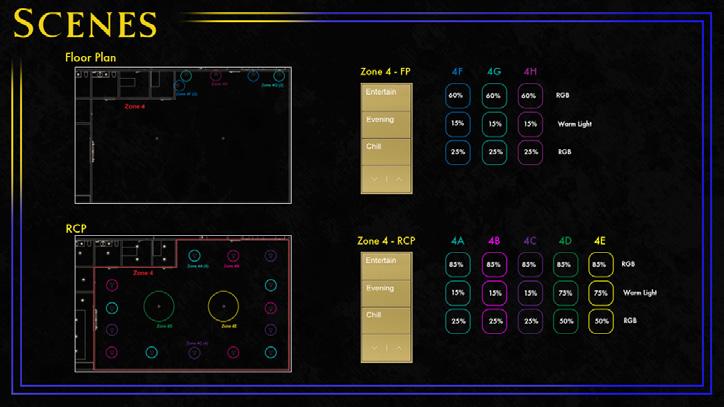
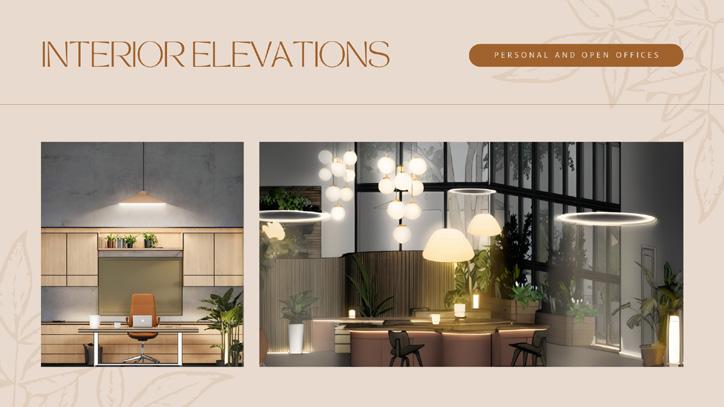











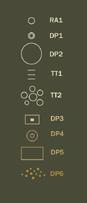
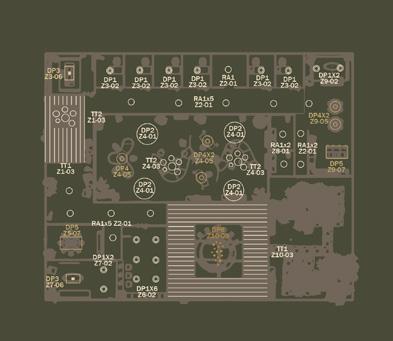

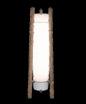





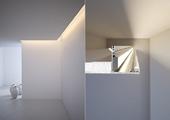

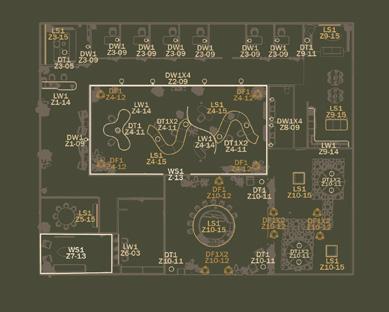
Figure 2. Oasis student boards showing color temp, floor plan, and reflected ceiling plan
Figure 3. Horizon student boards showing narrative, rendering, elevations, and typical details
Figure 4. Concrete Grounds slides showing the color hierarchy, temperature, reflected ceiling plan, and floor plan
Figure 5. Athena Records student boards showing the final reflected ceiling plan, zoning, and lighting scenes
Figure 6. Leaf & Latte student boards showing interior elevations, reflected ceiling plans, and floor plans
3) Concrete Grounds: A curated space that merges an art gallery with a coffee shop. The team used high-contrast lighting, raw architectural materials, and spotlighted curated installations. The lighting strategy reinforced the brand’s emphasis on creativity, community, and urban strength (Figure 4).
4) Athena Records: A music-focused retail space where programmable lighting patterns translate rhythm and sound into an ambient visual experience. Pulses of color and directional light mirrored beats and waveforms, creating a dynamic environment that physically responds to music (Figure 5).
5) Leaf & Latte: A sustainable café concept that uses zoned lighting strategies to delineate areas for socializing, working, and gathering. Warm tones and energy-efficient fixtures communicate the brand’s environmental ethos while enhancing the comfort and usability of the space (Figure 6).
Peers, professionals, and faculty evaluated the teams after each design phase: Schematic Design, Design Development, and Construction documents. However, instructors assign most of the grade based on the final deliverable of the final Construction Document. The final presentation package contained the following elements: Title Slide, Mood Board, Narrative/Rendering, Color Temperature and Hierarchy, Reflected Ceiling Plan (RCP), Floor Plan (FP), RCP with Zones, FP with Zones, Final Elevations, Two Typical Details, and Selected Fixtures. Each team presented its lighting package, walking the audience through the process and explaining how users would feel within the space. Their conceptual clarity, technical execution, and ability to convey a spatial narrative using light were all considered compelling factors in the overall success of their lighting design.
The deliberate integration of branding, spatial planning, and lighting design encouraged students to approach problems from multiple angles, pushing them to think systemically. This approach reflects the realities of contemporary experiential graphic design. The project also introduced lighting as a critical, yet often underrepresented, component of the EGD curriculum, broadening students’ exposure to various tools and methods within the field.
Upon the project’s completion, students expanded their technical skills and produced a robust portfolio piece that showed their ability to think critically,
collaborate effectively, and design immersive adaptive environments. For many students, it served as a first step toward understanding how to translate narrative into spatial experience—a foundational skill for emerging experiential designers.
Case Study 2: Fan Experience Design with Angel City FC
The second major project extended students’ experiential design skills into the realm of live events, sports culture, and civic engagement. In collaboration with Angel City Football Club (ACFC)—a trailblazing team in the National Women’s Soccer League (NWSL)—students conceptualize a themed, multi-sensory fan experience that enhances game day through emotional connection, community interaction, and brand storytelling. ACFC, recognized for its mission-driven brand ethos and equity-focused leadership, offers an ideal framework for examining how design can influence cultural narratives in public spaces.
The design brief, developed in collaboration with ACFC’s Senior Creative Director, Amedea Tassinari, and Game Day Producer/Events Manager, Meghan Hartley, asked student teams to envision branded activation zones within the stadium experience that would transform spectators into active participants. The challenge: to design an immersive intervention that would engage fans across physical, emotional, and symbolic dimensions, fostering both individual excitement and collective belonging.
To root their ideas in real-world conditions, students participated in on-site fieldwork at BMO Stadium, observing crowd behavior, signage systems, performance areas, and traffic flow patterns (Figure 7). They complemented this with an in-person introductory session led by both Hartley and Tassinari, where students learned about aesthetic standards, constraints, and various expectations across the game-day timeline. This introduction provided critical insight into the gameday experience and equipped the students to approach the design with various creative and logistical challenges.
This coursework included four key deliverables:
• Site Analysis: Students documented wayfinding, branding, foot traffic, and accessibility. As a multi-
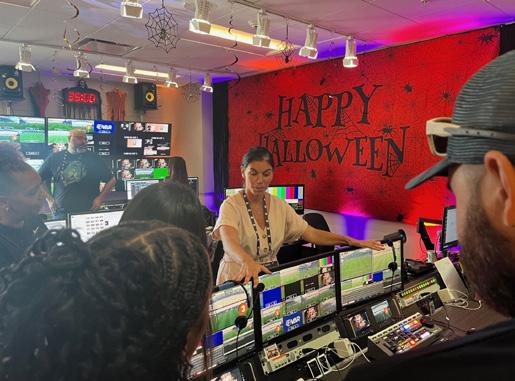
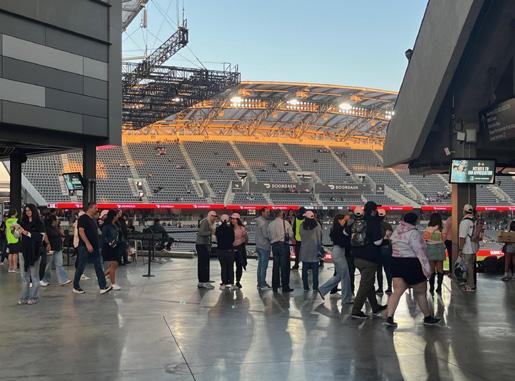
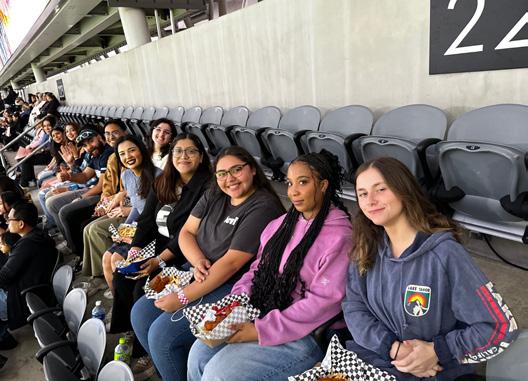
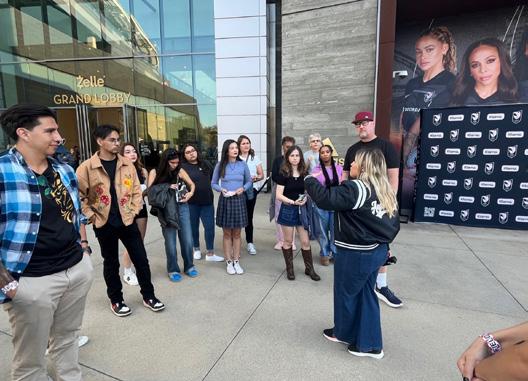
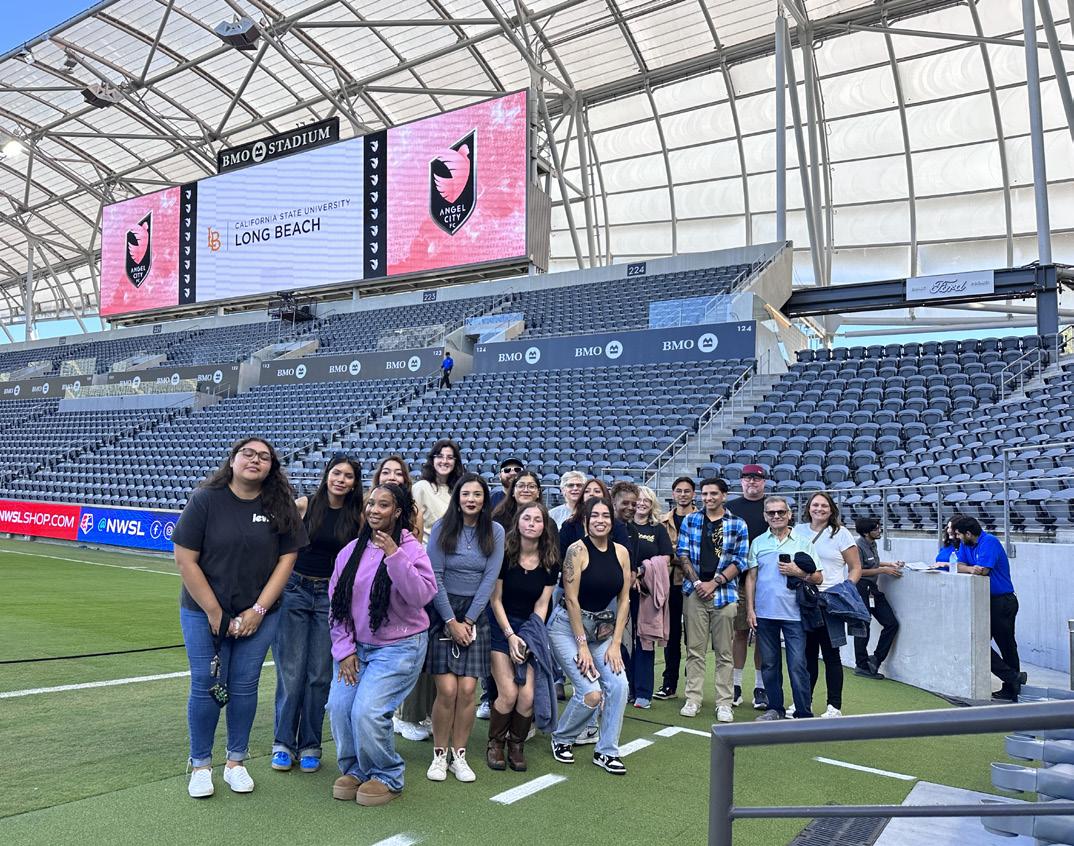
use facility, the students also noted the permanent vs temporary elements throughout the stadium.
• Narrative and Journey Development: Teams design journey frameworks based on storytelling principles. These narratives informed the timing, sequencing, and content of each proposed experience.
• Thematic Zoning: Students defined the physical zones that actively engaged participants through sensory and spatial experiences. Each zone includes key activations – moments that connect users with the story or content. The intent is for the transitions between zones to be gradual, evolving, or intentionally abrupt, shaping the overall tone of the journey. Concepts also had to account for safety, ADA accessibility, and implementation feasibility.
• Final Presentation: Students delivered high-res pitch decks to ACFC representatives, simulating real-world client presentations highlighting their design concepts.
The Teams collaborated with professional guests using Miro as a platform for mood boarding, spatial mapping, feedback tracking, and iterative design (Figure 8). By mirroring the collaborative structure of professional practice, it reinforced the integration of digital fluency throughout the design workflow.
Faculty, peers, and professional guests evaluated the teams on the clarity of their narrative, spatial layout, the practicality of their operational plans, and alignment with ACFC’s brand identity. The final pitch deck presentations contain: Title Slide, Narrative, Mood Board, Location, Zone Map, and Zone Details. Each team presented their fan experience concept, walking through their story and explaining how fans would engage within the space. Their conceptual clarity, execution, and ability to craft a compelling and inclusive narrative were key factors in the overall success of their design.
Student Project Highlights:
1) Angels Among Us: Students created a communitydriven concept designed to celebrate and affirm fan identity. Features included a “Unity Wall” where fans contributed handwritten affirmations, and a “Pink Carpet” glam zone that invited fans to participate in the pageantry of game day. This project centered on ritual, recognition, and co-authorship, turning fans into performers and creators of brand culture (Figure 9).
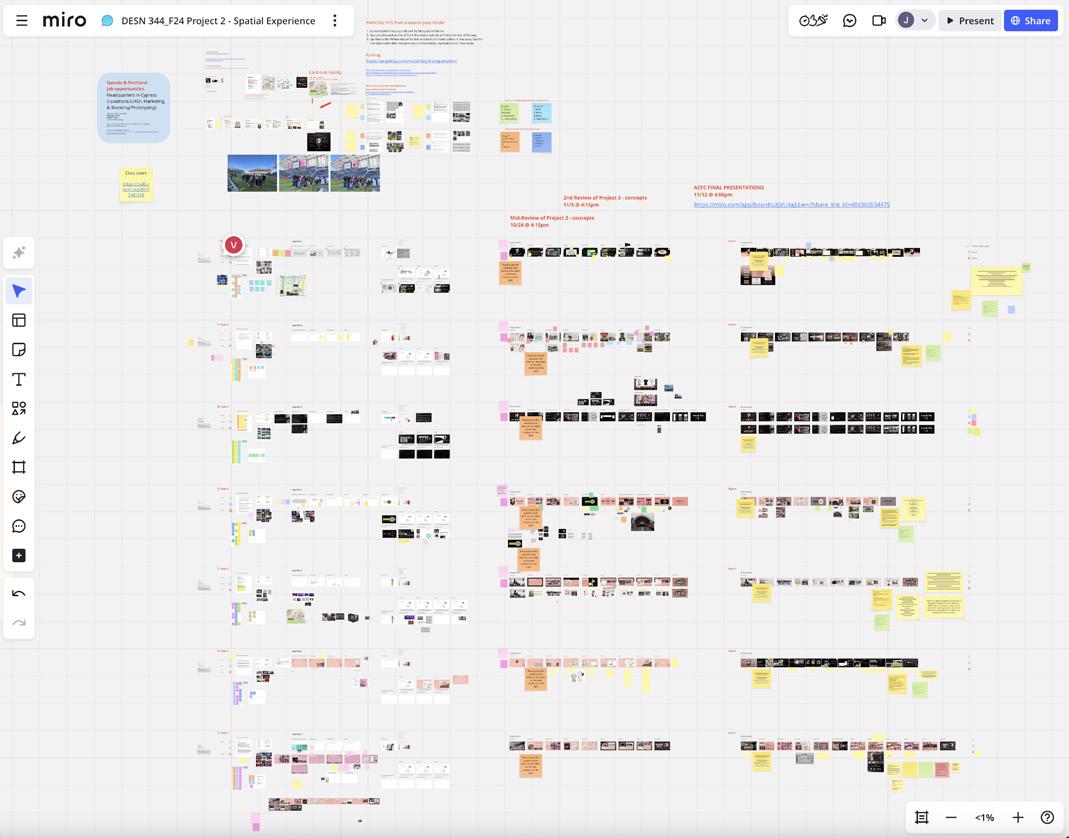
Figure 8. Fan Experience Project with Angel City FC research and student workspace utilizing Miro
Figure 7. BMO Stadium Site Visit and Angel City FC Game Experience
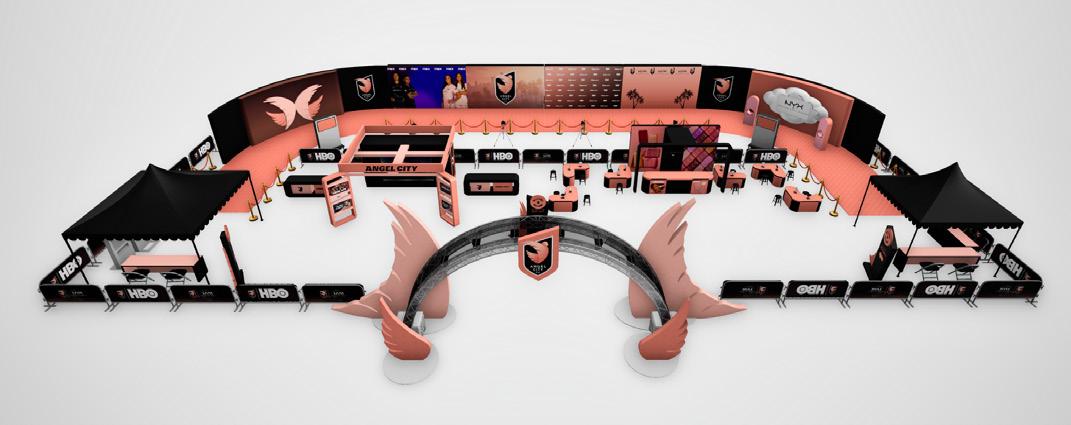
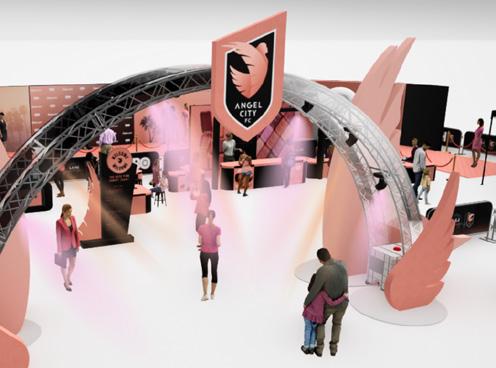
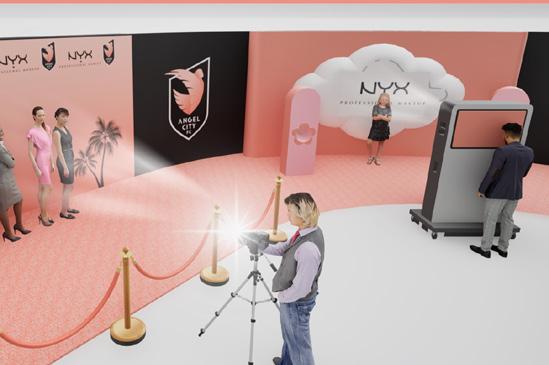
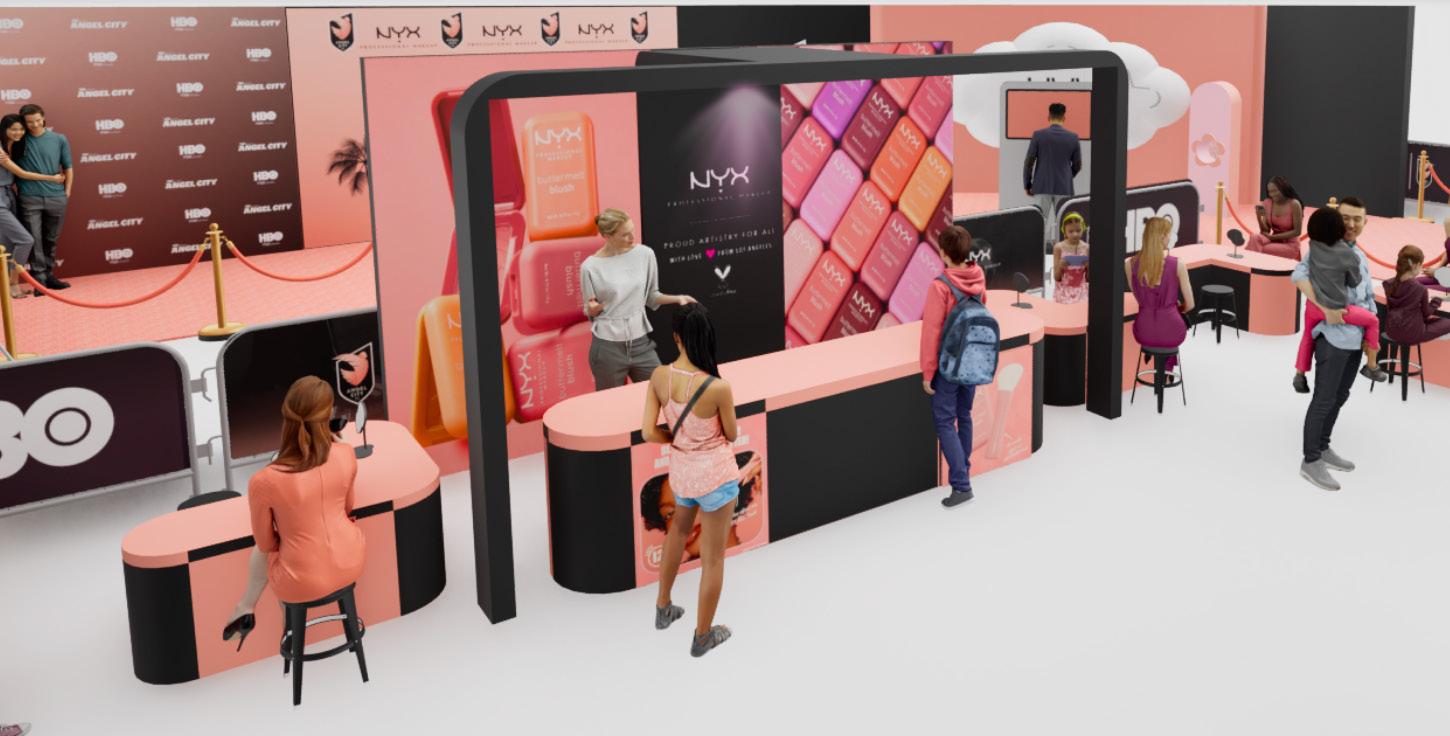
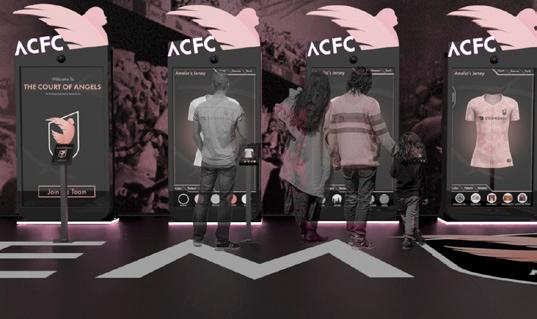
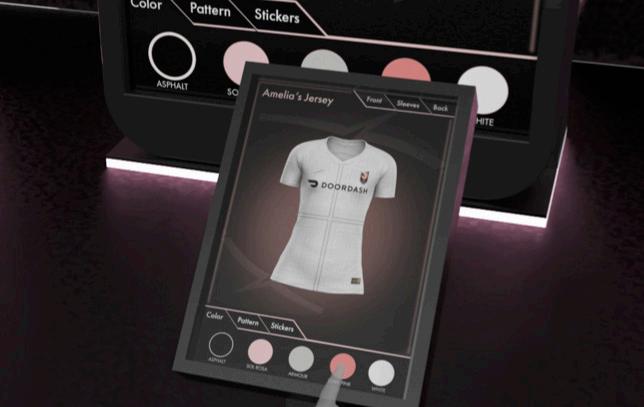
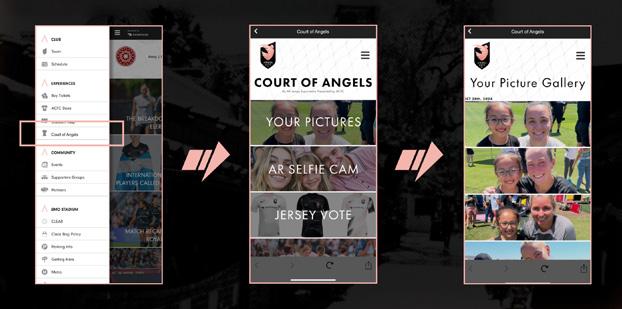
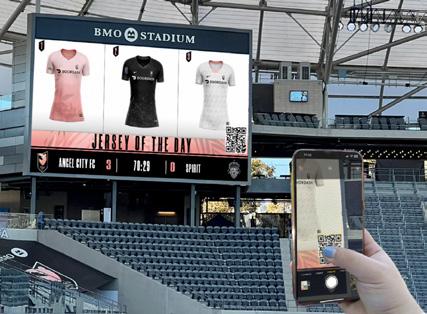
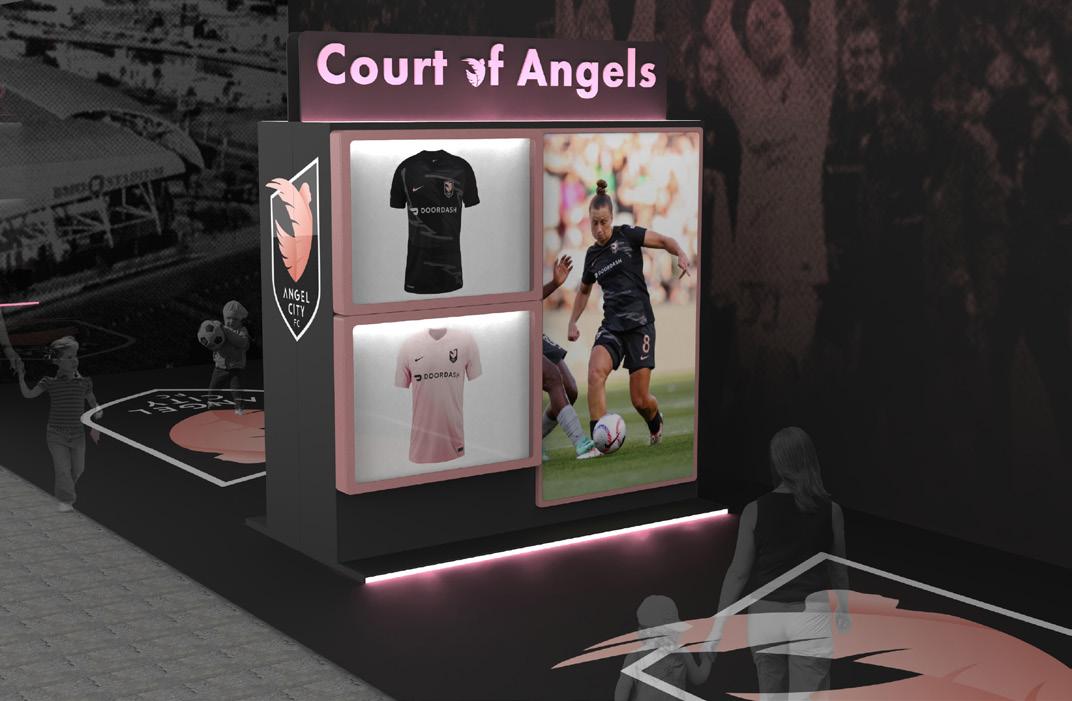
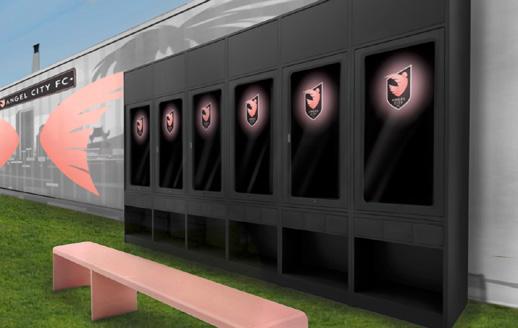
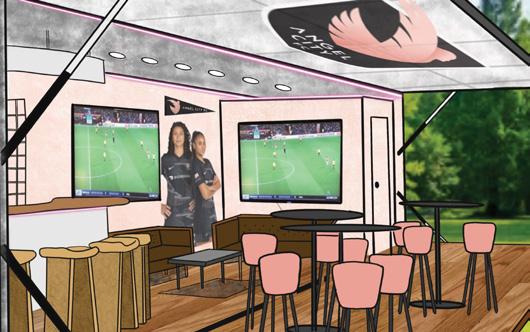
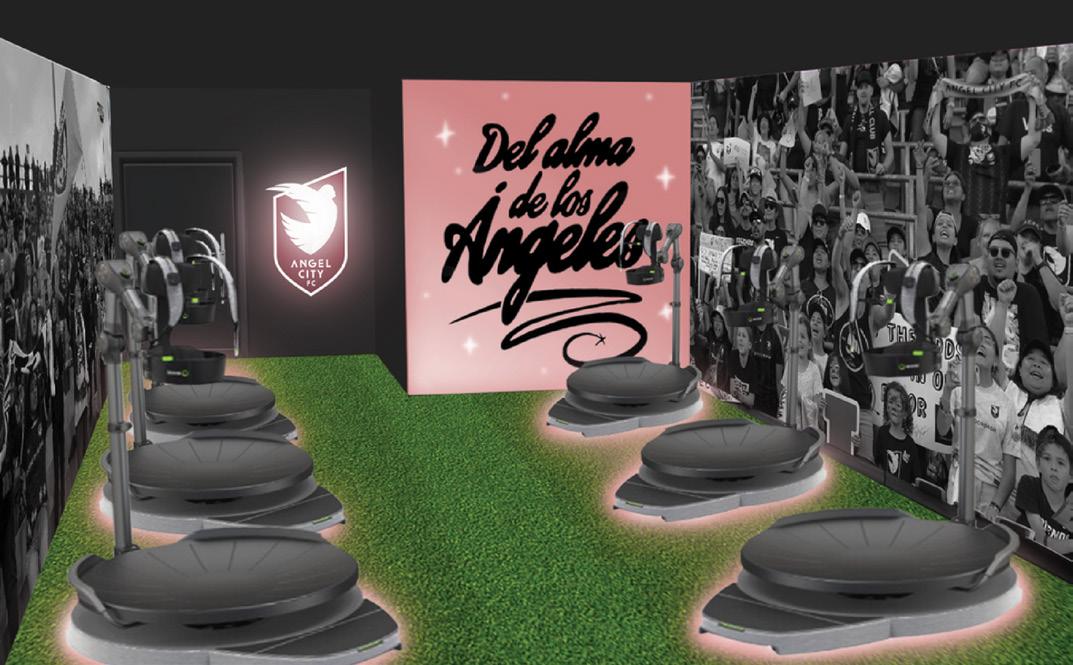
2. Avatar & VR: Students created a digital forward activation that allows fans to create branded avatars and engage in interactive VR challenges. The experience concluded in a wellness lounge designed to facilitate emotional and sensory decompression. This project examined the integration of physical and digital experiences, exploring how immersive technology can enhance a brand’s reach and emotional impact (Figure 10).
3. Court of Angels: Students created a historical narrative installation that uses augmented reality and archival displays to deepen fans’ emotional connection to the club’s legacy. Fans can scan icons around the activation to unlock personal stories, founding moments, and community milestones. This space emphasized the continuity of identity and collective memory, essential elements in sports fandom, as well as brand storytelling (Figure 11).
Figure 9. An overview of the Angels Among Us event, featuring the Angel Arch entrance with amenities such as a Unity Wall and a Pink Carpet glam zone
Figure 10. An interactive branded avatar creation station and VR challenge experience concluded in a wellness lounge
Figure 11. Court of Angels fan experience featuring jersey history display, customization experience, augmented reality photo opportunity, and ACFC app integration
This project demonstrated the power of experiential graphic design (EGD) to serve as a tool for civic storytelling and emotional infrastructure. Students were not just creating decorative experiences—they were designing cultural platforms that shaped how people see themselves and each other within a shared public moment. The integration of field research, client collaboration, and critique cycles exemplified a professional, high-impact design process, revealing how EGD can operate at the intersection of branding, storytelling, and public life. Designing ACFC’s valuesdriven and equity-focused culture encouraged students to examine issues of representation and audience inclusivity critically.
Case Study 3: Urban Park Redesign with RSM Design
For their final studio project, students undertook a civic-oriented redesign of 14th Street Park, a linear recreational space in Long Beach, California. The park is located in the heart of Long Beach and serves as a vital community space for diverse residents and visitors. This project encouraged students to explore how EGD could contribute to a stronger sense of place, more precise navigation, and deeper community connections.
Partnering with RSM, students developed a comprehensive branding and signage system for the park (Figure 12). The project aimed to create a unified visual identity that captures the park’s character, fosters community connection, and enhances wayfinding for visitors. Throughout the project, students participated in weekly critiques led by RSM team members, including a Principal, Senior Associates, and a Marketing Manager. These sessions emphasized the importance of timely iteration, clear communication, and a focused process.
Project objectives:
• Park Identity: Rename the park and design a distinctive, memorable wordmark that reflects the area’s unique character. The branding should represent the park’s role in the community and work effectively across various scales and formats.
• Signage System: Create a clear and easy-to-follow signage system that includes both wayfinding and informational signs. Ensure the design is visually
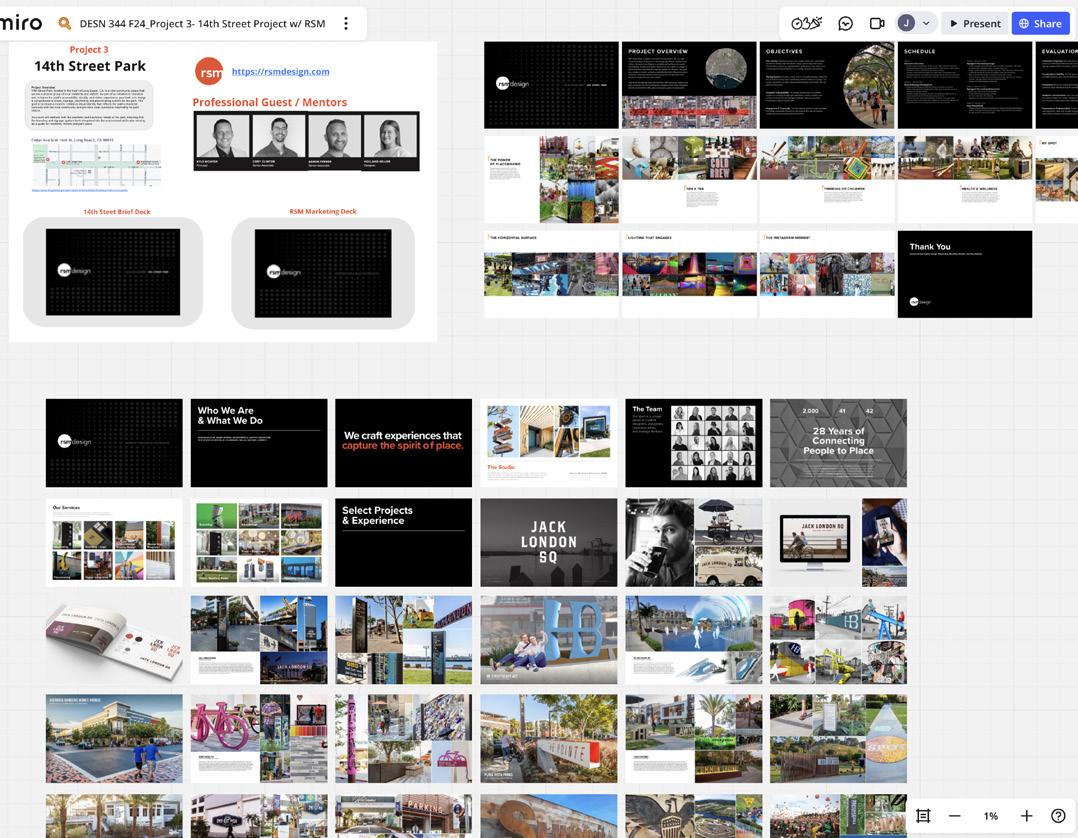
cohesive and integrates smoothly into the park’s environment.
• Inclusivity & Accessibility: Design for a broad audience–including people with disabilities, seniors, families, and children. Prioritizing legibility, clarity, and multilingual options where appropriate.
• Engagement & Community: Incorporate design elements that encourage community interaction and reflect the neighborhood energy and diversity
Students began with on-site research and observational studies of park activity. They examined how people moved through space, where signage was lacking, and how visual cues could improve both flow and perception. Teams also explored the park’s material textures, surrounding architecture, and informal uses of space to inform their design concepts.
Students proposed strategies that combined environmental graphics, branded visual language systems, and layout plans to enhance the overall experience. Emphasis was placed on usability and communication, ensuring the systems they designed were visually engaging, functional, and adaptable.
Figure 12. Urban Park Redesign project intro provided by professional firm RSM Design on Miro
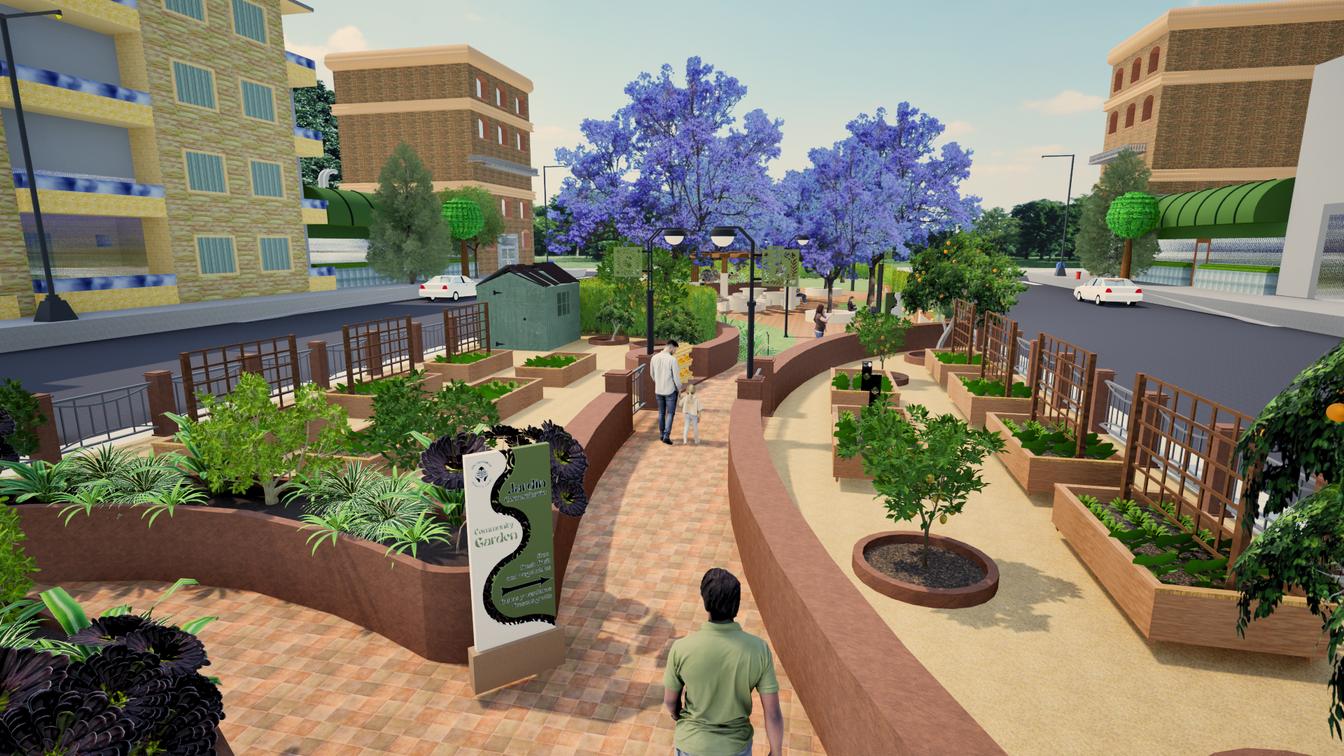
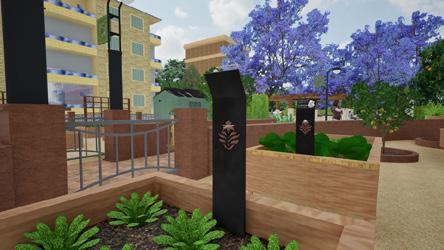
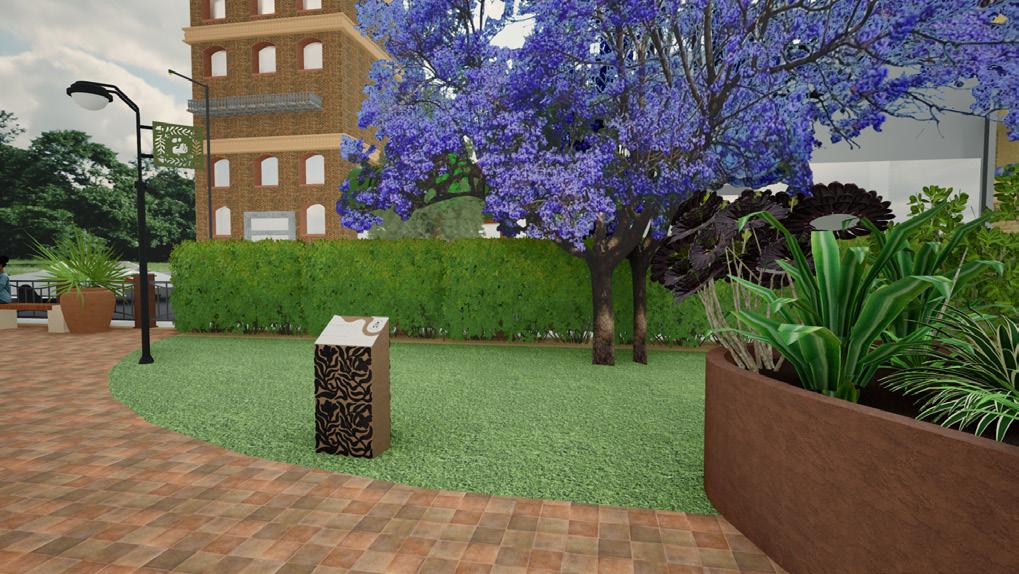
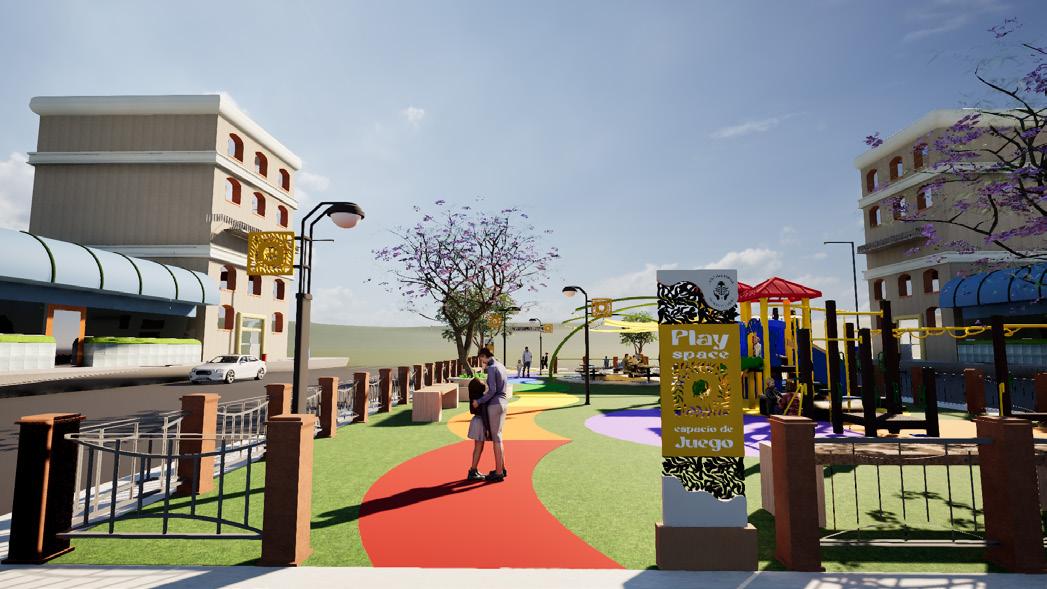
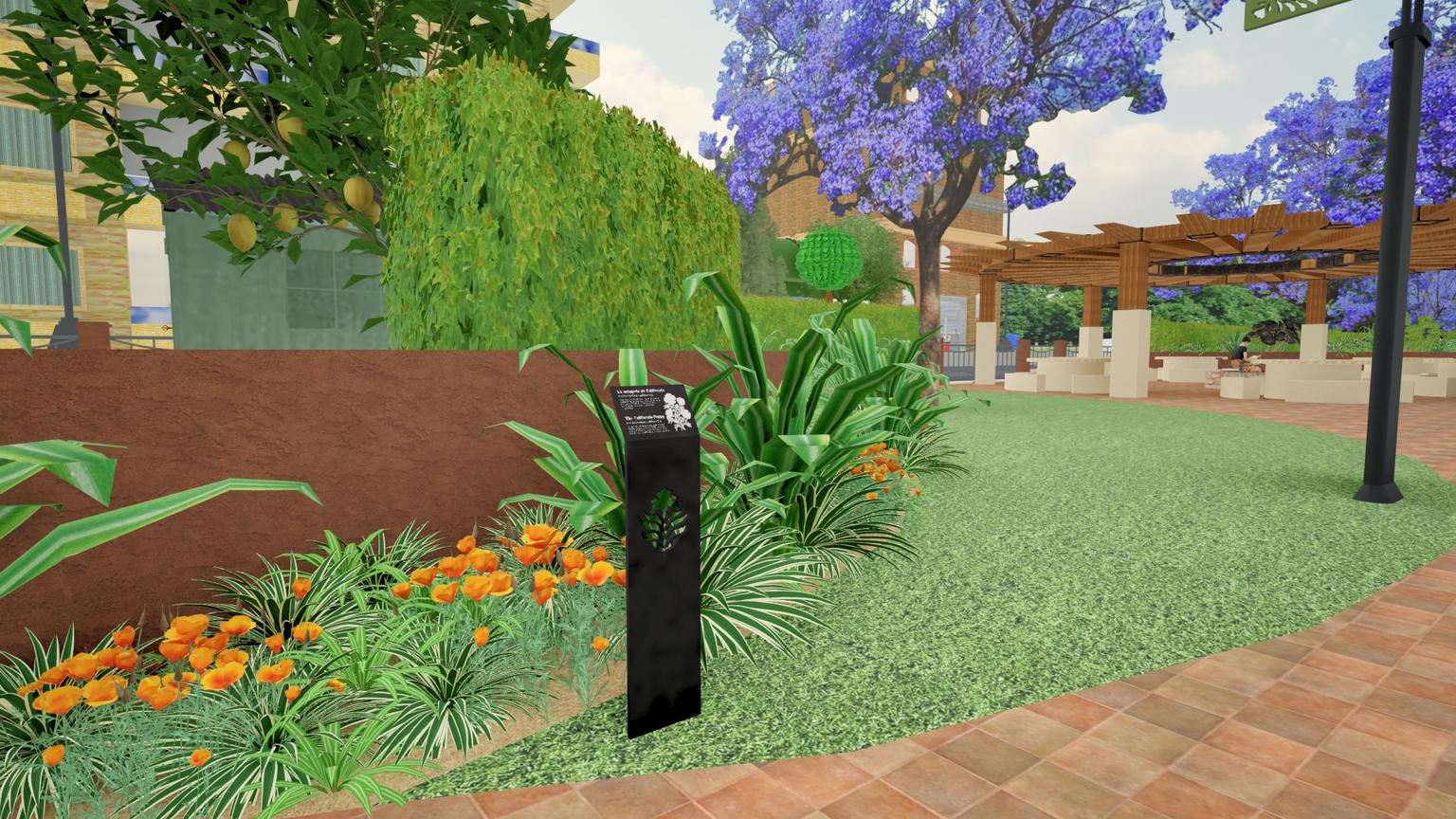
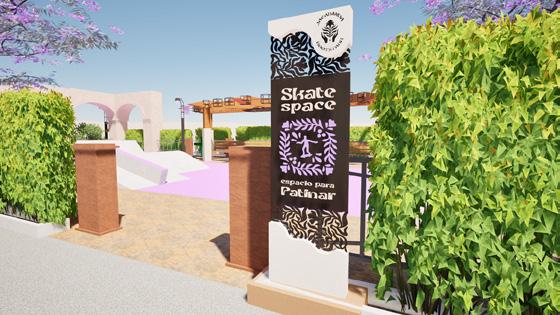
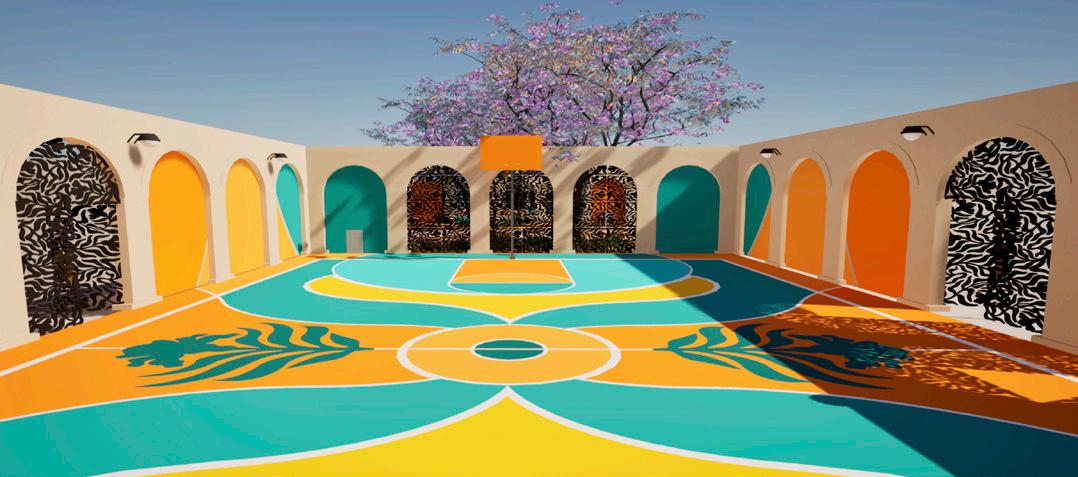

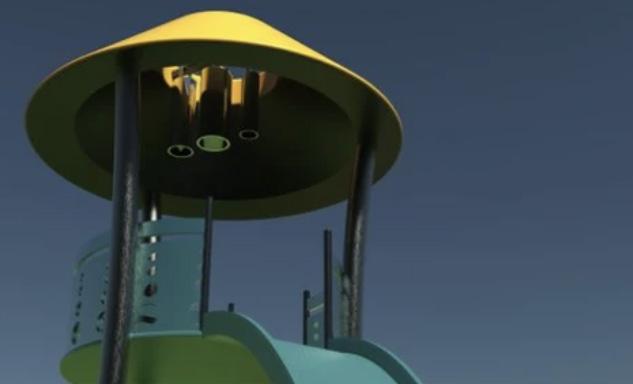
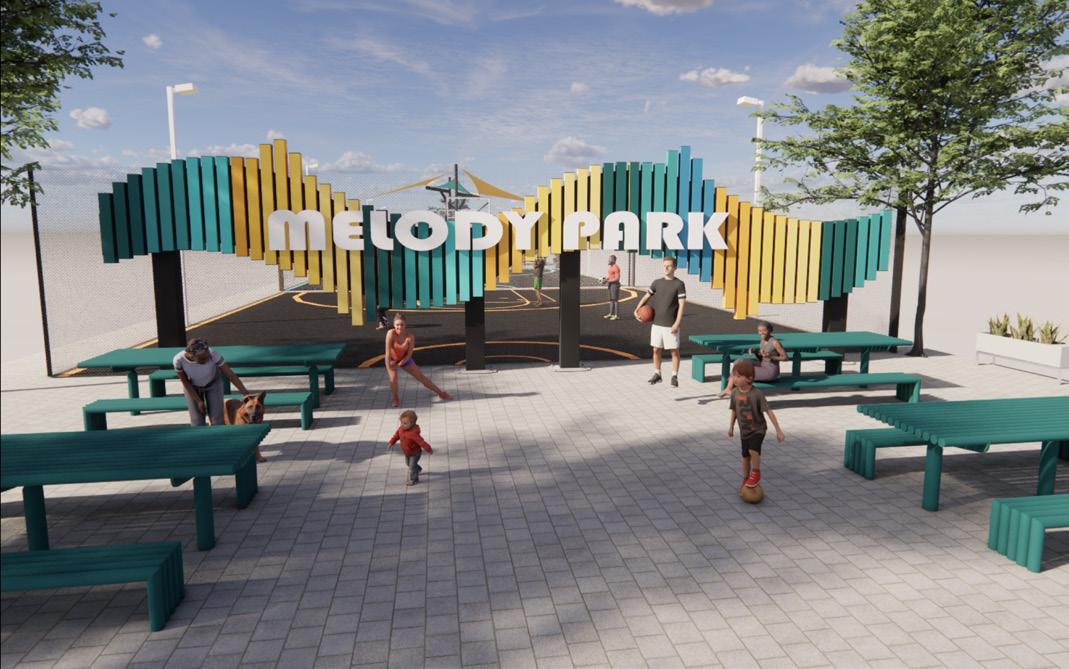
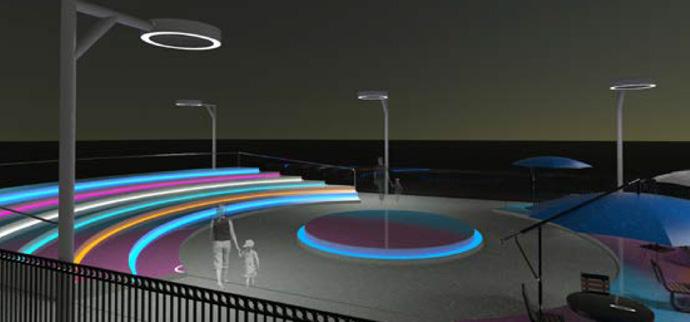
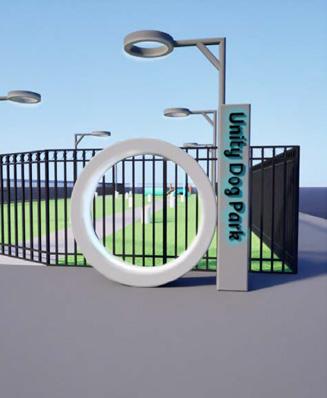
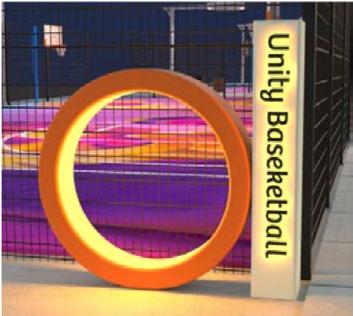
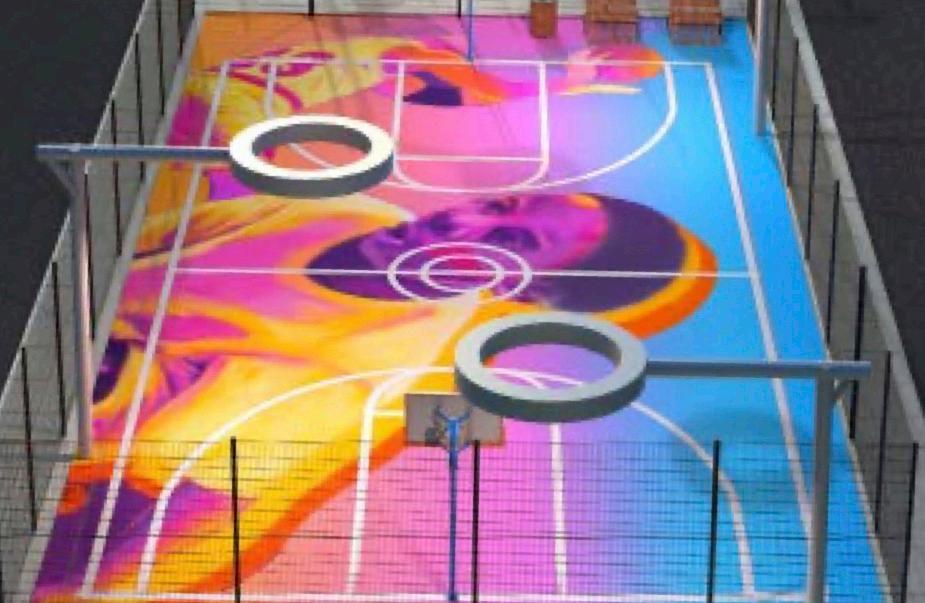
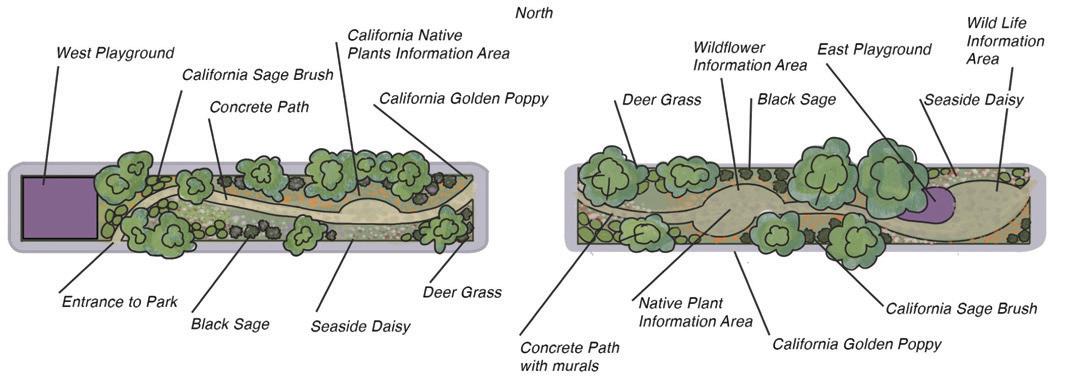
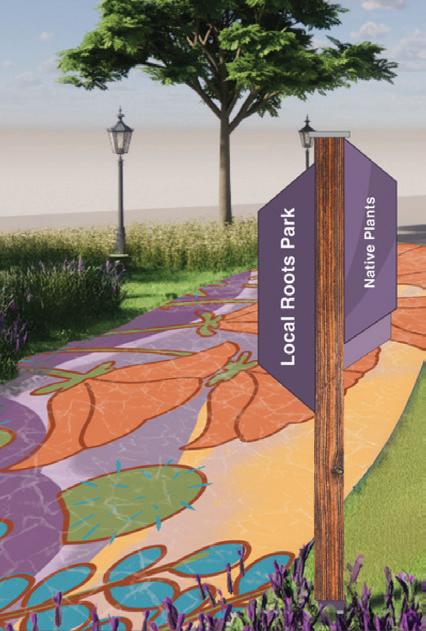
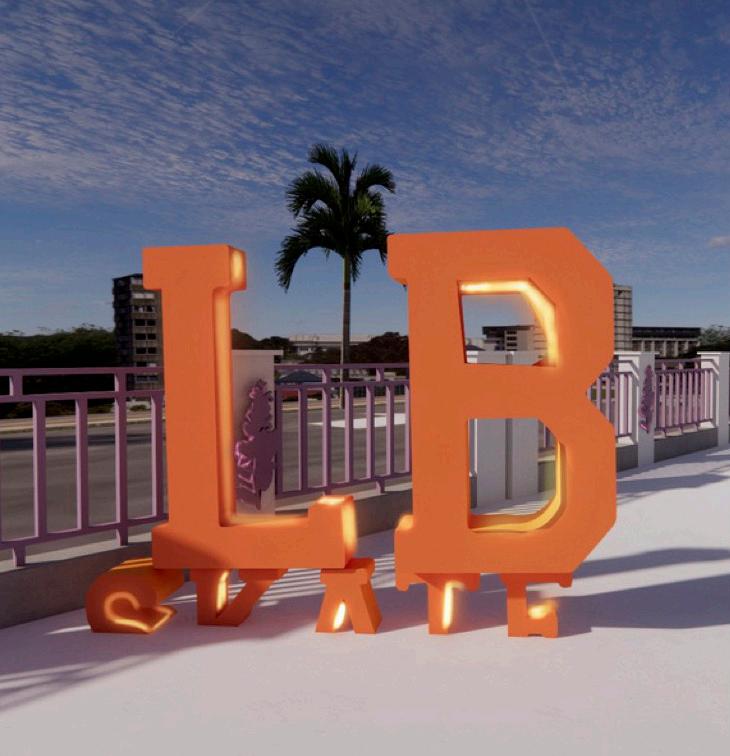
Figure 13. Jacaranda Roots features images of signage and wayfinding, as well as images of the green, play, skate, and athletic spaces
Figure 15. Unity Park features images of park signage and wayfinding, a basketball court, and an amphitheater with a food truck area
Figure 14. Melody Park features images of the park signage, harmony pavilion, and interactive musical playground
Figure 16. Local Roots Park features images of the park signage, native plants, and a vibrant sign for the skatepark
Student Project Highlights:
1. Jacaranda Roots: Students drew inspiration from local jacaranda trees, featuring botanical illustrations, bilingual elements, and colorful murals that reflect residents’ layered identities. (Figure 13).
2. Melody Park: The students proposed transforming the park into a community space for sound, featuring a “Harmony Pavilion” for performances and musical play stations for families, with signage reflecting themes of sound and movement. (Figure 14).
3. Unity Park: The team focused on inclusion and connection, using soft forms, community murals, and circular layouts to create a shared space that promotes healing. (Figure 15).
4. Local Roots Park: Students designed a vibrant space celebrating Long Beach’s local legends—actors, singers, and athletes—with colorful murals and storytelling art, incorporating native plants for a lush environment.(Figure 16).
This final project required students to merge design thinking, research, and collaborative feedback into proposals that were both visually distinctive and socially responsive. Partnering with RSM Design provided a valuable professional framework that reinforced essential studio principles such as clear communication, adaptability, and user-centered design. The project’s scope challenged students to operate at the intersection of visual identity, placemaking, and public engagement, requiring them to move beyond surface-level aesthetics and community narratives.
By the end of the studio course, students demonstrated a growing ability to approach public space not simply as a canvas for graphic expression but as a platform for meaningful social interaction and environmental storytelling. Their project proposals demonstrated a strong understanding of how EGD can enhance the character of civic environments, support community values, and enhance everyday experiences.
While the outcomes were impressive, especially given the project’s ambitious scale in the brief time limit, many student teams chose to reimagine and rebuild the park infrastructure completely, expanding the original scope.
As a result, key programmatic goals, such as developing detailed wayfinding and navigation systems, were not fully explored as intended. With an additional week, students could have advanced their conceptual ideas into more refined spatial strategies, particularly around integrated signage and wayfinding — core elements of experiential graphic design. This reflection emphasizes the importance of aligning scope, time, and pedagogical priorities, particularly when working at the scale of the built environment.
Contribution to the field
This course advances EGD pedagogy by offering a scalable, inclusive model for industry-academic collaboration. It responds to ongoing equity challenges in traditional internship structures by integrating real-world practice into the curriculum.
Beyond building technical proficiency, the course emphasized professional fluency —equipping students to explain and defend their design choices, respond constructively to critique, and lead collaborative teams.
Participation in SEGD activities further enriched students’ experience, connecting them to the broader professional community and exposing them to current discourse in the field (SEGD) (Figure 17).
Implications for theory and practice
This upper-division studio course exemplifies how design education can be both rigorous and inclusive by thoughtfully integrating academic inquiry with real-world professional practice. Rather than isolating students in theoretical exercises, the curriculum immersed students in authentic design challenges that reflect the complexities, constraints, and collaborative demands of contemporary professional practice.
The curriculum followed a scaffolded structure, with each project increasing in complexity — from conceptual development to system-based thinking. This progression mirrored professional workflow and challenged students to apply core EGD principles such as wayfinding, storytelling, and inclusive design in increasingly sophisticated ways. High-impact educational practices — including site visits, field research, iterative critique, and formal client presentations — anchored student learning in authentic, applied contexts.
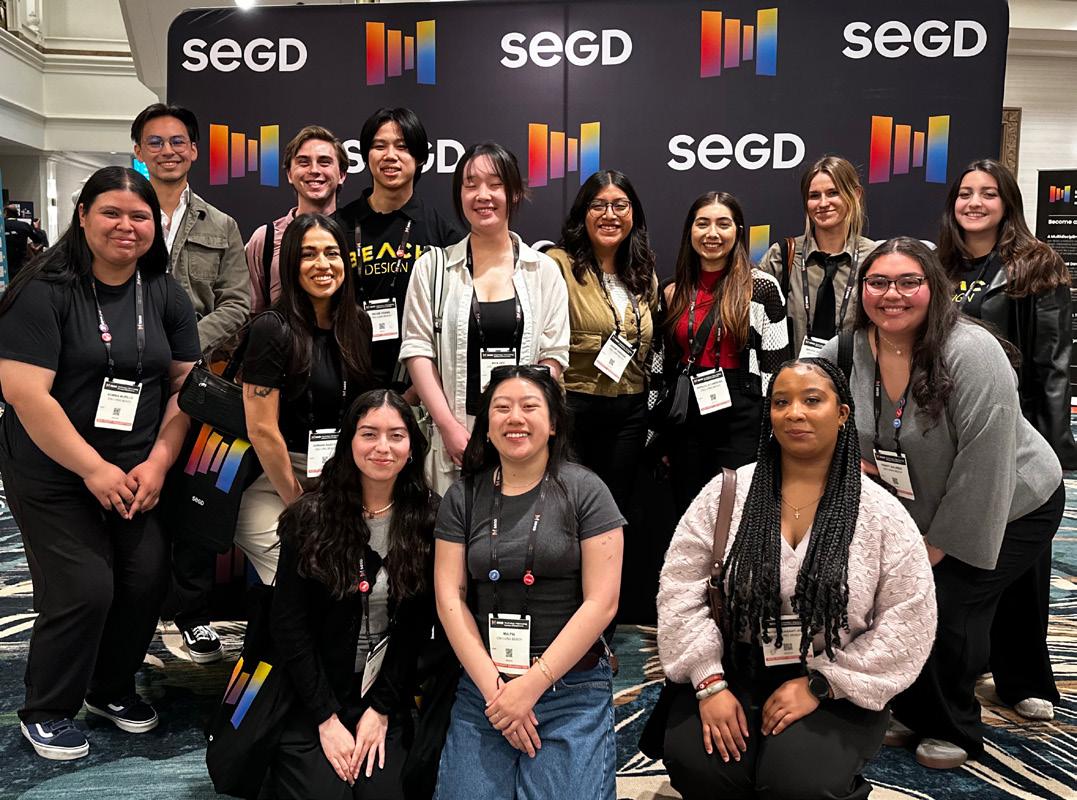
Simulating the structure of a professional studio, the course positioned students as active participants in the design process — collaborators, problem-solvers, and civic contributors. They built not only technical and conceptual skills but also the adaptability, critical thinking, and communication abilities essential for success in interdisciplinary teams. Digital tools like Zoom and Miro extended access to mentorship and professional feedback, removing geographic and financial barriers and supporting collaboration at scale. (Hurley, et al.; Davis)
Faculty served as facilitators and mentors, guiding students through both academic expectations and industry realities. This active support encouraged a growth mindset, fostered reflective learning, and created space for creative risk-taking and iterative development.
This model offers measurable benefits to all participants:
For academia, it offers a flexible and scalable alternative to traditional internships by integrating real-world practice into the curriculum.
For students, it offers hands-on experience, portfolio-ready work, and a deeper understanding of their professional identity and role in public spaces.
For industry partners, it opens meaningful pathways to shape emerging talent and develop long-term recruitment pipelines.
This course reframed design education as a form of public practice, rooted in empathy, purpose, and engagement. It not only prepared students for the realities of the design field but also gave them the tools and confidence to shape it.
Conclusion
This course transformed the studio course into a dynamic simulation of professional practice. Through immersive, team-based projects and direct engagement with industry partners, students developed the skills, mindset, and ability required to work in the evolving field of Experiential Graphic Design. They conducted field research, navigated the complexities of public space, and applied core EGD principles, such as signage systems, wayfinding, and storytelling, to real-world challenges.
By collaborating with organizations such as SEGD, RSM Design, Angel City FC, and Cantara, students gained insight into professional workflows while contributing to meaningful, public-facing design work. High-impact practices, such as mentorship, site visits, and formal client presentations, further deepened their learning and expanded their professional network. Working in structured teams with defined roles, students not only refined their technical and conceptual skills but also developed essential soft skills, including communication, leadership, and collaboration. In doing so, they began to see design as a civic practice — one rooted in empathy, strategy, and social impact. This course did more than teach design; it prepared students to lead, contribute, and shape the public environment.
Acknowledgements
We extend our gratitude to the following professionals for enriching our students’ educational experience:
From Cantara, special thanks to Violet Estes (Senior Lighting Designer) for her expert guidance and insight.
From Angel City FC, appreciation to Amedea Tassinari (Senior Creative Director) and Meghan Hartley (Game Day Producer / Events Manager) for their inspiring leadership and industry knowledge.
From RSM Design in San Clemente, CA, sincere thanks to Kyle Richer (Principal), Cory Clinton (Senior Associate), Aaron Ferber (Senior Associate), and Holland Keller
Figure 17. CSULB students attending SEGD Conference
(Marketing Manager) for their enthusiastic mentorship and collaborative spirit.
We also gratefully acknowledge SEGD for its ongoing support, with special thanks to Cybelle Jones (CEO), Jennette Foreman (Director of Operations), Liz Griswold (Director of Education and Experience), Kristin Bennani (Director of Sales and Marketing), Nadia Adona (Director of Membership and Media), and Rachel Moran (Membership Experience Manager) for their continued dedication and support.
Resources
Alyahyan, Eyman, and Dilek Düştegör. “Predicting Academic Success in Higher Education: Literature Review and Best Practices.” International Journal of Educational Technology in Higher Education, vol. 17, no. 3, 2020, https://doi.org/10.1186/s41239-020-0177-0.
Ambrose, Gavin, et al. Design Thinking for Visual Communication. Bloomsbury Visual Arts, 2015.
Bennett, Audrey, and Andrea Vulpinari. “Design Studies: Theory and Research in Graphic Design.” The Education of a Graphic Designer, edited by Steven Heller, Allworth Press, 2005.
Calori, Chris, and David Vanden-Eynden. Signage and Wayfinding Design: A Complete Guide to Creating Environmental Graphic Design Systems. 2nd ed., Wiley, 2015.
Davis, Meredith. Teaching Design: A Guide to Curriculum and Pedagogy for College Design Faculty. Allworth Press, 2017.
Hurley, J., Raddatz, N., and Debra Satterfield. “Bridging the Gap Between Industry and Education: Engaging Design Professionals in the Education of Student Designers.” The Human Side of Service Engineering, edited by Christine Leitner, Walter Ganz, Clara Bassano, and Debra Satterfield, AHFE Open Access, vol. 62, AHFE International, 2022, http://doi.org/10.54941/ ahfe1002537.
Kuh, George D. High-Impact Educational Practices: What They Are, Who Has Access to Them, and Why They Matter. Association of American Colleges and Universities, 2008.
Provencher, Ashley, and Ruth Kassel. “High-Impact Practices and Sophomore Retention: Examining the Effects of Selection Bias.” Journal of College Student Retention: Research, Theory & Practice, vol. 21, no. 2, 2019, pp. 191–209, https://doi. org/10.1177/1521025117696820.
Satterfield, Debra, et al. “Industry & Academia Collaboration in UX Education: Bringing UX Internship Experience into the Classroom.” The Human Side of Service Engineering, Proceedings of the 14th International Conference on Applied Human Factors and Ergonomics (AHFE 2023), 20–24 July 2023, San Francisco, USA, AHFE International, 2023, pp. 367–74.
Satterfield, Debra. “Factors Influencing Academic Success for Design Students: A Study of Curricular Expectations and Ethical Issues.” Advances in the Human Side of Service Engineering, edited by Louis Freund and Wojciech Cellary, vol. 601, Springer, 2018, pp. 123–134, https://doi.org/10.1007/978-3-319-60486-2_14.
Satterfield, Debra, et al. “Evaluating Innovation Strategies in Online Education in Higher Education.” Advances in the Human Side of Service Engineering, edited by Christine Leitner, Walter Ganz, Debra Satterfield, and Clara Bassano, vol. 266, Springer, 2021, pp. 248–258, https://doi.org/10.1007/978-3-030-808402_25.
Society for Experiential Graphic Design (SEGD). “About SEGD.” 2025, http://segd.org.
Hollow Motifs
Exploring AI’s Impact on the Public, Practice and Design Education
Kleighton Burns Interior Designer + Design Educator
B.Env.D., MID., PIDIM ANP Educator
Abstract
As Artificial Intelligence (AI) becomes an embedded presence in design practice, it brings both creative potential and critical disruption. This paper explores the dual impact of AI on the field of design, arguing that while these tools offer unprecedented speed and output, they risk hollowing out the cultural, emotional, and historical depth that gives designs, motifs and elements their meaning.
Through the lens of interior design and informed by Roland Barthes’s 1967 essay “Death of the Author,” this work critiques the use of AI-generated design as a tool that may mimic aesthetics but lacks intentional authorship. By referencing real-world case studies such as the Théâtre D’Opéra Spatial and the Willy’s Chocolate Experience, it investigates how the misuse of generative tools can mislead the public, disrupt trust, and diminish meaning in the built environment.
In practice, AI is reshaping how designers approach precedent studies, gather inspiration, and construct narratives, often automating creative processes that were once grounded in human experience and contextual understanding. This shift is also reflected in design education, where students increasingly rely on AI for concept development, written work and visualizations. Yet many students struggle to explain the reasoning behind their decisions or critically assess the results. This highlights the need for educators to go beyond teaching technical skills and instead foster young designers’ abilities to question, interpret, and use these tools with intention, empathy, and cultural awareness.
Drawing from design theory, historical critiques like William Morris’s condemnation of “sham art,” and current examples from design studios and classrooms, this paper calls on the design community to look past efficiency and aesthetics alone. It advocates for a renewed emphasis on authorship, purpose, and user-centered values, ensuring that AI serves to enrich design rather than reduce it to hollow outputs.
Introduction
In the field of interior design, aesthetics have long played a central role, but experienced practitioners and educators know that the built environment extends far beyond surface level. It is about crafting meaningful user-experiences. As artificial intelligence (AI) becomes increasingly embedded in design workflows, a pressing question arises: “Can generative tools, that lack intent or emotional understanding, meaningfully contribute to the shaping of space?”
Across industries, AI has moved from a distant concept to an embedded presence in our daily design workflows. In interior design, it now assists with generating conceptual renderings, automating mood boards, and even cowriting design narratives through tools and LLMs like ChatGPT. AI is not merely disrupting the field, it is now collaborating in the studio, appearing in student work, and entering client meetings. This integration brings both promise and profound disruption.
Efficiency is one of the most cited advantages of AI. Indeed, these systems can produce multiple iterations of a concept in mere seconds. But this speed raises critical concerns: are we truly designing faster, or are we bypassing the foundational thinking that gives art, design and the built environment its depth and value? A striking example of this dilemma is Théâtre D’Opéra Spatial, a visually compelling image generated by Jason M. Allen, that won a digital art prize in 2022. After it was revealed that the piece was AI-generated rather than crafted by a human, both public and professional backlash followed. When the image’s creator attempted to secure copyright protection in 2023, the U.S. Copyright Office denied the claim, citing insufficient human authorship.(1) This case underscores that the debate is not solely about the aesthetic quality of AI-generated work. Rather, it touches on essential questions of authorship, authenticity, and accountability. Though the image appeared “well-designed,” it was assembled by a system that can simulate visual coherence, yet lacks the capacity to embed meaning, intent, or cultural resonance
As AI continues to change how designers generate ideas and communicate them, it also shifts how the public encounters and evaluates those designs. This evolution demands critical reflection. If AI changes the way we create, how might it also alter how people experience

design? And as design professionals and educators, how must the definition of value shift in response to these new tools?
These are not questions of technical capability alone, but of cultural consequence. As the field embraces AI, it must also reinforce the human-centered foundations that give design its enduring power and purpose.
Rethinking Authorship
The concept of meaning in design discourse is often tethered not just to visual outcomes, but to the emotional, cultural, and social resonance of the work. The question of authorship, who creates and why, remains central to how meaning is constructed, interpreted, and valued.
A dilemma arises when audiences are moved by a work, as reflected by Théâtre D’Opéra Spatial, only to later discover that it was not created by a human at all. Does this revelation diminish the emotional connection they experienced? Does it strip the work of its meaning? These questions expose the increasingly blurred boundary between authorship and audience reception, a boundary now complicated by AI.
This tension is not new. In 1967, French theorist Roland Barthes challenged traditional notions of authorship in his seminal essay The Death of the Author.(2) Simply, Barthes argued that the creator’s intent should be separated from the interpretation of the work, insisting that meaning resides not with the author, but with the reader. Once a work is released, it no longer belongs to its maker but to its audience.
Fig 1 | Théâtre D’opéra Spatial By Jason M. Allen - Colorado State Fair, Public Domain, https://commons.wikimedia.org/w/index. php?curid=122602647 , September 2022
“If a piece successfully moves you, but later you find out it wasn’t made by a human...
This perspective influenced generations of critics and designers to focus less on authorial biography and more on user or viewer response. However, this interpretation has since been complicated by a renewed appreciation for context.
Within design fields in particular, understanding the constraints, intentions, and cultural references, such as motifs, embedded in a project can radically reshape how one experiences it.
As observed in design studios, when a piece is reevaluated through the lens of its designer’s intent, its meaning often deepens. A once-dismissed building detail might gain new weight when understood as a gesture of cultural homage; a minimal composition may reflect budgetary limits or material constraints that required ingenuity. The shift from surface critique to empathetic analysis reveals that authorship still matters - not in opposition to the audience’s interpretation, but in tension with it. Both perspectives contribute to a fuller understanding of design.
is it still meaningful?”
In the context of AI-generated design, this balance becomes more complicated. AI systems do not possess intention or true emotion. They generate results based
on trained patterns, not personal narratives. Yet their outputs can still evoke genuine emotional responses. A viewer may be moved to tears by a compelling image or built environment, only to later discover that it was produced by a machine. Does that retroactively undermine the experience?
As artificial intelligence assumes a greater role in the creative process, the question is no longer just what is being made, but who is making it, and why that distinction matters. The answer is somewhere in the tension between them. Rather, this reveals a new critical space in which designers, educators, and audiences must learn to navigate meaning, not as fixed, but as emerging from the layered relationship between creator, tool, and viewer.
Disappearance of Meaning
Barthes could not have anticipated a future in which the author might be an algorithm rather than a person; a system trained on millions of images, styles, and datasets. Yet this is the reality confronting the public today, including clients, students, and the design communities. This shift raises urgent questions about trust, authenticity, and the perceived value of design. What happens when authorship becomes obscured or irrelevant? How does the absence of a human creator affect the public’s relationship to the work? These questions frame the inquiry that follows.
Shifting the focus from artistic discourse to the users of design, it is essential to examine how artificial intelligence is shaping public engagement with the built environment. The influence of AI extends beyond what the public sees; it affects how people perceive, interpret, and trust the spaces around them.
Now as digital renderings, promotional imagery, and immersive virtual environments can be generated by AI in seconds, the gap between visual representation and real-world experience is widening. A notable example occurred in Glasgow in February 2024, with the Willy’s Chocolate Experience. Marketed using AI-generated promotional images, the event advertised a fantastical
“What happens when the public engages with a design experience that is visually promising, but fundamentally hollow?”
Fig 3 | Graphic Collage of the The House of Illuminati’s Unlicenced “Willy’s Chocolate Experience” in Glasgow, Scotland. 2024. Generated by Author.
chocolate world intended to captivate children and families.(3) The visuals suggested a rich, textured, and immersive environment.
However, the reality was a sparsely decorated warehouse, scattered props, and a disjointed experience that bore little-to-no resemblance to the advertisements.
The event was met with disappointment, public backlash, and widespread media coverage. Attendees, particularly children, left confused and upset, while many parents demanded refunds.
This incident underscores a growing tension between visual persuasion and physical reality. The marketing promised a multi-sensory experience, but those promises were manufactured by AI with no grounding in feasibility, user needs, or design ethics. As AI-generated imagery becomes more common in public-facing materials, the risk of misleading representations increases. The result is a loss of trust in design communication and a degradation of the user experience.
It illustrates the importance of maintaining integrity in the design process. It also highlights the need for critical literacy among the public to discern between compelling imagery and meaningful design.
Erosion of Experience
The Willy’s Chocolate Experience was not merely an unsuccessful event; it was a breakdown of public trust and a clear example of how AI-generated content can mislead audiences. The event relied on the widely accepted notion that seeing is believing. AI-generated visuals created a convincing fantasy, yet they lacked the foundational elements of thoughtful humancentered design.
Families arrived in costume, expecting a fully immersive experience. Instead, they were greeted with a sparsely decorated warehouse featuring minimal lighting, disconnected PVC props, and actors reading from scripts reportedly written by AI. There was little-to-no chocolate. No cohesive narrative. Minimal sensory engagement. The experience promised in the promotional material never existed, only the illusion of one remained.
For designers, this example is more than a cautionary tale. It signals the danger of allowing representation to replace realization. When tools such as AI are used to suggest immersive experiences without grounding them in spatial logic, material constraints, or emotional intent, they can mislead both clients and end users.
AI can imply immersion, but it should not deliver it independently.
The public, however, is not always equipped to parse this distinction. Renderings, whether generated by humans or machines, are increasingly interpreted as factual previews of real environments. Contemporary visual literacy often equates aesthetic quality with authenticity. The more convincing an image appears, the more likely it is to be accepted as true. This conflation of visual polish and spatial reality presents a serious challenge for ethical design communication.
As AI continues to shape public perception, designers must remain critically engaged with how these tools are used. The responsibility lies not in rejecting AI altogether, but in ensuring that its outputs are transparent, feasible, and always anchored in the human experience.
Erosion of Authorship
If meaningful design must move beyond surface aesthetics, be intentional, empathetic, and grounded


Fig 4 | Graphic Elements extracted from the House of Illuminati’s “Willy’s Chocolate Experience,” in Glasgow, Scotland. 2025. Generated by Author.
in human experience, then practitioners must critically examine what happens when their tools begin to steer them away from those very principles. This tension is not unprecedented. Design history is marked by persistent debates between craft and convenience, meaning and mass production.
renderings that can simulate the look of hand-crafted illustrations. Yet, with this acceleration comes a risk: the erosion of authorship, the flattening of context, and the detachment of design from lived experience.
In this context, the writings of William Morris offer valuable insight. In Hopes and Fears for Art (1880), Morris urged readers to reject what he called sham art. Not merely because it was unattractive or trivial, but because it was symptomatic of deeper societal issues. He described such works as a symbol of a much deeper poison: calling attention to the exploitation, alienation, and empty labour embedded in mass-produced objects devoid of cultural or emotional resonance. “Look through them…” Morris wrote, “…and see all that has gone to their fashioning… all this for trifles no man really needs.”(4) This critique remains strikingly relevant in the age of artificial intelligence.
In design studios today, AI tools offer unprecedented speed, efficiency, and output. They provide endless stylistic variations, automate drafting tasks, and produce
Morris’s argument, that sham art should be rejected not simply because it is poorly made, but because it conceals systemic harm, applies equally to AI-generated imitations of historical or cultural motifs. These outputs often replicate or mimic the visual grammar of traditional works while severing them from the narratives and values that gave them meaning. In doing so, they offer a shallow version of authenticity, content that is more concerned with visual fidelity than with ethical or cultural integrity
This is not a critique of technology itself, but of the adoption of uncritical tools that prioritize polish over process.
The question is not whether AI can aid design, but what happens when it begins to define design. When workflow becomes output-driven and speed is favoured over reflection, the designer’s role risks being reduced
Fig 5 | Graphic Collage of the House of Illuminati’s “Willy’s Chocolate Experience,” in Glasgow, Scotland. 2025. Generated by Author.
Fig 6 | AI-Imitation Arts and Crafts movement Textile seamless pattern - Version 2”, Generated by Author. 2024.
to that of an editor rather than an author. To uphold design’s social and cultural relevance, practitioners must stay attentive to these shifts. AI should serve the design process, not replace it. The challenge is to integrate emerging tools without compromising the intention, empathy, and care that define responsible design. The urgency lies in ensuring that what is created still speaks with human voice, honours its context, and contributes meaningfully to the world it enters. Because this isn’t just about the novelty of a new tool. This is about how that tool reshapes our priorities.
Erosion of Visual Literacy
Tension between visual production and design integrity is becoming increasingly visible. One area where this manifests clearly is in the growing reliance on AIgenerated materials and imagery for presentations. Within Interior Design, mood boards assembled by generative tools and images are often visually compelling, but they lack the critical underpinnings necessary for thoughtful design decisions. These images cannot account for accessibility standards, circulation logic, material appropriateness, or cultural context.
Client perception is also at stake. AI-generated visuals are often hyperreal, polished, and detached from the material realities of construction. When clients encounter these images, they may interpret them as accurate previews of the final product. This sets unrealistic expectations and risks undermining trust when physical outcomes fail to match these synthetic renderings.
The increasing dominance of image-based design raises a broader cultural concern: the privilege of simulation over impact. When the image becomes the primary vehicle for design communication, spatial experience and user-centered outcomes risk becoming secondary.
Authorship adds another layer of complexity. AI systems trained on scraped datasets blur the lines of intellectual ownership. Designers using these systems may unknowingly base concepts on derivative work, raising ethical and legal questions. Who owns the output? Who deserves recognition? What happens to the designer’s critical capacity when creative direction is delegated to machine intelligence? These issues signal a pivotal moment in the design profession.
Where tools are defining and outpacing our standards. Where possibility is sprinting, but ethics is still tying its shoes.
Future Impacts on Design Education and Practice
Design education must prepare students not only to use AI tools, but to question them. Asking: “Where did this idea come from?”, “What does this mean for the user?”, and “Why this material or layout?” builds intentional, reflective practice. While many students produce strong visuals with AI, they often struggle to explain their rationale. This highlights a growing gap between appearance and substance, emphasizing the need to teach students to decode site-specific context, client needs, and user experience outcomes.
Critical thinking helps distinguish meaningful design from hollow imitation.
To address this, students must also strengthen communication skills. They need to explain not just what they created, but why it matters: what was chosen, omitted, or adapted, and why. The goal is not faster workflows, but better designers: ones who lead with clarity, empathy, and care. As AI shapes and brings new challenges to design, it is human judgment that must
Fig 7 | Example of Inspiration mood board utilizing AI, Generated by Author. 2024
Conclusion
The role of AI in design education and practice is evolving rapidly. Designers are no longer engaging with a single tool but navigating an expanding ecosystem of LLMs, plugins, add-ons, and integrated systems. Tools such as DeepSeek AI, Text-to-CAD, and sketch-to-3D-model converters are changing how designers approach ideation and production.
These technologies enable faster workflows and unlock new possibilities, but they also introduce critical questions such as: whose bias is embedded in these tools, and how does that (re)shape the designer’s decisions?
It is noted that firms are developing in-house AI systems trained on their own project archives. While this reinforces established aesthetics and processes, it also risks insulating practice from critique. Relying on past successes without reflection may limit innovation and reproduce systemic blind spots.
As AI-generated outputs become more trusted, particularly by those without design training, the risk increases that such results will be accepted uncritically. This places greater pressure on designers to maintain a rigorous interpretive lens.
The growing emphasis on speed and automation may also diminish the role of drawing as a cognitive tool. The shift toward output-driven workflows can undermine the value of plans, sections, elevations and diagrams as instruments for spatial reasoning, not just documentation.
In closing, the responsibility now rests with educators and practitioners to guide thoughtful integration of these tools. Design must remain intentional, not reactionary. If authorship, care, and purpose are sacrificed for speed and automation, we risk becoming designers of surfaces, not experiences.
Producers of hollow motifs, that carry no meaning.
Resources
1. Naik Naik & Co. “AI Copyright & Human Authorship: The Legal Battle over Théâtre d’Opéra Spatial.” Naik Naik, 16 Oct. 2024, https://naiknaik.com/2024/10/16/ ai-copyright-human-authorship-the-legal-battle-overtheatre-dopera-spatial/.
2. Barthes, Roland. “The Death of the Author.” ImageMusic-Text, translated by Stephen Heath, Hill and Wang, 1977, pp. 142-148.
3. Nayyar, Rhea. “Children ‘In Tears’ at Disastrous Wonka Factory ‘Experience.’” Hyperallergic, 28 Feb. 2024, https://hyperallergic.com/874652/children-intears-at-disastrous-willy-wonka-factory-experience/.
4. Hopes and Fears for Art. William Morris - Hopes and Fears for Art, cc1880. Retrieved from: www.marxists. org/archive/morris/works/1882/hopes/hopes.htm. Accessed 14 Dec. 2024.
Fig 9 | Pre and Post AI visualization of proposed donation wall rendering. Generated by Author. 2025
Fig 8 | Implementation of AI in programming and design development, Generated by Author. 2025
From Pixels to Places
Reintegrating Typography’s Spatial and Civic Dimensions
Seojoo Han Assistant Professor
School of Art and Art History, University of Florida
Abstract
This paper argues for a renewed emphasis on the civic and spatial dimensions of typography in design education, where screen-based practices often dominate. Drawing on Henri Lefebvre’s concept of the “right to the city,” the study reframes typography as a social, material, and participatory act. A brief historical survey traces public typographic interventions from ancient Rome to contemporary examples, highlighting how letterforms in physical space have long functioned as tools of civic participation and place-making.
This framework is then applied to a case study of an undergraduate studio project in which students collaboratively designed typographic messages using lowtech materials and installed them in public campus spaces. Through site-specific engagement, students developed a deeper awareness of typography’s role in shaping civic dialogue and the built environment.
Introduction
Digital technologies have fundamentally altered how we encounter and create typography, embedding it throughout screens, interfaces, and virtual spaces that define contemporary visual culture. Design programs have naturally adapted by emphasizing digital expertise: fluency with Figma, Adobe tools, and responsive design systems. Important as these capabilities are, their prominence may inadvertently diminish typography’s tactile, spatial, and intrinsic civic dimensions. Students develop precision in kerning and tracking, but primarily through screen-mediated exercises. Absent is typography as physical encounter—as something that occupies real space and shapes lived environments. How might we expand typography’s definition beyond digital production to encompass public, spatial, and collaborative practice? What kinds of educational experiences could support this broader understanding?
Digital technology’s transformative impact on graphic design has made typography omnipresent in today’s visual culture. Yet this saturation paradoxically hinders efforts to teach emerging designers about typography’s formal integrity, practical applications, and historical foundations (Irwin 2004; Sevak 2005; Ambrose 2016; Campbell 2019). Furthermore, the rapid expansion of virtual environments and the dominance of digital tools in design education often overshadow the physical and spatial dimensions of typography. This neglect is troubling, as our visual communication culture continues to rely heavily on tangible public environments. Through a brief historical survey of the civic presence of typography and written language in public space, this paper refocuses attention on the everyday potential of language’s spatial and visual manifestations and their capacity for place-making, as later explored through an introductory typography course and studentled interventions.
Typographic Acts in Public Space
Contemporary visual communication design curricula in the U.S. often confine typographic practice to studiobased or digital contexts, overlooking its civic and cultural potential in the built environment (Cote, 2024). The societal function and civic dimension of typography, especially in public space, remain underexplored in both design studios and theory or history courses. The most commonly emphasized subjects are branding and visual identity, UX/UI, and interactive design, all of which reflect
prevailing industry trends. While these focus areas are understandable and can be approached in ways that fulfill similar learning objectives, as Bennett (2012) argues, good design must go beyond the basics of “visual style, legibility, and organization” to more fully account for the societal impact of design outcomes. A course that shifts focus away from professional rigor and highly technical standards—often required in the subjects listed above—can offer students a more accessible and reflective space to engage with typography as a civic and cultural practice.
How, then, might we begin to address these curricular blind spots? What conceptual frameworks, and which historical or contemporary practices, could inspire a more socially attuned pedagogy of typography?
A necessary condition for typography to function as a civic and creative form of expression in physical space is the existence of sufficiently democratized and shared public space—spaces where robust interaction, contestation, and experimentation can take place. In this regard, we turn to urban theorist and philosopher Henri Lefebvre’s concept of the “right to the city,” which calls upon inhabitants to reclaim their agency in shaping, and reimagining urban life. For Lefebvre, the right to the city entails more than the right to access or consume urban goods; it includes the right to participate in the transformation of the city and to inscribe one’s own visions into its spaces. He argued that such creative acts emerge from the human capacity to sense the world in concrete ways, absorb energy, and expend it through practices, such as play, that exceed the logic of capital production. Emphasizing creativity as a fundamental condition of urban life, Lefebvre envisioned an ideal urban space where “the need for information, symbolism, the imaginary, and play” could be realized. (1991, p. 147) Lefebvre’s identification of the components of ideal urban space is particularly revealing when we consider that typographic manifestations in urban and public spaces, whether they be retail signage, official road signs, graffiti, or electronic screens all carry one of these characteristics. In this light, typography in public space as many sociolinguists have observed, could be the evidence that reveals the cultural identities of a place and also the evidence that could measure the participatory engagement in the city’s language world such as how people contribute to its discourses and histories. (Jakob R. E. Leimgruber et al., 2021) This relationship between text and spatial experience is not a recent phenomenon.
To understand how typography has long shaped and been shaped by the political and cultural functions of public space, we can turn to examples ranging from ancient Rome to the present, with a few examples in between.
Throughout the period of the Greek and Roman empires, the written word held tangible power—“the power to curse, to heal, to empower, and to constrain” (Drucker, 1995, p. 65). Public inscriptions, as evidenced in imperial decrees, commemorative plaques, and civic markers (e.g., triumphal columns and milestones), represent early examples of typography in the service of imperial governance. For instance, Roman milestones not only recorded distances from Rome but also bore inscriptions identifying the constructor and the reigning emperor, serving as markers of geopolitical control (Keppie, 2013, p. 65–66). Similarly, architectural structures like the Library of Celsus prominently displayed inscriptions detailing the career of the high official Tiberius Julius Celsus Polemaeanus, a Roman senator and governor of Asia (ibid, 2013, p. 75). This dominance of a public typographic landscape by ruling authorities during the Greco-Roman period did not fundamentally change in the Middle Ages, as both literacy and typographic visibility remained largely restricted to religious and aristocratic elites, thereby limiting broader public participation in urban discourse. (Rochette, 2023) Latin at that time functioned as the language of administration, scholarly exchange, law, and religion, and was treated as the intellectual property of a small,
educated elite. For the layperson, it operated as a mechanism of linguistic control and gatekeeping. (Green, 2013)
Even a brief survey of typographic practices in the Greco-Roman and medieval periods reveals that, in Western societies, acts of typography in public space have historically been the privilege of a small elite. The function and character of such typography were likewise limited, shaped by the fact that its producers belonged to a narrow and homogenous social group. How, then, has the current situation changed? And historically, in what instances has typography—or more broadly, the use of language in public space—served not merely as a tool for maintaining transactional urban relations, but as a means of participatory and creative engagement, as envisioned by Lefebvre?
If we imagine a free and healthy public typographic environment, today’s reality appears far from optimistic. Urban space has already become dominated by the logic of capital (Zukin, 1993), and even before the 9/11 attacks, major public spaces in U.S. cities, such as parks and train stations, were increasingly outfitted with heightened security measures. These spaces have become sites of surveillance, controlled by private security personnel hired by Business Improvement Districts and monitored through technologies like CCTV (Mitchell, 2003, p.1). In a neoliberal society where the pursuit of profit has become the ultimate goal, the visual and linguistic environment of the city is shaped by commercial interests, and even schools—public spaces and educational institutions that should ideally remain free from such forces—have become increasingly saturated with advertising and corporate messaging (Klein, 1999). In the United States, a nation that professes liberal democratic values, the typographic environment of the city may not differ fundamentally from the centrally controlled regimes of the Roman Empire or the medieval period.
Nevertheless, despite such adversarial conditions, the desire to express oneself, leave a mark, and intervene in the world is deeply ingrained in human nature. The citizens of ancient Rome were no exception, even amid the dominant typographic landscape imposed by imperial authority.
Figure 1. Arch of Constantine, inscription on south side, Rome.
Photo by Carole Raddato, CC BY-SA 2.0.
Figure 2 presents a collection of various unofficial inscriptions and graffiti found in Pompeii, documented by 19th-century art historian Raffaele Garrucci. (1856) These inscriptions include messages such as “so-and-so was here,” insults directed at rivals, advertisements for goods and services, and even expressions of political dissent—strikingly modern in both tone and subject matter (LaFrance, 2016). Formally, these messages, often etched with a stylus in a rudimentary fashion, stand in stark contrast to the formal, measured Roman letterforms used in official inscriptions. They evoke the image of a mischievous Roman citizen quickly leaving their mark, asserting presence in the margins of empire. In what follows, I briefly showcase instances in which typography, or more broadly, the public use of written language, has functioned not merely as a tool for transactional urban communication, but as a means of participatory and creative engagement, in the spirit of what Lefebvre envisioned and as demonstrated by the graffiti of ancient Roman citizens.

Archive. Public domain.
The figure3 depicts Mary Winsor, a dedicated suffragist, holding a hand-painted banner. The long history of the women’s suffrage movement in the United States involved numerous tactics—lobbying, civil disobedience, and legal challenges—but one consistent element was the use of typographic protest signs in one-person demonstrations. (McCammon, 2001) This intimate form of public address has been adapted by later movements, including the U.S. civil rights movement in the mid-twentieth century. One iconic example is the sign carried by Memphis sanitation workers during their 1968 strike, reading “I AM A MAN.” This kind of smallscale, individually held sign easily scaled up into mass demonstrations, as shown in Figure 4, where hundreds marched through urban streets, which are typically reserved for vehicles and commerce, transforming them into sites of collective inscription.
Another image below (Figure 5) captures sidewalk writing on Pennsylvania Avenue during the Juneteenth celebration in 2020, just days after the height of the Black Lives Matter protests in Washington, D.C. This highly ephemeral act of inscription, chalk writing on pavement, stands in sharp contrast to the rigid grid of painted road markings. The ephemeral and improvised nature of the medium does not temper the urgency and seriousness of its message. In fact, this kind of graphic intervention on everyday surfaces, materials that the public perceives as fundamentally part of civic infrastructure, such as pavement maintained by local or federal government, serves to reinforce the legitimacy of the author.
Figure 2. Surveys of various inscriptions and gladiatorial Pompeian graffiti by Raffaele Garrucci, 1856. Public domain.
Figure 3 (right). Mary Winsor Penn ‘17 holding Suffrage Prisoners banner, 1917. Photo by Harris & Ewing, Library of Congress Prints and Photographs Division. Public domain. Figure 4 (left). Women’s suffragists parade in New York City, 1917. Unknown author, The New York Times Photo
Figure 5. Black Lives Matter writing on the sidewalk in Washington, D.C., 2020. Photo by Carol M. Highsmith, Library of Congress Prints and Photographs Division. Public domain.
This is the very quality that anthropologist Michael Taussig highlights in his analysis of the various signs and banners from Occupy Wall Street at Zuccotti Park. The ephemeral and handmade qualities of such signs effectively blur the boundary between the sign as object and the sign-holder as subject, creating a unified presence that asserts both spatial and symbolic connection to place and its histories (Taussig, 2022, p. 75).
Here’s another example that participating in the public discourse via written language does not have to be technologically advanced and professionally fabricated to be effective.
Figure 6 depicts a segment of the “Lennon Wall” as it appeared during the 2019–2020 Hong Kong protests. Originating in the 2014 Umbrella Movement and inspired by the original Lennon Wall in Prague, these walls became a defining visual element of the demonstrations. (Valjakka, 2020) Adorned with layers of colorful post-it notes containing handwritten messages of solidarity, resistance, and demands for democratic reform, the Lennon Walls emerged as powerful platforms for collective expression. They functioned as both participatory installations and civic bulletin boards, eventually proliferating across neighborhoods in Hong Kong and even appearing in cities abroad in support of the movement.
The unmistakable collective aspect of this repurposing of the city’s infrastructure, using the least damaging and most accessible materials, is in itself impressive as a grassroots urban tactic. Moreover, as Murphy and O’Driscoll observe in their study of ephemeral interventions in public space, civic events of this kind, which occur in “real time and space,” function distinctively as sites of affect production. “Affect can make an individual ‘feel’ part of a community, of a larger whole, rather than an isolated individual; the political ramifications of that fact are consequential” (Murphy & O’Driscoll, 2015, p. 352).
Indeed, these post-it notes offer compelling testimony that even the humblest typographic installation has the capacity to make citizens feel a sense of shared interest and desire and to understand what it means to participate in civic discourse using living language and the materials at hand.
In June 2021, advocates for student loan cancellation installed a bold, hand-painted banner reading “Cancel Student Debt” in front of the White House. Set in an all-caps sans-serif typeface, the banner captured the attention of Getty Images photographer Paul Morigi. The resulting image circulated widely in media coverage about President Joe Biden’s loan forgiveness plan, becoming a visual shorthand for public sentiment around a pressing policy issue. Today, it has become almost standard for physical protest work to be recirculated globally through digital channels. This marks a fundamental shift between typographic interventions of the past and those created in the current media landscape. The simplicity and symbolic clarity of this installation made it especially well-suited for editorial photography on websites, and it quickly became a
Figure 6. Lennon Wall of Hong Kong Umbrella Movement, 2014. Photo by Pasu Au Yeung, CC BY 2.0.
Figure 7. “Cancel Student Debt” banner rendered by an artist, 2025. Illustration courtesy of Eury Kim.
meme-like visual—appearing repeatedly in articles and discussions related to student debt and higher education policy.
These recent examples illustrate how even the most modest typographic interventions, including handpainted banners, chalk writings, or post-it notes, can circulate far beyond their physical contexts and take on symbolic weight in broader public discourse. They demonstrate typography’s power not only as a visual form but also as a social and spatial act, one that invites participation, provokes dialogue, and reclaims public attention. Inspired by these precedents, the following section shifts from global and national practice to regional pedagogy, presenting undergraduate student projects that explore related potential of typography through site-specific experiments conducted on their university campuses.
The Kids Will Have Their Say
The following section presents selected examples of undergraduate student work from introductory typography studios taught by the author at South Dakota State University and the University of Florida. Informed by earlier discussions on the history of typography in public space and the spatial qualities of letterforms in three-dimensional environments, students worked in teams to carry out small-scale typographic interventions across campus—both inside school buildings and in outdoor areas.
In design education, there is often a bias, or an implicit default, toward emerging technologies, reinforced by an overemphasis on industry trends and the perceived need to prepare students for a competitive market. As a result, students are frequently encouraged to rely on the latest digital tools and platforms in their portfolios, even when simpler means, those that do not require specialized software, digital mediation, or data-driven systems, can yield outcomes equal to or better than hightech approaches. In the course projects discussed in this paper, it is useful to remember that materials like paper and paint are also sophisticated technologies—ones that have evolved and been refined over thousands of years. A more balanced and evidence-based approach to technology is desired in design education, especially when fostering civic and participatory design practices. Such practices must consider the inclusion of lower-
income citizens who may lack access to the latest digital tools, as well as the hidden environmental costs associated with the development and deployment of new technologies. Here, “simple materials or means” are defined as those that are: (1) low-cost, (2) easy to obtain, (3) flexible and portable, and (4) not dependent on electricity, internet connectivity, or other advanced technological infrastructures.
Rather than focusing solely on specialized or advanced technical skills, this project aimed to engage students with both historical and contemporary examples of civic typography. The goal was for students to collaboratively design and install their own typographic interventions on campus, allowing them to connect theory and history to practice through place-based experience.
Figure 11 is not a project from the course but one the author found in the campus. “I Heart Rich Dads” spelled out on a dorm room window using sticky notes. Dormitory windows often serve as canvases for humorous messages like this one or playful rivalry comments about competing sports teams. Despite being digital natives who grew up immersed in mobile and digital communication, students still find physical, public displays of simple typographic messages a potent means of self-expression.
Figure 8. “I Heart Rich Dads” found in South Dakota State University dormitory, 2021. Photo by the author.
Figure 9. “SHARKS!” sign installed in swimming pool, South Dakota State University, 2021. Photo by the author.
Figure 10. “BORET YED ¿” sign installed on classroom windows, South Dakota State University, 2021. Photo by the author.
Figures 9 and 10 show students installed signs around campus, often featuring tongue-in-cheek messages. Despite their humor, these signs clearly demonstrate the students’ desire to engage in placemaking by assigning meaning and emotional resonance to specific locations. Each sign was hand-painted using simple tools such as brushes and black acrylic paint, offering students the opportunity to closely consider each letterform—an experience quite different from typesetting text digitally in graphic design software.
While the final works may appear decisively simple, and in some ways not unlike what students might casually create on their own, as in the earlier “I Heart Rich Dads” example, the goal of the project was never to produce the most professional-looking sign. Instead, the objective was to explore the long lineage of public typographic interventions and to engage with that history not just intellectually, but experientially. By collaborating with peers, managing physical materials, and executing the installation on-site, students were invited to reflect on the social, and physical dimensions of typographic practice.
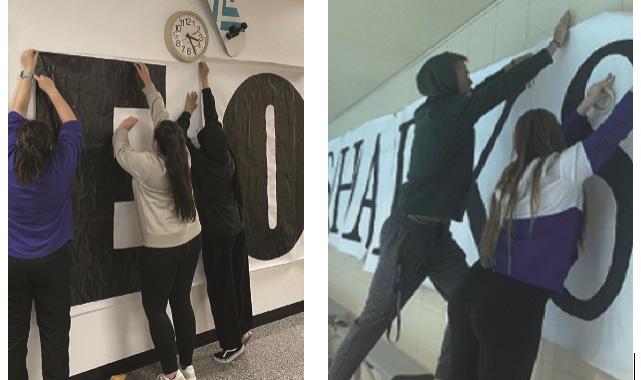
author.
As shown in Figure 11, the size of each letter was too large for a single person to carry, prompting students to collaborate in transporting them. Additionally, they were required to evaluate and compare potential installation sites, which encouraged them to explore and become familiar with the campus environment in advance. Perhaps the most important feature of the oversized print banner was precisely this: it compelled collaboration. Flimsy and too large for one person to manage, or even install, it demanded collective effort. While such characteristics of so-called “old-fashioned” typographic technologies are often seen as impractical or inefficient, in this context they fulfilled a key objective of the project:
fostering embodied teamwork and spatial awareness through material constraints.
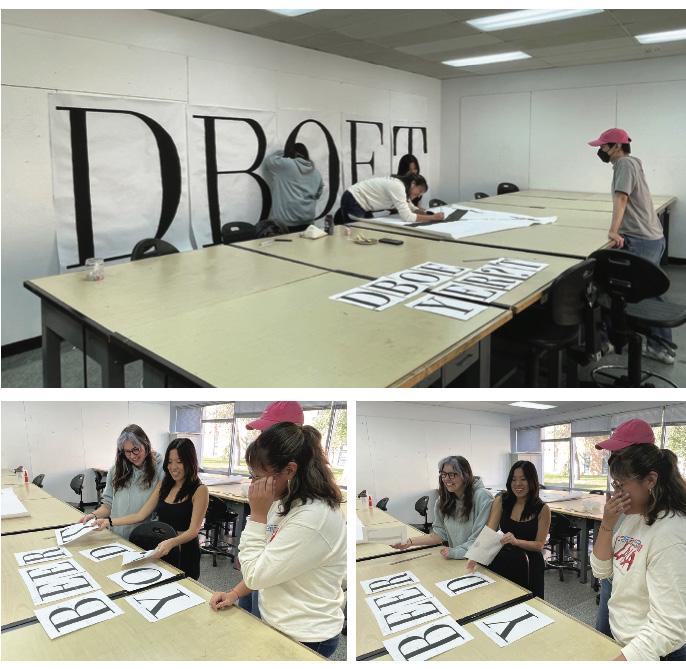
In Figure 12, students worked collaboratively to complete a large-scale sign, dividing tasks to design, construct, and install the oversized letterforms. Throughout the process, moments of improvisation emerged. One particularly noteworthy instance occurred when students began experimenting with small-scale printouts of the individual letters for the banner. By reshuffling the order of the letters, they generated entirely new—or subtly off-kilter—messages. Ultimately, the team settled on the final wording, “BORET YED?”, a playful variation of the original phrase, “BORED YET?”
What prompted the students to recognize and embrace the playfulness of typographic intervention? It is interesting to observe how this kind of ludic instinct surfaced organically through the making process—an impulse that also appears in many historical examples of public typographic participation. The very act of putting one’s ideas into concrete form within public space seems to be an exhilarating experience for the author(s), as if engaging in a lively conversation with an unseen audience. This sensation often gives rise to playful and spontaneous actions, such as the willful misuse of language, creative rearrangement of letters, other humorous modifications.
Figure 11. Groups installing their sign together, South Dakota State University, 2021. Photo by the
Figure 12. Typographic sign making in progress, South Dakota State University, 2021. Photo by the author.
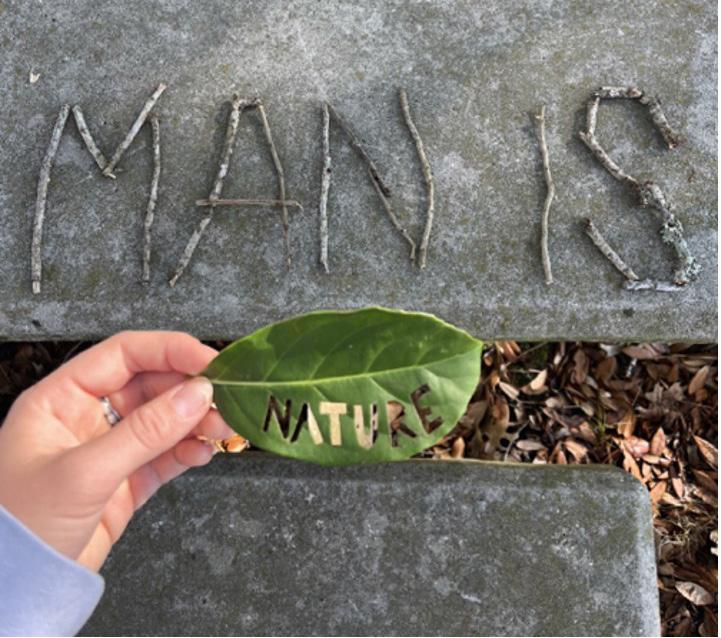
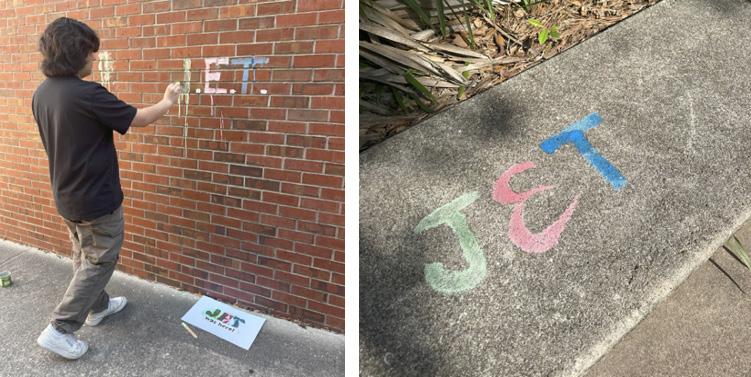
Reflections
Using natural materials like branches and leaves collected from the environment, the student created the typographic message shown in Figure 13. This can be seen as a clever interpretation of the project brief, which asked students to use easily accessible materials. Practices like stone cairns along hiking trails or simple tree markings serve as examples of how typography and visual communication can be effectively created using found and natural objects. Projects like this encourage students, especially those concerned with environmental issues, to reconsider design using materials already present in the world.
A student experiments with chalk paint on a brick wall in the work shown in Figure 14. The adjacent image captures a similar technique applied to a different surface within the built environment. To successfully install their final signs in physical space, students must develop a detailed understanding of the textures and material properties of the surfaces that define each site. By experimenting with the interaction between materials and space, students engage with site-specific design in ways that cannot be fully experienced through digital mock-ups alone. As reflected in their post-project interviews, these embodied experiences also appear to increase their sense of intimacy with the space.
The historical survey and contemporary examples presented in this paper demonstrate typography’s longstanding role in asserting presence, claiming space, and participating in collective discourse. From Roman graffiti to suffragist banners, from sidewalk chalk at Black Lives Matter protests to the Lennon Wall in Hong Kong, the public use of text has functioned as a tool for visibility and participation. These typographic acts reflect what Lefebvre describes as the “right to the city”—a right not only to inhabit space, but to shape it symbolically and socially.
By reframing typography as a form of situated public communication, the student projects described in this study attempt to shift this paradigm. The use of humble, analog materials—paint, chalk, paper, leaves—enabled students to engage directly with the textures, scales, and affordances of real-world environments. More importantly, it allowed them to experiment with inscription as a public gesture rather than a private exercise.
As one student reflected, “It helped show the different meaning type can communicate depending on the environment.” Another noted, “After taking this project, I looked around many type ads in this town. And I got many things from them. And it is different than before.” These responses affirm that spatial typography encouraged students to attune themselves to the communicative landscape of their surroundings.
The physical labor required to install typographic messages in public space demanded collective effort, negotiation, and trust. “Although my group struggled
Figure 13. Using tree branches and leaves, University of Florida, 2025. Photo courtesy of Alexia Andrews.
Figure 14. Exploring the varied structures and surfaces, University of Florida, 2025. Photo courtesy of Jake Velazquez.
with the installation,” one student wrote, “we became good friends through having to collaborate and work hard to make the installation work. My group was my favorite part of the project.” Others emphasized the significance of collaboration: “It is very helpful because it makes you rely on your team and shows you how other skills from people can help strengthen a project.”
These reflections suggest that spatial typographic practice not only fosters civic imagination but also cultivates essential design dispositions: cooperation, adaptability, empathy, and spatial reasoning. As students moved through the physical campus to test materials, locate surfaces, and install their messages, they reoriented their understanding of place. One student noted a strengthened sense of belonging: “This project helped me feel more connected to the campus because I had to walk around and look at it in a new way.”
Room for Further Exploration
This study acknowledges several important limitations that should be considered when interpreting the findings and their broader applicability. The case study is based on introductory typography courses at only two institutions—South Dakota State University and the University of Florida. This narrow geographic and institutional scope limits the generalizability of the findings across more diverse educational contexts, student populations, and regional variations in access to public space. Student reflections were collected informally through a post-project anonymous survey, and the author’s direct observations throughout the course served as preliminary data to assess the effectiveness of the project. However, the analysis is based on a single project and lacks a controlled framework for evaluating learning outcomes in a more multidimensional way beyond students’ anecdotal impressions. In addition, the study focuses primarily on the U.S. educational context and relies mostly on American historical precedents. As a result, the applicability of this pedagogical approach across different cultural settings, regulatory environments, and educational systems remains unexamined. These limitations suggest that while the study offers an initial inquiry into an underexplored area of typographic education in higher education, further research is needed. Future studies could consider more structured methodologies, include larger sample sizes, and consider mixed-method approaches that incorporate quantitative analysis. Such an expanded scope would
help generate more robust findings with practical implications that could inform and enrich existing design curricula.
Typography as Civic Practice
Through historical examples, contemporary practices, and a case study of student projects, we have seen that typography in public space is not merely decorative or informational—it is participatory, affective, and political. When students move beyond screens to create typographic work in physical environments, they not only learn new formal skills but also cultivate awareness of place and community. Place-making, typically associated with disciplines like landscape architecture and urban design, is reframed here as a key area for graphic design exploration. By engaging students with tangible tools and physical environments early in their education, the study highlights how typography can shape spaces and create meaning beyond digital boundaries, aligning with Sandbach’s (2011) assertion of graphic design’s capacity to influence spatial experiences. Reintegrating spatial typography into design education offers a necessary counterbalance to an overly screen and portfolio-centric curriculum. It invites students to explore how letterforms shape and are shaped by the built environment, how words claim space, and how text can function as a tool of civic authorship.
For the future of design education, this means asking: What does it mean to teach design not only as a profession, but as a public practice? How can educators create conditions where students learn to engage with the world around them—not just as users or observers, but as contributors, co-creators, and critics? And how might typography be used to reveal and reshape the civic narratives of a place? More broadly, this project invites reflection on the role of design in public life. In a time when public space is increasingly privatized, surveilled, and commercialized, design has a responsibility to assert new possibilities for visibility, belonging, and collective expression. Local governments could consider providing infrastructure that allows citizens’ typographic expressions to integrate with the linguistic identity of the city—for example, dedicated poster display structures installed along pedestrian walkways, as seen in many European cities. They might also support this integration through cultural programs such as educational courses or community workshops. A more intentional engagement with the typographic landscape of the city along with
the policy that advocate the affordable housing and rent stabilization could offer an alternative to typical, often one-sided and unfocused urban beautification projects— many of which end up contributing to the aesthetics of gentrification in cities across the United States. (De Oliveira, 2025)
As we face overlapping ecological, social, and political crises, how might design—especially typography—serve as a means of care, critique, and connection in the spaces we share? These are not only questions for students, but for educators, institutions, and communities. What if typography were not just about legibility or branding, but about presence, voice, and place?
Acknowledgment
The author would like to thank the following individuals for their generous assistance with sign documentation, installation, and deinstallation: Alexia Andrews, Dianne Caple, Brian Caple, Michael Christopher, Abby Johnson, Molly Jung, SeungHyun Lee, Ilse Vital, and Jake Velazquez.
Resources
Ambrose, Gavin. “Renaissance Man’s Achilles Heel - The Rise and Fall of Typography.” Typography Day, Shrishti School of Art, Design and Technology, 2016, pp. 25–27.
Bennett, Audrey. “Good Design Is Good Social Change: Envisioning an Age of Accountability in Communication Design.” Visible Language, vol. 46, no. 1-2, 2012.
Campbell, Nancy, et al. “Design Incubation Panel Discussion.” Practicing Type in the Age of Screens, YouTube, 2019, www.youtube.com/ watch?v=zaScP4lyZDg. Accessed 3 Nov. 2023.
Cote, C. “Typography in the Public Sphere: Design as Public Address.” Abstracts pdf. AIGA DEC Conferences, Virtual, 2024, pp. 10–12.
Drucker, Johanna. The Alphabetic Labyrinth: The Letters in History and Imagination. First paperback ed., Thames and Hudson, 1999.
Garrucci, Raffaele. Graffiti de Pompéi: inscriptions et gravures tracées au stylet. Benjamin Duprat, 1856.
Green, D., et al. “Writing in Latin and the Vernacular: The Case of Old High German.” 2013, https://doi. org/10.1484/m.usml-eb.5.100922.
Irwin, Terry. “Fine Typography. Is It Relevant? How Can It Be Taught?” The Education of a Typographer, edited by Steven Heller, Allworth Press, 2004, pp. 101–108.
Keppie, Lawrence. Understanding Roman Inscriptions. Routledge, 2013.
Klein, Naomi. No Logo: No Space, No Choice, No Jobs. Picador, 2009.
LaFrance, Adrienne. “Pompeii’s Graffiti and the Ancient Origins of Social Media.” The Atlantic, 23 Mar. 2016, www.theatlantic.com/technology/archive/2016/03/ adrienne-was-here/475719/.
Lefebvre, Henri. Writings on Cities. Blackwell, 1996.
Leimgruber, Jakob R. E., et al. “Language Attitudes and Identity Building in the Linguistic Landscape of Montreal.” Open Linguistics, vol. 7, 2021, pp. 406-422, https://doi. org/10.1515/opli-2021-0021.
McCammon, Holly J., et al. “How Movements Win: Gendered Opportunity Structures and US Women’s Suffrage Movements, 1866 to 1919.” American Sociological Review, vol. 66, no. 1, 2001, pp. 49-70.
Mitchell, Don. The Right to the City: Social Justice and the Fight for Public Space. Guilford Press, 2003.
Murphy, Kevin D., and Sally O’Driscoll. “The Art/History of Resistance: Visual Ephemera in Public Space.” Space and Culture, 2015.
Oliveira, Carlos Eduardo Campos de, et al. “Gentrification, Urban Revitalization, and Social Equity: Challenges and Solutions.” Brazilian Journal of Development, 2025, https://doi.org/10.34117/bjdv11n2-010.
Rochette, Bruno. “The Attitude of the Roman Emperors towards Language Practices.” Social Factors in the Latinization of the Roman West, edited by Alex Mullen, Oxford Academic, 2023, https://doi.org/10.1093/ oso/9780198887294.003.0012. Accessed 11 July 2025.
Sandbach, Katrina. “Graphic Design and the Aesthetics of Place.” Iridescent, vol. 1, no. 1, Informa UK Limited, Oct. 2011, pp. 148–159, https://doi.org/10.1080/19235003.20 11.11782253.
Sevak, Pravin. “Moving Forward: Graphic Design Teaching and Technology.” Proceedings MX Design Conference, 2005, pp. 26–28.
Taussig, Michael. “I’m So Angry I Made a Sign.” Critical Inquiry, vol. 39, no. 1, Sep. 2012, pp. 56–88, https://doi. org/10.1086/668050.
Valjakka, Minna. “Co-authoring the Space: The Initial Lennon Wall Hong Kong in 2014 as Socially Engaged Creativity.” Cultural Studies, vol. 34, no. 6, 2020, pp. 9791006.
Zukin, Sharon, et al. “Landscapes of Power: From Detroit to Disney World.” Journal of Architectural Education, vol. 46, 1993, pp. 191-195, https://doi.org/10.1080/1046488 3.1993.10734555.
On TAP Columbia Tap Trail
Cheryl Beckett
Associate Professor, University of Houston, Kathrine G. McGovern
College of the Arts, Program Coordinator
Susan Rogers Associate Professor, University of Houston, Gerald D. Hines College of Architecture and Design and Director of the CDRC (Community Design Resource Center)
Gerald Sastra BFA, University of Houston
Abstract
On TAP was a community-engaged and interdisciplinary collaboration between students and faculty at the University of Houston Kathrine G. McGovern College of the Arts and the Gerald D. Hines College of Architecture and Design and the Friends of Columbia Tap to design temporary, site-specific installations that would activate Columbia Tap Trail. The installations were designed to foster public interaction, dialogue, and participation. Columbia Tap Trail, a federal rails-to-trails project, was completed in 2009. The trail follows the original route of the Houston Tap and Brazoria Railway, which was completed in 1856 to connect the sugar and cotton plantations of Brazoria County to the markets in Houston. Just under four miles in length, Columbia Tap Trail begins just east of downtown Houston, moves south through the historic Third Ward, and terminates at State Highway 288 near the Texas Medical Center.
On TAP emerged from a larger community visioning process for the trail that was being led by the Community Design Resource Center in the College of Architecture and Design at the University of Houston in partnership with the Friends of Columbia Tap. This effort laid the essential groundwork in creating a trusting and mutually beneficial community partnership, and ensuring the project was developed and implemented with, and not for, the community. The project and student participants were guided by values that centered community voices and collaboration, and that sought to strengthen the wconnection between people and place, engage in grounded place-based research, explore and understand the physical, cultural, and social identities that define a place, and develop ways to keep the cultural memories and histories alive. Through collaboration with community members students gained firsthand experience with the intricacies of community-based work and the importance of place in people’s daily lives, as well as an immersive introduction to the power of design as a tool to uncover hidden histories, create inclusive public spaces, and bridge the divides between neighborhoods.
Introduction
Cutting a primarily straight path through the communities of East Downtown, Third Ward, and MacGregor, the Columbia Tap Trail connects downtown Houston with Brays Bayou and the Texas Medical Center. Constructed along a segment of the former Houston Tap and Brazoria Railway, the nearly fourmile trail has few amenities that draw people from the surrounding communities, there is little reference to the important history of the railroad or the places it passed through, there are few places to rest, and no amenities that would be expected in a public green space. Naomi Carrier, quoted in the Houston Chronicle, notes that “nobody knows the history of this area. It has to be told. But you can’t blame people for not knowing because it’s intentional.” (Sewing, 2023)
The On TAP project sought to mitigate these conditions through the design and installation of temporary interventions that would activate the trail and point to future possibilities. The student-designed projects were informed through conversations with community leaders and historian Naomi Carrier, among others, and the core principles of community-based research and design. The result was a series of installations that celebrated Columbia Tap Trail as a vital historic and cultural asset–projects that were strengthened through collaboration, listening, and storytelling.
Grounding Design
The core principles for creating meaningful public spaces that foster connection between people and place include adopting an engaged and collaborative process, conducting thoughtful and extensive place-based research, developing ideas that are founded in assets, respecting cultural identities and histories, and designing spaces based on shared values and well-being. These principles shaped the method and learning objectives of the interdisciplinary course–and the design installations created by the students.
Collaboration and engagement between students and community leaders for On TAP was, as previously stated, based on a longer term partnership between the University of Houston and the Friends of Columbia Tap. This partnership was leveraged to ensure that students working on the project had opportunities to hear directly from community members, to receive ongoing feedback on their concepts and designs, and
share in celebrating the completed work. Specifically, students had four opportunities to share their process and work with community members and leaders, including early concepts, design development, and full scale prototypes. With each meeting the students’ approach to the project became richer in content, in connection to the site, and in meaning.
Place-based research, focused on the physical, cultural, and social factors that define a place, created a solid foundation from which students could develop their concepts and the content for storytelling. This included a series of presentations from local historians, designers, and community leaders on the history of the trail. The students also went on a guided walking tour of the trail led by the Friends of Columbia Tap. During the tour students were asked to observe how people were using the trail and for what purpose, to identify opportunity sites, and to write, photograph, and draw what they were seeing and experiencing.
The assets and potentials of a place can be uncovered when you not only look, but also truly see. For this project, this meant looking for opportunities and strengths within the landscape and environment of the trail that could be creatively leveraged for design interventions.
The opportunities to learn from community leaders, experience the site, and engage in place-based research strengthened a central tenet of the project, to build on the rich cultural and historical identities of the place and its people. This process inspired the student teams, the development of their concepts and narrative, and further grounded their ideas in the beauty and assets of the place, including through honoring memories and stories.
Exploring New Design Processes
On TAP was an opportunity for students to work across disciplines, sites, and stories–and to incorporate iteration, prototyping, testing, and refinement into their design processes as a means to respond to the visions of community members. Early in the process, seven teams were formed, consisting of 22 senior graphic design students and 14 fourth- and fifth-year architecture students. Six of the student teams selected a specific site along the trail to develop and install interactive, community-oriented experiences. Criteria for site selection included its significance and potential
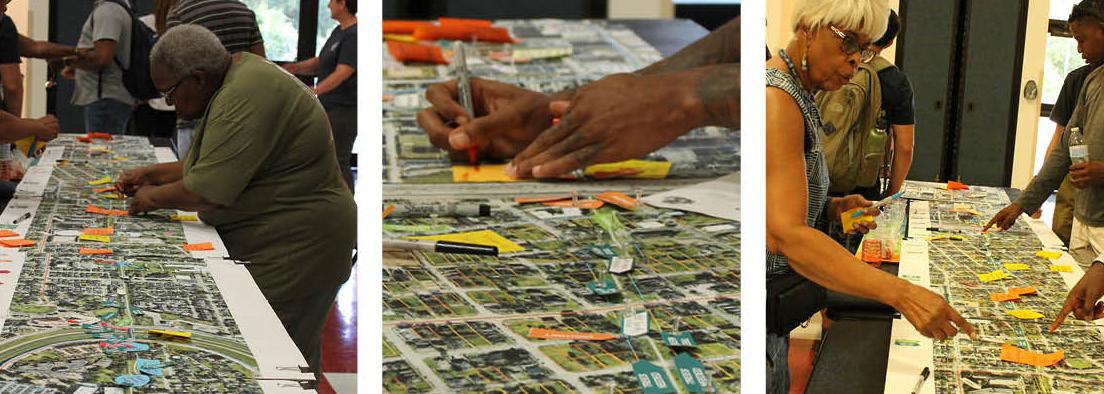
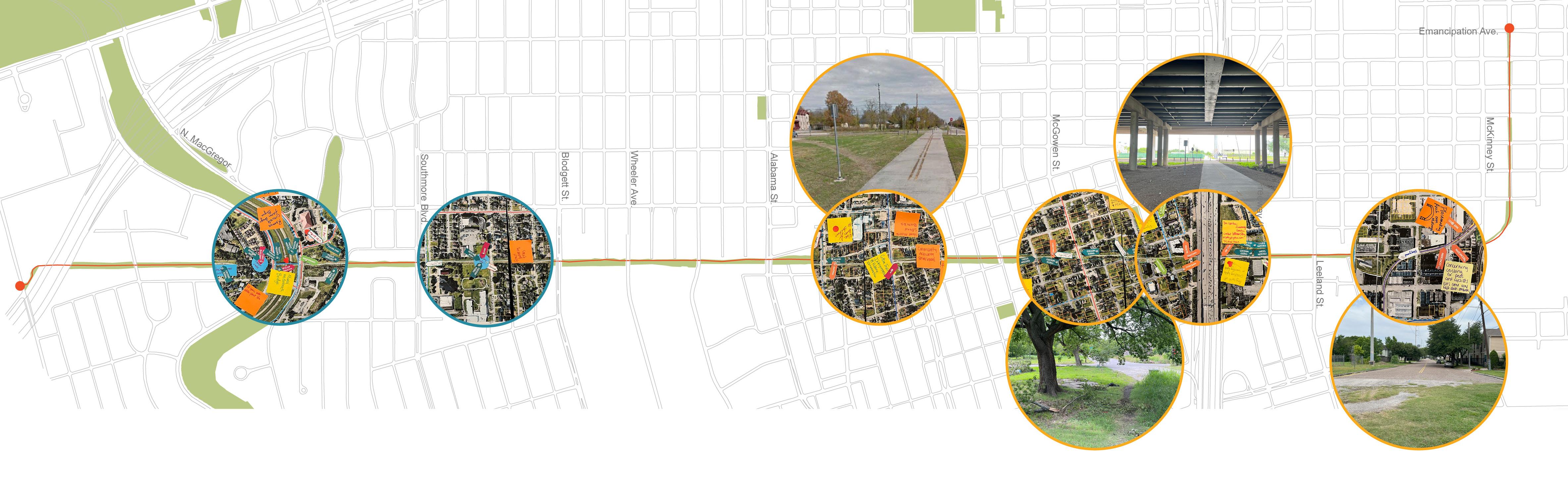
“Nobody knows the history of this area. It has to be told. But you can’t blame people for not knowing the history because it’s intentional.”
Naomi Carrier
for community engagement and messaging. To unify the experiences at these six sites along the Columbia Tap Trail, the seventh team developed a comprehensive branding system and a series of visual “beacons” that served as identity markers and wayfinding elements. While each design team worked independently, the shared branding ensured a cohesive visual language across the entire On TAP project.
Iteration in design was central to the project. For example, in the first round of sketches students synthesized research to develop montages that combined observations, research, and site imagery to create unique narratives. Student teams were encouraged to propose concepts based on the real time constraints of the project, durability, ease of installation, and construction methods. Materials were tested through full scale prototypes and models to ensure feasibility and aesthetics. Across the project we asked: how can the installations encourage engagement with the space, shape the public realm for shared benefit, and foster deeper connections to place through storytelling?
The Columbia Tap trail with input notes from the community for each of the selected nodes.
Material testing and prototyping were critical processes for each student team. Students were encouraged to utilize recycled and other ethically sourced materials, and to understand that there are two approaches to installation design, one that departs from material choices and the other that departs from a design concept. As a class, we visited the Houston Recycle Warehouse, and students returned regularly as material needs emerged.
The installations developed by each student team from the place-based research, through ongoing collaboration with community stakeholders, and through an iterative design and material exploration process brought new possibilities and visions to Columbia Tap Trail.
Placekeeping Through Design
The On TAP project, consisting of six site specific installations and an overall graphic identity, or branding, laced together the communities, culture, histories, and landscapes that occur along the length of Columbia Tap Trail. Each of the six installations told a different story–while the branding team created the threads that held everything together.
A common theme across all of the projects was an emphasis on placekeeping. McCoy and Ladner define placekeeping as “the process of preserving the culture, history, ecological landscape, and stories of a place while creating spaces that will meet the needs of the community for years to come.” (McCoy and Ladner, 2025) Placekeeping is an emerging alternative to placemaking which has too often sought to remake a place, not through an emphasis on existing strengths, but through erasure and redevelopment.
The emphasis on placekeeping, as an alternative, ensured that the designs developed by the branding team and the site teams were grounded in the strengths and conditions of the site and the visions of the community.
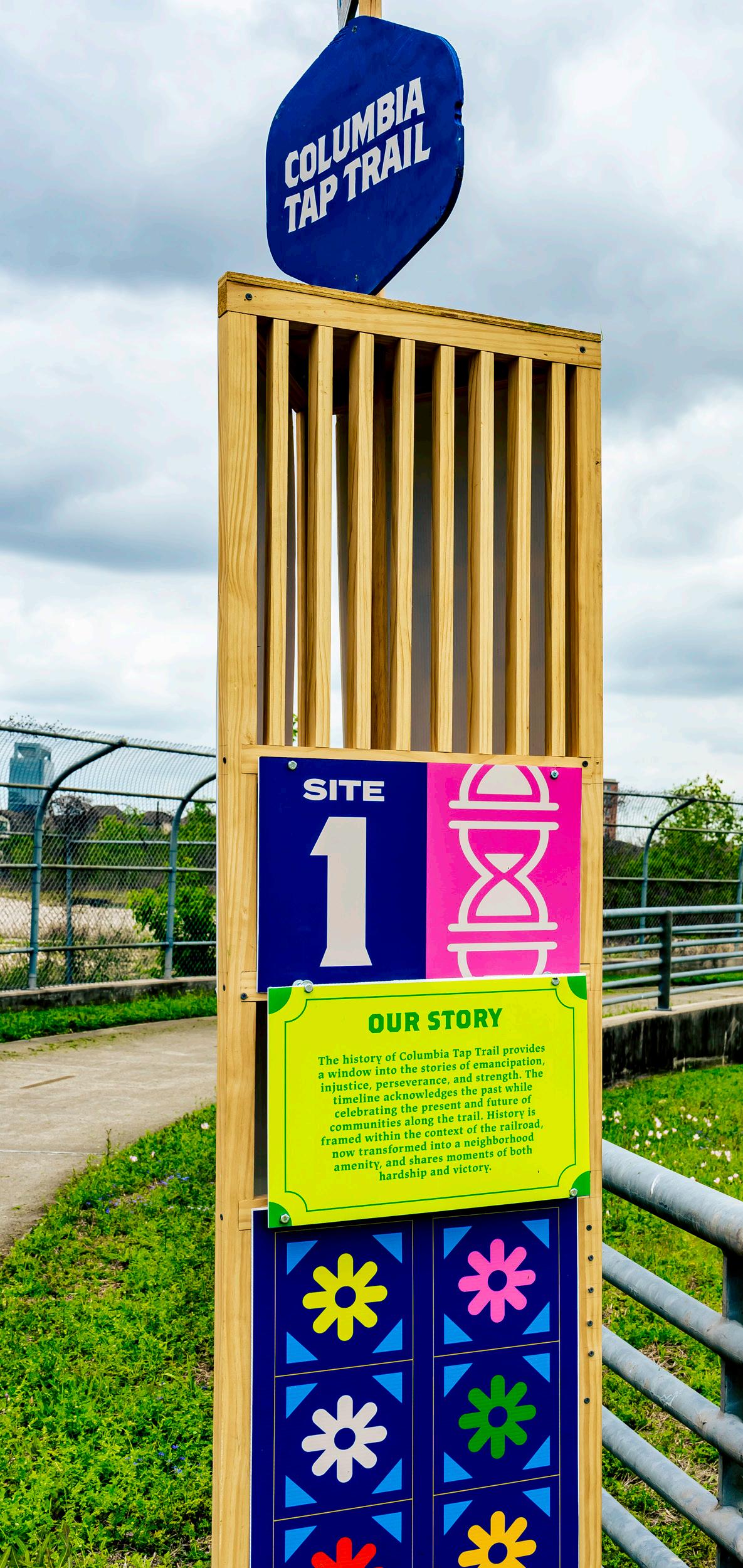
The ON TAP branding system extends to the beacons, print graphics and social media
Branding and beacon system by Catherine Cantú, Tanner Hodgkinson, Saray Mata, Esther Par, Jose Romero, Gerald Sastra
Interconnection:
Branding and Beacons
To create a grounded and authentic visual identity, the branding team drew inspiration from 19thcentury design—particularly railroad logos, industrial typography, and period-specific layout techniques. These historical references were reinterpreted in a colorful, dynamic, and welcoming style that reflected the contemporary energy and diversity of the communities along Columbia Tap Trail.
A flexible palette of graphic elements and typographic styles were developed and adapted across the different installations, allowing each team to express their vision while maintaining a unified identity. This balance of versatility and cohesion became a defining feature of the On TAP experience.
Custom illustrated icons representing key landmarks— such as the AIDS Memorial Garden and the El Dorado Ballroom—further enriched the visual identity. These icons, along with unique stamp motifs tied to each node, were featured in the passport booklet and signage developed for the trail, reinforcing the connection to place. This approach created a sense of belonging for familiar visitors and encouraged newcomers to explore and engage.
The passport booklet was designed to guide visitors through the On TAP trail and the six installations. Distributed during the event, the booklet included a map and a brief explanation of each installation, reinforcing the messaging and narrative of the project. Though the trail follows a straight path, some installations were spaced far apart—so the passport encouraged visitors to explore the entire route. At each node, participants could collect a custom stamp, transforming the booklet into a personalized keepsake. This interactive experience not only promoted full engagement with the trail but also offered a tangible reminder of the journey—fostering continued connection even after the visit ended.
The branding process was developed in tandem with the creation of the beacons, which served as visual anchors for each installation. Tall and easily visible, the beacons were designed to stand out from a distance while integrating thoughtfully into the landscape of the trail. Their interpretive graphics of the beacons enhanced the visitor experience, offering orientation, insight, and opportunities for interaction without overpowering the natural environment.
The beacon system for each node
Activation: Installations
The six student-designed installations along Columbia Tap Trail spanned more than three miles of the trail, beginning at the south trail head adjacent to State Highway 288 and culminating on a site near the Gulf Freeway. The distributed installations varied in content and engagement strategies, however each installation was interactive–asking visitors to learn, play, gather, envision, and create. The installations also highlighted current trail features, nearby destinations, and envisioned future amenities, contributing to broader awareness and long-term trail stewardship. The project emphasized the role of the Columbia Tap Trail as both a meeting place and a connector among diverse neighborhoods and their shared histories.
The fabrication of the installations required collaboration between architecture and graphic design students. Together, the students worked to find efficient construction methods that also maintained the design’s connection to the site’s context and intent. This handson process was invaluable in understanding how design moves from concept to reality, requiring practical problem-solving and flexibility without compromising the original vision. Details of each installation follow.
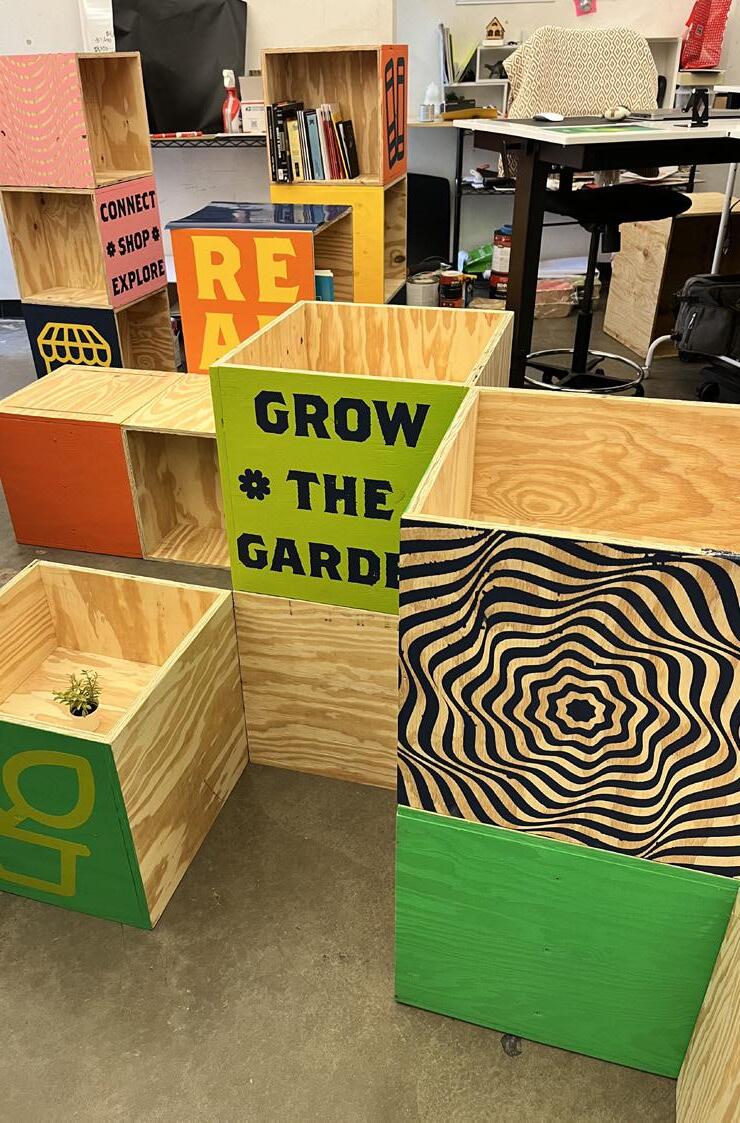
Gateway Timeline
Located at the southern trail head, the Gateway Timeline installation welcomed visitors with an immersive historical experience. The history of Columbia Tap Trail, within the context of U.S. history, offered a powerful window into stories of emancipation, injustice, perseverance, and strength that shaped the area. The Gateway Timeline honored the past while celebrating the present and future of the trail. By highlighting key moments, this installation connected visitors to the community’s heritage and encouraged reflection on how history continues to influence the ongoing transformation of the trail. It served not only as an educational tool but also as an invitation to engage with the stories that have defined these neighborhoods over time. In this way, the timeline bridged generations—linking memories of the past with hopes for what is to come.
Along the timeline, historical milestones were carefully selected to offer insight into the culture, life, and events that shaped the area. A series of panels, representing over 150 years of history, were mounted on the chain link walls of the pedestrian bridge over Highway 288 to narrate the rich history of the trail. This installation served as a gateway, grounding visitors in the past before they moved forward through the evolving community narrative.
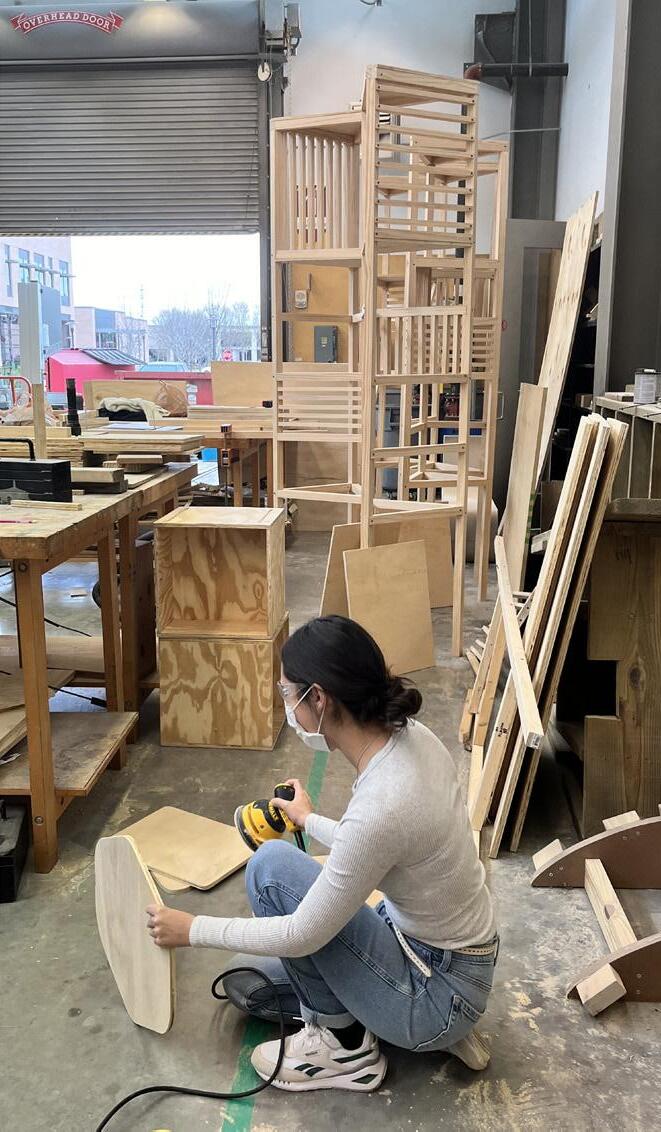
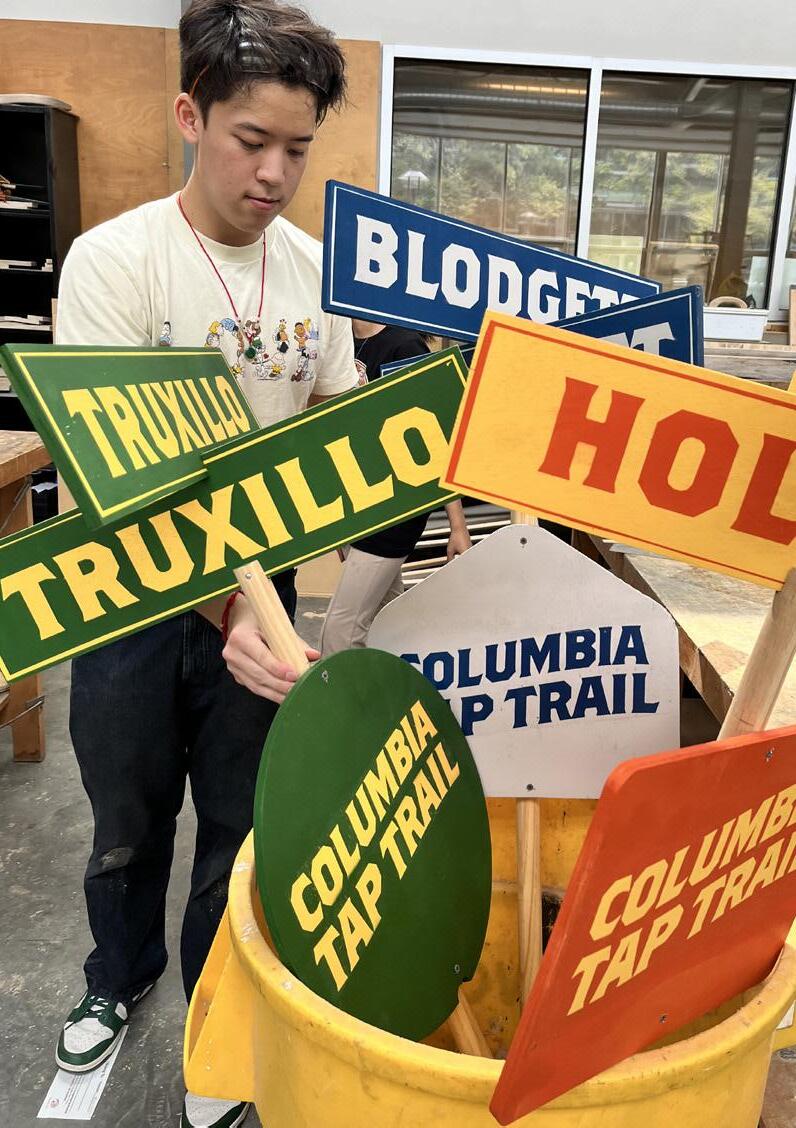
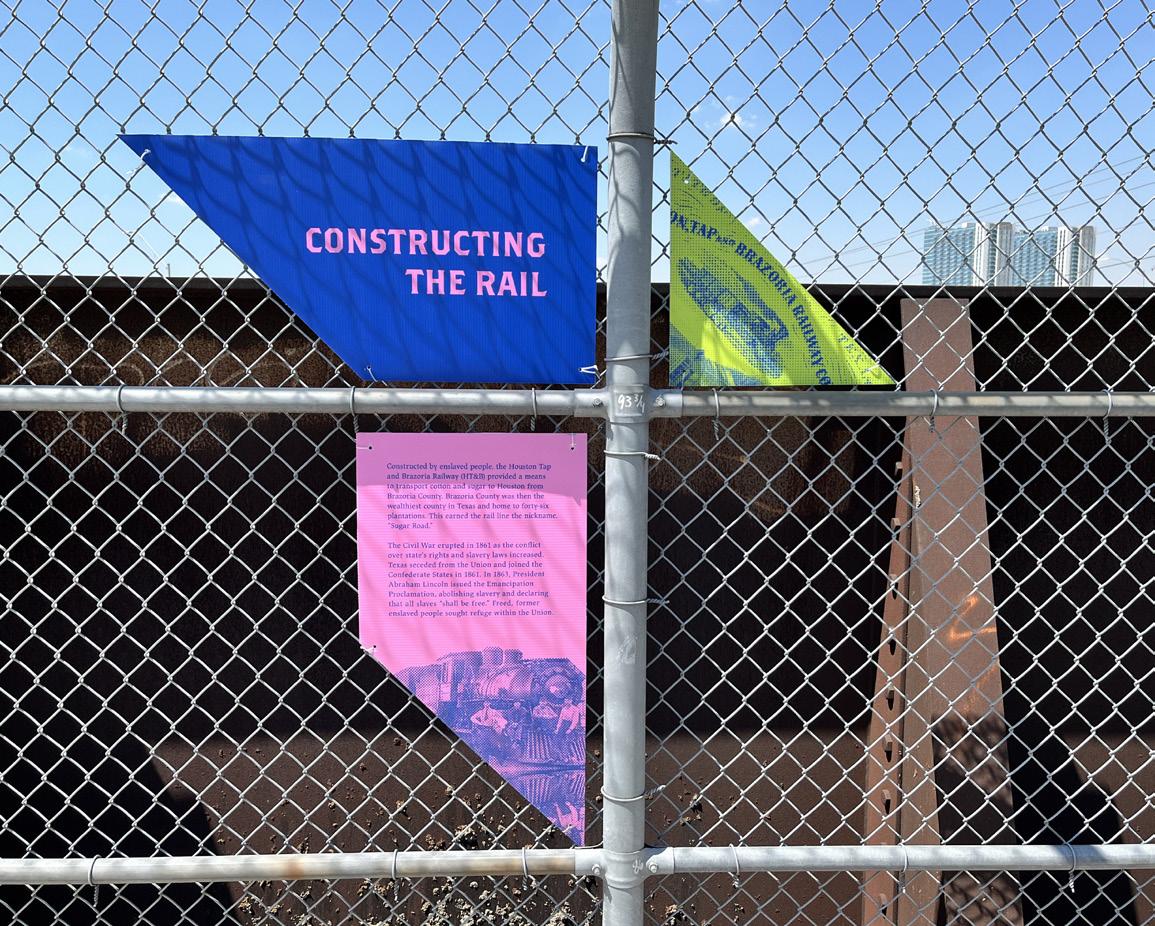
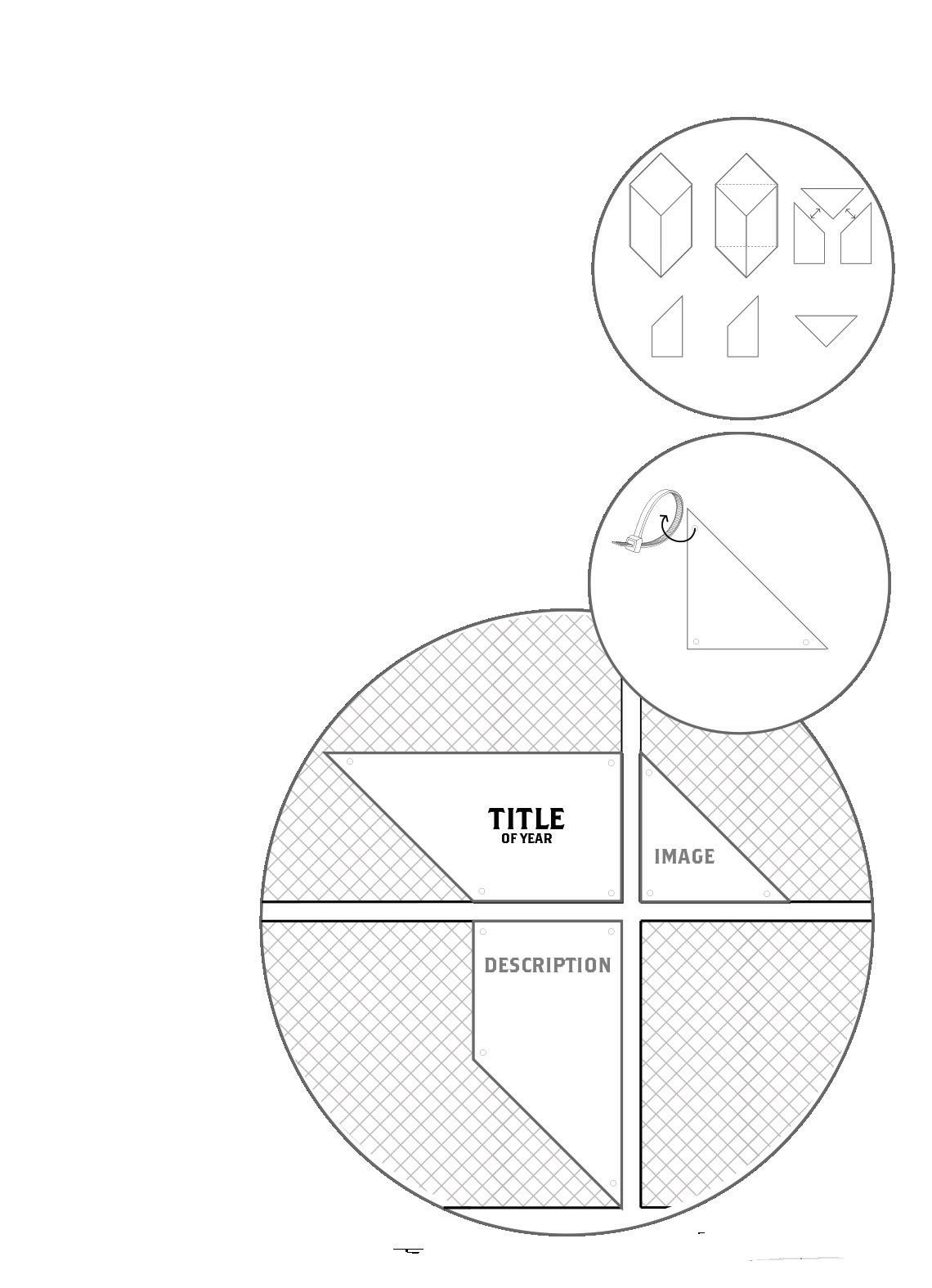
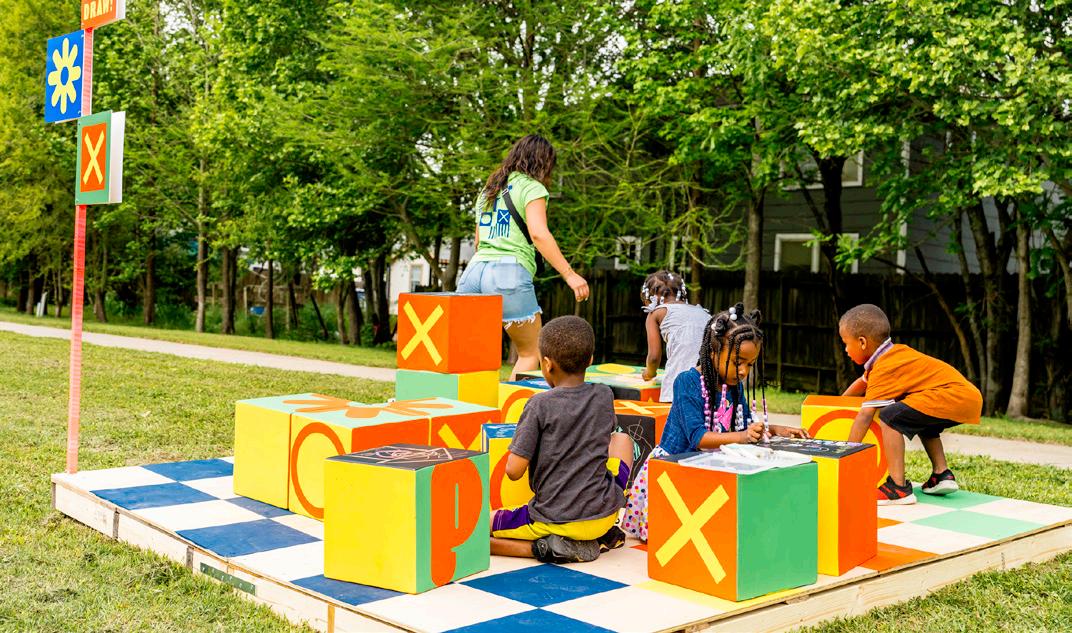
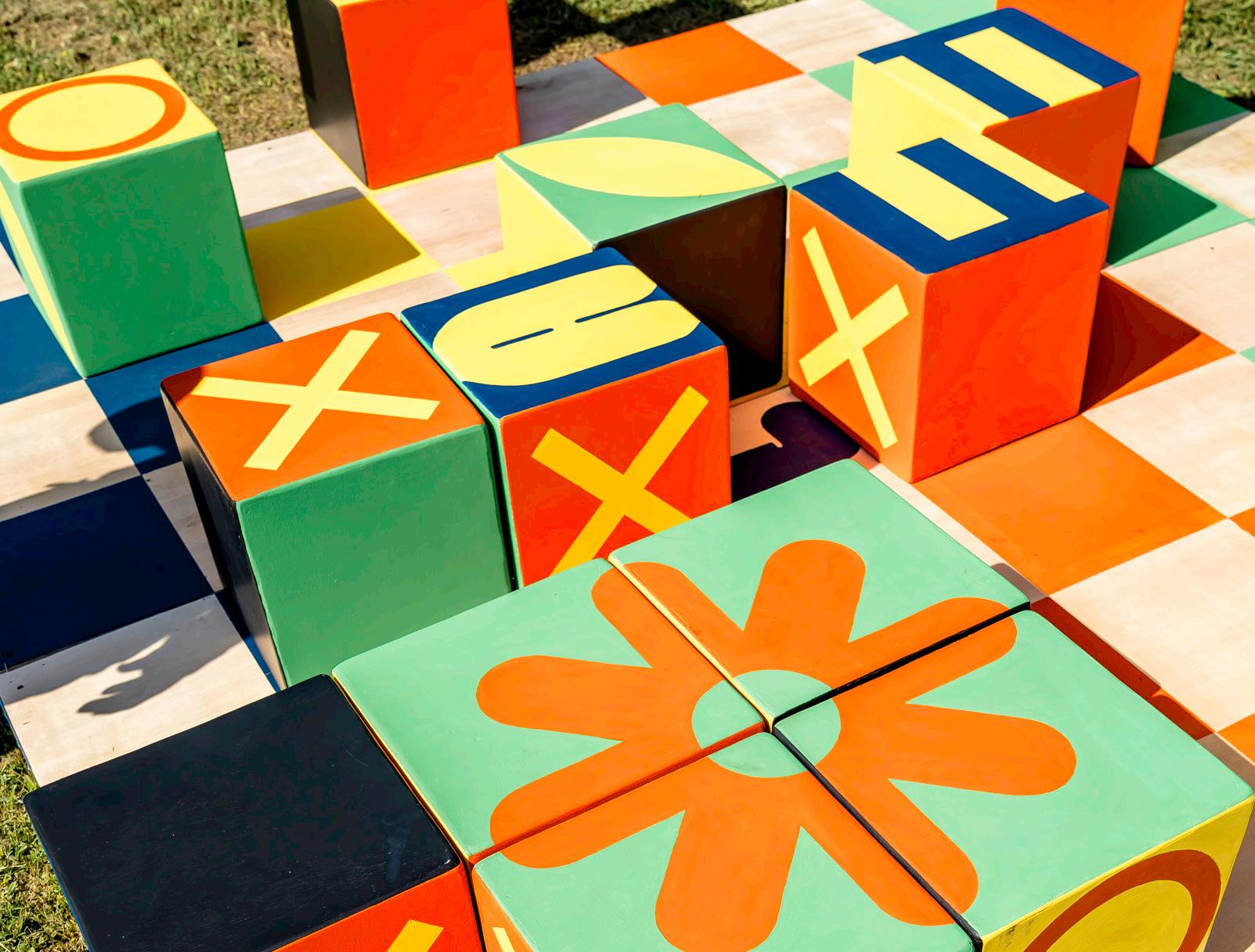
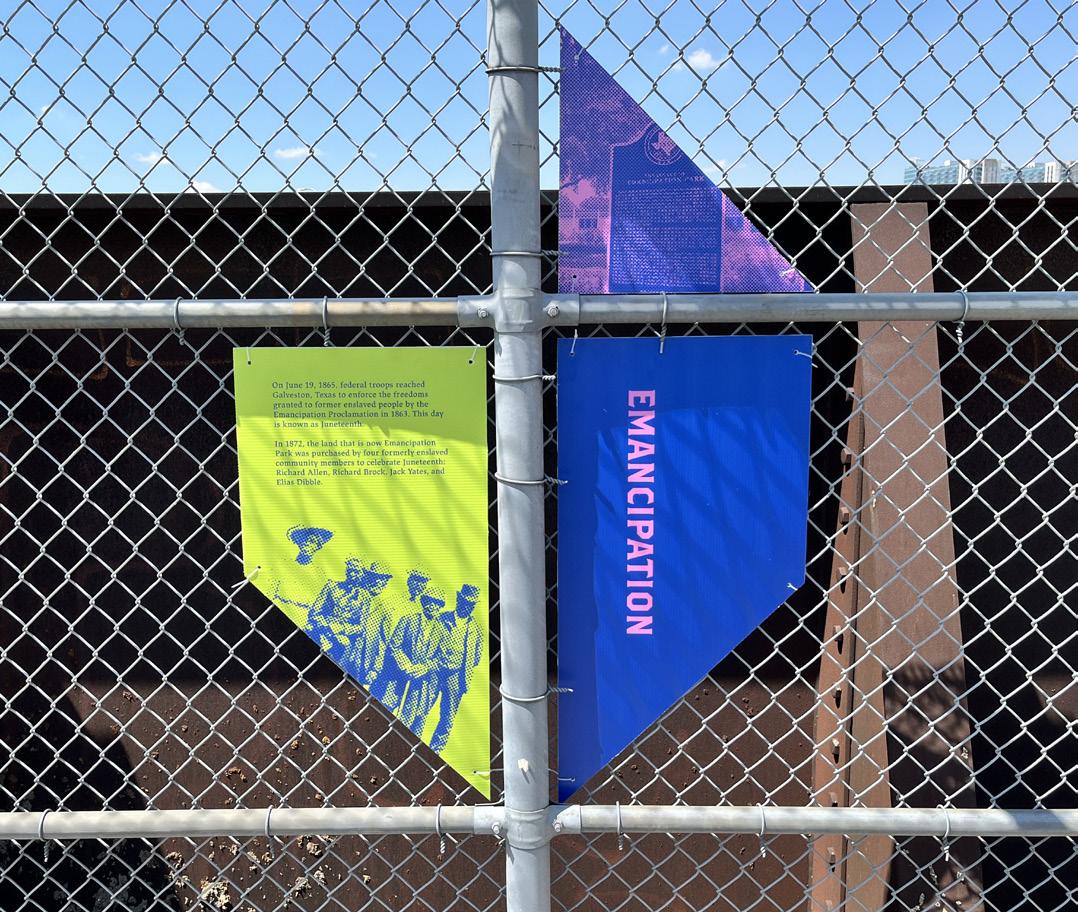
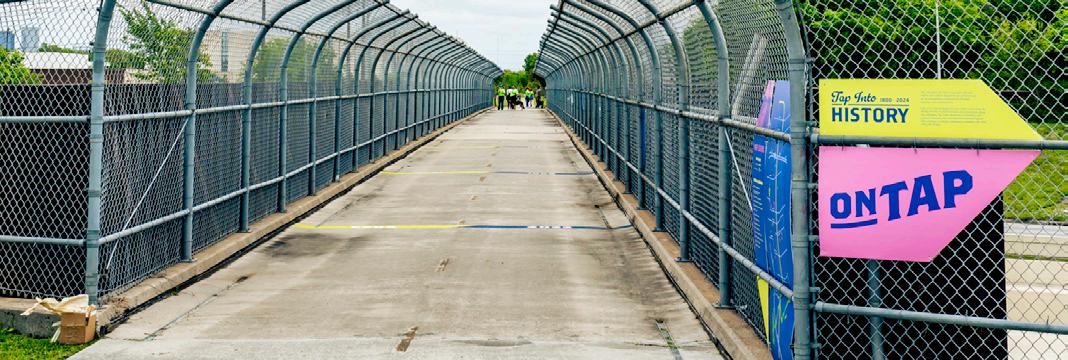
Play
The Play installation celebrated the ongoing transformation of the Columbia Tap Trail and the vibrant community at its heart. Located adjacent to Cuney Homes, a Houston Housing Authority development, the bright, eye-catching building blocks were designed to be rearranged—creating an ever-evolving play space that reflected the spirit of adaptability and imagination. Each block was adorned with colorful patterns, chalkboard surfaces, and mix-and-match icons, inviting children to explore, create, and connect in their own ways.
The Play blocks were set atop a vivid gridded platform, elevated from the ground, adding visual interest, dimension, and a sense of place. The Play installation served as a reminder of the importance of child-centered public amenities. It offered young visitors a place to invent, imagine, and share—while reinforcing the value of play as a powerful connector in public space.
Gateway Timeline by Diana Cao, Brissa Estrada, Emma Matocha, Amber Quinn, Caio Penedo Silva
PLAY by Samah Hassan, Widad Hayali, Rochelle Matus, Yanci Ramirez, Ana Tejeda,
History On Wheels
For History On Wheels recycled bicycle wheels were transformed into a kinetic map of Columbia Tap Trail and a bike rack, celebrating the area’s rich history and vibrant landmarks, while also providing a place for cyclists to rest. Each wheel in the dynamic installation represented a key site along the trail and shared stories that spanned generations—from Houston’s first sit-in protest to historic architecture and ongoing community-driven initiatives that continue to uplift the neighborhood.
By connecting physical motion with storytelling, the installation invited visitors to engage actively with the legacy of the trail. With every spin, a new chapter unfolded, guiding viewers through a layered journey of past and present. The colorful, spinning whirligigs offered more than just visual delight—they embodied the energy, resilience, and momentum of a community in motion.
Gather
Creating a friendly gathering point in a public space encourages neighbors to meet neighbors—and residents to connect with visitors. Gather was designed to foster a sense of community among the three neighborhoods connected by Columbia Tap Trail–East Downtown, Third Ward, and MacGregor. The installation not only sparked conversation but also invited active participation, encouraging visitors to build connections with one another and with the trail itself.
Gather featured multi-functional wooden boxes that transformed into seating, bookshelves, planters, and market tables, adapting to a range of uses and encouraging interaction. Bold patterns and expressive typography invited passersby to pause, connect, learn, garden, and share. In urban environments, spaces like these are critical for cultivating social cohesion, offering a venue for cultural exchange, creative expression, and lifelong learning.
Rooted in flexibility and inclusivity, Gather embodied the spirit of a thriving, connected community—one that celebrates the value of shared places and the endless possibilities of a user-driven environment
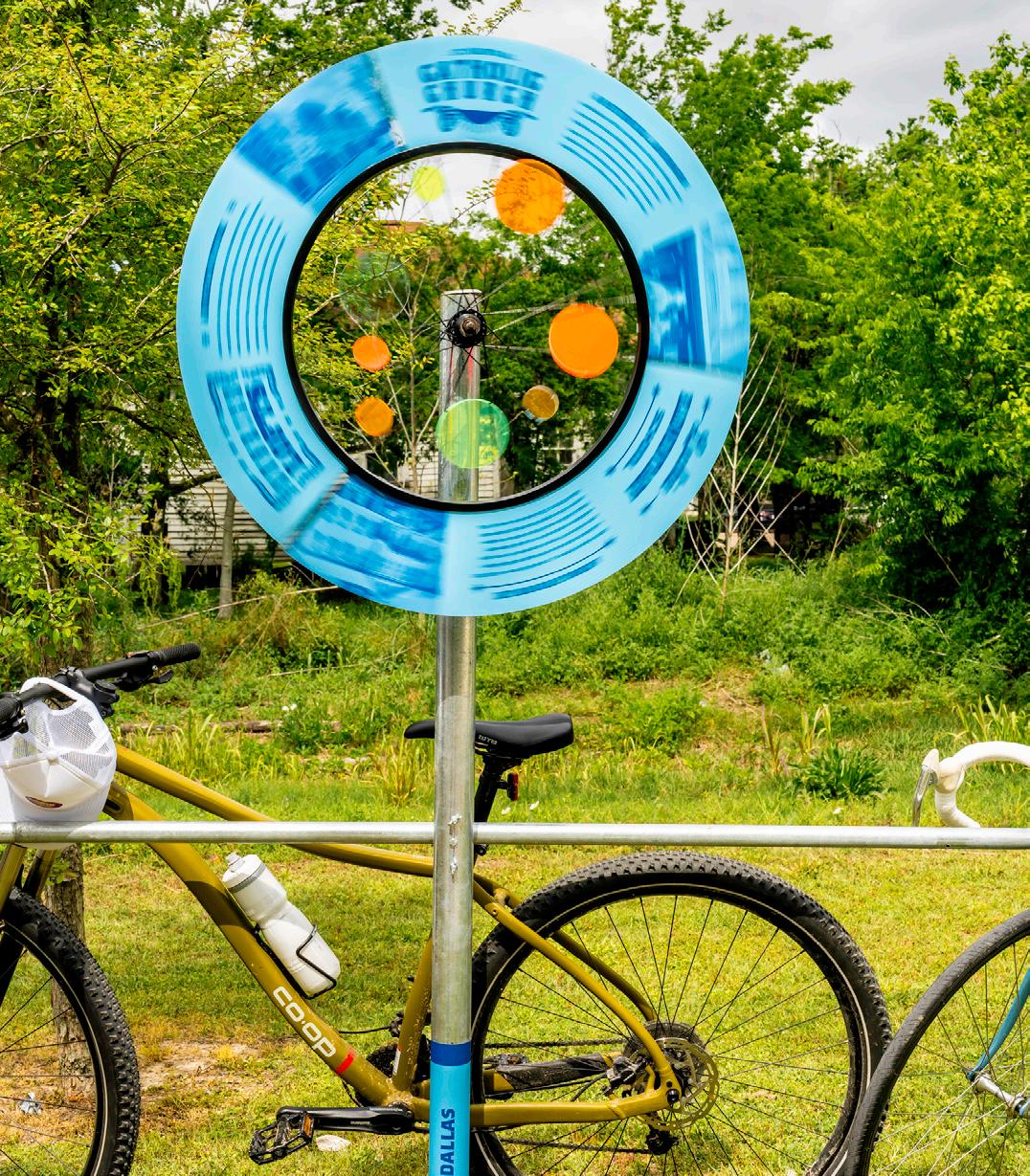
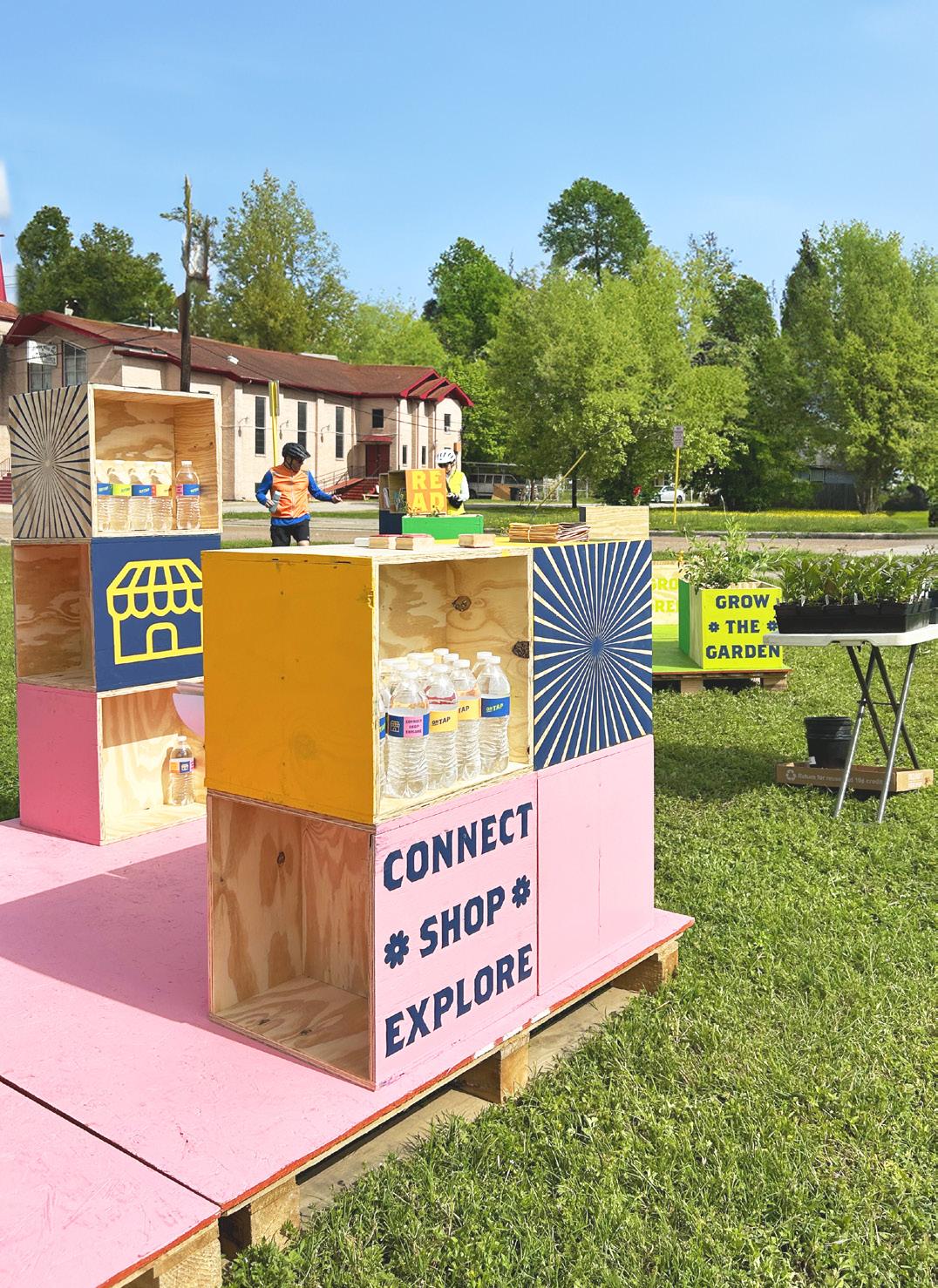
Gather by Joan Ku, Natalia Marmolejo, Daniel Sabillon, Adam Smith, Nina Torres






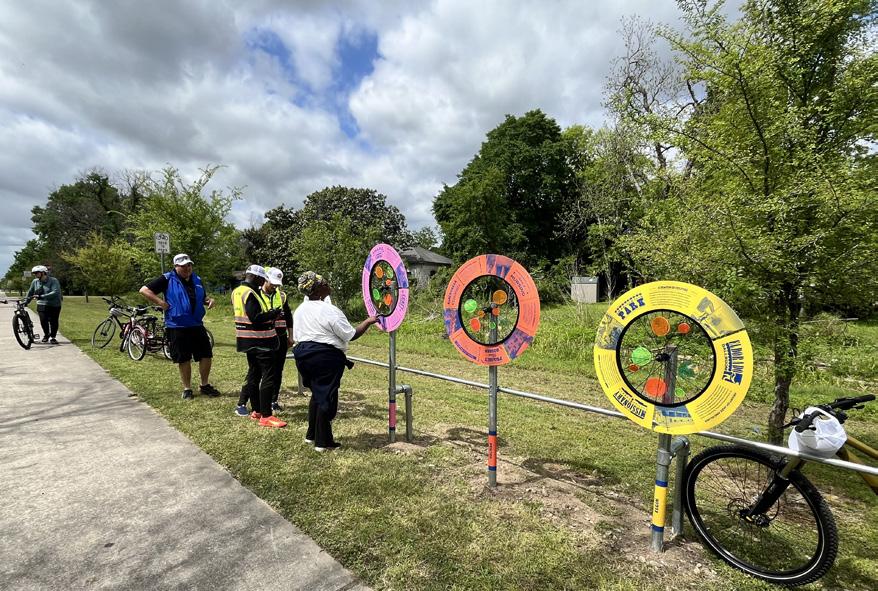

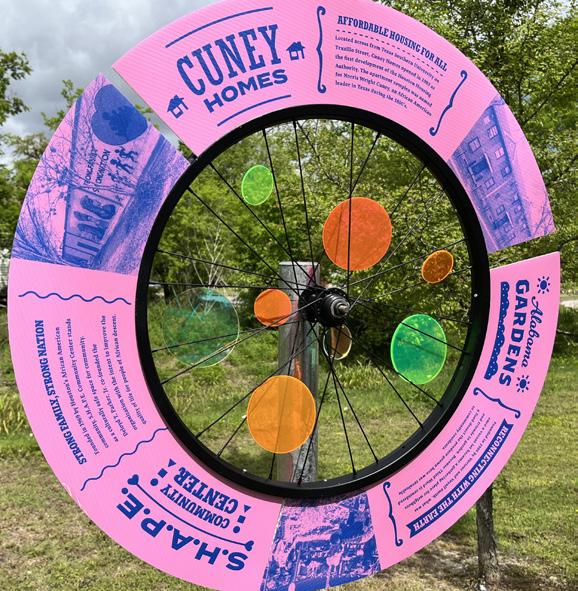
“Ultimately, the work is about more than signs or structures— it is about people, listening, responding, and building with intention.”
Gerald Sastra
History On Wheels by Dylan Burkett, Christian Barrera, Kai Wen Chua, TJ Jordan, Zoe Schomburg
Home of Wishes
The strength of a community lies in the collective determination of its people, united in their commitment to building a brighter future. Honoring this enduring spirit, Home of Wishes gathered the dreams and aspirations of the community, fostering a sense of unity, hope, and connection. This installation stood as a powerful expression of a shared vision.
Home of Wishes invited residents and trail users to reflect and share their hopes for the future. Designed as a space for personal expression and communal reflection, the installation highlighted the values, goals, and dreams that bind the community together. By collecting these contributions, it underscored the power of connection and the essential role of community involvement in shaping what comes next.
Visitors were encouraged to write their reflections, dreams, or ideas on colorful, transparent tags, which were then displayed as part of the structure. Over time, Home of Wishes became a living archive of community voices— a vibrant, evolving display of collective hopes and visions. This interactive process not only fostered participation but also reinforced the idea that everyone plays a role in shaping the spaces they call home.
Nature
The Nature installation focused on connecting the community through shared gardening experiences. It included a shaded area for people to gather, rest, or participate in small-scale planting activities. The canopy above, represented themes of growth, community, and shared effort. The space encouraged people to spend time outdoors and engage with nature in a way that supported both individual well-being and collective connection.
The development of this installation involved close collaboration with community members to understand how nature could play a meaningful role in their everyday lives. Early design sessions focused on identifying ways to make the space both inviting and functional—leading to the inclusion of shade, seating, and low-maintenance planting areas. Leaf patterns, inspired by local flora and were routed into the canopy panels through an iterative prototyping process. Materials were selected with an emphasis on durability and creating a welcoming environment that encouraged engagement, making this installation a true reflection of community input and needs.
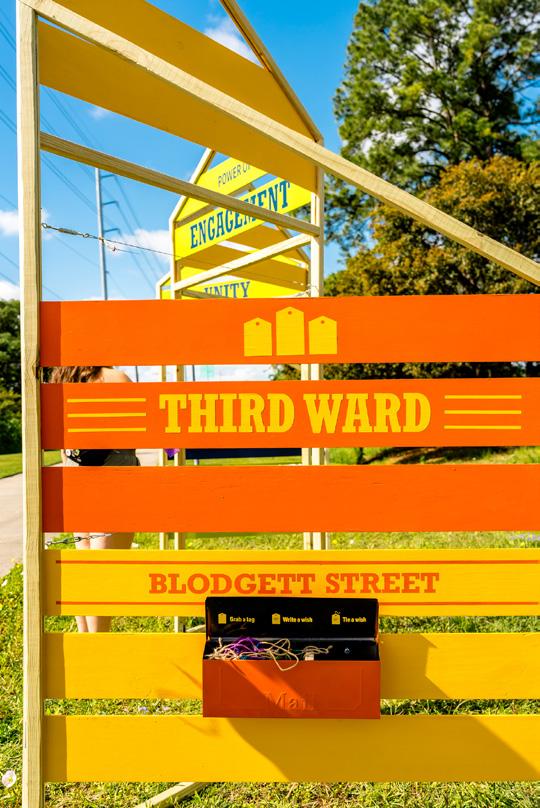
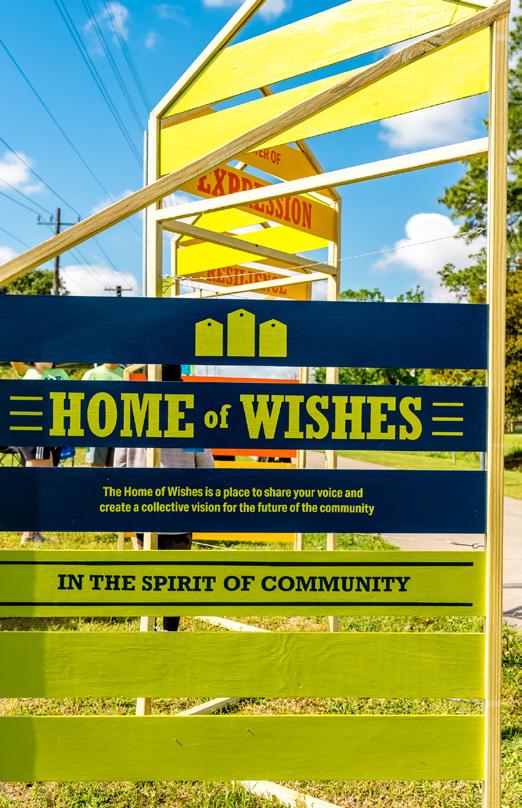
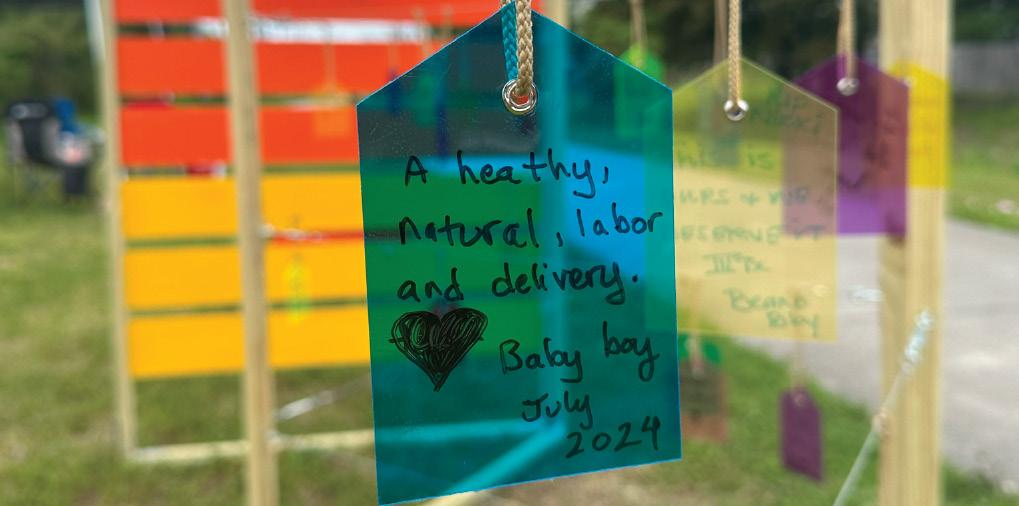
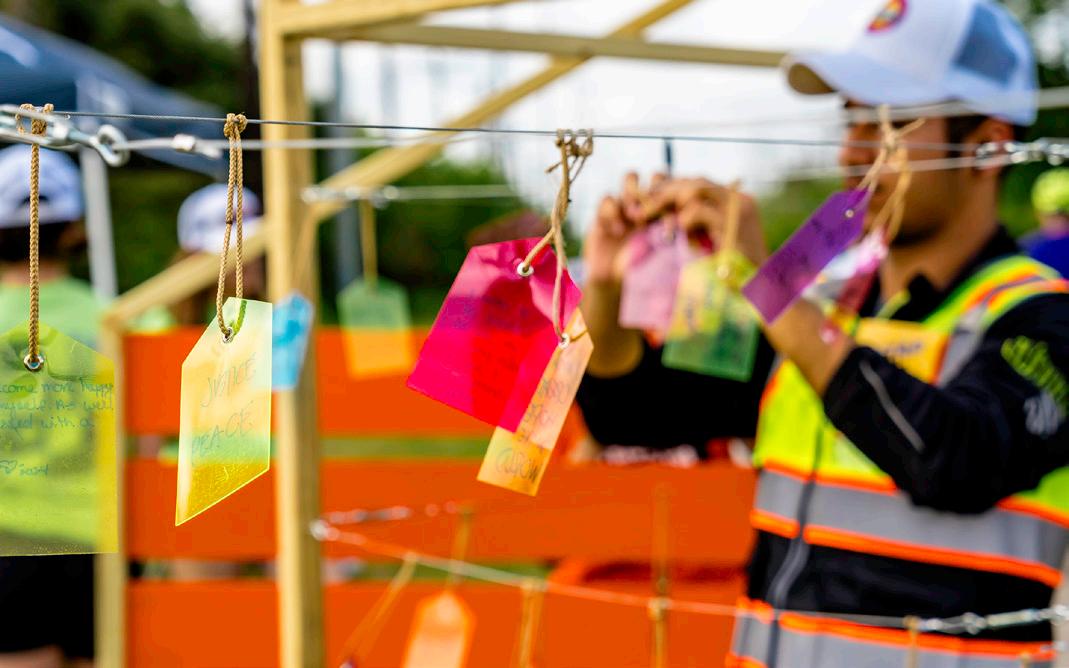
Home of Wishes by Ashley Guzman, Julissa Herrera, Sarah Jordan, Hannah McCreary, Andrew Thai
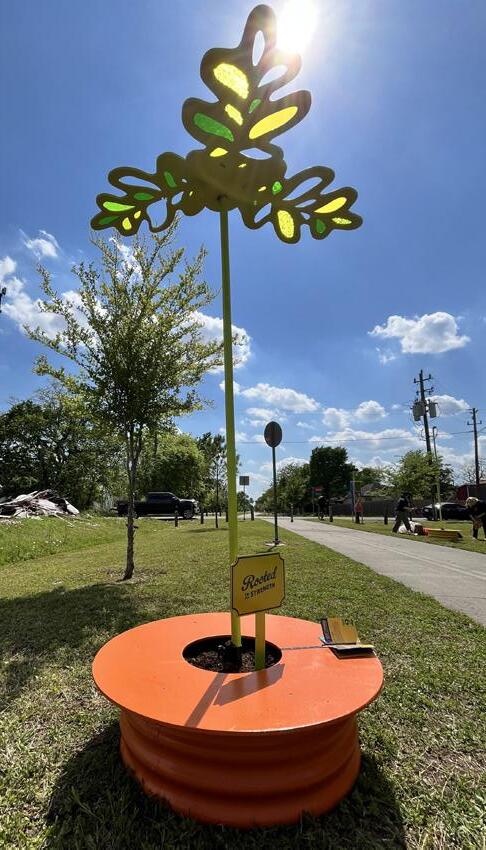
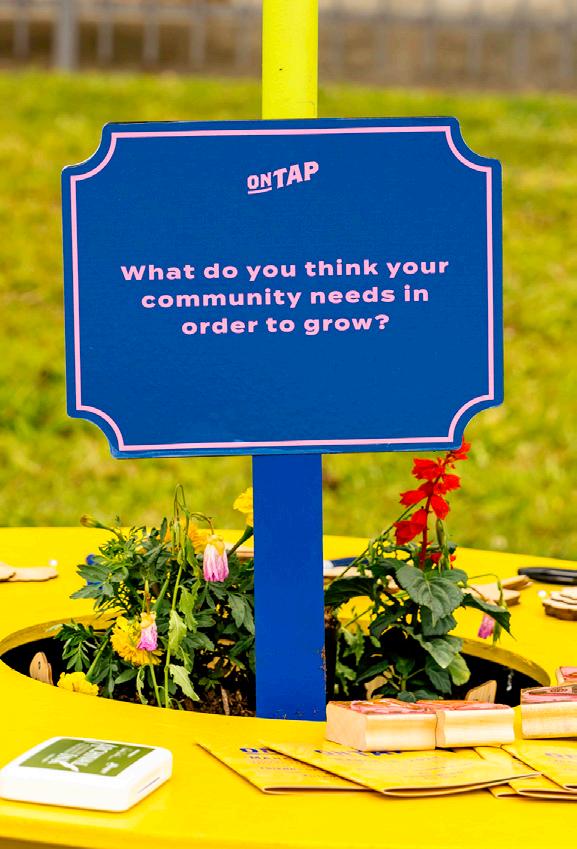
Conclusion
In summary, effective design interventions in public space are not just about aesthetics or functionality; they are about building strong, resilient communities by fostering a deep connection to place through meaningful engagement, research, and respect for cultural heritage. The installations developed by the graphic design and architecture students for the On TAP project were grounded in collaboration and supported the ongoing community effort to advocate for improvements to Columbia Tap Trail. In this way, the On TAP project was a catalyst—a small but meaningful step that moved the vision of community stakeholders forward.
Student, Gerald Sastra, noted:
“The project was more than just a class assignment—it was an opportunity to engage with real communities, address real needs, and explore how design can create meaningful impact in public space. As students, being trusted to shape something that lives beyond the classroom was incredibly rewarding. Through research, collaboration, and hands-on implementation, we experienced firsthand how thoughtful design can foster connection, reflection, and joy. Ultimately, the work is about more than signs or structures—it is about people, listening, responding, and building with intention. If there is one thing this project taught us, it is that when design is rooted in community, it has the power to last.”
Afterword
The On TAP project would not have been possible without the generous support of our community partners and sponsors. Special thanks to the Cynthia Woods Mitchell Center for the Arts for funding and supporting the initiative, and to the Friends of Columbia Tap for their ongoing collaboration and guidance. We also recognize the students from the University of Houston’s Graphic Design and Architecture programs, whose creativity, research, and dedication brought these installations to life. This effort reflects the power of cross-disciplinary work and the impact of student-led design in shaping public spaces—showing how collaboration can transform ideas into meaningful experiences.
Resources
McCoy, Emily and Ladner, Conners Ladner, “Placekeeping: Setting a New Precedent for City Planners” in Planetizen, March 28, 2025. Available here: https://www.planetizen.com/features/134652placekeeping-setting-new-precedent-city-planners
Sewing, Joy, “Why is Columbia Tap Trail an afterthought? Historic path deserves funding to reflect Third Ward” in Houston Chronicle, March 1, 2023. Available here: https://www.houstonchronicle.com/lifestyle/article/thirdward-s-historic-columbia-tap-trail-17790023.php
Acknowledgements
Associate Professor Susan Rogers, University of Houston, Gerald D. Hines College of Architecture and Design and Director of the CDRC (Community Design Resource Center); Associate Professor Cheryl Beckett, University of Houston, Kathrine G. McGovern College of the Arts, Program Coordinator; Student Design Teams: Diana Cao, Brissa Estrada, Emma Matocha, Amber Quinn, Calo Penedo Silva; Samah Hassan, Widad Hayali, Rochelle Matus, Yanci Ramirez, Ana Tejeda; J Dylan Burkett, Christian Barrera, Kai Wen Chua, TJ Jordan, Zoe Schomburg; Joan Ku, Natalia Marmolejo, Daniel Sabillon, Adam Smith, Nina Torres; Ashley Guzman, Julissa Herrera, Sarah Jordan, Hannah McCreary, Andrew Thai; Natalie Costello, Alex Crow, Luis V. Matson, Cindy Muñoz, Yebin Song; Catherine Cantú, Tanner Hodgkinson, Saray Mata, Esther Par, Jose Romero, Gerald Sastra
Nature by Natalie Costello, Alex Crow, Luis V. Matson, Cindy Muñoz, Yebln Song
A Living Storyscape
Cultural center design inspired by the systemic principle of nature
Vivian Combariza
MDes Rhode Island School of Design
Abstract
This abstract introduces a transformative approach to museum design, advocating for a paradigm shift from traditional exhibition models to dynamic, ecosysteminspired environments. This research proposes reimagining museum spaces as interactive ecosystems, where exhibitions serve not just as mere displays but as mediums for dialogue, making museums responsive and adaptable environments that evolve with visitor interactions. Inspired by biophilic design, this project defines museums as ecosystem at risk and address current imbalances within museum ecosystems, emphasizing the urgent need for spaces that are as dynamically responsive and interconnected as the natural environments, advocating for a transformation of museums into platforms that mirror these dynamic interactions, and enhancing the relevance of museums in today’s rapidly changing social landscape.
Introduction
Museums today face significant challenges in engaging contemporary audiences, resulting in decreased attendance1 even before COVID-19. Traditional museum experiences often emphasize static displays, linear narratives, and passive visitor roles, creating a profound disconnection from everyday life. Historically, this museum model can be seen as an extension of colonization, a process defined by the establishment of dominance over narratives, cultures, and environments, where usually we find imposing specific beliefs and systems while often erasing preexisting ways of life2 . In the context of this research, colonization describes the suppression and control exerted over nature and cultural narratives to pursue human-centered interests in city and industrial development, while acknowledging the history of museums and colonization processes behind many objects and collections present at museums today.
In response to these challenges, this research proposes an alternative perspective: conceptualizing museums as living ecosystems inspired by biophilic design principles. The project specifically addresses critical imbalances within current museum systems, where curators and institutions predominantly produce content, leaving visitors as passive consumers, following the baking method traditionally and commonly used in education. To address this imbalance, the research explores ecological metaphors and adapts methods from design thinking, using speculative collage as a medium for exploring potential museum transformations.
Furthermore, this project advocates for the redefinition of museums as ‘third spaces’. A third space is defined as a hybrid environment separate from home or work, a place where individuals frequently visit to engage socially, foster community connections, and experience a sense of belonging. These spaces transcend traditional public-private boundaries and significantly enhance urban life quality by providing opportunities for connection, learning, and relaxation within cityscapes3
The concept of third space aligns closely with the project’s decolonization aims, actively dismantling dominant, linear narratives and fostering inclusive,
1 AMM, Annual National Snapshot of United States Museums
2 Belsey, Faye. Decolonizing the museum in practice, 2019
3 Szanto. Future of museums. 2022
responsive environments that encourage dialogue and collective storytelling. The speculative prototype “A Living Storyscape” embodies this vision, repositioning museums as dynamic platforms for active participation, continuous adaptation, and meaningful human interaction. Ultimately, this research proposes a fundamental shift towards more dynamic, inclusive museum experiences and advocates urgently for the transformation of built environments into platforms mirroring the interconnected and adaptive dynamics of healthy natural ecosystems, enhancing the relevance of museums in today’s rapidly changing social landscape.
Methodology
The methodology integrates biophilic design principles with the AEIOU framework and additional design thinking tools, underpinned by extensive case studies that examine both natural ecosystems and their analogues in human-centered design. This study employs a unique adaptation of Layton et al.’s Key Metrics4 , originally developed for eco-industrial parks, to assess and diagnose the current state of museum ecosystems. Through this ecological network analysis, the research identifies critical imbalances and opportunities for intervention that promote “ecological” stability and optimize visitor engagement. The methodology is further enriched by speculative design practices, including mixed-media collages and interactive prototypes, that are used in a participatory design exercise that explore the presentation of this project as the first “living storyscape”.
4 Pawlyn, Biomimicry in Architecture, 2016.
“Whether a museum is in a park or in the city, the interaction between the inside of the museum and people’s life activities is already happening”
Sou Sujimoto
Identifying the Problem: Museums as Disconnected Ecosystems
“Whether a museum is in a park or in the city, the interaction between the inside of the museum and people’s life activities is already happening. How can we make them blend together more and influence each other to make something better? That is the point at which architecture can contribute something.
Because real space always has these ambiguities. If you have one wall, then the inside and outside are clearly divided. But if you make two walls, or several walls with multiple openings, then we can blend the boundaries and create extra spaces between them.”
To understand the disconnection experienced within museum spaces, the research began with a comparative analysis of visitor behavior across museums, parks, and forests using the AEIOU framework (Activities, Environments, Interactions, Objects, Users). This comparison showed clearly contrasting patterns: natural spaces allowed for freedom, play, rest, and exploration, whereas museum environments restricted movement, limited interactions, and created linear, passive experiences.
To complement the initial analysis, I created storyboards and empathy maps based on established museum visitor
types1 from literature. Each storyboard illustrated a fictional visitor journey in a collage museum composed of different exhibitions, built from insights gathered during multiple museum visits. These composite narratives mapped what each type of visitor focused on, how long they spent, and how they felt during the experience. The empathy maps captured their emotions, motivations, and frustrations in a structured way.
These archetypes do not correspond to fixed types of people, but rather reflect roles any visitor might take on depending on factors like the exhibition theme, personal mood, or context of the visit.
This exploration makes it even more clear how linear the experience of visiting a museum is, and how much it relies on the curation and the space the kind of interaction people have with the museum.
To better understand how these visitors fit into the larger system, I adapted a framework used to evaluate urban ecosystems—Entry, Transfer, Adaptation, and Leave (ETAL)2—to examine the museum as an ecosystem. This allowed me to assess how users, roles, and institutional structures interact over time. When mapped, the 1 John H. Falk & Lynn D, The museum experience revisited, 202.
2 Pawlyn, 2016.
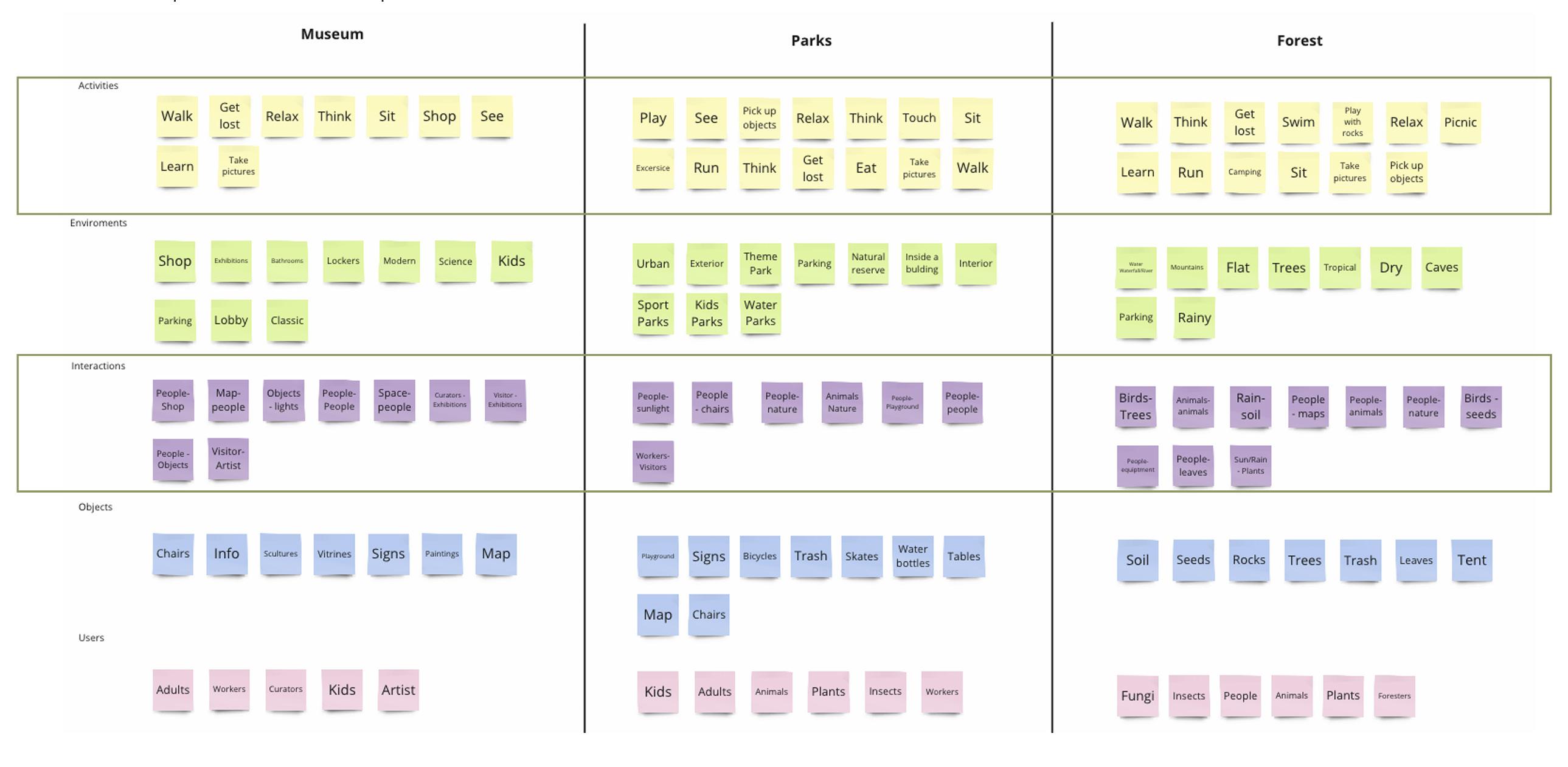
Chart 1. AEIOU comparisson between museum, park and forest
Recharguer
museum revealed critical imbalances: curators and institutions maintained control, while visitors were limited to passive, short-term roles with little capacity to contribute, adapt, or influence the space. While in a healthy ecosystem all the species consume and produce, in the museum the curators, artist and the institution are the only ones producing and the visitor is only consuming. There is no cycle in this ecosystem, which is the reason why it is in disequilibrium and doomed to die.
This combination of behavioral mapping and ecosystem analysis formed the foundation for rethinking the museum not just as a container for objects, but as a living, responsive system; one that could be restructured using principles found in nature. Additionally, this analysis can overlap with education theories and how these are used in the museum experience. It requires leaving behind the banking method and bringing into the museum the ideas of progressive education,constant exchange between educators and students, and, in this case, constant exchange between institution and visitors3
3 Macdonald, Pausing, Reflection, and Action: Decolonizing Museum Practices, 2022.
“When mapped, the museum revealed critical imbalances: curators and institutions maintained control, while visitors were limited to passive, shortterm roles with little capacity to contribute, adapt, or influence the space ... There is no cycle in this ecosystem, which is the reason why it is in disequilibrium and doomed to die.”
Storyboard Museum Visitors
Layton et al.s Key Metrics applied to museums.
Turning to Nature: Ecological Principles as Design Guidelines
Faced with clear limitations in existing museum structures, the research shifted toward nature for guidance. The goal is achieving sustainability, not just as a label or a checklist, but as a principle that assures the wellbeing of different domains: Economic, Material, Life, Social and Spiritual4 . Therefore in order to be truly sustainable, the museum should be able to provide and maintain different levels. Through history, nature has provided multiple examples where this happened, until human action began to impose distance from the natural world and make a distinction between it and the built environment. For this reason, the analysis of different situations and natural processes provides a framework based on adaptation, responsiveness, interconnectivity, and collaborative relationships, fundamentally opposed to traditional museum models. The process to obtain insight from ecological processes —such as flexibility in response to environmental stimuli, dynamic interaction among species, and sustainable coexistence—were closely studied and translated into design principles for museum spaces.
4 The Biomimicry Institute, Pine cones open and close in response to weather , 2016
For example, consider how pinecones open or close depending on the humidity in their environment1. This simple biological response can be translated into a design principle: the pinecone, as a living being, is highly responsive to its surroundings. From this, I reframed the idea to: nature (or the “user” in this context) is aware of its environment and adapts accordingly. Translating this into spatial terms, a museum space should likewise be flexible and responsive to changing conditions and user needs.
Another example comes from the way caterpillars communicate within their environment. When a caterpillar finds a source of food, it leaves behind a scent trail that allows other caterpillars to follow the same path5 . In this way, each individual’s actions help guide the community, fostering a sense of responsibility to those who come after. This behavior demonstrates nature’s inherent collaboration and shared learning.
Translating this principle to museum spaces raises important questions: How might visitors learn from each other, not just from curators or static labels? What if a museum allowed us to trace the paths and insights of previous visitors, enabling us to discover new perspectives and lessons through collective exploration?
5 The Biomimicry Institute, Scent trails lead to food, 2016
Such an approach could foster community, shared authorship, and deeper engagement within the museum environment while also becoming more welcoming for new audiences that perhaps have never interacted with an example of how to explore the information available in the museum, not as an authority teaching the “correct” procedure, but rather a natural feeling of following someone with more experience.
To develop insights from nature, it was essential to study natural phenomena and analyze their relevance to human experiences. This process involved humanizing natural processes and understanding them firsthand, fostering a closer connection with nature from a different perspective. It aimed to make science more poetic, bridging the gap between scientific understanding and personal connection to nature.
This requires empathy and translating nature into human terms, and vice versa. By doing so, we can visualize and comprehend these processes personally, enabling us to create with a sensitive and profound understanding. At the end of this process for multiple cases this were the lessons from nature:
• Nature is a system based on collaboration between the species that live in certain ecosystems and spaces.
• All processes and species exist for a reason, nothing is unrelated or static.
• All parts of the system do multiple tasks and activities. On one hand this minimizes dependencies on unique species (contingency redundancy planning) and on the other all parts of the ecosystem work to give something back (cyclical processes).
• Nature does not create a moral hierarchy of levels of importance by species or organism.
• Nature is diverse and open to change. It accepts different ways of doing by each species, creating new options and opportunities.
• Nature is dynamic and responsive. Everything is connected in adapting to current conditions and surroundings.
• Nature doesn’t work alone. Species are in constant communication using their senses in ways humans often can’t perceive.
• Nature is humble enough to listen, transform and remember. It can change without erasing what it was, the past can always be found within.
That later where translated as a manifesto for museums and people:
Museums:
• Are flexible
• Offer different options and experiences, open spaces for new activities
• create activities for visitors to participate
• Adapt to the context and people around and in them
• Do not work alone but in conjunction with different institutions
• Explore different senses to communicate with their participatory audience
• Are a collaborative space between institution, community, audience and artist.
• Do not depend on one activity to survive
• Should use their strengths to transform their shortcomings
• Show all sides of a story as equally important
• Are diverse
• Develop ways to accommodate different users and address their specific needs
People:
• Museum goers should create and use, not just consume
• Change in rhythms (resting areas) are necessary to give opportunities to reflect and change.
• Living beings need more than just one task to live.
• Learn and grow by connecting with others
• Contribute their own knowledge and lived experiences
These lessons were used to create a definition of nature for this project and define the principles that serve as a framework to find the connections of spaces with nature. In this case, these principles were used to analyze different precedents and cases in the museums and exhibition industry, this was an exercise to practice seeing spaces in terms of nature and being able to easily make connections, it only requires the correct perspective to recognize nature within our built environments. Ideally our museums have more than one. The first step is to recognize what we have done without intentionally centering nature and natural processes in museums and exhibitions. And then imagining what we can do when nature becomes our founding principle.
Process of translation diagram
Museum Mapping Graphic
NATURE FRAMEWORK - Based on nature case studies
Definition of nature for this project:
• Nature is a source of life, curiosity and peace.
• It is all the different ecosystems that exist.
• Nature is pure and dynamic.
• Multiple processes are happening to maintain equilibrium.
• It can be dangerous, unpredictable and mysterious.
• Nature doesn’t exclude anybody.
• It is source and home at the same time.
• Nature is a system that connects living beings.
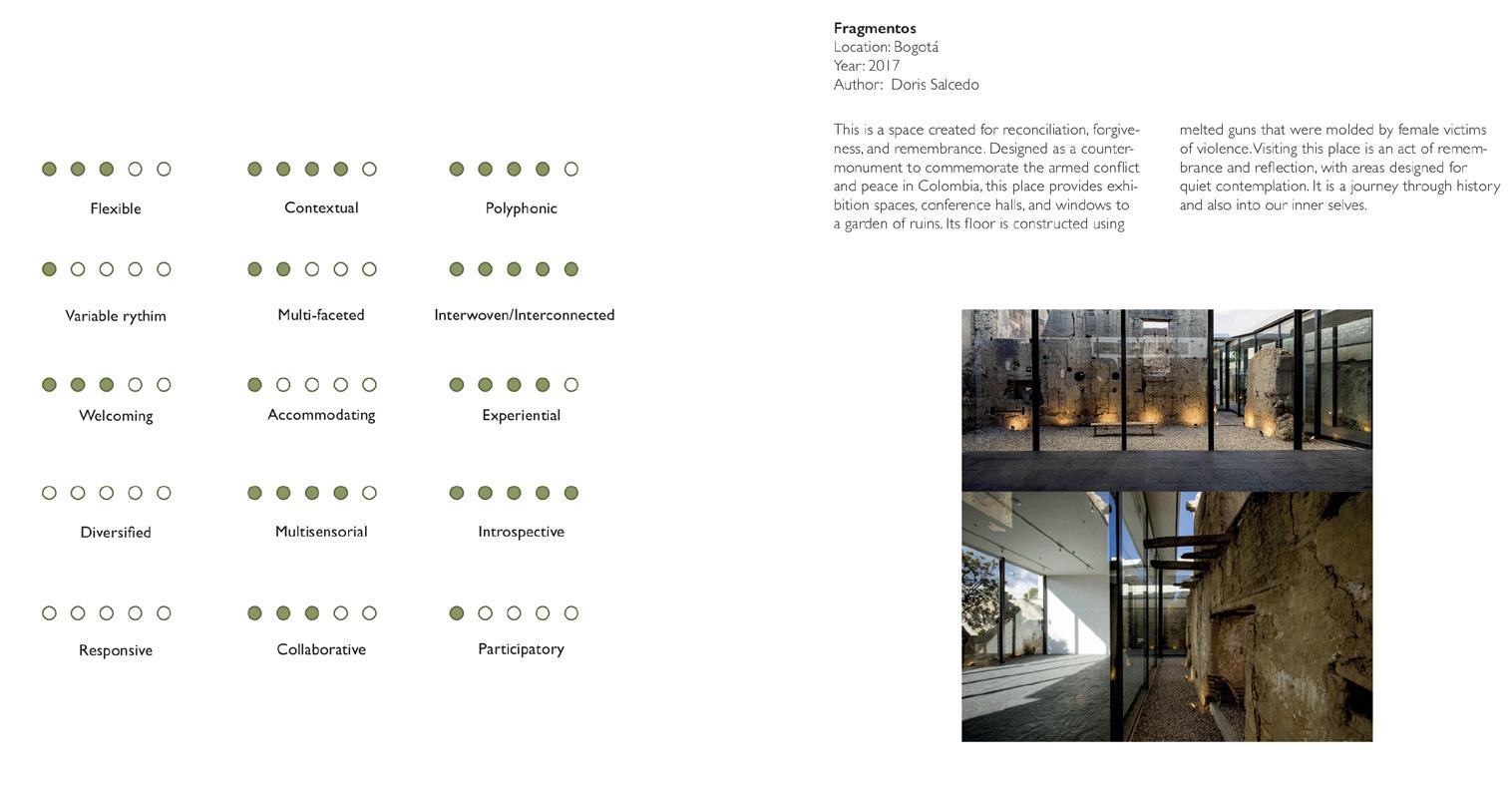
A Living
Storyscape: Prototyping through Speculative Collage
Initially struggling with the complexity of translating ecological principles into spatial design, the research embraced collage as its primary method; the goal wasn’t to present finalized solutions but to open dialogue, accommodate contradiction, and encourage collective authorship. The collages started to grow and take over walls of the studio space and opening my process, my questions, and my ideas in a physical space, people became curious about my work, offering additional insights and feedback. My process itself became the answer, as my research increasingly required a more participatory approach. Mapping and collaging became tools not only to exhibit my questions but also to actively seek answers.
The final outcome was “A Living Storyscape,” a largescale exhibition showcasing a speculative collage that illustrates an alternative to the museum we know today. Instead it presented the museum of the future, where nature and humans lived together. This prototype presented both the research and the core questions. It was created to provoke curiosity and encourage exploration; visitors engaged with this collage as they would explore a new museum. The installation, filled with layered meanings and open-ended interactions, allowed visitors to contribute their own feedback and ideas, leaving visible traces of their participation. This made the exhibition a living, evolving entity that grew over time through each participant’s interaction, exploration, and reflection. Some of the ideas represented in this collage include using columns as “trees,” where people could leave their ideas and comments. Over time, these would accumulate like leaves in autumn eventually falling to the ground, so the floor would gradually fill with visitors’ thoughts, turning the gallery into a literal forest of ideas.
Another concept explores the parallel between how we observe birds flying at different heights in the sky and how visitors might move through museum spaces on multiple levels; just as we rarely know where birds will fly next, following people’s movement could reveal new, unexpected paths. The collage also considers how, even in parks or public spaces with defined walkways, people naturally create their own shortcuts leaving traces that others often follow. Applied to a museum, this could mean tracking and visualizing the unique routes visitors take through the gallery in the floor, allowing others to
“...a speculative collage that illustrates an alternative to the museum we know today. Instead it presented the museum of the future”
choose between the most common or used paths or lesstraveled routes that offer fresh perspectives, perhaps following that unique person who noticed something no one else sees.
Additionally, the collage envisions ways for visitors to connect across time and space: for example, enabling people to leave comments or “voices” that float through the space, so someone visiting later or at a different location could encounter those insights, like catching insects flying around, you would catch thoughts drifting in the air. Together, these speculative ideas illustrate how the Living Storyscape aims to transform the museum experience into an ecosystem of evolving participation, layered meaning, and collective discovery.
This method enabled a direct and tangible exploration of museum spaces as dynamic ecosystems, actively inviting co-creation and participation. This was its first official iteration, with nature as the central theme and collage as the primary medium. The goal was successfully achieved: the presentation sparked substantial conversations among peers and mentors. People expressed enthusiasm, skepticism, curiosity, and discomfort, a desired outcome aligned with the ecosystem model. The purpose was not to arrive at absolute truths but to create a safe space promoting discussion, an exhibition alive and growing like us, one that required our interaction and engagement as much as we need it to rebuild and rethink our society.
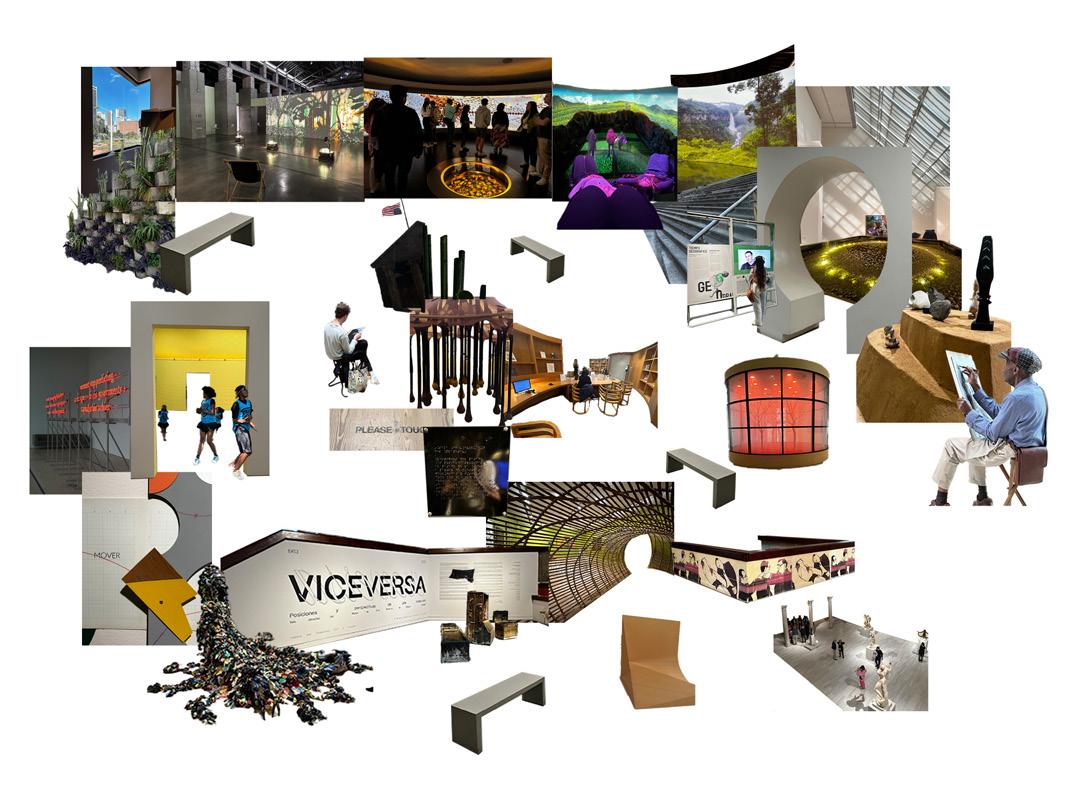
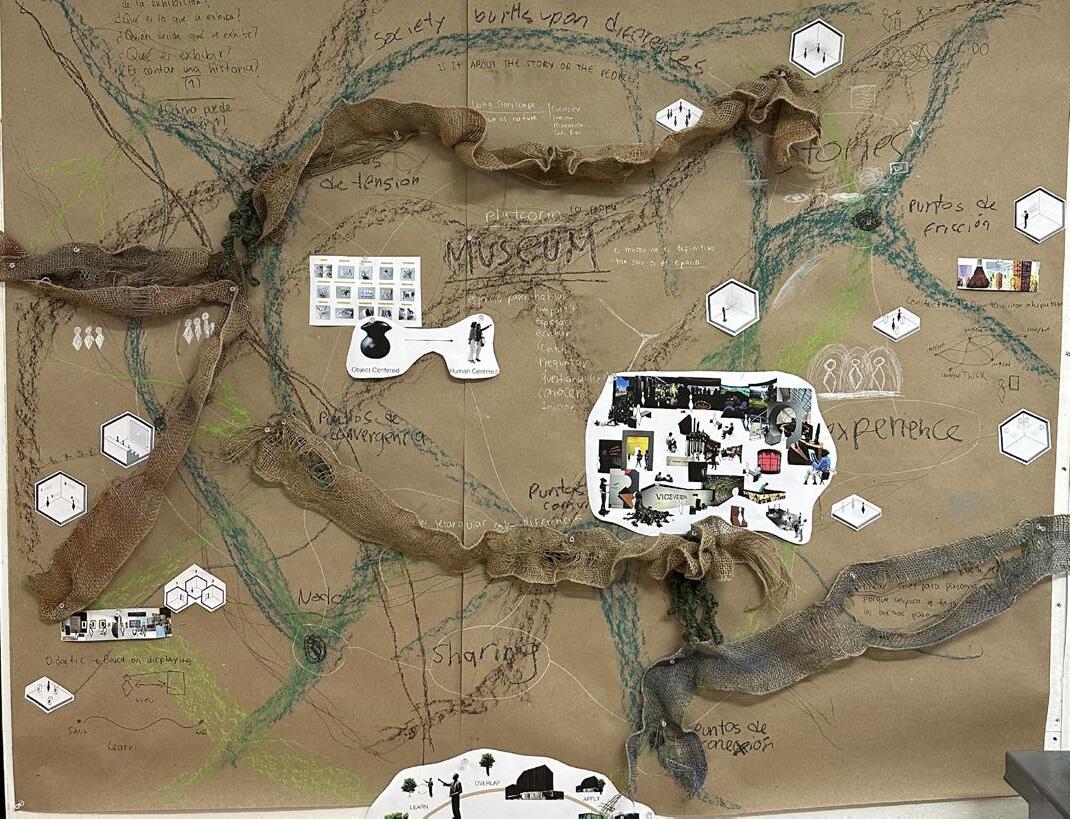
In practice, this exhibition of a Living Storyscape functioned as a third space within the institutional setting, this project presentation was not a traditional one, it was an effort to break the control from one side and open up and test the idea. It presented a hybrid zone that blurred the boundaries between the authority (presentator) and the audience. By welcoming “visitors” ideas, feedback, and even discomfort, the collage became a site of collective authorship and informal learning, exemplifying the qualities of a true third space: social interaction, belonging, and ongoing dialogue.
At the same time, this approach directly supported decolonizing aims. Rather than maintaining strict curatorial control or presenting a singular narrative, the project invited multiple perspectives and valued the diverse voices and lived experiences of participants, as well as their own understanding of nature or even the museum. In this way, the Living Storyscape began to break down hierarchical structures and challenge the traditional authority usually found in galleries, opening space for stories, questions, and responses that might otherwise be excluded.
Limitations and Future Work
While this research offers a new vision for museums as dynamic, participatory ecosystems, several important limitations remain. First, the Living Storyscape prototype is inherently speculative; a design for the future, not an immediate or fully operational solution that can yet be applicable or completely tested. Many of the collaborative, adaptive elements envisioned, such as
continuously growing collages, augmented reality layers with real comments of visitors, floors collecting the traces of people, or participatory installations, may require advanced technological support or high-end resources that are currently beyond the reach of most cultural institutions, particularly those with limited budgets.
Additionally, a recurring challenge during the project was the persistent question of how to define the museum’s identity and function. As boundaries between museums, cultural centers, and other forms of public space become increasingly blurred, some practitioners and stakeholders, or even museum enthusiasts may resist shifting away from the traditional museum’s role as a repository and guardian of objects. While this conceptual ambiguity does not present an issue for me personally, it could create real tension in institutional settings, where definitions, policies, and funding are often tied to traditional models.
Looking forward, future work should focus on testing and evolving the Living Storyscape concept in more realworld settings. This includes developing more accessible, scalable participatory tools and piloting living collages within existing exhibitions, across different themes, and with diverse audiences. Expanding the research to include more collaborative, community-driven prototypes will further explore how museums can truly become responsive third spaces that foster ongoing dialogue and collective authorship.
Moodboard A Living Storyscape
Mapping the research
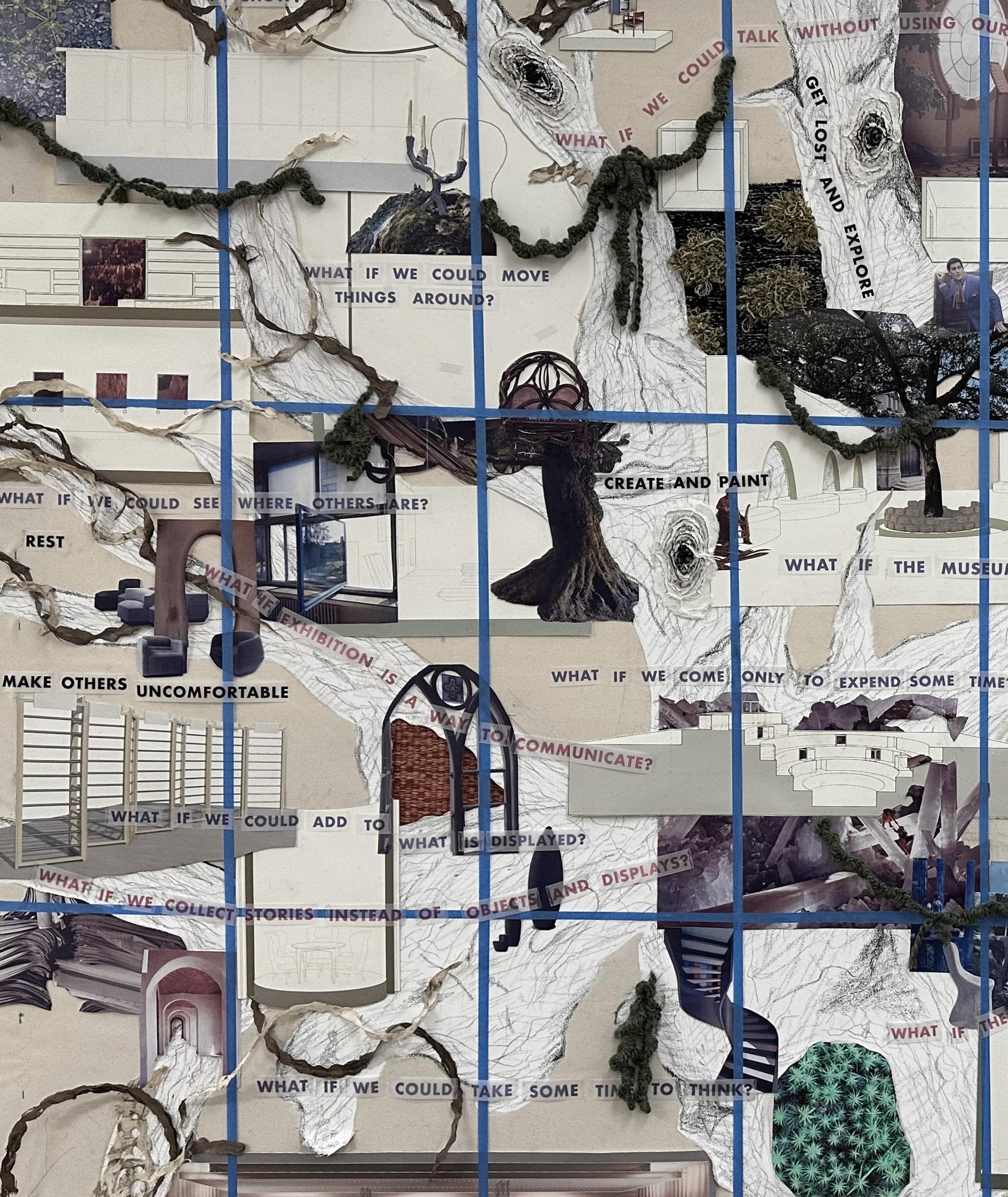
Exhibition Collage

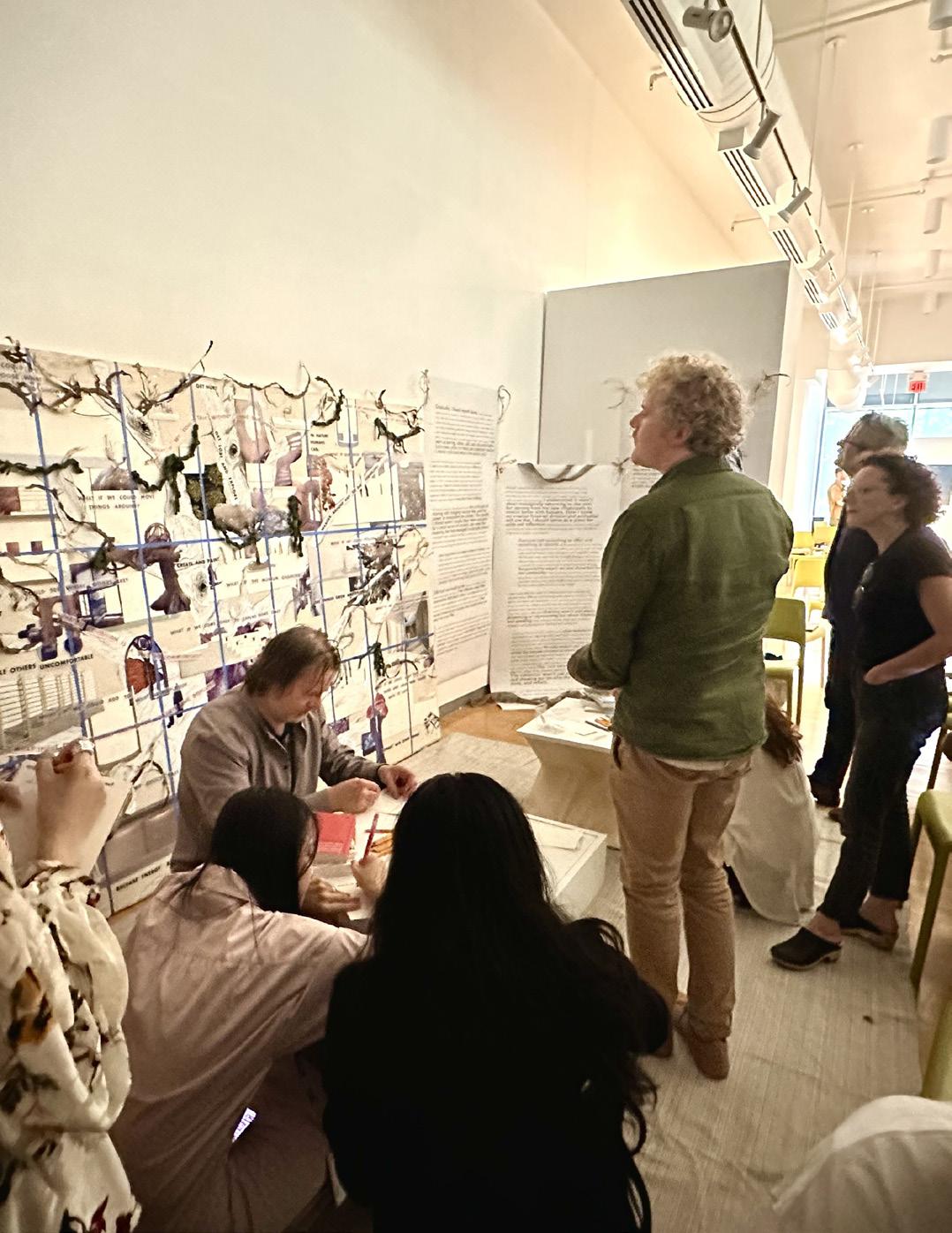
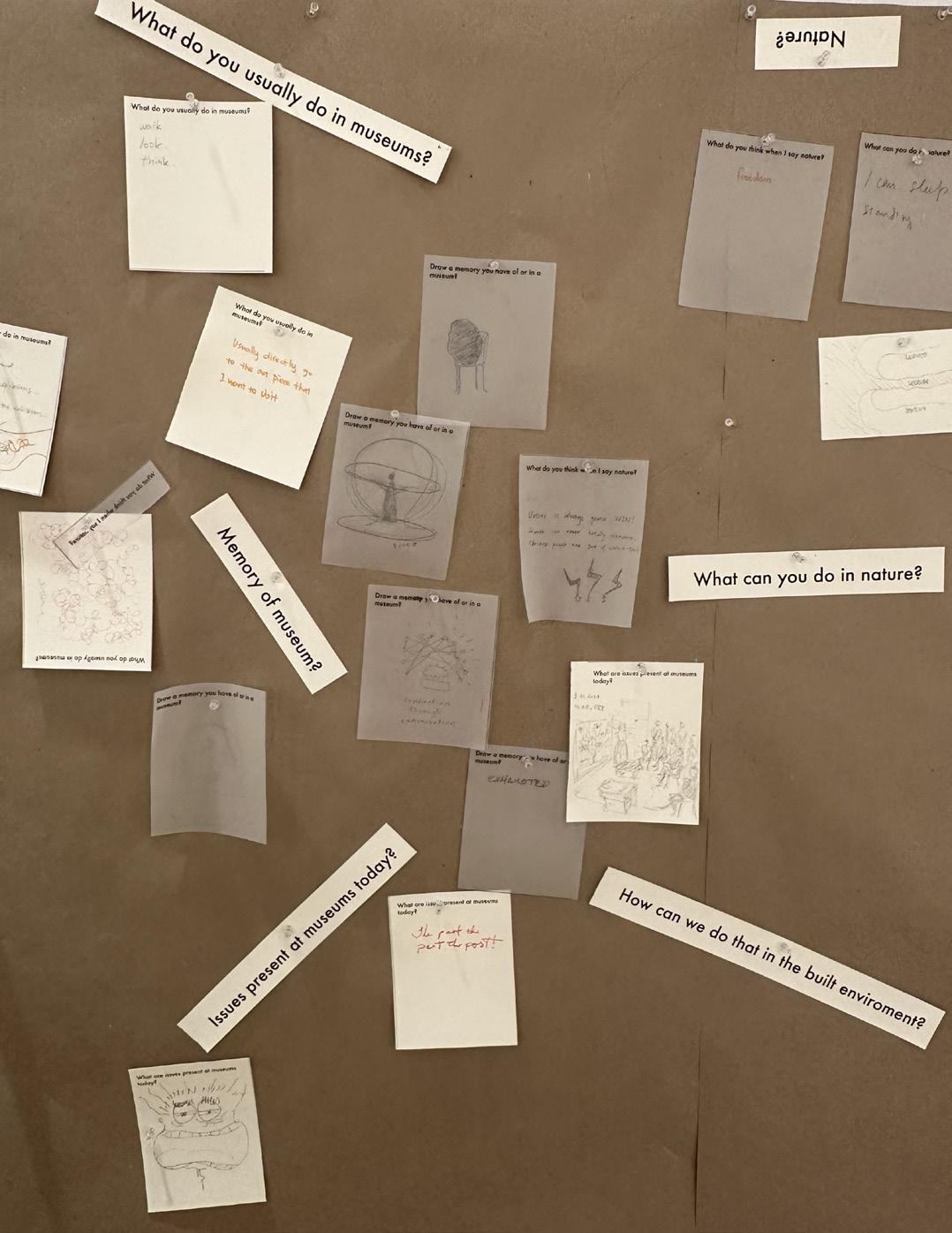
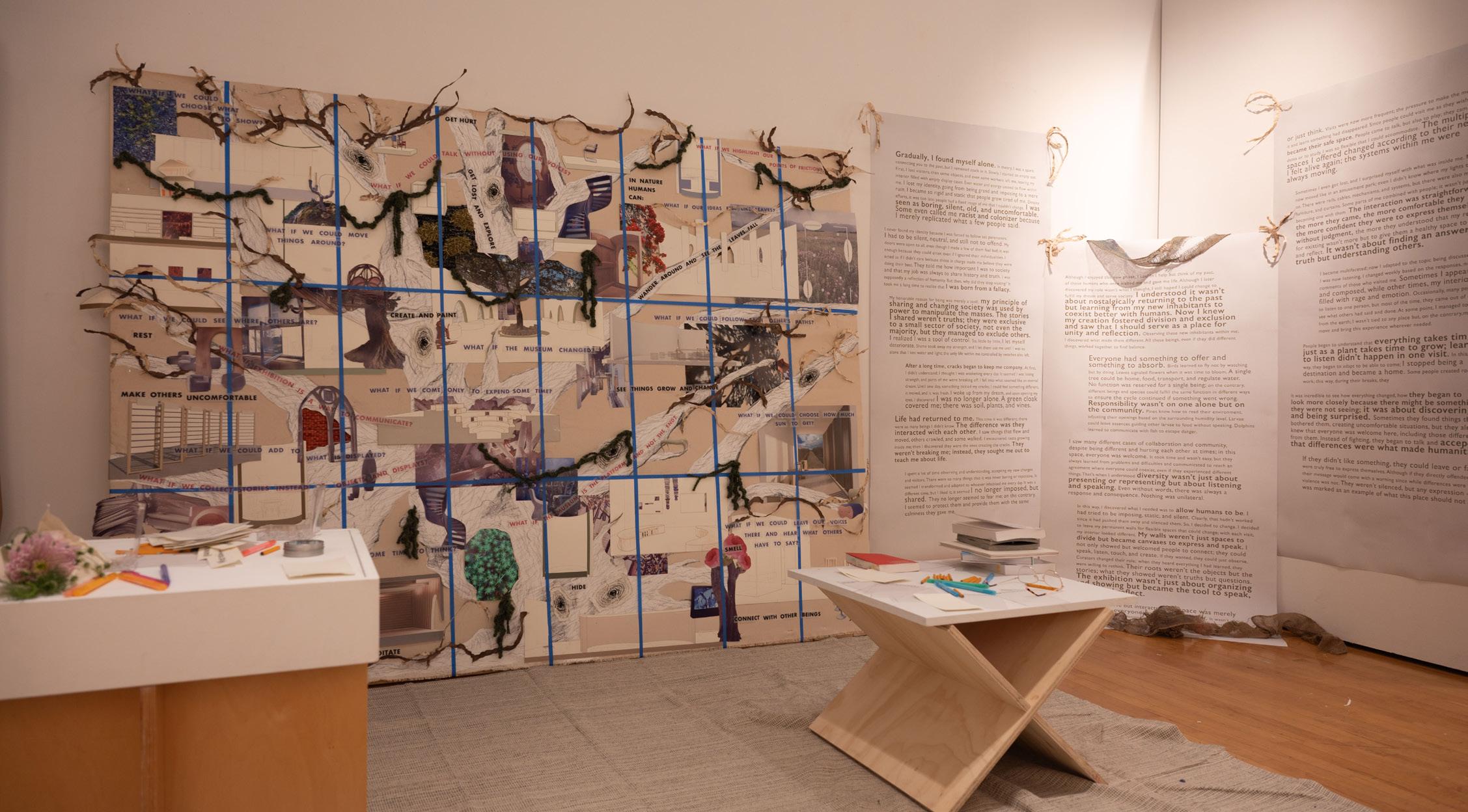
Visitors Participation
Project Presentation
Conclusion
This research introduces a new perspective on museum design, proposing that exhibitions can function as living, responsive ecosystems rather than static, curated displays. Drawing directly from ecological principles, the proposed approach positions museums as dynamic spaces that continuously adapt, respond, and evolve through meaningful visitor interactions. Such a framework challenges traditional museum models, shifting the role of visitors from passive observers to active participants and co-authors of cultural narratives.
Theoretically, this work extends our understanding of how ecological dynamics can be effectively translated into spatial design strategies, highlighting adaptability, empathy, and dialogue as foundational components of museum experiences. Practically, the research offers museum professionals concrete methods like speculative collage prototyping for designing environments that encourage active visitor participation, dialogue, and community-building; frameworks and principles for nature connection analysis; and the adaptation of ETAL metrics to evaluate and understand the state of cultural spaces. By adopting these ecosystem-based strategies, museums can become more relevant educational resources and vibrant social spaces, aligning closely with contemporary demands for interactivity and personal engagement.
By positioning museums as evolving third spaces and embracing decolonizing practices; this approach advocates a fundamental shift in museum practice; moving beyond linear storytelling toward collaborative storytelling, calling for the redefinition of the museum as a platform for ongoing negotiation of meaning and shared learning. Such a shift not only enriches visitor experiences but also positions museums as essential platforms for ongoing societal dialogue and collective growth. Future research should explore further applications of this ecological framework, testing and refining it across diverse cultural and spatial contexts. It is also asking for a shift to understanding our intrinsic connection to nature, to reconnect not only with the environment but with each other.
Resources
Imagining the Future Museum. Szántó András and Neil Holt. Imagining the Future Museum : 21 Dialogues with Architects. Hatje Cantz Verlag 2022.
Biomimicry in Architecture. Pawlyn Michael. Biomimicry in Architecture. Second ed. RIBA Publishing 2016.
The future of museum and Gallery Design. Macleod Suzanne et al.The Future of Museum and Gallery Design : Purpose Process Perception. Routle- dge 2018.
DECOLONIZING THE MUSEUM IN PRACTICE: REMAINING RELEVANT IN THE CONTEMPORARY WORLD. BELSEY, FAYE. In: Journal of Museum Ethnography, No. 32, Decolonizing the Museum in Practice Papers from Annual Conference of the Museum Ethnographers Group Held at the Pitt Rivers Museum 12–13 April 2018 (March 2019), pp. 11-16 (6 pages),
Pausing, Reflection, and Action: Decolonizing Museum Practices.. Macdonald, Brandie. Journal of Museum Education , Mar2022,Vol. 47 Issue 1, p8-17, 10p; DOI: 10.1080/10598650.2021.1986668,http://0search.ebscohost.com.librarycat.risd.edu/login. aspx?direct=true&db=a- su&AN=155732705&site=edslive&scope=site
SUSTAINABILITY: DEFINITION AND FIVE CORE PRINCIPLES. Michael Ben Eli.The sustainability laboratory. 2nd Ed. (2015) http://0-search. ebscohost.com.librarycat.risd.edu/login. aspx?direct=true&db=edsjsr&AN=edsjsr.26802051&site=eds-live&scope=site
THE PRACTICE OF BIOPHILIC DESIGN Kellert, S. and Calabrese, E. 2015.The Practice of Biophilic Design. www.biophilic-design.com
The museum experience revisited. John H. Falk & Lynn D. Dierking. Routledge; 1st edition 2012.
Scent trails lead to food. AskNature, The Biomimicry Institute, https://asknature.org/strategy/scent-trails-leadto-food/.
Pine cones open and close in response to weather. AskNature, The Biomimicry Institute, https://asknature. org/strategy/pine-cones-open-and-close-in-responseto-weather/
Storytelling in a Shifting Landscape
Narrative Tools for Designing Site-Specific Outdoor Exhibits
Steven Coward
Fashion Institute of Technology, MA Exhibition and Experience Design, 3D Experiential Designer
Abstract
This paper provides a framework for expanding methodologies for existing wayside and outdoor exhibits in nature-based experiences (national parks, botanical gardens, zoos, etc.) to include storytelling and narrativedriven content as a tool for deeper understanding of ongoing ecological issues. As a continuation of work done by outdoor wayside and trailside exhibits, this paper foregoes the existing labeling system to present a component-based narrative that relates the site, place, and experience to visitors. Focusing specifically on the outdoor national park system, research of prior work focused on narrative storytelling as a tool and as a means of engagement previously implemented in other outdoor exhibits, tree top walks, and land art pieces. Much of this research focused on ongoing conservation and ecological content present within messaging for these outdoor settings. This included interviews, various case studies, and prototype testing of several site-specific engagements. The goal for this project was to use narrative as a content and development tool for designers looking to tell ecologically rich stories within unfacilitated outdoor environments.
The exhibition project applies this research by proposing an outdoor exhibit in Everglades National Park that implements a series of synthesized narratives that interpret site-based content to park visitors. The project, titled The River has Teeth, is a low-impact outdoor exhibit overlaid onto the existing park site. The project invites visitors to learn about the park’s ongoing issues and historical context with opportunities to reflect on their own place within these landscapes to create emotionally resonant and empathic experiences. Consisting of an outdoor exhibit and an interpretive boardwalk trail, the exhibit offers guests a chance to form a sense of investment in the environment and pledge to care for it in the future.
This project highlights narrative and story-based design as exhibition development tools that can connect informational content to physical exhibit experience. The exhibition applies multiple ways in which design can include these activities to create resonant experiences that foster a sense of understanding for pressing ecological issues and messaging. Appealing to emotional, empathetic, and localized experiences provides visitors with the ability to create a sense of ownership and value in these places for visitors to enjoy for generations. This project’s use of narrative and storytelling to form emotional connections and understandings aids in conservation efforts by spreading awareness to visitors in a playful, digestible, and memorable way for visitors of all ages and learning types.
Introduction
Growing up in Miami, Everglades National Park was my go-to “big park.” But prior to this past summer season, it had been more than a decade since my last visit. It’s easy to find excitement for a place so distinct and memorable in its existence, unlike any other in the world. Driving from Miami, the city fades behind you in lieu of open grass fields with hardwood hammocks in the distance and more mosquitoes than you’ve ever seen, all of whom are ready to welcome you. The ground is still wet and storm clouds loom on the horizon. The humidity is brutal, but it’s great for the skin.
It’s easy to spot an interpretive sign or wayside exhibit scattered through the park, along the various trails and wooden boardwalks, or wayside exhibits propped next to a gumbo limbo tree or angled above a brackish river. Here, we are welcomed, oriented, and informed on what lies ahead and all around us. Small low-profile signs draw attention to the flora in its Latin name, while triangular upright wayside signage serves as the trailhead for the start (or end) of the journey. These wayside exhibits are excellent in their ability to present text and imagery, yet the design and interpretive elements of these exhibits have largely plateaued. While some might argue that their cease in evolution would imply a perfection of form, this topic led me to consider what opportunities exist in enhancing the visitor experience beyond the quantitative. If botanical gardens and science centers have been able to rapidly adapt their exhibits, engagement, and experiences to consider the audience’s emotional learning and impact, the wayside exhibit is long overdue for an reevaluation. Which begs the question, what’s next?
Approach
This paper is organized in two parts. Part One outlines the theory of use and intent with regards to wayside signage, interpretive trails, and site-specific outdoor exhibits, while Part Two implements this theory in an applied project.
Part One of this research focuses on the visitor experience in natural landscapes and outdoor exhibits, with an emphasis on how narrative and storytelling can enhance engagement and create lasting impressions. Through interviews, prototype testing, and further study, I examined what makes nature-based exhibits
informative, enjoyable, and effective. The thesis statement outlines key methodologies for future outdoor interpretive design.
Part Two applies this framework to an exhibition project, The River Has Teeth: Monsters, Myth, and You in the Florida Everglades. This project uses narrative tools to translate ecological issues into relatable, playful experiences within unfacilitated outdoor spaces. Overall, the thesis explores how storytelling can expand the potential of outdoor exhibits and deepen connections between audiences and place.
Thesis Statement
Outdoor wayside exhibits in natural parks provide historical and ecological information to visitors as they encounter the park landscape. While these exhibits offer site-based information, they fall short in facilitating a sense of connection and emotional investment between visitor and place. As a mediator between visitors and the environment, wayside exhibits can be designed to reflect both entities through integrative placemaking strategies enacted through site-specific engagements, interpretive storytelling, and directed facilitation between audiences. Implementing these placemaking strategies can connect visitors to their environment and cultivate a grounded connection to the park landscape in tandem with the experience. In doing so, wayside exhibits can provide a sense of place that contributes to a deeper understanding of local ecological narratives for multigenerational visitors.
Part 1 | Exhibition Thesis
Defining Place
Placemaking is often associated with urban renewal, transforming undifferentiated “space” into meaningful “place.” A “place” implies intentional use and the accommodation of human needs—rest, shelter, entertainment, and a sense of belonging. Successful placemaking fosters safety and connection, frequently taking form through live events, pop-ups, and community-based art. These interventions introduce experiences that may be absent from a site, yet are contextually appropriate and desired. The concept of “place” carries social and emotional value, often contrasted with “space,” which is perceived as neutral or unresolved. Through placemaking, space becomes a destination imbued with meaning and significance.
This shift adds value by anchoring user experiences within their environments. Place-based learning extends this notion into education, using the characteristics and context of a place to support student engagement and understanding. By connecting learners to their immediate environment, this approach cultivates a sense of understanding and belonging
What does it mean to design experiences onto an existing landscape?
How can that intervention still feel rooted in the site’s history, ecology, and ongoing environmental challenges?
Interview
This research included an ongoing conversation with Amanda Purnell, Director of Education at Friends of the Everglades through the duration of this project. Friends of the Everglades is a nonprofit focused on conservation, environmental activism, and education throughout the Everglades ecosystem. They are currently focused on governmental push-back of a proposed detention center, dubbed “Alligator Alcatraz,” in the heart of the Everglades.
As the director of education, Amanda designs flexible, adaptive K–12 programming that integrates classroom learning with facilitated field experiences in Everglades
National Park. These experiences use the landscape as a generative teaching tool, encouraging students to form conceptual and emotional connections to place through direct observation and engagement. Her approach centers on place-based learning by using elements found in the environment to explain broader ecological issues like water diversion and agricultural runoff. Field experiences are designed with a clear structure, often built around trails with defined start and end points, yet remain open to the unpredictable nature of the park. Amanda views these moments of surprise as valuable teaching opportunities.
Amanda emphasizes that this form of learning is rooted in exploration and responsiveness to the environment and cannot be replicated in a classroom. While there is a strong foundation for guided, place-based education within the park, our conversations highlighted a gap: the lack of opportunities for these connections to continue independently, outside of facilitated programming.
Case Studies
• Spiral Jetty by Robert Smithson (1970)
• “Impact of Trailside Interpretive Signs on Visitor Knowledge” by Michael Hughes and Angus MorrisonSaunders (2002)
• Minnewaska Visitor Center - designed by Moey Inc.
• Den Kæmpestore Troldefolkefest by Thomas Dambo (2020)
Crafting a Narrative
A key component of the thesis involved the development of site-specific narratives, referred to as interpretive ecologies: interconnected narrative threads derived from the ecological, historical, and cultural contexts of the site. These elements were synthesized into a cohesive storyline that functions both as a design framework and as interpretive content.
The narrative operates on multiple levels. It structures the visitor experience by offering layered pathways for understanding. By incorporating diverse points of entry, it facilitates engagement across a wide range of visitor demographics, including variations in age, interest, and prior knowledge. For example, a child might be drawn to animal life, a parent to contemporary environmental issues, and a grandparent to historical context. The
resulting conversation would provide an information exchange and allow for sharing and emotional connections.
This narrative structure supports both independent exploration and collaborative learning, encouraging visitors to share insights and build understanding collectively. Through this approach, the park is framed not merely as a recreational space, but as a dynamic and meaningful ecosystem. Storytelling serves as a tool for fostering place awareness and for situating visitors within the broader ecological and cultural landscape.
Testing and Verification
An interactive prototype was developed to evaluate the role of narrative within a site-specific context. The objective of this test was to assess a specific strategy for the applied project: an unfacilitated viewfinder activity paired with a site-based narrative. This approach was among the initial design concepts due to its capacity to activate the surrounding environment through the simple act of directed observation. The prototype aimed to examine how participants interpret and integrate a narrative with their physical surroundings through an unfacilitated experience.
Testing took place in an urban setting on an academic campus. Participants encountered a five-foot-long reader rail, angled for accessibility, featuring a central narrative presented in two languages (English and Spanish). Flanking the central section were two wayfinding stations, each providing distinct instructional prompts
and reflective questions. Two small shelves held each viewfinder foamcore for visitors to pick up and look through. These viewfinders were rectangular boxes capped with acrylic-printed graphics. Participants were invited to look through the viewfinders and align the imagery with specific environmental viewports visible. In this case, the narrative centered on a group of trees obscured by surrounding construction scaffolding. Drawing on the archetype of the monster, the narrative framed the trees as transformed by their altered environment and prolonged deprivation of sunlight. The presented narrative found on the reader graphic:
“FIT Tree Monsters: Once peaceful in the FIT courtyard, the trees have turned monstrous, starved of sunlight by the looming metal scaffolding above. Now they warn all who enter: neglect can turn even the gentlest creatures dark and destructive.”
Step 1: Because this activity is unfacilitated, participants will not be given directives outside of what is presented on the reader rail
Step 2: Participants will, at their own discretion, read the instructions, the presented narratives, and use the viewfinder
Step 3: Participants will look through the viewfinder and align the graphic onto the surrounding environment
Step 4: After finishing the activity, I will ask participants a series of questions about how they felt throughout the experience and room for continued development
The prototype proved successful, with participant feedback offering valuable insights for future refinement. All participants demonstrated a clear understanding of the directives and narrative content, which enabled effective engagement with the viewfinder activity and encouraged observation of their surroundings. Some accessibility and usability concerns were noted, particularly due to the unfacilitated nature of the setting. Integrating the narrative into a larger, thematically cohesive area was identified as essential, especially given that the final application of the prototype was intended for a park environment overlooking a defined landscape.
Fig 1. Concept diagram
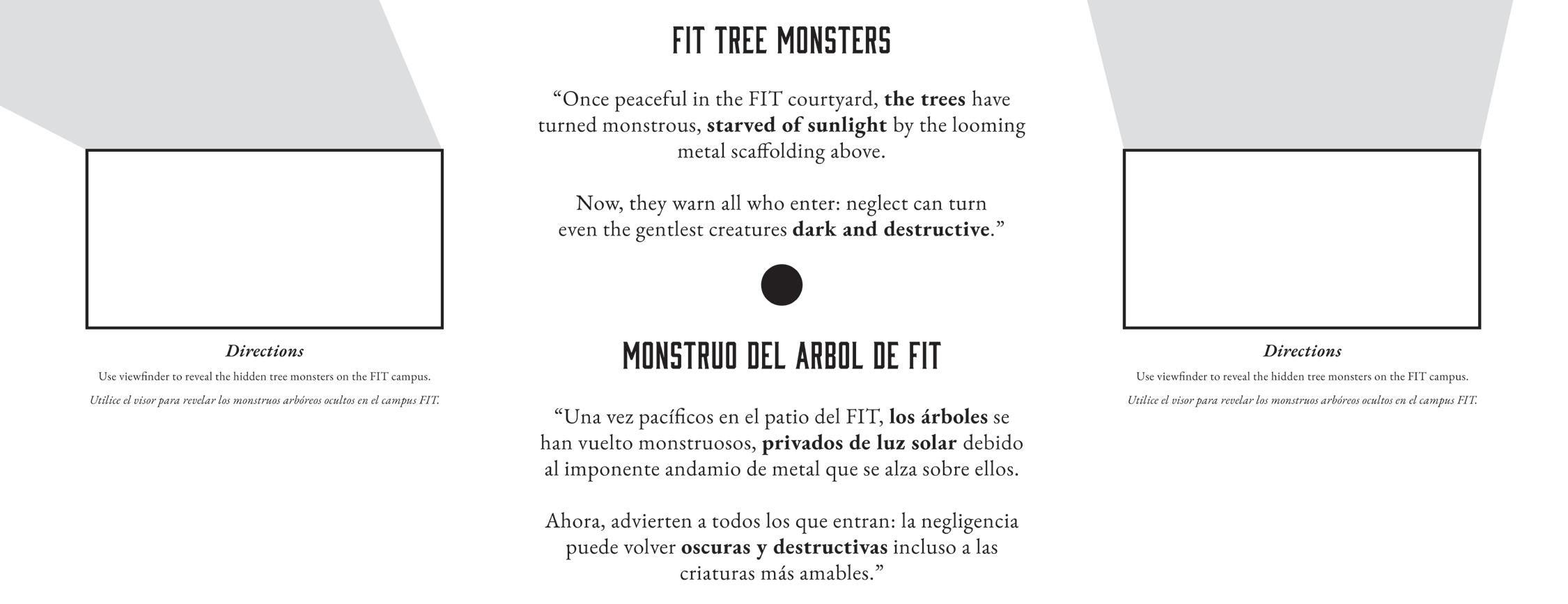
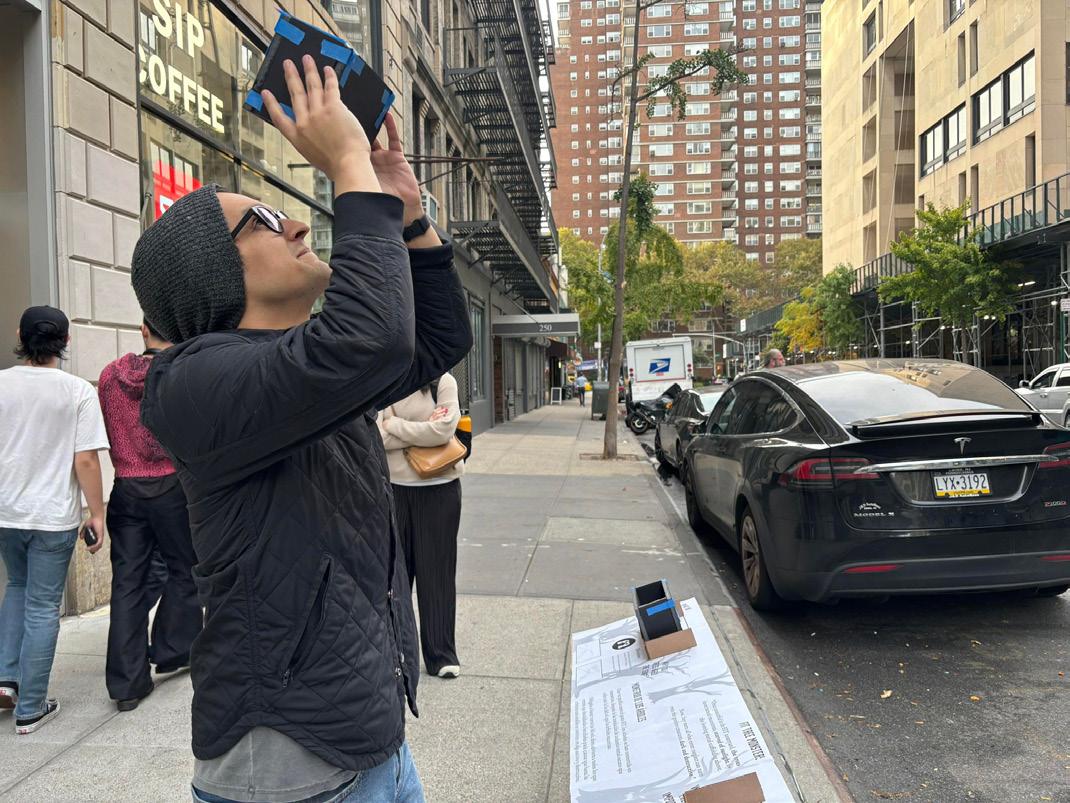
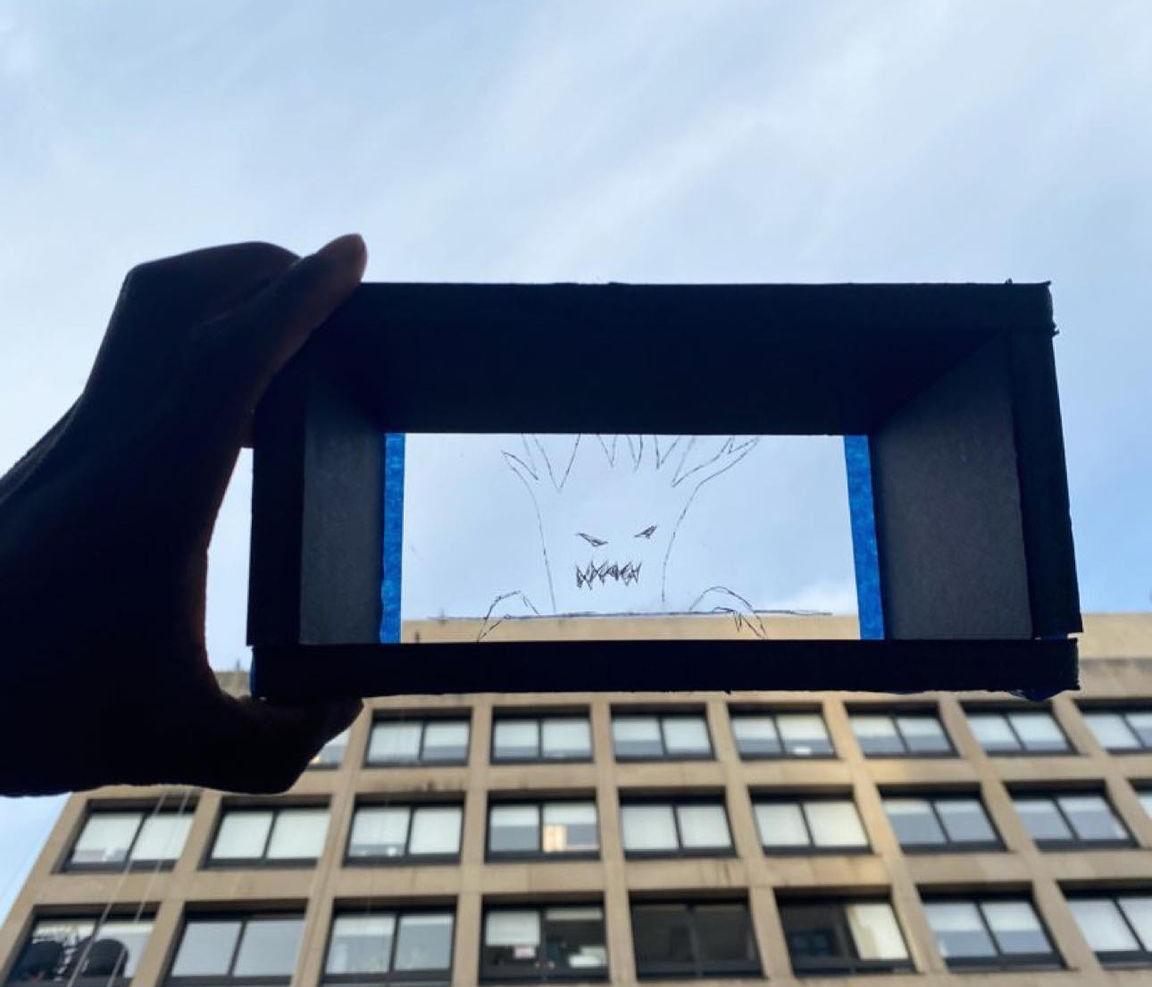
Further development of the experience explored opportunities for visitors to construct their own viewfinders using preset components available on-site. This participatory approach fostered a sense of agency, ownership, and personal responsibility, potentially strengthening visitor engagement with both the exhibition and the surrounding environment.
Conclusion
Based on the research done in this section, the data gathered informs how exhibits can foster a connection between visitor and place. Site-specific engagements ground visitors in the present environment. When exhibition elements are placed strategically in the environment, visitors make connections that can build upon their ongoing park experience. Engaging with exhibits designed for their specific location can bridge the gap between the permanent environment and the passerby visitor by intrinsically linking the exhibit with its place. This intrinsic link makes exhibition elements more compelling as they begin to speak to their surroundings and can teach within the park landscape itself. To integrate site-specificity into exhibition elements, designers can highlight specific points of interest, integrate existing visual languages, and incorporate sensory elements that would make a compelling experience for visitors.
Interpretive storytelling involves the translation of one narrative into another to aid in comprehension or to cater to a specific audience. This thesis uses interpretive
Fig 2. Prototype graphic rail
Fig 3. Viewfinder prototype
Fig 4. Viewfinder point-of-view. Credit: Jude Desinor Credit: Jude Desinor
storytelling to translate abstract ecological concepts and issues into something more playful and digestible. By providing something that visitors can easily understand and mentally latch onto, exhibits can break down the barrier to difficult or confusing topics. The integration of storytelling in exhibits can be used to springboard new types of storytelling for visitors by providing an example and asking for engagement afterward. Prompting visitors to share their own experiences can lead the visitor to apply these abstract issues to their own experiences and histories. The act of storytelling can do the same.
Designers can facilitate moments and experiences that can connect visitors. In doing so, exhibits can be more effective in translating information by engaging the whole audience group. Exhibits can create intergenerational moments through multi-sided engagements that require teamwork and collaboration. When considering ecological stewardship, sharing experiences with multi-generational audiences can effectively reaffirm the need for preservation for generations to come. Messages of sustainability and environmental social action fare better when empathetically considering the needs of future generations. Opportunities for memorable connections within a group can be lasting bonding moments facilitated.
Part 2 | Exhibition Project Project Overview
Site: West Lake Trail, Everglades National Park, Florida
Topic: Ongoing Ecological Issues affecting Everglades National Park
Audience: Local Multi-Generational Families (Primary), Outdoor Wilderness Enthusiasts, Local School Groups
Client: Friends of the Everglades. Artists in Residence in Everglades (AIRIE). And REI Co-Op
To test the role of narrative within the design development of outdoor nature-based experiences and exhibits, this speculative outdoor exhibition project incorporates a range of experiential strategies to connect visitors to their environment. Titled The River Has Teeth, the exhibition is situated within Everglades National Park and aims to inform visitors about the ongoing issues affecting the greater South Florida ecosystem. The designed experience creates a memorable, multi-sensory exhibition tailored specifically to engage multi-generational audience groups. Visitors arrive seeking meaningful park experiences and
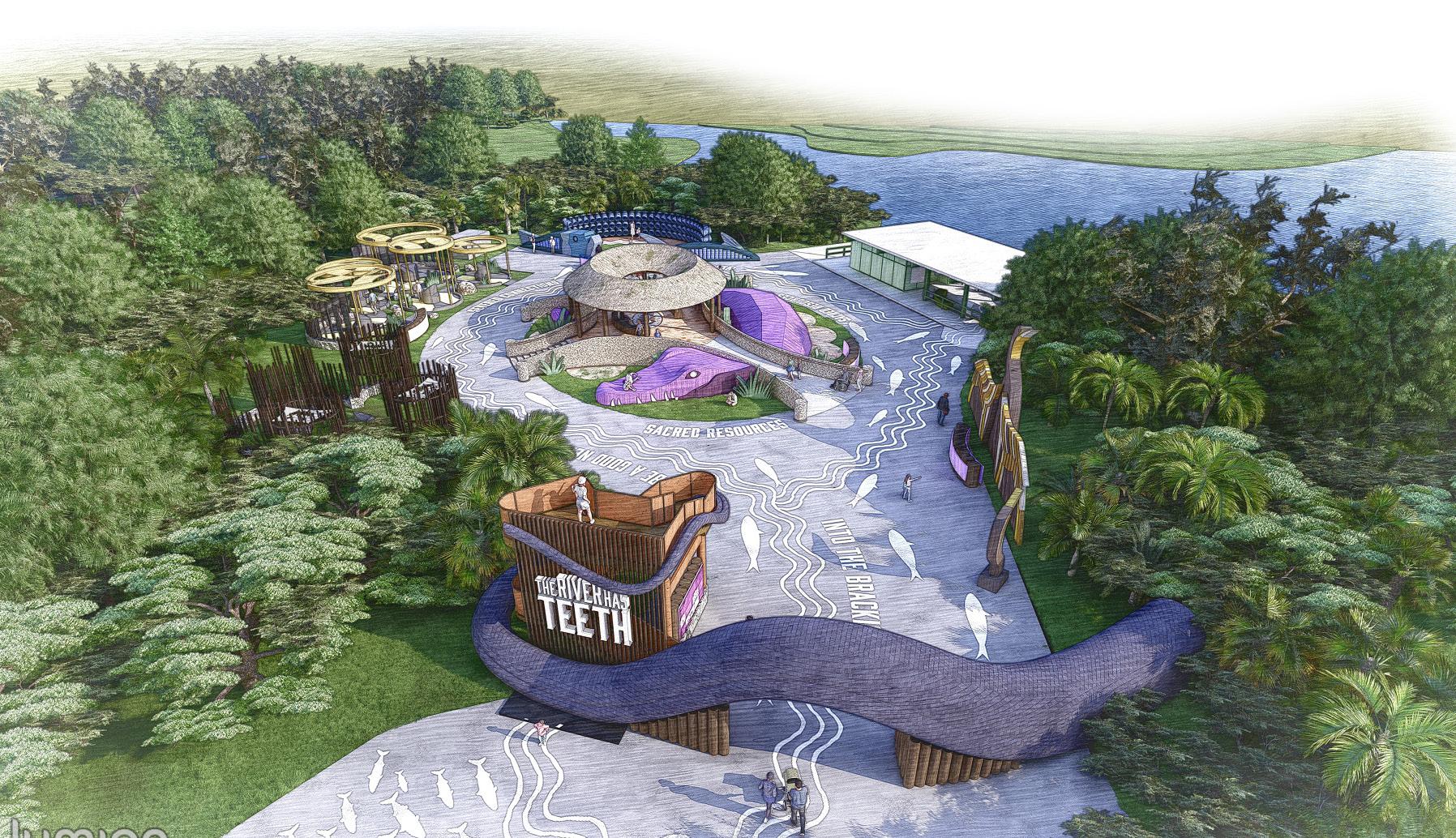
Fig 5. Aerial project view
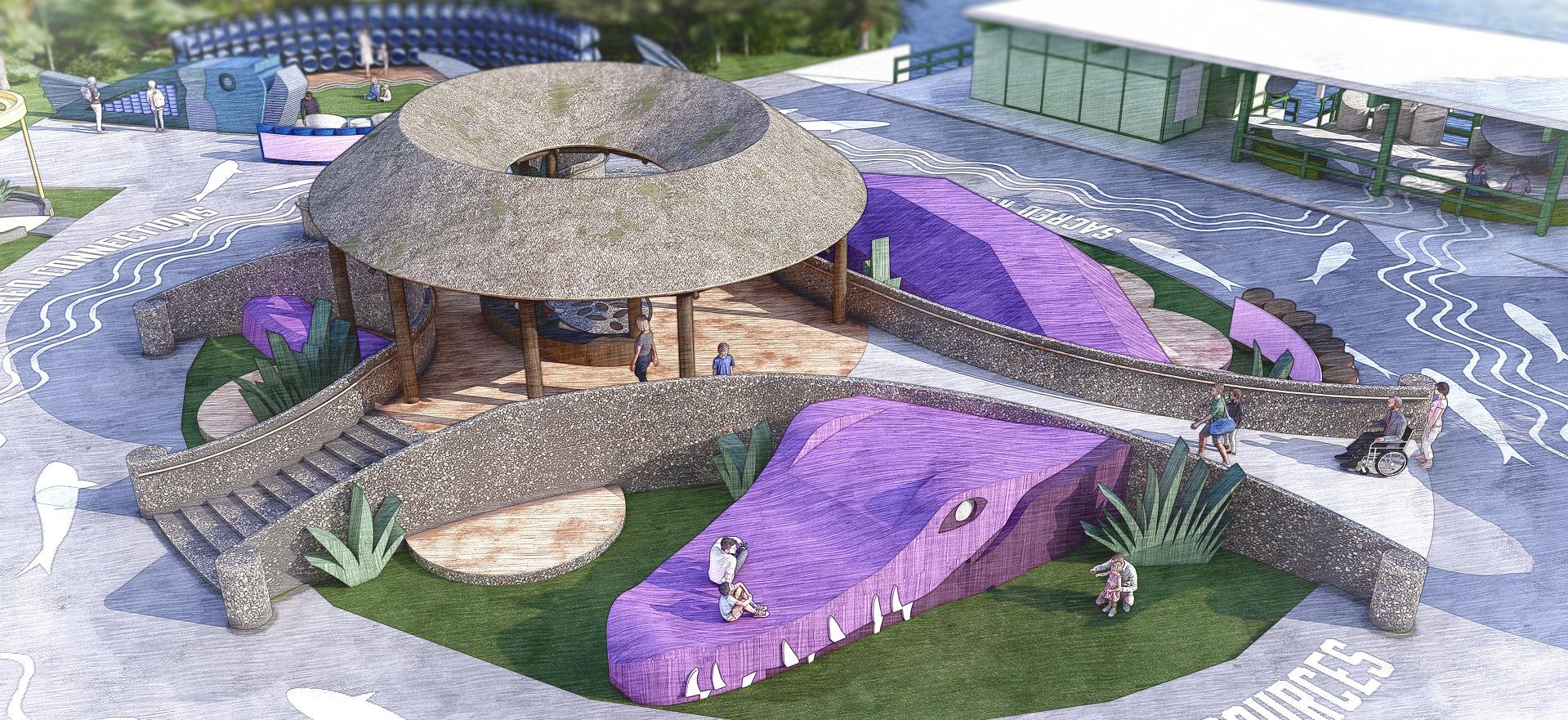
Fig 6. Render of American alligator area focusing on the importance of water as a vital resource
Florida Panther: “In the grand waterways of the Everglades, the great Alligator reigns as the great protector of water. Once honored for keeping waters pure, the monster has become restless and vigilant to the increasing pollution and human development. The alligator’s bellow echoes for miles through the Shark River Slough, a reminder for all who hear it that the health of water sustains all life in the Everglades.”
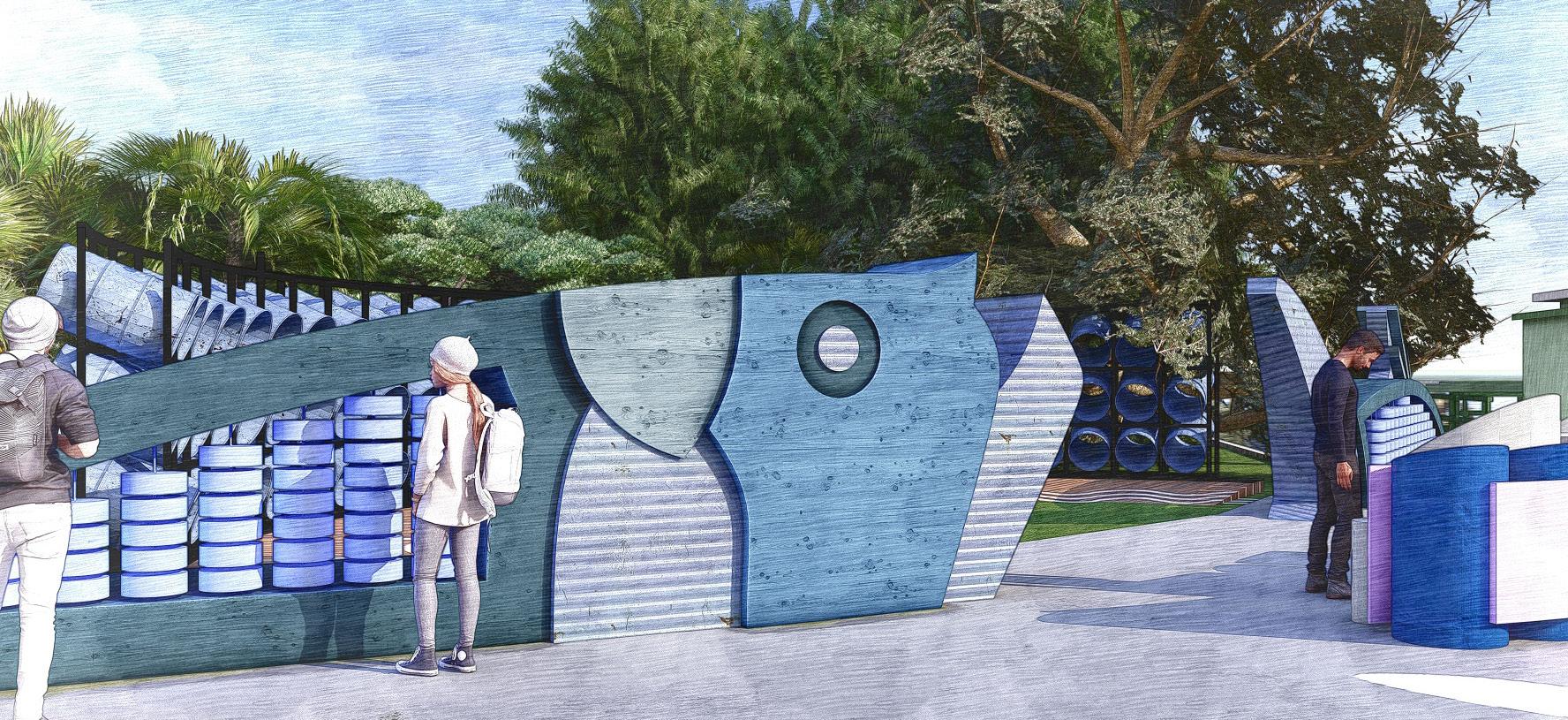
Fig 7. Render of tarpon area focusing on the balance of brackish (salt and fresh) water
Tarpon: “The tarpon glistens like a jewel as it rolls to the surface of Florida Bay. This giant fish thrives in the balance of brackish (saltwater and freshwater) water. But as saltwater creeps deeper into freshwater ecosystems, the tarpon senses the growing imbalance in its world. Now it calls on us to restore the balance before it’s too late so the Everglades can shine like a jewel once more.”
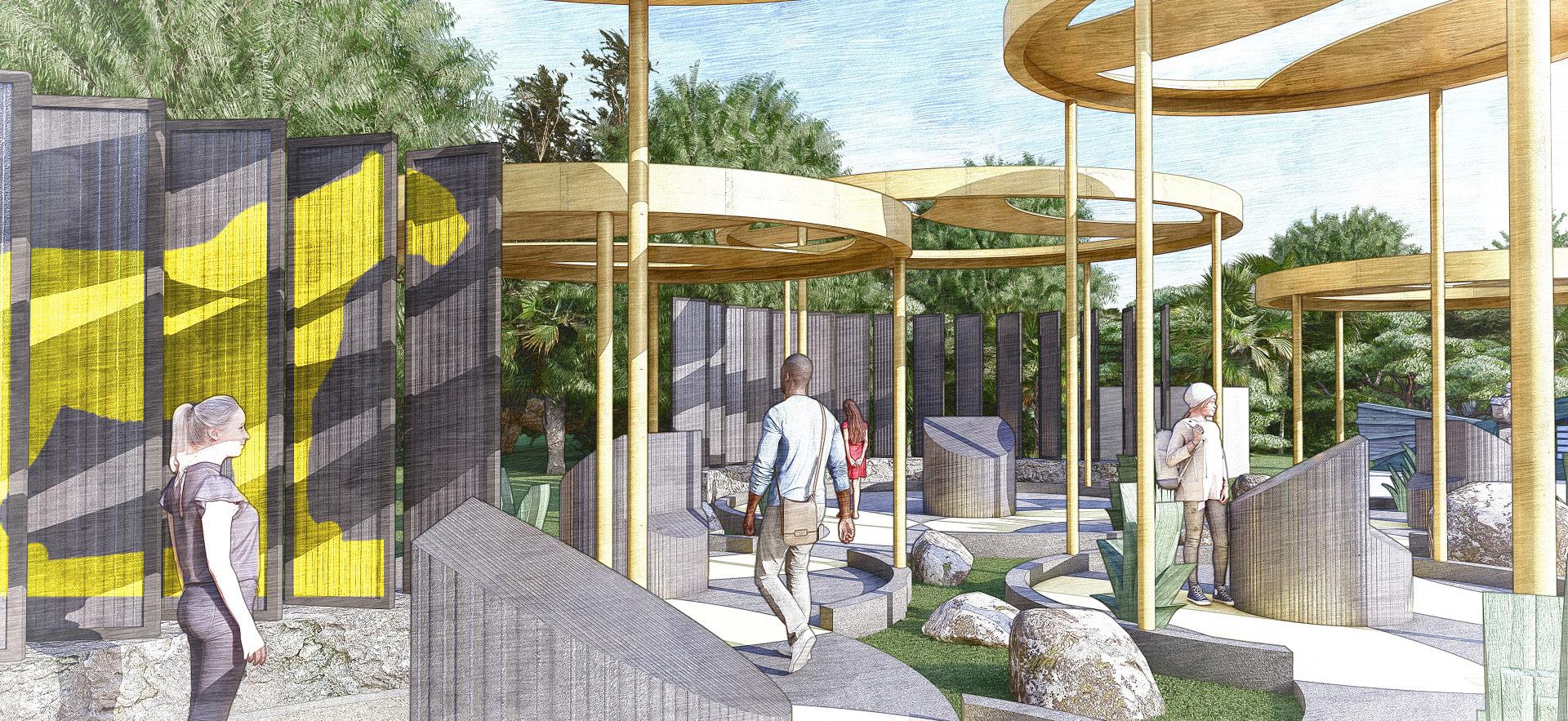
Fig 8. Render of Florida panther area focusing on the interference of Tamiami Trail and I-75
Florida Panther: “The Florida panther wanders the Everglades at night. When highways and interstates were carved through the Everglades, it severed not only the flow of water but the paths of life for the panther’s territory. Now, the panther watches through the hammocks, waiting for its fragmented home to be made whole again.”
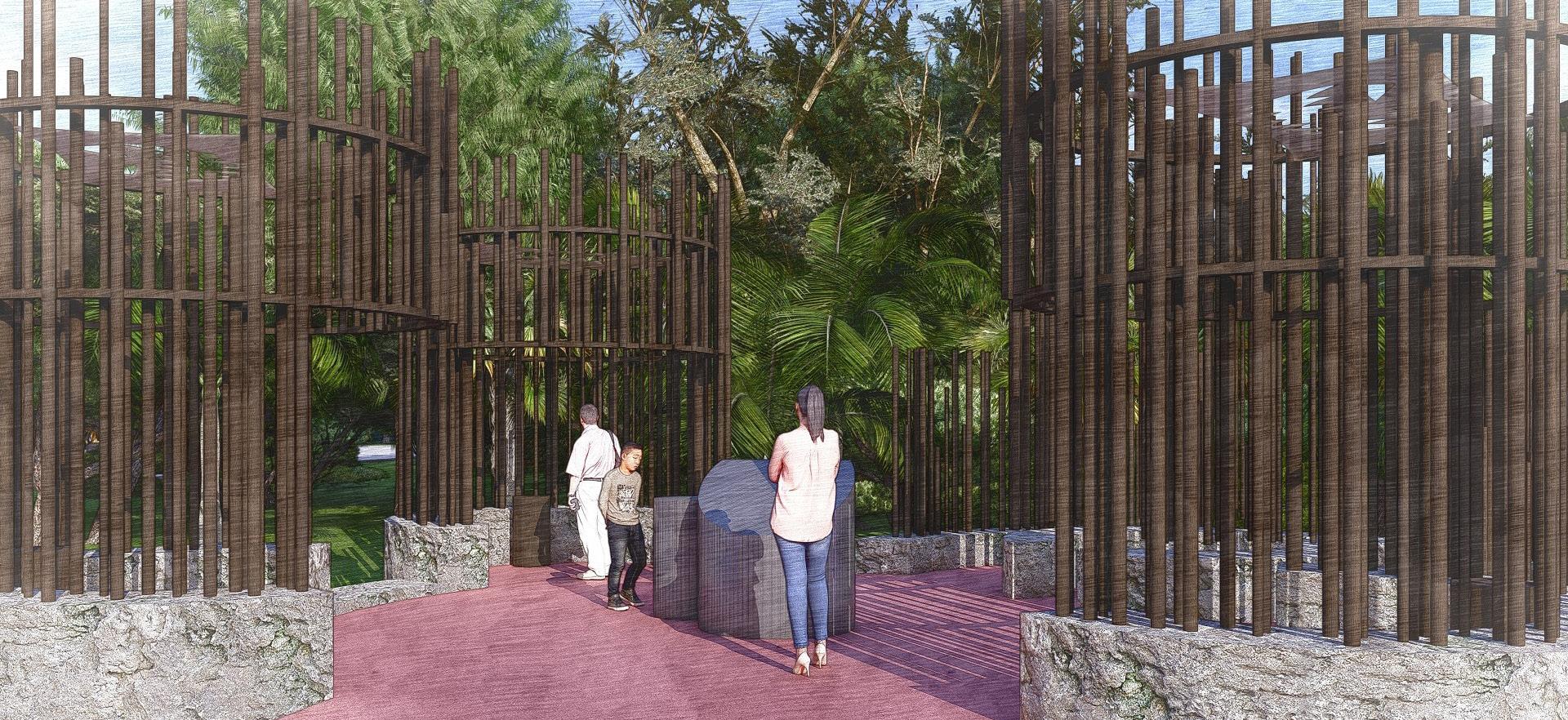
9. Render of sugar cane area focusing on harmful sugar cane burning to
Sugar Cane Monster “With its towering stalks and long leaves, the sugar cane monster rises from the scorched earth of the sugar cane field. After consuming precious water from Lake Okeechobee, it releases clouds of thick smoke and fire to make the sugar that feeds its insatiable appetite. This fearsome being stands as a reminder of the sacrifices made in the name of agriculture, warning all who witness it that the price of sweetness can come at the cost of harming others.”
Fig
local residents
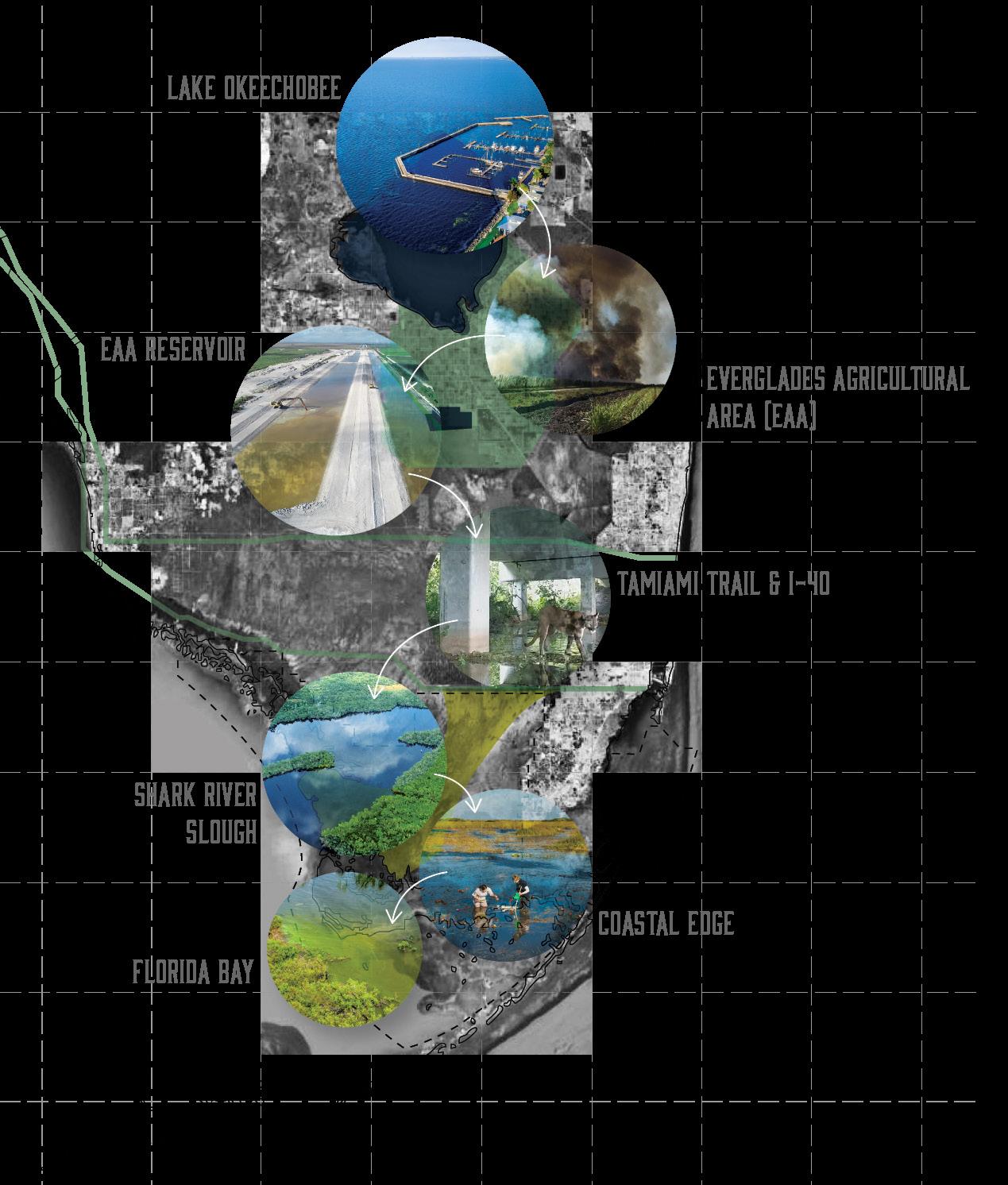
educational opportunities within a themed environment that complements the broader park visit. Through participation in the exhibition, visitors leave with a renewed understanding of the Everglades and develop a personal connection to the park and their role within the ecosystem.
The exhibition provides opportunities for perspectivetaking, collaborative group interactions, and engagement with large-scale interactive figures. These components support learning through action—encouraging visitors to engage physically, socially, and emotionally with the outdoor environment rather than passively consuming information.
In alignment with conservation priorities outlined by the exhibition’s primary partner, Friends of the Everglades, the experience contextualizes large-scale ecological issues at a visitor-accessible scale. By personifying these issues through concise narratives and characters, the exhibition presents complex content in a more approachable and engaging format. This approach broadens appeal, particularly for those seeking recreational experiences rather than direct environmental education. The exhibition is entirely self-guided, with no timed entry or enforced schedule, allowing visitors to explore freely as they arrive and depart by car.
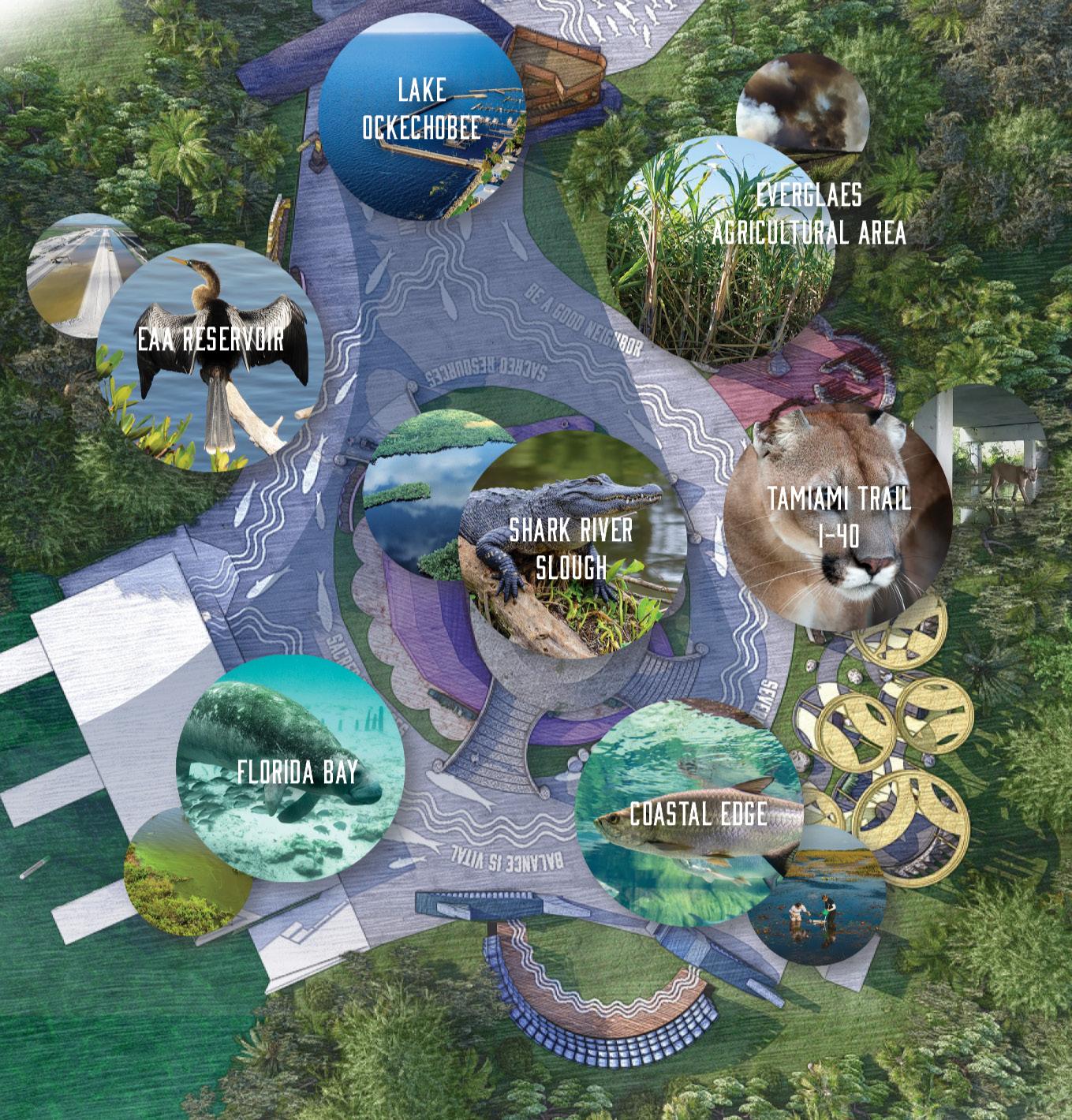
Interpretive Approach
The River has Teeth is an outdoor exhibition focused on telling stories of water, land, and the Everglades through the use of storytelling and narrative. It is temporary and would run through the 2025/2026 dry season. The exhibit is located deep within the park’s landscape on the West Lake Trail just off the Main Park Road between Homestead and Flamingo. The exhibition is divided into two parts: The River has Teeth and the existing mangrove boardwalk trail. Both of these areas approach ecological interpretation in different ways. The outdoor exhibition focuses on wider narratives affecting the park through the lens of monsters as interpretive tools while the boardwalk trail relays site-specific information to encourage exploration and personal reflection.
This exhibition uses storytelling to convey a greater understanding to the visitor. By unearthing these subtle or invisible narratives, we can create exhibits that foster nature-based empathy and stewardship.
Driving off the main park road, visitors dive head first into the mystical waters of The River Has Teeth. In this outdoor exhibition, monsters and beasts of the Florida Everglades have revealed themselves to teach visitors about the ongoing ecological issues affecting the largest
Fig 11. Comparative flow map on project site
Fig 10. Everglades historic flow map
subtropical wilderness in the United States. Visitors learn about each monster and an associated ongoing park-related issue, all of which center on water as a key theme. Developed narratives bring to life these different characters in the form of exaggerated animals and plants native to the park. These narratives tie together all of these elements to enhance the messaging of the issue as translated by the character. Each concept area features a different mode of engagement associated with the ongoing connected issue being addressed. This means creating a simplified understanding for visitors to understand the root causes of these issues. In one area, visitors role-play as panthers crossing a highway through a circuitous path, while in another, visitors enter a stylized burnt sugar cane field where they listen to first hand perspectives of the people affected by the issue.
On the West Lake trail, visitors continue exploring as they traverse the mangrove forest boardwalk to find monsters lurking in the woods. They conclude the trail overlooking the grandeur of West Lake where they can reflect on lessons learned and appreciate nature in the present.
Key Area Narratives
Eight distinct narratives are composed around different key site elements and ecological issues within the exhibit and are mapped onto various parts of the site. Within the context of the exhibition space, these narratives appear on graphic podiums and throughout presented wayfinding elements. Each narrative is designed to reflect the existing Everglades watershed system, which flows from Lake Okeechobee through the state and into Florida Bay. This circulation is similarly mapped onto the project’s roundabout site, so as visitors begin and move through the exhibit, they encounter a progression of bio-
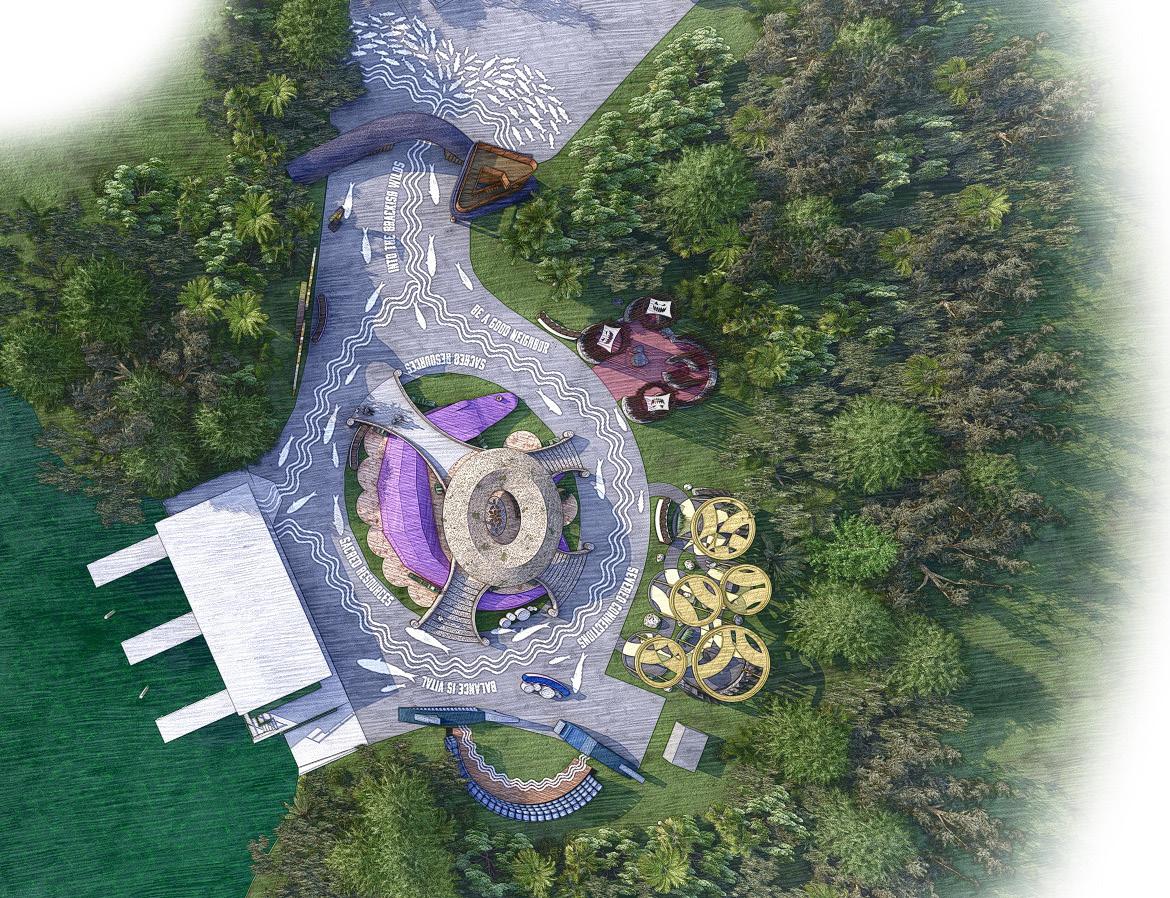
Fig 12. Aerial project view
diverse ecosystems representative of the region. Below are two excerpted narratives and their related site elements:
Limitations of Study & Future Steps
While I continue this work, I consider what possible next steps could be taken with this framework to further delineate spaces from places. Due to the nature of the site selected in the applied project, certain parameters were enacted to help guide the project development, but restricted certain design applications that would be otherwise available in different site locations. For instance, the site was highly remote in the middle of Everglades National Park and thus had very little available connection to electricity, digital media, phone reception, and other people. This would substantially limit the possibilities of usable technology and digital applications within the exhibit and choice of activities that may have relied on refillable items or tools.
For future development, the possibility of opportunities for co-curation would be highly beneficial to the development of the project. As a way to inform the narratives, the involvement of local, BIPOC, and community groups to contribute new narratives and perspectives would be imperative to approaching authentic storytelling and overall exhibition development.
Finally, this framework holds significant potential for application in hyper-specific and non-traditional sites. This includes areas where interpretive design is often minimal or entirely absent. Future iterations could explore implementation in remote campsites, kayak trails, or backcountry hiking routes, where visitors are typically more immersed in the landscape, but receive less structured interpretation. Extending site-based narrative into these settings would test the adaptability and resilience of the framework while deepening its capacity to create meaningful, place-specific engagement in areas that challenge conventional exhibition design. In doing so, interpretation can move beyond formalized spaces and become a more embedded, continuous part of the outdoor experience.
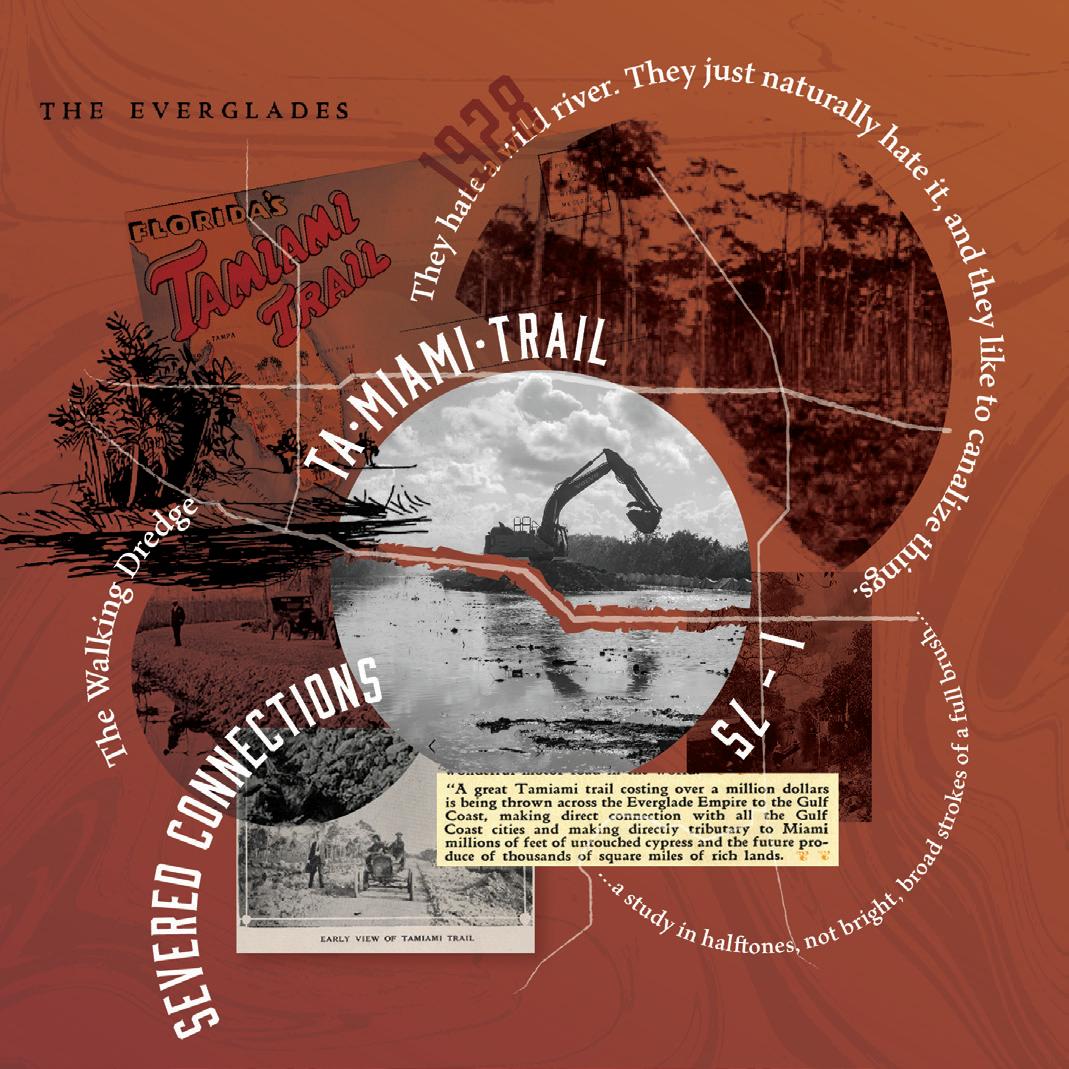
Fig 13. Content Development Collage
Fig 14. Primary graphic for The River has Teeth
Conclusion
This thesis and applied project investigates how interpretive design can foster emotional connections between visitors and natural landscapes through the use of narrative as both a content driver and design development tool. Initial research focused on the limitations of traditional wayside signage and explored the potential of narrative and storytelling to enhance interpretive experiences. Interviews with educators and designers, along with case studies, reveal the effectiveness of facilitated, audiencecentered learning already in use across National Park Service programming. These insights inform a deeper understanding of visitor expectations, engagement strategies, and the role interpretive design can play in promoting conservation awareness. The project was presented to industry professionals and received positive feedback. Reviewers emphasized the value of storytelling in translating complex ecological issues into accessible, family-friendly content and highlighted the spatial and experiential qualities of the exhibit as key strengths. While suggestions for future development include a greater focus on sustainability and material selection, the project was recognized for its adaptability to different landscapes and interpretive contexts.
Ultimately, this work contributes to expanding the potential of outdoor exhibition design. By framing ecological and cultural narratives through emotionally resonant, site-specific storytelling, outdoor exhibits can foster a sense of ownership, empathy, and stewardship among visitors. Future iterations may examine how varying degrees of facilitation or different site conditions influence visitor engagement. This project demonstrates that narrative can serve as a powerful interpretive tool, transforming passive observation into meaningful and lasting connection.
Resources
admin. “Issues.” Friends of the Everglades, 7 Mar. 2025, www.everglades.org/issues/. Accessed 13 Dec. 2025.
Dierking, Lynn. “What Is Family Learning? – Engage Families.” Engagefamilies.org, 2025, engagefamilies.org/ family-learning-101/what-is-family-learning/. Accessed 13 Dec. 2025.
Gross, Michael P, et al. Signs, Trails, and Wayside Exhibits. Univ Wisconsin Stevens Point, 1 Jan. 2006.
Hughes, Michael, and Angus Morrison-Saunders. “Impact of Trailside Interpretive Signs on Visitor Knowledge.” Journal of Ecotourism, vol. 1, no. 8, 2002, pp. 122–132.
Livingston, Stephanie. “The River Has Teeth.” The Marjorie, Mar. 2021, themarjorie.org/2021/03/01/theriver-has-teeth/. Accessed 13 Dec. 2025.
Marwit, Dan. “For Multi-Generations to Come.” Exhibition, vol. Spring 2022, 2022, pp. 42–52.
University of Nebraska Lincoln. “Place-Based Learning and Outdoor Experiences | Center for Transformative Teaching.” Teaching.unl.edu, teaching.unl.edu/resources/ introduction-place-based-learning/.
Vander Ark, Tom. “The Power of Place-Based Education.” ASCD, 2020, www.ascd.org/blogs/the-power-of-placebased-education.
Prospective Memories Futures of Monument Design
Lisa K. Bambach
Master
of Design
University of Washington
Abstract
Design is integral to the development and expression of sociocultural identities. As societies negotiate meaningfulness, their collective values are encapsulated by tangible artifacts produced through the activity of designing. Prospective Memories explores the role of design in shaping collective memory and the discourse generated by the monuments that inhabit our public spaces. These forms serve as physical embodiments of perceived significance and are designed with the intention to influence the value systems of future generations. Conventional design paradigms as we know them have emphasized permanence and unchangeability, leading to an inherited public memorial landscape that struggles to accommodate evolving community identities over time.
This thesis proposes the re-evaluation of conventional monument design frameworks by using diegetic prototypes to explore prospective scenarios that transform monuments from static objects into active participants in cultural and political dialogues. Ultimately, this research aims to offer a point of reflection through which designers can critique the status quo, priming a future monument landscape that is better able to reflect and adapt to contemporary societal shifts.
Introduction
Design is an action human beings take to embody our understanding of significance through physical artifacts. These objects display our negotiations and conclusions about what is valued, validating intangible ideas to ourselves and allowing us to share them with others. Design artifacts become consistent anchors in dynamic social and information landscapes. They act as tangible bridges that create direct relationships with abstract concepts. As Pederson (2022) explains, memory artifacts give “discursive meaning to what can only be experienced emotionally and connect us materially to these psychic landscapes.”
The Past: Monuments
Monuments are a type of design artifact, statuesque or spatial in form language, which build a culture of remembrance that has a permanence in public spaces and in the public consciousness. Architect Michael Villegas (2024) explains that monuments serve as keystones—marks in time that define something specific, whether it is an event or a place. They embody the full spectrum of emotions connected to those stories, the good and the bad, attempting to capture the essence of what they represent. He describes monuments as emergent responses, declaring to society what has come to pass. They are symbols of collective memory.
Conventionally, intentionally designed monuments have been created to endure. This desire to transcend time through permanence can be traced to coherence of societal identity, semantic narratives such as the display of steadfastness or strength, and pragmatics considerations like weather and erosion. This aspiration for timelessness dictates the form and materiality of monuments. The Monument Lab (2021) has identified the most common conventional materials used include, but are not limited to, bronze, marble, lead, granite, sandstone, steel, and wood. As the organization looks toward the future, they suggest that “Future monument makers may choose more dynamic materials, allowing for monuments that evolve, change shape, or dissolve over time. These include adaptive reuse, ephemeral projects, recycled materials, 3D printing, or augmented reality. Such materials are already in use by many artists and designers who are committed to employing them to cultivate and share under told stories found within communities” (Monument Lab, 2021). This
recommendation alludes to a recognized need for new monument design frameworks even if the text does not prescribe a solution or methodology.
In regards to their placement, monuments are sited for influence and visibility in order to effectively communicate their intended narrative. They can be spatially agnostic in relationship to events, placed with no direct tie to the actual locale where something occurred. Most importantly, the hierarchy of the space determines where they are located. Because these artifacts occupy prominent locations in our public spaces, monuments gradually become visually iconic representations of the communities in which they inhabit. They can take on an after-life in the form of marketing materials, community branding, and souvenirs. Whether the meaning of their original narrative is maintained is on a case-by-case basis.
The Monument Lab, which published an audit of monuments in the United States in 2021, defines monuments as “statement(s) of power and presence in public.” Monuments embody declarations of society’s ideology at a specific moment in time and are made with the intent of lasting in that form for generations (Monument Lab, 2021). The utilization of monuments as tools to influence political narratives has been documented since ancient Mesopotamia, making monuments a tradition in human society since at least 2,550 BC (Taylor, 2003). They are categorically a form of propaganda due to their political nature. Monuments are created by groups of people with vested interest, whether they had a direct experience with an event or not. A constituency must simply act to make a statement, iconifying their values at a particular moment in time.
Monuments represent a narrow view of the past and promote the narratives of the few whose knowledge and perspectives were counted as valuable at the time of the monument’s inception (Rosenfeld, 2000). They may be free and accessible due to their context in the public, but are intentionally designed by constituencies who hold positions of power where they can invest financially, materially, and temporally in a narrative that is encoded with shared spaces. Monuments are particularly susceptible to influence by political intent and ideologies due to factors like their occupancy of prominent, civicowned spaces, the process of their manifestation, and their permanence in the public environment.
Monuments represent a narrow view of the past.
Stevens and Franck (2016) describe two approaches to monument design. Informal monuments are impromptu, organic assemblages that are created by the public as a form of tribute for remembrance, whereas formal narrative frameworks are organized, professionally designed, and installed by constituencies. Several classifications of formal narrative frameworks have been described over the decades, which include, but are not limited to traditionalist, modernist, and critical. Depending on the intentionality of the constituency, narrative structures and visual approaches to identity representation can range from restoration to preservation to complete erasure. No matter the intent, designers of monuments take on the role of social engineers, who fabricate artifacts that serve to perpetuate a mythos for socioideological purposes.
Stevens and Franck (2016) also outline two methods for communication narrative, which deal with the ambiguity of semantics. The first is referred to as ”closed meanings,” which are often top-down communication from an authority making a statement to the greater public. They showcase one-way communication that is
unambiguous, made with the intent of clear declaration. More figurative monuments, on the other hand, offer “open meanings.” These objects may share multiple perspectives and convey narratives through experiential means, sparking reflection and inviting criticism.
While they have been criticized as “ephemeral, objectless [and] undesirable” due to their obscurity, monuments with open meanings are more egalitarian (Krzyżanowska, 2016). Monuments with open meanings align more directly to the aspiration of public spaces to have publicness, allowing for multiple interpretations and points of engagement for universal audiences to participate in collective memory discourse.
While it is acknowledged that the narratives represented in our existing public commemorative landscape are incomplete and lack plurality (Labode, 2016; Monument Lab, 2021; Decker, 2023; Jarausch & Geyer, 2003), it is also recognized that “there are no best practices for negotiating the post-creation life of monuments and memorials” (Decker, 2023). Aside from public engagement, the Monument Lab (2021) has noted that “monument records rarely reflect plans [...] to anticipate maintenance nor efforts to make room for interpretation by future generations.” Handa (2021) further argues that “it is a fallacy that a piece of architecture is complete when the construction is finished... [it] should take into consideration the after-life[...].”
Conventional monument and public art narrative frameworks. See thesis for complete diagram.
In lieu of formal, organized engagement to reckon with the meaning of existing monuments, audiences may use informal means to enhance, criticize, or supplantexisting narratives. Such informal changes that modify the character of a monument’s original intent is often categorized as vandalism due to the power dynamics in place that determine why a monument exists and continues to be permitted in a space. Examples of vandalism and observations from collective memory and monument experts underscore a fault within the design profession itself. They point out that it is inevitable for societies to engage in the process of Vergangenheitsbewältigung, which describes the continued means of mastering the past. Rosenfeld (2000) explains that this process, while most frequently applied to Germany’s collective memory artifacts surrounding the atrocities of World War II, as a experience by cultures across the globe. It encompasses the continued discourse over a society’s history and “assures that the past is forever in the process of being mastered” (Rosenfeld, 2000).
The past, in other words, is an active being in our present reality. Our collective memory is continually being negotiated, and therefore designers have a responsibility to the future to reconsider static, conventional approaches to monument design.
The Present: Public Art
The purpose of public art is to activate public spaces by sparking reflection within individuals and conversations between people. In today’s practice, they are often discursive counter-narratives to the official, statesanctioned memories that inhabit our commemorative landscape. The line between monument and public art can be blurred depending on a constituency’s intentionality and selection of materiality. There are no rules when it comes to public art in regard to materiality. The selection of materials is usually determined by the artist’s intended message and the constraints presented by the longevity of the project.
Artist RYAN! FEDDERSEN (2024), who prioritizes sitespecific installations, believes that art has the unique power to provide an experience of introspection. She explains, “the work is completed by the viewer. Once I put [research] into the work, the interpretation is not mine.” Art has open meaning—it leaves ambiguity for individuals to have their own experience. Information and
contextual research may go into the formation of a piece, but what people take out will be up to them and will be based on their own knowledge and experiences.
Art has open meaning—it leaves ambiguity for individuals to have their own experience.
Public art manager Jordan Freeman (2024) adds, “At its best, public art isn’t just a snapshot of a single moment in time—it evolves, reinterpreted by new generations and cultural shifts. It offers an on-going narrative shaped by present-day experiences and interactions. It’s not just about honoring the past, but about sparking conversations that shape the present and future.” Successful public art, in other words, is an expression and commentary of the present— something that is actively unfolding.
Public art, however, does not always manifest as a discursive artifact. It can take on the role of a conventional monument when its function is to act as a marker of what once was. Artist Charles Mudede explains this phenomenon as the result of gentrification, dubbing this type of public art as tombstone architecture (Mudede, 2022). Using Native American culture as an example, Mudede explains that “[it] is not, of course, static but still in development, still changing. [But], tourists don’t want to see a postmodern sculpture. They want what’s pre-coded as Native American” (Mudede from Gregory, 2024). This preference toward familiar tropes from the past does not allow current Native American expressions to be as highly invested in. Precoded artwork instead acts as a monument to the public’s perception of what indigenous art is, effectively freezing the culture in time. These influences, rooted in perceptions of value and significance, limit continued growth from being expressed through public art. Mudede (Gregory, 2024) argues that instead public art should be “up with the times, about the here now, about a culture that is still evolving.” Public art should be an active representation of the present.
Public art may also borrow from conventional monument form language to critique present society. In October of 2024, bronze sculptures by Civic Crafted LLC were given permits by the National Park Service to be installed in Washington, D.C. (Treisman, 2024). They were satirical pieces intended to enshrine iconography associated with the far right political movement to challenge the glorification of the events of recent extremist actions throughout the campaign season. A plaque describes the first sculpture in a facetious tone of voice, “This memorial honors the brave men and women who broke into the United States Capitol on January 6, 2021 to loot, urinate and defecate throughout those hallowed halls in order to overturn an election” (Treisman, 2024). It contextualizes the artist’s representation of Nancy Pelosi’s bronze desk, which is adorned with a hyperbolic, emoji-inspired turd, as a monument intended to preserve the memory of January 6th insurrection rioters who attempted to destroy the ideals of American democracy and identity. The accompanying plaque is critical to the success of these monument as a criticism of right-wing messaging. Without it, the public artworks could be understood as celebrations of the events.
Similarly, bronze and monumental scale were used in New York City’s Times Square to provide a critique of “preconceived notions of identity and representation” (Times Square, 2025). A 12ft tall bronze sculpture of a Black woman in modern, everyday clothing stands to invoke discourse through the intentional juxtaposition of media and subject matter. The artist, Thomas Price, explains that his goal in creating the sculpture is to promote unity through a shared humanity (Times Square, 2025). While some celebrate Price’s countermonument and its intended meaning, the sculpture has also resulted in strong objection, evidenced by racist remarks and reactions both at Times Square and on social media (Greenberger, 2025).
Rather than critiquing social ideologies like Civic Crafted LLC and Price, artist Joseph Reginella instead uses the traditional archetypes of monument design to create false histories of New York City. While Reginella’s original intent was to create “escapist delights and gateways into a sci-fi version of New York history” (Frishberg, 2024), the bronze sculptures instead dupe the public into believing the fantastical narratives that he has invented. This deceit is evidenced by the hate mail and public commentary he receives from people who are fooled into believing the false histories. By utilizing traditional
monument form language, the sculptures adopt the quality of being a truth that has been invested in by the collective society. The sculptures showcase the power monuments have as propaganda tools, capable of manipulating public belief, distorting perceptions of history and reality, and perpetuating fake histories.
Overall, public art seeks to activate public spaces by fostering reflection, dialogue, and reinterpretation. Unlike conventional monuments, this genre of public artifacts is not declarative. Rather, public art embraces open meaning and criticism, which evolves with community engagement. Due to its position as artwork versus a documentation of history, it has the flexibility to take on tones of voice that range from the serious to light hearted. The discursive qualities of public art serve as an exemplar that can guide future frameworks for monument design.
The Future: Prospective Memories
As designers in the present seek to design new monuments for future generations, the current frameworks of monument design can be critiqued to ensure monuments remain discursive, providing opportunity for reflection.
How might we envision design futures for the public commemorative landscape?
This thesis uses prospective methods to imagine possible futures for monument design and applies discursive design frameworks to create dissonant scenarios that clarify the designer’s goals, mindset, and approach (Tharp & Tharp, 2018). Using a scenario thinking process (Conway, 2016), three possible futures have been generated using patterns described in Dominic Muren’s Survey of Design History course at the University of Washington (2024). By leveraging the patterns that spark radical shifts in design practices, the three future scenarios in this thesis are able challenge the constructs
of today’s experience of society. All scenarios will maintain a consistent subject matter and place to allow for comparison and discussion.
Because designers have a social responsibility for recognizing, acknowledging, and navigating the influence of who, what, where, how, and why in the design of collective memory artifacts, strategies from discursive design, experience design, and design fiction will be leveraged to create a framework that will support the re-evaluation of conventional monument archetypes. Through this approach, public embodiments of collective memory can transcend from being objects that discourse informs to being reciprocal objects through which discourse occurs. By transforming monuments into discursive design artifacts, monuments become designers who inform audience reflection through active participation in the negotiation of memory.
Why: Discursive Design
Discursive design provides a foundation through which the influence of why design is being done can be understood and defined. Tharp & Tharp (2018) explain that the discursive design model “does not focus on the continually expanding possibilities of what objects are designed [...] nor does it focus on how [...] Instead it starts from the core—why designers design.” It provides a framework to encourage explicit definition of communication efforts in order to effectively achieve audience reflection. The discursive design model walks designers through the definition of domain, mindset, and aim as a framework through which the intentionality of the constituency can be understood and communicated.
• Domain: Seeks to understand the area of activity in which design practices are conducted. Monuments, due to their public nature, exist in the domain of social engagement.
• Mindset: Describes the motivation, or intentionality behind the reasons for participation and reification. Definition of the design intent is specific to each constituency’s political structure and can be defined by engaging in participatory design practices.
• Aim: Turns focus to the framing of messaging for consumption by audiences. Tharp & Tharp (2018) explains that aims inform how content is meant to be disseminated and consumed, but does not yet define the expression of how.
SCENARIOS
How might we represent collective memory...
SCENARIO 1: PROHIBITION digitally if physical monuments are no longer permitted in public spaces?
SCENARIO 2: REBELLION if monuments are no longer designed to be permanent but instead are temporary?
SCENARIO 3: EVOLUTION if monuments serve as records of dialogue over centuries of public discourse?
Scenario framework for Prospective Memories research study
How: Experience Design
Memories are formed through the experience of place, narrative and emotion. The place, or physical and digital spatial environments, becomes the interface through which immersive storytelling takes place. Advancements in technology have allowed for physical environments to extend into digital spaces. No matter where an experience is situated, experiential design practices are the lens through which the how of narrative and approach can be determined.
In all types of narrative frameworks, how the experience happens is critical to the nature of memory formation. Conventional narrative structures for monuments focus the transmission of stories from constituencies to audiences, but do not account for reciprocal relationships
By transforming monuments into discursive design artifacts, monuments become designers who inform audience reflection through active participation in the negotiation of memory.
as memories are negotiated over space and time. Therefore, this thesis proposes the introduction of discursive narratives as the framework through which future monuments should be designed.
I define discursive narrative frameworks as the use of experiential engagement to immerse an audience in place, narrative, and emotion to stimulate critical thinking and evolve alongside societal shifts in significance and value.
As opposed to traditional and modern narrative structures, discursive narratives directly engage audiences in active dialogue with an object or space. They can encompass the aforementioned critical, counter, and didactic narrative structures, but are not limited to doing so. By facilitating this circular dialogue, discursive monuments are enabled to be participants in critique of mythos.
In the way that public art takes on a level of ambiguity, discursive monuments also embody open meanings that embrace the notion that forgetting is equally important to memory-creation as is remembering. This occurs both due to the means of reification through which memories are curated and the cognitive capacity of the audience. When constituencies determine which stories to tell, they intentionally select the memories which focus attention on simple, key messages that do not require a significant amount of cognitive capacity for audiences to retain the narrative. Tharp & Tharp (2018) add that “while it would be more straightforward to use words to convey complicated messages, the point of discursive design is to leverage the advantages of objects as a differently powerful means of communicating. Loss of exactness is the price that is paid. As a consequence, designers have to negotiate generality and specificity when trying to connect their ideas with an audience.” Semantic and
sensorial characteristics are intentionally left open to audience interpretation to stimulate debate.
Immersive storytelling is one tactic designers employ in attempts to have influence over the interpretation of discursive artifacts. Ellen Lupton (Burickson, 2023) explains that “experience design expands the fundamental act of storytelling, pulling the audience into the plot as active players who—in the best of circumstances—change the outcome and are changed by it.” Akhigbe (2024) adds that “when you do something—when you live out a story—you take on the message of the narrative because you learn by doing. You use the story to drive understanding through embodiment.” Fundamentally, when narrative is well integrated into a physical or digital experience, the journey can ignite emotional responses that lead to transformation of value and significance. This kind of immersion, writes Burickson (2023), must not only be physically and psychologically immersive, engaging the senses and emotion, but must also “resonate with an audience’s sense of meaning” to be truly memorable.
Ultimately, designers are able to influence experiential engagement through semantic and sensorial cues that capture audience attention, provoke reflection, and facilitate transformative experiences. However, they do not have control over the on-going impact of these message-laden cues. The audiences’ emotions and responses are something designers can affect, but do not have control over. Perception is unique to the individual. Villegas (2024) remarks, “people bring their own experiences to architecture. Much of the context they overlay during in-person experiences is unrelated to the original myth. The architectural object [...] is less interesting than the activity it creates and the myth it perpetuates. [...] It is therefore important to consider a piece of architecture in its entirety—before, during, and
after its life.” In other words, the individual perspectives of audiences will result in innumerable interpretations of the reified memory over its lifetime and even beyond its existence. It is this particular dynamic, which breathes cultural value and significance into society, that makes design a fundamental part of the human experience.
What: Design Fiction
The future is unknowable. Design fiction is a speculative innovation practice which guides participants through thought exercises to challenge their perceptions of possibility. Bleecker, et al. (2022) explain that the methodology introduces “a space for constructive and creative critique” by simulating what might come to pass and opening it to reflective discussion.
In practice, design fiction participants are asked to suspend “their disbelief and allow their imaginations to wander, to momentarily forget how things are now, and wonder about how things could be” (Dunne & Raby, 2013). With barriers like technological feasibility and resource availability temporarily set aside, participants are able to dream about what might be. They encounter what-if scenarios presented to them by a designer that are supported by diegetic prototypes. The prototypes transport participants into potential futures which are, as Tharp & Tharp (2018) describe, “somehow discordant with the audience’s sociocultural reality or ideality.”
Diegetic prototypes best serve as challenges to archetypes, or “cultural artifacts, usually in some form of media so familiar as to be fixed in the collective psyche” (Bleecker, et al., 2022). This is due to the universal familiarity of archetypes—they are easily comprehensible gateways into reflective dialogue. Through their accessibility, they minimize the complexity of imagining
for the participants, reducing barriers to the suspense of disbelief. Rather than focusing on the successfulness of an unfamiliar design artifact that requires learning and explanation, the use of archetypes lowers the barrier of entry into critique, allowing it be more easily directed at the societal implications of rethinking the status quo.
How: Methodology
The method for this project was determined through the mapping of narrative structures existing in current experiential design theory and presenting discursive narratives as a new alternative to challenge conventional paradigms and address cultural shifts in meaning. The approach to discursive narratives, as with all narrative structures, can vary according to the desired semantic communication and experiential journey. This thesis will utilize prospective scenarios to explore a range of approaches to develop and offer a methodology through which design teams can create reflective narratives. By considering multiple prospective scenarios wherein debate is facilitated through consideration of diegetic prototypes, design fiction enables constituencies to reflect upon their conceptions of preferable futures to create pathways towards what ought to be.
What: Collective Memory
This thesis will focus on commemorating the increasing prevalence of climate-change induced wildfire smoke as an annual occurrence in the greater Seattle metropolitan area. This topic has been chosen because it is accessible to a universal audience. It is relatable to anyone who lives in or visits the city during the wildfire season as their health and experience of the outdoors is directly impacted by the simple act of breathing.
Research-through-Design
Research was conducted through a research-throughdesign process that followed the following stages:
IDEATE—EXPERIENCE—PROTOTYPE—REFLECT
• Ideate: A series of exercises from Ellen Lupton’s book Graphic Design Thinking: beyond brainstorming (2011) were conducted to openly explore concepts before defining solutions preemptively
• Experience: Experience maps from discursive design and UX design practices were overlaid to analyze conceptual directions. Storyboarding enabled critique of viability and reflection on the efficacy of ideas.
• Prototype: Prototyping through 2D and 3D sketches idetermined the appropriateness of scale and semantic qualities. Diegetic prototypes were created in the form of renderings and augmented reality for each of the three scenarios.
• Reflect: To facilitate reflection amongst designers in this thesis, a workshop was held with Studio Matthews, a woman-owned design firm that specializes in experiential design, and an immersive exhibition was displayed at the Henry Art Gallery.
The design process and subsequent reflective exercises:
1) Revealed the challenges designers face when negotiating ambiguity,
2) Reinforced the importance of participation through the course of reification, and
3) Emphasized the opportunities and pitfalls that extended reality experiences present for enhancing contextualization and audience engagement
Conclusion
All in all, the discursive monument framework proposed and critiqued in this thesis can transform monuments into active participants in the negotiation of value and significance. They not only memorialize collective memories, but through immersive, experiential engagement, discursive monuments reify the critique of societal identity.
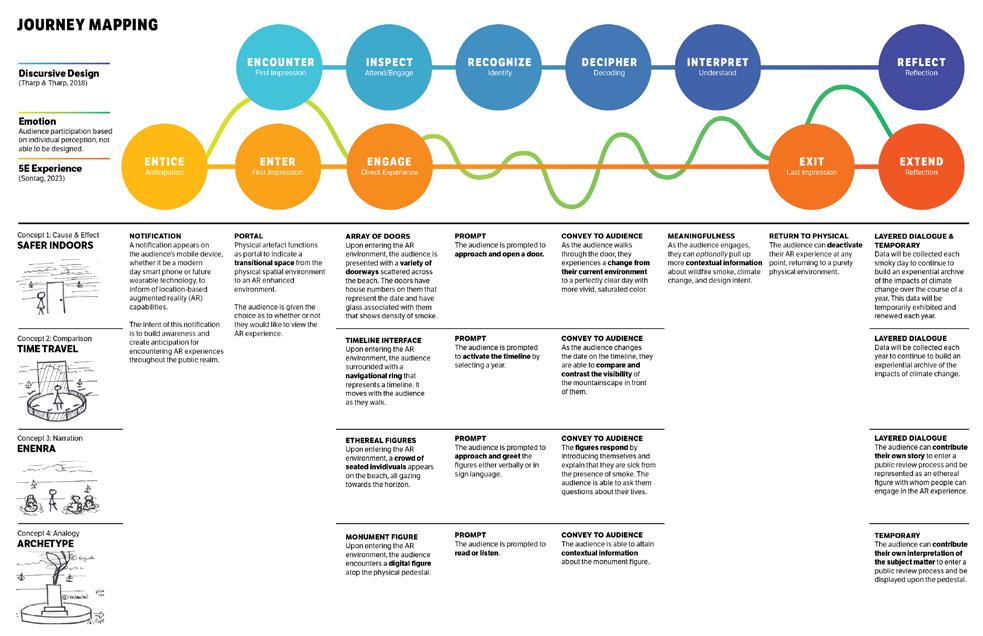
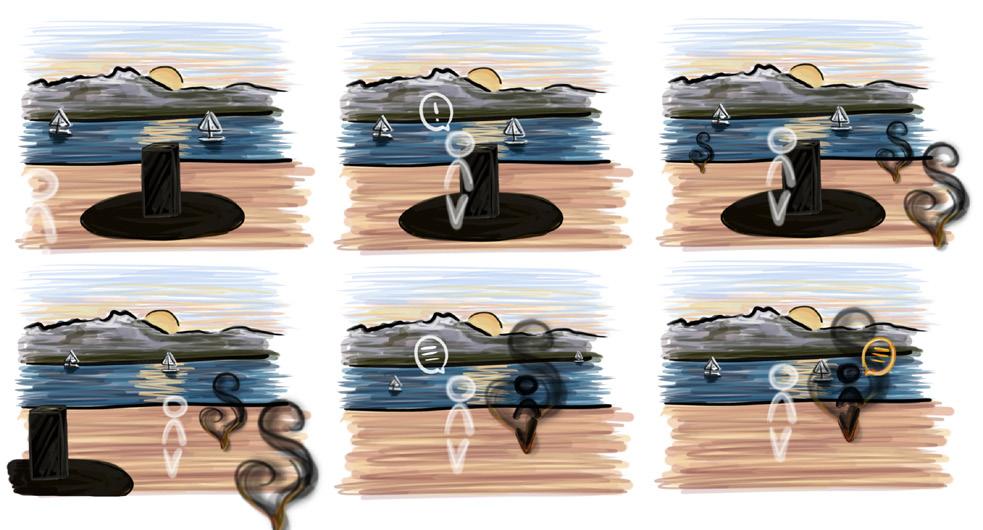







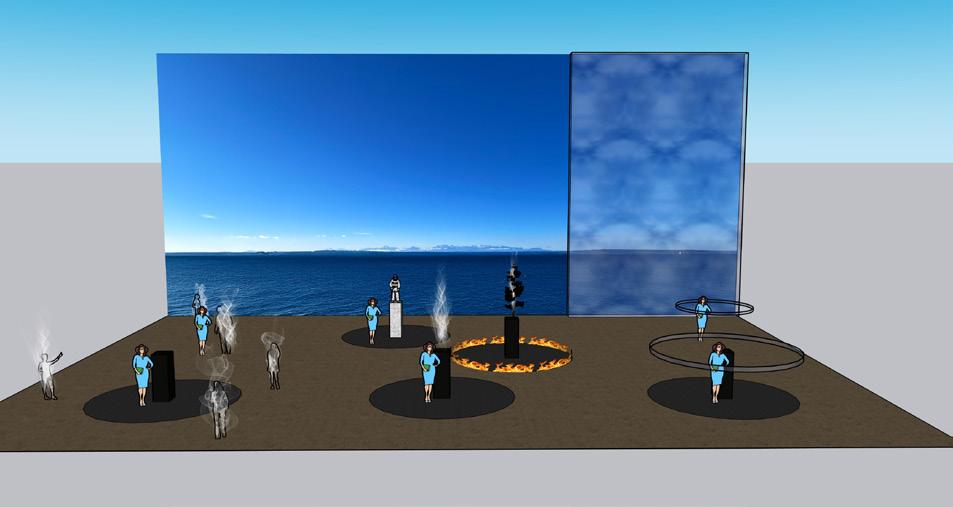
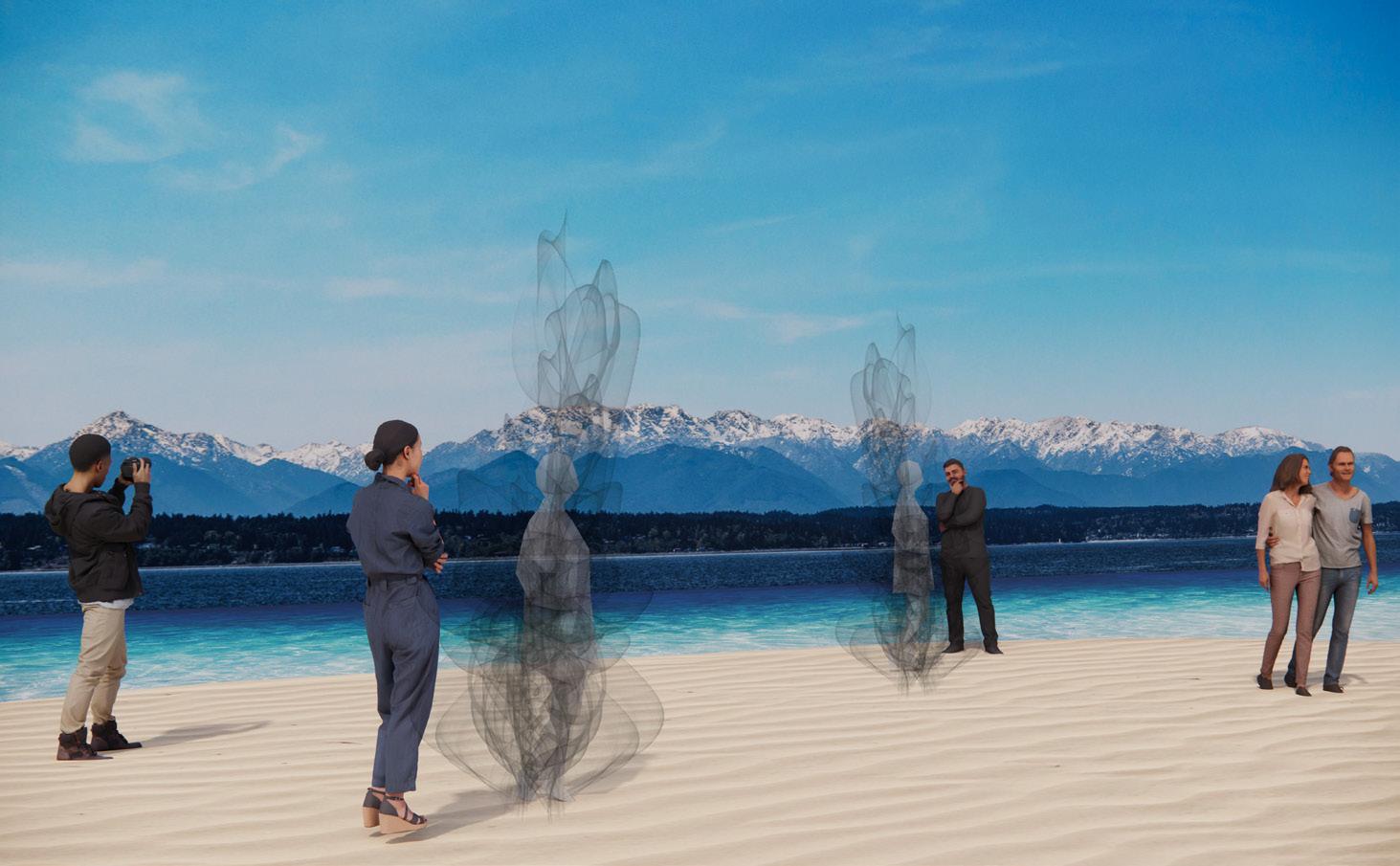
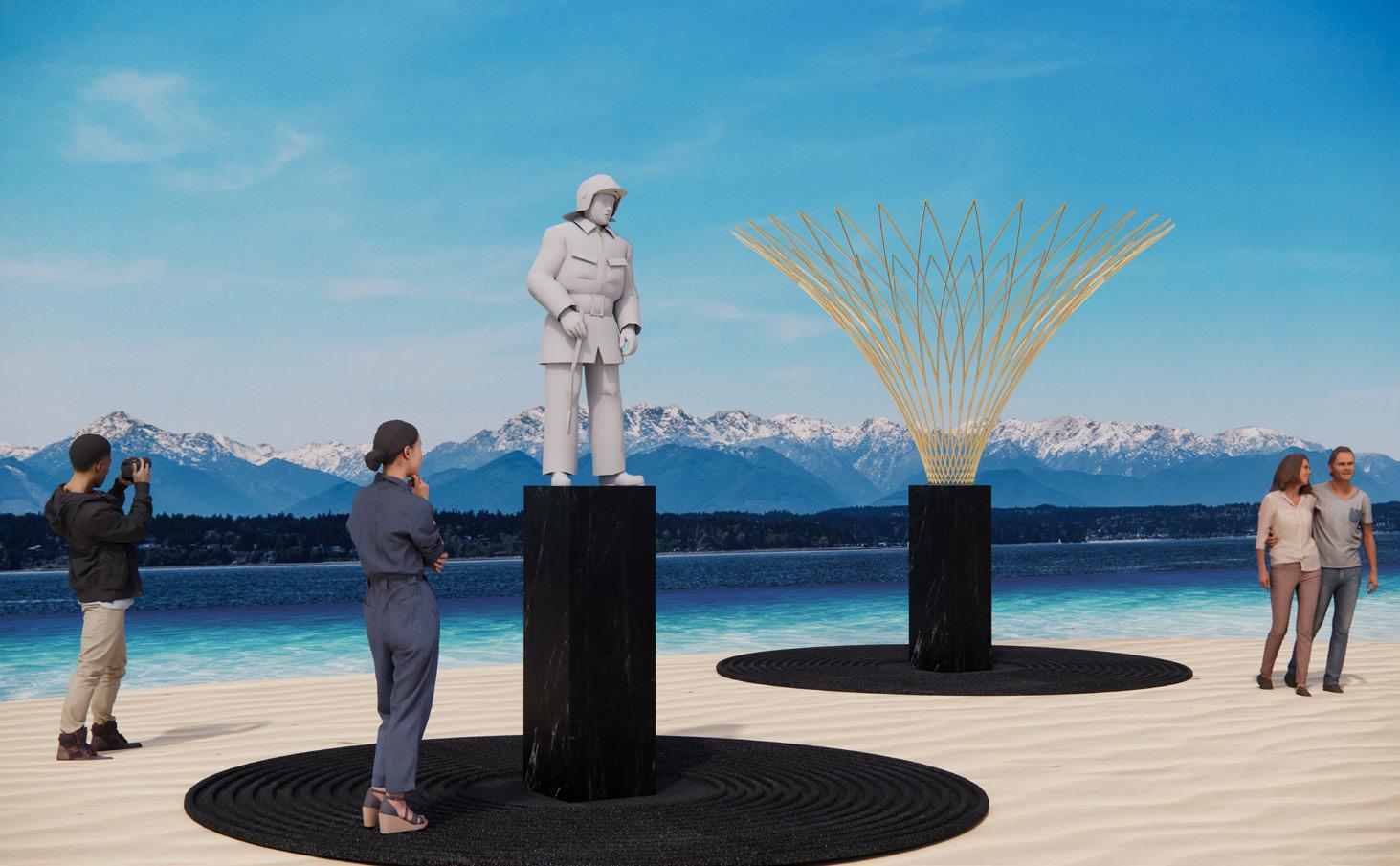
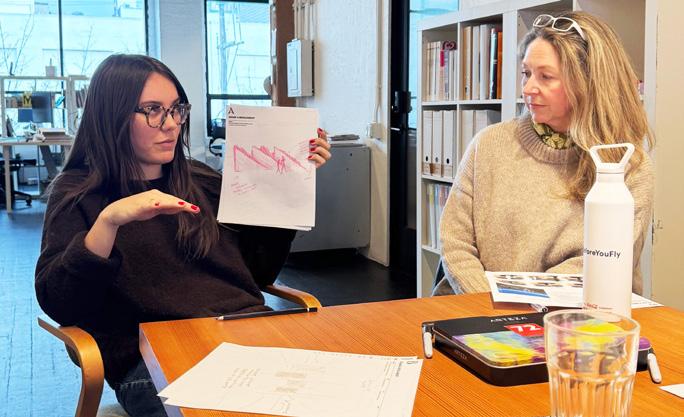
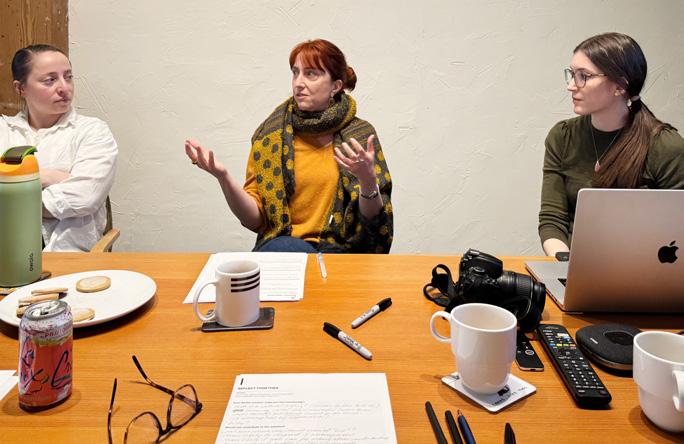
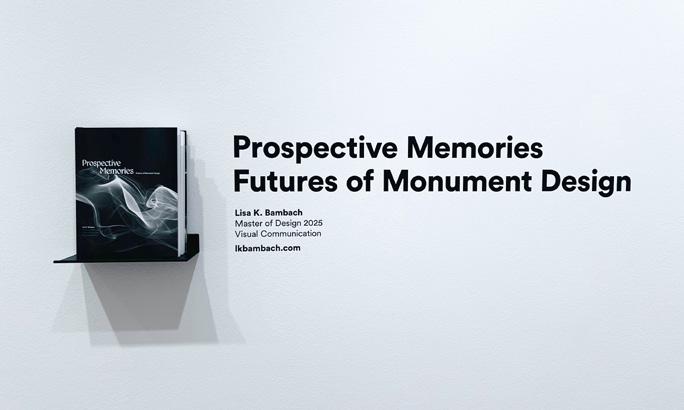
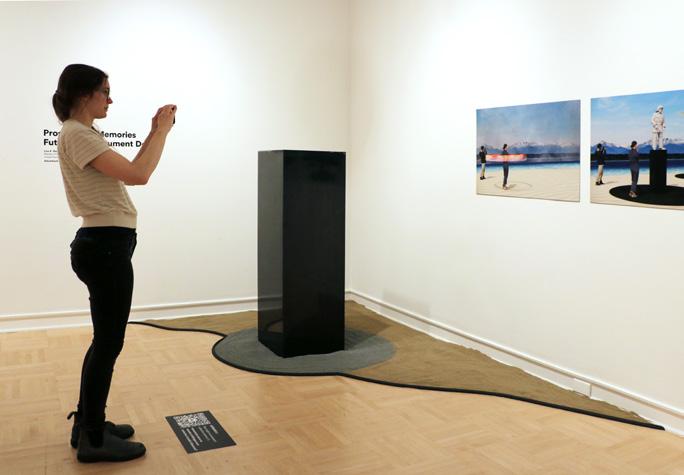
SCENARIO 1
SCENARIO 2
SCENARIO 3
Renderings made in collaboration with Alyssa Parsons
Workshop and immersive exhibtion
Resources
Bleecker, Julian, Nicolas Foster, Fabien Girardin, and Nicolas Nova. The Manual of Design Fiction Near Future Laboratory, 2022.
Burickson, Abraham. Experience Design: A Participatory Manifesto. Yale University Press, 2023.
Conway, Maree. Foresight Infused Strategy: A Howto Guide for Using Foresight in Practice. Self-published, 2016.
Decker, Juilee. Fallen Monuments and Contested Memorials. 1st ed., Taylor & Francis, 2023, doi:10.4324/9781003256076.
Dunne, Anthony, and Fiona Raby. Speculative Everything: Design, Fiction, and Social Dreaming The MIT Press, 2013.
Feddersen, RYAN. “900* Horses.” RYAN!, 30 Mar. 2016, ryanfeddersen.com/900-horses.
Frishberg, Hannah. “Meet the Sculptor Tricking New Yorkers with Art Dedicated to the City’s Fake History.” Gothamist, 15 Dec. 2024, www.gothamist.com/artsentertainment/meet-the-sculptor-tricking-new-yorkerswith-art-dedicated-to-the-citys-fake-history
Greenberger, Alex. “Times Square Statue Thomas J. Price Statue Debate.” ARTnews, 13 May 2025, www.artnews. com/art-news/news/times-square-statue-thomas-jprice-statue-debate-1234741944.
Gregory, Tommy. “Charles Mudede and Tommy Gregory in Conversation on ‘The Rise of Tombstone Public Art and Architecture in Seattle.’” Arcade: Monumental, vol. 41, no. 1, Oct. 2024, pp. 18–31, www.arcadenw.org/ all-magazines/monumental.
Jarausch, Konrad, and Michael Geyer. “A Return to National History? The Master Narrative and Beyond.” Shattered Past: Reconstructing German Histories, Princeton UP, 2003.
Krzyżanowska, Natalia. “The Discourse of CounterMonuments: Semiotics of Material Commemoration in Contemporary Urban Spaces.” Social Semiotics, vol. 26, no. 5, 2016, pp. 465–485, doi:10.1080/10350330.2015.1 096132.
Labode, Modupe. “Reconsideration of Memorials and Monuments.” History News, vol. 71, no. 4, 2016, pp. 7–11, www.jstor.org/stable/44605954
Monument Lab. Interrogating Our Monument Landscape. Mellon Foundation, 2021, www.mellon.org/report/ interrogating-our-monument-landscape.
Mudede, Charles. “The Rise of Tombstone Public Art and Architecture in Seattle.” e-flux, 13 Dec. 2022, www.eflux.com/notes/508924/the-rise-of-tombstone-publicart-and-architecture-in-seattle.
Muren, Dominic. Survey of Design History. DESIGN 208, University of Washington, 2024.
Pedersen, OK. “Paper Monuments.” Tba: Journal of Art, Media, and Visual Culture, vol. 4, no. 1, 2022, pp. 48-62. DOI: 10.5206/tba.v4i1.15026.
Rosenfeld, Gavriel. Munich and Memory: Architecture, Monuments, and the Legacy of the Third Reich University of California Press, 2000.
Stevens, Quentin, and Karen A. Franck. Memorials as Spaces of Engagement: Design, Use, and Meaning Routledge, 2016, doi:10.4324/9781315747002.
Taylor, Philip. Munitions of the Mind: A History of Propaganda. 3rd ed., Manchester University Press, 2003, www.jstor.org/stable/j.ctt155jd69.6.
Tharp, Bruce, and Stephanie Tharp. Discursive Design: Critical, Speculative, and Alternative Things. The MIT Press, 2022.
Times Square. Thomas J Price: Grounded in the Stars. Times Square Official Website, 2025, www. timessquarenyc.org/tsq-arts-projects/grounded-inthe-stars.
Treisman, Rachel. “Poop on Pelosi’s Desk, a Neo-Nazi Tiki Torch: Mysterious Statues Are Popping Up in D.C.” NPR, 31 Oct. 2024, www.npr.org/2024/10/29/nx-s15169978/poop-desk-statue-tiki-torch-national-mall.
Connection
Not Found Exploring Digital Issues with Physical Exhibits
Bamidélé Elégbèdé
Adjunct Professor, Product Design, Drexel University. Founder, RitualShare Lab ritualsharelab@gmail.com
Abstract
“Connection Not Found” is a design curriculum and public exhibition developed to explore the often invisible ways digital technologies shape well-being, relationships, and social behavior. Traditional digital literacy emphasizes analysis and content. This project offers an alternative: an embodied approach grounded in metaphor, sensation, and emotional insight. Developed by Bamidélé Elégbèdé through RitualShare Lab, the curriculum uses the PMFA framework (Phenomenon, Metaphor, Form, Action) to guide students in translating abstract digital tensions into participatory, multisensory exhibits.
In collaboration with SAFELab at the University of Pennsylvania and Kaiser Permanente’s Center for Gun Violence Research, the course invited 14 product design students at Drexel University to investigate issues such as screen addiction, miscommunication, and surveillance. Over the course of ten weeks, students developed four public-facing installations that engaged more than 600 visitors and invited reflection on the emotional and social dimensions of digital life.
This paper positions “Connection Not Found” as a model for embodied digital literacy. By combining sensory storytelling with participatory design, it demonstrates how abstract online issues can become tangible, fostering what the author calls felt knowledge (a synchronicity of touch, feeling, and insight). The work contributes to a broader call for culturally grounded, emotionally resonant methods in design education and digital wellness.
Introduction
Digital technologies and data increasingly shape how we connect, communicate, and make sense of the world, often in ways that are abstract or emotionally disorienting. From screen fatigue and surveillance to online violence and miscommunication, digital challenges resist simple solutions. Traditional approaches to digital literacy tend to emphasize content and analysis, offering more information without addressing how people actually feel and experience life online.
As one Philadelphia school counselor put it: “Most fights at school now start online. Kids don’t argue in person, they argue online, then come to school and fight.”
“Connection Not Found” was developed to respond to that gap. The curriculum emerged through my design lab, RitualShare, and was implemented in partnership with SAFELab at the University of Pennsylvania and Kaiser Permanente’s Center for Gun Violence Research. It reframes digital literacy as a public, participatory, and embodied experience.
This paper introduces “Connection Not Found”, a tenweek design curriculum rooted in the PMFA framework (Phenomenon, Metaphor, Form, Action). The course invited 14 product design students at Drexel University to explore the emotional, social, and sensory dimensions of digital life. Working with metaphor, material, and physical storytelling, students transformed complex digital tensions into four public installations.
What follows outlines the theory of embodied learning that grounds the curriculum, unpacks how PMFA supports the development of felt knowledge (a synchronicity of touch, feeling, and insight), and shows how exhibit design can reimagine digital literacy as a culturally grounded, emotionally resonant, and socially responsive educational practice.
Theoretical Foundations
The PMFA (Phenomenon, Metaphor, Form, Action) framework emerged from the author’s work at the Exploratorium in San Francisco, a museum of art, science, and human perception. It was developed in response to a recurring challenge: How can we translate abstract, systemic issues into visitor-ready experiences that engage the body, not just the mind?
Rooted in constructivist learning theory (Dewey, 1938) and the principles of embodied cognition (Varela et al., 1991), PMFA uniquely bridges conceptual understanding with direct sensory engagement. It treats metaphor not just as a literary device, but as a powerful cognitive tool, echoing Lakoff and Johnson’s (1980) foundational work on how metaphors fundamentally shape thought and perception. This approach acknowledges that deeper understanding often arises from direct, physical interaction with ideas.
The PMFA Framework
PMFA acts more like a guiding philosophy than a rigid procedure, offering flexibility in how its principles can be applied. Designers can begin from any point; what matters is that all four elements are ultimately present. When these elements are thoughtfully combined, they help build experiences that hold significant emotional, conceptual, and spatial weight. The elements are:
• Phenomenon: Start by identifying a lived tension, behavior, or moment that feels worth exploring.
• Metaphor: Reframe that phenomenon through a metaphor that adds clarity or emotional resonance.
• Form: Translate that metaphor into physical materials, space, or sensory interaction.
• Action: Invite the participant into the experience through movement, decision-making, or emotional realization.
The strength of PMFA lies in its simplicity. Students are not asked to solve digital problems; they are asked to make them felt. This process cultivates “felt knowledge.”
“You can read about fire all day, but until you light a match, you don’t feel heat.”
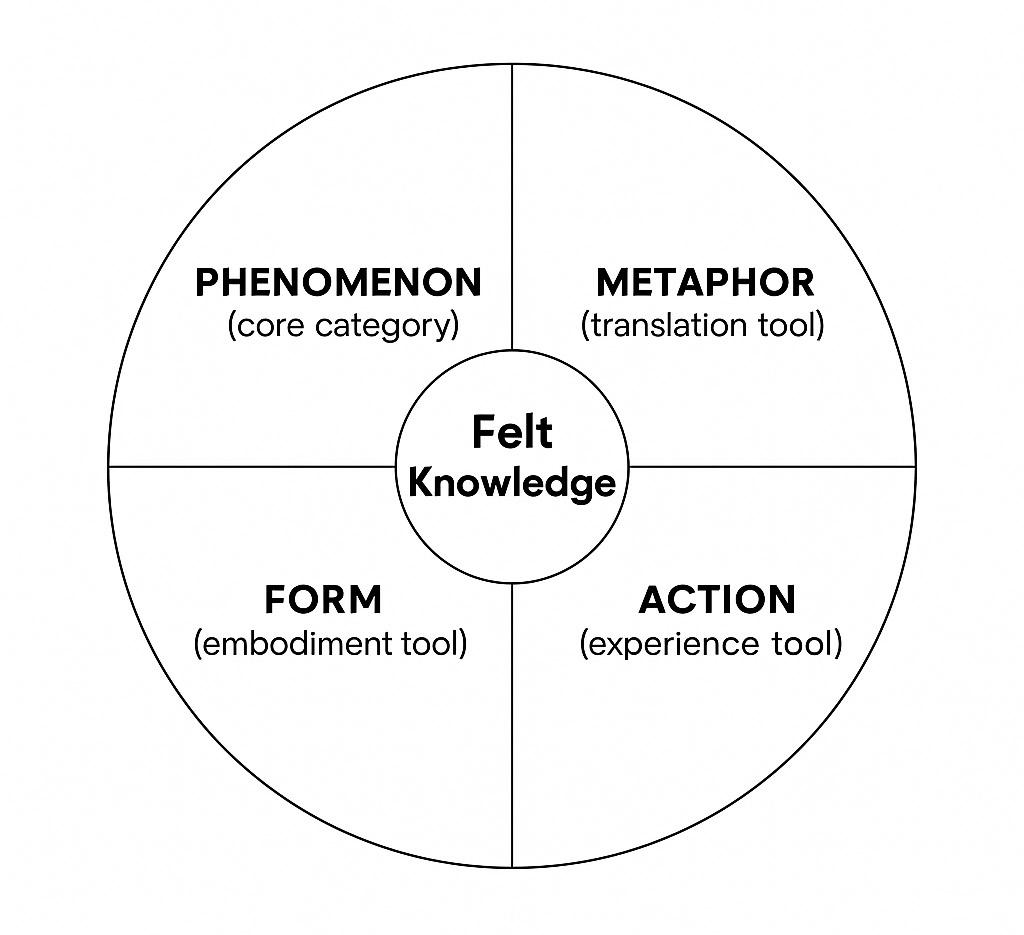
(Developed by RitualShare Lab).
“PMFA is a tool for designing Felt Knowledge: a synchronicity of touch, feeling, and insight.”
Fig. 1: PMFA framework – Phenomenon, Metaphor, Form, Action.
Embodied Learning
Three core pedagogical approaches shaped both the PMFA framework and the tone of the course:
• Constructivist Learning: People build understanding by doing. Sensory interaction and material exploration are not add-ons; they are central to cognition.
• Inquiry-Based Learning: Students learn best when they lead their own investigations. Curiosity, reflection, and iteration deepen insight over time.
• Art as Investigation: Aesthetic materials (light, shadow, sound, movement) are tools for thinking. Emotional resonance is a form of knowledge.
These values encouraged students to move beyond explanation and into expression, designing experiences that others could feel their way through.
Design for Inclusion
To support engagement and audience diversity, the course integrated research from the EDGE project (Exhibit Designs for Girls’ Engagement), which identified nine exhibit attributes that support inclusive, intuitive participation, especially for girls and groups historically underrepresented in STEM spaces (Garcia-Luis & Dancstep, 2019). These attributes emphasize interaction that feels natural, playful, and socially supported.
Several EDGE principles informed how the course framed design possibilities and guided student exploration:
• Exhibit Labels: Included drawings and visual cues to support intuitive use.
• Exhibit Look and Feel: Designs favored familiar, personal, or delicate aesthetics, including homey materials, soft edges, and intimate scale, and aimed for playfulness over precision.
• Exhibit Interactions: Encouraged multi-sensory engagement (touch, sound, movement), supported observation and group participation, and avoided singular “correct” outcomes.
These inclusive choices helped students design spaces that welcomed different ways of knowing. Each exhibit balanced conceptual clarity with emotional accessibility, allowing visitors to feel their way in, stay longer, and leave with more questions than answers.
Embodied Wayfinding
While living in Hawai‘i during the COVID-19 pandemic, the author studied with Uncle Kimokeo Kapahulehua of the Hawaiian Outrigger Canoe Voyaging Society. His teachings revealed that wayfinding is more than navigation (it is a metaphor for life, rooted in social values, relational awareness, and collective care).
The Hawaiian proverb “He wa‘a he moku, he moku he wa‘a” (“The canoe is an island, and the island is a canoe”) expresses a worldview of deep interdependence. The canoe itself becomes an inquiry tool for society. Each part holds meaning: Hull (Community), Sail (Aspirations), Mast (Values), Paddle (Action), Outrigger (Support), Rope (Unity), Seat (Role), Ballast (Wisdom), Crew (Society).
This structure offers more than metaphor; it gives people a shared language for navigating challenges. It cultivates embodied understanding by aligning physical function with cultural intention.
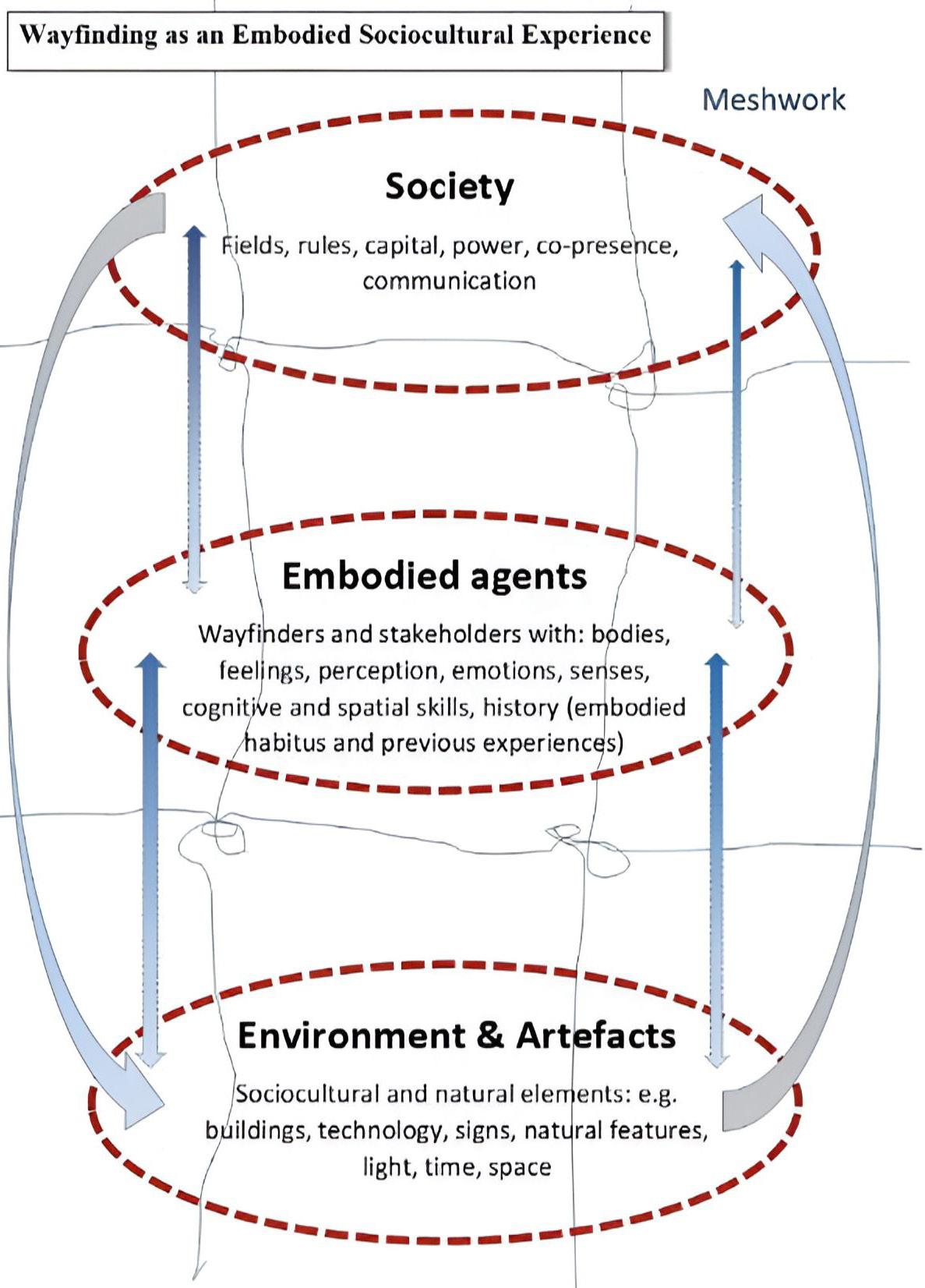
Fig. 2: Wayfinding as embodied experience (adapted from Symonds et al., 2017).
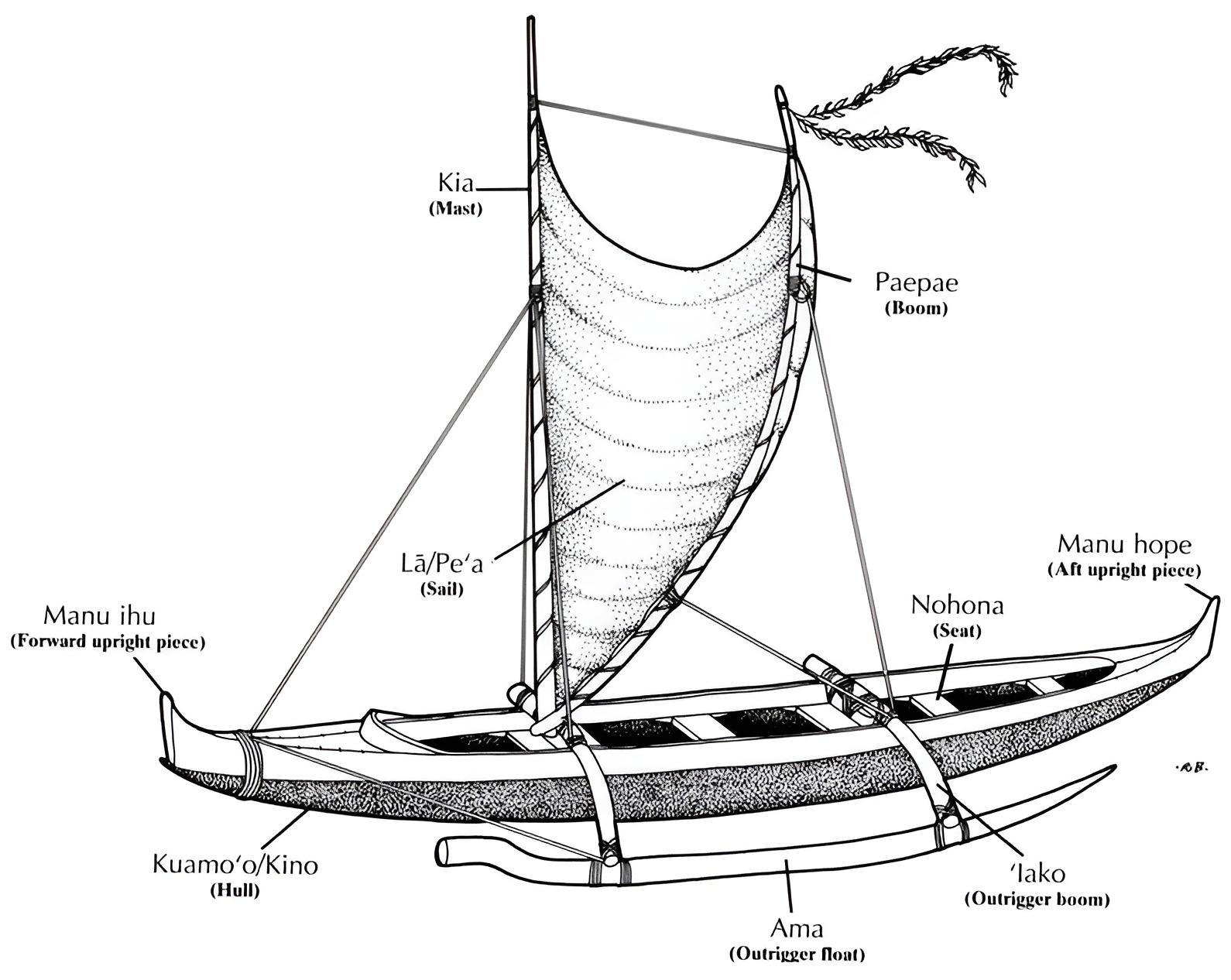
Fig. 3: Hawaiian outrigger canoe parts – metaphor for social values Each component reflects both functional and metaphorical significance: Hull (Community), Sail (Aspirations), Mast (Values), Paddle (Action), Rope (Unity), Seat (Role), Ballast (Wisdom), and Crew (Society). (Image: https://www.wearevoyagers.org/canoe-parts).
“Wayfinding is an embodied sociocultural experience. It links the body, society, and the environment.”
(Symonds, Brown, and Lo Iacono 2017)
Curriculum Implementation
“Designing for Digital Well-Being” (PROD 340: Interdisciplinary Product Design Studio) was a ten-week course taught at Drexel University. Fourteen students met twice weekly in a hands-on studio environment.
The course challenged students to co-create a public exhibition titled “Connection Not Found.” We began by screening Olafur Eliasson: The Design of Art (Netflix), then analyzed his work together using the PMFA framework. I guided students through identifying core components (Phenomenon, Metaphor, Form, and Action), introducing PMFA as both a creative and analytical tool. Students then selected exhibits of personal interest and used PMFA to break down sensory triggers, spatial layout, narrative structure, and interaction models.
Throughout the course, students worked in teams, presented to external stakeholders, and participated in critiques, museum visits, and technical coaching. Coursework included project management, prototyping, and reflection.
Assessment was based on participation and process (40%), teamwork and development (30%), and the final exhibition and paper (30%). Through this rhythm of critique and public engagement, students moved from abstract digital questions to embodied experiences that others could feel.
Phase 1: Personal Inquiry
The course began with students identifying personal digital challenges (what the PMFA framework calls phenomena) through embodied inquiry. Using the “Connected Conversations Workbook,” they mapped their daily physical and digital rituals, noticing where tension, contradiction, or confusion emerged. These reflections surfaced powerful entry points.
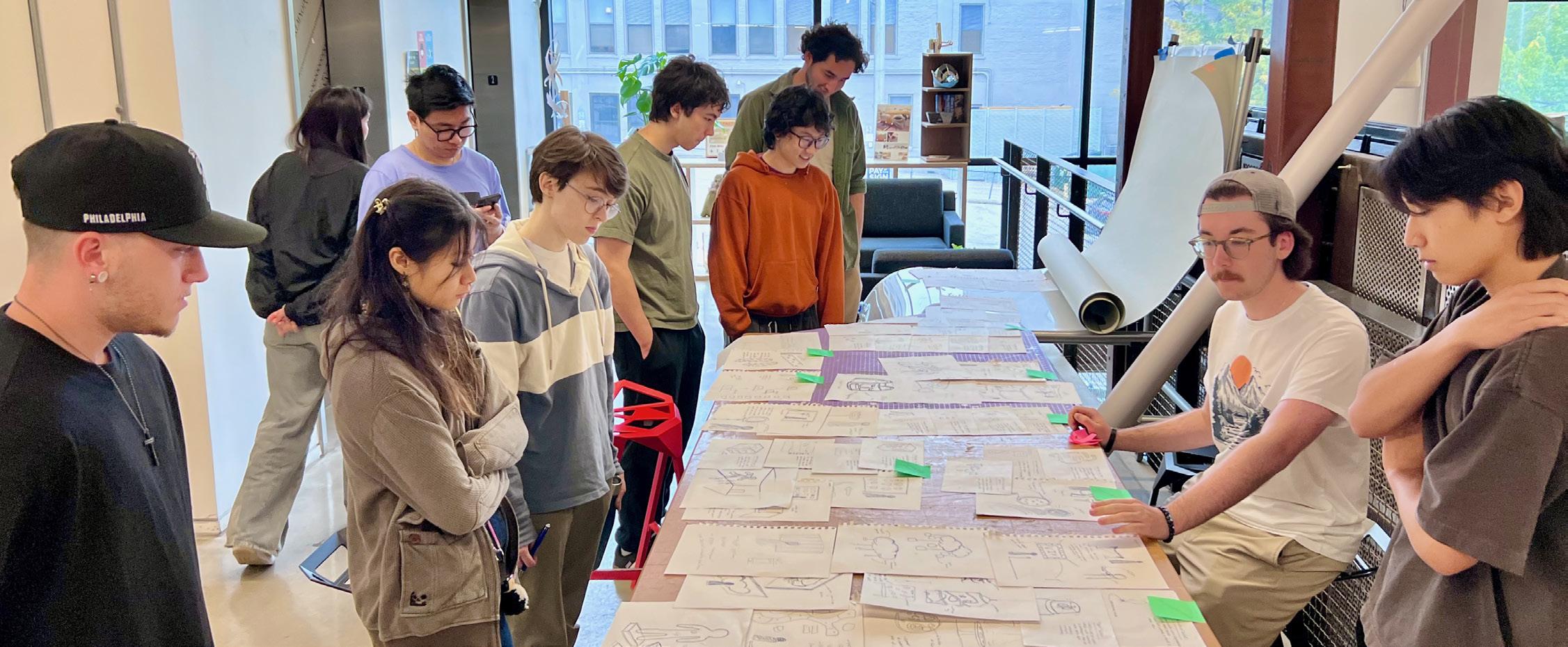
Fig. 5: Students presenting early exhibit concepts during critique.
Fig. 4: “Connected Conversations Workbook” (by SAFELab + RitualShare)
A pivotal shift occurred during a guest lecture by Dr. Desmond Upton Patton, founding director of SAFELab and a pioneer in examining how social media reflects and shapes real-world violence. His CASM (Contextual Analysis of Social Media) framework foregrounds culture, nuance, and empathy, elements often stripped away by algorithmic analysis. One student reflected:
“I never thought about miscommunication as being connected to real-world violence before Dr. Patton’s talk. It made our design work feel urgent, not just academic.”
Student
Phase 2: Constraints and Teams
By week three, students had generated over 400 concepts. This expansive ideation process helped them better understand the digital phenomena that resonated most, testing emotional depth, social relevance, and creative direction through sheer volume.
But big ideas alone weren’t enough. Many were technically unbuildable. To support translation into form, the course introduced clear constraints: projects had to be simple, avoid advanced technology, be designed for fabrication, and remain within a set budget.
These constraints served as creative boundaries, offering structure, not limitation. They shifted students from conceptual overload to embodied clarity.
Four core themes emerged:
• Information Overload
• Digital Miscommunication
• Screen Addiction
• Surveillance and Privacy Teams formed organically around these core themes and began shaping metaphor into experience. For many, it was their first time building exhibits or collaborating in a fabrication studio.
Phase 3: Fabrication and Installation
Weeks 5 through 10 were spent building. Students tested materials, navigated budget limits, and developed fabrication skills that many had never used before. Ideas became physical through cardboard, light, wood, mirrors, and sound.
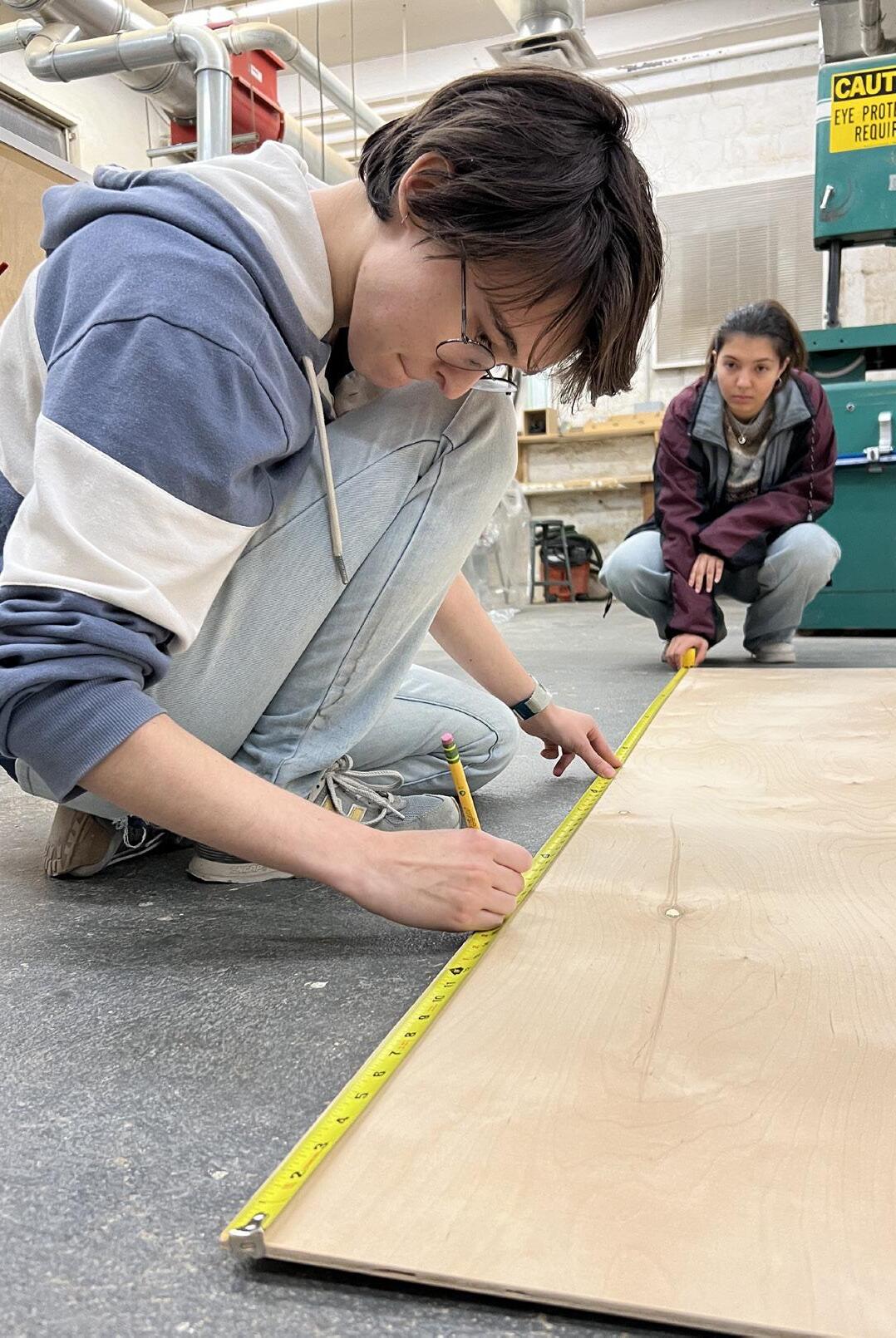
Fig. 6: Students working in fabrication lab.
In the final weeks, the four teams installed their exhibits in the Drexel University Westphal College lobby, an active, high-traffic space where students passed through on their way to class. Over ten days, more than 600 people visited, including faculty, students, families, and community partners. Visitors laughed, paused, and reflected. The work spoke for itself, yet it came from a deep process.
Students engaged in weekly critiques, schematic reviews, and prototyping cycles. They practiced stakeholder presentations, collaborated across disciplines, and adapted to constraints like budget, materials, and time. The exhibit’s placement offered a rare chance to observe how the public interacted with their work, sparking real-time insights and iteration. They wrote reflection prompts, planned evaluation strategies, and considered accessibility at every touchpoint. In the end, they learned not just to build exhibits but to shape dialogue, perception, and care in a digital world.
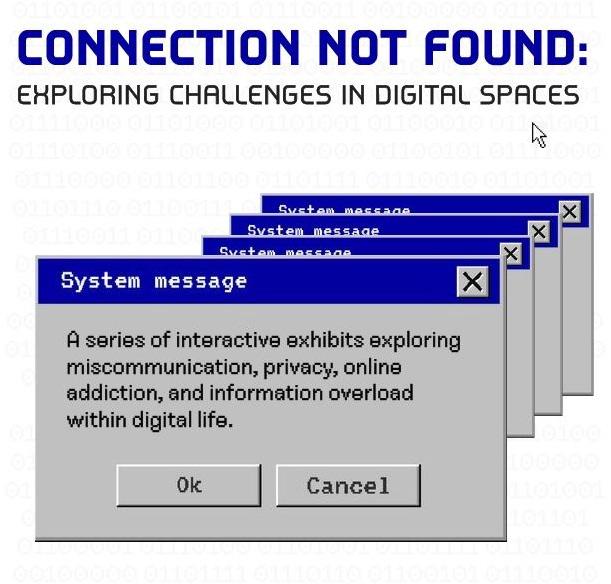
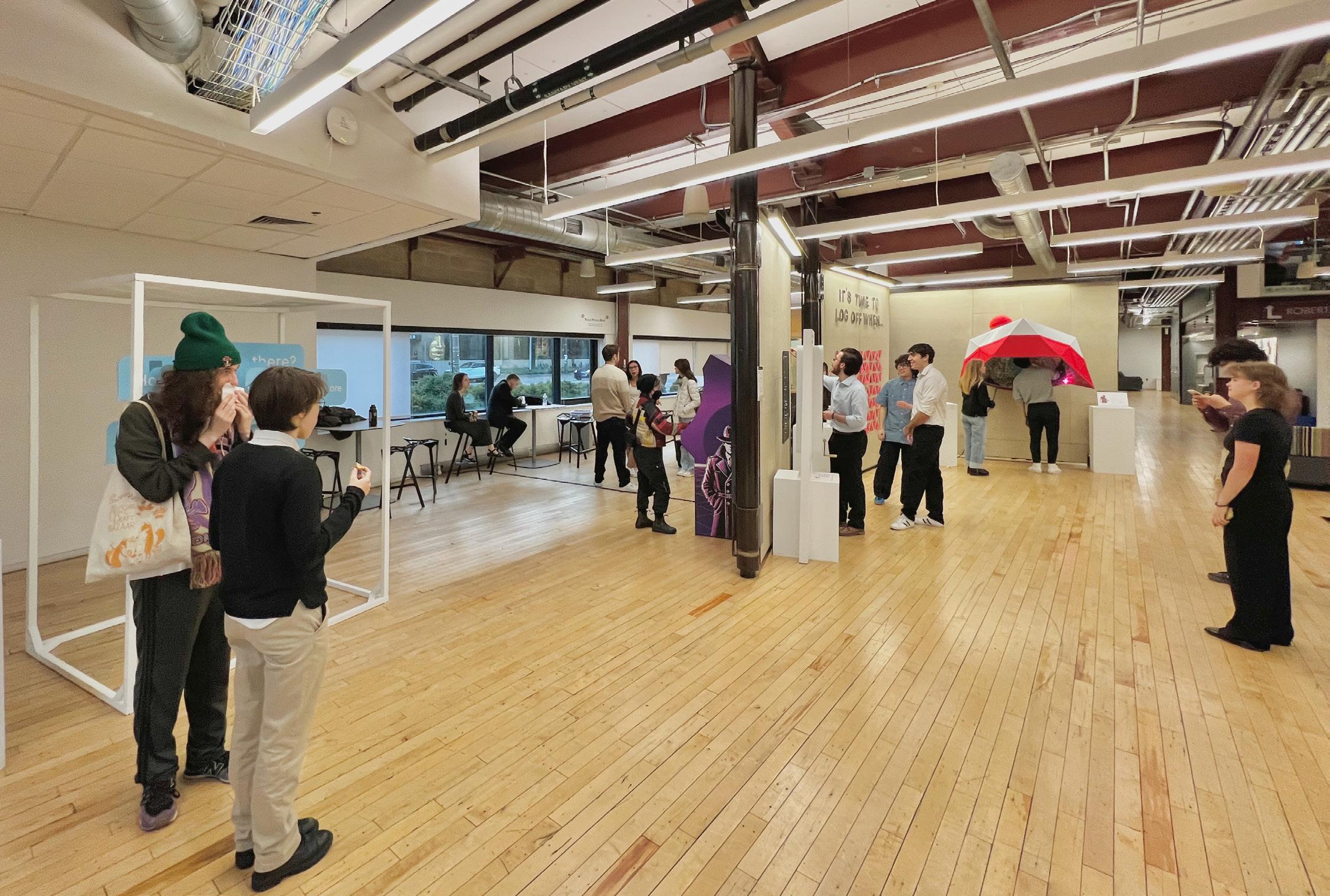
Fig. 8: “Connection Not Found” exhibition on display in the Drexel University Westphal College lobby, showcasing four student-designed interactive exhibits.
Fig. 7: Exhibition flyer for Connection Not Found. (designed by students to invite the public).
Student Exhibits
Four final installations demonstrate how the PMFA framework can translate abstract digital dilemmas into embodied experiences that cultivate felt knowledge.
Exhibit 1: “Hey”
“What comes to your mind when you get a text that says ‘hey’?”
The “Hey” exhibit examined how brief, context-poor digital messages can lead to miscommunication and emotional uncertainty. Students explored the ambiguous power of a single word.
Team: Hannah Watson, Kai Thompson, Morgan Tiziker
• Phenomenon: Digital Miscommunication
• Metaphor: The text message “hey” as a container for multiple, conflicting interpretations.
• Form: A suspended, layered sculpture of wooden speech bubbles that aligned from one specific angle to spell “hey.” From other angles, the message fragments.
• Action: Visitors moved around the piece to shift their perspective, discovering how small changes in position altered the meaning they perceived.
This exhibit taught students about spatial storytelling, perspective, and the emotional weight of ambiguity.
“I realized design isn’t just about making something look nice. It’s about creating a specific experience.”
Student
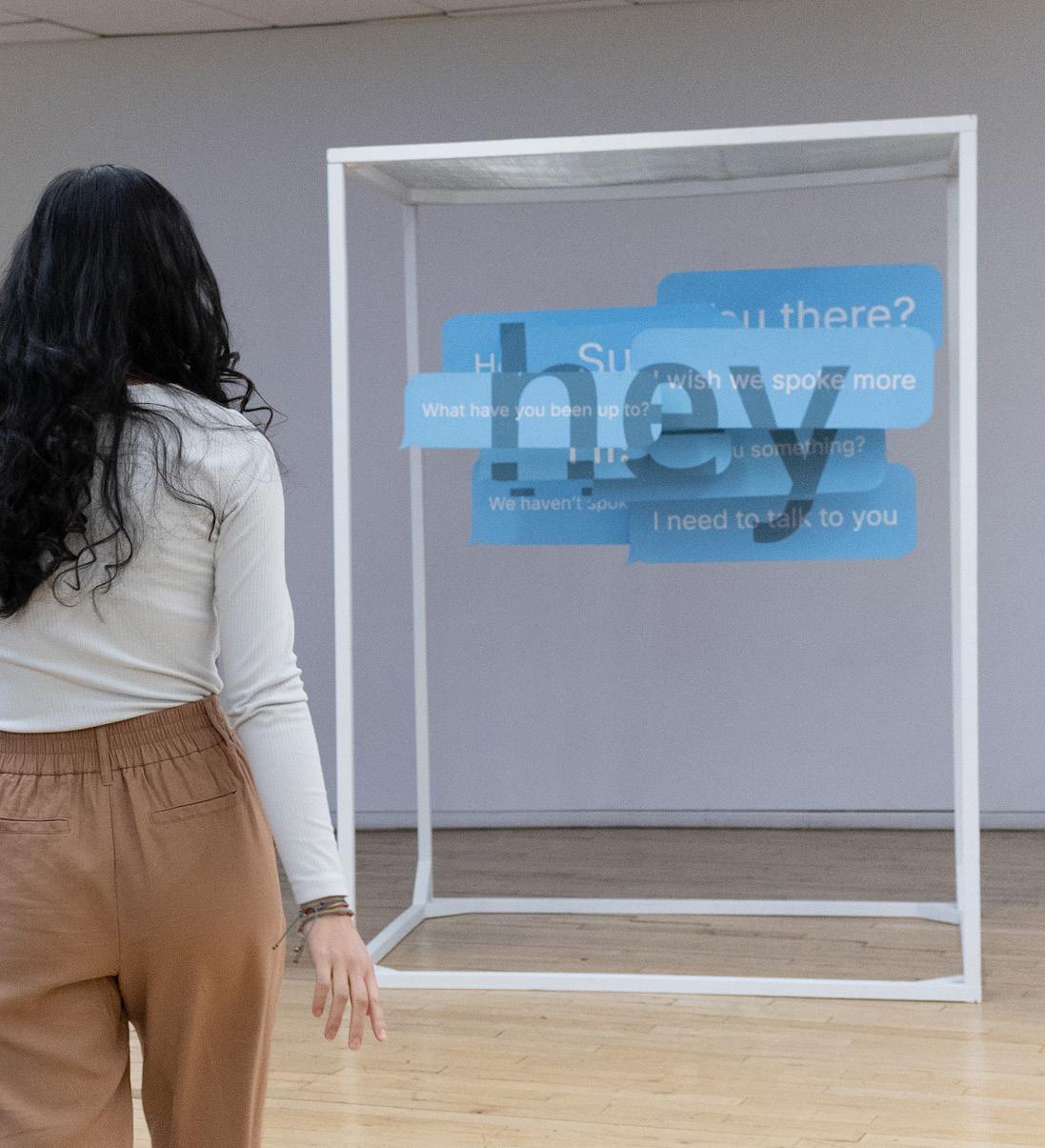
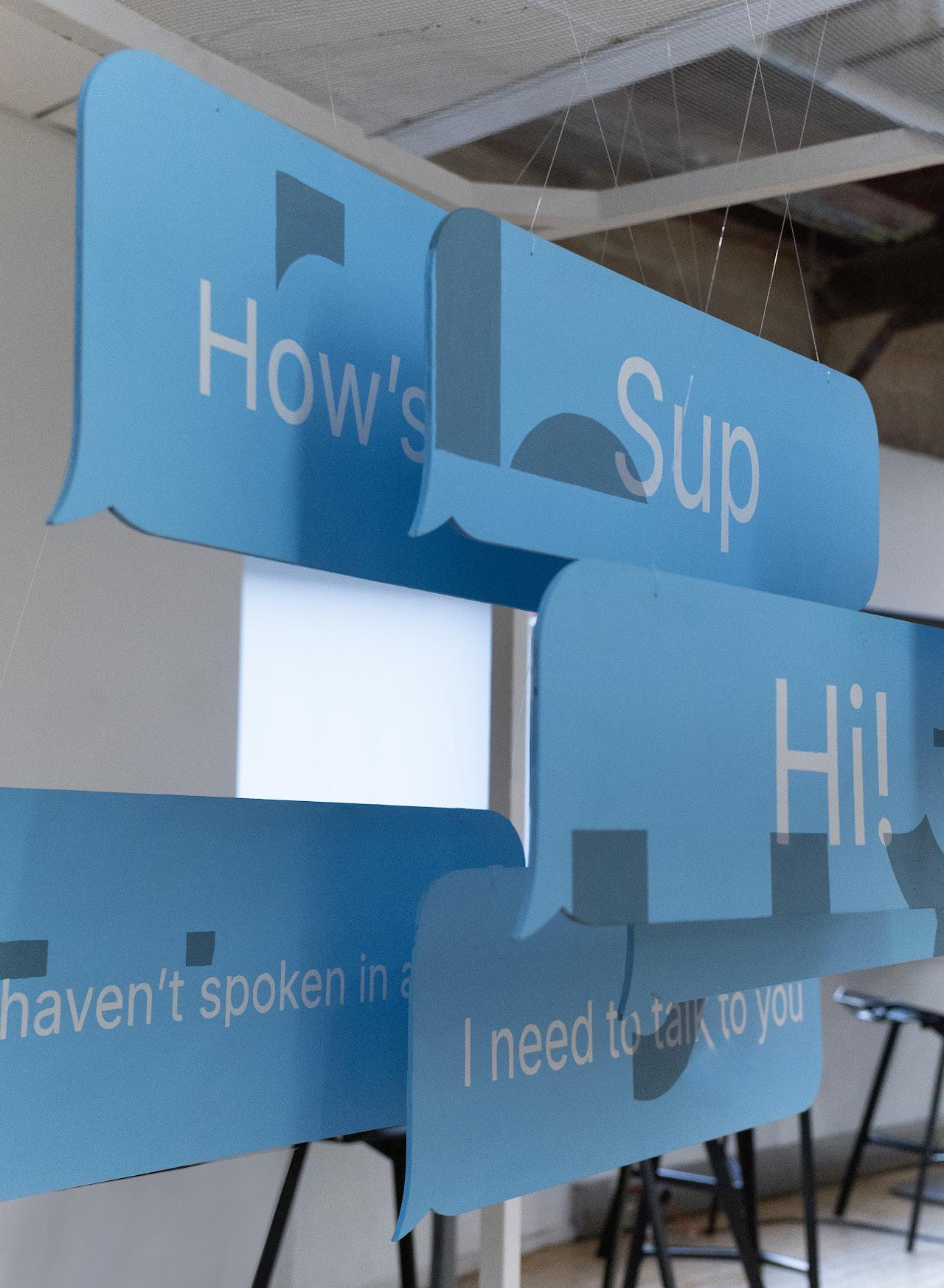
Fig. 9: “Hey” exhibit.
Fig. 10: Close-up of “Hey” exhibit’s speech bubbles.
Exhibit 2: “Tube of Time”
“What’s your daily screen time?”
”Tube of Time” invited visitors to confront their screen habits through a physical, participatory experience. By manually pumping water into a tube shaped like a phone, guests visualized the time they spend online each day,
Team: Mecham Lopez, Clara Wawrzyn, Christopher Franklin
• Phenomenon: Online addiction
• Metaphor: “Pouring time down the drain.”
• Form: Phone-shaped kiosk with rotary water pump, referencing Apple’s “Screen Time” interface.
• Action: Visitors turned a crank to fill the tube to their average daily screen time, then read a fun fact (e.g., 4 hr 24 min = “Watch The Lion King three times”).
The team uncovered their metaphor through reflection: “We were talking about how time disappears online, and someone joked it felt like pouring water down the drain… and it just clicked.” Building the interactive mechanism deepened students’ understanding of mechanical systems, but more importantly, it revealed how embodiment strengthens self-awareness.
“Talking about screen addiction is one thing, but physically pumping that ‘time’ into a tube made it so much more real.”
Student
Fig. 11: “Tube of Time” exhibit.
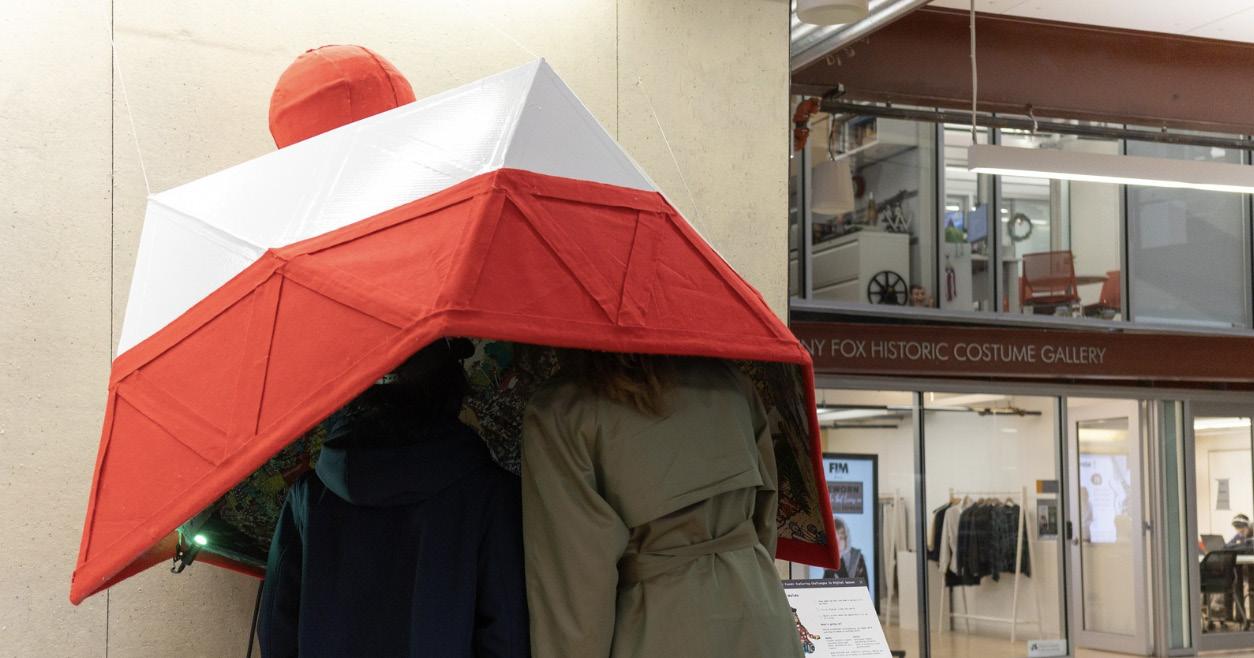
Exhibit 3: “How’s
Waldo?”
“It’s time to log off when...”
The “How’s Waldo?” exhibit recreated the sensation of digital overstimulation through an immersive dome. Visitors searched for Waldo while bombarded by flashing lights, overlapping sounds, and layered smells, capturing the sensory chaos of life online.
• Information Overload
Team: Ryan Yahata, Isabella Cuares, Kate Allinson, Kevin Nguyen
Exhibit 4: “I Spy”
“Are you being watched?”
The “I Spy” exhibit addressed digital surveillance through an arcade-style interaction. Visitors used a joystick to control a surveillance camera mounted above the exhibition. Guided by mission cards like “find a person on their phone,” participants explored how watching and being watched shapes behavior, awareness, and power.
• Surveillance and Privacy
Team: Rafael Bernstein, Eli Galdieri, Isaac Kreisman, Nathan Lee.
Fig. 13: “I Spy” exhibit.
Fig. 12: “How’s Waldo?” exhibit.
“This
made me realize how much digital life shapes my mood.”
Exhibition visitor
Conclusion
The “Connection Not Found” curriculum is part of a growing shift toward physical, participatory interventions that address the emotional and ethical complexity of digital life. Projects like Tactical Tech’s “The Glass Room” and “Data Vandals” by Jen Ray and Jason Forrest demonstrate how experiential approaches can surface urgent truths.
What unites these efforts is a refusal to rely on explanation; they work through sensation, story, and surprise. They ask us not just to learn, but to feel.
This curriculum and the PMFA framework behind it invite educators, designers, and institutions to consider how learning can become more embodied, more emotional, and more communal, especially when the subject is as invisible and all-encompassing as digital life.
When students build with their hands, wrestle with metaphors, and invite strangers to touch their ideas, something changes (learning sticks). The issues become human again.
“Connection Not Found” shows that when we teach students to make the abstract tangible and the invisible felt, they begin to understand not just the problem but themselves. PMFA gives them the tools, and the process feeds them something rarer still (the belief that they can design for clarity in a confusing world).
As design educators, our role is not only to train professionals, but to shape perceivers—people who can look at the world and say, “I understand this because I have felt it.” Future research might explore how PMFA can be scaled across disciplines or used in communitybased educational settings.
Resources
“Olafur Eliasson: The Design of Art.” Abstract: The Art of Design, created by Scott Dadich, season 2, episode 1, Netflix, 2019. Netflix, www.netflix.com/title/80057883.
Tactical Tech. “The Glass Room.” Tactical Tech, theglassroom.org/.
Awe Curation. “Awe-Inspiring Learning Experiences.” Awe Curation, https://awecuration.com/.
Exploratorium. “What is Inquiry?” Exploratorium Teacher Institute, Exploratorium, www.exploratorium.edu/ education/ifi/inquiry.
Exploratorium. “Exhibit Designs for Girls’ Engagement (EDGE).” Exploratorium, www.exploratorium.edu/ education/research-evaluation/edge.
Acknowledgments
This curriculum was shaped through the support of multiple partners. SAFELab at the University of Pennsylvania provided critical insight into how online expression connects to real-world violence and care. Additionally, The Penn Trauma Violence Recovery Program helped link student design work to the lived experiences of patients and frontline practitioners, and Kaiser Permanente contributed a public health lens through its ongoing work in gun violence prevention.
Drexel University’s Westphal College of Media Arts & Design offered institutional support, fabrication resources, and the educational space for this work to unfold. RitualShare Lab developed the curriculum, bringing in practices of cultural storytelling, embodied design, and participatory ritual that anchored the experience in care and meaning.
The 14 students of PROD 340 showed exceptional creativity, vulnerability, and determination in translating complex digital issues into embodied experiences. Finally, the community members who shared their stories, visited the exhibition, and engaged with student work made this project truly come alive, reminding us that transformation begins in conversation.
The Collective A remote peer-support platform
Keira Wong UI/UX Designer at XIRCLS
MA Experience Design, BS Computer Science, California State University, Long Beach
Abstract
The Collective is a VR- and web-based remote peersupport platform with an AI assistant that was designed, co-developed, and published on Spatial.io in 2024 by Keira Wong as part of her master’s thesis design project in collaboration with a back-end developer, Jacob Delgado, and under the counsel of faculty and trauma treatment specialists at the California University of Long Beach School of Art, along with the Department of Design and Psychology.
This paper presents The Collective, a novel, hybrid approach to address three main barriers to trauma support: (1) access to care, (2) lack of social support, and (3) stigma around seeking help.
To improve access to care, The Collective challenges traditional models which rely on a single provider for support (i.e. a single therapist, AI, or peer) by introducing a decentralized, peer-to-peer support system. A hybrid model of human, volunteer, and AI facilitators provides adults exposed to trauma with 24/7 access to support. Unlike newer interventions, these virtual spaces are made accessible across multiple devices—including phones, laptops, and VR headsets—using WebGL, reducing reliance on professional availability, insurance coverage, and costly hardware. To provide social support, The Collective remotely connects adults with others who share their unique traumatic experiences. This enables them to easily find, share, confide in, and engage with people exposed to the same traumas despite geographical constraints. Individuals are able to share narratives, connect emotionally, rebuild trust, and learn to cope as a community — key to a Communalization of Trauma (CoT) approach. The result is a safe, judgement-free space that promotes moving out of isolation and working towards reintegrating into society through mutual support and acceptance. To combat stigma, the platform supports anonymous, structured, stigma-free dialogue within immersive, virtual spaces. This provides anonymity, combined with user control over their interactions and surroundings, and lowers the psychological barriers often associated with help-seeking.
Following the Double Diamond methodology, the project addressed barriers through discovery, definition, development, and delivery phases. These included literature reviews, user research, case studies, competitive analysis, subject matter expert consultations, and usability testing.
User testing demonstrated measurable increases in perceived access to mental health resources, social support, and comfort in sharing feelings with strangers in group settings, validating the efficacy of The Collective as a promising, innovative, and experiential design intervention.
Introduction
The need for trauma support is rising, however accessibility challenges and stigma are getting in the way.
Trauma is one of the top three mental health disorders to have spiked since the pandemic — aside from anxiety and depressive disorders — according to the American Psychological Association’s (APA) 2023 Practitioner Pulse Survey.1
Half of Americans live in a Mental Health Professional Shortage Area (MHPSA) —with affordability, clinician burnout, and reimbursement limitations worsening the crisis, as noted in the Bureau of Health Workforce’s (BHW) 2023 analysis. 3
To make matters worse, stigma is the third leading global barrier to PTSD treatment — including feelings of isolation, fear of judgement, and need to feel in control — according to the Journal of Global Health Action’s “Barriers for PTSD Treatments.”
Secondary Research
Demographics
A 2023 Forbes Health article, “PTSD Statistics and Facts: How Common Is It?,” shows PTSD largely affects 3 major groups:
Adults aged 18-44 show a higher prevalence of PTSD (14% collectively) compared to older adults (12% collectively) — mostly due to experiencing major life changes during early adulthood. Forbes also notes women (with an 8% prevalence of PTSD) are “two to three times more at risk” of developing PTSD than men, and more likely to experience trauma from “rape, sexual assault, or childhood sexual abuse.” In comparison, an estimated “7% of veterans will have PTSD” at some point in their lives, versus only 6% of the general population. Men are more likely to experience trauma from “physical violence, combat, accidents, or disaster” than women.
However, it’s important to note this problem extends further than these 3 major groups. In fact, 9 in 10 Americans experience at least one traumatic event in their lifetime (Kilpatrick, Dean G., et al, 2013).
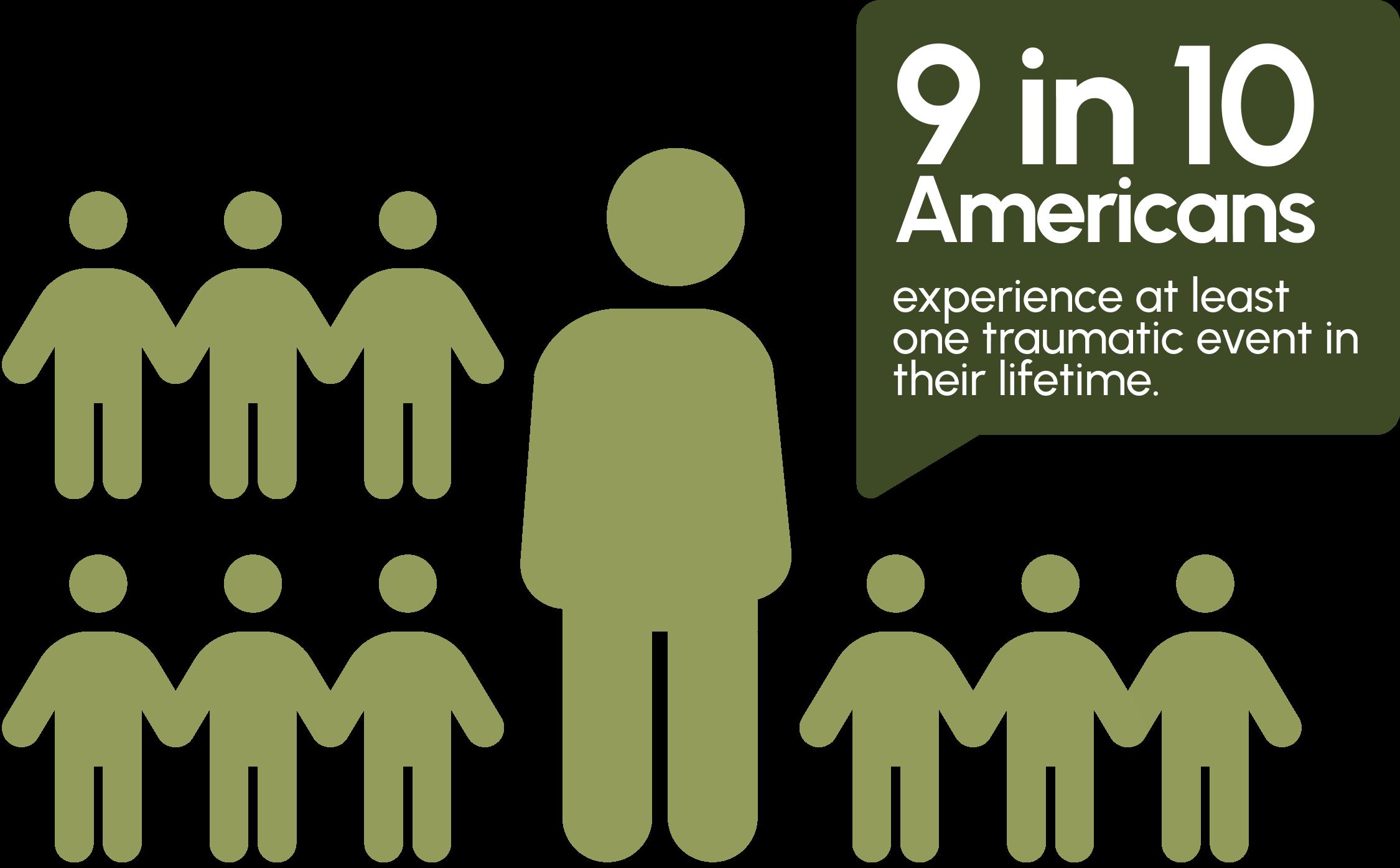
Kilpatrick, Dean G., et al. “National Estimates of Exposure to Traumatic Events and PTSD Prevalence Using DSM-IV and DSM-5
Criteria.” Journal of Traumatic Stress. National Center for Health Statistics. “National Health Interview Survey.” CDC.
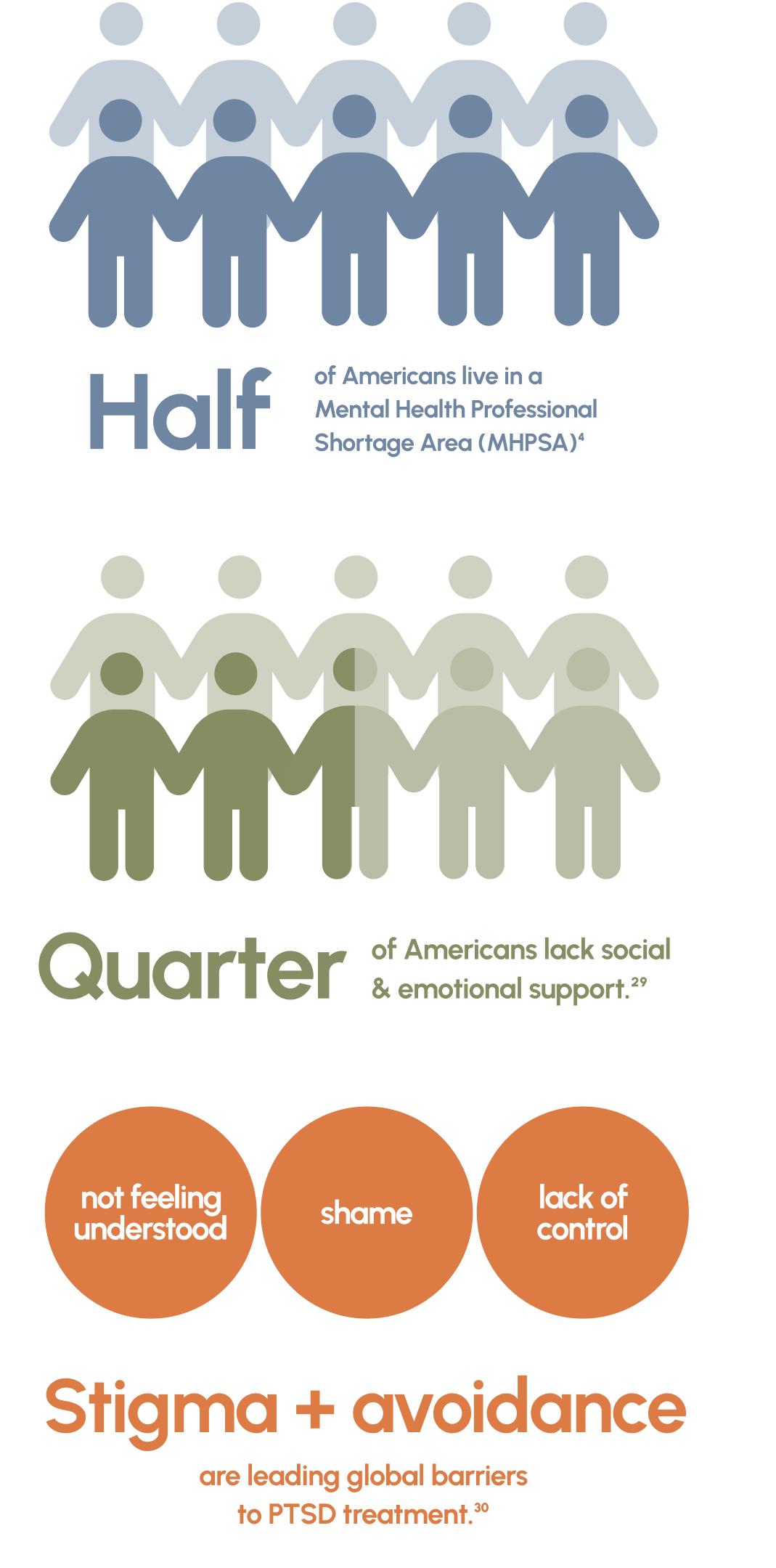
Coping Strategies
Psychologists have noted there are 3 coping strategies (Amirkhan, J. H):
1) Solve the problem itself — most ideal since both problem and stress can be resolved,
2) Seek social support — less ideal since the problem still persists but stress can be lowered, and
3) Avoid the problem — least ideal because both the problem and stress persist.
Coping Barriers
It’s important to note the barriers behind each of these coping strategies. strategies:
1) Ideally, Americans can attempt to solve the problem itself, or get proper treatment. The reality is, half of Americans live in a Mental Health Professional Shortage Area (MHPSA), often citing cost, insurance coverage, living in a rural county, time and distance as barriers of access (HRSA 2023).
2) If they cannot get proper treatment, Americans can attempt to seek support from others — however, a quarter of Americans lack social support (Bruss, Katherine V., et al).
3) In the end, many are left with no other option but to avoid the problem or seek help in the first place. For many with PTSD, stigma and avoidance are leading global barriers for PTSD treatment (Kazlauskas, E.).
Left unchecked, this can lead to more serious issues, which have become increasingly prevalent in recent years—especially after COVID, when stress levels were at an all-time high. According to the CDC’s 2025 article “Suicide Data and Statistics,” suicide rates spiked by 5% from 2020 to 2022. Additionally, a Penn State College of Medicine study reported that gun violence in the United States rose by more than 30% between 2020 and 2021.
Research Questions
This research led me to three major research questions:
1) If Americans cannot access care, how might we improve access to support?
2) If Americans lack social support, how might we provide social support?
3) If stigma prevents many from seeking help in the first place, how might we combat stigma?
Literature Review
How might we improve access to care?
According to Kaiser Family Foundation, teletherapy has expanded mental healthcare access since the pandemic:
1) Patients in rural areas relied more on teletherapy (55%) than urban areas
2) Peaking at the height of the pandemic, making up 40% of mental health visits, teletherapy use remains strong at 36% of mental health visits in 2021
A remote approach is a promising way of improving access to care, considering who is more at risk of developing trauma. An age group which has been dubbed “digital natives,” adults aged 18-44 (14%) are most likely to develop PTSD and are more receptive to newer technologies for teletherapy (ranging from AI chatbots to VR therapy) (Forbes).
How might we provide social support?
Group settings foster support by connecting individuals with shared trauma, a key element of the Communalization of Trauma (CoT) approach. Common in veteran reintegration programs like Vets & Friends, CoT promotes trust, connection, trauma coping skills, and community engagement (B. R. Balmer et al).
In doing so, access to care would be further improved: meeting just 10% of need with group therapy would require 34,373 less therapists and get 3.5 million people more seen — yet, in private practice, group therapy makes up only 5% of treatment versus one-on-one therapy at 95% (American Psychologist).
How might we combat stigma?
VR avatars are a promising way to combat stigma. A 2022 Edith Cowan University study shows a significant 30% of participants felt more comfortable sharing negative experiences using a VR avatar.
Objectives
This research led me to the following design objectives for The Collective approach:
1) If Americans cannot access care, we can provide remote access
2) If Americans lack social support, we can cultivate social support in group settings, and
3) If stigma prevents many from seeking help in the first place, we can combat stigma with VR avatars for anonymity.
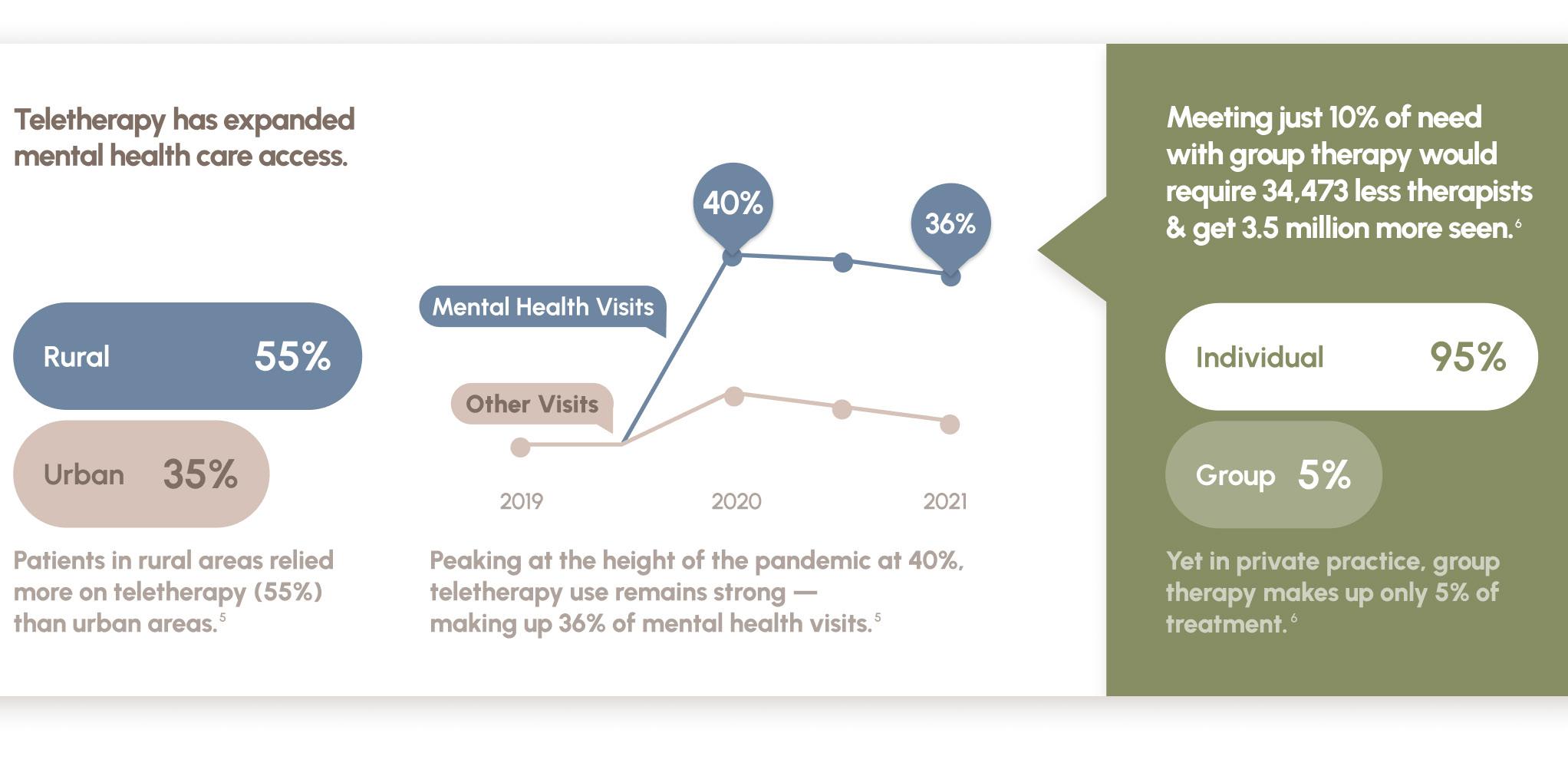
User Research & Insights
Is this what people exposed to trauma really want?
I surveyed 35 adults aged 18-44 who were exposed to trauma, asking them questions on their level of comfort sharing feelings within group settings and factors. The short answer is yes, with two additional insights.
Participants were asked some of the following questions:
1) Which would you feel more comfortable sharing your feelings with strangers in?
2) Which aspects of online interactions help you feel more comfortable sharing your feelings with strangers over face-to-face interactions the most?
3) Which aspects of face-to-face interactions help you feel more comfortable sharing your feelings with strangers over online interactions the most?
4) If discussions/interactions were structured, which would you feel more comfortable sharing your feelings with strangers in?
5) Which two things would make group discussions more structured, and more comfortable for you to share your feelings with strangers in the most?
6) If a trained facilitator was present, which would you feel more comfortable sharing your feelings with strangers in?
They want remote, group settings with VR avatars.
While the majority prefer remote group settings, it is still important to consider both sides and influencing factors: 63% felt more comfortable sharing feelings with strangers in remote, group settings — however, a significant 37% felt more comfortable sharing feelings with strangers in in-person group settings.
When asked why they preferred remote group settings, the top reason was anonymity. On the other hand, the top three reasons they preferred in-person were sharing a physical space with others, real-time responses, and non-verbal cues — all aspects VR spaces also provide.
They want structure.
65% preferred in-person group discussions over online when they were structured. Order in times talking, ground rules, and option to talk or not were the top three things they wanted in group discussions.
They want a facilitator.
There was a 39% increase in people preferring in-person group discussions over online when a trained facilitator was present. These two additional insights highlight an even more important question left to answer: how might we facilitate remote group settings with VR avatars?
Case Studies
Newer solutions show how remote group settings with VR avatars — XRHealth, Cedars Sinai, and Syrmor — all rely on a single provider of support for facilitation.
Therapist
XRHealth’s Connect is a VR-based remote group therapy facilitated by a therapist. While it fosters Communalization of Trauma (CoT) and social support, access is limited by insurance and therapist availability. Though traditional trauma support like CBT and exposure therapy rely on one-on-one support, expanding to group-based remote formats could ease strain: meeting just 10% of unmet need with group therapy could require 34,000 less therapists and get 3.5 million more people seen (American Psychologist). Yet, individual therapy still dominates, with group therapy making up only 5% of private practice. Peaking at the height of the pandemic at 40%, teletherapy use remains strong at 36% of mental health visits in 2021 (Kaiser Family Foundation).
Automated Agent
Cedars-Sinai’s Xaia and USC’s CLOVR uses AI agents for facilitation—offering 24/7, cost-free support. A 2016 Frontiers in Psychiatry review found people felt similar levels of rapport, whether the facilitator was automated or human — showing how accessibility can be improved by facilitating with AI agents over therapists. However, these AI-only systems lack the social support central to trauma coping (as in CoT) and raise ethical concerns by relying solely on AI for sensitive guidance.
Peer
Syrmor is a YouTuber whose talks with people about their traumas via VRChat have garnered millions of views. This case study illustrates how anonymous, peer-topeer discussions enable vulnerable, meaningful traumaprocessing conversations and fosters socially supportive spaces— free of cost and not limited by therapist availability. A 2019 Journal of Community Health study demonstrated non-inferiority of peer-delivered support compared to clinician-delivered support for reducing PTSD symptoms —highlighting its potential to improve access. However, reliance on a single individual for facilitation limits scalability necessary for broader accessibility.
Why Current Solutions Don’t Work: Key Opportunities
Current solutions are a lot like a centralized network.
Current solutions are a lot like a centralized network, which has a single point of failure (if one fails, everyone else loses access). In the same way, current solutions rely on a single provider of support, limiting accessibility. If one becomes no longer available, everyone else loses access to support.
On the other hand, The Collective is a lot like a peer-to-peer (P2P) network.
Among network architectures, a P2P network is considered the superior network architecture to centralized networks, because they have no single point of failure. In P2P networks, everyone can be a provider of support, improving accessibility. Even if one becomes no longer available, everyone else can continue exchanging, receiving, or getting support.
A hybrid approach for facilitators allows for 24/7 access to support.
As demonstrated, the accessibility of existing solutions which use remote group settings with VR avatars can be vastly improved by challenging traditional models which rely on a single-provider for trauma support. Using a hybrid approach for facilitation — 24/7 access to trauma support can be made possible:
1) Ideally — when a therapist is available, a therapist can facilitate these VR group settings
2) Though not as ideal — when therapists are not available, volunteers can facilitate instead
3) Though least ideal — when neither are available, an automated agent can act as a facilitator, allowing for 24/7 access to support
Spatial.io can make VR-based solutions accessible via the phone or laptop.
Current solutions which use VR-based group settings are not accessible via web. This limits accessibility further, especially considering only 13% of American households have a VR device, compared to 90% of American households having either a phone or a laptop (National Research Group, U.S Census Bureau). Yet with new technology like Spatial.io, which makes VR apps accessible via the web, The Collective can be made so that it’s accessible by 100% of American households.
Refined Objectives
This research led me to the following refined design objectives for The Collective approach:
1) Improve access to care by providing remote access to support
2) Provide social support by cultivating supportive spaces in remotely accessible group settings, and
3) Combat stigma by using VR avatars for anonymity, structuring group discussions with a queue, agenda, option to talk or not, setting ground rules beforehand, having a hybrid approach of therapists, volunteers, and AI assistant to ensure 24/7 facilitation and access to support
Process & Technologies Used
The app is built using a comprehensive technology stack that ensures accessibility, multiplayer functionality, and automated agent integration. A high fidelity prototype was first designed in Figma, then developed in Unity using Spatial’s API to sync variables and UI across clients for multiplayer functionality. Unity, .NET Framework, and GitHub supported streamlined development and collaboration. An automated agent was built using Unity Web Requests and third-party tools like OpenAI’s Whisper (STT) and ElevenLabs (TTS). The VR space was published via Spatial.io for web and mobile accessibility.
Technologies used to develop The Collective include Figma, Unity, Whisper for speech-to-text, and ElevenLabs.for text-to-speech.
Prototype
UI components for The Collective were based on the Freud Mobile UI Kit by Strange Helix. Its colors, icons, fonts, and buttons were adapted to create 15 new modals and more than 25 reusable UI components, in order to deliver a high-fidelity prototype for a VR-, web-, and mobile-based trauma support platform within three weeks. The goal was less about branding and more about designing a streamlined UI system tailored to the unique functions of a multi-platform support group app. This supported the development, testing, iteration, and delivery of a functional multiplayer app in Unity, published to Spatial.io within five months.

User Testing & Improvements
Does this solution actually work? The functional VRand-web-based prototype of The Collective was used for user testing to assess accessibility, social support, and stigma reduction objectives. Two pilot peer-support sessions with three participants each were conducted via the platform, facilitated by a psychologist, evaluating its impact on participants’ barriers to support. Preand post-session questionnaires measured perceived improvements: a 44% rise in comfort sharing feelings with strangers in group settings, a 39% increase in social support, and a 23% boost in perceived access to mental health resources — demonstrating The Collective effectively improved perceived access to care, social support, and emotional openness in group settings.
Additional feedback from committee members included incentivizing facilitators by mailing badges to volunteers, setting group guidelines beforehand, and referring users to resources to get proper treatment — all improvements which were incorporated in the final prototype.
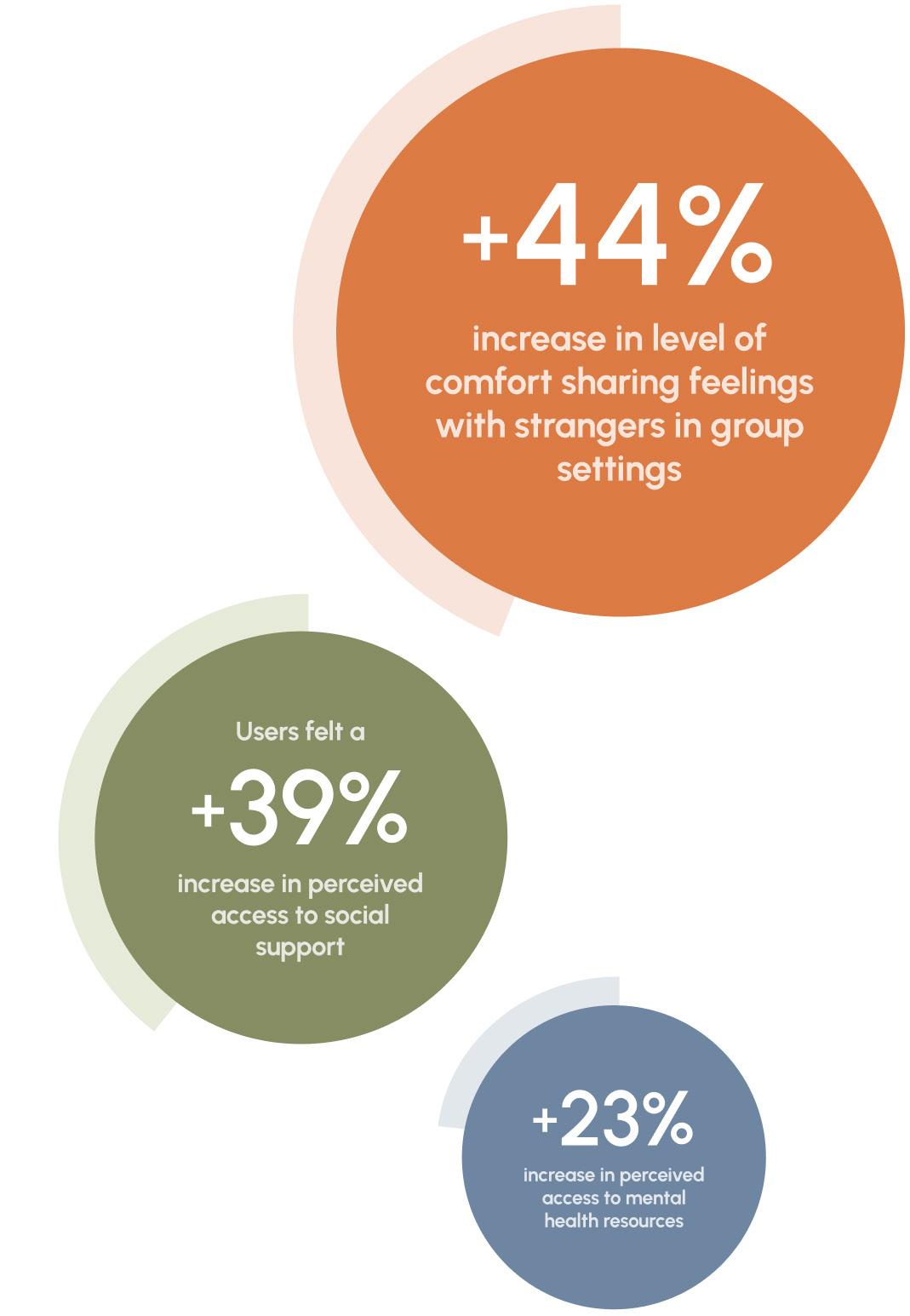
Remote support group sessions using a functional prototype. Testing demonstrates significant improvements.
Conclusion
The Collective demonstrates how intentional, traumainformed design—grounded in empathy, research, and cross-disciplinary collaboration—can address critical gaps in mental health care. By decentralizing trauma support, it challenges traditional, provider-centric models and expands access through a hybrid of human and AI facilitation. It bridges geographic divides, fosters social connection, and offers anonymity and user control to reduce stigma. What began as a thesis project became a platform designed to live beyond academia—supporting those who often fall through the cracks of conventional systems. Built in Unity and deployed on Spatial.io, it translates research into an immersive, usable solution accessible across VR, web, and mobile.
This process reaffirmed that trauma support must be as adaptive and inclusive as the people it serves. It also revealed the ethical responsibilities of designing with AI in mental health contexts. Above all, The Collective affirms the power of human-centered technology to make healing more accessible, communal, and compassionate.
Afterword
The Collective was designed and developed thanks to the dedication and insight of a remarkable team whose support made this work possible. I am deeply grateful to my thesis committee members for generously sharing their time, expertise, and thoughtful feedback throughout this project. Special thanks to Jacob Delgado for his help with the back-end development for this app (everything from networking and UI synchronization, to server-side remote event handling); to Heather Barker for guiding the experience design process; to Dr. Krystle Bloom and Dr. Bita Ghafoori for grounding the project in trauma-informed practice; to Krai Charuwatsuntorn for his expertise in 3D modeling and avatar integration; and to Sam Anvari for his insight on interface design. Their collaboration speaks to the strength of cross-disciplinary work in creating platforms that are not only functional, but deeply human.
The Collective is a testament to the value of designing with empathy, and to what becomes possible when technology, research, and lived experience come together in service of healing.
Acknowledgements

Jacob Delgado —.NET Developer, for back-end development including networking, UI synchronization, and server-side remote event handling; Heather Barker —Director of Immersive Design Research Lab (IDRL), for experience design guidance; Dr. Krystle Bloom — Psychologist at Safe Harbor Trauma Center, for Subject Matter Expert (SME) insights; Dr. Bita Ghafoori —Director of Long Beach Trauma Recovery Center, for Subject Matter Expert (SME) insights; Krai Charuwatsuntorn —3D Designer & Director of 3D Visualization, Standard, for AI avatar and 3D modeling advice; Sam Anvari —Associate Professor of Graphic Design, CSULB & Creative Director, SAM Arts Design Studio, LLC, for UI design advice.
Man looking at TV screen with VR headset on green couch. Created by author using Figma AI Image Generator, June 2025.
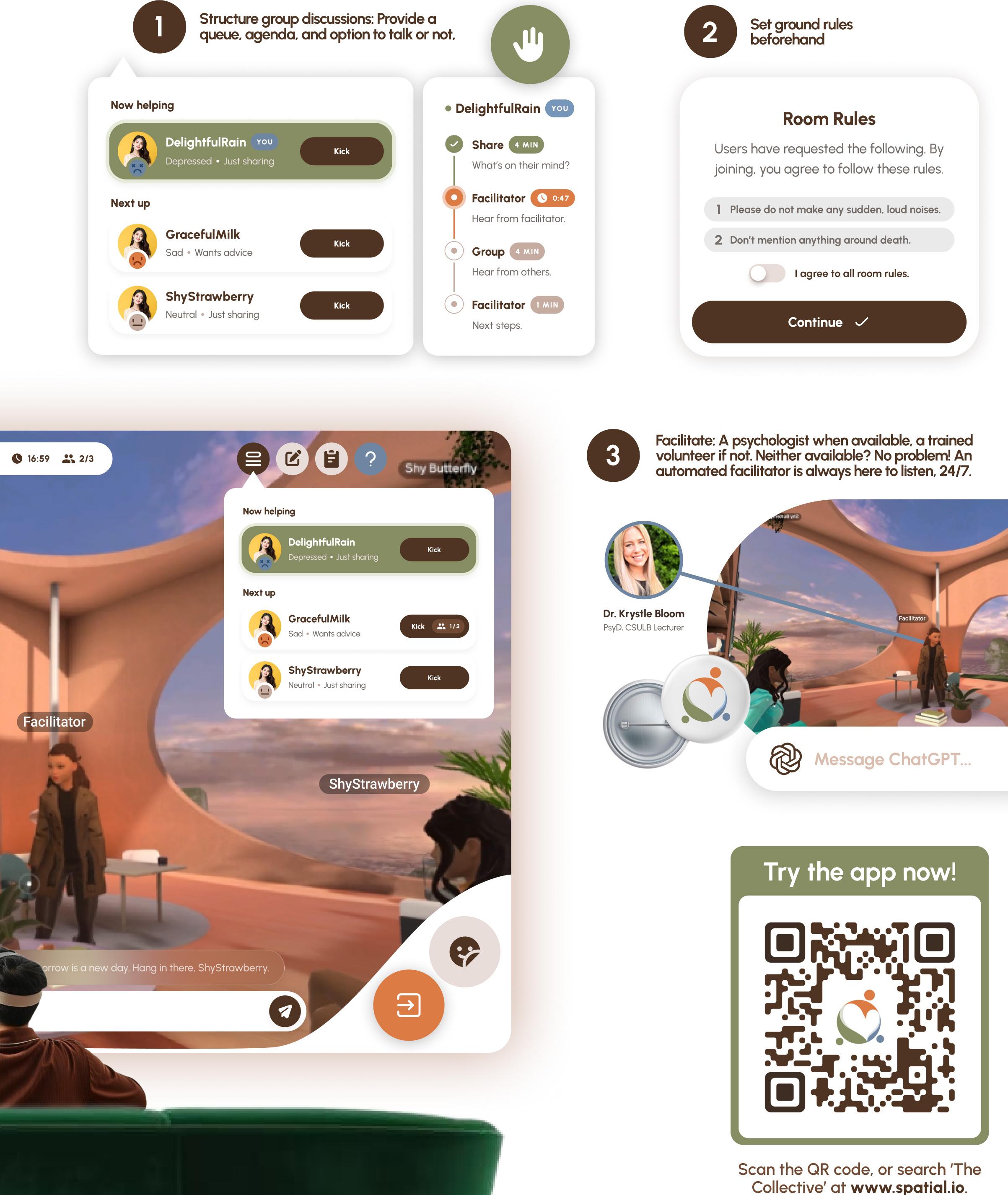
Resources
American Psychological Association. “Psychologists Reaching Their Limits as Patients Present with Worsening Symptoms Year after Year: 2023 Practitioner Pulse Survey.” Practitioner Pulse Survey, Dec. 2023, www.apa.org/pubs/reports/practitioner/2023psychologist-reach-limits.
American Psychological Association. “Group therapy is as effective as individual therapy, and more efficient. Here’s how to do it successfully.” Monitor on Psychology, 1 March 2023, https://www.apa.org/monitor/2023/03/ continuing-education-group-therapy.
Amirkhan, J. H. “A Factor Analytically Derived Measure of Coping: The Coping Strategy Indicator.” Journal of Personality and Social Psychology, vol. 59, no. 5, 1990, pp. 1066–1074. https://doi.org/10.1037/00223514.59.5.1066.
Artiga, Samantha, et al. “How Does Use of Mental Health Care Vary by Demographics and Health Insurance Coverage?” Kaiser Family Foundation, 16 Sept. 2021, https://www.kff.org/mental-health/ issue-brief/how-does-use-of-mental-health-carevary-by-demographics-and-health-insurancecoverage/#:~:text=Roughly%20one%2Dthird%20 32%25,unmet%20mental%20health%20care%20needs.
Balmer, B. R., et al. “Processes and Outcomes of a Communalization of Trauma Approach: Vets & Friends Community-Based Support Groups.” Journal of Community Psychology, vol. 49, no. 7, 2021, pp. 2764–2780. doi:10.1002/jcop.22516.
Barkowski, S., et al. “Efficacy of Group Psychotherapy for Social Anxiety Disorder: A Meta-Analysis of Randomized-Controlled Trials.” Journal of Anxiety Disorders, vol. 39, 2016, pp. 44–64. https://doi. org/10.1016/j.janxdis.2016.02.005.
Bantjes, J., et al. “A Web-Based Group Cognitive Behavioral Therapy Intervention for Symptoms of Anxiety and Depression Among University Students: Open-Label, Pragmatic Trial.” JMIR Mental Health, vol. 8, no. 5, 2021, e27400. https://mental.jmir.org/2021/5/ e27400.
Bruss, Katherine V., et al. “Loneliness, Lack of Social and Emotional Support, and Mental Health Issues — United
States, 2022.” Morbidity and Mortality Weekly Report, vol. 73, no. 24, 2024, pp. 539–545. Centers for Disease Control and Prevention.
David, D., I. Cristea, and S. G. Hofmann. “Why Cognitive Behavioral Therapy Is the Current Gold Standard of Psychotherapy.” Frontiers in Psychiatry, 29 Jan. 2018, https://www.ncbi.nlm.nih.gov/pmc/articles/ PMC5797481/#:~:text=In%20summary%2C%20 because%20of%20its,2%20and%20American%20 Psychological%20Association. doi: 10.3389/ fpsyt.2018.00004.
Edith Cowan University. “Virtual Reality Could Help Make Therapy Easier.” Edith Cowan University, 5 Jan. 2022, www.ecu.edu.au/newsroom/articles/research/virtualreality-could-help-make-therapy-easier. Accessed 12 Apr. 2024.
Fitzpatrick, K. K., A. Darcy, and M. Vierhile. “Delivering Cognitive Behavior Therapy to Young Adults with Symptoms of Depression and Anxiety Using a Fully Automated Conversational Agent (Woebot): A Randomized Controlled Trial.” JMIR Mental Health, vol. 4, no. 2, 2017, e19. https://mental.jmir.org/2017/2/e19/. doi: 10.2196/mental.7785.
Fortune Business Insights. “Behavioral Therapy Market Is Estimated to Be US$ 295.14 Billion by 2030 with a CAGR of 8.5% During the Forecast Period 2030 - By PMI.” GlobeNewswire, 15 Sept. 2022, https://www.globenewswire.com/ en/news-release/2022/09/15/2516982/0/en/ Behavioral-Therapy-Market-is-estimated-to-be-US295-14-billion-by-2030-with-a-CAGR-of-8-5-duringthe-forecast-period-2030-By-PMI.html.
Forbes Health. “PTSD Statistics: Prevalence, Risk Factors, and More.” Forbes, 22 June 2023, https://www. forbes.com/health/mind/ptsd-statistics/.
Freud UI Kit. Strange Helix, v2.0, www.strangehelix.bio/ product/freud-ui-kit. Accessed June 1, 2024.
Health Resources and Services Administration. Behavioral Health Workforce 2023 Brief. U.S. Department of Health and Human Services, 2023, https://bhw.hrsa.gov/sites/default/files/bureau-healthworkforce/Behavioral-Health-Workforce-Brief-2023.pdf.
Kaiser Family Foundation. “Mental Health Care Health Professional Shortage Areas (HPSAs).” Kaiser Family Foundation, https://www.kff.org/other/state-indicator/ mental-health-care-health-professional-shortageareas-hpsas/?activeTab=map¤tTimeframe=0&sel ectedDistributions=total-mental-health-care-hpsas
Kaiser Family Foundation. “Telehealth Has Played an Outsized Role in Meeting Mental Health Needs During the COVID-19 Pandemic.” Kaiser Family Foundation, 2 Dec. 2022, https://www.kff.org/mental-health/issuebrief/telehealth-has-played-an-outsized-role-meetingmental-health-needs-during-the-covid-19-pandemic/.
Kazlauskas, Evaldas. “Challenges for Providing Health Care in Traumatized Populations: Barriers for PTSD Treatments and the Need for New Developments.” Global Health Action, vol. 10, no. 1, 2017, Article 1322399. PubMed Central, https://pmc.ncbi.nlm.nih.gov/ articles/PMC5496089/.
Kilpatrick, Dean G., et al. “National Estimates of Exposure to Traumatic Events and PTSD Prevalence Using DSM-IV and DSM-5 Criteria.” Journal of Traumatic Stress, vol. 26, no. 5, 2013, pp. 537–547. PubMed Central (PMC), https:// pmc.ncbi.nlm.nih.gov/articles/PMC4096796/.
McIntyre, Roger S., et al. “Group Therapy: Types, What to Expect, and Does It Work?” Medical News Today, Healthline Media, 12 Nov. 2021, https://www. medicalnewstoday.com/articles/group-therapy#types.
Miller, Bryan, et al. “The Use of Telepsychiatry During the COVID-19 Pandemic: A Systematic Review.” JMIR Mental Health, vol. 7, no. 11, 2020, https://pubmed.ncbi.nlm.nih. gov/33826190/.
National Center for Health Statistics. “National Health Interview Survey.” CDC, 2019, https://www.cdc.gov/nchs/ nhis/2019nhis.htm.
Osborn, Robin, et al. “Mental Health Conditions and Substance Use: Comparing the United States with Other High-Income Countries.” The Commonwealth Fund, 6 May 2020, https://www.commonwealthfund. org/publications/issue-briefs/2020/may/mental-healthconditions-substance-use-comparing-us-othercountries.
PPIC. “Access to Mental Health Providers Is Highly Uneven across the State.” PPIC, Public Policy Institute
of California, 13 May 2021, https://www.ppic.org/blog/ access-to-mental-health-providers-is-highly-unevenacross-the-state/.
Rehm, I. C., et al. “What Role Can Avatars Play in e-Mental Health Interventions? Exploring New Models of Client–Therapist Interaction.” Frontiers in Psychiatry, vol. 7, 2016, 186. https://www.frontiersin.org/journals/ psychiatry/articles/10.3389/fpsyt.2016.00186/full. doi: 10.3389/fpsyt.2016.00186.
Ssentongo, Anna, et al. “U.S. Gun Violence Increased 30% During COVID-19 Pandemic.” Penn State Health News, 21 Oct. 2021, https://pennstatehealthnews. org/2021/10/u-s-gun-violence-increased-30-duringcovid-19-pandemic/.
Statista. “Mental Health - Worldwide.” Statista, 2024, https://www.statista.com/outlook/hmo/mental-health/ worldwide.
Statista. “Reasons for US Adults Not Receiving Mental Health Services as of 2020.” Statista, 2020, https://www. statista.com/statistics/252303/reasons-for-us-adultsnot-receiving-mental-health-services/.
Stubbings, D., C. Rees, L. Roberts, and R. Kane. “Comparing In-Person to Videoconference-Based Cognitive Behavioral Therapy for Mood and Anxiety Disorders: Randomized Controlled Trial.” Journal of Medical Internet Research, vol. 15, no. 11, 2013, e258. https://www.jmir.org/2013/11/e258. doi: 10.2196/ jmir.2564.
Swift, J. K., and R. P. Greenberg. Premature Termination in Psychotherapy: Strategies for Engaging Clients and Improving Outcomes. American Psychological Association, 2015, https://psycnet.apa.org/ record/2014-16767-000. https://doi.org/10.1037/14469000.
Wu, Jinlong, Yi Sun, Gongwei Zhang, Zhenhui Zhou, and Zhanbing Ren. “Virtual Reality-Assisted Cognitive Behavioral Therapy for Anxiety Disorders: A Systematic Review and Meta-Analysis.” Frontiers in Psychiatry, vol. 12, 2021, https://www.frontiersin.org/journals/ psychiatry/articles/10.3389/fpsyt.2021.575094.
Natural Neighborhoods Creating Well-Being for Individuals
with ADHD and Autism
Sarah Miorelli Master of Arts Graduate, Fashion Institute of Technology, Exhibition and Experience Design Program, Planner, Exit Design
Abstract
As an individual who grew up with ADHD and anxiety, spaces that fall under the umbrella of exhibition and experience design were key to my childhood. Carefully designed spaces helped me learn in my own way, take in the exhibits at my own pace, and feel comfortable in public spaces. I did not always feel this way in typical educational environments. Unfortunately, exhibition spaces can be overwhelming, overstimulating, and unwelcoming. My thesis and research proposes that designers can advocate and accommodate those with unapparent disabilities during the initial stages of the design process.
The applied project, Natural Neighborhoods, explores this theory through the design of the space, activities, and graphic palette.
Thesis Statement
Spaces such as museums, cultural institutions, zoos, aquariums, and themed entertainment spaces are integral to the human experience and one’s search for knowledge, growth, community, and well-being.1 These spaces encourage and nurture learning, creativity, empathy, and understanding of the world around us. However, what may be an engaging experience for some may be overstimulating and overwhelming for others, especially those with unapparent disabilities such as ADHD and autism. 2 Museums are making great strides to address this problem by offering sensory-friendly hours, sensory kits, and sensory guides. These are helpful accommodations, but they are often implemented after spaces are completed and operational, when these accommodations could be integrated with a Universal Design process from the beginning. By expanding the principles of universal design, and centering this design on well-being for those with unapparent disabilities, designers can take steps to dismantle ableism and create more inclusive spaces for individuals with ADHD and Autism. These design choices can include low-stimulation environments, transitional spaces, “quiet spaces,” predictable or familiar features, and “wayfinding.” 3 The following thesis and applied design project illustrates how it is possible to accommodate individuals with unapparent disabilities in a successful way that does not affect, and possibly even enriches the neurotypical experience.
1 (Šveb Dragija and Jelinčić)
2 (Redmond-Jones Pgs 20-21.)
3 (Tola et al.)
Introduction
Museums, zoos, aquariums, and theme parks are all designed spaces for people to interact with specialized content, curated objects, and each other. The right design choices and theming can inspire guests to be more than visitors - to be explorers, facilitators, or thrill seekers. Some visitors are motivated to visit these spaces to feel recharged and seek greater well-being. However, for a number of people, these spaces can be overwhelming and cumbersome, even if they intend to engage guests with a different learning style.
I was lucky enough to grow up in a family that highly valued these spaces. My family and I would visit museums, zoos, and aquariums multiple times throughout the years with at least one trip to a theme park each year. As a person with ADHD, these spaces felt safe to me when I could explore them at my own pace and interact with the content in a way that fit my learning style. These spaces gave me the security that I can experience what everyone else could despite my sensitivities to light, smell, sound, and crowded environments. Even so, there are some museums, zoos, aquariums, and theme parks that require me to tailor my experiences to avoid sensory overload.
These spaces sometimes lack the proper accommodations to assist individuals with unapparent disabilities such as ADHD and autism. Many museums have developed programming for individuals with ADHD and autism such as sensory-friendly time before the museum opens and after it closes. Sensory-friendly time can include low-level lights and noise, reduced crowd levels, and fewer interactives and videos. Many museums now offer sensory kits and sensory guides. This way, visitors can tailor their experiences to avoid certain triggers. These developments are helpful, but they only address a portion of the problem.
I believe that designers can create fully inclusive experiences by ensuring that accessibility for all is at the forefront of our designs and design process. We can take the ideals of universal design and extend them to accommodate those with unapparent disabilities and physical disabilities. This could mean taking a closer look at the colors, materials, and interactives that are incorporated into every space. Spaces should be created that are low intensity, but also have enough stimulus to keep visitors interested and engaged.
The creation and use of the term, unapparent disabilities, is driven by Beth Redmond-Jones research in her book, Welcoming Museum Visitors with Unapparent Disabilities. Beth spoke to many experts and individuals with unapparent disabilities to come to this conclusion.
“They both agreed that they preferred the term unapparent because it is a neutral term that does not have the aforementioned issues around the word invisible nor the connotations of not sharing and shame that surrounds the word hidden. So as a result, I chose to go with the term unapparent, meaning “not readily perceptible: not apparent.”1
Traditional museums and other experiences are not typically designed with neurodivergent individuals in mind. These spaces are often focused on a target audience with a specific age group, but that is where this attention to detail may end. Thus, many spaces are designed for neurotypical individuals in mind and perhaps not neurodivergent individuals. In the instances when communities ask for accommodations, museums will often add on programming that assists that community. I assert that accommodations should not be an add-on, but integrated in the features of the design process to create a more enjoyable experience for all visitors.
Approach: Ten Principles of Quality Museum Experiences
Through my research I discovered John Falk’s idea of well-being in museums. This text was extremely impactful for several projects I worked on during my Master’s degree, however, as I began the thesis research process I wondered if Falk’s ideas could apply to exhibition design for those in the ADHD and autistic communities. Well-being is defined by Merriam-Webster as, “the state of being happy, healthy, or prosperous.” 2 In his research, John Falk identifies well-being in museums as supporting “personal,” “intellectual,” “social,” and “physical” well-being. Falk writes, “each and every museum should strive to accomplish ten things, Ten Principles of Quality museum Experiences:
1 Redmond-Jones, Beth. Welcoming Museum Visitors with Unapparent Disabilities. Rowman & Littlefield, an Imprint of the Rowman & Littlefield Publishing Group, Inc, 2024.
2 “Well-Being Definition & Meaning.” Merriam-Webster, Merriam-Webster, www.merriam-webster.com/dictionary/ well-being. Accessed 14 June 2024.
1) Connect to User’s Life
2) Allow User to Make the Experience Their Own
3) Maximize Opportunities for Choice & Control
4) Surprise and Delight
5) Make the Experience Feel Safe and Secure
6) Design for Social Interaction
7) Make the Experience Comfortable and Convenient
8) Give Users a Reason to Do It Again
9) Connect with Other Experiences
10) Support Sharing
These ten principles are key to creating user-focused, user-satisfying museum experiences; experiences that will engender loyalty, frequent and repeated use.”3
The idea of well-being is key for all individuals to lead a balanced life. However, for those with ADHD and Autism well-being is often more difficult to attain due to their symptoms. This approach when paired with research on the symptoms of ADHD and Autism could help spaces to be more inclusive and build well-being for a larger audience.
Approach: Activities that build and practice helpful skills
Through my research I also discovered many academic studies seeking to assist children in building and strengthening skills to help them manage their ADHD symptoms. The study I found most impactful and relatable to my research was Taking Students on a Strengths Safari: A Multidimensional Pilot Study of School-Based Wellbeing for Young Neurodiverse Children by Lauren H. Naples and Elizabeth Tuckwiller.4
This study shows that designers can implement interactive activities to create positive experiences and growth opportunities for neurodiverse children. Further, these are all activities that many children, and potentially adults, can benefit from: to practice gratitude, optimism, perseverance, and a positive sense of self. These skills
3 Falk, John H. The Value of Museums: Enhancing Societal Well-Being. Rowman & Littlefield, 2022.
4 Naples and Tuckwiller Taking students on a strengths Safari: A multidimensional pilot study of school-based wellbeing for Young Neurodiverse Children
are instrumental to our well-being as people. Museums, zoos, and aquariums are not educational settings like the classroom. However, they often have educational goals for their visitors. Incorporating these strategies into the programming and activity design of a museum, zoo or aquarium would ensure that educational goals are met for all visitors, not just those who are neurotypical.
In this case study, Naples and Tuckwiller discuss that children with neurological differences and disabilities are often left out of research focused on mental health and academic achievement. The goals of their pilot study, and the activities in the Student Strengths Safari, were to enhance the well-being of neurodivergent school students. Further, the researchers hoped to investigate “(1) students’ self-reported covitality and (2) teacherrated executive functioning to (3) examine data for evidence of a dual-factor model of SBWB.” SBWB stands for school-based well-being.5
This pilot program comprised of eight sessions of covitality intervention, composed of activities for students to develop “school gratitude, student zest, school optimism, and student persistence.” For Naples and Tuckwiller, covitality “reflects the complexity of groups of traits and the potentiation of their effects when they coexist.” They also observed that covitality is “positively correlated with SWB,” meaning that two or more positive traits in a student could lead to success or positive school-based well-being. These activities ranged from a scavenger hunt to gratitude journaling. In the study’s intervention group, the researchers saw improved executive functioning and student covitality.
Although this study is a good starting point for researching well-being in educational settings, it is also limited. This is due to the small sample size as well as the experimental design of the study. The sample size was also narrow as it only analyzed first and secondgrade students who were still getting used to the school environment.
This study proves that through different activities, skills can be built to help with the wellbeing for neurodivergent individuals. These specific activities included, “(a) gratitude, with journaling and a modified gratitude visit; (b) optimism, with positive reframing
5 Naples and Tuckwiller Taking students on a strengths Safari: A multidimensional pilot study of school-based wellbeing for Young Neurodiverse Children
to foster a growth mindset and envisioning one’s ‘best student self;’ (c) persistence, with identifying concrete steps to achieve ‘best self’ goals and using self-talk strategies to overcome barriers; and (d) zest, with practicing mindfulness during a nature walk and doing a ‘student skills scavenger hunt’ to promote positive peer relationships.”6 These activities could be easily transitioned to an activity in a museum or in programming at a zoo or aquarium. This information, although studied in an academic setting, can be applied to other venues.
Approach: Building on Universal Design Principles to Design for Unapparent Disabilities
Universal Design was created in hopes of creating accessibility for all, especially for disabled individuals. Universal Design is based on seven key principles: “Equitable Use,” “Flexibility in Use,” “Simple and Intuitive Use,” “Perceptible Information,” “Tolerance for Error,” “Low Physical Effort,” and “Size and Space for Approach and Use.”7 These principles have been utilized to provide accommodation for people with physical disabilities, however, does not always incorporate those with unapparent disabilities.
The first step in this process to become more inclusive of those with unapparent disabilities is to learn about unapparent disabilities. The second is then to include individuals with unapparent disabilities in the design process. For the purposes of this paper the definitions of ADHD and Autism will be explored. However, it is important to note that each individual experiences these differently and can have different symptoms.
ADHD or Attention Deficit Hyperactivity Disorder is a neurodevelopmental disorder. This impacts the brain and can be classified as hyperactive or inattentive, or a combination of the two. Symptoms can range from impulsiveness, forgetfulness, fidgeting, distracability, and more. 8
6 Naples and Tuckwiller Taking students on a strengths Safari: A multidimensional pilot study of school-based wellbeing for Young Neurodiverse Children
7 “Universal Design: What Is It?” Section508.Gov, https:// www.section508.gov/blog/Universal-Design-What-is-it/.
8 “Attention deficit hyperactivity disorder.” MerriamWebster.com Dictionary, Merriam-Webster, https://www. merriam-webster.com/dictionary/attention%20deficit%20 hyperactivity%20disorder. Accessed 16 Jul. 2025.
Autism is also a neurodevelopmental disorder. It can consist of symptoms such as impairment of communication (language or cognitive), and specific patterns of behavior or interests. 9
It is also important to note that while many of these symptoms begin and can be diagnosed in childhood for both ADHD and Autism. There are instances where individuals symptoms are overlooked and they are not diagnosed until adulthood, often suffering from symptoms for many years before a life altering diagnosis.
Designers can build this knowledge through research, but also through working and interviewing those with unapparent disabilities. Then work to apply their knowledge to the environments they build.
In my research I found one academic article that addressed these unapparent disabilities and the built environment specifically. The Built Environment Design and People with Autism Spectrum Disorder (ASD): A Scoping Review, shows how designers can expand on Universal Design principles to accommodate for people with unapparent disabilities. In the Built Environment Design study, researchers worked to identify built environment traits that are helpful to those with autism feel more comfortable in new environments. These include; “Low Arousal Environment”/Low Stimuli Environment,” “Transition Spaces,” “Quiet Spaces, “Clear and Simple Spatial Layout,” “Visual Relation,” “Predictability and Routine,” “Circulation and Possibility of Choosing,” “Proportion and Proxemics,” “Visual Supports,” and “Wayfinding.” These are techniques that expand upon Universal Design to accommodate for all disabilities and can be incorporated into most projects.
Applied Project
My applied project explores the theory behind designing spaces for those with unapparent disabilities by prioritizing accommodations, universal design principles, and design for well-being at the forefront of the design process. This applied project is through a proposed collaboration between the Elmwood Park Zoo in Norristown, PA, The Walt Disney Company, and the Disney Conservation Fund. My research consisted of both design and educational resources to study how best to 9 “Autism.” Merriam-Webster.com Dictionary, MerriamWebster, https://www.merriam-webster.com/dictionary/ autism. Accessed 16 Jul. 2025.
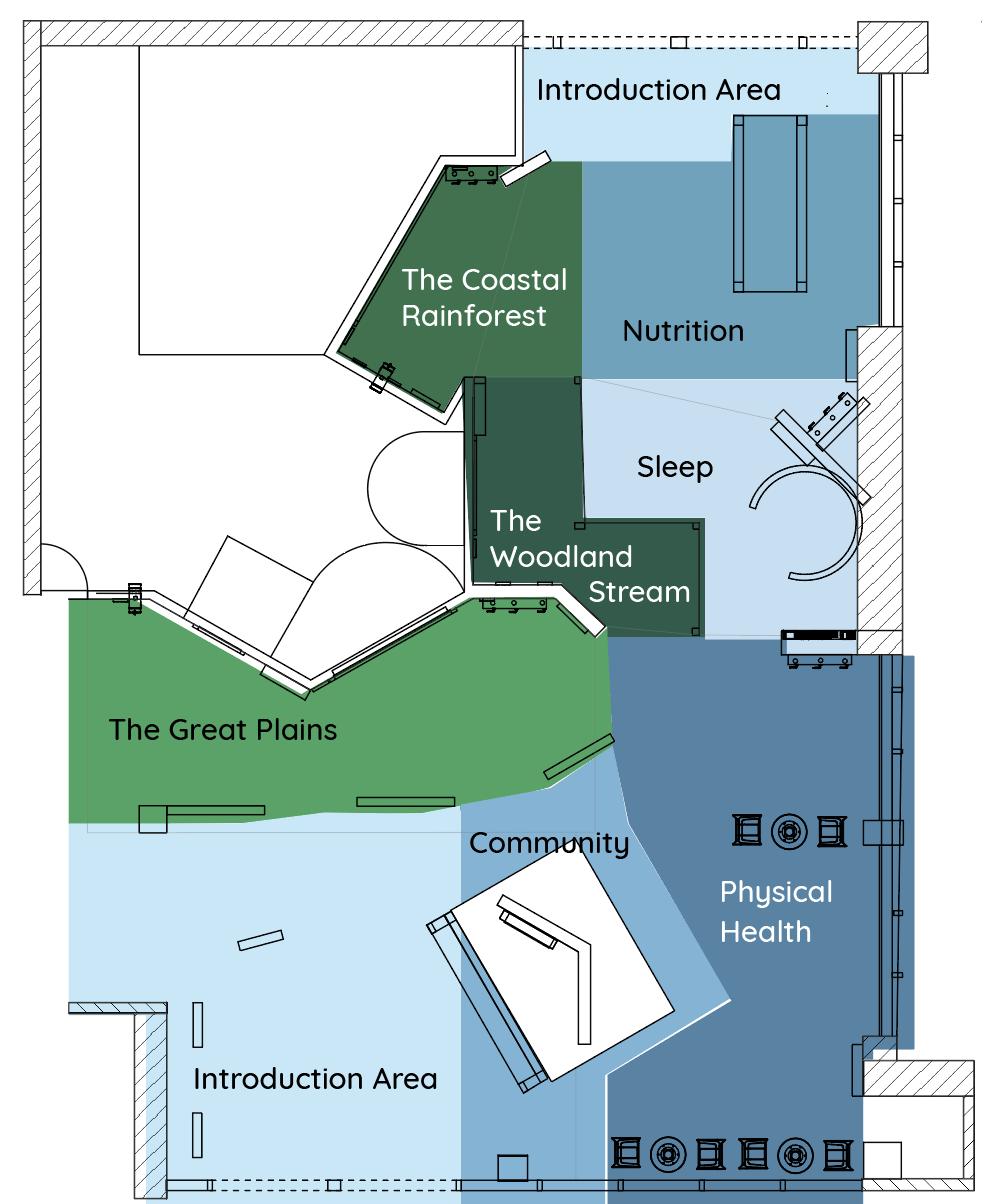
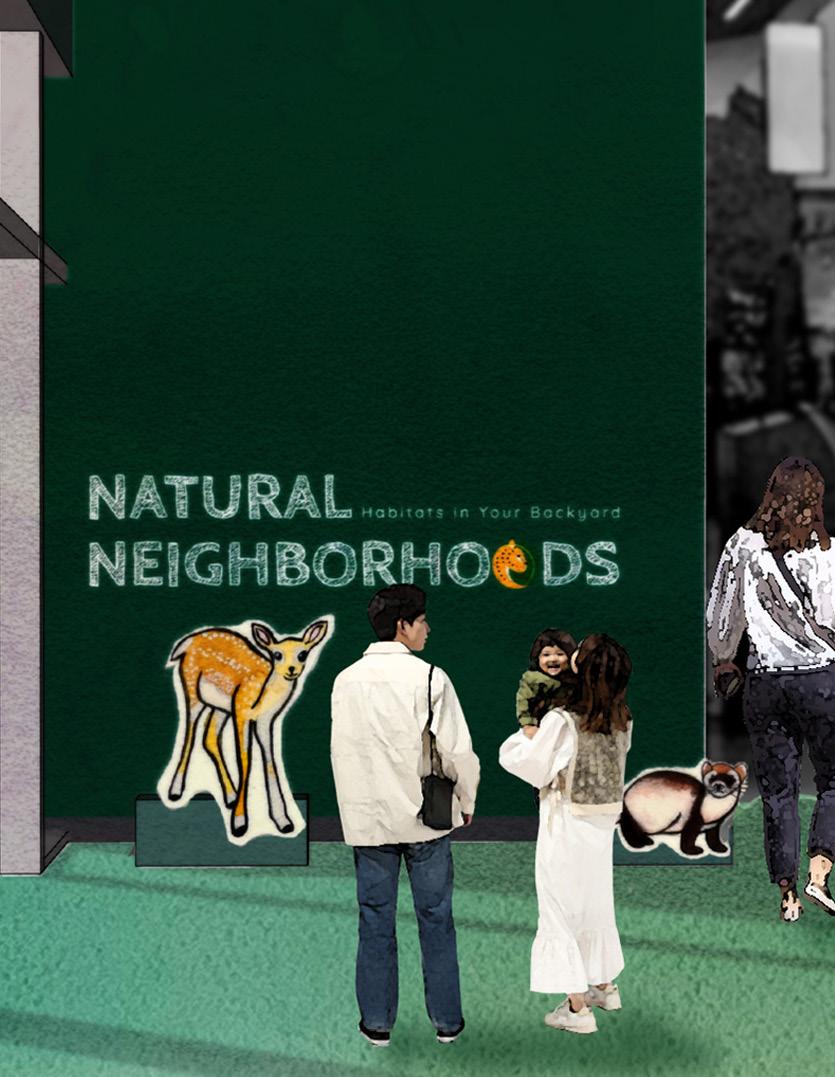
Exhibition Floorplan with content areas outlined and their stimulation level
“…Call out quote.”
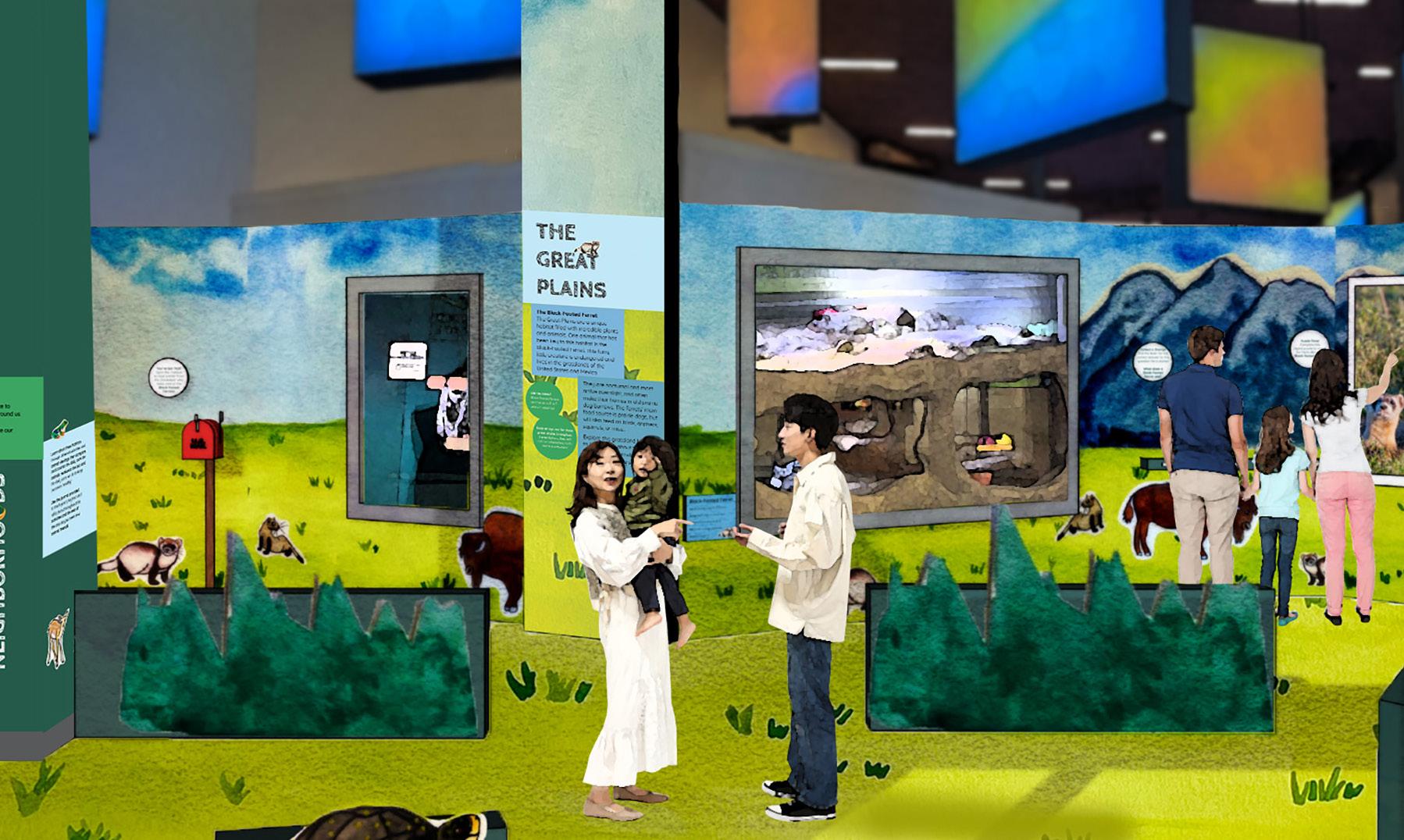
The Great Plains area introduces visitors to the Black-Footed Ferret and its habitat. Through murals and floor graphics visitors are immersed in theGreat Plains.
This area introduces visitors to the exhibition and the concept of habitat as community.
accommodate these individuals with ADHD and autism and encourage learning without sensory overstimulation. Through this research, I began to understand how designers can better accommodate those with unapparent disabilities in their design decisions. I was then equipped to integrate these accommodations into my applied project.
The exhibition is designed to accommodate as many as possible. Two design decisions were central to the theme of the exhibit and its proof of concept: (1) to leave the space as an open floor plan so visitors would have the choice to tailor their experience to their interests and needs and (2) to use an illustration style for animals that may be familiar to children (e.g. through books or television shows).
In this exhibit, visitors enter an introductory area which introduces them to the graphic look and feel of the space. This area features content that introduces guests to the themes of the space.
Then, visitors can then move to the Community Area where they are encouraged to reflect on what a community looks like to them. For example, one activity at a kiosk asks guests to use a digital touch screen to draw what a community looks like to them. Once guests submit these drawings, the drawings are projected on the other side of the wall to create an evolving collection of images. The intention of this exercise is to have visitors consider the importance of community and belonging.
The Great Plains area introduces visitors to the BlackFooted Ferret and its habitat. Through murals and floor graphics, visitors should feel immersed in the Great Plains environment. Interactives, such as a zoo keeper letter inside a mailbox, animal fun-fact panels, and a digital puzzle, teach visitors about the Black-Footed Ferret. Visitors are then prompted with a question about the Black-Footed Ferret. If they answer the question correctly, they will receive a stamp in their exhibition journal. The mailbox and puzzle activity are designed for simplicity and ease, so that they will be familiar activities when found later on in the exhibition.
The Woodland Stream area introduces visitors to the home of the Spotted Turtle. This immersive environment is brought to life with a projected image of a water stream. This allows for visitors to learn about the
importance of environmental protection through gamification as visitors can interact with the projected stream. They can take on a task to clean the stream, by swiping images of trash out of the stream. This promotes the idea that we are responsible for keeping habitats clean by properly disposing of trash. This activity also promotes a sense of achievement by showing how to acknowledge one’s successes and accomplishments.
The Coastal Rainforest area introduces visitors to the Golden Lion Tamarin. Through murals and floor graphics, visitors are immersed in the Coastal Rainforest. Interactives, such as a zoo keeper letter inside a mailbox, animal fun-fact panels, and a digital puzzle, teach visitors about the Golden Lion Tamarin. Visitors are then prompted with a question about the Golden Lion Tamarin. If they answer the question correctly, they will receive a stamp in their exhibition journal.
The Physical Health area introduces visitors to the Compare and Contrast area of the exhibition. The Compare and Contrast area is where visitors are prompted to compare their lives to the lives of animals. In this area, visitors can sit at tables that feature tools used to check both animal and human health (e.g. stethoscopes and toothbrushes). Visitors are prompted to use these tools and think about how they can help diagnose health issues for humans and animals alike. Visitors are then prompted with a question about the tools featured. If they answer correctly, they will receive a stamp in their exhibition journal. These compare and contrast areas promote a low stimulus and low physical activity environment, which allows visitors to tailor their experiences to specific needs.
The Sleep Area compares animal sleep patterns to human sleep patterns. This area also promotes a restful and quiet space for those who may experience sensory over-stimulation. The area features seating shaped like a bird’s nest, emulating where baby birds would rest. The area also features various books about animals for visitors to read. It also features headphones for any individual overwhelmed by noise in the space.
The final compare and contrast area promotes nutrition. Visitors will utilize a large interactive touch table to select an animal that they would like to prepare a meal for. Once they have selected their animal, the game guides them through the preparation of the animal’s meal. This
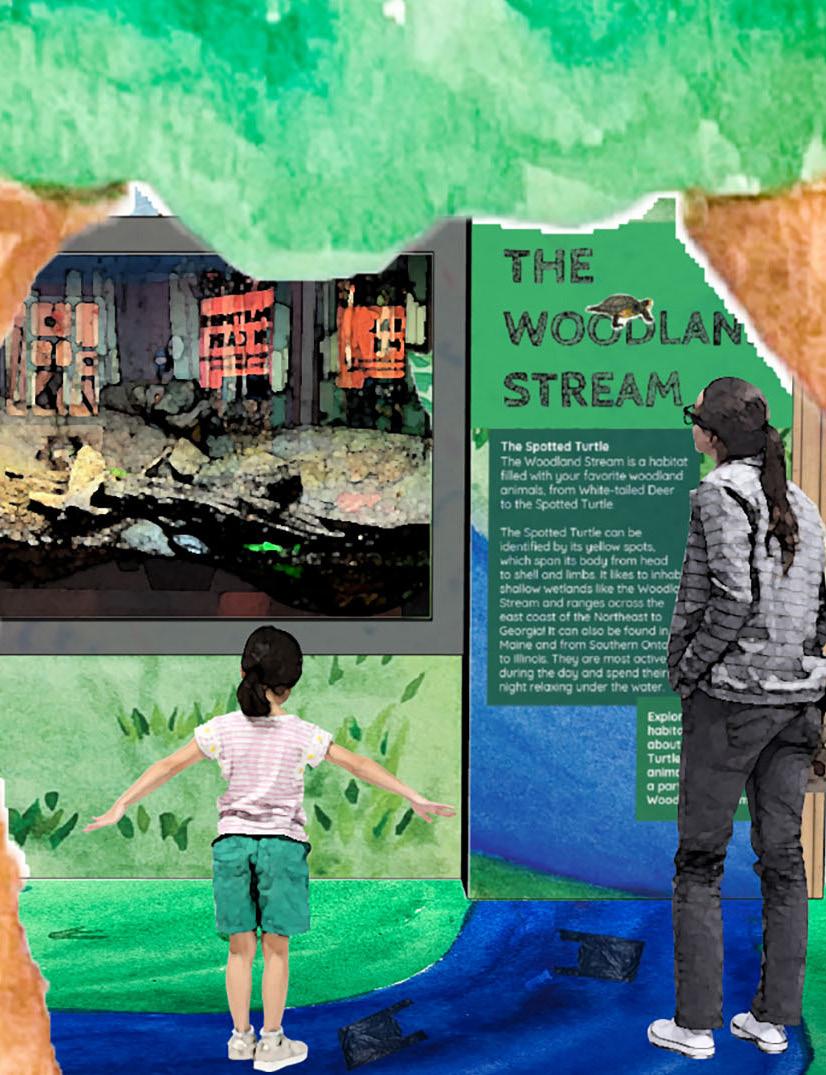
The Woodland Stream area introduces visitors to the home of the Spotted Turtle. This is brought to life with a projected stream, which is gamifiedfor visitors to interact with.
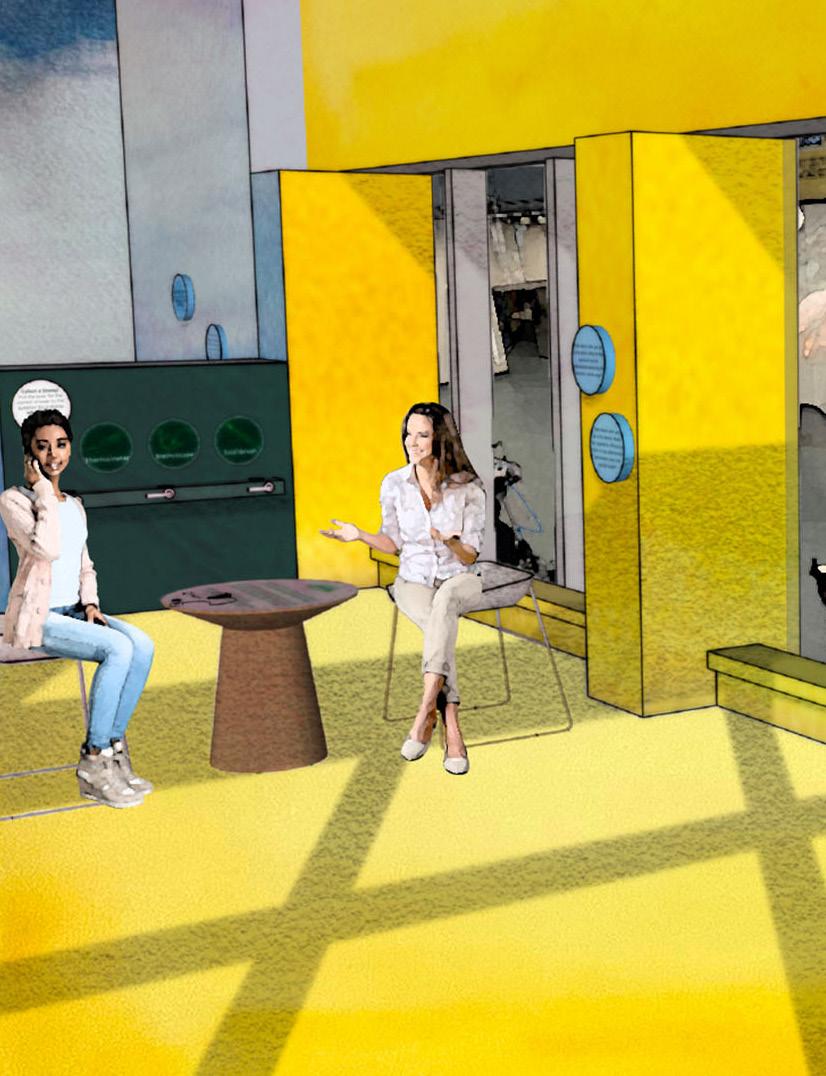
The Physical Health area introduces visitors to the Compare and Contrast area of the exhibition. Here visitors sit at tables that feature tools usedin both animals and humans health.
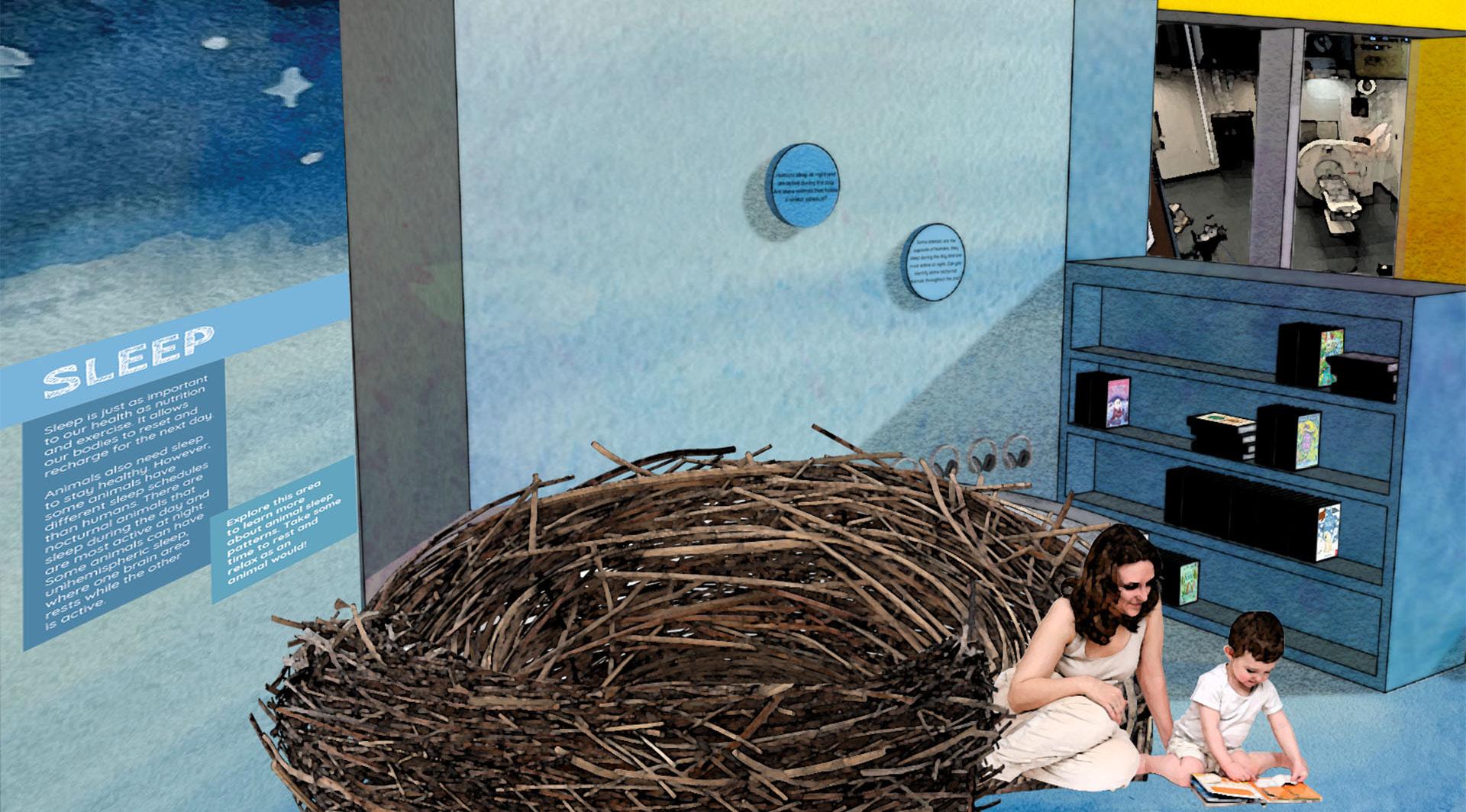
The Sleep area compares animal sleep patterns to human sleep patterns. This area also promotes a restful and quiet space for those who mayexperience sensory over-stimulation.
table allows for single families to play or for multiple families to work together. This promotes the idea that in working together as a community, we can care for those around us.
Conclusion
In reflection, the project does accommodate for the target audience in many ways. The wayfinding strategy, which leads visitors from the parking lot, to the building and introduction area, helps to build familiarity with the content and visuals for visitors who may be weary or nervous. The animal areas provide multiple ways to learn, providing accommodations for various learning styles. Several of the animal areas, especially the Woodland Stream interactive, are built for visitors who are sensory seekers and would like active exercises and immersive environments. In contrast, those who easily experience sensory overstimulation would appreciate the Compare and Contrast areas that provide low stimulus environments. In particular, the Sleep Area creates a respite area for anyone feeling sensory overstimulation.
However, it is important to note that every individual with ADHD and autism has a different experience and different needs. As designers, it is important for us to reflect on the individual experience of those with unapparent disabilities including seeking input from communities with unapparent disabilities when planning and testing new exhibitions. These accommodations could be planned from the beginning with the design of our space, along with sensory guides, sensory kits, and social stories. The more we can provide to enhance the user experience, the easier it will be for people to access and experience our spaces.
Overall, this thesis and project is only a beginning and a continuation of research towards designing spaces to accommodate those with unapparent disabilities such as ADHD and autism. Even as we work towards ideal best practices in design accommodation, we can always take that first step by just - as Beth would put it - “doing anything.”10 As designers, any effort we make to meet guests where they are, and take into account their unique perspectives, should put visitors at the center of the experience. As they should be.
Resources
“2023 Sustainability & Social Impact Report.” The Walt Disney Company, The Walt Disney Company, 2023, impact.disney.com/app/uploads/2024/03/2023-SSIReport-4.pdf.
Aithal, Supritha, et al. “Supporting the wellbeing of caregivers of children on the autism spectrum: A qualitative report on experiences of attending group Dance Movement psychotherapy.” PLOS ONE, vol. 18, no. 8, 4 Aug. 2023, https://doi.org/10.1371/journal. pone.0288626.
“Attention deficit hyperactivity disorder.” MerriamWebster.com Dictionary, Merriam-Webster, https:// www.merriam-webster.com/dictionary/attention%20 deficit%20hyperactivity%20disorder. Accessed 16 Jul. 2025.
“Autism.” Merriam-Webster.com Dictionary, MerriamWebster, https://www.merriam-webster.com/dictionary/ autism. Accessed 16 Jul. 2025.
Chatterjee, Helen, and Guy Noble. Museums, Health and Well-Being. Routledge, 2017, Taylor & Francis Online, https://www.taylorfrancis.com/books/ mono/10.4324/9781315596549/museums-health-wellbeing-helen-chatterjee-guy-noble, Accessed 2024.
“Disney - About the Walt Disney Company.” The Walt Disney Company, The Walt Disney Company, 14 Nov. 2024, thewaltdisneycompany.com/about/.
“Disney Conservation Fund.” IFAW, IFAW, www.ifaw. org/about/institutional-partners-foundations/disneyconservation-fund. Accessed 18 Dec. 2024.
Dugar, Amardeep M. “Meaningful lighting installations.” International Journal of Art, Culture, Design, and Technology, vol. 11, no. 1, 21 Oct. 2022, pp. 1–16, https:// doi.org/10.4018/ijacdt.312846.
Falk, John H. Identity and the Museum Visitor Experience. Left Coast Press, Inc., 2009.
10 Miorelli, S. (2024, November 5). Interview with Beth Redmond Jones. personal.
Falk, John H. The Value of Museums: Enhancing Societal Well-Being. Rowman & Littlefield, 2022.
Fletcher, Tina S., et al. “Can sensory gallery guides for children with sensory processing challenges improve their museum experience?” Journal of Museum Education, vol. 43, no. 1, 2 Jan. 2018, pp. 66–77, https://doi.org/10.10 80/10598650.2017.1407915.
“Guidelines for Writing about People with Disabilities.” ADA National Network, 15 Jan. 2025, adata.org/ factsheet/ADANN-writing.
Hansen, Alexandria K., et al. “Fidgeting with fabrication.” Proceedings of the 7th Annual Conference on Creativity and Fabrication in Education, 21 Oct. 2017, pp. 1–4, https://doi.org/10.1145/3141798.3141812.
“The IUCN Red List of Threatened Species.” IUCN Red List of Threatened Species, IUCN, www.iucnredlist.org/ about/background-history. Accessed 18 Dec. 2024.
Jacobs, Naomi. “Capability Sensitive Design for Health and Wellbeing Technologies.” Science and Engineering Ethics, vol. 26, no. 6, 18 Nov. 2020, pp. 3363–3391, https://doi.org/10.1007/s11948-020-00275-5.
Johnson, Maria I. “How Neurodiversity Centered Museum Education within Art Museums Can Benefit Children with ADHD and Autism Spectrum Disorders a Thesis in Museum Studies.” Buffalo State University Digital Commons, Buffalo State, 2022, https://digitalcommons. buffalostate.edu/museumstudies_theses/38/. Accessed 2024.
King, Summer B. “Inclusive Museums, Inclusive Minds: Redefining Museum Accessibility for Families with ADHD.” Order No. 30632282 University of Colorado at Boulder, 2023. United States -- Colorado: ProQuest. Web. 12 Jan. 2025.
Konishi, M. “Behavioral guides for sensory neurophysiology.” Journal of Comparative Physiology A, vol. 192, no. 6, 24 Jan. 2006, pp. 671–676, https://doi. org/10.1007/s00359-006-0097-6.
Langa, Lesley A., et al. “Improving the museum experiences of children with autism spectrum disorders and their families: An exploratory examination of their motivations and needs and using web‐based resources to meet them.” Curator: The Museum Journal, vol. 56,
no. 3, July 2013, pp. 323–335, https://doi.org/10.1111/ cura.12031.
Majewski, Janice, et al. “Smithsonian Guidelines for Accessible Exhibition Design.” Smithsonian Accessibility Program, 2011.
McGregor, Alisdair, et al. “Environmentally smart design: Designing for social wellbeing across the city and in the Workplace.” Architectural Design, vol. 87, no. 2, 3 Apr. 2017, pp. 48–55, https://doi.org/10.1002/ad.2152.
Miorelli, S. (2024, November 5). Interview with Beth Redmond Jones. personal.
Naples, Lauren H., and Elizabeth D. Tuckwiller. “Taking students on a strengths Safari: A multidimensional pilot study of school-based wellbeing for Young Neurodiverse Children.” International Journal of Environmental Research and Public Health, vol. 18, no. 13, 29 June 2021, p. 6947, https://doi.org/10.3390/ijerph18136947.
Parrish, Jesslyn. “Seeing the Unseen: Interactive Narrative as a Tool for Understanding Invisible Disabilities.” Stars Library, University of Central Florida, University of Central Florida, 19 May 2022, https://stars. library.ucf.edu/etd2020/1065/. Accessed 2024.
Partridge, Erin Elizabeth. “The Pre-Research Sketchbook: A tool to guide future inquiry.” Art Therapy, vol. 38, no. 2, 13 Mar. 2020, pp. 104–108, https://doi.org/10.1080/0742 1656.2020.1729677.
Porter, Jason, et al. “Chapter 4: The Spectrum Project: Social Stories, Museum Educators, and Young Adults with Autism.” Museum Education for Today’s Audiences—Meeting Expectations with New Models, Rowman & Littlefield Publishers, 2022.
Redmond-Jones, Beth. Welcoming Museum Visitors with Unapparent Disabilities. Rowman & Littlefield, an Imprint of the Rowman & Littlefield Publishing Group, Inc, 2024.
Redquest, Brianne K, et al. “Assessing the Wellbeing of Individuals with Autism Using the interRAI Child and Youth Mental Health (ChYMH) and the interRAI Child and Youth Mental Health --Developmental Disabilities (ChYMH-DD) Tools.” Pediatric Nursing, vol. 46, no. 2, 1
Mar. 2020, pp. 83–92, https://go.gale.com/ps/i.\
Richardson, Jim, and Charlotte Coates. “Making the Museum Autism Friendly - Best Practice from around the World.” MuseumNext, 17 Nov. 2019, www.museumnext. com/article/making-the-museum-autism-friendly/.
Rose, Paul E., and Lisa M. Riley. “Expanding the role of the Future Zoo: Wellbeing should become the fifth aim for Modern Zoos.” Frontiers in Psychology, vol. 13, 20 Oct. 2022, https://doi.org/10.3389/fpsyg.2022.1018722.
Ruiz, Belén, et al. “Design for all in multimedia guides for museums.” Computers in Human Behavior, vol. 27, no. 4, 1 July 2011, pp. 1408–1415, https://doi.org/10.1016/j. chb.2010.07.044.
Shrikant, Aditi. “How Museums Are Becoming More Sensory-Friendly For Those With Autism.” Smithsonian Magazine, 5 Jan. 2018, https://www.smithsonianmag. com/innovation/how-museums-are-becoming-moresensory-friendly-for-those-with-autism-180967740/. Accessed 2024.
Spaeth, Elliott, and Amy Pearson. “Reflective analysis on neurodiversity and student wellbeing.” Journal of Perspectives in Applied Academic Practice, vol. 11, no. 2, 5 July 2023, pp. 109–120, https://doi.org/10.56433/jpaap. v11i2.517.
Steen, Marc. “Organizing design-for-wellbeing projects: Using the capability approach.” Design Issues, vol. 32, no. 4, Oct. 2016, pp. 4–15, https://doi.org/10.1162/ desi_a_00412.
Svaler, Tirill Bjørkeli. “On making libraries and museums more accessible for autistic people.” IFLA Journal, vol. 50, no. 1, 16 Oct. 2023, pp. 42–52, https://doi. org/10.1177/03400352231202516.
Thomson, Linda J, et al. “Effects of a museum-based social prescription intervention on quantitative measures of psychological wellbeing in older adults.” Perspectives in Public Health, vol. 138, no. 1, 13 Nov. 2017, pp. 28–38, https://doi.org/10.1177/1757913917737563.
Tola, Giulia, et al. “Built environment design and people with autism spectrum disorder (ASD): A scoping review.” International Journal of Environmental Research and Public Health, vol. 18, no. 6, 19 Mar. 2021, p. 3203, https://doi.org/10.3390/ijerph18063203.
“Universal Design: What Is It?” Section508.Gov, https:// www.section508.gov/blog/Universal-Design-What-is-it/. Accessed 16 June 2024.
Varner, Rachel. Museums and Visitors with Autism: An Overview of Programs, Rochester Institute of Technology, Rochester Institute of Technology, 2015, https:// repository.rit.edu/theses/8848. Accessed 2024.
“Well-Being Definition & Meaning.” Merriam-Webster, Merriam-Webster, www.merriam-webster.com/ dictionary/well-being. Accessed 14 June 2024.
Šveb Dragija, Marta, and Daniela Angelina Jelinčić. “Can museums help visitors thrive? review of studies on psychological wellbeing in museums.” Behavioral Sciences, vol. 12, no. 11, 17 Nov. 2022, p. 458, https://doi. org/10.3390/bs12110458.
Sonic Horizons Embodied Biophilic Experience in a Sensory-Immersive Environment
Maral Salehian
Interdisciplinarity Designer, University of California, Davis
Abstract
The growing urban population and environmental degradation have created a disconnect between humans and nature, leading to rising mental health issues and heightened stress levels. There is a large body of research on the mental health benefits of exposure to nature. However, accessing natural environments can be challenging for individuals with disabilities, older adults, and those living in urban areas with limited green spaces. The purpose of this project is to investigate the advantages of virtual nature experiences as a potential well-being intervention and to explore how this approach may reconnect individuals to nature and enhance emotional well-being.
Even though computer technologies such as immersive virtual environments (IVEs) are increasingly used to mediate design processes, it remains unclear to what extent virtual nature experiences can replicate the physiological and psychological benefits of real-world nature. To address these gaps, future research is needed to advance understanding of how virtual nature immersion affects human well-being.
This study began with a quantitative research approach, utilizing electroencephalography (EEG) to measure neurological responses to virtual nature stimuli. However, the neural changes observed were too subtle to draw accurate conclusions. As a result, the research transitioned to a comprehensive literature review aimed at identifying patterns and trends in immersive virtual environments. Building on those findings, Sonic Horizon, a nature-inspired sensory-immersive installation, was designed to challenge the notion of a human–nature divide by developing a calming experience in which artificial elements evoke natural sensations.
Introduction
Rapid urbanization and environmental degradation have altered everyday human–nature relations, with documented links to stress and attentional fatigue (Kaplan and Kaplan; Ulrich). The effects are most acute for people with limited access to green space, underscoring the need for strategies that reconnect people and place. Research reports associations between contact with nature and improved mood, reduced stress, and cognitive benefits (Browning and Ryan; Kellert and Wilson).
Access, however, is not equitably distributed. Analyses by the Center for American Progress indicate that a substantially higher share of communities of color in the United States live in nature-deprived areas compared with white communities—a disparity closely tied to income (see Figure 1). Addressing this inequity calls for approaches that bring the qualities of nature to those currently excluded.
Reframing Nature Access Through Immersive Virtual Design
Virtual nature experiences have emerged as a promising response to the growing challenges of limited access to natural environments. Advances in computer technology, particularly immersive virtual environments (IVEs), offer new possibilities for simulating natural settings and facilitating human–nature interactions in accessible and controlled ways (Söderlund). While IVEs are increasingly used in design and therapeutic contexts, the extent to which they can replicate the physiological and psychological benefits of real-world nature remains uncertain.
Building on insights from existing literature, this study introduces Sonic Horizon, a sensory-immersive installation created to challenge the perceived separation between humans and nature and to engage a broad and diverse audience.
Foundational Concepts and Inspirations
This project was shaped by several intersecting concepts and areas of research, including biophilic, multi-sensory and, immersive design.
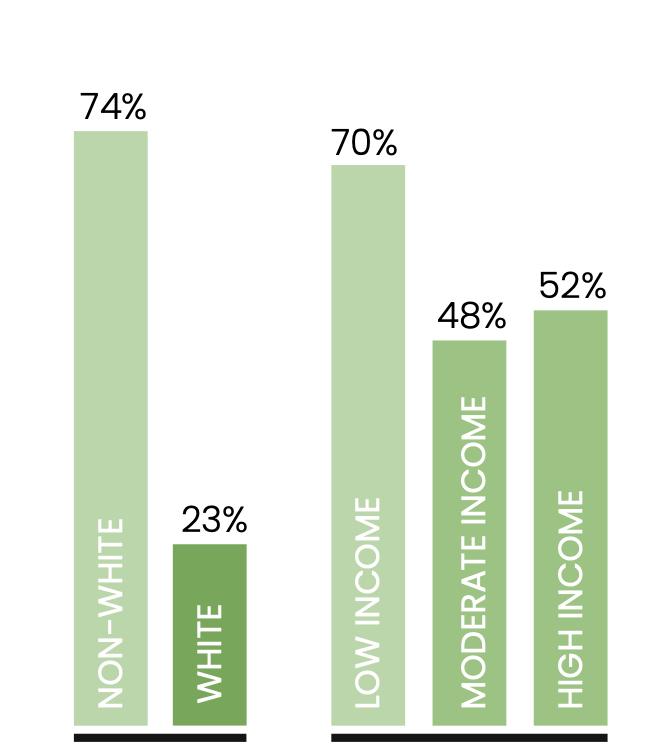
Biophilic design is an approach to creating built environments that intentionally foster meaningful connections between people and nature by integrating natural elements, forms, and systems throughout the space. A significant milestone for the design industry came through Roger Ulrich’s research, which documented the therapeutic benefits of nature in hospital settings. Ulrich (1999) found that patients with views of nature—trees and plants—had better healing outcomes, including shorter hospital stays and fewer pain medications, than those facing brick walls. These findings supported a design approach prioritizing the integration of nature and human well-being over operational efficiency. According to Kellert et al.
The installation applies biophilic design through natural analogues: hyper-local landscape imagery and a blue–green palette often linked to calm in restorativeenvironment literature (Kaplan and Kaplan), plus reclaimed wood benches for tactile warmth and a light wood aroma as a subtle nature cue.
Figure 1. Percent of People Living in a Nature-Deprived Area by Census Tract Demographics
Multisensory design (MSD) engages multiple senses in the conception of products and environments. All sensory information present—whether intended or incidental, and whether consciously registered or not—can shape perception, cognition, experience, and behavior (Schifferstein and Desmet). MSD therefore coordinates modalities so information is legible, participation is supported across sensory capacities, and positive affect is enabled. Its core practice is to elicit and integrate perceptual insights from exploration across vision, audition, touch/proprioception, olfaction, and, when relevant, gustation into a coherent whole. The principal challenge is orchestrating diverse stimuli so a product or space reads as a single, unified experience rather than competing channels.
In Sonic Horizons, these principles are implemented through synchronized visual, auditory, tactile, and olfactory layers. Visual content is paired with an ambient sound bed; tactile seating and a subtle scent operate at background level. Levels and timing are balanced so no channel dominates; together the layers read as one field and are intended to invite attentive looking and a felt sense of ease.
Immersion supported by tempo, continuity, and lowsurprise transitions. In both real and virtual environments, immersion describes a state in which individuals become deeply absorbed in their surroundings, experiencing heightened sensory awareness and an emotional bond with place; the accompanying sense of presence—the feeling of “being there”—arises from the interplay of sensory stimuli, emotional response, and cognitive involvement (Lim, Dillon, and Chew; Triberti and Riva; Hansen et al.). Research on exhibitions and virtual reality similarly prioritizes pacing and coherence over spectacle as facilitators of presence and comfort, with presence identified as central to perceived realism and emotional resonance in VR/AR contexts (Cummings and Bailenson).
Historical and theoretical accounts position immersion as an evolving cultural and technological construct. Grau traces the history of immersive media from panoramic painting to modern virtual installations. He says that these kinds of media change how people watch art from passive to active participation and can change how art, space, and the viewer interact in a way that is almost like a “total space” (Grau). Taken together, these precedents
informed Sonic Horizon’s design choices: slow visual movement, cross-screen continuity, and gentle audio envelopes calibrated for a public gallery to support presence without reliance on technical spectacle.
In Sonic Horizon, immersion is built by treating three walls as one continuous scene: left—sky, center— horizon, right—land. The center wall carries the horizon line and visually stitches the side walls, so the triptych reads as a single landscape (see Figure 2). Footage is slowed and stabilized to reduce visual strain, and the camera’s elevated drone vantage introduces a nonhuman point of view. Color is edge-matched across seams and luminance is moderated, so hues and motion drift laterally from panel to panel rather than competing. With land and sky anchored through the center frame, the composition maintains continuity across all three surfaces, producing a coherent, enveloping field rather than three separate screens (see Figure 3).
Methodology
Design. An exploratory EEG pilot was followed by a literature-based method to examine how immersive virtual environments (IVEs) might approximate aspects of real-world nature experience.
EEG pilot. Four participants completed four consecutive 5-minute conditions: (1) resting baseline, (2) nature photograph (visual), (3) nature soundscape (auditory), and (4) combined image + sound (see Figure 2 &3). EEG provides high temporal precision but low spatial resolution; with a small N and overlapping audiovisual inputs, effects were too subtle for reliable interpretation, so no claims about calming outcomes are made (Luck).
Literature review. A focused review across environmental psychology, neuroscience, multimedia art, and VR/interactive media identified working variables for design—pacing, color palette, sound envelope, and spatial arrangement. These findings informed the composition and setup of Sonic Horizon in a publicgallery context. Palette, sound envelope, and spatial arrangement—that could inform subsequent design decisions. The resulting insights guided the development of Sonic Horizon and shaped a scope-appropriate approach to evaluation in a public-gallery context.
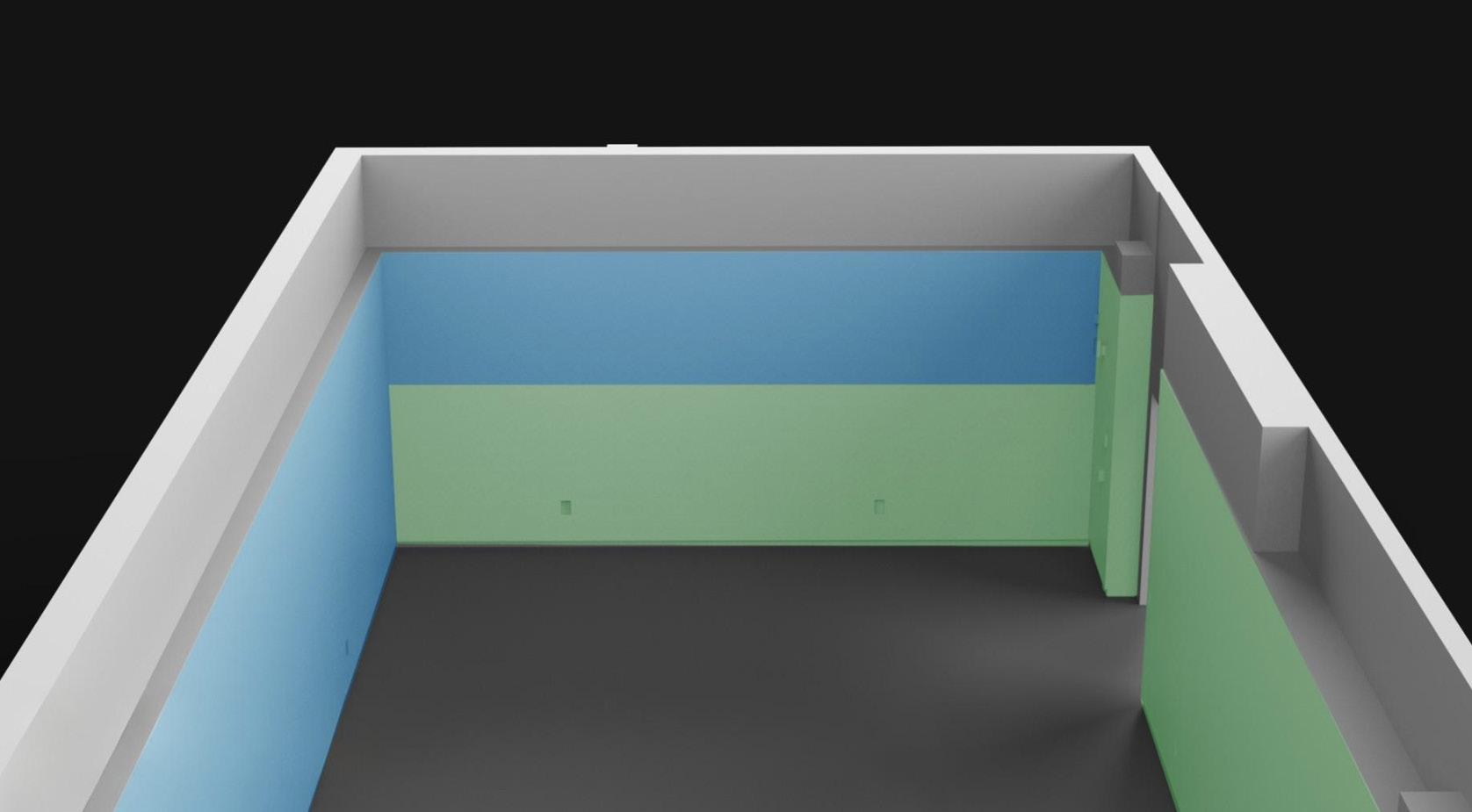
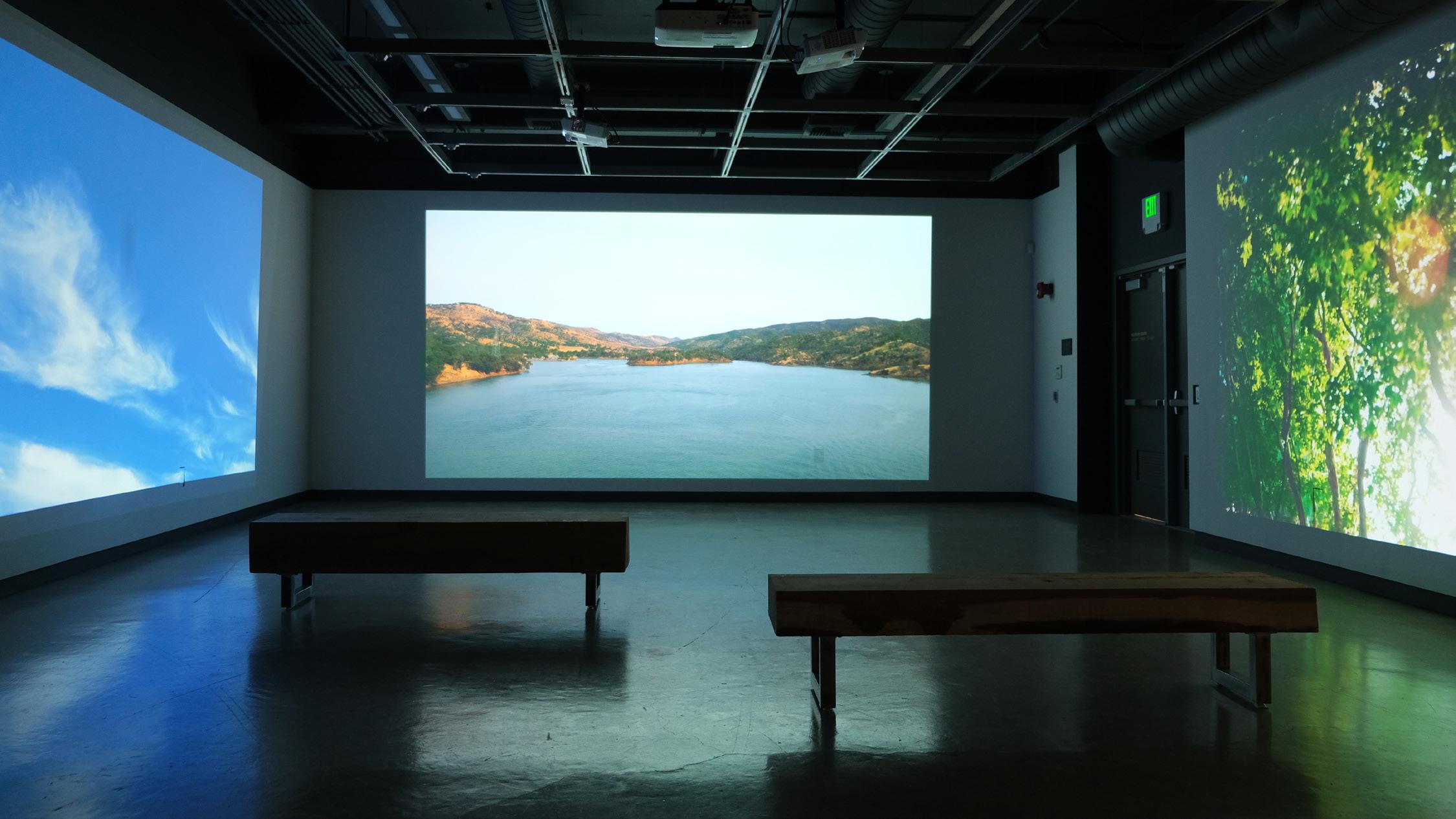
Figure 2.
Figure 3.
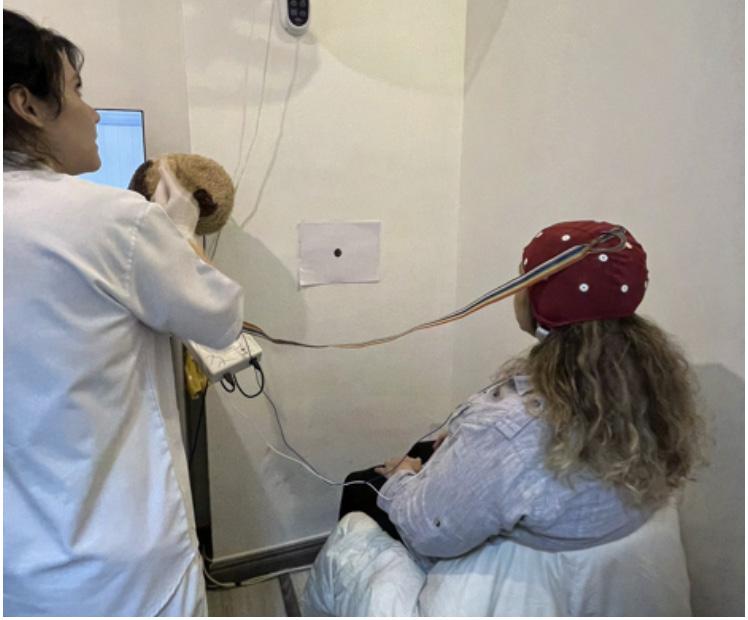
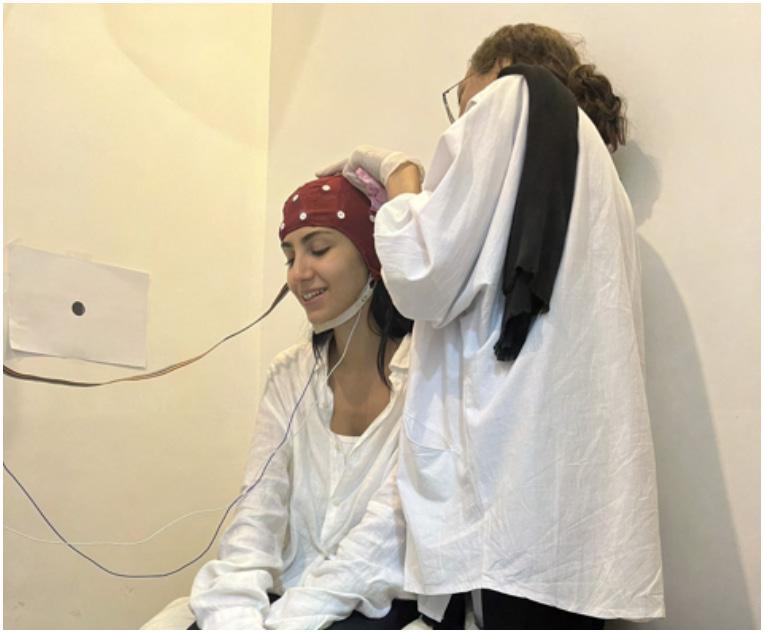
4. Participants being prepared for EEG scanning ahead of the resting state phase.
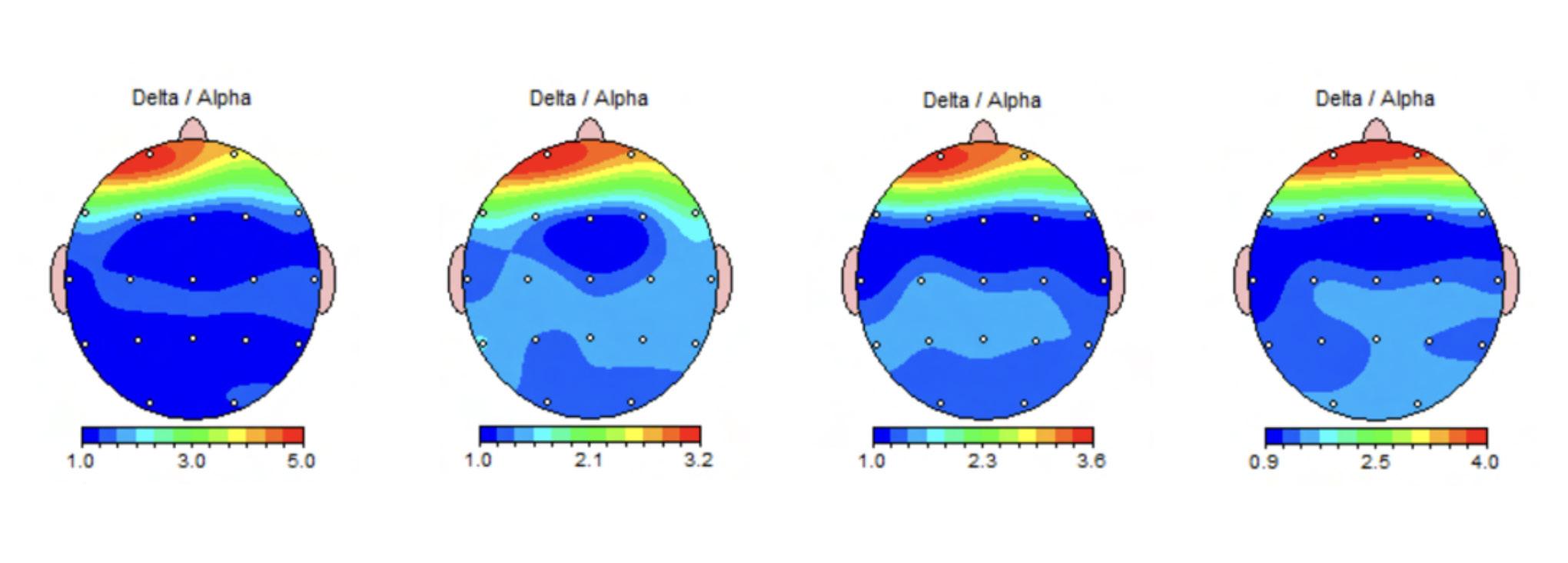
Figure 5. Analysis of a participant’s neural activity across four conditions: (1) resting state, (2) image-only stimulation, (3) sound-only stimulation, and (4) combined exposure to sound and image.
“Sonic Horizon aligns perception with the neural rhythms of calm found in nature.”
Figure
Project Development
Spatial logic and narrative The gallery is organized as a contiguous panorama rather than three discrete screens. Roles are assigned to each surface—left: sky, center: horizon, right: land—with the center band establishing a continuous horizon that resolves the joins between the flanks. Shots are held long and kept stable to support sustained viewing, and an elevated drone viewpoint reframes familiar sites from above to gently defamiliarize them. Entry sightlines bias attention to the center first, then allow lateral reading toward sky and land. Seam alignment and color matching are used to keep the edges visually quiet, so the panorama is perceived as one landscape rather than three adjacent images. Benches are positioned for a direct view to the center band and easy lateral scan to the sides.
Visual content and color Footage is hyper-local and edited with minimal cutting to maintain continuity. Color is matched at the seams so hues remain consistent across panel boundaries. A blue–green palette is used throughout.
Sound The audio layer uses a piece by ambient producer Gert Stockmansa (“Samatha”), selected for its slow, reflective pacing consistent with the installation’s tempo. Playback is calibrated for background presence— audible with even coverage across the room yet nondominant—so the track supports, rather than competes with, the visual composition in a public-gallery context.
Tactile and olfactory layers Reclaimed wood benches provide tactile warmth and comfortable viewing positions. A light wood aroma functions as a subtle olfactory cue; both operate at background level so the experience reads as one field rather than competing channels.
Environmental graphics Outside the gallery, a sequence of location photographs connected by a continuous horizon line cues the installation and orients visitors before entry (see Figure 6).
Accessibility and Sustainability
Accessibility considerations included clear wayfinding, safe circulation in reduced light, bench heights aimed at comfortable sit-to-stand, and moderate sound levels to avoid overstimulation (Malnar and Vodvarka; Pallasmaa). Sustainability considerations focused on hyper-local video capture, reuse of existing projection equipment, and reclaimed wood seating; these choices aligned with resource stewardship and material tactility emphasized in biophilic and sensory design literature (Kellert; Malnar and Vodvarka).
Conclusion
Applying biophilic principles within immersive media offers a pragmatic way to bring nature-like qualities into spatial settings where direct access is limited. This work coordinates image, sound, tactility, and scent as a single field; next steps focus on refining sensory calibration and broadening accessibility. More cue than replica, Sonic Horizon invites attention to local ecologies and a renewed relation to place.
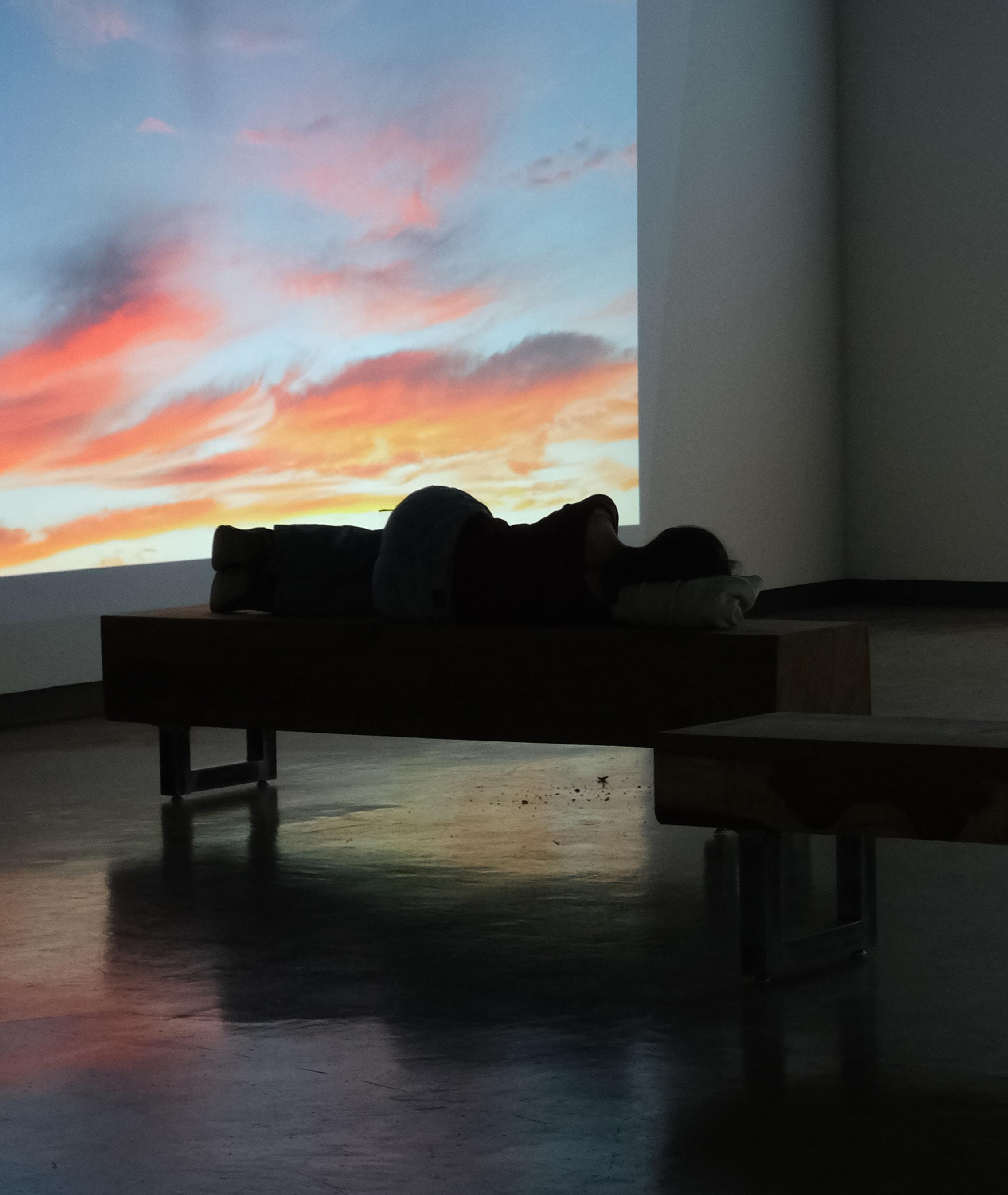
The exhibit offered students a space to decompress through sensory immersion.
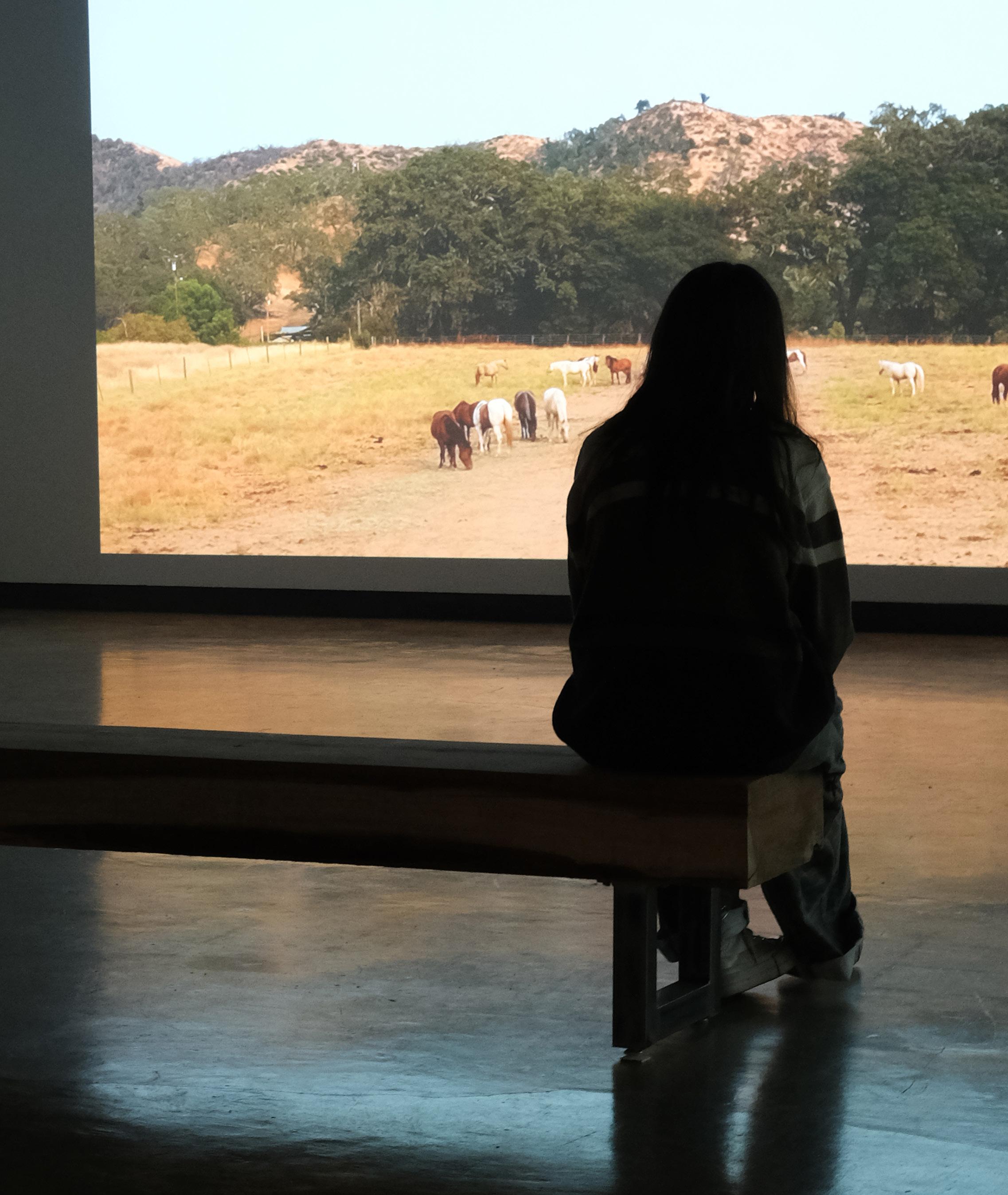
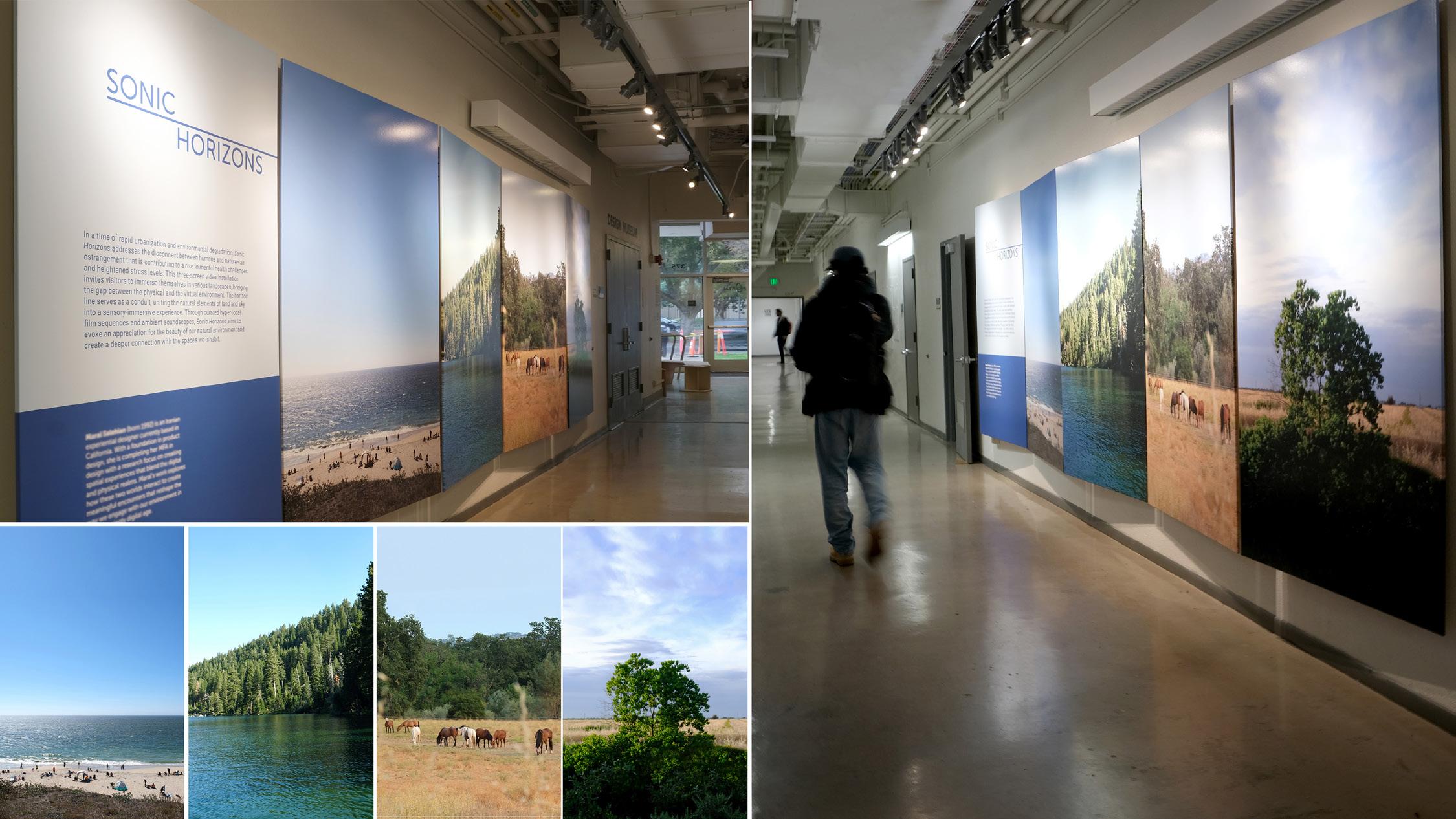
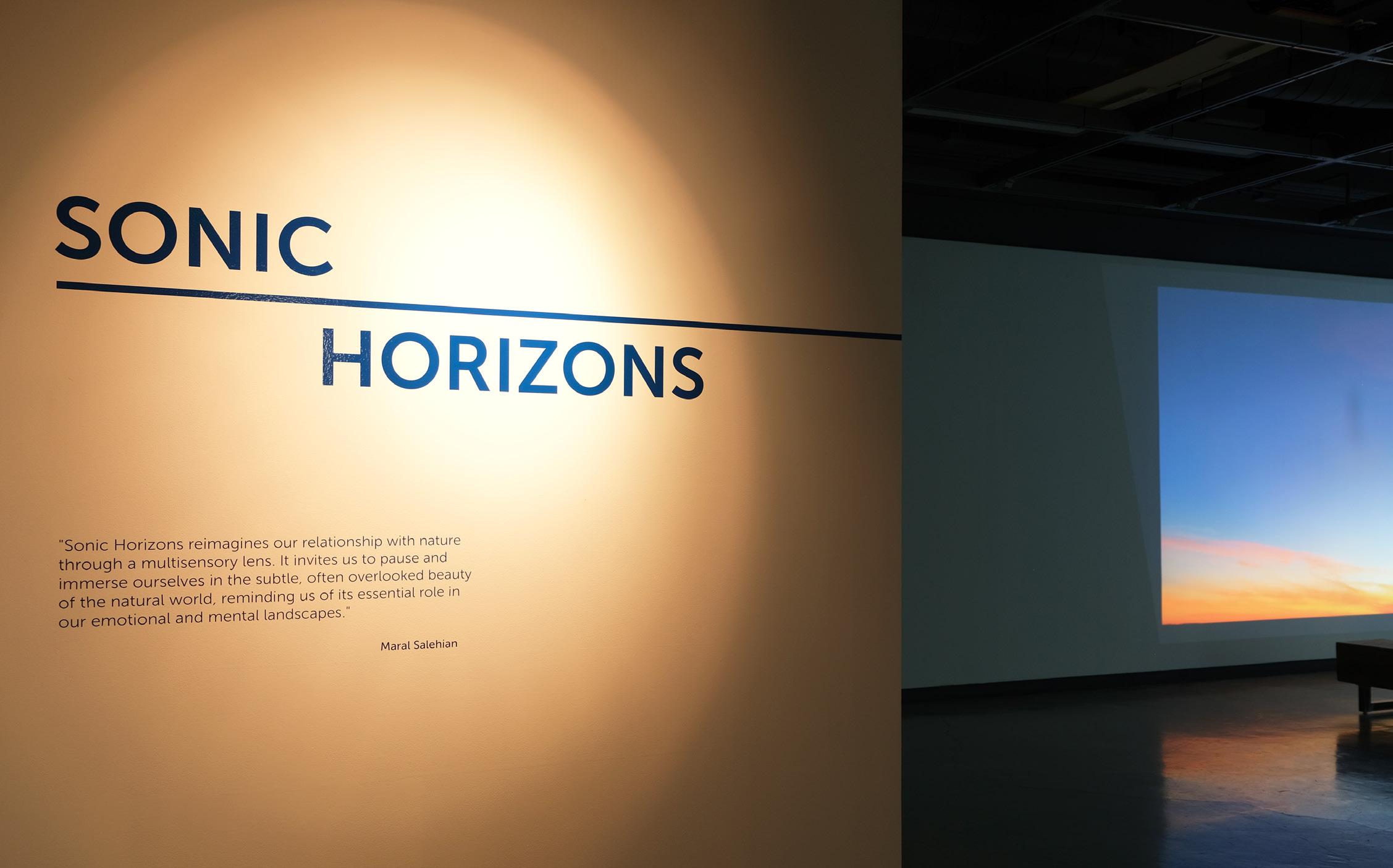
Figure 6.
Resource
Browning, William D., and Russell L. Ryan. Nature Inside: A Biophilic Design Guide. RIBA Publishing, 2020.
Cummings, James J., and Jeremy N. Bailenson. “How Immersive Is Enough? A Meta-Analysis of the Effect of Immersive Technology on User Presence.” Media Psychology, vol. 19, no. 2, 2016, pp. 272-309.
“Effects of Gardens on Health Outcomes: Theory and Research.” In Healing Gardens: Therapeutic Benefits and Design Recommendations, edited by Clare Cooper Marcus and Marni Barnes, John Wiley & Sons, 1999, pp. 27–86.
Grau, Oliver. Virtual Art: From Illusion to Immersion. MIT Press, 2003.
Kaplan, Rachel, and Stephen Kaplan. The Experience of Nature: A Psychological Perspective. Cambridge UP, 1989.
Kellert, Stephen R., and Edward O. Wilson, editors. The Biophilia Hypothesis. Island Press, 1993.
Lim, Pei Yi, Denise B. Dillon, and Peter K. H. Chew. “A Guide to Nature Immersion: Psychological and Physiological Benefits.” International Journal of Environmental Research and Public Health, vol. 17, no. 16, 2020, article 5989.
Malnar, Joy Monice, and Frank Vodvarka. Sensory Design. University of Minnesota Press, 2004.
Pallasmaa, Juhani. The Eyes of the Skin: Architecture and the Senses. 3rd ed., Wiley, 2012.
Schifferstein, Hendrik N. J., and Pieter M. A. Desmet. “Tools Facilitating Multi-Sensory Product Design.” The Design Journal, vol. 11, no. 2, 2008, pp. 137–158.
“The Nature Gap: Confronting Racial and Economic Disparities in the Destruction and Protection of Nature in America.” Center for American Progress, 21 July 2020.
Triberti, Stefano, and Giuseppe Riva. “Being Present in Action: A Theoretical Model about the ‘Interlocking’ between Intentions and Environmental Affordances.” Frontiers in Psychology, vol. 6, 2016, article 2052.
Ulrich, Roger S. “View through a Window May Influence Recovery from Surgery.” Science, vol. 224, no. 4647, 1984, pp. 420–421.
Wonder Transforming Narratives in Difficult Exhibitions
Aian Raquel
Creative Director, Ilocos Norte
Tourism Office-Philippines
MA in Exhibition and Experience Design 2025
Graduate, Fashion Institute of Technology
Abstract
This study explores how evoking wonder in exhibitions transforms engagement with difficult histories and content. By harnessing wonder – a sudden, extraordinary, and personal experience – exhibitions create a state of productive uncertainty, fostering new perspectives, increased empathy, critical reflection, and active remembering. Through theoretical research, case studies, prototype testing, and practical application via the exhibition “Dogtown 120: A Retrospective of the Philippine Village at the 1904 St. Louis World’s Fair,” this research establishes a comprehensive framework for using wonder to make challenging narratives more resonant and accessible while maintaining ethical responsibility and cultural sensitivity. The framework demonstrates how wonder can serve as both methodology and outcome in exhibition design, creating experiences that are personally meaningful yet collectively resonant, intellectually engaging yet emotionally accessible, and historically grounded yet relevant to contemporary understanding.
Author’s Note: This is an abridged version of a qualifying thesis paper submitted to the Fashion Institute of Technology and revised for the format of the SEGD Academic Summit. The full version is available through the FIT Department of Exhibition and Experience Design and the author.
Introduction
Growing up in the Philippines with the lingering effects of colonialism, I developed a deep appreciation for how historical narratives shape contemporary worldviews and cultural identity. This personal experience led me to explore how cultural institutions can more effectively present difficult histories through exhibition design that engages visitors emotionally and intellectually.
Traditional museum approaches often present challenging historical content through what Witcomb calls “uncritical exhibition practices” – displays that support nostalgic or simplified narratives while avoiding complexity and discomfort.¹ This conventional approach, emphasizing purely objective or scientific presentation, frequently fails to create meaningful engagement or facilitate healing around difficult histories. As Witcomb argues, museums need to move beyond simply displaying artifacts to creating experiences that encourage critical reflection on the relationship between past and present.²
Wonder offers a powerful alternative approach that balances “receptivity and active exploration.”³ While closely related to awe, wonder operates differently in how it engages visitors. Unlike pure curiosity which seeks definitive answers, wonder maintains visitors “in a state of openness and uncertainty that is both tense and enchanting.”⁴ This quality makes it particularly suited for engaging with difficult histories, as it allows visitors to question what they think they know while remaining open to new perspectives.
Unlike pure affective responses that might overwhelm or distance visitors, wonder helps people “see the world anew by problematizing existing knowledge and opening us up to a field of possibility.”⁵ This capacity for transformation while maintaining engagement makes wonder particularly valuable for museums fulfilling their evolving role as spaces for both education and social healing.
Understanding Wonder in Exhibition Context
Recent scholarship has significantly deepened our understanding of wonder’s transformative potential in exhibition spaces. Wonder creates a sudden, personal experience that captures visitors’ attention and imagination while fostering transformation.⁶ Unlike
related states such as fear or awe, wonder maintains engagement without overwhelming visitors, instead opening them to new ideas.⁷ Studies find that wonder works by creating what scholars call “productive uncertainty” – a state where visitors become more open to questioning what they know.⁸
The Aura-Awe-Wonder Progression
Quacchia argues that wonder emerges through a sequential relationship: an object’s aura (its emanating presence or quality) can evoke awe, which in turn may develop into wonder.⁹ This sequence helps explain why some exhibition experiences prove more transformative than others – the strength of an object’s aura influences its capacity to inspire awe and ultimately wonder.
Building on this understanding, Pedersen’s comprehensive analysis reveals wonder as a complex phenomenon characterized by seven essential constituents: its sudden and personal nature, intensified cognitive focus, engagement of imagination, awareness of knowledge gaps, temporary displacement of self, connection to a larger world, and primarily joyful emotional upheaval.¹⁰ This framework helps explain why wonder proves particularly effective in exhibition contexts dealing with difficult histories.
Understanding the relationship between aura, awe, and wonder provides crucial insights into how exhibitions can create transformative experiences when dealing with challenging histories. Contemporary aesthetic theory illuminates how wonder operates in exhibition spaces through this interconnected relationship.
Distinguishing Wonder from Related Emotional States
For exhibition designers working with difficult histories, distinguishing wonder from related states is crucial for creating spaces that engage rather than overwhelm visitors.
Awe vs. Wonder: A visitor encountering the Holocaust Memorial in Berlin’s field of stelae might feel awe – a sense of overwhelming power that can induce submission. Wonder might emerge from examining a single rescued diary, inviting deeper engagement with individual stories rather than overwhelming the viewer.¹¹
Horror vs. Wonder: When confronting photographs of atomic bomb damage, visitors might experience horror that makes them want to turn away. Wonder might arise from examining intricately folded paper cranes made by survivors, drawing visitors into contemplation of resilience and healing.¹²
Curiosity vs. Wonder: A visitor might feel curiosity when reading sequential panels about historical events, seeking to gather information. Wonder emerges differently – perhaps from discovering an ordinary object that survived an extraordinary event, prompting deeper reflection about human experience.¹³
A Framework for Wonder in Exhibition Design
The literature reveals several key principles for using wonder as an experiential framework in exhibition design. These insights emerge from the intersection of aesthetic theory, visitor studies, and practical design approaches.
Sequential Experience Design
Drawing from Quacchia’s framework of aura-awewonder progression,¹⁴ exhibitions should begin with powerful authentic objects or thoughtfully crafted environments that emanate strong aura, create conditions for awe through careful presentation and pacing, and allow wonder to emerge through gradual revelation and discovery.
Balanced Emotional Engagement
Following Pedersen’s analysis of wonder’s constituents,¹⁵ exhibitions should foster cognitive engagement without overwhelming visitors, balance mystery with accessibility, create spaces for both personal and collective reflection, and support the temporary displacement of self while maintaining connection to larger contexts.
Dialogic Historical Approach
Unlike pure curiosity which seeks definitive answers, wonder places visitors ‘in a state of openness and uncertainty that is both tense and enchanting.’
Vlad P. Glăveanu
Research on wonder’s role in cultural dialogue suggests exhibitions should present multiple perspectives rather than singular narratives, create opportunities for visitors to connect personal experiences with historical content, use wonder to bridge cultural and temporal distances, and support active meaning-making rather than passive reception.¹⁶
Ethical Dimensions
While understanding how wonder operates is crucial, equally important is recognizing the ethical responsibilities that come with employing wonder in exhibition spaces addressing difficult histories. The concept of “safe enough” wonder has emerged as a critical consideration in exhibition design – allowing visitors to encounter provocative content without becoming overwhelmed or traumatized.¹⁷
Exhibition spaces that effectively harness wonder while maintaining ethical care must incorporate flexible pathways that allow visitors to control their level of engagement, designated spaces for reflection and emotional processing, and professional support structures for visitors who may become emotionally activated.¹⁸
SEQUENTIAL EXPERIENCE
• Aura
• Awe
• Wonder
BALANCED ENGAGEMENT
• Cognitive
• Personal
• Collective
WONDER
DIALOGIC APPROACH
• Multiple Perspectives
• Personal Connection
• Active Meaning-Making
PRACTICAL CONSIDERATIONS
• Space/ Environment
• Pacing
Figure 1. Wonder in Exhibition Design: A Theoretical and Practical Framework
Practical Design Considerations
The framework translates into specific design strategies that bridge theoretical understanding with implementation. Strategic use of lighting, sound, spatial design, and graphics creates contemplative environments that support wonder’s emergence. Careful object placement and revelation maintains elements of surprise and discovery, enabling the aura-awe-wonder sequence to unfold naturally. Integration of reflective spaces allows visitors to process challenging content without becoming overwhelmed, while thoughtful pacing ensures both cognitive engagement and emotional processing can occur organically.
These practical elements prove essential when working with difficult histories, as they provide the physical and sensory conditions necessary for wonder to emerge while maintaining visitor psychological safety. The careful orchestration of these design elements creates what might be termed “wonder-conducive environments” –spaces specifically calibrated to support transformative engagement with challenging content.
Case Studies
Fred Wilson’s “Mining the Museum” (1992-1993)
Wilson’s groundbreaking exhibition demonstrates how wonder can be strategically employed to challenge institutional narratives and foster cultural dialogue about racial representation in museums. By repositioning familiar objects in unexpected configurations, Wilson created what might be termed “disruptive aura” – a powerful emanating presence that emerged from strategic juxtaposition.¹⁹
Wilson’s approach aligns with Quacchia’s theory of the aura-awe-wonder sequence. His placement of slave shackles among fine silverware generated immediate aura of tension that led to awe and ultimately wonder, compelling visitors to question the museum’s traditional narratives. The exhibition’s effectiveness stemmed from strategic disruption of expectations, engagement with difficult knowledge through wonder rather than didactic criticism, and fostering cultural dialogue through collaborative processes.
The National Memorial for Peace and Justice (2018-Ongoing)
The memorial demonstrates how architectural design and spatial sequencing can evoke wonder through carefully orchestrated physical and emotional journeys. The memorial’s three-part structure aligns remarkably with Quacchia’s aura-awe-wonder sequence: the approach creates aura through contextual framing, the monument fosters awe through physical embodiment of historical weight, and the departure enables wonder through reflection and connection to contemporary action.²⁰
Several key design strategies align with the theoretical framework: embodied learning through physical movement, productive uncertainty through evolving materials and multiple paths, and contemplative spaces that support processing and reflection.
Critical Analysis: The Act of Killing (2012)
This film serves as a crucial counterpoint, revealing how wonder-based approaches can become ethically problematic when boundaries are crossed. While achieving some success in using material memory and productive disruption, the film ultimately demonstrates the need for carefully considered guidelines when using wonder to engage with difficult histories.²¹
The film’s failures reveal important limitations: wonder must be bound by ethical considerations, should not compromise historical truth, cannot substitute for genuine accountability, and must consider power dynamics and representation.
Prototype Testing
Verification Methods
A rapid prototype testing was conducted in the FIT Exhibition and Experience Design Studio, exploring how different presentation methods of historical photographs could create moments of wonder while engaging with the difficult history of the 1904 Philippine Village. The testing environment integrated three key technological approaches arranged to support Quacchia’s aura-awe-wonder sequence: an antique stereoscope with historical photographs, a box camera mock-up with digital display, and large-format archival prints juxtaposed with smaller prints.
Key Findings
The prototype demonstrated Quacchia’s aura-awewonder sequence through aura creation via physical presence of historical artifacts, awe development through mechanical viewing discovery moments, and wonder emergence through personal connection to historical moments and productive uncertainty in interpretation.
The testing revealed distinct patterns in how wonder emerges through physical interaction: initial attraction to scale, discovery and exploration of mechanical elements, return visits to earlier stations with new perspectives, and spontaneous sharing of discoveries with others. This concentrated testing demonstrates how wonder can effectively emerge even in brief, collective encounters with difficult histories.
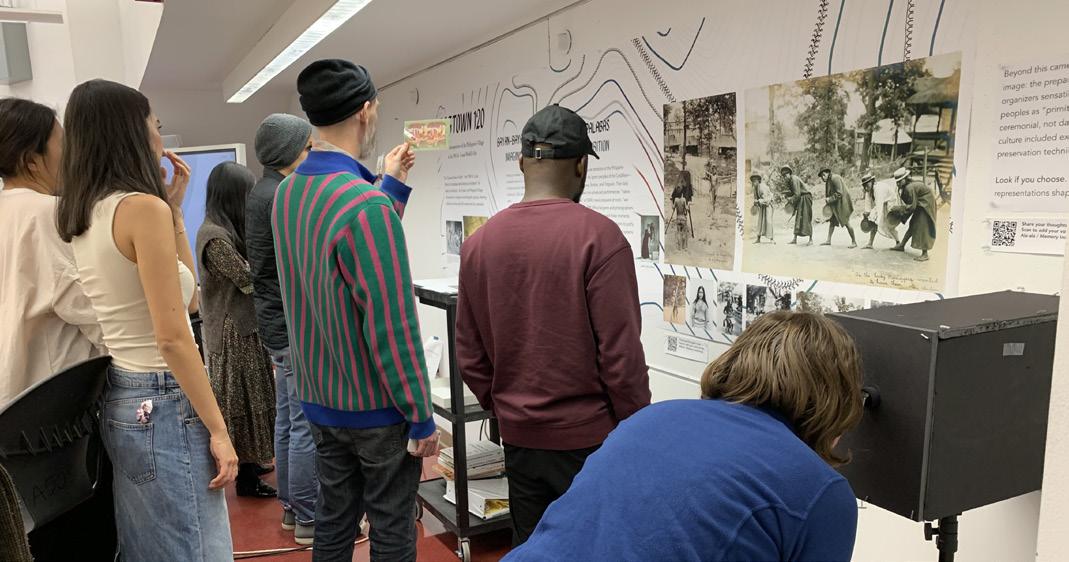
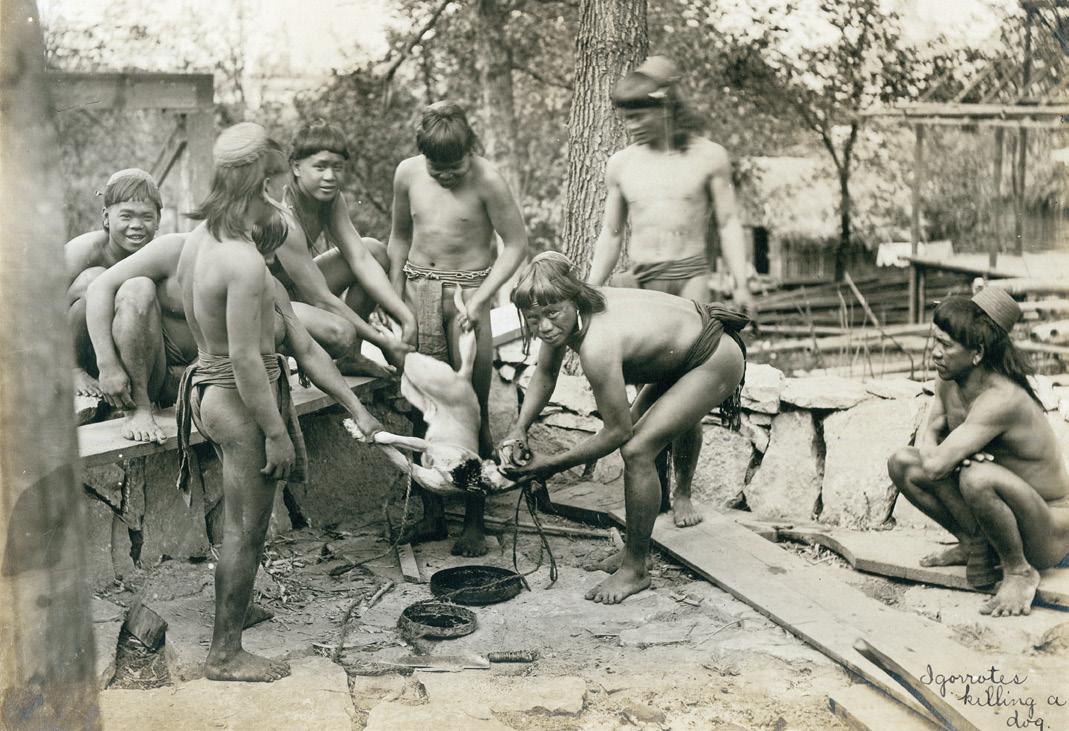
“Igorrotes Killing a Dog” (Missouri Historical Society) presented through a peephole of a box camera.
Prototyping participants viewing historical images.
Applied Design Project
Dogtown 120: A Retrospective of the Philippine Village at the 1904 St. Luis World’s Fair
The exhibition “Dogtown 120: A Retrospective of the Philippine Village at the 1904 St. Louis World’s Fair” demonstrates the practical application of the wonderbased framework. Proposed for the National Museum of the American Indian’s New York Eastern Gallery, the exhibition examines how an exhibition originally intended to justify American colonialism can be reframed to reveal the resilience and dignity of Filipino culture.
The exhibition unfolds through eight thematic sections, each applying wonder-based strategies. Sequential experience design guides the exhibition through a carefully structured narrative progression from “Pearl of the Orient Seas” through “A Memory,” supporting the aura-awe-wonder sequence through spatial arrangement and object presentation. Balanced emotional engagement includes contemplative spaces strategically placed throughout, particularly after challenging content like “A War,” allowing visitors to process difficult material while maintaining engagement. Dialogic approach integrates contemporary Filipino voices throughout, creating dialogue between historical and present-day perspectives through interactive elements and multimedia installations.
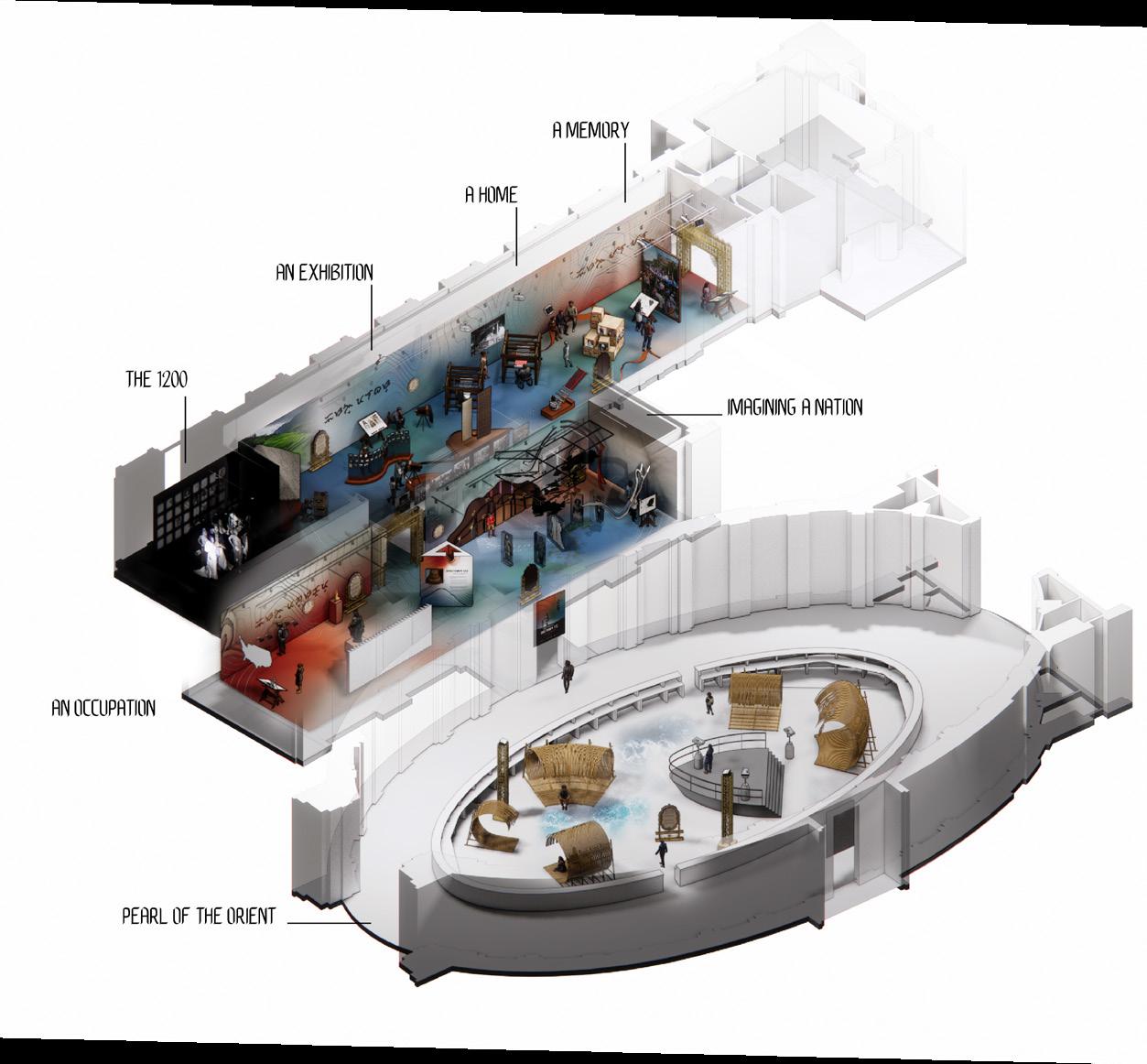
The exhibition poster exemplifies a decolonized visual approach that weaves Filipino heritage with colonial visual languages. Drawing from indigenous mark-making traditions— Baybayin script, Cordillera tattoo patterns, and textile motifs— the design repositions colonial cartographic elements to create new meanings within historical visual codes.
Why Dogtown?
The 1904 St. Louis World’s Fair’s Philippine Village featured 1,200 Filipino participants living and performing across 47 acres for fairgoer observation. Organized during early U.S. colonial rule, the exhibit arranged participants by a “scale of civilization” to educate Americans about their new colony.
The project takes its name “Dogtown” from controversial dog-eating demonstrations that became sensationalized spectacles, reducing cultural practices to crude stereotypes. Now marking its 120th anniversary, “Dogtown 120” reclaims this derogatory reference, transforming colonial stereotype into a platform for examining cultural resilience and representation.
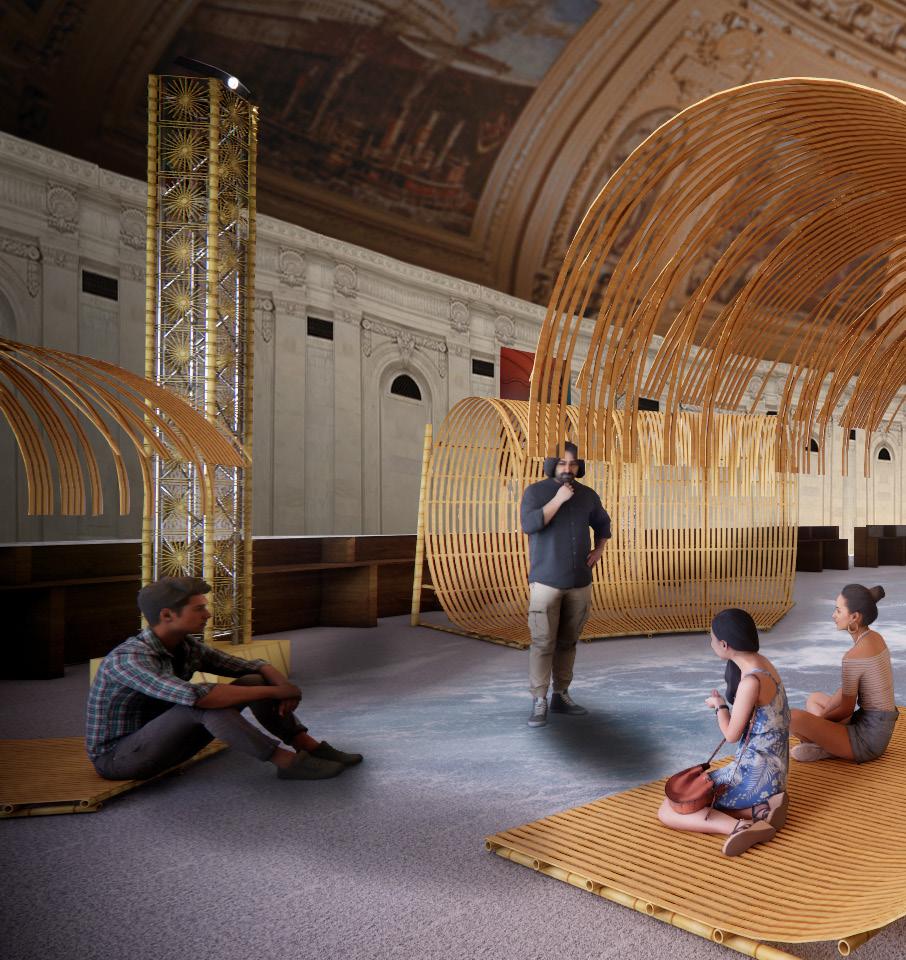
The Beaux Arts rotunda of NMAI is transformed by bamboo seating installations and video projections of oceans on the floor providing a strong material juxtaposition across the space. At a recreated ship deck, visitors use binoculars to view Cordillera indigenous dance, while a brief narration describe Igorot people dancing on the ship deck during their arduous journey. Through this immersive environment, visitors grasp both the physical scale of the trans-Pacific voyage and its deeper implications: a journey that transformed cultural identity into colonial spectacle.
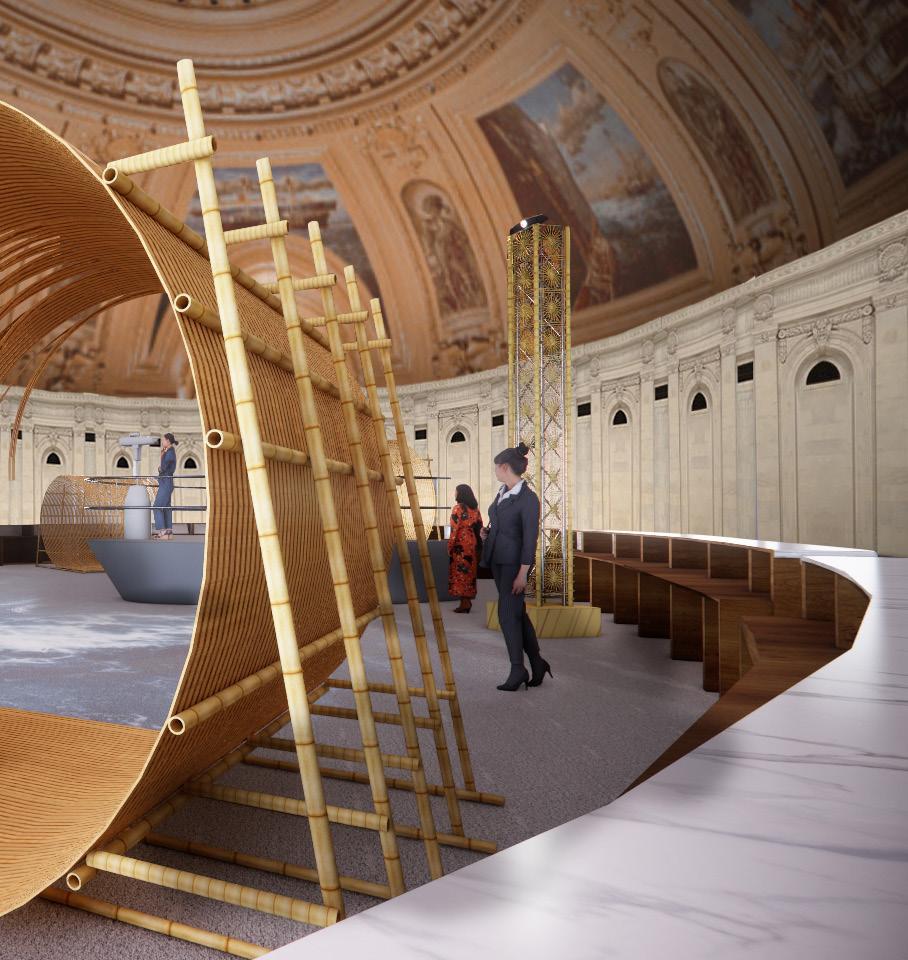
“…Complete the pacification of the Philippines by creating this cadre of Filipinos who would be so overpowered by Western civilization that they would want their country to be like that.”
William Howard Taft, Governor-General of the Philippines (later U.S. President), on the purpose of the 1904 World’s Fair Philippine Village exhibit
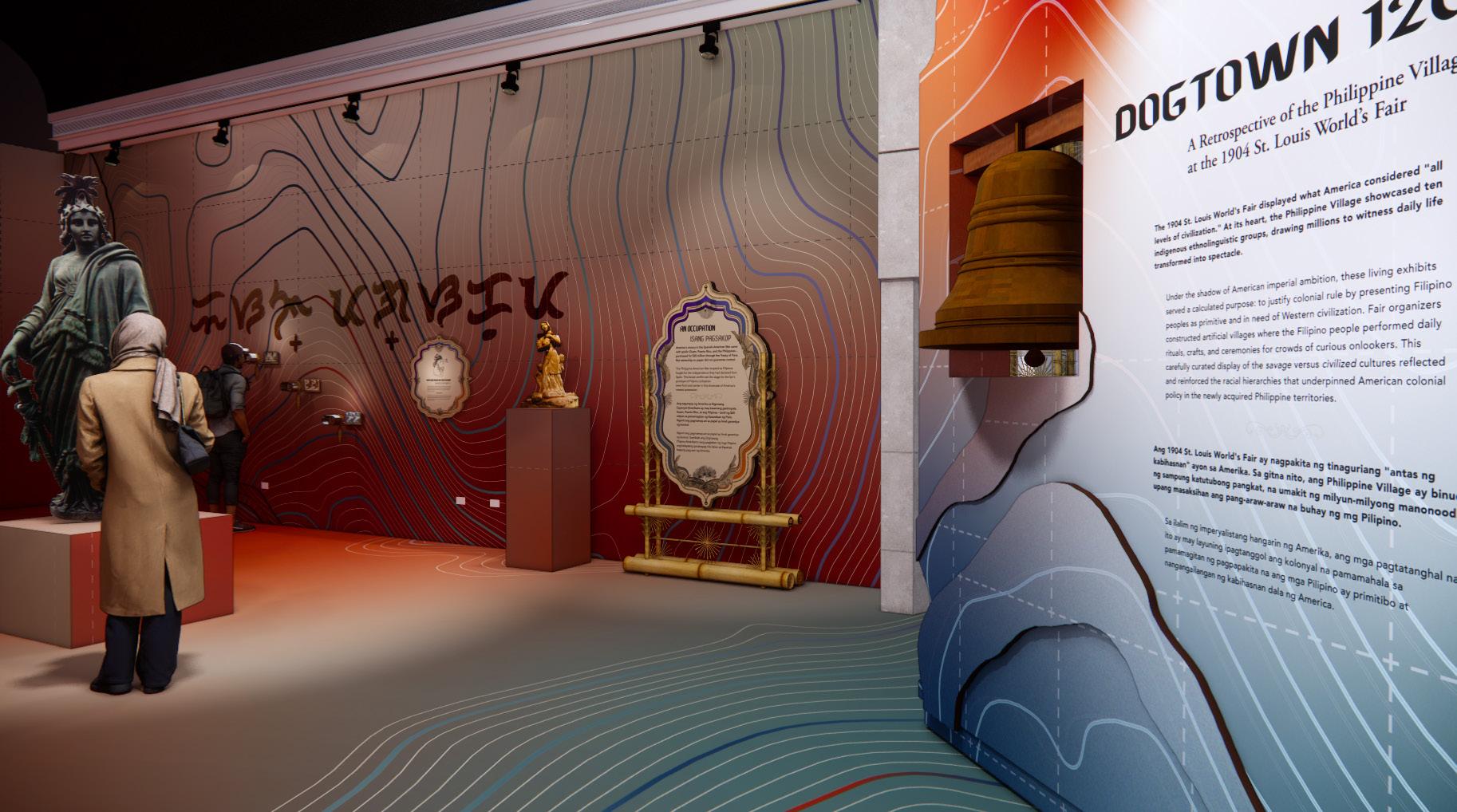
A central triangular installation displays the Balangiga Bells, taken by American troops after the Balangiga massacre. This serves as a starting point to explore conflicting symbols of freedom. In the adjacent section, a photograph of the Liberty Bell at the St. Louis World’s Fair creates dialogue between these contested symbols.
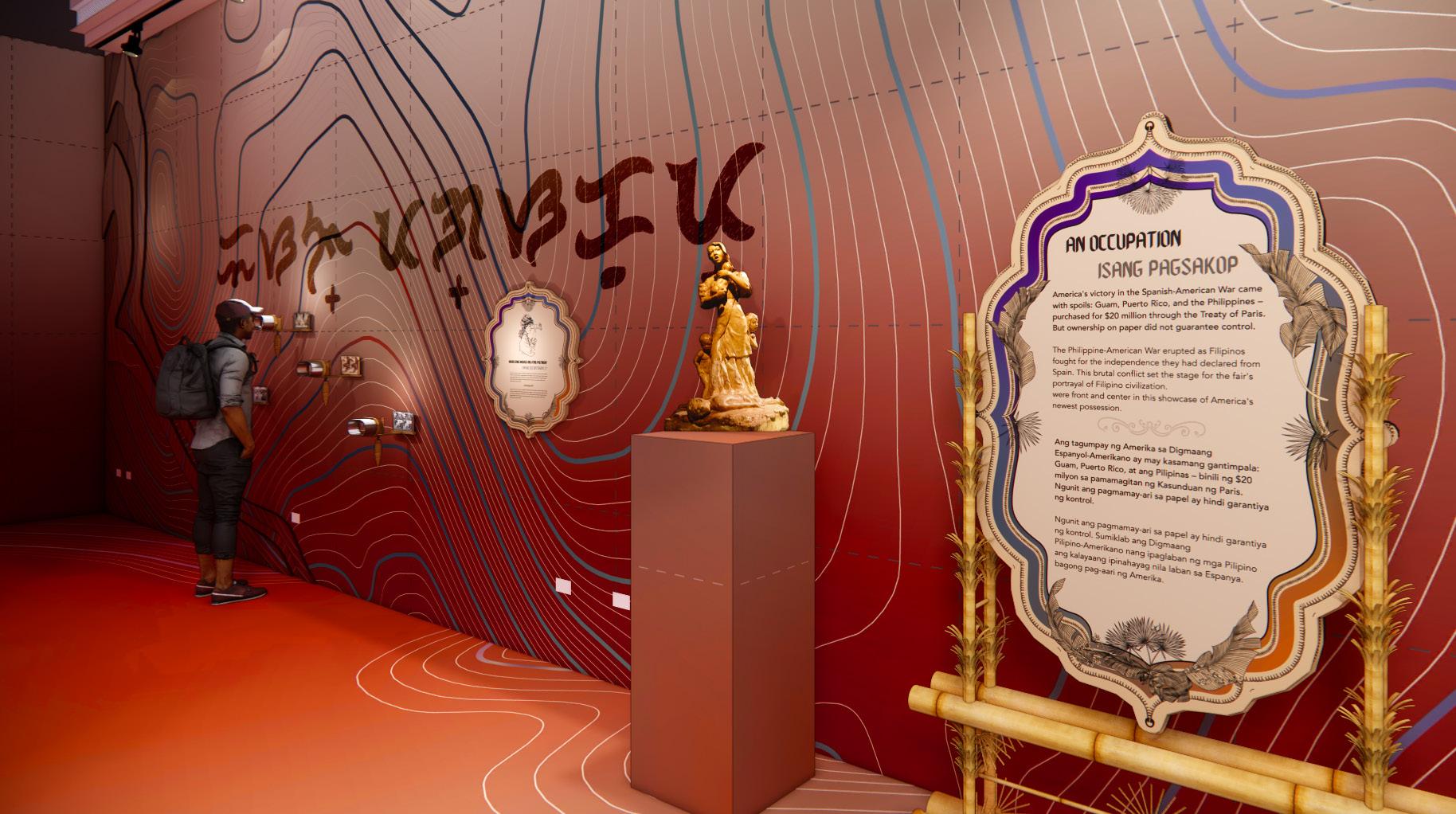
AN OCCUPATION / ISANG PAGSAKOP: Archival stereoview photographs reveal “peace time” Philippines, while contrasting freedom symbols frame the space: Thomas Crawford’s “Statue of Freedom” (1863) and Fermin Gomez’s “A Plea for Freedom from Fear” (1949). The interactive “How to Hide an Empire” maps U.S. colonial scope, alongside a lenticular image transitioning between the Treaty of Paris and Louisiana Purchase. NMAI objects connect parallel indigenous experiences of American expansion, presented on drafting tables emphasizing the exhibition’s planning and cartography theme.
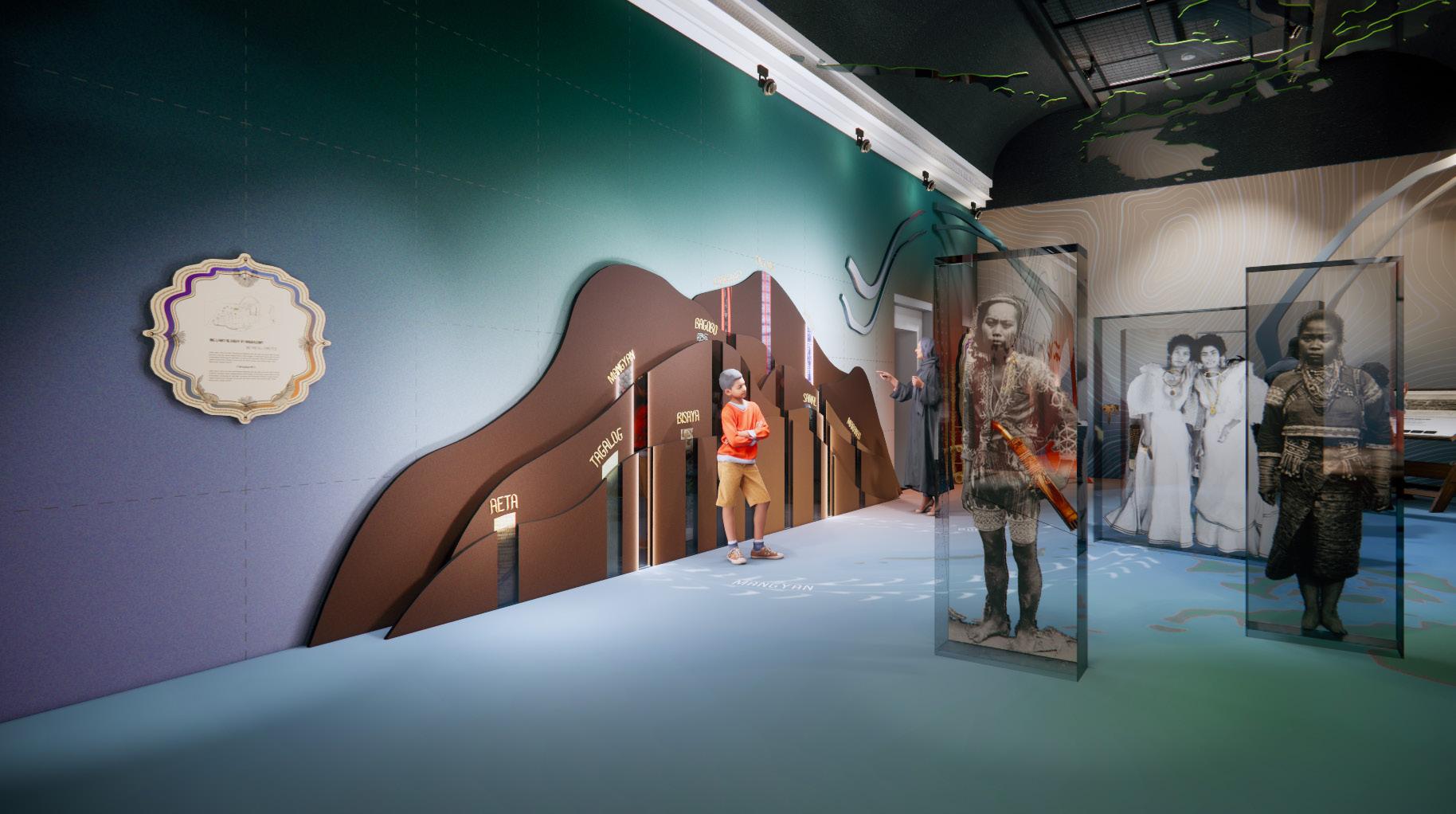
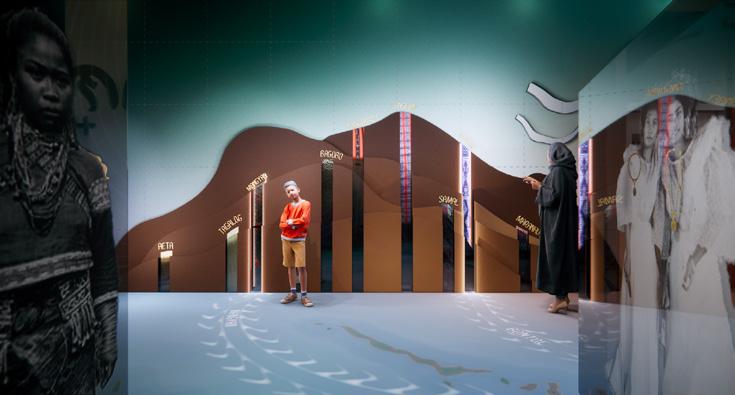
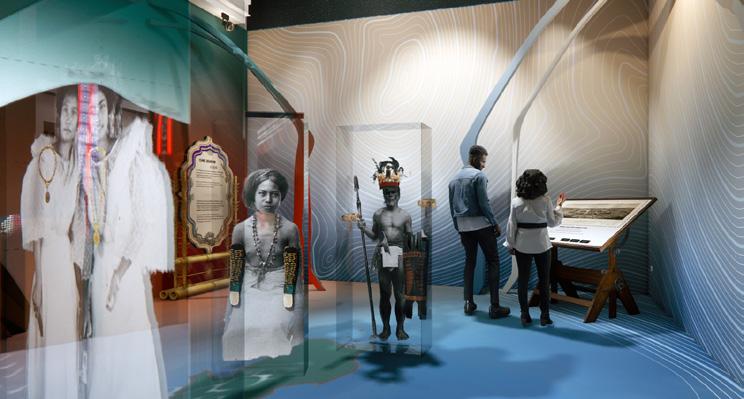
IMAGINING A NATION / BAYAN-BAYANAN: Images of Filipinos taken during the occupation serve as backdrop for artifacts collected from the same period, displayed in cases placed over a floor map that is mirrored by the same map rendered in green-edged clear acrylic on the ceiling. On the left wall, an interactive mountain installation presents the 10 ethno-linguistic groups brought to St. Louis, lighting up with proximity sensors that reveal indigenous weaves, while graphic projections on the floor connect these weaves to the map, locating the homes of the people who make them. The interactive “Design Your Own World’s Fair” allows audiences to learn about the fair’s design while exploring how exhibition and spatial design communicate meaning, influencing our perception of the world around us. Stereoviews display archival images from the 1904 Philippine Village, while the artifact display showcases the immense wealth of weapons and forms of cultural and personal expression rendered in gold, trade beads, hardwood, textile, minerals and more—treasures that made the Philippines America’s new great possession, all destined to be showcased at the 1904 St. Louis World’s Fair.
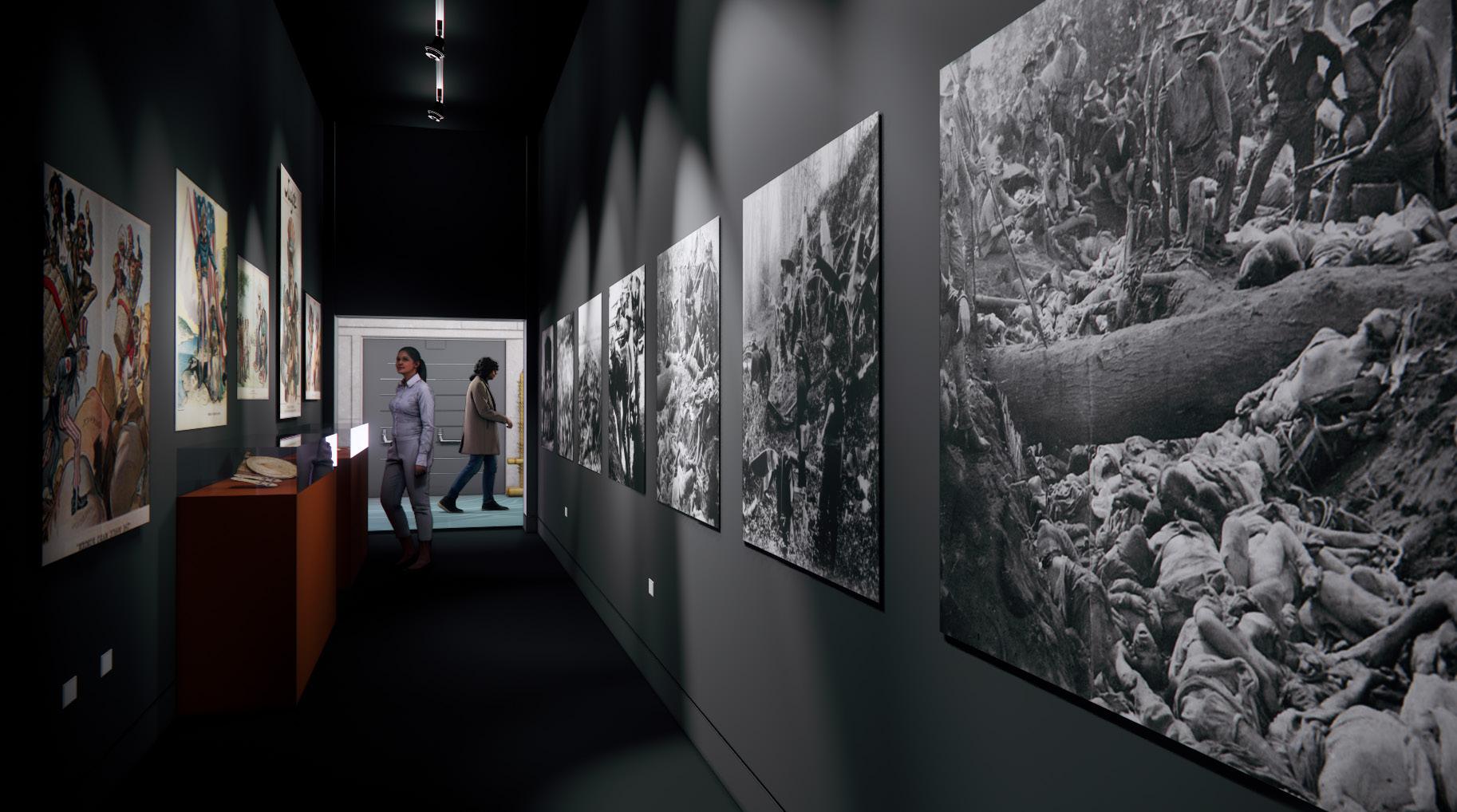
A WAR / ISANG DIGMAAN: Contrasting images of death and destruction appear alongside propaganda celebrating war and expansionism, presented with souvenirs collected by Master Sergeant George W. Etz, Jr. (1913-1976) during his service with the U.S. Army Air Forces in World War II, from the Missouri Historical Society collection—items like a girl’s pair of sandals and a paper lei. During the American occupation and after the Philippine-American War, the Philippines remained a U.S. territory until World War II, when it was taken by the Japanese. Promotional materials for the Philippine Village (advertised as Philippine Exposition or Reservation) reinforce how the village was used to justify the occupation of the Philippines, establishing the World’s Fair exhibit as both consequence and continuation of military conquest.
“Faces over faces, bodies over bodies.”
Ted Norlander
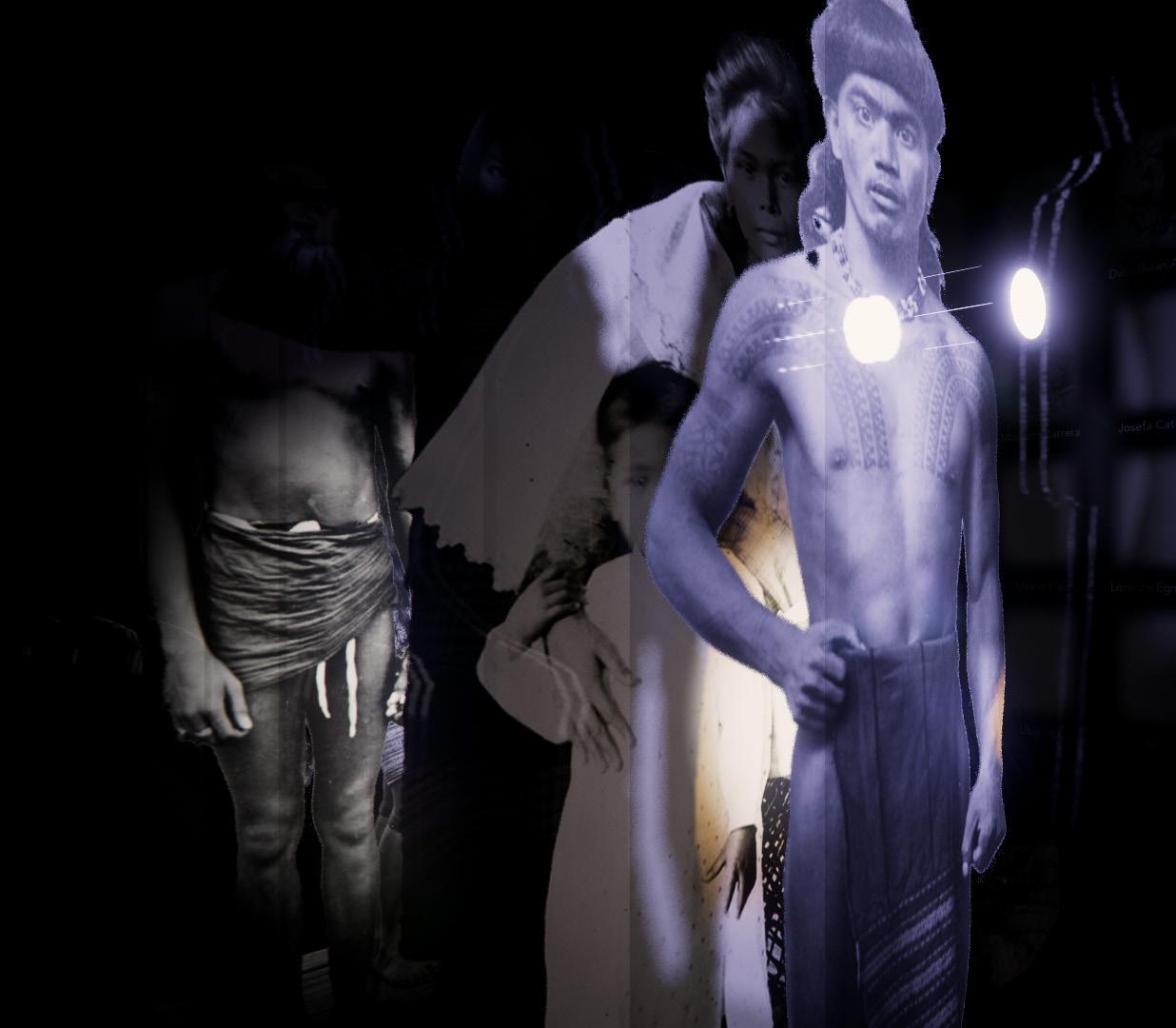
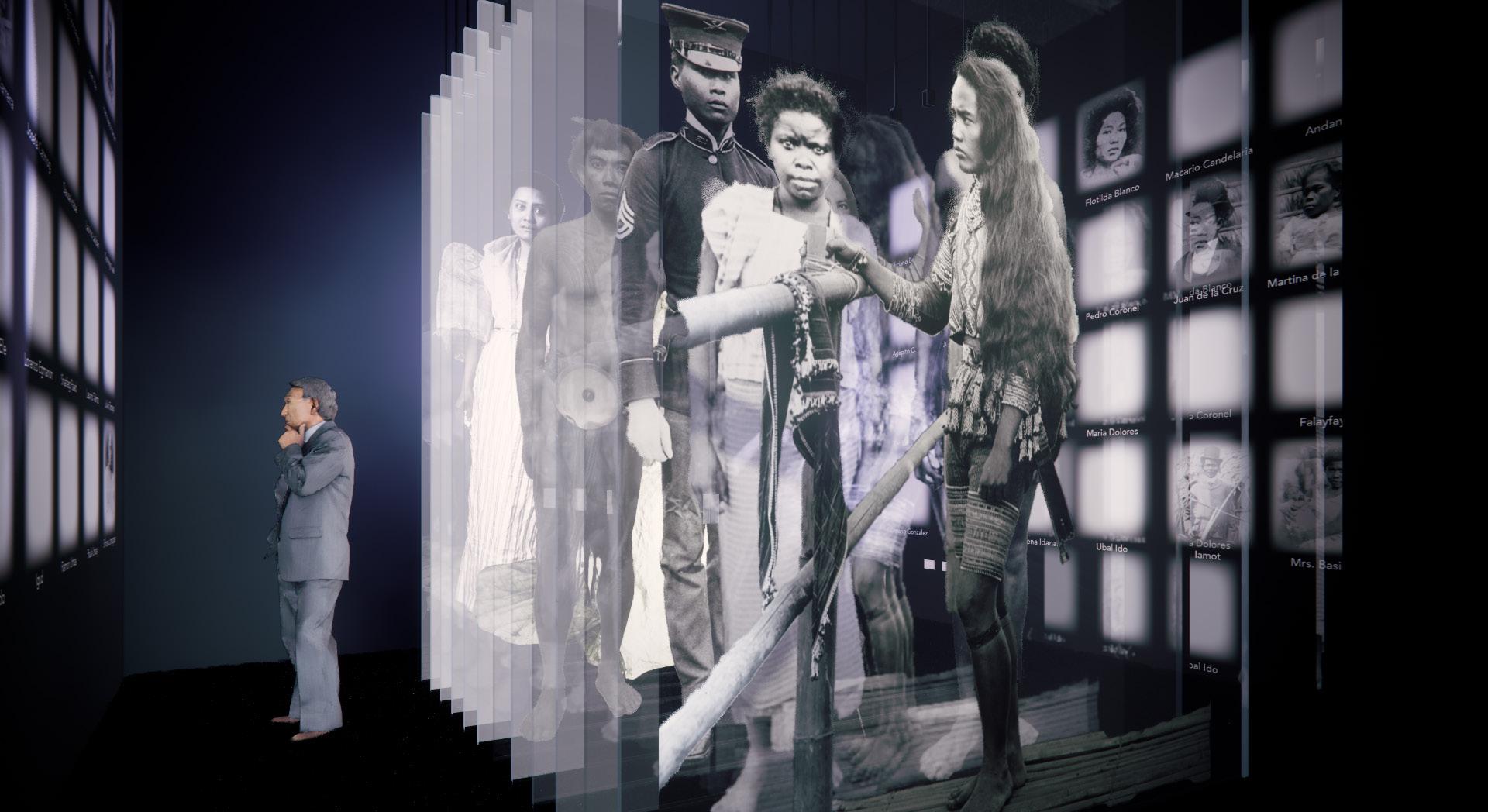
THE 1200 / SANLIBO AT DALAWANDAANG TAO: Life-sized portraits of Filipinos from the Philippine Village emerge through layered acrylic panels using Smart Film technology. As electric signals activate each panel from opaque to transparent, a single light source casts celestial patterns through 14 layers, creating a meditation on presence and absence. St. Louis-based Filipina artist Janna Langholz’s research to identify these individuals is projected on surrounding walls, though many faces remain unnamed despite her extensive archival work. This immersive environment offers contemplative space to reflect on lives lost during the fair— while some stories are preserved and others recovered through Langholz’s work, much remains unknown, a powerful reminder of our stories both remembered and lost.
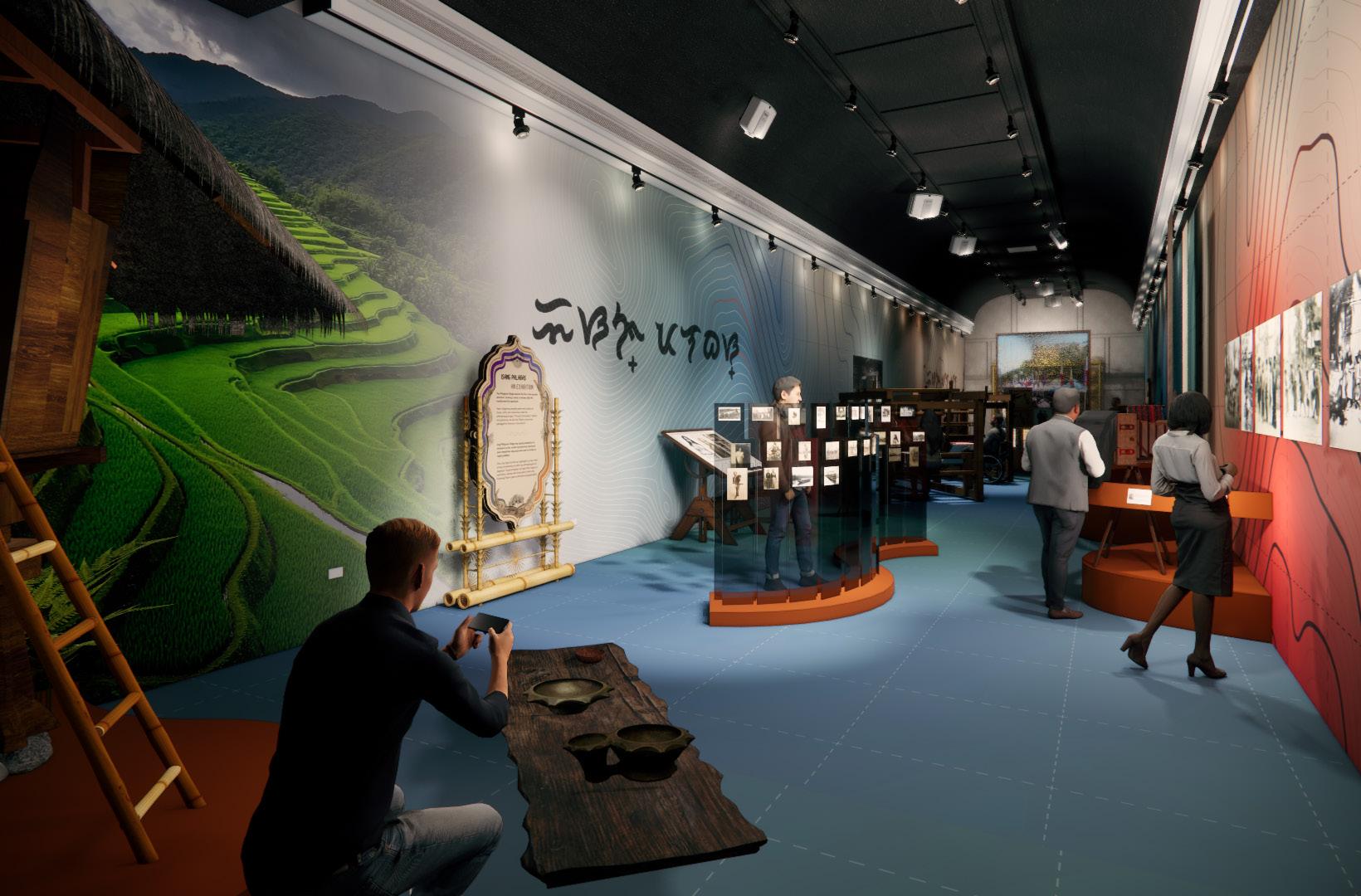
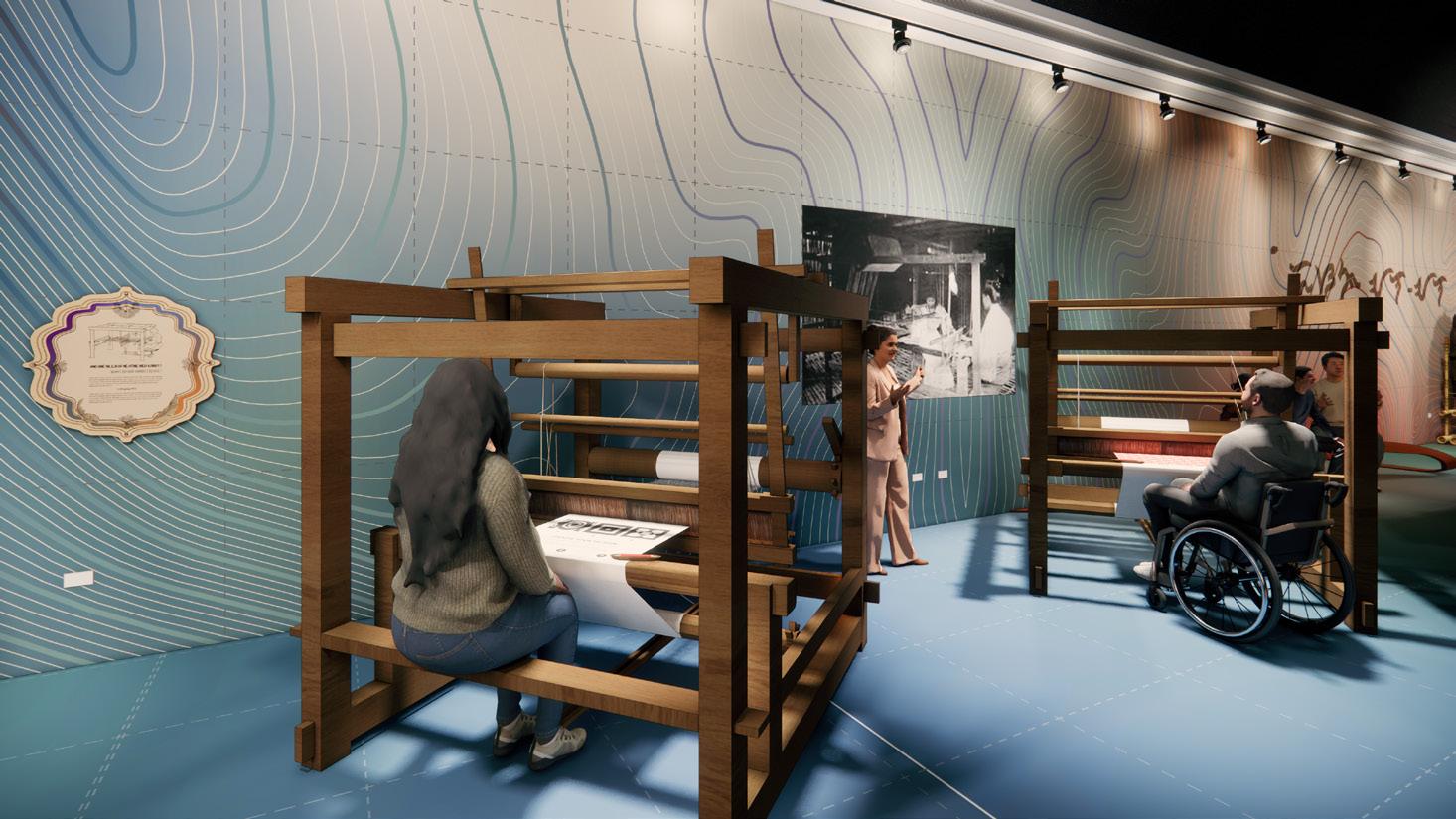
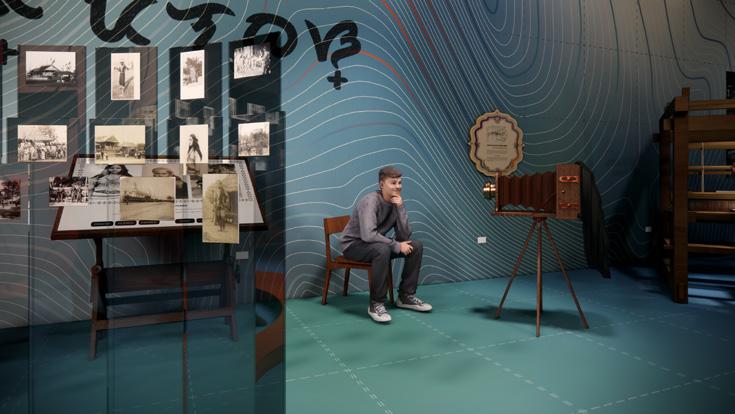
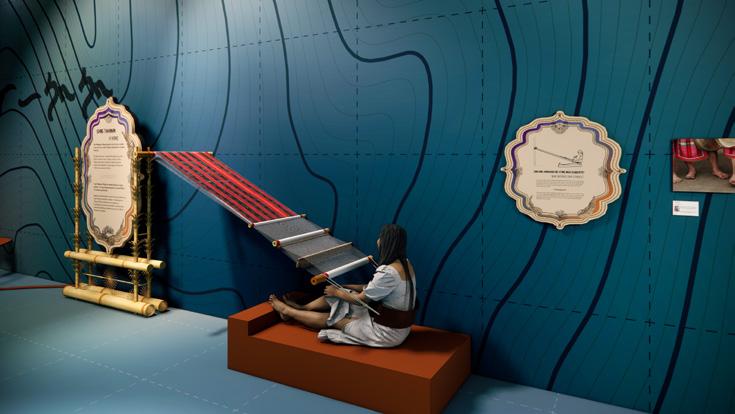
AN EXHIBITION / ISANG PALABAS: This section presents the most popular exhibition of the 1904 World’s Fair through village recreations and original fair ephemera. A Cordillera house marks the opening, featuring authentic regional bowls known for their ergonomic quality—visitors discover these hardwood bowls’ sophisticated balance and handling, countering racist fair portrayals. Layered archival images and postcards in acrylic panels reveal handwritten notes, while an interactive box camera station lets visitors create and email their own postcards, echoing a practice from the village era. Selected fair images are enlarged, with sensitive content like “Igorots killing a dog” viewable only through an optional box camera display. Two weaving interactives teach textile traditions: a counterbalance loom typical of lowland regions in “What Do We Create?” where visitors use a shuttle to trigger projected patterns, and a portable backstrap loom in “Who Weaves Our Stories?” where visitors experience tension by sitting with the strap around their waist. These experiences not only teach about craft but place audiences in the position of being exhibited, much like the original fair participants, showcasing the rich culture of making that provided one of the few opportunities for personal agency at the fair.
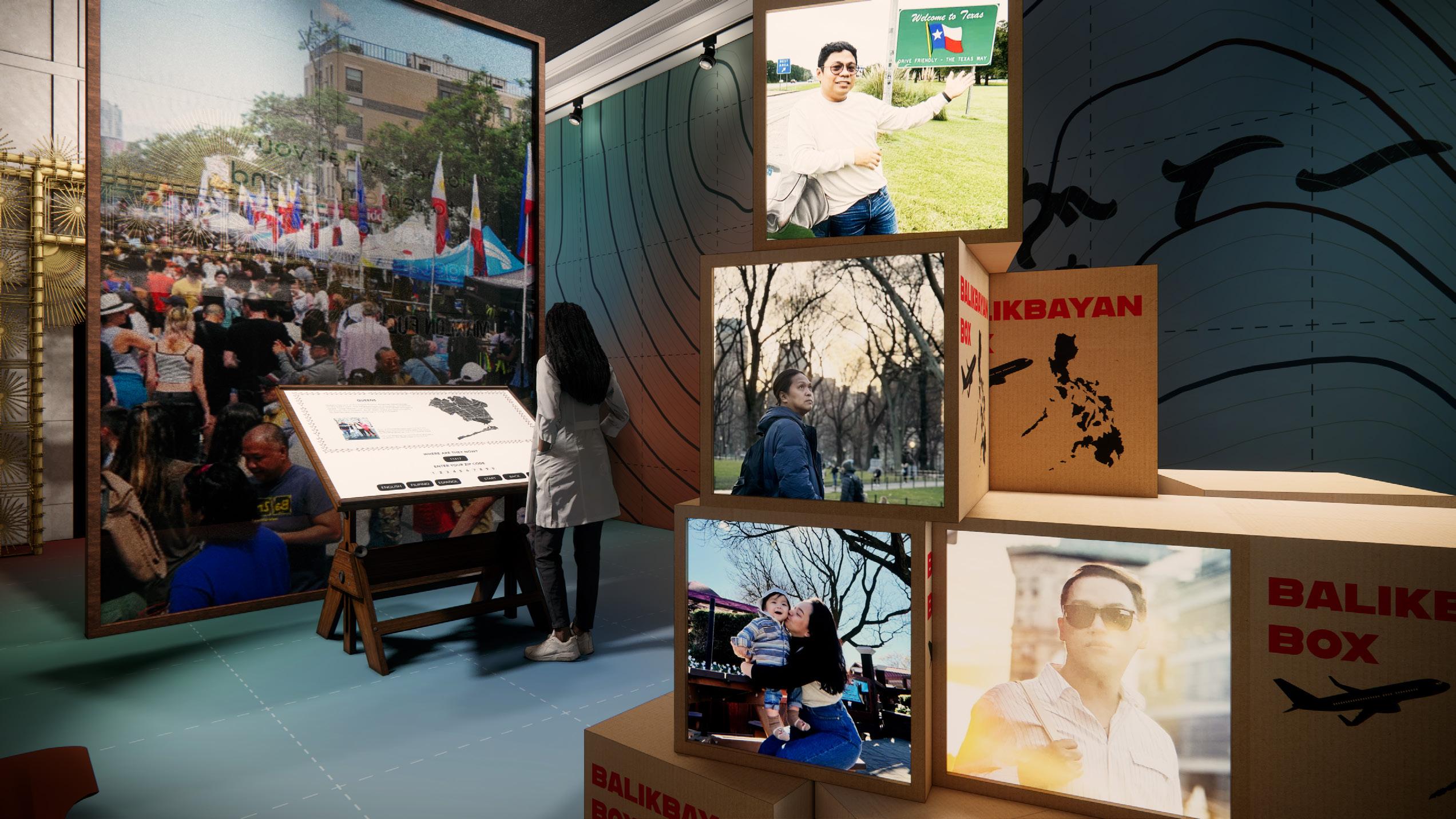
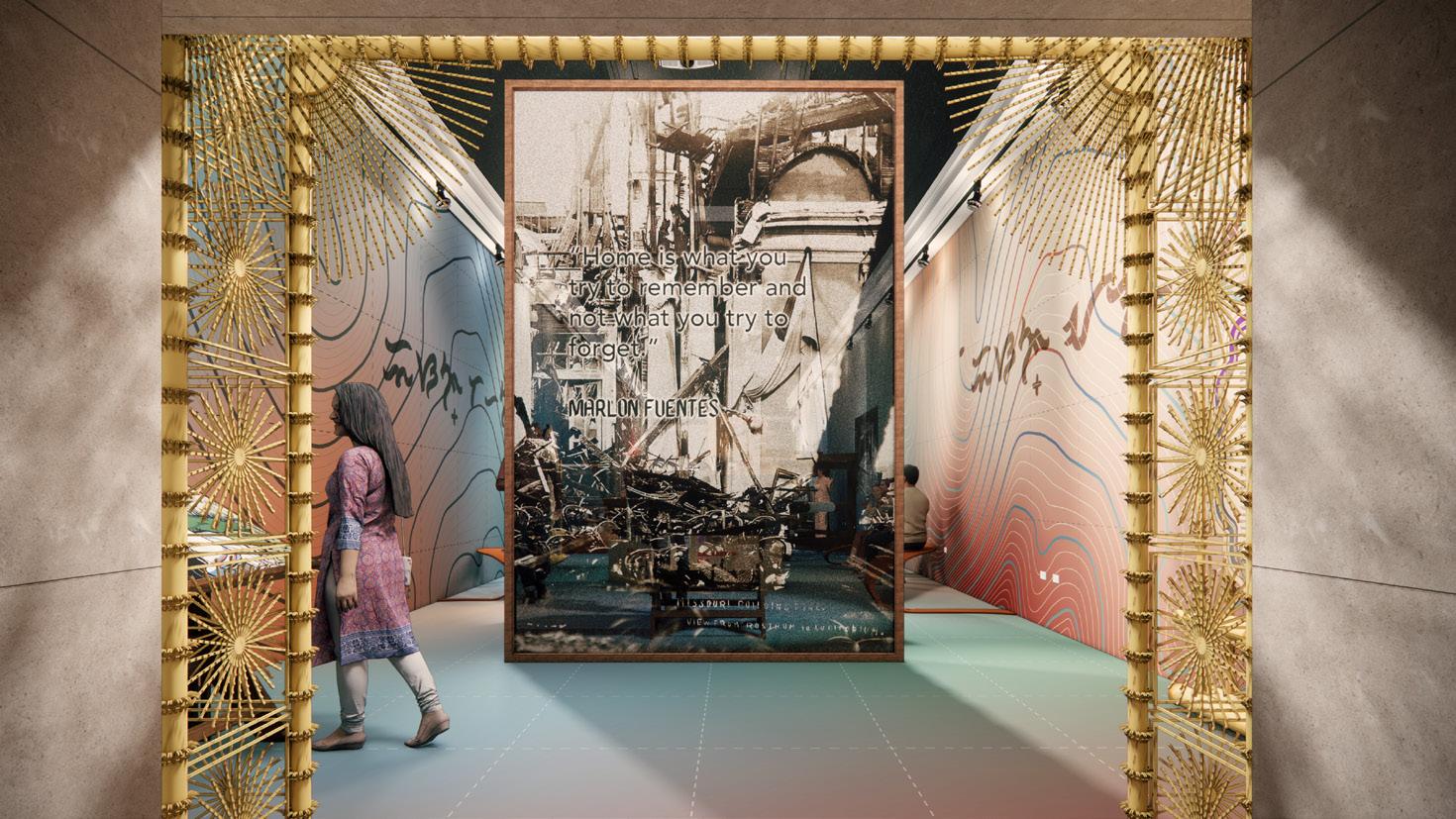
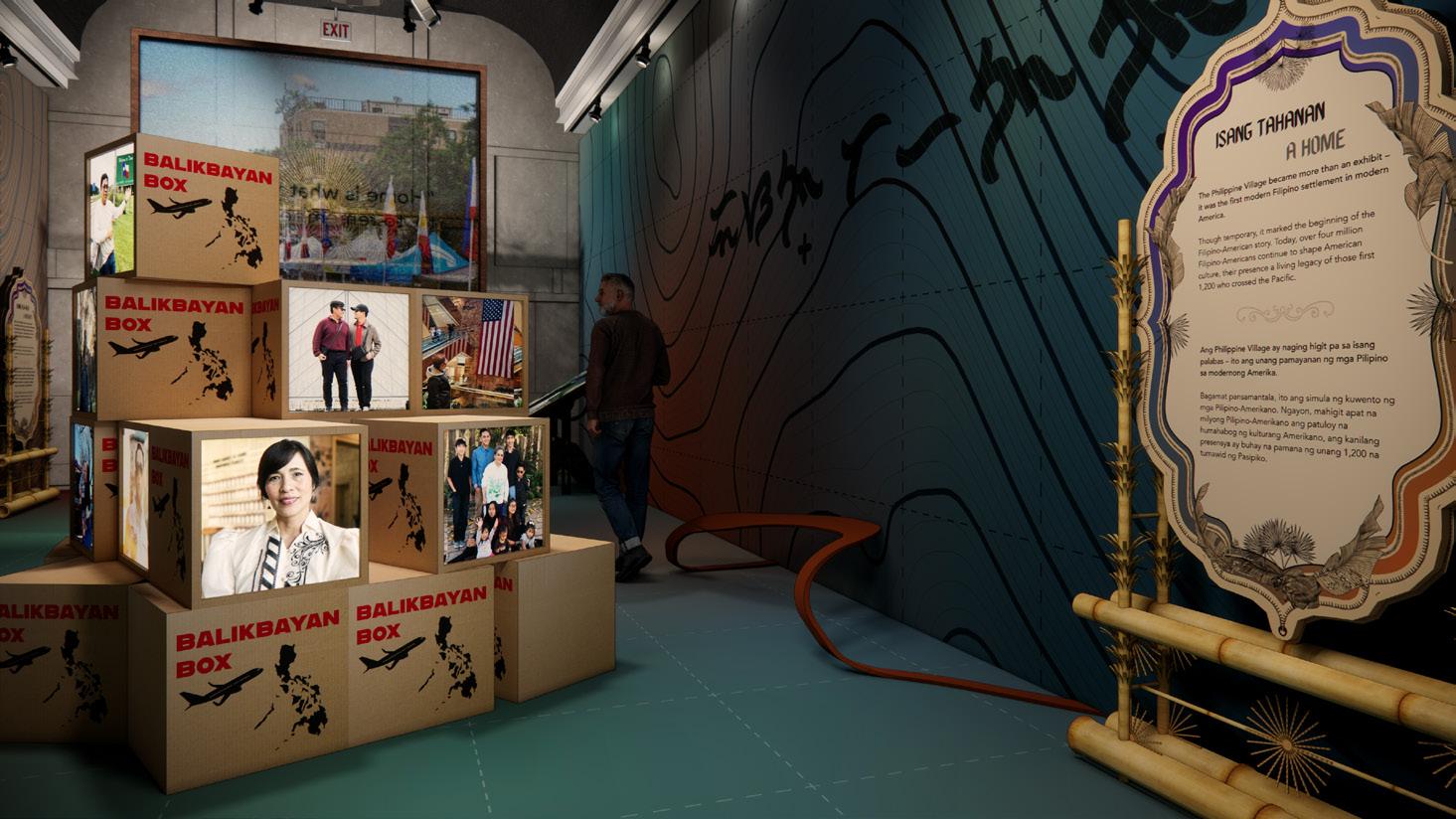
A HOME / TAHANAN & A MEMORY / ISANG ALAALA: The Philippine Village may represent the first Filipino settlement in modernday America. This section explores its lasting legacy through audiovisual installations featuring Filipino-American narratives, including artist Ria Unson’s connection through her grandfather who participated, and Jana Langholz’s vision for the “Philippine Village Historical Site.” Video screens framed by “Balikbayan Boxes” represent the multi-billion dollar industry of Filipinos sending goods to their homeland. An interactive drafting table asks “Where are they now?” showing Filipino-American population density after visitors enter their ZIP code. The exhibition concludes with video installations showing historical post-fair images and demolition of the grand structures, projected onto transparent fabric screens where the St. Louis World’s Fair site now stands as Forest Park. Online visitors respond to questions like “What makes a home?” while a drawing board interactive showcases contemporary interpretations including Filipino artists’ works like Marlon Fuentes’s documentary film “Bontoc Eulogy.”
Implications for Exhibition Design Practice
Material and Visual Language
The project demonstrated how design elements can create conditions for wonder when deeply rooted in cultural and historical context. The intentional design choices supported wonder’s emergence through careful consideration of materials, forms, and cultural references, validating the theoretical framework’s emphasis on authentic connections between form and content.
Embodied Experience in Design Process
The research revealed important insights about embodied experience in exhibition design – how meaning and understanding emerge through physical, emotional, and sensory engagement rather than purely intellectual comprehension. This manifests through two key pathways: in the design process itself, where understanding of aesthetic qualities like wonder must move beyond theoretical knowledge to lived experience, and in how exhibitions create opportunities for visitors to have their own embodied experiences with content.
Measurement Challenges and Future Directions
A significant challenge emerged regarding the identification and validation of wonder moments in exhibition spaces. While the theoretical framework provided structure for explaining wonder’s intended emergence, pinpointing where and how wonder manifests as an aesthetic quality proved complex, highlighting a crucial gap in exhibition design methodology.
Cultural Context and Design Philosophy
In Filipino design culture, we have a unique concept called “borloloy” – referring to elaborate ornamentation that might seem excessive by some Western standards. While often carrying connotations similar to “gaudy” or “over-decorated,” borloloy represents more than mere decoration – it embodies a distinctly Filipino approach to experiencing and processing life through layers of meaning and self-expression.
Perhaps borloloy offers valuable parallelism to our framework of wonder in exhibition design. Just as borloloy adds layers of meaning to Filipino architecture, clothing and craft, wonder adds essential layers of engagement to exhibition experiences – not as superficial emotional overlay, but as fundamental tools for processing difficult histories and fostering understanding.
As we navigate increasingly complex narratives in exhibition spaces, we must rethink how to tell our stories, trusting that a balanced sense of wonder – like borloloy – isn’t excess, but rather allows our humanity to manifest in our designs and foster connections in this highly complicated world.
Future Research Directions
Metrics Development
The challenge of identifying and measuring wonder moments in exhibitions points to a critical research opportunity. Future work should focus on developing quantifiable metrics and evaluation methods to assess wonder’s emergence and impact in exhibition spaces, including visitor studies, biometric measurements, and long-term impact assessments.
Scale and Context Flexibility
While this project demonstrated wonder’s effectiveness in a major institution, questions remain about applications in smaller, community-based settings. How might these principles translate across different scales and contexts? Future research could explore wonderbased approaches in addressing current social justice issues through exhibition design.
Community-Based Research
The limited availability of personal histories from the 1904 Philippine Village suggests the need for deeper community-based research methodologies in supporting the recovery and documentation of marginalized narratives. Wonder-based approaches might support more inclusive and participatory research processes.
“Wonder, when carefully and ethically employed, serves as both guiding principle and desired outcome, creating experiences that are personally meaningful yet collectively resonant, intellectually engaging yet emotionally accessible. “
Conclusion
Through this research and its application, the project demonstrates how wonder can serve as both methodology and outcome in exhibition design. The designer’s own embodied experience and relationship with wonder emerges as crucial to creating authentic and effective exhibition experiences that balance emotional engagement with critical reflection while maintaining historical integrity and cultural sensitivity.
This thesis contributes to exhibition design practice by providing both theoretical understanding and practical tools for creating transformative experiences with difficult histories. The framework offers a structured approach while maintaining flexibility for diverse cultural contexts and exhibition scales, demonstrating that wonder, when carefully and ethically employed, serves as both guiding principle and desired outcome.
Wonder creates experiences that are personally meaningful yet collectively resonant, intellectually engaging yet emotionally accessible, challenging yet inviting, and historically grounded yet relevant to contemporary understanding. Through careful application of wonder-based approaches, exhibitions can create spaces where difficult histories become accessible without losing their complexity, where cultural dialogue flourishes, and where transformation becomes possible.
As museum professionals increasingly engage with emotionally challenging content, understanding wonder’s potential offers new pathways for creating exhibitions that not only inform but transform – helping visitors engage meaningfully with challenging content while fostering dialogue and understanding across cultural boundaries.
Resources
1. Andrea Witcomb, “Understanding the Role of Affect in Producing a Critical Pedagogy for History Museums,” Museum Management and Curatorship 28, no. 3 (2013): 255.
2. Witcomb, “Understanding the Role of Affect,” 257.
3. Vlad P. Glăveanu, “Wonder,” in The Palgrave Encyclopedia of the Possible, ed. Vlad P. Glăveanu (Springer Nature Switzerland AG, 2022), 3.
4. Vlad P. Glăveanu, “Wonder,” in The Palgrave Encyclopedia of the Possible, ed. Vlad P. Glăveanu (Springer Nature Switzerland AG, 2022), 4.
5. Glăveanu, “Wonder,” 5.
6. Jan B. W. Pedersen, Balanced Wonder: Experiential Sources of Imagination, Virtue, and Human Flourishing(London: Rowman & Littlefield, 2019), 45-48.
7. Pedersen, Balanced Wonder, 52-55.
8. Sophia Vasalou, Wonder: A Grammar (Albany: SUNY Press, 2015), 124.
9. Russell Quacchia, “The Aesthetic Experiences of Aura, Awe, and Wonder: Reflections on Their Nature and Relationships,” Contemporary Aesthetics 14 (2016): 1.
10. Pedersen, Balanced Wonder, 45-48.
11. Pedersen, Balanced Wonder, 52-55.
12. Pedersen, Balanced Wonder, 58-60.
13. Francisco Javier Minaya Gómez, “Wonder, Beauty, Ability and the Natural World: The Experience of Wonder as a Positive Aesthetic Emotion in Old English Verse,” Selim 27 (2022): 10-11.
14. Quacchia, “The Aesthetic Experiences,” 4.
15. Pedersen, Balanced Wonder, 62-65.
16. Stephen Greenblatt, “Resonance and Wonder,” Bulletin of the American Academy of Arts and Sciences 43, no. 4 (1990): 11-34.
17. Brenda Cowan, Ross Laird, and Jason McKeown, Museum Objects, Health and Healing: The Relationship between Exhibitions and Wellness (New York: Routledge, 2020), 185-186.
18. Cowan, Laird, and McKeown, Museum Objects, Health and Healing, 174-175.
19. Judith E. Stein, “Sins of Omission: Fred Wilson’s Mining the Museum,” Art in America 81 (1993): 110115.
20. Noelle Trent, “The National Memorial for Peace and Justice,” The Public Historian 41, no. 1 (2019): 133137.
21. Thomas Patrick Pringle, “Documentary Animism: Material Politics and Sensory Ethics in The Act of Killing (2012),” Journal of Film and Video 67, no. 3-4 (2015): 24-41.
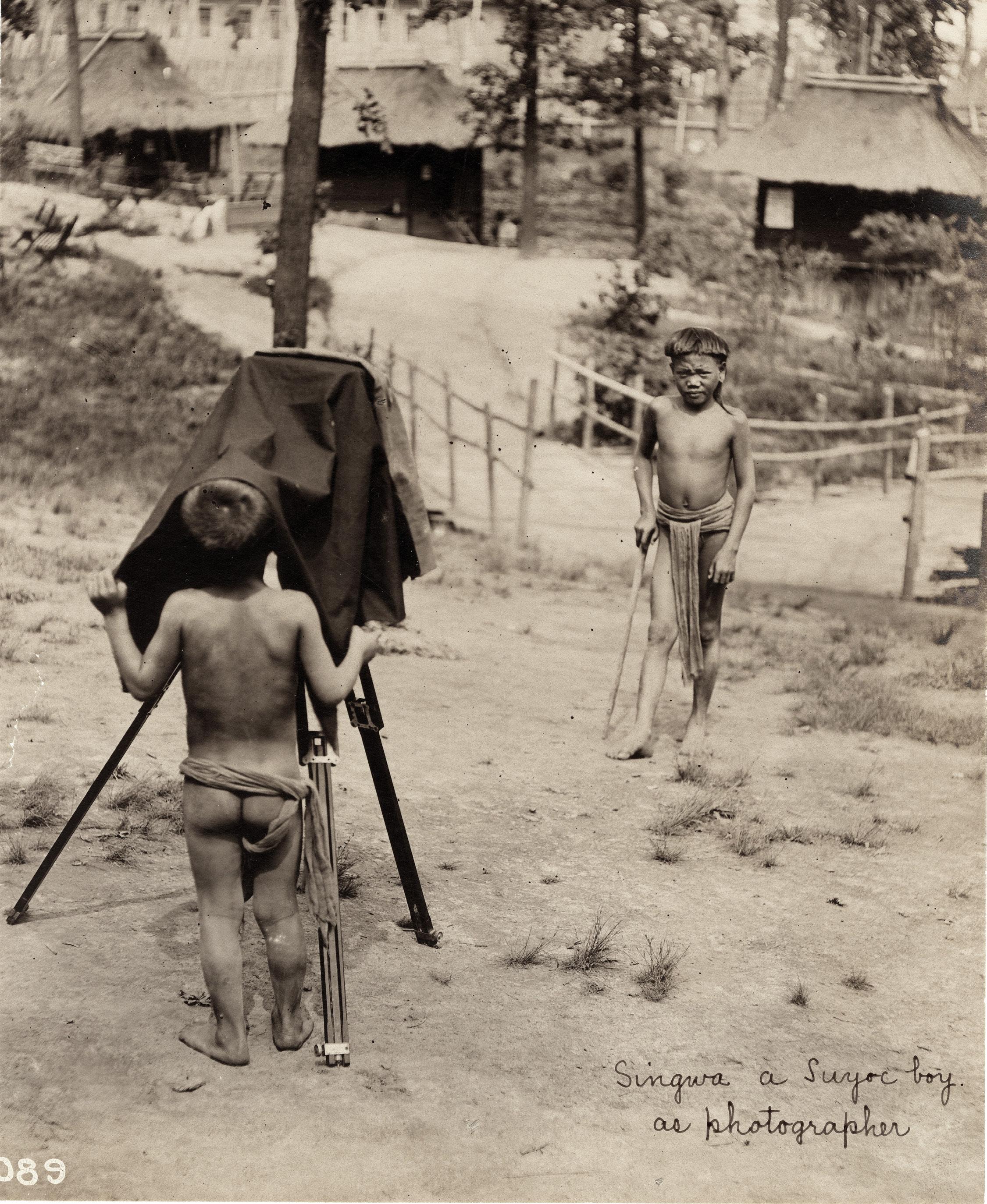
“Singwa a Suyoc boy as photographer” Missouri Historical Society
Photograph of two Filipino boys taken at the 1904 St. Louis World’s Fair