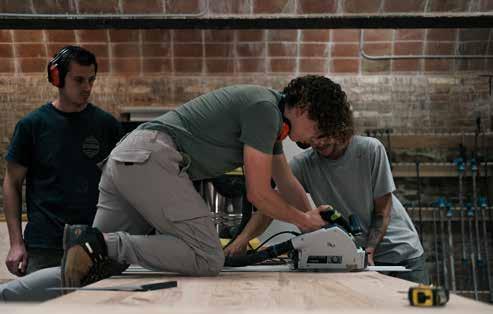
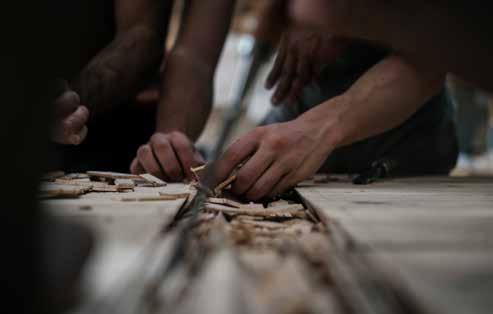
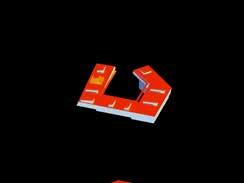
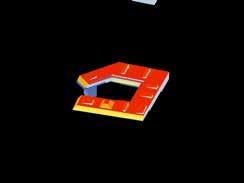
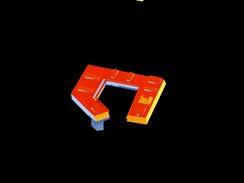
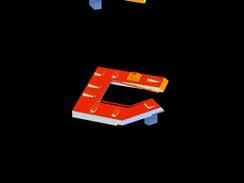
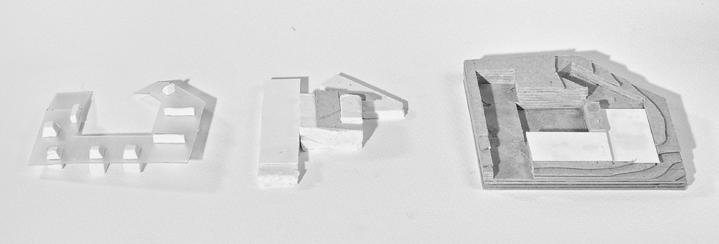
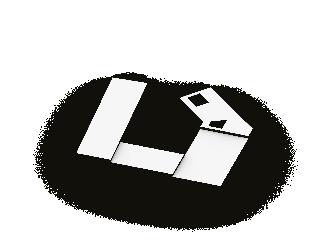
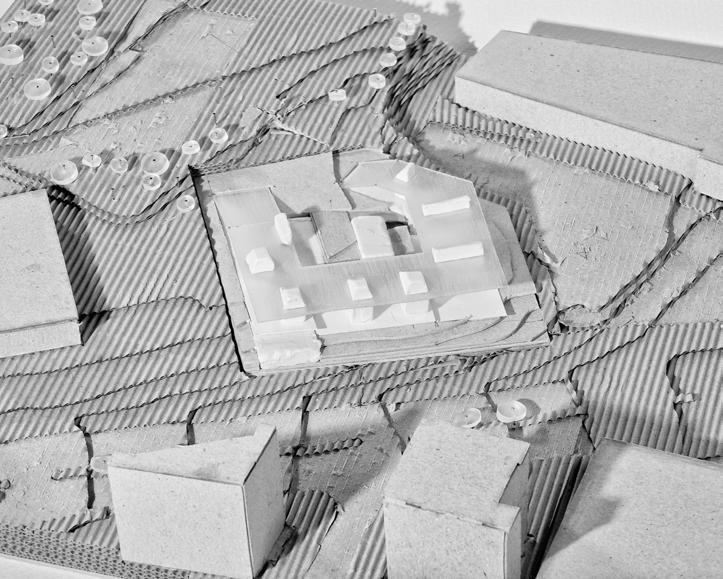
The architect is simply a craftsman or carpenter, understanding the craft of constructive art.
The architect has power over materials and techniques. The ideas are what have determined and determine forms, make the form and expression of creations depend, not on the material, but on the ideas that live in it. It is this authenticity in the contact that can only be perceived through direct, close experience with the building. It is the signification process, from which the building becomes the being, it is an inflection or confrontation between connecting the thought of the abstract form and the creation of space, with the ability to materialize these ideas through practice.
An evolution of construction techniques, through materials, towards the poetics of construction.
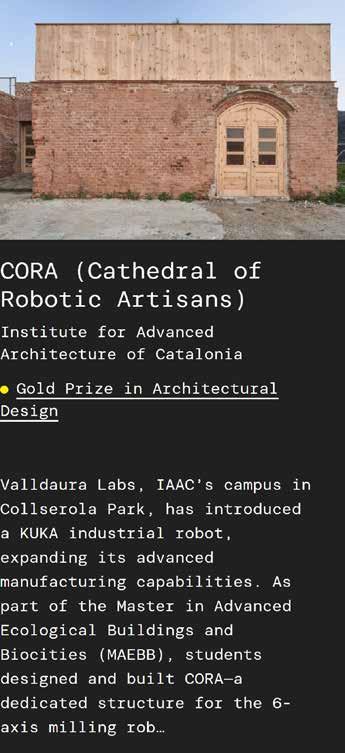
Gold Prize in Architectural Design by the Design Educates Awards 2025
CORA
(Cathedral of Robotic Artisans)
Advanced Wood Studio
Valldaura Labs.
Barcelona, España
Skills +
Parametric Design
Forest management
Sustainable Material
2024 • 09 • 07
Prototyping
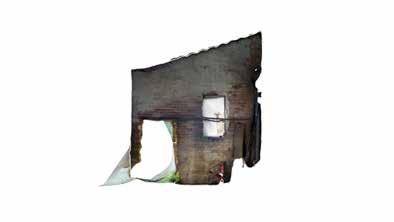
3D Scanning and Modeling
Historical Building Integration
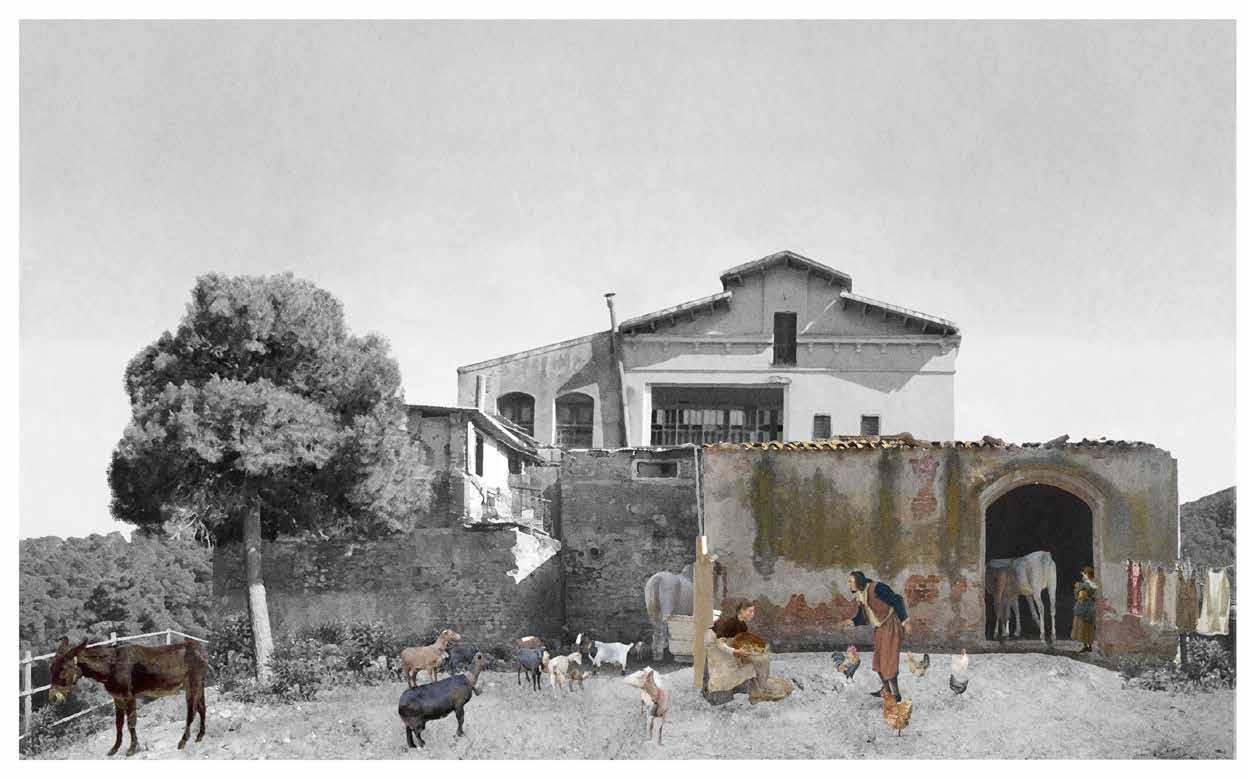
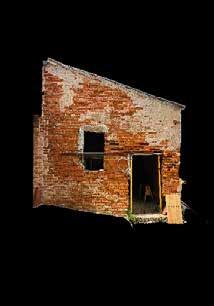
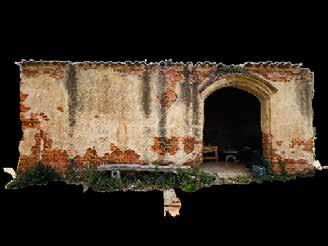
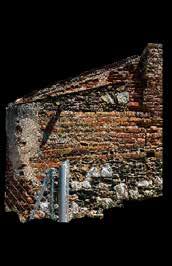
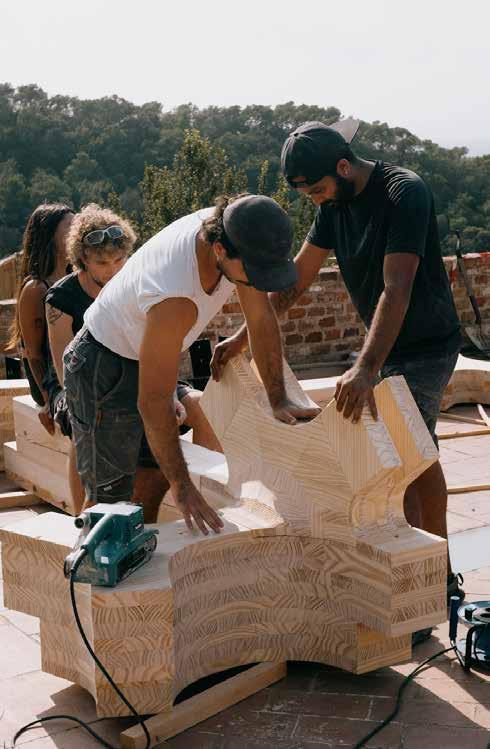
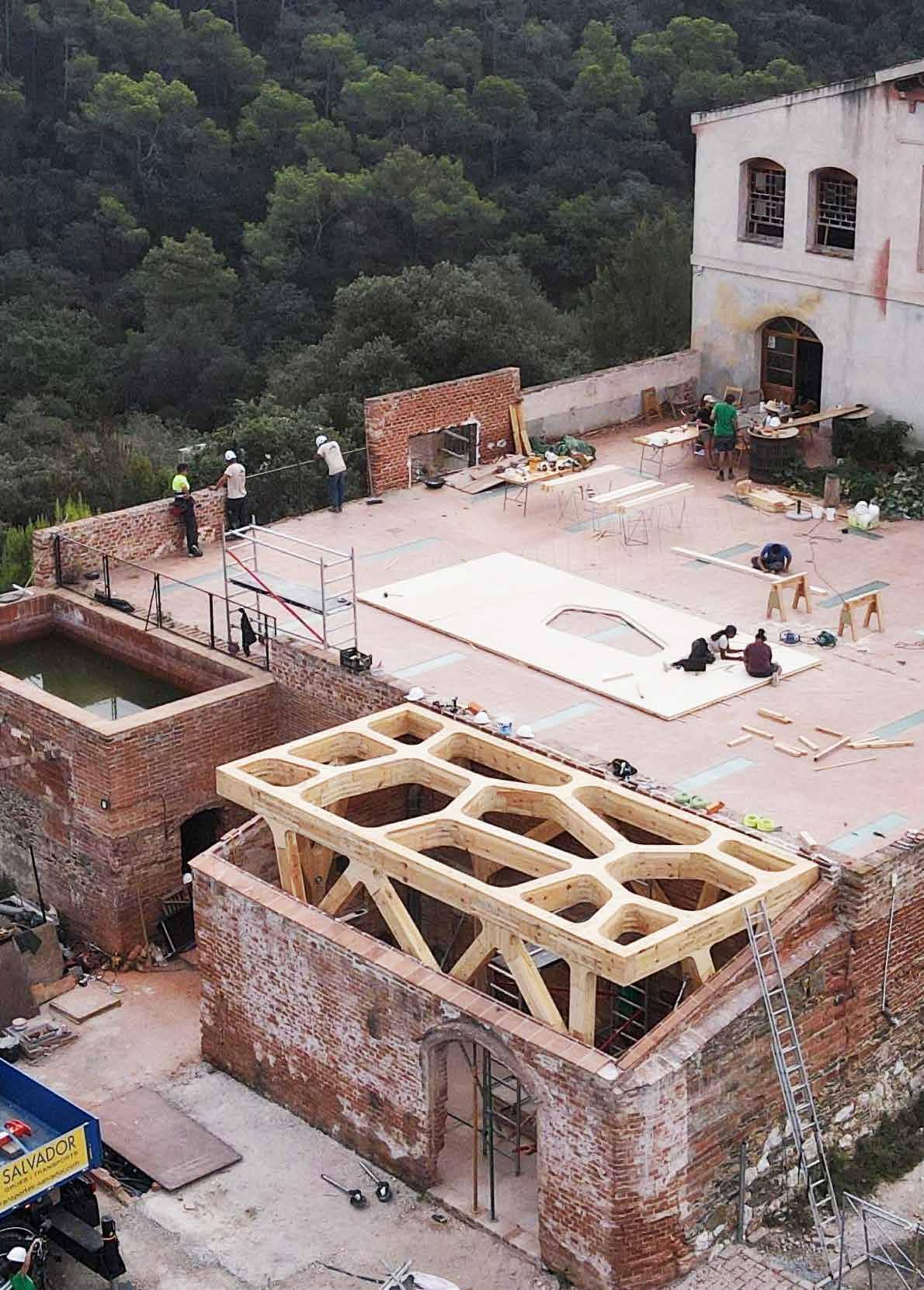
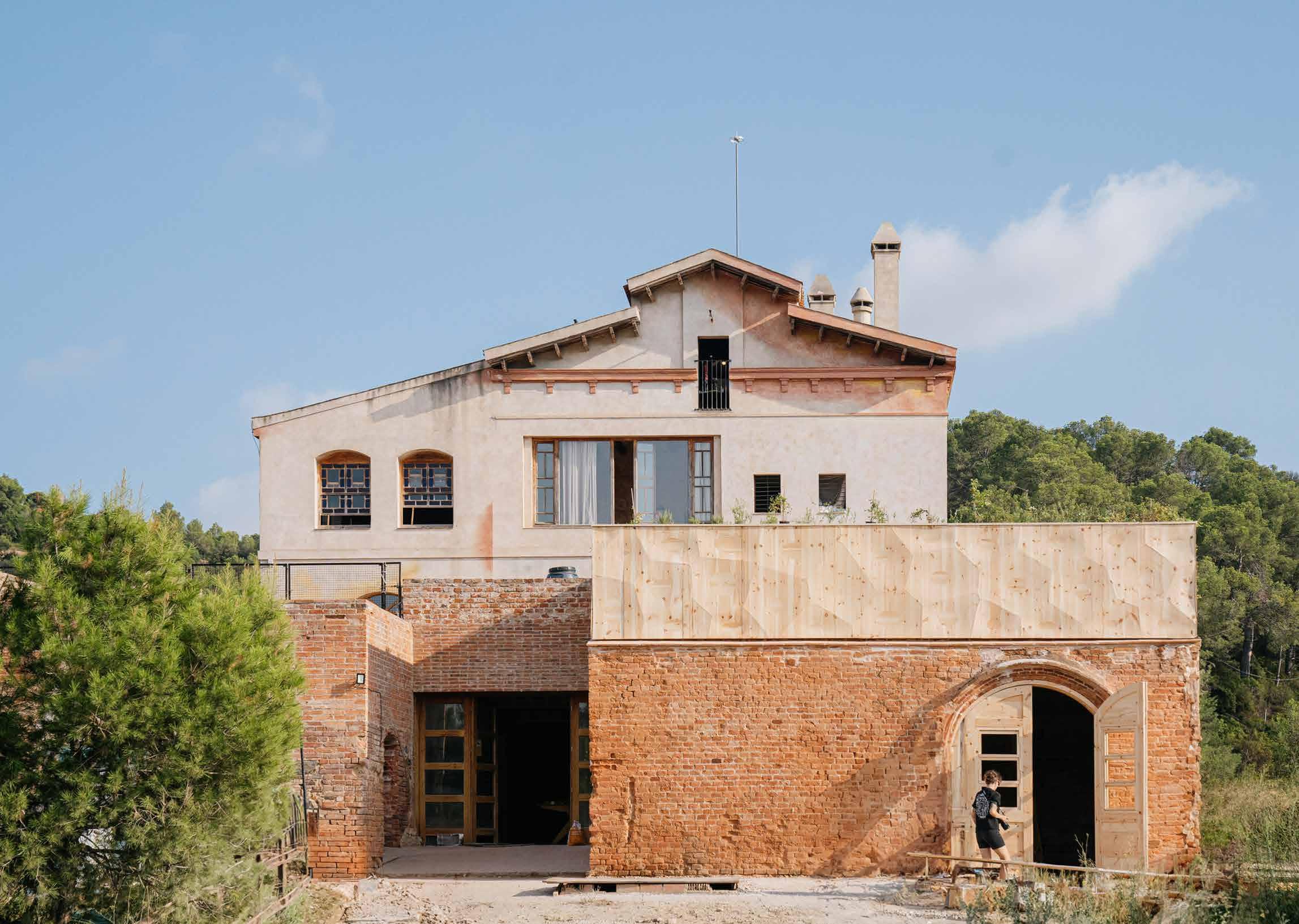
The CORA ((Cathedral of Robotic Artisans) project, part of Valldaura Labs under the Institute for Advanced Architecture of Catalonia (IAAC), is an ambitious endeavor situated within the historically rich estate of Collserola Park. This estate, which has transitioned from a Cistercian monastery to a royal palace and later an agricultural farmhouse, provides a unique historical backdrop for the project.
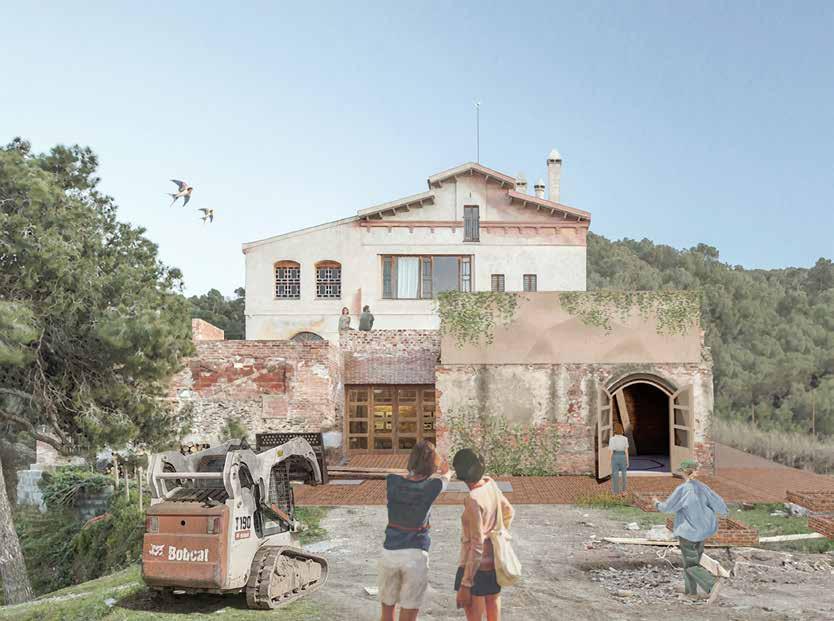
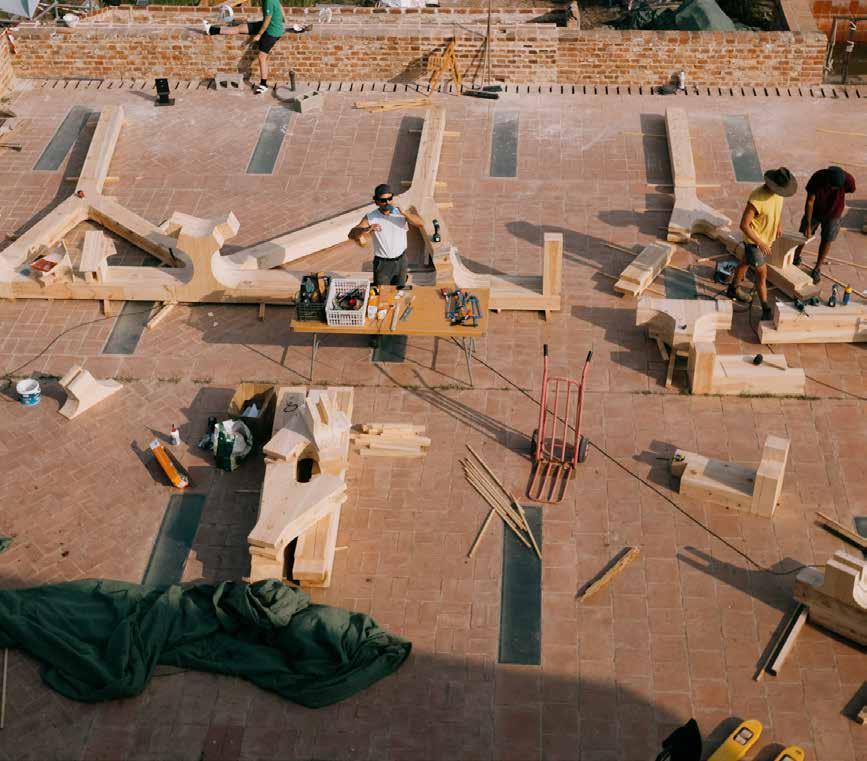
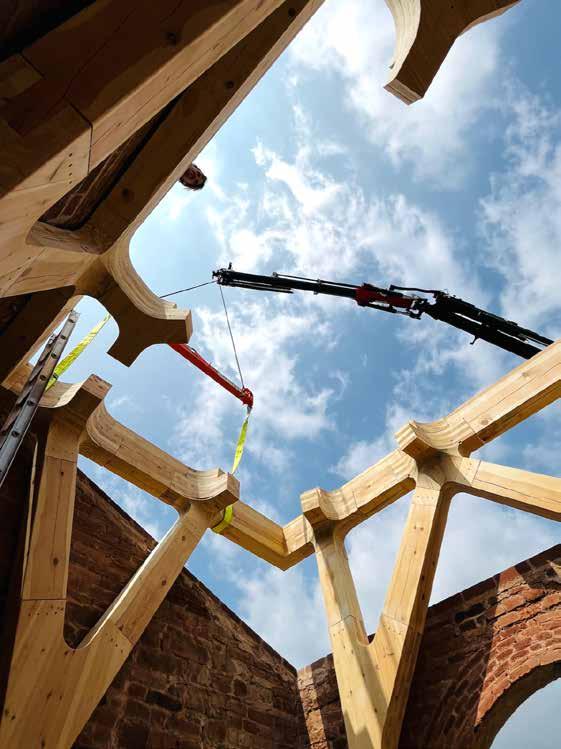
The CORA project represents an expansion of the existing FABLAB workshop, introducing the new Advanced Wood Studio. This cuttingedge facility will feature a robotic arm designed for advanced, creative, and parametric wood processing. The project emphasizes the use of local materials, with a particular focus on wood sourced directly from the surrounding Collserola Park. Here, pine trees are meticulously selected, processed, and utilized, ensuring sustainability and a deep connection to the local environment.
By seamlessly integrating advanced technology with traditional craftsmanship within a historically significant setting, the KUKA House exemplifies innovative architectural practices and sustainable design principles. This initiative not only honors the rich legacy of its location but also pioneers new methods in architectural and environmental synergy.
CONCEPT
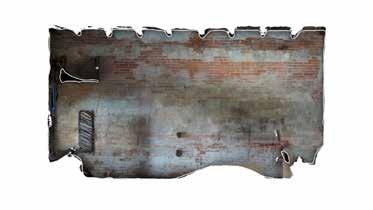
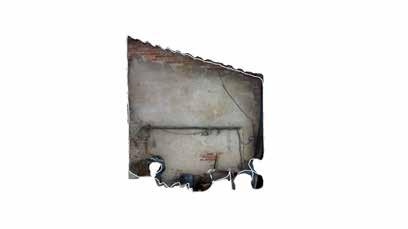
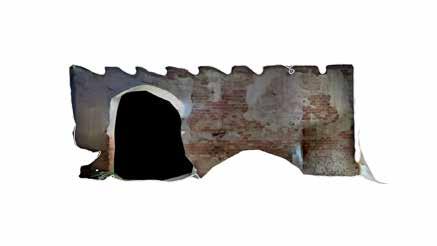
Transitioning through various roles over the centuries. Originally a stable for horses, it later served as a laundry room, and more recently became an integral part of the farmhouse. This building, with its layers of historical use, now embarks on a new chapter as the Advanced Wood Studio.
EXISTING STRUCTURE
STRUCTURE
Beam to Column Junction
BC6-7
Drainage gutters
1. Lonicera implexa (Gavarrera)
2. Clematis flammula (Gesamí bord)
3. Centranthus ruber (Herba de Sant Jordi)
4. Sedum sediforme (Arròs de pardal)
5. Lavandula stoechas (Cap d'ase. Tomaní)
6. Cistus monspeliensis L. (Estepa llimonencar)
1. Lonicera implexa (Gavarrera)
2. Clematis flammula (Gesamí bord)
3. Centranthus ruber (Herba de Sant Jordi)
4. Sedum sediforme (Arròs de pardal)
5. Lavandula stoechas (Cap d'ase. Tomaní)
6. Cistus monspeliensis (Estepa llimonencar)
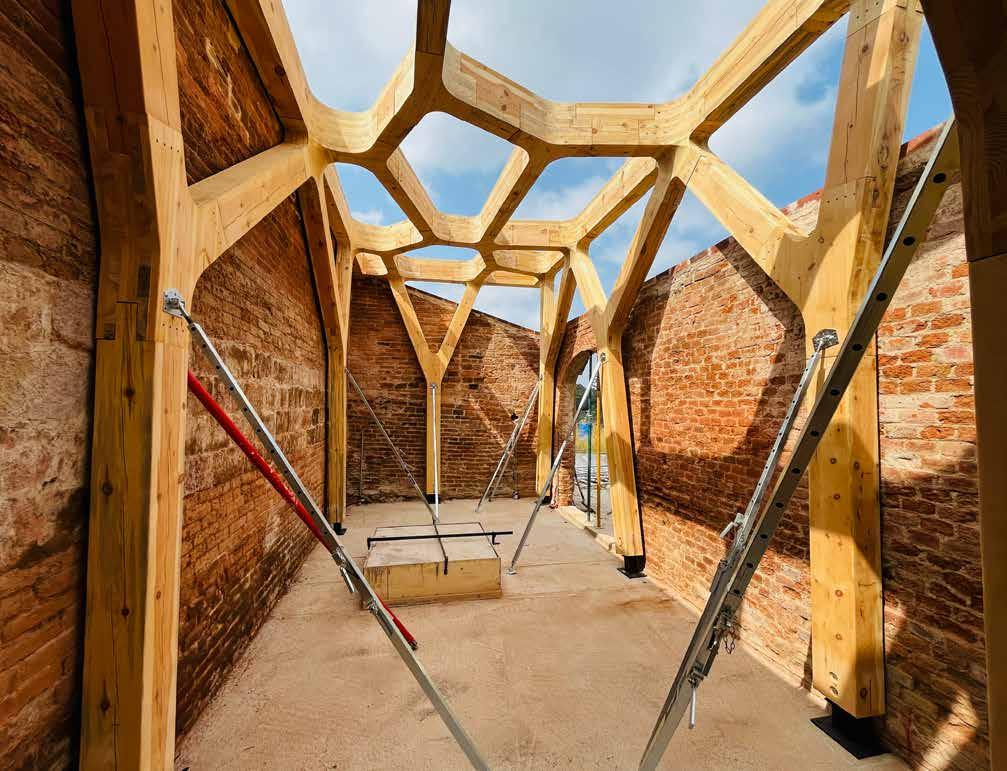
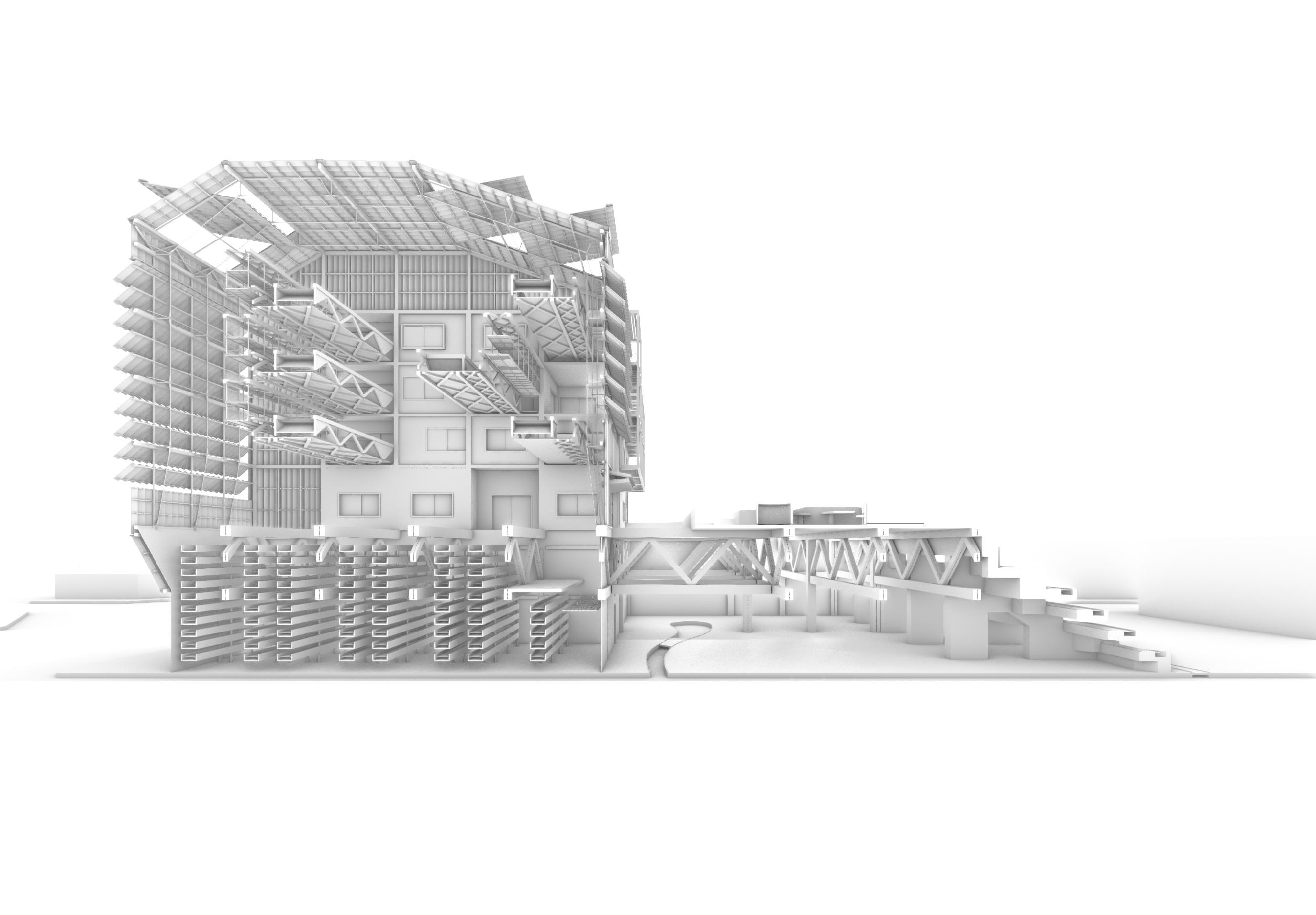
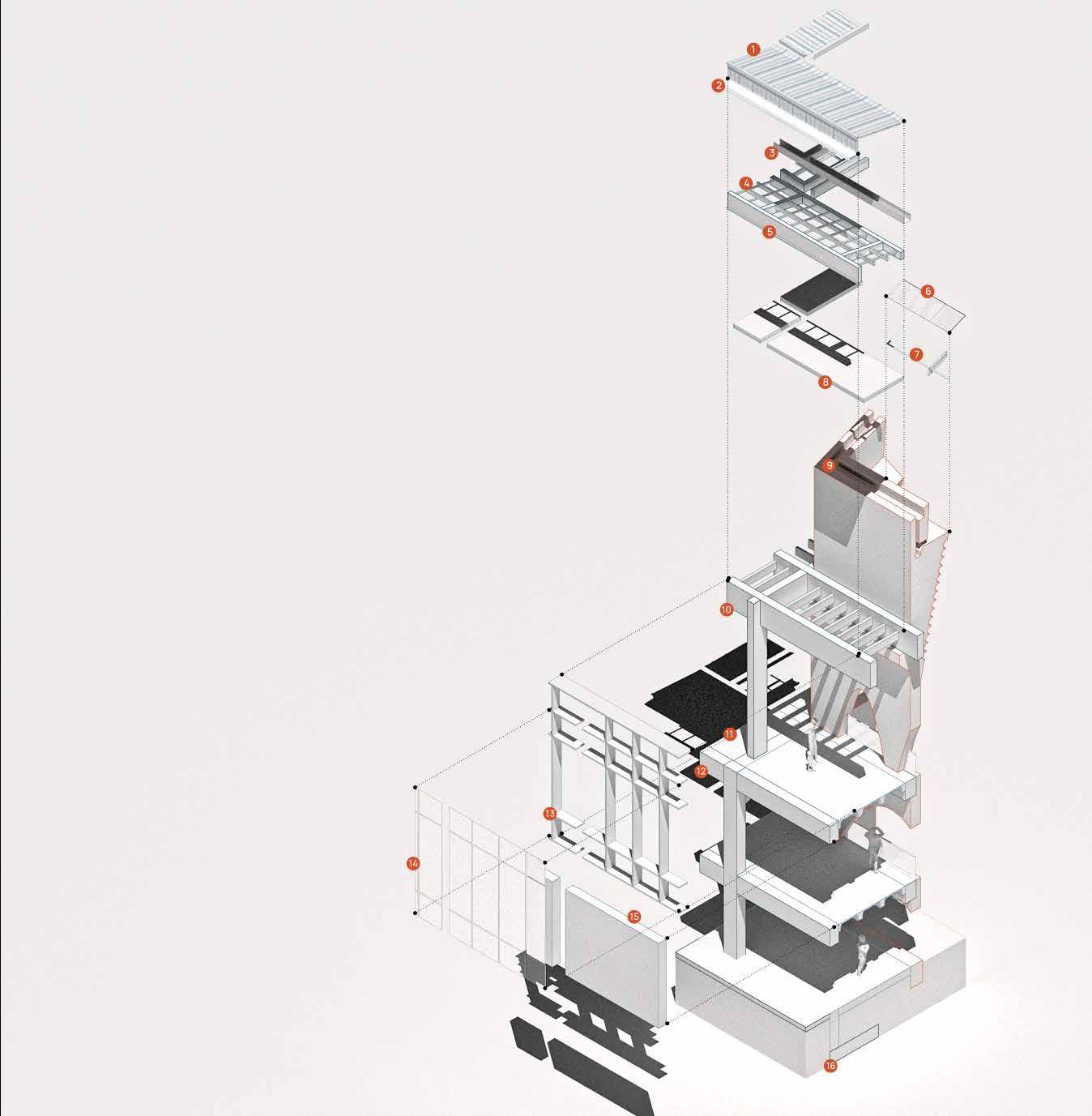
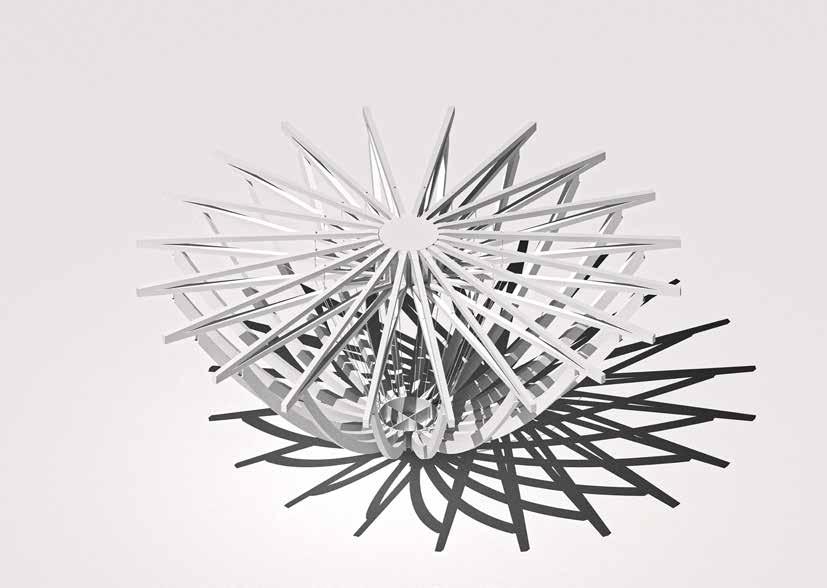
The KUKA House seamlessly blends nature and historical ruins with contemporary and traditional craftsmanship. Utilizing traditional carpentry techniques alongside advanced robotic technology, an organic, parametric Voronoi pattern was created using Rhino and Grasshopper.
KUKA HOUSE BREAKDOWN
GREENHOUSE AXO DETAIL
Proximity Food
Research “Cultivating the City: Integrating Urban Farming into Barcelona’s Urban Fabric
Barcelona, España
2024 • 05 • 31
Skills +
Integrated Design Urban Agriculture Water and Energy Management
Sustainable Design Interdisciplinary Approach
Proximity Food integrates urban food production with residential development, fostering sustainable practices in Barcelona. The Ground Floor and Mezzanine are dedicated to the food industry, while upper levels house residences. A terraced garden links the pedestrian street to the Plinth level, encouraging public interaction with food-related social spaces.
Greenhouses and hydroponic grow spaces connect residential areas and industry, creating shared green environments. Educational and communal spaces break the “black box” perception of food production, promoting engagement. With efficient structural strategies, water management systems, and photovoltaic panels generating 250,000 kW/h annually, the project emphasizes energy efficiency. Using natural materials, Proximity Food opens food production to the public, creating a harmonious urban model that unites sustainable living and local food systems.
Sant Adrià de Besòs
Harvest Table
Commission “Máquina climática” exhibition
Ciutadella Park
Barcelona, España
2024 • 06 • 09
Skills +
Sustainable Material Sourcing Project Management and Team Collaboration
Prototyping
Carpentry (Woodworking, Assembly, Joinery)
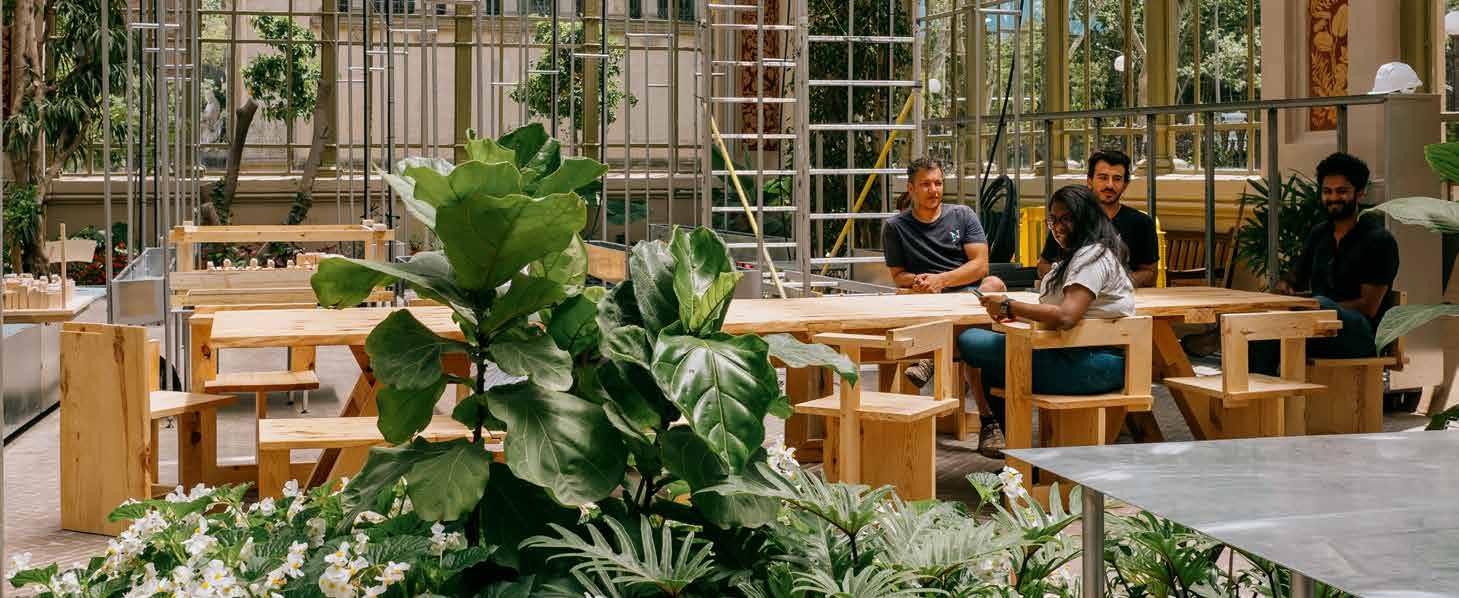
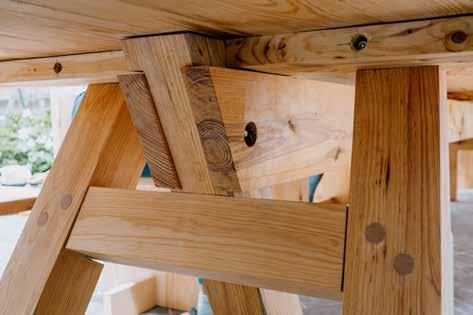
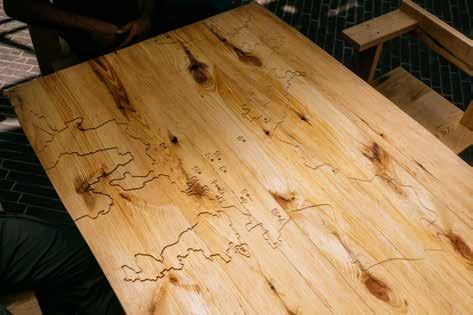
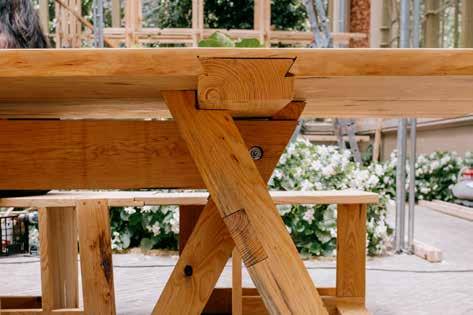
For the “Máquina climática” exhibition at the Invernadero del parque de la Ciutadella, the IAAC (Institute for Advanced Architecture of Catalonia) was commissioned to create a series of objects focused on the future of greenhouses. Our team, consisting of two dedicated members, designed the Harvest Table—a centerpiece embodying the ethos of sustainable and communal living.
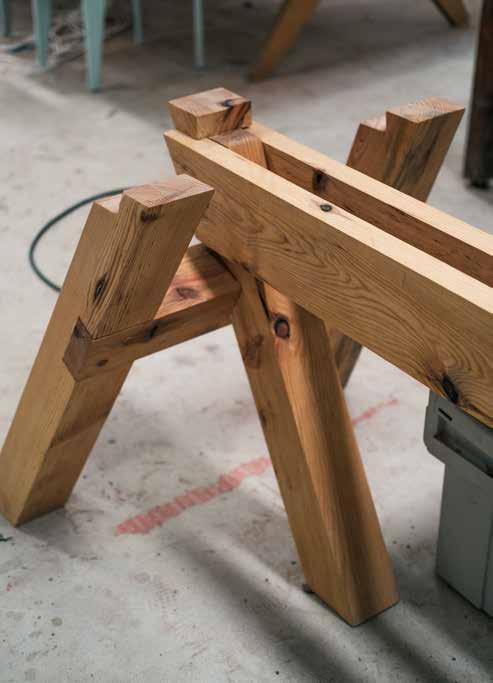
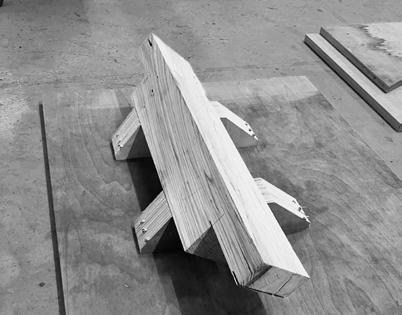
The Harvest Table incorporates the simple yet elegant design of a trestle table, embodying an impermanent element that is easy to dismantle and reassemble using only joints without glue. This design ensures flexibility and sustainability, making it a perfect fit for the dynamic needs of modern urban agriculture.
CONCEPT
nspired by the concept of Sacred Culmination, the table represents the culmination of a season’s labor and divine revelation, reflecting the hard work and dedication involved in the harvest. Its altar-like design transforms the act of eating into a sacred ritual, evoking a sense of reverence and sanctity. The table facilitates communal eating, making each meal a sacrament, a shared, sacred experience.
FC(2x)
ML(2x)
MFC(1x)
CS(2x)
MB(1x)
EL-02(2x)
LC(2x)
EL-01(2x)
The transcendence of agriculture, from the mundane to the sacred, is captured through elevated or floating elements, emphasizing the table’s role as more than just furniture but a symbol of unity, sustainability, and the future of urban food production.
CONCEPT
Duality
Cultural Facility
2020 • 03 • 23
Skills +
Urban Planning
Mass Timber Design
Material Knowledge Sustainable Design
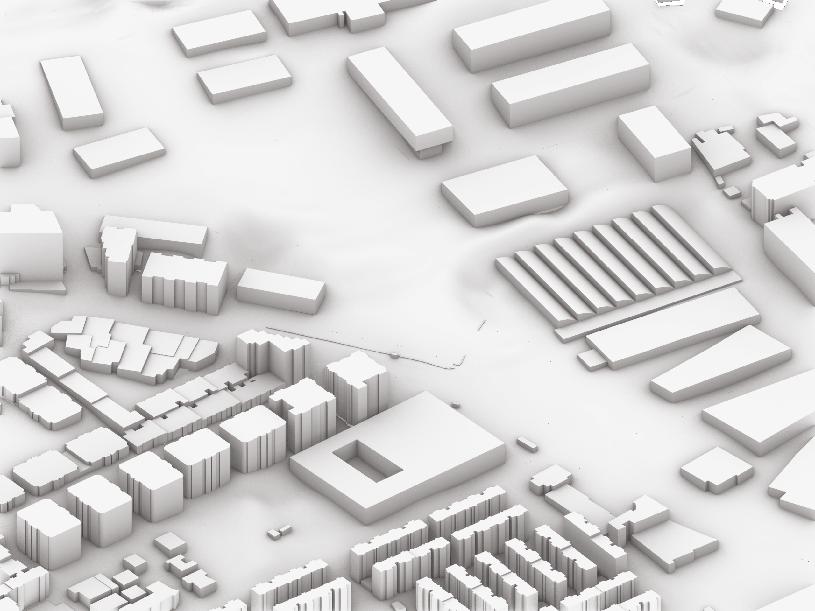
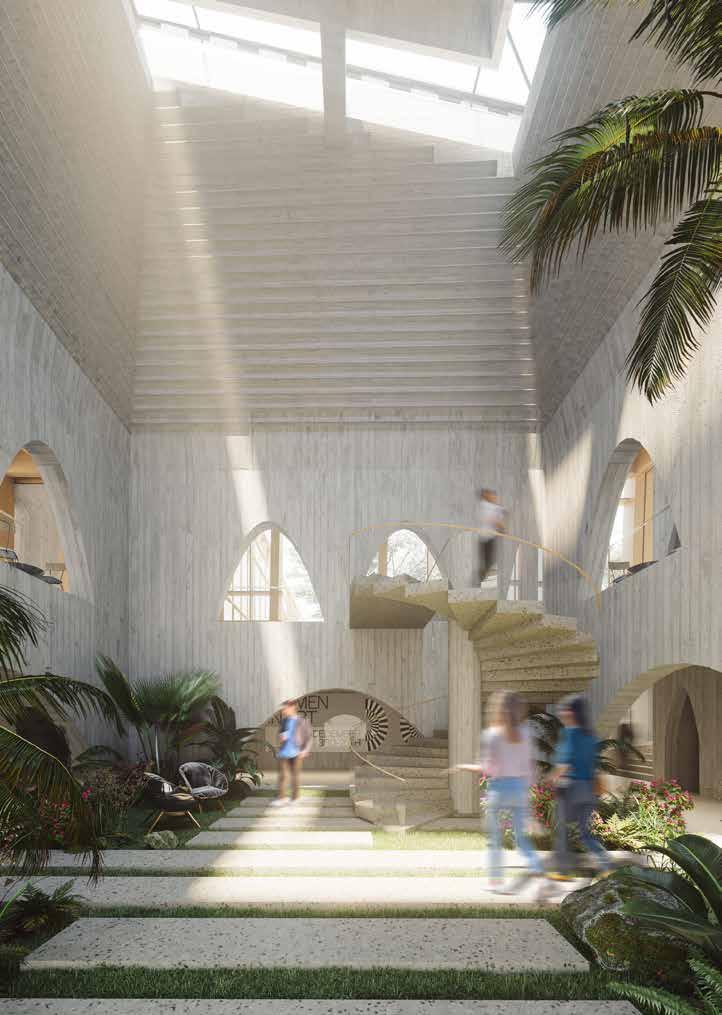
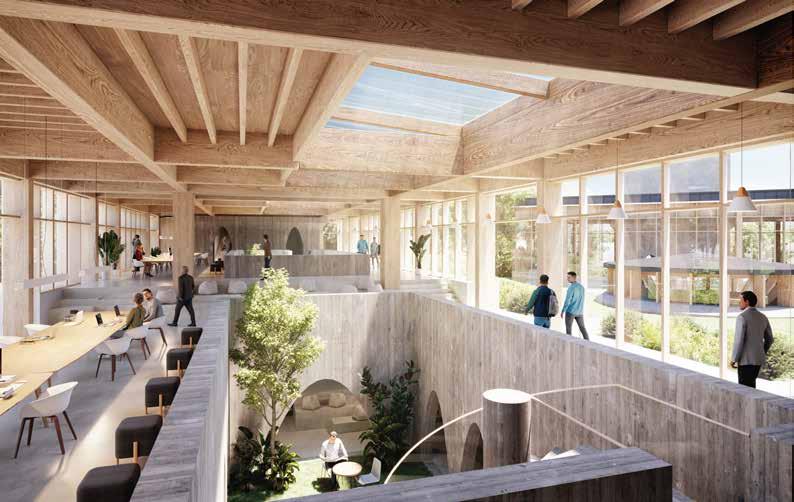
In 1956 the neighborhood of El Batán was born, located in the northern center of Quito, the capital of Ecuador. This neighborhood presents several urban problems in its layout, mobility, land use, occupancy, public space, among others. Due to these problems, an urban approach with city-scale solutions is presented to improve the quality of life in the neighborhood. With this urban planning, the creation of a cultural center for contemporary art arises.
The cultural center for contemporary art is based on the Semperian thought “from the theories of stereotomy and tectonics, which are interrelated, like a dichotomy” to solve the current problematic with a design process that goes towards something that can be applied.
Therefore, the strategies for the composition of the abstract form (master plan) are manufactured, where the physical elements of materials interact to form the structure and, therefore, the creation of space. Hence, the process of the construction trade is transformed into poetry.
El Batan, Quito, Ecuador
Theory Ontological Thoughts Context
abstract shapes Composition
Creation of spaces
ORIGIN MYTH (Gottfried Semper)
Four Elements of Architecture material qualities
Fire - Earth - Fence - Cover
- Firm compact and dense materials - Rod-shaped materials, elastic, and resistant
technical arts Stereotomy - Tectonics
textile arts
Semper knot
TECTONICS AND STEREOTOMICS THEORY
POETIC CONSTRUCTION
Practice Representation
Fabrication Strategies
Material Technologies physical elements
Structure Construction
The strategy of abstracting the four elements of architecture (Fire, Fence, Bench or earth, Cover) mentioned by Gottfried Semper in relation to the main components of a cultural facility is applied. The architectural object reacts through interpreting Gottfried Semper’s theories, to determine that:
Earth (stereotomic space)
Fire (Theater)
Cover (Public Space)
Protective fence or wall (vertical facade)
Geomorphology as a site
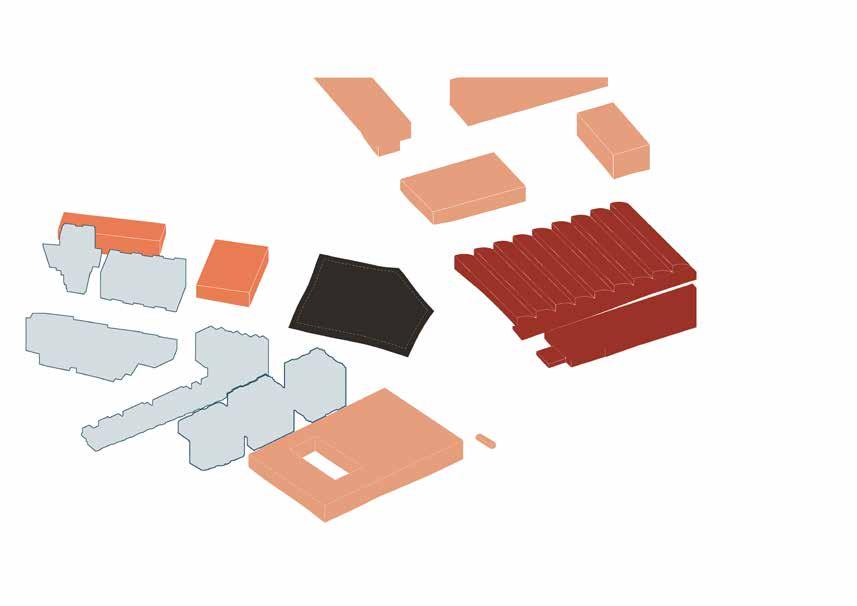
The “El Batan” neighborhood, which exhibits a hidden personality of textile industries hidden behind infinite walls, and mono-functional land uses, in which once they were surrounded by an inherent topography of the Andean mountains, those ditches called ravines.
Tectonic Form / Protective Wall - Cover
The protective wall and roof as tectonic elements, in which it is understood that “part of the building wants to belong to the earth (stereotomic) and that part is detached from it (tectonic)”
(Campo Baeza, 2003, p. 1)
Stereotomic Shape / Mass
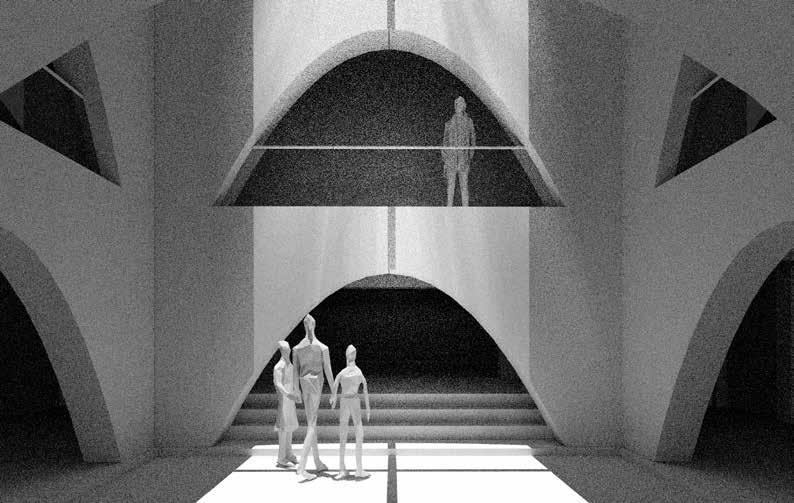
The earth as stereotomic spaces, “stereotomic one in which gravity is transmitted in a continuous manner, in a continuous structural system where the constructive continuity is complete. The one that settles on the earth as if it were born from it.”
(Campo Baeza, 1996, p. 2)
Fire / Light - Theater
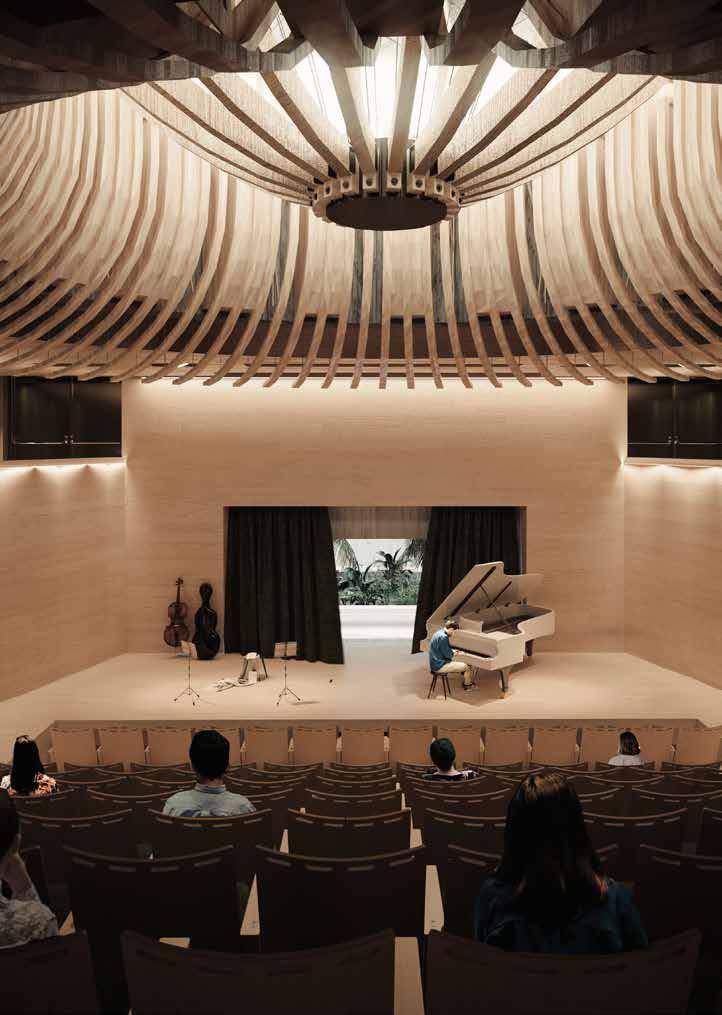
Fire is the cultural space, the theater, “It is the architecture that seeks light, that perforates its walls so that light enters it.”
(Campo Baeza, 2003, p. 2)
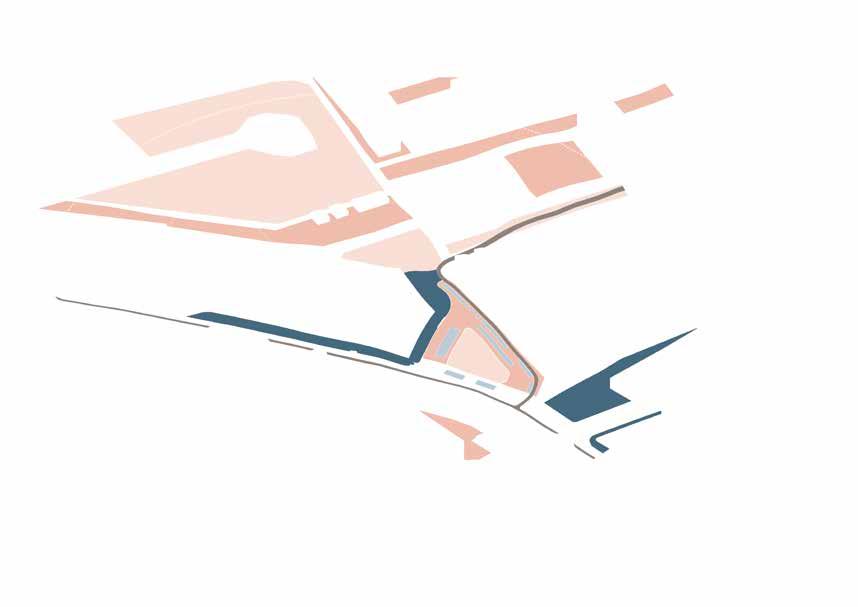
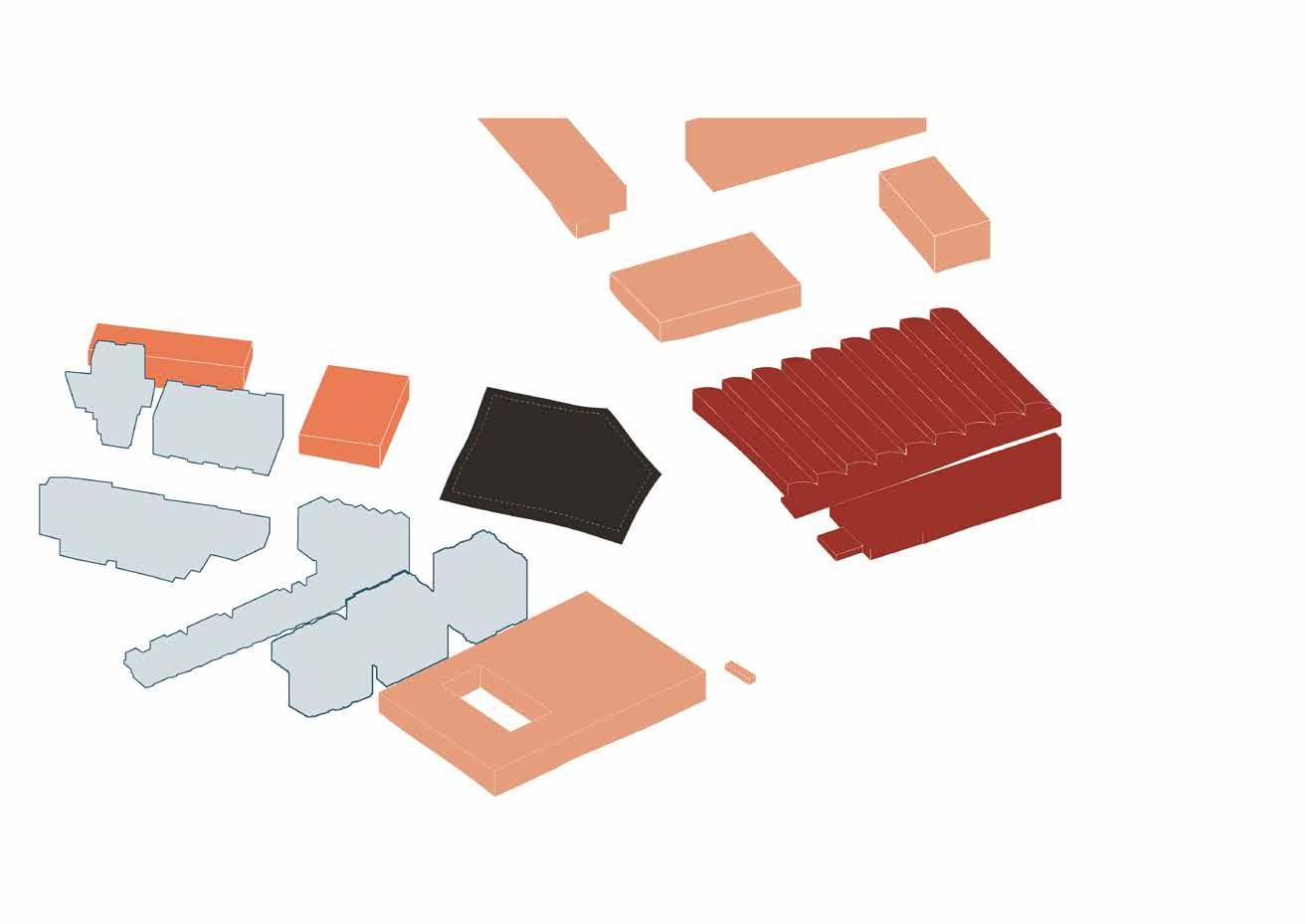
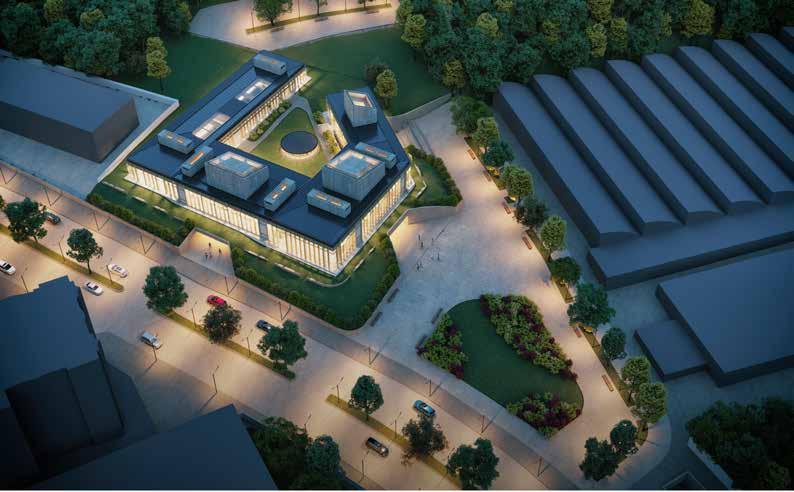
The cultural center is based upon the elements surrounding the property, that is, the cluster design. First, it starts from recovering its natural and symbolic character of its inherent topography through green areas located towards the southeast. Likewise, the condition of the square to the northwest is also defined through the cultural vocation that the facility fulfills. Second, it promotes the use of alternative means of transportation through the design of ecological pedestrian paths, located to the north and west.
It has been located taking as a criterion its topography at the highest point, and the relationship with its main square and road.
North-West: this is where the administrative and cultural area are located, its entrance is made through the Granados Avenue and Cultural square.
Southeast: this is where the courtyard is located, the access is for the Queri campus.
South: this is where the multi-use spaces are located (maneuver yard - loading and unloading area), sits entrance is made through the Cultural square.
LAND USES / PUBLIC SPACE
It is taken as a criterion that the programmatic zoning of the equipment is in relation to the context that surrounds it.
North: the academic zone is located, which is related to the ecological path.
Northwest: the cultural area is located, which is related to the cultural plaza.
Northeast: the Courtyard of the project is located, which is directly related to the Qeuri campus Access.
SUN / RADIATION
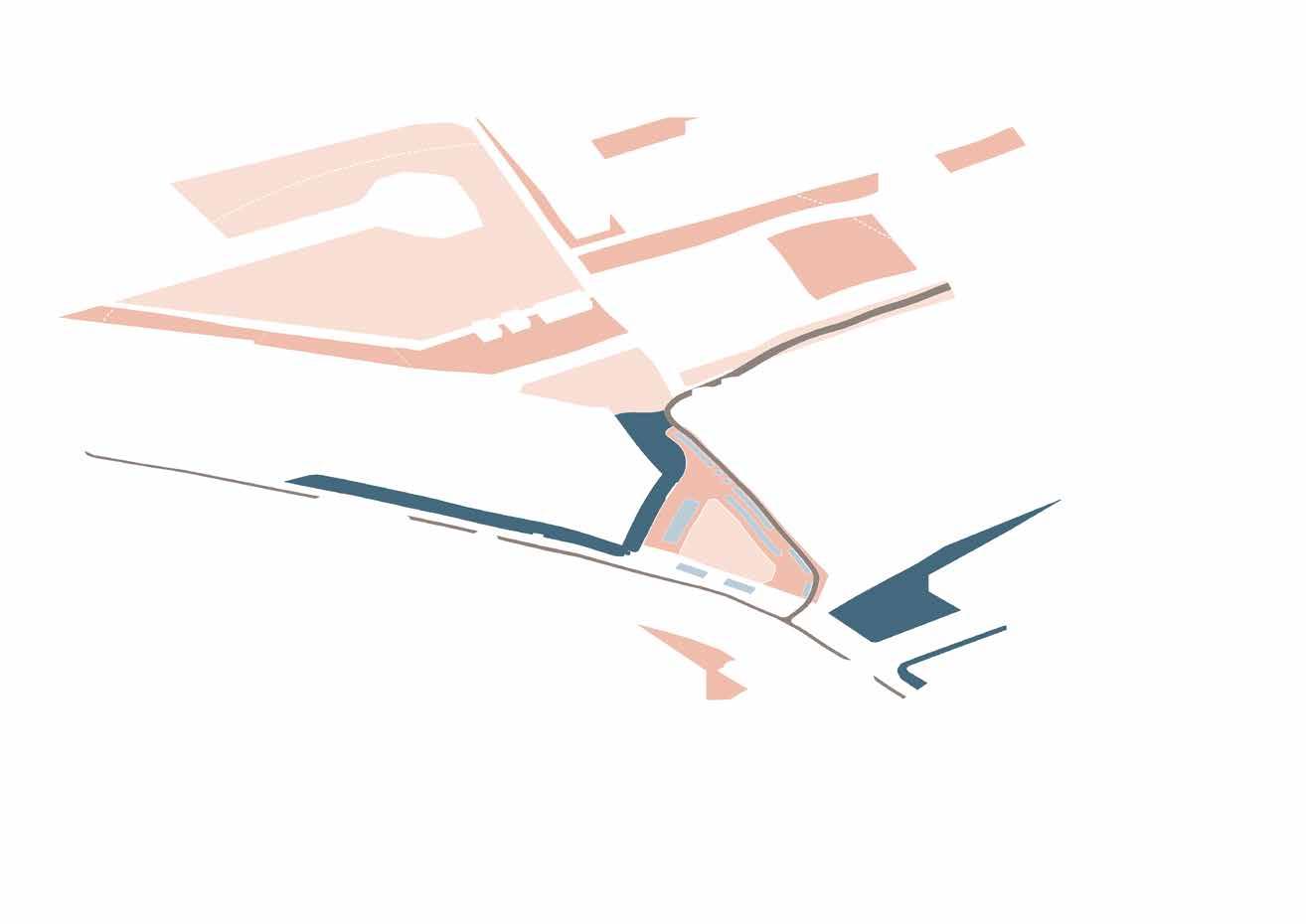
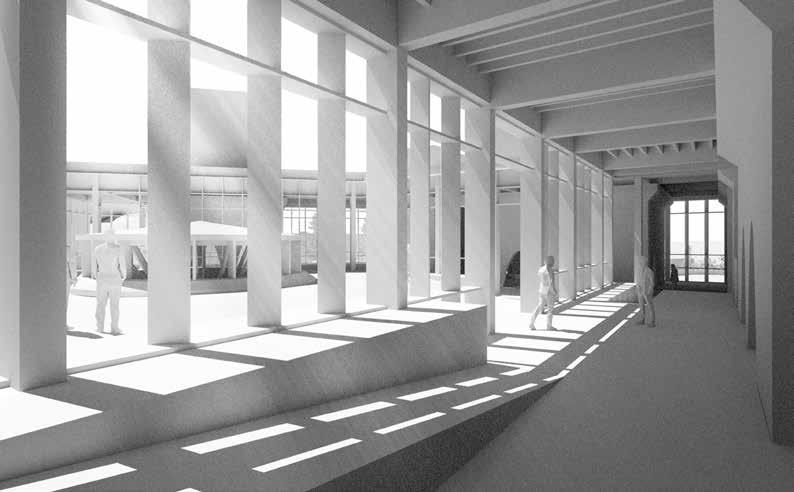
East Façade: to obtain a greater solar gain through a 66 degree Louvers inclination that controls excess radiation of 1763 Kwh/m2 and that can heat the building in the morning.
West Façade: to obtain protection from radiation that exceeds 1628 Kwh/m2 through a Louvers inclination that avoids radiation in the afternoon.
Top Cover: Entry of natural light to the buried parts of the project through towers that rise from the ground, through skylights
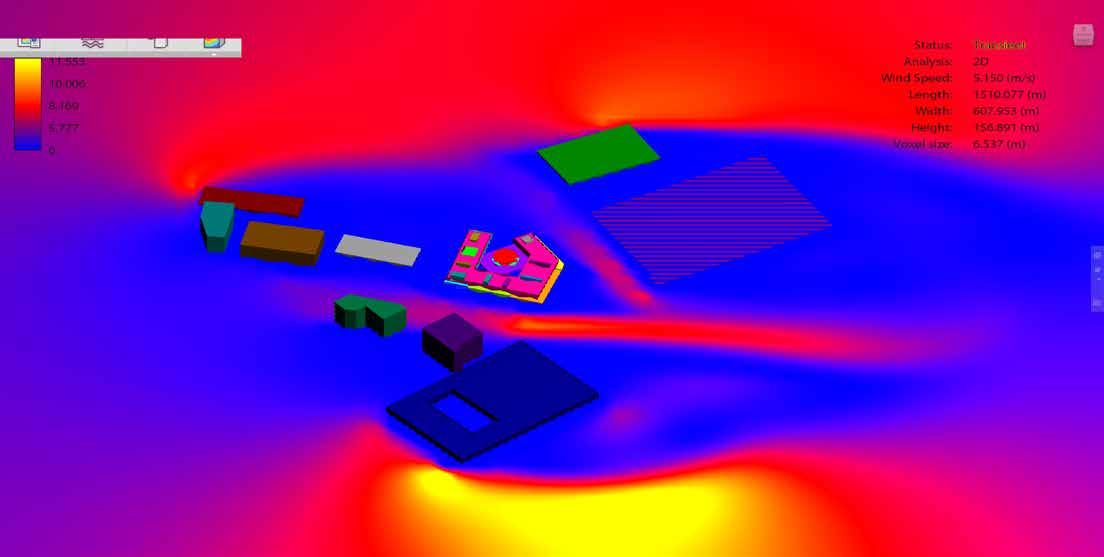
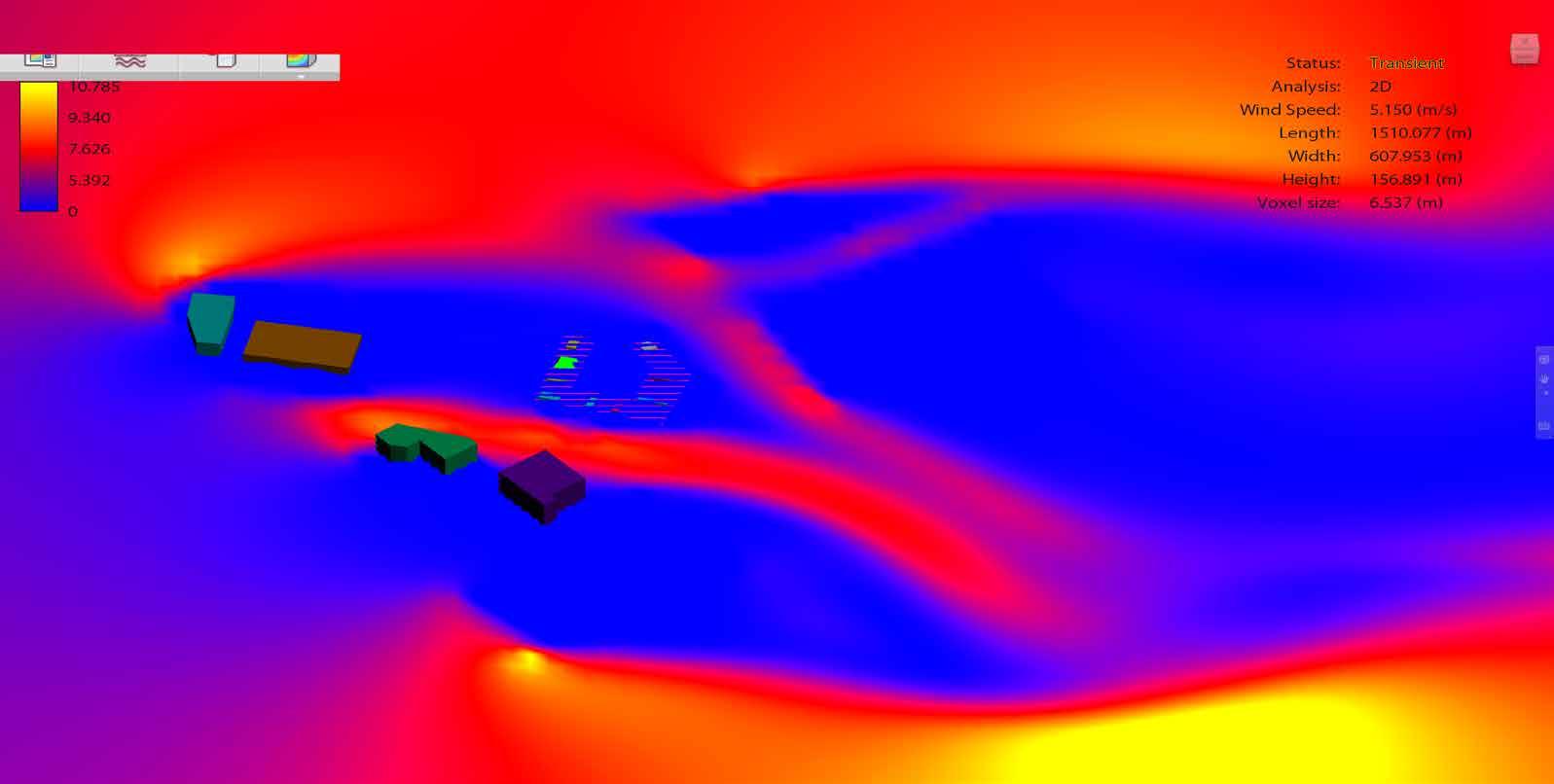
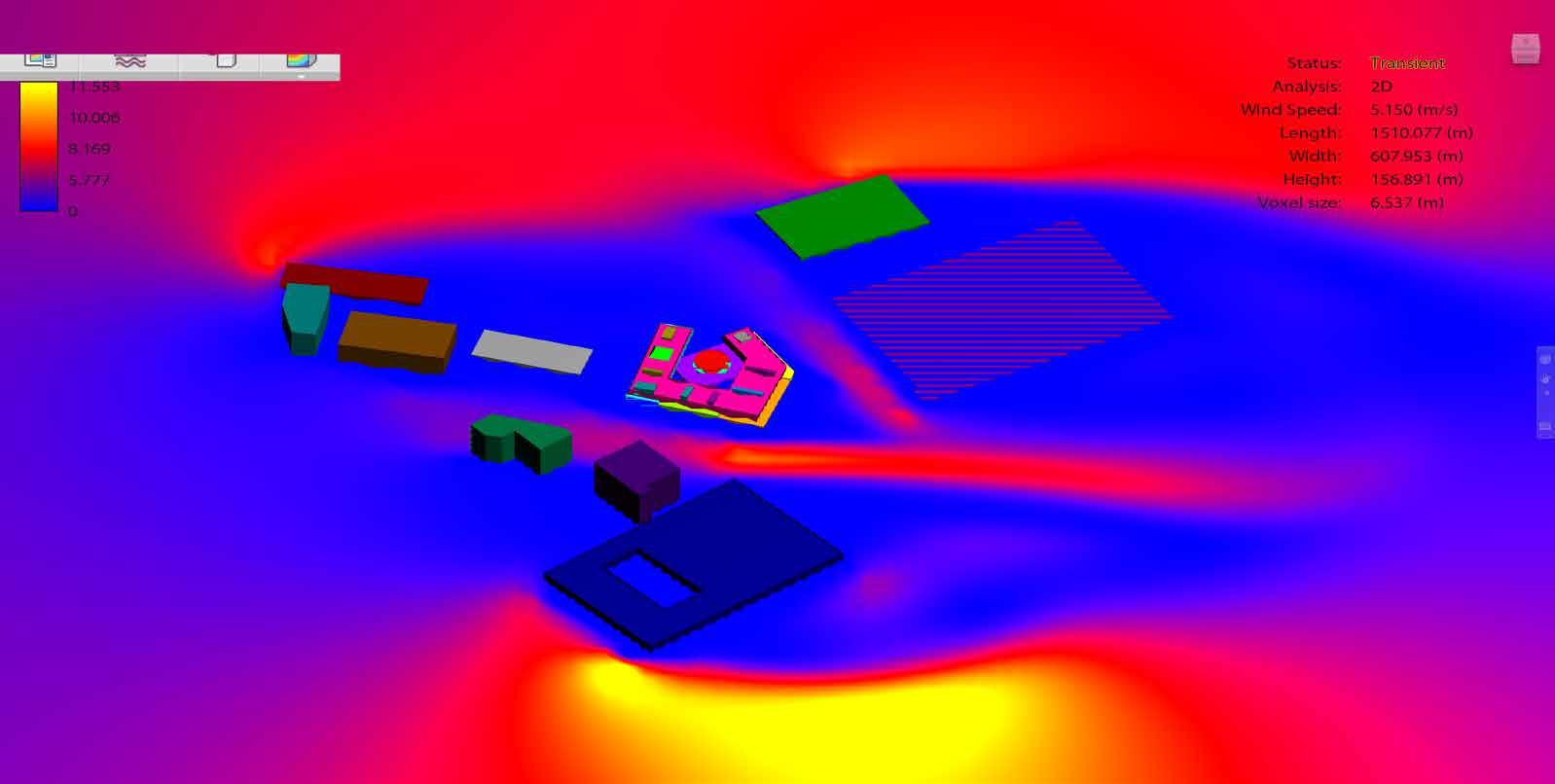
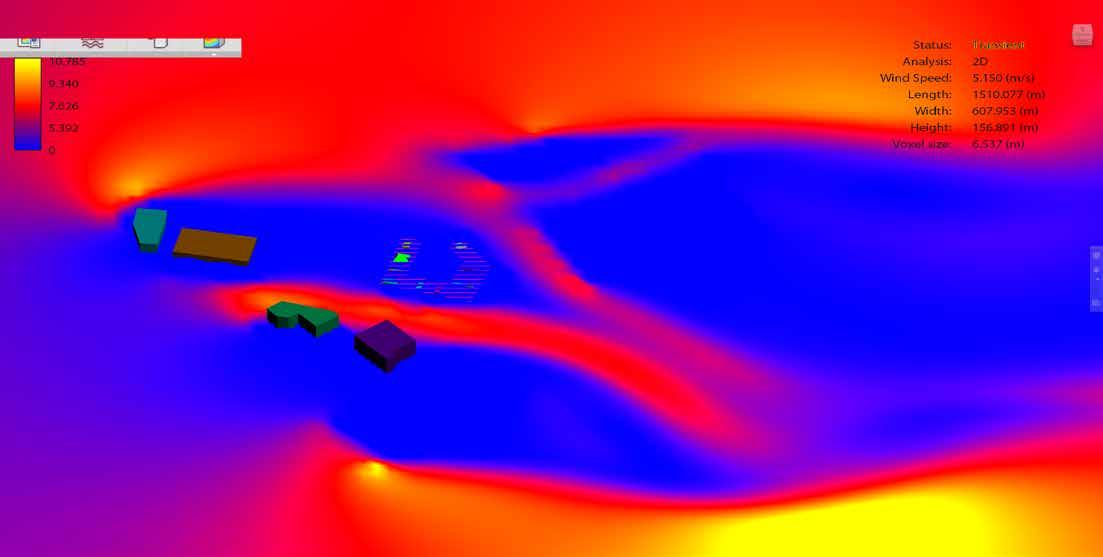
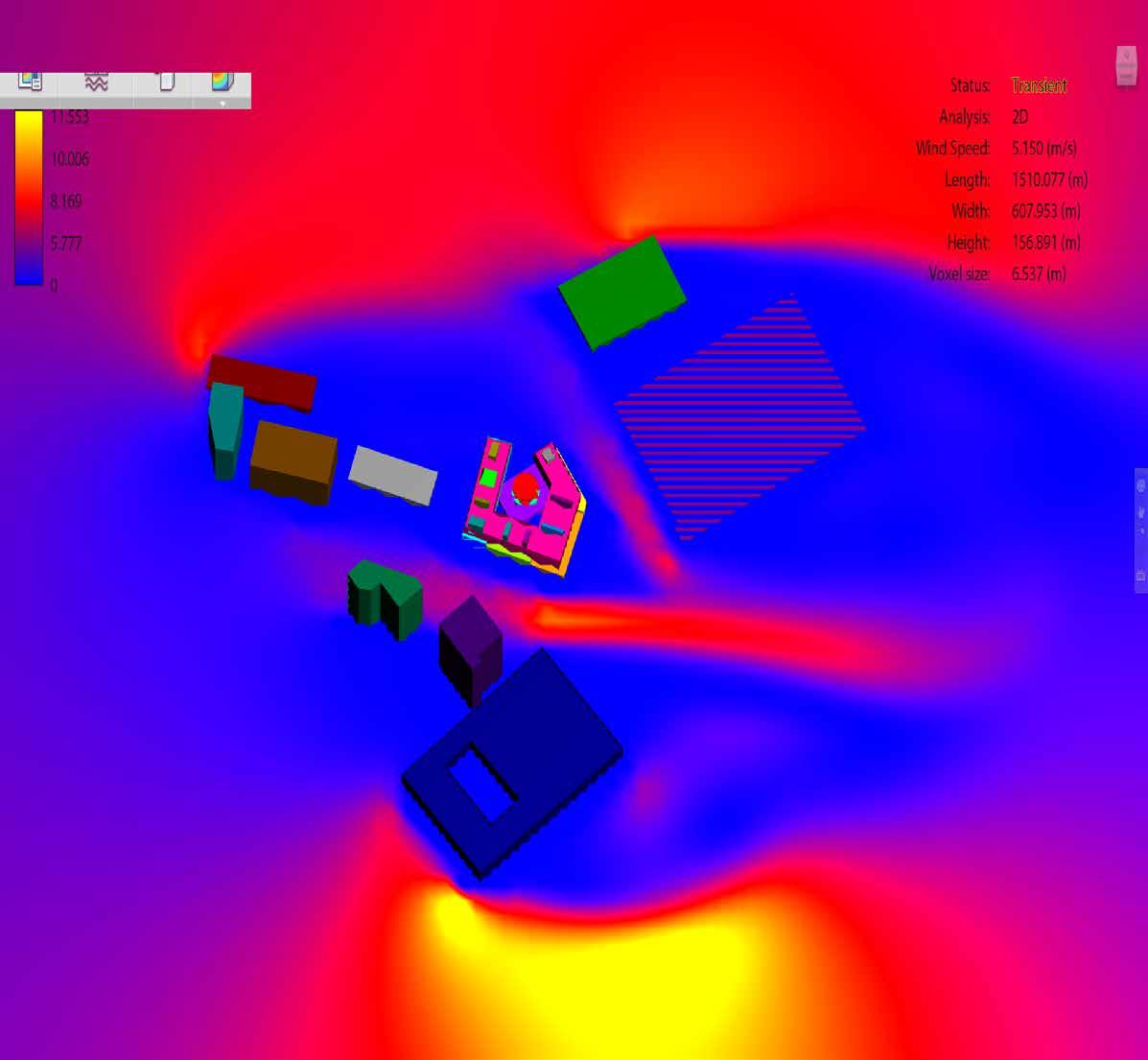
Predominant flow through the Granados Avenue, the south and southwest of the property.
The direction of the wind throughout the year is predominantly in the direction (NE). with an average speed of 5.15 (m/s), considered as moderate breezes moderate on the Beaufort scale, with a wind calm of 21.79%.
The façades (North - South - Southwest) are designed to have openings to capture natural ventilation in the building.
On the east façade, ventilation will be done through a system of cooling towers.
Flujo de vientos
Flujo de vientos
GROUND FLOOR
TOWER DETAIL
Thermoacoustic cover, injected polyurethane 60 mm, lower and upper pre-painted 40 mm
Upper flashing
250 x 250 mm tol gutter
Sawn pine wood beam, 150 x 50 mm section, brushed finish
Sawn pine wood beam, 600 x 150 mm section, simply supported
25mm tempered glass
Metallic profile with structural silicone of 50mm
Polyurethane 80mm
200 x 200 mm concrete gutter
Main beam of laminated pine wood, 1000 x 300 mm section
800 x 800 mm recoverable caisson slab
700 x 400 mm banked beam
Wooden curtain wall, with aluminum TM60S, Profile 51003
6 mm glass, 10 mm chamber, 6 micron acoustic laminate
Double concrete block wall, 500 x 200mm and 500 x150mm Foundation f´16@10
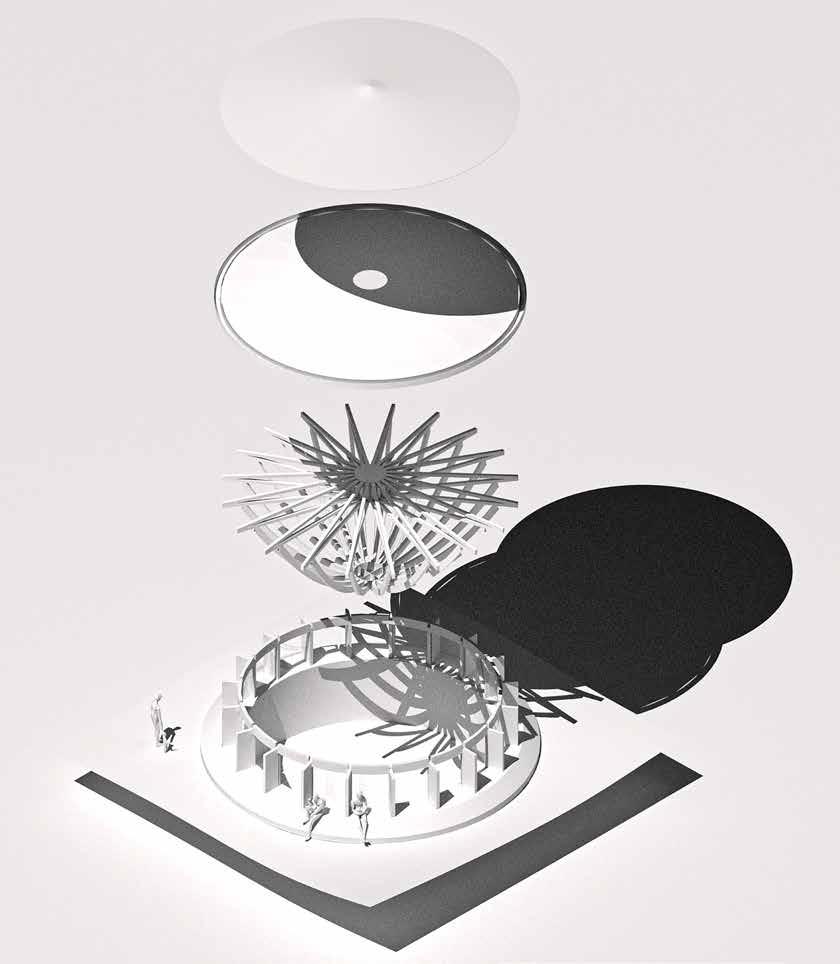
ELEMENTS CUPOLA
WOOD ELEMENTS CUPOLA
mm steel cable fixer
for fixator
5 mm metal cylindrical plate, with central brackets
Anchor bolts with threaded bars, union of metallic structures with wooden elements
Sawn timber 100 x 100 mm
Perforated metal plate with 40 screws
Anchor bolts with threaded bars, union of metallic structures
Asphalt tile 100 x 30 cm
50 mm polyurethane insulation
Dovetailed wood stave
5 mm metal cylindrical plate, with central brackets
Metal stirrup for 60-bolt beam
Anchor bolts with threaded bars, union of metallic structures
Sawn timber 100 x 100 mm
Sawn timber 500 x 50 mm
Equilibrium
Research center & ecolodge
Chontal Alto, Imbabura, Ecuador
• 10 • 11
Skills +
Prefabrication Construction
Conceptual Development
Technical Drawing Collage technique
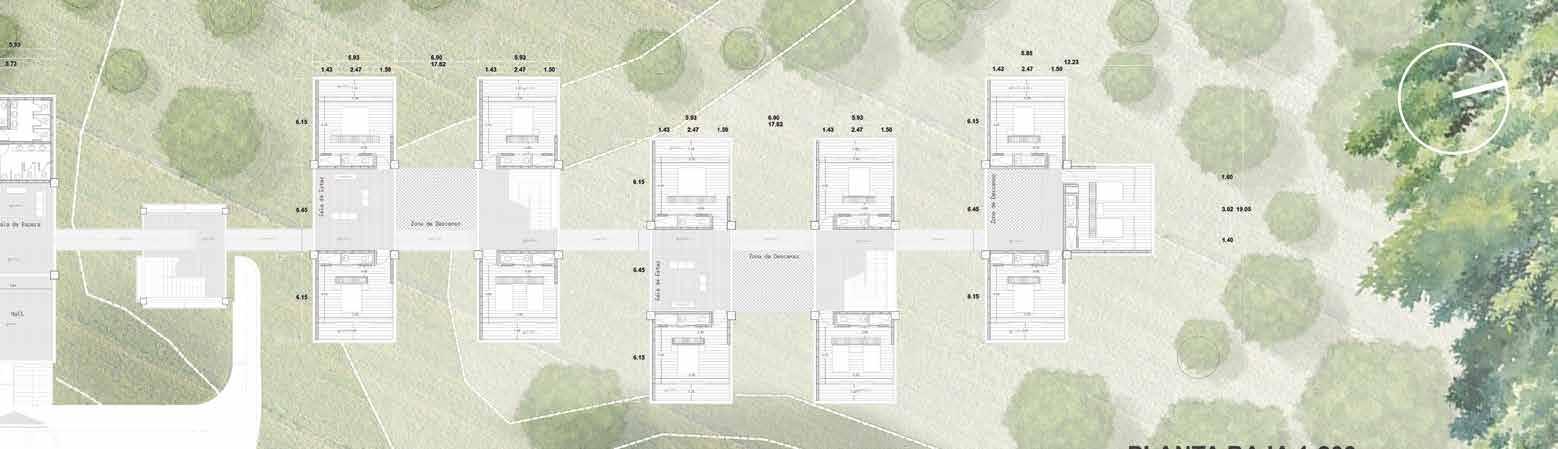
This project is based in the Chontal Alto area in Ecuador. It’s tropical ecosystem is characterized by the constant presence of clouds over the tree canopy, which helps capture large amounts of water through condensation. Cloud forests are rare, and cover less than 4% of the world’s total surface.
Despite its ecological significance, the Chontal Alto area has long been the target of mining companies due to the it’s large mineral reserves. The local population is fragmented, with some supporting the mining activities and others opposing them.
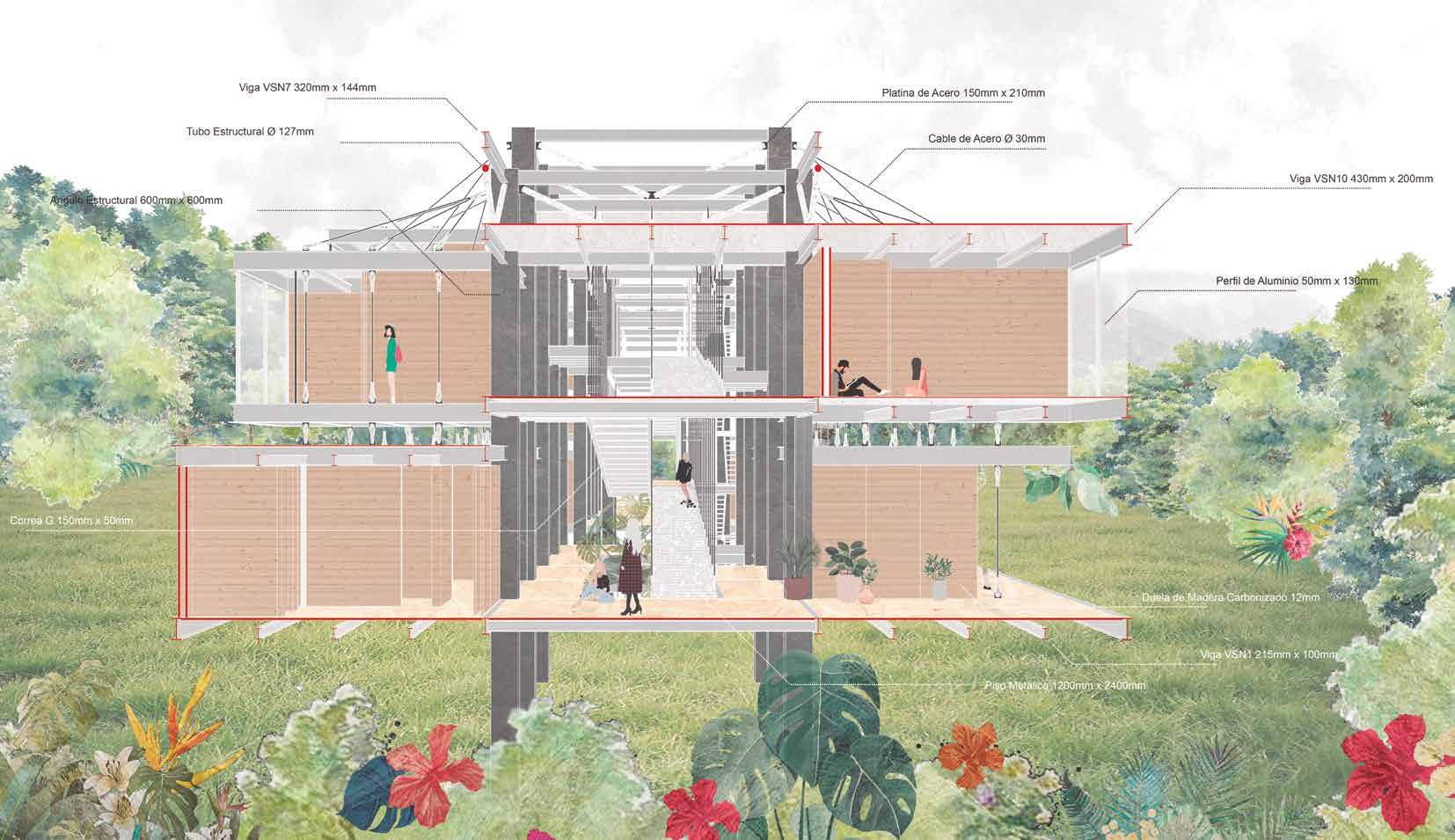
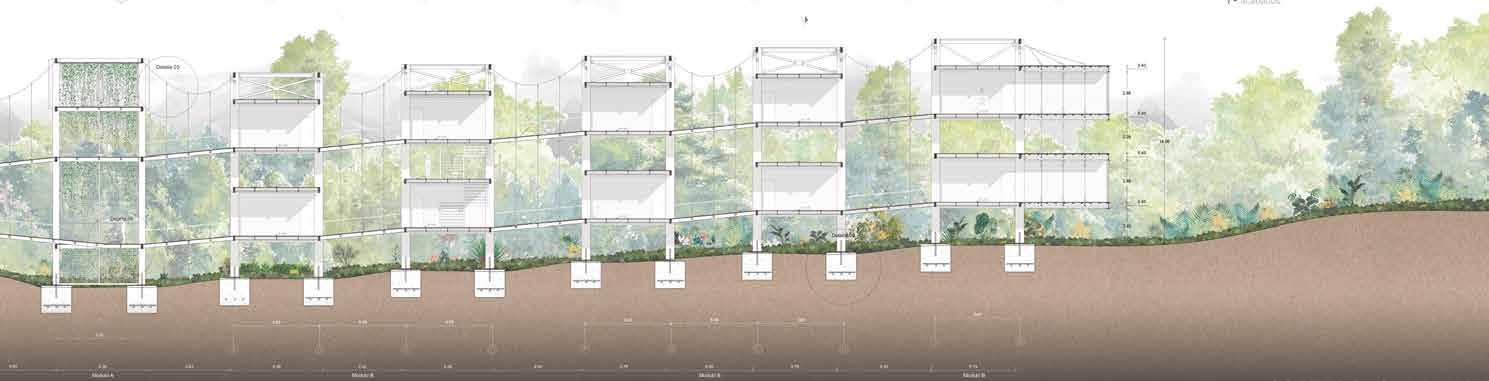
In addition to mining, the cloud forest has also faced threats from agriculture activities. resulting in deforestation. The Los Yaltes Ecological Reserve was created as a sustainable solution to conserve the cloud forest, with a focus on scientific ecotourism. The project involves a prefabricated steel construction consisting of three modules connected by a ramp, to serve as a scientific station and an Ecolodge.
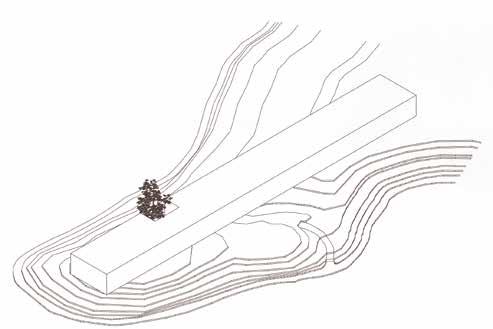
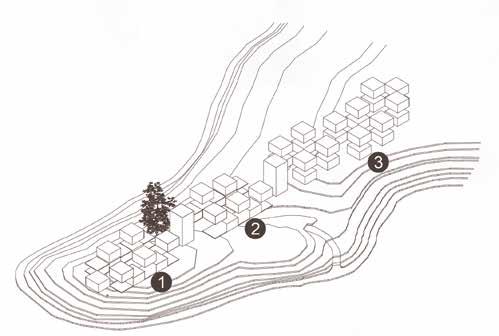
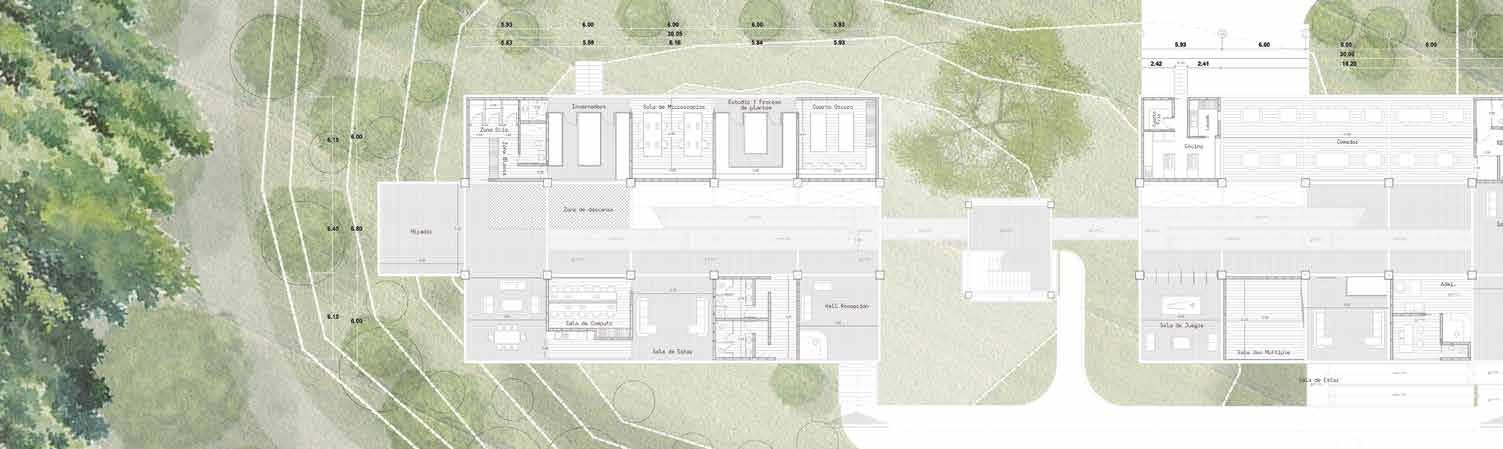
Initial implementation, taking into account the most important pre-existing features of the property. The bar is placed on an East-West orientation to take advantage of the few hours of sun due to constant climate change on the site.
Bar division, the three different zones:
1 . Research Center.
2. Ecolodge Social Area.
3. Rooms.
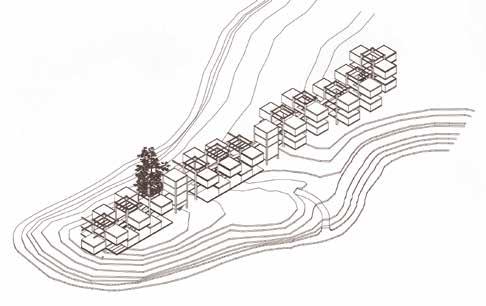
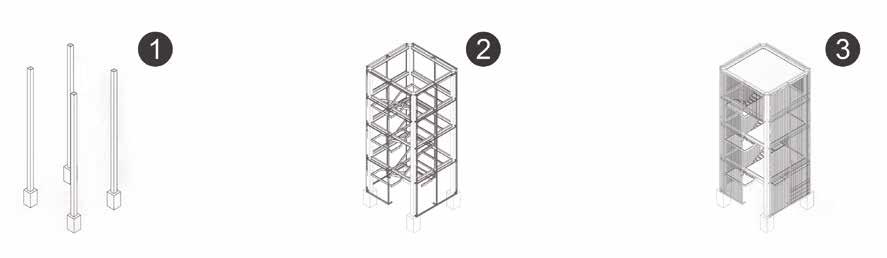
Arrangement of zones, through modules, which facilitate the construction of the building.
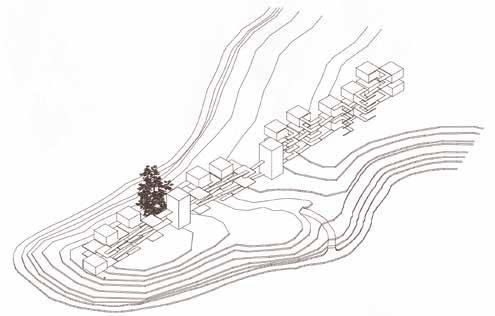
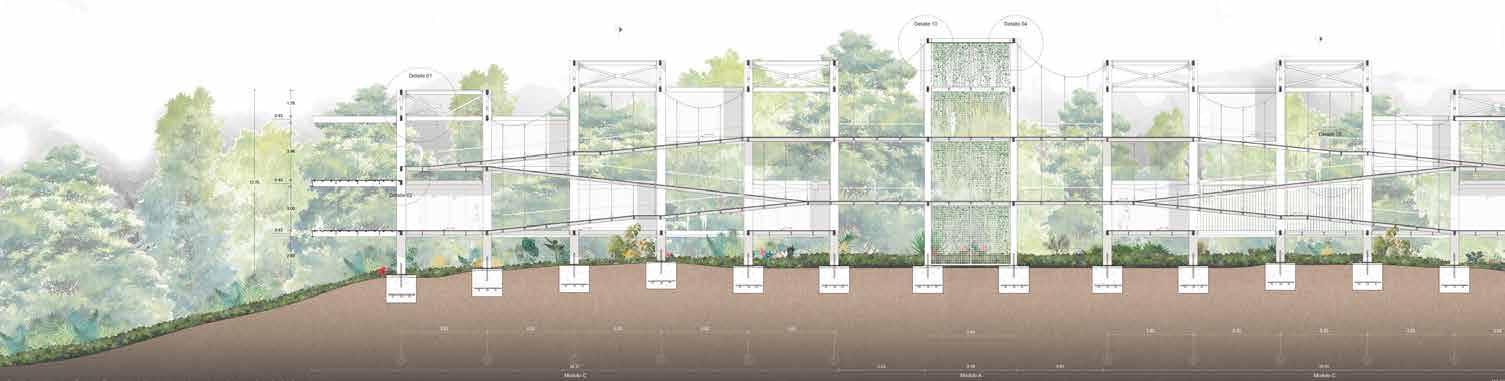
The central structure rises in each module, to alter the property as little as possible, integrating a route through hanging ramps that connect the different spaces with circulation points that divide the different zones.
Fragmentation of the bar, generating rhythm, demanding gaps and visual outlets towards the landscape, allowing the vegetation to integrate into the project.
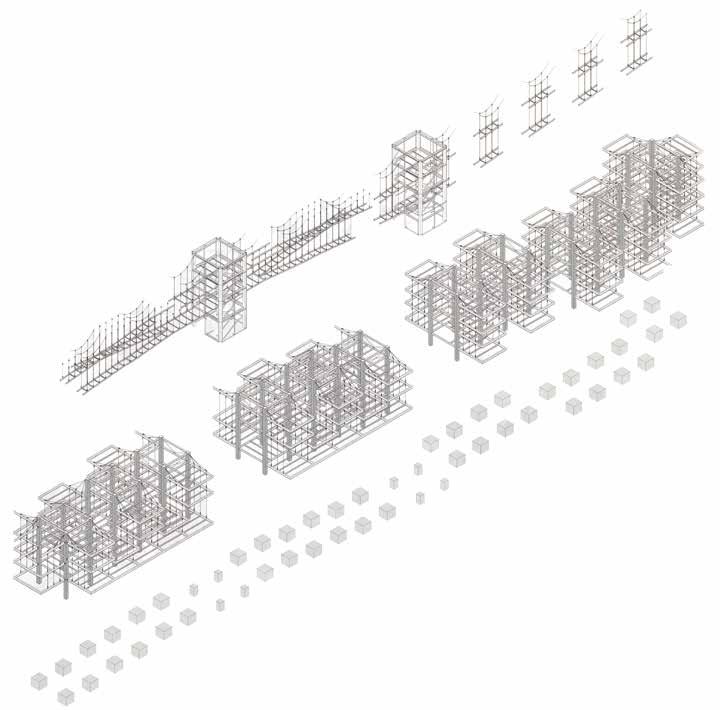
STRUCTURE
DIAGRAMS
Module A
Foundation dice; Union with column anchored with a high resistance bolt and a layer of high resistance concrete of 700kg/cm2 to transmit the weight of the structure towards the center of the foundation.
Main Structure armed with beams and joists with I profiles; reinforced facade with G profiles.
Placement of metallic floor and electro-welded mesh.
C
Foundation cubes, union with column anchored with a high resistance bolt and a layer of high resistance concrete.
Main structure of columns anchored with beams, structure anchored to a rigid tensor.
Columns anchored with beams; cantilever structure anchored to a rigid tensor and placement of beams and joists. Ramp anchored to turnbuckles connected to beams.
Placement of floors and walls. Finishes.
Module
VSN7 320mm x 144mm Beam
Structural Tube O 127mm
Structural Angle 600mm x 600mm
Metal profile G 150mm × 50mm
VSN10 430mm x 200mm Beam
VSN1 215mm x 100mm Beam
Charred Wood Staver 12mm
GROUND FLOOR
LONGITUDINAL SECTION
Limits
Research
2015 • 01 • 08
Skills +
Critical Thinking
Abstract Thinking
Storytelling
Interdisciplinary Integration
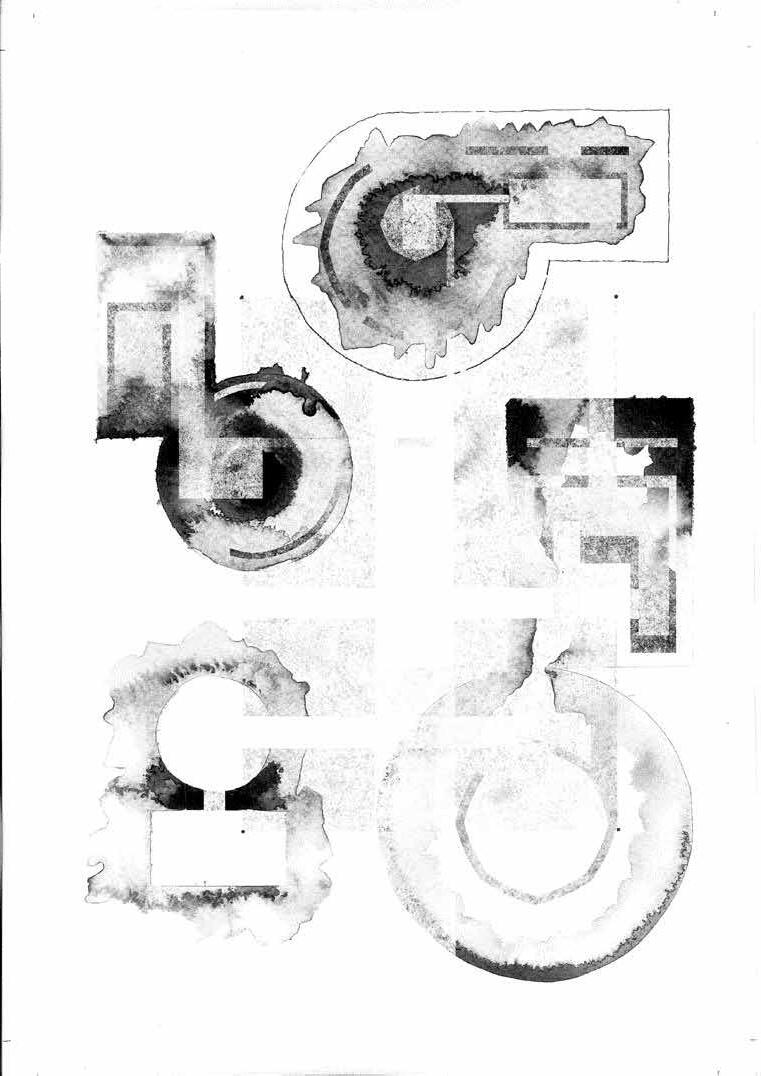
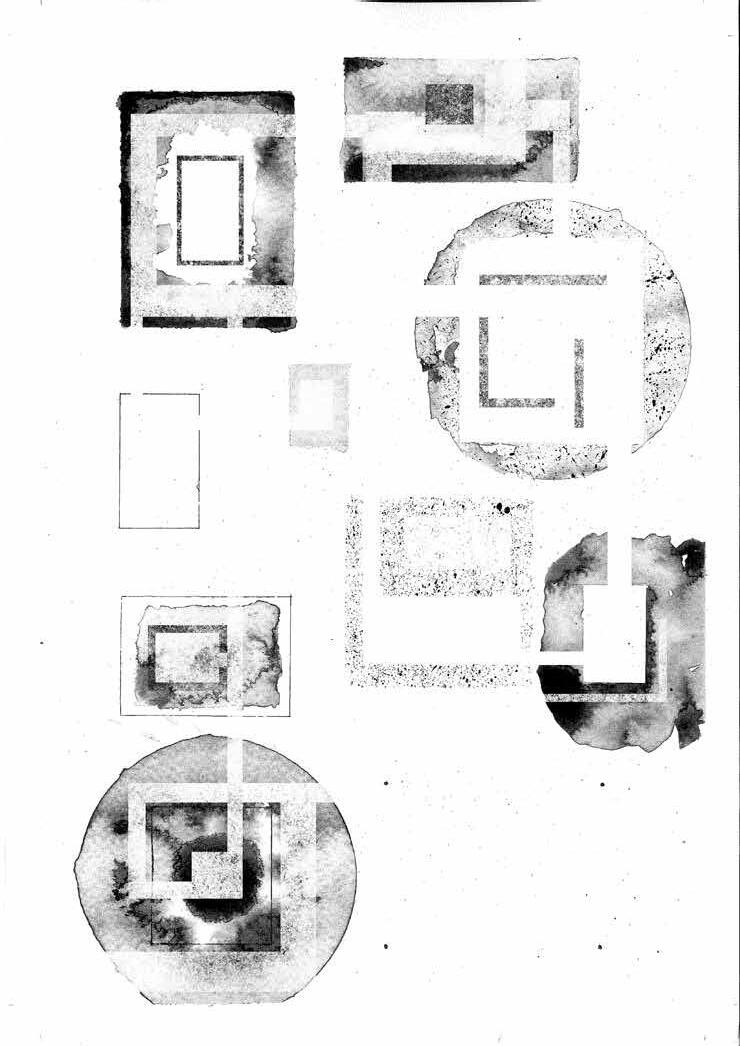
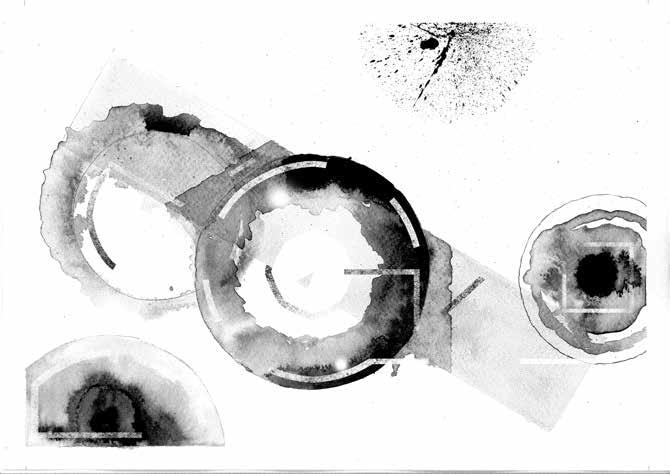
A limit can be defined as a real or imaginary line that separates two territories. Limits are usually associated to the physical element, something that we can perceive through our senses. Culturally, limits can be understood through three elements: transparency, grouping and compartmentalizing, and geometric transformation.
Transparency can be interpreted as an element that can break limits by creating links between different spaces.
Fig.1 Compartmentalization Chinese Ink on Cardboard
Various ways of grouping and compartmentalization of nonhierarchical spaces.
Geometric transformations can establish equivalences between different geometric figures and can generate similar experiences and sensations with different shapes.
The existence of connections does not mean the suppression of limits. Sometimes the opposite is true; that is to say, the clarity of the boundary of the power and qualifies these connections. “To construct emptiness is to leave free space for the individual to make it his own as he lives in it”
Fig.2 Compartmentalization
Chinese Ink on Cardboard
Fig. 3 Compartmentalization
Chinese Ink on Cardboard
Publications
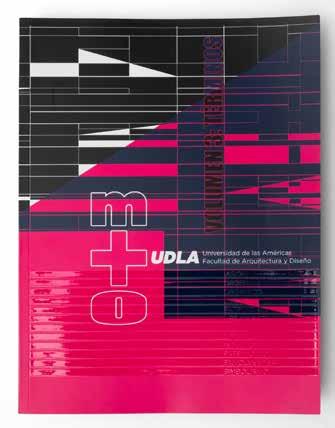
Magazine Plot 2018 – 2025
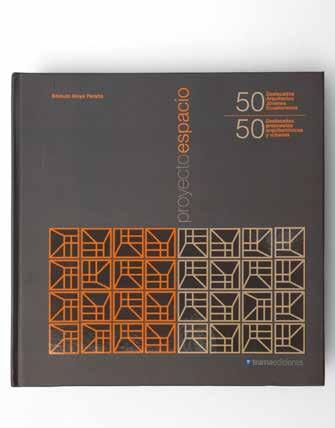
SPACE PROJECT
50 Outstanding Young Ecuadorian architects | 50 Outstanding architectural and urban proposals
Quito - Ecuador | 2022
Second Dissemination of the Dissertation: El Batan Cultural Center of Contemporary Art project.
TRAMA 166 MAGAZINE
Publication in Trama 166 Magazine + dossier
Quito - Ecuador | 2021
First Dissemination of the Dissertation: El Batan Cultural Center of Contemporary Art project.
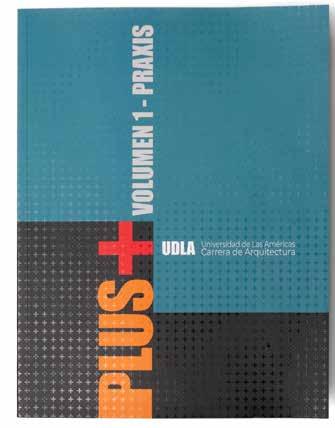
TRAMA 154 MAGAZINE
Publication in the Trama 154 Magazine: Brick Architecture + Plus magazine +: Praxis
Quito - Ecuador | 2019
Fedimetal Contest with the Los Yaltes
Research Center & Lodge Project
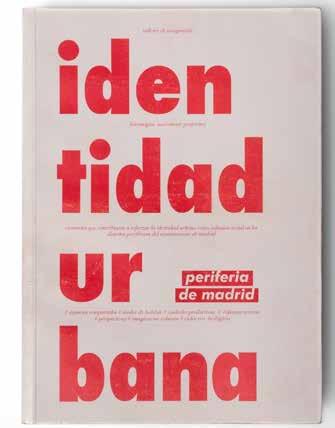
URBAN IDENTITY BOOK
Publication in Urban Identity Book. Madrid Periphery
Madrid - Spain | 2018
Second best project (Urbanarchitectural) in the category of Urban Imaginaries, with the project Musical Memory of the Carabanchel Neighborhood.
Link / 01 - Axonometric View
Link / 02 - Cunstruction Detaol
DESIGN EDUCATES AWARDS 2025
Gold Prize in Architectural Design Project CORA
Barcelona - España | 2025
Personal journey
Photography exploration
CAMARA: Lumix GX85
EDTION: Lightroom
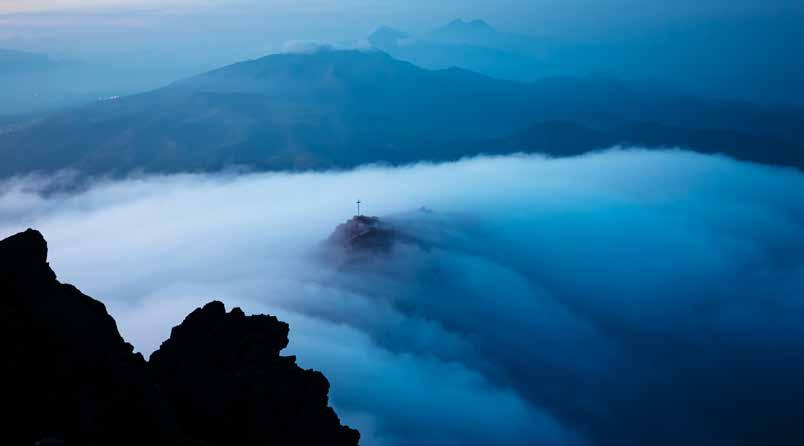
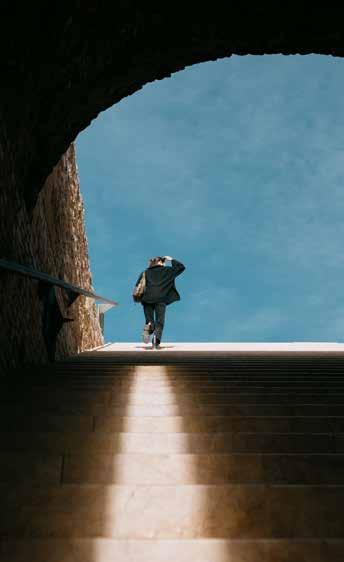
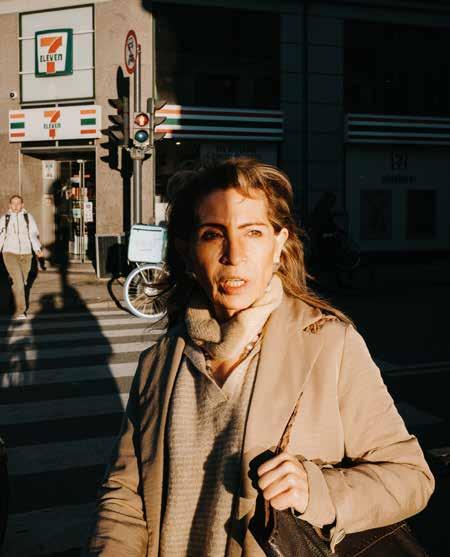
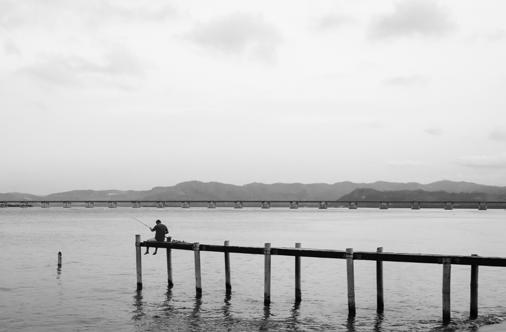
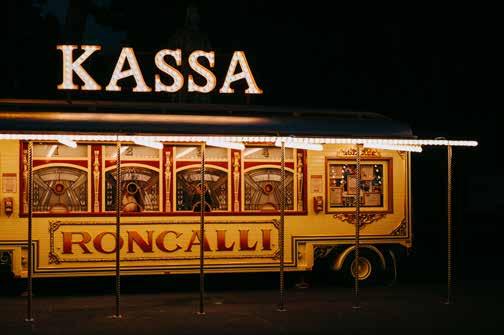
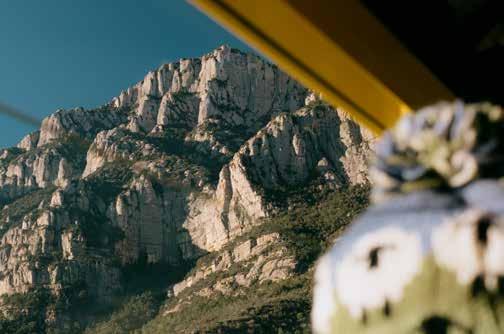
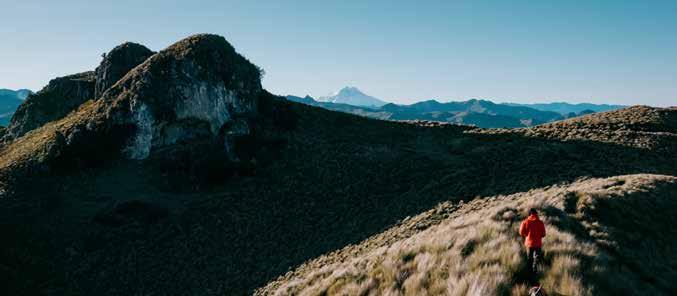
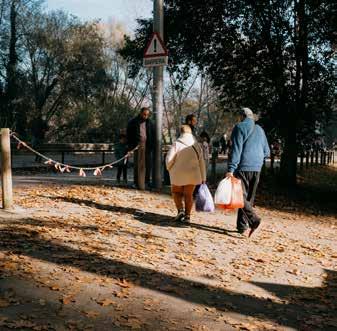
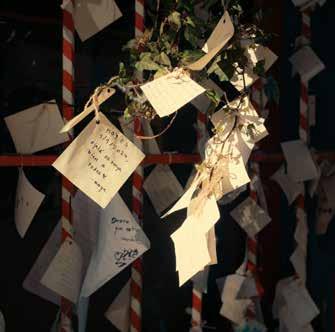
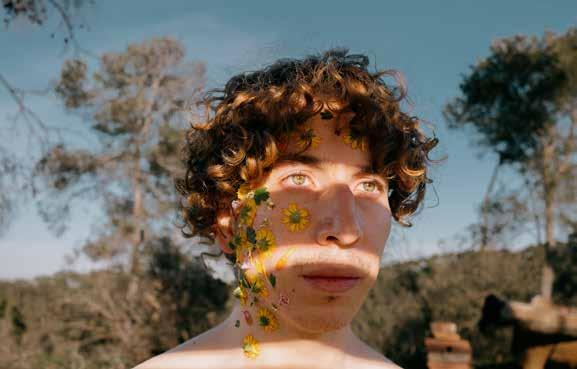
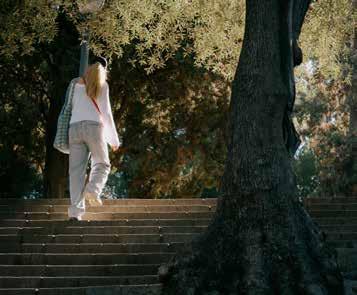
Behind every work of art there is a reflection of someone’s vision, no matter how spontaneous, absurd, irrelevant or magnificent it may be. In whatever you create and do there is always a reflection of yourself.
This brief sample of photographs reflects my exploration of the small world that surrounds me. These capture my emotions, thoughts, and reflections, through a series of portraits, landscapes, and objects. These also reflect a response towards my constant search to help lift others out of their daily struggles and offer comfort, awareness, excitement, inspiration, direction, or joy, through photography.