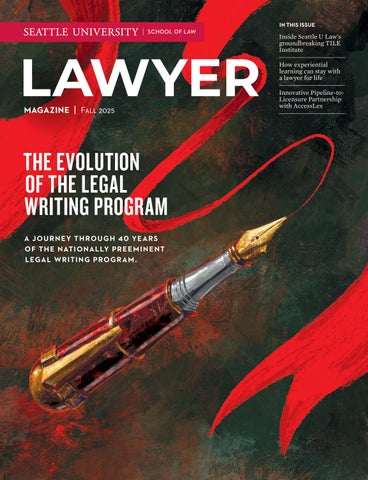

THE EVOLUTION OF THE LEGAL WRITING PROGRAM
A JOURNEY THROUGH 40 YEARS OF THE NATIONALLY PREEMINENT LEGAL WRITING PROGRAM.
BACK TO OUR ROOTS
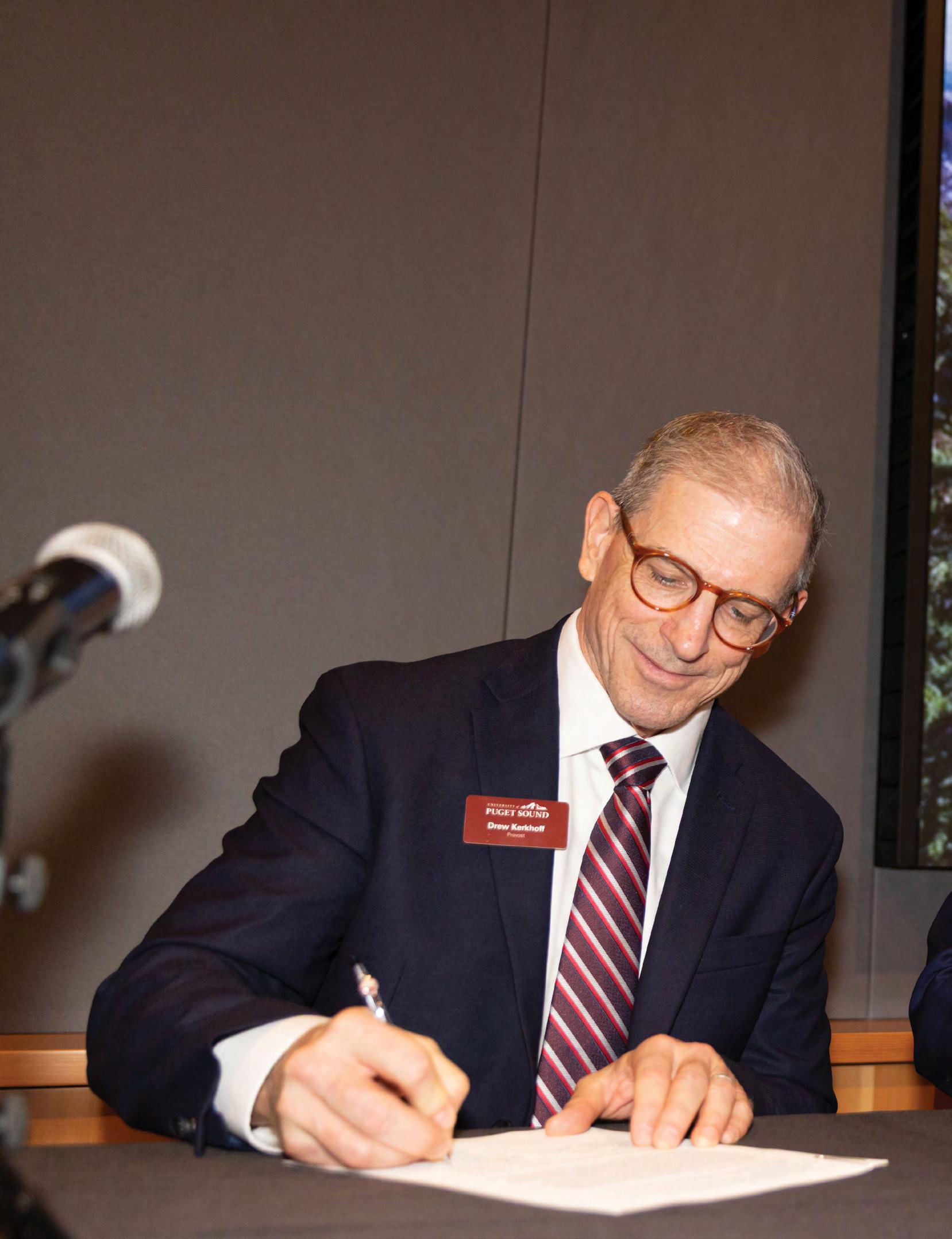
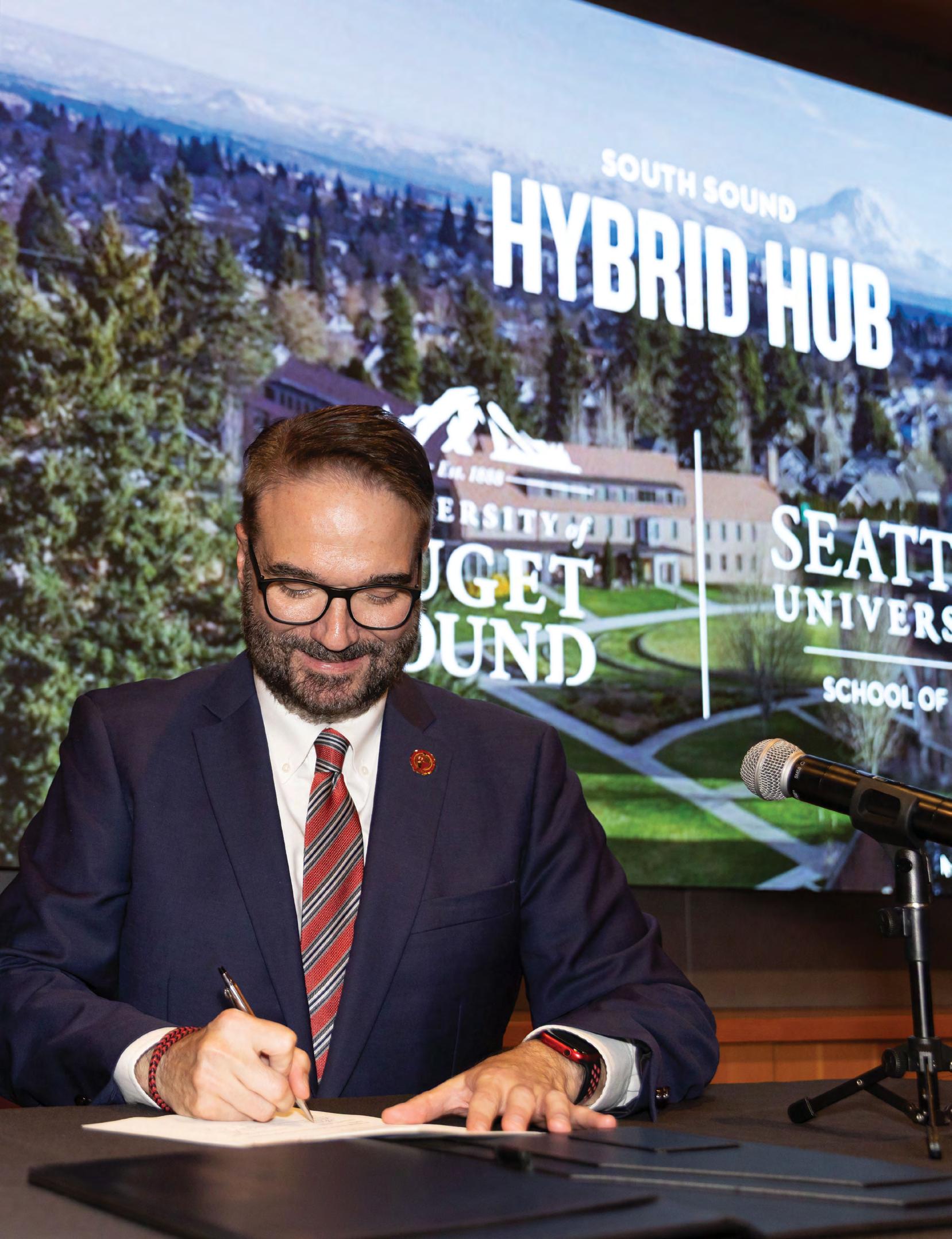
Seattle University School of Law celebrated its partnership with the University of Puget Sound as the newest South Sound Hybrid Hub location in September. The partnership will provide significant in-person and virtual instruction, programming, advising, networking, employment, and experiential learning opportunities and resources for Puget Sound graduate students through Seattle U Law’s pathbreaking Flex JD hybrid-online degree program. Dean Anthony E. Varona (right) is pictured signing a memorandum of understanding at the event with University of Puget Sound Provost Andrew Kerkhoff.
DEAN'S PERSPECTIVE
As autumn returns to our campus, I am grateful to reflect on an extraordinary year at Seattle University School of Law. Together, we have advanced our mission of justice, expanded opportunities for our students, and strengthened our impact in the legal profession.
This fall, we welcomed the JD Class of 2028, the most academically gifted in our history, who join our law school from exceptionally diverse backgrounds with record-setting credentials. Their arrival affirms our trajectory as a law school of choice for talented students who are eager to make a difference.
We also celebrated national recognition that speaks volumes about the values our community embodies. National Jurist ranked Seattle U Law #7 nationally for overall public service law, #7 nationally for public interest law, with a #1 ranking for overall public service law in the Pacific Northwest. This honor reflects what we have long known: our graduates lead in public interest law, government service, and advocacy for those most in need.
Demonstrating the remarkable breadth and strength of our curriculum, National Jurist also very recently again named us one of the top most innovative law schools in the nation, with top grades for business and tax law.
Our faculty continue to bring distinction through scholarship and leadership. This academic year, we welcomed nine outstanding new professors, one of the largest new faculty cohorts in recent memory. Their arrival strengthens our intellectual community and enhances the experience of every student. Faculty members also earned national recognition, such as Distinguished Professor Angela Harris, who was invited
to the Vatican to contribute to global conversations on climate justice.
Students are likewise achieving remarkable success while displaying their commitment to social justice. Once again this year, two of our students earned the prestigious Justice John Paul Stevens Fellowship, joining more than 150 fellows nationwide in pursuing public interest summer work. We also honored 42 graduating students who collectively contributed more than 6,500 hours of pro bono service, exemplifying the Jesuit mission of serving those most marginalized.
Our alumni remain a source of pride and inspiration. The Class of 2024 achieved a record 92% employment rate within 10 months of graduation, our highest ever, greatly surpassing the national average. And across the profession, alumni continue to distinguish themselves as leaders in public service, private practice, and community engagement.
In October, we were thrilled to announce our new pipeline-to-licensure partnership with AccessLex, which attracted very positive national media attention. This partnership combines a very generous grant to underwrite our pipeline efforts in Central Washington’s legal desert with innovative academic success resources for all of our students while they are in law school and comprehensive bar success resources to help our graduates achieve licensure soon after graduation.
Looking ahead, we are preparing to host the Fifth National People of Color Legal Scholarship Conference in spring 2027, a prestigious gathering that convenes only once every 8 to 10 years. Hosting this event underscores our growing role as a national convener on issues of justice, equity, and law.
As always, I invite you to stay connected, to share your accomplishments with us, and to return often to Sullivan Hall. Together, we continue to build a law school that not only prepares excellent lawyers but also advances justice in profound and lasting ways.
With gratitude and excitement for the future,

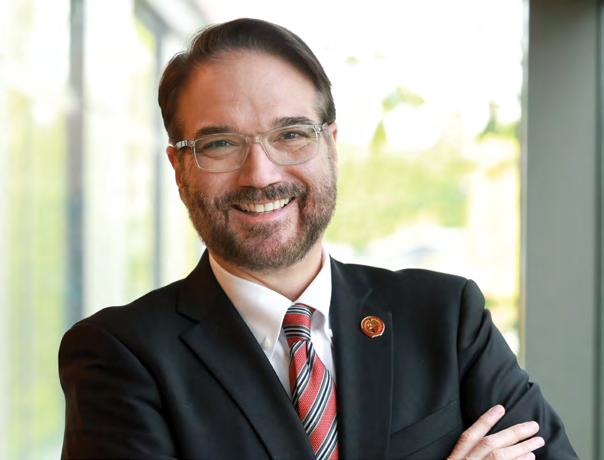
Anthony E. Varona Dean and Professor of Law
LAWYER
A MAGAZINE OF SEATTLE UNIVERSITY SCHOOL OF LAW / FALL 2025
Nicole Jennings EDITOR/WRITER
Neil Griffith DESIGNER
Alicia Kan
ASSISTANT DEAN FOR EXTERNAL AFFAIRS
DEAN’S EXECUTIVE CABINET
Anthony E. Varona DEAN AND PROFESSOR OF LAW
Steven W. Bender
ASSOCIATE DEAN FOR PLANNING AND STRATEGIC INITIATIVES AND PROFESSOR OF LAW
John Eason VICE DEAN FOR ACADEMIC AFFAIRS AND PROFESSOR OF LAW
Seth Katsuya Endo VICE DEAN FOR INTELLECTUAL LIFE AND PROFESSOR OF LAW
Kristin DiBiase
ASSOCIATE DEAN FOR STUDENT LIFE, DIVERSITY, AND INCLUSION
Matt Etter
ASSISTANT DEAN FOR THE CENTER FOR PROFESSIONAL DEVELOPMENT
Erin Fullner
ASSOCIATE DEAN FOR STUDENT DEVELOPMENT
Gerald Heppler
ASSISTANT DEAN OF ADMISSION
Paul Holland
ASSOCIATE DEAN FOR EXPERIENTIAL LEARNING AND ASSOCIATE PROFESSOR OF LAW
Jeffrey Minneti
ASSISTANT DEAN FOR ACADEMIC EXCELLENCE AND BAR SUCCESS AND ASSOCIATE PROFESSOR OF LAW
Russell Powell
ASSOCIATE DEAN OF GRADUATE STUDIES AND INTERNATIONAL PROGRAMS, SJD PROGRAM FACULTY DIRECTOR, AND FATHER JOHN TOPEL ENDOWED SCHOLAR IN CATHOLIC SOCIAL THOUGHT AND JUSTICE
Feven Teklu
ASSISTANT DEAN FOR DEVELOPMENT AND ALUMNI RELATIONS
Colin Watrin
ASSISTANT DEAN FOR ADMINISTRATION AND CHIEF OF STAFF




Program's past, present, and
the Legal Writing Program grew from humble beginnings to become one of the most celebrated programs in the nation.
THE BRIEFCASE
SEATTLE U LAW’S CIVIL RIGHTS CENTER PUSHES BACK ON EXECUTIVE ABUSE OF POWER
The Center for Civil Rights and Critical Justice at Seattle University School of Law filed amicus briefs supporting court challenges to the constitutionality of Trump administration executive actions targeting birthright citizenship and several law firms.
“The Center for Civil Rights and Critical Justice is dedicated to challenging abuses of power that violate the Constitution and that are aimed at oppressing and marginalizing people and communities who have historically lacked political power,” said Center Co-Directors Melissa Lee and Jessica Levin, who are both professors of law.
In April, the Center, along with the Asian American Legal Defense and Education Fund (AALDEF) and the Fred T. Korematsu Center for Law and Equality at the University of California Irvine School of Law, filed an amicus brief in a lawsuit, brought by Washington Attorney General Nick Brown and the attorneys general of Arizona, Illinois, and Oregon, challenging the Executive Order on Birthright Citizenship issued by
President Donald Trump. The Center and its co-counsel were joined by an additional 82 interested parties, including nonprofit and grassroots organizations and race and law centers.
The brief, filed in the United States Court of Appeals for the Ninth Circuit, reminds the court of the country's problematic history of revoking citizenship status based on race or national origin, warns the court about the potential for this executive order to be used retroactively, and highlights the lived experience of individuals who know what it’s like to grow up without status. The brief argues, “Once that threshold constitutional foundation of birthright citizenship is eliminated, it is all too easy to imagine the government taking the next step and trying to strip citizenship retroactively from those who were born on U.S. soil before February 19, 2025.”
The Center partnered with the Korematsu Center and two law professors to represent a group of 16 interested organizations
SEATTLE U LAW TO HOST PRESTIGIOUS NATIONAL LEGAL SCHOLARSHIP CONFERENCE
Seattle University School of Law has been selected to host a prestigious national conference focused on legal and policy matters affecting communities of color that takes place just once every eight to 10 years.
The Fifth National People of Color Legal Scholarship Conference (NPOC27) will be held in March of 2027, and will feature distinguished speakers, plenary sessions, works-in-progress workshops, and informal incubator sessions to discuss research, writing, and pedagogy.
Jeffrey Omari, who joined Seattle U Law’s faculty this year, will co-chair the conference with Access to Justice Institute Director Lily Su.
“It serves as a form of unity for scholars of color and our allies in the legal academy,” Omari said of the event, though he noted that the conference will be open to all legal scholars, regardless of race or ethnicity.
“As we look ahead to NPOC 2027, we’re excited to spotlight impactful research that supports the growing population of first-generation law students,” Su said.
The previous conference took place in 2019 at American University Washington College of Law in Washington, D.C., drawing 600 participants from around the nation and several foreign countries. That conference was chaired by Seattle U Law Dean Anthony E. Varona, then vice dean at American’s law
comprised of labor unions, civil rights organizations, and additional centers on race and the law to file an amicus brief in the case brought by Perkins Coie challenging President Trump’s executive order targeting the law firm.
Their brief focuses on protections under the First Amendment to engage in litigation against government action. The brief points to similar efforts in the past, including southern states' attempts to interfere with school desegregation efforts, arguing that "the [executive orders] mirror earlier, unconstitutional attempts by governments to suppress disfavored legal arguments by targeting the lawyers who made them." The brief also sounds a “cautionary note about the government’s casual and unsupported invocation of national security to justify the substance of the executive orders."
The Center and its partners also filed their brief in similar cases brought by two other law firms, Jenner & Block and WilmerHale.
school. Given this experience, Varona spearheaded the effort to bring the conference to Seattle.
“Seattle U Law is proud to host this conference,” Varona said. “Throughout its history, our law school has been at the forefront of using the law to fight for access to justice and civil rights for marginalized communities. We look forward to being in community with legal scholars from around the country who share these values.”
Omari said that so far, numerous prospective attendees around the country have expressed their enthusiasm.
“It's going to be amazing to have a conference of this scale at Seattle University,” Omari said. “There seems to be a lot of excitement and energy surrounding the conference, even though it is two years out. I’m looking forward to being amongst colleagues and building this type of community.”
TWO SEATTLE U LAW STUDENTS CHOSEN AS JUSTICE JOHN PAUL STEVENS FELLOWS

Two Seattle University School of Law students earned coveted 2025 Justice John Paul Stevens Fellowships for their academic accomplishments and passion for public interest law.
Annabel Hueske ’27 and Marcella Weiss ’27 are two of more than 150 fellows chosen from 38 law schools around the country. Created more than 25 years ago in honor of the late U.S. Supreme Court Associate Justice John Paul Stevens, the fellowship program provides grants to participating law schools to support students working in unpaid public interest summer internships
at nonprofit organizations and government agencies. This is the law school’s fourth year of participation in the program.
Seattle University President Eduardo Peñalver, who is also a law school faculty member, and Seattle U Law Professor Andrew Siegel both clerked for Stevens from 2000 to 2001.
“The Stevens Fellowship Program is a fitting tribute to a justice who had a passion for fairness and who honored the efforts of lawyers to advance that value. This year’s Stevens Fellows from Seattle University embody the justice’s values,” Peñalver said. “He would be proud to be associated with the work they performed with the fellowship that bears his name. And so are we.”
Hueske worked as a legal intern at Northwest Justice Project (NJP), Washington’s largest publicly funded legal aid program, which provides cost-free legal
assistance and representation to thousands of low-income people in the areas of family safety and security, housing preservation, protection of income, health care, education, and other basic needs.
“The most important way to make sure the law is functioning as it should is if everyone has access to it,” Hueske said. “Working at NJP helps create a more equitable system because we don’t prioritize people’s access based on their financial means.”
Weiss spent her summer as a legal intern with the Unemployment Law Project (ULP), which advocates for Washington workers, helping them advance their economic security during periods of unemployment, and pursues legislative, regulatory, and policy changes to hold government agencies and employers accountable.
“I’m extremely grateful and excited to have had the opportunity to engage in such hands-on work with ULP this summer,” Weiss said. “I’d heard so many amazing and positive things about ULP, the work they do, and the people who make up the organization, and as I began working there, I found this to be entirely true.”
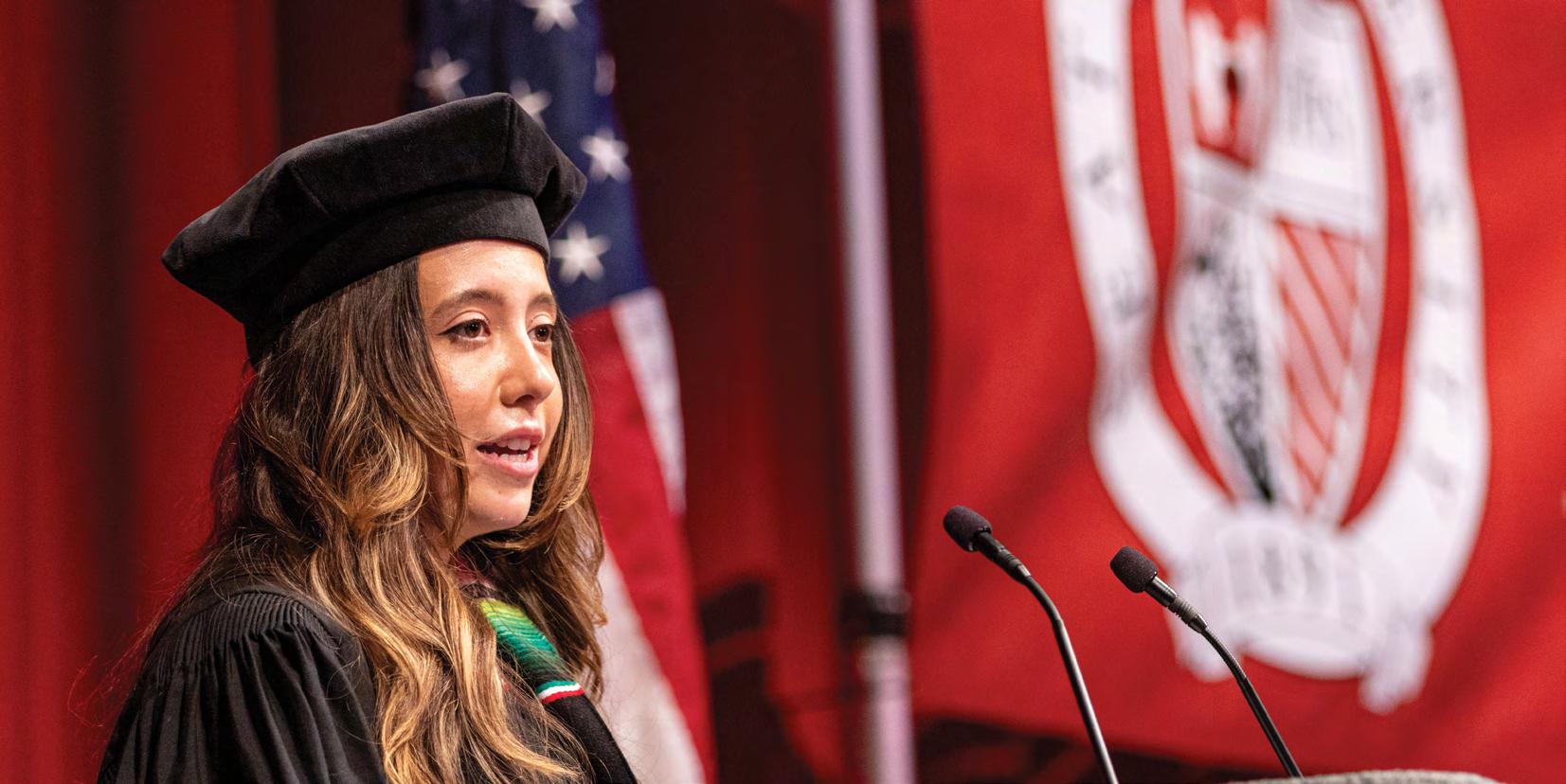
CONGRATULATIONS TO THE CLASS OF 2025
During May Commencement, nearly 200 excited graduates received their hard-earned JD, LLM, and MLS degrees in front of a packed Marion Oliver McCaw Hall filled with jubilant family and friends.
More Commencement photos: Flickr.com/photos/sulaw
Annabel Hueske ’27 (left) and Marcella Weiss ’27 were named 2025 Justice John Paul Stevens Fellows.
THE BRIEFCASE
CLASS OF 2028 THE MOST ACADEMICALLY
ACCOMPLISHED
YET
The most academically gifted class on record took their seats in the classrooms of Sullivan Hall during the last week of August.
The new Seattle University School of Law class boasts a median LSAT score of 159 and a median GPA of 3.59, the highest of any incoming cohort to date.
“Each successive entering class over the last several years has broken various records, and this year’s newest students are no exception in adding excellence to excellence,” said Seattle U Law Dean Anthony E. Varona. “They comprise record-breaking cohorts across all degree programs.”
The new group is also exceptionally diverse. Nearly 40% of the class comprises students of color, up four percentage points from last year. Female students make up 58%, and 4% identify as non-binary. The
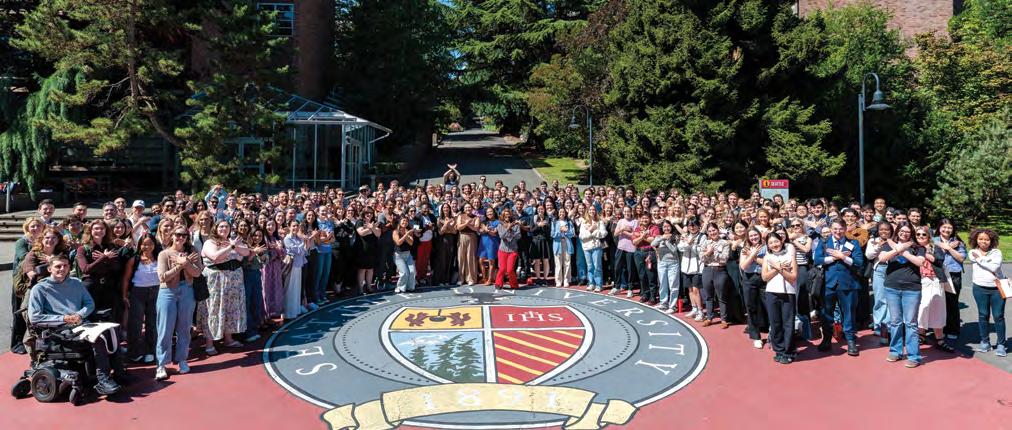
LGBTQ+ community is represented in 29% of the class.
More than a quarter of students are the first in their families to go to college, and 6% have served in the military. The average age of the Class of 2028 student is 28.
While 69% of students will be used to the misty weather, as they hail from Washington, 31% come to Seattle U Law from other parts of the country.
The students attended 93 different colleges and universities for their
ALUMNA’S MENTORSHIP HONORED AT TILE ANNUAL CELEBRATION
At Seattle University School of Law’s third annual Technology, Innovation Law, and Ethics (TILE) Institute’s Annual Celebration of Alumni in September, Microsoft Director of Compliance and Responsible AI Catherine Romero ’96, who works on Microsoft’s philanthropic AI for Good team, received the 2025 TILE Alumni Award for her mentorship of law students.
Romero, whom Dean Anthony E. Varona called “a shining example of how our alumni truly are leaders serving justice,” co-founded the Hispanic National Bar Association’s (HNBA) Intellectual Property Law Institute (IPLI), an intellectual property and tech law immersion program for law students, and actively mentors many Hispanic law students and lawyers.
“I love that [the Alumni Award] is focused on service and making the world a better place,” Romero said. “That was really instilled in me when I went to this law school, and I don’t know if I would have [founded the IPLI] without those values instilled in me.”
undergraduate years, including New York University Tisch School of the Arts, George Washington University, Brigham Young University, Brandeis University in Massachusetts, Oberlin College in Ohio, and, right here at home, Seattle University, Cornish College of the Arts, and the University of Washington.
Those who worked in between their undergraduate education and law school were in a variety of fields, from health care to law enforcement to collegiate athletics.
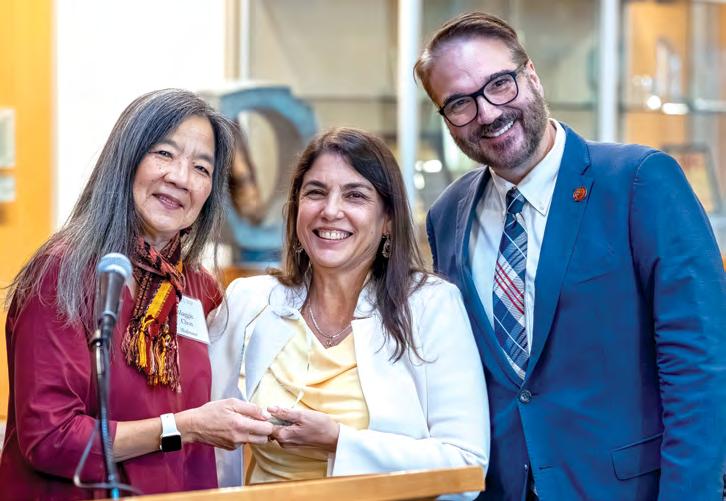
Technology, Innovation Law, and Ethics (TILE) Institute Faculty Director and Professor Margaret Chon, TILE Alumni Award recipient Catherine Romero '96, and Dean Anthony E. Varona at the TILE Annual Celebration of Alumni in September.
Romero said she was inspired to start the program because of the disproportionately low numbers of Latino/a lawyers in the U.S.
“I wanted to build a family,” Romero said. “I wanted a place where the students could go and have a safe space to talk to each other, to lean on each other.”
Each year, the IPLI selects up to 30 scholars from law schools across the country to spend a week in Washington, D.C., where they participate in substantive educational programming, hands-on practical experiences, writing and interviewing workshops, mentoring and networking opportunities, and visits to U.S. government institutions.
The incoming JD, LLM, MLS, and SJD students show their Redhawk pride during Orientation Week.
SEATTLE U LAW RANKED IN TOP 10 NATIONALLY FOR PUBLIC SERVICE, PUBLIC INTEREST LAW
The National Jurist named Seattle University School of Law as one of the top 10 law schools nationally in its “Best Law Schools for Public Service” rankings.
The national publication’s rankings, published in the fall 2025 issue, designate Seattle U Law:
LAW SCHOOL CONVENES NATIONAL RAPID RESPONSE WEBINAR ON BIRTHRIGHT CITIZENSHIP CASE

On the Monday after the U.S. Supreme Court released its decision in Trump v. CASA, Inc. in late June, Seattle University School of Law hosted its Third Annual Supreme Court Rapid Response webinar with celebrated experts in law and history from around the nation.
In the case, the Trump administration challenged injunctions filed by federal district judges against the birthright citizenship executive order, issued by the president in January, which would remove the 14th Amendment’s guarantee of citizenship based on being born in the U.S.
“The 14th Amendment guarantees citizenship to all persons born or naturalized in the United States … The Trump administration has challenged that with a bold executive order that claims the authority to redefine birthright citizenship and claims the authority in favor of a narrower understanding of birthright citizenship that is counter to what was, up until moments ago, pretty much a cross-ideological consensus,” said Seattle U Law Professor Andrew Siegel, who organized and led the webinar for a third consecutive year, in his introduction.
The Supreme Court did not directly decide on whether or not birthright citizenship would stay in place, but it did vote 6-3 along ideological lines to limit the power of federal courts to rule against executive actions such as this one.
"We are thrilled but not surprised by this important distinction. Seattle U Law graduates have long distinguished themselves in government service, the judiciary, public interest, criminal law, legal and higher education, and other public service roles," said Dean Anthony E. Varona. "Our shared Jesuit, Catholic mission exhorts us to use our professional skills to improve the lives of the less fortunate and change the world for the better."
These distinctions are complemented by two other National Jurist honors: An “A” grade for Seattle U Law in its Business Law Honor Roll, which recognizes strong business law programs at top law schools nationwide, and its inclusion in the magazine’s Most Innovative Law Schools article.
More than 200 participants from across the U.S. attended the webinar, which examined both the decision to curb injunctions from federal judges and the illegality of potentially ending birthright citizenship.
The first panel, moderated by Seattle U Law Professor Erin Carr, was titled, “What Trump v. CASA Holds and What It Means for Future Litigation Challenging Potentially Illegal Government Conduct.” Speakers discussed the future of federal judges’ ability to check the powers of the executive branch.
Siegel moderated the second panel, “What Comes Next in the Birthright Citizenship Cases and in Other Legal Challenges to the Trump Administration’s Actions,” which looked at the future of birthright citizenship and discussed the possible consequences for the next generation of children if this guarantee is removed.
Seattle U Law has posted a full recording of the webinar on its YouTube channel.
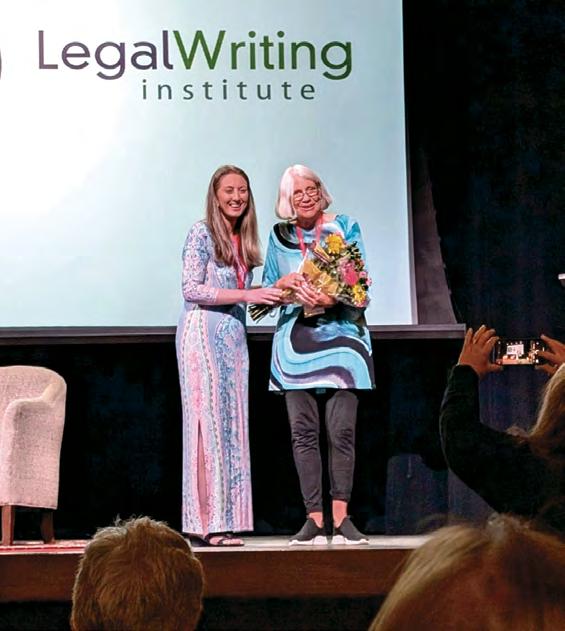
The Legal Writing Institute (LWI) has renamed a prestigious teaching award for Professor Emerita Laurel Oates ’78 to honor her extraordinary contributions in elevating the status of legal writing as a discipline. Among her most significant achievements is co-founding the LWI 40 years ago.
The idea to recognize Oates’ long career and legacy with the Laurel Oates Teaching Award renaming came from another Seattle
EMPLOYMENT RATE
LEGAL WRITING INSTITUTE AWARD TO BE RENAMED FOR SEATTLE U LAW PROFESSOR
U Law professor and active LWI member, Professor Emerit Janet K.G. Dickson ’88. Previously Oates’ student and teaching assistant, Dickson explained that the award will go to a legal writing professor who teaches “in the spirit of Oates.”
Oates initially studied to become an elementary school math and science teacher, earning a B.A. in psychology with honors from Western Washington University, before she obtained a law degree and began her legal writing teaching career at the University of Puget Sound (UPS) School of Law (which later became Seattle U Law). In addition to her 45 years at Seattle U Law, Oates has guest-taught English legal writing in more than a dozen countries around the world, including Uganda, South Africa, Afghanistan, China, and India.
“My first love has always been teaching at Seattle U Law and helping our Legal Writing Program develop,” Oates said. “I’ve had a wonderful career — and I’ve graded thousands of papers!”
Legal writing programs at law schools across the country were able to develop into
AMONG SEATTLE U
LAW GRADS HITS RECORD LEVEL
A record 92% of Seattle University School of Law’s Class of 2024 students found employment in the 10-month period after graduation, according to data recently released by the American Bar Association. It is the highest rate ever in the history of the law school, and represents a 4% increase compared to last year, when Seattle U Law was named a national Employment Leader by the National Jurist’s preLaw Magazine.
“This phenomenal rate shows that we as a law school are doing an excellent job of educating and preparing our students to become practice ready lawyers immediately after graduation,” said Dean Anthony E. Varona. “Both in the region and around the country, they are serving as leaders in
law and outstanding members of the legal profession.”
The percentage of employed graduates holding roles that require bar exam passage also jumped significantly, by 9 percentage points, to 87%. Another 9% hold JD-advantage jobs, positions in which it is helpful to have the knowledge and expertise gained in law school. Seattle U Law came in ahead of the national average for the overall employment rate (which includes graduates in bar-required and JD-advantage jobs).
Staff at the law school’s Center for Professional Development (CPD) gather this information by personally contacting each of the nearly 200 graduates in the months following Commencement, which
a special discipline thanks in large part to Oates’ work as a co-founder of the LWI, which began as an 80-person legal writing conference in 1984. Since then, it has expanded into a nonprofit comprising more than 2,500 legal writing educators around the world.
Due to the efforts of Oates and others, Seattle U Law’s Legal Writing Program has become one of the most celebrated in the country, demonstrated by its consistently high national ranking by U.S. News and World Report. Students often cite the program, ranked sixth nationwide, as a top reason for choosing the law school.
“The courage that Oates showed to change the status of legal writing, combined with all those things that have happened over the years — that’s such a great role model for those of us who followed them,” Dickson said.
“I am immensely grateful and humbled to have this award carry my namesake,” Oates said. “It is truly the biggest honor.”
is a time-consuming process. Matt Etter, assistant dean for CPD, noted that he and his colleagues started enlisting faculty to help much earlier this past year, as they tend to stay in contact with their former students.
Seattle U Law’s preLaw ranking in fall 2024 — placing in the top 25 law schools nationwide for employment — came after the school’s employment rate grew nearly 10% between the periods of 2017-2019 and 2021- 2023.
CPD has implemented several new events for students and recent graduates in the past few years that have contributed to rising employment rates, especially during the busy legal hiring seasons of fall and winter, so that students can meet with potential employers after receiving their summer bar results.
Professor Emerita Laurel Oates (right) receiving flowers during the 2024 Biennial Conference at Indiana University.
For more on the Legal Writing Program, see pg. 18.
SCHOOL OF LAW AND ACCESSLEX FORGE INNOVATIVE PIPELINE-TOLICENSURE PARTNERSHIP

Seattle University School of Law has announced a groundbreaking, one-of-akind partnership with AccessLex Institute® to address the legal desert crisis in Central Washington and support the academic and bar success of all students at the law school.
Through a new generous five-year grant from AccessLex, the law school will launch the Central Washington Hybrid Hub Pipeline Initiative, working out of Heritage University on the Yakama Nation Reservation.
This new pipeline-to-licensure collaboration with AccessLex follows the success of Seattle U Law’s earlier Heritage PLUS Pipeline Program, which opened pathways for students from historically underrepresented backgrounds to pursue law degrees and was supported by LSAC. This partnership will extend and expand upon that mission to create a sustainable pipeline from Central Washington’s colleges and residents to law school and, ultimately, back into (or never leaving) their local communities.
BUILDING A PATHWAY TO JUSTICE IN CENTRAL WASHINGTON
Central Washington, including the Yakima Valley, faces a critical shortage of attorneys, particularly in public-interest and criminal justice roles. The region’s rural character, limited higher-education institutions, and absence of a brick-andmortar law school have contributed to what experts call a “legal desert”.
Seattle U Law’s new program seeks to change that by cultivating legal talent from within Central Washington itself. By providing aspiring lawyers with academic support, mentorship, and exposure to the legal profession, the initiative helps them see a law degree not only as an attainable
goal but also as a means to serve their home communities.
“The extraordinary generosity of AccessLex will help us turbocharge our Central Washington Hybrid Hub pipeline efforts, providing access to affordable legal education to promising students already in Central Washington who, ultimately, will become licensed attorneys helping bridge the justice gap in that sprawling legal desert,” said Anthony E. Varona, Dean of the Seattle University School of Law.
“By investing in Central Washington students, we’re creating a virtuous cycle where local residents become local lawyers who serve local needs,” Varona said. “We thank AccessLex Institute for appreciating the value and potential in our hybrid hub and pipeline initiatives. It was clear to us from the start that our access-driven missions were very much aligned.”
A HYBRID MODEL ROOTED IN PLACE AND PURPOSE
Through the partnership, students in Seattle U Law’s Flex JD Program will be able to complete their legal education while remaining in Central Washington, accessing the resources of Seattle U Law’s Central Washington Hybrid Hub at Heritage University. There, they can access physical study spaces, library resources, intellectual life and alumni networking events, clinical or externship opportunities, and adjuncttaught law courses originating from Central Washington, all without leaving their families, jobs, or communities.
Participants in the pipeline initiative will receive mentorship, guidance on admissions and financial planning, LSAT preparation, and professional-identity formation activities. Each year, the program will host
intensive weekend sessions and extended workshops to build confidence, community, and the skills required for law-school admission and success.
STRENGTHENING DIVERSITY AND ACCESS TO JUSTICE
The partnership is also expected to increase diversity within Washington’s legal profession. With Yakima County’s population being more than 50 percent Latinx and 7 percent Native American, the program naturally fosters racial, ethnic, and geographic diversity among future law students and practitioners.
EMPOWERING FUTURE LEGAL LEADERS THROUGH COMPREHENSIVE SUPPORT
A key component of this partnership will bring Helix Bar Review by AccessLex® directly into the Seattle U Law curriculum, giving every JD student access to exceptional, results-oriented bar preparation. By connecting innovative academic success resources during law school with exceptional comprehensive post-grad bar exam support, this initiative is designed to help graduates pass the bar on their first attempt.
“This first of its kind collaboration with Seattle U Law embodies the AccessLex Institute commitment to supporting aspiring lawyers across the full spectrum from admission to law school to admission to practice,” stated Christopher P. Chapman, President and CEO of AccessLex Institute. “And it further highlights our shared commitment with Seattle U Law to increase access to legal education for historically underrepresented communities.”
EXPERIENCE MATTERS
How Clinics and Externships
Shape Careers and Lives
BY PAUL HOLLAND
I still remember the name of my first client, a teenager I represented as a clinic student in my third year of law school. Sure, I wish that it was not possible to find that name on Westlaw in the caption to our ultimately unsuccessful appeal, but I know she received as committed, if not necessarily as skillful, advocacy as any youth in the five boroughs of New York City in the early ’90s. Brooklyn Family Court was about as generic as any government building could be, and yet, 35 years later, I can instantly put myself back there, with a full multi-sensory memory of the moment, mid-trial, when I felt the confirming flash that I could do — was already actually doing — the lawyer’s work I had long seen myself doing, standing up in court for clients, especially teenage clients, whom others were ready to write off. At that moment, I expected to be doing that work for many years to come, and I have been fortunate to be able to do so. What I did not foresee back then was that, more often than not, I’d be standing alongside a clinical student of my own, much as my professor had done for me at that first trial. When I was in school, I never considered
a career as a law professor, and, truthfully, was still not considering it even after that career had formally begun. However, I had the chance to learn about clinical law teaching from some of the best to ever do it. From these mentors and colleagues, I absorbed essential lessons about productive patience and generative inquiry, and, most of all, how to help students channel nervous energy into purposeful — and often even thrilling — action. And now I find myself with more years as a clinical teacher than I had been alive at the time that I walked into court for that long-ago first trial.
I am honored to serve as the law school’s inaugural associate dean for Experiential Learning, a role that encompasses the clinical program, including externships, legal writing, and our array of simulation courses. It’s a well-founded cliché that law school introduces you to a bunch of words that no one uses anywhere else, and “experiential” is not a word one typically hears in daily conversation. It’s a tricky word, easily misread as “experimental.” This is not the worst outcome, as they share lots of associations — uncertainty, sparks of
illumination, an Edisonian commitment to deriving value from any outcome, desired or otherwise. But where the misreading becomes problematic is with the sense of being “provisional,” like a beta test or a pilot episode of a TV show. Maybe we’ll keep going, maybe we won’t. Experiential legal education is nothing like that, not anymore. It is not a frill; it’s a required part of every law student’s experience. And soon, it will offer an alternative path to a license to practice law in Washington. Building on a long tradition of excellence in this field, my colleagues and I are preparing to meet that moment, ensuring that all our students have a rich panoply of options, whether or not they take this path, and preparing all of them to serve their clients and communities with commitment, competence, and creativity.
One of the core objectives of any experiential course is that the students will discover and develop adaptability, the ability to read a situation and react, ever mindful of the goal but flexible and creative as to the ways to achieve it. To sustain the vibrant experiential program we have, my faculty colleagues and I have had to do the same.
Paul Holland joined the Seattle University School of Law faculty in 2004 and serves as the school’s inaugural associate dean for experiential learning. He has taught in the Youth Advocacy, Defender, Housing Justice Clinics, as well as courses in Evidence and various lawyering skills. A leader in juvenile justice, Holland is a member of the Washington Council on Public Defense and previously chaired both the state’s Juvenile Justice Advisory Committee and the King County Public Defense Advisory Board. Recognized by the Seattle Clemency Project with its Visionaries Award in 2019, he continues to advocate for clients in clemency and post-conviction proceedings.
For years, the clinical course I taught was called the Youth Advocacy Clinic, and our primary work was providing representation to youths charged in Juvenile Court. As youth offending rates have dramatically and consistently declined over time, and the various system actors have recognized the social benefit of treating these cases in the community rather than the courtroom, our flow of cases started to run dry. (Great problem, for sure.) At the same time, new avenues for advocacy have opened up for individuals who had been convicted as adults for crimes committed in their youth, so we pivoted. In what we now call the Defender Clinic, students may have one client who is 14 and another who is 40. The core lawyering lessons are the same, but the nature of the lawyer-client interactions and the narrative possibilities for our work have become even richer through this diversification of our practice.
Another thing we ask of students in experiential courses is that they be willing to stretch, to step fully into a space that is new — and often intimidating — to them. A few years ago, I had to walk my talk on this point. The leadership of the King County Bar Association’s Housing Justice Project (HJP) approached us about introducing a new clinic to represent tenants facing eviction. This was a fantastic opportunity for the school because this work aligned so fully with our mission, and we did not at that time have many civil litigation offerings within the program. The only problem — we did not have a faculty member with civil litigation experience available to lead this course. Rather than let this opportunity wither, I agreed to cross the invisible line between criminal and civil practice, and, working with my HJP colleagues, we have offered the clinic during some of the most eventful years of landlord-tenant law ever. This particular act of stretching paid quick and significant dividends, as it was soon after we launched this new clinic that the Legislature passed a law guaranteeing the right to counsel for indigent tenants, and
several clinic students have moved into positions doing this work after graduation. And, along the way, I learned a few things about practice that criminal defense rarely requires while also finding considerable resonance between the treatment of these clients and those my students and I have been representing throughout my career.
My position as dean enables me to experience — and facilitate — this dynamic process of adaptation and extension through the remarkable work of my colleagues and our organizational partners. For example, amid all of the tumultuous slashing and rending perpetrated by the federal government earlier this year, the

decision to cancel funding for legal services for unaccompanied immigrant children did not get the attention that such a grave and inhumane act deserved. But my experiential learning colleagues, Professors Gillian Dutton and Elizabeth Baldwin, noticed instantly and responded inventively. By summer, they had launched a new model of externship placement, connecting students with trained volunteer lawyers, and together this improvised force for justice got to work, ensuring that young people who had fled violence, fear, and abuse in their home countries had advocates to fight for their right to remain safe in this one.
At the same time that the school was developing this emergency response to an intentionally fomented crisis, we were also
preparing to launch the Tribal Practice Clinic, a joint venture with Skagit Legal Aid, through which our students would help address the longstanding need for legal services for members of the Swinomish and Makah tribal communities. I could just as easily and proudly be telling the stories of so many of the other components of the law school’s experiential learning program, but these two snapshots represent so much that is central to the program’s power: a readiness to respond under exigency; a strategic and multi-focal view of the justice gap; an affinity for and facility with collaboration; and the capacity to provide opportunities for our students to learn in role, under the pressure of responsibility but with the structure and supported needed to excel.
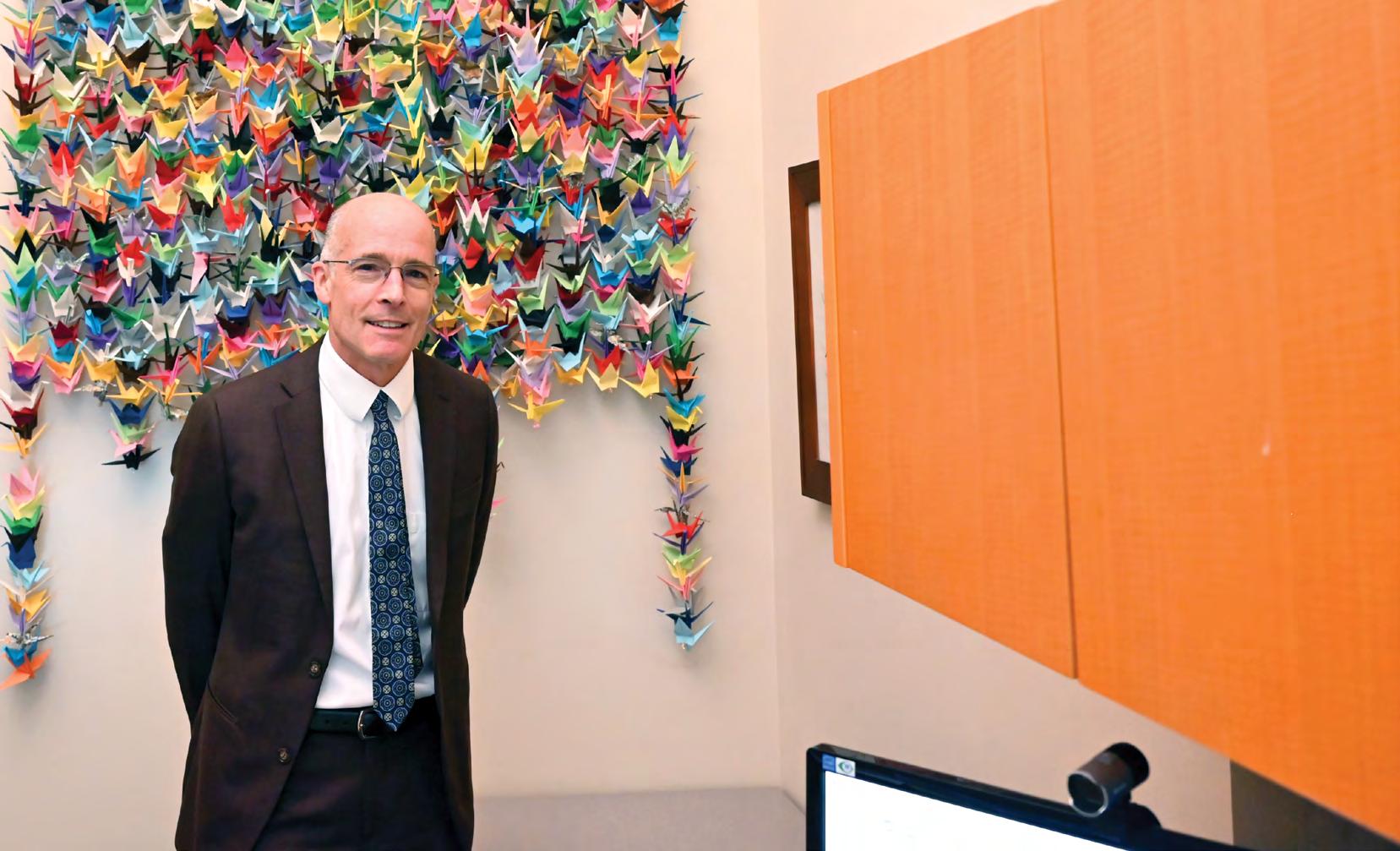
I have never even tried to fool myself into thinking that first client trusted me when we first met at court in the fall of 1990. I have always understood that she likely accepted her student lawyer because she did not believe she had a real say in the matter. I was what the system had to offer her, and she would just go with it. I hope — and do believe — that her sense of things likely changed as we worked together and she saw what I was doing on her behalf. Law students, of course, do get to make a real choice when they decide to enroll in an experiential course. But, like a lawyer meeting a client for the first time, a clinical teacher cannot offer a student a clear picture of the road ahead. They must be willing to commit to the experience, and with it the chance at transformation and understanding that is at the heart of all meaningful education. One wall in my office is now adorned with a dazzling flock of origami cranes given to me by a student who found in her clinic experience a moment of recognition or discovery like the one I was fortunate to have in my own clinic experience. Whether seen as dangling or soaring, in their diversity and vitality, they are perfect avatars of what I hope our students feel in their time in the clinic.
TILE by TILE:
The TILE Institute blends the latest technology with ethical considerations.
BY TINA POTTERF

When law Professor Maggie Chon started teaching at Seattle University School of Law in 1996, the internet was still young and an utterance about “artificial intelligence” would likely cause puzzled expressions or thoughts of something straight out of science fiction. It’s no surprise then that there were few law school courses focused on the role of technology, let alone AI, in law practice.
But how times have changed. Today, nearly three decades later, Chon leads the Technology, Innovation Law, & Ethics (TILE) Institute, a comprehensive program that reflects both how far the legal profession has come and where it’s headed. TILE’s focus includes laws regulating innovation and technology, coupled with ethics, values, and social justice.
“When I arrived, the law school didn’t offer courses like this,” Chon recalled. “Today, we have multiple faculty members, a wide range of courses, and a growing community of students, alumni, and practitioners who are part of TILE.”
An intellectual property scholar and teacher, Chon has been gradually building TILE’s foundation for years — the program’s roots go back nearly three decades — along with many of her colleagues, from deans to faculty. A rapidly expanding piece of this foundation is AI. The law school recently

added four AI-focused courses, and professors are weaving AI into nearly every corner of the curriculum.
“It’s infiltrating everything — from the way survivors of domestic violence tell their stories to how law firms manage their practices,” Chon said. “The majority of lawyers don’t have time to learn AI within their professional work. That’s where we come in. At the very least, our current students ought to graduate with some understanding of its enormous implications for law and legal practice.”
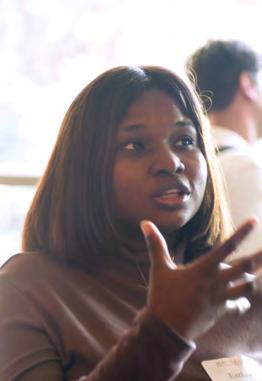
A strong focus on innovation and technology — and AI — brought LLM graduate Esther Arokun ’24 to the law school. Originally from Nigeria, where she worked in a more traditional legal practice, over time she became more aware of privacy law and wanted to know more about how technology intersects with privacy and data.
“Transformative” is how Arokun described the TILE Institute. “It’s not just about coursework — it’s about exposure. I’ve had the chance to engage with practitioners, learn from faculty with industry experience, and participate in research that mirrors the complexities of current legal practice,” she said.
Professionally, Arokun is a litigator focused on business law, torts, and insurance defense. Recently, a paper she wrote
examining the intersection of privacy law and AI was published in the Seattle Journal of Technology, Environmental & Innovation Law.
Through the TILE Institute, Arokun found community, mentorship and realworld engagement. It also showed the evolving nature of law, particularly around technology and AI, and their impact on businesses.
“TILE is more than an academic program — it’s a launchpad. It equips you with legal knowledge, but also with the networks, experiences, and skills that prepare you as a lawyer," she said.
TILE offers certificate tracks for JD students, advanced training for LLM students, and opportunities for MLS students who want to focus on the ethical dimensions of technology without becoming practicing lawyers.
Beyond coursework, TILE emphasizes hands-on learning. For example, a trademark clinic gives students opportunities to represent real clients before the U.S. Patent and Trademark Office, while externships within the rich regional tech hub surrounding Seattle give students exposure to realworld issues like data privacy, intellectual property, and AI governance.
What makes TILE different, Chon said, is right in the name. “We put the ‘E’ in
ethics for a reason. Very few technology law programs address anything related to ethics and justice," she said. "But because we’re a Jesuit, Catholic institution, we’re committed to asking those bigger questions.”
That means grappling with potentially thorny issues on how AI is used — both for good and the questionable. And how do lawyers advise clients when the technology itself is evolving faster than the law?
“(AI) raises questions that aren’t just legal — they’re ethical,” Chon said. “And our students are uniquely prepared to navigate that.” One example of TILE’s collaboration with law students is a recently published symposium on technology addiction in children.
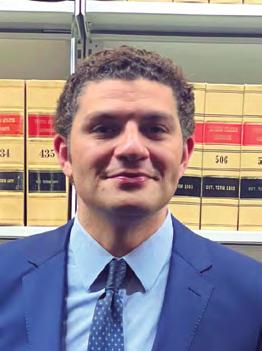
Caitlin Clarke ’25 was introduced to the TILE Institute through Chon’s 1L Civil Procedure course. “She encouraged us to think not just about how the law functions, but also about where it falls short and how it might be improved,” Clarke said. The following year, when Chon was seeking TILE research assistants (RAs), Clarke was eager to work with her again.
As a TILE RA, Clarke served on the Washington State Bar Association’s Legal Technology Taskforce, an experience she called “one of the most educational and rewarding of my law school career.” As an RA, she worked alongside a diverse group of legal professionals focused on developing technology guidance for Washington’s legal community.
The benefits of the TILE Institute are manifold, providing experiences and teachings that will carry over into the present and future Clarke’s professional pursuits.
“TILE gave me the opportunity to explore how law, technology, and innovation intersect in meaningful and practical ways,” Clarke said. “It helped me see how emerging technologies, especially AI, are already impacting the legal profession and access to justice.”
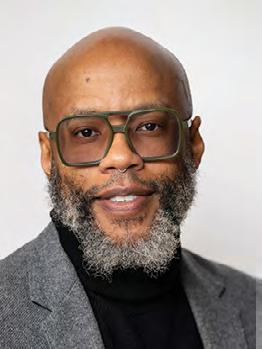
Ibrahim Badawi ’27 is a current SJD candidate specializing in environmental law and sustainability. Badawi came to the law school to pursue advanced studies, taking a sabbatical from his work as a prosecutor,
judge, and most recently, a chief justice at the Ministry of Justice in Egypt. His dissertation focuses on electronic waste and its intersection with environmental law, technology, and policy.
Associate Professor Jeffrey Omari, who teaches courses related to TILE, including Constitutional Law and Survey of the Media Law Landscape, said the program’s focus is especially relevant in these times. “When we think of the scope of TILE — technology, innovation, law and ethics — one could argue that TILE represents one of the primary battlegrounds of democracy,” Omari said. “The salience of TILE is consequential now and will remain so for the years to come.”
Like Omari, Assistant Professor Chryssa Deliganis is part of the TILE Institute, specializing in health law. Health care is among the industries out front when it comes to adopting AI. “From creating chart notes to reading test results to assisting patients in self-diagnosis, AI presents new challenges and opportunities in the provision of health care,” Deliganis said. “The possibilities are boundless, and we here at Seattle U Law are excited to be on at the forefront in preparing students to engage these incredible new tools as they launch valuable careers in health law.”
Assistant Professor Mark Verstraete joined TILE to help in its expansion and lend his expertise in technology law to the Institute. “I’m excited to be at a place emphasizing technology law and making it a core area of teaching,” said Verstraete, whose research focus is at the intersection of technology and ethics. In addition to teaching property law, privacy law, and commercial law, Verstraete plans to organize a junior scholars’ law and tech workshop through TILE.
For Chon, TILE’s impact comes down to equipping students for a legal profession that’s changing before their eyes.
“What TILE does is give you that preparation. We’re helping our students — and the communities they serve — navigate a world where technology, innovation, and ethics are inseparable," she said.

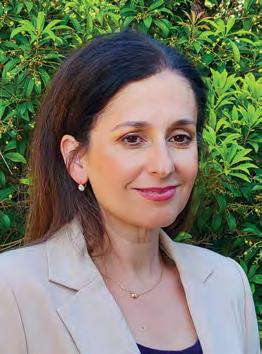

Esther Arokun ’24
Caitlin Clarke ’25
Ibrahim Badawi ’27
Associate Professor Jeffrey Omari
Assistant Professor Chryssa Deliganis
Assistant Professor Mark Verstraete
OUT & ABOUT
Highlights from recent events
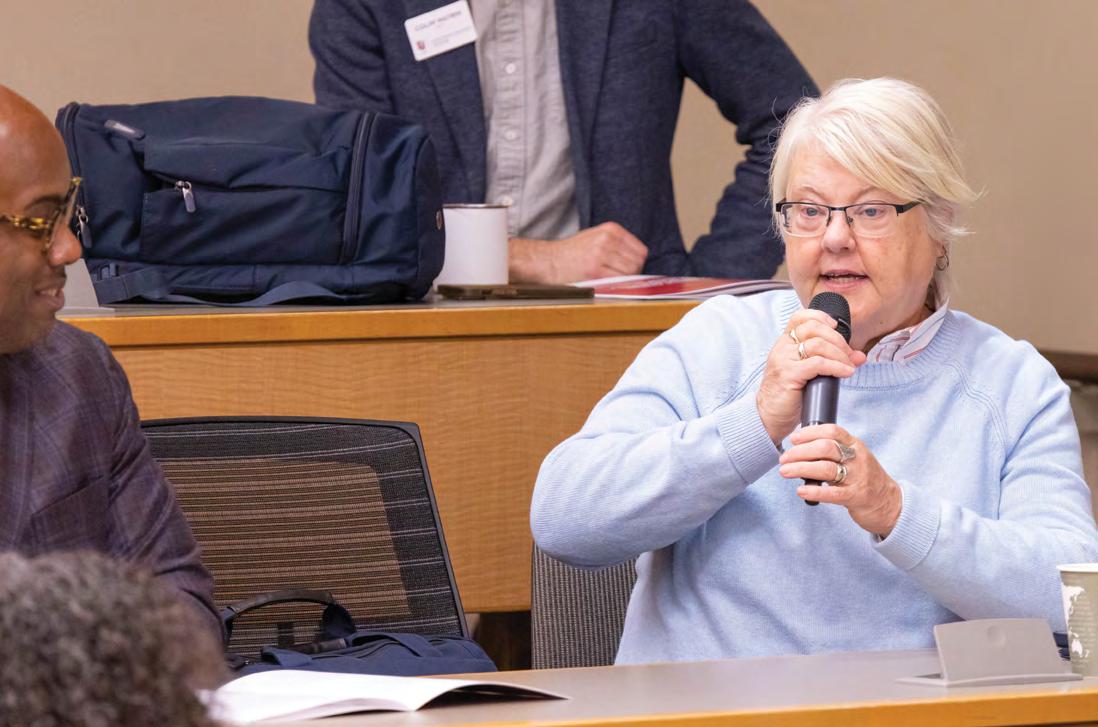
A. Distinguished Professor in Residence and Association of American Law Schools (AALS) Executive Director and CEO Kellye Testy introduces herself during the the 14th Annual Promoting Diversity in Law School Leadership Workshop in September at Sullivan Hall, hosted by Seattle University School of Law in partnership with Villanova University Charles Widger School of Law. This program is open to all and is designed to encourage and support diversity — in the broadest sense — in law school leadership positions, especially deanships. Testy, who previously spent five years as dean of Seattle U Law, later that day co-delivered the keynote address with Law School Admission Council (LSAC) President and CEO Sudha Setty.
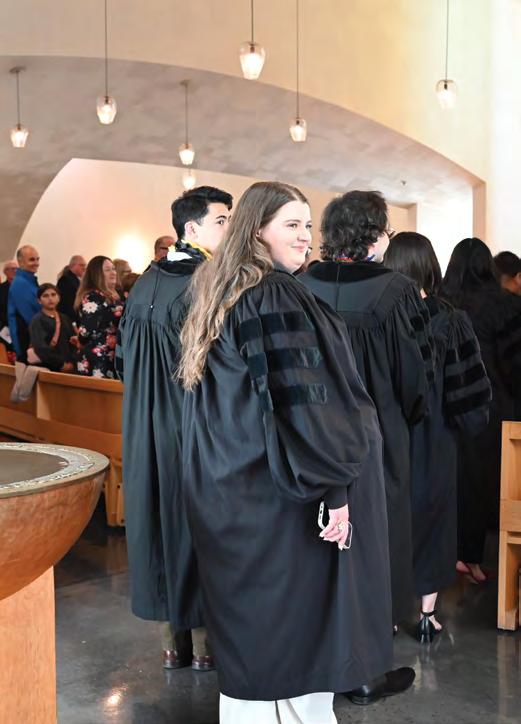
B. On the evening before May Commencement, the law school celebrated a beautiful Baccalaureate Mass in the graduates' honor, followed by a reception at Sullivan Hall. After a procession from the law school to the Chapel of St. Ignatius, Father Lucas Sharma, SJ, the Jesuit advisor to Dean Anthony E. Varona, said Mass. In his homily, he invited the soon-to-be lawyers to follow the example of Jesus by going out in the world to help the oppressed. Several graduates participated in the Mass as lectors, Eucharistic ministers, and gift-bearers.
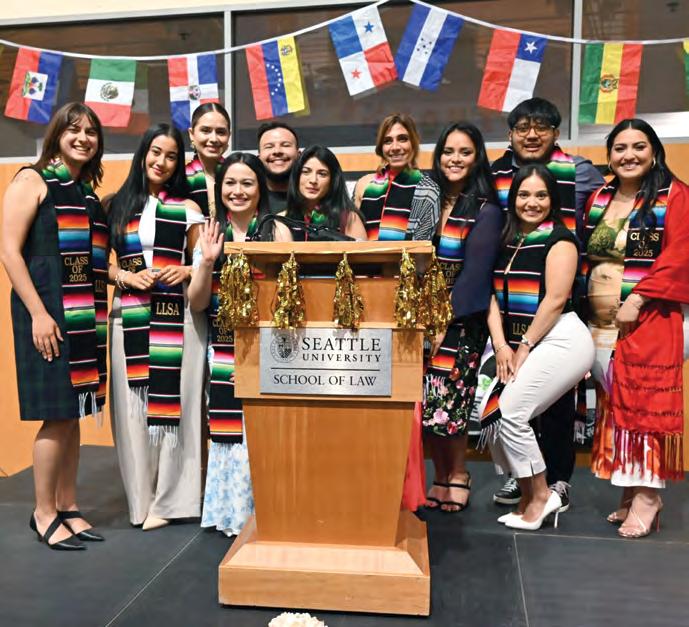
C. The Latinx Law Student Association (LLSA) held a dazzling party in May to celebrate their graduating members. Speakers at the event talked about the importance of paving the way for future students and expressed how wonderful it is to grow the number of Hispanic lawyers, a group that is underrepresented in the nation's legal community.
A B
C D

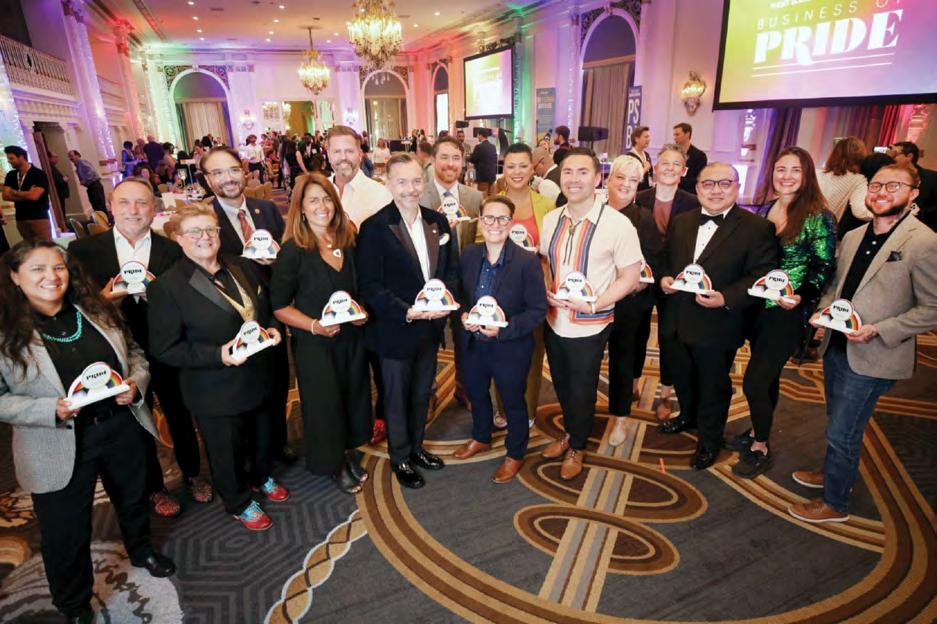
D. Dean Varona (back row, second from left) was honored as one of 15 "Outstanding Voices" for the LGBTQ+ community by the Puget Sound Business Journal for Pride Month in June. The awards recognize leaders who are working to make Seattle’s business community a place where those of all backgrounds and identities can find opportunity and appreciation by launching and supporting small businesses that provide treasured local gathering spaces, influencing statewide policy, providing critical resources to underserved populations, and ensuring historically marginalized communities have a voice in the tech tools of the future.
E. The Asian American, Native Hawaiian, and Pacific Islander Law Students Coalition came together in mid-April to celebrate the graduating members of the Asian Law Students Association, Pacific Islander Law Students Association, Filipino Law Students Association, Korean Law Students Association, and the Middle Eastern and South Asian Law Association. A traditional Chinese Lion Dance, performed by the Mak-Fai Lion Dance Team, kicked off the party.
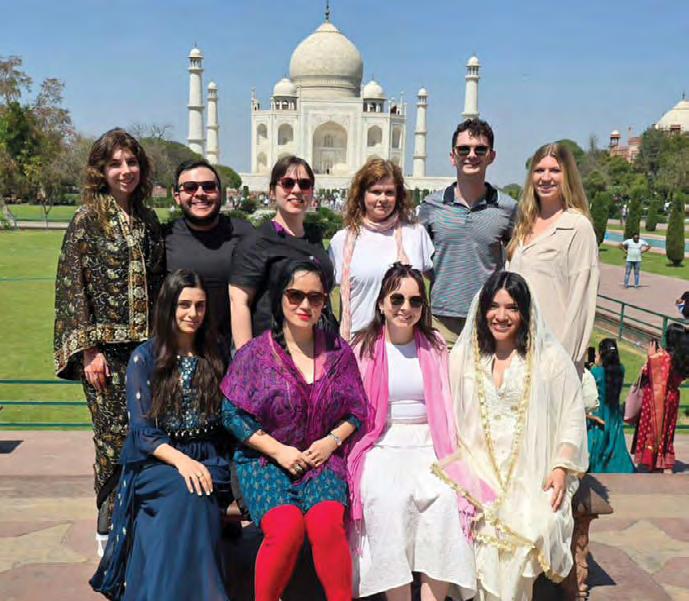
F. A group of Seattle U Law students spent their spring break in and around New Delhi, India, as part of a spring semester course. Taught by Professor LeighAnne Thompson, associate director of the Technology, Innovation Law, and Ethics (TILE) Institute, the course introduced students to a comparative approach to using AI to improve access to justice in both the U.S. and India. The students stayed at our partner institution, Jindal Global Law School, and visited many important sites in Delhi and the surrounding area, including the Taj Mahal, the Indian Supreme Court, and the Indian Constitution Museum at O.P. Jindal Global University.
G. In April, the staff of the 2024-25 Seattle University Law Review commemorated an incredibly successful year at their Annual Alumni Dinner. As Volume 48 Editor-in-Chief Graham Fulton ’25 noted, it was only the second year in history that the journal has published five issues.
E F
THE POWER OF THE PEN
HOW SEATTLE U LAW MADE LEGAL
WRITING A NATIONAL FORCE

THE LEGAL WRITING FIELD HAS GONE THROUGH UPS AND DOWNS OVER THE DECADES, BUT SEATTLE UNIVERSITY SCHOOL OF LAW'S LEGAL WRITING PROGRAM HAS COME OUT STRONGER FOR IT.
BY NICOLE JENNINGS

One of Seattle University School of Law’s most oft-cited highlights is its nationally celebrated Legal Writing Program.
Besides its many merits — from world renowned faculty to courses that teach a bevy of practical legal skills — it is easy to see why the program holds a place of significance in a school of law. As Legal Writing Program Director and Professor Kathryn Naegeli Boling '07 explained, legal writing is one of the most critical components of legal practice.
“Legal writing is legal thinking. It’s about structure and the progression of logic for legal reasoning,” Boling said. “Lawyering is communication, so being able to be clear and achieve what you’re trying to achieve with your communication is absolutely critical. For better or for worse, the perceived quality of your writing becomes your reputation.”
However, the field of legal writing has not always been looked at in such high regard. For the founders of the program, achieving the recognition held today was a herculean effort decades in the making.
BEGINNINGS OF THE PROGRAM
When Professor Emerita and former Legal Writing Program Director Laurel Oates ’78 was a law student in the late 1970s, during the first years of the law school’s existence, there was just one course on legal writing for entering students, taught by a law librarian. When Oates began teaching in 1980, she was one of five recent graduates teaching 90 students each — a hefty load considering the papers that constantly needed to be graded throughout the course.
Upon coming onboard the same year as Oates, then-Dean Fredric Tausend gave her and Professor Emeritus Christopher Rideout a mission of coming up with a new way of teaching legal research and writing. Rideout was not a lawyer, but an English professor who had taught composition. Oates, meanwhile, had trained as an elementary school teacher during her undergraduate studies at Western Washington University.
“Using his composition knowledge and my knowledge of educational theory, we created a new program, a process-based program, where we worked with students to come up with first drafts, revise, and improve them to a final draft,” Oates said.
Rideout joked that he “had to scramble” to learn about the legal world, but noted that his teaching philosophy fit in perfectly with legal writing.
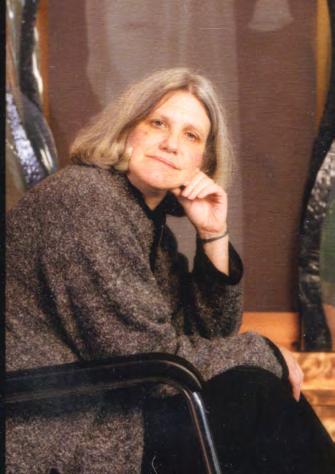
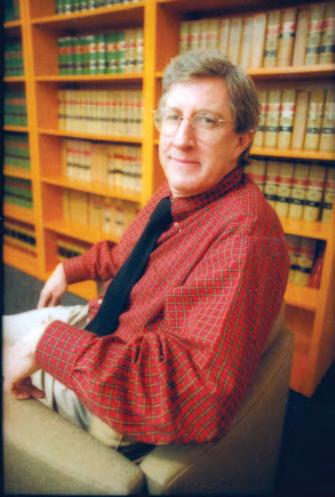
Professors Emeriti Laurel Oates '78 (top) and Chris Rideout from archival photos (2003).

Oates said. “We really believed in teaching decision-making with the students, teaching students about writing for an audience, writing with purpose.”
Assistant Professor of Lawyering Skills Elizabeth Baldwin ’04 fondly remembers taking both Legal Writing I and Legal Writing II with Oates.
“She had this way of diffusing the tension in the classroom with her breezy humor. And with just a few comments on a memo, she could nudge us toward a critical shift in our approach. She was compassionate while maintaining high standards,” Baldwin said. “As a student who came to law school with a teaching background, I had a deep appreciation for what she was able to accomplish with us.”
THE FIGHT FOR RECOGNITION
It may seem unbelievable now given the prestige of the Legal Writing Program, but when legal writing courses first began to be taught in the early 1980s, the subject was nearly universally looked down upon throughout the legal world.
“Historically, law school wanted to make sure it did not become a trade school. It wanted to be more science-like, except your specimens were cases instead of rocks or plants,” Oates explained. “The schools presumed that the students they admitted already knew how to write, but that wasn’t always true.”
their colleagues were not eligible for tenure, were given comparatively low salaries, and were not even referred to as professors, but instructors.
“My mother was very concerned about my decision-making as far as no job security and no real salary,” Oates laughed.
Dickson recalled that around the country at that time, the legal writing field was referred to as “the pink-collar ghetto” because it was mostly made up of women who came from two-income households and could afford to take a lower-paying job.
“We weren’t even invited to the faculty meetings, let alone given a voice or a vote,” Dickson said. “And early on, if we went into the faculty lounge, we’d get ‘why are you here’ looks.”
Because they were on contracts — first one-year, then three-year, then five-year contracts — the stress of having to regularly re-apply for their own jobs constantly hung over the legal writing professors’ heads.
“You would think, ‘Am I even going to have a job next year?’” Dickson said.
The uncertainty of where a person would be year after year also meant that legal writing professors were not as able to focus on scholarship.
“If you were going to teach legal writing then, you had to feel really good about who you were and why you were doing this. You weren’t going to get any ‘attaboys’ from anyone else,” Dickson said. “But we had this wonderful camaraderie within the Legal Writing Program. We took care of each other
then the Legal Writing Institute (LWI), which today is a nonprofit comprising more than 2,500 legal writing educators around the world that publishes a journal and a magazine, and holds national and regional conferences.
Through the LWI, professors were able to band together and help one another work toward better recognition at their schools. Hosting the LWI conferences on campus gave Seattle U Law’s Legal Writing Program national prominence, which helped the legal writing faculty build their reputation.
“Laurel had leadership at the school and in the academy in general,” Dickson said. “She was part of that core group that just kept pushing things forward, in a way that was subtle and patient.”
An even bigger turning point came when U.S. News and World Report began ranking legal writing programs in 2007, giving Seattle U Law the #1 spot in the nation for several years in a row.
“Things didn’t progress very quickly, but we did get longer-term status and our pay gradually increased,” Oates said. “The longer we were able to keep legal writing faculty from leaving, our faculty got to know us as people and realize that we were smart and hardworking. They saw that students were doing better writing than they had before.”
After more than 20 years of employment, in the early 2000s, Oates was granted tenure when legal writing faculty were given the ability to apply under certain circumstances.

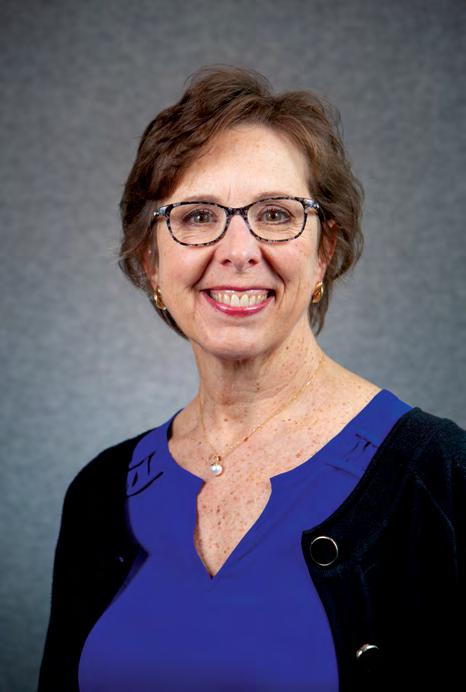
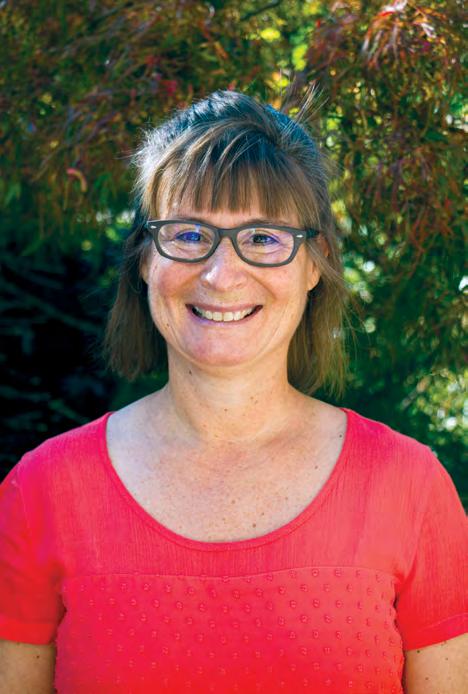
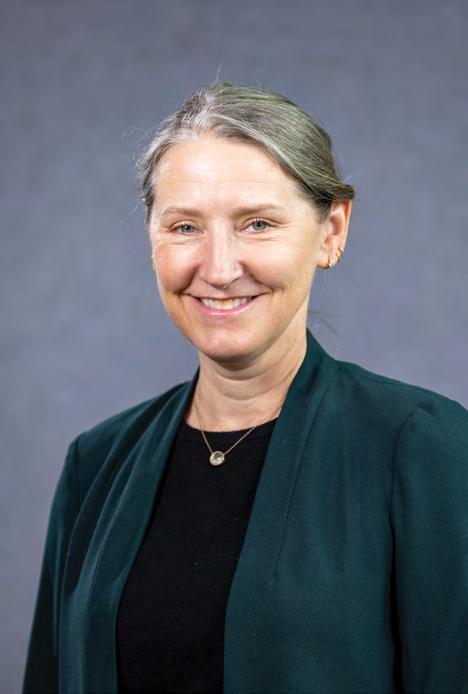
Though it took decades, Professor Emerit and former Legal Writing Program Director Mimi Samuel noted that Seattle U Law was actually one of the first schools to reform its treatment of legal writing professors.
“Some other schools are still fighting a lot of these battles,” she said.
AN IMMERSION IN LEGAL KNOWLEDGE
One element that sets Seattle U Law apart in the realm of legal writing is the amount of real-world experience first-year students gain through what has come to be known as “the collaborative memo.” In the spring semester of their first year, students conduct legal research for a nonprofit, drafting memos that will help actual clients.
“Most of the [other] memo problems we gave were things where we knew the answer, but these collaborative memos put the professors in the place of the partner in the law firm who says to the associate, ‘I need some research on this, here’s the issue,’” Oates said. “I got to learn a whole bunch and work with enriching nonprofits, and it gave students an experience they couldn’t have otherwise.”
Clients who have benefitted from the students’ research, such as two women who
were granted asylum, have spoken before the class to thank the students.
Boling said that the program also took on the responsibility nearly a decade ago of introducing other lawyering skills, such as client interviewing, client counseling, negotiation, fact development, and building a professional identity.
“Our law school recognized a need for those things before the American Bar Association (ABA) required it,” Boling said. “There are a variety of ABA accreditation standards that have changed that match what we’ve been doing. It’s been gratifying to see the ABA value those things.”
"Expanding the scope of ‘legal writing’ to encompass research, client communication, and advocacy enables students to excel from day one in the workplace,” said Graham Fulton ’25, an associate at Foster Garvey. “The habits built in the classroom inspire confidence in one's processes, and the program's pragmatic approach serves as a pillar of a young lawyer's practice.”
Seattle U Law also gives a more thorough legal writing experience than most law schools in that it requires three semesters rather than two.
“We do predictive, objective legal writing for the entire first year and save persuasive writing/oral advocacy for the second year,” Boling said. “Virtually no other program does that, and it’s one of the things I think
is most valuable about our approach. It’s something to be really proud of.”
This means that for one year, students take part in lawyering simulations, such as client interviewing, client counseling, and negotiation, without adding advocacy skills, so that they can look at cases in a neutral way.
“It is really good for students to build the judgment that they need,” Boling said. “This way, they identify arguments that both sides would make. We put a priority on using really realistic simulations ... We don’t do objective legal writing as an academic thought experience; we create simulations of real lawyering experiences.”
“Our school became the national model for legal writing,” Rideout said. “Lots of schools wanted to copy in some fashion what we were doing.”
Mingyue Zhou ’26, who received the 2024-2025 Laurel Currie Oates Scholarship for excelling in her legal writing classes, said that the program has helped her to “gain the confidence to write with clarity and purpose in any professional setting.”
“What makes the Legal Writing Program so valuable is that it shows us what realworld legal writing actually looks like — clear, precise, and persuasive,” she said. “More than that, it gives us countless chances to practice, revise, and sharpen our skills until the process becomes natural.”
Professor Emerit Janet K.G. Dickson '88
Professor Emerit Mimi Samuel
Assistant Professor of Lawyering Skills Elizabeth Baldwin ’04
LOOKING TOWARD THE FUTURE
As Seattle U Law moves into the latter half of the 2020s and beyond, the Legal Writing Program’s major challenge is staffing. The last several years have seen the retirements of many of the program’s founding members, including Oates, Rideout, Professor Emerita Connie Krontz ’89, Professor Emerita Lorraine Bannai, Dickson, and Samuel.
“We’ve had retirements and faced issues, including COVID — it’s fair to say we are in the midst of a rebuilding phase, but we are well on our way,” Samuel said. “We’re getting there. We’ve done some excellent and strategic hiring in the last few years. Change is exciting but hard, and we’re coming out strong.”
As one generation moves on, another steps forward to take the helm. This includes not just Boling, who took over as director last year, but also several new hires, some of whom are themselves graduates of the program, like Baldwin.
“The Seattle U Law Legal Writing Program is a truly innovative force, leading on curriculum design, community engagement, social justice, and legal education in general. Without the legal writing faculty, our discipline would be nowhere near what it is today,” Baldwin said. “I’m thrilled to get to do this work in the place where it all started for me as a legal writer.”
Other new hires join the program from around the nation. Boling noted that the school is hiring into the tenure-track,
attracting people “who want to be writ ing scholarship and focus on teach ing and national conversations through conferences.”
“Being able to hire nationally from experts, really smart, student-focused people has allowed us to keep improving,” Boling said. “We have a framework that’s been working and continues to work, but we’re also able to have a really innovative mindset and approach year to year.”
Having the legitimacy of being seen as a critical area of legal study — and one of the law school’s biggest assets — puts the Legal Writing Program in a much different spot than it was 40 years ago and sets the stage in a promising light for the future.
“We’ve had the space and support of our law school to be able to innovate the program for decades,” Boling said. “When you give legal writing faculty the space, dignity, job security, and the ability to innovate you get brilliant programs that are student-focused, that are law practice-ready-focused.”
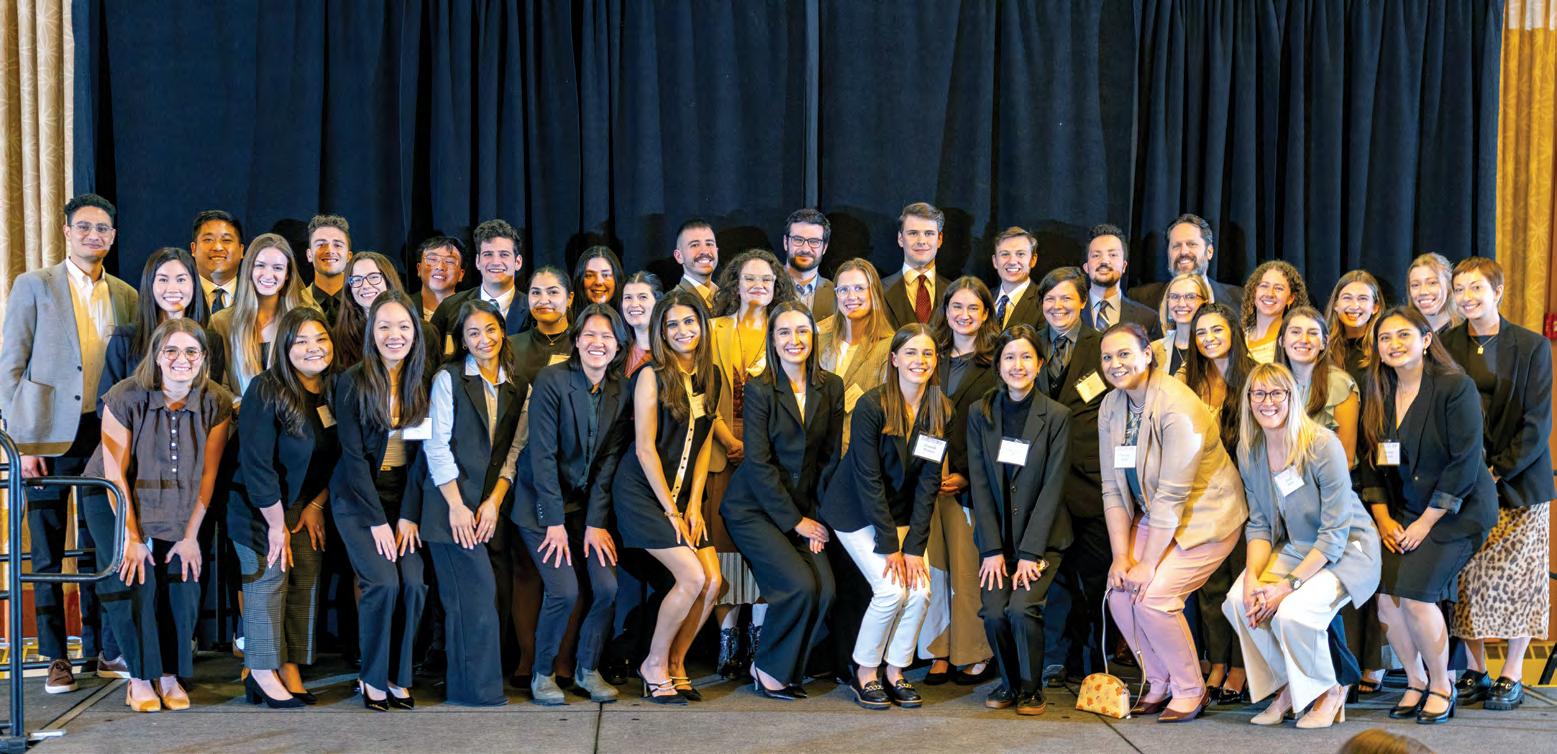
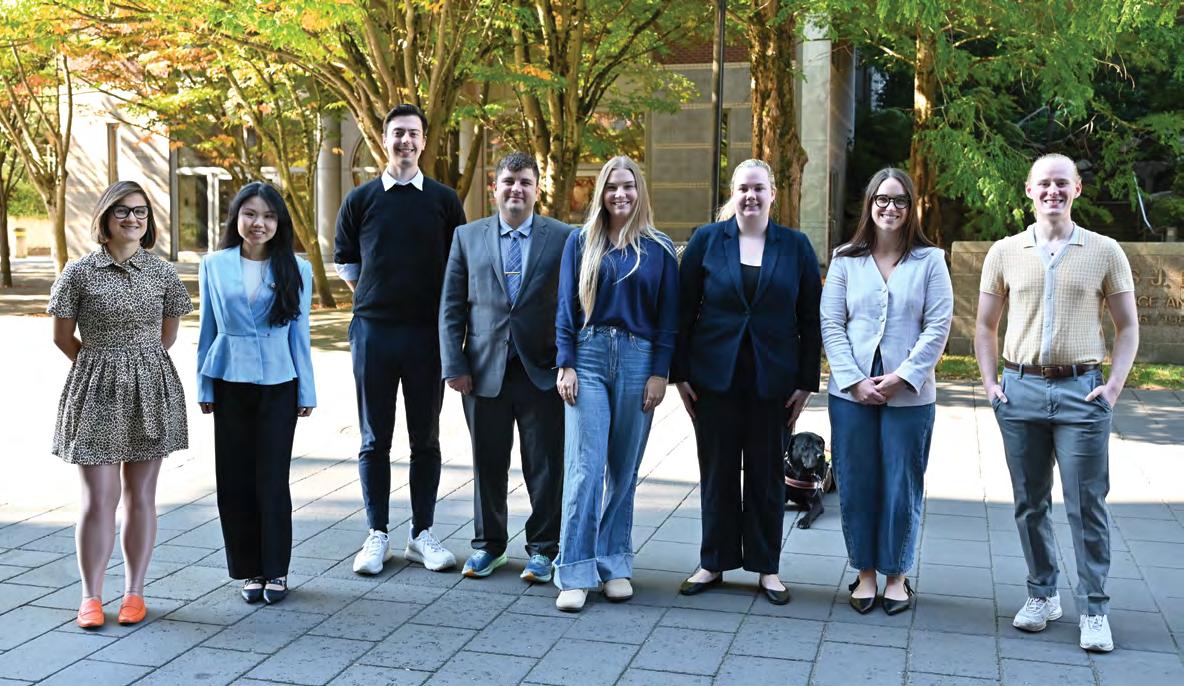
Top: The annual Laurel Currie Oates Scholarship, named in Oates’ honor, recognizes 2Ls who excelled in their first-year legal writing classes. Students are chosen for having the best graded timed memos in their sections at the end of spring semester. From left to right, 2024-25 recipients Mina Head, Mingyue Zhou, Milo Newman, Kiril Stoimenov, Justine Benson, Elora Hancock, Bridget Duven, and Curran Connelly.
Not pictured: Chris Dickerson, Lorraine Emmert, Joelle Fowler, and Kimerly Jackson.

MEET LEGAL WRITING DIRECTOR KATHRYN NAEGELI BOLING '07
MY BACKGROUND
I am a very proud alumna of Seattle U, having graduated with my JD summa cum laude back in 2007. The legal writing curriculum here was phenomenal, and I soaked up every bit of it. I was instantly drawn to the purpose-driven nature of legal writing and found a real thrill in researching and writing about legal arguments that parties might make for specific cases. I was then able to put those skills to work in real cases over 12 years, first as a judicial law clerk at the Washington Court of Appeals, then as a civil defense litigator at the U.S. Department of Justice, and finally in private litigation practice. I saw firsthand how skilled legal research and writing can make a difference to party outcomes, and I also found that my training in those skills at Seattle made my reputation with my colleagues equal to or even superior to peers from much higher-ranked schools.
ON THE HORIZON
There are so many things I’m excited about in this new role!
I’m very excited about the new career faculty we have hired over the last few years – between Michael Blasie’s scholarship about plain language laws, Erin Carr’s passion for supporting students’ professional development, and Elizabeth Baldwin’s deep experience teaching legal reasoning to foreign-trained students, we are building a special group already. There is still work to do to rebuild our career faculty after a wave of retirements by the titans who came
before us, but I’m excited about that as well. It’s a thrill to meet other talented lawyers who are willing to devote their careers to training new law students in the fundamentals of using law in legal practice.
I am also thrilled about our program’s targeted collaborations with legal professionals. Within the law school, our program works closely with our law clinics, externships program, librarians, and career development office to help prepare students for experiential learning. In addition, our first-year course involves collaboration with outside partners each year because we solicit “real” memo assignments that those partners actually need done. Working with partners to identify workable projects each year is one of my favorite things about the job; it is an invaluable bridge between academia and practice for both the students and me. And of course, I love that we work with a small army of legal practitioners each year to judge our students’ appellate oral arguments. While I am not always available to thank these volunteers personally as I would like to, my gratitude is immense! And, none of it would be possible without the efforts of Lori Lamb, our cherished senior faculty assistant for the program.

Finally, I’m excited about changes in legal technology and the bar exam that help us focus our curriculum for today’s students.
With the rise of generative artificial intelligence, it is critical that students not see legal writing as merely a matter of putting words on the page that “look” like legal writing; our classes need to prioritize deeper skills like information literacy (e.g., understanding the significance of different types of legal authorities), critical reading and thinking, and the ability to use facts and law to identify arguments on both sides of an issue. We have always prioritized these skills, but the current technological landscape requires us to re-emphasize them. In this respect, it is gratifying to know that the NextGen bar exam is moving its learning goals closer to what our Legal Writing Program covers. I love how often we hear from legal employers that our student interns are well-prepared for the projects they are given, and we want to keep that up!
BUILDING DIPLOMACY AND DEMOCRACY
Marshall Memorial Fellow Stephanie Nichols ’06 took her lessons from law school around the world.
BY NICOLE JENNINGS
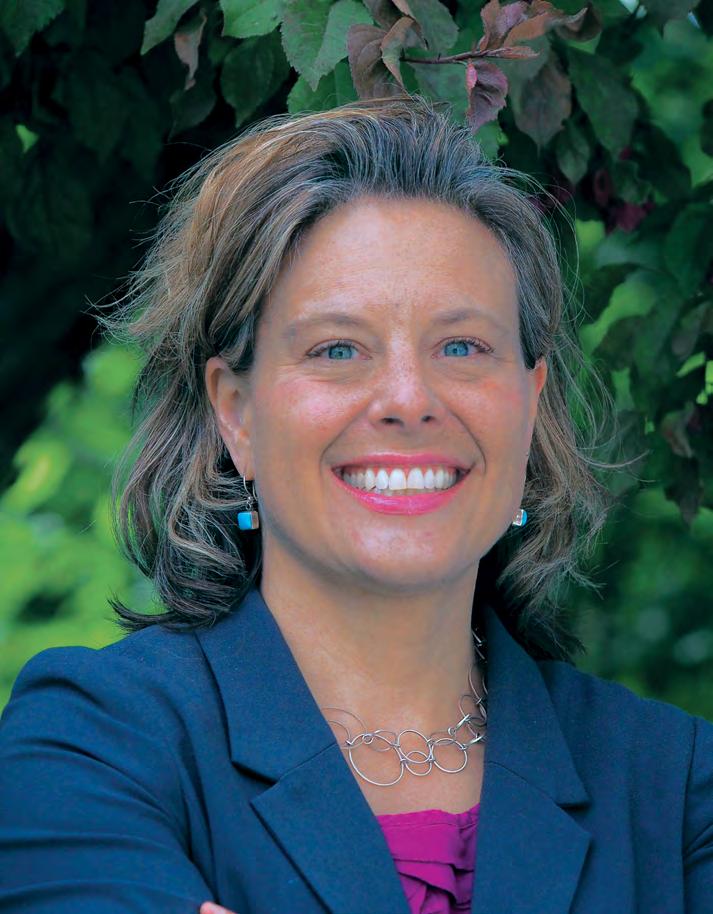
Stephanie Nichols’ career epiphany came in late 2022 as she met European leaders in Hamburg and Rome, visited NATO headquarters in Brussels, and observed governmental differences in Serbia.
Nichols was in Europe for a month as one of just 75 recipients of the Marshall Memorial Fellowship, a program established as part of the Marshall Plan following World War II. It is the German Marshall Fund’s (GMF) flagship leadership development program and prepares leaders from the U.S. and Europe for international relations.
“It was transformative for me, and I came back realizing that I needed to do something different and meaningful, not just for me but also for our country,” Nichols said.
Fast forward to three years later, and Nichols has turned that dream into a reality by starting her own leadership consulting firm, Insight Consulting. Based in Alaska with plans to have clients across the U.S., it focuses on employee retention and internal strategic communication.
“My business is founded on the notion that when leadership is built on trust and
authentic communication, people not only stay — they dedicate their time, energy, and talent to building a better organization,” she said. “When people feel valued in their work and feel a sense of purpose, it has a ripple effect through society. We are living in a time when people are seeking courage and authenticity, and this is more important now than ever.”
Nichols’ career is defined by several pivotal leadership roles, and the values she learned at Seattle University School of Law have remained a constant, whether it was working to bring connectivity to the most remote parts of Alaska at the state’s largest telecommunications company or envisioning and leading Seattle U Law’s satellite campus at Alaska Pacific University, where she also taught classes related to tribal and federal Indian law.
Her dedication to international policy and cross-cultural connection began at Seattle U Law, where the diversity of the student body was one of the main factors in her attendance.
“Students came from all walks of life, different cultures, and different countries.
My education was enriched by people who didn’t have my background or look like me,” Nichols said.
She carried her lessons from Seattle U Law throughout the Marshall Fellowship. As she traveled through Eastern Europe just months after the invasion of Ukraine, she realized a renewed appreciation for American democracy. Since then, Nichols has spent every Saturday morning virtually tutoring a student in Ukraine who dreams of studying law in the U.S., an experience that partially inspired her to found Insight Consulting.
“To have a law degree and be a Marshall Memorial Fellow brings a certain responsibility. Our country is founded on the rule of law, and our democracy only works if our leaders follow our Constitution,” Nichols said. “My fellowship and legal education are the most significant experiences that bring me to where I am today, founding my own leadership consulting firm and understanding this current and critical moment in our country’s history.”
STANDING UP FOR IMMIGRANTS, IN THE FACE OF THE ADMINISTRATION
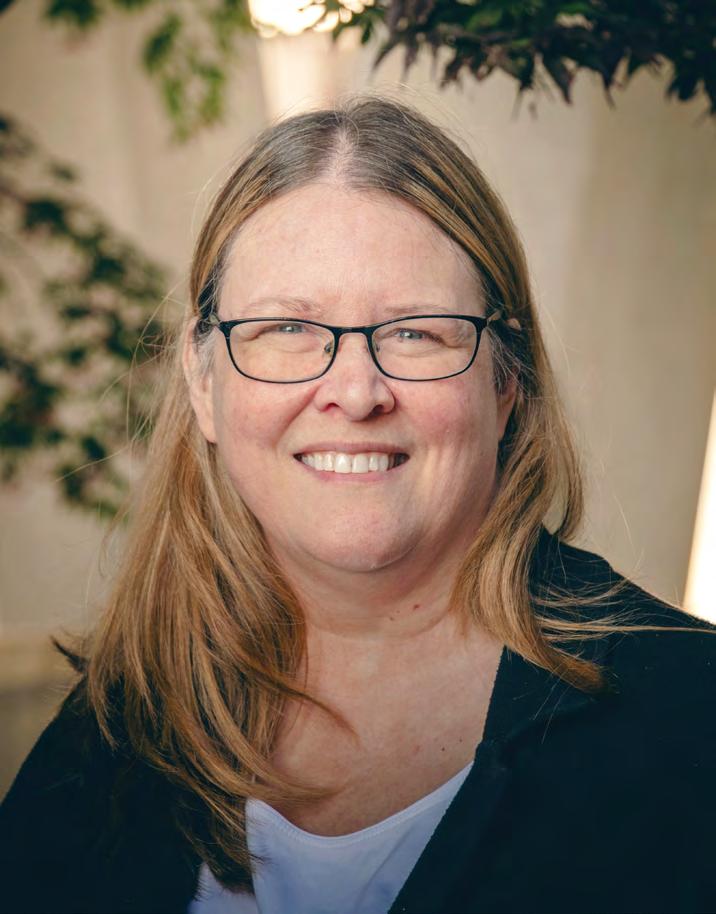
Kelly Vomacka ’90 is in the legal battle of her life as she tries to protect immigrants from deportation under the current administration.
BY NICOLE JENNINGS
It was the month before the 2024 presidential election when Kelly Vomacka ’90 became an immigration attorney at Seattle’s Gibbs Houston Pauw.
“I thought I knew what I was in for even if Trump did get elected,” Vomacka said. “I was wrong. It was so much worse. I truly did not see this coming.”
Vomacka, who spent the first decade of her career in public defense and criminal law, had never been an immigration attorney, but had worked at her own law firm since 2013 as a kind of intermediary between the state government and immigration lawyers. There, she helped teen immigrants to obtain Special Immigrant Juvenile Status (SIJS), a pathway to citizenship for people under 21 who are survivors of abuse. Vomacka estimates that she helped hundreds of immigrants to make their positions more secure over the years (though she notes that under this administration, even an immigrant who becomes naturalized is not secure).
The work was meaningful, but in becoming an immigration lawyer, Vomacka saw an
opportunity to work even more directly on clients’ cases.
“I was drawn to it because I wanted to use the expertise I’ve developed and I wanted to learn federal litigation,” she said.
However, just a few months into Vomacka’s new role, the new administration took control, effectively throwing any previous immigration policy rulebook out the window, as countless news stories since January have demonstrated. One of Vomacka’s clients, who has been in the nation 20 years and has five children who are American citizens — including one in the military — was detained earlier this year, despite having the federal legal protection known as deferred action. Another attorney at Gibbs Houston Pauw was at press time on the headline-making case of a Washington state employee from New Zealand — in the process of obtaining a green card — who was sent to a Texas detention center when crossing the border at Blaine after dropping family off at Vancouver International Airport.
“The things the administration is doing now are truly nuts and truly illegal,” Vomacka said.
This spring, the effects of the new policies on immigration began taking their toll on Vomacka. She experienced panic attacks and other health problems as a result of the stress, so much so that she even considered going back to criminal law. Ultimately, however, she decided to stay where she is.
“It’s the right thing to do. I think it’s going to change me, going through this experience. It’s going to change all of us. There’s no going back to what it was,” Vomacka said. “But I think there’s value in fighting. So that’s what we’ll do.”
The Jesuit social justice mission instilled in Vomacka at Seattle University School of Law inspires her to keep up that fight for those most in need. And the moments of success give her glimmers of hope.
“Recently, for the first time, I got to go to the detention center and watch my client walk out of the doors,” Vomacka said. “That was an amazing feeling.”
CLASS NOTES
Stories that keep us connected
STAY UP TO DATE! Submit your class note online: law.seattleu.edu/classnotes
1999
1975
John Reed III was honored at the West Virginia State Bar Annual Meeting for his 50-year membership. He is retired from private practice but works part-time for the West Virginia Legislature.
1984
Andy Becker, founding member of Becker, Rovang, & Franklin, PLLC, has published his third book in his award-winning Spiritual Garden Series, “‘Grandy, Let’s Play!’ Reflections on the Joy, Blessings, and Wonder of Grandparenting.”
1990
Robert Schiffner was awarded the DUI Defense Lawyers of America's 2025 Scott Joye Humanitarian Award for his work in Zimbabwe. Robert has supported the Rose of Charity Orphanage, built the Robert E. Schiffner Elementary School in Victoria Falls, and is currently constructing the Moses Lake Academy near Victoria Falls. Both of his schools offer subsidized tuition for disadvantaged
and low-income families. Both schools routinely finish as the top two schools in standardized testing in their region. Schiffner recently finished his 19th trip to Zimbabwe.
1996
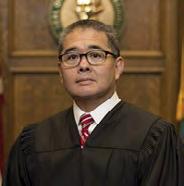
Patrick Oishi, a King County Superior Court judge, was presented with the Outstanding Judge Award at the King County Bar Association (KCBA) Awards Banquet at the Washington Athletic Club. The KCBA praised his excellence in leadership, particularly as the court came out of the pandemic. Upon acceptance of the award in front of his wife, adult children, friends, and colleagues, Oishi dedicated the honor to his mother, who recently passed away. “My mom is looking down on all of us tonight," he said. "I accept this award with much humility and gratitude."
Christopher D. Anderson has returned to Guam to work as an assistant attorney general in the Civil Division of the Office of the Attorney General. This will be Anderson’s first time practicing law on Guam since leaving the island after graduating from Father Duenas Memorial School in 1992, the AG’s office said in a release. He was a private attorney working for national and multi-national insurance companies based in California and Washington.
2001
Joan Hanten was appointed interim president of Olympic College in Bremerton by the Board of Trustees. She brings nearly two decades of leadership experience at Olympic College, having served in several key roles, including special projects administrator in the Office of the President, interim vice president of Human Resources, vice president of College Relations, and executive director of Institutional Advancement & Olympic College Foundation.
2002
Megan Isenhower Frampton has been named vice president and deputy general counsel at Washington Trust Bank.
2003
Michael Guadagno joined U.K.-based law firm Kennedys, which recently opened a Seattle office, as a partner. He most recently was a
shareholder at Bullivant Houser. His practice includes leading insurance and reinsurance companies in third-party liability coverage disputes and bad faith litigation involving different lines of insurance products, including commercial general liability, professional liability, homeowners, and property and casualty.
Scott Halloran was named one of the nation’s top animal defenders by the Animal Legal Defense Fund (ALDF), defined as a legal professional who champions the cause of animal crime victims. Halloran is Washington's assistant attorney general for Animal Crimes, one of three such positions in the U.S. Halloran’s leadership in focusing on animal cruelty against wildlife resulted in the ALDF naming a case he prosecuted as the focus of its National Justice for Animals Week, chosen to represent the law's power to do more for animals.
2004
Erin Sweeney has joined the Portland office of Ogletree Deakins, one of the largest labor and employment law firms representing management, as a shareholder. Sweeney joins Ogletree Deakins from Littler, where she was a member of the firm’s Labor Management Relations Practice Group. Among her many accomplishments, Sweeney managed close to 50 National Labor Relations Board (NLRB) representation petitions over the past few years and has served as a key strategic adviser to numerous
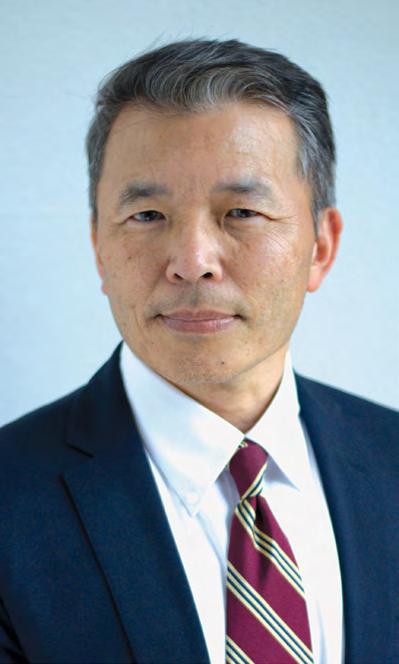
Pacific Northwest employers with newly organized workforces.
2005
Daniel Crowner is now a shareholder at the Seattle office of Ogletree Deakins, one of the largest labor and employment law firms representing management. Crowner joins the firm from Jackson Lewis. Crowner has experience representing employers before state and federal courts, the Equal Employment Opportunity Commission (EEOC), the Washington State Employment Security Department, and more. In his free time, he volunteers as a Civil Service commissioner for the City of Bellevue.
Polly Peshtaz has been promoted to supervising prosecuting attorney for the City of Redmond. Peshtaz joined the city in January 2020 as a deputy prosecuting attorney, handling criminal cases, contesting civil infractions, and participating in the city’s Community Court. She moves into this
KENT LIU '91
was appointed by Gov. Bob Ferguson to the King County Superior Court. Liu is a career prosecutor with three decades of experience, including nearly 17 years at the Washington State Attorney General’s Office, where he prosecuted criminal cases, worked to civilly commit sexually violent predators, and defended state agencies. Most recently, Liu served as a managing assistant attorney general as the inaugural chief of the office’s Organized Retail Crime Unit.
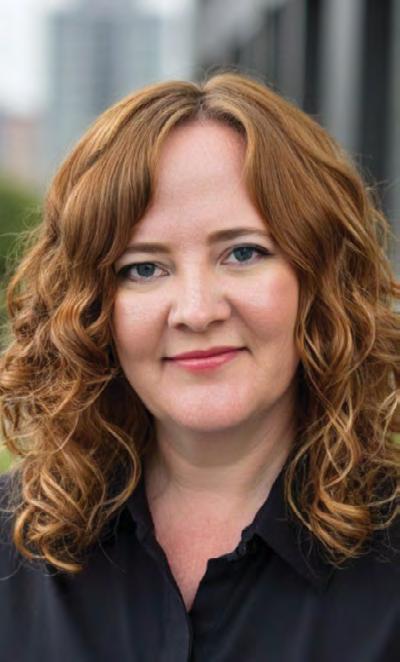
new role with more than 18 years of prosecutorial experience, including 13 years as a prosecutor for the City of Tacoma.
2007
Jessica Cohen joined Miller Nash’s real estate team. Cohen, based in the firm’s Seattle office, focuses her practice on real estate transactions, including purchases, sales, leasing, financing, and refinancing. Cohen was also elected as the director of the Real Property Council of the Washington State Bar Association Real Property, Probate and Trust (RPPT) Section. She has a strong background in affordable housing and healthcare, as well as industrial, agricultural, and office properties.
2008
Adam Jussel has been appointed as the new managing director of Student Affairs at the University of British Columbia in Vancouver, B.C. Adam takes on this new role after serving as the dean of students at the University of
Wisconsin-Milwaukee since 2019.
2009
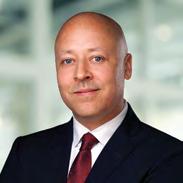
Evan Williams has joined Fox Rothschild in Washington, D.C. as partner in the Federal Government Contracts Department, representing clients in a full range of complex government contracting matters, with a focus on the aviation, aerospace, technology, and defense industries. His practice is informed by his 11 years of work with the U.S. government. He was previously assistant general counsel for the U.S. Government Accountability Office's Procurement Law Division.
2010
August M. Iorio launched his new law firm, Iorio Law PLLC, a premier boutique law firm dedicated exclusively to investor advocacy, securities arbitration, and whistleblower representation. Based in New
CARI BENN '05
has been promoted to chief privacy officer at Microsoft. Benn has worked for more than 18 years at Microsoft, where she was most recently an associate general counsel for Privacy and Accessibility Regulatory Affairs. In her new role, she will be working with teams and policymakers around the world on data protection and internet privacy issues.
York City, the firm represents investors and retirement savers nationwide who have suffered financial losses due to securities fraud, stockbroker negligence, and financial advisor negligence.
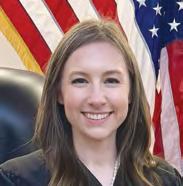
Maureen McKeeman was appointed a Poulsbo Municipal Court judge by Mayor Becky Erickson. McKeeman will step into the position at the start of the new year. She is currently a partner at Tolman, Grossman & McKeeman in Poulsbo. Her criminal law experience includes serving as a pro tem judge in Poulsbo and Bainbridge Island's municipal courts since 2022 and working as a prosecutor with the Bremerton City Attorney’s Office. She has also worked as a criminal defense attorney in private practice.
2011
Yair Inspektor has been named deputy general counsel and vice president of Transaction Risk and Real Estate at
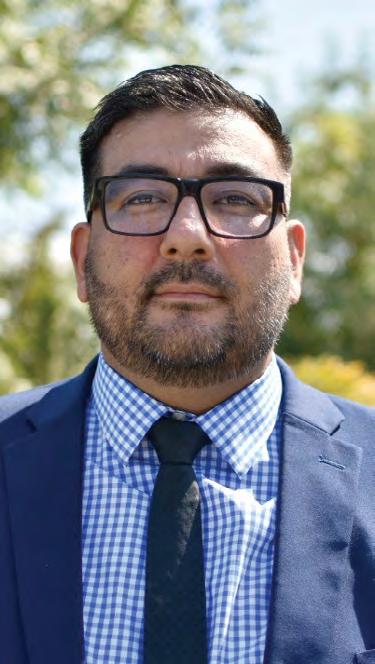
CLASS NOTES
FRANK RUIZ '13
has been appointed to serve as a judge in the Tulare County Superior Court in Central California by California Gov. Gavin Newsom. Ruiz has served as a deputy county counsel for Kings County, CA, since 2014. He worked as an associate for the Children's Advocacy Group in San Bernardino and was a volunteer attorney for the Law Offices of the Public Defender in Riverside.
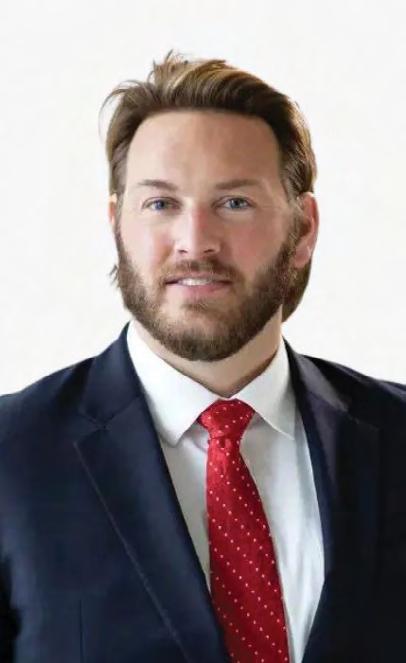
Children's National Hospital in Washington, D.C.
Benjamin Robinson joined Chalos & Co. P.C. During his two decades as an active duty officer in the Coast Guard, Ben served in both prosecution and defense roles, and handled matters from the earliest stages of investigation through the appellate level. Notably, Ben served as the Coast Guard’s deputy chief of the Environmental Law Division, where he was the service’s subject matter expert in maritime environmental crimes, maritime pollution liability, and environmental regulatory matters. Immediately before joining Chalos & Co., Ben was an attorney advisor with the U.S. Surface Transportation Board, the federal agency charged with the economic regulation of rail, motor carrier, pipeline, and domestic ocean shipping transportation.
2012
Ross Rachey was appointed the new chief operating officer of Amerit Fleet Solutions (“Amerit”), a leading provider
of dedicated, custom-built fleet maintenance, repair, and management services for commercial fleets. Prior to joining Amerit, Rachey spent more than a decade with Amazon in executive roles across the global fleet and transportation organizations, building a culture of exceptional customer service and reliability. Most recently, Rachey was the chief operating officer of ACERTUS, a tech-enabled fleet logistics company. He has been recognized as one of the leaders transforming the transportation industry, earning a spot on Insider’s prestigious list of “100 People Transforming Business.”
2013
Kevin Khong, an adjunct professor at Seattle U Law, has joined Miller Nash’s litigation team. Based in the firm’s Seattle office, Khong focuses his practice on complex commercial litigation, with particular emphasis on land
use, condemnation, eminent domain matters, and appeals. Before joining Miller Nash, Khong was a partner at Helsell Fetterman, where he focused on commercial litigation, real estate, and health care law. He also served as a prosecuting attorney for King County, gaining invaluable trial experience through both bench and jury trials involving matters from misdemeanors to serious felonies.
2014
Sean Badgley joined Structure Law Group in Lake Oswego, Oregon. Badgley began his legal career in Washington's cannabis industry in 2013, where he played a key role in interpreting emerging cannabis laws and advocating for regulatory developments through administrative channels. He has represented some of Washington's most high-value cannabis retailers. While at Seattle U Law, he was a member of the Cannabis Law Society. His pro bono work includes advocacy litigation against city governments and the state of Washington.
PEDER PUNSALAN-TEIGEN
'18, a principal at Skellenger Bender, was named to the National LGBTQ+ Bar Association's "40 Best LGBTQ+ Lawyers Under 40" list for 2025, which recognizes legal professionals across the country who have distinguished themselves in their field and demonstrated a profound commitment to LGBTQ+ equality.
2017
Daniel Jackstadt has joined Dorsey & Whitney LLP as a partner in the patent group in Seattle. Jackstadt joins Dorsey from Perkins Coie LLP, bringing more than a decade of patent prosecution and IP counseling experience. Prior to working as a patent attorney, Daniel worked as a patent agent and patent assistant.
2018
Ashley Langley, an attorney at Miller Nash LLP, has been appointed to serve as a member of Law360’s 2025 Washington Editorial Advisory Board. As part of the Washington Editorial Advisory Board, Langley will provide feedback on news coverage and insight on how best to shape future coverage of Washington issues.
2020
Ashley Farhner joined Nossaman’s Seattle office as an associate, a member of

the Eminent Domain & Inverse Condemnation Group. Prior to joining Nossaman, she was an assistant attorney general at the Washington State Attorney General’s Office, where she advised and represented clients in complex civil matters, including environmental issues, eminent domain, real property, the Public Records Act, maritime issues, and child welfare.
2024
Christine Choong started a new position as a staff attorney at Northwest Immigrant Rights Project, returning to the Violence Against Women Act (VAWA) Unit where she interned during her 2L year.
Molly Gunther joined Schwabe’s Anchorage office as an associate in the Indian Country and Alaska Native Corporations Industry Group. An enrolled member of the Central Council of Tlingit and Haida Indian Tribes of Alaska and a shareholder in regional and village corporations, Gunther advises Alaska Native corporations and tribal governments on corporate governance, business development, employment, and more.
SAVE THE DATE:
TRIBUTE TO DAVID BOERNER'S LEGACY
March 11, 2026
4 - 6:30 p.m.
2nd Floor Gallery, Sullivan Hall
Seattle University School of Law
To indicate your interest in attending and ensure you receive a forthcoming formal invitation and RSVP, please use the QR code and fill out the form.
In Memoriam

James (Jim) Wallace Aiken
James (“Jim”) Wallace Aiken passed away on August 13, 2025, at the age of 77. Jim was born in Seattle and raised in Bellevue, graduating from the University of Puget Sound Law School (now Seattle University School of Law) in 1975, where his friends nicknamed him “Fox” for his bright Irish red hair. Jim was proud to be the first graduate to have two children attend the same law school. He practiced law in Seattle for 48 years. Jim’s passions included coaching his children’s sports teams, early morning fishing expeditions, and attending Seattle sporting events. He took his oldest children to greet the Seattle SuperSonics at Sea-Tac in 1979 when the team returned as NBA champions. Jim is survived by his wife, Cathleen Aiken, his siblings Christine Main, Kathleen Hasslinger, and Kyle Aiken, his first wife, Mary Aiken, and his six children: Amanda O’Halloran; Andrew Aiken; Keats Aiken; Seth Aiken; Bryan Aiken; and Conner Aiken, along with 15 grandchildren and three great-grandchildren.
“May the road rise to meet you. May the wind be always at your back. May the sun shine warm upon your face. The rains fall soft upon your fields. And until we meet again, May God hold you in the palm of his hand.”
— The Irish Farewell Blessing

Kenneth Ringstad, Jr.
Kenneth Paul Ringstad Jr., 73, passed peacefully on July 28, 2025, after courageously battling lung cancer. Ken was born and raised in Fairbanks, Alaska. He loved the outdoors and spent summers at Birch Lake at a cabin he and his family built. Ken was actively involved in multiple sports in Fairbanks for most of his life, as both player and coach. Ken graduated from the University of Alaska Fairbanks, worked the pipeline, and then attended the University of Puget Sound School of Law, now Seattle U Law, in 1980. Ken married Connie in 1986. Their son and daughter, Eric and Cassie, were his first priority. He was enthusiastic and steadfast in supporting their academic achievements and numerous athletic interests, including tennis, hockey, soccer, and gymnastics. Ken is survived by his wife and children, siblings John (Ann), Cathy (Dan Winfree), Tish, Rose Ann (Skip Sample), and Dorothy (John Hebard), brother-in-law, Jim Bowles, as well as numerous nieces, nephews, and cousins.

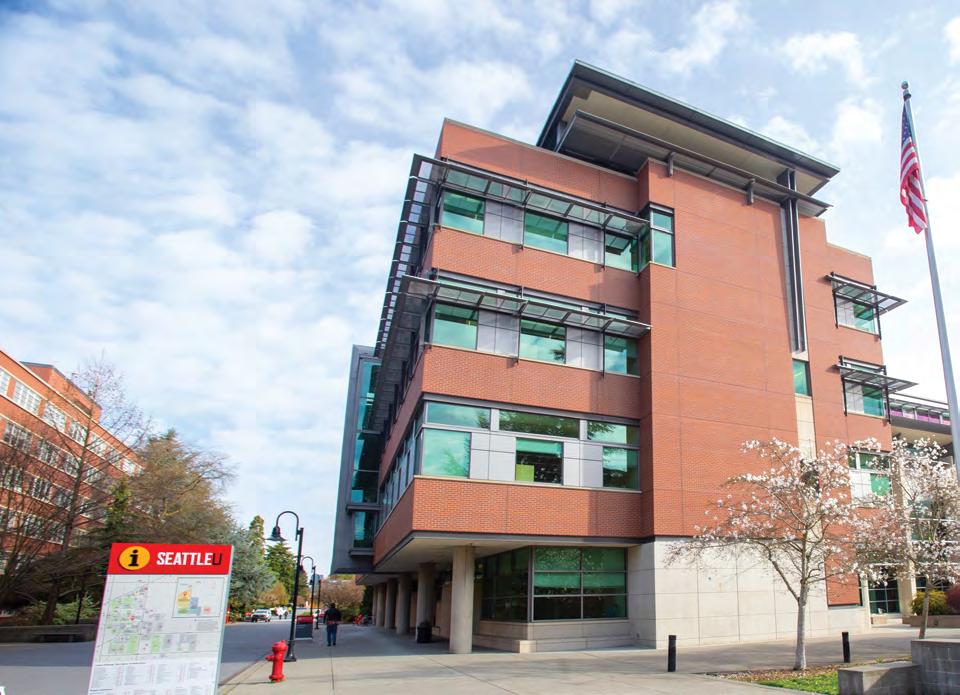

JOIN THE CONVERSATION

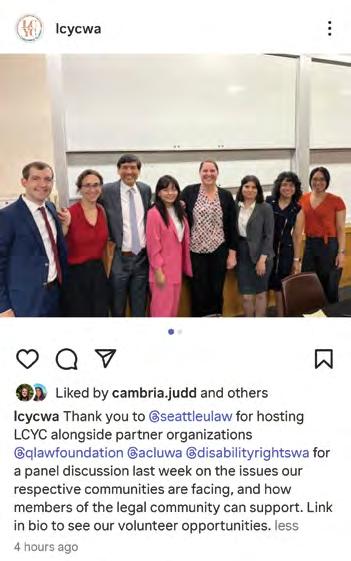

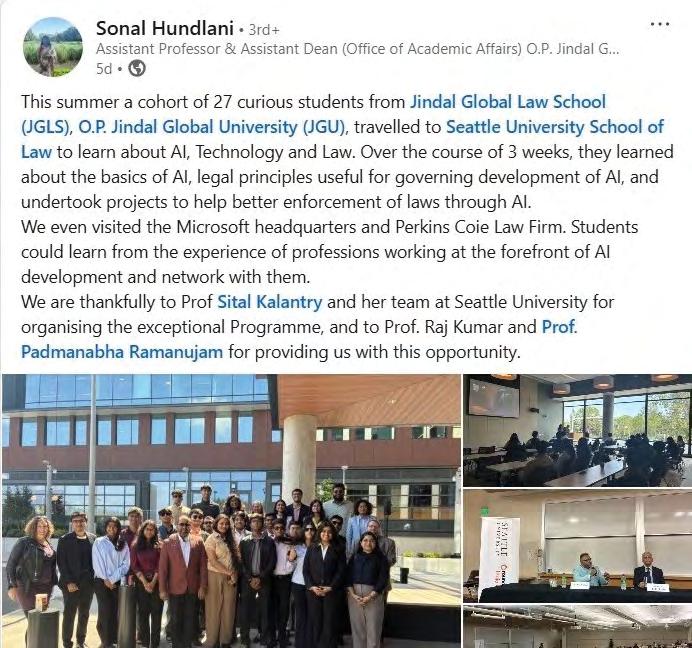
Seattle University School of Law
901 12th Avenue, Sullivan Hall
P.O. Box 222000
Seattle, WA 98122-1090