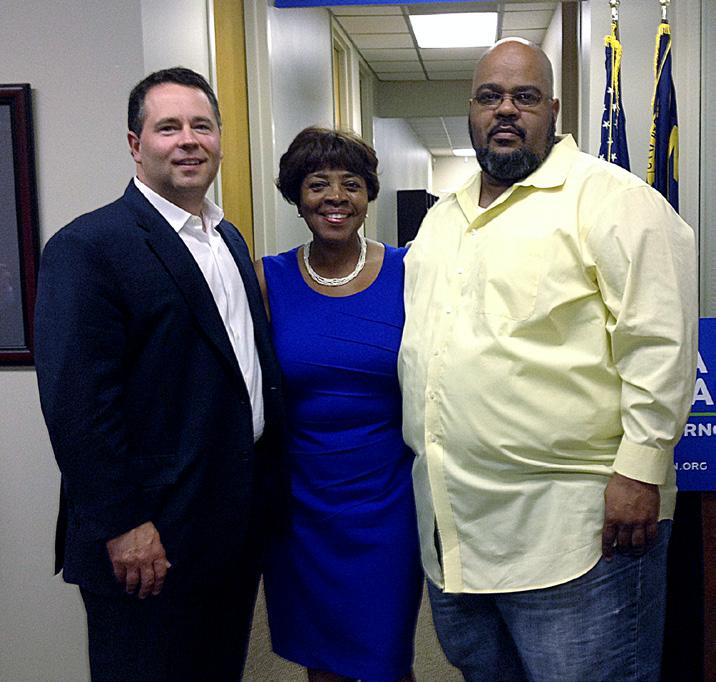
Wearing SEANC blue at her victory party on May 8, Linda Coleman joined a festive crowd that included her state employee family to celebrate her landslide victory for the Democratic nomination for lieutenant governor.
Coleman’s victory was not just a 56 to 44 percent landslide win over primary challenger and state Sen. Eric Mansfield (D-Cumberland). She earned herself a place in North Carolina’s history books as the first African-American woman to be the nominee for lieutenant governor. SEANC members should stand proud that they helped win this civil rights victory.
In her acceptance speech, Coleman thanked SEANC saying, “We stand for working families, and I will never back away from that as one of my core values!”
SEANC decided early in the primary process to support Linda Coleman, who in 2005 single-handedly held up the state budget in support of vital public services and the people who provide them. As director of the state personnel office, she led implementation of Executive Order 45, which provides a partnership between managers and employees to produce cost-efficiencies, improve morale and strengthen communication in state agencies.
Her door has always been open for state employees because she is a champion of those who need one — the working families who make up the 99 percent.
SEANC and the Service Employees International Union spent more than $300,000 on TV and radio commercials,
SEANC Executive Director Dana
and SEANC
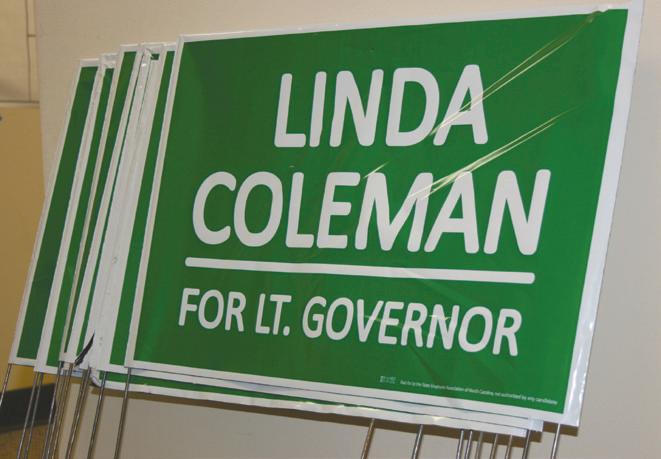
yard signs and direct mail pieces in support of the Coleman campaign. Several reports in the media credited SEANC’s support for Coleman as the key to her victory, while her opponent failed to gain traction with his meanspirited attacks.
Coleman will have to wait until this summer to learn who her opponent will be in the November election for lieutenant governor. None of the Republican challengers met the 40 percent threshold to win the GOP nomination.
SEANC Candidates Win Big
Coleman wasn’t the only winner on primary night that was endorsed by SEANC’s nonpartisan Employee Political Action Committee (EMPAC). As of press time, 21 of the 27 SEANCendorsed General Assembly candidates won their primary battles.
SEANC-ENDORSED PRIMARY WINNERS
N.C. House of Representatives
Jimmy Dixon (R-Duplin) District 4
Mobley (D-Hertford) * District 5
Bryant (D-Nash) * District 7
Wray (D-Northampton) District 27
Gill (D-Wake) * District 33 Yvonne
(R-Henderson) * District 48
*SEANC congratulates these candidates, who won election outright on May 8 and do not face an opponent in the November general election.
A number of the candidates such as state Reps. Rosa Gill and Yvonne Holley (both D-Wake) are on their way to the General Assembly having no opposed candidates in the general election. President Charles Johnson was thrilled to watch the EMPAC wins come in over the television. Johnson said, “Having champions of workers elected is a huge step forward for North Carolina.”
tdavis@seanc.org
PHOTO BY TONI DAVIS
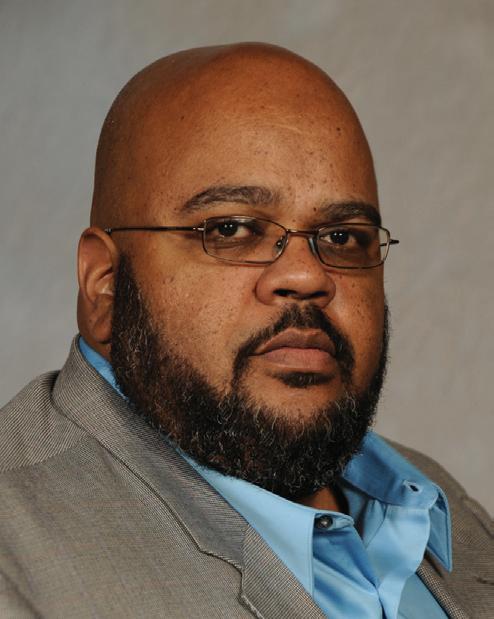
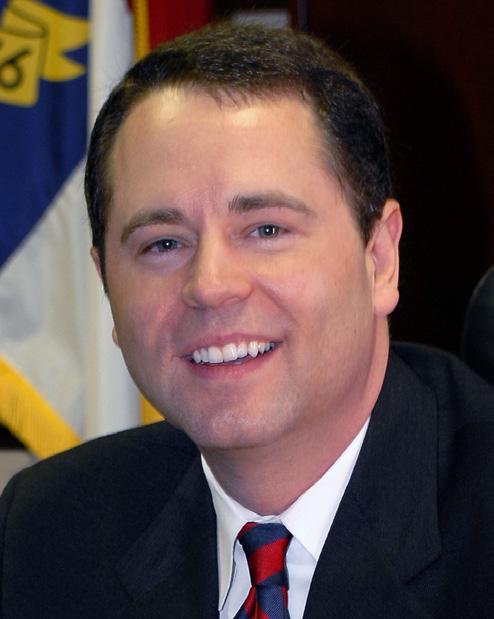
Cope, left,
President Charles Johnson, right, celebrate Lieutenant Governor candidate Linda Coleman’s primary victory on May 8.
President’s Message
by Charles Johnson seanC PresiDenT
Retirement Security with a Side of Wisdom
Sometimes, if you are lucky, a key moment of life inspiration pops into an otherwise ordinary day.
My friend and I were out for lunch recently. When we were being seated at our table, I looked to my left and noticed two elderly ladies sitting nearby. One of the ladies smiled at me and said, “You guys ready to eat? We sure are!” And just like that, my friend and I stumbled into an unexpected lunch date. What followed was one of the best conversations I’ve had in a very long time.
These ladies could have been my grandmother. They were distinguished, spry and incredibly articulate. Both were retired state employees having grown up in the South. It was clear that they had both worked hard throughout life.
While enjoying our lunch, there were many smiles and much laughter as we discussed things we all had in common. It did not take long for the conversation to turn to children and grandchildren. One of the ladies told us about a recent conversation with her young granddaughter where she ended up explaining what retirement was, and how Social Security works. The little girl seemed worried but her grandmother comforted her and said, “Don’t worry, baby, I’ll be just fine.”
The conversation with these two lovely ladies was so inspirational to me. They represent the very hope that we all carry to work with us each day — the hope that we will reach an age where we can rest, reflect and count on the fruits of our life’s work. SEANC is constantly monitoring retiree benefits and rights, both through daily advocacy in the General Assembly and other work like my recent service on the state Future of Retirement Study Commission. Here at SEANC, we know that our work to protect working families is not only for the here and now — but also for their well-being down the road toward retirement.
This is why we must continue the fight to move our policy platform forward. We must continue the struggle to maintain our retirement security. We must protect quality public services
and the middle class people that provide them. Workers from the private and public sectors must work together focusing on the things we all have in common and raising the standard of living for everyone.
Right now, the ground we may lose will be our children’s fight – but the ground we have already lost is our current fight. We have to restore the honor in working hard to be able to live reasonably in retirement. As a state employee, you should be able to work hard, plan well and one day be able to enjoy a good lunch with a couple of young folks.
Before ending our lunch, we agreed that we would meet these ladies for another meal in nine years. Same place, same time. I’ll have every hope of picking up the tab with my own retirement check. Brothers and sisters, let’s get inspired — I certainly am! cjohnson@seanc.org
SEANC accepts advertising material from companies and persons seeking to communicate with SEANC members. Acceptance of this advertising does not indicate SEANC approval or endorsement of any representation that the message, product or service is as represented by the advertiser. SEANC accepts no responsibility and shall not be liable for any use of or reliance on any such information, product or service. SEANC is a private entity and is under no obligation to carry advertisements of any nature, political or otherwise, that may be viewed as contrary to the interests of the association and its membership.
Unwise Outsourcing of Prison Health Care
The following excerpt is from an opinion piece published in the News & Observer on April 25 on the state Department of Public Safety’s decision to request bids from corporations for privatization of prison medical services.
by Dana CoPe SEANC Executive Director
Hiring private contractors to take over the state’s prison health care system is a bad move for North Carolina and for all of us in the state who pay taxes. Privatization won’t save money, and if other states are a guide, initial low-ball bids and multiple malpractice suits will push the state’s costs even higher.
Deliberate understaffing at Central Prison has led to many negative outcomes. But it looks like the Perdue administration would rather scapegoat 2,500 prison medical professionals than acknowledge its own culpability and fix the problems.
Let’s call this privatization proposal what it is — either a leadership failure or a sweetheart deal for a private prison contractor with job promises to high-ranking lame-duck politicians and political appointees looking for a parachute because the boss decided to forgo another term.
Medical Services Inc. and Prison Health Services, have been under investigation in several states. A recent report on their handling of services in Idaho said it constituted “cruel and unusual punishment.”
Private prison companies make money by keeping costs down among a set of patients who, on average, are sicker than people who are not in prison. These companies misrepresent medical records, fail to treat common problems that lead to more significant problems and treat problems incorrectly. The business model is to put off care until the person is out of the system, where someone else foots the bill. That’s a win for the company.
“North Carolina can and should say ‘No’ to privatizing prison medical care. Turning prison medical care over to big business will make taxpayers sick.”
But that win is a problem for states with privatized prison care and would be a problem for North Carolina, too. Exconvicts with medical problems end up getting their care paid for by the taxpayer.
Privatization will put a sign at our borders telling outof-state companies to come on in and haul away piles of taxpayer dollars.
Despite the lack of evidence in other states that outsourcing saves money, the Department of Public Safety decided to look at privatization as a way to cut costs. States that have turned medical care over to for-profit companies find themselves in the middle of negligent care lawsuits. It’s happened in Florida, New York and New Jersey.
The Perdue administration views privatization as a fig leaf to cover up its incompetent management of the system. Eager to look like it’s doing something — anything — to fix the problem, the governor asked for privatization proposals from companies big enough to handle a system that now spends $244 million caring for 40,000 prisoners in 70 facilities.
But the companies big enough to handle North Carolina’s system aren’t good at it. Corizon Healthcare might bid, but the two companies that merged to create it, Correctional
Even the state of Texas — where privatization is a hallowed word — caught itself. Republican legislators in Texas took time to see all the problems with outsourcing prison medical care. So, this year, after Gov. Rick Perry pushed, lawmakers pushed back. The impetus? Perry had received an influx of campaign contributions from private prison lobbyists and CEOs.
Now that the governor has signaled she will explore privatization, look for job promises from prison medical care companies to political appointees and lucrative lobbying contracts for well-connected Democratic operatives with ties to the governor. It will be hard for appointees with pending job losses to resist giving in, despite the evidence that taxpayers lose when prison health care is turned over to big business. North Carolina can and should say “No” to privatizing prison medical care. Turning prison medical care over to big business will make taxpayers sick.
dcope@seanc.org
Quotes to Note
“They might be well-intended, but they do not have any weight behind them. We don’t want to put our faith into a trust situation with the bosses.”
SEANC Executive Director Dana Cope, referring to the Guiding Principles proposed by the UNC Board of Governors to replace the State Personnel Act rights for university employees, in an April 19 story “UNC-system President Ross to meet with workers to discuss Senate Bill 575” in The Daily Tar Heel
“She has fought for the hard working people in North Carolina.
Now it’s our chance to fight for her.”
SEANC Communications Director Toni Davis, on the endorsement of Linda Coleman for lieutenant governor in the May 2 WRAL story “Challenger: Lt. governor candidate ‘outsourced’ campaign to union”
“There are approximately 400 housekeeping employees who have the expectation of being treated respectfully and fairly, of working in an environment free from threats, intimidation and harassment, and of being enabled to do their best job for the University.”
District 25 member James Holman, in the story “Housekeepers Seeking Fair Treatment” in the April 2012 edition of Campus BluePrints, a studentrun magazine on the campus of UNC-Chapel Hill
“Employees’ concerns make sense. Worry is warranted when an employer tries to swap one set of legal protections for a vague alternative. We doubt that any UNC administrators took their jobs without contracts that specified the terms of their employment.”
District 25 member and UNC-Chapel Hill
Sociology professor Sherryl Kleinman and colleague from the UNC-Chapel Hill School of Law Jeffrey M. Hirsch in the May 7 News & Observer opinion piece “UNC workers are right to worry”
“Money was the big winner Tuesday: labor [SEANC] money for Linda Coleman.”
Veteran Democratic consultant Gary Pearce, reflecting on the May 8 primary election results in the May 9 News & Observer article “Pundits: Money and religion won out”
“We built this PAC, and it’s our job to advocate for hardworking people who work for the state.”
SEANC Member Strength Director Kevin LeCount, standing up for EMPAC’s support of Linda Coleman for lieutenant governor, in the May 6 News & Observer article “State workers group aids Coleman”
MEMBER ACTION
District 65 members participated in the 2012 Pitt County American Cancer Society Relay for Life April 27-28, where thousands of people celebrate the lives of those who have battled cancer and fought back against the disease. The SEANC Purple and Gold Crusaders team included District 65 members, their families and their friends, and raised more than $3,900 through various fundraisers held throughout the year. Pictured, left to right, are Jamie Charles, Katie Gourley, Tanya Cannon, Nicole Rizos, Alesia Warren, Sanela Pestalic, Dorothy Andrews, Neichelle Bell, Lynn Tuthill, Eastern Region Representative to the Executive Committee Gloria Highsmith, Taylor Crawford, Holly Suggs, Inga Jones, Tiasia Andrews, Deanne Smith, Adorian Bell, Stasia Austin, Seth Tuthill, Haley Clayborne, Fred Austin, Lynn Gammell and Jim Gammell.
BY STEVE LAWSON
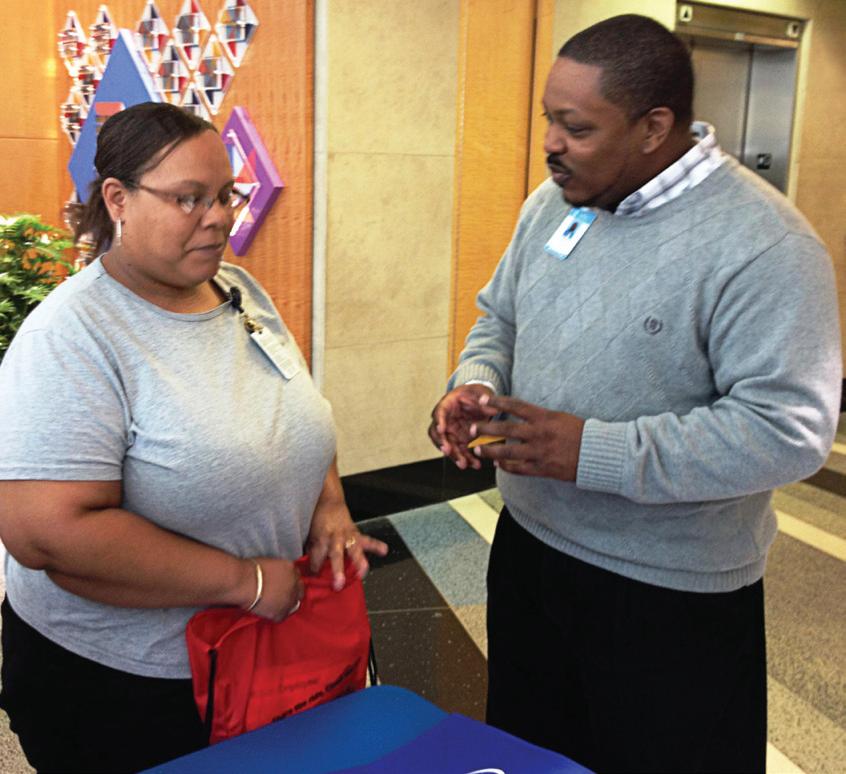
District 19 member Gerald Greene, right, recruits a new member at the UNC Health Care Benefits and Services Fair on April 13.
The Reporter, USPS 009-852 (ISSN 1069 2142), is published nine times a year in the months of February, March, April, May, June, July, September, November and December for $2.50 per year, per member, by the State Employees Association of North Carolina, Inc., P.O. Drawer 27727, Raleigh, NC 27611-7727. Periodicals postage paid at Raleigh, NC, and additional offices.
POSTMASTER
Send address changes to: THE REPORTER
P.O. Drawer 27727 Raleigh, NC 27611-7727
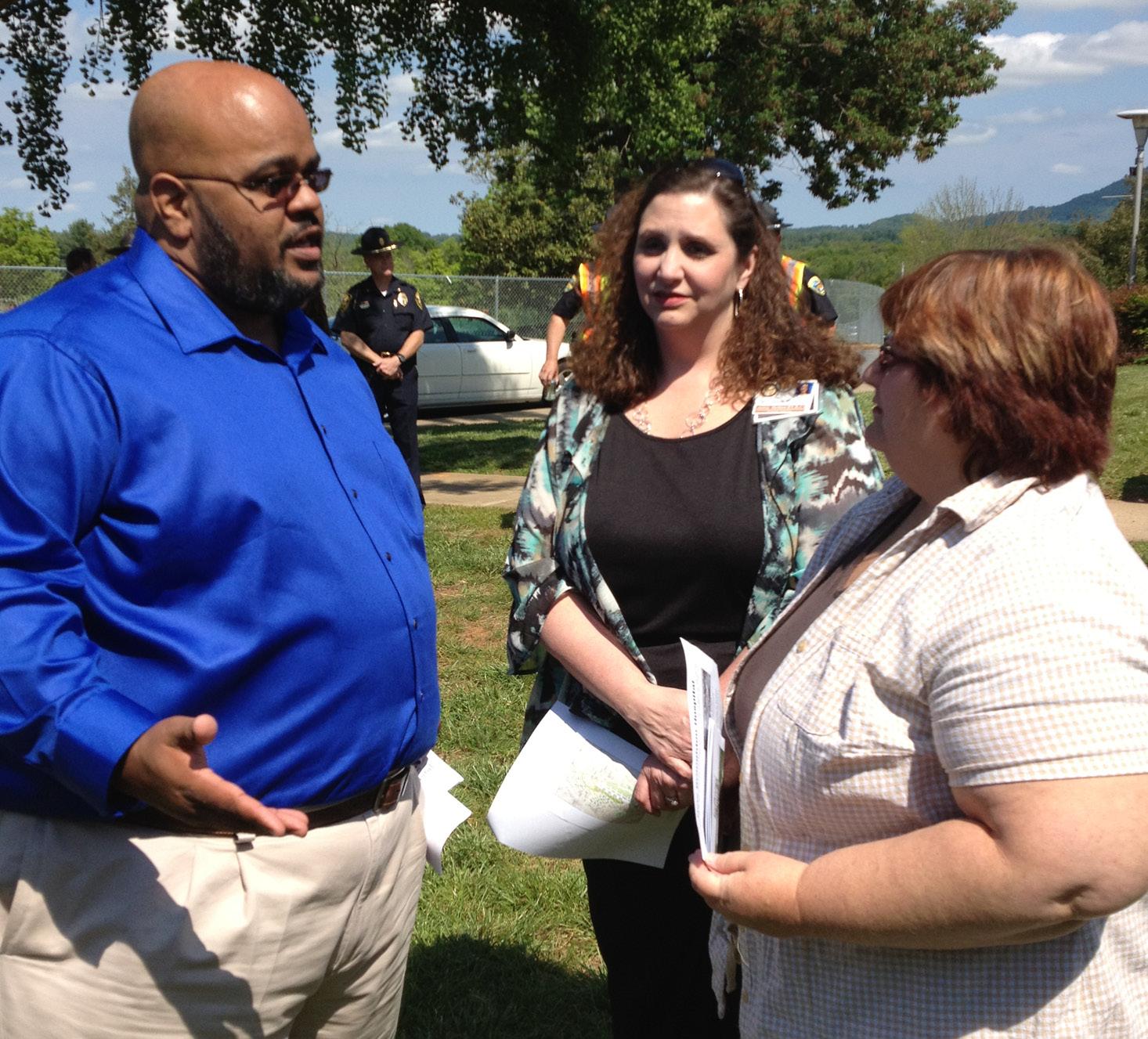
SEANC President Charles Johnson was on site in Morganton on April 25 for the ground-breaking of revitalization efforts at Broughton Hospital. When completed in 2014, it will be among the nation’s leading psychiatric facilities. The new hospital will house 384 beds and employ more than 1,100 health care professionals. Here, Johnson speaks with District 6 member Sherry Helton (center) and another member.
Submit your District News for publication in The Reporter by email to reporter@seanc.org.
PHOTO
PHOTO BY BRIENDA HOOKER
PHOTO
SEANC Goes to Bat for Linda Coleman
On May 8, North Carolinians made history by nominating and supporting the first African American woman to run for lieutenant governor. SEANC endorsed Linda Coleman in the primary battle and will now move to the general election in November. Coleman is a champion for public services and working families. Now, full speed ahead to November.
Radio Ads
Radio spots aired in support of Linda Coleman:
“If you’re concerned about rising costs – where big business and powerful special interests get breaks they don’t need – while families and working people struggle just to keep up. If you’re concerned that no one [in Raleigh] is really looking out for you and watching your back, then remember – Linda Coleman.”
I’MWITH LINDA COLEMAN LT.GOvErNOr
Mailers, placards, yard signs and television advertising were also keys to Linda Coleman’s election victory.
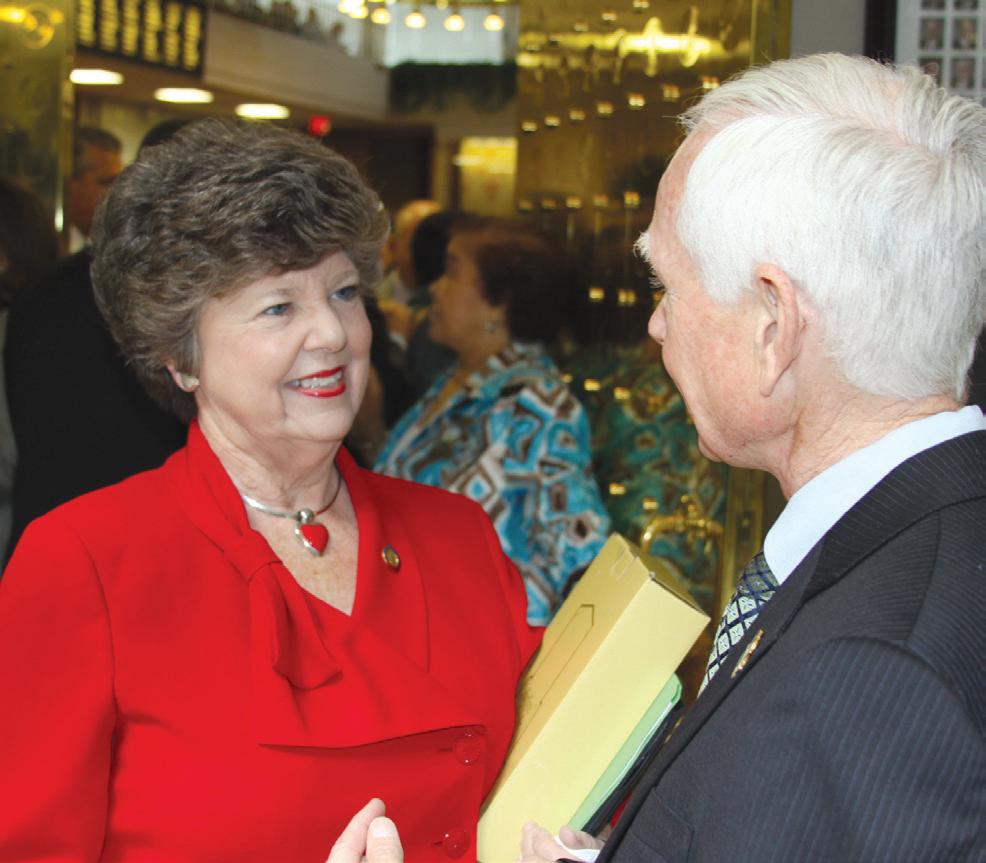
SEANC Lobbyist Chuck Stone speaks with Rep. Pat Hurley (R-Randolph) on May 16 before the start of the General Assembly short session. To read more on SEANC’s lobbying efforts in the legislature, including a weekly update, visit seanc.org/legislative.
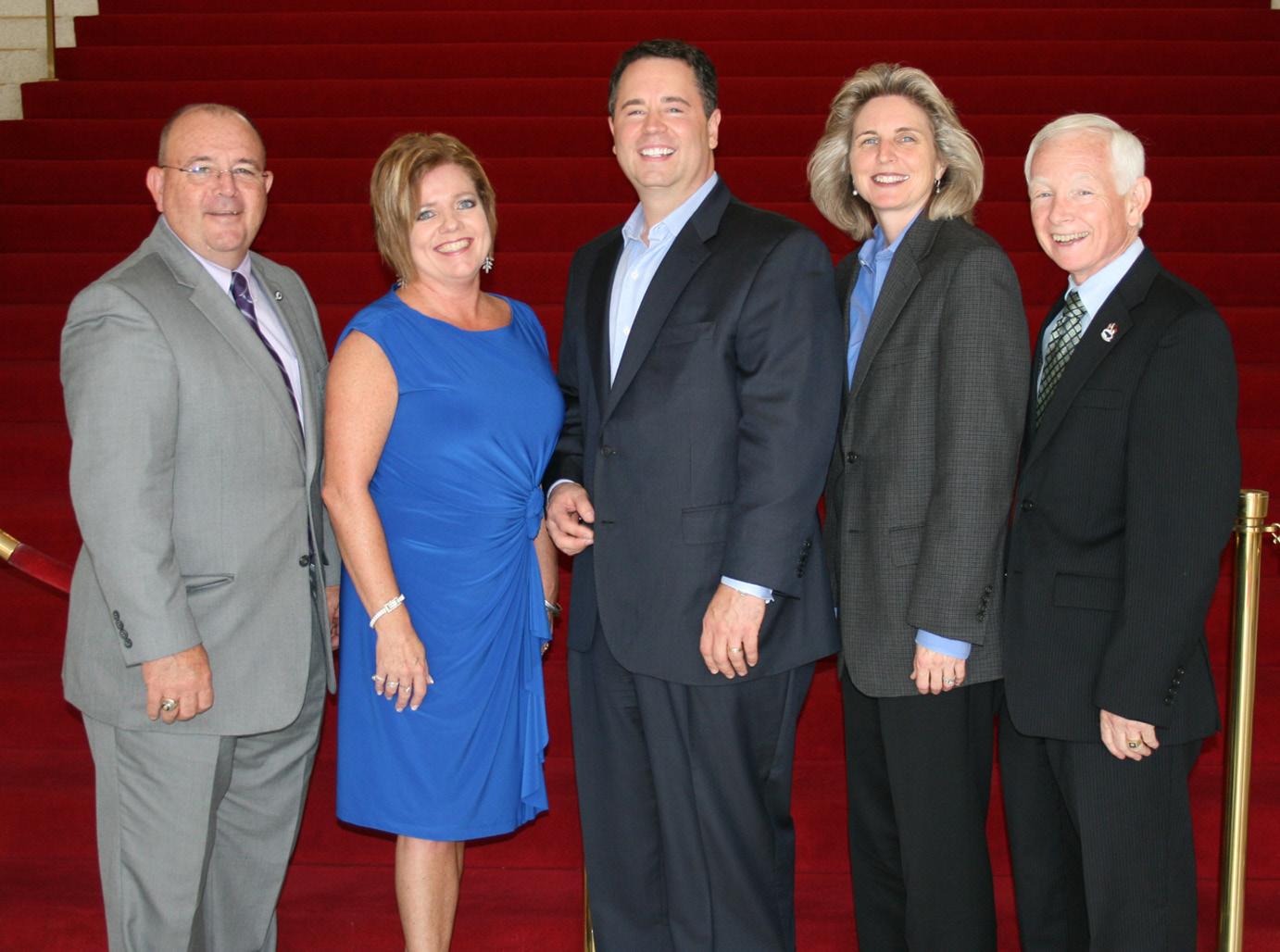
SEANC Executive Director Dana Cope (center) along with Legislative Affairs Director Ardis Watkins (second from right) and lobbyists (from left) Mitch Leonard, Suzanne Beasley and Chuck Stone welcomed legislators back to Raleigh on May 16 on opening day of the General Assembly’s short session.
PHOTO BY TONI DAVIS PHOTO
P.O. Drawer 27727
Raleigh, NC 27611
Perdue’s budget includes modest raise
by Cary eDgar SEANC Assistant Communications Director
As a start to the usual budget dance between state leaders, Gov. Beverly Perdue on May 10 released her $20.9 billion budget recommendations for the 2012-2013 fiscal year.
Her budget recommendations include raises for active state employees and cost-of-living adjustments for state retirees.
The base pay raise will be especially welcome to state employees as the last such increase was in 2008. SEANC Executive Director Dana Cope was interviewed by the Associated Press about this long overdue proposed pay raise, saying “After four years of wandering around the desert, we get a sip of water.”
Pay raise
n 1.8 percent for all active state employees
Retirement
Perdue’s recommendations are being negotiated with budget plans from the N.C. House and Senate. SEANC will continue to keep members informed of the details of the negotiations. No budget is final until Perdue signs it. Her recommendations include the following measures.
n Provides $63 million for a 1.9 percent cost-of-living adjustment, the first increase since 2008
n Keeps current employer contribution levels in place
n Provides $230 million for a 7.15 percent employer retirement contribution
Corporate welfare
n Expands the One North Carolina Fund by $8 million for economic incentives to be handed out to corporations
Rest assured that as the budget process moves through the General Assembly, SEANC will be on hand every day representing public services and the people who provide them.