

EMPAC Makes Endorsements for May Primary
By Matthew whittle
SEANC Communications Specialist
The State Employees Association of North Carolina (SEANC) has announced bipartisan endorsements for the primary election on May 6. The endorsements are made through SEANC’s Employees Political Action Committee (EMPAC), which is a member-led subsidiary.
“SEANC members are proud to support candidates, regardless of political party, who prioritize public services and the people who provide them,” said statewide EMPAC Chairman Wayne Fish.
The 22 bipartisan endorsements in races for the General Assembly are a result of recommendations from SEANC members at the district level. Those recommendations were then confirmed by the statewide committee on March 29. Only candidates in contested primary races were considered for an endorsement.
Zellinger for Wake County DA
In addition to the candidates for N.C. General Assembly, EMPAC also endorsed Boz Zellinger for Wake County District Attorney.
Zellinger, a SEANC member, is an assistant district attorney and


EMPAC’s Endorsement Process
EMPAC is divided into 15 areas across the state with a committee in each area which chooses whether or not to endorse in North Carolina General Assembly primary and general election races. Prior to receiving an endorsement from the statewide EMPAC committee, each candidate was interviewed and approved by their local Area EMPAC team.
To learn more about EMPAC and the nominating process, go to seanc.org/empac.
For a complete list of EMPAC’s 2014 primary endorsements, turn to page 2.
prosecutor in the Special Victims Unit of the Wake County District Attorney’s Office, focusing on homicides, crimes against children and sex crimes. He has prosecuted some of the most notorious murder cases in recent Wake County history, including the trials of Grant Hayes, Amanda Hayes, Brad Cooper and the recent Oakwood home invasion trial.
“North Carolina and Wake County need a strong district attorney with a proven track record in the courtroom and Boz Zellinger is it. Boz has the experience and the political will to do the right thing in the courtroom whether it’s winning a high profile murder case or going after public corruption,” said Fish.
More than 10,000 SEANC members reside in Wake County, and the Wake County District Attorney has special


statewide authority over certain aspects of election law, including campaign law violations of statewide and judicial candidates, making the office relevant to SEANC members across the state.
Zellinger was gracious in accepting the endorsement.
“The State of North Carolina is Wake County’s biggest employer, and keeping our streets safe is critical for the development of our community,” Zellinger wrote in a letter to EMPAC seeking the endorsement. “SEANC’s advocacy to protect state employees is well known in our office. As District Attorney I will always work to value state employees.”
mwhittle@seanc.org, Twitter @mwwhittle


Zellinger
2014 Primary Endorsements
This year’s primary election will be held on May 6. EMPAC urges members to consider voting for the following candidates.
N.C. House Candidates

District 2
Ray Jeffers (D-Person)

District 15
Phillip Shepard (R-Onslow)

District 27
Michael Wray (D-Northampton)

District 5
Annie Mobley (D-Hertford)

District 23
Shelly Willingham (D-Edgecombe)

District 60
Cecil Brockman (D-Guilford)

District 89
Mitchell Setzer (R-Catawba)

District 7
Bobbie Richardson (D-Franklin)
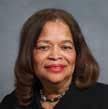
District 24
Jean FarmerButterfield (D-Wilson)

District 70
Pat Hurley (R-Randolph)

District 95
C. Robert Brawley (R-Iredell)

District 14
George Cleveland (R-Onslow)

District 26
Leo Daughtry (R-Johnston)

District 84
Rena Turner (R-Iredell)

District 111
Tim Moore (R-Cleveland)
N.C. Senate Candidates

District 3
Erica Smith-Ingram (D-Northampton)

District 5
Don Davis (D-Greene)

District 4
Angela Bryant (D-Nash)

District 33
Stan Bingham (R-Davidson)
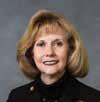
District 30
Shirley Randleman (R-Wilkes)

District 47
Michael Lavender (R-McDowell)

District 39
Bob Rucho (R-Mecklenburg)
Toni Davis, Editor-In-Chief
JonaThan owens, Managing Editor
alicia Miller, Associate Editor
BeTh Dew, Associate Editor
MaTThew whiTTle, Associate Editor
State Employees Association of North Carolina
1621 Midtown Place • Raleigh, NC 27609
Telephone 919-833-6436, 800-222-2758
www.seanc.org
Advertising Policy
SEANC accepts advertising material from companies and persons seeking to communicate with SEANC members. Acceptance of this advertising does not indicate SEANC approval or endorsement of any representation that the message, product or service is as represented by the advertiser. SEANC accepts no responsibility and shall not be liable for any use of or reliance on any such information, product or service. SEANC is a private entity and is under no obligation to carry advertisements of any nature, political or otherwise, that may be viewed as contrary to the interests of the association and its membership.


To



What You Need to KNoW about Your rights counselor’s coMMenTs
During January and February, SEANC held forums around the state at which I highlighted the best features of the State Human Resources Act (SHRA) and the major legislative changes made to that act in 2013. In this column, I will reflect on several of the topics that drew the most interest at those forums.
By toM harris seaNC Chief of staff/GeNeral CouNsel
exempt position that they believe may not meet the statutory definition of “managerial” or “policymaking” exempt to consult an attorney for a legal evaluation of their rights. I can provide assistance to employees looking for an attorney to consult.

n Changes to grievance procedures and rights: Some of the biggest changes are to the grievance process. Employees still have 15 days from the occurrence of the event or action to file a grievance under their agency or institution’s internal grievance process. However, before filing their grievance within that time frame, they must request and complete an informal discussion about it with their supervisor, unless the problem is with the supervisor. The first step in the internal grievance process is a required mediation with a mediator approved by the Office of State Human Resources (OSHR) and a representative of the employer. If this does not resolve the grievance, then it will be heard by a hearing officer or a hearing panel, depending on which method the agency has adopted in its internal grievance policy. After hearing both sides of the controversy, that officer/panel will make a recommended decision to the agency head, but before the agency head can make a final decision, the OSHR director must review and approve it. An employee has 30 days to appeal an adverse agency decision to the Office of Administrative Hearings (OAH), and if the decision of OAH is adverse, the employee’s right of appeal is to the Court of Appeals, rather than to Superior Court, as it used to be.
n Exempt Designation: The number of positions that the governor can designate as policymaking or managerial exempt from the SHRA was increased from 1,000 to 1,500. Moreover, it appears the right to appeal that designation to OAH was repealed. The SHRA actually has conflicting provisions on the right to appeal, stating in one section that it exists and in another that it does not. The courts will have to clarify which section prevails. In the meantime, it would be a good idea for any employee who is discharged from an
n Reorganization Through RIF (RTR): The SHRA provides a short window for state agencies to allow their employees to volunteer to participate in a reduction in force as part of an agency reorganization. Employees offered this opportunity and accepting it will receive severance pay in accordance with the schedule published in the State Human Resources Manual and an additional $5,500 to cover future health insurance expenses. This program will expire on June 30, 2014. Some agencies have already started using it.
n Removal of inaccurate/misleading information in the personnel file: Employees may still file a grievance through the agency’s internal grievance process to remove inaccurate or misleading information from their files, but they can no longer grieve it to OAH or the courts. They may place explanations in their files rebutting the objectionable material and, if the material is later used as a basis for disciplinary action, they may challenge the material in the grievance of that action. That grievance can be appealed to OAH and the courts.
n Whistleblowing Remedies: Career state employees no longer have the right to bring a lawsuit for whistleblower retaliation. Instead, they must use the grievance process for challenging such retaliation. At SEANC’s request, the General Assembly amended the SHRA to assure that the same remedies are available to employees through the grievance process as had been available in a lawsuit.
tharris@seanc.org
The Reporter, USPS 009-852 (ISSN 1069 2142), is published nine times a year in the months of February, March, April, May, June, July, September, November and December for $2.50 per year, per member, by the State Employees Association of North Carolina, Inc., 1621 Midtown Place, Raleigh, N.C. 27609. Periodicals postage paid at Raleigh and additional offices.
POSTMASTER
Send address changes to: THE REPORTER 1621 Midtown Place Raleigh, NC 27609
Harris
Quotes to Note
“It shouldn’t take an investigation to make her do the right thing”
SEANC Executive Director Dana Cope in a March 17 Pensions & Investments article “Investigator calls for North Carolina state auditor to look into alternatives fees”
“There’s no way we should be spending millions of taxpayer and member money and not have any idea who’s getting paid.”
SEANC Past President Charles Johnson in a Feb. 28 WRAL-TV story, “SEANC audit claims NC pension paying exorbitant management fees”
“They’re hiring other people to manage it and then everybody gets a cut. Everybody’s getting rich off this except the state employees and retirees.”
SEANC Legislative Affairs Director Ardis Watkins in the same WRAL-TV story.
“Whether it is uncomfortable or not, elected state treasurers must put those numbers out there to be accountable to pensioners and the public.”
Syndicated Columnist Scott Mooneyham in a March 4 column, “SEANC Takes a Shot at Cowell”
“It’s bad for the employees, but I would argue it’s just as bad for the citizens of North Carolina. It’s one thing to reorganize departments or programs in state government and it’s a totally different issue to take people who have dedicated their lives to serving children with disabilities so their families can also carry on that therapy … and just say ‘Your services are not needed.’”
SEANC Health Care Expert Chuck Stone in a March 18 Wilmington Star-News article on planned consolidation of DHHS services for families with disabled children “Lobbyist: Consolidation will affect children with disabilities”
FROM SOCIAL MEDIA

Janet Cowell is not doing the job that our former treasurer did! She needs to do the job she was elected to do! Our State Retirement System has always been one of the best & Janet Cowell needs to keep it that way!
District 17 member Alice Greene in a March 17 comment on a SEANC Facebook post

A big thank you to the state employees at #NCSU #UNC #NCCentral as #MarchMadness gets underway today. You help make the UNC system great.
A tweet from SEANC’s official Twitter feed (@SEANC2008) on March 20 at the start of the NCAA Men’s Basketball Tournament
SEANC Pushes for Changes to State Health Plan
By JoNathaN oweNs SEANC Asst. Director of Communications
SEANC finally got a chance to address the State Health Plan Board of Trustees on ways to save the plan, taxpayers and members millions of dollars at its meeting in late March.
The association was denied a chance to speak at all on the changes by State Treasurer Janet Cowell at November’s meeting. This time, SEANC Lobbyist Chuck Stone spoke for the association, formally requesting that the board consider eight specific changes to the plan. He was limited to just five minutes to lay out the proposals, though.
Among the changes, Stone called for the board to eliminate payment in instances when hospital errors result in additional expense to the plan, to line up the Medicare retiree enrollment and the federal Medicare enrollment periods, to reimburse members for overdraft fees and bad check charges arising from mistakes by the plan and its vendors, to provide more information to members about the products offered by the plan, and to apply similar ethics in politics standards to the plan’s vendors as those to which the Board of Trustees is held.
The simple changes would result in millions of dollars in savings for both the taxpayers and members. They would also eliminate confusion and provide needed transparency to the plan. To read all of the proposals, visit http://bit.ly/1llnc5T. jowens@seanc.org; Twitter @jonbowens
MEMBER ACTION
Update on SEANC’s Retirement Investigation
As you may recall from the February issue of The Reporter, SEANC has enlisted an independent, nationally known expert in retirement system forensics, Edward Siedle, to conduct a comprehensive review of the $86 billion Teachers’ and State Employees’ Retirement System for conflicts of interest related to TSERS investments and potential violations of federal securities laws.
Though Siedle’s complete report is not expected until later in the spring, he has already found massive hidden fees that State Treasurer Janet Cowell has paid to Wall Street money managers without disclosing them to the public or the General Assembly, which she is required to do by law. Siedle has called on State Auditor Beth Wood to conduct an audit of the system herself.


District 13 sponsored a luncheon on March 12 for retirees at Central Piedmont Community College in Charlotte. SEANC Lobbyist Mitch Leonard spoke to the group on the ongoing retirement investigation and other issues important to state retirees.
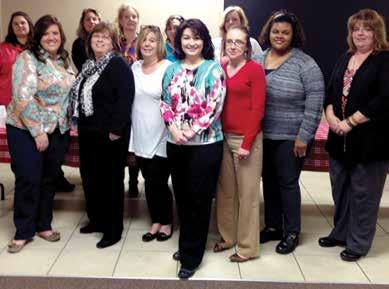
Fourteen new members signed up at the Child Development Services Agency (CDSA) district staff meeting on Feb 28 including employees from Cabarrus, Iredell, Rowan and Union counties.
PHOTO SUBMITTED BY STEVE LAWSON
PHOTO SUBMITTED BY JOHNNY DAVISON




1621 Midtown Place Raleigh, NC 27609
SEANC Stands Up for Children and Families
By Matthew whittle SEANC Communications Specialist
SEANC is fighting the decision to consolidate four of the state’s 16 Children’s Development Service Agencies (CDSA) in eastern North Carolina.
CDSAs exist to provide support and services to children with developmental delays and disabilities and their families, through age three. Among the services the agencies provide are service coordination, physical, occupational and speech therapy, as well as family support.
The decision to consolidate the four agencies into one was made after the Department of Health and Human Services (DHHS) was ordered in the biennial budget last year to reduce its spending by $8 million in 2013-14 and $10 million in 2014-15.
To reach that goal, DHHS decided to consolidate the Rocky Mount, New

Bern and Cape Fear agencies into one based out of Greenville at East Carolina University.
Under the current plan, there will be a reduction-in-force of at least 173 positions at the Rocky Mount, New Bern and Cape Fear agencies. And while ECU is scheduled to create 150 new positions, there have been no guarantees given to those RIF’d employees that they will be hired or even considered by ECU. Furthermore, there is no guarantee that ECU will hire workers with the same skill sets or at the same salary.
SEANC’s concern is not only for the unfair treatment of the affected state employees who have dedicated their lives to serving these children, but also for those children and their families who are now faced with a severe interruption in their continuity of care.
“These employees have devoted their lives and their careers to serving these children and their families,” said SEANC health care lobbyist Chuck Stone. “They deserve better treatment from the state than they are receiving,” Stone said. “But as much as being told their services are no longer welcome hurts the employees, this sort of disruption in care will hurt the children and their families even more.”
The layoffs are expected to begin toward the end of the fiscal year, and SEANC will continue to fight against this short-sighted decision.
mwhittle@seanc.org; Twitter @mwwhittle