
At Seabury Hall, learning is rooted in purpose, reflection, and community. As a school, we value the opportunity to continually examine who we are and who we aspire to be through an inclusive, schoolwide visioning process that supports a collaborative, innovative, and sustainable future, for today, for tomorrow, and for a lifetime.
Guided by Vision 2030, Seabury Hall builds on nearly six decades of excellence by engaging students, faculty, families, and alumni in thoughtful conversation about growth, innovation, and opportunity. Our academic program reflects a deep commitment to responsive teaching and learning, led by inspired educators who embrace best practices, emerging technologies, and evolving approaches to assessment and deeper learning. We believe rigor and innovation are not competing values, but complementary forces that strengthen college preparation, including Advanced Placement studies, interdisciplinary exploration, and student-centered design.
Equally important is our belief that education extends beyond the classroom. Advisory, community service leadership, wellness, and experiential learning are essential components of the Seabury Hall experience. Maui is our campus, and through programs such as Winterim, off-campus learning, and independent study opportunities, students are encouraged to engage deeply with place, culture, and community while developing independence, leadership, and essential life skills.
This course catalog reflects our commitment to educating the whole student, intellectually, creatively, and ethically, while preparing Spartans to thrive in a rapidly changing world and to contribute meaningfully to the communities they will serve.
Founded in 1964 as an Episcopal boarding school for girls, Seabury Hall today is a coeducational independent day school. The student body reflects Hawaiiʻs ethnic, cultural, and socio-economic diversity from all faiths and belief systems. Seabury Hall is Hawaii’s only Malone Family Foundation School.
Seabury Hall inspires a high standard of academic achievement through a balanced program nurturing respect and dignity of character rooted in our school and spiritual values.
Empowerment | Passion | Integrity | Curiosity
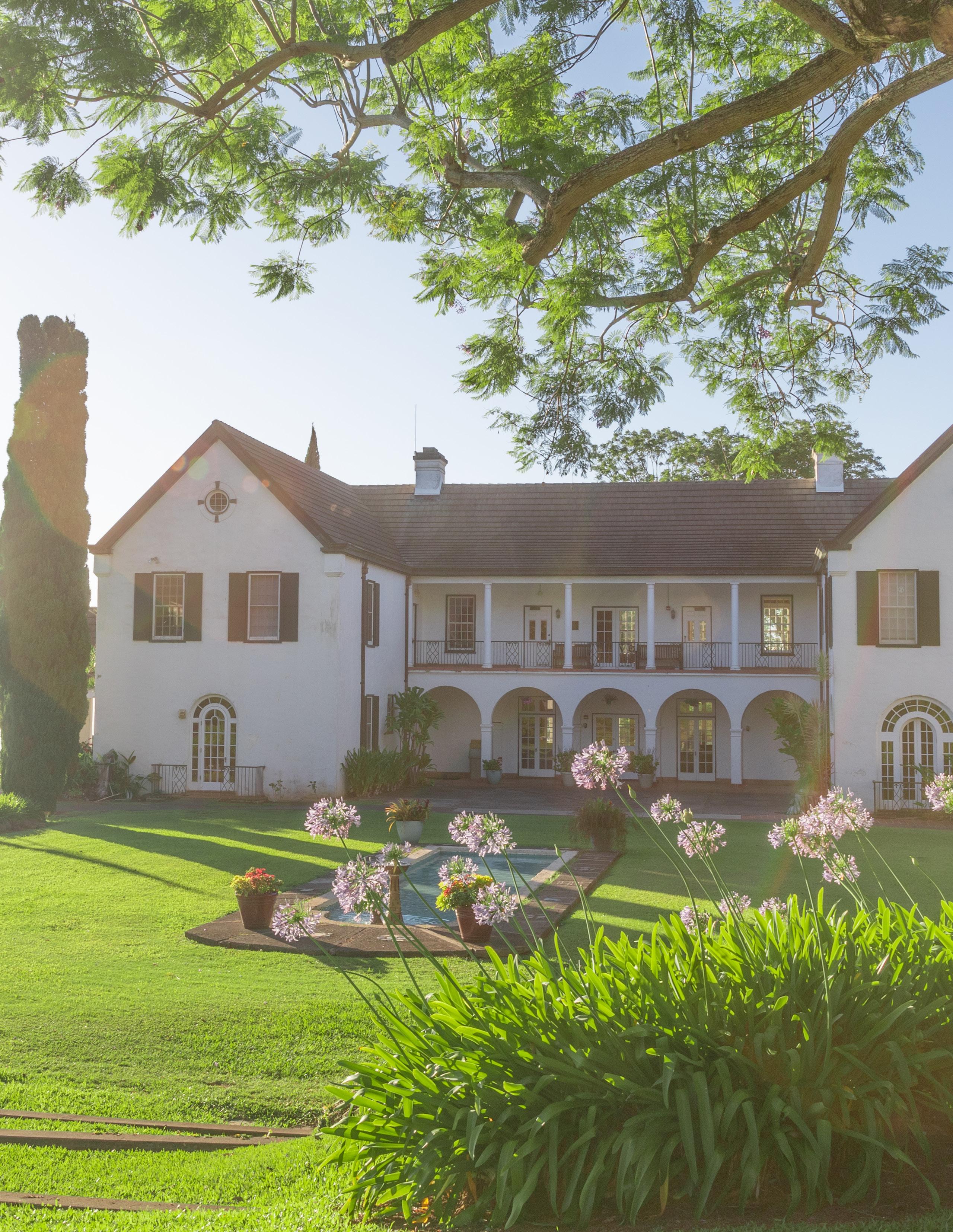
Seabury Hall is an independent, co-educational, college preparatory school affiliated with the Episcopal Church that welcomes all faiths and belief systems.

FEBRUARY
OCTOBER
Festival (1/2 Day)
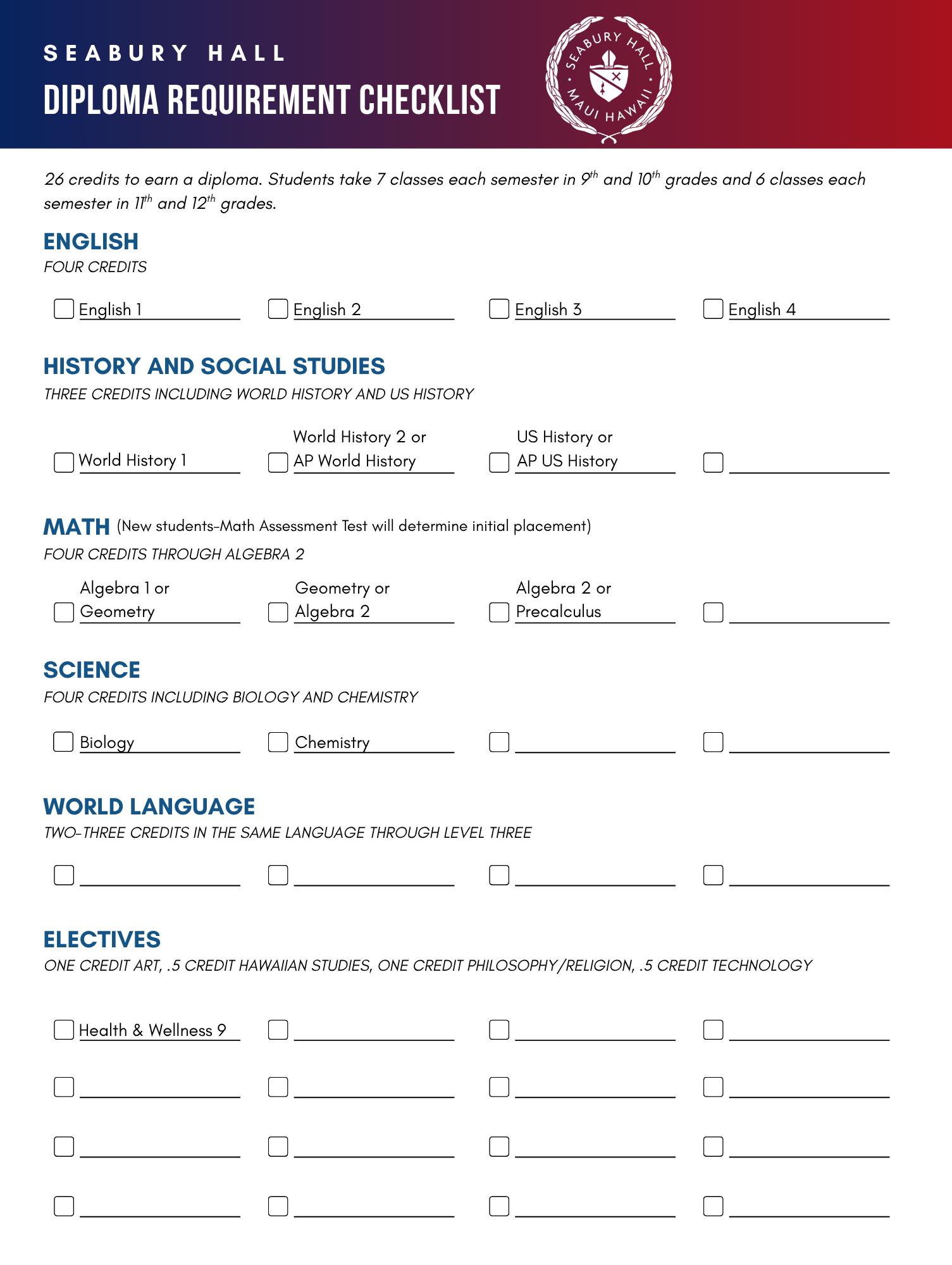
To earn a Seabury Hall diploma, students must obtain at least 26 credits. Each semester a student must carry a minimum of six classes (not including Physical Education), including a minimum of four classes in the following departments: English, History & Social Studies, Mathematics, Religion & Philosophy, Science, World Language, and Advanced Placement courses.
A Seabury Hall diploma indicates successful completion of four years of a planned high school experience. A credit is equal to one year-long course or two semester-long courses.
English: 4 credits
Required courses: English 1, English 2, English 3, English 4
History & Social Studies: 3 credits
Required courses: World History 1, World History 2 or AP World History, US History or AP US History
Math: 4 credits
Required courses - must complete through Algebra 2
Science: 4 credits
Required courses - Biology, Chemistry
World Language: 2-3 credits
Required courses - must complete through Level 3
Technology & Engineering: 0.5 credit
Fine & Performing Arts: 1 credit
Hawaiian Studies: 0.5 credit
Electives: 3 credits
Philosophy & Religion: 1 credit
Health & Wellness: 0.5 credit in the 9th grade
AP Capstone
• AP Seminar (1) - Grades 10, 11
• AP Research (1) - Grades 11, 12
Community Service Leadership (required)
English (4 credits required)
• English 1 (1) - Grade 9
• English 2 (1) - Grade 10
• English 3 (1) - Grade 11
• AP English Language & Composition (.5) – Spring - Grade 11
• English 4 (1) - Grade 12
• AP English Literature & Composition (.5) – Spring - Grade 12
Fine & Performing Arts (1 credit required)
• AP Art & Design (1) - Grade 12
• Art History 1 (.5) - Grades 10, 11, 12 (Fall)
• Art History 2 (.5) - Grades 10, 11, 12 (Spring)
• Creative Photography & Digital Art (.5) - Grades 9, 10, 11, 12
• Design 1 & 2 (.5) - Grades 9, 10, 11, 12
• Digital Art Lab (.5) - Grades 9, 10, 11, 12
• Digital Media (.5) - Grades 9, 10, 11, 12
• Drawing 1 & 2 (.5) - Grades 9, 10, 11, 12
• Painting 1 & 2 (.5) - Grades 9, 10, 11, 12
• Printmaking: Typography & Pattern Design (.5) - Grades 9-12
• Sculpture & Kinetic Creations (.5) - Grades 9, 10, 11, 12
• Video Production: Film & Narrative Media (.5) - Grades 9-12
• Yearbook (.5) - Grades 9, 10, 11, 12
• Acting (.5) - Grades 9, 10, 11, 12
• AP Music Theory (1) - Grades 10, 11, 12
• Ballet 1-2 (.5) - Grades 9, 10, 11, 12
• Band (.5) - Grades 9, 10, 11, 12
• Chorus (.5) - Grades 9, 10, 11, 12
• Costume Design (.5) - Grades 9, 10, 11, 12
• Creative Writing (.5) - Grades 9, 10, 11, 12 (Spring)
• Dance 1-2 (.5) - Grades 9, 10, 11, 12
• Music Theater (.5) - Grades 9, 10, 11, 12
• Stagecraft & Design (.5) - Grades 9, 10, 11, 12 (Fall)
• Theater Tech (.5) - Grades 9, 10, 11, 12
• Ukulele (.5) - Grades 9, 10, 11, 12 Hawaiian Studies (.5 credit required)
• Hana No‘eau (.5) - Grades 9, 10, 11, 12 (Fall / Spring)
• Hawaiian Ensemble (.5) - Grades 9, 10, 11, 12 (Fall / Spring)
• Hula (.5) - Grades 9, 10, 11, 12 (Fall / Spring)
• Lei Pāpahi (.5) - Grades 9, 10, 11, 12 (Fall / Spring)
Health and Wellness (.5 credit required)
• Health & Wellness 9 - Grade 9
History and Social Studies (3 credits required)
• World History 1 (1) - Grade 9
• World History 2 or AP World History (1) - Grade 10
• US History or AP US History (1) - Grade 11
• Psychology (1) - Grades 11, 12
• AP Psychology (1) - Grades 11, 12
• US Government (.5) - Grades 11, 12 (Fall)
• AP US Government & Politics (.5) - Grades 11, 12 (Fall)
• Economics (.5) - Grades 11, 12 (Spring)
• AP Microeconomics (.5) - Grades 11, 12 (Spring)
• AP European History (1) - Grades 11, 12
• Art History 1 (.5) - Grades 10, 11, 12 (Fall)
• Art History 2 (.5) - Grades 10, 11, 12 (Spring)
Mathematics (4 credits through Algebra 2 required)
• Algebra 1 (1) - Grade 9
• Geometry (1) - Grades 9, 10
• Algebra 2 (1) - Grades 9, 10, 11
• Algebra 2 with Trigonometry 1 (1) - Grades 9, 10, 11
• Precalculus (1) - Grades 10, 11, 12
• Introductory Calculus (1) - Grades 11, 12
• AP Precalculus (1) - Grades 11, 12
• Statistics (1) - Grades 11, 12
• AP Statistics (1) - Grades 11, 12
• AP Calculus AB (1) - Grades 11, 12
• AP Calculus BC (1) - Grades 11, 12
Philosophy and Religion (1 credit required)
• Philosophy 1: Essentials (.5) - Grades 9, 10
• Philosophy 2: Journey to Self (.5) - Grades 11, 12
• Philosophy 3: Power & Personhood (.5) - Grades 11, 12
• World Religion 1 (.5) - Grades 9, 10
• World Religion 2 (.5) - Grades 11, 12
Physical Education and Athletics (2 credits required)
• Ballet 3-4 (Fall, Winter, Spring)
• Ballet 5-6 (Fall, Winter, Spring)
• Modern & Jazz Dance 3 & 4 (Fall, Winter, Spring)
• Modern & Jazz Dance 5 & 6: Adv. Training (Fall, Winter, Spring)
• Strength and Conditioning (Fall, Winter, Spring)
• Independent PE
• Sports (Fall, Winter, Spring) Fall: Air Riflery, Cross Country, Football, Girls Volleyball Winter: Basketball, Paddling, Soccer, Swimming & Diving Spring: Baseball, Boys Volleyball, Golf, Surfing, Tennis, Track & Field
Science (4 credits required)
• Biology (1) - Grade 9
• Chemistry (1) - Grade 10
• AP Biology (1) - Grades 11, 12
• AP Chemistry (1) - Grades 11, 12
• AP Environmental Science (1) - Grades 11, 12
• AP Physics 1 or Physics (1) - Grades 11, 12
• Anatomy & Physiology (1) - Grades 11, 12
• Conservation Science Hawai‘i (1) - Grades 11, 12
• Marine Science (1) - Grade 12
Technology & Engineering (.5 credit required)
• Aeronautical Engineering 1 (.5) - Grades 9, 10, 11, 12
• AP Computer Science Principles (1) - Grades 10, 11, 12
• Artificial Intelligence and Ethics (.5) - Grades 9, 10, 11, 12
• Data Science (1) - Grades 10, 11, 12
• Emerging Technologies: Arduino, Cad, Fabrication (.5) - Grades 9, 10, 11, 12
• Engineering (1) - Grades 11, 12
• Entrepreneurship & Business Fundamentals (.5) - Grades 9-12
• Financial Literacy - Grades 9, 10, 11, 12 (.5)
• Geographical Information Systems & Drone Mapping (.5) - Grades 9, 10, 11, 12
World Languages (2 credits through Level 3 required)
• Hawaiian 1 (1) - Grades 9, 10, 11, 12
• Hawaiian 2 (1) - Grades 9, 10, 11, 12
• Hawaiian 3 (1) - Grades 9, 10, 11, 12
• Hawaiian 4 (1) - Grades 9, 10, 11, 12
• Japanese 1 (1) - Grades 9, 10, 11, 12
• Japanese 2 (1) - Grades 9, 10, 11, 12
• Japanese 3 (1) - Grades 9, 10, 11, 12
• Japanese 4 (1) - Grades 9, 10, 11, 12
• Spanish 1 (1) - Grades 9, 10, 11, 12
• Spanish 2 (1) - Grades 9, 10, 11, 12
• Spanish 3 (1) - Grades 9, 10, 11, 12
• Spanish 4 (1) - Grades 9, 10, 11, 12
• AP Spanish Language (1) - Grades 11, 12
Pre-AP Courses are grade-level instructional programs designed to provide all students with the foundational skills necessary for success in Advanced Placement (AP) coursework and college. Rather than focusing on a high volume of content, these courses emphasize deep mastery of core concepts through critical thinking, evidence-based writing, and collaborative analysis. By engaging with high-quality, standardized materials in the 9th and 10th grades, students build the academic confidence and rigorous habits of mind required to tackle complex challenges across all disciplines.
Advanced Placement (AP) courses are college-level programs offered in high school that provide students the opportunity to earn university credit and placement through rigorous, standardized curricula and end-of-year exams. These courses challenge students to move beyond surface-level learning by diving deep into specialized subjects, fostering the high-level analytical, research, and writing skills required at the collegiate level. Enrolling in AP courses allows students to demonstrate academic persistence to college admissions boards and in some cases potentially saving on future tuition costs by mastering university standard material.
AP Capstone™ is an innovative diploma program from College Board that develops students’ independent research, collaborative teamwork, and communication skills, abilities that are increasingly valued by colleges. Built on the foundation of two AP® courses, AP Seminar and AP Research, the program is designed to complement and enhance the in-depth, discipline-specific study offered in other AP courses.
• Students who earn scores of 3 or higher in AP Seminar and AP Research without four additional AP Exams will receive the AP Seminar and Research Certificate™.
• Students who earn scores of 3 or higher in AP Seminar and AP Research plusfouradditionalAPExams of their choice will receive the APCapstoneDiploma™
AP Capstone™ and Pre-AP are College Board programs focused on building academic rigor. Pre-AP courses are not traditional advanced classes; instead, they emphasize a curriculum that prepares all students for the rigor of AP and collegelevel work. By focusing on fewer, critical concepts, Pre-AP fosters deeper understanding and skill development across subjects.
Grades 10–11 | 1 Credit | AP Course
In AP Seminar, students investigate real-world issues from multiple perspectives, gathering and analyzing information from various sources in order to develop credible and valid evidence-based arguments. Students learn to synthesize information from multiple sources, develop their own perspectives in written essays, and design and deliver oral and visual presentations, both individually and as part of a team. Ultimately, the course aims to equip students with the power to analyze and evaluate information with accuracy and precision in order to craft and communicate evidencebased arguments.
What Students Will Explore:
• Team research projects
• Individual research-based essays
• Argument construction and defense
• Academic citation practices
• Formal presentations
• AP exam preparation
Grades 11–12 | 1 Credit | AP Course
Prerequisite: AP Seminar
AP Research allows students to deeply explore an academic topic, problem, issue, or idea of individual interest. Students design, plan, and implement a yearlong investigation to address a research question. Through this inquiry, they further the skills they acquired in the AP Seminar course by learning research methodology, employing ethical research practices, and accessing, analyzing, and synthesizing information. Students reflect on their skill development, document their processes, and curate the artifacts of their scholarly work through a process and reflection portfolio.
What Students Will Explore:
• Research question development
• Methodology design
• Data collection and analysis
• Academic paper writing
• Oral defense presentation
• Scholarly source evaluation
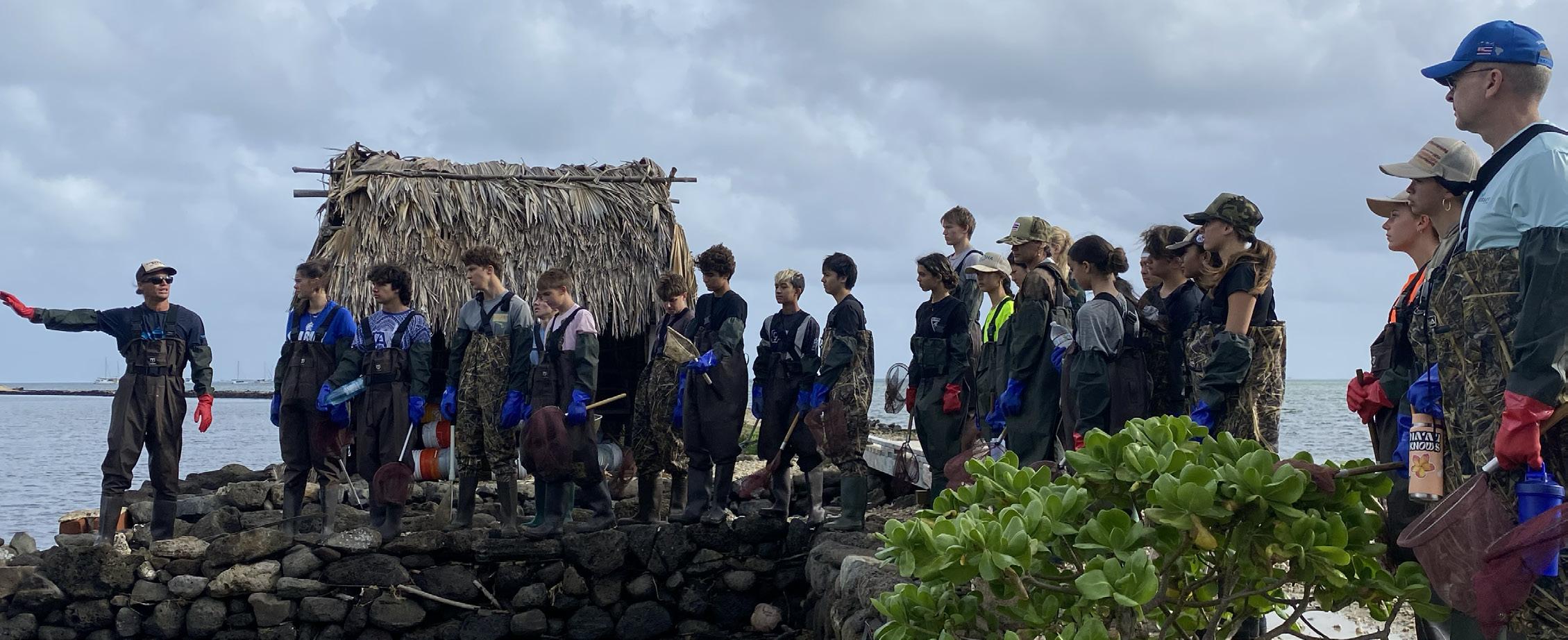
Seabury Hall’s Community Service Leadership and Entrepreneurship offerings reflect the school’s commitment to kuleana (responsibility), innovation, and responsible citizenship. These programs cultivate initiative, ethical decisionmaking, and real-world engagement, empowering students to apply classroom learning to authentic community and business challenges.
COMMUNITY SERVICE LEADERSHIP
Grades 9–12 | Hours Vary Depending Upon Grade Level
The Upper School Community Service program emphasizes sustained, meaningful service engagement aligned with students’ interests and talents. Students are encouraged to take leadership roles and initiate projects that address authentic community needs. Through structured reflection and mentorship, students deepen their understanding of ethical responsibility, collaboration, and the long-term impact of service.
What Students Will Explore:
• Annual service hour requirement
• Leadership project opportunities
• Community partnership collaboration
• Service reflection essays
• Event planning and coordination
• Documentation for transcript recognition
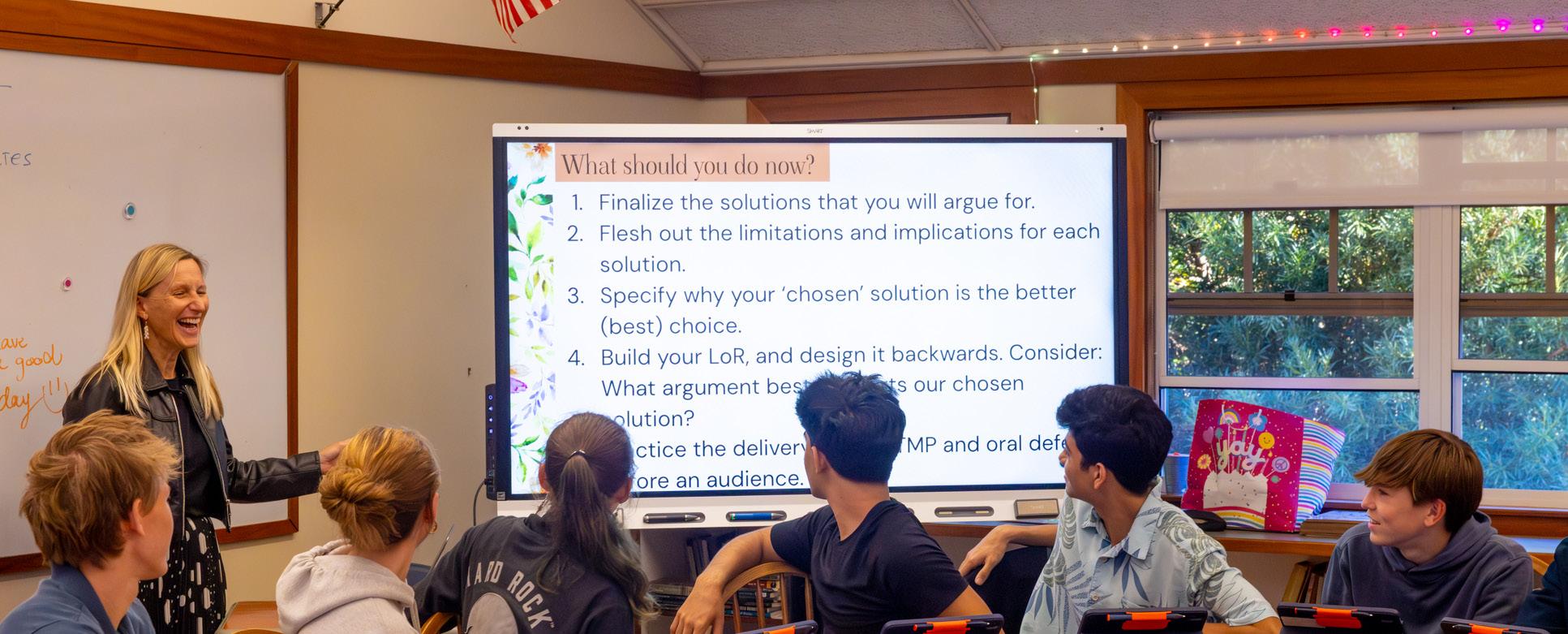
The English Department at Seabury Hall cultivates analytical thinkers, articulate writers, reflective readers, and compassionate citizens. Across Middle and Upper School, students engage deeply with literature, nonfiction, rhetoric, and research while developing clarity, precision, and voice in their writing. Courses emphasize close reading, evidencebased argumentation, creative expression, and the study of language as a tool for understanding both self and society.
ENGLISH 1
Grade 9 | 1 Credit
English 1 builds foundational habits of close reading and analytical writing. Students examine literary and nonfiction texts with attention to detail, structure, and language. Writing instruction emphasizes sentencelevel precision, paragraph coherence, and structured argumentation as students develop analytical and creative compositions.
What Students Will Explore:
• Close textual analysis
• Evidence-based essays
• Creative writing exercises
• Vocabulary and rhetorical devices
• Revision and editing workshops
ENGLISH 2
Grade 10 | 1 Credit
English 2 expands analytical rigor by engaging students with increasingly complex texts. Students examine how authors manipulate language, structure, and genre conventions to shape meaning. Students write nuanced analytical essays and develop stronger command of thesis development, organization, and stylistic control.
What Students Will Explore:
• Advanced literary analysis
• Analytical and argumentative essays
• Rhetorical strategy evaluation
• Structured revision process
• Preparation for AP-level reading
ENGLISH 3
Grade 11 | 1 Credit
English 3 focuses on rhetoric and contextual analysis. Students examine how audience, purpose, and context shape texts across disciplines. Students strengthen argumentative writing and rhetorical analysis skills in preparation for advanced academic coursework.
What Students Will Explore:
• Rhetorical analysis of nonfiction
• Contextual literary interpretation
• Evidence-based argument essays
• Evidence-based argument presentations
• Research integration
• Practice with peer and self review
ENGLISH 4
Grade 12 | 1 Credit
English 4 centers on literary analysis through multiple critical lenses. Students examine fiction, drama, and poetry while exploring themes of identity, power, and human experience. Students compose analytical, creative, and reflective writing, demonstrating mature voice and interpretive depth.
What Students Will Explore:
• Critical lens analysis
• Literary research papers
• Creative reinterpretations
• Seminar-style discussions
• Independent reading projects
AP ENGLISH LANGUAGE & COMPOSITION
Grade 11 | 0.5 Credit | Spring | AP Course
AP English Language & Composition provides a collegelevel study of rhetoric and argument. Students analyze nonfiction texts for purpose, audience, and persuasive strategies. The course includes extensive timed writing practice and AP exam preparation, strengthening analytical precision and compositional fluency.
What Students Will Explore:
• Synthesis essays
• Rhetorical analysis essays
• Argument essays
• Timed writing practice
• Mock AP examinations
AP ENGLISH LITERATURE & COMPOSITION
Grade 12 | 0.5 Credit | Spring | AP Course
AP English Literature provides a rigorous, college-level examination of literary texts across genres. Students analyze tone, symbolism, structure, and thematic complexity. The course emphasizes AP-style timed writing, literary interpretation, and preparation for the AP examination.
What Students Will Explore:
• Poetry analysis essays
• Prose fiction analysis
• Timed literary arguments
• Mock AP exams
• Comparative text studies
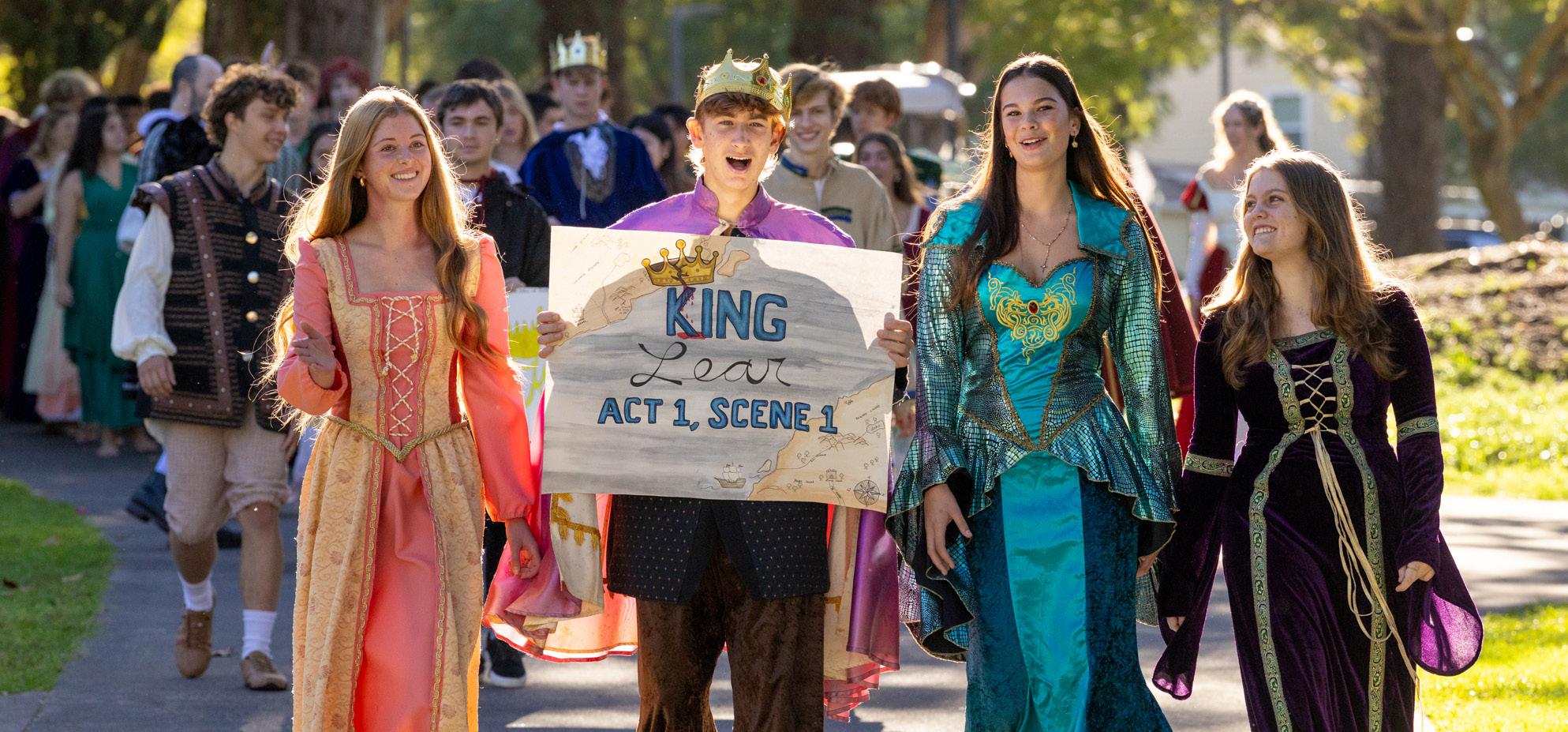
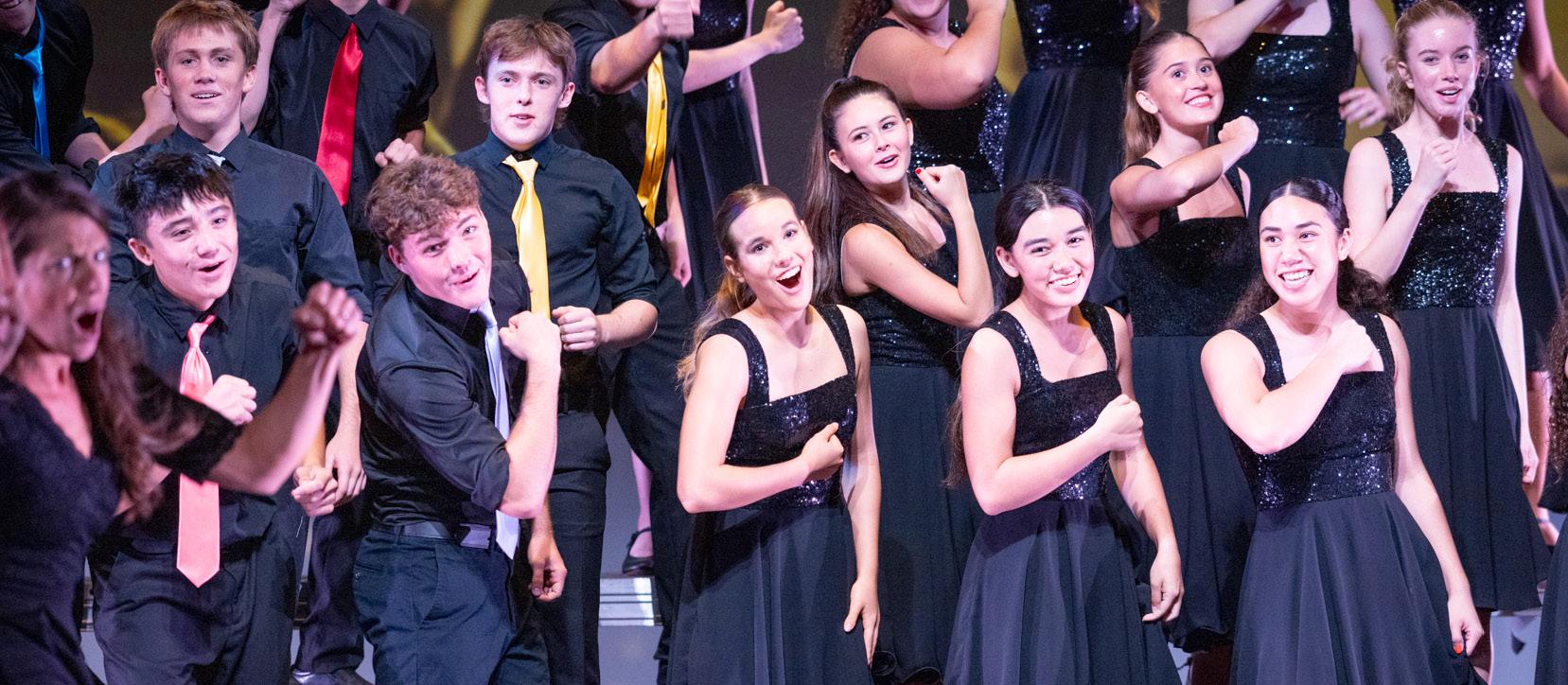
The Fine & Performing Arts Department at Seabury Hall nurtures creativity, craftsmanship, discipline, and expressive voice across visual and performing arts. Students engage in studio practice, performance, critique, and reflection, developing both technical skill and artistic identity. From foundational Middle School experiences to advanced portfolio and performance work in Upper School, students explore art as a means of communication, cultural understanding, and personal discovery.
AP ART & DESIGN
Grades 12 | 1 Credit
AP Art and Design is a college-level studio course centered on sustained investigation and advanced portfolio development. Students identify a personal artistic question and explore it deeply through a cohesive body of work. Emphasis is placed on experimentation, conceptual rigor, and technical mastery across Drawing, 2D Design, or 3D Design pathways.
Students refine their artistic voice while documenting process and reflecting on decisions through written commentary aligned with AP expectations. The course culminates in the submission of a College Board portfolio and public presentation of selected works.
What Students Will Explore:
• Development of a sustained artistic investigation
• Advanced technique and experimentation
• Cohesive portfolio production
• Written reflection on process and intention
• Formal and informal exhibition presentation
• Alignment with AP Creating, Presenting, Responding, and Connecting standards
• Critical feedback cycles and revision
CREATIVE PHOTOGRAPHY & DIGITAL ART
Grades 9–12 | 0.5 Credit
From DSLR to Lightroom This hybrid studio course uses photography as the primary source material for artistic creation. Using DSLR cameras, Lightroom, and Photoshop, students learn photography basics, lighting, and composition. The focus is on narrative and conceptual photo-art, blending captured images with digital manipulation.
What Students Will Explore:
• DSLR or mirrorless cameras using manual settings
• Composition, lighting, and storytelling techniques
• Edit and retouch images using digital tools such as Lightroom and Photoshop
• Create composites combining photography and digital illustration
• Build a cohesive digital art and photography portfolio
• Critique images using aesthetic and technical vocabulary
Grades 9–12 | 0.5 Credit | Spring
In this elective course, students explore the art of storytelling and self-expression through a variety of writing styles and genres. Through creative exercises, peer feedback, and discussions of published works, students develop their unique voice while learning how to craft engaging narratives and meaningful pieces of writing. This course welcomes writers of all experience levels and encourages imagination, experimentation, and creative growth.
What Students Will Explore:
• Writing in multiple genres, including fiction, poetry, memoir, and scriptwriting
• Developing compelling characters, settings, and plot structure
• Creative writing exercises designed to spark imagination
• Peer workshops and constructive feedback
• Reading and discussing works by notable authors
• Refining personal voice and storytelling style
DESIGN 1
Grades 9–12 | 0.5 Credit
Design 1 introduces students to the foundational elements and principles of visual design. Students explore composition, material selection, and creative problem solving across various media.
What Students Will Explore:
• Develop a sustained investigation based on a personal artistic question.
• Produce a portfolio showing advanced technique, experimentation, and concept development.
• Analyze and reflect on artistic decisions in written commentary.
• Present work in formal and informal exhibition contexts.
• Demonstrate mastery in creating, presenting, responding, and connecting aligned with AP Art expectations.
DESIGN 2
Grades 9–12 | 0.5 Credit
Prerequisite: Design 1
Design 2 builds on foundational skills and introduces more advanced conceptual projects. Students create cohesive thematic bodies of work integrating text and image.
Grades 9–12 | 0.5 Credit
Digital Art Lab is a studio-based course focused on mastering contemporary digital painting workflows used in concept art, illustration, and visual design industries. Students learn how professional artists create compelling imagery using layers, masks, blending modes, and nondestructive editing techniques. Emphasis is placed on composition, lighting, form, and color development within a fully digital environment.
Through structured studio practice and guided experimentation, students develop technical fluency with pressure-sensitive styluses, custom brush engines, and advanced software interfaces. Projects move from foundational studies in light and form to fully realized concept-driven artworks. Students build both artistic voice and professional workflow habits while producing a curated digital portfolio.
What Students Will Explore:
• Industry-standard digital painting workflows
• Non-destructive editing using layers and masks
• Advanced blending modes and lighting development
• Custom brush creation and stylus sensitivity control
• Concept art and character/environment design
• Global color adjustments and rapid digital iteration
• Professional file organization and export specifications
• Portfolio development and structured critique
Grades 9–12 | 0.5 Credit
Digital Media introduces students to professional visual communication strategies used in marketing, advertising, and media production. Students learn how layout, hierarchy, typography, and color, influence audience perception and message clarity.
Using industry-standard Adobe tools, students create branding systems, posters, logos, and digital campaigns. Emphasis is placed on iterative design, critique, and file preparation standards used in professional workflows. Students leave the course with a polished digital portfolio demonstrating conceptual growth and technical proficiency. What Students Will Explore:
• Design principles: layout, hierarchy, typography, and color
• Adobe Illustrator, Photoshop, and InDesign workflows
• Branding systems and visual identity development
• Professional file preparation and export standards
• Structured critique and revision cycles
• Marketing and visual storytelling strategies
• Portfolio development
Grades 9–12 | 0.5 Credit
Drawing 1 emphasizes observational skills and visual analysis through foundational drawing techniques. Students learn to ‘see’ through gesture, contour, and value studies.
What Students Will Explore:
• Demonstrate observational accuracy using line, value, proportion, and perspective.
• Explore expressive mark-making across dry and wet media.
• Apply structural analysis to anatomical, landscape, and object drawings.
• Revise artworks through critique and reflective processes.
• Produce expressive or conceptual artworks.
• Intermediate and Advanced: Develop a cohesive thematic drawing series showing progression.
Grades 9–12 | 0.5 Credit
Prerequisite: Drawing 1
Drawing 2 deepens technical and conceptual drawing skills with focus on figure studies. Students refine proportion, gesture, and advanced rendering techniques.
Grades 9–12 | 0.5 Credit
Prerequisite: Drawing 1
Painting 1 introduces watercolor and acrylic techniques while emphasizing color theory. Students create expressive works rooted in personal narrative.
What Students Will Explore:
• Apply color theory, composition, and paint-handling techniques
• Use acrylic, watercolor, oil, and mixed media
• Analyze painting across historical and contemporary contexts
• Revise work based on critique and formal analysis
• Produce expressive or representational works with intentional style
• Intermediate and Advanced: Develop a thematic painting series suitable for exhibition or portfolio development
Grades 9–12 | 0.5 Credit
Prerequisite: Painting 1
Painting 2 advances into oil painting and sophisticated conceptual development. Students analyze historical and contemporary works to inform their own artistic voice.
TYPOGRAPHY & PATTERN DESIGN
Grades 9–12 | 0.5 Credit
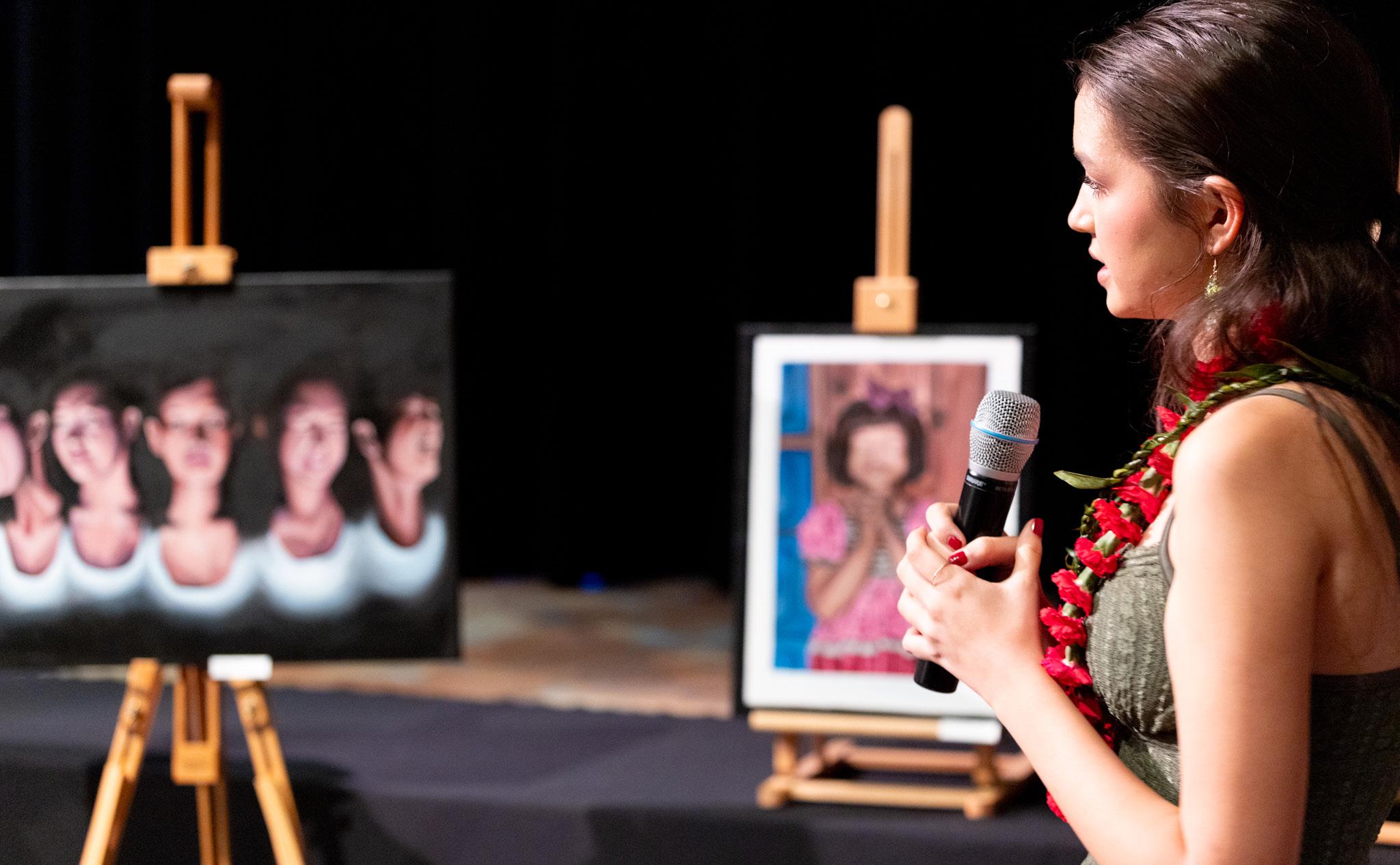
Printmaking: Typography and Pattern Design bridges traditional print processes with contemporary digital workflows. Students explore typography, visual rhythm, and pattern construction through carving, inking, and hybrid physical-digital methods. The course emphasizes both craftsmanship and innovation.
By transforming manual prints into high-resolution digital assets, students merge classical techniques with modern production tools. Cultural traditions in printmaking are studied and reinterpreted through contemporary design thinking, culminating in a cohesive collection of printed and digital works.
What Students Will Explore:
• Principles of typography and visual rhythm
• Traditional carving and inking methods
• Hybrid physical-digital workflow integration
• Color layering and compositional structure
• Cultural traditions in printmaking
• Digital asset development from physical originals
• Formal and conceptual critique
& KINETIC CREATIONS
Grades 9–12 | 0.5 Credit
Sculpture and Kinetic Creations explores three-dimensional art through traditional sculptural techniques and dynamic, movement-based forms. Students investigate additive, subtractive, and mixed-media construction methods while developing an understanding of balance, structure, and spatial design. The course emphasizes both craftsmanship and conceptual development.
As projects progress, students experiment with kinetic, mechanical, or digital elements to bring their sculptures to life. Through sketching, maquette construction, and prototyping, students refine ideas before producing final works. Documentation and reflection are central to the course, culminating in public or gallery-style exhibitions of finished pieces.
What Students Will Explore:
• Additive, subtractive, and mixed-media sculpture techniques
• Structural balance and engineering considerations
• Kinetic and mechanical integration
• Concept development through sketches and prototypes
• Process documentation and artist reflection
• Installation and public presentation strategies
• Critique focused on both technical and conceptual strength
Grades 9–12 | 0.5 Credit
Video Production introduces students to filmmaking as both artistic expression and technical craft. Students learn to write scripts, storyboard ideas, and plan productions that communicate clear narratives. The course balances film analysis with hands-on production experience.
Using professional equipment and editing software, students capture, edit, and refine video projects for authentic audiences. Emphasis is placed on collaboration, defined production roles, and post-production techniques that enhance narrative clarity.
What Students Will Explore:
• Scriptwriting and storyboarding
• Cinematography and audio capture techniques
• Editing with industry-standard software
• Color correction and audio engineering
• Title design and motion graphics
• Documentary and event-based production
• Collaborative production roles and workflow
Grades 9–12 | 0.5
Yearbook is a publication design and production course focused on visual storytelling and professional project management. Students document the school year through photography, interviews, writing, and layout design while working within industry-standard publication frameworks. The course emphasizes technical production, deadline management, and collaborative workflows. Students maintain consistent file organization and quality control standards to produce a polished final publication that reflects the school community.
What Students Will Explore:
• Publication layout and template management
• Photography and visual storytelling
• Interviewing and editorial writing
• File organization and production workflows
• Print specifications and quality control
• Deadline-driven project management
• Collaborative publishing practices
Grades 9–12 | 0.5 Credit
Acting explores character development and performance techniques through scene work and improvisation. Students develop presence, flexibility, and expressive range.
What Students Will Explore:
• Improvisation exercises
• Scene analysis
• Voice and movement training
• Fight choreography basics
• Performance critique
Grades 10–12 | 1 Credit | AP Course
AP Music Theory develops students’ ability to analyze and compose music at a college level. Students refine aural skills, sight-singing, and harmonic analysis in preparation for the AP exam.
What Students Will Explore:
• Chord structure and harmonic analysis
• Sight-singing and dictation
• Music composition exercises
• Score analysis
• AP exam preparation
Grades 9–12 | 0.5 Credit
This two-level introductory sequence immerses students in the traditional structure, discipline, and etiquette of a classical ballet class while building a strong technical foundation. Beginning with the “alphabet” of ballet, students focus on proper posture, turnout, and the essential positions of the feet and arms. Through consistent barre work and center practice, they develop the strength, coordination, and alignment necessary for both stability and grace.
As students progress, the curriculum emphasizes greater fluidity and the integration of more complex steps and movement combinations. Dancers begin to connect foundational technique to traveling steps, simple turns, and small jumps, while continuing to refine muscle memory, balance, and control.
What Students Will Explore:
• The five basic positions of the feet and arms, with increasing precision and clarity
• Fundamental and progressive barre exercises such as plié, tendu, and dégagé
• Correct postural alignment, turnout mechanics, and core engagement
• Development of balance and control through relevé and introductory pirouettes
• Small jumping sequences (petit allegro) with a focus on precision and timing
• Musical phrasing through both adagio and allegro work
Grades 9–12 | 0.5 Credit
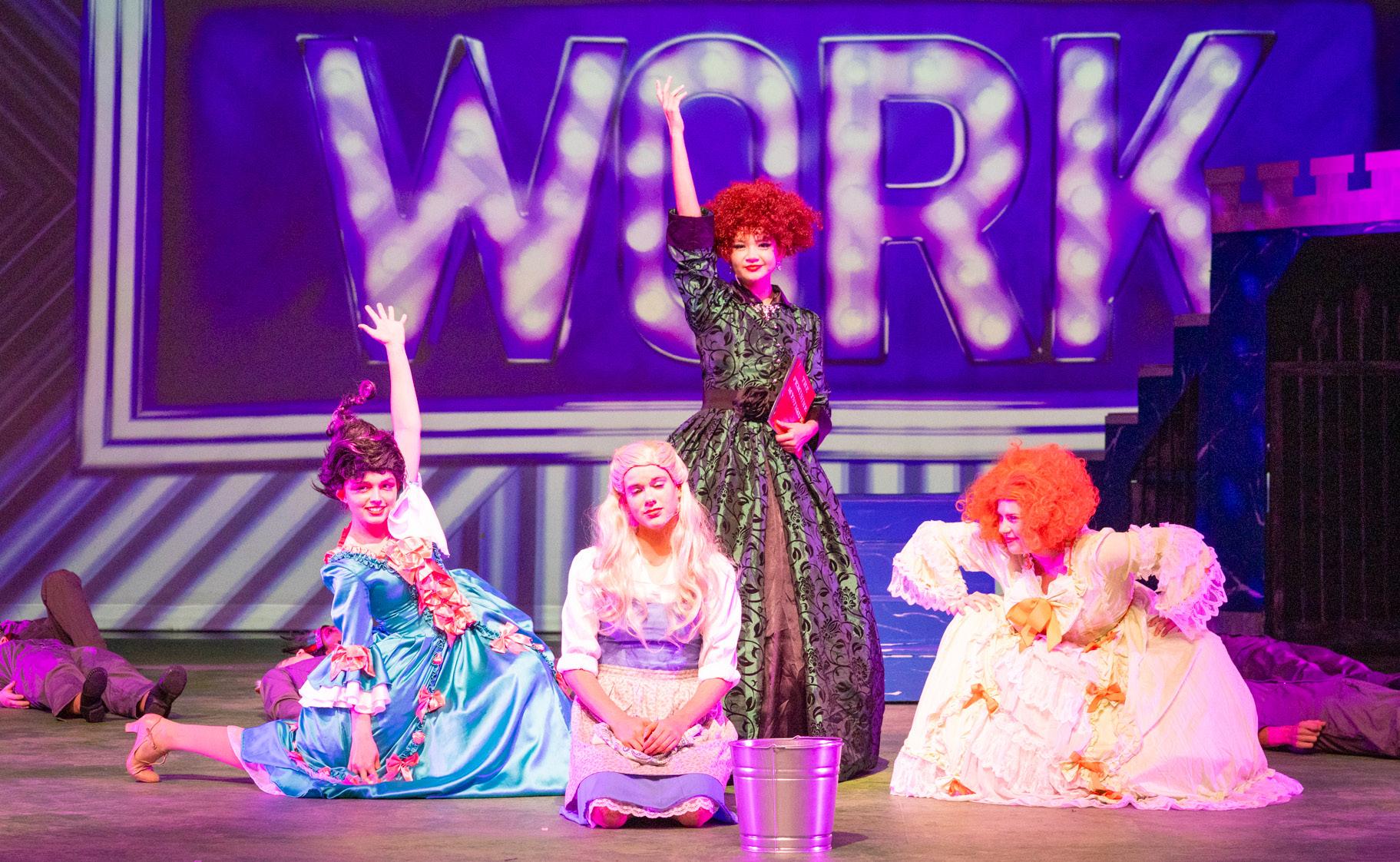
Band develops ensemble musicianship across woodwind, brass, percussion, and rhythm instruments. Students participate in performances and collaborative rehearsals throughout the year.
What Students Will Explore:
• Instrumental technique development
• Ensemble balance and tone
• Concert preparation
• Music interpretation
• Performance opportunities
CHORUS
Grades 9–12 | 0.5 Credit
Chorus emphasizes group singing and musical collaboration. Students develop vocal technique and performance confidence.
What Students Will Explore:
• Harmony and vocal blending
• Rhythm training
• Concert performance
• Movement and expression
• Collaborative rehearsal skills
Grades 9–12 | 0.5 Credit
Costume Design introduces students to theatrical costume construction and design concepts. Students learn sewing basics and explore how costume supports storytelling and character development.
What Students Will Explore:
• Costume chart creation
• Color theory in design
• Measurements and fittings
• Basic sewing skills
• Script and character analysis
Grades 9–12 | 0.5
This two-level introductory sequence builds a strong foundation in movement by blending the technical principles of Modern and Jazz dance with an evolving focus on performance and collaboration. Students develop core strength, flexibility, coordination, and physical endurance while learning to navigate studio space with confidence and clarity. Emphasis is placed on fundamental skills to more complex movement patterns and sequences.
As the course advances, students deepen their technical precision and begin to explore choreography, movement mechanics, and creative expression. Through both individual practice and collaborative work, including introductory partnering, students gain experience in teamwork, spatial awareness, and artistic decision-making.
What Students Will Explore:
• Fundamental and intermediate vocabulary and terminology of Modern, Jazz, and Contemporary dance
• Principles of proper body placement, alignment, and functional stretching
• Rhythmic structures, timing, and musicality in increasingly complex combinations
• Coordination, balance, and control through floor work and across-the-floor progressions
• Teamwork and spatial responsibility through introductory partnering and collaborative exercises
MUSIC THEATER
Grades 9–12 | 0.5 Credit
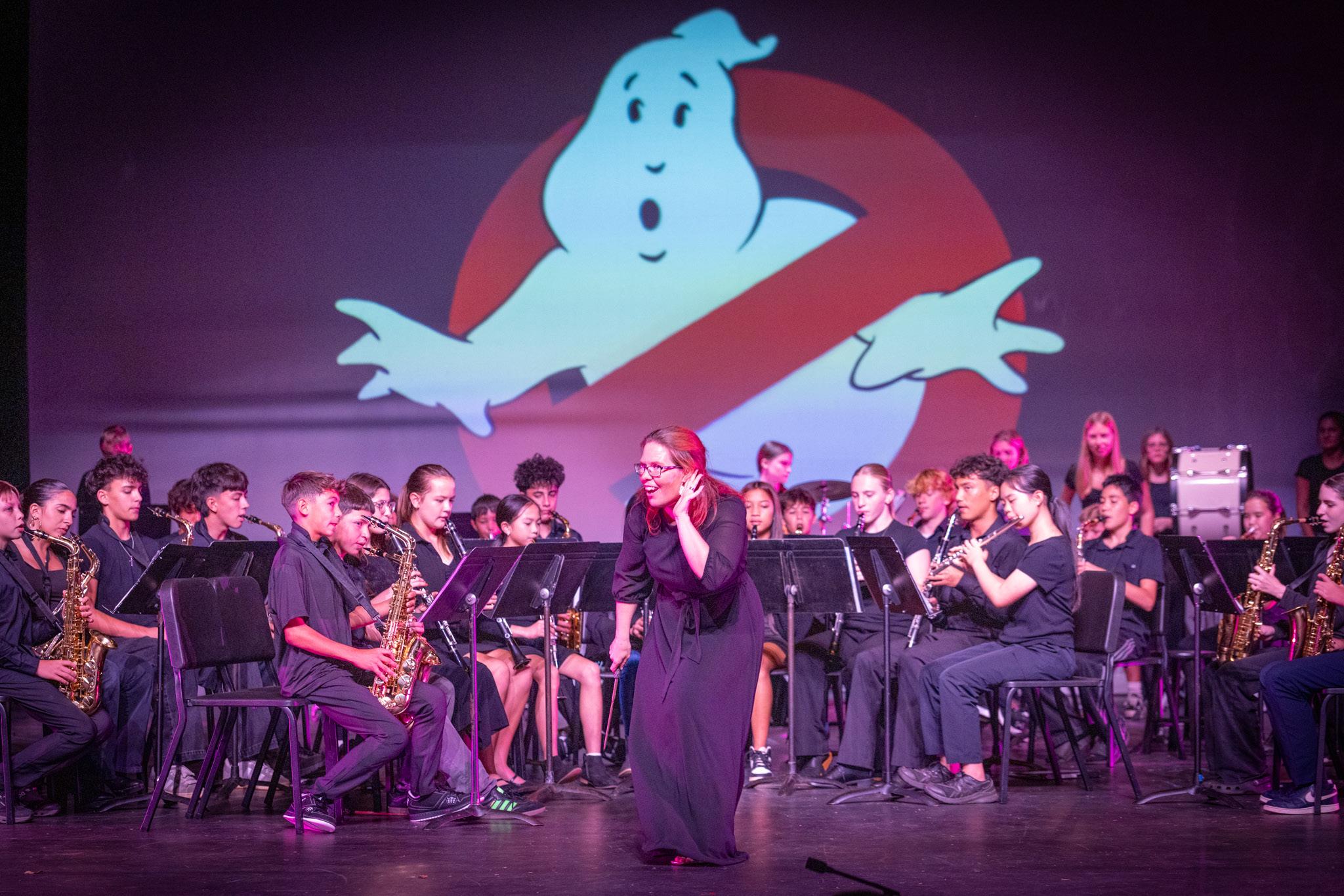
This dynamic, performance-based course introduces high school students to the collaborative art of musical theater, culminating in a full-scale staged production. Students develop skills in acting, singing, and movement while gaining an understanding of the rehearsal process and the dedication required to bring a musical to life. Emphasis is placed on storytelling, character development, and ensemble work, as students learn to integrate vocal technique, physical expression, and emotional authenticity into their performances.
Throughout the course, students participate in auditions, rehearsals, and production preparation, experiencing the structure and expectations of a working theater environment. We hope to foster a deeper appreciation for the art form and the importance of teamwork and responsibility.
What Students Will Explore:
• Acting techniques for character development and storytelling
• Vocal production, projection, and musical interpretation
• Choreography and movement for the stage
• Ensemble building and collaborative performance practices
• Basic stagecraft, including blocking, staging, and theatrical terminology
• The full production process, culminating in a live musical performance
STAGECRAFT & DESIGN
Grades 9–12 | 0.5 Credit | Fall
Stagecraft teaches practical theater production skills including carpentry and scenic design. Students support productions while learning safe technical practices.
What Students Will Explore:
• Set construction
• Scenic painting
• Tool safety
• Perspective drawing
• Production teamwork
This semester-long course introduces students to the creative and technical process of designing lighting, sound, and projections for live theater. Students collaborate on active productions while learning how to program lighting boards, shape soundscapes, and integrate visual media into performance. Through hands-on projects and guidance from guest professionals in projection, rigging, sound engineering, and electronic music composition, students gain practical experience in bringing stories to life through design.
What Students Will Explore:
• Fundamentals of theatrical lighting design and programming
• Sound design and mixing for live performance
• Projection mapping and media integration
• Basics of rigging and stage safety
• Electronic music composition for theater
• Script analysis from a designer’s perspective
• Collaboration with directors, actors, and production teams
• Real-world problem solving during technical rehearsals
Grades 9–12 | 0.5 Credit
This semester-long course introduces students to foundational ukulele techniques while exploring both Hawaiian and contemporary music. Students develop strumming and picking skills, build confidence in performance, and deepen their understanding of music theory. Along the way, they learn to interpret, arrange, and compose music, culminating in original works and live performances for classmates and the broader student body. This course is designed for beginning and intermediate players.
What Students Will Explore:
• Basic strumming and fingerpicking techniques
• Hawaiian and contemporary repertoire
• Chords and chord theory
• Scales and transposition
• Reading and interpreting tablature
• Song structure and arrangement
• Original songwriting and composition
• Performance skills and stage presence
The Hawaiian Studies Department at Seabury Hall centers ʻike (knowledge), kuleana (responsibility), and pilina (relationship) as students engage deeply with Hawaiian language, culture, arts, and land-based practices. Courses cultivate cultural literacy, respect for protocol, and meaningful connection to place. Students experience Hawaiian Studies not only as academic content but as lived practice rooted in community, stewardship, and identity.
Grades 9–12 | 0.5 Credit
Hana Noʻeau immerses students in traditional Hawaiian arts and practices, emphasizing craftsmanship, cultural protocol, and hands-on learning rooted in ʻike kūpuna (ancestral knowledge). Students engage in culturally intensive projects that connect material cultural with language, implement making, along with learning the process to make an imu. (Hawaiian underground oven).
What Students Will Explore:
• Oli Kahea (Entrance Chant) memorization and practice
• Imu making
• Hawaiian terminology integration
• Implement making
• Power tool safety and usage
• Cultural Practice
HAWAIIAN ENSEMBLE
Grades 9–12 | 0.5 Credit
Hawaiian Ensemble replicates the experience of performing in a professional Hawaiian music group. Students develop musicianship while honoring the cultural roots of Hawaiian music traditions. The course emphasizes performance discipline, collaboration, and cultural authenticity. Certain students may be asked to perform hula and to follow all cultural protocols belonging to their hālau.
What Students Will Explore:
• Playing and singing Hawaiian mele
• Haku mele (songwriting)
• Instrument soloing techniques
• Performance etiquette
• Sound equipment setup and management
• Collaborative ensemble rehearsal
Grades 9–12 | 0.5
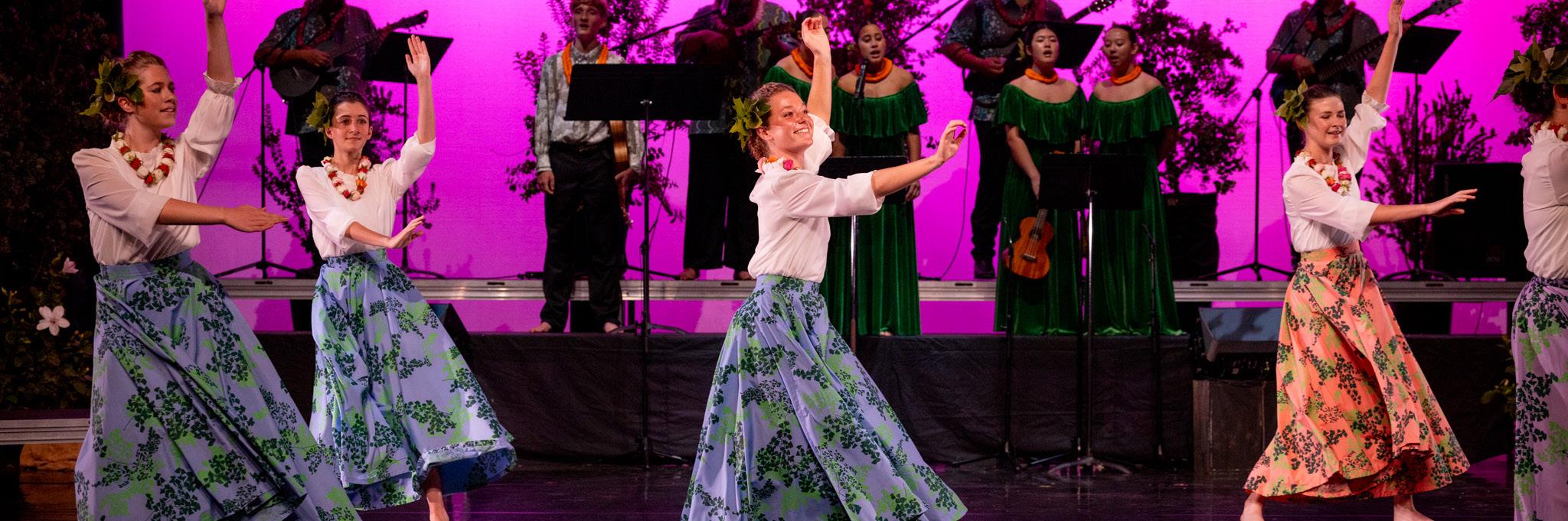
Upper School Hula advances students’ technique and cultural knowledge in both kahiko and ʻauana traditions. Students refine choreography while deepening their understanding of historical and cultural context. The course emphasizes discipline, strength, and expressive storytelling through movement.
What Students Will Explore:
• Advanced choreography sequences
• Interpretation of traditional chants
• Cultural and historical research integration
• Performance preparation
• Embodied storytelling techniques
Grades 9–12 | 0.5
Lei Pāpahi deepens students’ knowledge of lei-making traditions and cultural protocol. Students will be expected to identify and explain the cultural significance of native and non-native plants and lei material The course emphasizes cultural rigor, correct gathering practices, chant and stewardship of natural materials. Students are expected to gather/procure their own lei material.
What Students Will Explore:
• Hilo, wili, haku, hili, kui, techniques
• Culturally appropriate gathering practices
• Lei care and presentation protocol
• Oli and mele connected to lei traditions
• Botanical knowledge of native materials
• Integration of Hawaiian vocabulary
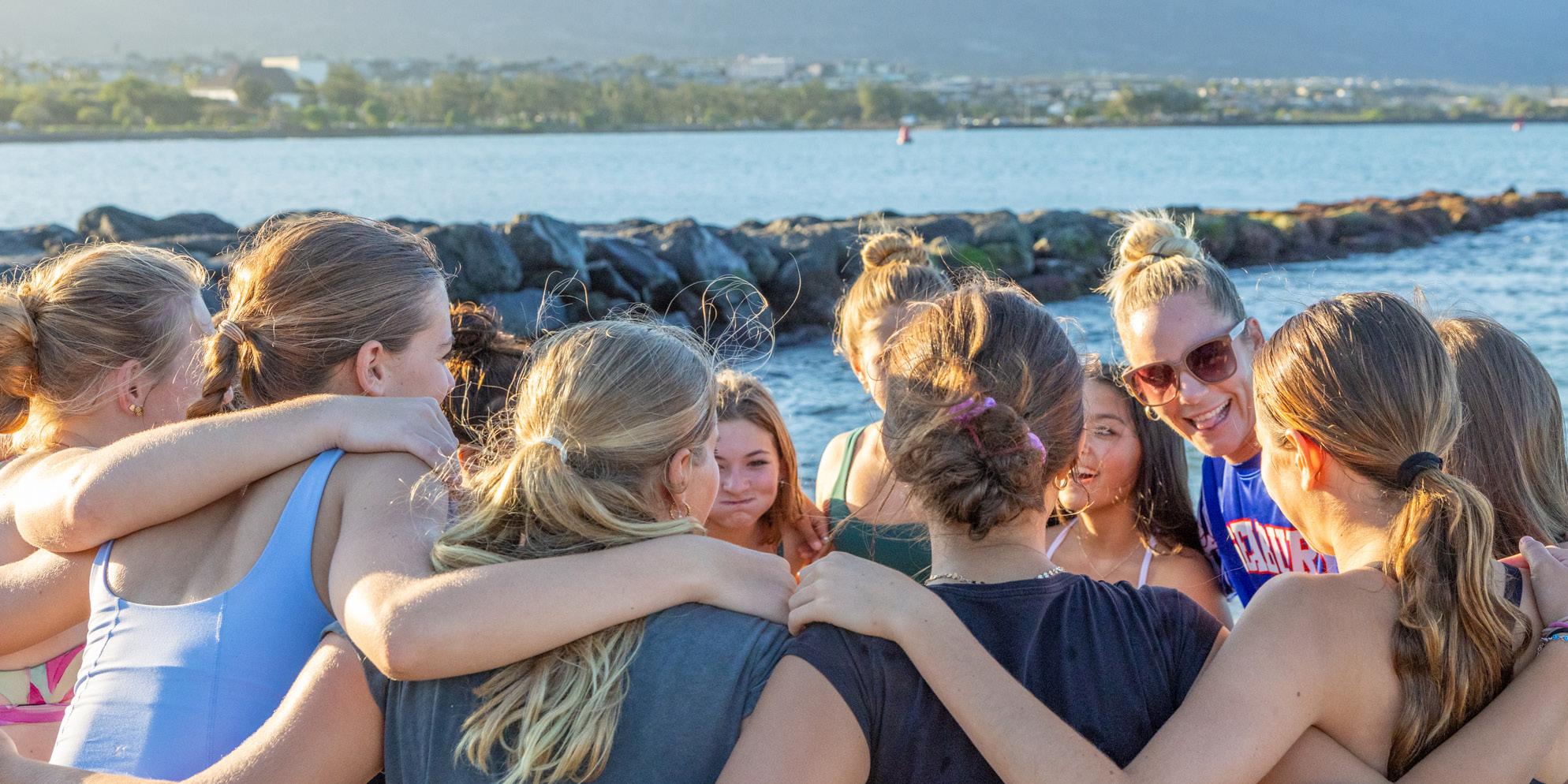
The Health & Wellness Department at Seabury Hall equips students with the knowledge, habits, and self-awareness necessary to thrive physically, emotionally, and socially. Courses emphasize agency, resilience, community responsibility, and lifelong well-being. Through experiential learning, reflective practice, and real-world application, students develop the tools to make informed decisions and build balanced lives.
HEALTH & WELLNESS 9
Grade 9 | 0.5 Credit | Required
Health & Wellness 9 empowers students to take ownership of their physical, mental, and emotional well-being as they transition into Upper School. Students investigate the meaning of wellness and develop personal definitions of balance and resilience. The course emphasizes community health, leadership, and personal responsibility while equipping students with lifelong skills for navigating complex decisions.
What Students Will Explore:
• Personal wellness philosophy development
• Mindfulness and stress-reduction practices
• Nutrition and exercise planning
• Healthy relationship dynamics
• Public Service Announcement creation
• Community-building activities
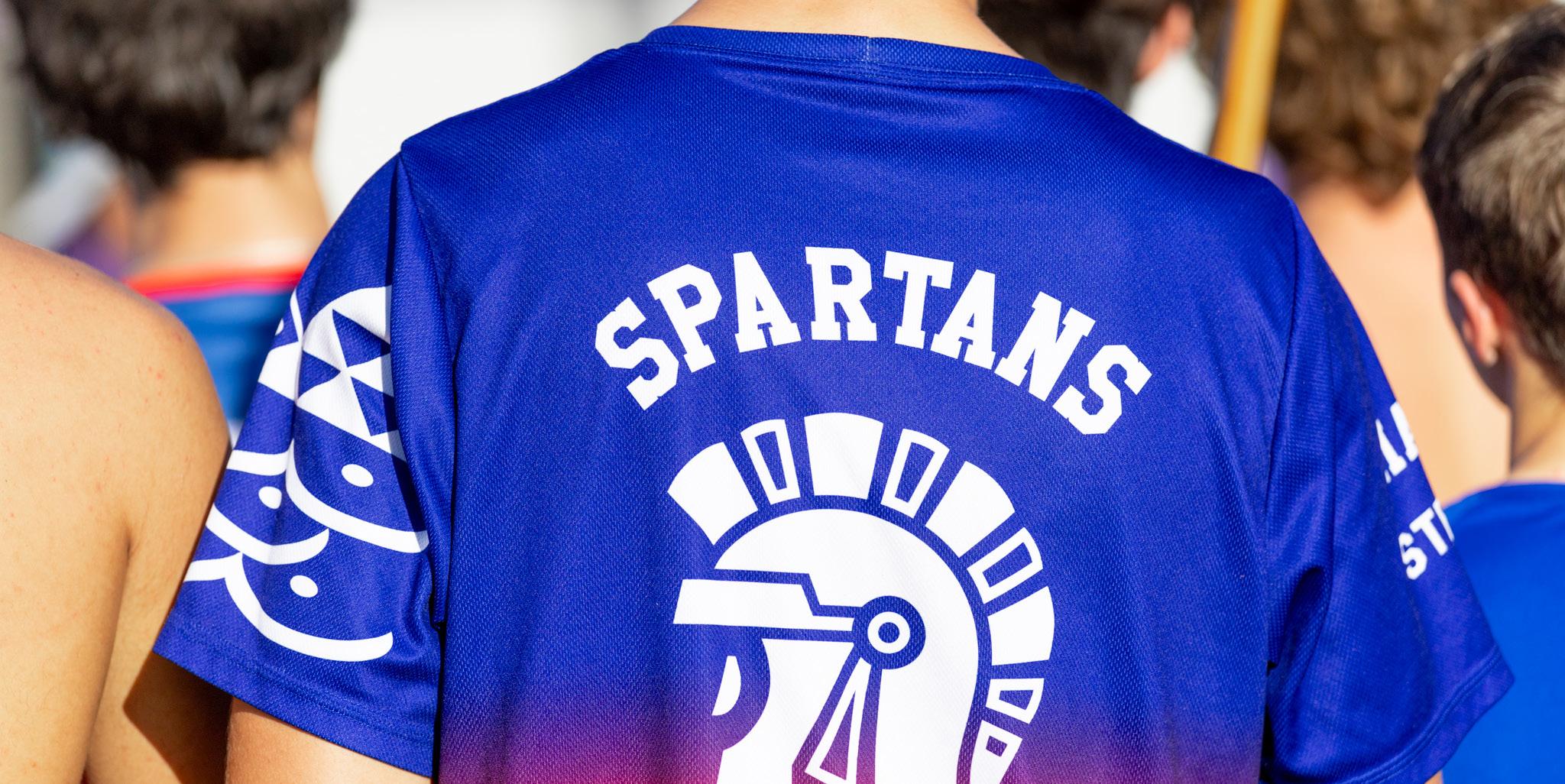
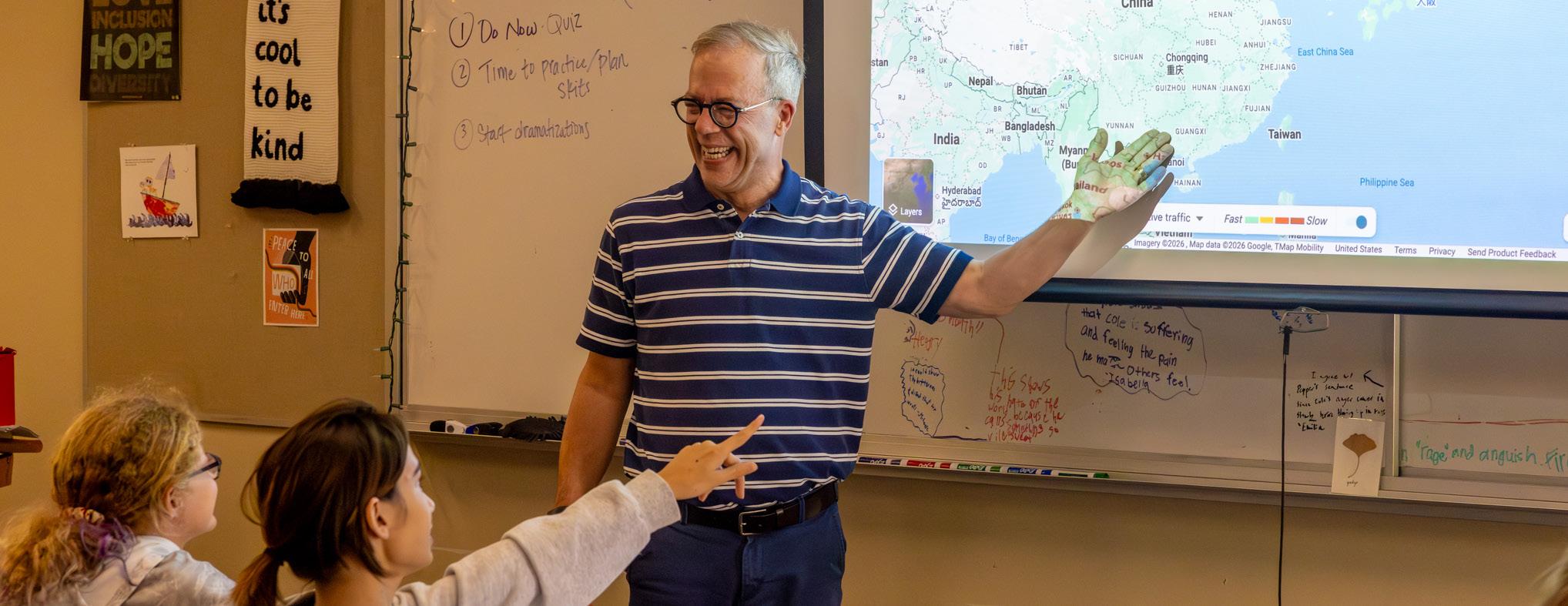
The History & Social Studies Department at Seabury Hall develops historically literate students who think critically, evaluate evidence, and understand the complexity of human experience across time. Students learn to analyze primary and secondary sources, construct evidence-based arguments, and interpret events through multiple perspectives. Courses emphasize inquiry, civic understanding, and the development of informed global citizens.
WORLD HISTORY 1
Grade 9 | 1 Credit
World History 1 explores ancient civilizations through 1450 CE, emphasizing foundational historical thinking skills. Students examine cultural development, trade networks, belief systems, and political structures. The course builds analytical writing skills and introduces students to structured historical argumentation and evidence evaluation.
What Students Will Explore:
• Civilization comparative analysis
• Primary source interpretation
• Historical thesis development
• Trade and cultural diffusion studies
• Structured analytical essays
WORLD HISTORY 2
Grade 10 | 1 Credit
World History 2 examines global history from 1450 to the present. Students explore imperialism, industrialization, globalization, and modern conflicts. Students analyze interconnected historical developments and construct evidence-based arguments grounded in primary and secondary sources.
What Students Will Explore:
• Imperialism case studies
• Industrialization impact analysis
• Global conflict research projects
• Document-based writing
• Comparative political systems studies
AP WORLD HISTORY: MODERN
Grade 10 | 1 Credit | AP Course
AP World History: Modern provides a rigorous, college-level study of global history from 1200 to the present. Students analyze themes such as governance, economic systems, cultural exchange, and technological development. The course emphasizes historical reasoning skills and prepares students for the AP examination through intensive reading and writing.
What Students Will Explore:
• Document-Based Questions (DBQs)
• Long Essay Questions (LEQs)
• Comparative thematic analysis
• Primary and secondary source synthesis
• AP-style timed assessments
US HISTORY
Grade 11 | 1 Credit
US History surveys American development from Reconstruction to the present. Students examine political, social, and economic transformations shaping modern America. The course emphasizes primary source analysis and historical writing, encouraging students to evaluate continuity and change over time.
What Students Will Explore:
• Reconstruction through contemporary studies
• Primary source workshops
• Research-based essays
• Civil rights movement analysis
• Civic literacy development
Grade 11 | 1 Credit | AP Course
AP US History offers a comprehensive, college-level examination of American history from 1491 to the present. Students investigate major political, cultural, and economic developments across nine historical periods. The course requires extensive reading, structured writing, and preparation for the AP exam.
What Students Will Explore:
• Document-Based Questions (DBQs)
• Long Essay Questions (LEQs)
• Historical thematic essays
• Primary source analysis
• Mock AP examinations
PSYCHOLOGY
Grades 11–12 | 1 Credit
Psychology introduces students to the scientific study of behavior and mental processes. Students explore cognition, development, memory, perception, and personality. The course emphasizes experimental design and data interpretation while connecting psychological concepts to everyday life.
What Students Will Explore:
• Experimental research design
• Memory and cognition studies
• Behavioral analysis projects
• Psychological theory comparison
• Statistical interpretation exercises
AP PSYCHOLOGY
Grades 11–12 | 1 Credit | AP Course
AP Psychology provides a rigorous, college-level exploration of psychological science. Students study research methods, biological bases of behavior, and major theoretical perspectives. Students design and analyze experiments and prepare for the AP examination through structured review and assessment.
What Students Will Explore:
• AP-style research analysis
• Experimental design projects
• Biopsychology case studies
• Statistical data interpretation
• Mock AP exams
Grades 11–12 | 0.5 Credit | Fall
US Government examines the foundations and functions of American democracy. Students explore constitutional principles, political institutions, and civic participation. The course encourages informed citizenship through discussion of contemporary policy and political issues.
What Students Will Explore:
• Constitutional case studies
• Civic debate simulations
• Policy analysis essays
• Supreme Court decision review
• Public policy research projects
Grades 11–12 | 0.5 Credit | Fall | AP Course
AP US Government & Politics offers a college-level examination of American political systems and institutions. Students analyze constitutional frameworks and political behavior. Students prepare for the AP exam through structured writing, case analysis, and civic issue evaluation.
What Students Will Explore:
• AP-style free-response questions
• Political data analysis
• Supreme Court case briefs
• Comparative political essays
• Mock AP exams
Grades 11–12 | 0.5 Credit | Spring
Economics introduces students to foundational economic principles including scarcity, supply and demand, and market systems. Students connect theory to real-world financial decision-making and global economic issues.
What Students Will Explore:
• Supply and demand modeling
• Personal finance simulations
• Market analysis projects
• Economic policy debates
• Data interpretation exercises
AP MICROECONOMICS
Grades 11–12 | 0.5 Credit | Spring | AP Course
AP Microeconomics provides a college-level study of economic behavior at the individual and firm level. Students analyze production, consumption, and market efficiency. The course prepares students for the AP exam through graph analysis, quantitative reasoning, and structured writing.
What Students Will Explore:
• Economic graph analysis
• Market structure comparisons
• AP-style free-response questions
• Policy evaluation essays
• Mock AP exams
AP EUROPEAN HISTORY
Grades 11–12 | 1 Credit | AP Course
AP European History investigates European political, cultural, and economic development from 1450 to the present. Students engage in rigorous primary source analysis and thematic essays to prepare for the AP examination.
What Students Will Explore:
• Document-Based Questions (DBQs)
• Thematic essay writing
• Scientific Revolution studies
• Industrialization analysis
• Mock AP exams
ART HISTORY 1
Grades 10–12 | 0.5 Credit | Fall
Art History 1 examines artistic movements from the Ancient World through the Renaissance. Students analyze cultural context and artistic innovation. The course integrates historical inquiry with creative exploration of artistic techniques.
What Students Will Explore:
• Ancient and Renaissance art analysis
• Studio-style historical recreations
• Cultural context research
• Visual literacy development
• Comparative art essays
ART HISTORY 2
Grades 10–12 | 0.5 Credit | Spring
Art History 2 continues the study of global art from the Baroque period to the 20th century. Students examine shifts in ideology, aesthetics, and cultural exchange. Students apply historical analysis to artistic production while developing critical visual interpretation skills.
What Students Will Explore:
• Baroque to Modernism case studies
• Comparative art movement analysis
• Creative reinterpretation projects
• Historical visual essays
• Research presentations
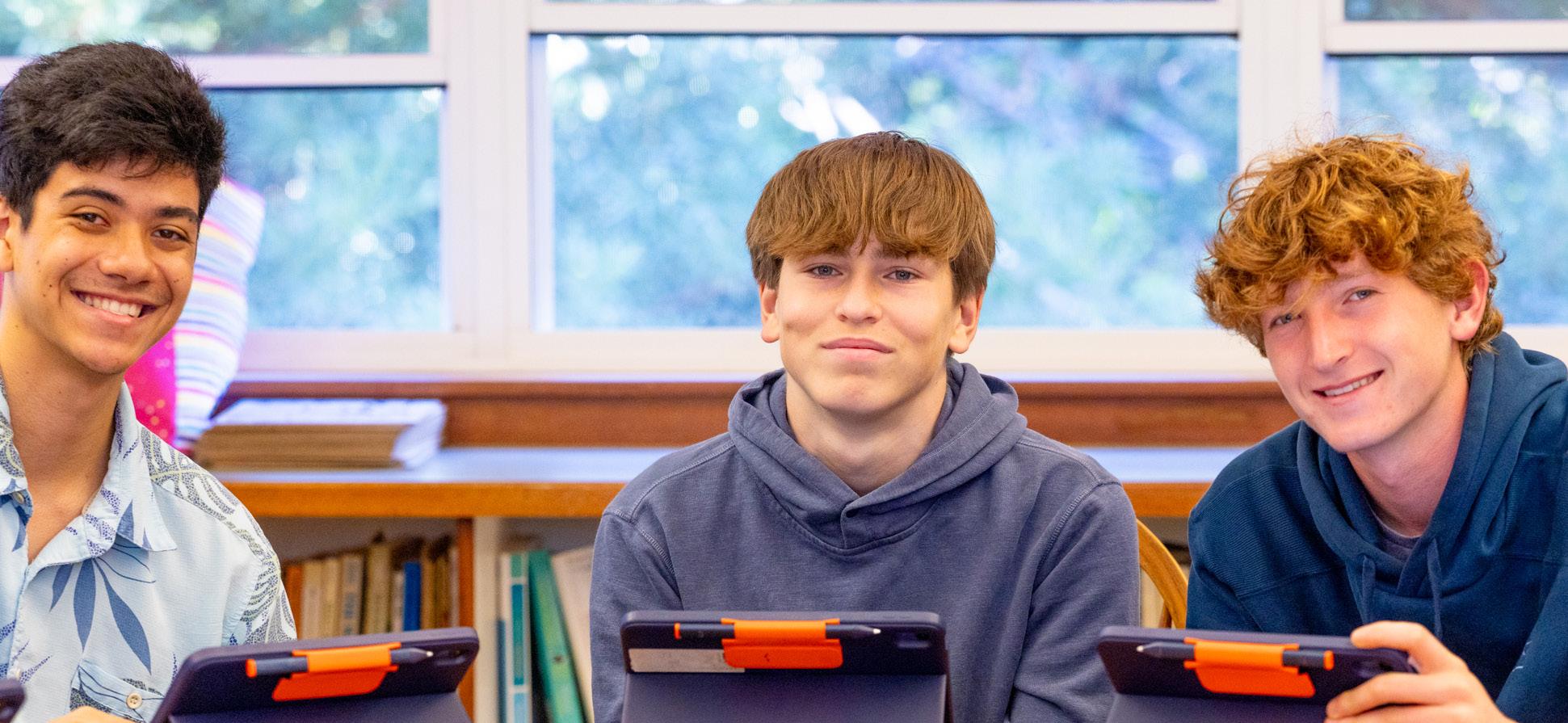
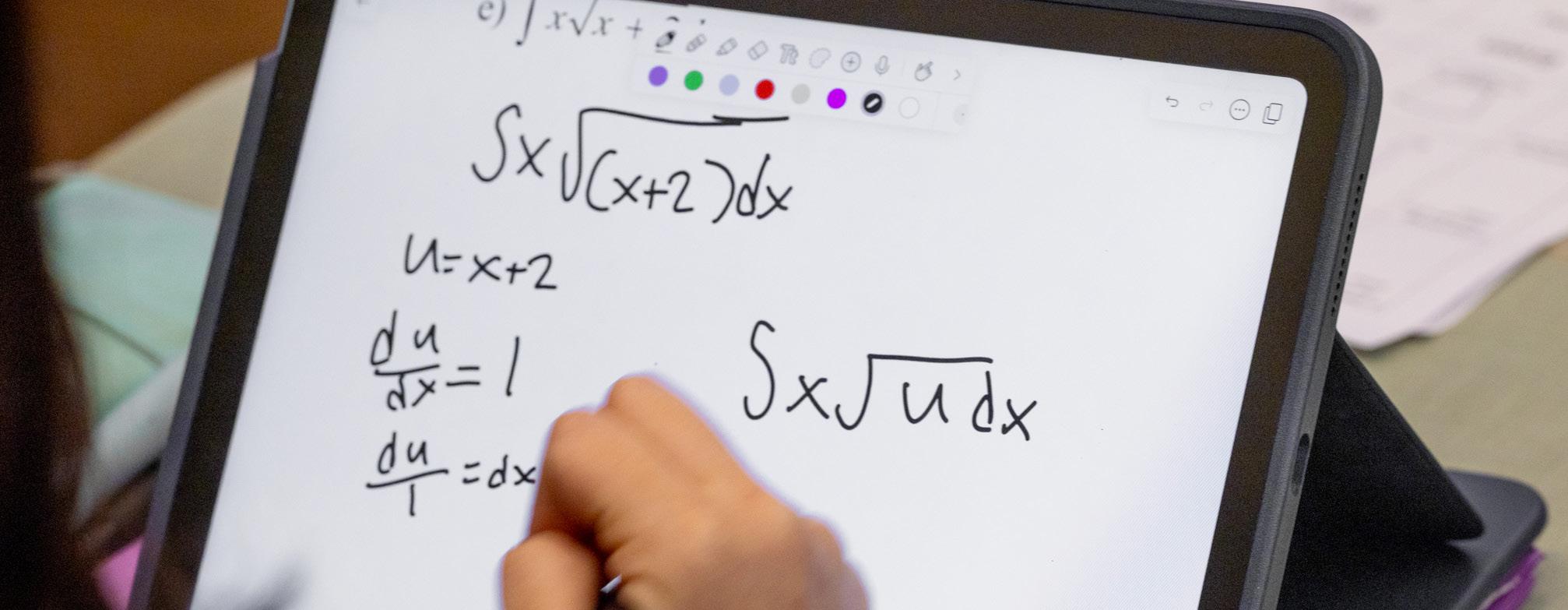
The Mathematics Department at Seabury Hall develops analytical thinkers who approach problems with precision, creativity, and persistence. Across Middle and Upper School, students engage in conceptual understanding, mathematical modeling, quantitative reasoning, and real-world application. Courses emphasize depth of understanding over rote memorization and prepare students for advanced study in STEM, social sciences, business, and beyond.
ALGEBRA 1
Grade 9 | 1 Credit
Algebra 1 introduces students to foundational algebraic concepts and skills that are essential for higher-level mathematics and real-world problem-solving. The course focuses on developing a strong understanding of variables, expressions, equations, and functions. Students will learn to analyze and solve linear, quadratic, and exponential equations, represent data graphically, and apply algebraic methods to model and solve real-world scenarios.
What Students Will Explore:
• One and Two Variable Statistics
• Linear equations and systems
• Linear Inequalities and systems
• Function Notation and Graphing
• Exponential Functions
• Quadratic Functions
• Quadratic Equations
• Application-based problem solving
GEOMETRY
Grades 9–10 | 1 Credit
Prerequisite: Algebra 1/Algebra 1 or equivalent
Geometry is a problem-based, rigorous course where students learn by “doing math”, solving problems in both mathematical and real-world contexts and constructing arguments using precise language. Designed to provide a conceptual bridge between Algebra 1 and Algebra 2, the course encourages students to use their prior mathematical knowledge to solve problems across the domains of
algebra, geometry, and statistics. Organized around a cycle of conjecture, rough draft narratives, and final proofs, students explore key topics including constructions and rigid transformations, congruence, similarity, right triangle trigonometry, and solid geometry. Throughout the course, students represent and connect these concepts through verbal descriptions, equations, and coordinate geometry, while also investigating circles and conditional probability. Teachers facilitate this learning through high-leverage instructional routines that prioritize student discourse and make mathematical thinking visible. By engaging in these activities, students develop the reasoning and communication skills necessary to justify their claims and connect geometry to the broader world of mathematics.
What Students Will Explore:
• Constructions and Rigid Transformations
• Congruence and Similarity
• Right Triangle Trigonometry
• Solid Geometry
• Coordinate Geometry
• Circles
• Conditional Probability
Grade 9-11 | 1 Credit
Prerequisites: Geometry or math department approval for incoming students
This Algebra 2 course is a problem-based, rigorous curriculum where students learn by solving complex problems, constructing mathematical arguments, and engaging in collaborative discourse. Organized around families of functions, including polynomials, exponential, logarithmic, radical, rational, and trigonometric functions. The course teaches students to transform and analyze these functions while representing them through verbal descriptions, equations, tables, and graphs. Students build a foundation for linear and exponential growth through arithmetic and geometric sequences and learn to use the complex number system to solve quadratic equations. They also explore higher-degree polynomials, identify key features like asymptotes in rational functions, and use the unit circle to define trigonometric functions. Additionally, students use the number e to model continuous growth and perform statistical inference by analyzing data through simulations and normal distributions. Throughout the course, students model real-world situations using these functions to solve practical problems, while also covering topics such as series of numbers and systems of equations.
What Students Will Explore:
• Sequences and Functions
• Polynomial Functions
• Rational Functions and Equations
• Complex Numbers and Rational Exponents
• Exponential Functions and Equations
• Transformation of Function
• Statistical Inferences
Grade 9-11 | 1 Credit
Prerequisites: Geometry or equivalent
Algebra 2 with Trigonometry presents the topics of a college freshman course covering Algebra and Trigonometry and provides students with a solid preparation and firm foundation of concepts, techniques, and applications for more advanced college-level mathematics. Topics presented include: equations, inequalities, mathematical modeling, functions and their graphs, polynomial functions, ratios, functions with conics, logarithmic functions, basic trigonometry, analytic trigonometry, systems of equations, and matrices. Accelerated algebraic thinking skills are developed through a variety of classroom activities, including group and individual investigations, real-world problem solving, class discussions, note taking, and utilizing graphing technology and digital modeling tools to visualize complex mathematical relationships. Students will refine their ability to communicate mathematical ideas clearly and precisely, bridging the gap between abstract theory and practical application in preparation for Calculus and subsequent higher-level coursework.
What Students Will Explore:
• Sequences and Functions
• Polynomial Functions
• Rational Functions and Equations
• Complex Numbers and Rational Exponents
• Exponential Functions and Equations
• Transformation of Function
• Trigonometric Functions
• Statistical Inferences
Grades 10–12 | 1 Credit
Prerequisites: Algebra 2 or equivalent
This course lays the groundwork for the further study of mathematics by building a strong foundation of standard precalculus topics. During this course, students acquire and apply mathematical tools in real-world modeling situations in preparation for using these tools in college-level calculus. These topics include functions and their properties, graphs, polynomials, exponents and logarithms, trigonometry, complex numbers/polar coordinates, vectors,conic sections and sequences and series. Students will study each of these topics in depth through multiple representations and analysis (e.g. graphical, numerical, verbal, and analytical).
What Students Will Explore:
• Advanced trigonometric identities
• Polynomial and rational analysis
• Complex numbers
• Vectors and parametric equations
• Series and modeling applications
Grades 11-12 | 1 Credit
Prerequisite: Precalculus
Introductory Calculus explores the core ideas of change and accumulation through a collaborative, problem-based approach. Students build a strong conceptual understanding by connecting real-world models to graphical, numerical, and analytical data. The course focuses on practical applications and dynamic systems, prioritizing meaningful discussion and modeling over abstract theory or complex symbolic manipulation.
What Students Will Explore:
• Foundational concepts of limits and the behavior of functions
• Rates of change and the practical meaning of the derivative
• Real-world modeling to solve optimization and efficiency problems
• Connections between graphical, numerical, and verbal representations
• The Fundamental Theorem of Calculus and the idea of accumulation
• Collaborative strategies for analyzing and discussing complex problems
• Application of calculus concepts to dynamic systems and modern technology
Grades 11–12 | 1 Credit | AP Course
Prerequisites: Algebra 2 and departmental approval
AP Precalculus centers on functions modeling dynamic phenomena. This research-based exploration of functions is designed to better prepare students for college-level calculus and provide grounding for other mathematics and science courses. In this course, students study a broad spectrum of function types that are foundational for careers in mathematics, physics, biology, health science, social science, and data science. During this course, students acquire and apply mathematical tools in real-world modeling situations in preparation for using these tools in collegelevel calculus. Modeling, a central instructional theme for the course, helps students come to a deeper understanding of each function type. By examining scenarios, conditions, and data sets, as well as determining and validating an appropriate function model, students develop a greater comprehension of the nature and behavior of the function itself. The formal study of a function type through multiple representations (e.g. graphical, numerical, verbal, and analytical), coupled with the application of the function type to a variety of contexts, provide students with a rich study of precalculus.
What Students Will Explore:
• Function transformations
• Modeling real-world data
• AP-style assessments
• Covariation analysis
• Applied trigonometry
STATISTICS
Grades 11–12 | 1 Credit
Prerequisite: Algebra 2
The purpose of this course in statistics is to introduce students to the major concepts and tools for collecting, analyzing and drawing conclusions from data. Students are exposed to data collection and comparisons of data through the use of classroom experience, student generated projects and accessing information from reliable sources. The course jumps into data collection, graphical and numerical statistical summaries from the very beginning exploring sampling techniques and patterns within data. Students explore probability and computer simulation, as well as designing and implementing controlled experiments. The course culminates in inference procedures to estimate population parameters from representative and unbiased samples of data. Students will be able to make informed decisions using data, and develop a critical eye for the misrepresentation of statistics.
What Students Will Explore:
• Descriptive statistics
• Probability models
• Experimental design
• Data visualization
• Simulation and inference
AP STATISTICS
Grades 11–12 | 1 Credit | AP Course
Prerequisite: Algebra 2
The AP Statistics course introduces students to the major concepts and tools for collecting, analyzing, and drawing conclusions from data. There are four themes evident in the content, skills, and assessment in AP Statistics course: exploring data, sampling and experimentation, probability and simulation, and statistical inference. Students use technology, investigations, problem-solving, and writing as they build conceptual understanding.
What Students Will Explore:
• Sampling and experimental design
• Statistical inference
• Probability distributions
• Regression analysis
• AP-style exams
AP CALCULUS AB
Grades 11–12 | 1 Credit | AP Course
Prerequisite: Precalculus
AP Calculus AB is a year-long, college-level course designed to deepen students’ understanding of fundamental calculus concepts. Rather than treating topics in isolation, the curriculum integrates “big ideas” such as modeling change, limits, and functional analysis into a cohesive framework. Students will master a multi-representational approach, solving problems graphically, numerically, analytically, and verbally. A strong emphasis is placed on mathematical reasoning, requiring students to use formal definitions and theorems to build logical arguments and justify conclusions. The course concludes with comprehensive preparation for the AP Calculus AB exam in the spring.
What Students Will Explore:
• Limits and Continuity
• Differentiation: Definition, Basic Derivative Rules, Composite Functions, Inverse Functions, Implicit Functions
• Contextual Derivative applications
• Analytical Derivative applications
• Integration and Accumulation of Change
• Differential Equations
• Applications of Integration
• AP-style free response practice
AP CALCULUS BC
Grades 11–12 | 1 Credit | AP Course
Prerequisites: AP Calculus AB or Precalculus & departmental approval
This college-level course provides a deep dive into the methods and applications of calculus, covering the equivalent of two full semesters of university work. Students will use formal theorems and definitions to build logical arguments across four key representations: graphical, symbolic, numerical, and verbal. Key topics include advanced integration, infinite series, and the analysis of parametric and polar curves. With a balanced focus on conceptual understanding and procedural mastery, students will work collaboratively to solve complex problems and prepare for future STEM challenges. Students will work collaboratively and leave the course well-prepared to take on the challenges of a mathematically rigorous course of study in college.
What Students Will Explore:
• Limits and continuity
• Differentiation: Definition, Basic Derivative Rules, Composite Functions, Inverse Functions, Implicit Functions
• Contextual Derivative applications
• Analytical Derivative applications
• Integration and Accumulation of Change
• Differential Equations
• Parametrics
• Polar Equations and Vector Valued Functions
• Advanced Integration Techniques
• Logistic Differential Equations and Arc Length
• Series Convergence
• Taylor Series
• Comprehensive AP exam preparation
The Philosophy & Religion Department at Seabury Hall cultivates reflective thinkers who engage deeply with questions of meaning, identity, ethics, and responsibility. Thr ough seminar-style discussion, analytical writing, and structured inquiry, students develop the intellectual tools necessary to navigate complex moral and philosophical questions. Courses emphasize dialogue, evidence-based reasoning, and personal reflection. The AP Capstone Program develops independent research skills, acade mic writing excellence, and cross-disciplinary analysis. Students learn to synthesize complex information and conduct long-term inquiry projects modeled on collegiate research.
Grades 9–10 | 0.5 Credit
Philosophy 1 introduces students to foundational questions about knowledge, truth, freedom, and reasoning. Students examine how individuals construct meaning and how logical argument differs from motivated reasoning. Through seminar discussion and analytical writing, students practice questioning assumptions and articulating coherent arguments grounded in evidence.
What Students Will Explore:
• Logical reasoning and argument structure
• Epistemology: how we know what we know
• Freedom and responsibility
• Reflection journals
• In-class analytical essays
• Seminar-style dialogue participation
WORLD RELIGION 1
Grades 9–10 | 0.5 Credit
World Religion 1 examines major global religious traditions and the human search for meaning. Students explore historical development, sacred texts, and cultural influence. The course fosters empathy and respectful dialogue through comparative study and reflective analysis.
What Students Will Explore:
• Five major global religions
• Sacred texts and historical context
• Religious practices and ritual
• Modern ethical questions
• Mutual Invitation dialogue framework
• Comparative reflection essays
WORLD RELIGION 2
Grades 11–12 | 0.5 Credit
World Religion 2 builds on earlier study with deeper philosophical and ethical analysis. Students connect religious traditions to contemporary global issues. The course emphasizes critical comparison and personal reflection grounded in scholarly inquiry.
What Students Will Explore:
• Advanced comparative religion study
• Religion and modern social justice
• Ethics and global conflict
• Primary source analysis
• Seminar discussion leadership
PHILOSOPHY 2: JOURNEY TO SELF
Grades 11–12 | 0.5 Credit
Philosophy 2 centers on personal identity and selfexamination through classical and modern philosophical texts. Students reflect on the Socratic principle that the unexamined life is not worth living. The course integrates Jungian archetypes and cross-cultural philosophical traditions to deepen introspection.
What Students Will Explore:
• Identity and archetypes
• Personal narrative reflection
• Existential philosophy
• Seminar facilitation
• Final presentation project
PHILOSOPHY 3: POWER & PERSONHOOD
Grades 11–12 | 0.5 Credit
Philosophy 3 explores political philosophy and applied ethics through the lens of freedom and responsibility. Students examine how individuals balance connection with autonomy. Through case studies and historical inquiry, students analyze diverse moral frameworks and develop reasoned positions.
What Students Will Explore:
• Political philosophy foundations
• Applied ethics case studies
• Moral framework comparison
• Structured debates
• Analytical essays and presentations
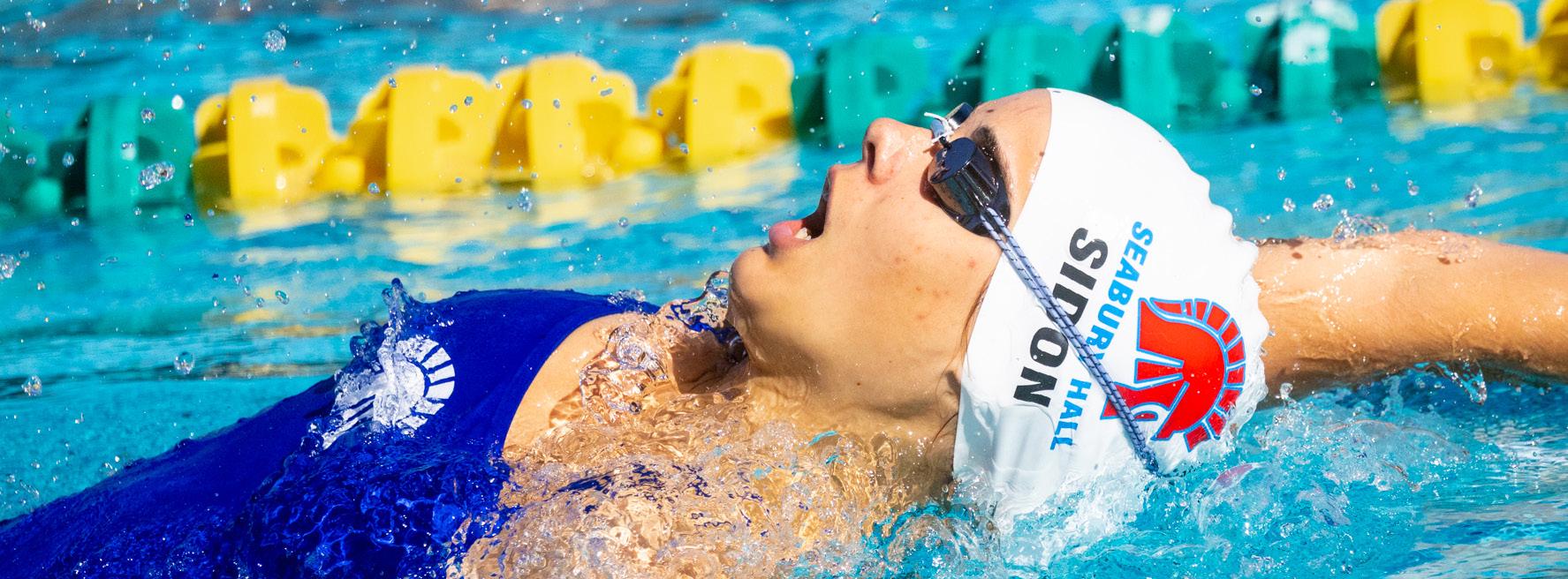
The Athletics Department at Seabury Hall develops student-athletes who demonstrate discipline, resilience, leadership, and sportsmanship. Participation in athletics builds physical strength, strategic thinking, teamwork, and character. Across Middle and Upper School, students engage in structured competition and skill development while learning accountability, perseverance, and respect.
BALLET 3 – 4
Grades 9-12 | Year-Round
This intermediate-level class builds upon the foundational principles of classical ballet, advancing technical proficiency, strength, and artistry. Students refine alignment, turnout, and coordination while working with increased complexity and musicality. Emphasis is placed on clarity, dynamic control, and the integration of technique into longer, more intricate combinations.
As students progress, they develop greater precision in turns and jumps, sustain movement through extended phrases, and expand their expressive range. Barre and center work become more demanding, building stamina, fluidity, and confidence. Preparation for pre-pointe may be introduced where appropriate.
What Students Will Explore:
• Advanced barre work emphasizing control, strength, and articulation
• More complex center combinations, including extended adagio and allegro
• Refinement of pirouettes from varied preparations
• Expanded petit allegro and more dynamic traveling steps
• Musicality, phrasing, and performance quality
• Continued development of alignment, balance, and coordination
Grades 9-12 | Year-Round
This advanced-level sequence is designed for the dedicated dancer, emphasizing technical refinement, strength, and artistic maturity. Students are expected to demonstrate consistent alignment, control, and musicality while executing complex movement with clarity and intention. Emphasis is placed on precision, dynamic range, and the seamless integration of technique and expression.
As students progress, they refine advanced turns, jumps, and directional changes while sustaining movement through longer and more demanding combinations. Greater focus is placed on performance quality, stylistic nuance, and individual artistry. Pointe work is incorporated for eligible students, with continued development of strength, stability, and proper technique.
What Students Will Explore:
• Advanced barre work with increased speed, control, and articulation
• Complex center combinations with extended adagio and dynamic allegro
• Multiple pirouettes and varied turning sequences
• Expanded petit and grand allegro, including elevation and ballon
• Pointe technique and strengthening exercises (as appropriate)
• Musicality, phrasing, and refined performance quality
• Greater emphasis on artistry, style, and individual expression
3 & 4)
Grades 9-12 | Year-Round
This intermediate–advanced course is designed for students with prior dance experience who are ready to refine their technique and expand their artistic expression in modern and jazz dance. Building on established skills, students will develop greater strength, flexibility, coordination, and performance quality through increasingly complex movement and choreography.
Instruction in modern dance emphasizes alignment, core stability, floor work, and expressive movement inspired by techniques from influential artists such as Martha Graham and José Limón. Jazz dance training focuses on precision, isolations, turns, leaps, and stylistic versatility rooted in both classical and contemporary forms.
Course Objectives:
• Strengthen technical skills in both modern and jazz dance styles
• Execute complex movement combinations and acrossthe-floor progressions
• Develop musicality, timing, and spatial awareness
• Explore movement dynamics, including fall and recovery, suspension, and rhythmic variation
• Enhance performance quality and stage presence
Learning Outcomes:
• Perform intermediate modern and jazz combinations with control and confidence
• Apply proper alignment and technique across various movement styles
• Retain and perform extended choreography
• Show growth in artistic interpretation and performance skills
Advanced Training Grades 9-12 | Year-Round
This advanced course is designed for highly trained dancers seeking to refine technical mastery, deepen artistic voice, and prepare for pre-professional or collegiate dance opportunities. Students will engage in rigorous training that integrates advanced modern and jazz techniques with an emphasis on performance, versatility, and individual expression.
Modern dance instruction explores complex movement principles, including advanced floor work, inversion, fall and recovery. Jazz training focuses on high-level technical execution, intricate footwork, multiple turns, elevated jumps, and stylistic range across contemporary and commercial jazz forms.
Course Objectives:
• Achieve advanced technical proficiency in modern and jazz dance
• Demonstrate strength, control, endurance, and fullbody coordination
• Execute complex movement sequences with precision and clarity
• Develop a distinct artistic voice through improvisation and choreography
• Strengthen performance skills for stage and/or audition settings
Learning Outcomes:
• Perform advanced-level choreography with confidence, consistency, and artistry
• Integrate multiple dance techniques seamlessly within performance
• Interpret choreography with depth, nuance, and emotional authenticity
• Exhibit readiness for advanced study, auditions, or performance opportunities
Grades 9–12 | Year-Round
Strength & Conditioning builds physical capacity and injury prevention knowledge. Athletes develop disciplined training habits that support all sports.
Athletes Will Develop:
• Resistance training
• Mobility development
• Performance tracking
• Injury prevention strategies
• Goal setting and accountability
Grades 9–12 | Approval Required
Independent PE allows students to pursue structured physical activity outside the traditional classroom setting. Students must document consistent participation and demonstrate commitment to physical growth. The course encourages self-discipline and personal accountability in maintaining physical wellness.
What Students Will Explore:
• Goal setting and performance benchmarks
• Activity documentation logs
• Reflection on growth and challenges
• Time management and accountability
• Demonstration of sustained participation
Grades 9–12 |
Air Riflery develops precision, focus, and controlled discipline. Athletes practice marksmanship in a structured and safety-focused environment. The program emphasizes concentration, mental composure, and responsible equipment handling.
Athletes Will Develop:
• Precision targeting skills
• Focus and breath control
• Safety protocol mastery
• Competition strategy
• Mental resilience
Grades 9–12 | Fall Season
Cross Country builds endurance, pacing strategy, and mental toughness through long-distance training. Athletes learn goal setting, race strategy, and teamwork within a supportive training environment.
Athletes Will Develop:
• Aerobic endurance development
• Race pacing techniques
• Mental resilience training
• Strength and conditioning integration
• Team goal setting
Grades 9–12 | Fall Season
Football emphasizes teamwork, strategy, and physical strength within a competitive team structure. Athletes develop tactical awareness and leadership under game pressure.
Athletes Will Develop:
• Strength and conditioning
• Playbook strategy development
• Position-specific skill training
• Team leadership
• Competitive game execution
Grades 9–12 | Fall Season
Girls Volleyball develops agility, coordination, and team communication. Athletes refine technical skills while building confidence and competitive spirit.
Athletes Will Develop:
• Serving and passing techniques
• Team communication strategies
• Defensive positioning
• Game awareness
• Competitive teamwork
Grades 9–12 | Winter Season
Basketball builds speed, agility, and strategic thinking through competitive team play. Athletes develop discipline and teamwork under dynamic game conditions.
Athletes Will Develop:
• Ball handling and shooting accuracy
• Defensive strategy
• Fast-break transitions
• Game-time decision making
• Team leadership development
Grades 9–12 | Winter Season
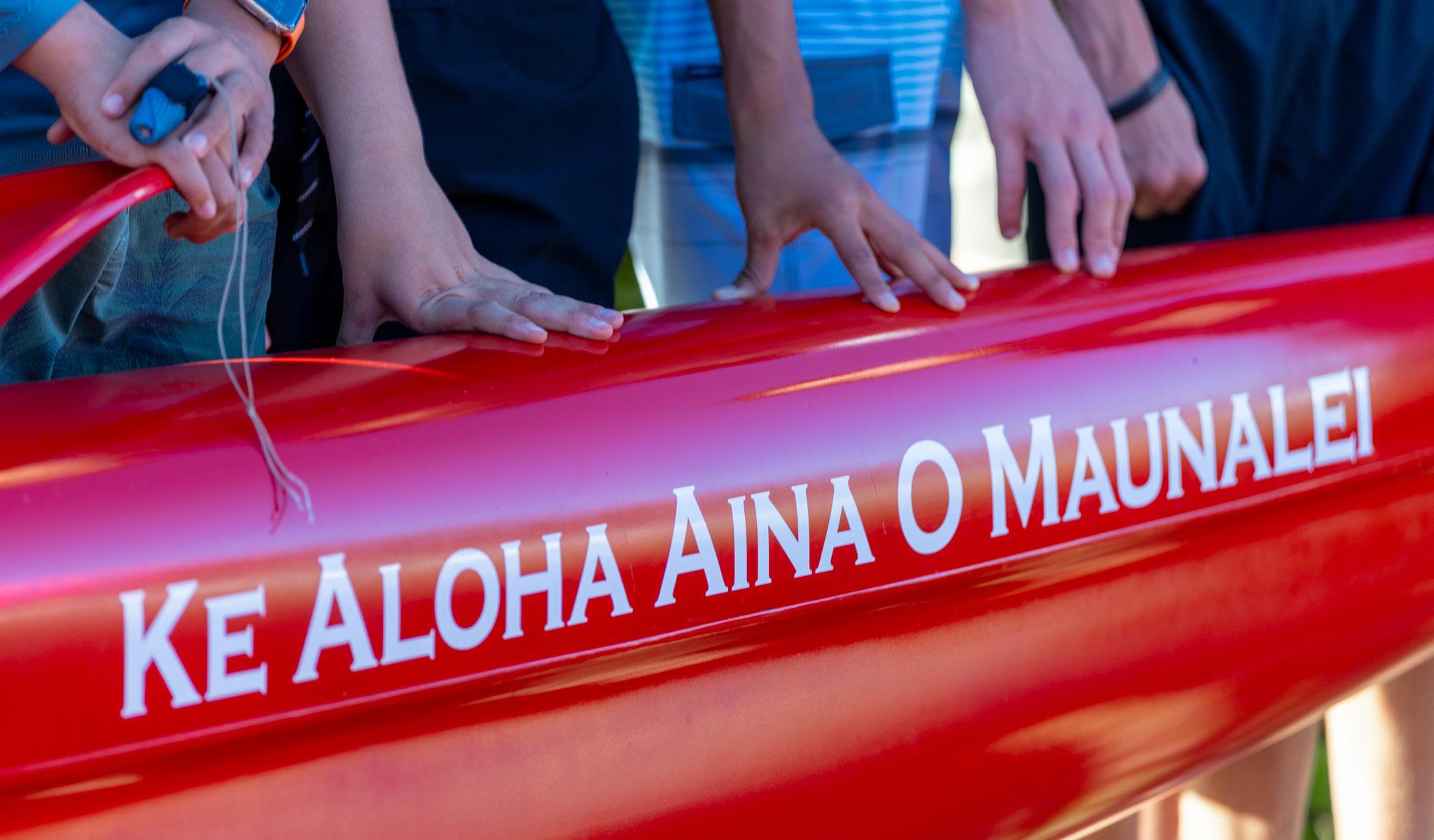
Paddling builds upper body strength, core stability, and mental focus through competitive canoe and outrigger racing. Athletes develop endurance and synchronization navigating open water conditions.
Athletes Will Develop:
• Stroke technique and power
• Paddling cadence and timing
• Core strength and balance
• Water safety and awareness
• Crew synchronization and communication
Grades 9–12 | Winter Season
Soccer develops cardiovascular endurance, agility, and spatial awareness. Athletes strengthen teamwork and strategic field positioning.
Athletes Will Develop:
• Ball control and footwork
• Offensive and defensive formations
• Endurance conditioning
• Game strategy execution
• Collaborative communication
Grades 9–12 | Winter Season
Swimming & Diving emphasizes individual performance improvement and competitive excellence. Athletes build strength, endurance, and technical precision.
Athletes Will Develop:
• Stroke technique refinement
• Start and turn mechanics
• Diving form and entry control
• Time tracking and performance analysis
• Individual goal setting
Grades 9–12 | Spring Season
Baseball develops hand-eye coordination, strategic play, and team collaboration. Athletes build discipline and situational awareness.
Athletes Will Develop:
• Batting mechanics
• Fielding and throwing accuracy
• Pitching technique
• Game strategy and situational play
• Team cohesion
Grades 9–12 | Spring Season
Volleyball develops explosive athleticism, coordination, and team communication through fast-paced competitive play. Athletes sharpen reaction time and trust within a dynamic team system.
Athletes Will Develop:
• Serving accuracy and technique
• Passing, setting, and hitting fundamentals
• Blocking and defensive positioning
• Rotational strategy and coverage
• Team chemistry and in-game communication
Grades 9–12 | Spring Season
Golf cultivates precision, focus, and personal discipline through individual competitive play. Athletes strengthen course management skills and develop a lifelong commitment to sportsmanship.
Athletes Will Develop:
• Swing mechanics and consistency
• Short game and putting technique
• Course strategy and club selection
• Mental composure under pressure
• Rules knowledge and etiquette
Grades 9–12 | Spring Season
Surfing combines athletic skill with ocean awareness and environmental respect. Athletes build balance, strength, and resilience in dynamic conditions.
Athletes Will Develop:
• Wave reading skills
• Balance and core strength
• Ocean safety awareness
• Endurance and recovery training
• Competitive judging criteria understanding
Grades 9–12 | Spring Season
Tennis sharpens footwork, hand-eye coordination, and tactical thinking through individual and doubles competition. Athletes build agility and resilience across all court conditions.
Athletes Will Develop:
• Serve and return mechanics
• Groundstroke consistency and placement
• Net play and volleying
• Match strategy and shot selection
• Mental toughness and focus
Grades 9–12 | Spring Season
Track & Field allows athletes to specialize in sprinting, distance, jumps, or throws. The program emphasizes measurable improvement and personal best achievement.
Athletes Will Develop:
• Event-specific technique training
• Strength and conditioning
• Speed development
• Performance analytics
• Goal-oriented competition
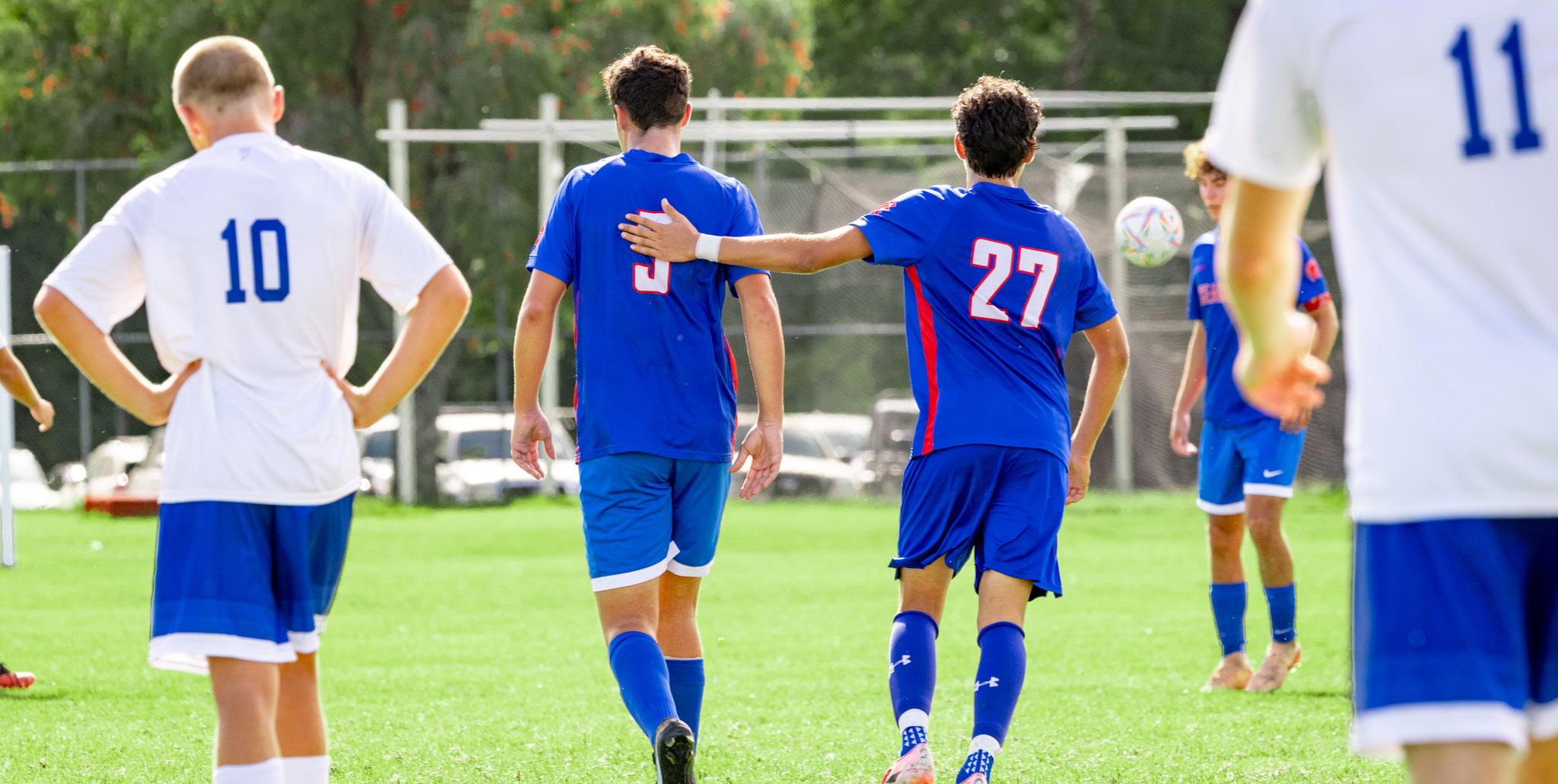
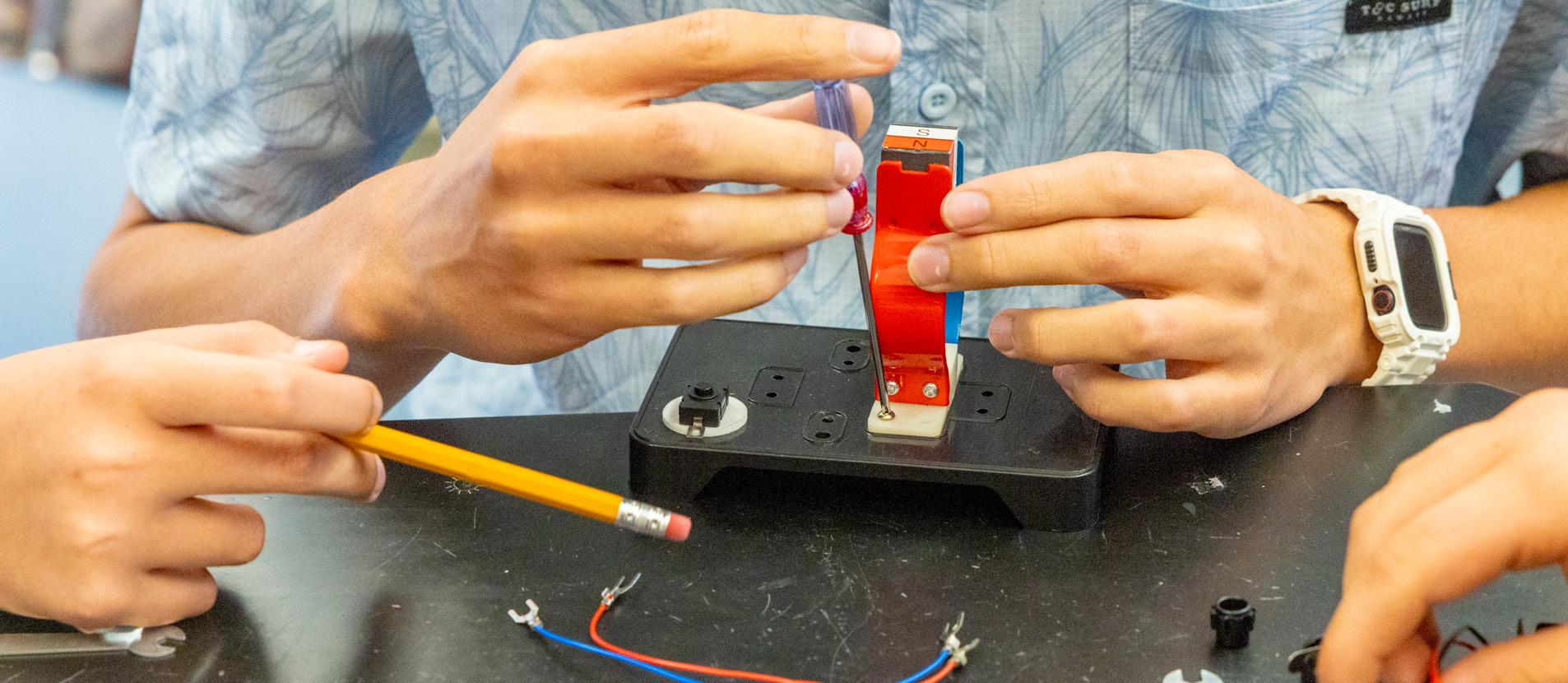
The Science Department at Seabury Hall cultivates curiosity, critical thinking, and scientific literacy through inquirybased, hands-on learning. From Middle School foundations aligned with NGSS standards to advanced AP-level coursework in the Upper School, students engage in experimentation, fieldwork, data analysis, and real-world problem solving. Emphasis is placed on scientific practices, cross-cutting concepts, and the application of knowledge to authentic environmental and global challenges.
BIOLOGY
Grade 9 | 1 Credit
Biology is a year-long, lab-based course designed to sharpen critical thinking through real-world data analysis and problem-solving. By engaging with core science practices, students build biological knowledge while strengthening their scientific literacy and math skills. The curriculum emphasizes the connections between living systems, encouraging students to collaborate and investigate complex natural phenomena actively.
What Students Will Explore:
• Ecosystem interactions
• Cell structure and function
• DNA and genetics
• Evolutionary processes
Grade 10 | 1 Credit
Chemistry is an introductory, high school-level course designed to build a strong foundation in chemistry principles and lab skills, preparing students for advanced chemistry courses, including AP Chemistry. The course emphasizes hands-on learning and inquirybased investigations, encouraging students to actively explore and apply concepts through experiments, data analysis, and critical thinking. Students will also learn to communicate scientific ideas effectively and develop problem-solving skills that are essential in science and engineering fields. Chemistry aims to foster curiosity and confidence in scientific inquiry while providing students with the knowledge and skills they need to succeed in future chemistry courses.
What students will explore:
• Structure and Properties of Matter
• Chemical Bonding and Interactions
• Chemical Quantities
• Chemical Transformations
Grades 11–12 | 1 Credit | AP Course
Prerequisites: Completion of Biology and Chemistry
AP Biology is an introductory college-level course designed to cultivate a deep understanding of biological systems through intensive laboratory-based investigations. Students engage in essential science practices by designing experiments, applying statistical tests and mathematical calculations, and utilizing visual representations to analyze complex biological processes. The curriculum also emphasizes scientific argumentation, challenging students to develop and justify evidencebased explanations for the natural world.
What Students Will Explore:
• Unit 1: Chemistry of Life
• Unit 2: Cell Structure and Function
• Unit 3: Cellular Energetics
• Unit 4: Cell Communication and Cell Cycle
• Unit 5: Heredity
• Unit 6: Gene Expression and Regulation
• Unit 7: Natural Selection
• Unit 8: Ecology
AP CHEMISTRY
Grades 11–12 | 1 Credit | AP Course
Prerequisites: Completion of Chemistry and Algebra 2
AP Chemistry is a rigorous, college-level course designed to provide students with a deep understanding of fundamental chemical principles and the skills needed to succeed in a laboratory setting. Students will engage in hands-on laboratory experiments that reinforce theoretical concepts and develop essential analytical skills. Through inquiry-based investigations, they will learn how to design experiments, collect and analyze data, and communicate their findings effectively. AP Chemistry also emphasizes critical thinking and problemsolving, preparing students for further study in science and engineering fields. By the end of this course, students will be well-prepared for the AP Chemistry exam, where they could earn college credit or placement.
What Students Will Explore:
• Unit 1: Atomic Structure and Properties
• Unit 2: Compound Structure and Properties
• Unit 3: Properties of Substances and Mixtures
• Unit 4: Chemical Reactions
• Unit 5: Kinetics
• Unit 6: Thermochemistry
• Unit 7: Equilibrium
• Unit 8: Acids and Bases
• Unit 9: Thermodynamics and Electrochemistry
Grades 11–12 | 1 Credit | AP Course
Prerequisites: Completion of Biology and Chemistry
AP Environmental Science is a college-level, laboratory course that invites students to explore the humandriven and natural processes that shape our world. Students engage in inquiry-based investigations to analyze environmental problems and evaluate the risks associated with them. The course emphasizes scientific questioning and data interpretation, along with proposing and justifying potential solutions for a sustainable future.
What Students Will Explore:
• Unit 1: The Living World: Ecosystems
• Unit 2: The Living World: Biodiversity
• Unit 3: Populations
• Unit 4: Earth Systems and Resources
• Unit 5: Land and Water Use
• Unit 6: Energy Resources and Consumption
• Unit 7: Atmospheric Pollution
• Unit 8: Aquatic and Terrestrial Pollution
• Unit 9: Global Change
Grades 11–12 | 1 Credit
Prerequisites: Completion of Chemistry and Algebra 1
Physics investigates the mechanics of the physical world, focusing on how motion, forces, and energy govern our everyday environment. Through hands-on laboratory experiments and real-world case studies, students bridge the gap between mathematical reasoning and tangible phenomena. The course emphasizes practical problemsolving, tasking students to apply physical laws to modern technology, engineering challenges, and natural events.
What Students Will Explore:
• Mechanics and Motion
• Energy and Thermodynamics
• Electricity and Electromagnetism
• Waves, Light, and Optics
Grades 11–12 | 1 Credit | AP Course
Prerequisites: Completion of Chemistry and Algebra 2
AP Physics 1 is an algebra-based, introductory collegelevel laboratory course that challenges students to cultivate a deep understanding of the physical world. By engaging in core science practices, students develop the proficiency to create representations of physical phenomena and utilize mathematical routines to derive, calculate, and predict complex outcomes. The curriculum also emphasizes scientific questioning and argumentation, requiring students to design experimental procedures, analyze raw data, and construct evidence-based claims.
What Students Will Explore:
• Unit 1: Kinematics
• Unit 2: Force and Translational Dynamics
• Unit 3: Work, Energy, and Power
• Unit 4: Liner Momentum
• Unit 5: Torque and Rotational Dynamics
• Unit 6: Energy and Momentum of Rotating Systems
• Unit 7: Oscillations
• Unit 8: Fluids
ANATOMY & PHYSIOLOGY
Grades 11–12 | 1 Credit
Prerequisites: Completion of Biology and Chemistry
Anatomy and Physiology is a year-long elective laboratory science course exploring the structure and function of the human body. Students will study each body system at both the macroscopic and microscopic levels, building a foundation to investigate how these systems work together, and how diseases affect the body. The course emphasizes hands-on learning, including the use of Anatomy in Clay® manikins to model anatomical structures. This course is ideal for students interested in science or medicine, as well as those who want to better understand how their bodies function. The course will culminate with a final project.
What Students Will Explore:
• Foundations of Anatomy and Physiology
• Cells & Tissues
• Support & Movement Systems
• Communication & Control
• Regulation & Integration
• Transport & Defense
• Exchange & Metabolism
• Excretion & Reproduction
HAWAI ʻ I
Grades 11–12 | 1 Credit
Prerequisites: Completion of Biology and Chemistry
Conservation Science Hawai ʻ i is an interdisciplinary lab science course that explores the unique ecosystems of the Hawaiian Islands through the lens of sustainability and stewardship. Using a place-based approach, students apply scientific principles to explore local sustainability issues and understand the delicate balance of island resources. Through hands-on field & lab work and community-focused projects, students will investigate the complexity behind and seek solutions to real-world environmental challenges facing our local communities.
What Students Will Explore:
• Ecology and biodiversity of Hawai ʻ i
• Sustainable resource management
• Modern and historic environmental issues and solutions
• The intersection of science with culture and ethic s
MARINE SCIENCE
Grade 12 | 1 Credit
Prerequisites: Completion of Biology and Chemistry; Students must have a valid driver’s license and pass a swim test.
Marine Science is a year-long field-based course that fosters scientific curiosity and investigation of Maui’s unique aquatic resources. Hands-on student-centered investigations both in the lab and in the field are an integral part of this course. Students will conduct marine surveys and explore research techniques to apply to project based learning. Field trips before and during school hours are a required and vital part of this dynamic course.
What Students Will Explore:
• Marine survey techniques
• Marine and freshwater biodiversity
• Aquatic taxonomy
• Aquatic organism Anatomy and Physiology
• Marine Ecology
• Marine Conservation
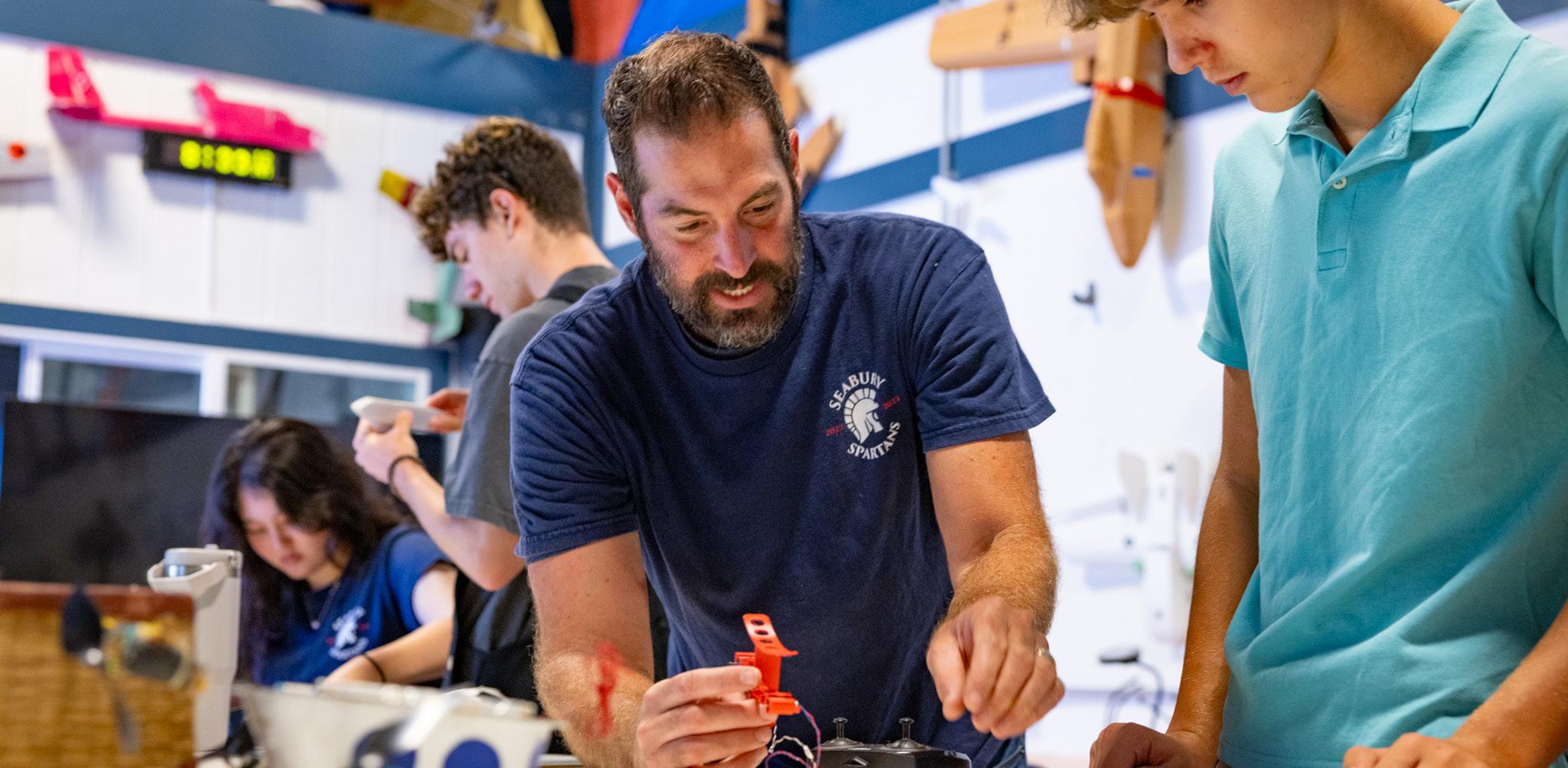
The Technology & Engineering Department at Seabury Hall empowers students to design, build, analyze, and innovate in real-world contexts. Students develop computational thinking, systems reasoning, engineering design habits, and ethical awareness through hands-on, project-based learning. Across Middle and Upper School, courses integrate coding, electronics, fabrication, robotics, data science, and emerging technologies to prepare students for a rapidly evolving technological landscape.
Grades 9–12 | 0.5 Credit
Aeronautical Engineering explores the physics and engineering of flight. Students design, fabricate, and fly remote controlled aircraft while analyzing performance data. The course emphasizes systems thinking and safe aviation practices.
What Students Will Explore:
• Explain forces of flight and principles of stability and control
• Design and build RC aircraft using CAD and fabrication tools
• Install and configure control systems including servos, motors, receivers and stabilizers
• Conduct flight tests using structured data collection
• Analyze flight data to refine aircraft design.
• Evaluate weather conditions and airworthiness to mitigate risks
• Follow safe and ethical aviation practices and aeronautical decision making
Grades 10–12 | 1 Credit | AP Course
AP Computer Science Principles introduces foundational computer science concepts through creative programming projects. Students explore algorithms, data, and the societal impact of computing. The course prepares students for the AP exam through structured assessments and performance tasks.
What Students Will Explore:
• Design algorithms to solve computing problems
• Write and refine modular programs
• Analyze societal impacts of computing innovations
• How the internet consists of a network of networks
• Collect and analyze data using computational methods
• Communicate computing concepts clearly.
• Collaborate to develop and document computing projects
Grades 10–12 | 0.5 Credit
Artificial Intelligence and Ethics examines how AI is transforming business, entrepreneurship, and decision-making across industries. Rather than focusing primarily on coding, students explore how AI tools are built, deployed, and managed in real-world contexts. Through case studies and applied projects, students analyze how companies use automation, predictive analytics, and generative AI to innovate, improve efficiency, and create new opportunities.
Students also examine the ethical responsibilities that accompany emerging technologies. Topics include bias in algorithms, data privacy, intellectual property, workforce disruption, and responsible AI governance. By the end of the course, students are equipped to critically evaluate AI systems and strategically apply AI tools in entrepreneurial and professional settings.
What Students Will Explore:
• How AI is used in marketing, finance, healthcare, and small business
• Practical applications of generative AI for productivity and innovation
• Evaluating AI tools for business strategy and competitive advantage
• Algorithmic bias, fairness, and responsible data use
• Intellectual property and ownership in the age of AI
• Automation and the future of work
• AI policy, governance, and global regulation
• Designing an AI-informed business or project proposal
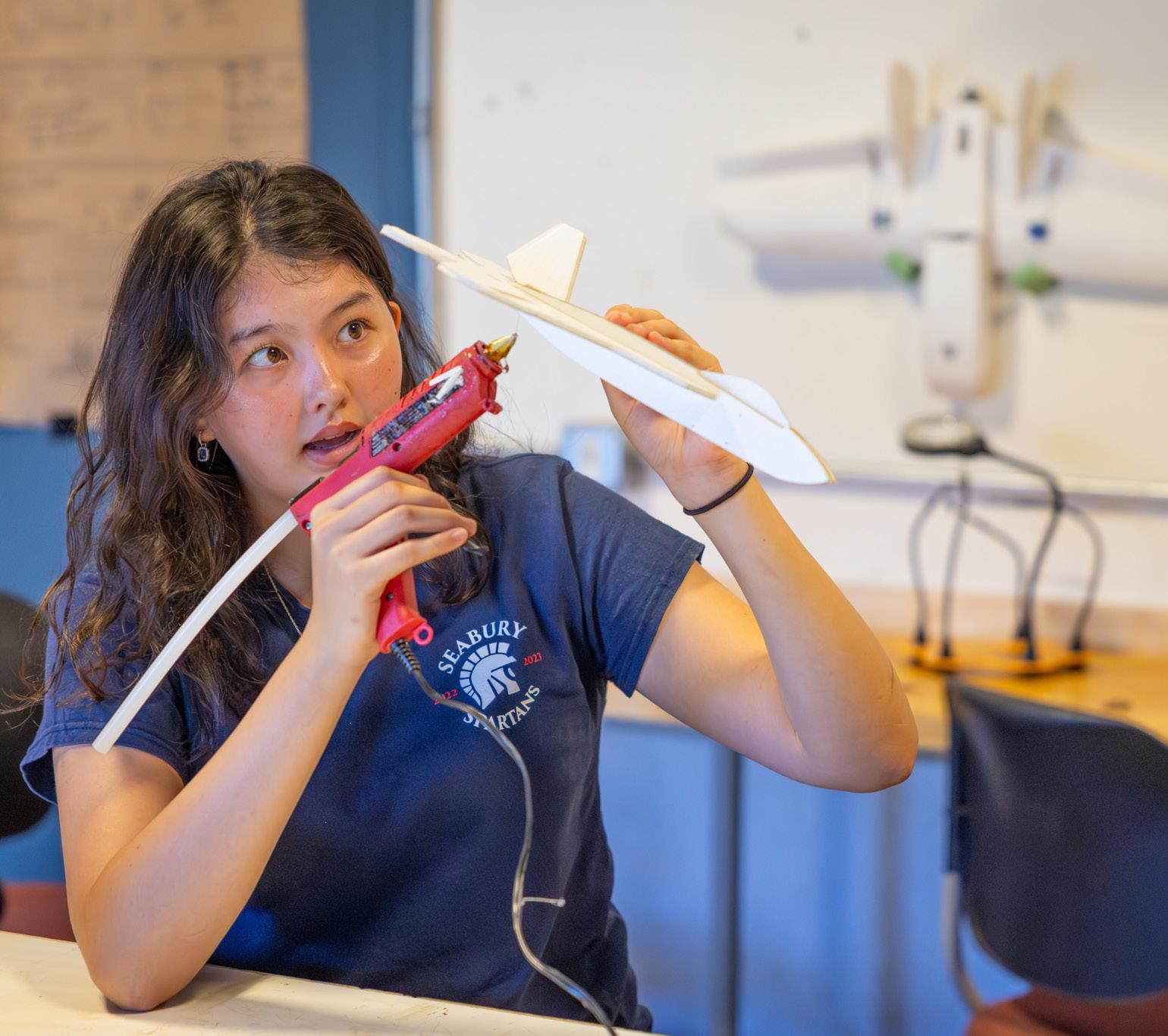
Grades 10–12 | 1 Credit
Data Science introduces students to Python programming, statistical reasoning, and data visualization. Students analyze real datasets and develop ethical awareness around data collection and use. The course emphasizes analytical thinking and real-world application.
What Students Will Explore:
• Create spreadsheets and generate information from data
• Write Python programs using core programming constructs
• Import, clean, and prepare datasets for analysis
• Create visualizations to explore and communicate findings
• Interpret data patterns using foundational statistics
• Apply computational thinking to solve data problems
• Identify ethical considerations in data collection and analysis
Grades 9–12 | 0.5 Credit
Emerging Technologies introduces students to the engineering design process through hands-on fabrication and prototyping. Students design, model, and build functional systems using microcontrollers and digital fabrication tools. The course emphasizes iterative design, problem solving, creativity, documentation, and effective & safe lab equipment use.
What Students Will Explore:
• Apply the engineering design process to create and test prototypes.
• Produce accurate CAD models meeting constraints and design requirements
• Build and program electronics systems with sensors and actuators
• Use fabrication tools including 3D printers and laser cutters safely
• Troubleshoot mechanical and electrical systems systematically
• Document engineering work through sketches, schematics, and iteration logs
• Reflect and present on project from idea to final project
Grades 11–12 | 1 Credit
Prerequisite: Emerging Technologies
Engineering challenges students to design ambitious, interdisciplinary engineering projects. Students will complete hands-on lab work to build skills across multiple disciplines in engineering and integrate mechanical, electrical, and software systems into cohesive projects. The course culminates in a capstone project driven by student interest and real-world application.
What Students Will Explore:
• Create advanced CAD assemblies and fabrication drawings
• Build integrated mechanical, electrical, and software systems
• Use timelines, budgets, and testing protocols to manage engineering projects
• Present engineering reasoning through demonstrations and written documentation
• Iterate prototypes based on testing and data
• Define and complete a personalized engineering challenge
ENTREPRENEURSHIP & BUSINESS FUNDAMENTALS
Grades 9–12 | 0.5 Credit
Entrepreneurship & Business Fundamentals equips students with the mindset and foundational skills required to launch and manage innovative ventures. Students examine case studies of successful founders while developing their own original business concepts. Through experiential learning and collaboration with local entrepreneurs, students design business plans, prototype solutions, and present pitches grounded in market research and financial analysis.
What Students Will Explore:
• Use design thinking to identify and define realworld problems
• Conduct market research, interviews, and competitive analysis
• Develop business models and value propositions
• Prototype products or services using artistic or technical tools
• Create branding materials including logos and pitch decks
• Deliver persuasive business presentations supported by data and strategy
Grades 9–12 | 0.5 Credit
This course introduces students to the essential skills needed to make informed and responsible financial decisions. Students learn the fundamentals of personal finance through real-world scenarios and practical applications. Topics focus on building lifelong financial habits, understanding how money works, and developing the skills needed to manage finances with confidence and independence.
What Students Will Explore:
• Earning income and understanding wages and careers
• Creating and managing personal budgets
• Saving strategies and the basics of investing
• Responsible spending and consumer decisionmaking
• Understanding credit, loans, and interest
• Managing financial risk, including insurance
• Planning and paying for college or other postsecondary pathways
• Building healthy financial habits for long-term financial stability
(GIS) &
Grades 9–12 | 0.5 Credit
GIS & Drone Mapping teaches students how to capture, process, and analyze spatial data. Students plan drone missions and create 2D and 3D models for environmental and engineering analysis. The course emphasizes geospatial reasoning and storytelling with data.
What Students Will Explore:
• Plan and execute drone missions following FAA guidelines
• Process imagery into orthomosaics and elevation models
• Use GIS tools for spatial analysis and visualization
• Interpret geospatial data related to natural and built environments
• Create story maps, dashboards, and geospatial reports
• Evaluate ethical responsibilities in geospatial data handling
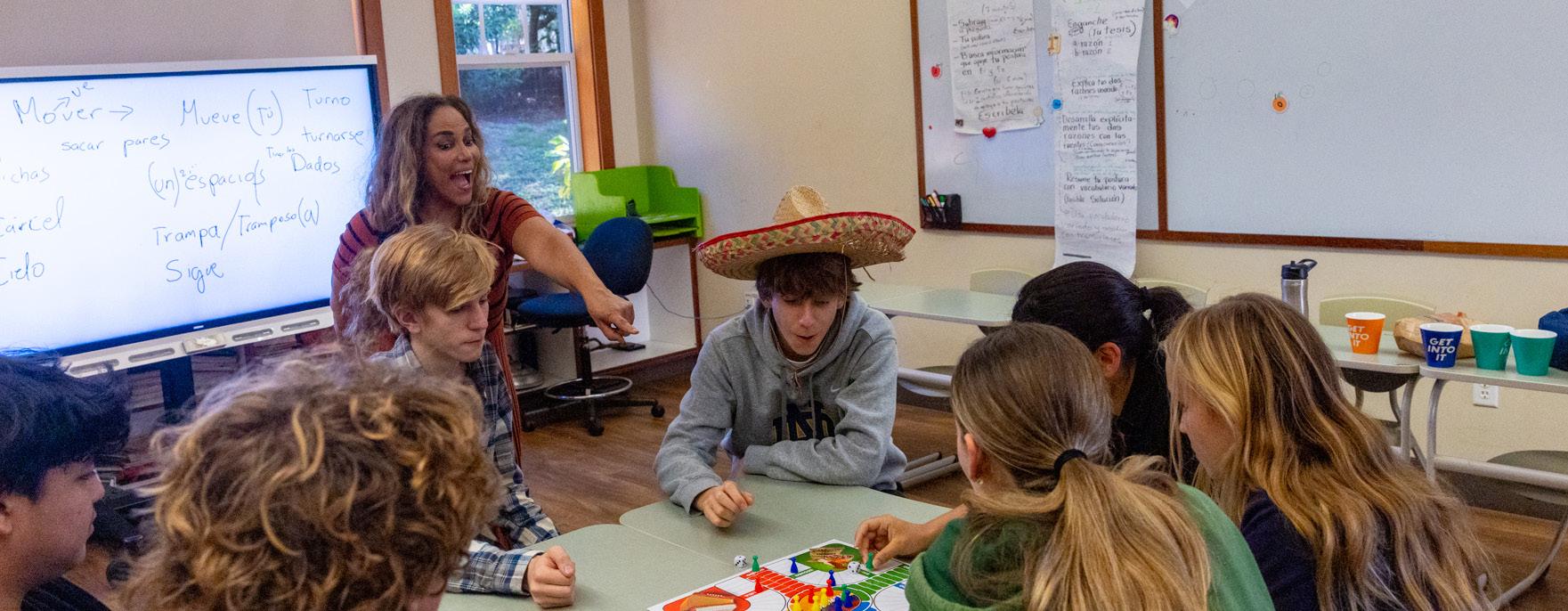
The World Language Department at Seabury Hall develops culturally responsive, globally aware communicators who engage confidently in multiple languages. Through immersive instruction, authentic texts, and real-world communication tasks, students build proficiency in listening, speaking, reading, and writing. Courses emphasize cultural understanding, intercultural competence, and the ability to navigate diverse global contexts.
HAWAIIAN 1
Grades 9–12 | 1 Credit
Hawaiian 1 builds foundational vocabulary and grammar structures for beginning learners. Students connect language acquisition with cultural identity and historical understanding.
What Students Will Explore:
• Sentence structure and vocabulary development
• Basic chant and mele study
• Cultural context integration
• Reading and writing practice
HAWAIIAN 2
Grades 9–12 | 1 Credit
Hawaiian 2 expands grammatical complexity and conversational fluency. Students deepen cultural competency through language-based exploration.
What Students Will Explore:
• Expanded verb structures
• Dialogue development
• Increased vocabulary
• Increased conversational fluency
• Oratory and speech delivery
HAWAIIAN 3
Grades 9–12 | 1 Credit
Hawaiian 3 develops advanced reading and writing skills. Students explore literature and oral histories while strengthening language precision.
What Students Will Explore:
• Complex grammatical structures
• Oral presentations
• Cultural research integration
• Advanced composition practice
HAWAIIAN 4
Grades 9–12 | 1 Credit
Hawaiian 4 is conducted primarily in Hawaiian and emphasizes advanced proficiency. Students engage with authentic texts and community-based language use.
What Students Will Explore:
• Advanced reading comprehension
• Extended writing projects
• Cultural immersion experiences
• Refining speech
• Advanced composition
JAPANESE 1
Grades 9–12 | 1 Credit
Japanese 1 introduces spoken and written Japanese with emphasis on listening and memorized dialogue. Students begin literacy in katakana and hiragana.
What Students Will Explore:
• Core conversation memorization
• Katakana and hiragana reading
• Listening drills
• Cultural etiquette study
• Basic sentence structure
JAPANESE 2
Grades 9–12 | 1 Credit
Japanese 2 expands grammar and introduces honorific forms. Students deepen reading and writing proficiency.
What Students Will Explore:
• Polite speech forms
• Expanded vocabulary
• Kanji introduction
• Cultural presentation projects
• Conversational fluency practice
JAPANESE 3
Grades 9–12 | 1 Credit
Japanese 3 refines advanced conversational and literacy skills. Students engage more fully with authentic texts.
What Students Will Explore:
• Advanced kanji integration
• Context-based speech variation
• Short essays
• Cultural analysis discussions
• Oral presentations
JAPANESE 4
Grades 9–12 | 1 Credit
Japanese 4 emphasizes professional-level communication skills and advanced literacy. Students prepare for collegelevel language study.
What Students Will Explore:
• Advanced kanji mastery
• Formal and informal speech contexts
• Extended writing projects
• Cultural research integration
SPANISH 1
Grades 9–12 | 1 Credit
Spanish 1 introduces students to structured language study through proficiency-based instruction. Students build reading, writing, speaking, and listening skills while developing cultural awareness. The course prepares students for Upper School Spanish and encourages continued progression through advanced levels.
What Students Will Explore:
• Basic sentence formation and simple meaningful communication
• Everyday vocabulary themes including self , family, school, food hobbies and weather
• Cultural exploration of Hispanic communities traditions and holidays
• Oral presentations and more complex dialogues to develop speaking confidence.
• Introductory grammar structures like gender, articles,adjectives, and present tense verbs
• Interactive communicative tasks such as role-plays and project based learning.
• Short written compositions to practice basic writing and sentence structure.
SPANISH 2
Grades 9–12 | 1
Credit
Spanish 2 increases complexity in grammar and conversation by building on the foundational structures introduced in Spanish 1 and requiring students to communicate with greater accuracy and detail. Students expand their vocabulary to discuss past events, future plans, daily routines, and personal experiences with more nuance. They improve interpretive skills through listening to authentic audio, reading short narratives, and analyzing cultural texts. Emphasis is placed on developing longer spoken interactions, writing organized paragraphs, and using a wider variety of verb tenses and sentence structures confidently and appropriately.
What Students Will Explore:
• Past and immediate future tenses mastery with longer sentences and descriptive details
• Introduction to imperative mood and general directions with cooking and traveling vocabulary
• Narrative storytelling with longer sentences and more descriptive details
• Cultural exploration projects including Hispanic traditions, festivals, and social norms
• Listening comprehension exercises with authentic audios from native speakers
• Extended written responses integrating grammar, vocabulary, and cultural topics
• Collaborative communicative tasks and project-based learning to reinforce real-world language use
SPANISH 3
Grades 9–12 | 1
Credit
Spanish 3 focuses on fluency and accuracy in extended discourse. Students work with authentic texts and cultural materials from across the Spanish-speaking world to deepen linguistic and cultural understanding. As the most complex course in the sequence, it introduces advanced structures that differ from English.Students develop more abstract thinking skills as they move beyond translation toward conceptual language use.
What Students Will Explore:
• Advanced verb tenses like subjunctive and direct and indirect objects
• Literature excerpts
• Oral debates
• Cultural analysis essays
• Individual and collaborative projects
4
Grades 9–12 | 1 Credit
Spanish 4 refines advanced communicative functions through film, literature, and in-depth analysis of authentic materials. Instruction is conducted in Spanish to strengthen fluency, spontaneity, and academic language use. Emphasis is placed on complex, multi-paragraph writing that integrates advanced grammar, thematic vocabulary, and cultural analysis. Students research and present real-world projects and explore current events from the Hispanic world, developing the ability to interpret, discuss, and respond to contemporary global issues with sophistication and confidence.
What Students Will Explore:
• Film analysis
• Advanced composition
• Interpretive listening tasks
• Cultural reflection essays
• Capstone language project
AP SPANISH LANGUAGE & CULTURE
Grades 11–12 | 1 Credit | AP Course
AP Spanish Language & Culture develops advanced proficiency across interpersonal, interpretive, and presentational communication. Students prepare for the AP exam through authentic materials and structured assessments.
What Students Will Explore:
• Synthesis essays
• Formal oral presentations
• Listening and reading analysis
• Spontaneous conversations
• Cultural comparison tasks
• AP-style exam practice
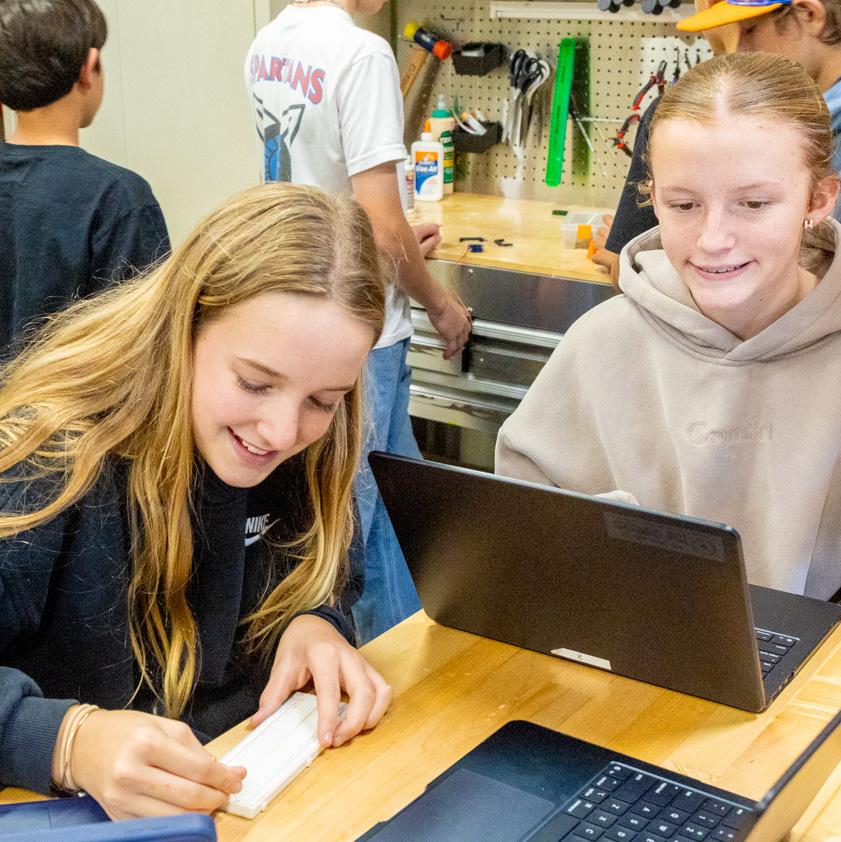
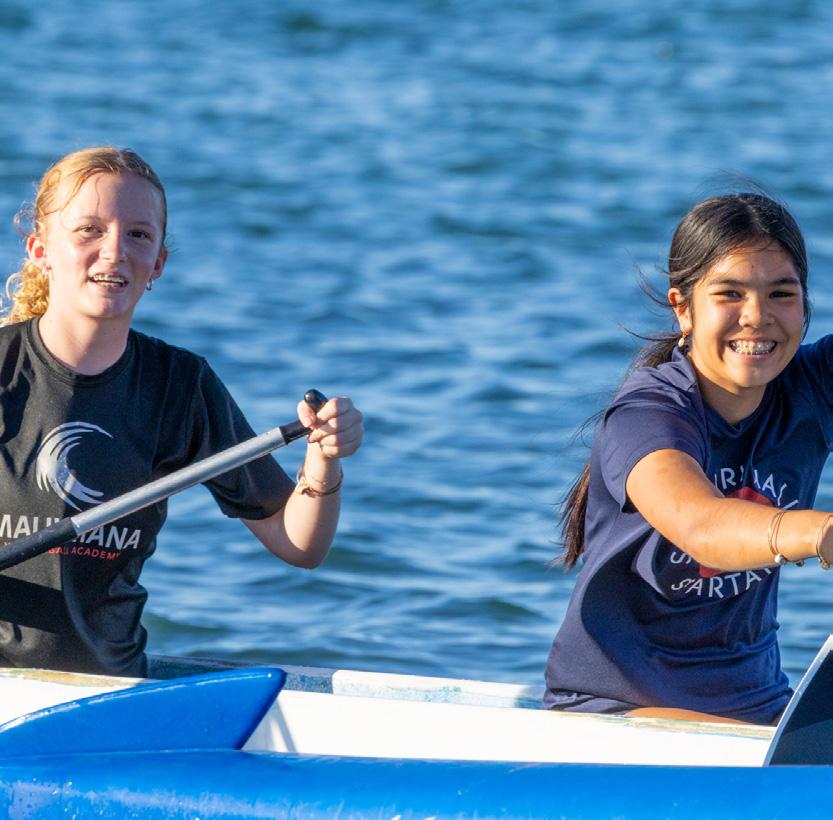
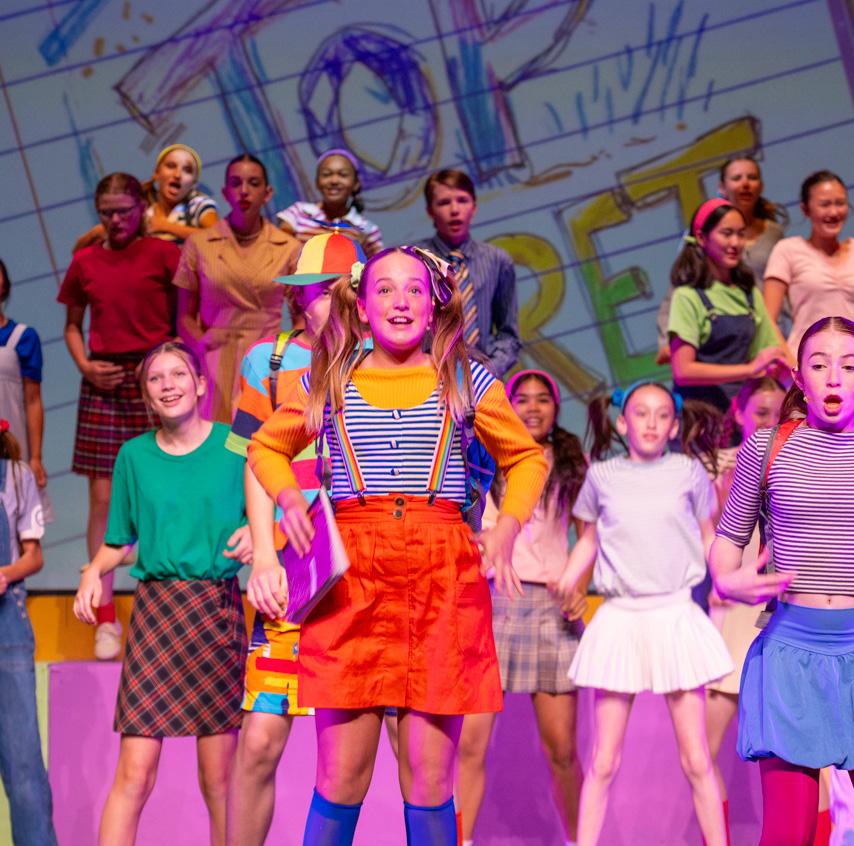
Fifth Grade Arts Rotation introduces students to introductory experiences in Theater, Vocal Music, Instrumental Music, and Visual Art. Students rotate through each discipline to build creative confidence and fundamental skills. The course emphasizes group collaboration, imaginative expression, and the exploration of how the arts connect to our local community and the world around us.
Students will explore:
• Character development and dramatizing stories through movement
• Vocal expression and introductory ensemble singing
• Foundational rhythm and melodic patterns using classroom instruments
• Application of the elements of art in drawing, painting, and mixed media
• Connections between the arts and the diverse traditions of Hawaiʻi
• Supportive peer feedback and basic audience etiquette skills
Fifth Grade English invites students to deepen their role as critical readers and versatile writers. Through a blend of analytical inquiry and creative expression, students develop a sophisticated understanding of how language shapes meaning across diverse texts and works of art. The curriculum emphasizes the nuances of figurative language, challenging students to move beyond literal interpretation to uncover deeper symbolic themes. By building upon foundational reading, spelling, and vocabulary skills, students gain the confidence and clarity needed to build knowledge across the curriculum, connecting their literacy skills to other subjects.
Students will explore:
• Critical response to diverse texts and conversations
• Figurative language
• Expository, narrative, opinion and resarch writing
• Diverse texts and works of art
• Foundational grammar and vocabulary skills
Fifth Grade Mathematics invites students to transition from foundational arithmetic to more complex mathematical reasoning. Through a blend of investigation and procedural fluency, students develop a deep understanding of the structures that govern our number system and the logic of geometric relationships. The curriculum emphasizes critical thinking, precision, and the ability to model real-world scenarios through a mathematical lens.
• Students will explore:
• Decimal operations
• Patterns of the base ten system
• Algorithms of multiplication and division
• Operations of fractions
• Volume and area
• Properties and defining attributes of quadrilaterals
• Develop and use the first quadrant of the coordinate plane
Fifth Grade Physical Education focuses on developing movement competence and cooperative play through active exploration. Students engage in a variety of lead-up games and fitness activities designed to build a strong foundation for lifelong wellness. The course highlights personal effort, group dynamics, and the joy of physical movement in a supportive environment while introducing how healthy habits benefit the body and mind.
Students will explore:
• Competency in specialized motor skills and manipulative patterns
• Introduction to basic offensive and defensive strategies in lead-up games
• Personal fitness awareness and understanding of health-related movement
• Teamwork and inclusive play within local and global physical activities
• Practice of safety, self-control, and positive social interaction during play
Fifth Grade Science invites students to step into the role of scientists and engineers as they explore the natural laws that govern our world. Guided by the Next Generation Science Standards (NGSS), students move beyond simple observation to build deep conceptual knowledge through hands-on experimentation and evidence-based reasoning. The curriculum emphasizes the interconnectedness of Earth’s systems and the logical structures of the physical universe, encouraging students to ask testable questions and develop models to explain complex phenomena. By collaborating on laboratory investigations and mastering scientific vocabulary, students learn to communicate their findings with precision.
Students will explore:
• Relationships and dependencies within ecosystems
• Properties of matter
• Earth’s place in the universe
• Earth’s systems and human impacts
• Engineering Design
Fifth Grade Social Studies invites students to examine the complex layers of American history, from the first encounters between diverse cultures to the defining conflicts that moved the nation forward. Through a blend of historical inquiry and critical analysis, students develop a deep understanding of how the past continues to influence the present. The course emphasizes the role of perspective, challenging students to consider how different groups experienced the growth and transformation of the United States.
Students will explore:
• The Age of Exploration
• Colonial history of the United States
• The American Revolution and The Civil War
• Westward Expansion
• Impacts of cultural beliefs and values
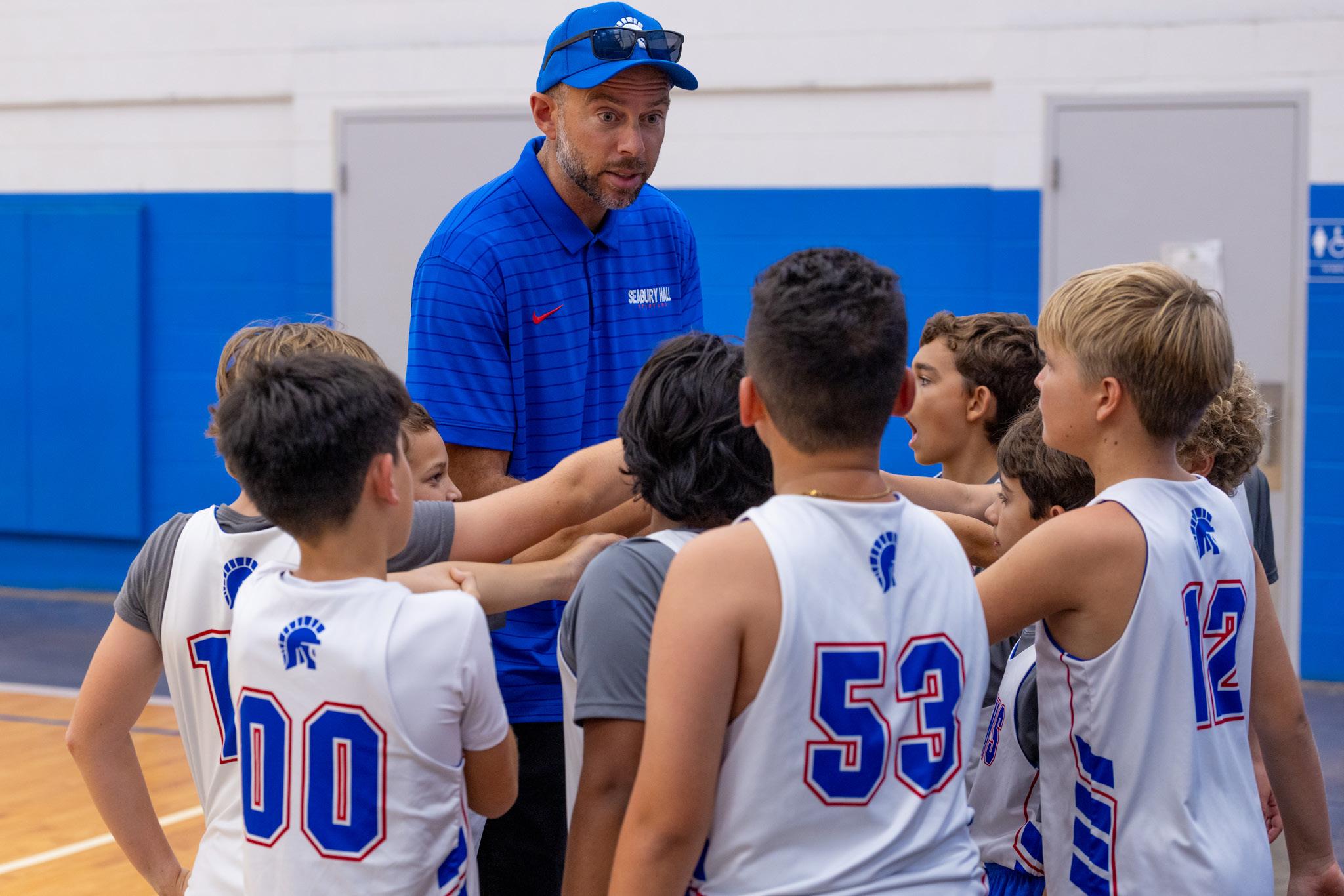
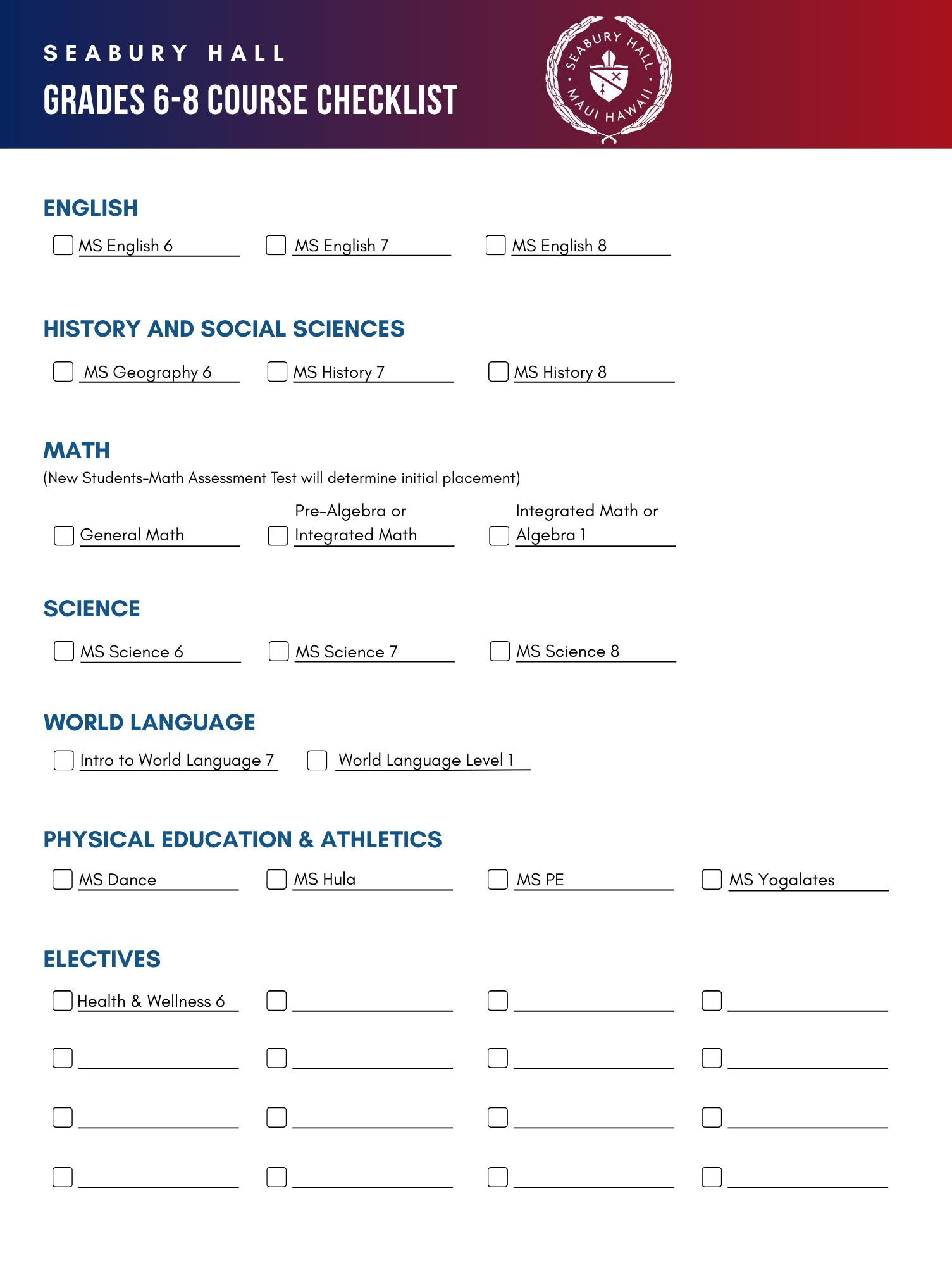
MS COMMUNITY SERVICE LEADERSHIP
Grades 6–8 | Hours Vary Depending Upon Grade Level
The Middle School Community Service Leadership program introduces students to structured service learning through meaningful engagement experiences. Students participate in age-appropriate service opportunities that foster empathy, accountability, and civic responsibility. Through reflection and guided discussion, students begin to understand how individual actions contribute to community well-being and collective impact.
What Students Will Explore:
• Service hour requirements by grade
• Community engagement tracking
• Reflection journaling
• Leadership through participation
• Understanding local community needs
• Building habits of responsibility and initiative
MS ENGLISH 6
Grade 6 | Yearlong
Sixth Grade English invites students into a rich exploration of literature and writing with a strong emphasis on responsibility and critical thinking. Students read across genres, including novels, short stories, poetry, and nonfiction, while learning how authors craft meaning through structure, language, and perspective. Writing instruction focuses on developing fluency, organization, grammar, and vocabulary. Students compose narrative, expository, and argumentative pieces while building confidence in expressing ideas clearly and thoughtfully.
What Students Will Explore:
• Close reading of diverse literary genres
• Paragraph and essay structure development
• Creative narrative writing
• Grammar and sentence construction
• Class discussions and collaborative analysis
MS ENGLISH 7
Grade 7 | Yearlong
Seventh Grade English deepens analytical reading and structured writing skills, while also honing presentation skills. Students engage with major works of literature while examining theme, character, symbolism, and authorial intent. Students refine persuasive and analytical writing, strengthen vocabulary and grammar skills, and develop confidence in oral participation and collaborative dialogue.
What Students Will Explore:
• Study of major literary works
• Analytical paragraph writing
• Vocabulary expansion
• Practice with presentations and discussions
• Evidence-based literary arguments
MS ENGLISH 8
Grade 8 | Yearlong
Eighth Grade English prepares students for the rigor of Upper School coursework. Through classic novels and dramatic works, students examine moral complexity, social themes, and literary craft. The course emphasizes structured essay writing, grammar mastery, research skills, and PSAT verbal preparation, strengthening both academic and standardized test readiness.
What Students Will Explore:
• Classic novel study and literary analysis
• Structured five-paragraph essays
• Grammar review and refinement
• Research project: inclusive of written work, presentation, and reflection
• PSAT verbal and reading preparation
MS ARTS ROTATION 6
Grade 6 | Yearlong Rotation
MS Arts Rotation introduces students to foundational experiences in Theater Arts, Chorus, Band, and Visual Art. Students rotate through each discipline to build exposure, confidence, and technical foundations. The course emphasizes creative risk-taking, ensemble collaboration, and basic technique development while helping students identify artistic interests for future electives.
What Students Will Explore:
• Introductory acting and performance exercises
• Fundamental vocal technique and ensemble singing
• Beginning instrumental instruction
• Drawing, painting, and sculpture basics
• Elements and principles of art
• Performance etiquette and critique skills
MS ART
Grades 7–8 | Semester
MS Art builds foundational studio skills while encouraging creative exploration across mediums. Students experiment with traditional and digital materials to develop personal artistic voice. The course emphasizes craftsmanship, critique, and the creative process from concept to finished work.
What Students Will Explore:
• Drawing and painting techniques
• Digital art with Procreate
• Sculpture and printmaking
• Artist research and inspiration studies
• Portfolio development
• Critique and reflection practices
This two-level introductory sequence immerses students in the traditional structure, discipline, and etiquette of a classical ballet class while building a strong technical foundation. Beginning with the “alphabet” of ballet, students focus on proper posture, turnout, and the essential positions of the feet and arms. Through consistent barre work and center practice, they develop the strength, coordination, and alignment necessary for both stability and grace.
As students progress, the curriculum emphasizes greater fluidity and the integration of more complex steps and movement combinations. Dancers begin to connect foundational technique to traveling steps, simple turns, and small jumps, while continuing to refine muscle memory, balance, and control.
What Students Will Explore:
• The five basic positions of the feet and arms, with increasing precision and clarity
• Fundamental and progressive barre exercises such as plié, tendu, and dégagé
• Correct postural alignment, turnout mechanics, and core engagement
• Development of balance and control through relevé and introductory pirouettes
• Small jumping sequences (petit allegro) with a focus on precision and timing
• Musical phrasing through both adagio and allegro work
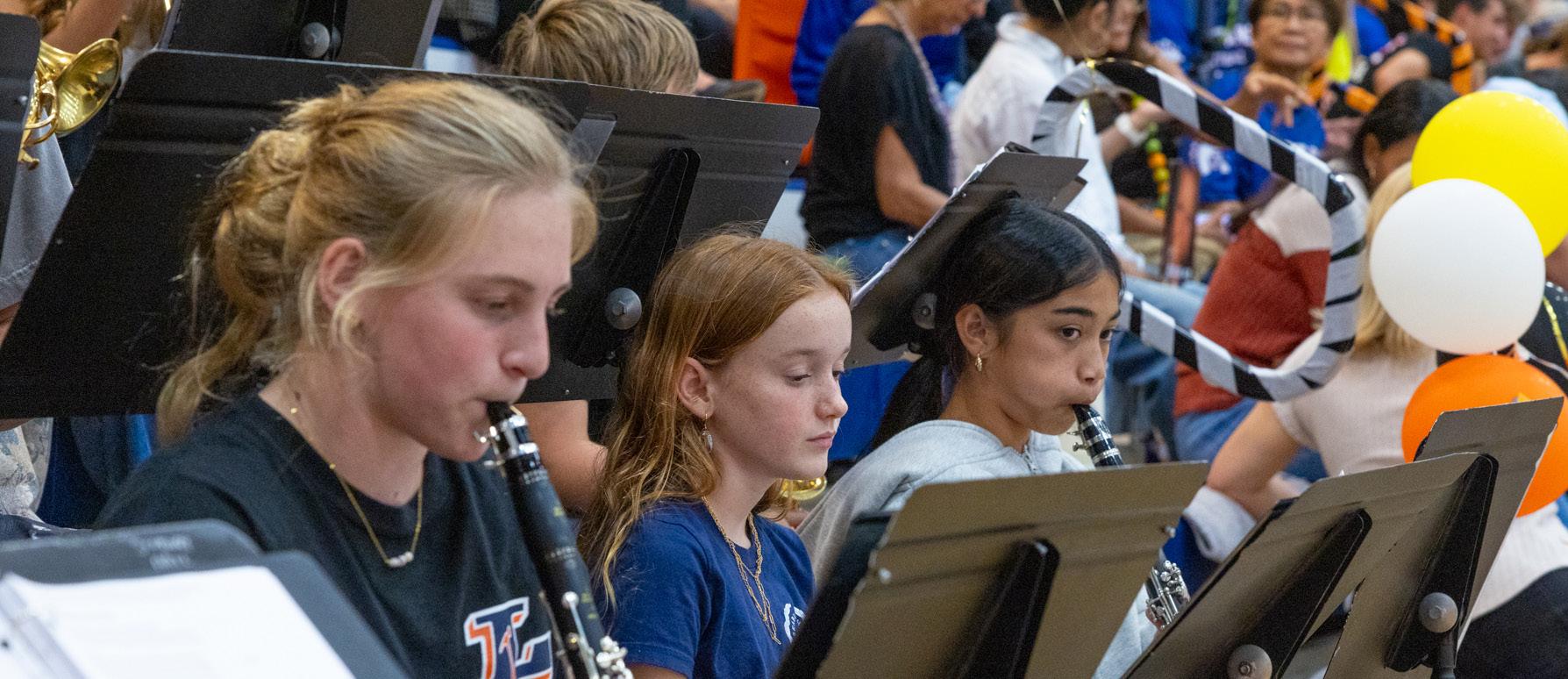
Continued
MS BAND
Grades 7–8 | Semester
MS Band offers students the opportunity to begin or continue instrumental music study within a collaborative ensemble. Students develop musicianship, performance confidence, and ensemble discipline through regular rehearsals and concerts.
What Students Will Explore:
• Instrument technique development
• Music notation literacy
• Ensemble rehearsal skills
• Public performance opportunities
• Teamwork and leadership in ensemble settings
MS CHORUS
Grades 7–8 | Semester
MS Chorus provides a supportive ensemble environment focused on vocal development and performance. Students learn breath control, pitch accuracy, rhythm, and collaborative singing skills.
What Students Will Explore:
• Group vocal training
• Rhythm and harmony exercises
• Concert performance preparation
• Movement and light choreography
• Team-building through music
MS CONTEMPORARY MUSIC ENSEMBLE
Grades 7–8 | Semester
Contemporary Music Ensemble explores modern music performance with emphasis on percussion and collaborative creation. Students experiment with rhythm, composition, and ensemble dynamics in an energetic setting.
What Students Will Explore:
• Percussion fundamentals
• Ensemble coordination
• Basic music theory
• Improvisation exercises
• Concert and assembly performances
MS COSTUME DESIGN
Grades 7–8 | Semester
MS Costume Design introduces students to theatrical costume construction and design concepts. Students learn sewing basics and explore how costume supports storytelling and character development.
What Students Will Explore:
• Costume chart creation
• Color theory in design
• Measurements and fittings
• Basic sewing skills
• Script and character analysis
MS DANCE 1–2
Grades 7–8 | Semester
This two-level introductory sequence builds a strong foundation in movement by blending the technical principles of Modern and Jazz dance with an evolving focus on performance and collaboration. Students develop core strength, flexibility, coordination, and physical endurance while learning to navigate studio space with confidence and clarity. Emphasis is placed on fundamental skills to more complex movement patterns and sequences.
As the course advances, students deepen their technical precision and begin to explore choreography, movement mechanics, and creative expression. Through both individual practice and collaborative work, including introductory partnering, students gain experience in teamwork, spatial awareness, and artistic decision-making.
What Students Will Explore:
• Fundamental and intermediate vocabulary and terminology of Modern, Jazz, and Contemporary dance
• Principles of proper body placement, alignment, and functional stretching
• Rhythmic structures, timing, and musicality in increasingly complex combinations
• Coordination, balance, and control through floor work and across-the-floor progressions
• Teamwork and spatial responsibility through introductory partnering and collaborative exercises
Continued
MS THEATRE ARTS
Grades 7–8 | Semester
MS Theatre Arts provides a comprehensive introduction to acting, stagecraft, and theatrical storytelling. Students develop presence, voice, and physical awareness through collaborative performance projects.
What Students Will Explore:
• Improvisation and scene work
• Stage terminology
• Set and prop design basics
• Makeup and character creation
• Public performance experiences
MS MUSICAL
Grades 7–8 | Fall Semester
MS Musical offers students the opportunity to participate in a full-scale production as performers. Students develop vocal, acting, and movement skills while collaborating in a production ensemble.
What Students Will Explore:
• Audition preparation
• Character development
• Choreography and staging
• Rehearsal discipline
• Public theatrical performance
MS HULA
Grades 6–8 | Semester
Middle School Hula introduces students to both kahiko (traditional) and ʻauana (modern) styles of hula. Students learn that hula is more than dance, it is storytelling, history, and cultural expression embodied through movement. Through disciplined practice and cultural study, students deepen their understanding of Hawaiian values, protocol, and performance etiquette while building physical coordination and confidence.
What Students Will Explore:
• Basic kahiko and ʻauana choreography
• Oli (chant) and mele interpretation
• Cultural protocol and performance etiquette
• Rhythm and timing development
• Balance, coordination, and strength building
• Understanding the balance of Kū Hula and Hina Hula energies
HEALTH & WELLNESS 6
Grade 6 | Semester or Yearlong
Health & Wellness 6 introduces students to foundational health literacy and personal responsibility. Students explore physical, emotional, and social well-being through guided discussions, movement, and reflective practice. The course emphasizes building healthy habits early while developing awareness of how daily decisions impact long-term wellness.
What Students Will Explore:
• Mindfulness practices (breathing, guided reflection)
• Sleep science and energy management
• Nutrition fundamentals and reducing added sugars
• Sun safety and outdoor wellness
• Posture and movement awareness
• Social connection and respectful communication
MS GEOGRAPHY 6
Grade 6 | Yearlong
Geography 6 serves as a foundational introduction to global systems, cultures, and spatial thinking. Students explore the five major themes of geography—location, place, human-environment interaction, movement, and region—while learning to interpret maps, charts, and demographic data. Through hands-on inquiry and collaborative projects, students examine how geography shapes culture, politics, and economics. The course builds essential research and presentation skills while encouraging curiosity about the world.
What Students Will Explore:
• Map construction and spatial reasoning
• Global culture case studies
• Human-environment interaction analysis
• Research presentations on world regions
• Geographic problem-solving projects
- Continued
MS HISTORY 7 : OCEANIA & HAWAI ʻ I
Grade 7 | Yearlong
History 7 introduces students to the cultures and histories of Oceania with a focused study of Hawai ʻ i. Students explore identity, migration, colonization, and cultural resilience through historical inquiry. Using primary and secondary sources, students examine perspective, bias, and historical narrative. The course fosters thoughtful dialogue and deepens understanding of Pacific history and Hawaiian sovereignty.
What Students Will Explore:
• Polynesian migration studies
• Hawaiian Kingdom primary source analysis
• Colonial impact investigations
• Historical inquiry projects
• Perspective-based research presentations
MS HISTORY 8: UNITED STATES HISTORY
Grade 8 | Yearlong
History 8 traces the development of the United States from early migration through Reconstruction. Students analyze foundational documents, including the Constitution, to understand evolving civic principles. Through primary sources such as diaries, speeches, and letters, students develop historical writing skills and explore themes of race, class, gender, and political development.
What Students Will Explore:
• Constitutional analysis
• Primary source interpretation
• Document-based essays
• Civil War and Reconstruction case studies
• Historical perspective debates
GENERAL MATH
Middle School | Yearlong
General Math strengthens foundational arithmetic skills while building readiness for algebraic thinking. Students deepen their understanding of number sense, proportional reasoning, and problem-solving strategies through investigation-based learning. The course emphasizes mathematical communication, collaboration, and conceptual understanding. Students learn to justify their reasoning and apply mathematical tools to real-world situations.
What Students Will Explore:
• Ratios, rates, and proportional relationships
• Fractions, decimals, and rational numbers
• Area and geometry of polygons
• Expressions and equations
• Data displays and introductory statistics
• Collaborative problem-solving investigations
PRE-ALGEBRA
Middle School | Yearlong
Pre-Algebra prepares students for Algebra 1 by strengthening algebraic reasoning and fluency with rational numbers. Students move from arithmetic procedures to symbolic reasoning and abstract modeling. The course emphasizes solving multi-step problems, understanding variables, and interpreting functions in real-world contexts.
What Students Will Explore:
• Integer operations and rational number fluency
• Expressions and multi-step equations
• Proportional relationships and percent applications
• Introductory function concepts
• Graphing and coordinate reasoning
• Problem-based learning investigations
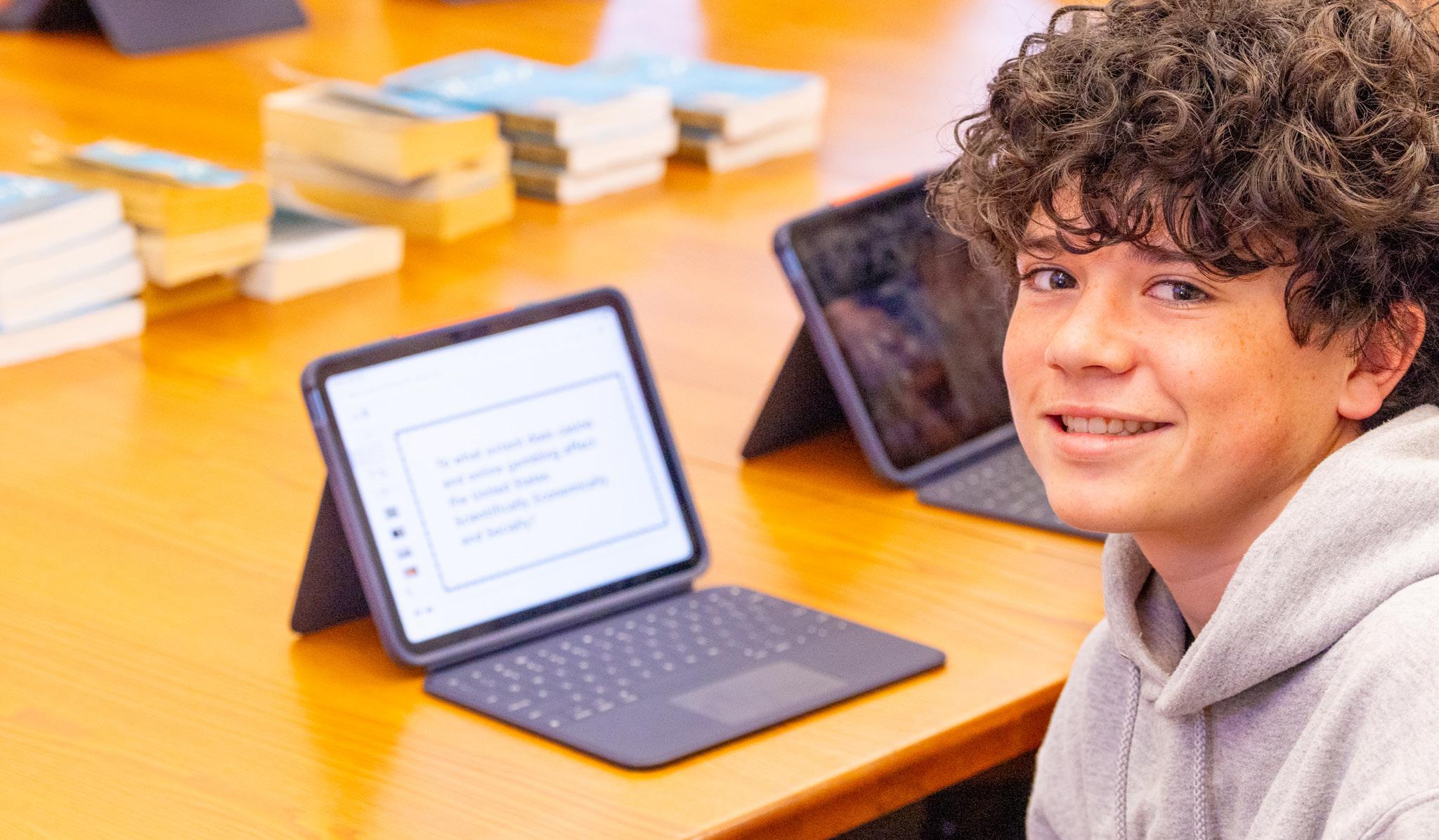
MATHEMATICS - Continued
INTEGRATED MATH
Middle School | Yearlong
Integrated Math builds a strong bridge between arithmetic and Algebra 1 by blending algebra, geometry, and statistics into a cohesive learning experience. Students explore real-world problems using data-driven reasoning. The course emphasizes modeling, reasoning, and collaboration. Students interpret scatterplots, analyze linear relationships, and apply geometric reasoning to practical scenarios.
What Students Will Explore:
• Rigid Transformations
• Congruence and Similarity
• Linear equations and inequalities
• Systems of equations
• Two-variable statistics and modeling
• Volume of cylinders, cones, and spheres
• Proportional reasoning and dimensional analysis
• Mathematical argumentation and justification
ALGEBRA 1
Middle School | Yearlong | 1 Credit
Algebra 1 introduces foundational algebraic structures and modeling techniques essential for higher mathematics. Students analyze linear, quadratic, and exponential relationships using symbolic and graphical representations. The course emphasizes real-world modeling, critical reasoning, and precision in mathematical communication.
What Students Will Explore:
• One and Two Variable Statistics
• Linear equations and systems
• Linear Inequalities and systems
• Function Notation and Graphing
• Exponential Functions
• Quadratic Functions
• Quadratic Equations
• Application-based problem solving
MS HULA (ATHLETIC CREDIT ELIGIBLE)
Grades 6–8 | Semester
MS Hula combines physical conditioning with cultural expression through traditional Hawaiian dance. Students build strength, balance, and rhythm while learning performance discipline. Hula fosters physical endurance and coordinated movement alongside cultural appreciation.
Athletes Will Develop:
• Lower and upper body strength development
• Balance and coordination
• Rhythmic timing and stamina
• Team synchronization
• Performance preparation
MS PHYSICAL EDUCATION
Grades 6–8 | Required
Middle School Physical Education builds foundational fitness, coordination, and teamwork skills through structured physical activity. Students explore a range of sports and conditioning exercises designed to promote lifelong health. The course emphasizes personal growth, positive competition, and development of healthy movement habits.
Athletes Will Develop:
• Aerobic conditioning and endurance building
• Team sports fundamentals
• Body awareness and coordination
• Goal setting and fitness tracking
• Collaboration and sportsmanship
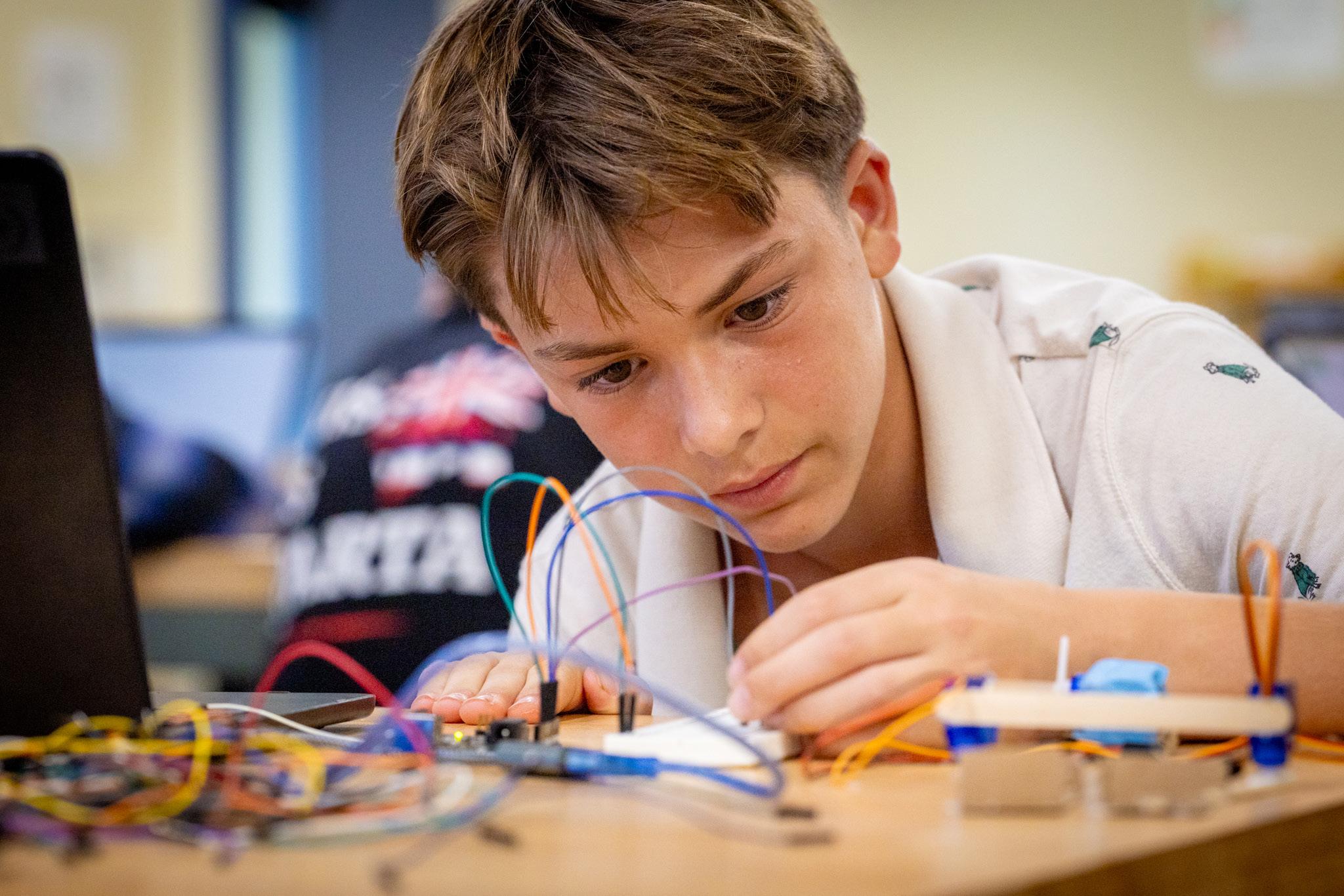
MS SCIENCE 7
Grade 7 | Yearlong
MS YOGALATES
Grades 6–8 | Semester
This dynamic fusion class combines the mindful alignment and breathwork of yoga with the core-strengthening principles of Pilates. Students build strength, flexibility, and stability while improving posture, balance, and overall body awareness. The class emphasizes controlled movement, proper alignment, and intentional breathing to support both physical conditioning and mental focus.
Through a balanced sequence of flowing and targeted exercises, students develop core strength, increase mobility, and enhance muscular endurance. Movements are designed to be accessible yet challenging, offering a full-body workout that supports injury prevention and overall wellness.
What Students Will Explore:
• Core-strengthening exercises inspired by Pilates
• Yoga-based poses to build flexibility, balance, and alignment
• Breathwork techniques to support movement and focus
• Controlled, low-impact conditioning for full-body strength
• Improved posture, stability, and body awareness
• A mindful approach to movement and overall well-being
MS SCIENCE 6
Grade 6 | Yearlong
Science 6 is the first course in a three-year series of studentcentered Next Generation Science Standards (NGSS) aligned science courses. Rooted in lab foundations, this course emphasizes developing a love of science through hands-on, exploratory learning. Utilizing NGSS’s three-dimensional approach to learning science, students will engage with disciplinary core ideas, cross-cutting concepts, and science and engineering practices as they explore a variety of phenomena.
What Students Will Explore:
• Light and Matter
• Thermal Energy
• Weather, Climate, and Water Cycling
• Plate Tectonics and Rock Cycling
• Natural Hazards
• Cells and Systems
Science 7 is the second course in a three-year series of student-centered, Next Generation Science Standards (NGSS) aligned science courses. Building on lab foundations, this course emphasizes fostering a love of science through exploratory, hands-on experiences. Utilizing NGSS’s threedimensional approach to learning science, students will engage with disciplinary core ideas, cross-cutting concepts, and science and engineering practices as they explore a variety of phenomena.
What Students Will Explore:
• Chemical reactions and matter
• Chemical reactions and energy
• Metabolic reactions
• Matter cycling and photosynthesis
• Ecosystem dynamics and biodiversity
• Earth’s resources and human impact
MS SCIENCE 8
Grade 8 | Yearlong
Science 8 is the final course in a three-year series of studentcentered, Next Generation Science Standards (NGSS) aligned science courses. Further strengthening lab foundations, this course emphasizes fostering a deeper understanding of science through exploratory, hands-on experiences. Utilizing NGSS’s three-dimensional approach to learning science, students will engage with disciplinary core ideas, crosscutting concepts, and science and engineering practices as they explore a variety of phenomena.
What Students Will Explore:
• Contact forces
• Waves
• Electromagnetism
• Earth-space science
• Genetics: evolutionary biology
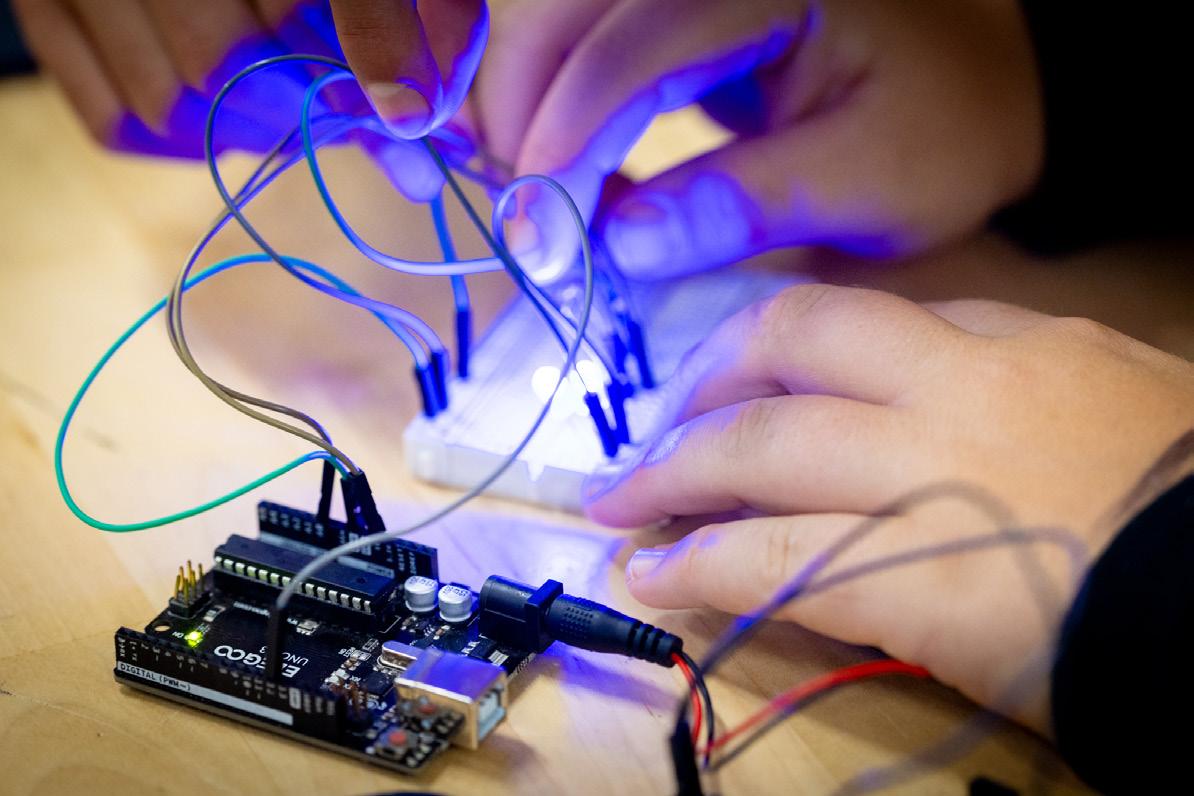
MS TECH FOUNDATIONS 6
Grade 6 | Semester or Yearlong
MS Tech Foundations introduces students to core digital literacy, computational thinking, and responsible technology use. Students explore coding, multimedia production, 3D modeling, and basic robotics in a supportive, hands-on environment. The course emphasizes digital citizenship, collaboration, and creative problem solving. Students learn how to use technology as a tool for creation rather than passive consumption.
What Students Will Explore:
• Scratch block-based coding
• Introduction to robotics and Makey Makey inventions
• 3D modeling and laser cutting basics
• Adobe Premiere and Photoshop fundamentals
• Google productivity tools
• Digital citizenship and internet safety
MS DIGITAL MEDIA
Grades 7-8| Semester
MS Digital Media introduces students to graphic design, photography, and digital storytelling. Students learn foundational editing skills using industry-standard software while building creative portfolios. The course emphasizes visual communication, file management, and collaborative production workflows.
What Students Will Explore:
• Photoshop and Lightroom basics
• Introduction to After Effects
• Photo editing and color correction
• Graphic design fundamentals
• Digital portfolio development
• Yearbook contribution opportunities
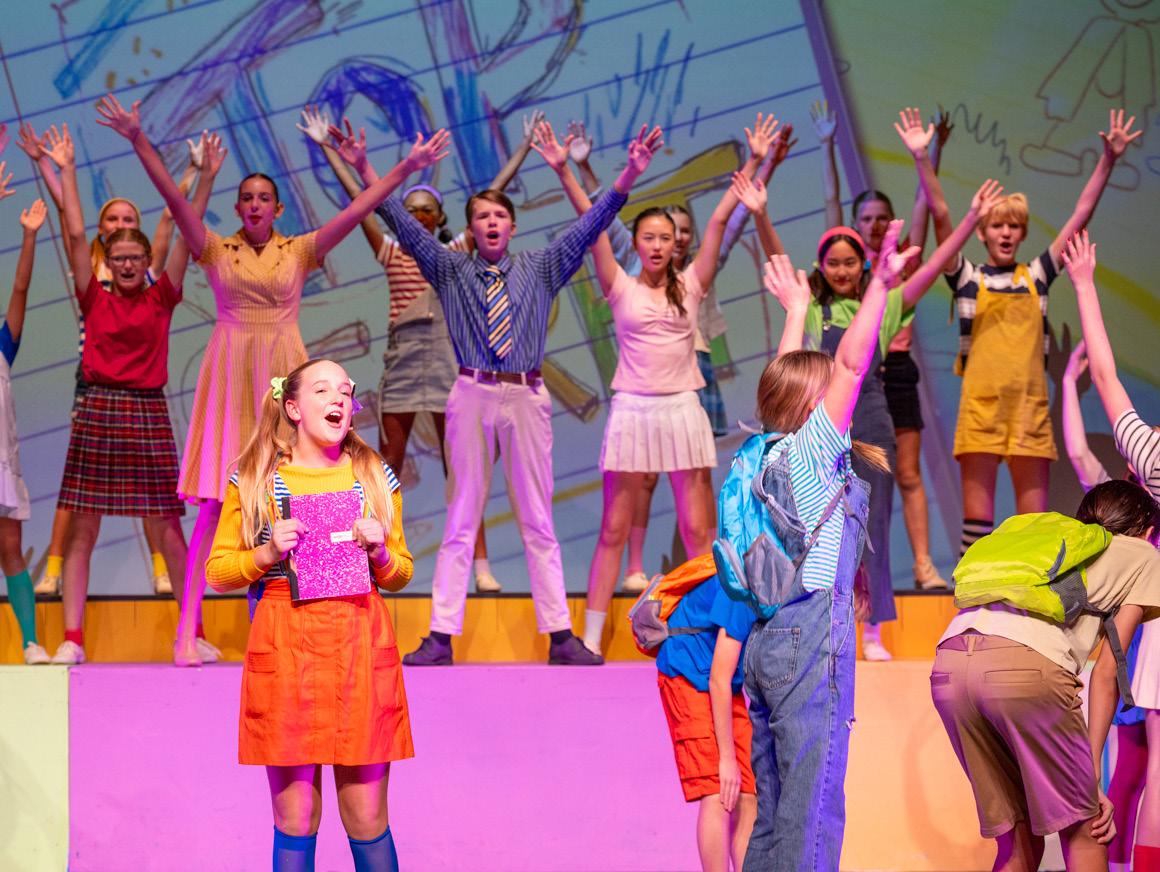
MS ELECTRIC PRO Grades 7-8| Semester
MS Electric Pro introduces students to electronics, circuits, and rapid prototyping. Students learn how sensors and motors bring physical computing projects to life. The course emphasizes iterative design and hands-on engineering challenges.
What Students Will Explore:
• Circuit design and breadboarding
• Sensor programming basics
• Motor control and robotics foundations
• Rapid prototyping techniques
• Engineering design cycle application
MS THEATER TECH Grades 7-8| Semester
MS Theater Tech introduces students to technical theater production. Students explore lighting, sound, and projection design for live performances. The course emphasizes safety, collaboration, and real-world production workflows.
What Students Will Explore:
• Lighting board programming
• Sound system basics
• Projection design
• Backstage crew roles
• Technical production planning
MS VIDEO PRODUCTION Grades 7-8 | Semester
MS Video Production introduces students to film analysis and foundational filmmaking techniques. Students learn pre-production planning, camera operation, and editing workflows. The course emphasizes storytelling, collaboration, and media literacy.
What Students Will Explore:
• Film genre analysis
• Camera framing and composition
• Basic editing techniques
• Storyboard creation
• Collaborative short film projects
INTRODUCTION TO HAWAIIAN
Grade 7 | Yearlong
Introduction to Hawaiian 7 invites students into the living language and culture of Hawaiʻi through handson, connected learning experiences. Students develop foundational communication skills rooted in the values of aloha, kuleana, and mālama, while exploring the stories, places, and practices that make ʻōlelo Hawaiʻi unique. This course nurtures cultural awareness, fosters pride in Hawaiʻi’s heritage, and builds the linguistic groundwork for continued study.
What Students Will Explore:
• Basic conversational exchanges and essential Hawaiian vocabulary
• Present-tense structures, sentence patterns, and foundational grammar
• Pronunciation and listening skills shaped by the sounds and rhythm of ʻōlelo Hawaiʻi
• Cultural connections through mele, moʻolelo, placebased learning, and Hawaiian worldview
• Strategies for comprehension and independent language growth
• Short written expressions and introductory presentational speaking practices
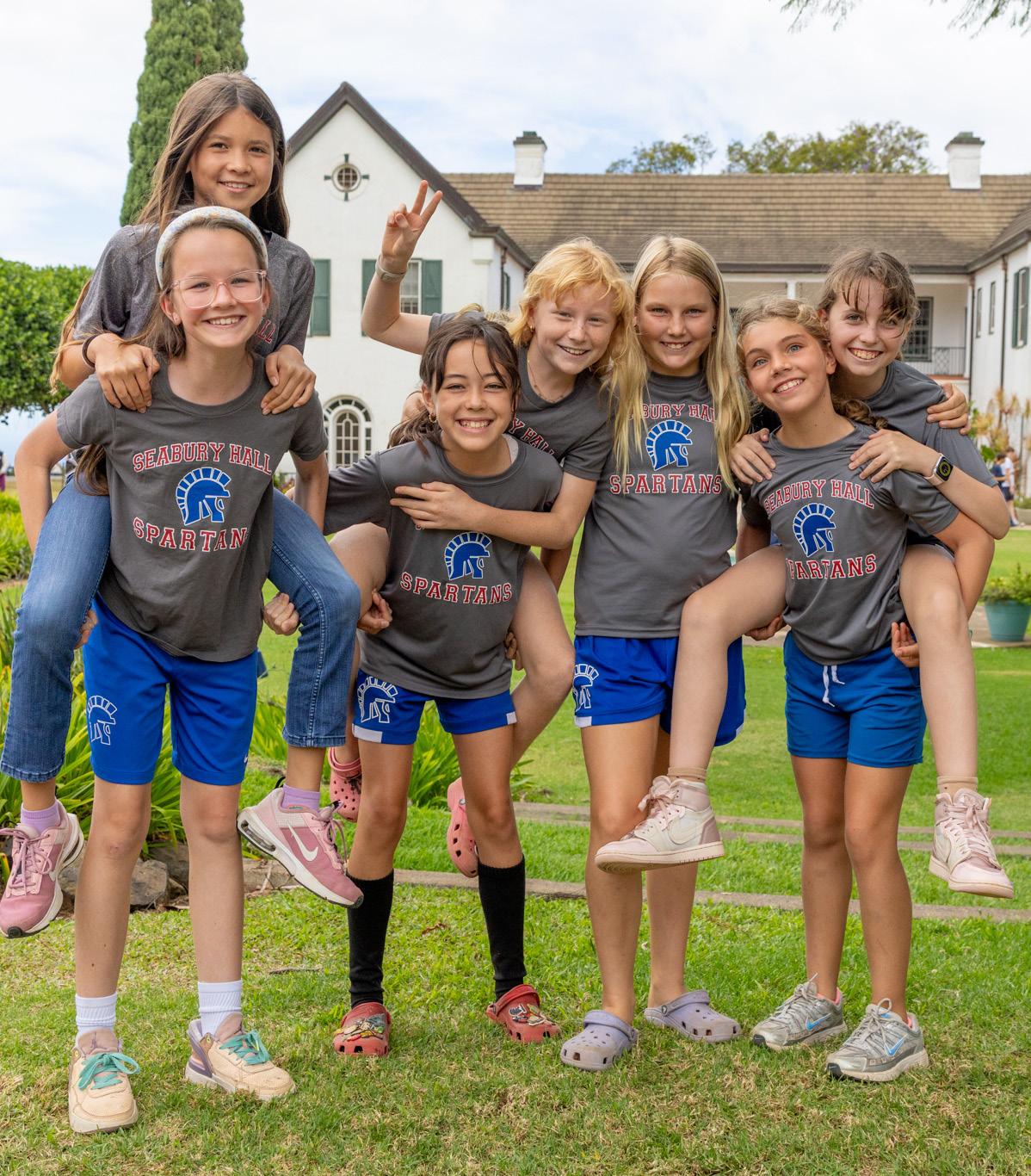
Grade 7 | Yearlong
Introduction to Japanese 7 sparks curiosity and confidence by welcoming students into the world of Japanese language and culture through meaningful, interactive practice. Students build essential communication skills in speaking, listening, reading, and writing while gaining a deeper appreciation for Japan’s traditions, daily life, and global influence. This course lays the groundwork for future study in Upper School with a strong emphasis on accuracy, cultural respect, and joyful exploration.
What Students Will Explore:
• Basic conversational exchanges using high-frequency vocabulary
• Present-tense structures, word order, and the foundations of polite language
• Introduction to Hiragana and Katakana reading and writing
• Cultural comparisons highlighting Japanese customs, celebrations, and daily routines
• Listening comprehension strategies to support independent language learning
• Short written phrases and simple presentational speaking opportunities
Grade 7 | Yearlong
Introduction to Spanish 7 ignites student enthusiasm for language learning through an immersive, interactive environment. Students develop foundational communication skills while building confidence in speaking and listening. The course fosters global awareness and intercultural respect while establishing a strong structural foundation for continued study in Upper School.
What Students Will Explore:
• Basic conversational exchanges with high frequency vocabulary
• Present tense structures and basic reflexive voice as well as gender and number agreement
• Real world cultural comparisons across Spanishspeaking countries
• Listening comprehension strategies to build language learning autonomy
• Short written compositions and brief presentational speaking practices
Continued
Grade 8 | Yearlong | 1 Credit
Hawaiian 1 introduces foundational ʻŌlelo Hawaiʻi vocabulary and pronunciation. Students connect language study with Hawaiian culture, poetry, and mele composition.
What Students Will Explore:
• Correct pronunciation of place names
• Basic conversational phrases
• Hawaiian poetic structures
• Cultural terminology integration
• Language-based cultural reflection
Grade 8 | Yearlong | 1 Credit
Japanese 1 introduces spoken Japanese through memorized core conversations and immersive listening practice. Students begin reading and writing with katakana while developing cultural literacy.
What Students Will Explore:
• Core conversational memorization
• Katakana reading and writing
• Listening comprehension drills
• Cultural etiquette and hierarchy awareness
• Basic grammar patterns
• Audio-visual immersion activities
Grade 8 | Yearlong | 1 Credit
Spanish 1 introduces students to structured language study through proficiency-based instruction. Students build reading, writing, speaking, and listening skills while developing cultural awareness. The course prepares students for Upper School Spanish and encourages continued progression through advanced levels.
What Students Will Explore:
• Basic sentence formation and simple meaningful communication
• Everyday vocabulary themes including self , family, school, food hobbies and weather
• Cultural exploration of Hispanic communities traditions and holidays
• Oral presentations and more complex dialogues to develop speaking confidence.
• Introductory grammar structures like gender, articles,adjectives, and present tense verbs
• Interactive communicative tasks such as role-plays and project based learning.
• Short written compositions to practice basic writing and sentence structure.
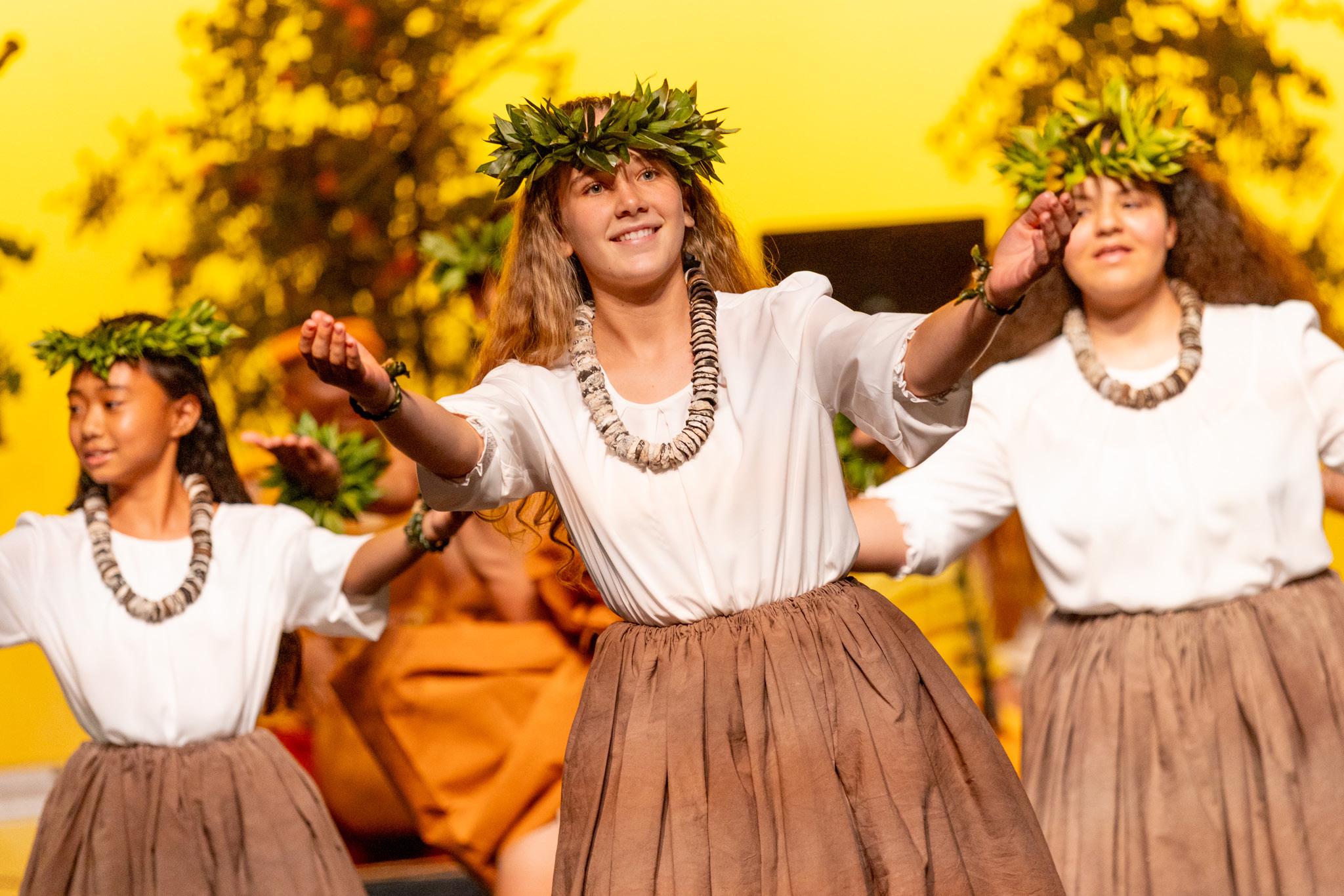
Get ready for an EPIC year!