G R A P H I C A LLY S P E A K I N G
Flight Not Fancied ILLUSTRATIONS BY AMY BLANDFORD | SDZG ILLUSTRATOR
TEXT BY WENDY PERKINS | STAFF WRITER
All birds have wings, but not all birds fly. The flightless birds that stroll, strut, and swim the planet have adapted to a grounded life—and it shows both inside and out. The honeycombed bones of flying birds lighten their load, yet without the need to take wing, flightless birds do well with dense bones. The feathers of flightless birds differ from their airborne peers, too. Take a closer look at some of the ways flightless birds have made themselves at home on the ground.
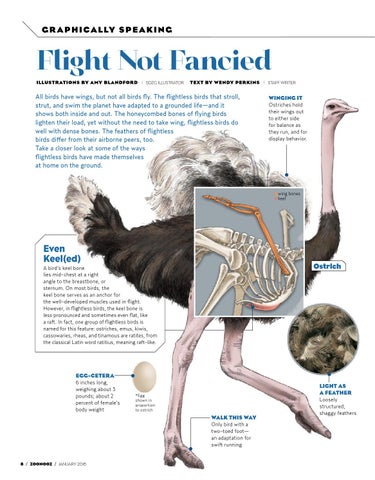
WINGING IT Ostriches hold their wings out to either side for balance as they run, and for display behavior.
wing bones keel
Even Keel(ed)
Ostrich
A bird’s keel bone lies mid-chest at a right angle to the breastbone, or sternum. On most birds, the keel bone serves as an anchor for the well-developed muscles used in flight. However, in flightless birds, the keel bone is less pronounced and sometimes even flat, like a raft. In fact, one group of flightless birds is named for this feature: ostriches, emus, kiwis, cassowaries, rheas, and tinamous are ratites, from the classical Latin word ratitius, meaning raft-like.
EGG-CETERA 6 inches long, weighing about 3 pounds; about 2 percent of female’s body weight
*Egg shown in proportion to ostrich
WALK THIS WAY Only bird with a two-toed foot— an adaptation for swift running 8 / ZOONOOZ / JANUARY 2016
LIGHT AS A FEATHER Loosely structured, shaggy feathers