
THE MENTOR

Curriculum reform is not just a policy shift; but a moral imperative.
Teachers are central to our national interest, and their excellence sets off a chain reaction that propels other reforms.



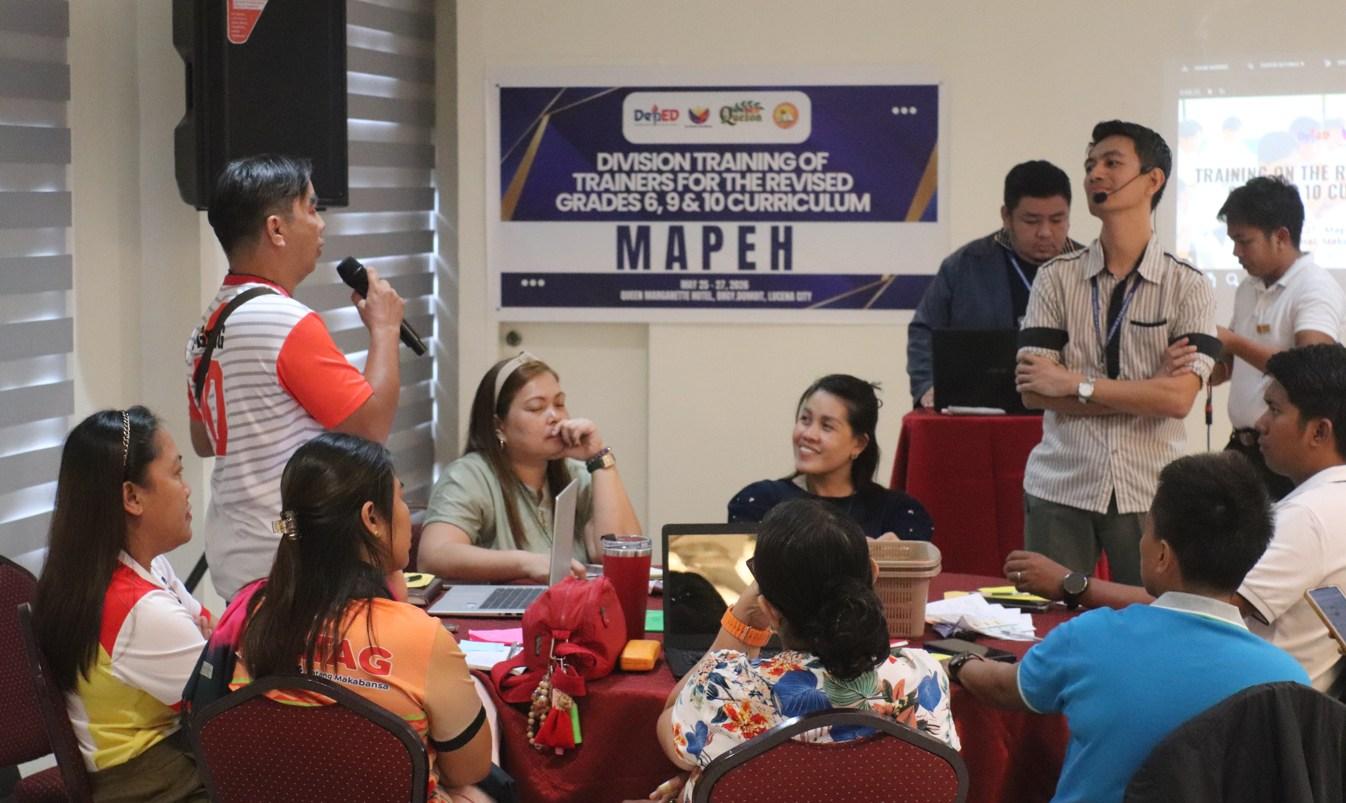

..DECONGESTING THE CLASSSROOM
JHS Educators Master Key Concepts in Revised Grades 9 and 10 Curriculum
unior High School educators from across the Division of Quezon Province convened for an intensive training seminar focused on the rollout of the revised curriculum for Grades 9 and 10, prioritizing the deepalignment of instructional practices before the upcoming school year.

IN NUMBERS

3 6 SESSIONS DAYS 306 PARTICIPANTS
The seminar, which handles the complex restructuring of the eight core learning areas, reached its critical midpoint today as participants tackled the technicalities of Session 3: the strategic unpacking and clustering of learning competencies.
DEEPER MASTERY
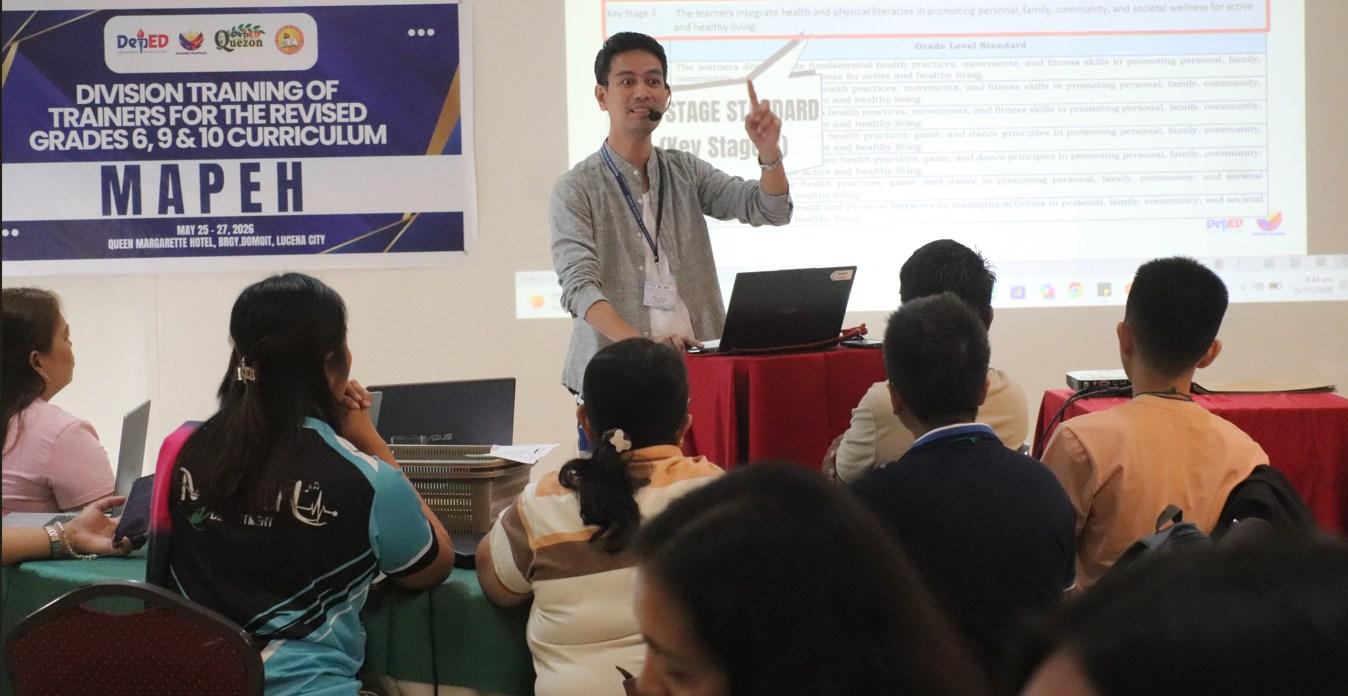
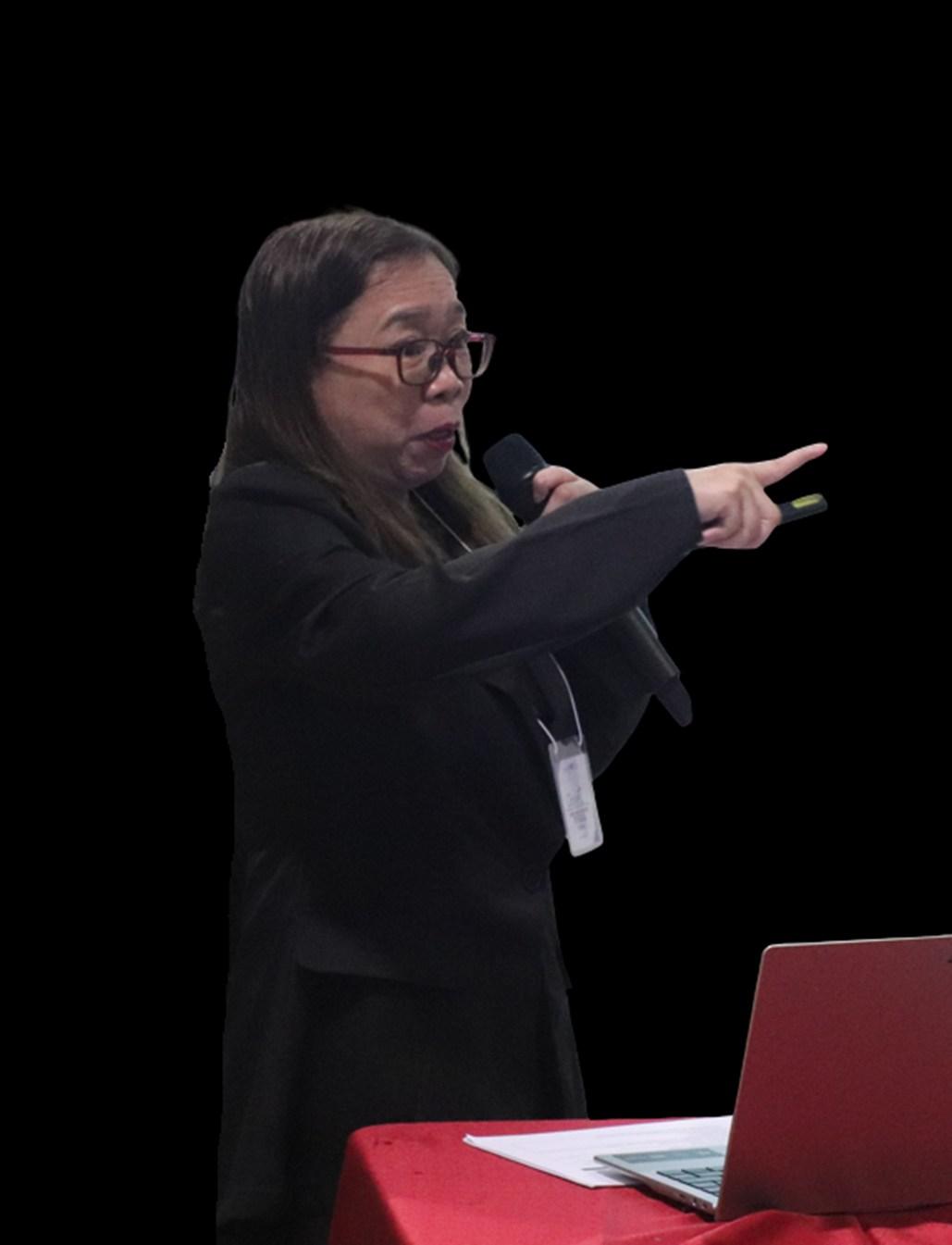
During the plenary session, Mr. Abner Pureza, Education Program Supervisor in English, emphasized that mastering the unpacking process is non-negotiable for modern educators if the revised curriculum is to succeed.
"Under the old setup, teachers often felt rushed because they were chasing a massive checklist of competencies, resulting in surface-level learning," Pureza noted. “Unpacking allows them to break down broad standards into clear, actionable daily targets. By clustering related competencies, we eliminate redundancies."
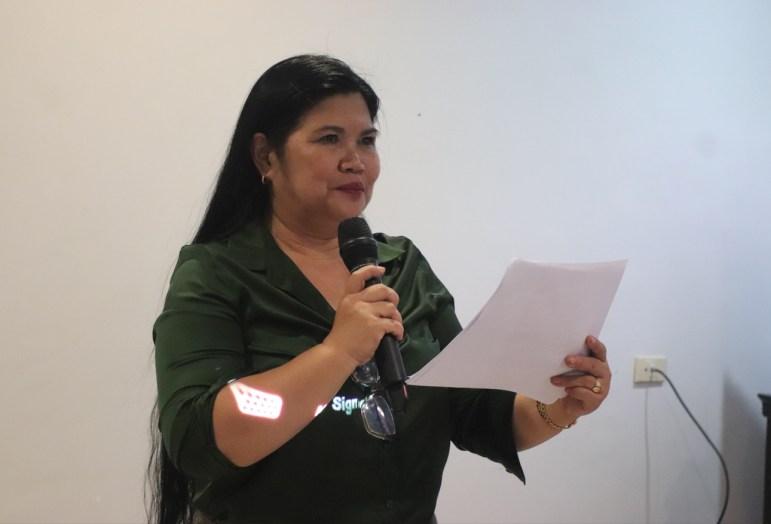
Meanwhile, Mrs. Carmen H. Macatugob, Education Program Supervisor in Technical and Livelihood Education, explained that the new curriculum guides teachers to design daily routines where students actively analyze and connect lessons to their direct communities.
VOICES FROM THE FIELD
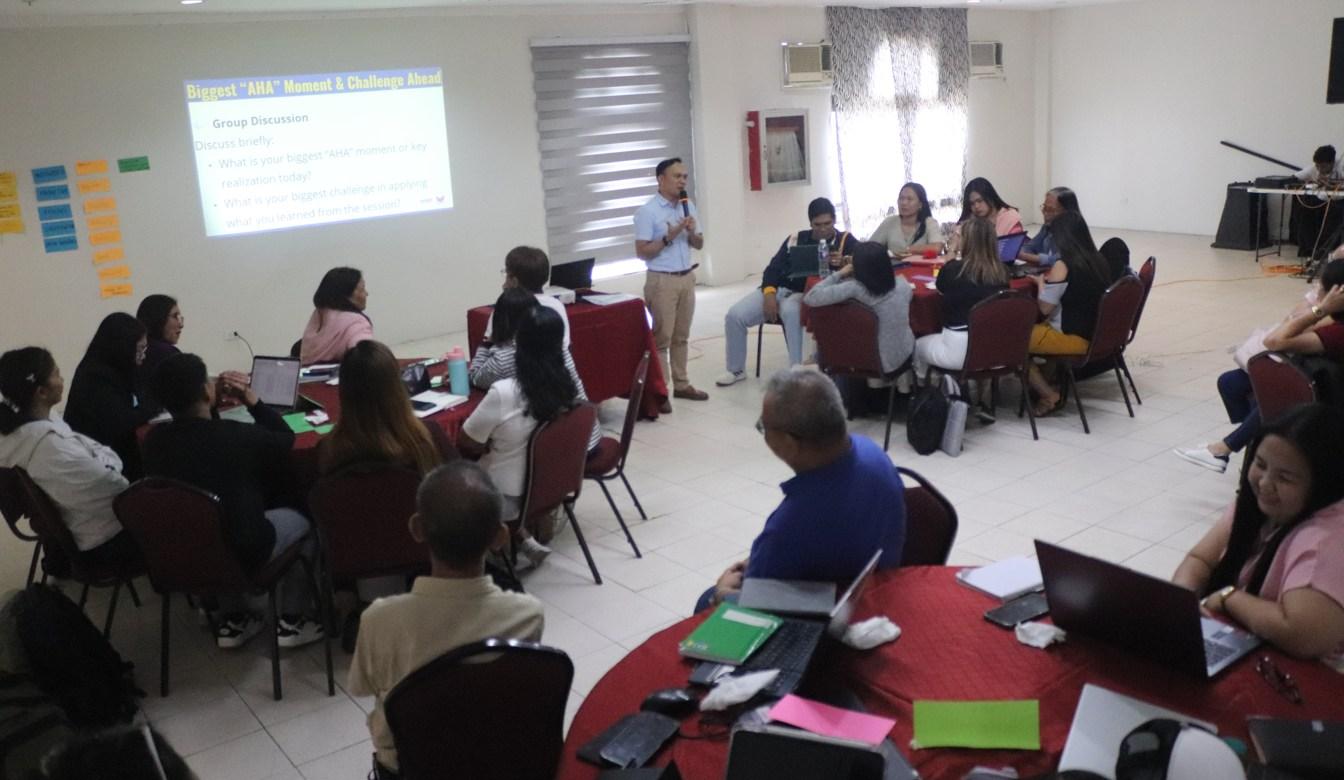
For classroom teachers, the workshop provided a mix of steep learning

Upcoming sessions of Revised Curriculum Training excite teacher trainers
curves and professional breakthroughs as they collaborated to dismantle and reassemble their impending lesson exemplars. Mariel Kristel A. Magpayo, a veteran language teacher, admitted that adapting to the streamlined framework requires a shift in mindset, but welcomed the change.
"Honestly, it’s a big adjustment because we have to unlearn old lesson planning habits," Magpayo shared. "But the IDF focuses on flexible, meaningful stages of learning instead of filling out a lengthy, rigid daily lesson log."
Reflecting on the rewarding day, Araling Panlipunan teacher Mrs. Krisanta Camia Sasis summarized her biggest realization from the sessions.
"My biggest realization was that 'less is more.' For years, we felt the pressure of having too many topics, which left struggling students behind," Sasis said. “Unpacking the competencies proved we can teach fewer topics but achieve higher quality, authentic learning.”
With participants submitting finalized unpacked lesson exemplars as initial outputs for the nationwide implementation of the Grade 9 and 10 curricula, the incoming school year sees a pivotal shift from theoretical planning to actual classroom execution.#

Quezonian educators piloting the revised Grade 9 and 10 revised curriculum expressed intense enthusiasm to advance to the next chapter of their divisionwide training, eager to build upon the foundational frameworks mastered during the initial sessions.
Having demystified the structural design of the new curriculum, participants are now highly motivated to learn how to translate these theoretical milestones into daily classroom execution.
"Mastering the competencies today was a breakthrough, and our entire department is genuinely excited to see how the next sessions will guide us in creating actual, localized daily lessons," said Science teacher Sir Reynaldo Dionido Jr..
This collective eagerness to learn the next chapter highlights the resilient professionalism of the participants, who view the upcoming modules as vital tools to fully grasp the curriculum rollout.
The facilitators noted that this positive momentum is exactly what is needed to sustain the massive mindset shift required by the Department of Education’s new direction.
"The energy in the room is incredible right now," Education Program Supervisor in Filipino Sir Joseph Jarasa said.
"The teachers aren't just passive listeners anymore; they are actively demanding the next set of strategies because they want to be completely ready for day one of the school year."#
Teachers navigate complex mindset shift in Revised Curriculum deep dive
Participants of the Revised Grades 9 and 10 Curriculum navigated a complex professional crossroads, expressing a wave of distinct optimism for the framework’s streamlined goals while simultaneously raising critical "red flags" regarding its practical, day-to-day execution.
As the nationwide curriculum overhaul aims to eliminate student cognitive overload by decongesting the eight core learning areas and clustering broad competencies into manageable daily targets while teachers deeply appreciate having fewer topics to cover, the sudden shift requires a steep professional "unlearning" process that many feel is being rushed without adequate preparation.
"We are being taught the high-level theory of unpacking competencies, but
we are doing it in an informational vacuum without finalized lesson exemplars or concrete classroom materials," warned veteran teacher Sir Carlo Erba M. Pacinos.
This critical resource gap represents the primary red flag for frontline educators, who worry that a lack of immediate, tangible toolkits will force them back into old instructional habits.
Despite these severe implementation anxieties, a strong wave of optimism
remains because the new Instructional Design Framework explicitly prioritizes deep, authentic student mastery over a rushed checklist of topics.
"For years, we chased coverage while leaving struggling students behind," math teacher Sir Jay Morota shared.
"Seeing the learning areas finally decongested proves we can now focus on quality over quantity.", he added.#
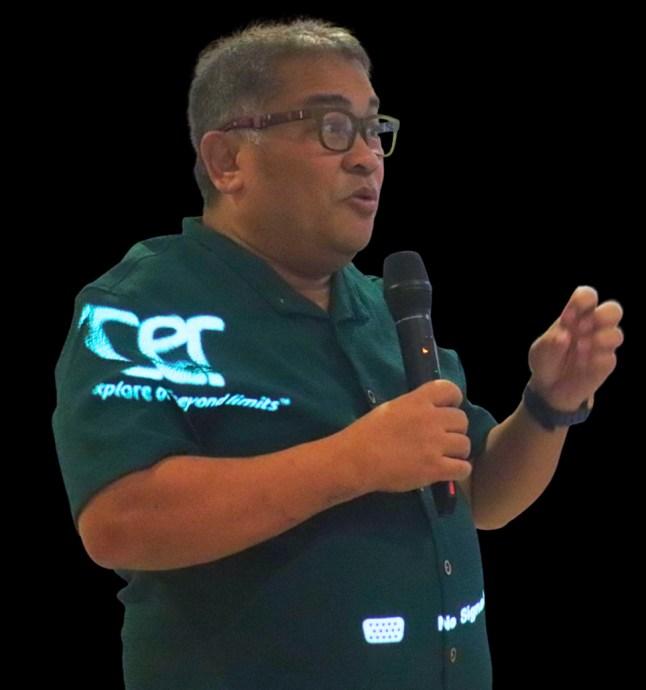
MR. ABNER L. PUREZA
AMIDST ‘RED FLAGS
Text and Photo by JOHN MICHAEL R.RAMOS
Written byJOHN MICHAEL R. RAMOS
Education Program Supervisor– English
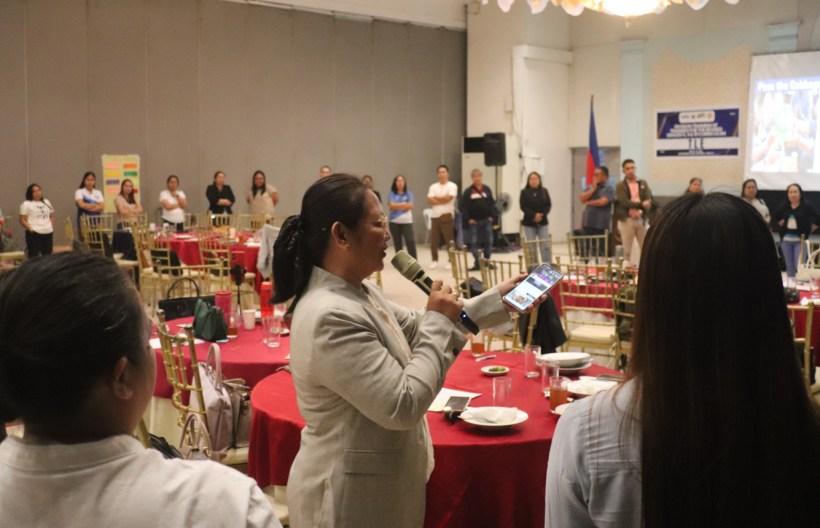
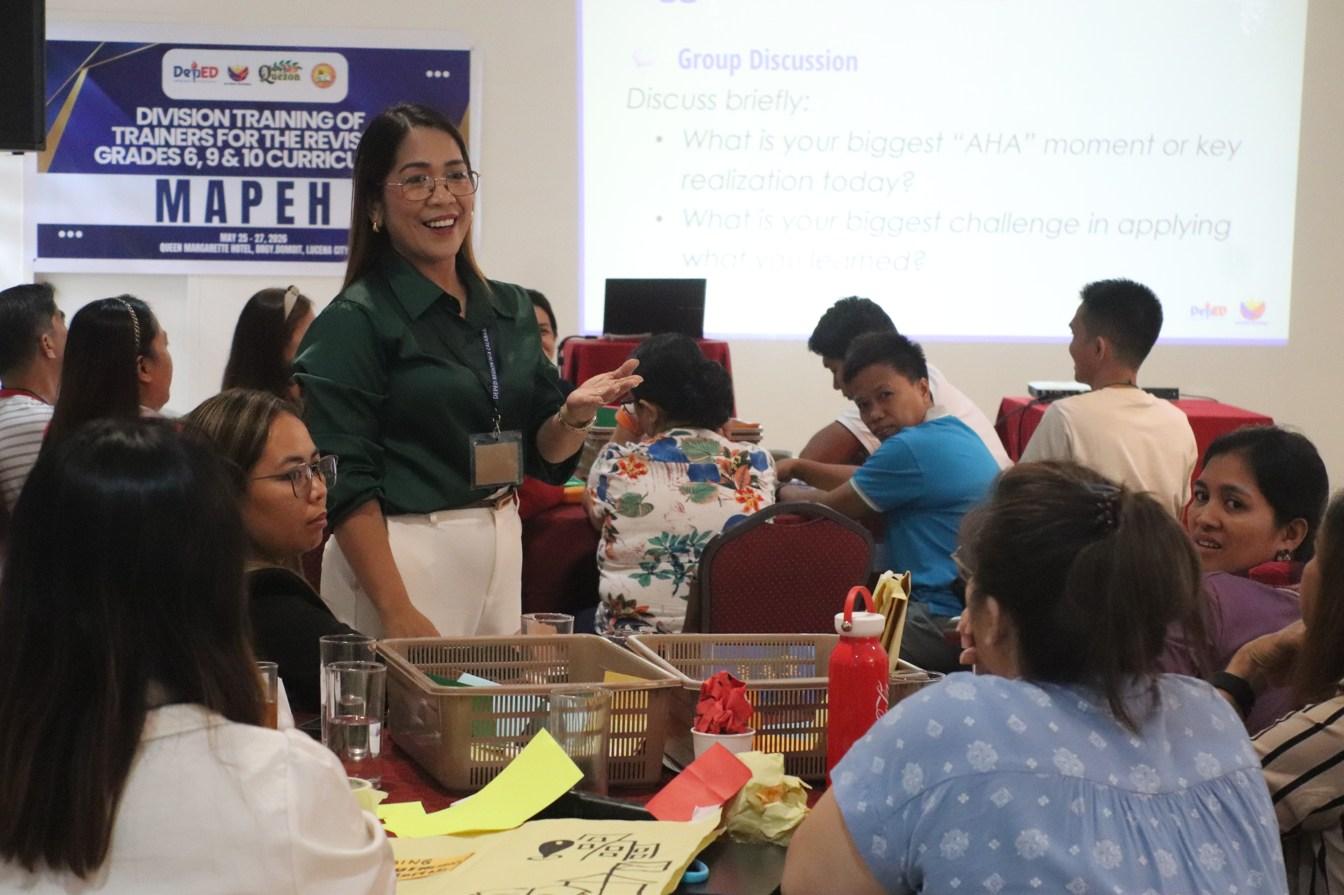
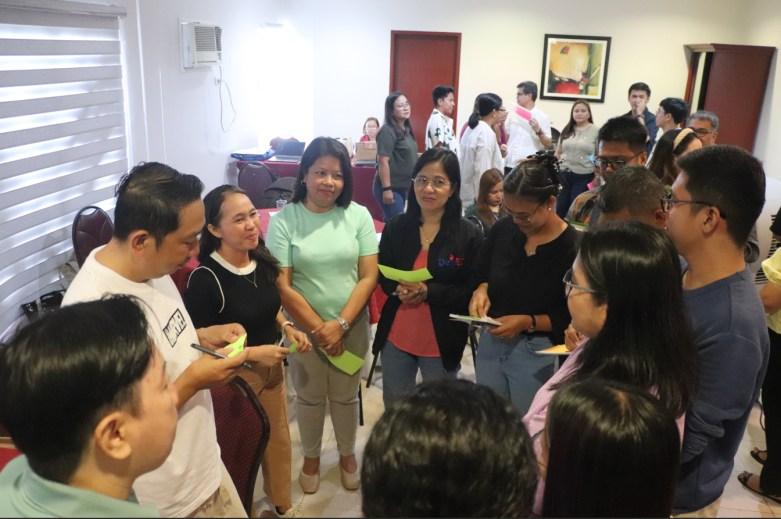
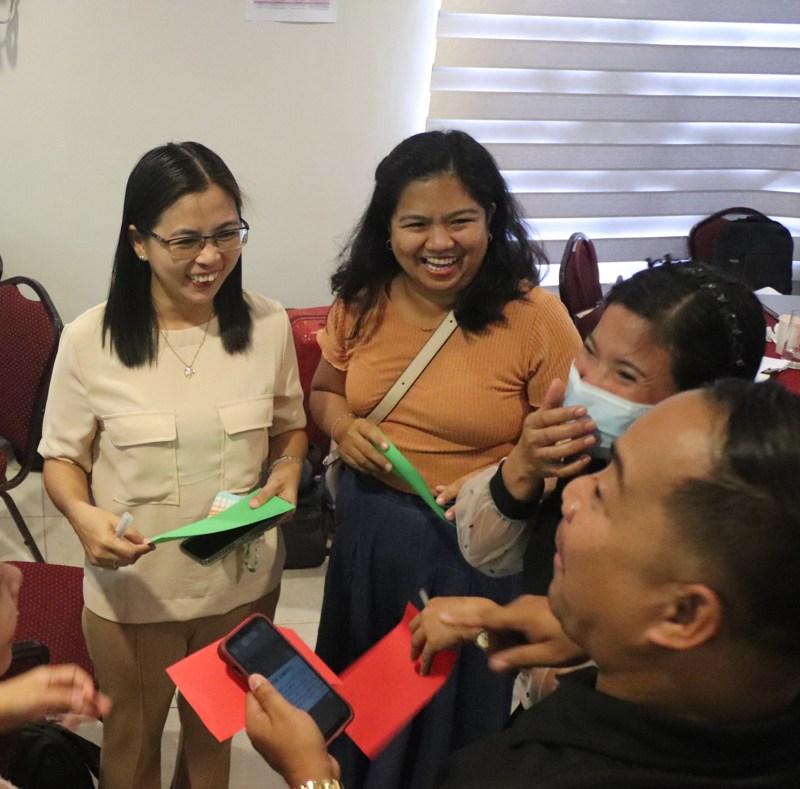
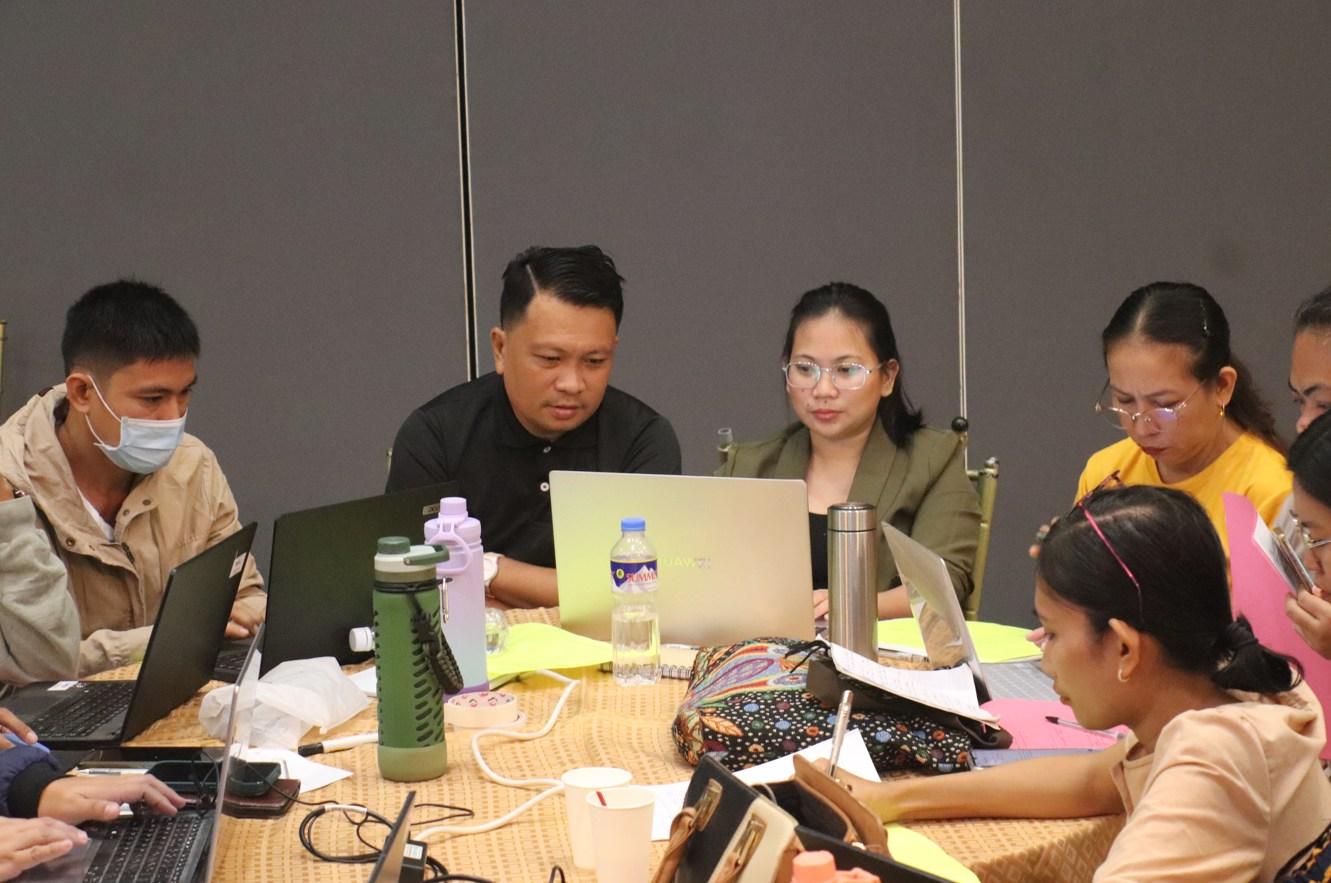
Joy in the journey! English participants bring high energy to their curriculum training, turning a massive mindset shift into collaborative fun as they prepare to translate theory into daily classroom execution.
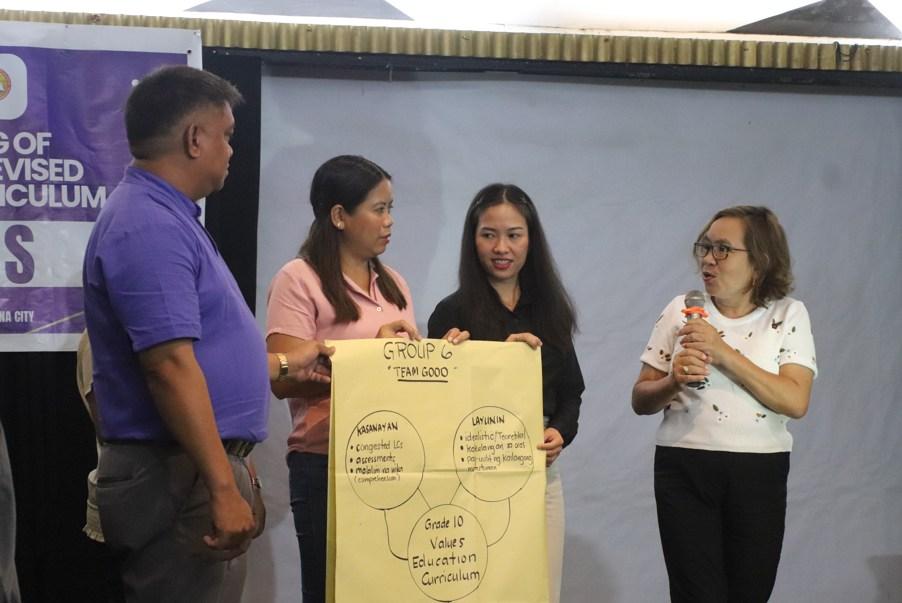
SHARING INSIGHTS. Values teachers
showcase their collaborated output based on their understanding of vanguards encapsulating the pedagogical frameworks of revised curriculum.
DEEPENING THE ROOTS
Teachers Step Up Training to 'Internalize' Pedagogical Frameworks of Revised Curriculum
Mobilizing programs to help high school teachers master the complex, theory-driven instructional frameworks governing the upcoming rollout of the Grades 9 and 10 revised curriculum, the Schools Division of Quezon Province has shifted its mass training focus heavily toward secondary education.
This localized training serves as a critical frontline response to the Department of Education's national mandate to overhaul basic education.
By equipping secondary educators with these advanced instructional frameworks well ahead of the official nationwide implementation, the division aims to combat local learning poverty and directly address years of content congestion that have historically hindered student mastery in the junior high school levels.
"Under the old system, we treated students like hard drives, forcing them to store fragments of data for standardized tests," said Mr. John Mark Marasigan, a training dacilitator from Science Department.
"With this redesign, a student won't just memorize a diagram; they will manipulate variables, experience trial and error, and construct the scientific principle themselves."
Training modules focus on an instructional design matrix known as the 4 C’s, 4 I’s, and 4 E’s. This system push-
Teacher Trainers Map Out Differentiated Strategies in Teaching
Targeting the unique pacing and cognitive needs of every learner, the Schools Division of Quezon Province Training of trainers has launched a specialized training session focused entirely on determining appropriate classroom strategies for optimal learning under the revised curriculum framework.
This dynamic pedagogical push addresses a long-standing challenge in the province’s public high schools, where traditional, one-size-fits-all lectures have historically failed to engage student populations with varied academic backgrounds.
By shifting the instructional focus toward diagnostic mapping and adaptive teaching models, local education officials aim to ensure that classroom delivery directly matches the individual absorption rate of each child
We are training teachers to decode student data so they can choose the exact tactical intervention required for a specific lesson.
es students through an instructional cycle where they empathize, experience, explore, and express academic conclusions, forcing teachers to completely rethink their lesson preparation.
"Honestly, the backward design approach felt completely counterintuitive on Day One," said Mr. Billy Joel Añola, a Filipino teacher from Lucban.
"For years, my first instinct was to ask what story we are reading on Monday. Now, I have to establish the target skill, design the rubric first, and then find the text that serves that objective."
This evaluation shift relies on the Backward Design Framework, requiring teachers to identify desired results and determine assessment evidence before planning daily activities.
Local administrators hope that this systematic approach will ensure high school learners develop the critical 21stcentury competencies necessary for senior high school readiness and future workplace success.#
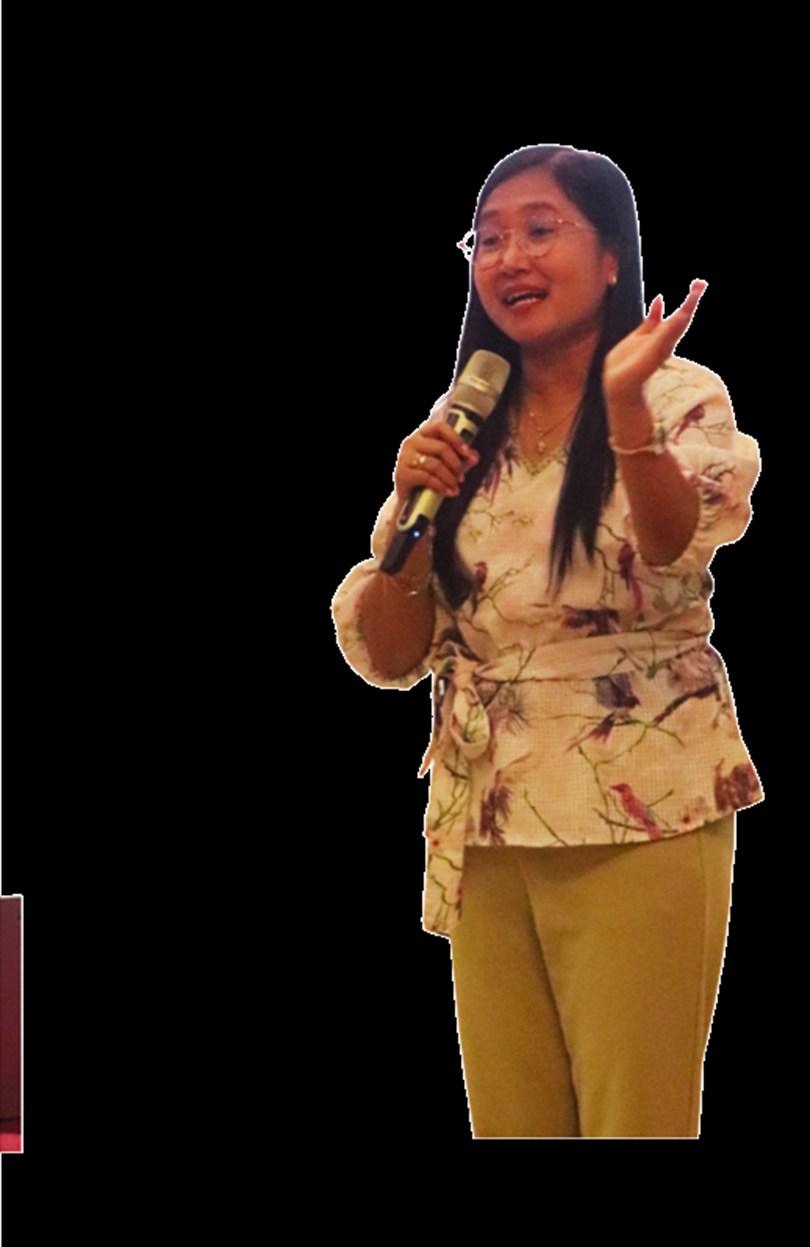
"Under the old system, we focused heavily on uniform lesson delivery, inadvertently leaving struggling students behind while failing to challenge advanced learners," said Mrs. Carmen H. Macatugob, a Division Education Program Supervisor in Technical and Livelihood Education.
"Optimal learning occurs only when a strategy explicitly fits the learner's current capacity. We are training teachers to decode student data so they can choose the exact tactical intervention required for a specific lesson.", she added.
To guide teachers in selecting these optimal pathways, the training framework divides active learning strategies into three core operational zones: Differentiated Scaffolding, Contextual Inquiry, and PeerAssisted Mastery Loops.
Balancing these distinct intervention levels requires educators to systematically evaluate their classroom dynamics before introducing complex assignments.
"Honestly, abandoning the standard row-by-row lecture model felt completely overwhelming during our first planning sessions," said Ms. Joyce Cuartero, a Filipino teacher from a public high school in Dolores.#
Quezon Province Overhauls Assessment Models to Mirror Revised Curriculum Principles
Aligning classroom evaluation with the core philosophy of the revised curriculum framework, the Schools Division of Quezon Province has rolled out a comprehensive training program focused on redefining how teachers assess student learning in junior high school.
Aligning classroom evaluation with the core philosophy of the revised curriculum framework, the Schools Division of Quezon Province has rolled out a comprehensive training program focused entirely on redefining how teachers assess student learning in junior high school.
This assessment shift addresses the critical need to move secondary education away from traditional, high-stakes standardized testing.
By retraining educators on the key
principles of the revised Grades 9 and 10 curriculum, clustered municipalities and districts aim to implement a more holistic system that measures actual capability rather than simple memorization.
"Under the traditional setup, our assessments often focused heavily on low-level recall, which only tested how well a student could memorize facts the night before an exam," said Dr. Janet N. Suaverdez, English facilitator.
"The revised Grades 9 and 10 curriculum demands a complete pivot. We are teaching educators that authentic assessment must capture how a student analyzes, synthesizes, and applies knowledge in unpredictable, real-world situations.", she added.
To achieve this, the training highlights three core evaluation principles embedded in the revised curriculum: Constructive Alignment, CriterionReferenced Grading, and Formative Integration.#
MRS. CARMEN H. MACATUGOB
Learning Delivery Demonstrations Take Center Stage in Revised Curriculum Training
Written byJOHN MICHAEL R. RAMOS
Stepping out of lecture halls and into mock classrooms, school teachers across the Schools Division Office (SDO) of Quezon Province have commenced rigorous learning delivery simulations to pressure-test the implementation of the revised Grades 9 and 10 revised curriculum.
The hands-on simulations serve as the critical practical phase of the division’s mass training initiative by shifting from theoretical orientation to live teaching demonstrations, local education officials aim to identify instructional bottlenecks, evaluate teacher readiness, and refine delivery strategies before the revised curriculum officially hits the classrooms.
"Understanding the theory behind a decongested curriculum is one thing, but standing in front of a classroom and executing it seamlessly is an entirely different challenge," said Dr. Rebie A. Marciano, a Public Schools District Supervisor.
To mirror actual classroom conditions, participating teachers take turns acting as instructors while their peers play the role of Grade 9 and 10 students. The simulations focus intensely on managing the dynamic instructional cycle of the 4 C’s and 4 E’s, forcing demonstrators to actively engage their "students" through inquiry-based discussions.
"These simulation sessions allow our educators to make mistakes, receive immediate peer critique, and perfect their teaching pacing in a controlled environment.", Dr. Marciano pointed.#
PARADIGM SHIFT
Quezonian Educ Step Up to Cascade Revised Curriculum
Written byJOHN MICHAEL R. RAMOS
aking a proactive role in the localized rollout of the revised curriculum, secondary educators of Quezon Province have formalized a comprehensive Workplace Application Plan (WAP) to operationalize the revised Grades 9 and 10 curriculum.
This strategic plan bridges macro-level educational policies and daily classroom reality. Following completion of specialized curriculum training sessions, teachers have outlined immediate, actionable steps to upgrade content knowledge, pedagogy, and assessment reporting within their respective stations.
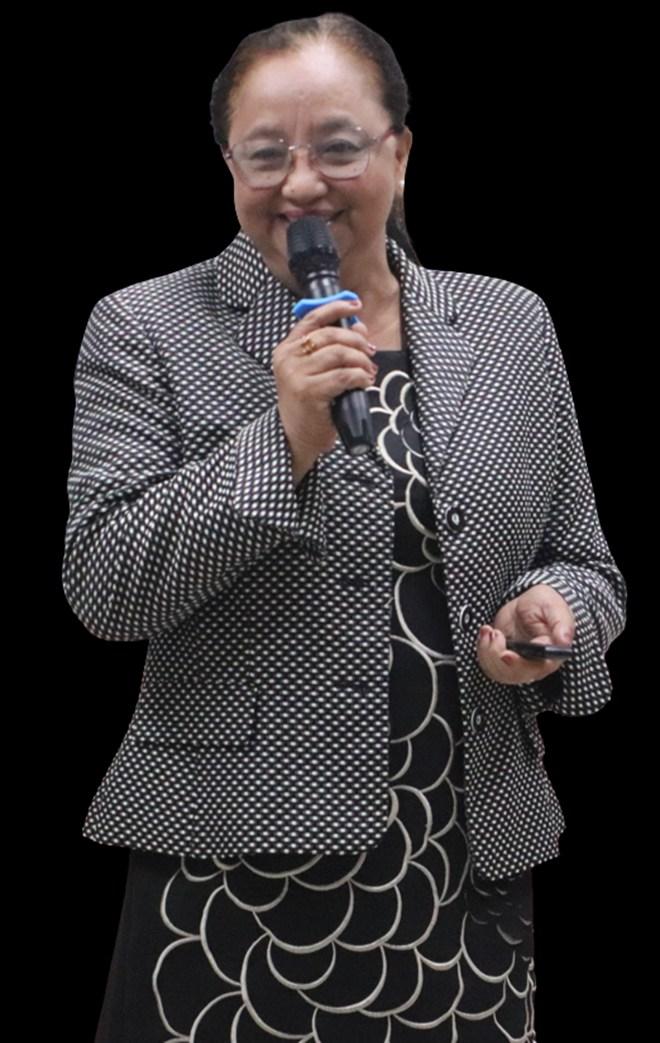
"Under the traditional setup, we often approached instruction as if we were simply downloading raw data into a student’s memory to prepare them for traditional exams," said Ma’am Remedios M. Cabungcal, Mathematics facilitator.
"With this structural redesign, learning moves past passive reception; students will actively investigate variables, learn from trial and error, and internalize the core principles through actual experience.", she added.
To jumpstart this shift, the specialized WAP structures position master teachers
as trainers for the upcoming local rollout phases. Backed by technical assistance from Education Program Supervisors, these trainers will cascade session guides to secondary educators, establishing an immediate foundation for unpacking Most Essential Learning Competencies (MELCs) and building comprehensive curriculum maps before the school year opens.
Training modules focus on an instructional design matrix known as the 4 C’s, 4 I’s, and 4 E’s. This system pushes students through an instructional cycle where they empathize, experience, explore, and express academic conclusions, forcing teachers to completely rethink their lesson preparation.
"Honestly, shifting to a backward design approach challenged my entire routine during the first few planning sessions," said Mrs. Jessica Oliveros, a Filipino teacher from Quezon, Quezon.#
‘’With this structural redesign, learning moves past passive reception; students will actively investigate variables, learn from trial and error, and internalize the core principles through actual experience.",

Teachers Overhaul Lesson Planning Formats to Match Curriculum Alignment

Written byJOHN MICHAEL R. RAMOS
Eismantling decades of traditional, content-heavy preparation habits, teachers have begun intensive workshops to master structural lesson planning aligned with the revised Grades 9 and 10 curriculum.
This division-wide orientation focuses on converting raw curriculum standards into highly tailored Daily Lesson Logs (DLLs) and Detailed Lesson Plans (DLPs) with the revised curriculum framework reducing overall learning competencies by nearly 70 percent, the primary objective of this planning shift is to design classroom hours that prioritize deep concept mastery over rapid, surface-level content coverage.
"Under the previous system, lesson planning was often an exercise in speed where teachers rushed to squeeze as many topics as possible into a single week just to cover the textbook," said Sir Roland V.
Magsino, a Mathematics facilitator.
"Now, lesson planning requires extreme precision. With fewer competencies, educators must plan exactly how students will unpack a single core principle from multiple analytical angles.", Magsino added.
The core of this updated lessonplanning architecture relies heavily on the Backward Design Framework. Instead of choosing a classroom reading or activity first, teachers are trained to establish the definitive target skill, construct the specific assessment rubric next, and only then select the instructional materials that directly serve that end goal.
This deliberate design ensures that every learning activity serves as a direct stepping stone toward the required performance indicator.
"Shifting my mindset to this planning model has completely changed how I look at my weekly layout," said Mrs. Abegail Argudo, a TLE teacher.
"The framework forces me to identify the target macro-skill first, design the assessment rubric next, and only then select the specific text that serves as the vehicle for that objective.", Argudo posed#
quipped with finalized action plans and polished instructional skill sets, Grades 9 and 10 teachers have declared full operational readiness to cascade their training down to the grassroots level through upcoming School-Based Training of Teachers (SBTT) sessions.
This localized cascading phase serves as the critical final link in the Department of Education's mass training deployment strategy.
Having masterfully navigated intensive workshops on curriculum unpacking, assessment re-engineering, and live classroom simulations, these division-trained educators are now tasked with stepping into leadership roles to transition their respective home stations into the revised Grades 9 and 10 curriculum stream.
"The ultimate success of this historical curriculum overhaul does not conclude at the division seminar level; it truly begins when our participants return to their schools as torchbearers," said Sammy F. Baysa, Araling Panlipunan facilitator.
"The structural readiness of our division trainers guarantees that every single classroom teacher on the ground will receive high-fidelity, peer-driven instruction during the SBTT window.", he added
To ensure a seamless transition from division-level learning to school-level execution, the readiness framework relies heavily on the utilization of comprehensive Workplace Application Plans (WAPs).
Such strategic blueprints act as personalized, datadriven roadmaps that detail how master teachers and select educators will unpack the Most Essential Learning Competencies (MELCs) and facilitate collaborative Learning Action Cell (LAC) sessions within their unique campus environments.
MA’AM REMEDIOS M. CABUNGCAL Mathematics Facilitator