2,111
GRADUATE STUDENTS AT SOUTHERN (FALL 2025)
641
GRADUATE DEGREES AWARDED IN SPRING AND SUMMER 2025
63
MASTER’S PROGRAMS
23
CERTIFICATE PROGRAMS
5
DOCTORAL PROGRAMS
More than 110 graduate programs, including master’s and doctoral degrees, sixth year and post-graduate certificates. Southern is the the largest graduate school in the Connecticut State Colleges and Universities (CSCU) system.
GRADUATE STUDENTS REPRESENT 21% OF THE TOTAL STUDENT POPULATION AT SOUTHERN (FALL 2025)
367
GRADUATE STUDENTS IN FULLY ONLINE GRADUATE PROGRAMS (FALL 2025)
136
GRADUATE ASSISTANTS ACROSS CAMPUS
One of the most significant public graduate education centers in the Northeast.
Produces the largest number of graduates in health and life sciences, education, and social and public services in the CSCU system.
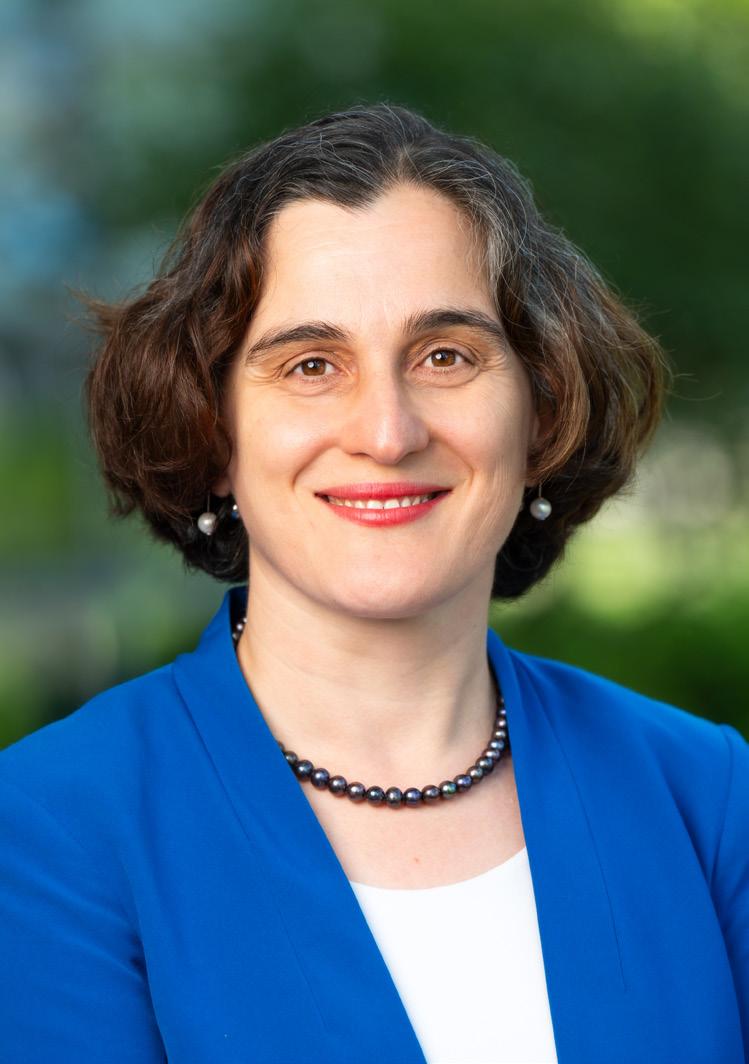
I am pleased to share the 2024–2025 SGPS Annual Report as I complete my third semester and reflect on a year and a half of service as Dean of the School of Graduate and Professional Studies (SGPS). This past year has been both informative and energizing, grounded in intentional listening, learning, and collaboration as we worked to strengthen graduate education at Southern and position SGPS as the flagship graduate school among the CSCUs.
Graduate education plays a critical role in advancing Southern Connecticut State University’s mission as Connecticut’s only public R2 institution. Our graduate programs expand research capacity, foster innovation, prepare the next generation of professionals and scholars, and strengthen partnerships that serve our region, state, and global community. At SGPS, we view graduate education not as complementary, but as essential to the university’s growth, impact, and distinction, including its role in developing a highly skilled workforce.
Building on a strong foundation established under prior leadership, including Interim Dean and Provost Julia Irwin, the SGPS team aligned its work with the University’s Leading the Way Strategic Action Plan while engaging in the development of a new SGPS Strategic Plan. This work has been informed by national best practices, guidance from the Council of Graduate Schools, conversations with peer and aspirational institutions, and collaboration with college and school deans at Southern. Together, these efforts are shaping more consistent, transparent, and sustainable systems to support graduate students, faculty, and programs.
Strengthening community and collaboration within SGPS, across campus, and with external partners has been a central focus. Progress depends on shared leadership, transparent communication, and trust, and I am grateful to the students, staff, faculty, alumni, and community partners whose contributions have been essential. We continue to modernize processes, strengthen resources, and enhance the graduate student experience.
We have also prioritized data-informed decision-making by expanding our capacity to collect and apply evidence to guide improvement and strategic investment in student success. This commitment is reflected throughout the initiatives highlighted in this report.
At the same time, we are developing the next five-year SGPS Strategic Plan through a collaborative process that will define clear priorities, actionable steps, and measurable outcomes, with progress reported annually to ensure transparency and accountability.
This report is organized around the University’s strategic priorities and highlights collective efforts to advance access and enrollment; cultivate a community of scholars; promote justice, equity, and excellence; and deepen community engagement. It also reflects the extraordinary work of the SGPS staff and our campus partners. Graduate education is truly a team effort, and the accomplishments documented here underscore what we can achieve together.
I look forward to continuing this work and building our shared momentum in the year ahead.
Sincerely,
Rabia Hos, Ph.D. Dean, School of Graduate and Professional Studies
“Our mission is to serve humanity by enabling you to learn about the issues that matter to you and to the world around us, gain meaningful knowledge and diverse perspectives, develop an ability to make decisions towards the betterment of humankind, and take advantage of opportunities to lead a life of fulfillment, with self-esteem.”

Southern is the state’s first and only R2-designated university, and one of only 139 in the country. Southern has earned a spot on Viqtory Media’s esteemed list of 2024–2025 “Military Friendly Schools.”
At a glance: This report is organized around Southern Connecticut State University’s Leading the Way Strategic Action Plan (2023– 2028) priorities.

In a national context where graduate enrollment trends have shown modest growth following pandemic-era declines; with overall applications and first-time graduate student enrollment rising modestly in recent years according to the Council of Graduate Schools (CGS) and other sources; Southern’s graduate admissions activity reflects resilience amidst broader uncertainties in higher education. Preliminary national data indicate continued demand for graduate education overall, particularly in master’s programs, even as growth at some campuses remains uneven and external factors such as shifting international student patterns influence the landscape (CGS, 2025).
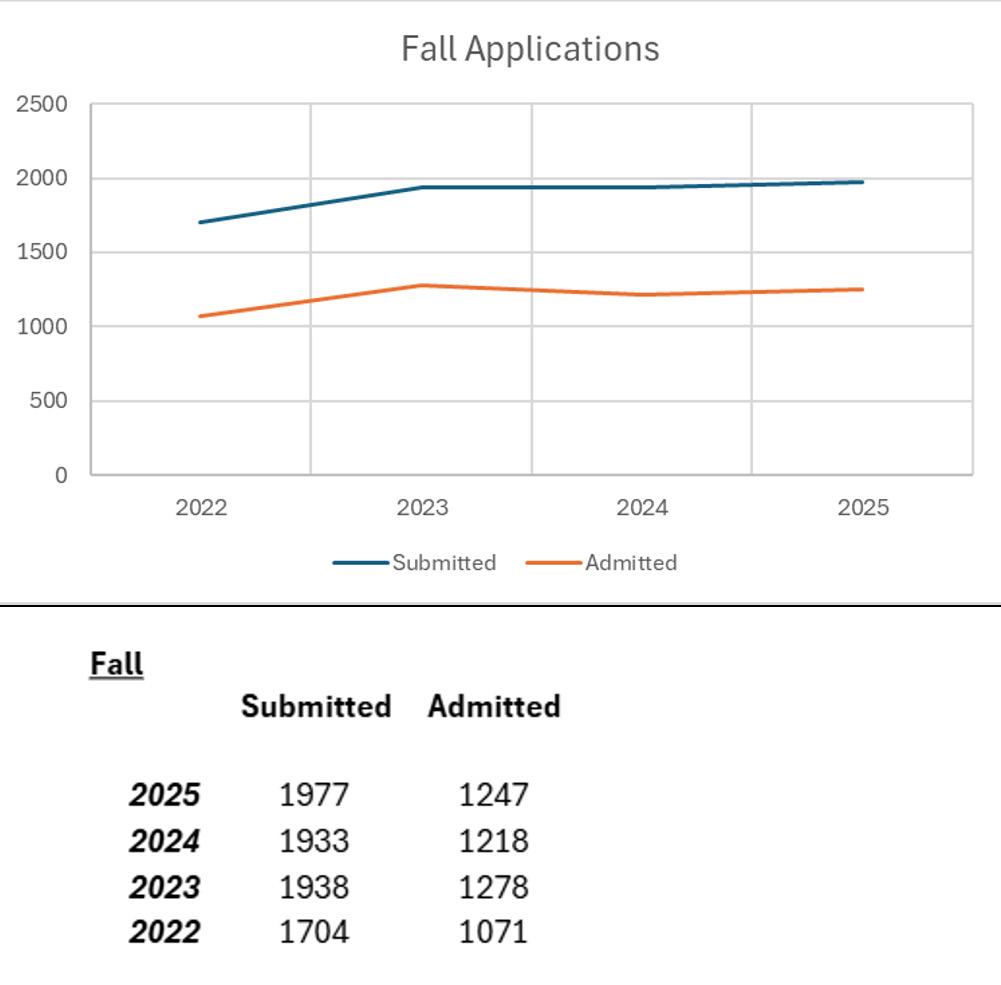
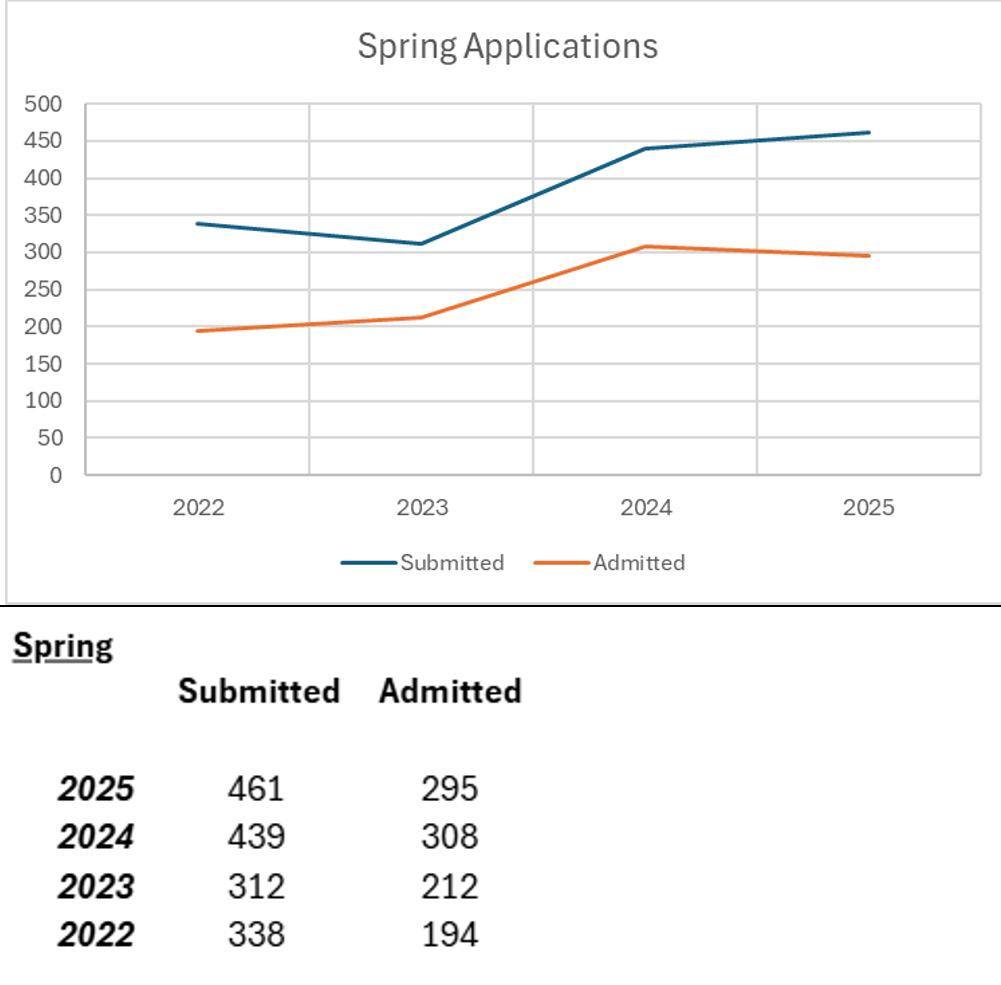
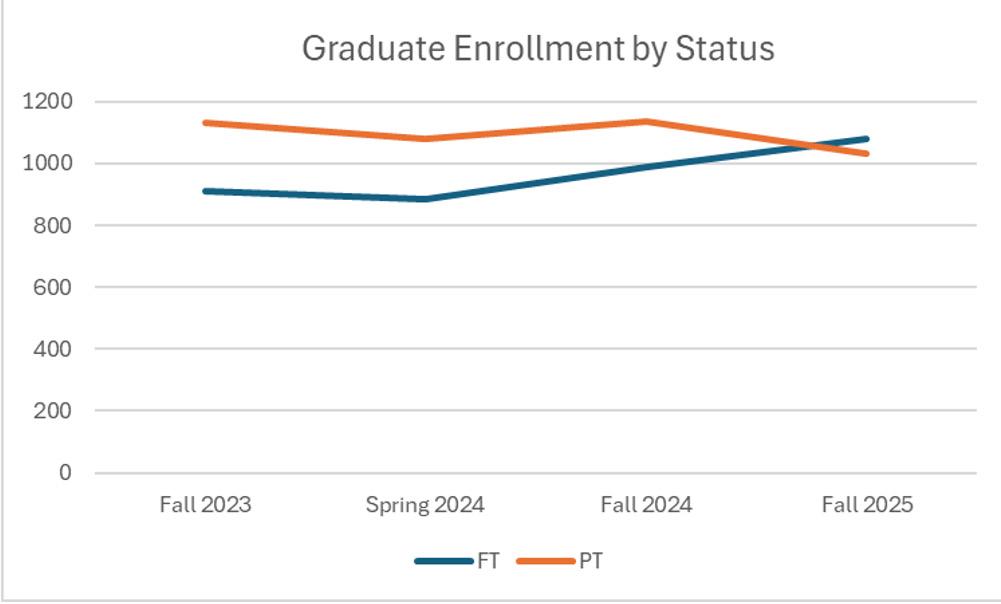
Spring applications increased by 5% from 2024 to 2025. For fall, applications rose by 2.3% during the same period. However, Spring admissions dropped slightly between 2024 and 2025, while fall admissions grew from 1,218 in 2024 to 1,247 in 2025. Additionally, graduate enrollment (FTE) in fall 2025 increased by 4.94%.
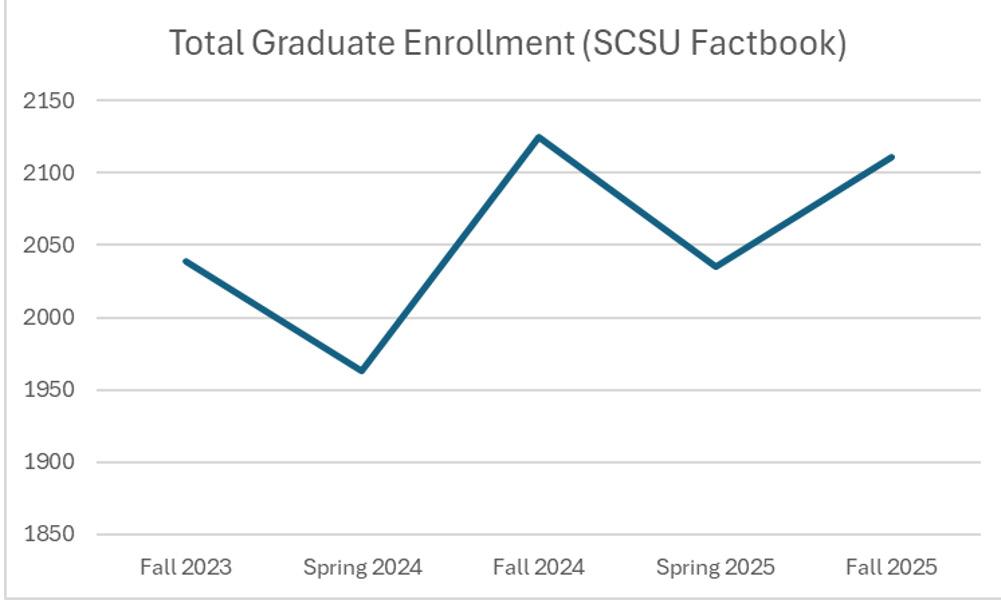
Total Graduate Headcount (SCSU Factbook)
Fall 2023
Spring 2024
Fall
Spring 2025
Aligned with SCSU’s Strategic Action Plan to double out-of-state and international enrollment by 2028, out-of-state graduate enrollment has grown by 29.4% since Fall 2024. While this segment is still modest, SGPS has embarked on several new initiatives aimed at strengthening recruitment efforts for out-of-state applicants.
Southern’s recently expanded participation in the New England Board of Higher Education (NEBHE) Tuition Break Program in Fall 2025 makes graduate education more affordable, competitive, and accessible for outof-state and international students exploring study options further supporting growth in this area.
(SCSU Factbook)
Given that 94% of prospective graduate students visit the websites of every school they are considering, 88% say that the school’s website “plays a key role in determining whether an institution or program is the right fit”, and 73% will “abandon a school website that
is not user friendly” (EAB 2024), SGPS has worked to redesign the SGPS website as a centralized hub for all graduate students and programs. The website now provides comprehensive information that spans the entire student journey from admissions to commencement.
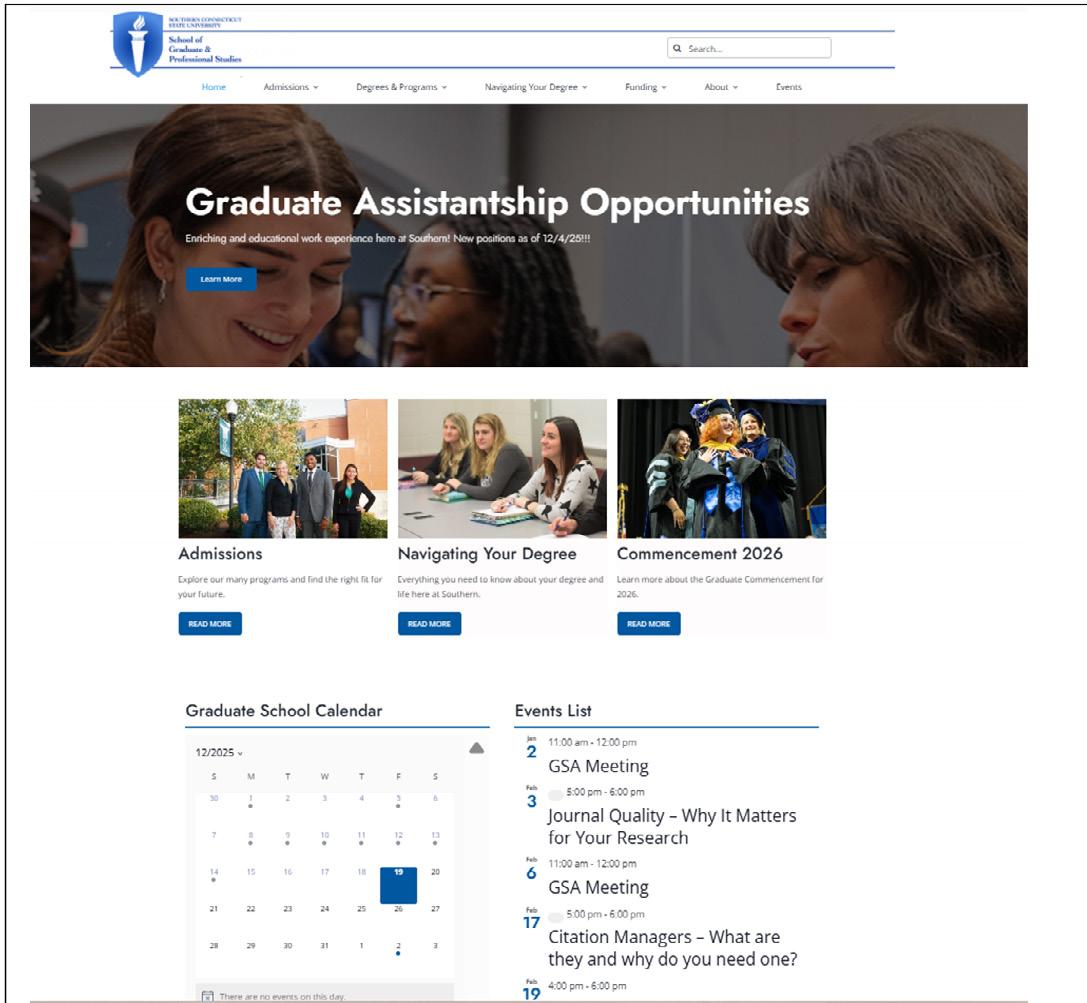
To maximize the enrollment impact of the site and support student success, it now highlights graduatespecific supports and resources, an updated graduate events calendar, student/faculty highlights, graduate student organizations, and funding opportunities.
In 2025, the site drew 44,000 visits with user engagement on the website rising significantly. By consolidating essential resources and information in one accessible, updated, and curated platform, the site enhances visibility and ensures that prospective and current students can easily find the information and tools they need.
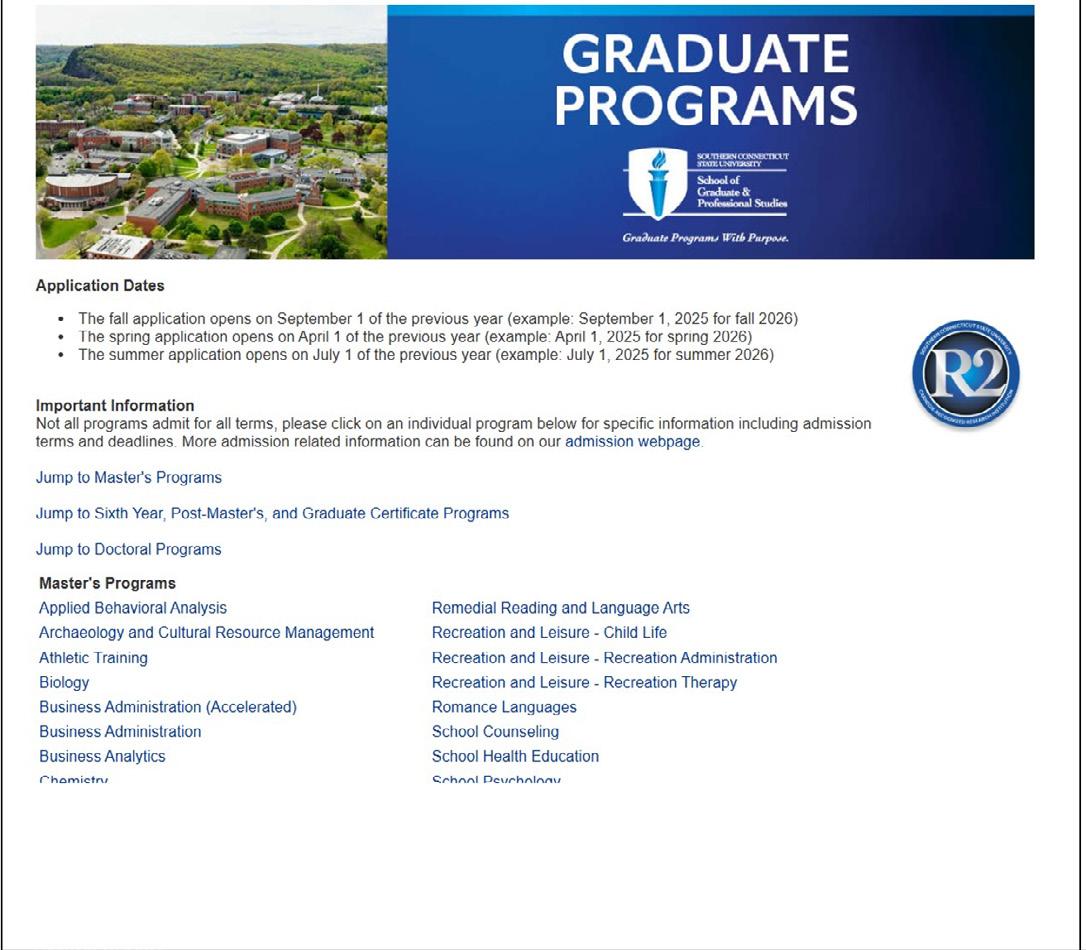
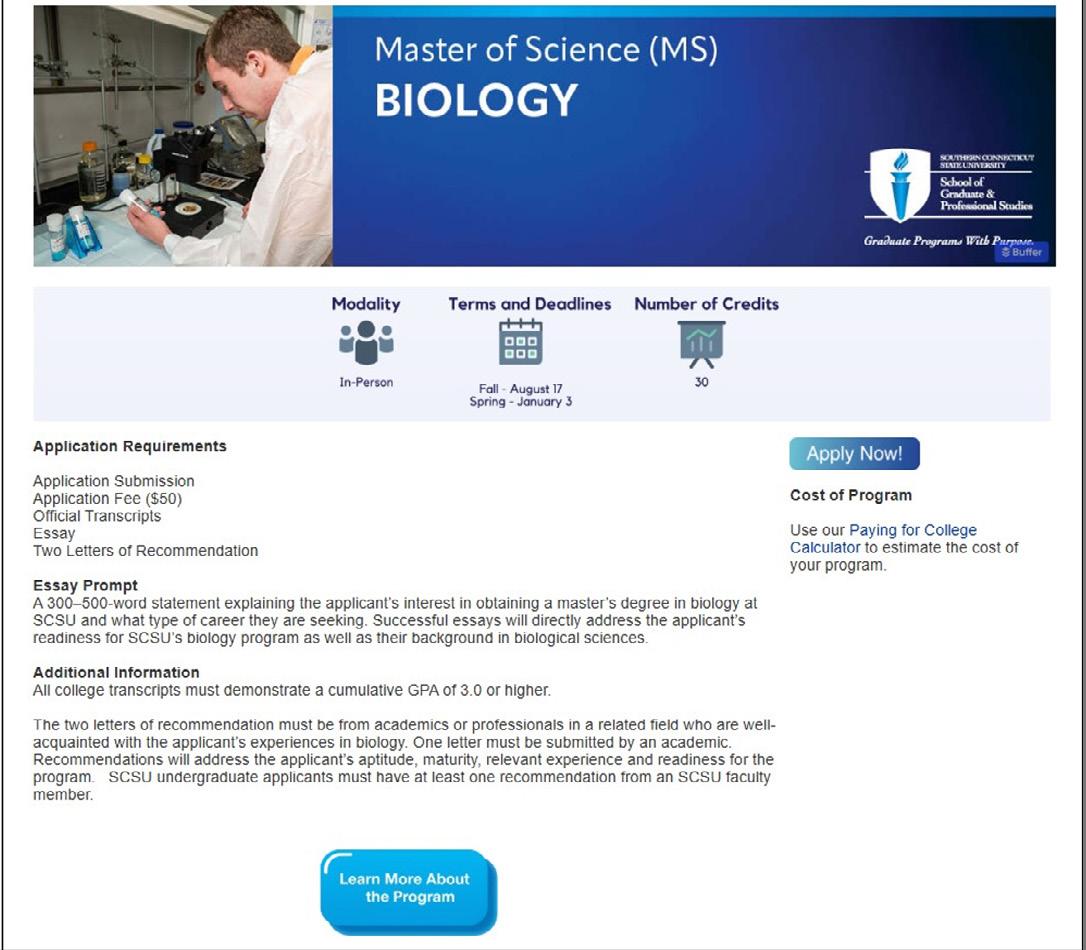
As part of this initiative, SGPS redesigned the graduate program page through a portal on Slate to provide a centralized, accurate, and accessible hub for programspecific pages and clear articulation of application requirements, deadlines, program delivery, credit hours, accreditations, updated links to the Graduate Catalog—essential information for prospective applicants.
SGPS also secured prominent placement of the site on Southern’s main landing page.
Additionally, SGPS conducted a comprehensive audit of the Graduate Catalog which identified dozens of broken links, areas for clarification, and outdated, inaccurate policies and information. Working collaboratively with the Registrar and relevant academic units, these revisions ensure accurate and current information that aligns with institutional standards and best practices.
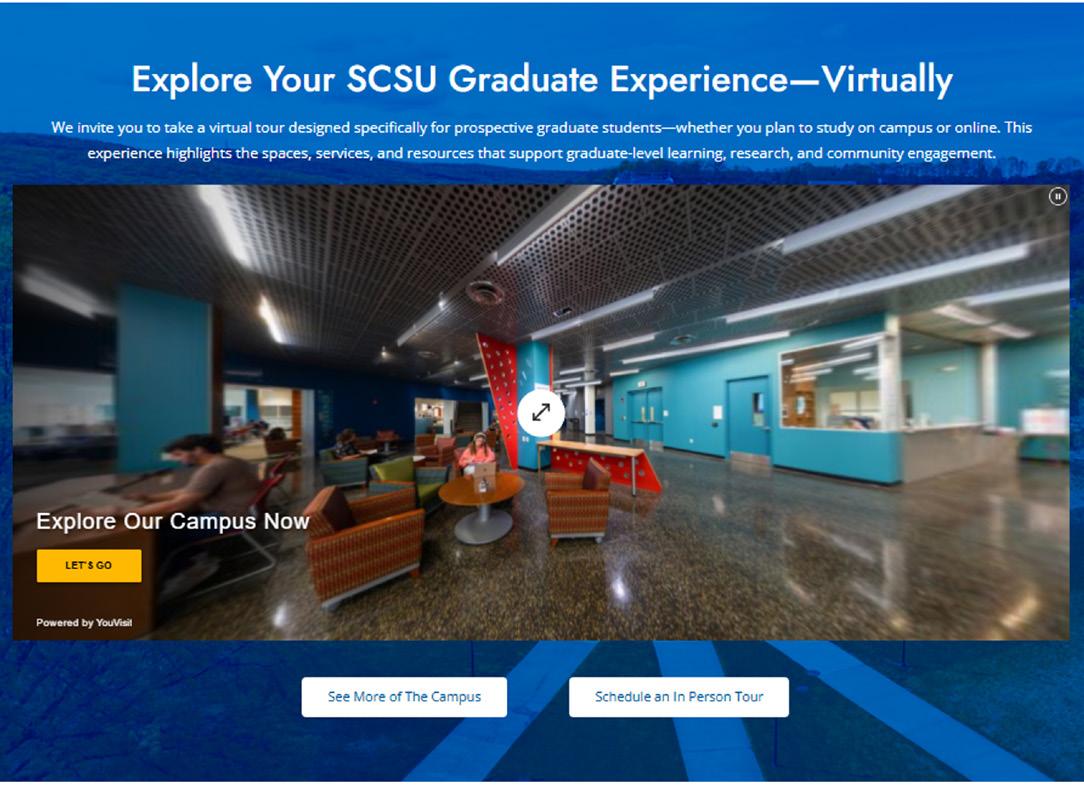
January 2025 marked the official launch of Southern’s first YouVisit Virtual Tour specifically designed to introduce prospective and current graduate students (online, on ground, in state, out of state, international) to Southern’s campus. This interactive experience highlights the spaces, services, and resources that support graduate-level learning, research, and community engagement at Southern. In the first 11 months, over 900 visitors toured the campus with the virtual tour, engaging with the tour for 20.3% longer than the YouVisit national average.
Our virtual tour visitors in 2025 included prospective students from Connecticut (35%), 33 other states and 20 countries, underscoring this tool’s effectiveness in expanding Southern’s reach to out-of-state and global audiences. SGPS will continue to work with academic units to enhance this tour and integrate it as a recruitment tool for programs. On campus, in person tours are still available and offered year-round through SGPS.
In collaboration with the Office of Integrated Communications and Marketing (ICM), SGPS coordinated marketing efforts for spring and fall graduate open houses, new program launches, and expanded outreach initiatives, including first-time advertising on Metro-North kiosks at strategically selected train platforms.
As the EAB enrollment marketing contract approached its renewal deadline in July 2025, SGPS conducted a comprehensive assessment of its effectiveness, evaluating performance outcomes, timeliness, and cost efficiency. Based on this review, senior leadership made the decision not to renew the contract, and SGPS subsequently provided alternative options and strategic recommendations to support graduate enrollment efforts. Although a partnership with Ruffalo Noel Levitz (RNL) was initiated in summer 2025 with support from the Office of the Provost and Vice President for Academic Affairs, extended system-level approval processes delayed implementation, resulting in an eight-month gap in external enrollment support, during which SGPS relied on internal resources to maintain continuity.
In response, SGPS has shifted away from largescale, single-vendor contracts and is pursuing smaller, project-based marketing partnerships that offer greater flexibility, faster implementation, and improved return on investment. Working closely with ICM, SGPS expects to have a fully outlined, diversified enrollment marketing strategy in place by early 2026.
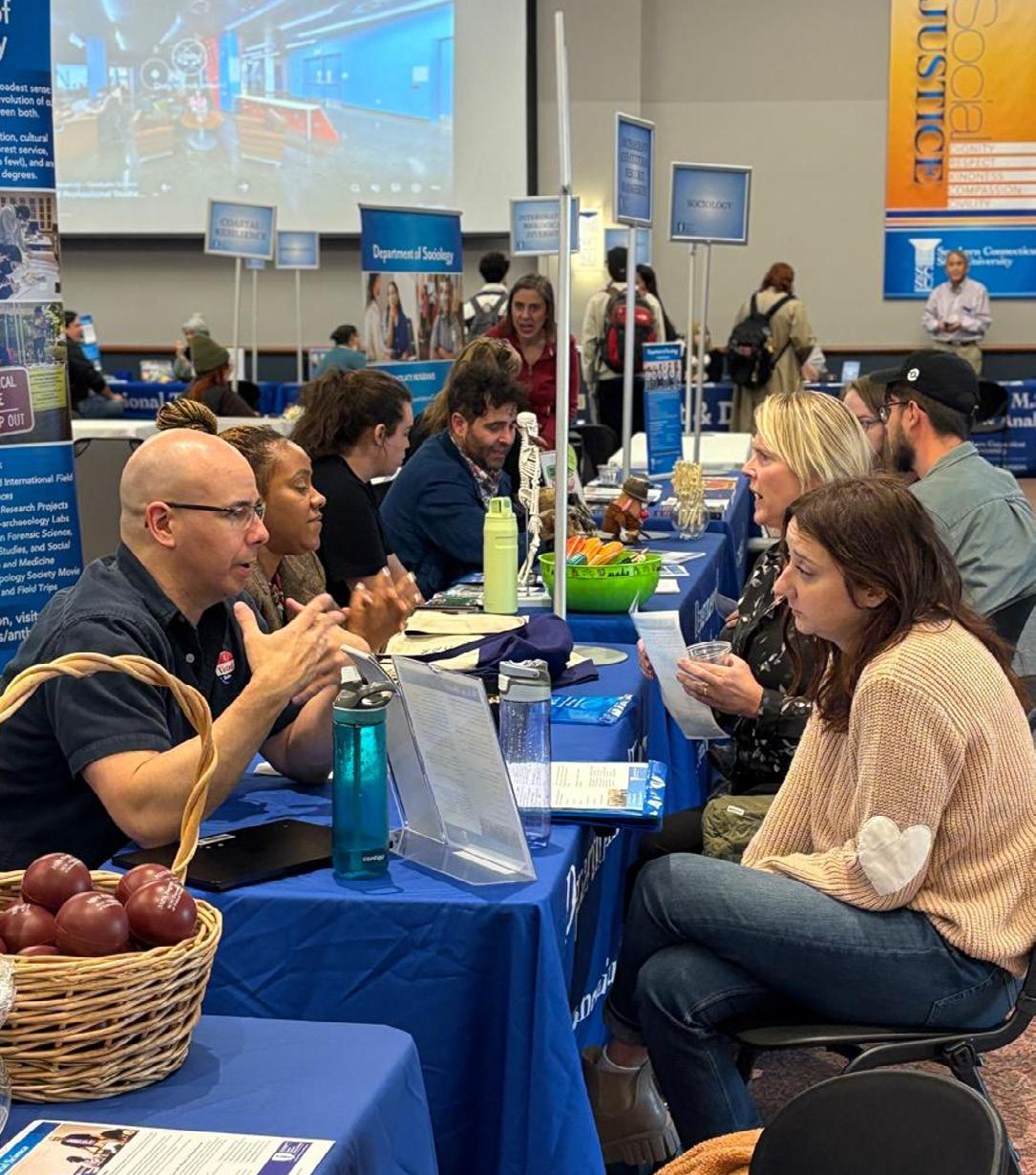
The School of Graduate and Professional Studies continued its efforts to strengthen graduate recruitment and engagement through enhanced event planning, targeted outreach, and improved communication strategies. A comparative review of the Fall 2024 and Fall 2025 Graduate Open House events demonstrates notable gains in attendee engagement and conversion from registration to participation.
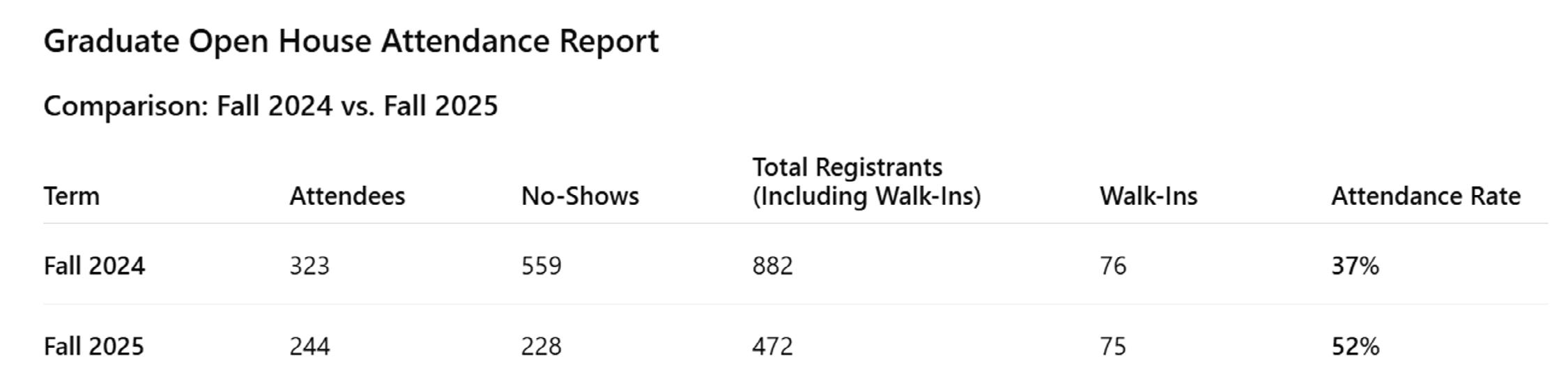
In Fall 2024, the Graduate Open House drew 323 attendees, including 76 walk-ins, from a total of 882 registrants, yielding an attendance rate of 37%. In Fall 2025, the event welcomed 244 attendees, including 75 walk-ins, out of 472 total registrants, resulting in a significantly higher attendance rate of 52%. While overall registration numbers decreased yearover-year, the quality of engagement strengthened considerably. The 15-point increase in attendance rate reflects improved follow-through among prospective students and suggests that the refinements made to communication timelines, reminder strategies, and event programming were effective in motivating participation. Additionally, walk-in numbers remained consistent across years—76 in 2024 and 75 in 2025— indicating stable community interest and strong event visibility.
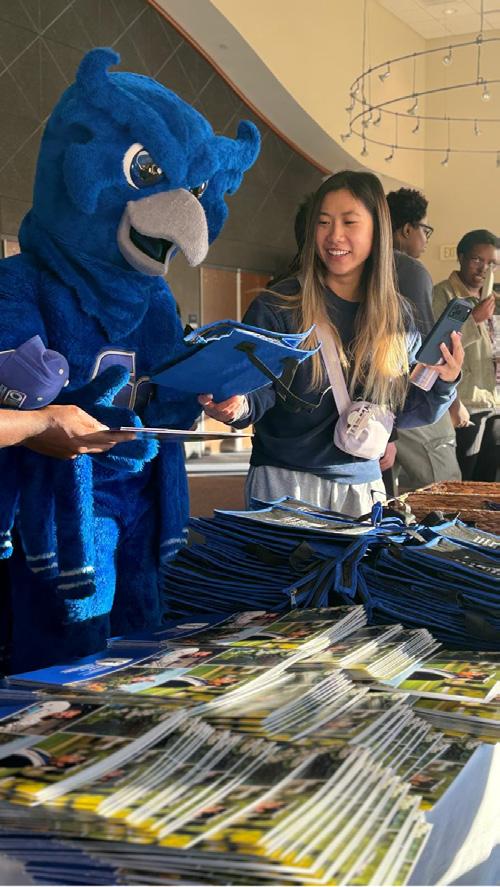
This data highlights the continued success of SGPS in fostering meaningful connections with prospective graduate students. By prioritizing clearer messaging, streamlined event workflows, and more intentional outreach practices across both fall and spring events, SGPS has strengthened the effectiveness of its recruitment efforts and enhanced the overall prospective student experience.
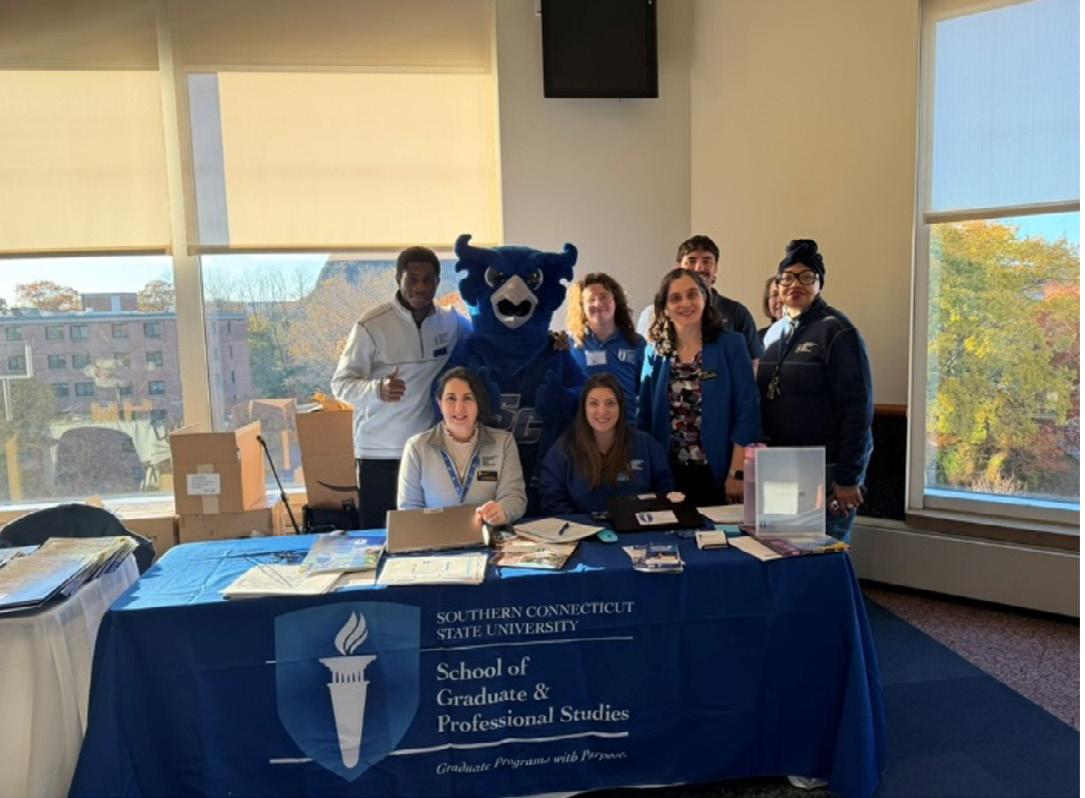
In addition to the fall event, SGPS hosts a Spring Graduate Open House each year to further support recruitment and broaden access for prospective students. The Spring 2025 event saw 560 registrants, with 252 attendees and 308 no-shows, reflecting steady interest in graduate programs during the midyear recruitment cycle. The spring event continues to serve as a critical touchpoint for applicants who plan to begin their studies in summer or fall or who require additional time to engage with program faculty and explore admission requirements.
As part of SGPS’s ongoing commitment to graduate student persistence and degree completion, the Graduate Reengagement Campaign continues to support students who previously stopped out or were admitted but did not matriculate. Targeting students inactive within the past five years, the campaign provides a structured pathway for re-enrollment through coordinated outreach, advising support, and clear guidance on academic requirements.
Each semester, SGPS collaborates with graduate program coordinators to identify eligible students and ensure accurate advising related to program currency, academic standing, and revalidation needs. Reengaged students receive clear readmission instructions, aligned timelines, and, when applicable, a one-time scholarship to support their return. In Fall 2025, six stopped-out students were successfully readmitted, followed by three additional readmissions for Spring 2026. SGPS will continue this initiative each semester as a key strategy to strengthen retention, persistence, and graduate degree completion.
Graduate orientations are a critical piece of building a student’s sense of belonging on campus, providing a warm welcome, strategic guidance, and key resources to support student success.
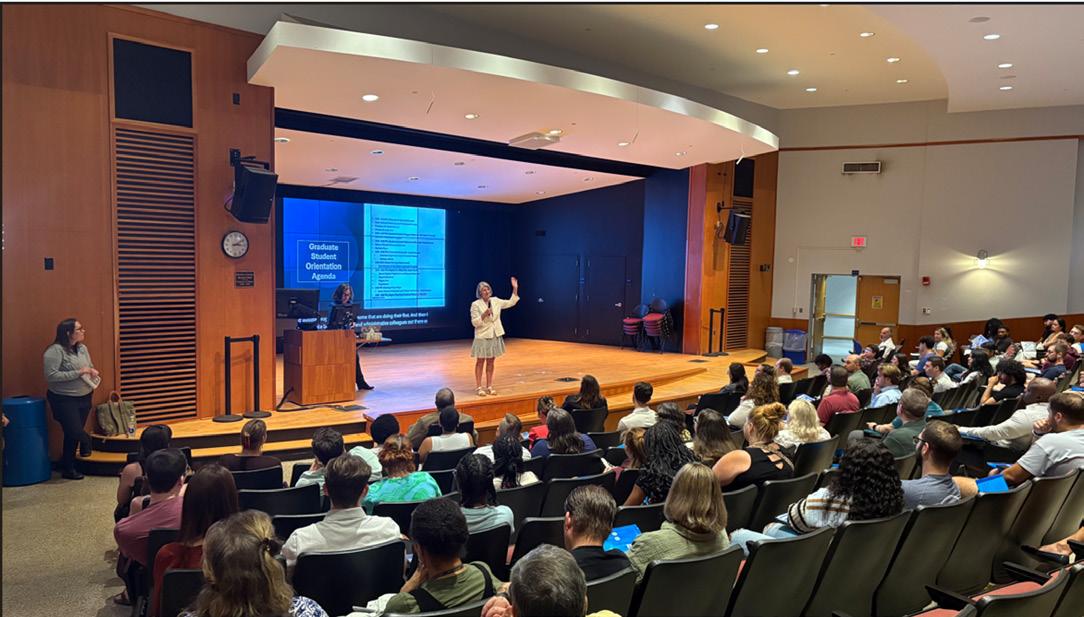
In August 2025, SGPS hosted its first in-person SGPS Graduate Orientation since 2021, welcoming over 100 new students to campus. The event featured welcoming remarks from university leadership, campus tours, and a comprehensive resource fair. Based on feedback from students and faculty, SGPS will enhance orientation events to include student and faculty panels and networking opportunities in 2026.
Many graduate programs complemented the SGPS orientation with program-specific events/orientations, further fostering a strong sense of community and belonging in departments.
The virtual orientation, built in Slate in 2022 to replace the in-person event during and following the pandemic, continues to successfully engage and support students with a 92% completion rate in Fall 2025. Offering both in person and virtual SGPS orientations now allows SGPS to reach a maximum number of incoming graduate students.
Throughout the year, SGPS leadership team engaged in standing monthly meetings with ICM and the university’s enrollment leadership team (Vice President for Enrollment Management) to ensure transparent, coordinated and campus-aligned recruitment efforts. This collaborative practice reflects the culture established during the Dean’s first year, emphasizing open communication, shared responsibility, and alignment across campus units to strengthen our enrollment strategy.
These monthly meetings have provided a forum for reviewing data, monitoring marketing performance, and identifying challenges and opportunities to enhance graduate program visibility within the broader university initiatives. By fostering strong crosscampus partnerships, SGPS ensures that marketing and enrollment efforts are integrated, efficient, and strategically coordinated.
Since the revision of the Accelerated Pathway policy in Spring 2024, SGPS has worked closely with Dr. Meredith Sinclair and Dr. Trudy Milburn, to increase the visibility of and to provide timely advising to interested and qualified students, through info sessions, presentations on the policy and process to graduate coordinators, and updated print and updated online sites.
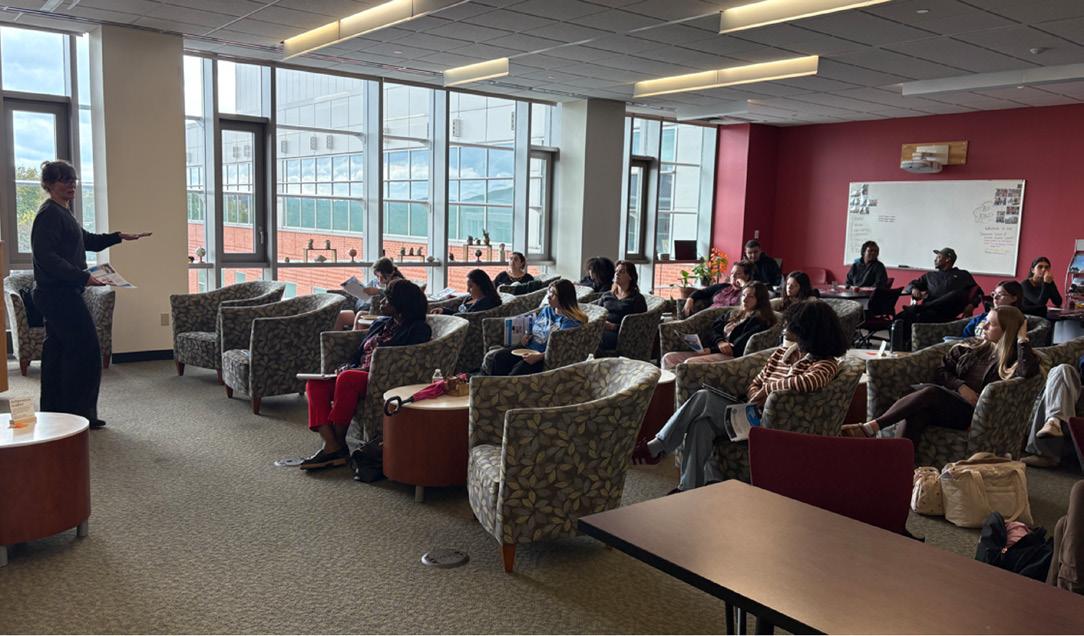
In March 2025 SGPS organized its first Accelerated Pathway information session, attracting 16 attendees. In October 2025 the SGPS held its second Accelerated Pathway Information Session in collaboration with
Interdisciplinary Studies and the Honors College, with twenty-eight (28) undergraduates in attendance, a 26% increase over the first event. From Academic Year (AY) 2024 to 2025 SGPS has seen a 9% increase of graduate students who received graduate credits as an undergraduate through an accelerated pathway.
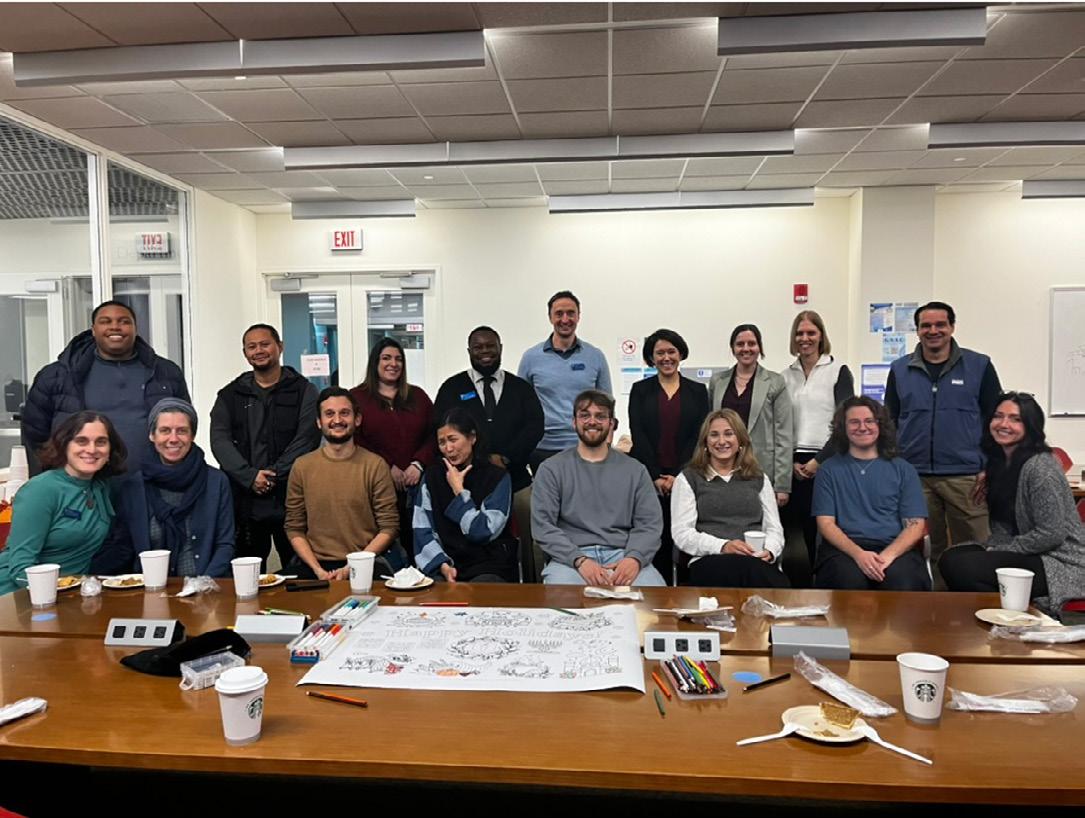
Although veteran admissions have remained modest in recent years, SGPS continues to demonstrate its commitment to serving this important student population. Through initiatives such as Snack and Salute events, application fee assistance, and the presentation of a challenge coin at commencement, SGPS fosters a sense of belonging and recognition for veterans and military-affiliated learners.
In partnership with the Office of Veteran, Military, and Adult Learning, SGPS has strengthened outreach and community-building efforts. Looking ahead, SGPS is pursuing a strategic agreement with CollegeRecon, a military-focused recruitment platform, to expand visibility and drive increased interest and enrollment among veteran students.
In 2024–2025, SGPS strengthened its global engagement efforts by hosting several international delegations in close collaboration with the Office of International Education and faculty from Schools and Colleges across the university.
Together, SGPS welcomed a delegation from Germany consisting of six students and two faculty
members, offering an immersive academic and cultural experience while exploring opportunities for future collaboration. SGPS also partnered with faculty colleagues to host faculty from Qatar, fostering dialogue around graduate education, research partnerships, and potential scholarly exchange.
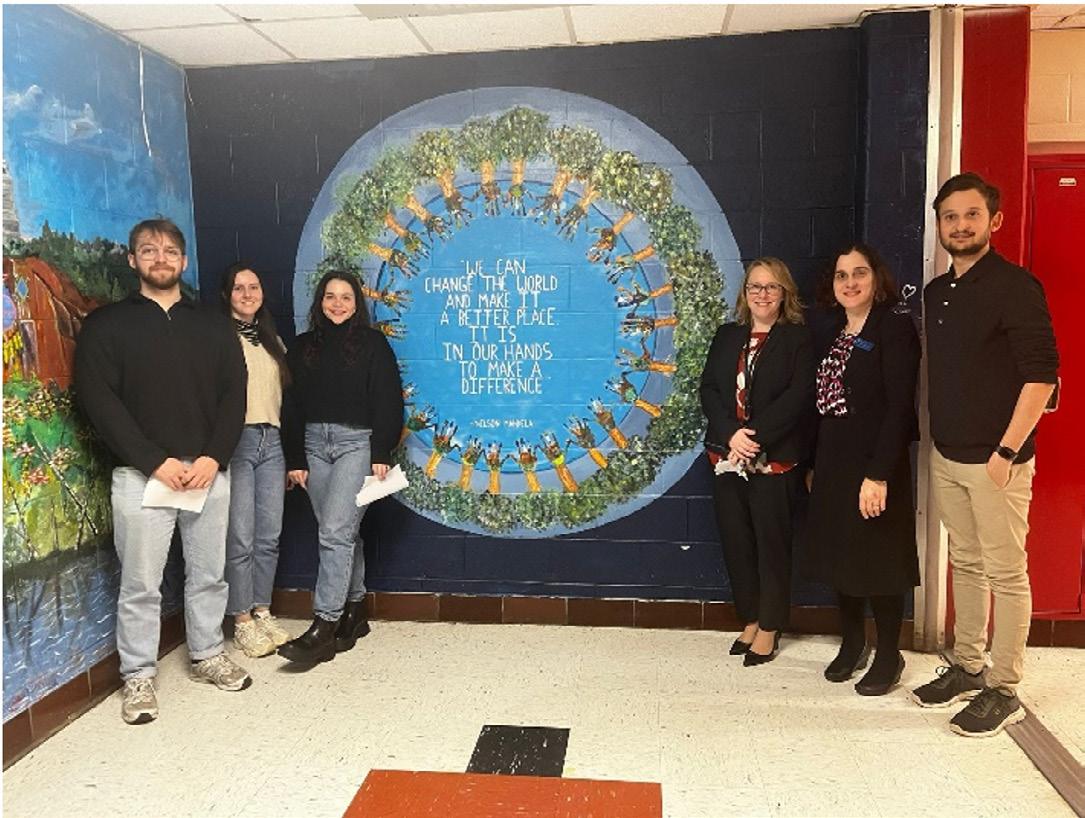
In addition to hosting international partners, many graduate programs expanded global learning opportunities by offering study abroad and short-term immersive experiences for graduate students during the summer or throughout the academic year. These faculty-led initiatives provide students with hands-on, context-rich learning environments in locations around the world, enhancing cultural competence, applied learning, and global leadership skills.
Additionally, SGPS is actively advancing a new partnership with Chile, where a Memorandum of Understanding (MOU) is currently in development with the Office of International Education. These joint efforts broaden SGPS’s global footprint, promote cross-cultural learning, and generate meaningful opportunities for student and faculty engagement across international contexts.
Admissions Policy: Timely Review and Decision-Making
To reduce barriers to enrollment and improve the applicant experience, SGPS developed and implemented a standardized Graduate Admissions Review Policy that establishes clear timelines, responsibilities, and escalation processes for application review.
The policy was created in response to identified inconsistencies in review timelines across programs, which at times delayed admission decisions and created uncertainty for prospective students. Working collaboratively with graduate program coordinators, associate deans, and review committees, SGPS is implementing this policy to promote timely, transparent, and equitable admissions decisions, ensure consistent communication with applicants, and support enrollment, persistence, and degree completion goals across graduate programs.
Academic Standing Policy Revision
SGPS has been collaborating closely with the Registrar’s Office to examine challenges in graduate academic standing processes and to develop a proposed policy revision grounded in data review, operational analysis, and student success considerations. This work was informed by a detailed examination of academic standing reports, which revealed inconsistencies in student classification and limitations in the timing of standing determinations that delayed opportunities for early intervention.
NECHE’s Standards for Accreditation call for institutions to publish requirements for continuation, termination, and re-admission that are compatible
with institutional purposes and applied by faculty and academic administrators to ensure academic quality and integrity (NECHE, 2021). Based on these findings, SGPS worked with the Registrar to correct reporting issues and developed a policy proposal that strengthens accuracy, introduces earlier checkpoints aligned with graduate enrollment patterns, and clarifies reinstatement criteria. The proposed changes aim to improve transparency, support proactive advising, and better align academic standing practices with the realities of graduate education.
The proposal has been presented to the Provost’s Council and academic deans, reviewed by the Graduate Council Policy and Procedures Committee, and is currently under consideration for faculty approval through Graduate Council. This collaborative, research-informed effort reflects SGPS’s commitment to evidence-based policy development and continuous improvement in support of graduate student persistence and success.

During the 2024–2025 academic year, several new graduate programs were launched to expand academic pathways and respond to emerging workforce, research, and interdisciplinary needs strengthening Southern’s portfolio of graduate offerings and advancing its R2 mission.
New master’s programs:
• Archaeology and Cultural Resource Management
• Financial Risk Management
• User Research (UX) and User Interface (UI) Design
• Business Analytics
• Coastal Resilience
New doctoral program:
• Doctor of Business Administration
SGPS is collaborating closely with ICM and new program coordinators to support the successful implementation, strategic marketing, and ongoing development of these programs, ensuring alignment with institutional priorities and fostering a strong community of scholars across disciplines.
During the Fall 2024 semester with support from the Graphic Design Department Chair Alex Girard, SGPS was able to collaborate to utilize a talent of an undergraduate intern who completed his creditbearing academic internship in supporting improving of the SGPS website. The student’s outstanding
contributions resulted in his appointment as a student working in Summer and Fall 2025, and he is set to continue with SGPS as a University Assistant in Spring 2026. This collaboration not only enhances digital presence but also strengthened crosscampus interdisciplinary partnerships providing an opportunity to work closely with faculty in Graphic Design and modeling an innovative, “outside the box” approach to securing needed expertise while supporting student learning and professional development.
SGPS also played a key role in fostering interdisciplinary collaboration by facilitating the submission of an U.S. Department of State IDEAS Grant in partnership with Dr. Miriah Kelly from the Coastal Resilience and Dr. Anuli Njoku from Public Health programs. The proposal sought to establish a study abroad experience in Zanzibar, integrating global health, environmental sustainability, and community engagement. Although the IDEAS Grant was not selected for funding due to federal cuts, the faculty partners continued to collaborate and successfully pursued an alternative grant opportunity to advance the program. SGPS’s involvement in convening stakeholders, supporting proposal development, and encouraging cross-disciplinary engagement underscores its commitment to expanding global learning opportunities and strengthening innovative academic partnerships across the university.
SGPS contributed to campus-wide academic excellence by participating in a focus group discussion during the accreditation site visit for our doctoral
program in Counselor Education. SGPS leadership team provided insights on graduate student support structures, enrollment processes, and cross-unit collaborations, helping to contextualize the program’s strengths. This engagement reflects our commitment to supporting academic programs during critical review processes and to fostering a culture of shared responsibility for quality and continuous improvement across the university.
SGPS leadership also participated in the Standards and Assessment Review (StAR) external campus visit, offering a perspective on graduate program priorities, needs, and opportunities for program growth. SGPS helped highlight the unique opportunities and best practices for continuous program improvement.
Following discussions with graduate coordinators and student survey results, SGPS set out to centralize, facilitate, market, and expand Academic and Professional Writing and Research Support for graduate students.
Close collaboration with CASAS, the Writing Center, the Buley librarians and faculty members have resulted in additional tutoring hours (CASAS), a new graduate student library resource page on the Buley website, and the launching of an Academic Writing and Research Workshop series in Summer 2025. To date, more than 20 workshops have been offered with many recordings uploaded on the Buley Library YouTube site, where they have already garnered over 200+ views and continue to grow:
• Citation Managers – what are they and why do you need one
• Beyond Google Scholar & SouthernSearch: diving deeper into your research
• Beyond Google, Part 2 – Advanced Searching
• AI Tools for Article Searching and Review
• AI Literature: Searching Tools and Cautions
• Has Your Reference Been Retracted?
• Journal Quality Unpacked
• Citing and Referencing Sources using APA
• From Idea to Proposal: Developing a Strong Thesis or Dissertation
• Setting up a Thesis or Dissertation in Word
• Writing Clearly at the Macro-Level: Structuring a Paper
• Writing Clearly at the Micro-Level: Writing Paragraphs and Sentences
• Simplifying the Writing Process: One Chunk at a Time
• Research Smarter, Not Harder: Advanced Tools & Techniques
• Ethical Use of Generative AI in Writing
• Establishing Your Scholarly Identity & Profile
• Building Clarity into the Structure of Your Writing
• Business Writing for Professionals
• Writing a Literature Review
• How to Read Scholarly Articles
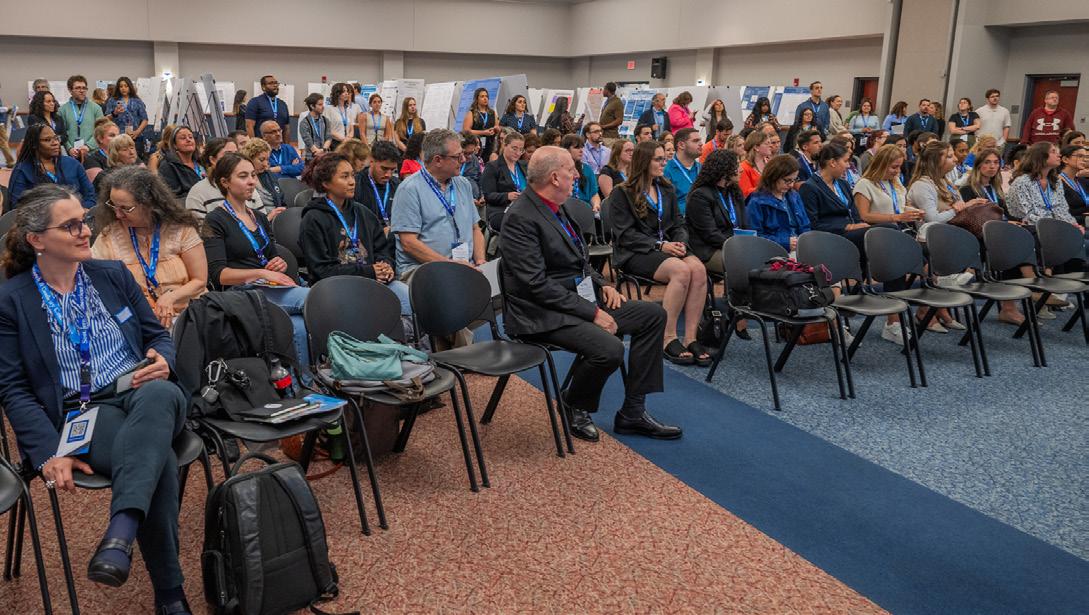
SGPS partnered with RSAC and the SCSU Innovation Hub to help plan and successfully deliver the 8th annual Graduate Research and Creativity Conference in 2025. This event achieved a remarkable 96% increase in graduate student participation, growing from 82 presenters in 2024 to 161 in 2025—driven in part to the intentional integration into graduate curricula.
With approximately 300 attendees, this signature campus event showcased student scholarship and creative work, elevated the visibility of graduate education at Southern, and fostered interdisciplinary collaboration. Beyond highlighting academic excellence, the conference provides meaningful
opportunities for professional development, networking, and community building—key factors in retention and student success. Looking ahead, RSAC has asked SGPS to play an even more active role in organizing and shaping the event to meet program and student needs, while further amplifying graduate scholarship across the university.
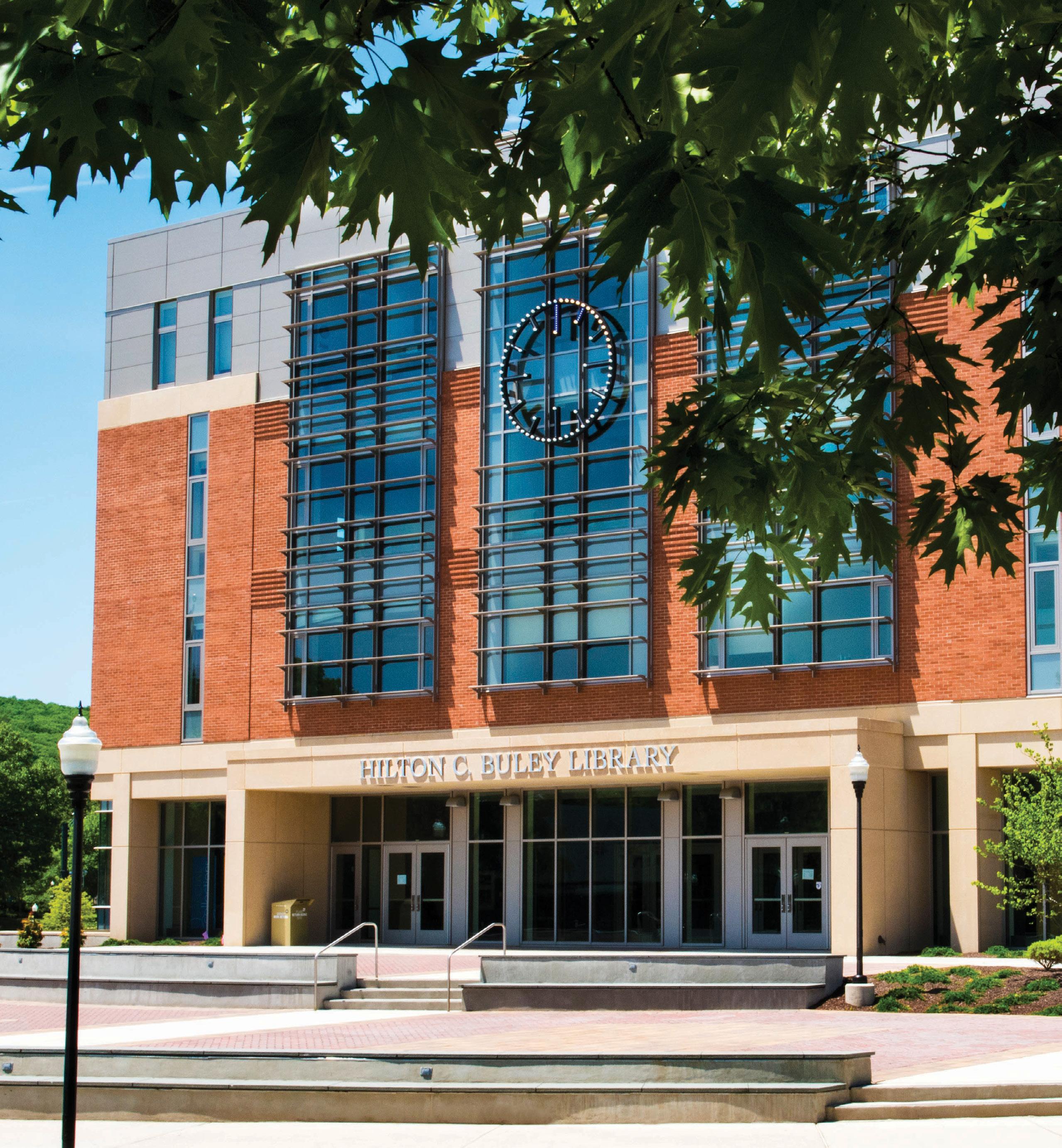
SGPS reaffirmed its commitment to cultivating a strong graduate student community by investing in inclusive spaces and collaborative opportunities. Bond funds were allocated to upgrade the Graduate Study Space on the fourth floor of Buley Library, creating a flexible environment that supports both independent work and group collaboration. The space now features movable furniture, two projectors, two whiteboards, and a TV screen to accommodate diverse academic needs. In Fall 2025, in alignment with broader institutional space planning, the area was designated as the Scholar’s Space, serving as a shared environment for graduate and Honors College students to connect, collaborate, and advance their academic and scholarly pursuits.
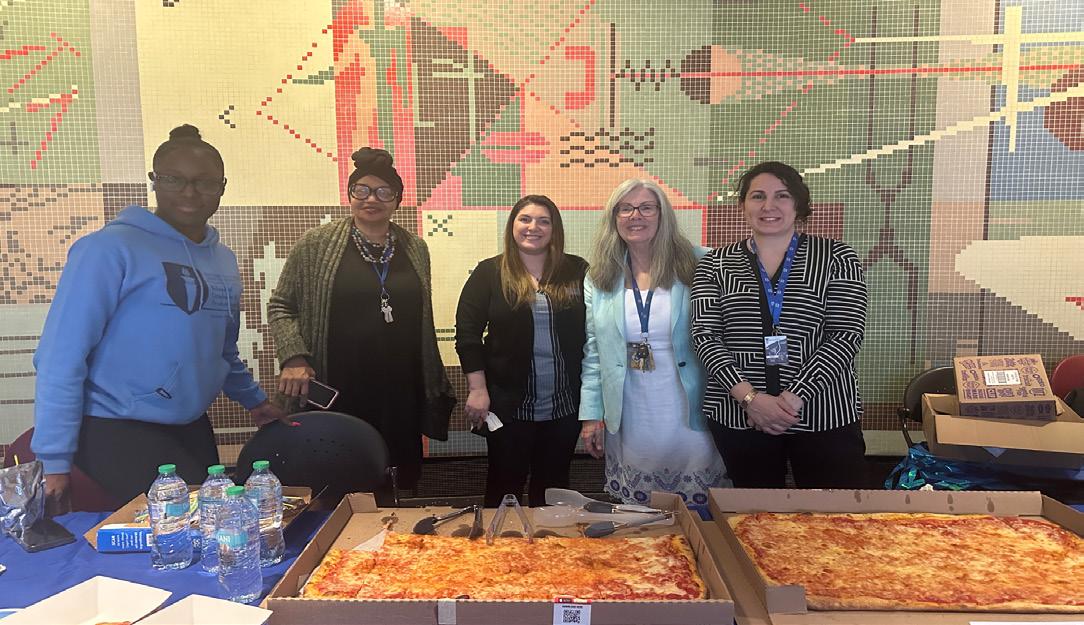
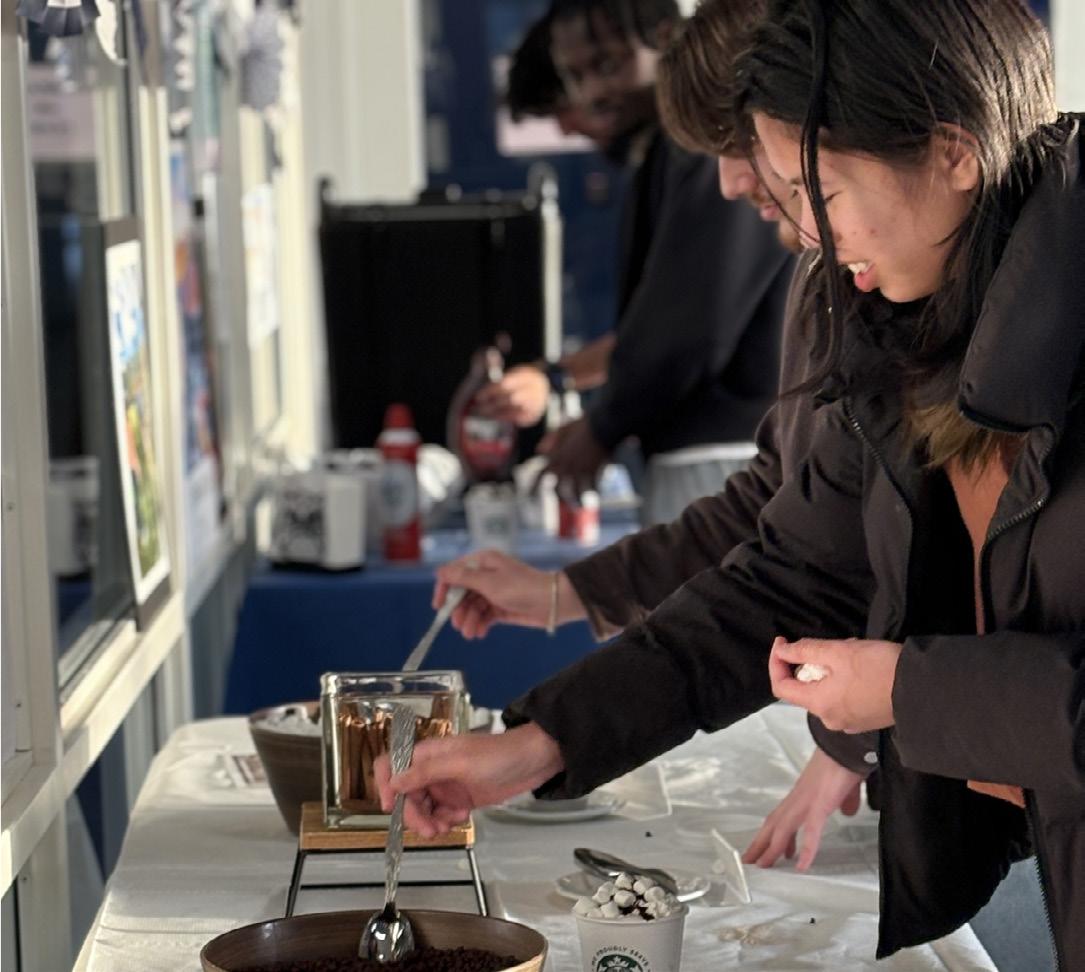
SGPS has continued its tradition of hosting community building events in this space and around campus including: Meet the SGPS Team, Grad Connect Resource Fair, Donut Stress, Navigating the Challenges of Grad School (student panel), and Cocoa & Cram/ Pause for Paws.
To streamline and strengthen the capstone experience process, SGPS, in close partnership with the graduate coordinators and the Registrar, is implementing
OnBase digitalized capstone experience forms for launch in Fall 2026.
This initiative will systematize and centralize the workflow, tracking each step from committee creation to proposal approval, IRB clearance, comprehensive exam results, defense outcomes, and final submission. The unified digital workflow ensures compliance with university policies including academic integrity and responsible use of AI, while supporting timely submission to ProQuest.
This modernization improves tracking and record accuracy, reduces administrative burden on faculty, and safeguards institutional compliance. It reflects best practices in graduate education, enhances student experience, and strengthens operational efficiency across the university. Integration with Banner will enable the generation of comprehensive reports, giving advisors real-time insights to track and support student progress throughout the capstone journey. The capability also positions SGPS to strategically align academic workshops and coordinate targeted support services to promote timely and successful completion.
SGPS also introduced a digitalized Capstone Defense Announcement Form, enabling programs to share defense details seamlessly across multiple platforms, including the SGPS events calendar, social media,
newsletters, and campus digital boards. This initiative enhances the visibility of graduate scholarships, promotes community engagement, and ensures communication about key academic milestones.
To advance research and academic excellence, SGPS implemented significant enhancements to the Graduate School Graduate Assistantship (GSGA) structure, including the introduction of a new appointment process and the allocation of additional funding to expand access to research, creative, and teaching opportunities. These improvements were accompanied by a revision of appointment requirements and a refinement of terms of service, supported by the creation of streamlined digital documentation.
SGPS will continue to expand data collection and assessment mechanisms to support evidence-based decision-making, strengthen accountability, and build sustainable systems that enhance graduate research, teaching, and creative opportunities. Together, these efforts increase transparency, improve administrative efficiency, and broaden meaningful experiential learning opportunities that support graduate students’ scholarly and professional development.
To enhance the impact of graduate assistantships on student experience and professional development, SGPS introduced a series of targeted initiatives. The monthly First Friday Connect and Grow community building and professional development workshop series, launched in Fall 2024, provide graduate assistants (GSGAs, Department-based Graduate Assistants and Graduate Interns), with a strong sense of community and belonging, while equipping them with practical skills to succeed academically and professionally.
Select topics:
• GSGA Welcome and Orientation
• Navigating Funding at Southern: A Graduate Student’s Guide
• Mastering Presentational Skills/Public Speaking in Graduate School
• Developing and Delivering Effective Presentations
• Strategies for successfully working with your faculty mentor and making the most of your GAship
• Job Search Preparation and AI
• AI Literature: Searching Tools and Cautions
Building on this foundation, the inaugural GSGA Student/Faculty Mentor Orientation in 2025 fostered meaningful collaboration and goal setting between graduate assistants and their faculty mentors. Through interactive sessions facilitated by OCPD including “Translating Your Graduate Assistantship into Professional Success” and “Building a Strong Network In and After Graduate School,” these efforts aim to transform assistantships into high-impact learning experiences that prepare them for success during graduate school and beyond.
“This semester was a period of real growth for me (both academically and professionally). I strengthened my research skills through hands-on work as a research assistant, from conducting literature reviews to drafting and editing manuscripts alongside faculty and journal teams. I learned how to navigate the full research process, communicate more effectively, and collaborate with others in a meaningful way.
“Participating in GSGA meetings, workshops, and trainings helped me build confidence, expand my network, and better understand what it takes to succeed [..]. I faced challenges with balancing deadlines, managing revisions, and stepping outside my comfort zone, but each challenge pushed me to become more organized, adaptable, and proactive. Overall, I gained valuable skills, clearer career direction, and a deeper belief in my abilities as a developing [...] professional.” (GSGA, Fall 2025)
More than Graduate Assistantships are funded by departments and units across campus, providing valuable academic and professional development opportunities for graduate students. SGPS in partnership with HR manages the administrative responsibility for these positions and continues to
strengthen engagement by inviting GAs to participate in the First Friday Connect and Grow activities. Moving forward, SGPS is committed to making these events more accessible and inclusive, ensuring that all graduate assistants benefit from intentional support and community-building initiatives.
To strengthen research capacity and advance academic excellence, SGPS will collaborate with the Office of the Provost and Vice President for Academic Affairs to establish a faculty consultancy support system for graduate students. This model will leverage graduate faculty expertise to provide coordinated research, statistical, and methodological consultation across disciplines, ensuring more equitable and consistent access to support. The initiative responds to identified student and faculty needs and is designed to enhance the quality of graduate research, support timely degree completion, and build sustainable, cross-campus infrastructure that elevates graduate scholarship university-wide.
Recognizing the critical role graduate coordinators play in program success, SGPS invited coordinators to participate in voluntary individual meetings. More than 30 coordinators responded and took part in these sessions, which aimed to better understand their
programs, identify needs, foster connections, and address common challenges. Additionally, in Fall 2024, SGPS implemented the graduate program leadership survey in order to gather feedback from the graduate program coordinators.
These data driven conversations informed the launch of monthly graduate coordinator “Lunch and Learn” sessions designed to enhance community, communication, and collaboration. This series complements the annual coordinator fall retreat. Each session provides timely updates on policies and processes, creates space for coordinators to share insights and concerns, and features focused presentations by campus partners on topics such as marketing, admissions, student funding opportunities, and advising best practices.
This initiative, which attracts between 20–30 coordinators each month, aims to strengthen program leadership and build a cohesive network committed to advancing graduate education. By creating structured opportunities for dialogue and collaboration, this effort aims to enhance SGPS operations and processes, providing a forum for feedback, identifying challenges, and driving continuous improvement across campus.
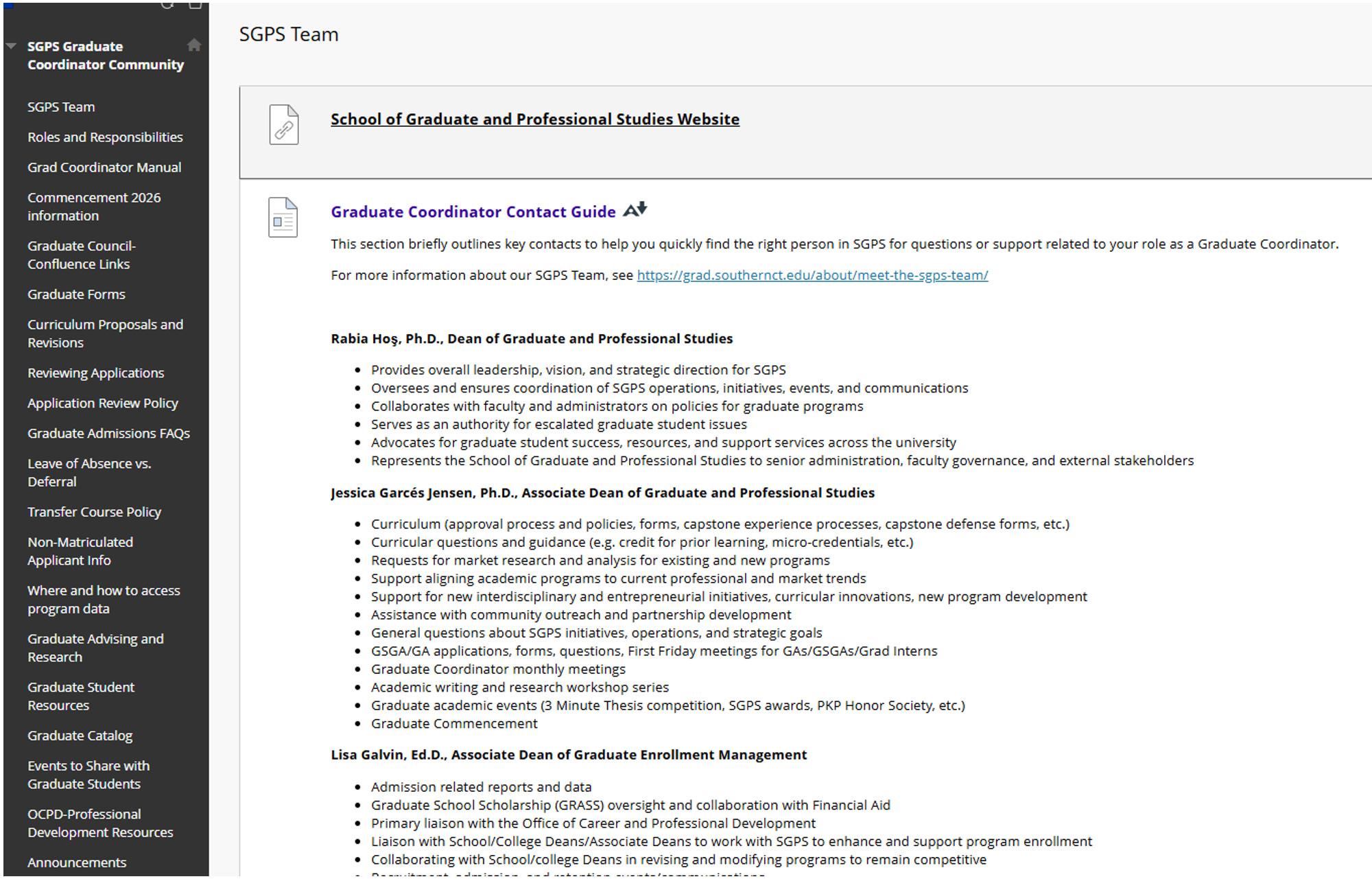
In Summer 2025, SGPS launched the Graduate Coordinator Community Organization (BlackBoard), a centralized platform designed to streamline access to essential resources, including admissions information, an updated graduate coordinator manual, forms, Graduate Council links, curriculum proposal processes and timelines, and other programrelated materials. Continuously updated based on coordinator feedback, this resource supports both new and experienced coordinators and underscores SGPS’s ongoing commitment to strengthening
graduate programs through robust and accessible faculty support.
Finally, following a growing partnership/collaboration with the Office of Career and Professional Development, SGPS supported OCPD’s Faculty Career Cohort Initiative which aims to empower faculty to integrate career development into teaching and mentoring and equip graduate students with the skills and insights to succeed professionally.
In Spring 2025, SGPS launched a monthly doctoral graduate coordinator meeting series designed to foster strong connections among coordinators, promote collaborative problem-solving, share best practices, and provide targeted support for doctoral program leadership.
Aligned with Leading the Way Priority 2-Cultivating a Community of Scholars-SGPS initiated a multi-phase, multi-year research study in Fall 2025 to elevate graduate student voices and strengthen the quality of both master’s and doctoral education across programs. As an initial phase, the study focused on doctoral students, with all 126 enrolled doctoral students invited to participate. To date, 28 students (approximately 22.2%) completed the survey, and 7 students participated in individual interviews, with additional graduate students being recruited for continued individual and group interviews.
Preliminary findings from the doctoral student research highlight the importance of cohortbased learning and peer connection in supporting persistence, as well as the need for clear and consistent guidance around key milestones such as comprehensive examinations and dissertation processes. Students also identified opportunities to strengthen research preparation, advising consistency, and communication-particularly for those balancing professional, family, and academic responsibilities.
While this research is still in its early stages, these initial insights underscore SGPS’s commitment to evidencebased practice. Findings will inform collaboration with graduate program coordinators, support accreditation efforts, and guide the development of enhanced resources and systems that foster a strong, connected community of graduate scholars.
In Spring 2025, SGPS led the initiative to establish a chapter of Phi Kappa Phi, the nation’s oldest and most
selective all-discipline honor society, in collaboration with the Office of the Provost and Vice President for Academic Affairs. This initiative elevates Southern by creating a formal platform to recognize outstanding academic achievement among both graduate and undergraduate students. Southern will become Chapter #365, with an installation and inaugural induction ceremony planned for Spring 2026, marking the first Phi Kappa Phi chapter within the CSCU system. This milestone strengthens interdisciplinary scholarship, fosters academic excellence across levels, and expands opportunities for student engagement. Membership also provides access to more than one million dollars annually in awards, fellowships, study abroad grants, and scholarships.
SGPS established Southern’s inaugural 3 Minute Thesis® competition in Fall 2025 with support from the Office of the Provost and Vice President for Academic Affairs. This globally recognized event challenges graduate students to present their research in just three minutes using a single static slide. This competition not only sharpens communication skills but makes scholarship more accessible to a broader audience and equips scholars to articulate their work effectively to employers in both academic and non-academic settings. To support participants, SGPS organized virtual workshops led by faculty, librarians and the Writing Center, to guide students as they prepare their submissions. The on-campus competition will feature categories for master’s thesis, doctoral dissertations and special projects/creative works, with one winner advancing to the regional competition.
To support data-informed decision-making and continuous improvement, SGPS secured blanket Institutional Review Board (IRB) approval to allow for the systematic collection and analysis of data related to graduate student experiences, enrollment processes, and academic support initiatives. This
approval enables SGPS to engage in ongoing research to assess practices, evaluate outcomes, and inform policy development and program enhancements, while maintaining compliance with ethical research standards. Continuous research is underway to strengthen evidence-based decision-making and support the creation of sustainable systems that enhance graduate education across the university.
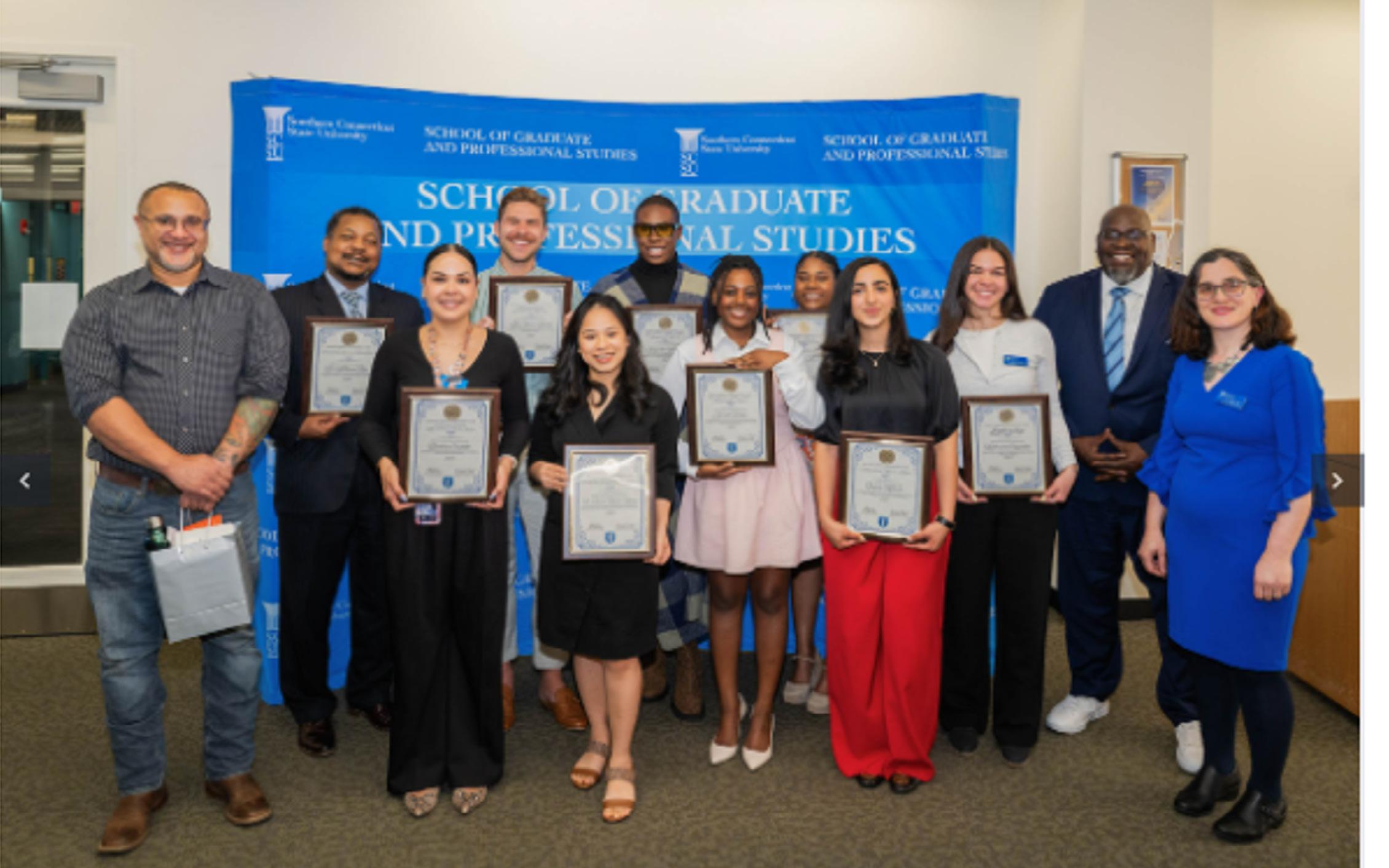
Each spring, the School of Graduate and Professional Studies honors graduate students and faculty whose exceptional contributions reflect academic excellence, leadership, service, mentorship, and community impact. At the 2025 Annual Graduate Student & Faculty Excellence Awards ceremony on April 30, 2025, SGPS recognized the outstanding achievements of the following recipients:
Katherine Cappetta (M.B.A., Healthcare Administration)
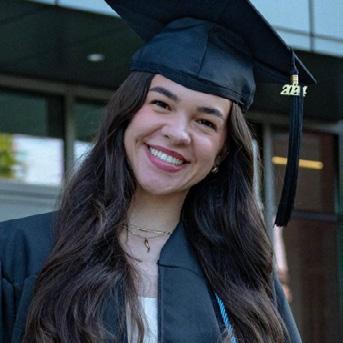
Recognized for exemplary leadership, service, and advocacy within the graduate community, demonstrating the “Owl Spirit” through impactful contributions to campus life and beyond.
OUTSTANDING DOCTORAL CAPSTONE/ DISSERTATION AWARD
Dr. William Rice (Ed.D., General Education)

Honored for a dissertation that contributes important knowledge to the discipline and exemplifies academic quality and scholarly rigor.
Sajida Hatsuda (M.S., Chemistry, Professional Science Master’s)
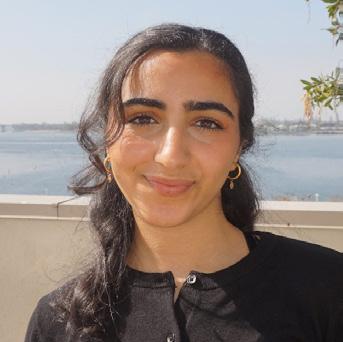
Awarded for an exceptional capstone project distinguished by rigorous methodology, substantive contribution to the field, and scholarly excellence.
Jonell Bailey (M.P.H., Health Promotion)
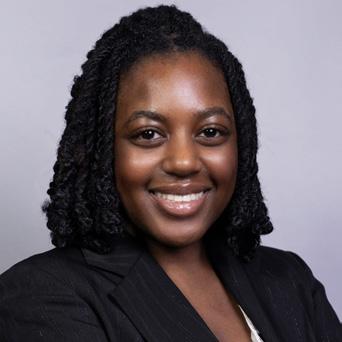
Celebrated for embodying the spirit of innovation, leadership, and commitment to community and institutional change that defines the legacy of Dr. Holley-Carter.
Serginho Walker (Ed.D., Counselor Education & Supervision)

Celebrated for embodying the spirit of innovation, leadership, and commitment to community and institutional change that defines the legacy of Dr. Holley-Carter.
Dr. Thanh “Minnie” Hoang (MPA Graduate Coordinator)
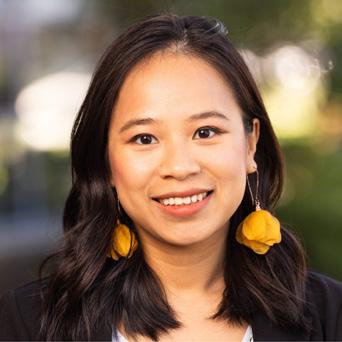
Recognized for exceptional mentorship and sustained commitment to supporting graduate student development and success.
Darlene Castillo (Clinical Instructor, CMD)
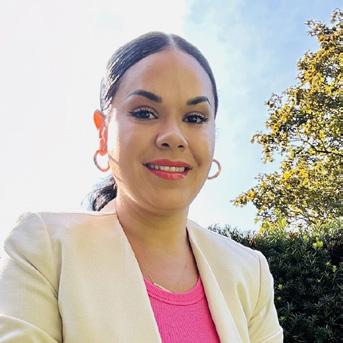
Honored for excellence in graduate teaching and meaningful contributions to professional growth and student achievement.
Dr. Barbara Cook (Graduate Coordinator, CMD; Chair of Graduate Council)
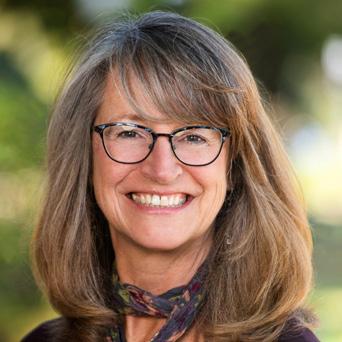
Awarded for outstanding leadership and commitment to advancing academic quality, student success, and program innovation.
These awards underscore the depth of talent, dedication, and leadership within the SGPS community and reflect the collective commitment to excellence in teaching, scholarship, and service.

SGPS advanced a series of policy and procedural updates designed to promote fairness, transparency, and consistency across graduate education. Together, these initiatives strengthen program leadership, reduce barriers to access and persistence, and ensure that graduate policies align with best practices, accreditation expectations, and the evolving needs of diverse learners.
Description of Roles and Responsibilities of Graduate Coordinators
Strengthening and supporting impactful graduate program leadership and fair practices, SGPS drafted a comprehensive description of duties and responsibilities of graduate coordinators. This document was reviewed collaboratively by coordinators and deans and subsequently endorsed by the Graduate Council. The initiative recognizes the critical contributions of program leaders and provides a clear description for deans to develop an equitable compensation model for coordinators. Additionally, it serves as a valuable resource for onboarding new coordinators, ensuring consistency and clarity in expectations across all graduate programs.
After extensive discussions with graduate programs and academic deans seeking to formally recognize prior learning, SGPS developed a comprehensive credit for prior learning policy, grounded in best practice recommendations from the American Council on Education (ACE) and the Council of Adult and Experiential Learning (CAEL). Reviewed
and approved by the GCCC in Spring 2025, the policy was designed to be streamlined, accessible, and affordable. To support implementation, SGPS partnered with OWLL and the Registrar to create an integrated system that simplifies the CPL portfolio evaluation and processing. This policy was later reviewed and adopted by UWiC, extending its benefits beyond graduate education to increase access for undergraduate students as well.
Graduate policies and processes for recognizing prior learning represent an emerging and innovative area in the graduate educational landscape. By developing a comprehensive policy and implementing an integrated, student-friendly system, Southern positions itself at the forefront of graduate education. This forward-thinking approach not only reduces barriers for adult learners but also reflects a commitment to flexibility, accessibility, and academic excellence—setting a benchmark for institutions across the region.
To advance academic innovation, SGPS developed a credit-bearing microcredential policy for review by the GCCC. While formal review is anticipated in 2026, UWiC requested SGPS present the policy for consideration at the undergraduate level, leading to its use in creating a pilot program within the Department of World Languages and Literatures. Launched in Spring 2025, the pilot successfully issued credit bearing microcredentials, demonstrating how SGPSled initiatives positively influence both graduate and undergraduate education.
By shaping and supporting policies across both academic tiers, SGPS demonstrates its broad
institutional impact, fostering flexibility and reducing barriers for learners throughout the university.
To strengthen retention efforts and best support programs and students, SGPS partnered with the Registrar to expand the options available when requesting a Leave of Absence, most significantly one to track students who use a LOA while they complete comprehensive exams. This added context helps SGPS and academic units gain deeper insight into the reasons behind LOA requests, informing strategies to improve student success and program support.
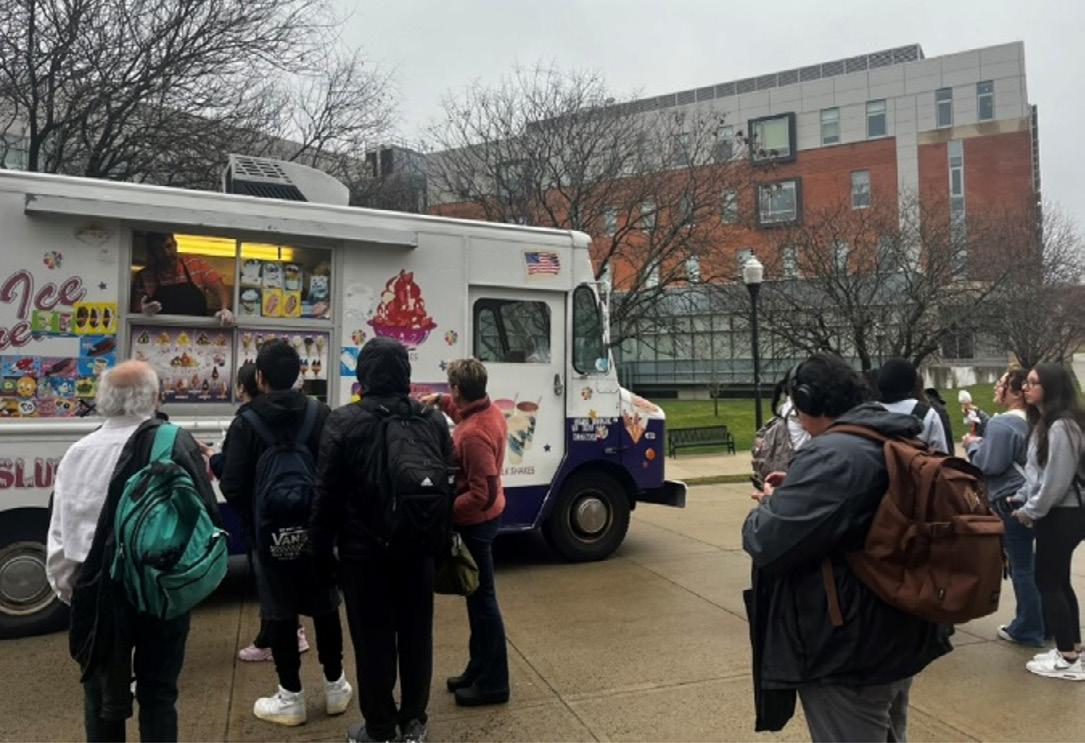
Graduate Week of Welcome Events in Spring and Fall 2025 were expanded and publicized to intentionally welcome graduate students to campus and cultivate a sense of belonging. Events included Meet the SGPS Team, an Ice Cream Truck event, CASAS Open House for Graduate Students.
First Gen graduate students participated in campuswide celebrations of First Gen Week with speakers organized by SGPS and UAP including an alumna speaker Joy Osahon, ’10, M.A. ’13 who delivered a talk “3 Key Considerations for the Future as a FirstGeneration Graduate Student.”
First generation graduate students were also recognized with special pins at commencement, celebrating their achievements and unique contributions to the Southern community.
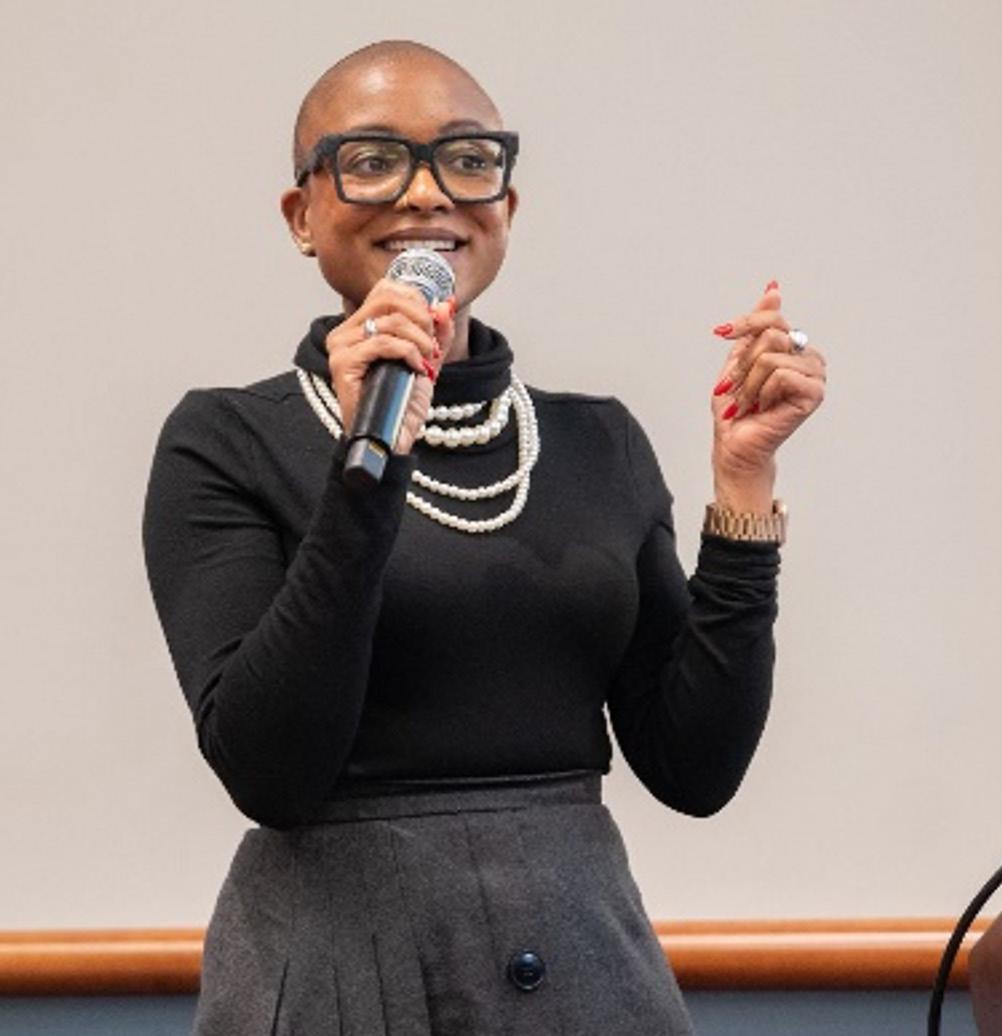
SGPS worked closely with the Office of Student Involvement and Leadership Development to facilitate meetings for the formerly known Graduate Student Advisory Council, now called Graduate Student Association, Southern’s graduate student organization. SGPS significantly strengthened support for graduate student research and conference participation by proactively increasing awareness of available funding opportunities and streamlining access across programs. Through coordinated outreach-including the SGPS website, program orientations, resource fairs, Graduate Council and graduate coordinator meetings, and targeted email communications-SGPS expanded visibility of research and travel funding administered by the Graduate Student Association (GSA).
As a result, GSA travel and research awards increased from $3,283 supporting 10 students in FY24 to $5,737 supporting 11 students in FY25, reflecting both growing awareness and demand; we are confident utilization of funding by graduate students will continue into FY26.
This growth was further supported by expanded institutional investment. Funding provided through the Research and Scholarship Advisory Committee (RSAC) and Southern’s Foundation demonstrates a strong upward trajectory in support for graduate research and dissemination.
Foundation funding for RSAC-related graduate stipends, student wages, travel, and supplies increased substantially from $2,909 in FY24 to $35,381 in FY25 and $42,432 in FY26, reflecting sustained commitment to graduate scholarship. Conference travel grant support through operating funds remained steady in FY24 and FY25 and continues to be available in FY26, ensuring ongoing opportunities for students to present and disseminate their work.
In January 2025, graduate students formally transitioned the Graduate Student Affairs Committee (GSAC) to the Graduate Student Association (GSA) and updated its constitution and bylaws to better reflect its advocacy and leadership role. SGPS partnered with GSA to develop a comprehensive webpage hosted on the SGPS site, increasing the visibility of funding opportunities and simplifying access to research, travel, and student organization request forms. Collectively, these efforts demonstrate a coordinated, sustainable approach to expanding graduate research participation and professional development opportunities.
Monthly meetings also provided opportunities for students to share concerns with SGPS leadership and engage in advocacy efforts including successful expansion of the UPASS to include graduate students. As of Fall 2025, 74 students had claimed their UPASS granting affordable access to public transportation.
Concerns about access to on-campus food services in the evenings led to a listening session with Sodexo, followed by a survey to gather more information about graduate student needs. GSA has also partnered with SGPS to request and secure inclusion on campus committees, and advocate for graduate student representation on the CT Board of Regents.
The GSA has also approved the creation of additional discipline specific graduate student organizations, including the Graduate Social Work Organization and the Graduate Occupational Therapy Organization.
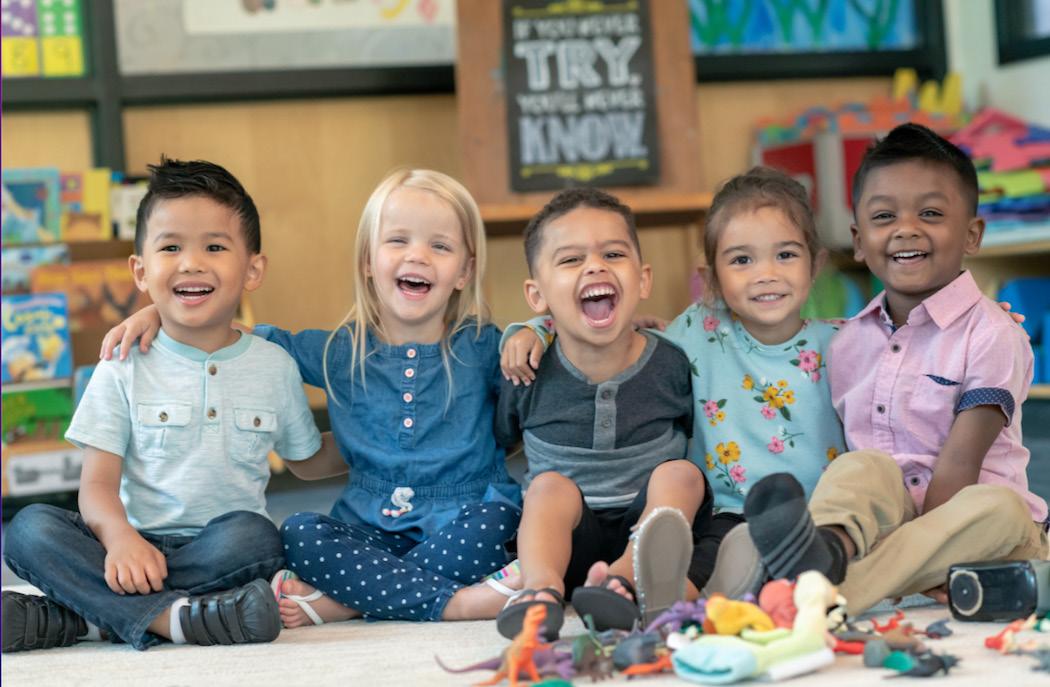
In Fall 2024, SGPS also partnered with leadership in HHS and the VP of Student and University Affairs to secure extended evening hours at the COMPASS Childcare Center for Southern students. SGPS remains actively engaged in advocating for additional funding and institutional support to sustain and expand access to the COMPASS Childcare Center, recognizing its critical role in supporting parenting graduate students and promoting student persistence and success.
“ Bringing [my
daughter] to the Compass Childcare Center 1–2 evenings a week has helped me currently with data collection/ analysis and previously writing chapters 1–3 of my dissertation leading to me passing my proposal defense!”
Chrystal
Long, Doctoral Student

Established in Spring 2025, the SGPS Advisory Board was created to strengthen community partnerships, provide external expertise, and support the school’s strategic planning process and longterm vision. Composed of leaders from education, workforce development, public health, government, and community organizations, the board offers valuable insight into emerging industry needs and opportunities that align with SGPS’s mission. Their engagement has helped inform strategic priorities, program development, and initiatives that enhance the relevance and impact of graduate education at Southern.


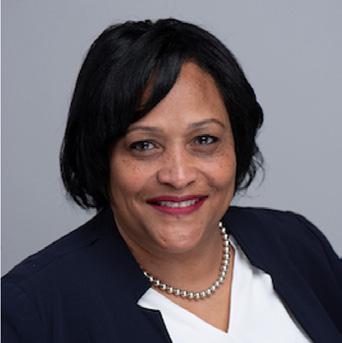
Jennifer Fournier Esq., Chair, Nonprofit Resource Council, Greater New Haven Chamber
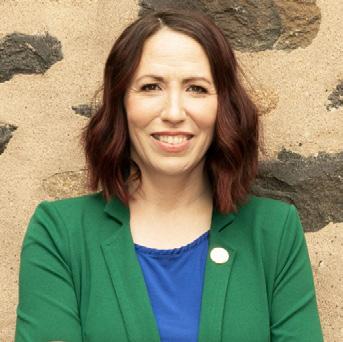
Mark Lazarus Program Manager, The Workplace, DS
Marcelo Sousa English Language Education Specialist, North Haven Public School
Katherine Tucker DNP, RN, APRN-BC, NE-BC, Nursing Director, New Haven Health Department
Laurie Sweet Connecticut State Representative, 91st district
We are grateful for the contributions of our Advisory Board members:
SGPS looks forward to continued collaboration with this dedicated group as we advance our strategic goals, strengthen community engagement, and expand opportunities for our graduate students and programs.
Throughout 2024–2025, SGPS significantly expanded its visibility and strengthened relationships across the university by collaborating closely with a wide range of campus units. These partnerships enhanced graduate student support, increased access to resources, and elevated SGPS’s presence within the broader university community. Key collaborators included the Library, Office of Career and Professional Development (OCPD), CASAS, the Childcare Center, Health and Wellness Center, Office for Diversity, Equity, and Inclusion (DEI), Human Resources, the Registrar’s
Office, OWLL, the Financial Aid Office, and the Bursar’s Office.
Through these engagements, SGPS advanced coordinated communication efforts, improved operational processes, and ensured that graduate students received comprehensive, well-aligned services. These cross-campus partnerships also reinforced a shared commitment to student success and contributed meaningfully to the university’s culture of collaboration and community engagement.
Additionally, SGPS was represented in multiple community outreach events, including the Big Connect, New Haven; Connecticut Association of Latino Administrators and Superintendent’s Gala; New Haven Public School’s Seal of Biliteracy Event (Dean Hos was the keynote speaker).
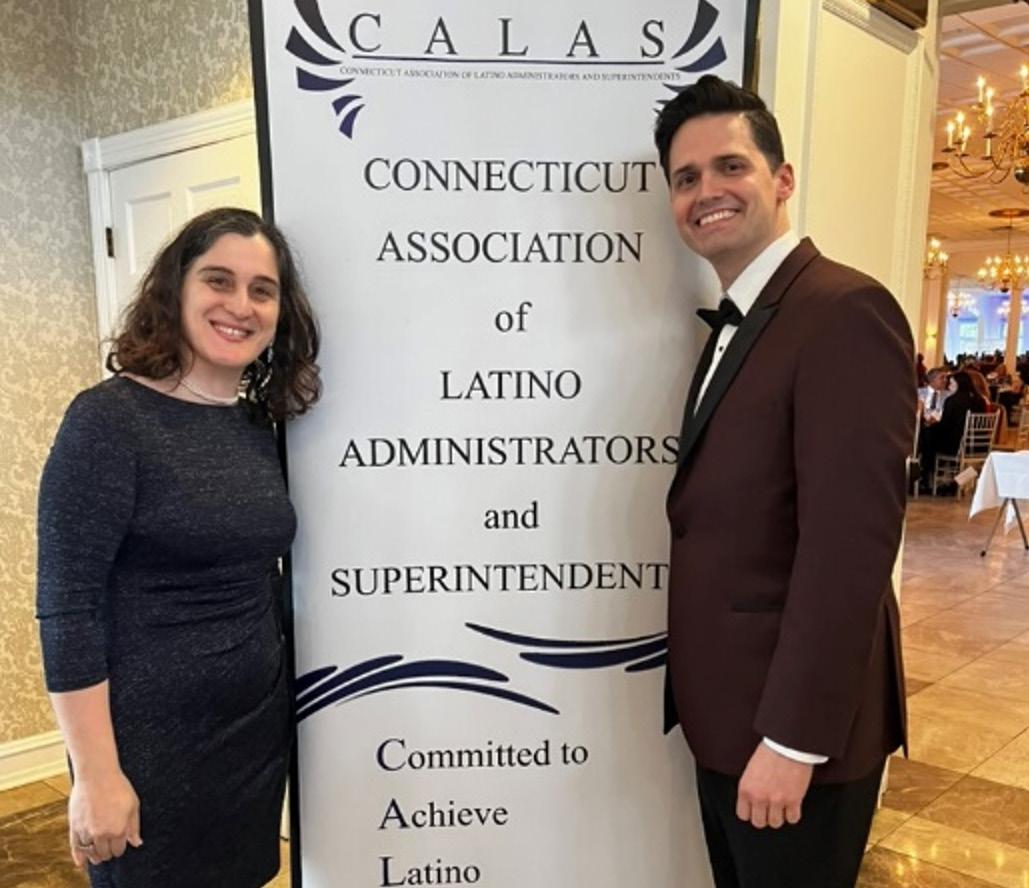
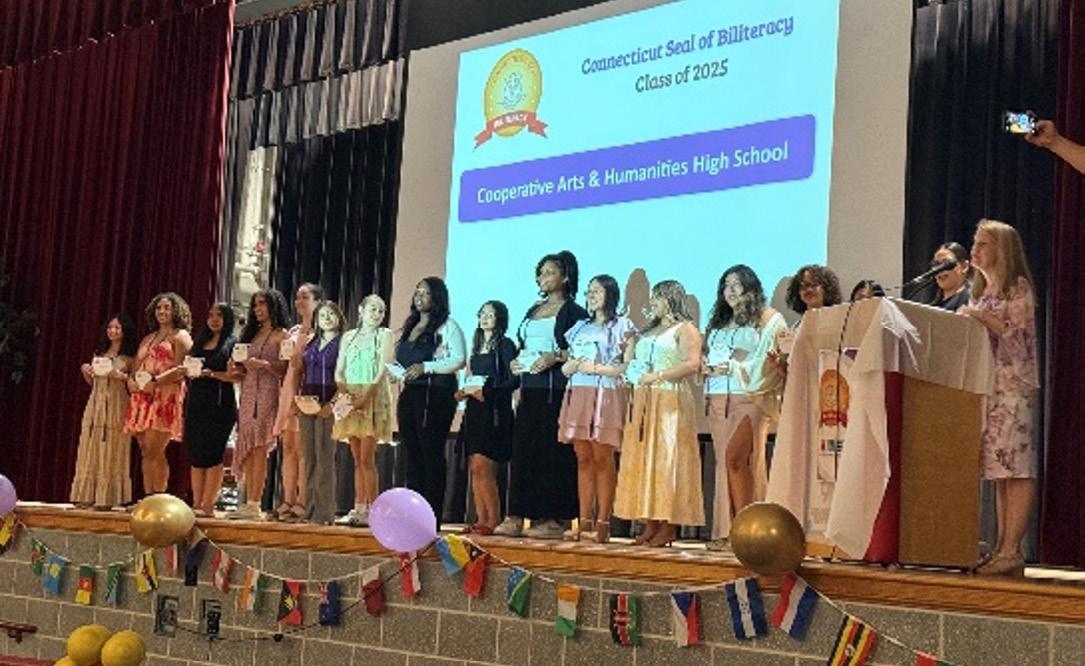
To elevate the achievements of our community and strengthen connections across and beyond campus, SGPS launched a series of faculty, student, and alumni spotlights throughout the year. These features highlighted exemplary scholarship, innovative research, impactful professional contributions, and inspiring career pathways. By showcasing diverse voices and accomplishments, the spotlight series will continue to enhance SGPS’s visibility, celebrate excellence within our programs, and reinforce a sense of pride and belonging among current and prospective students, alumni, and campus partners.
During the 2024–2025 academic year, the SGPS Dean served as a member of Southern’s Five-Year Sustainability Plan Taskforce, collaborating with faculty, staff, administrators, and operational units across the university. This taskforce played a critical role in shaping Southern’s long-term sustainability goals into a comprehensive plan. SGPS’s participation in this institutional initiative reflects our commitment to shared governance, cross-campus collaboration, and advancing a more sustainable future for the entire university community.
During the 2025–2026 academic year, the SGPS Dean is serving on the Connecticut State Colleges and Universities (CSCU) system-level Graduate Assistant/ Graduate Intern (GA/GI) Committee, alongside two additional representatives from Southern. The committee has been convened to review the 2009 Resolution Concerning Graduate Interns in the CSU system, examine current GA/GI employment practices, benchmark policies against peer institutions, and develop formal recommendations focused on standardizing appointments across the universities. Areas of focus include employment dates, stipend levels, hours of work, tuition remission, eligibility requirements, onboarding and appointment processes, payment structures, and clarification of GA/GI roles in teaching, research, and service. The
committee’s work will culminate in proposed updates to the resolution for presentation to the Board of Regents, reflecting SGPS’s leadership and advocacy in advancing equitable, transparent, and consistent graduate student employment practices across the system.
To further elevate visibility and strengthen regional collaboration, SGPS became members of the Northeastern Association of Graduate Schools (NAGS), one of four regional affiliates of the Council of Graduate Schools (CGS). Membership in NAGS connects SGPS with graduate deans and leaders from institutions across the Northeast, providing opportunities to share best practices, exchange ideas, and collaborate on issues impacting graduate education. This engagement enhances Southern’s regional and national presence, supports informed decision-making, and strengthens SGPS’s ability to implement innovative, high-impact practices aligned with evolving graduate education trends.
SGPS’s influence on the national graduate education landscape was further strengthened by Dean Rabia Hos’ appointment to the Council of Graduate Schools (CGS) Advisory Committee on Advocacy and Public Policy, a national body that helps shape federal and state policy discussions impacting graduate education. Serving alongside deans from major research universities, Dean Hos contributes to CGS’s strategic efforts to advocate for graduate education, research funding, and policy frameworks that support access, inclusion, and academic excellence. Participation on this advisory committee enhances SGPS’s visibility among national leaders, expands opportunities for collaboration with peer institutions, and ensures that Southern’s graduate education priorities are represented in policy conversations that affect students, faculty, and institutions across the country.
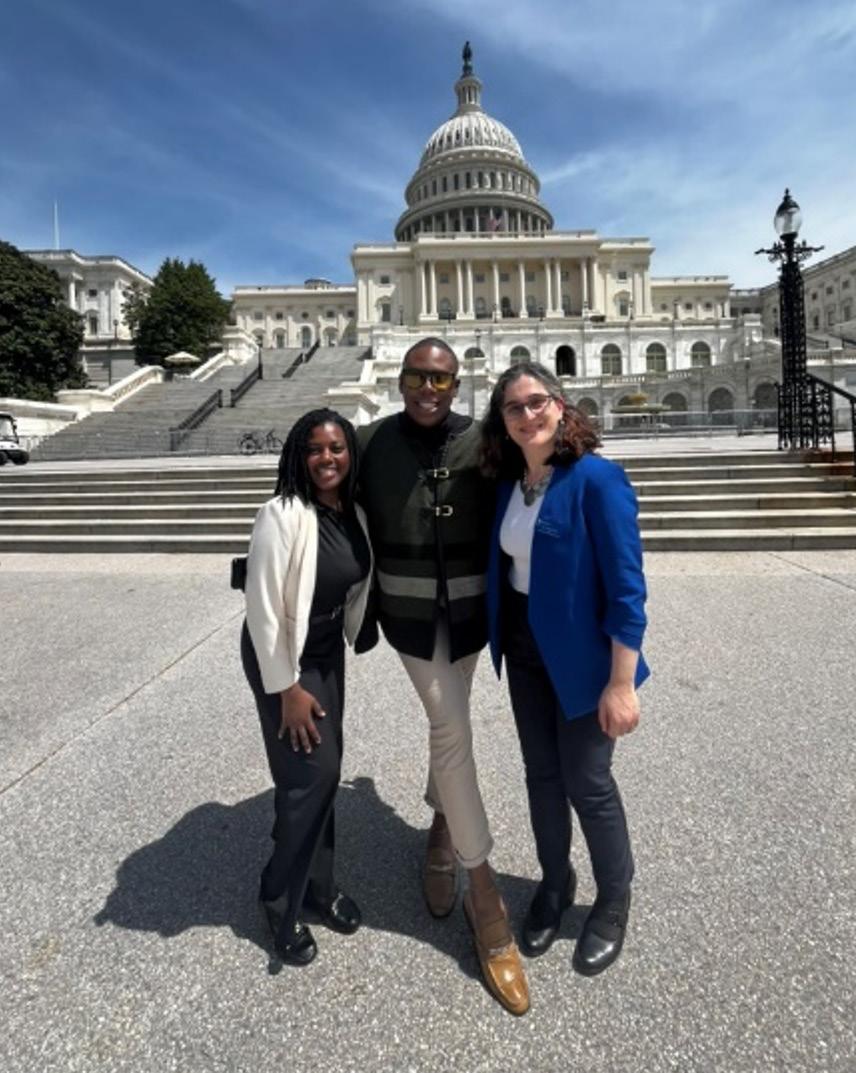
In April 2025, the Dean Hos participated in the Council of Graduate Schools (CGS) Advocacy Day in Washington, D.C., alongside two SGPS student leaders (one doctoral and one master’s student) who were recipients of the Dr. Holley-Carter Changemaker Award. This experience provided students with the opportunity to engage in national conversations about graduate education policy, funding, and student support while developing advocacy skills through CGS-led training sessions. Participants also collaborated with graduate deans from institutions across the country and learned from national leaders committed to advancing graduate education. Moving forward, SGPS will continue participating in CGS Advocacy Day each April and will establish a Changemaker Award Ambassadorship Program, engaging past awardees to mentor future participants, amplify advocacy efforts, and extend the impact of graduate student leadership across the campus community.
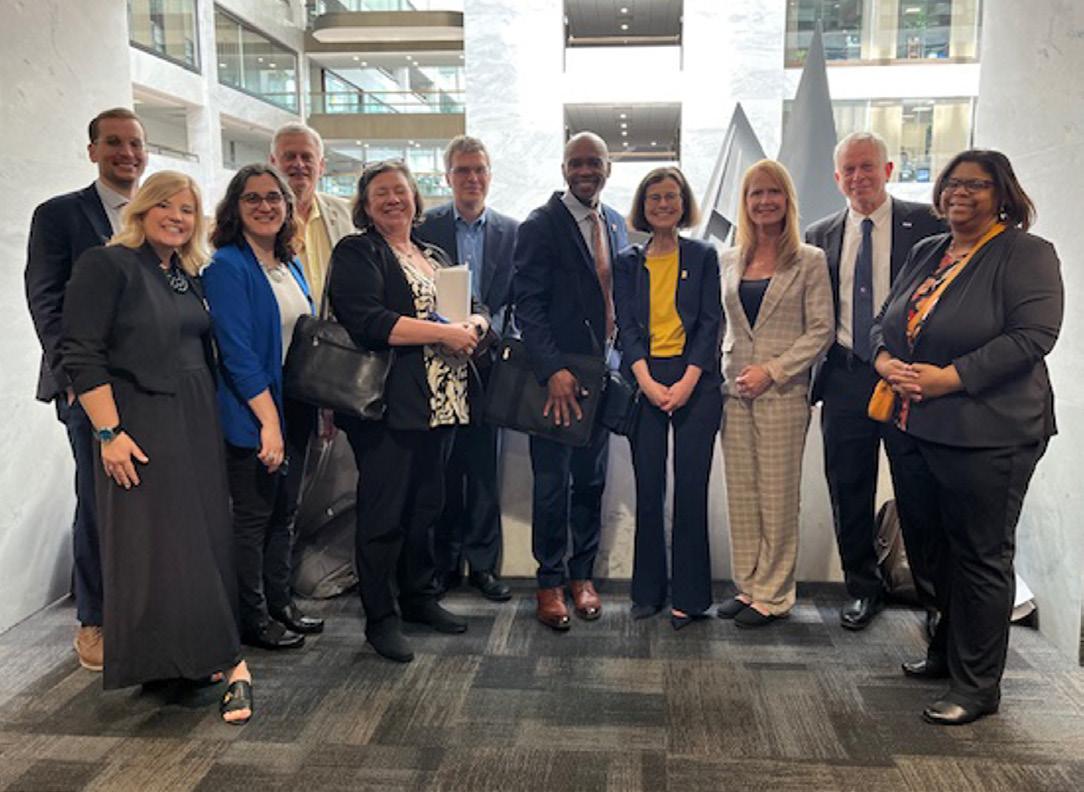
SGPS demonstrated leadership in public advocacy through a joint op-ed authored by Dean Hos and Dr. Jonathan L. Wharton, Professor of Political Science and Urban Affairs, published in the CT Mirror in Summer 2025. In this commentary, they highlighted the potential impacts of proposed federal legislative changes on graduate student access and affordability, including caps on borrowing and elimination of federal loan programs that many graduate students rely on, and emphasized the essential role that graduate education plays in Connecticut’s workforce and economy. Their call to action urged policymakers to reconsider provisions that could disproportionately affect regional public universities and studentsparticularly working adults, first-generation scholars, and those from underrepresented communitiesand underscored SGPS’s commitment to defending equitable access to graduate education and advancing community-wide understanding of its importance for social mobility and economic wellbeing.
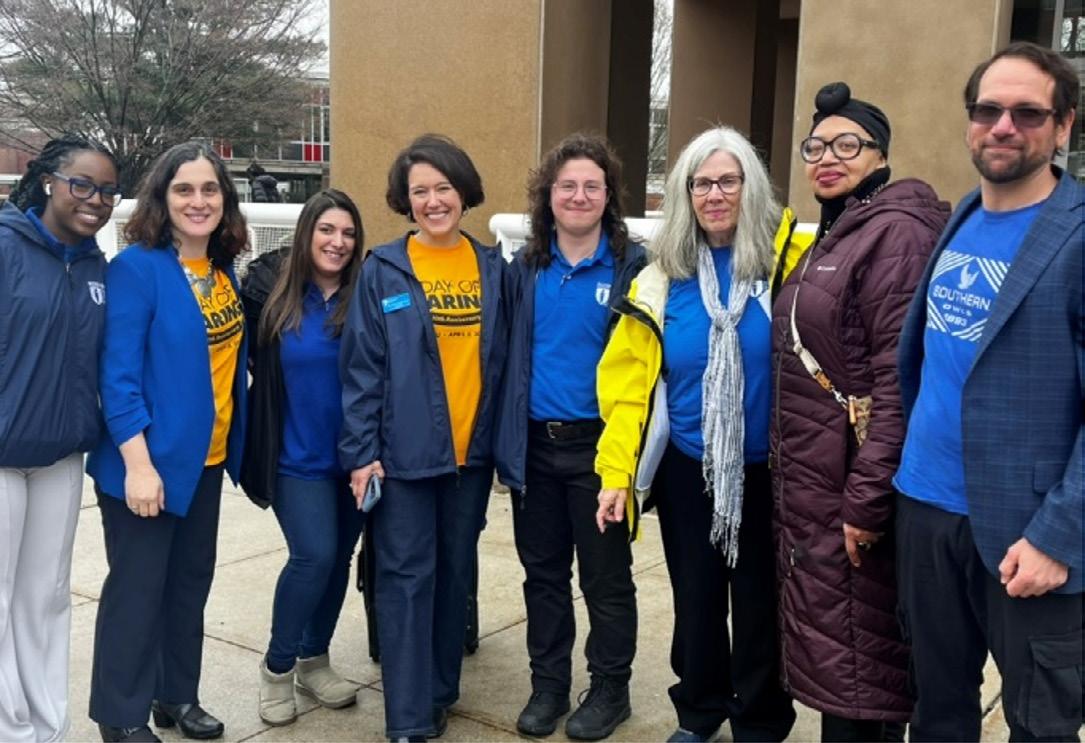
During the Spring 2025, SGPS participated for the first time in Southern’s Day of Caring by helping to establish and promote the GradCare Fund, an initiative focused on supporting graduate student scholarships and
critical student resources. As part of this inaugural effort, SGPS hosted an ice cream truck event on the Day of Caring, with a portion of the proceeds donated directly to the GradCare Fund. The event provided a visible and engaging way to build community while raising awareness and support for graduate student needs. SGPS looks forward to strengthening its participation in future Day of Caring initiatives and expanding fundraising efforts to grow scholarship opportunities and resources for graduate students.
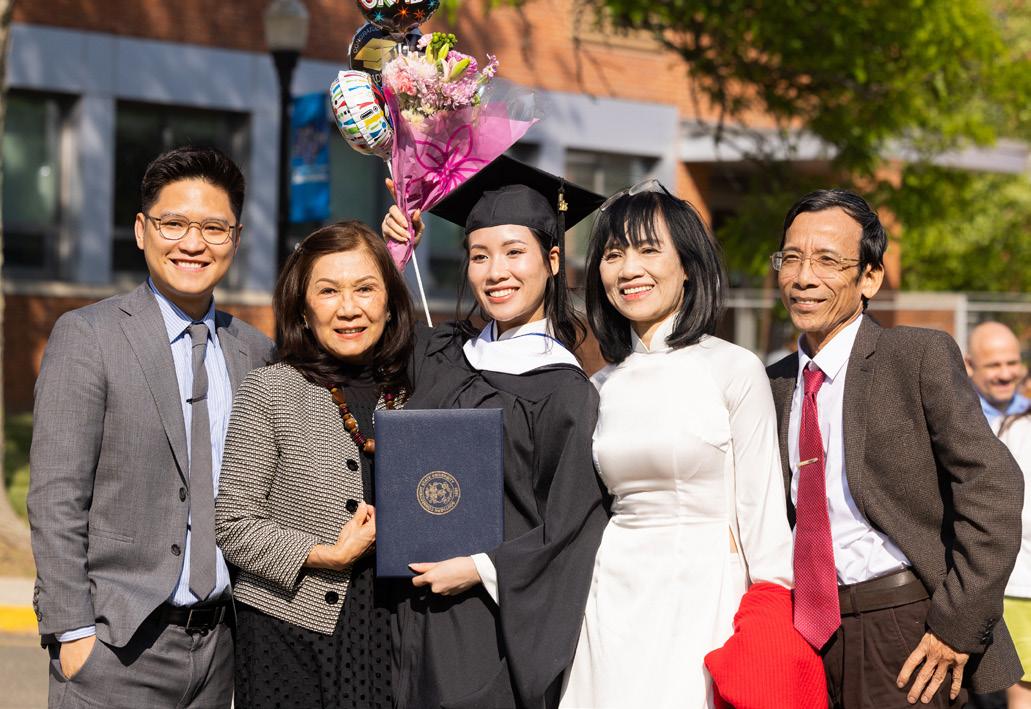
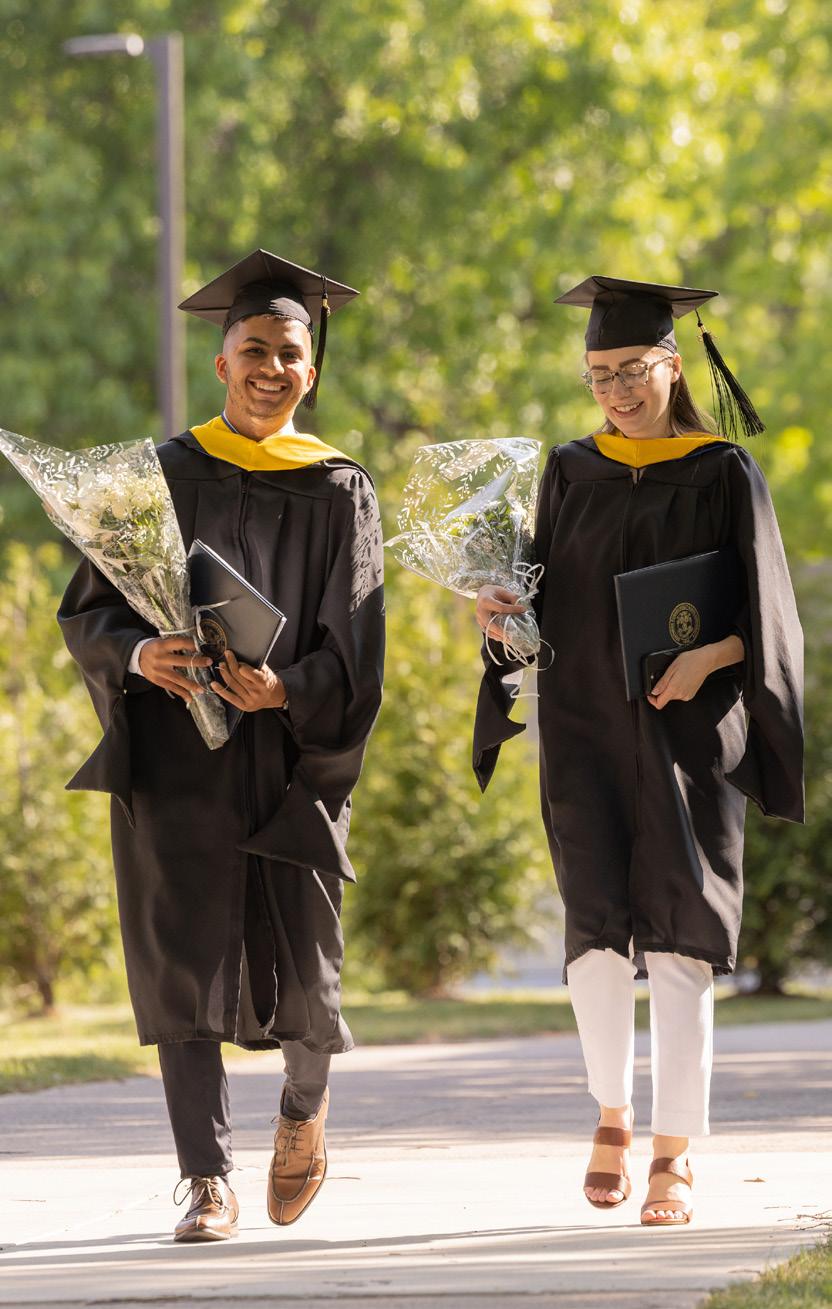
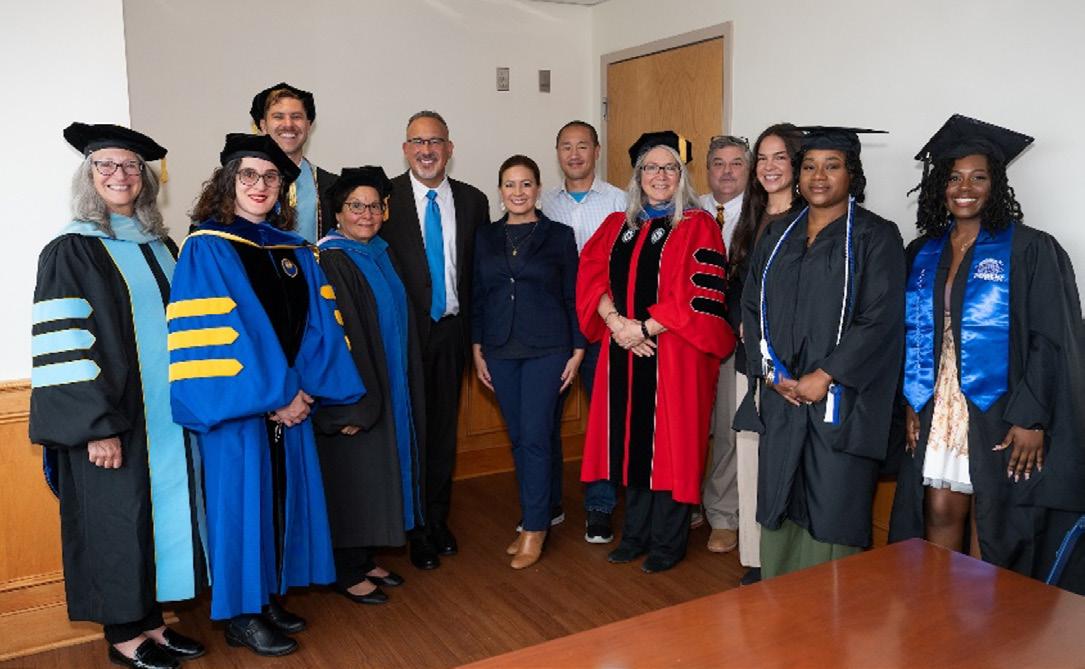
In Spring 2025, Southern welcomed Former U.S. Secretary of Education Dr. Miguel Cardona as the keynote speaker for the SGPS commencement ceremony, where he was also honored with an honorary doctorate. A Connecticut native and champion for educational equity, Dr. Cardona
encouraged graduates to approach each day with purpose-urging them to value their experiences beyond titles and to remain resilient, resourceful, and ever mindful of the ways their accomplishments can serve others. Drawing on personal reflections and even Broadway inspiration, his address emphasized the importance of embracing opportunities, challenging inequity, and creating space for all learners to thrive-messages that deeply resonate with SGPS’s commitment to access, excellence, and community impact.
In addition to welcoming a nationally recognized commencement speaker, SGPS also expanded student engagement by hosting a Graduate Student Commencement Speaker Contest for the Spring 2025 ceremony. The contest generated strong interest from graduate students across programs, reflecting a desire for student voice and representation at this important milestone. In response, SGPS selected one master’s student and one doctoral student to serve as student commencement speakers, ensuring that both graduate pathways were represented. This initiative elevated student perspectives, celebrated diverse graduate experiences, and reinforced SGPS’s commitment to inclusive leadership and meaningful community participation at commencement.
In advance of the Spring 2025 ceremony, Dr. Miguel Cardona also met with SGPS award-winning students and faculty for a small-group discussion, creating a meaningful opportunity for dialogue around leadership, public service, educational equity, and the role of graduate education in shaping communities. This engagement further strengthened connections between students, faculty, and national leadership, reinforcing commencement as not only a celebration of achievement but also a forum for reflection, mentorship, and community-building.
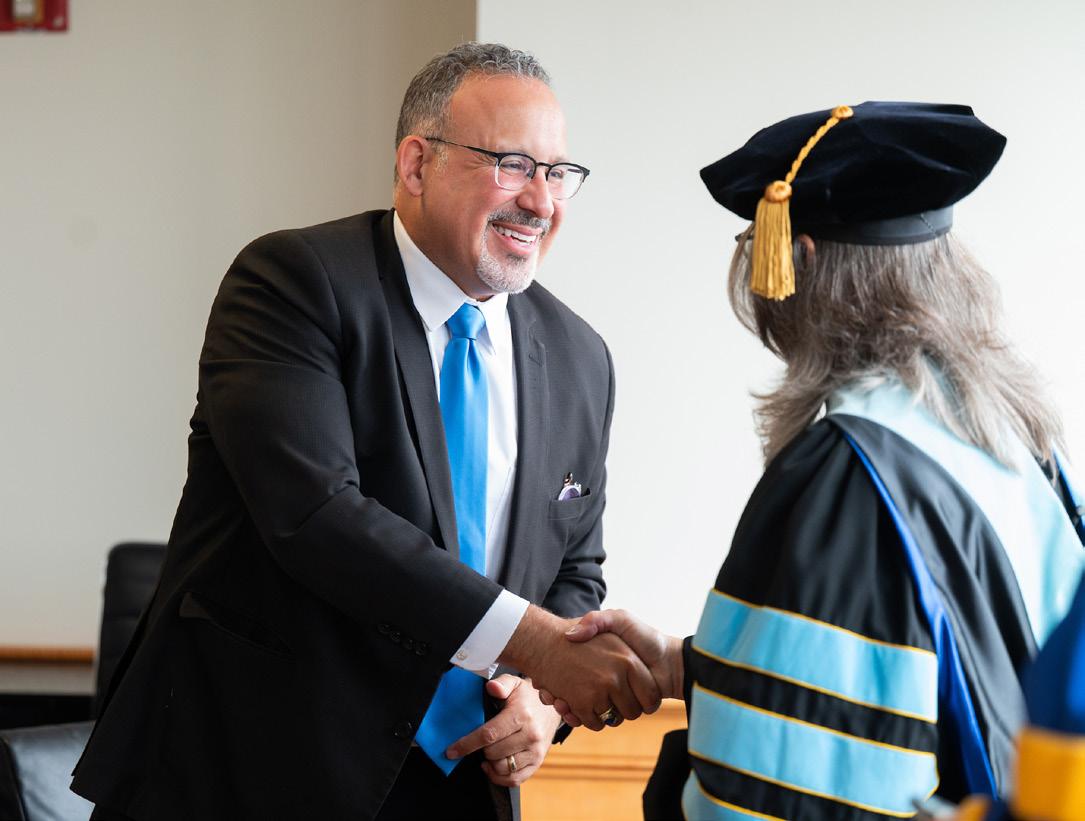
SGPS remains committed to elevating graduate student voices by continuing to include student speakers as an integral part of future commencement ceremonies, ensuring that the lived experiences and perspectives of graduate students remain central to this milestone celebration.
Council of Graduate Schools. (n.d.). Graduate enrollment and degrees. Council of Graduate Schools. Retrieved December 21, 2025, from https://cgsnet.org/data-insights/admissions-enrollment-and-completion/graduate-enrollment-and-degrees?utm_ source=chatgpt.com
EAB. (n.d.). 3 ways to make your website stand out to graduate prospects. EAB. Retrieved December 21, 2025, from https://eab.com/resources/blog/adult-education-blog/3-ways-to-make-your-website-stand-out-to-graduateprospects/#:~:text=Your%20website%20must%20be%20functional&text=In%20fact%2C%2094%25%20of%20 prospective,and%20convert%20right%2Dfit%20prospects