
Learn Apply Engineer


Starion provides training courses on platforms and methodologies related to system engineering, including model-based system engineering (MBSE). Our experts can also design and deliver tailored courses to match your organisation’s requirements.
Focus areas
We provide training on concurrent design, MBSE and system engineering.
Our standard training courses include:
CDP4-COMET Fundamentals
MBSE and Concurrent Design
Concurrent Design Team Lead
Locations to suit you
Most of our courses are available as in-person, hybrid or online options. We can run in-person courses at our headquarters in Transinne, Belgium, where we have a dedicated, fully equipped training facility, or at your site (if a suitable facility is available).
Tailored training

“System engineering focuses on defining customer needs and required functionality early in the development cycle, documenting requirements, and then proceeding with design synthesis and system validation while considering the complete problem, including operations, performance, testing, manufacturing, cost and schedule.”
The International Council on Systems Engineering (INCOSE)
CDP4-COMET Fundamentals
Course description
Starion’s CDP4-COMET software is a powerful collaborative MBSE platform that is ideal for concurrent design. Using CDP4COMET, available open source, teams can interact and share engineering models, designs, data and documents in near real-time.
Through this training you will learn the basics of CDP4-COMET and its role in concurrent design and systems engineering.
In a simulated design session, we will walk through a mock project to:
Add components and define relationships
Assign tasks to participants
Course details
Duration 3-5 days
What you will learn

Review and refine the design collaboratively.

The essentials of the CDP4-COMET tool, its features and practical use cases:
• How CDP4-COMET works and its relationship to concurrent design
• Definition of building blocks, parameters and how they become an architecture through reuse
• What are options, states and parameter subscriptions, and how are they used?
• Creation of requirements, relationships, parametric constraints and verification
• Iterations and publications
• Reporting and budgets
• What is reference data?
• Roles and permissions
• Excel, Capella and Matlab plugins.
Ideal for Project managers, architects, system engineers
Required Experience in system engineering
Location
Client site, online or hybrid; or at our headquarters in Transinne, Belgium
Language options
English, Spanish, Dutch
* Prices are subject to change over time. Please confirm current prices with us before booking.
MBSE and Concurrent Design
Course description
Concurrent design is a systematic approach to integrated product design that emphasises the response to customer expectations and the combination of creativity and engineering. It embodies team values of cooperation, trust and sharing in such a manner that decision-making is by consensus, involving all perspectives in parallel, from the beginning of the product life cycle.
The outcome of concurrent design provides management with a very good and complete view of the system/product, facilitating their decision-making processes and reducing the overall risk of the project from the start.
Course details
Duration
What you will learn
• Insights into the foundations of concurrent design
• An understanding of the approach
• Examples from practice
• Practical tools to collaborate more effectively
• An understanding of the basic principles of system engineering and MBSE
• How to apply the process of system engineering and MBSE
• Explore the benefits of MBSE and how it can improve rigour in system engineering
• Explore the lifecycle aspects of system engineering and MBSE and how they can be applied.

Required Experience in system engineering
Location
In person at client site or at our headquarters in Transinne, Belgium
Language options
English, Spanish, Dutch
You will be introduced to the foundations of concurrent design and model-based system engineering (MSBE) through examples from practice. We will use practical tools to collaborate more effectively in a model-based approach. * Prices are subject to change over time. Please confirm current prices with us before booking.
Concurrent Design Team Lead
Course description
This course provides participants with the knowledge and practical experience needed to effectively work in and lead concurrent design (CD) teams. You will learn how CD teams are composed, how decision-making and accountability are structured, and how to manage collaboration between stakeholders representing diverse disciplines. You will also learn about the key requirements for a CD facility and the rationale behind them.
Across the 2 days, the course will focus on CD teams, processes, decision support and development of a CD model. By combining theory with simulation games, collaborative exercises and structured dialogue techniques, participants can practice in a safe environment before applying these skills in real-world studies. By the end of the course, participants will:
Understand CD team structure and functioning
Recognise pitfalls and manage group dynamics constructively
Be able to apply methods to support collaborative decision-making and maintain study quality.
What you will learn
• How to set up a CD team – the skills and processes required to establish the team and the principles and guidelines that determine the composition of the team
• Participants’ roles, responsibilities and decisionmaking mandates
• Facilitation skills, group dynamics, collaboration and conflict resolution in CD sessions
• Decision support tools and methods
• Challenges of quantitative approaches in early system design phases
• Margin management, intervention strategies and decision-making under constraints
• The CD process and steps, including how to prepare a study
• Awareness of potential pitfalls in CD studies and strategies to mitigate them
• Key requirements for a CD facility and the rationale behind them.

Course details
Duration 2 days
Ideal for Concurrent design (CD) team members who want to lead CD teams
Required
Affinity with concurrent design; preferably practical experience
Location
In person at client site or at our headquarters in Transinne, Belgium
Language options
English, Spanish, Dutch
* Prices are subject to change over time. Please confirm current prices with us before booking.
System Engineering Fundamentals
Course description
System engineering is an interdisciplinary approach and set of principles that guide the realisation of successful systems. It is a critical enabler for mission success in domains such as aerospace, defence, transportation and infrastructure, where complexity, safety and traceability are paramount.
The structured process supports the development of complex systems through the entire life cycle: from concept and requirements definition to design, implementation, integration, verification, validation, operation and eventual disposal. It promotes a holistic view that integrates all technical disciplines and stakeholder perspectives to ensure that the system delivers value within the constraints of cost, time and quality.
Through this course, participants will gain an overview of system engineering and learn its key principles. You will also discover how applying these principles enables organisations to improve system quality, reduce risks and reworking, and ensure alignment between stakeholder expectations and system performance.
What you will learn
The course is designed to provide entry-level knowledge of system engineering, including:
• The logic behind the system engineering approach
• Its place in the engineering discipline and role in comparison to project management
• What is a system?
• How a system meets needs and requirements, both conceptually and when engineered and implemented
• What work breakdown structure makes sense?
• The ability to generate requirements from an architecture
• Technical and organisational management processes.

Course details
Duration 2 days Ideal for Project managers, architects, system engineers
Required Experience in system engineering
Location In person at client site or at our headquarters in Transinne, Belgium
Language options
English, Spanish, Dutch

* Prices are subject to change over time. Please confirm current prices with us before booking.
Capella in Action: Practical MBSE
Course description
This comprehensive hands-on training is designed to introduce participants to the Arcadia method and its associated modelling tool, Capella™. Through a detailed case study conducted with the Capella tool, participants will gain practical insights under the guidance of an experienced trainer.
Arcadia (Architecture Analysis and Design Integrated Approach) builds on Functional Analysis to offer a robust model-based engineering methodology for defining and validating complex system architectures. Initially developed and applied internally by Thales, Arcadia has been made publicly available through Capella, an open source tool within the Eclipse ecosystem.
This training emphasises the practical application of the Arcadia method, highlighting the advantages of using a tailored workbench like Capella. By exploring a real-world case study, participants will learn how a method, a language and a tool come together to form the foundation of successful model-based systems engineering (MBSE).
What you will learn
• Gain insights into the Arcadia methodology and its role in systems engineering
• Learn how to navigate and effectively use the Capella tool for system modelling
• Understand the structure and components of Capella, including diagrams and viewpoints
• Apply Arcadia methodology to a real-world example model
• Build and refine system architectures, capturing functional, physical and logical perspectives
• Explore how to integrate requirements, functions and system components into a Capella model
• Understand how MBSE and Capella facilitate collaboration among engineers and stakeholders
• Practice addressing design challenges using model-based approach.
• Explore how tools like Capella enhance efficiency and traceability in systems engineering projects.
Course details
Duration 3-4 days (eight 3-hour sessions; total 24 hours)
Ideal for
Project managers, architects, system engineers
Required Experience in system engineering
Location
Client site, online or hybrid; or at our headquarters in Transinne, Belgium
Language options
English, Spanish, Dutch
* Prices are subject to change over time. Please confirm current prices with us before booking.



About us
Starion provides engineering expertise and solutions for space, defence and other critical infrastructures across Europe. Our teams work on world-leading space projects that deliver pioneering missions that provide us with the information and technologies we use today.
Starion offers over three decades of expertise in system engineering and professional engineering services, developing and operating systems and solutions tailored to our clients’ needs. Our teams work across the complete space mission lifecycle, and in data utilisation and archiving. By combining space and system engineering with established and emerging technologies, such as AI and quantum, we produce innovative solutions that make a fundamental difference for our clients and for society. Our MBSE services and broader digital engineering capabilities are key elements in our overall market offering.
Starion’s employees are located across Europe, close to our clients’ offices, enabling us to be responsive and agile. Our engineers and researchers are among the most trusted and respected in the industry, helping to build space-based solutions that address major challenges on Earth such as civil security, climate change and deforestation.
Our onsite training facility
Starion provides onsite training in a purposebuilt, state-of-the-art training environment at
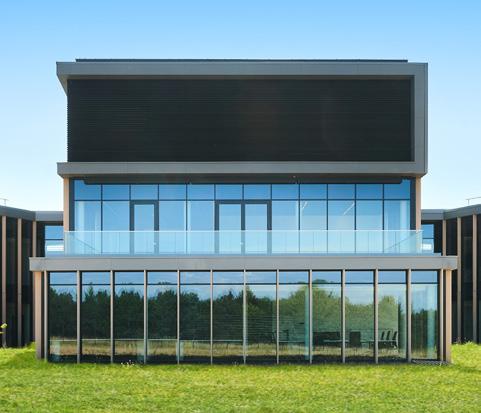
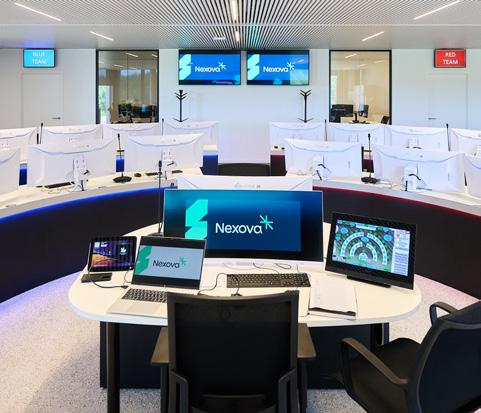
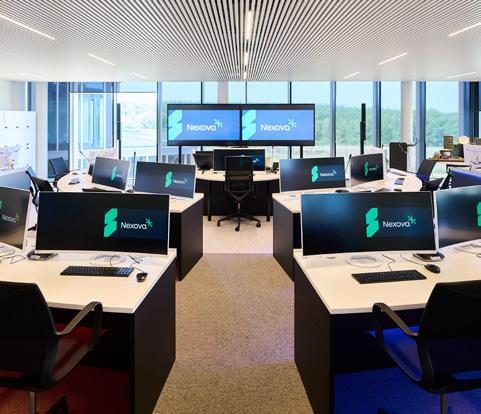
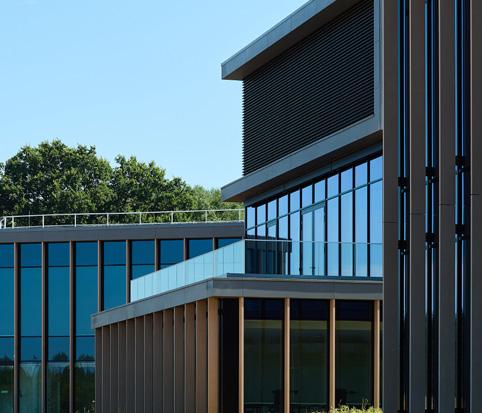
our headquarters – the Cybersecurity Centre of Excellence in Transinne, Belgium.
Strategically located in Belgium’s Cyber Valley, our Centre is at the heart of a thriving cybersecurity ecosystem and is very close to the Euro Space Center. In addition to hosting system engineering training, it also offers a wide range of cybersecurity training courses.
The building has been carefully designed to blend in with the natural environment and have a low environmental impact, in accordance with BREEAM Excellent Certification. It is situated in the beautiful Belgian Ardennes, with accommodation available in nearby villages and access by car via the E411 motorway or by taxi from the train station at Libramont.

Terms & conditions
Lorem ipsum dolor sit amet, consectetur adipiscing elit. Sed condimentum tempor mi. Mauris et mi volutpat, faucibus urna condimentum, auctor erat. Praesent ac turpis elit. Aenean vitae pretium enim, sit amet gravida justo. Morbi vitae est ac turpis sagittis elementum. Proin mattis rutrum condimentum. Morbi commodo orci ac viverra iaculis. Vestibulum non malesuada felis. Pellentesque cursus nibh ut metus mattis molestie. Nunc non tellus ornare, ullamcorper neque vitae, consectetur est. Phasellus euismod, lectus et fermentum vehicula, sem lorem finibus orci, sed fringilla odio dolor sed ex.
Vivamus feugiat vitae risus sit amet imperdiet. Sed congue, mi vel scelerisque maximus, dolor libero posuere ex, a ullamcorper enim mauris a lectus. Integer ut ante non nulla ullamcorper maximus. Integer lobortis nisi nibh, et bibendum odio maximus sed. Nulla justo nulla, suscipit eget nunc sit amet, commodo volutpat sapien. Phasellus at congue neque. Nullam gravida gravida velit, non condimentum ante eleifend eget. Duis luctus diam vel eros rhoncus egestas. Vivamus consectetur risus eros, sed hendrerit eros egestas a. Vivamus vehicula nisi quam, ut malesuada lacus mollis vitae. Aenean elementum nisl nec felis egestas, vitae efficitur velit mollis. Suspendisse finibus nisl tellus, rutrum vulputate justo varius a. Phasellus vitae nulla nunc. Sed dapibus commodo leo, ut gravida leo condimentum nec.
Starion Group SA, Rue des Etoiles 140, 6890 Libin, Belgium
To find out more visit stariongroup.eu or get in touch info@stariongroup.eu
stariongroup.eu