REGISTER

Preparedby EamonO’BoyleandAssociates
Client ScoutingIreland
Date January2019
JobRef.No. 17103
ReportRef.No. 17103-FSR-R01
Revision I
FIRE SAFETY GUIDELINES AND REQUIREMENTS
INTRODUCTION
This document has been developed by Eamon O' Boyle and Associates solely for Scouting Ireland.
This document aims to inform Scouters of the fire safety practices applicable within Scouting Ireland operated by or on behalf of its management. While the management has direct involvement with the premises, it is their responsibility to engage appropriately qualified contractors to ensure they are in compliance with the legislation and the guidelines contained herein. Fire precautions within this premises may be considered as being either Passive or Active
Passive Precautions are concerned with the fire safety elements that were incorporated in the building when it was first constructed and during any alterations thereafter. Active Precautions are concerned with the role played by the occupants of a building and more specifically with how their behaviour contributes to the risk of fire and / or to the level of fire safely within the building. Active precautions include the fire safely practice employed by Scouters within the premises and also includes:
• Fire Detection and Alarm Systems
• Fire Safety Training
• The Fire Emergency Plan
• The Maintenance of Equipment and Services
Together, the above practices represent effective Fire Safety Management and are documented in the Scouting Ireland Fire Register. For fire safety and other reasons, buildings are categorised according to occupancy type, i.e. institutional residential, factory, storage, etc. In the case of Scouting Ireland the premises categorised as other residential which dictates the level and nature of fire detection equipment, fire fighting equipment, emergency lighting and signage etc. that is considered necessary to operate Scouting Ireland.
The Fire Register contained in this document has been designed to meet the specific requirements of Scouting Ireland. As previously mentioned the Fire register provides a means of documenting Fire Safety Management within the premises, items included in this document are:
• Scouting Ireland, Details inc. Duties Assigned to Specified Persons
• Inventories / Locations of Fire Protection Equipment
• Fire Evacuations and Training
• Testing / Servicing Arrangements for Fire Fighting Equipment
• Testing / Servicing Arrangements for Emergency Lighting
• Testing / Servicing Arrangements for Fire Detection / Alarm Systems
• Scouting Ireland Premises and Equipment Checks
The tables and forms contained in this document are provided with instructions designed to support effective Fire Safety Management and are sufficient to document same for one calendar year. This document also contains advice and guidance for Scouting Ireland and is intended to assist its manager and other responsible persons in their efforts to ensure that the building is fire safe at all times.
STATUTORY PROVISIONS (REPUBLIC OF IRELAND)
FIRE SERVICES ACT 1981 & 2003
The Fire Services Act 1981 & 2003 require owners/occupiers of premises, to ensure that their premises achieve and maintain an adequate standard of fire safety in order to safeguard occupants. This is achieved by ensuring that, adequate escape routes, emergency lighting, protection against fire spread, fire detection and alarm systems, furnishings and fittings, fire safety management and training of Scouters are provided.
Section 18(2) of the Fire Services Act, 1981 & 2003 is quoted as follows:
“It shall be the duty of every person having control over premises to which this section applies to:
(a) Take all reasonable measures to guard against the outbreak of fire on such premises,
(b) Provide reasonable fire safety measures for such premises and prepare and provide appropriate fire safety procedures for ensuring the safety of persons on such premises,
(c) Ensure that the fire safety measures and procedures referred to in paragraph (b) are applied at all times, and
(d) Ensure, as far as is reasonably practicable, the safety of persons on the premises in the event of an outbreak of fire whether such outbreak has occurred or not.”
Section 18(3) places certain obligations on occupiers of buildings in relation to their conduct with regard to the safety of persons on the premises in the event of fire.
Section 18(6) allows the fire authority to require a fire safety assessment of the building to be carried out and for certain specified works to be executed.
Section 19 details reasons why a building could be deemed “potentially dangerous” in terms of fire safety.
Section 19(1) of the Act defines a potentially dangerous building as: “any building which would, in the event of fire occurring, constitute a serious danger to life for any of the following reasons:
(a) The fact that large numbers of persons habitually resort thereto or are accommodated therein.
(b) The absence of any or adequate appliances or fittings:
(i) For extinguishing fires in the building;
(ii) For enabling the occupants to escape on the occurrence of a fire;
(iii) For the automatic detection of an outbreak of fire;
(iv) For giving warning to persons in case of fire;
(v) For securing that the means of escape can be safely and effectively used at all times; or
(vi) For emergency lighting.
(c) The flammable nature of the materials of which the building is made.
(d) The flammable nature of the furniture, furnishings and fittings in the building.
(e) The absence of adequate means of escape from the building.
(f) The absence of any or adequate notices as to the procedure which should be followed in the event of fire.
(g) The flammable, explosive or potentially explosive nature of anything used, stored or deposited within the building.
(h) The fact that a fire therein would be likely to spread rapidly within the building or to other premises.
(i) The fact that any power supply or lighting system with which the building is provided is defective, inadequate or inadequately maintained.
(j) The fact that any heating or ventilating system with which the building is provided is defective or inadequately maintained or presents a fire hazard, or
(k) Any other similar reason.
Section 20 allows the fire authority to serve a "fire safety notice" on a "potentially dangerous" building and prohibiting or restricting its use, usually until certain fire safety works are carried out.
NOTE: While the Fire Services Act does not prescribe a particular timescale for implementation of improvement works it is generally accepted that, in instances where there is a substantial amount of work involved, these can be undertaken over an extended time period on a phased basis in accordance with the Priority attaching to the measure. Pending completion of the works, additional temporary fire safety measures may be implemented.
Section 20(A) provides authorised powers for the fire authority to immediately close a premise in the event of serious fire risks.
SAFETY, HEALTH AND WELFARE AT WORK ACT 2005
The Safety, Health and Welfare at Work Act 2005 (SHWW 2005), which came into force on 1st September 2005:
• Repeals the Safety, Health and Welfare at Work 1989
• Re-enacts most of the provisions of that Act, but with numerous subtle and significant changes
• Introduces new measures, ranging from new duties on employers, employees and others (such as designers and manufacturers) and categorises offences into serious and less serious categories and setting the maximum penalty for breaches of Health and Safety legislation at up to two years in jail and/or a fine of up to €3,000.
The SHWW Act 2005 is based on the principles enunciated in the Barrington Commission Report that:
• Safety must be preventative
• The workplace must be safe
• Safety is a management responsibility
The responsibilities of employer and employee are reproduced as below: Every employer shall manage and conduct his or her under – taking in such way as to ensure, so far as is reasonably practicable, that in the course of the work being carried out, individuals at the place of work (not being his or her employees)are not exposed to risks to their safety, health or welfare.
Article 13 (1) An employee shall, while at work
(a) Comply with the relevant statutory provisions, as appropriate, and take reasonable care to protect his or her safety, health and welfare and the safety, health and welfare of any other person who may be affected by the employee’s acts or omissions at work,
(b) Ensure that he or she is not under the influence of an intoxicant to the extent that he or she is in such a state as to endanger his or her own safety, health or welfare at work or that of any other person,
(c) If reasonably required by his or her employer, submit to any appropriate, reasonable and proportionate tests for intoxicants by, or under the supervision of, a registered medical practitioner who is a competent person, as may be prescribed,
(d) Co-operate with his or her employer or any other person so far as is necessary to enable his or her employer or the other person to comply with the relevant statutory provisions, as appropriate,
(e) Not engage in improper conduct or other behaviour that is likely to endanger his or her own safety, health and welfare at work or that of any other person,
(f) Attend such training and, as appropriate, undergo such assessment as may reasonably be required by his or her employer or as may be prescribed relating to safety, health and welfare at work or relating to the work carried out by the employee,
(g) Having regard to his or her training and the instructions given by his or her employer, make correct use of any article or substance provided for use by the employee at work or for the protection of his or her safety, health and welfare at work, including protective clothing or equipment,
(h) Report to his or her employer or to any other appropriate person, as soon as practicable—
• Any work being carried on, or likely to be carried on, in a manner which may endanger the safety, health or welfare at work of the employee or that of any other person,
• Any defect in the place of work, the systems of work, any article or substance which might endanger the safety, health or welfare at work of the employee or that of any other person, or
• Any contravention of the relevant statutory provisions which may endanger the safety, health and welfare at work of the employee or that of any other person, of which he or she is aware
An employee shall not, on entering into a contract of employment, misrepresent himself or herself to an employer with regard to the level of training as may be prescribed under subsection (1)(f)
BUILDING CONTROL ACTS 1990 AND 2007
The Building Control Act was enacted to make provisions for the establishment of Building Control Authorities, Building Regulations and Building Control Regulation. The requirements of the Building Regulations require that buildings are safe in the event of fire. The aims of the Building Regulations are to provide:
• That satisfactory Means of Escape are provided for persons in the event of fire
• That the spread of fire over internal linings is inhibited
• That the stability of the building is ensured and that there is sufficient degree of fire separation within the building in the event of fire
• That the exterior walls and roofs are sufficiently fire resistant to the spread of fire and the spread of fire from one building to another
• That there is adequate facilities for the Fire Service
FIRE SAFETY IN PLACES OF ASSEMBLY (EASE OF ESCAPE) REGULATIONS 1985
Precautions to be taken by persons having control over a place of assembly:
• Escape routes are kept unobstructed and immediately available for use
• Ensure all doors, are not secured in such a manner that they cannot be easily and immediately opened
• Ensure all chains, padlocks and other removable fastenings are removed
• Ensure there are no hanging or drape is placed across or along an escape route
• Ensure there are no mirrors are placed across the escape route that would confuse the direction of escape
CODE OF PRACTICE FOR THE MANAGEMENT OF FIRE SAFETY IN PLACES OF ASSEMBLY
While the Fire Services Act 1981 & 2003 places specific statutory responsibilities on those who control places of assembly. The Code of Practice sets out clear, easy to follow guidelines on how to take these reasonable precautions. Chapters include:
• Management Duties
• Fire Prevention
• Training
• Fire and Evacuation Drills
• Informing the Public
• Escape Routes
• Inspection and Maintenance of Fire Protection Equipment
• Assisting the Fire Brigade
• Record Keeping
STATUTORY PROVISIONS (NORTHERN IRELAND)
THE FIRE AND RESCUE SERVICE (NORTHERN IRELAND) ORDER 2006
Section 25 ⎯ (1) Each employer shall ensure, so far as is reasonably practicable, the safety of his employees in respect of harm caused by fire in the workplace.
(2) Each employer shall (a) carry out an assessment of the workplace for the purpose of identifying any risks to the safety of his employees in respect of harm caused by fire in the workplace; and (b) take in relation to the workplace such of the fire safety measures as are necessary to enable him to comply with the duty imposed by paragraph (1).
(3) Where under paragraph (2)(a) an employer carries out an assessment, he shall (a) in accordance with regulations under Article 29, review the assessment; and (b) take in relation to the workplace such of the fire safety measures as are necessary to enable him to comply with the duty imposed by paragraph (1).
Section 26 (2)(b) where a person has control to any extent of relevant premises he shall, to that extent, take in relation to the relevant premises such of the fire safety measures as in all the circumstances it is reasonable for a person in his position to take to ensure the safety of relevant persons in respect of harm caused by fire in the relevant premises.
Section 28 each employee shall while at work (a) take reasonable care for the safety in respect of harm caused by fire of himself and any other relevant person who may be affected by his acts or omissions; and (b) in relation to any requirement imposed by virtue of this Part on his employer, co-operate with his employer in so far as is necessary for the purpose of enabling the employer to comply with the requirement.
Section 36(1) where paragraph (2) applies in relation to relevant premises, the Board may serve a prohibition notice on the occupier of the relevant premises.
(2) This paragraph applies where, having regard in particular to anything affecting relevant persons' escape from relevant premises in the event of fire, the Board considers that use of the relevant premises involves or will involve a risk to relevant persons so serious that use of those premises ought to be prohibited or restricted.
Section 37(1) where the Board considers that a person has failed to comply with any of the fire safety duties, the Board may serve an enforcement notice on that person.
THE FIRE SAFETY REGULATIONS (NOTHERN IRELAND) 2010
These Regulations came into effect on the on 15 November 2010. There purpose was to simplify existing Fire Safety legislation in non-domestic premises and reinforced the modern risk based approach to fire prevention.
Section 18 (1) An employer shall provide his employees with comprehensible and relevant information on (a) the risks to them identified by the assessment carried out or reviewed under Article 25 and these Regulations;
(b) the fire safety measures taken in accordance with Article 25(2)(b) or (3)(b);
(c) the procedures referred to in regulation 14(1)(a);
(d) the identities of those persons nominated by him in accordance with regulation 12(3)(b) or nominated in accordance with regulation 14(1)(b); and
(e) the risks notified to him in accordance with regulation 21(1)(c).
Section 22 each employee shall, while at work, inform his employer or any other employee with specific responsibility for fire safety
(a) of any work situation which a person with the first-mentioned employee’s training and instruction would reasonably consider represented a serious and immediate danger to safety in respect of harm caused by fire; and
(b) of any matter which a person with the first-mentioned employee’s training and instruction would reasonably consider represented a shortcoming in the employer’s protection arrangements for safety in respect of harm caused by fire, in so far as that situation or matter either affects the safety in respect of harm caused by fire of that first-mentioned employee or arises out of or in connection with his own activities at work, and has not previously been reported to his employer or to any other employee of that employer in accordance with this regulation.
THE HEALTH AND SAFETY AT WORK (NORTHERN IRELAND) ORDER 1978
The Order imposes duties on employers to look after the health and safety of their employees and responsibilities on employees to comply with the measures put in place for their health and safety.
Section 4 it shall be the duty of every employer to ensure, so far as is reasonably practicable, the health, safety and welfare at work of all his employees.
Section 8 it shall be the duty of every employee while at work:
(a) To take reasonable care for the health and safety of himself and of other persons who may be affected by his acts or omissions at work; and
Section 20 it shall be the duty of the Department concerned to make adequate arrangement for the enforcement of the relevant statutory provisions except to the extent that some other authority is by any of those provisions or by regulations under paragraph (2) make responsible for their enforcement.
Section 21 every enforcing authority may appoint as inspectors (under whatever title it may determine) such persons having suitable qualifications as it thinks necessary for carrying into effect the relevant statutory provisions within its field of responsibility, and may terminate any appointment made under this article.
Section 23 if an inspector is of the opinion that a person –
(a) Is contravening one or more of the relevant statutory provisions; or
(b) Has contravened one or more of those provisions in circumstances that make it unlikely that the contravention will continue or be repeated, he may serve on him a notice –
(i) Stating that he is of that opinion;
(ii) Specifying the provision or provisions as to which he is of that opinion;
(iii) Giving particulars of the reasons why he is of that opinion; and
(iv) Requiring that person to remedy the contravention or, as the case may be, the matters occasioning it within such period (ending not earlier than the period within which an appeal against the notice can be brought under Article 26) as may be specitied in the notice.
BUILDING REGULATIONS (NORTHERN IRELAND) ORDER 1979
Northern Irelands primary legislation is the The Building Regulations (Northern Ireland) Order 1979. It came out in January 1980 and was amended in 1990 and in 2009. The Order sets out the duties, powers and responsibilities to applicants, councils and departments in relation to building regulations matters. It allows departments to prepare building regulations guidance. It establishes various rights of appeal for applicants, and creates a number of offences for non-compliance with the requirements of building regulations.
RESPONSIBILITY FOR FIRE SAFETY IN SCOUTING IRELAND
Duties of the Group Leader and Scout Centre Managers
The Group Leader or Scout Centre Manager is responsible for taking all reasonable precautions to guard against the outbreak of fire in the premises or on its grounds and to ensure, so far as reasonably practicable, the safety of persons on the premises in the event of an outbreak of fire. The specific duties of the Group Leader are:
• To maintain overall responsibility for fire safety within the premises
• To undertake the fire safety duties or to delegate them to a named and competent member of the scouting team (Assigned Person)
• To ensure the Assigned Person carries out his / her duties in an effective, timely and consistent manner without exception
• To ensure that Scouting Ireland management/Scouters are provided with and participate in Fire Safety Training
• To provide Fire Safety Training to newly appointed Scouters as part of their induction programme
• To ensure den meeting checklists are conducted in a timely / consistent manner without exception
• Ensure that age appropriate fire drills are carried out regularly by each scout section
• To ensure contractors complete and carry out their duties in accordance with the requirements of the Fire Register
• To ensure visitors are provided with fire safety procedures.
Duties of Senior Scouter in Attendance
The duties of Scouters in relation to Fire Safety within the premises are as follows:
• To complete the Checklist and the Fire Safety checks contained therein
• To participate in Fire Safety Training
• To support their colleagues and management in ensuring that the premises is fire safe at all times
• To execute the emergency plan when activated
Duties of all Scouters
The duties of Scouters in relation to Fire Safety within the premises are as follows:
• To participate in Fire Safety Training
• To support their colleagues and management in ensuring that the premises is fire safe at all times
• To execute the emergency plan when activated
NOTE: The use of the small group system used in scouting can be very beneficial in accounting for young people in the event of an emergency.
PRINCIPLES OF FIRE SAFETY
The Principles of Fire Safety have been developed over time with the aim of protecting life. These principles are summarised as follows:
• The Management of Fire Safety
• The Avoidance of Outbreaks of Fire
• Early Detection of Fire
• Early Warning to Scouters to Facilitate Adequate Response
• Compartmentalisation of Buildings and the Provision of Escape Routes, which are protected from fire and smoke
• Limiting the Development and Spread of Fire
• The Containment of Fire and Smoke to the Compartment where the Fire Originates
• Early Suppression of Fire, where this is Feasible
• Effective Evacuation Procedures
• Provision of Access and Facilities for the Fire Brigade
• The Maintenance of a Fire Safety Register
SCOUTING IRELAND FIRE SAFETY POLICY Fire Safety Policy
The primary objective of an effective Fire Safety Policy is to take all reasonable precautions to guard against the outbreak of a fire and to ensure, as far as is reasonably practicable, the safety of any person who is on the premises in the event of an outbreak. It is the responsibility of the Scouting Ireland to ensure that Fire Safety Policy is in place and adhered to. The essential components of an effective Fire Safety Policy are summarised as follows:
1. The policy must have clearly defined roles for all key personnel
2. The policy must ensure the implementation of strict fire prevention rules and housekeeping practices
3. The policy must ensure that the routine checking, testing and maintenance of fire protection systems and equipment is ongoing within the premises
4. The policy must establish clearly defined procedures for all key personnel to adhere to in the event of an emergency
5. The policy must ensure that Scouters are trained in fire safety awareness and in the actions they are expected to take in an emergency
6. The policy must ensure that adequate recording systems are in place to document Fire Safety Practices within the premises
FIRE NOTICE
Scouting Ireland is required to have in place a Fire Notice, which informs all of the actions they are required to take upon discovery of a fire.
The following are the recommended sequence of actions, which should be observed if a fire is discovered or suspected.
1. Raise the alarm using the nearest manual call point by breaking the glass It is therefore important that you become familiar with the location of these call points
2. Remove people from immediate danger
Often one route of escape will facilitate evacuation with more ease than another. If possible, the initial evacuation of occupants should be in this direction. The detailed Fire Plan for the Scouting Ireland, should elaborate on preferred options for different areas within the premises
3. Close doors and windows in the immediate area if it is safe to do so
This will help to reduce the spread of smoke and fumes throughout the building. Smoke and fumes are often toxic and can asphyxiate occupants. Smoke and fumes can also obscure vision, affect breathing and both mental and physical reactions. Smoke and fumes can kill even if they are some distance from a fire
4. Call / Ensure the fire brigade is called
5. Commence initial evacuation from the area of the fire
The concept of progressive horizontal evacuation is to move evacuees in stages away from the seat of a fire, initially to an adjoining compartment or sub-compartment on the same level, which has been designed to protect its occupants from immediate danger
6. Fight the fire using the fire fighting equipment provided if it is safe to do so
Early suppression of a fire may eliminate the need for evacuation, or at the least buy additional time to enable the evacuation to take place. Knowledge of the location of fire fighting equipment and how to use it is essential for safe and effective firefighting
7. Assemble at a place of refuge or of relative safety
This should be outside the premises at a pre-designated location identified in the Fire Notice (see sample below)

NOTE: while all premises need to be provided with a fire detection and alarm system to the I.S. 3218 or BS5839- 1 standard it is recognised at not all premises have such a system. In the interim period the fire safety notice shown in Figure 2 (or similar) below should be used.
FIGURE 1

FIGURE 2

CLASSIFICATION OF FIRES
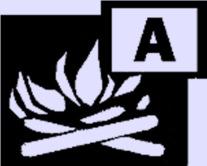
Class ‘A’ Fires
(Fires involving combustible materials such as paper, wood, textiles, plastic, etc.)
Combustible Fires
Fire involving solid materials, usually of an organic nature, in which combustion normally takes places with the formation of glowing embers. Class ‘A’ fires are the most common and the most effective extinguishing agent is generally water in the form of heat or spray, which has a cooling effect on a fire.
Class ‘B’ Fires
A fire extinguisher with this symbol means the extinguisher is safe to use on combustible fires
(Fires involving liquid fuels such as Grease, Oil, Paint, Petrol, etc. but not cooking oil)
Flammable Liquids
Fire involving liquids or liquefiable solids. For the purpose of choosing effective extinguishing agents, flammable liquids may be divided into two groups, miscible and immiscible. The most effective extinguishing method is smothering.

Class ‘C’ Fires
A fire extinguisher with the following symbol attached means that the extinguisher is safe to use on flammable liquid fires.
(Fires involving combustible gases)
Gaseous Fires
Fire involving gas or liquefied gases such as Propane, Butane etc. The gas supply should be isolated before fighting this type of fire.

Class ‘D’ Fires
A fire extinguisher with the following symbol attached means that the extinguisher is safe to use on gaseous fires.
(Fires involving metals)
Metal Fires
Fire involving metals require a specialist fire-extinguishing agent to fight.

A fire extinguisher with the following symbol attached means that the extinguisher is safe to use on a metal fire.
Class ‘F’ Fires
Fires involving cooking media (vegetable or animal oils and fats) in cooking appliances.
Cooking Oils
Fires involving cooking media require a specialist fire-extinguishing agent to fight.

Electrical Fires
A fire extinguisher with the following symbol attached means that the extinguisher is safe to use on a cooking oil fire.
(Fire involving live electrical equipment)
Electrical Fires
Electrical fires are most effectively extinguished by smothering using an electrically non-conductive agent. Isolate from electricity supply, if possible, before fighting the fire.

A fire extinguisher with the following symbol attached means that the extinguisher is safe to use on live electrical equipment involved in fire.
Note: The above categories are defined in EN 2: 1992/A1: 2004
USE OF FIRE FIGHTING EQUIPMENT
The premises should be provided with appropriate fire extinguishers and fire blankets to enable trained Scouters fight a fire when it is safe to do so. This is called First Aid Fire Fighting and should only be undertaken when it is safe and / or necessary to affect a safe exit from the premises. It is a keystone of fire safety that the alarm is raised first and the area / building evacuated so… …under no circumstances should a Scouter take unnecessary risks in the event of a fire.
The different types of fire extinguishers are summarised in the table overleaf:
EXTINGUISHER TYPE EXTINGUISHER CODE
EXTINGUISHER CLASSIFICATION
CLASS A

WOOD, PAPER, FABRIC AND PLASTIC.

NOTES
Cools the fire. Use in spray or jet form to knock down the fire. This also included Hose Reels.
Note:
Do Not use on live electrical fires! Do Not use on burning fat fires! FOAM (AFFF) CREAM



WOOD, PAPER, FABRIC, PLASTICS and GREASE, OIL, PAINT, PETROL, ETC
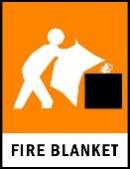
FIRE BLANKET RED CONTAINER



WOOD, PAPER, FABRIC AND PLASTICS and FIRES INVOLVING GAS OR LIQUIDIFIED GAS and FIRES IN LIVE ELECTRICAL EQUIPMENT and GREASE, OIL, PAINT, PETROL, ETC.


FIRE INVOLVING COOKING OIL and WOOD, PAPER, FABRIC AND PLASTICS
SMALL CONTAINED SOLID or LIQUID FIRES
Cools and smothers the fire.
Note:
For Class ‘A’ fires, aim spray ‘over’ the fire to form a smothering blanket. Not suitable on chip or fat pan fires. Do Not use on live electrical fires!
Smothers the fire by eliminating the oxygen supply. Aim at vents on appliance and use in pulses or short blasts.
Note:
For Class ‘B’ fires aim at the base of the fire to remove oxygen. Stand at a safe distance – no closer than 1.5 metres.
Do Not handle the discharge horn when in use!
Do Not use on Class ‘A’ fires as this extinguishing medium will blow loose burning material and could spread the fire.
Not suitable on chip or fat pan fires.
Smothers the fire by eliminating the oxygen supply
Note:
Should Not be used in a confined space.
For Class ‘A’ fires the powder does not cool the fire. The fire will need to be fully extinguished using water. Can damage sensitive electrical such as hard drives in computers.
Not suitable on chip or fat pan fires.
Smothers an oil fire by chemically reacting with the oil and forming a ‘blanket’ sealing the vapours’.
Note:
Standing approximately 1.5 meter from the fire discharges ALL the extinguisher contents.
Smothers the fire by denying oxygen supply. Use by covering the fire container with the blanket.
Note: Once used the fire blanket must be replaced.
CARBON DIOXIDE BLACK Electrical Fires
Class ‘B’
OIL, PAINT, PETROL, ETC.
DRY POWDER BLUE
Class ‘A’ Class B
Class ‘C’ Electrical
WET CHEMICAL YELLOW
Class ‘F’ Class ‘A’
ARSON PREVENTION AND WASTE MANAGEMENT
Take appropriate action to avoid any parts of the premises, and in particular storage areas being vulnerable to arson or vandalism by:
• Ensuring the outside of the building is well lit
• Regularly remove combustible material/rubbish
• Not positioning external rubbish bins/skips/etc in close proximity to the building
• Ensure the premises is well secured at the end of each evening
• Encouraging Scouters and Scouts to report people acting suspiciously,
• etc
ON DISCOVERING A FIRE – SPECIFIC RESPONSIBILITIES
The prime responsibility for dealing with a serious outbreak of fire lies with the fire brigade, who are trained to take prompt and effective action. The fire brigade must thus be called immediately a fire is detected or discovered, however small it may appear. When a fire is discovered Scouters must be primarily concerned with their own safety, the safety to the occupants, - the safety of visitors to the premises, and with the safety others in the immediate vicinity i.e. adjoining premises.
The Fire Notice
The action to be taken by Scouters in the event of a fire or a fire alarm must be displayed prominently within the building in the form of a Fire Notice. A sample Fire Notice has been provided previously under the heading ‘Fire Notice’.
If the Alarm Sounds
• Investigate and confirm that the fire is not in your immediate area
• Close doors and windows, to prevent the spread of smoke
• At least one Scouter from the premises should check the fire panel
• Other Scouter should initiate an evacuation
The location of the fire alarm panel should be known to all Scouters and indicated on the Fire Notice. It should be emphasised to Scouters that other building occupants should be reassured in the event of a fire being discovered or an alarm sounding i.e. that there is a procedure in place which is being followed.
Assessment of Risk
A common sense approach is necessary when deciding whether or not to evacuate. It is obviously not necessary to evacuate when a smouldering cigarette is found and can be dealt with. Therefore, some assessment of the situation is required before the decision to evacuate is taken. When making this decision, the following factors should be considered:
• The location of the fire
• The seriousness and extent of the fire
• The presence and extent of smoke
• The proximity of flammable materials
• Whether the immediate action taken to control the fire is having the desired effect
• The number, nature and type of service users in the vicinity.
If it Doubt, Evacuate!
The authority to order the evacuation should be clearly stated in the emergency procedures. The authorised person(s) should act on their own initiative, pending the arrival of the fire brigade.
Phases of evacuation
The evacuation of the premises may be sub-divided into four phases, as follow:
Phase 1 Evacuation from the room or area of origin of the fire
Phase 2 Evacuation to a place of relative safety
Phase 3 Evacuation of parts of a building, and
Phase 4 Total evacuation of the building
Note: Phases 1 and 2 will typically involve horizontal movement only away from immediate danger. Phase 3 and 4 involve both horizontal and vertical movement down from upper stories.
Place of Relative Safety
Places of relative safety include:
• An adjacent fire compartment on the same storey as the fire
• A protected stairway
• A lobby to a protected stairway, or
• A storey below the storey where the fire is located
Evacuation Procedures
Special care will be needed in the evacuation of non-ambulant people and the Scouters should be provided with the necessary training to cope with these difficult situations should they arise. Various items of equipment may be employed to assist with evacuation, including wheeled trolleys and wheelchairs, blankets, carry sheets, stretchers, evacuation sheets etc.
Fire and Evacuation Record
Evacuation drills should be conducted to help prepare Scouters and other building occupants (where relevant) for an emergency evacuation if a fire breaks out in the building and also to identify and eliminate problems of difficulties that may occur in such an event.
When a fire has taken place or an emergency evacuation has taken place, a report of the incident; how it came about; how it was managed; and how similar incidents will be avoided in future should be completed and stored with the Fire Register Receipts Folder.
Note: The above categories are defined in EN 2: 1992/A1: 2004
FIRST AID FIRE FIGHTING
The Fire Triangle
All fires require three elements – Heat, Fuel and Oxygen to propagate, known as the Fire Triangle. Therefore, to prevent a fire, or to extinguish one that has started, it is necessary to separate one of the elements from the triangle from the other two. Thus extinguishing a fire is achieved by:
• Cooling the fire – removing the heat element
• Smothering the fire – removing the oxygen supply
• Starving the fire – removing the fuel supply
Fires have been categorised into a number of difference ‘Classes’ depending on the nature of the fuel involved. The class of the fire dictates which type of fire fighting equipment should / can be used to fight the fire.
Before starting to fight any fire
• Raise the alarm – alert all persons nearby who may be at risk – call the fire brigade
• Check that the type of extinguisher available is suitable for the fire
• Pull the pin and check that the extinguisher is operational at a safe distance from the fire
• Keep low and attack the fire from a safe distance initially
• Keep your escape route behind you so you can withdraw at any time
• If the extinguishing agent is seen to be having an effect, be positive, get in closer to the fire while keeping low
• Ensure the fire is fully extinguished – many fires have re-ignited having been considered extinguished
Do not continue
• If the fire continues to grow despite your efforts
• If there are any gas cylinders involved in the fire
• If there is foam of plastic materials involved which give off toxic fumes
Remember
IF IN DOUBT, GET OUT! CLOSE THE DOOR BEHIND YOU! STAY OUT!
GAS SAFETY
Note a suitably qualified person to carry out a site-specific risk assessment of the gas equipment on the premises to ascertain whether or not the system complies with the relevant Ireland (I.S. 820: 2010) /Northern Ireland (The Gas (Individual Standards of Performance) Regulations (Northern Ireland) 2014) Standards and where necessary to recommend remedial actions necessary.
General Comments
• All gas installations, storage tanks, pipe lines, gas burner flues and other equipment should be installed, fitted and maintained in accordance with the appropriate standards and codes of practice
• All gas installations should be inspected at regular intervals and an appropriate entry made in the buildings Fire Safety Register
• Gas boilers should be serviced annually by a Registered Gas Installer
• Fit carbon monoxide detectors to alert of the presence of poisonous gases
If you smell gas or suspect a leak you should:
• Extinguish all naked flames and cigarettes
• Turn off the supply at the control (Lock Stop) valve
• Open all windows
• Immediately call Gas Networks Ireland Emergency number 1850 20 50 50 or Northern Ireland Gas Emergency number 0800 00 20 01
• Evacuate the building
• Report to the external assembly point
CYLINDER STORAGE
• Internal storage of cylinders is not recommended. Where it is unavoidable a site specific risk assessment should be undertaken to justify the need for indoor storage
• Cylinders should not obstruct passageways or exits
• Cylinders should not be kept or stored under stairs where they could be hazardous in the event of a fire
• Cylinders containing commercial propane supplying permanently fixed equipment should be sited outside the building in a well ventilated area protected from the weather
• Cylinders should be positioned upright on a firm level surface e.g. by chains or in a close fitting cage with the valves upright, which is well drained
• Cylinders should be regularly checked for leakage or damage
• Where there is or is likely to be uncontrolled access to the cylinder installation, it shall be protected by a lockable ventilated cage constructed from non-combustible material. The cage shall be ventilate at both high and low levels
• Cylinders should not be dragged or slide, even over short distances
• Cylinders should be stored away from:
o Flammable, combustible material
o All sources of ignition
o Unprotected electrical equipment
o Unconnected full or empty cylinders
LOCATION OF GAS MAIN SHUT OFF VALVE
• The main gas shutoff valve should be located next to the gas meter supplied by your utility company. The gas meter should be located outside the premises on an external wall
• A suitably located Control Valve (Lock Stop) should be provided for manually isolating any gas and electrical supply into the kitchen area
BULK TANKS
• All LPG bulk tanks should be located in the open with adequate ventilation and be easily accessible for operation, maintenance and fire-fighting
• The area adjacent to connections to the LPG tanks should be concrete or compacted and free from depressions, pits, culverts etc
• Care should be taken to avoid siting tanks in locations where surrounding ground slopes towards other features e.g. other tanks, buildings, homes etc
• Ensure good air flow around the tanks
• Keep the area around the tanks free of rubbish particularly if the material is combustible or could reduce the level of ventilation
• There should be dedicated flat parking for a tanker to deliver LPG to the tanks
• People should be kept away from the tank and tanker while the LPG is being transferred
• Any tank (and its associated piping) located in in areas where there is motor traffic, or exposed to possible vehicular damage, should be protected.
FIRE SAFETY REGISTER
GUIDANCE FOR COMPLETION OF THE FIRE SAFETY REGISTER
The Fire Services Act, 1981 / 2003 and the equivalent Northern Ireland Legislation requires that SCOUTING IRELAND Management keeps a record of all the measures taken to ensure compliance with their obligations and responsibilities under fire safety legislation and regulations.
Maintaining a Fire Safety Register fulfils this requirement and should include the following information:
• Premises Details
• Address
• Scouting Ireland, Person in Charge i.e. Group Leader
• Scouting Ireland, Senior Scouter in attendance
• Scouter training details
• Other responsible persons e.g. Security
• Fire and evacuation procedures
• Details of fire evacuation drills
• Dates, times, description, observations or difficulties encountered, follow-up action
• Firefighting equipment
• Inventory, inspection details, maintenance details
• Fire detection and alarm system
• Zone details, location and addresses of detectors, location of manual call points, inspection and maintenance details, details of work carried out
• Emergency lighting
• Inventory of fittings, inspection details, maintenance details, repairs carried out
• Fire doors
• Inventory of fire doors, inspection details, maintenance details, repairs
• Furniture
• Inventory and supplier, specifications and test certificates for all bedding, upholstered furniture and floor coverings
• Electrical Installations
• Completion certificate, where available, details of routine inspection and testing, details of alterations, details of servicing of appliances
• Gas Installation
• Certificate of Compliance of installation, details of inspections, repairs and alterations, details of servicing
The following lists and schedules refer to the inventory, inspection, testing and maintenance of the building fire protection equipment as required by the various standards and codes of practice. The main objective is to ensure that all equipment is available and functions if required in an emergency situation. To achieve this aim, it is important that all checks are conducted as scheduled and that any defects or deficiencies are remedied at the earliest opportunity.
Building Premises Name:
Group Name:
Full Premises Address (incl Eircode or Post code):
Telephone Number (incl area code):
Group Leader:
EMERGENCY NUMBERS
Fire Brigade, Gardaí 999 / 112
Local Emergency Numbers e.g. local doctor, Gas and Electricity emergency numbers etc
HOW TO USE THIS DOCUMENT
Meeting checklists
These checklists are to be filled in prior to any meeting being held on the premises. Any faults or inconsistency are to be recorded and reported to Group Leader. Information should not be backdated.
Monthly checklists
These inspections, maintenance and tests are to be completed every month, and checklists completed on monthly basis. Any faults or inconsistency are to be recorded and reported to Group Leader. Information should not be backdated.
Quarterly Checklists
These inspections, maintenance and tests are to be completed and checklists should be filled in on every three months basis. Any faults or inconsistency are to be recorded and reported to Group Leader. Information should not be backdated.
Annual checklists
An annual inspection and tests that must be carried out by specialist contractors have been drawn up including contact details. These inspections and tests may be spread over the year. The annual inspections should be completed at approximately the same time every year. The contactor must sign the attached checklist in before leaving the building.
NOTE: while the most recent version of the legislation/standards are referenced in this document sign off on older versions of the legislation/standards may be acceptable provided that at the time of installation the most up to date version of the legislation/standard was used.
1. FIRE REGISTER REQUIREMENTS – ACTIONS / RESPONSIBILITIES OVERVIEW
UPHOLSTERED
2. FIRE DETECTION AND ALARM SYSTEM
The fire detection and alarm system should be inspected and maintained in accordance with:
• I.S. 3218:2013 – Fire Detection and Alarm Systems for Buildings: System Design, Installation and Servicing.
• BS 9999:2017 – Code of Practice for Fire Safety in the Design, Management and Use of Buildings.
• BS 5839-1:2013 – Fire Detection and Fire Alarm Systems for Buildings – Part 1
CONTACT DETAILS
PROTECTED PREMISES/AREA ADDRESS
Note: An updated drawing shown all the fire detectors, manual call point and fire alarm control panel is preferable.
MEETING CHECKLIST
This inspection should be carried out prior to opening for any meeting to ascertain that:
• The system is in normal operation mode, if not, that any fault indicated is recorded in the Register
• Any faults, warning recorded from previous day have received attention
QUARTERLY
These inspections and tests should be carried out by a competent person every three months to ensure that:
• Records in the Checklists are checked and action is taken.
• Batteries should be examined to ensure that the specific gravity of electrolyte in each cell is correctly working where appropriate.
• Batteries including reserves shall be tested to the specification of the supplier to verify that their condition is satisfactory for a further period of use.
• The control and indicating equipment shall be checked by the operation of a detector or call point in each zone.
• A visual inspection should be carried out to check if structural or occupancy changes have affected the requirements for the siting of manual call points, detectors and sounders.
• Any further checks and tests should be made, if specified by installer, supplier or manufacturer.
ANNUALLY
An annual inspection and test should be carried out by a competent person for any defects to be logged and the necessary action taken, and Certificates of testing in accordance with IS 3218:2013 or BS5839-1:2013 to be obtained.
3. EMERGENCY AND ESCAPE LIGHTING SYSTEM
The Emergency and Escape Lighting System should be inspected and maintained in accordance with:
• I.S. 3217:2013 – Emergency Lighting
• BS 5266-1 2016 and BS EN 1838 2013.
• BS 9999:2017 – Code of Practice for Fire Safety in the Design, Management and Use of Buildings.
CONTACT DETAILS
MAINTENANCE PROVIDER Name
EMERGENCY AND ESCAPE LIGHTING SYSTEM CHECKLISTS
MEETING CHECKLIST
This inspection should be carried out prior to opening for any meeting to ascertain that:
• Every Lamp in the Emergency and Escape System is lighting.
• Central battery system or generator is indicating normal operations.
• Any fault found is logged and the appropriate actions taken.
MONTHLY
A function test shall be made once every month to ensure that:
• A failure of power has been simulated.
• Lighting has been checked during simulated.
• The Central Test Unit is in normal operation mode.
QUARTERLY
A function test shall be made once every three months to ensure that:
• Each self- contained luminaries and internally illuminated escape route sign should be energized from its battery by simulation of a failure of the supply to the normal lighting for 30 minutes. The time should not exceed one quarter of the rated duration of the luminaries or sign.
• Each central battery system should be energized from its battery by simulation of a failure of the supply to the normal lighting for a period of at least 30 min but not exceeding one quarter of battery rated duration.
• Each engine- driven generating plant shall be started up by a simulation of a failure of the supply to the normal lighting and to energize the emergency lighting system for a continuous period at least 1 hour.
• Back – up lighting batteries are used on an engine – driven generator system, the engine should be prevented from starting.
ANNUAL CHECKLIST IF THE SYSTEM IS MORE THAN 3 YEARS OLD
An annual inspection and test should be carried out by competent person, for any defects to be logged and the necessary action taken, and Certificates of testing in accordance with IS 3217 or BS 5266-1 and BS EN 1838 to be obtained.
4. PORTABLE FIRE EXTINGUISHERS
All the Fire Extinguishers should be maintained and tested in accordance with:
• IS 291:2015 The Use, Siting, Inspection and Maintenance of Portable Fire Extinguishers
• Safety, Health and Welfare At Work (General Application) Regulations, 2007
• BS 5306-3:2017 Fire extinguishing installations and equipment on premises. Commissioning and maintenance of portable fire extinguishers. Code of practice
• BS 9999:2017 Code of Practice for Fire Safety in the Design, Management and Use of Buildings
CONTACT DETAILS
MAINTENANCE PROVIDER
PORTABLE FIRE EXTINGUISHERS CHECKLISTS
MEETING CHECKLIST
An inspection should be carried out to ensure that:
• All fire extinguishers and Fire Blankets are in their correct locations. If any fire extinguishers and fire blankets are missing, they should be replaced immediately.
• All extinguishers are correctly labelled.
MONTHLY
A monthly test should be carried out on every month to ensure that:
• The fire extinguisher is not obstructed and is easily accessible or visible to approach.
• Any seals or indicator tabs are correctly working.
• Pressure indicators show correct pressure where fitted.
• The extinguisher has not been damaged.
• The extinguisher does not have obvious defects such as a clogged nozzle, corrosion or leakage or a loose or damaged hose.
• Attention to the carbon dioxide extinguisher that discharge horn or hose/horn is properly secured.
• The maintenance record label is properly attached to the extinguisher and is up to date.
ANNUALLY
An annual inspection and test should be carried out by competent person, for any defects to be logged and the necessary action taken, and Certificates of testing in accordance with IS 291 or BS 5306-3:2017 to be obtained.
5. GENERAL HOUSEKEEPING
Housekeeping inspection should be carried out in accordance with:
• S.I. No. 249 of 1985, Fire Safety in Places of Assembly (Ease of Escape), Regulations, 1985
• Safety, Health and Welfare at Work (General Application) Regulations, 2007
• BS 9999:2017 Code of Practice for Fire Safety in the Design, Management and Use of Buildings.
HOUSEKEEPING CHECKLIST
MEETING CHECKLIST
This inspection should be carried out to ensure that:
• Escape routes are clear from obstruction.
• Final exit clear from obstruction.
• No rubbish is accumulated within the premises.
• External escape routes are all clear from obstruction.
• Assembly Points are marked and the area is free from obstruction.
6. UPHOLSTERED SEATING AND FURNITURE
WEEKLY
• Check that the materials covering upholstery, seating and furniture is free from damage
7. FIRE DUTIES ASSIGNED TO SCOUTERS
Scouter Name:
Post:
Date Duties Assigned:
Date Duties Revoked:
Assigned Fire Duties:
Scouter Name:
Post:
Date Duties Assigned:
Date Duties Revoked:
Assigned Fire Duties:
Scouter Name:
Post:
Date Duties Assigned:
Date Duties Revoked:
Assigned Fire Duties:
Scouter Name:
Post:
Date Duties Assigned:
Date Duties Revoked:
Assigned Fire Duties:
Scouter Name:
Post:
Date Duties Assigned:
Date Duties Revoked:
Assigned Fire Duties:
Scouter Name:
Post:
Date Duties Assigned:
Date Duties Revoked:
Assigned Fire Duties:
Particular Instruction in relation specific to duties:
Scouter Trained Names: Scouter Trained Names: 1. 16. 2. 17. 3. 18. 4 19. 5. 20. 6. 21. 7. 22. 8. 23. 9. 24. 10. 25. 11. 26. 12. 27. 13. 28. 14. 29. 15. 30.
General Notes:

9. SCOUTING IRELAND CHECKLIST TO BE COMPLETED PRIOR TO ALL MEETINGS
Fire Detection and Alarm System
1 Is the system in normal operation mode - power light only, no faults or isolated devices?
2 Have any faults been logged and reported?
3 Are appropriate extinguishers/ blankets in their correct locations?
4 Are all exit clearly identified?
5 Are all exit signs illuminated?
Safety Awareness
6 Are all attendees aware of procedures to be followed in the event of a fire?
7 Are all attendees aware of procedures to be followed on discovering a fire?
8 Are escape routes clear from obstructions?
9 Are final exits clear from obstructions?
10 Are external escape routes clear from obstruction?
*11 Is there evidence of damage to fire doors/frames/seals?
*12 Are fire doors wedged open?
Scouter Initials Date
Other Faults/Comments
NOTE: Where any of the grey boxes are ticked notify your Group Leader
11. EMERGENCY LIGHTING SYSTEM MONTHLY CHECKLIST
Frequency: Monthly
e.g. 26/02/13 13
Dorothy The central test unit is not working, reported and fixed on 1/9/2011
Frequency: Monthly
e.g. 26/02/13 13
James Dorothy Pressure indicator on the first floor not corrected, reported and replaced on 1/9/2011.
13. FIRE DETECTION AND ALARM SYSTEM QUARTERLY CHECKLIST
Responsible Person: Qualified Contractor
Frequency: Quarterly
FIRST QUARTERLY INSPECTION
Date:
Contractor’s Name:
Company Name:
Number of Zones:
Number of Smoke Detectors:
Number of Manual Call Points:
Location of Second Battery:
Number of Sounders:
Number of Heat Detectors:
This system is operational and has been checked and tested in accordance with I.S. 3218 2013 or BS5839-1:2013
Contractor Signature:
Date:
SECOND QUARTERLY INSPECTION
Date:
Contractor’s Name:
Company Name:
Number of Zones:
Number of Smoke Detectors:
Number of Manual Call Points:
Location of Second Battery:
Number of Sounders:
Number of Heat Detectors:
This system is operational and has been checked and tested in accordance with I.S. 3218 2013 or BS5839-1:2013
Contractor Signature:
Date:
Responsible Person: Qualified Contractor
Frequency: Quarterly
THIRD QUARTERLY INSPECTION
Date:
Contractor’s Name:
Company Name:
Number of Zones:
Number of Smoke Detectors:
Number of Manual Call Points:
Location of Second Battery:
Number of Sounders:
Number of Heat Detectors:
This system is operational and has been checked and tested in accordance with I.S. 3218 2013 or BS5839-1:2013
Contractor Signature:
Date:
FOURTH QUARTERLY INSPECTION
Date:
Contractor’s Name:
Company Name:
Number of Zones:
Number of Smoke Detectors:
Number of Manual Call Points:
Location of Second Battery:
Number of Sounders:
Number of Heat Detectors:
This system is operational and has been checked and tested in accordance with I.S. 3218 2013 or BS5839-1:2013
Contractor Signature:
Date:
EMERGENCY AND LIGHTING ESCAPE SYSTEM MONTHLY CHECKLIST
Responsible Person: Qualified Contractor
FIRST MONTHLY INSPECTION
Date:
Contractor’s Name:
Company Name:
Was the SCOUTING IRELAND Emergency Lighting found to be functional and in a good state of repair? Yes No
If ‘No’ please outline the nature of the problem and actions taken to rectify it / them…
Contractor Signature:
Date:
SECOND MONTHLY INSPECTION
Date:
Contractor’s Name:
Company Name:
Was the SCOUTING IRELAND Emergency Lighting found to be functional and in a good state of repair? Yes No
If ‘No’ please outline the nature of the problem and actions taken to rectify it / them…
Contractor Signature:
Date:
THIRD MONTHLY INSPECTION
Date:
Contractor’s Name:
Company Name:
Was the SCOUTING IRELAND Emergency Lighting found to be functional and in a good state of repair? Yes No
If ‘No’ please outline the nature of the problem and actions taken to rectify it / them…
Contractor Signature:
Date:
FOURTH MONTHLY INSPECTION
Date:
Contractor’s Name:
Company Name:
Was the SCOUTING IRELAND Emergency Lighting found to be functional and in a good state of repair?
If ‘No’ please outline the nature of the problem and actions taken to rectify it / them…
Yes No
Contractor Signature:
Date:
FIFTH MONTHLY INSPECTION
Date:
Contractor’s Name:
Company Name:
Was the SCOUTING IRELAND Emergency Lighting found to be functional and in a good state of repair? Yes No
If ‘No’ please outline the nature of the problem and actions taken to rectify it / them…
Contractor Signature:
Date:
SIXTH MONTHLY INSPECTION
Date:
Contractor’s Name:
Company Name:
Was the SCOUTING IRELAND Emergency Lighting found to be functional and in a good state of repair?
If ‘No’ please outline the nature of the problem and actions taken to rectify it / them…
Yes No
Contractor Signature:
Date:
MONTHLY INSPECTION
Date:
Contractor’s Name:
Company Name:
Was the SCOUTING IRELAND Emergency Lighting found to be functional and in a good state of repair? Yes No
If ‘No’ please outline the nature of the problem and actions taken to rectify it / them…
Contractor Signature:
Date:
EIGTH MONTHLY INSPECTION
Date:
Contractor’s Name:
Company Name:
Was the SCOUTING IRELAND Emergency Lighting found to be functional and in a good state of repair?
If ‘No’ please outline the nature of the problem and actions taken to rectify it / them…
Yes No
Contractor Signature:
Date:
NINTH MONTHLY INSPECTION
Date:
Contractor’s Name:
Company Name:
Was the SCOUTING IRELAND Emergency Lighting found to be functional and in a good state of repair? Yes No
If ‘No’ please outline the nature of the problem and actions taken to rectify it / them…
Contractor Signature:
Date:
TENTH MONTHLY INSPECTION
Date:
Contractor’s Name:
Company Name:
Was the SCOUTING IRELAND Emergency Lighting found to be functional and in a good state of repair?
If ‘No’ please outline the nature of the problem and actions taken to rectify it / them…
Yes No
Contractor Signature:
Date:
ELEVENTH MONTHLY INSPECTION
Date:
Contractor’s Name:
Company Name:
Was the SCOUTING IRELAND Emergency Lighting found to be functional and in a good state of repair? Yes No
If ‘No’ please outline the nature of the problem and actions taken to rectify it / them…
Contractor Signature:
Date:
TWELFTH MONTHLY INSPECTION
Date:
Contractor’s Name:
Company Name:
Was the SCOUTING IRELAND Emergency Lighting found to be functional and in a good state of repair?
If ‘No’ please outline the nature of the problem and actions taken to rectify it / them…
Yes No
Contractor Signature:
Date:
15. FIRE DETECTION AND ALARM SYSTEM ANNUAL INSPECTION AND TEST
Overseer:
Address of Premise:
Date of Inspection and Test:
Inspection and Test carried out by (Contractor Name):
Inspection and Test carried out by (Company Name):
Company Address:
Telephone Number:
I/we hereby certify that the fire detection installation at the above premises has been inspected and tested in accordance with IS3218: 2013 (or BS5839-1:2013) by me/us and to the best of my/our knowledge and belief, complies at the time of my/our test with the recommendations of IS3218: 2013 code of practise for Fire Detection and Alarm System, published by the National Standards Authority of Ireland (or BS5839-1:2013), except as stated below:
Details of variation from the standard
Contractor Signature:
Contractor Job Title:
For and on behalf of (company Name):
Date:
16. EMERGENCY AND ESCAPE LIGHTING ANNUAL INSPECTION AND TEST
Overseer:
Address of Premise:
Date of Inspection and Test:
Inspection and Test carried out by (Contractor Name):
Inspection and Test carried out by (Company Name):
Company Address:
Telephone Number:
I/we hereby certify that the fire detection installation at the above premises has been inspected and tested in accordance with IS3217: 2013 (BS 5266-1 2016 and BS EN 1838 2013) by me/us and to the best of my/our knowledge and belief, complies at the time of my/our test with the recommendations of IS3217: 2013 Code of practise for Emergency Lighting, published by the National Standards Authority of Ireland or BS 5266-1 2016 and BS EN 1838 2013, except as stated below:
Details of variation from Code of Practice (IS3217:2013 or BS 5266-1 2016 and BS EN 1838 2013):
Contractor Signature: Date:
Contractor Job Title:
For and on behalf of (company Name):
17. PORTABLE FIRE EXTINGUISHERS ANNUAL INSPECTION AND TEST
Overseer:
Address of Premise:
Date of Inspection and Test:
Inspection and Test carried out by (Contractor Name):
Inspection and Test carried out by (Company Name):
Company Address:
Telephone Number:
I/we hereby certify that the portable fire extinguishers installation at the above premises has been inspected and tested in accordance with IS 291:2015 or BS 5306-3:2017 by me/us and to the best of my/our knowledge and belief, complies at the time of my/our test with the recommendations of IS 291:2015 or BS 5306-3:2017, except as stated below:
Details of variation from IS 291:2015 or BS 5306-3:2017
Contractor Signature: Date:
Contractor Job Title:
For and on behalf of (company Name):
FAULT REPORT SHEET NO.__________
Date:
Check Completed By:
System/Equipment:
Description Of Fault:
Fault Corrected By:
System Complies With:
Company/Institution:
Represented By:
Date Fault Corrected:
FAULT REPORT SHEET NO.__________
Date:
Check Completed By:
System/Equipment:
Description Of Fault:
Fault Corrected By:
System Complies With:
Company/Institution:
Represented By:
Date Fault Corrected:
Which areas of the facility were affected?
Was an evacuation of these areas completed? Yes No
If an evacuation was not completed, explain why.
Effectiveness of the Drill Satisfactory Unsatisfactory
1. Personnel response:
2. Occupant/visitor response:
3. Personnel familiar with duties:
4. Effectiveness of procedures:
5. Speed of Evacuation:
6. Communication during drill:
7. Personnel familiarity with protection systems:
Senior Scouter in Attendance::
Date:
21. PERSONAL EMERGENCY EVACUATION PLAN (PEEP)
If you have a health, mobility or disability situation that could make an emergency evacuation difficult for you, please fill-out this form in the presence of your parent/ guardian with the assistance of your nominated section Scouter. Your Parent/ Guardian will be asked to sign this form to verify that the information is accurate.
Why you should fill in the form.
To help Scouters make provisions to protect you from fire risks and to ensure your safe evacuation in the event of fire or other emergency.
To do this properly your nominated section Scouter needs to know:
a) If you require information about our emergency evacuation procedures;
b) If you need assistance during an emergency.
What will happen when you have completed this form
Your nominated section Scouter will be able to provide you with information you need about the emergency evacuation procedures that exist in the Dens and meeting places where scouting activities take place.
If you need assistance, your nominated section Scouter will be able to work out a “Personal Emergency Evacuation Plan” for you.
To do this, it will be necessary to discuss the best ways of getting you out quickly and comfortably from the Den or place where you meet.
This will involve you, your nominated section Scouter, your Scout Group Leader and if necessary your parent/ guardian.
You are not a safety risk. Your Scout section needs to ensure that everyone can evacuate from the den/ meeting place in the event of an emergency.
The information you give below will be treated in strict confidence. To ensure your privacy, only the minimum information necessary to ensure your safety will be shared with your follow Scouts, Scouters or others who may be involved in planning for and providing assistance during an emergency.
PERSONAL DETAILS
Name:
Scout Section:
Nominated Section Scouter:
Den/ Meeting place Location: