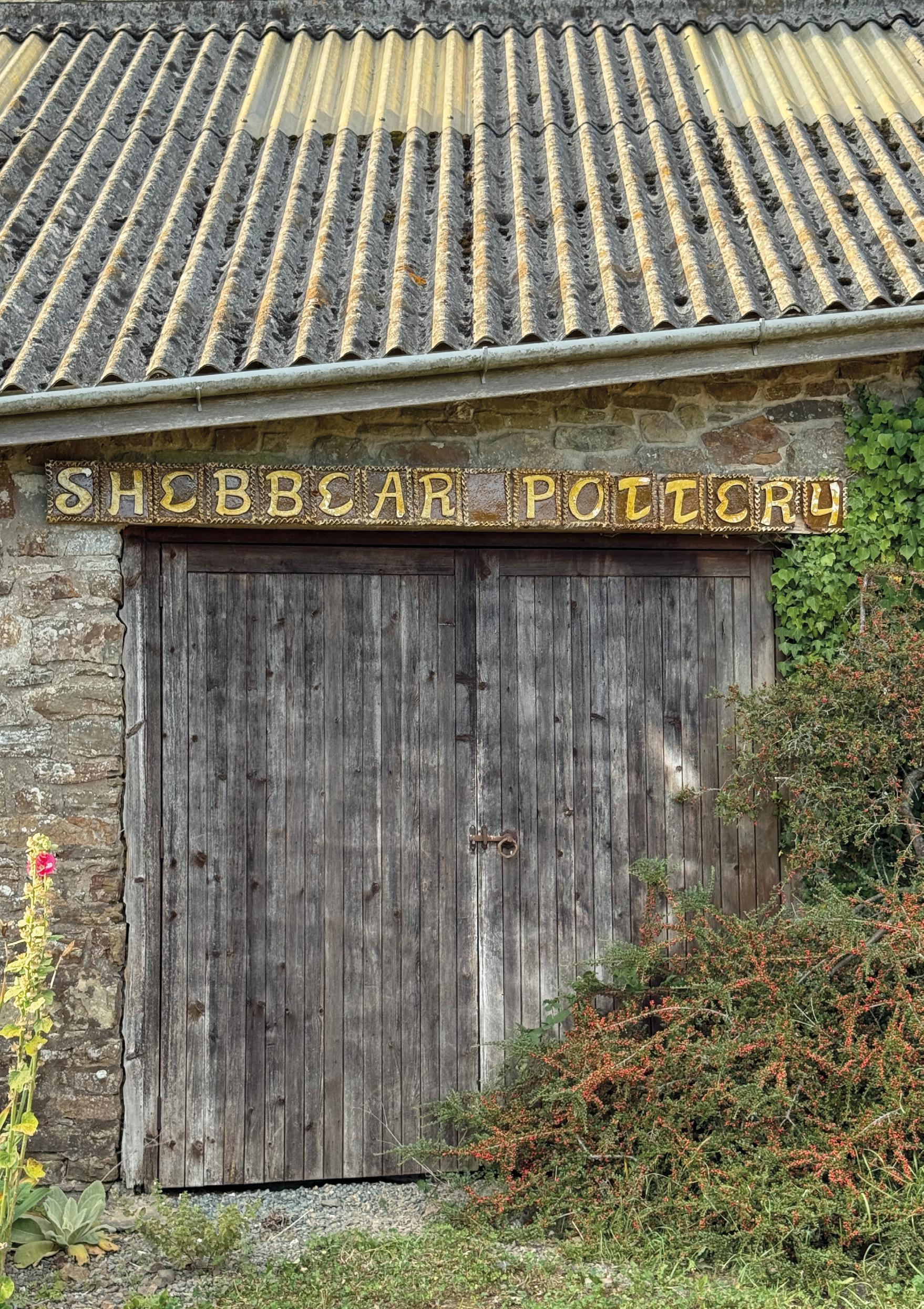

Clive Bowen remains one of the great figures of British studio pottery and, in his eighties, he can still be found working away in his studio at Shebbear in North Devon. This year marks fifty five years since he first established the pottery in 1971. What he created was not simply a workshop, but a way of life: a place where making, hospitality, conversation and shared labour are inseparable alongside his wife Rosie.
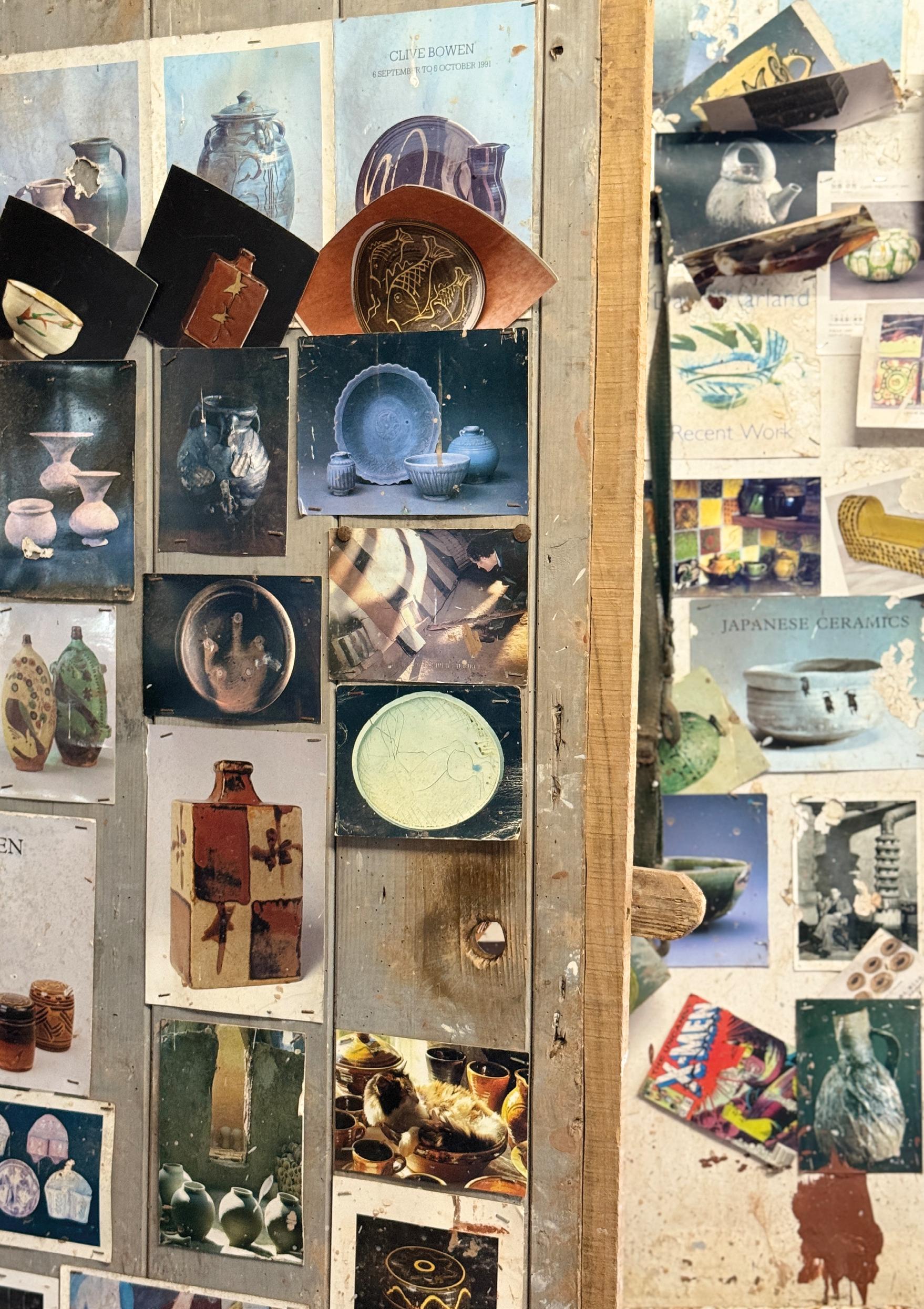
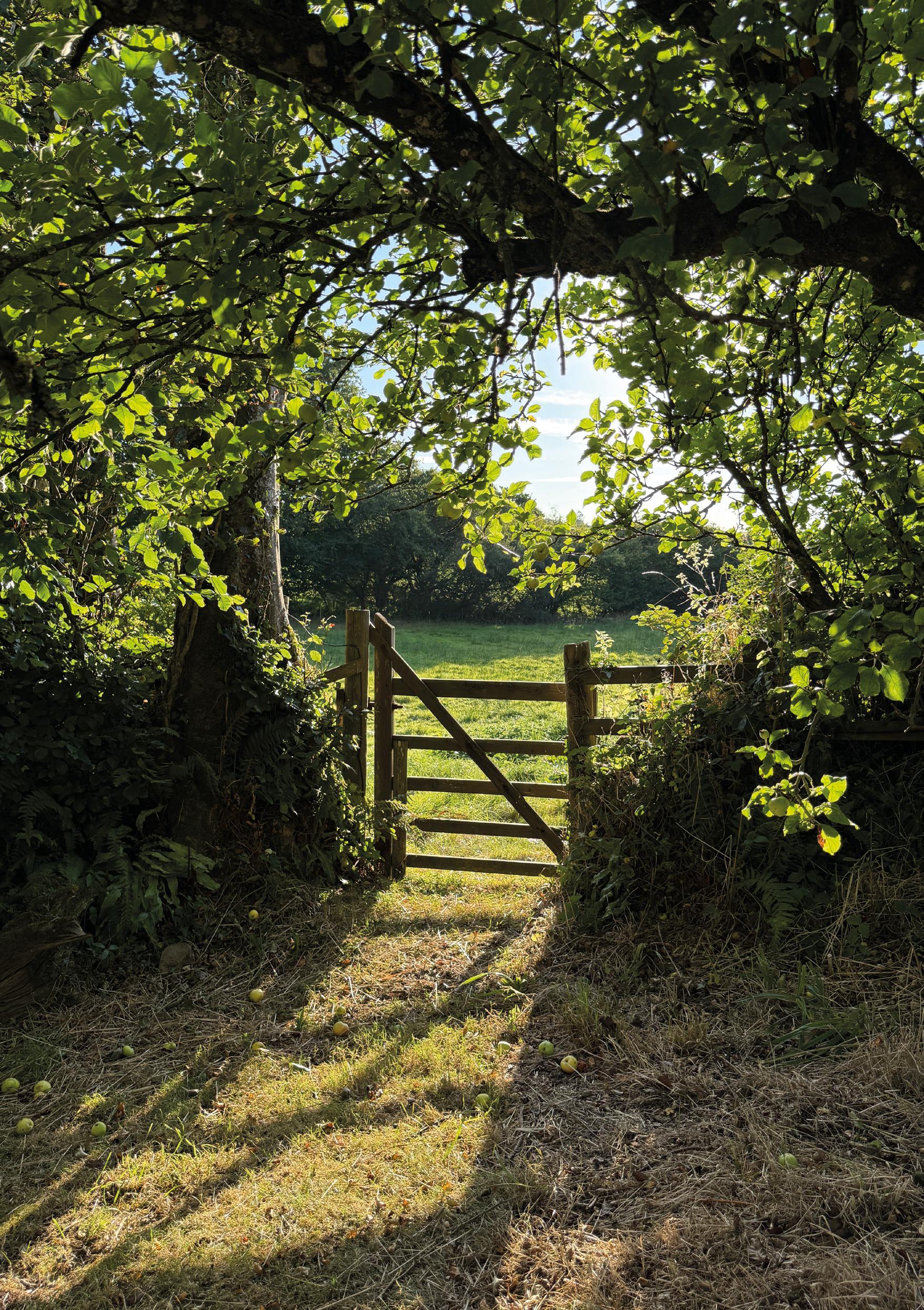
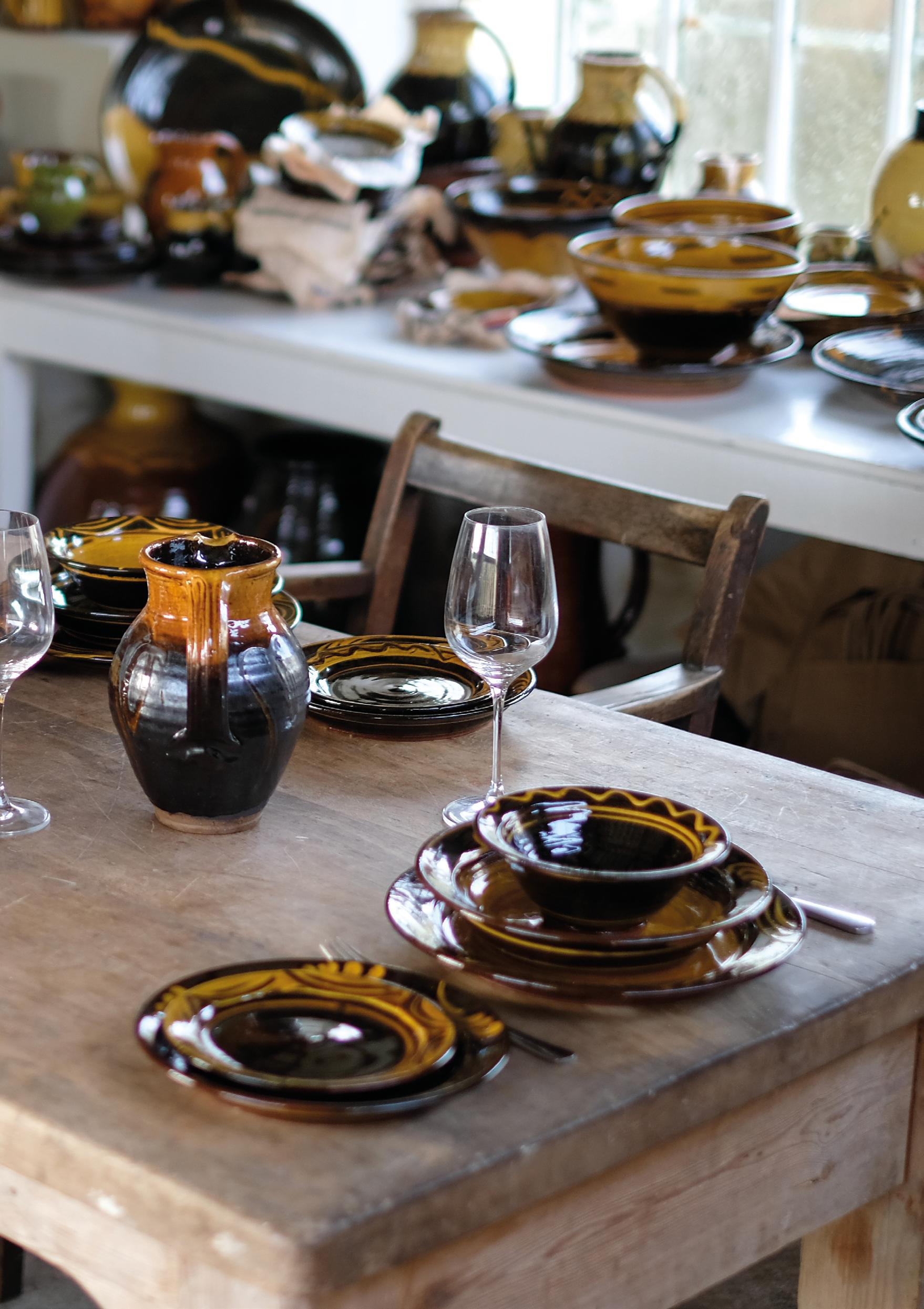
A visit to Shebbear is to step into a living tradition. The cows graze quietly outside; inside, shelves are lined with pots awaiting the kiln, walls layered with diagrams, glaze notes and drawings accumulated over decades. In the kitchen, guests quickly become part of the rhythm of the household, helping to lay the table, sharing food served in Clive’s jugs and dishes, experiencing first hand his belief that pots are made to be used. For Bowen, function is not secondary to beauty; it is the very heart of it. How a jug pours, how a bowl presents food, how a surface feels beneath the hand, these questions have guided a lifetime’s work.
Bowen trained first with Michael Leach, absorbing the discipline of studio practice, before encountering Michael Cardew and discovering the possibilities of wood firing. From early on, he recognised that his language would be rooted in England. While the Leach tradition often looked eastward, Bowen found his touchstone in English slipware and medieval pottery. The early North Devon potters, working for use and in quantity, set his course.
The pottery tradition in North Devon stretches back to the seventeenth century; the clays and slips were already part of the landscape. Bowen continues to dig clay from the stream that runs
through his wood, using its rich ochre slip alongside black, creamy white and green, a deliberately limited palette that has become a defining strength. Fremington clay, long used by North Devon potters, is blended with a red Stoke clay and local silver sand from the Cornish china clay industry, giving his pots their distinctive texture and vitality.
After more than five decades at the wheel, much of what Bowen does is instinctive. Bowen knows when a jug feels right, when one incised mark is enough, when to stop. The jug, especially, remains central: it must pour properly, sit comfortably in the hand, carry its weight with ease. These considerations, simple yet exacting, give his work its quiet authority.
Shebbear has always been a place of exchange. Apprenticeships, collaborations and lifelong friendships have flourished there, and firings are often communal, anticipatory events.
Though deeply rooted in Devon and the English slipware tradition, Bowen’s outlook has never been insular. In recent years, he has spent time in Japan, where slipware has found a renewed audience, exchanging ideas while remaining true to his own language. At fifty five years on from that first kiln, built with borrowed money and scrap bricks, Clive Bowen’s work carries both change and continuity. His pots speak of the past, yet remain entirely present: generous, grounded and alive to the pleasures of use. They remind us that beauty belongs in the everyday, in the kitchen and at the table, and that the simplest forms, made with conviction, are an enduring and simple joy.
Christina Jansen
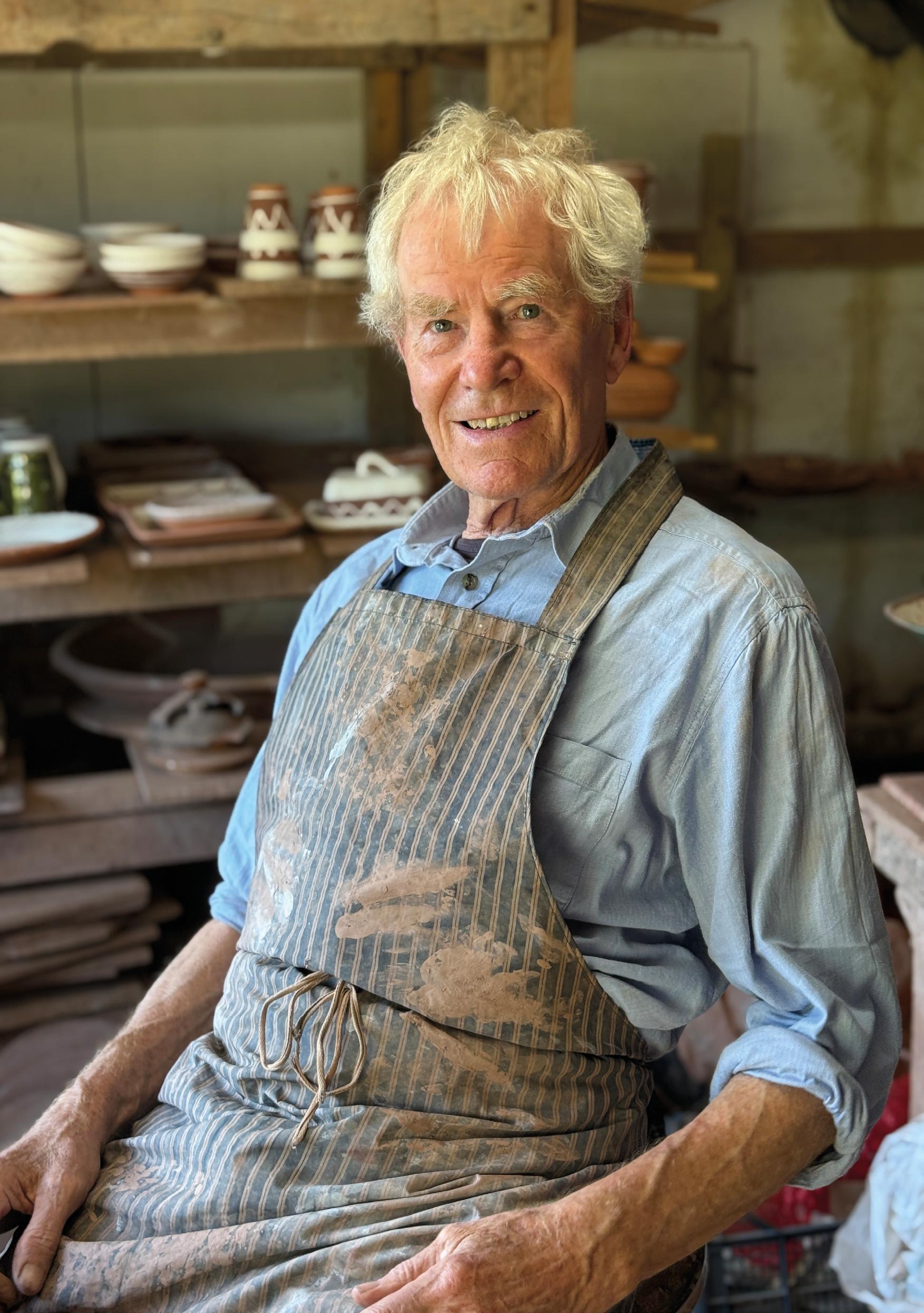
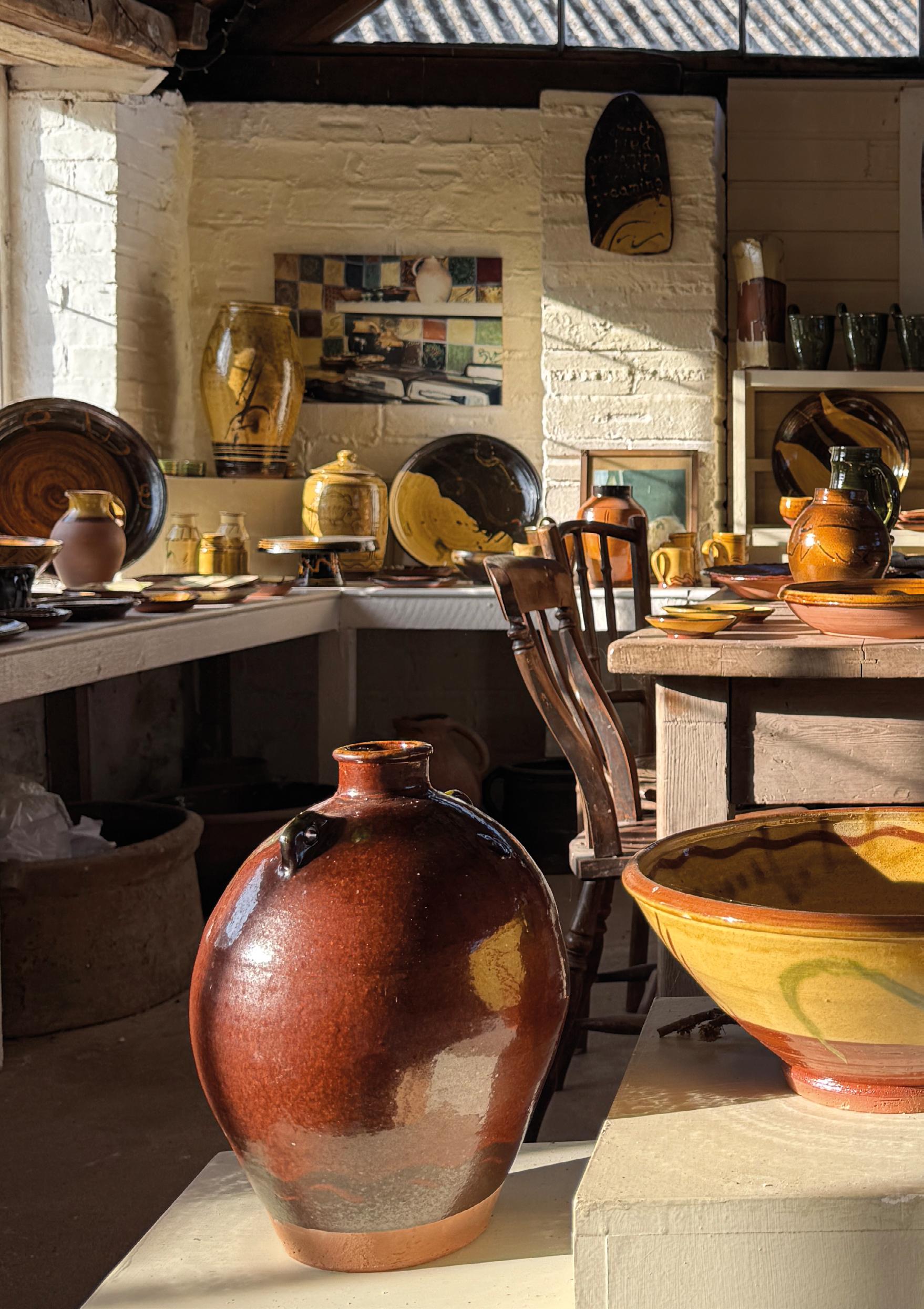
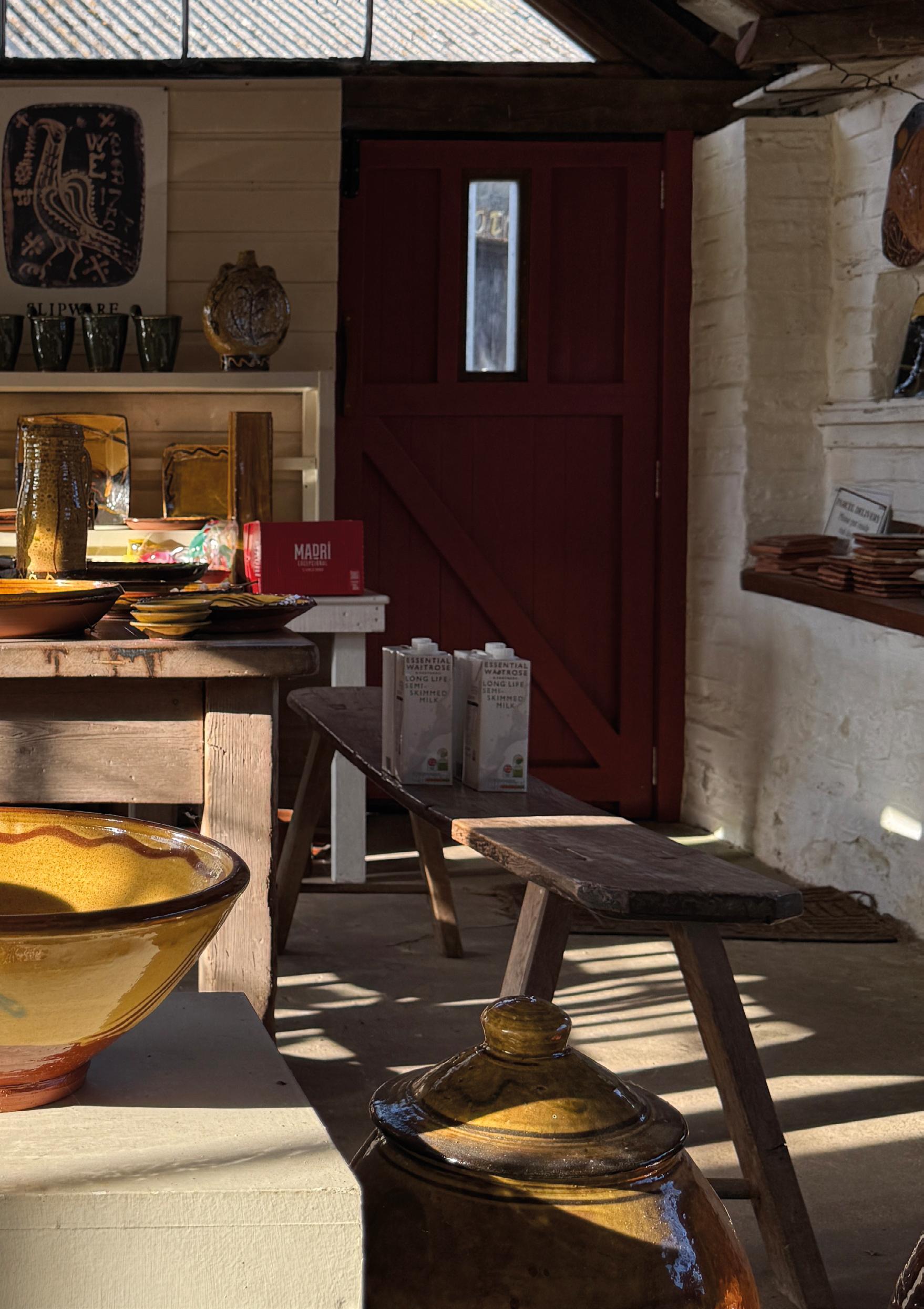
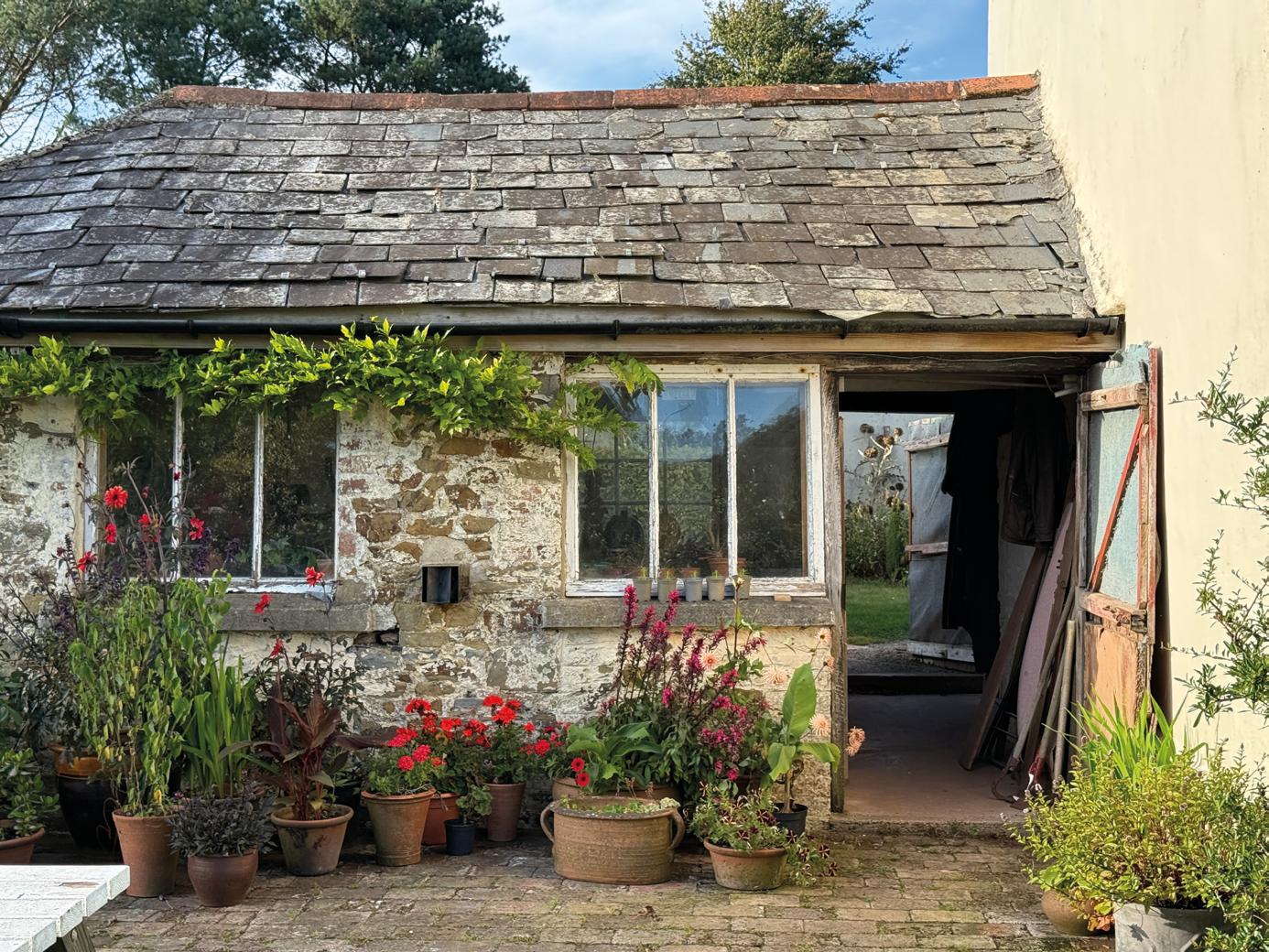
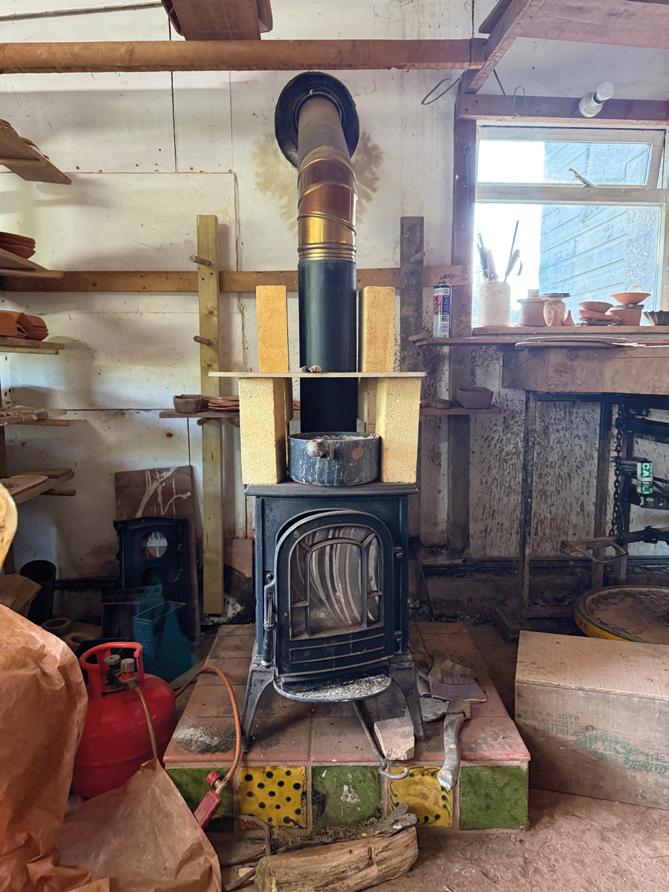
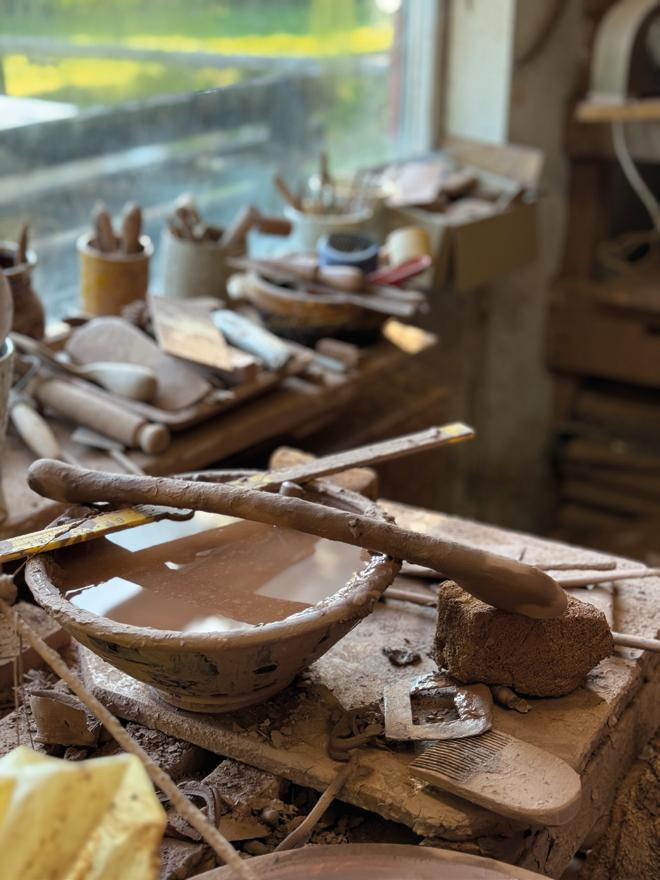
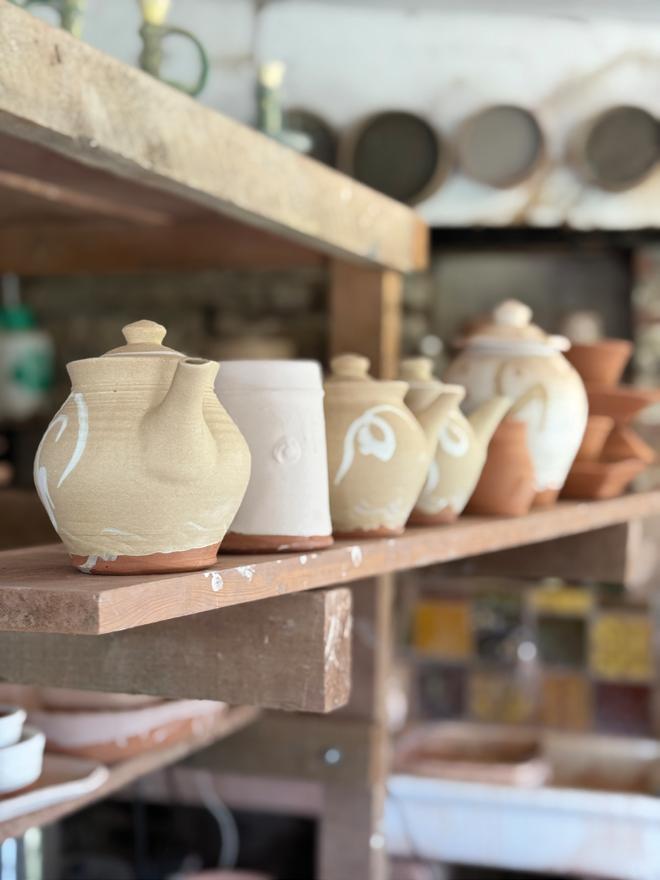
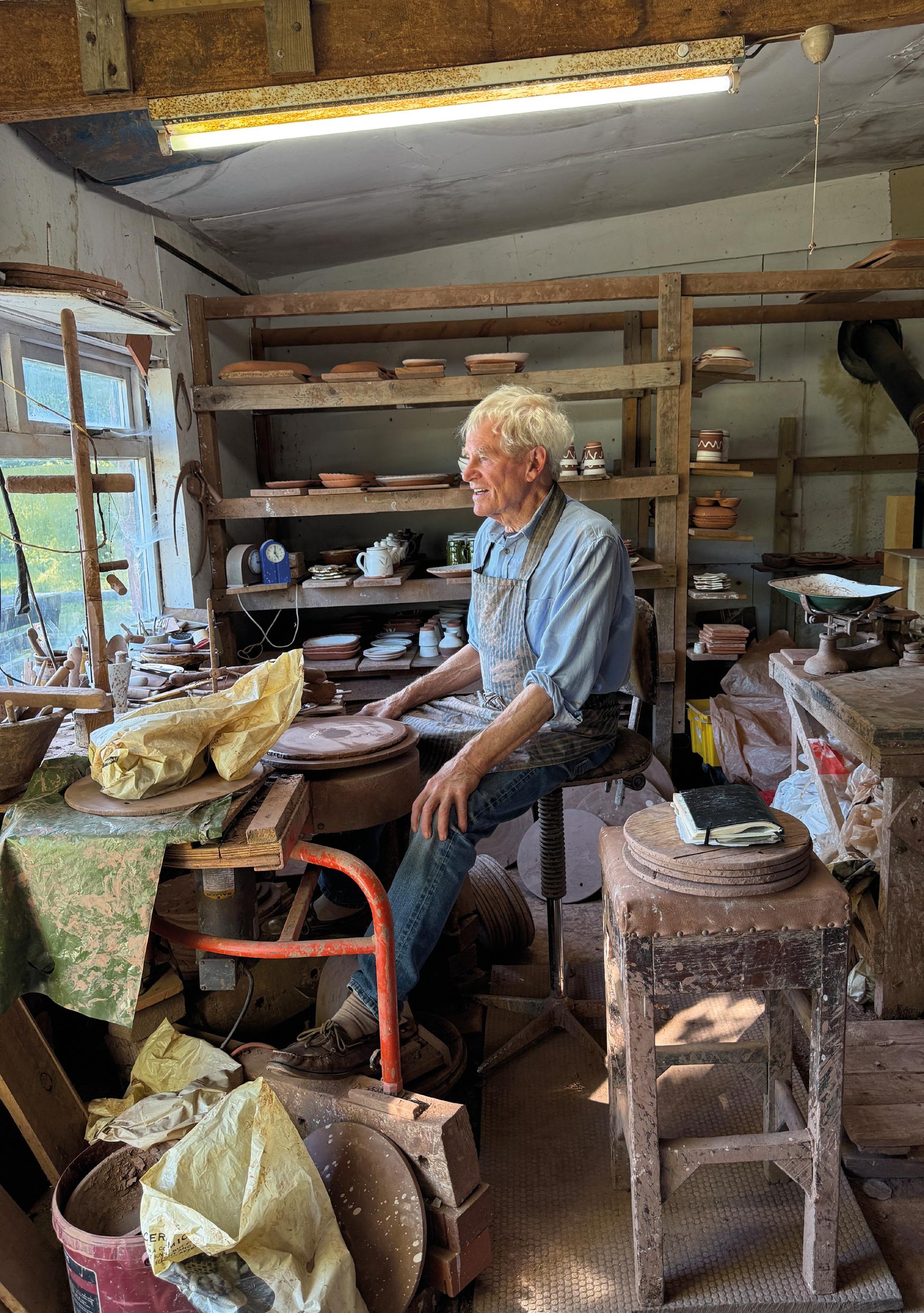
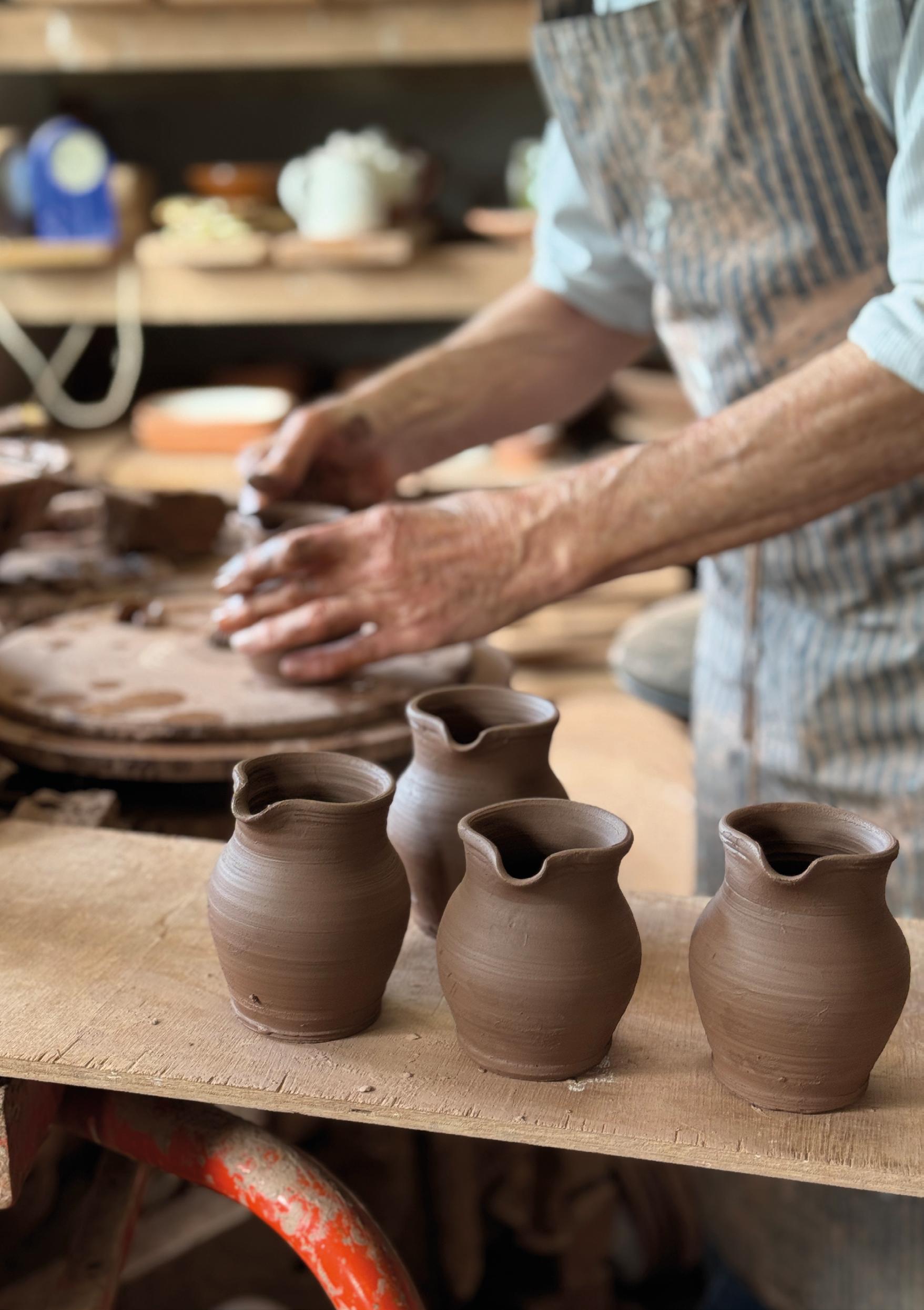
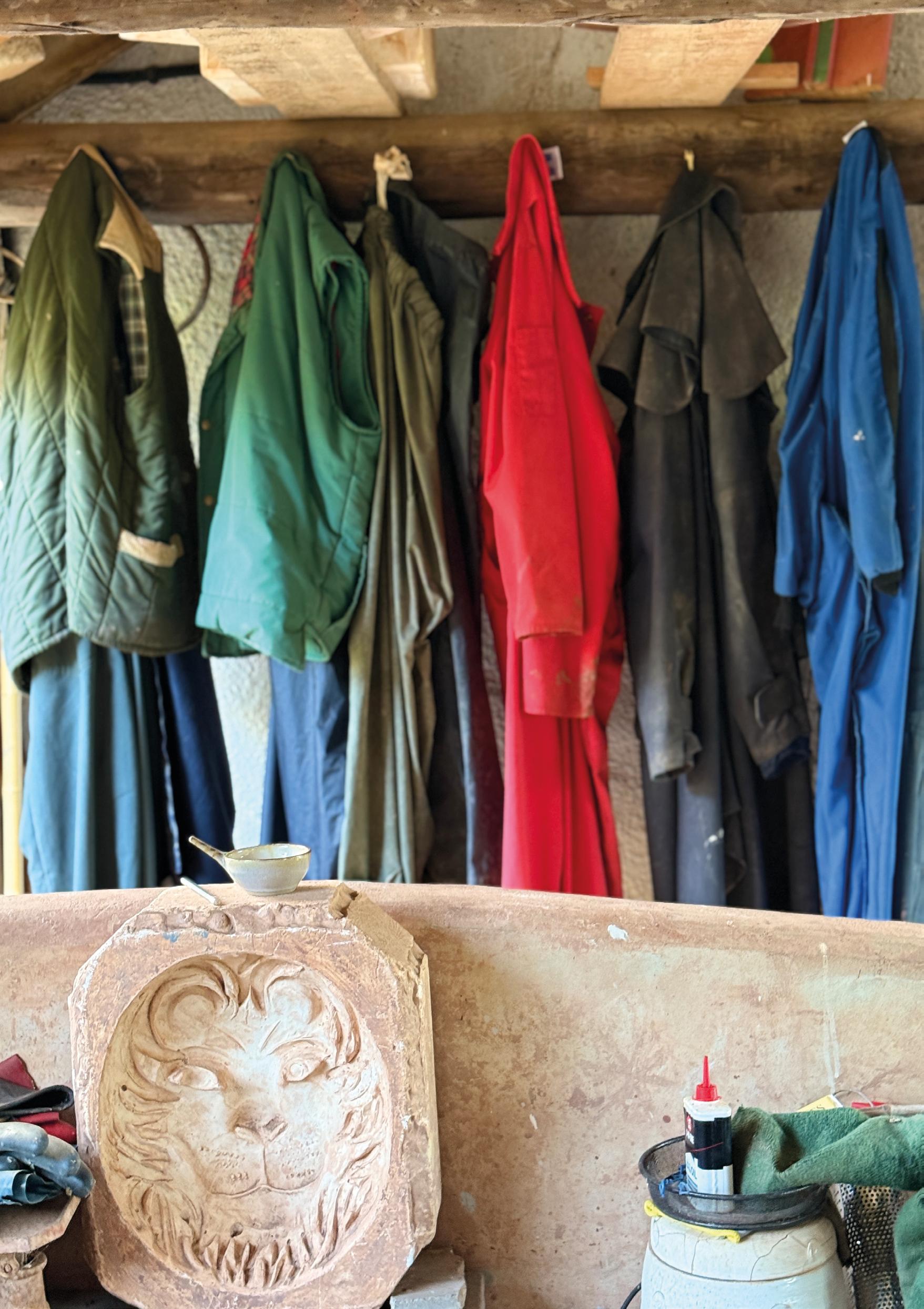
Clive Bowen can often be found in his pottery at Shebbear, surrounded by pots at various stages of completion, a job he has been doing with quiet determination since 1971. Some pots are newly thrown and still damp beneath their cloths. Others stand drying on boards, their surfaces ready for slip. Nearby, shelves hold work waiting for the kiln. The rooms Bowen works in carry the marks of long use. The walls are covered with pinned sketches, measurements, glaze tests and working notes accumulated over decades. Nothing is decorative. Everything has a purpose.
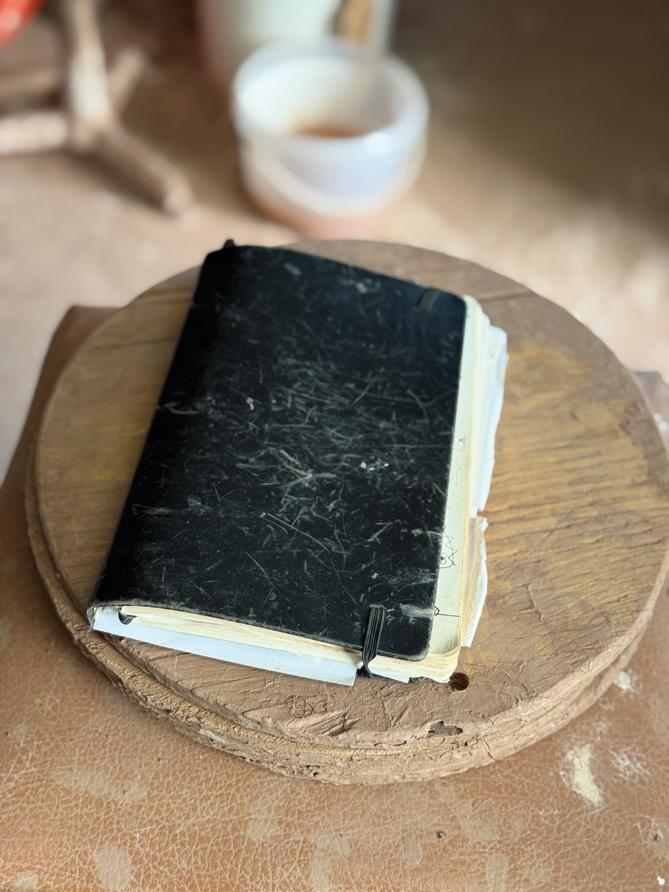
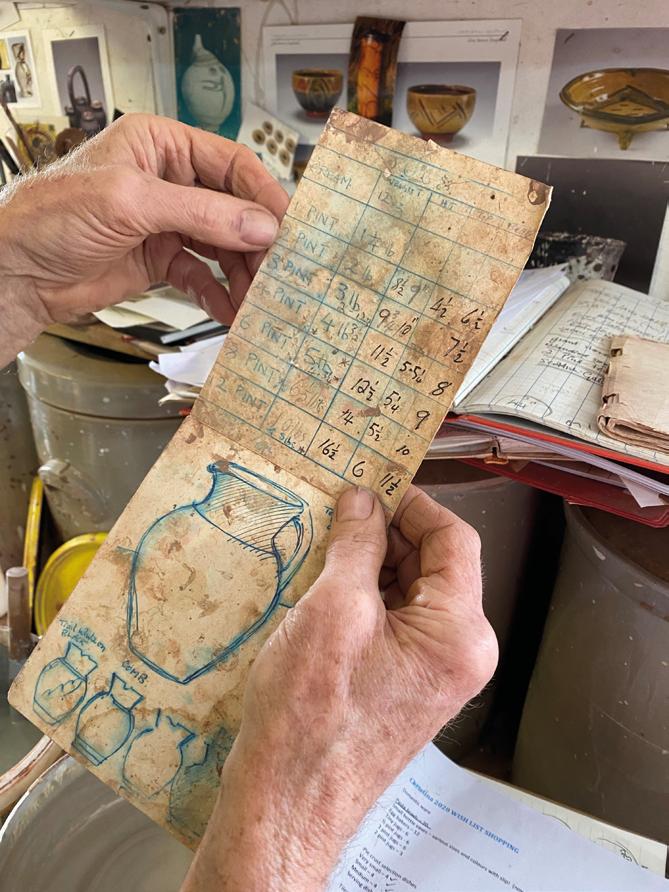
The studio functions as both workshop and memory. Books on early English pottery sit alongside dog eared notebooks filled with glaze recipes and firing records. There are pages recording weights of clay, adjustments to slip thickness, small changes made after a firing that did not go as planned. Upstairs, earlier pieces are kept carefully, forming an informal archive of work that has evolved slowly over time. A jug from thirty years ago may sit beside one made last month, the differences subtle but telling. Change happens gradually. Continuity holds everything together.
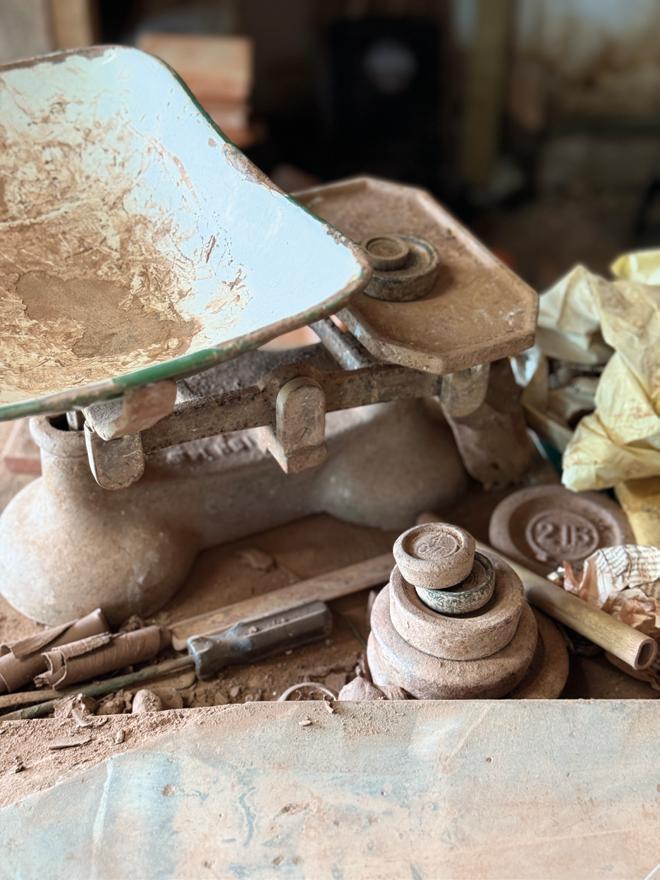
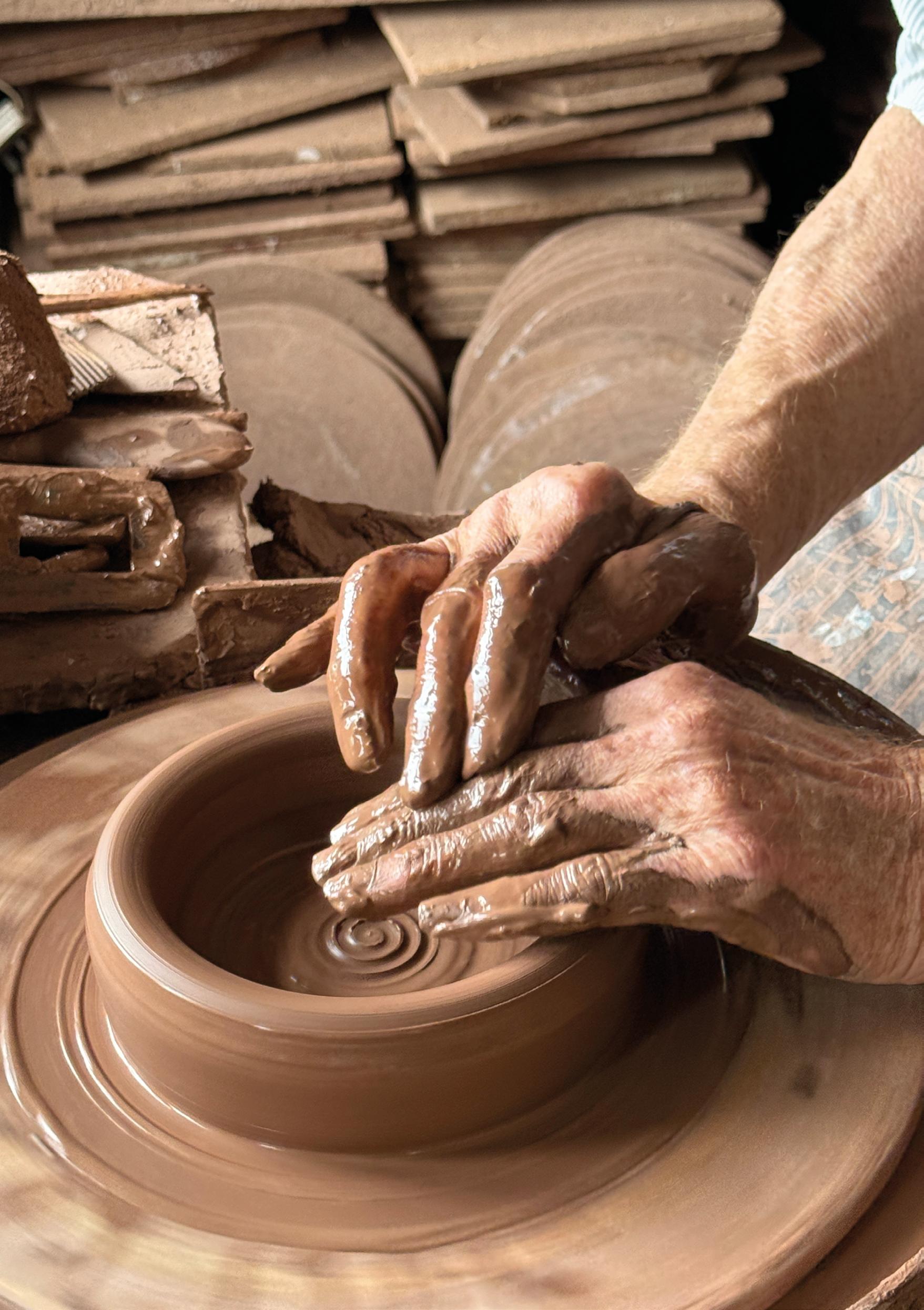
Daily life in the studio for Bowen is structured around repetition. Clay is weighed, cut and thrown. Forms are made in small runs, each one related to the last, and throwing remains central. The rhythm of the wheel establishes the pace of the day. Years of practice have made the physical movements economical and Bowen works with assurance. There is no sense of haste.
Even after decades at the wheel, each pot demands attention.
His training laid the foundations for this discipline. A four year apprenticeship with Michael Leach instilled habits that have never left him. The preparation of clay, the centring of weight, the understanding that skill is built through repetition rather than display all formed part of that early education. Assisting Michael Cardew with a wood firing introduced a different scale of ambition. The experience of loading and firing a kiln large enough to test both material and nerve left a lasting impression. It reinforced the idea that pottery is as much about endurance as inspiration.
The year spent at C.H. Brannam’s Royal Barum Ware pottery in Barnstaple sharpened that lesson. Moving from a studio environment into an industrial setting meant confronting a different tempo of work. Throwing large quantities each day required stamina and consistency. Working alongside men who had spent their lives producing pots for use rather than exhibition made a deep impression. The authority of those pots lay in their directness: they were made to serve, and that clarity of purpose has remained important, even after five decades.
Surface decoration follows throwing, and here instinct takes over. Bowen has long preferred the physical engagement of slip trailing, combing and sgraffito. Once a pot is coated in slip, there is an impulse to touch and draw into it. The movement of the hand across the surface is immediate and responsive, and restraint is essential. A single line
can energise a form, and too many can weaken it. Experience has taught Bowen when to leave the surface alone.
Materials are gathered and prepared with equal care. Clay dug from the stream that runs through his wood is used for one of the decorating slips, producing a warm ochre beneath the glaze. For the main body of the work he blends Fremington clay with a red Stoke clay, extending supply while refining colour and strength. Silver sand from the Cornish china clay industry is added to give texture. The process of mixing, pugging and testing remains hands on. Recipes are adjusted quietly over time rather than dramatically altered.
The palette has stayed deliberately narrow. Black, creamy white, green and ochre slips have proved sufficient. Working within this limited range allows attention to fall on the proportion, gesture and balance of each and every pot. The character of a jug or dish emerges through line and surface rather than colour.
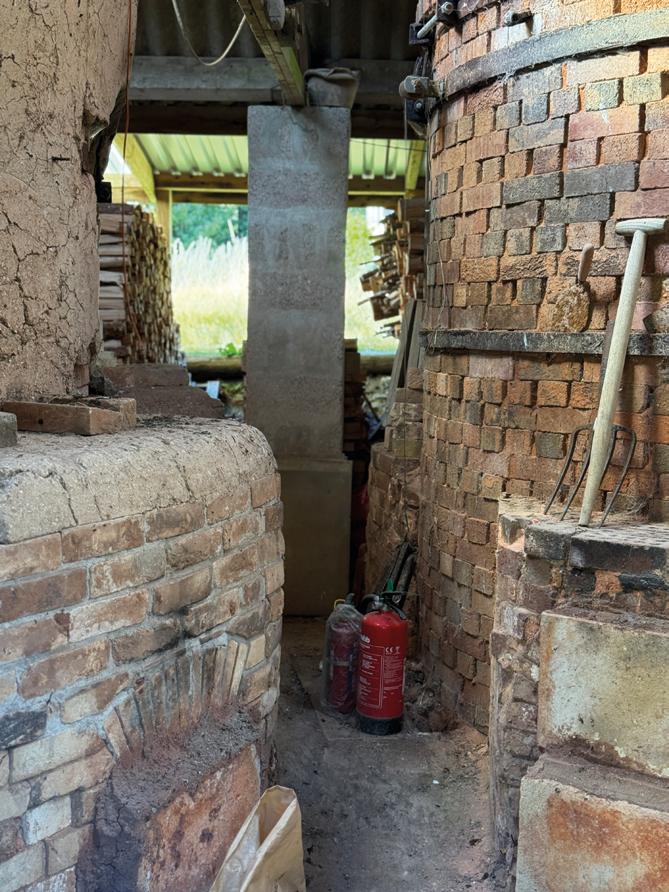
Firing remains one of the most charged moments in the cycle. Kilns are stacked with care, filling an enormous wood fired kiln with each pot placed with consideration for flame and heat. Over the years, firings have drawn in friends, former apprentices and family members as a special kind of social practice. The atmosphere combines concentration with anticipation. When the kiln is opened, there is always an element of risk. Some results exceed expectations, whilst other firings fall short. Each firing teaches something and it is a humbling experience every time.
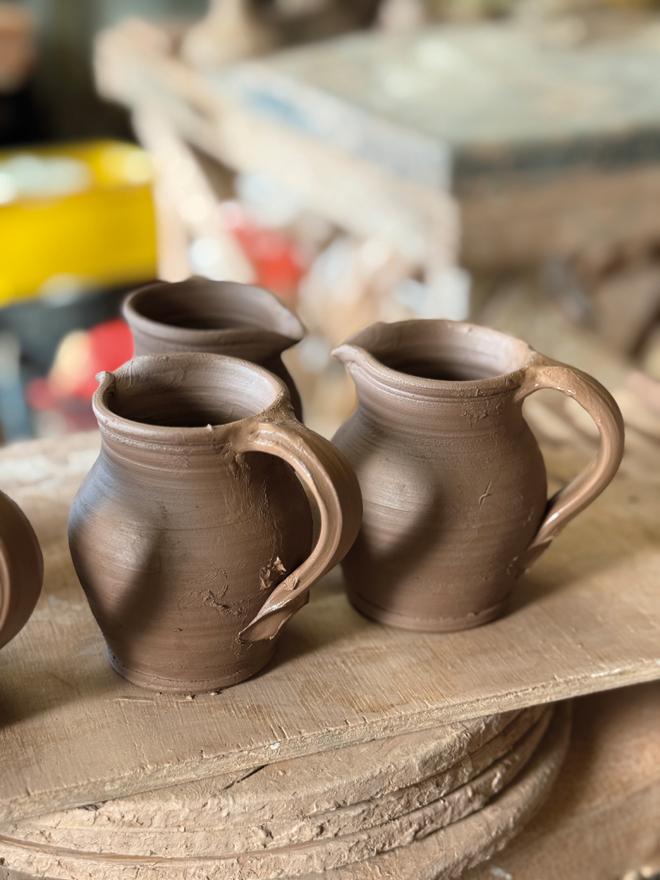
The jug continues to hold particular importance within the studio as its demands are precise. A jug must sit comfortably in the hand, hold its weight without strain and pour cleanly. These requirements are practical, yet they shape the aesthetic decisions. A slight adjustment to the curve of a handle or the angle of a spout can alter the entire character of the form. Through making the same form repeatedly, small refinements accumulate.
Once the pots leave Shebbear, they go on their own journey. Many pots are fired specifically with exhibitions in mind and are sent out soon after the kiln has cooled. Bowen rarely sees them again. Pots go on to enter kitchens and dining rooms, becoming part of the pleasure of daily routine and that separation feels natural as the work has never been made to remain in the studio. They also fill museum collections, sitting alongside other master potters, and are part of a rich heritage and language of clay which is uniquely British.
For Bowen, studio life at Shebbear is steady and grounded. His pottery and pots have been built on hard work, repetition, observation and adjustment rather than reinvention. Over the decades, that steady practice has produced a body of work that carries both memory and immediacy. His pots reflect the place in which they are made and the habits of the man who makes them. In the quiet order of the studio, the continuity of Bowen’s life is evident.
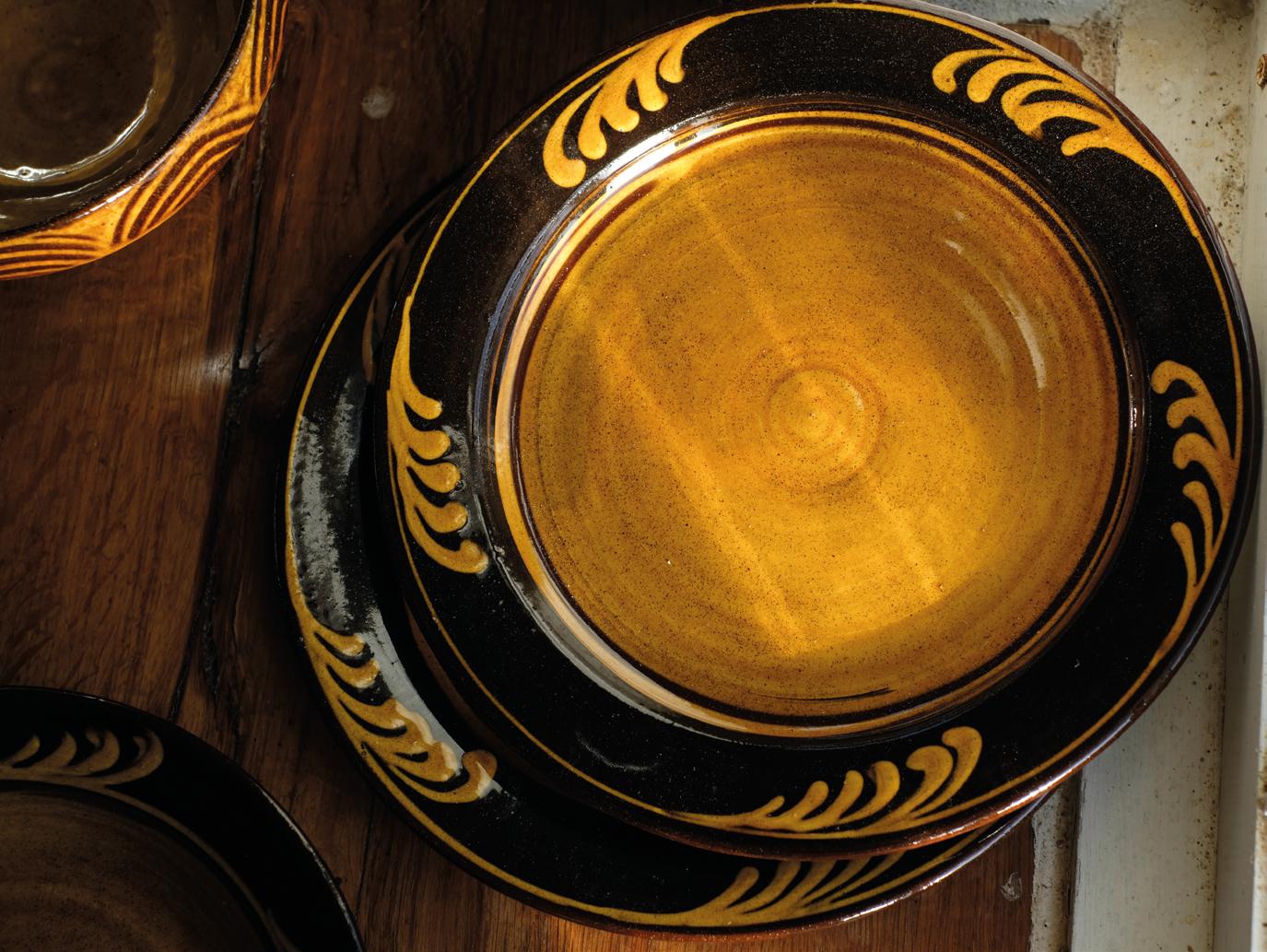
During Masters of Slipware: East & West, Clive Bowen’s landmark exhibition with Masaaki Shibata in April 2020, Bowen was invited to undertake a significant commission for a complete dinner service.
What began as a modest proposal evolved into an ambitious 100 piece service, comprising twenty distinct slipware patterns, each repeated five times. Conceived and made at Shebbear Pottery, the project brought together five decades of knowledge of clay, slip, form and fire, distilled into a cohesive yet richly varied body of work.
Each piece was thrown, decorated and wood fired in Bowen’s pottery, using his characteristic palette of black, creamy white, green and ochre slips.
The service reflects both the breadth of his decorative language and the discipline of repetition. Subtle variations in gesture and mark reveal the vitality of the hand, while the unified forms speak of balance, function and use. At its heart lies Bowen’s enduring belief that beauty belongs at the table, in objects made not only to be admired but to serve and endure daily life.
This 100 piece service stands as a remarkable testament to Bowen’s continued energy and inventiveness. It demonstrates the scale at which slipware can operate, not as isolated pots but as a fully realised domestic landscape animated by rhythm and pattern.
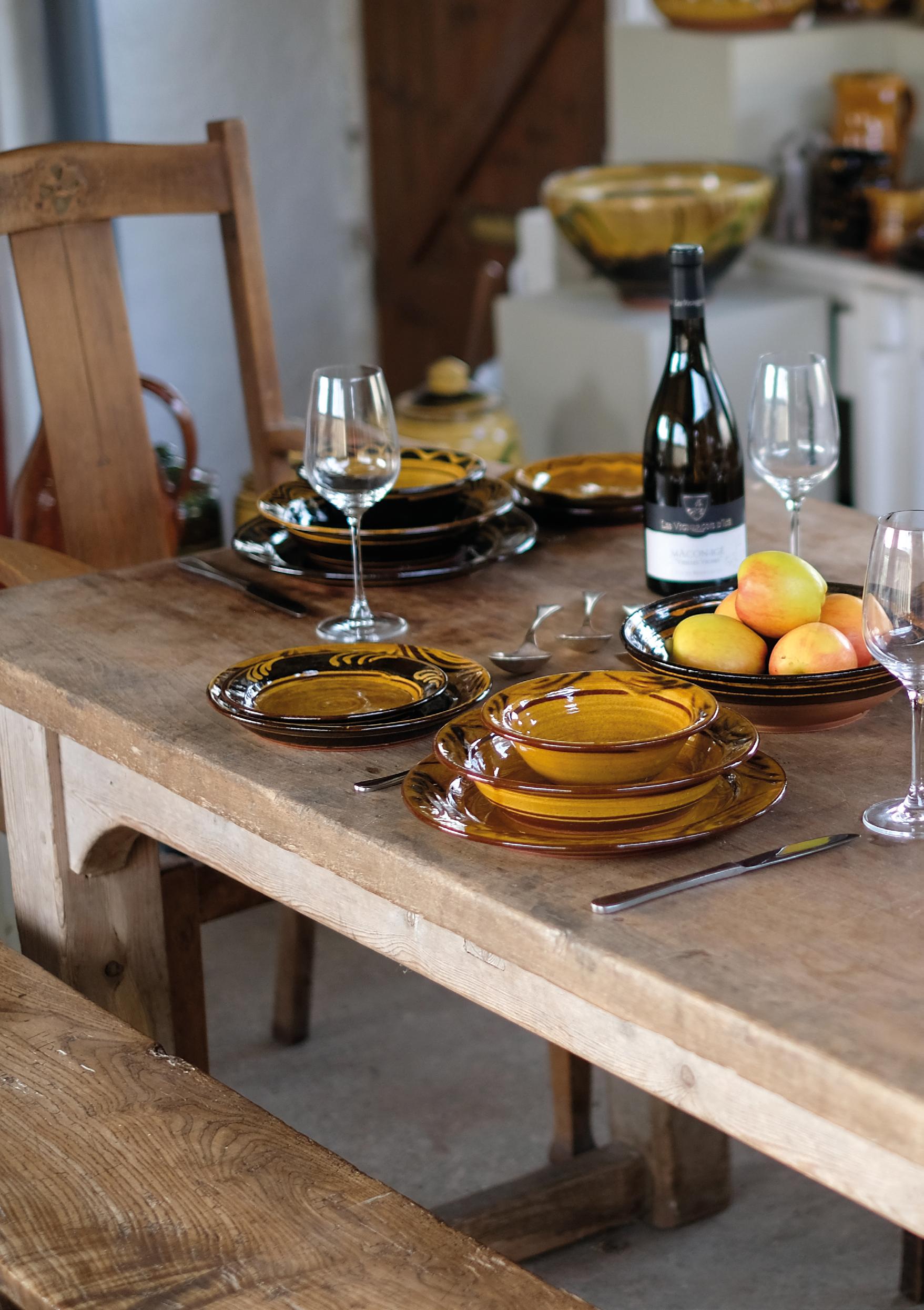
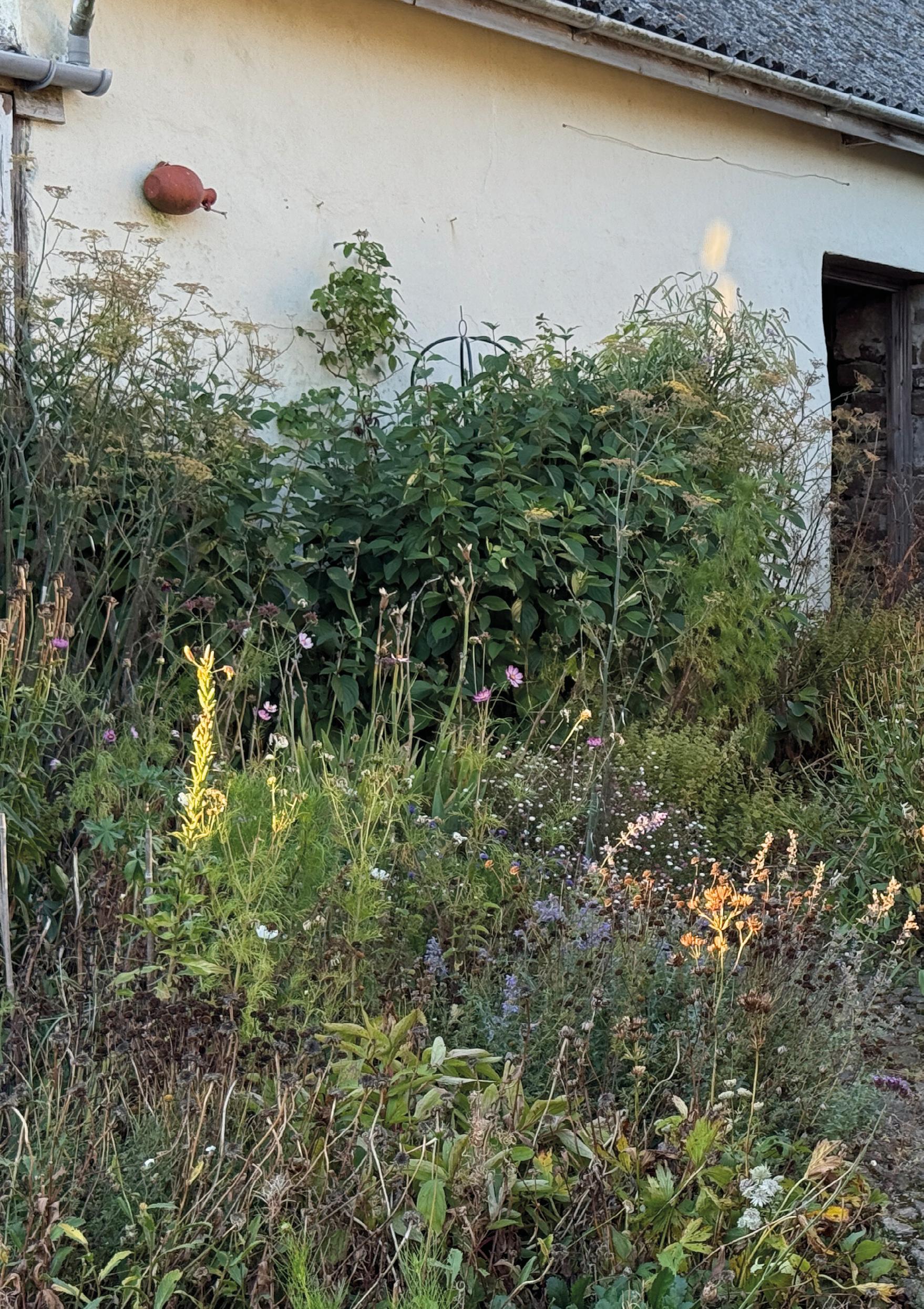
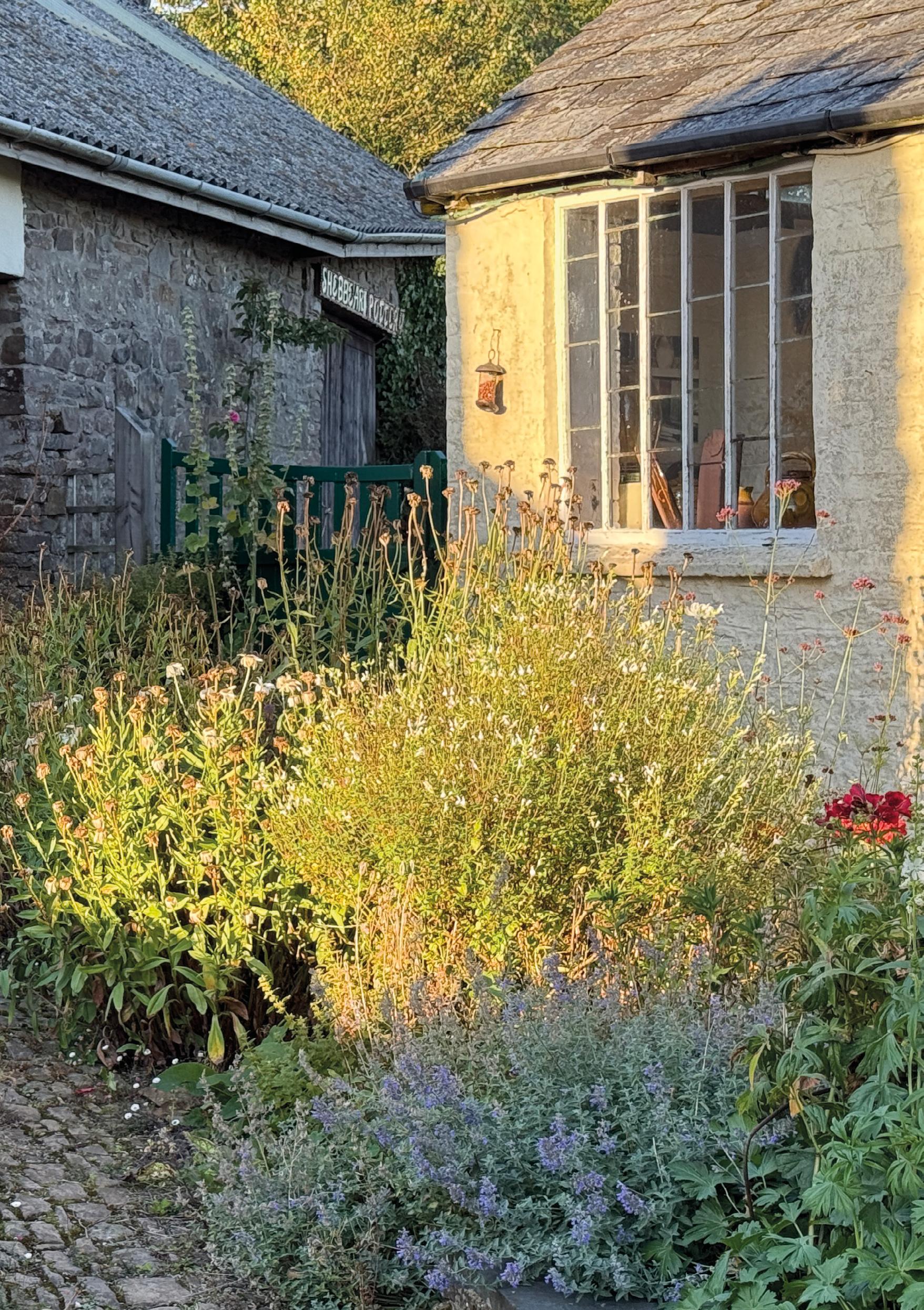
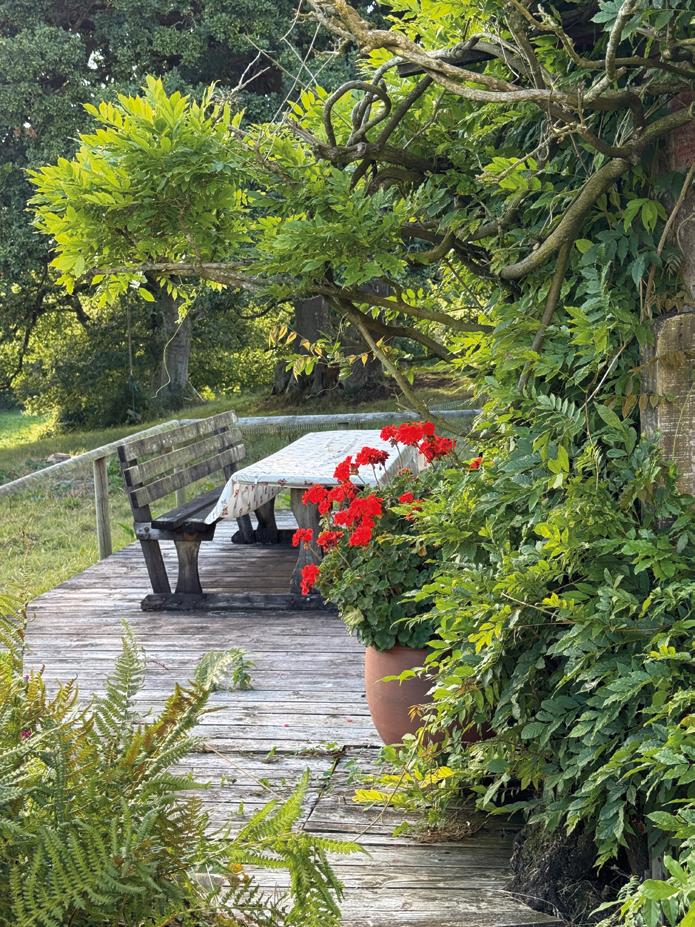
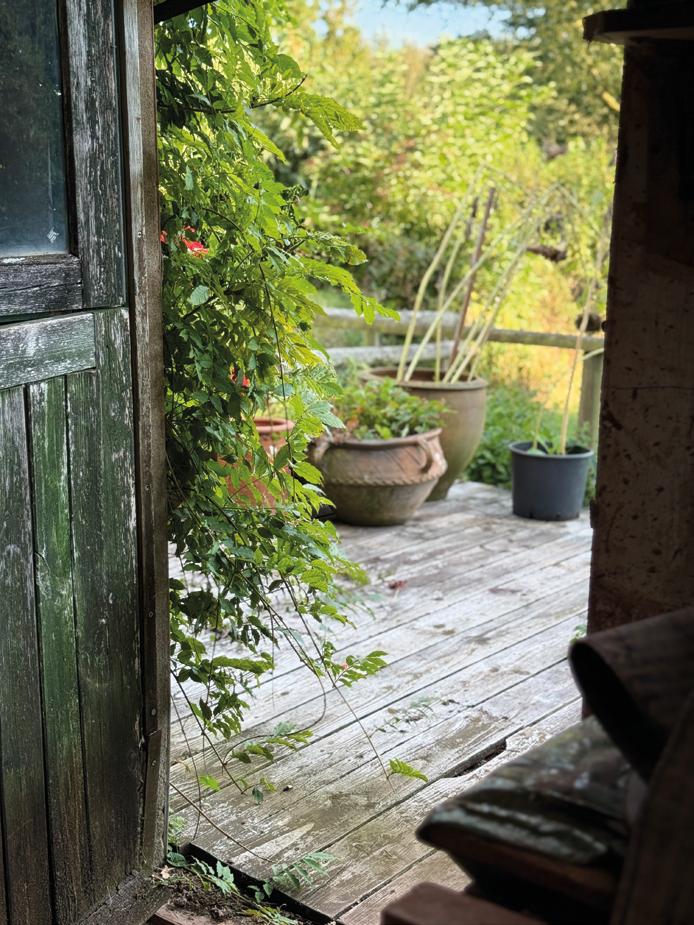
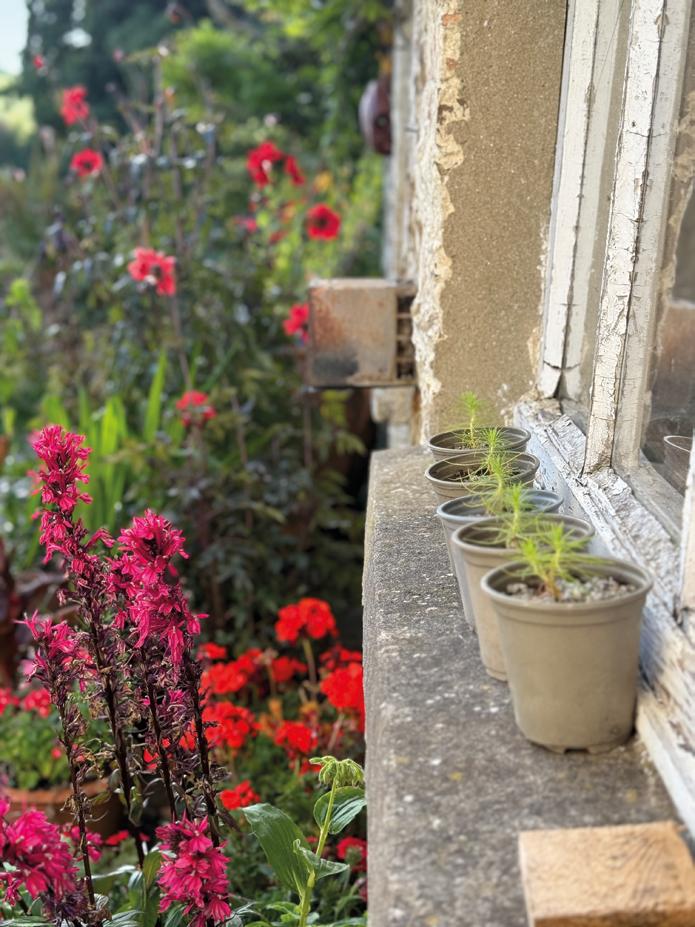
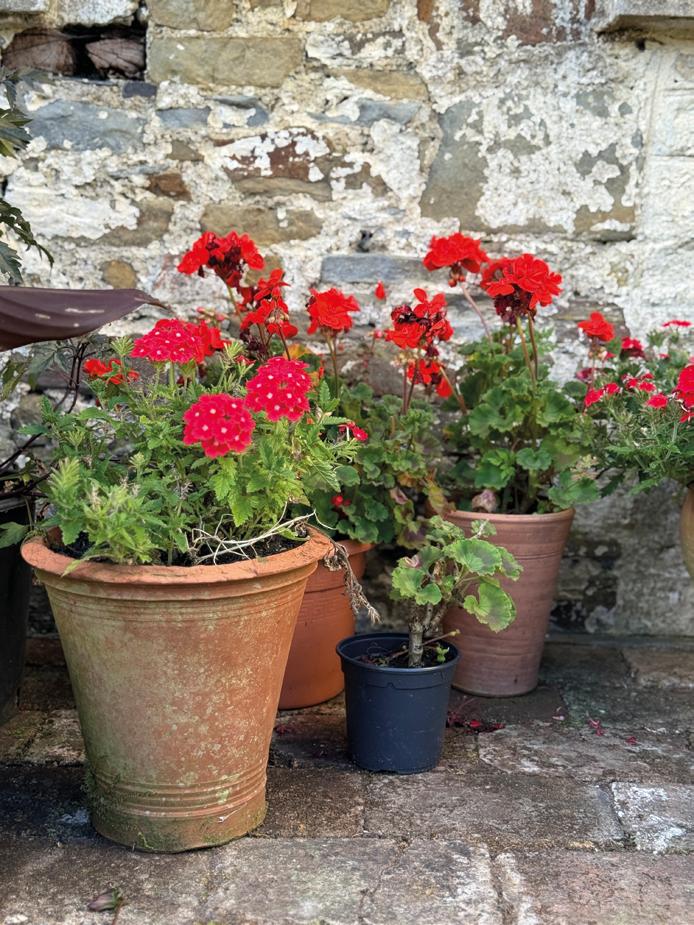
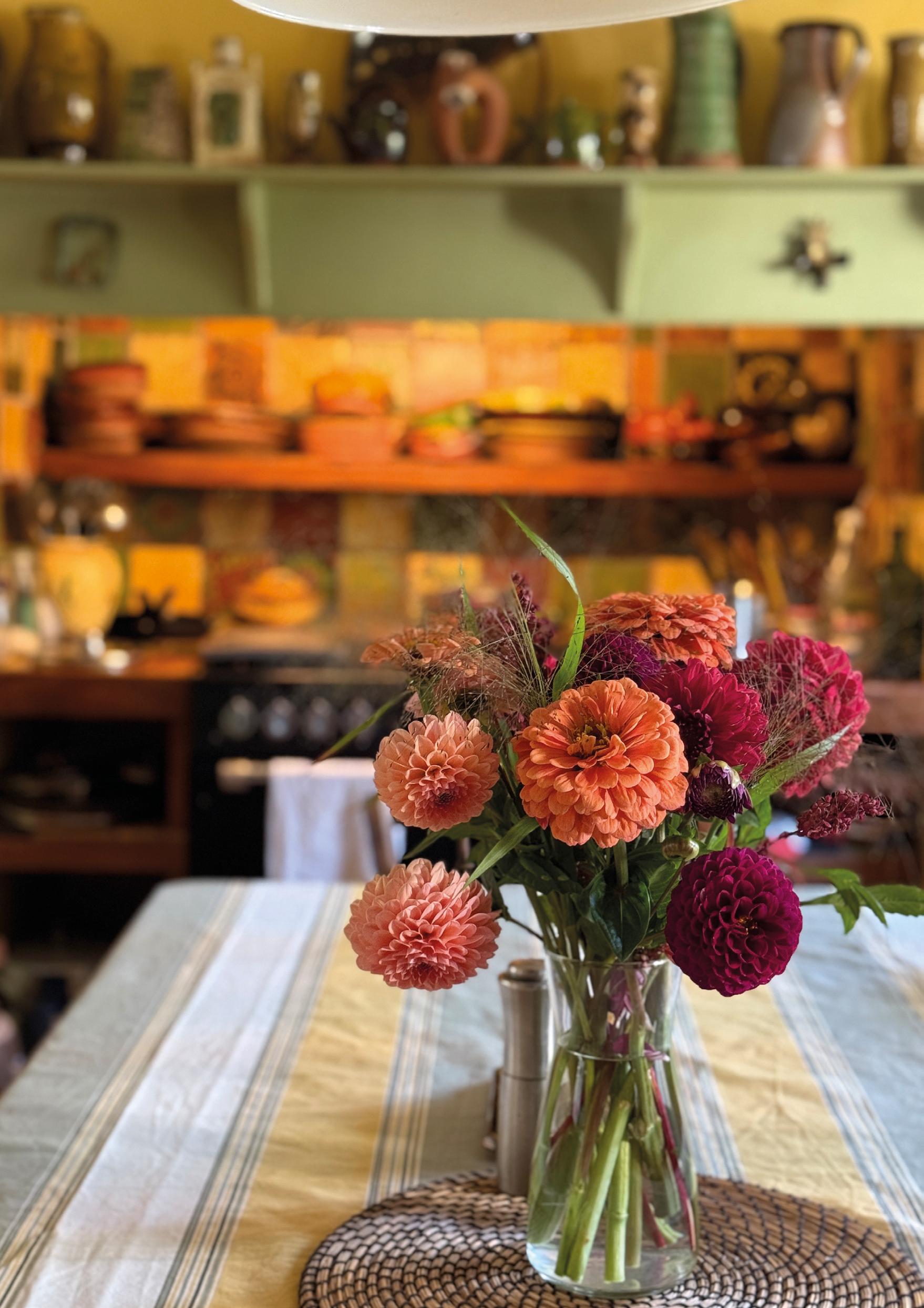
In August 2025, I had the privilege of visiting Clive and Rosie Bowen at home in Shebbear. It is no small journey from Edinburgh and, despite the distance, I have always been welcomed into their home as more than just a guest or someone coming to discuss business, ever since my first visit many years ago as a stranger.
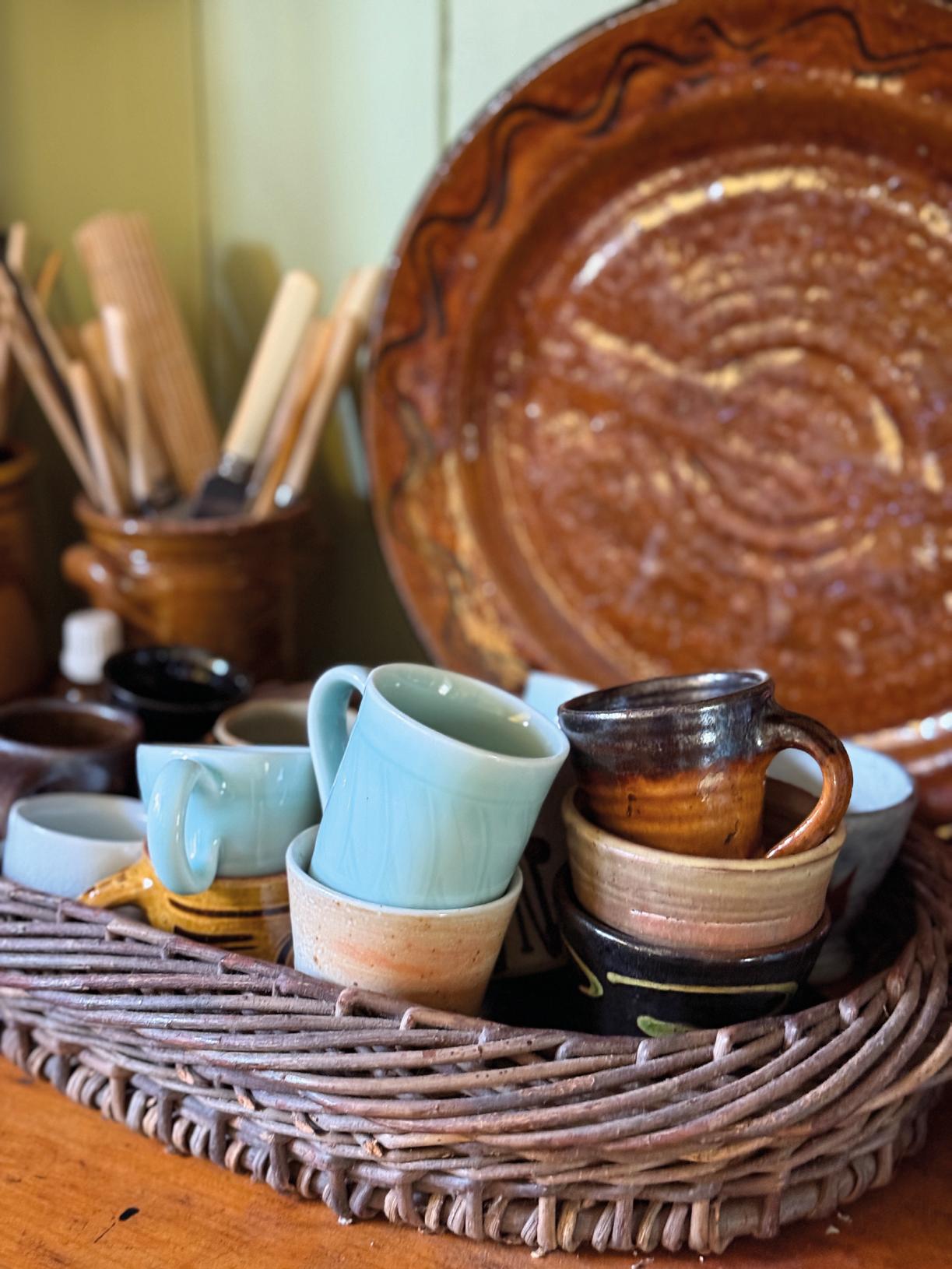
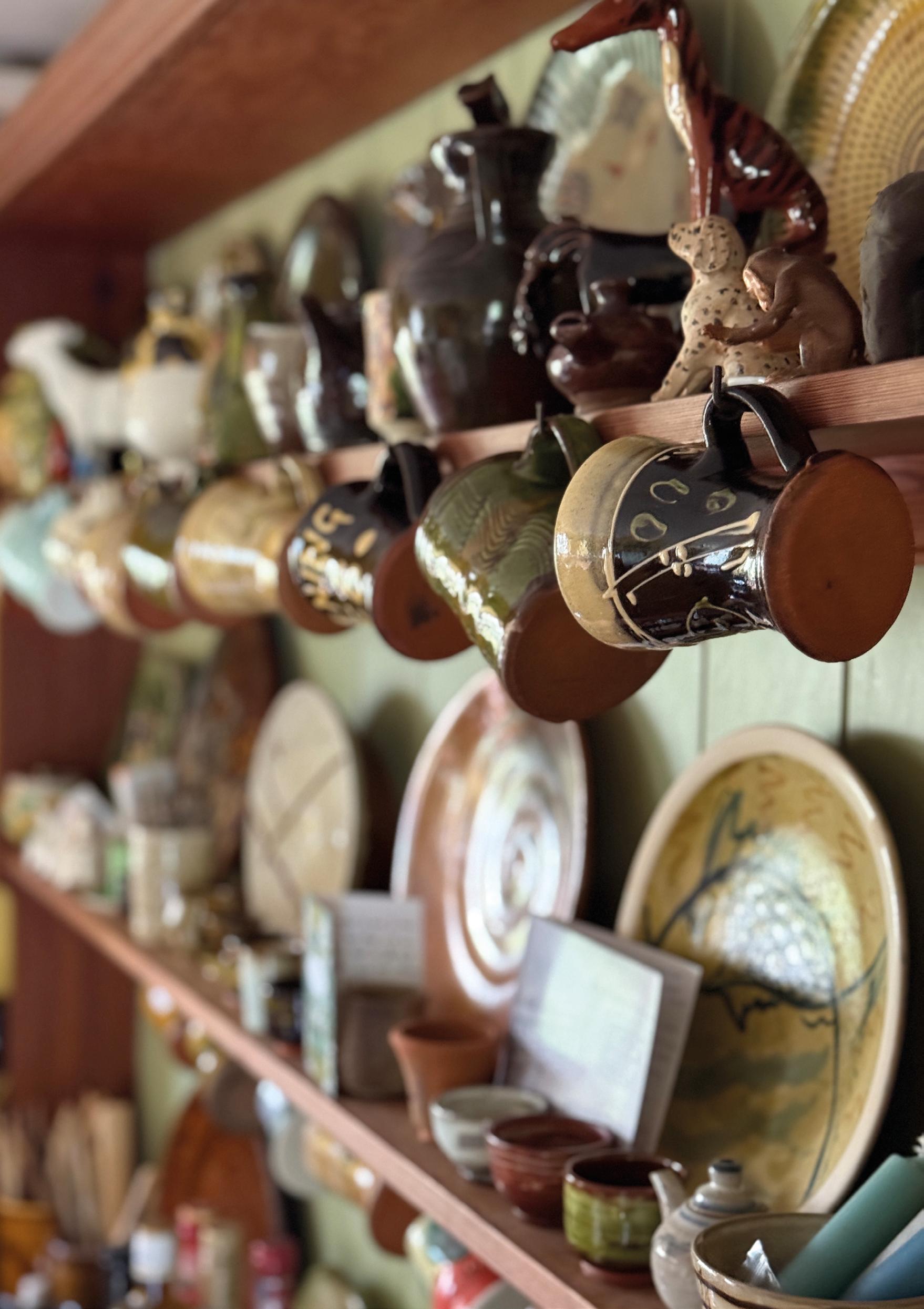
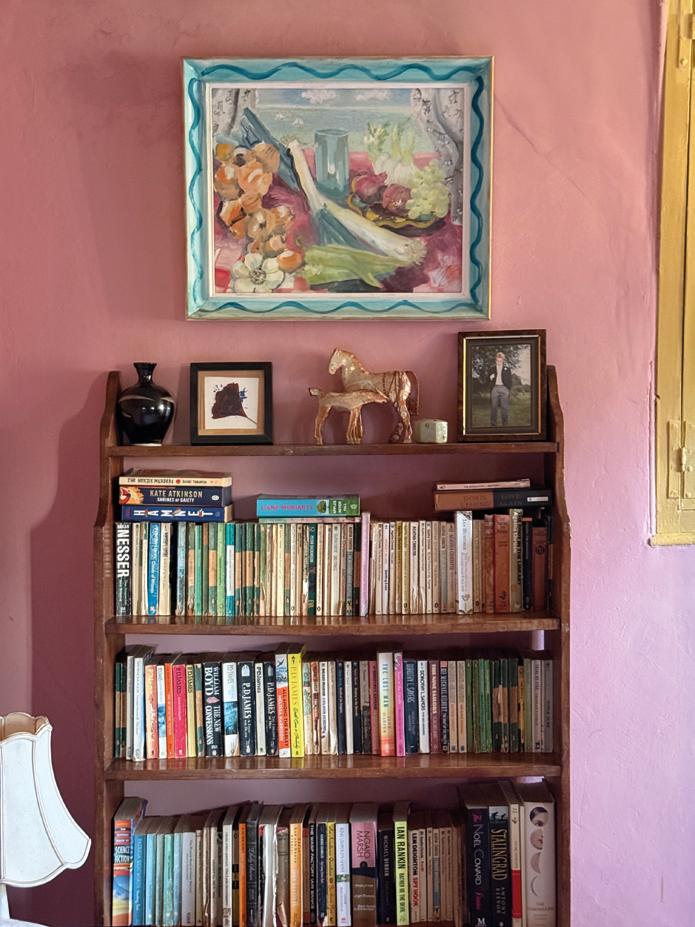
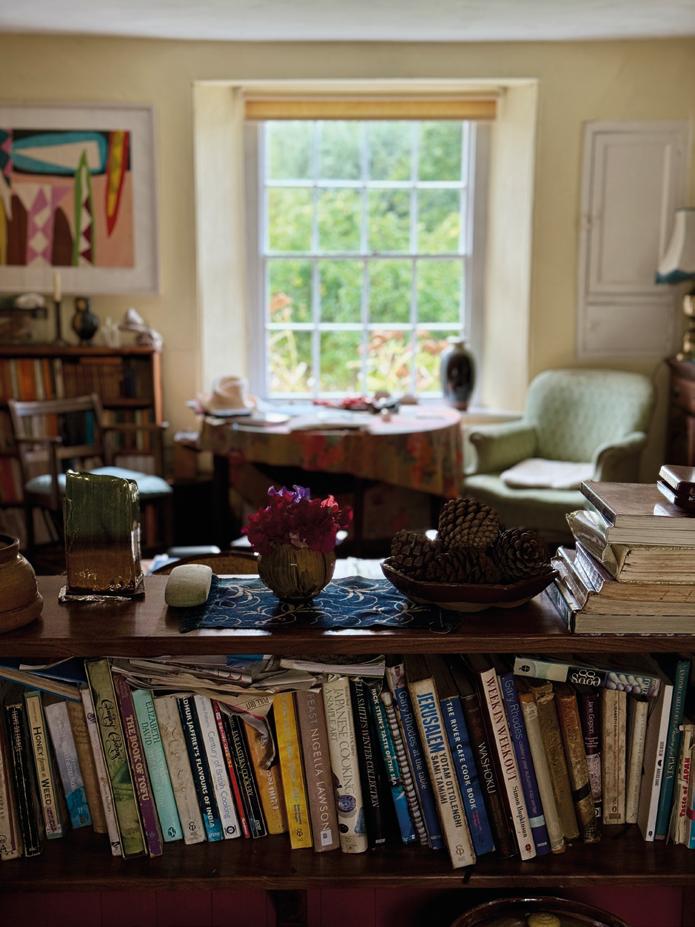
Life at Shebbear is not about being looked after. It is about joining in. The table is laid together, the dishwasher filled, the kitchen conversation wide ranging and unhurried. We unpack the world around the table. Books, films, the garden, politics, pots. Everything is discussed somewhere between preparing supper and clearing plates. Rosie cooks with instinctive ease. To a non cook, it feels like wizardry. A salad assembled without fuss, a casserole that tastes as though it has always existed, homemade sourdough bread and jam at breakfast, porridge offered with or without salt. Nothing elaborate, yet everything considered. There is a quiet ceremony to the kitchen, which is lined with Clive’s pots and a dresser filled with family pots and art and gifts from visiting potters, some of them eminent figures in the field. A cup of coffee might arrive in one of Clive’s cups, or in another potter’s. A plate might prompt a story. The everyday act of eating becomes a quiet acknowledgement of craft and friendship.
In the studio, the rhythm is different but equally grounded. Clive prepares for the day with focus and economy
of movement. Clay is cut and weighed after consulting his notebook. Plates are turned, handles pulled, surfaces decorated. What looks effortless is the result of decades of practice. Larger, one off pots are approached more slowly, balanced alongside the steady making of bowls, jugs, dishes and plates intended for daily use. The work is measured and purposeful, rooted in repetition and refinement.
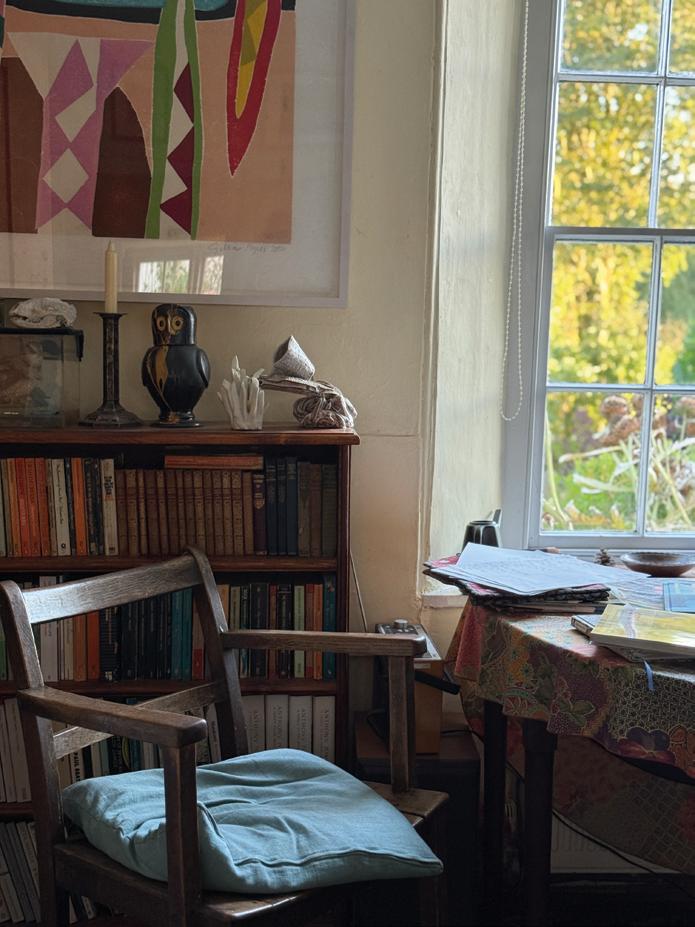
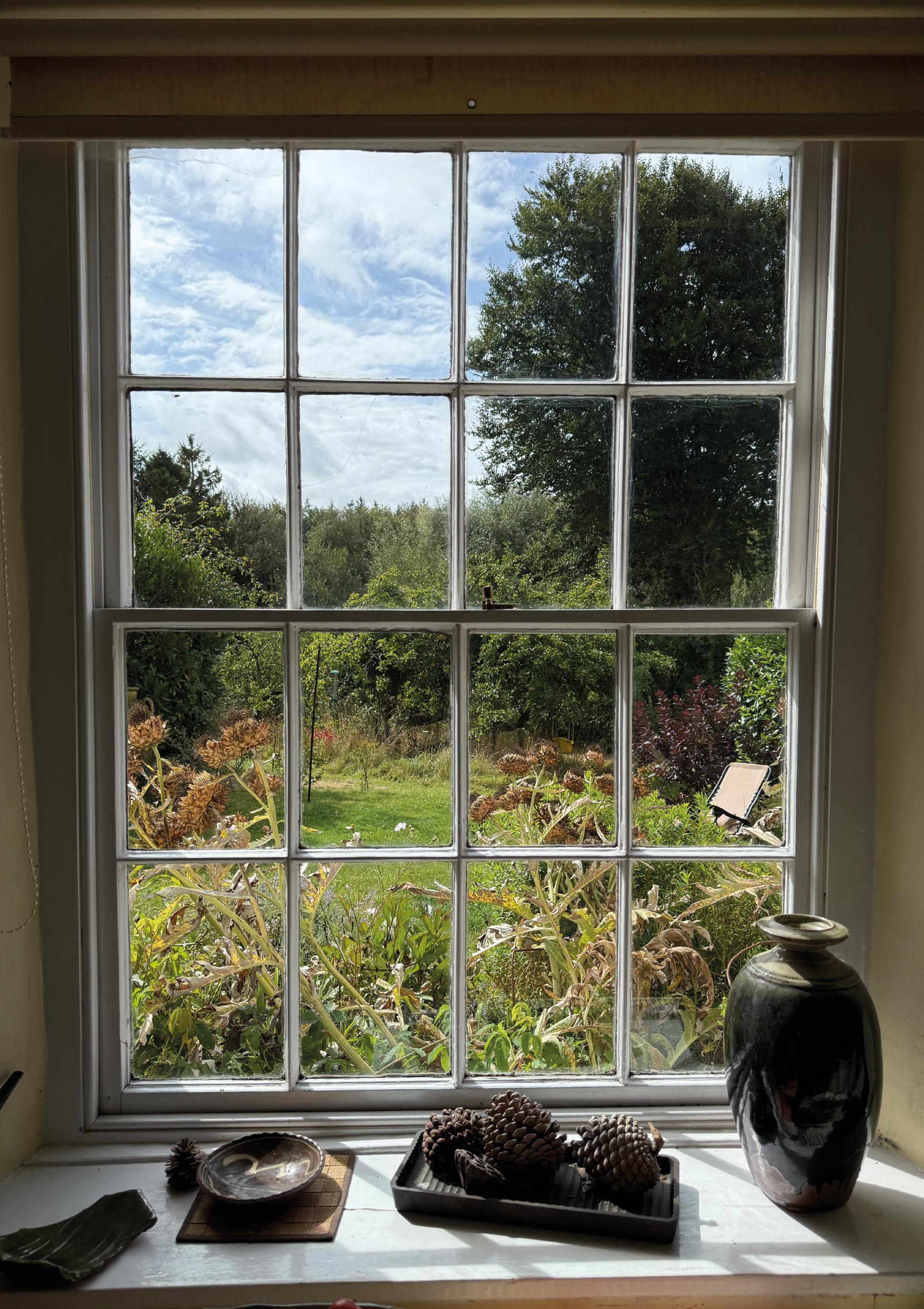
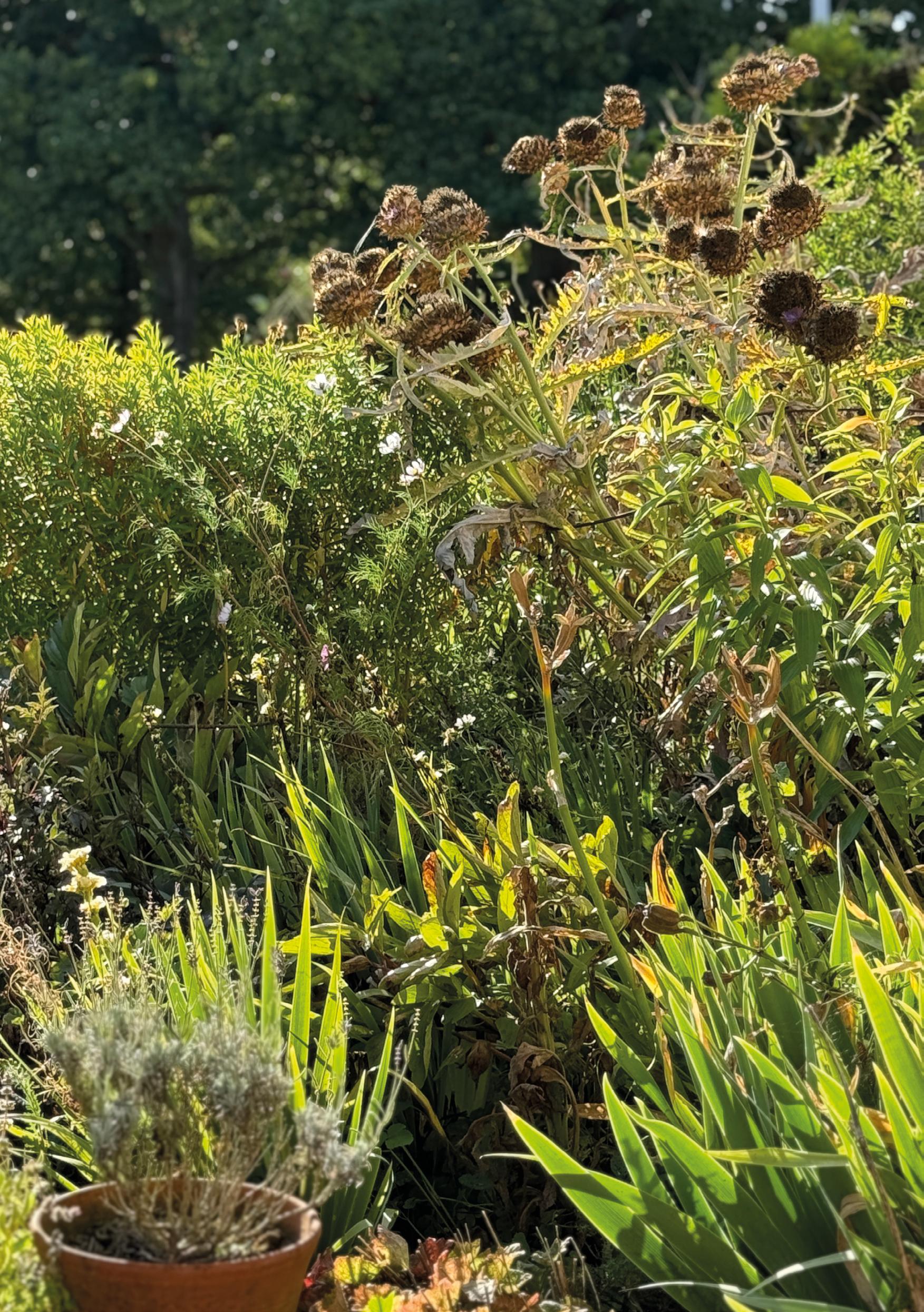
Shebbear may appear idyllic on a clear late summer day, but it is first and foremost a place of work. A living has been made here through skill, consistency and attention. Food is grown, meals are cooked, pots are thrown, fired and used. Nothing is treated as precious, yet the life built around these rituals feels deeply valued. The house is full of paintings, books and pots. It is full of conversation and shared history. As a visitor, my task is not to romanticise it, nor to sell it, but to try to understand and convey what makes Clive and Rosie Bowen’s world distinct. Shebbear Pottery is not simply a studio. It is a way of life shaped by discipline, generosity and the steady belief that handmade objects belong at the centre of daily experience.
It was a pleasure to revisit the photographs and remember the late summer light across the garden and through the kitchen windows. I arrived with Tunnock’s caramel wafers. I left reminded that the real luxury is the everyday act of using a well made pot.
Christina Jansen
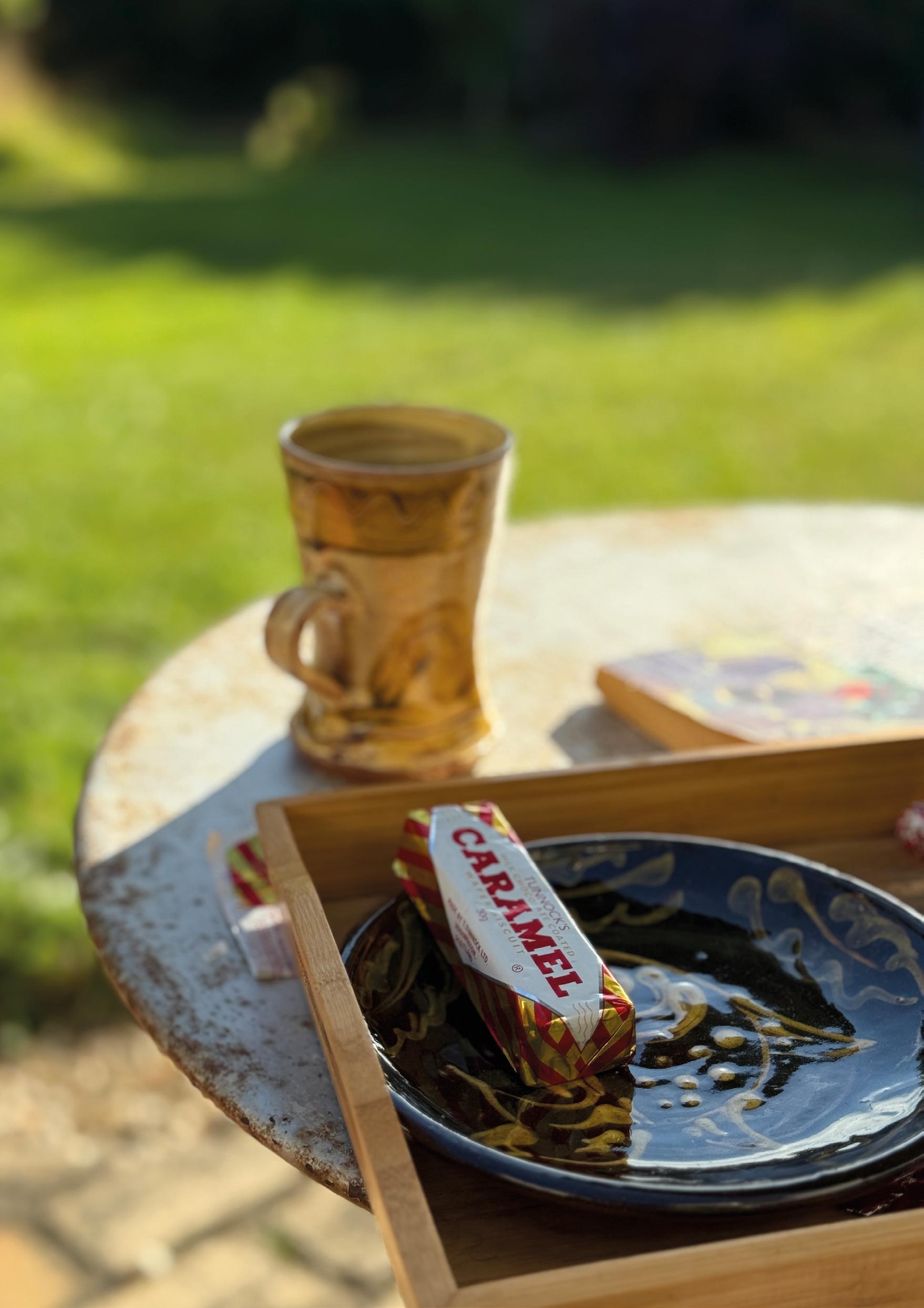
I arrived with Tunnock’s caramel wafers; I left reminded that the real luxury is the everyday act of using a well-made pot.

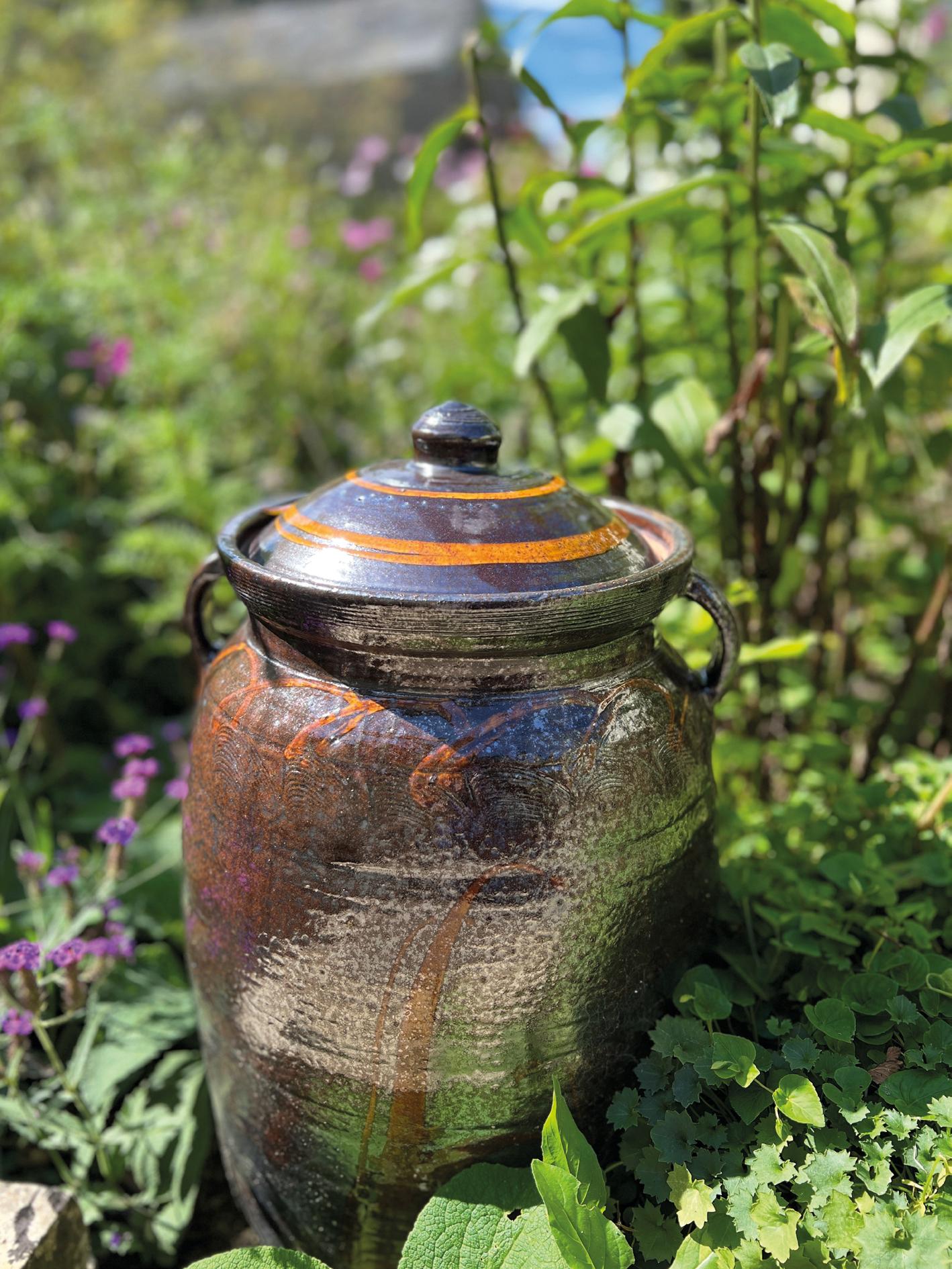
When discussing the disappearance of traditional slipware pottery, Shoji Hamada states in the Mingeikan catalogue - Memoirs of England: English Slipware by Shoji Hamada:
I believe the time will come when the efforts of Leach and Cardew (to ensure the traditional way of making slipware is not forgotten) are understood and appreciated and their new tradition of slipware will emerge. This will be the rediscovery and start of a new appreciation of beauty.
Hamada wrote those words in 1920. It’s taken a while.... Clive Bowen
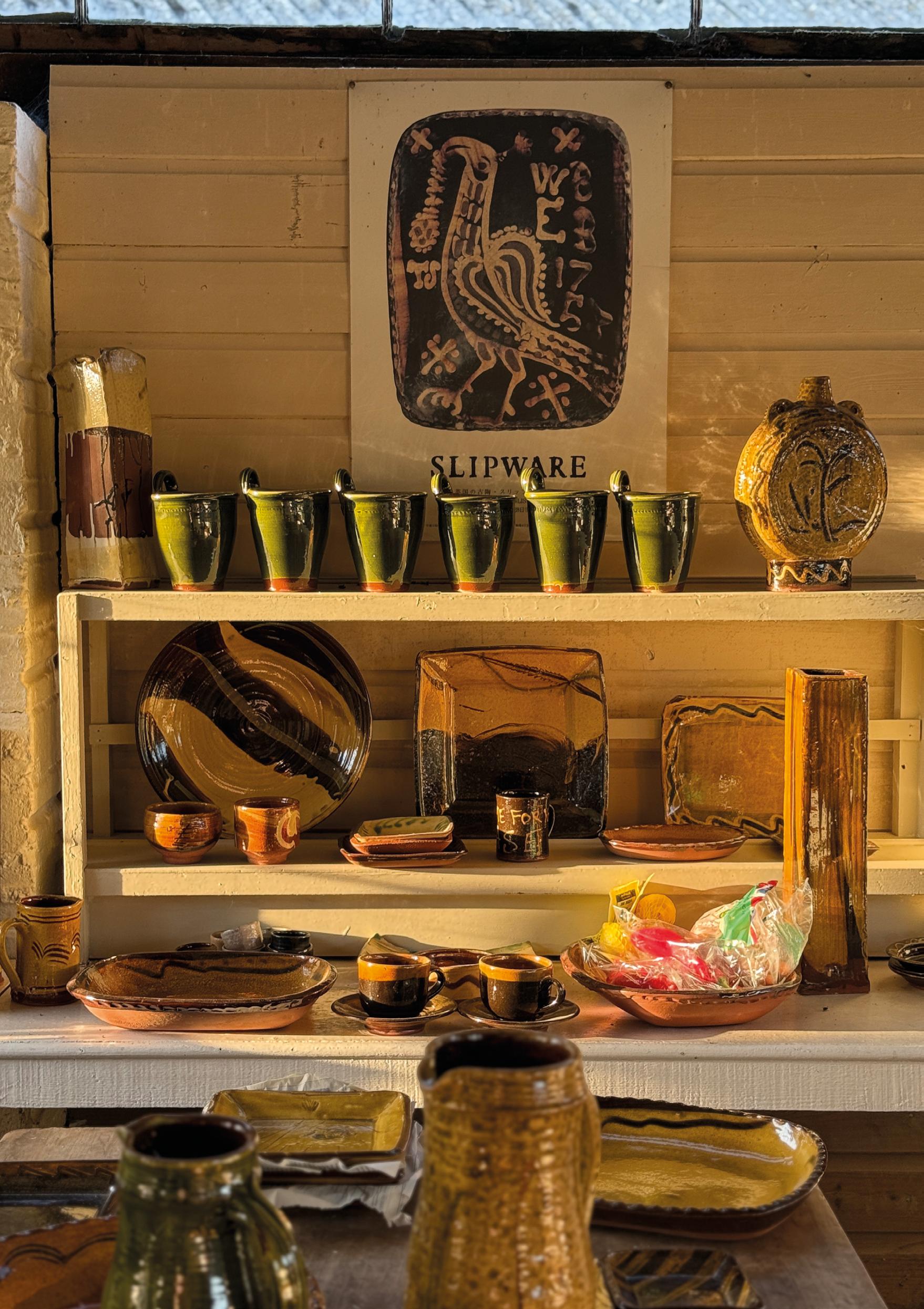
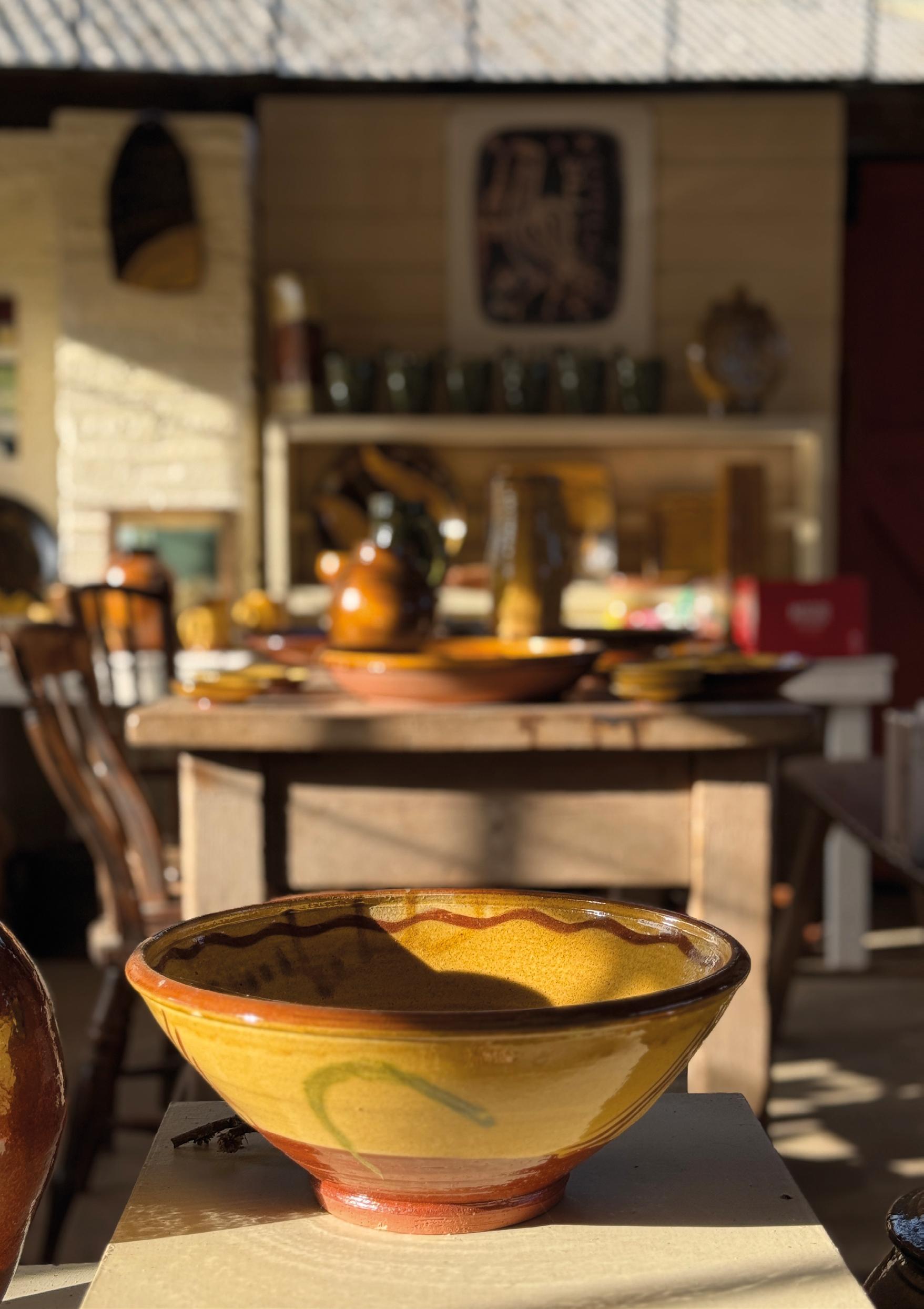
Clive Bowen is as a gestural decorator, even something of an action painter, applying a fluid spontaneity and broad hand to his trailing, pouring and combing. Seeing his pots in groups - runs of splendid jugs, bowls, platters and press-moulded dishesreveals Bowen’s ability to explore within the parameters of his signature forms.
David Whiting
1959 - 1963 Painting & Etching at Cardiff Art School
1965 - 1969 Apprenticeship with Michael Leach at Yelland Pottery in North Devon
1969 - 1970 Production thrower at C.H. Brannam Royal Barum Ware Pottery (est 1848)
1971 Purchased a small agricultural property at Shebbear, near Holsworthy in North Devon and set up a workshop in the former farm outhouses where he still continues to work today.
Selected Exhibitions:
2026 55 Years of Shebbear Pottery, The Scottish Gallery, Edinburgh
2024 Clive Bowen, Goldmark Gallery, Uppingham
2023 Clive Bowen at 80, The Leach Pottery, St Ives
2023 Clive Bowen, Gallery St Ives, Tokyo
2020 Masters of Slipware: East and West, The Scottish Gallery, Edinburgh
2019 Goldmark Gallery, Uppingham
2019 Hankyu Department Store, Osaka, Japan
2017 The Devon Potter, The Scottish Gallery, Edinburgh
2016 Hankyu Department Store, Osaka, Japan
2015 Hankyu Department Store, Osaka, Japan
2014 Goldmark Gallery, Uppingham
2013 Clive Bowen at 70, The Scottish Gallery, Edinburgh
2013 Masaaki Shibata and Clive Bowen, Hankyu Department Store, Osaka
2009 Mashiko Museum of Ceramics, Japan
2009 Goldmark Gallery, Uppingham
2009 Masaaki Shibata and Clive Bowen, Gallery St Ives, Tokyo
(and 2011, 2013, 2015, 2016, 2019, 2023)
Public Collections Include:
Victoria and Albert Museum
National Museum of Wales
Ulster Museum
Crafts Council Collection
York Art Gallery
Nottingham Museum
Liverpool Museum
Stoke on Trent City Museum
Royal Albert Memorial Museum & Art Gallery, Exeter
Fitzwilliam Museum, Cambridge
Winnipeg Art Gallery, Canada
Mingeikan, Tokyo
Mashiko Museum of Ceramics, Japan
Sammlung Rudolph Strasser, Landshut Museum, Germany

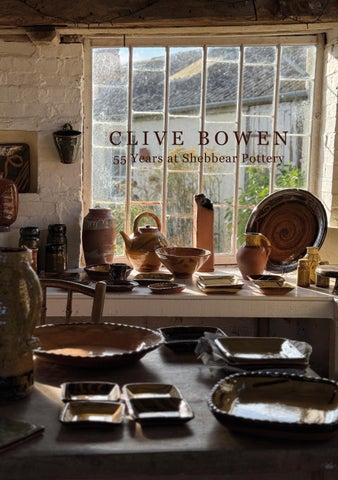
Published by The Scottish Gallery to coincide with the exhibition:
Clive Bowen
55 Years at Shebbear Pottery
2 April - 2 May 2026
Exhibition can be viewed online at: scottish-gallery.co.uk/clivebowen
ISBN: 978-1-917803-20-5
Designed and Produced by The Scottish Gallery
Photography by Christina Jansen and Drew Raitt
All rights reserved. No part of this catalogue may be reproduced in any form by print, photocopy or by any other means, without the permission of the copyright holders and of the publishers.