Bridging borders: Reimagining international high-speed rail stations through aviation principles
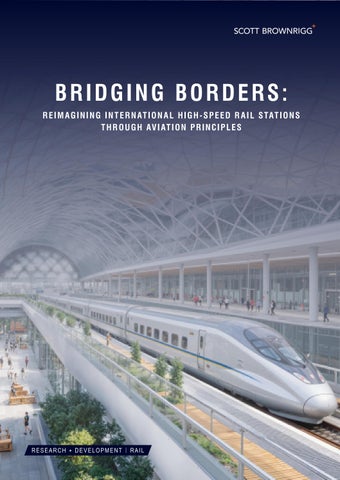
BRIDGING BORDERS:
REIMAGINING INTERNATIONAL HIGH-SPEED RAIL STATIONS THROUGH AVIATION PRINCIPLES
RESEARCH + DEVELOPMENT RAIL
Authors:
Rob Lintern Scott Brownrigg
Massimiliano Martinenghi Scott Brownrigg
Andrew Postings Scott Brownrigg
INTRODUCTION
THE CURRENT INTERNATIONAL HIGH-SPEED RAIL STATION MODEL
2.1 Definition of ‘International’ in rail
2.2 Current International High-Speed Rail Station model
APPLYING AVIATION PRINCIPLES TO CREATE RAIL STATIONS OF THE FUTURE
3.1 Lessons from the aviation industry
3.2 Calculating the requirement for International rail facilities
AN ALTERNATIVE APPROACH TO INTERNATIONAL HIGH-SPEED RAIL STATION DESIGN
4.1 Rethinking the layout
4.2 Stations as destinations
4.3 Visions of the future
CONCLUSION
INTRODUCTION
The demand for international rail services is growing globally, driven by shifting travel patterns, environmental concerns, and advancements in international cooperation on high-speed railways. As cross-border journeys become more common, railway stations - historically designed to serve domestic routes - are now being called upon to accommodate international travel. This presents a significant challenge, as these stations must adapt to meet the increasing demand for seamless cross-border transport while addressing the complexities of international rail travel.
Unlike airports, which have long been purpose-built for global connectivity, there are often challenges associated with incorporating the required customs, immigration, and security processes to support international travel into existing railway stations. This frequently necessitates the refurbishment, expansion, or structural modification of existing railway stations, often prioritising operational adjustments over passenger experience due to spatial constraints. Nonetheless, these transformations underscore the essential role of rail as a cornerstone of sustainable, cross-border transportation systems. Widely recognised for its ability to reduce carbon emissions and minimise environmental impact, high-speed rail has emerged as a critical alternative to short-haul flights, advancing greener and more integrated global connectivity.
Globally, purpose-built international railway stations remain underdeveloped, offering significant opportunities for designers and industry experts to rethink their potential.
Projects like the planned high-speed rail link between the Baltic states and the rest of Europe, Singapore and Malaysia, the completed ChinaLaos railway connecting Kunming to Vientiane, and the cross-border rail service between Bangkok and Phnom Penh highlight the growing interest in developing international rail connections.
These initiatives underscore the urgent need to address inter-connectivity challenges and establish a cohesive global rail network. Yet, significant efforts are still required to design and implement a system of international rail hubs that can match the efficiency, functionality, and passenger experience of airports.
Indicative map of IHSR development
Under construction
Opportunities
Addressing these challenges requires a new typology for international High-Speed Rail (iHSR) station design, one that draws upon lessons from the aviation industry. Insights from decades of airport design - such as efficiency, level of service, facilities planning, and spatial design - can inform strategies for handling the complexities of crossborder rail travel. The requirements for border and customs controls, as well as passenger and luggage security screening, mean that the iHSR station experience will increasingly resemble that of an international airport.
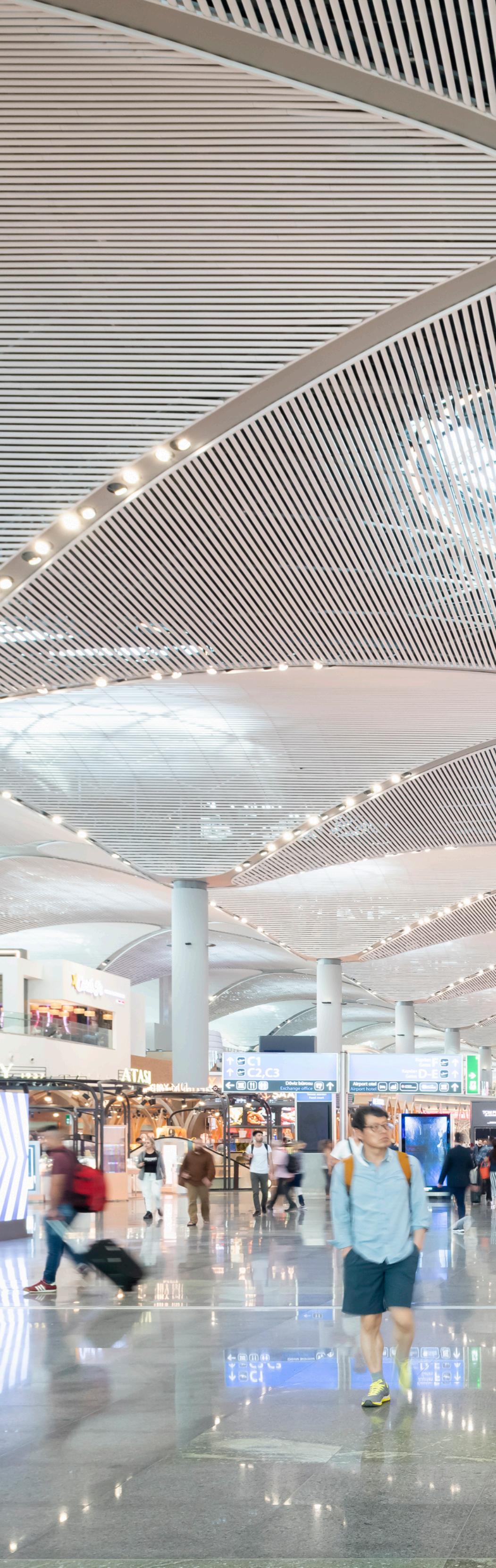
With long-standing expertise in designing major airports, such as Istanbul Airport which serves over 76 million passengers annually, as well as a diverse portfolio of railway and metro stations worldwide, we can demonstrate how such stations would operate. By using industry-recognised projection formulas, we can determine the level of service and
spatial provisions required for check-in, border controls, and security screening. These methodologies ensure international railway stations can handle passenger flows with the same efficiency and security standards as airports; transforming the passenger experience by facilitating smoother, more accessible, and secure international rail travel.
This paper envisions a future where international railway stations are not only integral to sustainable transportation systems but also serve as key enablers of global connectivity. By re-evaluating current design principles, optimising passenger flows, and incorporating innovative design strategies, these stations can rise to the challenge of facilitating international rail travel while promoting environmentally responsible and passenger-centric solutions.
INTERNATIONAL STATION MODEL
2.1 DEFINITION
"International," in transportation, refers to the designation of a facility, route, or system that enables the movement of passengers or goods across national borders. This designation implies compliance with crossborder regulations, the presence of customs and immigration controls, and infrastructure capable of handling international transit efficiently.
International transportation hubs, such as airports, seaports, and railway stations, are designed to support security screening, customs processing, and operational standards that facilitate seamless travel between different jurisdictions.
The functionality of railway stations varies significantly between domestic and international travel, particularly in the context of immigration and emigration control.
Domestic rail travel typically does not involve stringent security or customs procedures, allowing for a seamless and quick boarding process. Passengers can move freely within the country without the need for extensive documentation checks or security screenings, making domestic rail travel an efficient mode of transportation for short to medium distances.
OF ‘INTERNATIONAL’ IN RAIL
International rail travel, however, introduces complexities akin to those found in air travel.
International railway stations, especially between UK and the EU region and other regions with cross-hard-border train services, must incorporate customs and border control facilities to manage the flow of passengers between countries.
These stations require dedicated spaces for immigration and emigration checks, security screenings, and customs inspections, like those found at international airports. Implementation of these facilities ensures that passengers comply with the legal and security requirements of the destination country.
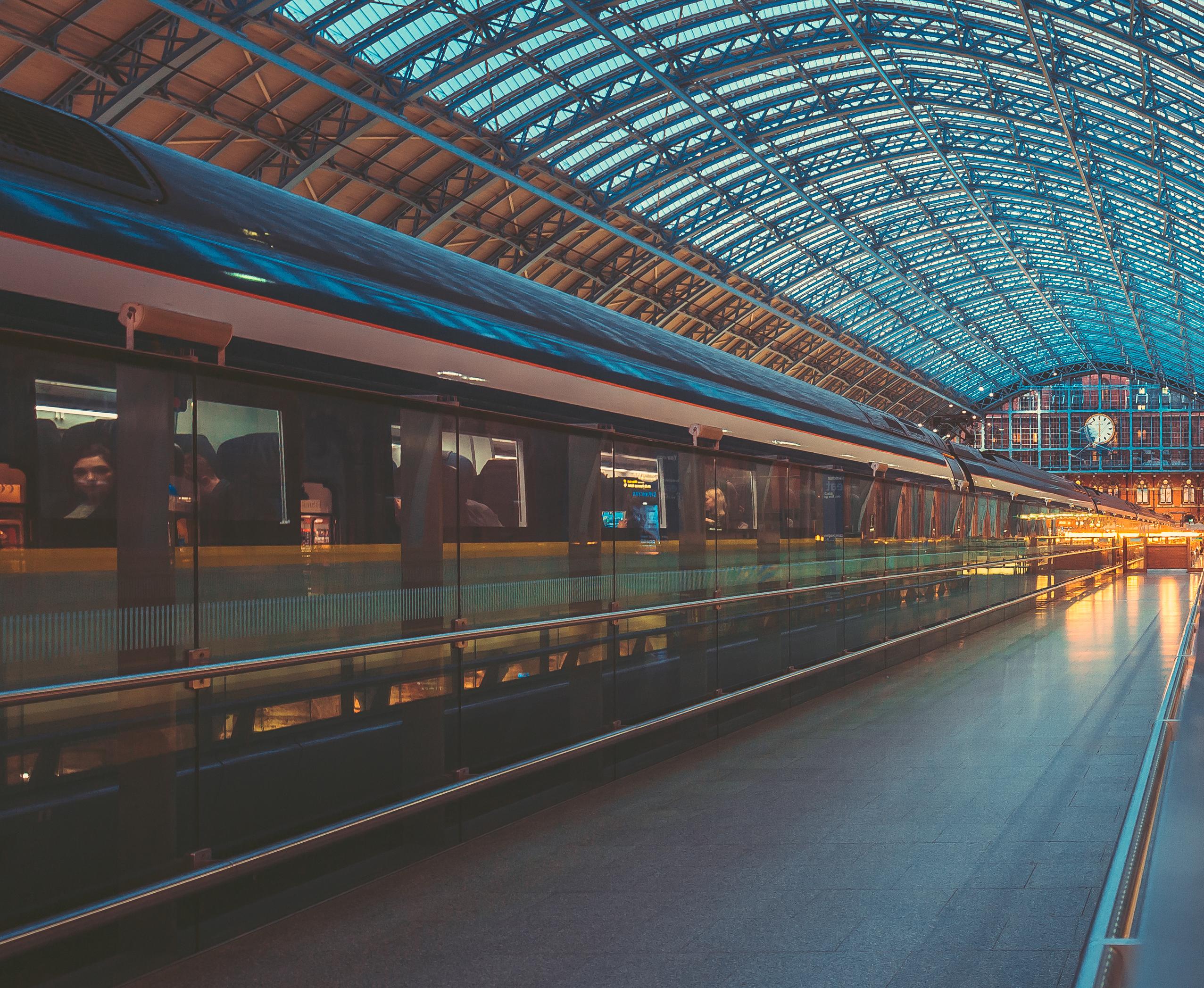
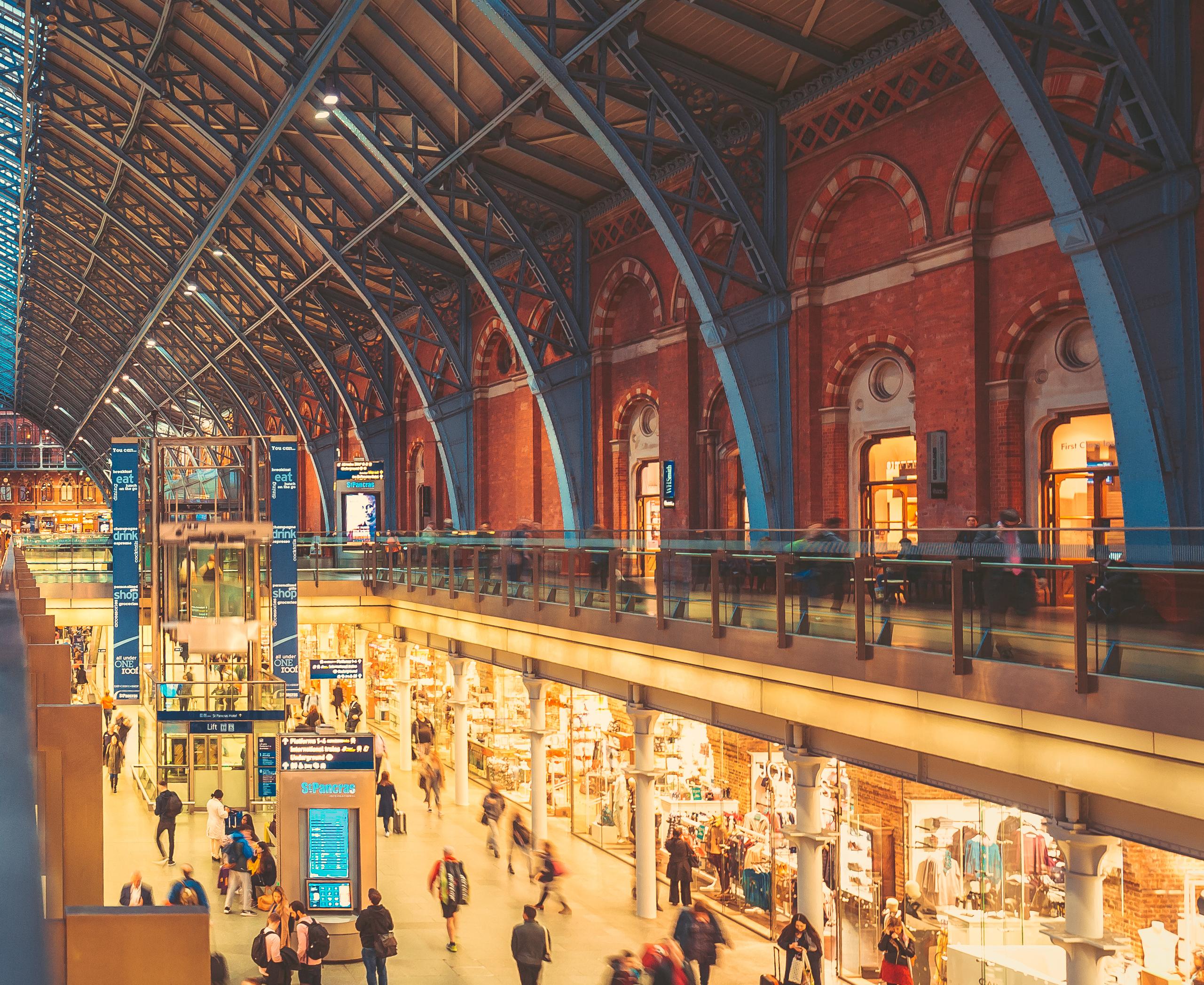
Eurostar terminals in London, Paris, Lille, Amsterdam, Rotterdam and Brussels have been retrofitted to include international facilities while aiming to strike the balance of providing adequate space for border controls while maintaining the efficiency and comfort of the terminal. However, the integration of such facilities into existing railway stations poses significant logistical challenges, including the need for longer platforms to accommodate international trains and more comprehensive security measures.
SCOTT BROWNRIGG | International High-Speed Rail Stations
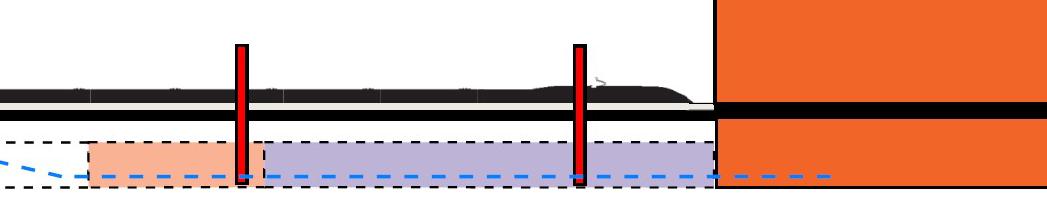
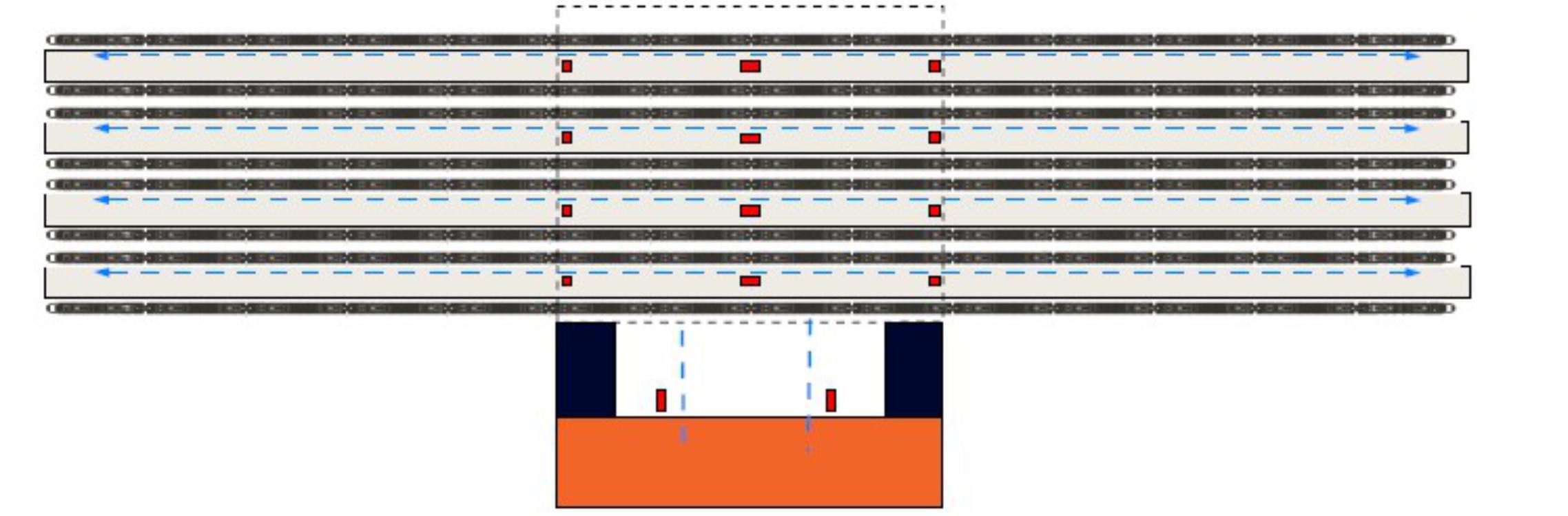
Typical section of an international rail station
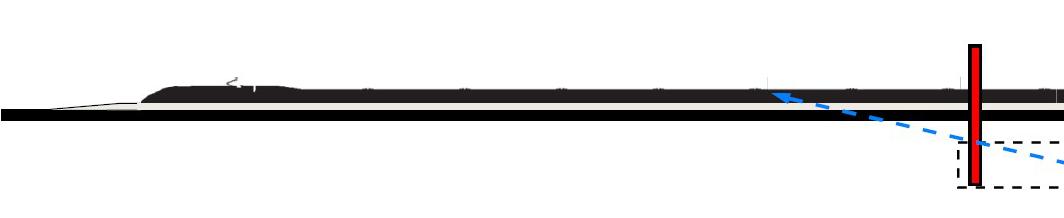
Length of high speed train ~ 400m
The current approach to designing terminus iHSR stations tends to adopt a linear layout with urban realm located in front of the station, and the concourse located at the end of platforms. Customs are often located below platform level where site grading allows, or to one side of the concourse. This layout is often a result of international routes being retrospectively integrated into existing 19th and early 20th century rail termini stations and can create significant challenges for both passengers and the operator, particularly in relation to international rail travel.
The linear layout makes the passenger journey from street/ drop-off to train carriage extremely long. Unlike airports, passengers are usually required to transport their own luggage through the station to where they board the train themselves. Train operators do offer assistance to those that require it, but this has limitations and presents challenges as passengers, regardless of mobility, generally prefer to be independent without the need to actively request assistance. Navigating vertical passenger movement can be problematic. Lifts, unless they are of the people mover type, cause long queues and inclined moving walkways or travelators require significant space provision.
Immigration and security are challenging to integrate into existing stations, particularly where international borders require stricter processes and customs checks. Space for customs can be constrained and often has a negative impact on customer experience at the commencement of the rail journey.
The linear footprint blocks routes at ground level transversely across the site that may have existed previously or would be desirable in the future. To maintain these routes, sub-surface tunnels or above ground bridge links would need to be provided as well as means for step-free access to be maintained. If accommodated as part of the concourse, operations such as train cleaning, crew and re-stocking often need to travel long distances between different areas of the station.
Axonometric view
Rail Station
PRINCIPLES TO OF THE FUTURE
3.1 LESSONS FROM THE AVIATION INDUSTRY
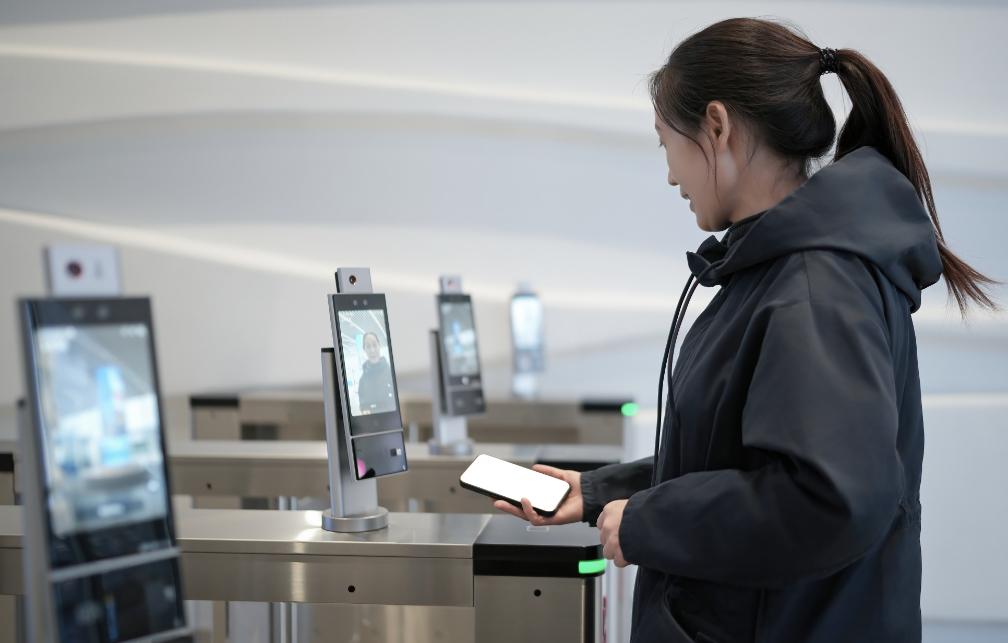
Like international air travel, the process of international rail travel involves multiple stages, including boarding pass access, emigration, security screening, boarding gates, immigration, and customs. These stages are essential to ensure that international rail passengers meet the necessary legal and security requirements but also add layers of complexity and potential delays.
Current design solutions for international rail often employ bespoke methods of addressing requirements, whereas the aviation industry refers to an established set of guidelines that are well understood and widely applied. Designing railway stations to handle these processes efficiently is crucial for the future of international rail travel, drawing lessons from the aviation industry where similar challenges have been addressed:
CUSTOMS, SECURITY & BORDER CONTROL
International airport terminals require a clear separation between arriving and departing passengers to comply with immigration and security regulations and aid passenger flow. To address this, terminals often feature a two-tiered arrival and departure hall structure to ensure that travellers moving through different sections of the airport remain in designated areas, preventing unauthorised access to restricted zones. Transit areas and sterile zones are particularly important for passengers arriving from international destinations but connecting to domestic flights as these individuals must remain in controlled transit spaces until they undergo customs clearance.
For international rail travel, a station could operate using a two-sided method like inter-terminal Light Rail Transit (LRT) systems in airports, where doors open either side allowing arrivals off, before departure passenger board.
CHECK-IN & BAGGAGE HANDLING
The check-in within air travel is a crucial element that ensures efficiency and security for passengers and their baggage. As international terminals require more check-in counters, the layout is usually designed to accommodate additional queuing spaces, immigration booths, and security screening lanes to handle peak-hour traffic effectively.
Baggage handling and inspection facilities play a crucial role in this process. Checked and carry-on luggage must undergo advanced security screening, with designated zones for customs inspections and quarantine procedures. The layout of these areas must ensure efficiency while minimising congestion during peak travel times. This system streamlines passenger experience however it comes at the cost of time, as passengers must arrive at the airport well in advance to complete these procedures. Additionally, there are extra spatial requirements to accommodate associated facilities such as the Baggage Handling System (BHS) and Baggage Reclaim Hall.
Conversely, railway stations do not require passengers to check in their baggage. Instead, passengers are responsible for carrying their large baggage onto the train and storing it in designated areas, such as overhead racks or special luggage compartments. This self-managed system allows passengers to arrive at the station closer to the departure time, providing greater flexibility and convenience. However, this arrangement can be cumbersome for those travelling with substantial or heavy luggage and lacks the stringent security measures present in air travel. Could this be an opportunity to rethink the way international rail travel operates?
Duty-free shopping is a key feature of international airports, providing tax-free goods to travellers departing the country. These stores require specific layouts and access controls to ensure compliance with tax regulations. Additionally, international terminals offer premium lounge spaces catering to long-haul travellers and premium-class passengers. These lounges provide a comfortable and exclusive environment with amenities such as private seating, fine dining, and business services, enhancing the overall passenger experience while creating opportunities to increase revenue for the operator.
There is a current aspiration for transportation interchange buildings, such as international rail stations, to become a destination place. There are architectural methods by which both security cleared passengers, and public side can occupy such spaces with benefits for the public, operators and passengers. The ability for Transport Oriented Development to provide destination amenity place is a major opportunity that is created by the proposed construction of such transport infrastructure projects.
3.2 CALCULATING THE REQUIREMENT FOR INTERNATIONAL RAIL FACILITIES
The Airport Development Reference Manual (ADRM), established by the International Air Transport Association (IATA), is a comprehensive guide outlining best practices and standardised formulas for airport planning and design. These formulas, developed through extensive research and industry collaboration, ensure efficient, safe, and effective operations in airport facilities. By adapting these calculations for rail, planners can ensure they meet international travel requirements with high efficiency.
The development of ADRM IATA formulas has been a collaborative effort involving aviation industry experts, airport operators, and engineers. IATA has gathered decades of operational data, observed patterns in passenger behavior, and analysed airport performance metrics across the globe. By
synthesising this information, IATA has formulated algorithms and models to project space requirements for different airport and transport facilities.
One of the key aspects of ADRM calculations is understanding passenger flow dynamics and facility usage patterns. For instance, data collected from various transportation hubs have been used to establish benchmarks for how passengers move through critical touch points, such as check-in, security, boarding gates, and customs. Additionally, ADRM incorporates factors like peak-hour traffic and seasonal variations to provide realistic and adaptable planning guidelines.
ADRM formulas are continually refined and updated based on emerging trends, such as advances in technology, evolving security
Emigration 1
Dedicated processing areas for passengers departing a country.
• Requires space for passport control, egates, and customs declarations.
• Passenger throughput calculations ensure minimal congestion and smooth processing.
2
Advanced screening areas similar to those found in airports.
• Requires sufficient lanes for baggage and personal screening to prevent bottlenecks.
• Automated and manual screening options must be incorporated based on peak demand.
3
Security Screening Boarding Gates
3
Organised gate areas guide passengers platforms.
• Require adequate digital display systems information.
• Space calculations smooth passenger overcrowding.
Boarding Gates
protocols, and changes in passenger expectations. For example, the increasing use of automated check-in kiosks and bio-metric screening systems has influenced the space allocation guidelines for check-in areas and security lanes. This ongoing evolution ensures that the formulas remain relevant and practical for modern transportation operations.
The primary purpose of ADRM IATA formulas is to help transportation planners and designers accurately calculate the spatial requirements for various facilities. These formulas could be adapted to enable stations to efficiently handle passenger volumes and ensure a smooth and streamlined rail travel experience.
By using ADRM guidelines, stations can be designed with optimised layouts and avoid issues such as congestion, delays, or inefficient use of space.
To design an efficient international rail station, the following core facilities must be analysed for their spatial and operational requirements:
areas that efficiently to their respective
adequate waiting space and systems for real-time
calculations must ensure passenger movement without
Immigration Customs 5 4 5
Facilities for processing incoming passengers entering the country.
• Requires bio-metric screening, passport control booths, and e-gates.
• Space calculations must factor in waiting areas and potential processing delays.
Inspection zones for baggage and personal belongings.
• Includes green (nothing to declare) and red (goods to declare) channels.
• Adequate queuing space and baggage screening areas must be included in the design.
AN ALTERNATIVE APPROACH TO INTERNATIONAL HIGH-SPEED STATION DESIGN
APPROACH HIGH-SPEED RAIL
4.1 RETHINKING THE LAYOUT
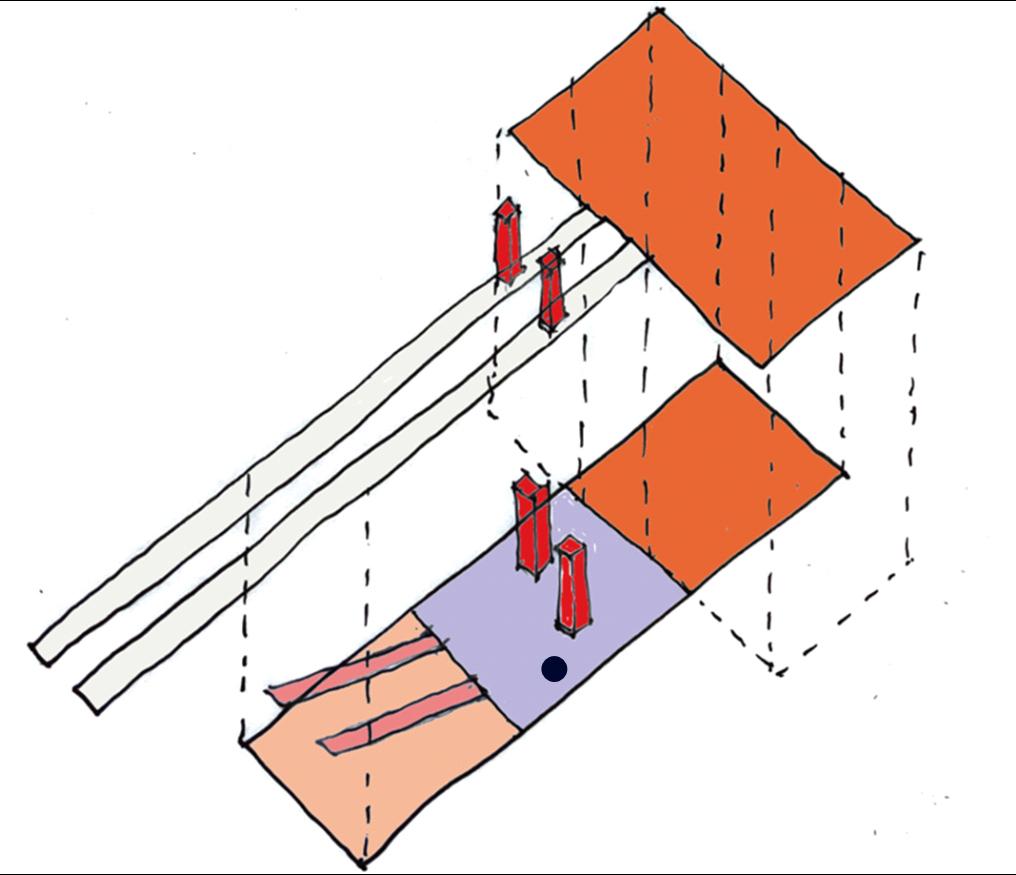
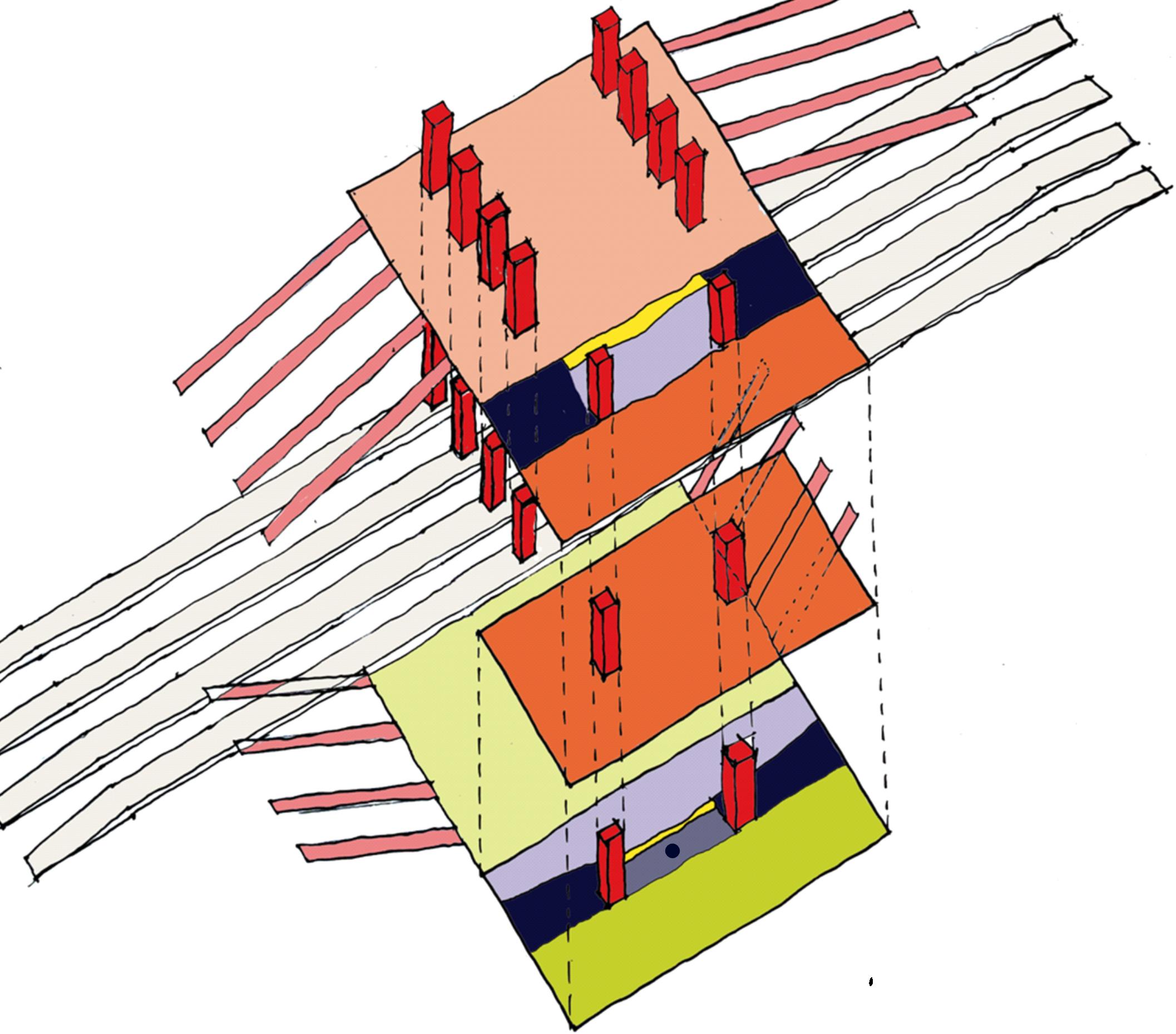
Alternative configurations and layouts for the station itself soon become apparent. Future rail terminal designs should consider a less linear footprint, with centralised operations, the terminus concourse located to the side of the platforms, and urban realm areas positioned in front of the concourse.
To aid passenger flow, international airports often locate arrivals and departures adjacent to each other on the same level or, more commonly, on two separate levels. These layout design strategies could also be applied to rail terminals, incorporating the facilities required for international travel while splitting the train station into two levels for arrivals and departures.
Departure Hall
Arrival Hall
First Floor Departures
Lower Ground Floor Arrivals
Ground Floor Platforms
Security Border / Immigration
Platforms
High-Speed Rail Station
Departure Hall
Departure Hall
Ground Floor Platforms
Platforms
Customs & Offices
Lower Ground Floor Arrivals
Arrival Hall Security Border / Immigration
4.2 STATIONS AS DESTINATIONS
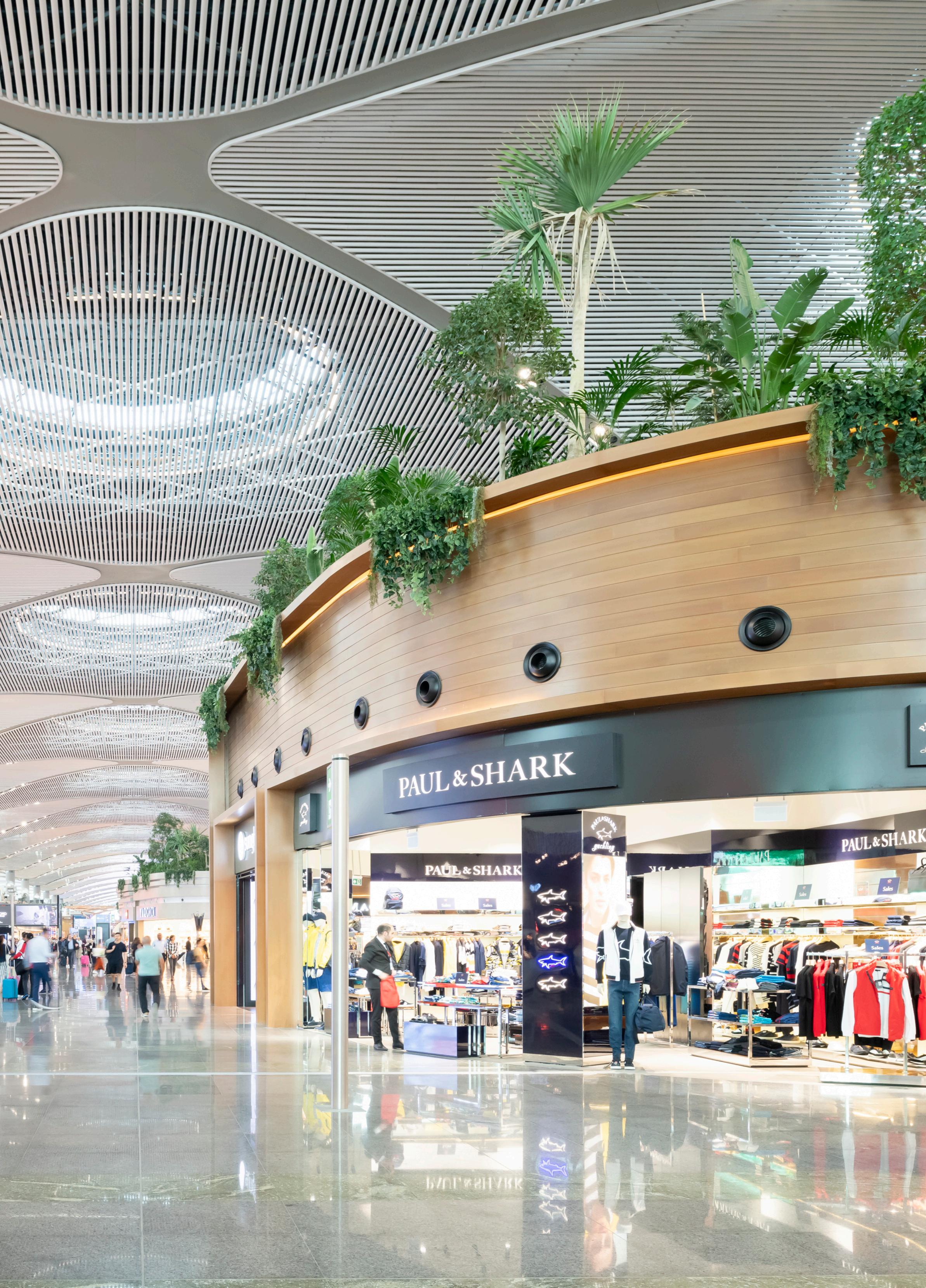
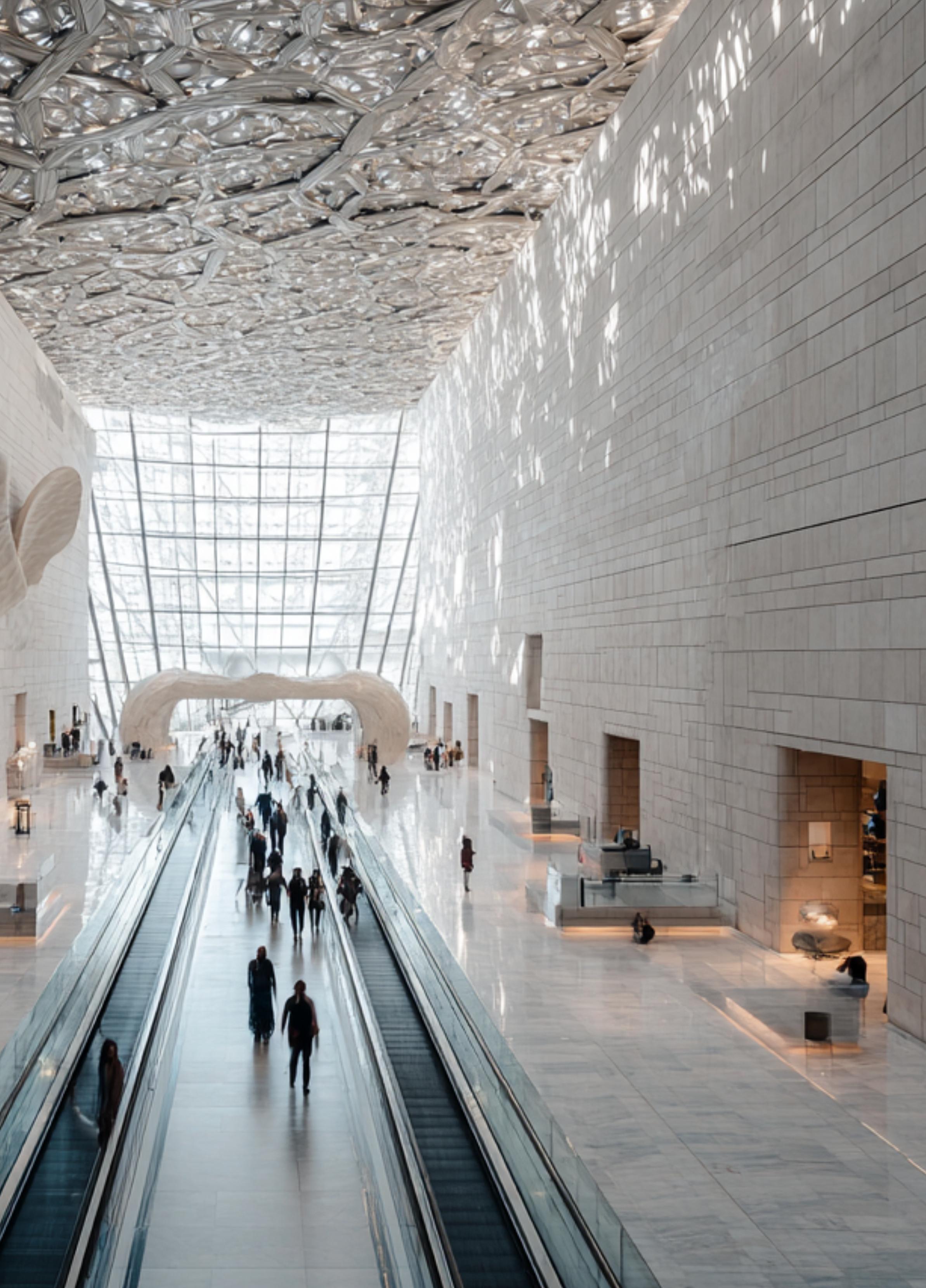
When considering the possibility of designing a new iHSR terminal from scratch, we should consider their location and potential to act as a new destination and contribute to sense of place. There are numerous examples of airports that have successfully incorporated cultural amenity as part of the wider offer, creating publicly accessible spaces that both passengers and visitors can enjoy. Amenities can range from bars and restaurants to exhibitions and museums, high quality green space and gardens, to music venues, each creating opportunities to enhance visitor experience while showcasing local culture and climates.
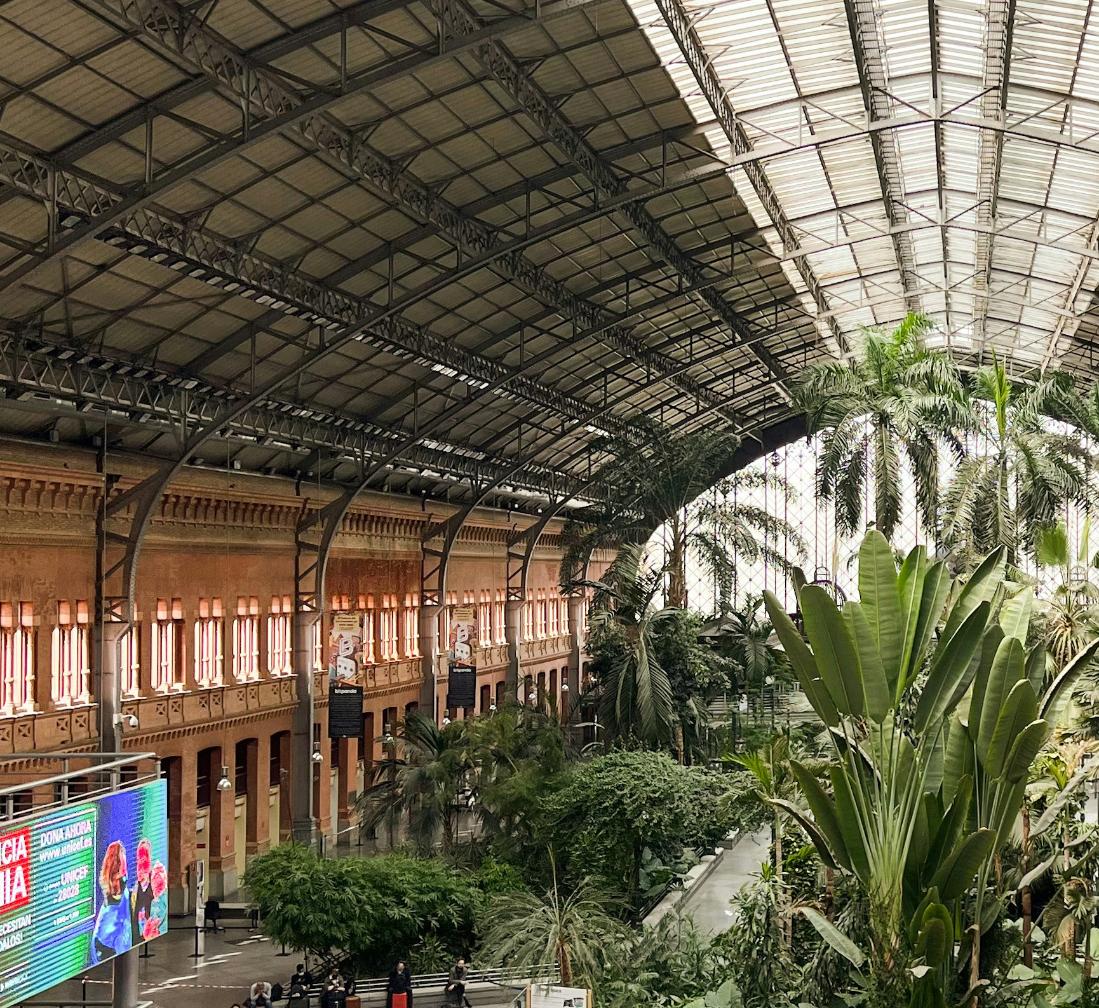
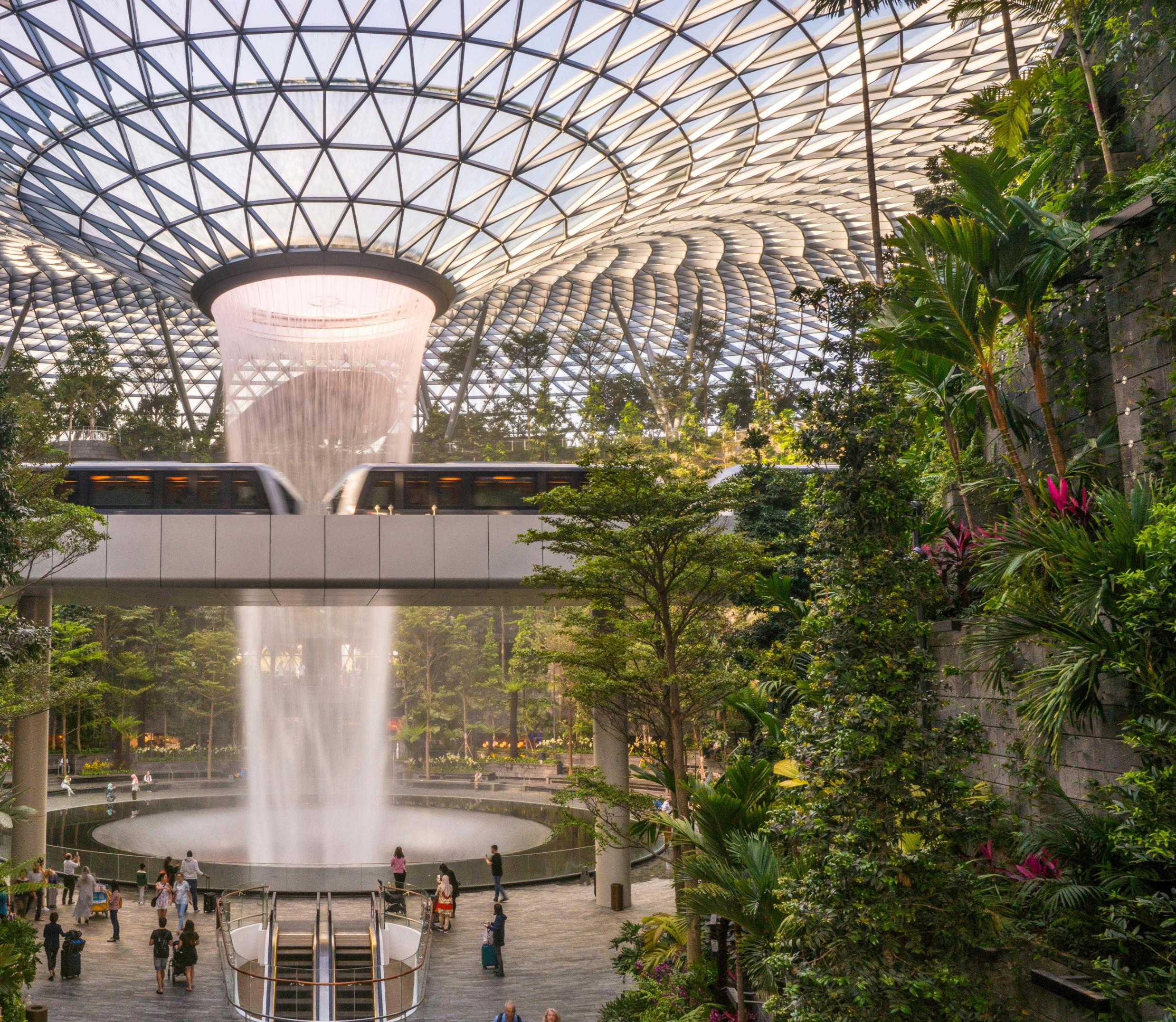
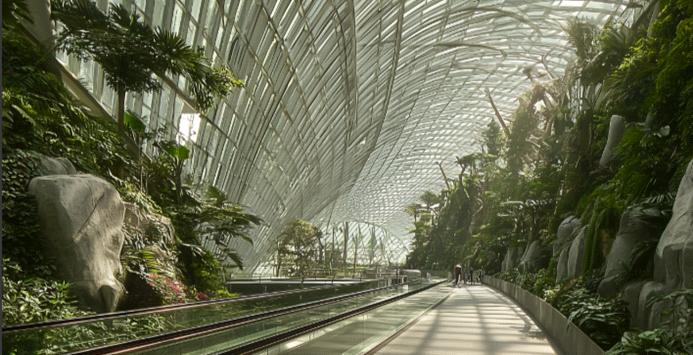
Excellent examples of this include The Jewel at Changi Airport in Singapore which wraps five stories of retail, food and beverage around the world’s tallest indoor waterfall, Schiphol Airport in Amsterdam which provides passengers with the unique opportunity to experience Dutch arts and history at the airports own Rijksmuseum collection, and Madrid's Atocha train station, which houses a mature tropical/botanic garden within its historic structure. Incorporating natural elements, flora and fauna into future rail station design can improve air quality, reduce noise and promote wellbeing.
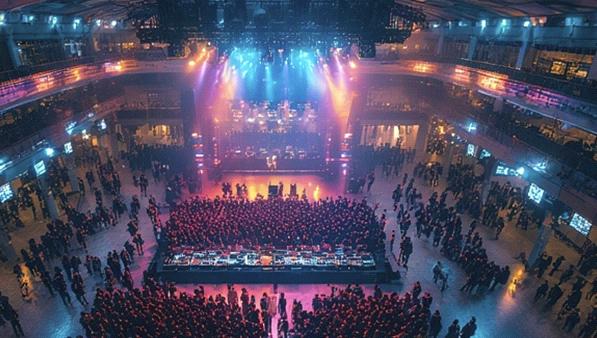
Good acoustics also often come hand in hand with station design. The ‘Whispering Arch’ in Grand Central Station in New York has become a tourist attraction in its own right, and the simple placement of grand pianos in London stations has famously inspired impromptu performances by musicians travelling through. Building upon this idea, there is opportunity to co-locate music venues or theatres with future train stations, embracing their civic role and capitalising on inherent connectivity.
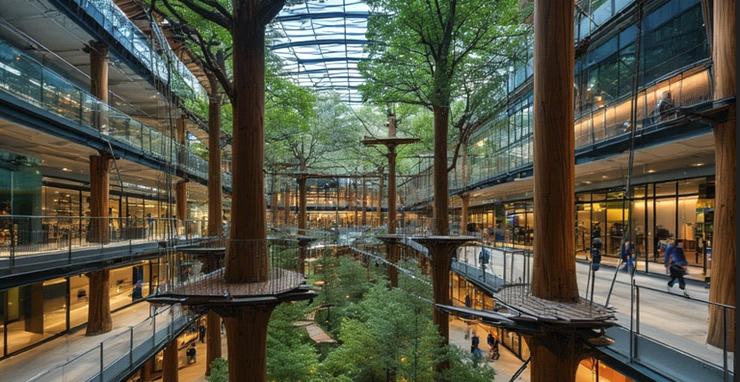
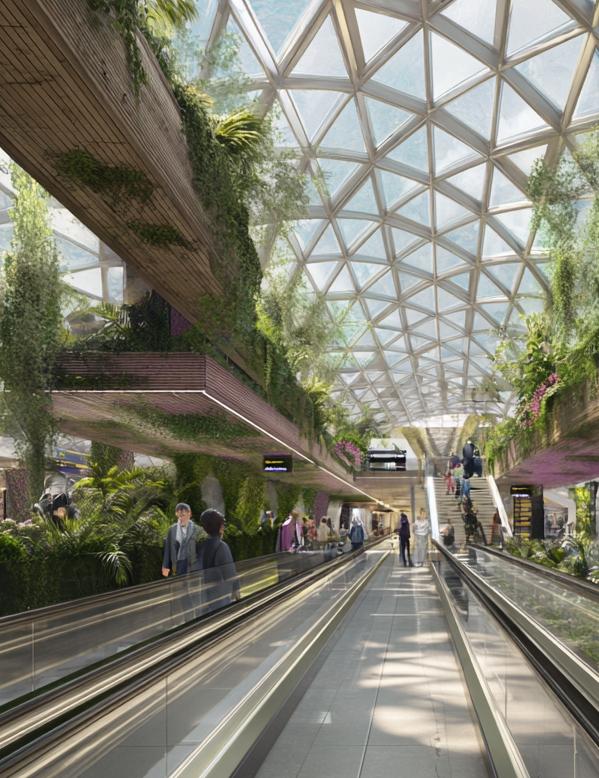
Future international high-speed rail stations could incorporate a wide range of cultural experiences for visitors to enjoy such as art galleries, music venues, gardens and adventure parks.
Play
Music
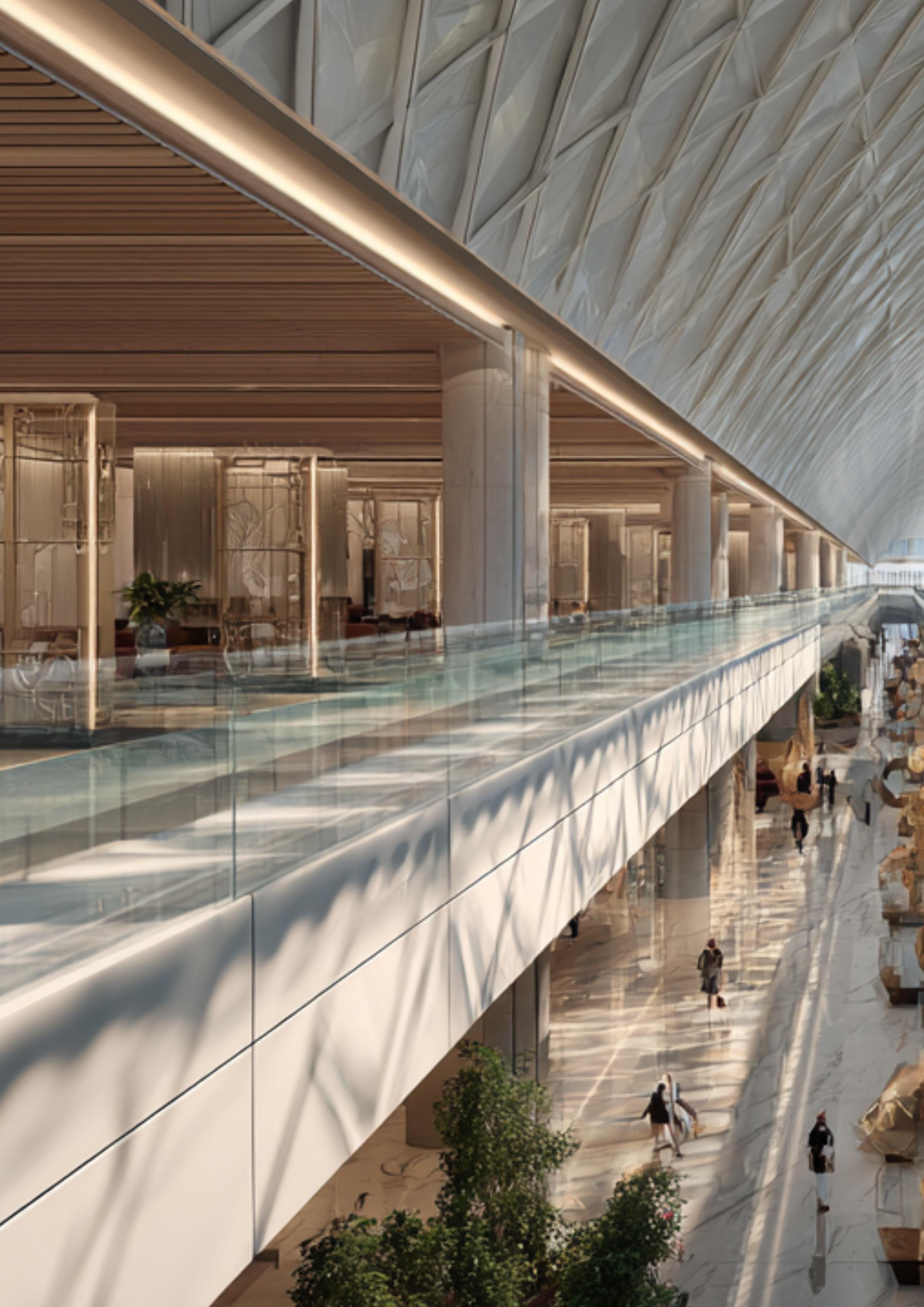
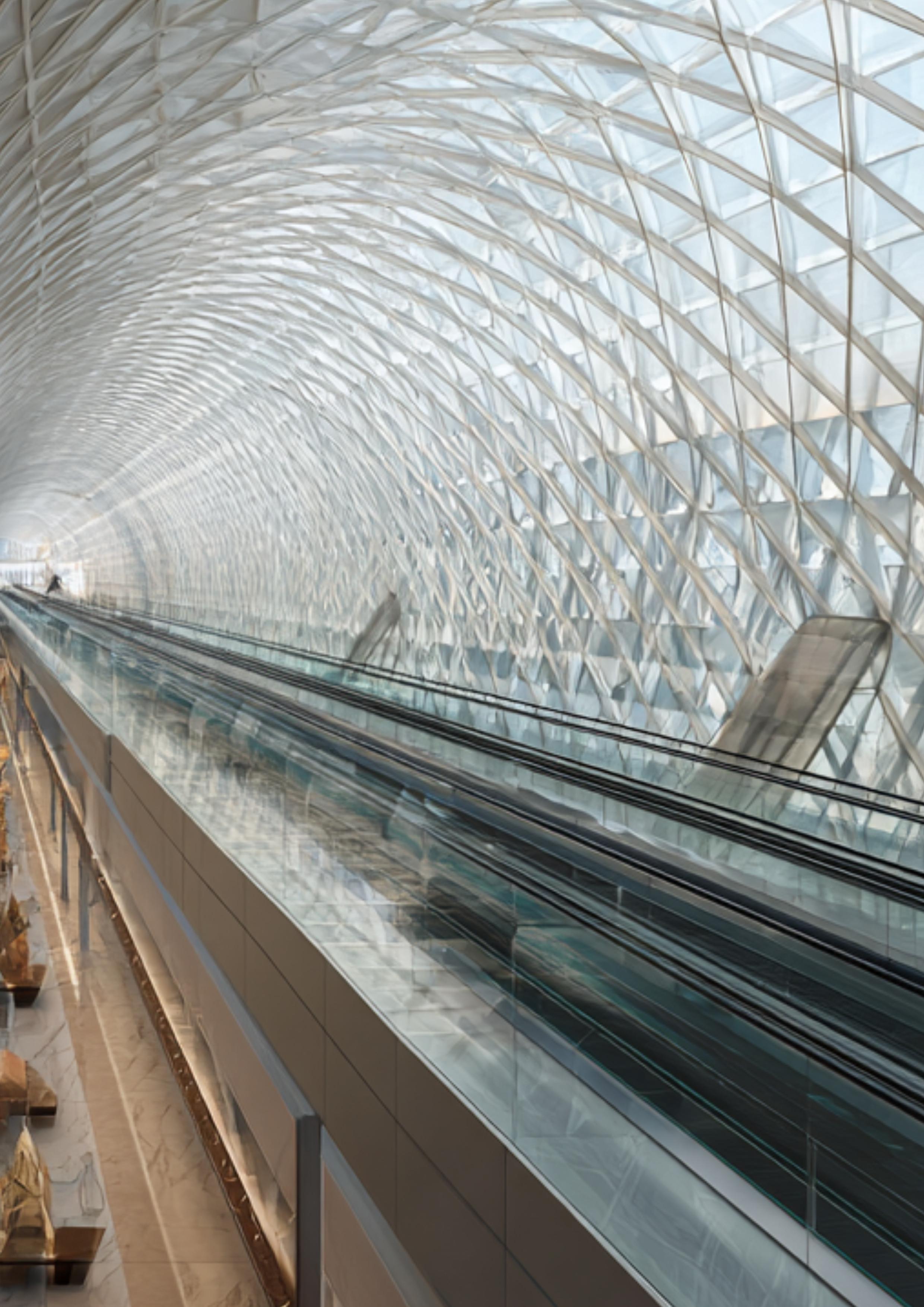
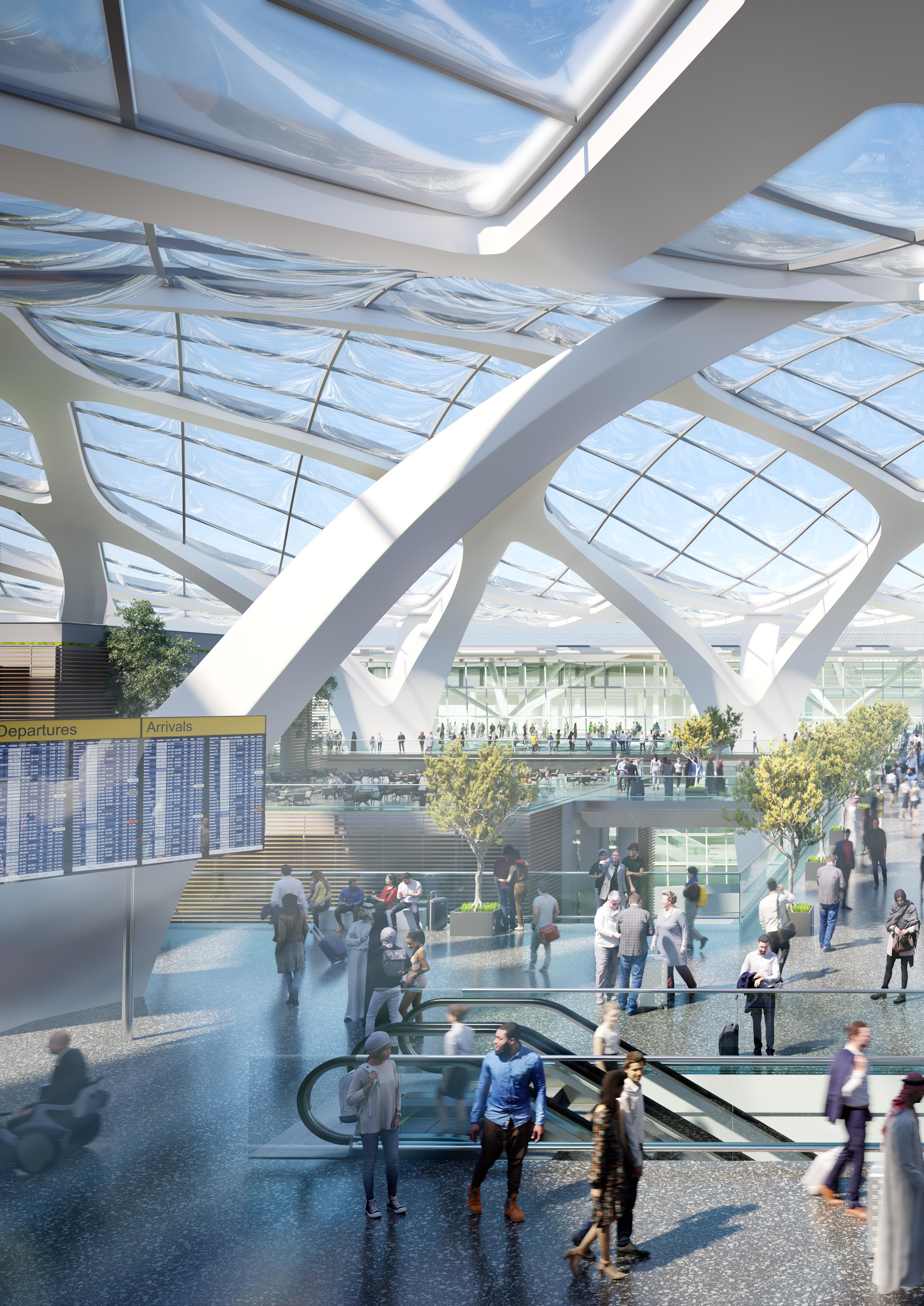
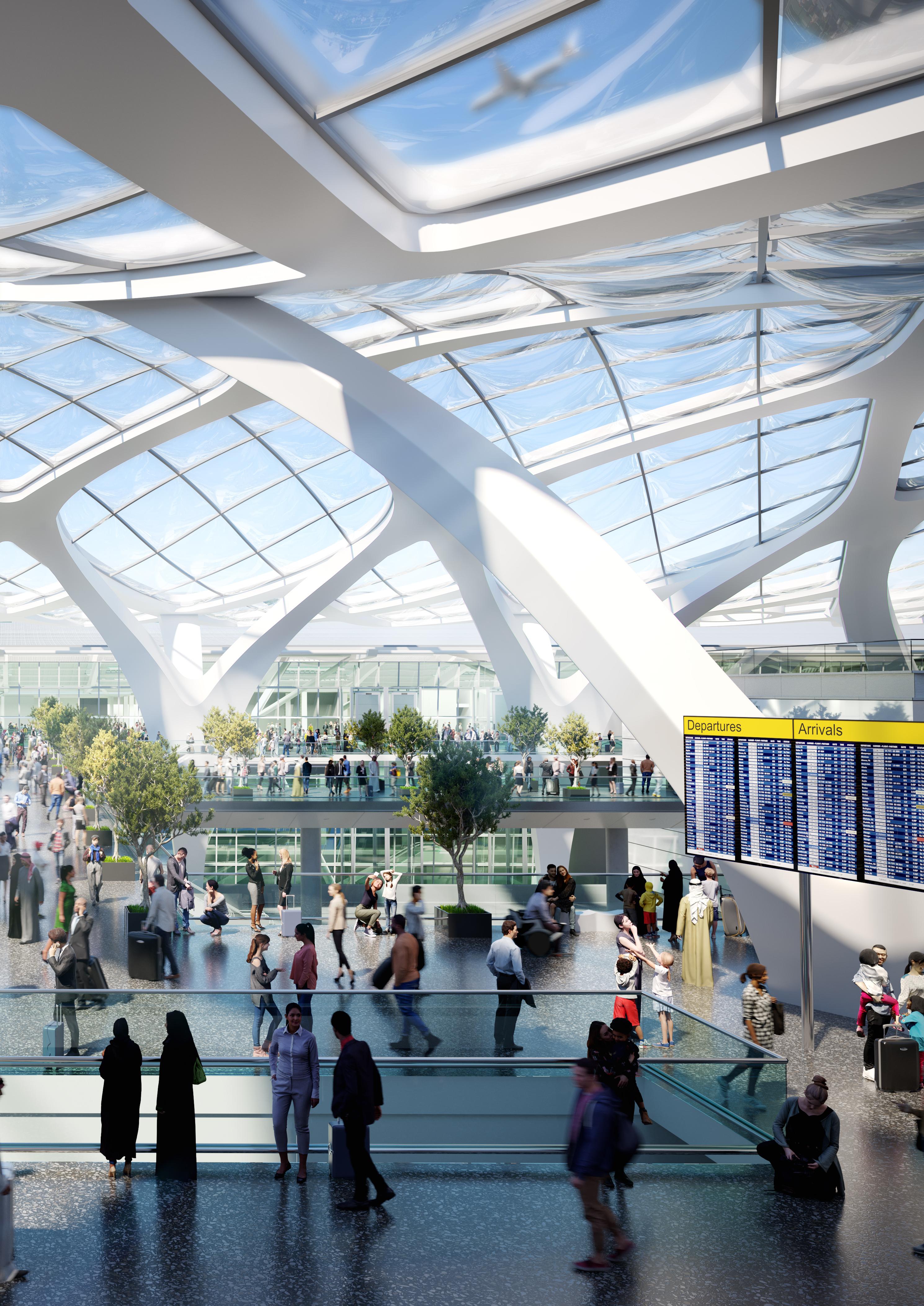
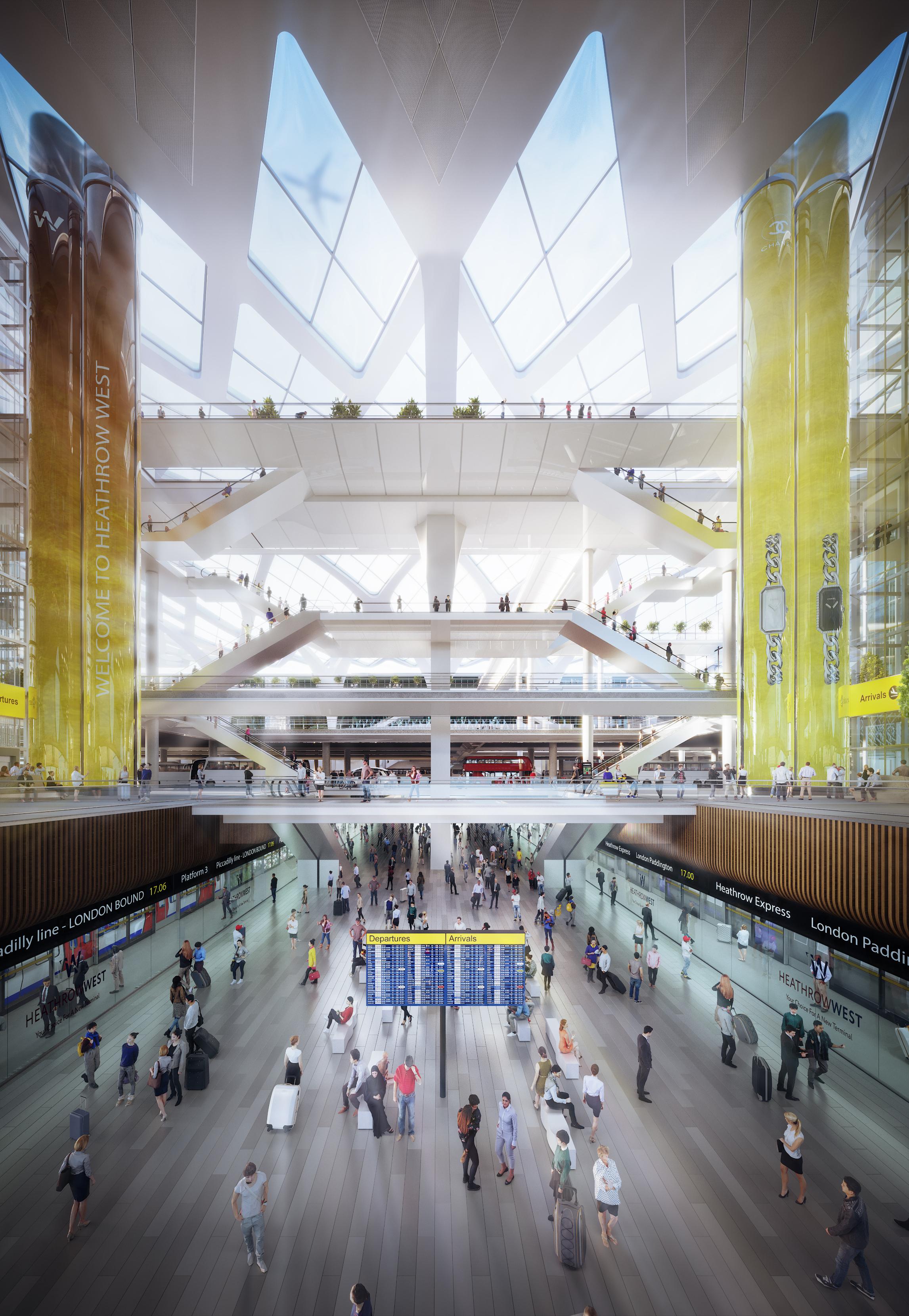
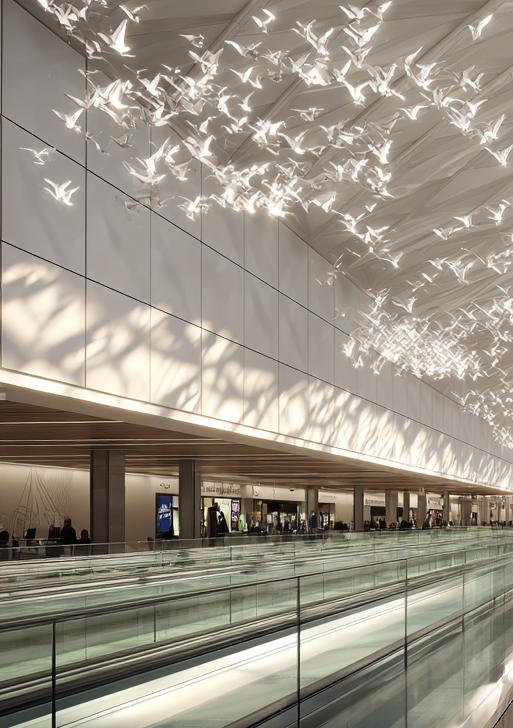
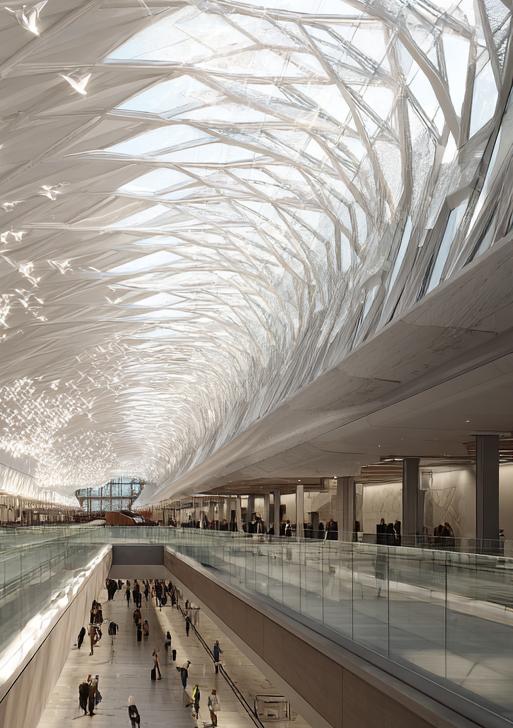
AI generated visualisation of a concourse
ABOVE
RIGHT
Sketch of a multi-level high speed rail station by Rob Lintern
Creating an equitable and enjoyable passenger experience for all is key. Cross-border iHSR stations will require passenger ‘pooling spaces’ –spaces to allow for those who have been through security screening processes to wait in readiness to board their trains. This pooling space offers an opportunity for operators to both manage cleared passengers but also generate additional revenue through provision of food and beverage, retail and other facilities. As well as providing environments and activities to enhnace the passenger experience.
This layout promotes a more equitable passenger experience by reducing passenger travel distances facilitating greater independence for a larger number of passengers. Alternatively centralising operations within the terminal can enhance operational efficiency by reducing distances for cleaning, crew movements, and restocking.
CONCLUSION
This study highlights that retrofitting existing rail terminals to incorporate international facilities often compromises passenger comfort and space, as seen in cities like London, Paris, Amsterdam, and Brussels. The challenges include differences in track gauge, clearance gauges, gradients, train lengths, axle loads, and electrification systems, making direct international rail connections complex and limited to specifically designed routes.
To address these challenges and enhance the efficiency of international rail travel, lessons from aviation can be applied to rail station design. Using IATA ADRM calculations and formulas, space requirements for international facilities such as boarding pass access, emigration, security screening, boarding gates, immigration, and customs can be determined. This approach ensures that rail stations are equipped to handle international passengers with the same level of efficiency and security found in airports.
Ultimately, the successful internationalisation of rail stations requires a careful balance between maintaining passenger comfort and meeting the stringent requirements of international travel. By drawing on insights from the aviation sector and adopting innovative design strategies, rail stations can better serve international passengers, facilitating smoother and more secure travel experiences for all.
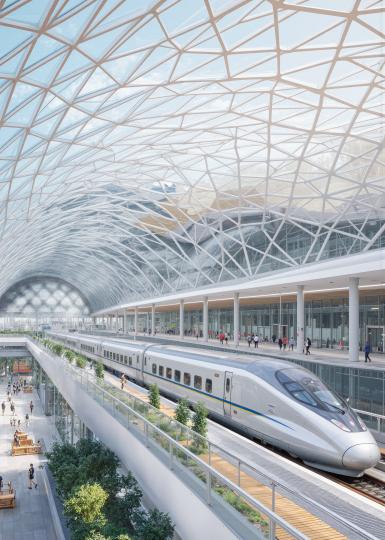
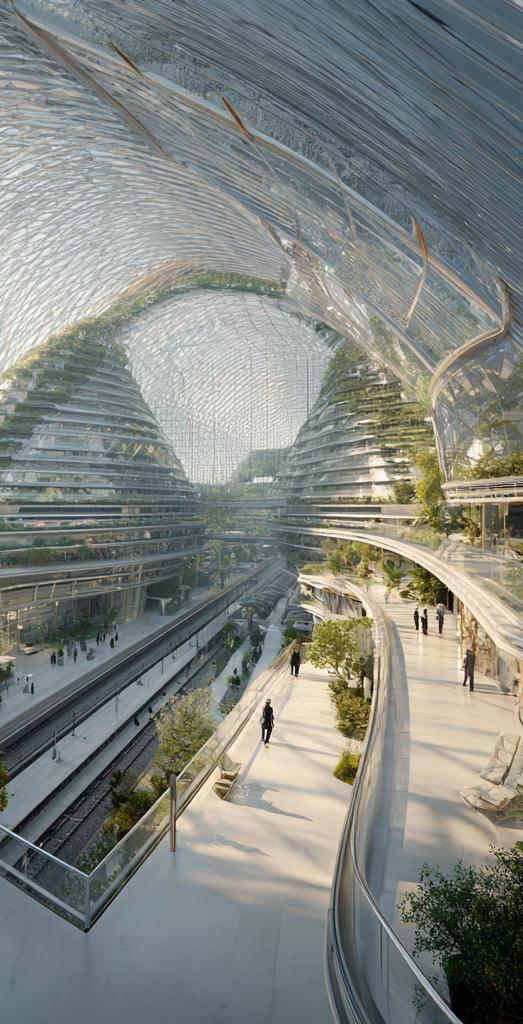
RIGHT AI generated visulation of an international High Speed Rail Station of the future