

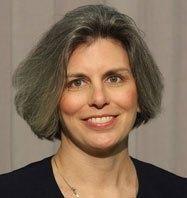
Dr. Leslie Baldwin, NC Executive Director
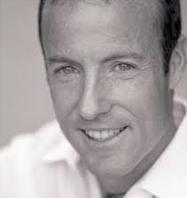
Thomas Soth, NC ACTFL Representative (2027)

Jennifer Carson, VA Awards & Scholarships Co-Director (2027)
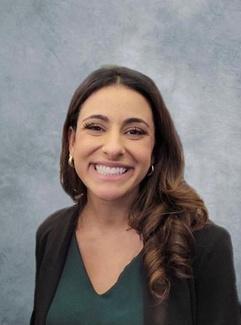
Dr. Amanda Minnillo, SC President (2027)
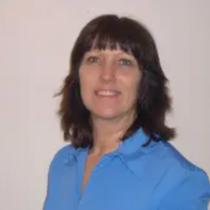
Linda Markley, FL Program Co-Director (2030)
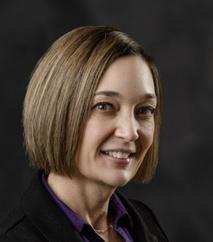
Dr. Kelly Moser, MS Awards & Scholarships Co-Director (2028)

Meredith White President - Elect & Recording Secretary (2031)
Linda Santiago, FL Program Co-Director (2027)
Kimberly Renée Watson, MS Co-Registrar & SCOLTalk Co-Editor (2028)
Paula Garrett-Rucks,
Pam Benton, FL Immediate Past President (2027)

Tanika Perry - Vincent, GA Program Co-Director (2029)
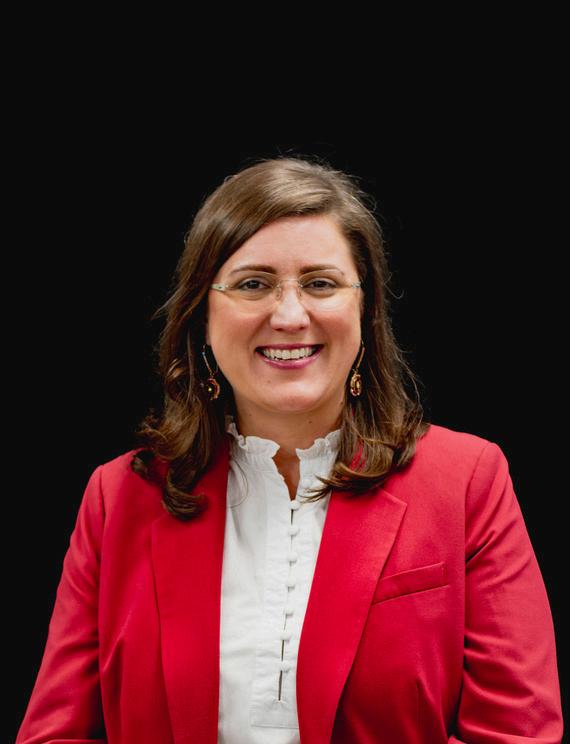
Dr. Shannon Borum, GA Co-Registrar & SCOLTalk Co-Editor (2029)

Dear SCOLT Community,
It is truly an honor to serve as President of the Southern Conference on Language Teaching. SCOLT has long been a space where educators come together not only to grow professionally, but to reconnect to the deeper purpose behind our work. Together, we create language classrooms where students feel seen, valued, and connected—and through that shared work, we are not just teaching language, we are building better worlds.
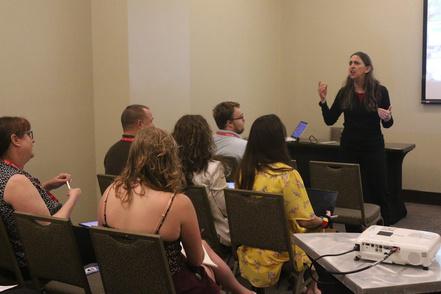
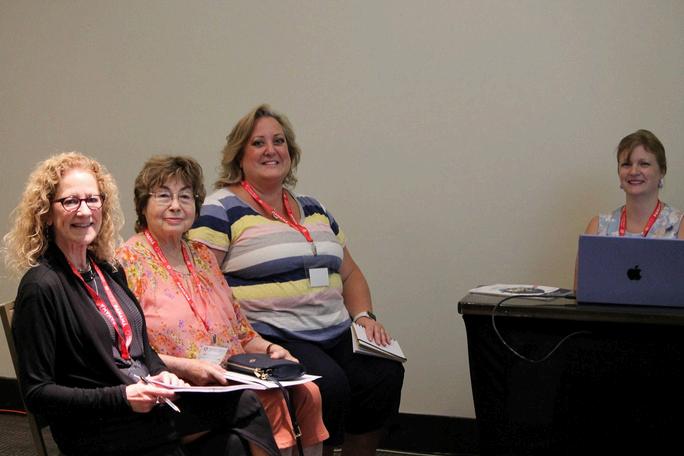
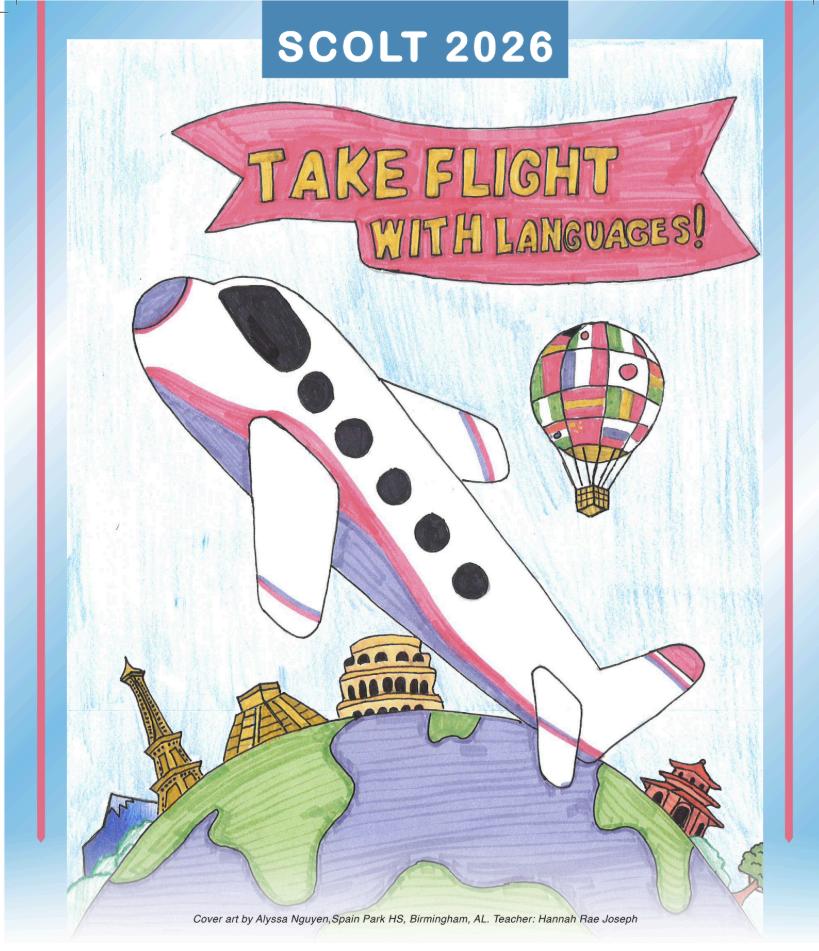
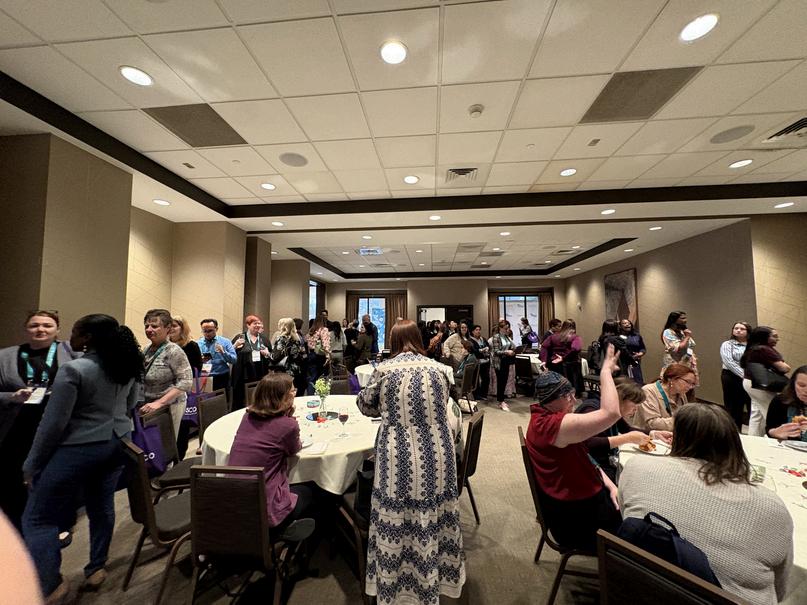
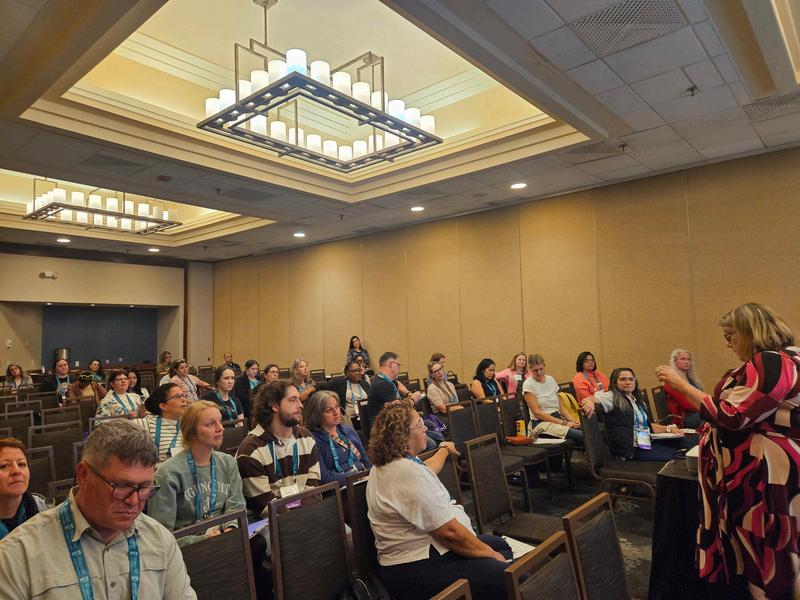
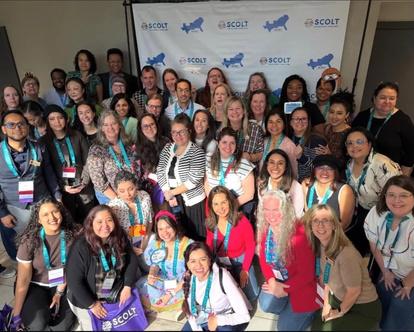
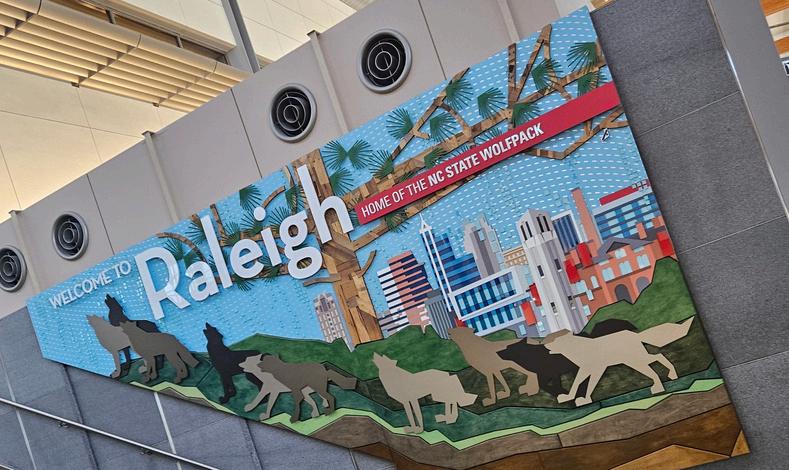
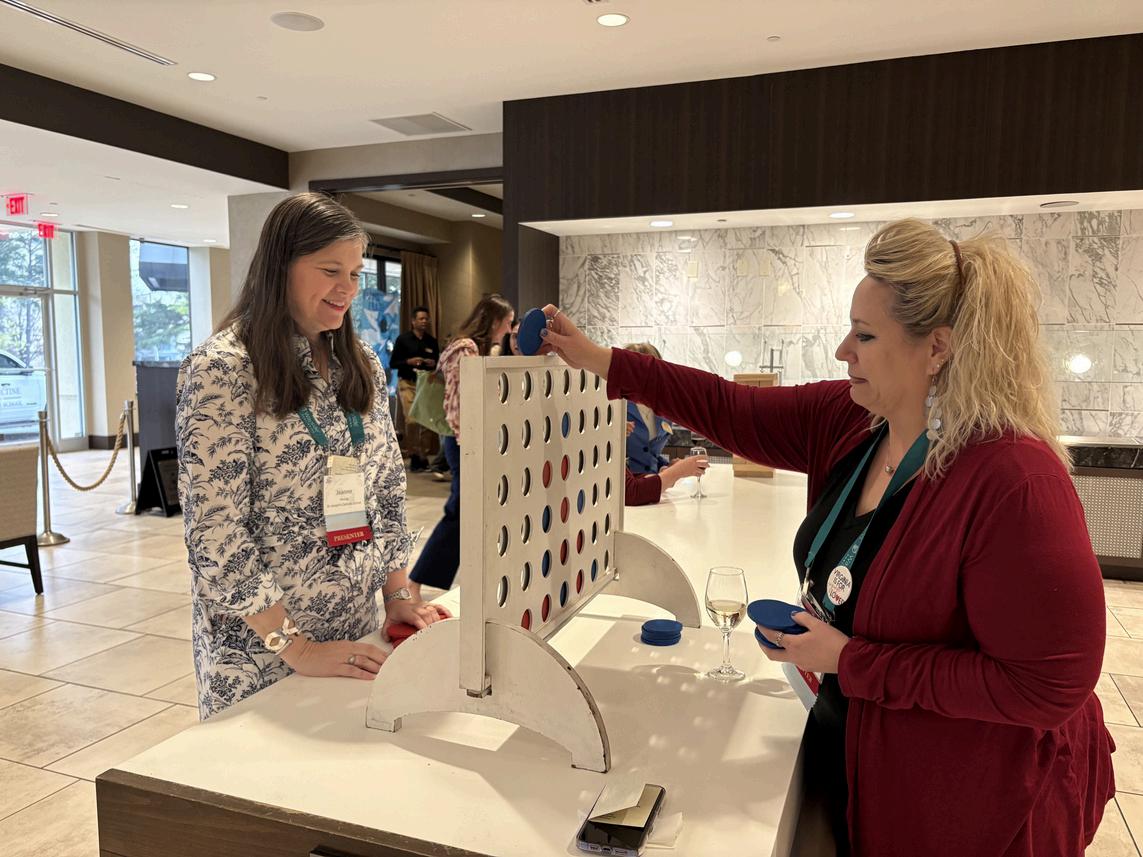
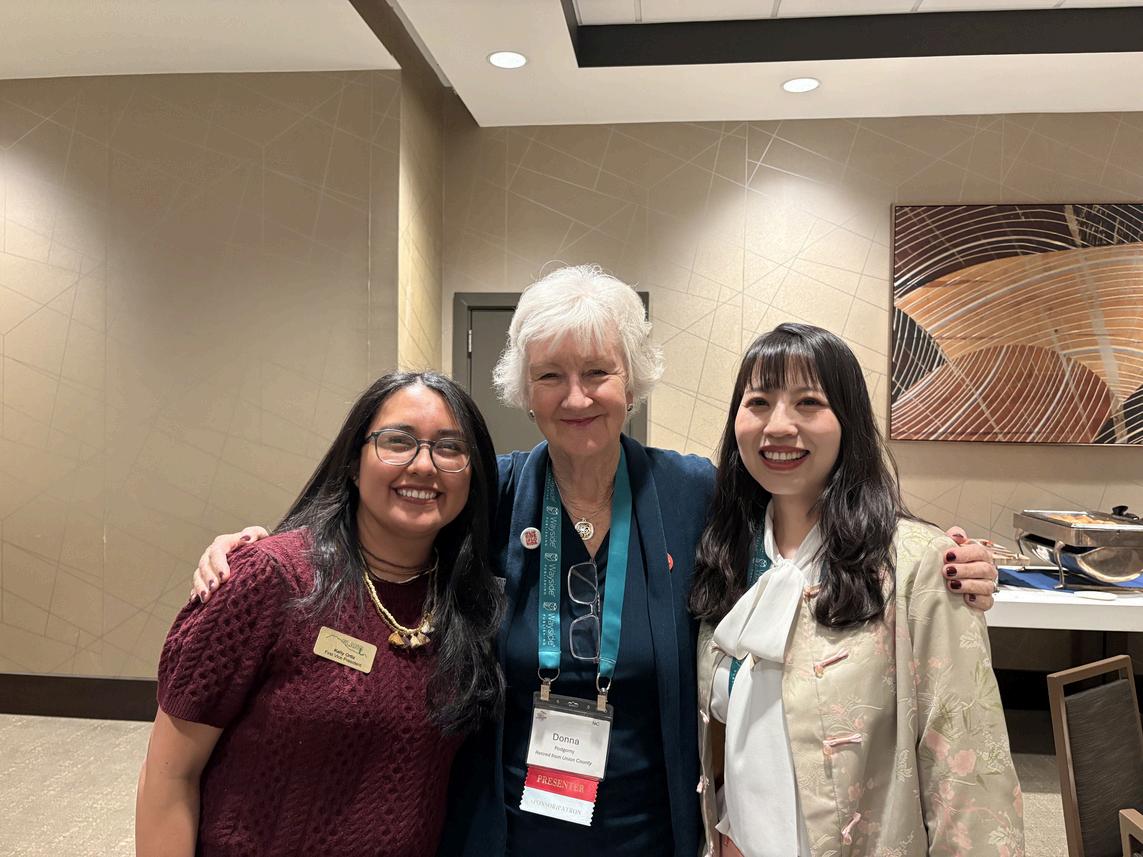
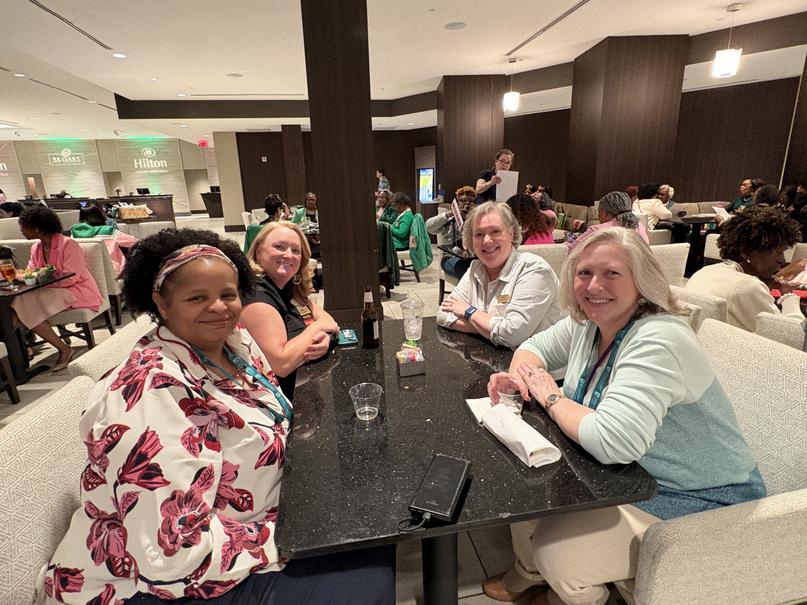
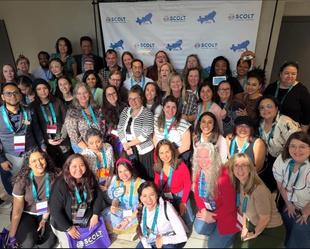
In 2026, we had the privilege of collaborating with FLANC, SCFLTA and SEALT for our conference. Our theme, “Take Flight with Languages,” truly came to life. And take flight we did. With over 530 attendees from 24 states and 3 countries, the energy throughout the conference was undeniable. Educators came together to share ideas, learn from one another, and push our field forward in meaningful ways.
A powerful example of this impact was the continued growth of our Dual Language Immersion (DLI) work Through partnership with FLANC, we hosted highly successful DLI site visits in North Carolina—giving educators the opportunity to see strong programs in action and engage in deeper conversations about implementation, access, and long-term impact. This kind of learning stays with us, and we are committed to continuing and expanding DLIfocused opportunities at our 2027 conference.
With the 2026 launch of SCILL, we are also investing in the next generation of leaders who will continue to strengthen, advocate for and advance our profession. We are proud to recognize this inaugural cohort: Marissa Beck, Esmith Centeno Moncada, Alison Clifton, Taina Corcelles, Danielle Engle, Maddy Ethington, Josefina Gembe-García, Hilda Duarte Gomez, Pamela Gordon, Emily Gustafson, Haylea Han, Lynne Hendrick, Kaleb Hyatt, Silvana Ibanez, Ji Ma, Ghedy Matus, Carlos Ocampo, and Leandra Rodriguez.
One of the greatest privileges of this role is also celebrating the educators and leaders who exemplify excellence in our profession This year, we are proud to recognize:
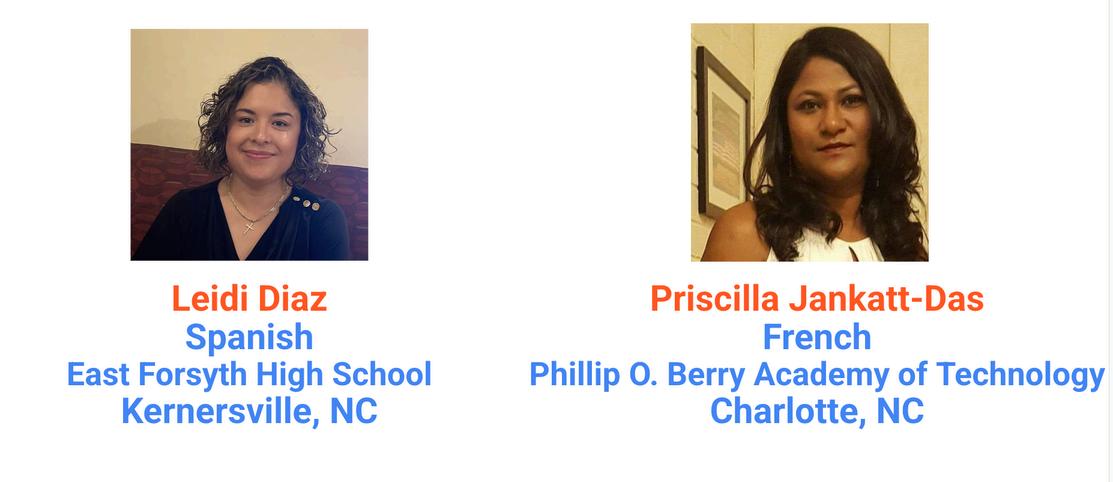
Bostick Award recipients Leidi Diaz (Spanish, East Forsyth High School, NC) and Priscilla Jankatt-Das (French, Philip O. Berry Academy of Technology, NC), whose work reflects a deep commitment to student-centered instruction and meaningful learning.
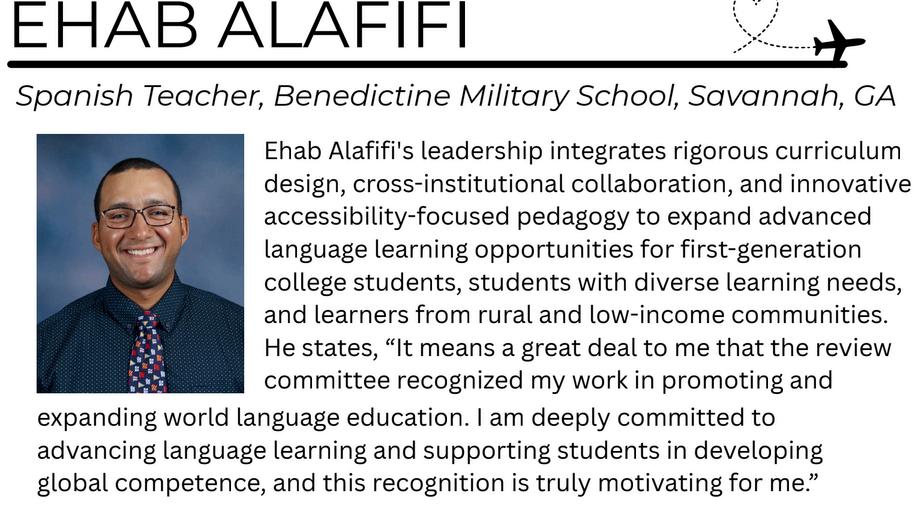
Leadership Award recipient Ehab Alafifi (Benedictine Military School, GA), whose work expands access to advanced language learning and demonstrates how thoughtful leadership can open doors for all students.
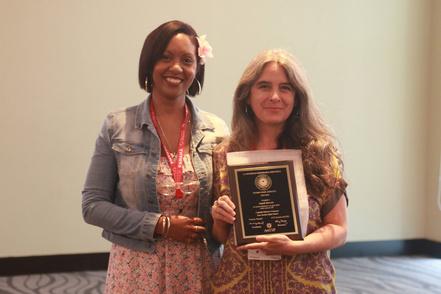
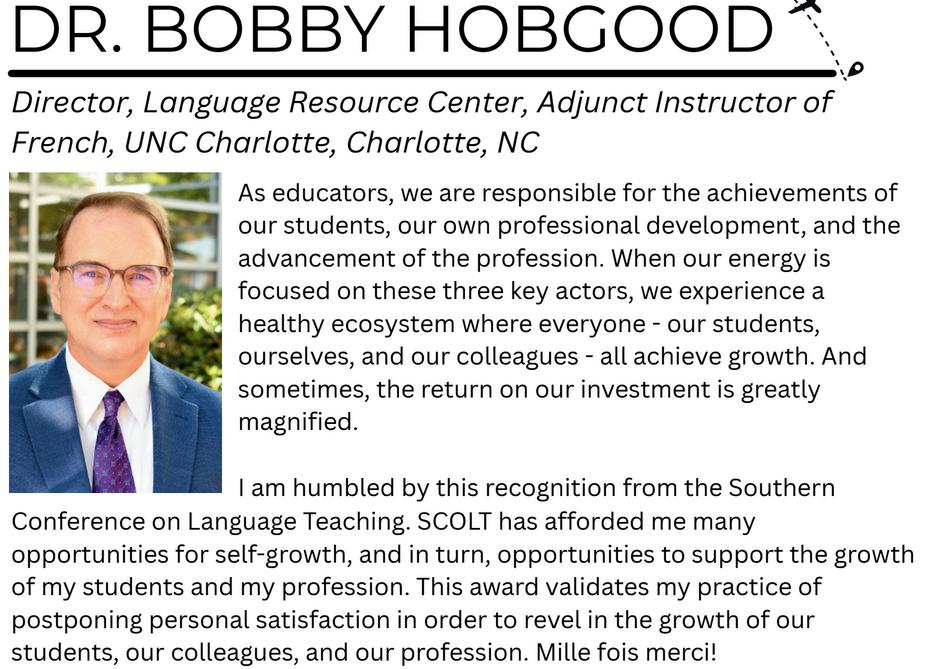
Founders Award recipient Dr. Bobby Hobgood (UNC Charlotte, NC), whose reflection on investing in students, our own growth, and the profession reminds us of the ecosystem we are all responsible for building.
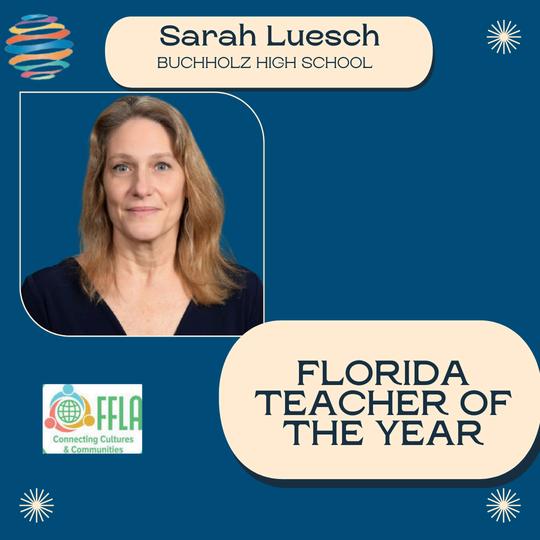
Travel Scholarship recipients Michèle Delange (NC), Leandra Rodriguez (GA), Sarah Luesch (FL), and Deon Garner, Sr. (VA) with appreciation to our partners (CIEL, Centro MundoLengua, Edu-Inter, Goethe-Institut, and Latino Schools) for making these opportunities possible.
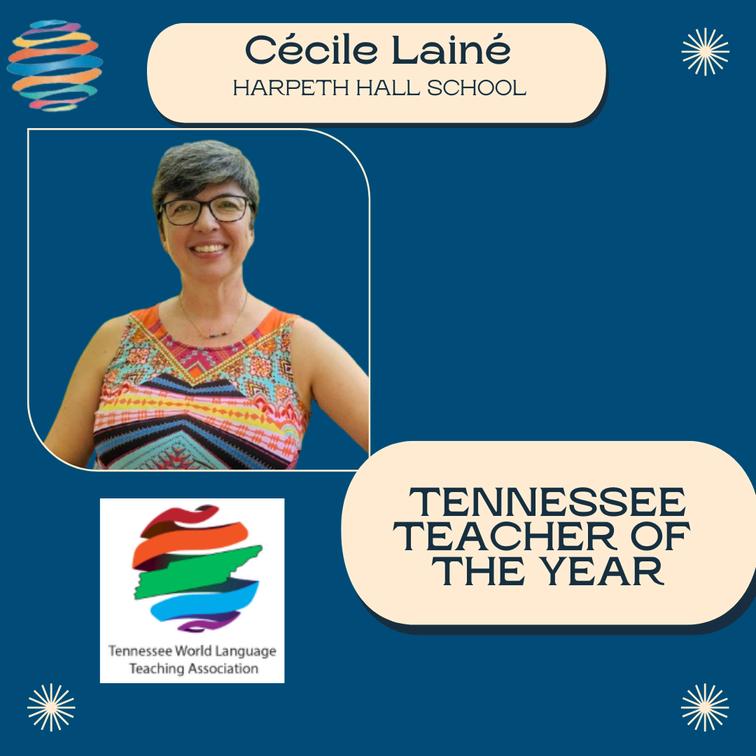
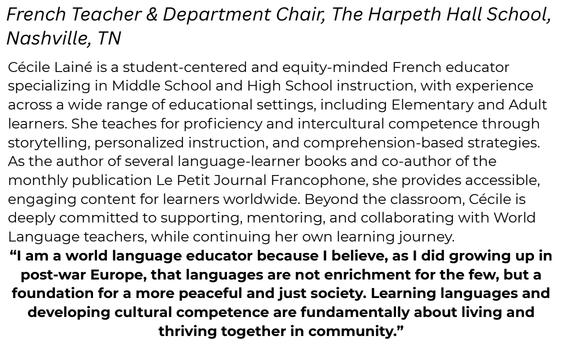
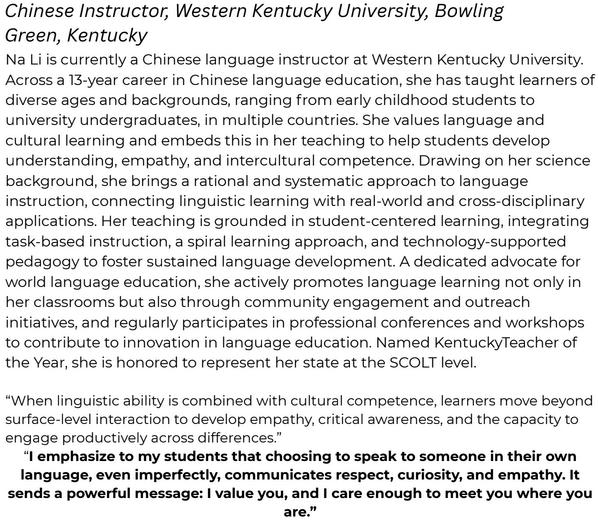
Teacher of the Year, Cécile Lainé (The Harpeth Hall School, TN), whose work reflects a commitment to student-centered and meaningful cultural learning experiences
Building on the momentum of the 2026 conference “Take Flight with Languages,” I am reminded of the collective impact we have across our classrooms, schools, and states. Every day, SCOLT educators create opportunities for students to engage with new perspectives, communicate with purpose, and see themselves as part of a broader global community. We are doing more than teaching students to make words we are making waves. Waves of curiosity. Waves of connection. Waves that extend beyond our classrooms and shape how students understand and engage with the world and, in turn, how others see our profession as a critical part of student learning experiences.
As we carry that momentum forward, this next chapter challenges us not only to grow, but to create lasting impact—intentional waves that influence our classrooms, strengthen our programs, and expand opportunities for all learners
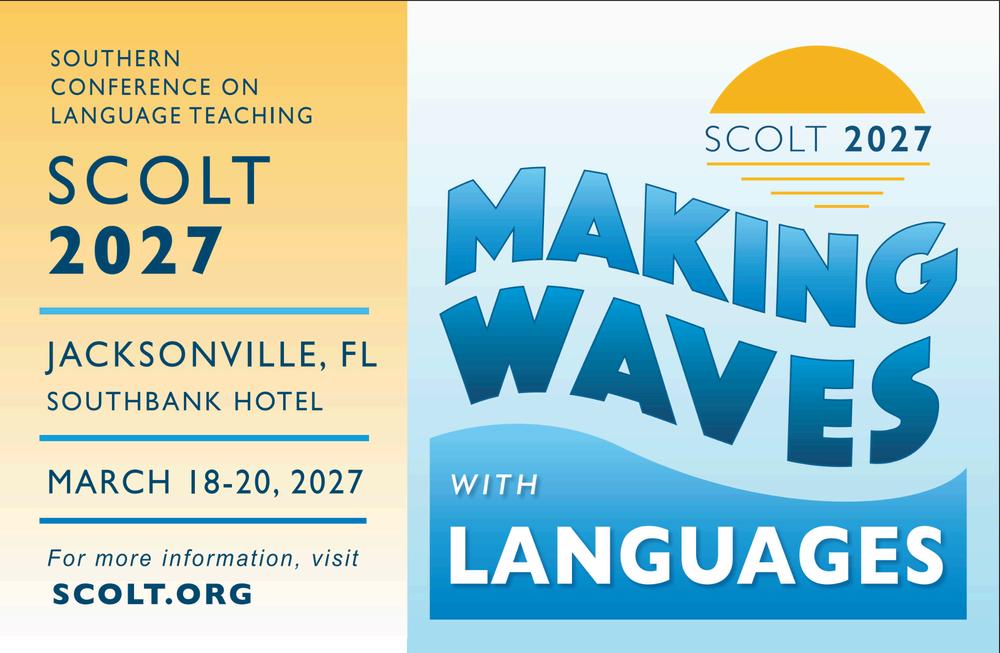
Join us for the 2027 SCOLT Conference, “Making Waves with Languages,” taking place March 18–20, 2027, in Jacksonville, Florida, at the Southbank Hotel. Together, we will continue to build momentum and create waves of impact that extend far beyond our classrooms.
As we think about what it means to “make waves,” I invite you to be part of the collective wave of learning, collaboration, and innovation that defines SCOLT. . What you do every day in your classroom, school, or district may feel routine but for someone else, it may be the wave that shifts their practice or opens new possibilities for their students. Proposals are open (link here)
Thank you for the work you do each day to inspire students, to build connections, and to shape a more globally aware and engaged future. It is a privilege to serve alongside you.
With appreciation, Amanda Hajji Minnillo, Ed D


ACTFL’s newly formed K-12/Higher Education team, working in conjunction with the Professional Learning Committee, has begun developing action steps tied to K-16 alignment and partnerships. Initial ideas include an ACTFL web page that curates relevant resources and a fall webinar series focused on aligning pedagogy across K-16, promoting shared language around the Seal of Biliteracy, supporting programs in jeopardy, connecting language learning with CTE and workforce readiness, and highlighting programs that have increased enrollment and found ways to thrive.
ACTFL has also continued its professional learning and assessment work Assessment and Research staff recently conducted a workshop with approximately 30 Howard University faculty members on assessing for proficiency. In addition, the Assessment and Research team led a virtual CARLA session on language program assessment with attendees from across the United States and beyond.
ACTFL leadership has continued conversations with partner organizations to strengthen teacher education and recruitment pathways. This includes discussions with the American Association of Colleges of Teacher Education (AACTE) around collaboration on teacher preparation, recruitment, and standards development.
ACTFL is also maintaining direct outreach to state associations. Recent conversations with Pennsylvania’s PSMLA focused on membership needs and how ACTFL can provide support. In parallel, Director of Education and Certification Kathleen Shelton has been meeting with regional leaders during conferences. ACTFL is exploring ways to serve as a stronger connector among the leadership cohorts and institutions each region has developed, potentially through a regional leadership page or community on the ACTFL website and more regular opportunities for collaboration
On International Mother Language Day, ACTFL launched its 2026 theme: I Am My Language: Roots, Rhythm & Resistance. Led by ACTFL President Krishauna Hines-Gaither, the initiative centers the role of spoken, unspoken, and signed languages in shaping identity and community. ACTFL is encouraging organizations, schools, districts, and businesses to sign and share the related Statement of Affirmation and to amplify associated activities across their networks.
The Language Connects Foundation continues outreach in San Antonio to gauge interest in a business roundtable during the 2026 convention and to identify possible stipend funders. Current outreach has included business and community leaders connected to finance and language access.
ACTFL was also well represented at JNCL-NCLIS Language Advocacy Days on Capitol Hill. ACTFL participants included national leadership, board members, staff, and students. Notably, Nathan Campbell and his son Lucas met with leaders from the U S Department of Education and the U.S. Department of State to discuss world language education and to recognize the Teacher of the Year program.
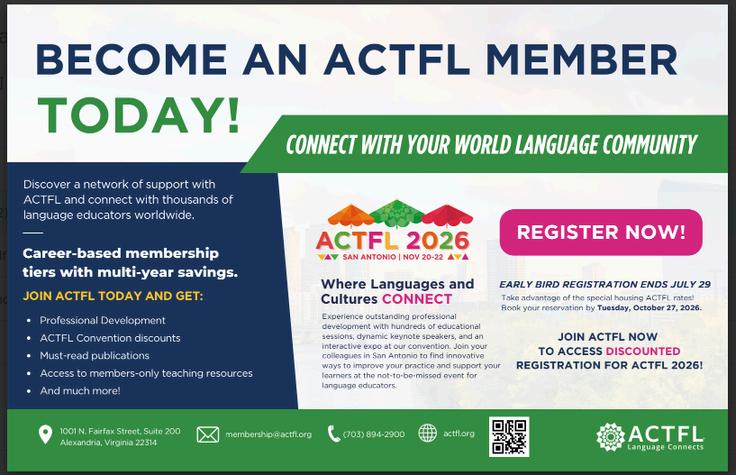
Planning for the 2026 ACTFL Convention in San Antonio is already underway. The Opening General Session will feature Debbie Allen on Friday, November 20, 2026 ("You've got big dreams? You want fame? Well, fame costs. And right here is where you start paying... in sweat"). The Closing General Session will feature Mychal-Bella Rayne Bowman (actress/humanitarian).
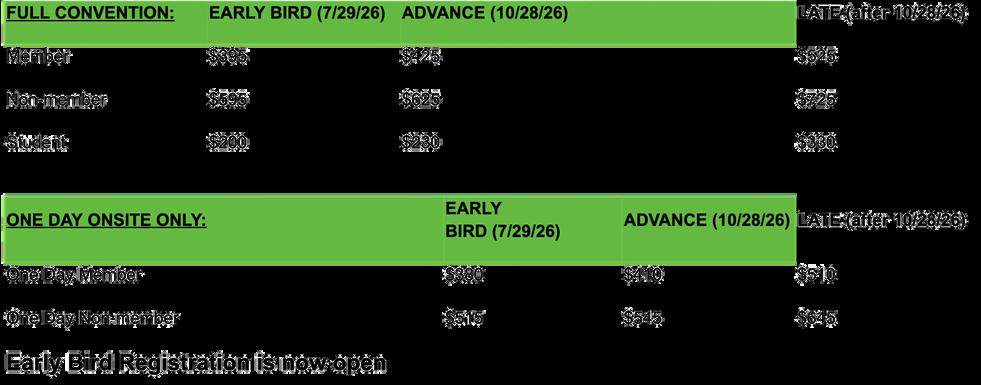
Two featured speakers have also been announced. Maureen Aguilar will present on sustaining antiracist teaching in Spanish classrooms, and Jeremiah “Jerry” Sokomba will speak on language, culture, and identity through his experience studying Chinese and living in China. Early bird registration is now open, with reduced rates available through July 29, 2026
...the leading provider of language lab technology that supports teachers in their role as instructional coach in the classroom.
Stevens Learning Systems iscommittedto meetingthe needs ofboth students and teachers by providing instructional language lab technology that creates a day-to-day interactive classroom environment The Renaissance 2.0 Language Lab System instantly connects students with multiple partners for interpersonal communication and with small collaborative groups for presentational communication. Simultaneously, the classroom teacher can monitor, coach and assess students as they progress from performance to proficiency.
In addition to AP testing, our system allows teachers to administer and rate
performance-basedassessment throughsimultaneous recording of studentswith click-screengrading and customized rubrics.
We are dedicated to providing highly-responsive support and excellent service to our clients.
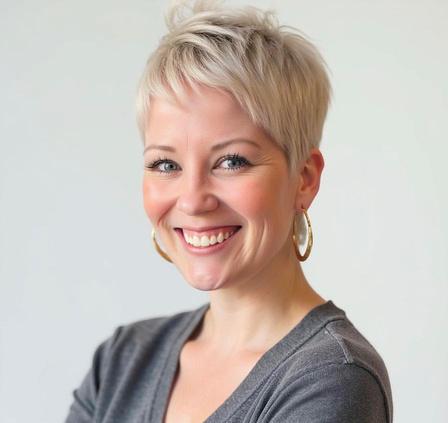
Meredith White President-Elect
Originally from the Midwest, Meredith White is a University of Georgia“Triple Dawg” with a B.A., B.S., M.Ed., and Ed.S. all in World Language Education. Focused on novices, her work as a Spanish teacher since 2007-08 has focused on proficiency-based teaching, comprehensible input, technology, and making language learning fun and easy.
In 2023, she added a full-time Instructional Technology support role in order to help more teachers in all content areas with their teaching and technology use (including paring down). In addition to this role and teaching high school Spanish, she also teaches World Language Education (WLED) and Spanish (SPAN) classes at Kennesaw State University. She regularly presents at local, state, regional, and national conferences and was the 2019 Peachtree Ridge High School Teacher of the Year, the 2020 Georgia World Language Teacher of the Year, the 2024 SCOLT Founder’s Award Recipient, and serves on the FLAG, SCOLT, and SEALLT Boards.
More information on presentations and current projects: https://www.meredithwhite.info/cv
Linda Markley Program Co-Director
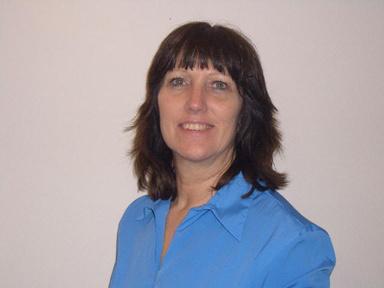
Linda Markley has, at different points in her +40 year career, taught Spanish, French, Math, art and tech skills to all age groups from the 3-year-olds to 83 year-olds. She has also been a WL District Supervisor for Brevard County, FL.
Linda earned her undergraduate degree in Spanish, French, Math and teacher education at Jacksonville University and her Máster universitario de lengua y cultura españolas at the Universidad de Salamanca.
Linda’s passion and dedication to world languages education has motivated her to serve on numerous local, state and regional organizations. She has held every position on the Board of FFLA (Florida Foreign Language Association) as well as worked at the state level for textbook adoption approval, teacher certification, testing and standards development. Even closer to her heart, Linda served five years on the SCOLT Board as the President as well as the Scholarship Committee Chair.
Perhaps Linda’s greatest passion is teacher advocacy and mentoring, thus earning her the honor of being the very first recipient of the JNCL-NCLIS J. David Edwards Power of Advocacy Award. Linda was also honored as the recipient of this year’s Founder’s Award at the SCOLT conference in Nashville.
Linda has also had the great privilege and joy to work with and learn from the amazing Shannon Borum and Michelle Olah as a co-facilitator of the first cohort of SCILL - a professional development initiative specifically for emerging leaders in the SCOLT region. This experience and service will continue to "blossom and grow" as future cohorts engage in this incredible journey of leadership development.
Finally, Linda is the founder of The Spirit of Teaching and the author of two books, Learning Lessons and Get Realia and is still actively involved mentoring teachers, delivering inspirational keynotes and providing professional development, guidance, resources and support that lift up and celebrate the educational profession and vision.
Linda will serve for one year on the SCOLT Board as part of the TOY and Scholarship Committee.
As always, there will be a special event for SCOLT Sponsors and Patrons during the 2027 conference and you don’t want to miss it! Be sure your Sponsor/Patron status has been renewed so that you don’t miss your invitation!
Our Sponsors and Patrons are a vital part of the organization, as they are the only people who can be nominated for board positions and vote for officers and bylaws changes. Additionally, the registration fee is reduced for Sponsors and Patrons, and you will be invited to an exclusive reception to be held Friday, March 19.
Not sure of your status? See the current list of Sponsors and Patrons. Support SCOLT by renewing your status or becoming a Sponsor or Patron today!
Announcing a new option! Become a Lifetime SCOLT Sponsor and never have to remember whether you have renewed your status! You can become a Sponsor or Patron, including the option for Lifetime status, when you register for the conference, or by completing this form.
Not sure of your status? See the current list of Sponsors and Patrons. Support SCOLT by renewing your status or becoming a Sponsor or Patron today!
The SCOLT Leadership Award is given for K-12 educators who have demonstrated excellence in language teaching through service to the school, community, active participation in SCOLT, and leadership and advocacy at the local, state, and/or regional or national level. The nominating documents for this award include a letter of nomination, a statement from nominee of acceptance of nomination (paragraph), a CV/Resume, and two letters of support.

LEADING SPANISH & PORTUGUESE EDUCATORS TO EXCELLENCE SINCE 1917
The AATSP is the leading professional association for teachers of Spanish and Portuguese in the United States and beyond
We promote language study and cultural understanding at all educational levels, supporting research, collaboration, and global connections Our mission is to empower educators, foster cultural exchange, and enhance the teaching and learning of Hispanic and Luso-Brazilian languages and cultures.
The AATSP is the premier space to connect and collaborate with educators who share your commitment to Spanish & Portuguese education
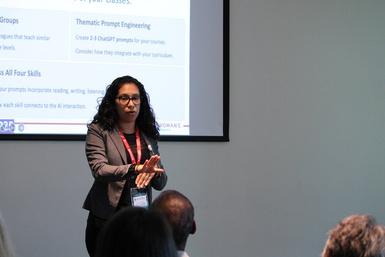
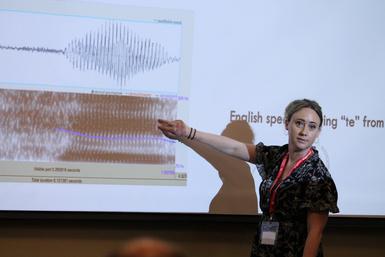
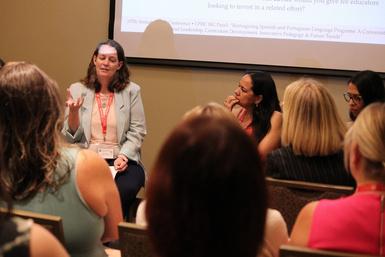
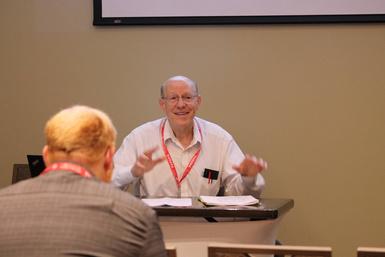
Join us in Orlando, Florida during July 8-11, 2026 to connect with likeminded colleagues, share your work in English, Spanish, or Portuguese, and join a community that is shaping curriculum, empowering students, and leading thewayin the futureof Spanish & Portugueseeducation

Joining the AATSP opens doors to meaningful engagement Some of our membership benefits include:

PROFESSIONAL DEVELOPMENT OPPORTUNITIES
From engaging webinarsto the AATSP Annual Conference andthe AATSP Career Center, participation in AATSP professional development opportunities connects you with fellow educators to spark collaboration and build the future of your career

ACCESS TO PUBLICATIONS & PUBLISHING OPPORTUNITIES
Receive exclusive access to a wide range of publications, including our flagship journal Hispania These resources allow members to publish their own research, stay informed on the latest scholarship, and engage with cutting-edge ideas in Spanish and Portuguese language, literature, and pedagogy

ACCESS TO ENGAGING PROGRAMS & SCHOLARSHIPS
Proposal Submissions Regular Registration
Submitby: February22,2026

Ends: March 31, 2026
Learn more about the conference at our website:


Discover a wide range of awards, contests, and honor societies that recognize excellence and foster student engagement at every level From scholarships and the AATSP Exams to the Photo and Poster Contests, as well as the SHH, SHA, and Phi Lambda Beta honor societies, these programs celebrate achievement and inspire creativity



The SCOLT Board of Directors presents the Founders Award when deemed appropriate to a member who has made significant contributions to SCOLT over the years and who exemplifies the spirit and ideals of the founders of the organization.
Glenn Senior
Mauldin High School
Mauldin, South Carolina
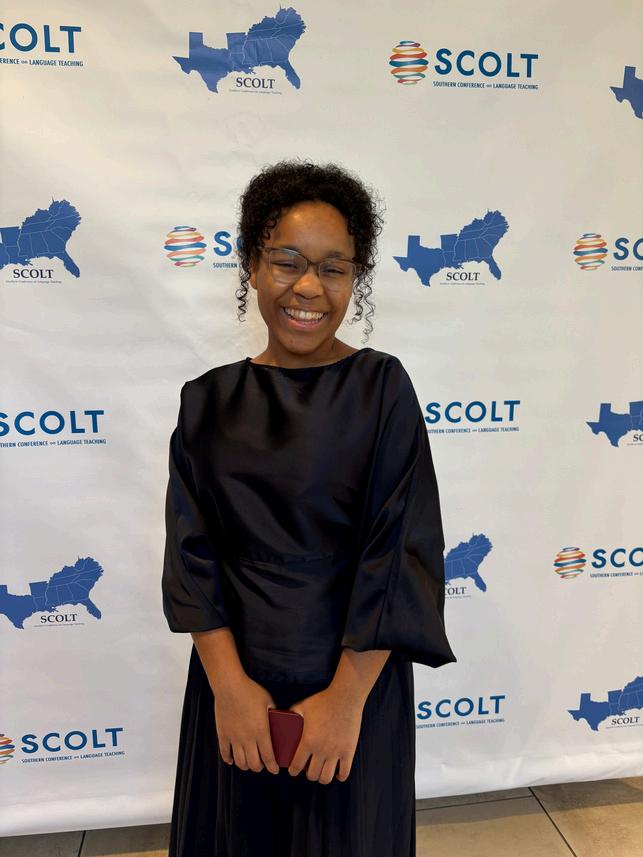
This $1,000 scholarship is intended for a high school senior who plans on a career as a world language educator The scholarship is sponsored by K OLT
l
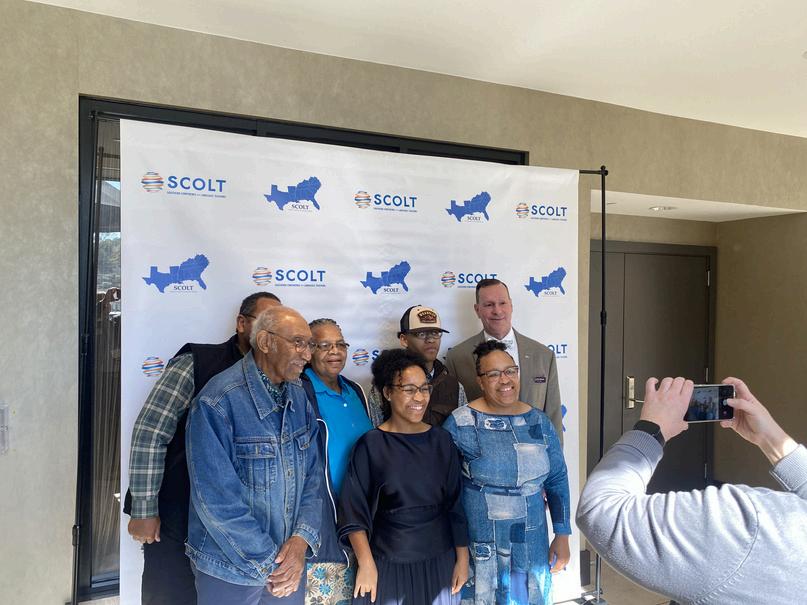
MauldinHighSchoolSeniorSierraGlennNamedRecipientofthe KenStewartFutureLanguageTeacherScholarship
Mauldin,SC MauldinHighSchoolseniorSierraGlennhasbeen namedtherecipientoftheKenStewartFutureLanguageTeacher Scholarship,anawardrecognizingoutstandingacademicachievement, leadership,andcommitmenttothefieldofworldlanguageeducation.
GlennplanstopursueacareerasaSpanishteacherandhas demonstratedexceptionaldedicationtolanguagelearning,teaching,and servicethroughoutherhighschoolcareer.Shewillreceivethe$1,000 scholarshipawardatthe2026SouthernConferenceonLanguage Teaching(SCOLT)ConferenceinRaleigh,NC,onMarch20,2026.
GlennhascompletedanimpressivesequenceofSpanish coursework,includingSpanish3,Spanish4,Spanish4Honors,and APSpanishLanguageandCulture.Sheearnedascoreof4ontheAP SpanishLanguageandCultureExamandreceivedtheSilverSealof Biliteracy,demonstratingadvancedproficiencyandperseverancein thelanguage.
“IhadthepleasureofteachingSierraGlennacrossmultiplelevelsof Spanish,”saidherteacher,KeniaWarren.“Sheisadedicated, motivated,andintellectuallycuriousstudentwhoconsistently produceshigh-qualitywork.Herenergy,intelligence,and compassionmakeherajoytoteach,andIamconfidentthat awardingherthisscholarshipisaninvestmentinastudentwhowill continuetomakeapositiveimpact.”

This summer, had the privilege of immersing myself in the French language and culture in Québec City through a professional learning experience at Edu-Inter, a French language school located in the heart of the city. For three weeks, I participated in intensive language courses and pedagogy workshops while living in a homestay with a native Quebecer. Engaging in daily conversations provided not only meaningful language practice but also invaluable cultural insights.
Beyond the classroom, I was reminded of the authentic, everyday language that world language teachers strive to bring to their students Culture revealed itself in subtle but powerful ways through mealtime customs, regional expressions, and the rhythm of daily life. These observations underscored the importance of designing classroom experiences that allow students to “step into” another culture, even from within their own community.
TThis fall, I am integrating these experiences into my teaching practice by incorporating:
Authentic resources: Menus, photographs, and video clips collected abroad to give students direct access to realworld language.
Narratives and anecdotes: Stories from my travels to illustrate language as a living bridge between people and cultures.
Comparative activities: Opportunities for students to reflect on similarities and differences between their own community and francophone communities, fostering global awareness and empathy
Instructional strategies: Practical methods and classroom activities informed by my pedagogy workshops at Edu-Inter
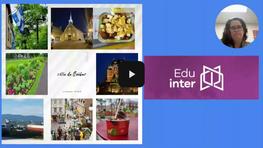
This experience reaffirmed my commitment to world language education as a means of broadening students’ perspectives and cultivating a sense of global citizenship. I returned from Québec with renewed energy, deeper cultural knowledge, and refined language skills, eager to share these with my students.
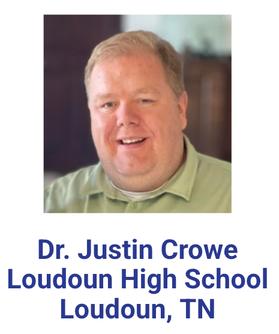
Dr. Justin Crowe, a Spanish teacher at Loudon High School in Tennessee, recently returned from an enriching professional development experience in Madrid, Spain. With the generous support of the SCOLT Centro MundoLengua scholarship for study abroad, Crowe attended the Advanced Placement (AP) Spanish training during the week of June 30, 2025.
As a second-career educator, Crowe is deeply committed to professional growth The training brought together Spanish teachers from around the world including participants from as far away as Thailand for a week of collaboration, team-building, and focused learning centered on the AP Spanish Language and Culture exam. This rigorous exam challenges students to demonstrate proficiency in real-world communication across interpretive, interpersonal, and presentational modes, using authentic materials from the Spanish-speaking world.
Outside the classroom, Crowe immersed himself in the vibrant culture of Madrid. From engaging with locals to exploring the city's rich history, cuisine, and artistic heritage, he gained firsthand insights into the cultural nuances that shape the Spanish language Highlights included visits to iconic sites such as the Prado Museum, Plaza Mayor, and the Royal Palace, as well as informal conversations with locals that brought the language to life
“The experience was transformative,” Crowe shared. “Not only did I gain valuable strategies for teaching AP Spanish, but I also built lasting connections with educators worldwide and deepened my understanding of the culture I teach every day.”
Crowe’s journey exemplifies the power of global education and the importance of cultural competence in language instruction. His students at Loudon High School will undoubtedly benefit from the knowledge and inspiration he brings back to the classroom.
click to see Justin's video
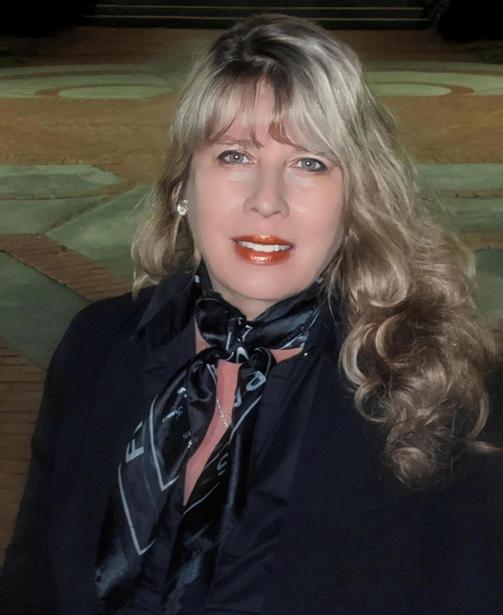
I had the privilege of studying French at the Centre International D’Étude des Langues (CIEL) in Strasbourg, France, during Summer 2025 as a SCOLT study abroad scholarship recipient. It was an extremely enriching and meaningful experience that reshaped my perspective on language teaching and learning. As a Professor of Spanish and World Language (WL) Education at Valdosta State University (VSU), I mostly teach WL education courses for teacher candidates pursuing a master’s degree with certification in ESOL, French, or Spanish. I also teach at least one undergraduate Spanish course each semester
In an effort to better help my French teacher candidates, I wanted to resume my study of the French language and Francophone cultures after a gap of several decades (I had two years of French in high school and one semester in college in the 1980s). When I was a teenager, I could not wait to get to high school so that I could take a WL (in my school district at the time, WLs were not offered in elementary or middle schools). I desperately wanted to take both Spanish and French as a freshman in high school; however, the guidance counselor would not allow me to take French until I had successfully completed at least two years of Spanish. I still think back to that decision and wonder where my proficiency in French would be today if it were not for that obstacle!
When I reached the university level, I majored in International Business and Spanish, which left little room for studying other languages. However, I did manage to squeeze in a semester of French and a semester of Italian. A year after finishing my bachelor’s degree, I ended up in an MAT program in Spanish, which enabled me to teach K-12 Spanish for almost 15 years In 2005, I transitioned to higher education to pursue a Ph D , and that is where I found my passion for WL teacher education All the while, I never lost my desire to learn French and I even took a French conversation course in the mid-90s while I was teaching Spanish in England
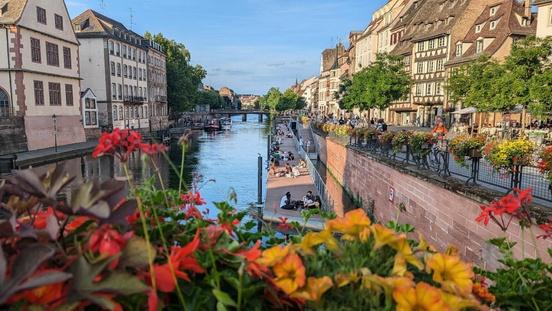
Strasbourg, France
Last summer, my dream to resume my study of French came true when I took a two-week intensive French language course with CIEL. They gave me an online placement test prior to arrival, and I placed into B1 (Intermediate Mid to Intermediate High on the ACTFL scale), but I opted to take the A2 (Novice High to Intermediate Low) course because my comprehension skills were higher than my production skills. When I arrived at the CIEL campus, which I was able to reach easily by the city tram system that runs throughout Strasbourg, I expected to be the oldest student in my class; however, I was pleasantly surprised to find that there was a wide range of ages including a high school teen, traditional college age students, professionals in their 30s and 40s, and even mature adults in their 50s and beyond. I was not the oldest student after all, but I was the only student from the United States My classmates came from Belarus, the Czech Republic, Germany, Spain, and Switzerland
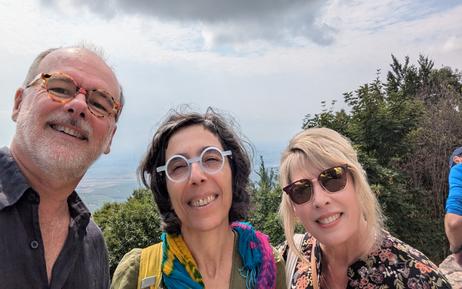
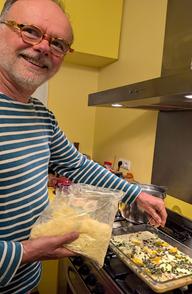
What struck me most was my classmates’ intense desire for learning French. Every single student was serious and fully invested in learning both inside and outside of class. We had formal classes on Mondays and Wednesdays from 9:30 AM to 4:00 PM (with a break for lunch). On Tuesdays, Thursdays, and Fridays, classes ran from 9:30 AM to 12:00 PM, with either conversation workshops or cultural activities in the afternoons from 1:30 to 4:00 PM. My classmates and I studied and prepared our homework in the evenings, and each student participated enthusiastically in class and during our cultural activities and workshops. I couldn't help but think about the extraordinary efforts that many U.S. WL teachers have to put forth to keep their students motivated and engaged. This was not the case among the students at CIEL because they needed to learn French for a specific purpose. The high school student wanted to earn a place at a French university, the German diplomats had to pass a French proficiency exam to advance in their careers, and those who worked or planned to work in the hospitality industry had to learn French in addition to the other languages that they spoke because multilingualism is a job requirement in the hospitality sector in Europe.
In addition to thoroughly enjoying being surrounded by others with a deep commitment to language learning, the instruction that I received was excellent. We had two instructors, one in the morning and another in the afternoon. They both used an inductive approach to language teaching where they presented us with numerous examples, and we had to figure out the rules on our own after being exposed to large amounts of comprehensible input containing the targeted forms and structures. The teachers used French 100% of the time and when there was confusion, they patiently gave us one example after another that they wrote out on the whiteboard. There was never a formal presentation of grammar rules.
Our textbook, Édito Méthode de Français, published by Didier in 2022, did not provide grammar explanations within the chapters either Rather, each chapter focused on a theme and contained communicative activities across four skills and three modes of communication (interpretive, interpersonal, and presentational) At the back of the book there was a one-page pronunciation guide and two pages of verb conjugation examples in various tenses. What I experienced at CIEL was communicative language teaching in its purest form and it was highly effective. After two weeks, I was able to hold basic conversations, make reservations, place orders in restaurants, purchase train tickets, and perform as a host of other daily communicative tasks in French.
I also realized that I needed a lot of repetition to remember new words and their pronunciation. As a secondary methods instructor and someone who has been fluent in my second language (Spanish) for many years, I underestimated the critical importance of repetition in the language learning process. However, after becoming a student again after an almost 40-year gap, I found frequent repetition to be essential, and I often found myself repeating after the teacher silently to myself during class. Another helpful aspect of language learning that surprised me was translanguaging. In our class, the German students would often explain concepts to each other in German or ask me questions in English about French grammar or vocabulary (all of the Germans spoke English perfectly). I also asked my Spanish classmate clarification questions, and she did the same with me in Spanish At any one time, there were three or four languages being spoken in the classroom as we figured out the rules of French inductively together
Another highly beneficial component of the program was the homestay accommodation with a French family Because my youngest son studied abroad for three summers in Strasbourg with CIEL when he was a college student (he stayed with the same family for all three summers), he got to know his French host family very well. I had the opportunity to meet them in 2023 when I was in France on vacation, so I requested them to be my host family last summer. My host “Mom,” Linda, and host “Dad,” Gil, are the same age as me, they are both middle school art teachers, and they are the parents of six grown children.
Linda and Gil have a very large home and typically host an international student for an entire year. While I was with them, they had a student living with them from South Korea who was studying to be a pastry chef. The patience and empathy that the entire host family displayed when interacting with me was truly commendable. They also spent a lot of time with me on the weekends and took me all over the local region to see the most important sites. Not only did I learn a tremendous amount of French from them, but I also now consider them to be dear friends.
Perhaps one of the most important lessons that I learned from being on the other side of the desk last summer was to have even more patience and empathy with my WL students, especially those that I take abroad It can feel overwhelming being immersed in the target language 24/7 and it can be very frustrating when you want to express yourself, but you can’t because you do not have the language skills to do so I definitely have a lot more compassion and empathy for my students as a result of this experience.
In addition to improving my French last summer, I also had the goal of restarting my university’s summer study abroad program in Strasbourg with CIEL. My late dear friend and colleague, Dr. Ellen Lorraine Friedrich, began the VSU program in Strasbourg in 2010, the same year that I started my study abroad program in Cádiz, Spain. Ellen was instrumental in procuring the SCOLT scholarship for French teachers with CIEL. When I joined the SCOLT board in 2018, there were no scholarships available for French teachers. I reached out to Ellen, who was a former SCOLT Educator of Excellence, about this and she made this scholarship happen! I will be taking four VSU students to Strasbourg this summer to study French at CIEL and I am really proud to follow in Ellen’s footsteps. This summer, I will be sitting in a desk learning French right beside my study abroad students!
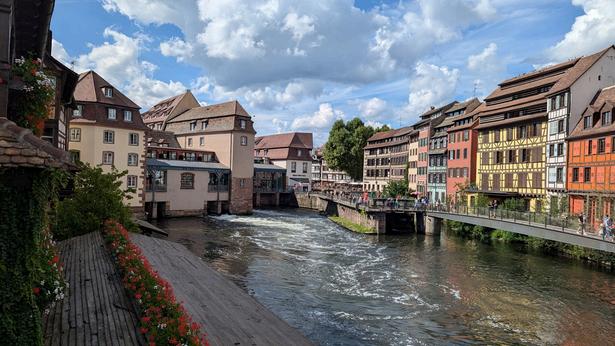
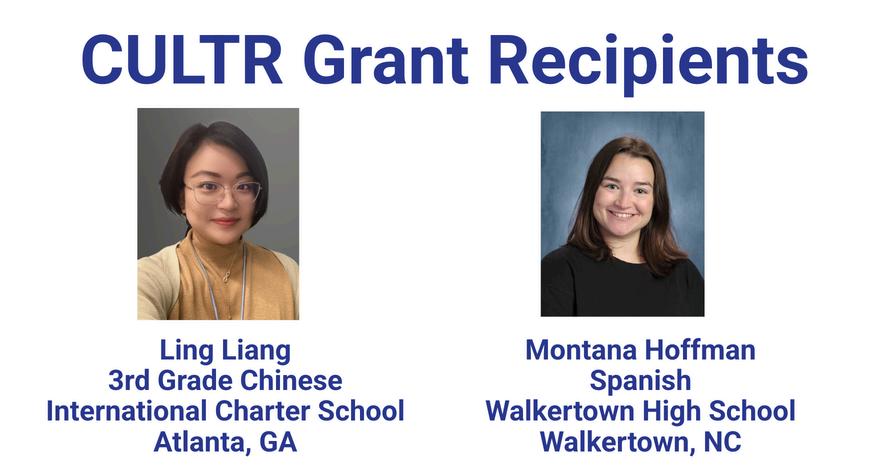
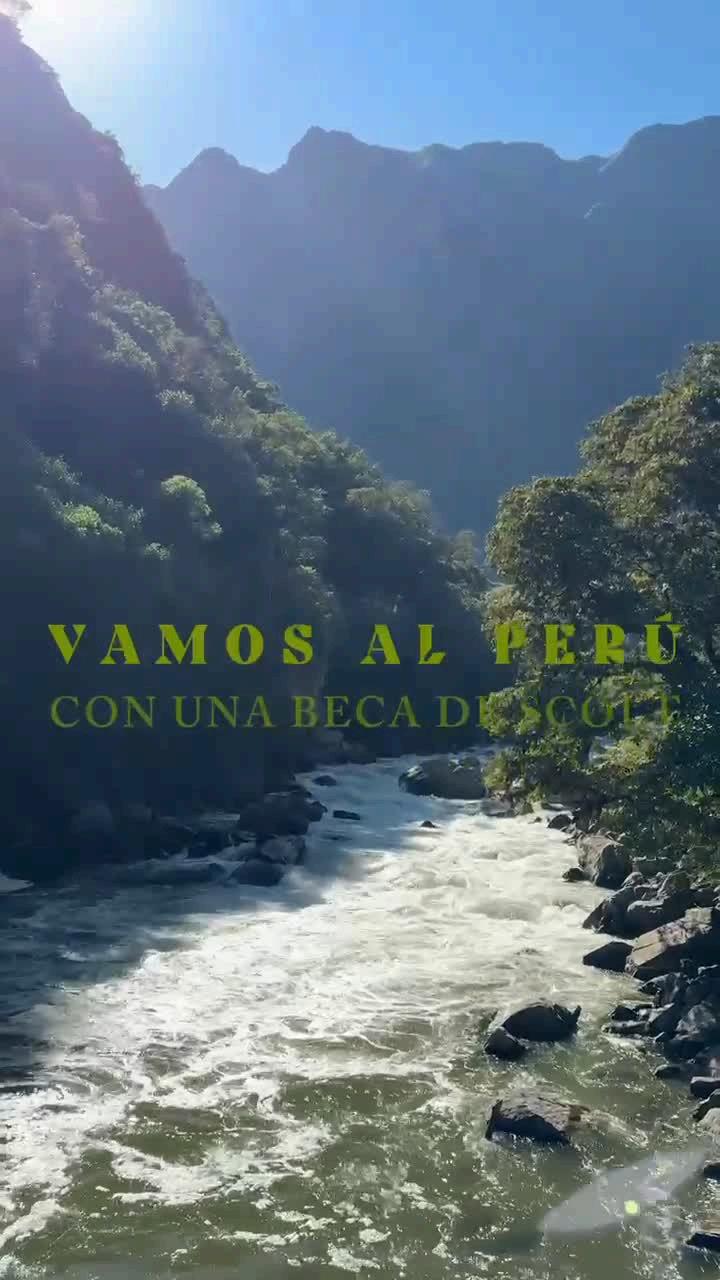
This past summer, I had the opportunity to study for two weeks at Latino Schools in Cusco, Peru – thanks to the scholarship I received from SCOLT. My experiences in Peru not only deepened my understanding of the Spanish language but they enriched my appreciation for the Incan and Peruvian cultures and the syncretism that exists in Peru today due to the blending of the two. As I start a new school year, I look forward to allowing my experiences in Peru to influence and guide practices and conversations in my Spanish classroom
One of the most meaningful aspects of my trip was staying with a host family A fellow Spanish educator and I lived in Cusco with a wonderful host family, consisting of a mother and father, their 15-year old daughter, and their two dogs From the moment they picked me up at the airport, my host family welcomed me into their country and home with warmth and enthusiasm, graciously sharing their customs, traditions, and cultural insights. Living with a host family allowed me to practice my language skills in everyday settings, while gaining insights into Peruvian daily life and culture. My favorite part of my time abroad was spending evenings together around the dining room table, sharing tidbits of our own cultures, exchanging slang in our respective languages, and laughing and sharing jokes. Living with a local family reminded me that language is far more than just vocabulary and grammar – it's a gateway to understanding worldviews, values, and identities. As a world language teacher, I want my students to see that there is value in learning language far beyond just the work done in our classroom.
Throughout my time in Peru, I visited many sites in and around the Cusco region, all rich in history and natural beauty. In the Sacred Valley, I traveled to archaeological Incan sites, such as Ollantaytambo and Moray, experiencing the rich history of Incan society. On the Inca Trail, I stood at the Sun Gate and saw Machu Picchu for the first time, reveling in the advanced agricultural techniques of the Incas and the natural beauty of Peru. In the city of Pisaq, I walked in the parade for the Virgin Carmen, admiring the many traditional dances and rituals of the Peruvian people At Seven Lakes, I hiked around the Ausungate Glacier, looking upon the sacred site that so deeply resonated with the Incan people On Palcoyo Mountain, I saw the backdrop of rainbow colored mountains, watching farmers herd llamas and alpacas for their livelihood These experiences allowed me to appreciate the Incan’s advanced agricultural techniques, their reverence for the environment, and their deep spiritual connections to the land. Visiting these places brought to life the richness of the Incan civilization and their impressive connection to the natural world, and they demonstrated how connected Incan and Peruvian cultures are.
Spending my days in Cusco, a resounding topic that was evident is syncretism the blending of indigenous beliefs with colonial influences. I observed this fusion in religious practices, local festivals, and the architecture of the region For example, in the cathedrals of Cusco, Incan symbolism and Catholic imagery intertwine and reflect the merging of two cultures over centuries Learning about syncretism helped me appreciate how cultures evolve and adapt, and I plan to incorporate these ideas into my teaching by discussing the complexities of cultural identity and the lasting impact of history on today’s societies.
As I reflect on my time in Peru, I am excited to bring this newfound knowledge into my classroom. I plan to share my experiences through storytelling, visuals, and hands-on activities. Whether through a virtual tour of Machu Picchu or a discussion of Incan agricultural methods, I want to inspire my students to connect with the rich cultural history of the Spanishspeaking world. I also plan to incorporate more conversations around syncretism and the concept of cultural blending, which I believe can be a powerful tool in teaching my students the complexities of identity, history, and global interconnectedness. Lastly, my time in Peru reinforced the importance of creating a classroom environment that values cultural exchange. I look forward to fostering conversations where students can share their own cultural experiences and learn from one another in a spirit of mutual respect and curiosity. This trip to Cusco was not only a chance to improve my language skills but also an opportunity to explore the vibrant cultural heritage of Peru. I am extremely grateful for the scholarship that made this experience possible, and I am eager to integrate these lessons into my teaching. Through this experience, I am reminded of the power of travel and cultural exchange, and how they can inspire and enrich the lives of students in the classroom
Moin alle zusammen!
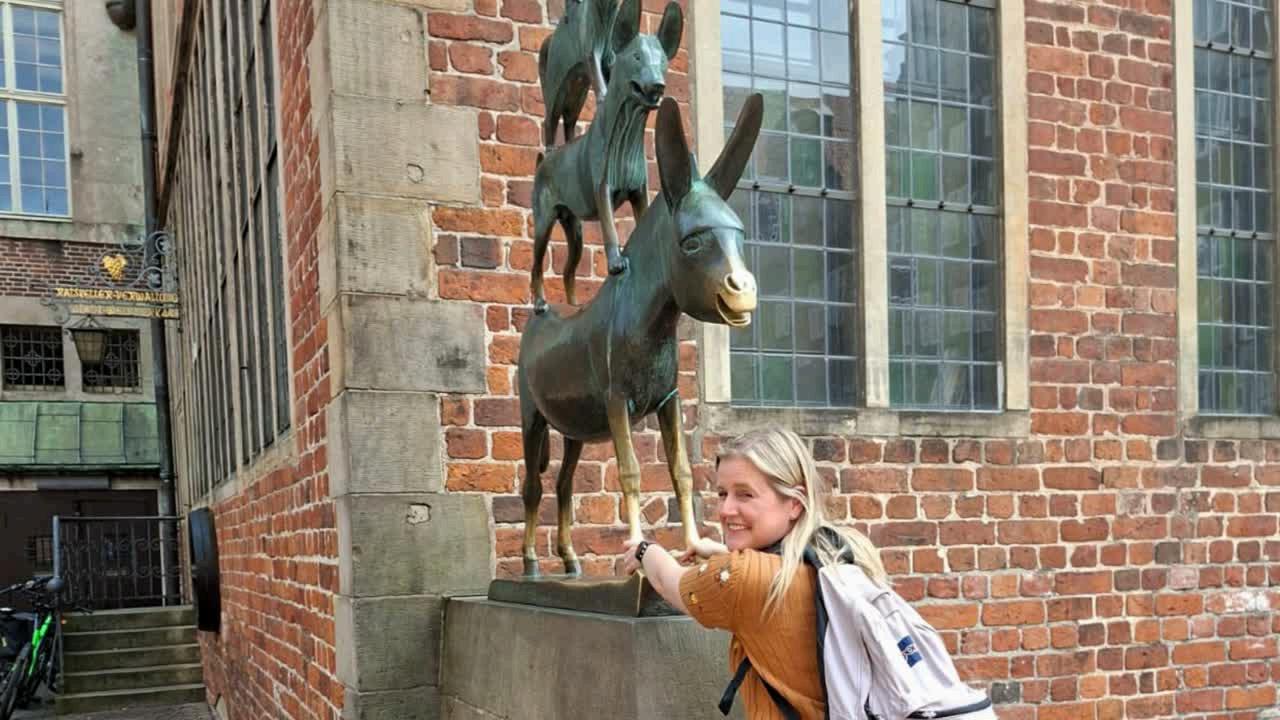
This past summer, I traveled to a city that was new to me in Northern Germany, Bremen! Familiar to me only through one of my favorite Brother Grimm tales “die Bremer Stadtmusikanten”, I was eager to meet new people, learn new teaching methods, and see why this town was the animal’s end destination in the classic fairy tale The experience at the Goethe Institut and with my host family far exceeded my expectations. Unlike most Goethe Institut locations, the Bremen classrooms are inside Universität Bremen main campus. The environment was therefore filled with students, professors, and academic energy that was very refreshing.
The trainer at the GI Bremen for most of the continuing education courses is Judit Szklenar, a master educator and a wizard of tech tools. Judit spent two weeks covering our desired themes through her favorite communicative activities and digital programs. Our group of 14 participating teachers came from 5 continents and worked with various student age groups. Despite our own cultural differences and life experiences, we had an extremely positive group dynamic led by Judit’s professionalism and activity-based approach. The teachers took on the role of the foreign language learners to try out the activities ourselves The following activities and tools are some of the course highlights that I found most applicable to my fourteen- to eighteen-year-old students in levels A1B2
This seminar modeled many communicative activities with and without the use of technology. We practiced the use of a Wimmelbild, a large format wordless picture with lots of small details, to review vocabulary and practice making speculations We were given one minute to look and try to memorize as many things about the picture as possible The image was then hidden, and we then took turns in a group of three to describe as many things as possible from memory in the target language For each correct answer given, the person or team earned a point The class then looked at the imaged again can compared was different groups described various details Because the IB SL oral exams begin with describing images, I plan to use this with all levels. I have been able to find many of these pictures online by searching Wimmelbild and a unit topic.
Another fun activity for reviewing vocabulary and helping students describe things in more than one way was a “Hot Seat” or “der heiße Stuhl” activity. Judit used a pre-made Wordcloud or used https://www.answergarden.ch/ to display a Wordcloud of vocabulary she had selected. In a group of 3, one person could not see the image and they sat together with two partners who could see the Wordcloud The partners had three minutes to describe a concept in the target language which was a selected word from the Wordcloud The student who could not see the image had to guess the term being described For each correct word guessed, the group as a whole earned a point. After three minutes, the person not looking switched until everyone had a chance to take on the role of the guesser. After 9 minutes total, whichever group of 3 in the class had the most combined points wins. I intend to use this as a review with all levels because it gives students much-needed synonym awareness and the opportunity to recycle previous learning. It also gives students the opportunity to teach each other and not rely on the teacher as a sole expert.
Like many instructors, I use target-language music in my classroom on a regular basis. In this seminar, I learned a new approach that I have already tried out with my fourth-year class and students really enjoyed the challenge. Judit called this activity “Wörter pflücken” or picking words. Students are given many of the main words and phrases out of the lyrics to a song printed in about font size 36 and cut out. The words are scattered across a table and students in a group of three or four stand up and walk or dance around the table in one direction while the song plays. When they hear the word, the students race to snatch it from the table. If the teacher claps, their circling has to switch directions! I chose to do this as an introduction to another theme in class and students were able to infer the meaning of the new words from the lyrics since the song was repetitive and clear enough for them to process while listening Students enjoyed the pace of the activity and the chance for movement It did take time to cut out so many words from the lyrics since I needed enough for nine groups of students, but I was able to organize the cards for future use The class then referenced the cards later for a writing task as a word bank, and the students were able to recall the contexts and example sentences using the word from the music.
Judit is a complete encyclopedia of how to use various websites and apps for the foreign language classroom. One of her favorite tools is www.Padlet.com. She created a live timeline for our course materials on Padlet to house everything from general housekeeping materials to daily lists of the resources presented. Because the link to the Padlet is permanent and easy to navigate, I still reference it daily and can easily scroll between days of the seminar and access files, links, videos, and other resources in a timeline format. The website makes it so easy to navigate and share with others. She demonstrated how to use their AI templates for our own classes to create student-friendly resources that combine images and text in an easy-to-read way that can be quickly linked into our course lessons. I have already created a few AI-timeline Padlets for my German classes about youth hostels and 20th century history to supplement their readings. Like me, my students found the chronological format interesting, and the pictures aided comprehension. We also enjoyed combining different types of resources together in one place on this platform I will be creating a Padlet timeline for my larger classroom units as a review for my students Each topic or piece of the unit will be its own column in the timeline with all types of files connected and then sequenced in the order of how students learned the material To use their full features, this is a subscription-based program, but it has many capabilities.
Another tech tool I learned about in this seminar that I found very useful was www wordwall net This site allows teachers to create checks for understanding for students in game formats with much more flexibility than any of the websites I have used in the past. Judit created various activities for us to test out on Wordwall to learn some Bremen dialect, a version of Platt. We were able to match words and definitions, did memory activities with synonyms, and much more. I have already made a dozen Wordwall activities and integrated them into all levels of my high school classes. One of my students’ favorites is the unjumble feature to practice correct word order. In German with sentences with multiple verbs, it is a challenge for students to remember to separate them. The unjumble games provide immediate feedback about student accuracy and can be typed by the teacher with the current themes and vocabulary from class. I also love that students can navigate the Wordwall at their own speed without the pressure to answer the questions at the teacher’s pace. The Wordwall activities work best on a touch screen that is tablet sized or larger and can be linked on a course Padlet or Canvas site to complete at any time. To use their full features, this is another subscription-based program. click to see Melinda's video
During the seminar, the participants and I also explored Bremen together as part of research tasks for class and simple socialization. The Goethe Institut provided a professional city tour with a local guide, a visit to the worldclass Kunsthalle, and even a class excursion to Bremerhaven to visit the Auswandererhaus The Auswandererhaus, or German Emigration Center, shows the routes and conditions of many people who left Germany in the nineteenth and twenties centuries Guests can see the conditions in the ships and track a specific emigrant who they are assigned when they enter the first exhibit to see how their life turned out. The exhibits are full of facts and images that help guests understand the migration patterns and what people hoped to gain. The exhibits end with a computer station to find your own ancestors, and I was able to find my grandmother and great grandparents’ data from leaving Germany! My class and my host family were amazed that our family data was there on the computer! This experience in the museum reminded me how intertwined the lives of bilingual and bicultural people are. So many of my students are immigrants in the United States and like my own family, sought out new opportunities. It was a privilege to visit the exhibits and be able to connect the past and present firsthand and refocus my vision of my role as a foreign language teacher.
I would be remiss if I did not mention how welcoming and lovely my host family was as well. My hosts assigned by the Goethe Institut, Stefan and Sabine, took me all around Bremen including on daily outings with them and their friends and a visit to a live theater performance. It was so great to have the opportunity to spend so much time with locals, chat about what we were doing in class and make new lifelong friends. I am so grateful to have landed with them and had an authentic Bremen experience!



Paul, Lisa & Co PLUS ab 7/8 Jahren (A1) www.hueber.de/paul-lisa-co-plus
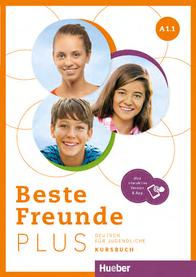

Beste Freunde PLUS ab 11 Jahren (A1 – B1) www.hueber.de/beste-freunde-plus
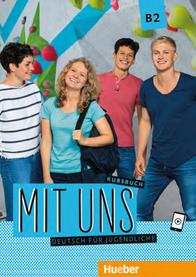

Mit uns ab 13/14 Jahren (B1+, B2, C1) www.hueber.de/mit-uns
In USA erhältlich bei: International Book Import Service www ibiservice com

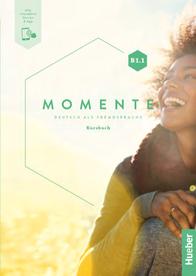

Momente – A1 – B1 für Lernende ab 16 Jahren www.hueber.de/momente
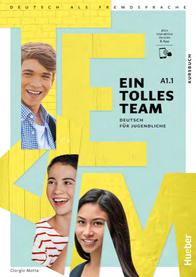
Ein tolles Team ab 12/13 Jahren (A1 – B1) www.hueber.de/ein-tolles-team

Topfit – Prüfungsvorbereitung A1, A2 und B1 shop.hueber.de
www hueber de Besuchen Sie uns:


Vielfalt – B1+, B2 und C1 für Lernende ab 16 Jahren www.hueber.de/vielfalt

Gute Idee! ab 14 Jahren (A1 – B1) www.hueber.de/gute-idee

Leküre für Jugendliche für A1, A2 und B1 shop.hueber.de
Stay tuned for a special feature with our SCOLT TOY, Cécile Lainé!
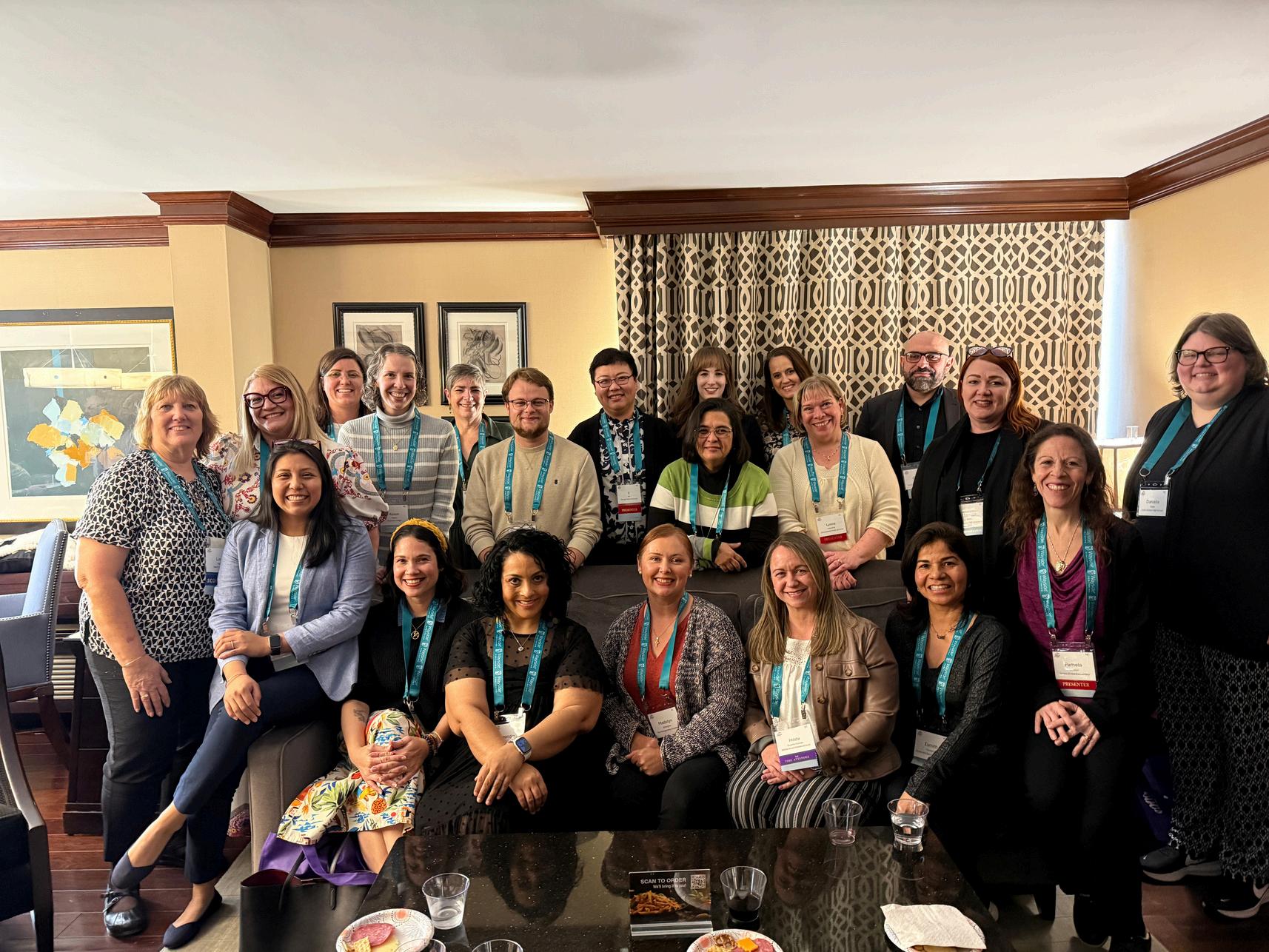
The SCILL (Southern Conference Institute for Language Leadership) program is designed to cultivate the next generation of world language leaders by supporting educators as they grow from classroom practitioners into influential voices within their schools, districts, and professional organizations.
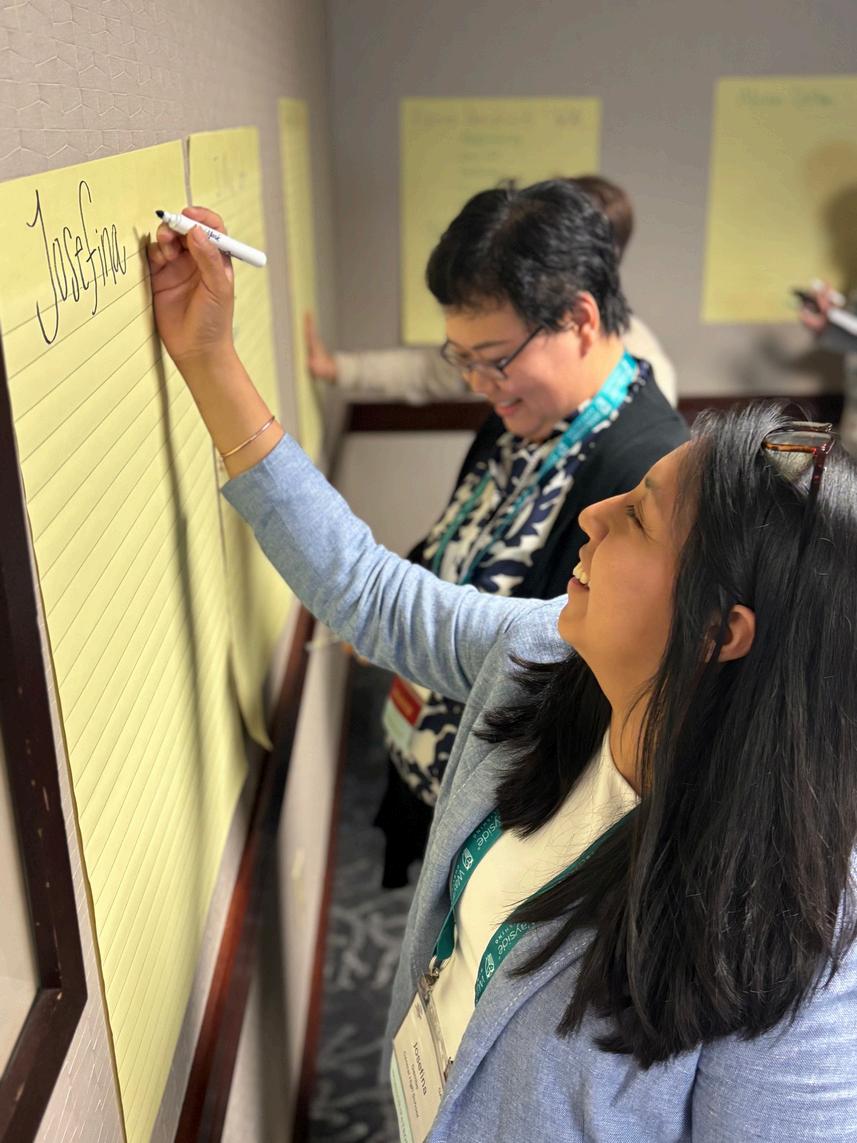
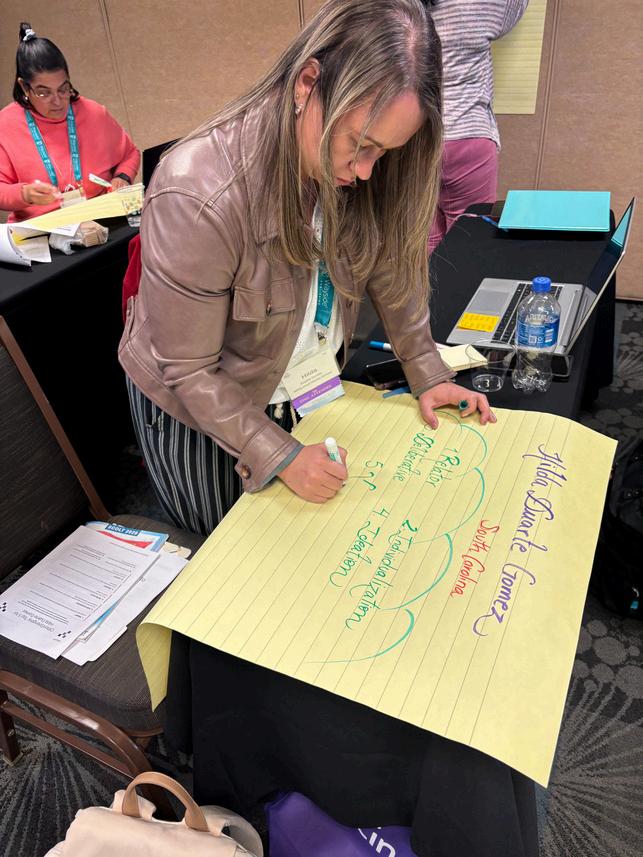
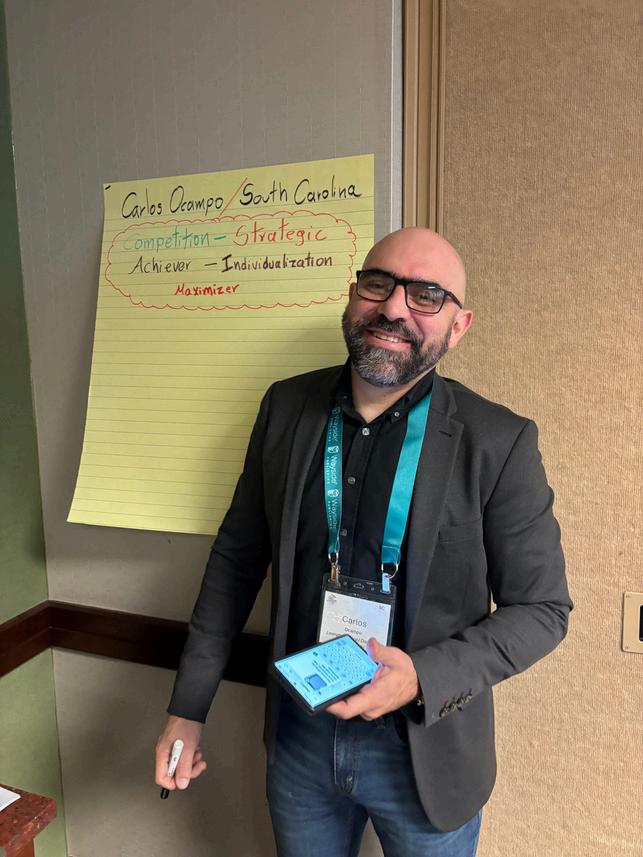
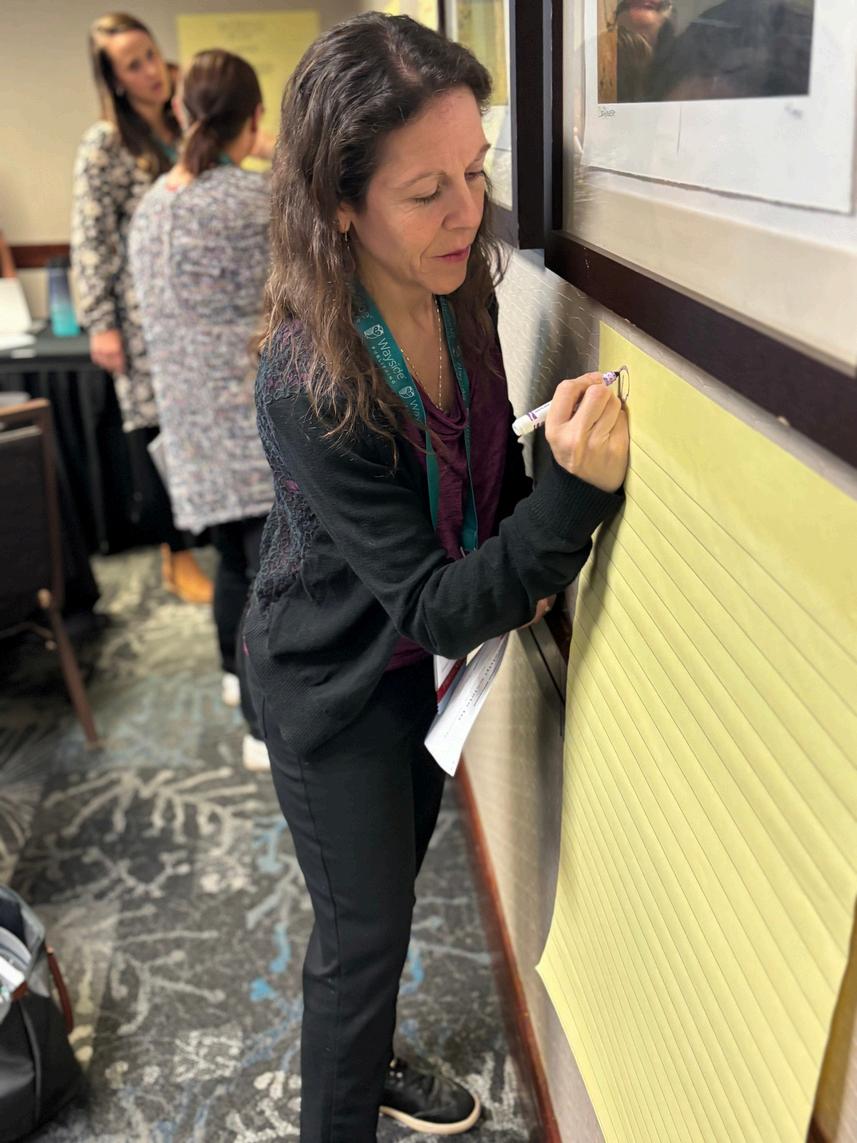
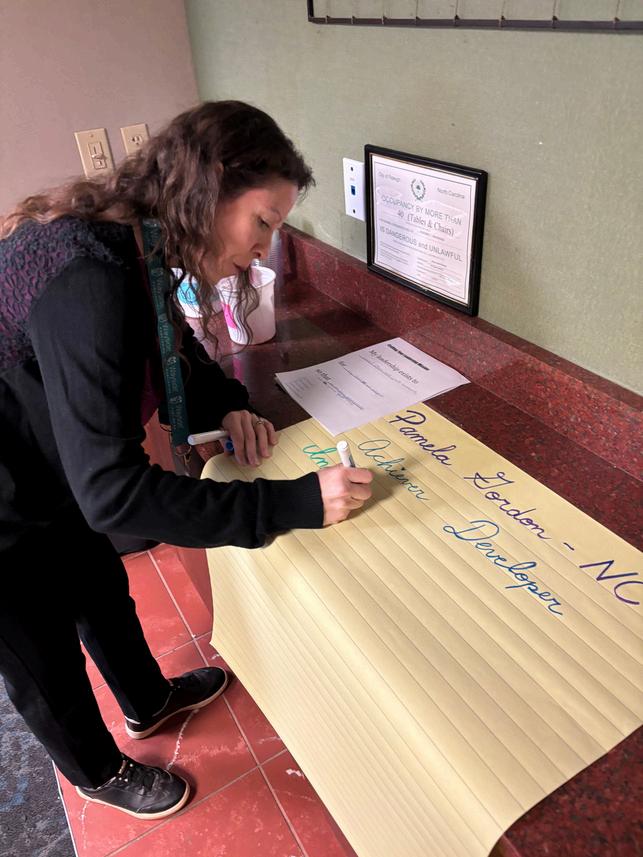
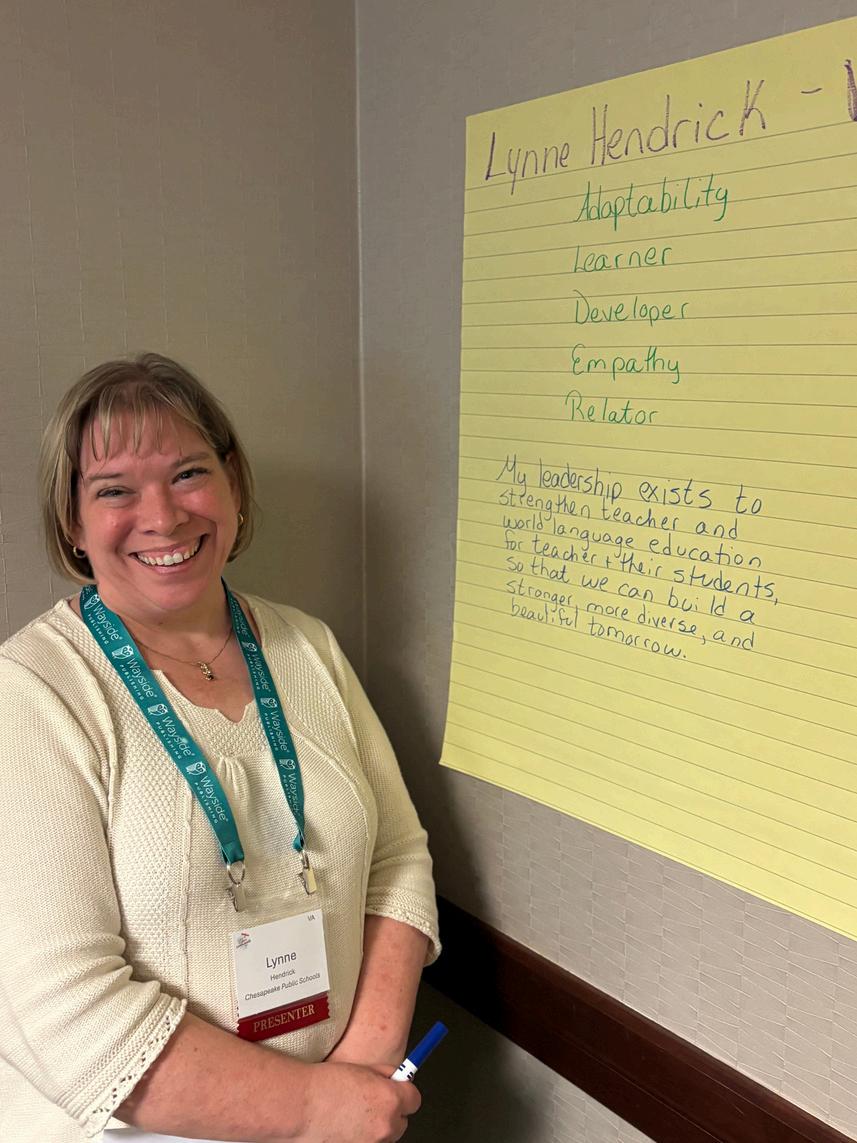
Grounded in the belief that leadership is developed, not assigned, SCILL provides a collaborative space for participants to reflect on their strengths, clarify their goals, and build the skills needed to lead with confidence and purpose. Participants, known as SCILL Builders, engage in a year-long experience focused on advocacy, program development, and instructional leadership.
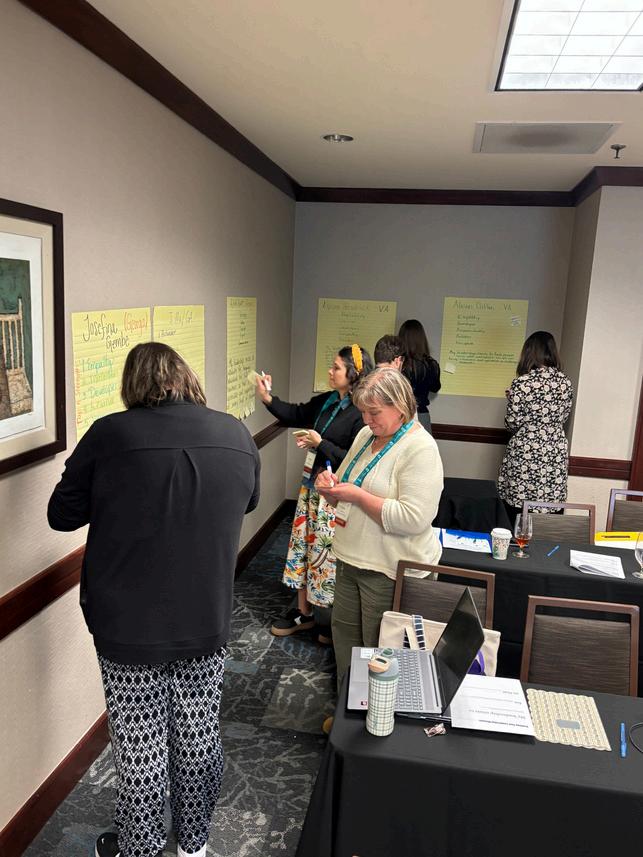
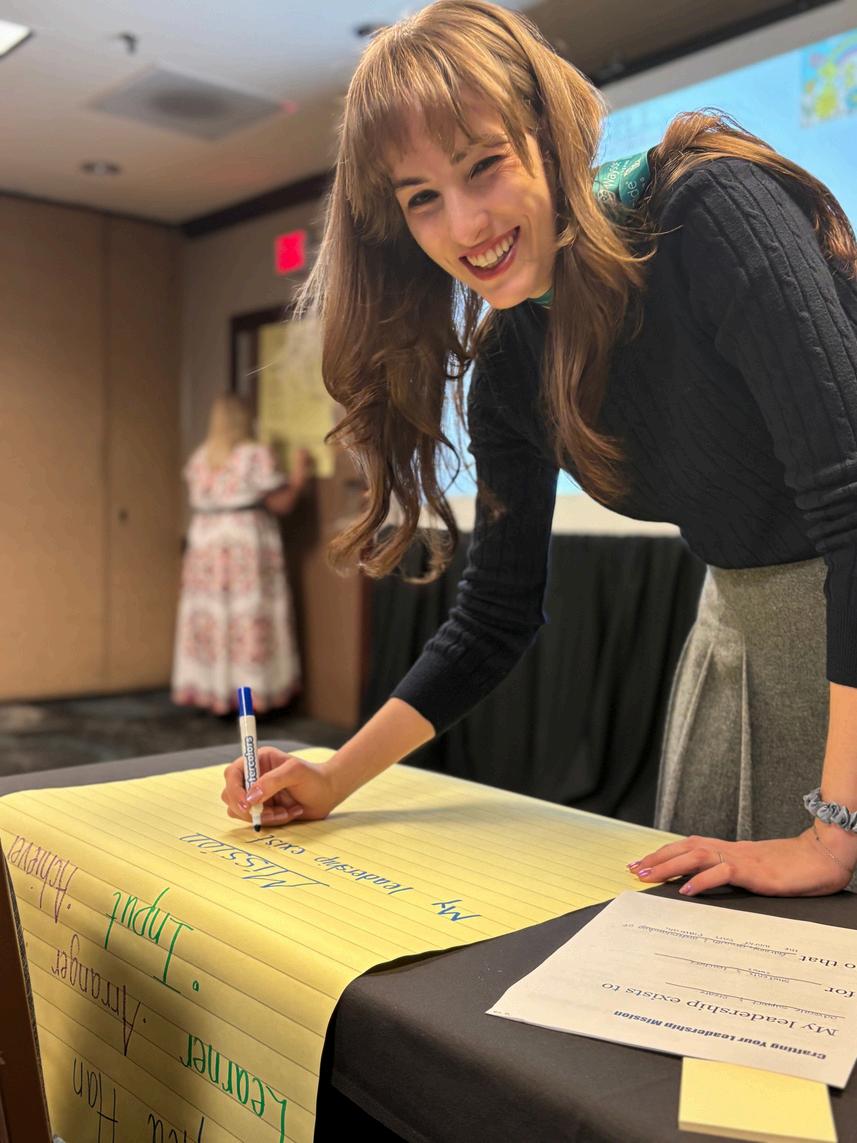
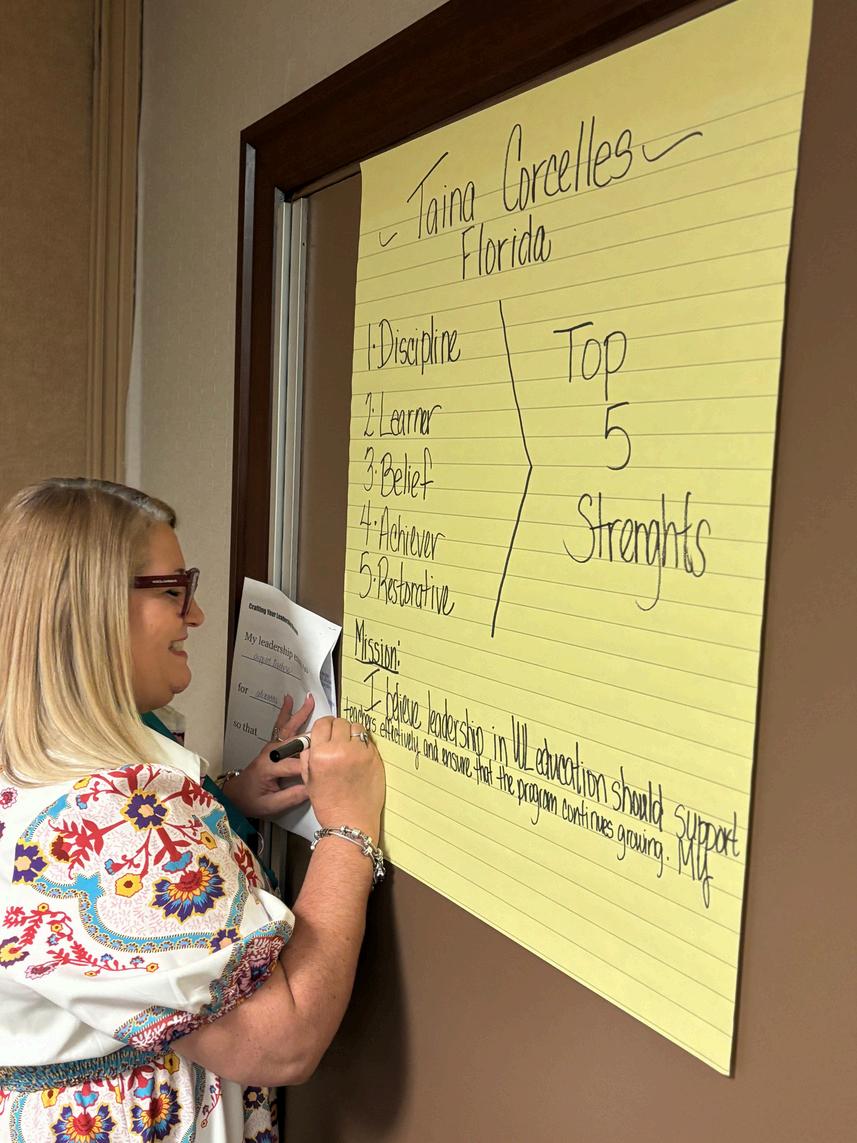
The program officially launched its first cohort with an engaging and reflective first session centered on building leadership from strengths. During the kickoff, participants explored how their individual strengths shape the way they lead and contribute to their teams. Through structured reflection and discussion, they considered where they are in their leadership journey, where they want to grow, and how their strengths can be leveraged in real-world contexts. The session emphasized that leadership is not about doing everything alone, but about building intentionally with others.
This year’s SCILL Cohort participants are:
Marissa Beck Florida
Hilda Duarte Gomez South Carolina
Ji Ma Georgia
Lynne Hendrick Virgina
Danielle Engle Georgia
Esmith Centeno Moncada South Carolina
Ghedy Matus Louisiana
Pamela Gordon North Carolina
Kaleb Hyatt Georgia
Maddy Ethington Alabama
Carlos Ocampo South Carolina
Emily Gustafson Tennessee
Alison Clifton Virgina
Josefina Gembe-García Georgia
Silvana Ibanez South Carolina
Leandra Rodriguez Georgia
Taina Corcelles Florida
Haylea Han Kentucky
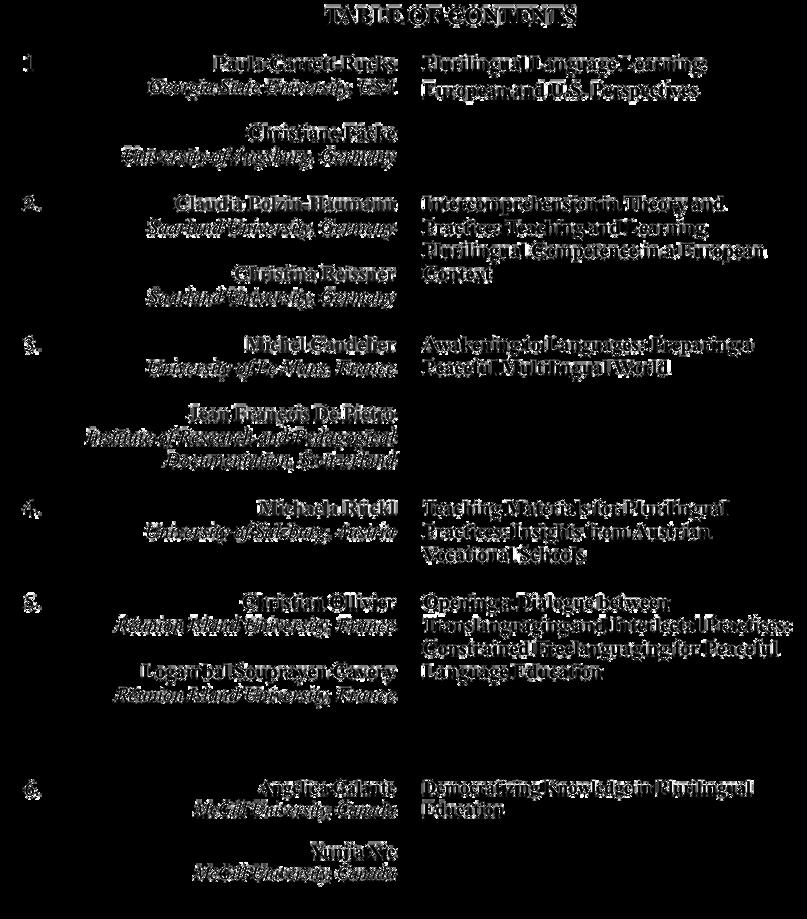
We are currently seeking articles for submission to Dimensions.
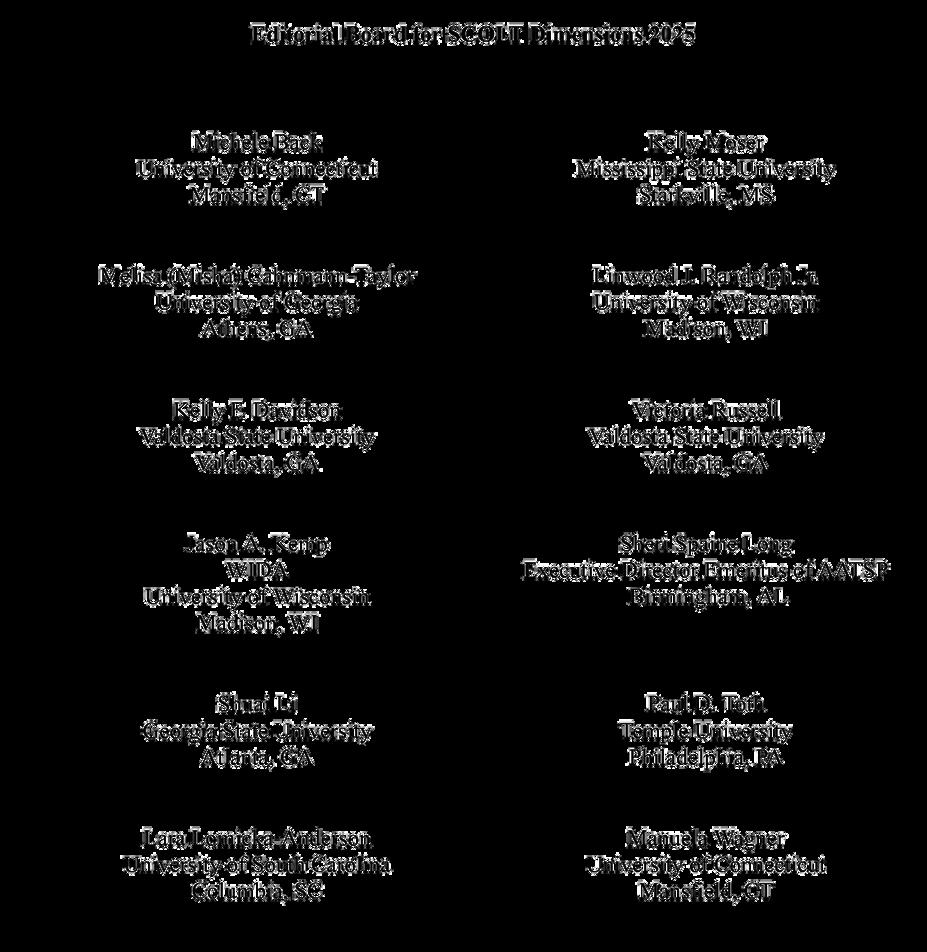
SCOLT acknowledges the work of the Dimensions editorial review board and thanks them for their service to the profession. Click here to see a list of current editorial review board members.
Dimensions 2027:
Dimension is the official peer-refereed journal of SCOLT. The journal seeks to serve the professional interests of language instructors and researchers across a range of contexts and is dedicated to the advancement of the teaching and learning of world languages, particularly languages other than English.
The journal welcomes manuscripts that document the effectiveness of teaching strategies or address a wide variety of emerging issues of interest within the profession. Submissions that report empirical research and that have clear and significant implications for language teaching and learning will be prioritized, as will submissions received by August 1st, 2026.
Submissions guidelines can be found here. Access to previous publications (open access, indexed, highly visible format annual reports from ERIC indicate nearly 3,000 downloads per year) is found at: https://www.scolt.org/scolt-dimensions-volumes/.
For additional information on manuscript submission or the publication process, please contact the Editor, Paula Garrett-Rucks at prucks@gsu.edu or Dimensions@SCOLT.org.
The Joint National Committee for Languages-National Council for Language and International Studies (JNCL-NCLIS) held its annual Language Advocacy Days (LAD) March 9-10, 2026, in Washington, D. C. This year’s theme, “From Every State, For Every Student”, served as a reminder that language education plays a direct role in tomorrow’s workforce. To demonstrate this commitment, over 20 students ranging from 4 grade to college were in attendance. These students had an opportunity to share their thoughts on language learning and advocacy in a breakout session called “Students Driving Change.” Hearing their stories and feeling their passion for languages was uplifting and inspiring! To develop future advocates, NCLNCLIS has plans to launch a virtual academy for students who want to learn about language advocacy and to offer a discounted rate for students who want to attend LAD 2027. Please visit the JNCL-NCLIS website for more information.
The keynote speaker this year was operatic singer and published author, Carla Dirlikov Canales, who has performed over eighty times in twelve countries. The child of a Bulgarian father and a Mexican mother, Carla shared personal experiences that bridge languages and cultures. Carla is active on the world stage, recently serving as a Senior Advisor and Envoy for Cultural Exchange on the President’s Committee on the Arts and the Humanities. Currently, she is a Fellow at the Center for Public Leadership at Harvard’s Kennedy School.
Legislative priorities this year were to:
·Increase funding for the World Language Advancement and Readiness (WLARA) grants program
·Enact the World Language Education Assistance Program (WORLDLEAP) (H.R. 1572)
·Preserve Title III Funding for English Language Acquisition, Professional Development grants and reinstate Dept. of Education and Dept. of Justice guidance that outlines duties and obligations of state education agencies
·Restore and resume Funding for Title VI Fullbright-Hays Scholarship programs
After a full day of advocating on Capitol Hill, LAD ended with a reception at the Planet Word Museum in which this year’s top language advocates received recognition for their work. The award recipients were:
·J. David Edwards Power of Advocacy Award: Maria Cristina Ladas, recognized for her grassroots leadership for multilingual education in Arizona
·JNCL-NCLIS ELEVATE Award: Shelia Bong, for advancing access, equity, and indigenous language preservation
·James E. Alatis Founder's Award: Joy Peyton, for lifelong contributions to language and international education
For more information about advocacy and to sign up for advocacy alerts, visit languagepolicy.org.
Submitted by Krista Chambless and Jen Carson
Alabama World Languages Association
AWLA website
Arkansas Foreign Language Teacher Association
AFLTA website
Florida Foreign Language Association
FFLA Website
Foreign Language Association of Georgia
FLAG website
Foreign Language Association of North Carolina
FLANC website
Kentucky World Language Association
KWLA website
Louisiana Foreign Language Teachers’ Association
LFLTA website
Mississippi Foreign Language Association
MFLA website
South Carolina Fellowship of Language Teachers and Advocates
SCFLTA website
Tennessee World Language Teaching Association
TWLTA website
Texas Foreign Language Association
TFLA website
West Virginia Foreign Language Teachers’ Association
WVFLTA Website
Foreign Language Association of Virginia
FLAVA website
Proposal window: April 15-October 12, 2026
Submit your session proposal at www.scolt.org
Conference Date: March 18-20, 2027
Location: Southbank Hotel, Jacksonville, FL
Theme: Making with Languages.
Submit your proposal for SCOLT/FFLA/SEALLT 2027 now!
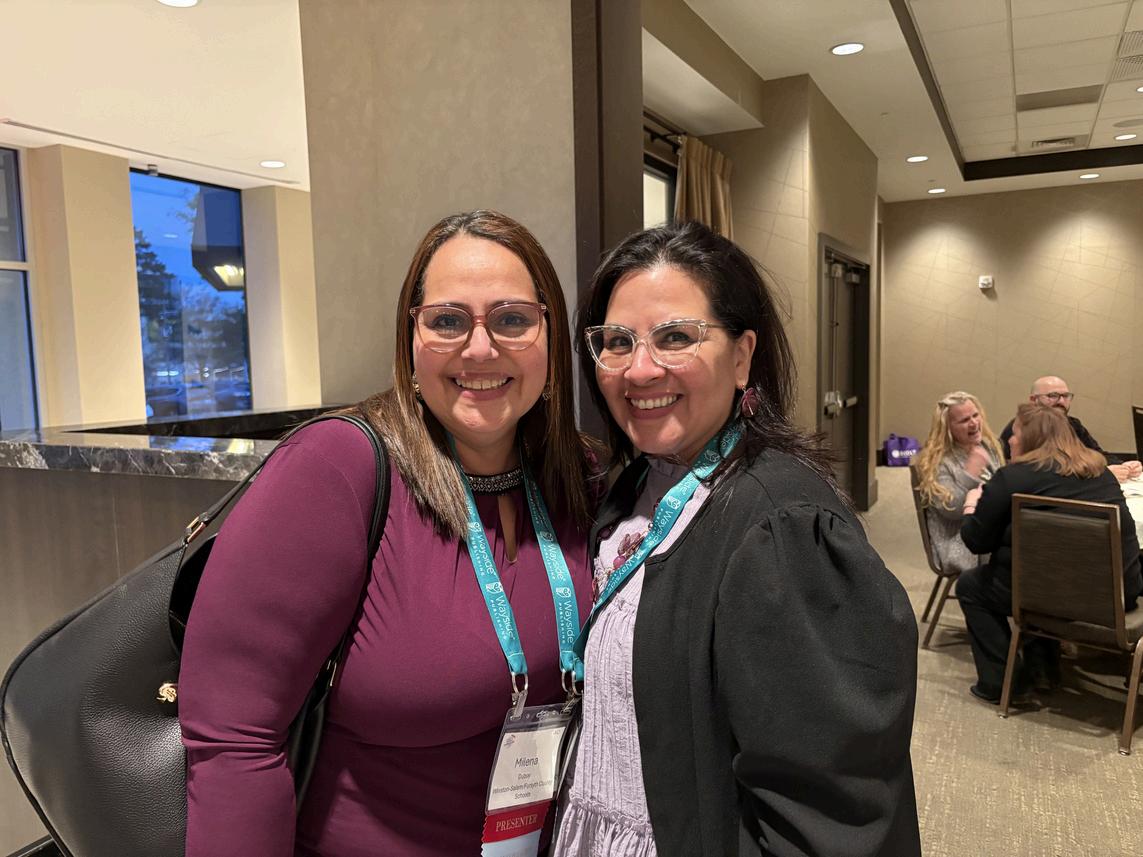
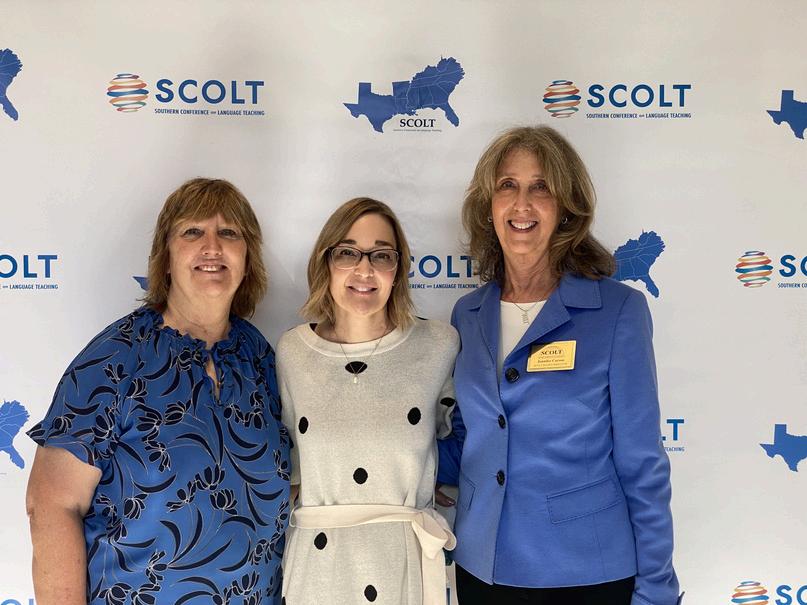
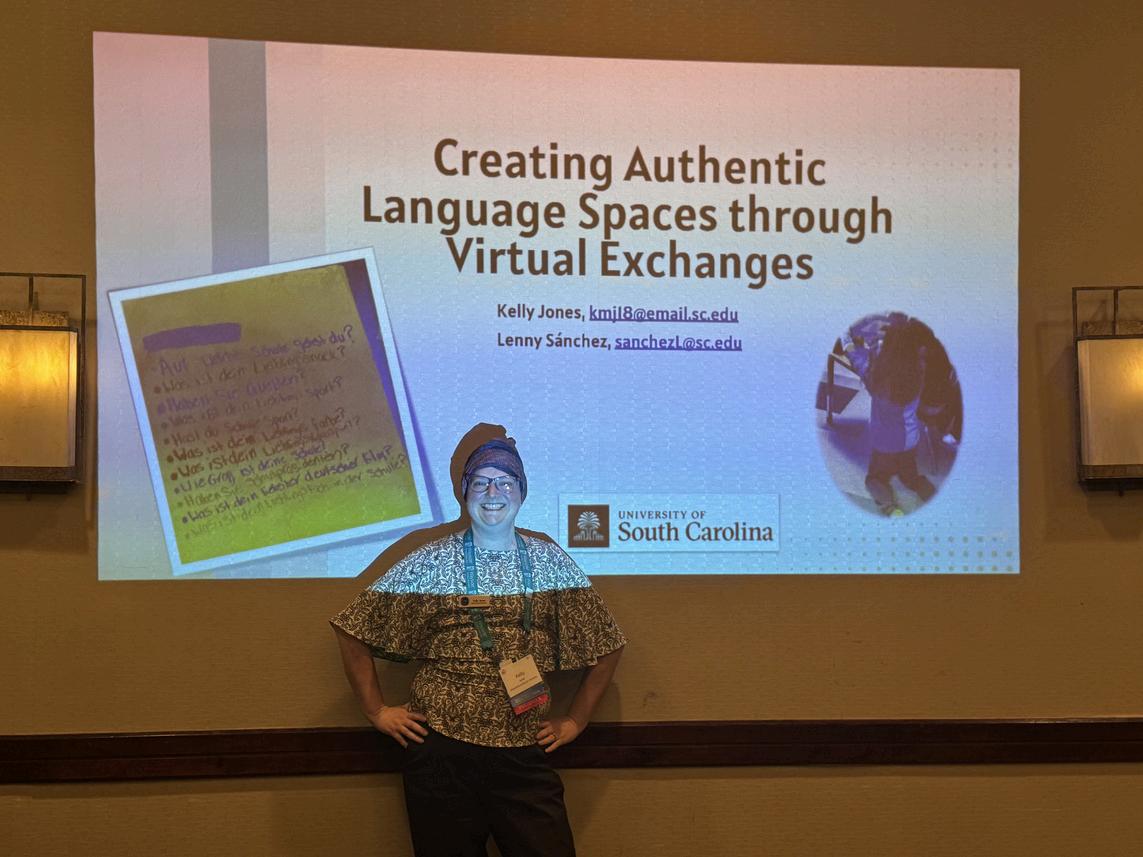
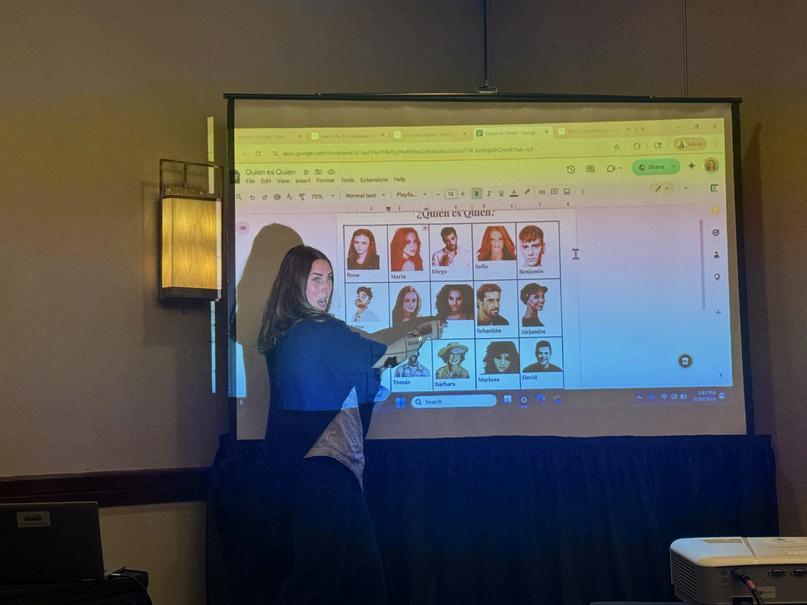
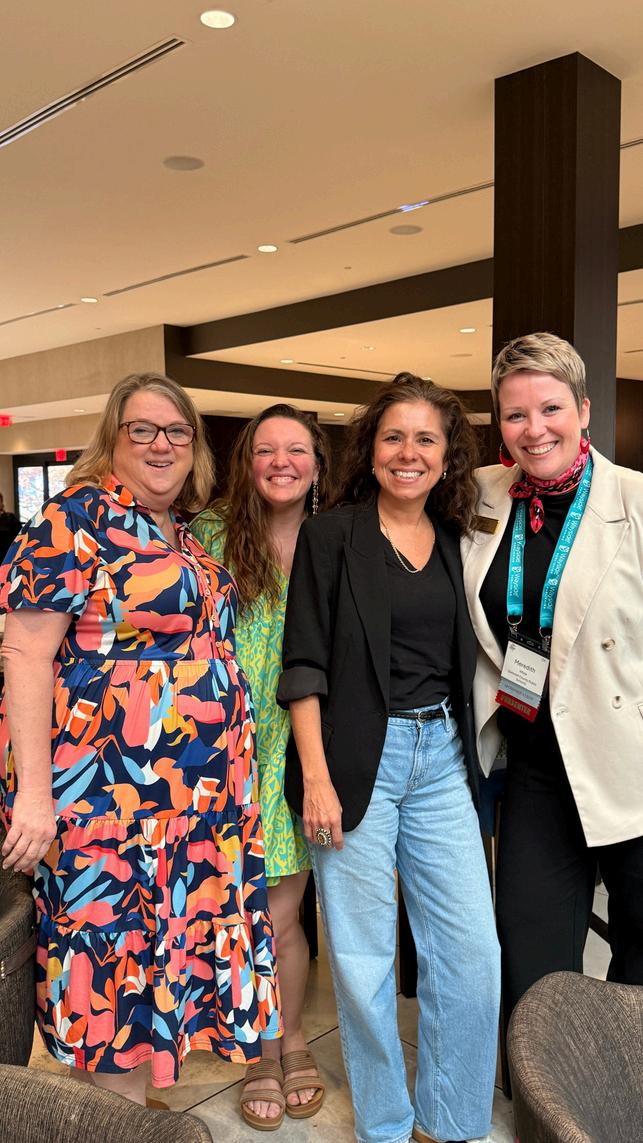
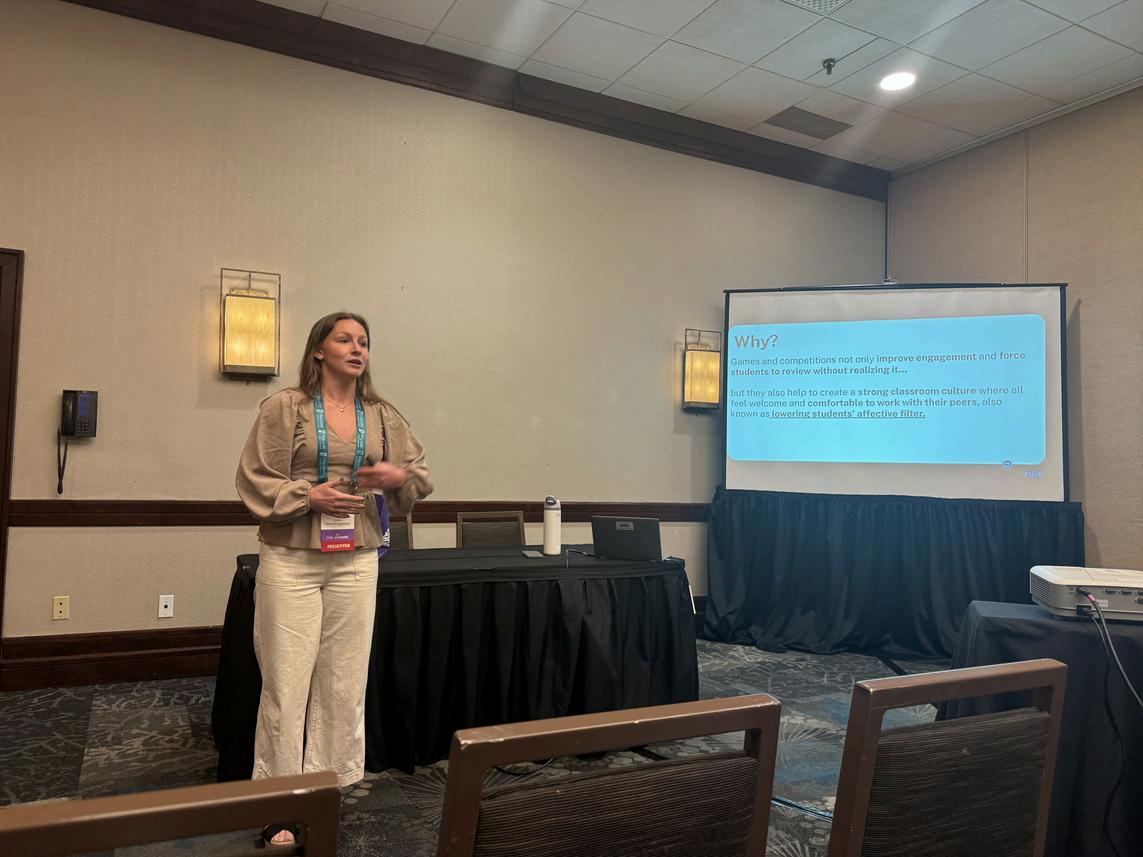
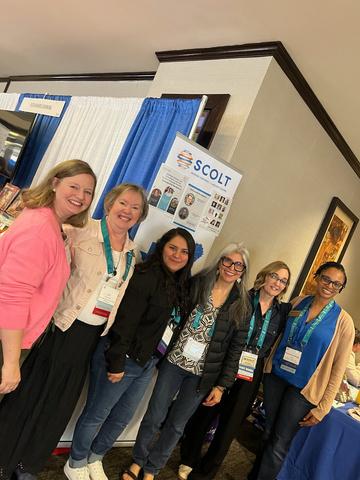
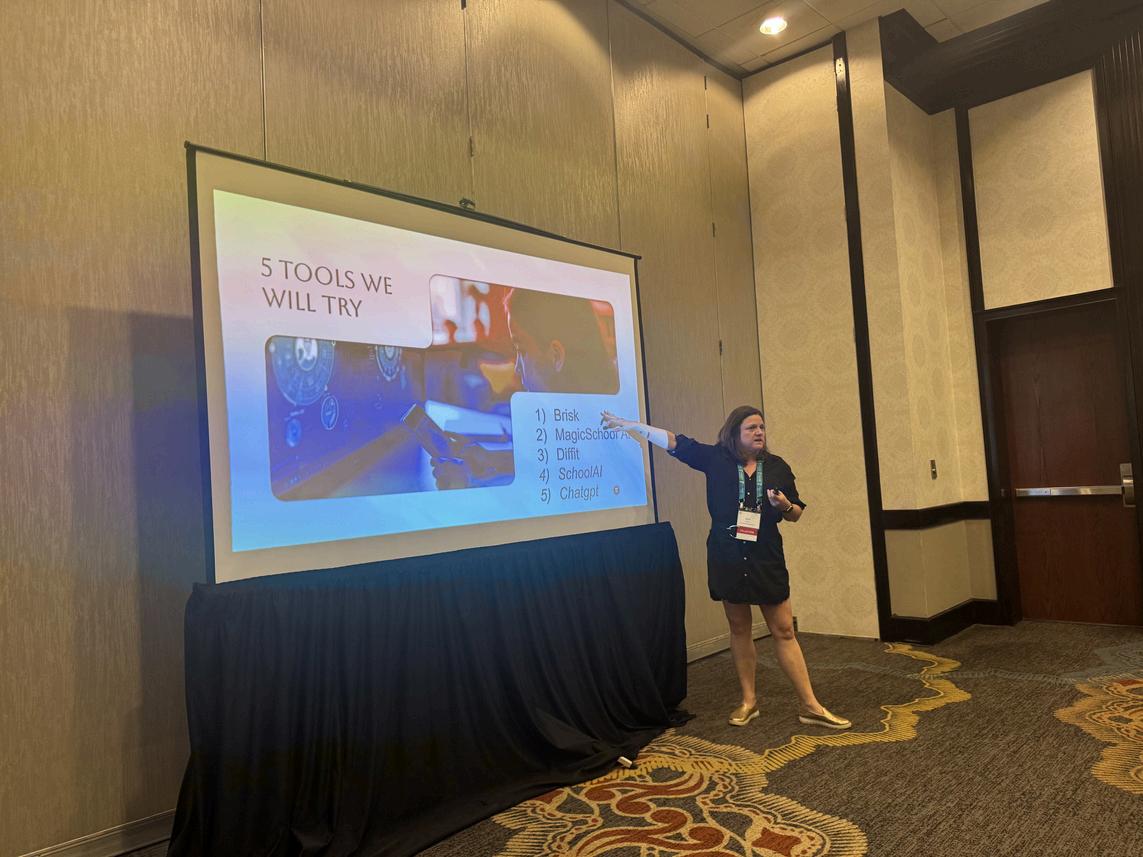
Thank you to all who made the SCOLT 2026 conference a huge success! The FLANC, SCFLTA, and SEALLT Board members were extremely helpful in all aspects of planning and running the conference. Our sponsors and exhibitors were a vital component of the event! And of course, we couldn’t have a conference without our presenters and attendees! Everyone worked together to have a great event and it was great to connect with everyone in-person!