



Gray Television and our employees honor the life and legacy of Dr. Martin Luther King, Jr.
May his wisdom, words and dreams continue to shape our hearts and minds for years to come.







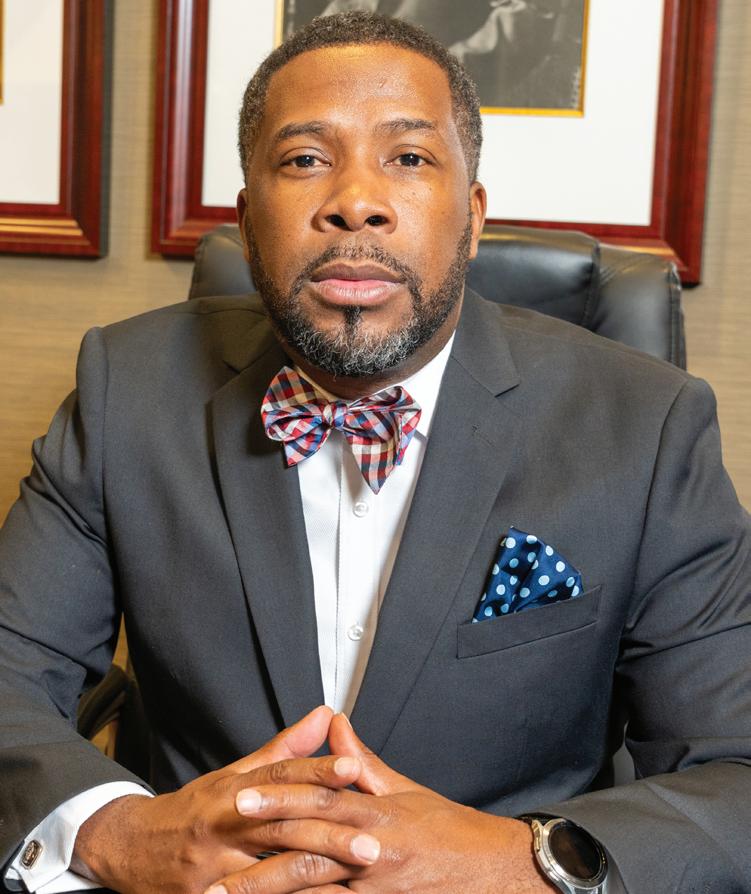
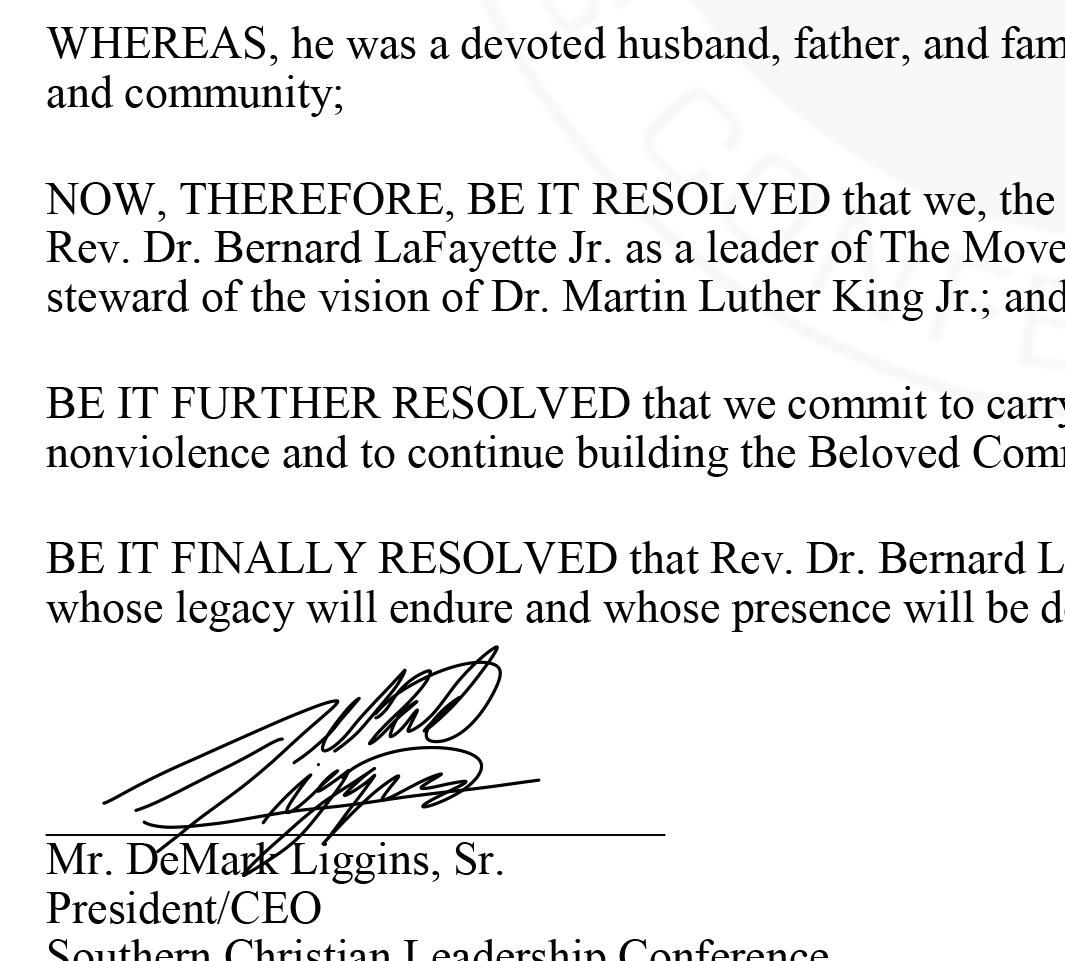
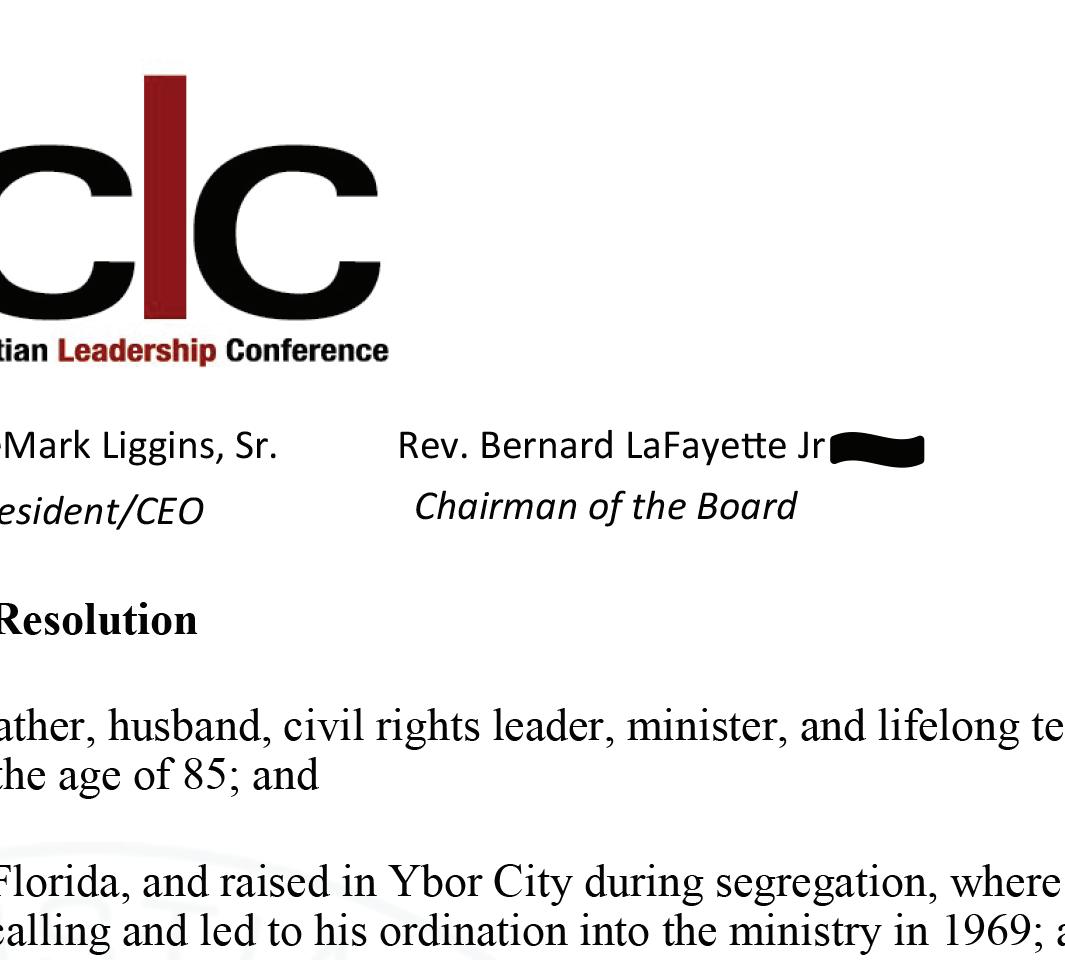
DeMark Liggins, Sr President & CEO
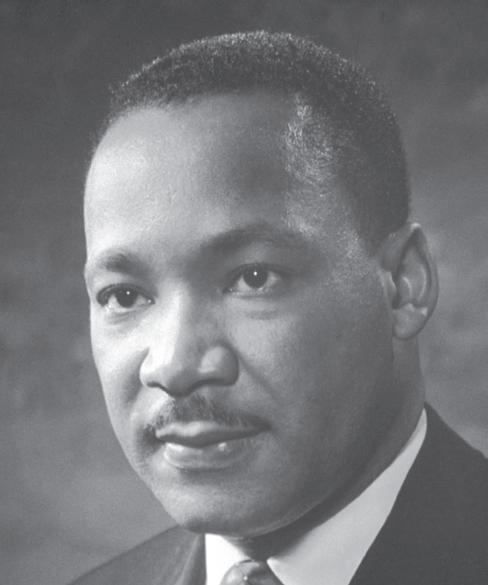
Martin Luther King Jr. Founding President
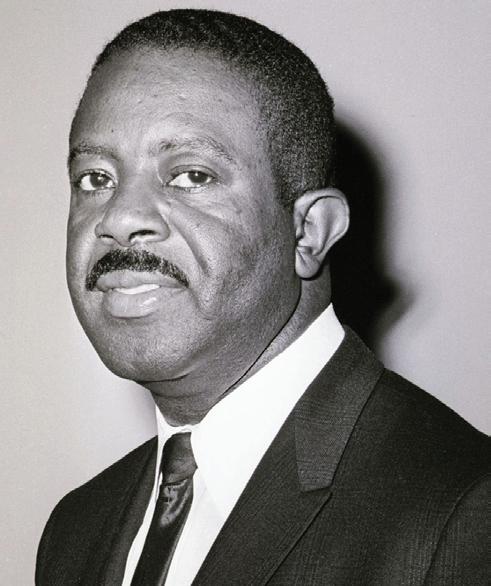
Ralph D. Abernathy President 1968 - 1977
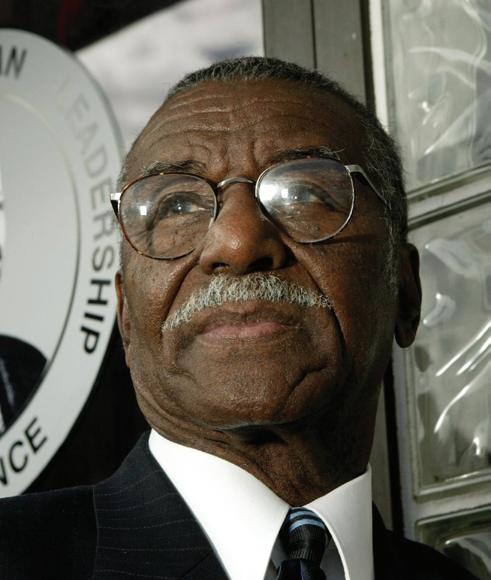
Fred L. Shuttlesworth President 2004

Dr. Bernard LaFayette, Jr Chairman
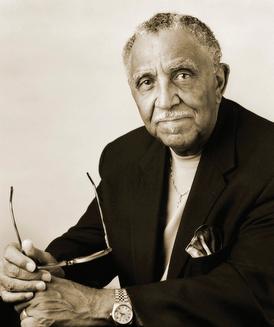
Joseph E. Lowery President 1977 - 1997
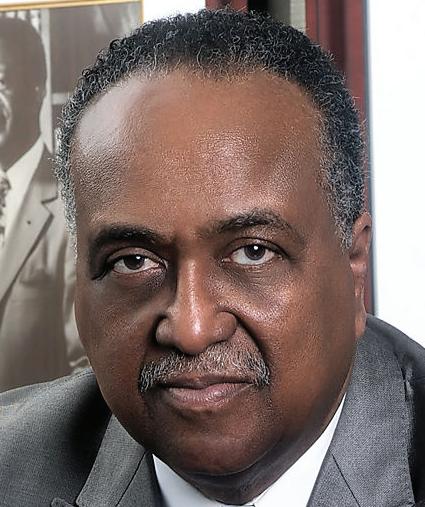
Dr. Charles Steele, Jr. President Emeritus

Martin Luther King III President 1998 - 2003

Howard Creecy Jr. President 2011
The Southern Christian Leadership Conference is strengthened by a National Board of Directors that reflects the depth, reach, and seriousness of our work across the country. These leaders help provide governance, accountability, counsel, and vision as SCLC continues its work in the spirit of Legacy, Leadership, and Love. Representing a wide range of states and professional experience, the members of the National Board help guide the organization with a shared commitment to justice, service, and institutional stewardship.
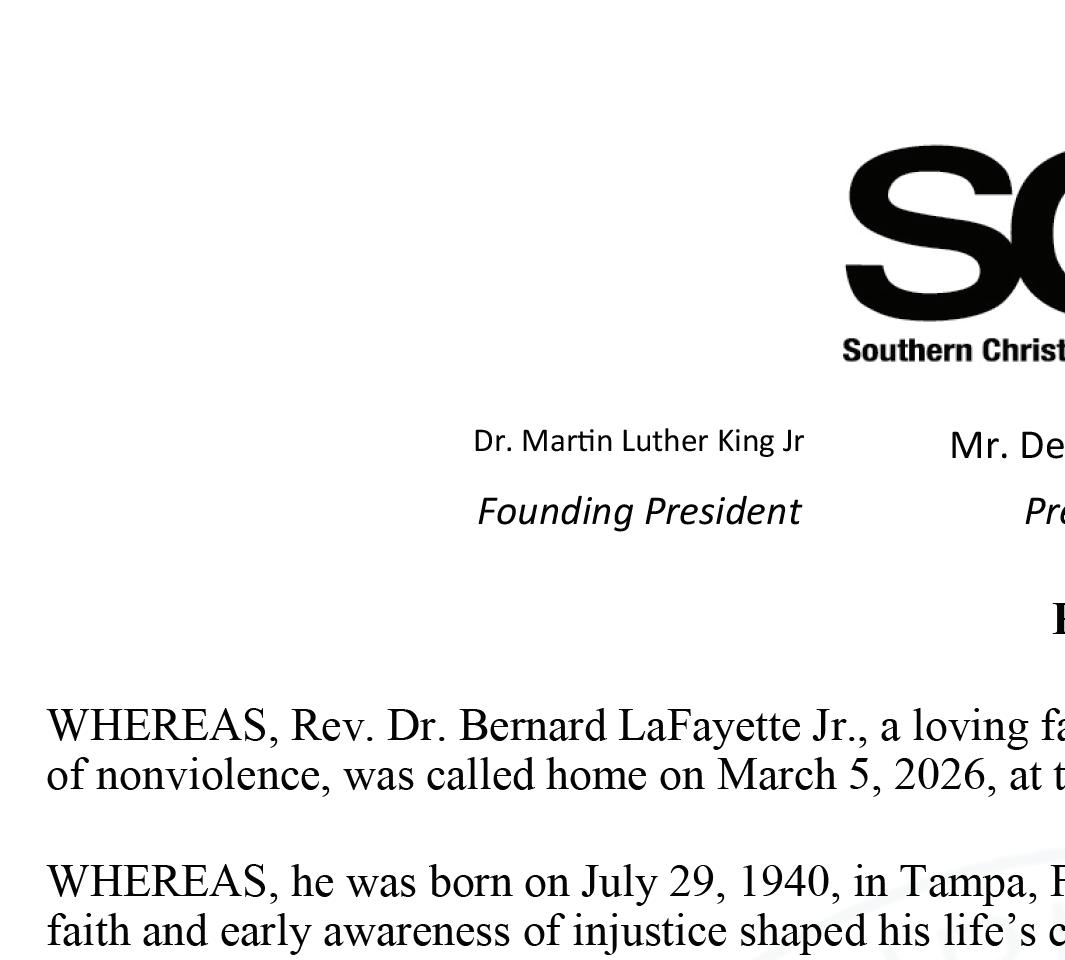
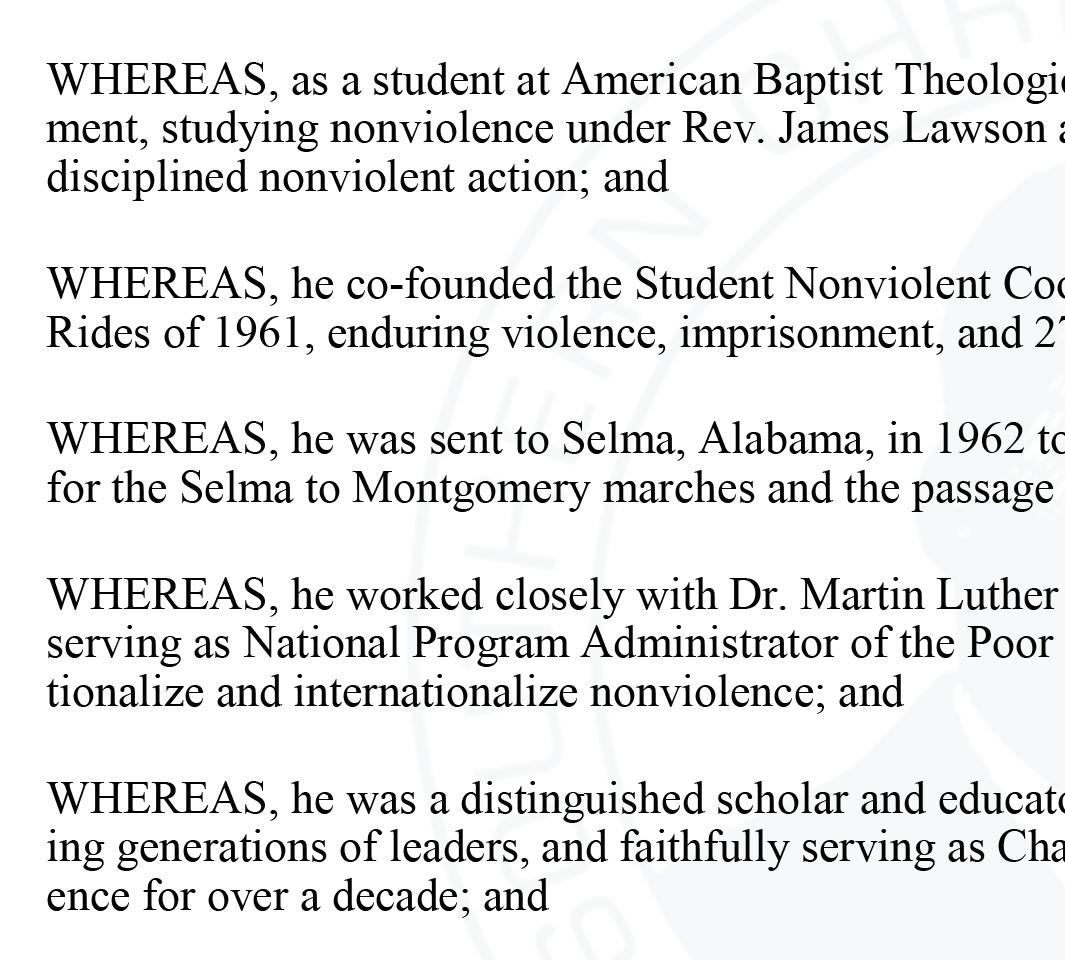
Dr. Bernard LaFayette, Jr.
Alabama
Chairman of the Board
August 2025 to August 2028
Ms. Diettra Lucas
Maryland
Vice Chairman
August 2025 to August 2028
Dr. Sylvia Tucker
Virginia
Chaplain, Chairman Emeritus
August 2025 to August 2028
Rev. Charles Becknell
New Mexico
Treasurer
August 2025 to August 2028
Mr. Chad Smith
Florida
Financial Secretary
August 2024 to August 2026
Mr. Traymone Deadwyler
Georgia
Secretary
August 2024 to August 2026
Mr. Shannon Lawrence
California
Parliamentarian
August 2024 to August 2026
Mrs. Marilyn Ford
Connecticut
August 2025 to August 2028
Ms. Connie Goodly LaCour
Louisiana
August 2025 to August 2028
Mr. Cory Gray
Texas
August 2025 to August 2028
Mr. Leon Hampton
Alabama
August 2025 to August 2028
Mr. Lewis James
Michigan
August 2024 to August 2026
Mr. Douglas Moore
California
August 2025 to August 2028
Dr. Jimmy Morris, Jr.
Alabama
August 2024 to August 2026
Mr. Omar Neal
Alabama
August 2025 to August 2028
Mr. Bankole Thompson
Michigan
August 2024 to August 2026
Mrs. Donna Waddell
Virginia
August 2025 to August 2028
By: DeMark Liggins, SCLC National President & CEO
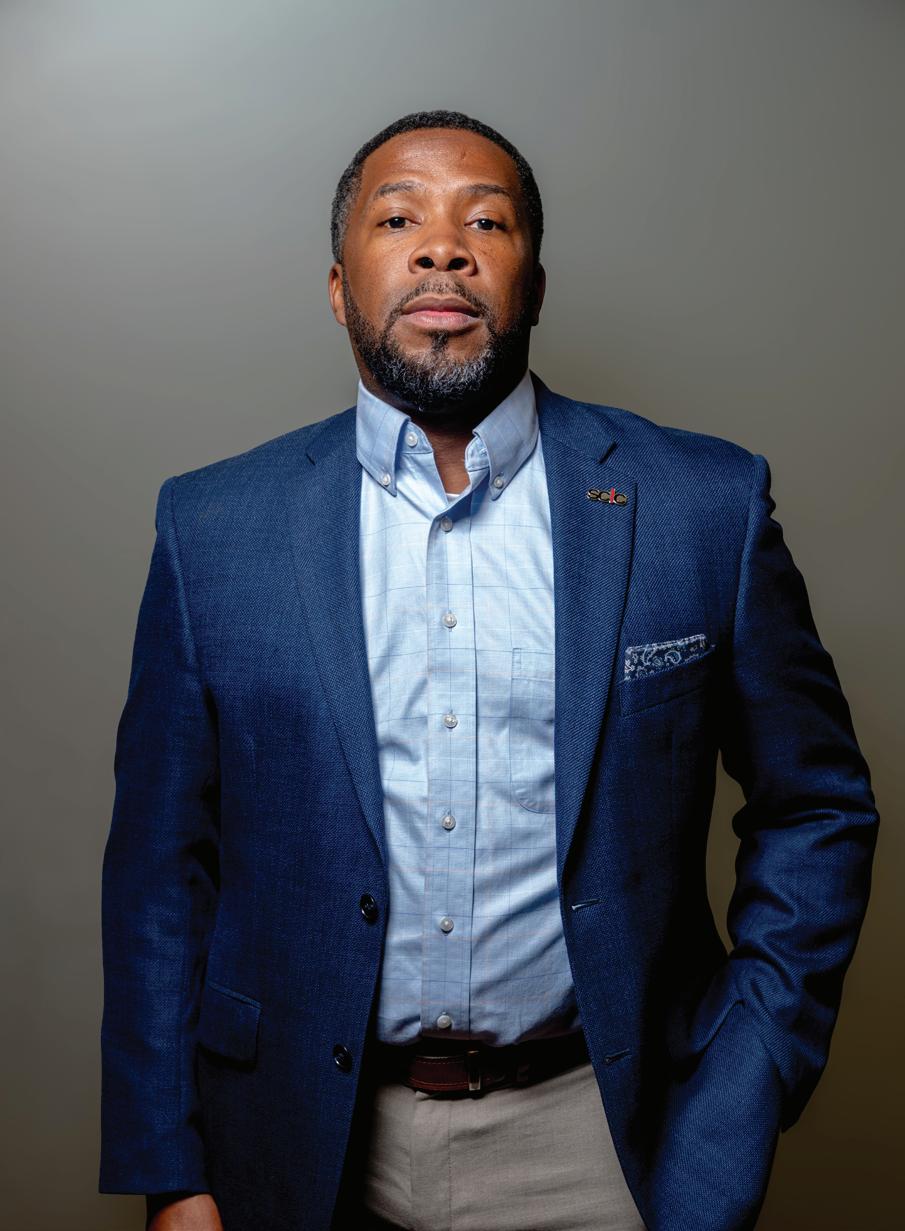
There are periods in our nation’s history where the challenges before us are clear, defined, and widely understood. And then there are moments like this one, where the challenges are just as real but far more complex, layered beneath policy decisions, institutional shifts, and a changing national posture that requires us to look deeper.
We are in such a moment now.
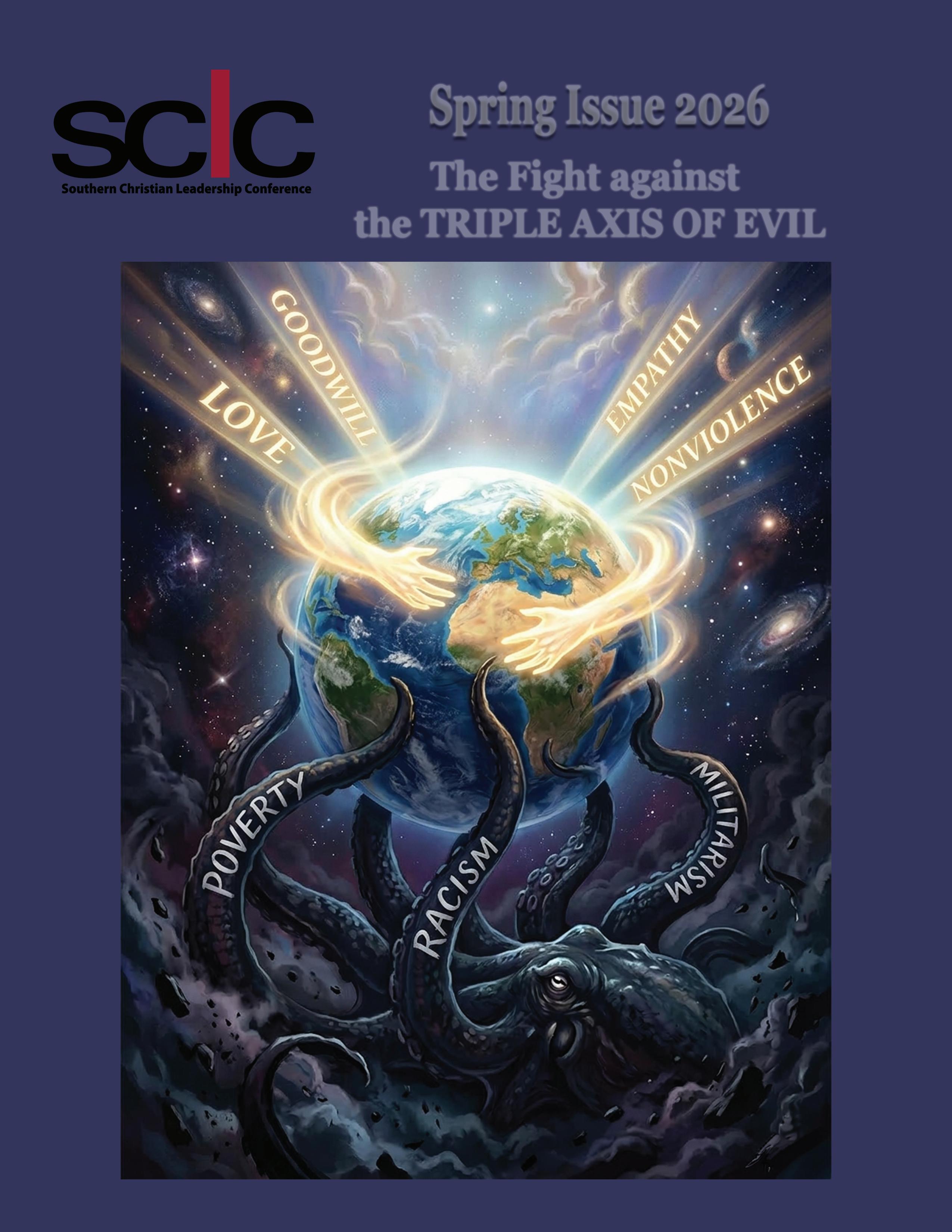
Dr. Martin Luther King Jr. once spoke of what he called the triple evils of society: racism, militarism, and poverty. He did not describe them as separate concerns, nor did he present them as temporary conditions. He spoke of them as enduring forces that, if left unchecked, would continue to shape the moral and structural direction of the country. What is striking about this moment is not simply that these three forces still exist, but that they are once again rising together in ways that demand careful attention and clear-eyed understanding.
Racism today does not always present itself in the overt ways that defined earlier eras. It has matured, in many respects, into something more difficult to identify and, therefore, more difficult to confront. We are witnessing a deliberate shift away from acknowledging long-standing disparities, particularly those affecting Black Americans. This is not simply about terminology or the public debate around certain initiatives. It is about whether there is a sustained commitment to addressing inequities that have been documented for generations.
For a period of time, there was at least a broad recognition that disparities existed in education, in employment, in healthcare, and across multiple sectors of American life. Efforts were made, imperfect as they were, to begin addressing those gaps through structured programs and intentional strategies. Today, many of those efforts are being rolled back or reframed in ways that suggest the problem itself is no longer worthy of focused attention.
That shift is significant. Because when a society moves away from acknowledging a problem, it does not solve it. It simply makes it easier to ignore.
At the same time, the scope of racial tension has expanded. We are seeing heightened scrutiny and enforcement directed at immigrant communities, particularly those made up of Black and Brown individuals. This is not an isolated development. It reflects a broader posture that raises questions about who is included,
who is protected, and who is viewed with suspicion.
What is equally concerning is the way this environment affects those who would otherwise stand in solidarity. The climate has become one where even goodwill can be met with resistance, where shared purpose is challenged by division. That is not only a social issue, it is a strategic one. Movements for justice have always depended on coalitions, on people of different backgrounds finding common cause. When those connections are strained, progress becomes more difficult to sustain.
Militarism, the second of Dr. King’s identified evils, has also taken on a renewed presence. Much of the public conversation focuses on America’s role abroad, and rightly so. The decisions made on the global stage carry significant consequences, not only for international stability but for how the nation defines its priorities. Recent actions and ongoing tensions in various parts of the world remind us that military engagement remains a central component of American policy.
But militarism is not only about foreign policy. It is also about mindset.
Dr. King warned that a nation that continues to invest heavily in war risks neglecting the needs of its own people. That warning extends beyond budgets. It speaks to a way of thinking, one that prioritizes control, enforcement, and force as primary tools. Increasingly, we are seeing elements of that mindset reflected in domestic institutions.
From local policing strategies to federal enforcement agencies, there is a growing perception that the line between community protection and aggressive enforcement has blurred. Agencies that were designed to serve and protect can, at times, appear to operate with a posture more aligned with control than with partnership. This is particularly evident in how certain communities experience law enforcement, where the presence of authority can feel less like support and more like surveillance.
When that shift occurs, trust erodes. And without trust, even well-intentioned efforts struggle to achieve their purpose.
The third of these forces, poverty, remains perhaps the most consistent and, in many ways, the most overlooked. It does not always generate headlines in the same way as other issues, but its impact is deeply felt in communities across the country. What makes poverty particularly challenging is not only its persistence, but the way it intersects with the other forces Dr. King identified.
Economic hardship is often compounded by disparities in access to education, healthcare, and employment opportunities. It is influenced by policy decisions that determine how resources are distributed and who benefits from economic growth. In recent years, there has been increased pressure on programs designed to provide basic support, whether in healthcare access, educational funding, or food assistance. At the same time, economic policies continue to favor structures that provide significant advantages to those who are already well positioned.
This creates a widening gap. Not simply between the wealthy and the poor, but between those who have access to opportunity and those who do not.
There is often a national narrative that emphasizes individual responsibility, the idea that success is a matter of effort and determination. While there is value in personal accountability, that narrative becomes incomplete when it overlooks the structural barriers that limit access to opportunity. It is difficult to speak meaningfully about upward mobility when the foundational resources required to pursue it are unevenly distributed.
What Dr. King understood, and what remains true today, is that these three forces do not operate independently. Racism influences who has access to opportunity. Militarism influences how resources are allocated and how authority is exercised. Poverty influences outcomes across every aspect of life. Together,
SCLC National Magazine/ Spring 2026 Issue
they create a system that can be difficult to navigate and even more difficult to change.
And yet, it is important to recognize that acknowledging these challenges does not mean resigning ourselves to them.
History offers a different perspective.
There have been moments before where the challenges seemed just as entrenched, just as overwhelming. And in those moments, progress was made not because the obstacles disappeared, but because people chose to engage them with intention and with principle.
The tools that made that progress possible are still available.

Love, in this context, is not simply an emotional expression. It is a disciplined commitment to the well-being of others, even in the face of disagreement. It requires a willingness to see beyond immediate differences and to work toward outcomes that benefit the broader community. Goodwill operates in a similar way, reflecting a choice to approach challenges with shared responsibility rather than individual gain, creating space for collaboration and solutions that reflect a broader set of voices. Nonviolence remains one of the most powerful tools available, not as passivity, but as a deliberate and strategic way to confront injustice without reproducing it.
In a moment like this, the question is not whether these tools are relevant, but whether we are willing to use them with the same discipline and clarity that defined the Movement at its height. This is precisely why we stand firmly on our pillars of Legacy, Leadership, and Love, not as quips or convenient language, but as a foundation for how we will move forward as a Conference to effect change in our communities and across this nation. These pillars ground our work, guide our decisions, and shape our response to the forces we face, calling us to lead with a moral clarity strong enough to challenge injustice and steady enough to build what comes next. In doing so, we recommit ourselves to the work not simply of addressing the moment, but of helping to redeem the Soul of America.













For more than a decade, the Affordable Care Act has functioned as both a safety net and a stabilizing force within the American healthcare system. It expanded coverage, steadied insurance markets, and, through federal subsidies, made monthly premiums manageable for millions of Americans who would otherwise be priced out.
As enhanced subsidies approach expiration, the political debate has returned to familiar ground: whether to extend them, scale them back, or allow them to lapse entirely. That framing risks missing the larger story. The subsidies that made coverage more affordable did not resolve the underlying cost problem in American healthcare. They managed it and, in doing so, partially obscured it.
The question now is not only what happens if those subsidies expire, but what their expiration reveals about the system they have been supporting.
The enhanced subsidies at the center of this debate were enacted under the American Rescue Plan Act of 2021 and later extended through the Inflation Reduction Act of 2022. Together, those laws increased premium tax credits, eliminated the income cap that had excluded many middleincome households, and limited how much individuals were required to pay as a share of their income.
Unless Congress acts again, those provisions will expire at the end of 2025.
This is not an abstract or distant policy choice. Insurers, regulators, and state marketplaces are already making decisions based on whether these subsidies will continue. For millions of households, the outcome will determine not just what they pay each month, but whether they remain insured at all.
The subsidies operate as advance tax credits, reducing monthly premiums for people purchasing insurance through the ACA marketplaces, where coverage is priced based on age, location, and plan level rather than employment. Their expansion brought particular relief to those caught between Medicaid eligibility and the unaffordability of unsubsidized private plans. If they expire, that relief disappears.
The immediate effects are relatively easy to project. Premiums will rise—often sharply. Analysts estimate that many enrollees could see increases exceeding fifty percent, particularly among middleincome households that would once again fall outside eligibility thresholds. Millions of Americans are expected to lose coverage.
But coverage losses do not occur evenly.
Historically, those with the least financial flexibility are the first to exit the market. Workers with unstable employment, variable incomes, or limited savings are especially sensitive to even modest premium increases. Faced with higher monthly costs, households are forced into tradeoffs between healthcare and other basic needs.
The result is not simply fewer people insured. It is a reshaping of who remains insured and who does not.
Why the ACA Mattered Disproportionately for Black Communities
For many Black Americans, the ACA marketplaces were not a fallback option. They were often the primary pathway to coverage.

FNF is proud to support the SCLC's commitment to continuing the legacy of Dr. Martin Luther King Jr. by activating the "strength to love" within the community of humankind.
Black workers have long been overrepresented in sectors where employersponsored insurance is inconsistent or unavailable, including retail, hospitality, home health, transportation, and other servicebased industries. These sectors frequently rely on parttime schedules, contract labor, or highturnover models that limit access to benefits. In that context, public policy serves as the mechanism that fills a gap created by the labor market itself.
Following the implementation of the ACA, uninsured rates among Black Americans declined significantly, with some of the largest gains occurring in states that expanded Medicaid. While disparities persisted, they narrowed in measurable ways. Subsidized marketplace coverage played a central role in that progress, particularly for individuals whose incomes placed them above Medicaid eligibility but below the threshold of affordability for private insurance.
In this sense, the ACA functioned as more than an access expansion. It operated as a partial structural correction for inequities that long predated it. Weakening or removing that correction does not restore neutrality. It reinstates the imbalance the policy was designed to address.
Disparate Impact Without Declared Intent
The expiration of subsidies is not, on its face, a racially targeted policy decision. Neither are many budgetary or workforce decisions that accompany broader political shifts.
But policy does not operate in a vacuum.
When changes disproportionately affect populations that have relied more heavily on public supports, the consequences are predictable. Black communities, shaped by historical patterns of discrimination and unequal access to employerbased insurance, will bear the brunt of subsidy expiration more acutely.
This is where the concept of disparate impact becomes central. A policy does not need to be explicitly discriminatory to produce unequal consequences. When decisionmakers understand who is most exposed to harm and proceed without accounting for that reality, the distinction between unintended and accepted harm becomes difficult to sustain.
We believe in equal opportunity for all regardless of race, creed, sex, age, disability, or ethnic background.
Kent City School District
Eastern Fish Company
Robert Byrd Attorney at Law
SCLC National Magazine/ Spring 2026 Issue


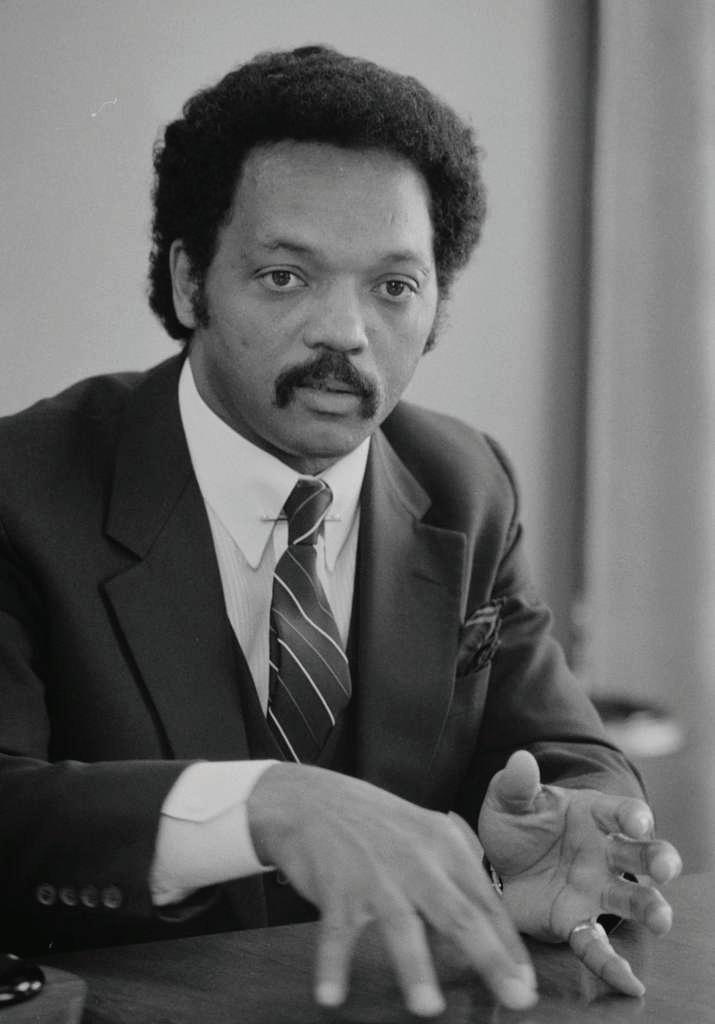
The Southern Christian Leadership Conference mourns the passing of Rev. Jesse L. Jackson, Sr., whose death marks more than the loss of a civil rights leader. It marks the departure of one of the Movement’s most visible and enduring voices, a man who understood, perhaps better than most, that the work of justice must be both organized and seen.
Jesse Jackson was charisma. Not by accident, and not as performance alone, but as a deliberate expression of Movement philosophy. He embraced and embodied the understanding that the personification of the Movement and its creeds was essential to reaching the broader public. In an era when television carried images into living rooms across America, Jackson stood as both messenger and message, translating the moral clarity of the Movement into a language the nation could not ignore.
That understanding was not formed in isolation. It was shaped within the disciplined framework of the Southern Christian Leadership Conference and through close work alongside Dr. Martin Luther King Jr.. Within SCLC, Jackson was not simply a participant. He was part of a generation being trained to carry forward a philosophy rooted in nonviolence, economic justice, and the belief that America could be compelled to live up to its ideals.
Nowhere was that training more evident than in Operation Breadbasket.
Operation Breadbasket was not symbolic protest. It was strategy. It represented a shift in the Movement’s approach, focusing on economic power as a necessary component of civil rights. Through coordinated boycotts, negotiations with corporations, and demands for fair hiring practices, SCLC sought to ensure that dignity extended beyond access to public spaces and into the economic life of the nation.
In Chicago, Jesse Jackson became one of the most visible leaders of that effort. He organized, negotiated, and spoke with a cadence that carried both urgency and conviction. Under his leadership, Breadbasket demonstrated that economic pressure could produce tangible results, opening jobs and opportunities where barriers had long existed. It was here that Jackson’s public voice began to take shape, grounded not in abstraction but in measurable outcomes for everyday people.
Breadbasket also revealed something else. It showed that Jackson’s charisma was not separate from the work. It was part of the work. His ability to communicate, to galvanize, and to hold attention became a tool of organizing, reinforcing the idea that visibility and strategy must move together.
The assassination of Dr. King in 1968 marked a profound turning point for the Movement. It was a moment of grief, but also of uncertainty. For many leaders, the question was not whether the work would continue, but how.
For Jesse Jackson, the answer was not departure from the principles he had learned, but continuation of them in new forms. His later work, including the founding of the Rainbow PUSH Coalition, reflected a natural extension of the same commitments that defined his early years within SCLC. The focus remained consistent: economic justice, political empowerment, and the expansion of opportunity for those historically excluded.
That evolution could have created tension. Movements are not immune to disagreement, and different approaches often lead to divergence. But in this case, what could have become animus instead remained aligned through a shared understanding of purpose. Both SCLC and Jackson’s independent efforts remained focused on the people they were called to serve. The form of the work expanded, but the mission did not fracture.
Jackson’s entry into national politics further extended that reach. His presidential campaigns in 1984 and 1988 did more than seek office. They reframed what it meant to participate in the political process. At a time when many voices remained marginalized, Jackson built coalitions that brought together labor, minority communities, and progressive constituencies under a shared vision.
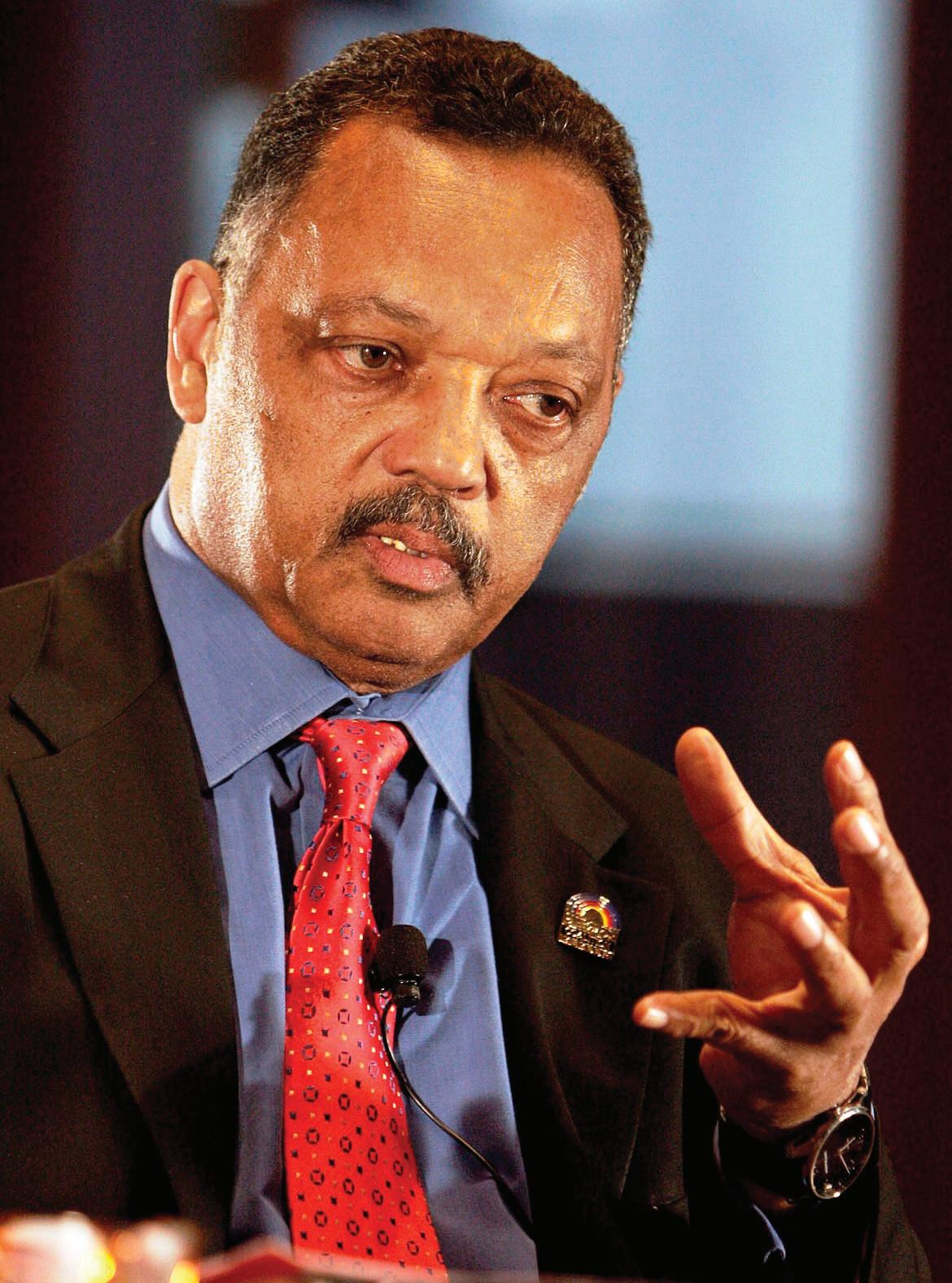
His message was consistent and unmistakable. “Keep Hope Alive” was not a slogan crafted for applause. It was a directive. It reflected an understanding that hope is not passive. It is a requirement for action. Without it, there is no movement forward. Similarly, his affirmation, “I am Somebody,” echoed the dignity-centered philosophy that had long been central to the Movement’s work.
These messages resonated because they were rooted in something deeper than rhetoric. They were grounded in lived experience and in a framework shaped by SCLC’s emphasis on moral clarity and collective action.
Jackson’s influence extended beyond national borders as well. He engaged in international advocacy, participating in diplomatic efforts and bringing attention to global human rights issues. In doing so, he reinforced a principle that had long guided the Movement: that the struggle for justice is not confined to geography. It is universal.
Throughout these decades, the relationship between Jesse Jackson and SCLC remained one of shared lineage and shared calling. The organization takes pride in having been part of his early advocacy, particularly through Operation Breadbasket, where the foundations of his public leadership were formed.
As Dr. Bernard LaFayette Jr. reflected, Jackson was not only a fellow laborer in the Movement but a friend, a man whose impact stretched across roles as a civil rights leader, economic advocate, founder, and political trailblazer. What stood out most was his embodiment of hope. It was a quality that allowed others to see what was possible, even in moments when progress felt uncertain.
That perspective is echoed within SCLC’s current leadership. As President and CEO DeMark Liggins, Sr. noted, the organization is proud to have been part of Jackson’s early work alongside Dr. King, especially through Breadbasket. The same courage that defined those early years carried forward into his leadership of Rainbow PUSH. For many, including those who came of age watching him, Jackson’s voice was a source of inspiration, reinforcing both the belief in possibility and the affirmation of personal worth.
SCLC National Magazine/ Spring 2026 Issue
To understand Jesse Jackson’s legacy is to understand the role of hope as discipline. In the tradition of Dr. King, hope was never detached from action. It was not optimism for its own sake. It was a strategic necessity, a force that sustained organizing efforts and allowed communities to persist in the face of resistance.
At the same time, Jackson’s career was not without complexity. Like many figures who operate at the intersection of activism and public life, he faced criticism and scrutiny. His decisions, statements, and strategies were at times debated. Yet even within that complexity, his longevity and continued relevance point to something deeper. He remained engaged. He remained present. He remained committed.
That endurance is itself part of the legacy.
Rev. Jesse Jackson’s life reflects the durability of the principles that shaped him. Those principles, rooted in the work of SCLC, continue to guide efforts toward justice, dignity, and opportunity. His voice, once a constant presence in public life, now gives way to a responsibility carried by those who follow.
The Movement has never depended on a single figure. It has always required many voices, many hands, and many forms of leadership. Jesse Jackson understood that. He embraced the role he was called to play, not as an endpoint, but as part of an ongoing effort to bring the nation closer to its ideals.
The work continues.
JUNETEENTH | JUNE 20 | 11 AM - 4 PM

You’re invited to celebrate freedom and community during the 11th annual Juneteenth event at the Rosa Parks Museum. Enjoy free admission, live music, local vendors, educational experiences and activities for children.
As we celebrate, make a real impact by supporting the Museum. Donations fund a permanent exhibit on Mrs. Parks’ life and activism, featuring her personal items from the Library of Congress.
Donate today and join us for Juneteenth! We’ll see you there.

Examining how immigration enforcement, policing, and accountability collided in Minnesota and what it reveals about a system under strain
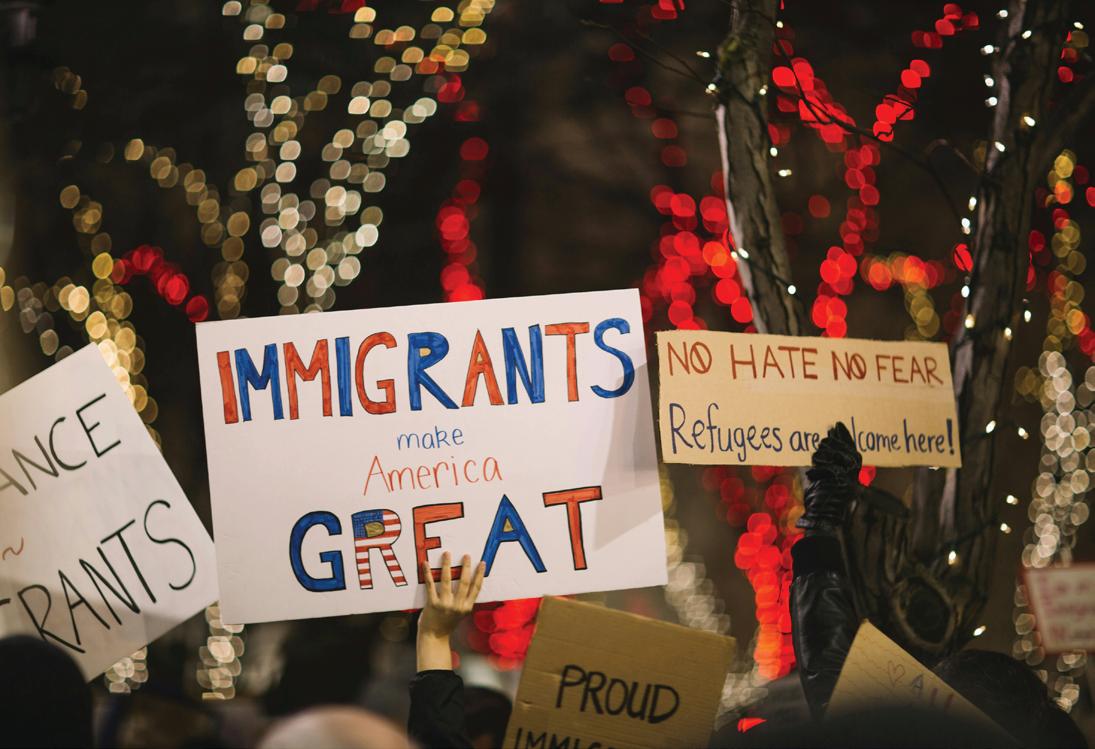
Immigration is often framed as a question of borders, while criminal justice is discussed as a matter of policing, courts, and incarceration within the nation’s interior. Increasingly, that distinction no longer holds. Immigration and criminal legal systems now operate in tandem, sharing data, tactics, and authority in ways that blur the line between civil enforcement and criminal punishment. In early 2026, that convergence became impossible to ignore.
Within weeks of one another in Minneapolis, two people were killed in encounters involving federal immigration agents. Renée Nicole Macklin Good died on January 7 during an operation involving Immigration and Customs Enforcement. Less than three weeks later, Alex Jeffrey Pretti, a 37yearold ICU nurse, was killed during an encounter with Border Patrol agents operating far from any international border. Both were United States citizens. Neither case fits neatly into the narratives often used to justify immigration enforcement. Together, they raise urgent questions about how authority is exercised, how accountability is enforced, and how a civil enforcement system can escalate into lethal force.
These were not isolated tragedies. They reflect an enforcement apparatus that has steadily absorbed the logic and posture of criminal law. As immigration agencies gained expanded powers, limited transparency, and deep coordination with local policing, encounters once framed as administrative increasingly carried the risk of criminal escalation—and, in some cases, deadly outcomes. Immigration law in the United States is civil by design. Violations are not crimes, and enforcement was not intended to mirror the punitive framework of criminal law. Yet over the past several decades, policy choices have pushed immigration enforcement in that direction. Legislative changes in the 1990s broadened deportation triggers and stripped courts of discretion to consider rehabilitation, family ties, or humanitarian context. The creation of Immigration and Customs Enforcement in 2003 further institutionalized a lawenforcement model, embedding immigration policy within structures shaped by criminal policing priorities. Programs linking local police with federal immigration authorities made that overlap routine, widening the consequences of everyday encounters.
What emerged was not coordination but convergence. Immigration enforcement now relies on surveillance systems, detention practices, and operational tactics nearly indistinguishable from those used in criminal law. The language of public safety and threat assessment has replaced frameworks that once treated immigration as administrative. This shift unfolded within a broader system already marked by racial disparities, uneven accountability, and persistent concerns about excessive force.
The deaths of Good and Pretti illustrate how this convergence manifests on the ground. Federal agents operating within communities—often without the visibility or oversight expected of local policing—exercise broad discretion shaped by national priorities rather than local relationships. Combined with limited external review, the margin for error narrows sharply.
The Minnesota cases also highlight where enforcement now takes place. Border Patrol agents are typically associated with geographic boundaries, yet their authority extends far into the country’s interior.
Enforcement once understood as confined to borders and ports of entry now operates in neighborhoods and cities removed from them. This expansion has not been matched by comparable oversight. Federal immigration agencies are largely insulated from the accountability mechanisms that govern municipal police departments. Civilian review boards, local political pressure, and public records laws play a limited role, if any, in shaping how these agencies operate. When incidents occur, information can be slow to surface and avenues for independent investigation remain constrained. In both cases, communities were left grappling with loss of life and unanswered questions. Concerns about identification, use of force, and operational protocols arose immediately, while clarity lagged behind. That gap between authority and accountability is not accidental. It is built into a system that prioritizes enforcement outcomes while limiting public scrutiny.
Although immigration enforcement is often discussed in terms of nationality or legal status, race continues to shape how enforcement is experienced. Black communities—including Black immigrants—are disproportionately affected by the same patterns of surveillance and overpolicing that define the broader criminal legal system. When immigration enforcement intersects with those patterns, the effects intensify.
The Minnesota killings, while involving U.S. citizens, underscore how these dynamics extend beyond immigration status. The presence of federal agents exercising broad enforcement authority alters the stakes of everyday encounters for anyone perceived as suspicious or noncompliant. In a system where racial bias is well documented, that shift carries uneven risk. The current structure of immigration enforcement is not inevitable. It is the product of deliberate policy choices. Immigration violations remain civil offenses, yet they are enforced through mechanisms that resemble criminal punishment. Detention centers function as carceral spaces. Surveillance technologies mirror those used in probation and parole. Enforcement rhetoric reinforces perceptions of threat rather than administrative noncompliance.
This framing has consequences. It shapes training, decisionmaking, and how individuals are perceived in moments of interaction. When enforcement is treated as a publicsafety imperative rather than a civil process, the threshold for force can shift. The deaths of Good and Pretti highlight that risk. Emphasis on control and compliance increases the likelihood of escalation. Encounters that could be resolved through communication or deescalation are more likely to become confrontational.
Due process is a cornerstone of the American legal system, yet its application within immigration enforcement remains uneven. Individuals in immigration proceedings are not guaranteed the right to counsel. Hearings often take place far from legal resources or family support. Decisions with profound consequences are regularly made under conditions that would be unacceptable elsewhere in law.
The Minnesota cases force a starker question. Due process presumes survival. When enforcement actions end in death, that premise collapses.
Aggressive immigration enforcement is routinely justified as essential to public safety. The deaths in Minnesota complicate that claim. Safety cannot be measured solely by enforcement activity. It must be evaluated in terms of outcomes, accountability, and lived experience.
The reforms are clear. Decoupling local policing from federal immigration enforcement would reduce routine escalation. Independent oversight of federal agencies would strengthen accountability. Reframing immigration violations as administrative matters would help restore a distinction that has been dismantled.
The deaths of Renée Nicole Macklin Good and Alex Jeffrey Pretti reveal a system in which enforcement authority has expanded faster than accountability. Addressing individual incidents is not enough. The challenge ahead is structural: deciding whether immigration enforcement will continue to operate through criminal frameworks that contradict the civil principles it claims to uphold.
Dr. Martin Luther King, Jr. 1929-1968
We join the SCLC in honoring the memory of Dr. Martin Luther King, Jr.
We fully support equal opportunity for all, regardless of race, creed, sex, age, sexual orientation, disability, or ethnic background.
National Magazine/ Spring 2026 Issue
For most readers, rare earth elements enter daily life quietly. They sit inside smartphones, electric vehicles, MRI machines, wind turbines, and advanced defense systems. You do not see them, but modern economies do not function without them. Over the past several years, however, rare earths have moved from the background to the front pages. They now appear regularly in stories about geopolitical conflict, industrial policy, and the scramble to secure resilient supply chains.
This shift matters for reasons that go beyond technology or trade. Rare earth metals sit at the intersection of global economics and moral choice. Who controls them, who works with them, and who benefits from their extraction and processing are questions tied directly to economic justice. That is where the Southern Christian Leadership Conference is making a strategic and timely intervention.
Rare earth elements, or REEs, are not especially rare in a geological sense. What is rare is the ability to extract, refine, and process them at scale without enormous environmental and social cost. For decades, the United States and much of Europe outsourced that complexity, allowing supply chains to consolidate elsewhere. Today, that dependence is widely seen as a vulnerability.
Recent headlines make this reality impossible to ignore. Renewed attention on Greenland, often framed through territorial interest or strategic positioning, is as much about untapped reserves of critical minerals as it is about geography. Venezuela continues to be discussed through the lens of oil, yet beneath that conversation sits a broader struggle over resource control and geopolitical leverage. Across Africa, particularly in the Democratic Republic of the Congo and Nigeria, global powers are competing for access to cobalt, lithium, and other inputs essential to modern technology.
Even ongoing conflicts that appear rooted in politics or ideology often carry an underlying economic layer tied to resources. The war in Ukraine has reinforced how energy, minerals, and national security are inseparable. What we are witnessing is not a series of disconnected events. It is a global realignment around the materials that power the twenty first century.
It is easy to look at these developments and reduce them to oil, gas, or traditional resource competition. But that framing is increasingly incomplete. The deeper story is about control of critical minerals, including rare earth elements, that enable everything from clean energy to artificial intelligence to advanced defense systems. These materials are the infrastructure beneath the infrastructure.
Corporate America has taken notice. Earlier this year, Apple announced a major deal with American Rare Earths, part of a broader strategy to secure domestic and allied sources of critical materials. Similar agreements are unfolding across the automotive, defense, and renewable energy sectors. These are long term bets, signaling where capital, jobs, and industrial policy are headed over the next several decades.
In the midst of what can feel like a dizzying array of global crises, it becomes tempting to move from headline to headline without identifying the connective thread. Rare earths and critical minerals are that thread. They help explain why so many seemingly separate conflicts are unfolding at once. More importantly, they point to where future opportunity and risk will concentrate.
Economists sometimes describe supply chains as neutral systems of logistics and efficiency. That description no longer holds. Supply chains are moral documents. They reveal whose labor is valued, whose land is exploited, and whose

communities are excluded from opportunity.
Historically, Black communities in the United States have been positioned at the margins of emerging industries. The early phases of the digital revolution, the biotechnology boom, and even renewable energy development often passed over Black workers and Black owned enterprises. When participation did occur, it was frequently limited to low wage or high risk roles rather than ownership, technical expertise, or leadership.
The rare earth industry presents a chance to do something different, but only if intentional steps are taken early. Workforce development is not a secondary concern. It is the foundation of who benefits when a new industrial ecosystem takes shape.
This is the context in which the Southern Christian Leadership Conference introduces Rare Find. The initiative is not merely a training program. It is a strategic response to a global economic moment that is unfolding in real time.
Rare Find is designed for young people ages 16 to 23, a group often overlooked in conversations about industrial policy despite being the future workforce. Through a structured pipeline, participants are recruited, trained, mentored, and certified for careers connected to the rare earth sector. These careers range from geology and materials science to environmental remediation, logistics, data analysis, and advanced manufacturing.
What distinguishes Rare Find is its clarity of purpose. The program recognizes that access to emerging industries is not just about technical skills. It is about networks, exposure, and confidence. By pairing training with mentorship and certification, Rare Find aims to prepare participants not only to enter the industry, but to advance within it.
This approach reflects a lesson learned repeatedly in economic history. When communities enter new industries early and with preparation, they shape the culture, norms, and ownership structures that follow. When they enter late, they are forced to adapt to systems built without them in mind.
One of the most compelling aspects of Rare Find is its explicit connection to the African diaspora. Many of the world’s critical minerals are located in regions with deep historical and cultural ties to Black Americans. The Congo’s cobalt reserves, Nigeria’s mineral potential, and emerging projects across Southern and East Africa are not abstract locations. They are places bound by shared history and ongoing relationships.
Too often, global resource extraction has replicated colonial patterns. Raw materials flow out. Profits flow elsewhere. Local communities see limited long term benefit. Rare Find challenges this model by preparing Black Americans to engage the industry as skilled professionals, entrepreneurs, and partners rather than distant observers.
SCLC National Magazine/ Spring 2026 Issue
This diaspora centered approach opens new possibilities. It creates pathways for ethical partnerships between Black owned firms in the United States and responsible mining and processing ventures abroad. It encourages workforce exchanges, knowledge transfer, and investment models that prioritize local development alongside global competitiveness.
In economic terms, this is about moving up the value chain. It is the difference between exporting raw ore and exporting expertise. It is the difference between being a site of extraction and being a hub of innovation.
Workforce development is only part of the equation. Ownership matters. The rare earth industry will require services ranging from environmental monitoring and waste management to software, transportation, and equipment maintenance. These adjacent sectors are fertile ground for Black entrepreneurship.
By introducing young people to the industry early, Rare Find creates awareness of these opportunities. Participants do not have to imagine their future solely as employees. They can envision themselves as founders, suppliers, and investors. Over time, this expands the economic footprint of Black communities within a strategically vital sector.
This matters for intergenerational wealth. Industries tied to national infrastructure and energy transitions tend to be stable over decades. They attract sustained public and private investment. Securing a foothold now has implications that extend well beyond a single career or company.
Economic justice is often discussed in broad terms, but it is implemented through specific choices. Who gets trained. Who gets certified. Who gets introduced to decision makers. Who is trusted with responsibility.
Rare Find represents a practical application of the values long championed by the SCLC. It recognizes that justice in the twenty first century must engage with technology, global trade, and industrial strategy. Moral leadership today requires fluency in economic systems as well as social movements.
For readers in mid career or leadership roles, this moment requires a shift in attention. Even as headlines compete for urgency, the underlying competition for critical minerals is shaping the direction of economies, alliances, and opportunities. To ignore that reality is to risk being unprepared for what comes next.
The rare earth industry will continue to grow. Demand driven by renewable energy, electric transportation, artificial intelligence, and advanced medical technologies is not a passing trend. The question is not whether this industry will expand, but who will be prepared to participate fully.
Rare Find positions the SCLC and the communities it serves on the front edge of that expansion. It acknowledges global realities while insisting on local empowerment. It links young people to a future oriented industry while grounding that future in shared history and ethical responsibility.
At a time when the world feels pulled in many directions at once, maintaining focus is a discipline. The conversation around rare earths and critical minerals is not a distraction from other issues. It is a lens that helps make sense of them.
The materials beneath our feet have always shaped human history. What we do with them now will shape the next chapter.


As 2026 moves forward, the Southern Christian Leadership Conference continues its work in a year shaped by both reflection and expectation, at a time when the nation is examining its history and considering its direction. The early months of the year grounded that work in faith, movement memory, and national observance, establishing a foundation that now gives way to a more forward focused period of organizing, engagement, and alignment.
The months ahead require clarity about what must be done with the time in front of us. Conversations across the country continue to center on democracy, participation, and the meaning of national milestones. SCLC remains engaged in shaping those outcomes through consistent presence, coordinated action, and sustained leadership rooted in community.
April 4 holds a central place in that work. Each year, it calls the nation into remembrance, and within SCLC it also serves as a moment of alignment across chapters and communities. This year, that moment will carry particular visibility as President and CEO DeMark Liggins, Sr. delivers remarks at the National Civil Rights Museum, placing SCLC’s voice within a space that continues to carry the weight of history and responsibility. The life and sacrifice of Dr Martin Luther King Jr continue to place a clear obligation on the present, one that calls for continued movement toward the work he left in our hands.
That work carries into June with Juneteenth, a national observance that reflects both progress and the distance still to be traveled. SCLC’s engagement during this time connects the history of emancipation to ongoing efforts toward full citizenship, economic stability, and equal protection under the law. These efforts extend across communities and remain grounded in the realities people face every day.
Throughout the remainder of the year, SCLC will maintain an active presence in national observances connected to America’s 250th year. As the country reflects on its founding and evolution, SCLC continues to engage with a clear perspective on what it means to strengthen democratic participation and expand opportunity. Our work in this space centers on ensuring that reflection is accompanied by measurable progress in voting access, economic conditions, and community stability.
That direction becomes more defined as we gather for the 67th SCLC National Convention in Tampa Bay. This year’s convention carries added weight as it honors the life and legacy of the late Dr. Bernard LaFayette Jr., whose leadership as Chairman of the Board and lifelong commitment to Kingian Nonviolence shaped the organization across decades. His work in training, organizing, and advancing nonviolence remains embedded in the structure of SCLC, and this gathering reflects a shared responsibility to continue that work with discipline and focus.
During the convention, President Liggins will deliver a keynote address centered on the urgency of the current moment and the role SCLC must play moving forward. The gathering serves as a point of alignment, bringing together leaders, partners, and members to ensure that the organization is coordinated and prepared for the work ahead.

Following that alignment, the focus moves directly into action. Through the SCLC VOTES platform, chapters and national leadership will carry out a coordinated effort across communities to register voters, provide clear and accessible education on the issues that shape daily life, and ensure that individuals are equipped to participate fully in the democratic process. This work is sustained, community based, and focused on building informed participation in advance of the November election.
The path into 2027 is already in motion. The year will open with King Day, where SCLC will again help frame national observance as a call to action grounded in faith and public responsibility. In February, the organization will return to New Orleans for the Chapter Training and Leadership Symposium alongside the commemoration of seventy years since its founding, reconnecting to its origin while preparing leaders for the work ahead. That movement continues into Selma during the first full weekend of March, followed by April 4 observances and a national gathering in Atlanta later that summer.
This is coordinated work carried forward across moments and across communities. As the nation reflects on its milestones, SCLC continues to prepare, align, and move with purpose, building on its history while advancing its work into the years ahead.
Looking ahead through the remainder of 2026 and into early 2027, these moments represent key points of engagement for SCLC chapters, partners, and communities. Each contributes to a broader effort that moves from reflection to action and into alignment as the Conference approaches its seventieth year.
April 4, 2026
• National and local programming that honors the life, legacy, and sacrifice of Dr Martin Luther King Jr
• President and CEO DeMark Liggins, Sr. delivering remarks at the National Civil Rights Museum
• Teachings, vigils, and conversations that connect historic sacrifice to present responsibility
• Coordinated engagement across SCLC chapters
June 19, 2026 – Juneteenth
• SCLC emphasis on emancipation, economic justice, and full citizenship
• Opportunities for chapters to host teach ins, community gatherings, and public conversations
• Community based engagement connecting history to present conditions
Throughout 2026 and beyond July 4
• Participation in national observances connected to America’s 250th year
• SCLC engagement focused on civic participation, voting access, and community stability
• Public messaging that connects national reflection to measurable outcomes
August – 67th SCLC National Convention, Tampa Bay
August 5–7, 2026 – Grand Hyatt, Tampa Bay, Florida
• Plenary sessions, workshops, and panels that equip leaders and members for continued work
• National gathering of board members, chapter leaders, partners, and emerging organizers
• Keynote address delivered by President and CEO DeMark Liggins, Sr.
• Honoring the life and legacy of the late Dr. Bernard LaFayette Jr.
• Organizational alignment preparing SCLC for its seventieth year
September through November 2026
• National and chapter level coordination through the SCLC VOTES platform
• Voter registration drives across communities
• Voter education focused on issues, access, and informed participation
• Community engagement initiatives to increase awareness and turnout
• Preparation for full civic participation in the November election
January 2027 – King Day
• National observances supported and led by SCLC
• Emphasis on faith, action, and public responsibility
February 2027 – New Orleans, Louisiana
• Chapter Training and Leadership Symposium
• Commemoration of the 70th Anniversary of SCLC’s founding
March 2027 – Selma, Alabama (First Full Weekend)
• National participation connecting movement history to present day engagement
Summer 2027 – National Convention, Atlanta, Georgia
• National gathering to align strategy, expand impact, and define the next phase of SCLC’s work

The Southern Christian Leadership Conference will convene in Tampa in 2026 with a focus that is both deeply personal and unmistakably forward looking. At the center of this year’s gathering is the life and legacy of Dr. Bernard LaFayette, Jr., a native son of Tampa whose work helped shape not only the Civil Rights Movement, but the way it continues to be taught, practiced, and carried forward.
For SCLC, returning to Tampa is not simply a matter of geography. It is a moment of alignment. The city where Dr. LaFayette first developed his sense of purpose now becomes the place where that purpose is examined, honored, and extended. His journey from local activism to national leadership reflects a path that many have studied, but few have replicated with the same level of discipline and consistency.
This year’s convention theme, “The Pursuit: What is Life and Liberty in America?”, reflects that tension between history and present reality. It does not assume that the answers are settled. Instead, it challenges participants to consider how those ideals are experienced today, and what responsibility comes with confronting the gaps between promise and practice.
Dr. LaFayette’s early years in Tampa were marked by an awareness that injustice required more than observation. It required engagement. That understanding would lead him into the Student Nonviolent Coordinating Committee, where he became part of a generation that reshaped how organizing was approached. These were not symbolic efforts. They were structured campaigns built on preparation, coordination, and a willingness to face consequences.
His work alongside Dr. Martin Luther King, Jr. placed him within the strategic core of the movement. In Selma, he contributed to a campaign that would bring national attention to the fight for voting rights. His involvement in the Poor People’s Campaign reflected a broader view of justice, one that extended beyond access to the ballot and into the economic realities that defined everyday life for many Americans.
Yet what distinguishes Dr. LaFayette’s legacy is not only the moments he was part of, but the way he chose to build after those moments passed. Following the assassination of Dr. King, he committed himself to ensuring that nonviolence would not remain tied to a specific era. Through his work at the King Center and his leadership in teaching Kingian Nonviolence, he helped translate a philosophy into a framework that could be studied, applied, and sustained.
Those who worked with him often describe a presence that was steady rather than performative. He did not rely on volume to make his point. He relied on clarity. His expectation was that those who claimed the movement would also commit to the discipline it required. Nonviolence, as he taught it, was not simply a belief system. It was a method that demanded preparation and accountability.
During his tenure as Chairman of the Board of SCLC, he carried that same approach into the organization’s leadership. His role was not ceremonial. He remained engaged in shaping direction, reinforcing standards, and ensuring that the work maintained its connection to the principles it claimed to represent. In periods of transition, his presence provided continuity without stagnation.
It is within that context that the 2026 convention takes shape. While it begins with recognition, it is structured
National Magazine/ Spring 2026 Issue
around responsibility. The decision to center Dr. LaFayette’s legacy is not about looking back. It is about understanding what has been entrusted to those who remain.
The current moment presents its own set of challenges. Social divisions continue to test the nation’s sense of cohesion. Economic pressures affect communities in ways that limit opportunity and stability. Political dynamics carry consequences that extend far beyond election cycles. Within this environment, the questions raised by the convention theme take on added weight.
Gallagher is a trusted insurance, risk management and consulting partner committed to driving an inclusive workplace and a more diverse industry for the benefit of our clients, employees and communities.
AJG.com | The Gallagher Way. Since 1927.

“The Pursuit: What is Life and Liberty in America?” is explored not as a philosophical exercise, but as a practical inquiry. Life speaks to conditions, access, and sustainability. Liberty speaks to participation, voice, and the absence of barriers that restrict movement and growth. Together, they frame a conversation that is both urgent and ongoing.
The structure of the convention reflects that urgency. It is designed as a working gathering, bringing together individuals who are actively engaged in addressing these issues. The emphasis is placed on alignment, preparation, and execution. Reflection is present, but it is paired with action.
Faith remains a foundational element of that work. Through Christian Lead, the conference will examine how faith continues to inform leadership and public engagement. The role of faith within the movement has always extended beyond inspiration. It has served as a guide for decision making and a source of accountability. In Tampa, that role will be revisited with an emphasis on how it applies in the current climate.
Economic development will be addressed through initiatives such as Five Bricks, which focuses on creating pathways for connection and opportunity that extend beyond local markets. This approach reflects a recognition that long term progress requires both access and ownership. The ability to participate in economic systems must be paired with the ability to shape them.
Leadership development remains a priority as well. Programs like Generation NOW are intended to prepare individuals to navigate complex challenges with both perspective and skill. This is complemented by efforts to strengthen chapter infrastructure, ensuring that SCLC’s presence remains active at the local level. The goal is not expansion for its own sake, but effectiveness in execution.
Civic engagement will take on particular importance through SCLC VOTES. With midterm elections approaching and broader electoral decisions on the horizon, the convention will emphasize the role of participation in shaping outcomes. Voting is presented as part of a larger framework of engagement, one that includes education, organization, and accountability. The connection between civic action and community impact is made clear.
The convention also maintains a direct link to history through programming that highlights the continuity of the movement. Initiatives such as re MEMBER the Movement serve to connect past efforts with present responsibilities. These are not retrospective exercises. They are reminders that current work exists within a broader continuum.
Within this framework, the convention will also highlight individuals and institutions whose work reflects the principles that Dr. LaFayette helped to establish. This recognition is not positioned as ceremony, but as illustration. It provides tangible
examples of how those principles are being applied in real time.
As SCLC continues to refine its structure and expand its reach, the Tampa convention represents a point of focus. It reflects an organization that is working to strengthen its internal foundation while increasing its external impact. This balance is essential to maintaining relevance in a changing environment.
Returning to Tampa reinforces that this work is both grounded and evolving. It acknowledges where the movement has been while addressing what remains unresolved. In honoring Dr. LaFayette, the convention does not attempt to recreate the conditions of the past. It seeks to apply the lessons of that past to the realities of the present.
His life offers a clear example of what sustained commitment looks like. It is not defined by moments of visibility, but by consistency over time. It is built through preparation, reinforced through discipline, and measured by impact rather than recognition.
As participants gather in Tampa, the question at the center of the convention will remain in view. What does it mean to pursue life and liberty in America today? The answer will take shape through the work that follows. The convention itself is not the destination. It is part of a larger effort to ensure that the principles Dr. LaFayette lived by continue to guide the work ahead.
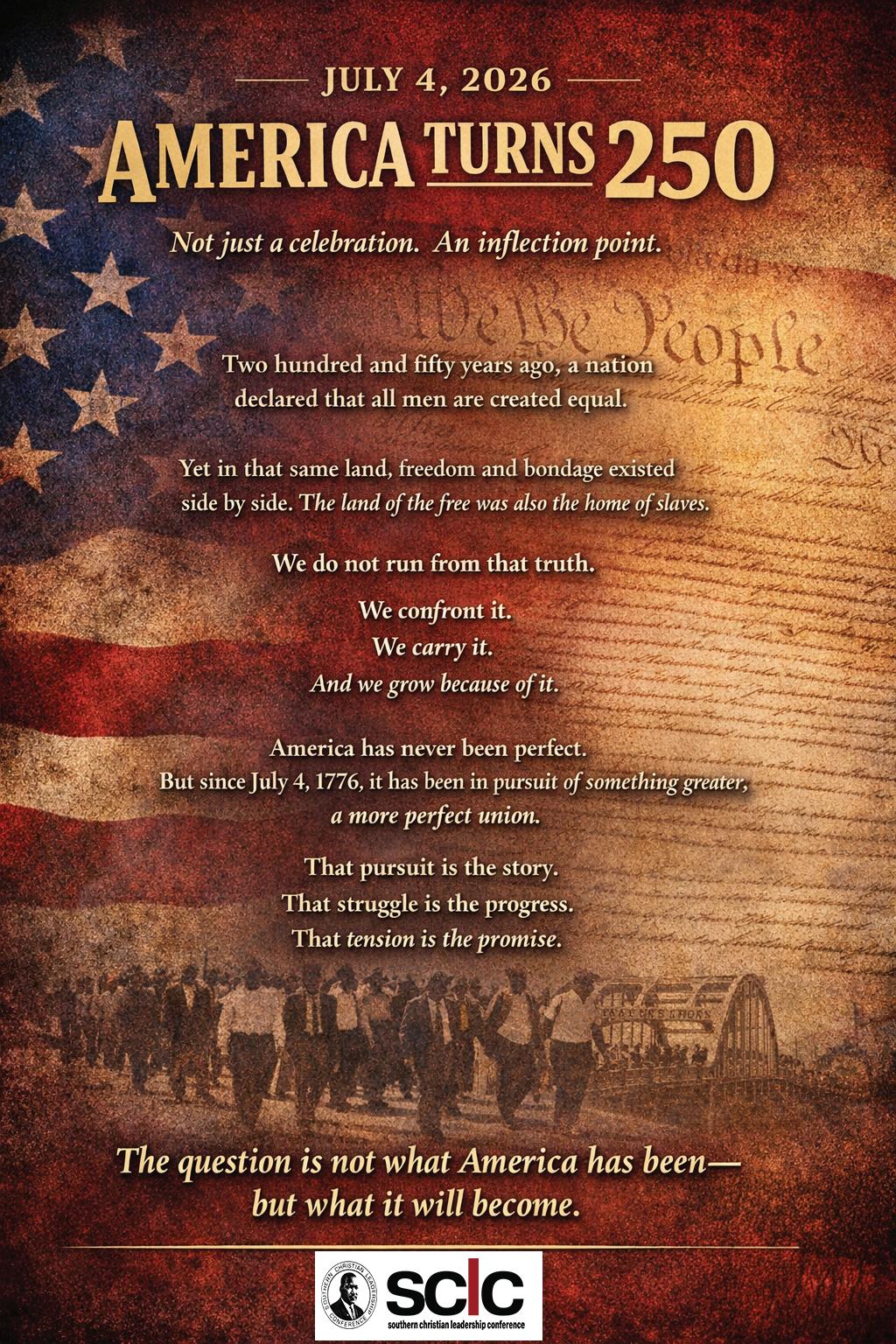
In February 2027, the United States will reach a milestone that few nations ever do, marking two hundred and fifty years since its founding and a quarter of a millennium since a declaration introduced a set of ideals bold enough to reshape the world. Yet anniversaries, by themselves, do not carry meaning. They become meaningful only when they compel a nation to take inventory of what it has become in relation to what it first claimed to be.
America at 250 is not simply a celebration of endurance, but a moment that raises a more difficult question about what, exactly, has endured and what has merely persisted without progress. The language of the founding remains familiar, grounded in liberty, equality, and justice, but those words were never intended to exist as decoration. They were declarative, positioning the United States as both a nation and an idea, one that would ultimately be measured not by its aspirations, but by its application. From the beginning, the country carried a contradiction that has never fully disappeared, only changed form. The same document that spoke of equality existed alongside systems that denied it, embedding a tension that each generation has been forced to confront in its own way. Some have chosen to minimize that contradiction or explain it away, while others have taken on the responsibility of addressing it directly, understanding that the credibility of the nation’s ideals depends on their universality.
As the country approaches its 250th anniversary, it finds itself once again at that familiar crossroads, where the instinct to celebrate must contend with the obligation to evaluate. There is, understandably, a desire to frame this milestone as a testament to national strength and continuity, and there is truth in the fact that the endurance of American institutions is not insignificant. Yet endurance alone cannot serve as the standard by which a nation measures its progress, because a nation can persist without meaningfully advancing toward its stated ideals. This is what makes the convergence of February 2027 particularly significant. At the same moment that the country reflects on 250 years of independence, Black History Month will reach its 100th year, marking a century of intentional effort to correct the omissions and distortions that have long shaped the American narrative. What began as a necessary intervention to ensure that Black contributions were neither ignored nor diminished has grown into a broader effort to complete the story of the nation itself, insisting that history be told with both accuracy and honesty. Even so, the work remains incomplete. While the visibility of Black history has expanded, visibility is not the same as integration, and recognition does not automatically lead to understanding. Too often, the stories are acknowledged without being allowed to reshape how the country understands itself, leaving a gap between what is remembered and what is applied. If history is to serve its purpose, it must do more than inform; it must influence.
Alongside these milestones, the Southern Christian Leadership Conference will approach 70 years of organized engagement in the ongoing effort to bring the nation closer to its stated ideals. Founded in 1957 during a period when the contradiction of American democracy was undeniable, the organization emerged not as a symbolic presence, but as a strategic force aimed at aligning principle with practice. Its work was never centered on commemoration, but on outcomes, grounded in the belief that the nation’s founding commitments must be reflected in everyday life.
That distinction remains critical as the country considers what America at 250 represents. There is a tendency to approach milestones as endpoints, as if the passage of time alone signals progress, yet history suggests that time is only meaningful when it is accompanied by intentional action. The Civil Rights Movement did not advance because it was patient with the status quo; it advanced because it was disciplined in its challenge to it, combining moral clarity with organized effort to produce measurable change.
In the present moment, the country faces a different but related set of challenges, shaped by shifts in how it engages with its own history and its current realities. Conversations about systemic inequity have increasingly been reframed or reduced, often focusing more on language than on the conditions that language was meant to describe. This
shift does not eliminate disparities in wealth, access, or opportunity, but it does make them easier to overlook, creating a distance between the issues that exist and the willingness to address them. America at 250, therefore, presents a choice that extends beyond symbolism. It can be treated as a ceremonial milestone, marked by affirmation without interrogation, or it can serve as a point of honest assessment, where the nation examines not only how far it has come, but how far it has yet to go. That assessment requires a willingness to connect past injustices to present conditions, recognizing that history is not confined to the past but continues to shape the structures and systems of the present.


The centennial of Black History Month reinforces this need for connection, offering an opportunity to move beyond recognition and toward application. The preservation of history over the last hundred years has created a foundation of knowledge, but the value of that knowledge will ultimately be determined by how it informs the decisions made moving forward. If the stories that have been elevated do not influence policy, practice, and opportunity, then their impact remains limited.
Similarly, the approaching 70 year history of SCLC underscores the importance of sustained, organized engagement in addressing these challenges. Its work has consistently demonstrated that progress requires more than awareness, demanding coordination, structure, and persistence over time. While the context has evolved, the fundamental need for disciplined effort in pursuit of justice has not, and the lessons drawn from that history remain applicable to the present moment. These timelines, when considered together, highlight the interconnected nature of the American story. The nation’s development cannot be separated from the efforts of those who have worked to expand its promise, and the progress that has been made cannot be understood without acknowledging the resistance that made it necessary. At 250 years, the United States is not a finished project, but an ongoing one, still shaped by the decisions that are made in each successive generation.
What distinguishes this moment is not simply the passage of time, but the clarity it offers about the choices ahead. The country has the opportunity to deepen its understanding of itself, to confront the areas where it has fallen short, and to act with intention in addressing them. It also has the option to simplify its narrative, to focus on symbols rather than substance, and to treat the milestone as validation rather than evaluation.
The direction it chooses will determine how this anniversary is ultimately remembered, not in the language used to describe it, but in the outcomes that follow it. Because in the end, the measure of a nation is not found in how long it has existed, but in how closely it aligns with the principles it claims to represent.
America at 250 is not simply a reflection on the past. It is a decision about the future, one that will define whether the nation moves closer to its promise or remains content with the distance that still exists between its ideals and its reality.





Honoring