The life of Alfred Nobel 2023 Nobel prizes in biology, chemistry, and physics
Read inside for more
Advisor: Mrs. Ashley Moore
President: Khushee Goel
Vice President: Peyton Thai
Secretary: Tanisi Chauhan
Editorial Designer: Ivanka Deshpande
THISMONTH’S ISSUE....
The 2023 NobelPrizes
NOBEL PRIZE
Being a wealthy and successful man, Alfred Nobel began to contemplate his legacy: how could he use his privilege to further society? His 1895 will indicated a solution. His fortune would be split into five annual prizes “to those who, during the preceding year, shall have conferred the greatest benefit on mankind ” Those five prizes became the Nobel Prizes for Physics,Chemistry, Medicine, Literature, and Peace. The first Nobel Prizes were awarded in 1901 five years following Nobel’s death
Since its inception, the Nobel Prize has recognized 1,000 laureates To select them, the Nobel Assembly undergoes a year-long process. About 1,000 individuals per prize previous laureates, scholars, university officials are invited to submit nominations to their respective committees, by January 31. There are usually 100-250 nominees per prize. Beginning February 1, each Nobel Committee researches extensively on each nominee, their contributions, their impact on society Committees submit their recommendations to each prizeawarding institution by early autumn. Prize-awarding institutions then reach their final decisions by November 15
Award ceremonies are held on December 10 the anniversary of Nobel’s death. Each laureate receives a set of honors: prize money (11 million kronor, or about $1 million), an 18-carat Nobel Prize medal, and a diploma Beyond the material rewards, the Nobel Prize also serves as a badge of recognition, symbolizing intellectual achievement and positive societal contribution
Vianna Loam
Designed By: Ivanka Deshpande
Edited By: Khushee Goel
ALFRED NOBEL
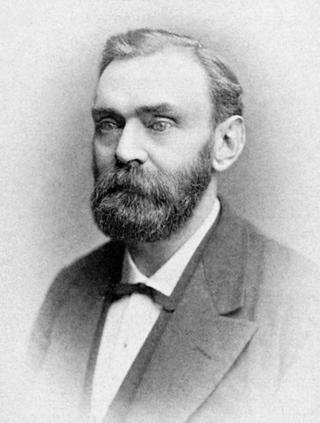
Alfred Nobel, a Swedish chemist, engineer, and industrialist was born in Stockholm, Sweden on the 21st of October in 1833. Nobel was born into a family of innovators: he and his family descended from Olof Rudbeck, the best-known technical genius of Sweden in the 17th century and his father, Immanuel Nobel, a Swedish inventor-entrepreneur Immanuel eventually relocated his family to St Petersburg, Russia There, Immanuel would assist the Russian military by supplying them with war material As he grew older, Nobel’s father taught his son the fundamentals of engineering, and coupled with his education in chemistry, under the tutelage of numerous private tutors, Nobel would excel in the sciences. However, despite how he was so deeply enthralled with the sciences, Nobel was also involved in other fields. The chemist was interested in social and peace-related issues, donning views that were considered particularly radical at the time. Furthermore, he wrote poetry and was also fluent in multiple languages, including Russian, German, and English Nobel's involvement in the literary field led to his ambitions of becoming a writer However, these aspirations would soon be halted as Nobel’s father would send him to travel and study in Europe Soon after this study, Nobel would travel to the United States to work and learn under the tutelage of a Swedish American naval engineer: John Ericsson.
subsequent to his studies, Nobel returned to his family's factory in St. Petersburg where he and his father would begin developing methods to produce nitroglycerin for use in construction. Eventually, Nobel began experimenting with the development of a safe nitroglycerin explosive. He later found that kieselguhr, a diatomite, would stabilize nitroglycerin. Combined with Nobel's invention of the blasting cap, kieselguhr would thus lead to the birth of dynamite. Following its invention, Nobel would be dubbed as the "merchant of death," as both the invention of the blasting cap as well as dynamite would further the modern use of high explosives. Nobel would later die from a cerebral hemorrhage, passing in San Remo, Italy on the 10th of December, in 1896. The chemist left a bulk of his fortune, which was primarily earned from dynamite patents and products, as prizes for the winners of the eventual Nobel prize, which was first established in 1901. Though this prize was rooted his belief of how individuals could better humanity through the knowledge, the sciences and humanism, however, perhaps Nobel left this distinguished prize to make up for what perils his creations would bring, or maybe it served to acknowledge the creation of dynamite as his own greatest benefit to humankind we may never truly understand.
Designed By: Ivanka Deshpande Edited By: Khushee Goel
MMOUNGI G. Sahana Balu
oungi Bawendi's contributions to nanotechnology, particularly in the realm of quantum dots, have propelled scientific advancements across multiple disciplines His work has revolutionized biological imaging, as quantum dots serve as highly efficient fluorescent markers, enabling precise tracking and analysis of intricate cellular processes Bawendi's insights into the unique optical and electronic properties of quantum dots have facilitated significant progress in optoelectronics and photonics Applying these nanoscale materials in devices like LEDs and lasers has implications for improving telecommunications and display technologies Bawendi's research extends into the realm of renewable energy, where quantum dots have shown promise in enhancing the efficiency of solar cells, contributing to the development of more effective and sustainable energy solutions In the broader context of materials science, his work has deepened our understanding of nanomaterials, fostering the creation of novel materials with tailored functionalities
LOUIS E. BRUS
Louis E. Brus was born in 1943 and is an American chemist renowned for his pioneering work in nanoscience. He earned his Ph.D. in chemistry from Columbia University in 1966 and has since made many contributions to the field. Brus is widely recognized for his research on colloidal semiconductor nanocrystals, less formally known as quantum dots, which have applications in electronics, medicine, and materials science. His work aided the advancing of our understanding of the unique properties of nano-materials, leading to advancements in nanotechnology. Brus has received numerous awards for his achievements, including the Priestley Medal in 2017, which is the highest honor awarded by the American Chemical Society. Throughout his career, he has been an influential member of the scientific community who continues to develop the field of nano-science and nanotechnology.
Edited By: Khushee Goel
ALEKSEY YEKIMOV
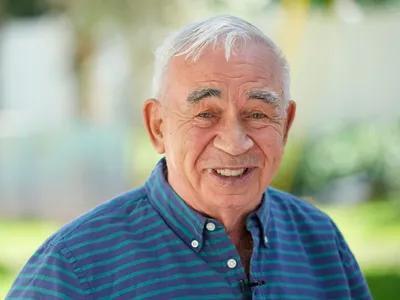
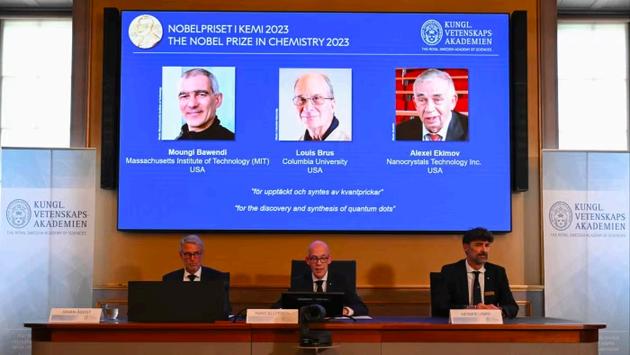
Aleksey Yekimov ( or Alexei Ekimov) is best known for his monumental work in chemistry, specifically nanotechnology After graduating from Leningrad State University with a bachelor's degree in physics (later receiving a Ph D from the Russian Academy of Sciences), Yekimov introduced himself to nanotechnology through an interest in colored glass During the 1970s, Yekimov conducted multiple experiments after researching the properties of glass with copper chloride(CuCl) crystals the size of 2-30 nanometers, utilizing x-rays that revealed an outcome of pigment shift upon the glass The change occurred because of certain quantum mechanics principles, and Yekimov's experiments would discover quantum dots Yekimov, alongside other colleagues, published their work in a Soviet journal in 1981 The inconveniences of information within the USSR and its influence in the West obstructed Louis Brus’s discovery of quantum dots, being oblivious to its finding from 1981 until 1984 Quantum dots are an integral concept in the modern era, used in electronics such as solar cells, QLED screens, and LEDs In 2023, three men, including Yekimov, won the Nobel Prize in chemistry for their work with quantum dots Alexsey Yekimov is currently the chief scientist at Nanocrystals Technology, an American science company
Ethan Cajucom
Designed By: Ivanka Deshpande
2023 Chemistry Nobel Prize Winner Aleksey Yekimov
MHowDidMoungiG.Bawendi,Louis E.Brus,andAlekseyYekimov Work Together?
by Peyton Thai
oungi Bwendi, Louis Brus, and Aleksey Yekimov, while working separately, managed to build off of each other’s discoveries in order to quantum dots. The idea of creating extraordinary dots originated in the 1930 wasn’t until Yekimov in the 1980s that m dream into a reality The most importan of these quantum dots is their color-c tendencies based on the size of the parti quality was discovered by Yekimov when h that changing the size of copper nanoparticles put into a glass container the glass color. A little while later, Brus ca the picture, soon completing the experiment as well as a different experim different sized nanoparticles of cadmium put into a fluid During these experime same outcome occurred: the color changed in the immediate surroundings. Building off of both Brus’ and Yekimov’s work, Bwendi put their ideas into action, creating a more clean and precise version of their quantum dots
Designed By: Ivanka Deshpande
Edited By: Khushee Goel
Chemistry 2023 Nobel Prize Awarded to Moungi G Bawendi, Louis E Drus, & Aleksey Yekimov
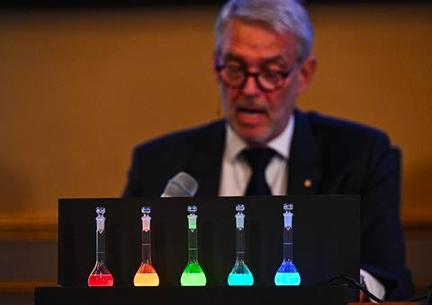
Moungi G Bawendi, Louis E Brus, and Aleksey Yekimov won the 2023 Nobel Prize in chemistry for their discovery of quantum dots. Quantum dots are essentially semiconducting nanocrystals made up of elemental matter At such a small size, the elements demonstrate quantum behavior and when light is struck on the quantum dots, the element absorbs the light energy and emits a different colored light. Smaller quantum dots emit higher frequency light, while larger quantum dots emit lower frequency light
The discovery of quantum dots is monumental for the field of science, as a whole. Surgeons can now inject quantum dots into a patient and observe the movement of the emitted light This allows surgeons to observe the reactivity of bodily cells with the quantum dots. Given that tissues infected with cancers and tumors are more reactive than healthy tissues, surgeons identify infected tissue based on whether or not the tissue reacts with the quantum dots Likewise, quantum dots are applied to television nano-technologies, such that a variety of colors can be produced from a single color of light.
Therefore, Moungi G. Bawendi, Louis E. Brus, and Aleksey Yekimov’s discovery of quantum dots drastically advanced the world of science, as more efficient and effective methods of surgery and technology are now available and being used to advance the way of life
Designed
By: Ivanka
Deshpande
Edited By: Khushee Goel
Quantum Dots that won the researches the Nobel Prize
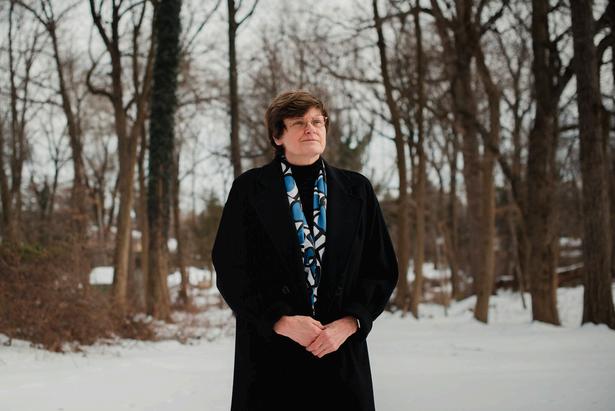
As the winner of the 2023 Nobel Prize for Biology, the Lasker-DeBakey Clinical Medical Research Award, the Louisa Gross Horwitz Prize, and more, Katalin Karikó researched RNA therapeutics and developed mRNA vaccines with the help of Drew Weissman. Katalin Karikó was born in 1955 in Hungary and, after earning her doctoral degree from the University of Szeged in 1978, she researched at a local biology center before joining the University of Pennsylvania in 1989. Her studies of and trials with modified nucleosides, its production of proteins in cells when inserted, and its inauspicious immunogenicity eventually engendered the patented non-immunogenic, nucleosidemodified RNA This patent was licensed to Moderna and BioNTech to proliferate the technology to seemingly no avail until the COVID-19 Pandemic when scientists at both of the aforementioned companies prepared experimental mRNA vaccines within months of receiving the genetic code of SARS-CoV-2 Pfizer-BioNTech’s COVID-19 vaccine became the first mRNA vaccine to be approved by the FDA, and as of now, over 230 million people have been vaccinated in the United States with this revolutionary technology developed by Weissman and Karikó
Arjun Dasgupta
2023 Biology Nobel Prize Winner - Katalin Karikó
Designed By: Ivanka Deshpande
Edited By: Peyton Thai & Tanisi Chauhan
DREW WEISSMAN
Born in Lexington, Massachusetts in 1959, Dr Drew Weissman is an American physician and immunologist who has contributed significantly to mRNA biology and COVID-19 vaccines Weissman has received numerous awards, his most recent being the 2023 Nobel Prize in Physiology or Medicine
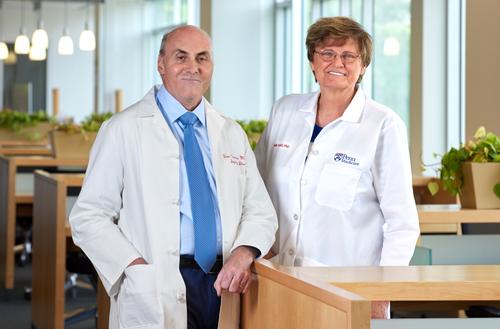
Alongside conducting research, he is also the professor of medicine at the Perelman School of Medicine, located at the University of Pennsylvania. Weissman and his co-collaborator, Katalin Karikó, discovered and developed a method to modify and package mRNA into lipid nanoparticles, ensuring the delivery of the mRNA to parts of the body that would trigger the immune system in order to fight the disease. Their research, which started at Penn Medicine more than 15 years ago, was a critical evolution in the history of medicine, as it gave medical suppliers like Pfizer-BioNTech and Moderna a reliable vaccine to fight the world-changing COVID-19 disease.
The Brandei University and Boston University attendee is currently researching a pancoronavirus vaccine to prevent the next unwanted coronavirus epidemic Weissman and his team are also collaborating with Penn colleagues in hopes of developing cancer therapeutics with mRNA technology If that much was not enough, Dr Weissman’s lab is concurrently in the process of evolving a SARS-CoV-2 mRNA vaccine with Chulalongkorn University in Thailand, intending to help Thai residents by providing access to lifesaving vaccines
Overall, Dr. Drew Weissman is considered one of the most respectable immunologists in the world, and his contributions to medicine and mRNA biology will forever be acknowledged and appreciated.
Tanisi Chauhan
HowDidKatalinKarikóandDrew WeissmanWorkTogether?
by Noah Jang
Katalin Karikó and Drew Weissman first met by chance in the late 1990s while photocopying research. Later on, they began to investigate how mRNA could potentially be used as a treatment against diseases In 2005, their work at Penn University was published, explaining how mRNA can be altered and dispatched throughout the body to activate the immune system When the COVID-19 pandemic hit, the true potential of Karikó’s and Weissman’s work was soon discovered and proved to be vital in the creation of highly effective vaccines against COVID-19. Overall, Karikó and Weissman, with their respective teams, worked relentlessly to establish the practicality of mRNA for medicinal applications and are still working together in a partnership with no thoughts of stopping anytime soon.
The Nobel Assembly at Karolinska Institutet has jointly awarded the 2023 Nobel Prize in Physiology or Medicine to Katalin Karikó and Drew Weissman. The laureates were recognized for their impactful discoveries related to nucleoside base modifications, which played a key role in the development of the successful mRNA vaccines against COVID-19 Karikó, a Hungarian biochemist, and Weissman, an immunologist, took off on a collaborative journey beginning in the early 1990s Their research revealed the crucial role of base modifications in mRNA, addressing challenges that came up with in vitro transcription.
They discovered these modifications significantly reduced inflammatory responses and enhanced protein production when mRNA was delivered to cells This was published in seminal studies from 2005 to 2010 and laid the foundation for the use of mRNA in therapeutics. Years later, in the midst of the COVID-19 pandemic, the world was in desperate need of a vaccine Thanks to Karikó and Weissman's earlier work, the development of base-modified mRNA vaccines encoding the SARS-CoV-2 surface protein was a speedy process. When the vaccine was eventually approved in December of 2020, it showed promising results, with reported efficacy rates as high as 95%.
The discoveries of these scientists not only transformed what we know about how cells respond to different forms of mRNA but also paved the way for the remarkable success of mRNA vaccines. With the billions of successful COVID-19 vaccinations globally, it is safe to say their discoveries helped save lives and re-open societies Karikó and Weissman's discoveries not only helped meet a critical need during a public health crisis, but also opened up the world to new applications of mRNA technology in infectious disease, and possibly even cancer in the future
Ferenc Krausz, a Hungarian physicist renowned for his groundbreaking work in generating and measuring attosecond pulses of light, was awarded the Nobel Prize in Physics in 2023 Krausz’s researched pulses, the attosecond are the shortest ever produced by humans and have revolutionized research in fields such as chemistry, biology, and materials science
Born in Mór, Hungary, in 1962, Krausz studied theoretical physics, ultimately graduating with distinction in electrical engineering. In a landmark achievement, Krausz and his team successfully generated attosecond pulses in 2001. These isolated pulses, each lasting a mere 650 attoseconds, were recognized as one of the ten most significant scientific breakthroughs of 2002. Krausz's pioneering work in attosecond physics has garnered numerous awards and accolades including the Knight's Cross of the Order of Merit of Hungary in 2012, the King Faisal International Prize for Science in 2013, and the Vladilen Letokhov Medal from the European Physical Society and the Russian Academy of Sciences in 2019
Currently, Krausz is a member of the Austrian, Hungarian, Russian, and European academies of science and has recently published a book in 2019 titled Electrons in Motion: Attosecond Physics Explores Fastest Dynamics He has also founded the Centre for Advanced Laser Applications in Munich and cofounded the Center for Molecular Fingerprinting in Budapest He is a citizen of both Hungary and Austria resides in Garching, Germany with wife Angela and children Anita and Martina.
Ivanka Deshpande
Designed By: Ivanka Deshpande
Edited By: Peyton Thai & Tanisi Chauhan
PIERRE AGOSTINI
Pierre Agostini is a French physicist born in Tunis, Tunisia In 1961, he completed his undergraduate degree at the Université Aix-Marseille in France, where he studied physics, and later completed his doctorate in 1968 Between the years 1969 and 2002, Agostini worked at the Centre d’Études de Saclay, where he served as the institute’s director of research Afterward, from 2004 to 2018, Agostini became a physics professor at Ohio State University and ran a laboratory with Louis DiMauro.
In 2001, Agostini and his team used an advanced laser to produce light pulses 250 attoseconds in duration. This breakthrough led Agostini, along with French physicist Anne L’Huiller and Hungarian physicist Ferenc Krausz, to be awarded the 2023 Nobel Prize in Physics for his experiments with attosecond pulses of light An attosecond is 10^-18 seconds or a quintillionth of a second Electrons in atoms and molecules move in attosecond timeframes, allowing scientists to understand the movement of electrons better Thus, Agostini won the Nobel Prize for producing a series of consecutive pulses of light measured in attoseconds, allowing scientists to capture the movement of elections at astonishing speeds
Logan Wheatcroft
s the winner of the 2023 Nobel Prize for Physics, the Blaise Pascal Medal in Physics, the L’Oréal-UNESCO Award for Women in Science, and more, Anne L’Huiller pioneered and focuses on the fields of high harmonic generation, attosecond science, and laser spectroscopy. Anne L’Huiller was born in Paris in 1958 and, after earning her bachelor’s degree, graduate’s degree, and doctorate in mathematics, theoretical physics, and experimental physics, respectively, she became a researcher at the University of South California in 1988 before eventually becoming a professor at Lund University in Sweden in 1997. Her studies of ionized noble gas atoms that had lost the majority of their electrons with infrared lasers engendered her research of high harmonic generation and her numerous awards. Anne L’Huiller corroborated her findings regarding high harmonic generation with quantum mechanics, and her explanation of these phenomena begot the creation of attosecond pulses of light, which are integral to the study of electron orbitals, with the aid of L’Huiller’s co-Nobelists, Ferenc Krausz and Pierre Agostini
Ferenc Krausz and Anne L’Huiller won the 2023 Nobel Prize for Physics due to their development of and research with attosecond pulses of light An attosecond is 10^-18 of a second, and measuring at the rate of attoseconds is requisite for analyzing the submicroscopic world and near instantaneous movements Such ephemeral motion occurs with electrons and the oscillations of atomic and molecular bonds. Before the late 1980s, the fastest strobing laser pulses lasted a few femtoseconds (10^-15 of a second) Yet, in 1987, Anne L’Huiller discovered overtones, which refer to, in the context of molecular vibrations, an atom’s emission of differently colored light waves that oscillate at a significantly faster rate than the laser wave that originally hit the atom. The discovery of overtones enabled physicists to transcend the previous femtosecond barrier, as exemplified by newly developed laser pulses with durations as evanescent as 170 attoseconds These attosecond pulses of light refute the notion of ionization being instantaneous and reveal that electrons with lower energy levels escape their electron orbital 21 attoseconds before those with higher energy levels Not only that but with the discovery of attoseconds, scientists discerned that electrons break free of liquid water tens of attoseconds faster than water vapor in photoionization Furthermore, Ferenc Krausz is utilizing attosecond pulses to assist with cancer research and diagnosis, demonstrating that diminutive shifts in a blood sample due to attosecond flashes can indicate if a person has Stage One cancer and the specific type of cancer, if so. By enabling further research of electrons and ameliorating early cancer recognition, Ferenc Krausz and Anne L’Huiller’s development of and research with attosecond pulses of light unequivocally and significantly advanced the world of science.
Designed By: Ivanka Deshpande
Edited By: Peyton Thai
References
Physics
Wood, Charlie “How These Nobel-Winning Physicists Explored Tiny Glimpses of Time ” Wired, www wired com/story/how-these-nobel-winning-physicists-explored-tiny-glimpses-oftime/ Accessed 17 Nov 2023 “The Nobel Prize in Physics 2023 ” NobelPrize org, www nobelprize org/prizes/physics/2023/press-release/
“Anne L’Huillier | Optica ” Www optica org, www optica org/history/biographies/bios/anne l huillier/#: :text=She%20is%20a%20Fellow%20of Accessed 17 Nov 2023 “Anne LHuillier | Biography, Nobel Prize, & Facts | Britannica ” Www britannica com, 6 Oct 2023, www britannica com/biography/Anne-LHullier
“Pierre Agostini Biography, Nobel Prize, & Facts | Britannica ” Www britannica com, 5 Oct 2023, www britannica com/biography/Pierre-Agostini Accessed 17 Nov 2023 “The Nobel Prize in Physics 2023 ” NobelPrize org, www nobelprize org/prizes/physics/2023/press-release/
Chemistry:
Britannica, The Editors of Encyclopaedia “Nobel Prize ” Encyclopædia Britannica, Encyclopædia Britannica, Inc , 21 Nov 2023, www britannica com/topic/Nobel-Prize Accessed 21 Nov 2023 “Nobel Prizes and Laureates ” NobelPrize Org, Nobel Prize Outreach AB 2023, 2023, www nobelprize org/prizes/ Accessed 21 Nov 2023 Ritter, Karl “Things to Know about the Nobel Prizes ” AP News, The Associated Press, 9 Oct 2023, apnews com/article/nobel-prize-peace-literature-economics-chemistry-medicine-98860d60c271ee64833075af9654a534 Accessed 21 Nov 2023
Encyclopædia Britannica, inc (2023, October 16) Louis Brus Encyclopædia Britannica https://www britannica com/biography/Louis-Brus Encyclopædia Britannica, inc (n d ) Alexei Ekimov Encyclopædia Britannica https://www britannica com/search?query=Alexei%2BEkimov
Louis Brus – Facts – 2023 NobelPrize org Nobel Prize Outreach AB 2023 Mon 20 Nov 2023 <https://www nobelprize org/prizes/chemistry/2023/brus/facts/> “Louis E Brus ” Louis E Brus | Chemistry, www chem columbia edu/content/louis-e-brus Accessed 20 Nov 2023
Biology:
Press release NobelPrize org Nobel Prize Outreach AB 2023 Sat 18 Nov 2023 <https://www nobelprize org/prizes/medicine/2023/press-release/> “Katalin Karikó and Drew Weissman Win 2023 Nobel Prize in Medicine ” Katalin Karikó and Drew Weissman Win 2023 Nobel Prize in Medicine, Penn Medicine News, 2 Oct 2023, www pennmedicine org/news/newsreleases/2023/october/katalin-kariko-and-drew-weissman-win-2023-nobel-prize-in-medicine
Otto, Frank “Katalin Karikó and Drew Weissman, Penn’s Historic Mrna Vaccine Research Team, WIN 2023 Nobel Prize in Medicine ” Penn Today, 21 Nov 1970, penntoday upenn edu/news/katalin-kariko-and-drew-weissman-penns-historic-mrna-vaccine-research-team-win-2023nobel#: :text=After%20a%20chance%20meeting%20in,the%20body’s%20protective%20immune%20system “Katalin Kariko | Biography, Facts, MRNA Vaccine, & COVID-19 Vaccine | Britannica ” Www britannica com, www britannica com/biography/Katalin-Kariko “The Nobel Prize in Physiology or Medicine 2023 ” NobelPrize org, 2 Oct 2023, www nobelprize org/prizes/medicine/2023/press-release/
General:
The Editors of Encyclopedia Britannica Alfred Nobel Encyclopedia Britannica, 17 Oct 2023, https://www britannica com/biography/Alfred-Nobel ‘Alfred Nobel’s Life Nobelprize org, 2 Nov 2016, https://www nobelprize org/alfred-nobel/biographical-information/ Alfred Nobel Science History Institute, 2 June 2016, https://www sciencehistory org/education/scientific-biographies/alfred-nobel/
Photo Credits:
Peterson, Peggy Peterson. Katalin Karikó, PhD, an adjunct professor of Neurosurgery in Penns Perelman School of Medicine, and Drew Weissman, MD, PhD, the Roberts Family Professor of Vaccine Research in the Perelman School of Medicine, are recipients of the Nobel Prize in the Physiology or Medicine category 2 Oct 2023 Katalin Karikó and Drew Weissman, Penn’s Historic mRNA Vaccine Research Team, Win 2023 Nobel Prize in Medicine, Penn Medicine News, Photography, https://www pennmedicine org/news/newsreleases/2023/october/katalin-kariko-and-drew-weissman-win-2023-nobel-prize-in-medicine Accessed 18 Nov 2023
“Anne L’Huillier (Lund, Sweden) - Attosecond Light Pulses for the Study of Electron Dynamics in Matter | Institute for Optical Science.” Opticalscience.osu.edu, opticalscience osu edu/events/anne-lhuillier-lund-sweden-attosecond-light-pulses-study-electron-dynamics-matter Accessed 17 Nov 2023
Otto, Frank “Katalin Karikó and Drew Weissman, Penn’s Historic Mrna Vaccine Research Team, WIN 2023 Nobel Prize in Medicine ” Penn Today, 21 Nov 1970, penntoday upenn edu/news/katalin-kariko-and-drew-weissman-penns-historic-mrna-vaccine-research-team-win-2023-nobel
Mahmoud, A & Nobel Prize Outreach (2018) Nobel Prize Medal: First awarded in 1901, the Nobel Prize medals depict Alfred Nobel (1833-1896) The Nobel Prize https://www nobelprize org/prizes/
Louis Brus – Photo gallery NobelPrize org Nobel Prize Outreach AB 2023 Mon 20 Nov 2023 <https://www nobelprize org/prizes/chemistry/2023/brus/photo-gallery/> “2023 Nobel Prize in Physics Recognizes Attosecond Light Science ” Spie org, spie org/news/winners-of-the-2023-nobel-prize-in-physics Accessed 17 Nov 2023
“Katalin Kariko | Biography, Facts, MRNA Vaccine, & COVID-19 Vaccine | Britannica ” Www britannica com, www britannica com/biography/Katalin-Kariko
Encyclopædia Britannica, inc (n d ) Alexei Ekimov Encyclopædia Britannica https://www britannica com/search?query=Alexei%2BEkimov
All-attosecond pump-probe spectroscopy (2022, June 9) EurekAlert! https://www eurekalert org/news-releases/955754 Science Museum https://blog sciencemuseum org uk/a-nobel-tradition/