Around the world, readers of all ages are gravitating more towards comics and graphic novels than ever before, and they are enjoying titles that span every genre and style imaginable. This enthusiasm for comics, graphic novels and sequential art, alongside the ever-growing influence and distribution of Japanese anime, video games and other media has driven a surge in global manga readership.
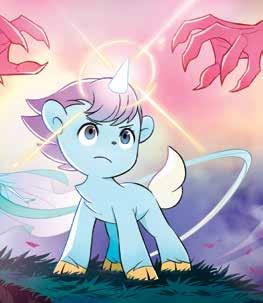
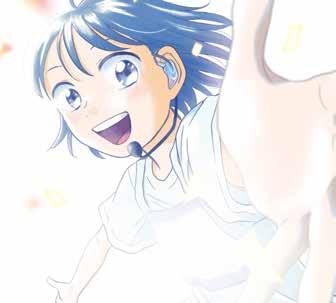
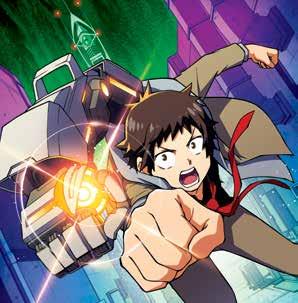
Scholastic Australia has long been a trusted leader in publishing for kids and teens, and for over twenty years, we have helped parents, teachers, librarians and readers fall in love with graphic novels. Now, we are proud to introduce our own manga program, beginning with the best-selling series UNICO and stories like Hikaru in the Light! and Mecha-Ude: Mechanical Arms. These new offerings expand on what readers love about our graphic novel titles by presenting manga in English with exciting and fun content curated especially for children and teens.
But what is manga? How is it different than other comics and graphic novels? What does this specific form of comics have to offer readers, particularly when it comes to children and teens, learning and literacy?
Directly translated as “whimsical pictures,” manga refers to comics originally published in Japan and created by mangaka, or professional authors and artists. Visual storytelling has a long history in Japan, and manga has been a widely celebrated part of the Japanese literary landscape for generations. In the 20 th and 21st centuries, manga stories have traditionally been serialised in print or online magazines and often later collected in a series of printed volumes, or tankōbon. Most manga is currently published for teen, adult or "all-ages" audiences. This guide refers to some of these popular manga stories to help demonstrate the breadth and depth of the medium and contextualise manga's place in the broader literary landscape.
Manga is often associated with a particular aesthetic: manga books and magazines are frequently published in black and white, and are usually formatted to read from right to left per Japanese language conventions. However, just as manga publishing has seen crossover between genres and demographics, it has also experienced significant expansion outside of these format norms. Digital publishing and vertical-scrolling mobile comics (such as webtoons) are becoming more popular in Japan, as are full-colour manga stories. These shifts represent another chapter in the ongoing evolution of manga publishing.
Manga has narratives that span genres, topics, art styles and anticipated audience interests. Manga can be action-packed (with popular examples including series like My Hero Academia, Demon Slayer, One Piece and Sailor Moon) and filled with drama, romance and slice-of-life antics (see stories like Yotsuba&!, Komi Can’t Communicate and Fruits Basket). Some manga series are exaggerated and fantastical, whereas others are more grounded and realistic. Over the years, a tremendous blending of themes and styles has created a rich assortment of manga literature for readers to enjoy.
It’s important to remember that manga is not defined by one aesthetic or reader demographic, nor is manga a genre. Manga is a medium for visual storytelling that spans a broad array of art styles, subjects, genres and audiences. Find some common terms used to describe and categorise types of manga in the glossary on page 11!
While it’s hard to estimate exactly how many people across the globe read manga, according to Grand View Research, as of 2024, manga had an estimated global market value of $15.6 billion. Manga stories—often adapted into popular animated series, or anime—are enjoyed by fans worldwide. Every year, comic and anime conventions are stormed by millions of attendees eager to celebrate their shared fandom, learn more about their favourite series, hear from creators and cosplay as their favourite characters. Some manga stories are published over many years, with fans that span multiple generations.
Prior to the 1980s, very few manga stories were published outside of Japan or in other languages, and Japanese comics were regarded as a niche interest in Western culture. In the 21st century, as more Japanese comics stories have been published in other languages and as more audiences discover the vast variety of manga stories and art styles, manga has become increasingly mainstream, standing alongside Western comics and graphic novels. With the expansion of English-language manga publishing, librarians, educators and caregivers have sought out age-appropriate manga for children and young adults—recognising it as literature that powerfully motivates kids to read.
Like other comics and graphic novels, manga offers many of the same literacy benefits as prose texts—with the added advantages of encouraging visual and artistic literacies. For some readers, manga can spark increased excitement about reading and can offer pathways to exploring additional forms of literature. Manga also has the power to inform readers’ worldview, provide opportunities for studying character growth and story development, provide important scaffolds for developing readers and foster empathy. Manga can be nuanced, heartfelt and inspiring, in addition to being visually striking and filled with high-stakes action. Junji Ito’s Uzumaki and Gengoroh Tagame’s My Brother’s Husband are examples of modern manga classics with significant literary value and genre influence comparable to that of Western graphic novels like Art Spiegelman’s Maus series, the Watchmen series by Alan Moore, Dave Gibbons and John Higgins, and Raina Telgemeier's Smile, within their respective audiences. Manga stories like Naruto and the Sailor Moon series are additional examples of hugely influential manga stories that have not only fostered a love of reading and literature, but provided generations of children and teens with opportunities to explore and cultivate their understanding of ethics and morality.
Today, manga’s rise in global readership is apparent in Western bookstores and libraries, with entire sections dedicated to the medium (often capitalising on the popularity of the books’ associated anime series or live-action adaptations), as well as on social media, websites and apps, such as WEBTOON and Shonen Jump. Amongst a media landscape dominated by short-form videos and shaped by unprecedented competition for audience engagement, it is encouraging to see readers—especially those newer to reading—flocking to their local libraries and bookstores for the latest volumes of their favourite series.
In addition to making reading exciting and engaging, manga helps readers develop visual literacy skills. In the modern world, information often comes via a combination of text and images. This can be true of signs and billboards, instruction manuals, interpersonal communications or video content like TV shows, movies and the news. Reading comics and manga can help all readers build the skills necessary to quickly and fluently derive meaning from a combination of text and images and develop their media and literary criticism skills overall.
Like comics and graphic novels, manga offers a unique entry point into books for those who may be new to reading, readers who may demonstrate limited or no interest in prose texts and language learners. Engrossing stories and compelling visuals keep readers engaged and encourage them to persevere, even when they may struggle with comprehension or decoding. The visual nature of comics and manga gives readers multimodal context clues to help them understand words they may be unfamiliar with or are unsure how to pronounce and to understand how body language and facial expressions can indicate a speaker’s tone or mood. Additionally, the pacing of these stories encourages multiple read-throughs, which are a key tool to improve reading comprehension. Repeat reading empowers readers to make thematic connections and deepen their understanding of how visual or textual elements enhance a story.
These features of manga can also support neurodivergent readers, who may not find enough unique sensory inputs in prose texts to maintain long-term focus. The complex visual elements of graphic novels and manga offer a broader range of sensory input per page that motivates sustained engagement at the reader's own pace.
Because manga stories can cover a multitude of topics, they have the potential to build readers’ domain-specific knowledge (information unique to a particular topic or discipline) within a variety of subjects. For example, the Demon Slayer series may encourage readers to learn more about Japan’s Taishō period and the folklore behind Japanese yokai—mysterious beings like tengu (trickster demons) and kitsune (shape-shifting foxes). Hikaru in the Light! teaches readers about Japan’s affinity for pop idols. Sports manga like the Haikyu!! series or Medalist may encourage a reader to try volleyball or figure skating. Stories like Thermae Romae offer insight into Roman and Japanese history and bathing cultures and manga series like Kitchen Princess and Food Wars can encourage readers to recreate dishes in their home kitchens. Manga can be a gateway to learning and other forms of literature, especially for selective or emerging readers, as they discover their interests within the many genres and subjects found in this form of storytelling.
While Western graphic novels can take years to produce and publish, manga titles are often published within shorter intervals of time (more like Western serialised comic books). As a result of this faster publishing pace, many manga stories quickly become long-running series that can span tens of volumes and follow a wide range of characters and story arcs. The reduced wait time between instalments supports sustained narrative continuity and deep character development as well as cliffhanger endings that heighten reader anticipation for the next volume. Manga series are uniquely positioned to keep readers engaged over long periods of time as they continue to build literacy skills, social-emotional skills and domain-specific knowledge.
Emotional Awareness
Like other types of comics and graphic novels, manga is fantastic for encouraging social-emotional growth. Unlike prose texts, visual storytelling allows readers to see emotions on characters’ faces and interpret their body language. Additionally, artistic techniques such as colour choice, linework, panel and page composition and sequential pacing can heighten emotional resonance. Delicate lines, bold brushstrokes, background patterns and iconography (or manpu) also help communicate characters’ feelings, which can range from subtle and nuanced to exaggerated or comical. This can be especially helpful for readers who may struggle to interpret body language or facial cues in social contexts. In these texts, readers can see the very clear emotions as well as what caused them, helping readers develop relational skills in their own lives.
Model Characters
Character growth and relationships are a central theme in many manga series. Protagonists are often teenagers or in their early twenties, which can offer younger readers aspirational role models. Because many manga stories take place over multiple volumes or books, protagonists have ample time and opportunity to meet scores of other characters and observe all types of relationships. Manga characters can be ideal models for self-actualisation, patience, tenacity, navigating relationships, building community and more.
Cultural Awareness
Exposure to cultures and experiences that differ from readers’ own helps build empathy and increases readers’ awareness of the complexity and vibrancy of the world they inhabit. Because manga originated in Japan, and many manga stories take place in Japan or incorporate aspects of its history and culture, this medium offers unique, accessible entry points to learning more about Japan and other Asian countries’ languages, history and contemporary life.
Many educators and librarians include manga in their classrooms, curriculum and collections.
Including manga in educational spaces and activities can be an exciting way to engage readers, diversify texts and even differentiate learning! In the classroom, manga titles provide the unique benefits of:
• Being novel, compelling and exciting. Manga looks and feels different than prose texts, but it offers just as much opportunity for literacy development and learning.
• Expanding readers’ worldview. Manga can be an accessible and authentic way to expose readers to different customs and cultures and present them with new ideas and ways of life.
• Making readers feel seen and valued. Presenting manga as texts for study and analysis will affirm and engage readers who already love manga and anime.
• Building visual literacies. Manga offers tools to scaffold literacy development and opportunities for art analysis and critical thinking.
• Approachability and confidence-building. Prose novels with high page counts can be intimidating to some readers, especially those with developing reading skills, while manga titles with similarly high page counts may have a higher ratio of images to text to tell their stories. Including manga in learning environments and curricula allows readers to build reading confidence and subject exploration as they devour more accessible, but equally rich, texts.
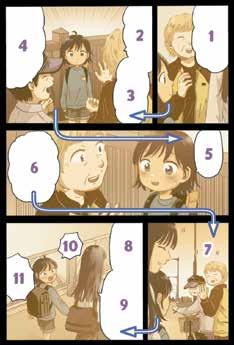
Most manga was originally written in Japanese, which reads right to left (the opposite direction from English). In order to enjoy the artwork as it was originally created, some manga published in English also reads right to left. With manga that reads right to left, hold the book so the spine is on the right and the cover opens on the left. You'll turn the pages from left to right and start reading at the top right corner of each page, working your way across the page and down from right to left (It can help to imagine your eyes are drawing a backwards Z as you read). If this style of reading is new to you, keep trying! Your skill will develop with practice.
The Japanese language uses a system of honorifics, which are usually special endings added to a person’s name (for example: “Hikaru-chan”). Honorifics can tell you a lot about how people relate to each other. They can communicate closeness between two people, politeness and respect and age or seniority. By including the original Japanese honorifics in the English translation, we are able to preserve this special meaning from the original work.
You may encounter these common honorifics:
-san: Generally used with strangers and friends, shows politeness and respect
-chan: For those who are dear to you, with a hint of cuteness; often used by girls, children and close friends
-kun: A standard polite honorific for boys
-sama: One level above -san, this honorific conveys great respect
-senpai: An honorific used to address one’s senior in a school, workplace or club environment. “Senpai” can also be used as a standalone title.
-sensei: An honorific used to address teachers, doctors, creators and other authority figures. Use of -sensei shows respect toward someone who has achieved a high level of mastery in their profession. “Sensei” can also be used as a standalone title.
When no honorific is used with a name, it means that two people are very close—usually family members or close friends. It is a special privilege to call someone by name without an honorific!
Pacing: When reading manga, panels often flow into one another with overlapping text bubbles and onomatopoeias, and readers might sometimes move too quickly from one panel or page to the next in anticipation of what will happen next—especially in high-stakes sequences! Encourage developing readers, particularly those new to manga, to remember to slow down and take in the details. This can help if readers are struggling to retain and comprehend information as they read.
Reading Order: With practice, reading panels and speech bubbles in order from right to left will become second nature. That said, those new to manga may find themselves confused if they have accidentally viewed speech bubbles or panels out of order. If readers are confused, encourage them to flip a few pages back, slow down and take in everything on the page. Readers may need to try reading the text in a different order, and you can have them refer to the reading order diagram on this page. They may also want to start with manga series that are published left to right, such as UNICO, which provide an entry point into the medium and allow readers to become familiar with the style and flow before moving on to manga publications with the more traditional right to left order.
Words and Pictures are Equally Important: In comics, graphic novels and manga, the pictures and written words work in harmony to convey settings, moods, actions and emotions as they unfold in the story. When evaluating readers for retention and understanding, make sure to ask them about details in the images as well as the written text.
Factual Recall: For many readers, manga might be an unfamiliar medium. Reading from right to left or learning to synthesise images and text may be new skills. During and after reading, it is important to make sure readers have a grasp of the plot and events within the book. Begin by asking them to summarise the book and ask them specific questions to ensure they remember and understand important plot details explicitly stated in the text and images.
Inferencing: Inferencing is a skill that requires readers to understand why things happen, subtle implications hinted at within the text and images and what is happening in the page’s gutters (the spaces in between panels). Ask readers why certain events happened or why characters made specific decisions. The answers to these questions may not be found explicitly in the text or images, but they can offer clues that may lead to inferred explanations.
Character Change and Growth: Even in a single volume of a manga series, protagonists often experience change and growth. Ask readers about character traits for various characters and ask them to explain how characters have changed throughout the book and why. Then ask readers if they can relate to the characters and how they can aspire to incorporate the characters’ best qualities into their own lives.
Literary Themes: Manga features many of the same literary themes as other comics and prose texts. Common themes include identity, perseverance, good vs. evil, morality and coming of age, amongst others. Ask readers to identify the book’s themes and how they appear and develop throughout the book. Make sure they cite evidence from the text and images.
Cultivating Empathy: Characters and situations in manga can help students cultivate empathy for people in circumstances and cultures different from their own. Ask readers to identify characters’ feelings in specific moments of the story and why they’re feeling that way, using the artwork and facial features to help. You can also ask readers if they agree or disagree with characters’ actions and decisions and why. These offer opportunities for group discussion and for readers to hear the perspectives of others based off their lived experiences. This way, they are not only developing empathy through the characters in the book, but also through and with their peers.
Cultural and Historical Questions: Readers may have questions about certain cultural or historical topics referenced within the books they are reading. Depending on the book, this could range from explicit references to the history of Japan or other countries, to everyday cultural practices surrounding things such as food, school or social customs. Ask readers what questions they had while reading about historical references or cultural practices in the book, and ask them specifics such as “What did you think about ?” or “How was different than what you are used to?” For books with specific domain knowledge (such as Hikaru in the Light! ’s focus on Japan’s bathing and pop idol cultures), interested readers can be encouraged to learn more about these topics.
Art Analysis: Like Western comics, manga features many different art styles and techniques. Stylistic choices are made intentionally to enhance mood and emotion and to heighten certain moments. In addition, composition (where certain elements are placed and why) is crucially important to the artwork’s impact and the reader’s understanding of what is happening. Ask readers questions about how specific elements of the artwork impact their comprehension of the story as well as the characters’ motivations and emotions. Ask readers to identify specific techniques such as linework, colour choice (if applicable), composition, etc. that the artist uses to convey information and feelings.
Plot Analysis and Comparison: Although manga stories can be long-running and span many volumes, most include identifiable story arcs that are contained within one or a few volumes. When paired with other literature, it is easy to see how some manga adhere to familiar plot structure conventions (such as the Hero’s Journey archetype), while others chart their own path. Readers can use this to become more familiar with plot devices and structure while also recognising their flexibility and variety in implementation.

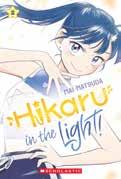
Hikaru in the Light! (Volume 1)
by Mai Matsuda
PB: 9781761645822
AU $18.99
NZ $20.99
Ages 8–12 • Grades 3–7
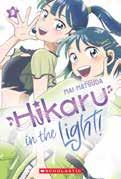
Hikaru in the Light! (Volume 2)
by Mai Matsuda
PB: 9781761727009
AU $18.99
NZ $20.99 Ages 8–12 • Grades 3–7
Hikaru in the Light! (Volume 3)
by Mai Matsuda
PB: 9781761729287
AU $18.99
NZ $20.99
Ages 8–12 • Grades 3–7
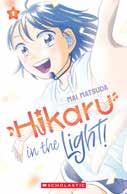
Best friends compete for the once-in-a-lifetime chance to become pop stars in this funny, feel-good manga series told in 4 volumes.
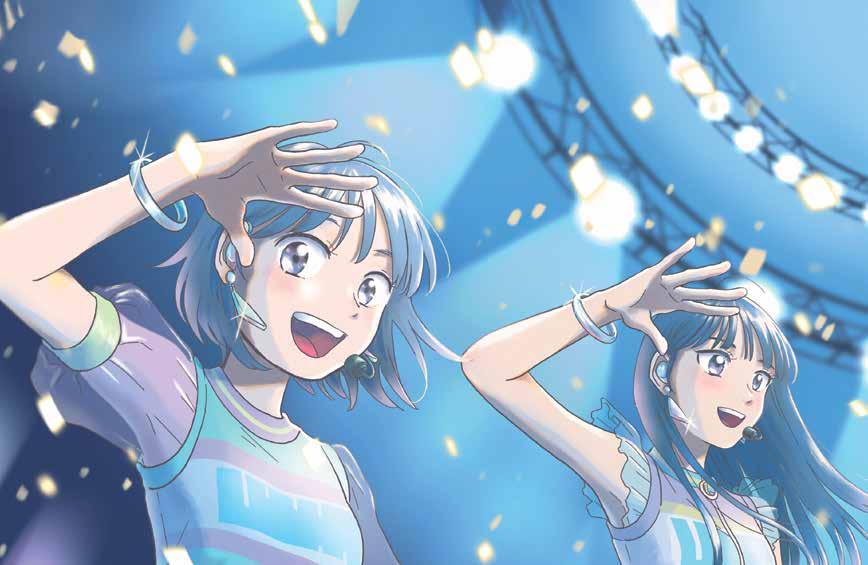
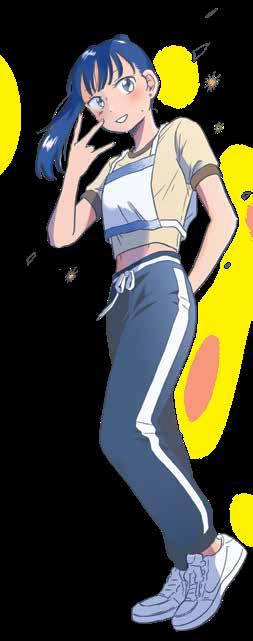
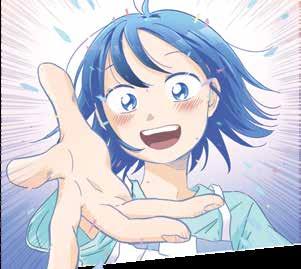
Middle-school student Hikaru Ogino is known as the songbird of her family’s bathhouse in Tokyo. Her beautiful singing echoes from room to room as she cleans up after school, but she dreams of holding a microphone, not a mop! When her best friend, Ran—a former girl group idol—invites her to try out for a pop star survival camp together, it’s the chance of a lifetime to put her talents to the test. Can Hikaru outshine the competition and make her stage debut, or will she fall flat?
Mai Matsuda is a manga artist from Chiba, Japan. Her works include Houkago Kitaku Biyori and Kinshi-chou Night Survive
1. In Chapter 1, Ran tells Hikaru, “If you can put in the effort, that means you’re already a special person” (p. 45). Do you agree with Ran’s statement? Why or why not?
2. By the end of Chapter 1, what have you learned about Japanese idol culture? What is and isn’t valued in idols? How does “Girls in the Light” promise to be different? Use evidence from the text and images to support your answer.
3. Why do you think Hikaru declines Ran’s offer to audition with her to be an idol? Why does Hikaru say that she’s “better off singing in a public bath?” (p. 36).
4. What are some of Hikaru’s personality traits? Which of her traits allow her to be successful during the audition process? How about Ran?
5. Do you think that Producer Hayama gave fair criticism and feedback to Ran in the 2nd round audition? How would you feel if you received that feedback?
6. At the end of Chapter 5, consider how Hikaru has changed since the beginning of the book. Use evidence from the text and images to support your answers.
7. What do you think “youth” means? Do you agree with the definition given by Ran or Hikaru’s parents? What do you think influences each character’s definition of “youth?”
8. During the Survival Camp, Hikaru notices all of the “special” girls around her. Do you think that Hikaru is special? Why or why not? Does Hikaru think she’s special? How do you handle situations when you are around “special” people? What can you learn from Hikaru in this situation?
9. The book makes frequent use of thought bubbles and captions. How does knowing the character’s inner thoughts change the reading experience? How would the book be different without thought bubbles and captions?

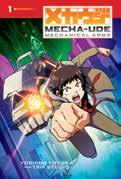
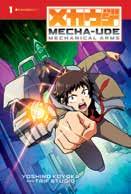
Mecha-Ude: Mechanical Arms (Volume 1)
by Yoshino Koyoka and TRiF Studio
PB: 9781761720383
AU $19.99
NZ $21.99
Ages 8–12 • Grades 3–7
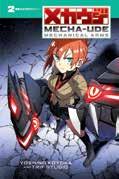
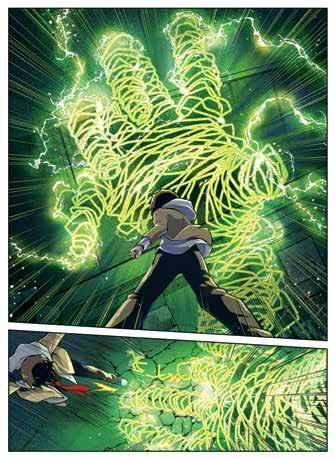
Mecha-Ude: Mechanical Arms (Volume 2)
by Yoshino Koyoka and TRiF Studio
PB: 9781761727047
AU $19.99
NZ $21.99
Ages 8–12 • Grades 3–7
Based on the anime by Okamoto and TriF, currently available on Crunchyroll!
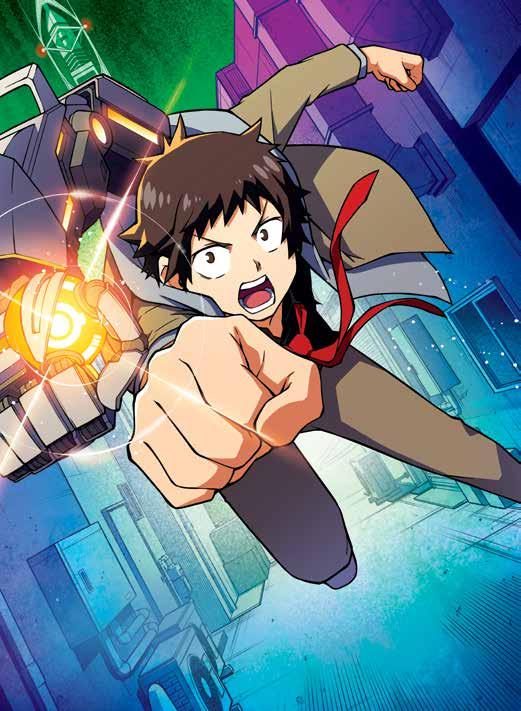
An ordinary middle-school student's life takes a thrilling turn when he encounters a powerful mechanical being in this exciting new manga series told in 4 volumes.
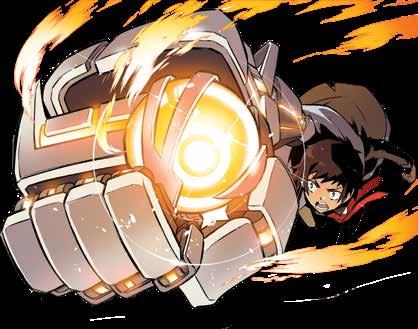
Kita-Kagami City is a pretty normal town ... except that some people have gotten their hands on Mecha-Ude: powerful, sentient, mechanical beings that attach themselves to their human hosts and have awesome capabilities. When middle-school student Hikaru accidentally activates a mysterious Mecha-Ude named Alma, he forms an unlikely bond with the talking arm. But where did Alma come from? And why are shadowy organisations with dangerous Mecha-Ude of their own suddenly after them, determined to capture Alma at all costs?
Volumes 3 & 4
Coming in 2026!
Yoshino Koyoka is a manga artist based in Tokyo. Her works include the manga adaptation of Aria the Scarlet Ammo. Loves: robots and tokusatsu films. Dislikes: raw eggs and raw fish (despite being Japanese).
1. Why do you think the voices and lit-up sky at the Kagami building catch Hikaru's attention?
2. At the end of Chapter 1, the text reads, “This is just the story ... of how I might have taken a tiny little step toward growing up (p. 22).” By the end of Volume 1, do you think Hikaru has grown? Use evidence from the text and images to support your answers.
3. Hikaru notes that Alma is “nothing but trouble” (p. 59) yet he passes up many opportunities to simply leave Alma behind. Why doesn’t Hikaru leave Alma?
4. Why do you think Alma might be called “The Trigger Arm”?
5. Why do you think Aki agrees to train Hikaru?
6. Who do you think created the Mecha-Ude? Do you think it was ARMS or the Kagami Group? Why do you think that?
7. How do you think Hikaru might be feeling at the end of Volume 1? Why do you think that?
8. Why do you think he can power Alma even though Hikaru doesn’t have enough arbitrium to do so?
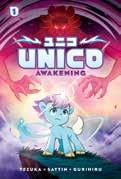
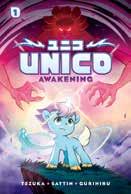
UNICO: Awakening (Volume 1) by Samuel Sattin and Gurihiru
based on UNICO by Osamu Tezuka
PB: 9781761526701
AU $21.99
NZ $23.99
Ages 8–12 • Grades 3–7
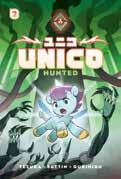
UNICO: Hunted (Volume 2) by Samuel Sattin and Gurihiru
based on UNICO by Osamu Tezuka
PB: 9781761722462
AU $21.99
NZ $23.99
Ages 8–12 • Grades 3–7
Osamu Tezuka (1928–1989) was a visionary Japanese cartoonist, animator and film producer. His prolific output, pioneering techniques and innovative redefinitions revolutionised Japanese comics and anime and he is often honoured as the "God of Manga."
Gurihiru is an Eisner Award–winning illustration team based out of Saitama, Japan. Though widely known for their work in American comics, they also work in games, manga and anime in Japan. Their clients include Disney Japan, Nintendo, Square Enix, Tsuburaya Production and many others. Major works include It's Jeff, Superman Smashes the Klan, Gwenpool, The Unstoppable Wasp and Spider-Man & Venom: Double Trouble
"A spellbinding masterpiece." —Dav Pilkey, #1 best-selling creator of Dog Man
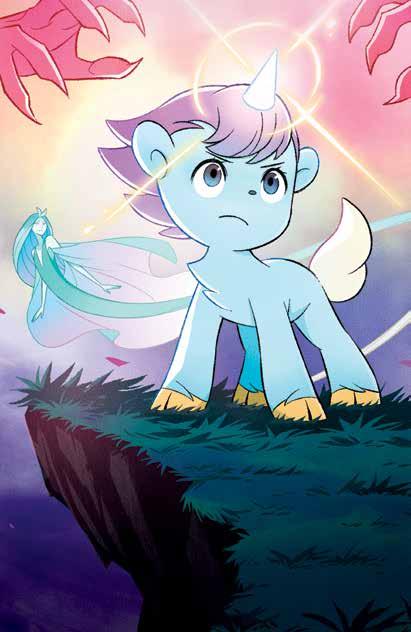
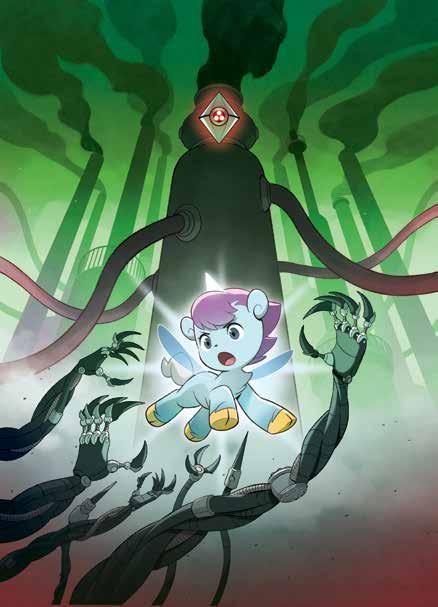
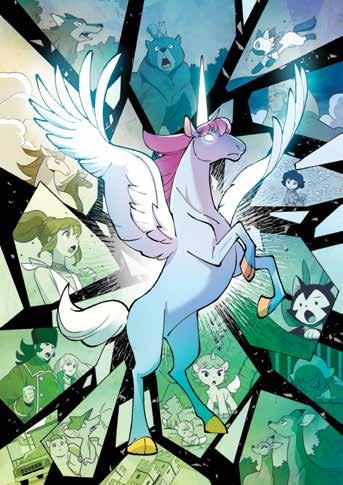
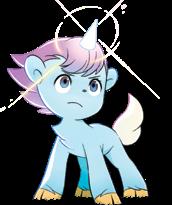
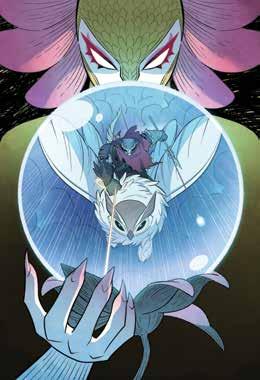
An adventure across space and time awaits! UNICO tells the incredible story of a young unicorn who, after enraging the evil goddess Venus, is banished from the heavens and forgets all he once was. Saved from oblivion by the kindhearted West Wind, Unico continues to help others, before having to escape Venus again and begin a new adventure.
Volume 3
Coming in 2026!
Samuel Sattin is an American writer. His books include the Eisner-nominated Buzzing, Side Quest, The Silent End and (as co-author) both A Kid's Guide to Anime & Manga and The Essential Anime Guide: 50 Iconic Films, Standout Series, and Cult Masterpieces. He has also adapted the Academy Award–nominated films Wolfwalkers, Song of the Sea and The Secret of Kells to the graphic novel format. He graduated with an MFA in comics from the California College of the Arts and works as a studio writer for Schulz Creative Associates, aka Snoopy Central. Samuel resides with his wife in San Francisco, and travels frequently to Japan.
1. After reading UNICO: Awakening, what do you think the book has to say about the relationship between humans and nature? How is this illustrated throughout the book?
2. Venus is supposed to be the goddess of love and beauty. Why does she act the way she does? What is her ultimate goal?
3. On pages 43-44, Zephyrus says, “Was Venus always so cruel? No. Long ago, she feared beauty’s power, even as she shaped it. Now she doesn’t create, she only consumes.” What do you think Zephyrus means by this? Why might Venus have changed?
4. What do you notice about the artwork and panel layouts (how the panels are arranged) on pages depicting Earth and pages depicting goddesses, winds and places beyond Earth? What makes these pages different from each other? Why do you think the creators made these choices?
5. What initially leads Chloe to ask Unico to make her a human? How does her reasoning for this request change throughout the book? What does Unico think about Chloe’s request, and why is he hesitant to agree?
6. What does the reader know or learn about Granny throughout the book? What can the reader infer about Granny, and what remains unknown? What about Byron, the hunter? Why do you think Venus says that “he is an easy kind to sway” (p. 111)?
7. What does the book teach us about kindness and caring for others? How do various characters use love and kindness, and how do other characters react to it?
8. Why does Chloe go to see Byron even though Unico tells her not to? Why doesn’t Chloe sense that Byron is a dangerous person, even though other animals do? What does Byron want with Chloe?
Learning about Manga
A History of Modern Manga: The Beginner's Guide to Manga and Anime by Shuichiro Takeda
A History of Modern Manga by Insight Editions
A Kid’s Guide to Anime & Manga written by Samuel Sattin & Patrick Macias, illustrated by Utomaru
Manga edited by Nicole Rousmaniere and Ryoko Matsuba
Manga! Manga! The World of Japanese Comics by Frederik Schodt
One Thousand Years of Manga by Brigitte Koyama-Richard
Understanding Manga and Anime by Robin E. Brenner
Mangasplaining podcast created by Deb Aoki, David Brothers, Christopher Butcher, and Chip Zdarsky/Steven Murray
Manga Mavericks podcast hosted by Colton Solem and LumRanmaYasha
Manben: Behind the Scenes of Manga with Naoki Urasawa documentary series by NHK WORLD-JAPAN
Teaching with Manga
Manga in Libraries by Jillian Rudes
Manga Goes to School: Cultivating Engagement and Inclusion in K-12 Settings by Ashley Hawkins, Emily Ratica, Sara Smith, Julie Stivers, and Sybil “Mouna” Touré
Manga adaptations of classic literature published by Manga Classics
Teaching with Comics and Graphic Novels by Tim Smyth
anime: a Japanese term referring to animated movies or TV shows. Although many anime series are based on manga, original anime stories are also very popular.
cosplay: a combination of the words “costume” and “play,” cosplay is the art of dressing up as a favourite character from manga, anime or other pop culture properties. Many cosplay artists spend considerable amounts of time and effort crafting their garments and accessories.
manpu: the visual symbols used in manga to express emotions, movement, humour or moods. mecha: short for “mechanical,” “mecha” often refers to giant robots, spaceships, tanks, robotic weaponry and vehicles with futuristic features.
shōjo manga: “shōjo” means “girl” in Japanese, and “shōjo manga” refers to comics created with tween and teen girls as the primary audience. It includes but is not limited to romance, mystery, sports, fantasy, comedy, science fiction, horror and slice-of-life stories.
shōnen manga: “shōnen” means “boy” in Japanese, and “shōnen manga” refers to comics created with tween and teen boys as the primary audience. It includes but is not limited to action, fantasy, sports, romantic comedies, gag humour, horror and science fiction stories.
seinen manga: “seinen” means “adult man” in Japanese. Today, “seinen manga” refers to comics created with older teen and adult readers of all genders as the primary audience.
josei manga: “josei” means “adult woman” in Japanese. Today, “josei manga” refers to comics created with older teen and adult readers, mostly women, as the primary audience.
Scholastic has been publishing entertaining and kid-friendly graphic novel series such as Dog Man, Amulet, BONE and other favourites for over twenty years. Parents, educators and librarians know that our titles feature high-quality storytelling with engaging art that is appropriate for children and teens. Now, we have launched an expansion into manga publishing with series hand-selected to align with the Graphic novels that young readers already know and love—and more to come!
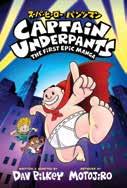
Hikaru in the Light!, by Mai Matsuda, and Mecha-Ude: Mechanical Arms, by Yoshino Koyoka and TRiF Studio, are both newer stories originally published in Japan as mostly black and white comics; their official English editions are available in full colour exclusively from Scholastic. UNICO, created in the 1970s by Osamu Tezuka, has been conceived anew in a nationally best-selling, groundbreaking collaboration between Eisner-nominated writer Samuel Sattin, Eisner-winning artist team Gurihiru and Tezuka Productions to bring the world of UNICO to a new generation of readers. Like the original, this new UNICO series is fully coloured and reads from left to right in the Western comics tradition. In each series, all contents and added colours have been reviewed and approved by the original Japanese publishers and creators to ensure these editions honour their cultural nuance and the creators’ intent.
With these books and more upcoming manga series, young readers can expect gorgeous books with compelling stories created for them. Simultaneously, caregivers, educators and librarians can rest assured that these titles will enrich young readers through exposure to non-Western cultures and storytelling styles while remaining age-appropriate for Western youth audiences and cultural sensitivities. There's something for every reader in Scholastic's manga!
• Slice-of-Life
• Pop Idol Competition
• Friendship
• Following Your Dreams
• Four-Volume Series
• Classic Characters Reimagined
• Parallel Universe
• Feudal Japan
• Extraordinary Powers
• Ongoing Series
• Epic Action & Adventure
• Super Heroic Middle Schooler
• Sentient Mechanical Beings
• Mysterious Tech
• Four-Volume Series
• Creative Collaboration
• Epic Action and Adventure
• Laugh-Out-Loud Funny
• Unlikely Heroes and Friendship
• Ongoing Series
• Friendship
• Epic Fantasy & Mythology
• Lovable Characters
• Making the World a Better Place
• Eight-Volume Series
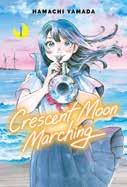
• New Girl in School
• Fresh Start
• Cute Musician Crush
• Ultra-Competitive Marching Band
• Six-Volume Series
About the writer of this guide: Matt Slayter is an educator, comics editor, curriculum writer, and public speaker. He is a former classroom teacher and most recently served as the Director of Education at Pop Culture Classroom. Matt has acted as the managing editor for the Colourful History, facilitated the Excellence in Graphic Literature Awards, led professional development for teachers across the US, and he has written graphic novel teaching guides for publishers including VIZ Media, Macmillan, Pantheon, IDW and Kodansha.