Hair & Makeup: Buffy Saint Marie | @buffyhernandez | buffysaintmarie.com
Hair & Makeup: Robbie Minjarez | @robbiemakeupart
February, Frost & Family
This editor’s letter is being written on the eve of a big snowstorm. As the New York Family team updates our site (newyorkfamily.com) with the latest resources and information, it’s also a reminder of what this city does best: show up for one another. It’s one of the many reasons we love raising families here.
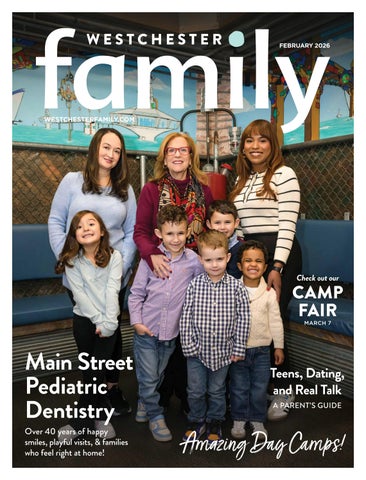
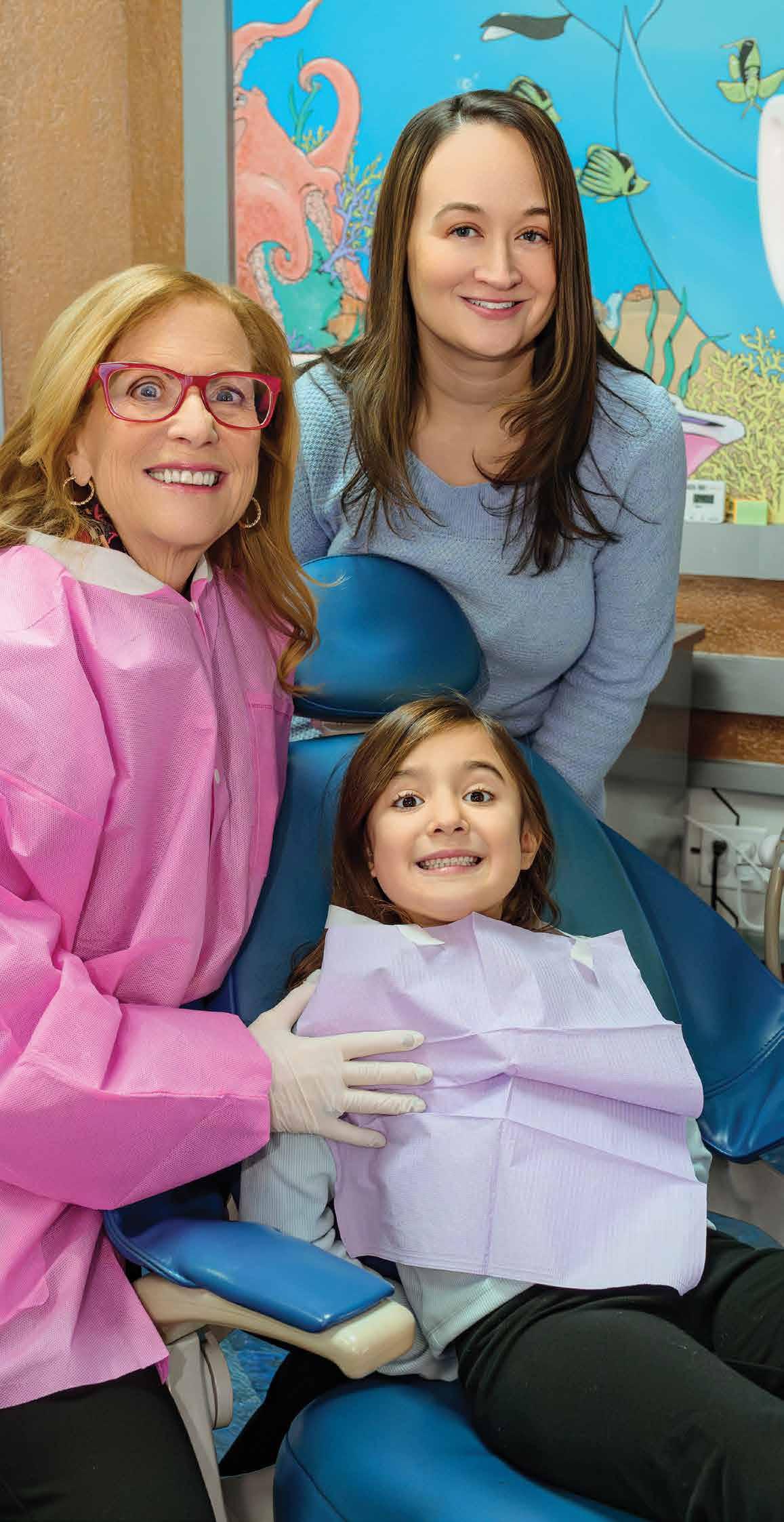
Our February cover features Main Street Pediatric Dentistry (page 12) and dives into Dr. Penny and why kids love her practice, spotlighting stories that meet families exactly where they are right now.
Winter may still be in full force, but we’re already looking ahead, fingers crossed, to warmer days. This issue jumps straight into summer planning (only four months away!) with our camp coverage. Check out Amazing Day Camps (page 30) and Do Siblings Need to
GET IN TOUCH
Camp Together? (page 28), a must-read for parents weighing what works best for their kids.
February also brings us Valentine’s Day, and with it, conversations about relationships in all their forms. We explore how parents can support teens as they navigate relationships (page 8).
And because navigating schools is a major parenting decision, you’ll also find smart, practical guides to understanding independent (page 16), and Catholic schools (page 18), so you can make informed choices with confidence.
Whether you’re tackling slush or claiming the couch as your winter headquarters, this issue has you covered.
New York Family
Share your feedback and ideas about family life in New York! Email us at editorial@newyorkfamily.com and tag us at #newyorkfamily
PUBLISHER: Clifford Luster
EDITORIAL DIRECTOR: Donna Duarte-Ladd
ASSOCIATE PUBLISHER: Erin Brof
ADVERTISING DIRECTOR: Stacie Goldberg
EDITORIAL LEAD: Jeannine Cintron
DEPUTY EDITOR: Danielle Ramos
EVENTS EDITOR: Shara Levine
ASSOCIATE DIGITAL EDITOR: Soe Kabbabe
EDITORIAL ASSISTANT: Alexa Lutter
PARTNERSHIP MANAGERS: Lauren Alperin, Lauren Anchin, Joan Bergman, Mary Cassidy, Suzanne Cirigliano, Chris Cunnington, Lori Falco, Shelli Goldberg-Peck, LynnMarie Hanley, Lisa Herlihy, Janine Mulé, Nina Spiegelman, Gwen Tomaselli
MARKETING & STRATEGY DIRECTOR: Rosalia Bobé
MARKETING & EVENTS
COORDINATOR: Ashley Rivera
MARKETING ASSISTANT: Lorens Morris
MEDIA SALES ASSISTANT: Ruston Ropac
SALES COORDINATOR: Bernadette Kilkelly
ART DIRECTOR: Leah Mitch
WEB DEVELOPER: Sylvan Migdal
GRAPHIC DESIGNERS: Arthur Arutyunov, Connie Sulsenti
EDITORIAL CONTRIBUTORS: Jeannine Cintron, Mia Salas
CONTACT INFORMATION
ADVERTISING: (718) 260-4554
Advertising@NewYorkFamily.com
CIRCULATION: (718) 260-8336
Tina@NewYorkFamily.com
ADDRESS: New York Family Media/Schneps Media 15 MetroTech Center, Seventh Floor Brooklyn, NY 11201
PRESIDENT: Victoria Schneps-Yunis
CEO: Joshua Schneps
COO: Clifford Luster
New York Family is the recipient of 12 Parenting Media Awards in 2024, including General Excellence, as well as several Gold Awards in Editorial and Design for our website, e-newsletters and monthly print publication.
Teens and Relationships
How parents can help navigate
BY KAITLYN RIGGIO
Let’s face it: no parent is exactly eager for their kid to start dating. For many parents, a teen’s first relationship is an undeniable sign that they’re growing up and they’re not a little kid anymore.
But as much as parents may hesitate to admit it, relationships are part of life, especially as children become teens. Relationships are an important avenue for teens to find their identity and place in the world, and guidance and open communication from parents can make the process easier.
We sat down with Samantha Quigneaux, LMFT, national director of family therapy services for Newport Healthcare, about how parents can help their teens navigate relationships as they get older.
Parents can start establishing the framework for teens to have healthy relationships early on. What might these early conversations look like?
Helping our children develop healthy relationships means discussing what characteristics of a friendship or relationship make us feel most safe, comfortable and happy. Are the people they surround themselves with kind, thoughtful, and considerate of their feelings and experiences?
These conversations can start as early as elementary school. When your child tells you about their friend, ask them “What do you like about this friend?” or “What kinds of things do you do together that you enjoy?”
This is also the time for you to help your child thoughtfully address conflict and learn how to advocate for themselves. If they tell you about a playground disagreement, ask them how they felt about the situation and what they did to help themselves feel better in the moment. This is an opportunity for collaborative problem-solving.
Some of the earliest relationships kids observe is the relationship between their parents. How can seeing this relationship
affect kids?
The relationship kids observe between their parents is unquestionably the most impactful. Children are incredibly observant and aware of dynamics that exist between their parents and family members. Like most situations, children learn how to interact with the world and those around them from their caregivers.
Children will look and learn unknowingly at communication and conflict resolution. This is applicable to parents who are coupled, uncoupled, as well as single parents. Children also internalize what they will view “acceptable” and “normal” relationship patterns from their parents and caregivers.
How can parents ensure they’re modeling a healthy relationship for their children?
Modeling healthy relationships is certainly heavy lifting. In order to do this, parents must be honest with themselves, and be able to take stock of the way they interact and communicate with their partners or other caregivers. Healthy relationships mean prioritizing feeling safe, valued, respected and cared for. Are these dynamics present in the home? When conflict comes up, is this done effectively or aggressively? Modeling a healthy relationship at its core is stopping to ask yourself “Is this the type of relationship
I would want my child to be in?” If not, consider what changes need to be made.
What advice can parents give to their teens as they’re getting ready to start dating?
As teens start to be interested in having a romantic relationship, it is important for parents to approach it with curiosity about how their teen views dating. Encourage open communication and discussion about what it is that interests them in dating and what they are looking for in a potential partner. How are they hoping to feel in a relationship?
Parents should remind their teens that a partner should help them to feel like the best true versions of themselves. Someone who cares for them and respects them will make them feel empowered and strong.
It is also important that parents remind their teens that dating can be an exciting adventure and journey of discovery, but to listen to their heart and gut; if something feels “off,” they should trust themselves and reach out for support.
It’s important for people of all ages to know what an abusive relationship looks like in order to stay safe. What are some warning signs for abusive relationships that teens in particular should look out for?
Abuse is all about power and control. So, if at any point a teen is feeling as though
someone is trying to disempower them or control certain aspects of their lives, this is a big red flag. This may look like a partner telling them what to wear, who to hang out with, rules to adhere to, or to break. Other warning signs are the teen’s mood and engagement in everyday things that previously brought them joy. If a teen is experiencing increased anxiety, depression, or emotional dysregulation, or if they no longer want to join the family for dinner and would rather isolate, these are critical warning signs of an unhealthy relationship.
Teens should be able to come to their parents with problems as they grow up, including relationship problems. How can parents lay the groundwork for this open communication?
The key here is curiosity rather than criticism. You want to show your teen that you are able to hold a safe, calm, and respectful space even when discussing difficult topics, and especially when your teen is being vulnerable.
When discussing relationships with your
Other Things to Keep in Mind
Every teen is going to approach relationships differently. Some may lean towards engaging in more casual dating while others want a “serious” long term relationship. It is important to understand what your teen is looking for and not to judge or diminish their perspective.
This means not perpetuating stereotypes or belittling their intense feelings with comments like, “You’re only 16. You’re not going to marry this person.” or “Be careful how many people you date so you don’t get a bad reputation.”
This type of “advice” does not address a parent’s deeper concerns, and it will likely put the teen on the defense. You also risk losing open
teen, try to go beyond “What did you do with them?” to “How does this person make you feel? What qualities do you like about them?” Teens are working through their identity and finding their place in the world, and relationships are certainly a part of this. It is important to discuss with your teen the
communication. If parents notice concerning behaviors, it is important to approach it from an emotionally focused place.
Another element of teen dating that must also be under the umbrella of safety and communication are topics related to sex and sexuality. Parents need to be a safe place for their teens to express themselves, and to be able to have conversations about their bodies and their attractions.
These can be difficult topics at any age, particularly as teens develop their own notions around romance and sexuality. We want to reinforce to our teens that we can handle uncomfortable conversations about these important issues.
differences between privacy and secrecy. It is absolutely reasonable for there to be aspects that they do not share with their parent(s) because they are private and personal, but secrecy means they are intentionally withholding information that they fear may bring judgment, criticism, or punishment.
A
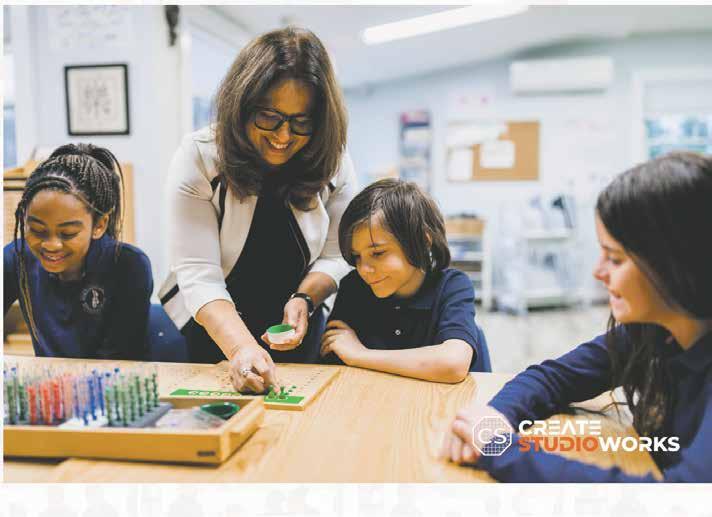
Montessori Education That Grows With Your Child
From Preschool Through Middle School
Hudson Country Montessori School supports children as they grow into thoughtful, engaged learners. Beginning with a strong foundation in the early years, our students develop independence, academic strength, leadership, and a lasting love of learning—preparing them for success in high school and beyond.
Schedule a private tour today!
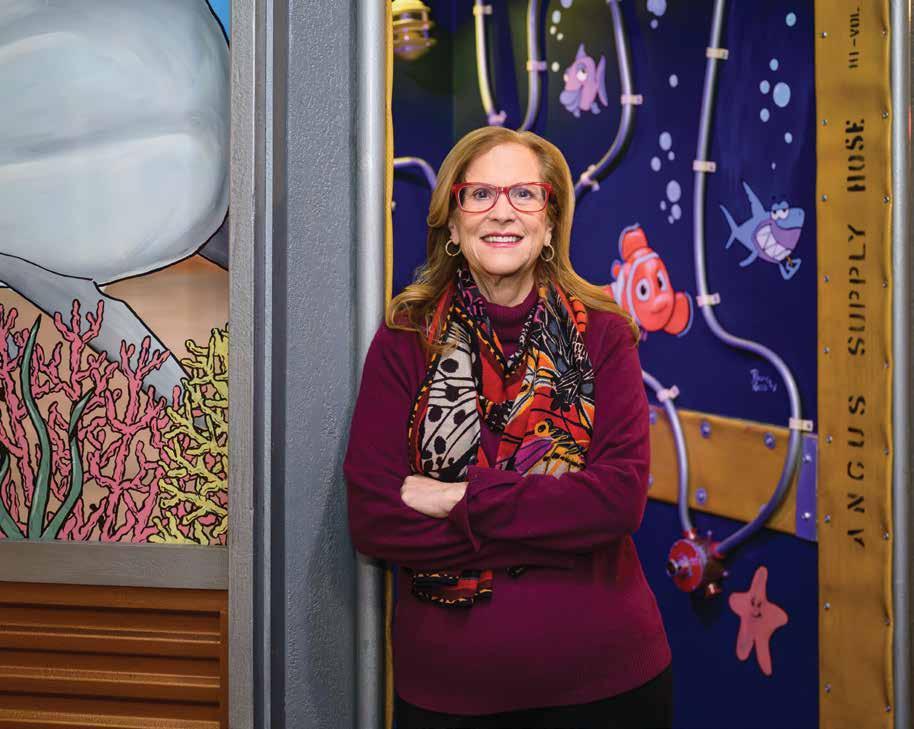
Main Street Pediatric Dentistry
Over 40 years of happy smiles, playful visits, and families who feel right at home
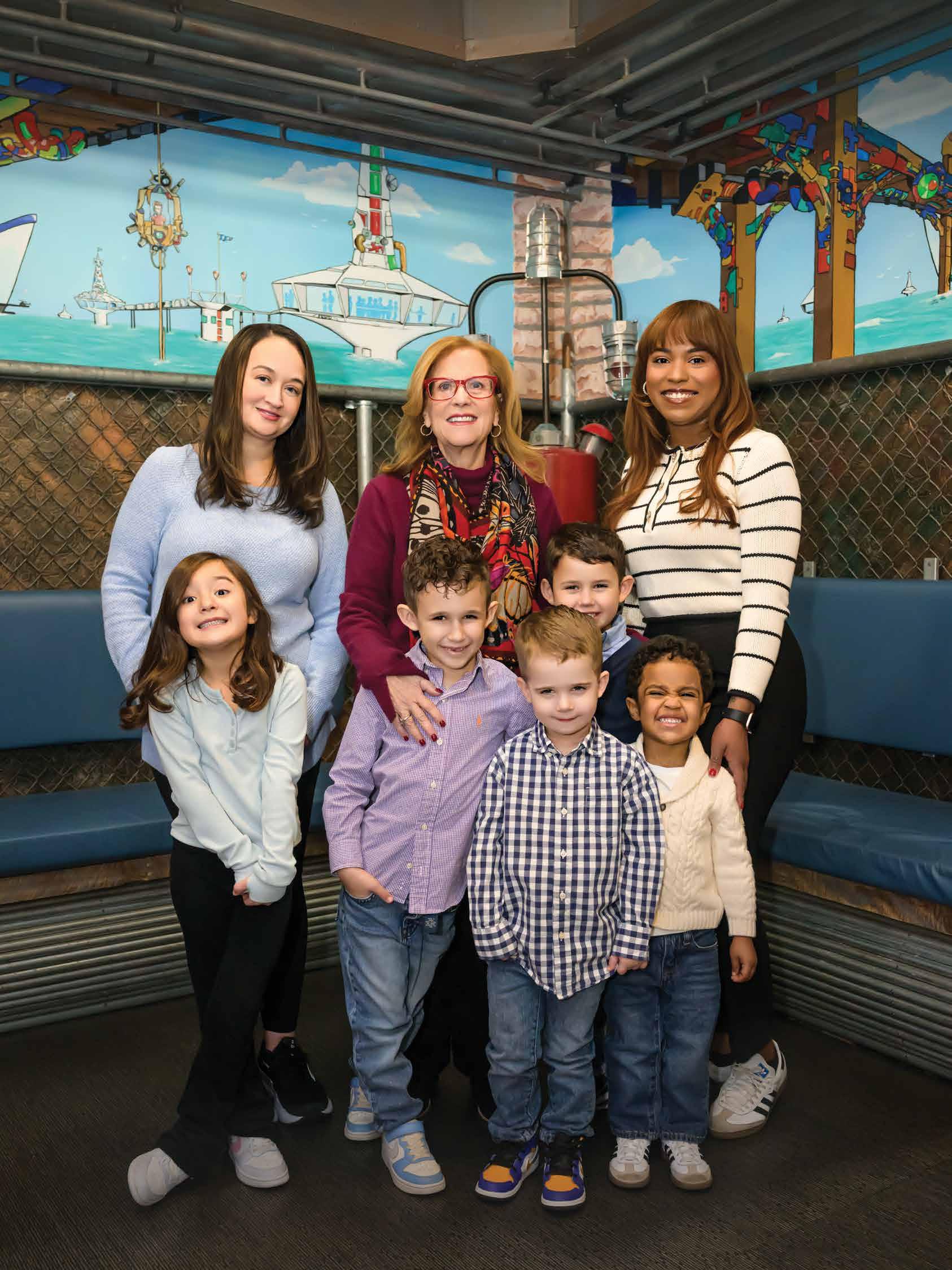
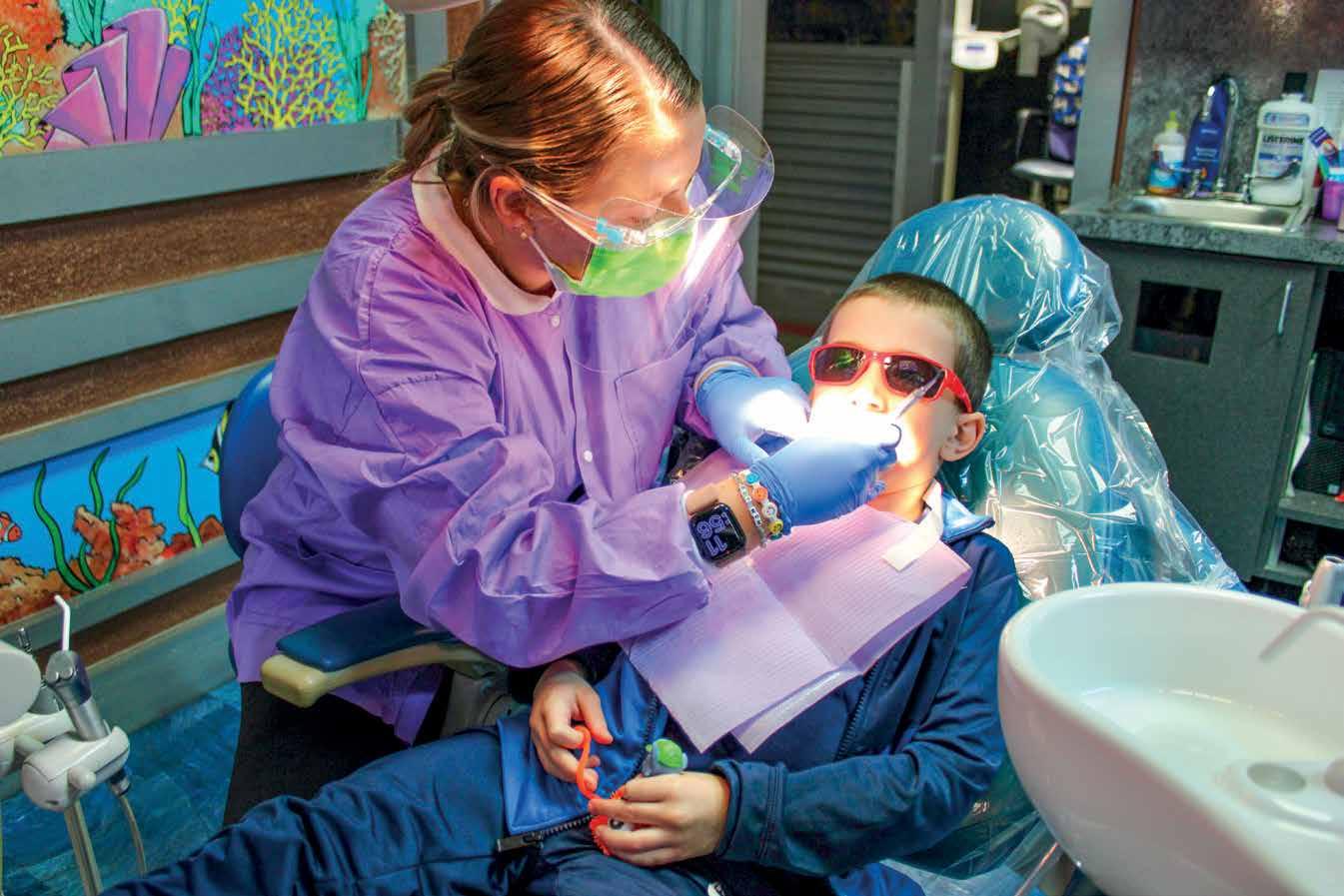
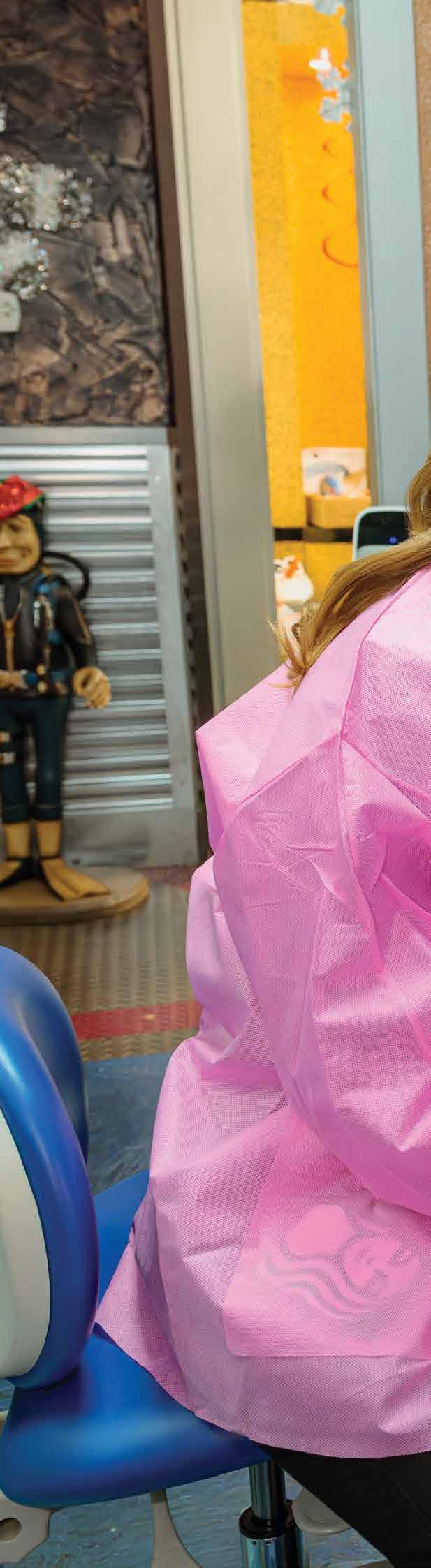
Step inside Main Street Pediatric Dentistry and you’ll quickly see why kids don’t mind coming to the dentist here. A whimsical submarine-themed office, complete with swimming fish, touch-screen games, and favorite TV shows, turns a routine appointment into a fun undersea adventure. For more than 40 years, families in Tuckahoe, NY have trusted this one-of-a-kind practice to deliver dental care that feels friendly, comforting, and even exciting for kids.
At Main Street Pediatric Dentistry, it’s never just about clean teeth. It’s about helping children feel confident, easing fears, and creating positive experiences that stick with them for life. For parents, that means peace of mind and trust. For kids, it means feeling safe, supported, and happy to be there.
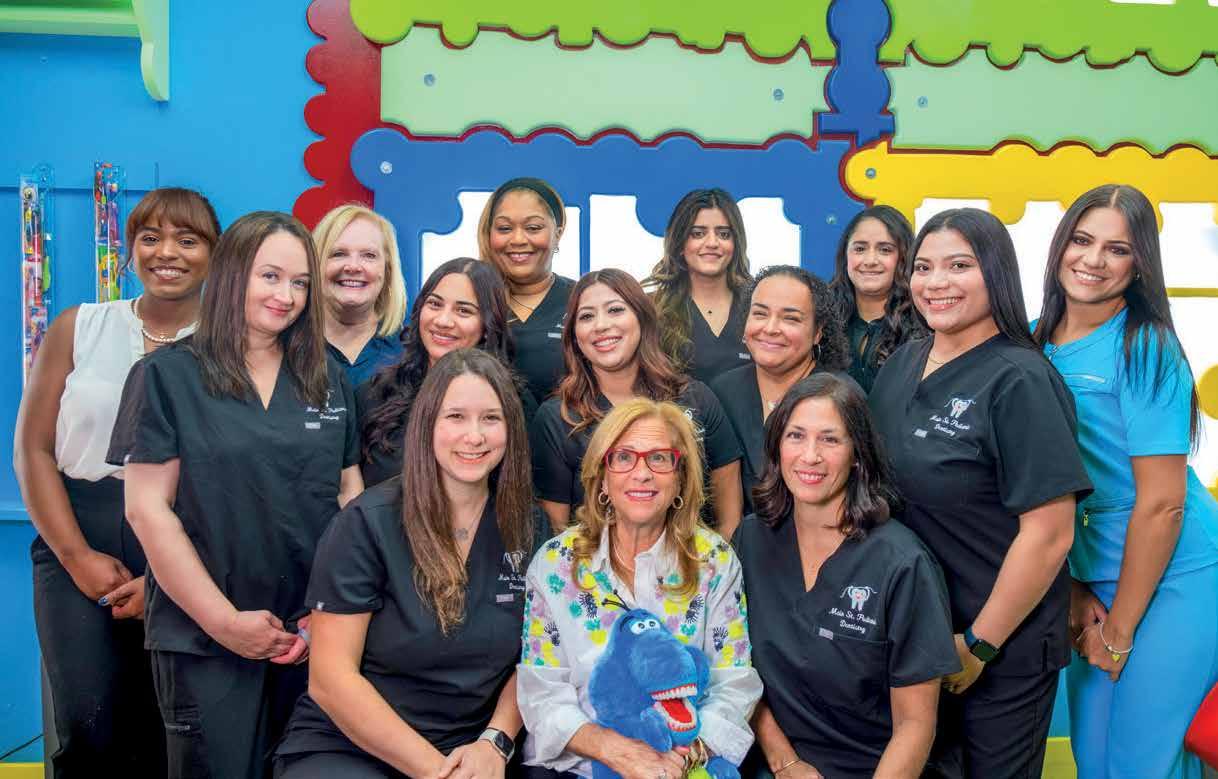
Founded in 1984, Main Street Pediatric Dentistry has become a true community staple, caring for multiple generations of families. Parents who once sat in the dental chair as children now bring their own kids through the same doors. At the center of it all is Dr. Penny, whose individualized, compassionate approach has earned the loyalty of families for decades.
“I’ve been doing this for a very long time, and I think what sets our practice apart is the personal touch. It’s really about your kid. It’s about making them feel comfortable and catering to their needs,” shared Dr. Penny. “We let all the parents come into the room because there is a comfort level for kids, and they also know their child best. We make it a full family experience.”
The submarine-themed space plays a big role in creating that comfort. As children walk past colorful fish murals and a playful submarine figure on their way to their appointment, nerves melt away and curiosity takes over. Inside the exam rooms, the fun continues, helping kids stay relaxed and engaged throughout their visit.
“It’s all about desensitization,” explains Dr. Penny. “They have to be participants in the experience. One of the big things about kids is they like to be in control, and I like them to feel like they have some control. We have a magician come, we give prizes, we just try to
make it fun for them.” Dr. Penny’s team is also trained to treat kids with special needs, making the practice an inclusive, welcoming space for all families.
Dr. Penny’s passion for gentle pediatric care comes from personal experience. “For years I was afraid to go to the dentist,” she shares, explaining that her first experience with novocaine at 16 solidified her desire to go into the field. She wanted to create an environment for children where their dental needs could be met with trust and comfort, not fear. She knew she could provide young patients with that level of security. “That’s why when parents bring their kids to me, I feel honored. It means I did a good job for them. That’s the biggest barometer of success – when a child and their parent leave happy.”
After Dr. Penny graduated from the University of Pennsylvania Dental School and New York Dental School, she founded Main Street Pediatric Dentistry with a clear vision. As a parent herself, she understands the needs of families and brings that perspective into every visit.
The lasting impact of Main Street Pediatric Dentistry is reflected in the many families who
continue to return, sometimes in new roles. Dana Moroney, a former patient, current parent of a patient, and hygienist at the practice, shares:
“I began seeing Dr. Penny for my dental care when I was just 10 years old. My positive experience as a patient in her office inspired me to become a Registered Dental Hygienist. I have been fortunate to work alongside Dr. Penny and her team, continuing to provide dental care to young patients in the same warm, caring, and fun environment that I experienced growing up. Now, as a parent myself, I feel incredibly lucky that my child gets to benefit from the exceptional care at Dr. Penny’s office, just as I did.”
Another former patient and current employee, Adlin Garcia, reflects on her experience:
“I’ve been a patient of Dr. Penny since I arrived in the United States at the age of 9 years old. I was an anxious child and Dr. Penny made me feel comfortable and not scared of the dentist. Even now as her employee, she’s the most caring and genuine person I know. I have a 3-year-old son who is also Dr. Penny’s patient since he was 18 months old. I know he’s getting exceptional care in a fun environment.”
While the practice is rooted in tradition, it continues to evolve with modern dentistry. “Everything changes with time and modernization,” explains Dr. Penny. “Everything is computerized now. We have an AI system to help us read X-rays so we don’t overlook anything. We work hard to keep up with what is new and happening.”
Today’s pediatric dentistry focuses on early intervention and preventative care, and Main Street Pediatric Dentistry embraces that approach with services such as digital X-rays, fluoride treatments, dental sealants, and cleanings – all designed to make visits quicker, smoother, and more comfortable for kids and parents alike.
As pediatric dentistry continues to advance, one thing remains constant: the heart of Main Street Pediatric Dentistry. While technology evolves, the practice stays rooted in the same values Dr. Penny established decades ago: personalized, compassionate care that empowers kids and keeps smiles healthy.
For New York families looking for a pediatric dental home that combines experience, warmth, and a playful approach, Main Street Pediatric Dentistry continues to prove that the very best care is built over time, one smile and one family at a time.
To learn more or book an appointment, visit mainstreetpediatricdentistry.com.
Photos by Create Studioworks
Winter Hikes
Stunning views in Westchester
BY WESTCHESTER FAMILY
Aman in a bright orange jacket and a woman in a white winter hat crosscountry skiing together on a snowy trail surrounded by trees.
No matter what season it is, you’re going to want to get the kids out of the house. In Westchester, you can get a little exercise, enjoy fresh air, and the beauty of nature by taking a hike. If you’re looking to go on a hiking trip in Westchester, there are plenty of trails where families can explore together, enjoy scenic views, and soak up the crisp winter air. Many parks and preserves offer programs for kids, or you can simply hike and explore on your own time. Happy exploring!
WINTER HIKING TIPS
Many of our Westchester families don’t let cold temps deter them from heading out to enjoy a beautiful winter hike with some breathtaking views. For anyone trying a winter hike in Westchester for the first time, following a few simple tips can help you stay safe and fully enjoy the beauty around you. If this is your first time heading out for a winter hike, here are some tips provided by the National Parks Service that all hikers should keep in mind.
When you set out on a winter hike, prioritizing safety and preparedness can make all the difference. Equip yourself with snowshoes and traction devices to tackle icy conditions with confidence. Familiarize yourself with the trail conditions, as many paths may be unmarked and tricky to navigate, making strong routefinding skills essential for any person who is going on a hiking adventure in Westchester.
Pack a detailed map, ample plain and electrolyte-enhanced water, and nutritious, salty snacks to elevate your hiking experience. Dress in waterproof boots, gaiters, and appropriate winter gear, including a warm parka, hat, and gloves to keep cozy and dry. Don’t forget hiking poles for added stability, and carry emergency signals like whistles or signal mirrors for safety. Being well-informed and properly equipped transforms your family hikes in Westchester into a safer, more enjoyable adventure.
For the complete list of Winter Hiking Tips, head to www.nps.gov.
Winter Hikes in Westchester
Whether you’re a local or just visiting, Westchester hiking trails offer a wide variety of terrain and scenic spots that are perfect for winter adventures. From gentle familyfriendly paths to more challenging climbs, there’s something for everyone to enjoy.
Cranberry Lake Preserve (West Harrison)
Enjoy hiking at this 190-acre park. During your hike, check out the history trail where you and your family will see a 19th-century farmhouse and early 20th-century stonemining operation. Trails range from 1.1 miles to 2.4 miles where you can see ponds, live animals, and various plants. Note: restrooms are temporarily closed. Cranberry Lake Preserve, 1609 Old Orchard St, West Harrison, NY 10604.
Croton Gorge Park (Croton-on-Hudson)
Located at the base of the Croton Dam, you and your family will enjoy some spectacular views of the dam even before your scenic hikes in Westchester start! This 97-acre property encompasses many uphill and steady trails that’s also a favorite spot for sledding and skiing. Croton Gorge Park, 35 Yorktown Road, Croton-on-Hudson, NY 10520
Teatown (Ossining)
Teatown hosts many events all-year long. Women can enjoy organized hikes with their Women Take to the Trails events, which are held every Wednesday. You can also hike and explore this 1,000-acre nature preserve
on your own, which ranges from .8 miles to a challenging 6.5 miles. This is a great spot for family-friendly hiking in Westchester, offering both gentle and more advanced trails. Teatown, 1600 Spring Valley Road, Ossining, NY 10562.
Ward Pound Ridge (Pound Ridge)
Enjoy a beautiful hike at the County’s largest park. There is a combination of flat and hilly terrain, depending on the type of hike you are looking for. The area also has picnic areas and the nearby Trailside Museum for an educational and fun experience. Ward Pound Ridge, Route 35 and 121 South, Cross River, NY 10576.
Rockefeller State Park (Pleasantville)
Widely known for its slew of breathtaking hiking trails in westchester, this beautiful state park boasts 45 miles of scenic paths –mainly designed by John D. Rockefeller Jr. This includes access to Swan Lake, wooded paths, stone bridges, Pocantico River, and more. Enjoy walking, jogging, and crosscountry skiing, as well as birding, hiking, and photography. If you are hiking in the late winter, enjoy the budding of native flowers and trees as well as peonies, which will bloom in early May. Rockefeller State Park, 125 Phelps Way, Pleasantville, NY 10570
This trail offers many options for a moderate to a challenging hike. Those up for a challenge should try the blue trail for the most
stunning views on the top of the mountain. A favorite among locals, it’s known for providing some of the best Westchester winter hikes. Yorktown Heights, NY 10598
Rye Nature Center (Rye)
Rye Nature Center offers many programs for kids and families. Families looking for kid-friendly hikes in Westchester can explore six scenic trails here, including the Storybook Trail that winds behind the garden. Rye Nature Center, 873 Boston Post Road, Rye, NY 10580.
Greenburgh Nature Center (Scarsdale)
Enjoy some fun and interactive events at the Greenburgh Nature Center this winter. For hiking, you and your family can enjoy its five marked trails that range from one-tenth of a mile to over one-half of a mile. It’s a perfect spot for short winter hikes in Westchester. Greenburgh Nature Center, 99 Dromore Rd, Scarsdale, NY 10583.
Zofnass Family Preserve (Pound Ridge)
Enjoy a day with your family hiking the largest of Westchester Land Trust’s preserves. Don’t forget your hiking boots as you take on its adventurous 7.5 miles of trails (there are shorter pathways as well). This preserve is also home to more than 400 plant species, which you might find budding during your winter/spring visit. You’ll find rugged terrain, stepping stones for crossing streams and wetlands, a stone staircase, and more, making it one of the best hiking spots in Westchester. Zofnass Family Preserve, 258 Upper Shad Road, Pound Ridge, NY 10576.
Muscoot Farm (Katonah)
While Muscoot is known as the go-to place to visit farm animals, the farm is also home to 777 acres of fields, woodlands, and wetlands. Enjoy a two-in-one adventure with your kids by exploring the farm and its vast grounds, perfect for combining a Westchester hiking experience with farm fun. Muscoot Farm, Route 100, Somers, NY 10536.
Westmoreland Sanctuary (Mount Kisco)
Enjoy access to 670 acres with 8.5 miles of interconnecting trails all-year long. Before you go, visit the Natural Science Museum where you can see live animals (including rabbits, birds, and turtles) and educational exhibits. Westmoreland Sanctuary, 260 Chestnut Ridge Road, Mount Kisco, NY 10549
The Henry Morgenthau Preserve (Pound Ridge)
The Henry Morgenthau Preserve is a remarkable 36-acre nature area along Blue Heron Lake that welcomes the public from sunrise to sunset. With its diverse ecosystems, including forest communities, wetlands, a small pond, vernal pools, and streams, it is an invaluable resource for nature lovers and families. The preserve is committed to managing and protecting its natural beauty while offering educational programs, such as the Invasives Project, wildlife education at the summer day camp, the StoryWalk at the Town Park, and guided hikes with knowledgeable speakers. This makes it another excellent location for Westchester hiking adventures. 82 Pound Ridge Road, Pound Ridge, NY 10576
Exploring Independent Schools
BY NEW YORK FAMILY
In New York, choosing a school can start pretty early. It may all begin casually, a comment on the playground. A question after music class. Then suddenly, it’s everywhere. It may first start with preschool chatter, then, as you figure out what works or could work for your child, it turns into coffee conversations, which turn into late-night group texts once the kids are asleep. One day, you’re swapping potty-training tips, and the next, it’s what the heck is a school lottery, how does a waitlist work , and the big one, to do public or private.
This is often when independent schools enter the group chat. Especially here in New York, where there’s an unusually deep and diverse landscape of independent schools, many parents start looking not only because they want “more,” but because they want something that feels more unflappable for their family, more intentional, and aligned with how their family actually lives.
What Is an Independent School?
Independent schools are sometimes nonprofit, privately run schools that operate outside the public system. Since these types of schools aren’t governed by districts or state mandates, they are free to shape both their curriculum and school culture, which is understandably why they appeal to so many parents.
For like most educational decisions, choosing an independent school is rarely about one thing. It might be class size or location. The school may offer them a more rigid schedule, lighter or more sportsoriented schoolwork, and something you cannot find anywhere else.
And it’s not that one type of education, public versus independent, is better than the other; for many of us parents, it is a wellthought-out decision to pivot to independent schools. This could be during your child’s key transitions, early childhood, middle school, or simply it’s time for your child to move on
to an independent school. For other students, these type of schools provide a flexible environment.
Another plus is the sense of community that independent schools like Catholic, Montessori, and others foster in their students. Independent schools may center on creativity, social-emotional learning, or a more progressive education, or academic rigor balanced with play. Families can choose a school that
reflects their values and supports their child’s personality, not just their test scores. And while tuition is a consideration, many parents may be surprised to learn how widely financial aid is available.
In a city and state defined by options, independent schools offer parents a choice; they’re less about opting out, and more about opting into a school experience that feels aligned, supportive, and real.
Spring Information Session and Campus Tour Saturday, April 18th at 10am
BLUE ROCK SCHOOL
and Forest Play Summer Program
Independent K-8 serving the Lower Hudson Va ll e y
Considering Catholic School in Westchester?
BY MIA SALAS
Choosing a school for our kids in Westchester can feel like navigating a maze. There are great options to choose from- public, private and charter. We’ve all been through the headache of trying to figure out the best fit for our child, navigating information from school tours, websites, and word of mouth from other parents. For many of us, whether religious or not, Catholic school enters the conversation. With its long-standing history in Westchester and values-driven education, both Catholic and non-Catholic families often consider Catholic school for their child.
If you’re weighing your options now, we’re here to help. Whether it’s making the final call between public, private or Catholic school, or learning more about how faith is integrated into Catholic school education as a non-Catholic family, this guide will help you find the right fit for your family.
What is Catholic school, and how does it work?
Before we dive in, let’s do a quick overview of Catholic schools and what to expect. Catholic schools have been part of New York’s education landscape for more than a century, originally founded to serve immigrant families seeking both education and community. Today, Catholic schools typically serve students from Pre-K through eighth grade, with some schools extending through high school.
They follow New York State academic standards while also incorporating religious education and Catholic values into the school culture. While they are faith-based institutions, Catholic schools in New York serve families of many backgrounds, and a significant number of students are not Catholic.
How much do Catholic schools cost?
One of the biggest reasons families consider Catholic school actually is cost. Compared to private schools, Catholic schools are often more affordable, sometimes costing a fraction of traditional independent school tuition. However, if you’re deciding between free pub-
lic education and Catholic school, the cost can feel like a major shift. The benefit though is predictability, which many parents appreciate. Tuition increases tend to be more modest and transparent, and many schools offer sibling discounts or financial aid. If you’re planning ahead or budgeting for more than one child, this stability can make a real difference.
The question of whether to commit to the extra cost of Catholic school compared to free public school (or reduce the cost of education compared to many private schools) comes down to what you prioritize in your child’s education. Read on to learn more about Catholic school academics, values, faith, and community to help you choose the right path.
Catholic school academic curriculum and performance Catholic schools have long been known for academic rigor, and many of the nation’s leaders across education, politics, and business are Catholic school alumni.
According to Catholic Schools NY, Catholic Schools in the Archdiocese of New York students consistently outperform their public school peers, and achieve comparable results to New York’s charter schools.
But as parents, we know test scores are not the most important factor when it comes to choosing our child’s school. A big part of making the decision comes down to the learning environment itself and whether it’s the right fit. Catholic schools often prioritize hands-on learning and experiences, with less time spent
listening in classrooms. Learning is very structured, with discipline built into the curriculum from day one. Children benefit from smaller class sizes and more individualized attention, helping them build confidence, accountability and a strong sense of self alongside academics. For little ones who thrive in more active, structured learning environments, Catholic school can work well, even if your family is not Catholic. But if you are looking for a more traditional approach to education, or if your child doesn’t necessarily need such structure or hands-on opportunities, then you might consider public, private or charter schools instead.
Faith in Catholic school day-to-day education
One of the biggest questions for non-Catholic families is– how does faith show up in Catholic school education? Even if the academic approach and learning environment feel like a good fit, it’s totally reasonable to still have doubts about choosing a school that doesn’t align with your faith. Faith typically shows up through religion class, daily or weekly prayer, and the observance of major religious holidays. For non-Catholic families, participation is generally respectful and inclusive, with an emphasis on shared values rather than conversion.
What many non-Catholic families who choose Catholic schools find is that faithbased values are woven into day-to-day learning, especially in early childhood education. These values, centered around building character development, are a key reason
why non-Catholic families choose Catholic schools. Read on to learn more about how values-based learning works.
Values-based
learning in Catholic school
One of the defining features of Catholic education is its focus on character. Catholic schools prioritize discipline, personal responsibility and moral development alongside traditional academics. There is a strong emphasis on kindness and empathy, especially in the early childhood and elementary years.
At younger ages, schools often focus on helping children develop their unique voice. Teachers work closely with students through hands-on learning projects to instill confidence, compassion, and sense of responsibility. Community service is introduced early, reinforcing the idea that helping others is a natural part of belonging to a community. For families who are not Catholic but are drawn to values-based education, this focus can be especially appealing.
Catholic schools also tend to work well for children who benefit from clear rules and
QUESTIONS FOR THE TOUR
If you’re visiting Catholic schools soon, here are a few helpful questions to ask on tours:
• How does the school support non-Catholic students and families?
• What does a typical school day look like?
• How are discipline and conflict handled?
• How involved are parents in the school community?
• How does the school develop the full child, beyond academics?
routine. For many students, that consistency creates a sense of safety that supports both emotional growth and academic focus.
Community and personal experience in Catholic Schools
Community, one of the values in the Catholic faith, is another unexpected area where many families see a difference. Catholic schools tend to be smaller, which can foster closer relationships between parents, teachers, and administration. Teachers get to know students well
and communicate frequently with parents. For families seeking a school environment that keeps them in the loop and invites them to get involved, Catholic schools can be great.
Community also shows up in the dayto-day learning environment. Students are taught to work together to solve problems, discuss concepts in groups, and help their peers out. If your child does better in collaborative settings, Catholic school might also benefit them, as they’ll be encouraged to develop close relationships starting in Pre-K.
Is Catholic school the right fit?
Like most school decisions, choosing a Catholic school is about finding the right fit for your family. For many parents, these schools offer a values-driven, character-building education alongside strong academics, a closeknit community, and a tuition that often feels more accessible than traditional private school. Catholic schools can be especially appealing to families who want individualized attention for their children, without losing the sense of structure and belonging that comes from a smaller school environment.
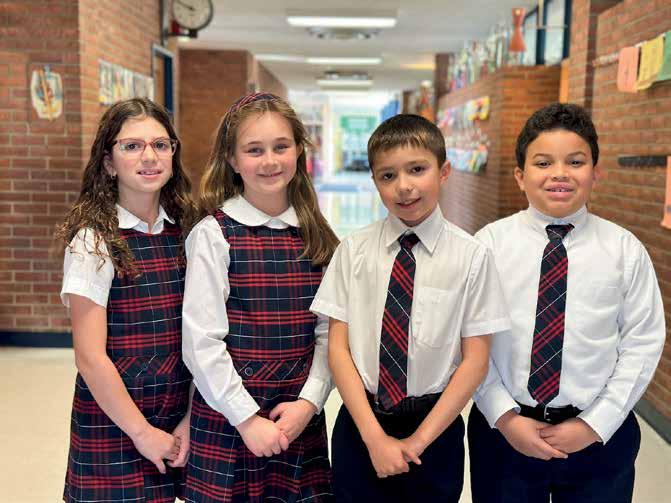
Immaculate Heart of Mary
Immaculate
School
Immaculate Heart of Mary School
Heart of Mary School
201 Boulevard
201 Boulevard Scarsdale, NY 10583 (914)723-5608
www.ihmscarsdale.org
Scarsdale, NY 10583 (914)723-5608 www.ihmscarsdale.org
201 Boulevard Scarsdale, NY 10583 (914)723-5608 www.ihmscarsdale.org Where Faith
INDEPENDENT SCHOOLS DIRECTORY
Blue Rock School
110 Demarest Mill Rd., West Nyack 845-627-0234 admissions@bluerockschool. org bluerockschool.org
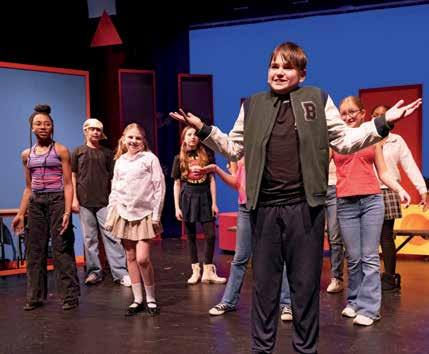
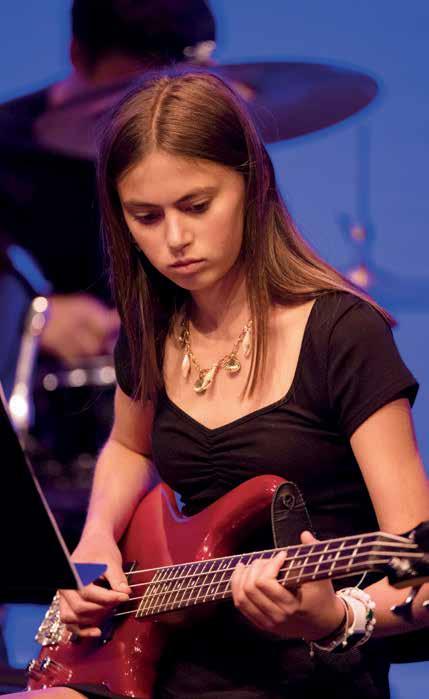
Blue Rock School has been fostering confident critical thinkers for over 30 years. They offer an educational approach based on handson experiences and real world problem solving. In small dynamic class settings, their challenging academic curriculum is infused with the arts, nature and play from kindergarten through eighth grade. By nurturing children’s love of learning and encouraging deep thinking, Blue Rock School prepares them for a changing world.
The
Harvey School
260 Jay Street, Katonah 914-232-3161 admissions@harveyschool.org harveyschool.org
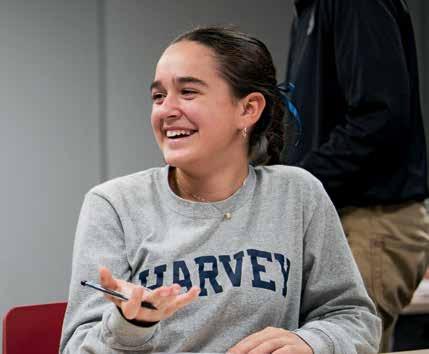
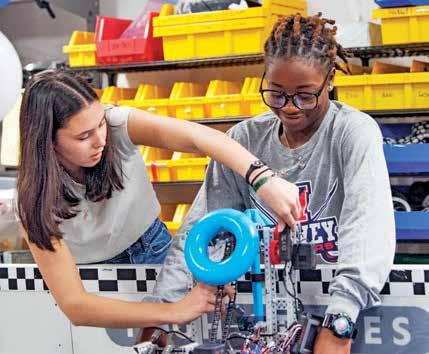
“Rigor with Heart” exemplifies The Harvey School’s collegepreparatory program focused on academics, the arts, and athletics in grades 6-12. Harvey highlights include a nationally recognized robotics program, honors and AP classes, 20 varsity athletic teams, an Arts Center, and Athletic Center including Evarts Ice Rink. 100% college admission. Students attend from New York and Connecticut as well as international students from eight countries with five-day boarding in grades 8-12.
Hudson Country Montessori School
340 Quaker Ridge Road, New Rochelle 914-636-6202
info@hudsoncountry.org hudsoncountry.org
Hudson Country Montessori School inspires and promotes innate curiosity and a love of learning through a progressive Montessori
pedagogy, helping children grow into respectful, sociallyadept, compassionate leaders. Their curriculum empowers students to become independent, creative thinkers and confident achievers— building strong foundations in preschool and carrying that growth through elementary and middle school. They are a private, co-educational school serving toddlers (18 months) through 8th grade in both New Rochelle, NY and Danbury, CT.
Immaculate
Heart of Mary
201 Boulevard, Scarsdale 914-723-5608
tkeelin@ihmscarsdale.org ihmscarsdale.org
Immaculate Heart of Mary is a parish-based school with high standards of excellence that helps students succeed in an increasingly competitive world. Students explore new horizons and expand creativity and skills through
academics, physical fitness and the arts. Experience is gained through extracurricular activities in a safe, religious, family-centered environment. IHM uses technology and software programs to prepare students for the digital world. The school’s emphasis on community service instills Catholic values and fosters community leadership.
Our Lady of Sorrows School
888 Mamaroneck Ave, White Plains 914-761-0124
olsschoolwp.com
At Our Lady of Sorrows School, Catholic education nurtures the whole child— intellectually, spiritually, and socially. Academic rigor encourages curiosity and critical thinking, while a faith-filled community fosters respect, responsibility, and empathy. At OLS, students learn to live their faith, serve others, and
grow into compassionate, confident members of their community through strong values, dedicated teachers, and meaningful service experiences that support character, leadership, and lifelong learning. Serving grades K - 8.
Saints John & Paul School has proudly served families for over 70 years, providing a quality, Catholic education for students in Pre-K through Grade 8. Rooted in faithbased values and academic excellence, SJP offers a nationally recognized Fluent French Program within a safe and caring environment. A rigorous, well-rounded curriculum is complemented by a wide variety of afterschool activities and
enrichment programs that support students’ academic, social, and spiritual growth beyond the classroom.
St. Joseph School
30 Meadow Avenue, Bronxville 914-337-0261
inquiries@stjosephschool.net stjosephschool.net
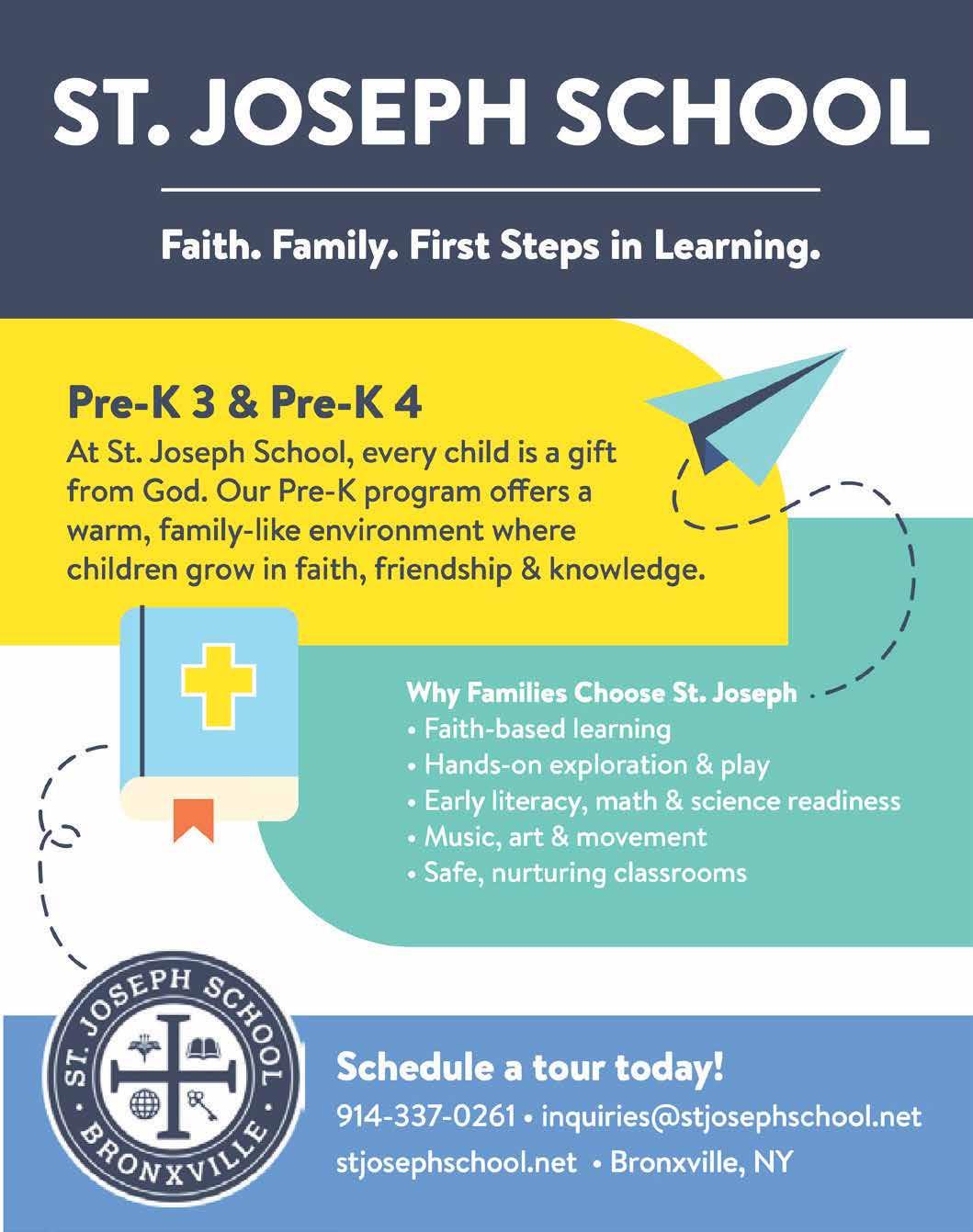
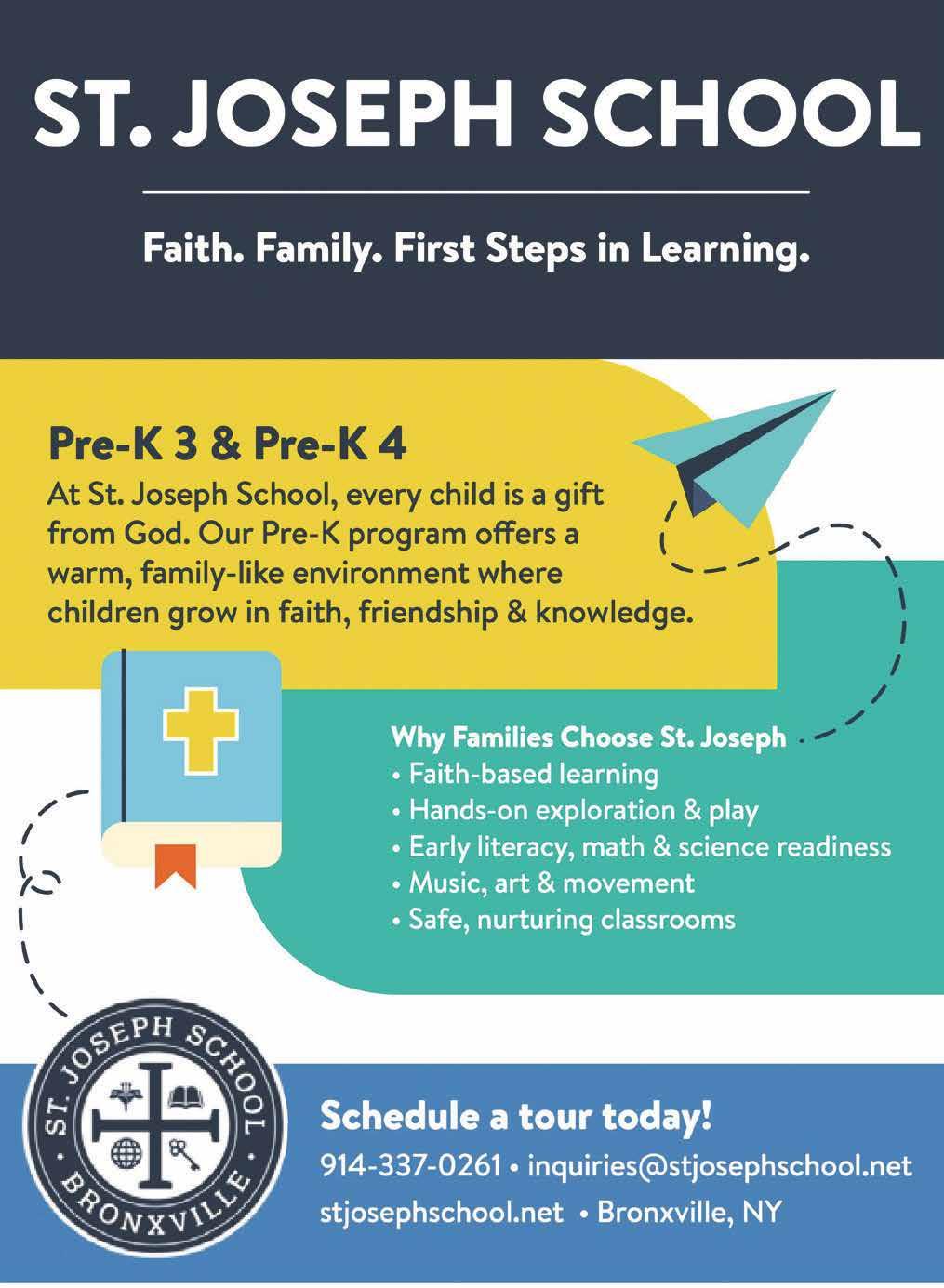
St. Joseph School in Bronxville offers a faithcentered education for students from Pre-K through Grade 8. With small class sizes, a thriving Pre-K program, strong academics, and a close-knit community, students grow academically, socially, and spiritually.
Rooted in Catholic values and nearly 75 years of tradition, St. Joseph School prepares children to become confident learners, compassionate leaders, and responsible citizens ready for future success.
WESTCHESTER FAMILY PARTNER
Lever & Ecker: Advocates for Families, Justice, and Community
For more than three decades, Lever & Ecker has built a reputation as one of Westchester’s most respected personal injury law firms. Founded 31 years ago, the firm is driven by two core beliefs: that representing clients is a deeply personal responsibility, and that true success means using that work to make a meaningful difference in the lives of others.
That commitment has earned consistent recognition. All of Lever & Ecker’s attorneys have been named to the New York Metro Super Lawyers list for six consecutive years (2020–2025), a rare distinction for any firm. But for the attorneys at Lever & Ecker, accolades are secondary to the people they serve, often families navigating some of the most difficult moments of their lives.
Founding partner David B. Lever understands that reality firsthand. A survivor of a serious vehicular accident at a young age, Lever brings a deeply personal perspective to his personal injury practice. After beginning his legal career in 1989, he opened his own law firm at just 30 years old. Today, his work has earned him recognition as one of the Top 100 Civil Plaintiff Trial Lawyers in New York by The National Trial Lawyers organization, as well as a Top 25 Westchester Super Lawyer.
For fellow founding partner Daniel G. Ecker, the inspiration to practice law came from family. He followed in the footsteps of his father and uncle, well-respected, longtime Westchester lawyers and a judge, which prompted Ecker to develop an early respect for the legal profession’s ability to create meaningful change.
After earning his undergraduate degree from Cornell University and his Juris Doctor from Fordham University School of Law, he began his career on the defense side, experience that now gives him valuable insight into how insurance companies operate. That knowledge helps him advocate more effectively for clients facing powerful institutions. In 2022, Ecker served as Chair of the Trial Lawyers Section of the New York State Bar
Association.
Partner Adam C. Weiss represents the next generation of leadership at Lever & Ecker. Known for dedication and an entrepreneurial spirit, Weiss has been recognized as a Hudson Valley Top Lawyer from 2021 through 2025 and named one of the National Trial Lawyers Top 40 Under 40 Civil Plaintiff Trial Lawyers in New York for multiple years. He has also received the Westfair Communications Millennial Award for his positive impact on Westchester and Fairfield Counties.
Associate attorney Katherine “Kate” Henderson rounds out the team with a hands-on, client-centered approach. Known for fully immersing herself in her clients’ cases, Henderson has trained alongside some of the region’s top attorneys while maintaining a strong commitment to service beyond the courtroom.
At Lever & Ecker, practicing law, particularly personal injury law, means more than winning cases. It requires preparation, empathy and accountability, especially when families are dealing with trauma, loss, or injustice. For the firm’s attorneys, the opportunity to stand up for others during those moments is both a responsibility and a privilege.
That sense of responsibility extends well beyond the office. Community service is not an initiative at Lever & Ecker, but a longstanding tradition. Each year, the firm participates in outreach efforts across Westchester, the Bronx, and Queens, including donating 100 turkeys annually to help provide thousands of Thanksgiving meals for local families and individuals in need.
The Lever family’s commitment to the organization Adults and Children with Learning & Developmental Disabilities (ACLD) spans more than 50 years, a dedication formally recognized by the ACLD Foundation two years ago. This longterm involvement reflects a deep personal connection to the organization’s mission of supporting individuals with disabilities and
their families.
Community leadership is also reflected in the individual efforts of the firm’s attorneys. Daniel G. Ecker sponsors backto-school initiatives such as The Sharing Shelf’s Backpacks to School program, helping students start the school year with
confidence and essential supplies. Adam C. Weiss serves as Board Chair of CLUSTER Community Services, which supports residents across Westchester, Rockland, and the Bronx. Katherine Henderson is an active supporter of SPCA Westchester and Feeding Westchester, helping protect animals and address food insecurity in the region.
After more than three decades, Lever & Ecker stands firm in the belief that advocacy and compassion go hand in hand, and that supporting families means showing up both in the courtroom and in the community. Lever & Ecker 120 Bloomingdale Road, Suite 401, White Plains, NY 10605 leverecker.com 914-288-9191
When a Meatball is the Milestone
Lessons I’ve learned about growth while raising a neurodivergent child
BY DONNA DUARTE-LADD
Milestones are everywhere in early parenting; they even happen before the baby arrives. Then it begins: the first steps, the first words, the first time they smile, and sleeping through the night (um, sleeping?... come on!). Even passing gas is a celebration.
The American Academy of Pediatrics (AAP) describes developmental milestones as key skills or behaviors that most children typically achieve by certain ages. So what happens when milestones are so far off your child’s timeline? For parents like me, raising a neurodivergent child, milestones can feel more like reminders of what isn’t happening “on time.”
My youngest son (who is adopted) came to us at two weeks old. While he showed little delay at first, over time, clouds of worry began to settle into that place in my body where I couldn’t tuck them away. Like most parents who start noticing the gaps, that quiet intuition kept creeping in. I knew. I felt it. His growth was different. I saw it more clearly when we were around other kids. Okay, show-offs, talking a mile a minute, knowing what a carrot was!
Those worries lived with me quietly until they finally had a name. Then came the diagnosis: my youngest son is autistic.
And with that, milestones... poof... kind of stopped being a thing for us.
While the mention of milestones makes me want to dive straight into my villain era (because we rarely, if ever, check these boxes on schedule), the truth is that milestones
are important. Especially when your child doesn’t follow them, they become a roadmap —a way to understand where they are, sensory-wise, motor-wise, socially... all that good stuff. And in our case, neuro-wise too.
For me, it’s been about reframing what a milestone looks like. And in the absence of this standard measurement, it becomes the foundation of advocacy for my babe. Because, like it or not, the moment you become the parent of a child with challenges, you’re not just a parent anymore — you’re a warrior mom. Not that you weren’t already showing up fully. But with a typically developing child, there’s at least the assumption that they’ll move through school and life with some independence, learning, growing, and finding their way.
With a neurodivergent child, that path is much less certain. You realize that their life isn’t just going to unfold — you’re going to have to help build it. In our case, every single
aspect of it, so far.
There’s nothing like people seeing my cute kid and then, not always, but sometimes, the look on their face when they realize he wants to be held (he’s nine... upside: my arms get a good workout), or when he starts to stim. The stimming can be the clincher.
But this isn’t about how other people relate to or react to my child.
For many parents of autistic kids or kids with other challenges, we see accomplishments, in all their chaos and weirdness (and trust me, he does some wild stuff), through a completely different lens. Everything takes on a new perspective.
It’s also about how I show up. What matters to me? How do I celebrate his milestones — the ones that don’t come with applause or checklists?
Letting go of societal benchmarks has helped me tune in to his timeline, his wins,
and what truly matters most. That doesn’t mean I toss caution to the wind. There are IEPs, life plans with his care manager, goals set with his care broker — the people who help me manage and shape his world. It means there’s more bending, more flexibility, more understanding — and a whole lot of patience.
And getting to this point wasn’t easy. I still remember the day the school psychologist called after an IEP meeting and said something that spun into days of sadness.
He explained that due to the severity of my child’s delays, he would automatically pass from grade to grade without needing to meet typical academic benchmarks — he wouldn’t be tested in the usual way. I sat there, trying to process his words. I knew what he was gently sharing, but all I could think was, ‘I don’t want school to be daycare for his entire school experience.’ I want him to be seen, to learn, to be challenged and supported — not just passed through the system quietly.
That call cracked something open in
me. It was a wake-up call, a clear sign that I had to let go of other people’s definitions of progress, including my own. It’s not that the experts don’t mean well, I love my son’s school — but I knew then I needed to lean harder into what growth looks like for him.
What kind of milestones have we celebrated lately? Recently, it was a meatball. Yes, a meatball. After years of trying to get my guy to eat meat/protein, a few weeks back he stole a meatball from his big brother’s plate and has finally opened himself up to Trader Joe’s meatballs — and this mom lost it. It
made the family thread. It was BIG news.
That’s how we celebrate our milestones. A new food. Petting a dog. Picking up after himself. Helping me when I drop something. It’s exciting, and we don’t take much for granted. These aren’t things you’ll find on any pediatrician’s checklist — but in our world, they’re everything.
Each one is a little breakthrough. A little more connection, independence, or ease. These are the moments that we celebrate; they’re not flashy, but because they’re his. They feel big, because they are big — hardwon, real, and entirely on his timeline.
Letting go of traditional milestone pressure hasn’t meant giving up; it is about finding a new approach. It’s rooting in, paying attention, and showing up for what’s real. And there’s liberation in that.
If you’re a parent walking this road too, know this: grace, patience, and redefining progress are acts of love. Some of us are walking different roads, but we are moving, and that sure seems like progress to me.
For us at Casa Ladd, this means a meatball, not a milestone, is everything.
Answering the Call Together
Mother Angeline McCrory, the Carmelite Sisters for the Aged and Infirm, The Carmelite System, and Carith Ministries
On January 21, we remember Vener able Mother Mary Angeline Teresa McCrory—born and called home on the same day. It is a quiet symmetry, almost as if her life came full circle in trust. She did not live loudly, but she lived deeply, listening for who was being left behind and responding with love.
The Church venerates Mother Angeline for a life well lived—one marked by heroic virtue, courage, and unwavering compas sion for the aged and infirm. In recognizing her as Venerable, the Church affirms what so many already knew: her life offers a pat tern worth following, a wMother Angeline never believed that aging diminished a person’s worth. She believed the opposite: that vulnerability reveals what is most es sential. When she founded the Carmelite Sisters for the Aged and Infirm in 1929, she was not trying to build an industry. She was building home—places where the elderly and chronically ill would be known, prayed with, cared for, and never forgotten.
That sacred promise has not ended.
The call still speaks
We know this truth personally: aging and illness do not belong to “other people.” They arrive quietly into our own fami lies—through a spouse, a parent, a sibling, a friend. None of us are untouched.
To love your neighbor is also to love your future self.
Today, the Carmelite Sisters and the Carmelite System continue forward with the same courage and conviction Mother Angeline carried—we must not forget the aged, the frail, the chronically ill. Their care has always been holistic: mind, body, and soul, grounded in prayer as much as clinical excellence. This is not sentimental care; it is disciplined compassion formed by genera tions of service.
But the world around these ministries has changed.
Serving with love in an economic reality
Let us speak honestly. We live within an economic system that demands efficiency, scale, and accountability. These pressures
Venerable Mary Angeline McCrory
are real—and they will only intensify.
The question before us is not whether elder care should be efficient. It must be.
The deeper question is this: Can it remain loving while being efficient?
Mother Angeline would answer without hesitation: Yes—but only if we choose that path intentionally.
The future of compassionate elder care will not be preserved by rebuilding from scratch. That is too costly and too disrup tive. The answer lies in stewardship—pre serving and leveraging what already exists:
• the real estate gifted through sacrifice,
• the capital patiently built over decades,
• and the mission‑formed leaders who understand that these assets are not com modities, but a sacred trust.
Why Carith Ministries exists Carith Ministries was formed by the Carmelite Sisters for the Aged and Infirm to leverage the tools and talents of the Carmelite System to help protect and strengthen this trust.
It exists so that ministries born from faith and sacrifice are not lost to short‑term solutions or reduced to transac tions. Carith walks with institutions— helping them invest, reposition, develop, and respond to changing needs—so that care for the elderly can remain both finan cially viable and deeply human.
This is a different way of doing stew ardship. It says:
• We will honor the realities of the market without letting profit become our
only compass.
• We will strengthen church‑held as sets so that they continue to serve, not be stripped or sold away.
• We will form leaders who under stand that their role is not extraction, but guardianship.
This is how we thread the needle.
A shared path forward
America was built, in no small part, by women religious who crossed oceans to ed ucate, heal, employ, serve, and uplift. Their ministries became the quiet infrastructure that allowed families to work, children to learn, and elders to age with dignity.
We are now the generation being asked to preserve what they built.
We cannot solve everything. But we can choose to invest in institutions of com passion—so that caregivers are supported, not rushed; so that efficiency does not erase presence; so that our elders are seen not as costs, but as people still teaching us how to live.
Dr. Martin Luther King Jr. reminded us that we are bound together in an “in escapable network of mutuality.” When we forget our interdependence, loneliness grows—even in prosperity.
The invitation
This is not a call to charity alone. It is a call to engagement.
To walk with institutions that carry his tory, wisdom, and love. To invest capital not just for return, but for continuity. To form leaders who understand that efficiency must serve compassion—not replace it.
In answering this call, something quiet but profound happens. We remember who we are. We rediscover that meaning is found not in what we accumulate, but in what we preserve, strengthen, and hand forward.
This is the work Mother Angeline began, This is the work the Carmelite Sisters con tinue. And through Carith Ministries, it is work we are invited to do—together.
When searching for an overnight camp, many parents begin the process with their oldest child in mind, often hoping it will be a good fit for younger siblings as well. While there are many advantages to sending children to camp together, it’s important to recognize that each child is different and may need a different camp experience to truly thrive.
Choosing a camp that siblings can attend together offers numerous benefits. Renee Flax from the American Camp Association helps parents find the right camp for their children and says, “It certainly is easier for parents when their children go to camp together. They start and end camp at the same time, have the same visiting days, and it’s easy to keep track of all the logistics. Another strong benefit is that your children have a shared experience and bond over the memories of camp together.”
Matt Krounder, Owner and Director of Camp Schodack, a coed overnight camp in New York says it’s heartwarming to see how some siblings at camp seek each other out
during choice time to do activities together or to just find time to chat. “Older siblings will have check‑ins with younger siblings to see how they are adjusting to camp and to help them with any questions, particularly when the younger sibling is starting camp for the first time. Families will often tell me that this dynamic starts well before camp begins, with older siblings answering questions about camp which helps create a strong bond between them.”
For many parents, it’s important that their children go to camp together so during the initial camp search, keep both children in mind. “Look into camps that offer a broad spectrum of activities and focus. There are many camps out there that can satisfy that need and be a great choice for your children even if they are very different people,” com‑ ments Flax.
Other parents recognize that their chil‑ dren have different needs and that while one camp is good for one, it may not be the best for the other. “The most important thing is to find the right fit for each child so when parents feel one of their children will benefit from a very different experience or would
thrive in a program focused on a specific activity, it can certainly make sense to have them at different camps,” comments Krouner. “In these situations, I encourage parents to find camps that they trust equally and to have a clear understanding of the differences between the programs. This will help set ex‑ pectations, both for the parents and how this choice is communicated to their children.”
Sometimes parents start children off at camp together, but then realize that it’s not working out for one of them. Don’t be afraid to consider a switch. “You don’t want to sacrifice one child’s camp experience for the other. If one of your children is still happy at the camp and you believe it’s still the right place for them, then that child should stay at the camp. But if your other child is not being fulfilled for whatever reason, then select a camp that will suit their needs. Above all, you want both of your children to have camp experiences where they are flourishing.”
Ashleigh Jackowitz, Director of Camp Wi‑ naukee, an all‑boys camp in New Hampshire feels the best gift we can give our children is a camp that fits their unique personality. “It’s important to stay open to the possibility that siblings might need different programs to thrive. For some, that means going to camp together; for others, it means carving out their own independent identity. Success isn’t measured by whether siblings are at the same camp, but by whether each child is in the environment that supports them best.”
Amazing Day CAMPS
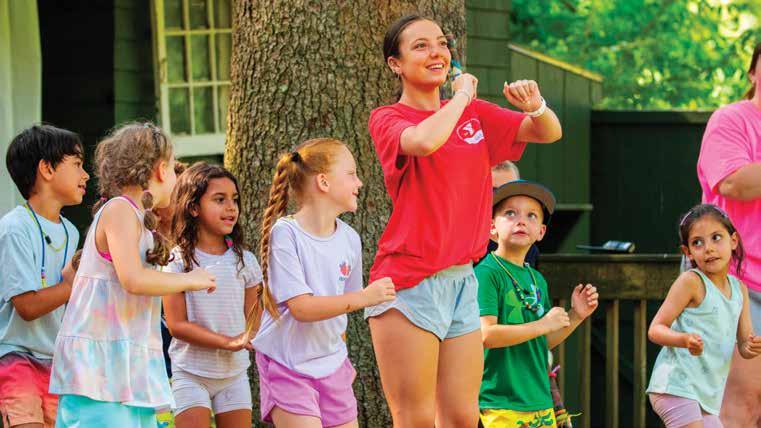
When the school year wraps up, parents everywhere face the same summer puzzle: how to give kids a break without letting the days dissolve into endless screen time and snack negotiations. Enter day camp: the magical middle ground where long days turn into muddy sneakers, art projects, inside jokes, and stories.
Day camp is where kids get to move, make, explore, and try things they wouldn’t otherwise. It’s where friendships deepen, confidence sneaks up on them, and days feel full in the best possible way.
For parents, it’s the peace of mind that comes from knowing your child is engaged, cared for, and actually thriving, And right in your neighborhood or near, the options are as dynamic as the city itself. There truly is something for every kid whether it is an indoor or outdoor day camp- these programs keep curiosity sharp, all while paving the way for an unforgettable summer.
Camp Combe Summer Day Camp
684 Peekskill Hollow Road, Putnam Valley 914-949-8030, Scasey@ymca-cnw.org ymca-cnw.org/camp-combe
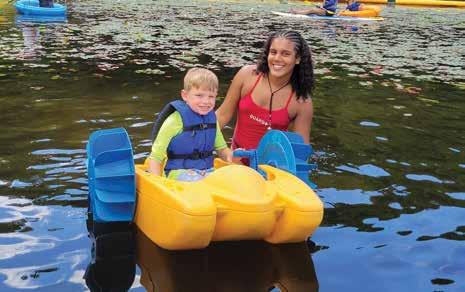
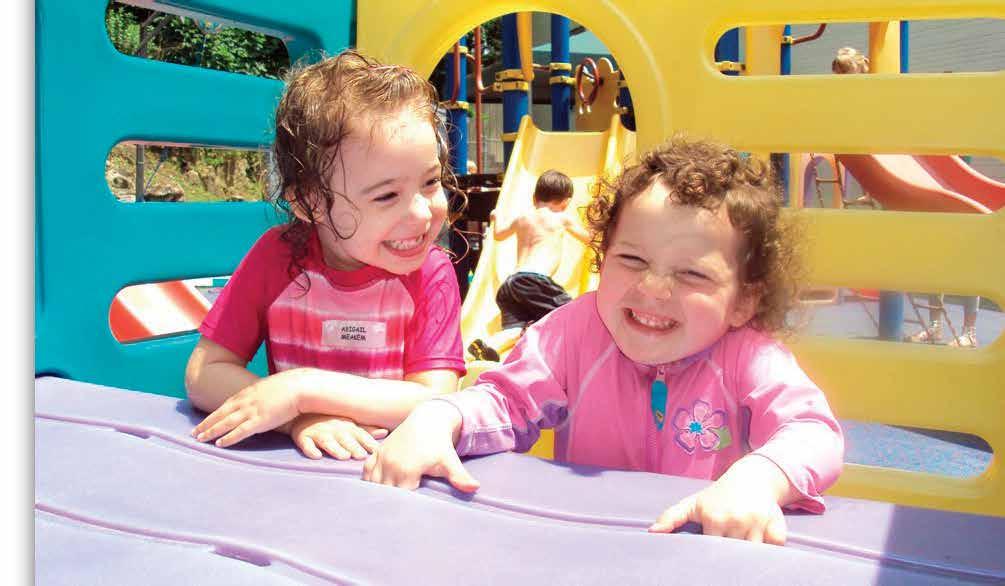
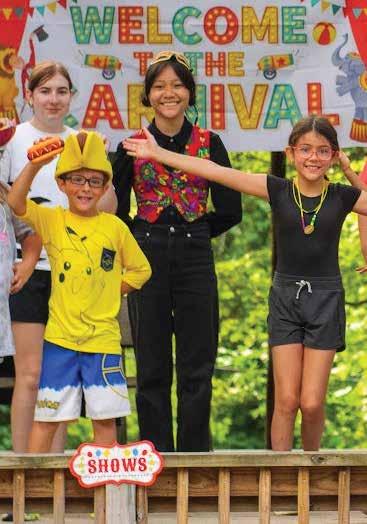
At YMCA Camp Combe, summer is where confidence grows, friendships form, and kids shine. Located on spacious, wooded grounds, YMCA Camp Combe offers a classic day camp experience for children ages 4–14, filled with energy, creativity, and purpose. Campers enjoy swimming, sports, arts & crafts, outdoor exploration, and leadership opportunities, all guided by caring, well-trained staff who know every child by name. Families can choose 3- or 5-day-per-week registration options, making camp flexible and accessible. Rooted in the YMCA values of Caring, Honesty, Respect, and Responsibility, YMCA Camp Combe is more than a summer program—it’s a community where every child belongs. Scholarships are available, ensuring all families have the opportunity to experience a summer that truly stands out.
Acres of Adventure Summer Camp at Ann & Andy’s 2170 Saw Mill River Road, Elmsford 914-592-3027
annandandychildcare.com/summer-camp
Acres of Adventure Summer Camp at Ann & Andy’s offers a flexible one- to nine-week summer experience designed for children ages 3 months to 14 years. With a strong emphasis on outdoor play and exploration, campers enjoy access to more than 25 exciting play areas across the campus, including a soccer field, two gaga pits, a basketball court, two waterslides, bounce houses, and a zipline. Throughout the summer, children spend ample time outside their classrooms participating in fun, age-appropriate activities that encourage movement, creativity, and discovery. The camp offers customized schedules, individualized attention, and daily hot lunches—including Barbecue Fridays. For comfort on warm days, all buildings are fully air-conditioned, ensuring a safe and enjoyable summer for every camper.
Challenge Camp
Iona University, 715 North Avenue, New Rochelle, NY 914-779-6024, info@challengecamps.com challengecamps.com
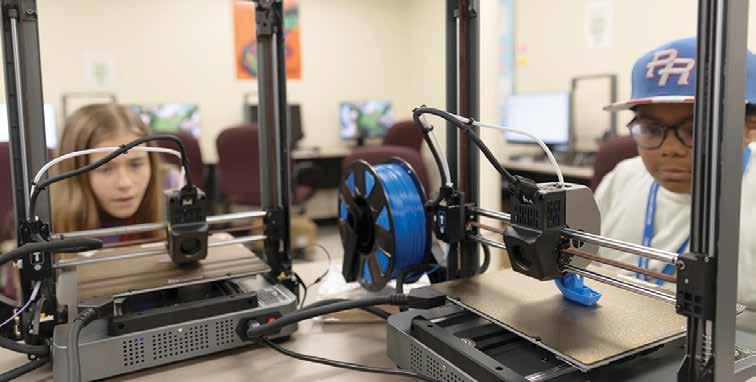
Challenge Camp is an ACA-accredited day camp offering STEM & Arts enrichment for curious, creative children ages 4–15 at Iona University in New Rochelle, NY. The Challenge Camp advantage is that families customize each camper’s schedule based on their interests. Campers follow their courses for an entire session, allowing for deeper learning and meaningful project-based exploration. Offering over 150 electives, Challenge has an extraordinary variety of hands-on classes, including 3D Printing, Art, Chess, Coding, Cooking, Drones, Dungeons & Dragons, Escape Room, Esports, Fashion, Filmmaking, Game Design, LEGO, Magic, Minecraft, Photography, Robotics, Rocketry, Theater, and more! Daily sports options, including on-site swimming, create an experience that challenges both mind and body. Hot lunch/snack included. Transportation, early drop-off/extended day options available.
Destination Science is the fun science day camp for curious kids ages 5 to 11. Encourage the love of science, spark creativity, and year-round hands-on learning with Destination Science camp. 2026 introduces 3 new camp themes: Robot Olympic Challenge, Movie Maker STEM Lab, and Jedi Engineering Camp. Each week brings 15 STEM activities, including make-and-take projects. That is three exciting science stations per day, plus games, creative challenges, silly songs, and all the friendship and fun of camp. Destination Science’s energetic, professional educators make learning fun. Locations in Nassau, Suffolk, and Westchester. Early bird savings!
Hudson Country Montessori Summer Camp 340 Quaker Ridge Road, New Rochelle 914-636-6202, info@hudsoncountry.org hudsoncountry.org
ESF Summer Camps
Riverdale Country School, 5250 Fieldston Road, Bronx, NY Sacred Heart Greenwich, 1177 King Street, Greenwich, CT 1-800-529-2267, admissions@esfcamps.com esfcamps.com
ESF Summer Camps brings children of all ages good old-fashioned fun, hands-on learning, time-honored traditions, and MAXJOY, offering camps for children rising from preschool through 10th grade. Their thoughtfully designed programs engage, challenge, and inspire campers through Traditional Day Camp, Multi-Sports Camp, Tennis Camp, and Specialty STEAM Camps, all in a safe, supportive, and fun-filled environment. Traditional Day Camp features ageappropriate activities including swim instruction, sports, creative arts, and outdoor play. Multi-Sports and Tennis Camps welcome athletes of all abilities, building skills, confidence, and teamwork. Specialty STEAM Camps spark curiosity, creativity, and critical thinking. Each day balances exploration, play, and personal growth, helping campers build friendships and memories at Riverdale Country School in the Bronx, NY, and Sacred Heart Greenwich in Greenwich, CT.
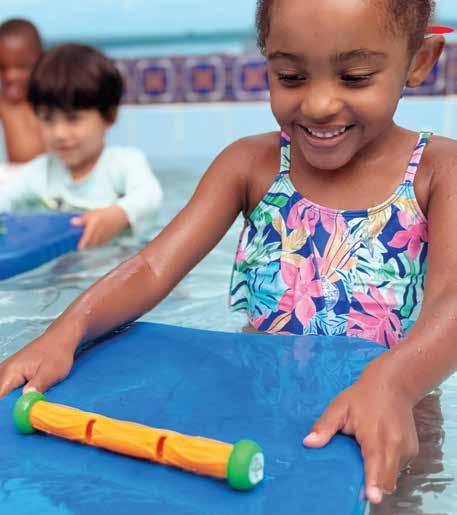
Hudson Country Montessori Summer Camp has created joyful, meaningful summer experiences for children for over 50 years. Designed as a thoughtfully structured eightweek program, camp serves children ages 18 months through 12 years and provides the time, consistency, and community children need to build confidence, friendships, and independence. Campers enjoy full, active days on Hudson Country’s spacious three-acre campus, balancing indoor and outdoor experiences including swimming in the on-site swimming pool, sports, creative arts, music and movement, hands-on STEM exploration, and special field trips for older campers. Guided by caring, experienced counselors—many of whom teach during the school year—children feel known, supported, and excited to return each day. Full-day programming and extended care schedules available.
Katonah Art Center KAC/KISCO
40-2 Radio Circle Drive, Mount Kisco
914-232-4843
katonahartcenter.com
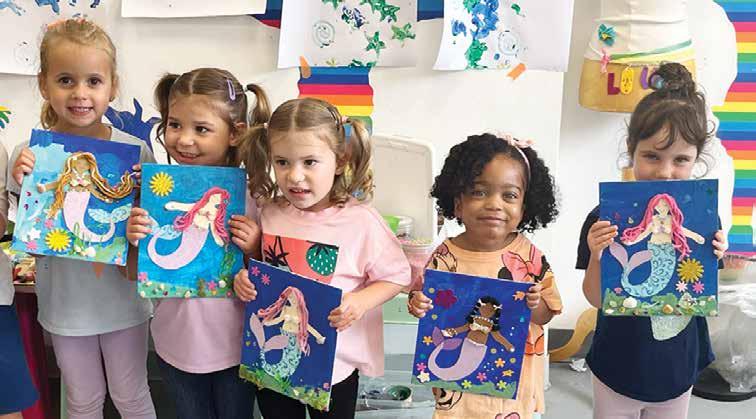
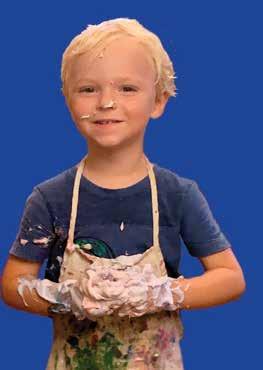
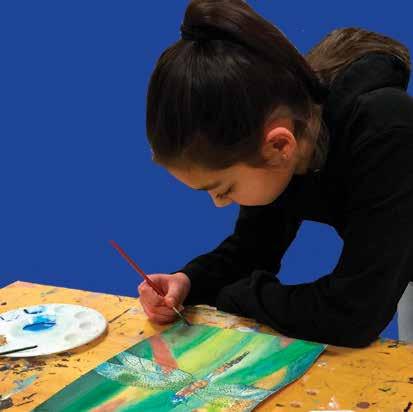
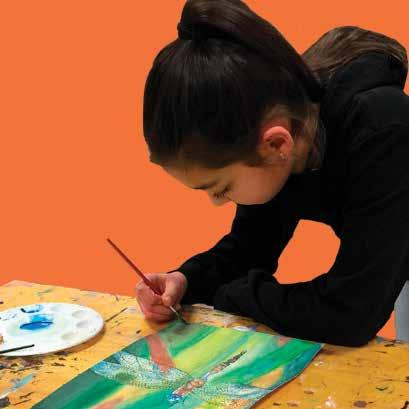
The Katonah Art Center offers one-week summer camps for children ages 3.5 through Grade 12, with flexible morning, afternoon, and fullday options to suit busy families. The Art and Imagination camp for younger children (ages 3.5–5) blends arts and crafts, free art play, and age-appropriate exploration, with inspiring creative themes each week. For kids in grades 1–5, camp options include Jewelry, Painting, Pottery, Animation, 3D Printing, and more, encouraging experimentation across a variety of mediums. Teen Intensives for grades 6 and up focus on specialized topics such as Pottery, Outdoor Painting, Fused Glass, Mural Painting, and 3D Printing. Katonah Art Center’s professional teaching artists create a warm, supportive, and inspiring environment for creative expression.
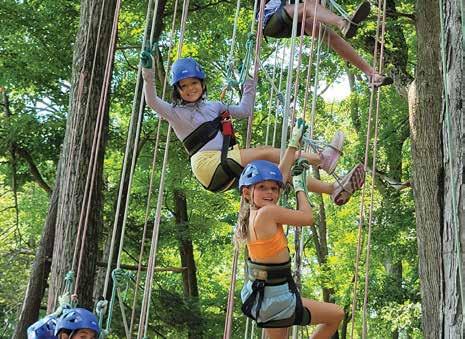
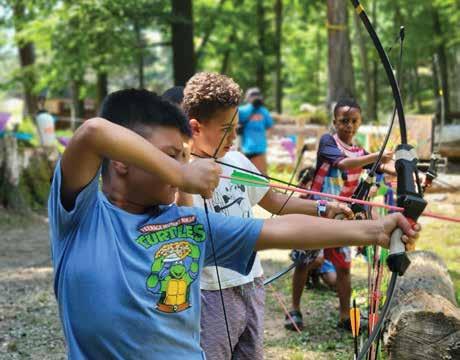
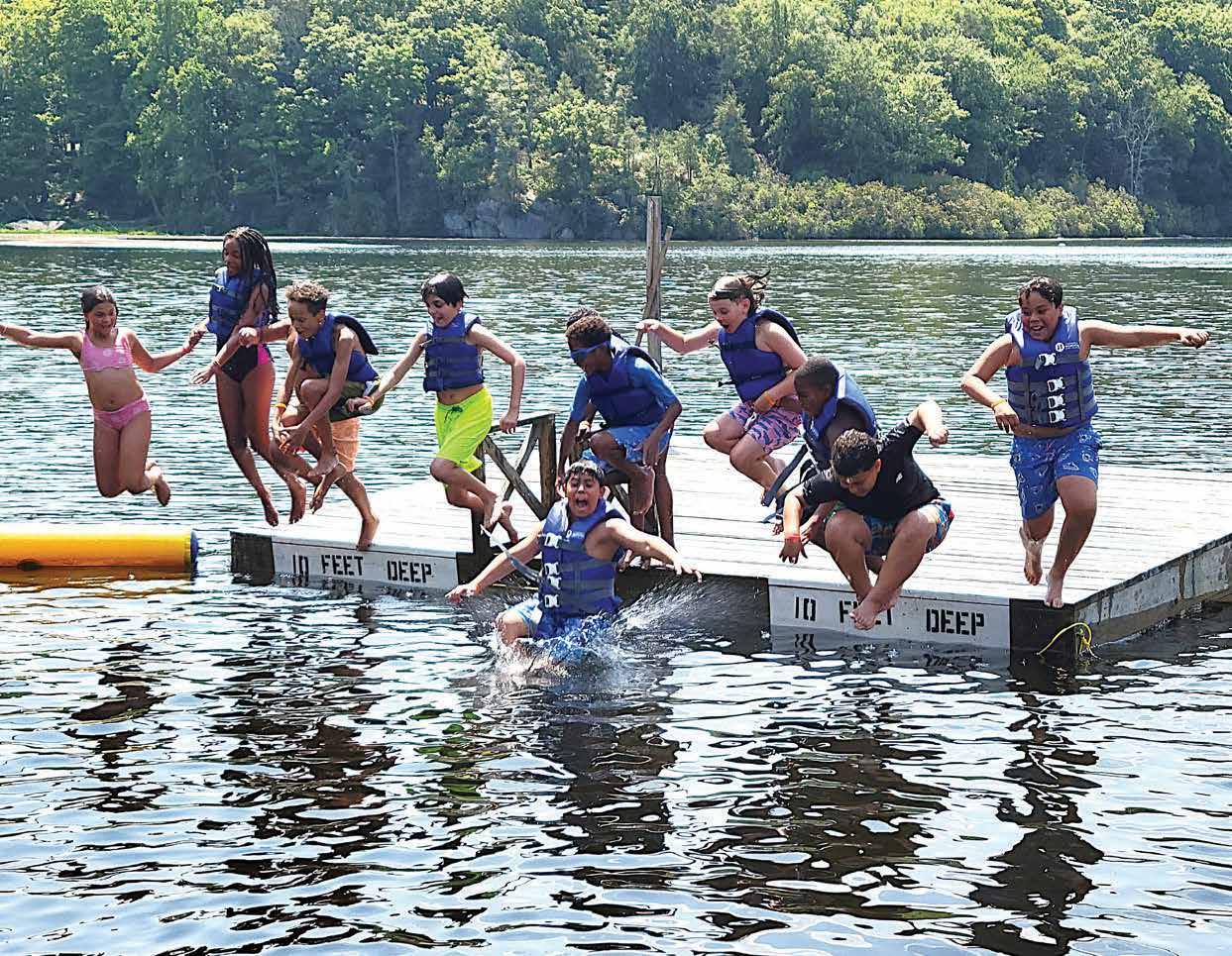
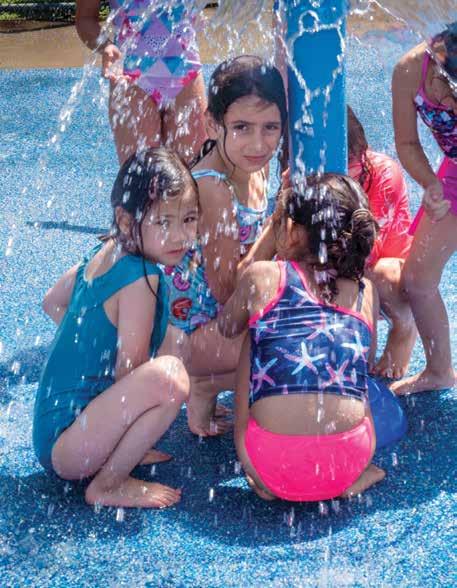
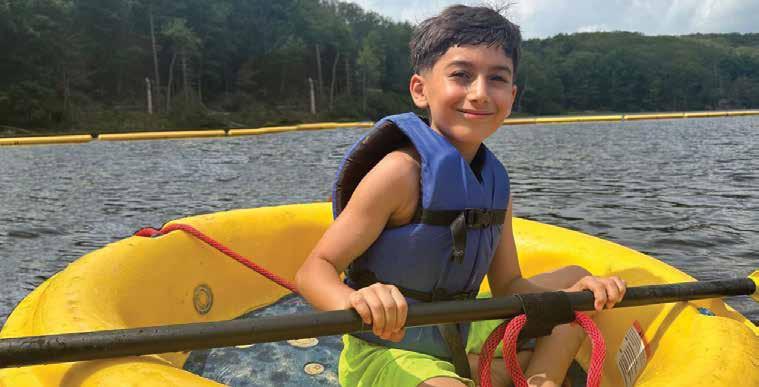
For over 80 years, Mosholu Day Camp has been providing affordable, quality camping for children from the Bronx, Manhattan, Rockland, and Westchester. Nestled on beautiful Lake Cohasset in Harriman State Park, the camp offers a safe environment for kids to develop and enjoy nature, participating in unforgettable outdoor activities. Mosholu focuses on traditional experiences that promote lifelong friendships. With expert staff and top-notch facilities, the camp offers swimming, arts, sports, and special programs, along with a ropes course, zip line, and water park. Campers gain independence while being supervised by caring counselors. Mosholu is a “funtastic” place for kids to be creative, play sports, and have a positive experience. Mosholu Day Camp offers bus service (included) and provides an unbeatable camp experience.
World Cup Nursery School Summer Camp
160 Joan Corwin Way, Chappaqua 914-238-9267
worldcupnurseryschool.com
For more than 30 years, World Cup Nursery School & Kindergarten has been Westchester County’s go-to summer camp for little campers—and it’s easy to see why. Since 1993, families have trusted World Cup to provide a safe, nurturing, and joy-filled environment where young children thrive. Each day is packed with age-appropriate fun, blending active play, creative projects, and plenty of smiles. Their exciting weekly themes celebrate the magic of summer and come to life with special visitors like nature centers, magicians, and beloved musician Kenny Green. We offer Prep Camp for 2-year-olds with caregivers and Kids Camp for ages 2–6, featuring art, games, water play, and weekly in-house field trips. It’s the perfect first camp experience—where summer memories begin!
YMCA
Combe
SUMMER
3-DAY-A-WEEK
Seasoned
Tons
Indoor
Two
In-house
Op�onal
Mini
Large,
Trending
Parenting Styles
Parents and experts weigh in on what parenting styles work best for them
BY NÁOSHA GREGG AND NYF
We all know there’s no perfect parenting guide. Raising a small human is no easy feat, and there will be many questions along the way. While there are several tips and tricks when it comes to parenting, from picking the nursery color to choosing the right school, one thing remains a bit of a puzzle: parenting styles.
What Are Parenting Styles?
Parenting styles first emerged in the 1960s, when psychologist Diana Baumrind identified three main parenting styles: authoritarian, authoritative, and permissive. The idea was to look at the different ways parents raise their kids, helping researchers understand how these styles affect things like discipline, warmth, communication, and expectations. The goal was to figure out which parenting strategies lead to the best outcomes for children.
“Balancing elements such as control, warmth, autonomy, and communication role
models and illustrates what parenting can look like from several different lenses, allowing for adaptation when needed,” says Courtney Hulse, a NY-based Licensed Marriage and Family Therapist. “Understanding the benefits of various parenting styles can help parents choose the best approach for their child’s individual temperament, needs, and developmental stage.”
The conversation around parenting styles recently resurfaced on TikTok when Lighthouse Parenting began trending. This approach highlights being a stable guide — like a lighthouse — while giving kids space to grow. Many parents shared positive experiences, inspiring a wave of new ideas and practices. Below, we explore three currently trending styles: lighthouse, horizontal, and intensive.
Lighthouse Parenting
Vanessa Gordon, CEO & Publisher of East End Taste, identifies strongly with lighthouse parenting. This style provides a more open
Other parenting styles you may hear about
While lighthouse, horizontal, and intensive parenting are getting a lot of attention, there are several other styles influencing families today:
Gentle Parenting: A hugely popular approach that many parents see on social or hear from their mom friends is gentle parenting. Gentle Parenting focuses on emotional regulation, connection, and modeling calm behavior. It’s often misunderstood as permissive, but it’s really about firm boundaries delivered with empathy.
Conscious Parenting: Developed
by psychologist Dr. Shefali, conscious parenting encourages parents to examine their own emotional patterns (yup, not super easy) so they don’t project stress or expectations onto their kids. It prioritizes selfawareness and intentional responses over discipline. This way of parenting has a learning curve since it involves check-ins on your end, but it feels like a win-win for all if it’s one you are comfortable trying.
Free-Range (or Independence) Parenting: This modern approach encourages autonomy, independent
approach, allowing children to explore freely while the parent acts as a steady anchor they can return to for guidance.
Gordon has seen meaningful growth in her children’s independence, confidence, and communication skills.
“In conversations with others, I have noticed that they are not afraid to ask questions, make rebuttals, or express their own thoughts and opinions,” she explains. “I see my daughter picking up a book independently… My son does jiu-jitsu, and I admire that he goes early to help the younger students.”
Although the vibe is more relaxed, Gordon still implements rules — minimal screens, no cell phone access, and intentional limits on technology.
According to a survey conducted by Little Sleepies, over 70 percent of mothers compare themselves to other moms on social media, and 18 percent say social platforms negatively influence their parenting style.
“To avoid that pressure, I stay off TikTok
play, and age-appropriate freedom. It’s a counterbalance to today’s structured, high-pressure childhoods and helps build resilience and confidence.
Slow Parenting: A response to overscheduling and burnout, slow parenting focuses on simplifying routines, reducing pressure, and giving kids time to explore, play, and develop at a natural pace.
Montessori-Inspired Parenting: Rooted in the Montessori classroom philosophy, parents bring these principles home through child-led learning, practical life skills, simple spaces, and lots of independence. It’s extremely popular on social media.
and limit my own social media use,” she says. “I shut off the noise and focus on my children’s unique needs, values, and family goals while trusting my instincts.”
She credits her grandfather’s no-nonsense approach for shaping how she parents today. Though she offers freedom, she also teaches responsibility and consequences.
“I remind my children of their routine when they come home… If they need help, they must ask, but first try the problem on their own. I’m not here to rescue them.”
Horizontal Parenting
Perhaps the most controversial style, horizontal parenting focuses on the wellbeing of the parent while still supporting the child’s need for engagement and connection. Rich Kingly, CEO of Driveway King, blends lighthouse and horizontal parenting.
“My own upbringing was a mix of strict rules and a lot of love, but I wanted a balance where my kids felt empowered to speak up and learn from mistakes,” he explains.
Horizontal parenting is often dismissed
as “lazy,” but parents who practice it say it’s simply a low-energy, low-pressure way to bond with kids — especially during overwhelming seasons of life.
A 2017 Good to Know survey of 900 women found that 78 percent felt guilt around their parenting. With so many conflicting demands, horizontal parenting can feel like a relief.
Alexia McKay, a mom of two under two, sees it this way.
“I wasn’t necessarily seeking a parenting style,” she says. “It’s just what works for our current day-to-day.”
Her older daughter plays independently while she tends to her one-year-old — and that independence has benefits. Research from the National Institutes of Health shows that curiosity-driven independence strengthens attention, exploration, and memory.
McKay also emphasizes that today’s parents are navigating an entirely different world than previous generations. “We take what works for our family,” she says. “What worked for our parents doesn’t always fit today’s reality.”
Intensive Parenting
A 2018 Cornell survey found that about 75 percent of parents rated intensive parenting scenarios as “very good” or “excellent.”
Intensive parenting prioritizes children’s development above all else — often resulting in highly hands-on involvement in academics, activities, and social settings.
But experts, including Hulse, caution that it can be harmful.
“Intensive parenting may promote increased pressure on a child,” she says. “Children may feel overburdened, stressed, or develop anxiety, perfectionism, or burnout. The pressure to succeed in every area can create emotional and mental strain.”
Decide the Style That Works Best for You
Determining a parenting style can influence everything from self-esteem to emotional regulation to how children build healthy relationships.
“Our experiences, past and present, dictate how we relate to ourselves and the world,” Hulse explains. “A child’s perceived relationship with their parent affects both immediate and future outcomes.”
But as McKay reminds us, there is no onesize-fits-all solution:
“What works for one household may not work for yours. There’s no right or wrong way to parent. Do what works best for your family and create your own tradition.”
calendar
BY SHARA LEVINE
WESTCHESTER
Winter/Spring Music fun for Babies, Toddlers & Preschooler with musician
Kurt Gallagher
WHEN: Thursdays, 10 – 11 am through May 14
WHERE: Port Chester-Rye Brook Public Library, 1 Haseco Ave., Port Chester
AGES: 4 and younger
WHAT: Little ones will have a blast moving, giggling & making music as they sing, stomp & clap along to Kurt’s interactive songs.
WANT TO GO?: Free. portchester-ryebrooklibrary. org
Mommy & Me: Animals & Nature
WHEN: Fridays, 10 – 11 am through Feb. 27
WHERE: Westmoreland Sanctuary, 260 Chestnut Ridge Road, Mount Kisco
AGES: 4 and under WHAT: Meet a fascinating variety of animals and enjoy hands-on opportunities to interact with different creatures, accompanied by a related craft or fun activity.
WANT TO GO?: $10 per child. (914) 666–8448, westmorelandsanctuary.org
Teatown Hudson River EagleFest® 2026
WHEN: Saturday, Feb. 7, 9 am – 4 pm
WHERE: Croton Point Park, 1 Croton Point Ave., Croton-onHudson
AGES: All
WHAT: This all-day celebration features thrilling live bird shows, bird walks, educational displays and exhibits, crafts and games for children, food trucks, and more!
WANT TO GO?: $23 – $40. teatown.org
Kindness Weekend
WHEN: Feb. 7 – 8, Saturday and Sunday, 9:30 am – 5:30 pm
WHAT: Spread joy, positivity, and love with a STEAM spin and learn how small acts of kindness can have a big impact.
WANT TO GO?: Included with admission: $16. (914) 421–5050, discoverwcm.org
Puppet Show, The Lion and the Mouse (and other stories)
WHERE: Mount Pleasant Public Library, 350 Bedford Road, Pleasantville
AGES: 3 – 7
WHAT: This highly interactive puppet show double feature teaches children about forgiveness, the power of kindness, and good
sportsmanship.
WANT TO GO?: Free. (914) 769–0548, mountpleasantlibrary.org
Westchester 2026
Chinese New Year Celebration
WHEN: Saturday, Feb. 7, 1 – 6 pm
WHERE: The Performing Arts Center, Purchase College, 735 Anderson Hill Road, Purchase AGES: 3 and up
WHAT: Celebrate the Year of the Horse with traditional cultural performances, artistic showcases, authentic food and festive treats, interactive games and family activities.
WANT TO GO?: $35; $30 ages 65 and older and children 2–12. cny2026.eventbrite.com
Curious George: The Golden Meatball
WHEN: Saturday, Feb. 7, 1 pm
WHERE: Tarrytown Music Hall, 13 Main St., Tarrytown AGES: 8 and younger
WHAT: Join Curious George, the inquisitive, engaging monkey-star of books, movies and the award-winning PBS television show in a brand new musical adventure.
WANT TO GO?: $43.50; $38.50 child. (914) 631–3390, tarrytownmusichall.org
Family Day: Lunar New Year Celebration
WHEN: Sunday, Feb. 8, noon – 3 pm
WHERE: Katonah Museum of Art, 134 Jay St., Katonah
AGES: All
WHAT: Mark the Lunar New Year with a day of creativity and cultural tradition including a Lion Dance, performances by the Li Garden Dance Company, and themed art projects.
WANT TO GO?: $15; $10 child; $9 senior; free for
Teatown Hudson River EagleFest
Gymnastics & Ninja Obstacle
children younger than 2. katonahmuseum.org
The All-New Wizard of Oz On Ice
WHEN: Feb. 8, 3 – 5 pm
WHERE: Paramount Hudson Valley Theater, 1008 Brown Street, Peekskill
AGES: All
WHAT: This reimagined production promises to dazzle audiences with stunning choreography, state-of-the-art special effects, and vibrant costumes bringing the Land of Oz to life.
WANT TO GO?: $37-$52; $20 youth. (914) 739–0039, paramounthudsonvalley.com
Family
Maple Tapping
WHEN: Feb. 14 – 21, Saturdays, 10 am – 3 pm
WHERE: Lenoir Preserve, 19 Dudley St., Yonkers
AGES: All
WHAT: This sugaring season, learn how maple trees are tapped at the preserve.
WANT TO GO?: $10. eventbrite. com
Kids and Kandinsky: Valentine’s Day Painting Workshop
WHEN: Saturday, Feb. 14, 11 am – noon
WHERE: New Rochelle Public Library, 1 Library Plaza, New Rochelle
AGES: 5 – 12
WHAT: Kids will explore the world of Wassily Kandinsky then create their own original painting bursting with Valentine’s colors and imagination!
WANT TO GO?: Free. (914) 632–7878, nrpl.org
The Fox and the Hound
WHEN: Saturday, Feb. 14, 11 am – 12:30 pm
WHERE: Jacob Burns Film Center, 364 Manville Road, Pleasantville
AGES: All
WHAT: See this howling good classic on the big screen!
WANT TO GO?: $5. burnsfilmcenter.org
Creativity Live! The Art
Show
WHEN: Saturday, Feb. 14, noon
WHERE: Chappaqua
Performing Arts Center, 480 N Bedford Road, Chappaqua
AGES: All
WHAT: Join “Rembrandt” Rob and the crew at Imagine Arts as they inspire children to discover and embrace their own creative potential while learning from groundbreaking creative minds.
WANT TO GO?: $24; $20 resident. chappaquapac.org
Animal Tracks
WHEN: Sunday, Feb. 15, 10 –11:30 am
WHERE: Muscoot Farm, 51 Route 100, Katonah
AGES: All
WHAT: Search for different animal tracks on the hiking trails and take home a clay imprint of your favorite animal footprint!
WANT TO GO?: Free. muscootfarm.org
President’s Day: George Washington at Valley
Forge
WHEN: Monday, Feb. 16, 1 – 2 pm
WHERE: St. Paul’s Church N.H.S. 897 S. Columbus Ave., Mt. Vernon
AGES: All
WHAT: Commemorate Presidents’ Day with a presentation by St. Paul’s living historian Michael Grillo on George Washington at Valley Forge.
WHAT: Bring your knowledge of the Pokémon TCG to compete against other Pokémon players for your chance to win prizes!
WANT TO GO?: Free. ossininglibrary.org
Clever Critters & Company
WHEN: Saturday, Feb. 28, 1 pm
WHERE: Tarrytown Music Hall, 13 Main St., Tarrytown
AGES: All
WHAT: These pups (and some guest chickens!) will keep you entertained as they dance,
jump through hoops and leap for flying frisbees!
WANT TO GO?: $43; $35 child. (914) 631–3390, tarrytownmusichall.org
NYC
Bronx Charter School Fair & Kids Activity Expo
WHEN: Saturday, Feb. 28, 1 – 4 pm
WHERE: Gauchos Gym, 478 Gerard Ave., Mott Haven
AGES: All
WHAT: Meet charter school reps and learn about afterschool programs, and family resources while kids enjoy games, activities, and giveaways.
WANT TO GO?: Free
Queens Family Ultimate Camp Fair & Activity Expo
WHEN: Saturday, Feb. 7, noon – 3 pm
WHERE: Renew Queens LIC, 10-15 46th Road, Long Island City
AGES: All
WHAT: Queens Families can explore a variety of Summer Camps and Programs for 2026 and participate in fun activities for all ages.
WANT TO GO?: Free. newyorkfamily.com
Mommy & Me: Animals & Nature at Westmoreland Sanctuary
Family Day: Lunar New Year Celebration at Katonah Museum of Art
Help for a safe, secure home
You may qualify for free, local support to keep your home safe, healthy, and secure.
The Hudson Valley Social Care Network connects families on Medicaid to housing resources for better health and stability, like mold elimination, help with rent or utility bills, and other essential needs.
Call 211 today and ask about the Social Care Network.