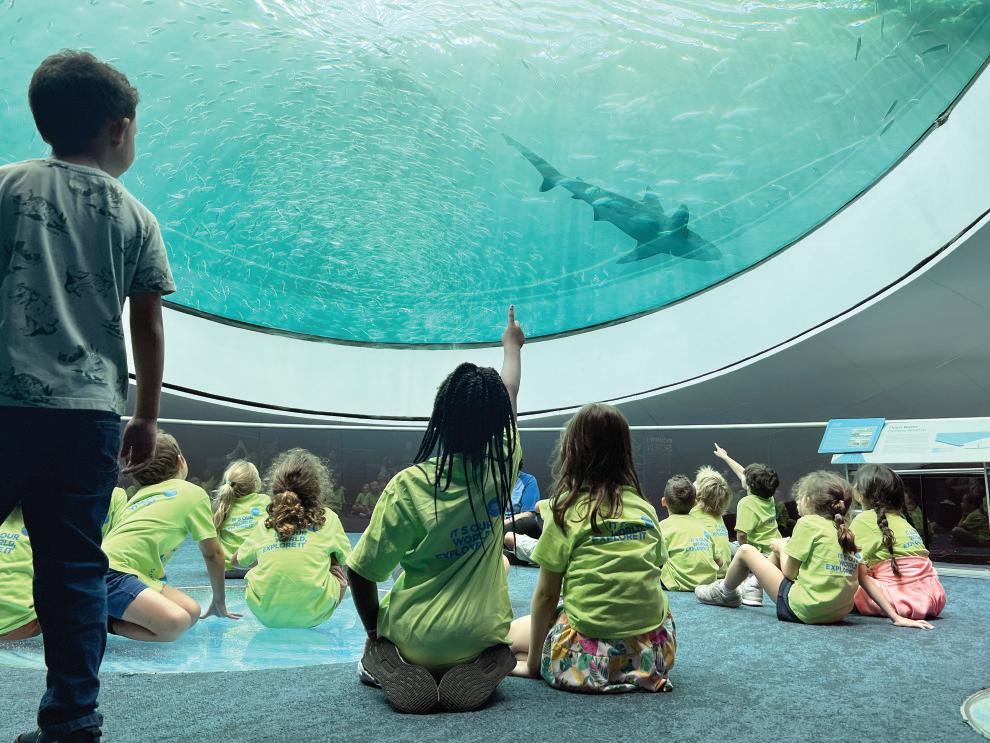
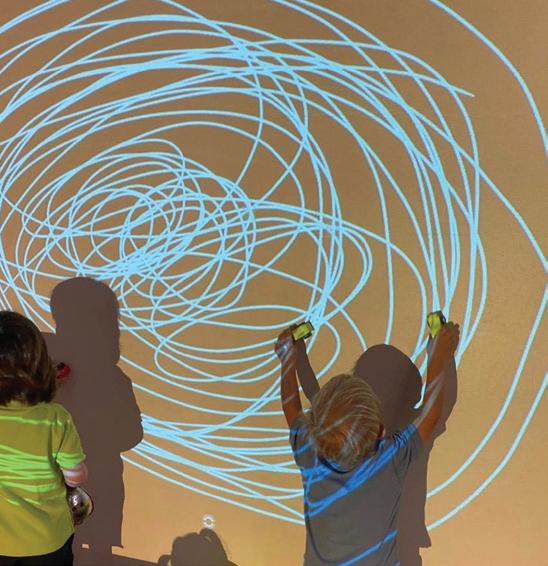
Frost Science Camp in Downtown Miami for Ages 5-15
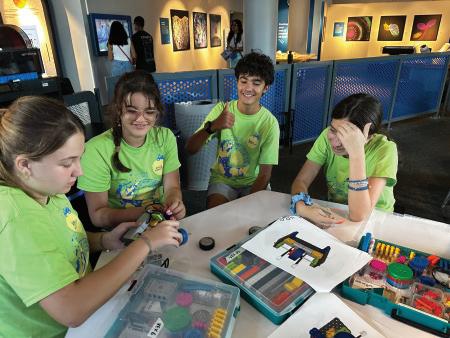
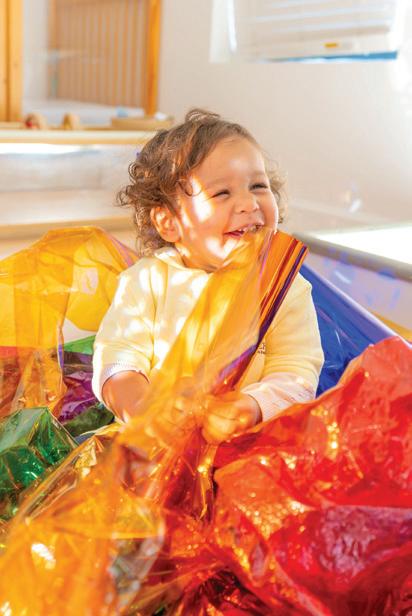
Camp Curiosity in South Dade for Ages 5-9
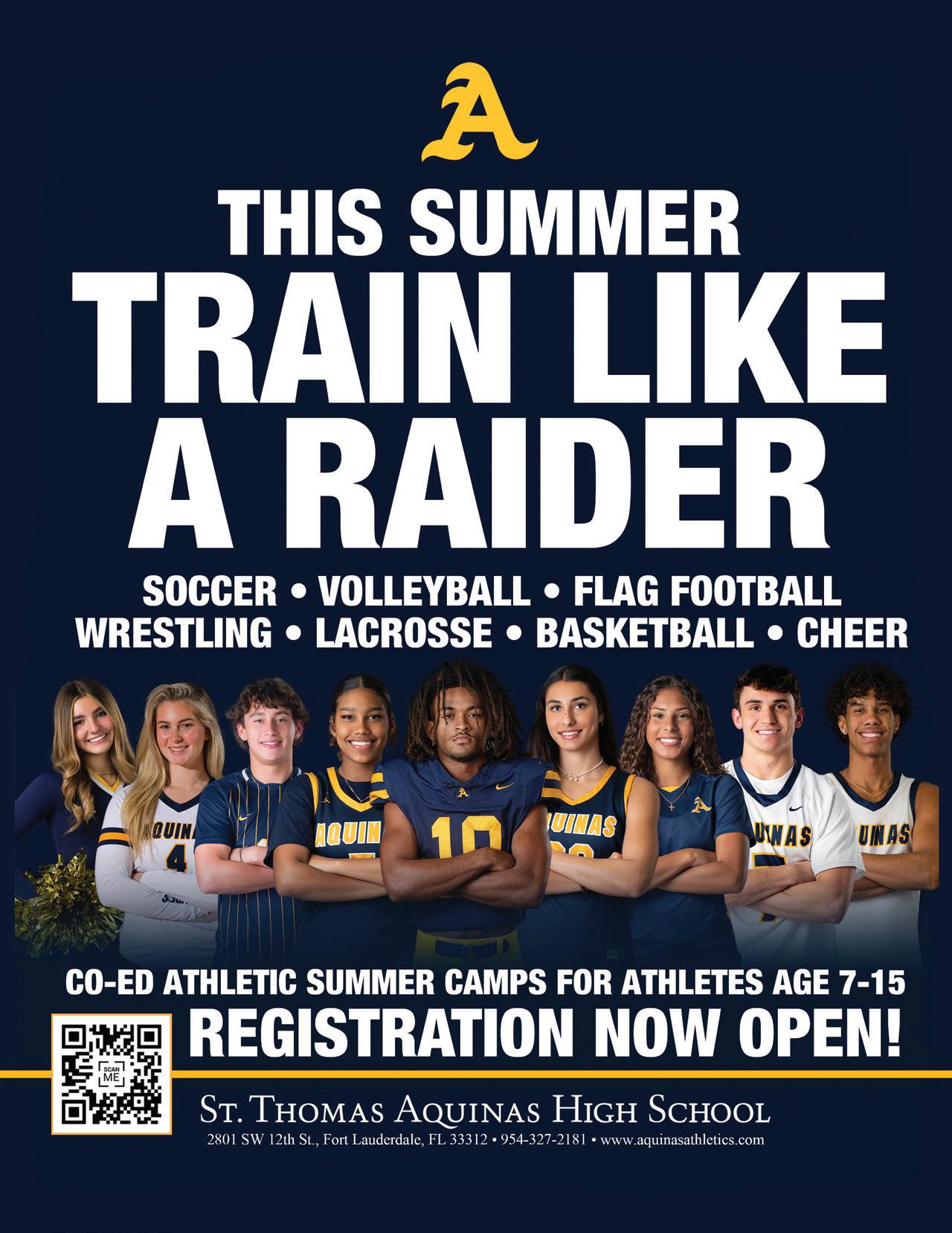
St. Thomas Aquinas
keeps doubles
The Summer Institute offers rigorous, faculty-led coursework for students looking to get ahead, while Raider athletic camps give young athletes access to the coaching staff and facilities that have defined one of Florida’s most decorated
FAMILY BOOK CLUB
Every spring, as the school year wraps up, families get an opportunity to reflect on what the next season can offer their child. Whether your child already has a clear interest they want to pursue, is still figuring out what excites them, or simply benefits from staying engaged over the summer, there are thoughtful, well-designed programs in our community that can meet them where they are.
In this Summer Camp and Enrichment Guide, we highlight the many creative ways camps and programs across South Florida turn summer into something meaningful and lasting.
Here’s to a summer that builds confidence, sparks lifelong friendships, and gives your children experiences that shape who they are becoming. These days will pass quickly, but the growth, memories, and lessons learned have a way of lasting far beyond the summer months themselves.
Summer works best when it balances adventure and downtime — and kids need both more than we think.
The bell rings and kids spill out of classrooms, a flood of backpacks, sneakers squeaking, and pure joy. Ah, the last day of school. After months of early alarms, packed schedules, and nightly reading logs, the routine finally gives way to late mornings and afternoons by the pool. For many parents, that excitement comes with a practical question: how can we keep summer from undoing a year’s worth of learning at home?
The good news is that summer learning doesn’t have to look like school. In fact, it shouldn’t. Summer offers something the school year often cannot: time. Time for curiosity, exploration, and experiences that don’t fit neatly into a classroom schedule. Without the pressure of grades and deadlines, children can explore ideas at their own pace and learn in ways that feel more relaxed. They ask more questions, try new things, and follow their curiosity simply because they want to.
That might feel counterintuitive, especially when parents hear the ominous buzzword “summer slide,” when students can lose some of the academic progress they made during the year. It’s a fair concern, and one that should find a balance with summer programs that prioritize play as well as some un -
structured down time. Because summer isn’t meant to be a continuation of the school year. It provides a different kind of learning environment entirely.
Of course, summer looks different for every family. Some children spend their days at camps, others stay home with family, and some travel or visit relatives. There isn’t one “right” way to approach summer learning. You just have to find what works for your family.
Students spend months juggling classes, homework, tests, activities, and the quiet pressure of being assessed all the time. By June, their brains are tired and ready for a break. A real one. But rest isn’t the opposite of learning—it’s an essential part of it.
It’s similar to building muscle. When you lift weights, your muscles don’t get stronger during the workout. Growth happens during recovery, when your body repairs those microtears and rebuilds the fibers thicker and stronger. Without rest days, your muscles stay tired and sore, don’t have enough time to repair, and eventually stop getting stronger. Kids’ brains work the same way. After months of constant input, they need time to process, connect ideas, and let it all settle.
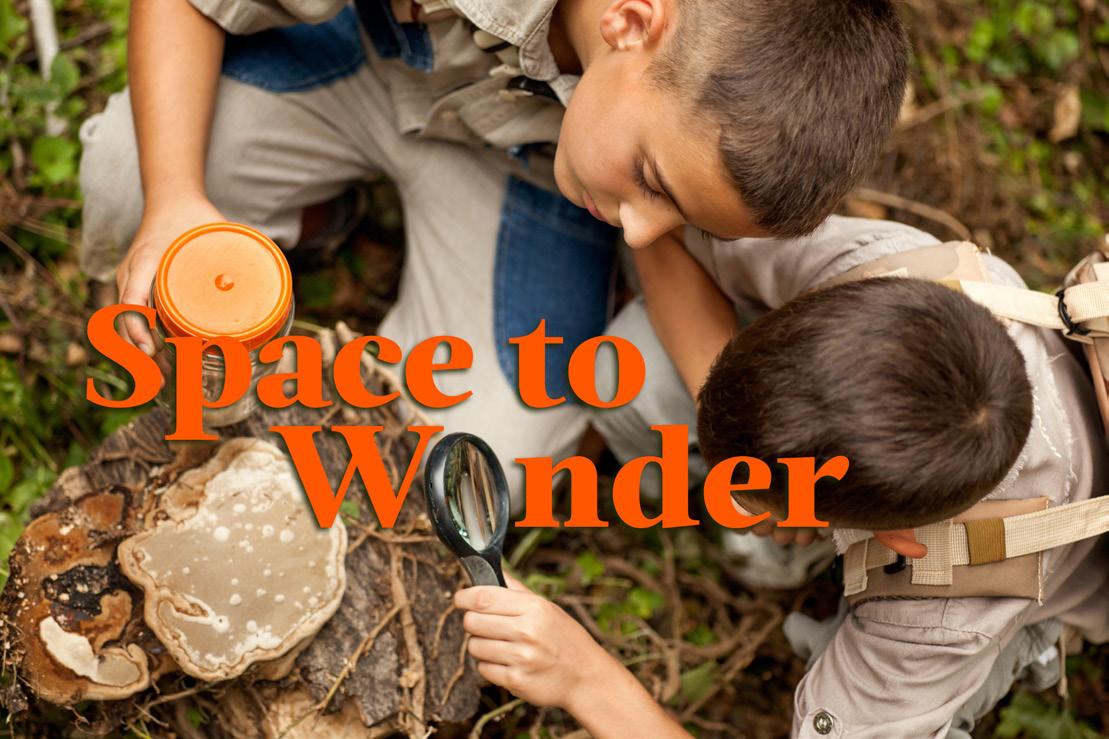
When children have the space to slow down, their natural curiosity begins to resurface. They start asking questions—about bugs, space, baking, how bikes work, why dogs tilt their heads, and whether it’s technically possible to build a backyard zipline. It may look like downtime from the outside, but that exploration is often where the best learning happens.
Learning happens everywhere and all at once.
We usually picture learning as something that happens at a desk, but kids are learning all the time. Take a family game night. A round of Monopoly turns kids into tiny real estate investors debating whether buying Boardwalk is a brilliant move or a financial disaster, while learning how to negotiate and improvise when their plans fall apart. Games like Scrabble sneak in spelling and vocabulary, while a match of chess teaches strategy, patience, and the humbling realization that a younger sibling might be thinking five moves ahead.
The kitchen is another surprisingly great classroom. Cooking means measuring ingredients, doubling recipes, and figuring out why the pancakes suddenly look like abstract art. Kids practice math, problem-solving, and creativity. Plus they get to eat the results, which is honestly better motivation than most homework. Even travel can be a learning experience. Visiting a historic town or landmark turns history from a concept in a textbook into something tangible that makes the past feel more alive and interesting.
Sometimes learning is even simpler than that. A walk around the neighborhood can turn into a debate about what kind of bird just flew by, a mini science lesson about plants, or a very serious mission to build the world’s greatest stick fort. None of this looks like traditional schoolwork, but that’s the point. When learning shows up in everyday moments, kids build curiosity, confidence, and problem-solving skills without realizing it.
And that learning doesn’t just happen through activities, it happens through other people. Whether they’re making new friends or arguing about the
rules of a pool game, negotiating whose turn it is on the swings, or trying to get four people to agree on literally anything, kids are constantly practicing the art of getting along. They’re learning how to communicate, compromise, and read a room—skills that are just as important as anything taught in a classroom.
“When learning shows up in everyday moments, kids build curiosity, confidence, and problem-solving skills without realizing it.”
A kid who spends an afternoon keeping a chaotic game of Marco Polo from completely falling apart is learning how to lead, adapt, and problem-solve. They’re just too busy having fun to notice. And underneath all of it, whether kids are building forts, playing games, or diving into a new interest, is curiosity.
Curiosity is one of the strongest motivators for learning. When children are interested in a topic, learning becomes a process of discovery rather than an obligation. This type of learning is called intrinsic motivation, which means the motivation comes from personal interest rather than external rewards like grades.
For example, a child who becomes interested in space may begin reading books about planets, watching documentaries, or building model rockets. Another child who enjoys animals may spend time observing wildlife, researching different species, or visiting a zoo.
Curiosity-driven learning often leads to deeper understanding because children are actively engaged in the process. They are exploring ideas and making connections. Many museums, zoos, and schools that offer summer programs offer themed weeks built around exactly these kinds of interests — a great way to give curiosity a little structure without taking the joy out of it. When coupled with the freedom to explore on their own terms, these programs can turn a passing interest into a genuine passion.
Summer provides an ideal time for curiosity-based learning. Encourage your kids by taking them to the library and letting them wander and pick whatever catches their eye. Even if it’s superhero comics or a fun little detective book. While these choices may not be literary classics, they still build essential skills like comprehension, empathy, and fluency. More importantly, when the material is engaging, children are more likely to read consistently and develop a lasting habit. Over time, they’ll naturally gravitate toward more challenging books.
By giving children the freedom to explore what truly interests them, we’re not just helping them build habits, we’re helping them discover that learning can actually be something they enjoy. And that’s really the goal of summer. Not to recreate the classroom at home or make sure every skill stays perfectly sharp, but to give kids the space to recharge, explore, and follow their curiosity without pressure. Because when learning feels self-directed and enjoyable, it sticks in a way worksheets never quite can. So if summer looks a little less structured, a little more spontaneous, and a little messier than the school year, that’s not a problem. That’s the point.
Summer Camp
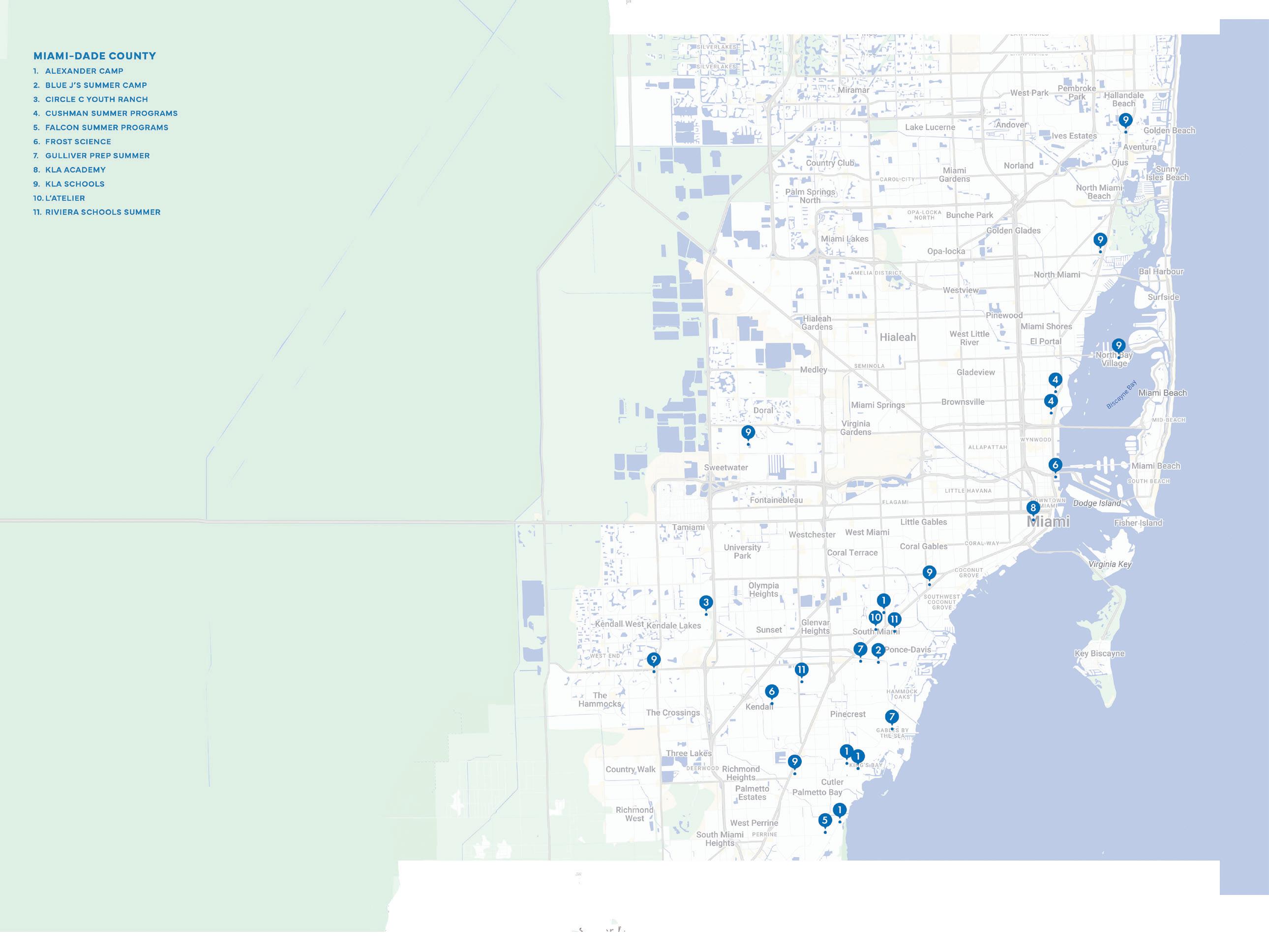
Summer Camps & Enrichment Programs
1. ALEXANDER CAMP
2. BLUE J’S SUMMER CAMP
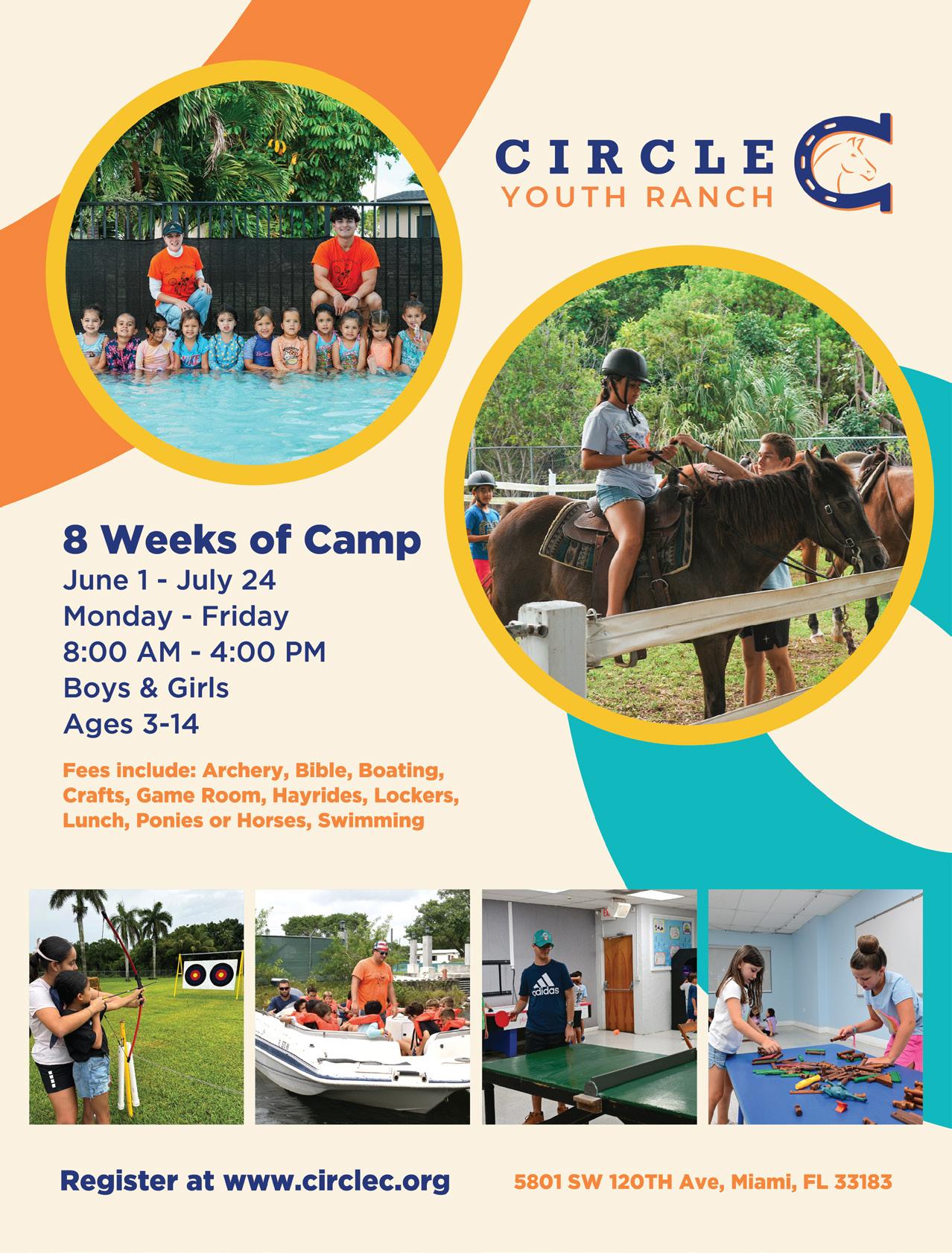
3. CIRCLE C YOUTH RANCH
4. CUSHMAN SUMMER PROGRAMS
5. FALCON SUMMER PROGRAMS
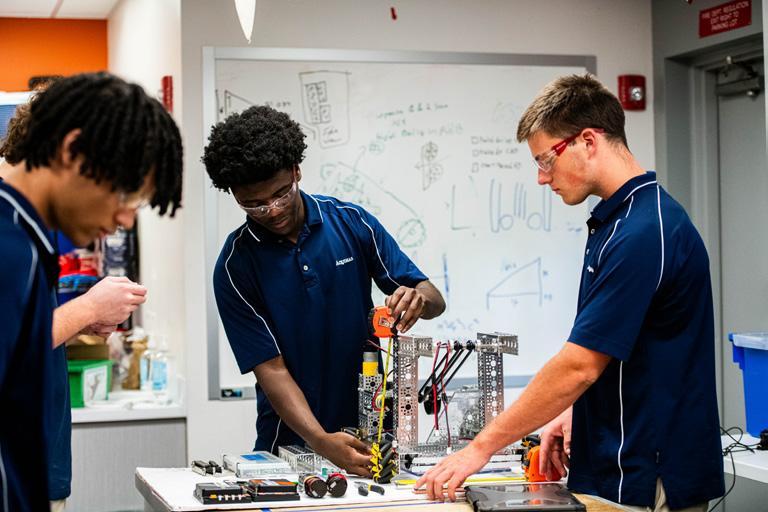
6. FROST SCIENCE
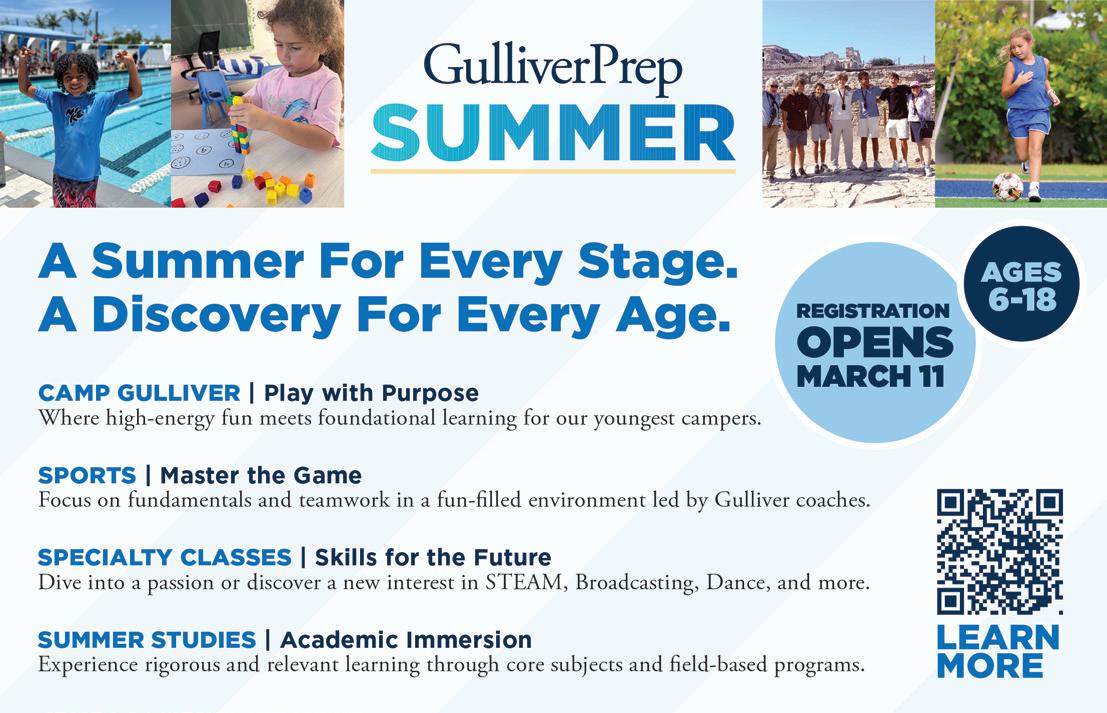
7. GULLIVER PREP SUMMER
8. KLA ACADEMY
9. KLA SCHOOLS
10. L’ATELIER
11. RIVIERA SCHOOLS SUMMER
Toddler Summer Session
Preschool 18 mos. - 3 years
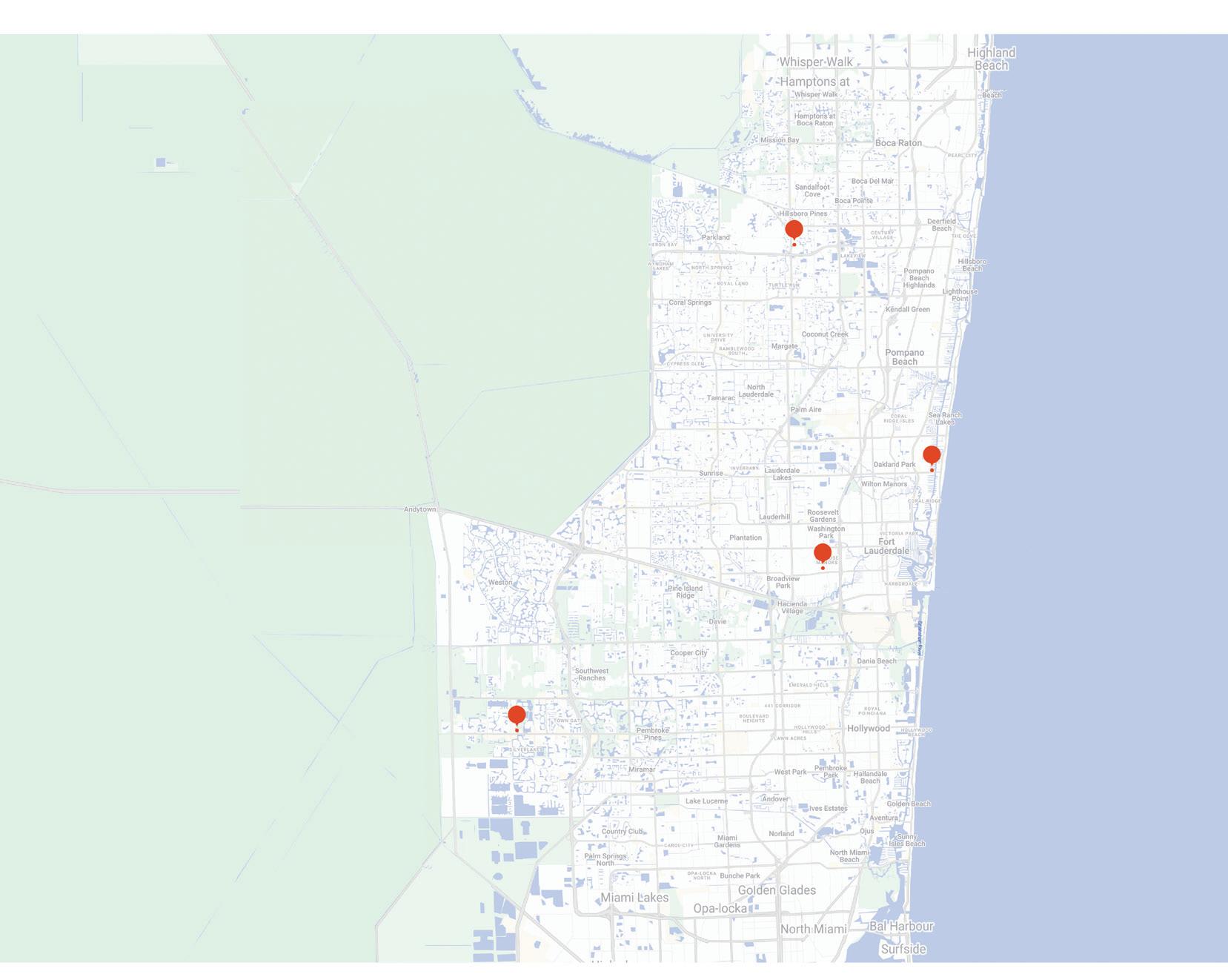
17800 Old Cutler Road, Miami FL 33157 (305) 969-1814
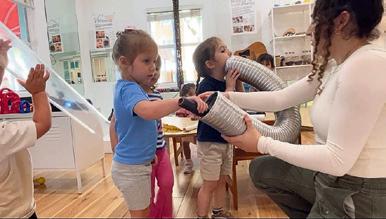
Preschool Camp Ages 3 - 6 years
14400 Old Cutler Road, Miami FL 33158 (305) 233-4540
Ron Ehmann Park 10995 SW 97 Ave. Miami, FL 33176 (305) 929-3789 frostscience.org/summercamp
SCIENCE CAMPS
GULLIVER PREP SUMMER Summer programs for ages 6 -18
Marian C. Krutulis PK-8 Campus 12595 Red Road Coral Gables, FL 33156
Upper School Campus 6575 North Kendall Drive
KLA SCHOOLS
KLA Schools of Aventura 12 Months - 5 years 20301 Biscayne Blvd. Aventura, FL 33180 (305) 931-2322
KLA Schools of Coral Gables 3 Months - 5 years 4573 Ponce De Leon Blvd. Coral Gables, FL 33146 (305) 668-0552
KLA Schools of Doral 12 Months - 5 years (offers VPK) 10400 NW 33rd Street #100 Miami, FL 33172
KLA Schools of North Bay Village 3 Months - 5 years 7800 Hispanola Avenue North Bay Village, FL 33141 (305) 865-2678
KLA Schools of North Miami Beach 3 Months - 5 years (Offers VPK) 13702 Biscayne Blvd. North Miami Beach, FL 33181 (305) 697-8018
KLA Schools of Palmetto Bay 3 Months - 5 years 14875 S. Dixie Highway, Unit B Miami, FL 33176 (305) 233-0130
6-18
KLA Schools of West Kendall 3 Months - 5 years (Offers VPK/SR) 8950 SW 137th Avenue Miami, FL 33186 (305) 387-2480
www.klaschools.com
5960 SW 71 Street Miami, FL 33143 (305) 662-2326
www.latelier.org
Camp Gulliver provides unique o erings for every grade level and interest–all in one place! STEAM, Swim Lessons,
KLA SCHOOLS
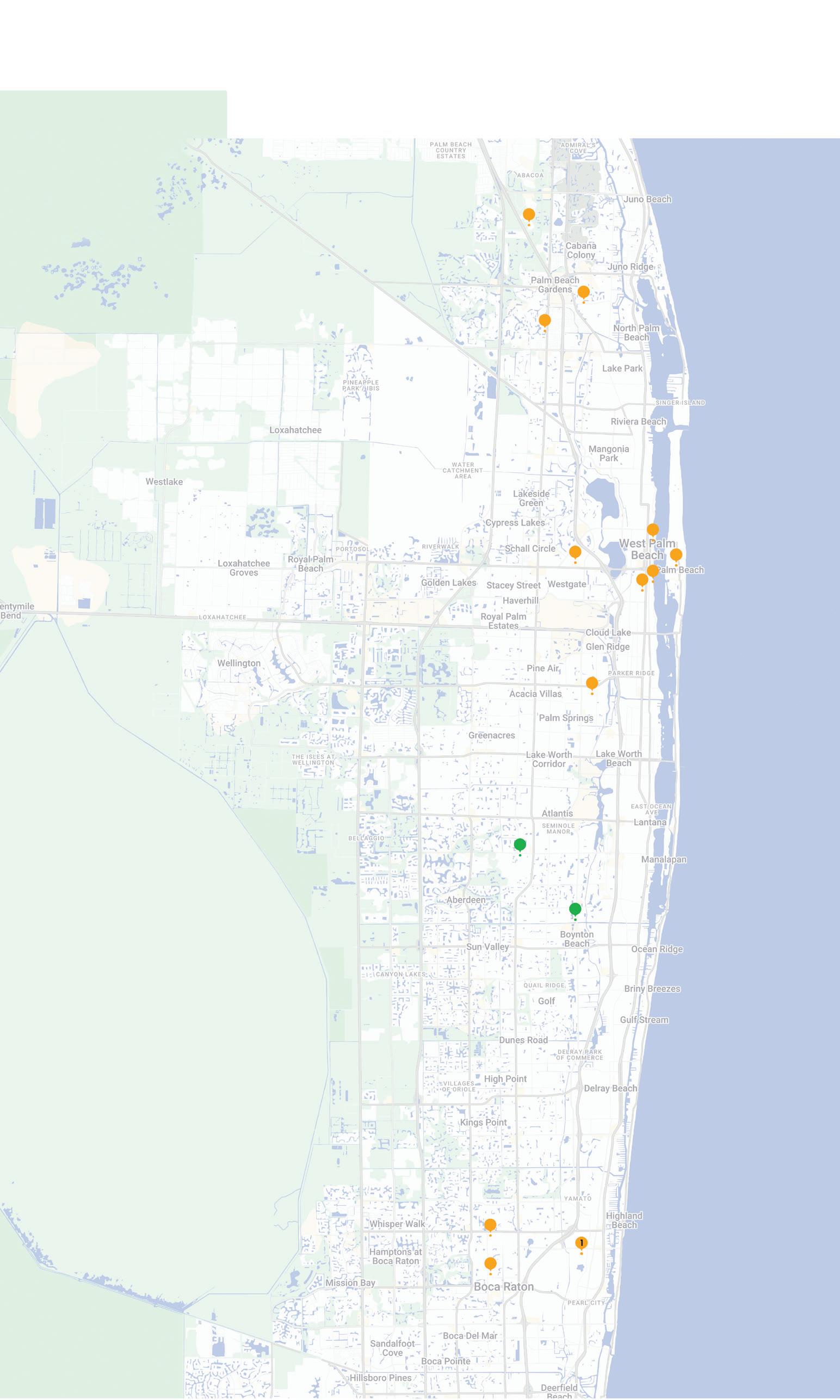
KLA Schools of Boynton Beach
3 Months - 5 years (Offers VPK) 1601 N Congress Avenue Boynton Beach, FL 33426 (561) 735-1042
KLA Schools of Lake Worth
6 weeks - 5 years (Offers VPK) 4945 Via Bari Lake Worth, FL 33463 (561) 432-9559
www.klaschools.com
PALM B E ACH COUNTY
13. KLA SCHOOLS
SUMMER 2026 family book club
frustration to young adult reads that ask bigger questions about who you are and who you want to become, there’s something here for every age and every kind of reader. Fiction, nonfiction, picture books, memoirs, the whole mix, because families rarely all want the same thing, and that’s kind
And before you head to the checkout counter, don’t. Head to your local library instead. Most systems now offer digital borrowing, app access, and even home delivery, which means a summer’s worth of reading costs exactly nothing. Your library card is one of the most underused things in your
A NOTE FOR PARENTS
This year’s selections lean into themes of perseverance, self-belief, and finding your footing when things get hard. These aren’t stories that shy away from struggle, because struggle is where the growth happens. That said, some titles do explore real challenges: a teenager who rebuilds her entire sense of self through the pursuit of education, a child who learns that his worst enemy might actually be his best friend, a student who has spent years hiding a learning difference she was never given the tools to understand, and a young girl who loses everything familiar and has to build a new life from scratch in a country that doesn’t always welcome her. None of these are handled in a heavy-handed or graphic way, but they may spark questions worth sitting with.
We always recommend that parents take a look before passing a book to their child. Every reader comes to a story differently, and a quick flip-through goes a long way toward making sure the themes match where your child is emotionally right now. What resonates for one family might land differently for another, and that’s completely okay. Taking a quick look ahead of time helps make sure the story matches your family’s values and your child’s emotional maturity. The discussion questions included with each title are meant to open conversations, not close them. Let your reader lead. Happy reading!
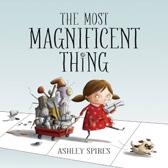
THE MOST MAGNIFICENT THING BY ASHLEY SPIRES
Children’s Picture Book | Young Readers (Ages 4-8)
A little girl sets out to make the most magnificent thing. It sounds simple—until nothing goes right. She hammers, adjusts, scraps it, tries again. She quits. She goes for a walk. She comes back. Ashley Spires distills the entire psychology of perseverance into a picture book that never once feels like a lesson. The illustrations are warm, specific, and genuinely funny, and by the last page, kids understand something it takes adults years to fully believe: the struggle of making something hard is exactly what makes the result magnificent.
Perfect for ages 4 to 8, this book is one of the most effective tools available for introducing a growth mindset before a child ever sits down at a school desk. When kids see a character work through failure without giving up, they begin to understand that effort—not talent—is what moves things forward.
FAMILY DISCUSSION QUESTIONS
Have you ever tried to make something and it didn’t work the first time? What did you do? Why do you think she went for a walk when she was frustrated? Did it help her? What’s something you want to make or learn that might take a lot of tries?
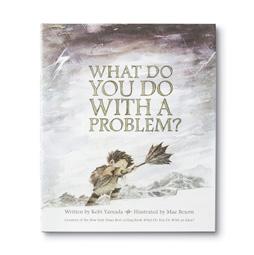
WHAT DO YOU DO WITH A PROBLEM? BY KOBI YAMADA
Children’s Picture Book | Young Readers (Ages 4-8)
A child has a problem. The more it’s avoided, the bigger it gets—until it fills entire pages. But when the child finally stops running and turns to face it, something unexpected happens: the problem turns out to have an opportunity hiding inside it. Kobi Yamada’s spare text and Mae Besom’s beautifully moody illustrations make this one of the most emotionally intelligent picture books of the past decade. It teaches children something most adults have to relearn: that problems aren’t meant to be escaped—they’re meant to be engaged.
This is a great pick for children who worry, and an equally great pick for families who want a concrete vocabulary for talking about hard feelings. It normalizes anxiety without dramatizing it, and gives young readers a framework they can actually use.
FAMILY DISCUSSION QUESTIONS
What does your problem look like in your head when it feels really big? Have you ever had a problem that ended up teaching you something good? Is there a problem you’re facing right now that we could think through together?
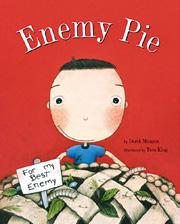
ENEMY PIE BY DEREK MUNSON
Children’s Picture Book / Social-Emotional Learning | Young Readers (Ages 4–8)
It was supposed to be a perfect summer until Jeremy Ross moved in down the street and ruined everything. He’s the enemy now, officially, and the narrator wants nothing to do with him. But Dad has a plan: enemy pie. It’s guaranteed to get rid of enemies fast, but there’s one catch. You have to spend an entire day with the enemy first. What unfolds is one of the most disarming picture books about prejudgment and friendship available for this age group. Derek Munson never lectures. He just lets the story do its work, and by the end, the boy has gained something he didn’t expect and lost something he didn’t actually need.
Perfect for ages 4 to 8, this is a particularly strong pick for children heading into a new school year, a new neighborhood, or any situation where they’ll be meeting people who seem different from them at first glance.
FAMILY DISCUSSION QUESTIONS
Why do you think the boy changed his mind about Jeremy by the end of the day?
Have you ever decided you didn’t like someone before you really knew them? What happened when you got to know them better?
What does this book suggest about how enemies are made in the first place?
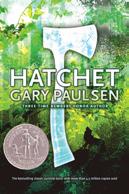
Brian Robeson is thirteen, alone, and the only survivor of a small plane crash deep in the Canadian wilderness. He has no food, no plan, and no one coming to save him—only the hatchet his mother gave him as a gift before the trip. What follows is one of the most gripping survival stories in all of middle-grade literature. Paulsen’s prose is spare and urgent, tracking Brian’s slow, hard transformation from helpless panic into a kid who can actually keep himself alive. Hatchet is ultimately a book about what happens when there’s no one left to solve things for you—and you discover that you can solve them yourself.
It’s been a classroom staple for over three decades, and it earns that staying power every time. Perfect for ages 10 to 14, especially readers who like their stories fast-paced, physical, and earned. If they love it, Paulsen wrote four sequels.
FAMILY DISCUSSION QUESTIONS
What’s the hardest thing Brian had to figure out on his own? What would you have done? Brian’s mindset changes completely by the end. What shifts it? When does it start to change? Think of a time you had to solve something without any help. What did that feel like?
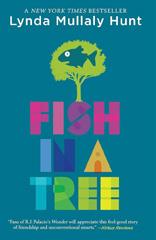
Ally Nickerson has spent years being really, really good at hiding one thing: she cannot read. She’s mastered every distraction, every excuse, every way of getting through a school day without anyone finding out. When a new teacher finally sees past the performances and recognizes what’s actually going on, Ally’s world begins to shift in ways she didn’t expect and wasn’t sure she deserved. Lynda Mullaly Hunt’s novel is warm, specific, and completely unsentimental about what it actually costs a child to go unrecognized for years. It’s also one of the most hopeful books on this list, because the transformation isn’t magical. It’s earned, slowly, by a kid who had to learn to trust that she was worth the effort.
A strong pick for readers ages 10 to 14, and an especially meaningful one for any child who has ever felt like school was not built for the way their brain works.
FAMILY DISCUSSION QUESTIONS
Why do you think Ally worked so hard to hide her struggle instead of asking for help? What does the book suggest about the difference between being smart and being good at school? Has there ever been something you were dealing with that you kept to yourself? What made it hard to say out loud?
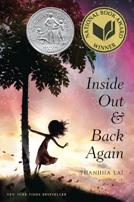
It is 1975, and ten-year-old Hà has known nothing but Saigon her entire life. When the city falls, she and her family flee by boat and eventually land in Alabama, where everything, the food, the language, the way people look at her, is foreign and often unkind. Thanhha Lai tells the story in verse, short precise poems that capture the way memory and sensation work when everything familiar has been stripped away. It is a Newbery Honor book and one of the most beautifully constructed middle grade novels of the past two decades. Hà’s voice is funny, stubborn, observant, and deeply human, and her journey from grief to something that begins to resemble belonging is one readers will carry with them long after the last page.
A strong pick for ages 10 to 14 and an excellent bridge for families wanting to explore themes of immigration, cultural identity, and resilience through literature rather than headline news.
FAMILY DISCUSSION QUESTIONS
What does Hà miss most about Saigon? What does she eventually find she doesn’t miss?
How does the verse format change the way the story feels compared to a regular novel? What would it feel like to start completely over somewhere new where nobody knew anything about you?
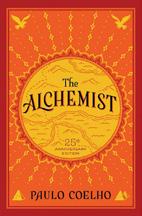
A young shepherd in Andalusia dreams of treasure buried near the Egyptian pyramids and sets off to find it. Along the way, he meets mentors, loses almost everything, finds love, and encounters a cast of characters who each have something to teach him about listening to what he actually wants from life. The Alchemist has sold over 150 million copies worldwide—making it one of the best-selling books in history—and its staying power comes from the simplicity of its core argument: the search itself is the point, not the arrival.
For teenagers navigating questions about purpose, direction, and college, it offers a framework that is inspiring without being prescriptive. It doesn’t tell you what to want. It tells you that wanting something clearly—and following it honestly—is itself an act of courage. That’s a message worth returning to at any age.
FAMILY DISCUSSION QUESTIONS
The book says the universe “conspires to help” those who pursue their dreams. Do you believe that? Why or why not? Santiago meets people who started toward their dream and then stopped. What made them stop? What does that cost them? What’s your version of a Personal Legend—something you feel genuinely called to do or become?
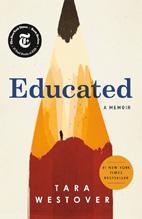
EDUCATED BY TARA WESTOVER
Memoir / Personal Development | Young Adults & Adults
Tara Westover grew up in rural Idaho without formal schooling, medical care, or any expectation that education would play a role in her life. Through a combination of relentless self-determination and intellectual hunger she couldn’t quite name, she eventually earned a PhD from Cambridge. Educated is the memoir of how that happened—and what it cost. It’s one of the most discussed books of the past decade, and for teenagers standing at the edge of their own major transitions, its central question lands with particular force: who gets to decide who you become?
This is appropriate for mature high school readers and works especially well read alongside a parent or mentor. The conversations it opens about identity, family, education, and personal agency are some of the most valuable a family can have before a student heads into the next chapter of their life.
FAMILY DISCUSSION QUESTIONS
Westover made choices that created distance from her family. Was that brave, painful, or both? Could it be both at once? What does education mean in this book? Is it the same thing as schooling? What’s something you believe about yourself that you’ve actually decided—versus something you were just told?
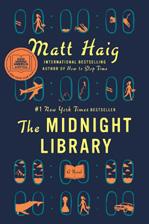
THE MIDNIGHT LIBRARY BY
Fiction | Young Adults & Adults
MATT HAIG
Somewhere between life and death there is a library. Its shelves stretch as far as the eye can see, and every book on them contains a different version of the same life, every path not taken, every choice unmade, every version of yourself you might have become. Nora Seed finds herself there at her lowest moment and begins to explore what her life could have looked like. What she discovers is something far more complicated than regret. Matt Haig’s novel is thought-provoking, genuinely surprising, and lands its central argument without ever being heavy-handed about it: that the life you are actually living, with all its mess and disappointment, contains more than you can see from inside your worst moments.
Embraced by both teenagers and adults, this is one of the rare books that works as well for a parent as it does for a high schooler trying to figure out what comes next. Reading it together is worth the conversation it opens.
FAMILY DISCUSSION QUESTIONS
If you could walk into your own midnight library, what’s one life you think you might want to explore?
Nora spends a lot of time focused on her regrets. Do you think regret is ever useful? When does it stop being useful? What does the book ultimately say about what makes a life feel meaningful?