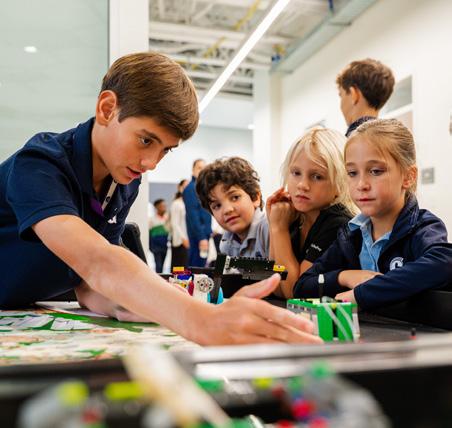
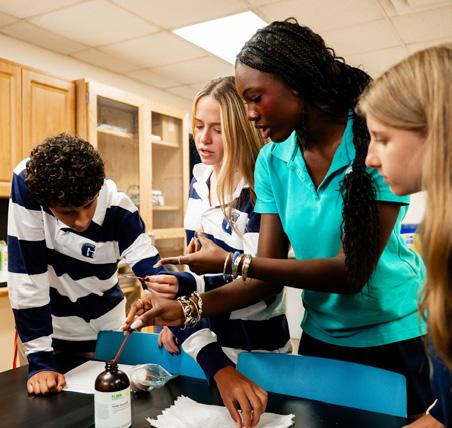
Palmer Trinity School is a premier independent, co-educational Episcopal day school for grades 6–12, set on a beautiful 60-acre campus. We empower every student to thrive in a world of endless possibilities through an exceptional academic program.
Beyond the classroom, robust programs in the arts, athletics, and global travel opportunities nurture the mind, body, and spirit.
Here, your child is more than a student. They’re a thinker, a problem-solver, a creator, a leader in the making.
Here, your child is more than a student. They’re a thinker, a problem-solver, a creator, a leader in the making.
We challenge them to go deeper — to ask better questions, act with integrity, and step into every opportunity with confidence.
We challenge them to go deeper — to ask better questions, act with integrity, and step into every opportunity with confidence.
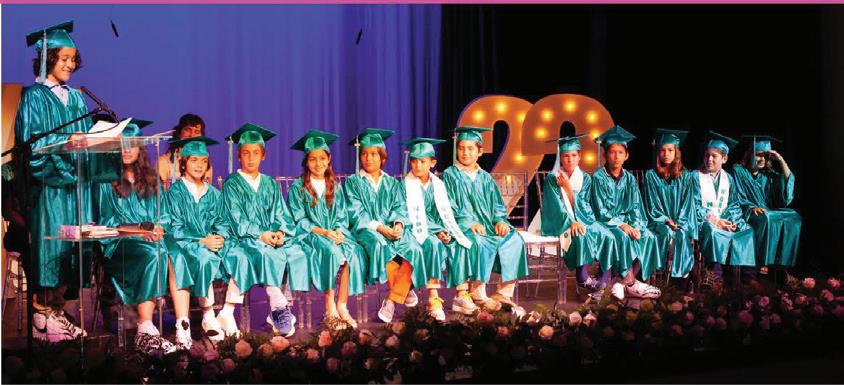
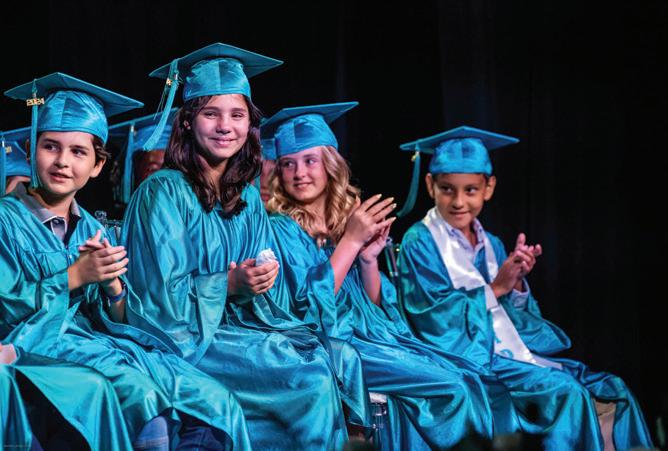
Riviera graduates don’t just dream big —they deliver.
Riviera graduates don’t just dream big —they deliver.
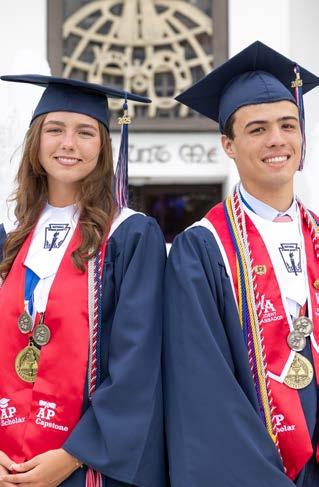
Our graduates earn admission to top colleges and universities across the U.S. and around the world — including Columbia, Stanford, Duke, UCLA, NYU, and McGill — reflecting the depth, rigor, and ambition of a Riviera education. A snapshot of the past five graduating
Our graduates earn admission to top colleges and universities across the U.S. and around the world — including Columbia, Stanford, Duke, UCLA, NYU, and McGill — reflecting the depth, rigor, and ambition of a Riviera education. A snapshot of the past five graduating classes.
Beyond limits. Beyond expectations.
Beyond limits. Beyond expectations.
Go beyond with Riviera Schools.
Go beyond with Riviera Schools.
97,000+
97,000+
$48 Million
PALMER
is an independent, collegepreparatory, co-ed Episcopal day school serving students in grades 6–12 in the heart of South Florida. With more than 25 AP courses, a respected IB Diploma Programme, and over 30,000 hours of community service logged every year, the school measures success by the depth of character and sense of purpose its students carry into the world.
38 BETTER LEARNERS
The
PRIVATE SCHOOLS
Every spring, I find myself thinking about how quickly children grow and how important it is to pause and reflect on where they are headed next. For many families, this season brings big conversations about schools, learning, and what kind of environment will help their child truly thrive. It is not just about where, but how they will be supported, challenged, and encouraged every day.
In this issue, we explore why immersive education works and how leading private schools intentionally design learning experiences that truly last. We also look at what personalized education really means and how meeting students where they are can build both confidence and academic strength.
Choosing a school is deeply personal. My hope is that our issues provide clarity and reassurance as you explore the many outstanding private school options across South Florida. I hope this season brings your family a renewed sense of direction, meaningful growth, and the confidence that you’re planting the right seeds for what comes next.
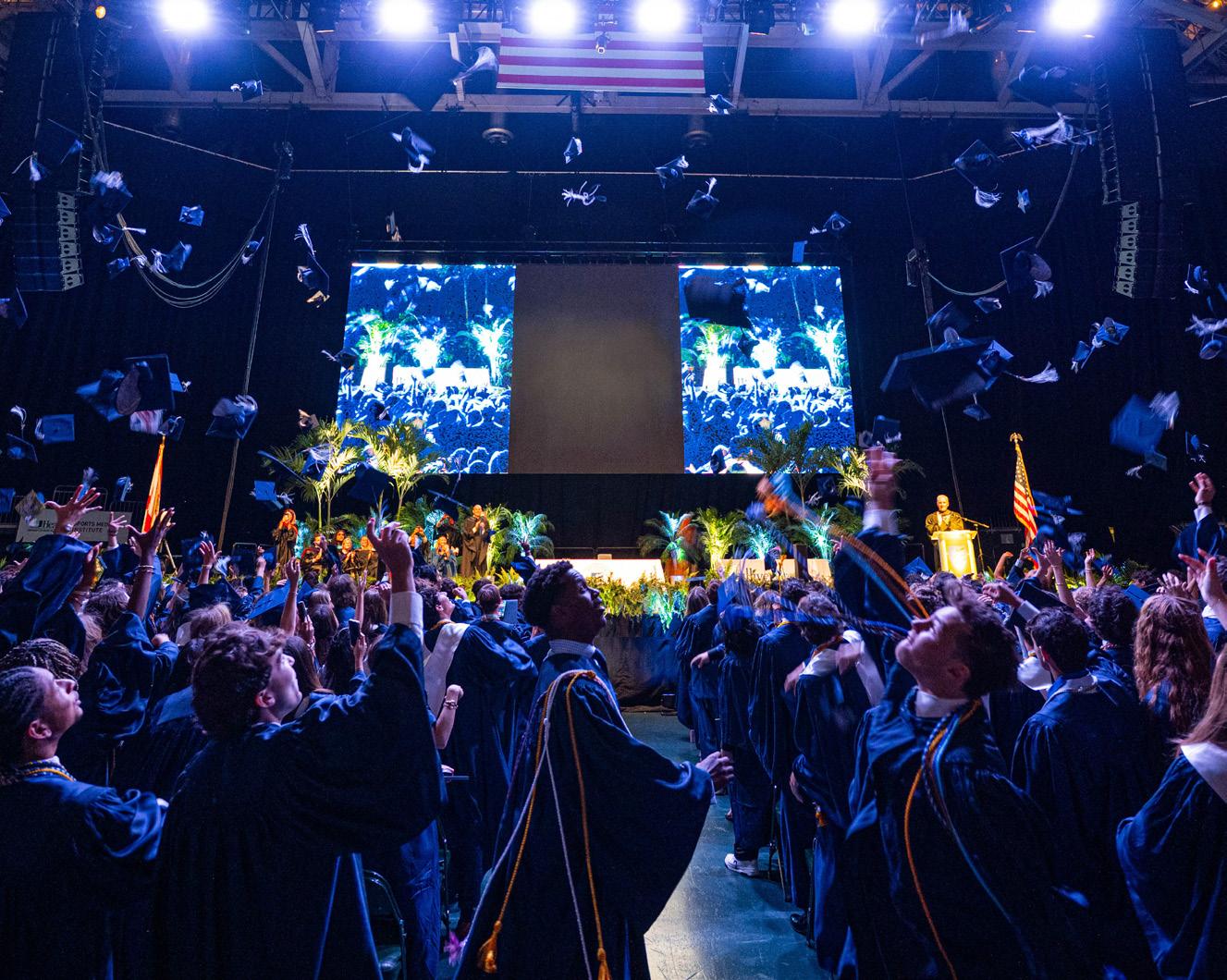
For a century, Gulliver has been an integral part of Miami’s story, shaping the hearts and minds of the leaders, innovators, and changemakers who define our city. As we celebrate our Centennial, we take pride in our deep roots and our role in Miami’s vibrant growth. From our historic past to the next 100 years of world-class teaching and future-ready learning, we remain committed to inspiring the generations who call this community home.
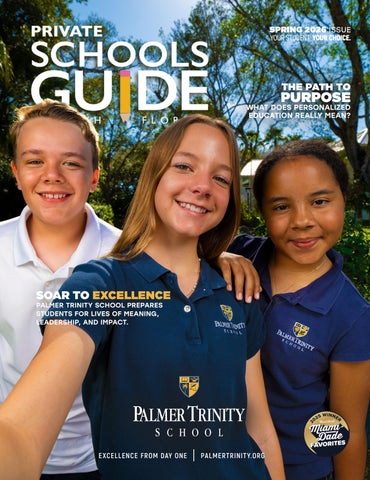
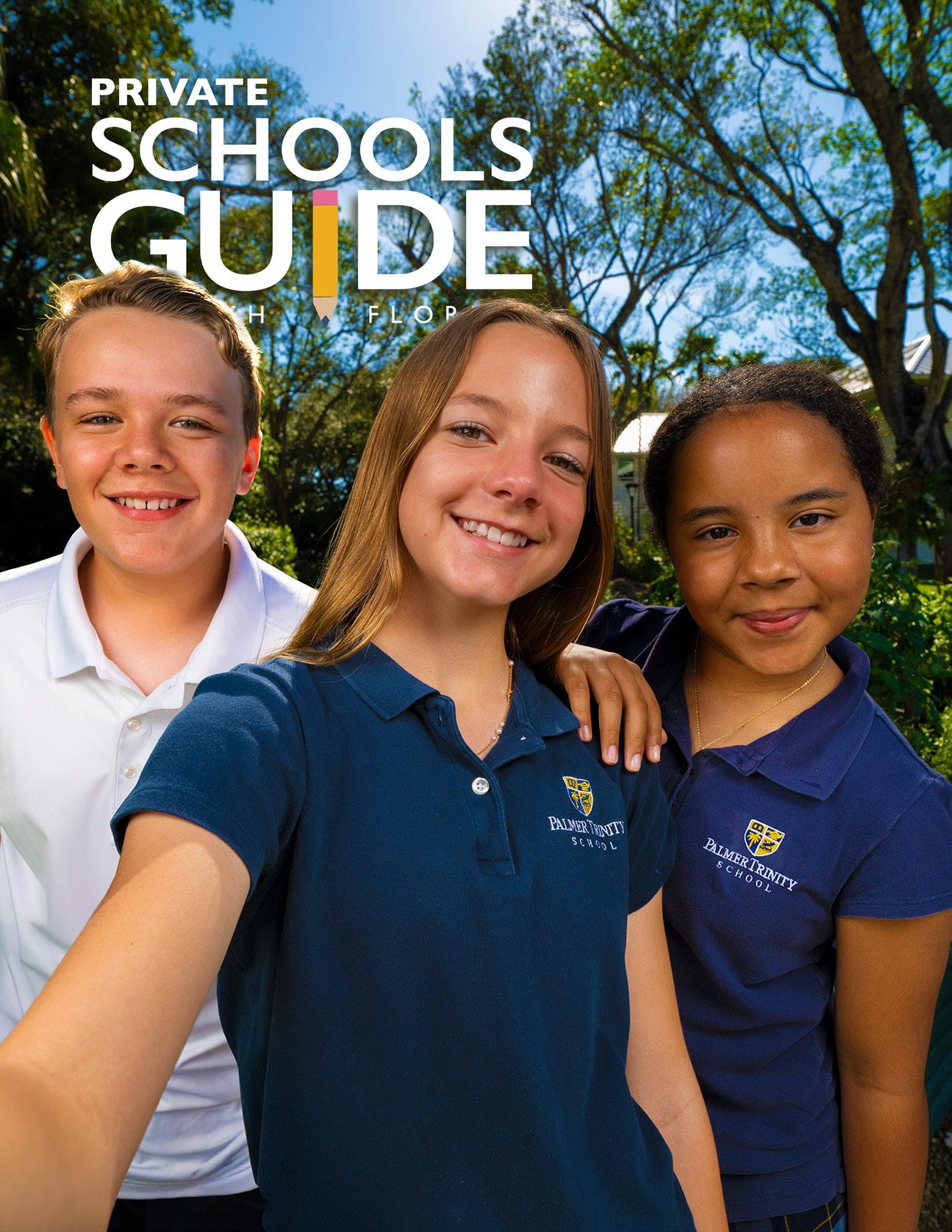
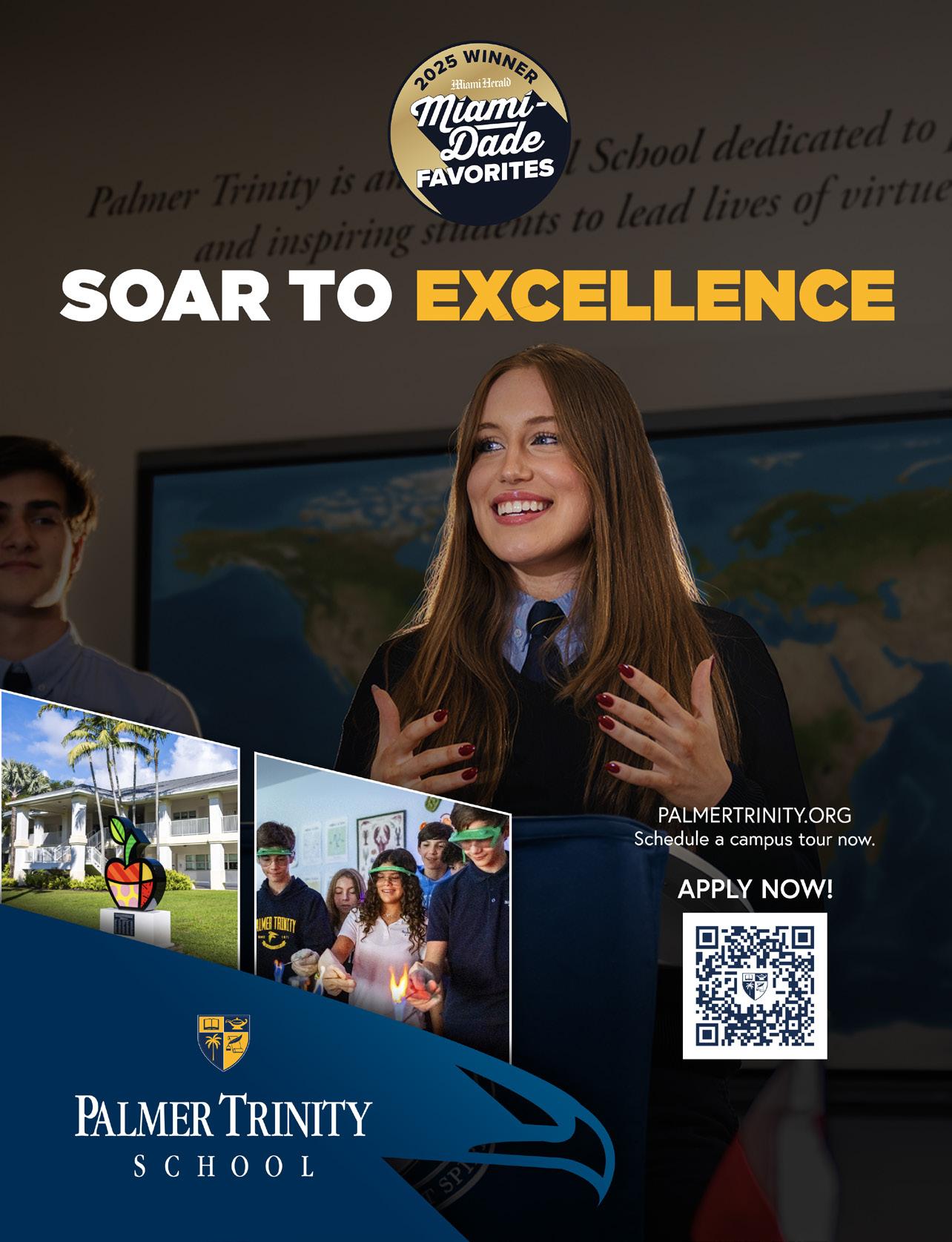
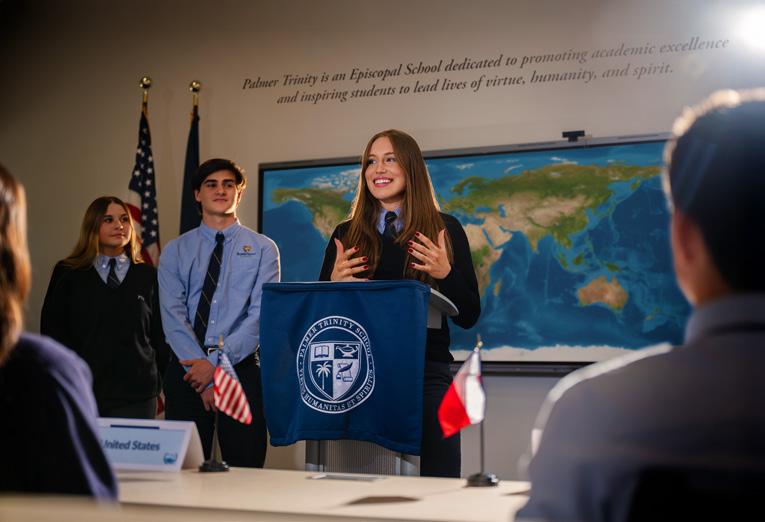
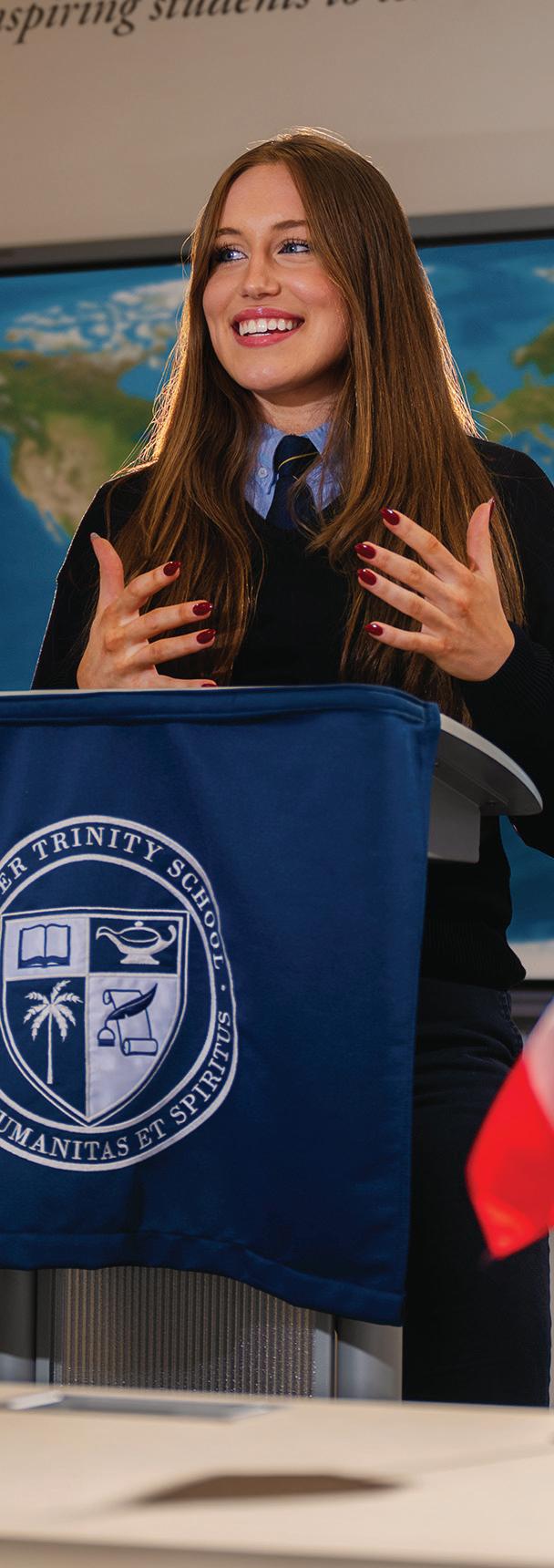
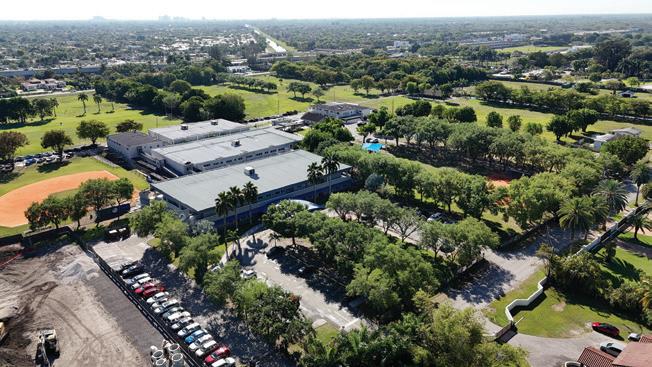
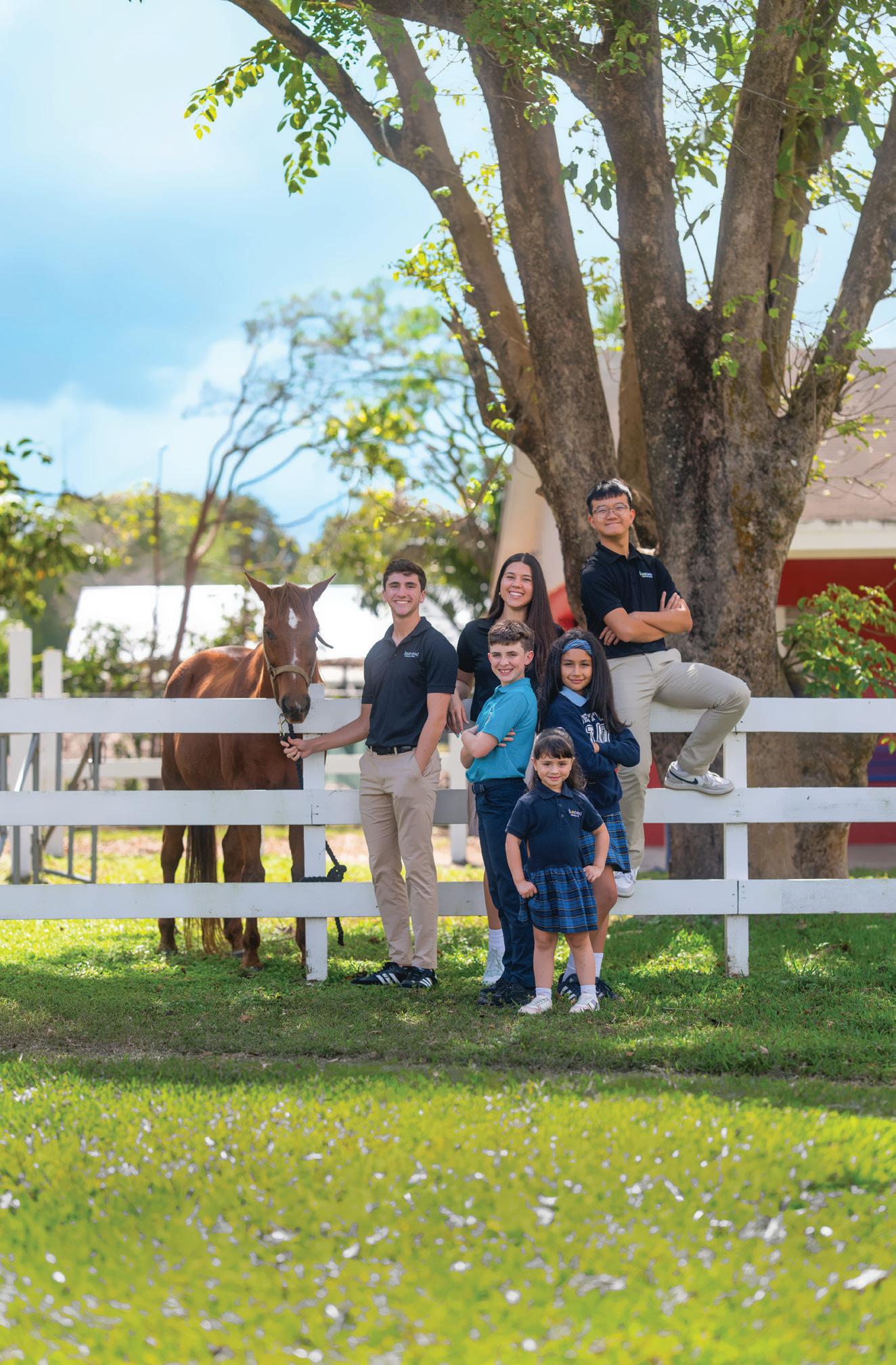
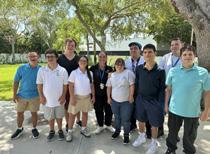
At Palmer Trinity School, we pair academic excellence with ethical purpose to prepare students for lives of meaning and impact. Spanning a beautiful 60-acres in suburban Miami, Palmer Trinity is an Episcopal, college-preparatory school serving students in grades 6–12. The School’s mission is to inspire students to learn, lead, and serve in a globally connected world.
Through rigorous academics, innovative programs, and a deep commitment to values and community engagement, Palmer Trinity prepares students not only for college but for lives of meaning and impact.
A CHALLENGING AND ENGAGING ACADEMIC PROGRAM
Palmer Trinity offers a challenging and thoughtfully designed curriculum that encourages intellectual curiosity, critical thinking, and collaboration. Students can pursue a broad range of Honors, Advanced Placement (AP), and International Baccalaureate (IB) courses, allowing them to tailor an academic pathway that reflects their interests and aspirations.
The School offers more than 25 AP courses, alongside a growing and highly respected IB Diploma Programme, providing students with opportunities to engage in university-level scholarship while still in high school. IB courses emphasize interdisciplinary thinking, global awareness, and research skills that prepare students for success at top universities worldwide.
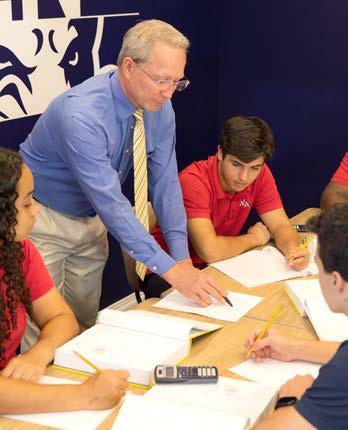
Participation in these programs reflects the School’s commitment to academic rigor, supported by a learning environment that encourages students to ask questions, challenge ideas, and pursue intellectual discovery. Small class sizes—averaging about 14 students—allow teachers to know their students well and engage them in meaningful discussion and mentorship.
CONTEMPORARY STUDIES: CONNECTING LEARNING TO THE REAL WORLD
One of the many distinctive aspects of the Palmer Trinity curriculum is its Contemporary Studies program, which connects academic disciplines with real-world issues. Courses in entrepreneurship, marketing, leadership, public speaking, media and publications, and global studies allow students to explore emerging fields and develop practical skills relevant to today’s world. Through interdisciplinary learning, students are encouraged to think beyond traditional subject boundaries and engage complex global challenges with creativity and insight.
PREPARING STUDENTS FOR AN AI-DRIVEN WORLD
At Palmer Trinity, student agency is at the heart of our approach to technology. We empower students to leverage a suite of AI tools to enhance their analytical and creative workflows, teaching them to discern the right resource for the task at hand. Our faculty members are equally committed to this journey, actively engaging in ongoing professional development to stay at the forefront of these emerging technologies. Through this shared commitment to ethical use of innovation, we prepare students to be informed participants who thoughtfully harness new digital tools with both skill and integrity.
GLOBAL LEARNING AND EXPERIENTIAL EDUCATION
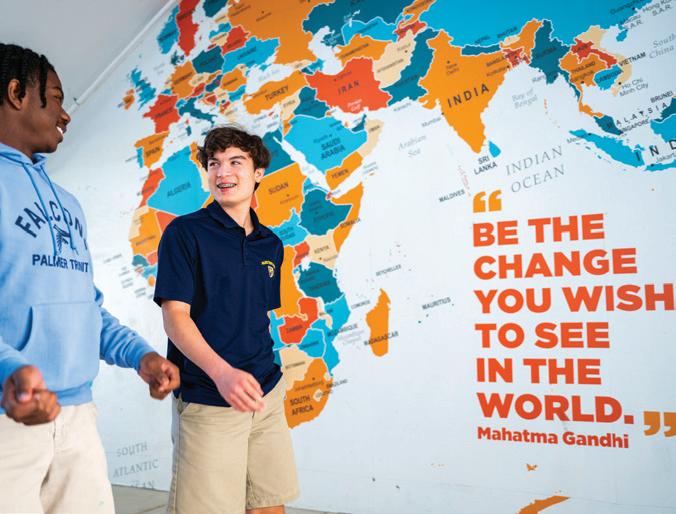
Learning at Palmer Trinity extends well beyond the classroom. The School’s experiential education and global travel programs immerse students in hands-on opportunities that deepen academic understanding while building confidence, leadership, and cultural awareness. Students participate in domestic and international programs focused on language, culture, service, and environmental exploration. Travel experiences have included academic programs in Germany, Greece, Iceland, Namibia, China, and India, each tied directly to curricular themes such as STEM, human geography, conservation, and global diplomacy.
STRONG ATHLETICS AND ARTS PROGRAMS
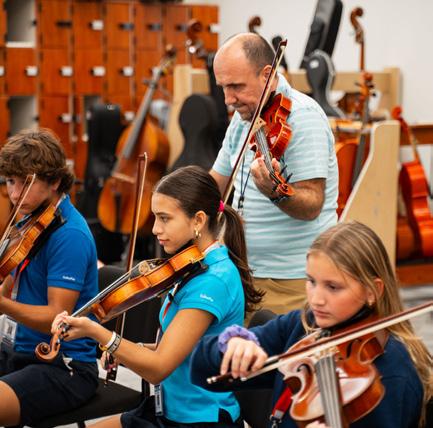
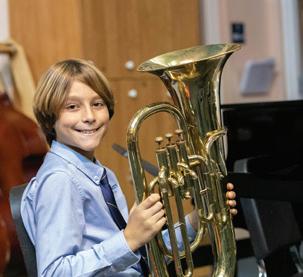
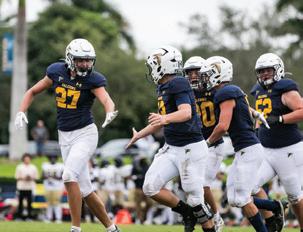
Palmer Trinity also offers robust athletics and arts programs that complement its academic offerings. Student-athletes compete at high levels across a wide range of sports, developing teamwork, discipline, and leadership skills. Meanwhile, the School’s visual and performing arts programs, encompassing theater, music, dance, and studio arts, provide students with creative outlets for self-expression, collaboration, and performance. These programs reflect the School’s belief in educating the whole student, nurturing both mind and talent.
A COMMUNITY GUIDED BY VALUES
As an Episcopal school, Palmer Trinity places strong emphasis on character, compassion, and service. Students regularly participate in community initiatives, contributing thousands of service hours each year while working with organizations throughout South Florida and beyond. Each year, Palmer Trinity students complete more than 30,000 hours of meaningful service with organizations such as Breakthrough Miami, Branches, Chapman Partnership, Best Buddies, and more. This commitment to service not only strengthens the community but also helps students develop leadership, empathy, and a lifelong dedication to making a positive impact.
PREPARING STUDENTS FOR THE FUTURE
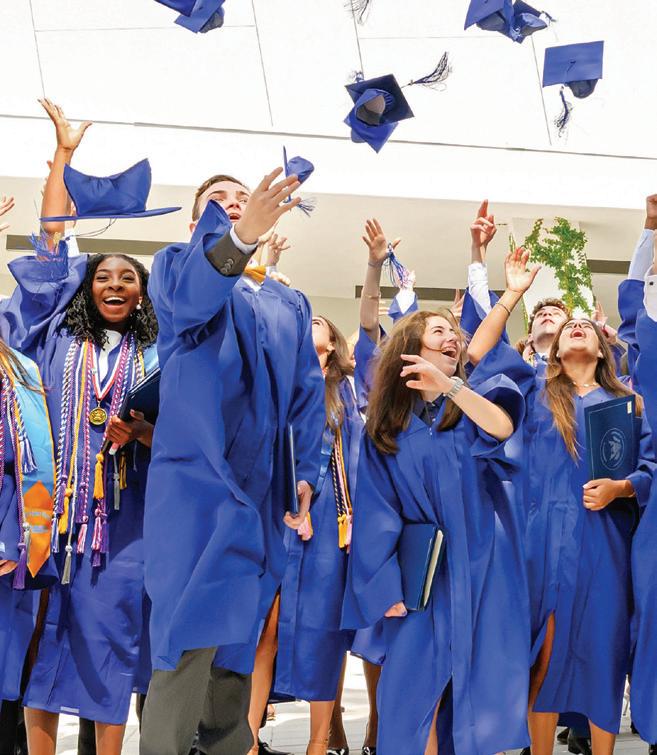
Palmer Trinity graduates leave the School well prepared for the challenges of college and beyond. 100% of graduates are accepted to four-year universities, many of whom attend leading institutions across the United States and internationally. More importantly, they graduate with the intellectual curiosity, ethical grounding, and global awareness needed to lead meaningful lives.
At Palmer Trinity School, academic excellence is not measured solely by courses or outcomes; it is reflected in the depth of learning, the strength of character, and the sense of purpose students carry into the world.
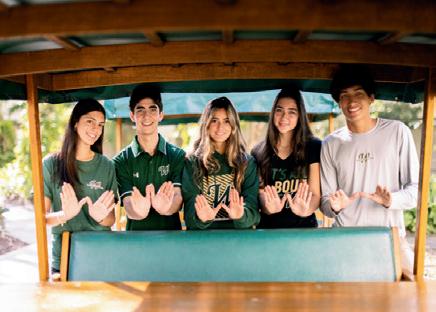
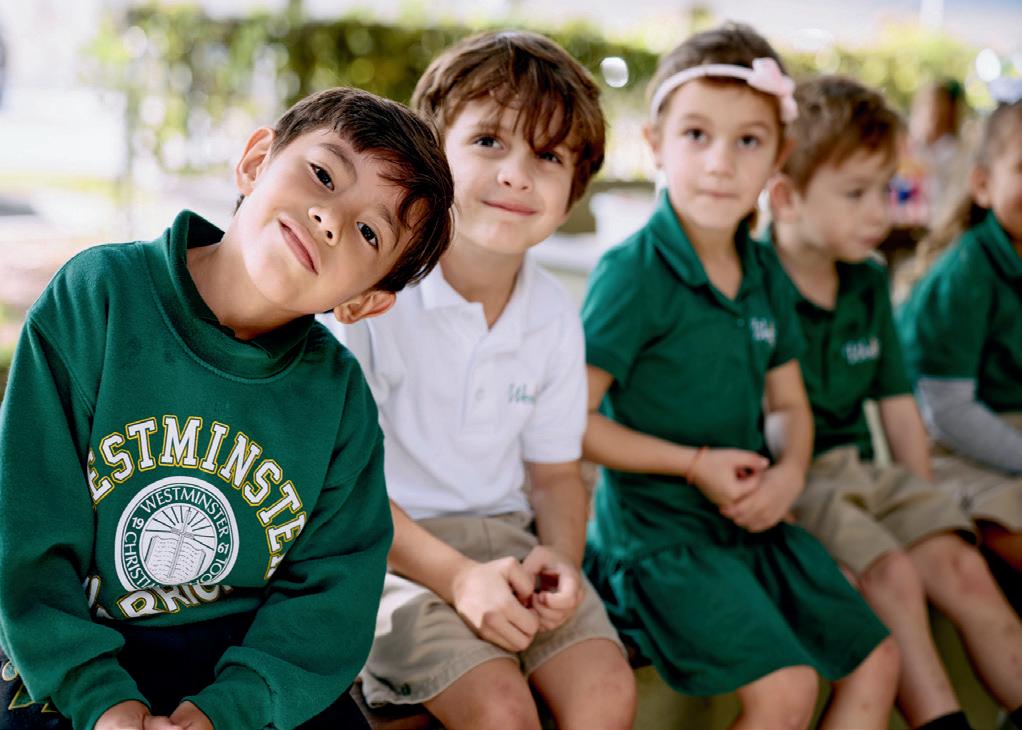
Westminster students are bright and inquisitive, engaged with their communities, and growing in their faith.
Learn how a Westminster education will inspire your child’s future.
To learn more, visit: www.wcsmiami.org
Admission: 305-233-4027 • admission@wcsmiami.org
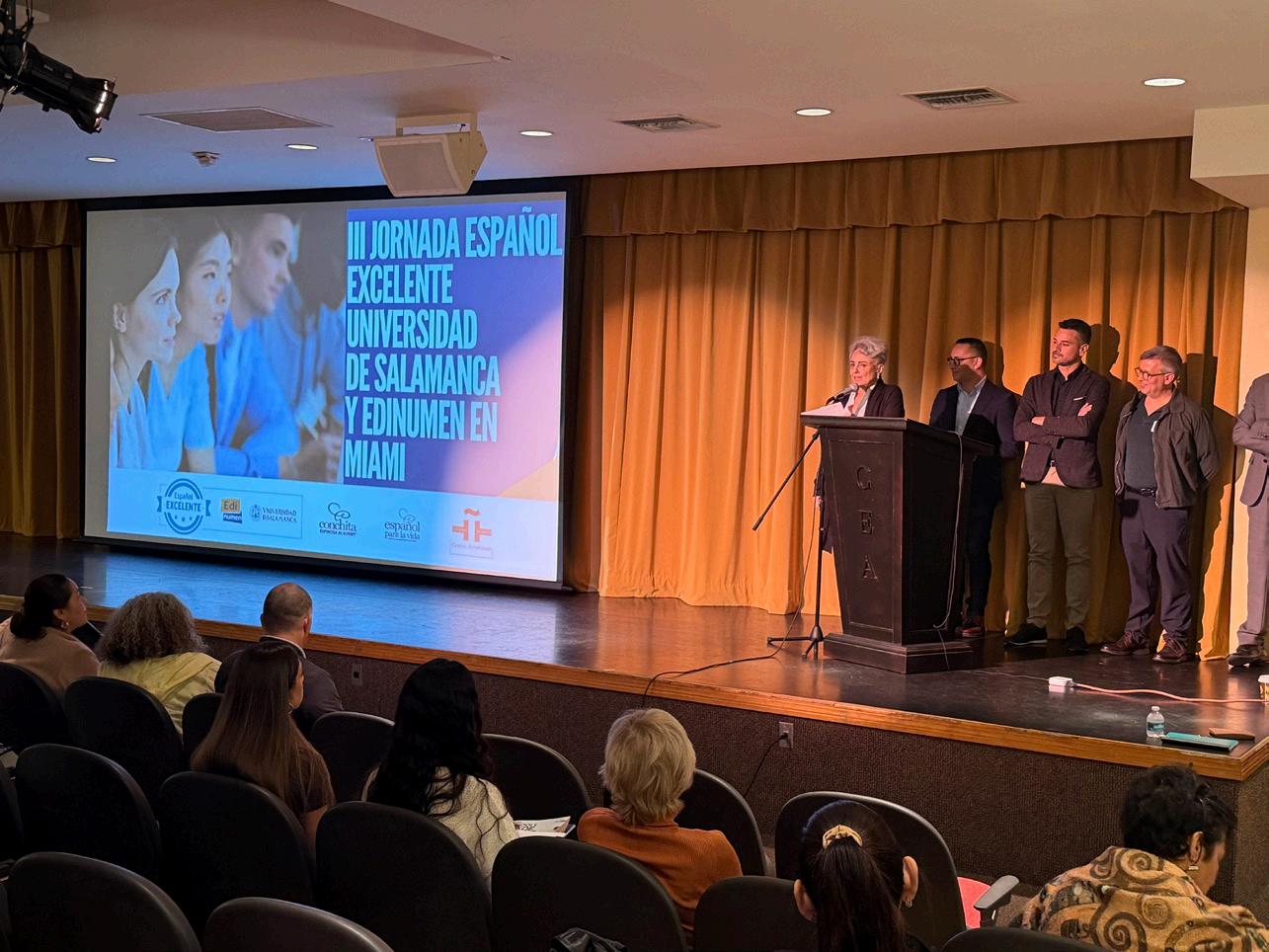
III Jornada Español Excelente
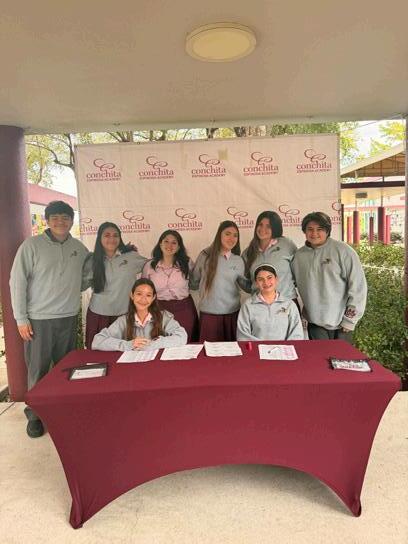
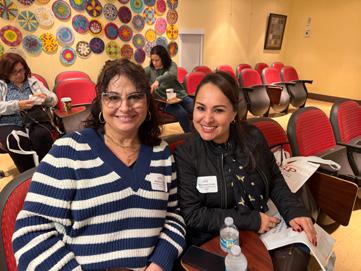
Conchita Espinosa Academy hosted the III Jornadas "Español Excelente," a one-day professional development conference organized by Spain's Universidad de Salamanca and Edinumen USA. The event brought together leading experts in Spanish language instruction to present practical strategies and innovations for K–12 and adult educators. The conference, which brought together Spanish language educators from across South Florida, took place on Saturday, January 31, 2026, at Conchita Espinosa Academy in Miami, FL.
Featured speakers included Dr. Pablo L. Martínez Torres (Edinumen USA), leading a hands-on workshop on comprehensible input and its practical applications for Spanish language acquisition; Dr. Álvaro Sesmilo Pina (Edinumen USA / Universidad de Salamanca – MINELE), exploring how AI tools can personalize instruc-
de Salamanca), highlighting academic bridge programs and training oppor tunities connecting U.S. students and educators with transformative experiences in Salamanca; and Prof. Sonia Casado García (Universidad de Salamanca), presenting inclusive strategies and flexible assessment approaches for teaching across mixed-level Spanish classrooms.
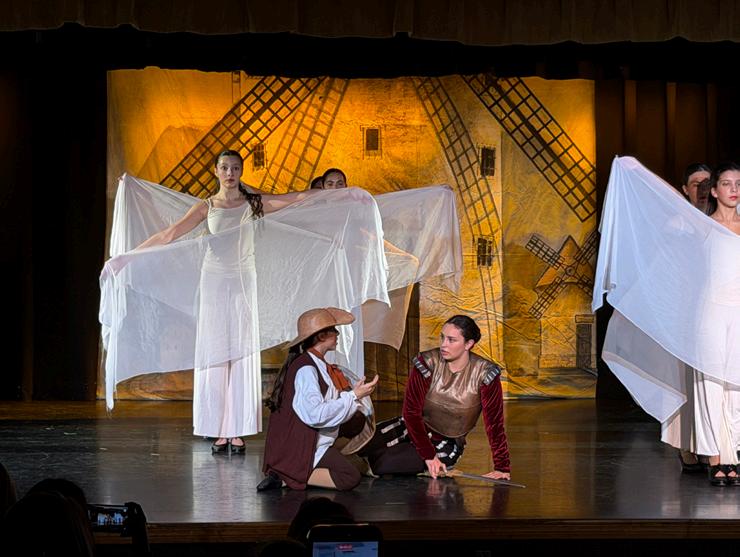
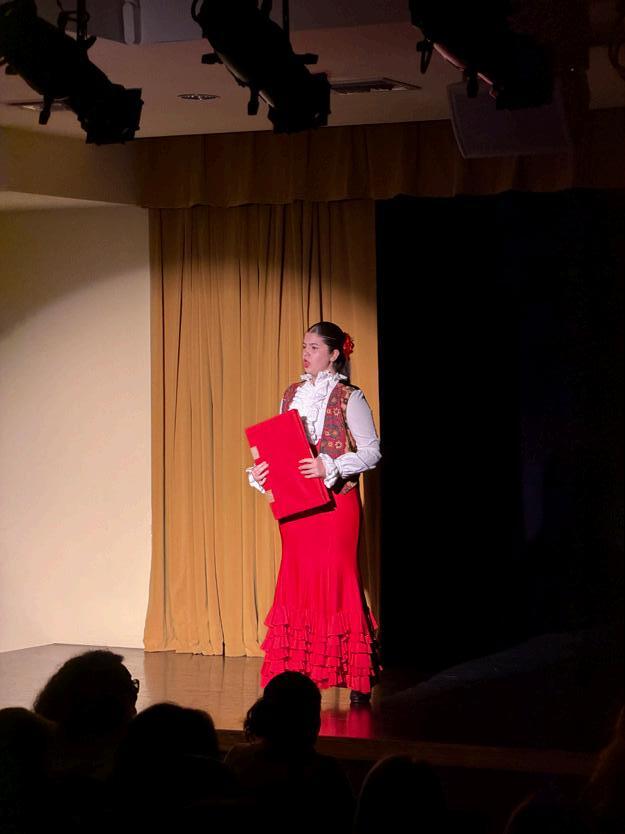
The conference closed with a special per formance of Estampas del Quijote by the Conservatory's upper school and high school dancers. Choreographed by Marisol Moreno, the piece draws on scenes from Cervantes' Don Quijote de la Mancha interpreted through dance. After students study Don Quijote in seventh and eighth grade, Spanish dancers have the opportunity to bring the story to life through movement, embodying the characters and deepening their understanding of the text. Organizers selected Conchita Espinosa Academy
work in fostering linguistic competence and intercultural awareness. Organizers have noted CEA's distinctive role as an Instituto Cervantes–accredited center in the United States.
The Jornadas are presented by Universidad de Salamanca and Edinumen USA in partnership with Conchita Espinosa Academy. The full schedule, speaker information, and registration details are available through the event listing on Edinumen's website.
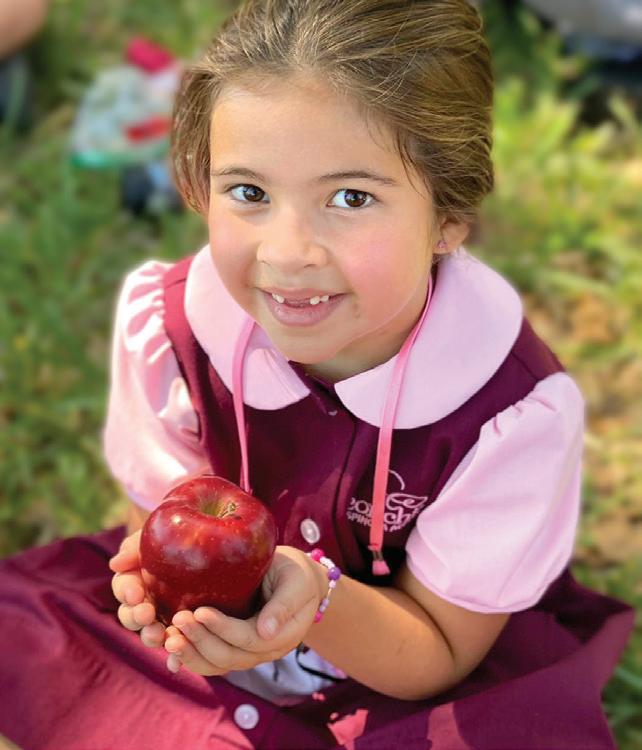
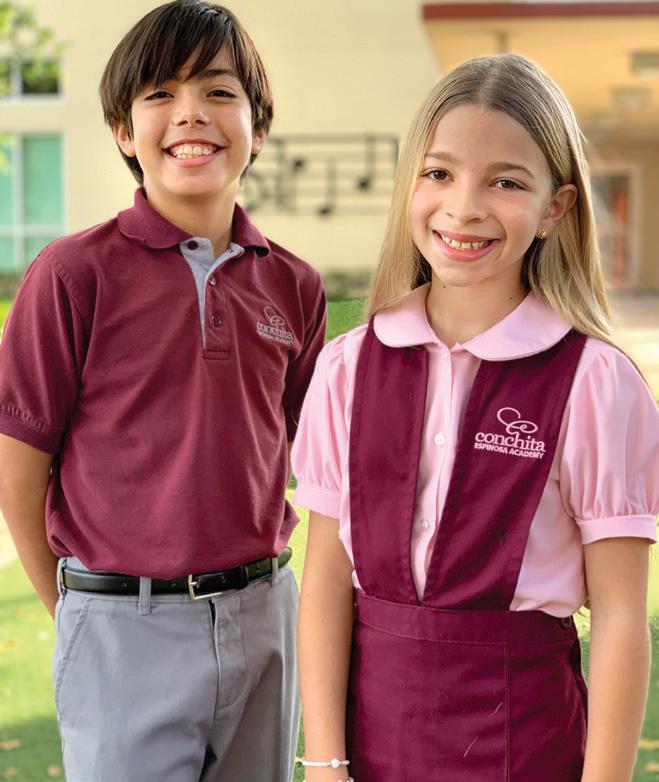
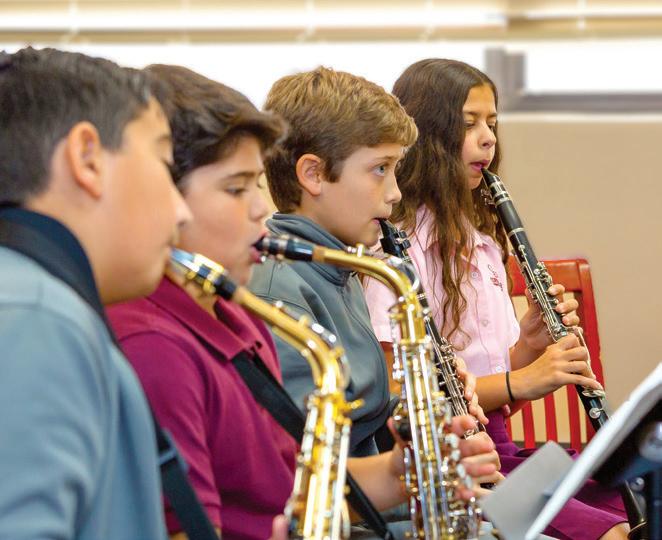
CEA provides a dynamic, intimate and nurturing environment that helps students grow into confident human beings with curious minds, healthy bodies, and strong civic, spiritual, and cultural values. Through its demanding academic program, Conservatory of the Arts, athletic division, and mastery program, students are challenged and inspired to grow as passionate thinkers and doers who make an impact on their communities. Each child is seen and respected as an individual, keeping the spirit of love and respect that is the trademark of CEA and The Espinosa Method™.
EDUCATION BY DESIGN
Know the Difference Before You Choose a School
You have probably heard both words at an open house or two. A school talks about how they "personalize" learning for every student. Another one leads with their "customized" curriculum. They sound like they're describing the same thing. They're not.
For parents in the middle of a school search, that distinction matters more than it might seem. It affects how your child will be taught, how much say they'll have in their own learning, and whether the school's whole approach is actually built for the way your kid thinks and works.
Both models push back against the idea that one classroom experience fits every student. But that's roughly where the overlap ends. Here's what research, pedagogy, and actual classroom practice tell us about each.
Personalized Learning
The U.S. Department of Education defines personalized learning as instruction where pace and approach are shaped around the needs of each
individual learner. Learning objectives, content, and sequencing can all shift depending on what a student needs and what genuinely interests them.
In practice, that means a teacher is working from more than a textbook and a pacing guide. They are drawing on assessment results, learning profiles, and what they observe day to day to make real decisions about how content gets delivered. The curriculum itself does not disappear. What changes is how a student moves through it. This idea is not new. John Dewey argued for learning rooted in student experience. Vygotsky gave us the concept of the "zone of proximal development," the sweet spot where a student is challenged but not lost. Personalized learning is built on both of those foundations: the belief that instruction works best when it starts where a student actually is, not where a calendar says they should be.
It is also worth knowing how personalized learning sits relative to two terms you will hear used interchangeably with it. Differentiated instruction adjusts how content is delivered to groups of
learners. Individualized instruction modifies pacing for a single student. Personalized learning does both, and goes one step further by involving the student in shaping their own learning activities.
Customized Learning
Customized learning flips the dynamic entirely. Here, the learner is not just a participant in their education. They are the primary architect of it. Instead of a teacher adjusting how a fixed curriculum gets delivered, the curriculum itself can change based on what a student is interested in, what they are working toward, and what they have actually mastered.
Charles Reigeluth, an educational researcher whose work has been central to the competency-based education movement, describes customization as a fundamental shift away from the way most schools are structured. In a traditional model, students move forward because a semester ended. In a customized model, they move forward because they are ready. His framework organizes learning around real-world projects, self-directed exploration, and mastery benchmarks rather than grade-level progression tied to a school calendar.
Here is the distinction that matters most for parents evaluating schools. In a personalized learning
environment, student progress can still be measured by seat time. A student may be learning in a way that feels tailored to them, but they still advance with their grade at the end of the year. In a customized, competency-based model, time is not the measure at all. Demonstrated mastery
It is worth knowing that while personalized and customized are often used interchangeably, academic research treats them as genuinely different things. Customized instruction varies what is taught, how it is taught, and the pace at which it is taught, all based on the individual learner's own goals. That is a meaningfully different promise than adjusting how a teacher delivers a shared curriculum.
Which Way from Here?
S o which approach actually gets results? The honest answer is both, and each one is doing something genuinely valuable for different kinds of learners.
Personalized learning has been studied longer and more broadly. Schools that use it have seen real improvements: kids showing up more, test scores going up, students staying engaged, and fewer dropping out. A well-known program in New York City built around personalizing instruction found that its students consistently outperformed kids in traditional classrooms. That kind of evidence adds up over time.
What the research also found is that the schools getting the best results were not necessarily the ones with the fanciest technology. They were the ones where teachers actually knew their students, where learning plans connected to real goals, where mentorship was ongoing, and where students could see their work mattering beyond the classroom. The relationship between student and educator turned out to be the most important variable. That is worth remembering when you are evaluating any school, regardless of what model they use.
Customized and competency-based learning has a younger but equally compelling story. These models have not been around as long and are harder to build from the ground up, which is part of why the research base is still growing. But what exists is meaningful. Schools that have fully committed to this approach are seeing fewer students chronically absent, stronger preparation for life after graduation, and something that is harder to measure but just as important: kids who are genuinely invested in their own education.
For families whose children have never quite fit the traditional mold, that last piece is significant. Customized learning environments, including microschools, competency-based programs, and progressive independent schools, are producing graduates who know how to direct their own learning, advocate for themselves, and move into the world with a clearer sense of purpose. That is not a small outcome. It is arguably the whole point.
The question for your family is not which model has more studies behind it. It is which model is built for the way your child actually learns.
What to Look for?
As you move through the admissions process, it helps to know the right questions to ask. Schools are doing their best to communicate what makes them distinctive, and these two terms, personalized and customized, carry real meaning when you know what to listen for. These four questions will help you get to the heart of it.
1. Who drives your child's learning? If it is primarily the teacher adjusting how content gets delivered, that is personalized learning. If your child has real input into what they study and how they demonstrate what they know, that is customized. Both are valuable. Knowing which one you are looking at helps you evaluate fit.
2. How does a student move forward? Does a student advance because the school year ended, or because they demonstrated real mastery?
3. Can you see a learning plan? Ask for an actual example, not just a description. Schools doing this well will be proud to show you one.
4. How much of this depends on your child? Personalized learning works well for students who thrive with teacher guidance and clear structure. Customized learning tends to suit kids who are self-directed and ready for real ownership of their education. Neither is better. But one is likely a better fit for your child, and that is the conversation worth having.
At the end of the day, personalized and customized learning are both meaningful approaches, and private schools are increasingly at the forefront of bringing them to life in ways that truly serve individual students. One tailors the journey through a shared curriculum with a skilled teacher guiding the way. The other hands your child a larger role in designing the journey itself. Neither is superior. They are built for different learners, and the best private schools understand that distinction deeply.
What sets leading independent and private schools apart is not just their commitment to smaller class sizes or rigorous academics. It is their willingness to ask harder questions about how each child learns best and to build programs around the answers. The most forward-thinking schools are investing in the relationships, mentorship structures, and individualized planning that research consistently identifies as the real drivers of student success. Technology supports that work, but it does not replace it. The schools worth your attention are the ones where the tools serve the teacher-student relationship, not the other way around.
So as you move through your search, look for schools that can speak specifically about what learning looks like for a child who does not fit neatly in the middle. Ask what a typical week looks like. Ask to see a learning plan. Ask how students move forward and who helps them get there. Private schools that are genuinely doing this work will not just have answers to those questions. They will be glad you asked.
That is the conversation that leads you to the right fit.
Toddlers (Ages 1 to 2) Preschool (Ages 3 to 4) Elementary (K - 5 Grade) th
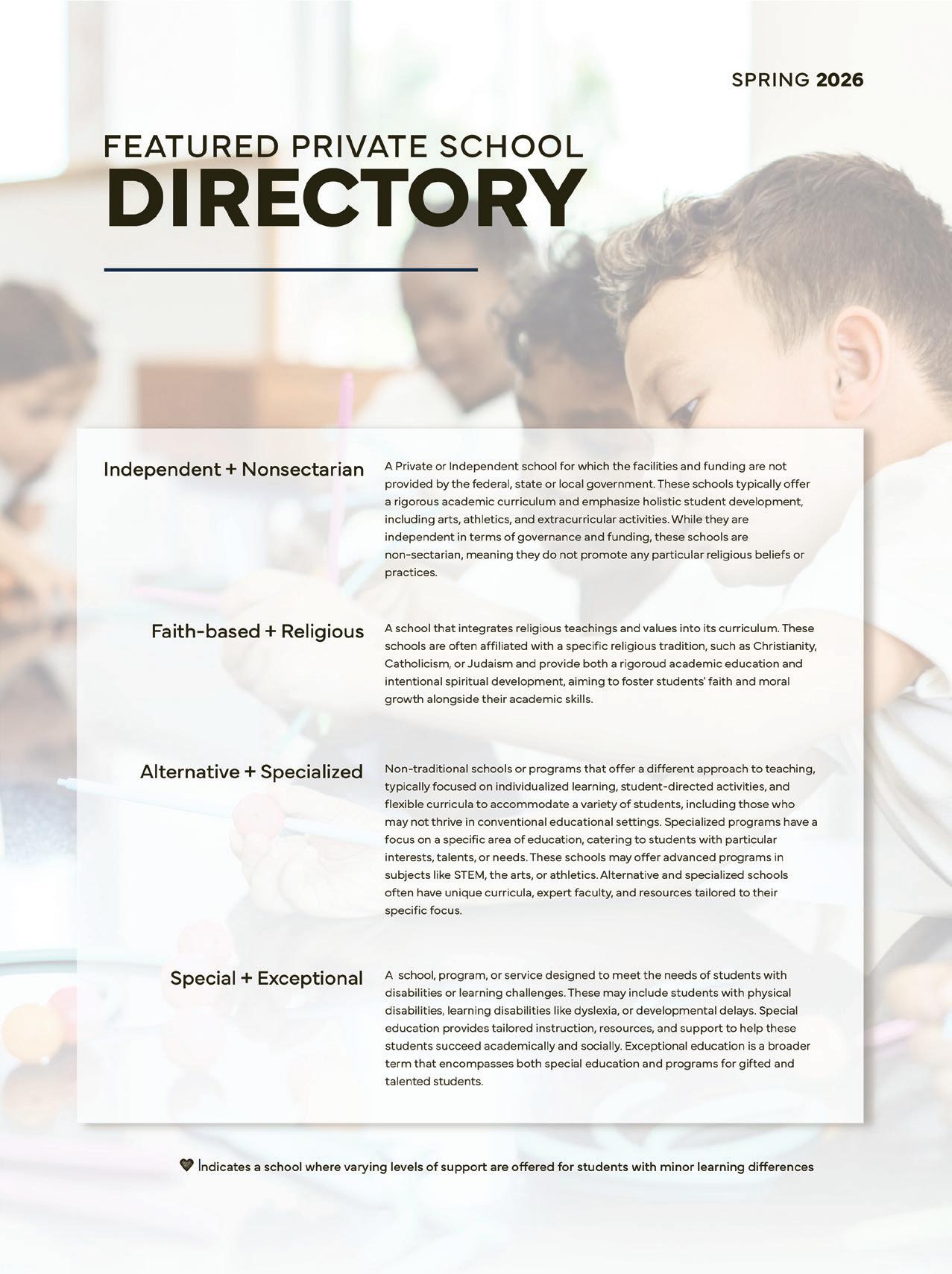
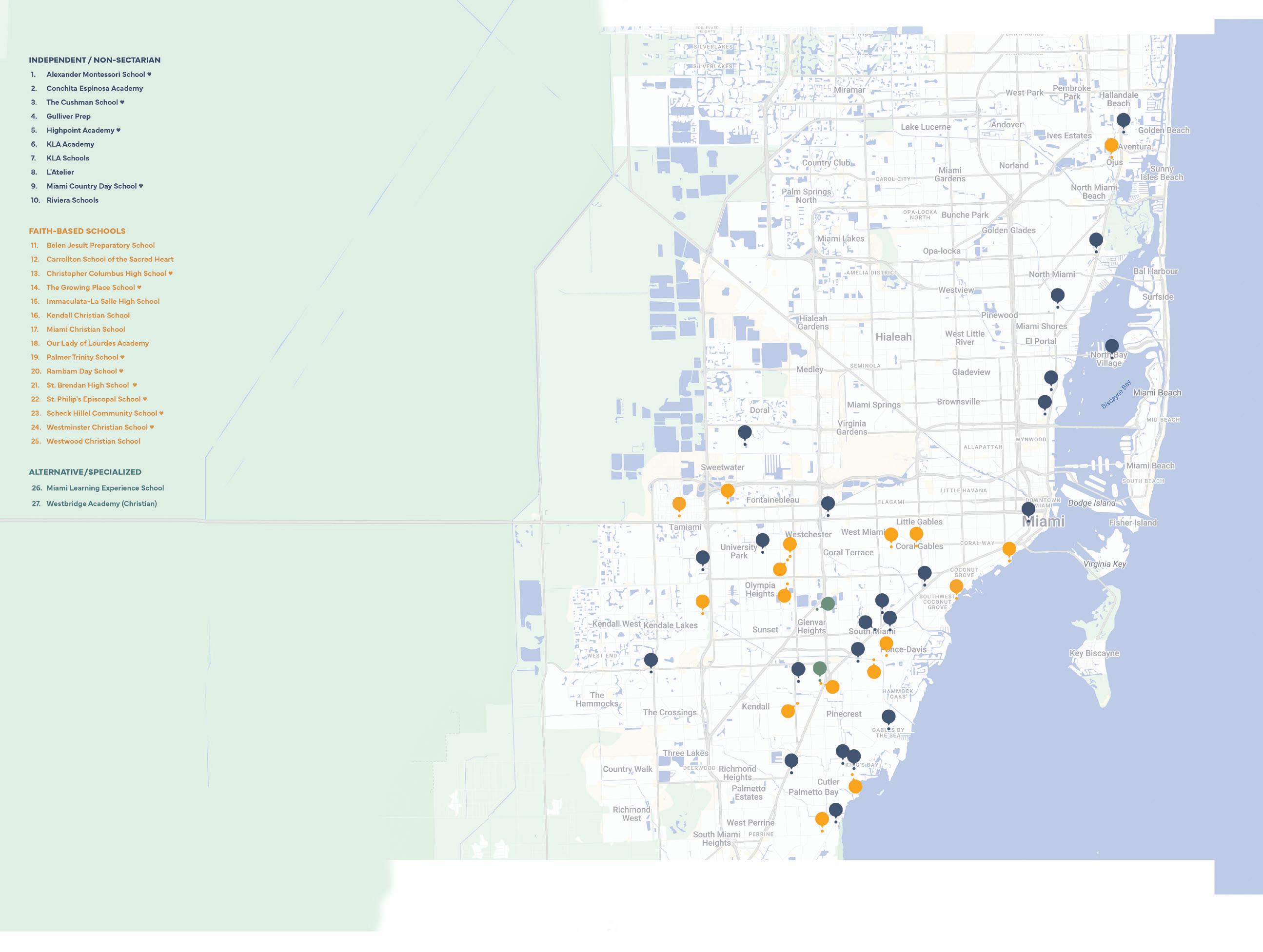
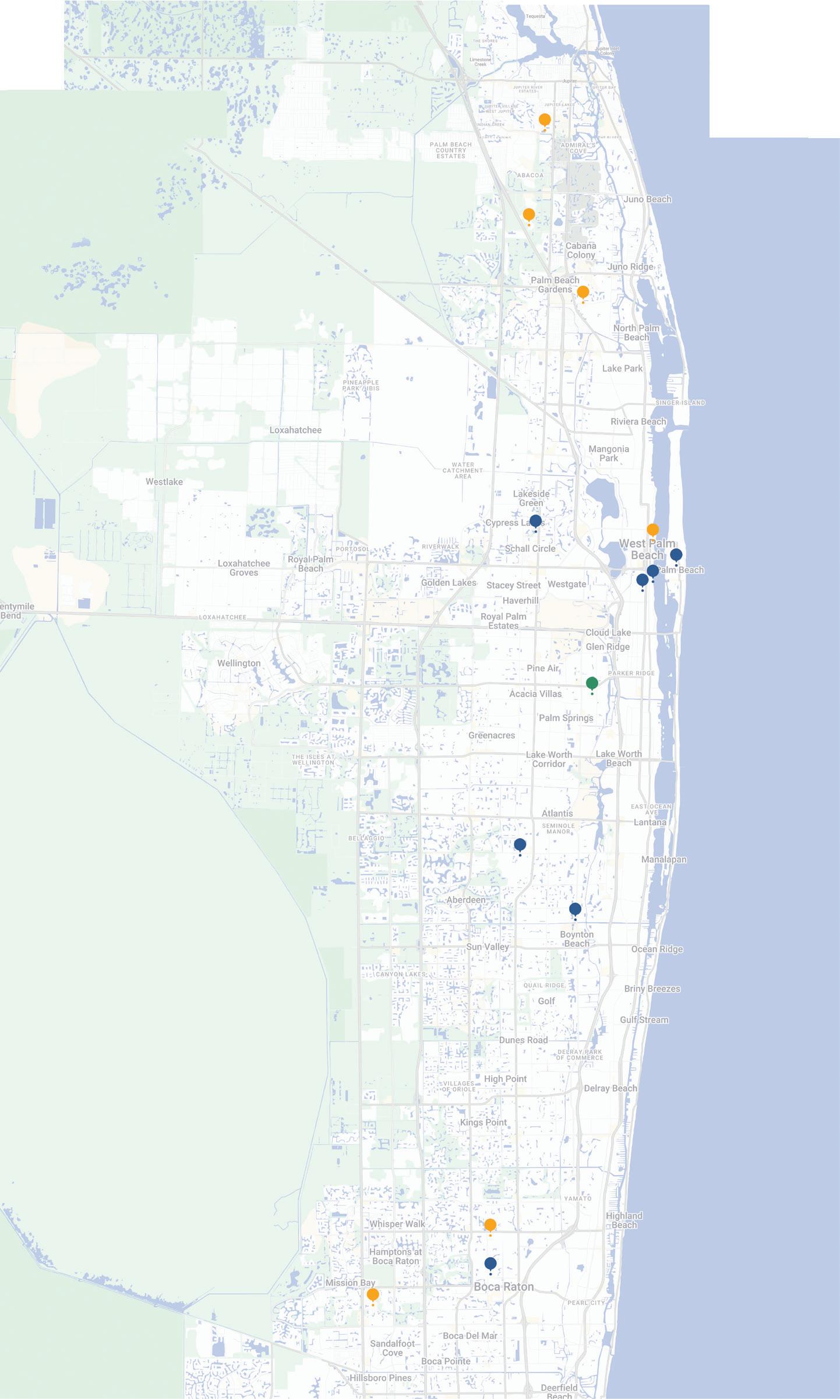
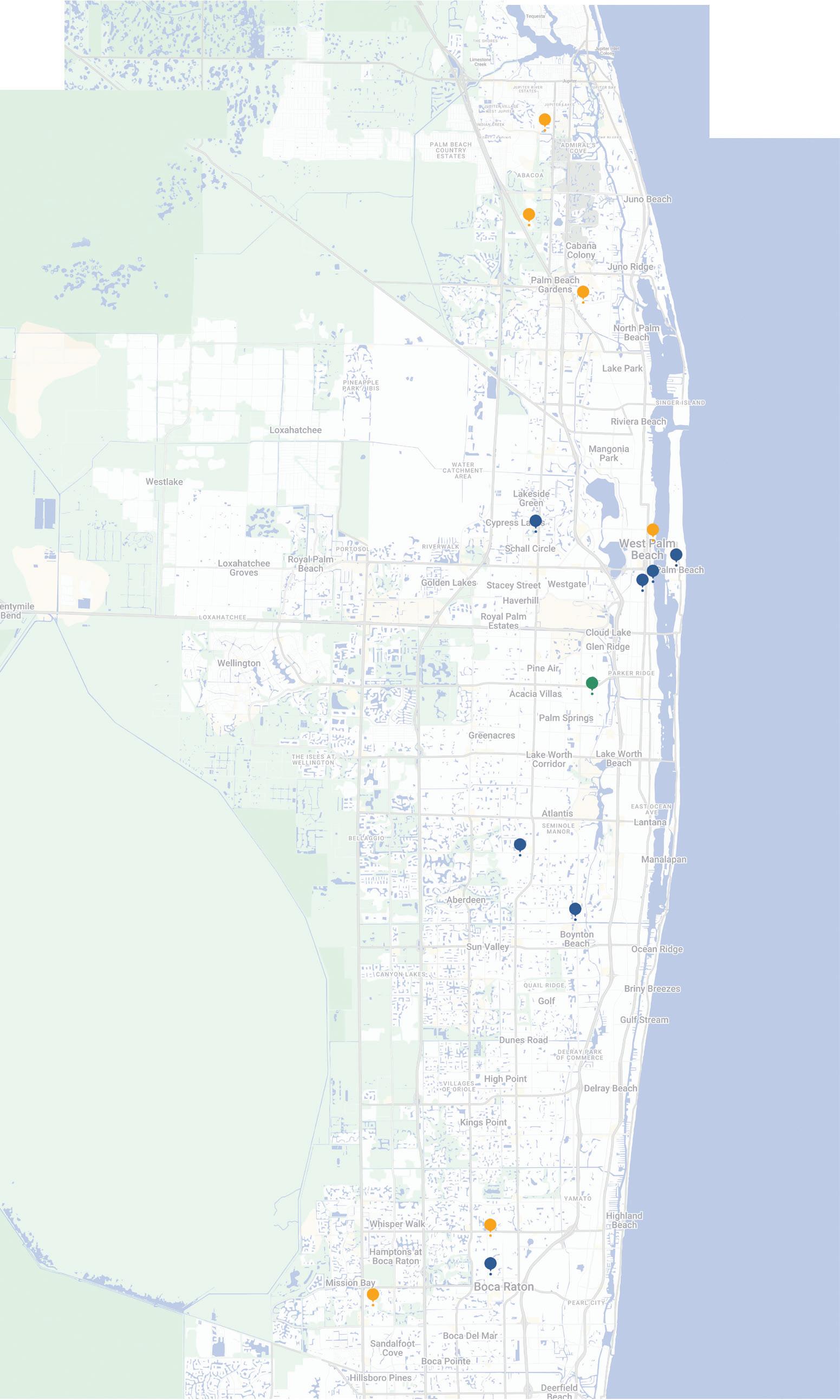
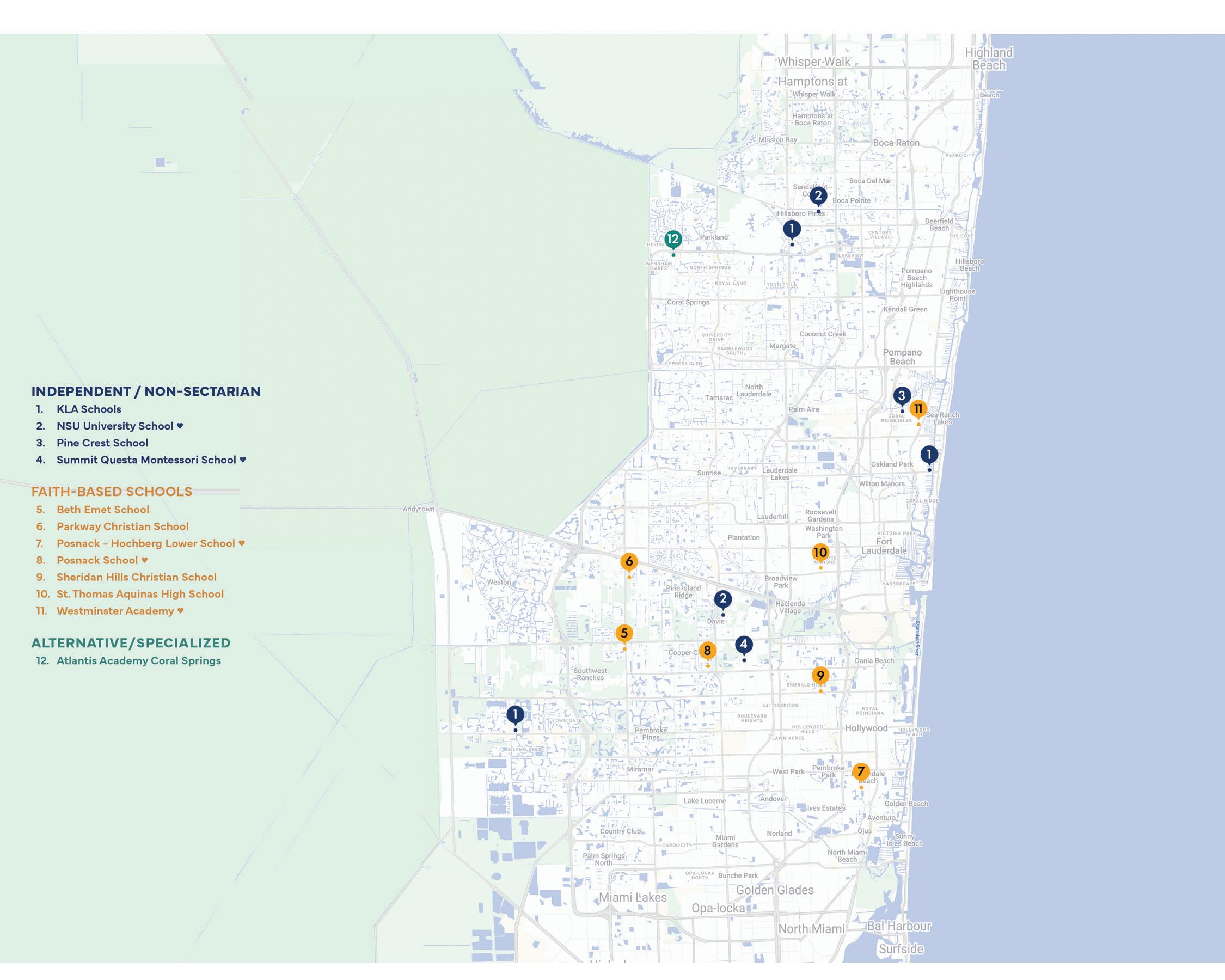
FEATURED PRIVATE SCHOOLS
MIAMI-DADE COUNTY
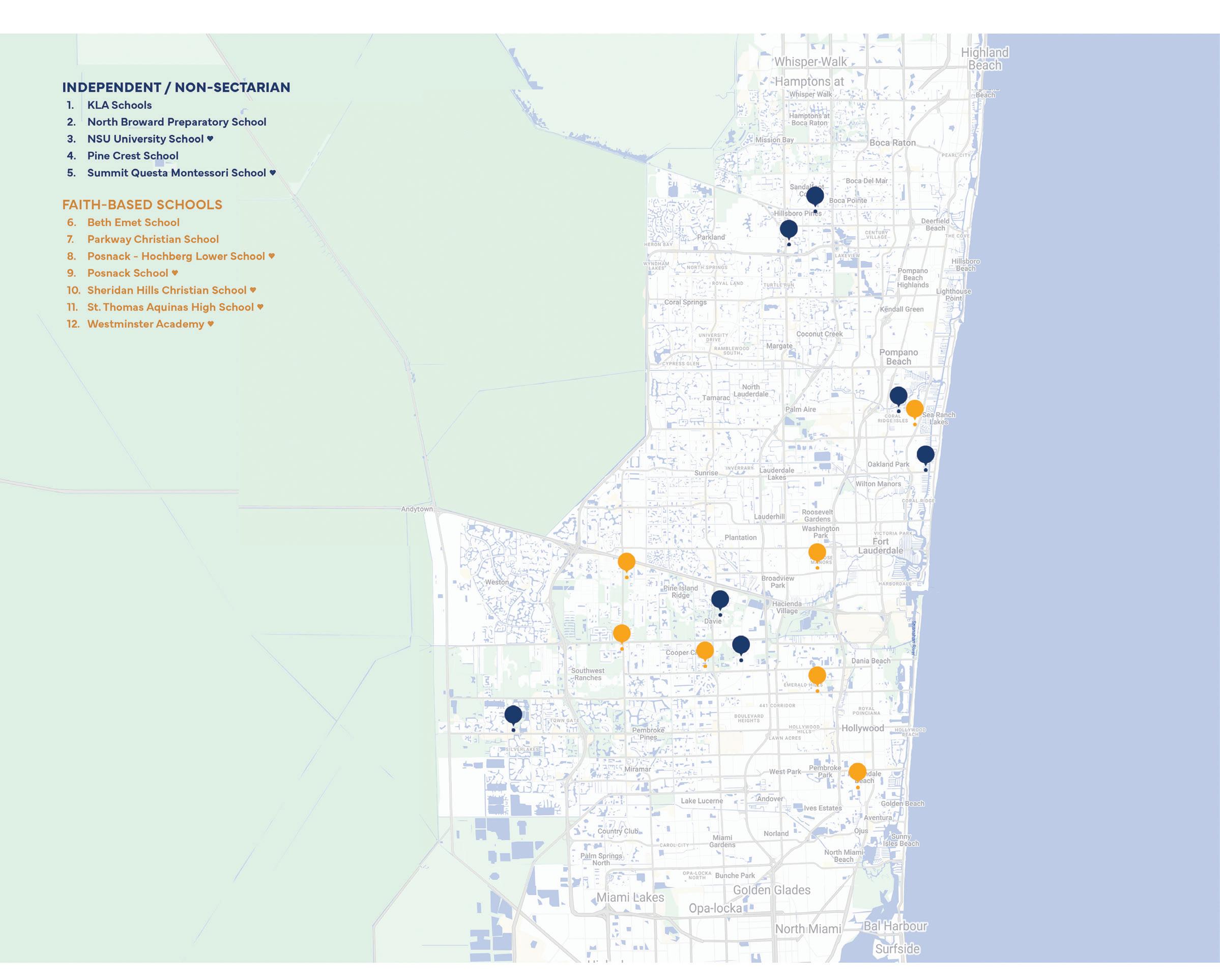
INDEPENDENT / NON -SECTARIAN
Alexander Montessori School w
Conchita Espinosa Academy
The Cushman School w
Gulliver Prep
Highpoint Academy w KLA Academy
KLA Schools
L'Atelier
Miami Country Day School w Riviera Schools
BASED SCHOOLS
Belen Jesuit Preparatory School
Carrollton School of the Sacred Heart
Christopher Columbus High School w
The Growing Place School w
Immaculata-La Salle High School
Kendall Christian School
Miami Christian School
Our Lady of Lourdes Academy
Palmer Trinity School w
Rambam Day School w
St. Brendan High School w
St. Philip's Episcopal School w
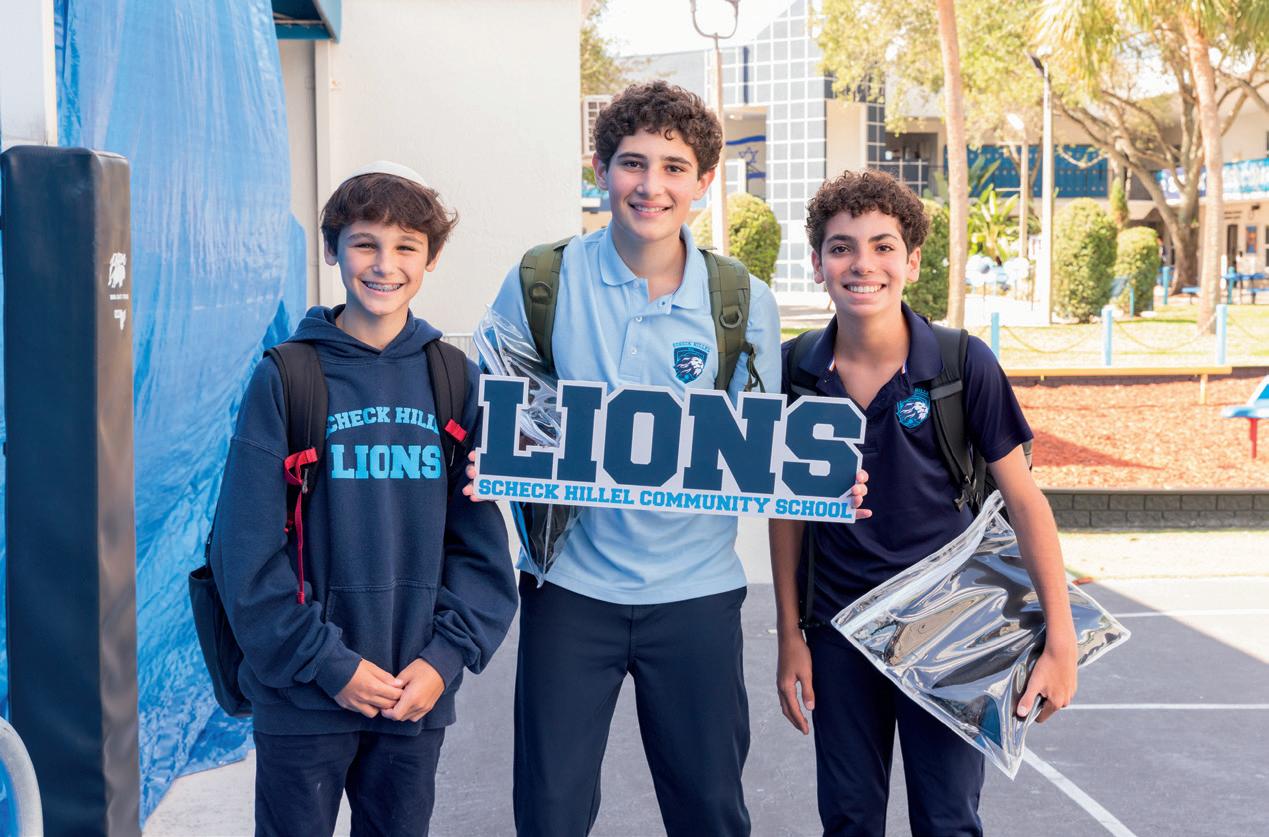
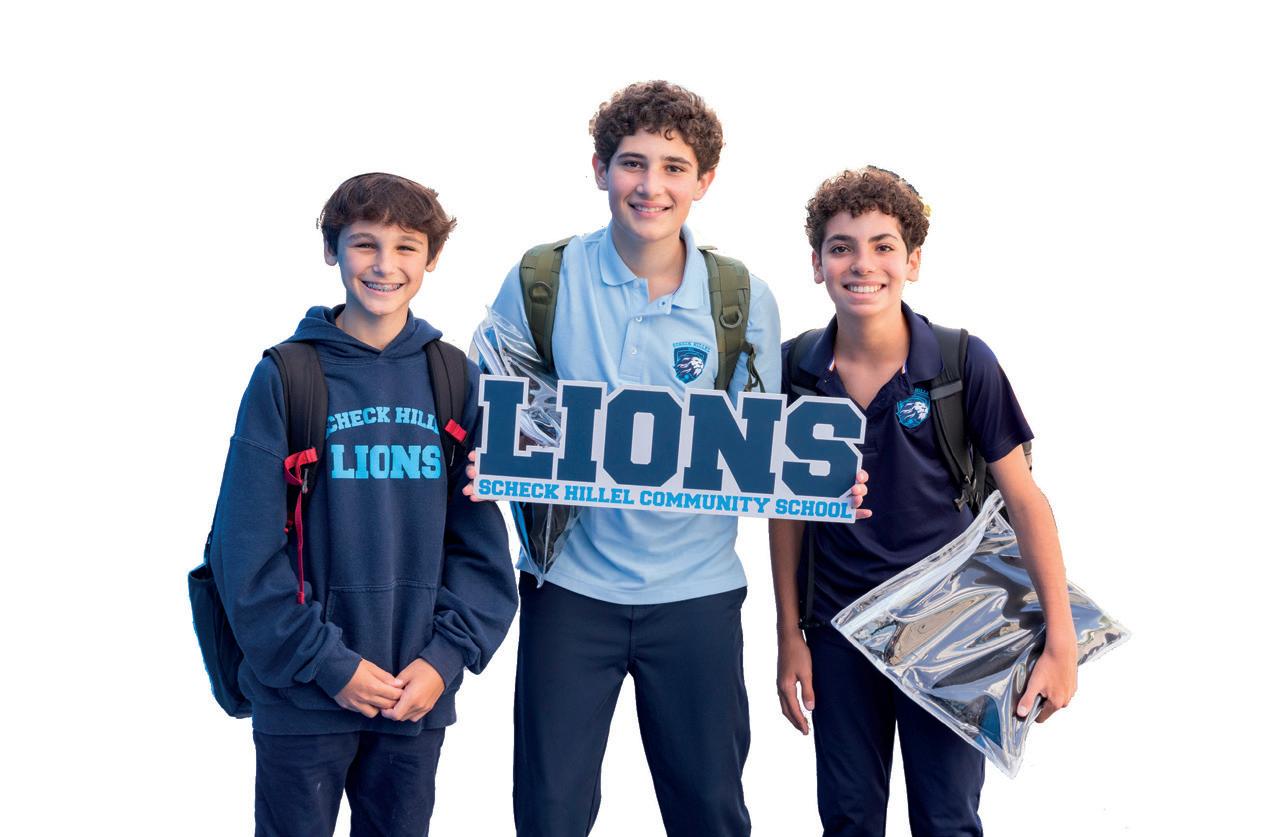
Scheck Hillel Community School w
Westminster Christian School w
Westwood Christian School
ALTERNATIVE/SPECIALIZED
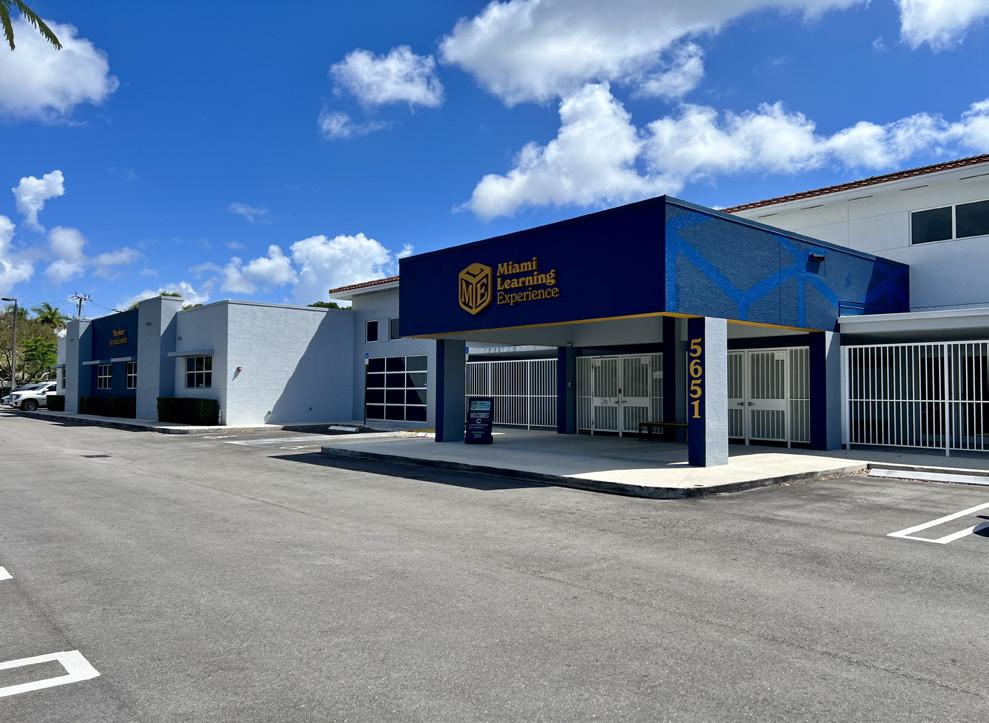
Miami Learning Experience School
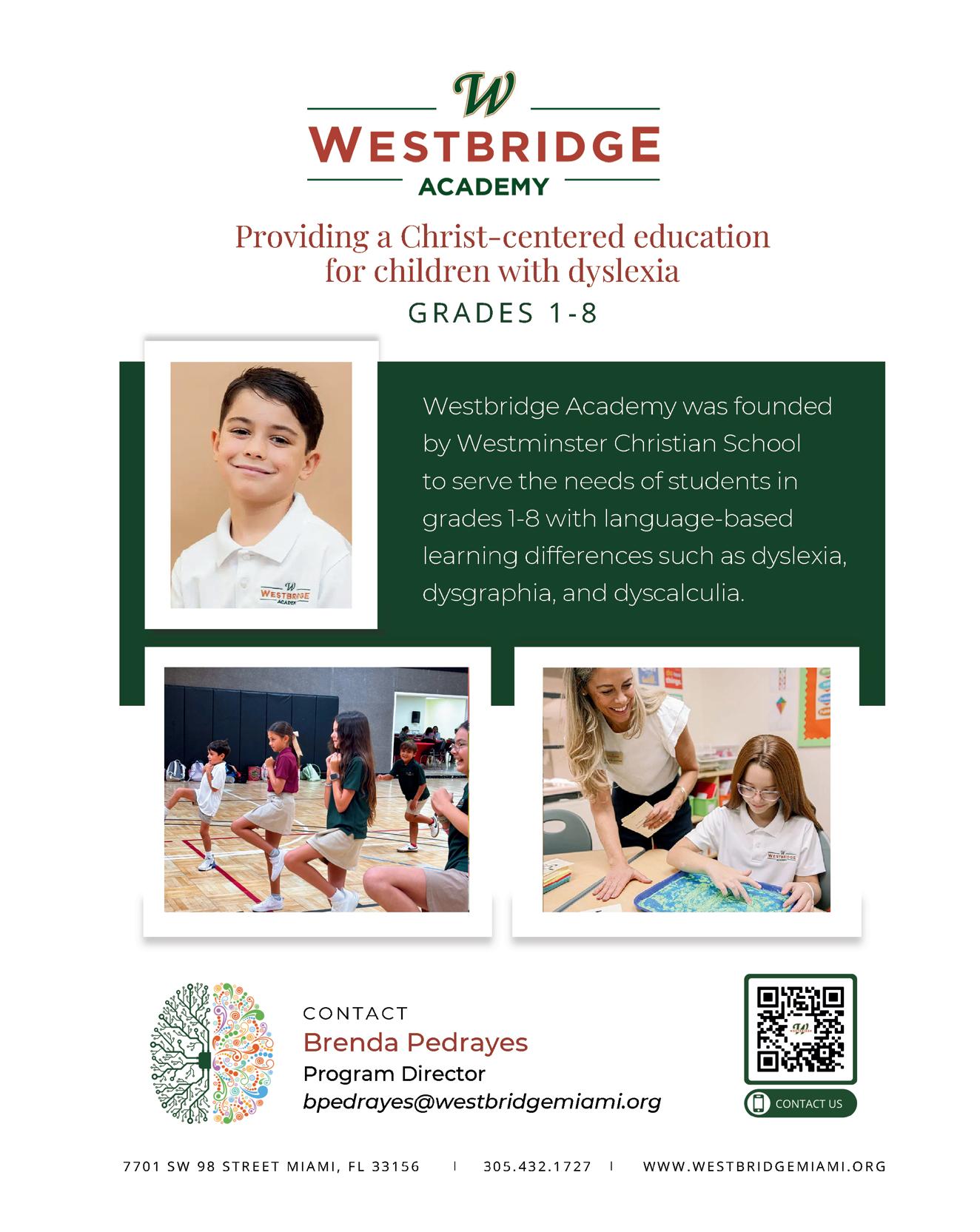
Westbridge Academy (Christian)
Indicates a school that offers minor support for students with mild learning difficulties/differences
Palmetto Bay Campus
Preschool 18 mos. - 6 years 17800 Old Cutler Road Miami FL 33157 (305) 969-1814
Old Cutler Road Campus
Preschool 2 - 6 years 14400 Old Cutler Road Miami FL 33158 (305) 233-4540
1950 Prairie Road West Palm Beach, FL 33406 (561) 642-3100
www.AtlantisAcademy.com
ONLINE & DISTANCE LEARNING
ONLINE PRIVATE SCHOOLS
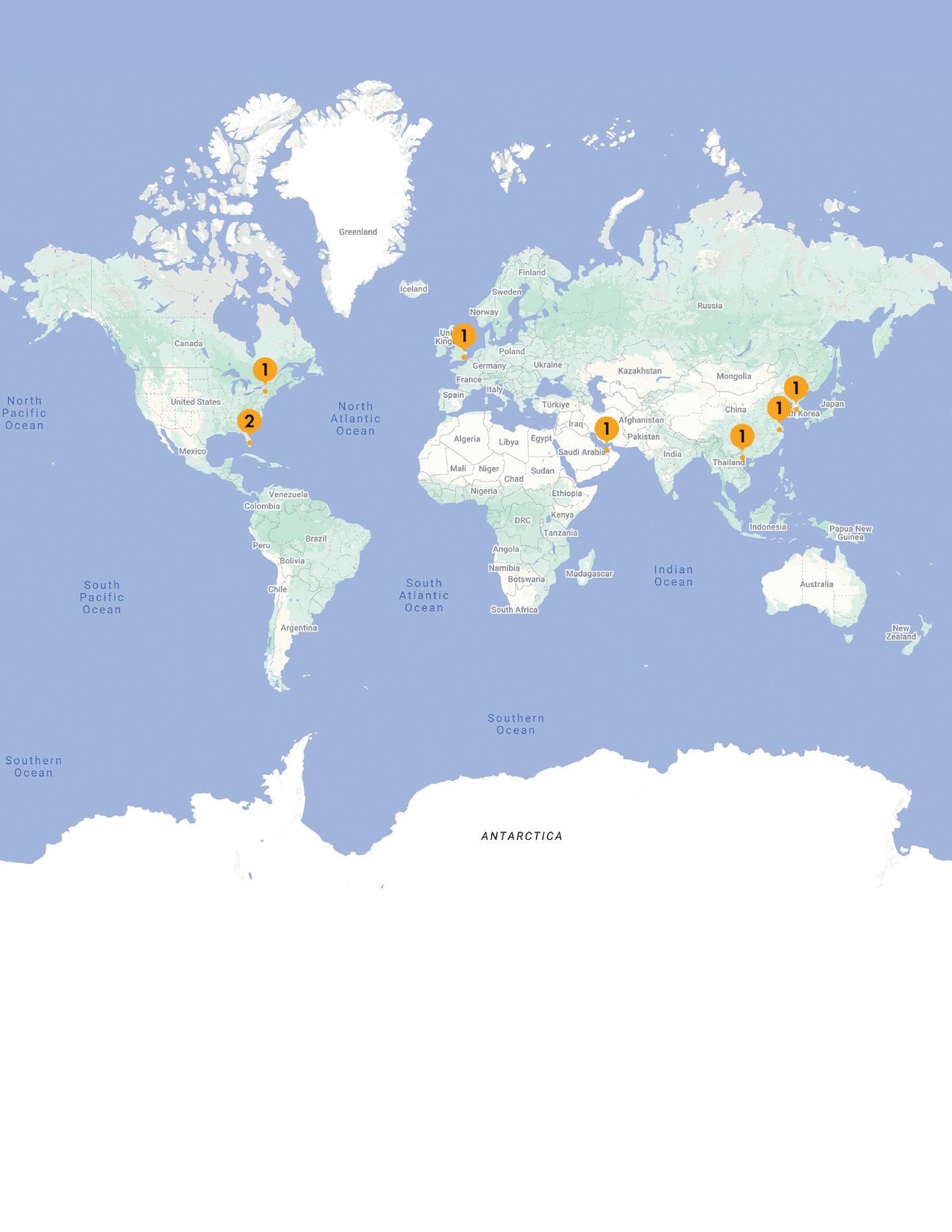
Map points designate global campuses or physical school communities for in-person connections
Global Network of International Baccalaureate World Schools with Virtual Classrooms and Campuses in New York, London, Shanghai, Seoul, Dubai, and soon Hanoi
(212) 724-2420 www.dwight.global
Westminster Christian Online is ideal for families who desire a
(305) 757-1966 www.cushmanvirtual.org
(305) 233-4027 www.wcsmiami.org
South Florida
Learners BETTER GRADES
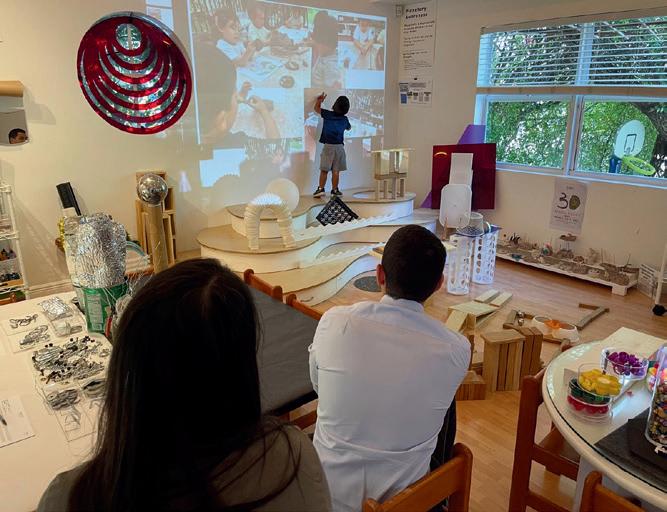
What Does Immersive Education Actually Look Like?
Think back to your own school years. How much of what you sat through in a lecture do you actually remember?
For most of us, the answer is not much. Not because we weren't paying attention, but because the brain doesn't work that way. It isn't a recording device. It's an active system that retains what it's required to work for.
This is the foundational insight behind immersive education, a pedagogical approach that the strongest private schools in South Florida have been quietly building into the structure of their programs for years. And if you’re currently on the journey of school search, understanding what immersive learning is (and is not) can be one of the sharpest filters you have in a decision-making process that rarely comes with clear direction.
It’s Not About Technology
When families hear “immersive learning,” the instinct is often to picture virtual reality headsets or high-tech labs. That’s a narrow, and sometimes misleading, definition. The more important meaning is pedagogical: immersive education describes any learning environment where students are actively engaged with material through inquiry, application, collaboration, and reflection, rather than simply receiving it.
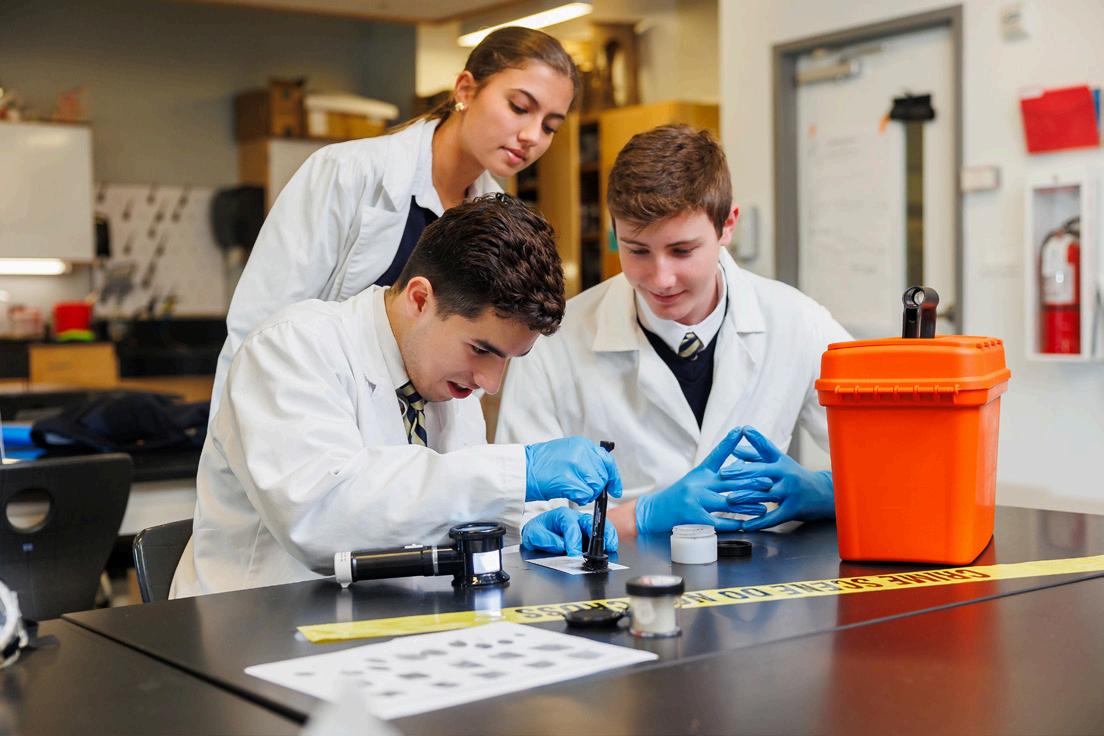
It can take many forms: project-based learning, place-based education, Socratic seminar, service learning, research mentorships, interdisciplinary problem-solving, or real-world simulation. What these approaches share is a deliberate structure designed to move students from passive receivers of information to active constructors of understanding. Technology may support that structure. It does not define it.
What the Research Actually Says
The case for active, engaged learning is not new, but it has been substantially strengthened by modern research. Education researcher John Hattie’s Visible Learning project — a synthesis of more than 2,100 meta-analyses spanning over 300 million students worldwide — found that the instructional approaches with the highest measurable impact on student achievement share a common thread: they require students to do something with their learning. Cooperative learning, structured discussion, and metacognitive reflection all rank well above the average threshold for meaningful educational effect (Hattie, 2008; Visible Learning MetaX, 2024). Passive instruction, consistently, ranks among the lowest. The cognitive science behind this is straightforward. When students are required to use knowledge — to explain it, apply it, debate it, or connect it to something real — they build stronger, more
durable neural pathways. They develop the kind of transferable understanding that outlasts a test and shows up in college and beyond. Doing and reflecting, not simply receiving, is how the brain consolidates what it has learned.
What It Looks Like When Done Well
The distinction worth making when evaluating schools is not whether a school offers immersive experiences, but whether those experiences are structurally embedded in the curriculum and not just add-ons. In essence, they are the core architecture of how learning happens.
In South Florida’s strongest private schools, you see this in a few consistent patterns. Signature academic programs (multi-year, student-driven tracks in areas like scientific research, social entrepreneurship, environmental studies, or
global affairs) are structured around sustained inquiry rather than content delivery. Students are not learning about research; they are doing it, often alongside professional mentors, over multiple years.
You also see it in how schools use their environment. South Florida is an exceptional classroom, marine and Everglades ecosystems, one of the most internationally diverse metro regions in the country, proximity to Latin America and the Caribbean, and a business and cultural landscape that is genuinely global. Schools that treat this geography as a teaching resource (building place-based fieldwork, service learning, and community-connected projects into their programs) are giving students something most campuses cannot
What these programs share is intentionality. The immersive elements are not decorative. They are the mechanism by which students are asked to think, struggle, collaborate, and apply. Precisely what the research shows produces learning that lasts.
What to Look for During School Search
When you visit a school or review its academic programs, these are the questions that can cut through some of the marketing language:
• Is learning structured around doing or observing? Ask how students spend the majority of a class period. If the answer is mostly listening, that’s a signal worth noting.
• Are immersive programs structural or supplemental? A once-a-year trip is not the same as a curriculum built around application and inquiry at every level.
• Does the school use its environment as a classroom? South Florida’s ecosystems, cultural diversity, and global economic ties are rare assets. Schools that leverage them are thinking seriously about context and relevance.
• Can students articulate what they’re working on? During a campus visit, ask a student what project they’re currently doing. Genuine immersive programs produce students who have strong, specific answers to this question.
• How is reflection built in? Reflection is not a soft add-on — it is the mechanism by which experience becomes learning. Schools that build structured reflection into their programs understand the research.
The good news for South Florida families is that we have some of the the most immersive programs right here in our community. Most of our private schools have been building immersive, experiential programs long before it became a marketing term or buzzword. The task for parents is knowing what to look for, and asking the right questions to distinguish programs that are genuinely structured around how children learn from those that are simply well-branded.
Learning that matters, it turns out, is learning that is designed to matter. Learning that is built into the school day, connected to the real world, and structured around what the evidence shows works.