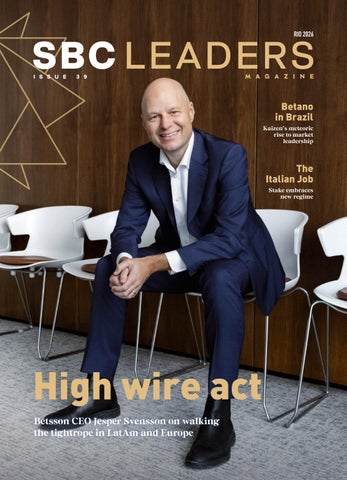
High wire act
Betsson CEO Jesper Svensson on walking the tightrope in LatAm and Europe
Betano in Brazil
Kaizen’s meteoric rise to market leadership
The Italian Job Stake embraces new regime
Betsson CEO Jesper Svensson on walking the tightrope in LatAm and Europe
Kaizen’s meteoric rise to market leadership
The Italian Job Stake embraces new regime
29 September-1 October 2026
Feira Internacional de Lisboa, Lisbon
9-11 June 2026
Broward County Convention Center, Fort Lauderdale
3-5 March 2026
Riocentro, Rio de Janeiro
28-30 April 2026
InterContinental Malta
19-21 May 2026
Metro Toronto Convention Centre
While the shine of Brazil’s regulated market has been slightly smudged by a year of political and legal upheaval, it remains the world’s largest regulated market – as measured by size of population, if not yet by gross gaming revenue.
While experience tells us that market leaders with the muscle of Kaizen Gaming (see interview p.12) will take some budging, the market should be big enough for some of those who arrived a bit later.
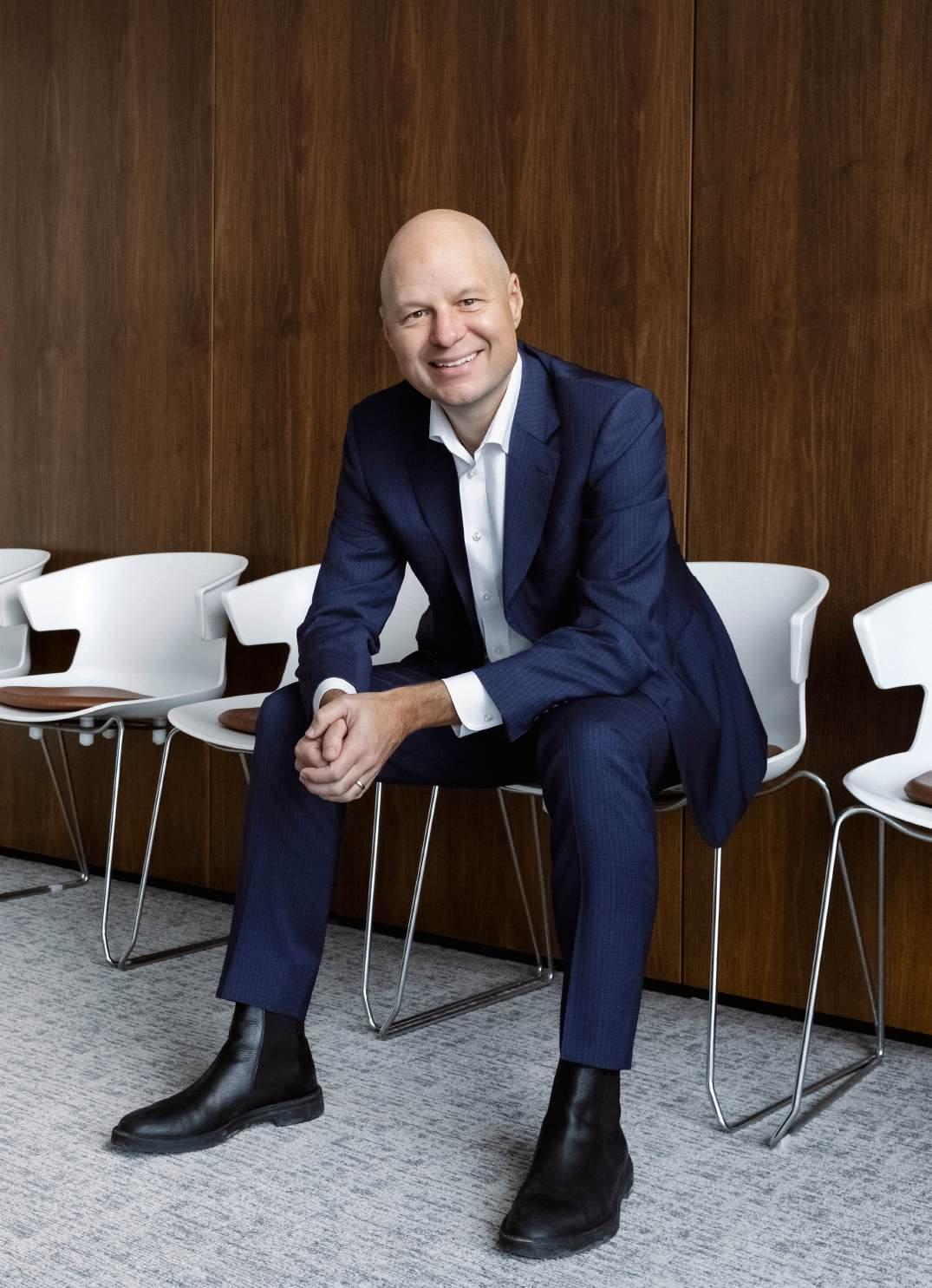
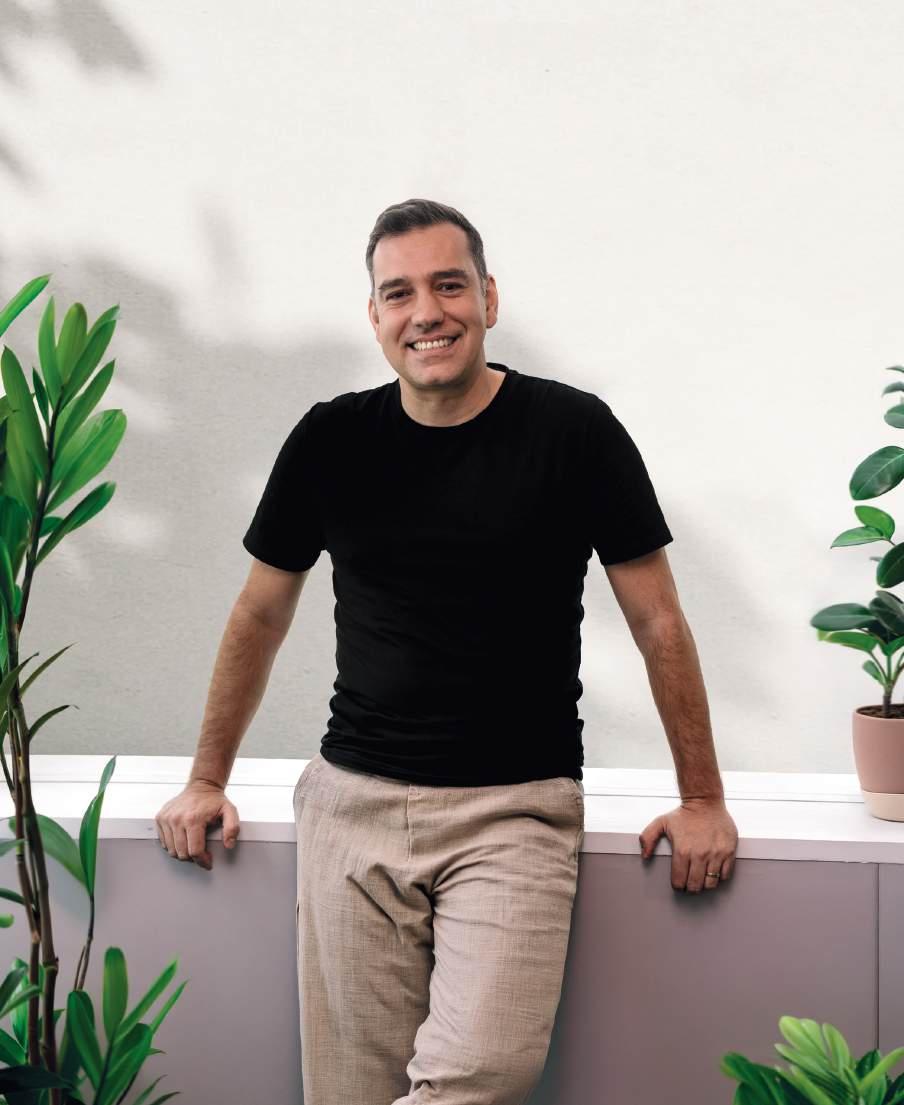
Our cover star Jesper Svensson (p.28), Betsson’s Operational CEO, is certainly hoping so. As is BetMGM Brazil CEO Almir Silva, who is interviewed on p.52. Betsson’s measured growth trajectory in Latin America is one that few European operators have matched. Betsson’s consistency is exemplified by its long-serving CEO duo of Svensson and Pontus Lindwall.
The Swedish operator is one of many planning on building its Brazilian presence through M&A (see feature p.22). Indeed, many will see M&A as the only route out of the rising tide of taxation sweeping across Europe and LATAM.
The likes of Allwyn and Banijay lead a new generation of European heavyweights with ambitious owners who are happy to flash the cash to further their aims.
How the old guard – the likes of Betsson, Entain and Evoke –respond will be fascinating. If Entain is the supertanker among that particular trio and Evoke looks the most likely to sink, then Betsson is showing the value of charting a steady course.
It has not always been that way, with profit warnings in the past and fumbled acquisitions. Lindwall was even sacked for a brief period three years ago – an incident that was shocking for far more than just the fact that Lindwall’s father Bill founded the business in the 1960s.
While erstwhile competitors such as Unibet/Kindred and LeoVegas have been swallowed up, Betsson has remained independent. It probably won’t be that way forever but until that point, Svensson and Lindwall will continue preaching the value of patient consistency.
Steve Hoare, Editor, SBC Leaders
The SBC Leaders Magazine is brought to you by SBC - Sports Betting Community: Editorial Team: Andrew McCarron, Craig Davies, Ted Menmuir, Joe Streeter, Conor Porter, Charlie Horner, Jessie Sale, Fernando Noodt Molins, Callum Williams, Viktor Kayed, Martyn Elliott, Lucia Gando, Ted Orme-Claye, Steve Hoare, Justin Byers, Kieran O’Connor, Christian Lee, Tom Nightingale, Elisa Marcante, Ana Maria Menezes, Rachael Kennedy, Ricardo Assis Sales Team: John Cook, Rasmus Sojmark, Alyona Gromova, Conall McCabe, Jan Kowalczyk, Camilla Scott, Bob McFarland, Craig Brown, Ed Young
Creative Lead | Design and Layout: Jessica Camilleri

© 2025 Sports Betting Community Limited. All rights reserved.


All content in this publication, including articles, photographs, and other materials, is protected by copyright under the Copyright, Designs and Patents Act 1988. The copyright in all materials in this publication is owned by Sports Betting Community Limited or its licensors. You may not reproduce, distribute, or otherwise use any of the content without the express written permission of Sports Betting Community Limited (SBC), except as permitted by law. For permissions or licensing inquiries, please contact sales@sbcgaming.com.
The views in the publication are not necessarily the views of SBC or those of the advertisers. Although every effort has been made to ensure the accuracy of the information contained in this publication, SBC cannot be held responsible for any errors it may contain. In no event shall SBC be liable for any direct, indirect, incidental, special, consequential, or exemplary damages, including but not limited to, damages for loss of profits, goodwill, use, data, or other intangible losses (even if we have been advised of the possibility of such damages), resulting from the use or the inability to use the material contained in this publication.
Produced and published by Sports Betting Community Limited
REGISTERED ADDRESS: SBC, 2nd Floor, 212 New Kings Road, London, SW6 4NZ
EMAIL: sales@sbcgaming.com | WEB: www.sbcgaming.com & www.sbcleaders.com
06 People
Departing Rank Group CEO
John O’Reilly reflects on a life in gambling; plus leaders on the move
12 Spotlight: Betano
Local boss Guilherme Figueiredo explains how Betano rose to the top of the tree in Brazil
18 IMGL Analysis: Brazil
Caio de Souza Loureiro of TozziniFreire on a momentous Supreme Court decision
22 The Hot Topic: A buyer’s guide to Brazil Mergers and acquisitions have yet to get going in Brazil but the vultures are circling
82 Comment: Ras Sojmark The final word
28 Interview: Jesper Svensson of Betsson
One of the few leading European operators to make inroads across Latin America
32 Analysis: Mexico’s new regime
Discussion of new regulations in Mexico
36 Analysis: Chile and Paraguay
Two new countries looks set to open licensed betting and gaming markets
SPORTS BETTING
41 Column: Italy’s Top Model
Ted Menmuir on the lessons other nations can learn from Italy’s re-regulation
42 Interview: Antti Koivula of ATG Hippos
Chief Compliance Officer of joint venture on his concerns with Finland’s re-regulation
CASINO
47 Column:
To the Finland Station Joe Streeter on Finland’s new gambling act and its ban on affiliates
48 Interview: Stake
Italy Country Director Fabio Angeli Bufalini
New entrant with big brand and big ambitions
52 Interview: Almir Silva of BetMGM
Brazil CEO reveals his love of bingo as he surveys BetMGM’s progress
56 Interview: Kanggiten CEO
Viktor Cherkas
Supplier CEO reveals story behind growth charge
61 Column: The quiet squeeze Rachael Kennedy on highrisk payments
62 Roundtable: The end of fragmentation Payments experts from FDJ United, Chevron and Shufti
67 Column: Netflix opens new frontier
Jyoti Rambhai looks at the opportunities offered Netflix’s bid for Warner Bros
68 Feature: After the ban
In-depth investigation into next season’s football marketing
72 Roundtable: World Cup 2026
Operators are gearing up for the biggest betting event of the year PLAYER PROTECTION
77 Column: Talking about suicide
Steve Hoare encourages operators to talk about gambling’s worst harm
78 Interview:
EPIC Global Solutions
CEO Paul Buck
Training trailblazer on the power of lived experience
JOHN O’REILLY
Just 10 days before he retires as CEO of Rank Group, JOHN O’REILLY reflects on a career well-lived
Ithink the timing is right for me to step back. We’ve delivered on landbased casino reform, bingo tax has gone, consultations on bingo licensing are well underway, and there’s a new chair in place. Interim CEO Richard Harris has been working with me for a few years. He’s a very talented chap, probably the most commercial CFO I’ve ever worked with, and he really understands the gambling business. I’m leaving Rank in very good hands. I hope he gets the job permanently.
Rank is a very special place with very special people, which makes it hard to walk away. But I’m proud of the work we’ve done and it feels like the timing is right.
Ladbrokes 1992–2010
I joined Ladbrokes as Marketing Controller and became Commercial Director two years later. I was mentored by Cyril Stein, always “Mr Stein” to me. He was a bookmaker through and through, a larger-than-life character with incredible business instincts. I don’t know why he took a shine to me, but he taught me something every day. One lesson stuck with me throughout my career: in a highly regulated and taxed industry, the only things that really move the dial are regulation and taxation.
I’ve used a lot of shoe leather walking up and down Whitehall and Westminster. Politicians need to understand the sector and its relationship with consumers. Ultimately, the customer proposition that we deliver is more determined in Whitehall and Westminster than it is by me and my team. I can decide what beer I put in the taps, and I can decide what food I put on the menu, but the gaming proposition is

determined by statute. And if you don’t modernise through regulatory change, the industry goes nowhere.
At Ladbrokes I ran marketing, commercial, online, high rollers, brand, property –everything except people and finance. I launched Ladbrokes online in the late 1990s. At first, I got it wrong. I thought online betting would be about content and did a deal with Mirror newspapers. It wasn’t. It was just about betting.
We built the first sports betting platform with a small group of developers called Orbis, which later became OpenBet. We launched online casino with Microgaming and persuaded them to get into poker. I ran the high-rollers business, which was hugely important at the time, and travelled extensively. We did deals in mainland China on virtual racing with a state lottery, in Scandinavia with Sponsio, and in Spain with Cirsa to launch Sportium. I had a wonderful time –Ladbrokes is still in my blood.
The Tote bid 2010-2011 When I left Ladbrokes, I knew what I wanted to do. I wanted to buy The Tote when the government privatised it and I wanted to give racing a shareholding. I was backed by Blackstone and others and worked closely with former British Airways and Liverpool FC Chairman Sir Martin Broughton, who is a Chelsea fan like me.
At one point we thought we’d won. But we finished second to Fred Done. Fred is a lovely man and if you’re going to lose, he’s a good person to lose to. That was my gardening leave.
“I’ve used a lot of shoe leather walking up and down Whitehall and Westminster. Ultimately, the customer proposition that we deliver is more determined in Whitehall and Westminster than it is by me and my team

Gala Coral 2011–2015
I joined Gala Coral to work with CEO Carl Leaver, who was amazing. He took me to breakfast and asked what I’d do with Coral’s digital business. I said I’d start again and here are some numbers. He thought I was smoking something.
We rebuilt everything from the ground up. I realised that rather than integrating a casino with the sportsbook, it made more sense to integrate the sportsbook with the casino. So for the first time, we integrated OpenBet’s sportsbook into Playtech’s casino platform –the Information Management Solution (IMS) to create a single wallet.
I told Carl we’d make £46m operating profit by year four. We didn’t quite, but by year five we were making north of £50m. That transformation was a huge part of the valuation behind the Coral-Ladbrokes merger.
Parade and William Hill 2015–2018
By 2015, I thought my executive career was over. Then Andy Clarkson and Dominic Hawken approached me about chairing software house Grand Parade. Two lovely men. Dominic sadly died far too young.
I helped them decide what to do with the business and ultimately sold it to William Hill. During a Q&A, Dominic Walsh of The Times asked William Hill Chair Gareth Davis whether he would be bringing me on board with the acquisition. So he asked whether I’d be interested and I joined the board and oversaw the transformation programme with McKinsey.
There was nothing wrong with what Rank purported to do, which is to deliver fun and excitement. But too often – as a consumer of Rank brands and with Grosvenor particularly – I didn’t feel it was that much fun or that exciting.
The casino business was under-invested, bingo was in decline and digital was nowhere. We invested heavily in Grosvenor, rebuilt confidence in Mecca Bingo, and transformed digital through acquisitions: YoBingo in Spain and Stride Gaming, which gave us proprietary technology to build the Rank platform that you see today in the UK. Last year it was Rank’s most profitable division.
We also inherited a heavy fine from the Commission for Stride’s pre-acquisition operations, which I appealed, and lost – and they doubled from £2.9m to £6m. So, I took them to court and lost again! But I’ve always maintained a good relationship with The Gambling Commission.
I’ve been married to Christine for 40 years. We have three sons in their late thirties, four grandsons under four, and a granddaughter arriving any day now. Christine always says I didn’t see my kids grow up, but now I will see my grandchildren grow up.
I’m a Chelsea fan, a runner (I’ve got the Coventry half-marathon coming up), I like wine (I have a nice cellar), and I’ve owned a few racehorses (Teaforthree was probably the best; it was favourite for two Grand Nationals and finished third).
I’m retiring, but I’m not stopping. I won’t be an executive again, but I’ll stay involved. I owe a lot to this industry and to the gambling consumer, and if I can help protect their interests, I’ll do that.


Betting & Gambling Council (BGC) chair Michael Dugher has left the UK lobby group to take up a role with PR agency Brunswick Group
Former Swintt CEO David Mann has been announced as the new CEO at tech supplier Playnetic.
LiveScore’s Chief Product Officer Sam Talbot has resigned from his post.
Flutter’s international division has a new Head of Product in Michael Hogan, who joins from Game Global. Meanwhile, Tombola and Sky Betting and Gaming Chief Commercial Officer Steve Birch left his role at Flutter at the end of the year.
Genius Sports appointed Tom Gray as VP of sports in North America.
Andrew Cochrane left his role as Chief Business Officer at GiG Software after two years in the role to join Soft2Bet as Chief Commercial Officer.
Former Playtech Live CEO Edo Haitin has joined Sportradar as EVP of iGaming after more
than a decade at Playtech. Separately, former Paddy Power Betfair CEO Breon Corcoran has joined Sportradar’s board of directors.
Allwyn Group Head of Responsible Gaming Nicole Garrett has been appointed CEO of the UK’s Bingo Association
LeoVegas founder and former CEO Gustaf Hagman has teamed up with Authentic Gaming founder Jonas Delin to establish a new live casino provider Avanti Studios.
PointsBet Holdings has promoted Australia CEO Andrew Catterall to the chief executive’s office to succeed long-serving Sam Swanell
Octoplay has promoted Director of Business Development Ralitsa Georgieva to CEO to succeed Carl Ejlertsson, who will remain with the company to focus on the creative and strategic side of the business.
The CFO and Chief Administrative Officer of Wynn Resorts’ Macau Craig Jeffrey Fullalove has been promoted to group CEO following
the retirement of Julie Cameron-Doe
Gaming supplier Zitro announced the appointment of long-serving Novomatic executive Michael Bauer, Greentube’s chief product official and chief revenue officer, as CEO of Zitro Digital division.
The American Gaming Association’s Senior VP of Strategic Communications Joe Maloney has joined the Sports Betting Alliance as President and CEO, with former CEO Jeremy Kudon becoming chair.
French horse racing monopoly Pari Mutuel Urbain (PMU) has recruited its former Marketing Director Cyrille Giraudat as its new CEO.
Entain has confirmed the departure of CFO and Deputy CEO Rob Wood, who will be replaced by Michael Snape, the CFO of International Distribution Services.
IGT announced that Andy Hendrickson has added Product to his CTO responsibilities to become Chief Product & Technology Officer.



LAUNCHING ON FEB 24th


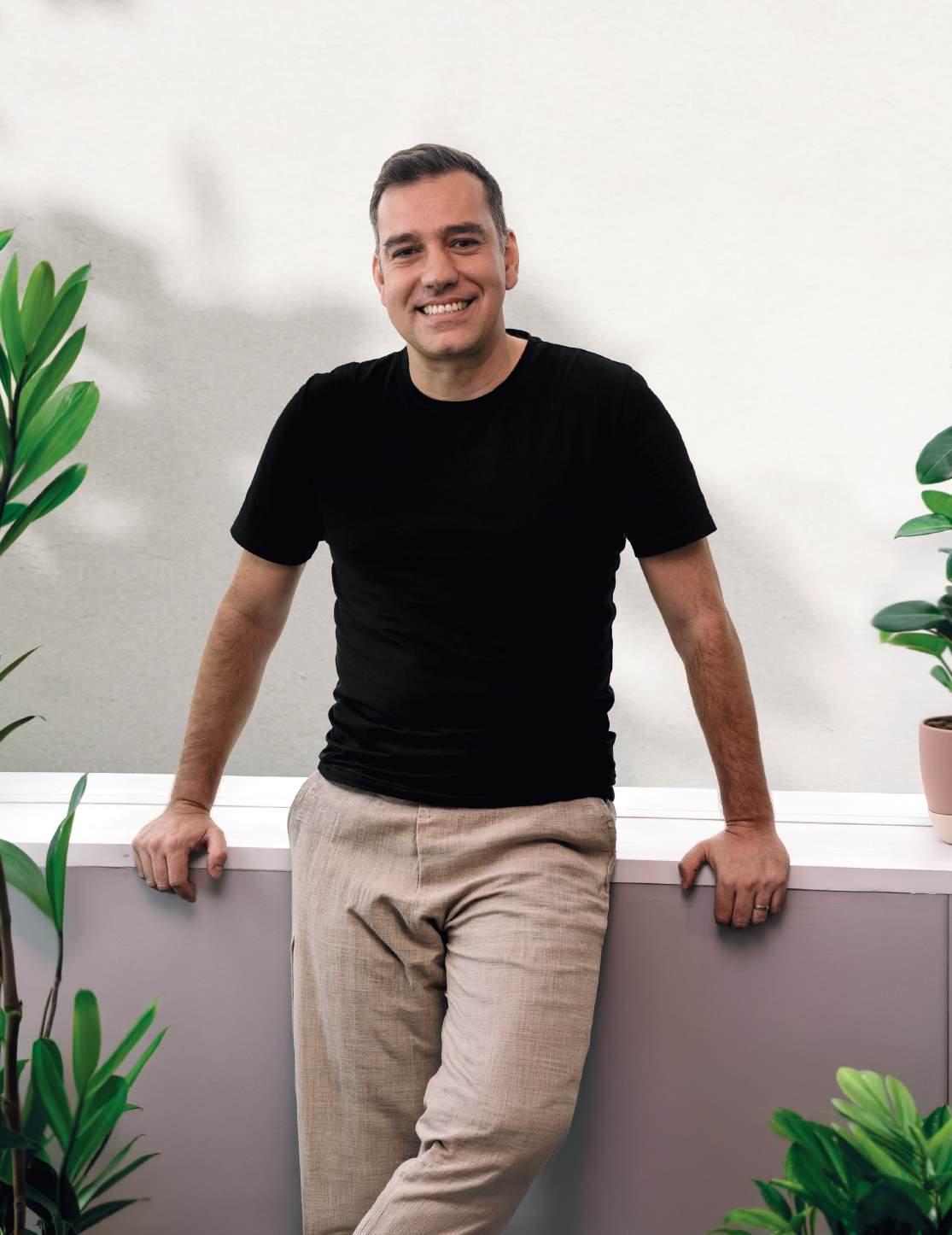
Betano’s Brazilian chief GUILHERME FIGUEIREDO tracks the company’s rise and rise from market entry to market leadership
Words by ELISA MARCANTE
As Brazil’s betting market enters its second year under formal regulation, one operator has consistently stood out in terms of scale, visibility and strategic positioning. Betano has emerged as the market leader, consolidating its position ahead of international competitors such as bet365 and Superbet and local heroes such as Esporte da Sorte and Betnacional by combining early regulatory engagement, strategic sports partnerships and the structural backing of Kaizen Gaming’s global operation.
Before full regulation came into force, Betano held an estimated 23% share of Brazil’s betting market, according to data from OpenBet and H2 Gambling Capital, published by Poder360 in September 2024. While updated financial marketshare figures have not yet been officially disclosed, by the end of Q1 2025 figures from Google’s Market Pulse report suggest that figure had grown to 27%. Second place bet365 held just 11.8% at that stage.
Additionally, traffic data compiled by Aposta Legal places Betano at the top of Brazil’s online betting ecosystem in early 2025. In the first quarter of the year, the platform recorded approximately 1.1 billion visits, significantly ahead of Superbet, with around 790 million visits, and bet365, which attracted roughly 340 million visits in the same period. Together, the three operators accounted for nearly half of all bettingrelated traffic (5.06 billion visits) in the country, reinforcing Betano’s status as the sector’s primary reference point during the transition to a regulated market.
This dominance has not been accidental. According to Guilherme Figueiredo, Commercial Director of Betano in Brazil, the company’s strategy in the country has been shaped by long-term priorities rather than short-term market capture. “Brazil is one of Kaizen Gaming’s priority markets. Our objective is to invest sustainably and consolidate the country as one of the main pillars of our global operation,” he says.
Central to this approach has been Betano’s early and proactive engagement with regulation. The company became the first operator to complete Brazil’s licensing process, actively participating in discussions around the regulatory model established by Law No. 14,790/2023. Figueiredo says this allowed Betano to enter the regulated phase with legal certainty and institutional credibility – “it positioned our brand as a benchmark in compliance and seriousness” – at a time when the market was still navigating the shift away from the grey economy.
Beyond regulation, Betano’s visibility has been amplified by a sponsorship strategy that places sport at the core of its brand positioning. Operated by Kaizen Gaming Group, headquartered in Greece and active in 19 markets worldwide, Betano has aligned itself with Brazil’s most valuable football assets.
“The brand sponsors the two main national championships: Brasileirão Betano and Copa Betano do Brasil,” explains Figueiredo. “This decision positioned us as the largest investor in Brazilian football, ensuring high visibility in 100% of elite broadcasts. Additionally, the partnership with Flamengo strategically amplified our brand in the country.”
The August 2025 deal is, he adds, the largest contract ever signed in Brazilian sports history. It is Betano’s third with Brazilian clubs: in 2023 Betano appeared on Fluminense’s jersey, and last year on Atlético-MG’s. The deal with Flamengo encompasses not only football but also the club’s Olympic sports, traditionally some of the strongest in the country and grassroots programmes.
All of this has helped create the impression for many Brazilians that Betano is a homegrown product – a significant advantage over foreign brands, which in many sectors Brazilian consumers avoid. But for Figueiredo, these investments reflect a broader philosophy.
“Our strategy is built on leadership, innovation and an unwavering commitment to Brazilian sport,” he explains, adding that regulation was essential to transform the market’s potential into real, protected value for consumers, and that responsible gaming remains a non-negotiable pillar.
As Brazil’s regulated betting market matures, Betano’s trajectory illustrates how early compliance, institutional partnerships and global operational support can translate into sustained leadership – setting a benchmark that rivals such as bet365 and Superbet are now striving to match.
Behind Betano’s rapid consolidation in Brazil lies a structural element that extends beyond local execution: the operational, technological and governance support provided by Kaizen Gaming. While the Brazilian market demands speed, cultural sensitivity and regulatory precision, the group’s global framework supplies the scale, discipline and institutional experience required to sustain long-term growth in a newly regulated environment.
Kaizen Gaming operates under a model it defines as “Global Excellence, Local Execution”, a principle that shapes the way Betano functions in Brazil. It’s a catchy phrase that could be adopted by any global operator but Betano seems to be doing it better than most.
The group provides shared infrastructure and governance standards while granting significant autonomy to local leadership. According to Figueiredo, this balance is one of the operation’s main competitive strengths. “Brazil is not just another market; it is one of the
strategic pillars of Kaizen Gaming’s global operation,” he says. “This gives the local team a high level of autonomy, while remaining aligned with the group’s global leadership.”
Betano’s Brazilian operation is built on a structured local organisation that blends global standards with local market expertise. The company’s core functions – including compliance and regulatory affairs, marketing and sponsorships, technology, and responsible gaming – are supported by a strong local leadership team. Arthur Niggemann, Head of Marketing Brazil, and Fabio Ritter, Senior Sponsorship Activation Manager, play key roles in driving the company’s strategic initiatives and partnerships. This setup allows Betano to embed local decisionmaking while remaining fully aligned with the group’s global governance model.
That support is most visible in the technological backbone shared across Kaizen Gaming’s international footprint. Betano operates in Brazil on a proprietary platform developed and continuously refined at group level, incorporating systems already tested in multiple regulated markets. This includes advanced cybersecurity protocols, highcapacity transaction processing, fraud prevention mechanisms and data-driven tools designed to enhance user experience while safeguarding platform integrity.
Kaizen also provides group-wide frameworks for Anti-Money Laundering (AML), Know Your Customer (KYC) procedures and transactional monitoring, which are then adapted to meet Brazilian regulatory requirements. This structure enables consistency across markets while allowing for local regulatory nuances. “It is essential to strictly follow the legislation while also engaging in discussions to ensure a healthy environment,” says Figueiredo.



Brazil is not just another market; it is one of the strategic pillars of Kaizen Gaming’s global operation
Responsible gaming is another area where Kaizen’s international experience plays a central role. While educational initiatives and communication are tailored to Brazilian audiences, they are informed by best practices developed in mature regulated jurisdictions. Figueiredo stresses that responsible gaming is a non-negotiable principle for the company and that education and platform safeguards must evolve alongside market growth.
“In summary,” says Figueiredo, “Betano Brazil is the translation of Kaizen Gaming’s global strategy into the Brazilian landscape. We receive the best of international technology and expertise and apply it with the cultural depth and agility that Brazil’s passion for sports demands.”
With its leadership position consolidated and the regulatory framework now in force, Betano’s focus in Brazil is shifting from rapid market entry to sustainable, long-term growth. The coming years are expected to be defined not only by expansion in scale, but by the maturation of the market itself – a transition that will test operators’ ability to balance innovation, compliance and responsible engagement with consumers.
For Betano, growth is closely tied to the consolidation of a regulated ecosystem. The formalisation of the market creates clearer boundaries between licensed operators and illegal platforms, strengthening consumer protection and enabling legitimate companies to invest with greater predictability. Figueiredo says regulation marks a turning point for the sector, transforming a high-potential market into one with long-term economic and institutional viability.
Rather than pursuing growth at all cost, the company’s strategy centres on sustainability. This includes disciplined investment in brand, product and technology, as well as a continued emphasis on responsible gaming. As Figueiredo points out, the objective is to ensure that betting is consistently positioned as a form of entertainment, supported by clear safeguards and
educational initiatives that accompany the expansion of the user base.
From a business perspective, Brazil is expected to remain one of Kaizen Gaming’s priority markets over the medium and long term, within a broader international expansion strategy that aims to take the group’s presence to 26 markets.
Continued investment is planned across multiple fronts, including product development, customer experience and marketing, as well as the strengthening of compliance and risk-management capabilities as regulatory oversight evolves. The size of the Brazilian market, the cultural relevance of sport and high digital adoption rates place the country among the most strategically important regulated betting markets globally.
Market growth, however, is unlikely to be linear. Challenges such as competition from unlicensed operators, ongoing regulatory adjustments and increasing scrutiny around advertising and player protection are expected to shape the operating environment. In this context, Betano’s scale and access to Kaizen Gaming’s international expertise are positioned as competitive advantages, enabling the company to adapt quickly while maintaining operational consistency.
Looking ahead, Figueiredo says Betano’s ambitions extend beyond defending its current position. The company aims to play an active role in shaping best practices within the Brazilian market, contributing to discussions around regulation, integrity and responsible play. Figueiredo says leadership in this next phase will be measured not only by market share, but by the ability to operate responsibly, transparently and in alignment with the long-term interests of the sector.
As Brazil’s betting market continues to evolve, Betano’s trajectory reflects a broader shift from expansion to consolidation. The focus is now on depth rather than speed: deepening relationships with consumers, partners and regulators, refining the product offering and reinforcing trust. In a market still defining its long-term contours, sustained leadership is likely to belong to operators capable of combining scale, discipline and a clear vision for responsible growth.

In the second of a series of regulatory reports from the International Masters of Gaming Law (IMGL), CAIO DE SOUZA LOUREIRO, a Partner at Brazilian law firm TozziniFreire, examines the continued reverberations from a Supreme Court decision that threaten to destabilise the entire market
The repercussions of the 2020 Supreme Court decision that granted states the authority to operate their own lotteries continue to rock the entire Brazilian gambling sector – with lotteries, sports betting and iGaming operators all affected. After the ruling, several states, notably Rio de Janeiro, Minas Gerais, and Paraná, initiated lottery operations via concessions and authorisations awarded to private entities.
Following the successful regulation of sports betting and iGaming in late 2024, states and municipalities have been studying ways into the market. Hundreds of municipalities have begun to pursue initiatives to establish their own lotteries, despite limited legal clarity regarding their rights in this area.

Municipalities contend that the Supreme Court’s ruling effectively opened the market not only to states but also to the municipalities. Although the Court did not explicitly grant municipalities the right to operate lottery services, many municipalities interpret the absence of a federal monopoly as conferring such authority on both states and municipalities.
The municipalities argue that financial considerations and federative equality justify their claim to revenues generated from lotteries, sports betting, and iGaming services, asserting that these funds could contribute meaningfully to public budgets. Therefore, they contend that the exclusive granting of this right to the federal government and states is unwarranted.
Conversely, states and the federal government maintain that both legislation and Supreme Court rulings confer sole authority for operating lottery services upon them. They are also concerned that opening the market to municipalities might compromise its viability, particularly if companies seek out jurisdictions with less stringent regulatory requirements. This regulatory leniency at the municipal level could facilitate the entry of operators lacking proper intentions or oversight. As a result, certain smaller cities have experienced a rapid and notable increase in the number of authorised lottery operators.
The Supreme Court is reviewing a case brought by a political party, which challenges the authority of municipalities to operate lottery services. The case originally targeted 15 cities but seeks a broader decision that would prevent all municipalities from running lotteries.
Initially, the Rapporteur Justice denied an injunction and instead called upon the named municipalities, the Federal Public Prosecutor’s Office, and the Attorney General for their input. Meanwhile, several states requested to join the proceedings as amici curiae
After support from the Attorney General and Federal Public Prosecutor’s Office, the Rapporteur Justice granted an injunction suspending lottery regulations for municipalities. The Court will now review whether to confirm or deny the injunction, which remains effective until a final decision.
Although the injunction provides a measure of clarity by favouring the federal government and the states, it does not resolve the matter at hand. Despite municipal efforts to overturn the injunction, new challenges have arisen from the suspension of the legal framework governing ongoing operations.
As these operations must now cease, there remains significant uncertainty regarding the ramifications of this suspension, particularly in relation to the process by which municipalities are to terminate previous authorisations
and concessions. Questions persist as to whether operators possess rights to reimbursement or compensation, and if so, under what conditions. Additional concerns include how bettors will be able to access their accounts, and whether public officials may face liability for having authorised operations absent an appropriate legal foundation.
A significant issue concerns the enforcement of the injunction. With numerous municipal operations distributed throughout the country, including in smaller cities, effective oversight and monitoring of compliance present considerable challenges. Insufficient enforcement may facilitate unlawful activities, as municipalities and operators could find it relatively easy to continue providing services, even if local authorities choose to revoke authorissation or terminate concessions.
Looking ahead, the outcome remains uncertain with 10 Justices yet to cast their votes. Nevertheless, given the legal basis of the injunction, there is a greater likelihood that the Supreme Court will uphold the injunction and rule in favour of the federal government and the states on the merits.
Too many operators under varying regulations might make the market unprofitable for all and potentially cause the lottery industry to collapse “
The principal argument asserts that, under the Brazilian constitutional framework, municipalities are restricted to matters of “local interest,” confining their authority to services directly related to urban issues or those that are better rendered by the local authority rather than gambling. Municipalities attempt to counter this by stating that lottery-generated revenues constitute a local interest. However, this rationale is problematic; if adopted broadly, any revenue-generating service could be classified as a local interest, thereby undermining constitutional provisions.
The injunction is further supported by the Supreme Court’s reaffirmation of the federal government’s authority over gambling and lotteries. Since legislation regarding lotteries and sports betting or iGaming does not designate municipalities as competent authorities for these activities, municipal regulations cannot supersede the federal legislative framework.
While it is anticipated that the Supreme Court will rule against the municipalities, a contrary decision validating municipal lotteries could lead to significant
institutional challenges. For instance, with over 5,000 municipalities in Brazil, even if only 10% were to establish their own lotteries, this would result in approximately 500 separate jurisdictions – each potentially featuring multiple operators and varying legal standards. Such fragmentation would make standardizing requirements for authorisations or concessions nearly impossible, causing competitive disparities between operators at the federal, state, and municipal levels. This scenario would present considerable obstacles to the creation of a coherent and functional market.
No matter what decision the Supreme Court reaches, it’s clear that cities have legitimate reasons to want to run lotteries. However, their ambitions are constrained by current laws. Many municipalities hope to benefit financially from lottery revenues in Brazil, especially as projections for sports betting and iGaming grow. But allowing every municipality to operate its own lottery could backfire; too many operators under varying regulations might make the market unprofitable for all and potentially cause the lottery industry to collapse.
Instead of moving toward a fragmented system with numerous unsustainable operations, municipalities might consider negotiating for a share of existing lottery revenues. For example, a portion of the income collected by federal and state governments could be distributed to municipalities. Another approach could involve dividing lottery types – assigning specific lottery categories, including sports betting and iGaming, solely to one or two of the three federal authorities.
In summary, it will likely take time to resolve the debate over municipalities’ role in running lotteries. The Supreme Court’s upcoming ruling may provide some clarity, but additional factors could still affect Brazil’s gambling sector. It’s probable that the court will uphold the injunction and stop the cities from offering these services, which would be seen as a positive outcome. Ultimately, whatever the court decides, officials must handle the issue responsibly to ensure the continued sustainability of lottery revenues.

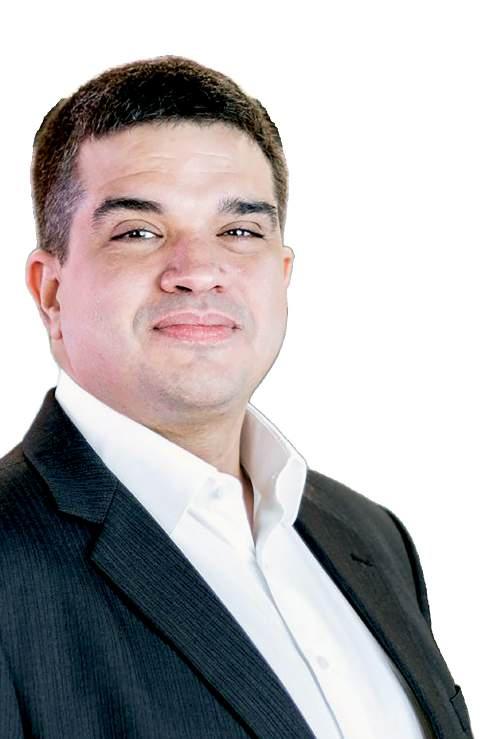
TozziniFreire Partner Caio de Souza Loureiro






The International Masters of Gaming Law is a member association of the world’s leading gaming lawyers, regulators and advisors.
IMGL members are:
• The leading gaming lawyers in their jurisdictions
• Pre-qualified by invitation-only membership of IMGL
• Committed to growing your business successfully wherever you are
To find an expert IMGL legal advisor in your market, scan the QR code & filter by jurisdiction
For more information about IMGL, our conferences and the benefits of becoming a member, reach out to Brien@ IMGL.org or visit www.IMGL.org

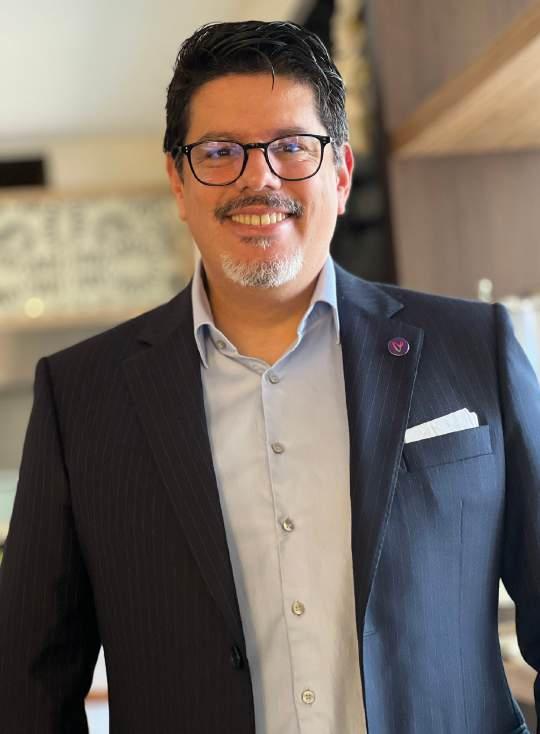
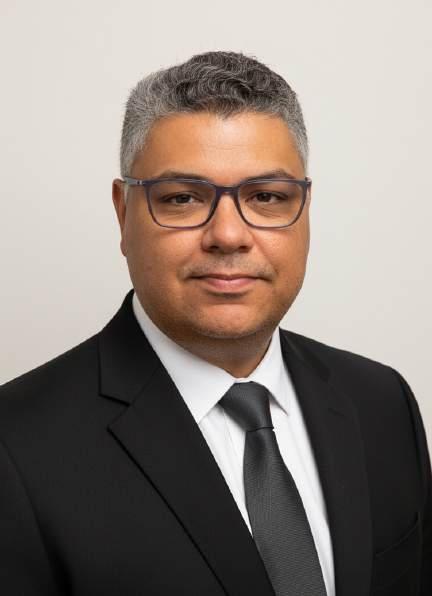
Consultants RAMIRO ATUCHA and
ELVIS LOURENÇO give us the inside track on how to pull off a successful merger or acquisition in Brazil
Words by ANA MARIA MENEZES

It feels like yesterday that the clock struck midnight on January 1st and revealed the Land of Oz. The Wicked Witch of the West was gone, replaced by a regulated market full of yellow-brick roads and magical shoes.
Now, however, one year later, what we’re about to see is a change of scenery. We are moving from ‘The Wizard of Oz’ to ‘Jaws’: the teeth of capitalism biting into companies –breaking some apart, strengthening others, and giving rise to a certain mutualism. Some will buy. Some will sell.
The Brazilian mergers and acquisitions (M&A) landscape moved BRL56.5bn ($10.47bn) during the year ending April 2025, with a total of 537 transactions, according to TTR Data. Although there was a slight 0.9% drop in the number of transactions compared to the same period in 2024, the current environment suggests a strategic shift: companies are now prioritizing more structured acquisitions aligned with longterm goals.
In cross-border activity, Brazilian companies did the most deals with the US corporations, completing 25 deals worth BRL1.2bn by April 2025, followed by Portugal with six transactions.
The anticipated consolidation of the iGaming industry has yet to take hold but recent tightening of compliance requirements suggest it’s sure to come. Consultants Ramiro Atucha and Elvis Lourenço both work closely with operators aiming to bring their businesses to Latin America, advising them from the first toe dipped into the warm water to the full dive.
With acquisition costs rising, regulatory demands piling up, and tax pressure knocking loudly, M&A has shifted from an optional expansion strategy to a central mechanism for survival and positioning.
For Lourenço, 2024 began as “a crazy race,” with operators aggressively competing for audience and bettors. As the year progressed, however, market realities became clearer: rising customer acquisition costs, mounting tax pressure, and leading operators – such as Betano and Bet365 –dominated the landscape with market shares in excess of 10%, effectively setting the pace for the rest of the industry.
“We’re now seeing a maturation phase, and the market will have to think long term,” Lourenço says. He predicts that 2026 will bring a much higher M&A volume than anything seen so far.
Atucha sees the same pattern, noting that consolidation is already evident and consistent with what happened in the US, Colombia and Mexico.
According to Lourenço, the logic for foreign companies is straightforward: entering Brazil from scratch is expensive and extremely time-consuming. Buying something that’s already built (or almost built) reduces risk, speeds up market entry, and avoids the headache of assembling a local team. In tech and payments especially, hiring skilled professionals in Brazil has become difficult and costly.
For Brazilian operators, M&A is an opportunity – but only for those who are ready. Lourenço warns: “The buyer will investigate your entire past, measure your professionalism. It’s not enough to have good numbers or a pretty brand. You need auditing, governance and solid processes.”
Atucha adds that M&A has become a survival strategy for those who fear being left behind by consolidation. Those who fail to prepare end up selling poorly or failing to sell at all. As he puts it: “I advise that if any company decides to start M&A with skeletons in the closet, it’s better to either remove them first or solve them in advance, because they’re gonna be found and there’s a break of trust.”
This could apply to practices that would be considered irregular and dubious even during the period before regulation.
A classic mistake, Atucha says, is that foreign companies still believe Latin America is a single, uniform region. “I still cannot believe that there are companies that think LatAm is all the same.” He reminds us that even within Brazil – Bahia, the Northeast, and the South – behaviours, culture, and operations can be as different as separate countries.
Lourenço reinforces this: “Anyone who thinks Brazil is a copy of Mexico will fall off the horse.” He adds that many buyers arrive overconfident in European
methods, assuming foreign processes and benchmarks will automatically work here – an error that often undermines postacquisition performance.
While M&As may seem conceptually simple, the process in Brazil is slower, more sensitive, and more complex than the global average.
Atucha explains that the process begins with a business plan evaluation and fair value definition. On paper, it sounds straightforward but it isn’t. The biggest source of friction is the gap between what the owner thinks the company is worth and what it is actually worth in a regulated market
Valuations based purely on GGR, sign-ups or gross volume do not hold up. Atucha notes that one of the most common mistakes is the operator saying “my operation is flying,” but once the business is unpacked, there’s no cash flow health. For buyers, financial sustainability beats size. He also notes that even when a company is not particularly large, well-structured processes and healthy cash flow that accurately reflect how the business presents itself make it far more compelling to pursue growth from that foundation than to rely on vanity metrics. By contrast, a company that invests heavily in brand awareness marketing but struggles with capital efficiency – due to recurring issues with customer deposits, payouts, and similar obligations – would not be considered a strong candidate. There may be an image, but there is no actual money to back this imagery.
As Lourenço puts it: “Many companies think that building for volume will give them a better M&A than companies focused on net amounts. Sometimes smaller operations are more successful because they control costs… What matters is the bottom line.”
He continues: “I do believe – and I see it in practice – that foreigners sometimes underestimate Brazilian professionals… It’s partly about maturity. Europe and Asia have decades of regulation. Ours is very recent… The point is: Brazil is a world of its own, several countries within one.”
2. DUE DILIGENCE: WHERE ILLUSIONS DIE AND TRUTH APPEARS
Lourenço is blunt: “The buyer will measure your professionalism.”
Effective due diligence examines compliance and licences, tax history, internal processes, technology, third-party contracts, KYC, AML and responsible gaming policies, audited financial statements, corporate structure and labour risks.
Lourenço summarises the core issue: many high-performing operations “are not ready, have no team, have no auditing.”
This scares buyers away or slashes valuations. Now, with one full year of regulated activity, audit-ready financials have become the main bottleneck. Many operators are slowing down because they cannot risk entering M&A without solid numbers.
To be exceptionally clear: both consultants agree that buyers in Brazil want real liquidity; strong governance and compliance; stable, qualified teams; audited history; and a clear strategy – not chaotic growth.
As Lourenço puts it, half-joking and halfwarning: “The Brazilian way doesn’t fly.”
3. THE CRITICAL IMPORTANCE OF TRUST
Atucha emphasises something often underestimated by Brazilian operators: after the numbers, trust becomes the determining factor. Distrust forms quickly – especially when there are data inconsistencies, delays in delivering documents, or difficulty mapping internal processes. Prepared companies generate confidence. Improvised ones do not.
4. CULTURAL FIT AND HUMAN INTEGRATION: THE INVISIBLE M&A KILLER
Even with solid strategy and valuation, the deal can fail. Lourenço highlights that many foreign buyers undervalue Brazilian knowhow and try to impose external practices without adaptation. This causes attrition, turnover, and loss of essential knowledge.
He also warns about the language barrier: when integration teams can’t communicate, performance collapses. It sounds minor, but it isn’t.
If any company decides to start M&A with skeletons in the closet, it’s better to either remove them first or solve them in advance
“


5. TIMELINE MANAGEMENT: THE BRAZILIAN CLOCK RUNS DIFFERENTLY
Lourenço explains that a European M&A may take six months. In Brazil? Never less than 12-to-18 months.
Why? Because regulation is new and subject to adjustments; the political environment is relatively unstable, especially in a paternalistic state that does not favour self-regulation; documentation requirements are more complex; the average operational maturity is lower; and the process demands multiple internal approvals.
Lourenço cites one of the most significant M&A cases: Flutter’s
Anyone who thinks Brazil is a copy of Mexico will fall off the horse
Elvis Lourenço
$350m acquisition of 56% of NSX, leading to Flutter Brazil operating Betnacional and Betfair. The process took over a year, and results are only beginning to appear, as noted in Flutter’s Q3 2025 financial report, which cited that excluding M&A, revenue decreased 18% with Betfair Brazil continuing to recover from the customer re-registration friction following introduction of regulation in January – entirely normal during integration and repricing.
Atucha adds that many companies remain in “wait and see” mode regarding taxes and regulation, extending timelines even further. This could be the reason why we have seen only one deal the size of Flutter’s.
“
The consultants’ advice functions as a near-perfect guide for companies ready not only to listen, but to execute. Events like SBC Summit Rio play a crucial role for those wanting to test Brazilian waters, understand what awaits them, and assess the strategic advantages of being in the market.
For Brazilian operators, this is the moment not only to professionalise but also to build the foundations to enter a merger or acquisition with leverage –proving that a successful business in Brazil is only just beginning. And if there’s one thing we know about Brazilians, it’s that no one welcomes newcomers quite like we do.
June 9–11, 2026
Fort Lauderdale, Florida
Broward County Convention Center
10,000 DELEGATES
400+ EXHBITORS
250 SPEAKERS
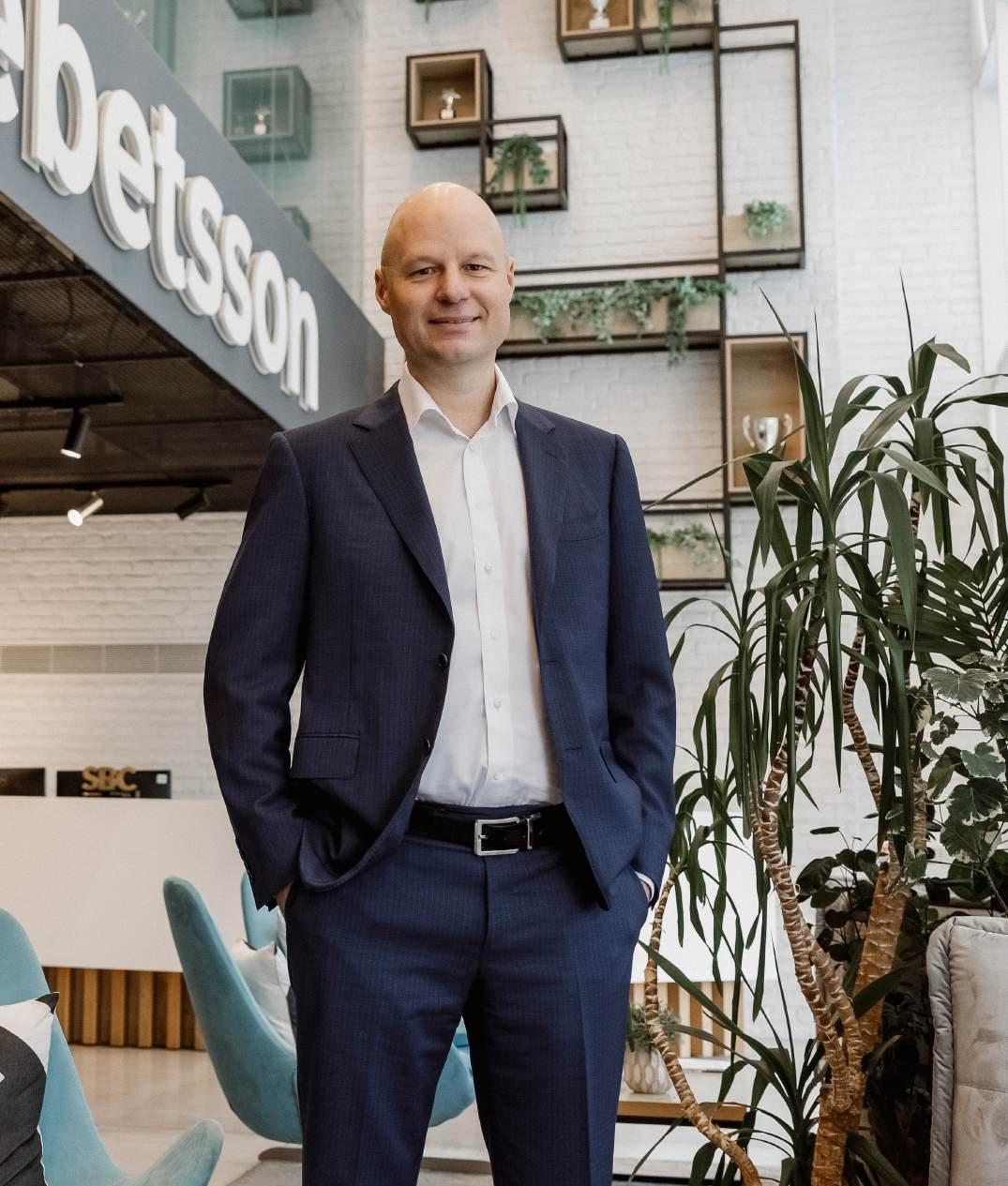
SVENSSON reflects on promising growth despite a year of increased taxes and tricky regulatory challenges in Europe and Latin America
Words by TED ORME-CLAYE
npredictable is a word aptly applied to betting. This is true of both the nature of the product itself, hinging on chance and sporting results, but also in the nature of the industry as a whole and the environments in which it operates.
As one of Europe’s oldest online operators, Betsson has learned to surf these waves of unpredictability as well as anyone. It has embraced new horizons to the extent that it is now one of Europe’s most prominent operators in Latin America. But it’s tough. Regulatory reviews and tougher tax regimes have been implemented in core markets across Europe and in Latin America. And then there are local storms such as the currency crisis in Argentina, which has had a detrimental effect despite strong underlying growth in customer deposits, increased turnover and higher revenue compared to last year.
As one of the world’s largest sports betting and iGaming operators with a foothold across Europe and South America, Betsson has experienced all of this first hand. Operational CEO Jesper Svensson is sanguine about the upheaval as he reflects on a tumultuous year with SBC Leaders.
During its first year of operation Brazil’s new regulated betting market has had as many ups and downs as anywhere. While huge international interest was reflected by many of Betsson’s European counterparts setting up shop in the country on day one, Betsson has taken a more measured approach.
It secured its licence at the end of February 2025 and launched in April, prioritising market understanding as the regulatory framework developed rather than a massive splash on launch day.
“We have launched now and are in a good spot to start growing that business,” Svensson tells SBC Leaders. “We took a deliberate decision to wait and invest given that there was so much investment going into the market in one go.”
“It’s a market that we believe over time can be an important one for Betsson, and we will gradually build up our business there. We are just in the starting phase of our investment journey. What we really see is the scale of the market, it is very large.
“There is a risk that you can be a drop in the ocean, you need to find your niche and build up on that. There’s no doubt it is very exciting and sizable.”
As often occurs in the first year or two following a market launch, Brazil saw a series of legislative and regulatory developments around its new betting market. President Lula approved measures proposing a gradual increase in betting taxation, with discussions ongoing around raising GGR tax rates from 12% to 18% by 2028 and potentially higher in the coming years. Brazil is not alone, the tax frameworks of other core Latin American markets like Peru have also stirred the pot.

“ We took a deliberate decision to wait and invest given that there was so much investment going into Brazil in one go
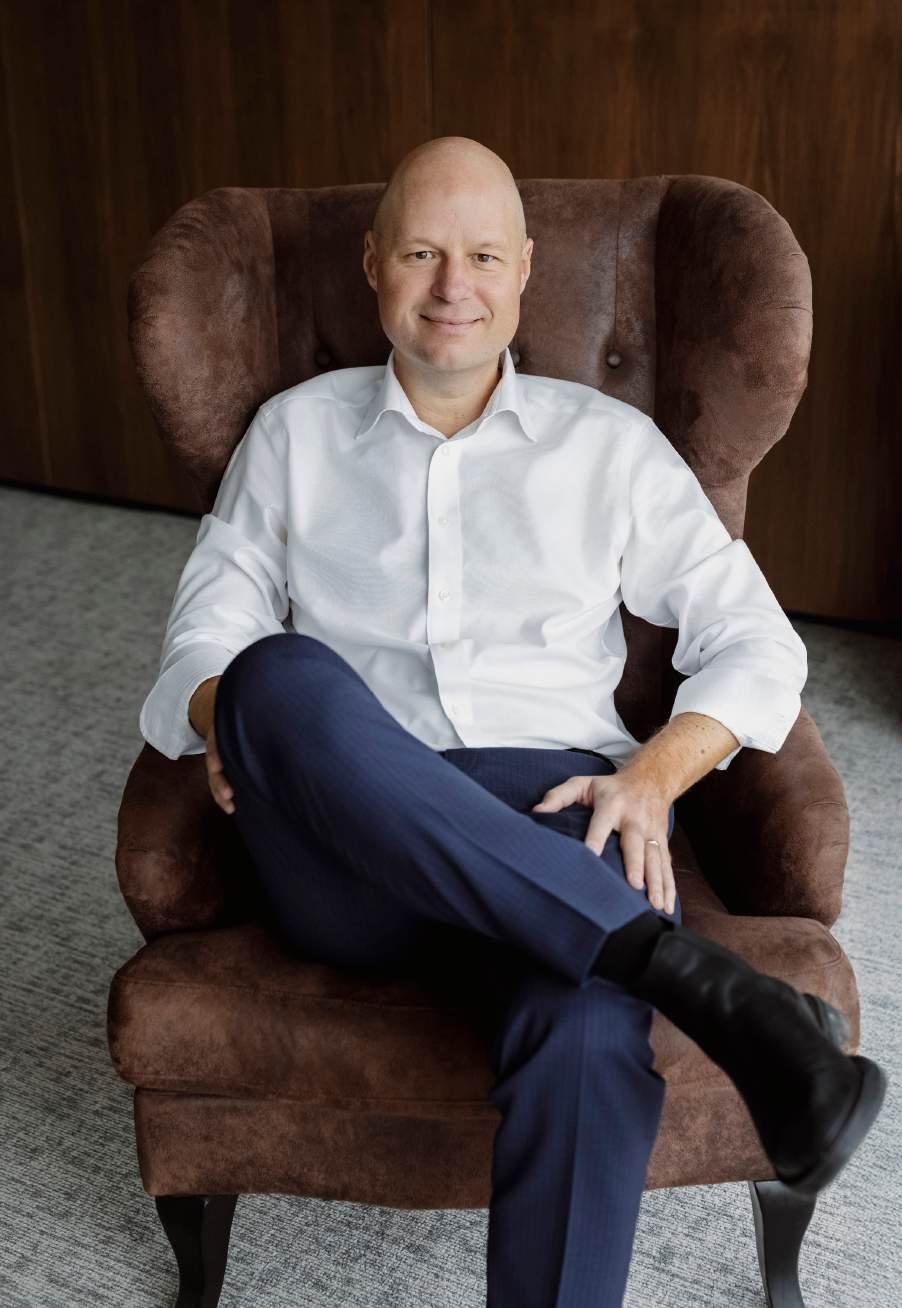
Svensson assesses the situation: “Sometimes there is unpredictability in South America with those elements, and any tax increase will have an impact on our business. I hope with dialogue we will be able to find a feasible way forward in the markets we’re in.”
Betsson’s expansion across Latin American markets is such that the region now accounts for 26% of group
revenue – its second biggest region after Central & Eastern Europe and Central Asia (41%).
While it started cautiously in Brazil, it has not been afraid to invest strongly in Argentina, Colombia and Peru. A deal to sponsor the Copa America was handsomely rewarded with plenty of imagery of Lionel Messi and his teammates celebrating in front of Betsson advertising hoardings.
That early success has been supported by sponsorship deals with leading Argentine football clubs Boca Juniors and Racing Club.
Its approach is paying off, according to the company’s financial filings. Betsson’s Q3 2025 report – the last one published at the time of writing –revealed a 10% increase in Latin American revenue from €69.4m in Q3 2024 to €76.5m for Q3 2026. During Q2, Argentina and Peru powered a 35% revenue increase in regional revenue.
The sponsorship deals have been backed up by an improvement in the user experience. A new app was launched during the third quarter for the three provinces Betsson operates in Argentina. In the sportsbook, the user interfaces were improved and an early payout feature was introduced for football, meaning that players can opt to receive winnings as soon as their team leads by two goals.
While Betsson’s Latin American focus has largely been on Spanish-speaking markets, the sheer size and scale of the betting scene in the continent’s largest nation of Brazil is hard to ignore.
According to the regulator, the Secretariat of Prizes and Bets (SPA), Brazil’s regulated betting sector delivered revenue of BR17.4bn (€2.7bn) in the first six months of 2025 – a figure that can only be expected to rise with every half year.
Finding space in this market is not an easy task. When the market first launched there were 68 licensed operators, with the SPA still processing many more applications, but it is a number that might fall rather than rise –a dynamic that Betsson will be ready for.
Svensson’s colleague and boss Pontus Lindwall, the longserving holding company CEO, President and Executive Director, told investors: “We are a careful company. We don’t jump in. We don’t buy the first one we see there. We want things – the dust to settle a bit – and then we will, of course, be ready for both our own expansion and M&A in Brazil.”
Latin America may be a focal point right now, and with good reason, but 31% of revenue still comes from Western Europe and the Nordic region, where tax and regulatory challenges arise on an almost daily basis.
Marketing is becoming an increasingly difficult discipline across many European nations, with restrictions in the Netherlands and Belgium widely discussed. Betsson pulled out of a €27.5m deal to acquire Netherlands-licensed operator Holland Gaming and games studio Holland Power Gaming in February 2024, after the Dutch regulator dithered over approving the deal. Revenue in Belgium was sinking at the Q3 stage.
Things look brighter in Italy despite the ban on sponsorship and advertising, passed by the ‘Dignity Decree’ of 2018 – a ruling that Italian politicians are said to be reviewing.
“It is becoming more difficult in many jurisdictions,” Svensson comments. “This in itself can sometimes be a problem, because when you are the regulated operator, some of the advantages you should have against non-regulated operators is that you should be able to market your products.
“If that is not possible it puts the industry in a very difficult spot. There has to be regulations that
ensure protection and there are various ways of doing that, but not allowing any type of marketing is not the right answer either.”
However, Betsson seems to be weathering the storm. Europe out-performed the emerging markets during Q3, with Italy playing a key role in driving Western European revenue up 27% from €44.7m to €56.9m.
This came ahead of the November re-regulation of the Italian market, which has got off to a flying start, according to the Customers and Monopolies Agency, the ADM, albeit with casino faring much better than sports betting during the initial stages of the new market. This, however, plays to Betsson’s strengths with its casino operation in the country dwarfing its sportsbook.
Although Italy’s marketing restrictions are challenging, the industry’s reaction to its tax framework has been a lot warmer – far warmer than its view of taxes in the Netherlands, France, the UK, and others.
As 2026 plays out, taxation will be the biggest challenge for the regulated industry. The impact taxes will have on operator finances, customer preferences, and the extent of the black market will become more apparent as the year goes on, but Betsson’s CEO concludes with confidence that his firm, and the industry as a whole, will persist.
“We look forward with excitement to what the future will bring to us as a company,” he says. “We are discussing some challenging elements like regulation and taxation, but betting is nonetheless a growth industry and an opportunity for us to – despite those difficulties – grow and expand our business.”

Mexico dropped a tax bombshell in 2025 and enters 2026 all set for a relaunch of its regulatory framework
Words by LUCÍA GANDO
According to H2 Gambling Capital, Mexico’s gross gambling revenue already exceeds US$3bn a year, but the country is still operating under a law approved in 1947 – a framework that doesn’t address digital models, data-driven operations, or today’s standards of player protection.
The long-awaited modernisation process has finally reached a decisive stage, marked by new taxes, institutional adjustments, an explicit war against money laundering, and a political debate split between revenue, responsibility and sustainability.
During the SBC Summit in Lisbon, where authorities and industry leaders discussed the market’s direction, it was already clear that 2026 would be a turning point. Now, with the 2026 fiscal package approved, legislative progress underway, and new powers granted to the tax authority, Mexico seems ready to determine whether it can become the largest regulated market in Spanish-speaking Latin America (overtaking Colombia) – or whether its reforms will reinforce an illegal sector that today captures around 60% of online activity.
In the panel “Mexico: Reaching Market Maturity, or More to Go?” at SBC Summit, moderated by Asociación de Permisionarios (AIEJA) President Miguel Ángel Ochoa Sánchez, participants agreed
on one thing: Mexico is a sleeping giant. Not for lack of activity – the number of digital players has already surpassed 30 million – but because of the absence of a modern regulatory structure.
Ochoa summarised it then, and confirms it when we speak to him again at the end of 2025: Mexico is drafting a new federal gaming law and a tax reform that raises the tax rate to 50% for licensed platforms.
The challenge is significant: such a tax level would place Mexico among the most expensive jurisdictions in the region.
The legal sector fears that this increase will push users toward illegal operators. International companies Codere, Novibet, and Betcris have warned that overregulation can backfire, as happened in Spain and the UK, driving legal operators down and the illegal market up.
Codere’s CEO, Aviv Sher, said it clearly in Lisbon: “Mexico does not have a real regulation, only concessions inherited from the middle of the last century. The discussion has focused too much on how to collect money instead of building a framework capable of supporting growth.”
In October 2025, legislator Ricardo Mejía Berdeja presented a bill in the Chamber of Deputies aimed at fully repealing the 1947 law. The initiative proposes

the creation of the National Institute of Games and Draws, an autonomous authority that would oversee regulation, inspection, and sanctions.
The bill also includes responsible gaming measures, a minimum gambling age of 21, and self-exclusion tools. It demands more operational transparency, bans ATMs inside gaming halls, and proposes betting limits based on each player’s economic capacity.
Andrea Avedillo Builla, Legal Director at specialist gaming and fintech law firm Lazcano Sámano, explains: “From a legal perspective, a new gaming law replacing the one from 1947 would mean a structural change without precedent. It is not only about updating outdated rules, but about redefining the foundations of the regulatory model: moving from a system of broad and discretionary administrative permits to a complete normative framework with technical criteria, clear obligations, and a specialised regulator, while at the same time protecting players and respecting the acquired rights of those who, for decades, have invested in transparency and compliance.”
“Creating an autonomous or decentralised authority could bring more certainty and professionalisation, but its institutional design will be key. International experience shows that a strong and technically skilled regulator reduces litigation, improves compliance, and builds trust – if there is an orderly transition and clear rules for the existing market.”
“ The reform forces companies to rethink their legal strategies and their relationship with the tax authority in a very deep way
The 2026 fiscal package approved what Congress had been debating for months: an increase of the IEPS (Impuesto Especial Sobre Producción y Servicios) tax on goods and services from 30% to 50% for gaming, including online casinos, plus a mandate that all platforms register with the tax authority and withhold the full amount.
Mexico’s tax agency SAT (Servicio de Administración Tributaria) gained unprecedented powers to access digital platform data in real time. This politically controversial change completely reshapes operating costs for legal operators.
One of the most debated changes is the full replacement of existing permits, limiting each licence to a single physical establishment. Some believe this could democratise the market; others warn it would destabilise current operations.
On this point, Avedillo Builla says: “One of the main implementation challenges – if this initiative were approved – will be how the current permits are treated. Limiting each licence to one single physical location and replacing the current system without clear transition mechanisms could create serious risks of legal uncertainty. In a sector that requires large investments planned in the long term, regulatory certainty is as important as the tax burden. For that reason, any replacement process must respect the principles of legitimate trust, graduality and proportionality, avoiding disruption scenarios that could, paradoxically, strengthen the informal market instead of the operators who have chosen legality. Protecting acquired rights will be essential for the success of a measure like the one proposed.”
The proposal also introduces a strong plan against illegal gambling, with penalties reaching up to 200,000 times the minimum wage in force in Mexico City. It also grants the authorities explicit powers to close unauthorised venues.
But the most disruptive measure came shortly after: a reform to the Amparo Law, which Builla explains, is, above all, a defence mechanism for citizens against government actions, created to protect fundamental rights recognised by the Mexican Constitution.
After it is reformed, no company can stop the collection of taxes through litigation unless it guarantees the full payment first. This directly affects companies with long-standing disputes, such as Codere or TV Azteca, and signals a new fiscal era in Mexico.
Builla says: “The restrictive effects of the reform do not only affect the gaming sector; however, in this industry – and together with other changes taking place inside the Judicial Branch – the reform forces companies to rethink their legal strategies and their relationship with the tax authority in a very deep way.”
Within the sector, the reform is seen as a message: the era of endless litigation is over, and the government wants immediate payments.
At SBC Summit, the discussion around payment methods revealed another tension: the industry wants to modernise but fears being caught between old rules and new obligations.
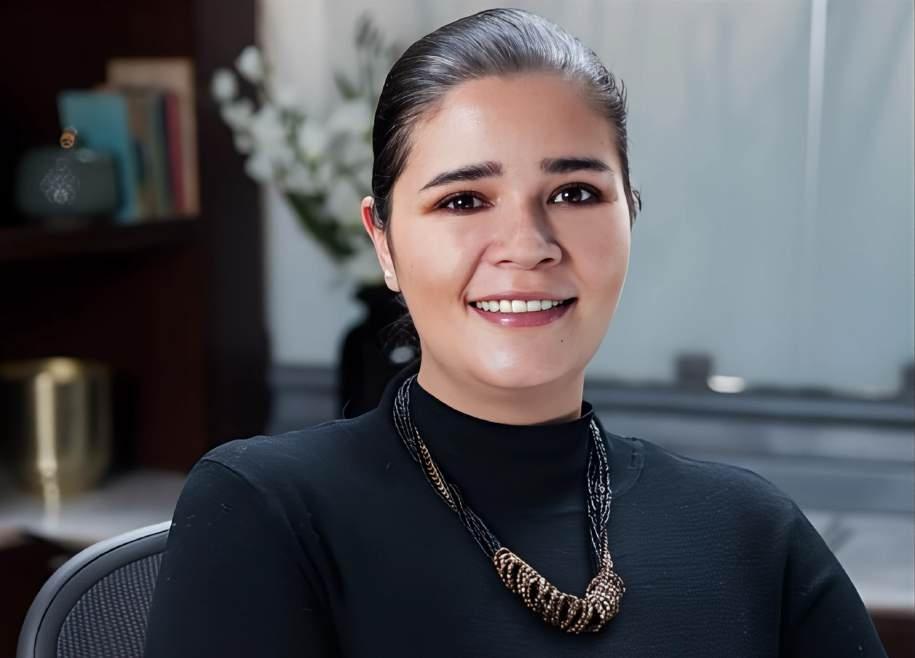
Yoni Sidi, CEO of Winpot, admitted that crypto demand in Mexico already exists, and that Winpot chose to incorporate it while keeping full transparency with the regulator. George Athanasopoulos, CEO of Novibet, on the other hand, completely ruled it out.
JD Duarte, CEO of Betcris, defended direct banking as the only model offering total traceability.
What is clear is that any modernisation will need to align with the new institutional framework, reinforced supervision, and the

SAT’s demands regarding fund traceability.
If the country manages to approve a modern law, correct the fiscal overload, and coordinate real anti-moneylaundering policies, Mexico could become the largest regulated market in Spanishspeaking Latin America – bigger than Colombia, Peru, and Chile combined. The size of the demand – over 30 million potential players – supports that projection.
But the risk is also significant: if the tax pressure surpasses the industry’s capacity, the illegal
market will continue attracting players, operators, and capital.
What’s at stake is not only revenue, it’s market credibility, player protection, and the chance to build a competitive industry that attracts global operators instead of pushing them away.
Mexico is standing before a historic decision. What it defines in the next months will determine whether it finally reaches regulatory maturity or remains trapped in a hybrid model where innovation, uncertainty, and an increasingly sophisticated illegal market coexist.

Paraguay is scrapping its lottery and sports betting monopolies and forming a new regulatory body with powers to take down illegal operators. But do its reforms go far enough?
Words by DAMIAN MARTINEZ
Paraguay is in the midst of a major transition as it moves away from a long-standing monopoly model toward a more competitive gambling market. In May, President Santiago Peña published a decree implementing a new legal framework for the gaming industry, setting the stage for a partial liberalisation from 2026. Under the new system, monopolies in sports betting and lotteries will be dismantled, and regulatory oversight will be strengthened through closer integration with the country’s tax authority.
The regulated gambling sector in Paraguay has shown signs of steady growth. According to financial results released by the Comisión Nacional de Juegos de Azar (CONAJZAR) for November 2025, the regulator collected PYG19.9bn ($2.8m) that month alone. Between January and November, regulated gambling activities – including land-based casinos, sports betting and lotteries – generated PYG197.8bn in revenue, up from PYG175.8bn generated across the entirety of 2024.
Despite this growth, the regulated market still represents only a fraction of total gambling activity in the country. It is estimated that as much as 80% of Paraguay’s gambling takes place with illegal online operators. While there are 28 licensed online casinos, they are not allowed to offer sports betting on their sites. The licensing of these online operators will not change, despite a number of international illegal sites challenging them.
This combination of growth potential and a huge black market has underpinned the government’s push for reform. By modernising the legal
framework and opening the market to greater competition, policymakers aim to channel activity into regulated channels, increase tax collection and establish clearer rules for both domestic and international operators.
At the heart of the reform agenda is Law No. 7438/2025, which updates a regulatory framework that had become outdated as the sector evolved. One of the most significant changes is the restructuring of CONAJZAR, which will now operate as a decentralised body under the Dirección Nacional de Ingresos Tributarios (DNIT), Paraguay’s national tax authority.
“Law No. 7438/2025 updated a legal framework that had become outdated in the face of the sector’s evolution,” explains Javier Balbuena, former President of CONAJZAR and current Director of Gaming Consultores. “It introduces greater clarity in the bidding, awarding and regulatory approval procedures, seeking to strengthen transparency and inter-institutional coordination. It also incorporates specific provisions for digital modalities and new forms of exploitation, which were not previously considered.”
Under the new structure, CONAJZAR’s board will be chaired by a representative of the DNIT and include delegates from departmental governments, municipalities, the Ministry of the Interior and the Directorate of Charity and Social Assistance. While DNIT will assume a strategic oversight role – particularly in tax control and coordination – CONAJZAR will retain its technical specialisation as the primary gambling regulator.
For
operators, the key pillar of this reform is the direct fight against illegal gambling, allowing competition on equal terms and without privileges. This new directorate will have real operational authority
“
The regulator’s powers are extensive. CONAJZAR will approve gambling operations, issue regulations at national, departmental and municipal levels, authorise new gambling formats, inspect premises and concessions, and impose sanctions ranging from fines to the termination or revocation of licences. It will also draft and approve the terms and conditions for tenders and concessions.
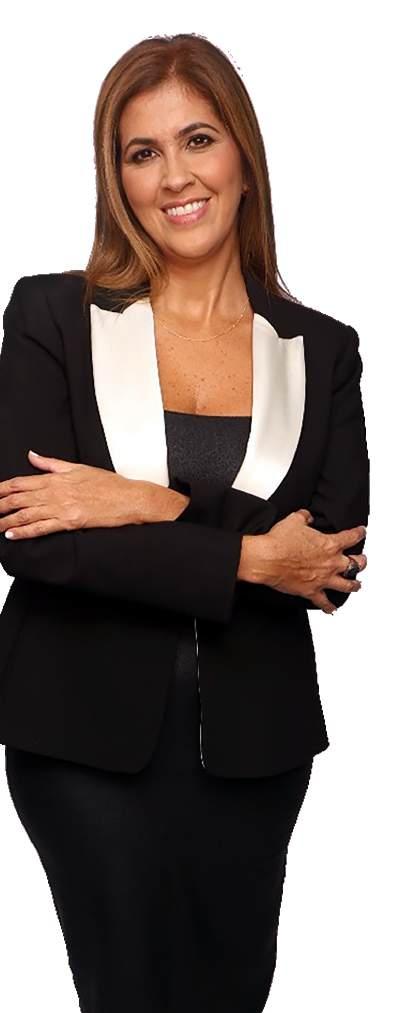
Another major reform is the creation of the Dirección General de Juegos de Azar, a new technical body tasked with implementing gambling policies and enforcing regulations. According to Lorena Rojas, president of the Paraguayan industry association APOJA, this entity is central to the government’s effort to combat illegal gambling.
“For operators, the key pillar of this reform is the direct fight against illegal gambling, allowing competition on equal terms and without privileges,” Rojas says. “This new directorate will have real operational authority.”
That authority includes the power to seize and shut down clandestine land-based operations, as well as to take down illegal online gambling sites, block transmissions, cancel misleading promotions and monitor unauthorised platforms. The directorate will be led by a general director and staffed according to DNIT budgetary and personnel decisions.
The reforms will also eliminate Daruma Sam’s sports betting monopoly and the lottery monopoly of Technologies Development of Paraguay, which is owned by a former president of Paraguay. Under the new rules, three companies will be able to gain licences in each category.
While the legislative changes are ambitious, both regulators and industry leaders caution that the market is still at an early stage of implementation. Balbuena notes that it will take at least a year of full operation under the new system to properly assess whether the institutional structure is efficient.
“Personally, I have some reservations regarding the agility of this new system, which could be affected by the overlapping of administrative levels,” he says. “In the short term, the law seeks to organise and standardise procedures. In the medium term, it aims to consolidate a modern, transparent and sustainable regulatory system.”
One early signal of change came in November, when CONAJZAR announced the opening of a bidding process for the operation of the national lottery. From 2026, the lottery will be operated by up to three concessionaires, ending decades of exclusivity. The new concessions will run until 2031, with bidding documents priced at PYG100m. The current operator, TDP, will continue to operate until the new system comes into force.
Looking further ahead, attracting investment remains the industry’s biggest challenge. “The most important challenge for the sector is to make this activity an attractive area for investment,” Balbuena says. Beyond game operations themselves, he points to opportunities in technology, digital infrastructure, data processing and specialised software development.
If Paraguay can establish a safe, predictable and profitable regulatory environment, the rewards could be significant. A well-regulated gambling sector has the potential to draw both domestic and international capital, create formal employment and generate substantially higher contributions to state revenues. The success of the reforms will ultimately depend on effective enforcement, regulatory clarity and the government’s ability to bring illegal activity into the regulated fold.
“
The ban is completely erroneous and based on unfounded assumptions

Chile’s Supreme Court has ruled that online gambling platforms operating without an official licence are illegal and ordered major telecommunications companies to block access to their websites. The decision, issued on September 29, upheld a protection appeal filed by Lotería de Concepción and overturned an earlier ruling by the Court of Appeals that had rejected the claim.
The case arose after internet service providers refused to block access to platforms including Betano, Coolbet, JugaBet, Rojabet and Betsson, despite a formal request from Lotería de Concepción. In its ruling, the Supreme Court found that this refusal violated the constitutional rights of the entity, which—alongside Polla Chilena de Beneficencia, authorised racetracks and licensed casinos—holds exclusive legal concessions to operate raffles and games of chance in Chile.
While Chile does not have a specific statute expressly prohibiting online gambling, the court reiterated that gambling activities are illegal unless conducted through authorised operators. On this basis, it concluded
that telecommunications companies may not transmit or facilitate services that run contrary to existing law.
However, the ruling has drawn criticism from regulators and industry representatives, who question both its effectiveness and legal foundations. Chile’s Undersecretariat of Telecommunications acknowledged that, although the order is binding on telecoms, website blocking measures are “relatively easy to circumvent.”
The agency stressed that the core issue is not a lack of enforcement willingness, but the technical challenges of implementing such measures in the absence of clear, tailored regulations.
Similar concerns were raised by Carlos Baeza, legal representative of the Agrupación de Plataformas de Apuestas en Línea de Chile. Speaking to SBC Leaders, Baeza said affected operators could simply change their web addresses and continue operating. He also criticised the ruling’s legal reasoning, arguing that it is based on “completely erroneous and unfounded” assumptions, and that no constitutional, criminal or civil law in Chile clearly supports the court’s conclusions.
41 Column: Ted Menmuir on Italy’s reset 42 Interview: ATG Hippos Chief Compliance Officer Antti Koivula
SBC Editor At Large Ted Menmuir offers a cross-cultural critique of how European and South American countries have chosen to regulate gambling

This is not an assessment of a single jurisdiction, but a reflection on a turbulent 2025 — a year defined by sweeping reform across Latin America and much of Western Europe. Across jurisdictions, governments moved with urgency. Taxes were raised, compliance burdens expanded, enforcement powers strengthened and advertising regimes tightened. These measures became the common narrative of gambling’s most unsettled year, driven less by sector-specific design than by wider political and fiscal pressures.
Yet there is one dynamic on which consensus is easy to find. Gambling in 2025 has been shaped by governments operating under disorder, attempting to resolve economic and social problems that extend far beyond gambling itself. In such conditions, policy has frequently been reactive, guided by public and political sensitivities rather than logic or evidence.
The consequences have been pronounced. In South America, young regulatory regimes in Brazil, Peru and Colombia have been reshaped by direct presidential intervention, imposing damaging
tax changes in the name of fiscal urgency. In Europe, meanwhile, licensed operators face effective tax rates exceeding 50% in markets such as France, the UK and the Netherlands, alongside an expanding set of player restrictions that have paradoxically accelerated blackmarket encroachment.
It is against this backdrop of disorder that Italy’s experience demands every stakeholder’s attention.
Italy begins 2026 with a fully reset online licensing regime. Concessions were reissued at an unprecedented cost of €7m, participation was sharply reduced, and the market consolidated into a far smaller number of accountable operators. Hundreds of skin websites disappeared overnight. The message was clear: access to the Italian market would be earned, not inherited.
Crucially, the reform was not designed merely to increase fiscal intake, though it succeeded in doing so. It was aimed at correcting long-standing weaknesses. One licence now corresponds to one .IT domain. Compliance obligations have been centralised. Digital identity verification is mandatory. Regulatory discretion has been replaced with enforceable structure.
Few markets have been tested as repeatedly or as publicly as Italy. The sector lived through the shock of the 2018 Dignity Decree, which imposed a blanket ban on gambling advertising and sponsorship, and endured
consecutive tax increases introduced by short-lived coalition governments in Rome.
Neighbouring European markets are now grappling with similar symptoms. Italy’s reset functions as both a warning and a blueprint.
Political alignment was central to this outcome. The reform programme was backed by the Ministry of Economy and Finance, coordinated with state technology provider SOGEI, and supported at cabinet level by Prime Minister Giorgia Meloni. Gambling policy was treated not as a moral battleground, but as digital infrastructure.
The Meloni government is explicit in its ambition: to make Italian gambling the most tightly governed and best-regulated market in Europe. Whether that claim holds will depend on execution. What is already clear, however, is that Italy has demonstrated something many governments doubt – that gambling regimes are not doomed to permanent dysfunction.

Scan here for more from SBC News
The wording has been changed, but the situation around how Finnish bookmakers will be able to promote themselves is still unclear
“


ATG Hippos Chief Compliance Officer ANTTI KOIVULA is concerned about the ambiguity of Finland’s new gambling law but welcomes the re-regulated market
Words by TED ORME-CLAYE
After a small delay, Finland’s new gambling regime is on track to launch in July next year and it is being greeted cautiously by operators and suppliers beyond the Finnish borders.
We’ve seen this game play out before though. Sweden moved on from its exclusive monopoly held by Svenska Spel and ATG, back in 2019. Yet following re-regulation, the Swedish market has struggled against offshore black market activities – a dynamic Finnish legislators are aware of.
In July 2027, the monopoly held by Finland’s state-owned gambling firm, Veikkaus, will be abolished to open a multi-licence market for betting, online casino games, and digital bingo. Veikkaus will retain exclusive rights to lottery games, scratch cards, and physical casino games and slots.
Antti Koivula, Chief Compliance Officer (CCO) at Hippos ATG, expects the initial competition for market share will be fierce. But he is confident that ATG Hippos, a new joint venture between Finland’s equestrian sports body Suomen Hippos and Swedish racing betting operator ATG, will stand out from the crowd that storms into Finnish betting in 2027.
“We are formed by Suomen Hippos, the central organisation for trotting and horse sports in general, and ATG – so that’s something that we aim to use for our benefit. All our proceeds go back to the sport, which is a promise no one else can make,” says Koivula.
“ I am worried we are following in the footsteps of Sweden and the Netherlands, but it could be even worse
However, the launch of Finland’s multi-operator market is not entirely shrouded in optimism. While welcomed broadly by politicians, by Veikkaus, and by other stakeholders like Hippos ATG and Åland Islands operator PAF, there are still many uncertainties.
Finland’s government approved the legislation in December 2024. The legislation had, as it tends to be, been bounced around the halls of parliament, with amendments requested to make sure certain vague elements could be interpreted correctly.
“Some clarifications were provided, but it has really just moved the goalposts, before the question was more or less on what is included in the definition, but now there are three definitions underneath that are really vague,” says Koivula.
The principal area under the political microscope has been marketing. Specifically, the Finnish parliament’s Constitutional Committee has requested that the Administrative Committee clarify what can be considered “moderate marketing” under the legislation.
A clause in the original draft that required marketing to be “moderate in terms of its volume, scope, visibility and frequency” was subsequently updated to state that marketing measures cannot be “particularly attention-grabbing or prominent, or where they are repeated with exceptionally high frequency in one or more marketing channels”.
In Koivula’s assessment, all this has done is “shift the interpretive focus” as marketing that is particularly attention grabbing or high in frequency would almost certainly have been considered immoderate under the first draft. The wording has been changed, but the situation around how Finnish bookmakers will be able to promote themselves is still unclear.
“On moderate marketing, there have been some clarifications and changes but it’s still rather vague,” he says.
There is still a lot of time before the opening of the Finnish market in July 2027 but betting stakeholders should not expect any further changes to the legislation approved back in December.
Finnish MPs were keen to get the bill over the line and set the schedule for the market to go live. Any additions – including further clarifications on areas like marketing – will be decided once the sector goes live.
The trouble is, not only are some of the marketing provisions of the new bill unclear, some of them are less than ideal. As mentioned above, Finland is not the first country to move on from a monopoly system to a multi-licence one. Fellow Nordic nations Sweden and Denmark are two such examples.
In some ways, Koivula says, the Finnish betting legislation has made bigger mistakes than the legislation which ushered in Sweden’s multilicence market back in 2019.
“The Finnish legislation is even worse,” he says. “The Swedish legislation didn’t prohibit affiliates, which are a hugely important acquisition channel for online operators. I am worried we are following in the footsteps of Sweden and the Netherlands, but it could be even worse.”
Developments in the Netherlands in the years since the re-regulation of October 2021 have led to the market being seen by many stakeholders as one of the best examples of what not to do when re-regulating your gambling market.
The country has faced an increasingly bitter battle with the black market, with taxes increasing pressure on the regulated industry. Before the taxes came marketing restrictions, which were prompted by a sudden explosion in advertising that shocked Dutch consumers and politicians.
A similar situation could happen in Finland when the monopoly system is replaced. Finns will go from only seeing adverts for the state-owned betting and gaming products to ads from a variety of operators – and potentially, sports sponsorships too.
“Speaking in general terms there will be 40-50 operators entering the Finnish market, and Finns are used to seeing Veikkaus marketing everywhere to the point they don’t even notice it any more,” Koivula says.
“Take my word, when there will be visible marketing by others than Veikkaus, people will be kind of surprised. The regulation allows marketing via mass media, which will be very visible for everyone in Finland.
“When the market opens many might not even be seeing profit, but just want to guarantee a market share to be profitable later. This will all be reflected in the marketing. It will be concerning to see what the public reaction will be.”
While some key aspects of the Finnish gambling regulation bill are unclear, it’s not all doom and gloom as ultimately even Veikkaus wants to see its monopoly abolished.
Finland’s battle to control channelisation and market share has been a difficult one, and politicians hope that by bringing a multi-licence market under regulated control they will guarantee greater player protection and tax revenue for the state.
The gambling regulation has enjoyed broad political support with around 95% of legislators approving the final bill.
Koivula says he never had any uncertainty that the bill would be approved and although he is concerned about some lingering uncertainties, the modifications that were included in the bill were positive.
“They provide some further clarity around search engines, which have been defined as an approved marketing channel,” he says, while also remaining confident that no more changes will be made to the legislation prior to the July 2027 launch date – for better or for worse.
So, with Sweden and the Netherlands offering some more troubling examples of what can happen when gambling reregulation is botched, and Denmark offering a more favourable example, what does the ATG Hippos CCO hope for the future of the Finnish gaming space?
“I hope that the imperfections will have been fixed – it doesn’t have to be in the legislation but can come in the open interpretation of the law,” Koivula concludes. “It’s not clear where the line between acceptable and prohibited is drawn. I’m hopeful that the regulator will provide further guidance on the key aspects that are open to interpretation.”
Koivula says that in five years’ time there will be considerably less operators in the market.
“It’s clear that there is going to be an elimination,” he says. “If the market opens with, let’s say, 50 operators, I anticipate there may be half of that amount in five years’ time. Whether that’s a good or bad thing remains to be seen, but that tends to happen with market openings.”
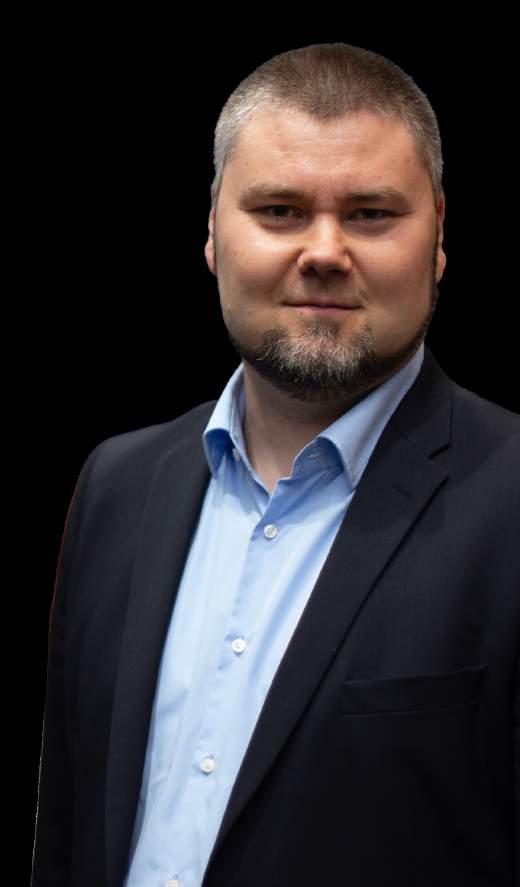

48 Interview: Stake Italy Director Fabio Angeli Bufalini
52 Interview: BetMGM Brazil CEO Almir Silva
56 Interview: Kanggiten CEO Viktor Cherkas
Finland’s battle against the black market is failing, writes iGaming Expert Editor Joe Streeter, and banning affiliates from the re-regulated market will only make it worse

The anticipation surrounding the Finnish gambling market is building with a new avenue for Nordic engagement opening up. However, a stringent marketing framework has fuelled trepidation.
As the country approaches a new regulatory framework and the abolition of its monopoly drawing nearer, failing to heed the warnings of stakeholders (see ATG Hippos interview p.42) might engender some teething problems.
Most significant is the prohibition of affiliates from the country, a move that severely limits marketing opportunities for operators whose pockets are not as deep as those of the industry’s biggest players.
This means the primary source of advertising within the regulated market will be mass media –escalating the risk that smaller
operators face an uphill battle to compete and gain sustainable market share.
Furthermore, as the market opens, there is a great deal at stake. Speaking at the Gaming in Finland Conference in January, Josh Hodgson, COO of H2 Gambling Capital, revealed that, having been on a declining trajectory since 2017, Finland currently has the fifth-lowest gambling spend in Europe.
He warned that this turbulence was triggered by regulatory changes introduced in 2018, including restrictions on annual loss limits, advertising suspensions, and a reduction in the number of land-based gaming machines. However, the real downturn occurred as a result of COVID-19, alongside maximum loss limits being reduced from €2,000 to €500 per day. Since then, growth has been hard to come by for the sector.
Does this mean that Finns simply lost their appetite for gambling as regulations tightened? Absolutely not, according to Hodgson, who revealed that amid frustrations within the regulated sector, the unregulated market has been able to thrive.
There has instead been a major shift in player behaviour and which operators consumers are gambling with. Hodgson stated that between 2021 and 2026,
the offshore gambling market in Finland has grown by 13%, while the regulated market has remained static.
Herein lies the challenge for the regulated market: can it truly wrestle growth and market share from offshore operators without the support of affiliates?
The channelisation challenge is only intensified when one considers that many affiliates are unlikely to leave the market and will instead bolster offshore operators – a trend seen across Europe, as unlicensed casinos have surged through the use of streamers and influencers.
Furthermore, with smaller operators facing the unenviable task of succeeding without affiliates, a lack of competition and diversity in the regulated market becomes a very real prospect – one that will only deepen the challenge of combating the black market.

Scan here for more from SlotBeats

Italy is entering a new era with new legislation governing the gambling industry and Stake’s Country Director FABIO ANGELI BUFALINI is confident the new entrant can take market share from Lottomatica, Sisal and the rest

Words by VIKTOR KAYED
Constantly shifting regulatory tectonic plates caused 2025 to be one of the most traumatic years for the gambling industry in a while.
A wave of increased taxes across Europe necessitated a constant review of margins and operational models. In the UK, the Autumn Budget raised Remote Gaming Duty from 21% to 40%. A similar development was observed in the Netherlands, where GGR tax rates went up from 30.5% to 34.2%. France was the most extreme example, where online sports betting operators saw an already detrimental GGR tax rate of 54.9% going up to 59.3%.
We also saw this trend in Romania, which boosted its online gaming levy from 21% to 27%. Bulgaria also ramped up discussions about heightening the tax rates.
Not all is doom and gloom, however, as contrasting this somewhat melancholic picture from a business perspective were some bright beacons of hope for the European industry.
The most extreme example is Estonia, as it moved to adopt one of the lowest tax rates among member states, with the aim of rivaling Malta as an iGaming hotspot in the Baltics. Finland’s monopoly regime had one last hurrah – with tax dropping back to preCovid levels – before a brand new licensed market was approved to open in 2027.
And last but not least, Italy entered a new regulatory era for its online gaming regime that should help it retain its position as the second biggest market in Europe after the UK.
In the time between the cards being reshuffled and everyone being dealt a new hand, an opportunity arose for a new player to join the game. But with elitelevel competition from the likes of Flutter, Entain, Betsson, Evoke, and Bet365 already at the table, only a seasoned contestant will be prospectful enough to endure. This contestant is Stake.
Stake made headlines in August 2024 after acquiring Balto Line from the Octavian Group. This momentarily gave it ownership of the IdealBet asset, a wellknown and established online operator on the Italian scene.
Given that Italy was going to restructure its online gaming regime in November 2025 and revise the local licences, the timing of the deal carried with it significant strategic importance, as it gave Stake enough breathing room to directly familiarise itself with the market, and also to plan for an upcoming mass migration of IdealBet’s customers to its own platform.
“We did the whole process needed for the new tender. We revised all of our contracts, all of our activity, and we were fully prepared and ready to launch Stake.it in the market,” says Fabio Angeli Bufalini, Stake’s Country Director of Italy. “The Italian market is very competitive, so we needed to have the right product in place before pushing into it.”
Stake had to close down IdealBet instead of aiming to increase its market share with two brands simultaneously because of the new rules of the Italian regime.
Unlike the old framework, gambling providers are no longer allowed to operate multiple skins under the main licence holder.
Bufalini generally sees this as a positive development, which could help sanitise the market and put things into order.
“It’s good, because honestly it doesn’t make sense for many sites to be there. For us, however, the main competition stems from the biggest ones like Lottomatica, Sisal, Snai, as well as the international operators. It will be an interesting journey because we’ve started from scratch, but at Stake we have the capacity to do it properly.”
Whether intentionally or not, Bufalini is being modest about Stake starting from scratch. It is already a brand that is well-known across the globe, with major celebrities like rapper and singer Drake (pictured right) actively endorsing it in the last few years, together with numerous popular content streamers such as Adin Ross.
Because of this, Stake also enjoys a relatively high brand recognition among young people, which Bufalini acknowledges himself. But this has to be threaded carefully when it comes to Italy, as not only is the use of celebrities for gambling marketing forbidden but the regulator is also quite heavy-handed when it comes to exercising power when there’s a failure to comply.
“We make sure that we are following the rules and following rules about compliance. Of course, we cannot repeat what we have been doing elsewhere due to the rules around advertising in Italy being quite strict.
“But I believe that we can still do many things better in comparison with the others because of our exclusivity that we can leverage in the market.”
The main challenge around building brand awareness in Italy as a gambling provider stems from the 2018 Dignity Decree, which restricts all types of relevant sponsorships not only with recognisable individuals, but also in sports.
Bufalini says that he sees the Decree as being a “failure” mainly due to the fact that the very goal it set out to achieve, namely to reduce exposure to gambling, has not been realised.
The online gambling market was worth around €1.38bn in 2017, going up to more than €6bn in 2025. Regardless, the hurdles left from the 2017 legislation are still present, crippling companies’ ability for effective customer conversion in a market that is growing anyways.
According to Bufallini, this has the potential to change, with Stake part of wider industry efforts to directly engage Italian politicians and bring about reform of failed policies.
Other than that, it’s all systems go for Stake in Italy, with Bufalini hopeful that Italians’ predilection for social gaming playing to Stake’s strengths.
“Gambling is much more about playing together than in other markets. We like to bet together. So the social gaming aspect is definitely something that we can leverage in our activity in Italy.”
We cannot repeat what we have been doing elsewhere due to the rules around advertising in Italy being quite strict. But I believe that we can still do many things better than the others
“

One final ace when it comes to Stake’s position in the market is its fluency in crypto transactions.
Although not yet legal in Italy, cryptocurrencies have gained traction across Europe, with a staple of that being the continent-wide 2023 Markets in Crypto-Assets (MiCA) framework regulating crypto assets not covered by traditional financial rules.
“Right now, it’s not allowed in Italy so we will have to go without this particular offer. But the air is open for this new way of playing, and this will come sooner or later – for sure.”
“The market has changed and this has presented an opportunity for us,” Bufalini concludes. “That’s why we decided to enter Italy. We know that we will grow to be one of the biggest operators there in the long run.”
BetMGM Brazil CEO ALMIR SILVA talks about the perils of being late to market, branding in Brazil and his love of bingo
Ilove bingo!” is one of the first things out of Almir Silva’s mouth as the CEO of BetMGM Brazil guides me towards our meeting room.
As we walk and chat informally, gentle interruptions are constant. Industry newcomers stop to ask Silva for advice, while executives from suppliers seize the moment to invite him for a quick coffee. In a sector crowded with high-profile professionals, Silva stands out precisely for what he does not do: he keeps a low profile on social media, avoids the spotlight, and prefers spending his free time playing sport.
Silva’s career is long and deeply rooted in gaming. He entered the industry in 2002 through bingo, a word that evokes very specific images for Brazilians: church charity events during June festivals, beans placed over cards to mark numbers, and moments of family and social interaction.
When asked about the difference between Brazilian bettors at the turn of the millennium and today, Silva points first to technology.
“I come from a world that wasn’t mobile. Imagining that today is impossible, right? But the world wasn’t mobile. I think it was more nichebased, and it was also a period when you had to do a lot of education for people entering the industry – and for consumers in general. It was a magical period. When things are just starting, it’s always kind of magical, right?”
Today, he says, Brazil can already be considered a mass market, with online gaming fully integrated into the country’s digital habits.
And speaking of digital habits, it’s impossible not to recall that BetMGM entered the Brazilian online betting market later than many competitors in 2025, raising the question of whether that timing represented a disadvantage in a world as fast as the digital one.
“The disadvantages are obvious,” Silva says. “They [BetMGM and Globo] would only start operating once the market was 100% regulated.”
Still, he believes the delayed entry brought a strategic upside.

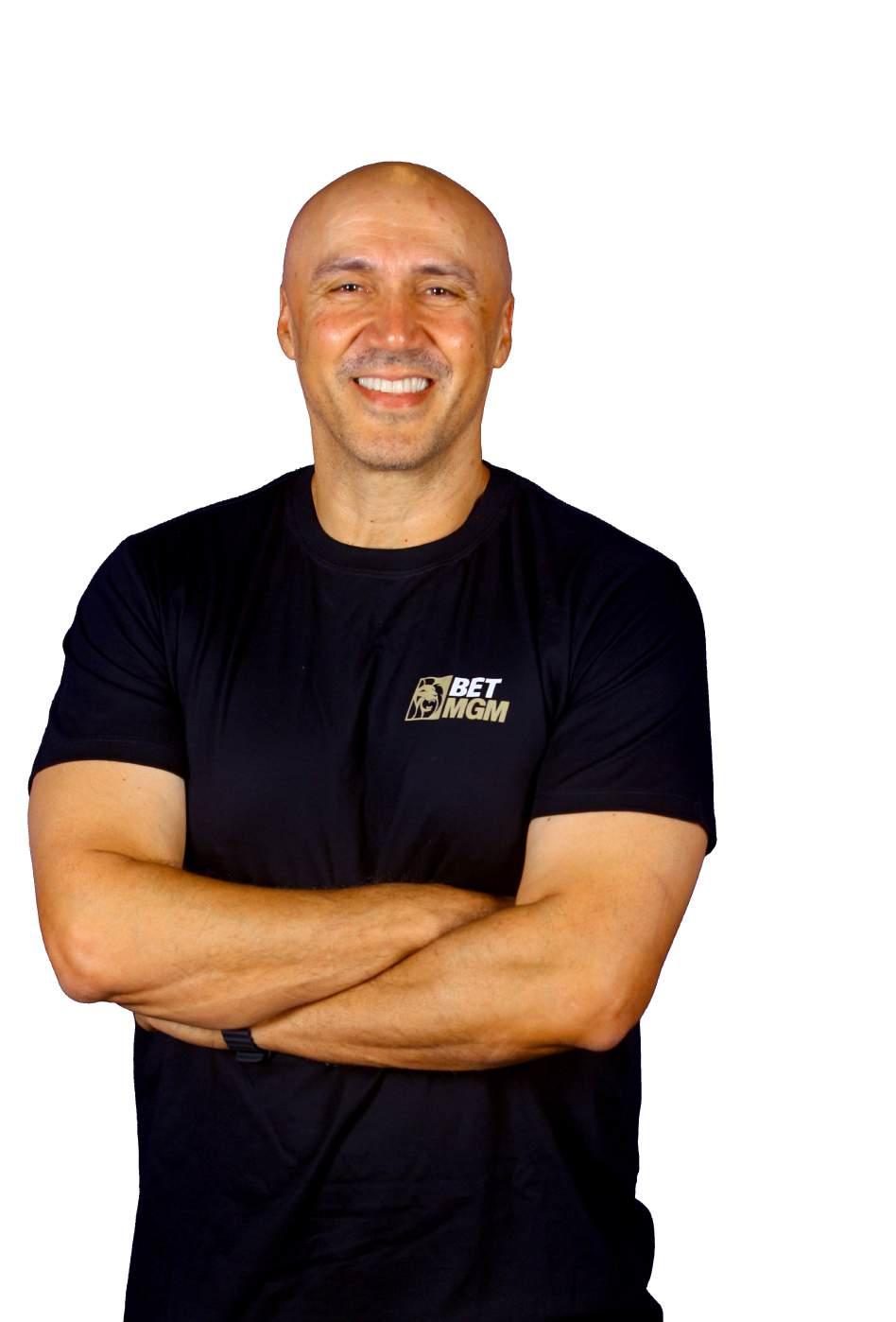
“I believe our advantage was having some distance – being able to observe what was happening from a market share and product perspective. That helped us understand where we should focus our energy and attention. So I think that was the main advantage: even though we lost part of the race for market share, which is a disadvantage, we gained the ability to stay calm, observe market movements, and invest energy where we believed it truly made sense.”
Asked whether the wait was worth it, Silva’s answer is unequivocal. “It was,” he says. “It couldn’t have been any different. Our stakeholders would never have entered the market if it wasn’t fully regulated.”
While it is not the main theme of our conversation, we talk a lot about bingo. As Silva notes, bingo has always been about much more than prizes. “The bingo customer doesn’t play because the prize is bigger, better, or smaller,” he explains. According to him, the true appeal of bingo lies in its sense of community.
“Of course, there’s the thrill of the game, but I really like the fact that it’s a community game, that it’s very friendly. And I think it’s deeply rooted in our Brazilian history. It really resonates with Brazilians. I believe that’s where the best customer in the industry is. What the customer truly wants is engagement – they want a community.”
That passion is not merely personal. Silva has already hinted that bingo elements will be introduced on BetMGM’s platforms as early as the first half of 2026.
When MGM announced its Brazilian operations, much of the marketing
revolved around bringing the Las Vegas experience to football-loving Brazil. One year later, Silva explains how that idea translates into a country without regulated landbased casinos.
Brazil, he recalls, has not had physical casinos since 1946. “But most operators’ revenue already comes from casino products [compared to sports betting]. Sports betting brings in a lot of traffic, but real revenue tends to come from casino.”
According to Silva, Brazilians show a strong inclination toward casino products, largely driven by curiosity. “And MGM has casino in its veins,” he adds. “I also want to strengthen, over time, the interaction between the unique and unmatched Las Vegas environment and the online experience we offer at BetMGM.”
Much like leaders such as Jeff Bezos, Silva sees customer obsession as a core driver of success – but insists it must be genuine.
“A lot of humility, a lot of listening,” he says. “I believe the customer gives us signals – shows us a path to follow. Many times, people get absorbed in their day-to-day routines. Everyone has tasks, deadlines, targets, projects to deliver. But the truth is, it’s very easy to get lost in all of that, and you can’t lose sight of the customer. Every day, the customer is telling us where the problem is and where the solution is. We need to try to follow their entire journey.”
That journey, he adds, never truly ends.
“I believe in long-term retention and multi-year relationships with customers. It starts with brand perception and the brand’s initial messaging. The onboarding process has to be flawless. The first
“ “ Even though we lost part of the race for market share, which is a disadvantage, we gained the ability to stay calm, observe market movements, and invest energy where we believed it truly made sense
deposit has to be flawless. And retention is key. You don’t have a customer just because they registered on your site and made a deposit. You don’t have that customer yet. I believe you only really start building a relationship after the third or fourth deposit.”
“You need enough humility to build a journey that’s truly unique for the customer. I don’t want to sugarcoat things for companies, but if this [customer obsession] isn’t natural, it’s impossible to make it work. You need to look at this every single day, just like you drink water or breathe.”
For Silva, leadership begins with people. A good leader, he says, must know who to bring along in order to build a winning team.
“When I ask people what their greatest asset is, I always say my greatest asset is my team. Technology is important – without it, we couldn’t do anything – but in the end, it will always be about people. You need a team you trust, a team you
believe in. And that team needs the humility to work together, to create a hierarchy where the person with the best idea wins – not the one who speaks the loudest.”
Drawing on his background as an entrepreneur, Silva also offers advice to companies entering Brazil and looking to hire locally.
“I’m a bit biased because I was an entrepreneur. I truly believe in teams made up of people with drive and hunger. At the end of the day, our industry is good and generous enough to welcome many people, as long as they have a passion for learning. So I often look less for very specific knowledge, because our industry is still relatively young. In Brazil, you won’t find that many ready-made talents. I prefer to develop talent. I prefer people to start with less knowledge but the right attitude –because if they have that, they’ll get there.”
Culture, he says, ultimately reflects leadership. The
values at the top shape everything that comes below.
“I really love what I do,” Silva says with a smile. “I’m passionate about this industry – I owe a lot to it. At the end of the day, I feel like I work without effort. I’m kind of in a flow state. And I’d really like my team to reach that same state of flow – doing something that doesn’t feel like work. When others are working, you’re having fun, you know? That’s my biggest goal. As a leader, it’s about building not just an environment, but a sense of flow and continuous learning, because our industry teaches us a lot.”
For Silva, BetMGM’s success in Brazil ultimately comes down to people.
“I believe my team is made up of people with a lot of drive. And I always tell them that, despite having the backing of an incredible brand like MGM, that alone won’t save us. What saves us is the day-to-day work, focus, and execution. And I was lucky to find a team that understands this and fights every single day to make it a reality.”

CEO VIKTOR CHERKAS tells SBC Leaders the story behind Kanggiten’s growth from operations to aggregation to B2B and its plans for the future
“ Data we collect funnels into one central hub, so operators get the full picture in real time. We’re talking trends on players, geographies, payment methods –basically, the whole analytical toolkit

Tell us the story behind Kanggiten. How did it all start?
Kanggiten’s roots are in the B2C space. Before moving into B2B, we spent over 10 years running high-traffic consumer platforms across multiple regions. It gave us a comprehensive arsenal of operational best practices, strong analytical and retention tools in one hand, and a robust technical foundation in the other.
Naturally, it provided us with clear insights into what works, where, and how. Over time, we’ve received a bunch of requests from operators: bring all this to B2B. The creation of Kanggiten was the answer. The first step was a game aggregation platform for both B2C and B2B. Later, we expanded with additional modules, again, building on the experience we had already gained.
How would you describe Kanggiten’s mission and core values?
First and foremost, Kanggiten’s mission is to help operators start and grow their iGaming business without being held back by rigid tech or long development cycles. Our modular infrastructure makes this possible. Our clients aren’t tied to a monolithic system. They get a flexible ecosystem where they choose which modules to add. They can start with a casino or sportsbook, or both, and then layer in a game aggregator, CRM and marketing tools, affiliate solutions, or analytics.
The emphasis on our clients’ profit and dedication to their success is another point to highlight. We are fully equipped with the resources to give operators our full attention and deliver a truly personalised approach. Our communication is designed for fast delivery. We provide support from assigned specialists all the way up to C-level assistance when needed.
“ The analytics provided by Kanggiten are next-level. And I say not just as the company CEO, but as the person who knows how it works under the hood
Can you tell us about Kanggiten’s key products and solutions?
Our Casino Platform already serves 30+ million players. It handles over 7 million transactions per month, maintaining up to 99.9% platform uptime. The same goes for the Sportsbook Platform, which covers 100+ categories, 3,000+ markets, and over 100,000 events each month.
As mentioned above, Kanggiten is modular by design. It’s best thought of as a building set: operators start with a core platform – a casino or sportsbook – and then enhance it with modules. To illustrate, if a client wants a 360° player view and the ability to run targeted, automated campaigns, that’s exactly what our CRM and Marketing Platform delivers. The Affiliate System, with its 3+ million leads, brings in highquality, converting players. For a one-stop content source, there’s our Game Aggregator, featuring 20,000
games. Plus, Analytics that turn raw data into profit-focused insights. In the end, you get the ultimate iGaming business solution, covering every detail, even the smallest micro-moments.
Can you give us more details about the Game Aggregator module?
Kanggiten’s Game Aggregator is literally the key to a fast content launch on the platform. Let me explain. New games, updates, and features can be added instantly. Operators stay competitive without spending months on integration or testing. Drawing on our B2C background, we know, backed by both internal and external data, what games are top-performing by geography. The aggregator ensures access to slots, table games, live dealer, crash games, and specialty titles from 150 providers via a highspeed API. We use multiple routing solutions to guarantee availability. In under a week, our clients get a premium content lineup.
How do Kanggiten’s analytics tools help operators make realtime decisions?
The analytics provided by Kanggiten are next-level. And I say not just as the company CEO, but as the person who knows how it works under the hood. Data we collect funnels into one central hub, so operators get the full picture in real time. We’re talking trends on players, geographies, payment methods – basically, the whole analytical toolkit. This allows us to react quickly to any change and ensure our clients never miss a critical metric.
types of partnerships does Kanggiten offer?
We work with two models: white label and turnkey. White labels suit operators with a fast-launch goal: our technical base, their traffic. At the same time, they get flexible customization options. Retention, gamification, analytics – we optimize everything around the
client’s needs and their geographies. Turnkey is for those who want full platform ownership. Operations are entirely managed by a client. They get Kanggiten’s tech but total independence: from clientdefined setup to customization of gamification mechanics.
What’s the real differentiator behind Kanggiten?
I’d highlight the built-in gamification tools. It’s a revenue generator, featuring proven mechanics like bonuses, tournaments, lotteries, loot boxes, wheel of fortune, achievements, betting, and store. Additionally, we offer Bonus Engine – a tool for creating unique types of bonuses. With it, operators aren’t limited to generic, copy-paste promotions. They can design one-of-a-kind, goal-driven bonuses.
Another thing I would name, although it seems obvious, is Kanggiten’s modularity. Operators who work with us are never boxed into a one-size-fits-all setup. They always have a choice to add the modules that make the most impact on their business.
On top of that, is that we come from a B2C background. That means we build features based on what we know actually works, after years of test-driving everything ourselves.
What are Kanggiten’s plans for 2026?
We’ve got big plans for 2026, focused on making Kanggiten impossible to ignore in the market. We already work with over 50 brands, and there’s plenty more on the way.
Our roadmap also includes the upgrade of the responsible gambling module, making it more behavioural analytics-driven. Another important step for us is leveraging AI to strengthen AML and KYC processes to make identity verification faster, more accurate, and more secure.

The home of global iGaming industry news. Leading coverage on Europe, Asia, Africa and beyond.

61 Column: Rachael Kennedy looks into high-risk payments
62 Roundtable: The EU’s new AML regime
Payment Expert Editor Rachael Kennedy says highrisk payments are being re-priced out of sight

Payments have always carried a price tag, but the maths is changing. While the industry spent the last decade obsessed with the front end – faster settlement and one-click checkouts – a much more significant shift has been occurring in the shadows. The economics of high-risk merchant services are being overhauled, not through transparent fee hikes, but through a steady, incremental tightening of the screws.
We’re seeing a fundamental expansion of what risk actually means. Risk once meant managing fraud or chargeback ratios, today, risk is a catch-all bucket for regulatory heat, reputational liability, and the ballooning cost of safeguarding obligations.
Payment providers have stopped pricing transactions and started pricing the sheer exhaustion of keeping them compliant. And the pressure is coming from every direction.
Card schemes have become more aggressive in their monitoring; regulators have lost their appetite for weak controls; compliance departments have transformed into massive, specialised cost
centres; and because capital is no longer cheap, the old tools of the trade now carry a much heavier weight on the balance sheet.
This shift rarely makes it onto a standard fee sheet. Instead, the re-pricing manifests as structural friction:
• Settlement cycles that stretch out from days to weeks.
• Rolling reserves that swallow up a merchant’s working capital.
• Narrowing acceptance policies that quietly filter out entire business models.
• Opaque onboarding hurdles that act as a “soft no” before a contract is even drafted.
For the industry’s giants, these hurdles are a rounding error or a negotiation point. For the smaller operators, they are existential threats.
In sectors like iGaming and sports betting, the tension is at its peak. These industries are mature and heavily regulated, yet they sit at a volatile crossroads of finance, politics, and consumer protection. Payments teams are now being drafted as de facto enforcement officers for rules which have nothing to do with moving money – affordability checks, source-of-funds verification, and behavioural monitoring.
Every new mandate adds operational weight, and this weight is never carried by the people writing the rules.
From a provider’s perspective, this defensive crouch is logical. Scheme
penalties are brutal, and investors crave the predictability that ‘high risk’ often lacks. Raising the barrier to entry via cost is simply a way to manage their appetite without having to announce a blanket exit from a sector.
The long-term fallout of this trend is a narrowing of the market. When legitimate sectors become too expensive or too noisy to serve, the pool of available providers shrinks. We are left with a dangerous concentration of risk and a market which is far less resilient than it was five years ago.
As we move into 2026, the real story in payments won’t concern the latest buy now, pay later (BNPL) clone or a new rail. Instead it’ll focus on who is being priced out of the system entirely.
Payments infrastructure has always been a mirror of the values governing it. Right now, those values are pivoting hard toward containment and risk transfer. This shift might be rational from a corporate standpoint, but the collective result is a system fast becoming increasingly exclusive, expensive, and fragile.

Since the inception of the first Anti-Money Laundering (AML) Directive in 1991, the European Union’s financial landscape has been defined by a frustrating paradox: a single market governed by a patchwork of 27 different national interpretations.
For decades, cross-border operators in high-risk sectors have navigated this regulatory labyrinth, where a compliance framework deemed goldplated in one jurisdiction might be viewed as deficient in another.
The era of the national interpretation looks like it is now drawing to a close. As the EU enters the 2026 enforcement cycle, the introduction of a directly applicable Single Rulebook and the establishment of a centralised AntiMoney Laundering Authority (AMLA) mark the most significant pivot in the bloc’s history.
The fundamental flaw of the previous regime was its reliance on directives, which required national transposition and invited infringement procedures when local laws failed to match Brussels’ intent. This created a fragmented reality that was particularly punishing for multijurisdictional platforms.
“Previously... we had AML rules set at the level of directives, which were differently implemented by various countries with different timelines,” observed Piotr Lisak, Senior MLRO and Governance Officer at FDJ United during a recent SBC Webinar.
“This created problems because there was no gold-plated standard, which could be applied across all the operations”.
This fragmentation often led to a race to the bottom or, conversely, a compliance trap where operators were caught between the strictness of German culture and more interpretive approaches elsewhere. Thees Buschmann, Senior Consultant at Chevron Group, noted that while the new regulation brings muchneeded uniformity, it adds a dense layer of new duties.
“The AMLA regulation and the new framework is not an actual game changer but it’s something that adds another layer of compliance requirements and of compliance duties upon the operators,” Buschmann argued.
The shift moves the burden from local legislatures to a centralised EU standard, but for the operator, the immediate result is an intensified workload to align existing policies with incoming technical standards.
The shadow of AMLA is just as relevant; the Authority’s technical standards will define the best practice that national regulators will eventually demand from every corner of the market
“ I almost feel like AI is going to make things more complicated and more difficult... I think it’s going to be a hell of a year
One of the most significant –yet understated – shifts is the requirement for a consolidated risk profile. Historically, firms could segment their risk assessments by geography, tailoring their approach to satisfy local regulators in Malta, the Netherlands, or Greece.
“What didn’t exist before is the requirement for a businesswide risk assessment,” Buschmann noted. “You have segmented risk assessments for several jurisdictions... now, within this business-wide risk assessment, you will have to bring them all together”.
This demands a total structural rethink; firms must harmonise conflicting methodologies into a single, defensible corporate identity that can withstand scrutiny from both national supervisors and, eventually, AMLA itself.
Nowhere is this shift more acute than in the crypto sector. Under the Markets in Crypto-Assets (MiCA) regulation and the new AML package, the distinction between ‘traditional’ finance and ‘disruptive’ crypto is evaporating.
Jean-Michel Azzopardi, a blockchain architect and consultant, warned the technical implementation – particularly around the Travel Rule – will be the year’s greatest challenge. “I almost feel like AI is going to make things more complicated and more difficult... I think it’s going to be a hell of a year,” Azzopardi remarked, highlighting the tension between the EU’s safety goals and the reality of remote onboarding.
The pressure is high for those launching initial coin offerings (ICOs). Azzopardi suggested the sheer weight of EU regulation
might push the “best projects” offshore to avoid the attrition associated with heavy KYC.
“ICO’s will not accept fiat... it will happen offshore, it will not happen in Europe and that way no regulation will be required,” he predicted. For those who stay, the intrusion of enhanced due diligence – traditionally reserved for banking – may prove a “bridge too far” for some investors.
“That user attrition has a cost,” Azzopardi noted. “It’s not just about paying a hefty licensing fee. That’s one part of it. There’s also the opportunity cost –what you could be earning if you hadn’t alienated, say, 50% of your user base.”
While the new Frankfurt-based AMLA has fueled industry anxiety, its immediate reach is more surgical than many realise. The Authority will initially oversee a first batch of 40 systemically important financial groups, primarily large banks with crossborder operations.
“It will be for banks, for sure,” Lisak clarified. “The banks are those who finance as part of supervision... I don’t expect they would go after medium, small-sized, non-systemic important entities in terms of direct supervision.”
Yet, for the mid-market, the shadow of AMLA is just as relevant; the Authority’s technical standards will define the best practice that national regulators will eventually demand from every corner of the market.
As the 2026 enforcement cycle approaches, audit readiness is being redefined. It is no longer enough to have a policy on a shelf; firms must be able to evidence their decisions in real-time.
Max Irwin, VP of Sales for Shufti, pointed toward “explainability” as the new compliance currency. “It’s ensuring that identity monitoring and escalations on decisions are consistent and they’re explainable and defensible, I guess, for the regulator,” Irwin stated.
He warned against collecting too much data without the ability to monitor it effectively, noting that teams can become “flooded with low risk signals” that are ultimately harder to monitor.


The consensus for the next 18 months is a return to precision. Lisak advises setting up a dedicated task force and remaining flexible as new technical standards emerge. For Buschmann, the strategy is justifiability – documenting the rationale behind decisions while rules are still being finalised.
For Azzopardi, the priority is more visceral: “I just think it’s like a good old-fashioned gap analysis. Literally just one little document that just says where you are, where you shouldn’t be, and what’s missing.”
POWERED BY
68 Feature: After the Premiership front-of-shirt ban
72 Roundtable: Trading and marketing at World Cup 2026

Facquisition of Warner Bros Discovery (WBD) has got the media industry talking. If approved by regulatory bodies, the takeover could have a ripple effect globally, and that includes advertisers for sportsbooks.
At the time of writing, Netflix was reportedly looking to switch its $83bn bid to an all-cash offer in order to speed up and seal the acquisition of WBD’s studios and streaming business. If successful, it would not only gain the rights to global hits like the Harry Potter and Game of Thrones franchises, but also another streaming service and TNT Sport International.
That’s where it gets interesting for sportsbooks and gaming companies.
Netflix has been increasing its foothold in broadcasting live sports: WWE, boxing and even NFL. Last year, it also struck a landmark deal with Fifa, securing the full rights to broadcast the Women’s World Cups in 2027 and 2031 in the US – a first for the streaming giant.
While its bid for WBD excludes TNT Sports US, it does include the international arm, which holds TNT Sports UK. That comes with domestic rights for some Premier League matches until 2029 and the Champions League until 2027.
Up until recently, Netflix’s advertising policy prohibited direct gambling ads on its platform. However, since acquiring the rights to broadcast the NFL, betting ads from the likes of FanDuel have been aired during games. It has also struck a number of games content deals such as that agreed with Light & Wonder to produce the Squid Game slot.
With the US’s more liberal attitude towards gambling advertising than some European nations, more routes are opening for sports betting brands to engage with fans. Think connected TV (CTV) with
interactive formats that could offer real-time odds; or content partnerships with affiliates.
Rumours suggest that Netflix is vying for rights to broadcast English Premier League matches, which means fresh competition for Sky in the UK and NBC in the US.
Netflix narrowly missed out to Paramount+ for the Champions League package, but with more Premier League matches up for sale as footballing bodies look to end the 3pm broadcast blackout, it has a good chance of getting in on the action. Especially as Sky’s budget is under pressure with parent company, Comcast, finalising its acquisition of ITV.
The advertising landscape around sport on TV is complex, but Netflix, for one, seems sure to be creating new opportunities for the betting industry’s marketing directors.

Scan here for more from Affiliate Leaders

TAs front-of-shirt betting deals disappear from the Premier League, operators are being pushed into a new era where survival depends on how creatively they reinvent their presence
Words by KIERAN O’CONNOR
There will be a death in the Premier League next season. When the 2026/27 campaign kicks off, gambling brands will disappear from the front of shirts for the first time in more than two decades.
No wreaths will be laid and no minute’s silence observed, but across betting operators, agencies and clubs, the mood is unmistakably somber.
The front-of-shirt is football’s most powerful piece of commercial real estate, guaranteeing global
broadcast exposure, cultural permanence and emotional association with moments fans carry for life.
Now, becoming off-limits for betting operators represents the biggest structural shift in the sponsorship market since shirt deals became mainstream.
“It’s the biggest shake-up in the front-of-shirt market in the Premier League for 20 years,” says Joe Williams, Co-founder of agency WH Sports. “There’s excitement, but also trepidation,
especially for clubs starting to think about life after bookies.”
This isn’t an obituary – in football, death makes room for new life, and the operators who navigate the transition best may find themselves reaping different rewards.
Last season, Aston Villa returned to the Champions League for the first time in nearly four decades while celebrating its 150th anniversary, two milestones which made its kits impossible to forget.
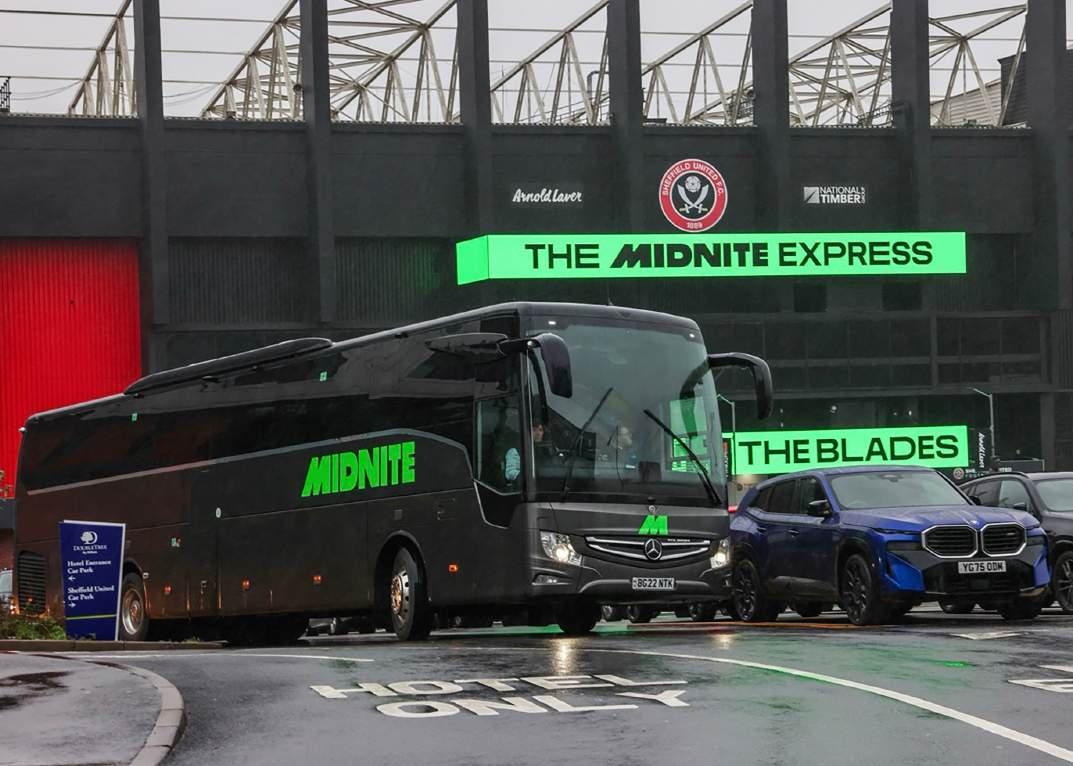
“Featuring on Villa’s shirt was a great way to introduce Betano to the local audience,” says Tomasz Majewski, Head of Sponsorships at Kaizen Gaming.
“As the top league in the world, the Premier League has a very loyal audience, with many fans watching matches beyond those of their own team. It possesses an international appeal no other domestic league can match.”
The benefits flowed both ways, with the Premier League’s competitiveness making partnerships with operators like Betano crucial for clubs outside the traditional Big Six, who rely on these deals to compete at the highest level. Teams like Villa losing a front-of-shirt partner, therefore represents a significant commercial hit. However, Majewski insists the ban will not mean withdrawal.
“I do not see any reason why we should withdraw from the Premier League only because we cannot be visible on the front of shirts. Our entry into the Premier League was never a short-term investment. Our goal is for the Betano brand to still be present in English stadiums in August 2026 and beyond.”
If Betano intends to maintain a presence alongside Villa, it will need to evolve, yet it does not have to look far. Younger brands are already approaching shirts as just one touchpoint in a broader ecosystem. UK-based operator Midnite appears on the front of Sheffield United’s shirt and across Southampton’s travelwear, training kits and backof-shirt placements, taking full advantage of the Championship’s decision to keep front-of-shirt gambling sponsorships.
“We don’t actually treat frontof-shirt and other placements as significantly different at a base level, they are both affordable fame – and media buys give us permission to genuinely connect with fans,” says Andrew Mook, Head of Brand Marketing at Midnite
Front-of-shirt is, and always will be the prime asset, but training kits, travelwear and other placements also provide organic visibility which reaches digitally-engaged audiences.
Fans consuming snippets of pre-match routines, behindthe-scenes content, or socialled activations are as valuable as those who notice the matchday logo, highlighting a change toward continuous touchpoints rather than oneoff moments.
“ Clubs at this level are generally more accessible and collaborative. They’re usually willing to adapt and do more than what’s written in contracts

Additionally, Midnite prioritises participation over passive impressions, which have become the norm for many of the Asian brands that have sponsored Premier League clubs in recent years. The company achieves this through initiatives such as subsidised coach travel, supporter events and other activations, which authentically connect with supporters and create value a logo alone cannot deliver.
“Ultimately, it is activation over exposure,” Mook says, noting proprietary AI modelling and data-led insights allow the brand to measure impact across every touchpoint.
In this model, football becomes a content platform, fans become active participants and every asset contributes to a cohesive
ecosystem. Majewski sees Betano moving in this direction.
“Ultimately, the future isn’t about finding one single replacement for the front-of-shirt spot,” Majewski says. “It’s about building a 360-degree ecosystem where sleeves, training gear and digital content work together to tell a more complete brand story.”
Premier League sponsors might be able to replicate the operational model of brands like Midnite, but they might also start targeting the places where these brands have already established influence.
The Championship, which chose not to ban gambling sponsors on front-of-shirts, offers an
attractive alternative to the Premier League. Clubs in the second tier rely heavily on the revenue from these partnerships and brands gain visibility in a setting where fans value presence as much as prestige.
Sheffield Wednesday is a prime example of this in action. The club has endured a turbulent season, struggling to pay players and entering administration in October 2025. In such moments, a committed sponsor becomes a stabilising force.
“When we came in, the focus wasn’t about headlines or shortterm exposure; it was about stability,” says Marco Trucco, CMO at Immenese Group, owner of Mr Vegas. “It was about reassuring the club, the fans and the wider football community that we were there for the long haul.”

Would a sponsor lose some exposure by moving down a league? Certainly. But the Championship’s reach is far from negligible.
In the 2023/24 season, the EFL, comprising the Championship, League One and League Two, attracted 23.7 million attendees, according to the Global Institute of Sport. Of this total, more than half came from the Championship, which recorded higher attendances than La Liga, the Bundesliga and Serie A that season.
Trucco explains the Championship offers more than fan exposure; it provides a deeper, more authentic connection than often seen in the English top flight.
“Fans are less driven by results alone and loyalty tends to hold
even during difficult periods,” he adds.
There’s also an operational flexibility which doesn’t always exist when working with the Premier League’s giants.
“Clubs at this level are generally more accessible and collaborative. They’re usually willing to adapt and do more than what’s written in contracts, which matters because ideas change and not everything can be planned from the outset.”
With front-of-shirt space set to disappear, the Premier League sponsorship market is entering uncharted territory, but not a vacuum. Williams explains scarcity will immediately drive up the value of secondary assets.
“Sleeve placements, training kits and other rights are suddenly the most soughtafter inventory and prices will reflect that heightened visibility,” he says.
At the same time, Williams notes entirely new industries are stepping into the fray: “FX, crypto, fintech, and payroll brands are beginning to compete for spaces, which were once dominated by bookmakers, while UK brands long priced out by the dominance of gambling operators may finally return.
“The front of the shirt may go, but the commercial ecosystem doesn’t collapse. It reshuffles. Clubs won’t lose as much revenue as some feared; the value simply migrates elsewhere in the package.”
MARK LANGDON of Spotlight Sports Group, IFRAN PARVEZ of Livescore and Flutter’s MALACHY ROONEY meet to discuss the challenges of the biggest World Cup yet
by CHRISTIAN LEE
n five short months, the eyes of the footballing world will be drawn to one of the biggest shows in sport – the FIFA World Cup in the US, Canada and Mexico.
FIFA projects that the tournament will reach an audience of over six billion people, which offers sports betting operators around the world an enormous opportunity for exposure.
However, grasping such opportunities also requires overcoming a litany of challenges if operators want to capture a proportion of the $35bn-plus expected to be wagered during the tournament.
Firstly, there will be a whole generation who view football through a very different lens to the traditional fan. Gen Z will likely view football through the lens of social media. For many of them the players – the superstars – are more important than the teams, especially in non-traditional football markets.
“[Gen Z] are interested mostly in players, rather than teams, or moments, rather than matches. We’ve got to be cognizant of that. We’re not really competing with bookmakers, we’re competing with the wider attention economy,” says Ifran Parvez, Director of Sports at Livescore, speaking on an SBC Webinar focused on how to engage audiences during the tournament.
Star names such as Portugal’s Cristiano Ronaldo, Argentina’s Lionel Messi and Norway’s Erling Haaland will no doubt drive the narrative early on in the tournament.
However, Mark Langdon, Group Director for Spotlight Sports Group, emphasises that the unpredictable nature of tournament football, as well as the World Cup’s expanded 48-team format, means that operators must be ready to jump on moments as they are happening through the use of tools such as bet builders, which can be pre-packaged and pegged to a specific headline or centred on a certain player.
The expansion of the tournament means that relative footballing minnows such as Curaçao have achieved qualification for the first time, while Haiti, to take another example, is playing for the first time since 1974.
While this creates an interesting dynamic for fans, it presents major modelling complications for operators that won’t have the wealth of data available to accurately predict game outcomes through statistical modelling.
Langdon explains: “There will be pre-match prices and they might be completely wrong. They won’t be completely wrong in the Premier League or Champions League, but they could be completely wrong in the World Cup.
“I remember the last World Cup. It took about 10 seconds for everybody to realise that Qatar were much worse than we’d expected. Ecuador nearly scored after about a minute, and it didn’t take them that much longer after that to score. That just couldn’t possibly happen in the Premier League or Champions League, but it can in a World Cup.”
“
No one really wants to bet on Spain at 1/100 against Cape Verde, they’ll look down to the derivative markets. And sometimes it’s just quite hard to know what price Spain should actually be
Though ripe for memorable upsets, there is also a chance that these minnows will be on the receiving end of sizable losses, a proposition that doesn’t lend itself to significant engagement from bettors.
Therefore, players are more likely to look towards derivative markets to find value in bets.
“From a modelling point of view, the more onesided a game or the bigger the supremacy, the more challenging it is for us to be able to offer that scope of proposition that we might like,” says Malachy Rooney, Head of Football Strategy & Pricing at Flutter UK and Ireland.
“No one really wants to bet on Spain at 1/100 against Cape Verde they’ll look down to the derivative markets. And sometimes it’s just quite hard to know what price Spain should actually be.”
Although the popularity of football in the US is growing with the addition of players like Lionel Messi and Luis Suarez to Major League Soccer, the World Cup is likely to unlock a new demographic of players who have never placed a bet on football before.
Though an exciting opportunity for companies like Flutter and its US sportsbook FanDuel, which expects to welcome over 1.5 million new customers, operators must cater for sports fans more accustomed to wagering on leagues such as the NFL and NBA.
Rooney explains: “It’s just getting them up to speed with what it actually means to place a bet relative to maybe the NFL or NBA that they’re much more familiar with. We need to try to bridge that gap because the worst case scenario is you have customers doing something and expecting an outcome and then seeing that their bet is either settled differently or they placed a bet on something they thought was something else.”
“[It’s about] trying to strike that balance between giving them the tools they need to understand it without saturating it for the more experienced betters who don’t really want to see a lot of additional information when they’re already familiar with it. So, it’s a pretty unique challenge.”
For major gambling markets like Europe and Asia, kickoff times will be less than favourable, given that the tournament is being hosted in North and
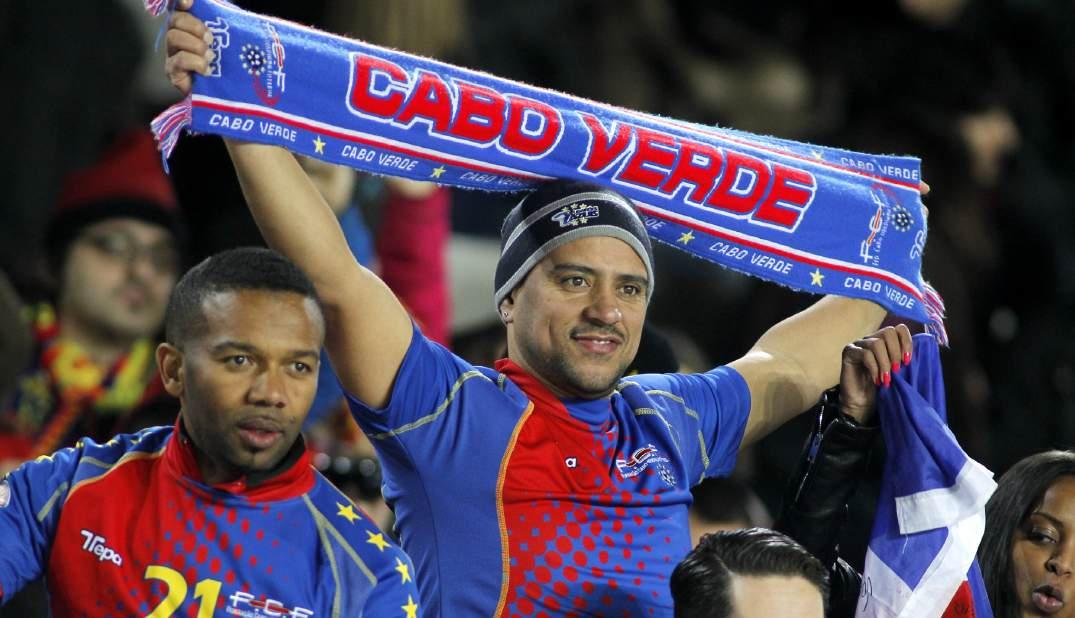
Central America, leading to late nights or very early mornings for the most ardent of football fans.
As a result, the panelists suggest that there will be a significant shift towards pre-match activity as fewer fans will be able to watch games live.
However, the fact that games are later means that fans will be more likely to be watching at home rather than with friends or in pub beer gardens, meaning they will have access to a second screen while watching. Therefore, it’s the job of betting operators to win the battle for space on a player’s second screen to increase engagement.
In addition, unlike during the regular football season, every game will be a standalone fixture, meaning all eyes will be on one game, a situation, says Rooney, that lends itself to features like bet builders.
“The behaviour that we would see on a standalone 12.30 Premier League game is significantly more
weighted towards bet builder than it would be for a host of three or five games that are on concurrently,” he says.
“One of the advantages of the [World Cup] is that it is standalone. There are no instances where there are six matches on at the same time, and customers are completely bamboozled in terms of what they want to do.
“So I think it’s [about] learning from what has worked well in the English Premier League, specifically with TV-led matches, and then trying to make sure that we encapsulate that in the World Cup as well.”
While it’s clear that the challenges facing operators leading up to the tournament are almost endless, data suggesting that 70% of fans across the UK, US and LatAm are planning to place a bet during the 2026 tournament demonstrates that even capturing a small percentage of this market represents a significant financial windfall that cannot be ignored.
ON THE FOLLOWING PAGES
77 Column: The uncomfortable reality of gambling-related suicide
78 Interview: EPIC Global Solutions CEO Paul Buck
Player
Protection Hub Editor
Steve Hoare on the lessons to be learned from the tragic suicide of Oliver Long

Anyone who has experienced a friend or family member taking their own life will know how difficult it is to understand and to come to terms with. It is a complex subject and the causes of suicide are rarely straightforward.
As such, the gambling industry has long shied away from the topic but an industry that is serious about gambling harm has to face up to talking about its most serious harm.
The topic of suicide arose in January after a UK coroner announced her findings after the tragic death of Oliver Long, who took his own life at the age of 36 after nearly a decade of problems with gambling.
According to his family, Ollie started gambling around 2016. He reached out for help and was seen by a voluntary sector charity in 2018 and in early 2022, he self-excluded from online gambling via Gamban. His family believe that he also self-excluded
via Gamstop, the national selfexclusion scheme which blocks access to all licensed online gambling operators in Great Britain. Ollie even volunteered with BetKnowMore as a peer supporter for others affected by gambling harms. But in April 2023 he began gambling again using unlicensed gambling operators and died on 23 February 2024.
While Ollie’s death has shone a welcome light on illegal gambling operators and the “not on Gamstop” phenomenon, the family are also understandably distraught that the system, as they see it, failed him. The family’s statement said: “Ollie tried to protect himself. He recognised the harm and signed up to self-exclusion tools to block him from all regulated gambling sites. But the illegal gambling operators horrifically and deliberately target those who have self-excluded or children. The Gambling Commission and the government are failing in their duty to protect people from this harm.”
“Legislation is outdated, regulation is poor, enforcement is weak, and advertising, particularly in sport, is inescapable. Ollie was not ‘vulnerable’. He was human. His death was preventable.”
The coroner expressed concern about the ongoing risks posed by illegal gambling sites and indicated that she will issue a
Prevention of Future Deaths
Report addressed to the relevant government departments and to the Gambling Commission.
It feels terrible to talk about politics, when addressing the death of a young man but campaign groups such as Gambling With Lives have very successfully managed to raise the political profile of gamblingrelated suicide. Their methods have not always been pleasing but the industry’s silence on the topic has been self-defeating.
As Regulus Partners’ Dan Waugh wrote in a blog ‘on the topic in 2023: “The first step towards addressing any problem has to be an acknowledgement that it exists, followed by a willingness to discuss it. If operators are prepared to do this, they may find that organisations and researchers with expertise in this area – as well as the Gambling Commission – are prepared to engage rather than simply criticise.”

Scan here for more from Player Protection Hub
Words
by STEVE HOARE
EPIC Global Solutions CEO PAUL BUCK explains how harm prevention can lead to a scandal-free and sustainable gambling industry
The growth of EPIC Global Solutions over the past couple of years has placed it at a scale few organisations in gambling harm prevention have reached. What began as a small UKbased education initiative is now a global consultancy operating across Europe, North America and beyond, employing more than 50 people and working with some of the world’s most influential sports bodies, universities and regulated gambling operators.
The organisation now employs 53 people, including a permanent team of 12 based in the US, spread across cities from Boston to Dallas and Seattle. More than half of EPIC’s workforce – 27 people – bring lived experience of gambling addiction, making it the largest employer of lived-experience professionals in the sector globally.
“The ethos of EPIC is trying to use that lived experience to try and stop it happening to others. As simple as that,” summarises the organisation’s founder and CEO Paul Buck.
That model underpins everything EPIC does. Whether delivering education to elite athletes, training gambling operator staff, advising boards on safer gambling strategy, or designing digital learning tools, lived experience is the driving force behind everything.
In the past year, EPIC has worked face to face with more than 100,000 people globally. Its largest single programme is with the US college sport association, the NCAA. EPIC has delivered education to over 330 US colleges and more than 100,000 student athletes in the past three years.
Alongside sport, EPIC works with 16 of the world’s largest gambling operators, including seven of the eight biggest in North America. It provides staff training, interaction masterclasses, consultancy on advertising and product design, and boardlevel advisory work. In the US, it is a lead partner in the Know Your Play programme through the Responsible Online Gaming Association (ROGA), reaching tens of thousands of students annually.
“ RG can’t sit in a dark corner. It has to run


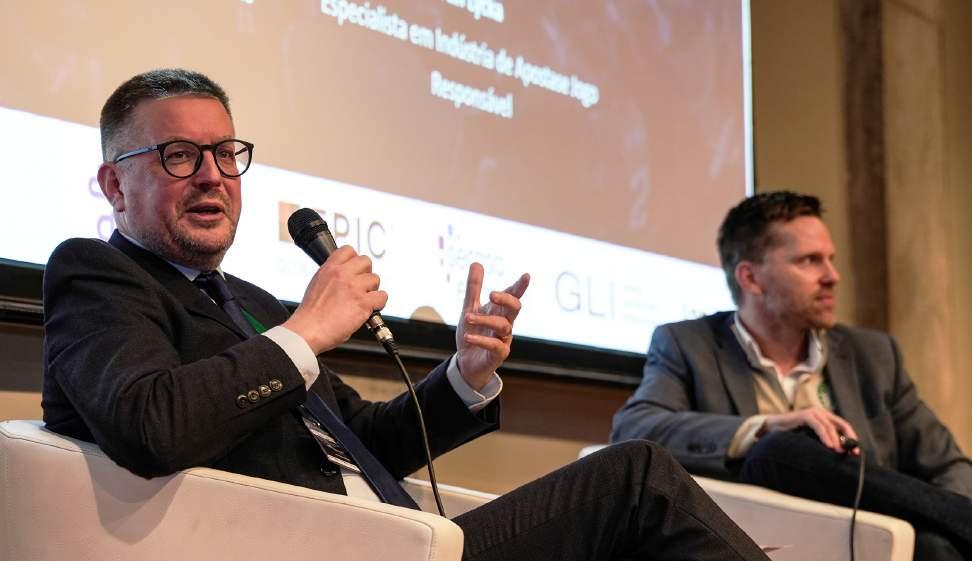
EPIC has also accelerated the development of a new suite of digital products – microlearning modules, immersive simulations, VR-based training and AI-enabled tools – designed to make its prevention and education work scalable across languages and cultures. These platforms are already being piloted internationally and are central to EPIC’s next phase of expansion, which will likely be focused on Brazil and the UAE.
Despite political noise around statutory levies and funding models, EPIC enters 2025, its early teething troubles seem consigned to history. It is one of the most established, diversified and influential harm prevention organisations in the world.
The scale EPIC operates at today is inseparable from the personal story of its founder. He has told the story untold times but it bears repetition for those who have not heard it.
Between 2001 and 2011, Buck was gripped by a gambling addiction on which he spent £4.8m across 93 betting accounts, losing £1.3m. He stole £434,000 of it from his employer Banco Santander and after a suicide attempt and confession, he ended up in prison.
After transferring from a violent Victorian prison in Preston to an open prison near Blackpool, Buck started working in the prison library and pondered what to do with the rest of his life.
He knew he wanted to help those suffering from gambling addiction but there were plenty of excellent treatment providers. What Buck couldn’t see was anyone working to stop people reaching crisis point in the first place.
EPIC – Education, Prevention, Identification, Control – was conceived in that prison library as a response to that gap. Buck did not want to campaign against gambling, nor to become a counsellor. He wanted to prevent harm by using lived experience to explain the reality of addiction and
its real-world consequences, and to spot the early warning signs.
When Buck was released in 2013, EPIC launched as a social-impact business. It was deliberately not a charity. Any profits would be reinvested into expanding reach and impact.
While progress was slow over the first few years, EPIC’s first employee, Mark Potter, was a former professional rugby player and a deal with the rugby association was followed by a similar programme for the cricket players’ association.
A turning point came in 2017 at a small meeting at the Gambling Commission’s headquarters in Birmingham. Buck delivered a short presentation to the 20-odd people present, before then-CEO Sarah Harrison turned to him and asked him why EPIC was not working in the sector where most harm exists?
“And for once in my life I was lost for words,” says Buck. “It was like, ‘Hang on a minute. I’ve just said we’re working with kids. We’re working with sport. We’re just about to start something with armed forces, criminal justice, and financial services. Where do you mean?’”
‘Why are you not working with the gambling industry?’ she asked. She told Buck that the Commission could tell operators what to do and fine or sanction them if they don’t do it, but said that EPIC should be going in to show them how and why it’s so important.
“ The ethos of EPIC is trying to use that lived experience to try and stop it happening to others. As simple as that
“I believe what we’ve done with gambling operators has had a massive impact,” says Buck. “This whole concept of anything that the industry has paid for either directly or indirectly isn’t impartial – it’s basically just nonsense.”
If nothing else, as the biggest employer of people with lived experience of gambling addiction, if Buck succumbed to any industry pressure to compromise its service he would be putting half his employees at risk – employees who have devoted their career to preventing addiction.
EPIC has generally steered clear of politics but the political climate around gambling harm and the government-mandated research, education and treatment levy is clearly a massive source of frustration.
“The beauty of the digital products is they can be done in any language,” says Buck. “For us to truly get to where we want to get to in global impact and be anything to anybody, anywhere at any time, in any language, then digital is what we’ve needed to embrace.”
A rebrand in 2023, from EPIC Risk Management to EPIC Global Solutions embodied this ambition. It has also allowed Buck to remain largely aloof from the political situation in the UK. However, he’s keen to stand up for the industry that caused him so much harm.
“I wrestled with it because I’ve been in prison because of an addiction to gambling and it was never in the business plan to work with the gambling industry. To be honest, I didn’t think the gambling industry would want to work with us, going around telling stories of the downside of gambling addiction and where it can take you.”
But a couple of weeks later he googled “which operator is the best at responsible gambling” and Kindred Group’s Maris Bonello was the most prominent name. Connection came via LinkedIn and Bonello almost immediately invited EPIC to Malta to provide staff training.
Shortly after that, Buck met Sky Betting & Gaming CEO Richard Flint at GambleAware’s annual conference and he proposed a programme with the English Football League, which SkyBet was sponsoring. In addition to delivering education across all 72 clubs, this was the beginning of a relationship with Sky’s soon-tobe parent company Flutter, which would go on to become one of EPIC’s biggest clients.
“Now, we’re being told by the [levy commissioner] OHID [Office for Health Improvements & Disparities] that if anybody takes any money from industry in any way from 1st of April this year you cannot be part of the statutory levy. So you’ve got this amazingly strange scenario where the global leader in gambling harm prevention will not be eligible to work for the prevention part of the statutory levy.”
The implementation of the levy will not affect EPIC nearly as much as some other organisations in the sector but the policy seems selfdefeating. EPIC has conducted a couple of programmes for legacy funding commissioner GambleAware, but its geographical diversification has served it well.
Aside from its early entry into the US via its relationship with Entain, the driving force behind this diversification was the pandemic, which forced it into the digital realm. The business doubled in size as it was able to answer calls from all parts of the US, across Europe and into Australia.
“The industry is a completely different industry to the one I experienced when I was gambling. Between 2001 and 2011, I was a member of 14 VIP clubs. I was taken all over the world gambling and that just would not happen now. For those in my team that have been free from gambling for five years or more – a lot of their stories wouldn’t happen now.”
In the US however, he sees a market still finding its feet. His appeal to US operators might be self-serving but he believes that the only route to true sustainability – an industry free from political pressure – lies in investment in responsible gambling.
“RG can’t sit in a dark corner,” Buck says. “It has to run through every decision an organisation makes –from marketing to product design to VIP strategy.”
Long-term profitability, he argues, depends on embedding prevention at the heart of the business. Anything else invites media and public distrust, regulatory backlash, and long-term damage.
EPIC’s mission remains rooted in the same principle that emerged in a prison library more than 15 years ago: real change does not come from shouting at the industry from the outside, but from encouraging it from within. It comes from board room education, consultation about marketing and products, and it comes from lived experience.
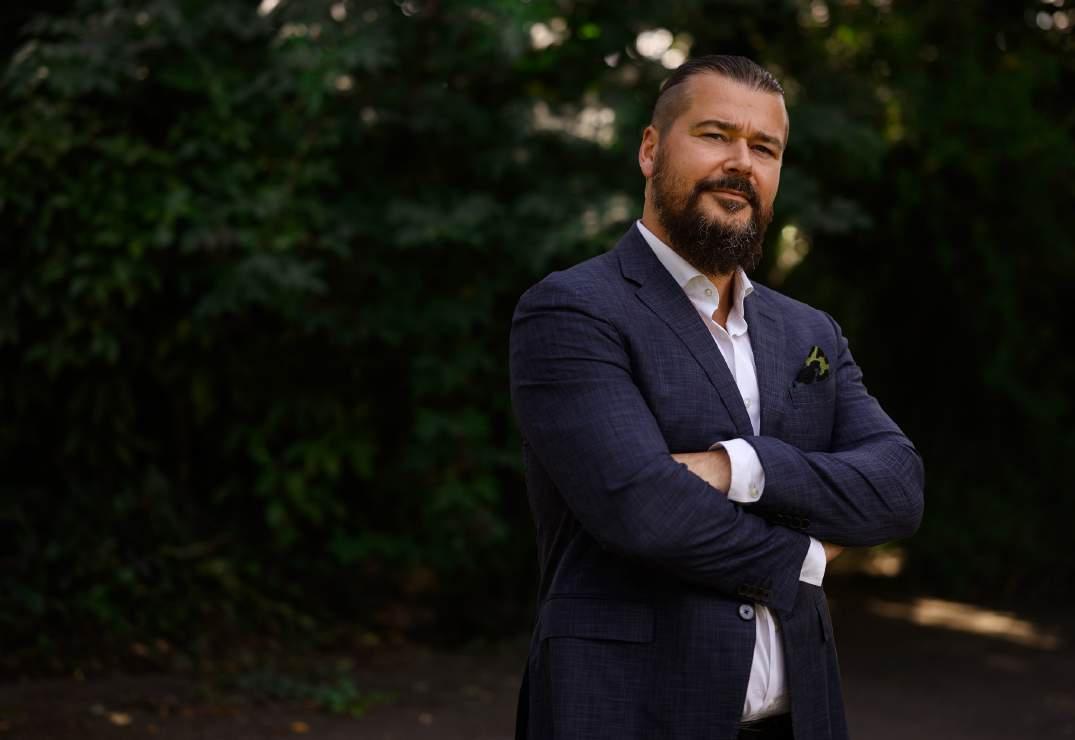
There’s always a buzz in the industry around a World Cup year. And, despite Denmark not qualifying (yet), it’s something that really sparks enthusiasm in a similar way all across the globe.
You might be reading this piece at our SBC Summit Rio event and nowhere is more synonymous with the World Cup than five-time winners Brazil. Hosted in one of the world’s most football-passionate markets, the summit provides a natural meeting point for conversations shaped by sport, culture, and shared opportunity.
As our World Cup marketing preview shows (p.72), the tournament also encourages the industry to invest in new approaches as brands compete headto-head. It provides us with a snapshot – almost a race between operators around the globe – of an industry striving to compete with the most creative, eye-catching and overall entertaining approach for a few weeks when one sporting competition captures the attention of the world.
The World Cup reminds us why sport sits at the heart of betting. It brings casual players back into the ecosystem and introduces new audiences who might only engage once every four years. That influx forces the industry to work together at pace. Technology teams prepare for scale. Integrity bodies sharpen
their monitoring. Customer support and player protection teams ready themselves for heightened activity. The tournament becomes a stress test that pushes standards higher across the board.
Perhaps most importantly, the World Cup serves as a reminder of our responsibility. When engagement peaks, so does scrutiny. It is a moment when the industry must demonstrate that growth and responsibility can coexist. Done well, it strengthens credibility and builds long term confidence.
In a world that has been fractious and divided of late, the World Cup shows how sport can still bring people together. For the sports betting industry, it is not just a commercial opportunity but a shared experience that reinforces who we are, how we connect, and why moments of unity still matter.
SBC will be in the US at the start of the tournament for SBC Americas (June 9-11 in Florida). During major tournaments, business discussions at such events feel even more connected and grounded in the realities everyone is experiencing at the same time. And hopefully, Denmark will be able to navigate the qualifying play-offs and join the party!
Stay cool, Rasmus Sojmark, Founder & CEO, SBC






40,000 DELEGATES
600+ SPEAKERS
EXHIBITORS