
Everything you need to know as a landlord about The Selective Licensing Scheme
Everything You Need To Know About The Selective Licensing Scheme
The recent overhaul of the Selective Licensing Scheme, as laid out in the latest legislative updates, is stirring up considerable conversation among property owners. How will these changes impact your role as a landlord? Are there new costs on the horizon? What does this mean for the future of your rental properties? This guide is designed to provide you with the essential insights and answers you need to navigate these new regulations effectively as a landlord in your local area.
What Is Selective Licensing?
Selective licensing is a specific type of property licensing scheme established under Part 3 of the Housing Act 2004, which allows local authorities to apply for Selective Licensing of privately rented properties in areas which are experiencing low housing demand and/or suffering from anti-social behaviour. It is distinct from, yet bears similarities to, the licensing required for houses in
multiple occupation (HMO). The primary purpose of selective licensing is to ensure that all properties under its mandate have their occupation legally authorised by meeting set standards and regulations. This scheme has been adopted in various locations, including Brighton & Hove, where it aims to improve living conditions by regulating private rented properties.
The Changes
A significant update to the Selective Licensing Scheme was implemented on September 2, 2024. It is set to last for 5 years, the final day being Saturday September 1, 2029. This document aims to guide you through the critical aspects of the scheme, its scope, requirements, and recent changes that affect property owners and managing agents within designated areas of the city. In line with Brighton & Hove City Council's commitment to elevating living standards in the private rented sector, this new scheme has been fully endorsed and adopted.
Scope Of The Scheme
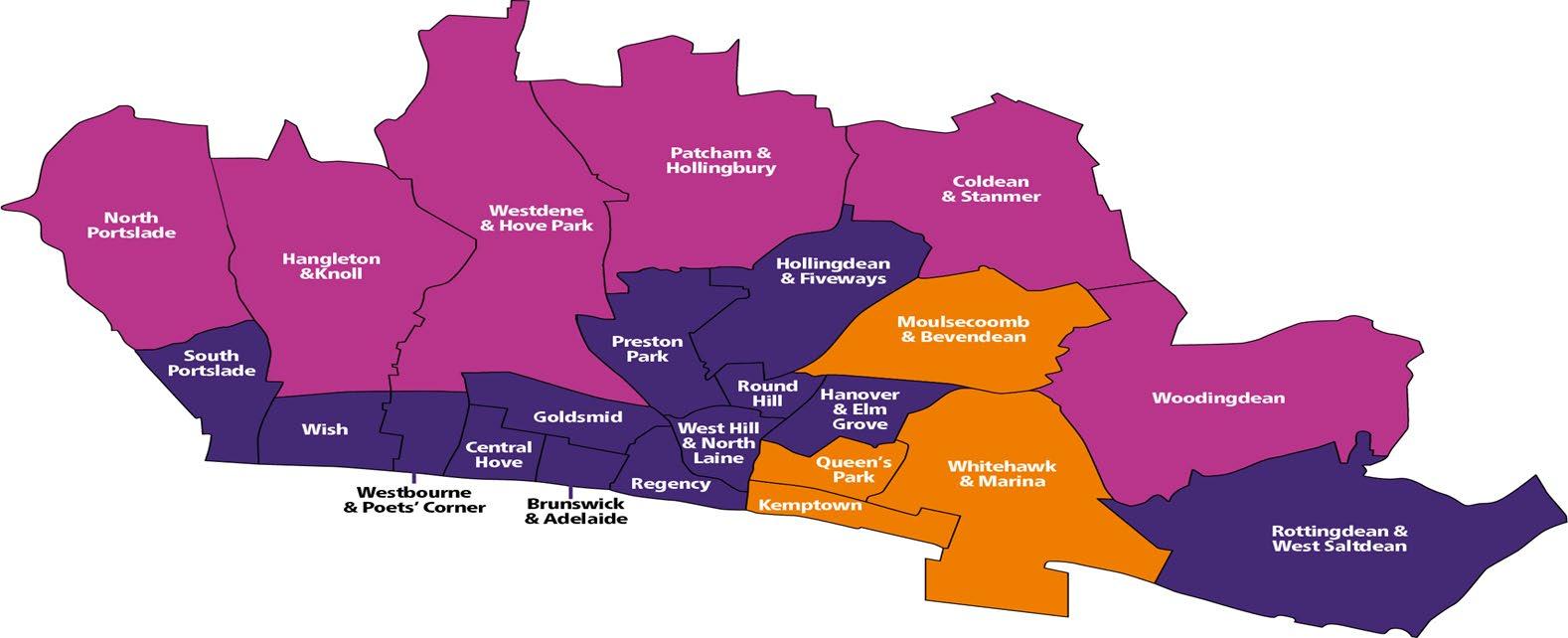
The Selective Licensing Scheme covers four specific wards within Brighton & Hove - Kemptown, Moulsecoomb & Bevendean, Queens Park and Whitehawk & Marina. This initiative targets areas identified with poor property conditions, aiming to enhance the quality of housing available to renters.
When A Selective Licence Is Required
Selective licensing applies to private rented properties within the designated areas that are not already covered by the Mandatory or Additional HMO Licensing Schemes and that are occupied under single or multiple tenancies or licences (for occupation). The Selective Licensing Scheme applies to properties with 1 or 2 occupiers, families as well as single storey properties with 3 or 4 unrelated occupiers which don’t fall under the criteria of the Mandatory or Additional Houses in Multiple Occupation (HMO) schemes. A Licensee can be the landlord or a letting agent.
NB: Selective Licences do not apply to Registered Social Landlords, any property which is an HMO and is already licensed under Part Two of the Housing Act 2004 or for a property where a Temporary Exemption Notice or a Management Order is in force.
Objectives Of The Scheme
The scheme is designed to:
• Address and improve poor living conditions in rental properties.
• Ensure that landlords and managing agents are accountable for maintaining property standards.
• Reduce issues related to deprivation and poor housing in the private rented sector.
What Does This Mean
When designating a Selective Licence in an area experiencing low housing demand the local authority must believe that the designation, when combined with other measures, will improve the social and economic conditions in the area.
NB: The local authority may look at the value of residential premises in an area, the turnover of occupiers of residential premises or the number of properties available to buy or rent when judging if an area is experiencing low housing demand.
When designating a Selective Licensing scheme in an area to prevent anti-social behaviour, the local authority must believe that the designation, together with other measures, will help lead to a reduction in or elimination of the problem.
NB: There is no definition of anti-social behaviour in the Act but DCLG guidance suggests it relates to, for example, tenants engaged in criminal damage, rowdy and nuisance behaviour or fly-tipping.
Before making a decision to designate an area for Selective Licensing a local authority must consider whether there are alternative means of addressing the issues such as through the introduction of a voluntary accreditation scheme for landlords.
NB: The local authority must ensure that the proposed Licensing Scheme fits with its overall housing strategy and policies for homelessness and empty dwellings.
The Act requires local authorities considering designating an area for Selective Licensing to consult persons who are likely to be affected by the designation (local residents, landlords, letting agents, owner-occupiers and tenants) and consider any representations made in accordance with the consultation.
Once a designation has been made the local authority must publish a notice within the designated area within seven days of the designation being confirmed. The local authority must also notify all those consulted on the proposed designation within two weeks of the designation being confirmed.
Selective Licensing – Proposed Second Phase
Second phase Selective Licensing across 13 wards:
• Brunswick & Adelaide
• Central Hove
• Goldsmid
• Hanover & Elm Grove
• Hollingdean & Fiveways
• Preston Park
• Regency
• Rottingdean & West Saltdean
• Round Hill
• South Portslade
• West Hill & North Laine
• Westbourne & Poets Corner
• Wish
Subject to Secretary of State approval
Selective Licensing Map (All 17 Wards)
Licence Conditions
There are also certain mandatory conditions which the local authority must include in a Selective Licence:
• Present a gas safety certificate annually to the local authority, if gas is supplied to the house
• Keep electrical appliances and furniture (supplied under the tenancy) in a safe condition
• Keep smoke alarms in proper working order
• Supply the occupier with a tenancy agreement
Selective Licensing Scheme: Process
When a Selective Licensing scheme is launched, landlords will need to complete an application form and submit it to the local authority. They will be required to provide evidence that shows they are a ‘fit and proper’ person and that the proposed management and finance arrangements for the property are satisfactory.
NB: In order to determine whether someone is ‘fit and proper’ the local authority must take into consideration any previous convictions relating to violence, sexual offences, drugs or fraud; whether the proposed licence
holder has contravened any laws relating to housing or landlord and tenant issues; and whether the person has been found guilty of unlawful discrimination.
A licence may not be transferred to another person. If the holder of the licence dies while the licence is in force the licence ceases to be in force. However, during the period of three months beginning with the date of the licence holder’s death the house is to be treated as if on a Temporary Exemption Notice.
• Requirement to make a licensing application
o Fit and proper person
o Suitable management in place
• Licence applications are assessed
o Licence issued before or after property inspection
• Licence Conditions
• Housing, Health and Safety Rating System
• HMO Management Regulations
How Much Will A Licence Cost?
Like the HMO Licensing system, a charge for Selective Licences also applies. The standard fee for a selective licensing application to Brighton & Hove City Council (BHCC) is £690. All applications should be submitted online.
BHCC offers a discount of £75 if your property meets one of the following criteria:
• It has an EPC rating of C or above (or has met its potential rating)
• You are accredited with the NRLA, ihowz, Safeagent, or registered with the Charity Commission.
The majority of the fee is due upon application, with the final payment required before the full licence is issued.
NB: You do not need to complete the application in one sitting; use the save function to return within 14 days if needed. Make sure you have a valid
credit or debit card to complete the payment.
When completing your application, please include our registered office address as the Managing Agent:
Sawyer & Co. 52, Church Road, Hove, East Sussex, BN3 2FN
Once completed please forward proof of application to us so that we can update our records.
Enforcement
If the local authority determines that the landlord or agent is not ‘fit and proper’ it can refuse to grant a licence. It must give 14 days’ notice of its intention, during which time the landlord or letting agent can appeal. The local authority can also withdraw a licence after issue if the licensee is no longer considered a ‘fit and proper’ person.
If a local authority believes that a landlord or letting agent has breached licence conditions, they can issue a fine of up to £5,000 for each offence or summary conviction in a Magistrates Court.
Landlords and letting agents operating a property without a licence in a designated area can receive an unlimited fine or a Fixed Penalty Notice of £30,000. It is also important to note that unlicensed properties may not be eligible for certain tenant eviction processes under Section 21 of the Housing Act 1988.
Selective Licence Fees and Licence Application
• Selective Licence fees: https://www.brightonhove.gov.uk/housing/private-housing/licensing-fees-houses-multipleoccupation
• Apply for a Selective licence, from Monday 2 September 2024, from here: https://www.brighton-hove.gov.uk/housing/private-housing/propertylicensingschemes#:~:text=Existing%20licensing%20schemes&text=This%20sch eme%20is%20for%20HMOs,to%20make%20a%20licence%20applicati on.
Further Information
• Brighton & Hove property licensing schemes: https://www.brightonhove.gov.uk/housing/private-housing/property-licensing-schemes
• Brighton & Hove Selective Licensing conditions: https://www.brightonhove.gov.uk/housing/private-housing/selective-licensing-conditions
• Brighton & Hove planning permission for HMOs: https://www.brightonhove.gov.uk/planning/planning-applications/planning-permissionhouses-multiple-occupation
• Brighton & Hove property licensing schemes: https://www.brightonhove.gov.uk/housing/private-housing/property-licensing-schemes
• Brighton & Hove Selective Licensing conditions: https://www.brightonhove.gov.uk/housing/private-housing/selective-licensing-conditions
• Brighton & Hove planning permission for HMOs: https://www.brightonhove.gov.uk/planning/planning-applications/planning-permissionhouses-multiple-occupation
Conclusion
We understand that there’s a lot happening around property legislation right now, but we’re here to help make things as straightforward as possible for you.
The new Selective Licensing Scheme is aimed at improving the quality of private rented homes across Brighton & Hove, ensuring that properties meet key standards to benefit both landlords and tenants.
If you’d like more information or need a hand with the application process, we’d be happy to assist. You can also find further details and updates on the Brighton & Hove City Council’s property licensing webpage, or reach out to their Private Sector Housing team for advice.
We’re always here to help you navigate through any changes and make the process as smooth as possible!
By staying informed and compliant, you contribute positively to the community's welfare and ensure a beneficial environment for both landlords and tenants in Brighton & Hove.