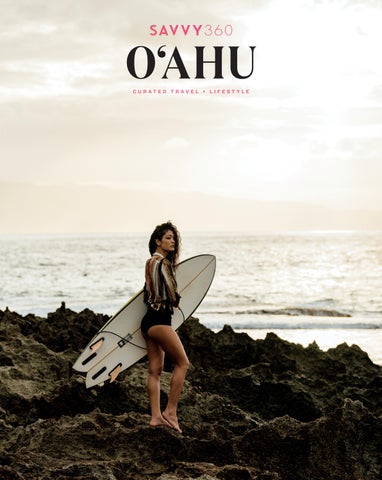
O‘AHU
CURATED TRAVEL + LIFESTYLE
I Ka Pō Me Ke Ao
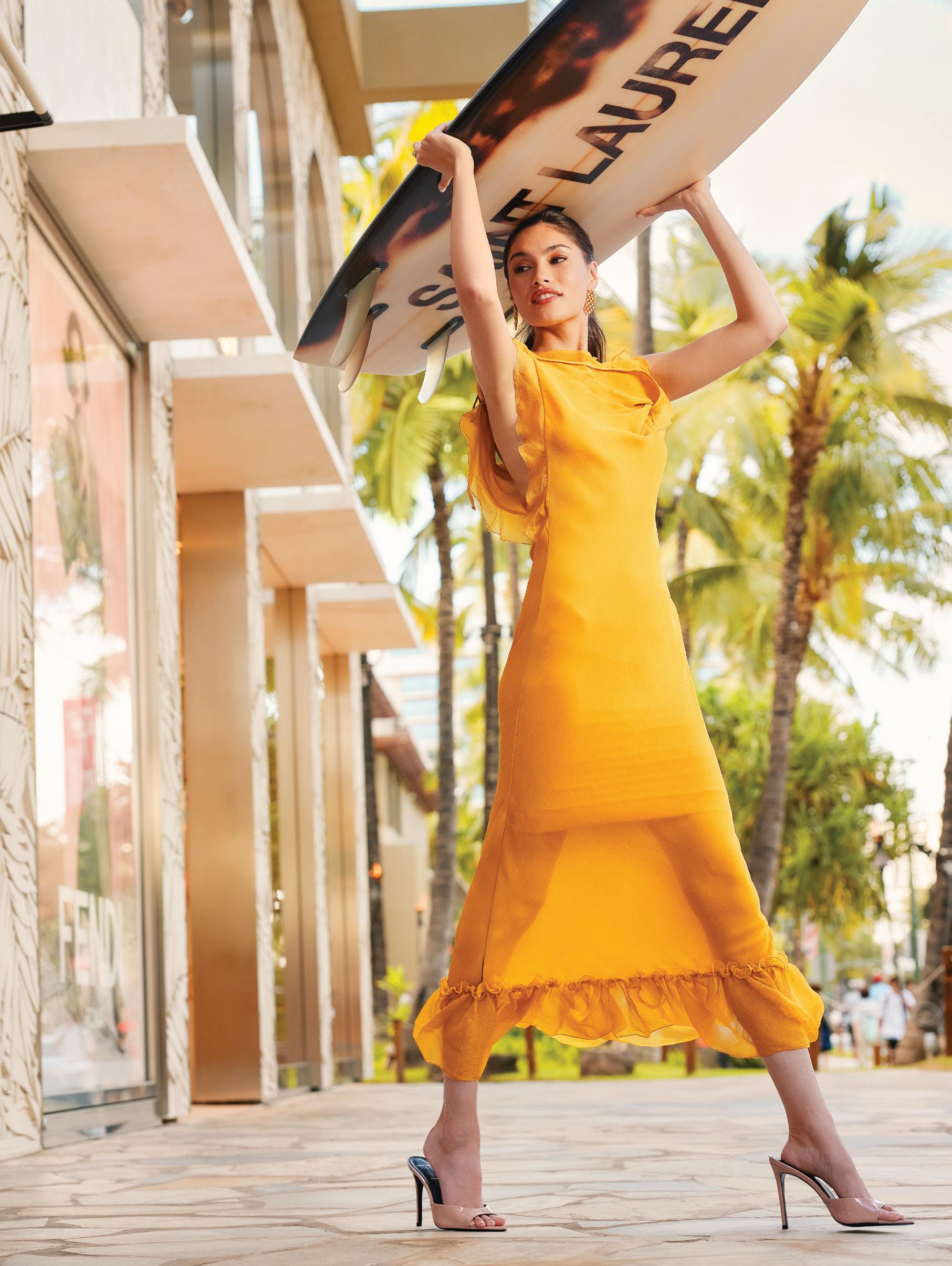
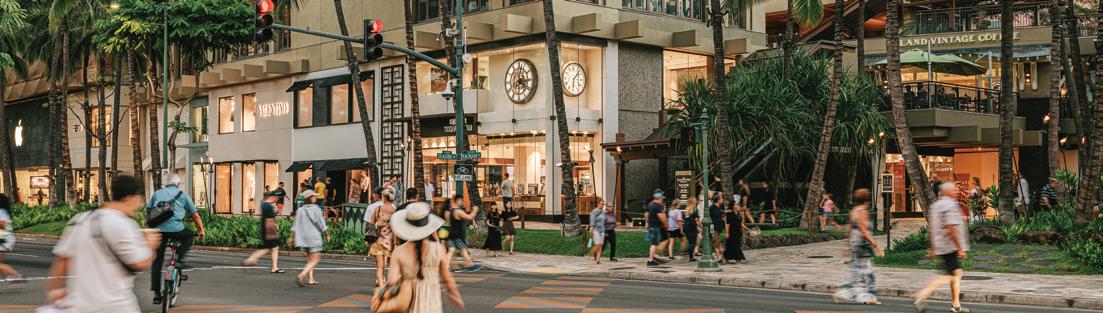
Harry Winston | Valentino | Hermès | Fendi | Tiffany & Co. | Rimowa | Moncler | Ferragamo | Saint Laurent
Island Snow | Kahala | KITH | Stüssy | Tory Burch | Yumi Kim | Rock-A-Hula | Island Vintage Wine Bar
Doraku Sushi | Noi Thai Cuisine | Restaurant Suntory | P.F. Chang’s | The Cheesecake Factory | Tim Ho Wan
TsuruTonTan Udon | Wolfgang’s Steakhouse | Partial Listing Fashion.



























































































































































































































































































































Local
Beautifully
Mindful Traveler
Have
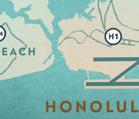
Lay of the Island
Getting
Hidden in Plain Sight
The





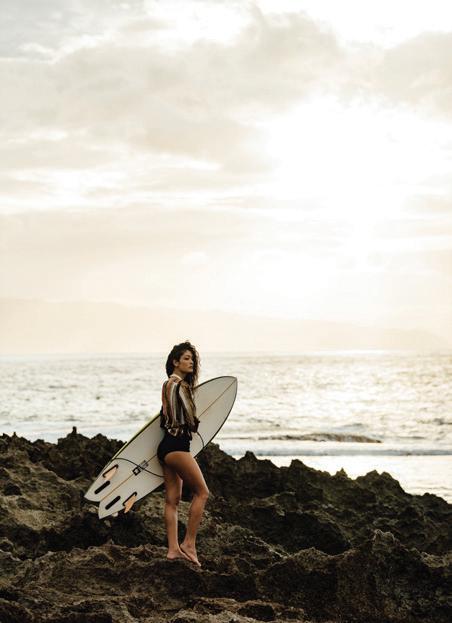
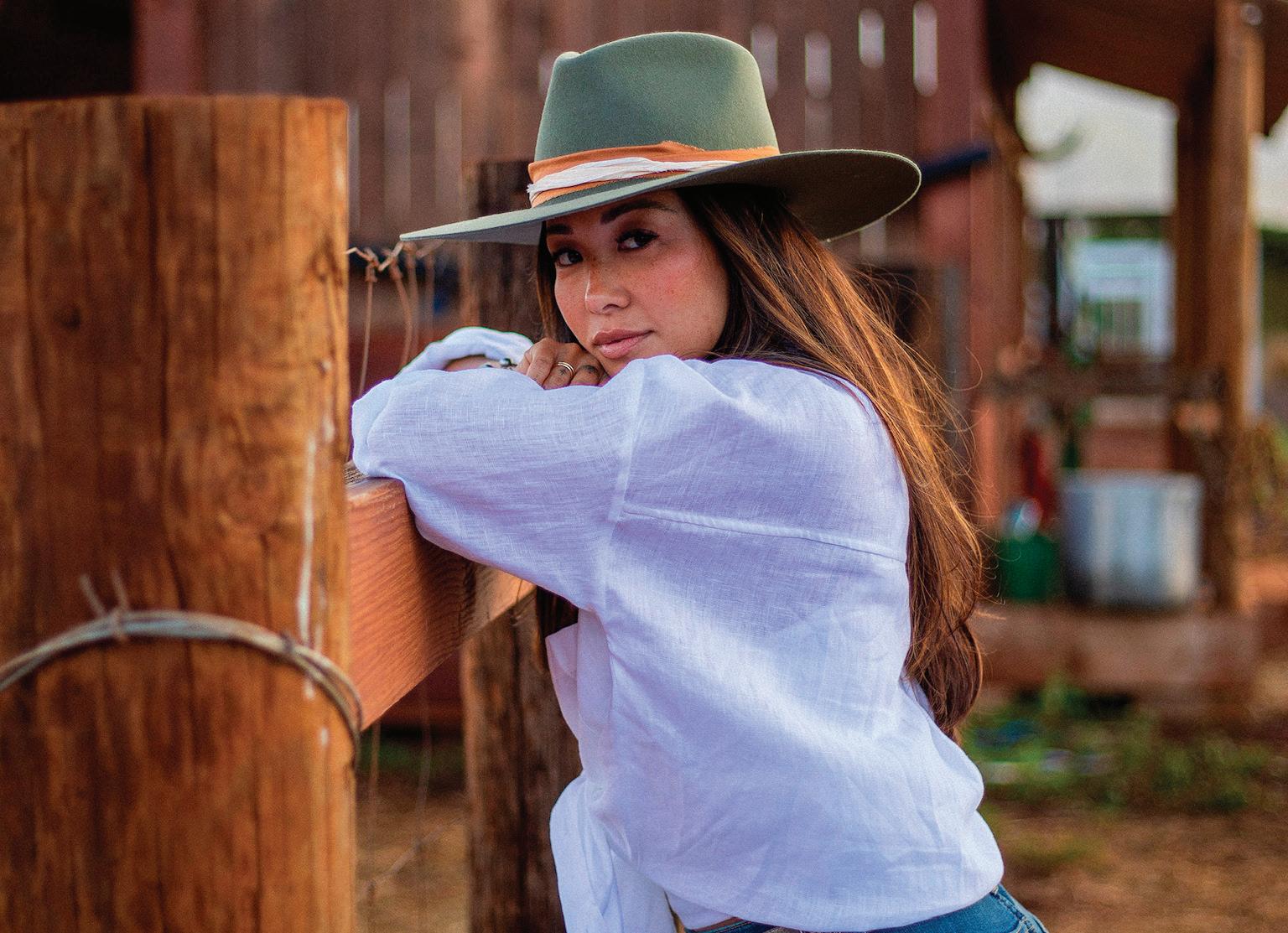
Island Style
Discover chic boutiques and bespoke brands around the island
At Home in the Hive
Purpose, community and the pursuit of bees at Beelieve Hawai‘i
Growing Kōkua
Kōkua Hawai‘i Foundation: creating a healthier future for Hawai‘i
Preserving the Past
Digitizing history at Hawaii’s Plantation Village
Flying Compass
A sacred seabird finds its home above Honolulu’s city streets
Hidden Hike
Discovering Nākoa Trail
Destination: Kailua
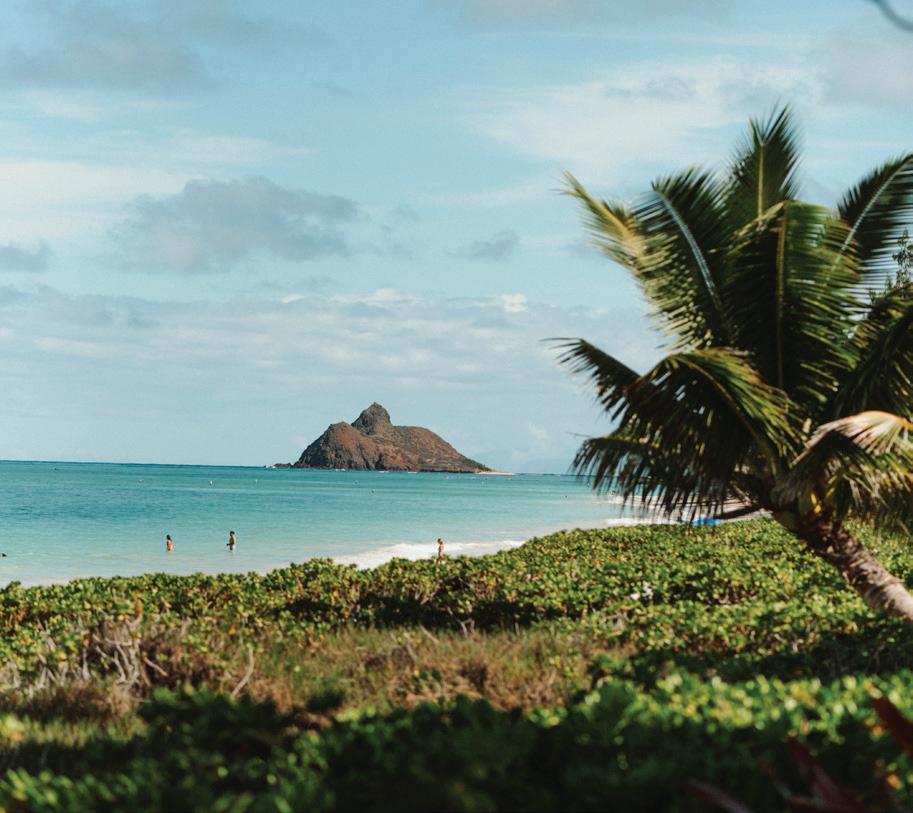
Just a short drive from Honolulu, this breezy beach town feels worlds away
What We Love Now
More epicurean finds around the island
Experience O‘ahu
Start planning your trip with our curated guides.






































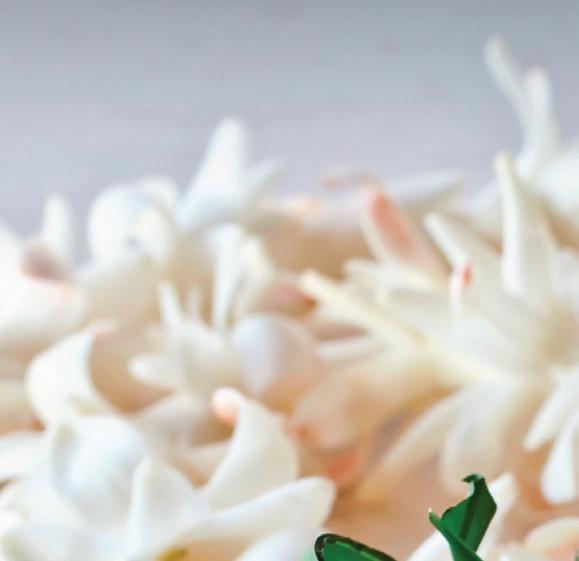
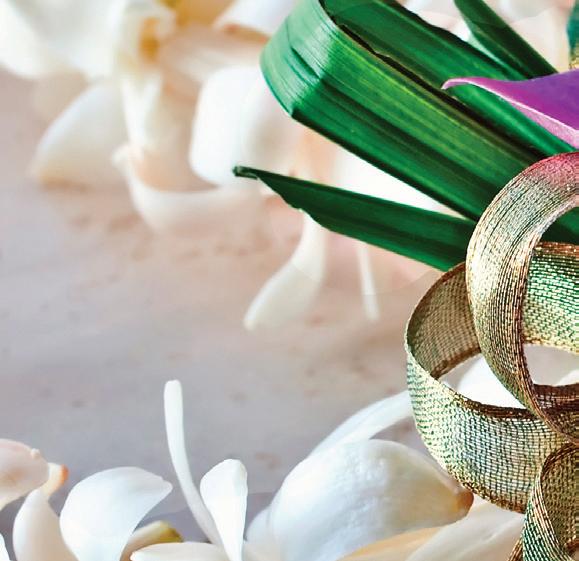
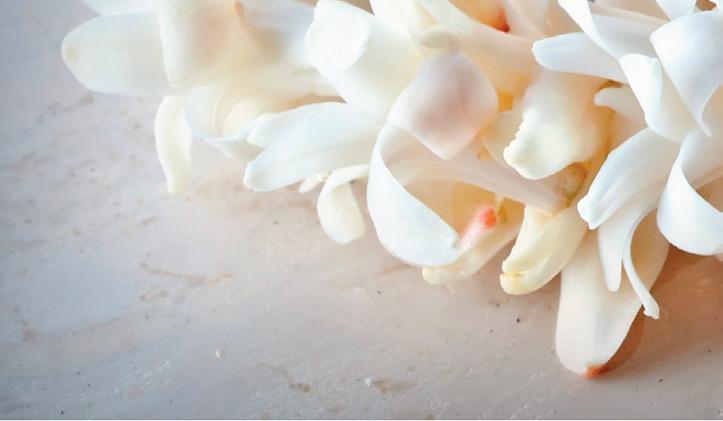
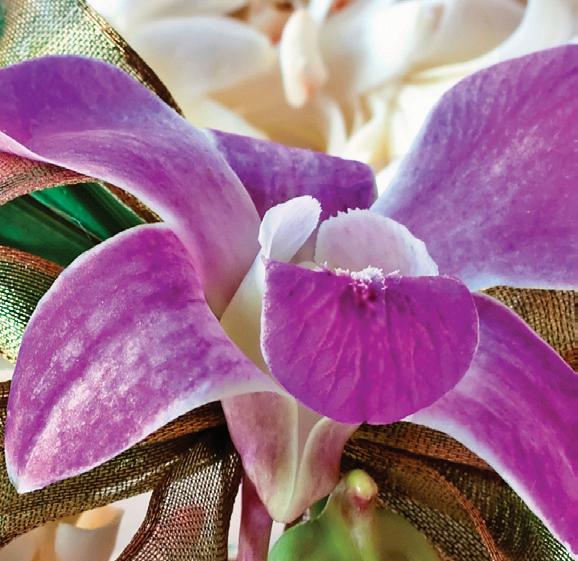
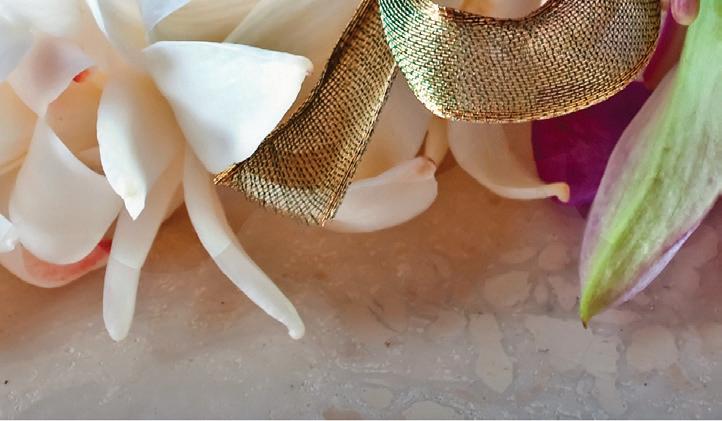
Island Scent
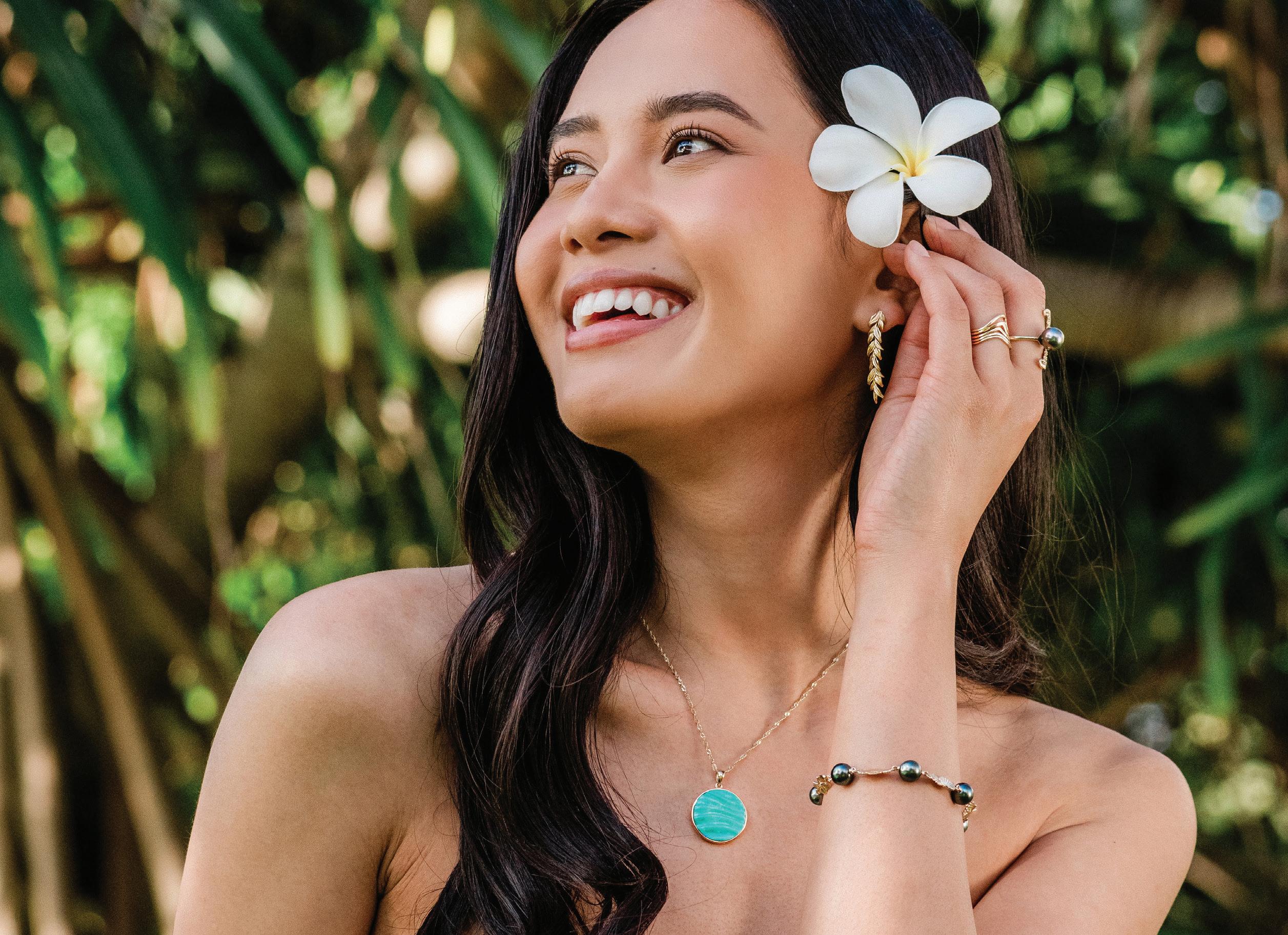
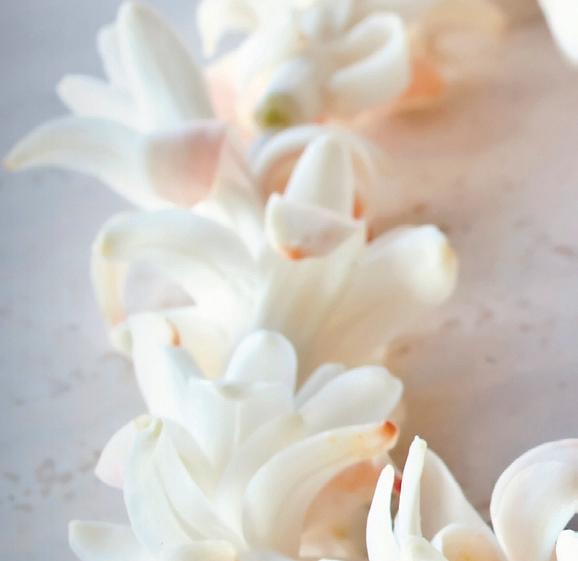
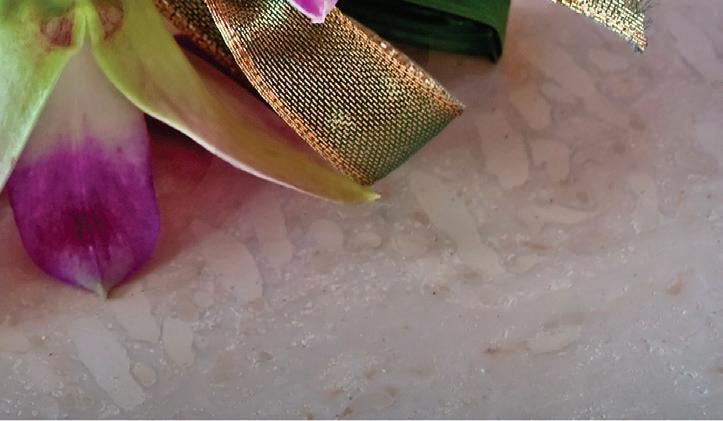
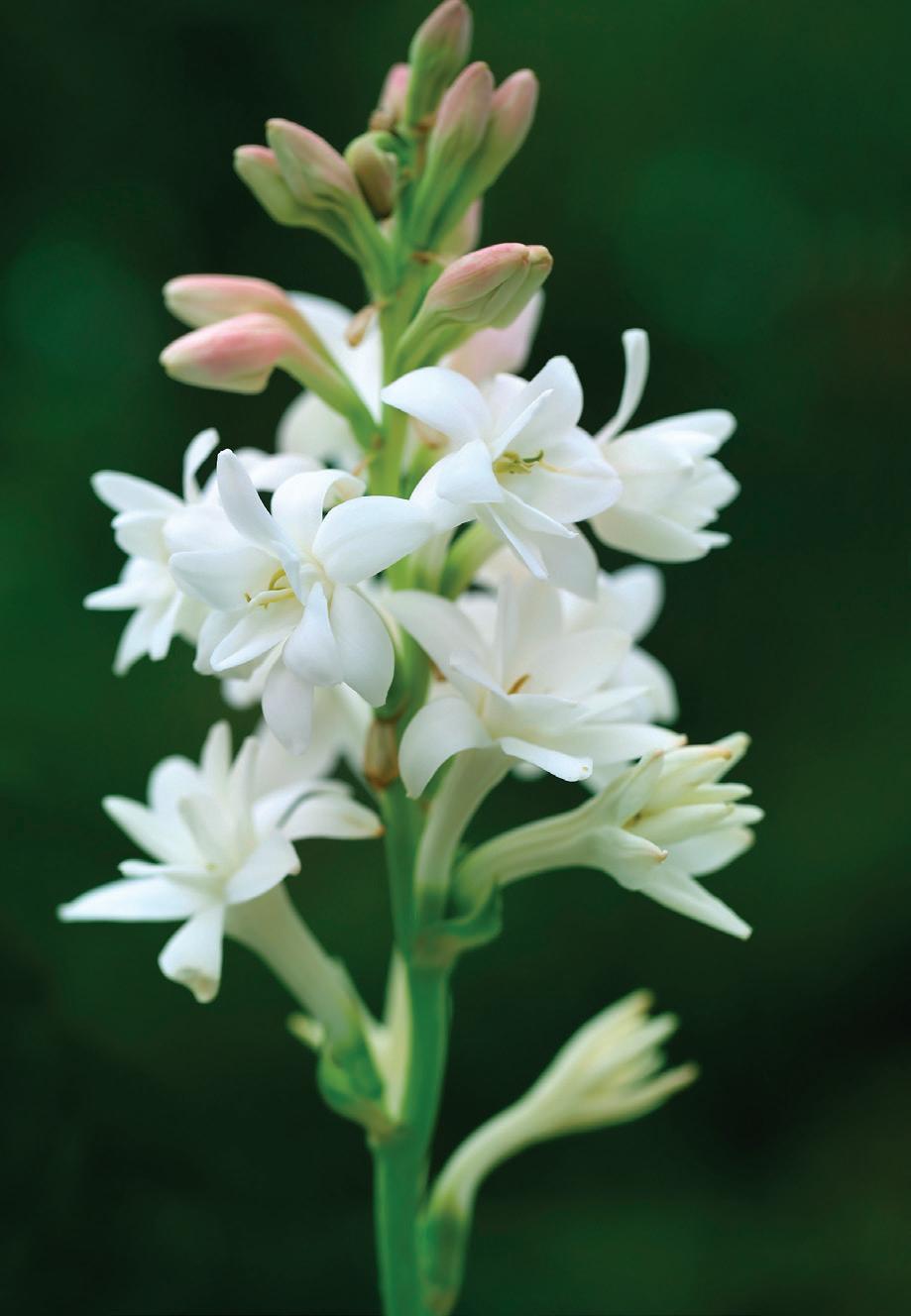
Hawai‘i is known for its fragrant flowers, and one of the standouts is the kupaloke (tuberose). The intoxicating tuberose aroma epitomizes the scent of the islands. These little tubular shaped flowers are picked early in the morning to heighten their scent, and then often strung into the most beautiful smelling lei. The lei with tuberose is very delicate and require refrigeration to ensure a longer life. They are often given as a welcome, to say congratulations or to show love or friendship. Other flowers, such as orchids, carnations, pīkake and ti leaves can also be added to a tuberose lei for extra decoration.
Grown as a bulb, tuberose sends up a long stem that reaches three feet in height with buds appearing as the stalk grows. The natural color of the flower is white, but they can be tinted other colors, such as pink or yellow. It truly is one of the most beautiful fragrances in the world and is popular in candles and perfumes to emanate the tropics. Anywhere, anytime you get a whiff of this heavenly scent, you will instantly be transported back to your time in Hawai‘i.
YOUR ISLAND
EATING HOUSE 1849 by Chef Roy Yamaguchi
STRIPSTEAK by Chef Michael Mina
HERRINGBONE
KONA COFFEE PURVEYORS
KUHIO AVE FOOD HALL
MITSUWA A Japanese Marketplace
MOANI WAIKIKI
Island Bistro & Bar
LILIHA BAKERY
SHOREFYRE
SKYBOX TAPHOUSE









DINING DESTINATION
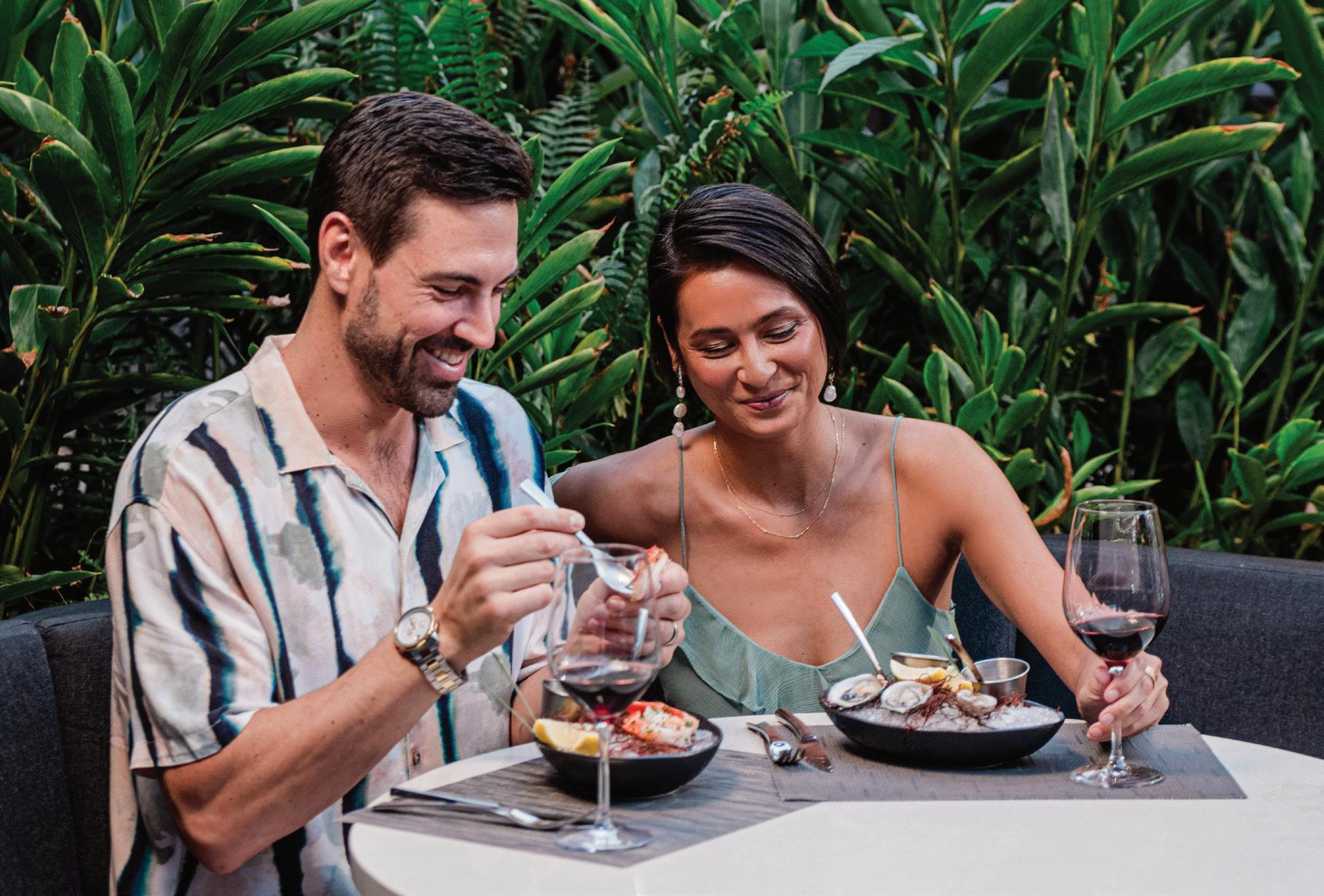
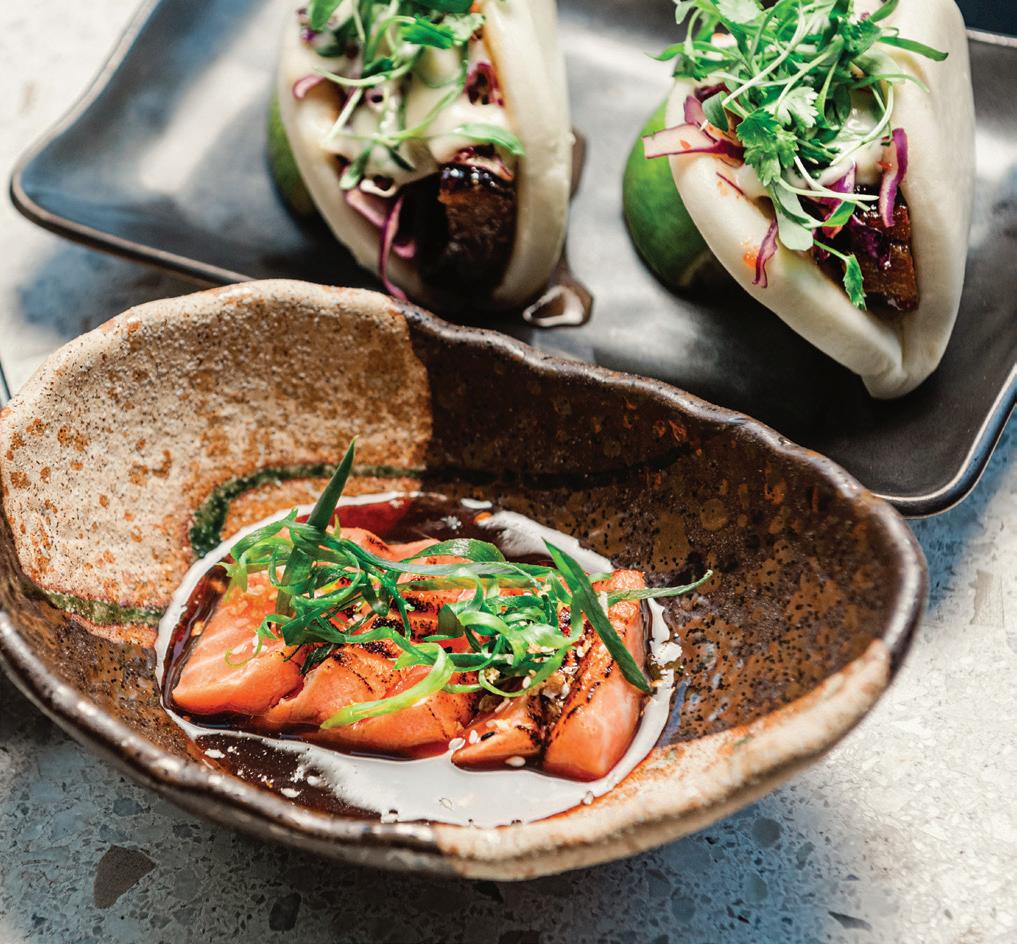
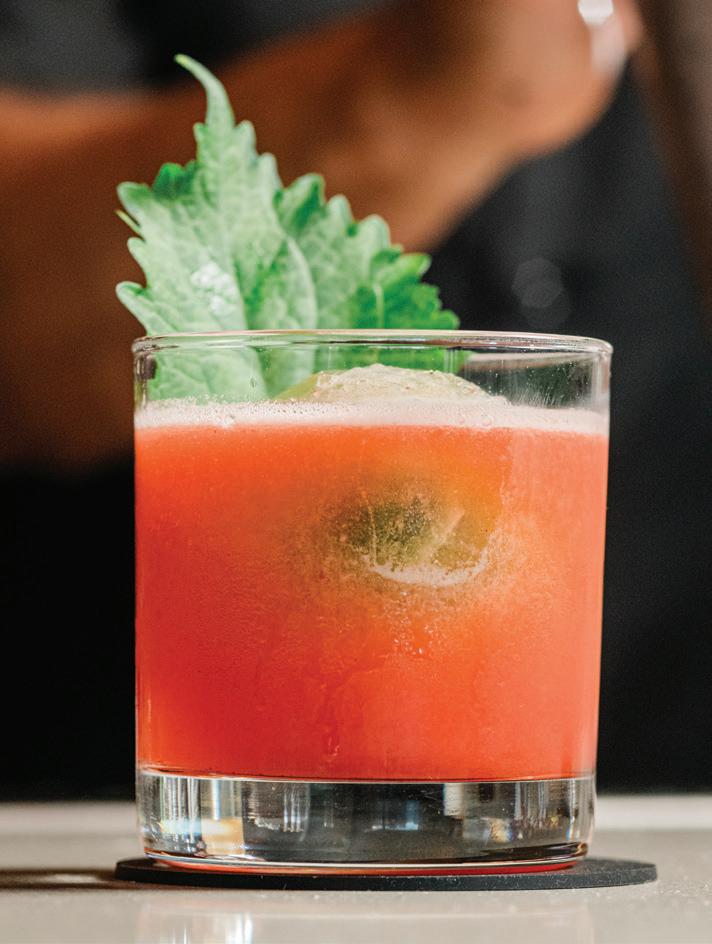
Home to Waik īk ī’s largest collection of restaurants, International Market Place features open-air dining and extraordinary eateries from award-winning chefs like Michael Mina and Roy Yamaguchi. Delight in globally-inspired culinary flavors and discover the finest poke, indulge in sizzling cuts of premium steak, enjoy line caught seafood, savor local flavors and do it all in the heart of Waik īk ī.
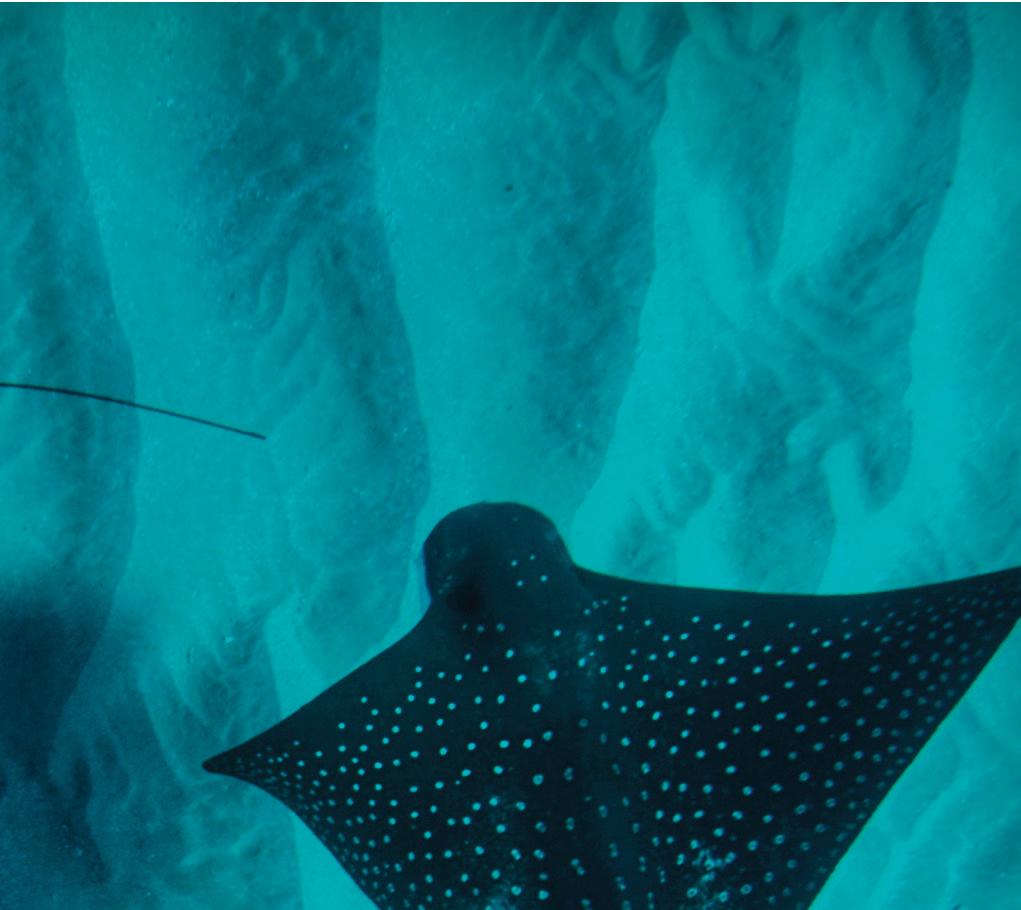
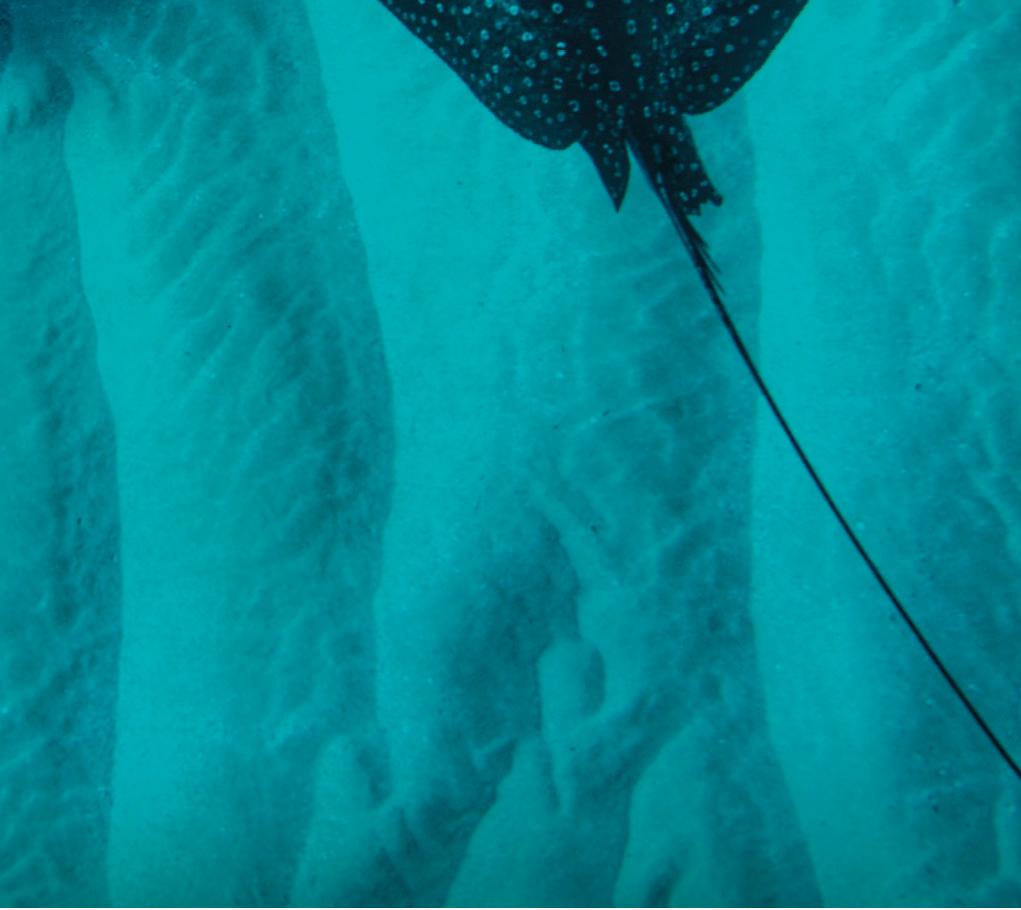
Eagle Spotting
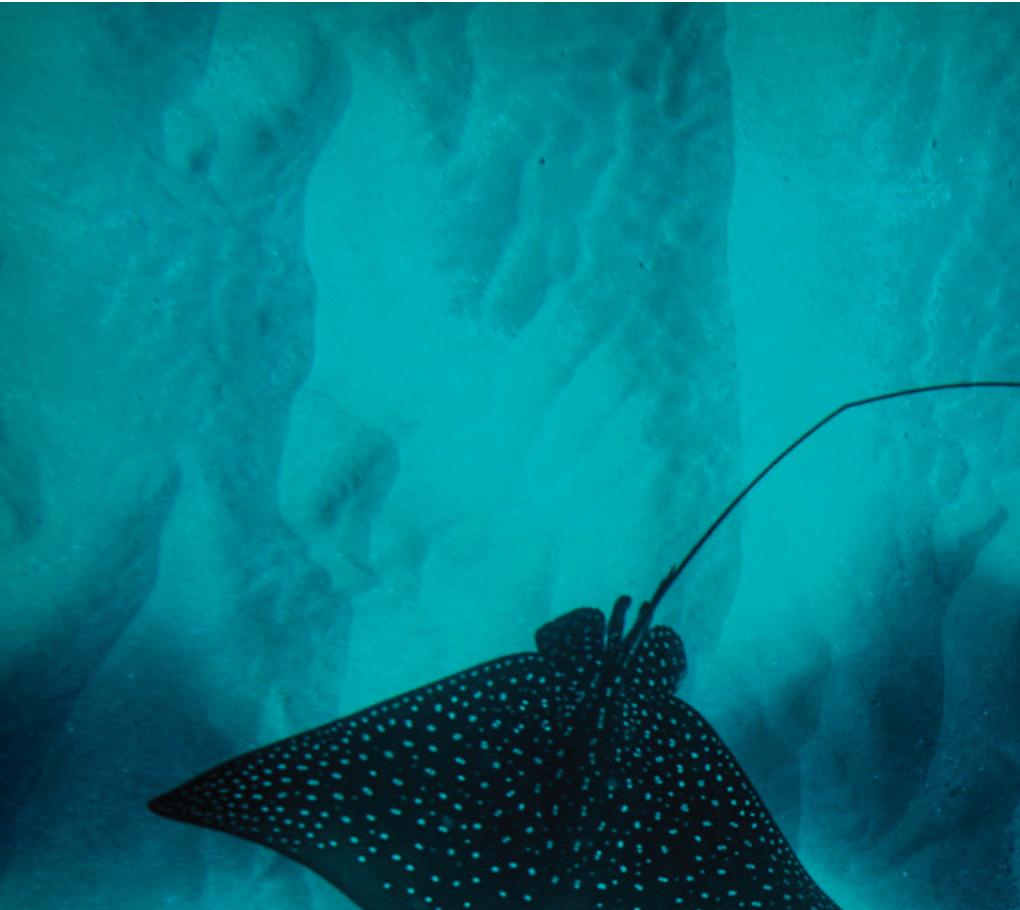
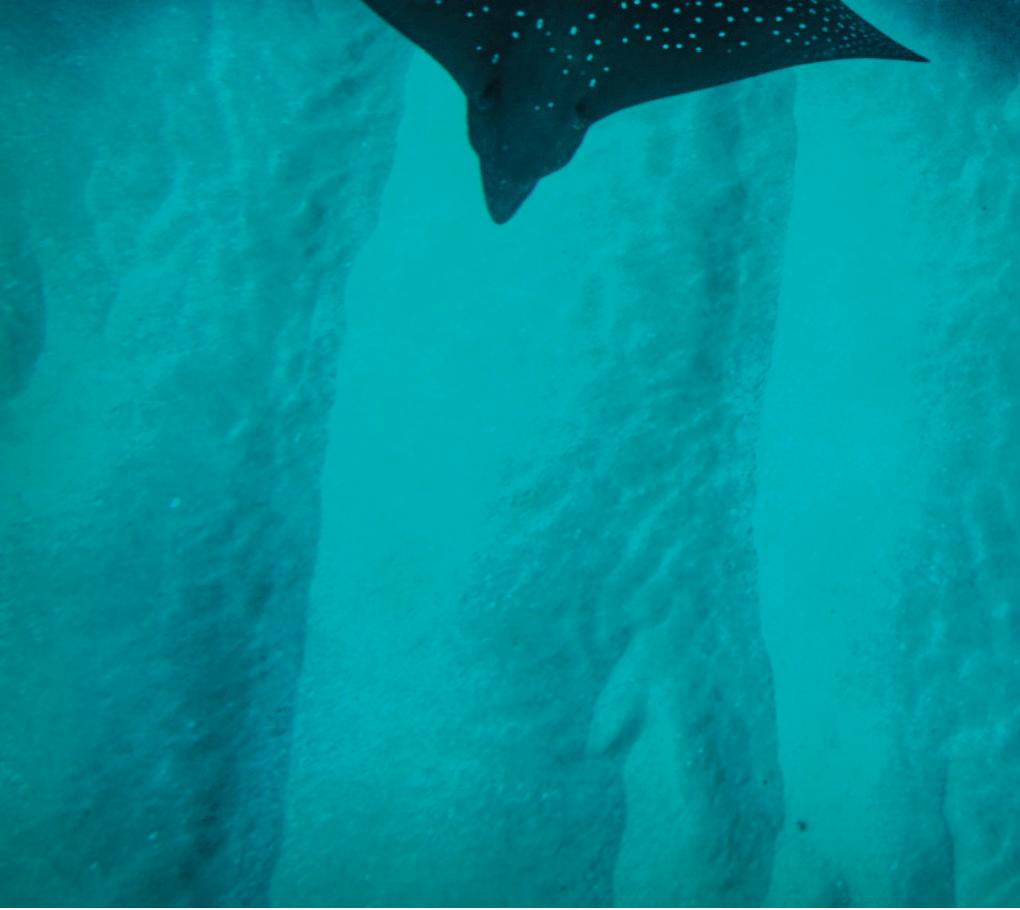
Hawai‘i is home to some of the most magnificent creatures on Earth. The spotted eagle ray is known as hīhīmanu in Hawaiian, which means “magnificent” or “elegant.” And if you are lucky enough to spot one while snorkeling, you will see that the ray truly lives up to its name. This graceful, beautiful ray glides through Hawai‘i’s coastal areas, feeding on clams, urchins and other sea creatures in the sand. The tops of their dark gray bodies are covered with white spots, while underneath, they are completely white. They have a long tail with sharp spines at the base, and their “wings,” or dorsal fins, can span up to six feet from end to end.
Spotted eagle rays are known to jump out of the water, occasionally doing cartwheels. When giving birth, the female spotted eagle ray jumps out of the water and expels the babies mid-air! Keep your eyes peeled for these elegant sea creatures on your snorkel or diving adventures. Your next boat adventure may include a truly unbelievable fish tale if you happen to catch one of these graceful creatures flying out of the water.


Local Lingo
Akamai (ah-kah-MY): Remember that kid in college who always knew the answers? That’s akamai. In Hawaiian, it means clever, intelligent, wit, expert; someone who is filled with common sense. So if someone calls you akamai, it would be a compliment. It’s like being at the top of your game, the leader of the pack. If I didn’t know the answer to a question, I would find someone who was akamai
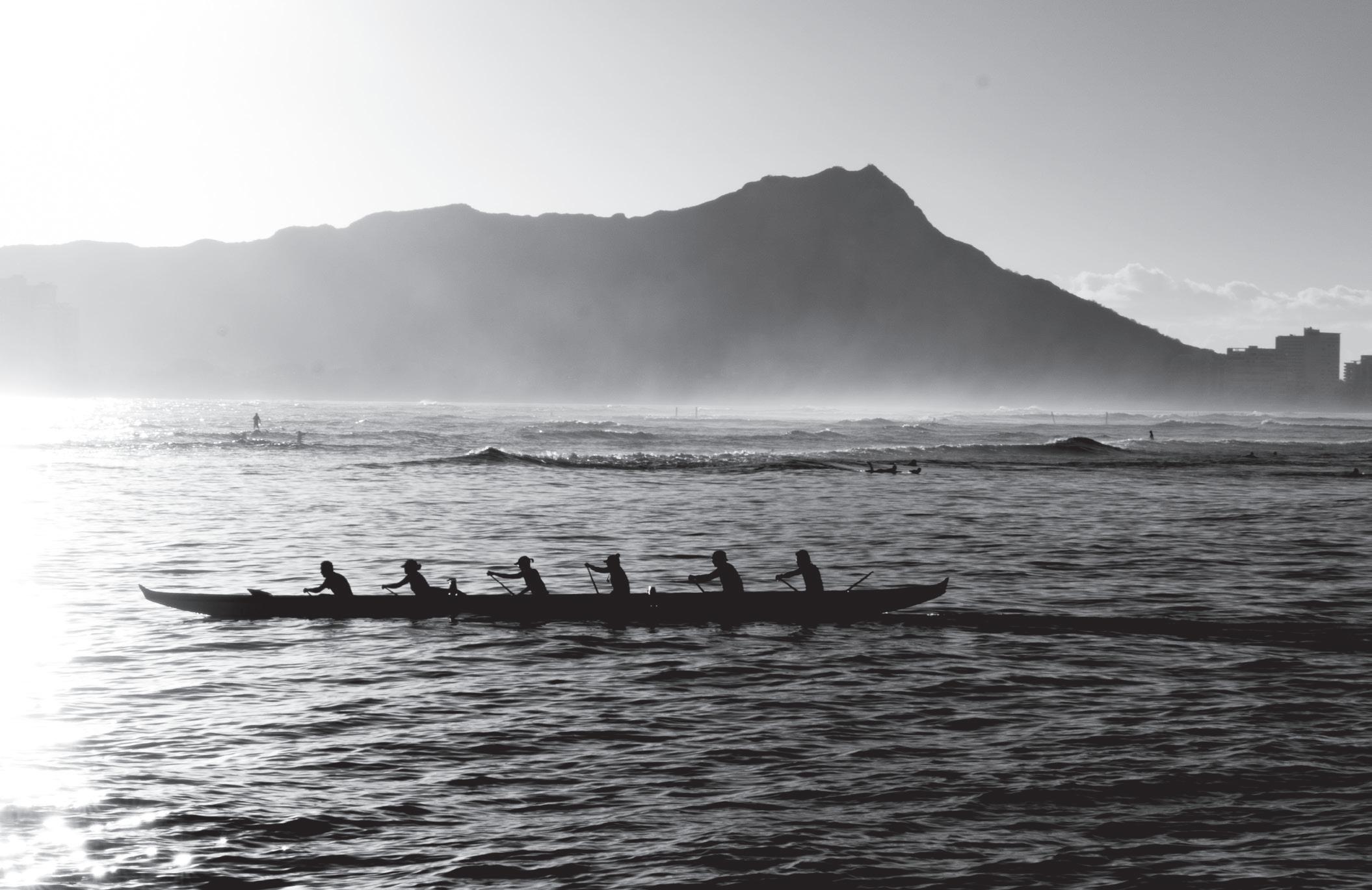
Sporty Vessels
Ancient Polynesian voyagers used outrigger canoes to transverse thousands of miles of open ocean to discover and populate the Hawaiian Islands centuries ago. According to historians, their first stop in this isolated archipelago was South Point on Hawai‘i Island. Outrigger canoes typically feature one or more lateral support floats known as ama (or outriggers), which, in single-hull canoes, is fastened to the port side of the hull. Larger canoes may use a single-ama, double-ama or a double-hulled canoe configuration. Sailing canoes, small and large, are also part of the mix and, as their name implies, are outfitted with a single mast and sail.
Compared to other types of canoes, outrigger canoes are quite fast and are capable of being paddled with a single-sided blade or sailed in rough water. Today, the traditional Hawaiian sport of outrigger canoe racing has spread throughout the world with competitions hosted in countries with and without a history of outrigger canoe voyaging, as well as various locations across the U.S. mainland. In fact, outrigger canoe racing is the official state team sport of Hawai‘i and an interscholastic high school sport. A variety of outrigger canoe types exist; however, it’s typically the OC1, OC2, OC3, OC4 and OC6 (with the respective number of paddlers using a single-hull outrigger canoe) made of high-tech, lightweight materials that are used in competitions today. Major races in Hawai‘i are held annually each fall and include the Moloka‘i Hoe men’s race from the island of Moloka‘i to O‘ahu across the notoriously rough Ka‘iwi Channel, Na Wahine O Ke Kai (the same race for women) and the Queen Lili‘uokalani Race held in Kona.
Snowbirds
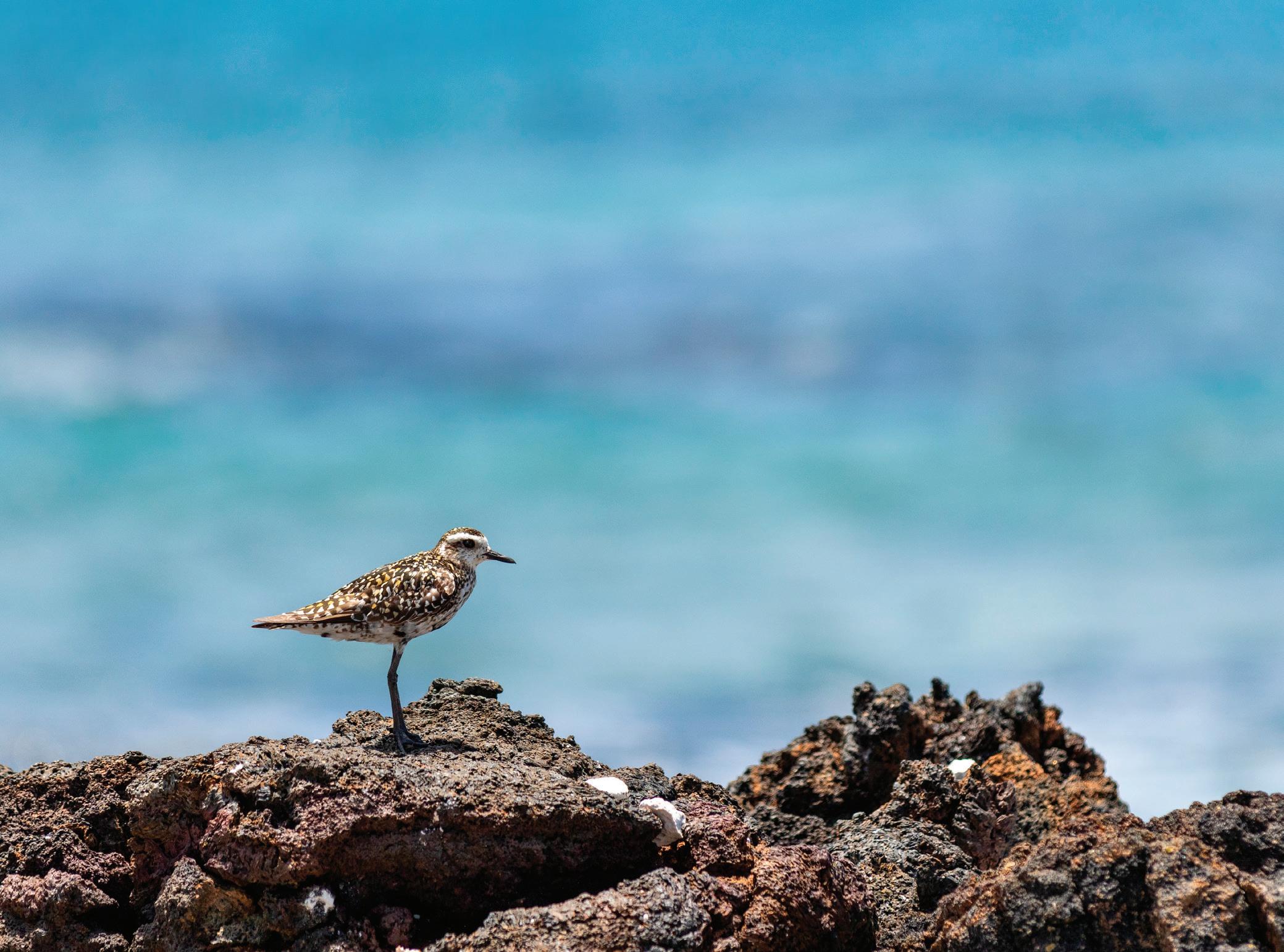
It’s hard to imagine that a bird seen here in Hawai‘i spends its summers in the Arctic. Yet, for the Pacific golden plover, kōlea in Hawaiian, gives new meaning to the term “snowbirds.”
Their annual migration covers near 3,000-miles of non-stop flying from Alaska to Hawai‘i, which takes between three to four days. They are found throughout the Hawaiian Islands foraging for food starting sometime around August until around May.
When they return home to the tundra to mate, the males often return to the same exact spot they found success the year before. There, a monogamous pair nests directly on the ground, using the deception of an injured wing to lure predators away from the nest. Adults are covered with spotted feathers of gold and black, with a striking white border. Plovers have two different kinds of plumage during the year — dark brownish feathers with gold spots on their backs during winter and a colorful breeding plumage in the summer with black feathers on the back with gold and white flecks and black belly.
Be sure to keep an eye out for these long-distance fliers as you cruise the beach — you might just catch a few of them enjoying a lunch of small crustaceans and mollusks along the shore. The males may be easier to spot since they start to sport a tuxedo-like appearance, especially during April, before they head back to look sharp for breeding season.







Save the Reef
Each year, an estimated 4,000 – 6,000 tons of sunscreen ends up in the ocean contributing to the destruction and death of live coral that serves as a habitat, and even food product, for sea creatures. Even those wearing sunscreen but not getting into the ocean need to be mindful of the products they wear because when rinsed off in the shower, chemicals in sunscreen end up in the groundwater, eventually making their way to the ocean. To battle the destruction of our coral reefs from chemicals, Hawai‘i became the first state in the United States to ban the sale of sunscreens containing coral-harming chemicals such as oxybenzone and octonoxate. These chemicals affect the coral by causing the coral to ossify or harden into bone. This process causes deformity, decreased mobility and even death of the coral. To play a part in ensuring our coral reefs remain healthy while still protecting your skin from the sun’s rays, be sure to look for “reef-safe” products and opt for sunscreens that use zinc oxide or titanium dioxide. To learn more on reef-safe sunscreen, visit the National Park Service’s website at nps.gov/ puho/learn/nature/protectyourselfprotectthereef.htm.
SHARE ALOHA
Please travel with respect, compassion and patience.
Be mindful of your hosts as you enjoy your time on O‘ahu and consider giving back during your stay.
Discover opportunities at savvy360.com
ALOHA O‘AHU
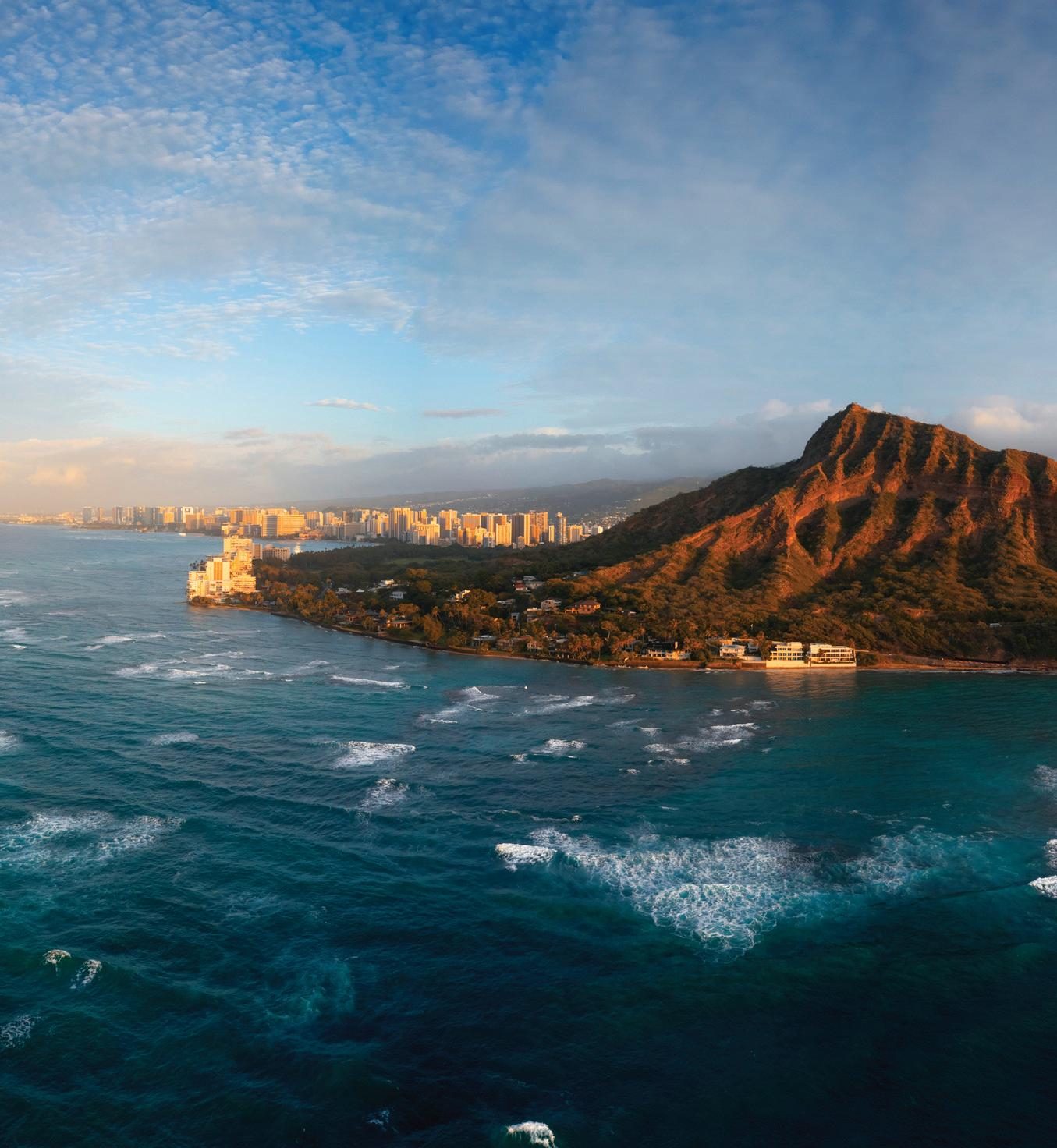
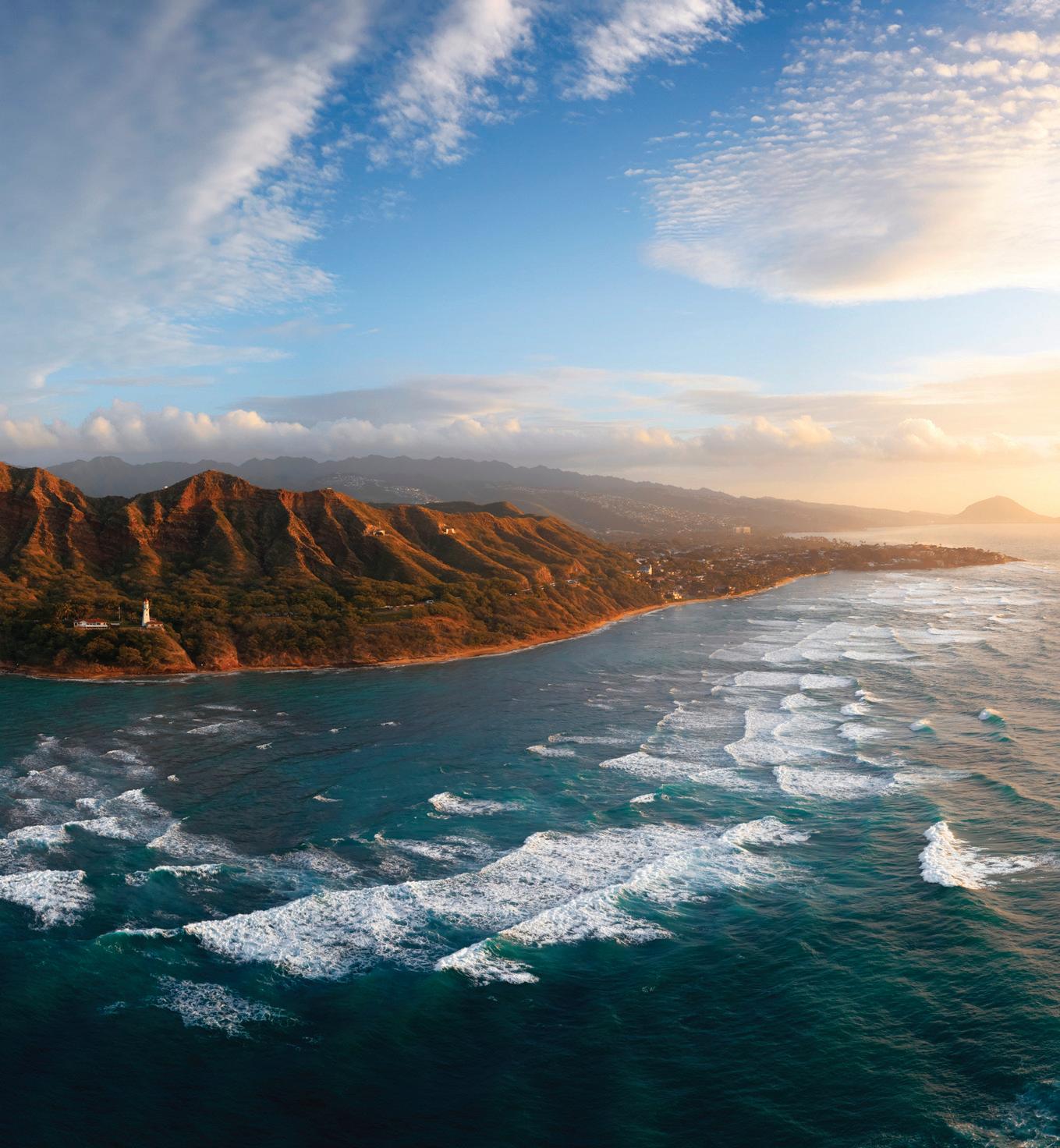
Despite being the third largest island in the Hawaiian chain, O‘ahu tops the charts for many other reasons. Nearly two-thirds of the State’s population calls the island home, earning the island the nickname “The Gathering Place” and attracting locals and visitors with its various offerings. So come and discover the many wonders of the island of O‘ahu. >>>
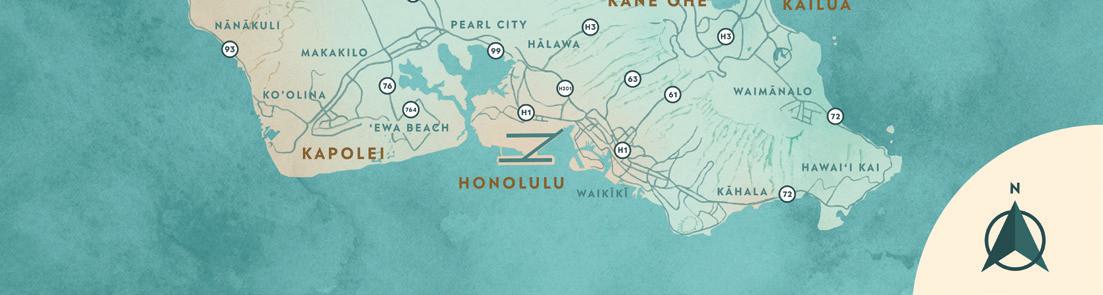
Lay of the Island
North Shore
O‘ahu’s North Shore spans the north-facing expanse of the coastal area between Ka‘ena in the west and Kahana Bay in the east. Known as the “surfing mecca of the world,” the best surfers in the world descend upon the area each December to compete in the Vans Triple Crown of Surfing. But world-class surfing is not the only allure pulling people to the North Shore.
Ka‘ena Point, on the western tip of the North Shore, is one of the most secluded parts of the island. Driving east, you will pass through Mokulē‘ia, home to Dillingham Airfield, a popular spot for skydivers to depart from.
Continuing east will be the quiet town of Waialua, a residential area with hidden treasures to be found like Waialua Sugar Mill, home to a litany of local vendors, and Pa‘ala‘a Kai Bakery, where people line up to purchase their Snow Puffies.
The neighboring town is the sleepy surf area of Hale‘iwa, which is sprinkled with local coffee shops, art galleries, surf shops and food trucks. One muststop along the way is at Hale‘iwa Store Lots, home to Matsumoto’s Shave Ice.
After departing Hale‘iwa, witness breathtaking beaches before coming upon the towns of Waimea and Pūpūkea, home to the world-famous Waimea Bay, Banzai Pipeline and Sunset Beach.
The topmost part of the island is home to the luxurous Ritz-Carlton O‘ahu, Turtle Bay and its two award-winning golf courses. As you continue along Farrington Highway, you will be taken through the residential towns of Kahuku and Lā‘ie, home to the Polynesian Cultural Center. After leaving Lā‘ie, you will pass through the smaller residential areas of Hau‘ula and Punalu‘u before entering the serene Kahana Bay, a popular fishing and camping site.
Windward Coast
Lush, green and fertile are three words often used to describe O‘ahu’s Windward Coast. Spanning from Ka‘a‘awa in the north to Makapu‘u in the south, the area is shaped by gentle trade winds and passing showers blowing from the ocean.
Starting in the tiny town of Ka‘a‘awa you will pass through a mostly residential area before coming upon the area of Kualoa and Kualoa Ranch, a hub of activity with its range of tours, sea adventures and ziplining experiences.
As you continue along Kamehameha Highway, you will enter the rural areas of Waikāne and Waiāhole. Many will pass through this area without a second thought but those in the know will be sure to stop at Waiāhole Poi Factory to experience authentic Hawaiian food.
In ‘Āhuimanu you will pass the Valley of the Temples Memorial Park, just off Kahekili Highway. At the back of the valley, you will find Byodo-In Temple, a nonpracticing Buddhist temple that welcomes guests to walk the tranquil grounds and feed the many koi
Immediately after leaving ‘Āhuimanu, you will find yourself in Kāne‘ohe, one of the two commercial areas on the Windward Coast. The area is a blend of residential subdivisions and commercial centers with a large attraction being Windward Mall, an indoor mall with over one hundred stores.
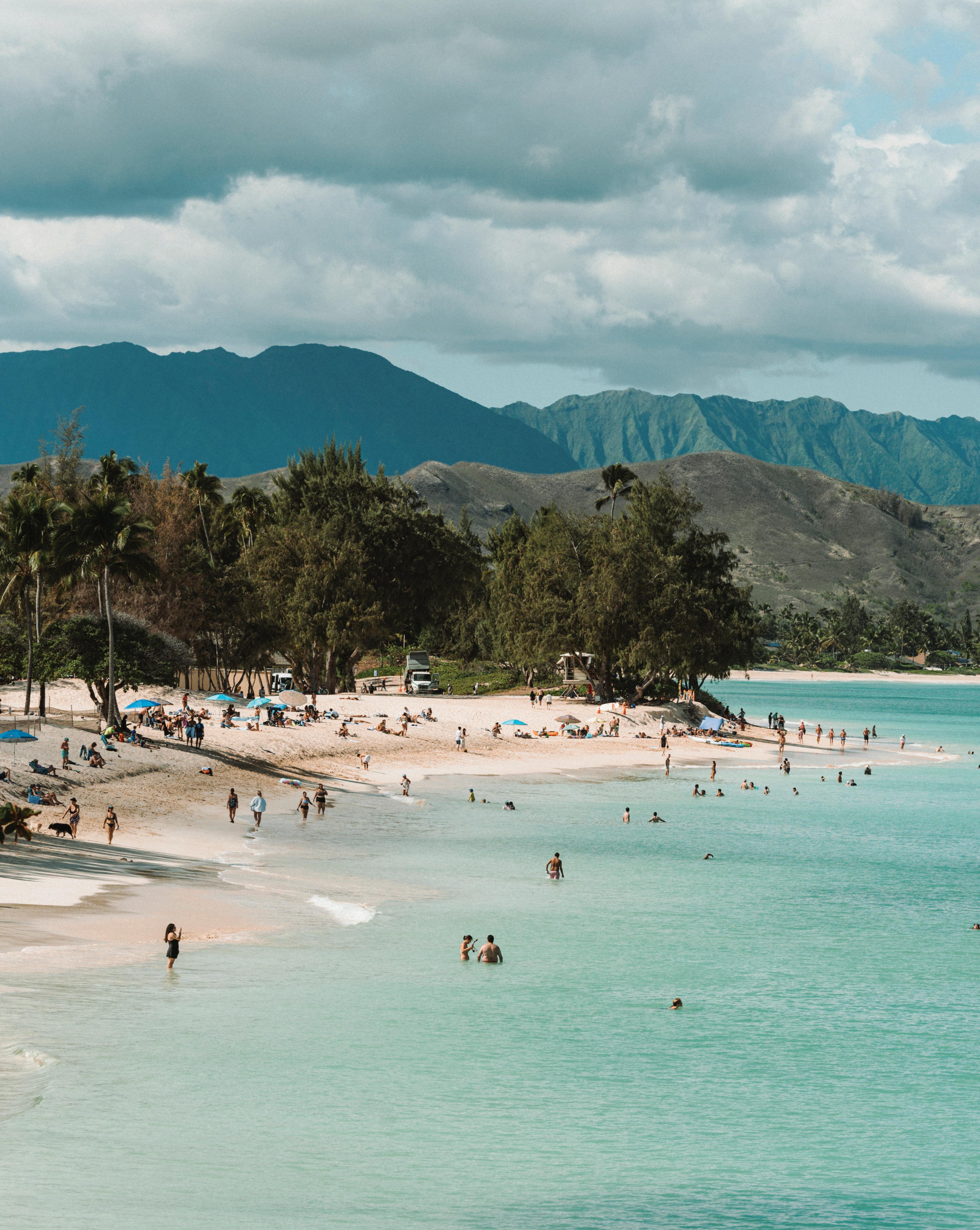
The neighboring town to Kāne‘ohe is Kailua, another one of the commercial centers for the Windward side and home to some of the most sought-after coastlines on the island, walkable shopping centers and bistros.
Once you head out from Kailua, hop onto Kalaniana‘ole Highway for a drive through the countryside of Waimanalo. To end your tour of the Windward Coast, enjoy views of the coastline until you reach Makapu‘u Point.
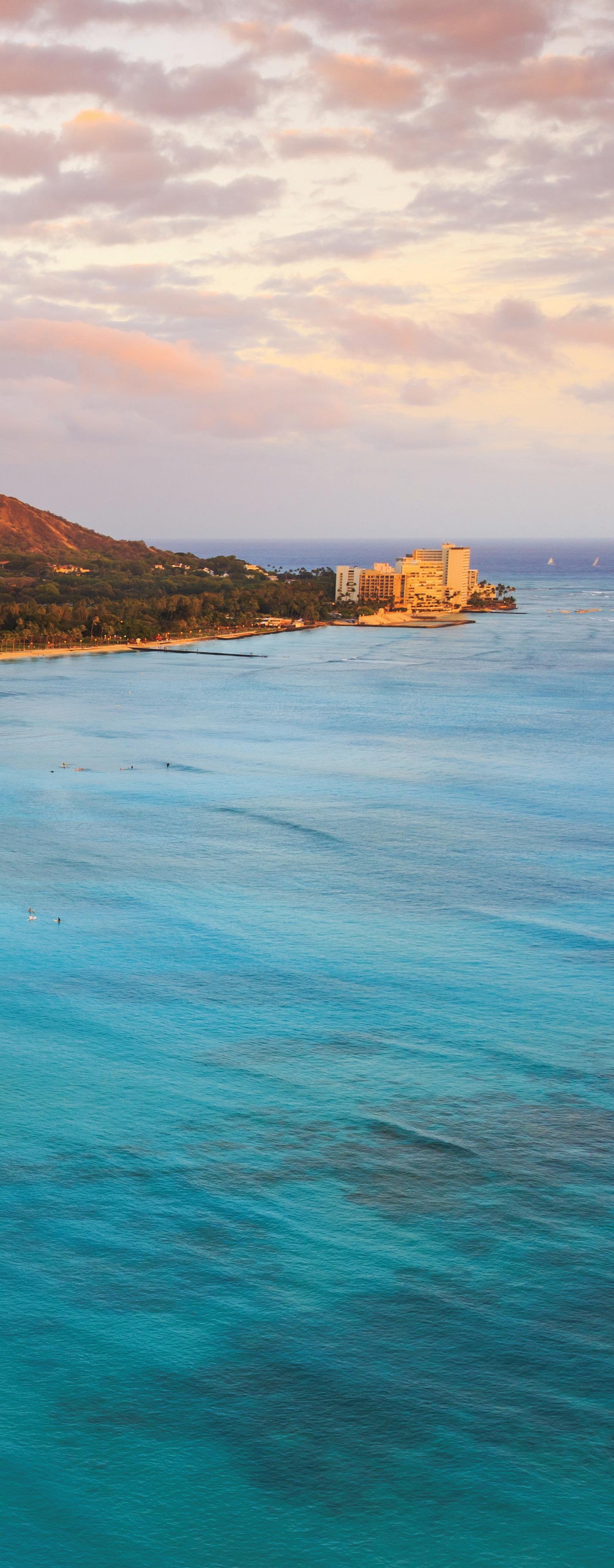
South Shore
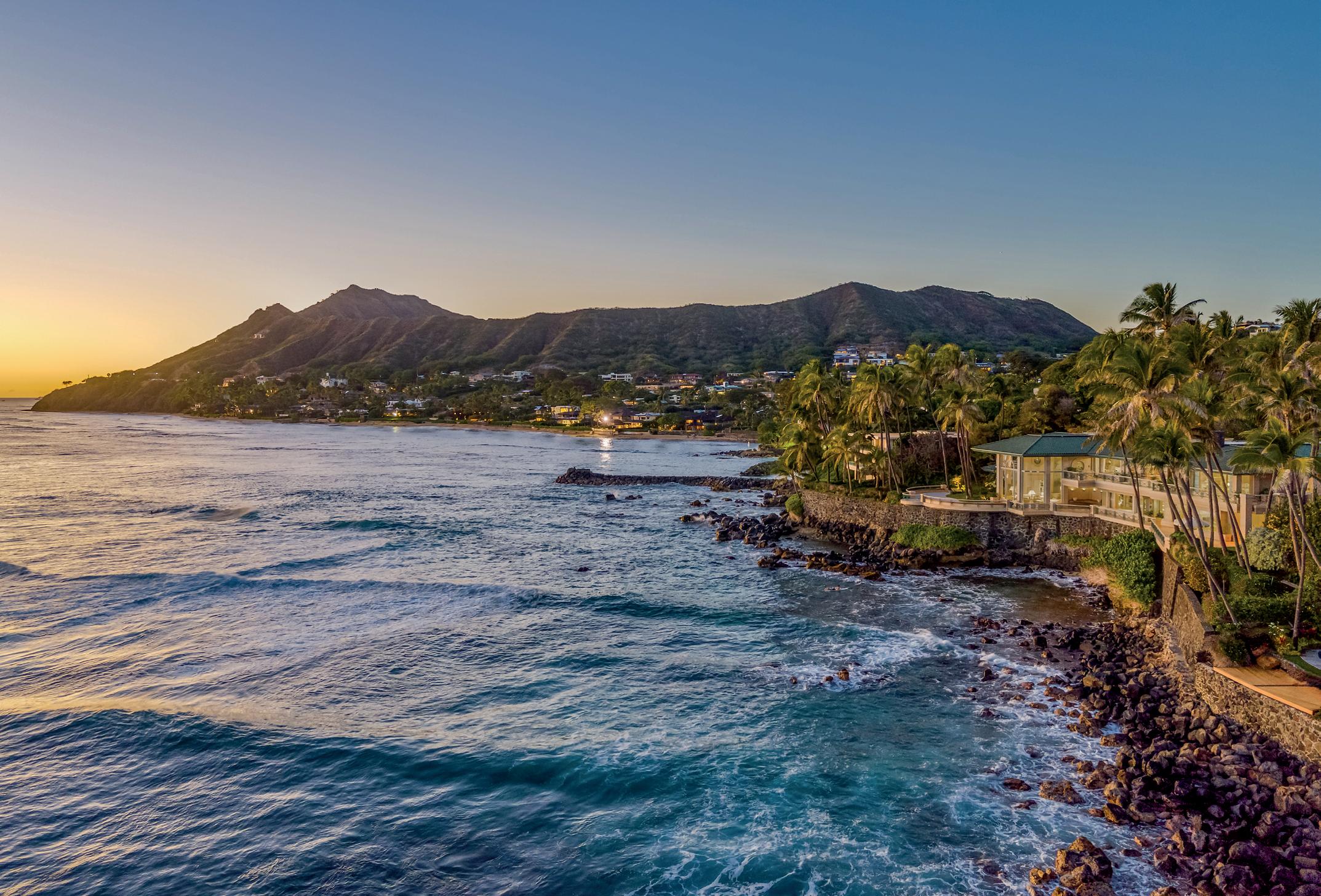
O‘ahu’s Southern Shore spans from Makapu‘u in the east to the Daniel K. Inouye airport in the west. Despite being a small area of land the South Shore packs in many sites synonymous with the island of O‘ahu. The range of activities—from outdoor adventures to luxury experiences as well as the island’s nightlife scene—make the South Shore where many people want to be.
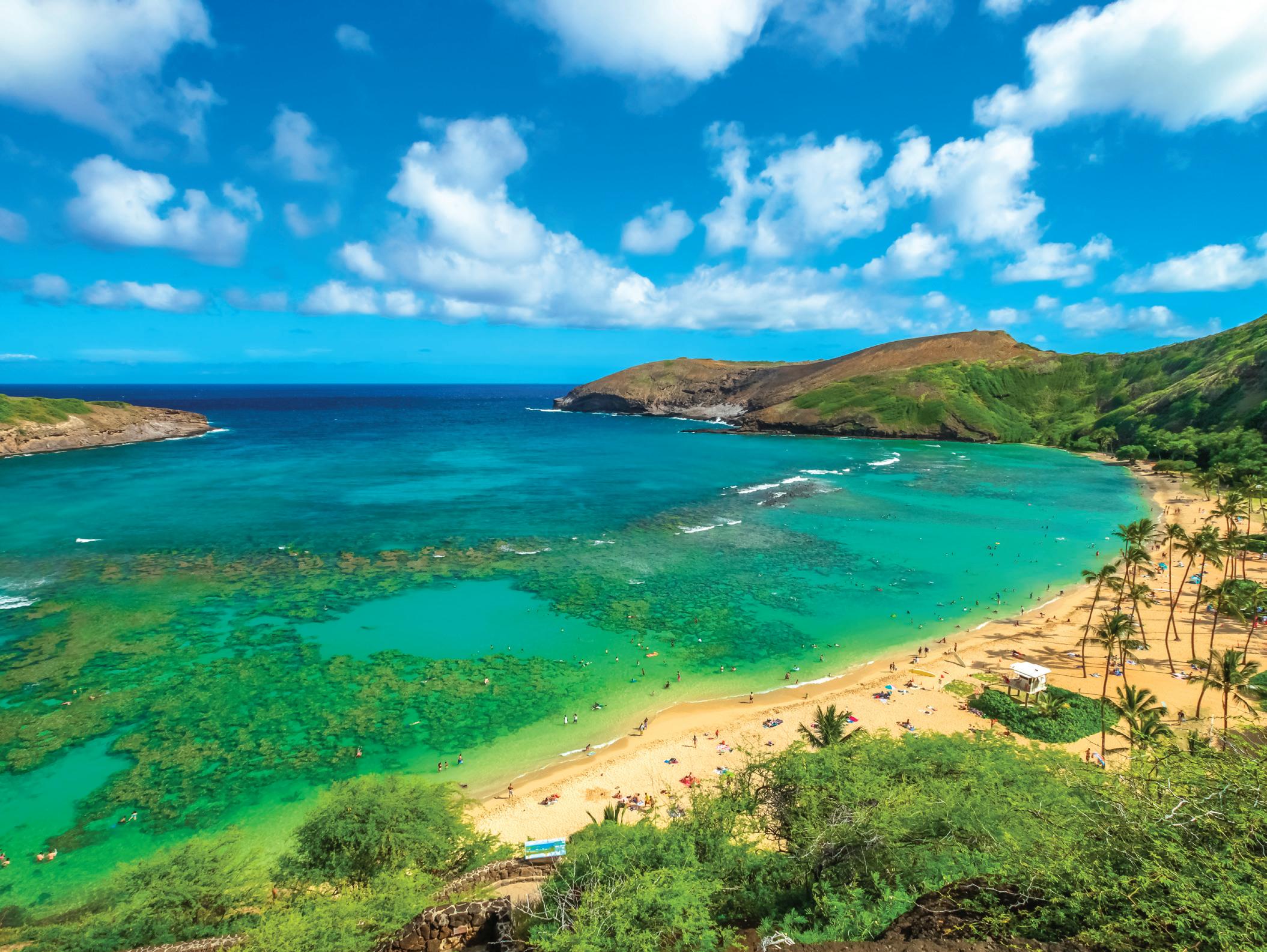
The South Shore starts in Hawai‘i Kai, a town centered around a marina and home to many wellknown outdoor activities including Sealife Park, Makapu‘u Lighthouse Trail, Hanauma Bay and the Koko Crater Railroad Trail.
Continue along Kalaniana‘ole Highway and through the residential towns of Kuli‘ou‘ou and ‘Āina Haina where you will find yourself on the H-1 Freeway that will carry you through the South Shore. You will first enter the Waialae-Kahala region and one of the towns you will want to explore is Kaimukī, an eclectic neighborhood of colorful bistros and niche shops.
From there, head towards the ocean and the Diamond Head-Kapahulu region. Here you will find many spots popular with visitors including Diamond Head Hike, Saturday Farmer’s Market at KCC and Kapahulu Avenue where you will find Leonard’s Malasadas.
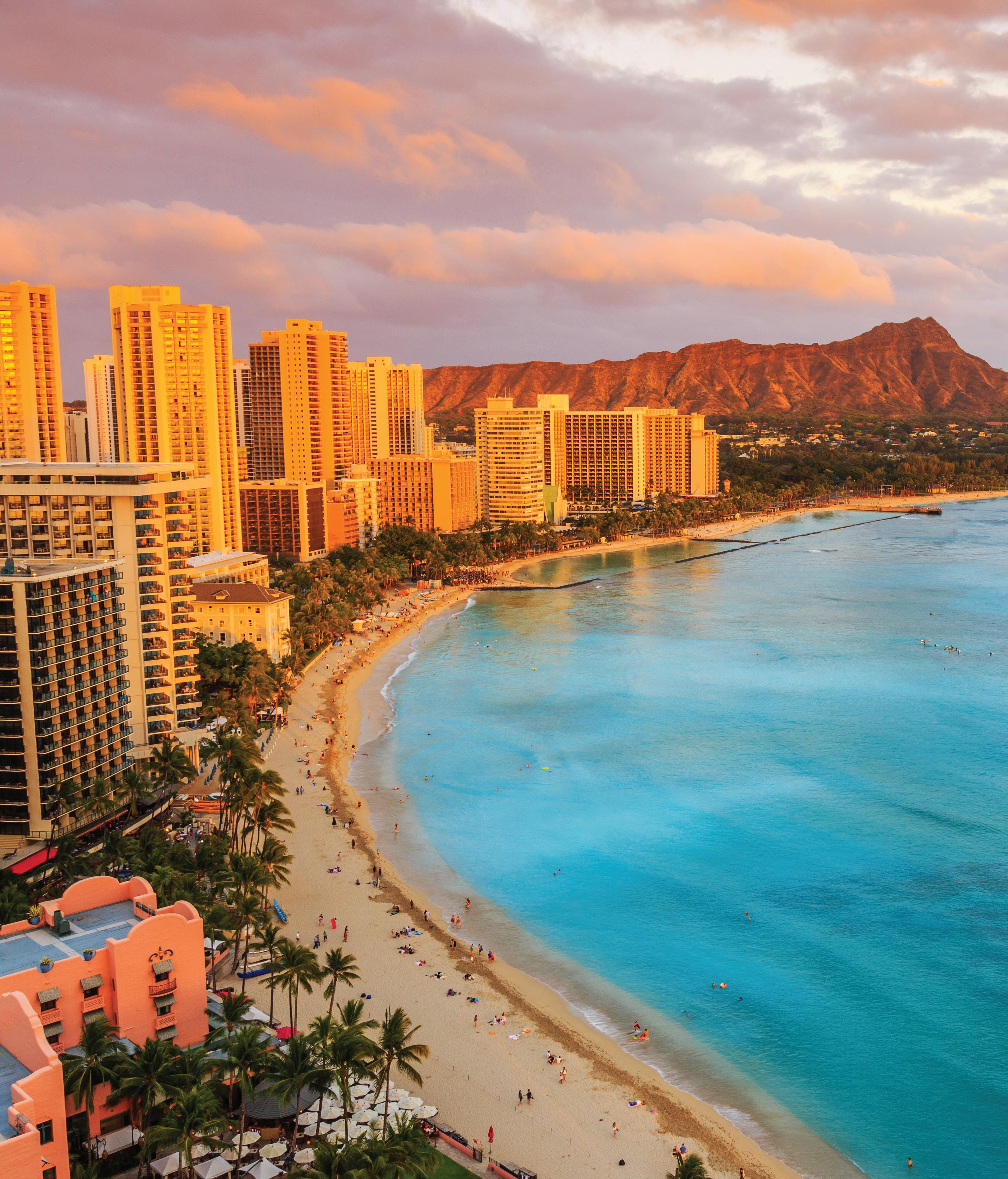
Kapahulu Avenue will lead you to Waikīkī, the hub of island tourism. The area is known for its two-mile stretch of beaches, numerous shopping centers, array of restaurants and shows, all within walking distance.
Waikīkī will lead you past Ala Moana Shopping Center, the largest open-air shopping center in the world as you come upon the historic district of Honolulu. Here, you will find spots like ‘Iolani Palace, Mission Houses and Kawaiha ‘o Church.
Bordering the historic district, you will travel through downtown Honolulu, Chinatown and the art district before coming upon the Kalihi-Palama area which is home to Foster Botanical Gardens and Bishop Museum. The towns of Moanalua and Salt Lake round out the Southern Shore of the island which ends with Honolulu International Airport.
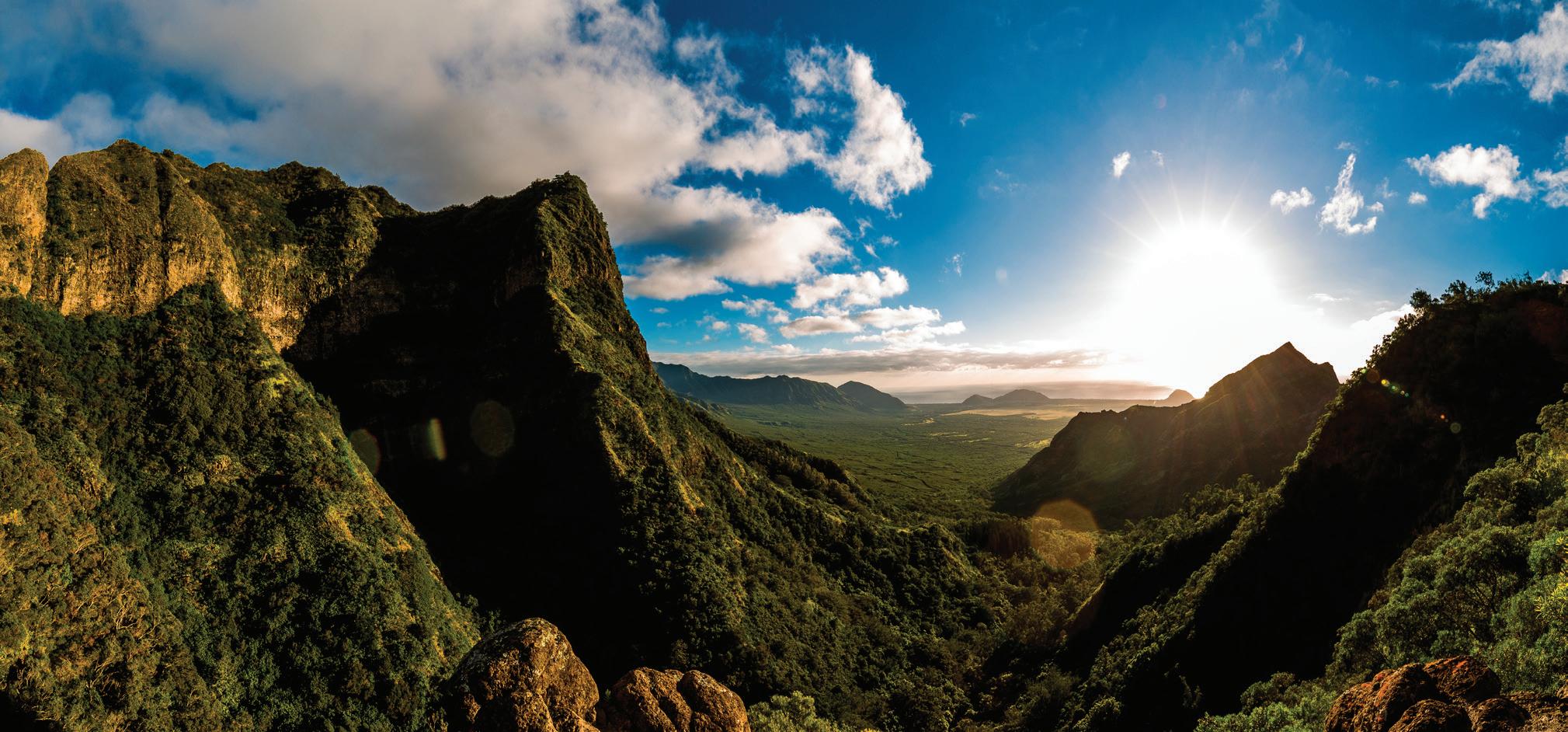
Central O‘ahu
Central O‘ahu encompasses the fertile valley between the Ko‘olau and Wai‘anae Mountain Ranges. Affectionately known as the “Heart of O‘ahu,” the area was home to sugar and pineapple plantations. Today, many O‘ahu residents call Central O‘ahu home.
After departing Honolulu and the South Shore, you can continue along the H-1 freeway and enter ‘Aiea, a large subdivision and home to the popular ‘Aiea Loop Trail, a moderate hike good for people of all ages and dog friendly.
The next town is Pearl City, a former site of many rice paddies and now home to the USS Memorial at Pearl Harbor, a resting place for the 1,102 of the 1,177 sailors killed on the USS Arizona on December 7, 1941.
Once you pass through Pearl City, you have the option to veer north to the H-2 freeway or continue along the H-1. If you opt to drive north along the H-2, you will first pass through Mililani, a satellite city built to meet the demand for O‘ahu’s housing needs. Farther north, you will find the small, historic town of Wahiawā which boasts attractions like the Wahiawā Botanical Gardens and Dole Plantation.
If you continue along the H-1 freeway, the next major town you will hit is Waipahu, a former sugar plantation. Along with drawing visitors for their delicious momand-pop restaurants, Waipahu is also home to Hawai‘i’s Plantation Village, an outdoor museum of historic homes and gardens that tell the story of Hawai‘i’s plantation past.
Continuing along the H-1, you will enter ‘Ewa, another former plantation town and home of white sand beaches and ocean tours to take participants to swim with turtles or scuba diving.
Leeward Coast
O‘ahu’s Leeward Coast is largely undiscovered by many
visitors. The sunny, dry landscape makes it a perfect area to spend long days on the beach. For those willing to drive to this part of the island, there are many off-thebeaten-path activities to find.
One of the first towns you will pass through is Kapolei, another planned community nicknamed the “second city.” The area is home to two major resorts, the Four Seasons Resort O‘ahu and Disney’s Aulani Resort, as well as lū‘au shows, watersports and shopping outlets.
Continuing along the H-1 freeway, you will pass through Makakilo, home of the Wet ‘n’ Wild Hawai‘i waterpark that spans twenty-nine acres with many rides and attractions. After passing Makakilo, the freeway will end taking you back to Farrington Highway.
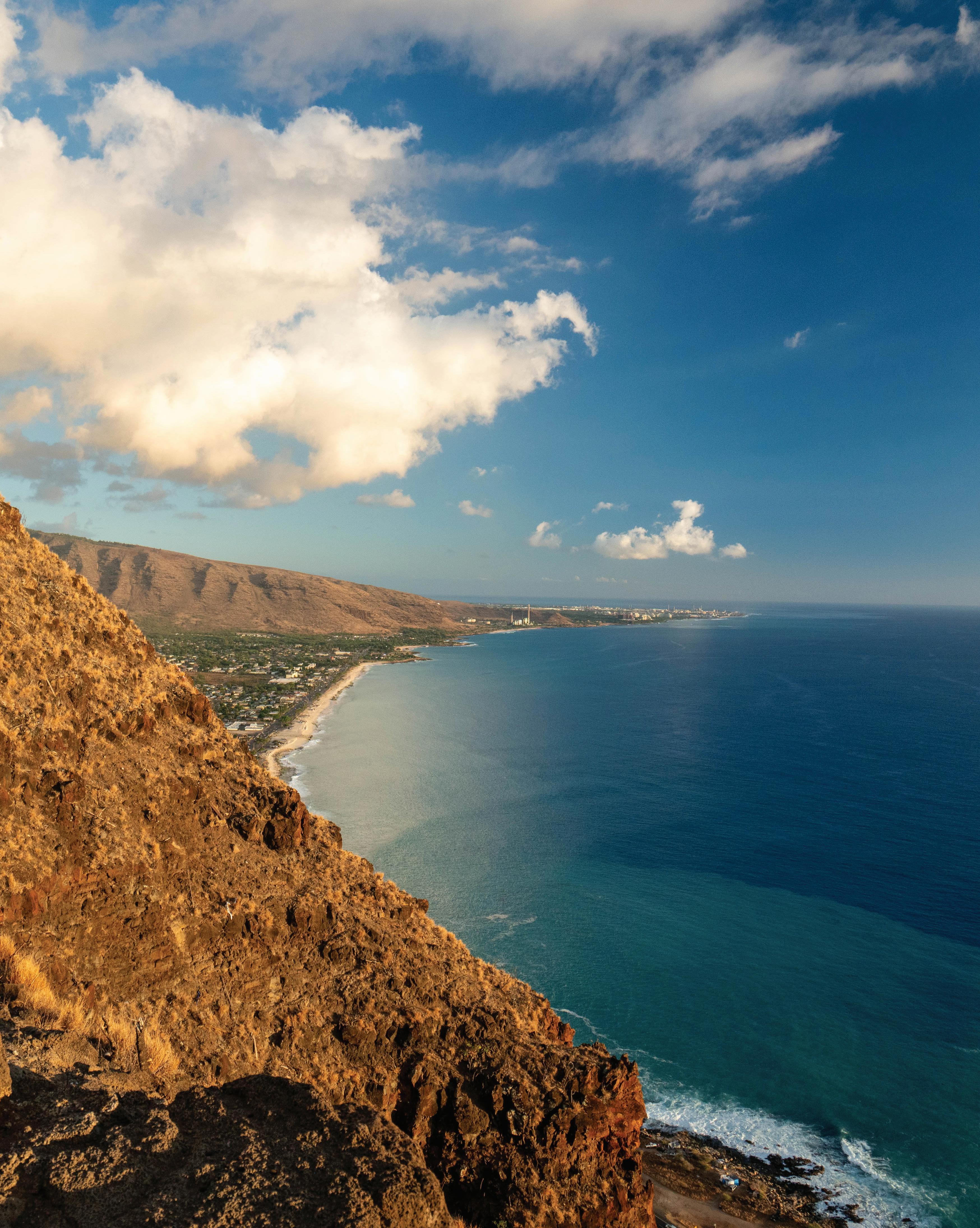
Nānākuli and Mā‘ili, the next two towns you will pass through, remain largely residential and dotted with an errant superette or bakery. Many will venture to Mā‘ili to take part in the “Pink Pillbox” hike, also known as Pu‘u O Hulu Trail.
The ride to the next town bestows visitors with stunning ocean views and multiple opportunities to pull over at one of the many beach parks such as Ulehawa, Mā‘ili Point and Mā‘ili Beach Park.
The next major town is Wai‘anae, another heavily residential area and home of Pokai Bay and Tamura Super Market, which opened in the 1920s and serves the Leeward community.
The last town you will pass through is Mākaha, a place with little development and known for its surfing waves. At the end of Mākaha, you may see cars parked here at the famous Ka‘ena Point Trailhead which will connect hikers with the Ka‘ena Point State Park on the North Shore of the island.
Despite being only thirty miles across and forty-four miles in length, the island of O‘ahu packs in a variety of attractions, outdoor activities, historical sites and luxury accommodations to meet the needs of any traveler.
HIDDEN IN PLAIN SIGHT
The legacy of Don Francisco de Paula Marín, Hawai‘i’s forgotten agricultural pioneer
story KRYSTAL KAKIMOTO images BISHOP MUSEUM ARCHIVES
If you browse through history books or wander museum walls, you will rarely find mention of Don Francisco de Paula Marín. Yet this remarkable man, who arrived in the Kingdom of Hawai‘i in the late 1800s, left an indelible mark on the islands. Marín was a true Renaissance figure — a sailor, trader, translator, distiller and trusted advisor to Hawaiian royalty. However, among all his contributions, his agricultural legacy endures most visibly today, shaping both the landscape and the diet of Hawai‘i. Once a towering figure in the islands, Marín has somehow faded into little more than a footnote, a forgotten pioneer whose impact still grows, quite literally, across the land.
Born on November 25, 1774, in Jerez de la Frontera, a region of Spain near Cádiz, little is known about Marín’s early life. What we do know begins at sea, when, at the age of sixteen, he entered the Spanish Navy, embarking on a life of adventure that would ultimately carry him halfway around the world. During his naval service, Marín joined the renowned Alessandro Malaspina expedition to Nootka Sound and the Vancouver Islands, a scientific exploration voyage that spanned from 1789 to 1794.
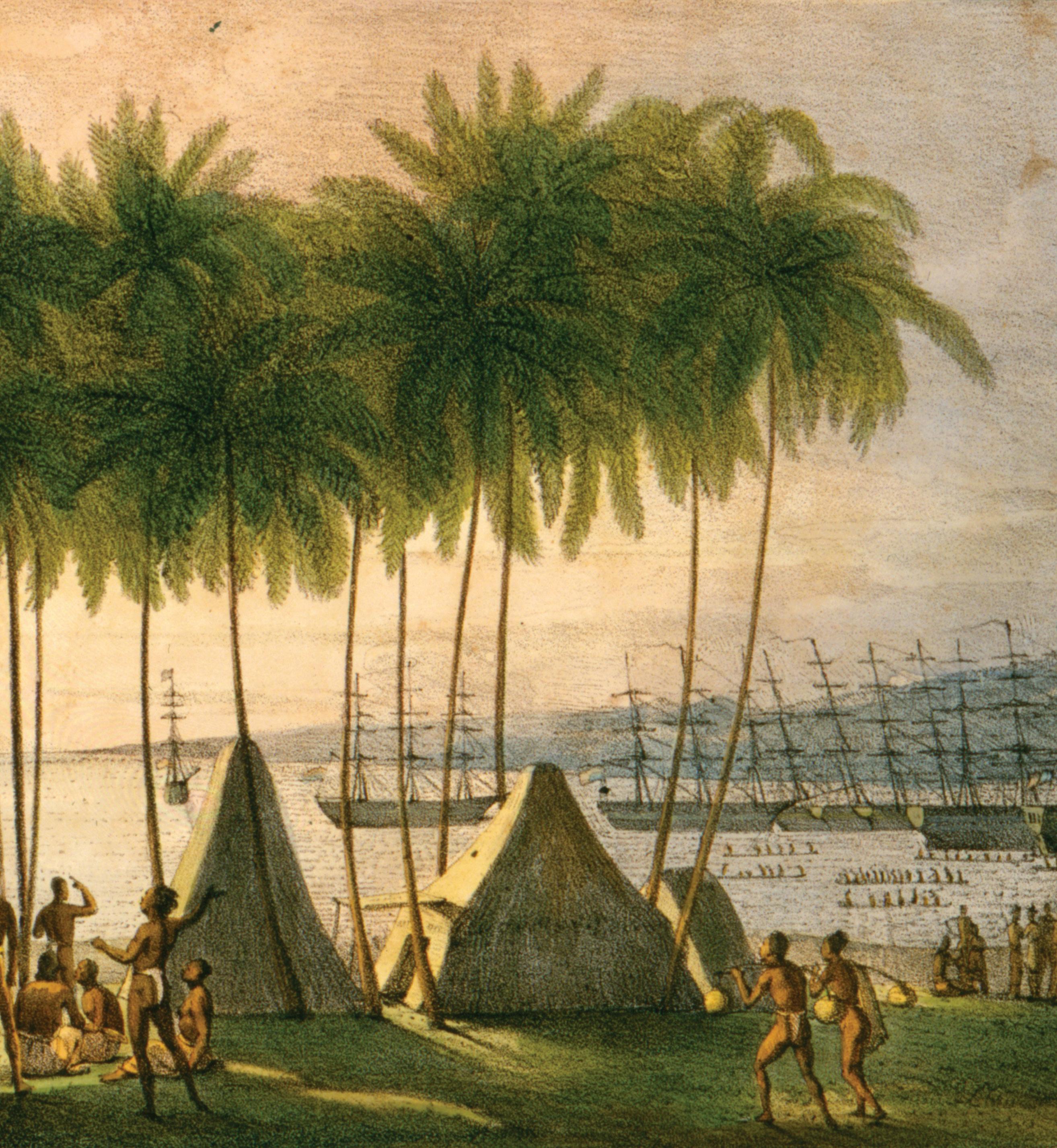
Yet somewhere during the journey, Marín made a fateful decision to desert the Spanish fleet and jump ship. Though his reasons remain unclear, historians believe he sought opportunity and freedom from the rigid discipline of naval life. In time, he found passage aboard the Lady Washington, an American merchant brig with trade routes in the Pacific. Between 1793 and 1794, the ship dropped anchor in Honolulu Harbor, an arrival that would mark not only a turning point in Marín’s own life but the beginning of his profound influence on the Hawaiian Kingdom.
Upon his arrival in Honolulu, Marín quickly found companionship among a small but growing community of foreigners — roughly 60 individuals. Within just two years of settling on O‘ahu, he had firmly established roots by marrying native Hawaiian women, having children and weaving himself into the fabric of Hawaiian society. His industrious nature and easy rapport with both locals and foreigners soon drew the attention of King Kamehameha I. The monarch took a particular interest in the diligent foreigner who had a famed gift for languages. A true polyglot, Marín spoke Spanish, French and English fluently, and, after his arrival, mastered the Hawaiian language as well. Recognizing the value of such a skill, Kamehameha enlisted Marín as a translator and intermediary in matters of business, diplomacy and trade.
In recognition of his loyal service to King Kamehameha I, Marín was granted several acres of prime waterfront property situated between the royal compounds and Nu‘uanu Stream, now the site of Marin Tower, located
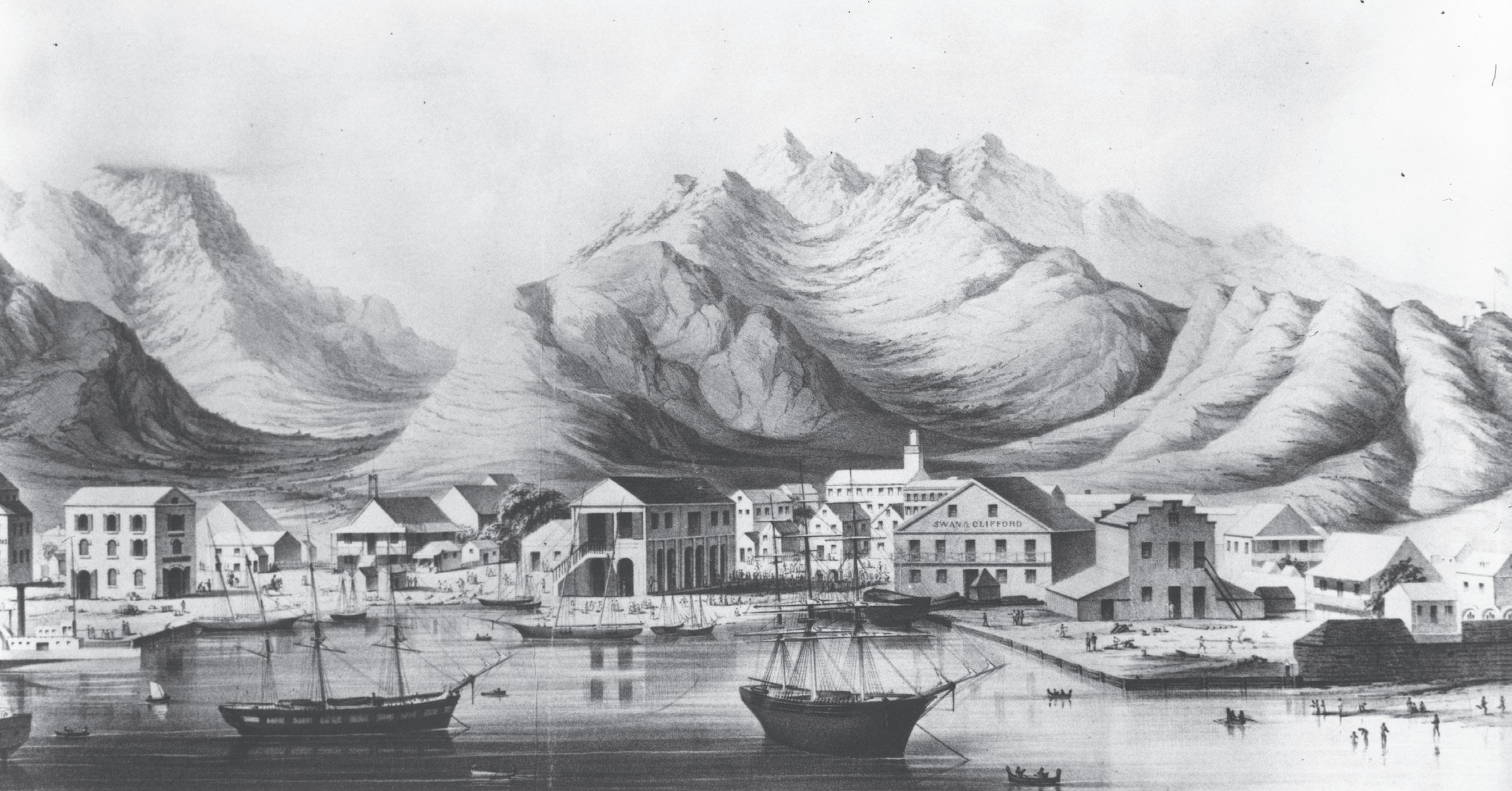
View of Honolulu Harbor, surrounding buildings and the mountains beyond; 1854
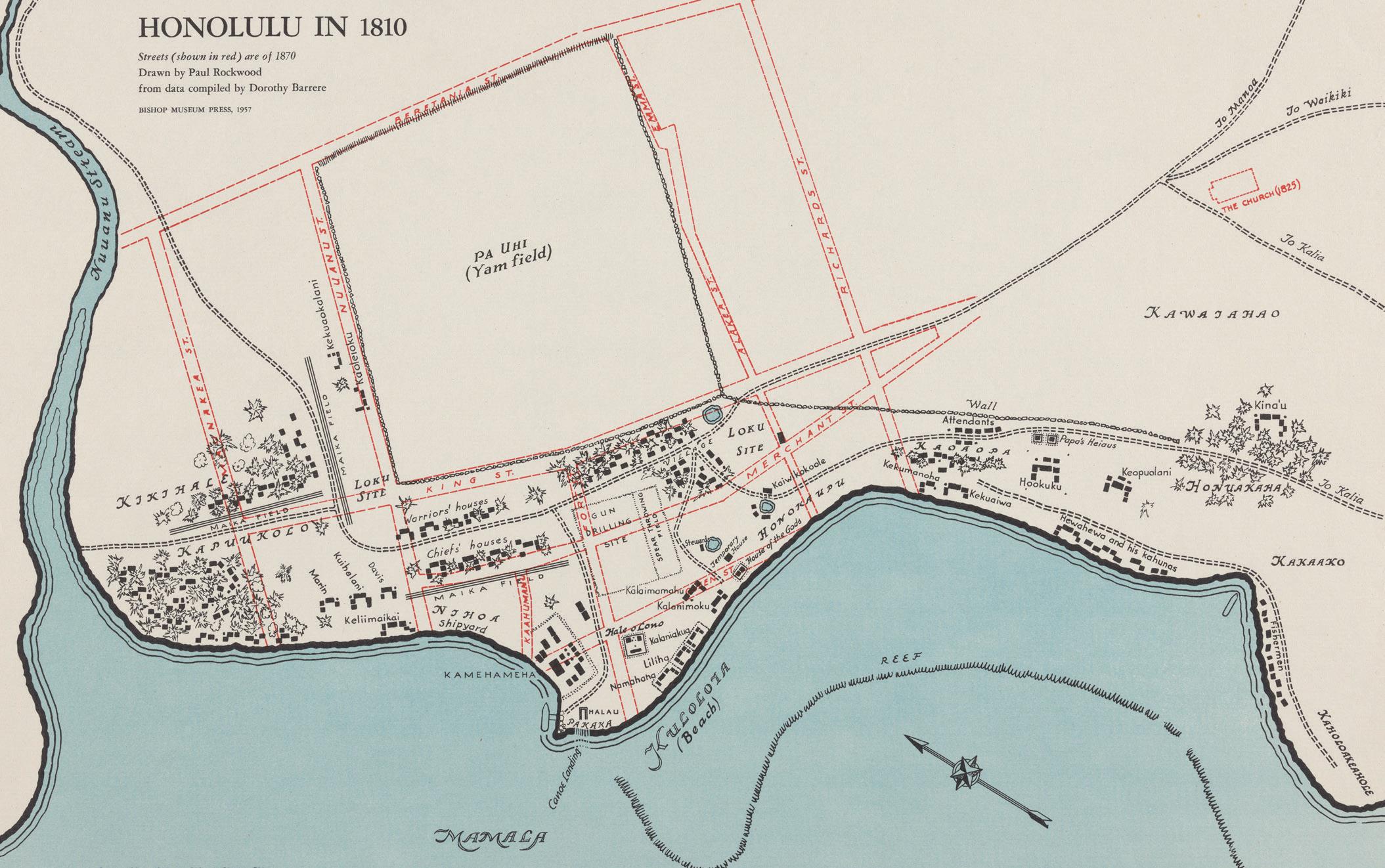
between Smith and Maunakea streets in Honolulu’s Chinatown. On this land, he built a handsome stone residence surrounded by thriving gardens and animal pens. He also constructed a small breakwater and dock, along with additional dwellings to accommodate his growing family.
Over the years, Marín’s household became large and lively. He is known to have had at least four Native Hawaiian wives and as many as twenty-three children, though the exact number remains uncertain. Ever enterprising, Marín diversified his ventures beyond translation, and, in 1810, he opened what is believed to be Hawai‘i’s first hotel. On his property, he welcomed transient sailors and ship captains to stay in one of the grass houses. Guests were served meals at Marín’s own table, earning him a reputation for both hospitality and industry.
By this time, Marín’s pursuits had expanded far beyond translation and trade. He served as a customs collector, navigator and trusted advisor to the king; yet it was his enduring fascination with plants that ultimately defined his legacy.
Maintaining friendly ties with the Spanish Navy, Marín frequently corresponded with visiting officers to request seeds, cuttings and saplings from ports around the world. Whenever foreign ships docked in Honolulu Harbor, he would eagerly approach their crews to inquire about the plants and fruits they carried, hoping to secure specimens to cultivate.
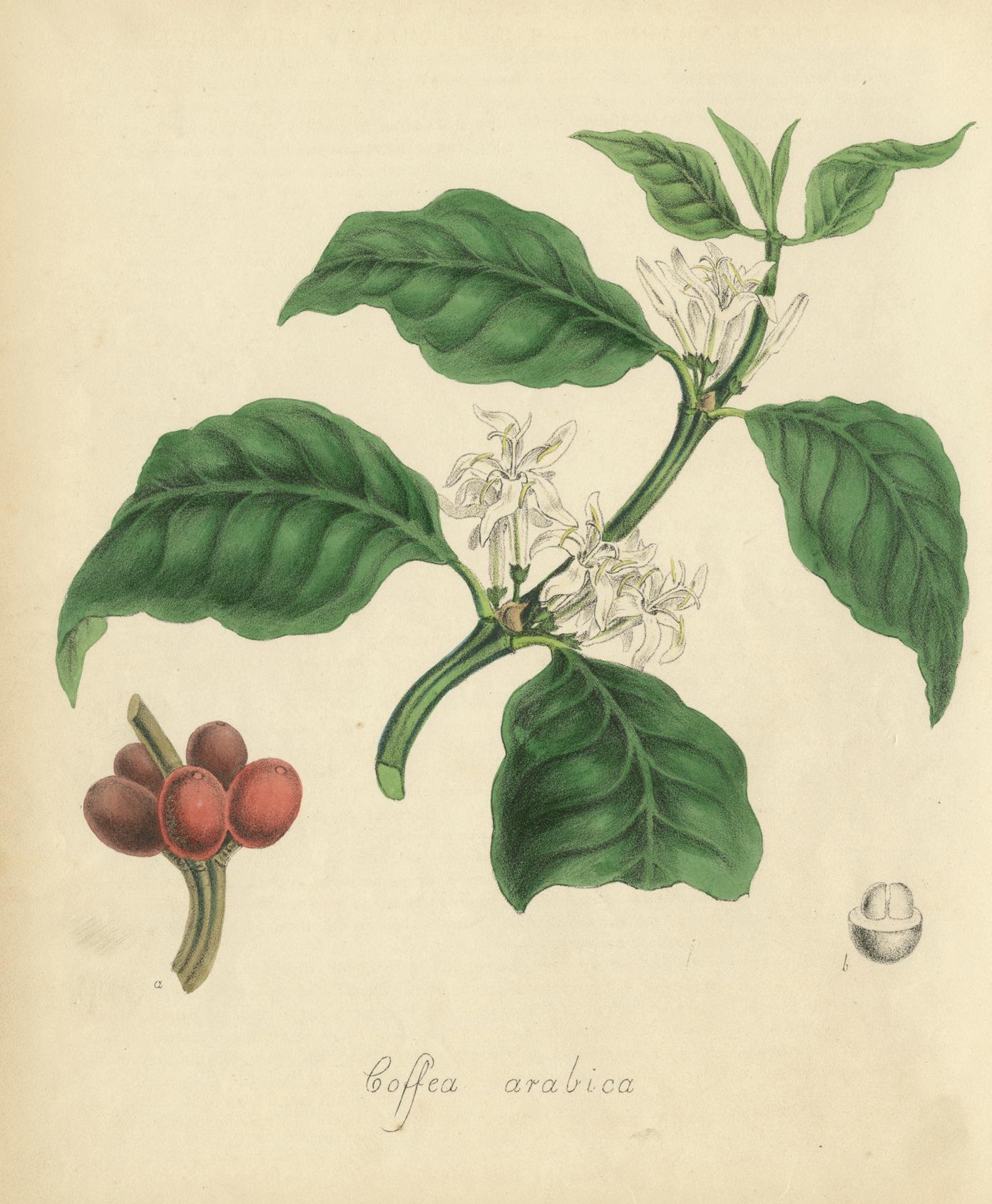
Back on his property, Marín transformed his estate into a thriving botanical experiment. He tested countless soil, sunlight and water permutations to determine how foreign plants might adapt to the islands’ environment. Over time, his efforts yielded an abundance, and he was able to sell his seeds to local farmers, including those for olives, oranges, coffee, mangoes, pineapples, avocados, peaches, apples, pears, guava, tobacco, cabbage, potatoes, figs, cotton, palms and medicinal herbs.
Marín is also credited with introducing the first grapevines to the Hawaiian Islands. In a journal entry dated February 24, 1815, he records planting the initial vines — cuttings he likely acquired during a trip to California
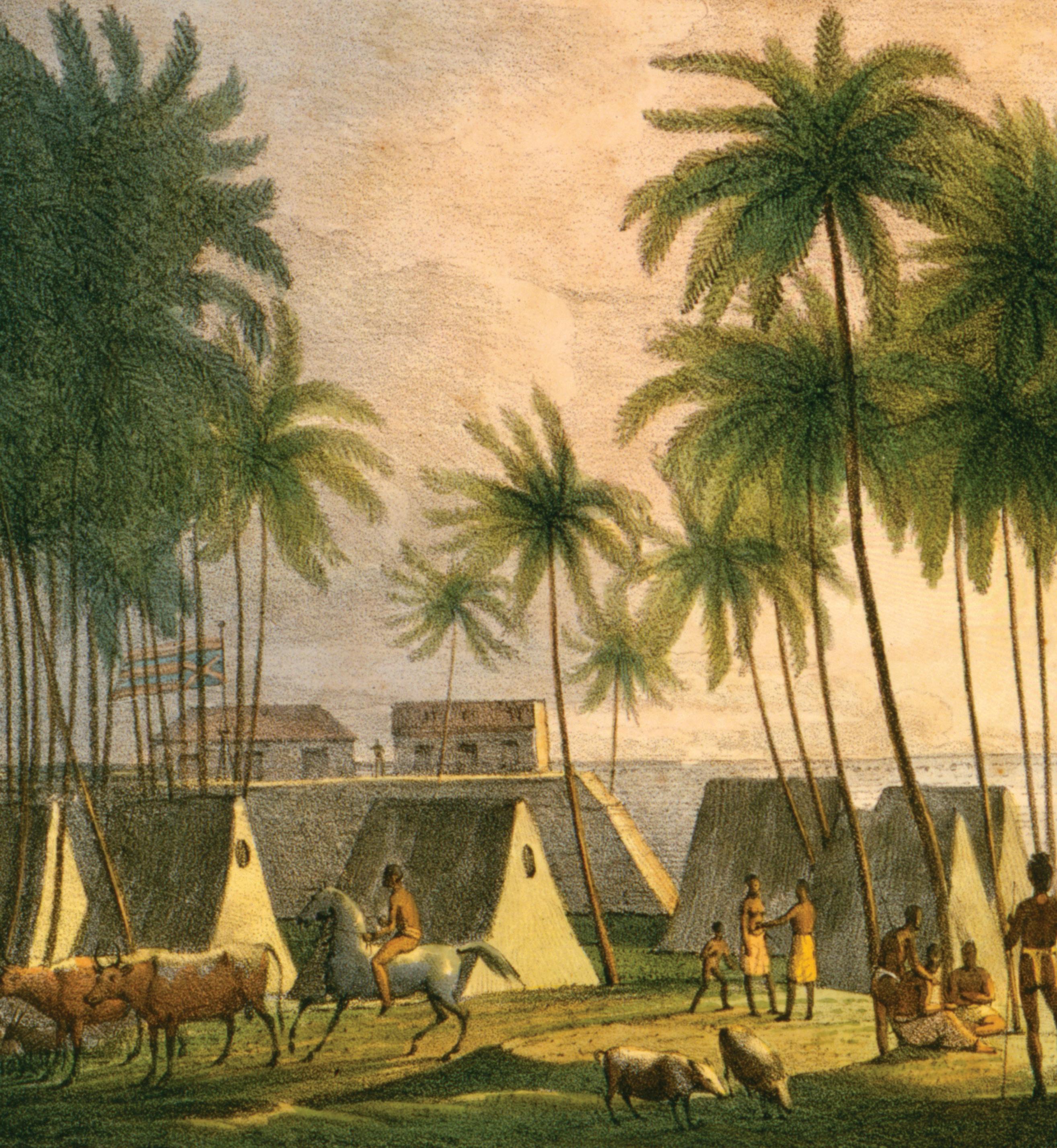
An early view of Honolulu Harbor; 1822.
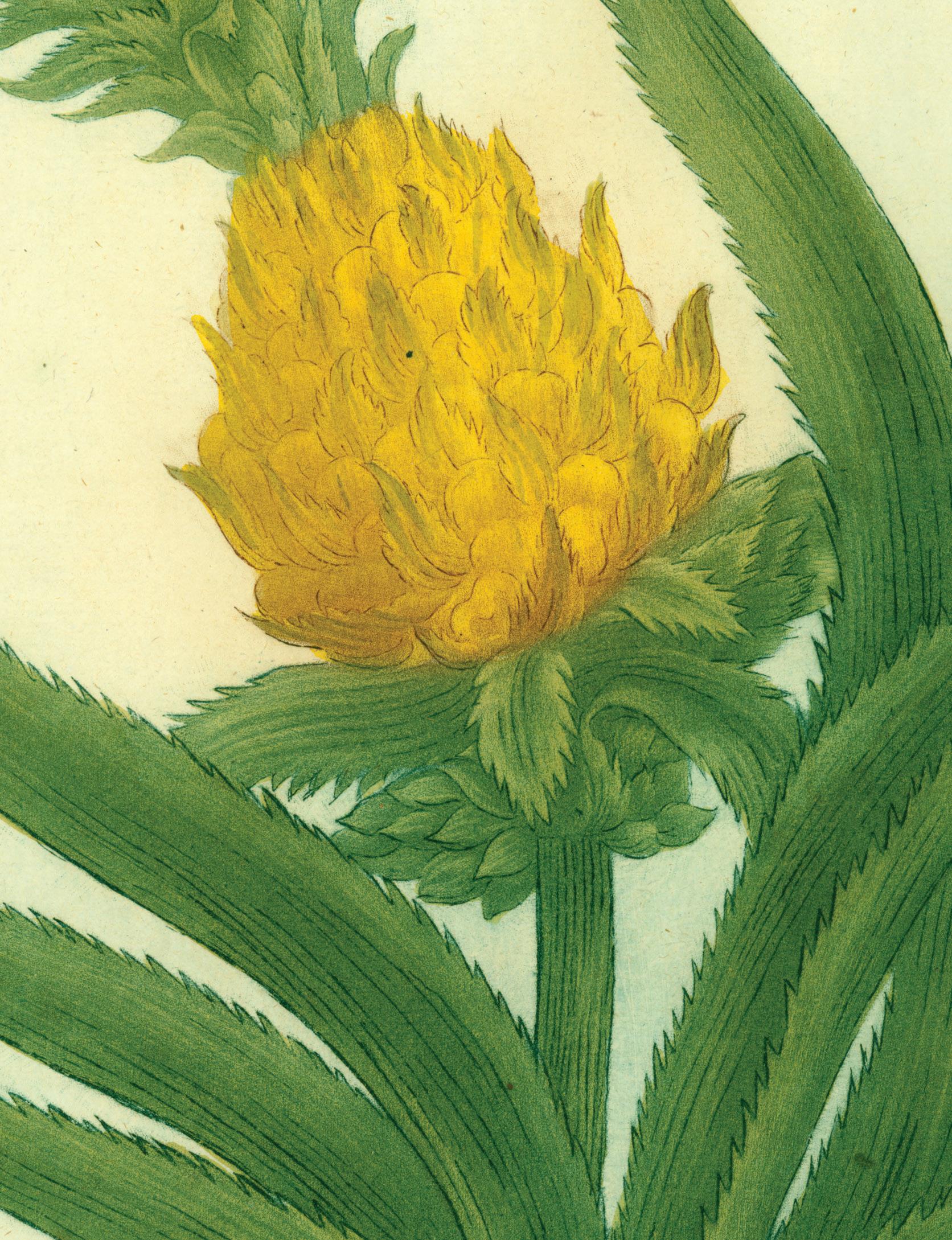
in years prior — near his home at the waterfront. The plants flourished in the tropical soil, and his vineyard grew. Marín soon needed more space, and he expanded mauka (towards the mountains), transplanting his vines to higher ground beyond his seaside property.
The new vineyard thrived, and its lush clusters of sweet, juicy grapes drew the attention of passersby as well as roaming pigs. To protect his crop, Marín appealed to his close friend and patron, King Kamehameha I, who declared the vines kapu (sacred) and off-limits to all. From then on, the vineyard was known as “The King’s Vines.” Now with his grapes protected, Marín was able to produce Hawai‘i’s first wines and brandies. Though the vineyard itself disappeared after his death, the legacy endures in name and memory with Vineyard Boulevard named in quiet tribute to the land where Marín’s historic vines once grew.
Of all Marín’s many roles and occupations, one of the most remarkable unfolded during the final days of King Kamehameha I. In the spring of 1819, the great ruler fell gravely ill at his residence in Kona. At first, he sought the aid of kahuna (Hawaiian priests and healers), but when their remedies failed to restore his strength, a ship was dispatched from Hawai‘i Island to O‘ahu with an urgent plea for Marín to come and save the king’s life.
Marín arrived in Kona on April 19, 1819, and immediately began tending to his ailing friend. Though he lacked formal medical training, he possessed some knowledge of Western medicine and did all he could to ease the king’s suffering. Despite his best efforts, however, the king’s condition worsened, and, in May 1819, the great unifier of the Hawaiian Islands passed away. As the kingdom entered a period of deep mourning, Marín quietly returned to his home on O‘ahu.
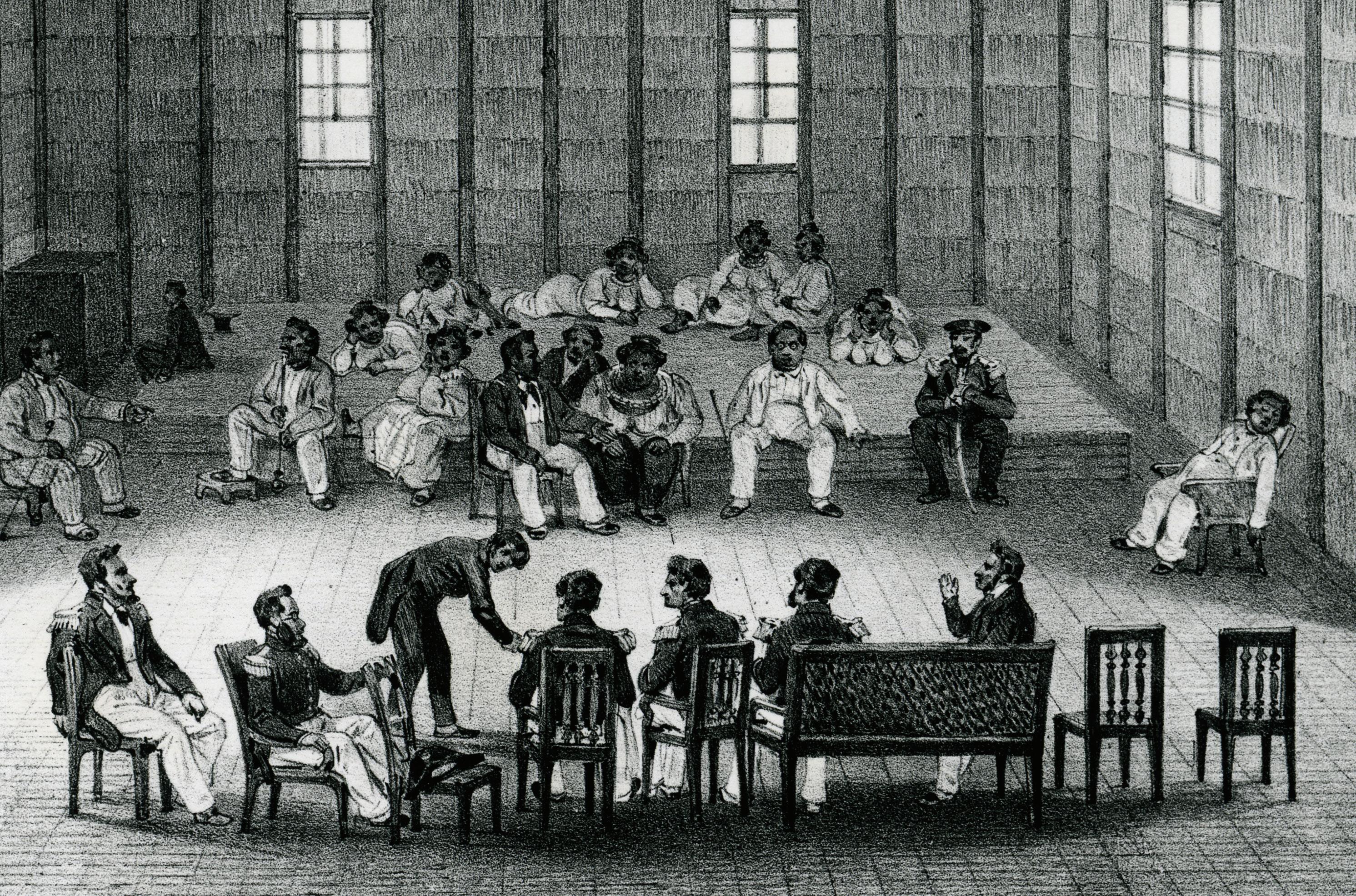
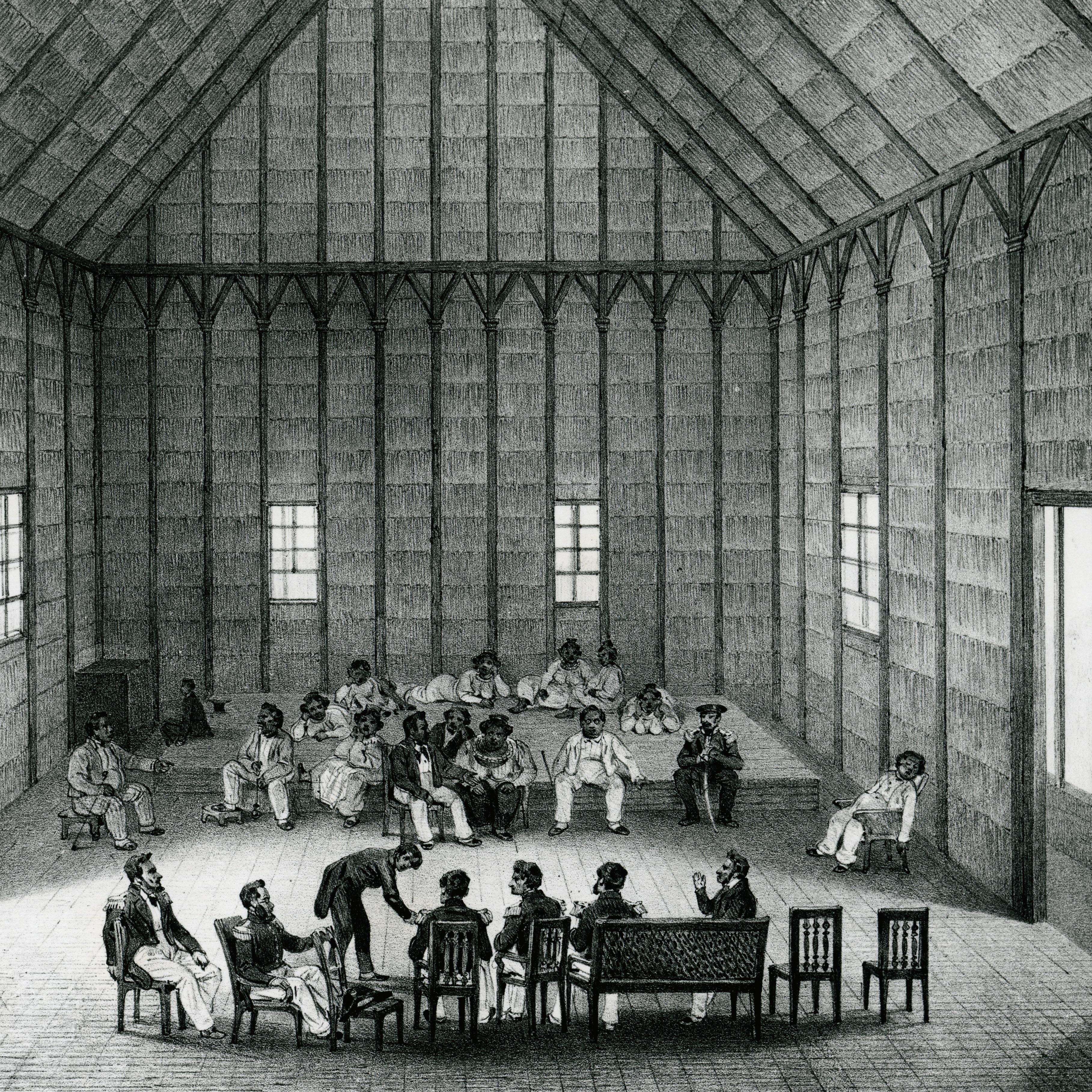
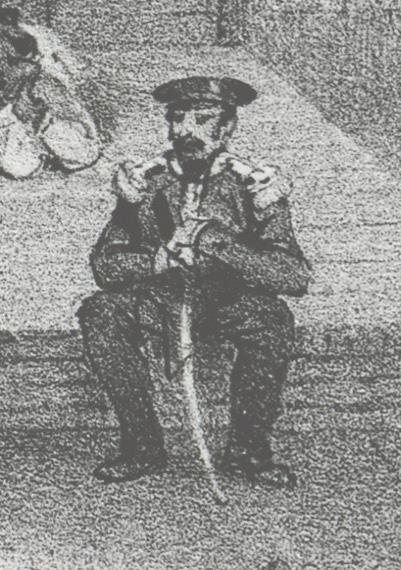
In the years that followed, Marín continued to serve the royal family with loyalty and distinction by providing the court with goods he grew or produced, offering translation services, and offering advice on military matters. Under Kamehameha II, he was appointed a captain in the Hawaiian Army and participated in diplomatic events with foreign dignitaries. One such event was the royal court’s hosting of the French Captain Abel Aubert du PetitThouars, where Louis-Jules Masselot memorialized
him in an illustration that remains the only image of Marín today.
Over time, however, Marín’s standing at court declined following the death of Kamehameha II. He also faced growing disapproval from the increasing number of Christian missionaries in the islands, who rejected his polygamous lifestyle and the operation of his distillery. Later in life, he suffered from a persistent cough, likely a lingering effect of tuberculosis, and struggled with heavy drinking. On October 30, 1887, Marín passed away at his home in Honolulu and was laid to rest in the family crypt located on his property.
Today, Marín’s memory seems almost spectral — a man who traveled far from home, left a profound mark on Hawai‘i and then faded from popular memory. Yet his legacy endures, from Marín Street in Honolulu’s Chinatown to the heavily trafficked Vineyard Boulevard and in the numerous plants he introduced that have become synonymous with Hawaiian agriculture. He came to the islands as a stranger, lived as a pioneer and left a legacy so deeply rooted that it bears fruit across the islands to this day.
MURAL MANA
Kamea Hadar: leaving the world more beautiful
story NATALIE SCHACK
Most people encounter Kamea Hadar’s work in passing.
His murals are seen through windshields and bus windows, from sidewalks and crosswalks, folded into the daily visual traffic of Honolulu. They are passed and repassed, becoming part of the city’s backdrop rather than destinations in themselves. Between work and home, friends and family, his work is as omnipresent as the city itself, and as much a part of its happenings as the people within it. Hadar’s work is rarely experienced in stillness. It lives in motion.
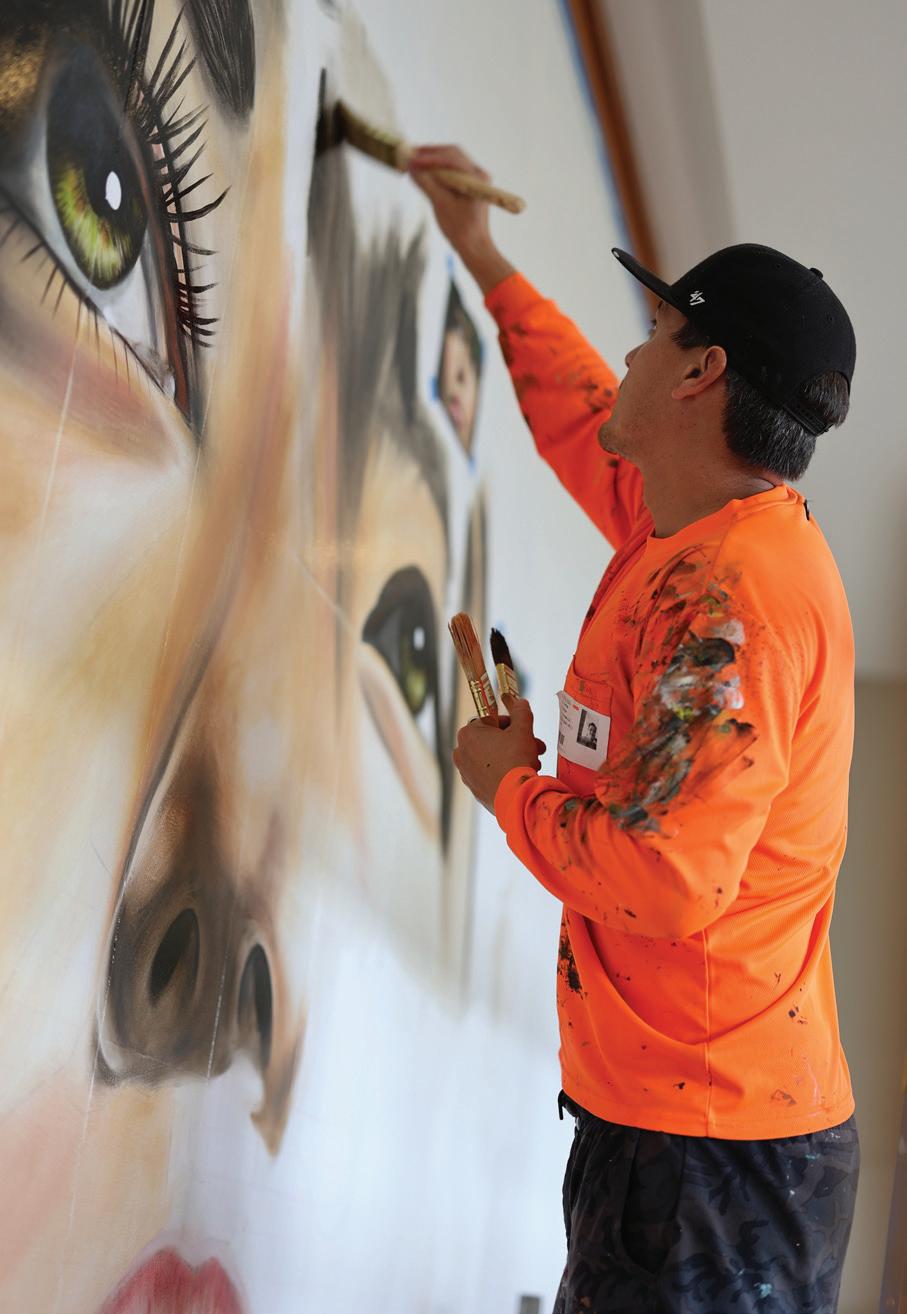
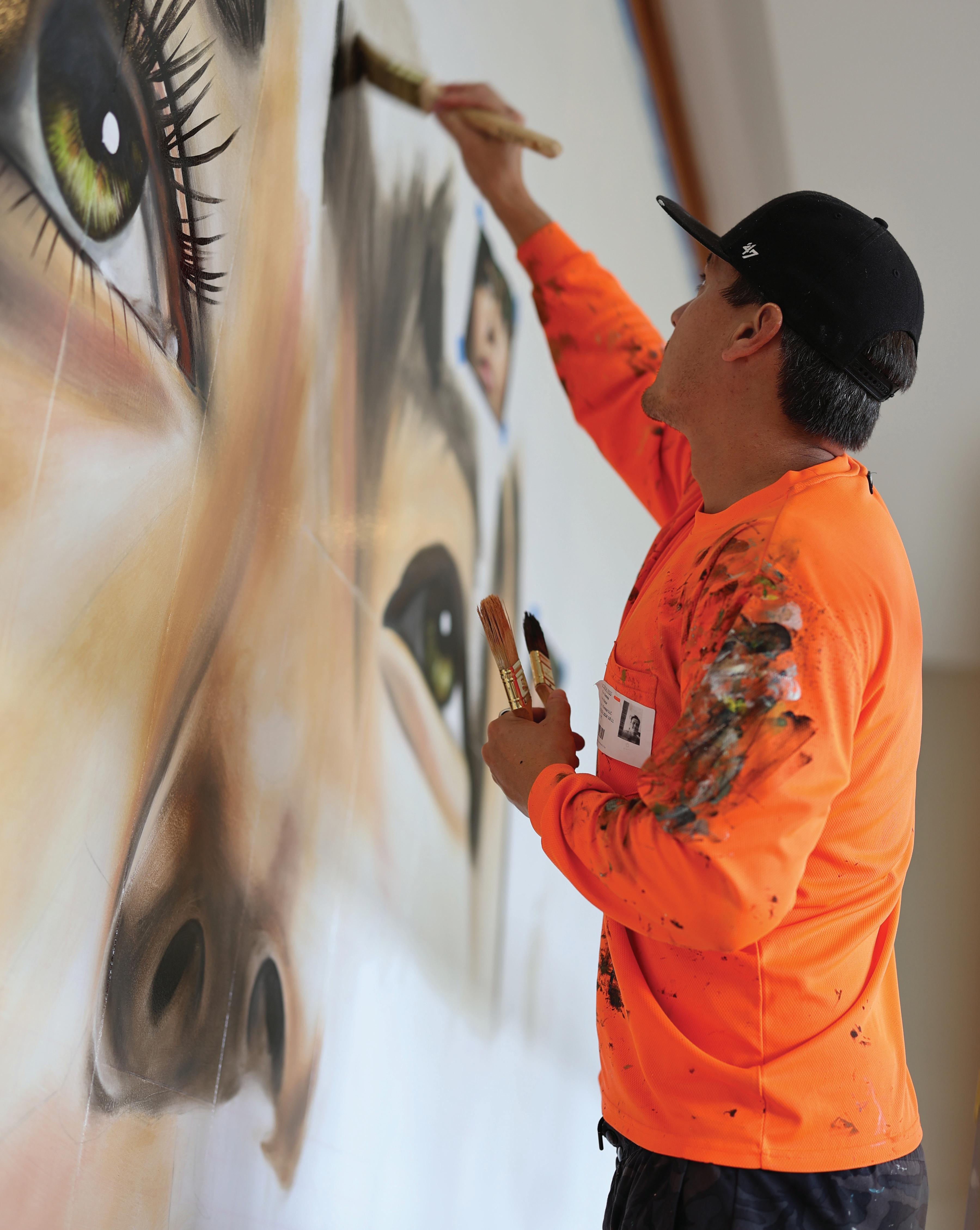
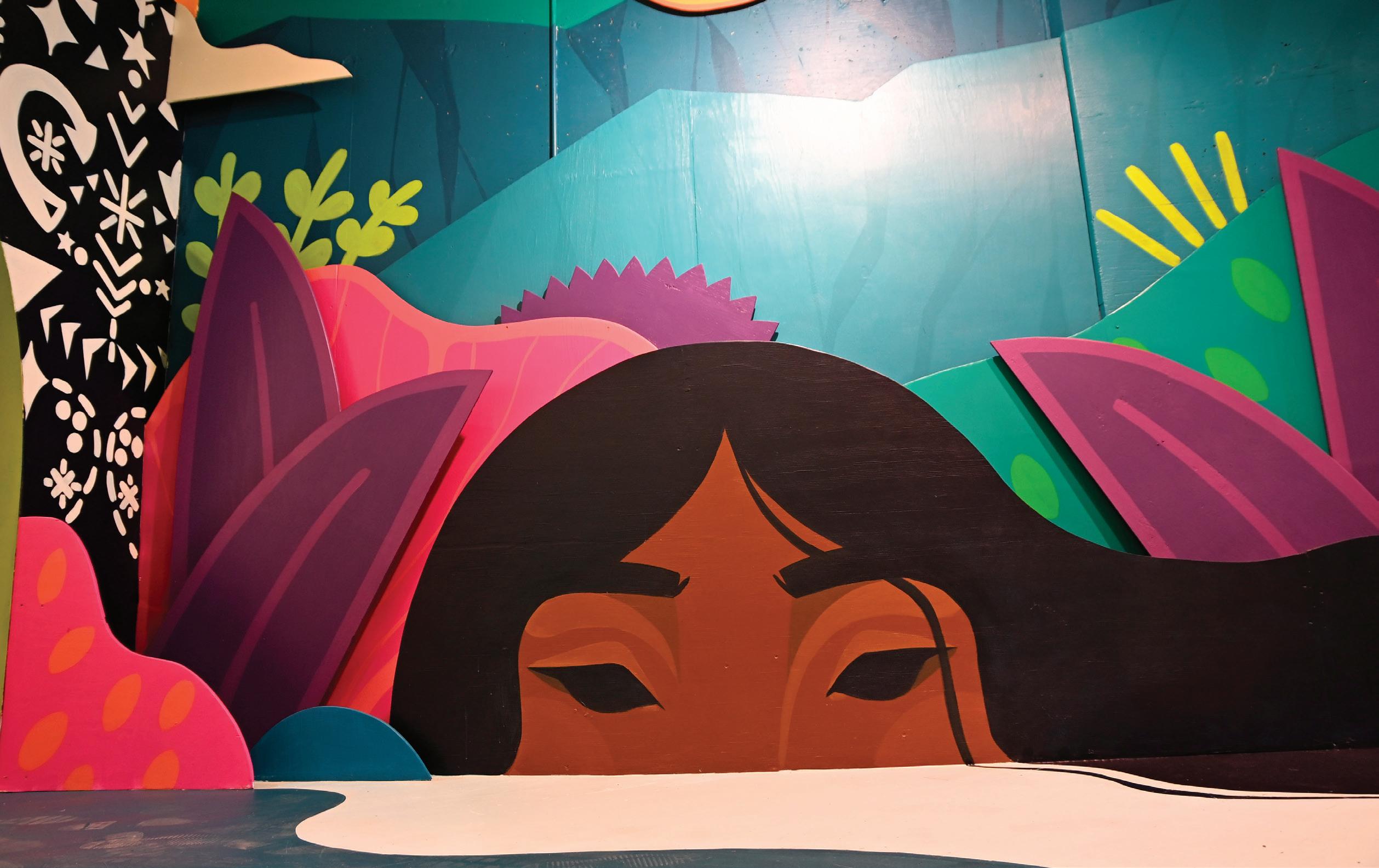
Hadar, a Honolulu-based artist whose murals now number over 50 in the past decade, has built a career painting at scale — sometimes monumental scale — across Hawai‘i and beyond. It’s a prolific time for him, whose work appears, it feels, everywhere: on freeway-facing walls, residential towers, storefront facades and commercial buildings, often in places where art is not expected to linger but simply exists alongside daily life. “Nowadays it’s like, I’m always busy with something, and then when I’m not busy with work, I have my three kids,” he reflects. “But every artist dreams of being in demand and making a living and providing for their family through their art. I’m living every artist’s dream.”
Hadar’s significance in Honolulu is both tangible and invisible. You see it in the towers of color along the freeway, the massive murals that punctuate Kaka‘ako, and the careful curations of artists he champions. But it’s also in the smaller, quieter ways: helping emerging muralists navigate the ropes, partnering with local brands,
connecting artists with work. He knows the streets, the stories and the people — he knows that Duke Kahanamoku’s statue isn’t just a landmark, but a reminder of lineage, pride and aloha, and that Carissa Moore riding a wave is more than a photo op; it’s history in motion. For Hadar, every wall, every façade, every store is an opportunity to embed the story of Hawai‘i in plain sight.
“I’m biased, and I obviously think that the more art in the world, the better. That’s kind of my life goal: just to leave the world a more beautiful place than I found it. And the way that I personally do it is by painting, and then also through my children. So, if I can paint as much as possible, spread art as much as possible, then that’s how I can beautify the world.”
Hadar’s roots in art trace back to his youth. His background is a very formal fine arts one, studying figure drawing in oil on canvas and even spending some time in Paris for his education, absorbing techniques while remaining deeply tied to his home soil. He recalls his early days with POW! WOW!, the nonprofit mural event that began in Kaka‘ako over a decade ago. Back then, the streets were raw, waiting and the artists were hungry — avant-garde painters, graffiti writers and dreamers who wanted to push boundaries. Hadar was one of them — young, hungry and relentless. POW! WOW! quickly became a phenomenon, and he was at the center, not just painting, but curating, connecting and building the scaffolding for a new cultural institution in Hawai‘i.
Today, POW! WOW!, like Hadar’s career, looks a little different. The iconic festival that played
“My main goal was always just to bring the collective level of art in Hawai‘i up.”
a large part in defining what Kaka‘ako is today has split into a multifaceted enterprise. On the nonprofit side, there’s the internationally known and loved event, now called Hawai‘i Walls, which still displays the work of seasoned and emerging artists as murals throughout the city. The moniker POW! WOW! now refers to the creative agency, drawing on the rich network of talent and skill that has been forged after over a decade of work. It has become a platform for both local and global artists, giving Hadar, now a seasoned creative director, a chance to focus less on being the next new thing and more on creating space for others to shine and to foster the local art community of which he’s become such a key fixture.
“My main goal was always just to bring the collective level of art in Hawai‘i up, and to kind of build an industry. Because when I was young, everyone was like, you can either be an artist or live in Hawai‘i, but you can’t do both, because there’s not enough work here. I always wanted to change that and make it so that there is enough work here as an artist. That if my kids want to be artists, they can. They can grow up in Hawai‘i, they can stay in Hawai‘i and we can keep our talent in the islands.”
He talks openly about the challenges of working in a city that restricts exterior murals in certain districts, where color regulations reduce facades to beige uniformity. The movement of POW! WOW! has grown beyond murals to installations, exhibitions and even retail experiences, bridging commerce and culture without diluting authenticity. Hadar has evolved with it — no longer just the brash young artist, he is a connector, a mentor and a curator of experiences, making sure Hawai‘i’s stories are told with integrity.
Hadar’s murals are as diverse as they are monumental. One of his latest, at 25 stories and 220 feet tall, holds the distinction of being Hawai‘i’s tallest mural, jutting like a signpost — or a mast — into the sky. Much of the work is composed of negative space: the gradience of clouds and air that serves as the domain of the
great frigatebird, or ‘iwa, which in Hawaiian lore symbolizes finding one’s way home. In mythology, the ‘iwa is connected to the goddess Kaiona, who would send the birds to guide lost travelers through the Ko‘olau and Wai‘anae mountain ranges.
These are not island flitters; they are magnificent seabirds, built for soaring long distances, able even to sleep while airborne to traverse days at a time without landing. Hadar’s “‘Iwa” is captured gloriously in midflight, wings angled and flung open as it coasts on an oceanic updraft, propelling its perfectly evolved body forward with the sureness and grace of an animal in its element. There is a triumph in the image, a quiet confidence and assurance — a celebration of nature’s freedom and power. It is no wonder these birds became symbols for sailors orienting themselves toward land: beacons of safety and harbor, serene yet triumphant, declaring, “You are home.”
As ‘iwa birds soar over the island, conveying this message through their presence, Hadar’s mural delivers the same sentiment over urban Honolulu, particularly to the 300 families who will call the apartments in this affordable housing building home.
Similarly, Hadar’s portrait of Carissa Moore alongside Duke Kahanamoku on King Street is a meditation on lineage and achievement. Moore, the first woman’s Olympic gold medalist in surfing, rises with her gaze toward the sky, yellow hibiscus in her hair, wrapped in the Hawaiian state flag. Duke, a century-earlier Olympian, looks outward with steady, piercing eyes. Below them, Moore rides a wave, her motion captured in frozen power. The mural bridges eras: the past and present of surfing, the legacy of Hawaiian athletes and the sport’s ongoing evolution. It’s a statement that Honolulu’s streets are not just thoroughfares — they are galleries of heritage and ambition.
Hadar’s work ranges from the monolithic to the intimate. Another recent piece features a wee honeycreeper perched delicately between two
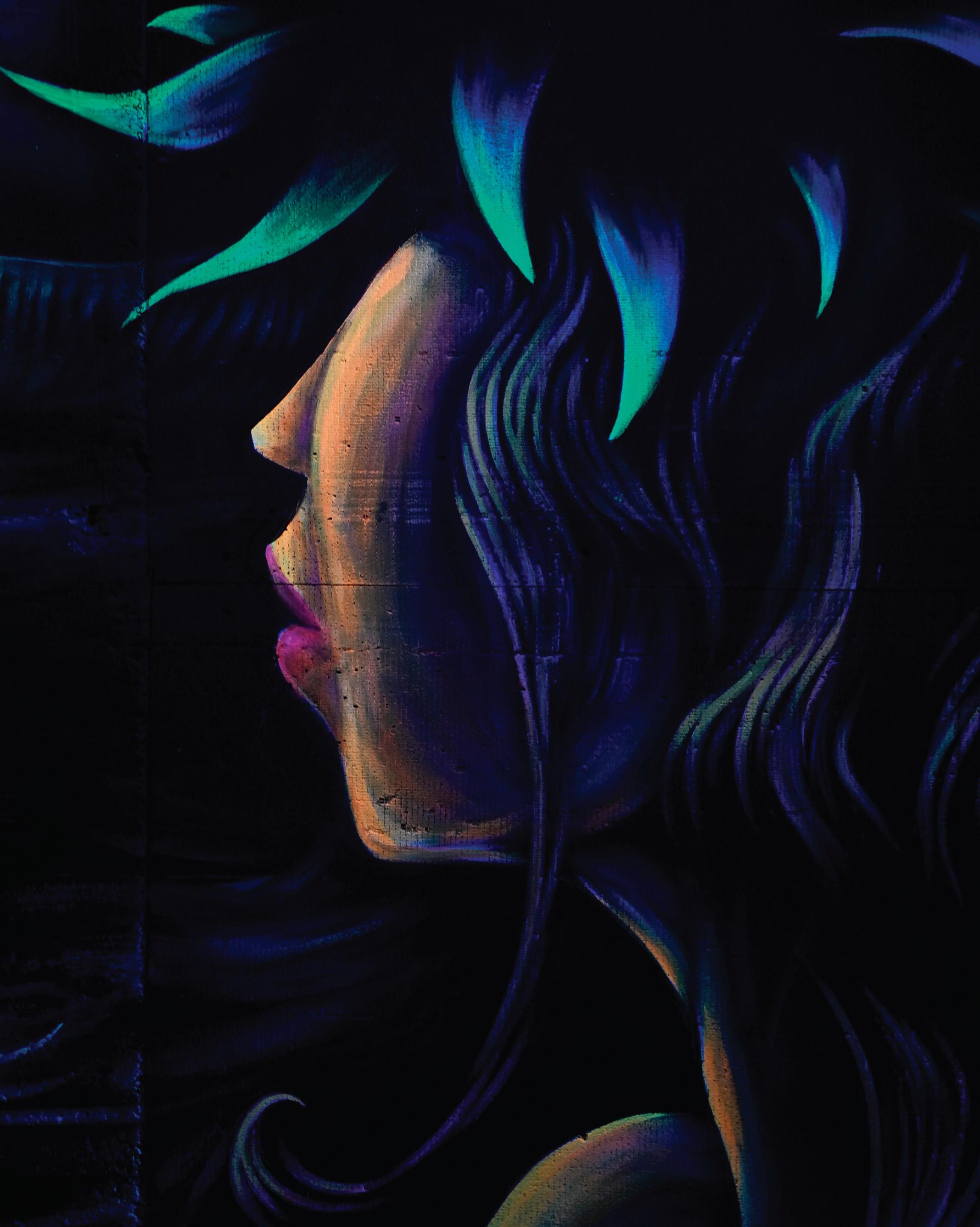
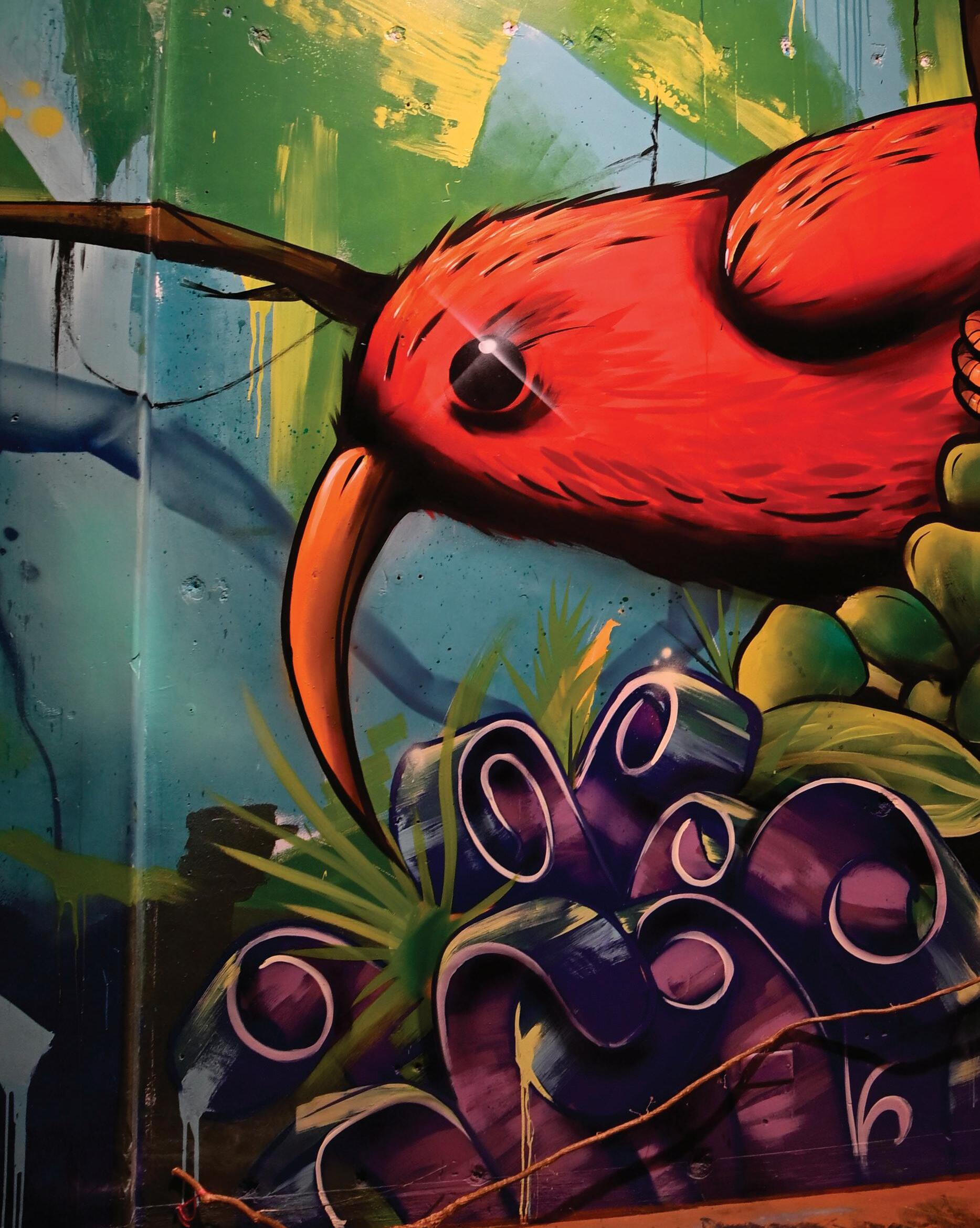
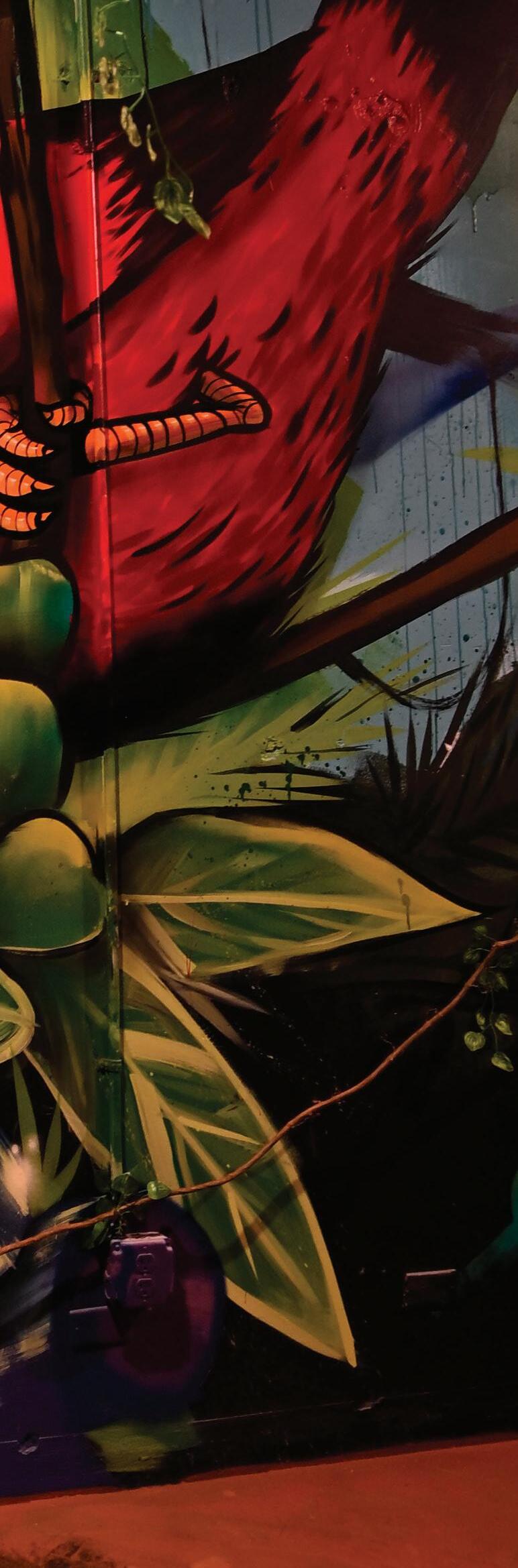
vibrant lehua blossoms on a Kaka‘ako building, an expression of the poetry in small moments. The typically six-inch bird shown larger than life is a heart-stopping scarlet against deep blacks and greens, framed by moody emerald ferns, a contrast to the large-scale drama of the ‘iwa or Moore-Kahanamoku murals, but in every work, Hadar seems to strike a balance between arresting and contemplative.
Beyond murals, Hadar has extended his vision into other ventures. Kings & Queens, a retail space in the heart of Waikīkī, is both a gallery and a boutique, the exclusive home of the Kamea Brand. Located across from the Duke Kahanamoku statue, it merges commercial appeal with cultural storytelling. The space offers Hawaiian-inspired lifestyle brands and collaborations with local artisans, and displays Hadar’s artwork on apparel, allowing visitors to carry a piece of Honolulu home. Hadar describes it as a way to honor the past — the royalty, the surf culture, the spirit of aloha — while engaging with the present in a way that feels genuine, not like the tropical Disneyland that so much of Waikīkī is.
“Waikīkī is, for me, one of the final frontiers, because we’re not allowed to paint murals there,” says Hadar about the vision behind Kings & Queens. “It’s trying to spread art in any way you can, right? So, if you won’t let me paint a big building, then I’ll try to find ways to spread art in another way.”
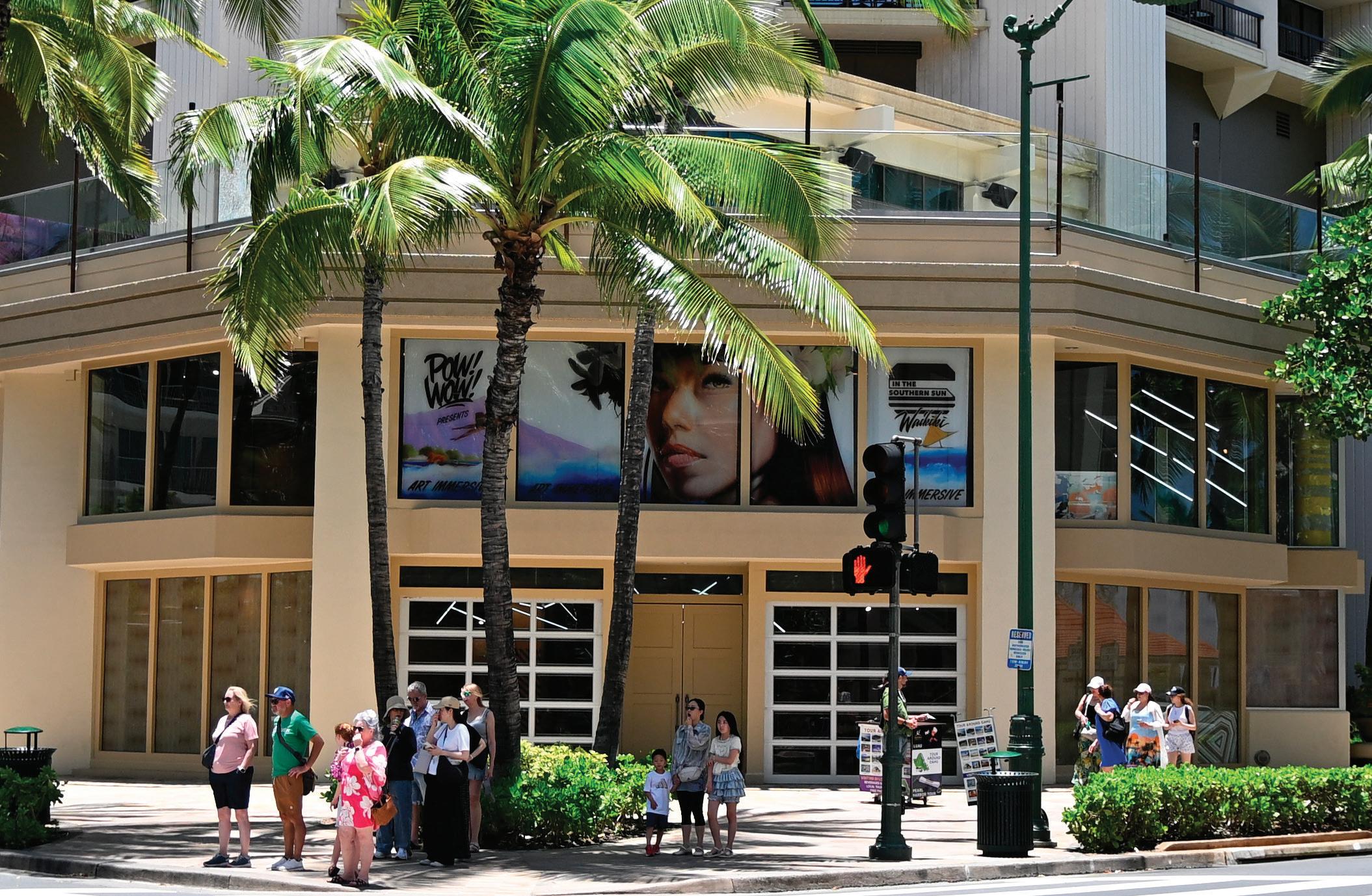
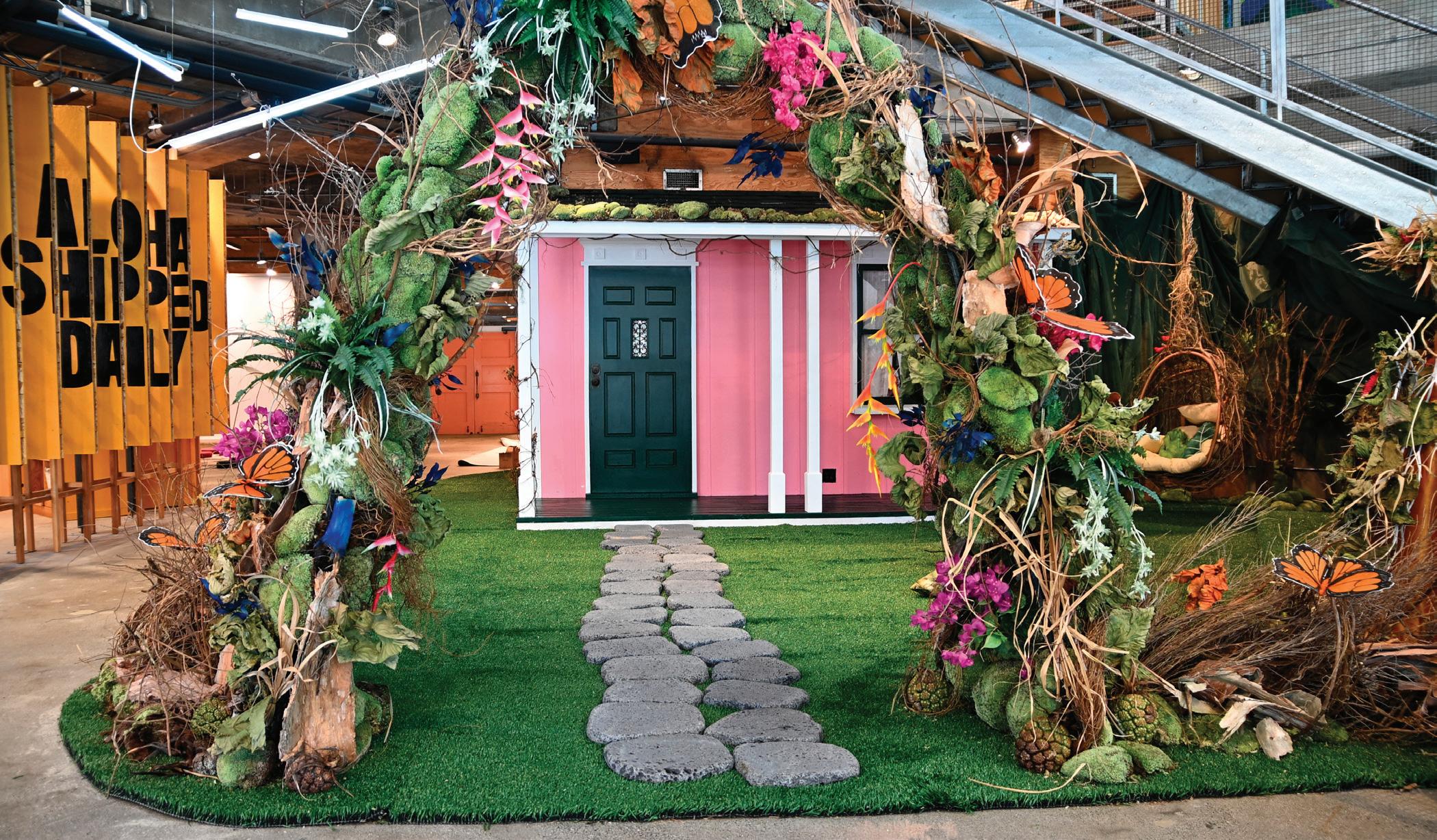
His other Waikīkī project, the latest immersive exhibition at 2424 Kalākaua Avenue within the Hyatt Regency Waikīkī Beach Resort and Spa, extends this philosophy. “In The Southern Sun” reimagines Waikīkī through art, memory and multi-sensory design. Guests move through four seasonal chapters — golden dawn to indigo dusk — following the Hawaiian proverb “Mai ka lā hiki a ka lā kau” (“From sunrise to sunset”). Murals, installations and sensory work by a range of artists invite visitors to explore the layered past of Waikīkī and connect with the land and its stories. Here, Hadar’s role is that of curator as much as artist, shaping a self-guided experience that is as much about personal reflection as about aesthetics.
Today, Hadar’s legacy and reach extend far beyond his own brushes. He now connects creators with opportunities, cultivates mentorship networks and ensures that Hawai‘i’s visual storytelling continues to thrive. He is invested in the future of art in Hawai‘i, not just in murals or exhibitions, but in fostering a community where artists can flourish, stories can be shared authentically and cultural heritage is honored.
This duality of seasoned businessman-meetshands-on artist characterizes the diversity of the work he does, work that may have started with murals in Kaka‘ako a decade ago but now extends to facilitator, connector and guide. However, his love for painting, scale, drama, narrative and this place remains undiminished.
“I’m incredibly proud of Hawai‘i and where I’m from and being in a small place like Hawai‘i, you grow up getting ahead by collectively helping each other. When you help your peers, it’s like the metaphor of the rising tide lifts all boats versus growing up in a place that’s a little bit more cutthroat,” Hadar explains. “So, artists, we try to support each other instead of thinking, ‘Well, I’d better destroy my competition before they get more.’ Because I don’t believe it’s a limited resource, where there’s only a certain amount of pieces to the pie. I believe that you could grow the pie as much as you need.”
In the end, Hadar’s work is a conversation with time. Through wildlife studies in Kaka‘ako, inspiring portraits of icons or collaborations with modern creatives, he weaves together threads of
past and present, always working to ensure that the next generation of artists can write the next chapter. Honolulu is a city of constant motion, of history layered over surf shops and hotels and Kamea Hadar is both witness and author, recording its stories in pigment, space and light.
To walk past one of his murals is to see the city differently. To step into Kings & Queens or “In The Southern Sun” is to engage with the heartbeat of Honolulu and the promise of its future. And to understand Kamea Hadar is to understand that art is never static. It moves, soars, guides and elevates, just like the ‘iwa itself, reminding every passerby that this place, these stories and these people are home.
kameahadar.com
Kings & Queens; Located in the Hyatt Regency Waikiki Beach Resort and Spa, 2424 Kalākaua Ave, Honolulu; (808) 200-5830; Open daily from 9 a.m. to 10 p.m.; Follow on Instagram @kingsandqueens_ hawaii.
ISLAND STYLE
Discover chic boutiques and bespoke brands around the island
curated by IJFKE RIDGLEY
If the Hat Fits
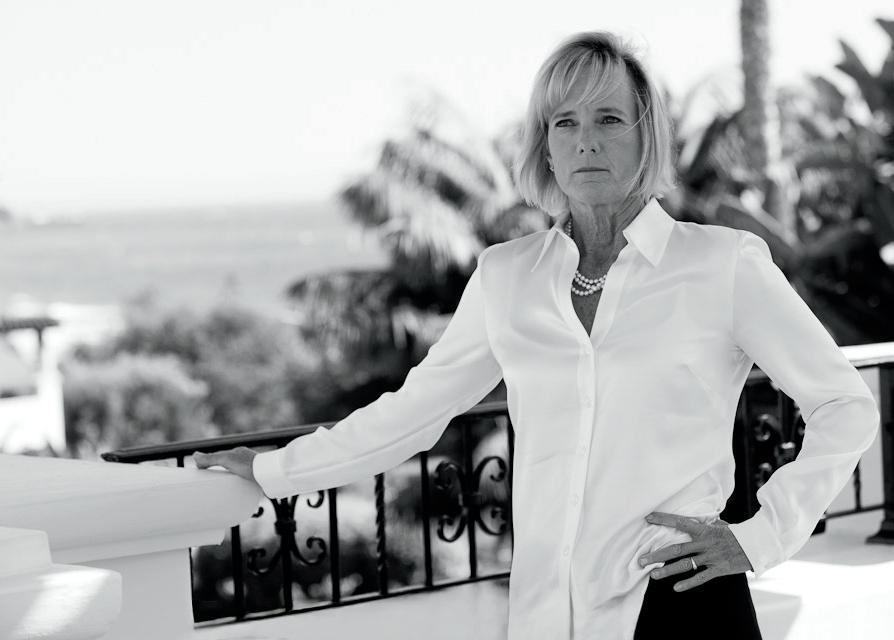
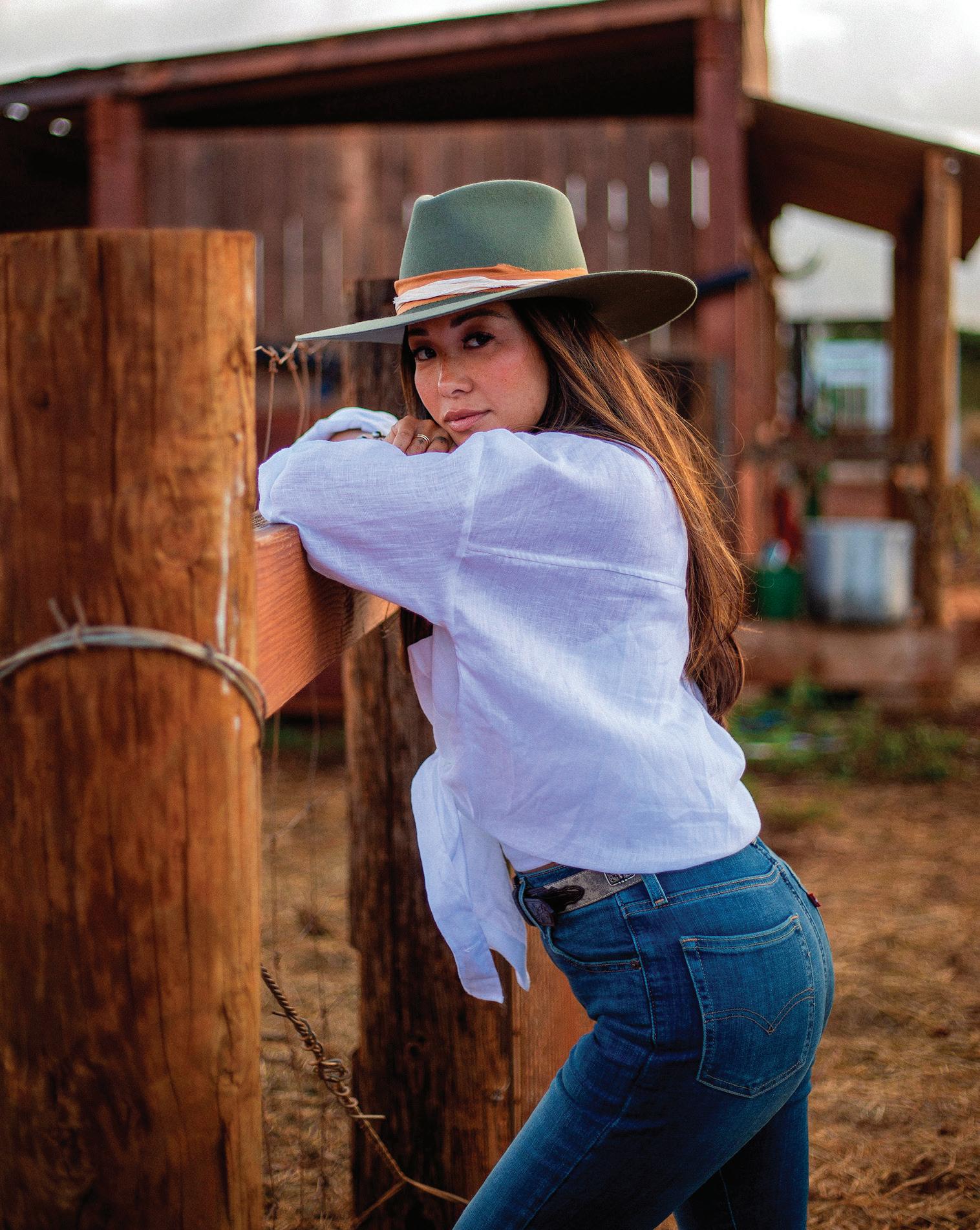
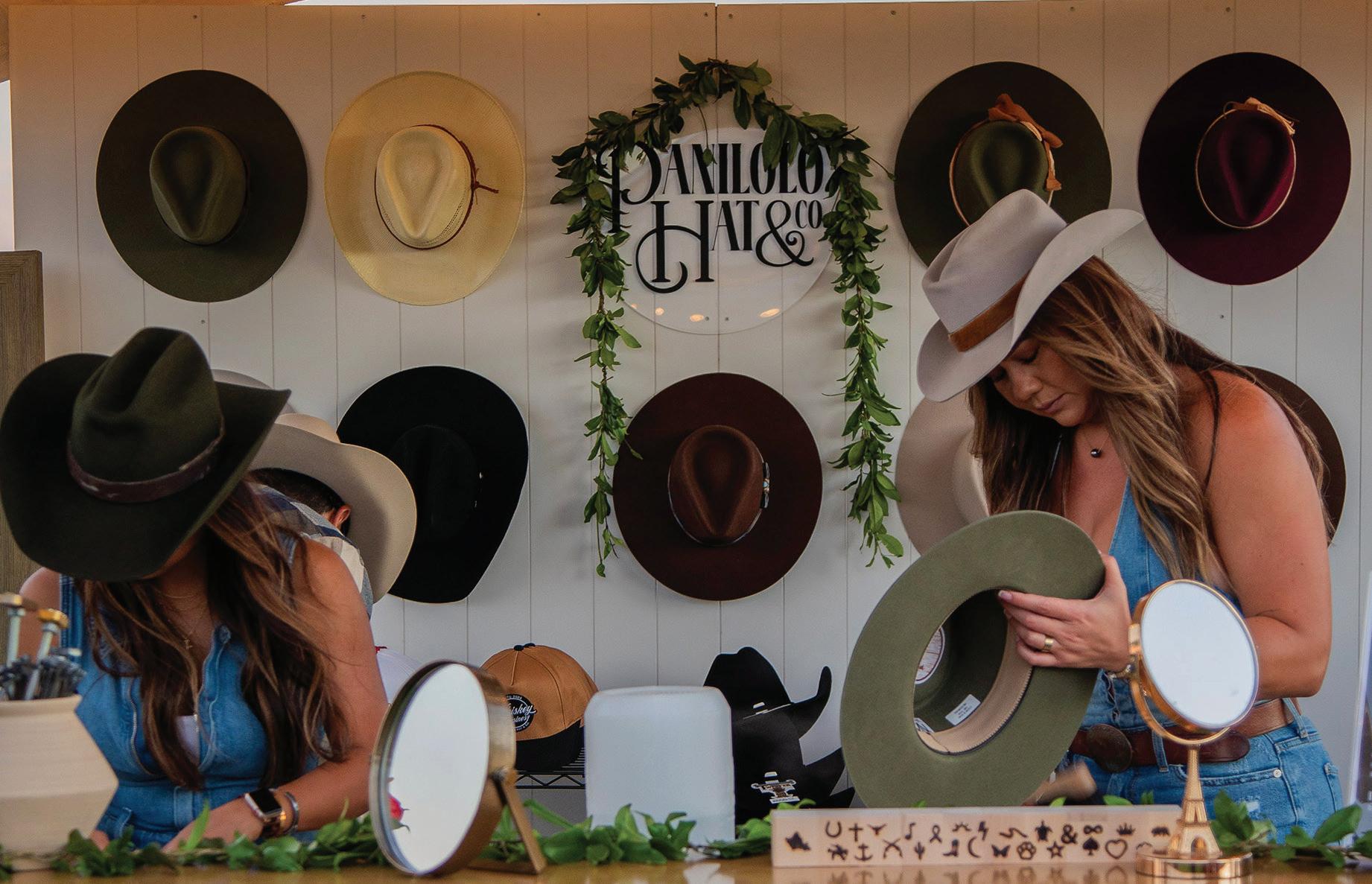
Panilolo Hat & Co. is a traveling hat bar experience on O‘ahu that celebrates Hawai‘i’s cowboy history. Its name is a fun play on words, combining the Hawaiian words for “crazy” (lolo) and “cowboy” (paniolo). “We are two fun, crazy girls who love to shape hats and make people feel good in their custom hats,” says Kamaile Heide, who, together with her friend Grace Kornegay, founded the company. “We don’t actually have rancher experience, but that didn’t stop us from falling in love with the Paniolo culture.” Panilolo Hat & Co. is a passion project by the duo, which they started after a trip to Nashville that inspired them to bring the hat bar concept back to the island. Shortly thereafter, they enrolled in Hat Masters, a course run by a three-generation hat-making family who taught them everything about cowboy hats. A visit to Panilolo Hat & Co. is a personal affair,
as each unisex hat is measured to fit your head and adjusted to suit your features. “Most people are getting their first-ever cowboy hat, so they don’t really know what they want,” Heide explains. “Oftentimes, women will feel uncomfortable thinking the hat is too big. It is our job to not only make sure it fits your head perfectly, but help [you] feel comfortable and sexy.” Once the shape and brim are perfected, it is time for the decoration. Hat bands range from leather and palaka (checkered) to feathers and beading. Their signature look is to add anthuriums and flowers, a local twist on a paniolo-style hat. Finally, they add the special touch: branding of numbers, letters or symbols to make the hat uniquely yours.
Panilolohatco.com; Follow on Instagram @ panilolohatco.
Power of the Purse
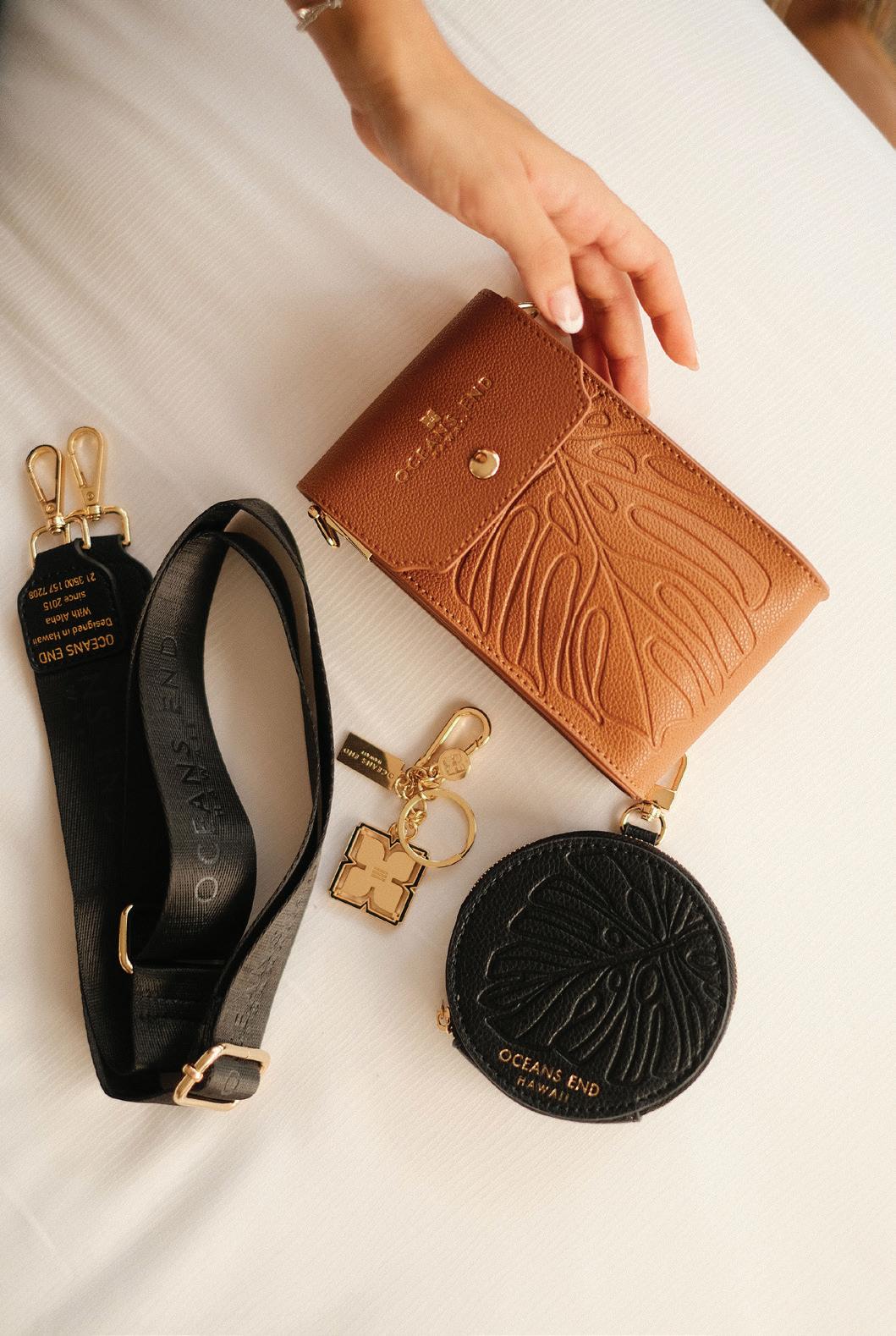
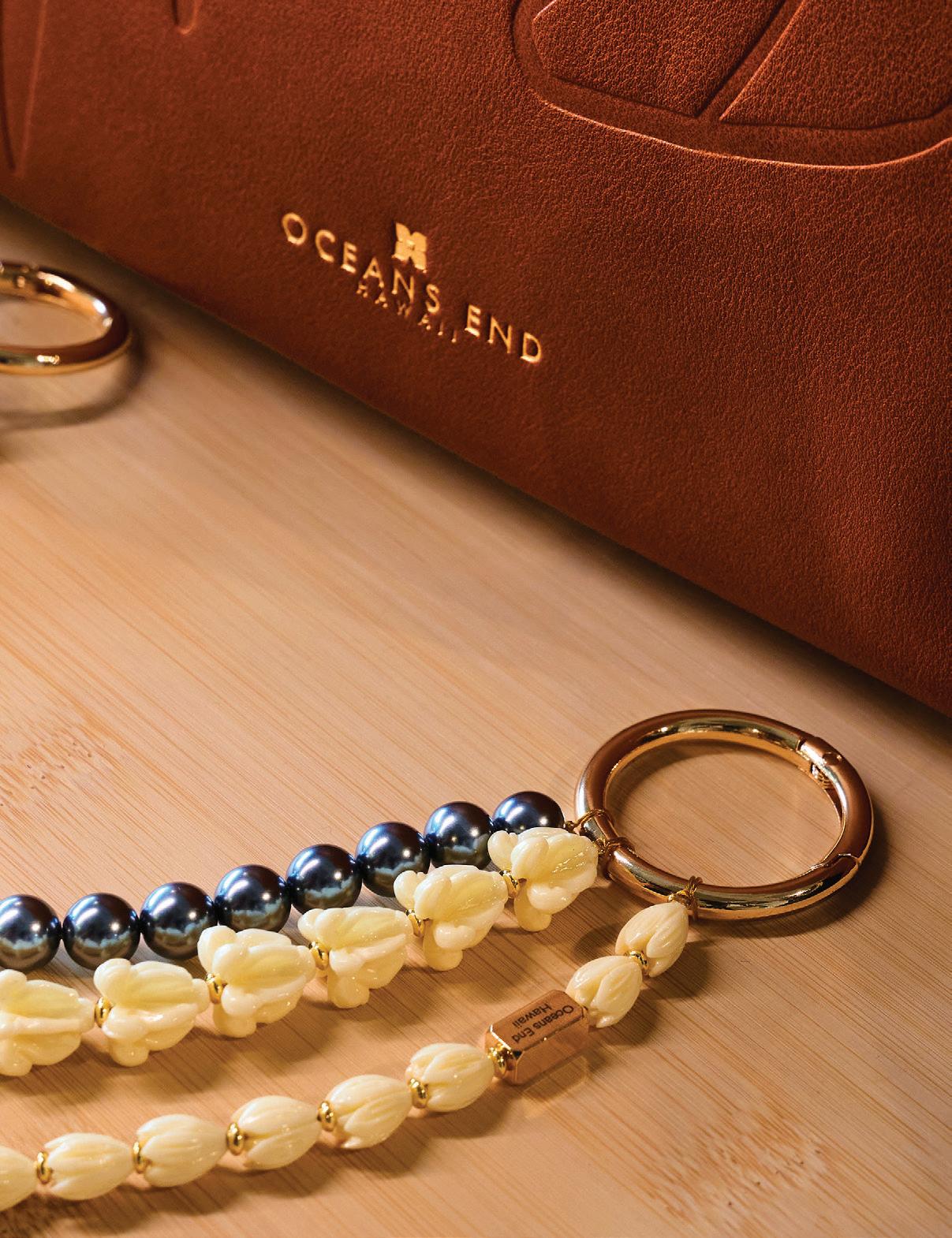
When designer Danielle “Dani G” Gosiaco started Oceans End over a decade ago, she didn’t know that it would become one of the islands’ most popular handbag brands. Her line of bags and accessories — from totes to crossbodies, fanny packs to wallets — is distinctive in its islandinspired design. The Luxe Collection features details like flower embroidery and lei- and chaindetailing, while the Active Collection is made from printed, recycled, waterproof nylon. But it is her signature pieces made of high-end vegan leather, embossed with monstera and palm leaves, that are the most sought after.
After studying fashion design in Los Angeles, Gosiaco started Oceans End in 2015 by handsewing each bag. “What drew me in was the
idea that a handbag isn’t just an accessory, it’s a reflection of who you are, something you carry with you every day that complements your story and style,” she says. She focuses on crafting classic, timeless accessories, inspired by the nature and culture of her Hawaiian home. The brand recently opened its own flagship store in Kailua. “What sets Ocean’s End apart is our deep connection to Hawai‘i and the women who inspire our designs. Each piece reflects the duality of the ocean, both soft and strong, mirroring the spirit of the modern woman.”
Oceans End; 602 Kailua Rd., # 103, Kailua; theoceansend.com; Follow on Instagram @ oceansendco.
Vintage Basics
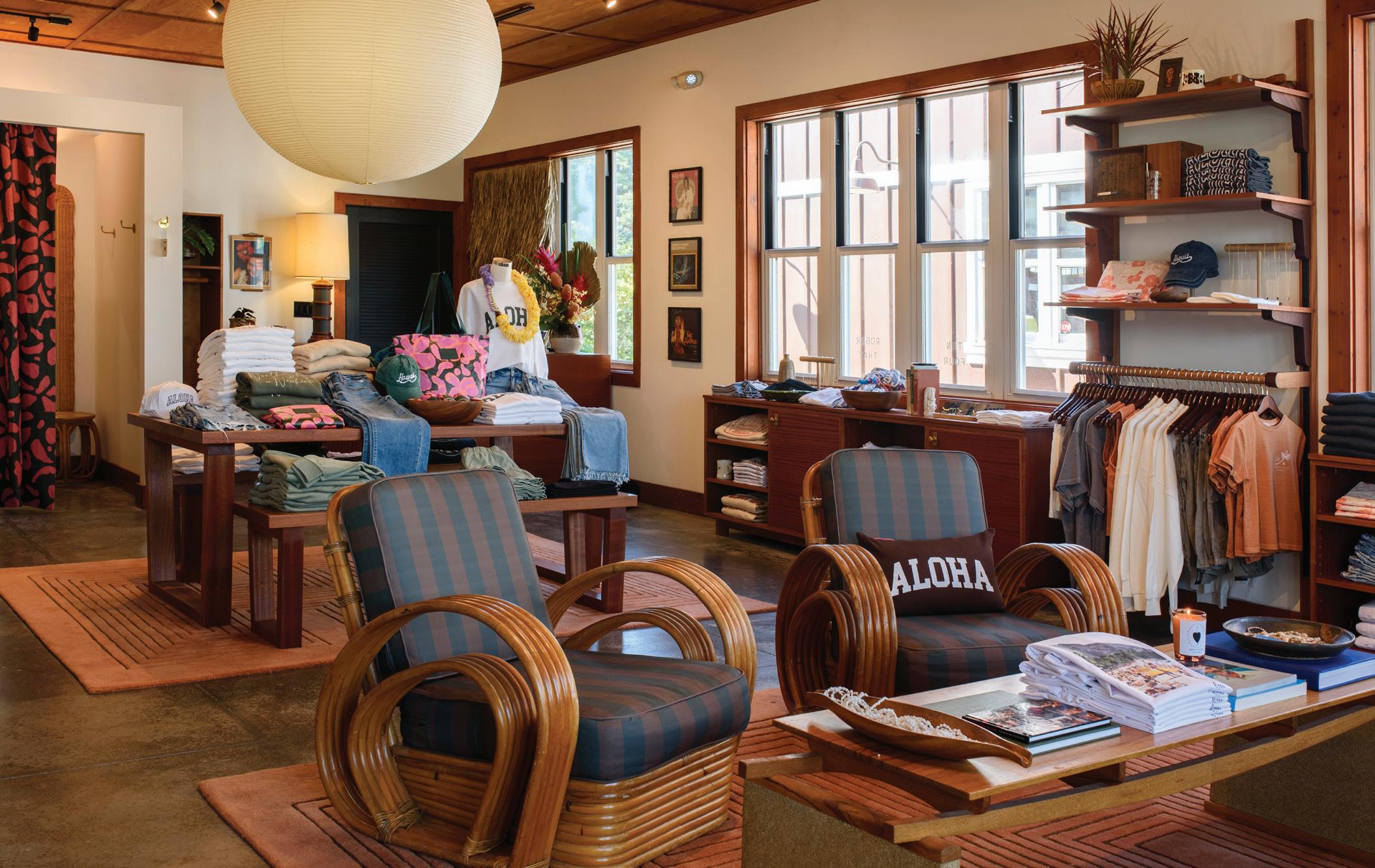
From a red storefront in historic downtown Hale‘iwa, Roger invites its customers to experience “All things Aloha.” The latest boutique in O‘ahu’s fashion scene showcases vintage Hawaiiana inspired by 60s and 70s graphic design, featuring simple, trend-driven clothing with a nostalgic Old-Hawai‘i feel. Hoodies, hats and matching sets feature Hawai‘i-themed graphics, and there is a T-shirt for every taste, from baby tees to oversized. Particularly noteworthy are the tees with vintage photos of the island and surf culture that the Roger team sourced from archives.
Roger is the brainchild of founders Joe Wilmot and Jody Curtin and is the sister store to their other highly successful boutique chain, Mahina. While Mahina exudes a feminine resort-wear vibe, Roger offers cozy leisurewear with a tomboy twist. “We started Roger because we wanted to expand
the company and create more opportunities for our employees,” says Curtin. “Since we already have 16 Mahina locations across the islands, we felt the best way to do this was by opening a new store focused on offering merchandise that celebrates our island home.” The idea has proven to be a hit, as many of its island-inspired basics are popular with both visitors and locals. Like Mahina, all Roger clothing is available only in-store, and visiting its moody, groovy Hale‘iwa flagship — designed in partnership with local design studio House of Honolulu—is part of the experience.
Roger; Hale‘iwa Town Center, 66-111 Kamehameha Hwy, #102, Hale‘iwa; (808) 888-0070; rogerhawaii. com; Open daily from 10 a.m. to 6 p.m.; Follow on Instagram @shoprogerhawaii.
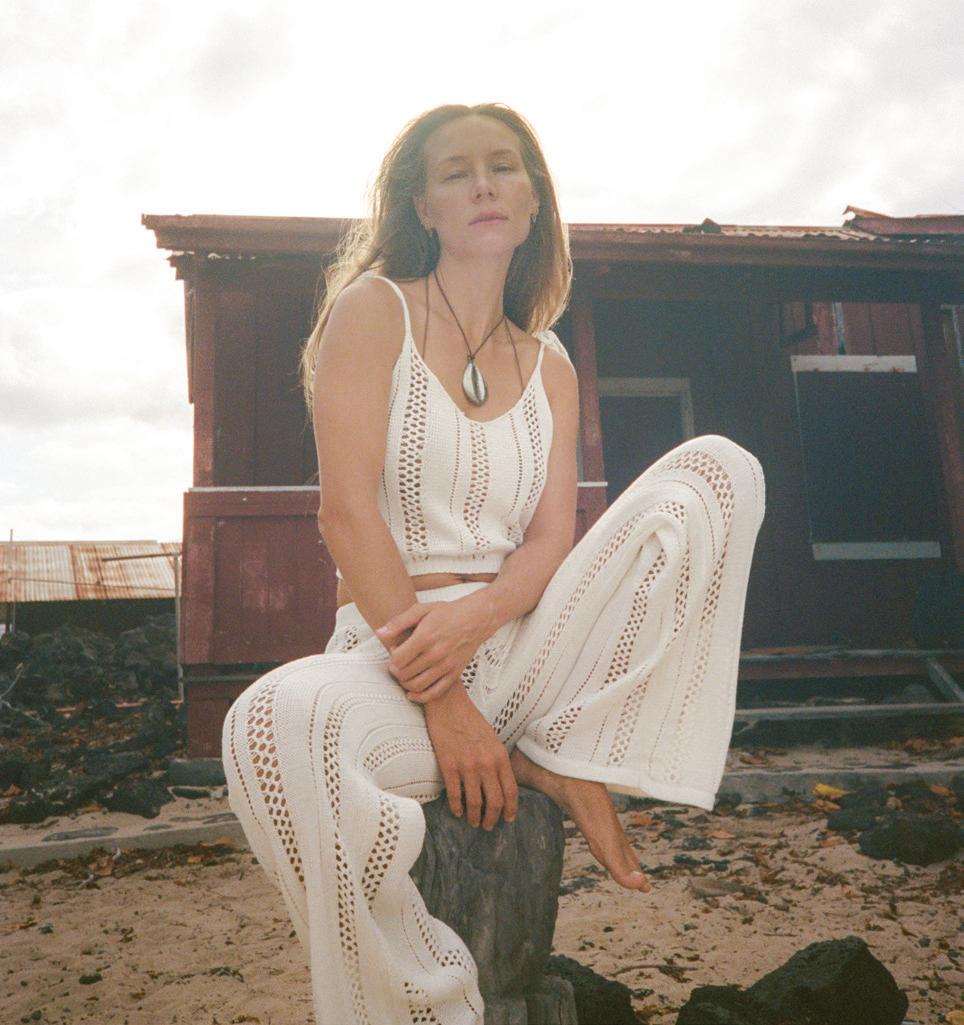
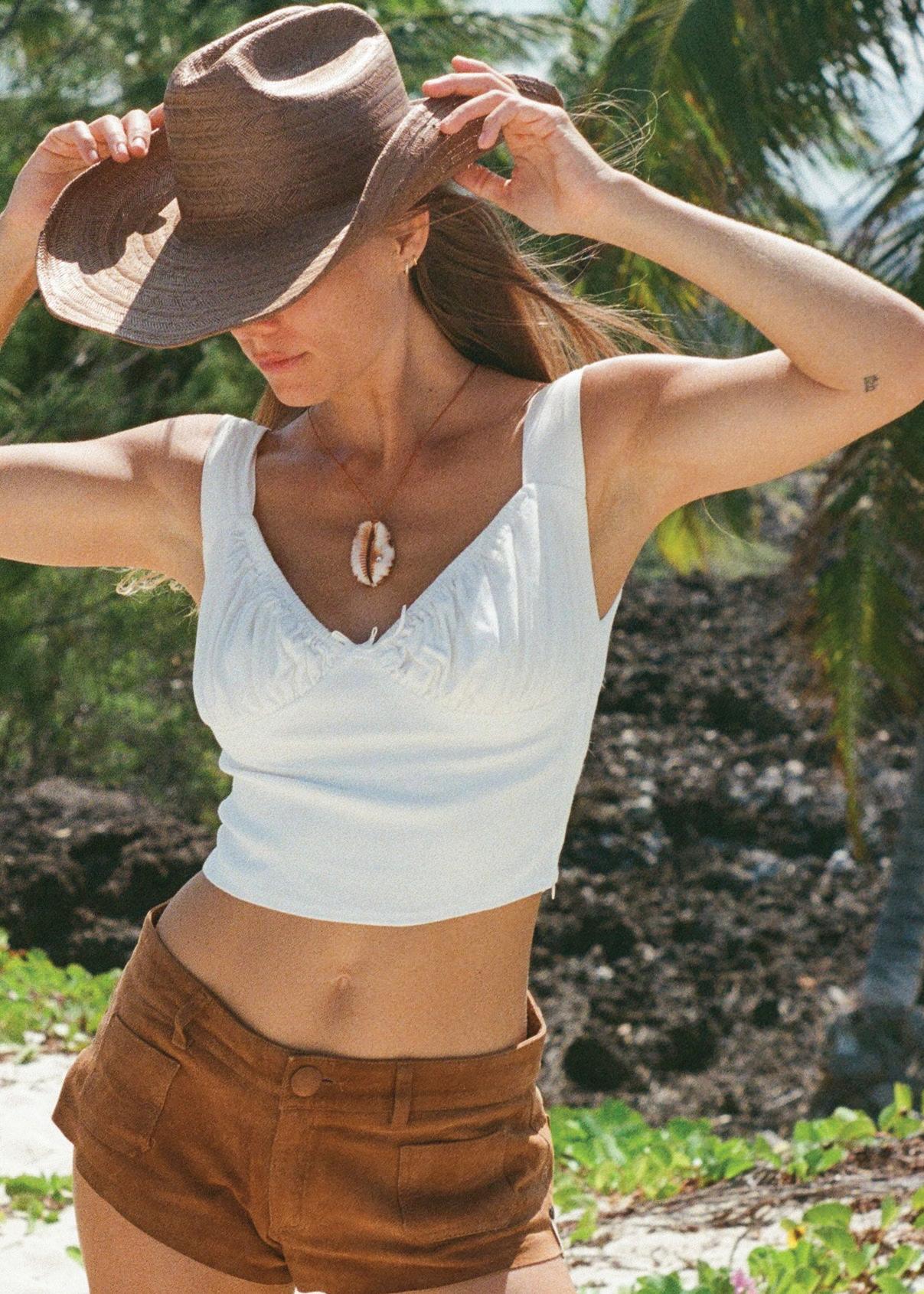
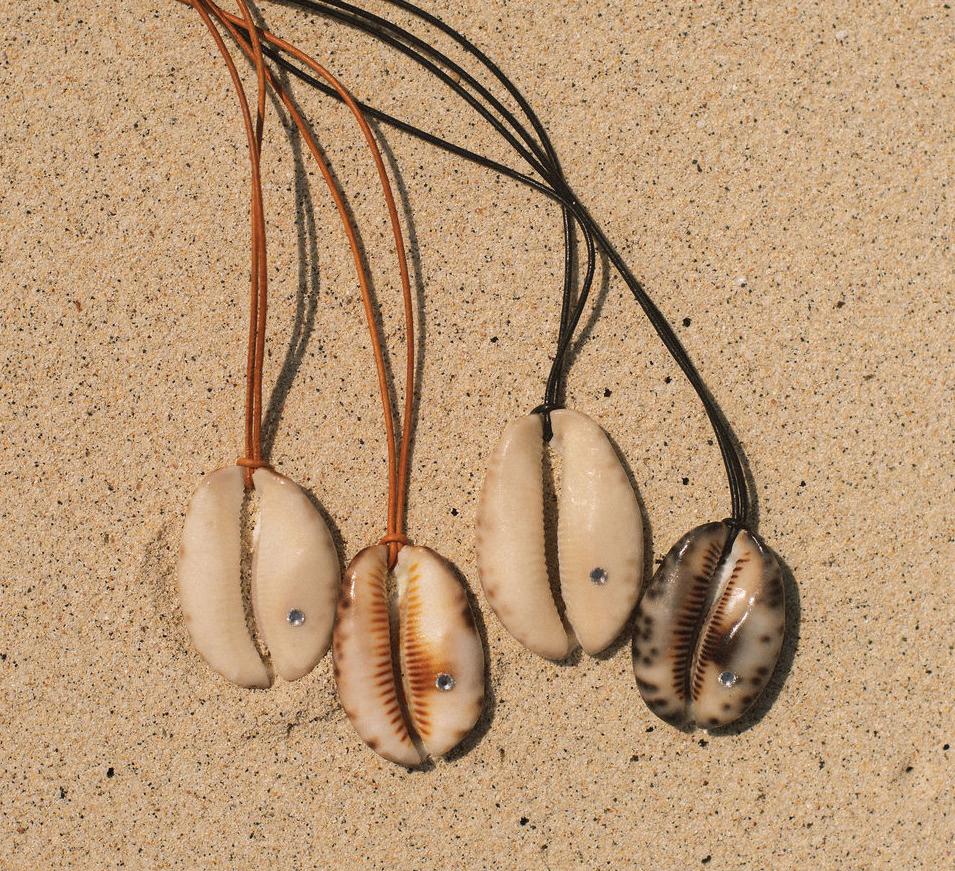
Kona Cowries
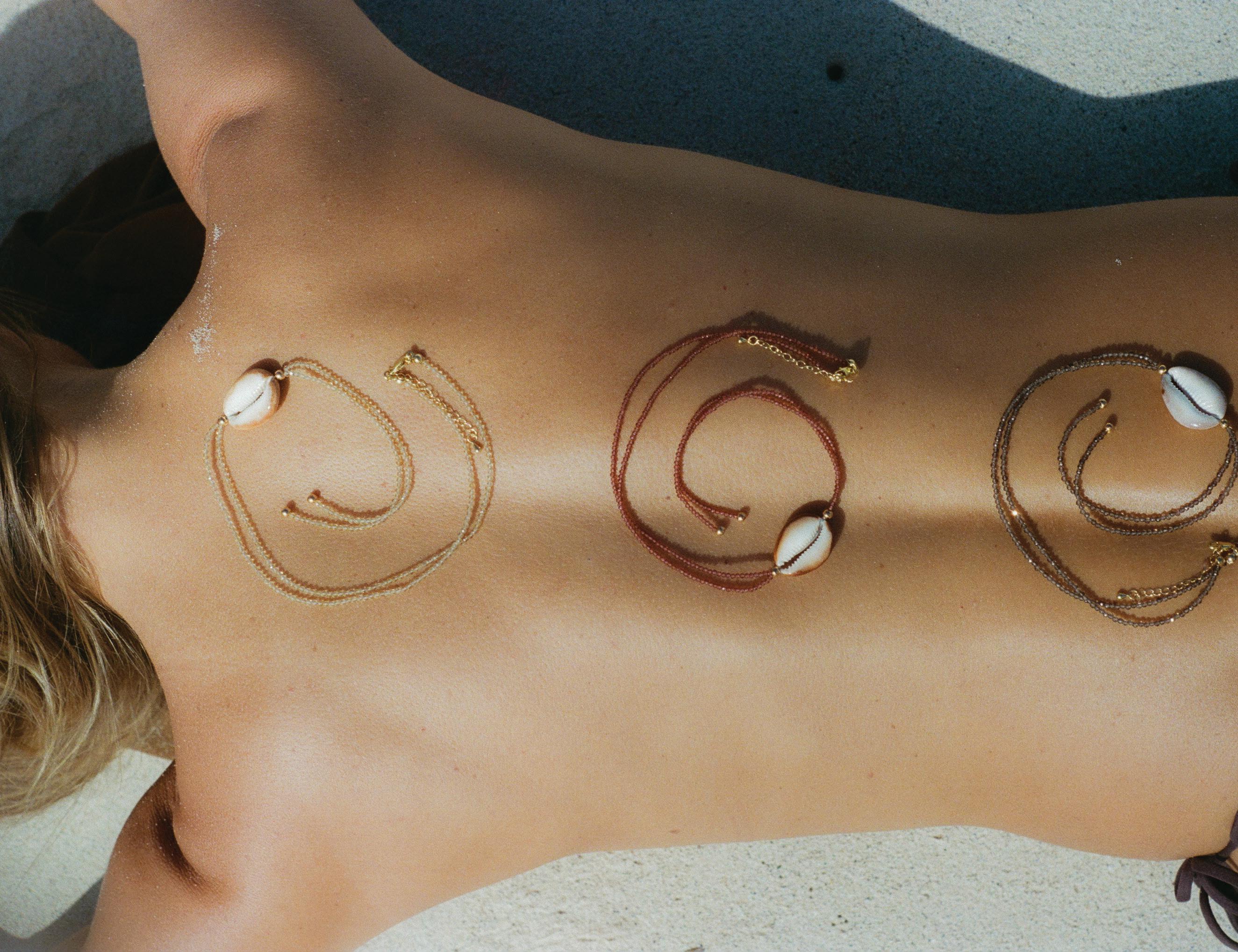
Whitney Derochemont has long dreamt of starting her own business creating something, and that dream came to fruition with the launch of The Palm Club this past September. The up-and-coming jewelry brand has cool-girl appeal, with her first collection, Cowrie Cowgirl, selling out quickly. The Hawai‘i Island-born designer started making jewelry in high school when she couldn’t find exactly what she wanted and now makes her pieces from her home in Kona. “I pull a lot of my inspiration from my meditations and the colors and textures in nature,” explains Derochemont. “I try to stay really present when I’m creating as well. I pay attention to the way a shell feels in my hands or how the light hits a gemstone. The designs usually start as a feeling
before they become something physical.”
This eye for style can be seen in the brand’s beaded cowrie bolos and the Cowrie Metal Wrap — a metal cowrie pendant strung on leather that can be worn as a necklace, belt or accessory — musthaves that work for both casual or dressy island occasions. She hopes to soon expand The Palm Club to include a line of upcycled clothing, but has always envisioned a brand that was about more than just making things. “I hope to host community events for creatives and like-minded women who want to connect, grow and make beautiful things together.”
Itsthepalmclub.com; Follow on Instagram @thepalmclub.
AT HOME IN THE HIVE
Purpose, community and the pursuit of bees at Beelieve Hawai‘i
story NATALIE SCHACK
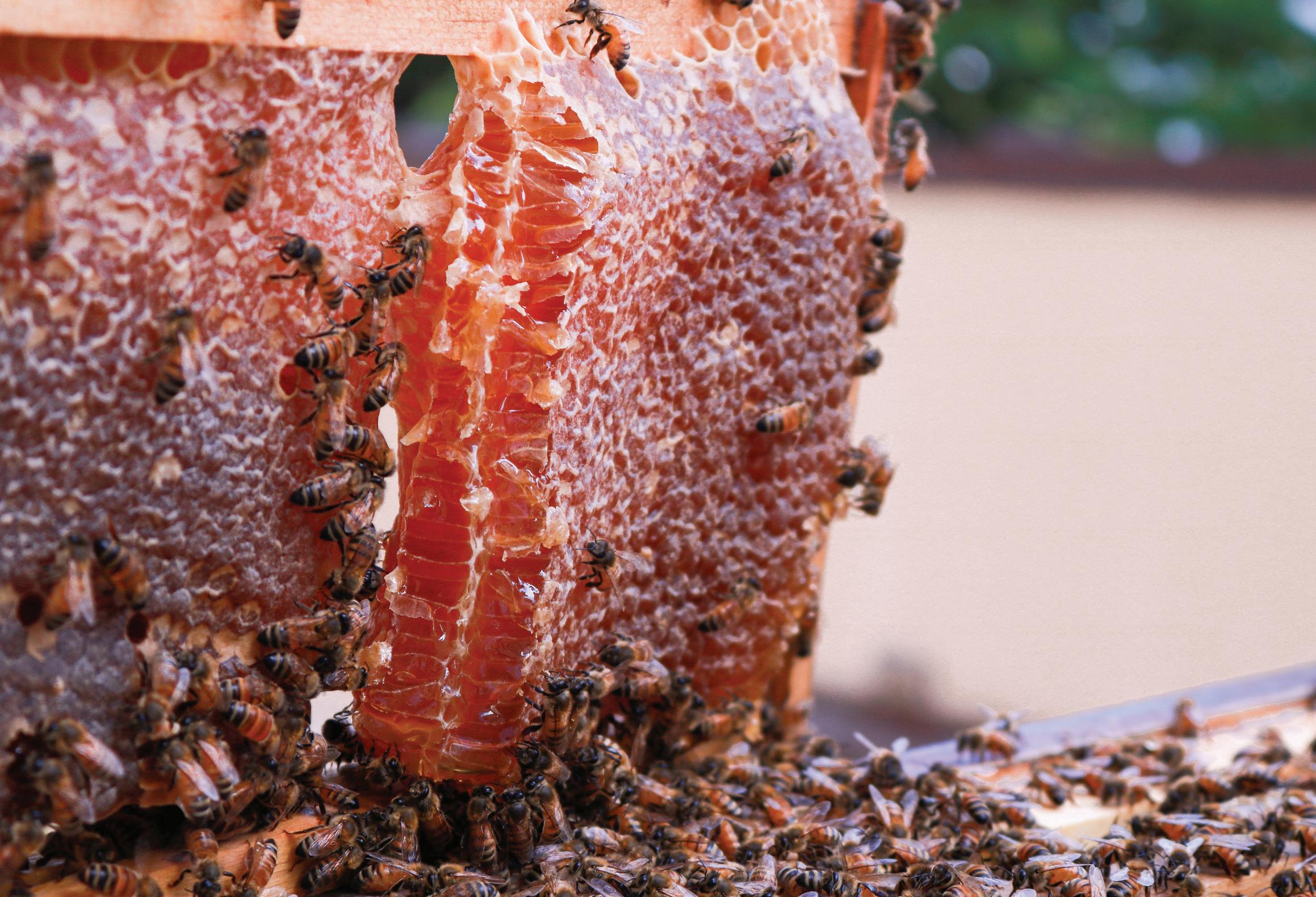
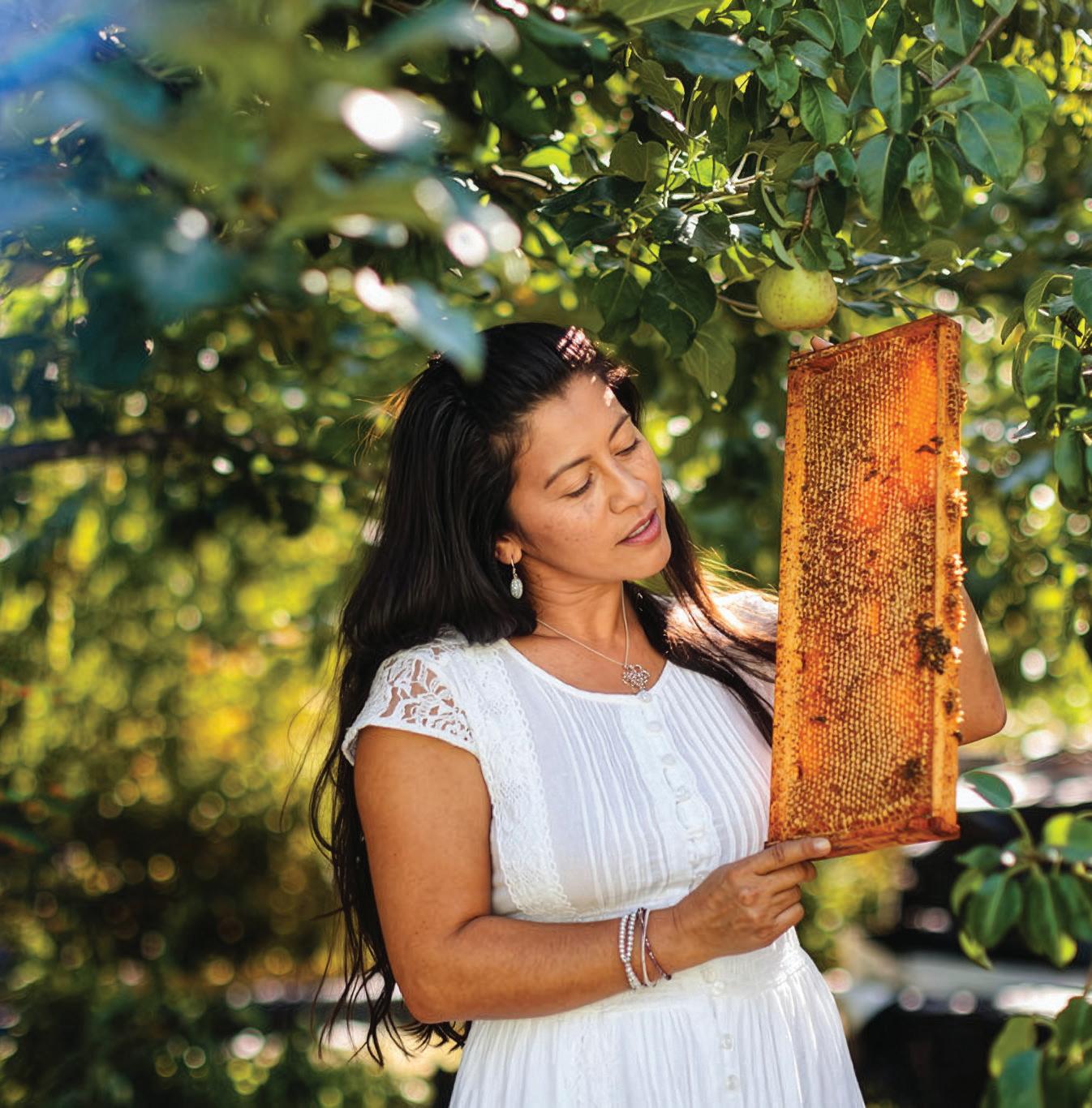
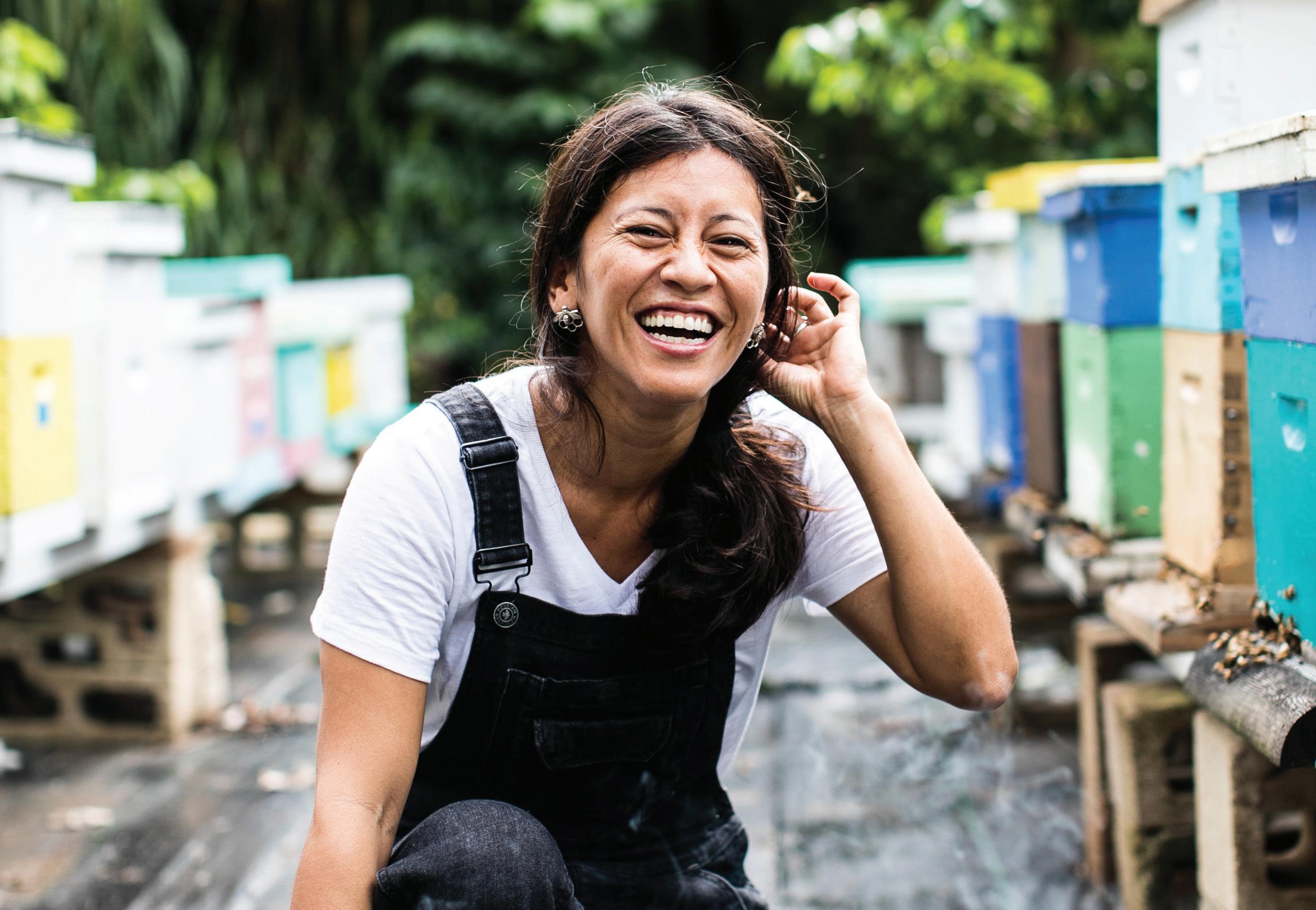
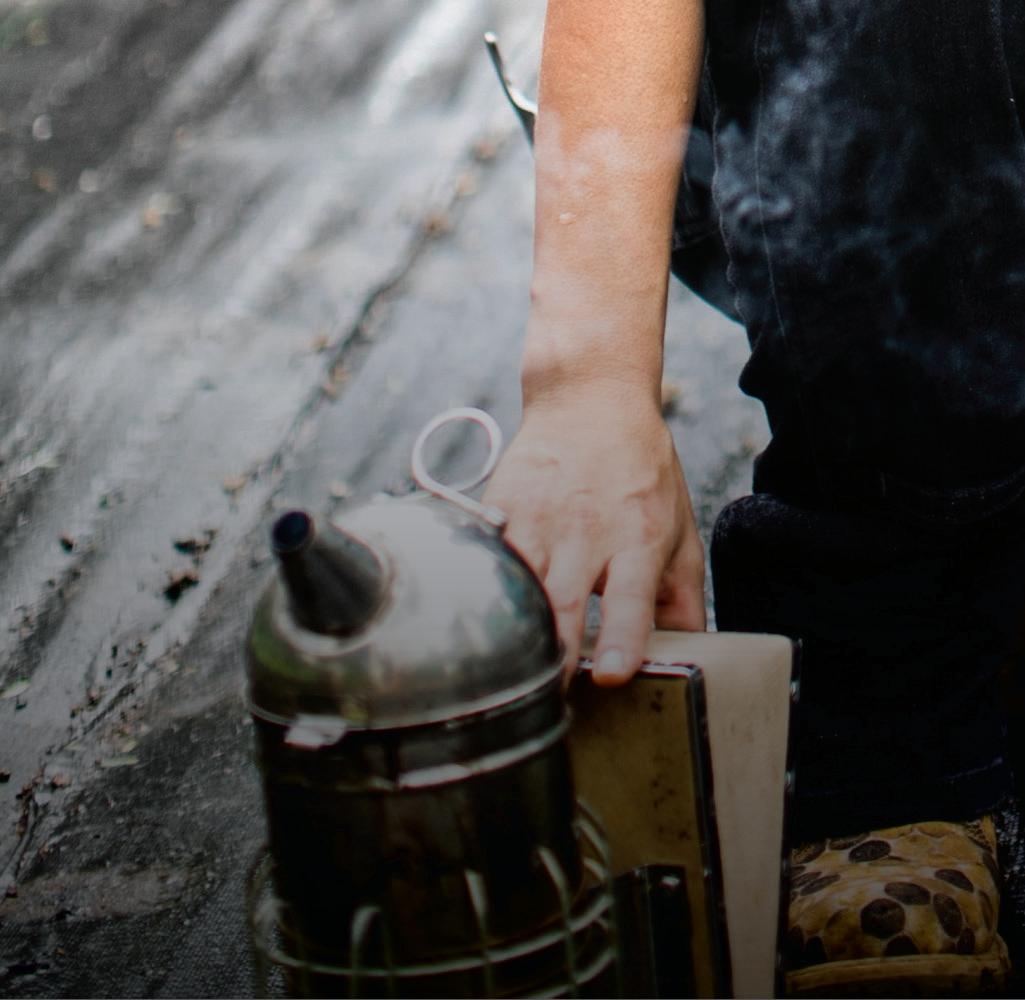
Listen to Jasmine Joy, founder of Beelieve Hawai‘i, wax poetically about her beehive removal services, her beekeeper courses, her strong connection with these insects or how bees are part of myth and spirituality, and you’ll immediately understand: for her, bees go deep. And yet, the first lesson Joy remembers about beekeeping is not about bees at all, but about fear. She is four or five years old, standing at the bottom of a grassy hill, her small body anchored in place by a voice she trusts. Her abuelito (grandfather) wears a white suit that makes him look, to her, like an astronaut preparing for liftoff. Before he walks away and crests the hill toward the stacked white boxes waiting in the sun, he turns back and says one thing to her.
“I don’t even remember bees, really,” remarks Joy. “I just remember him telling me: Don’t be afraid.” The details are muddled, but what lingers is the instruction, the calm certainty of it: “Don’t be afraid.” Years later, that sentence will reveal itself as a kind of compass — one that, like the sun for a honeybee, quietly orients her through seasons of
loss, searching and returning. For a long time, Joy didn’t know she was looking for bees. She only knew she was looking for purpose. In the end, they were one and the same.
Born in Los Angeles to a Filipino mother and a Nicaraguan father, Joy grew up feeling the weight of fracture early. Her paternal lineage carried beauty and brutality side by side; her grandfather kept bees but abuse also threaded through that family line. By the time she was eight, Joy had walked out of her father’s life entirely. Survival demanded selfreliance. Healing demanded something harder: connection.
She gravitated toward living things … bugs, gardens, animals. As a child, she collected insects without fear, cupping them gently in her hands. She imagined futures that revolved around care, like working with children or protecting animals, something that would make the world a better place, whether broadly or intimately. Jane Goodall became a north star. Some people dream of stardom, but Joy dreamed of service.
In her twenties, her restlessness found
expression in movement and the ocean. She moved to Hawai‘i in 2006, ostensibly for school, but really for the water. She became a professional skimboarder, then a sponsored athlete, riding the thin, volatile edge where ocean meets land. Skimboarding suited her: a young sport, overlooked, underestimated, the perfect frontier for a trailblazer who wasn’t afraid to forge her own line. But even as she ran a skimboarding company, organized beach cleanups and mentored young riders, something felt unfinished. The work was good, but it wasn’t … whole.
The pivot arrived quietly, the way many callings do. In 2011, Joy was living on O‘ahu’s North Shore, newly relocated from town. A friend came home one day with skincare samples from Honey Girl Organics, a company in Pūpūkea that made products from beeswax and honey. They were hiring, and Joy needed work. She took the job and unknowingly stepped into a lineage.
Honey Girl Organics kept hives on site. Beeswax and honey weren’t abstractions; they were these humming, swarming, very much alive things. Co-founder Anthony Maxfield became her first mentor in apiculture, or beekeeping. She learned the science and the patience, the physicality and the reverence. “There were hives on the site, and they would swarm occasionally. That’s how I learned how to catch my first swarms, just there on site.”
Then came her first rescue. A friend at Waimea Valley had an established hive living inside a house wall, a situation most exterminators at the time still solved by killing bees outright. Joy asked Anthony to help her remove it properly, cutting into the structure to save the queen, keeping the workers and the whole living system intact. This kind of work is called a cutout, and it is neither fast nor easy. It is, however, humane, characterized by a deep sense of respect for and commitment to these magnificent, unique creatures.
Around that same time, Colony Collapse Disorder was entering the public consciousness.
Honeybees were dying in alarming numbers. And yet, in Hawai‘i, exterminators were still legally poisoning them. Joy couldn’t reconcile that. In May 2012, she founded Beelieve Hawai‘i.
It began as a response to the lack of humane bee removal on O‘ahu and to the normalization of shortcuts that treated living superorganisms as disposable. Even the official channels troubled her. The Hawai‘i Beekeepers Association maintained an approved list of rescuers — some of whom, under the justification of controlling the spread of harmful mites, practiced lethal “drill-and-kill” methods instead of true removals. Joy knew there were other ways, and she was determined to save as many hives as she could using them.
Beelieve Hawai‘i grew into a reputation and then into a calling. Joy became one of the state’s leading bee removal specialists, known for bee rescues others wouldn’t attempt. In August 2020, at the height of the pandemic, she and her team were entrusted with an extraordinary task: removing four aggressive, established hives from the towers of ‘Iolani Palace. The job was an intense one, requiring Joy to work in a lift fifty feet in the air for a week, which was so precarious that Joy prayed before each ascent. The bees at ‘Iolani Palace also carried dark German genetics, more defensive than their Italian counterparts, and their stings had already driven concern for staff and visitors. For Joy, though, the work was not just technical. ‘Iolani Palace is the only royal palace in the United States, a site heavy with history and grief. Caring for life there and removing it without destroying it felt like alignment. Alignment, incidentally, is a concept that comes up often when Joy speaks about bees, which work by light, rhythm and relationship.
Honeybees are not native to Hawai‘i. They arrived in 1857, transported by ship from California, and quickly flourished in the islands’ forgiving climate. “Most people don’t realize that honeybees are true solar animals,” she explains. “We would need to put them under a microscope to see their three simple eyes in between their antennae called ocelli, which see ultraviolet. So,
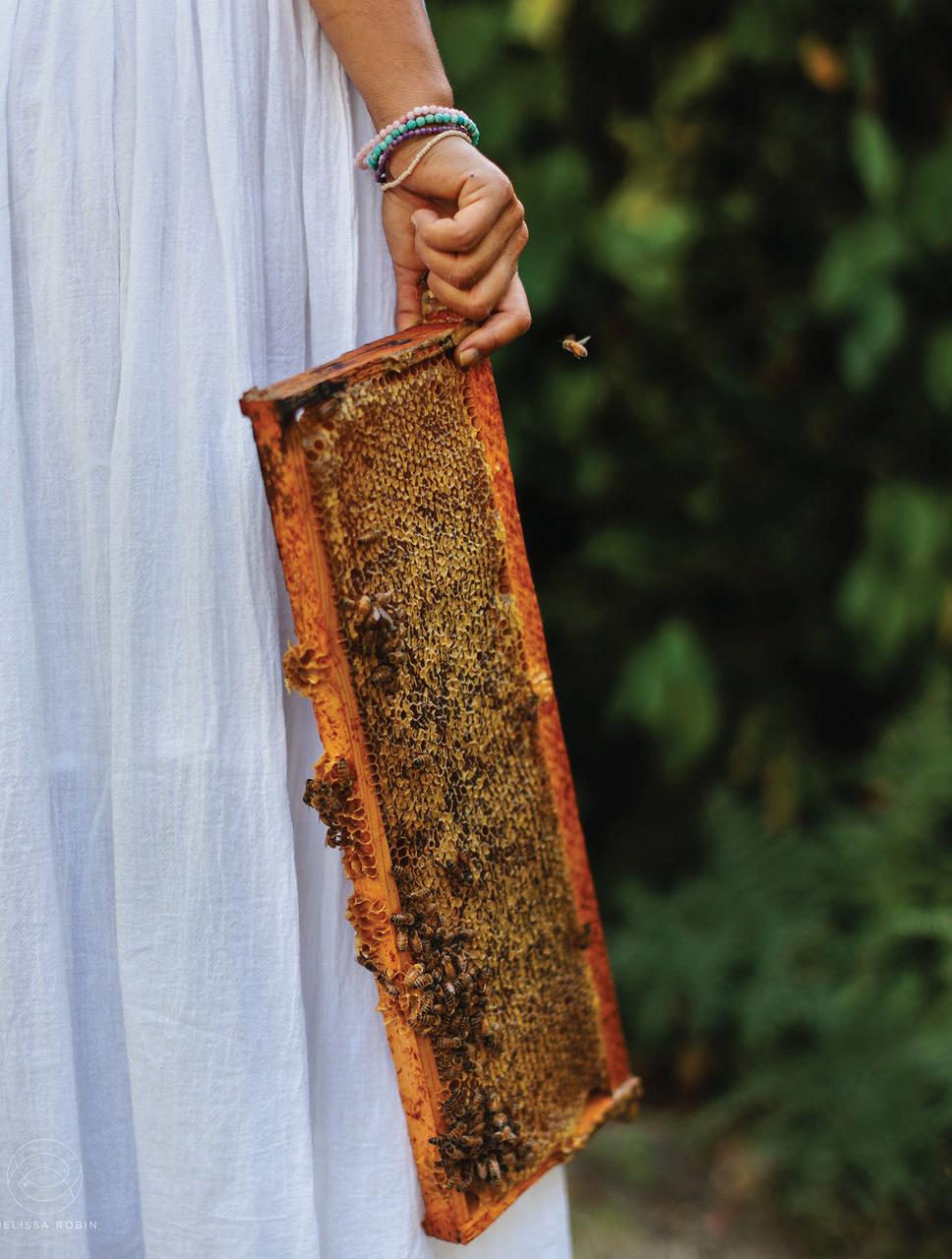
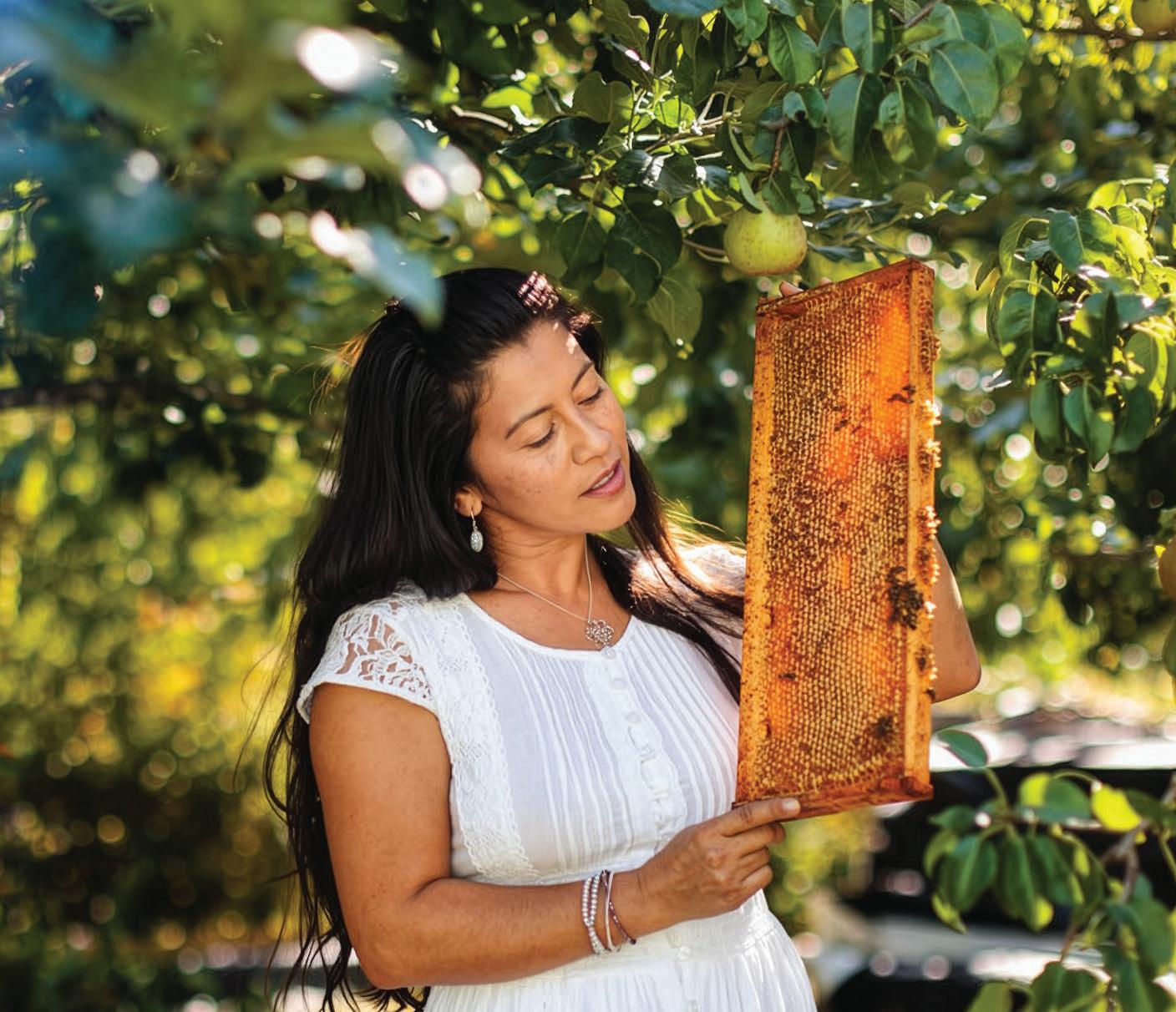
from the moment the sun rises till it sets, the sun is their compass, and that’s how they’re able to fly and orchestrate and find their way around to all the flowers and all the botanicals in the ecosystem.”
Joy understands them as teachers. A hive is a matriarchy, a living superorganism. The queen lays up to 2,000 eggs a day and does nothing else; she is supported entirely by her daughters. Worker bees move through a lifetime of roles, from cleaner to nurse to builder to guard to forager, each transition seamless and unforced. When a bee stings to protect the hive, she dies. Protection is a sacrifice. Community is survival.
“Anytime I open a beehive,” Joy says, “I’m in a temple.” She asks permission before entering. She moves gently. She believes intention matters, and that bees feel it, register it and respond. For her, the intimacy is not metaphorical; it is lived. Joy came to bees during a breaking point. The relationship she was in on the North Shore was toxic, echoing earlier wounds. She was unraveling. The bees arrived not as a hobby but
as a mirror. “They came to save me,” she says. “And now I protect them and save them. I don’t feel separate from them. I feel like I’m a bee. That’s how close I feel to them.”
What she found in the hive was what she had been searching for all along: community without hierarchy, power without domination, purpose without violence. The bees became kin in a way that her own kin could not. From that realization, when rescue was no longer enough, Beelieve Hawai‘i expanded into community building and education.
The shift began with Mākaha Elementary School. When they asked if Joy wanted to teach third graders about pollinators, she said yes without hesitation. She built a curriculum. Then another. Soon, her work had a new axis. “That’s how my full circle — my full hexagon — came to rescue, relocate, rehabilitate and educate.”
From there, the learning and knowledge exchange opportunities bloomed. Joy’s Pollinator Outreach Program, POP Talks, formalized what had already become instinct.
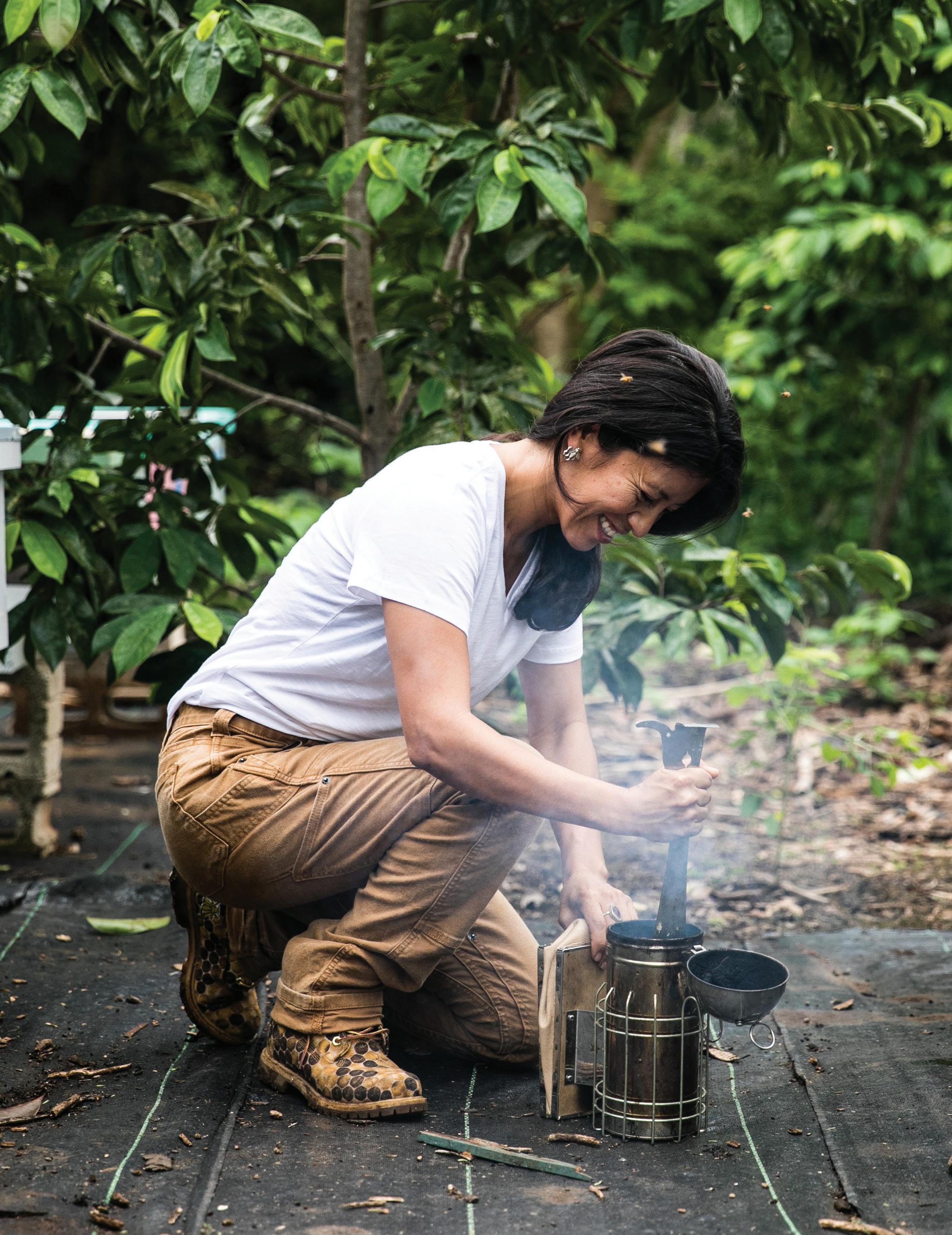
She brought observation hives (wooden suitcases with clear windows that revealed the intimate choreography of a living hive) into classrooms. Children watched the bees in action — vibrant, bustling and intimately connected. She taught them that bees don’t want to sting. That a single act of defense costs a bee her life — for the sake of her hive. The lessons landed.
“I go, ‘Do you know how brave she must be to sting you? She did. You know what happens when she stings you? She sacrifices her life to protect her whole family.’ And the kids, they suddenly have this wonder when they hear the word brave, and then they’re like, ‘Wow. She is.’”
At Hanahau‘oli School near Mānoa, Jasmine became an after-school enrichment teacher, weaving pollinator education into gardening and ecological literacy. She earned certification as a school garden teacher, then reshaped that framework through a pollinator lens rooted in empathy, observation and relationship. Currently, she’s the garden teacher at Earth School Hawai‘i in Hanalei on Kaua‘i. She dreams of helping to create a generation raised with reverence rather than domination — kids who would grow into gardeners, farmers and protectors.
“I feel like, wow, if as I get older, there’s these kids that grow up into adults, and they’re like, ‘I remember Aunty Jasmine, she taught us about the bees,’ I feel like my mission is complete.”
It was during the pandemic that Joy noticed another shift. People weren’t calling for rescues; they were calling to buy bees. Backyard beekeeping surged as isolation sent people searching for connection, but Jasmine refused to sell bees into ignorance. Instead, she built Beelieve University.
The 16-week mentorship program began as a response to demand and evolved into one of her most ambitious offerings. Part education, part initiation, the program is structured around four quarters: the ancient lineage of beekeeping; hive mindfulness and collective intelligence; biology and behavior; and environmental integration. Students don’t just learn how to keep bees. They study the spirit of the superorganism. They trace apiculture from antiquity to now. They learn how honey is made and design pollinator-
friendly gardens as a final act of reciprocity. Graduation comes with responsibility. Hawai‘i-based students receive a hive only after completing the course. Mainland students must source ethical, treatment-free bees locally, forging new relationships Joy helps vet and cultivate.
In this way, Beelieve University extends beyond Hawai‘i, stitching together a broader human network aligned with her values. Joy’s brand of education is not extraction but continuity.
In 2025, she began again, partnering with the Hyatt Regency Waikīkī to bring urban beehives and an accompanying immersive beekeeping experience to the beachfront resort, where guests and locals alike can learn the ways of “hive-mindfulness” and get up close and personal with Hawaiian honeybees. That continuity carried her to Kaua‘i. On the Garden Isle’s North Shore, teaching inter-island, expanding Beelieve University into hybrid cohorts, and stepping into that new role at Earth School in Hanalei, becoming the garden teacher as the school prepares to open its permanent campus. The timing felt deliberate. Earth School had existed for eight years, rooted in community space, but now it’s growing structures, putting down deeper roots. Jasmine joined at the threshold. It is a familiar position for her. Thresholds are where she does her best work.
Today, Beelieve Hawai‘i is many things: a rescue service, an educational platform, a philosophy. It exists in hives and classrooms, in temples and gardens and in the quiet trust between a woman and a swarm.
Jasmine still believes in not being afraid. She believes in matriarchies that operate through care, and work that heals and protects both the giver and the receiver. She believes in communities, both human and other-thanhuman, that thrive through balance.
When she opens a hive now, she sees herself reflected: a being shaped by purpose, sustained by others, essential because she participates. The search has come full circle.
In the hive, she found a home.
beelievehawaii.com
GROWING KŌKUA
Kōkua Hawai‘i Foundation: creating a healthier future for Hawai‘i

story KRYSTAL KAKIMOTO
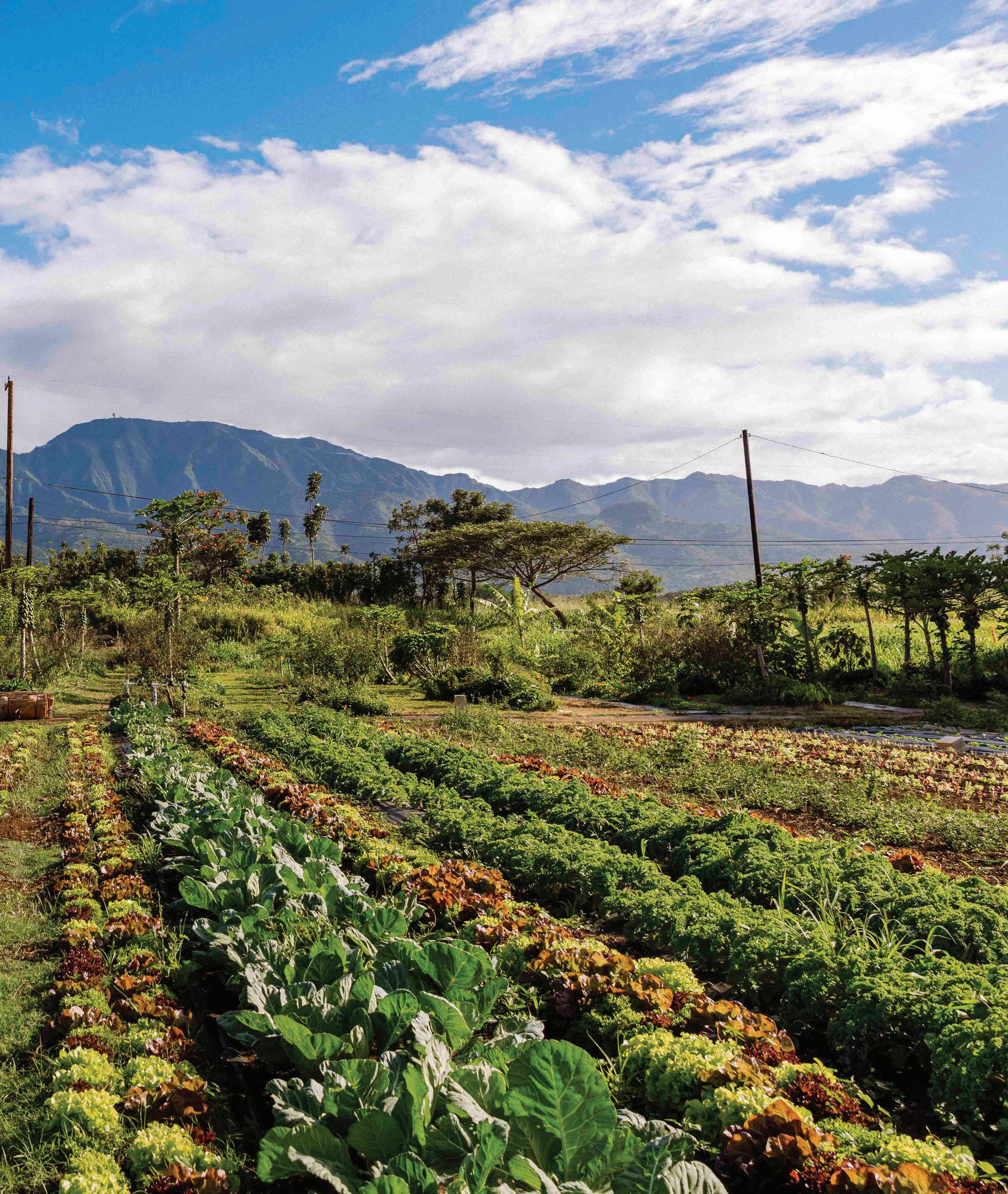

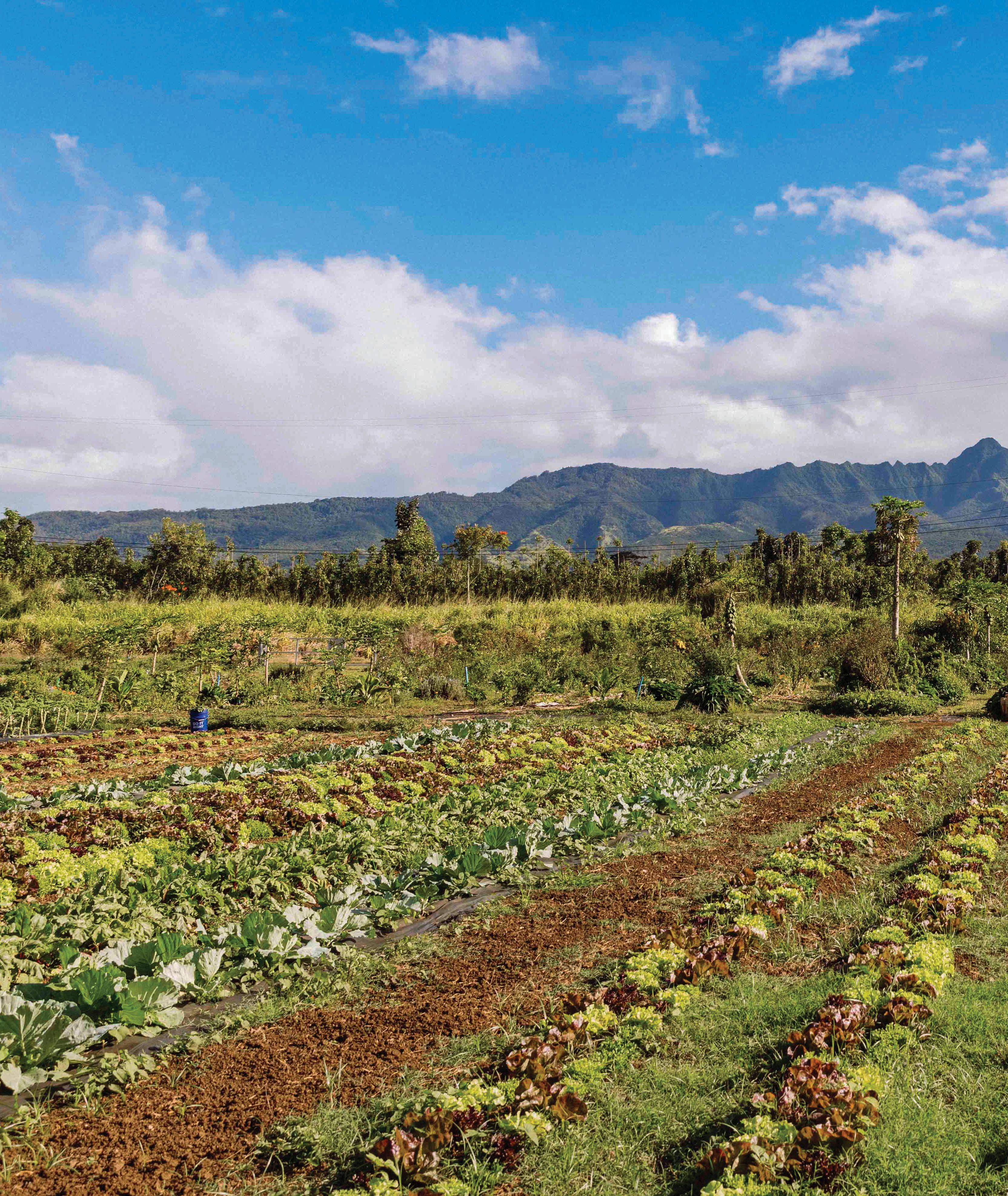
Founded in 2003 by Kim and Jack Johnson, the Kōkua Hawai‘i Foundation has grown from a small, community-based nonprofit group into a thriving organization with a dazzling array of programs that support environmental education for all ages. For the past two decades, Kōkua Hawai‘i Foundation has nurtured these programs and connected with keiki (children) and community to create a healthier future for Hawai‘i.
During the first year of operation, Kōkua Hawai‘i Foundation launched the 3Rs School Program. The program works with students in grades K-12 on O‘ahu to raise awareness of waste and drive action in their schools. Through the program, students are taught how to implement recycling systems, either for their classroom, their grade level or schoolwide.
Kōkua Hawai‘i Foundation also partners with schools to host their own recycling drives where the community can bring in accepted materials such as cans, bottles, electronics, used cooking oil, clothing and household goods. The proceeds from all recycled materials go back to the host school.
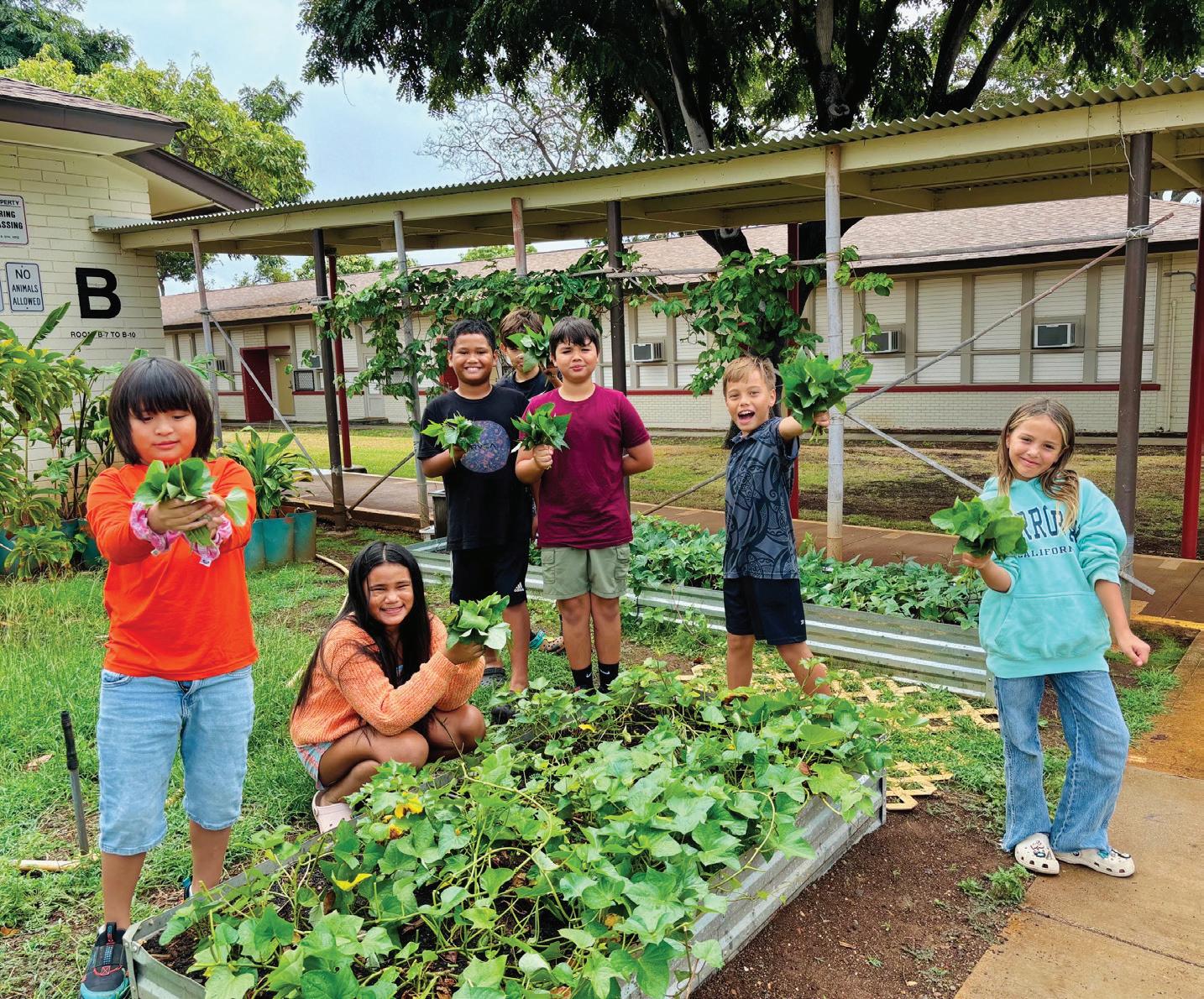
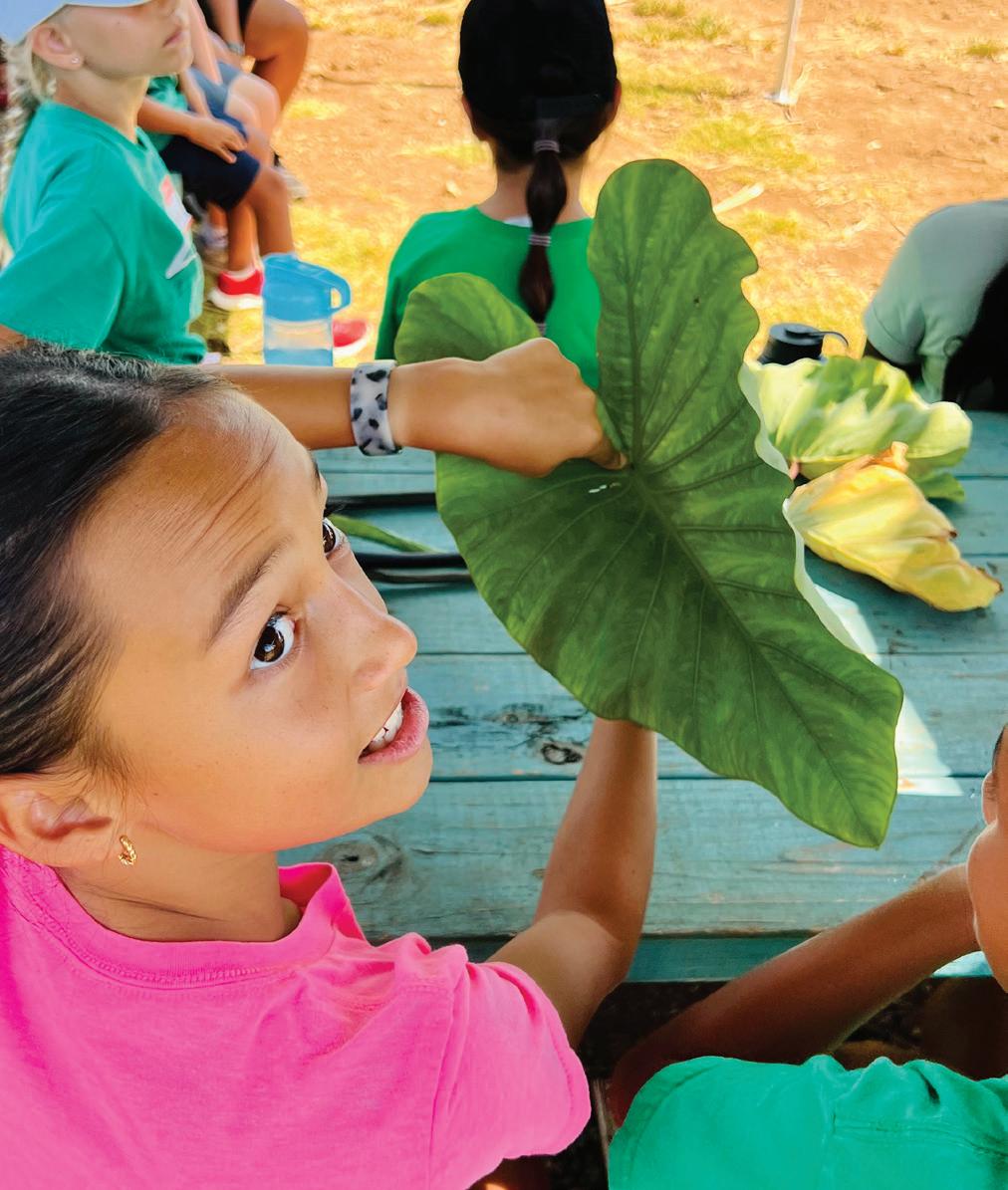
In 2006, the ‘ĀINA In Schools program, a farm to school initiative connecting children to their local land, waters and food to grow a healthier Hawai‘i, was launched. The nutrition education component of the program is geared toward second- and sixthgrade students and presents eight lessons to help them make healthy life choices that last a lifetime. Students from kindergarten, first, fourth and fifth grade are given the opportunity to connect with nature through the garden-based learning portion
of the program. During eight sessions, students are taught skills such as how to plant seeds, how to care for native plants, produce and harvest. To emphasize the use of local, fresh products in school lunches and snack programs, Kōkua Hawai‘i Foundation’s ‘ĀINA In Schools program also has a Healthy Foods on Campus component to get more local, scratch-cooked meals and snacks into school feeding programs.
Kōkua Hawai‘i Foundation Field Trip and Project Grants followed shortly thereafter. Project Grants allow teachers from Hawai‘i’s public schools to advance their environmental education goals. The funds awarded help public school teachers do things like purchase supplies for a classroom garden, attend vermicompost training and more. Field Trip Grants can be used to transport students to outdoor sites, giving them an opportunity to experience hands-on learning about Hawai‘i’s environment.
In 2009, the Plastic Free Hale‘iwa program started with the support of 55 businesses that committed to minimizing single-use plastics in Hale‘iwa town. By 2011, the Plastic Free Hawai‘i program expanded to include the entire state of Hawai‘i, offering schools and businesses presentations on single-use plastics and alternatives that consumers can choose. Through community outreach at events and beach cleanups, they educate the community about single-use plastics and their environmental impact. This program also allows local businesses, small groups
and organizations to get involved by renting a Plastic Free Hawai‘i water station for an upcoming event. This offers a low-waste solution to eliminate plastic cups and water bottles at events.
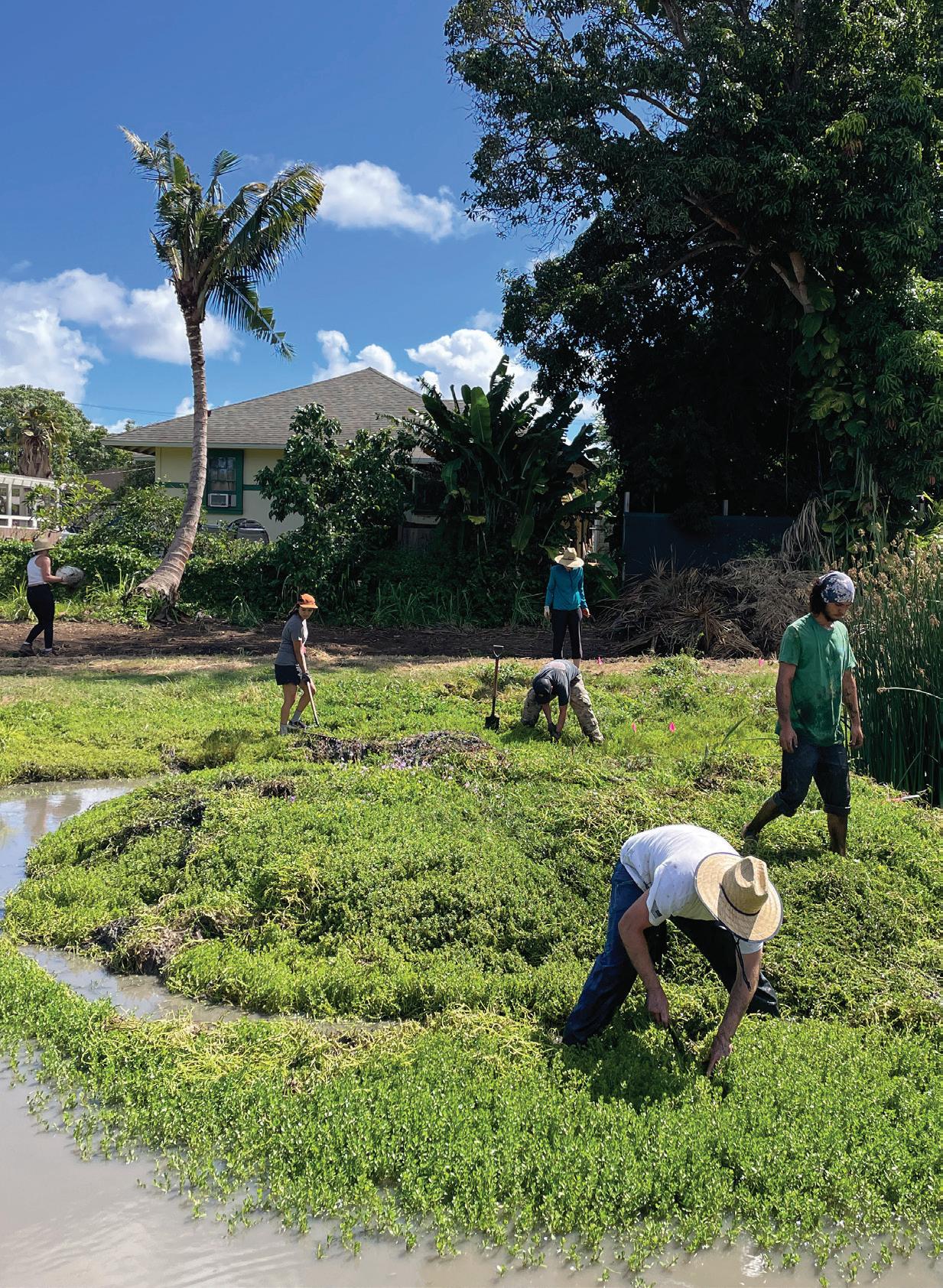
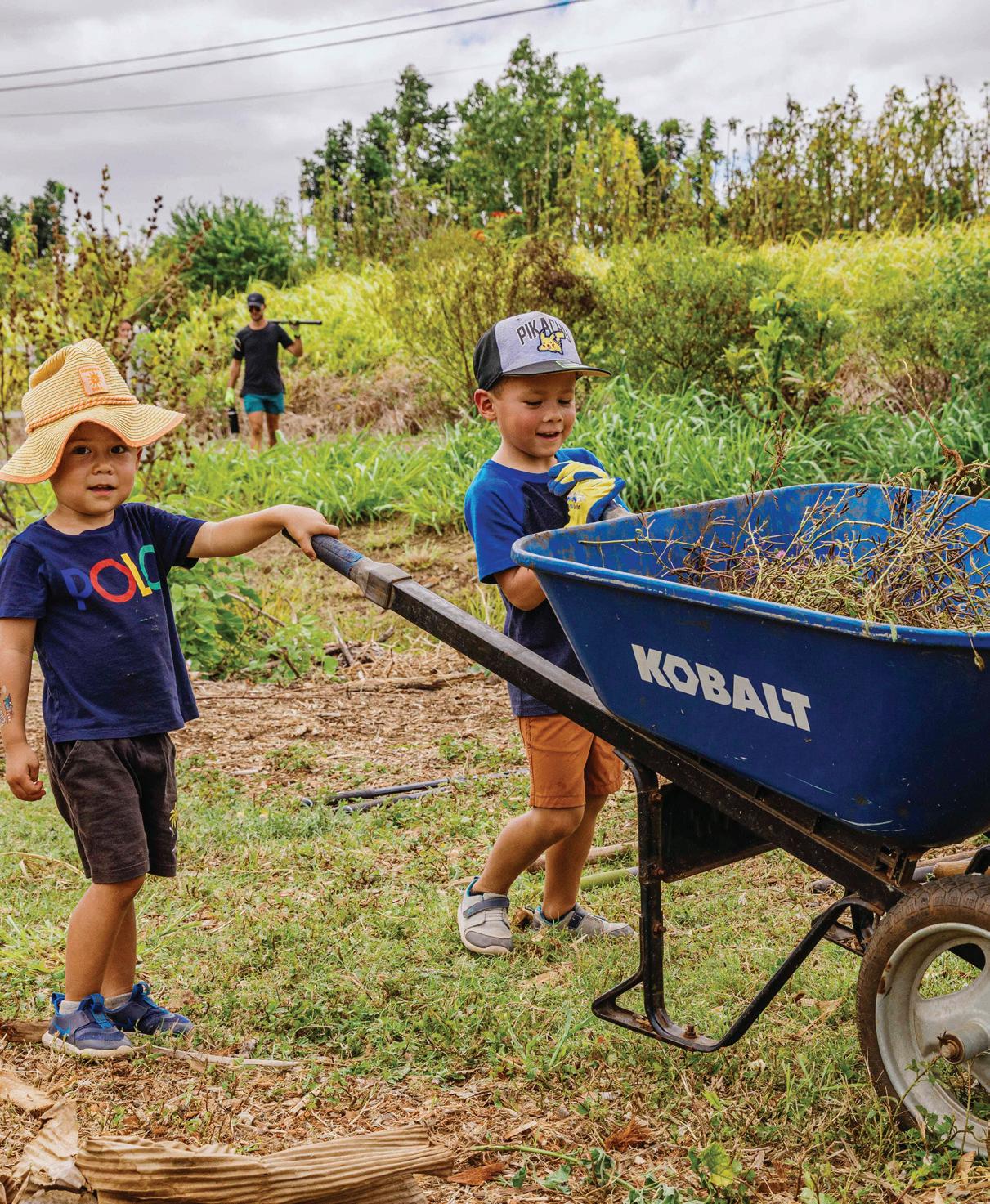
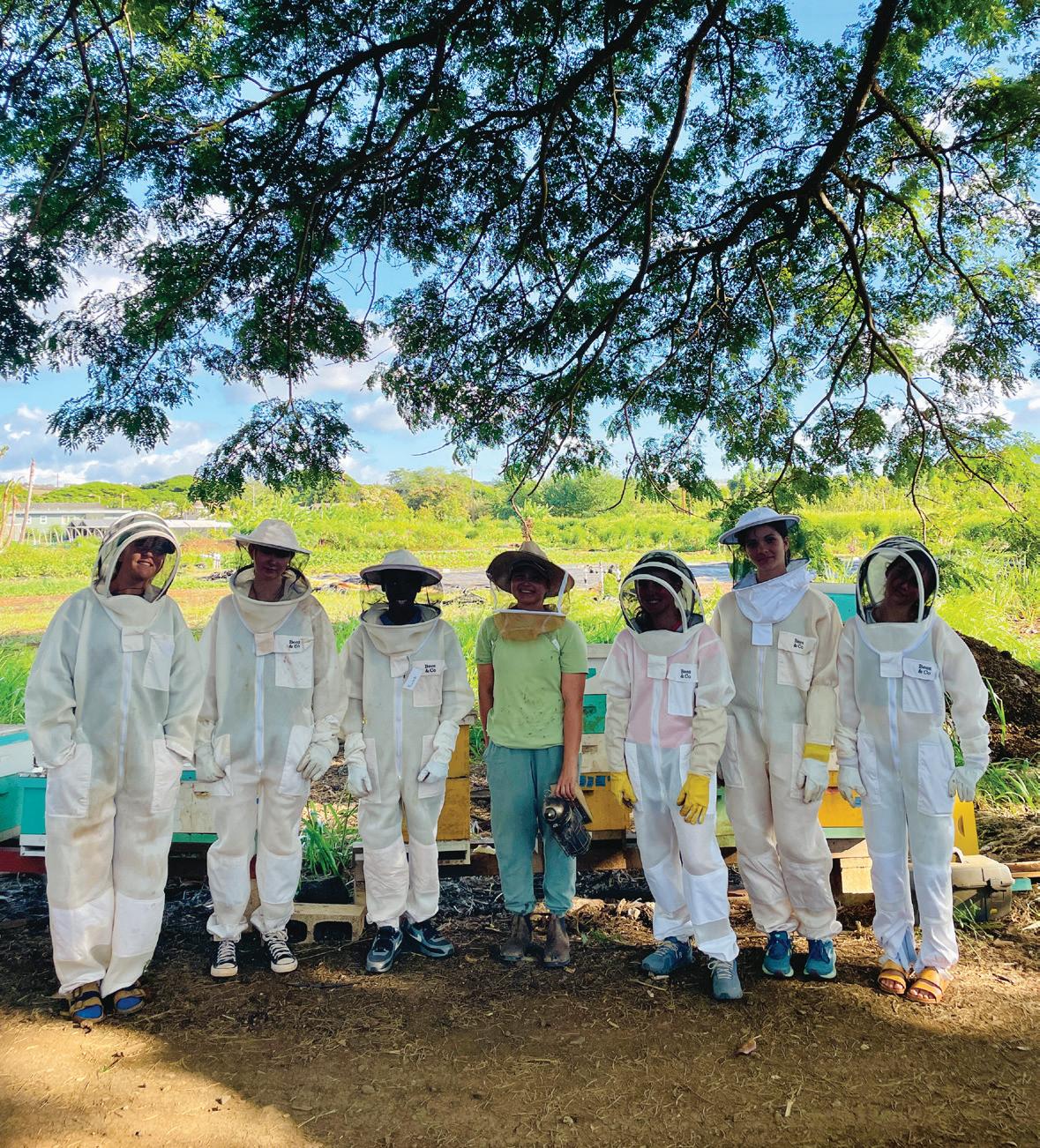
Since 2019, Kōkua Hawai‘i Foundation has cared for eight acres of land in the heart of Hale‘iwa. This space serves as a hub for agricultural, educational and retail activities that benefit the community while promoting local food, waste reduction and environmental stewardship. The Kōkua Learning Farm is an educational and agricultural destination that inspires learners of all ages to actively support their local food systems. Today, the Kōkua Learning Farm is home to vegetable and flower production rows, Agroforestry Orchard, Apiary & Bee Observation Station, several lo‘i (wetland taro field), Constructed Native Wetland, Hawaiian Garden, nursery and the newly established invessel compost machine. The Kōkua Learning Farm hosts field trips where students can learn about all aspects of our food system and monthly Community Workdays held on the first Saturday of each month from 9 a.m. to 11:30 a.m. Volunteers participate in activities like mulching the gardens, weeding, nursery work or harvesting fruits and vegetables.
The Kōkua Learning Farm Youth also hosts programs, including field trips, that engage students with an enriching experience and cater to learners of all ages, allowing visitors to explore various aspects of our food system. The Kōkua Learning Farm Internship program provides onfarm training to build skills around agroecology, food production, culinary explorations, soil health and composting. Launched this year, the Kōkua Compost Program was launched on the Kōkua Learning Farm with a new in-vessel composter. The Kōkua Compost Program engages keiki and community in hands-on learning about the importance of turning waste into healthy soil.
Kōkua Hawai‘i Foundation also has a handful of mission-aligned businesses that are used to carry out its program initiatives throughout the community. In April 2022, they launched the Kōkua General Store located on Kamehameha Highway in front of their Kōkua Learning Farm. The store specializes in bulk, refill and low-waste lifestyle
products. From tablet toothpaste to bulk clothing detergent and beeswax food wraps, the store offers the community the tools it needs to reduce waste.
The Kōkua General Store also offers an array of community events, such as quarterly clothing swaps that give the community a chance to clear out their closets and refresh their wardrobes without purchasing new pieces.
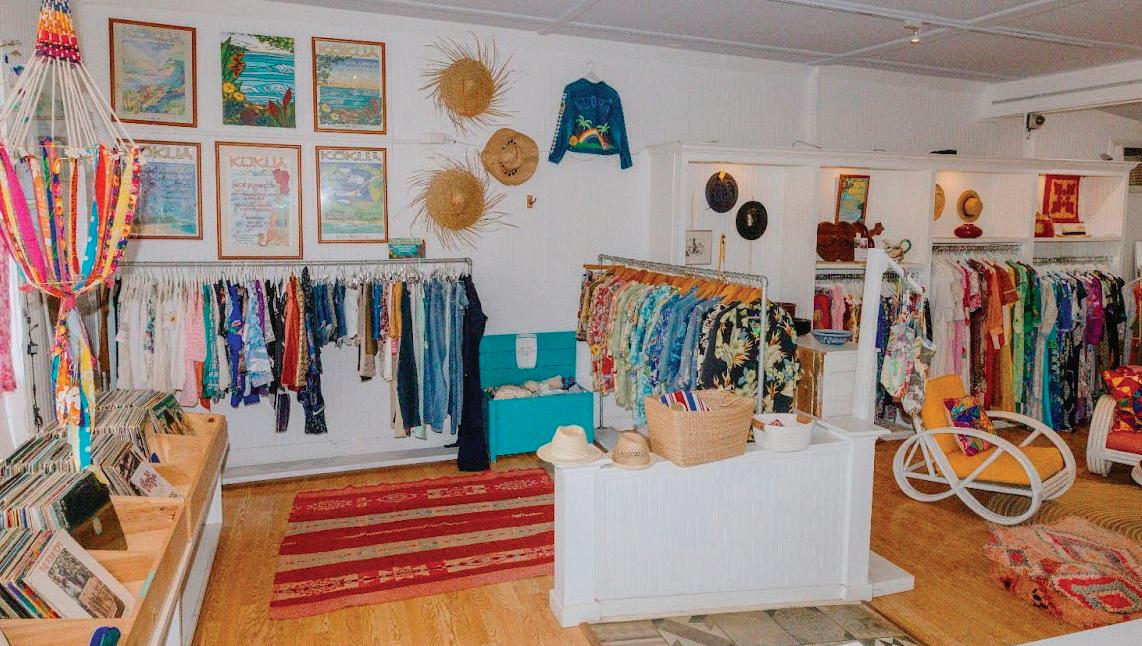
Within the Kōkua General Store is Kōkua Vintage, which offers a curated collection of second-hand clothing, records, housewares, artwork and more. From retro mu‘umu‘u to quality pieces of furniture, searching the racks of Kōkua Vintage is like a treasure hunt for the sustainableminded shopper.
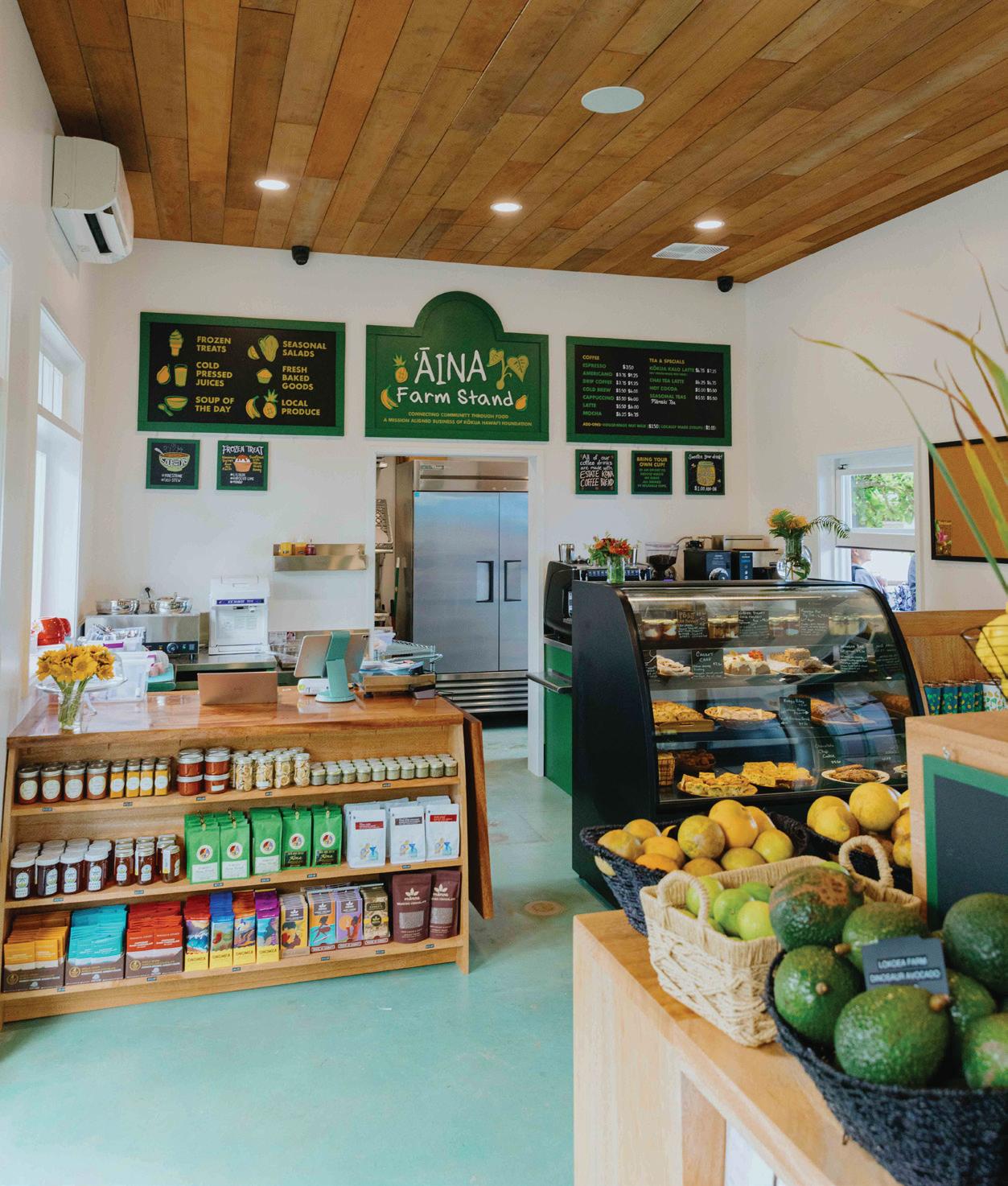
In November 2024, Kōkua Hawai‘i Foundation opened the ‘ĀINA Farm Stand, another missionaligned business connecting the community to where their food comes from. The ‘ĀINA Farm Stand offers seasonal, farm-fresh produce from the Kōkua Learning Farm, other local farmers and food producers, as well as coffee, cafe items, value-added products, meat, seafood, locally grown flowers and lei.
The strides the Kōkua Hawai‘i Foundation has made during the past twenty years have been remarkable. By educating the keiki and branching out into the community, they have planted the seeds for a brighter future for Hawai‘i.
Kōkua Hawai‘i Foundation; 66-249 Kamehameha Highway, Hale‘iwa; (808) 638-5145; kokuahawaiifoundation.org; Office hours Monday through Friday from 9 a.m. to 5 p.m.
Kōkua General Store and Kōkua Vintage; 66-249 Kamehameha Highway, Hale‘iwa; (808) 744-5222; kokuahawaiifoundation.org/kokua-general-store and kokuahawaiifoundation.org/kokua-vintage; Open Tuesday through Friday from 10 a.m.to 5 p.m. and Saturday from 10 a.m. to 3 p.m.
‘ĀINA Farm Stand; 66-249 Kamehameha Highway, Unit B, Hale‘iwa; (808)260-1900; kokuahawaiifoundation.org/aina-farm-stand; Open Wednesday through Friday from 9 a.m. to 3 p.m. and Saturday from 8:30 a.m. to 2:30 p.m.
PRESERVING THE PAST
Digitizing history at Hawaii’s Plantation Village
story KRYSTAL KAKIMOTO
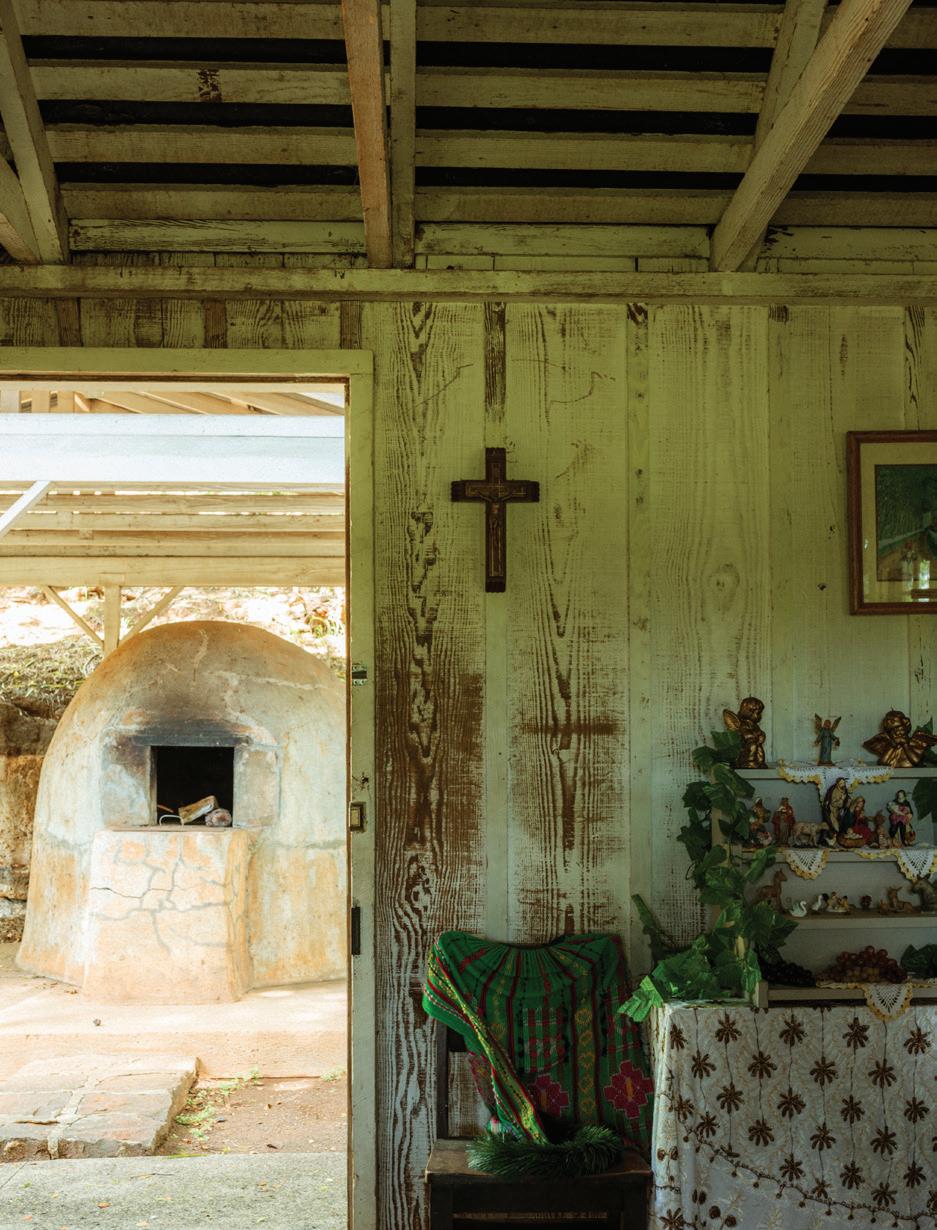
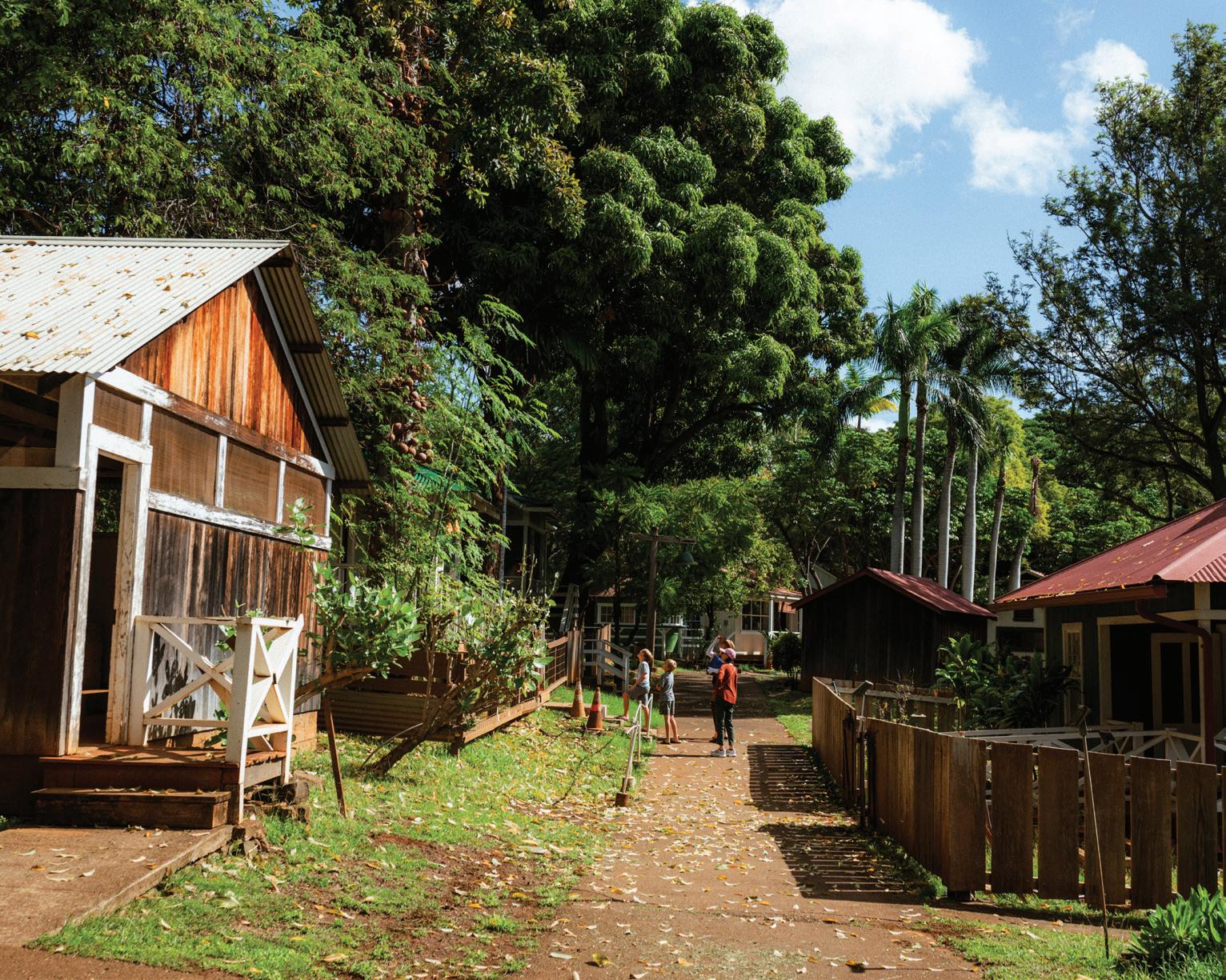
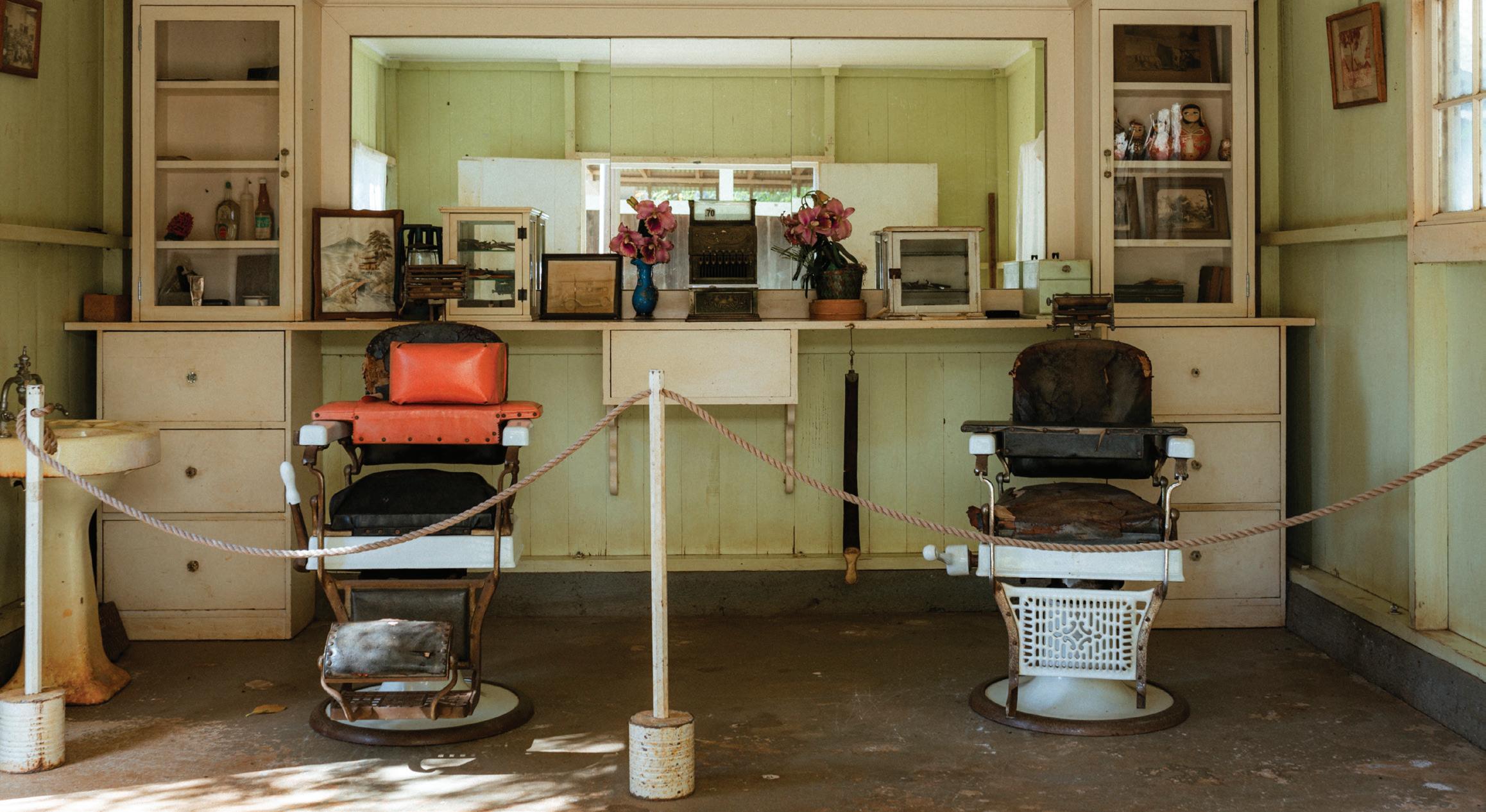
The saying “a picture is worth a thousand words” may be an understatement, especially when it comes to the photos and artifacts of Hawaii’s Plantation Village. Established in 1992, this unique outdoor museum brings to life the story of Hawai‘i’s sugar plantations from 1850 to 1950, an era when “sugar was king.” Through meticulously restored buildings, replica structures and carefully curated archives, Hawaii’s Plantation Village offers visitors an immersive glimpse into the daily rhythm and challenges of plantation life. In keeping with the museum’s mission to educate the public about Hawai‘i’s plantation experience, and thanks to a dedicated team of passionate volunteers, the museum’s archival photographs and artifacts are now being digitized to preserve these invaluable collections for future generations and also open a window to the world, allowing anyone, anywhere to explore the rich history of Hawai‘i’s plantations.
The digitization project began in 2021, when the team behind the initiative applied for and received a preservation and access grant from the Hawai‘i Council for the Humanities and the National Endowment for the Humanities. After securing funding, the group acquired a dedicated computer and scanner and developed detailed protocols to guide the work. By 2023, the digitization process was officially underway.
The project was led by Yoshiko Yamauchi as Project Director, with Gina Vergara-Bautista serving as Project Archivist and Clement Bautista as Project Humanities Expert. In addition to the core staff, Bautista credits a dedicated group of volunteers as essential to the project’s success. “Depending on availability, we would have anywhere from two to six volunteers working at a time,” he explains. “Our volunteers are all part-time. Some were student interns, so most participated on a temporary basis.”
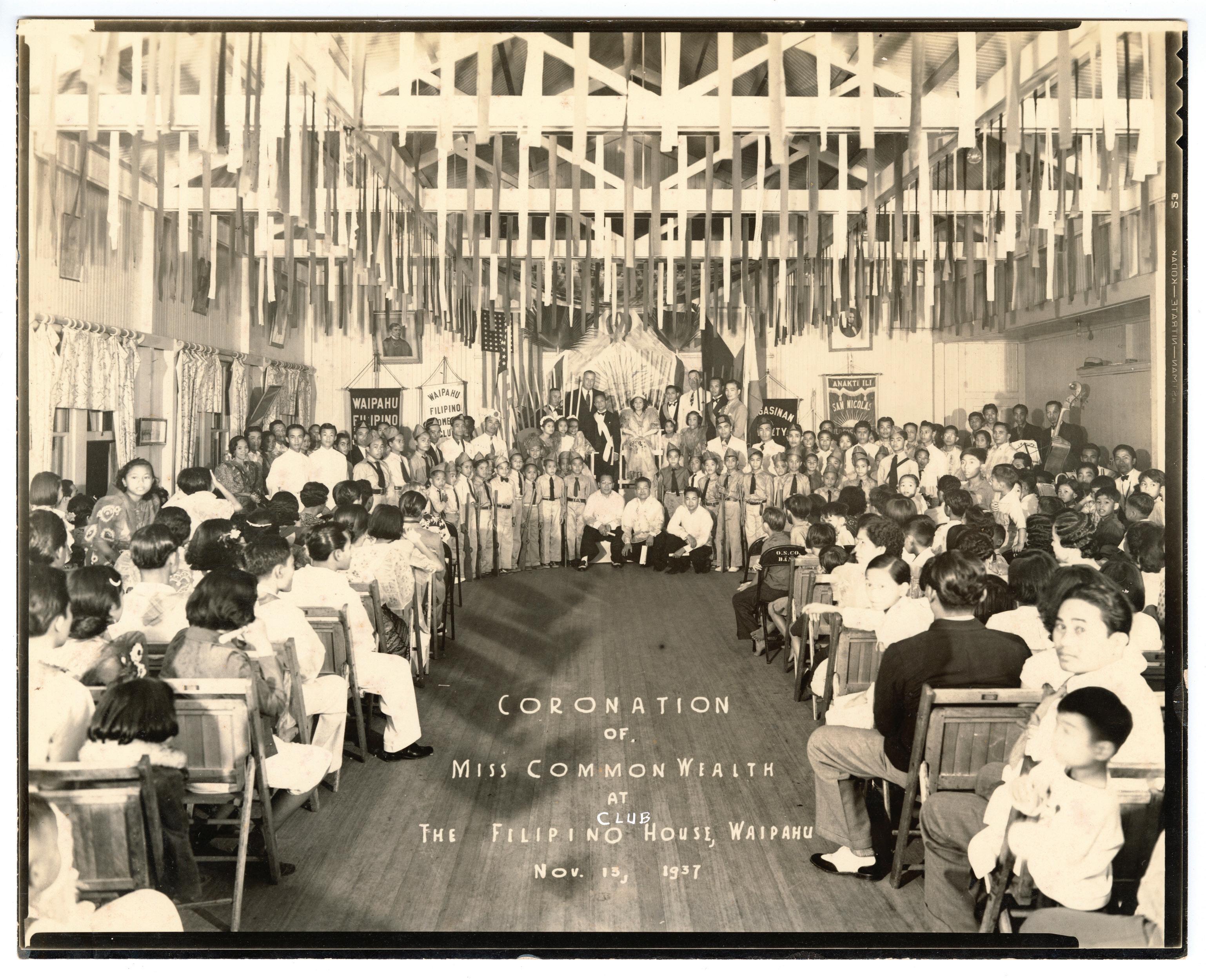
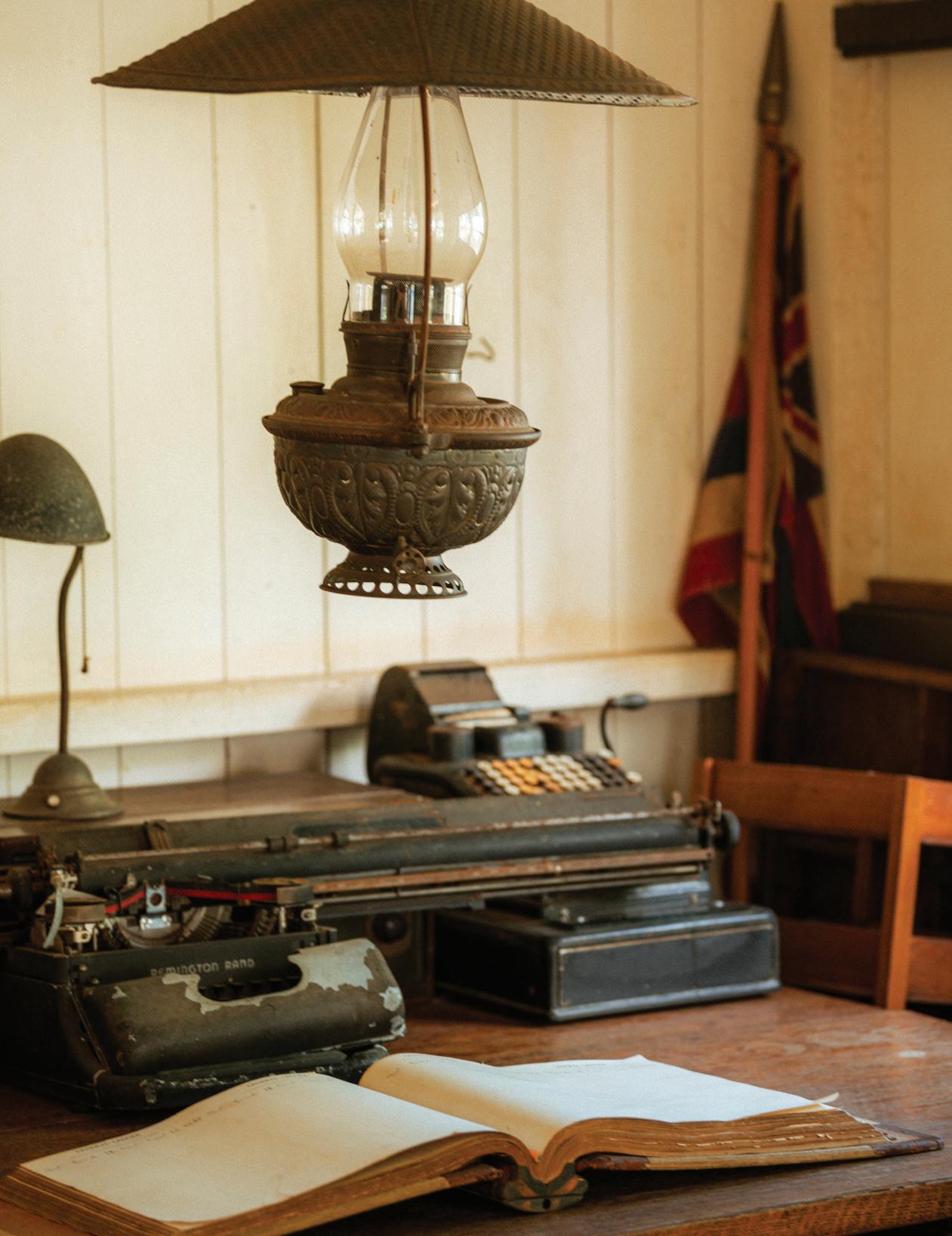
After thorough orientation to the cataloging software and scanning equipment, and careful handling of artifacts, volunteers began the delicate work of preserving history, one photograph at a time. Their tasks included retrieving original pictures and artifacts from the museum’s archives and capturing both the front and back of each item, along with any accompanying documentation.
“Photographs are scanned at full size, full color and at a resolution of 600 to 1,200 dpi, then saved as .tif files,” explains Bautista. Most of the photos, he notes, remain in remarkable condition, protected in Mylar sleeves since their accession into the museum’s collection.
To safeguard these delicate photographs, volunteers wear gloves before gently removing each photo from its protective cover — only briefly for digitization — then returning it to
its archival sheath. Once the digitization and cataloging are complete, the photographs are stored in climate-controlled rooms to prevent deterioration.
But as Bautista emphasizes, the process involves more than just scanning. “[Digitization] is a very slow process, especially during the cataloging phase,” he says. “Information about each artifact and photograph must be entered to be used as potential search information. Historical research must be conducted to properly describe each item being catalogued.”
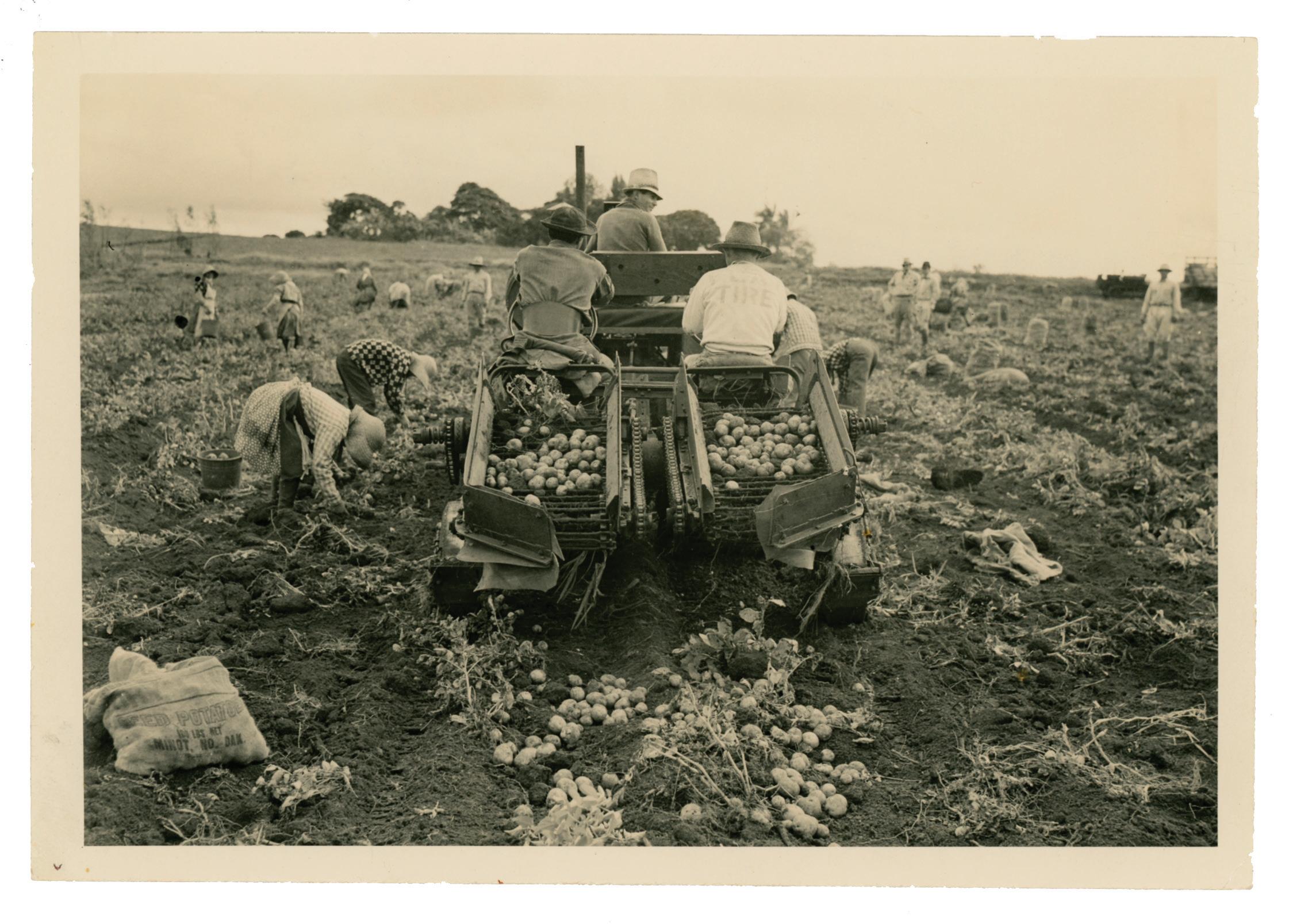
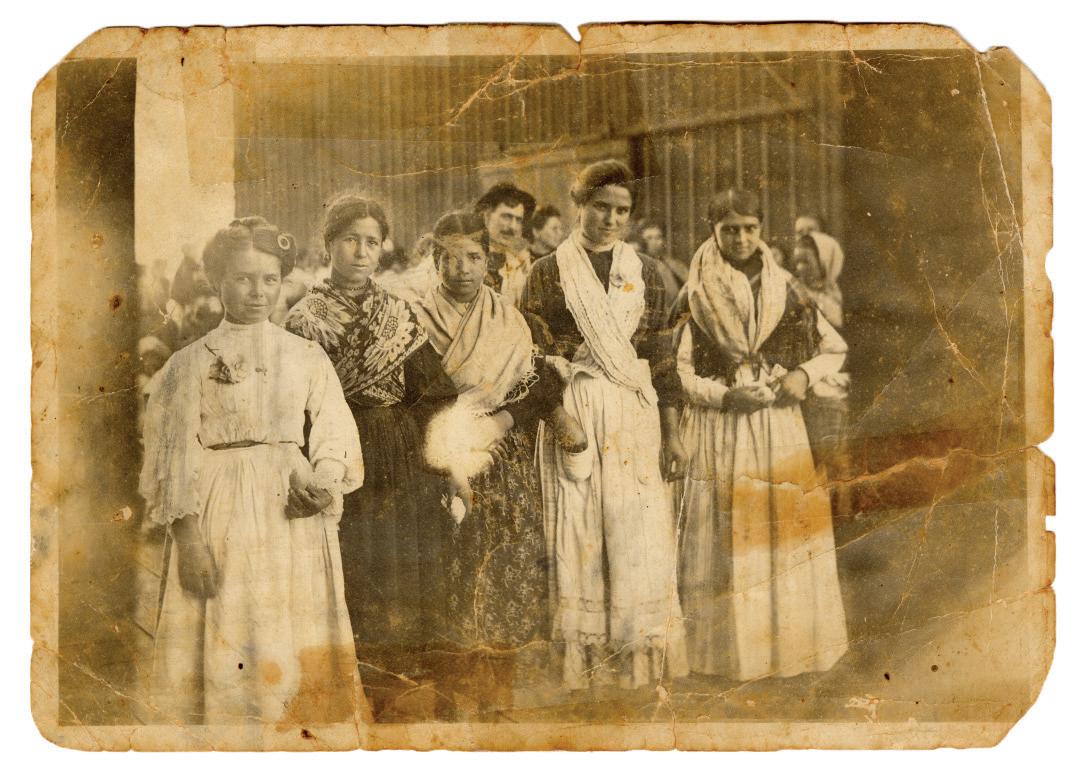
The project currently encompasses three major collections. The Oahu Sugar Company Collection spans the 1940s and 1950s, documenting sugarcane cultivation, harvesting, mill operations, finances, housing and medical services. R. H. Lodge
and Ernest Malterre Jr., a plantation housing supervisor, originally compiled the materials. The Murakoshi Collection features the personal archive of Mae Okada, containing photographs by father-and-son photographers Nobunosuke and Henry Murakoshi. Their work captures both posed studio portraits and candid glimpses of school activities, picnics and community events. The largest of the three, the Friends of Waipahu Cultural Garden Park Collection, gathers thousands of donated photographs that depict family life, labor, culture, World War II and recreation, painting a vivid picture of Hawai‘i’s plantation communities.
In total, the museum’s archives contain approximately 7,000 images, with around 2,500 images scanned to date. However, as Bautista
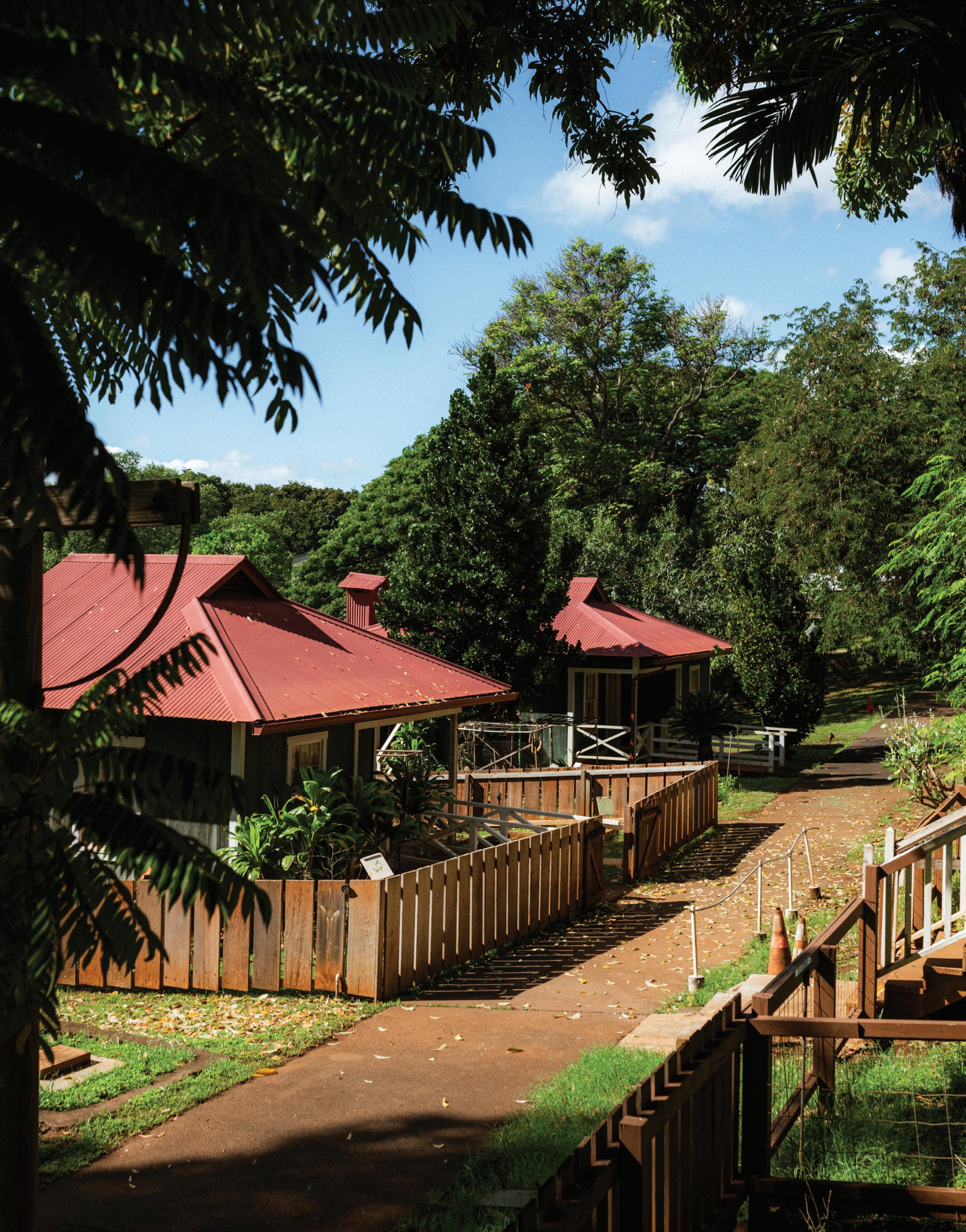
PHOTO COURTESY: (ALL) IJFKE RIDGLEY
points out, scanning is only the beginning. He adds, “Describing and cataloging the photograph are what make the photograph relevant. Currently, about 500 photographs have been cataloged.”
Thanks to the dedication of staff and volunteers, the plantation era is being reborn in a digital form. Each scanned image, paired with rich metadata, offers a new window into Hawai‘i’s past. The team aims to make the collection fully accessible online, enabling people worldwide to explore this part of the island’s history. “Our plan is to have our collection available online for research purposes,” says Bautista. “Currently, we are only taking requests for specific types of photographs to be viewed.”
When asked what keeps the team motivated, Bautista reflects on the mission’s importance. “Hawai‘i’s plantation-era history is not only incomplete but also slowly being forgotten, not only among our youth but also by adults. This history not only informs us about who we were, but also about how we exist in the present. Moreover, the plantation-era relationships and experiences between laborers and the rest of society remain incompletely documented. There is much more history to be unearthed and analyzed.”
Hawaii’s Plantation Village; 94-695 Waipahu Street, Waipahu; (808) 677-0110; hawaiiplantationvillage. org; Open Monday through Saturday from 9 a.m. to 2 p.m., with guided tours at 10 a.m. and 12 p.m.; hawaiiplantationvillage.org.
FLYING COMPASS
A sacred seabird finds its home above Honolulu’s city streets
story KRYSTAL KAKIMOTO
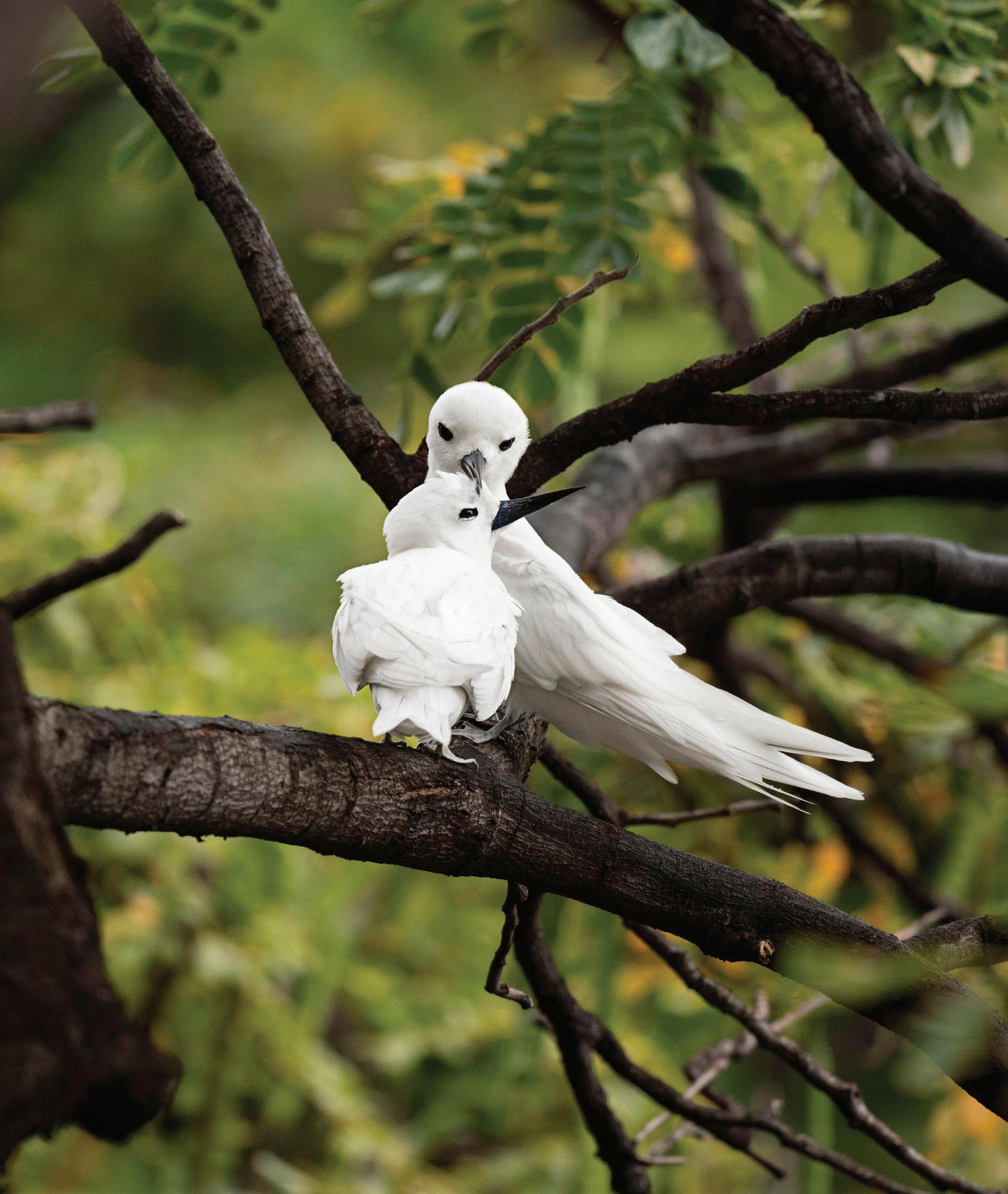
Amid the hum of traffic and the soft glow of city lights, the Manu-o-Kū drifts effortlessly above Honolulu’s concrete jungle. Also known as the White Tern or Fairy Tern, this elegant seabird is found across tropical and subtropical regions of the Pacific, South Atlantic and Indian Oceans. In Hawai‘i, the Manuo-Kū traditionally nest among the remote atolls and reefs of the Northwestern Hawaiian Islands. Yet in recent decades, this graceful traveler has chosen a new home amid O‘ahu’s urban landscape. Drawn to the city’s lively rhythm, it now soars between skyscrapers and banyan trees, a living symbol of nature’s adaptability and resilience. And, in recognition of its enduring presence and ethereal beauty, the Manu-o-Kū was named the official bird of the City and County of Honolulu in 2007.
In Hawaiian mythology, Manu-o-Kū are closely associated with Kū, the Hawaiian god of war, often depicted as a feathered deity. Beyond mythology, these birds held deep significance in Hawaiian culture and the traditions of ancient Polynesian navigators. Skilled wayfinders relied on the Manuo-Kū as a living compass, watching their daily flights to locate islands beyond the horizon. By morning, the birds ventured to sea in search of fish and, by evening, they unfailingly returned to land, signaling nearby shores to voyagers who followed their path.
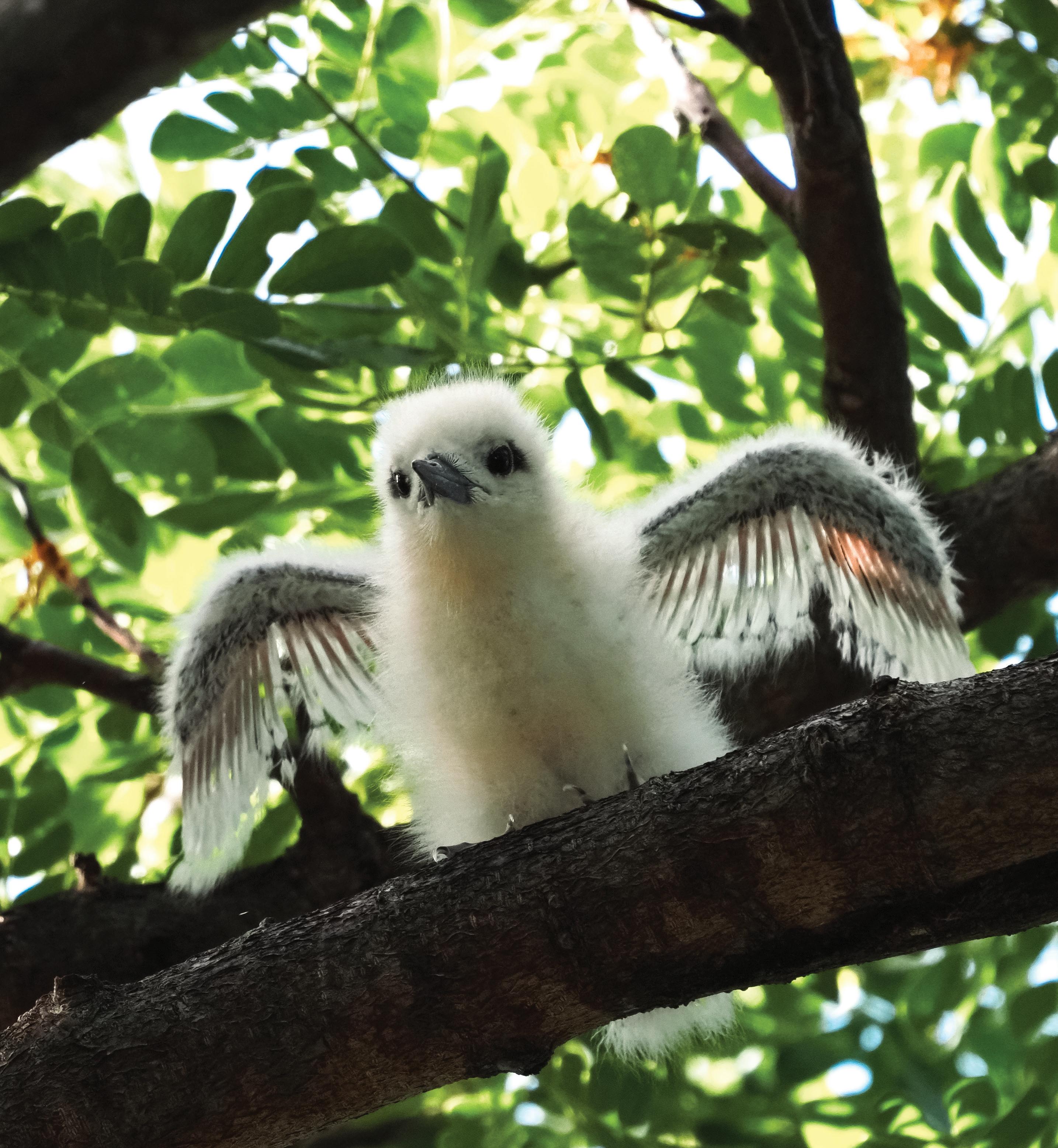
Agile yet resilient, the Manu-o-Kū is easily recognized by its snow-white plumage, dark, almond-shaped eyes and slender black beak. Its chicks, in contrast, wear a soft coat of downy feathers in mottled shades of brown, tan and gray, blending perfectly with the tree branches where they nest. Adults typically measure nine to eleven inches in length, boasting impressive wingspans of up to 35 inches — a fitting stature for a bird so deeply woven into the stories, navigation and spirit of the Hawaiian Islands.
However significant they are to Hawaiian culture, Manu-o-Kū were not always residents of O‘ahu. The first sighting of one gliding above Honolulu occurred in 1960, followed a year later by the discovery of the first breeding pair near Koko Head. Once adult birds choose a mate, they typically stay together for several breeding seasons, raising their young in close partnership. Over time, these pairs began spreading throughout the greater Honolulu area, drawn not to remote coasts or forests but to the heart of the city itself. It is this unusual habitat choice that has likely contributed to their remarkable population growth, now estimated at around 3,000 birds.
Unlike many seabirds that seek isolation and safety in distant forests or cliffs, the Manu-oKū prefer to nest in high city trees like kukui (candlenut), monkeypod and shower trees. Rather than building traditional nests, they lay their single eggs directly on sturdy branches, often in shallow divots or natural forks. These urban trees, with their broad horizontal branches, offer ample space for parents to move about freely without dense foliage in their way. Remarkably, this city-dwelling lifestyle also provides a form of protection if a chick or egg were to fall, since the steady flow of cars, noise and pedestrians below often deters predators such as rats or cats.
Breeding season for the Manu-o-Kū occurs year-round, though most chicks hatch between January and June, with March marking the peak. After an egg is laid, it takes about 35 days for it to hatch. The chick then clings to its branch with
tiny, sharp talons for a little over a month before it learns to fly. At first, it flutters hesitantly around the nesting branch, gradually expanding its range to nearby limbs. Each morning, the parents head out to sea to catch small fish, often juvenile goatfish or flying fish, and return by evening to feed their chick. Those passing below nesting trees might hear the soft hiss or chirp of hungry chicks calling for their next meal.
Because the Manu-o-Kū lays its eggs in such a vulnerable state, without a nest or shelter, local conservation groups, such as Hui o Manu-o-Kū, work diligently to protect them. Through citizen science and community outreach, volunteers tie blue ribbons around the base of trees that host nesting birds. These ribbons alert tree trimmers and landscapers to avoid disturbing nests and signal to the public which trees a fallen chick or egg can be safely returned to. Each ribbon also bears the Manu-o-Kū Hotline, a dedicated line for reporting injured or fallen birds, helping to ensure Honolulu’s Manu-o-Kū continue to thrive.
The Manu-o-Kū is federally protected under the Migratory Bird Treaty Act, which makes it illegal to hunt, capture, harm or possess these birds, or even attempt such actions. As an indigenous species of Hawai‘i with a relatively small population, the Manu-o-Kū is also listed as a threatened species under state law. This designation extends protection not only to the birds and their eggs but also to their nesting sites, with penalties that may include substantial fines or imprisonment for anyone who disturbs or harasses them.
More than just a symbol of Honolulu, Manu-oKū represents the enduring connection between Hawai‘i’s people, its history and the natural world. These graceful birds remind us that even in the heart of the busy city, nature finds a way to flourish. Protecting them is a shared duty, calling on residents and visitors to safeguard their urban habitats so that future generations can continue to look up and watch their bright wings soar above the island skies.
HIDDEN HIKE

Discovering Nākoa Trail
words NATALIE SCHACK
images IJFKE RIDGLEY
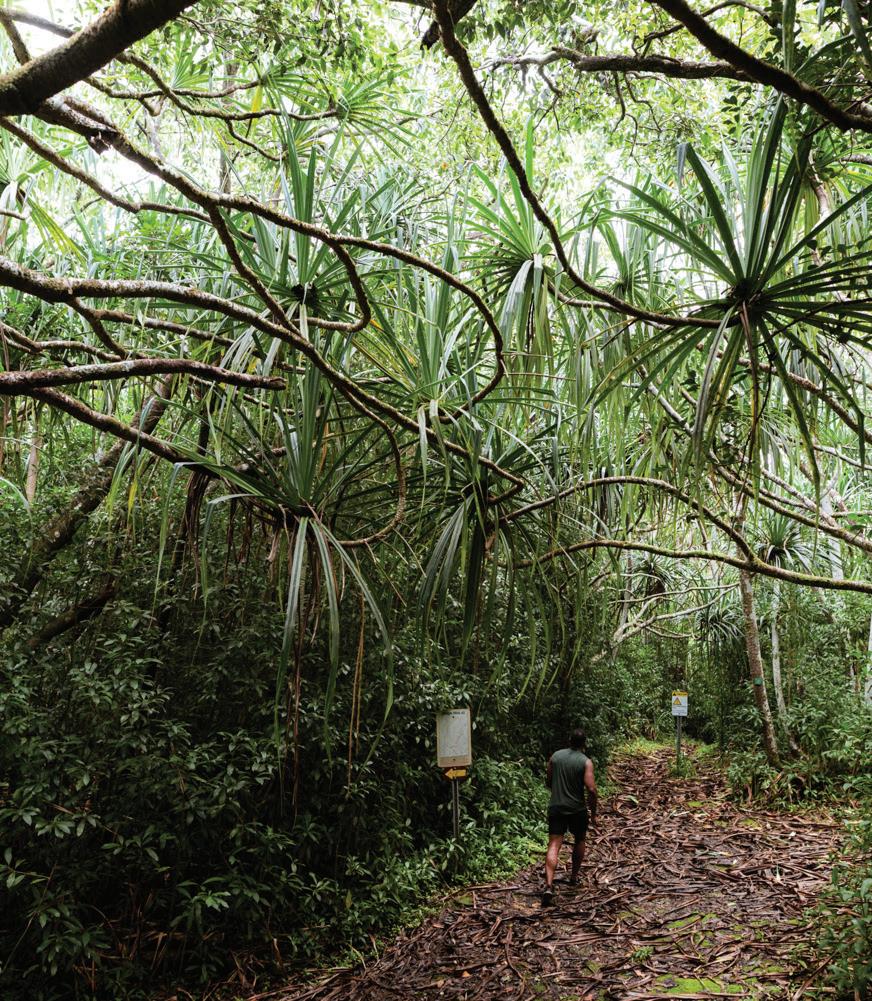
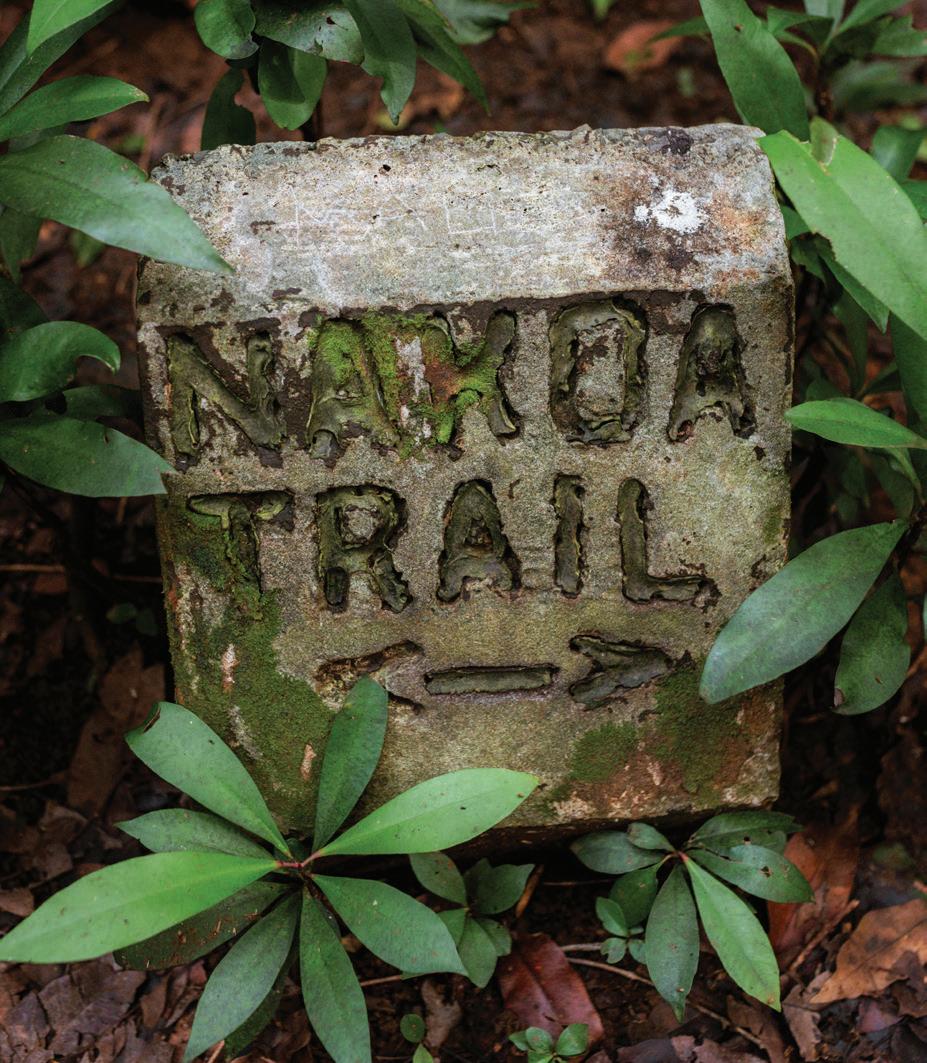
Tucked away in the far reaches of Honolulu’s windward side, Nākoa Trail is the kind of hike that feels like a secret even to locals. It’s not on the usual tourist radar, and getting there requires a willingness to leave behind the city’s hum and dive far into the island’s wilder, more untamed edges. As you drive further along twisting roads lined with dense vegetation, the urban noise fades, and the air thickens with humidity and the scent of moss and wet earth. The trail begins in areas that still feel like Honolulu but quickly transitions into dense jungle, where the wind rustles through towering trees, and the soundscape is dominated by birds, insects and rushing water. By the time you step onto the trail proper, it feels less like the city and more like stepping into a secret corner of Hawai‘i that few ever see. Along the way, you’ll pass small residential areas, occasional roadside fruit stands and the kind of landscapes that hint at how lush the island can be once you leave the crowded tourist paths behind.
Getting to Nākoa Trail requires a bit of planning. From central Honolulu, head toward the Kahana Valley area, following the winding roads that hug the coastline. Parking is limited, and you’ll want to leave valuables at home or well-hidden in your
car. Most hikers recommend bringing sturdy shoes, plenty of water and a change of clothes for after swimming. Avoid the trail during heavy rain, as streams swell quickly, making water crossings hazardous and increasing the risk of leptospirosis in runoff. Oh, and you will not want to forget the insect repellent for this one.
The 2.5-mile trail is a mix of adventure, mud and lush greenery. The path starts down steeply, twisting under the canopy of ferns and wild vines. The ground is slick from frequent showers, so be prepared for multiple stream crossings with small rapids and gentle pools that invite hikers to dip a hand (or a whole body) into the crisp, emerald water.
What makes Nākoa Trail stand out from many O‘ahu hikes is the water crossing: a narrow stream with crystal-clear, almost dazzling emerald water on clear days. In the sun, the pools sparkle like hidden gems, inviting anyone to pause, wade or lounge along the smooth banks. In a place famous for its beaches, these freshwater pools feel rare, secret and completely rejuvenating. You can sit on the rocks or a small sandy bank, dip your hands in the crisp water, or let the cool current run over your feet while the jungle hums around you. The
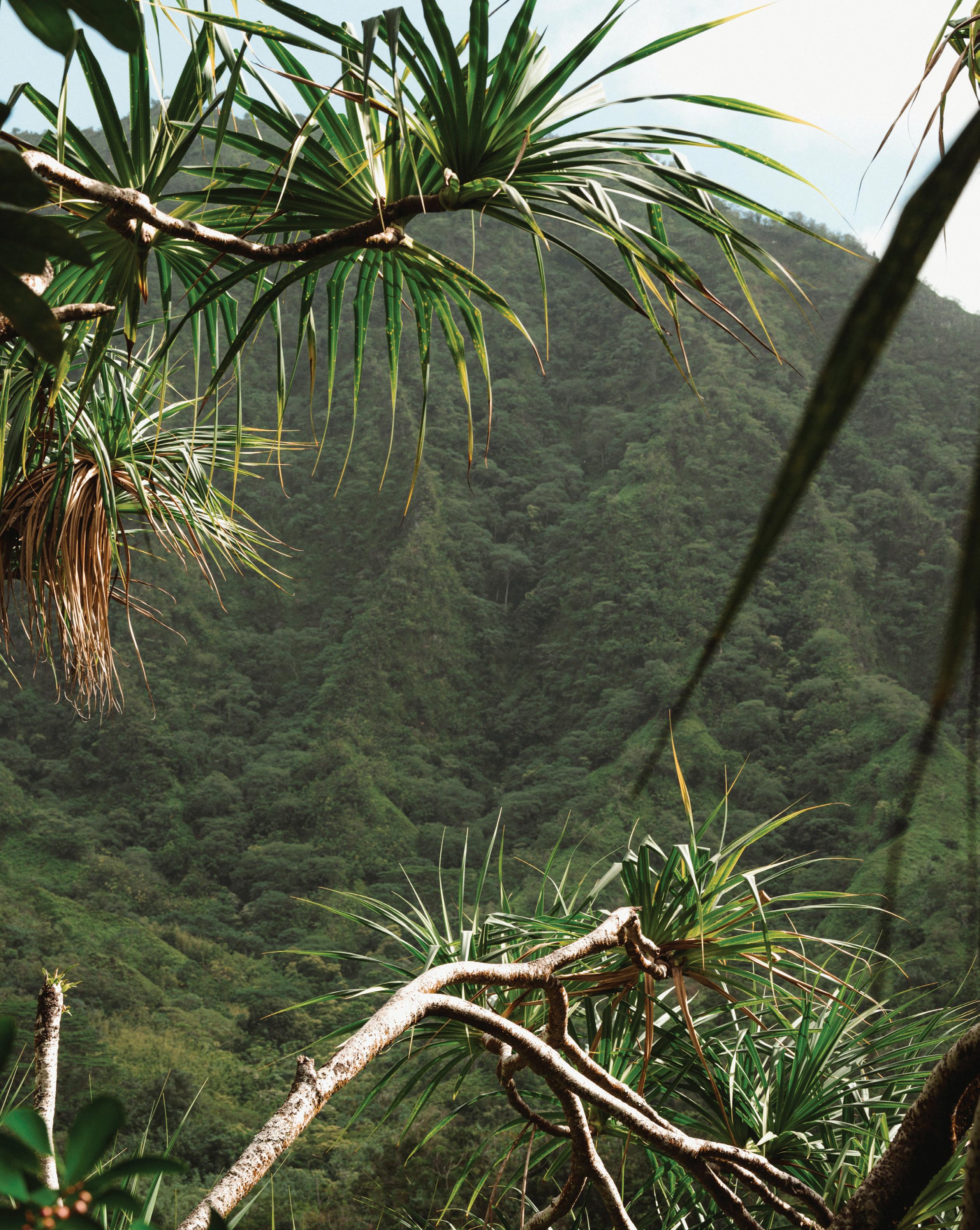
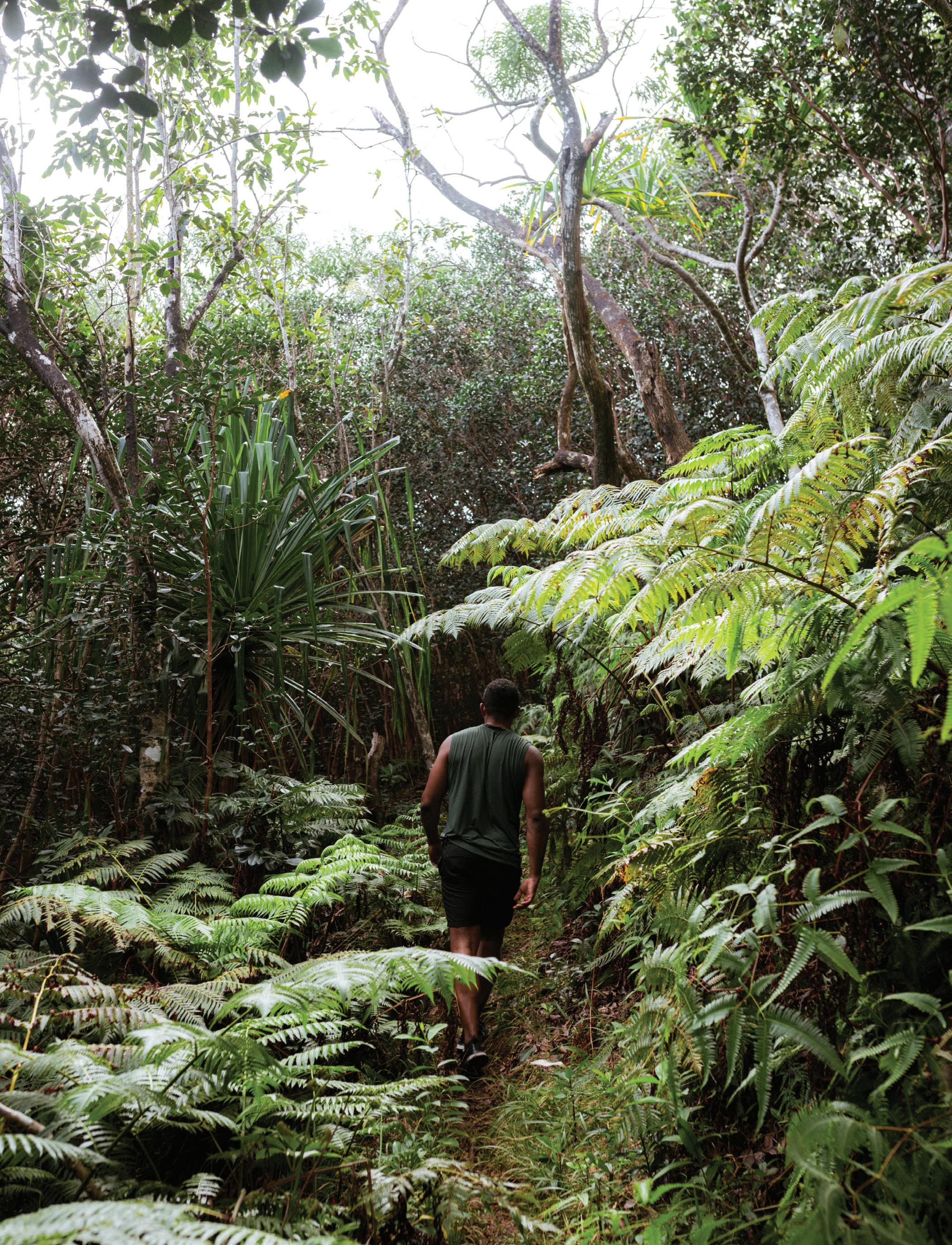
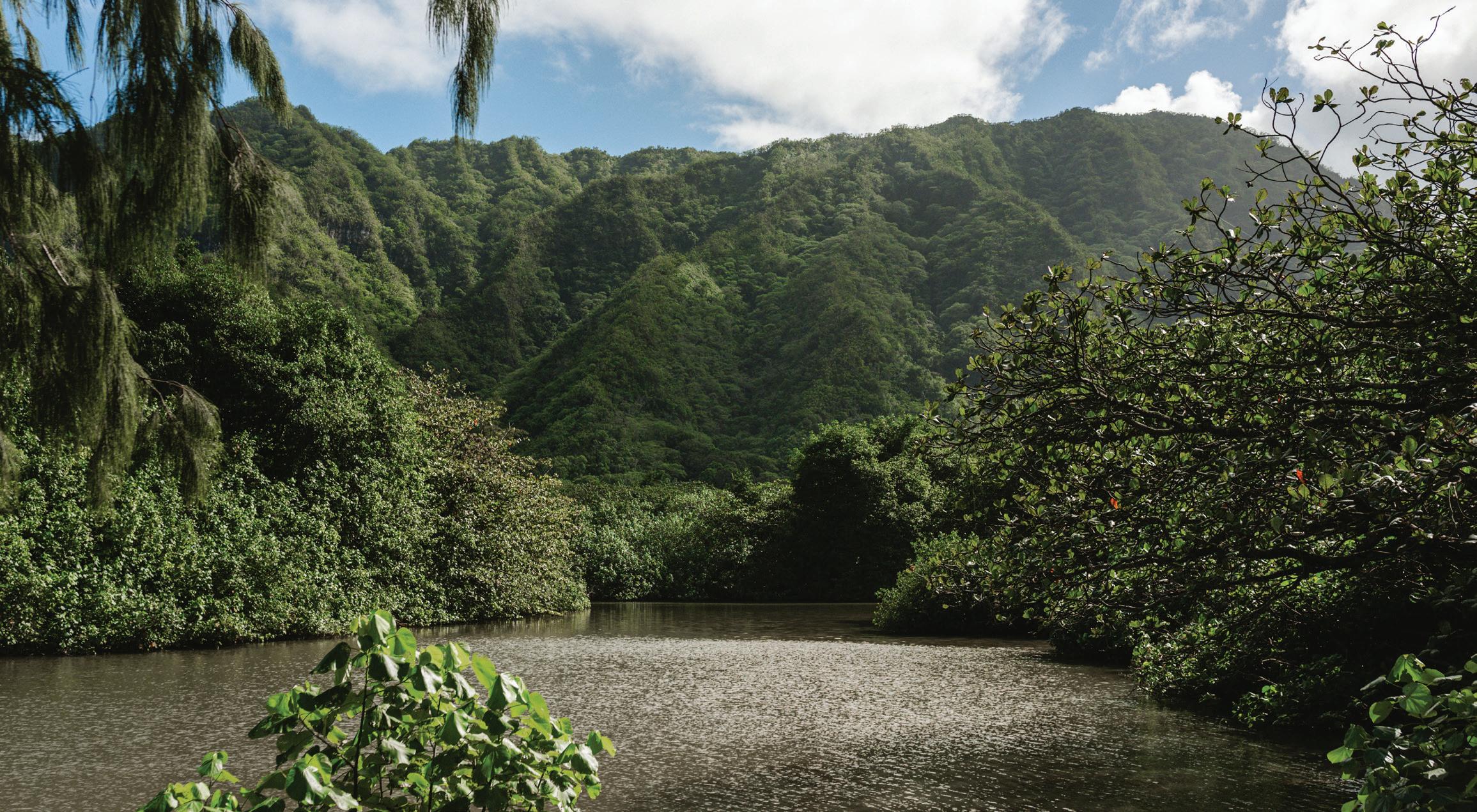
best part? This little oasis is close enough to the trailhead that you could skip the full hike and come just for the swimming and water lounging—it’s worth it on its own. Sunlight glints on the emerald surface, rope swings beckon from the banks, and the surrounding greenery makes the spot feel like a hidden corner of the world, far from the city and the ocean crowds.
For those willing to explore further, the trail follows part of the Kahana River, offering another hidden treasure: freshwater kayaking. Unlike the ocean, with its waves, wind and crowds, paddling here is serene and intimate. Imagine a jungle river cruise stripped of kitsch—quiet water reflecting thick greenery, birds flitting overhead and a feeling that this river exists just for you. Kayaks can be rented in Kailua, and most rental shops will help you transport the boat to the river and load it onto your car. Launch your kayak just off the front of the Ahupua‘a ‘O Kahana parking lot, where the river meets the ocean. You’re likely to see locals jumping off the small bridge that leads the highway over the river as it meets the outlet of Kahana Bay. Head mauka (toward the mountains or inland), following as the river winds past moss-covered boulders, tall ferns and secluded banks, providing a low-pressure, relaxing adventure that feels both romantic and meditative. Floating along the water lets you see the trail and its jungle surroundings from a fresh perspective, adding a second layer of discovery to the hike.
Beyond the practicalities, Nākoa Trail offers
something harder to describe: a sense of secret discovery. Few people from the urban core make the effort to reach this tucked-away corner, which gives the place a magic all its own. The hike and the river complement each other—the jungle path leading you to crystalline pools, the river allowing you to float past them, both experiences revealing different facets of O‘ahu’s untamed interior. Along the way, you encounter moments that feel almost cinematic: sunlight filtering through dense leaves, moss dripping from tree limbs, the distant sound of water tumbling over rocks. The more time you spend here, the more you realize that this is not just a hike or a paddle; it’s an invitation to step into a quieter, greener and entirely different Hawai‘i.
Whether you’re a local looking for a new adventure or a visitor seeking a side of the island few ever see, Nākoa Trail rewards effort with beauty, serenity and a rare intimacy with nature. From the muddy jungle path to the sparkling freshwater pools, and from the winding river to the hidden kayaking routes, the trail offers various ways to explore, discover and enjoy the island’s lush interior. Nākoa Trail is a hidden gem, off the beaten path but unforgettable; a place where the city fades, the jungle embraces you and the heart of Hawai‘i reveals itself in emerald water, mossy banks and quiet, secret moments.
Visit dlnr.hawaii.gov/dsp/hiking/oahu/nakoa-trail for more information.
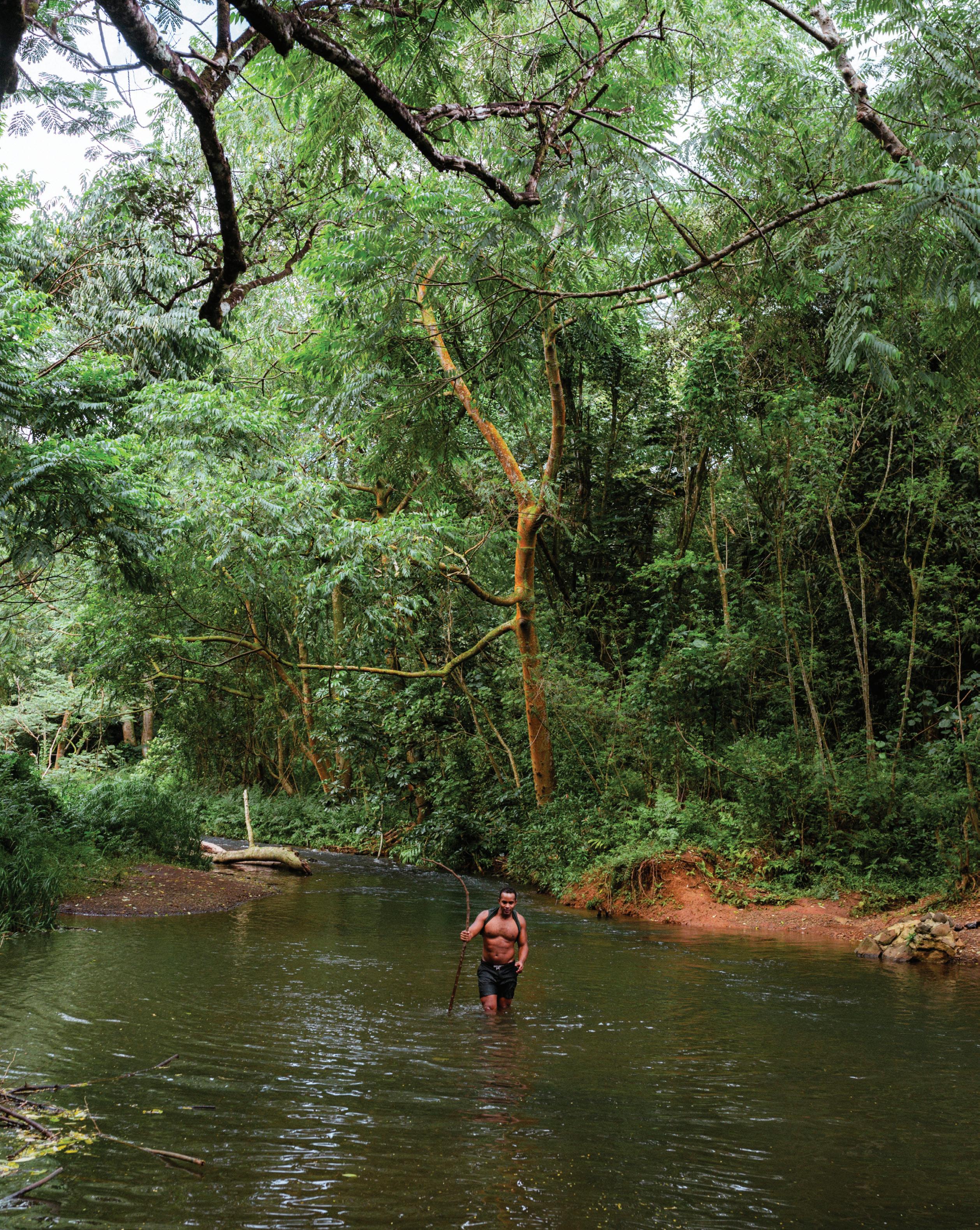

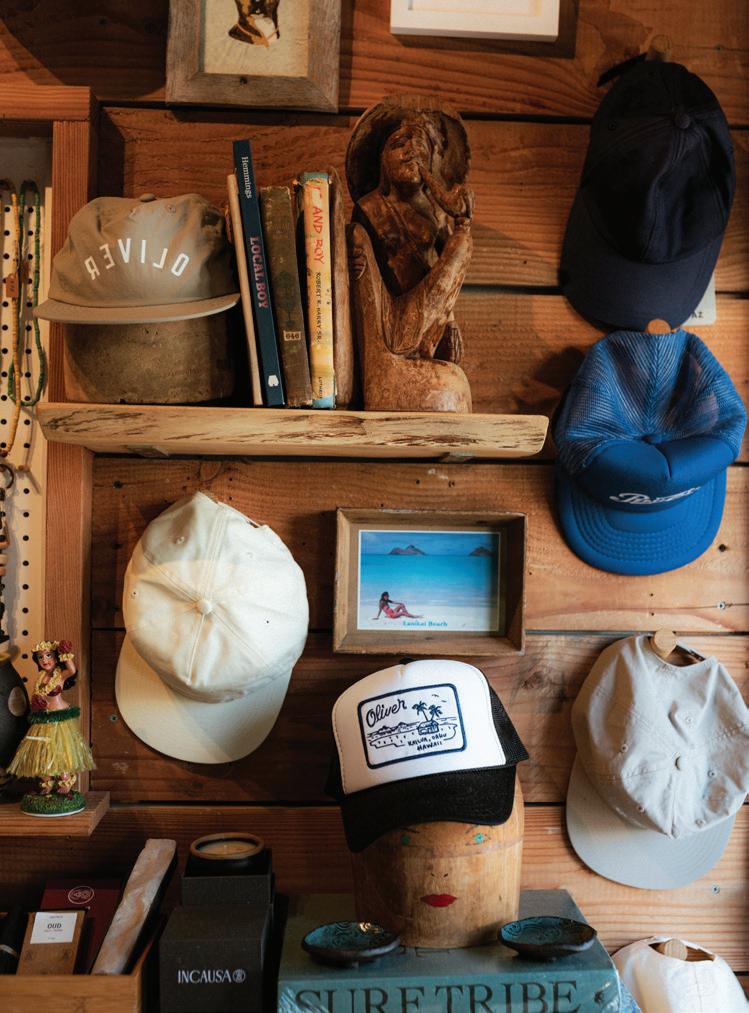
DESTINATION KAILUA
story KRYSTAL KAKIMOTO
images IJFKE RIDGLEY
Tucked along O‘ahu’s sun-drenched eastern shore, Kailua is often described as a “paradise within paradise.” Just a short drive from Honolulu, this breezy beach town feels worlds away, blending the small-town charm with a refined coastal energy. With its easy rhythm, welcoming atmosphere and endless aloha (love, compassion, affection), Kailua invites you to slow down, take a deep breath and savor the simple beauty of life by the sea.
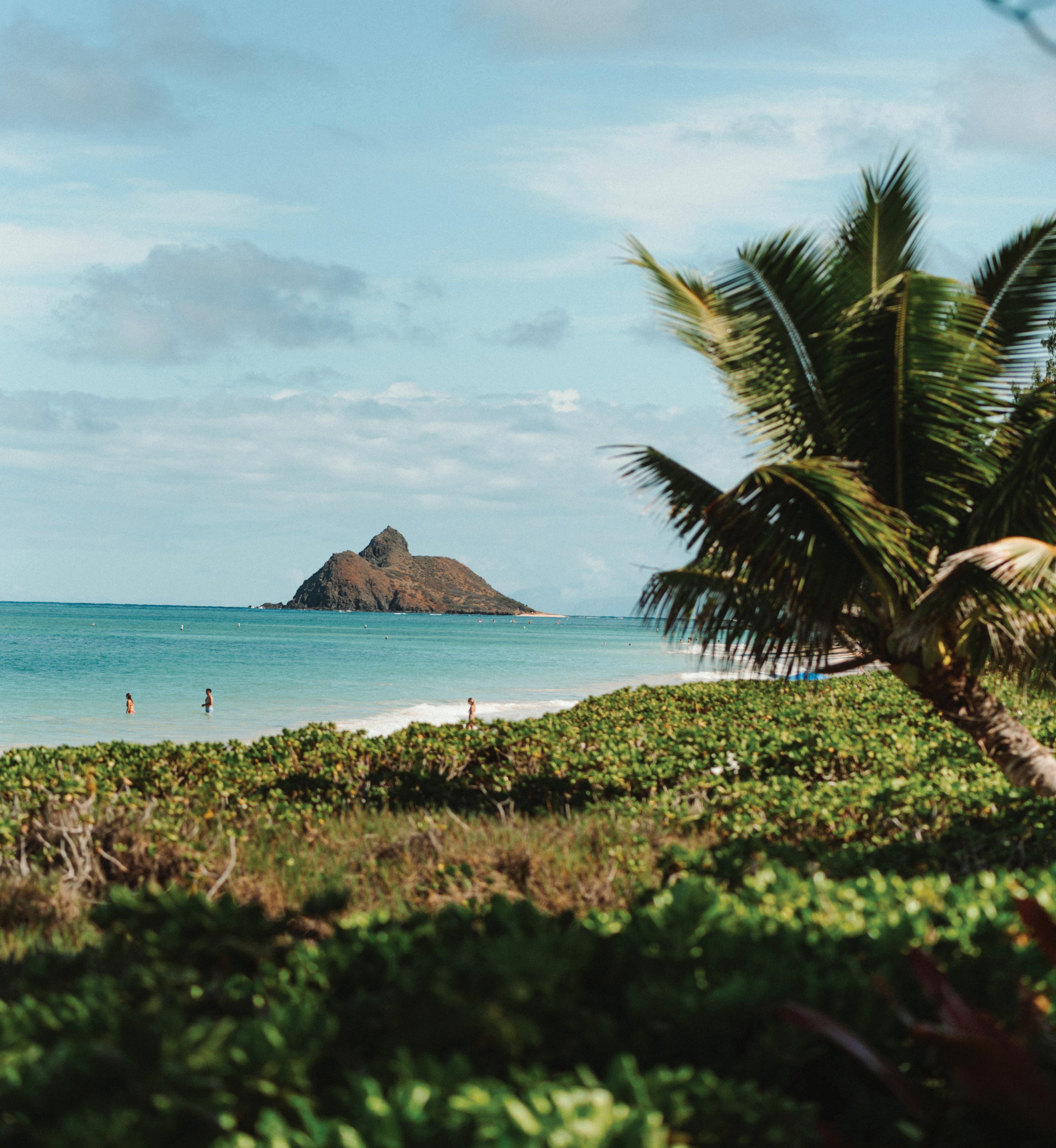
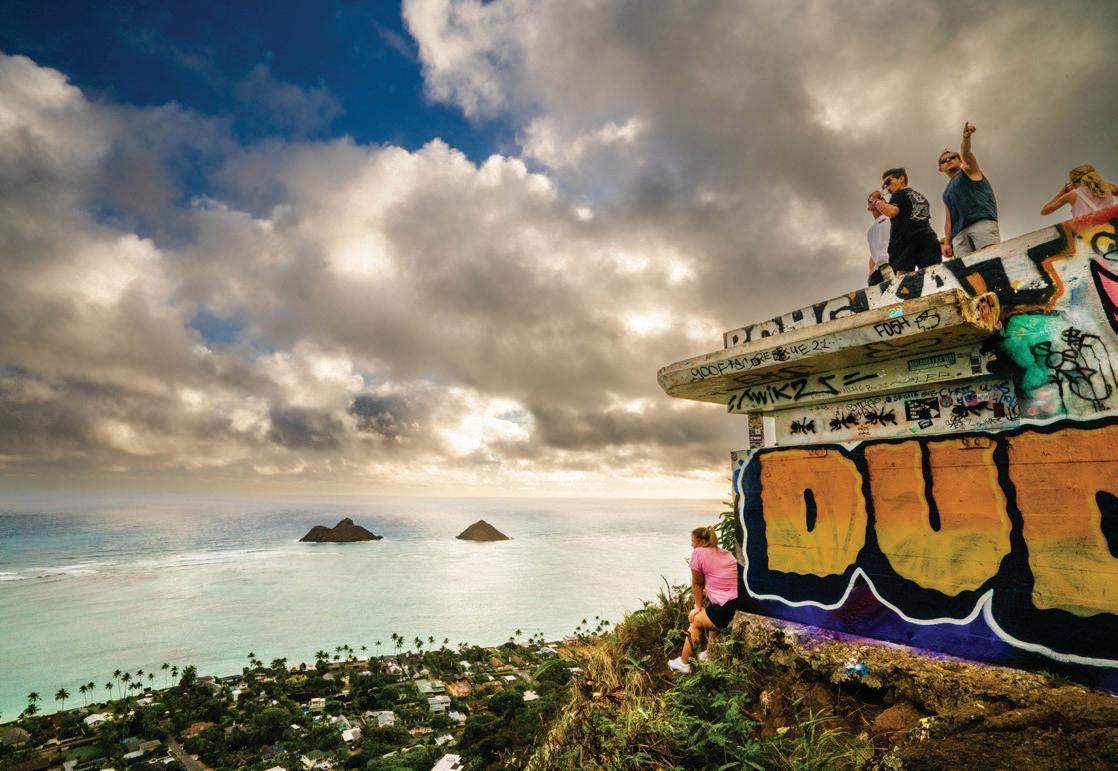
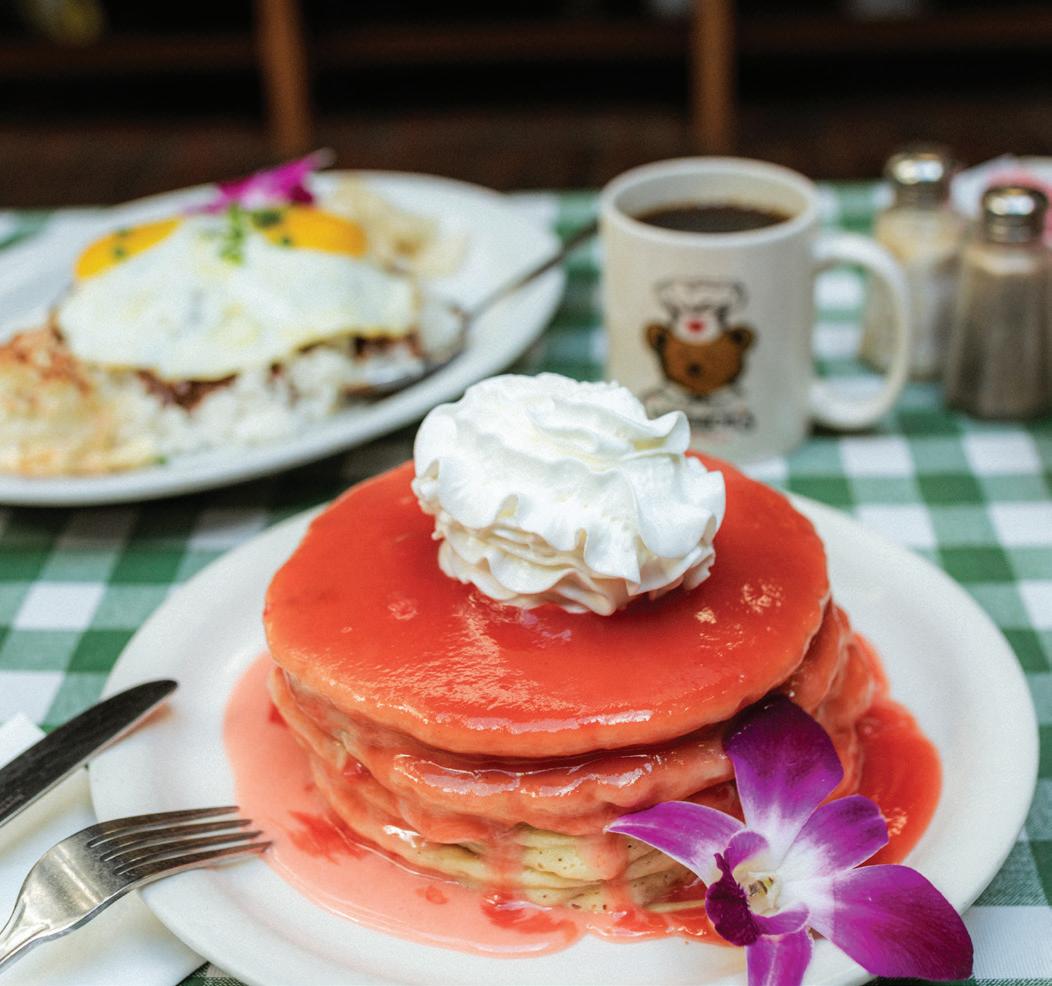
Start your day early at Morning Brew, a beloved local gem located inside the Kailua Shopping Center. Since opening its doors in 2008, this neighborhood favorite has become a morning ritual for locals and visitors, renowned for its flavorful, organic coffee, island-inspired cuisine and genuinely warm service. In addition to classic coffeehouse drinks, including Americanos, lattes and cappuccinos, the menu tempts with creative sips like the Honey Lavender Latte, made with house-made organic lavender syrup, and Coconut Thai Iced Espressos, made with dairy-free coconutsweetened condensed milk. If you are in the mood for something lighter, you can try the Ko‘olau Glow smoothie, packed with fresh fruits, spinach, macadamia nut milk and a boost of collagen. Pair your drink with a hearty breakfast burrito or toasted bagel, and you will be ready to take on the morning’s adventures.
Once you have had your morning caffeine or a fruit-filled smoothie to fuel your day, make your way to Lanikai for one of O‘ahu’s most breathtaking sunrise hikes, the Lanikai Pillbox Trail. Nestled in a quiet residential neighborhood, the trailhead begins along Kaelepulu Drive, just beyond the gates of a private community. This 1.6-mile, outand-back hike takes about an hour and a half to complete with an elevation gain of approximately 600 feet. Once your car is secured, head to the trailhead for an intense scramble and a nearvertical climb to get your heart pumping. After about ten yards, the trail opens to gentler slopes and sweeping coastal views.
As you ascend, you might see keiki (children) and a few adventurous dogs along the way, but do not be fooled, the trail can be challenging with
loose dirt, rocky scrambles and no guardrails to lean on. After about 30 minutes, you will reach the first of two historical pillbox bunkers constructed in 1943 by the United States military to monitor the air and sea. Many hikers pause here for photos before continuing another ten minutes to reach the second bunker. Popular year-round, the Lanikai Pillbox hike is an unforgettable way to greet the island’s golden sunrise and take in views of Kailua and the Ko‘olau Mountains.
After working up an appetite, head back to the heart of Kailua town for a well-earned breakfast at Over Easy, a cheerful café that has become a local favorite since its opening in 2016. This cozy spot blends creative island flavors with comforting classics in a relaxed, open-air setting that captures Kailua’s laid-back charm. For something savory, try the Potato N’ Eggs, an open-faced delight built on toasted French bread layered with smoky bacon, tangy tomato jam and two soft-boiled eggs topped with a silky potato purée. For those craving something sweet, the Custard French Toast is pure indulgence, featuring thick slices of Hawaiian sweet bread that are soaked in rich custard and griddled to golden perfection. To go with your meal, you can enjoy a cup of freshly brewed coffee, a refreshing glass of juice or even a mimosa to toast your morning in paradise.
Just a few minutes from Over Easy, Cinnamon’s has been a beloved breakfast staple in Kailua since 1985. Opened to nourish the community and share genuine aloha, this iconic spot continues to draw morning crowds eager for a taste of its island hospitality. The menu is filled with hearty local favorites such as fluffy three-egg omelets, classic steak-and-egg platters and island-inspired
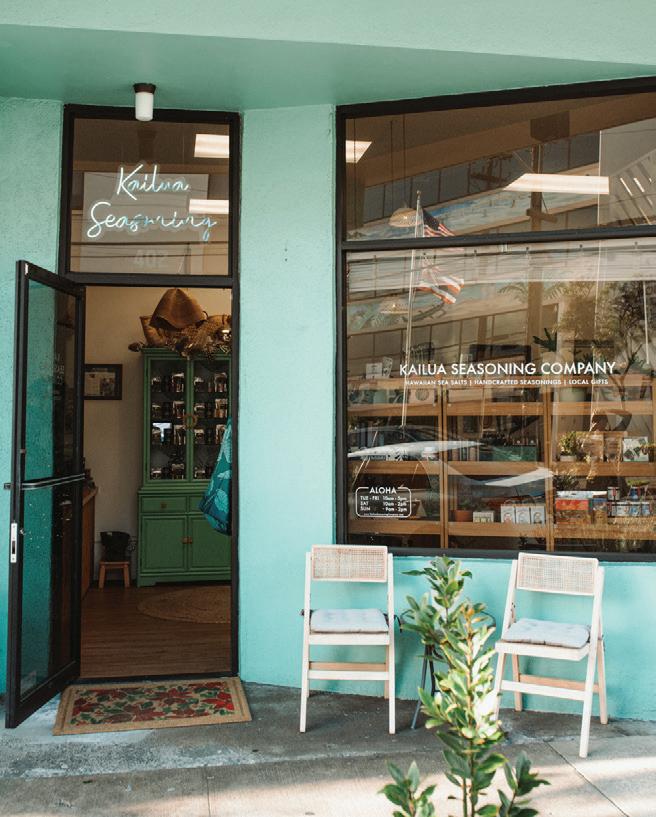
creations like the Lechon Kawali Moco, featuring crispy vinegar-shoyu (soy sauce) pork belly over rice and gravy. But it is the pancakes that have made Cinnamon’s truly legendary. Their decadent Red Velvet Pancakes are rich and velvety with a swirl of cream cheese frosting, while the Guava Chiffon Pancakes burst with tropical tang and airy sweetness. For something nostalgic, try the banana or chocolate chip stacks that are simple and comforting. Complement your meal with a steaming cup of coffee, creamy hot chocolate or tropical juices, and you will understand why Cinnamon’s has remained a Kailua classic for decades.
After a satisfying breakfast, take a stroll through Kailua’s charming boutiques. Just a short walk from Cinnamon’s Restaurant, Lemuria Crystal Shop is owned by Emi and Racu, Argentine natives whose profound aloha for the ‘āina (land) brought them to the islands. The pair began their journey selling handmade jewelry and crystals at local farmers’ markets, eventually opening their first store in Waialua on O‘ahu’s North Shore. Today, they operate three locations, each offering an extensive collection of crystals that are cleansed daily to maintain their highest integrity. From
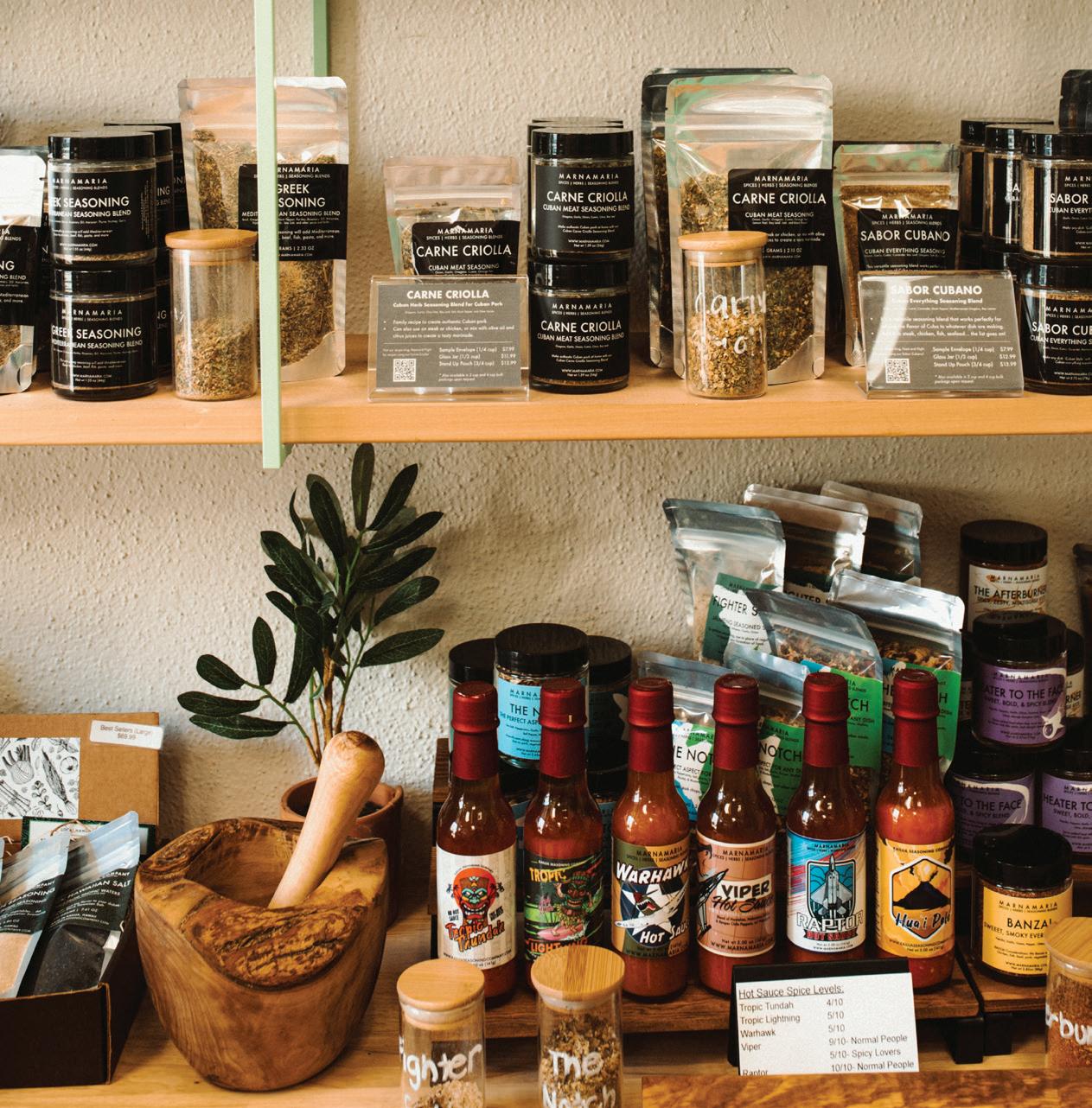
amethyst points to release negative energy to peach moonstone that connects you to the healing rhythms of the moon, Lemuria’s shelves are filled with treasures to captivate the eye and soothe the soul.
A short, two-minute stroll mauka (towards the mountains) takes you to Kailua Seasoning Company, where the vibrant flavors of Hawai‘i are crafted to elevate kitchens everywhere. Founded by husband-and-wife team Brittany and Sean Lum, the company has developed an impressive array of salts, seasonings and spice blends designed to suit every cooking need. Their salt lines are standout offerings, including Pink Akala Salt, featuring subtle earthy notes and Kiawe Smoked Salt, which brings a rich smokiness ideal for grilling, smoking or marinating meats. For those looking to experiment with island-inspired flavors, the store offers creative blends such as the Island Stir Fry, Paniolo Seasoning and Surfer’s Coffee Rub, which can transform everything from seafood to roasted vegetables into a taste of the islands. Beautifully packed and travel-ready, the jars and bags of salt and seasoning make perfect souvenirs or gifts, allowing friends and family back home to savor a little aloha in every meal.
(From far left): Hike to Lanikai Pillbox; get your day started at Cinnamon's; grab some spice at Kailua Seasoning Company.
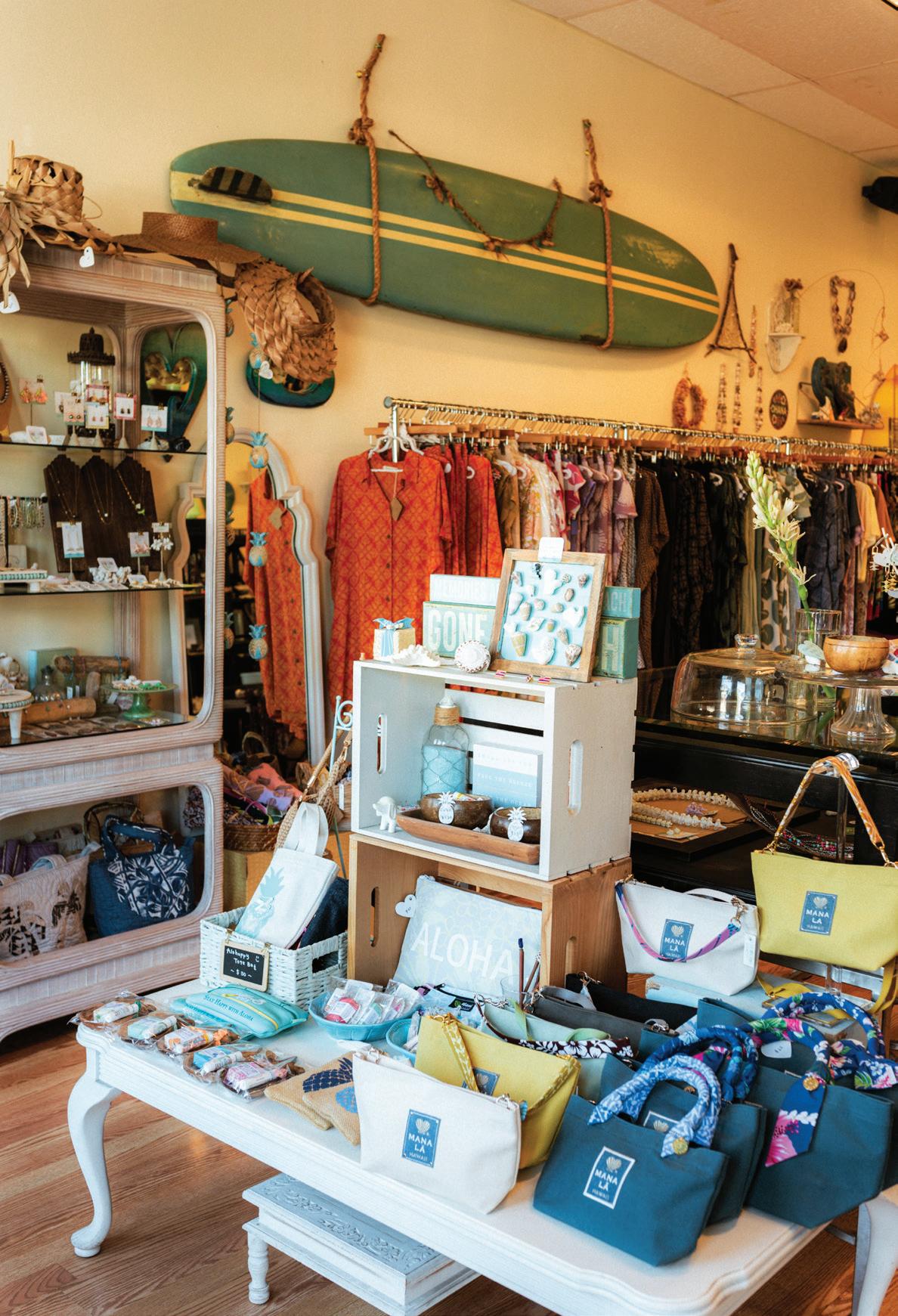
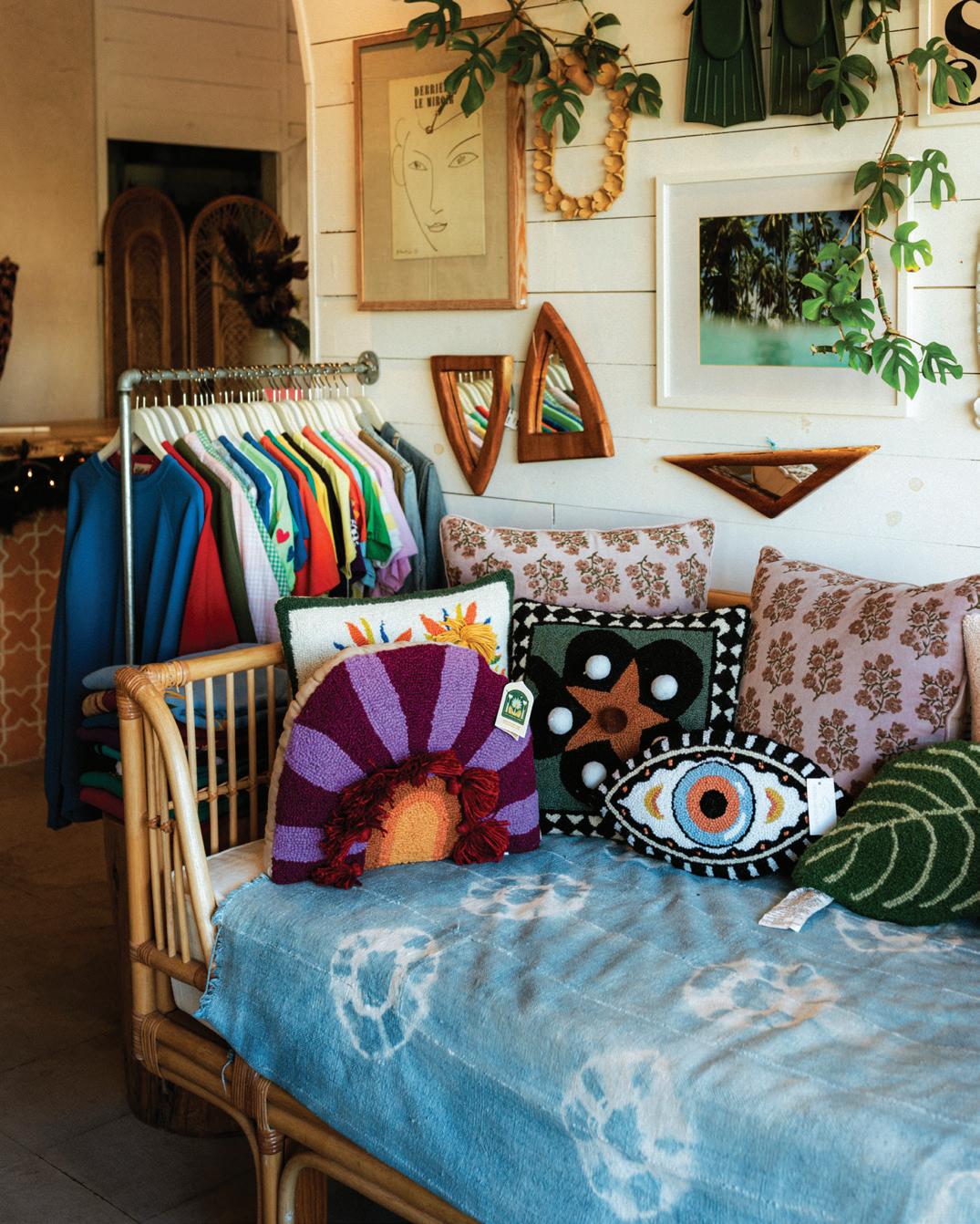
Just a block further mauka, and you will discover Blue Lani Hawaii, a vibrant boutique bursting with color, texture, and a curated collection of quality pieces. Known for its bold patterns inspired by the island’s lush landscapes, ocean waves and rich Hawaiian culture, the shop has become a mustvisit destination for locals and visitors alike, to the extent that some will drive from across the island just to browse its racks. The clothing at Blue Lani Hawaii effortlessly captures the relaxed yet stylish island lifestyle. From breezy spaghettistrap tanks to flowing maxi dresses featuring eye-catching quilt prints, each piece feels made for sun-soaked days and seaside strolls. The store also offers a range of accessories to complete your look, including eco-friendly tote bags, handcrafted jewelry and chic swimsuits.
On the same block, you’ll discover Olive Boutique and Oliver Men’s Shop, two stylish shops that embody Kailua’s effortless beach-chic aesthetic. Founded by husband-and-wife duo
Ali McMahon and Parker Moosman in 2008 and 2012, respectively, these boutiques celebrate coastal-inspired fashion and have become go-to destinations for island-inspired living. Browse their curated collections of cool aloha shirts, breezy resort wear and elevated basics — ideal for sun-soaked beach days, casual dinner dates or simply relaxing at home.
Continue your day immersed in the lush greenery that makes Kailua so special with a visit to the Kawainui Marsh Wildlife Sanctuary. Spanning 830 acres, this serene wetland was designated a Ramsar Wetland of International Importance in 2005 and stands as the largest remaining wetland in Hawai‘i. In ancient times, the area was home to a productive fishpond surrounded by dryland kalo (taro) fields, as well as banana, sugarcane and sweet potatoes. Today, the sanctuary serves as a vital conservation hub, providing protective habitat for native and endangered bird species, including the ae‘o
Find your style at Blue Lani and Olive Boutique.
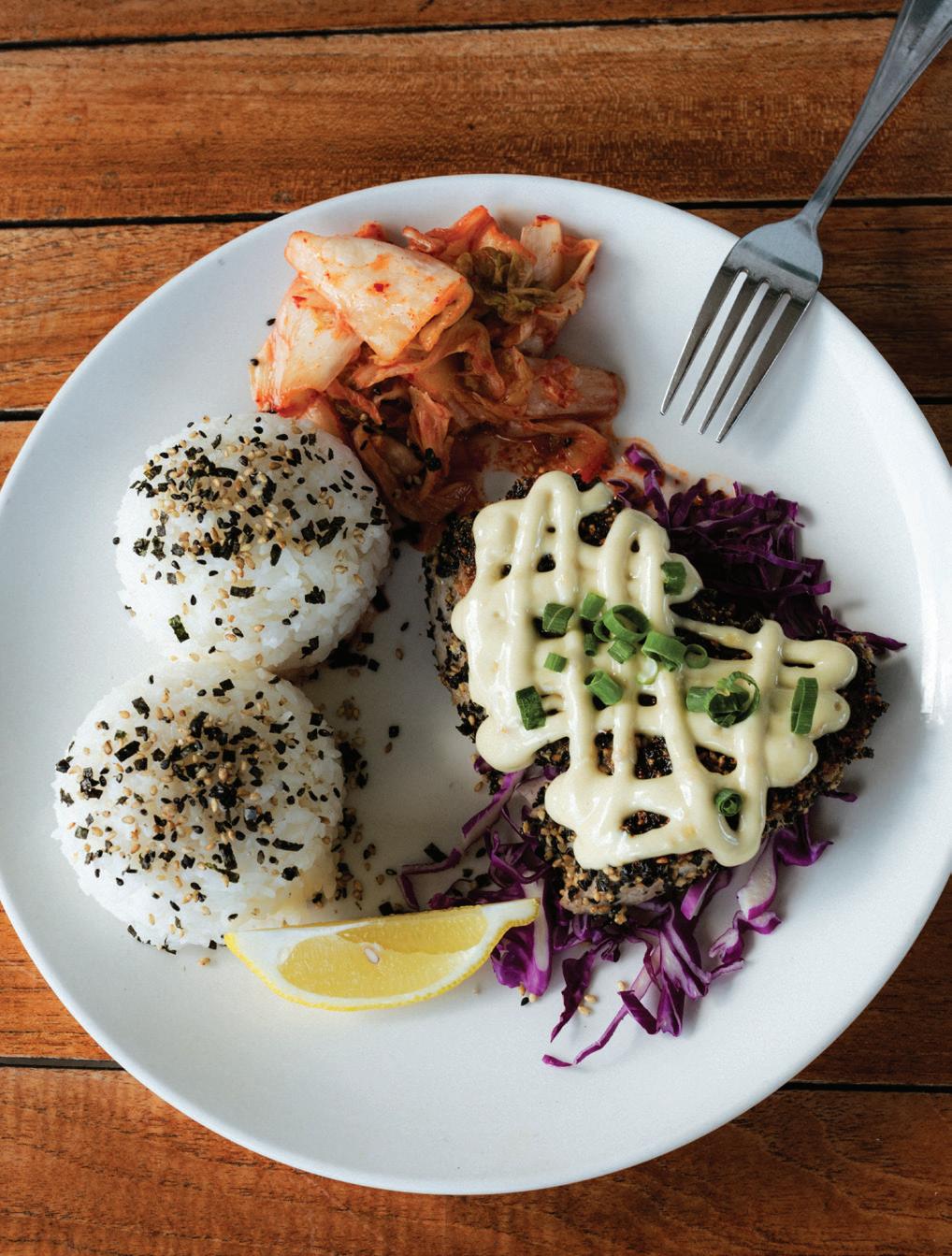
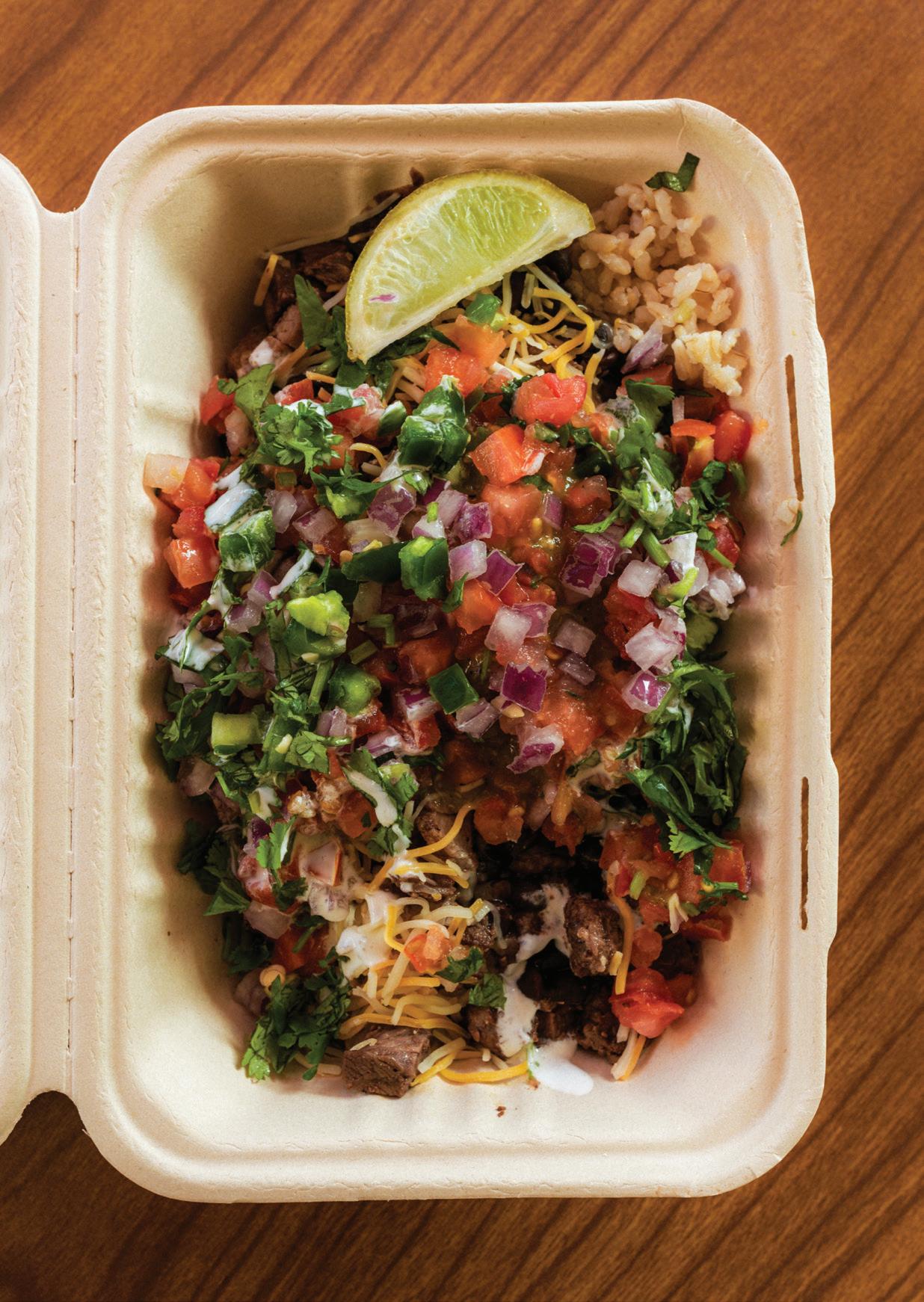
(black-necked stilt) and ‘alae ‘ula (Hawaiian moorhen). Visitors can enjoy a peaceful walk along the designated trails, observe these unique birds in their natural habitat and soak in the sweeping views of the surrounding mountains and waterways.
After a morning of shopping and exploring Kailua’s natural beauty, it is time to refuel, and you are in luck because the town of Kailua offers a wealth of charming cafés and restaurants. A community mainstay is Kalapawai Café & Deli, conveniently located at the entrance of Kailua Town. This family-owned eatery draws inspiration from Hawai‘i’s plantation and corner-store traditions, where small-town restaurants served as gathering hubs for the locals to share food and stories. At Kalapawai, the menu celebrates fresh, approachable fare that reflects the island lifestyle. Seafood lovers rave about the Furikake Fresh Catch, a fillet of fresh fish crusted in savory furikake (Japanese seaweed seasoning) and served
with fresh sides. Meanwhile, the French Dip Sandwich features tender roast beef and provolone, served on a garlic baguette with au jus and a side of horseradish. Hearty burgers, loaded pizzas and crisp, vibrant salads round out the menu, ensuring there is something for every appetite.
A short drive makai (towards the sea) will take you to Paniolos, one of Kailua’s go-to spots for fresh, flavorful lunches that highlight the best local ingredients. This casual eatery puts a twist on farm-to-table dining, allowing guests to build their perfect meal with burritos, tacos or a bowl. Start by choosing a base of fluffy lime rice or chopped romaine lettuce, then layer freshly made beans — black, pinto, or creamy refried — prepared daily from scratch and never canned. Next, guests select from protein options including free-range chicken, grass-fed beef, organic tofu and grilled vegetables. Finally, you can customize your creation with a colorful array of house-made toppings and sauces that add layers of flavors and textures to your dish.
Grab a fresh local bite at Kalapawai Café & Deli or Paniolos.
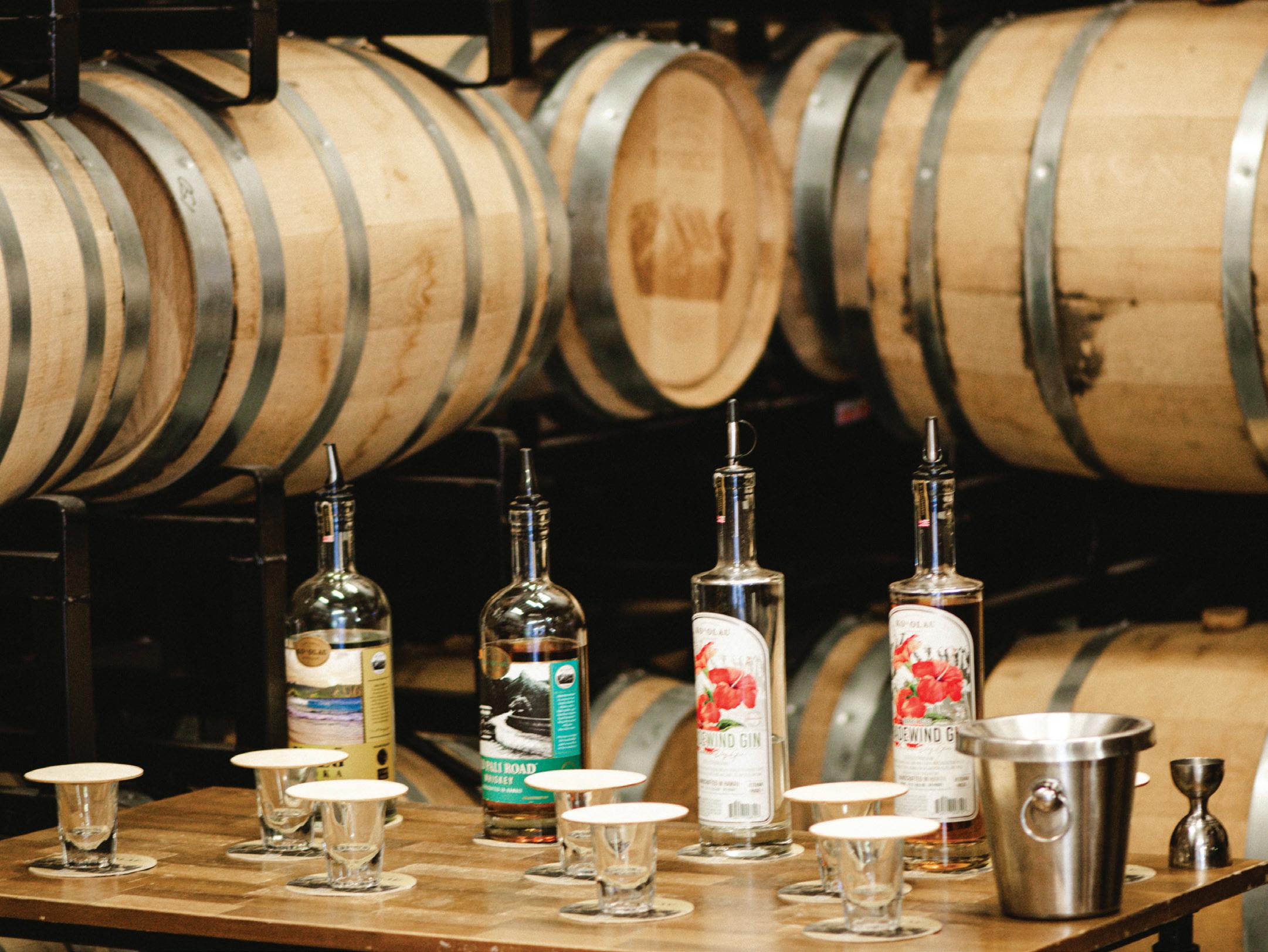
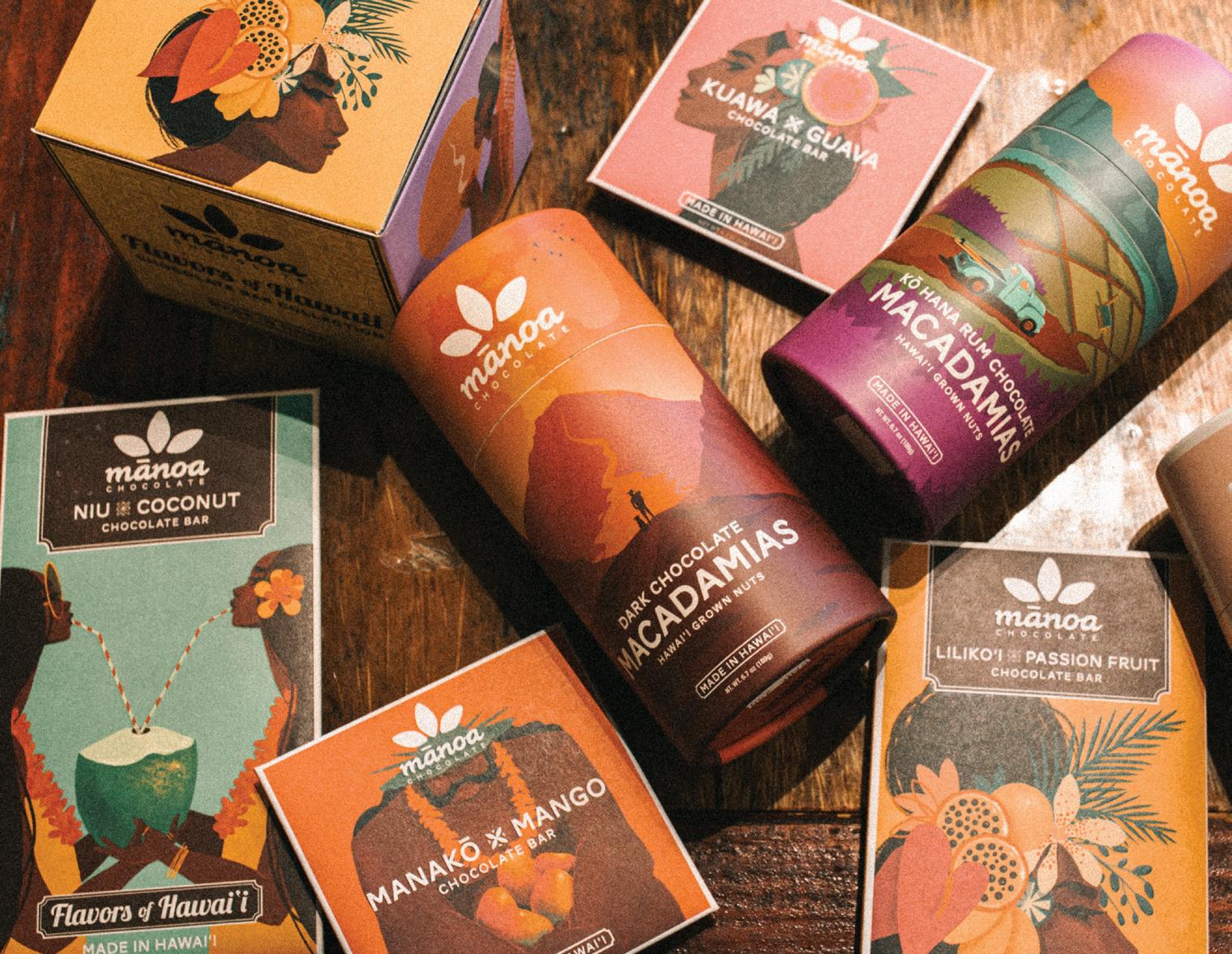
Take a distillery tour at Ko‘olau Distillery (above); taste some tree-to-bar chocolate at Mānoa Chocolate (left/below); cool off with a delicious treat from Please Come Again (opposite).
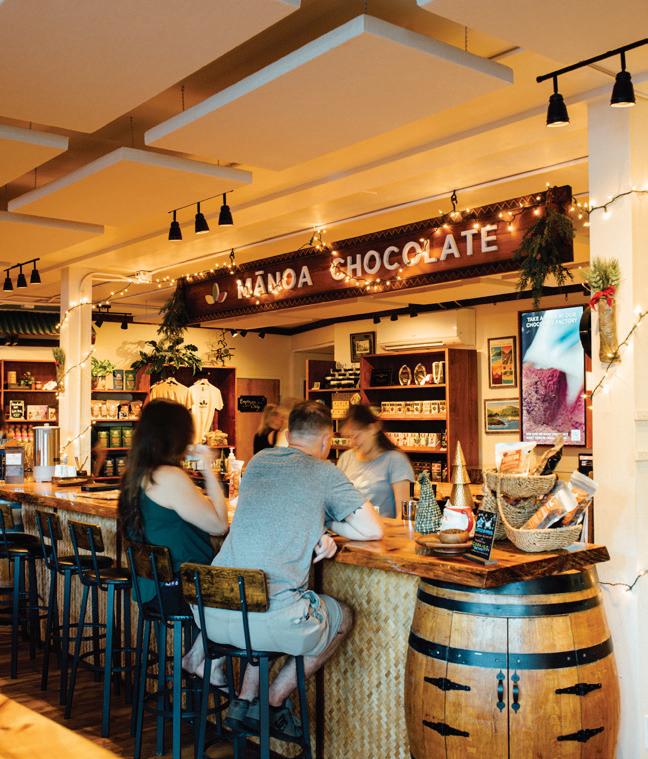
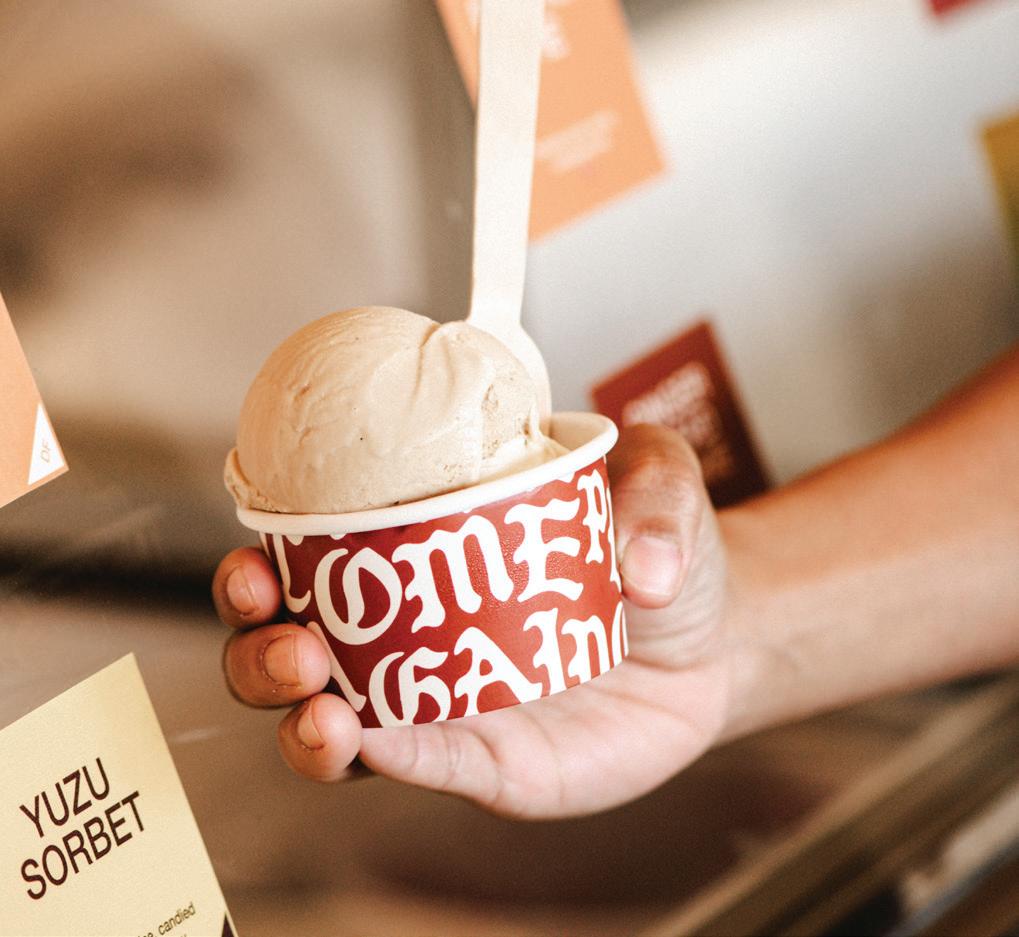
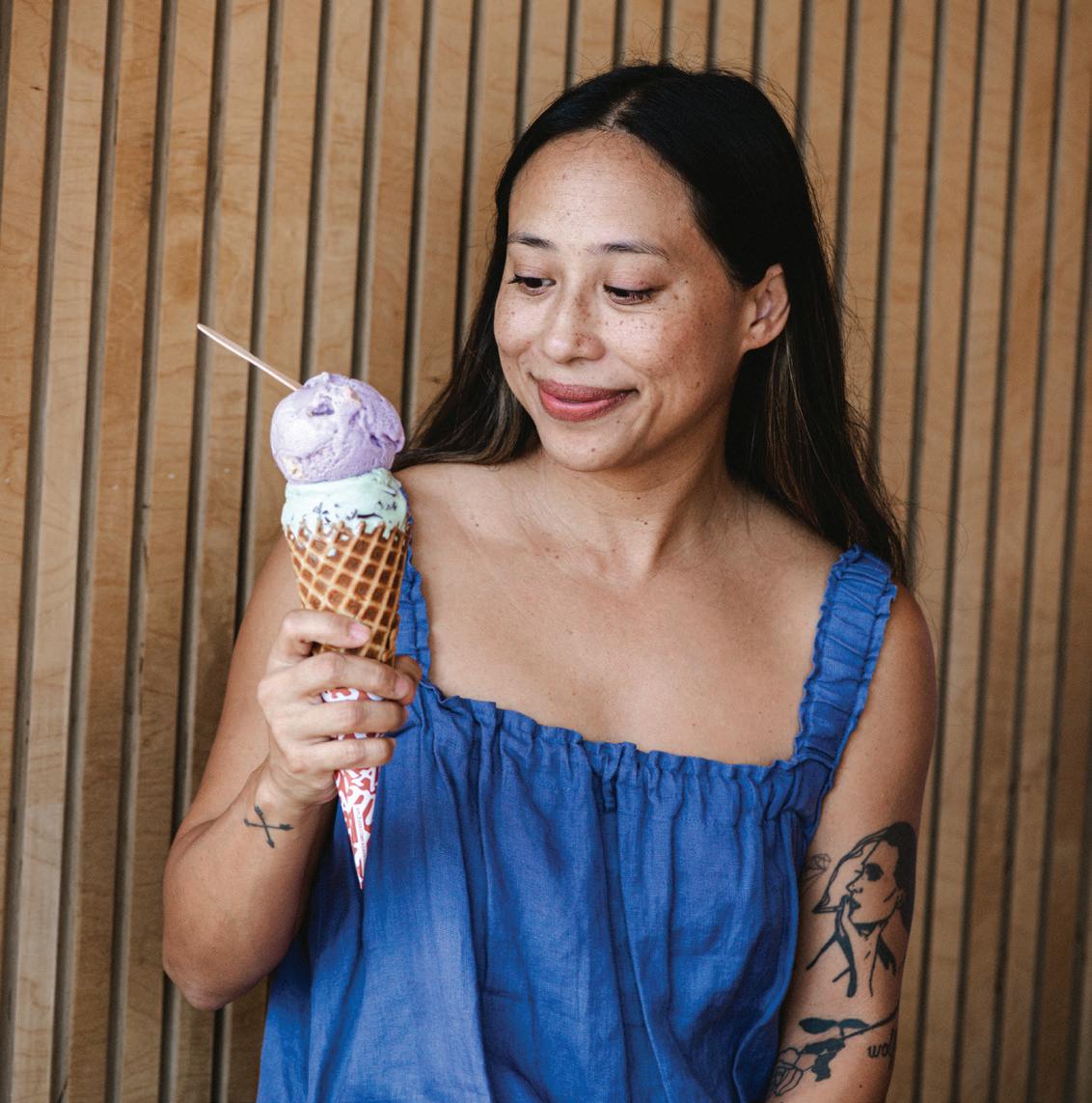
Spend your afternoons savoring the flavors of Kailua with one of its standout food and drink experiences. Just a short drive from town is Ko‘olau Distillery, a veteran-owned craft distillery, offering unforgettable tours that highlight the artistry behind their smallbatch spirits. Specializing in whiskey, gin, moonshine, vodka and bourbon, the distillery gives visitors an inside look at every step of the process. During the 45-minute to one-hour tour, you will learn how their signature Old Pali Road Whiskey comes to life, from mashing and fermentation to distillation and aging. Guides share insights into the craft and science behind their dangerously smooth whiskey, culminating in a tasting where you can sip and savor the complex flavors of their handcrafted spirits.
Right in the heart of Kailua, you will discover Mānoa Chocolate, a tree-to-bar company dedicated to crafting fine chocolate and chocolate-related products. This artisanal chocolatier combines expert craftsmanship with ethically sourced cacao from Hawai‘i and around the world, creating rich, complex flavors that delight chocolate lovers. Visitors can take a fascinating factory tour and experience the chocolate-making process — from roasting to grinding and molding — while learning the story of the passionate team behind the brand. The 45-minute experience culminates in a tasting of their signature chocolate in various forms, allowing you to savor its nuanced flavors and aromas. It is an indulgent, educational and utterly delicious way to spend your afternoon.
As your afternoon winds down, treat yourself to something sweet and refreshing at Please Come Again,
a craft ice cream shop that blends Asian and Hawaiian inspirations, opening to rave reviews in 2024. With sixteen rotating flavors daily, including non-dairy and vegan options, the shop is a playground for adventurous taste buds. Each ice cream base is crafted without high-fructose corn syrup, GMOs, chemicals or eggs. Standouts from their flavor vault include Miso Salted Caramel, Yuzu Sorbet and Mānoa Mac Nut Chocolate, featuring chocolate from Mānoa Chocolate itself. You can enjoy your treat in a cup, a classic sugar cone, a handmade waffle cone or a tasting flight of four flavors — the perfect way to explore the story of Hawai‘i through its distinctive flavors.
Before the sun dips below the horizon, make one last stop to soak in the island’s beauty at Kailua Beach Park. This stunning, crescent-shaped stretch of sand spans 2.5 miles and offers something for everyone, from swimming, surfing and diving to parasailing or simply lounging on the soft, golden shores. As the day winds down, take a moment to watch the cobalt waters shimmer and deepen to navy under the glow of the setting sun, a serene reminder of Kailua’s breathtaking coastal charm.
As evening approaches, Kailua comes alive with the enticing aromas of global cuisine. Among the town’s standout dining destinations is Goen Dining + Bar, located within the stylish Lau Hala Shops.
This contemporary, island-chic restaurant, owned by celebrity chef Roy Yamaguchi, captures the spirit of modern Hawai‘i with inventive small plates that blend Asian finesse and American comfort. Begin your meal with the Fry Basket, a playful assortment of portobello mushroom fries served alongside herbed
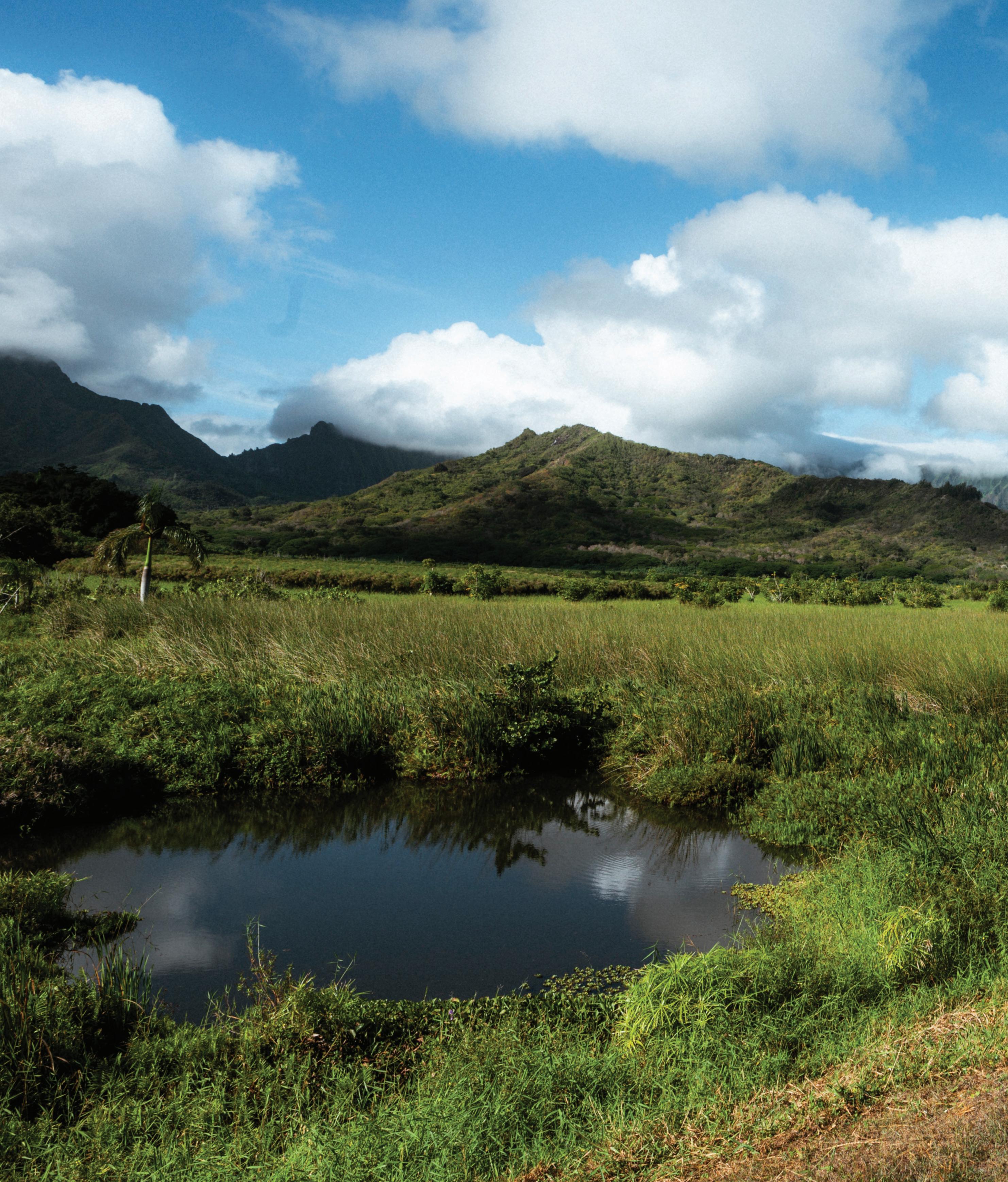
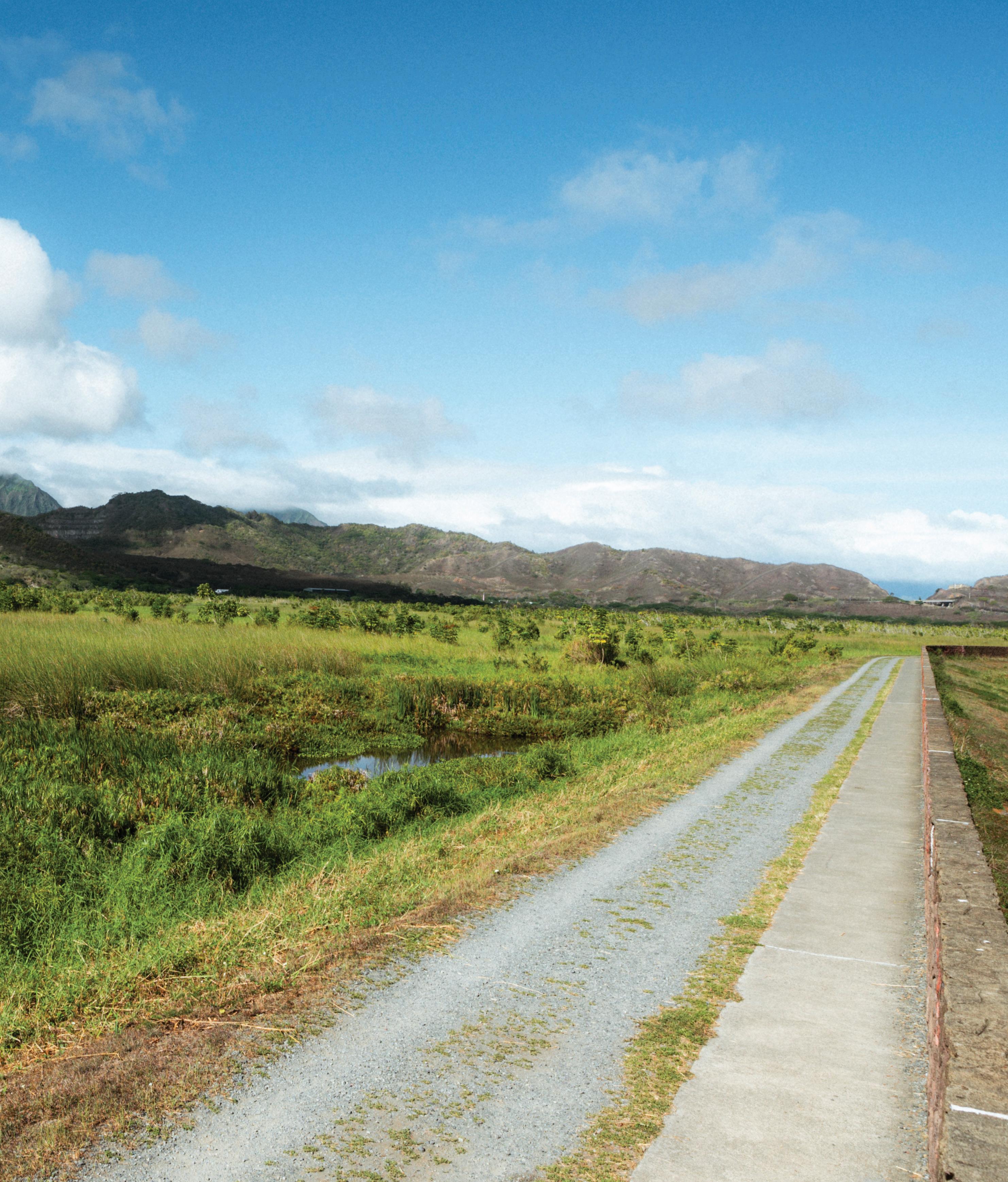
Kawainui Marsh
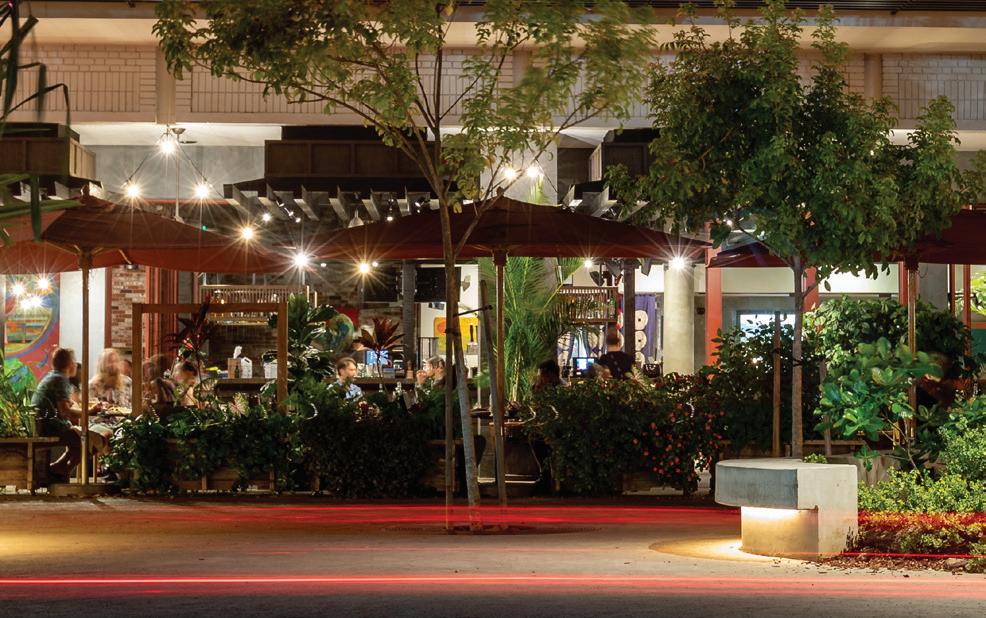
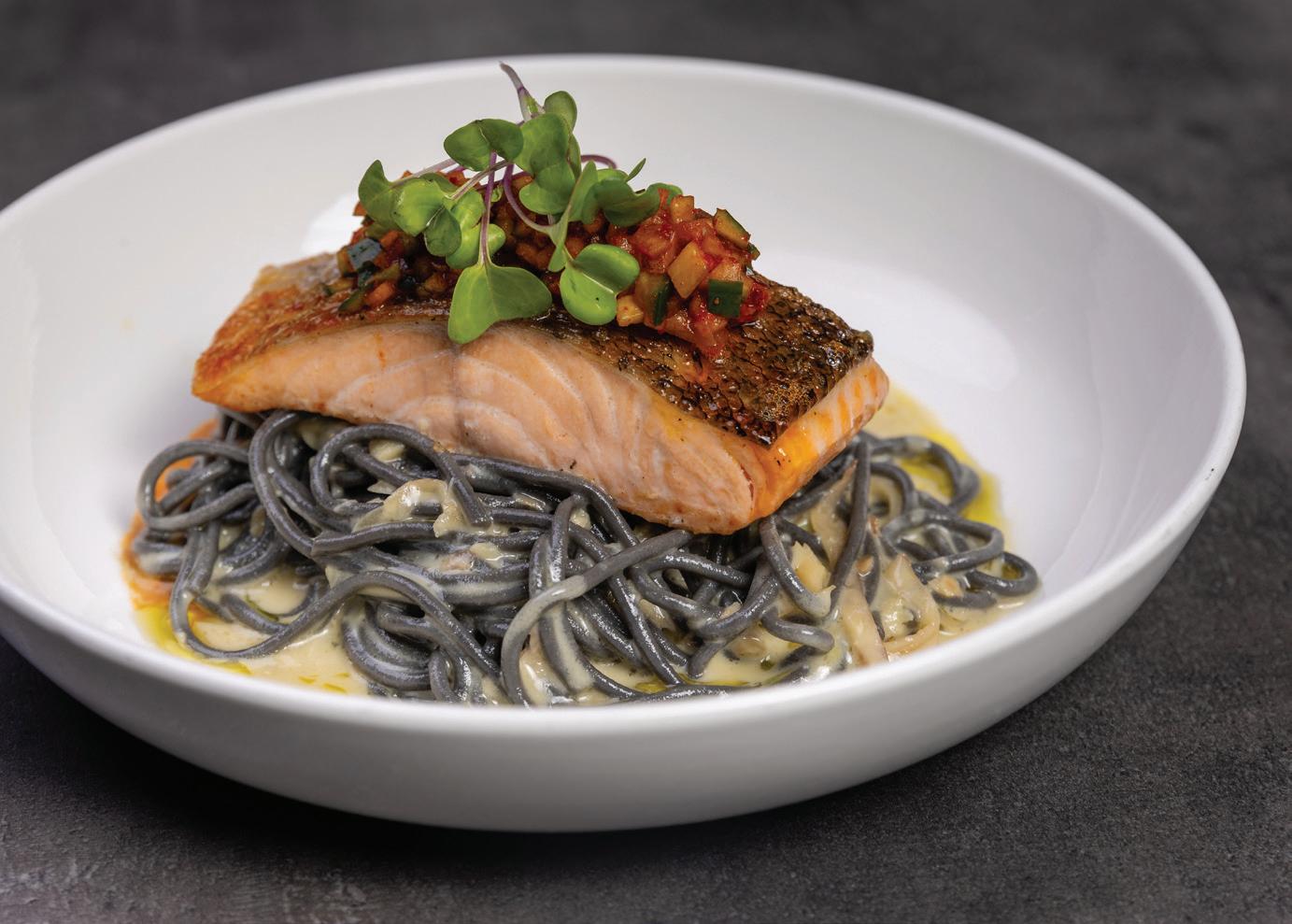
cream cheese, or the Crispy Brussels Sprouts & Cauliflower, tossed with toasted cashews, Dijon vinaigrette and a tangy Za’atar Greek Yogurt. For entrées, the menu journeys from land to sea with dishes like the Crispy Skin Smoked Salmon, resting on a bed of Onda squid ink pasta; Misoyaki Butterfish with soba (buckwheat) noodles; and the crowd-favorite Braised Beef Short Ribs, served atop creamy polenta. Pair your meal with a handcrafted cocktail, local brew or glass of wine from the refined list and linger for dessert for a sweet finale to a meal that embodies Kailua’s effortless sophistication.
Another standout on Kailua’s culinary map is Faria, a family-run gem that pays heartfelt homage to the immigrant plantation workers who helped shape modern Hawai‘i. Rooted in Portuguese heritage and steeped in recipes passed lovingly through generations, dinner at Faria feels less like a restaurant experience and more like a cherished evening at a grandmother’s table. Begin with Sardinhas, tender imported Portuguese sardines simmered in a rich garlic-tomato confit with briny capers, served alongside house-baked hearth bread. For entrées, explore the flavors of the old country with the Caldeirada de Pescadora, a soulful seafood stew brimming with clams, mussels, shrimp and cod; or enjoy Granny Pereira’s Piri Piri Chicken, slow roasted in a savory marinade and served atop tender lemon potatoes. And save room for Faria’s desserts that feature sweets rarely found elsewhere in the islands. Try the Medeiros Ohana Celebration Cake, topped with silken chocolate namelaka (Japanese-style ultra-creamy frosting) and ginjinha-soaked cherries, or savor the Pasteis de Nata, a delicate Portuguese custard tart with perfectly blistered, flaky pastry. At Faria, tradition
and island spirit come together in a warm embrace, creating a dining experience that feels both timeless and deeply personal.
For a taste of Italy right in the heart of Kailua, step into Baci Bistro, where European charm and island warmth blend seamlessly. Since opening its doors in 1997, this beloved neighborhood institution has been celebrated for its gracious hospitality and authentic Italian fare. Begin with timeless antipasti (appetizers) such as Prosciutto e Melon, delicate slices of Parma ham draped over sweet melon, or the Cozze all’Aglio e Pomodoro, a fragrant medley of black mussels simmered in fresh tomatoes, garlic and a hint of heat from red peppers. Baci Bistro’s risottos are a house favorite, slowly cooked to perfection and infused with deep layers of flavor, but the true stars of the menu are the pastas. From Linguine Nere con Capesante, squid ink linguine tossed with scallops, mushrooms and sun-dried tomatoes in a saffron cream sauce, to the Ravioli del Giorno, a chef’s daily creation of handmade ravioli, their pastas are a journey through Italy’s regional traditions. The menu also features expertly prepared chicken, fish, veal and pork classics such as chicken marsala, veal scaloppine and grilled pork chops, which are comforting and never go out of style. End your meal on a sweet note with one of Baci Bistro’s decadent desserts, such as a slice of Tiramisu, Mascarpone Cheesecake, crisp Cannoli or Gelato Affogato.
From a sunrise hike at Lanikai to dinner under the stars, a day in Kailua unfolds like a postcard come to life. Here, island living is not just a pace, it is a feeling that stays with you long after you have left its shores.
Finish your day off right at Goen Dining + Bar by Roy Yamaguchi.
Your Guide to Kailua
Morning Brew; located in Kailua Shopping Center; 600 Kailua Road, Kailua; (808) 262-7770; Open daily from 6 a.m. to 4 p.m.; morningbrewhawaii.com.
Lanikai Pillbox Hike; Trailhead located along Kaelepulu Drive.
Over Easy; 418 Ku‘ulei Road, #103, Kailua; (808) 260-1732; Open Wednesday through Friday from 7 a.m. to 1 p.m., and Saturday and Sunday from 7 a.m. to 1:30 p.m.; overeasyhi.com.
Cinnamon’s Restaurant; 315 Uluniu Street, Kailua; (808) 261-8724; Open daily from 7 a.m. to 2 p.m.; cinnamons808.com.
Lemuria Crystal Shop; 315 Uluniu Street, Suite 101, Kailua; (808) 492-9467; Open Monday through Friday from 9 a.m. to 5 p.m., Saturday from 9 a.m. to 6 p.m. and Sunday from 9 a.m. to 3 p.m.; lemuriacrystalshop.com.
Kailua Seasoning Company; 402 Uluniu Street, Kailua; (808) 210-8568; Open Tuesday through Friday from 10 a.m. to 5 p.m. and Sunday from 10 a.m. to 2 p.m.; kailuaseasoningcompany.com.
Blue Lani Hawaii; 45 Ho‘olai Street, Suite B, Kailua; (808) 261-2622; Open daily from 10 a.m. to 4 p.m.; bluelanihawaii.com.
Olive Boutique; 43 Kihapai Street, Kailua; (808) 263-9919; Open daily from 10 a.m. to 5 p.m.; oliveandoliverhawaii.com.
Oliver Men’s Shop; 49 Kihapai Street, Kailua; (808) 261-6587; Open daily from 10 a.m. to 5 p.m.; oliveandoliverhawaii.com.
Kawainui Marsh Wildlife Sanctuary; Parking located off Kaha Street; dlnr.hawaii.gov/wildlife/ sanctuaries/kawainui.
Kalapawai Café & Deli; 750 Kailua Road, Kailua; (808) 262-3354; Open Monday through Friday from
6:30 a.m. to 9 p.m., and Saturday and Sunday from 7 a.m. to 9 p.m.; kalapawaimarket.com.
Paniolos; located in Kailua Shopping Center, 600 Kailua Road, Suite 104, Kailua; (808) 261-4291; Open daily from 11 a.m. to 8 p.m.; panioloshawaii. com.
Ko‘olau Distillery; 905 Kapa‘a Quarry Place, Building 50, Unit 5014, Kailua; (808) 261-0685; Distillery hours are Sunday through Thursday from 12 p.m. to 7 p.m., and Friday and Saturday from 12 p.m. to 9 p.m.; koolaudistillery.com.
Mānoa Chocolate; 333 Uluniu Street, #103, Kailua; (808) 263-6292; Open Monday through Wednesday from 10 a.m. to 5 p.m., Thursday from 10 a.m. to 7 p.m., Friday and Saturday from 9 a.m. to 7 p.m., and Sunday from 9 a.m. to 5 p.m.; manoachocolate.com.
Please Come Again; 322 Ku‘ulei Road, Kailua; Open Sunday through Thursday from 1 p.m. to 8 p.m., and Friday and Saturday from 1 p.m. to 9 p.m.; pleasecomeagainhawaii.com.
Kailua Beach Park; 526 Kawailoa Rd., Kailua; (808) 768-8980; Open daily from 5 a.m. to 10 p.m.
Goen Dining + Bar; located in the Lau Hala Shops; 573 Kailua Road, Kailua; (808) 263-4636; Open Monday through Thursday from 4 p.m. to 8 p.m., Friday and Saturday from 12 p.m. to 3 p.m. and 4 p.m. to 8:30 p.m., and Sunday from 12 p.m. to 3 p.m. and 4 p.m. to 8 p.m.; Reservations required; royyamaguchi.com/goen-kailua.
Faria; 306 Ku‘ulei Road, Kailua; (808) 200-4953; Open Wednesday through Saturday from 5 p.m. to 10 p.m.; fariahawaii.com.
Baci Bistro; located in Kailua Professional Center; 30 Aulike Street, Kailua; (808) 262-7555; Open Sunday through Thursday from 5 p.m. to 8 p.m., and Friday and Saturday from 5 p.m. to 9 p.m.; bacibistro.com.
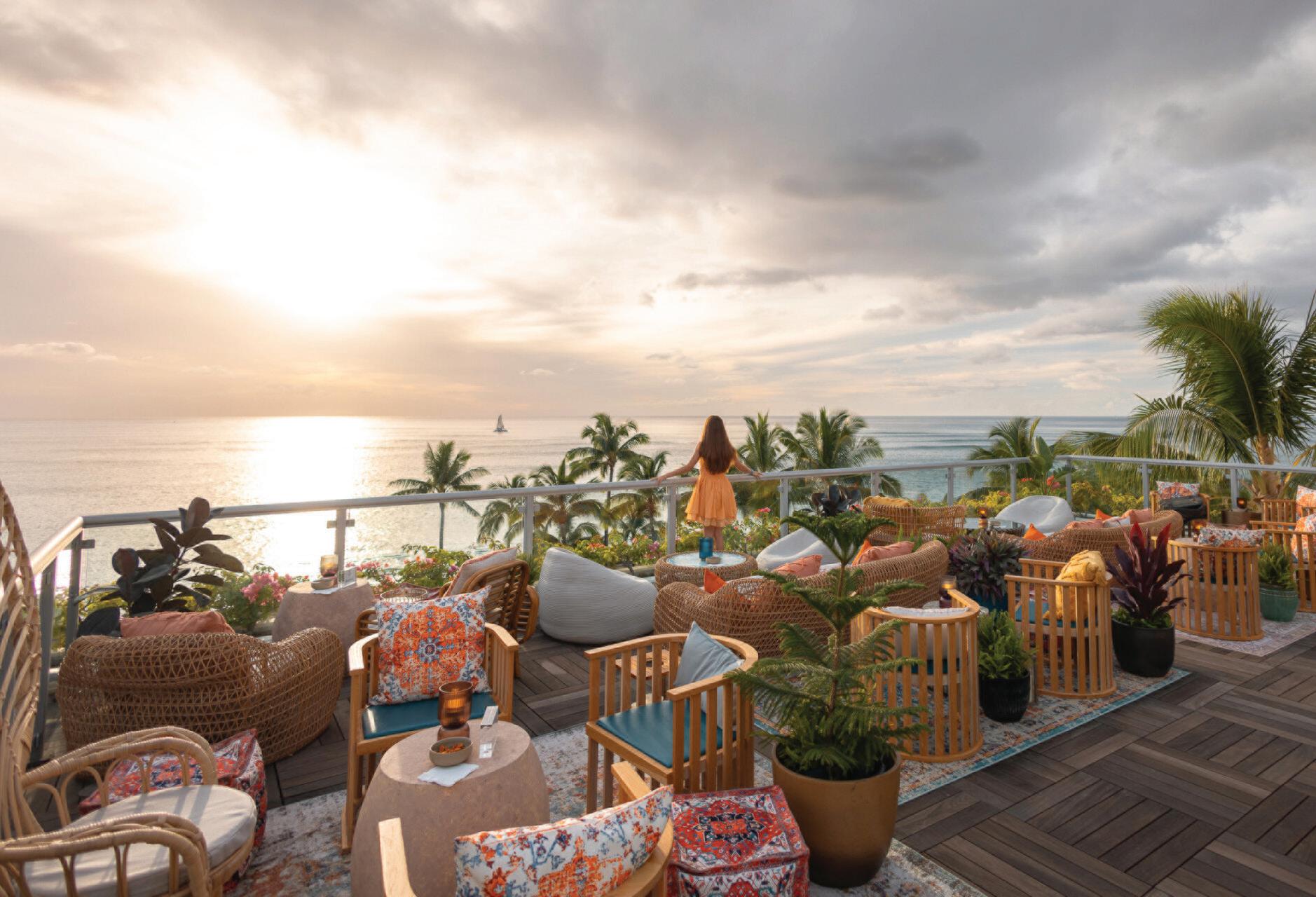
Rooftop Bliss
As the sun drifts towards the horizon, eyes turn to five | one | six. Inspired by the allure and mystique of speakeasys, the rooftop bar draws guests through an unassuming entrance into a chic retreat where Pacific sunsets and elevated cocktails set the tone for the evening. Located within the Four Seasons Resort O‘ahu at Ko Olina, five | one | six offers a stellar lineup of Hawaiian-crafted cocktails, signature drinks and thoughtfully composed zero-proof mocktails, alongside a curated selection of spirits, wines by the glass and select beers. Plush couches and lounge chairs create intimate pockets for couples and groups to gather, soaking up the area’s quiet glamor while sipping drinks as visually stunning as they are delicious. Highlights include the
HI-State Margarita, crafted with tequila married with flavors of hibiscus, jalapeño, limes and agave, as well as vibrant zero-proof punches that deliver all the flavor and fun of a cocktail without the alcohol. With a speakeasy-inspired intrigue and an atmosphere that feels both intimate and elevated, five | one | six infuses Ko Olina with a distinctive energy that is as much about the mood as what is in the glass.
five | one | six at the Four Seasons Resort O‘ahu at Ko Olina; 92-1001 Olani Street, Kapolei; (808) 679-0079; Open Thursday through Saturday from 4 p.m. to 7 p.m.; fourseasons.com/oahu/dining/ lounges/five-one-six.
Sweet Pairing
Guests are invited to sip and savor some of the finest flavors in Hawai‘i through a curated experience at the House of Mana Up, located on the ground level of the Royal Hawaiian Shopping Center. The immersive experience brings together the flavors of Kō Hana Hawaiian Agricole Rum and Mānoa Chocolate in Hawai‘i’s first-ever chocolate-and-rum tasting. Through a thoughtfully curated tasting of five Agricolestyle rums made from rare Hawaiian sugarcane alongside small-batch, bean-to-bar chocolate, the stories, terroir and craftsmanship of these local farms are brought into the heart of Waikīkī. Private groups unlock the opportunity to explore additional rum tastings, bespoke pairings and exclusive small-batch creations, adding depth to an already remarkable experience. This pairing is especially meaningful to Mana Up, which launched in 2018 as an accelerator and venture fund to
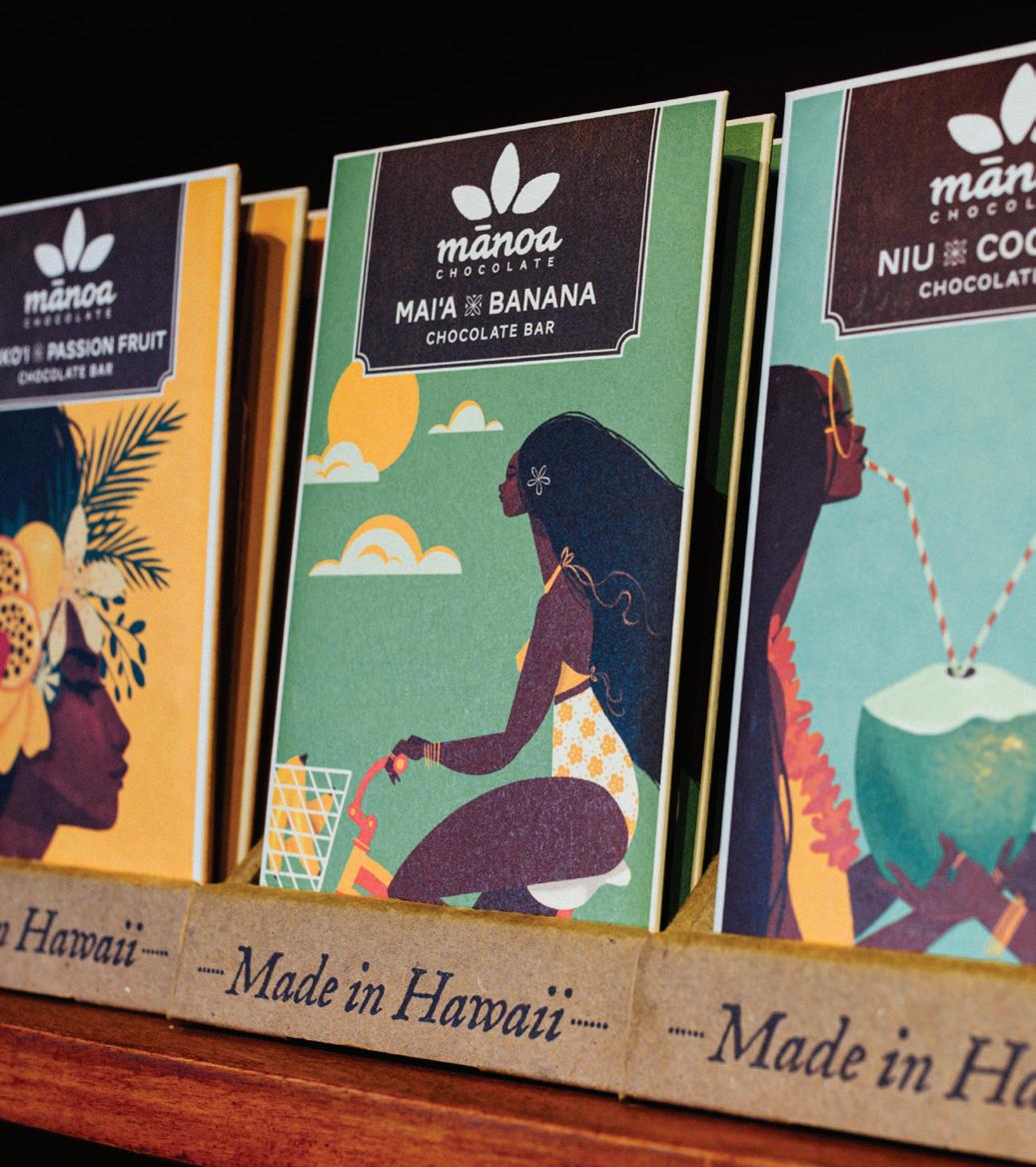
help Hawai‘i-based companies scale globally, since both Kō Hana Hawaiian Agricole Rum and Mānoa Chocolate were part of their first cohort. With tastings available daily, both on a walk-in and pre-booked basis, this 30-minute experience concludes with a souvenir dram to take home, extending the journey beyond Waikīkī and offering a lasting reminder of the people, land and traditions that make these pairings truly unforgettable.
House of Mana Up at the Royal Hawaiian Shopping Center; 2201 Kalākaua Avenue, Honolulu; houseofmanaup.com/blogs/letsmana-up-blog-hawaii-shopping-tips/try-firstrum-and-chocolate-pairing-experience-inwaikiki; Tastings available daily beginning at 11 a.m. and ending at 10 p.m.; Available for guests 21 years and older.
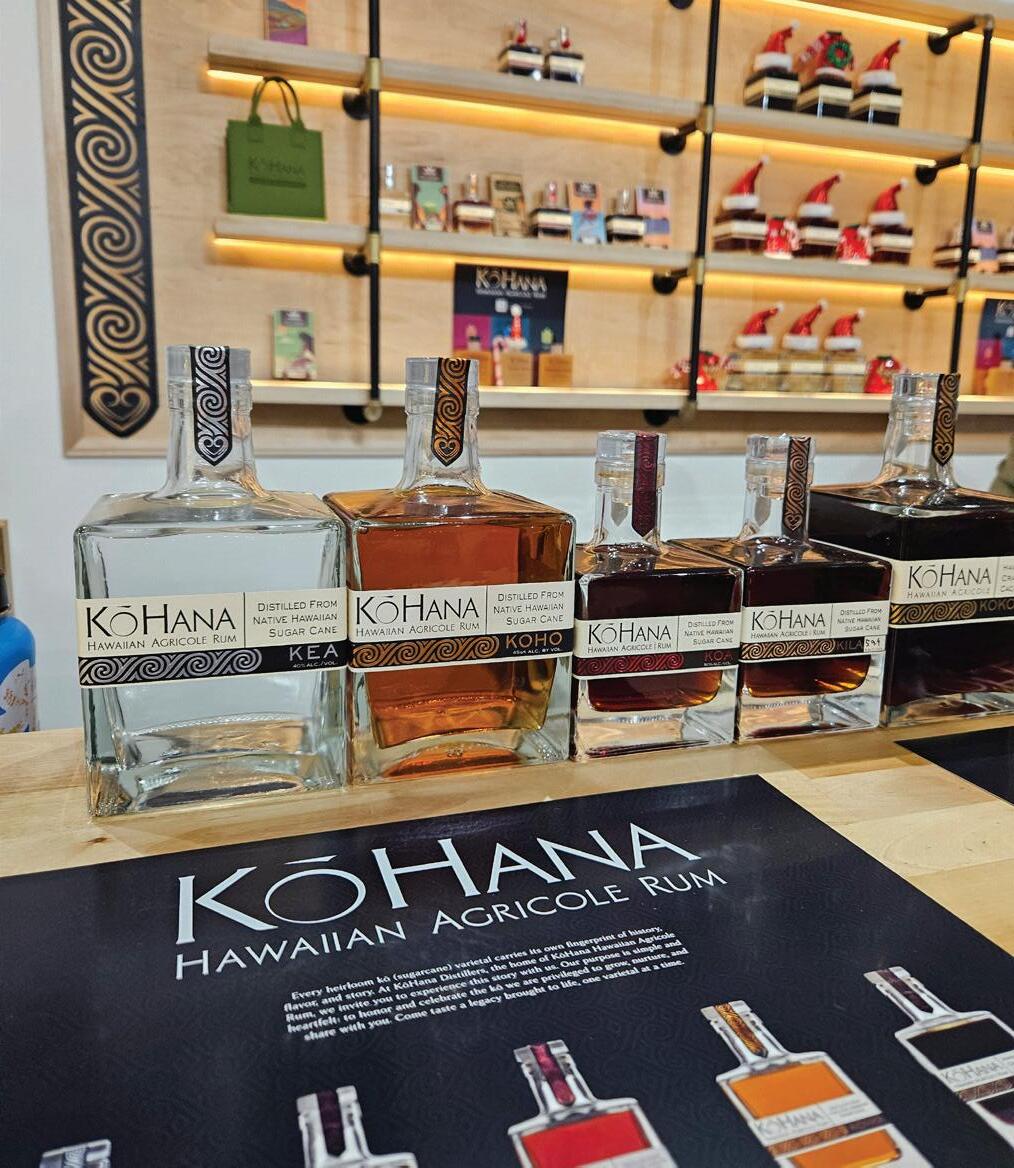
Baker's Delight
Opened in the summer of 2025, Bakery on King marks an exciting new chapter for its parent company, Honolulu Coffee Company. Led by Brian Sung, the company’s Director of Culinary Operations and a classically trained Le Cordon Bleu pastry chef, the café offers an enticing selection of handmade pastries paired with toptier coffee and tea. Guests can indulge in flaky, golden croissants baked daily, ranging from classic buttery croissants to inventive flavors like corn chowder and kimchi-SPAM. The pastry case also features other options, including vanilla bean scones, fluffy guava bread, homemade cookies, muffins and more. Heartier fare includes options such as avocado toast topped with pickled onions and liliko‘i vinaigrette and loco mocos finished
with their signature coffee-infused demi-glace. To sip, guests can choose from an extensive menu, including drip Kona coffee, flavored lattes and the popular Hawaiian latte made with coconut and macadamia nut syrups. The beverage selection also includes hot cocoa, fresh juices, iced matcha, smoothies and refreshing tea drinks like the Yuzu Palmer, infused with bright Japanese citron. With its warm atmosphere, locally inspired menu and community spirit, Bakery on King invites guests to gather, relax and enjoy a taste of Honolulu hospitality.
Bakery on King; 2643 S. King Street, Honolulu; (808) 202-2562; Open daily from 6 a.m. to 4 p.m.; honolulucoffee.com/pages/bakery-on-king.
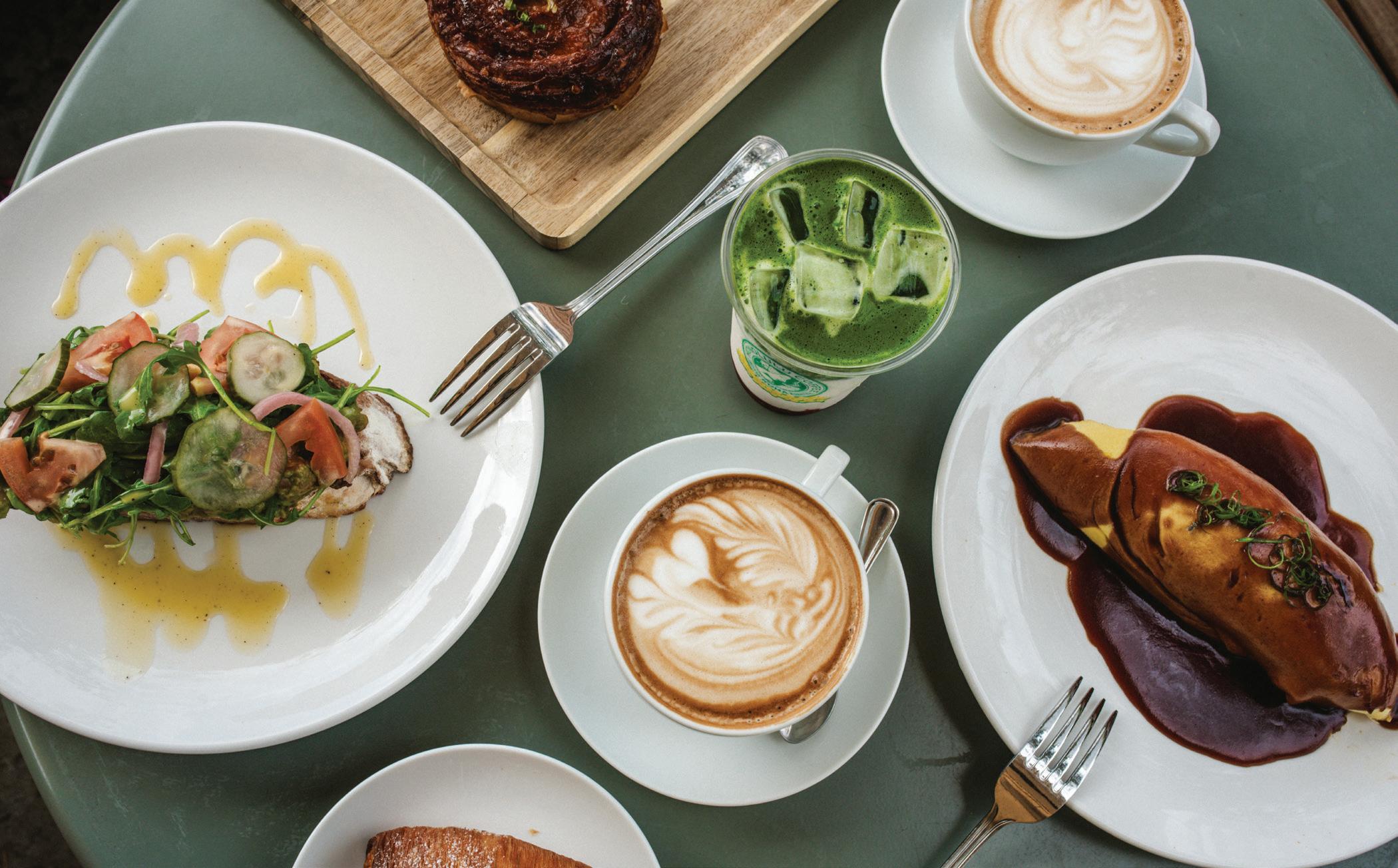
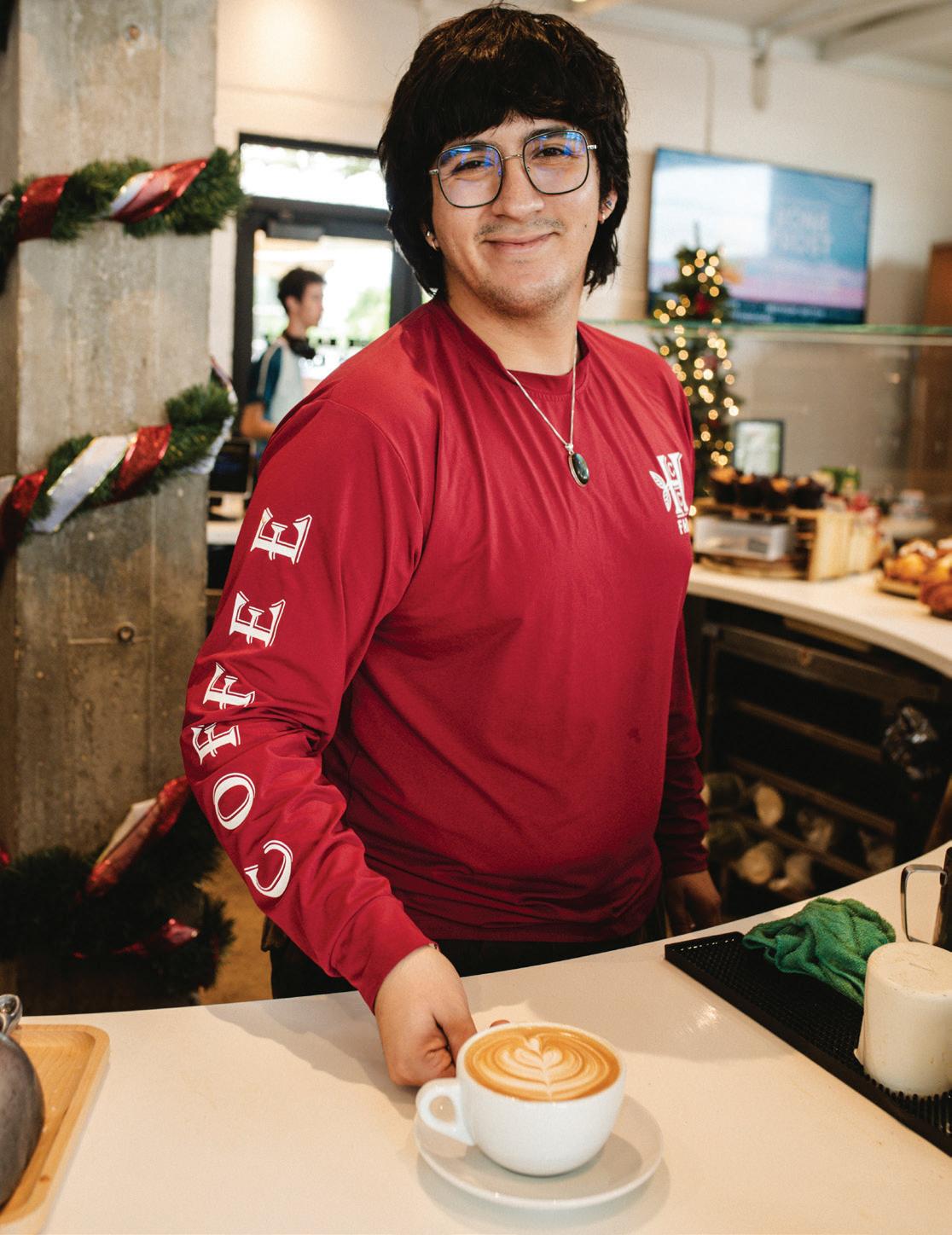
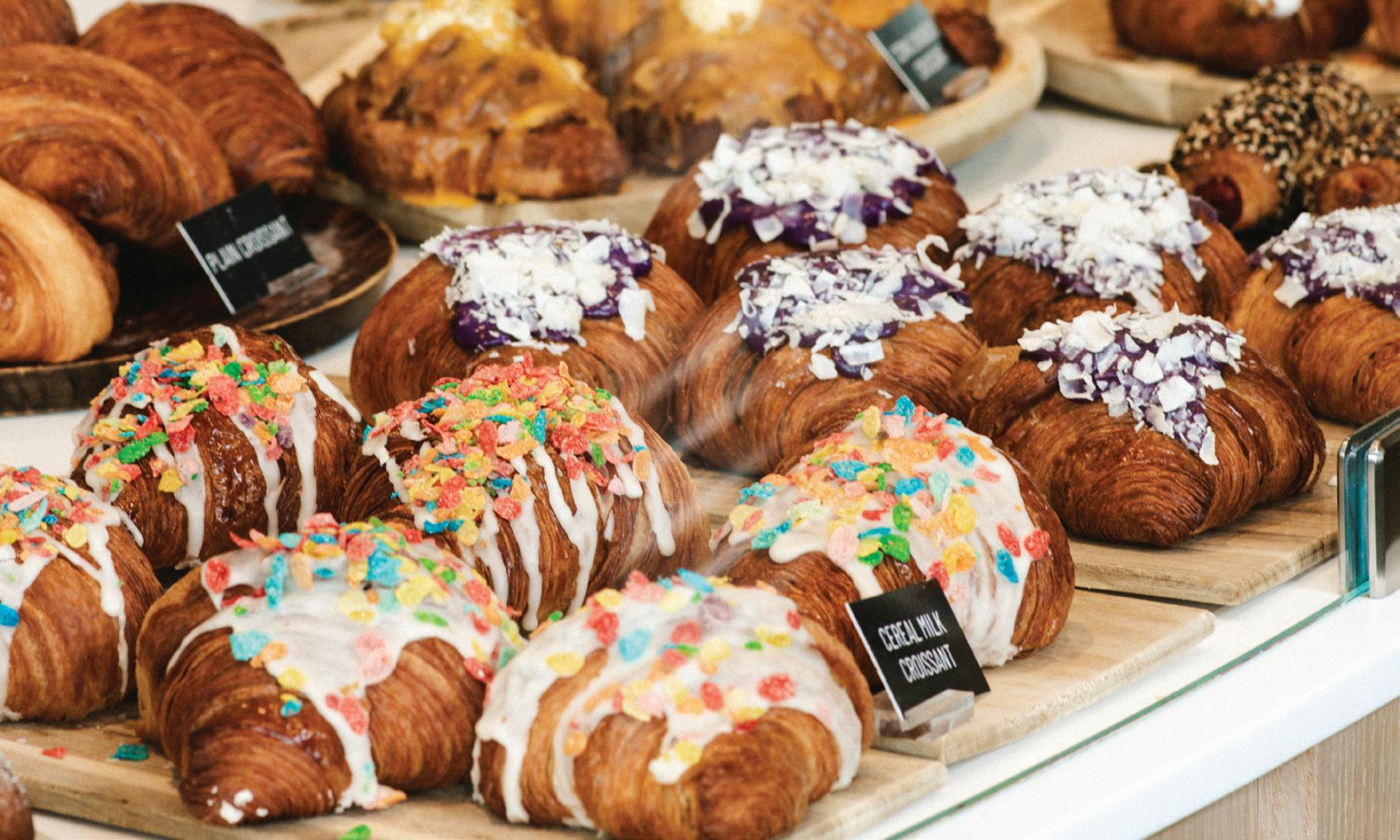


EXPERIENCE
THE ISLAND OF O‘AHU
SEE + DO BEACHES GOLF EAT + DRINK
SHOP + STYLE
ISLAND LIVING MAPS
TRAVELOGUE
DOWNLOAD THE SAVVY360 APP
This link will take you to the appropriate app store to install the app, where you can create a trip, start building your itinerary, collaborate with friends, and more...
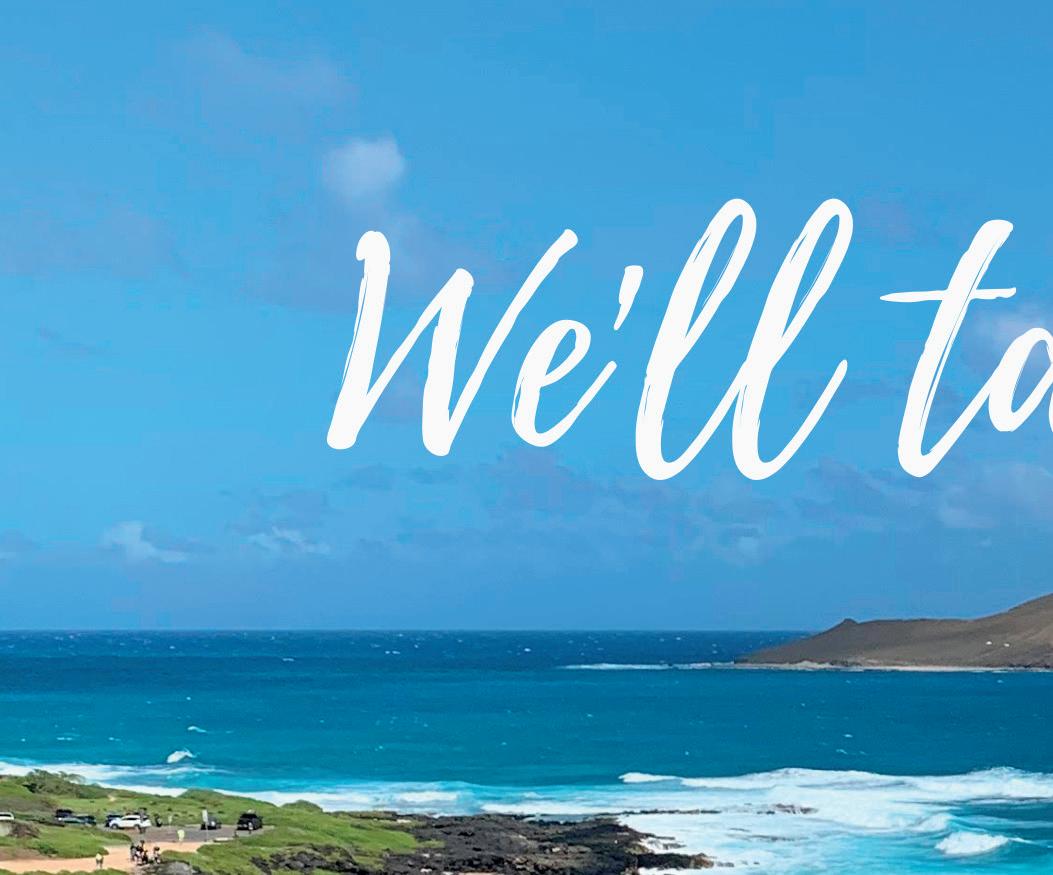
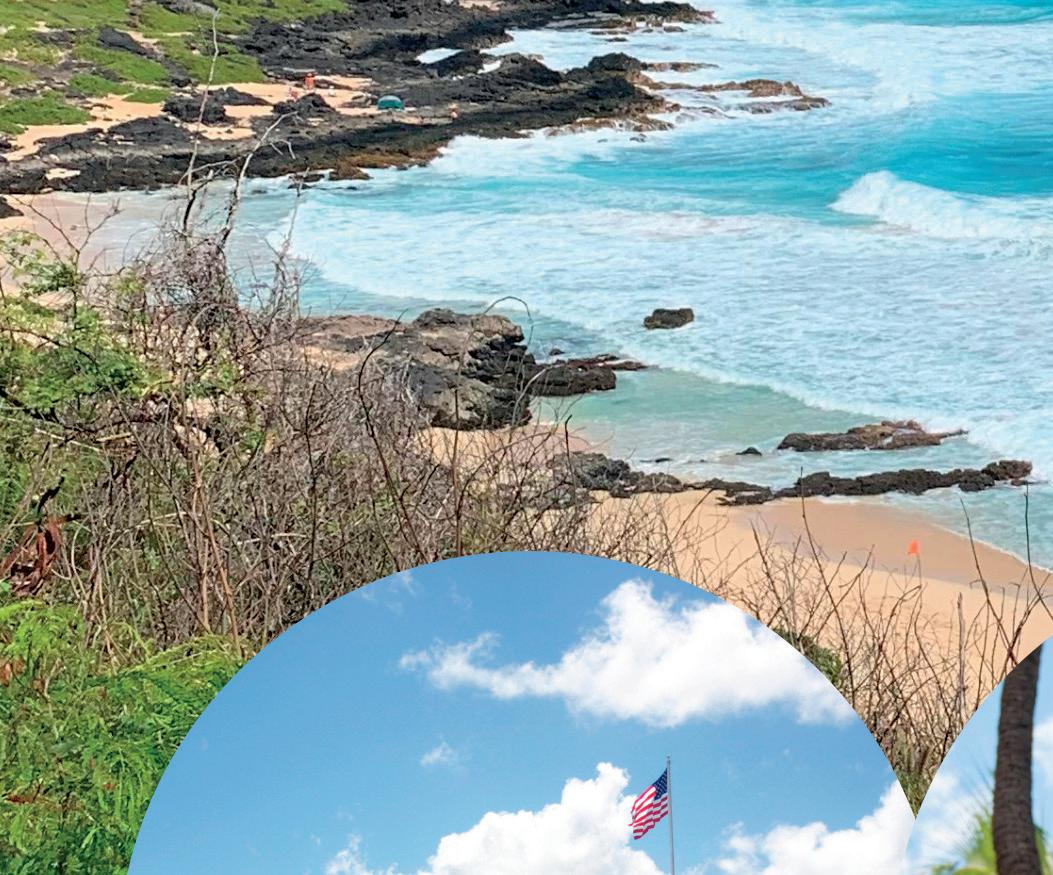
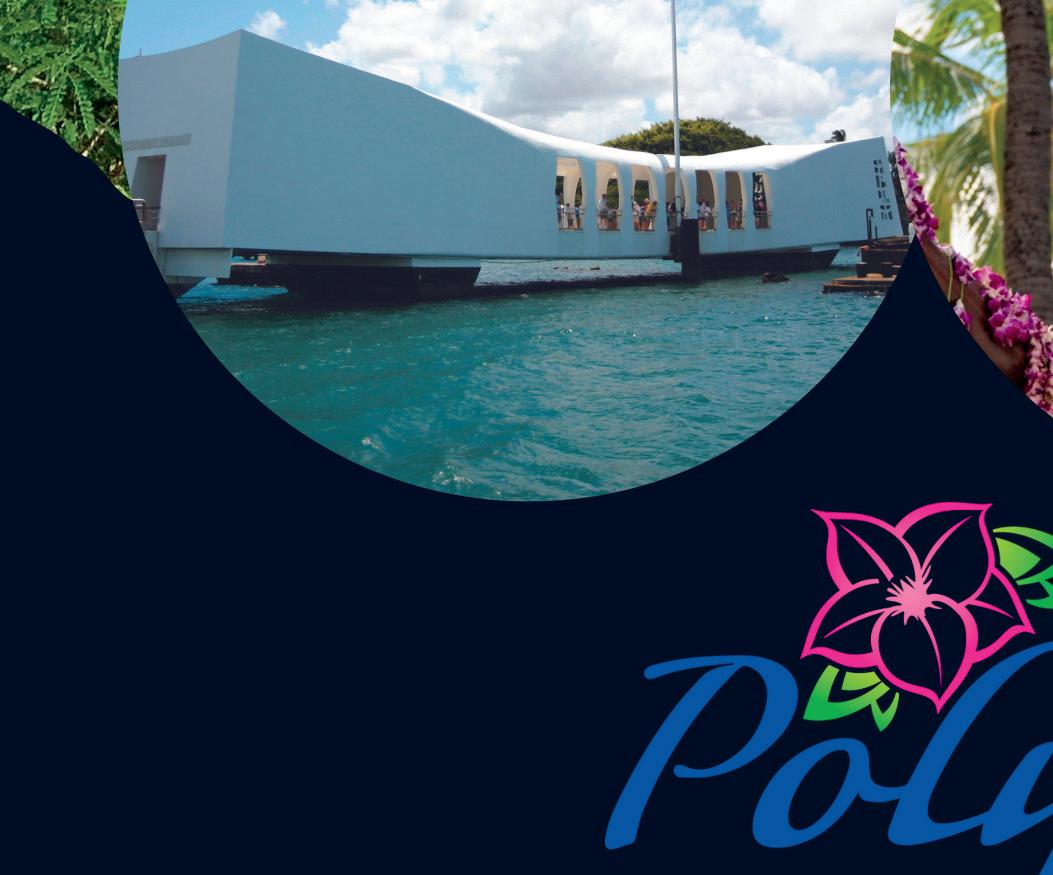
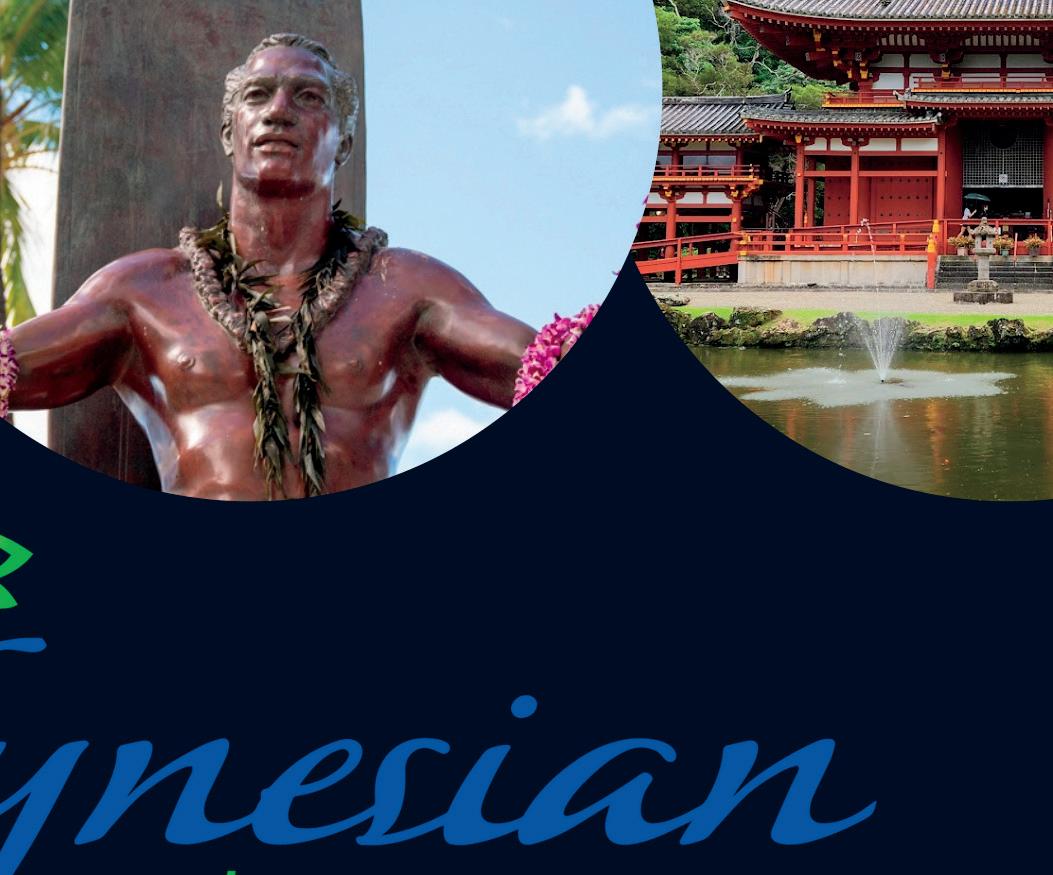


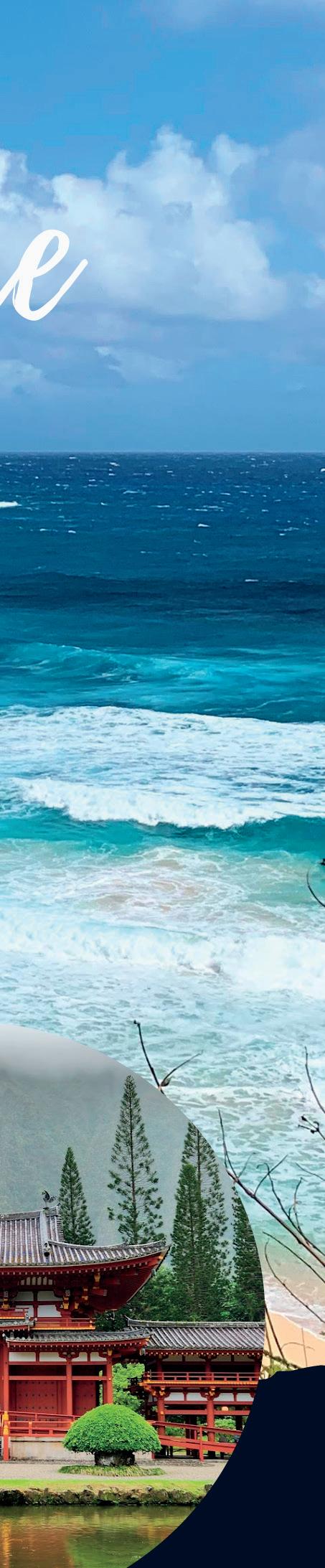

SEA LIFE PARK marine park & aquarium
O‘AHU GRAND CIRCLE ISLAND TOUR island tour
KA‘IWA RIDGE (LANIKAI PILLBOX) TRAIL hiking trail
‘EHUKAI PILLBOX TRAIL hiking trail
LYON ARBORETUM & TRAIL hiking & sightseeing
PU‘U O HULU (PINK PILLBOX) TRAIL hiking trail
LĀ‘IE FALLS TRAIL hiking
MĀNOA FALLS hiking
‘IOLANI PALACE museum + cultural experience
BISHOP MUSEUM museum + cultural experience
NU‘UANU PALI LOOKOUT sightseeing
HĀNAIAKAMALAMA cultural site
PEARL HARBOR national memorial + historic site
LĒ‘AHI (DIAMOND HEAD) state monument + sightseeing + hiking
ULUPŌ HEIAU STATE HISTORIC MONUMENT cultural site
PU‘U O MAHUKU HEIAU cultural site
Sea Life Park
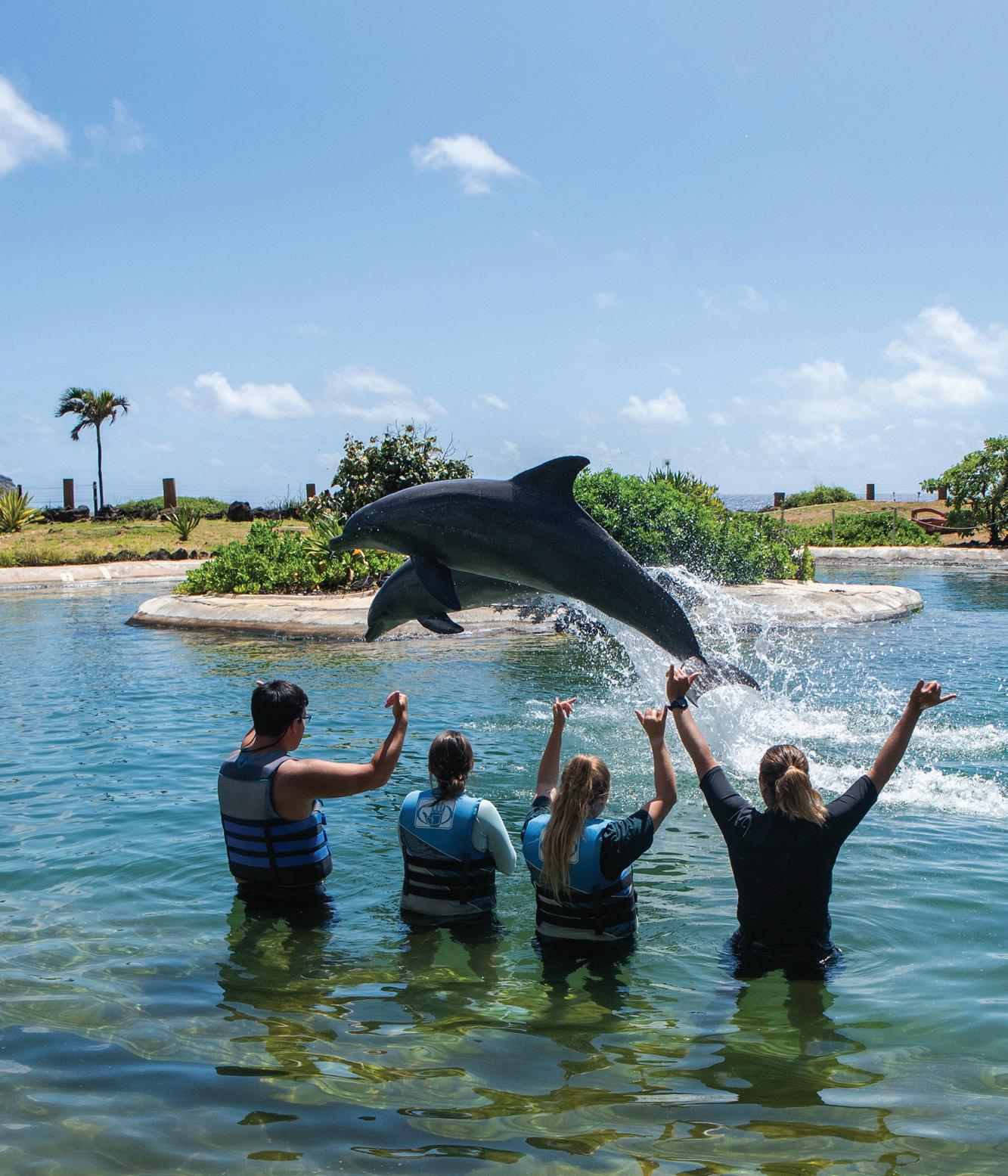
› BOTTLENOSE DOLPHIN ENCOUNTERS
› HALE MANU AVIARY
› SHARK SNORKEL ENCOUNTERS
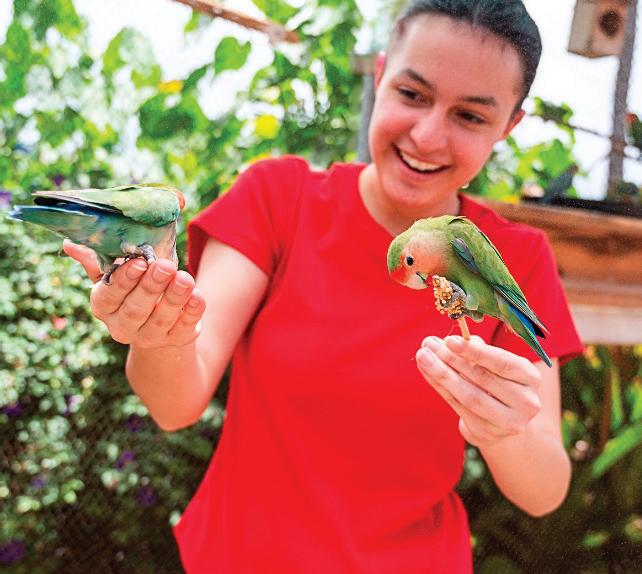
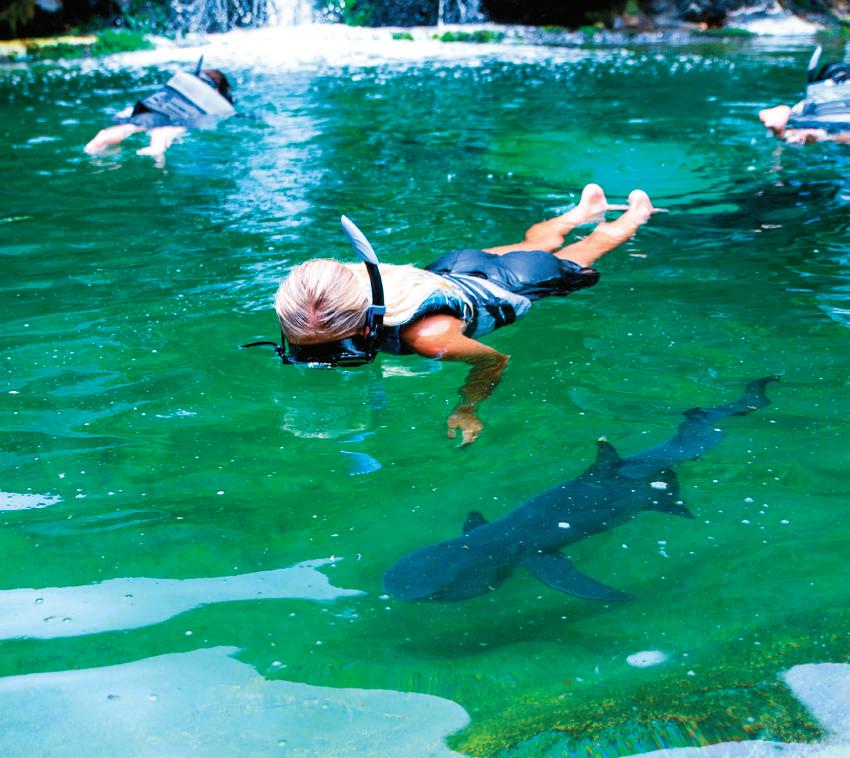
Nestled on the lush shores of historic Waimānalo since 1964, Sea Life Park Hawai‘i offers an unforgettable experience where stunning coastal views combine with heartfelt education, passionate conservation and world-class animal care. For over 60 years, this iconic marine park has fostered connections between guests and the ocean through immersive educational programs, from green sea turtle (honu) talks and monk seal presentations to hands-on limu lei-making, inspiring a deeper appreciation for our precious reefs and marine life. The park functions as a living classroom, where discovery leads to greater appreciation and responsibility for Hawai‘i’s vibrant marine ecosystem. Guests can also participate in special animal encounter programs for a truly unforgettable, up-close experience with bottlenose dolphins, California sea lions and whitetip reef sharks, creating special moments that spark joy, deepen understanding and forge lifelong memories rooted in connection.
Located in Waimānalo (808) 259-2500 • SeaLifeParkHawaii.com 41-202 Kalanianaole Hwy., Waimānalo (Map A, PG 163)
O‘ahu Grand Circle Island Tour
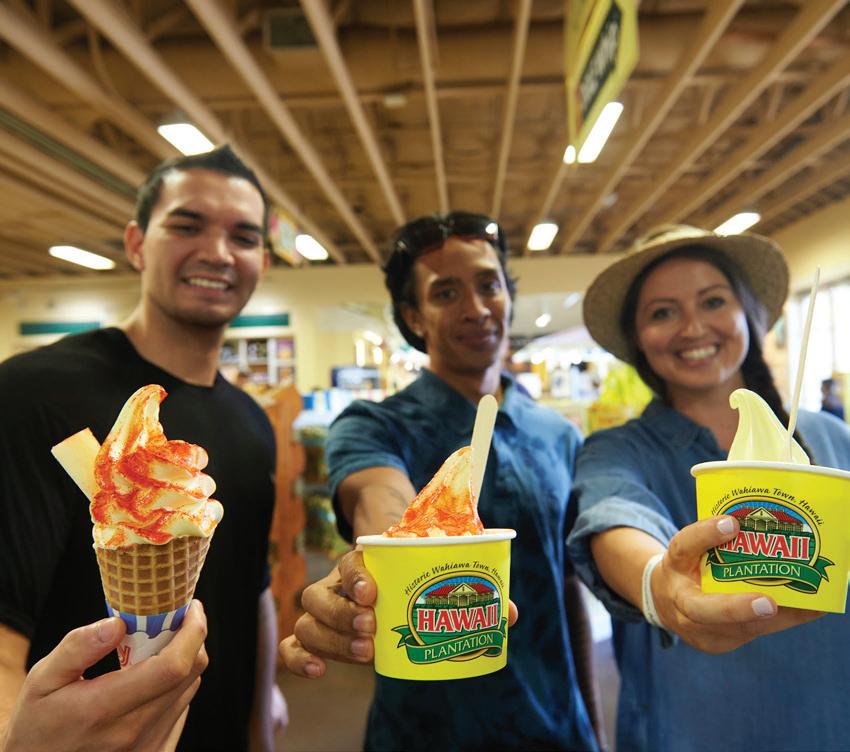
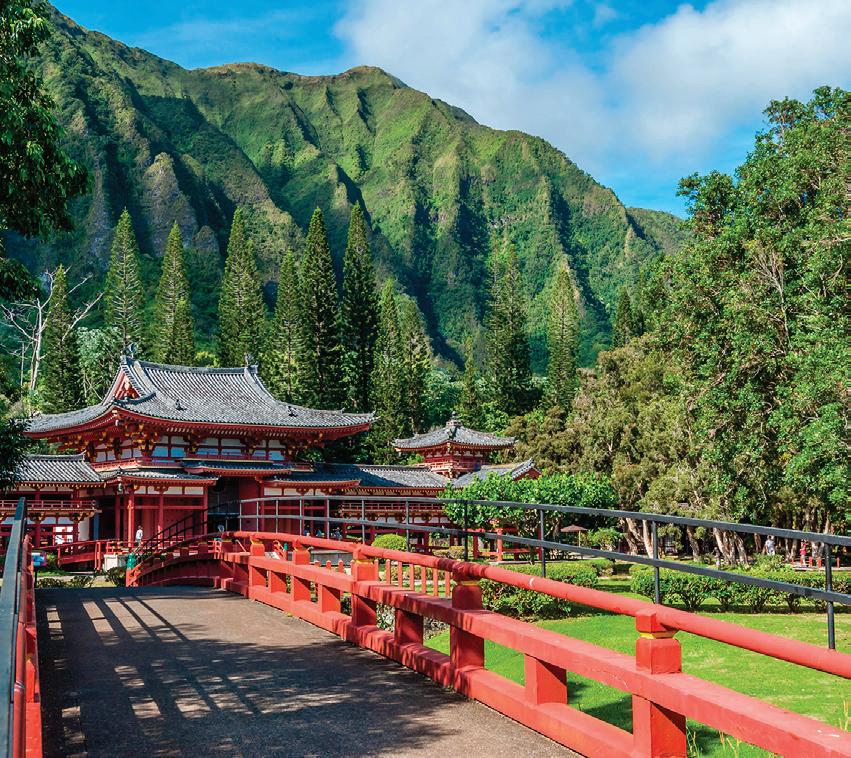
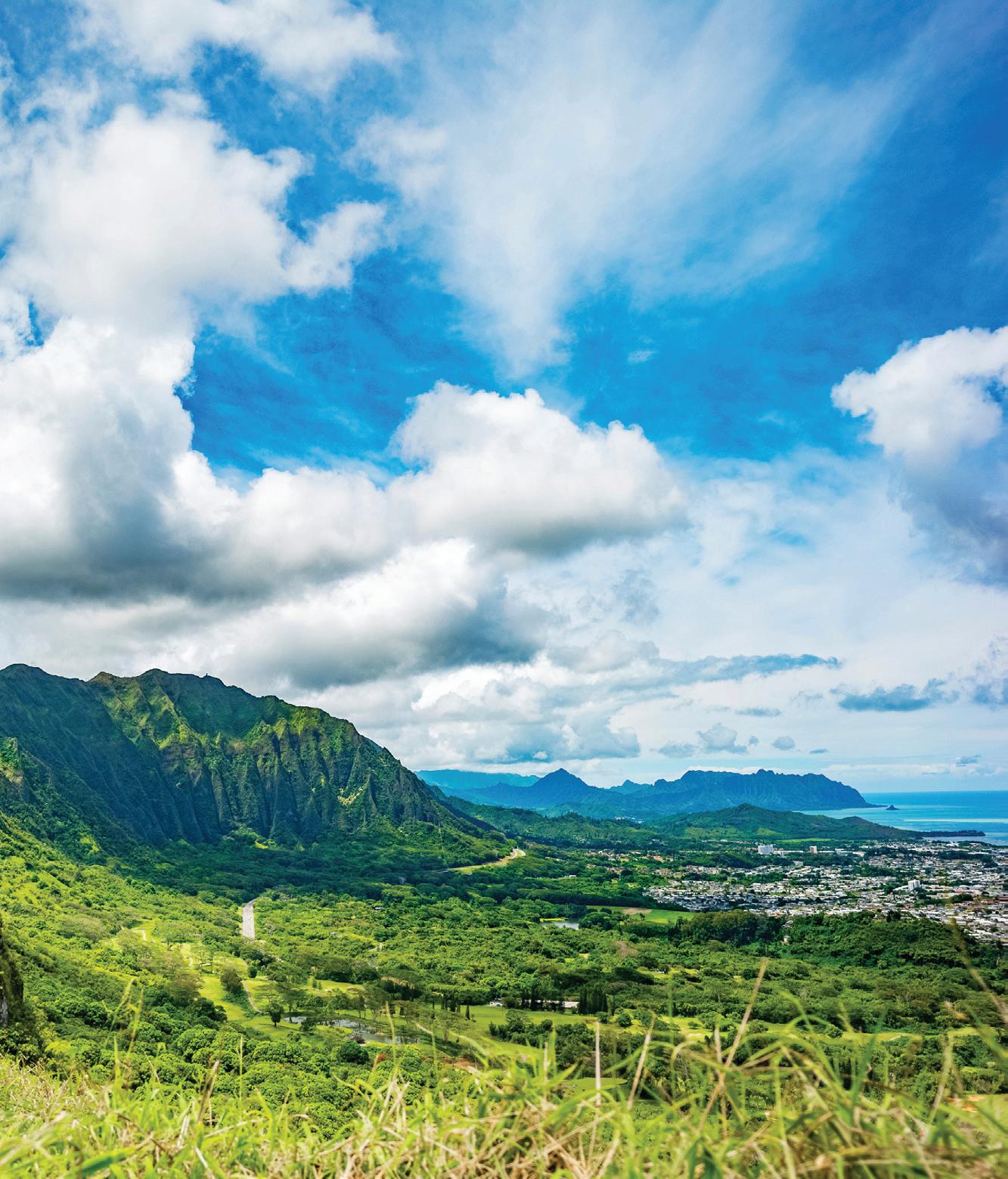
Embark on this highly acclaimed tour and experience some of O‘ahu’s must-see attractions. Your experienced driver guide will fetch you from Waikīkī in a deluxe tour vehicle, providing insightful commentary on O‘ahu’s natural and cultural landmarks. You’ll see Lē‘ahi, the famous volcanic crater, popularly known as Diamond Head. Cruise through Kahala or Hawai‘i’s Beverly Hills to the rocky south shore past Halona Blowhole. Enjoy wandering Waimea Valley, a haven for native Hawaiian flora and fauna. Stroll through the valley, up to the waterfall-fed pool, and take a refreshing dip, weather permitting. On the North Shore, O‘ahu’s surfing mecca, stop at the charming town of Hale‘iwa, filled with art galleries and boutiques. Dole Plantation’s delectable Dole Whip is a must after a fulfilling day of exploration. Concluding back in Honolulu, this unique tour ensures you absorb the island’s diverse beauty and highlights.
Polynesian Adventure Tours
(808) 833-3000 • PolyAd.com 2965 N. Nimitz Hwy., Honolulu
› ADMISSION TO BYODO-IN TEMPLE
› VISIT HALE‘IWA TOWN
› VISIT WAIMEA VALLEY & WATERFALL
ISLAND TOUR on O‘AHU
Ka‘iwa Ridge (Lanikai Pillbox) Trail
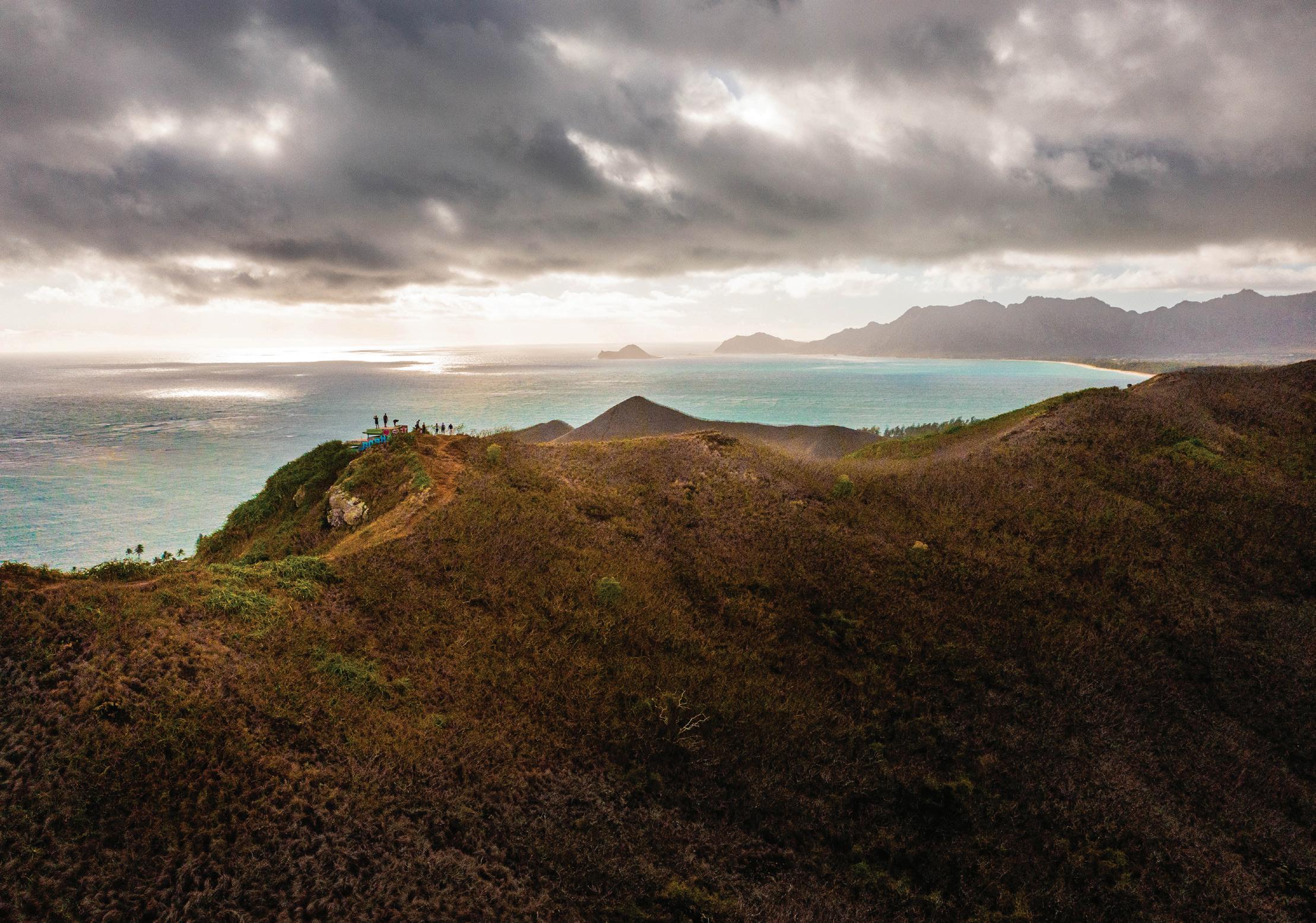
› A SHORT BUT CHALLENGING HIKE
› HIKE UP EARLY TO CATCH SUNRISE
› ALWAYS HIKE RESPONSIBLY
Hidden within a residential neighborhood on O‘ahu’s East Side is the trailhead for the Lanikai Pillbox Trail — one of the most popular pillbox hikes on the island that offers sweeping views of Kailua and the Ko‘olau Mountain Range. This short, 1.6-mile, out-and-back hike takes about 1.5 hours along a moderately challenging trail. The trailhead begins mauka on Ka‘elepulu Drive, marked by a small dusty clearing. The opening stretch is steep and demanding, but the climb soon settles into a ridgeline path with sweeping coastal vistas. With no guardrails and loose terrain in places, steady footing and caution are essential. Within 30 minutes, you will reach the first pillbox at 565 feet, overlooking the Mokulua Islands, Kailua Beach and Lanikai’s turquoise shoreline. A short continuation leads to the second pillbox at 613 feet. Built in 1943, these WWII-era structures now serve as frontrow seats to sunrise — when the trail is at its most magical.
The Lanikai Pillbox Trailhead is located off Ka‘elepupu Drive in Kailua, directly across from the Mid-Pacific Country Club
‘Ehukai Pillbox Trail
HIKING TRAIL on the NORTH SHORE
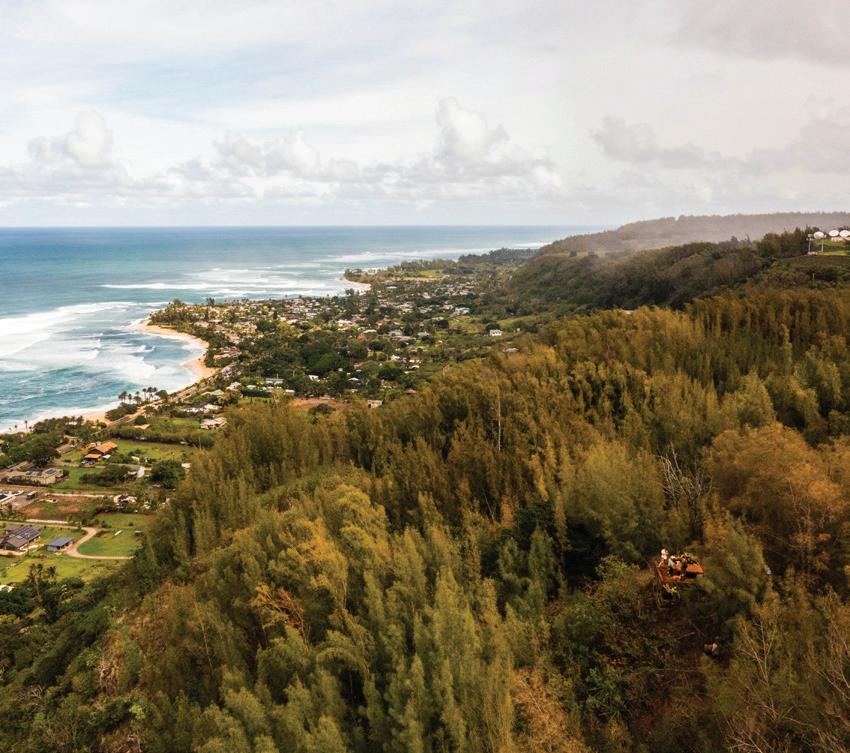
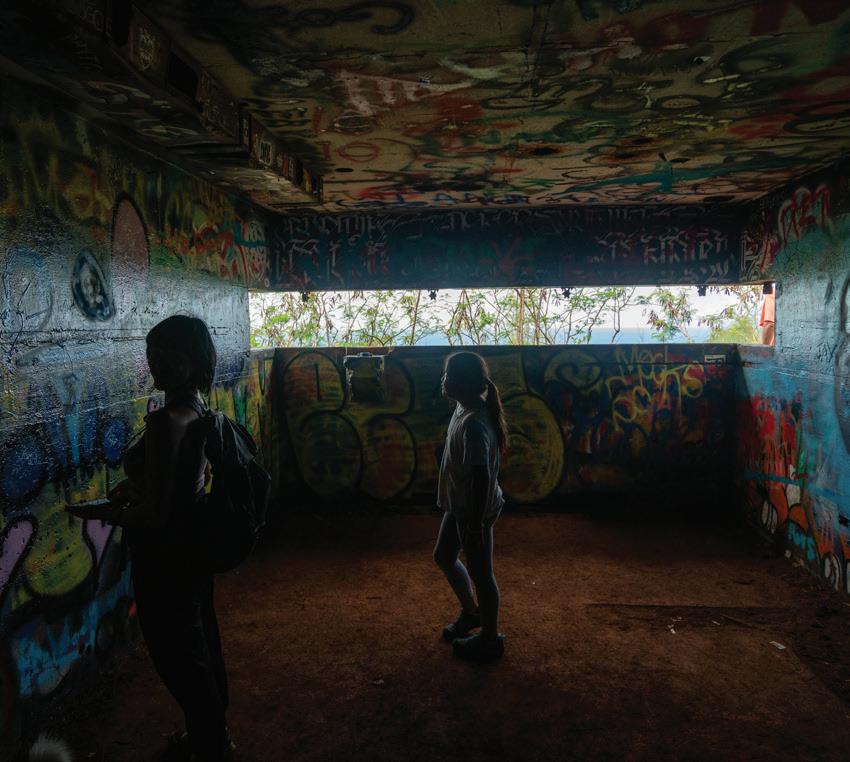
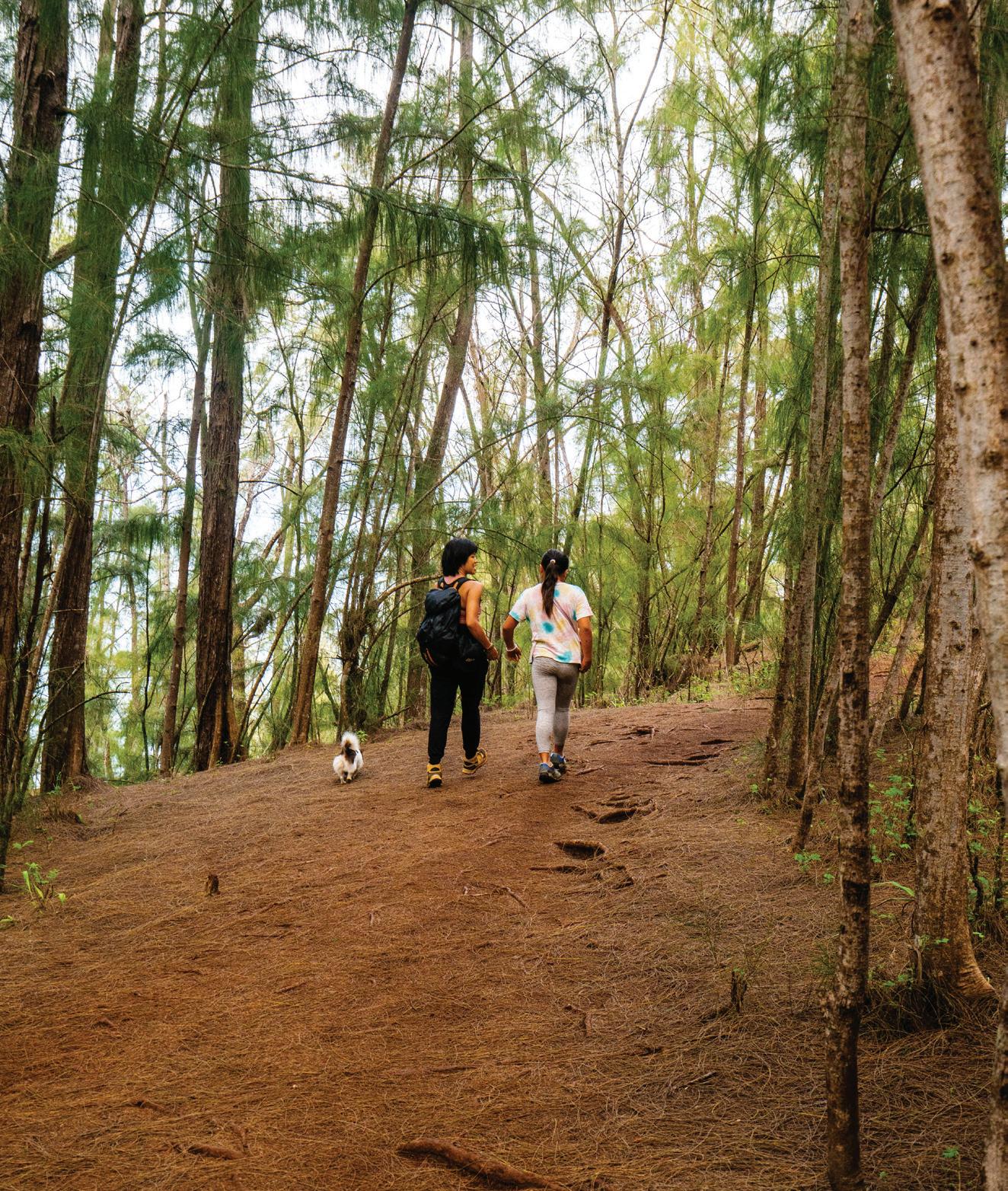
Set above O‘ahu’s legendary North Shore, the ‘Ehukai Pillbox Trail delivers frontrow views of ‘Ehukai Beach and the powerful breaks of Banzai Pipeline. This family-friendly 2.3-mile loop takes about 90 minutes and offers varied terrain with a moderate workout. The trail begins at the public park near Sunset Beach Elementary, where parking and restrooms make for an easy start. A shaded, rocky path leads through ironwood trees before the incline begins. Hikers can choose between carved stairs or rope-assisted climbs up steeper sections. At the first plateau, a simple wooden table offers a natural pause before reaching the first pillbox, marked by its iconic peace-sign graffiti. A short continuation brings you to the second pillbox — quieter, breezier and ideal spot to take pictures and watch the surf roll in.
› A GREAT WAY TO EXPERIENCE THE CRAFT OF BEEKEEPING & HONEY PRODUCTION
› ADDITIONAL TOURS AVAILABLE
To access the ‘Ehukai
Pillboxes Trail, head to the public park just outside the Sunset Beach Neighborhood Park in Hale‘iwa
Lyon Arboretum & Trail
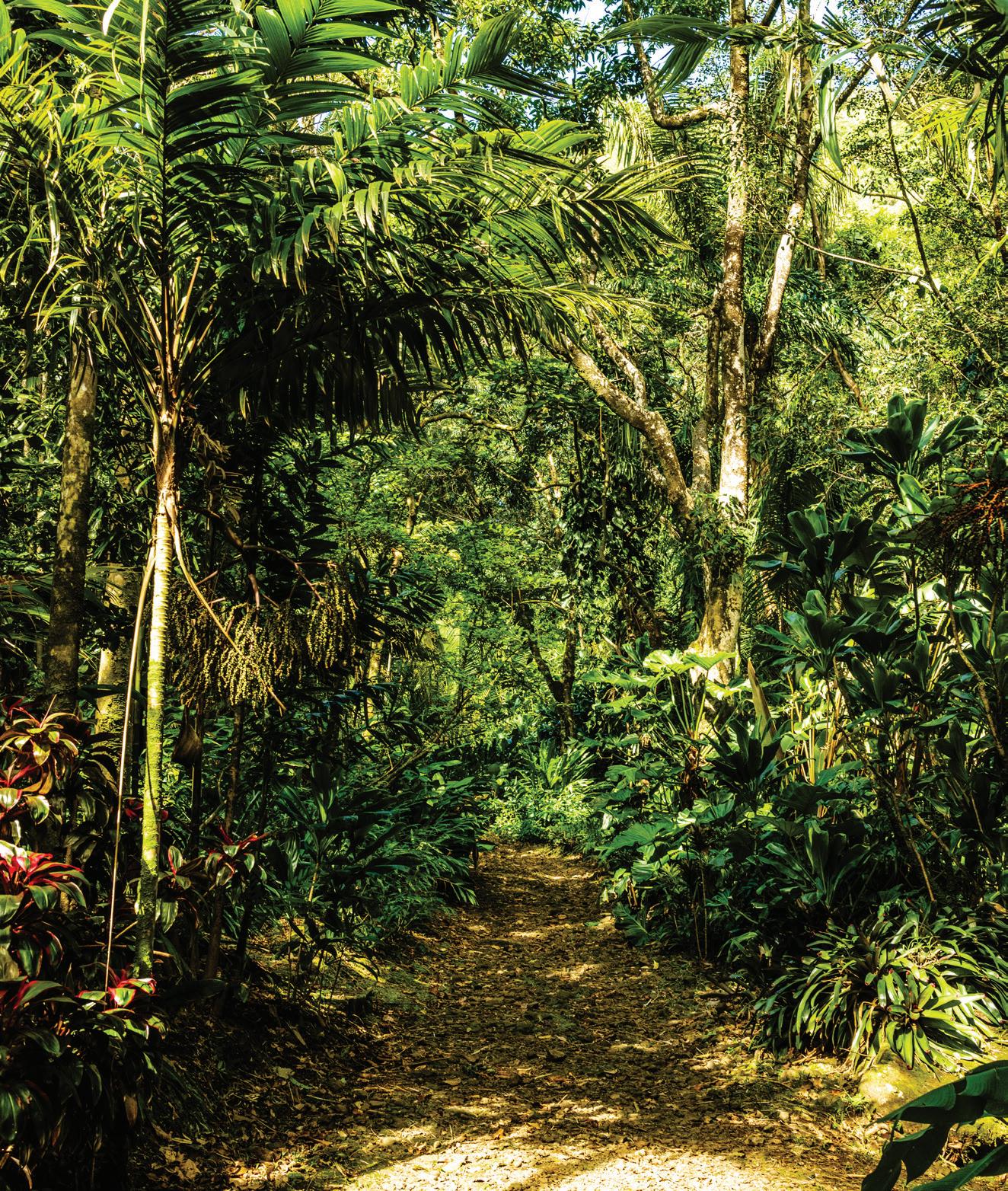
› OPEN MONDAY-FRIDAY 9AM-3PM
› A MODERATE HIKE
› GREAT FOR KIDS
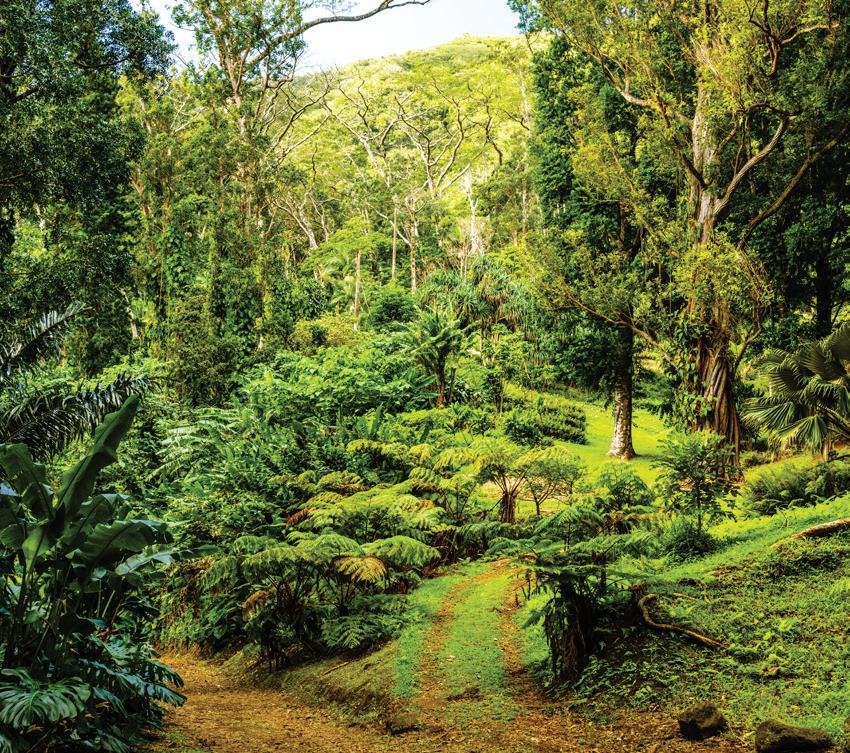
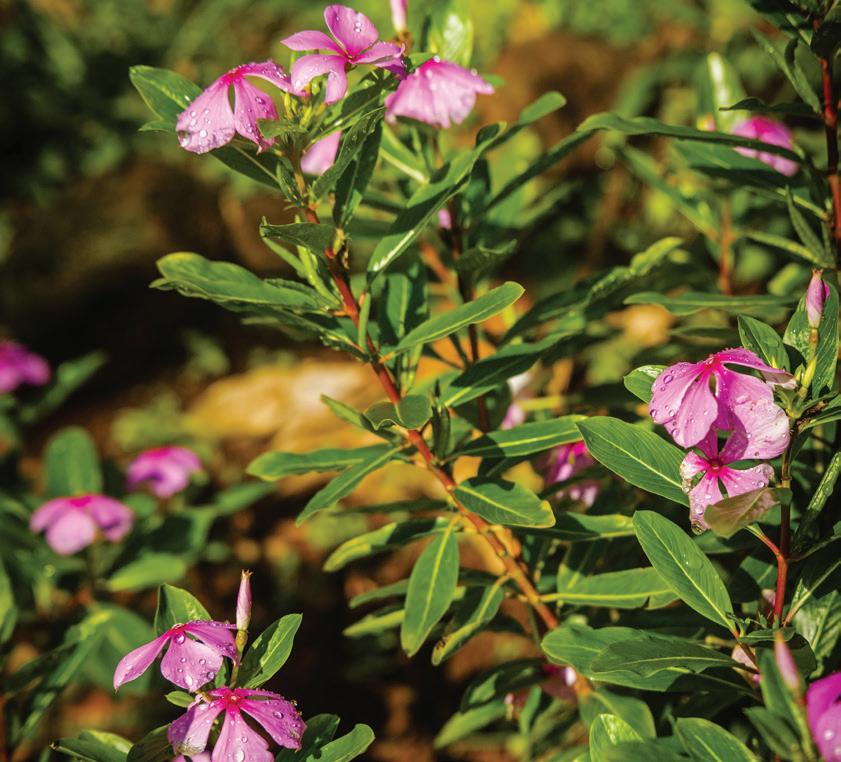
A series of excellent trails at Lyon Arboretum takes you up to a waterfall in the back of the valley, through gardens of exotic tropical flora — and around charming garden features like a gazebo and arbor. But honestly, the arboretum is so much more than a hike. There’s so much to explore at this University of Hawai‘i-run garden and many picturesque vistas. While this hilly spot gives you a grand view of expansive lawns and groves of countless trees, the trail incline remains relatively flat, which makes for more of a stroll than a hike. Bring the kids and set them free to roam. Visit the lily pond, Buddha statue, ethnobotanical garden, greenhouse and more. Reservations are required and limited at the arboretum — head to their website to reserve your spot.
(808) 988-0456 • Mānoa.Hawaii.edu/lyon 3860 Mānoa Rd, Honolulu (Map)
Pu‘u O Hulu (Pink Pillbox) Trail
HIKING TRAIL on the LEEWARD COAST
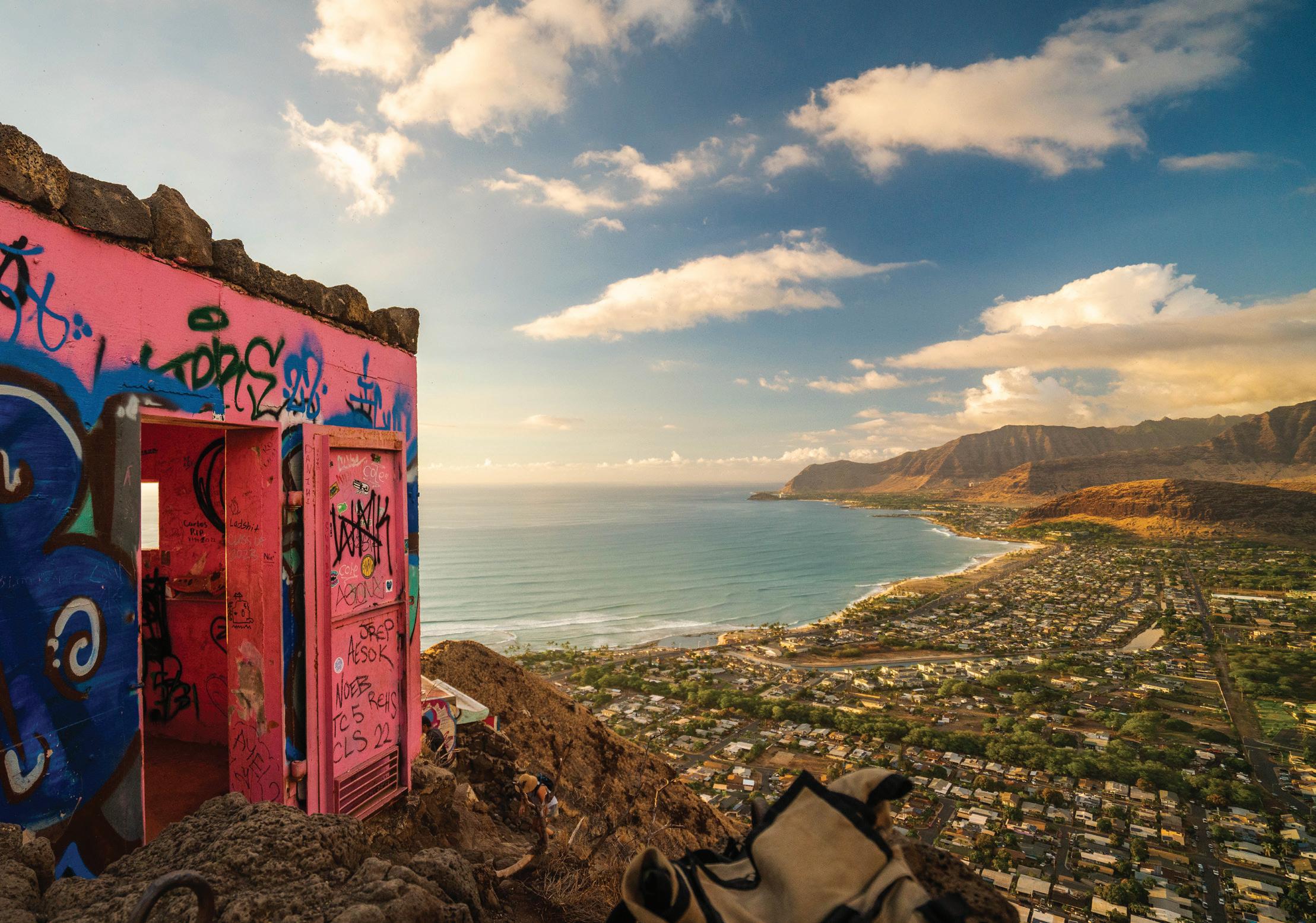
Along O‘ahu’s sunny West Side, this short but rewarding trek takes hikers through a complex of pillboxes constructed in 1923. The 1.6-mile, out-and-back hike takes about one hour to complete, culminating in spectacular views of the deep blue sea and Wai‘anae Coast. The trailhead to this hike is accessed between the towns of Nānākuli and Mā‘ili, along the right-hand side of Kaukama Road. Once you secure a parking stall, head to a break in the mountainside where there is a well-worn, dusty path. This trail climbs the side of the mountain, taking hikers along a series of switchbacks. After a while, the path changes into a ridge trail that runs parallel to the coastline. At the top of the hike, you will see a series of pillboxes connected via underground tunnels that are not accessible to the public. At the summit, known as Pu‘u O Hulu, you will find the famous “Pink Pillbox.” This particular pillbox was used as an artillery pillbox. Since the Mā‘ili Pink Pillbox hike is located in a sunny place on the island, it is accessible year-round. While enjoyable at any time of the day, this hike is especially popular as a sunset hike.
Take H1 west to Nanakuli, turn right on Kaukama Rd., trailhead will be on your right after the 9th lightpole. (Map A, PG 162)
› SCENIC WEST O‘AHU LOCATION
› THE PILLBOX WAS PAINTED PINK IN SUPPORT OF BREAST CANCER AWARENESS
Lā‘ie Falls Trail
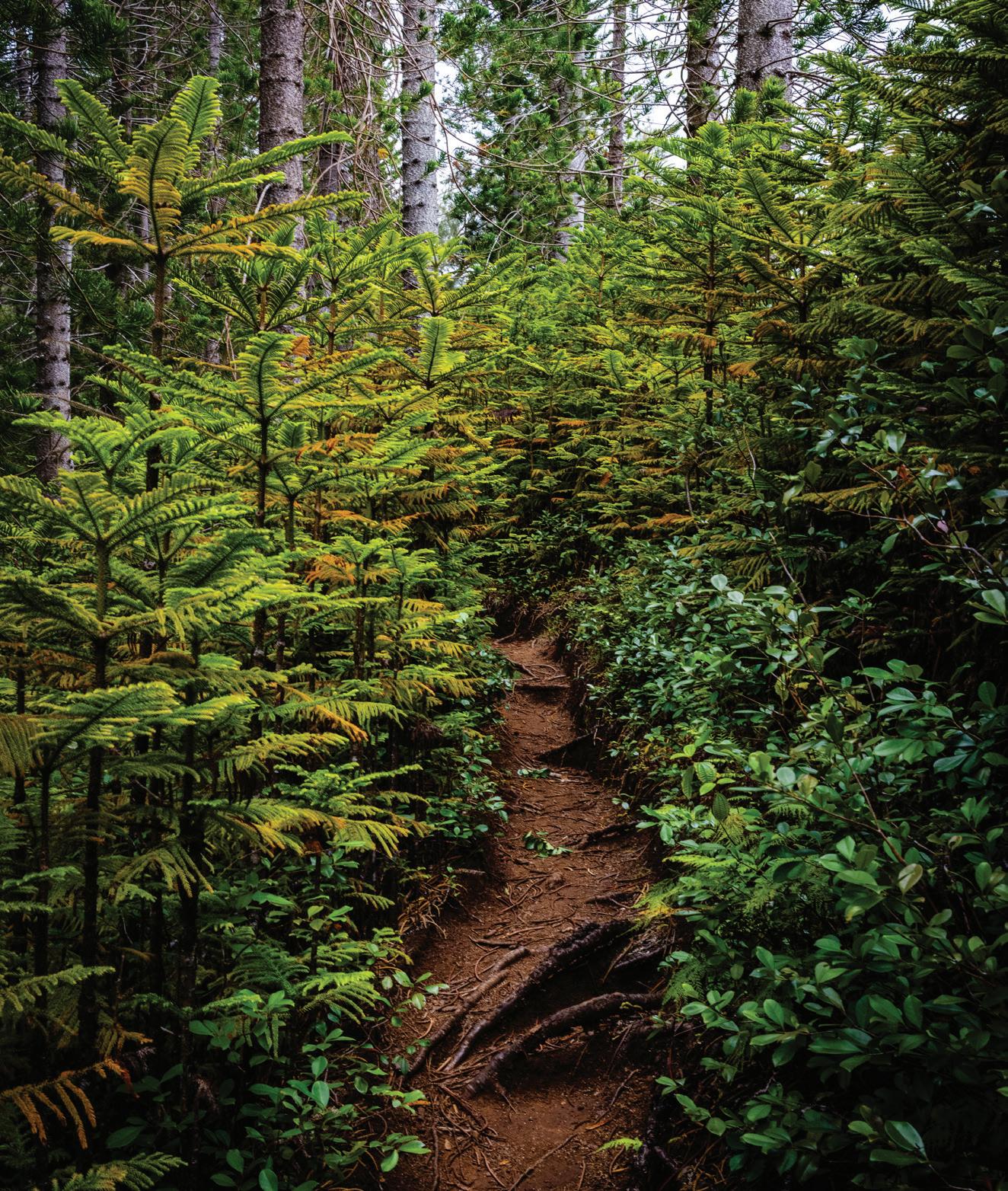
› PERMIT REQUIRED
› BEAUTIFUL VIEWS ALONG THE WAY
› BRING PLENTY OF WATER
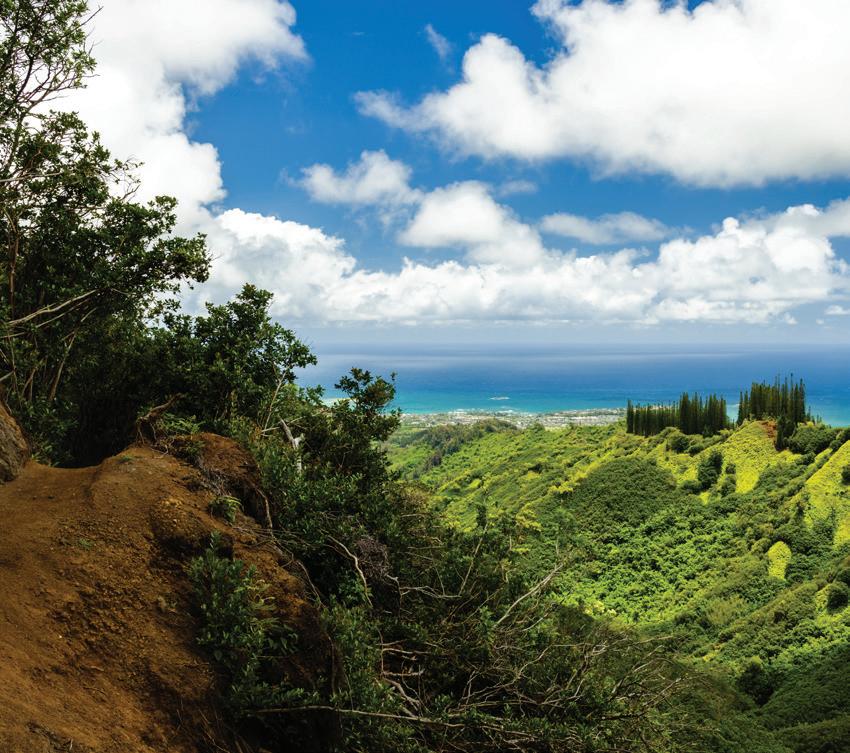
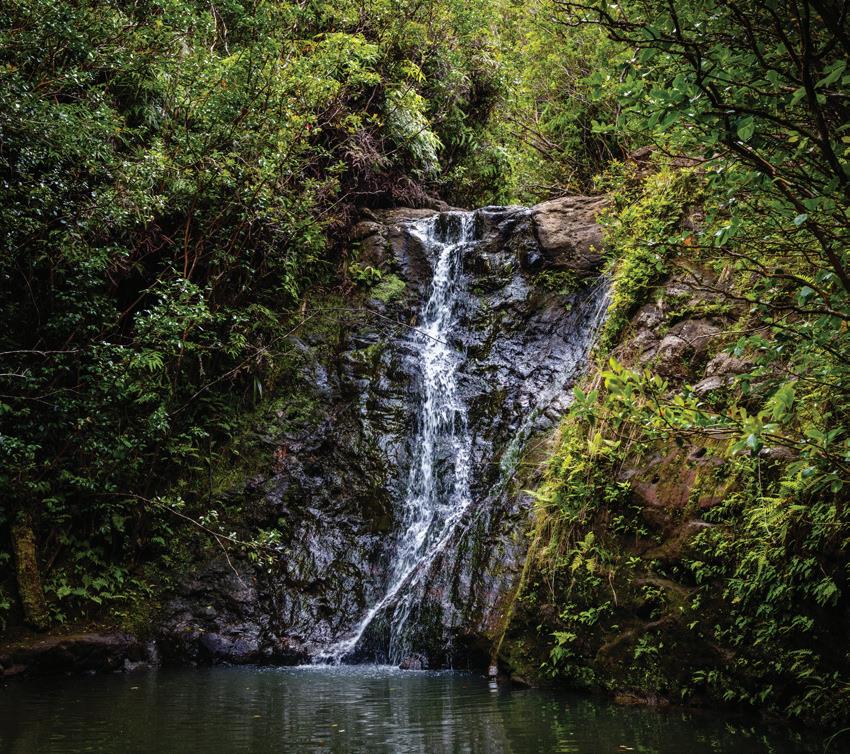
Taking you through rugged terrain and lush ridges, the culmination of this 7-mile out-and-back hike is the picture-perfect waterfall that tumbles over multiple tiers of rocks. While hiking to Lā‘ie Falls will take you approximately 4 hours to complete, the rewards along the way will brighten the hearts of avid hikers. To get to the trailhead of the Lā‘ie Falls hike, park at Lā‘ie Park and walk about half a mile along Po‘ohali Street. At the end of the hike, you will come upon the beautiful, multi-tiered waterfall that empties into a serene, blueish-green pond below. While some hikers venture into the pond to cool down, caution is advised, especially for those with open cuts or wounds. This is one of the hikes on the island that does require a permit, but you can easily get one by completing the Hawaii Reserves, Inc. form and submitting it to their offices (hrihelp.com/hiking-camping). This trail can get muddy and is considered a challenging route.
Located near Lā‘ie Park hrihelp.com/hiking-camping Poohaili St. near Kamehameha Hwy., Lā‘ie (Map)
Mānoa Falls
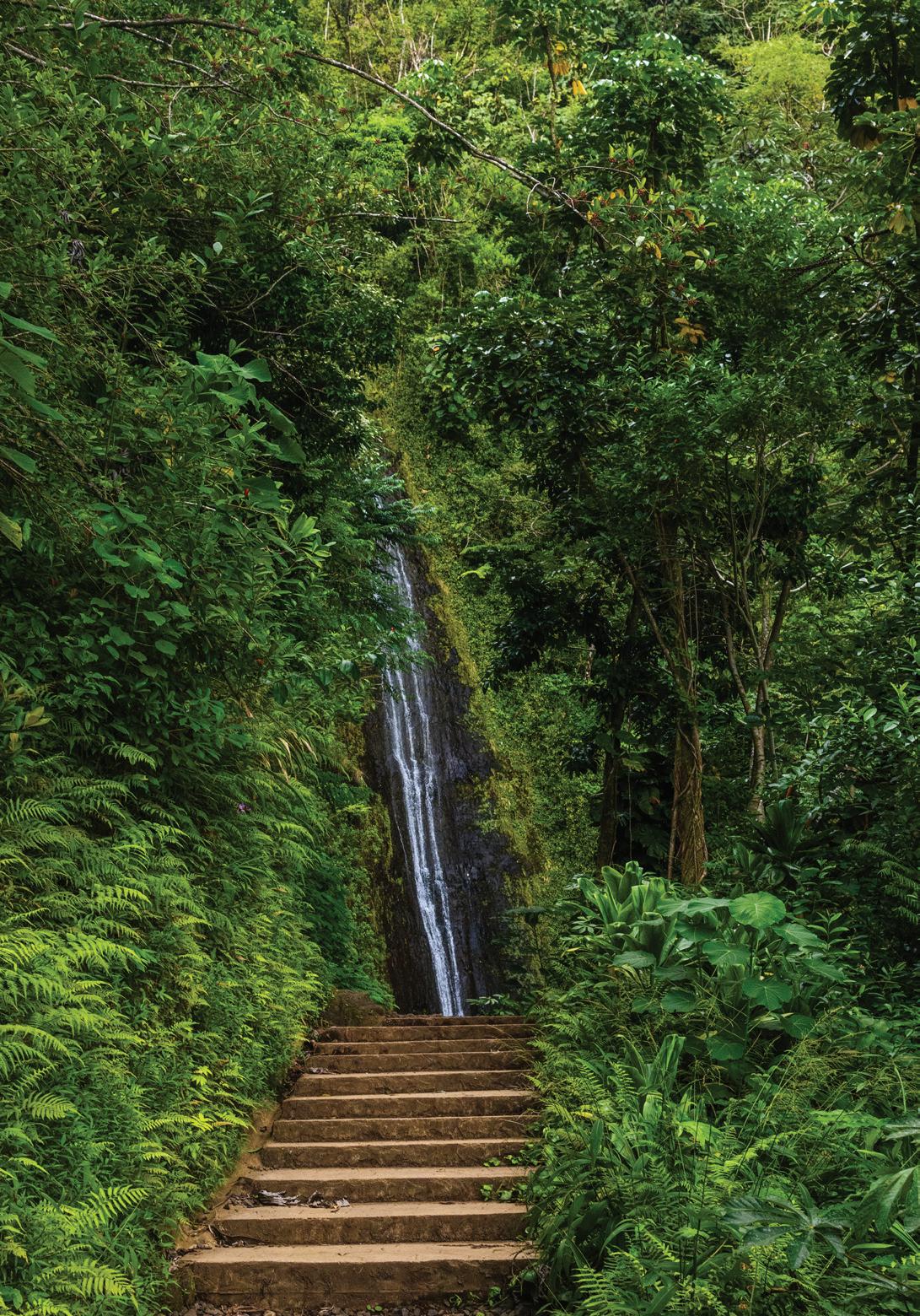
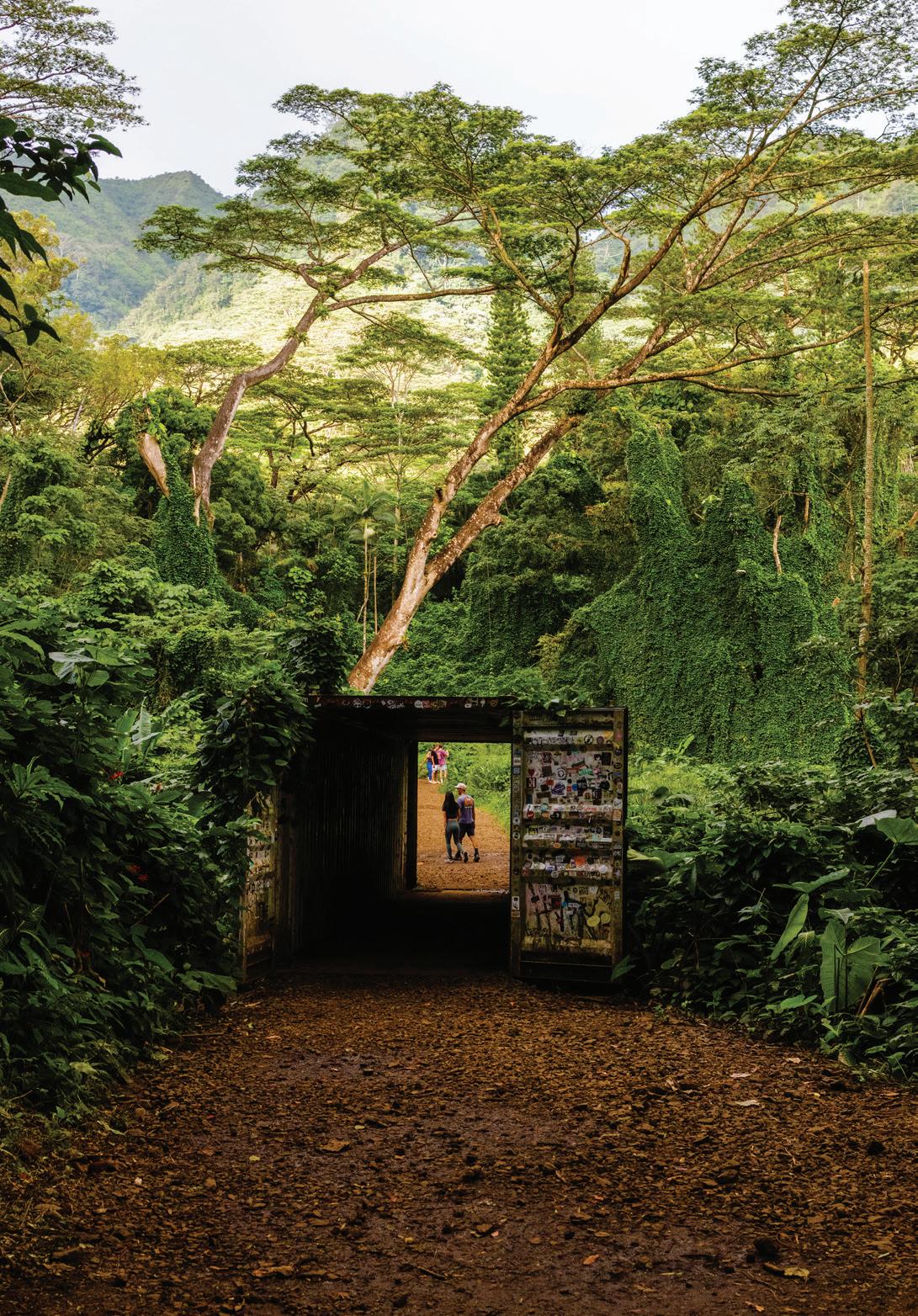
This hike near town offers dramatic rainforest scenery and lush surroundings. The trail to Mānoa Falls is a 1.6-mile uphill climb, gaining 800 feet in elevation, so be prepared for a bit of a trek. While it's not an expert-level challenge, it’s more than just a stroll — expect to break a sweat as you make your way through a dense jungle with towering trees and ferns lining the trail. The reward at the end is a stunning 150-foot waterfall cascading into a serene pool. Though the trail can get crowded, especially on weekends, it’s a fantastic way to experience the raw beauty of Honolulu’s rainforests. And the best part? Mānoa Falls is just a short drive from downtown and Waikīkī, offering a perfect nature escape close to the city's vibrant dining, shopping and nightlife.
› NO PARKING AT MĀNOA FALLS
› NEARBY PARKING AT PARADISE PARK - $7
› OPEN DAILY 6AM-6PM
(808) 587-0300
dlnr.hawaii.gov/dsp/parks/oahu/puu-o-mahuka-heiau-state-historic-site 59-818 Kamehameha Hwy., Hale‘iwa (Map A, PG 162)
HIKING in HONOLULU
‘Iolani Palace
MUSEUM & CULTURAL EXPERIENCE in HONOLULU
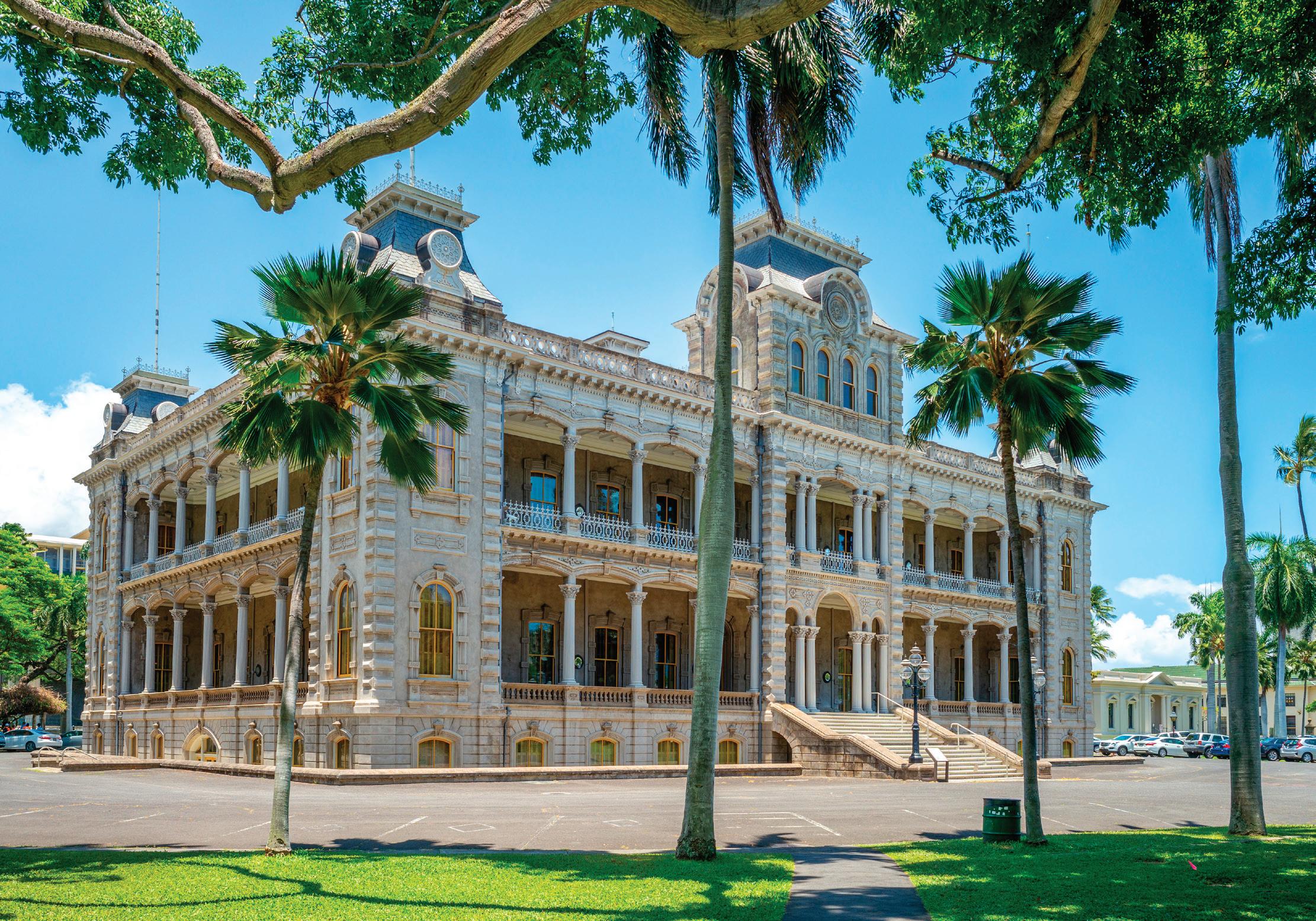
› SPECIALTY, GUIDED & SELF-LED TOURS
› IMMERSE YOURSELF IN THE RICH HISTORY OF HAWAI‘I
‘Iolani Palace in downtown Honolulu is the only official state residence of royalty in the U.S. and a national historic landmark. Built in 1882, it was the residence of the last two monarchs of the Hawaiian Kingdom, King Kalākaua and Queen Lili‘uokalani. This American Florentine-style palace features a beautiful Koa staircase, royal portraits and a rich interior. The palace fell into disrepair after the overthrow of the Hawaiian monarchy and was eventually renovated and opened to the public in 1978. Visitors can take guided or self-guided audio tours of the palace to learn about its rich history and see its throne room, living quarters and ancient regalia. The palace is also located in the center of a vital area that is worth exploring, with historical sites, museums and financial and arts districts nearby. Tour options vary based on the day of the week and the time.
Located in Hawai‘i Pacific University (808) 522-0822 • IolaniPalace.org
364 S. King St., Honolulu (Map C, PG 165)
Credit:
Bishop Museum
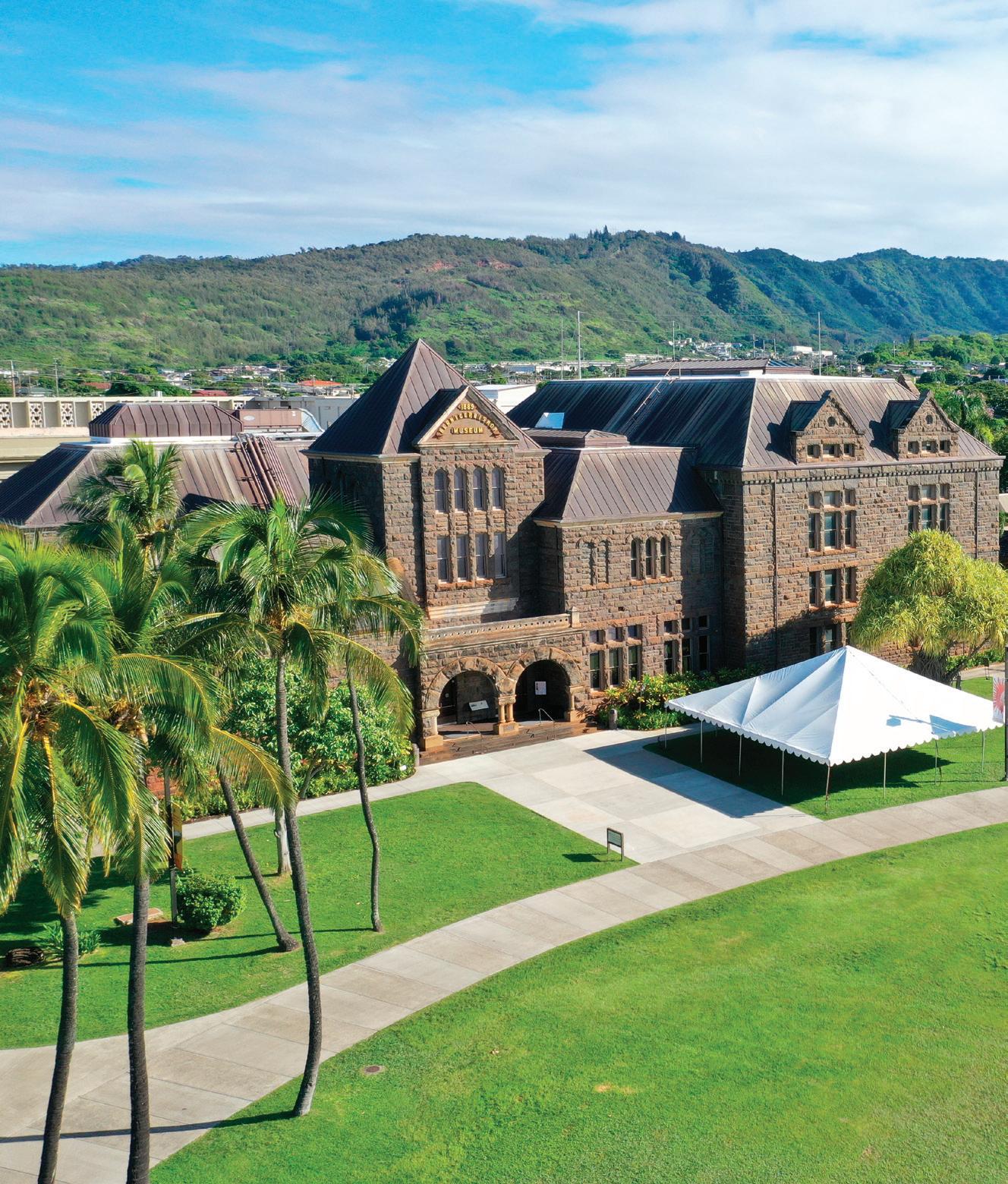
Immerse yourself in Hawai‘i’s rich culture and heritage at the premier natural and cultural history museum in the state. Located in the Kalihi district of Honolulu, Bernice Pauahi Bishop Museum inspires the community and visitors through the exploration, celebration and perpetuation of the extraordinary history, culture and environment of Hawai‘i and the Pacific. The Museum was founded in 1889 by Charles Reed Bishop in memory of his wife Bernice Pauahi Bishop, a royal descendant of King Kamehameha I. Today, the Museum houses over 25 million historical, cultural and natural treasures, is an educational center for the community and widely regarded as the world’s premier institution for Hawaiian and Pacific content. Explore and engage with Hawai‘i’s living culture, unwind with your ‘ohana and activate your mind—all at Bishop Museum! Open daily from 9 a.m. to 5 p.m., except on Thanksgiving and Christmas.
Located near downtown Honolulu in Kalihi (808) 847-3511 • BishopMuseum.org
1525 Bernice St., Honolulu (Map A, PG 162)
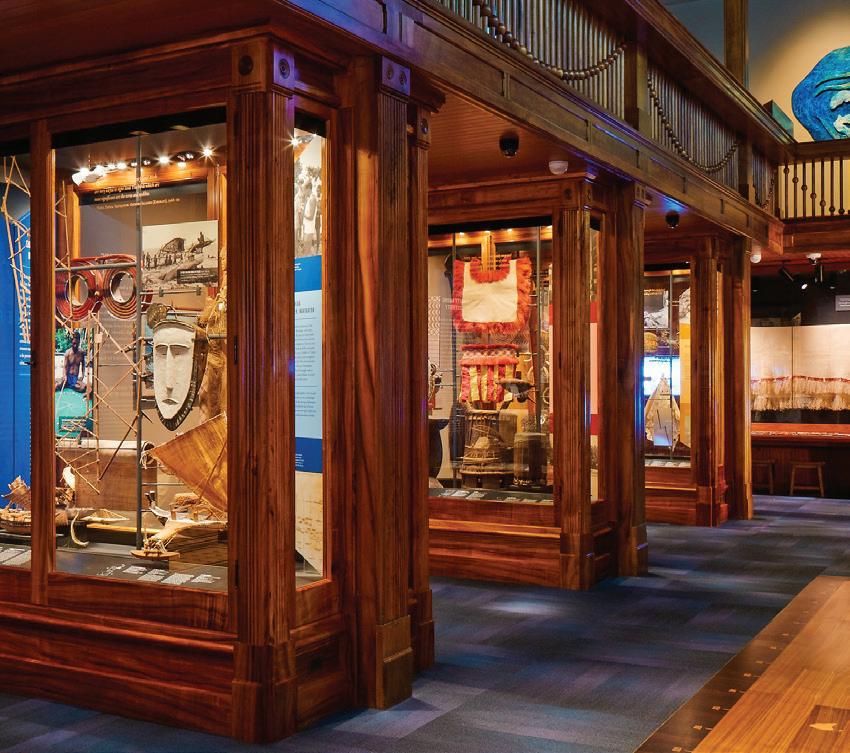
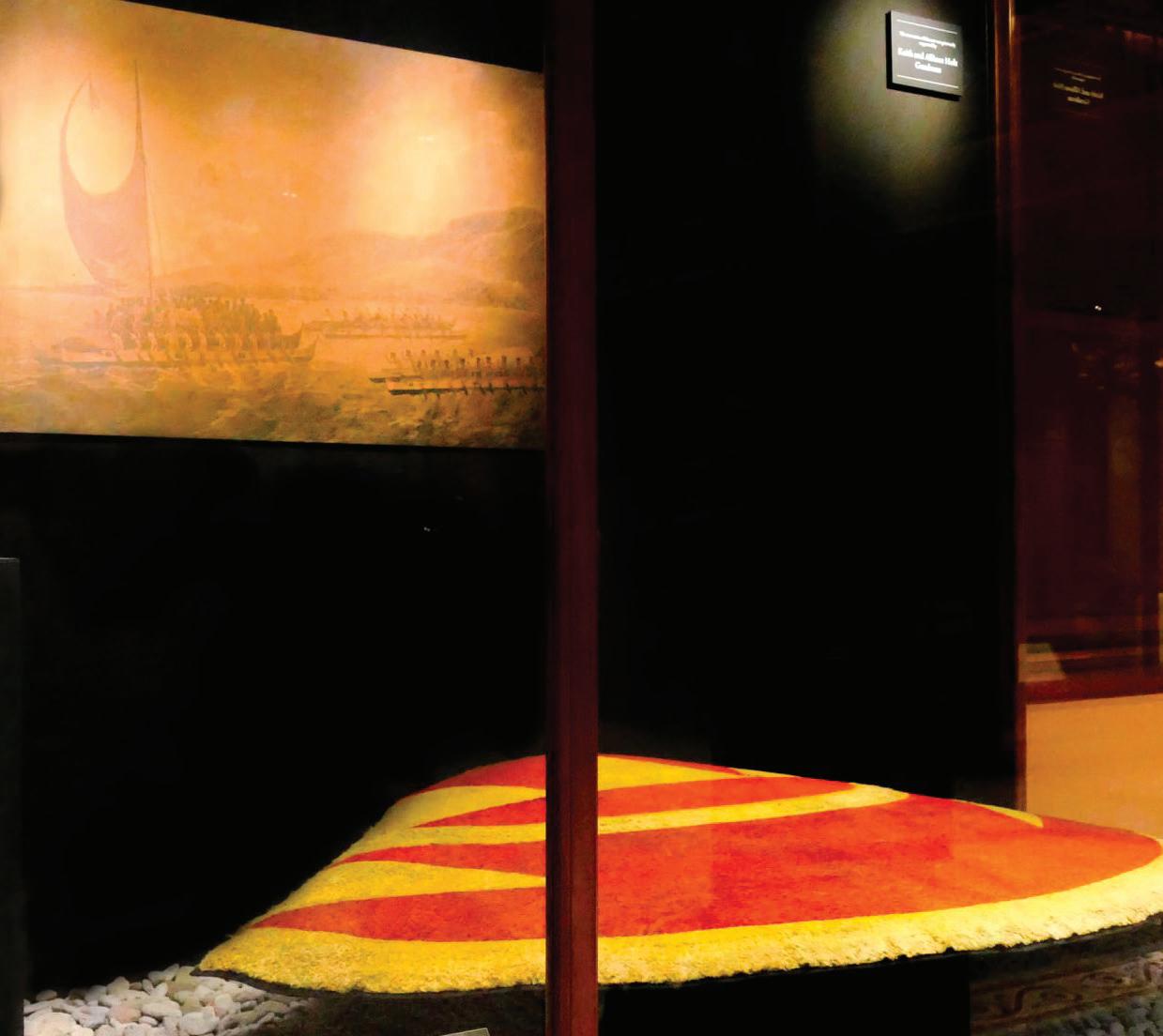
› CHECK THEIR SITE FOR UPCOMING EVENTS
› DISCOVER THE HISTORY, CULTURE & NATURAL ENVIRONMENT OF HAWAI‘I
MUSEUM & CULTURAL EXPERIENCE in HONOLULU
Nu‘uanu Pali Lookout
SIGHTSEEING on the WINDWARD COAST
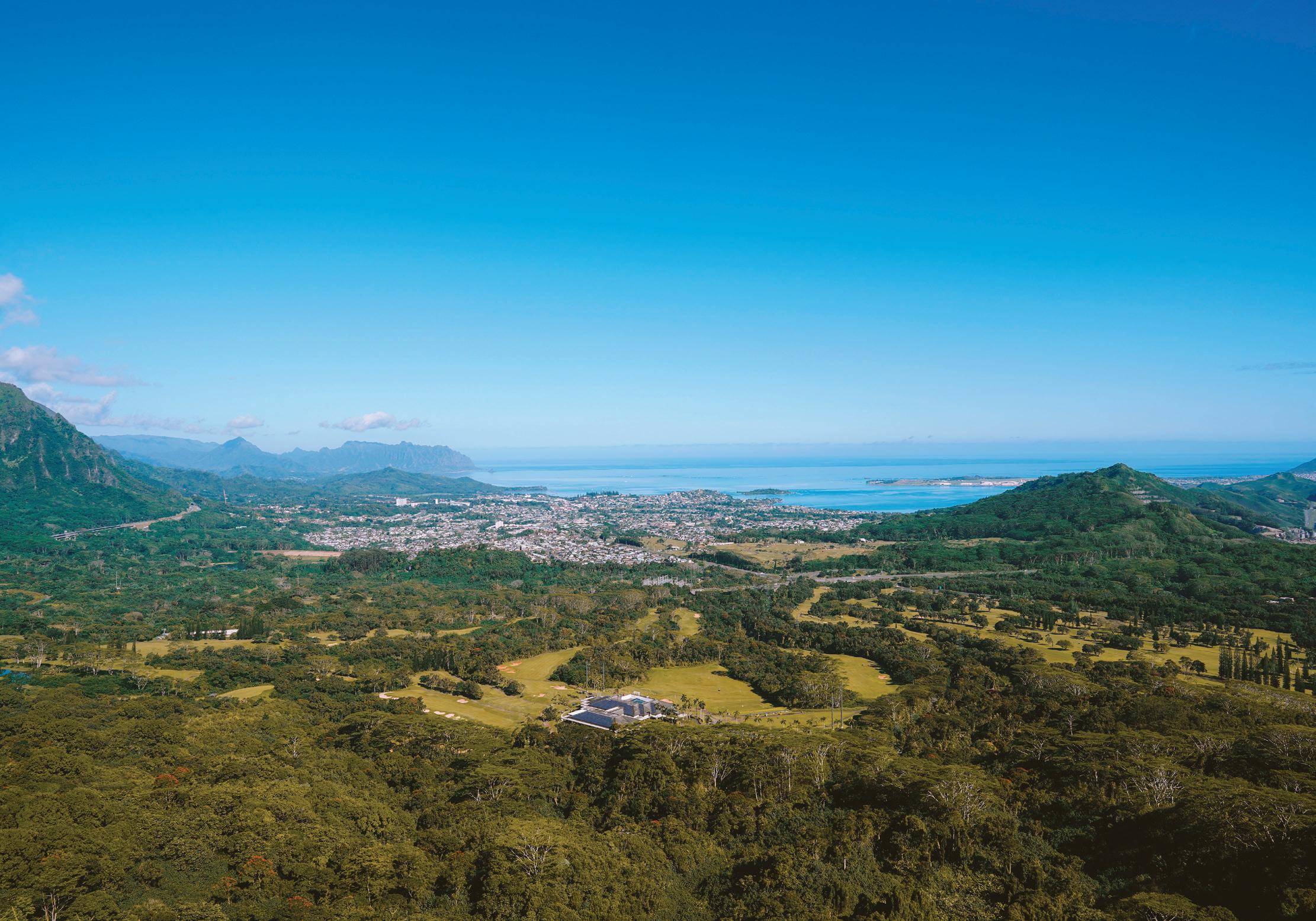
› OPEN DAILY FROM 6AM-6PM
› IMMERSE YOURSELF IN HISTORY & TAKE IN THE AMAZING VIEWS OF O‘AHU
A five-mile drive from downtown Honolulu, Nu‘uanu Pali Lookout offers stunning views of the Ko‘olau cliffs and Windward Coast. The drive up the Pali Highway takes you through lush forests to a stone terrace in the Ko‘olau Range 1200-feet above the O‘ahu coastline, with panoramic views of Kāne‘ohe, Kailua, Coconut Island and more. After admiring the views, continue through the Pali Tunnels to Windward O‘ahu and choose between visiting the beach town of Kailua or O‘ahu's North Shore. The Pali Lookout is also a site of historical significance, as it was the site of King Kamehameha I's victory in the Battle of Nu‘uanu. Expect strong winds but enjoy the breathtaking views of the Windward Coast. Open daily from 6 a.m.6 p.m. Non-resident parking fee of $7 per vehicle.
(808) 587-0300
dlnr.hawaii.gov/dsp/parks/oahu/nuuanu-pali-state-wayside Nu‘uanu Pali Dr, Kāne‘ohe (Map A, PG 163)
Hānaiakamalama
CULTURAL SITE & MUSEUM in HONOLULU
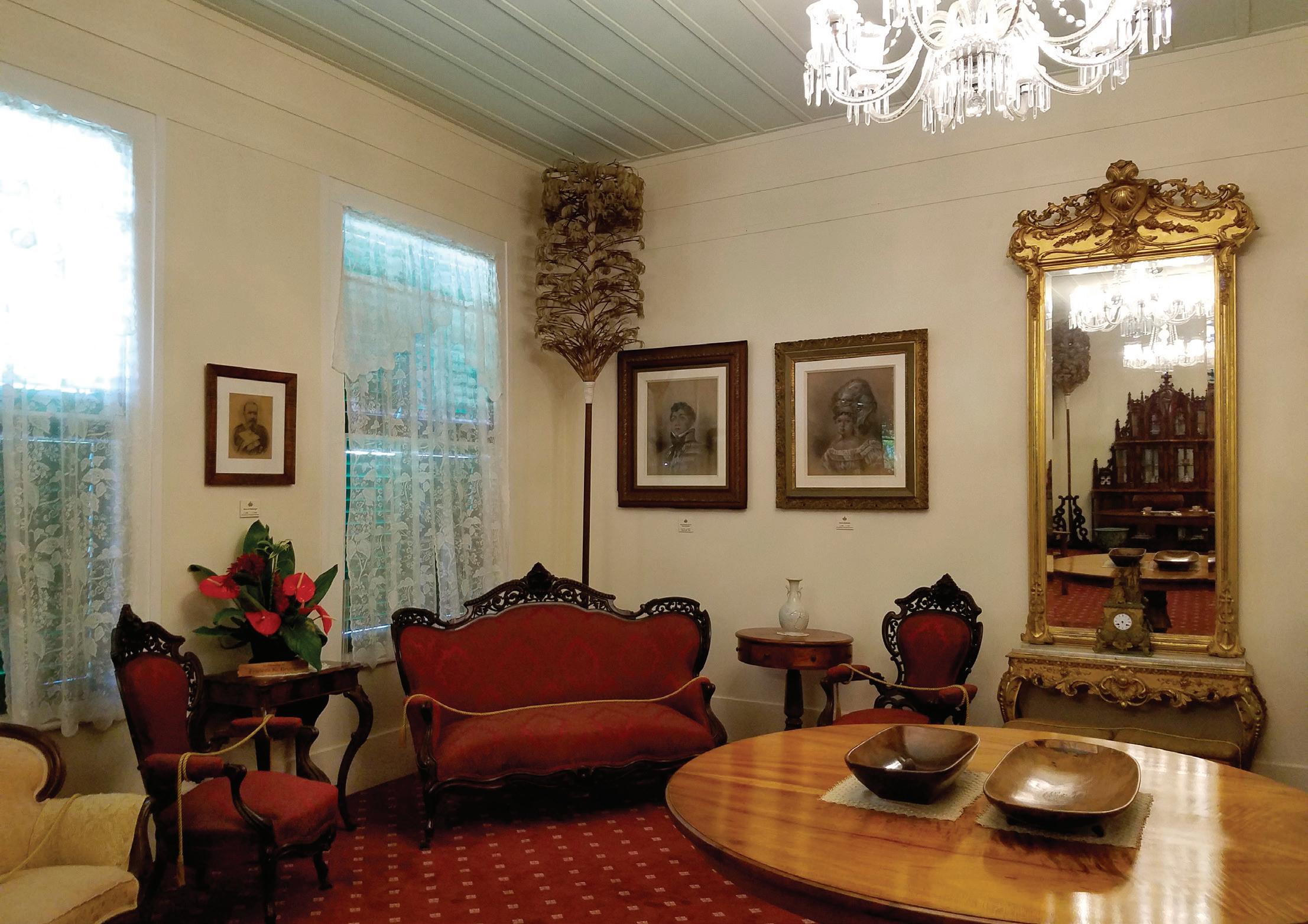
Discover the hidden gem of Hānaiakamalama, located in the picturesque Nu‘uanu Valley, just a short drive from Honolulu. This secluded summer retreat was once home to Queen Emma, King Kamehameha IV and their son, Prince Albert. Hānaiakamalama, which means "house of divine guidance" in Hawaiian, is now a museum listed on the National Historic Registry and offers visitors a unique insight into the life of the royal family. Explore the collection of Queen Emma's personal belongings, as well as royal antiques, furnishings and memorabilia. After visiting the museum, make sure to take a scenic drive up the Pali Highway to enjoy the breathtaking views from the Nu‘uanu Pali Lookout. Immerse yourself in the rich history and cultural heritage of Hawai‘i at the Hānaiakamalama.
(808) 595-3167
DaughtersOfHawaii.org/queen-emma-summer-palace
2913 Pali Hwy, Honolulu (Map A, PG 163)
› TAKE IN HAWAIIAN ROYAL HISTORY
› CLOSE TO NU‘UANU PALI LOOKOUT
› OPEN WED-SAT FROM 10AM-2:30PM
Pearl Harbor
NATIONAL MEMORIAL & HISTORICAL SITE in CENTRAL O‘AHU
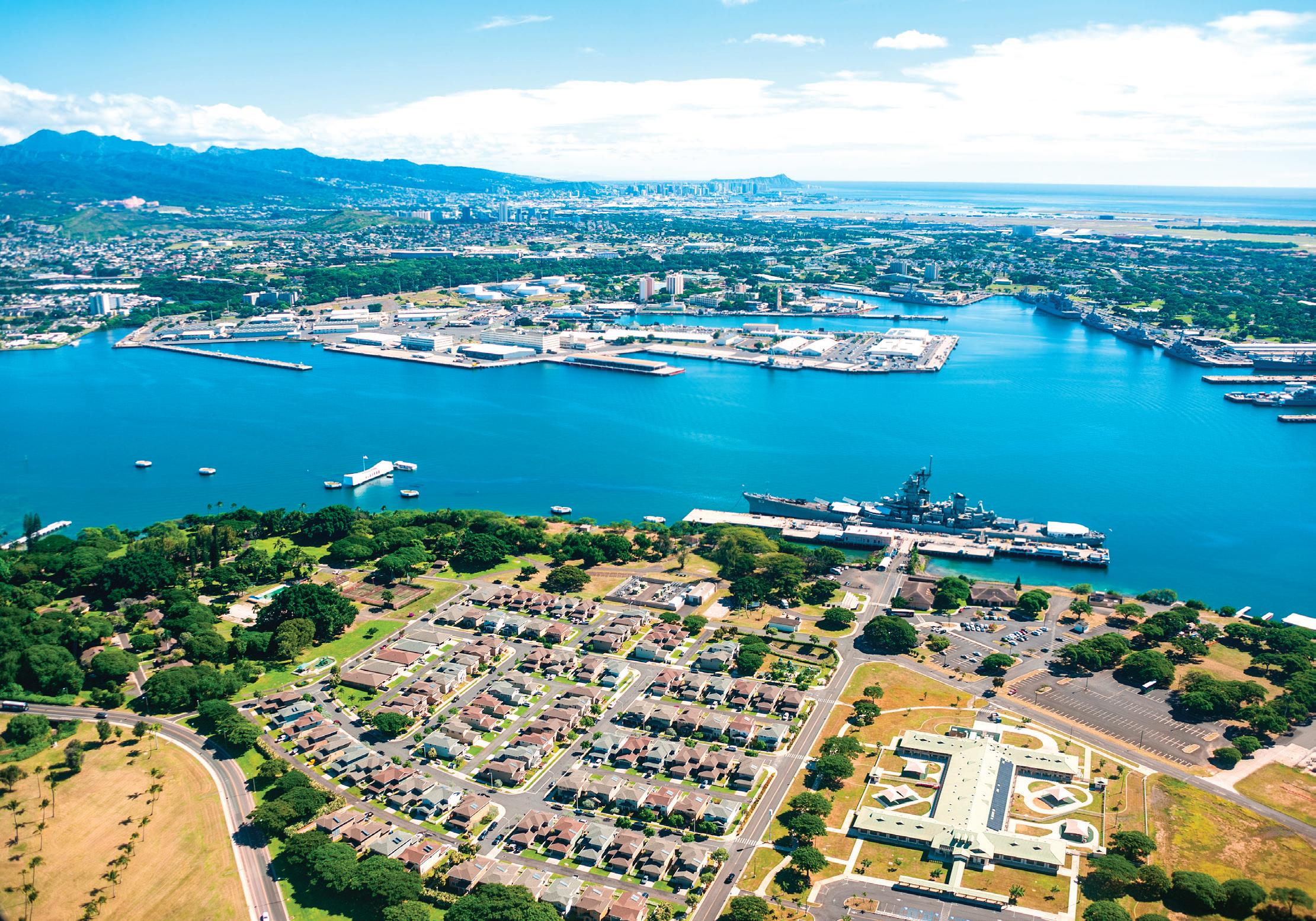
› OPEN DAILY FROM 7AM-5PM
› PARKING FEE OF $7 PER VEHICLE
› AVIATION MUSEUM ON FORD ISLAND
On December 7, 1941, a surprise air attack by the Japanese at Pearl Harbor plunged the United States into World War II and claimed thousands of lives. At Pearl Harbor, visitors can immerse themselves in five historic sites that make up the National Memorial. The Pearl Harbor Visitor Center is the gateway to the USS Arizona Memorial, USS Oklahoma Memorial and USS Utah Memorial, among others. The USS Arizona Memorial is a place of somber beauty and reflection, and the final resting place for over 900 sailors and Marines. Pearl Harbor is also home to the Pearl Harbor Aviation Museum, where you can tour two historic World War II hangars and ascend the historic Ford Island Control Tower. Reserve a time slot for the boat tour to the USS Arizona Memorial, which is free, but you must reserve it in advance.
(808) 422-3399 • nps.gov/perl/index.htm
1 Arizona Memorial Place, Honolulu (Map A, PG 162)
Lē‘ahi (Diamond Head)
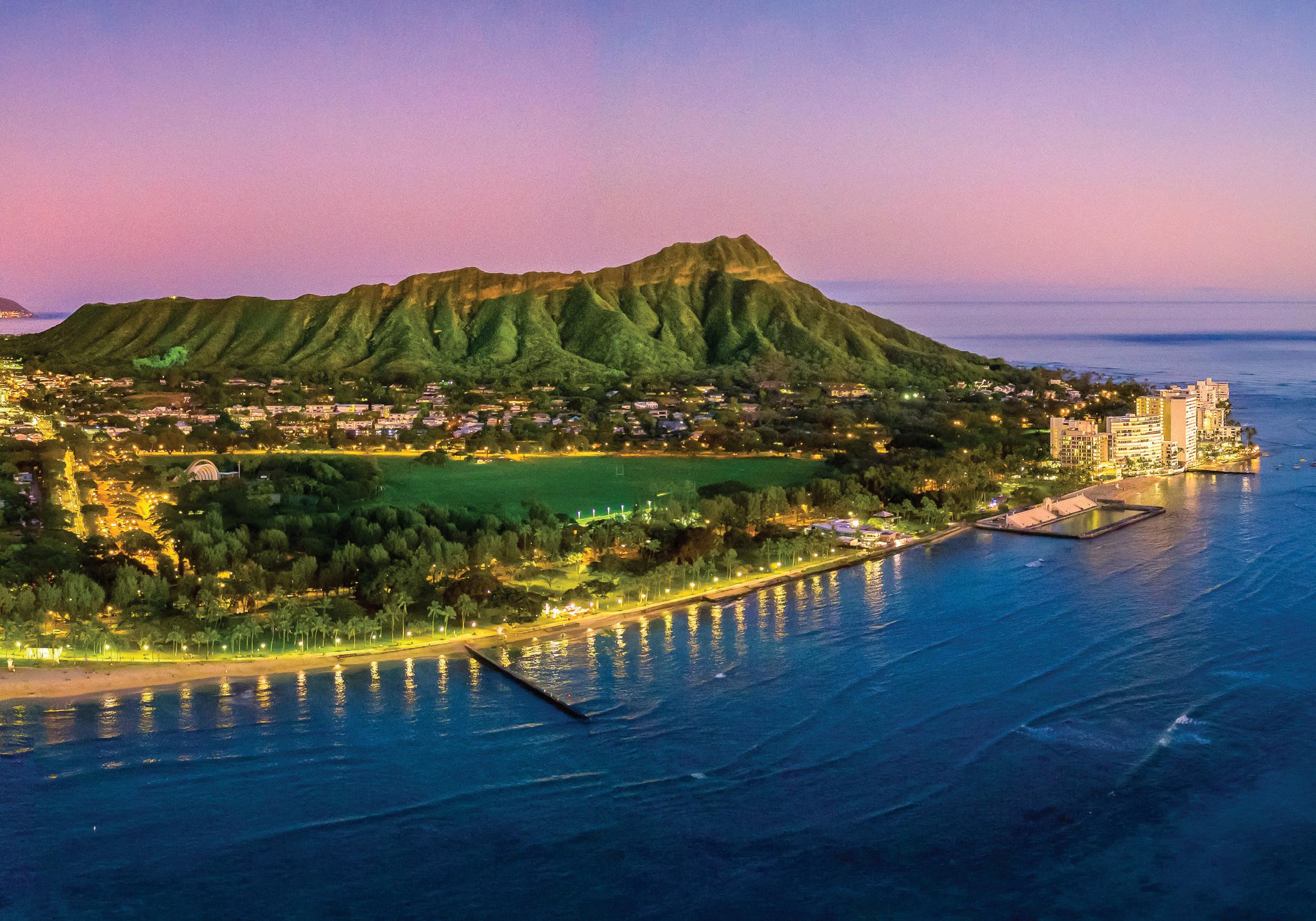
The iconic silhouette of Diamond Head State Monument can be found along the Honolulu skyline, just beyond Waikīkī. This 760-foot tuff crater is a famous Hawaiian landmark and is known as Lē‘ahi in Hawaiian, meaning the "brow of the tuna." The crater was named Lē‘ahi Head by 19th-century British sailors who thought they had discovered diamonds on its slopes, but they were shiny calcite crystals. The crater has a rich history, including being used as a military lookout in the early 1900s and becoming a National Natural Landmark in 1968. Today, it is a popular hiking destination offering breathtaking views of Waikīkī and the south shore of O‘ahu. The hike is moderately challenging and includes two sets of stairs, tunnels and old military bunkers. The Diamond Head State Monument is open daily from 6 a.m. to 6 p.m. with a $10 admission fee per vehicle and $5 per pedestrian.
Located just south of Waikīkī (808) 954-8759 • PacificHistoryParks.org/Diamond-Head-State-Monument
Diamond Head Rd. at 18th Ave., Honolulu (Map A, PG 163)
› RESERVATIONS FOR NON-RESIDENTS
› CHECK IN AT VISITOR CENTER, OPEN DAILY FROM 7AM-3:30PM
Ulupō Heiau State Historic Monument
CULTURAL SITE on WINDWARD COAST
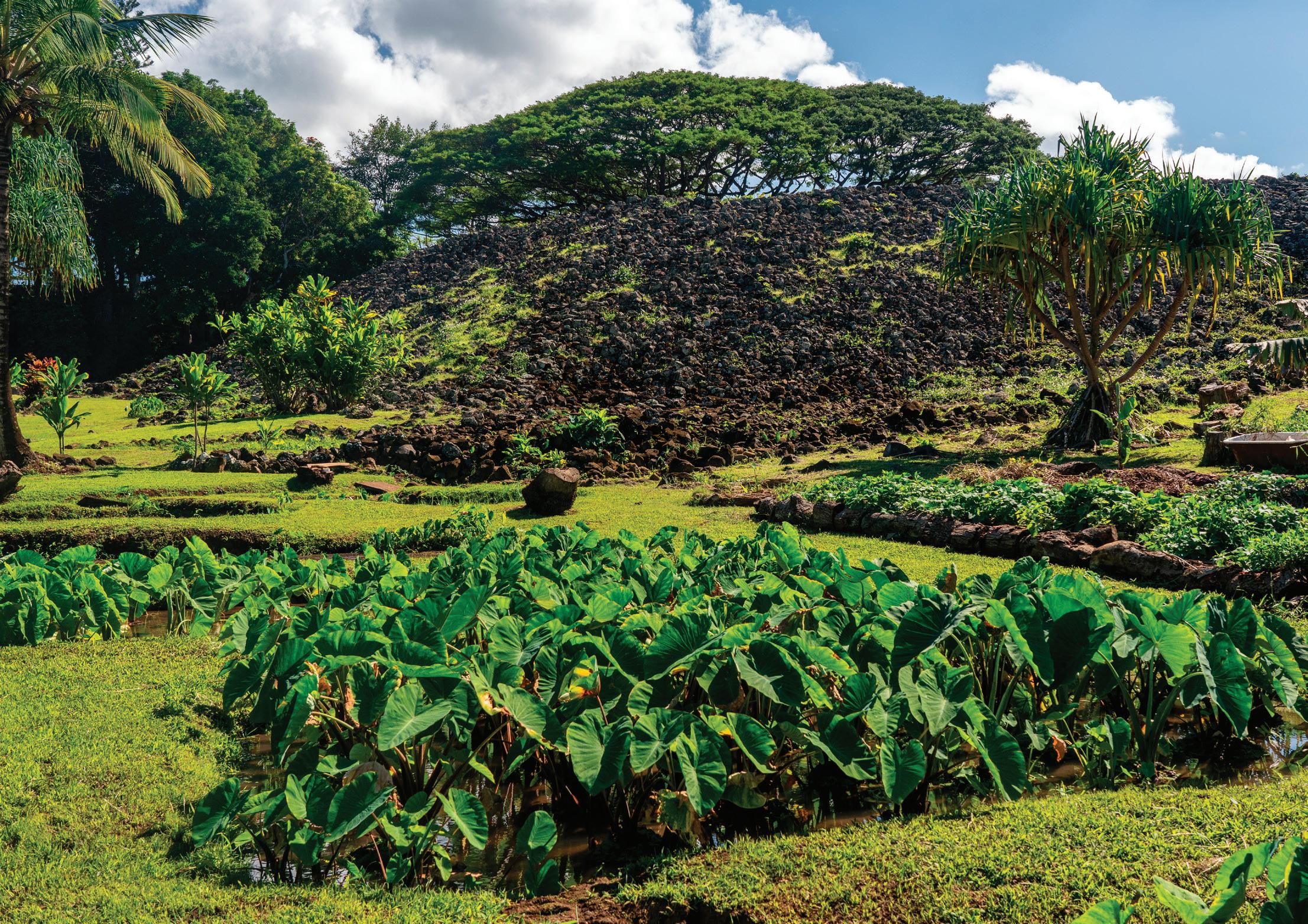
› NO ENTRANCE FEE
› OPEN MON-FRI 7AM-7PM, SAT 8AM-3PM
› PARK CLOSED ON SUNDAYS
An exciting and historic destination located in Kailua, this site is home to one of the most well-preserved Hawaiian temple complexes, making it a must-visit for history enthusiasts. As you explore the temple grounds, you'll be transported back in time to ancient Hawai‘i and learn about the unique cultural and spiritual practices of the Hawaiian people. The heiau (temple), which was used for religious ceremonies and offerings, is surrounded by lush vegetation and breathtaking views of the surrounding landscape. Not only will you discover the rich history of this special place, but you'll also be able to enjoy a variety of outdoor activities, such as hiking, picnicking and bird watching. Whether you're a local resident or visiting from abroad, Ulupō Heiau State Historic Site is an unforgettable experience that you won't want to miss.
(808) 587-0300 • dlnr.hawaii.gov/dsp/parks/oahu/ulupo-heiau-state-historic-site 1200 Kailua Rd., Kailua (Map A, PG 162)
Pu‘u o Mahuku Heiau
CULTURAL SITE on NORTH SHORE
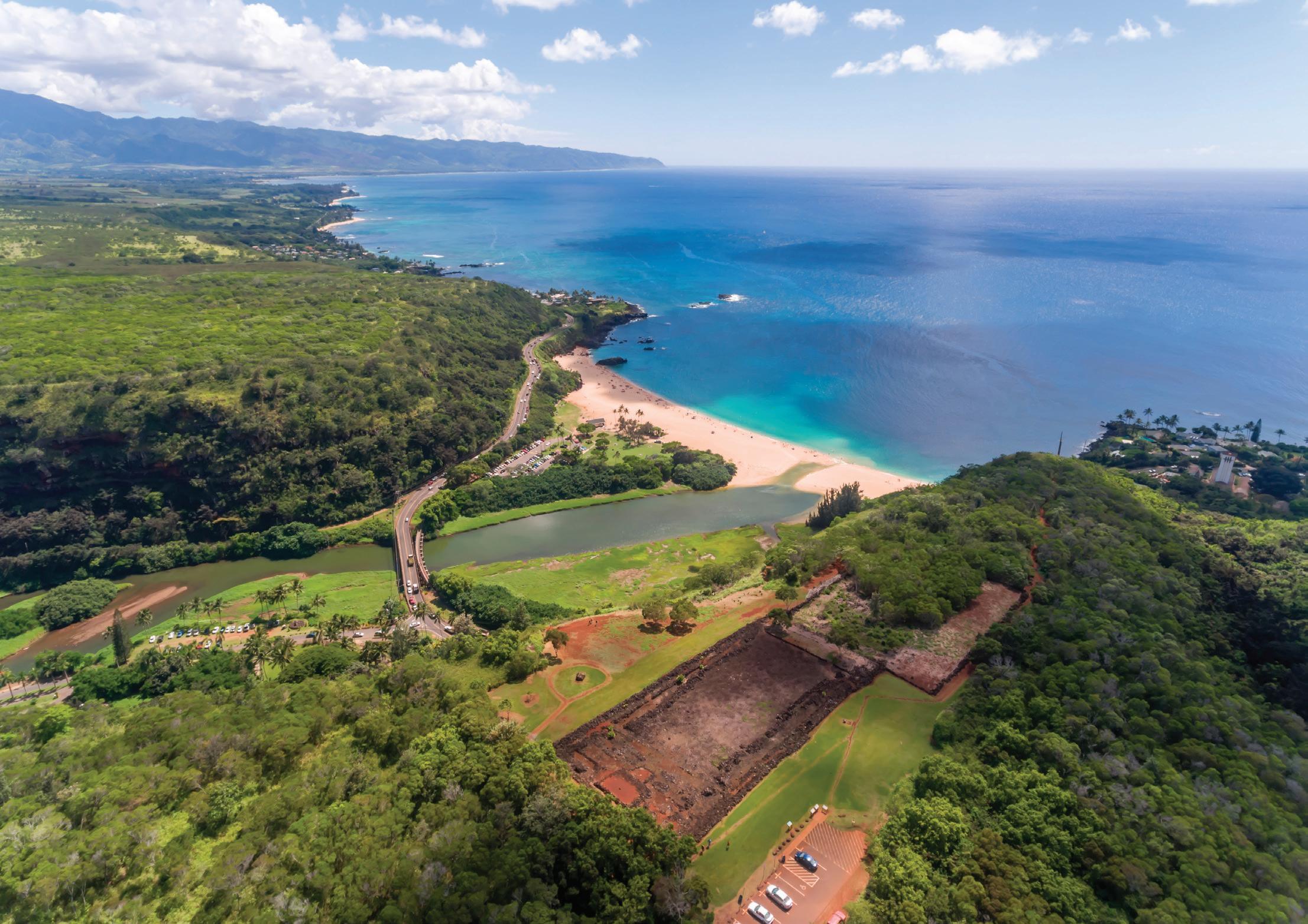
Pu‘u o Mahuka Heiau is the largest religious temple on O‘ahu, spanning nearly two acres. It played a significant role in the political, social and religious system of Waimea Valley in the pre-contact period. Constructed in the 1600s and possibly expanded in the 1700s, it consisted of three walled enclosures with interior structures made of wood and thatch. The high priest Ka‘opulupulu oversaw the heiau (temple) in the 1770s during a time of political turmoil, and it may have served as a sacrificial temple. The heiau was used until 1819, when the traditional religion was abolished. Pu‘u o Mahuka Heiau offers a commanding view of Waimea Valley and the northern shoreline and was declared a National Historic Landmark in 1962 to preserve its importance to Hawaiian culture and history. Visitors are asked to observe the site from outside the walls to avoid damaging the structure.
(808) 587-0300
dlnr.hawaii.gov/dsp/parks/oahu/puu-o-mahuka-heiau-state-historic-site 59-818 Kamehameha Hwy., Hale‘iwa (Map A, PG 162)
› NO ENTRANCE FEE
› OPEN DAILY FROM 8AM-5PM
› AMAZING VIEWS OF WAIMEA VALLEY
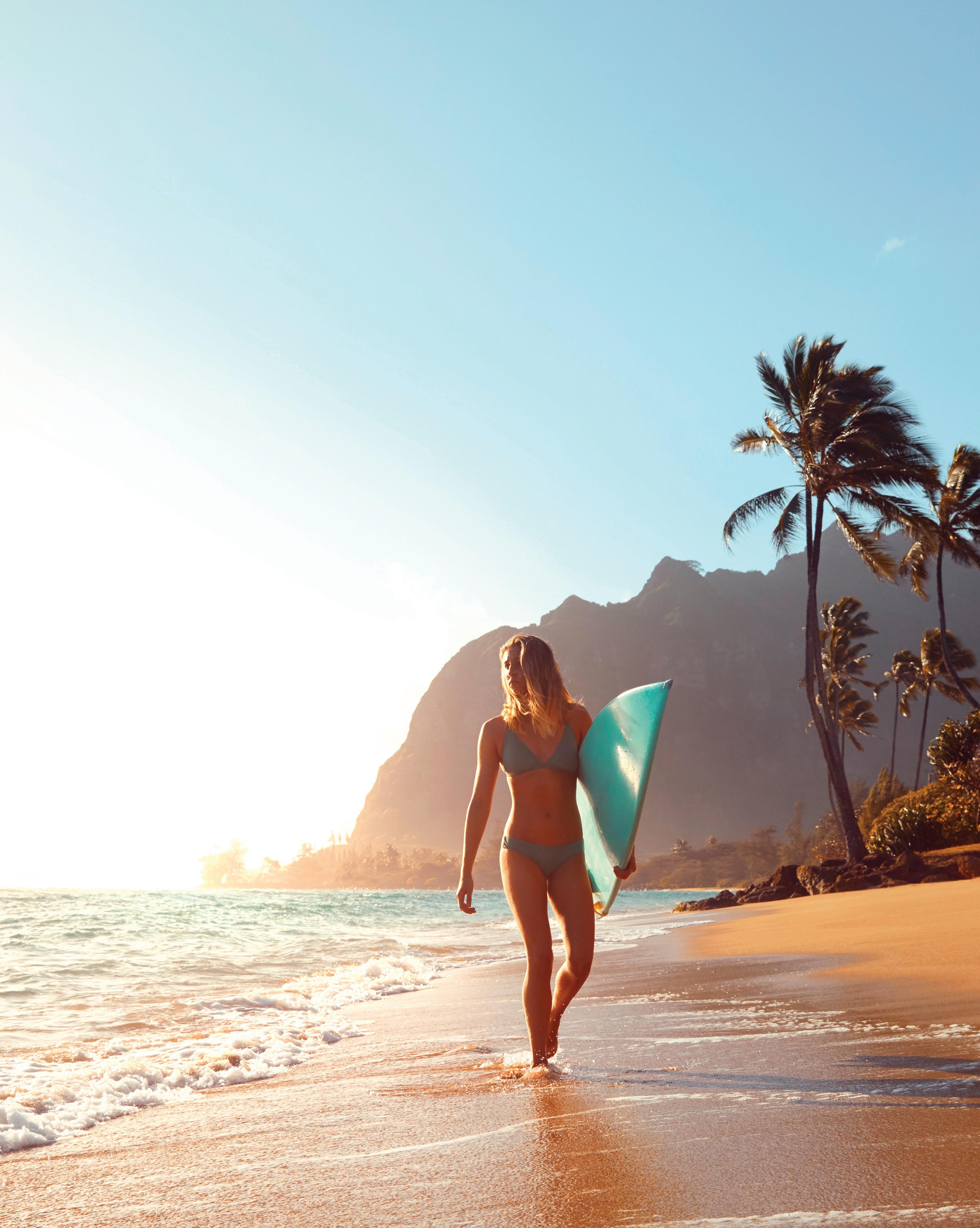
Please wear reef-safe sunscreen. Respect the ocean and sea life. Leave these beautiful places better than you found them.
BEACHES
ALA MOANA BEACH PARK honolulu
WAI‘ALAE BEACH PARK honolulu
WAIKĪKĪ BEACH waikīkī
KAIMANA BEACH waikīkī
KEAWA‘ULU (YOKOHAMA) BEACH leeward coast
MOKULĒ‘IA BEACH north shore
HALE‘IWA BEACH PARK north shore
SUNSET BEACH north shore
‘EHUKAI BEACH north shore
KAHANA BAY BEACH PARK windward coast
LANIKAI BEACH windward coast
KAILUA BEACH windward
Ala Moana Beach Park
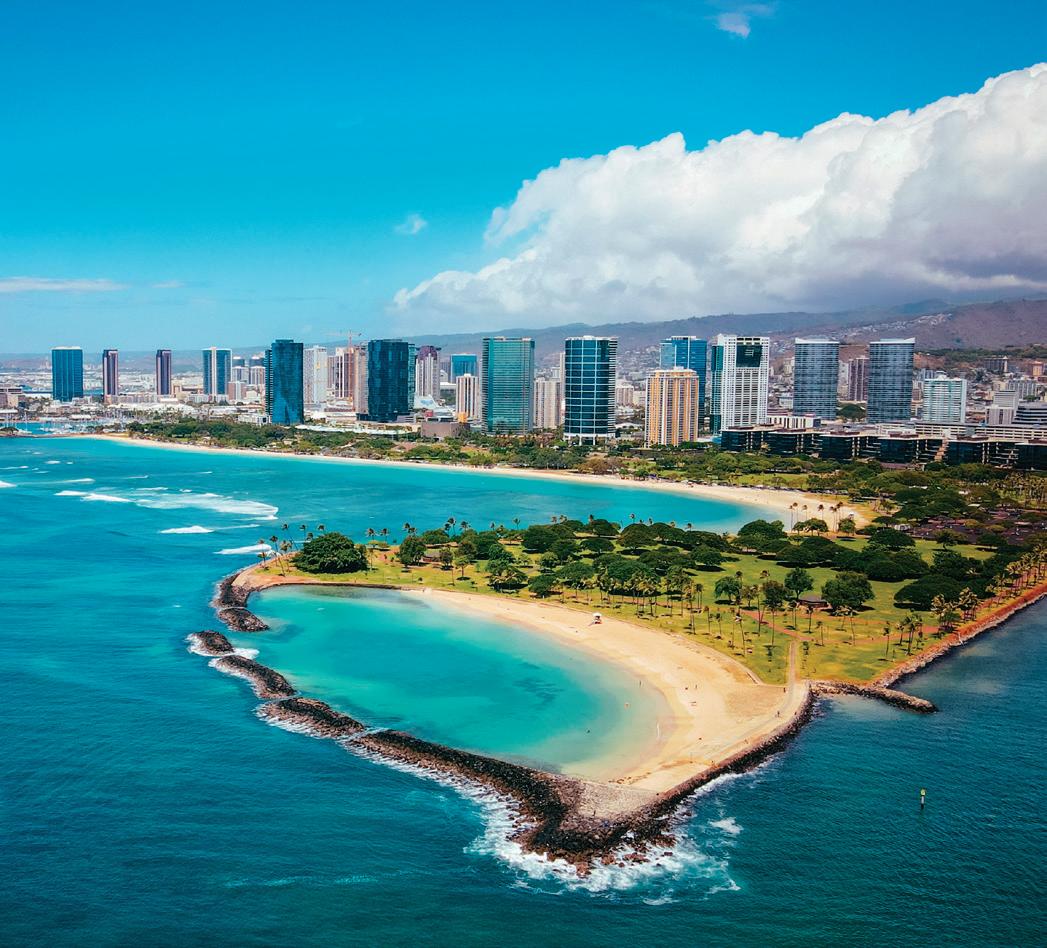
Wai‘alae Beach Park
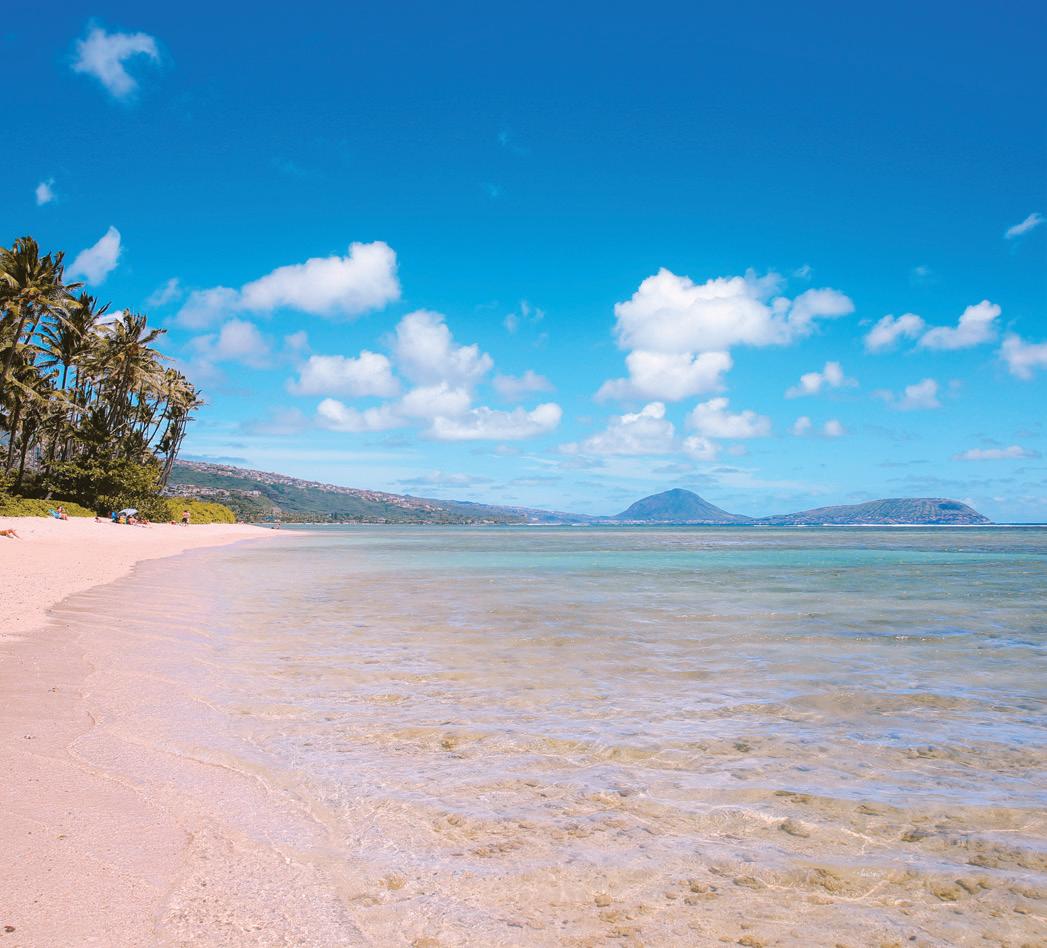
One of the most popular parks in Honolulu, Ala Moana Beach Park is a 100-acre, free public park located between downtown Honolulu and Waikīkī. The white sandy beach is slightly over a half mile long with calm water and a shallow outer coral reef, making it ideal for swimming, stand-up-paddleboarding and snorkeling—where you can observe tropical fishes, corals and turtles. The far western end of the beach is a favorite with families, especially small children, with its calm, waist-deep water. For the surfing enthusiasts, head over to the south side of Ala Moana and paddle out past the reef to catch the swells coming in from the open ocean. Beach facilities include concession stands, shady trees, tennis courts, picnic tables, plenty of restrooms, outdoor showers, lifeguards on duty, barbecue grills and a large parking lot. Located across the street from the Ala Moana Center, a shopper’s dream come true with 400 shops and restaurants.
Located near Waikīkī 1201 Ala Moana Blvd., Honolulu (Map B, PG 164)
This beautiful beach on O‘ahu’s south shore lies adjacent to The Kāhala Hotel & Resort, and about three miles from Waikīkī. The Wai'alae Stream flows through the beach park and into the ocean, forming a wide channel through the reef and dividing the park into two sections with a stone bridge connecting them. Because coral and rocks from the protected reef offshore are interspersed with sand, both on the beach and in the water, it is recommended to wear water shoes when walking on the beach and entering the water. The shallow reef is not ideal for swimming or surfing. A well-known surf site named Razors is on the west side of the channel and a small man-made beach can be found at the east end of the beach.
Located near The Kāhala Hotel & Resort 4925 Kāhala Ave., Honolulu (Map A, PG 162)
BEACH in HONOLULU
BEACH in KĀHALA
Waikīkī Beach
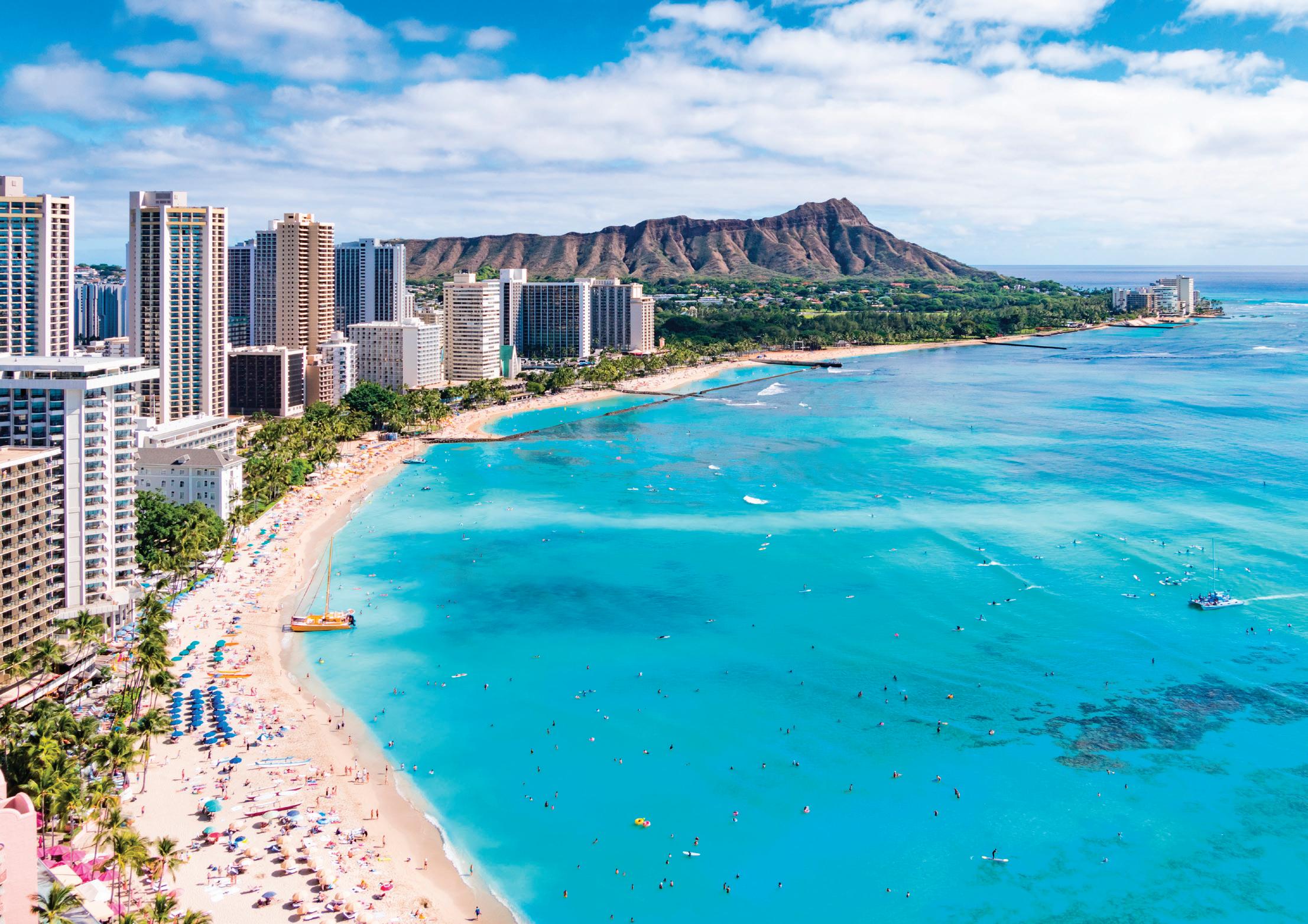
Located on the south shore of Honolulu, iconic Waikīkī Beach fronts O‘ahu’s main hotel and resort area, where you’ll find world-class shopping, dining and entertainment. Once a playground for Hawaiian royalty and considered one of the most famous beaches in the world, it is composed of eight sections, each with their own activities, amenities and vibes. Waikīkī is also renowned for surfing and Hawaiian waterman Duke Kahanamoku, who was an Olympic gold medalist in swimming and taught visitors how to surf its waves. Today, his statue is located at Waikīkī Beach, which has become an iconic symbol of Hawai‘i’s surf culture. Views of the city skyline and Lē‘ahi (Diamond Head) are in the background with local attractions like Honolulu Zoo, Waikīkī Aquarium and Royal Hawaiian Center nearby.
› LIFEGUARDS ON DUTY
› PARKING IN THE AREA IS LIMITED
› ENDLESS AMENITES NEARBY
BEACH in WAIKĪKĪ
Located in the heart of Waikīkī Kalākaua Ave, Honolulu (Map B, PG 164)
Kaimana Beach
› LIFEGUARDS ON DUTY
› PARKING AVAILABLE
› GRAB A BITE AT HAU TREE RESTAURANT
Also known as Sans Souci Beach (“without worry / a care” in French), this small, quiet beach is just south of the War Memorial Natatorium and fronts the boutique Kaimana Beach Hotel, with views of iconic Lē‘ahi (Diamond Head). This family-friendly south shore beach is wider than other beaches that make up the famous 2-mile stretch of Waikīkī Beach, and has calm, gentle waves that are ideal for snorkeling, swimming, fishing, boogie boarding, stand-up-paddle boarding and kayaking. To the east of Kaimana is an access point for the popular surf spot Old Man’s. Keep an eye out for the occasional monk seal sunning on the beach and remember to keep your distance. Amenities include restrooms, showers, parking and lifeguard on duty. Grab your morning coffee at nearby Kaimana Coffee Co.
BEACH in WAIKĪKĪ
Located fronting Kaimana Beach Hotel 2863 Kalakaua Ave., Honolulu (Map B, PG 164)
Keawa‘ulu (Yokohama) Beach
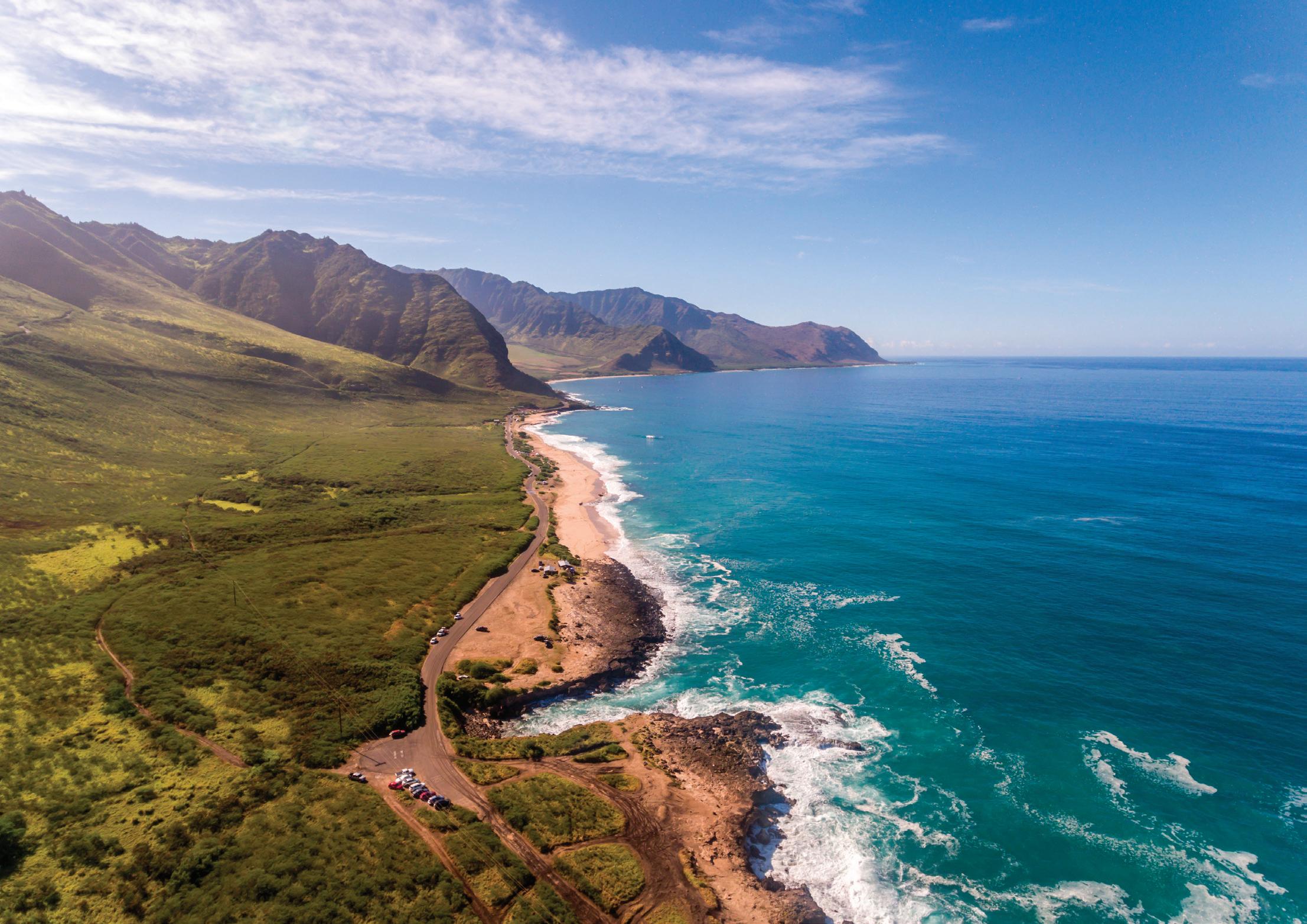
Known by the locals as Yokohama Beach or Yokes, Keawa‘ula Beach is the northernmost beach on O‘ahu’s west shore, next to the the Ka‘ena Point Trail, which leads to the Ka‘ena Point Bird Sanctuary and the Ka‘ena Point Pillbox Bunker & Cave Trail. This remote, curvy, beautiful beach is truly off the beaten path with turquoise water and is never crowded. The waves tend to get high, especially in winter, so, it’s not ideal for swimming or snorkeling, but sunbathing and watching surfers, bodyboarders and the occasional dolphin in the distance are common past times. Lifeguards are on duty, so make sure to ask one about the water conditions. With the strong currents, high waves and rocky ocean bottom, it can be dangerous for the inexperienced. If you enjoy hiking, the Ka‘ena Point Trail offers a rigorous out-and-back hike with spectacular views of the ocean and Wai‘anae Mountain Range.
› LIFEGUARDS ON DUTY
› HIKING NEARBY AT KA‘ENA POINT
› NO SHADE, TAKE AN UMBRELLA
BEACH on LEEWARD COAST
Located near Ka‘ena Point End of Farrington Hwy. (Hwy 93), Wai‘anae (Map A, PG 162)
Mokulē‘ia Beach
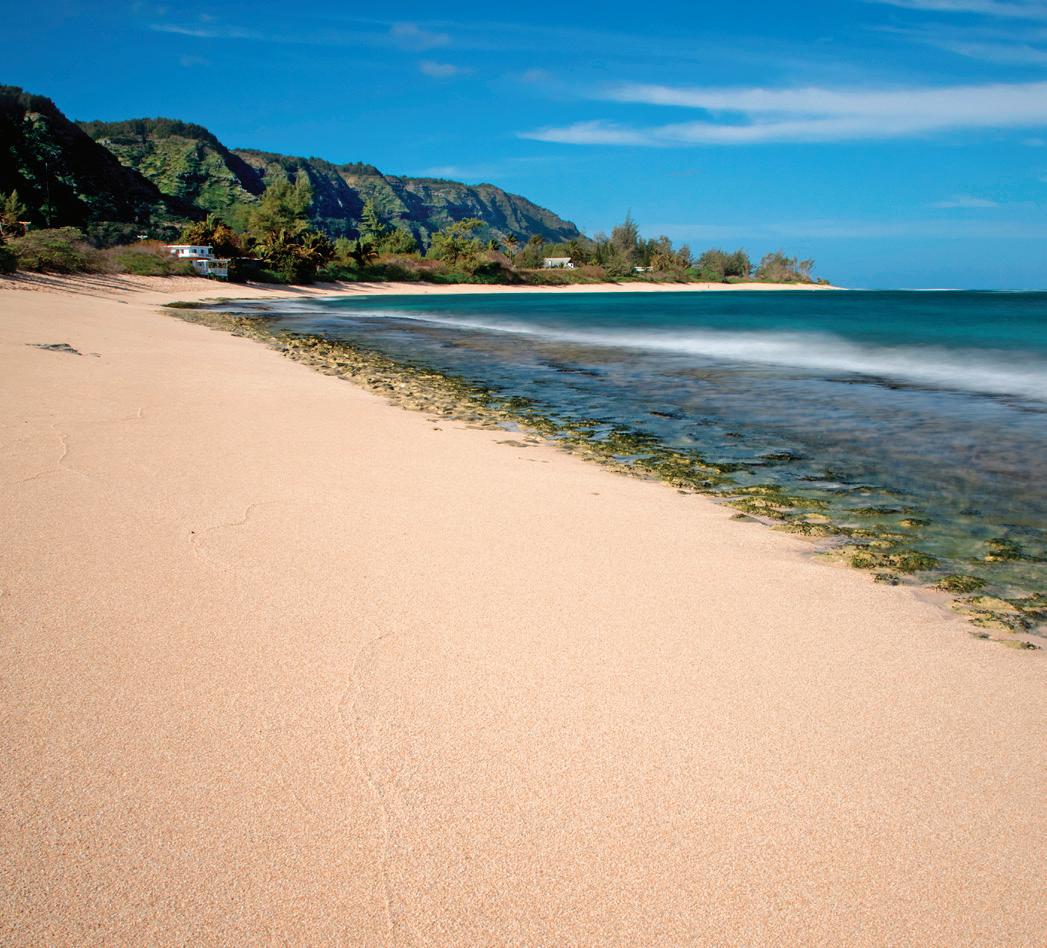
Hale‘iwa Beach Park
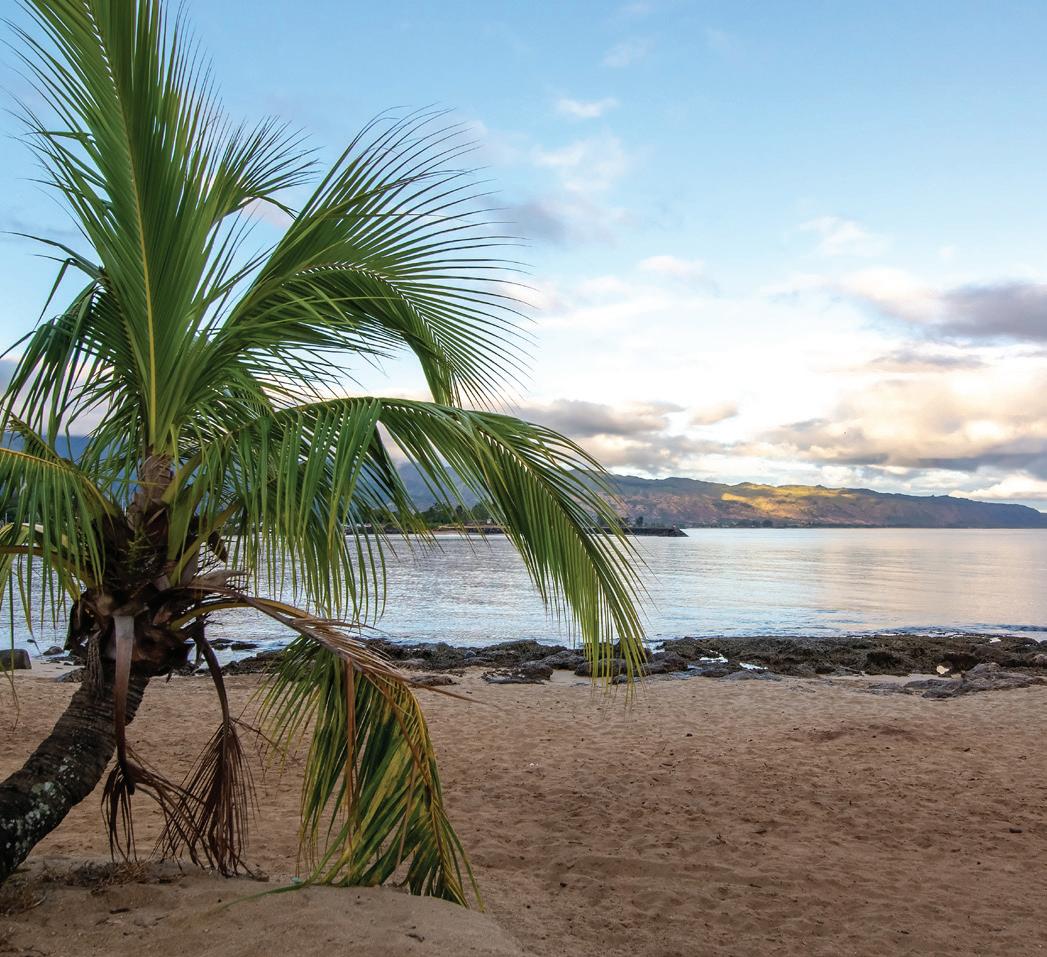
Located on Oahu’s North Shore between Wailua and Ka‘ena Point, Mokulē‘ia is a a small, secluded oceanfront park with a long white sand beach and pristine, blue waters. The beach is the perfect place to get away from the crowds. Mokulē‘ia attracts surfers, snorkelers, spear fishermen, kiteboarders and windsurfers, but is not a top attraction for swimmers due to the shallow reef. Winters have perfect wind conditions for kite and wind surfing but there are also strong swells and rip currents which can be dangerous if you are inexperienced. Sunbathing is a favorite past time on this secluded beach, but if you want some shade, there are plenty of trees to shield you from the suns rays. Keep an eye out for honu (sea turtles) swimming close to shore and watch the display of surfers and wind- and kite-surfers taking advantage of the windy conditions. Amenities include parking, picnic tables, outdoor showers, portable restrooms and water fountains.
No lifeguards on duty Open daily from 7 a.m. - 7 p.m. 8568 Farrington Hwy, Waialua (Map A, PG 162)
Hale‘iwa Beach Park is in the small town of Hale‘iwa on the North Shore of O‘ahu and adjacent to the Hale‘iwa Boat Harbor with the beach located near the parking area and lifeguard tower. This spacious 19-acre park is fronted by a narrow sandy beach with calm waters perfect for stand-up-paddle boarding close to shore and surfing farther out. The park is dotted with large monkeypod trees for shade and popular activities include surfing, fishing, boating, kayaking and scuba diving, and you may even see canoe paddlers training. Because of the rocky ocean bottom, this is not a popular swimming beach, but it offers beautiful views of Waialua Bay and a large grassy area for picnicking and people watching. Amenities include parking, restrooms, showers, picnic tables and lifeguard on duty.
Lifeguards on duty
62-449 Kamehameha Hwy, Hale‘iwa (Map E, PG 166)
BEACH on NORTH SHORE
BEACH on NORTH SHORE
Sunset Beach
BEACH on NORTH SHORE
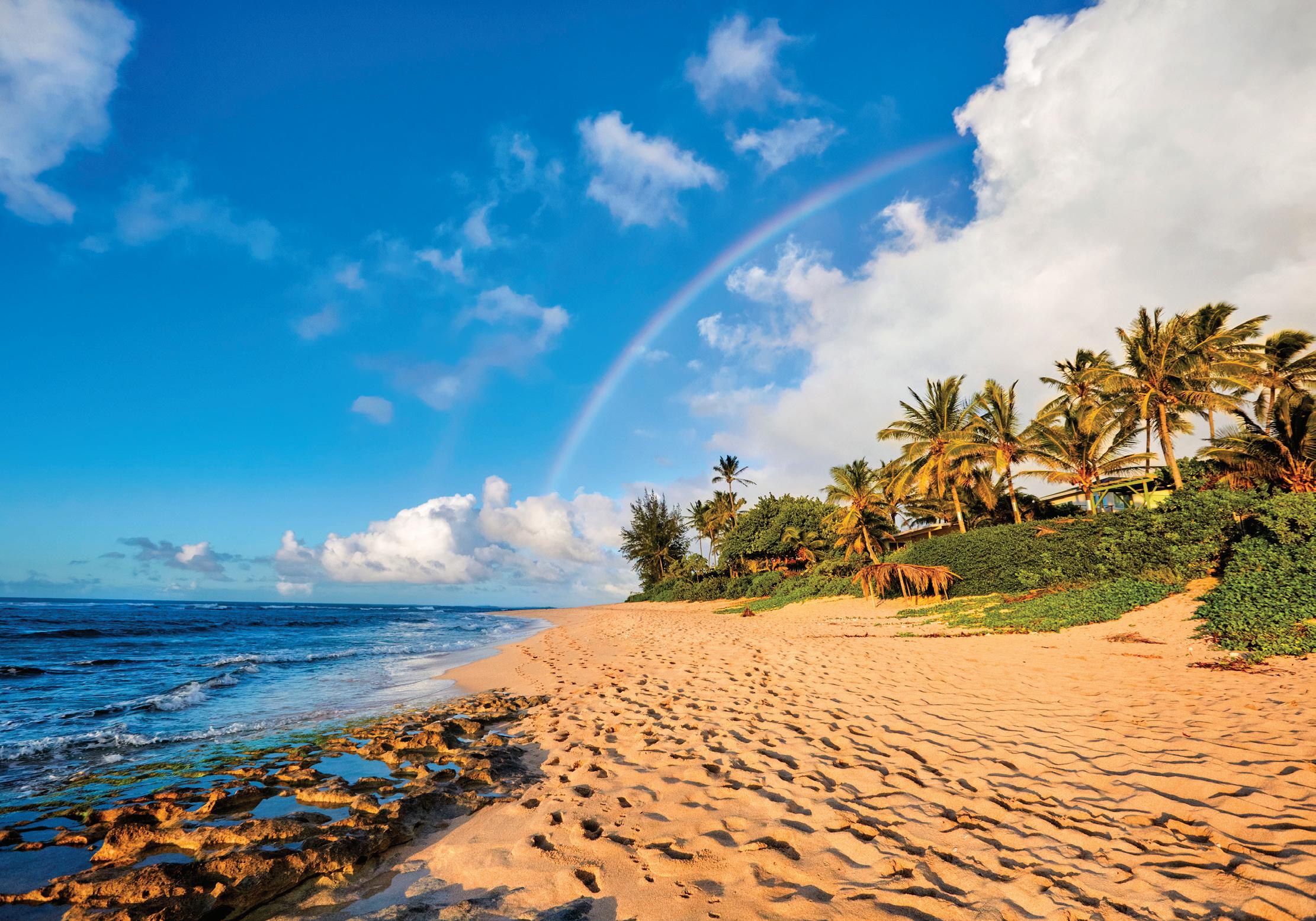
This two-mile stretch of sand is known for big wave surfing during the winter season and is one of the three surf breaks where the famous Vans’ Triple Crown Surfing Contest is held. While the beach is famous for surfing in winter (October – April), there are plenty of activities for non-surfers to enjoy, especially in the summer months. The calm waters in summer are ideal for swimming, snorkeling and bodyboarding, and viewing amazing sunsets are always a must do at this beach. Amenities include restrooms, outdoor showers, picnic tables, shaded areas, free parking (across the street and beside the beach park) and a lifeguard on duty from 9 a.m. to 5:30 p.m. daily.
› LIFEGUARD ON DUTY 9AM-5:30PM
› FREE PARKING NEARBY
› BEWARE OF RIP CURRENTS
Located just outside Hale‘iwa 59-104 Kamehameha Hwy., Pūpūkea (Map A, PG 162)
‘Ehukai Beach Park (Banzai Pipeline)
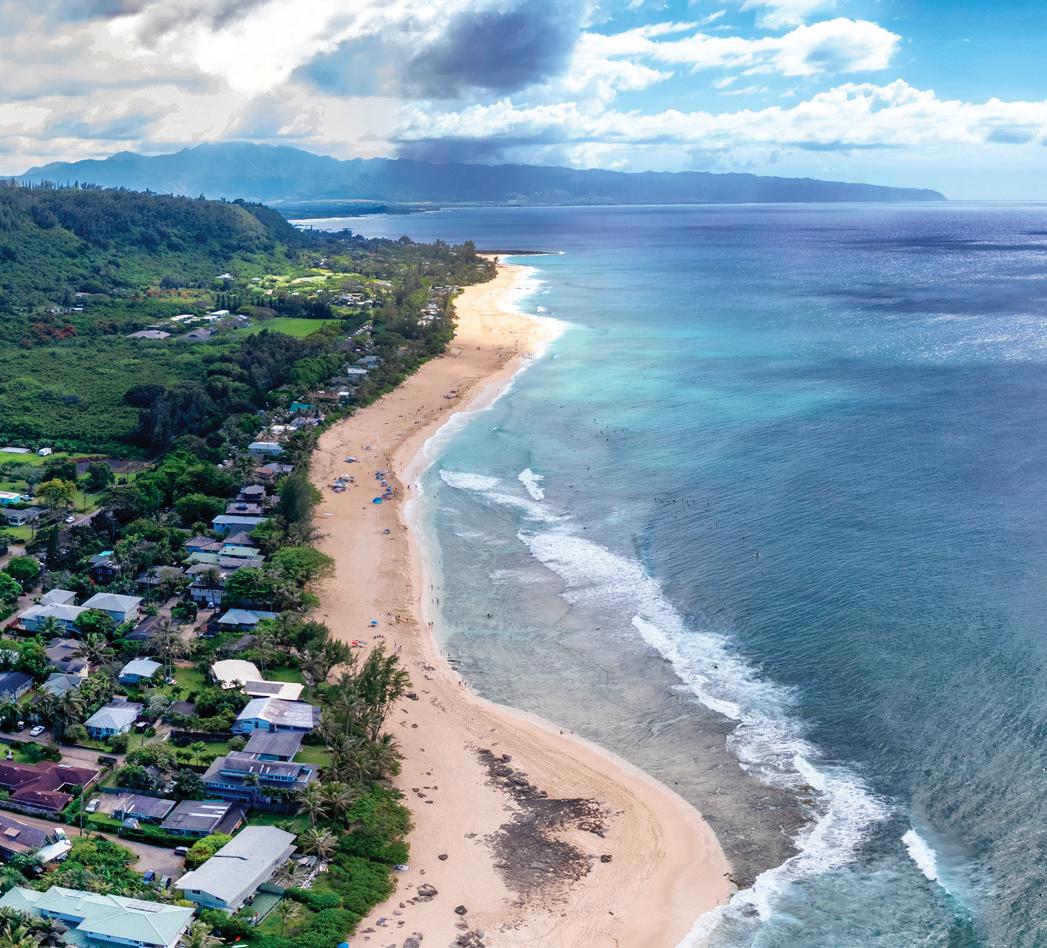
Kahana Bay Beach Park
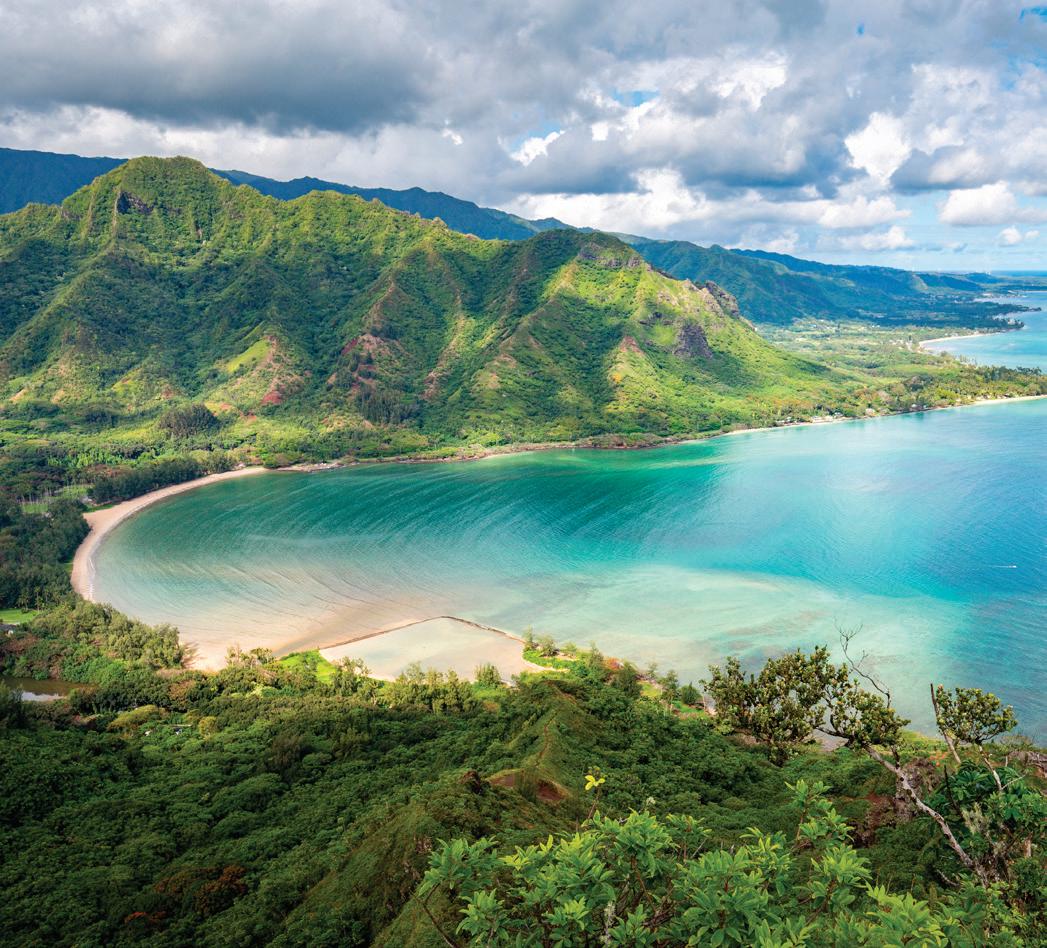
‘Ehukai Beach Park is one of the most famous surf spots on O‘ahu’s North Shore, with daredevil surfers traveling from all over the world to take on waves reaching heights of over thirty feet during surf season (October to April). Also known as the “Banzai Pipeline,” the massive, barreling waves seen in winter make it a wonderful place to watch adventurous surfers brave enough to ride these waves. Surfing contests are commonly held here, such as the Billabong Pipeline Masters and Da Hui Backdoor Shootout. During the summer (May to September), the water is calmer, where swimming is possible. But it's recommended to ask the lifeguards on duty if the water conditions are safe for swimming. This is the perfect beach for a day of sunning and a picnic under the canopy of trees lining the shore. Amenities include picnic tables, limited parking, showers, restrooms and lifeguard on duty.
Lifeguard on duty 59-337 Ke Nui Rd, Hale‘iwa (Map A, PG 162)
This small beach is one of the best-kept secrets and worth a stop if you are sightseeing on this side of the island. Surrounded by the majestic Ko‘olau Mountains, the crescent shaped Kahana Bay Beach is great for kayaking (if you bring your own kayak), fishing, swimming and snorkeling (especially in summer on a cloudless day), paddleboarding and sunbathing. On the south end of Kahana Bay Beach Park is Huilua Fishpond, an ancient Hawaiian fishpond that is a National Historic Landmark and no longer in working condition but still worth visiting as it is one of only six remaining fishponds on the island and gives insight into Hawaiian people’s aquafarming practices. Amenities include picnic tables, outdoor showers, restrooms, boat ramp and parking.
dlnr.hawaii.gov/dsp/parks/oahu/ahupuaa-o-kahana-state-park/ 52-222 Kamehameha Hwy., Hau‘ula (Map A, PG 162)
BEACH on NORTH SHORE
BEACH on WINDWARD COAST
Lanikai Beach
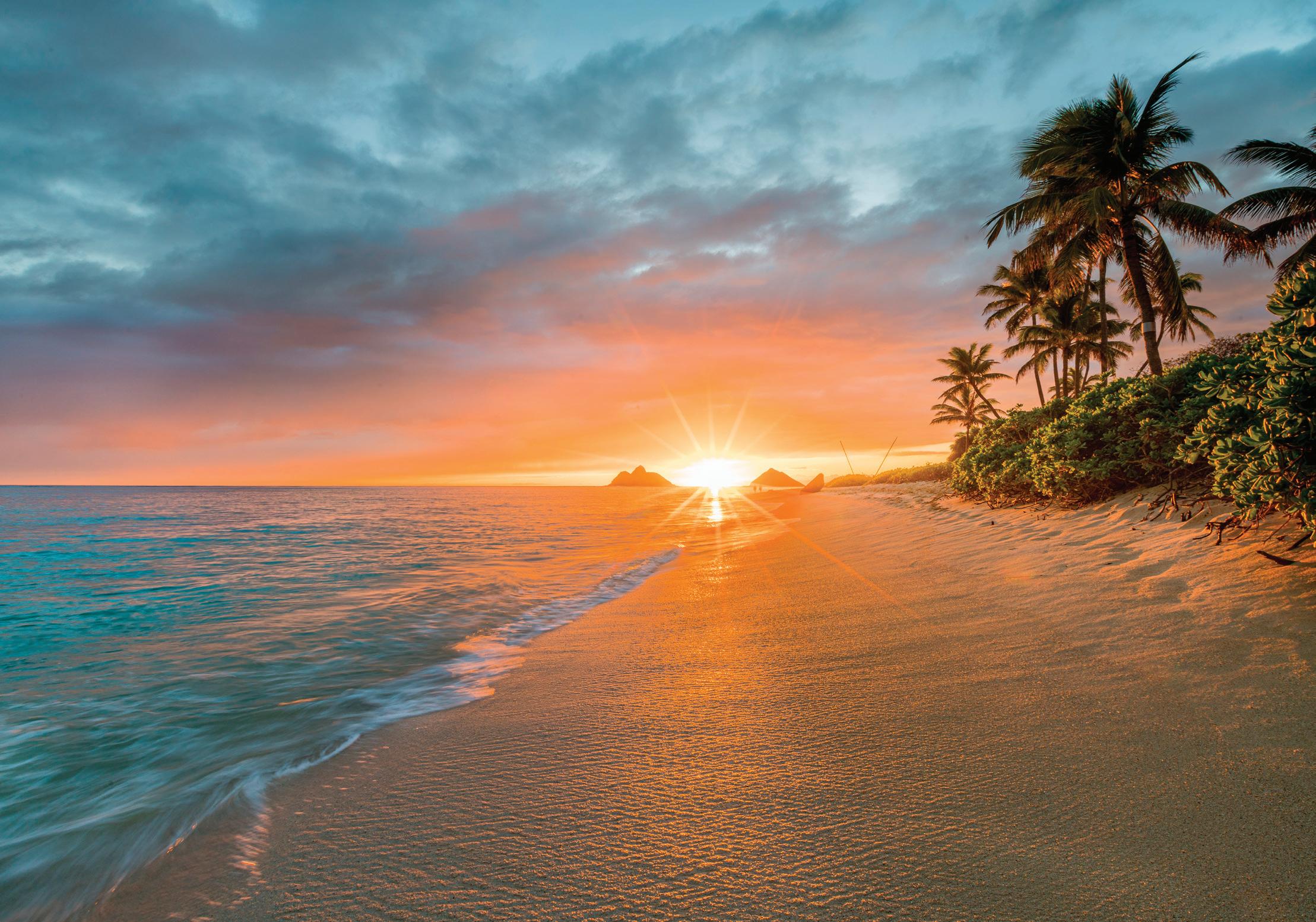
Ranked one of the best beaches in the world and one of the most beautiful beaches on O‘ahu, Lanikai (“heavenly sea”) Beach, also known as Ka‘ōhao Beach, offers mesmerizing and endless vistas of soft powdery white sand, clear azure blue water and calm surf. Located in the town of Kailua, this beach is popular with local families and is an idyllic spot for swimming and relaxing. This isn’t an ideal spot for snorkeling though, with its minimal reef patches. There is no public parking, but during the week, neighborhood parking is open and street parking is free. Because parking is scarce, it’s better to park at Kailua Beach’s parking area, which is a short 10-minute walk away. From Lanikai, you can see Nā Mokulua in the distance. Known locally as “the Mokes,” these islets are protected seabird sanctuaries with access allowed only on the Northern Moke which is usually accessed by kayak or outrigger canoe.
› NO PUBLIC PARKING AREA
› BEAUTIFUL WHITE SAND BEACH
› NO LIFEGUARDS OR FACILITIES
BEACH on WINDWARD COAST
Located off Kawailoa Rd. Best to park at the lot at Kailua Beach along Kawailoa Road and walk along the shoreline toward Lanikai (Map G, PG 167)
Kailua Beach
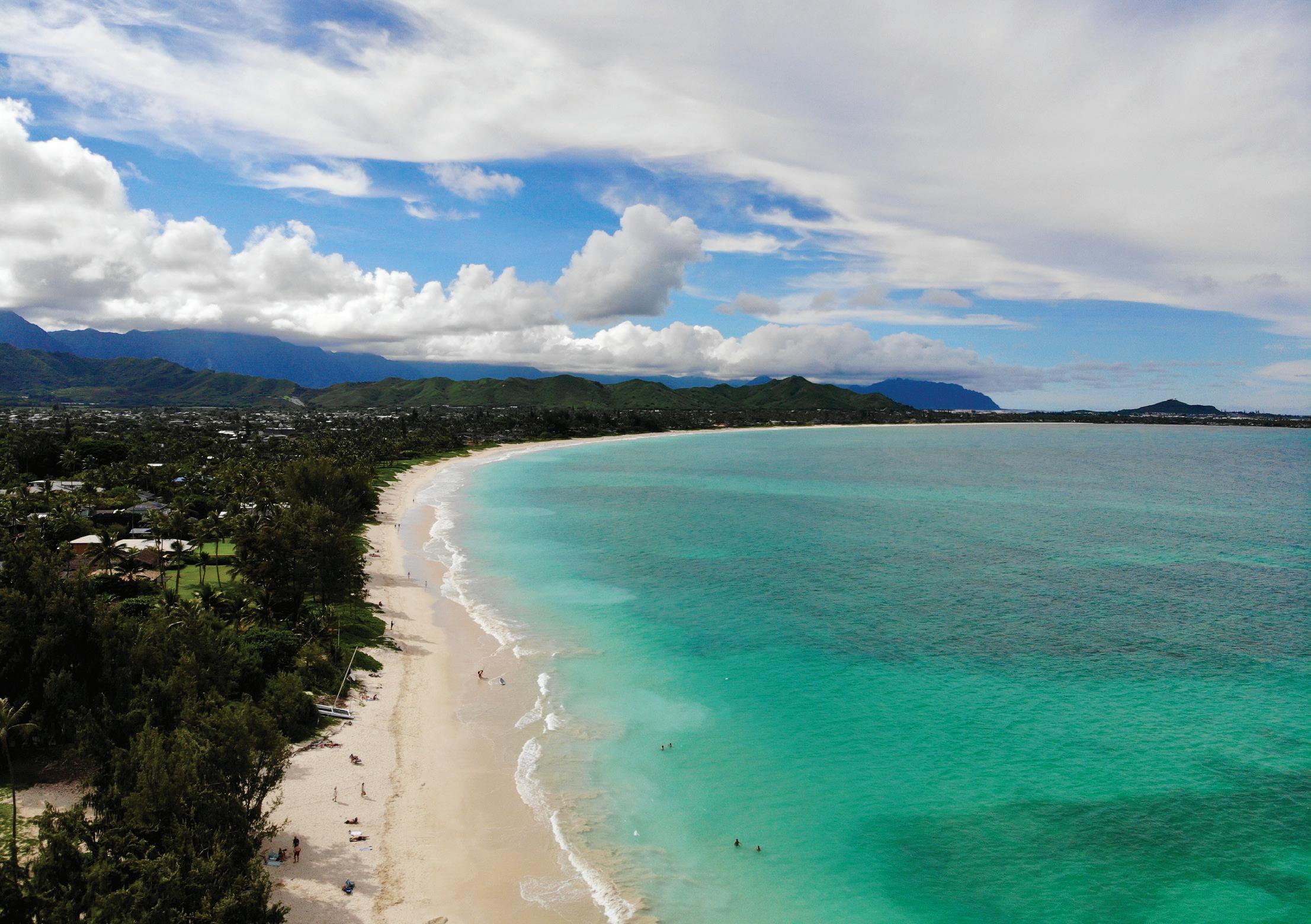
› LIFEGUARDS ON DUTY
› FACILITIES ON SITE
› GREAT BEACH FOR WATER ACTIVITIES
Ranked as the second most beautiful beach on O‘ahu, Kailua Beach Park exemplifies the idyllic Hawai‘i beach with its turquoise blue ocean waters and pristine, soft, white sand stretching along the eastern shore of O‘ahu for two and a half miles. Situated just north of the number one beach on O‘ahu, Lanikai, Kailua Beach Park is one of the largest and prettiest beach parks on the island, and offers lots of shade, restrooms, showers, picnic pavilions and tables, beach volleyball courts, barbecue pits and lifeguards on duty. Because of the calm waters and small shore break, this beach is popular for activities such as boogie boarding, swimming, kayaking, stand-up-paddle boarding, kitesurfing and windsurfing. Every year the beach lights up with spectacular fireworks display on the annual fourth of July event.
Located on Kailua Rd. about 2 miles from Pali Hwy. in Kailua (Map G, PG 167)
Hawai‘i Prince Golf Club
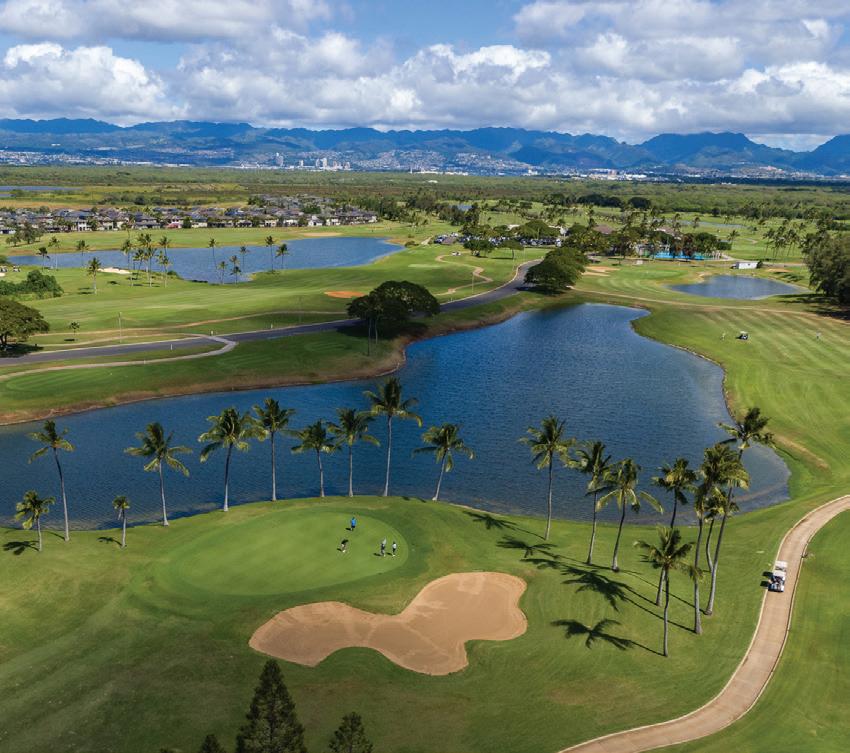
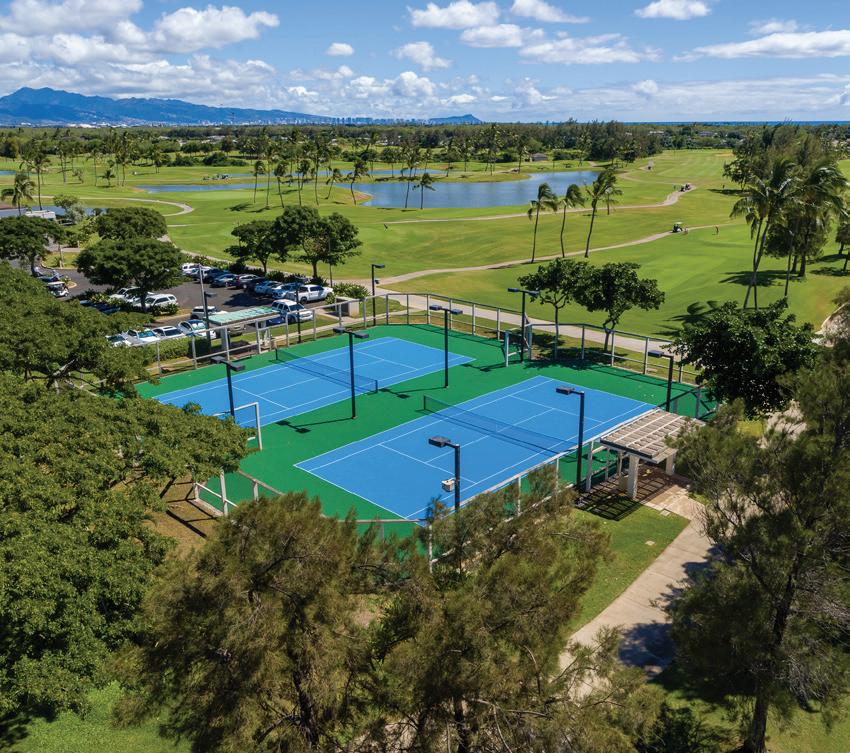
› PLAY AN ARNOLD PALMER/ED SEAY DESIGN
› STUNNING VIEWS OF SURROUNDINGS
› THREE INTERCHANGEABLE NINES
Image yourself on 270 acres of natural beauty set on the sunniest side of O‘ahu. You will experience the island’s only golf course with three interchangeable nines, thoughtfully designed by Arnold Palmer and Ed Seay. With long fairways lined with white sandy bunkers and ten strategically placed lakes, join them for a day of challenging play on this unique course. Invest in your game with friendly and experienced golf professionals from Island Pacific Golf Academy or practice your tennis swing with lessons from USTA Hawaii Pacific. Whether before or after your game, relax at the Bird of Paradise Restaurant offering local favorites to please any palette and a long list of cold, refreshing beverages to quench your thirst. Best of all, guests of Prince Waikiki enjoy preferred rates.
GOLF COURSE in CENTRAL O‘AHU
Pearl at Kalauao
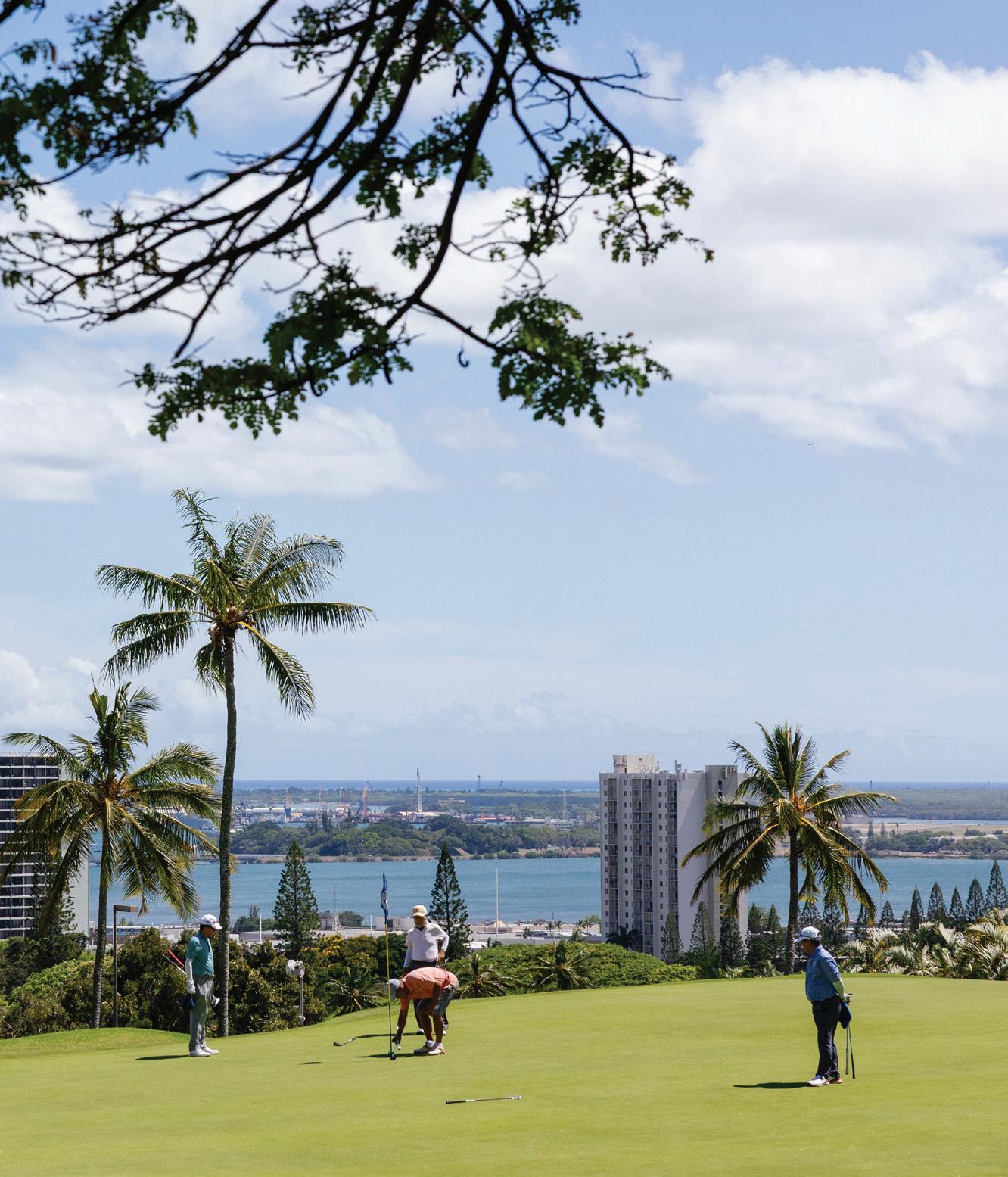
Since 1967, Pearl at Kalauao has been a cherished part of O‘ahu’s golf community. Originally designed by Akira Sato, this 18-hole, par-72 course has long offered golfers both a challenge and breathtaking views of Pu‘uloa (Pearl Harbor) and the Wai‘anae mountains. With its rolling tree-lined terrain, fast greens and few fairway bunkers and water hazards, Pearl at Kalauao is fun to play on repeat. Conveniently located only a 20-minute drive from Waikīkī, this public course honors the legacy of the land while creating an elevated experience that merges tradition with innovation. Recent renovations to the course and state-of-the-art facilities include premium paspalum greens and a revitalized experience that blends tradition with modern luxury. At the heart of these improvements is a commitment to responsible stewardship of the ‘āina (land) and honoring and integrating Hawaiian culture and the area’s rich history.
(808) 487-2460 • PearlAtKalauao.com
98-535 Kaonohi St, ‘Aiea (Map A, PG 162)
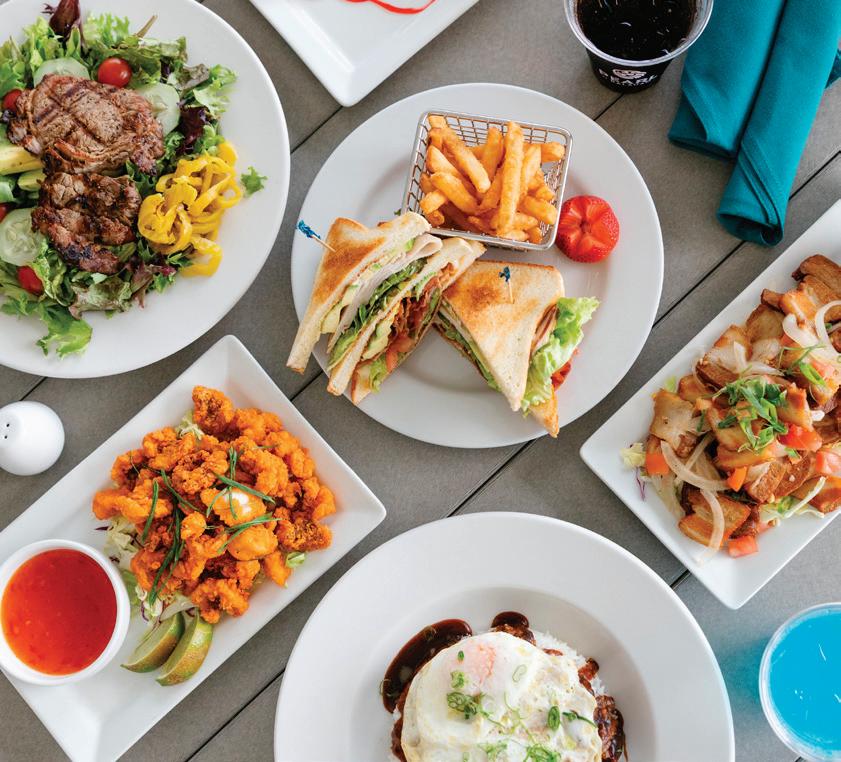
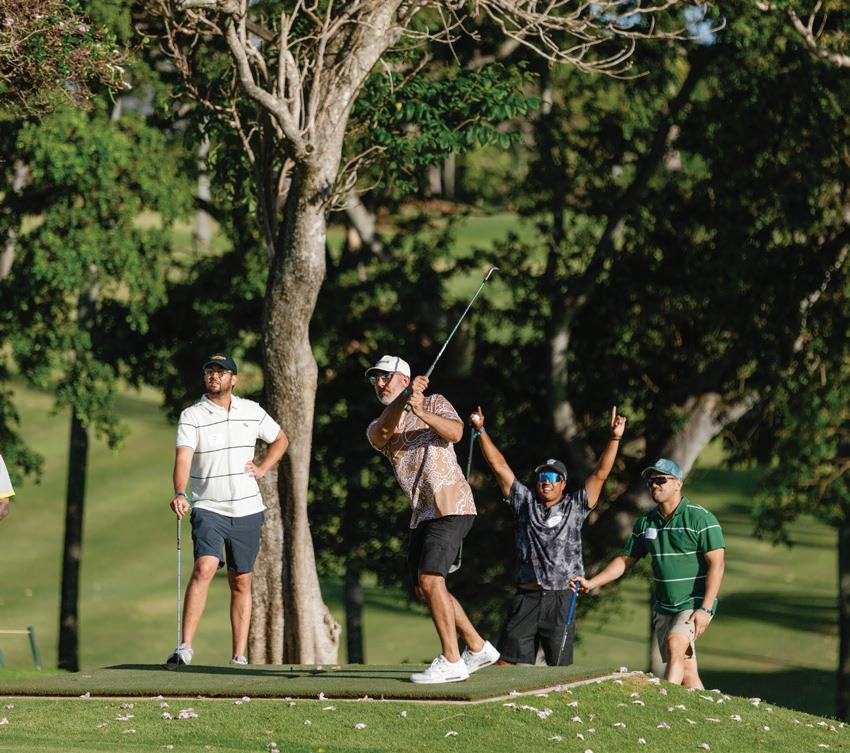
› MONTHLY NIGHT MARKETS
› RESTAURANT OPEN DAILY
› JUNIOR GOLF PROGRAMS
GOLF COURSE in CENTRAL O‘AHU
EAT + DRINK
RUTH’S CHRIS STEAK HOUSE steak house
LONGHI’S italian, seafood + steak
MĀNALO LOUNGE asian + hawai‘i regional cuisine
MINA'S FISH HOUSE seafood
HAU TREE seafood + american cuisine
DECK. hawaiian + american cuisine
SINGSING THAI STREET FOOD island-inspired cuisine
TANAKA KAHUKU SHRIMP seafood
SERA mediterranean cuisine
KAIMANA COFFEE CO. coff ee shop + boutique
HELENA'S HAWAIIAN FOOD hawaiian cuisine
GIOVANNI'S SHRIMP TRUCKS seafood
MOMOSAN WAIKIKI ramen + japanese cuisine
MORIMOTO ASIA WAIKIKI pan-asian cuisine
EATING HOUSE 1849 hawaiian + asian fusion cuisine
Snap the QR code to download the Savvy360 app to plan your trip. More at Savvy360.com
Ruth’s Chris Steak House
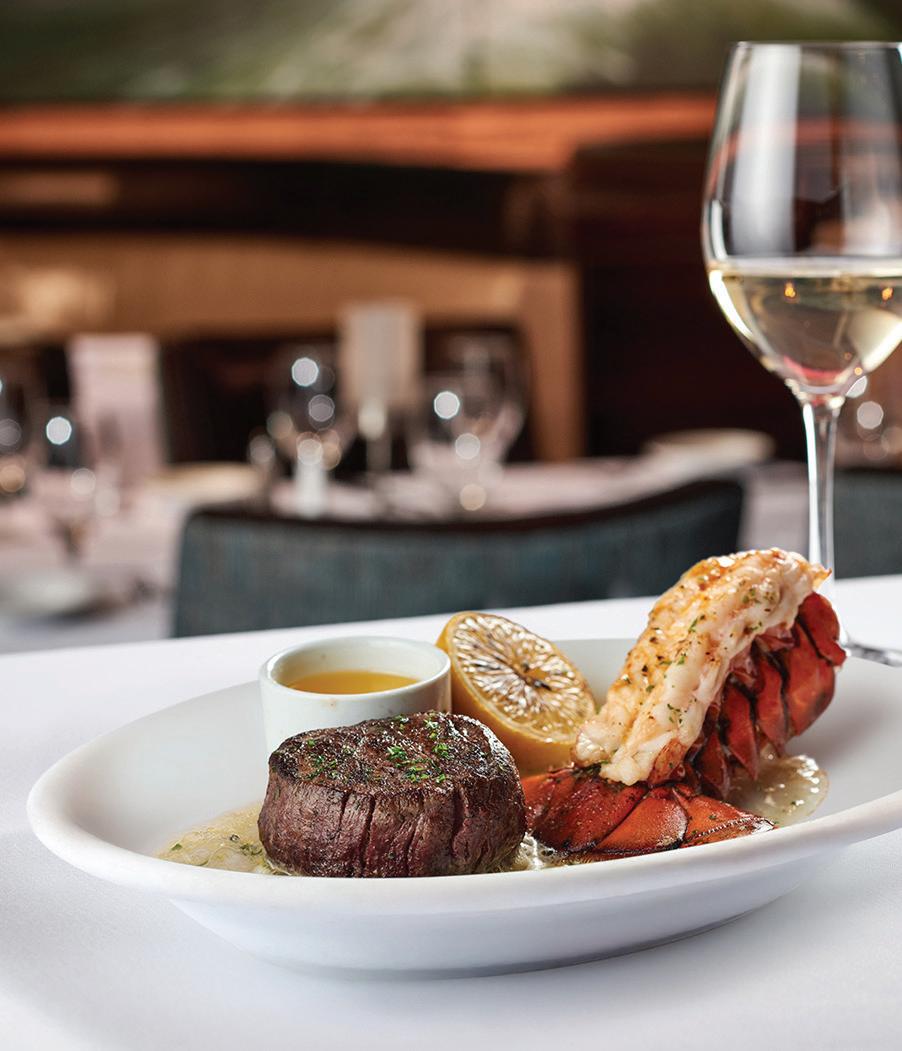
› RESERVATIONS RECOMMENDED
› HAPPY HOUR MENU
› TWO O‘AHU LOCATIONS
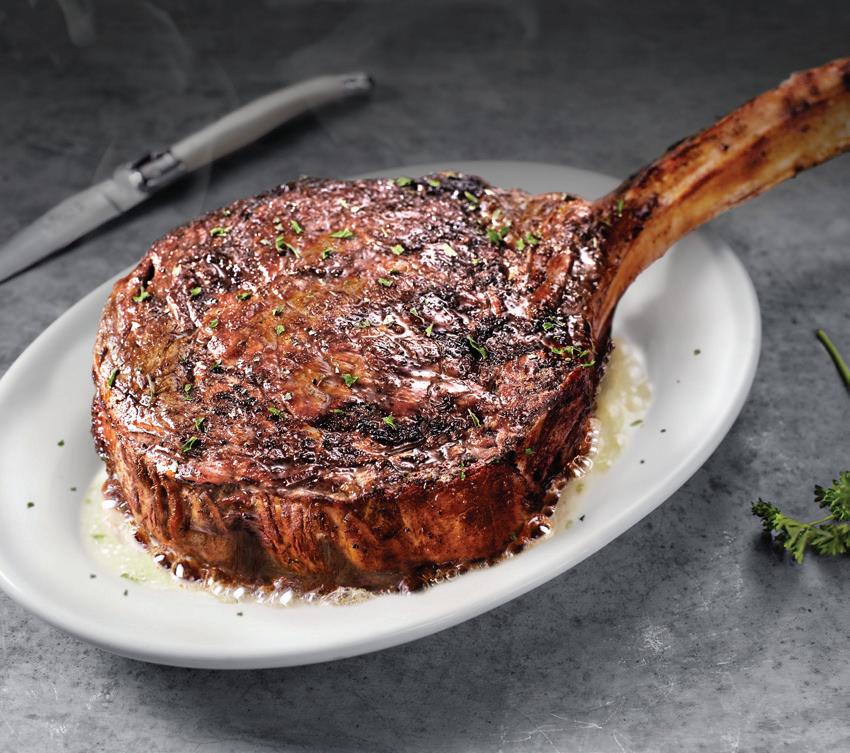
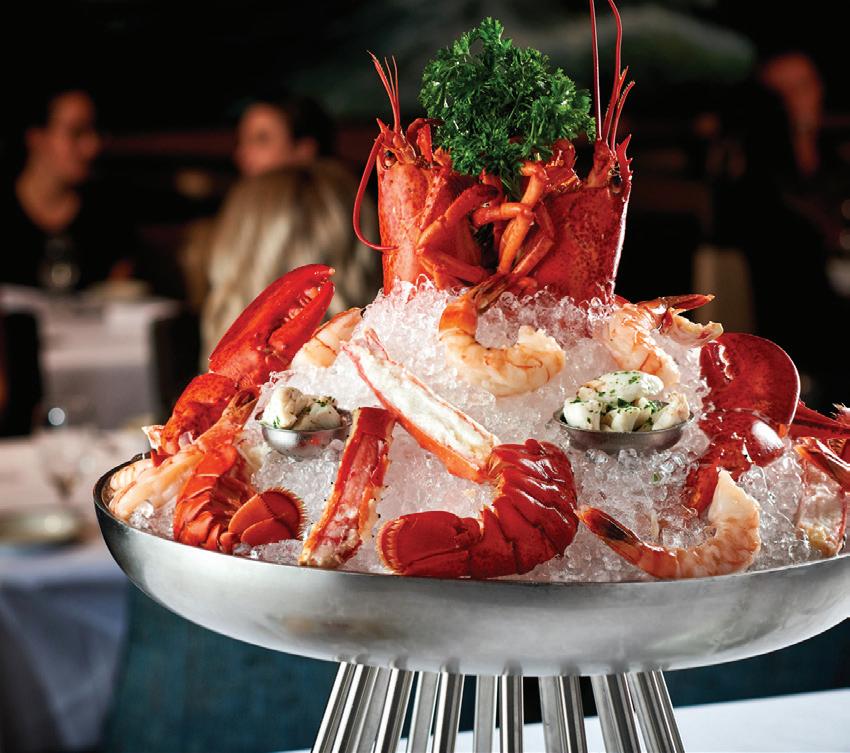
Ruth’s Chris Steak House serves only the best steaks, selected from the top 2% of the country’s beef, broiled in 1800-degree ovens designed by Ruth Fertel herself. The steaks are served sizzling on 500-degree plates, so every bite is hot and delicious. This New Orleans inspired cuisine features the finest USDA Prime steaks, fresh island seafood, award-winning wine list and a wide variety of appetizers, side dishes and desserts, all served in a gracious environment with the warm hospitality you expect from Ruth’s Chris. An island favorite, Ruth’s Chris Steak House has garnered much acclaim by winning numerous prestigious awards. Just follow the sizzle to Ruth's Chris Steak House. Open daily at 4 p.m.
Waikīkī Beach Walk, 226 Lewers St., Waikīkī • (808) 440-7910 (Map B, PG 164) Waterfront Plaza, 500 Ala Moana Blvd., Honolulu • (808) 599-3860 (Map B, PG 165) RuthsChris.com
STEAK HOUSE in WAIKĪKĪ & HONOLULU
Longhi’s Ko Olina
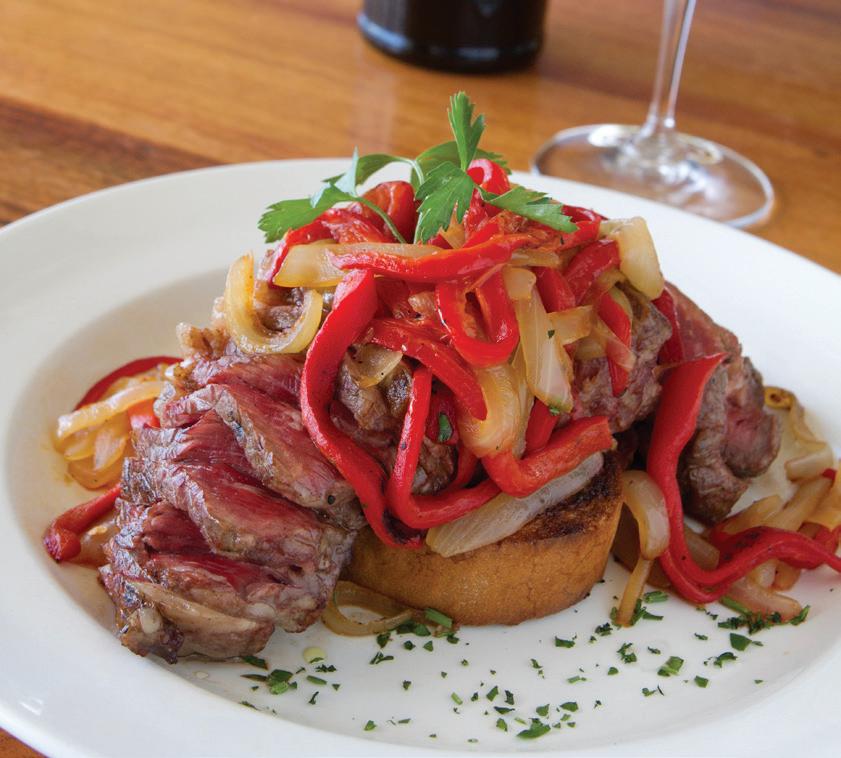
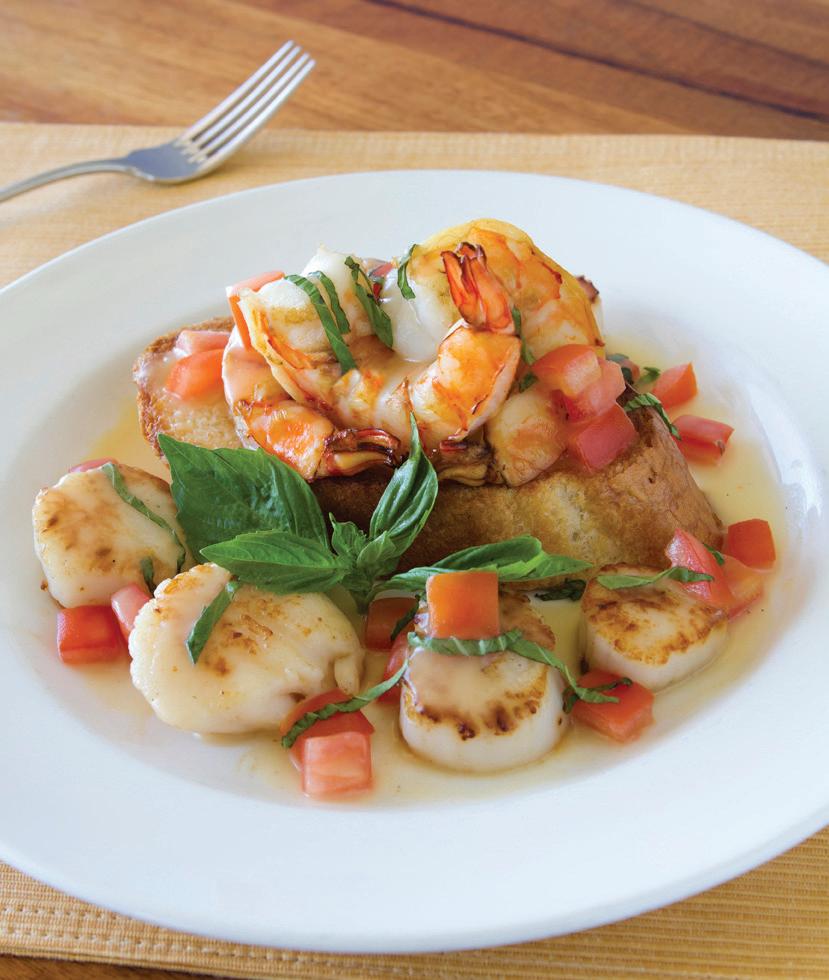
Celebrating 50 years of aloha! Longhi’s is a locally owned family restaurant serving award winning Italian Mediterranean cuisine since 1976. Pioneers in the farm-totable movement, Longhi’s features the freshest and finest ingredients from Hawai‘i and around the world. Located in the Marriott Beach Club in the beautiful Ko Olina resort, enjoy a spectacular open air dining atmosphere amidst breathtaking ocean views and Hawaiian sunsets. Longhi’s serves prime steaks, fresh island fish and seafood, live lobsters, clams and mussels as well as classic Italian veal, chicken and pasta dishes. Longhi’s is also a must for brunch, featuring favorites like their worldfamous Benedicts, Longhi Style Loco Moco, ground in-house prime burgers, specialty sandwiches, Maine Lobster Salad and more! As the Longhi family says, “Cook with Love, Eat with Passion.” Open daily for Brunch from 8 a.m. - 3 p.m., Dinner from 4 p.m. - 9 p.m. and Happy Hour, Monday - Friday from 3 p.m. - 5 p.m. (subject to change).
Located in the Marriott’s Ko Olina Beach Club (808) 671-8887 • Longhis.com 92-161 Waipahe Pl., Kapolei (Map D, PG 166)
› OPEN DAILY
› OUTDOOR SEATING
› VALET & SELF PARKING AVAILABLE
ITALIAN, SEAFOOD & STEAK in WEST O‘AHU
Mānalo Lounge
ASIAN & HAWAI‘I REGIONAL CUISINE on the LEEWARD COAST
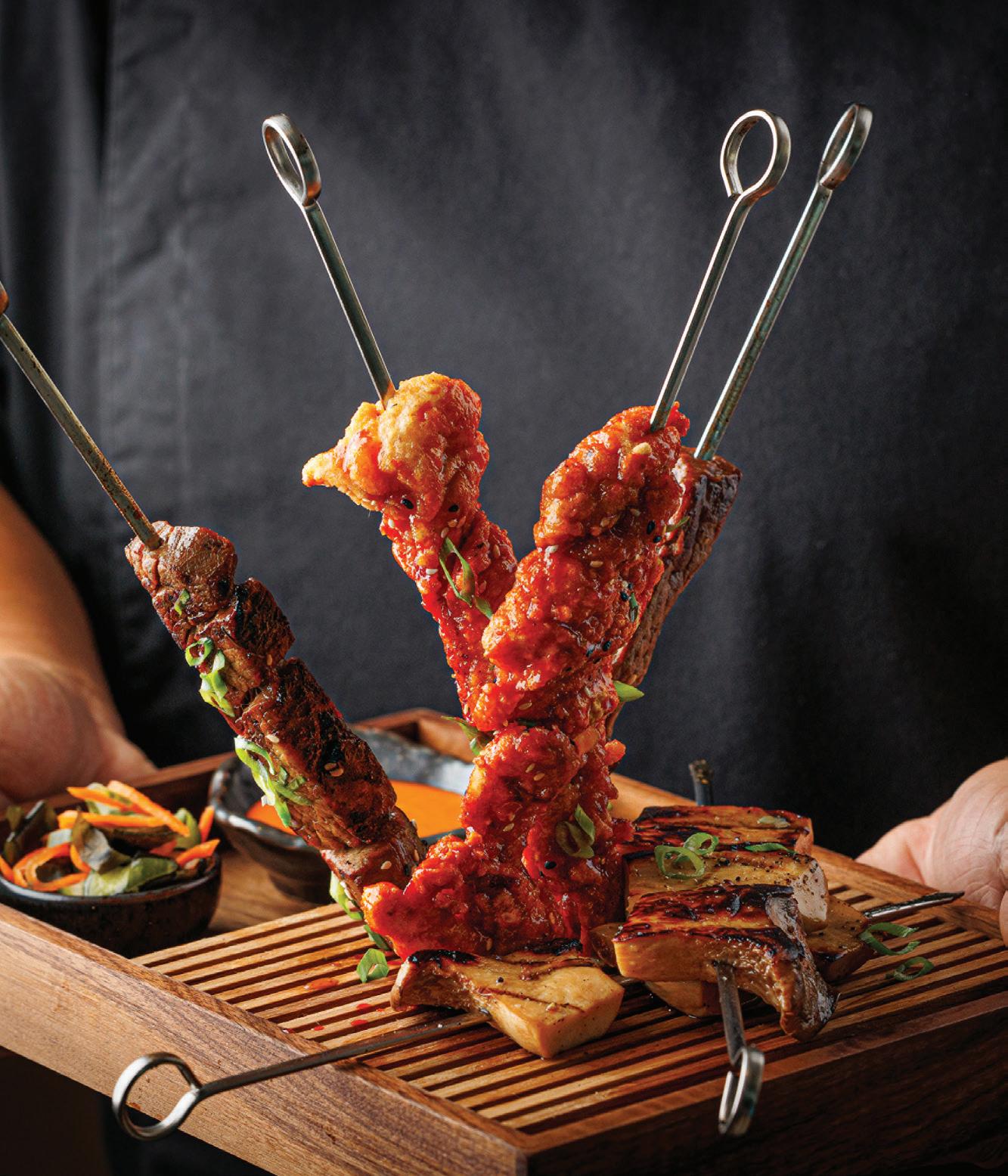
› AN AMAZING FUSION OF LOCAL HAWAIIAN & ASIAN FLAVORS
› OPEN DAILY FROM 5-9PM
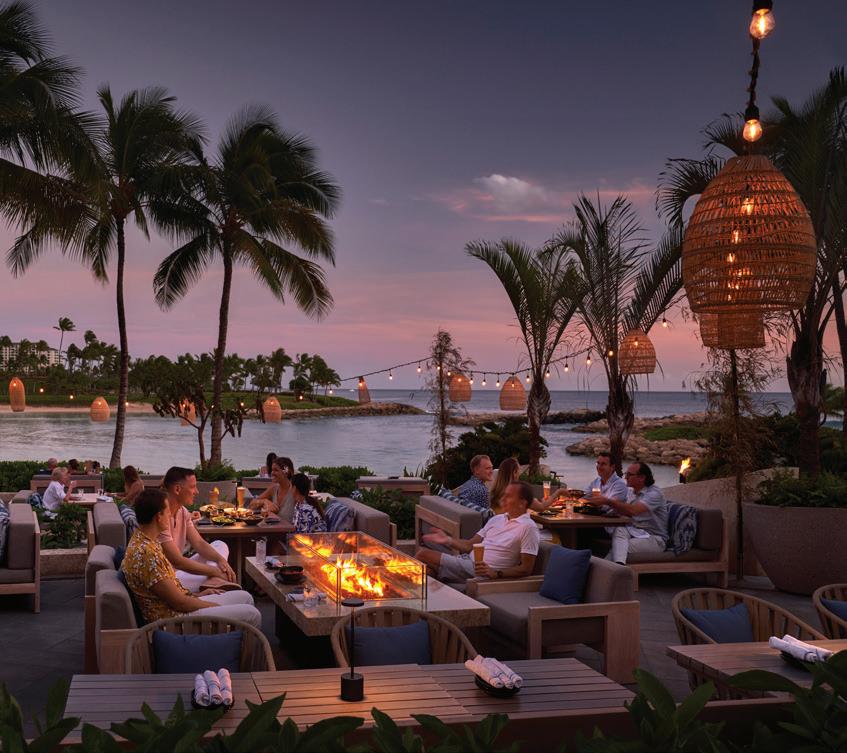
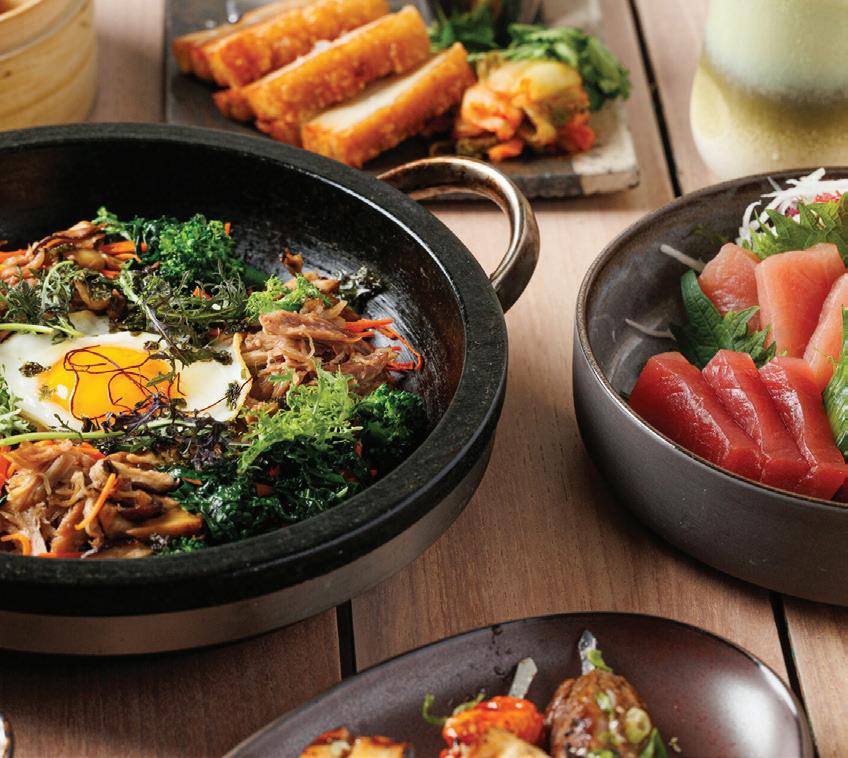
Four Seasons Resort O‘ahu at Ko Olina has launched its all-new Mānalo Lounge, named after the Hawaiian term for “sweet water.” Inspired by O‘ahu’s natural resources— where the fresh water of the mountains harmoniously merges with the salt water of the ocean—the cuisine pays homage to the mix of cultures found in Hawai‘i, as well as Asian and Pacific influences. Led by Executive Chef Michale Arnot, the vibrant menu is composed of dishes featuring locally sourced and seasonal ingredients, with signature dishes that include Stone Pot Bibimbap, Steamed Bao and the Yakitori Trio. The lounge also boasts a selection of sushi and sashimi alongside an extensive Japanese whisky and saké selection. Standout cocktails include The Wagyu Old Fashioned, the Neko Neko and the Matcha Aloha. Promoting a sense of community, the venue has a friendly atmosphere that encourages guests to “talk story” while enjoying their meal. No reservations are needed.
Located at Four Seasons Resort O‘ahu at Ko Olina (808) 679-0079 • FourSeasons.com/oahu/dining 92-1001 Olani St., Kapolei (Map D, PG 166)
Mina’s Fish House
SEAFOOD on the LEEWARD COAST
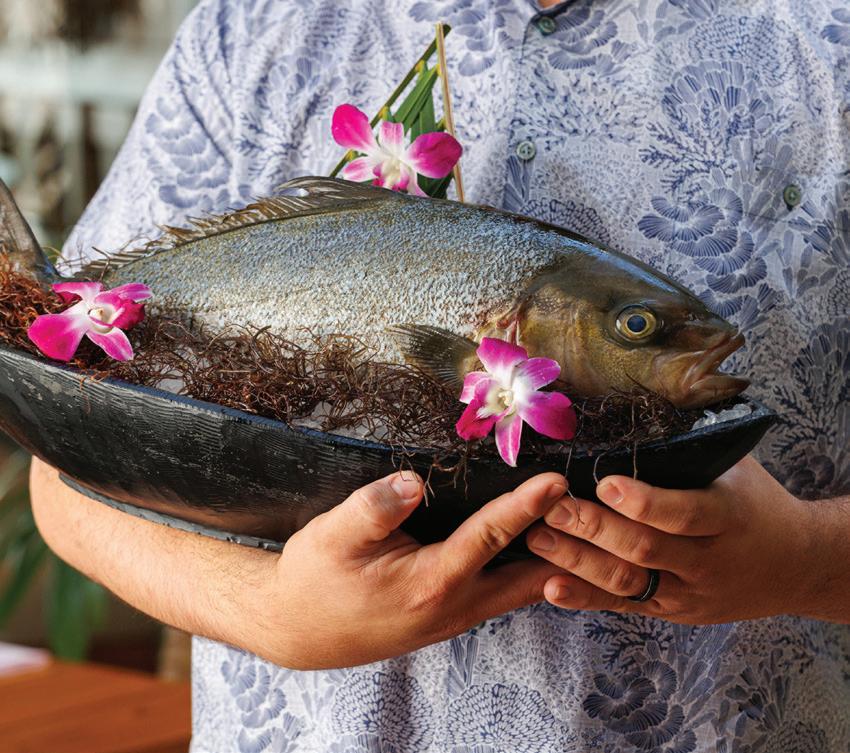
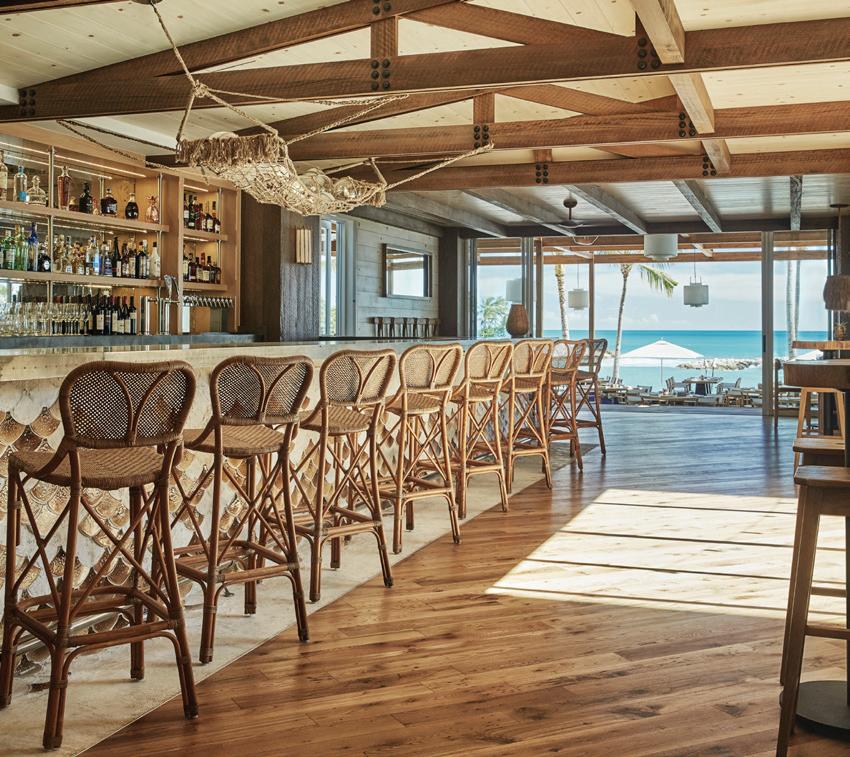
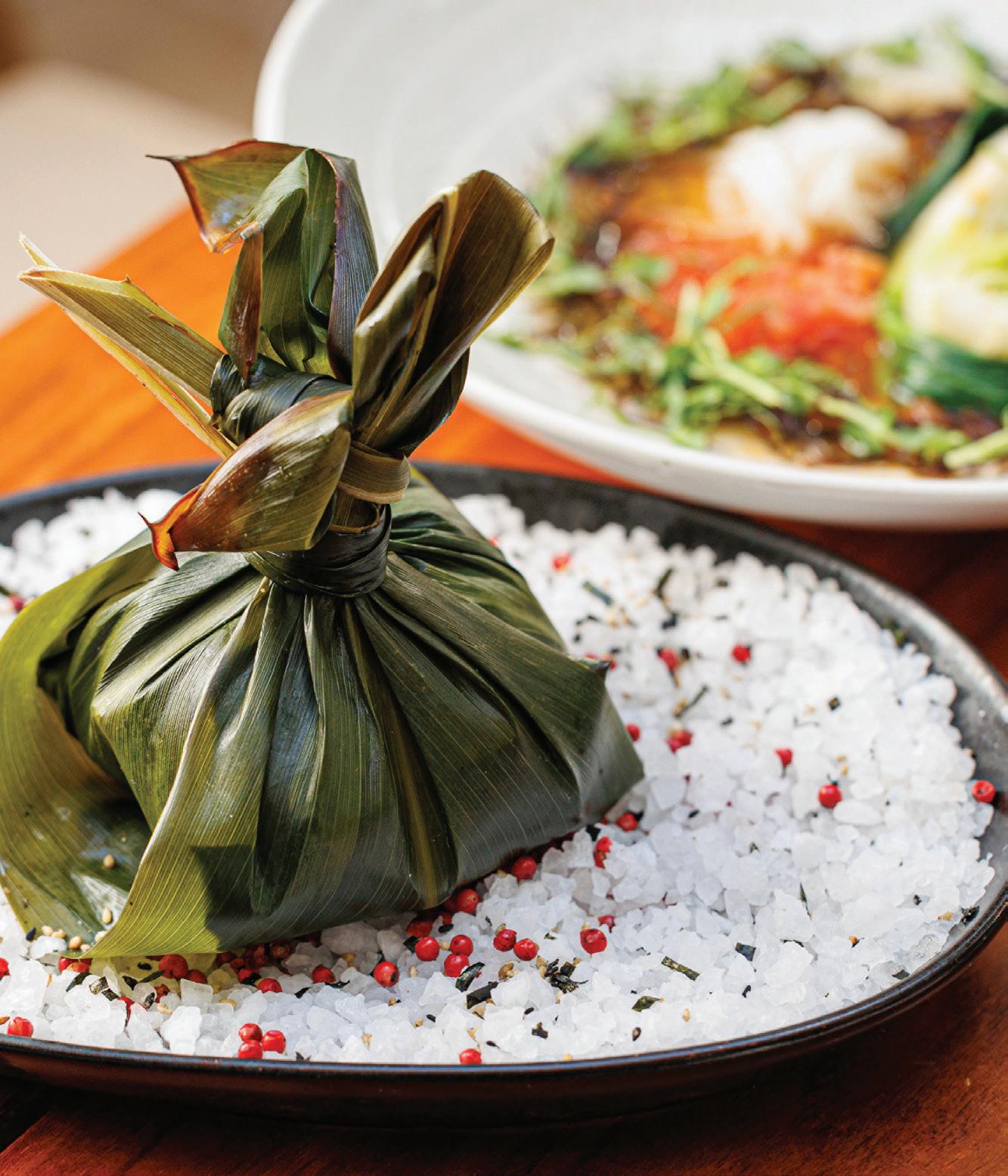
For James Beard Award winner Chef Michael Mina, lackluster descriptors such as “flakey” and “white” weren’t going to cut it when a fish house boasting his name opened in the Four Seasons Resort O‘ahu at Ko Olina. And so, the natural solve: establishing the very first fish sommelier. With the Pacific Ocean as his backyard and a bounty of sea life at his fingertips, Chef Michael Mina granted Hawai‘i’s flourishing fish population with the storytelling each and every species deserves. Whether the story is straight up—char-broiled lobster direct from the Big Island— or nuanced—seared yellowfin paired with foie gras—this chic fish house levels up the typical seafood offerings our palettes tend to anticipate. Surrounded by rattan, nautical rope and pristine turquoise waters, Mina’s modernizes the line-to-table experience with a contemporary homage to the traditional Hawaiian fish house of years past.
Located at Four Seasons Resort O‘ahu at Ko Olina (808) 679-0079 • FourSeasons.com/oahu/dining 92-1001 Olani St., Kapolei (Map D, PG 166)
› A LINE-TO-TABLE DINING EXPERIENCE
› PANORAMIC OCEAN VIEWS
› OPEN DAILY FROM 3-11PM, DINNER 5-9PM
Hau Tree
SEAFOOD & AMERICAN CUISINE in WAIKĪKĪ
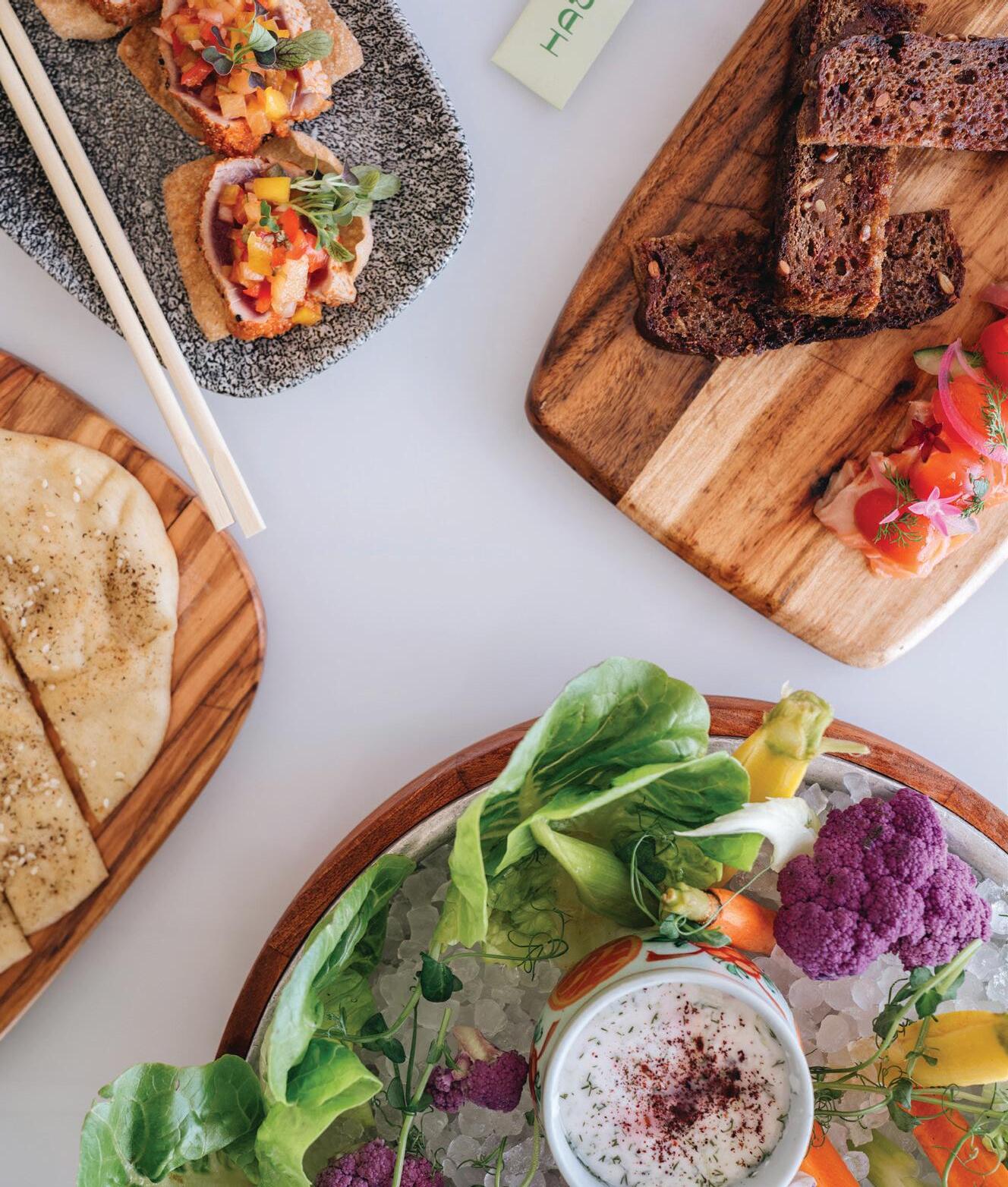
› OPEN DAILY 8AM - 10PM
› DINNER RESERVATIONS RECOMMENDED
› OCEANFRONT SETTING AT KAIMANA BEACH
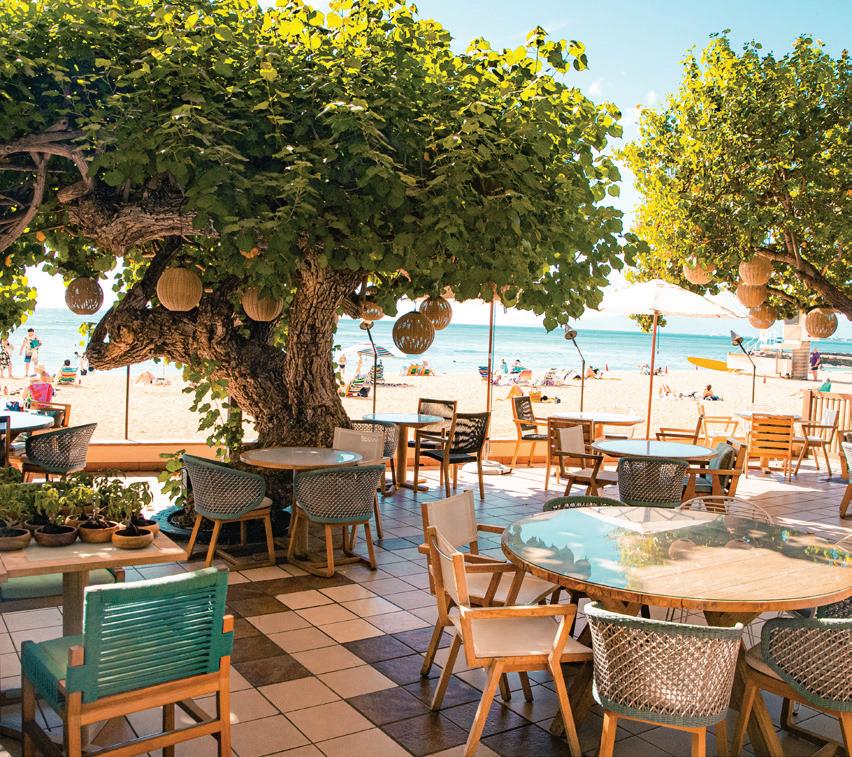
Hau Tree's casual beach-centric menu offers Honolulu's best beachside brunch (Saturdays and Sundays), lunch and casual dinner offerings. Hau Tree is also the best spot in Waikīkī to enjoy sunset cocktails by the sea. The Hau Tree cocktail menu is designed for the liquid traveler whether they are visiting the hotel or just stopping in for a quick pau hana drink. There is a cocktail for every person, from the sometimes forgotten vodka soda fan to the nerdy cocktailian. The drinks are designed to excite and pique conversation with nods to the classics and reworks of some favorite beach cocktails.
Located in Kaimana Beach Hotel (808) 921-7066 • Kaimana.com 2863 Kalākaua Ave., Honolulu (Map B, PG 164)
DECK.
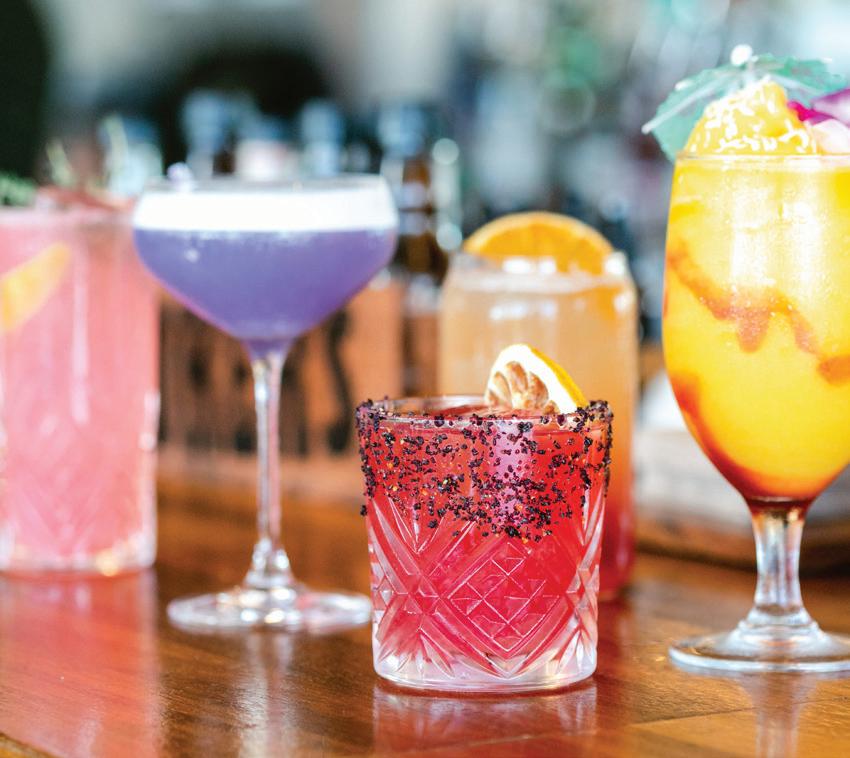
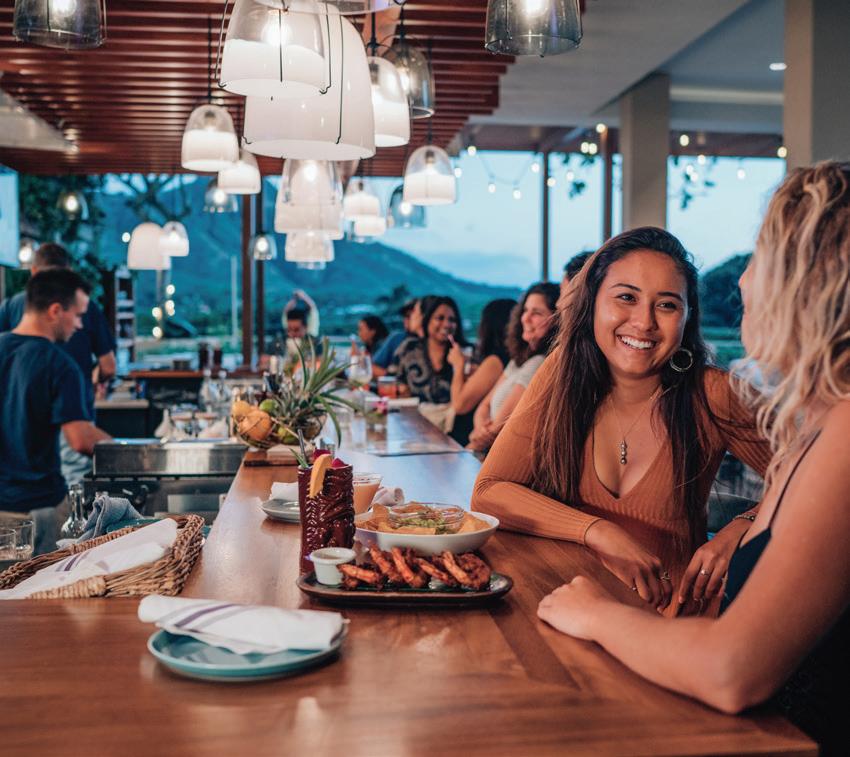
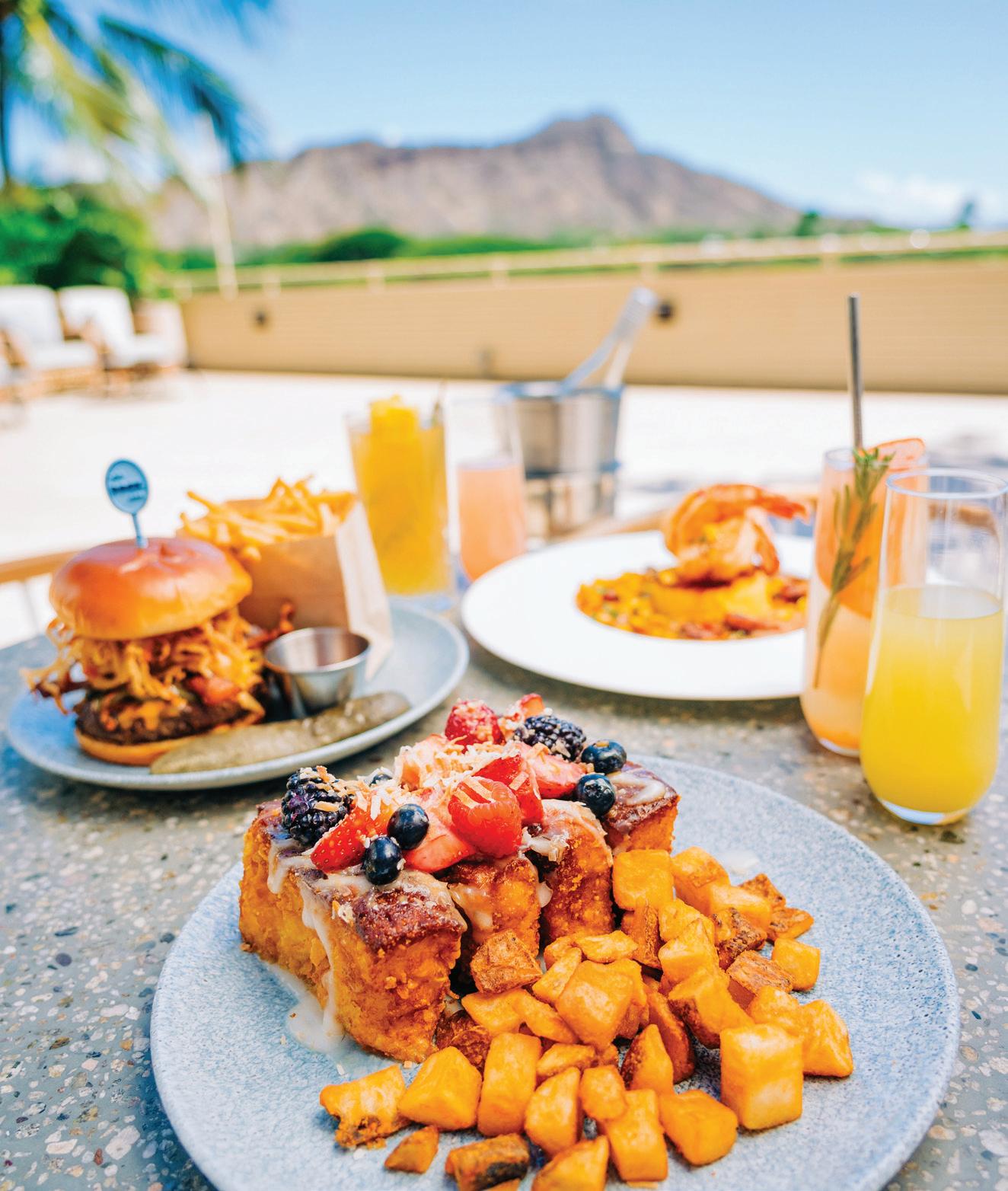
Situated on the third floor rooftop pool deck of the Queen Kapi‘olani Hotel, DECK. features panoramic views of the iconic Diamond Head steps from world famous Waikiki Beach! This open-air venue provides a stunning backdrop for the unique American Pacific inspired menu, fresh handcrafted cocktails, locally brewed beers as well as a vast selection of wines. DECK. is thoughtful in the selection of ingredients for both the menu as well as the handcrafted cocktails. DECK. keeps it fresh, incorporating locally sourced and sustainable ingredients wherever possible through partnerships with local farms, ranches, distilleries and breweries to create a dining experience that is fully immersed in the beauty of Hawai‘i. Open daily serving breakfast, brunch, happy hour and dinner.
› OPEN DAILY FROM 6:30AM-11PM
› GREAT VIEWS OF LĒ‘AHI (DIAMOND HEAD) & WAIKĪKĪ BEACH
Located at Queen Kapi‘olani Hotel (808) 556-2435 • DeckWaikiki.com 150 Kapahulu Ave., Honolulu (Map B, PG 164)
HAWAIIAN & AMERICAN CUISINE in WAIKĪKĪ
SingSing Thai Street Food
ISLAND-INSPIRED CUISINE in CHINATOWN
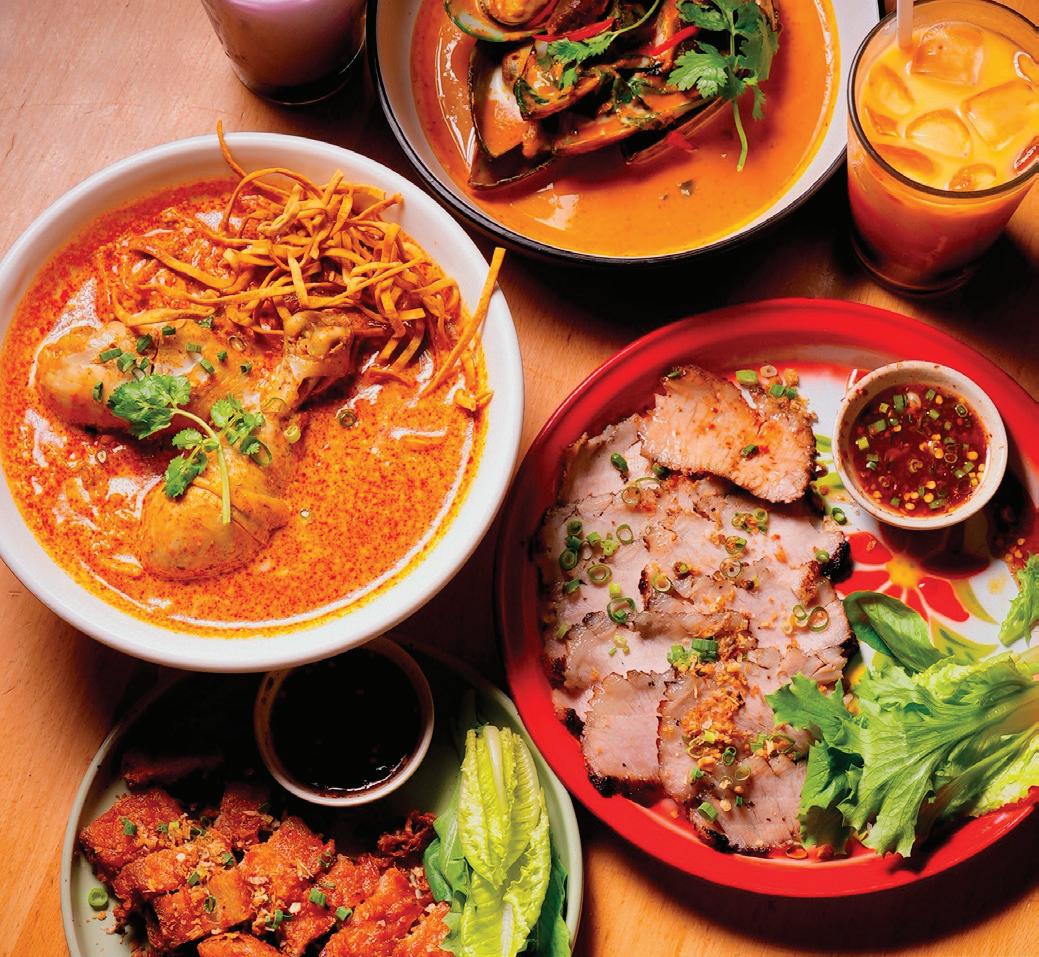
Tanaka Kahuku Shrimp
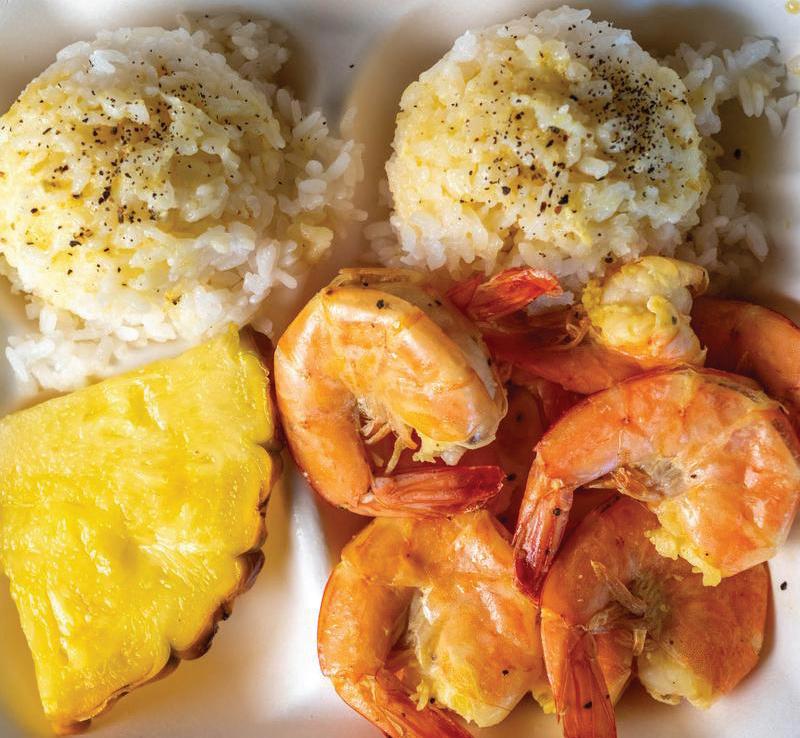
Sing Sing Thai Street Food brings the soul of Thailand’s street kitchens to life, offering bold flavors, vibrant stories and dishes made with heart. Rooted in tradition yet driven by creativity, Sing Sing celebrates authentic Thai cooking through fresh, locally sourced ingredients and time-honored techniques. Each plate reflects a deep respect for culture, community, and sustainability, crafted to be shared, savored and remembered. From comforting classics to exciting street-style favorites, every bite invites guests on a flavorful journey that feels both familiar and adventurous, making Sing Sing a place you’ll want to return to again and again. Open Tuesday through Sunday for lunch and dinner. Reservations are recommended. Sunday and Tuesday, 11 a.m. – 3 p.m. and 5 p.m. – 10 p.m.; Wednesday – Saturday, 11 a.m. – 3 p.m. and 5 p.m. to 10:30 p.m.
(808) 785-6463 • SingSingHawaii.com 1030 Smith St., Suite 6, Honolulu (Map C, PG 165)
A beloved stop along O‘ahu’s North Shore, Tanaka Shrimp is impossible to miss — its bright, playful façade and oversized shrimp sculptures marking the start of a meal that’s as memorable as its setting. This casual Kahuku favorite serves up the ocean’s bounty with unfussy charm, inviting diners to settle into its breezy, open-air space and savor flavors that are pure local comfort. The star, of course, is the butter-garlic shrimp: plump, tender and bathed in an addictive, aromatic sauce that all but insists on an extra scoop of rice. Those seeking a kick will appreciate the spicy version, while the chicken katsu and shrimp tempura offer equally crowd-pleasing crunch. Walk-up, first-come-first-served service keeps the experience relaxed, and portions are generous enough to satisfy even the hungriest post-beach appetite. For visitors and locals alike, Tanaka Shrimp delivers a quintessential taste of North Shore soul.
(808) 691-9777 • TanakaKahukuShrimp.com 56-931 Kamehameha Hwy, Kahuku (Map A, PG 162)
SEAFOOD on the NORTH SHORE
SERA
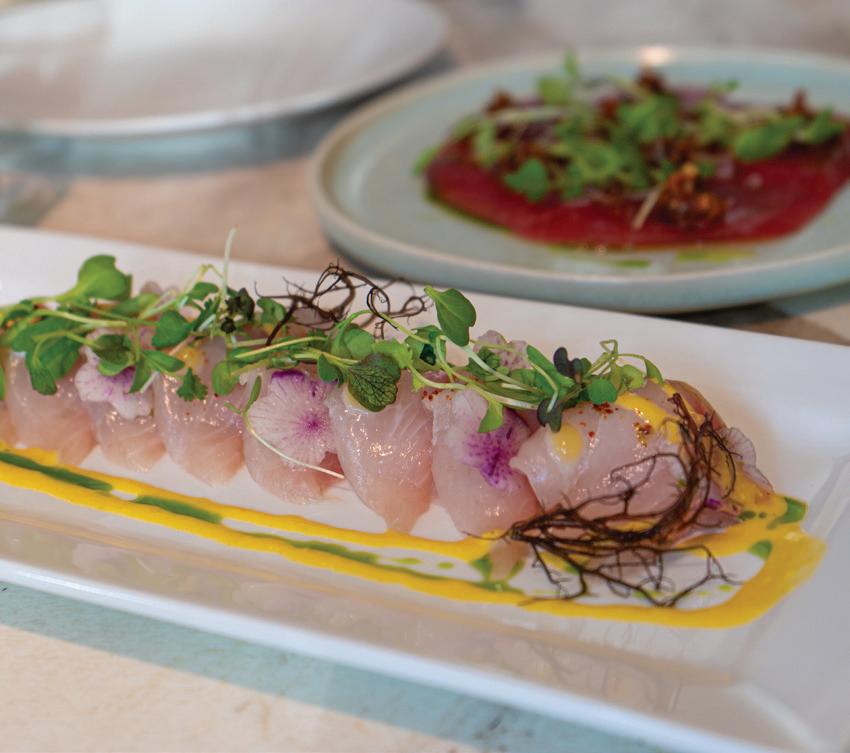
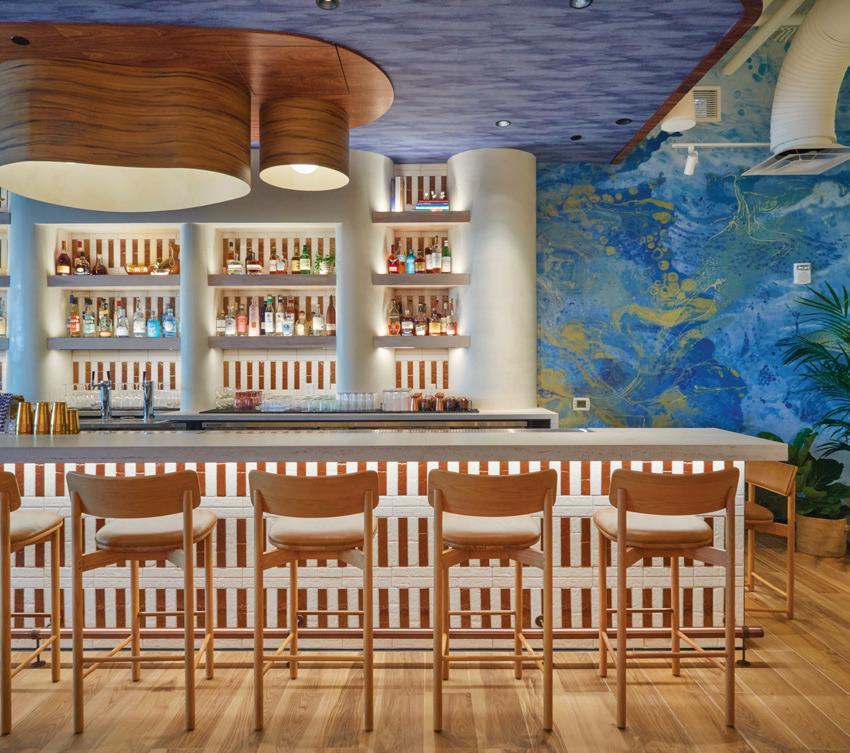
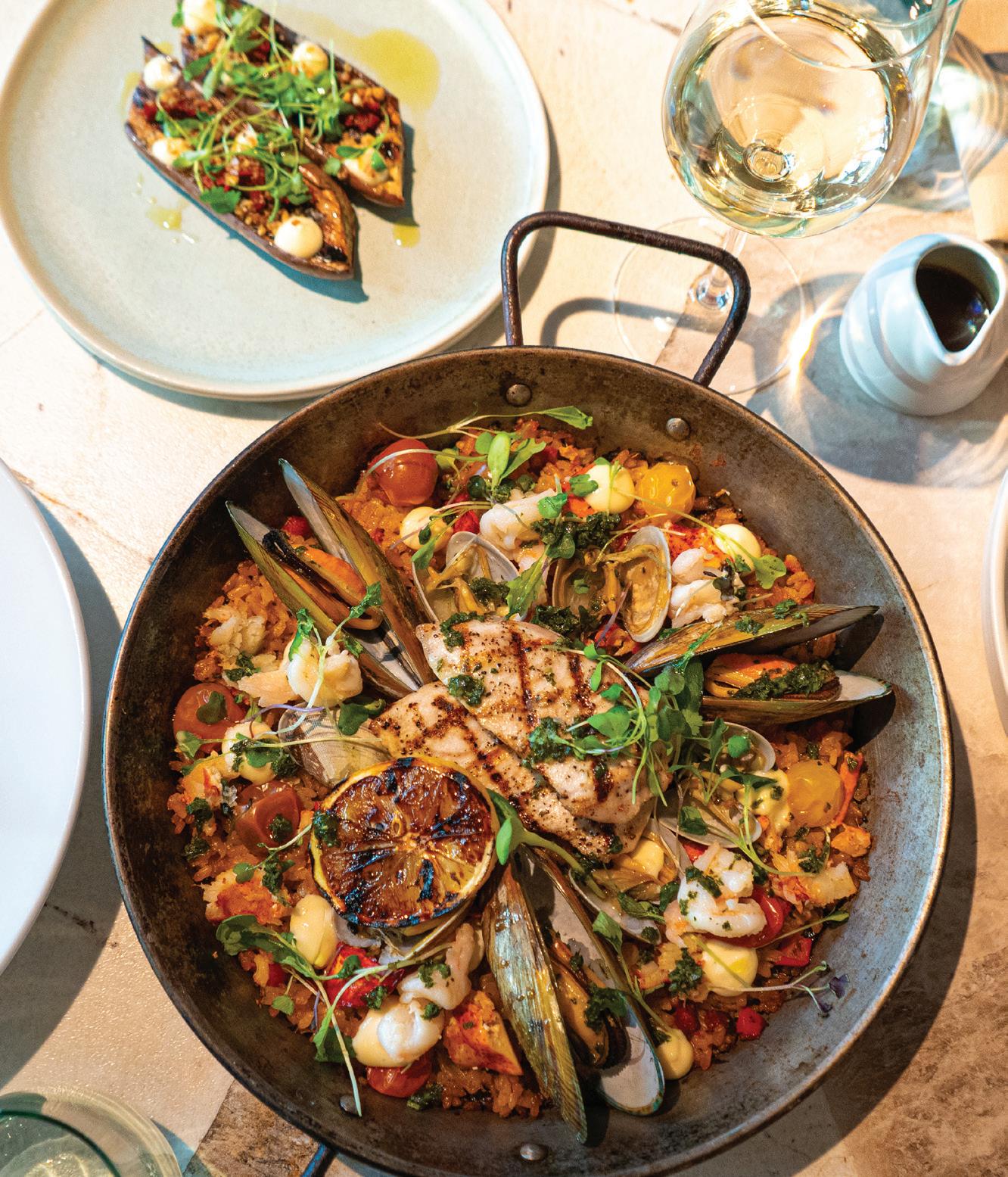
SERA, the coastal Mediterranean restaurant at the Renaissance Honolulu Hotel & Spa, blends the spirit of the Mediterranean with the deep-rooted values of Hawai‘i’s own culinary traditions. Guided by Executive Chef Jeremy Shigekane — known for his thoughtful, seasonal approach — the menu celebrates the historical cuisines of Italy, France and beyond while honoring the abundance of Hawai‘i, from mauka to makai. Expect vibrant, ingredient-driven dishes shaped by sustainable practices, whole-vegetable preparation and close relationships with local farms. An elevated beverage program complements the experience, featuring bespoke cocktails crafted with housemade elements and a globally curated wine list. Stylish yet approachable, SERA invites guests to settle in, savor the journey, and let their palates set sail across the Mediterranean, right in the heart of Honolulu.
Located at Renaissance Honolulu Hotel & Spa (808) 450-3036 • SeraHonolulu.com 1390 Kapiolani Blvd., Honolulu (Map C, PG 165)
› BREAKFAST, LUNCH & DINNER DAILY
› LIVE MUSIC WEDNESDAYS FROM 4-6PM
› HAPPY HOUR DAILY FROM 3-6PM
Kaimana Coffee Co.
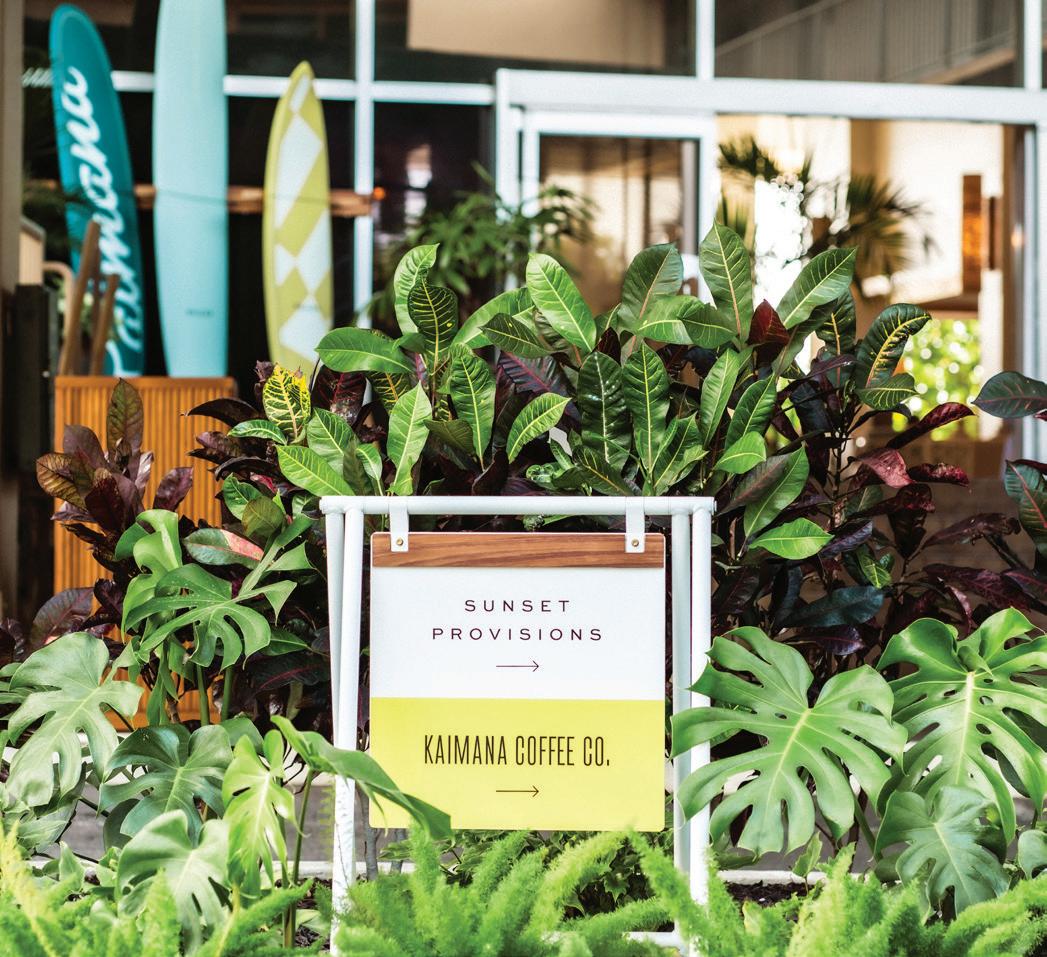
Helena’s Hawaiian Food
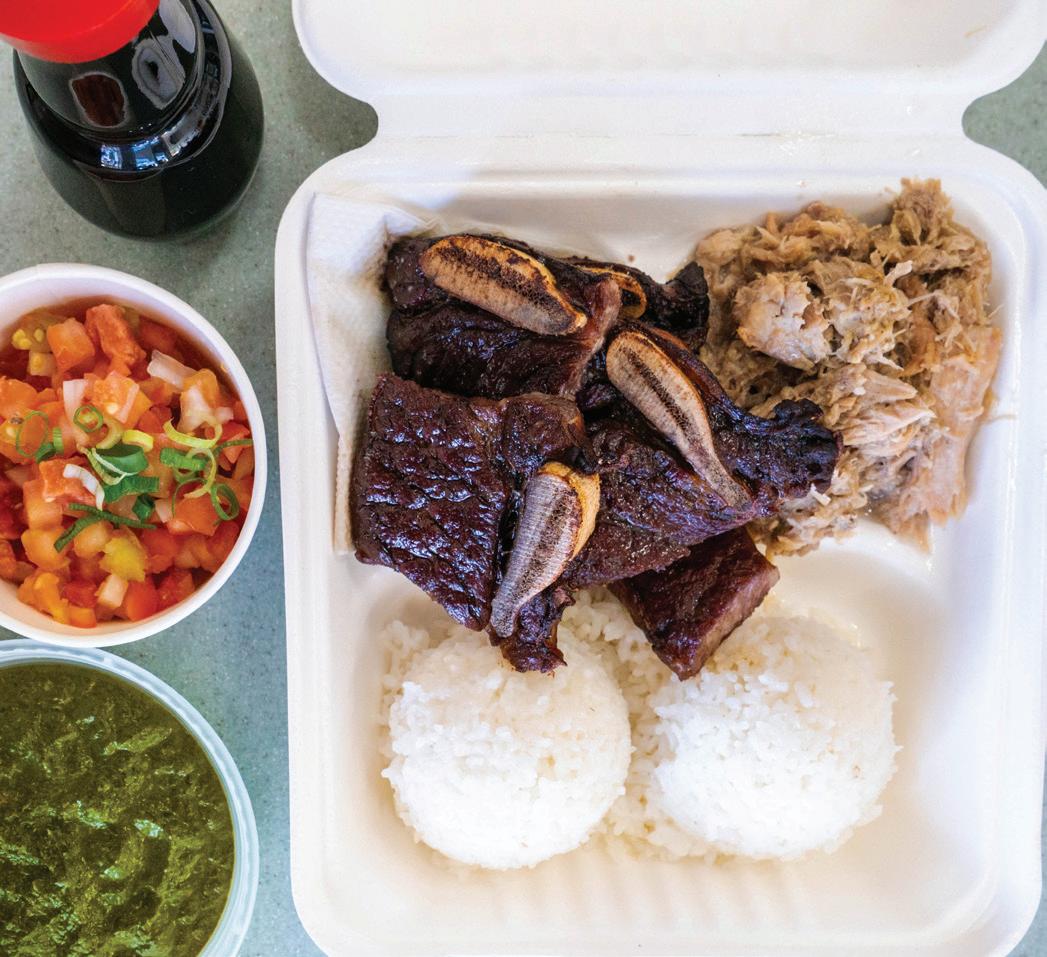
Located just outside the lobby of the Kaimana Beach Hotel, Sunset Provisions is a new concept that celebrates the Waikīkī lifestyle Locally sourced and curated with aloha, browse items from local artisans throughout the islands, while enjoying the best cup of coffee O‘ahu has to offer. Enjoy a selection of fresh pastries or light snacks alongside signature coffee drinks such as the Bombon Latte, a double espresso with house-made non-alcoholic rum carmel sauce and your choice of milk. Try something new with the Sparkling Espresso, a sugarcane flavored espresso paired with sparkling water, or grab something from the Refreshers menu like the Tiki Tea with chai, sugarcane and citrus after that early SUP session at Kaimana Beach.
Located at Sunset Provisions in Kaimana Beach Hotel (808) 921-7066 • kaimana.com
2863 Kalākaua Ave., Honolulu (Map B, PG 164)
When solidifying your list of must-hit restaurants while in Hawai‘i, one way or another you will be pointed to Helen Cook’s traditional Hawaiian eatery — and based on the James Beard Award won in 2000, you better believe a visit will be well rewarded. Opened in 1964 with the same preparations, the same traditions, and the same simplicity, this is authentic Hawaiian food at its finest. Kalua pig cooked in imu, an ancient cooking procedure that involves an underground oven demanding TLC all the live-long day. Short ribs pipikaula style, meaning salted and semi-dried then charred for a sweet, juicy, lick-your-fingers delicacy. Lomi lomi salmon made with chopped tomatoes, salted salmon, and onion for a delightful taste of the sea. As a fixture of the community with success echoing around the world, you’d be surprised to find original pricing lending an order-one-of-everything approach that equates to long lines but long lines that are worth every moment spent waiting.
(808) 845-8044 • HelenasHawaiianFood.com
1240 N. School St., Honolulu (Map A, PG 162)
COFFEE SHOP & BOUTIQUE in WAIKĪKĪ
HAWAIIAN CUISINE in HONOLULU
Giovanni's Shrimp Trucks
SEAFOOD in HONOLULU & NORTH SHORE
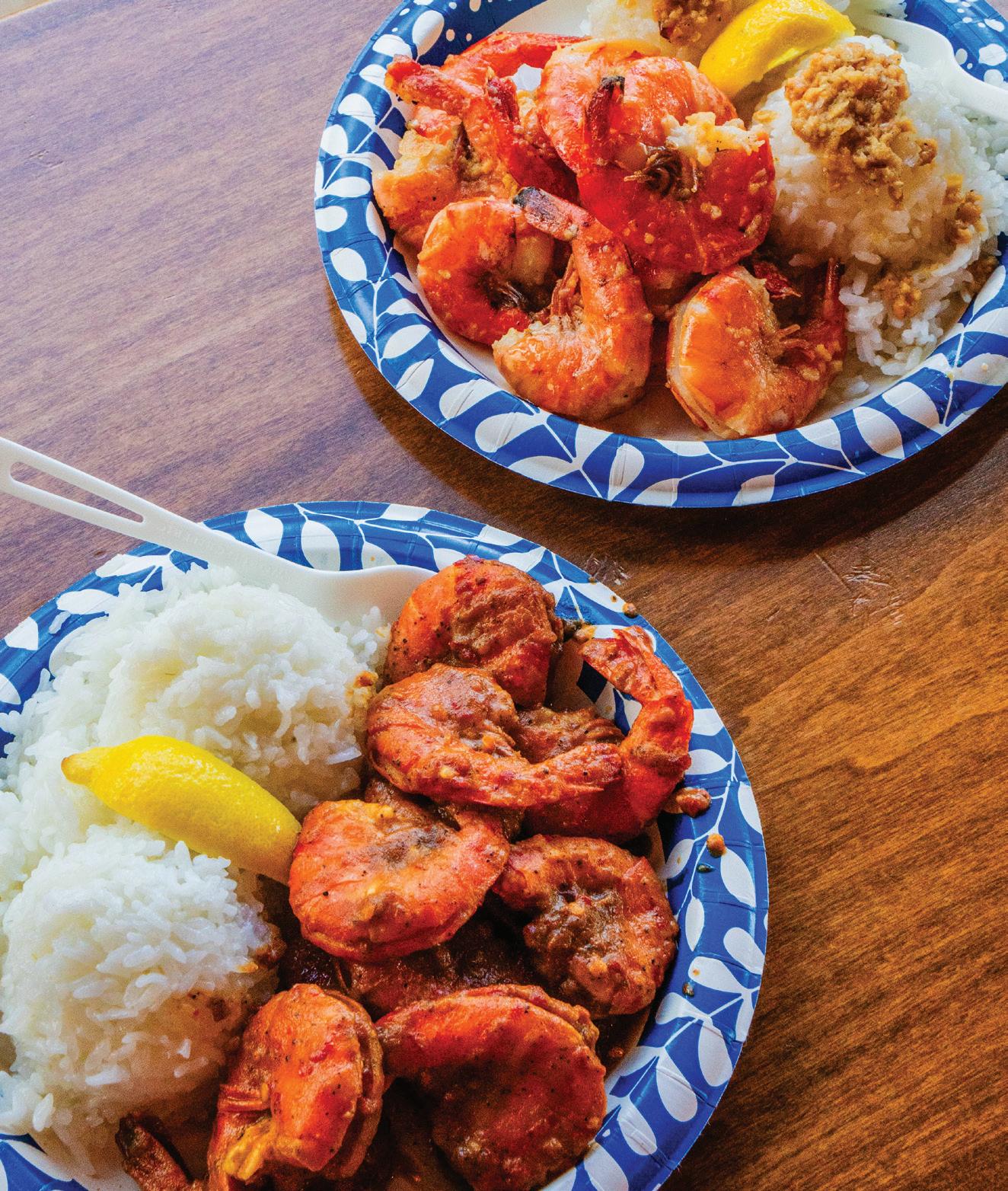
Born on O‘ahu’s legendary North Shore, Giovanni’s Shrimp Truck has become a pilgrimage site for food lovers seeking authentic Hawaiian plate lunch perfection. This graffiti-covered landmark serves up generous portions of garlic shrimp, spicy shrimp and lemon-butter shrimp that have earned cult status among locals and visitors alike. The truck’s weathered exterior, adorned with countless signatures and messages from fans worldwide, tells the story of decades serving simple, spectacular seafood. Find the original locations in Kahuku and Hale‘iwa on the North Shore, where the ocean breeze enhances every bite. Now, Giovanni’s has brought its famous flavors to Honolulu, making these beloved plates more accessible to Waikīkī travelers. Don’t miss their popular garlic hot dog — a quirky menu standout that keeps customers coming back for more beachside comfort food.
(808) 293-1839 • GiovannisShrimpTruck.com
56-505 Kamehameha Hwy, Kahuku (Map A, PG 163)
66-472 Kamehameha Hwy, Hale‘iwa (Map E, PG 166)
458 Keawe Street, 2nd floor of Hmart, Honolulu (Map C, PG 165)
› COVERED OUTDOOR SEATING
› NEW HONOLULU LOCATION
› TWO FOOD TRUCKS ON NORTH SHORE
Momosan Waikiki
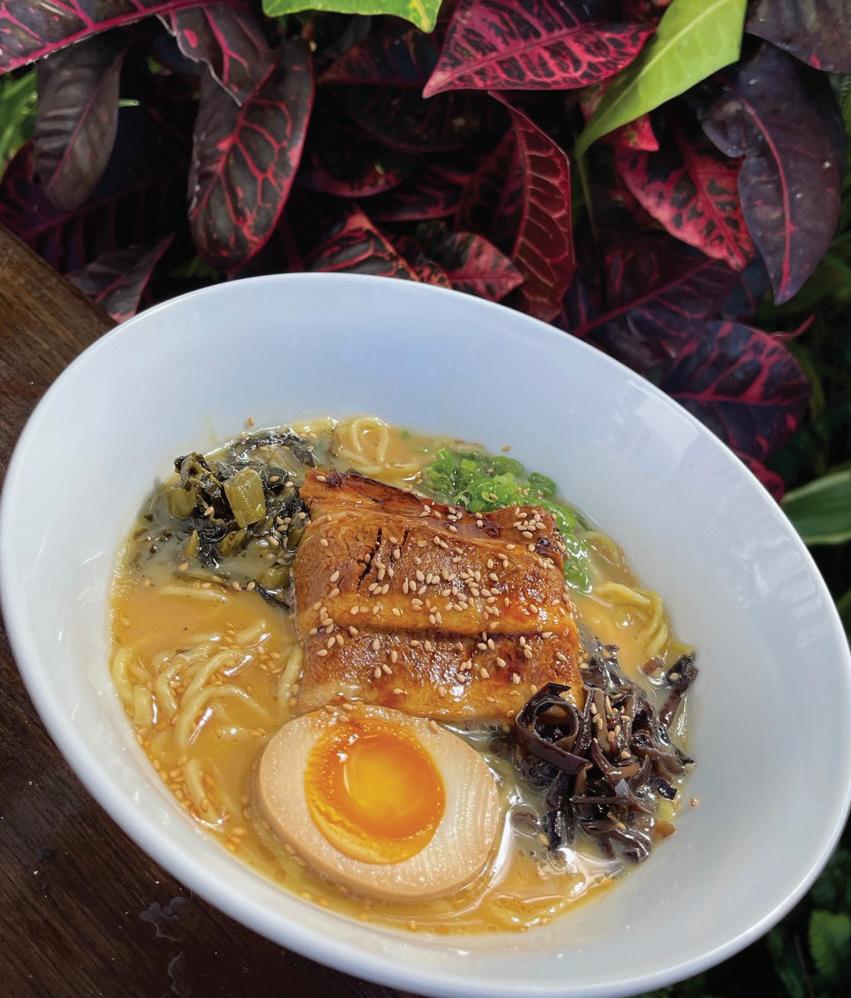
› RAMEN SPOT BY MORIMOTO WITH AN ARRAY OF JAPANESE NOODLES & MORE
› OPEN DAILY FROM 11AM - 9PM
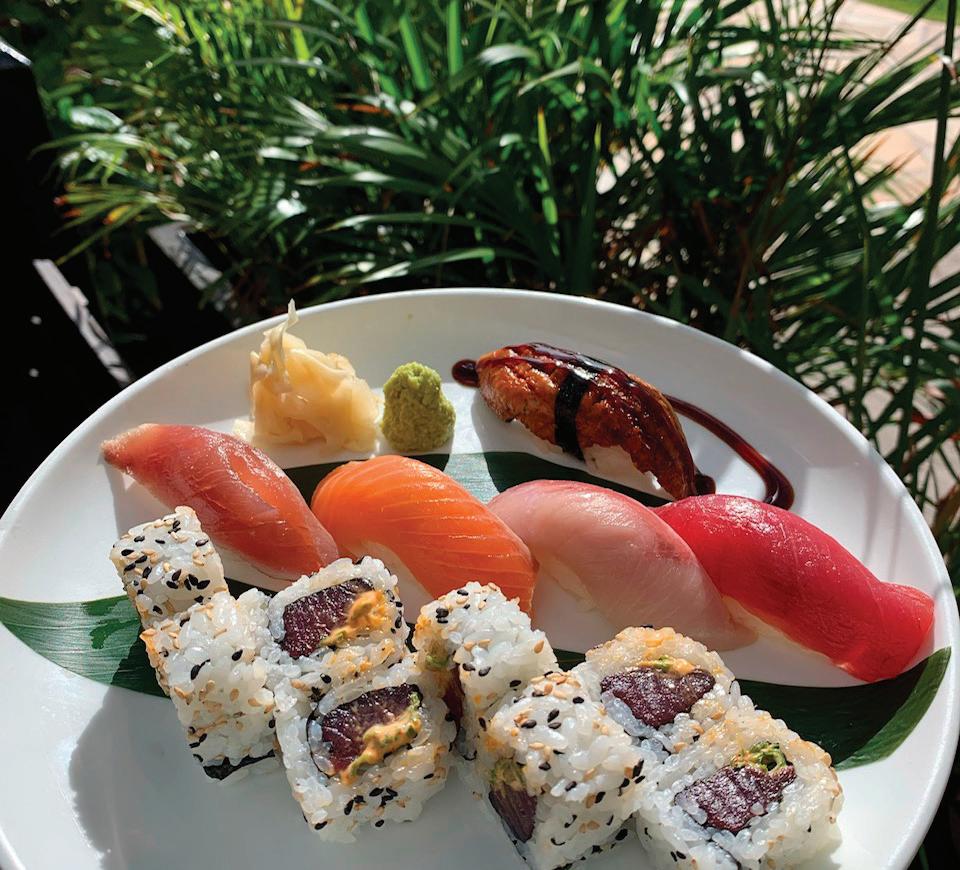
As much ramen is slurped up state-side, there’s always a lingering thought that knows we haven’t been inaugurally ramen-ed until we’ve tasted an authentic brothy bowl straight from its place of origin. Iron Chef Masaharu Morimoto transports the iconic broth and noodles from his childhood home and place of culinary maturity in Japan to Waikīkī Beach with Momosan. It’s a craving that cannot be denied—savory bone broth, thick and toothy noodles and fatty toppings of the eggy and pork belly sort. This beachfront eatery hand-stews and -shapes the base components for a richness and complexity of flavor replicating what you’d find in a Tokyo street market. Regardless of O‘ahu’s south shore heat, Momosan manages consistently long lines with guests hungry for soul-warming bowls of the Iron Chef’s authentic ramen.
Located at ‘Alohilani Resort Waikīkī Beach (808) 922-0011 • MomosanWaikiki.com 2490 Kalākaua Ave., Honolulu (Map B, PG 164)
RAMEN & JAPANESE CUISINE in WAIKIKI
Morimoto Asia Waikiki
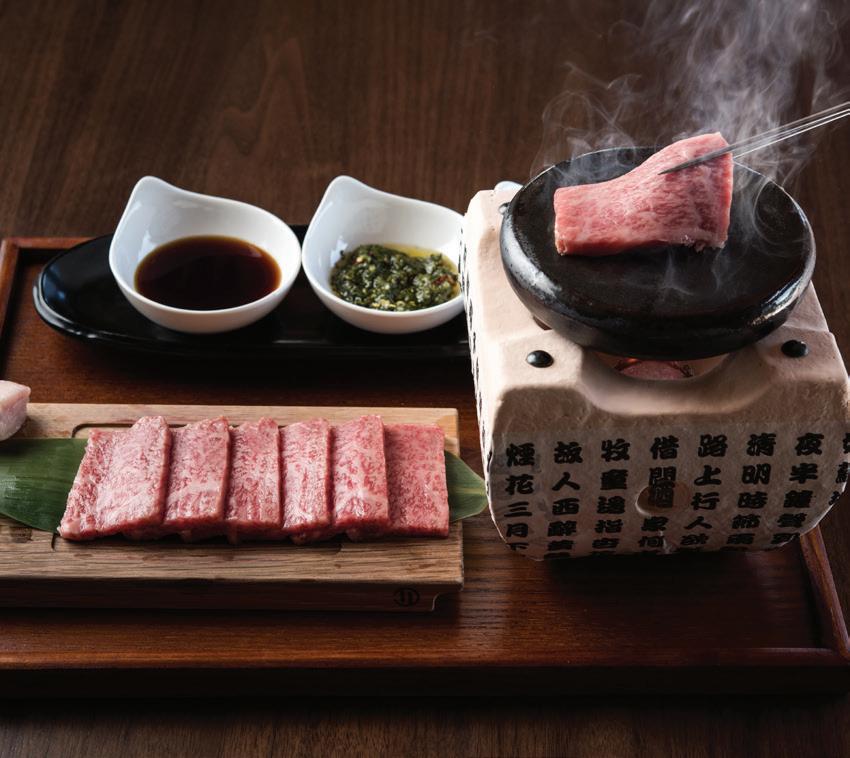
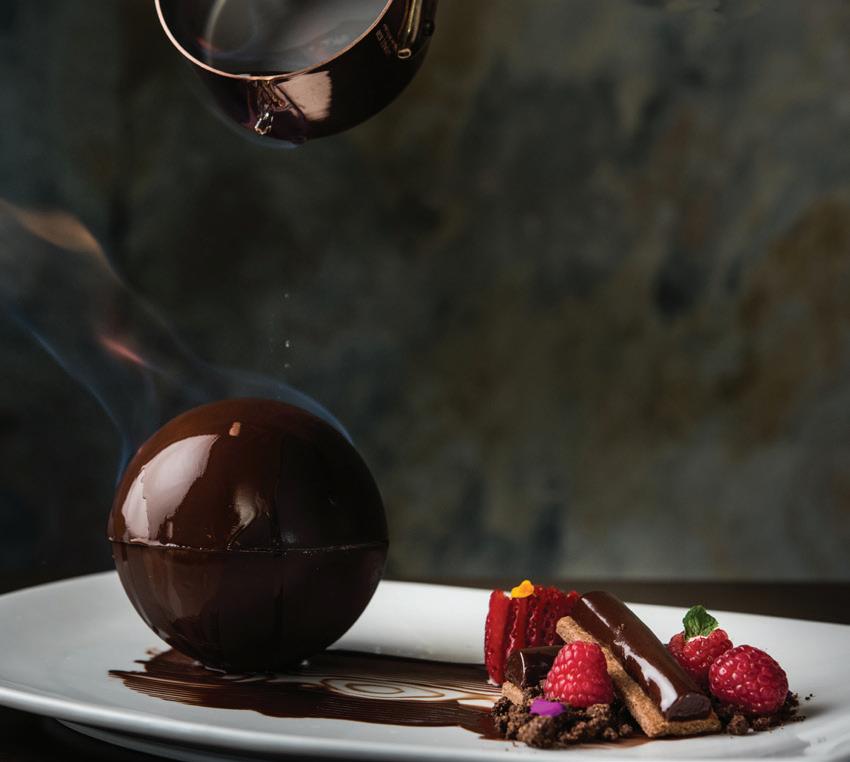
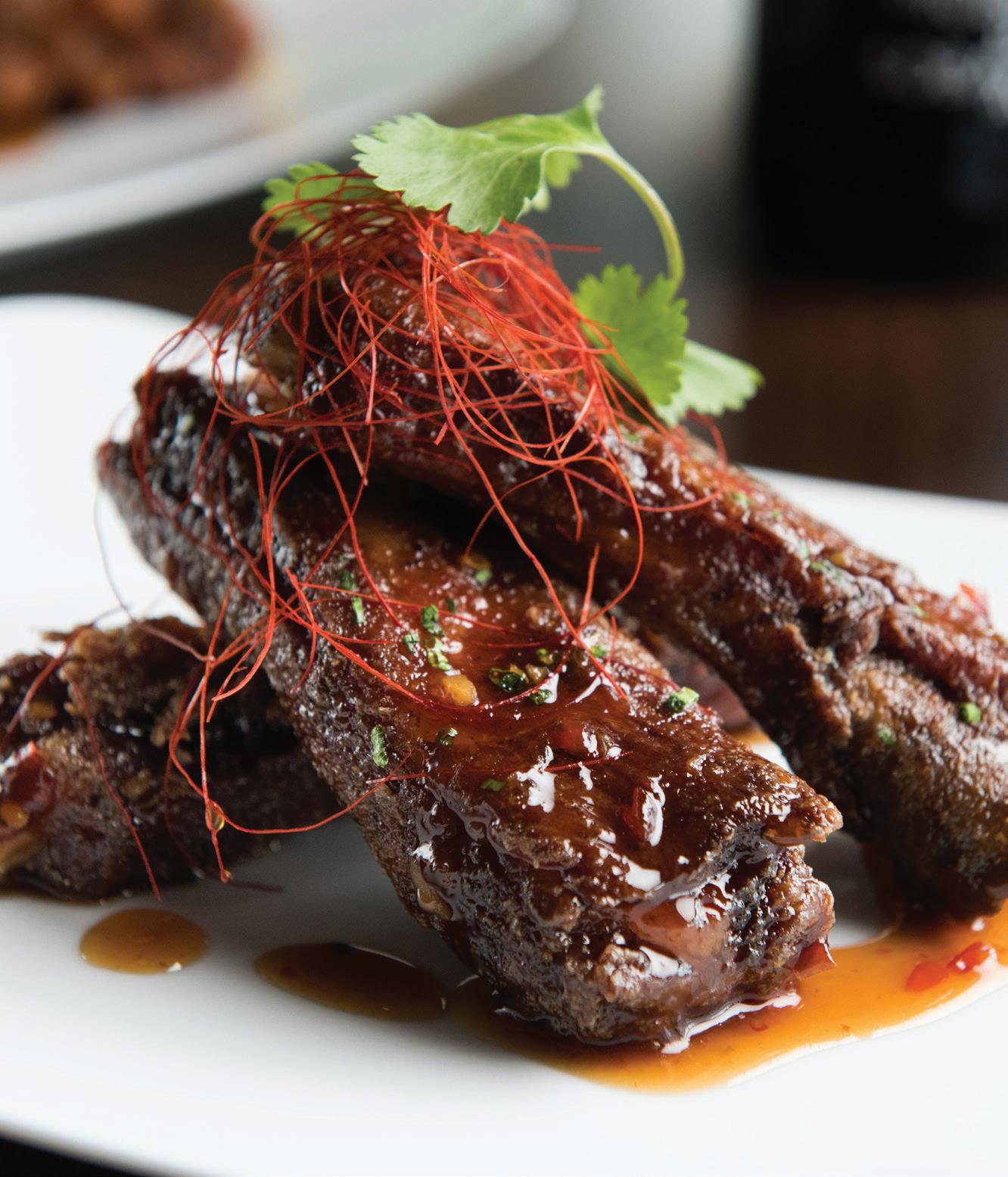
As an honored Iron Chef, Chef Masaharu Morimoto sets the bar high on expectation and manages to deliver with Morimoto Asia Waikiki, the signature restaurant of the ‘Alohilani Resort Waikīkī Beach. This Pan-Asian, dinner-only experience emphasizes the food cultures of China, Korea, Japan and Thailand while tapping into the abundant bounty of Hawai‘i’s native contributions. A glassencased kitchen puts on a nightly performance, expertly serving up elevated umami-packed dishes. Along with an exclusive A5 wagyu menu of equally enticing options, Morimoto’s also adds some zest to routine Asian classics including orange chicken, bbq black cod and shrimp pad thai. Everything from the whole Peking duck hand-carved at the table to the anchovies, fermented sauces and sweet-spicy combos throughout promises thoughtful bites to relish and savor while enjoying sweeping views of the world’s most celebrated beach.
Located at ‘Alohilani Resort Waikīkī Beach (808) 922-0022 • MorimotoAsiaWaikiki.com 2490 Kalākaua Ave., Honolulu (Map B, PG 164)
› DINNER NIGHTLY FROM 5-9PM
› OVERLOOKING OCEAN AT WAIKĪKĪ
› RESERVATIONS HIGHLY RECOMMENDED
PAN-ASIAN CUISINE in WAIKIKI
Eating House 1849 by Roy Yamaguchi
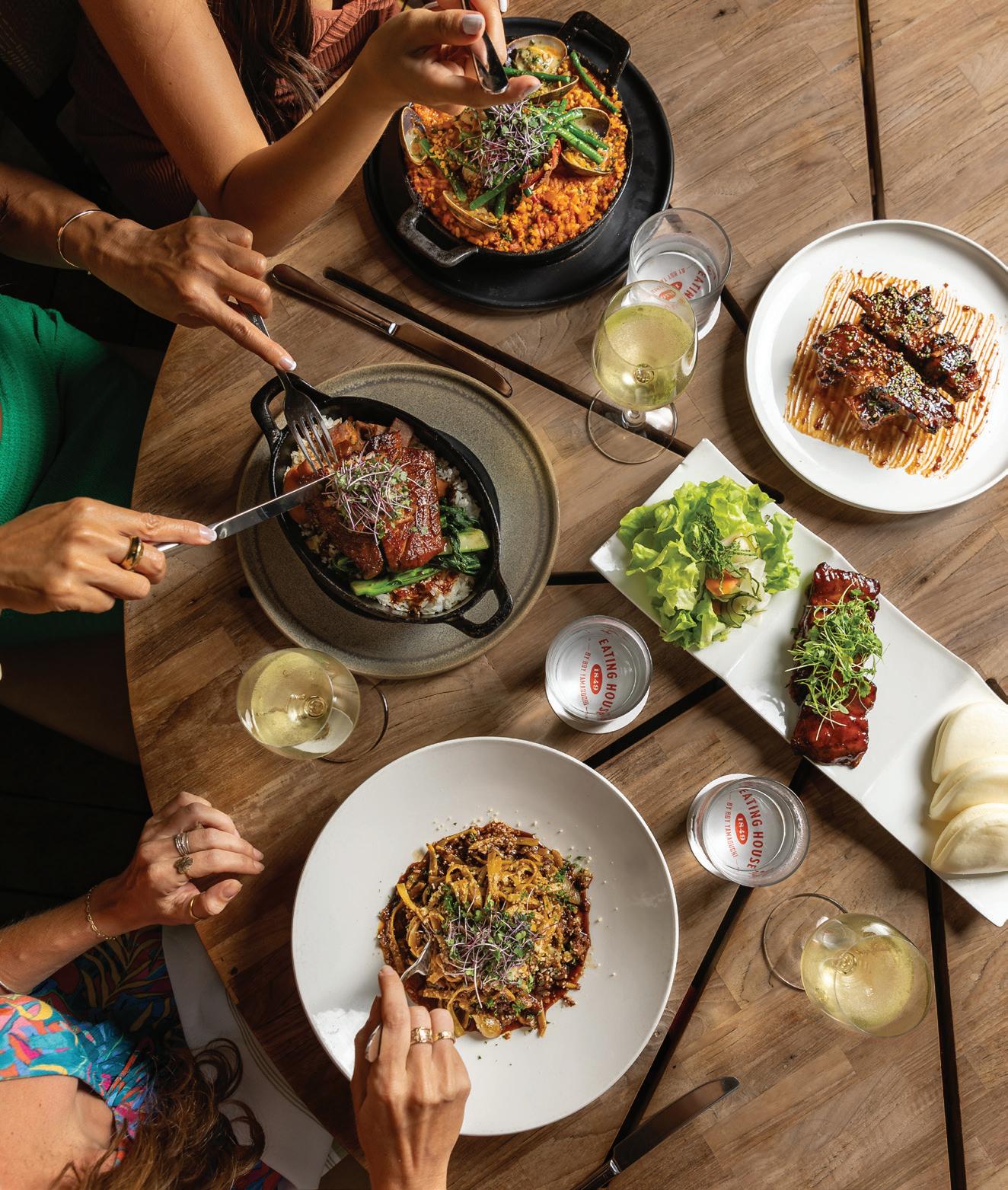
› WEEKEND BRUNCH FROM 10:30AM-2PM
› HAPPY HOUR DAILY FROM 4-5PM
› DINNER SERVED NIGHTLY FROM 4-9PM
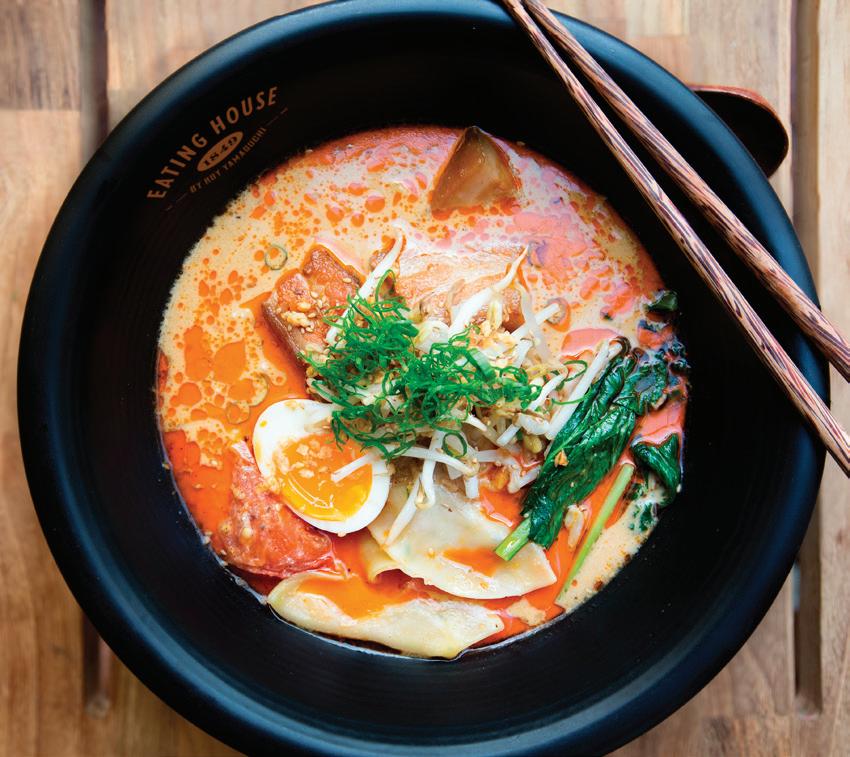
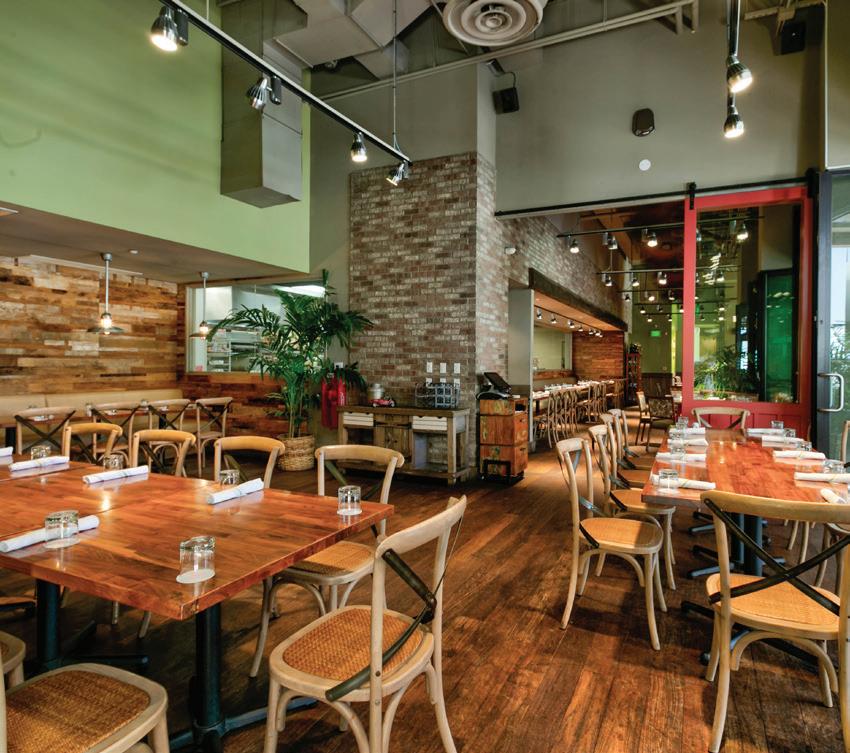
When Roy Yamaguchi decided to push his limits beyond his claim-to-culinaryfame Roy’s franchise, Eating House 1849 was the move. The first location in Kōloa on Kaua‘i and now a second on the breezy top floor of International Market Place in Waikīkī. Inspired by a man name Peter Fernandez—who legend says opened Hawai‘i’s very first restaurant in (you guessed it) 1894—this alfresco retreat mirrors the menu of its muse concept that showcased an era in which Hawai‘i food depended heavily upon trades and imports. At this time, plantation workers, who, like Roy’s grandfather, came to the islands to work also brought with them their unique food culture. This cuisine amalgam paired with the quintessential Roy je ne sais quoi synergizes into a restaurant highlighted by mellow ambience, traditional flavors, contemporary twists and a vintage plantation town feel.
Located in International Market Place (808) 924-1849 • RoyYamaguchi.com 2330 Kalākaua Ave., Space 322, Honolulu (Map B, PG 164)
HAWAIIAN & ASIAN FUSION in WAIKĪKĪ
SHOP + STYLE
ROYAL HAWAIIAN CENTER shopping center
NA HOKU jewelry
SUNSET PROVISIONS boutique
INTERNATIONAL MARKET PLACE shopping center
OPAL FIELDS jewelry
MAUI DIVERS JEWELRY jewelry
BIG ISLAND CANDIES gift shop + confections
BLUE GINGER boutique + accessories
Royal Hawaiian Center
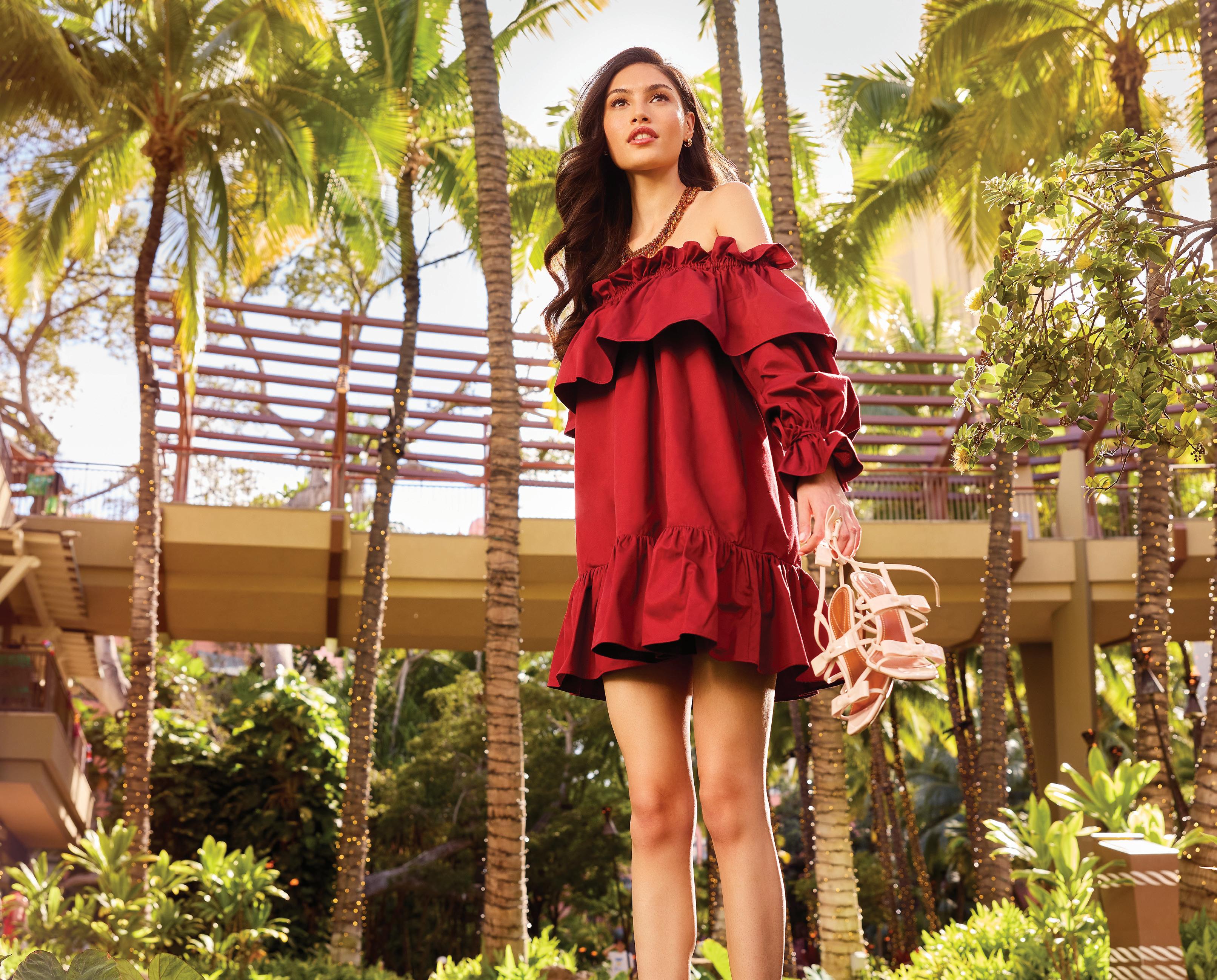
Located in the heart of Waikīkī on the iconic Kalākaua Avenue, Royal Hawaiian Center stands as a premier destination for shopping, dining, entertainment and culture. Spanning over three city blocks, seamlessly connecting over 90 unique shops across four levels, visitors enjoy shopping at internationally renowned, luxury brands and local boutiques featuring Hawai‘i-made products, as well as a diverse array of over 30 dining experiences. With a rich heritage spanning over four decades, Royal Hawaiian Center remains committed to showcasing the authentic spirit of Hawai‘i through cultural events and genuine hospitality. Enjoy free live entertainment at The Royal Grove, Waikiki’s gathering place. From hula lessons and authentic Hawaiian performances to ‘ukulele lessons and classes just for keiki (kids), Royal Hawaiian Center offers an exciting array of cultural activities and experiences throughout the year.
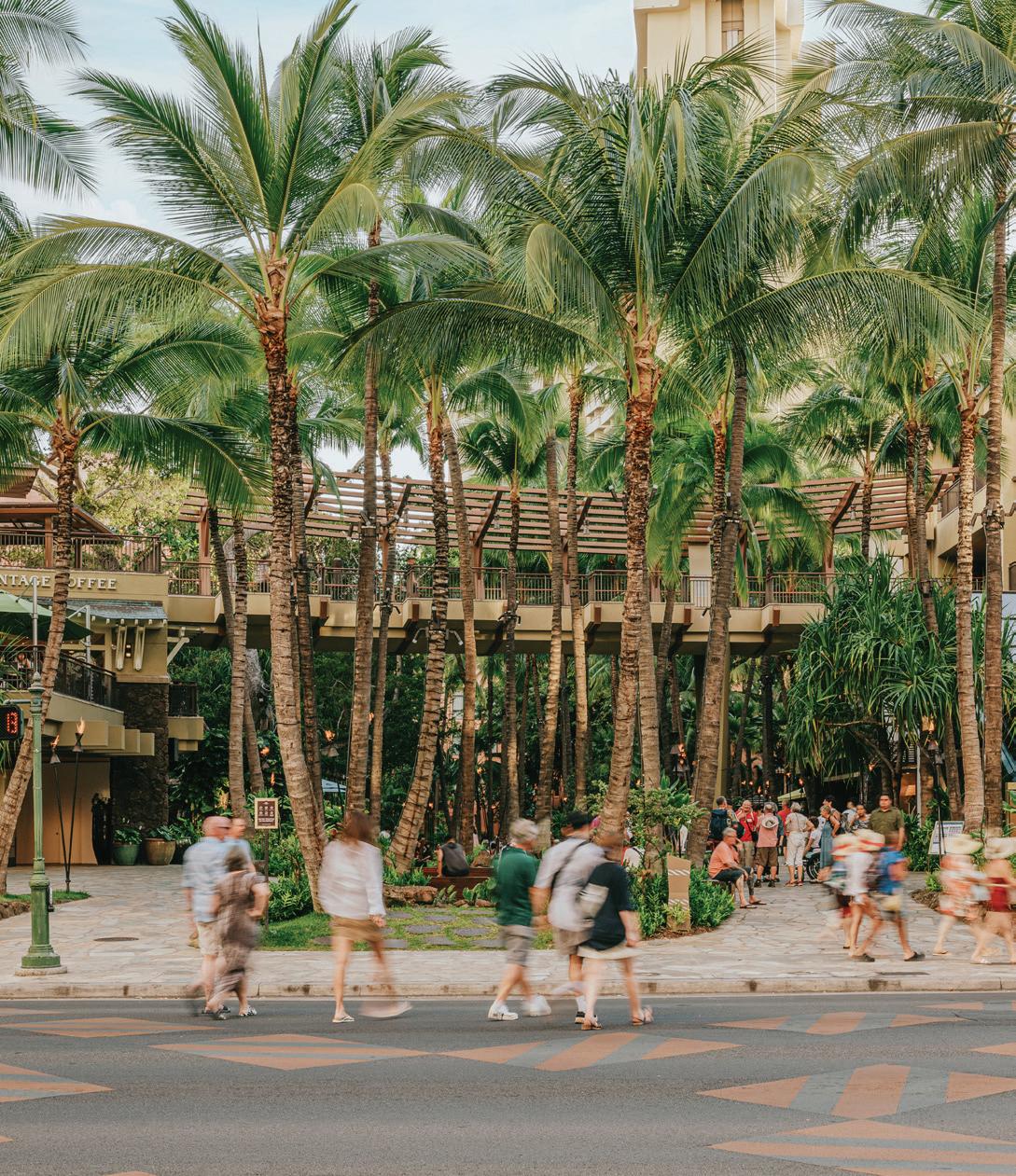
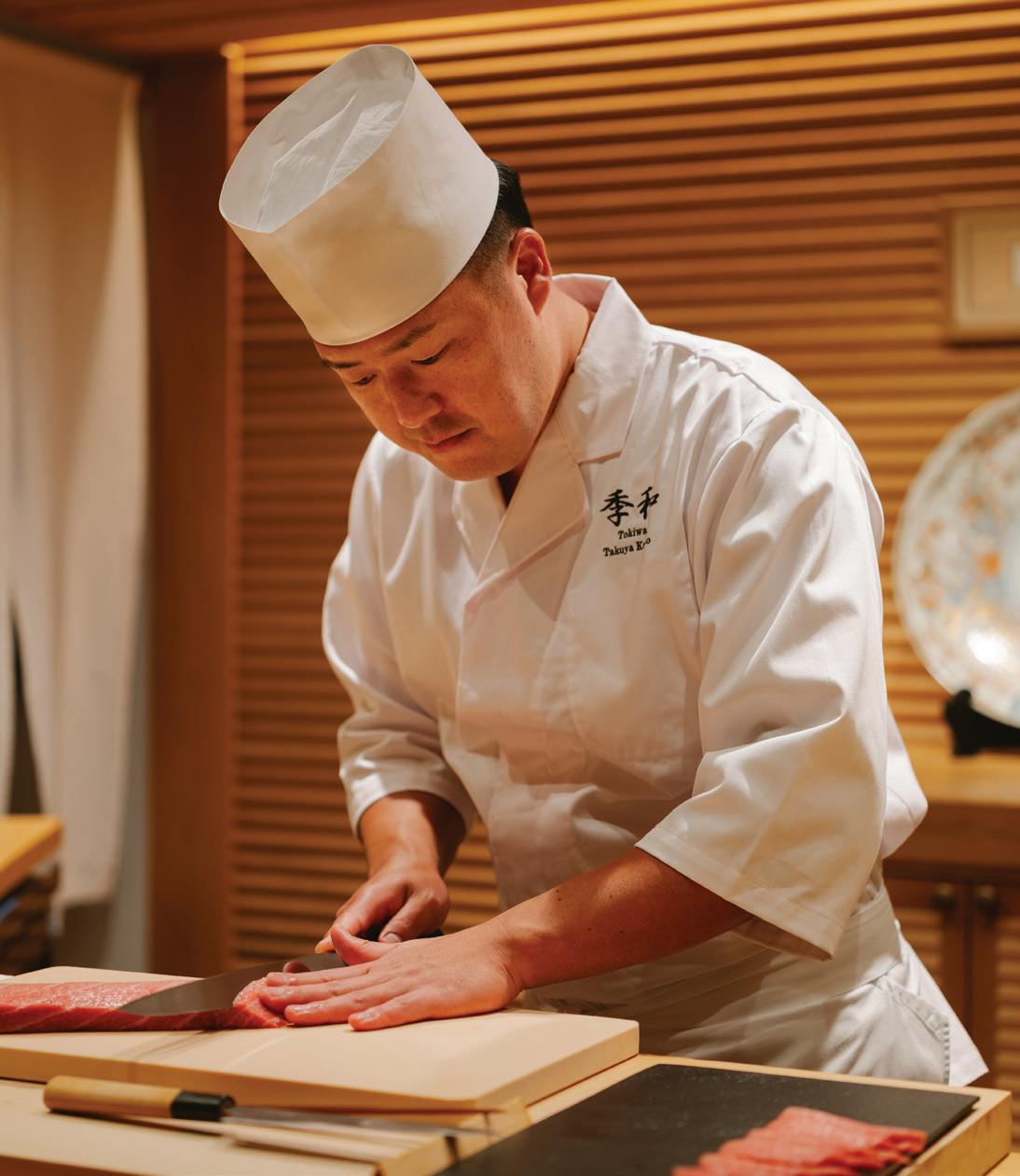
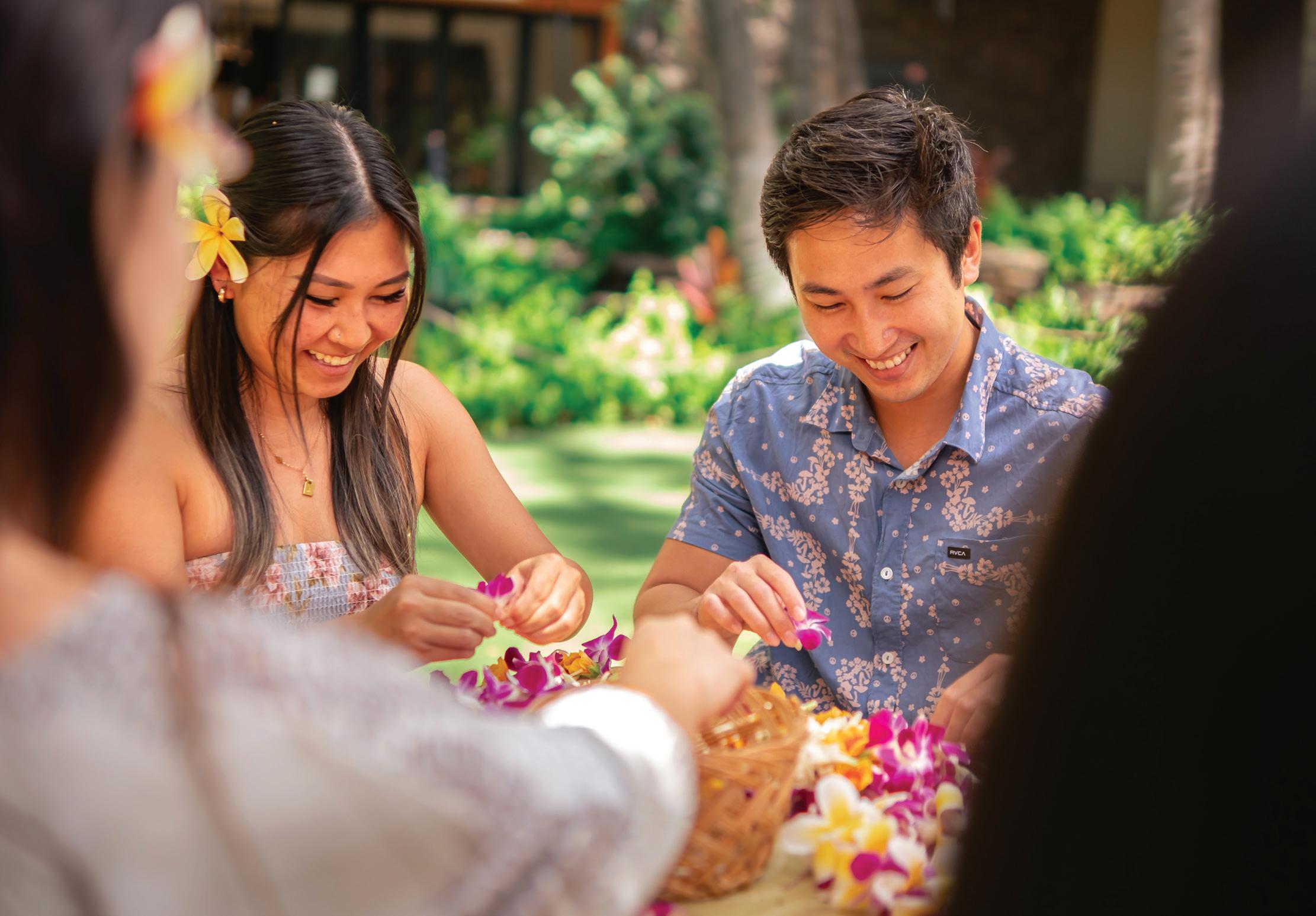
Na Hoku
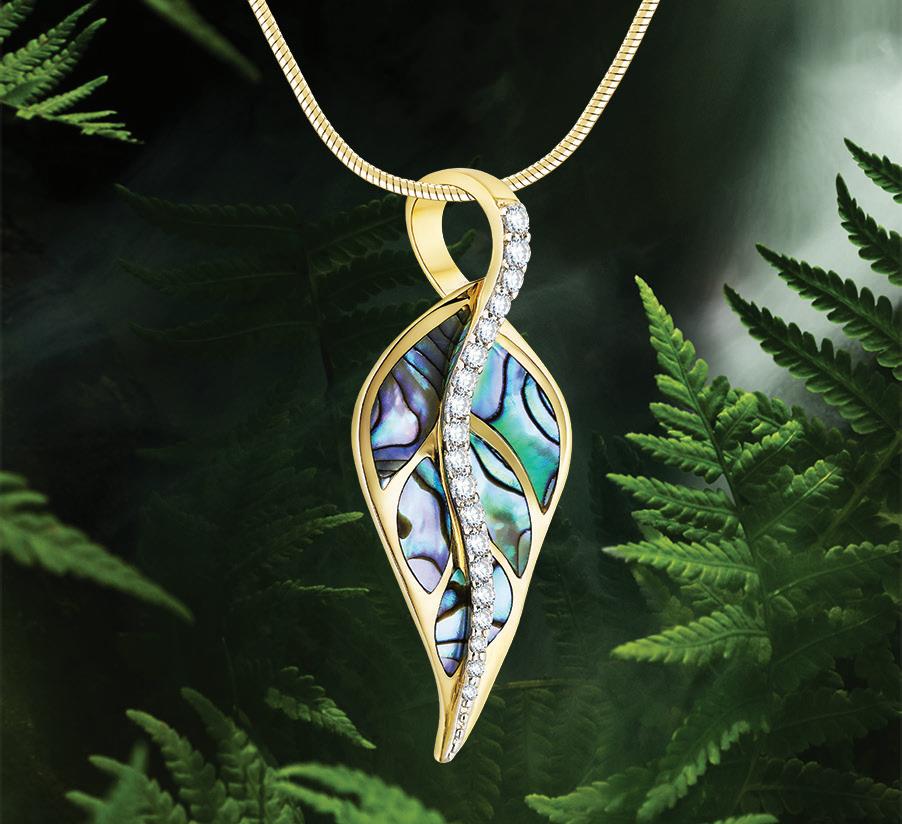
Sunset Provisions
BOUTIQUE in WAIKĪKĪ
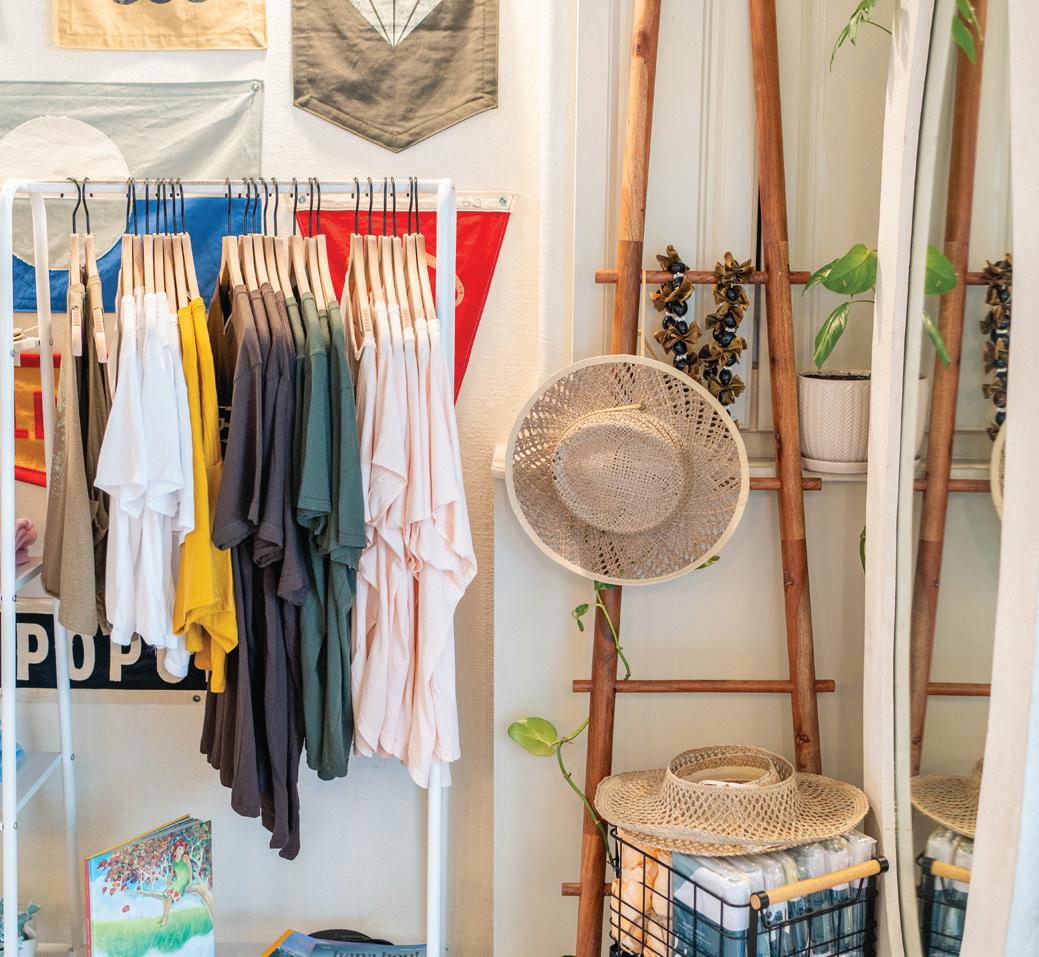
The essence of Hawaiian lifestyle and tradition has been captured in the Na Hoku collection of fine jewelry. Hawaiian for “stars,” Na Hoku also stands for incomparable quality and craftsmanship. At Na Hoku, you will find original pieces set with Tahitian pearls, diamonds and colored gemstones, as well as collections by renowned designers such as Kabana®, Le Vian® and Effy®. Every piece of Hawaiian and Island lifestyle jewelry is designed to accent the individuality, taste and style of the one who wears it, and will forever be a memento of a treasured time in the islands.
NaHoku.com • (800) 946-2100
Ala Moana Center
Outrigger Waikiki on Kalakaua Avenue Waikiki Beach Walk
Hilton Hawaiian Village Polynesian Cultural Center
Stroll to the edge of Waikīkī for a chance to shop a thoughtfully curated collection of merchandise sourced from local creators, artisans and craftspeople. Friendly staff welcome you to the brightly lit showroom of Sunset Provisions at the Kaimana Beach Hotel where merchandise is artistically displayed, giving guests the space to browse without feeling overwhelmed. Vendors and merchandise are specifically chosen to complement life on the islands for the savvy traveler. For those spending the day at the beach or poolside, Sunset Provisions has a huge selection of bathing suits and bikinis paired with cute coverups, matching accessories and wide-brimmed sunhats to complete your look. To tie together your outfit, they also have an assortment of shoes, handbags and jewelry that feature locally sourced shells and gemstones. Stop by Sunset Provisions to check out their collection curated with aloha. Open daily from 6:30 a.m. - 4 p.m.
Located at Kaimaina Beach Hotel (808) 923-1555 • Sunset-Provisions.com
2863 Kalākaua Ave., Honolulu (Map B, PG 164)
JEWELRY on O‘AHU
International Market Place
SHOPPING CENTER in WAIKĪKĪ
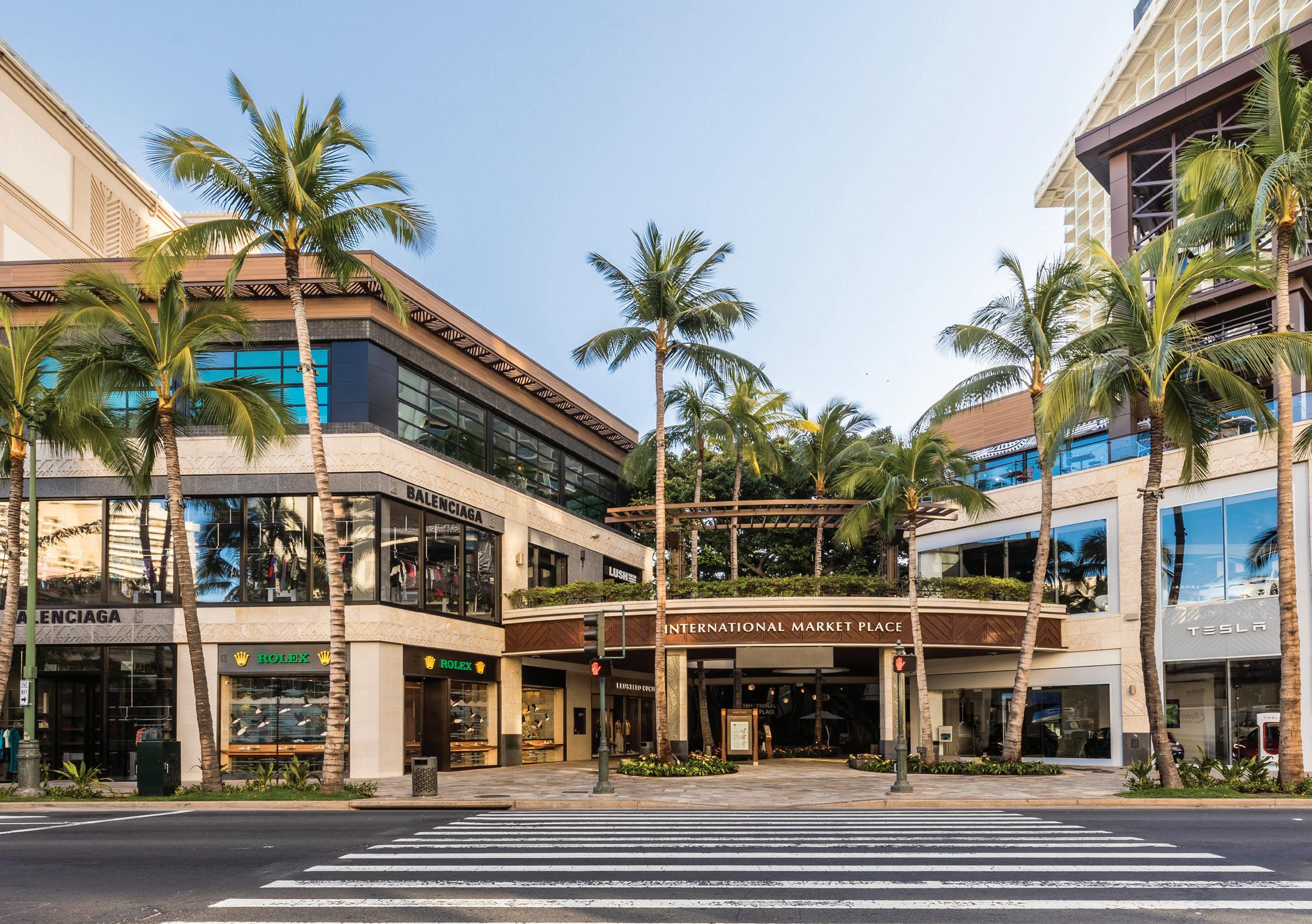
Nestled in the heart of Waikīkī, the International Market Place is a premier shopping and dining destination. This open-air center blends Hawai‘i’s rich cultural heritage with modern luxury, offering a unique experience for visitors. With over 100 retailers, including high-end boutiques and local favorites, it caters to every taste and style. The center’s diverse dining options range from casual eateries to upscale restaurants, providing a variety of culinary delights. The iconic banyan tree and lush landscaping create a serene oasis amid the vibrant cityscape. Regular events and live entertainment enhance the lively atmosphere, making it a must-visit for tourists and locals alike. Discover the perfect blend of tradition and innovation at the International Market Place, where aloha spirit meets contemporary sophistication. Open daily from 10 a.m. to 9 p.m.
Located in the heart of Waikīkī (808) 921-0536 • ShopInternationalMarketPlace.com 2330 Kalākaua Ave., Honolulu (Map B, PG 164)
› EIGHT OPEN-AIR RESTAURANTS
› TARGET NOW OPEN
› LUXURY BOUTIQUES & LOCAL SHOPS
Opal Fields
JEWELRY in WAIKĪKĪ
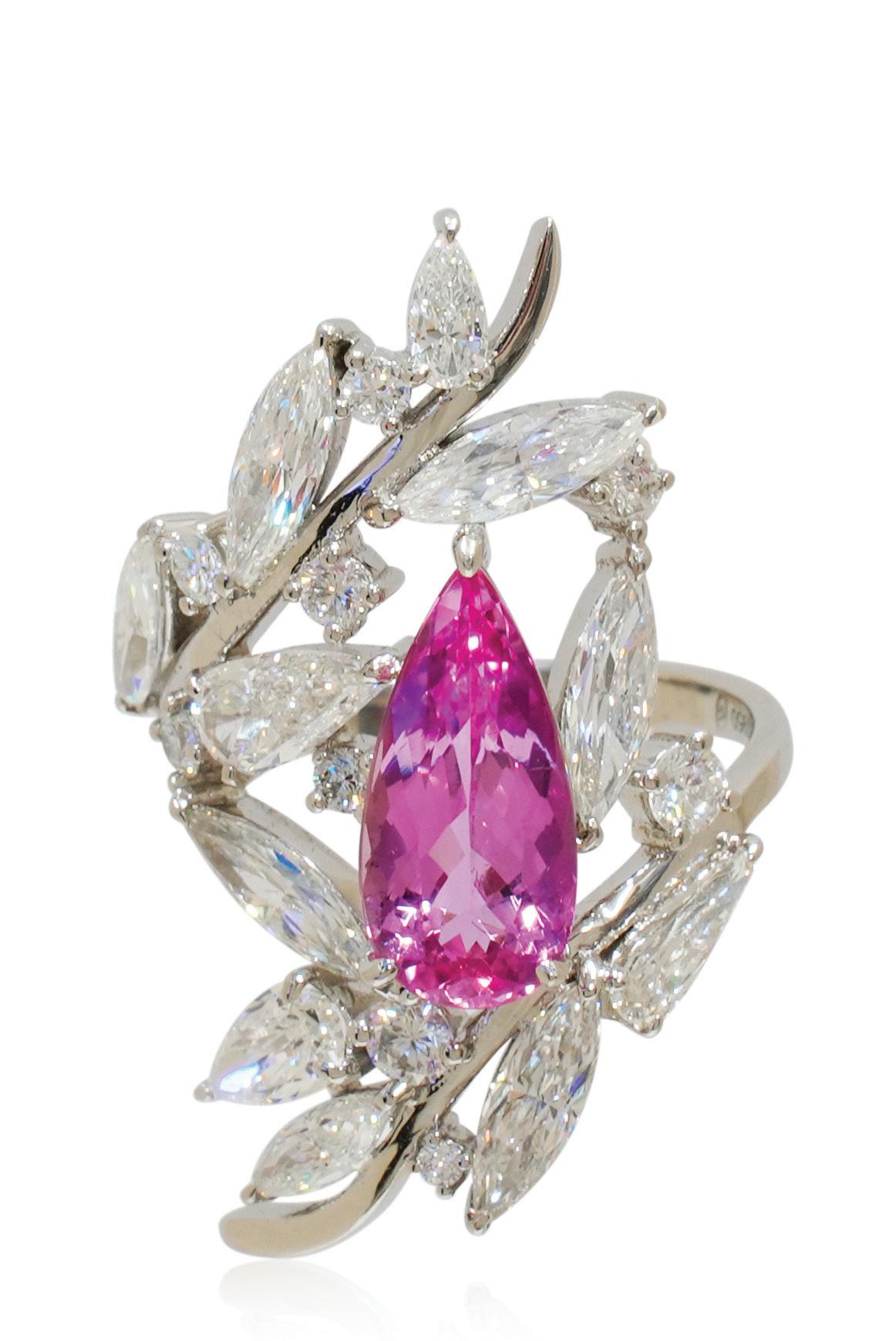
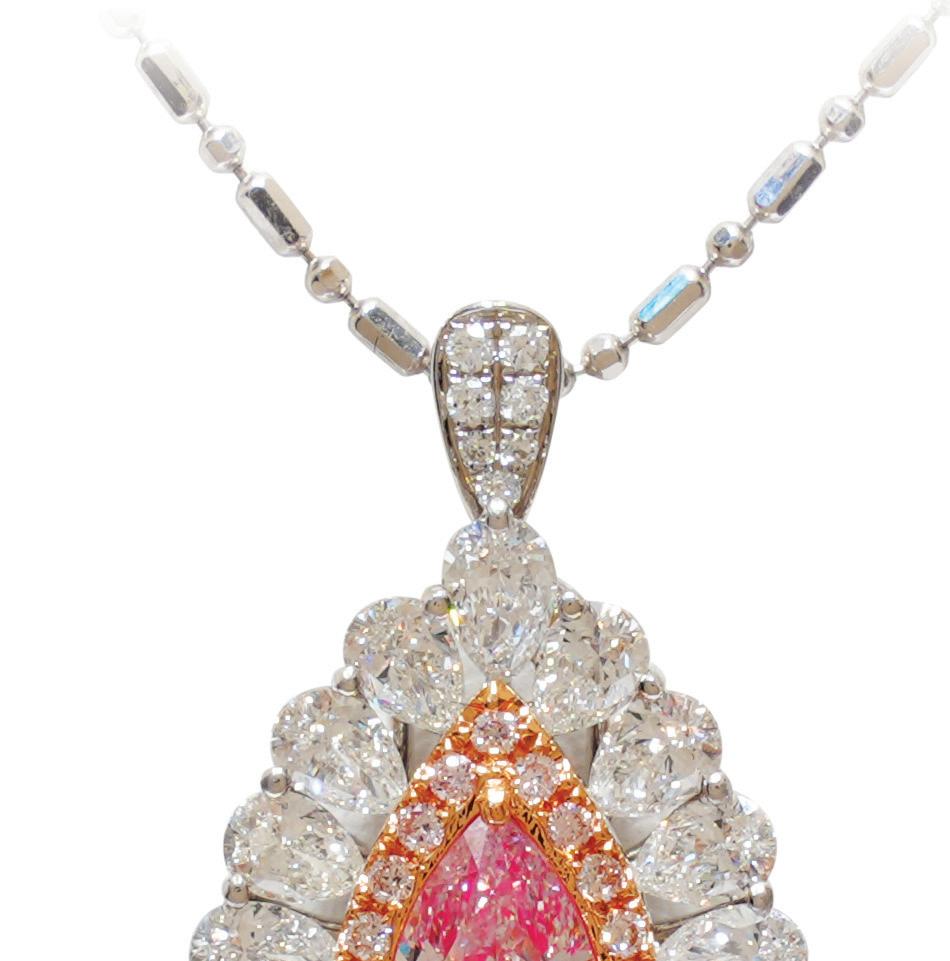

› OPEN DAILY, 10AM-9PM
› REPAIR SERVICES
› SAME DAY DELIVERY
Opal Fields is a trusted name in Hawai‘i’s fine jewelry landscape, renowned for exceptional opals, rare precious gemstones and one-of-a-kind designs. Located in the heart of Waikīkī at the International Market Place, they welcome both local clientele and visitors from around the world seeking beauty, craftsmanship and expertise. Their team of American Gem Society–certified gemologists and awardwinning designers creates distinctive jewelry that blends timeless elegance with island-inspired artistry. From striking black opal masterpieces and brilliant diamond designs to celebrated collections by iconic Hawai‘i designer Denny Wong, every piece reflects uncompromising quality and refined detail. As a full-service American Gem Society jeweler, Opal Fields offers certified appraisals, insurance replacements, custom design, expert repairs and restoration, pearl restringing and professional gemology services. Whether preserving a treasured heirloom or creating something entirely new, Opal Fields is where exceptional jewelry begins.
Located in International Market Place (808) 949-3982 • OpalFields.com 2330 Kalākaua Ave., Suite 196, Honolulu (Map B, PG 164)
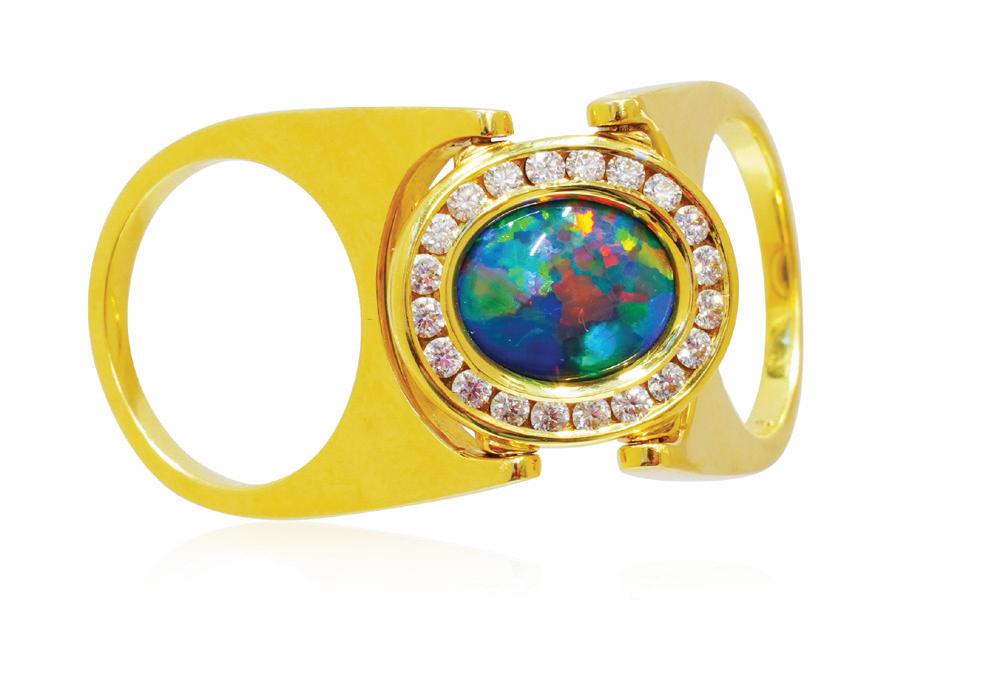
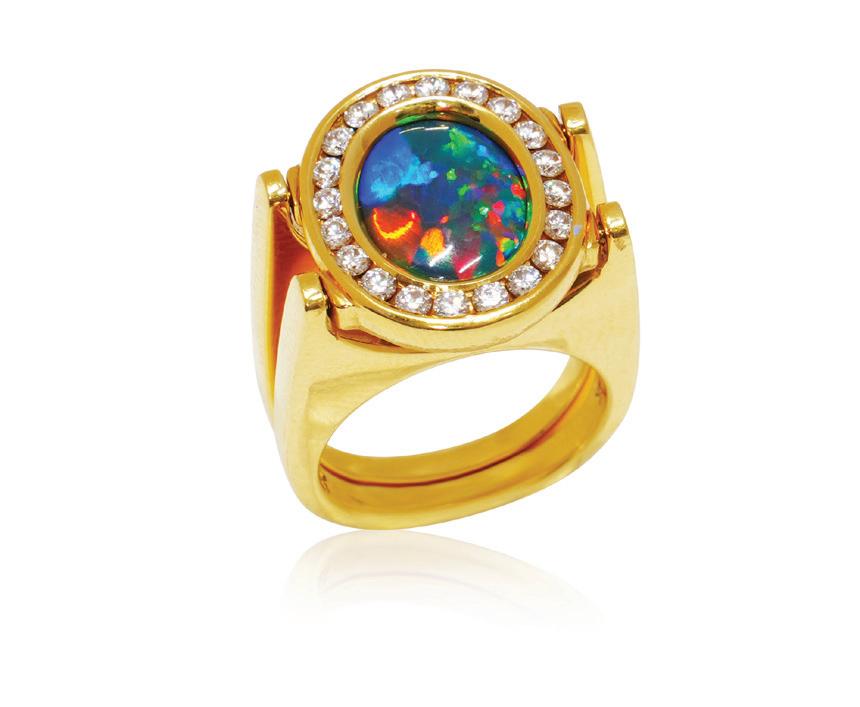
Maui Divers Jewelry
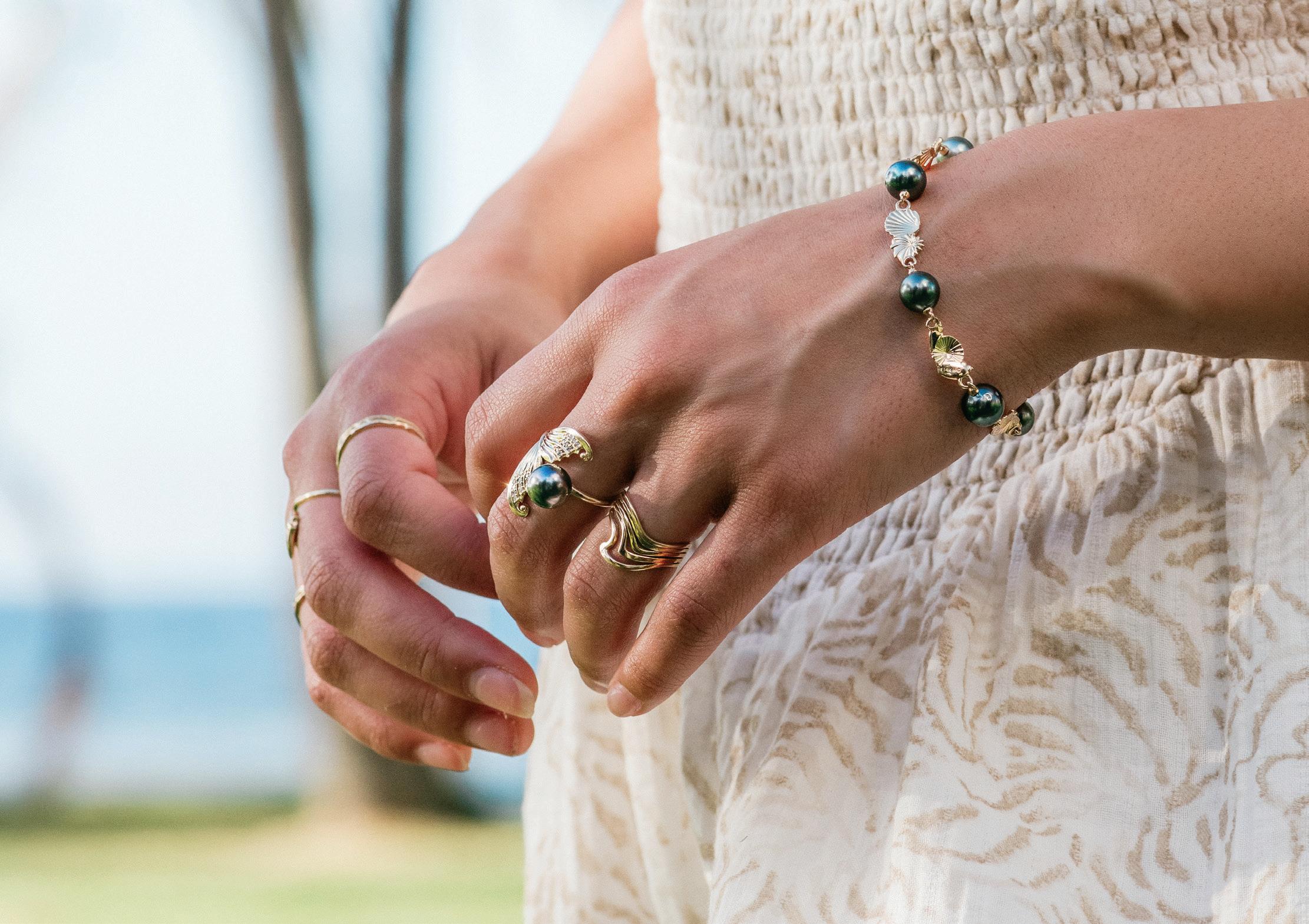
Maui Divers began its journey in 1958 as an undersea exploration company. During an expedition in the Moloka‘i Channel, they made an incredible discovery: beds of black coral at depths of over 200 feet. Recognizing the potential for something truly remarkable, they polished these deep-sea corals, revealing their stunning luster. This significant find led to the establishment of Maui Divers Jewelry in 1959 and ultimately to the recognition of Hawaiian black coral as Hawai‘i’s state gem in 1987. Today, Maui Divers Jewelry proudly carries on its legacy, creating exclusive made in Hawai‘i keepsakes with quality craftsmanship, expert design and a famous Forever Guarantee. With a long-standing commitment to customers and a promise to stand behind each piece, it's no wonder they continue to be loved and trusted. Visit a store across Hawai‘i or shop at MauiDivers.com to experience each signature creation.
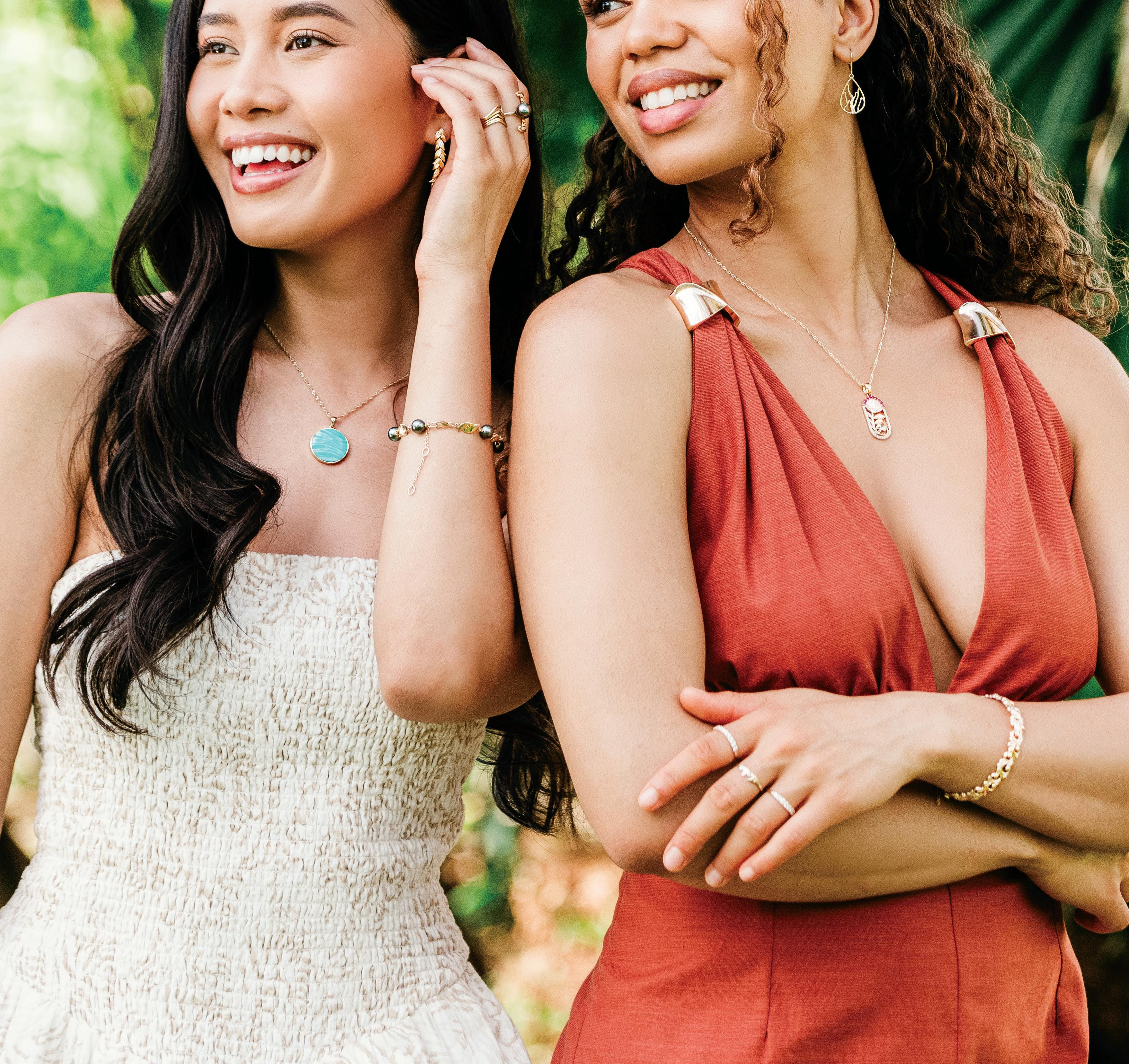
Big Island Candies
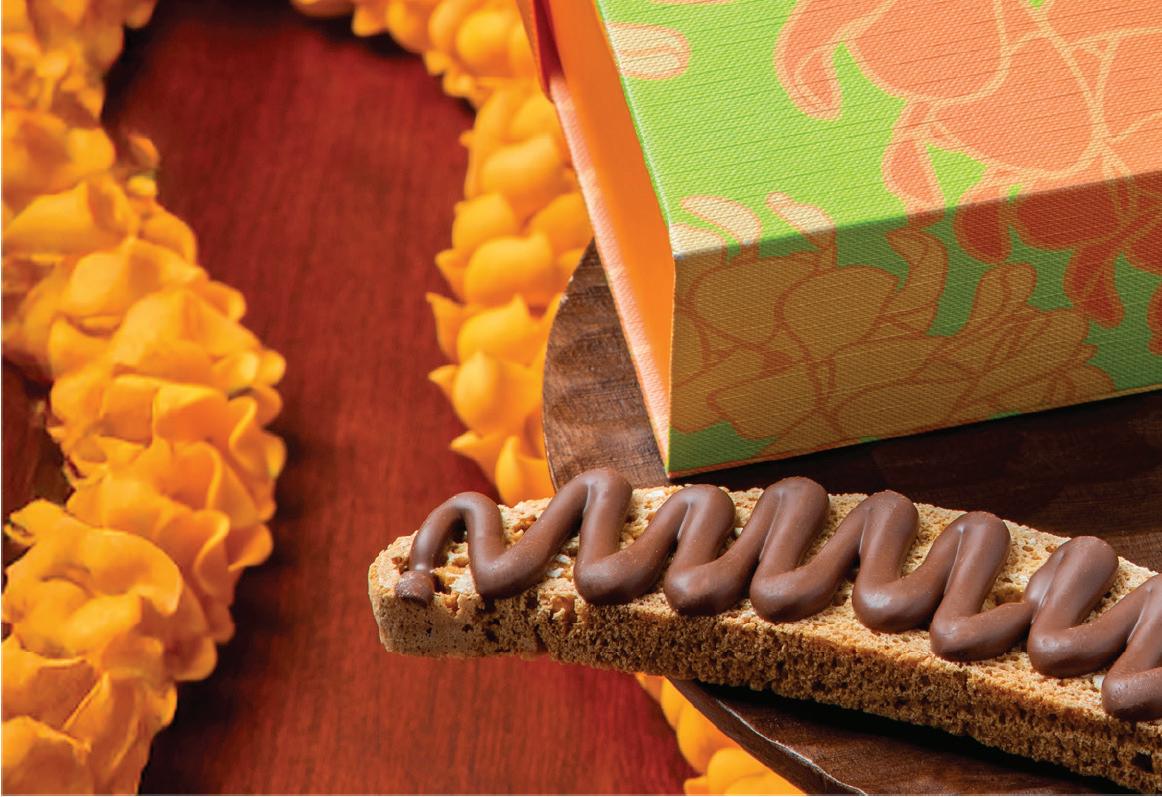
› GIVE THE GIFT OF HAWAI‘I
› FEATURING FRESH, LOCAL PRODUCTS
› ONLY THE HIGHEST GRADE INGREDIENTS
For over 45 years, Big Island Candies has been creating mouthwatering treats. Stroll and shop for gifts, featuring an assortment of individually wrapped goodies in exquisite, limited edition packaging that celebrates the joy of the seasons and the natural beauty of Hawai‘i. Their Chocolate Dipped Macadamia Nut Shortbread Cookies, brownies and chocolates are world renown. All products are made with the finest quality ingredients. They also proudly feature 100% Kona Coffee from farms on Hawai‘i Island. With so many innovative indulgences to choose from, their representatives are happy to answer questions about products and even make a few suggestions to help you find the right item. Come in and you’ll experience why Big Island Candies has been the go-to destination for Hawai‘i’s finest cookies, chocolates and confections since 1977. Open daily 10 a.m. to 8 p.m.
Located in Ala Moana Center (808) 946-9213 • bigislandcandies.com 1450 Ala Moana Blvd. #1230, Honolulu (Map C, PG 165)
Blue Ginger
Live the aloha lifestyle in tropical resort wear from Blue Ginger. Perfect for any island occasion, Blue Ginger offers colorful, timeless resort wear sure to bring smiles and warm memories of the islands. Original batik prints inspired by the beauty of the Hawaiian Islands are available in comfortable clothing for all ages. A family run establishment, Blue Ginger has long been an island favorite with kama‘āina and visitors alike. With eight locations throughout the Hawaiian Islands, Blue Ginger has something for everyone, from the youngest keiki on up: Colorful sundresses, caftans, aloha shirts, accessories and more. Celebrating 42 years of living the aloha lifestyle, these exclusive prints and fashions continue to delight multiple generations.
› LIVE THE ALOHA LIFESTYLE
› MATCHING FAMILY PRINTS
› TIMELESS RESORTWEAR
blueginger.com
(808) 924-7900 • Waikiki Beach Walk, 227 Lewers St. #130, Honolulu (Map B, PG 164) (808) 260-1331 • Outrigger Waikīkī Beach Resort, 2335 Kalākaua Ave., Honolulu (Map B, PG 164)
BOUTIQUE & ACCESSORIES in WAIKĪKĪ
Honolulu - Nimitz Hwy Na Lama Kukui
(formerly the Gentry Pacific Design Center)
560 N. Nimitz Hwy #101, Honolulu, HI 96817
808.524.7769
Monday-Saturday: 9:30-5:30, Closed Sunday
Honolulu - Ward Ave
808.596.7333
Monday-Saturday:

808.877.7200
Monday-Friday: 9:30-5 Kona Kaloko Business Center V 73-5617 Maiau St. Kailua-Kona, HI 96740
808.329.6500
Monday-Sunday: 10-6
Anne Hogan Perry
REALTOR in HONOLULU
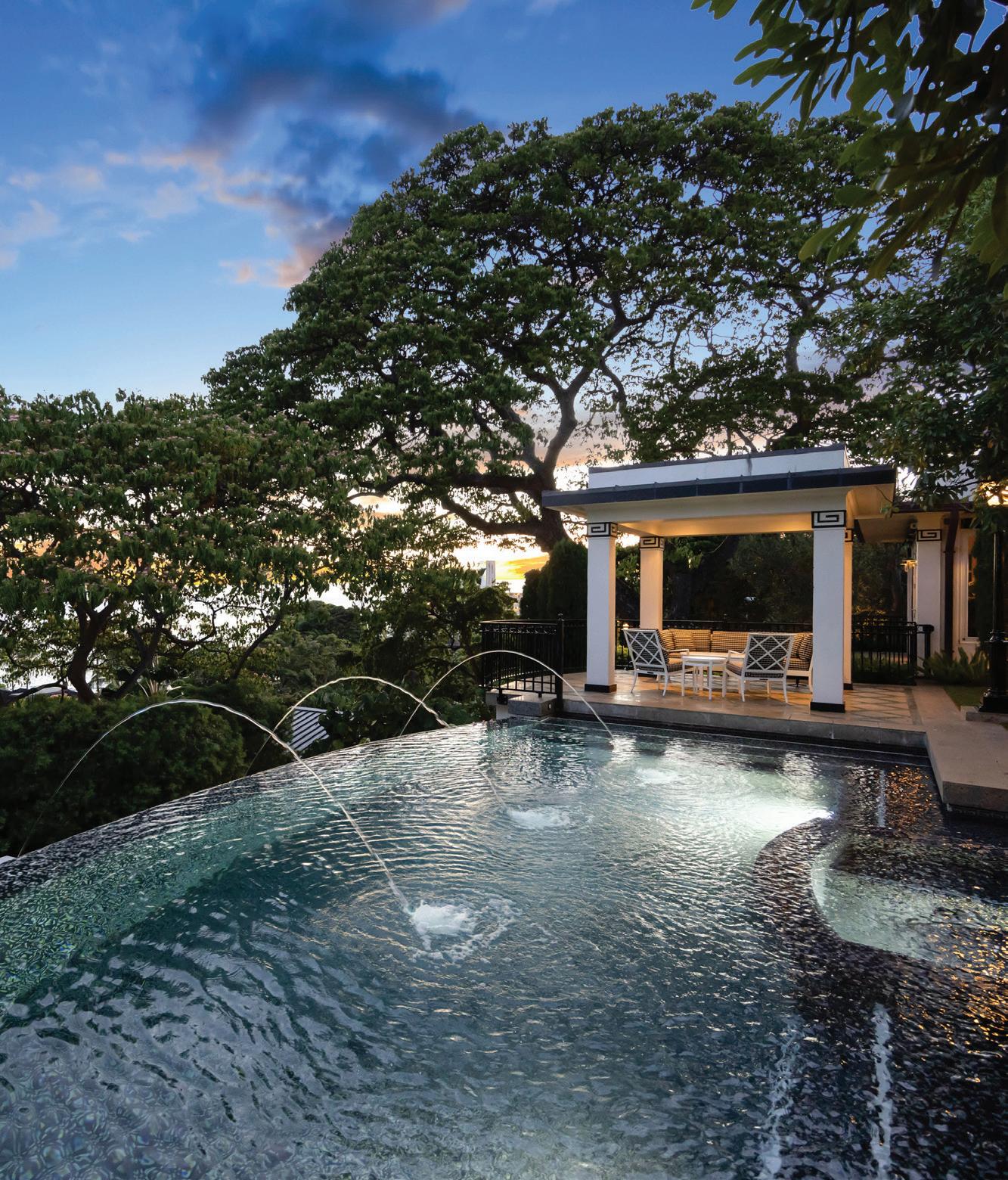
› HAWAI‘I'S LUXURY REAL ESTATE EXPERT
› #1 BROKERAGE IN THE US, FOUR YEARS IN A ROW
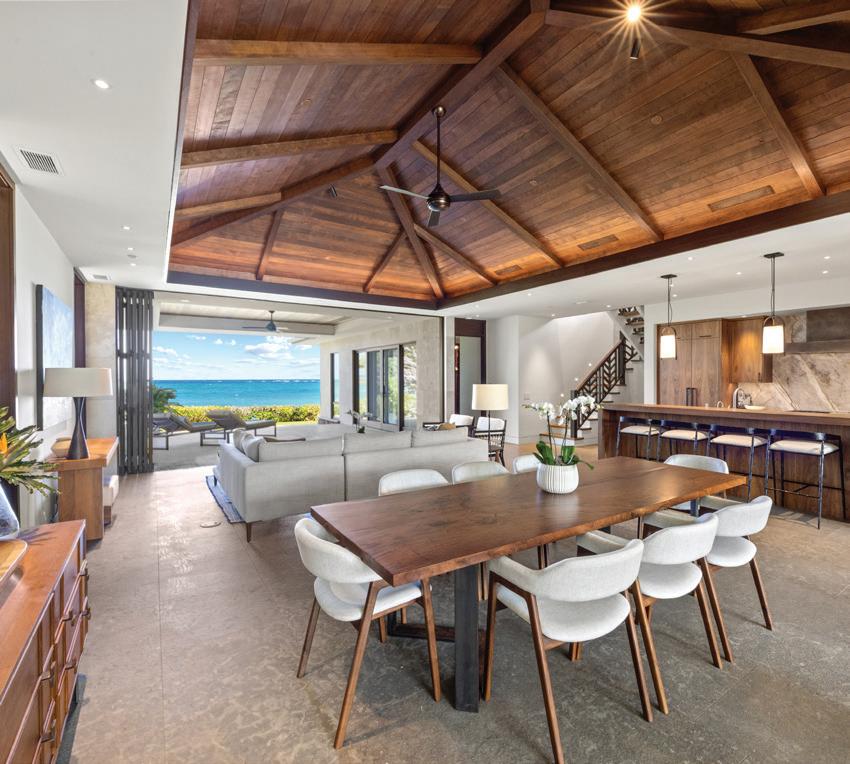
Anne Hogan Perry is a globally recognized real estate expert and one of Hawai‘i’s most trusted names in luxury real estate. Born and raised in the islands, Anne brings over 40 years of expertise and an unmatched local perspective to every client interaction. She’s one of the rare agents who has lived and sold homes across O‘ahu, Maui, Kaua‘i and Hawai‘i Island, offering insider knowledge on each island’s most desirable properties and lifestyle offerings. Whether you’re searching for sunset views, offshore breezes or the perfect surf break, Anne knows precisely where to take you. Her deep roots and genuine connection to Hawai‘i’s culture and community make her more than a real estate expert — she’s your guide to the island lifestyle. Let Anne Hogan Perry help you discover your perfect place in paradise — with the insight only someone deeply connected to the islands can offer. Making the extraordinary possible across the Hawaiian Islands and beyond.
Located in Kahala Mall (808) 286-6474 • AnneHoganPerry.com 4211 Waialae Ave, Suite 100, Honolulu (Map A, PG 163)
Indich Collection
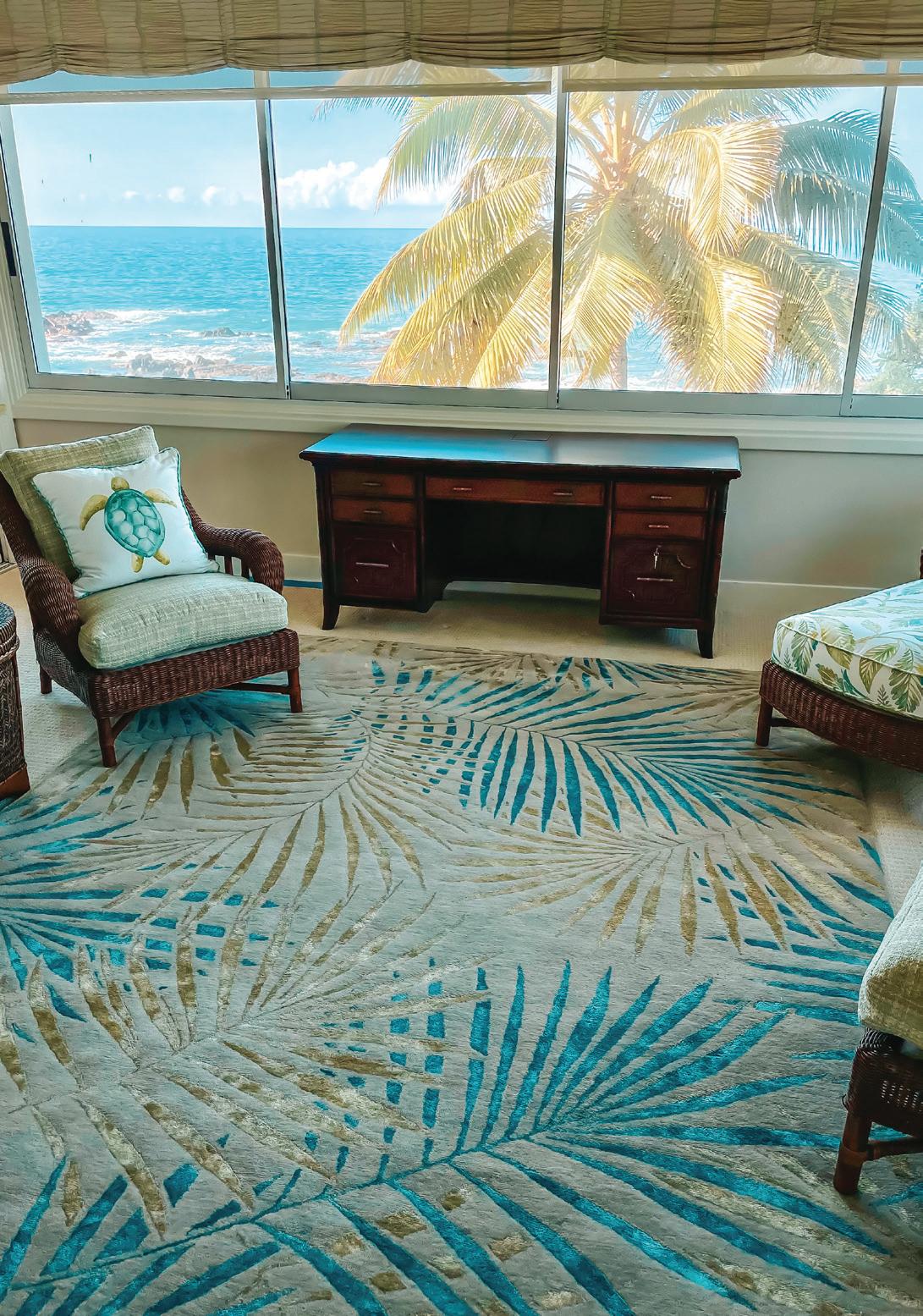
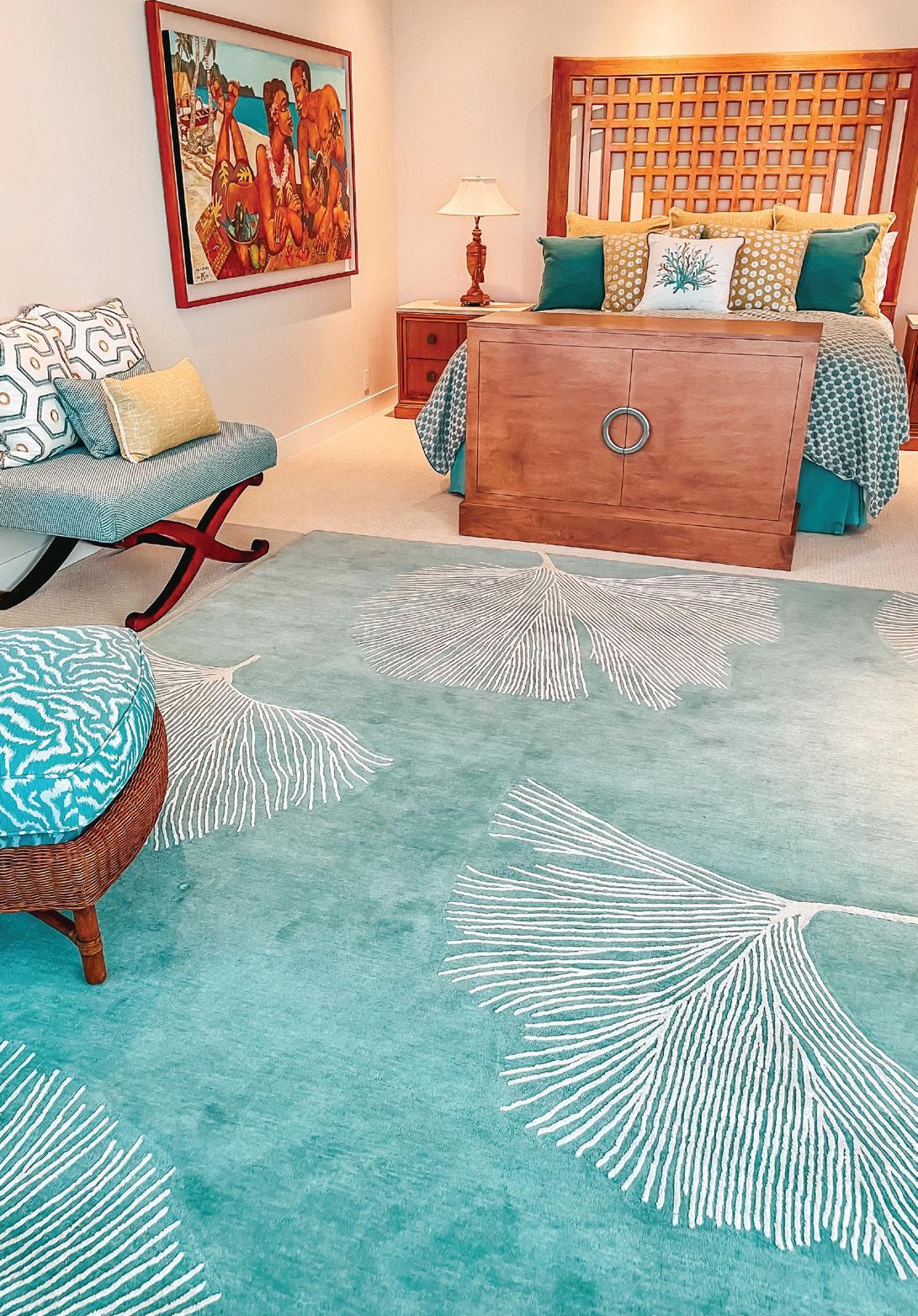
Indich Collection's unique designs are inspired by the casual elegance of the island lifestyle. As designers and manufacturers of Hawaii Rugs®, Indich uses traditional oriental carpet weaving techniques and materials to create some of the most artful rug designs found anywhere. Celebrating 45 years in Hawai‘i with the largest selection of area rugs in the Pacific Basin, and with their Custom Design Program, Indich offers clients virtually unlimited design, color and size options. Traditional, contemporary and tropical designs stir your imagination as you enter the "Art Under Foot" gallery. Free drop shipping island-wide and to the mainland with minimum purchase. Nimitz location open Monday to Saturday from 9:30 a.m.- 5:30 p.m. and closed Sunday; Ward location open Monday to Saturday from 10 a.m. - 6 p.m. and Sunday from 10 a.m. - 4 p.m.
HawaiianRugs.com • indichcoll@aol.com (808) 524-7769 • 560 N. Nimitz Hwy., Honolulu (Map C, PG 163) (808) 596-7333 • 550 Ward Ave., Honolulu (Map C, PG 163)
› THESE HAWAIIAN HEIRLOOM RUGS ARE DESIGNED BY LOCAL ARTISTS
› CREATE YOUR OWN CUSTOM RUG
We hope that you enjoy this very special place. Help us preserve its beauty as you explore with a heightened level of awareness, intention and respect. Mahalo nui loa. Learn more at Savvy360.com
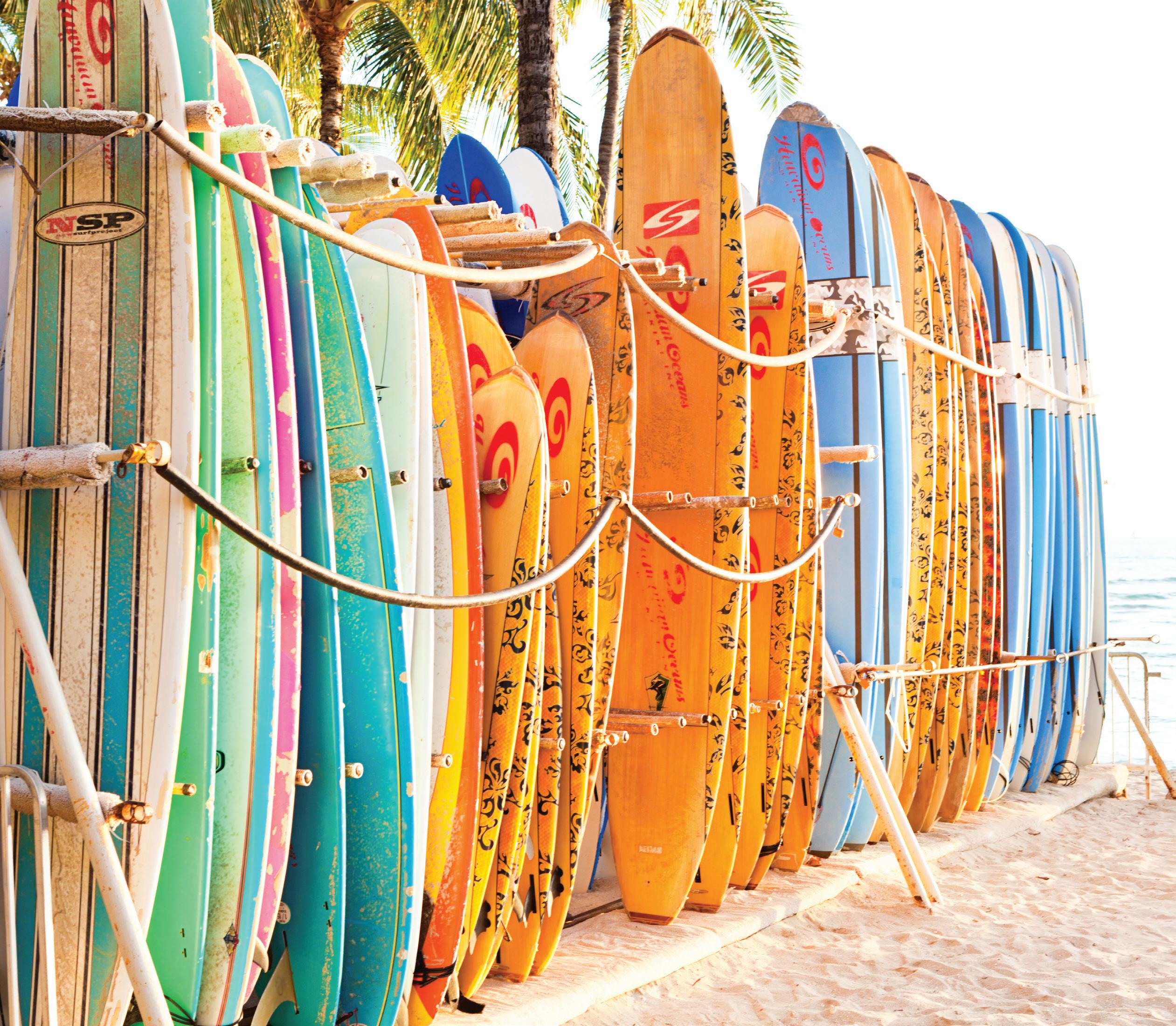
MAPS
ISLAND MAP O‘ahu, the Gathering Place
WAIKĪKĪ Honolulu
KAKA‘AKO & DOWNTOWN Honolulu
KO OLINA Leeward Coast
HALE‘IWA North Shore
HAWAI‘I KAI East Honolulu
KAILUA Windward Coast
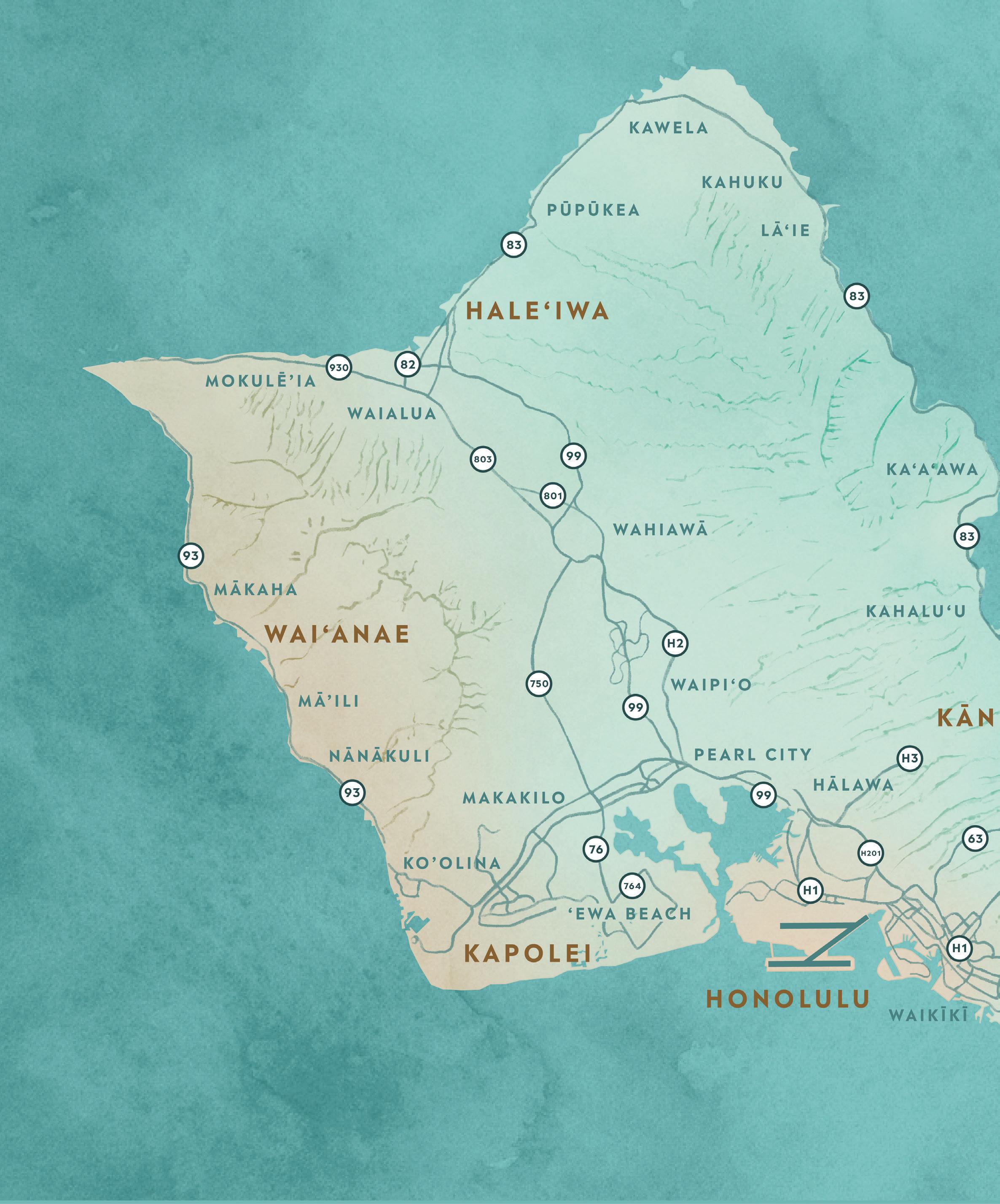
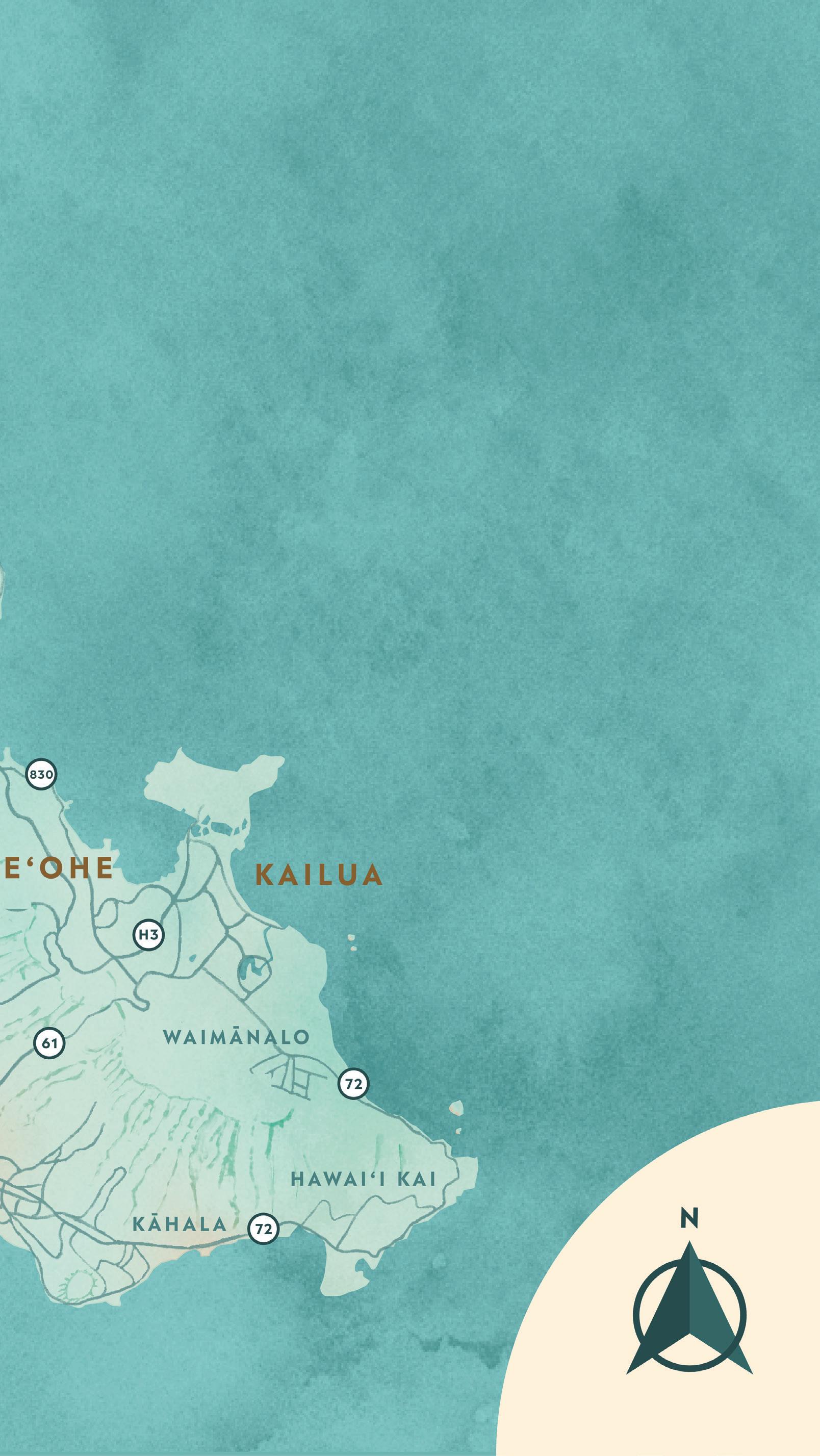
‘Ehukai Pillbox Trail
Mā‘ili Pink Pillbox Trail (Pu‘u O Hulu)
Mānoa Honey & Mead
Sea Life Park / Aloha Kai Lū‘au
Gunstock Ranch
Hānaiakamalama
Lē‘ahi (Diamond Head)
Pu‘u o Mahuku Heiau
Ulupō Heiau State Historic Monument
Pearl Harbor
Wai‘alae Beach Park
Keawa‘ulu (Yokohama) Beach
Mokulē‘ia Beach
‘Ehukai Beach Park (Banzai Pipeline)
Kahana Bay Beach Park
Hanauma Bay
Pearl at Kalauao
Hawai‘i Prince Golf Course
Tanaka Kahuku Shrimp
Giovanni's Shrimp Truck
Helena's Hawaiian Food
Maui Divers Jewelry (HNL)
Maui Divers Jewelry (Pearl Harbor)
Maui Divers Jewelry (Dole Plantation)
The Kāhala Hotel & Resort
Ritz-Carlton, Turtle Bay
Anne Hogan Perry / Compass
Honolulu Zoo
Waikīkī Aquarium
Waikīkī Beach
Kaimana Beach
Ala Wai Golf Course
House Without A Key Momosan Waikiki
Morimoto Asia Waikiki
Hau Tree DECK.
Ruth's Chris Steak House
Hy's Steak House
Quiora
Eating House 1849 by Roy Yamaguchi Gecko Girlz
Royal Hawaiian Center
Tiffany & Co.
Louis Vuitton
Maui Divers
Sunset Provisions
International Market Place
Opal Fields
Maui Divers Jewelry
Maui Divers Jewelry (Hilton Hawaiian Village)
Blue Ginger
Halekulani
Halepuna Waikīkī by Halekulani
Kaimana Beach Hotel
Queen Kapi‘olani Hotel
The Laylow, Autograph Collection
Sheraton Waikīkī
Hyatt Regency Waikīkī Resort & Spa
The Royal Hawaiian Wayfinder
Alohilani Resort
Vive Hotel Waikīkī
Sheraton Princess Ka‘iulani
Hyatt Centric Waikīkī Beach
Hyatt Place Waikīkī Beach
The Ritz-Carlton Residences Waikīkī Beach
Moana Surfrider, A Westin Resort & Spa
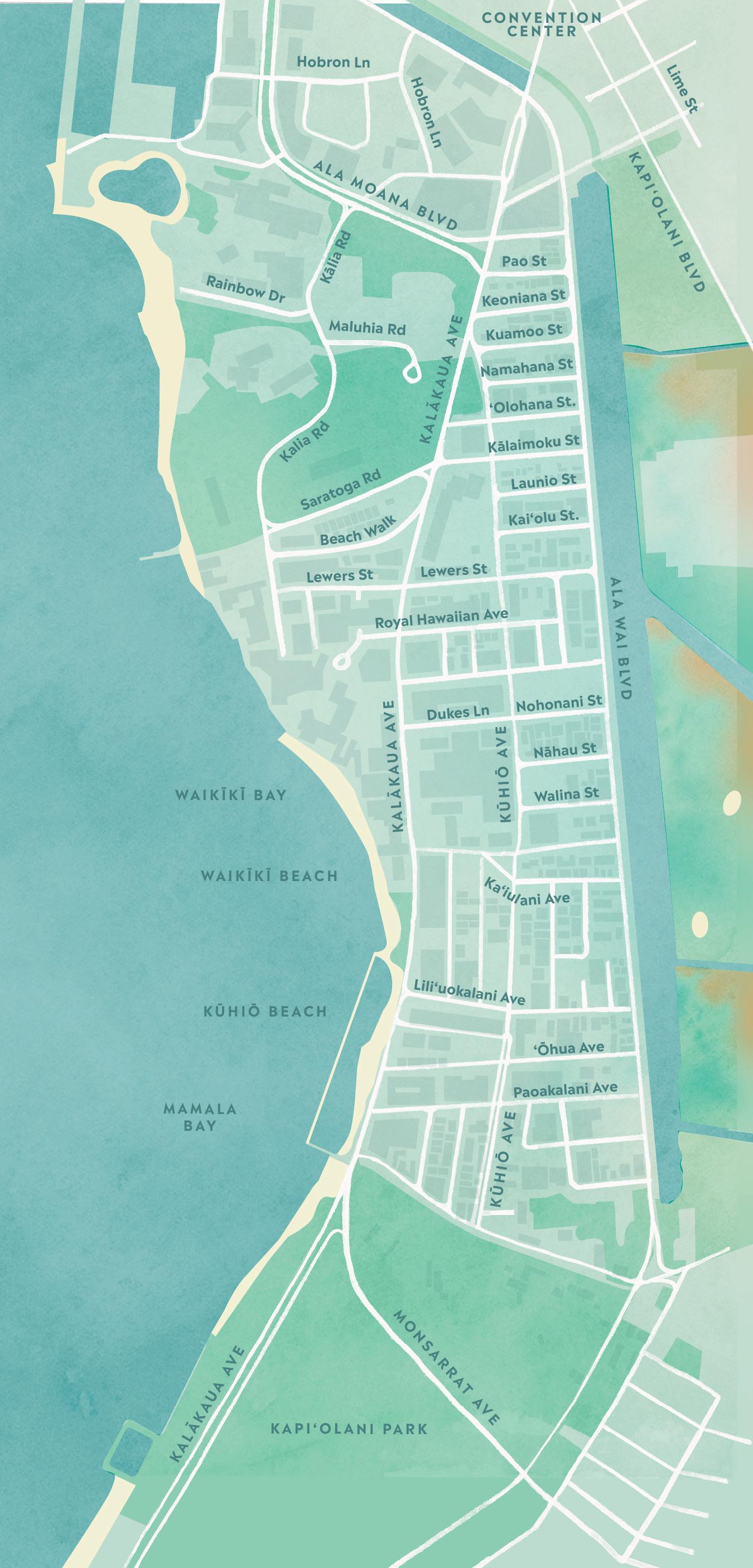
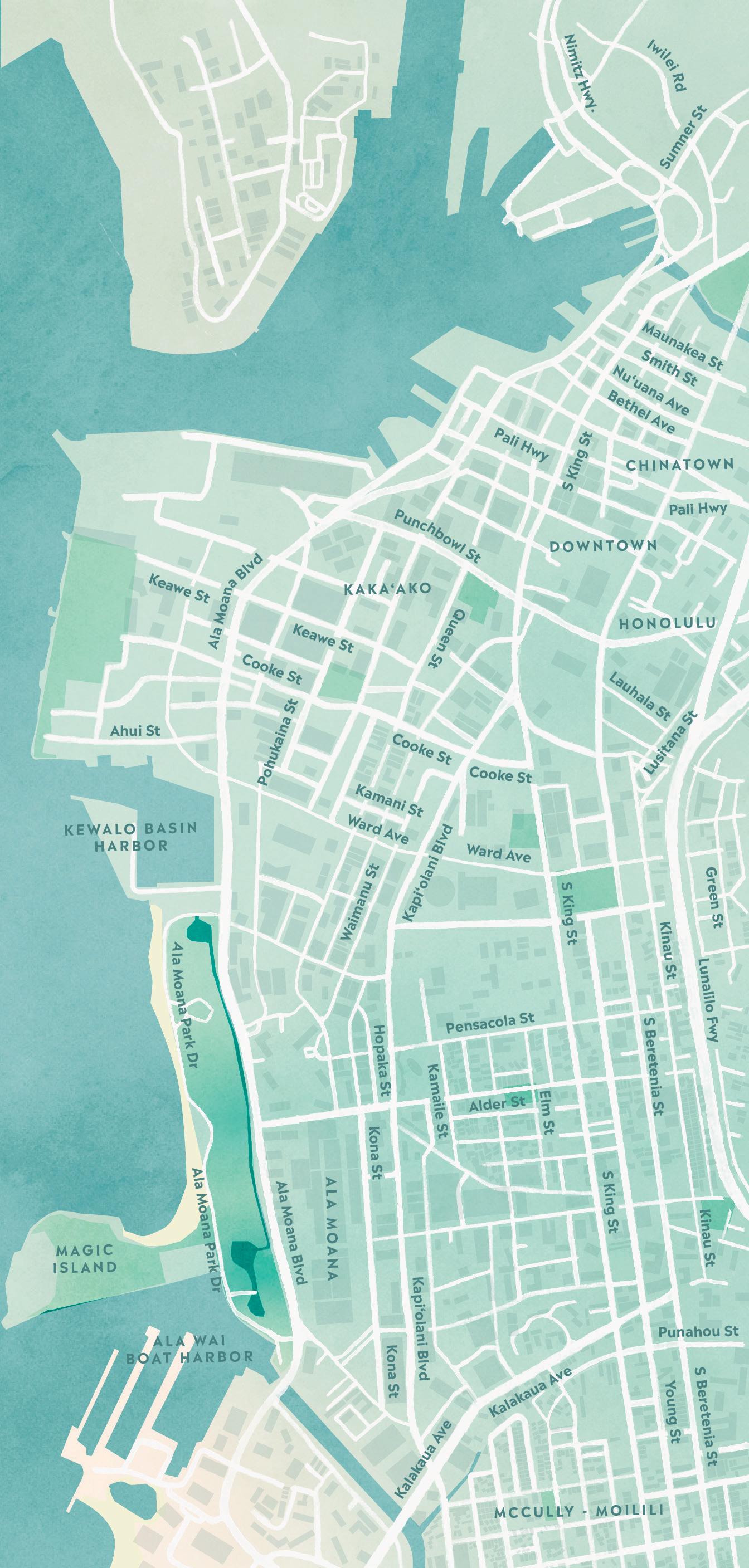
KAKA‘AKO + DOWNTOWN
Hawai‘i Convention Center
‘Iolani Palace
Ala Moana Beach Park
SERA
Ruth's Chris Steak House
SingSing Thai Street Food
Moku Kitchen
100 Sails Restaurant & Bar
Giovanni's Shrimp Truck
Ala Moana Center
Ben Bridge Timeworks
Big Island Candies
Louis Vuitton
Maui Divers
KoaWood Ranch
Maui Divers Jewelry Design Center
SALT at Our Kaka‘ako
Ward Village
Noa Noa
Aloha Tower Marketplace
Indich Collection (Nā Lama Kukui)
Indich Collection (Ward)
Kaka‘ako Farmers Market
Whole Foods Market
Prince Waikīkī
Renaissance Honolulu Hotel & Spa
Paradise Cove
Ko Olina Golf Course
Mānolo Lounge
Mina's Fish House Noe
Roy's® Ko Olina
Longhi’s
Ko Olina Center & Station
Honolua Surf Co.
Mahina
Pineapples Boutique
Four Seasons Resort O‘ahu at Ko Olina
Aulani, A Disney Resort
Beach Villas at Ko Olina
Marriott‘s Ko Olina Beach Club
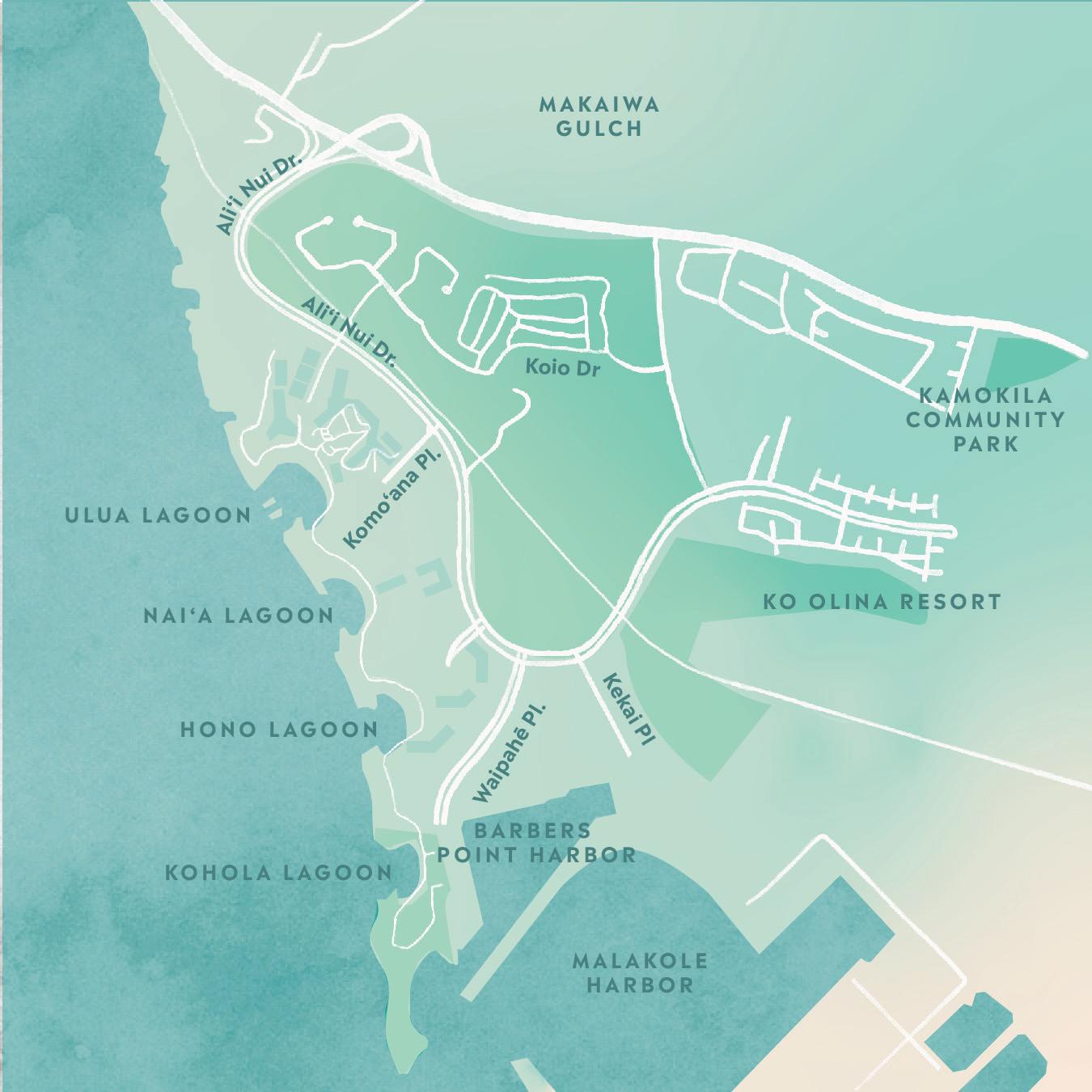
Hale‘iwa Beach Park
Giovanni's Shrimp Truck
Hale‘iwa Bowls
Hale‘iwa Seafood & Grill
Jar'd Co.
Jax Wood Fired Pizza
Island Vintage Coffee
Matsumoto Shave Ice
Maui Divers Jewelry
SoHa Living
Surf N Sea
Hawaiian Island Creations
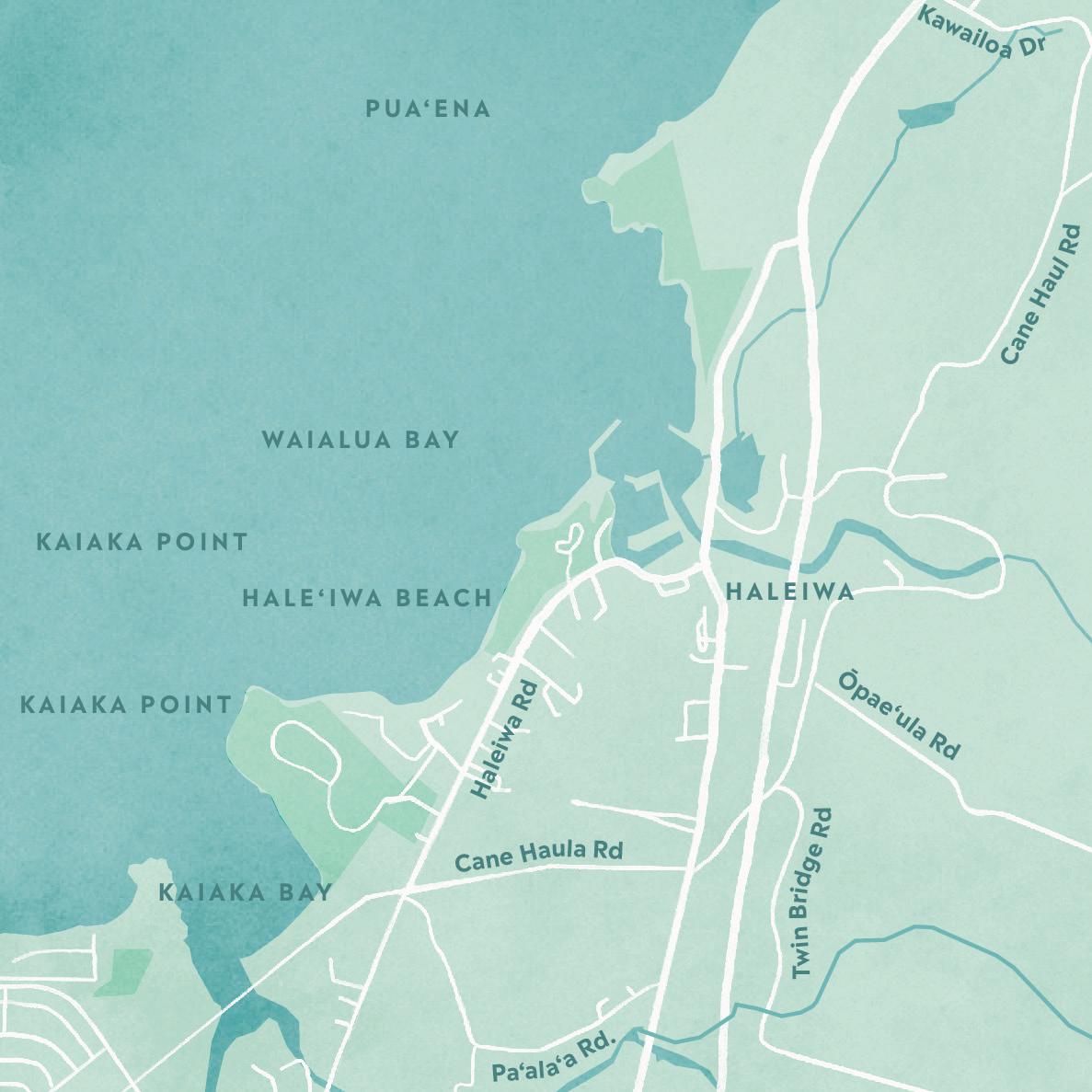
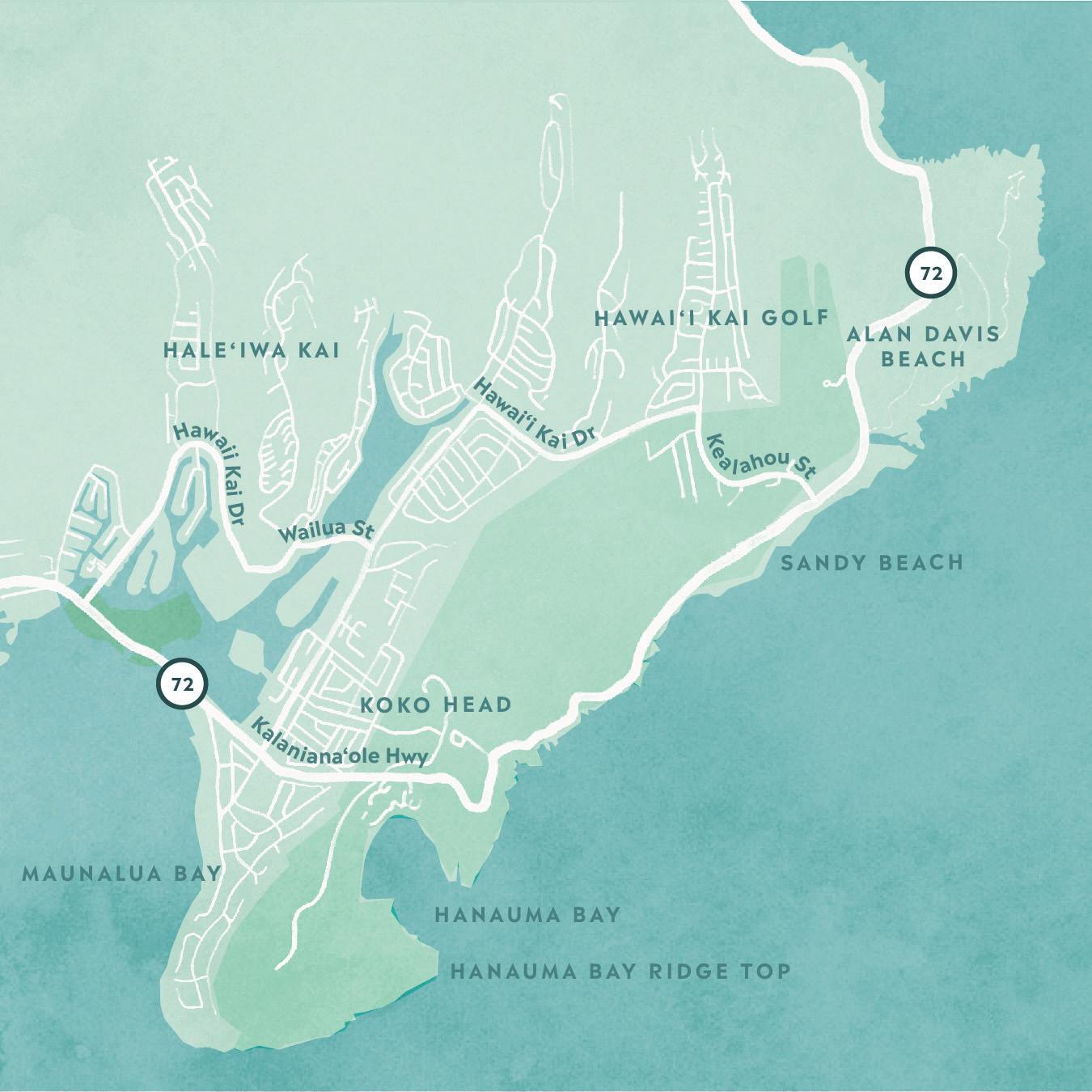
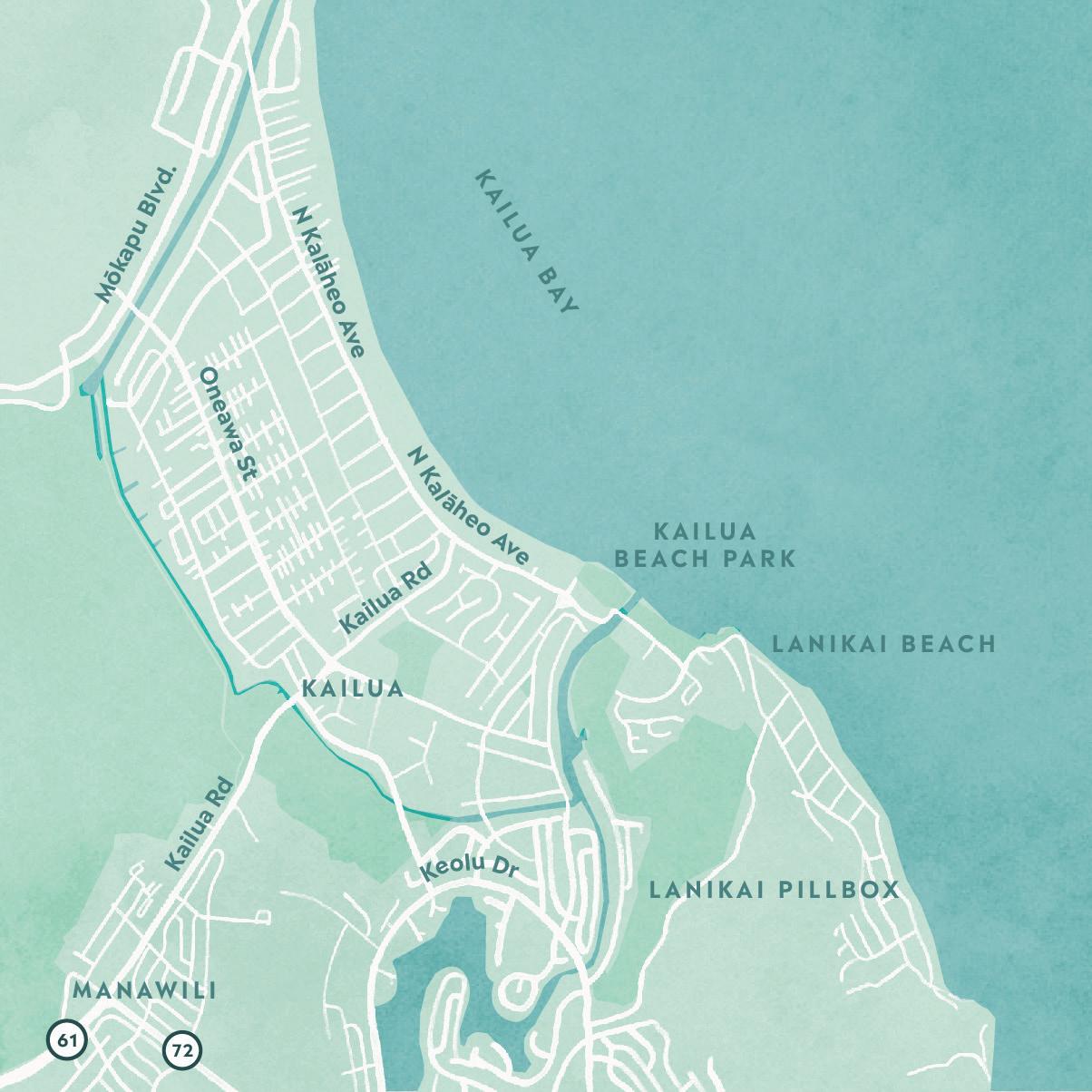
HAWAI‘I KAI
Sea Life Park
Makapu‘u Point Lighthouse
Hanauma Bay
Sandy Beach
Wawamalu Beach Park
Makapu‘u Beach Park
HanaPa‘a Market
Kona Brewing Co.
Roy's® Hawaii Kai
Koko Marina Center
KAILUA
The Bike Shop
Kailua Beach
Lanikai Beach
GOEN Dining+Bar by Roy Yamaguchi
Easy 'Cue
Kailua Farmers Market
Manoa Chocolate Hawaii
BookEnds
Oliver Men's Shop
Nick Kuchar Art & Design Co.
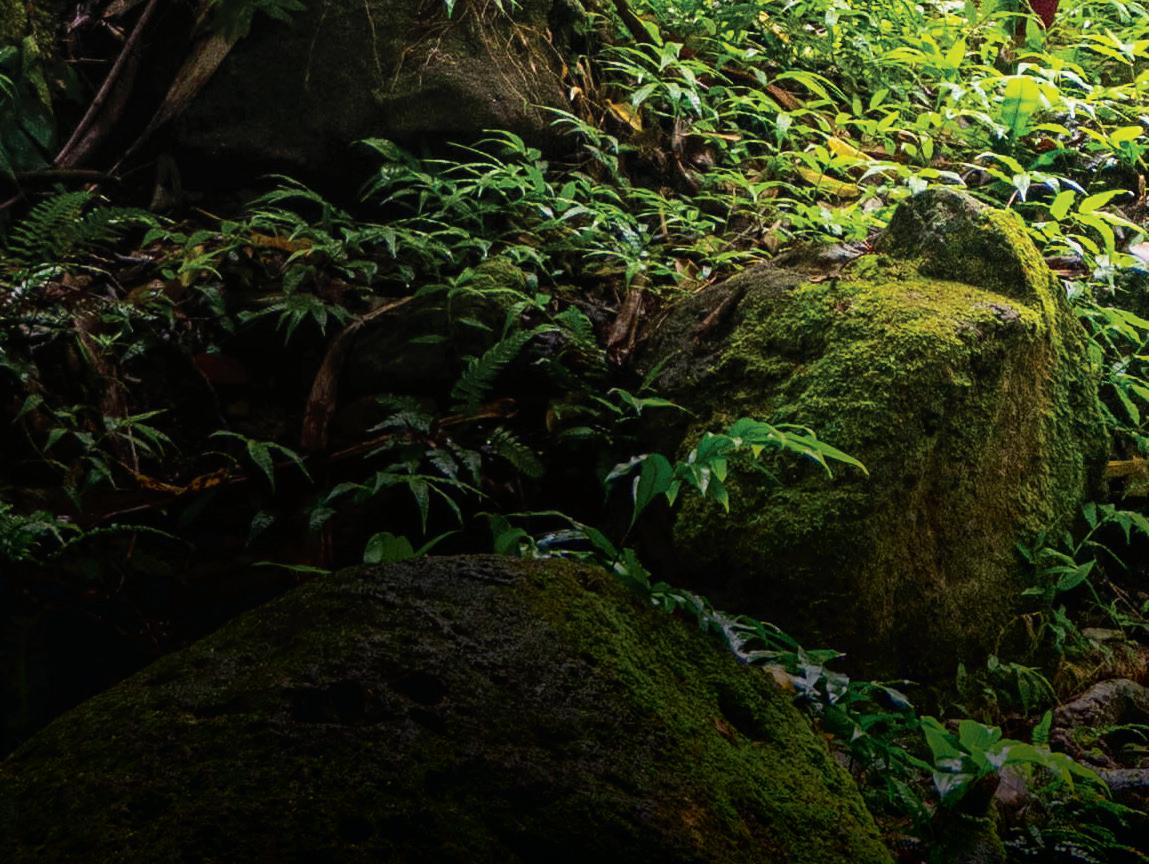
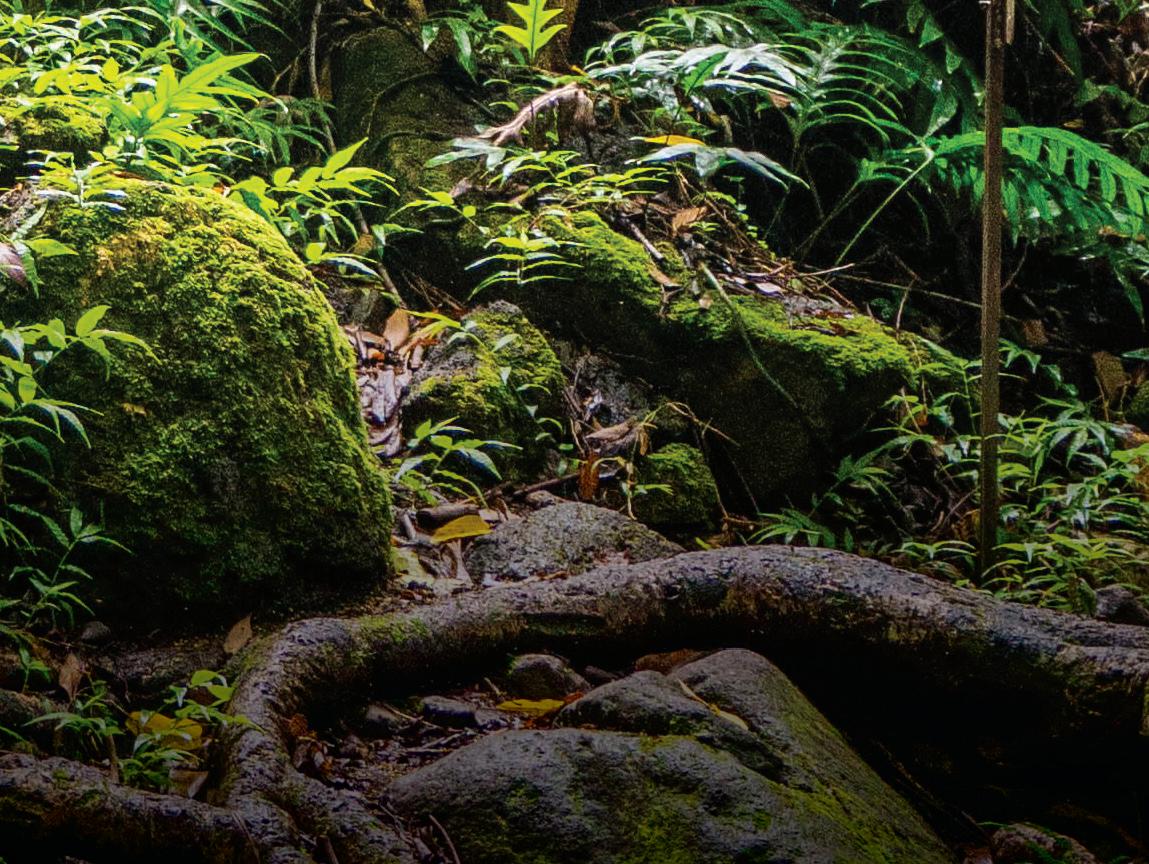
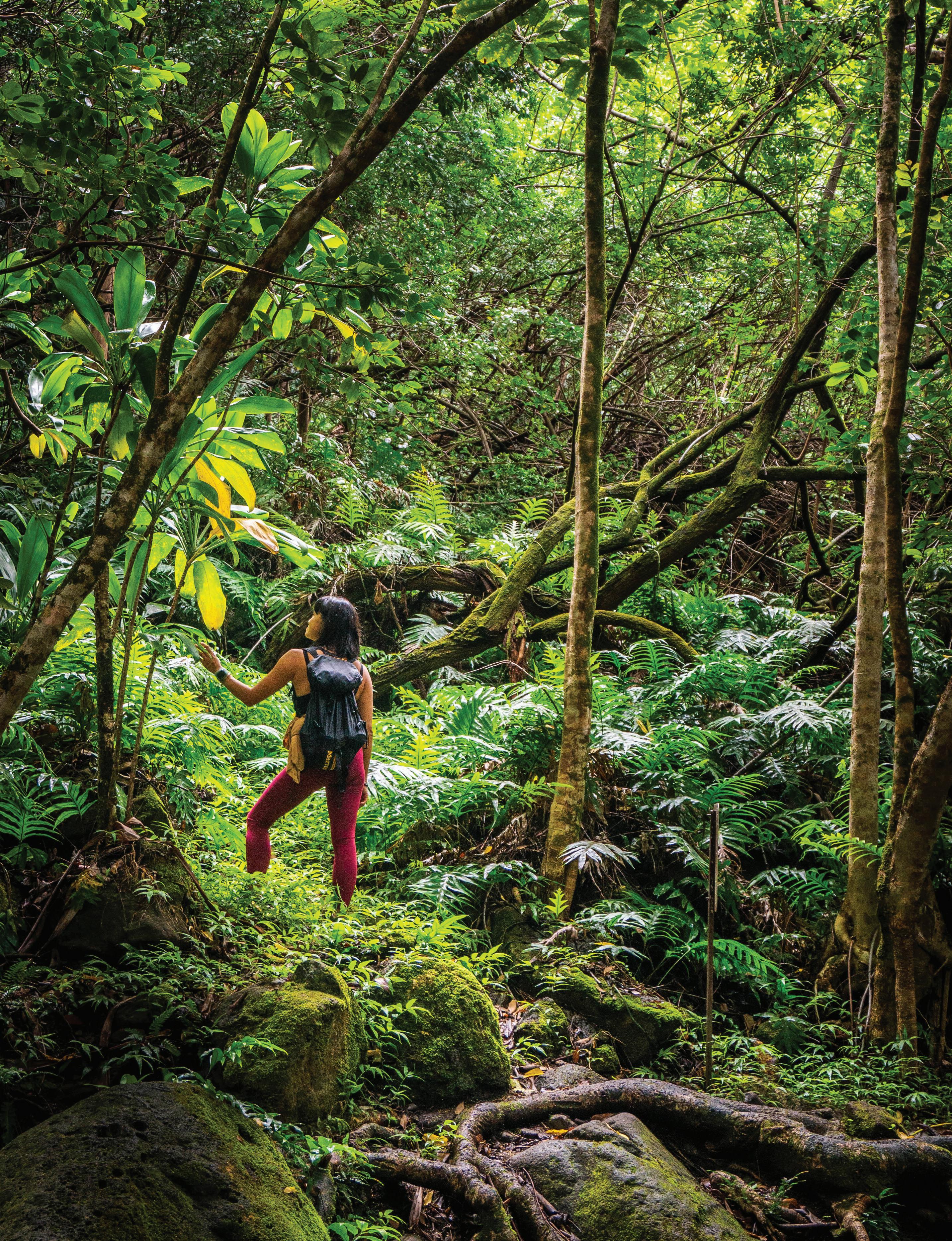
Image by Chris Beringer
TRAVELOGUE
NOTES + SKETCHES document your travel adventures, the places you visit, experiences you encounter, or something weird you saw at the pool.
ITINERARY PLANNER prefer to keep it analog? You can still get the most out of your trip and start planning your itinerary here, just grab a pen and do it old school.
DOWNLOAD THE SAVVY360 APP
This link will take you to the appropriate app store to install the app, where you can create a trip, start building your itinerary, collaborate with friends, and more...
O‘ahu MY SKETCHES
SKETCHES
DATE / /
What do you want to do today?
TRIP
BREAKFAST
MORNING
LUNCH
AFTERNOON
DINNER
EVENING
DATE / /
DATE / /
BREAKFAST
MORNING
LUNCH
AFTERNOON
DINNER
EVENING
DATE / /
DATE / /
What do you want to do today?
TRIP
BREAKFAST
MORNING
LUNCH
AFTERNOON
DINNER
EVENING
DATE / /
DATE / /
BREAKFAST
MORNING
LUNCH
AFTERNOON
DINNER
EVENING
DATE / /

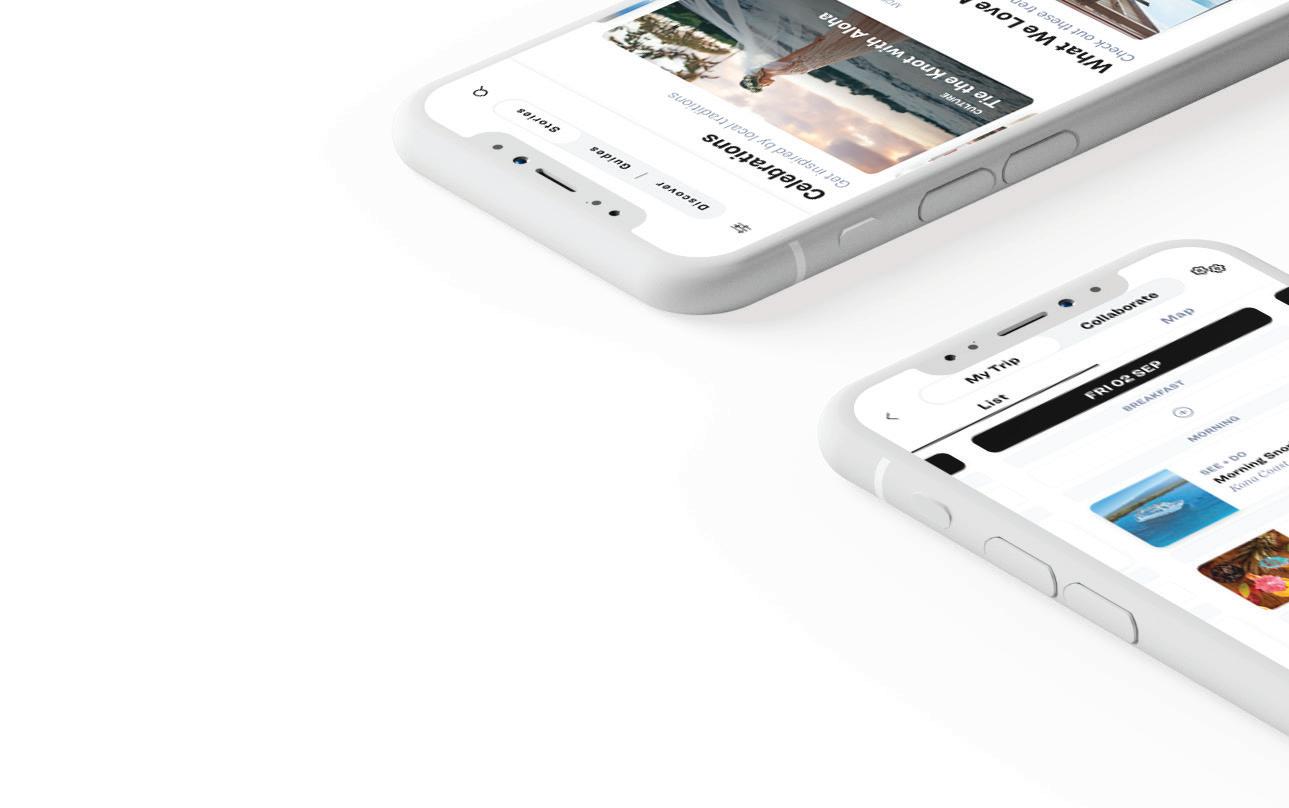
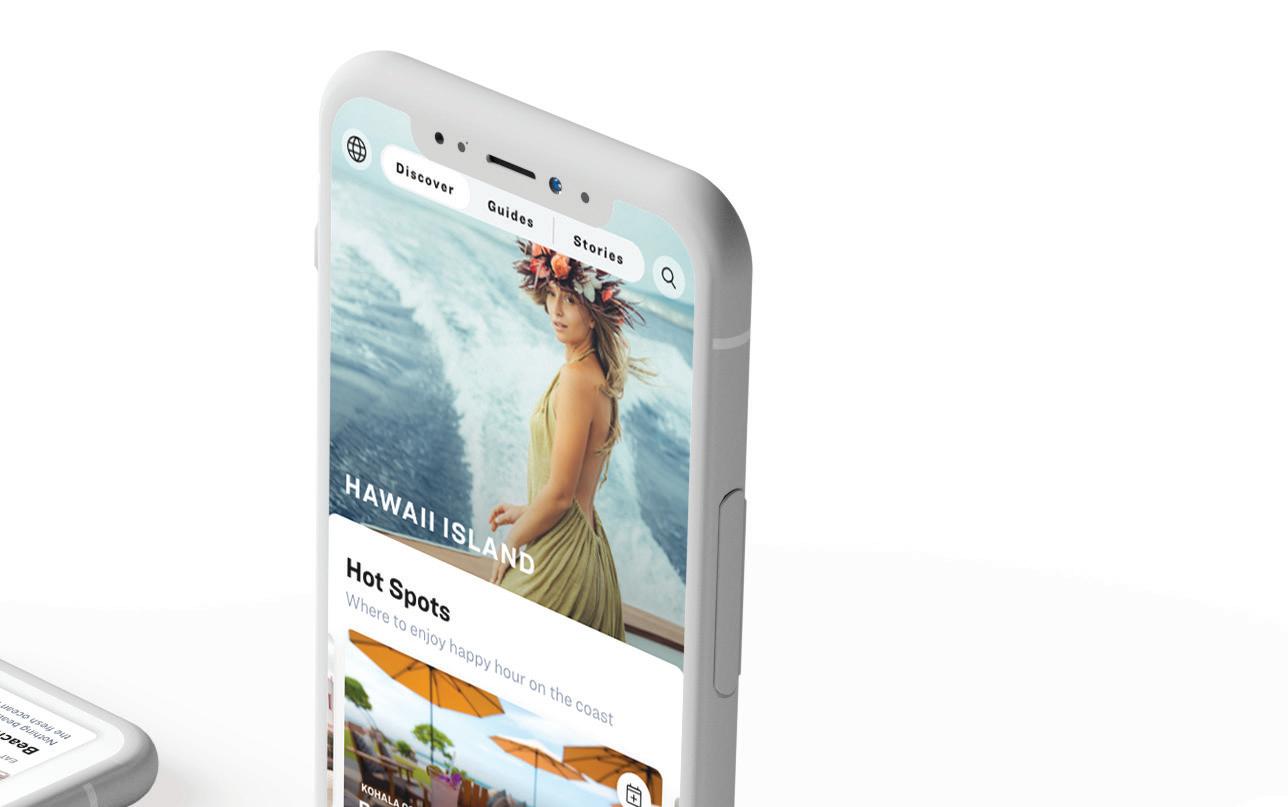


ULTIMATE POWER. ULTIMATE LUXURY.
Are you one of the few who dare to go beyond? Meet the BMW XM—a vehicle that transcends ordinary notions of adrenaline and aesthetics.
You’ve never held such force in your hands. The BMW 4.4 liter TwinPower Turbo engine is paired with a high-performance electric motor to put out a staggering 644 horsepower and 590 lb-ft of torque.
Be extravagant and expressive. Set your legacy in motion by being one of the first to transcend all others.
Build your own BMW XM and discover the edge of your world or contact a Client Advisor at bmwhawaii.com to learn more about the BMW XM.
BMW. The Ultimate Driving Machine.®
BMW of Honolulu 777 Kapiolani Blvd Honolulu, Hawaii 96813
(808) 376-4815 @bmwofhonolulu