142nd Field Artillery Brigade

The 142nd FAB provides precision field artillery support for Corps, Divisions, Brigade Combat Teams and support Brigades while simultaneously remaining postured to conduct missions in support of state emergencies.
77th Theater Aviation Brigade
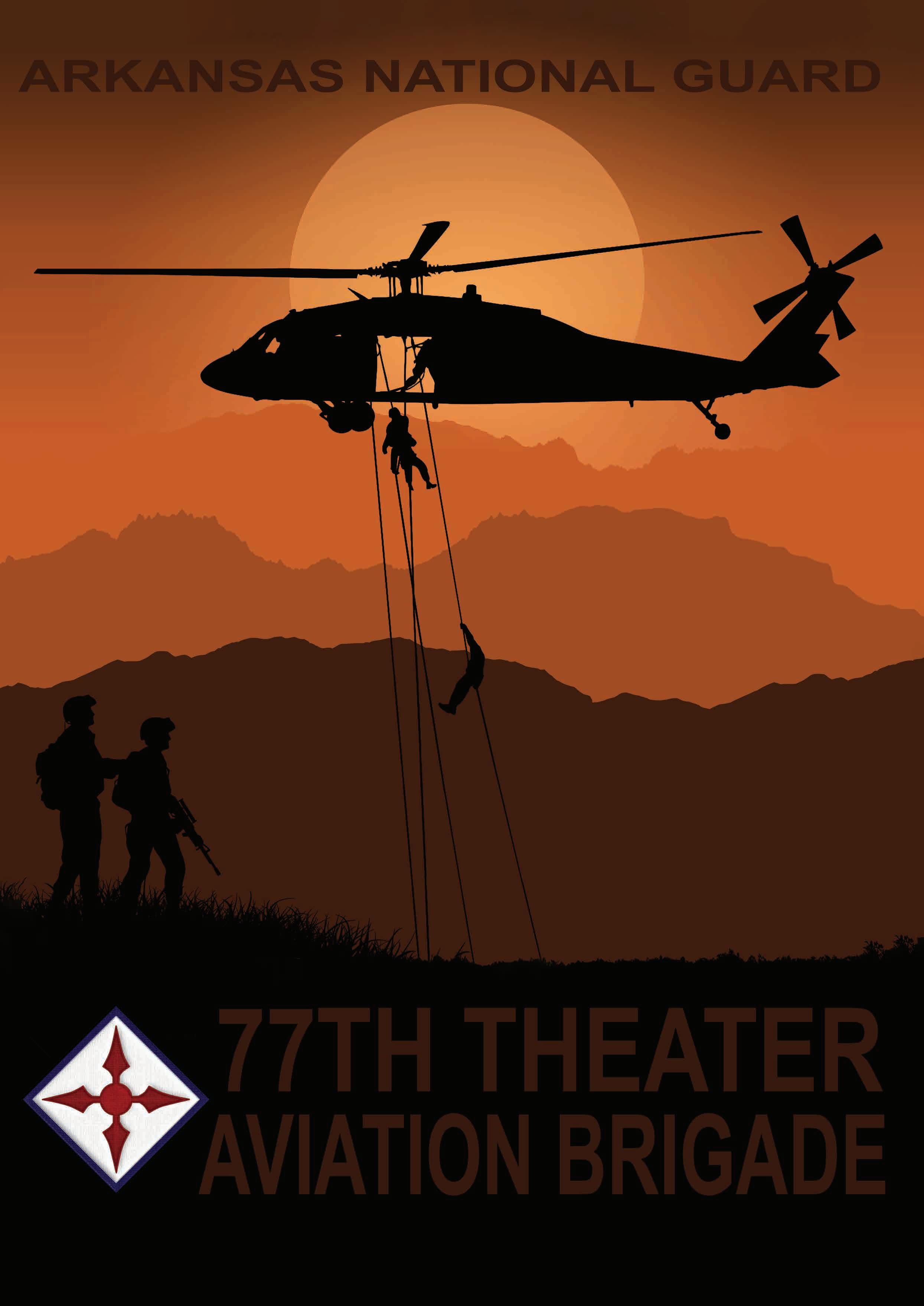
The 77th TAB provides aviation capabilities in support of state and federal missions. This is accomplished with three different aircraft, the UH-60 Black Hawk (used for troop movement and medical evacuation capabilities), UH-72 Lakota helicopters (used for medical evacuation and security and surveillance missions) and the C-26 Metroliner (an operational support aircraft).
87th Troop Command
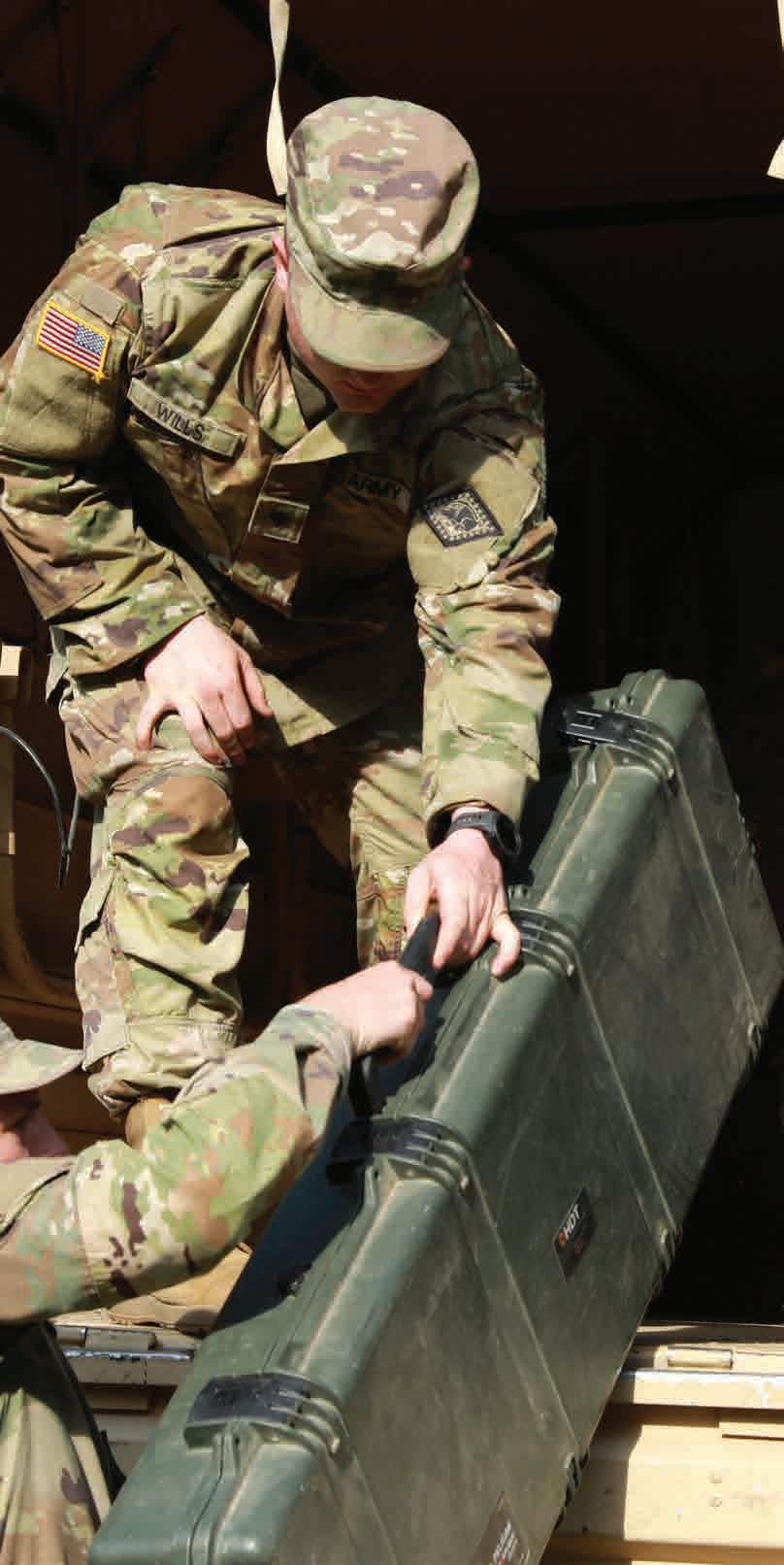
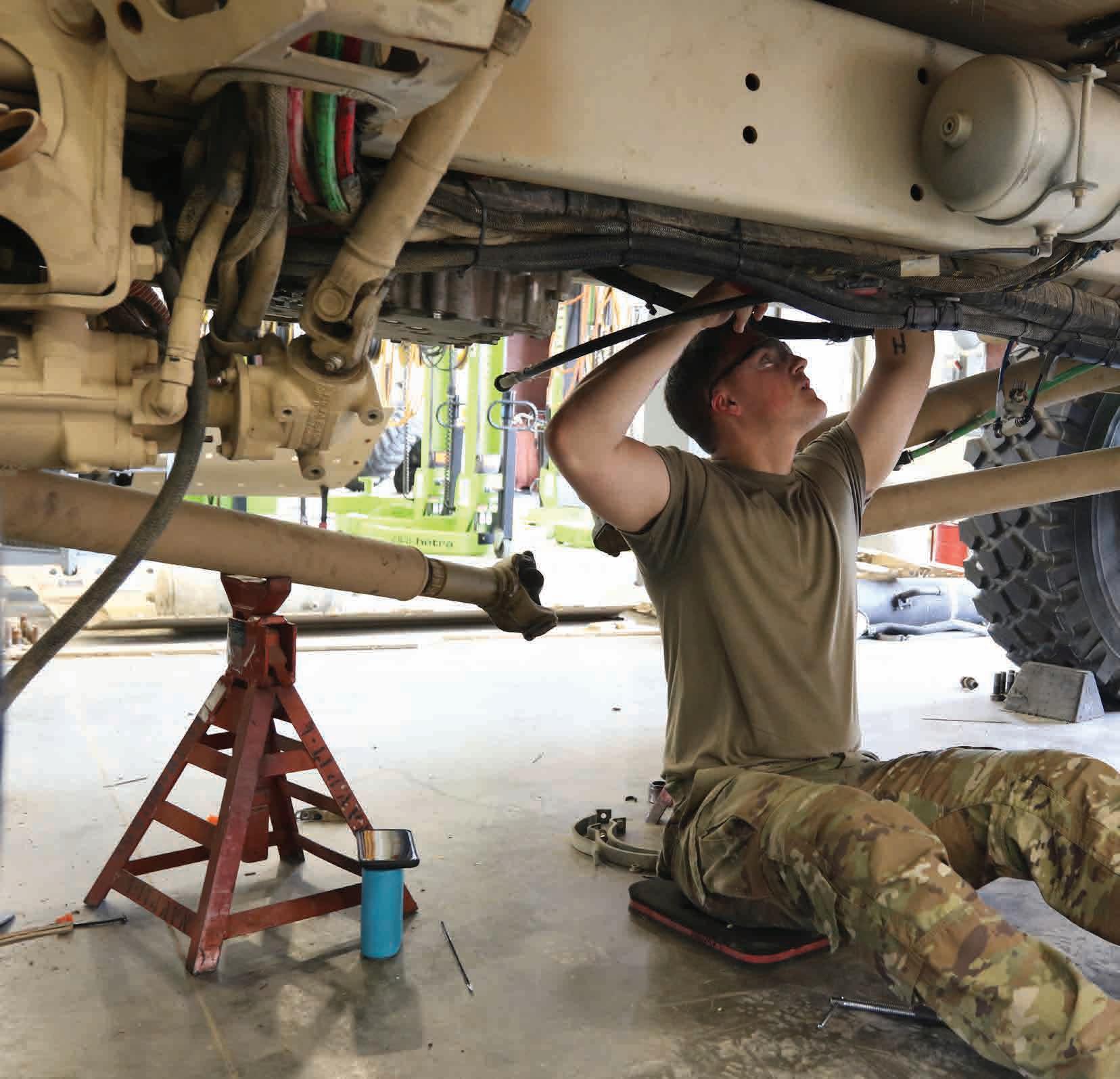
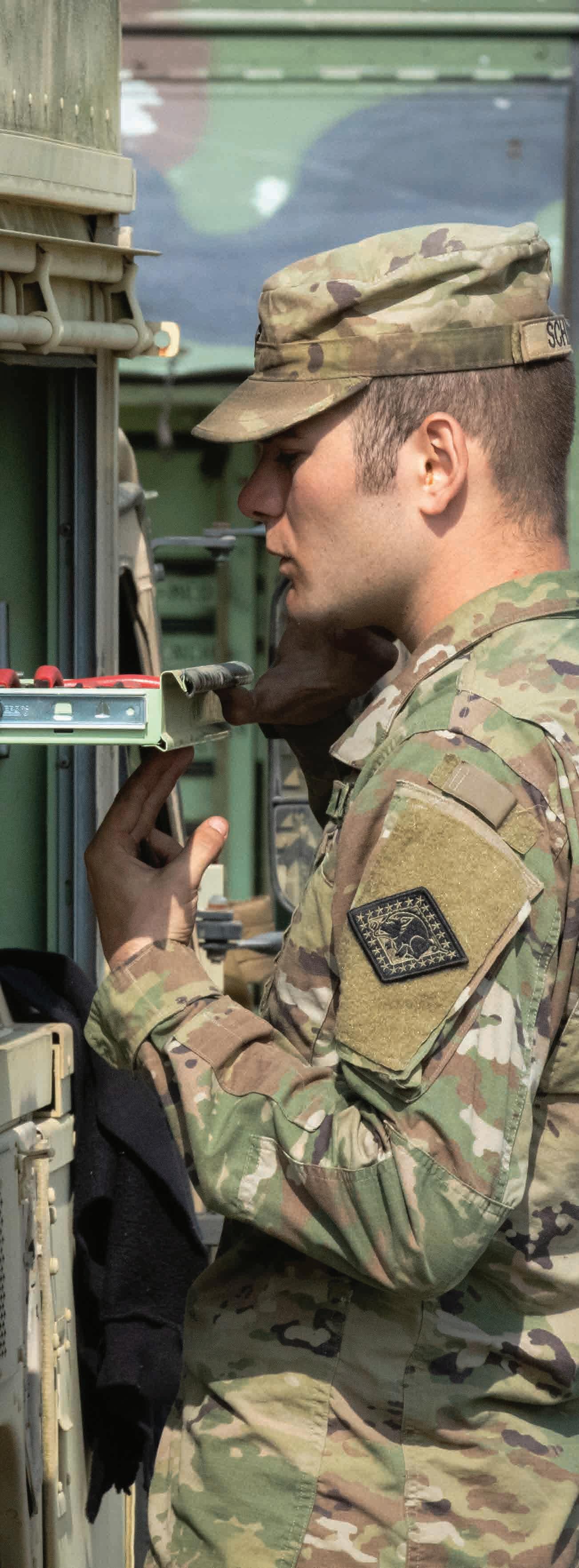
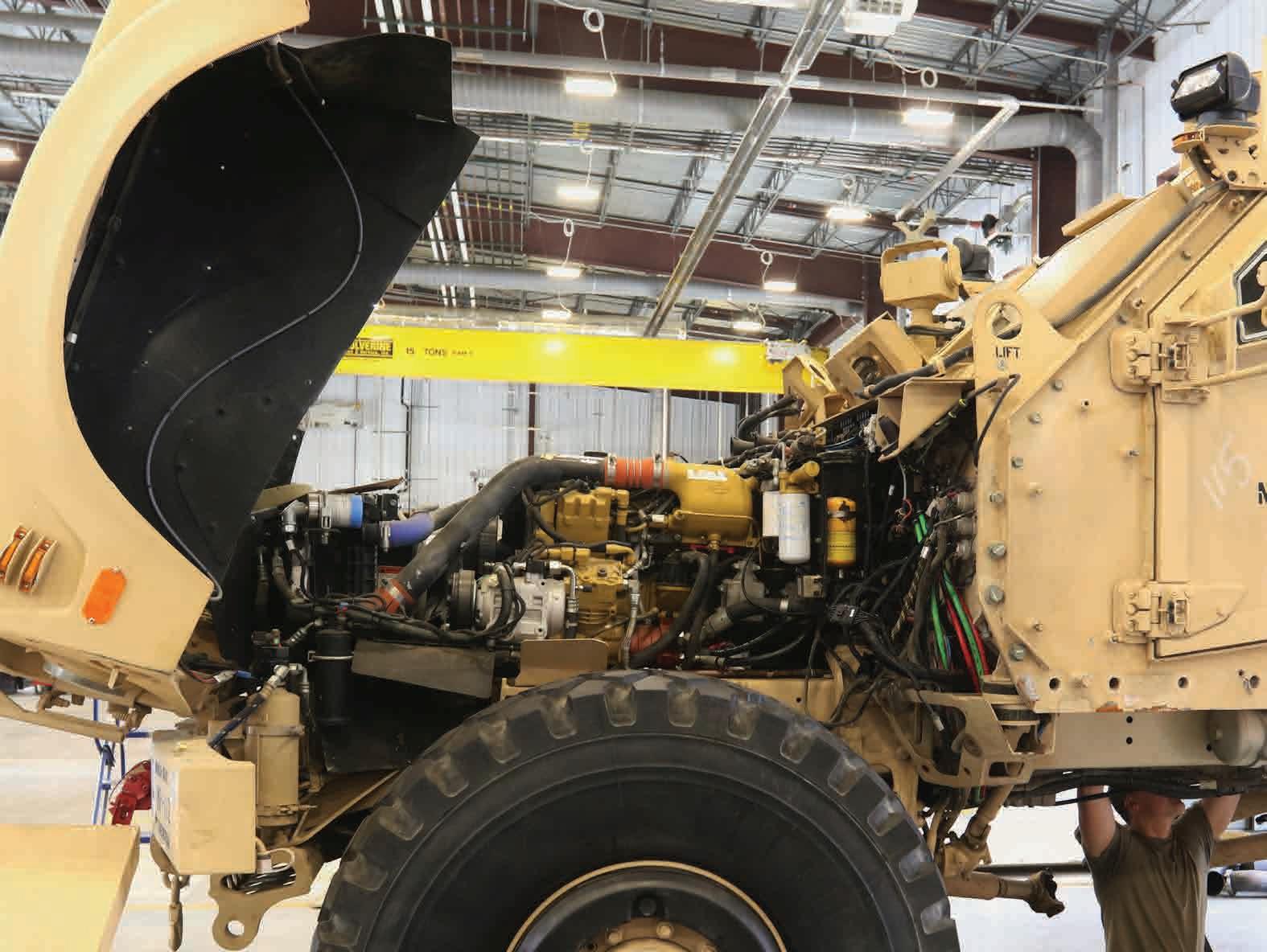
The 87th TC serves as the Brigade Headquarters for Corps and Division level specialty units within the Arkansas National Guard. Specialty units in the 87th include the 106th Army Band, 61st Civil Support Team (CST), 119th Mobile Public Affairs Detachment (MPAD), 216th Military Police Company (MP); 224th Maintenance Company, 875th Engineer Battalion and the Recruiting and Retention Battalion.
39th Infantry Brigade Combat Team
The 39th IBCT is primarily an infantry brigade organized to provide wartime missions in maneuver, field artillery, reconnaissance, intelligence, engineering and medical operations as well as maintenance, signal support and transportation activities.
1
Who Tells the Soldier’s Story?
By Maj. Clara Moser, 119th MPAD Commander
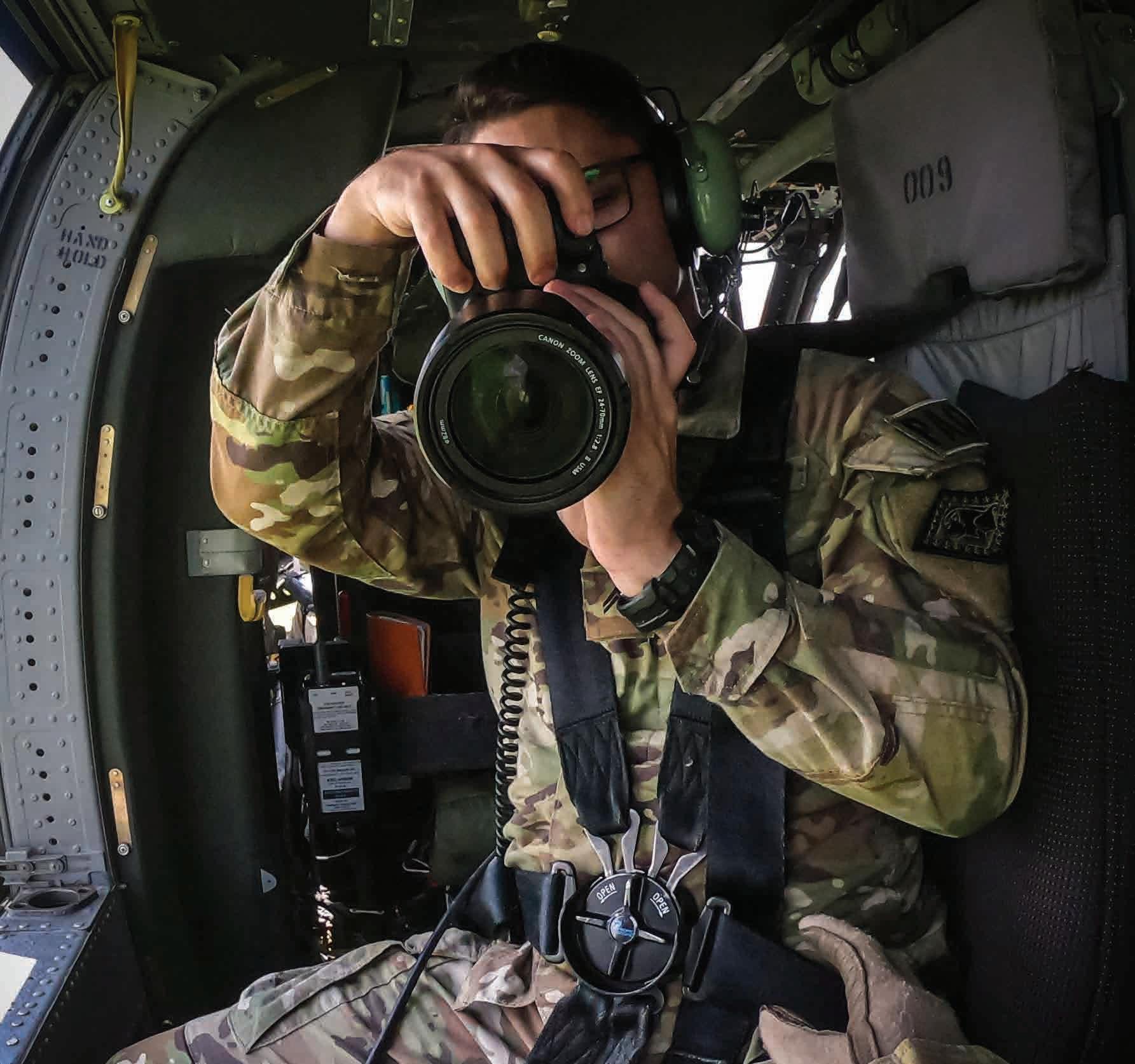
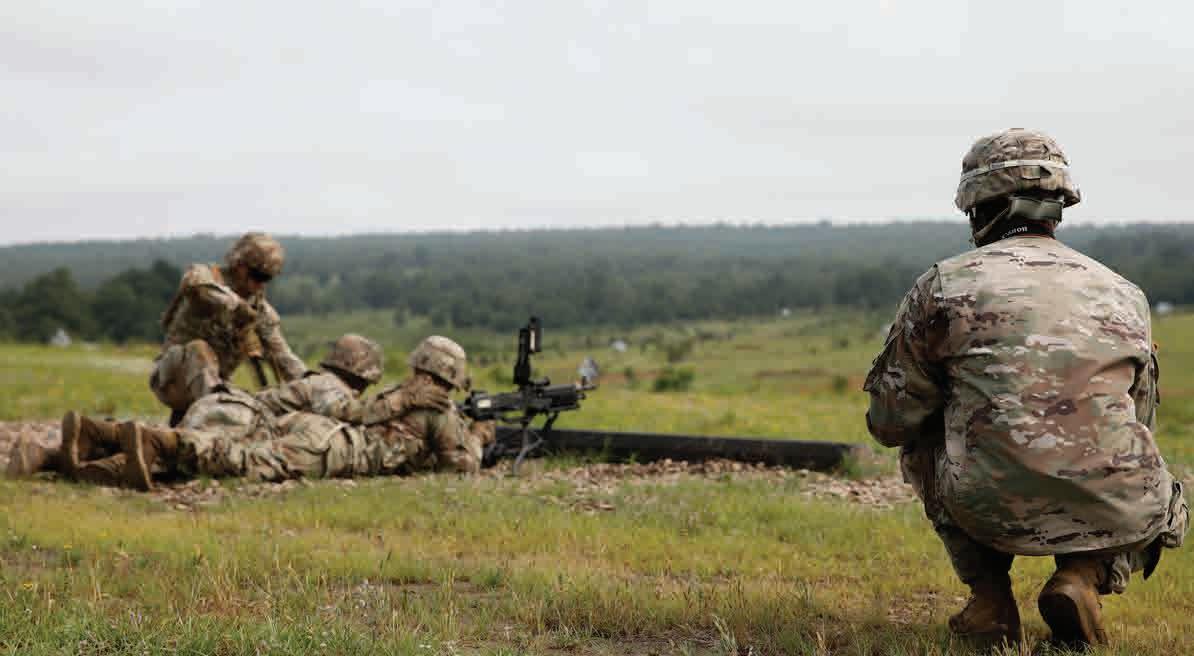
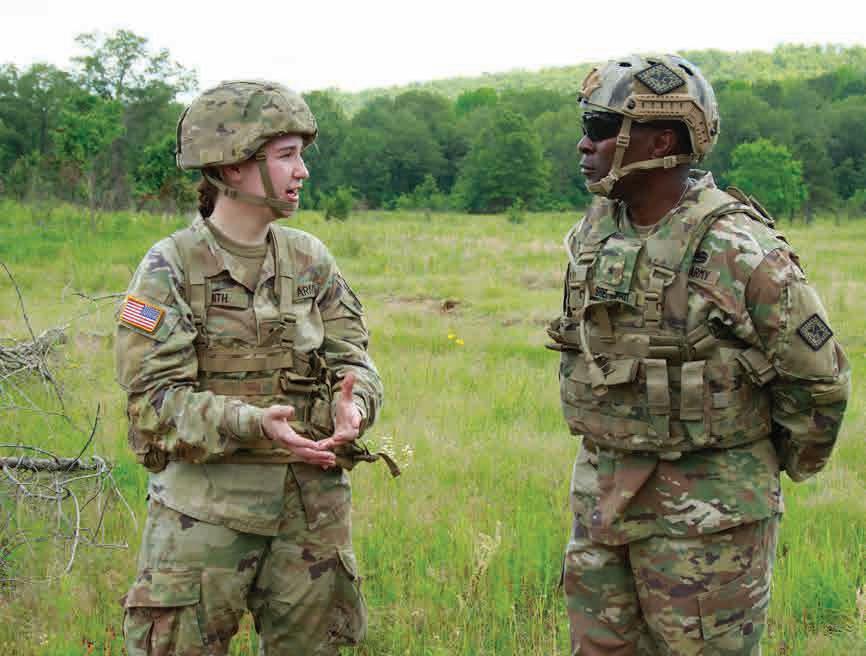
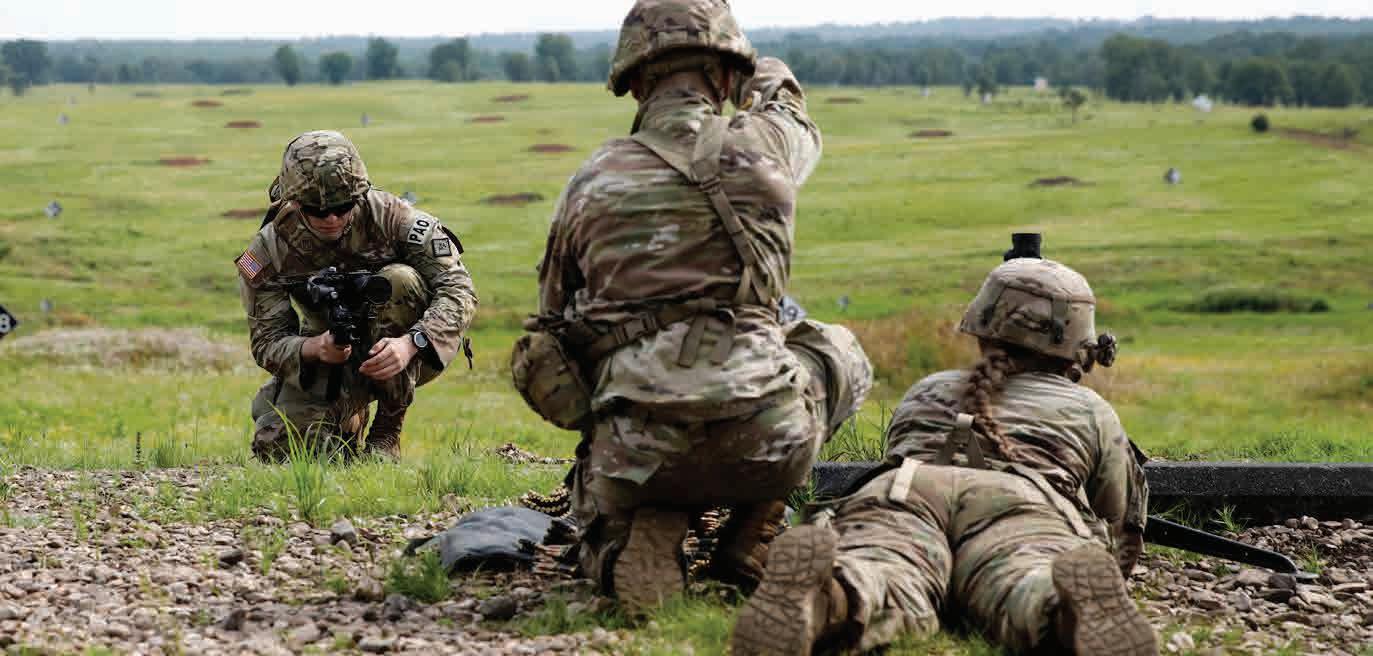
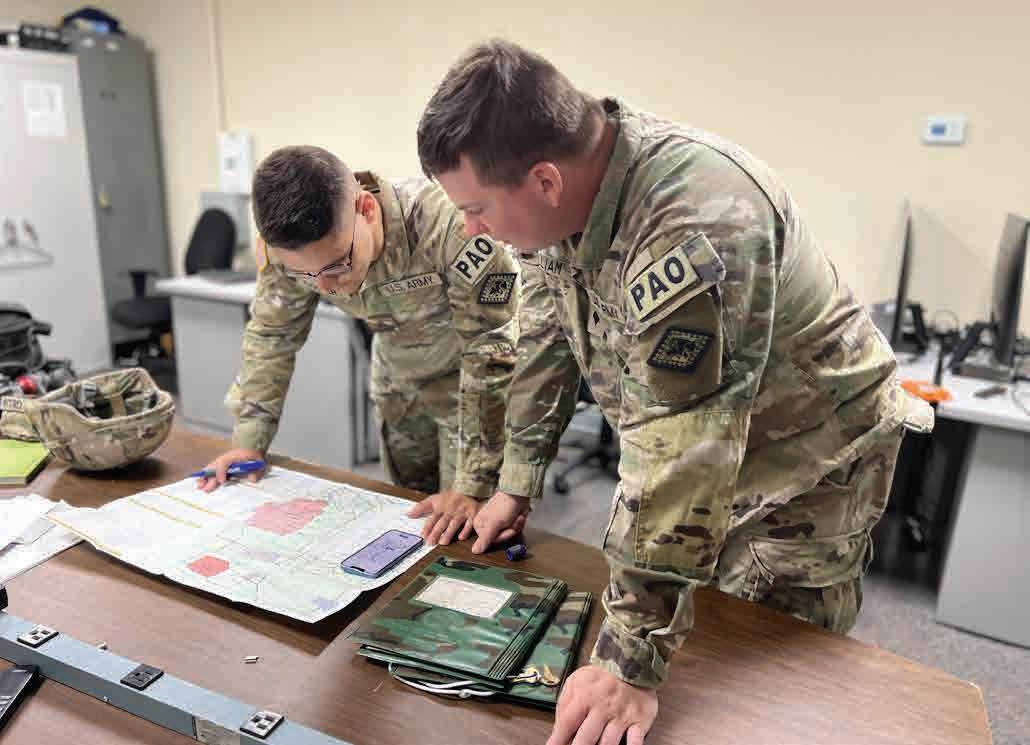
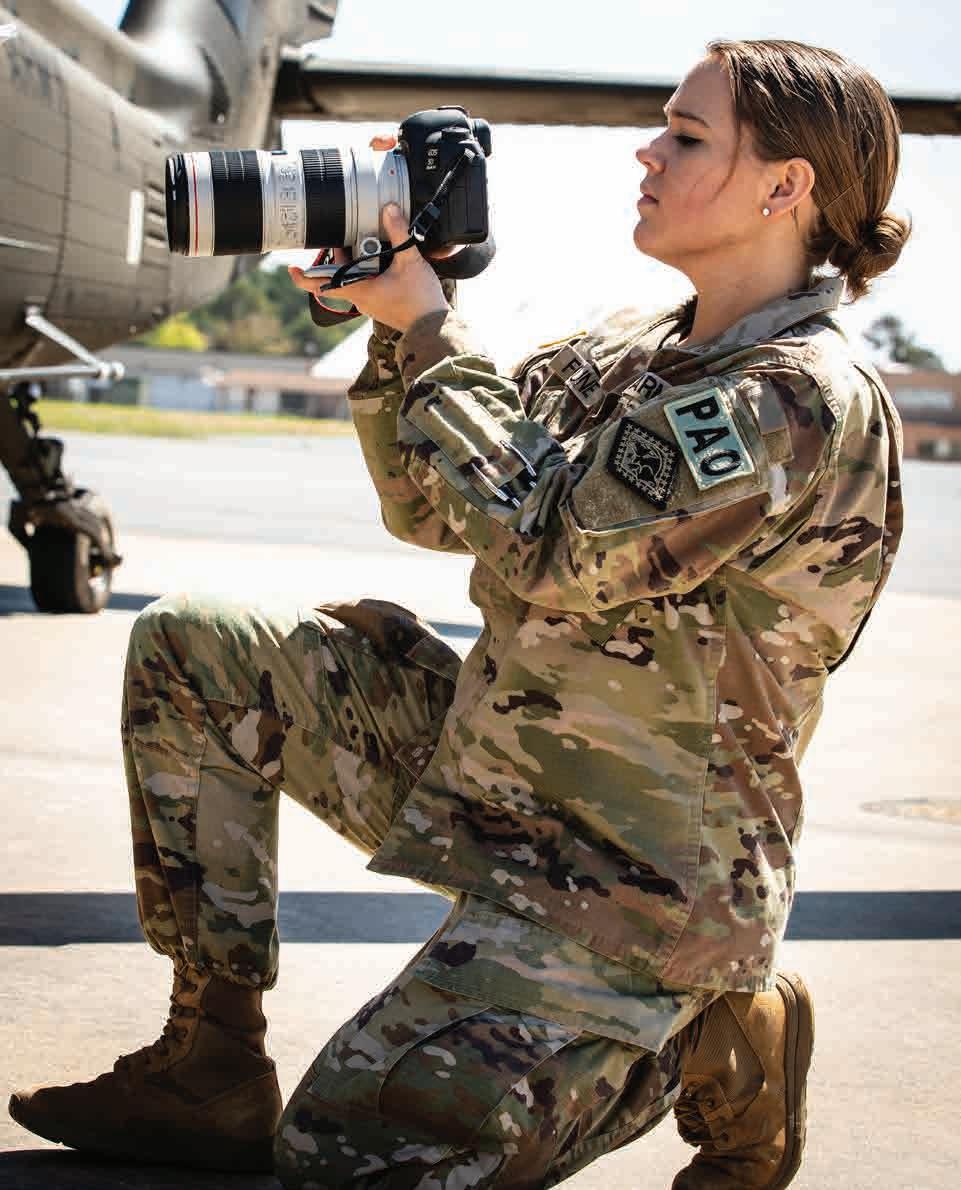
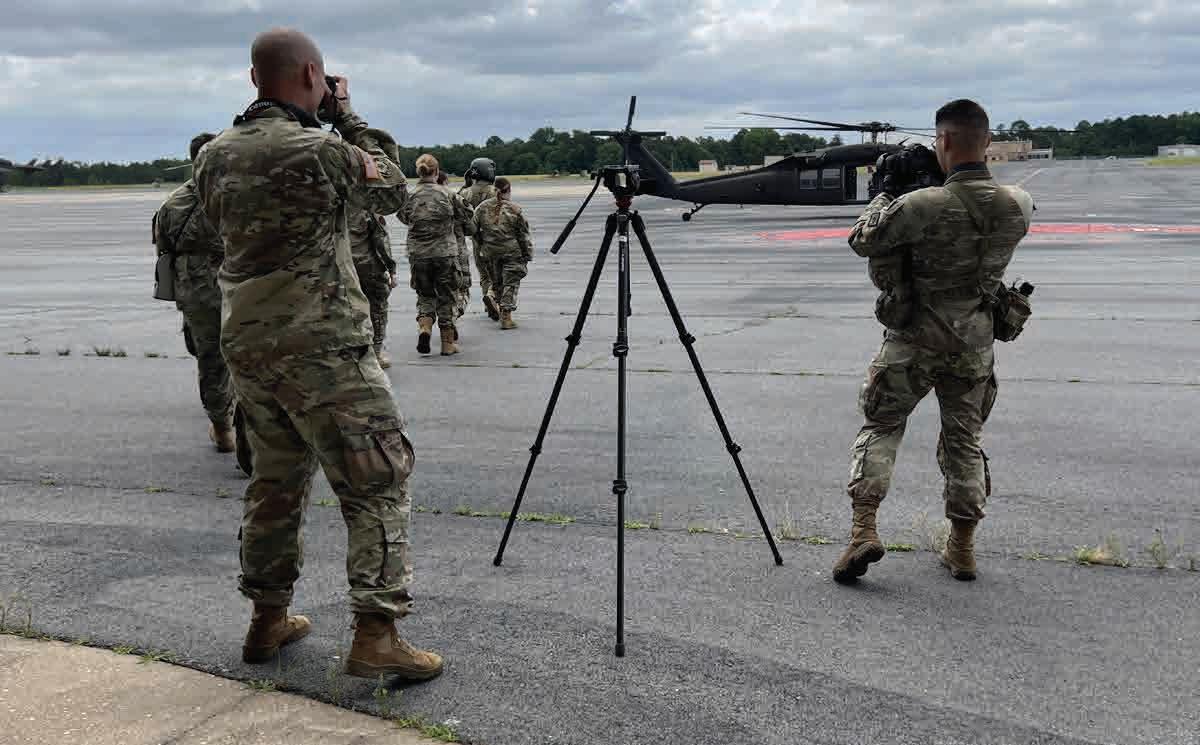
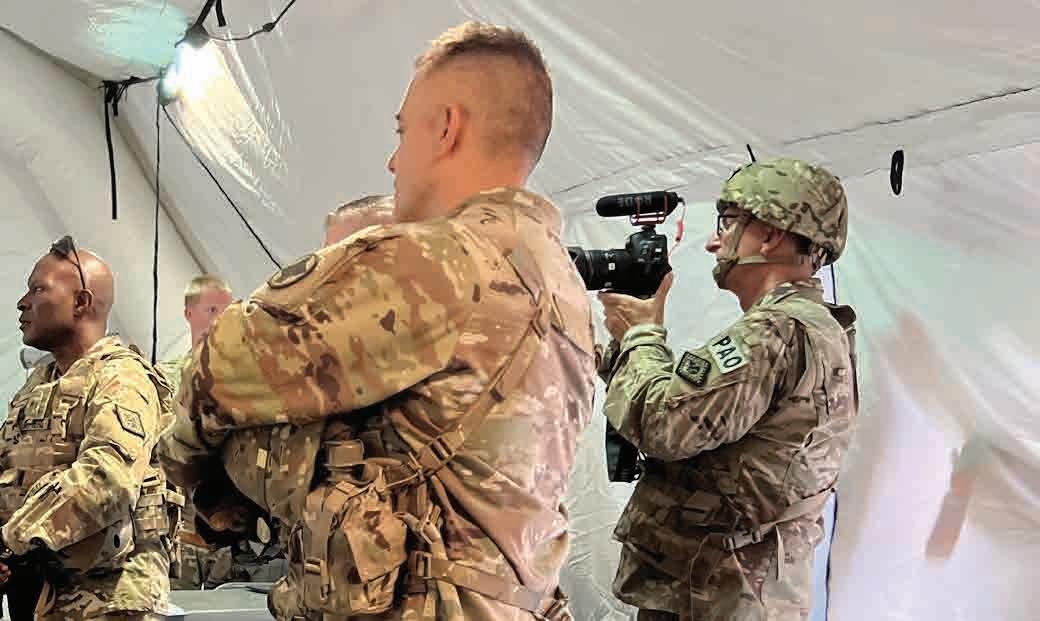
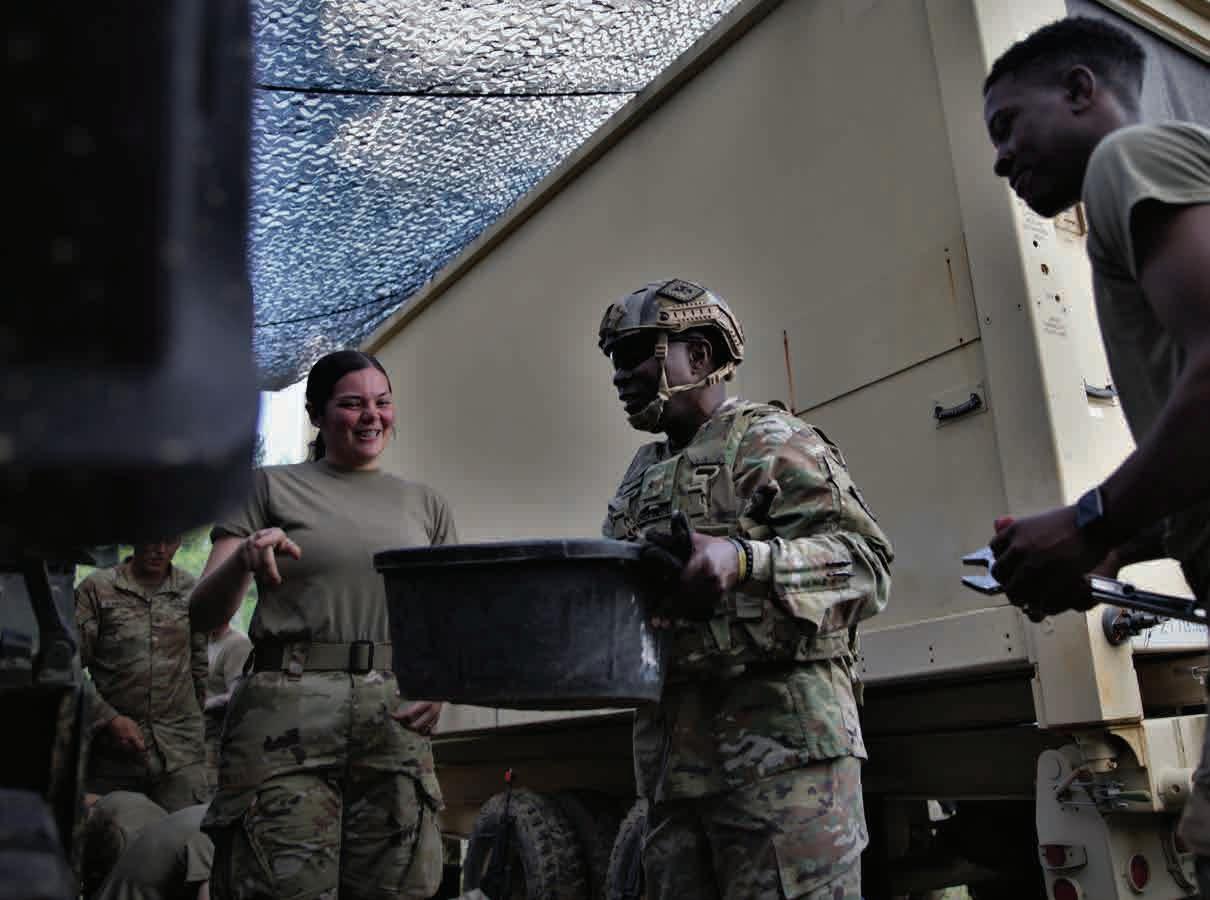
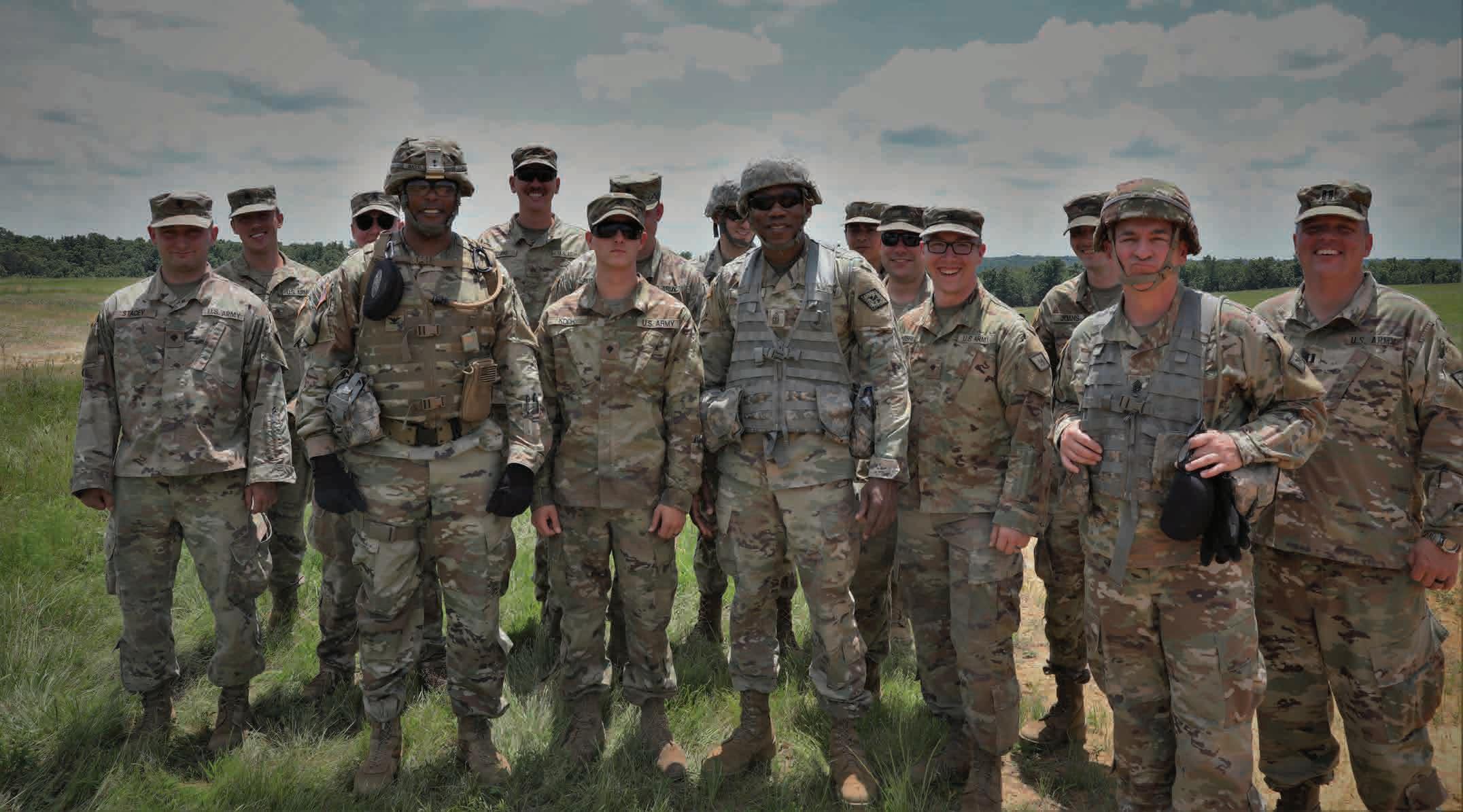
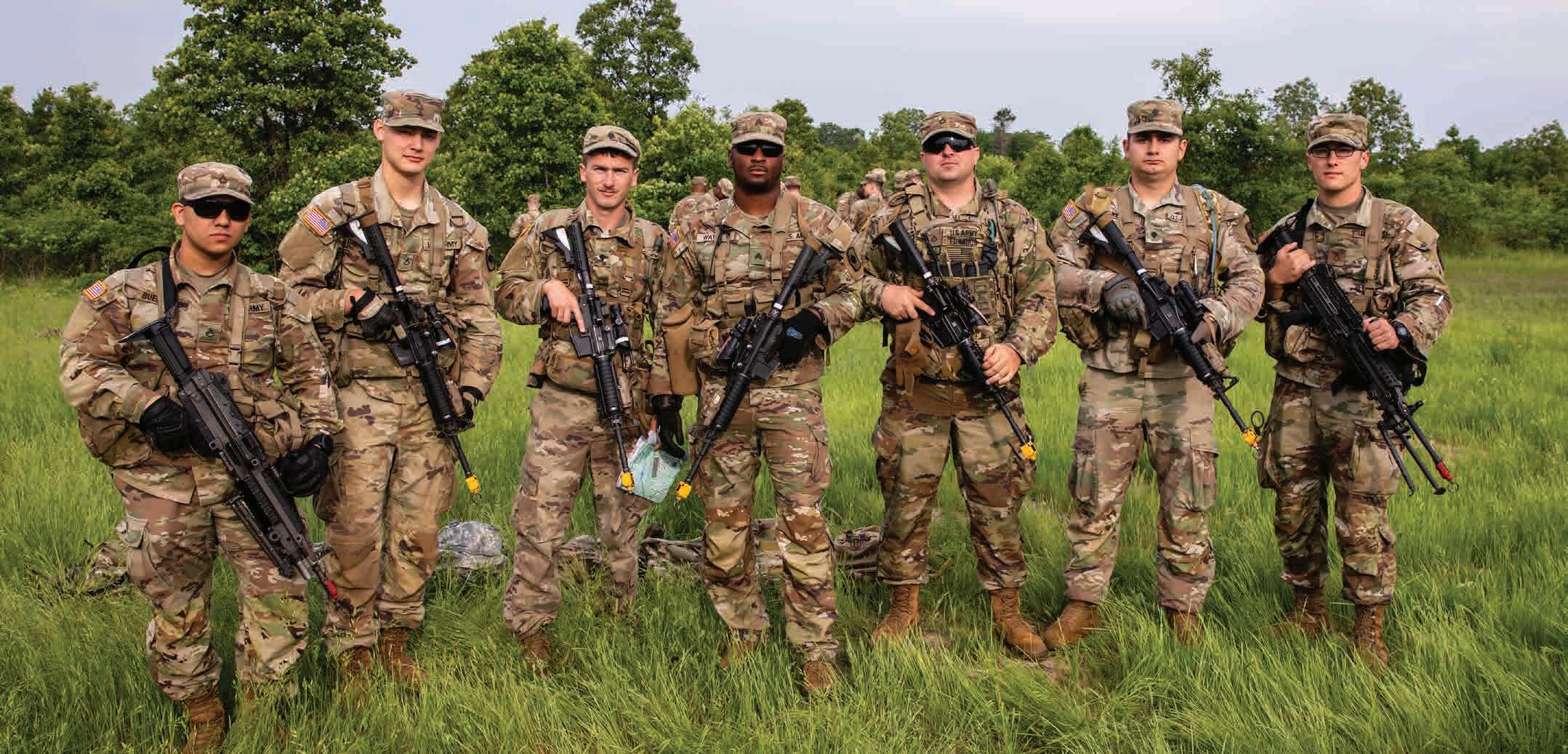
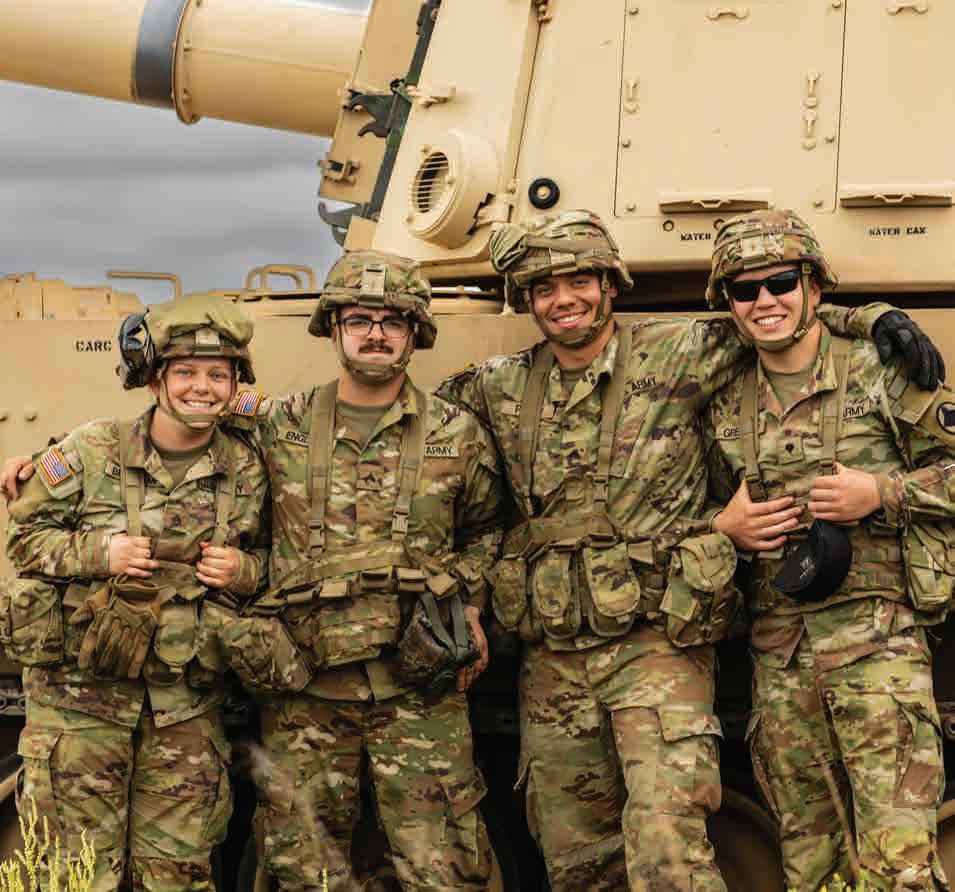
The role of a public affairs communication specialist is vast. They work with commanders to advise on public affairs strategy, engage with media, release information and products, conduct interviews, prepare those at all levels for media engagement and they tell the Soldier story. Public affairs specialists have the same requirements as all other Soldiers to conduct basic Soldier skills to a high level of proficiency while also mastering the ability to capture and show case Soldiers across the Arkansas Army National Guard conducting high speed training and technical military skills. Sgt. Bryce Colvert of the 119th Mobile Public Affairs Detachment (MPAD) says, “being in the MPAD is so important to me because it provides me the opportunity to work with and tell the story of so many incredible Soldiers and collaborate to share the over arching messages and stories of the National Guard.” Sgt. Colvert is a great example of a public affairs specialist understanding and meeting the larger strategic mission of the Arkansas National Guard by sharing that we are “Always Ready, Always There”. The members of the 119th MPAD take the skills they learn in training and while executing their duties to teach others and mentor Soldiers and Leaders on the importance of telling the Soldier story. Sgt. Marie Bryant says she hopes to continue to learn and grown in both public affairs skills and leadership skills so later down the line she can train and inspire the next generation of PA Soldiers. The highlight of public affairs service to Sgt. Bryce Colvert has been “traveling to provide coverage of disaster relief to show the American people that in times of crisis, the National Guard will always be there to support the Nation.”
“It is the responsibility of the Department of Defense to make available timely and accurate information so the public, Congress and news media may assess and understand facts about national security and defense strategy.” – DOD Principles of Information
Public affairs Soldiers and the 119th MPAD have an incredible impact on the Arkansas National Guard’s relationship with the public. Sgt. Bryce Colvert understands that the relationship between the Army and the public is an integral part of immortalizing the stories of so many Soldiers who have served and sacrifice every day. He understands that what the Soldiers of the 119th MPAD do, reminds the public that there is no greater ally and no worst enemy that the United States. This understanding and focus on mission set the Soldiers of the 119th MPAD apart and makes them an incredible asset to the Arkansas National Guard and the US Army as they shape the message and tell the Soldier story. Sgt. Madeline Fortune says “being in the MPAD is important to me because I find satisfaction in knowing that I am using my creative and artistic abilities to serve my country and my community. When the MPAD puts out videos and pictures on social media, its not just telling the Soldier’s story, its also instilling confidence in the American people so they can feel secure knowing their fighting force is capable of defending them and the people they love.” Public affairs specialists work day in and day out to shape and frame the message to the world while using embed messaging that instills confidence and security in the American people but warns our adversaries that the Arkansas Army National Guard is a lethal force ready to protect freedom and democracy.
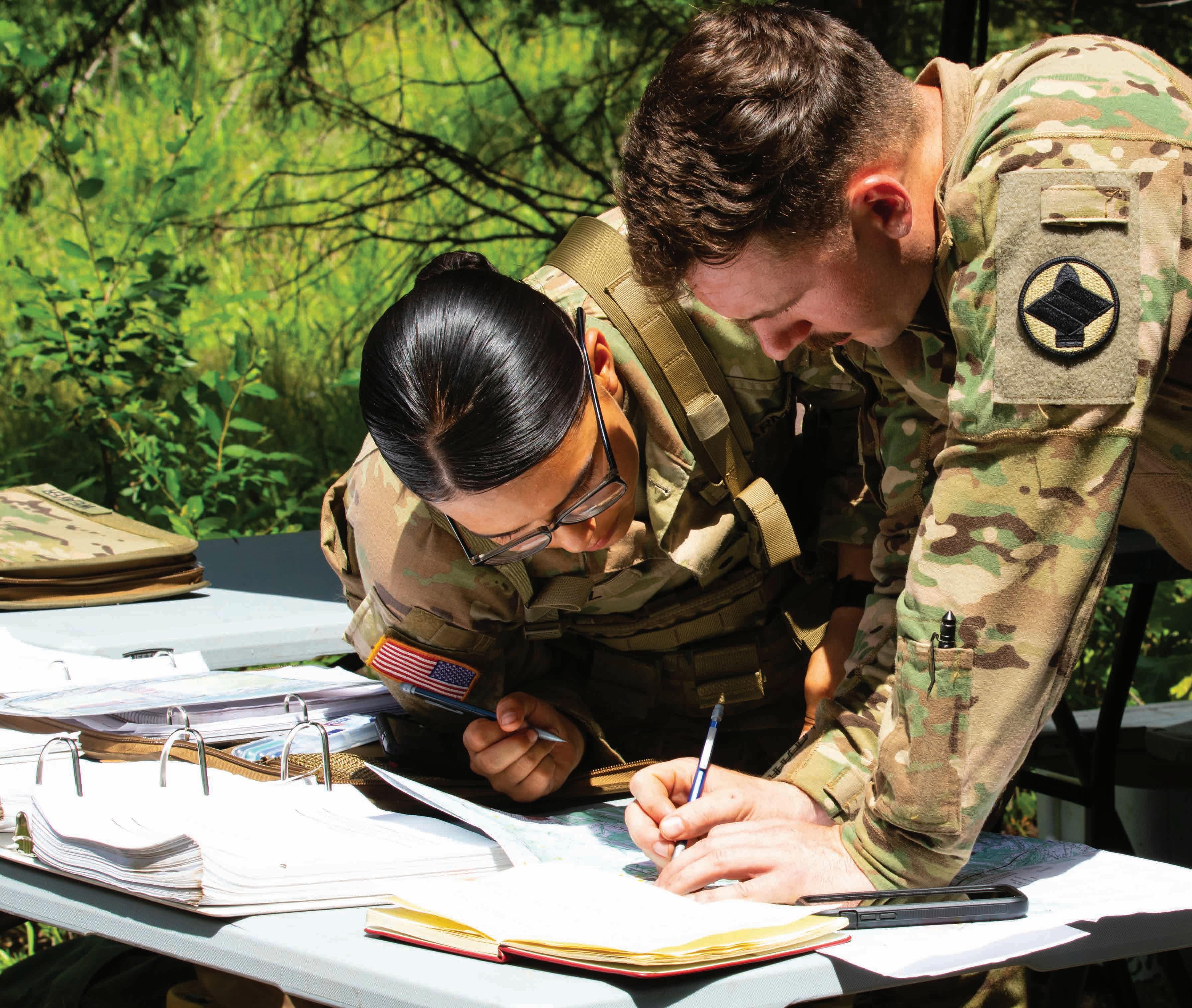
Stories and coverage provided by the Soldiers of the 119th MPAD during the Arkansas Army National Guard Annual Training 2023 at Fort Chaffee Joint Maneuver Training Center and Robinson Maneuver Training Center May-June 2023.
Production by Sgt. Madeline Fortune and Spc. Savannah Smith
2

3
Graphic Illustration by Spc. Savannah Smith
Fort Chaffee Omelettes
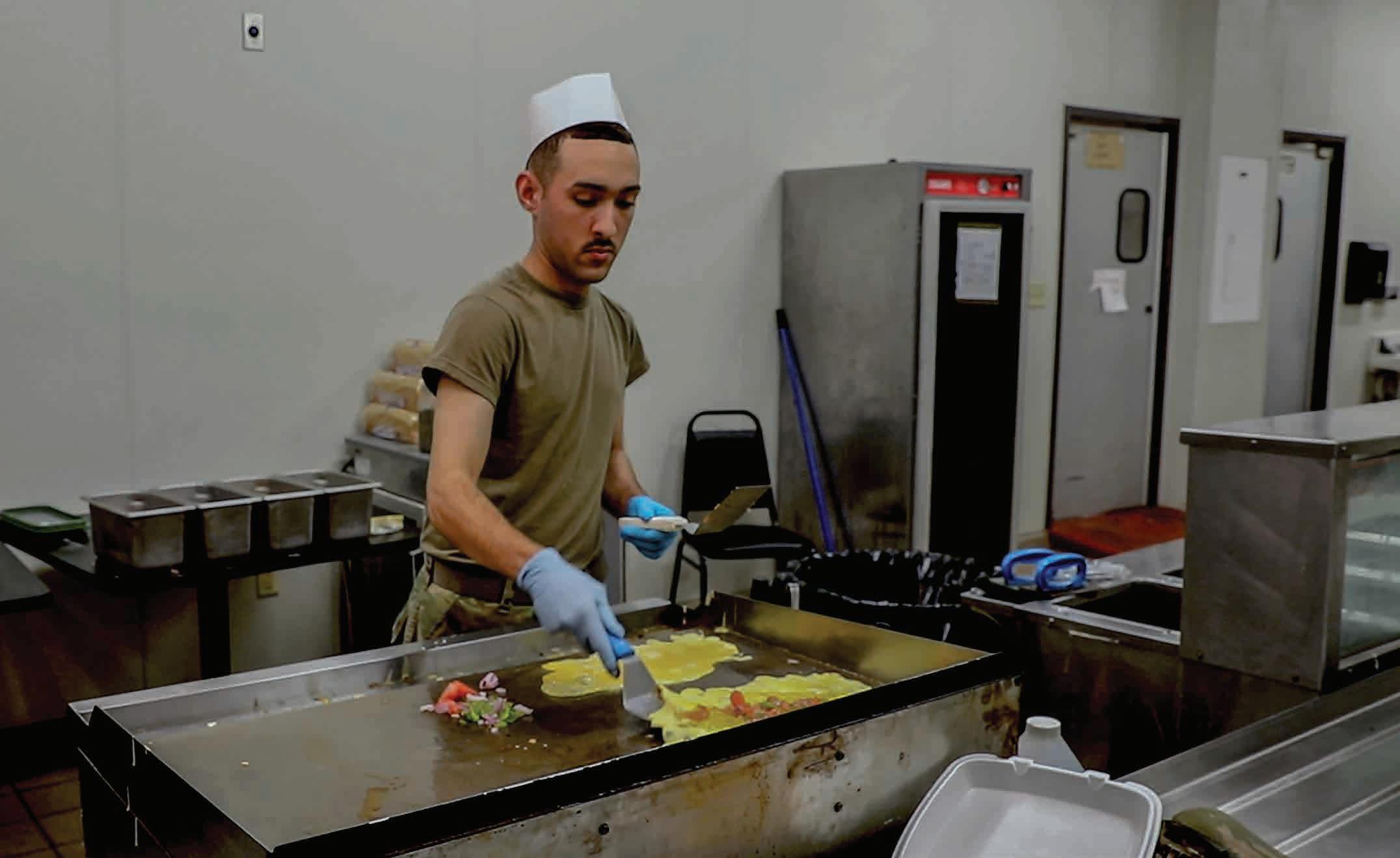
The culinary specialists of the 142nd Field Artillery Brigade have been providing nutritious meals to Soldiers in the field all during Razorback Thunder 2023. From fresh cut fruits and vegetables and hot meals in the evening to fresh cracked eggs in the morning, the Soldiers cooking the morning and evening meals have been receiving a shower of complements since day one.
Sgt. Leslie Martinez, culinary specialist with the 142nd Field Artillery Brigade, explained that the best meal of the day is breakfast though she says she has a bias for a good breakfast.
“When you have a full belly, you’re more likely to do well, in my opinion, at least because I’m a breakfast person. You’re more likely to be more motivated, energized and it helps you get through the day until you’re able to eat lunch or dinner,” said Martinez. “Because sometimes when you’re out in the field, you don’t know when that’s going to be.
The breakfast Martinez recommends most is the Razorback Brigade’s omelet, if you have time to wait for the grill because it’s going to be made with fresh cut vegetables and morning cracked eggs.
“Pereira is the best omelet maker,” said Martinez. “He knows what it takes to cook the eggs right.” If done wrong, Martinez explains, the eggs aren’t fully cooked, and the taste of raw eggs can ruin a good omelet. “No raw eggs in there. Because they can get tricky, especially when you’re folding them over. Plus, when you’re also doing them on this grill, because personally, I’m used to making them on a skillet. So I have the roundness of the skillet to help my omelet.
“But what these grills, you kind of have to take care of the eggs. And [Pereira] knows how to do that very well. And, they end up looking amazing. Plus, they get to customize it [the omelet] as well with tomatoes, bell peppers, onions, cheese and bacon bits. It just sets Soldiers up for success.”
She calls Pereira over from the serving line to share his secrets to making a good Razorback Brigade omelet.
“I’m nervous every time, but if you just do it with your heart and you’ll see, you’ll see,” said Spc. Jose Pereira, culinary specialist with the 142nd Field Artillery Brigade. “They’re going to come back and they’ll be like, That was good.”
4
Photo by Sgt. First Class Jim Heuston
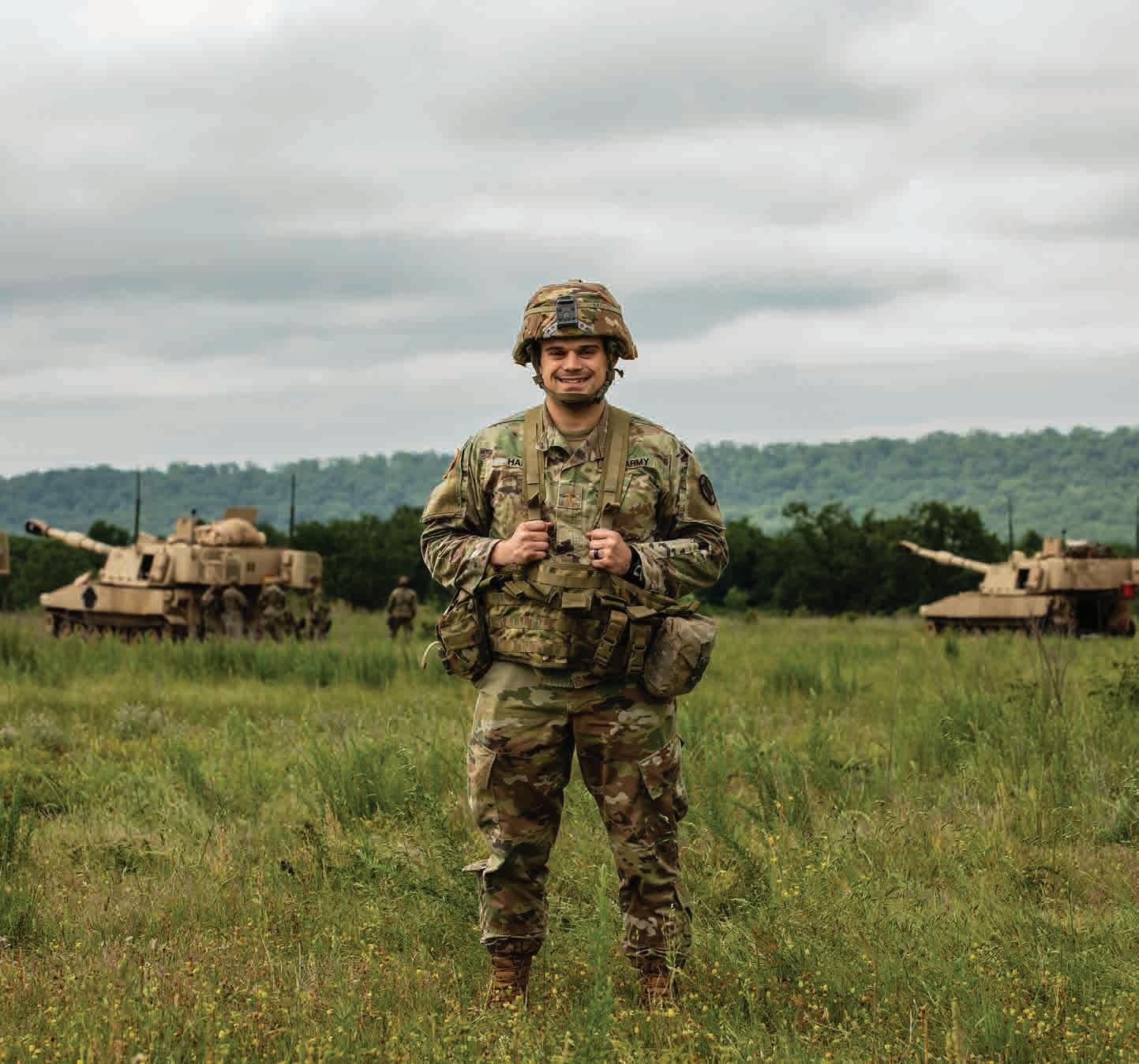
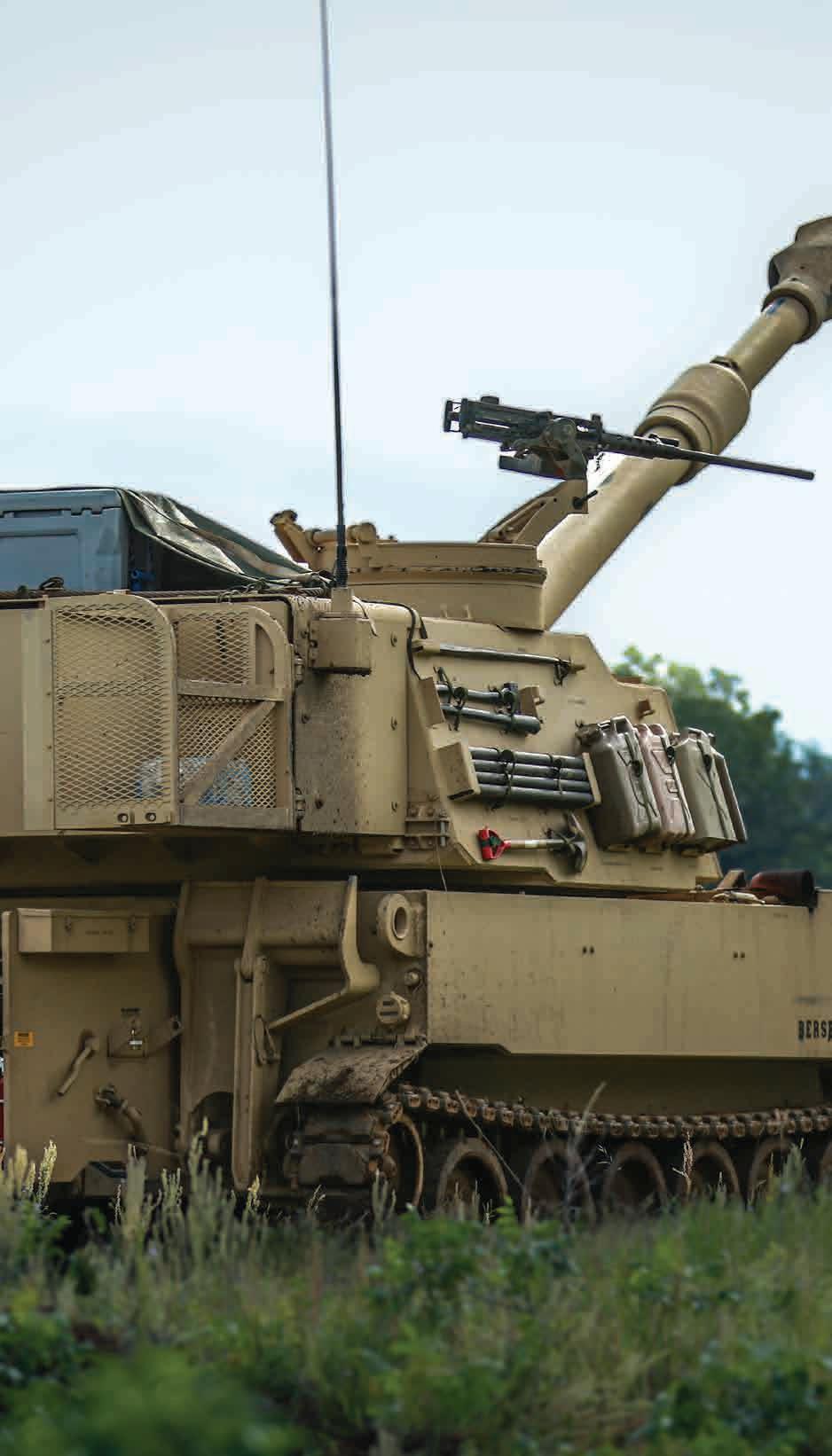
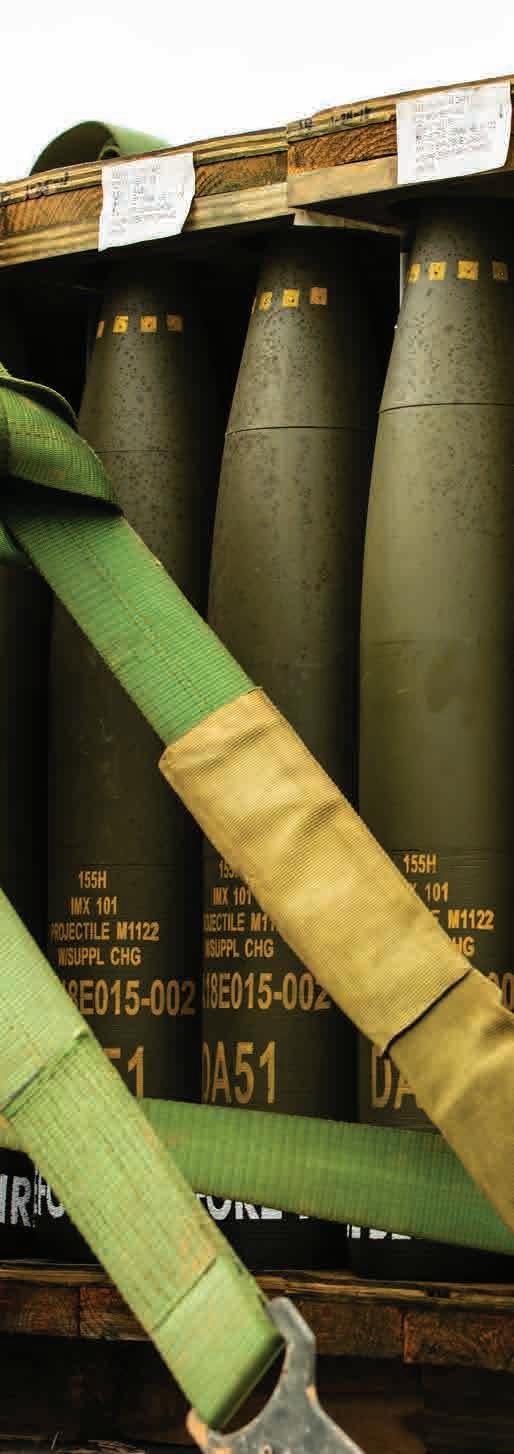
M109 Paladin Live Fire
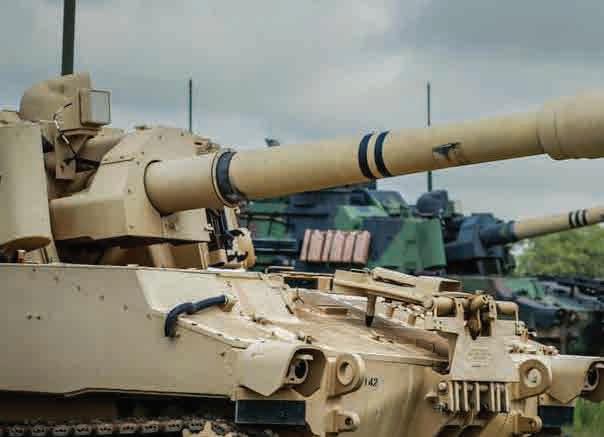
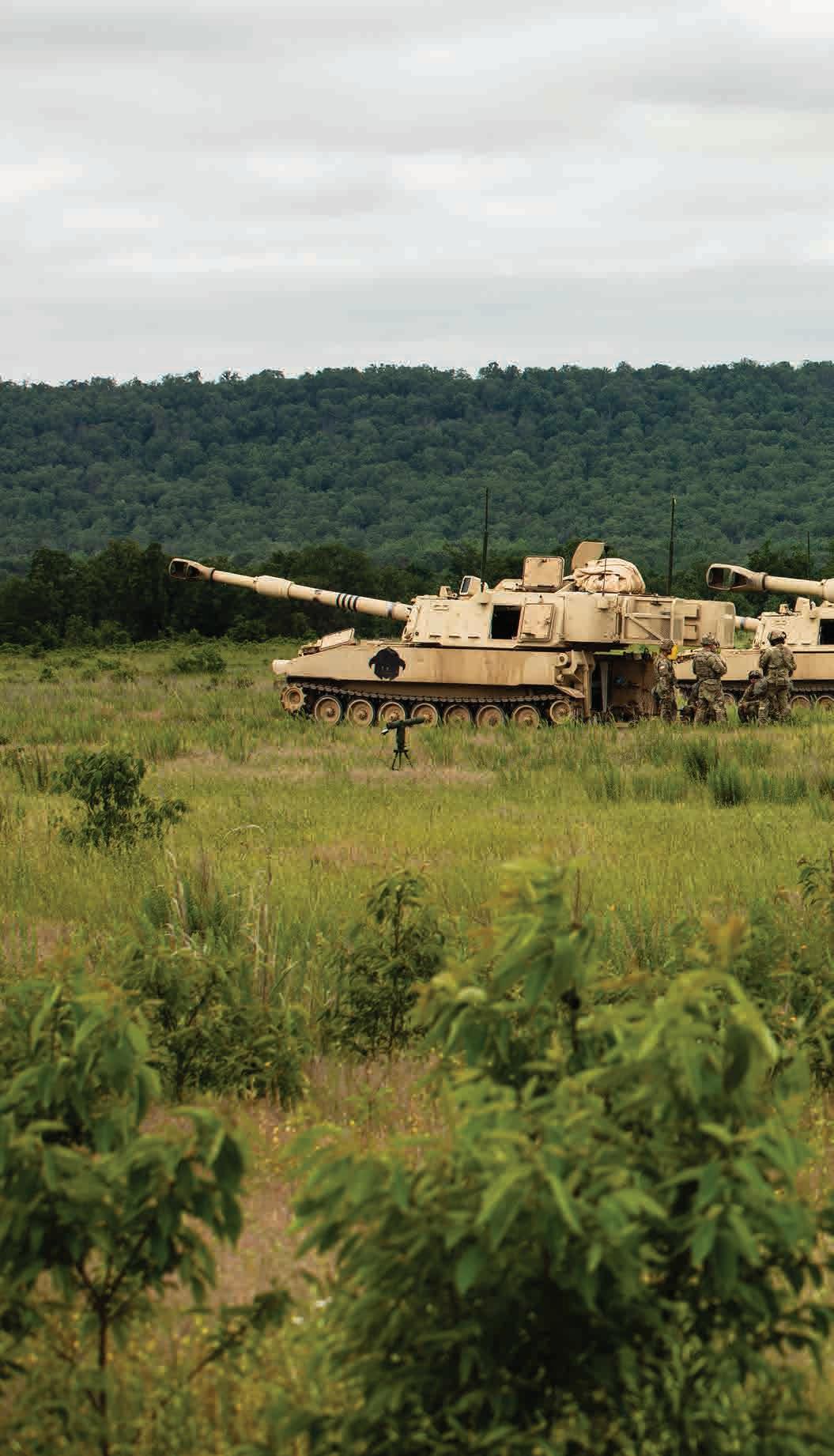
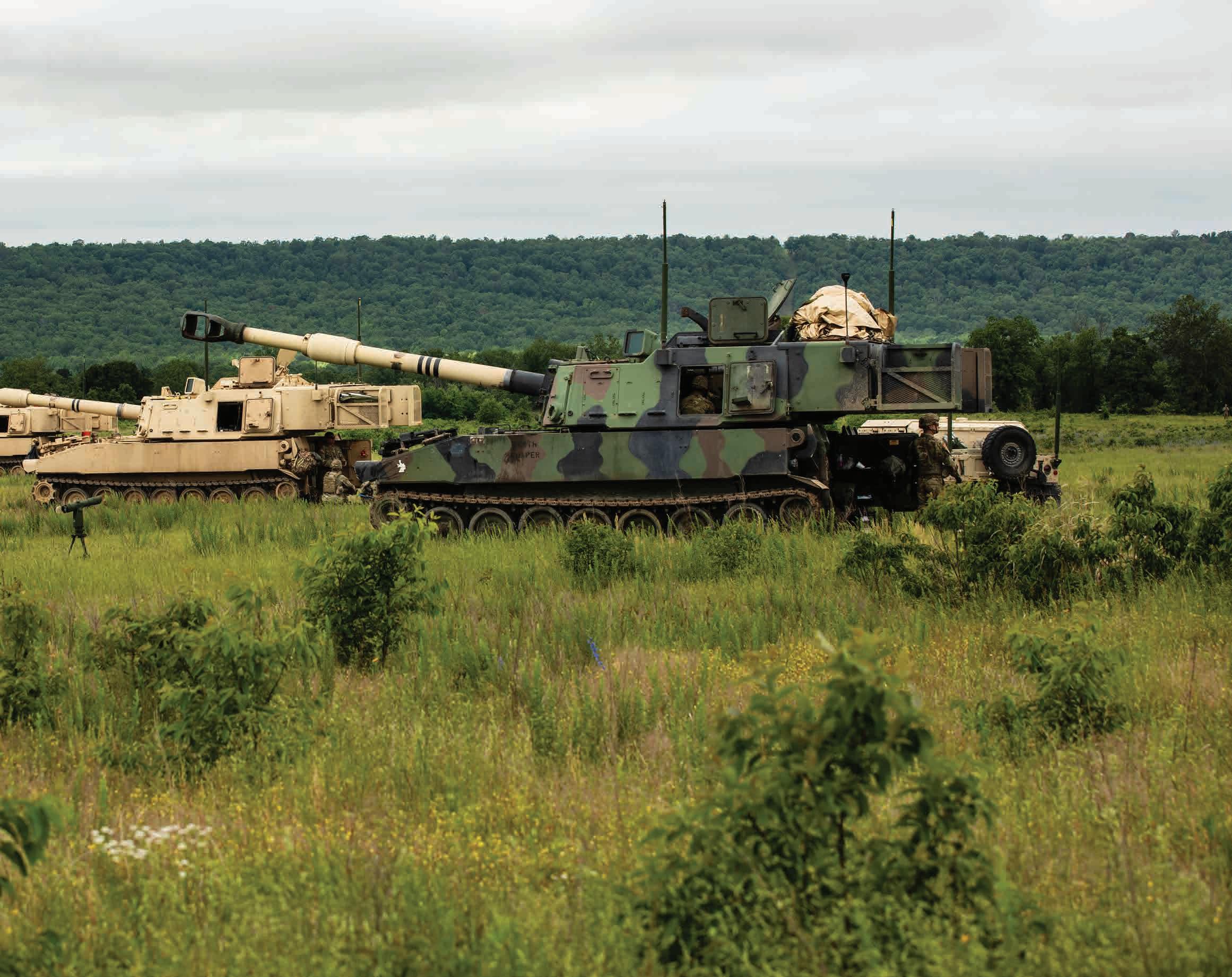
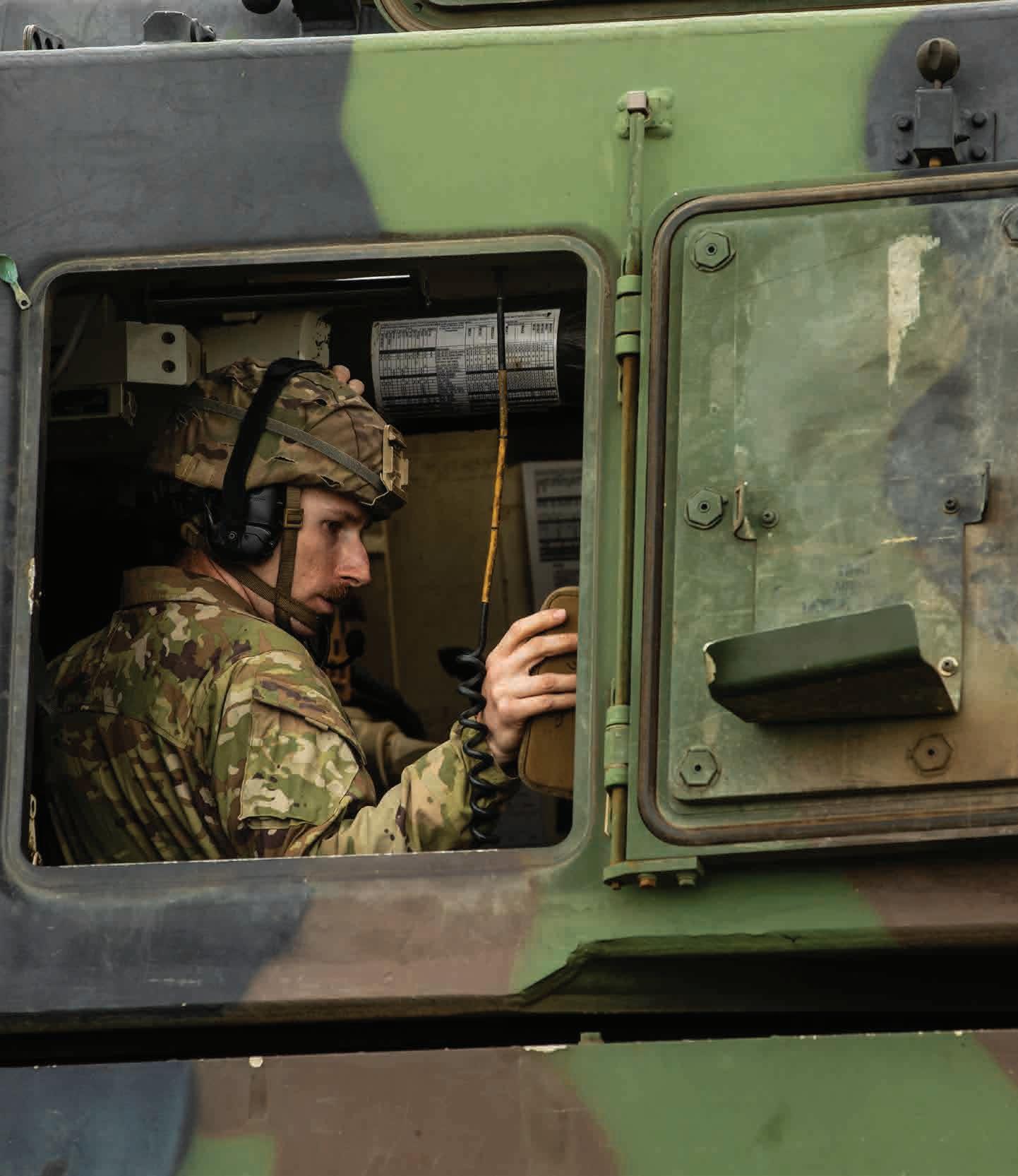
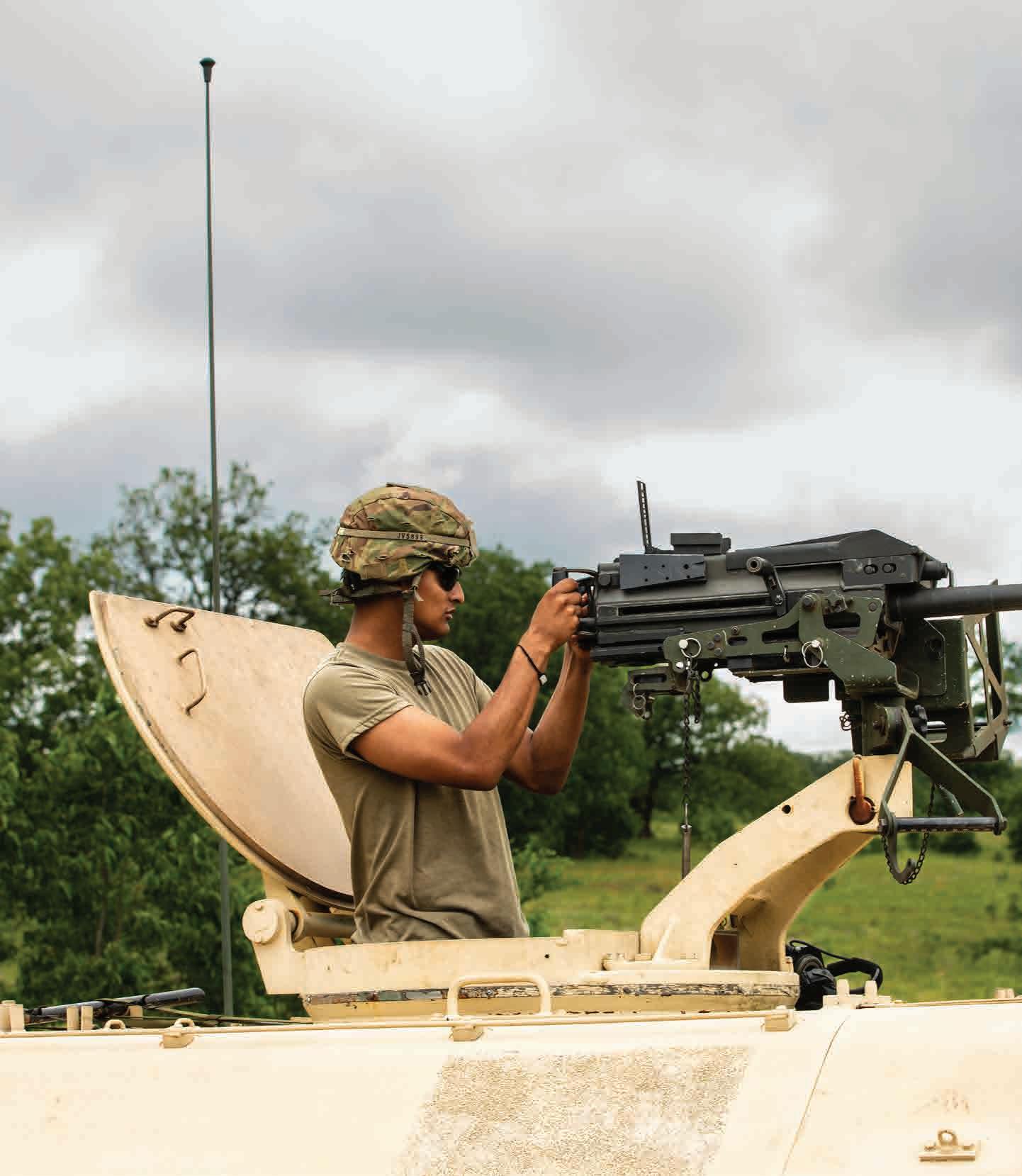
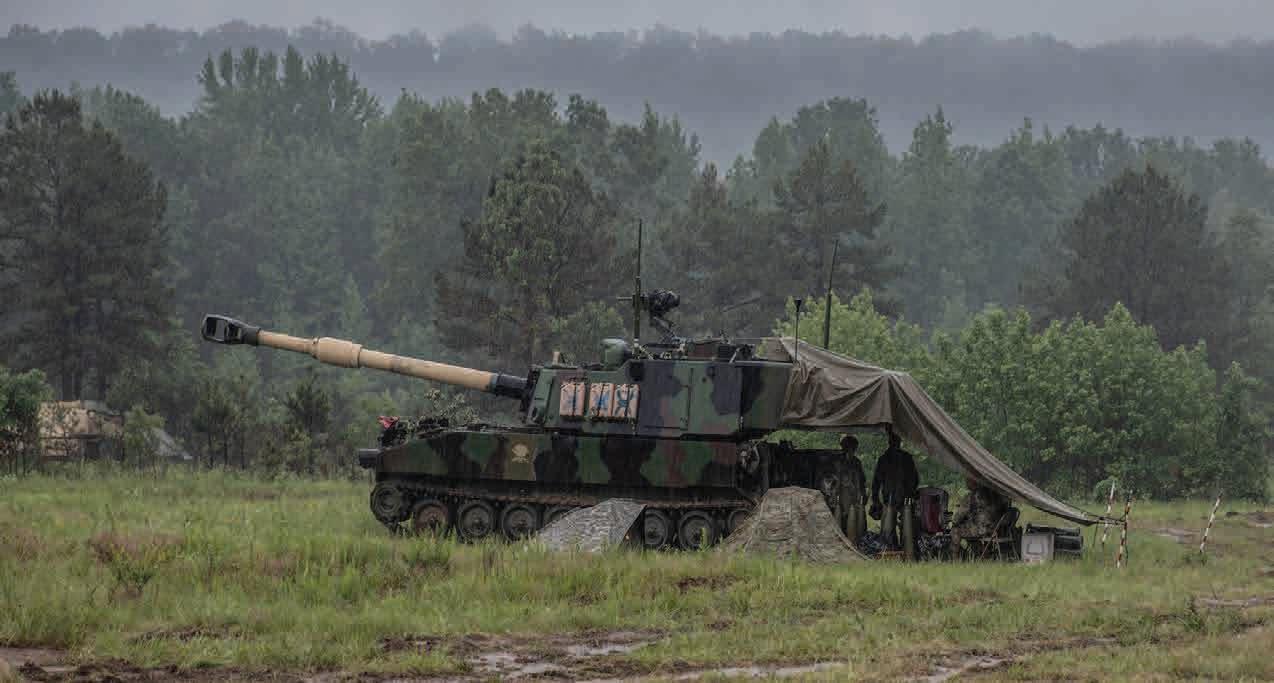
Soldiers from the 2nd Battalion, 142nd Field Artillery Brigade conduct Table VI live-fire on M109 Paladins at Fort Chaffee, May 17, 2023. During training Soldiers rotate through the various crew member roles, ensuring versatility and mission readiness. The Paladins is self-propelled and shoots highly explosive rounds.
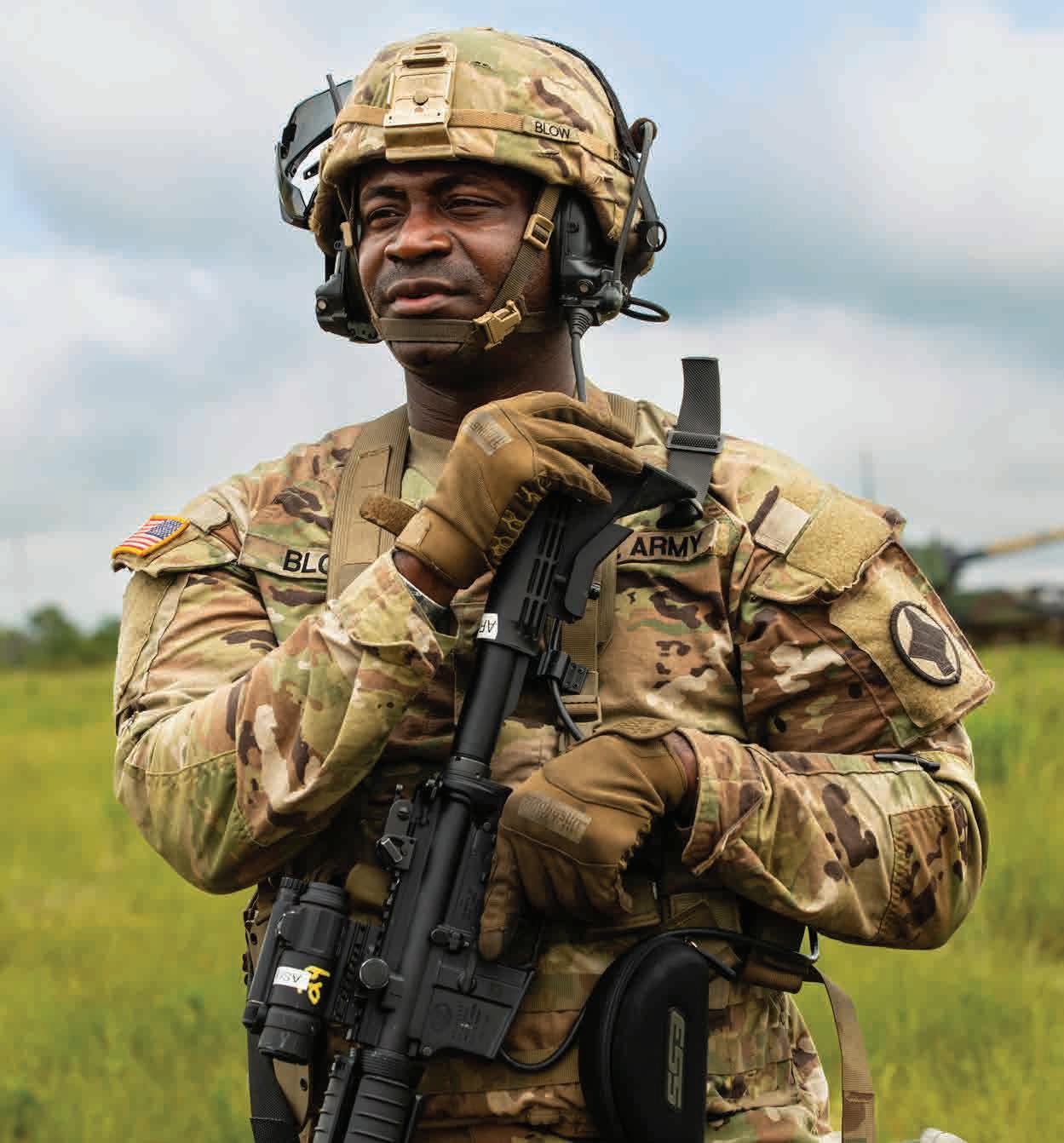
“It shoots Highly Explosive,” explains Sgt. Reo Blow, Chief Crew Gunner, 2-142nd Bravo Battery. “Unlike a bullet, which has the gunpowder inside… you put the propellant, or gunpowder, behind [the round]. Then you have a primer, where you strike the pin and causes all components to work together, sending the round off.”
Each Paladin is typically manned by a four-person crew which operates from within the armored hull. These crew members work together to ensure the effective operation of the M109 Paladin, delivering accurate indirect fire support to ground forces. Each crew member has specific responsibilities and tasks that contribute to the overall functionality and combat effectiveness of the vehicle.
“142nd is growing; we’ve got a lot of new soldiers, so we’ve got to get them trained up and certified on their respected Howitzers so that they can be combat ready,” explained 2Lt. Dalton Gray, Alpha Battery

5
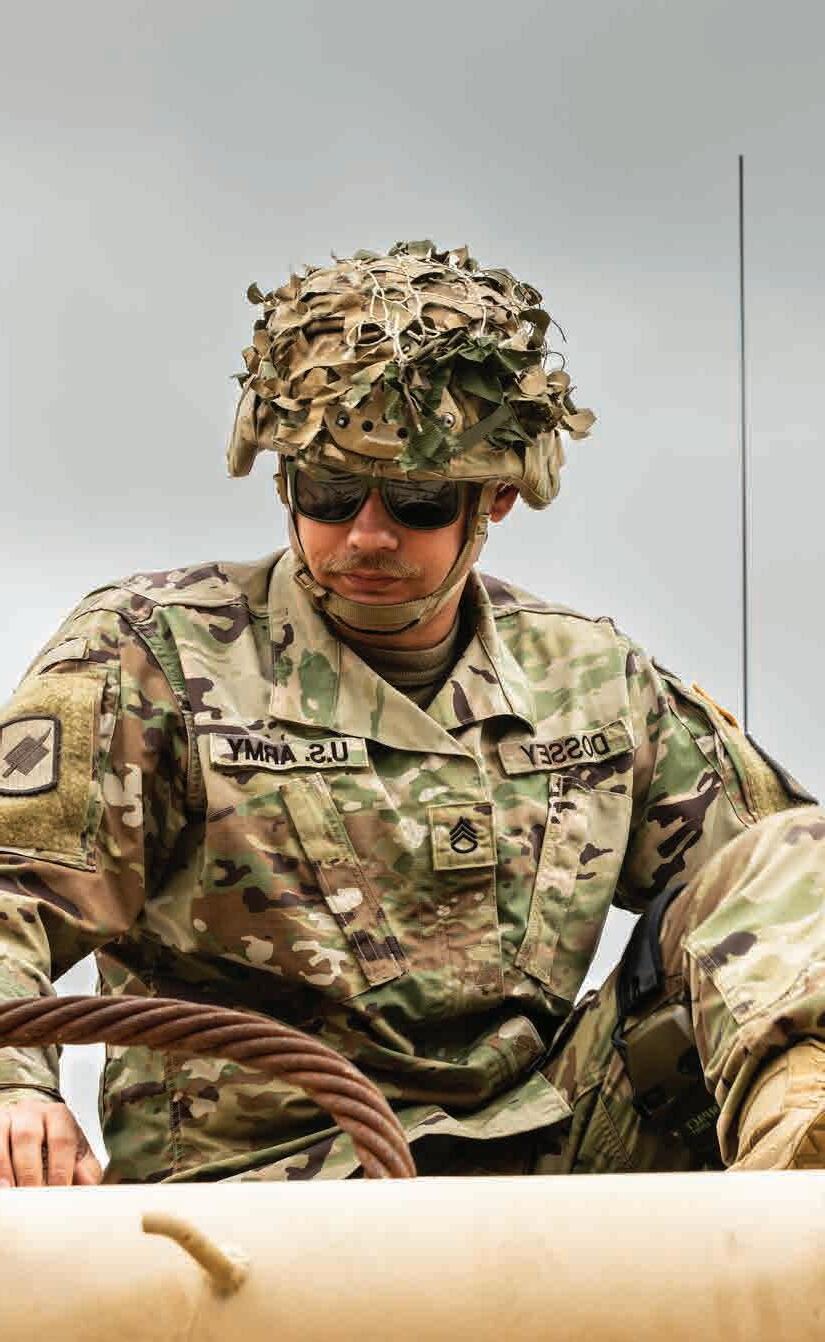
The Commander is responsible for overall coordination, communication, and control of the crew and the vehicle. They oversee the mission execution, ensure effective target engagement, and make decisions regarding firing orders and movement. The driver operates and controls the movement of the M109 Paladin. They handle the vehicle’s acceleration, braking, steering, and navigation. The driver must be skilled in maneuvering the vehicle over various terrains and in different weather conditions. Gunners operate the main armament, which is the 155mm Howitzer. They are responsible for aiming and firing the weapon accurately based on the commander’s instructions. The gunner must be proficient in using the fire control systems, adjusting the weapon’s elevation and azimuth, and ensuring proper ammunition selection. Finally, the Loader oversees handling and loading the ammunition into the howitzer. They assist the gunner by providing the necessary rounds and ensuring they are properly prepared for firing. The loader must work quickly and efficiently to maintain a steady rate of fire.
“The goal of this year’s training is to become a subject matter expert in your craft, knowing your equipment inside and out; knowing how to trouble shoot any problem, and really taking that ownership over your weapon,”
2Lt. Dalton Gray.
142ND FIELDARTILLERYBRIGADE
6
2-142nd Executive Officer.
Photos by Spc. Thomas Pate and Spc. Savannah Smith
“LOCKED, COCKED, & READY TO ROCK!”


7
Photos by Spc. Thomas Pate and Spc. Savannah Smith
8
Field Medics
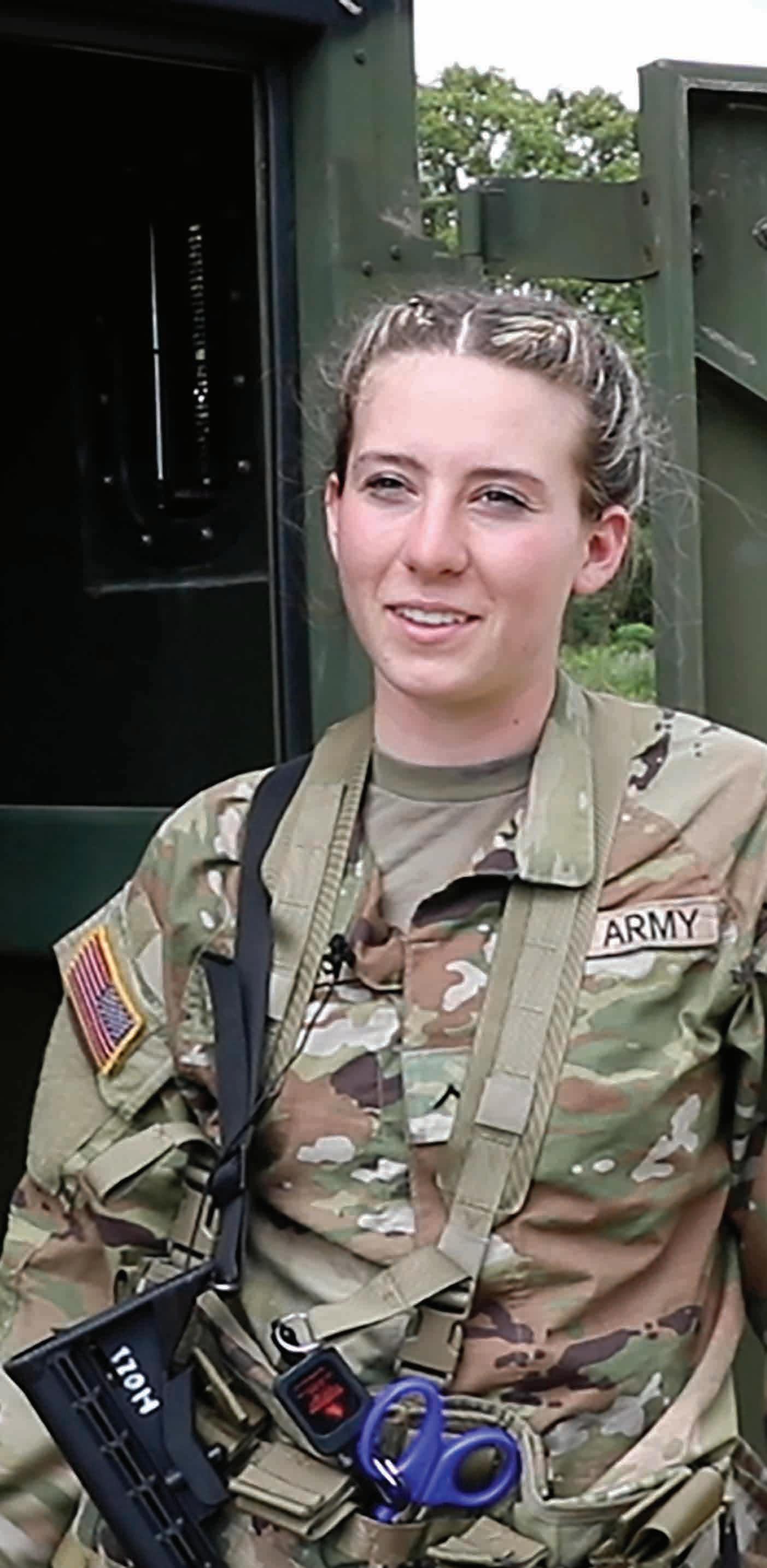
Heat casualties are a major concern for combat medics during annual training, and this year, on call for the Soldiers of the 937th Forward Support Company, was no different.
The 937th Forward Support Company were conducting convoy live fire training, and the heat had climbed to the 90s by noon, once the clouds cleared.
“Heat is a really big issue, especially in full gear,” said Pvt. Kayla Rogers, combat medic for the 142nd Field Artillery Brigade. “A lot of the times, like when we go in the “heat cats” of certain situations, (categories of heat conditions that medical personnel use to measure safe working conditions outside), you can roll up your sleeves and un-blouse your boots and you get more airflow. But, on the range is it’s especially harder to maintain that without breaking the personal protective equipment (PPE).”
Soldiers wear a variety of PPE ensure safety at the range, while driving tactical vehicles, and to condition their bodies to handle combat gear in adverse weather.
“It’s harder and there’s a lot more [heat casualties] on ranges,” said Rogers. “I brought my aid bag. My bag has all my “to go” equipment; airway, breathing, circulation. It covers everything. I have splints, everything in there. I brought ice sheets. I brought my litter. All the standard equipment that we’re supposed to have.”
Rogers is an emergency medical technician in the Fort Smith area on the civilian side, but she says being in the Arkansas National Guard brings with it a lot of medical training she may not be exposed to outside of the military.
“So, you don’t get to see a lot of the same kind of situations on the civilian side as you do military side,” said Rogers. “It’s a cool experience to get like both aspects, civilian and military training. So, I mean, it’s a lot of practice. I just get to keep maintaining throughout my career of health care. “
9
Photo by Sgt 1st Class Jim Heuston
“I LOVE HEALTH CARE. I LOVE THE NATIONAL GUARD. THIS IS WHY I DO MY JOB.”
-PVT KAYLA ROGERS
Convoy Live Fire

Soldiers of the 937th Forward Support Company, 2nd Battalion, 142nd Field Artillery Brigade conducted convoy live fire operations during their annual training, Razorback Thunder. This training event evaluates Soldiers’ ability to fire the M2 .50 Caliber Machine Gun from a moving tactical vehicle; this is a crucial part of operating a successful convoy as provides protection against enemy forces while vehicles move towards their destination.
“We had been practicing with this simulation a couple months ago, but this is the first time we are actually out here doing the live training,” said Staff Sgt. Julio Rodriguez, vehicle operator during the live fire exercise. “Most of these Soldiers out here are new, so for them to get this experience is great training for them.”
Many gunners are proficient in their firing from a stable position, but firing from an unstable element adds additional challenges. When firing from a convoy, gunners are constantly moving, engaging targets, and relaying reports all at once.
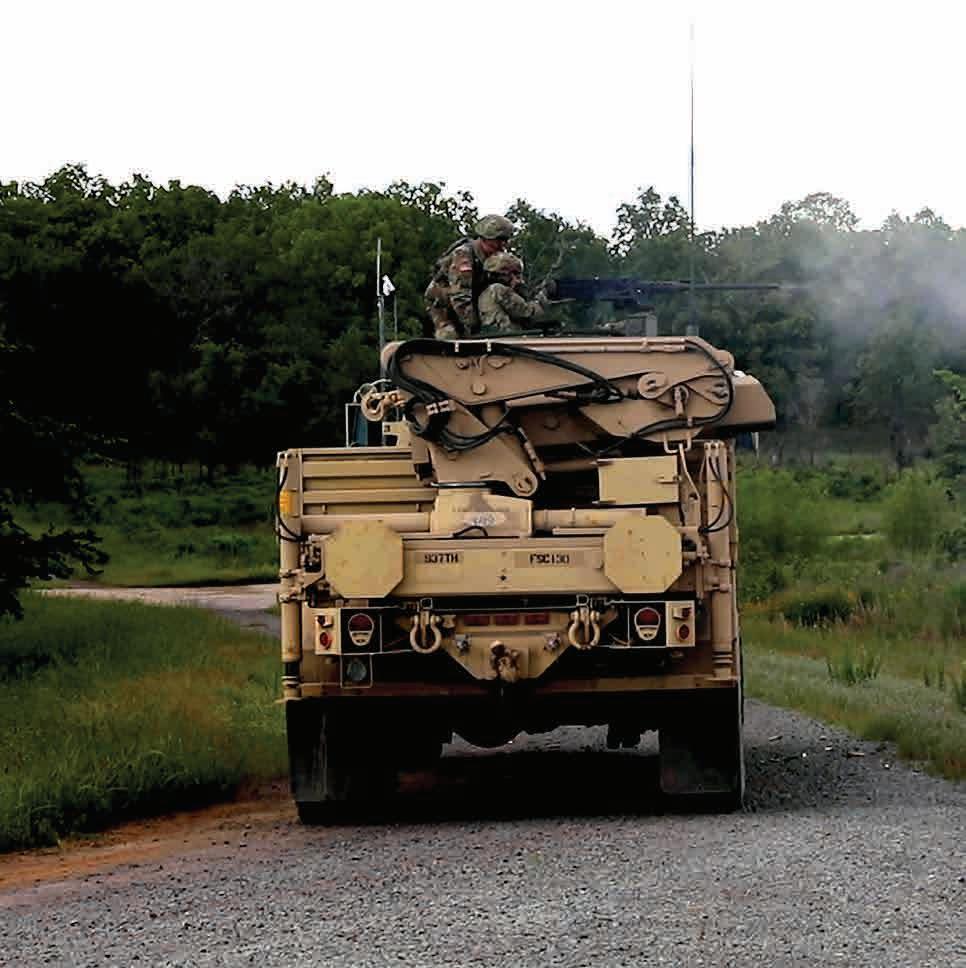
There are four phases of training that Soldiers must complete before conducting the live fire exercise. The first phase familiarizes Soldiers with instructions of specific tasks and identifies the role every team member is responsible for. Phase two tests the Soldiers’ night vision driving and reconnaissance of an exercise site. The third phase consists of a safety brief and instructions on the specific operation they will be conducting; last id the convoy live fire exercise, which is the culminating event for all of the training events leading up to that operation.
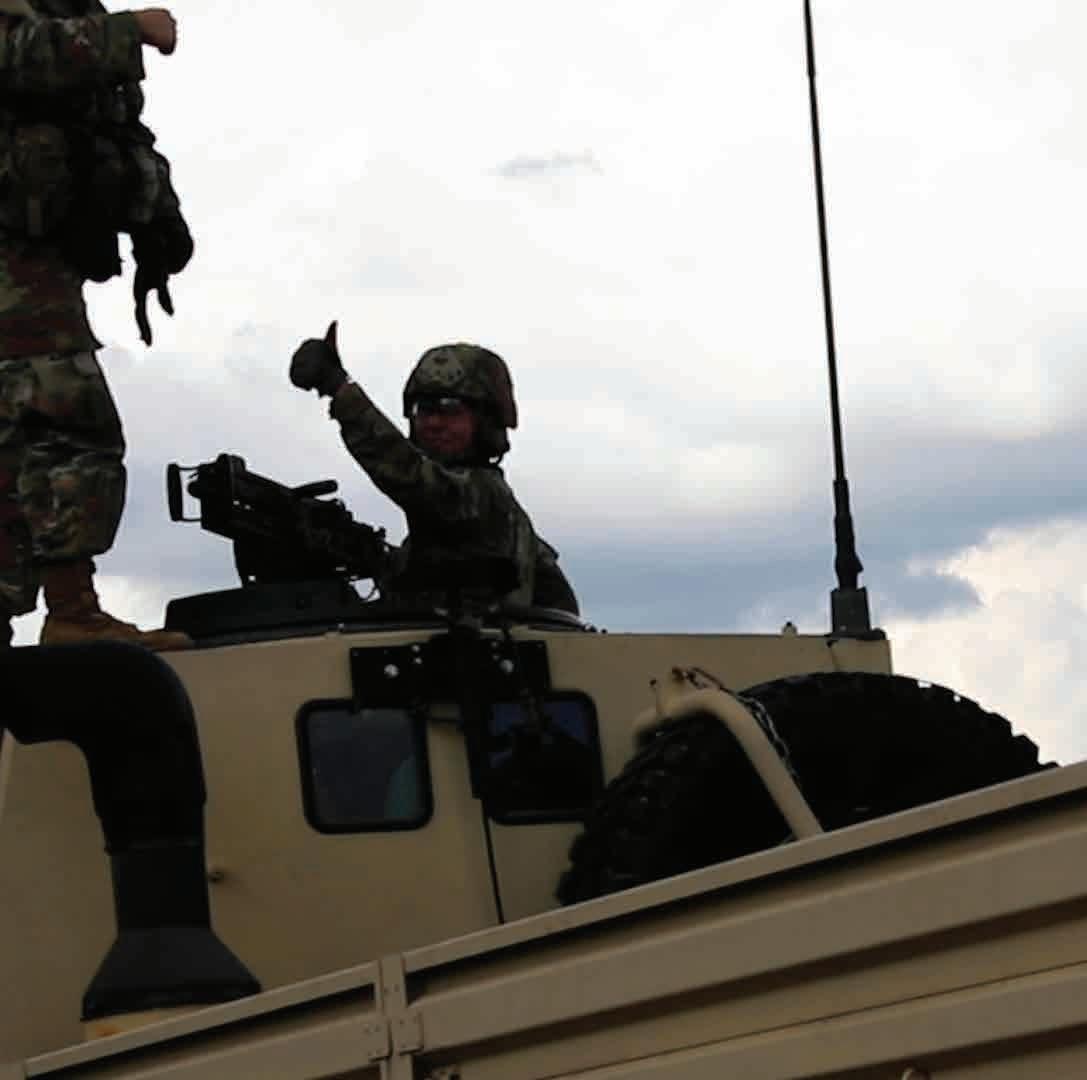
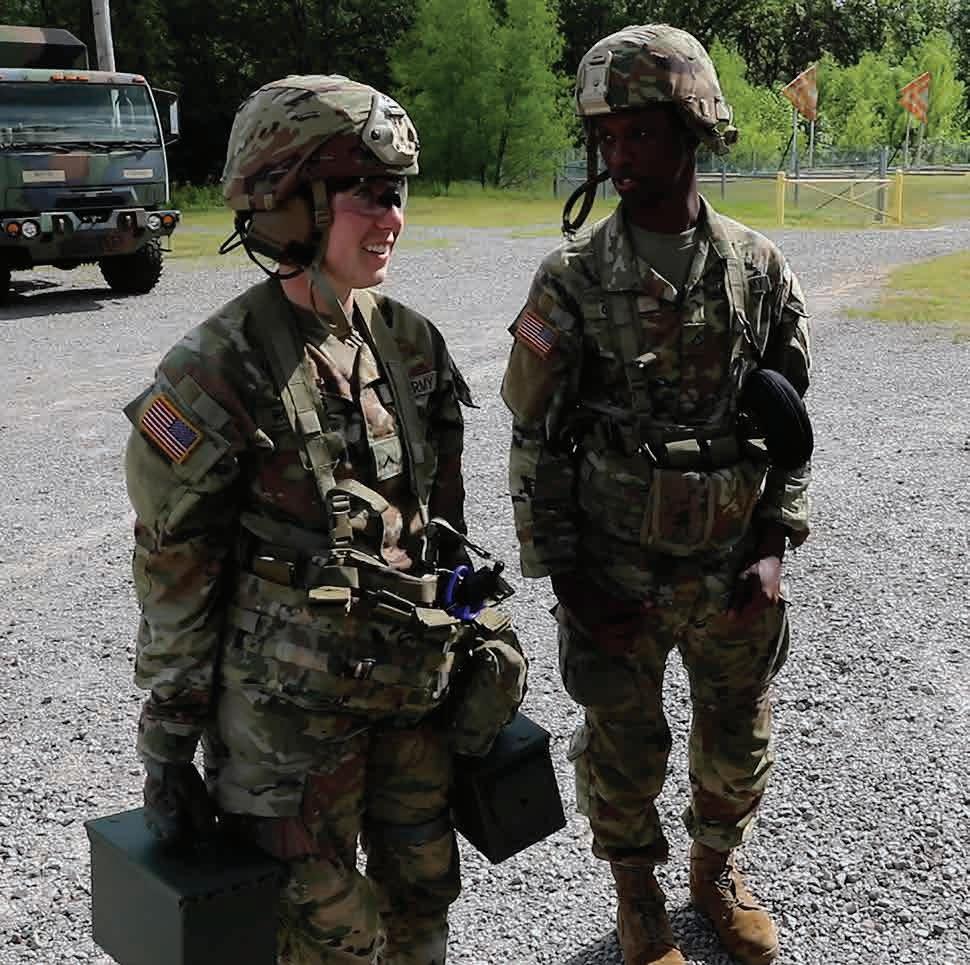
“A lot of our Soldiers haven’t shot from a moving vehicle before,” said Rodriguez. “Seeing them out here doing something they are unfamiliar with is great to see, and our leadership really appreciates it.”
10
Photos by Sgt. First Class Jim Heuston
“SEEING THEM OUT HERE DOING SOMETHING THEY ARE UNFAMILIAR WITH IS GREAT TO SEE, AND OUR LEADERSHIP REALLY APPRECIATES IT.”
-STAFF SGT. RODRIGUEZ
Ammunition Specialist
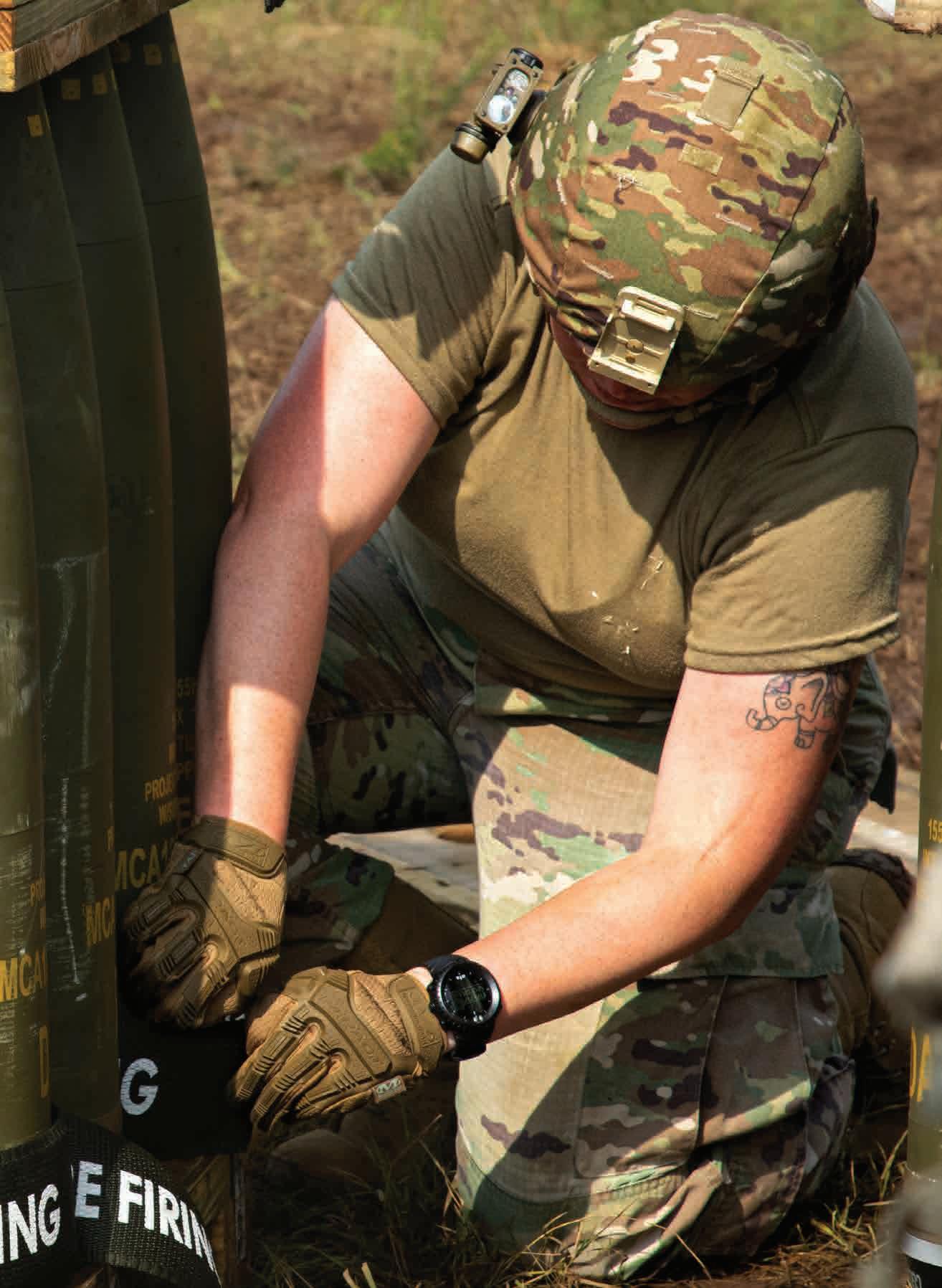
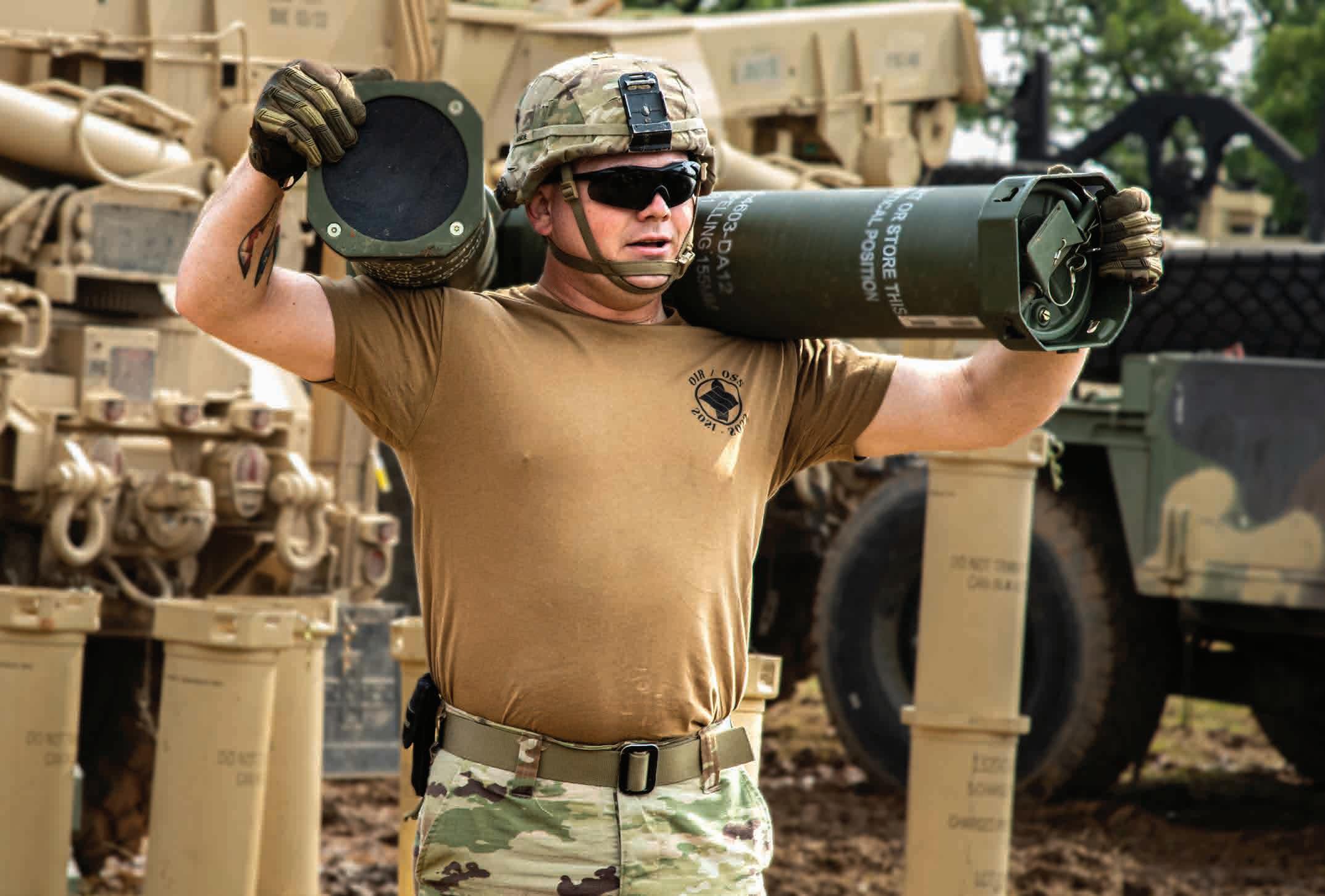
Arkansas Army National Guard Soldiers from the 937th Forward Support Company, 2nd Battalion, 142nd Field Artillery Brigade, managed ammunition supply to support operations during Razorback Thunder AT 2023, Fort Chaffee.
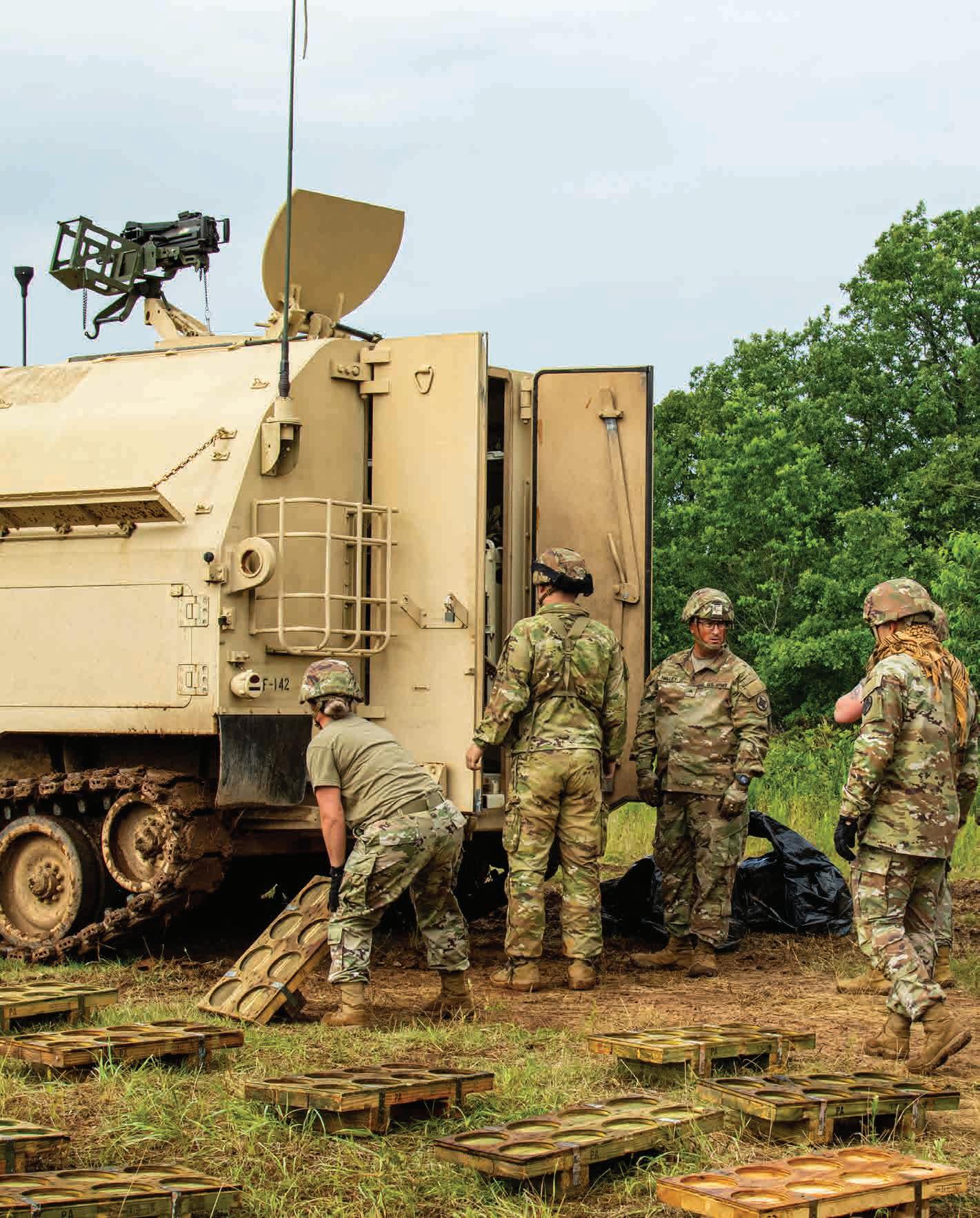
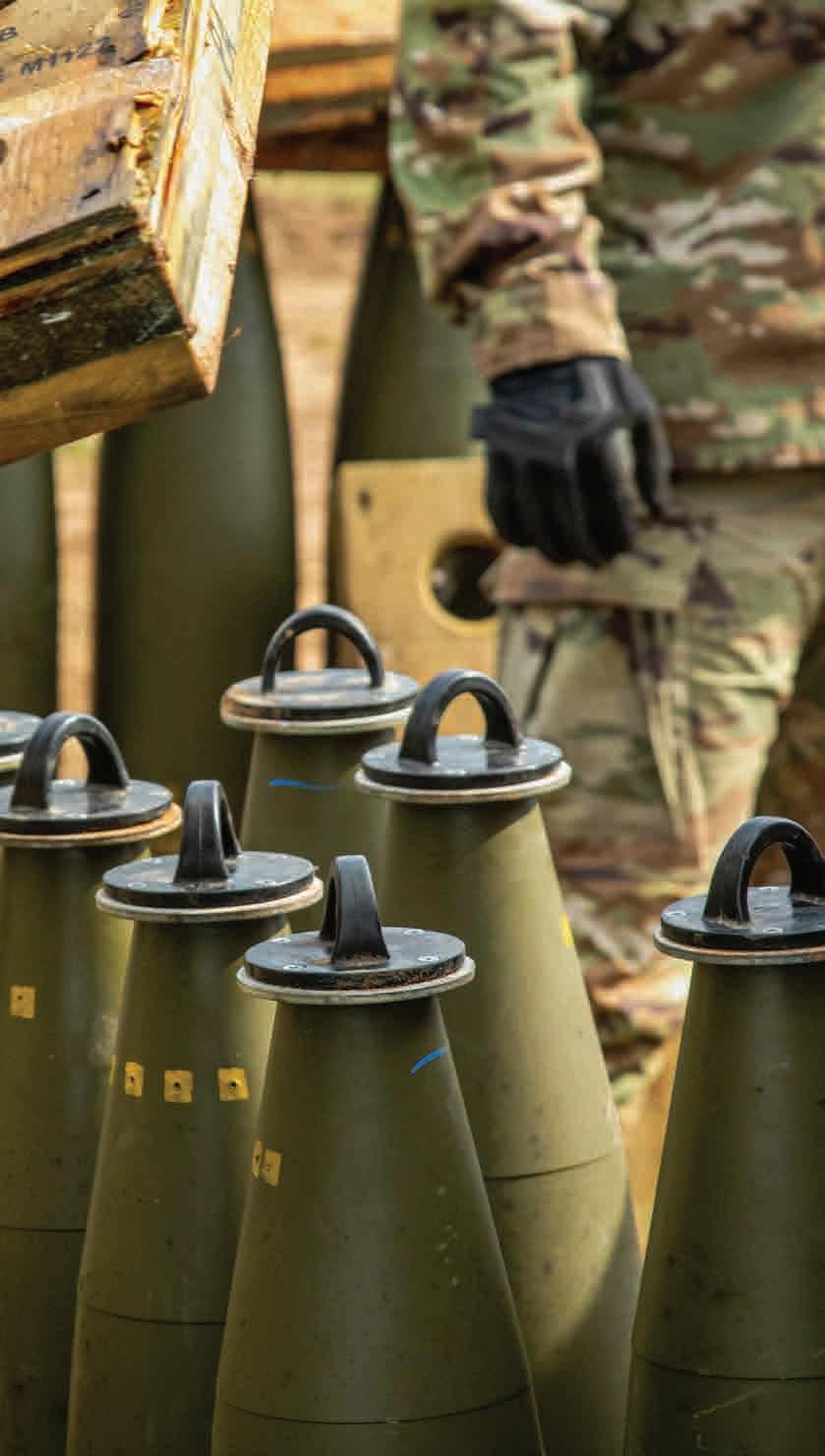
Staff Sgt. Tiffany McConnell explains the importance of the mission, “The batteries have to have ammo to train,” said McConnell “that is our job as 88M’s is to deliver their ammo to them.”
Motor Transport Operators, also known as “88M’s” play an important part in the Army’s transportation logistics team. They supervise and operate wheeled vehicles over all type of terrain,
to safely transport cargo, troops, and provide advanced mobility on all missions. Their daily mission consists of managing the loading, unloading of supplies, and reporting any vehicular problems or damage.
McConnell explained that this annual training, has actually been a little different than other AT’s. Under usual circumstances, there are multiple trips made to the ammo supply point. In contrast, this year there was only one. Ramping up the workflow in the beginning allowed for much needed white space training near the end.
“We actually completed the mission very successfully” said Sgt. McConnell.
“It’s a whole different type of comradery, we all work together, it’s a hard job. Everybody gets very burned out very quick. But at the end of the day, we come together, and we make it a good time.”
McConnell said
11
“We actually completed the mission very successfully.”
12
-Staff Sgt. Mcconnell
Strategic Civilian Partnership

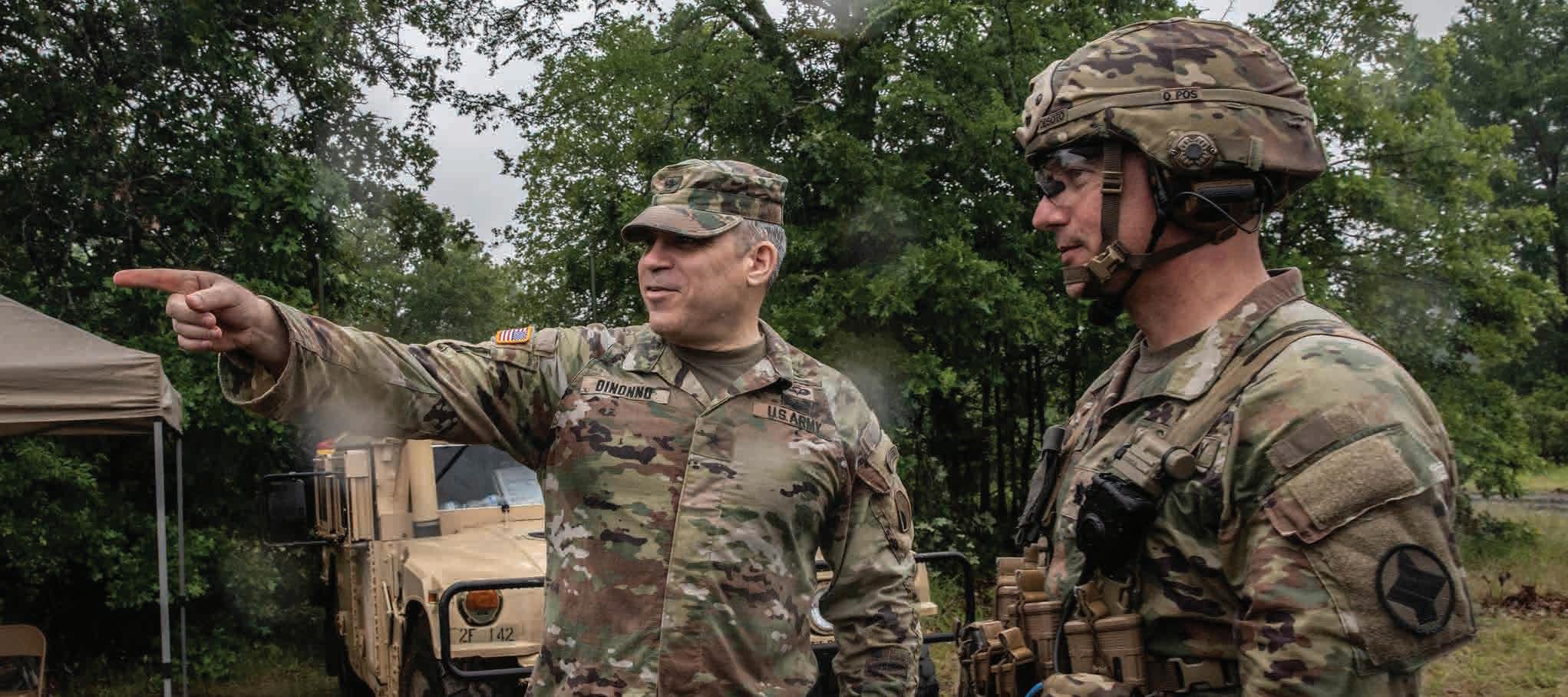
Fort Chaffee Joint Maneuver Training Center conducted a Strategic Civilian Partnership Day during the 142nd Field Artillery Brigade’s Razorback Thunder Annual Training 2023, May 19, 2023.
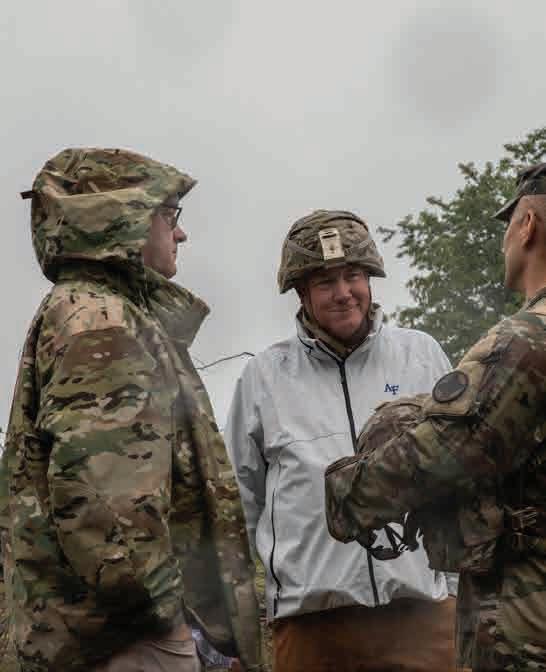
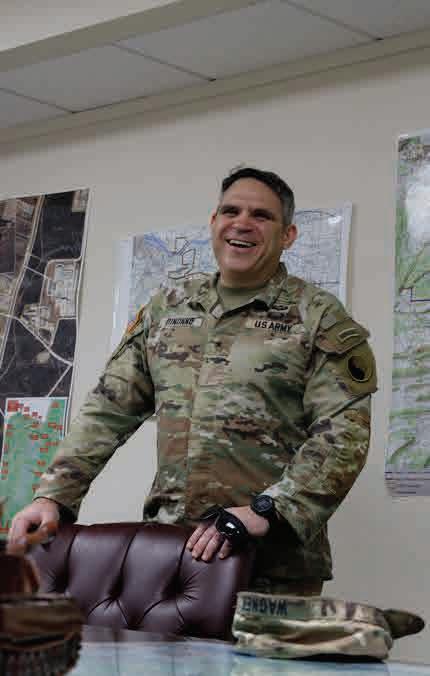
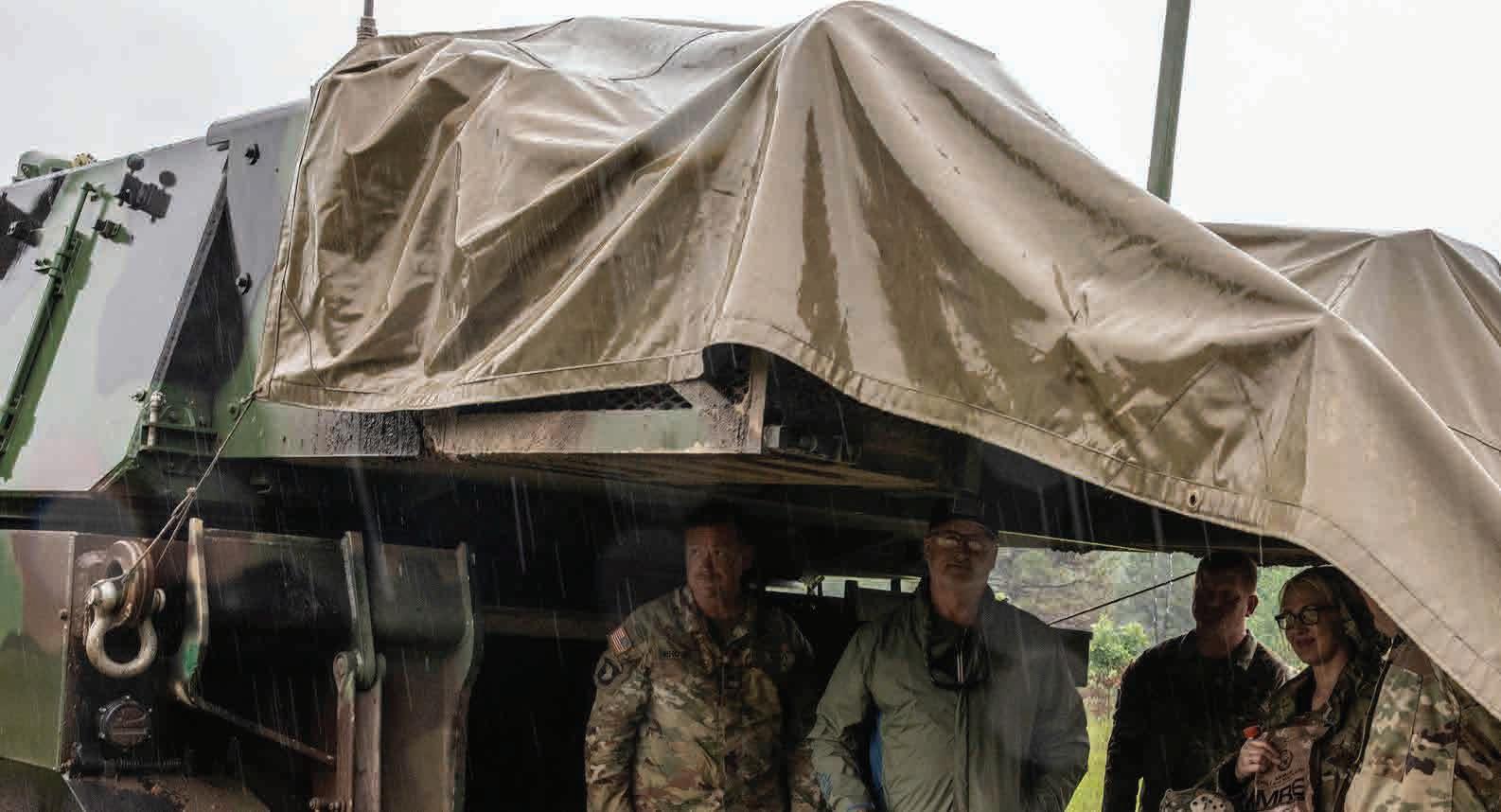
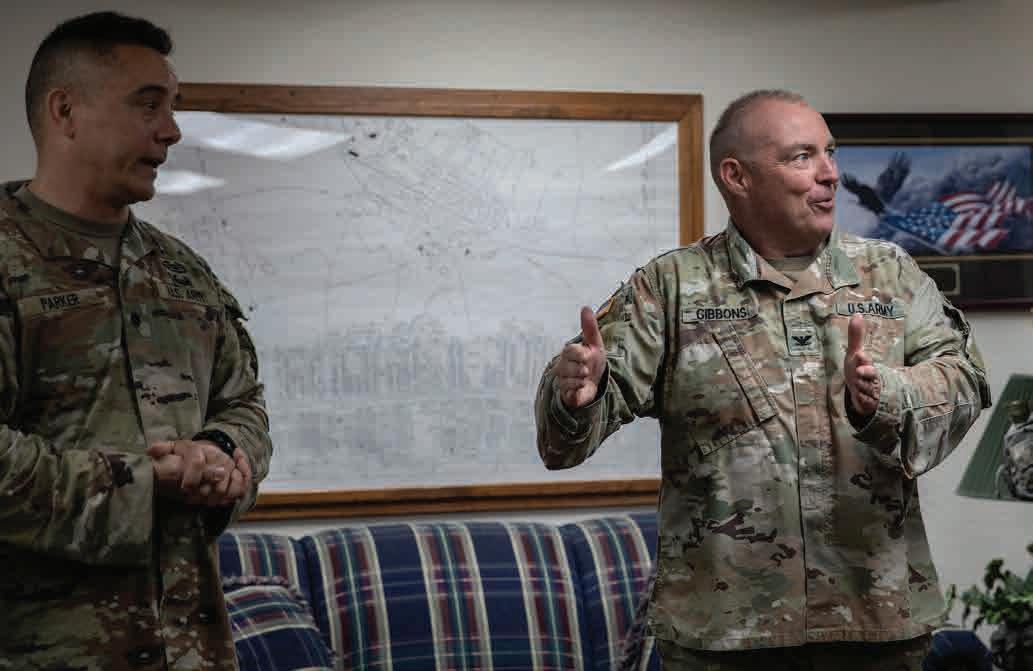
The Strategic Civilian Partnership Day, a community engagement program, developed by Col. David Gibbons, post commander Fort Chaffee Joint Maneuver Training Center, with Lt. Col. Tye Parker, commander of the 142nd Field Artillery Brigade, brings key leaders and influencers from the surrounding communities to Fort Chaffee during annual training. It’s an opportunity for community leaders to meet with the men and women from their hometowns that wear the uniform of the Arkansas Army National Guard.
13
“So I personally believe that partnerships with our community are incredibly important,” said Gibbons. “One of the things that makes us different than the active Army is that we are involved in our communities.”
Having the key leaders out here gets them to see Soldiers that are living in their community, what they’re doing when they take off from work or when they’re missing their family or different things. It gets them to see them out there in the rain, in the mud, training to be ready.”
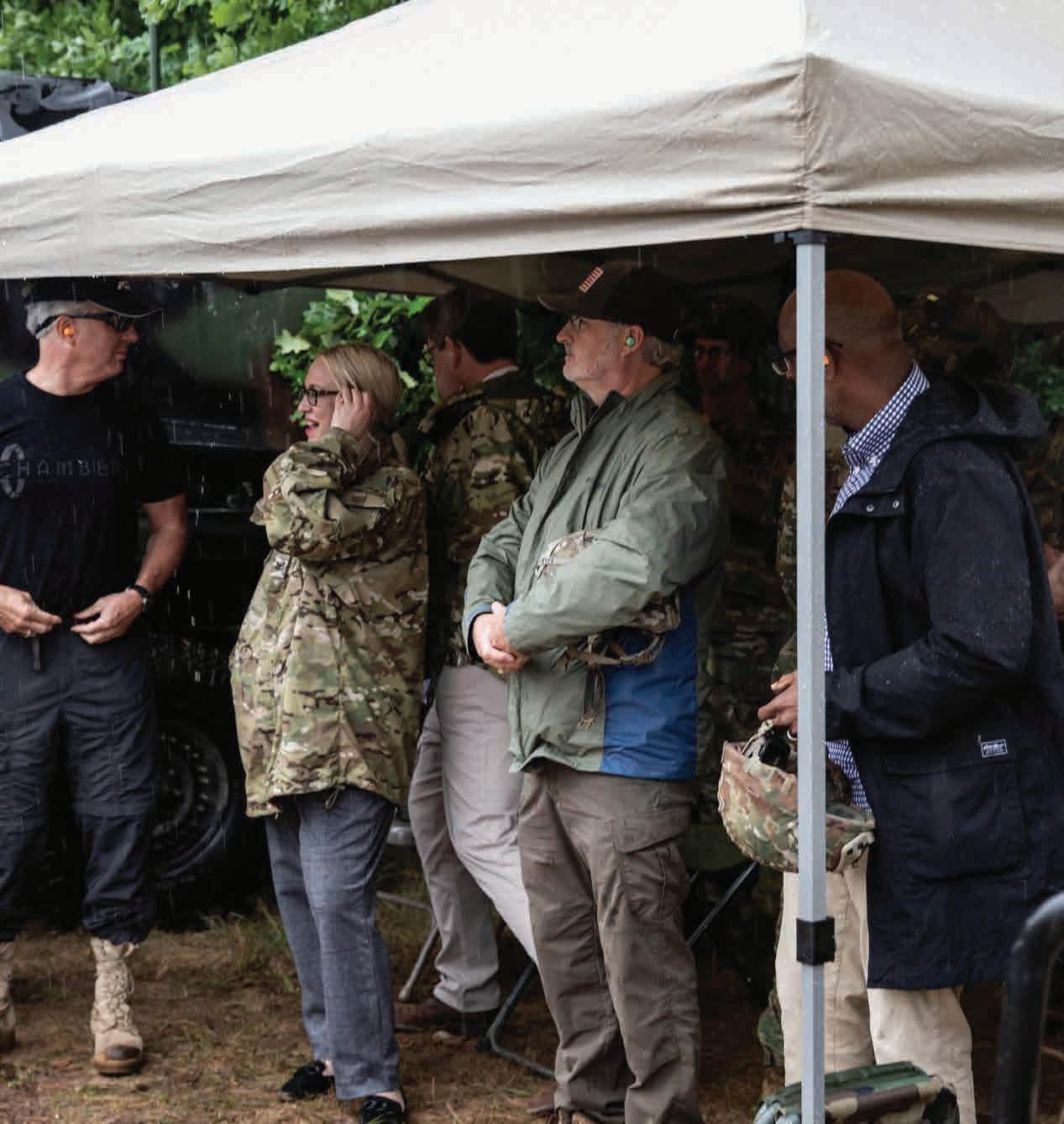
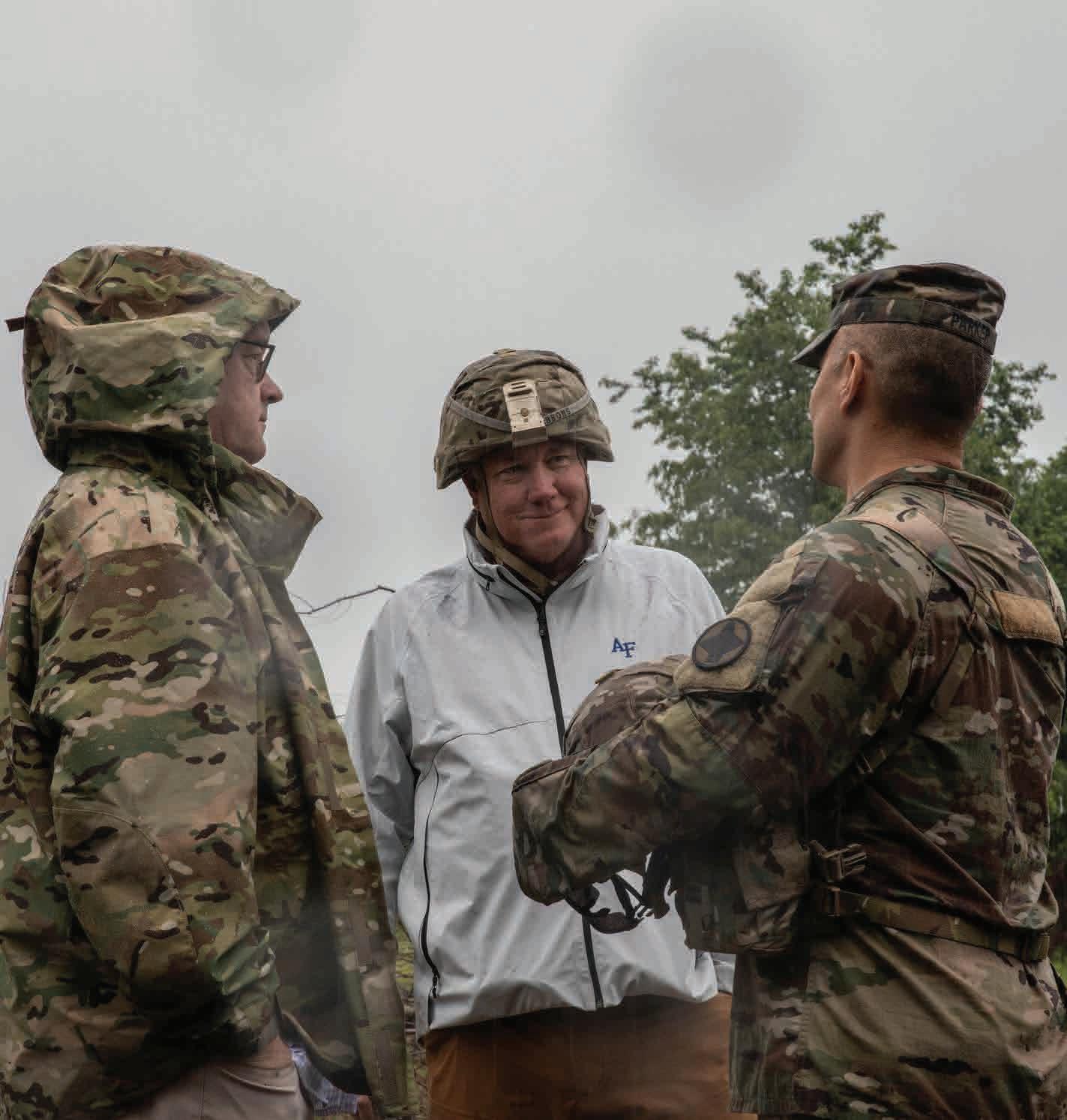
The distinguished visitors were Brig. Gen. Joseph A. DiNonno, commanding general of the 29th Infantry Division, Tim Allen, president and CEO of the Fort Smith regional chamber of commerce, retired Col. Rob “Gator” Ator, director of military affairs for the Arkansas Economic Development Commission, Jessi Solley, field representative for Sen. John Boozeman, Jackie Flake, paster to Community Bible Church North Fort Smith, Eddie Lee Herndon, community affairs manager OG&E Energy Corp., and Chip Paris, community key leader.
Mayor Doug Kinslow, Greenwood, Ark., also visited with the Soldiers of the 142nd Field Artillery Brigade earlier in the week.
“I hope they understand and appreciate better what it is that that our Soldiers are doing on their drilling days,” Col. Gibbons expressed.


14
Photos by Sgt. Maddie Fortune
DEDICATED NATIONAL GUARDSMEN OUT THERE IN THE COLD RAIN, ANKLE DEEP IN MUD, JUST TRAINING.”
-COL. DAVID GIBBONS
Multiple Launch Rocket System

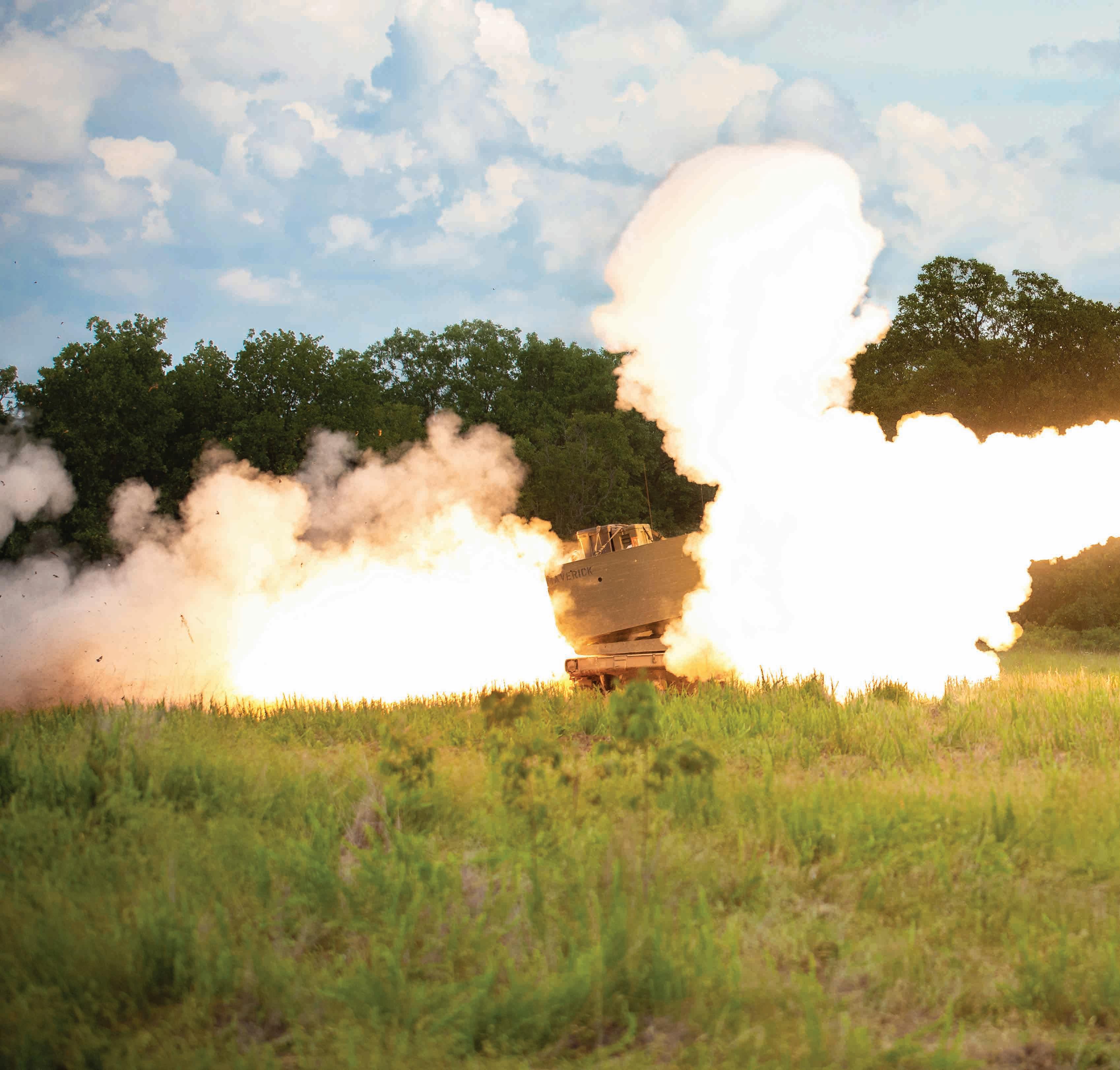
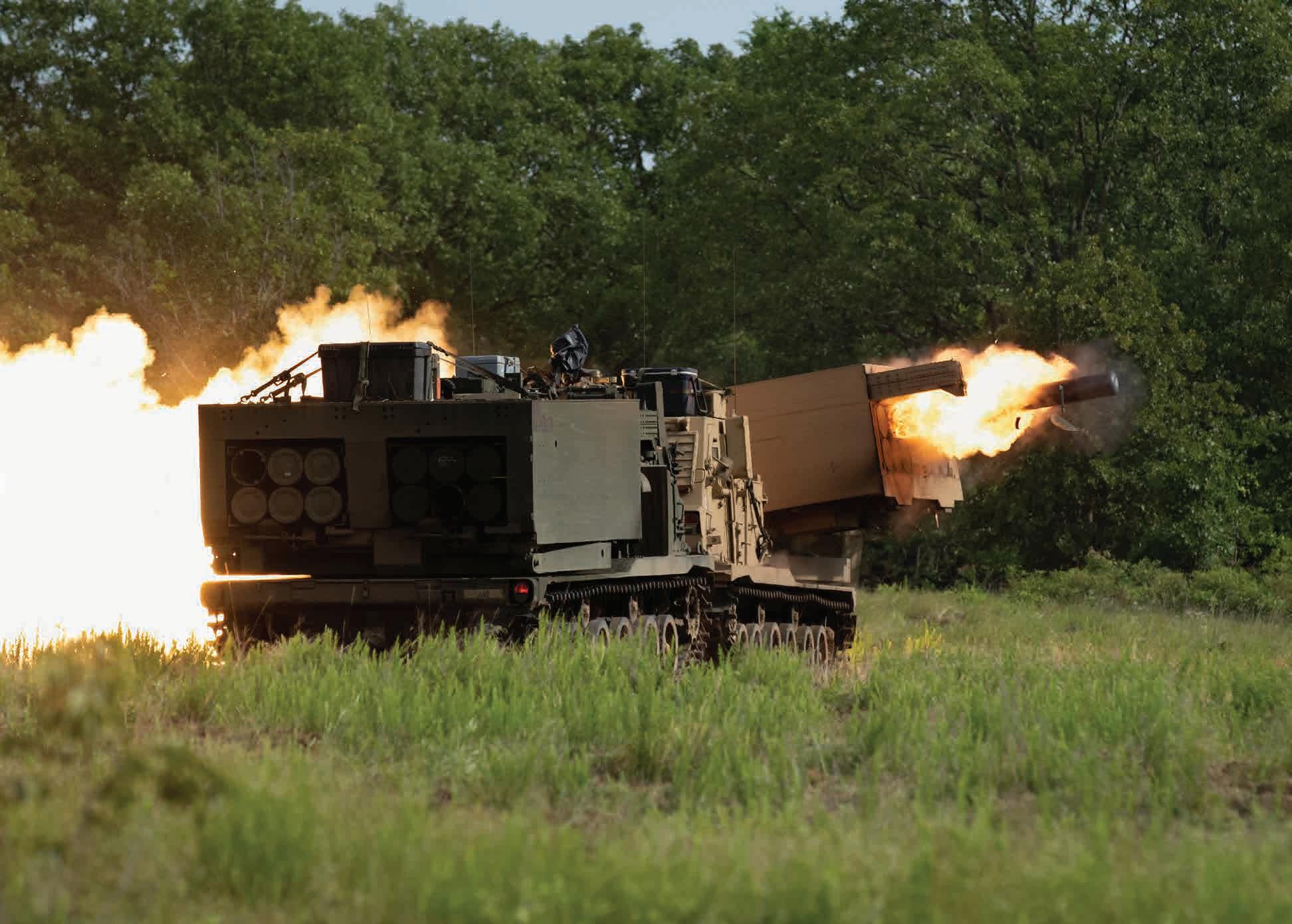
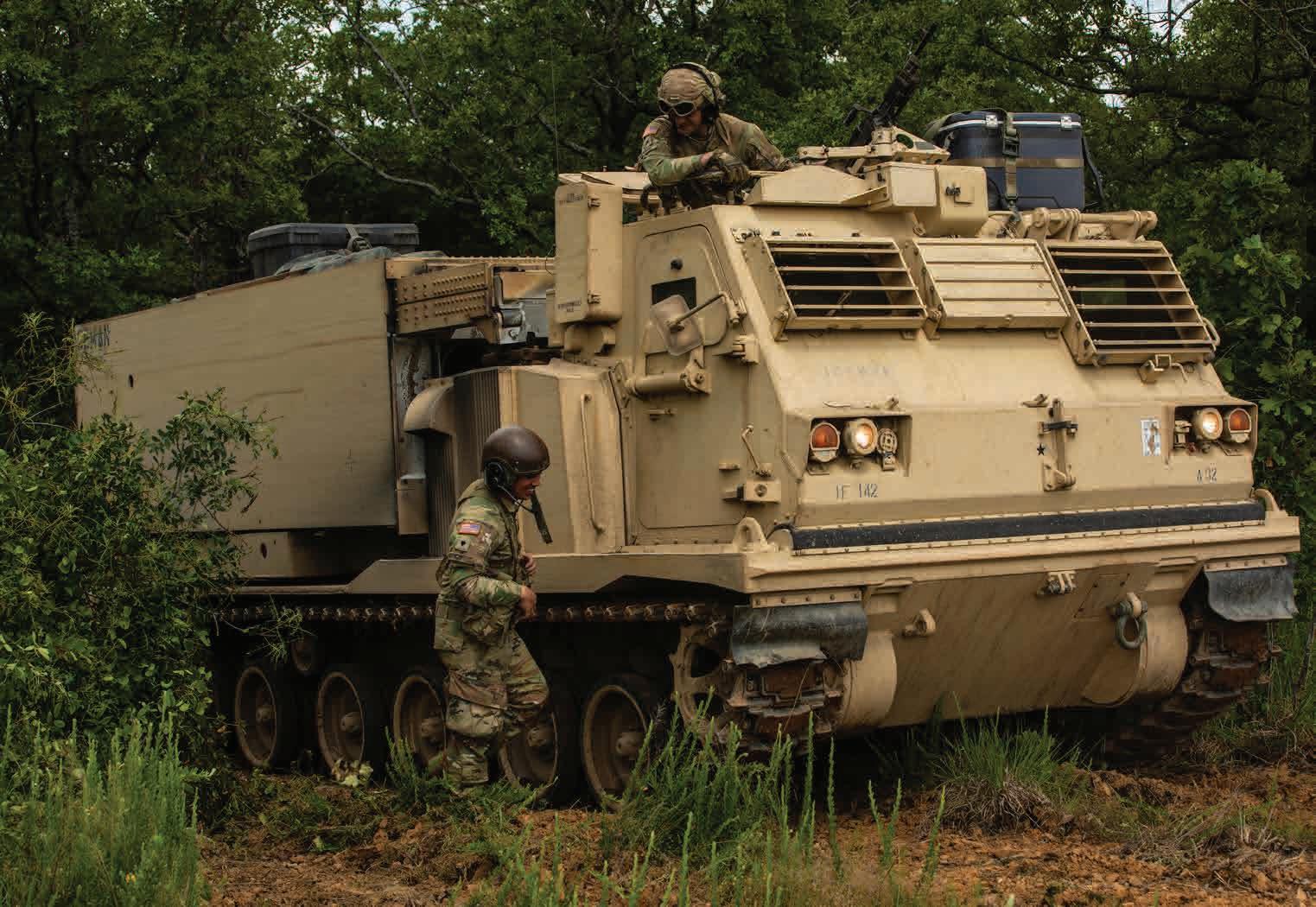
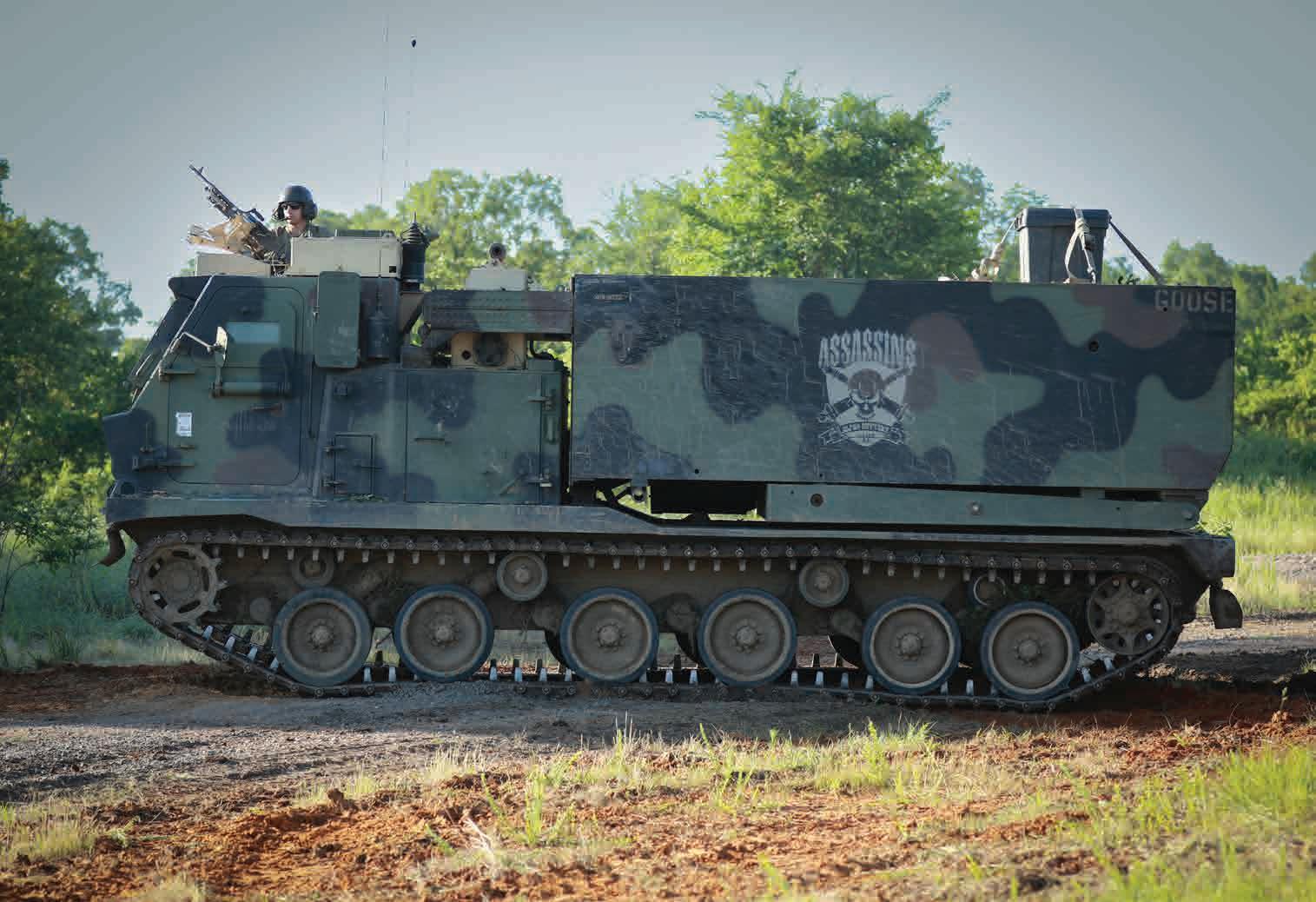
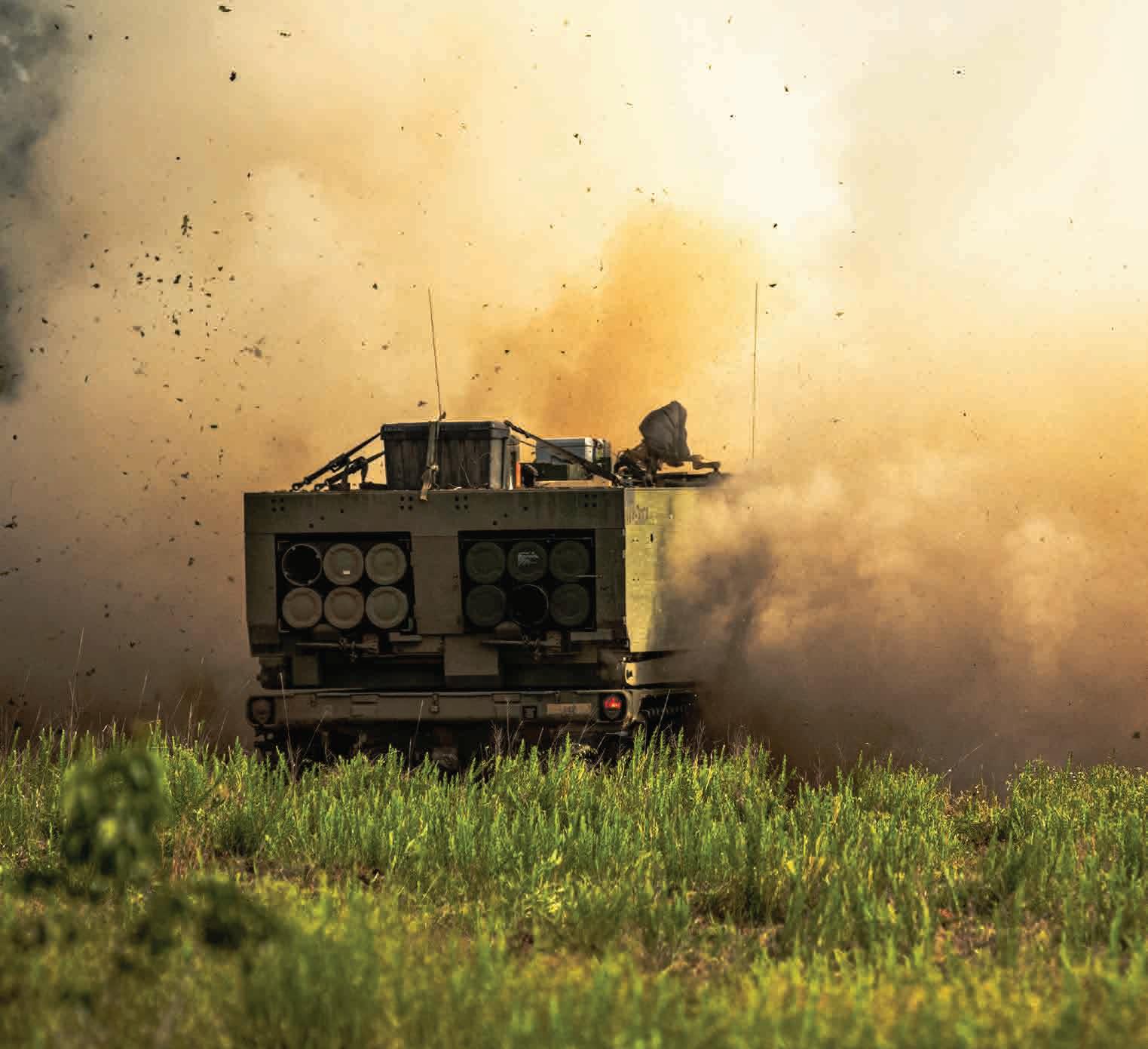
Alpha Battery, 1st Battalion, 142nd Field Artillery Brigade conducted intense training on their Multiple Launch Rocket Systems (MLRS) during Operation Razorback Thunder 2023. It was a sunny day on May 18, 2023, as the soldiers gathered at their designated areas, ready to showcase their skills with these powerful artillery systems.
The MLRS units stood tall, their massive frames exuding strength and precision. These highly mobile, self-propelled artillery systems were designed to deliver firepower swiftly to a target area using surface-to-surface rockets. The battalion was equipped with a formidable arsenal, consisting of a fire control system and a launcher vehicle with multiple pods, each containing a set of rockets. As the training commenced, the soldiers demonstrated the incredible capabilities of the MLRS. In quick succession, rockets were deployed, hurtling towards their targets. The ground shook with the explosive power unleashed with each round, leaving no doubt about its effectiveness in area suppression, countering enemy artillery fire, and attacking enemy positions.
15
Cpt. Justin Mackey, the commanding officer of Alpha Battery, emphasized the importance of discipline and initiative during the Annual Training, “relying on your subordinates to conduct the mission…and trusting them to do so.”
His words carried weight as the soldiers understood the significance of their roles within the battery. Each soldier knew they had to be disciplined, not just individually, but as a cohesive unit. From the top down, the officers set the example, instilling a sense of responsibility and trust in their subordinates. They understood that success on the battlefield depended on their ability to work together seamlessly.
The Soldiers practiced tirelessly, instilling the muscle
memory required to operate the MLRS with efficiency. They were the guardians of immense firepower, tasked with providing mobile and versatile means of support for ground forces during offensive operations.
Alpha Battery’s training had solidified their teamwork and expertise. They were ready to face any challenge, neutralizing enemy artillery and air defense systems with their deadly rockets.
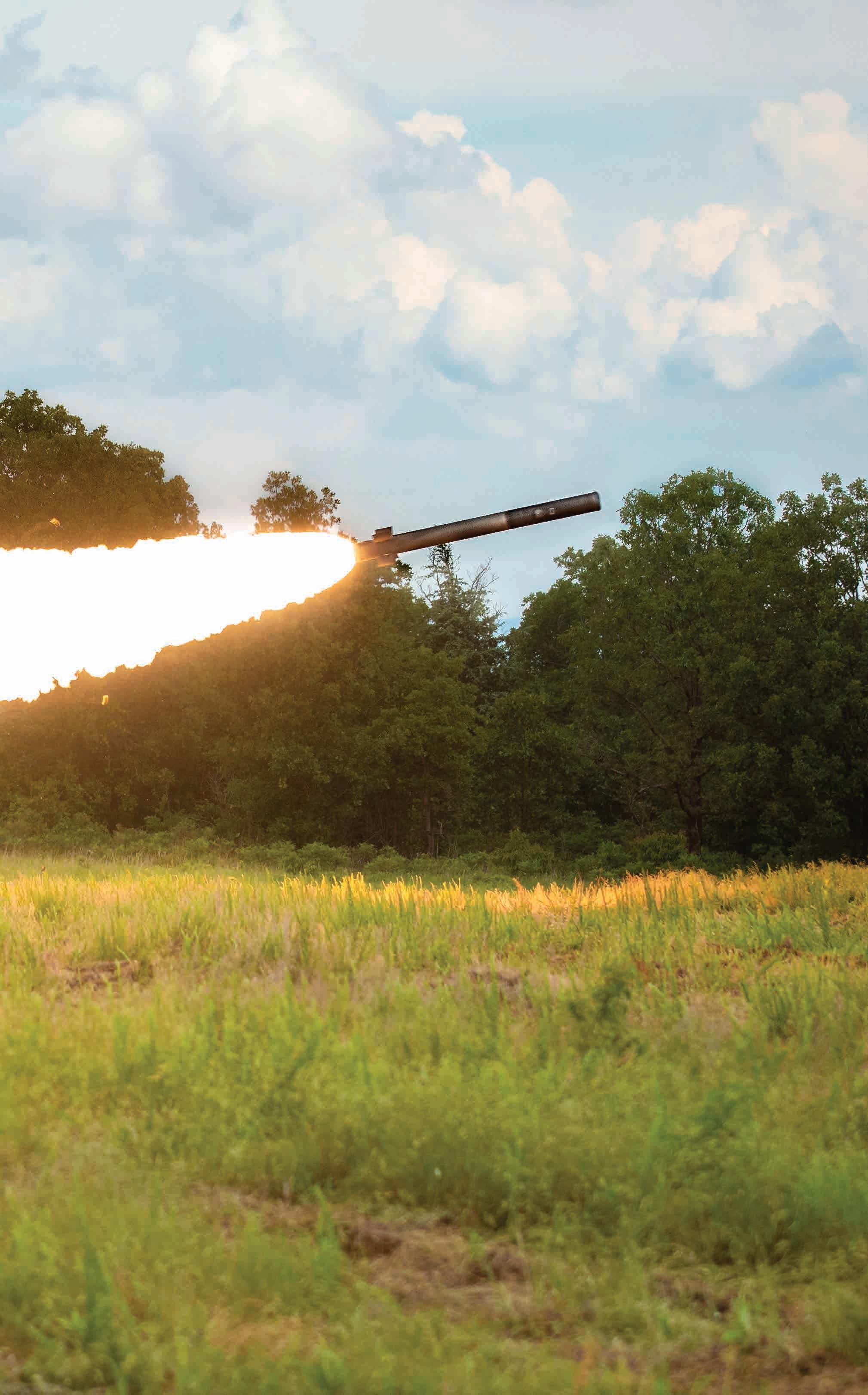
As the operation progressed, it became evident that the MLRS and the soldiers of Alpha Battery were a force to be reckoned with. Their discipline, initiative, and trust in each other allowed them to accomplish their objectives swiftly and effectively.
The training on the MLRS during Operation Razorback Thunder 2023 had been a resounding success. Cpt. Justin Mackey looked upon his soldiers with pride, recognizing their dedication and commitment to excellence. The lessons learned during this training would resonate with them throughout their military careers, reinforcing the importance of discipline, initiative, and trust in the face of adversity.
As the sun set on the training grounds, the soldiers of Alpha Battery knew they had become an unstoppable force. The MLRS had transformed from mere machinery into a symbol of their unity and strength. They were ready to face any challenge that lay ahead, knowing that their discipline and trust in each other would guide them to victory.
MLRS
16
Photo by Spc. Savannah Smith

17
18
Photos by Spc. Thomas Pate and Spc. Savannah Smith
19
Graphic Illustration by Spc. Savannah Smith
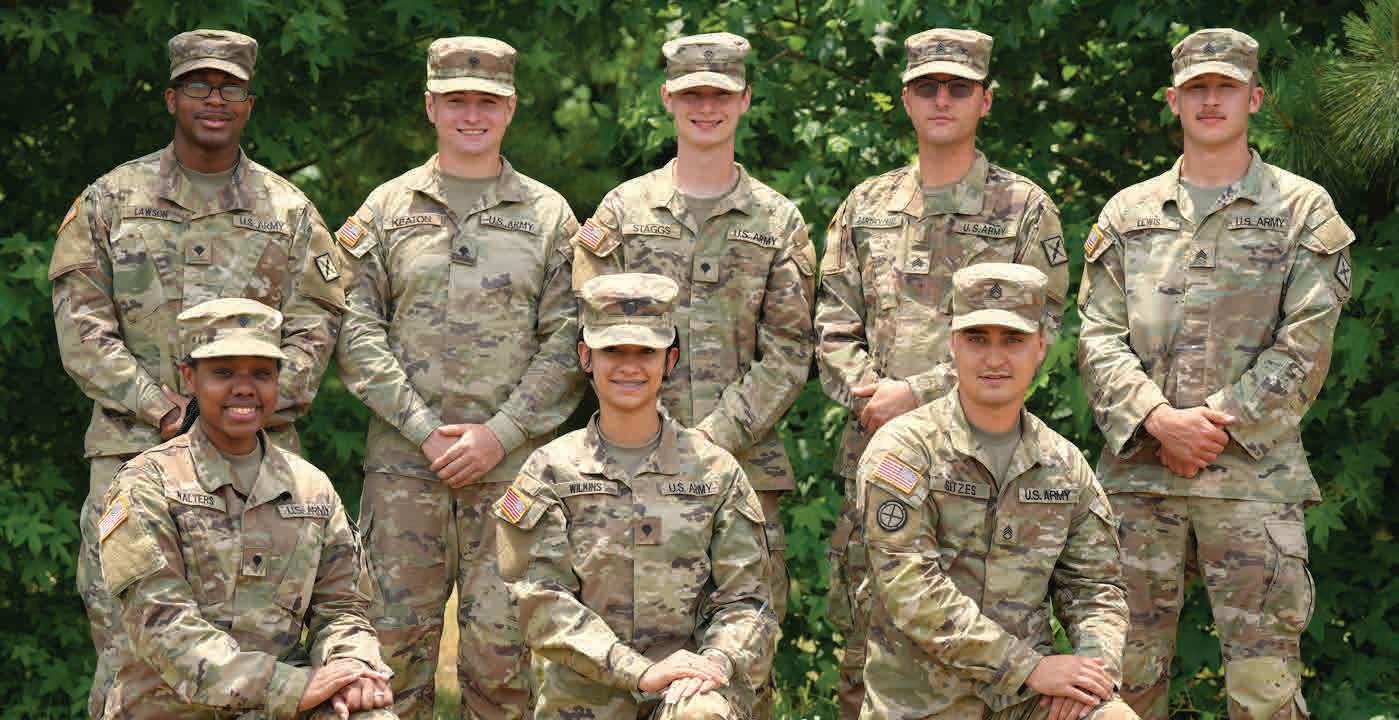
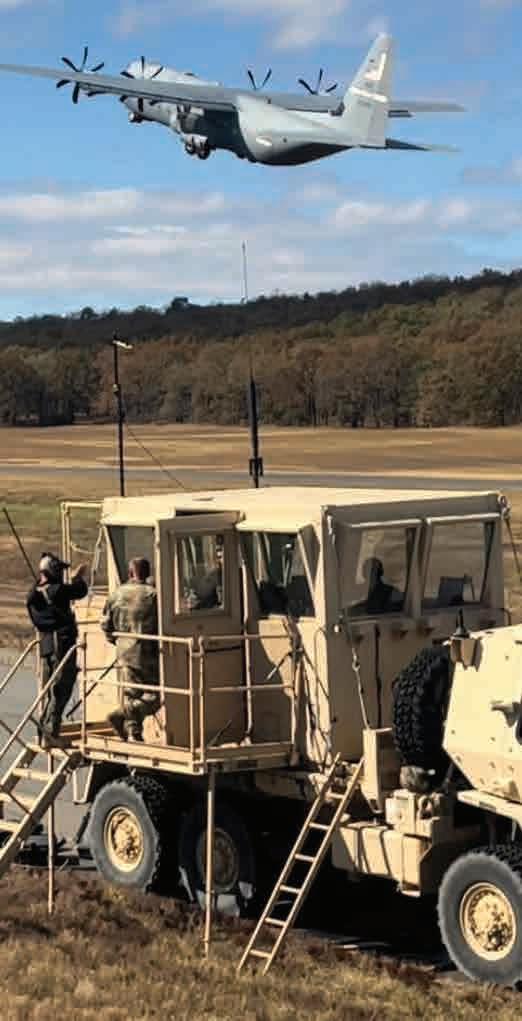
It’s not every day that Soldiers in the Arkansas Army National Guard have the opportunity to attend Army schools, especially one as challenging as the United States Pathfinder school. In June, eight Air Traffic controllers assigned to the Fox Company 2-211 GSAB (General Support Aviation Battalion) will participate in the 16-day course. Specialist Shanique Walters from Jacksonville, Arkansas, looks forward to the opportunity. “I think it’s a great opportunity, my husband is a Marine, and he’s even more excited for the course than I am.”
The Army Pathfinder School is a specialized training program that provides selected Army personnel with skills and knowledge in pathfinding, air traffic control, and conducting helicopter landing zone operations. The primary goal of the Pathfinder School is to train soldiers to be proficient in planning, executing, and coordinating air movement operations in various operational environments. Captain Daniel Culbreth reiterated how proud he was when asked about the opportunity for his Soldiers to attend the course.
“For a small technical component, airspace always falls into the joint environment. It shows the comparability and tactical credibility of having the opportunity to attend the school.” The primary objective of the Army Pathfinder School is to train soldiers in various tasks and techniques related to airfield and air assault operations. The curriculum covers a wide range of subjects that the Soldiers must know even before attending. “I’m excited for the chance to attend the course,” said Specialist Isaiah Keaton. “It’s been a lot of late nights studying, and I know this will be mentally challenging.”

Army Pathfinder School is physically and mentally demanding, requiring soldiers to demonstrate proficiency in individual and team-based tasks. The Pathfinder training incorporates classroom instruction, practical and field training exercises to provide a comprehensive learning experience.
Completion of Army Pathfinder School qualifies soldiers to serve in Pathfinder units, where they can apply their skills to support various airborne and air assault operations. Pathfinder-qualified soldiers play a critical role in ensuring the success of these operations by providing accurate and timely navigational information and establishing safe landing zones for aircraft.
20
Forward Armed & Refueling Point
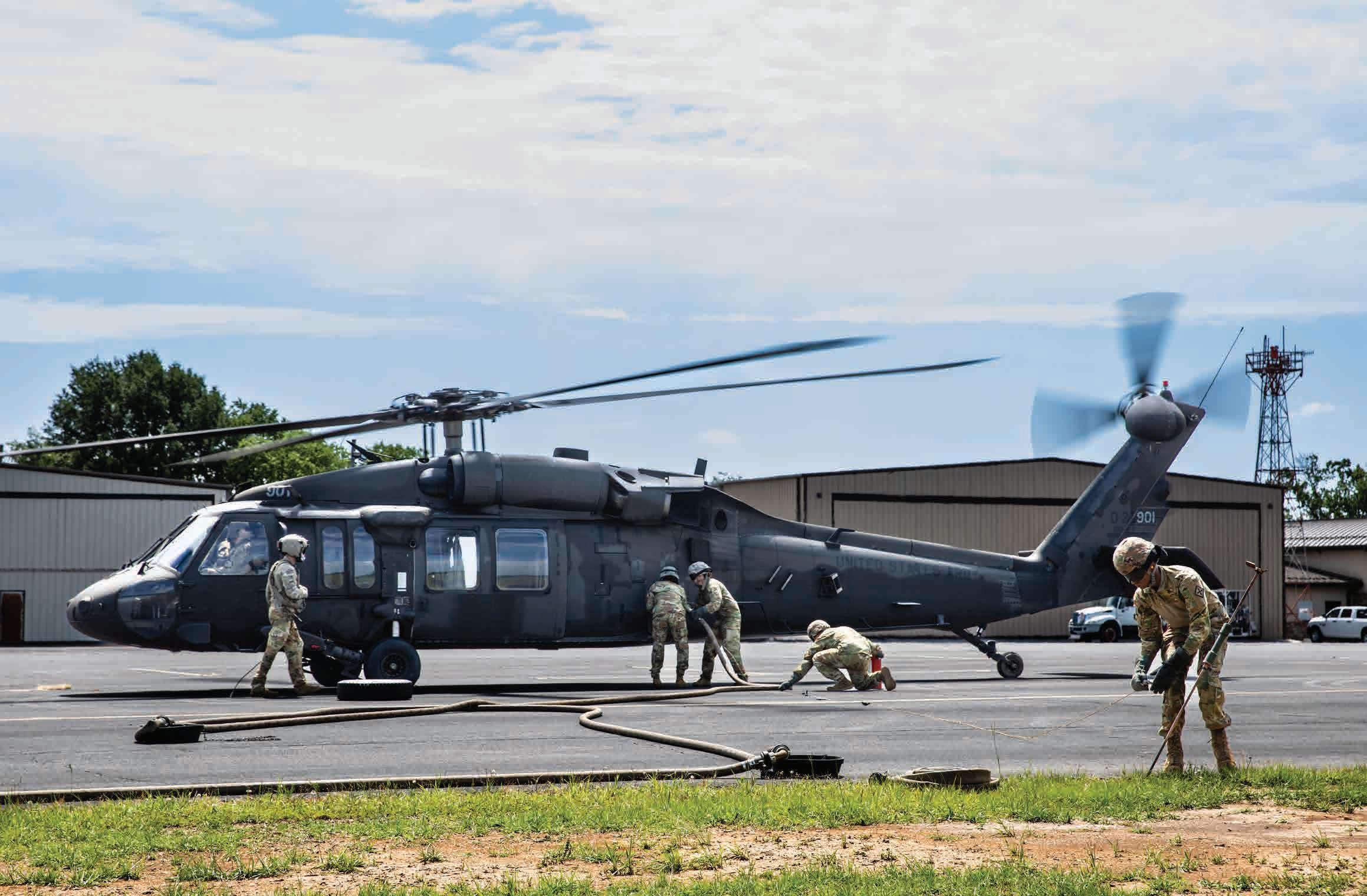
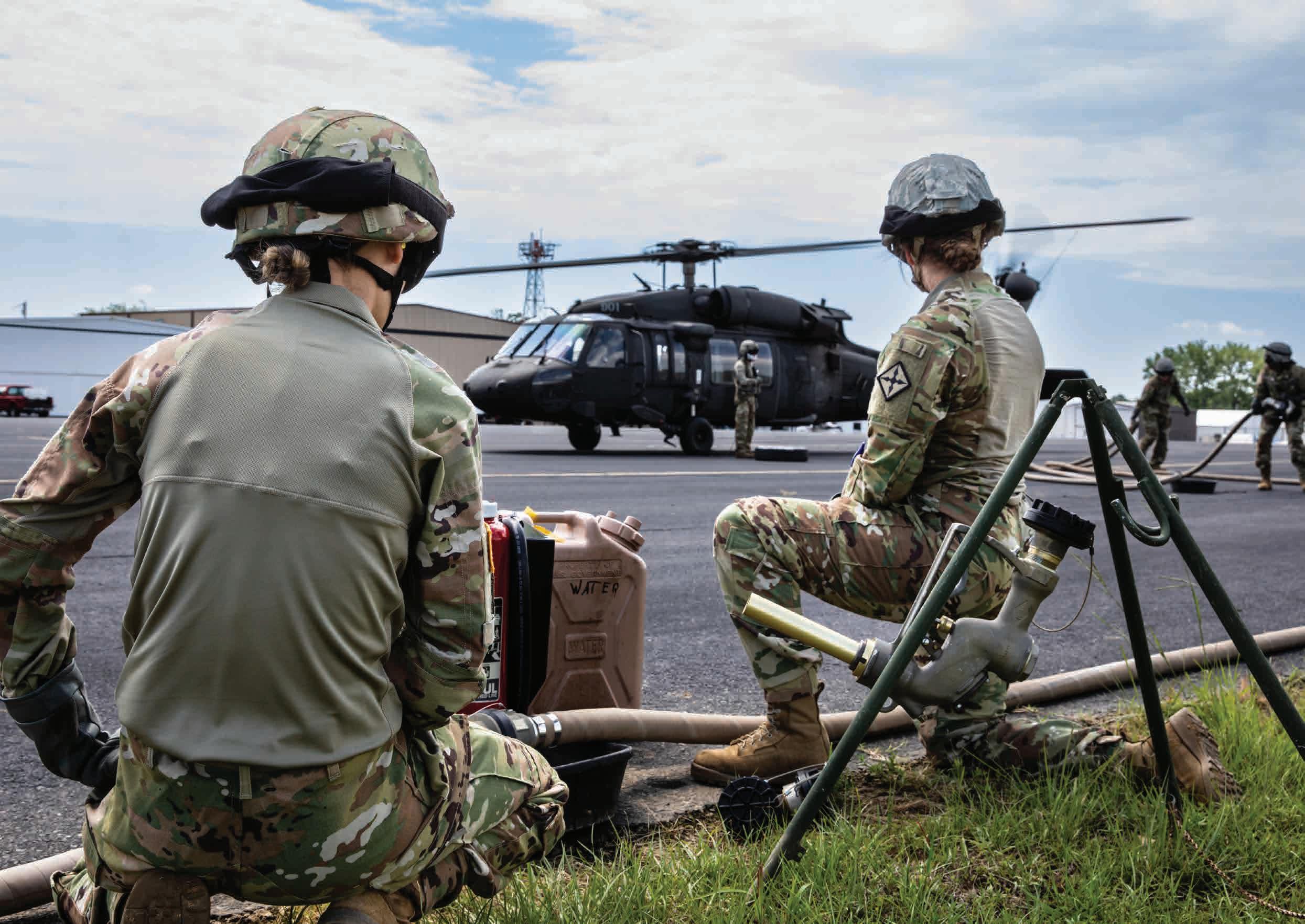
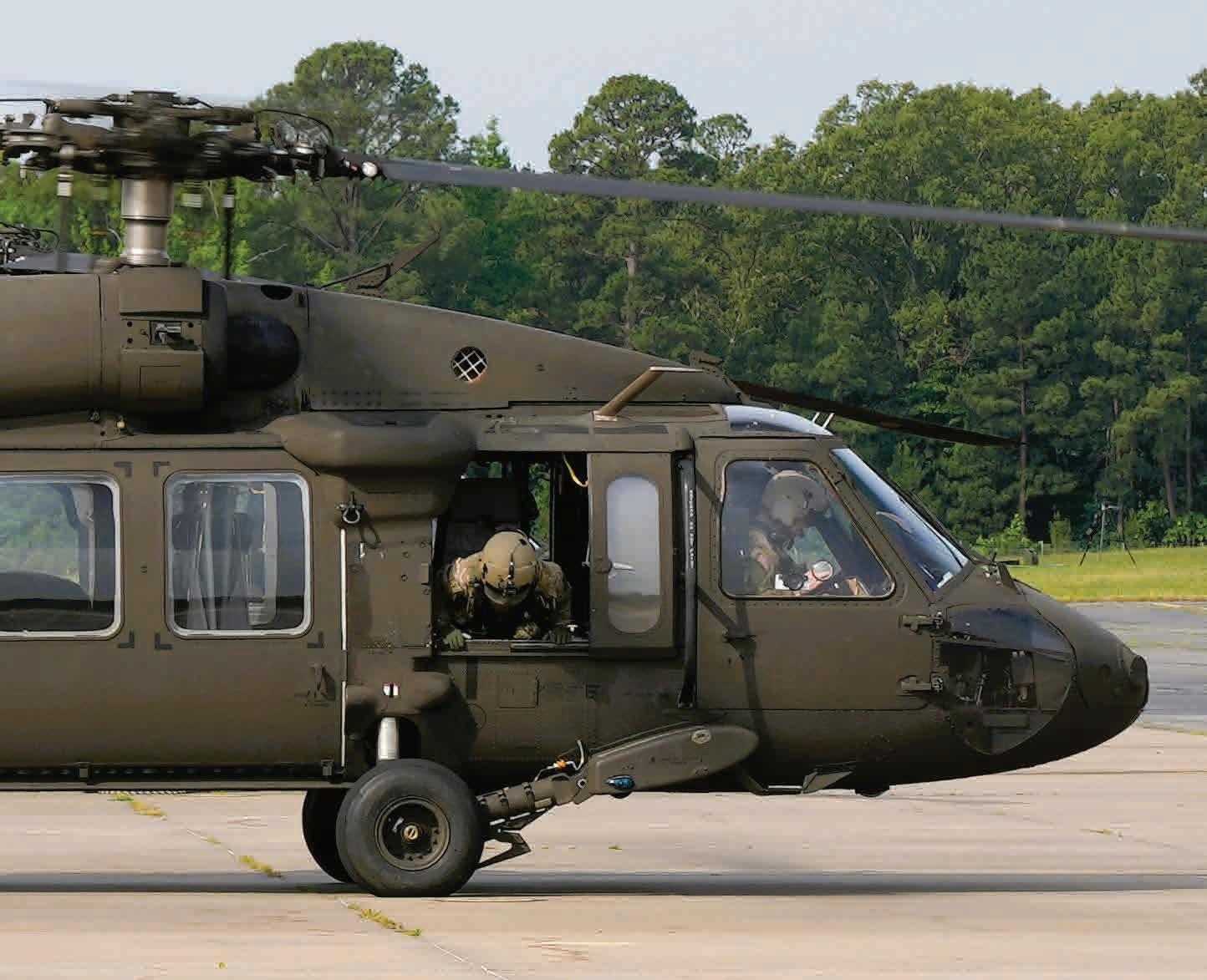
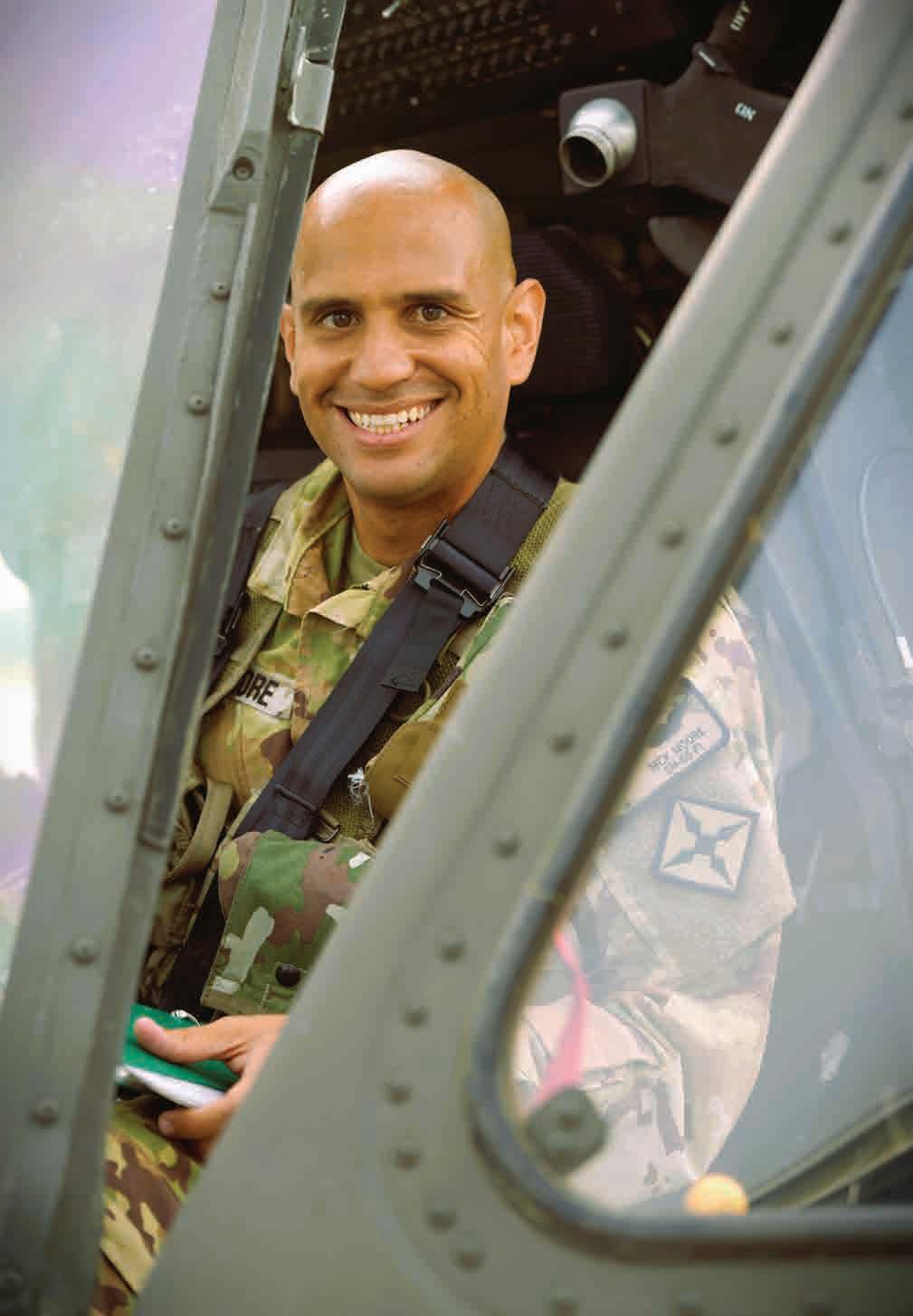
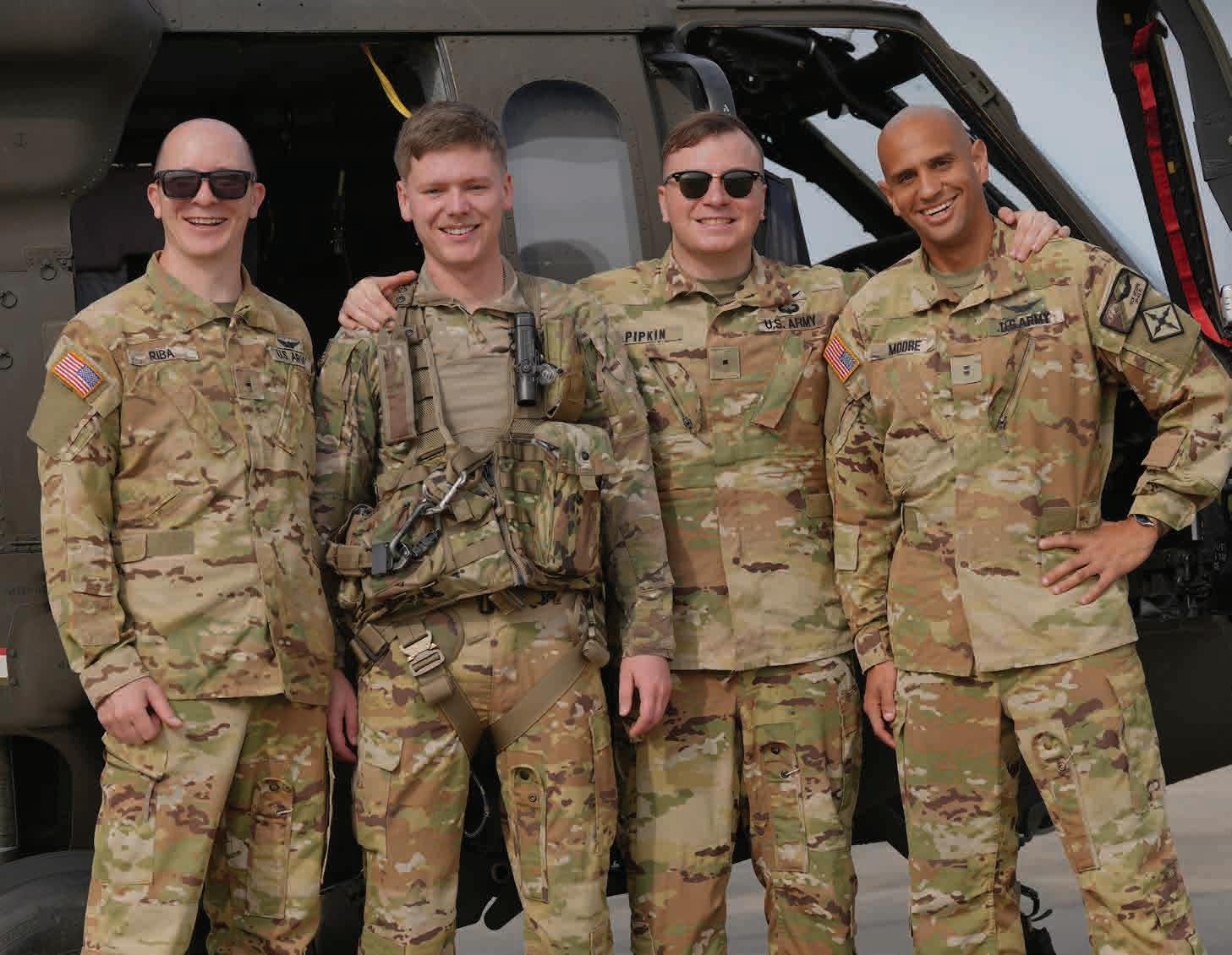
Under the blazing Arkansas sun, Chief Warrant Officer 1 Drake Pipkins and his crew left the tarmac behind, heading towards Cin their Blackhawk; Spc. Tatum Moore and Spc. Santiago Carstensen waits at the Cabot airfield for their arrival to conduct Forward Arming and Refueling Point operations. These missions involve setting up temporary fueling and rearming stations when access to traditional airfields are inaccessible.
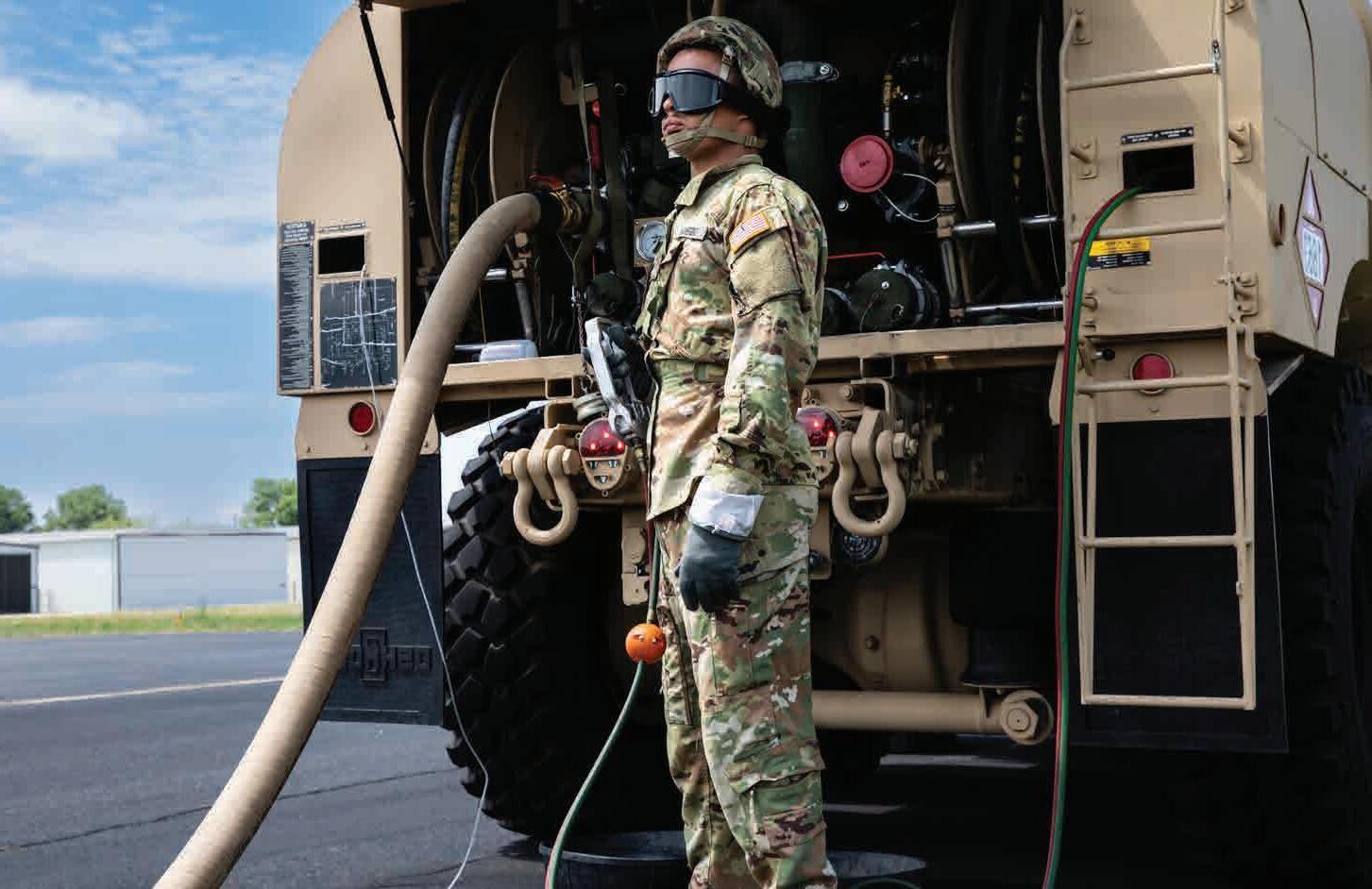
Spc. Carstensen took charge at the back of the truck during FARP operations, skillfully communicating with the fuelers connecting hoses to the awaiting aircraft, using hand and arm signals. His vigilance and expertise were paramount in maintaining the integrity of the fueling process.
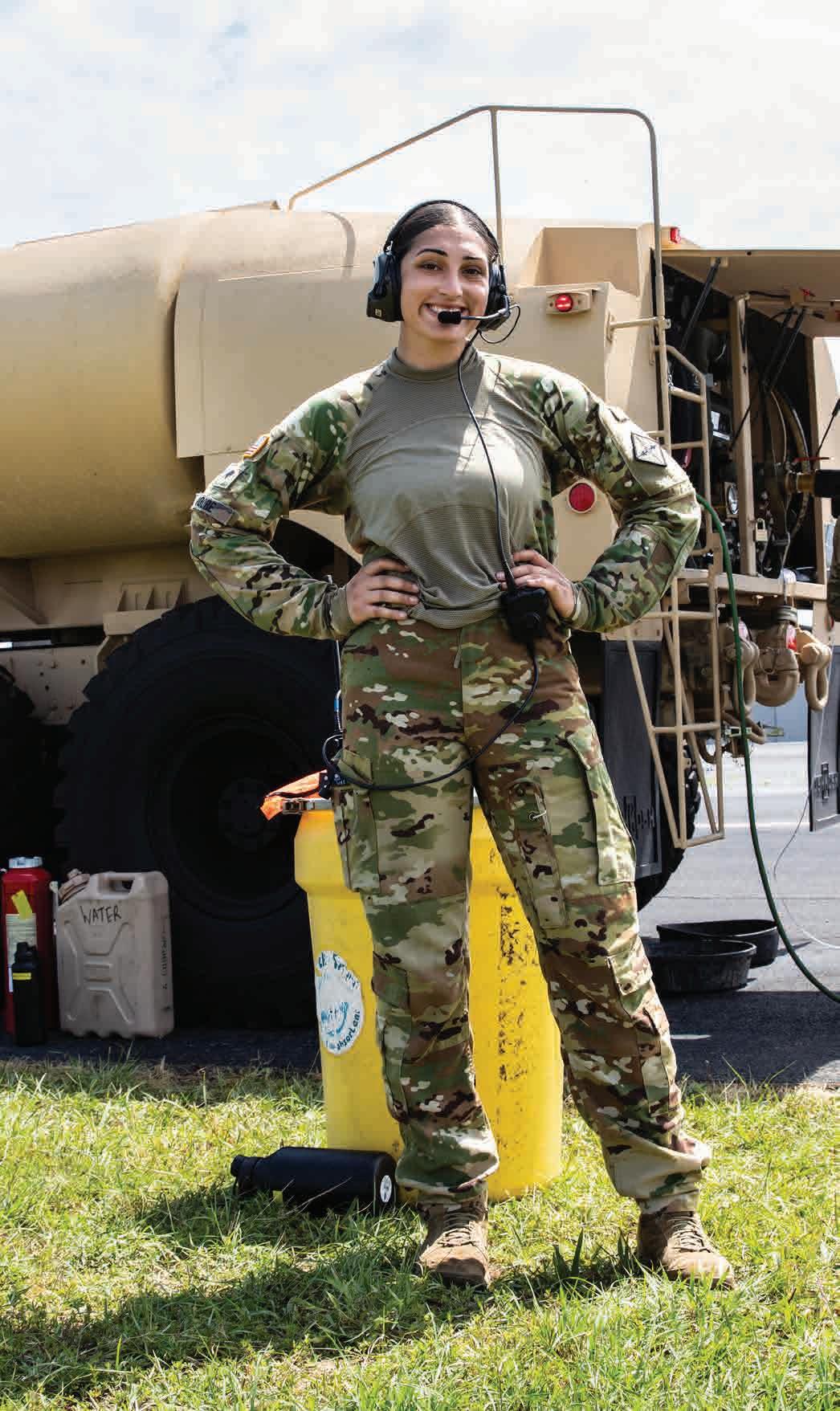
Spc. Moore played a crucial role in coordinating with the aircraft crew. Armed with an AMBITR radio, Moore kept track of incoming flights, providing timely updates to the ground crew. Her meticulous communication ensured that flights were seamlesly integrated, allowing for efficient and well-timed refueling. As specialists in hot refueling aircraft, they understood the significance of their role in supporting the success of flight crew operations.
The FARP missions were executed with precision and dedication, this being a testament to the thorough training and teamwork of the Arkansas National Guardsmen.


21
Photos by Spc. Savannah Smith
22
Medical Evacuation
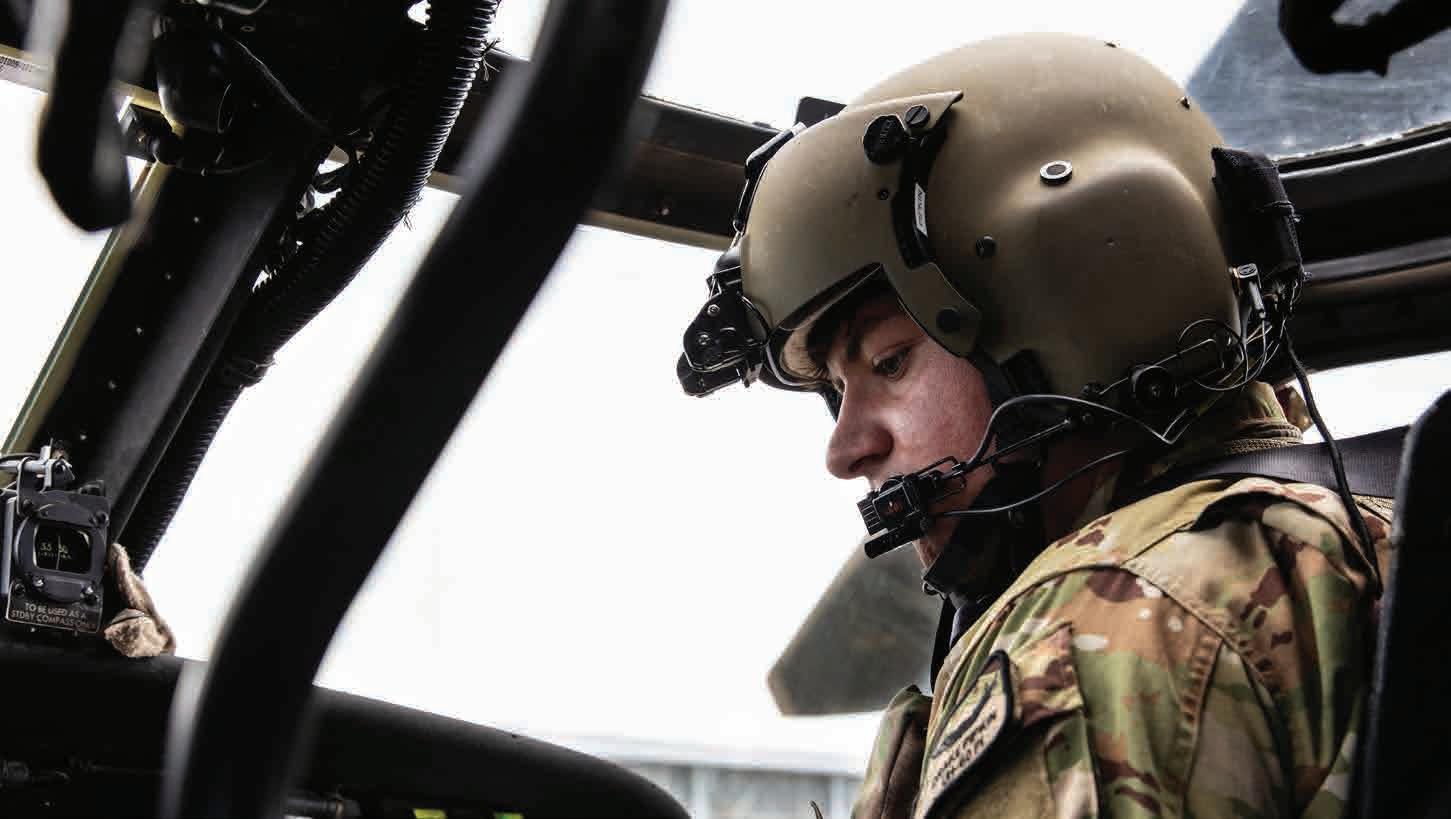
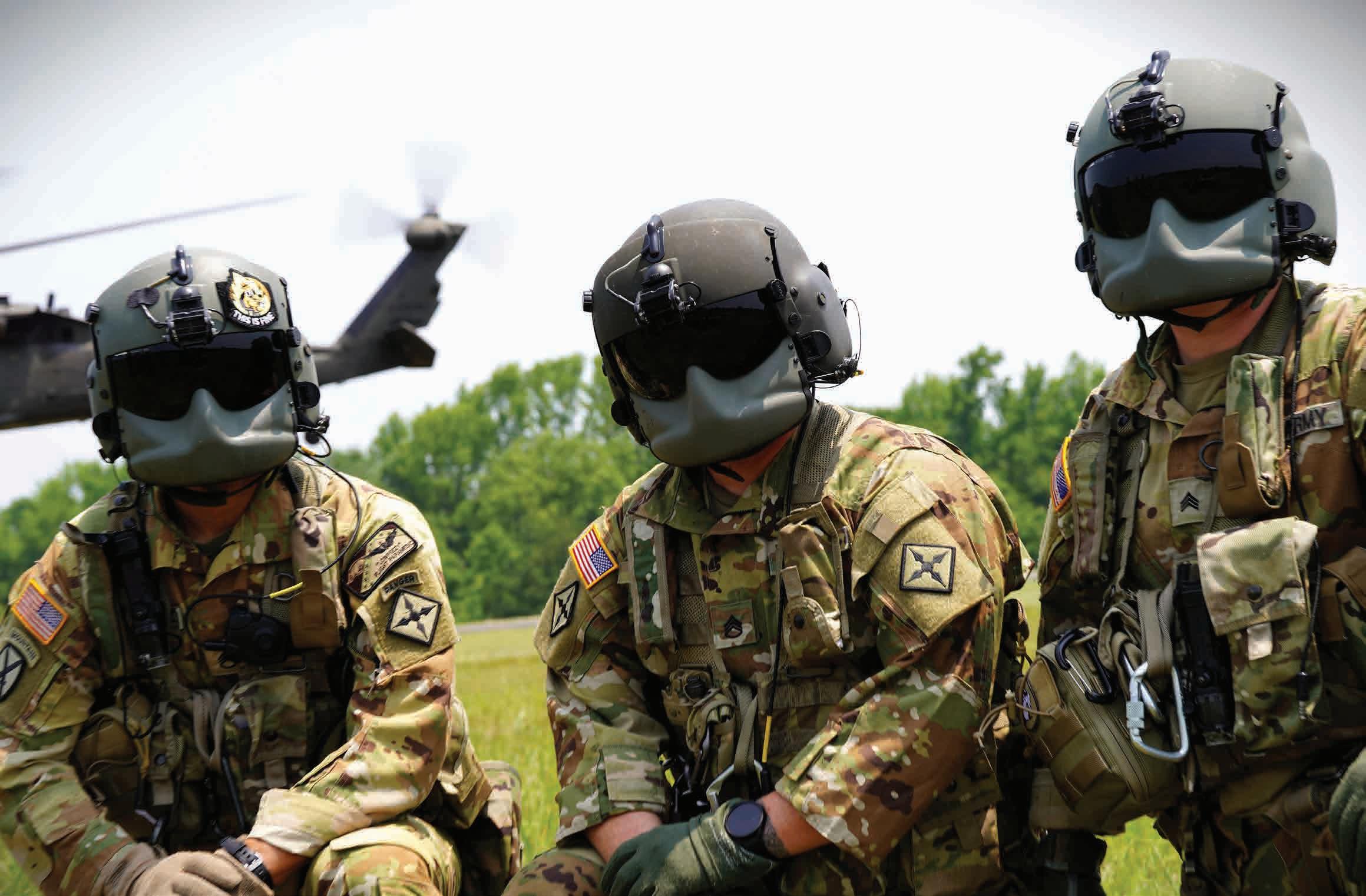
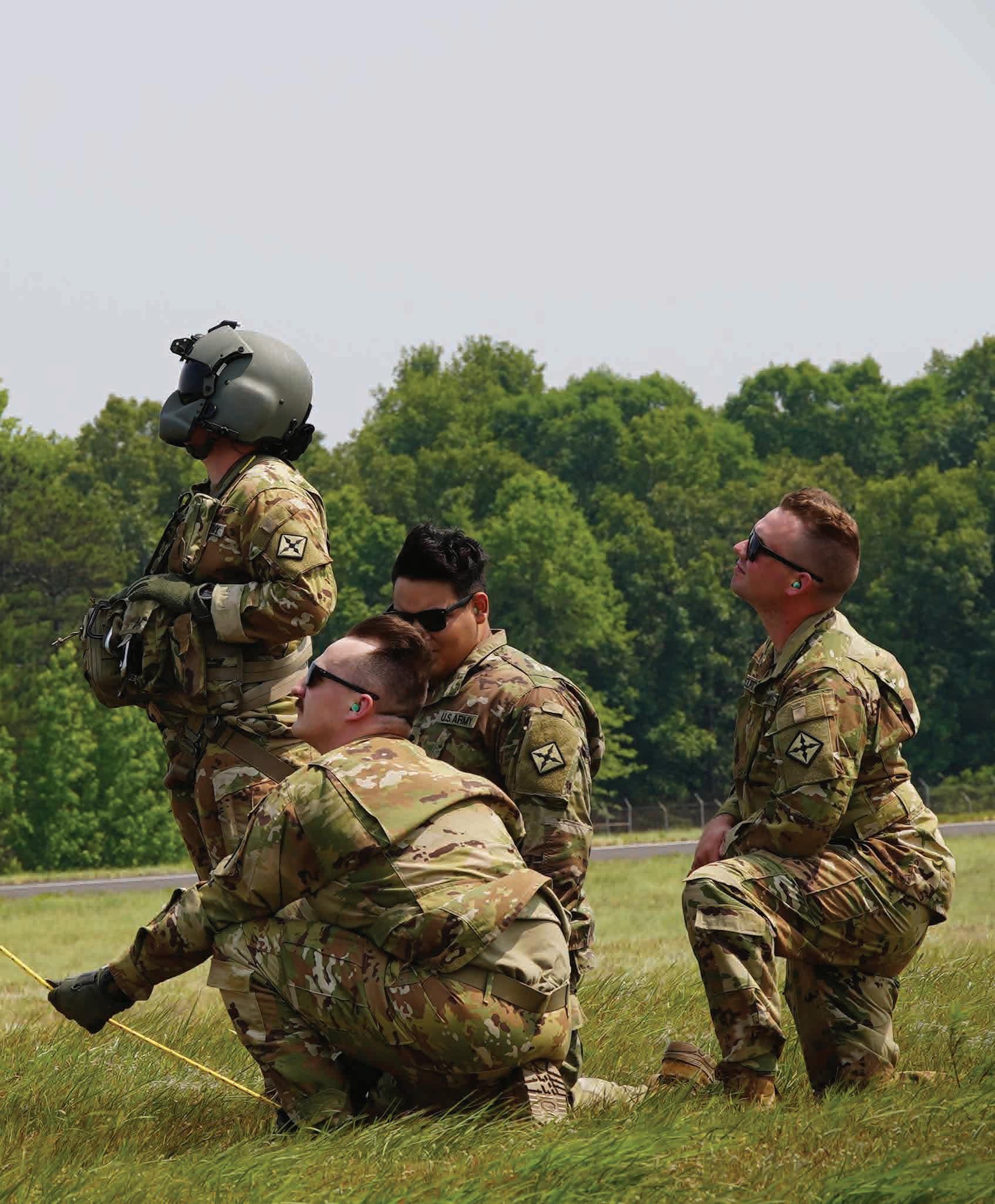
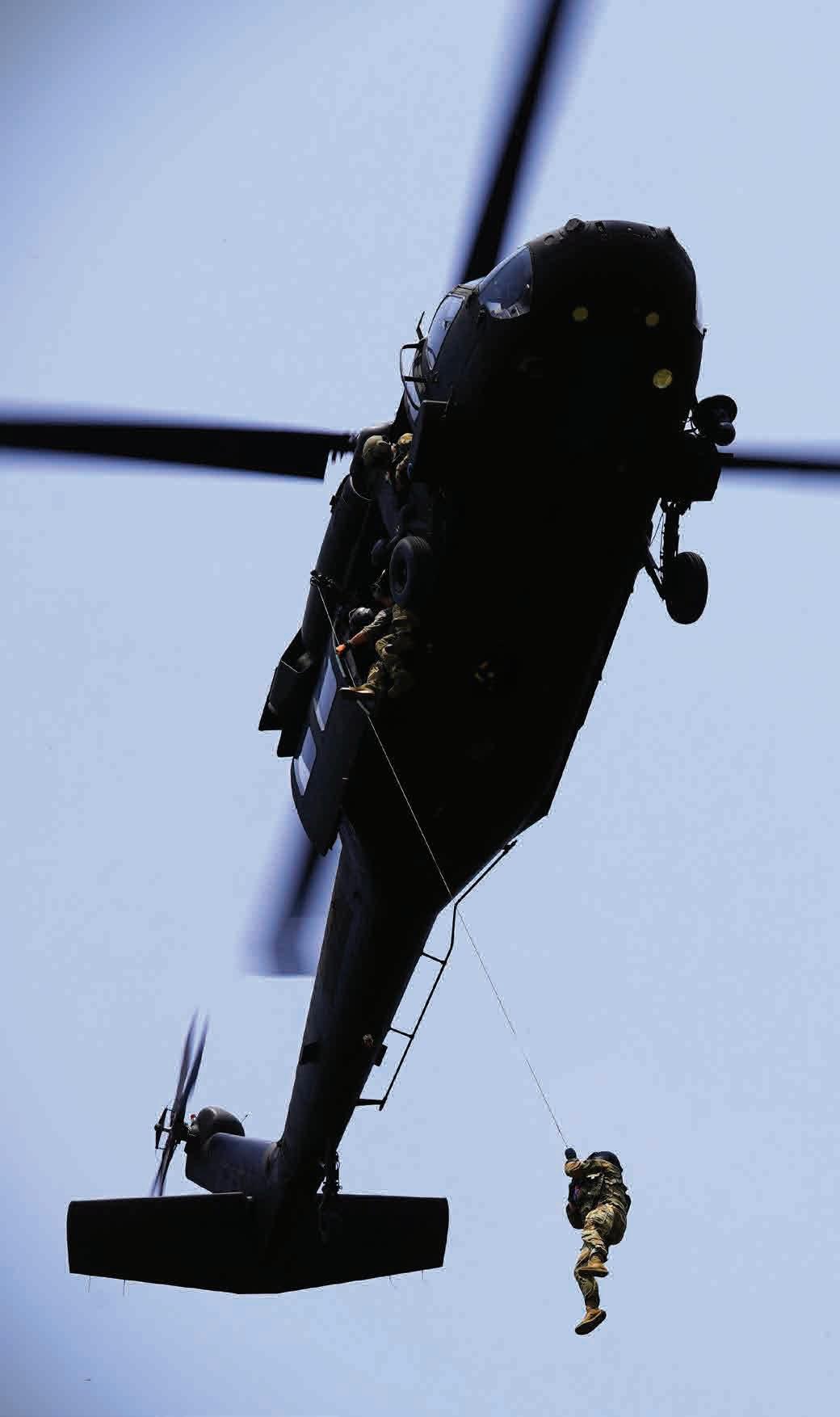
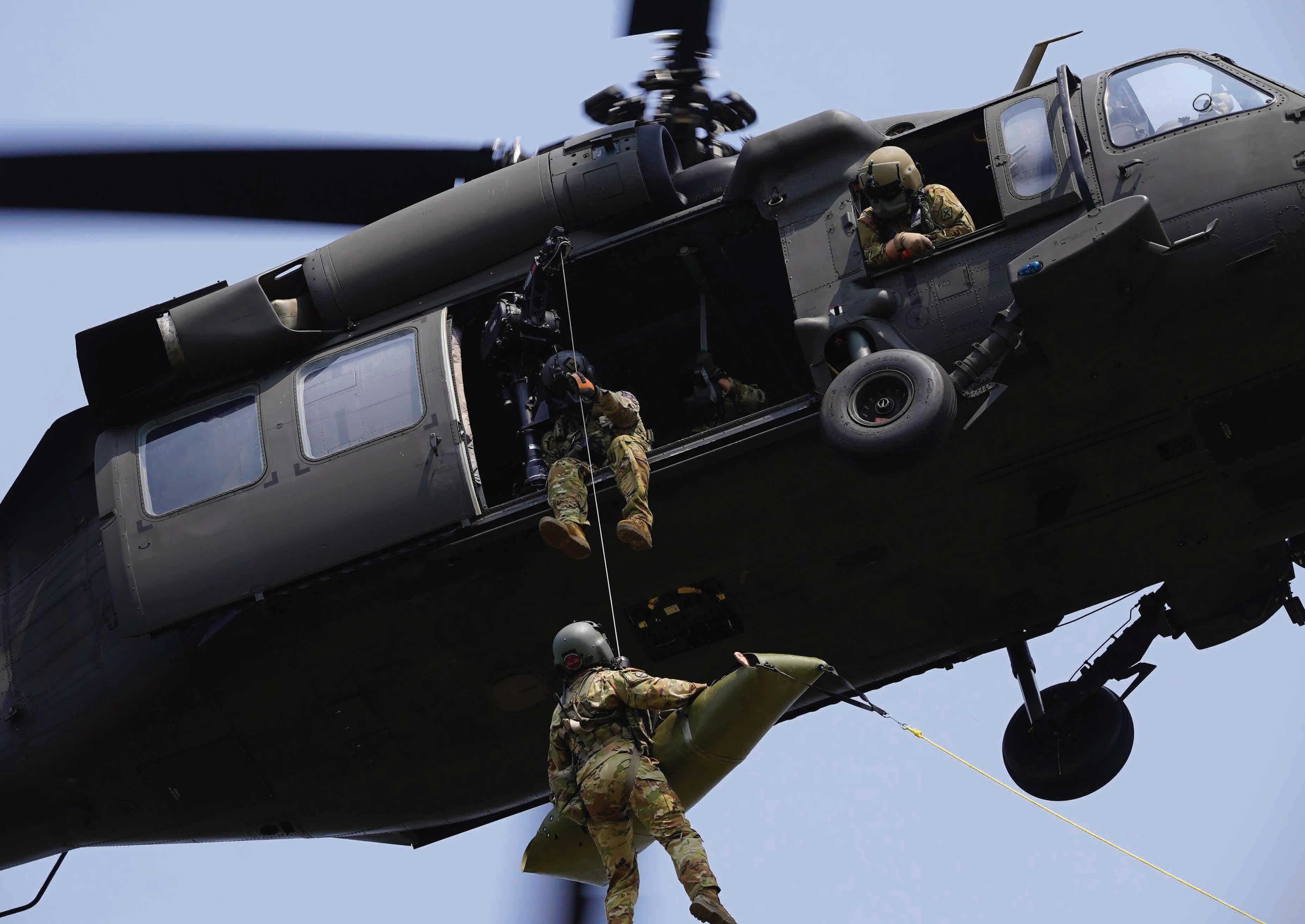
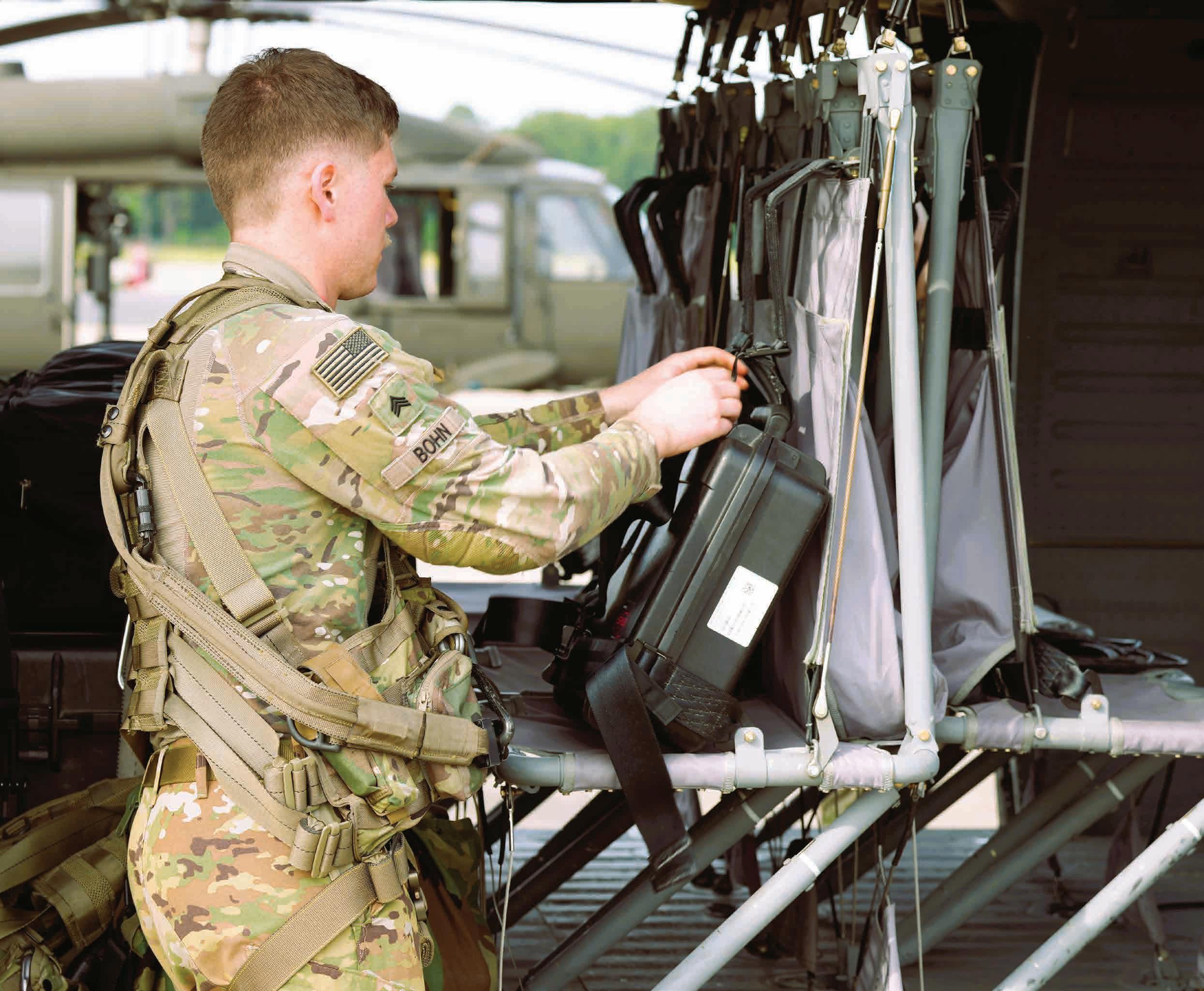
The 77th Theater Aviation Brigade Soldiers conducted Medical Evacuation training during this year’s annual training. Medical Evacuation, or MED EVAC, refers to the specialized operation conducted by the military to transport injured or ill personnel from the battlefield or other remote locations to medical facilities for further treatment.
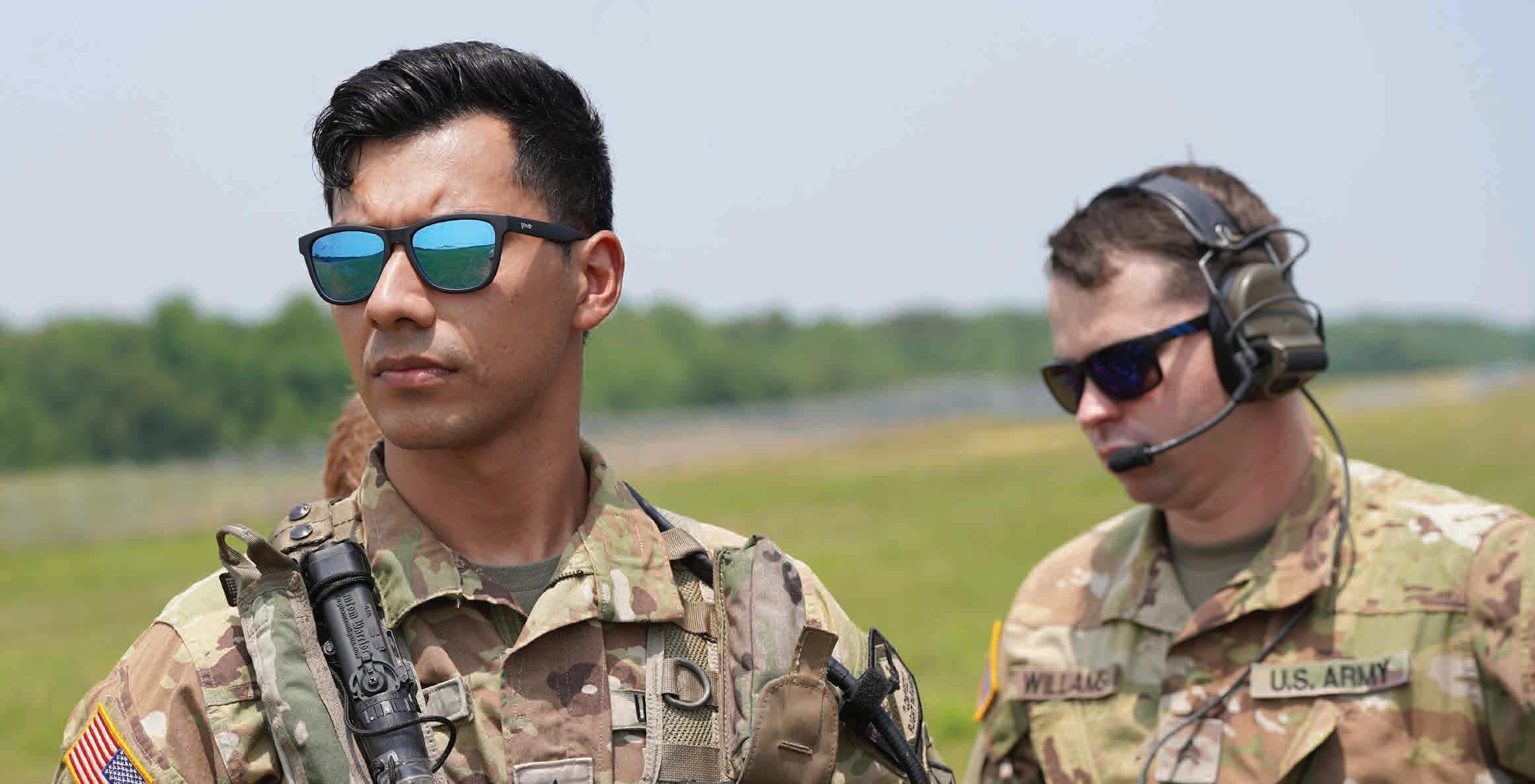
MEDEVAC is crucial in providing timely and lifesaving care to military personnel in combat zones or areas requiring immediate medical attention.
23
(Photos by Sgt. First Class Justin Goad)
24
Air Traffic Controllers
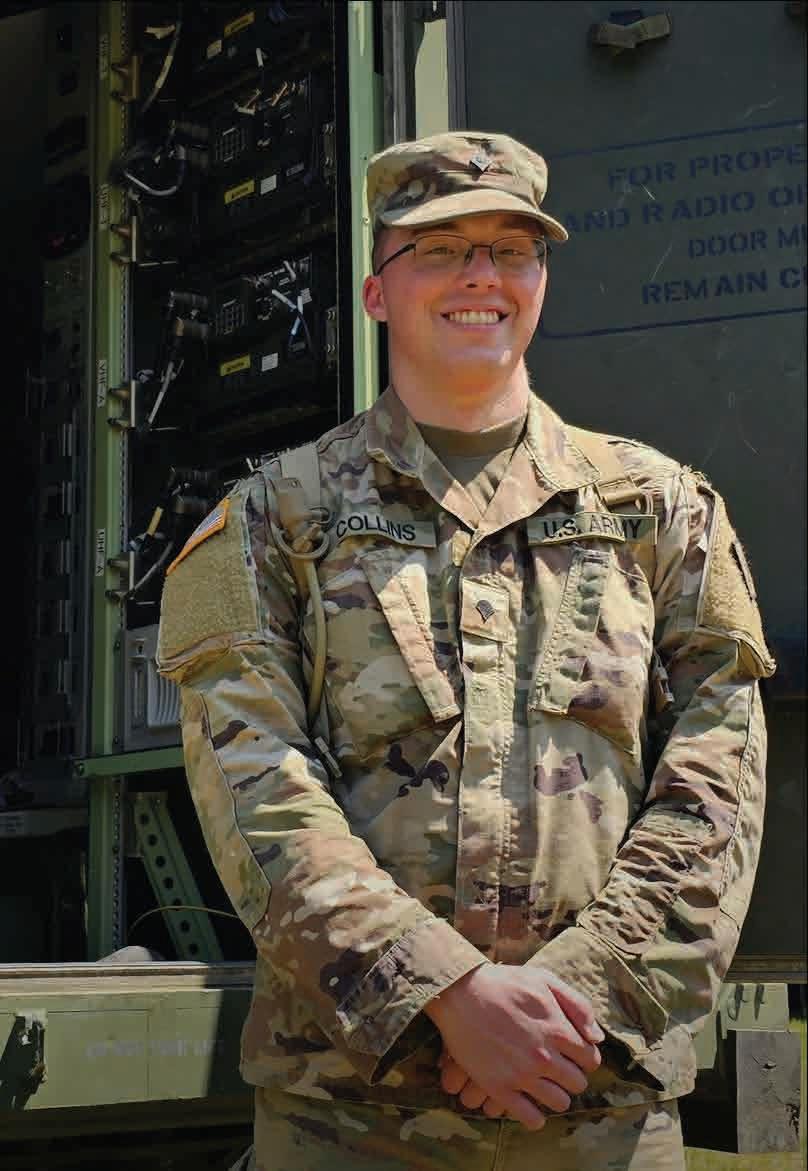
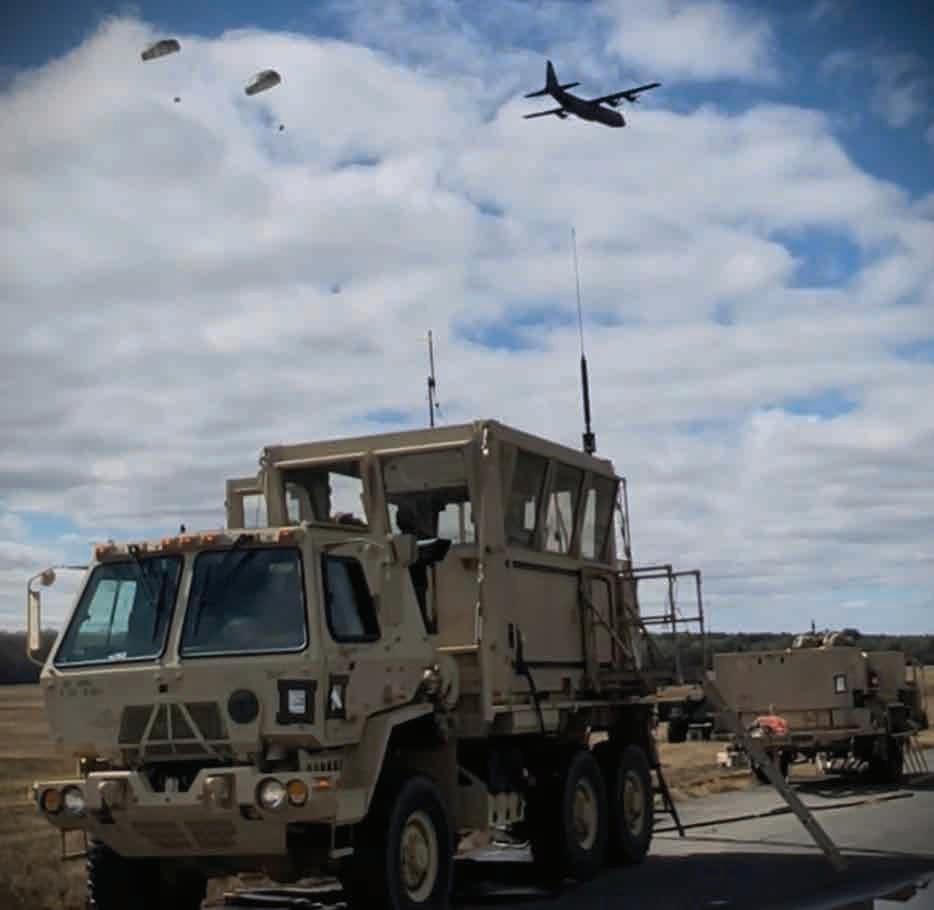
Soldiers with the 77th Combat Aviation Brigade conduct Air Traffic Controll training. One such air traffic controller is Army Specialist Austin Collins. Collins, who resides in Little Rock, Arkansas, has been in the Army National Guard for eight years. Collins and his fellow ACTs prepare themselves for managing and directing air traffic within military airspace. They are also responsible for ensuring the safe and efficient movement of aircraft during takeoff, landing, and while in flight.
Camp Robinson, located in North Little Rock, Arkansas, is a training facility primarily used by the Arkansas National Guard. While Camp Robinson does not have controlled airspace, it is situated near several airports and airspace sectors that may be relevant for air traffic control purposes. “We train to handle various situations whenever we’re needed," Collins said. “One of the most stressful situations I’ve worked in is when we conduct night operations.
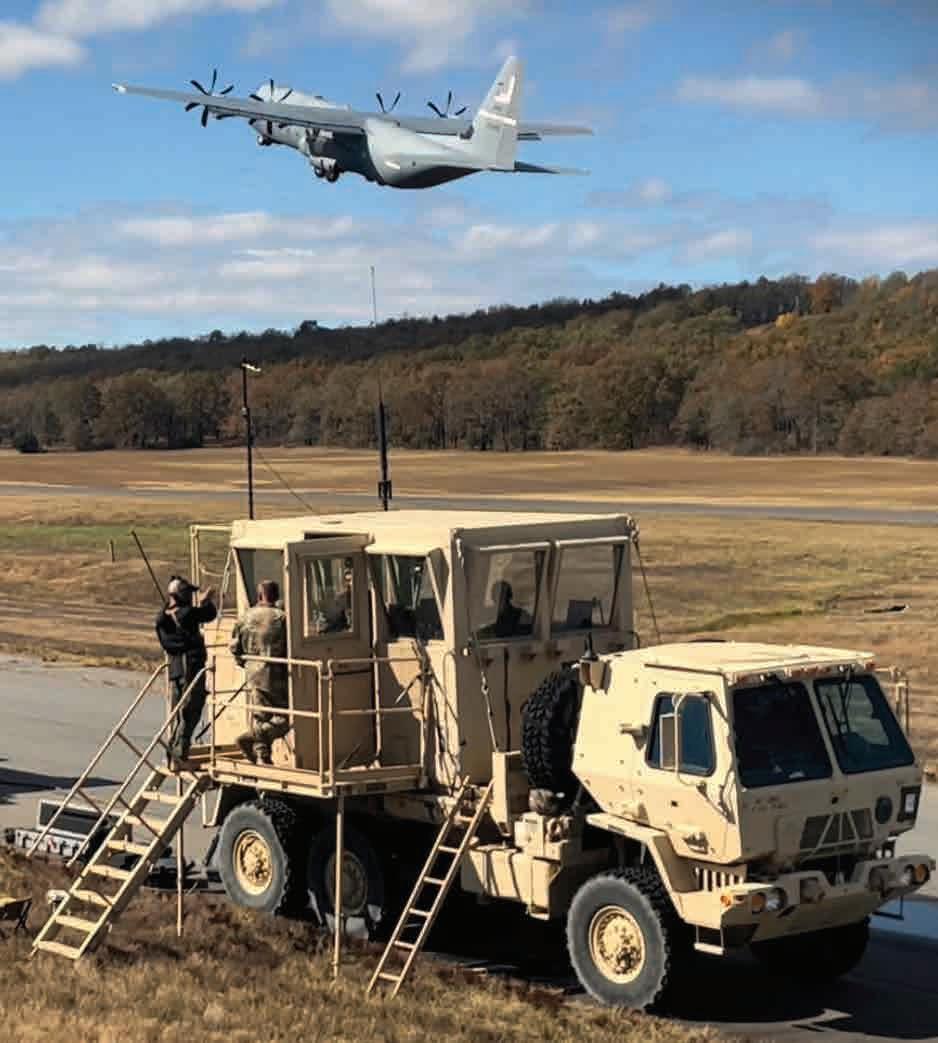
Air traffic controllers have a critical role in ensuring the safety of aircraft and passengers. They must make quick decisions and communicate effectively to manage complex situations. The level of responsibility can create pressure and stress. They also must make timely decisions and provide instructions promptly to pilots. Failure or mistakes in decision-making can have serious consequences.
According to Collins, one needed aspect of success relates to being able to communicate. “We try to utilize effective communication; an air traffic controller must be successful,” said Collins. Controllers must communicate clearly and accurately with pilots with different accents, dialects, or language skills. Miscommunication or misunderstanding can result in safety risks, adding to the stress.
Collins originally joined the Arkansas National Guard as a Field Artillery Soldier but reenlisted once his contract expired to become an air traffic controller.
“I love the job; it really challenges me to use my mind to help ensure the aircraft and its passengers are safe.”
25
-Spc. Austin Collins


Air traffic controllers need to handle emergencies and unexpected events, such as weather-related issues, equipment failures, or aircraft emergencies. These situations require quick thinking, calmness under pressure, and effective decision-making.
To be an Army air traffic controller, individuals are required to undergo extensive training to meet Federal Aviation Administration standards. The average training time for an air traffic controller consists of 10 weeks of Basic Training as well as 15 weeks of Advanced Individual Training. During this time, trainees must learn FAA and Army air traffic regulations, study air approach maps, and spend countless hours with an Air Traffic Control trainer. This training ensures that allair traffic controllers are knowledgeable and skilled in safely directing the aircraft they guide.
One of the best parts of the job for Collins is working firsthand with the pilots. “It’s great to have the opportunity to train and work with the pilots on drill weekends,” Collins said. “We want to work with them as much as possible.”
ATC 26
“I love the job; it really challenges me...”
Distinguished Visitor
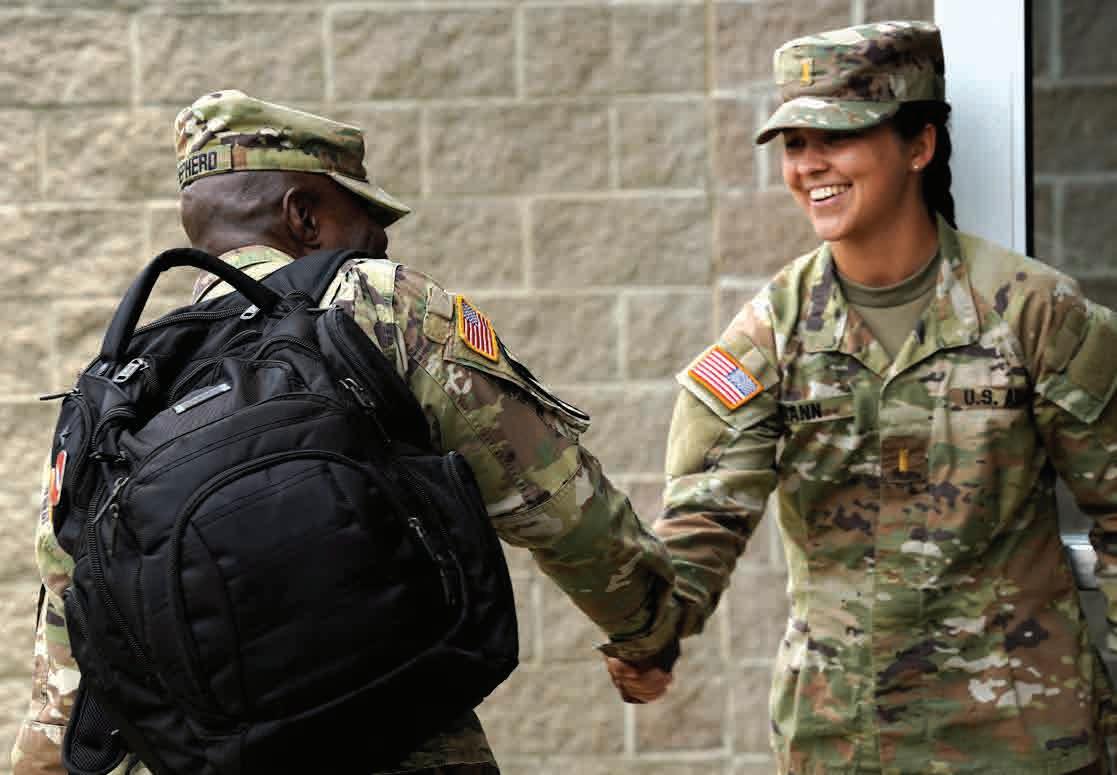
During this year’s annual training, Soldiers with the 77th Theatre Aviation Brigade were visited by Brig. Gen. Leland “Tony” Sheppherd, Land Component Commander, Arkansas National Guard.
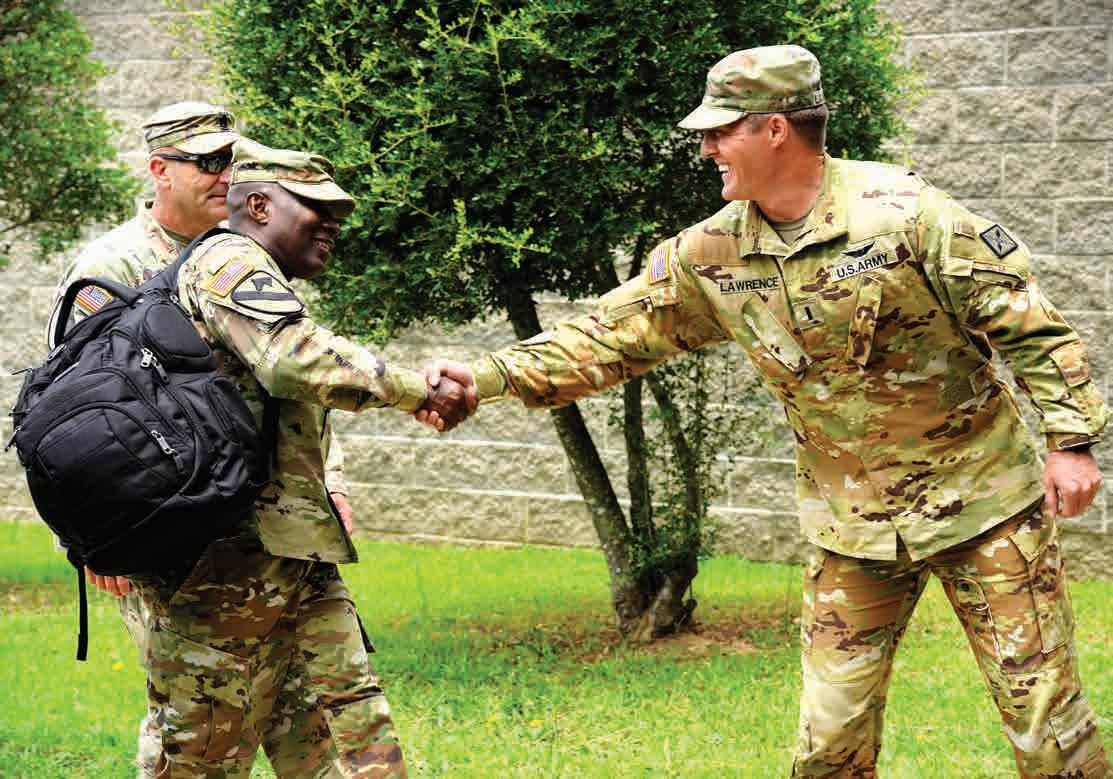
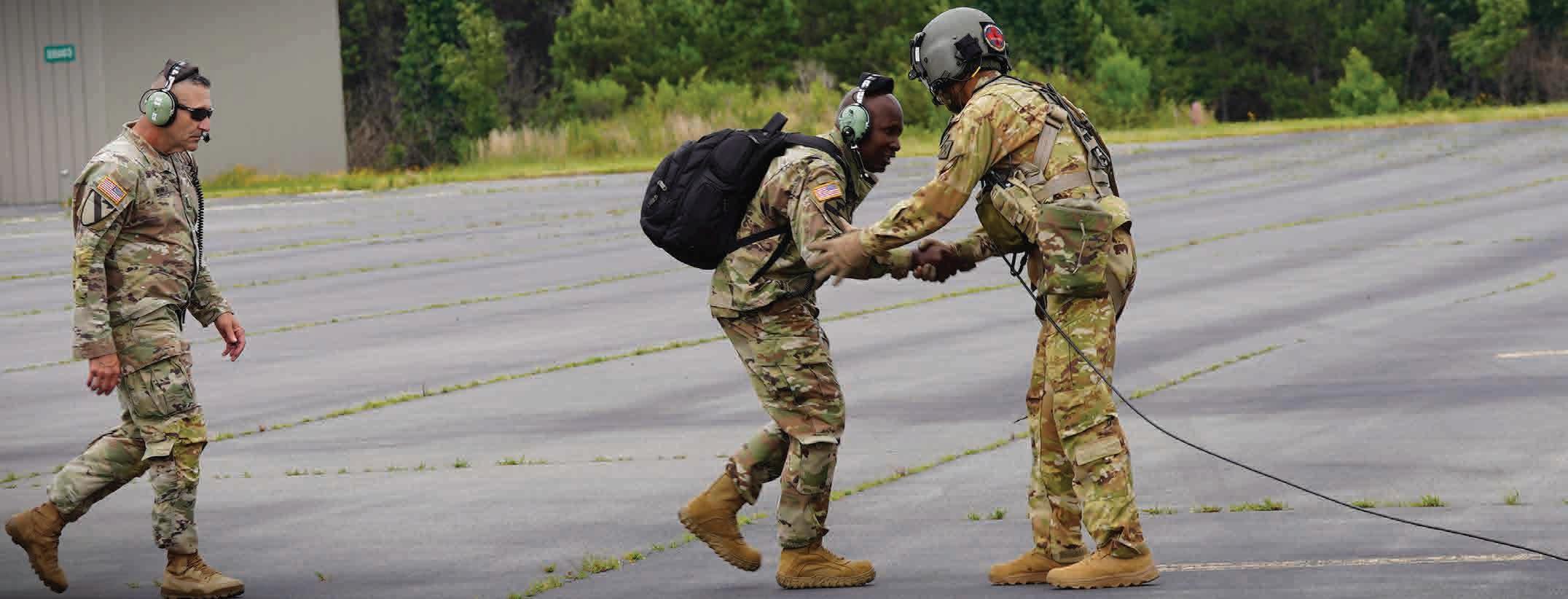
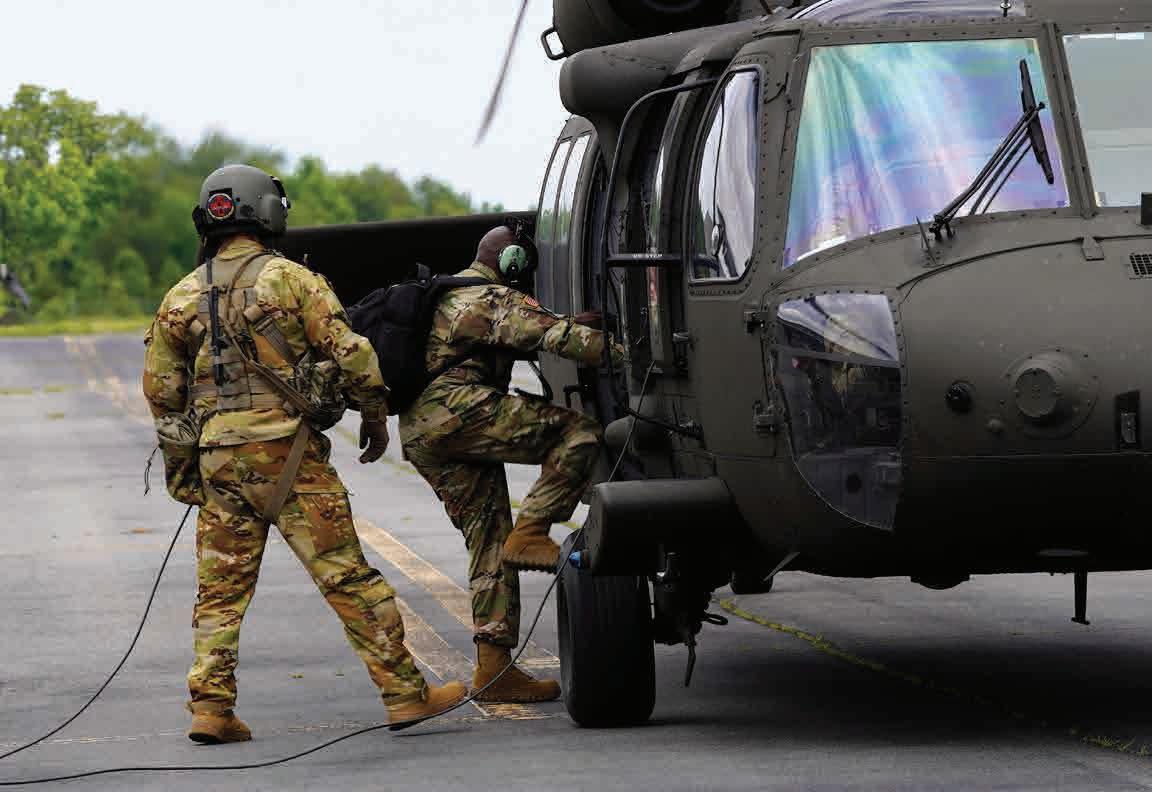
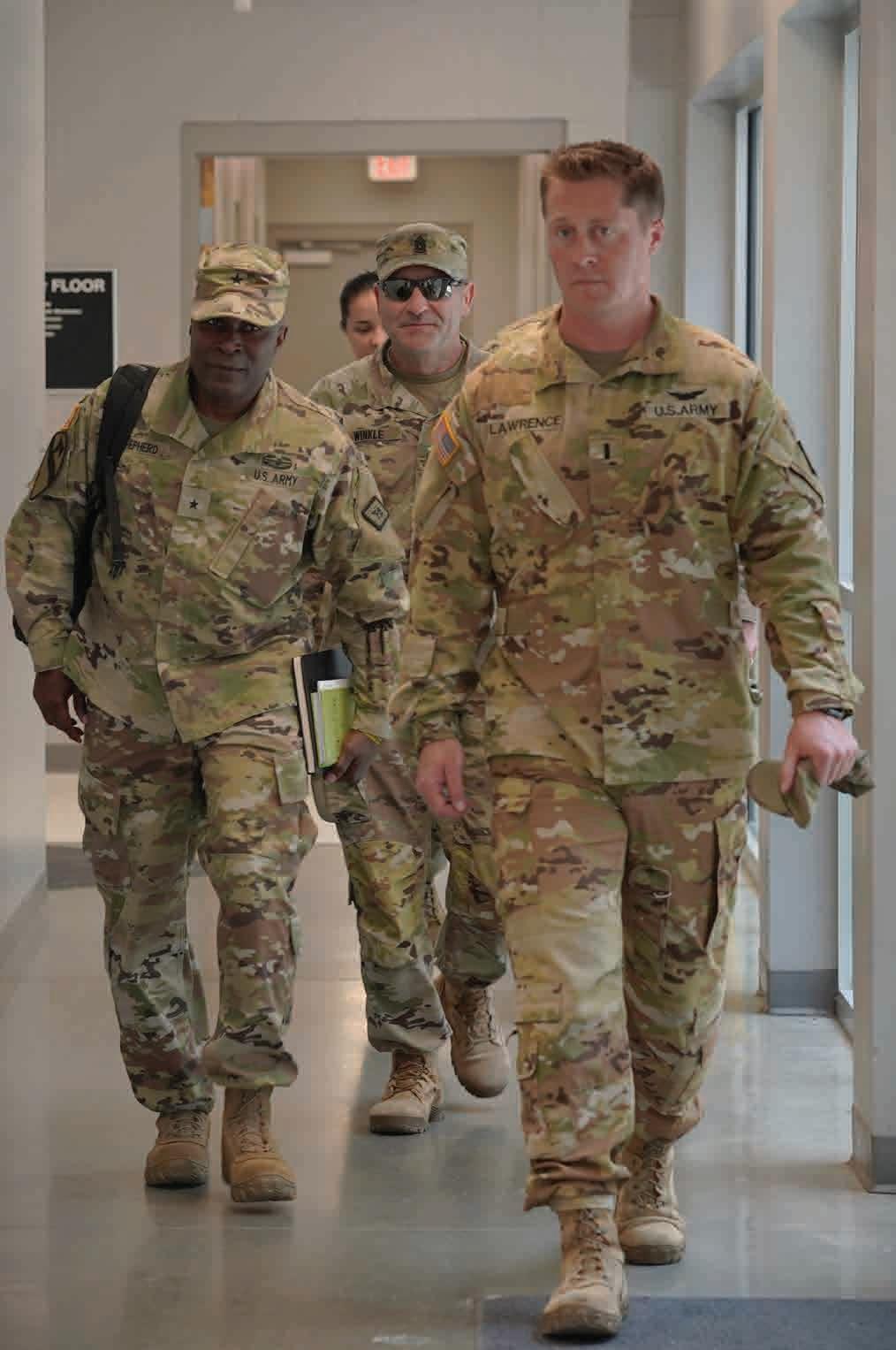
His presense brought a sense of pride and motivation to the soldiers, who were eager to recieve insights from a leader with such an illustrious career. Gen, Sheppherd shared stories from his own military journey, emphazising the importance of dedication, resilience, and unwavering commitment to the mission at hand.
27
(Photos by Spc. Will De Oliveira, Sgt. Luke Tribble, and Sgt. First Class Justin Goad)
UH72A Lakota Hoist Training
During this training session, soldiers meticulously honed their hoist techniques, including proper equipment usage, communication protocols, and swift response procedures. They simulated real-life scenerious, facing challenges that they might encounter during rescue missions in diverse environments and conditions.
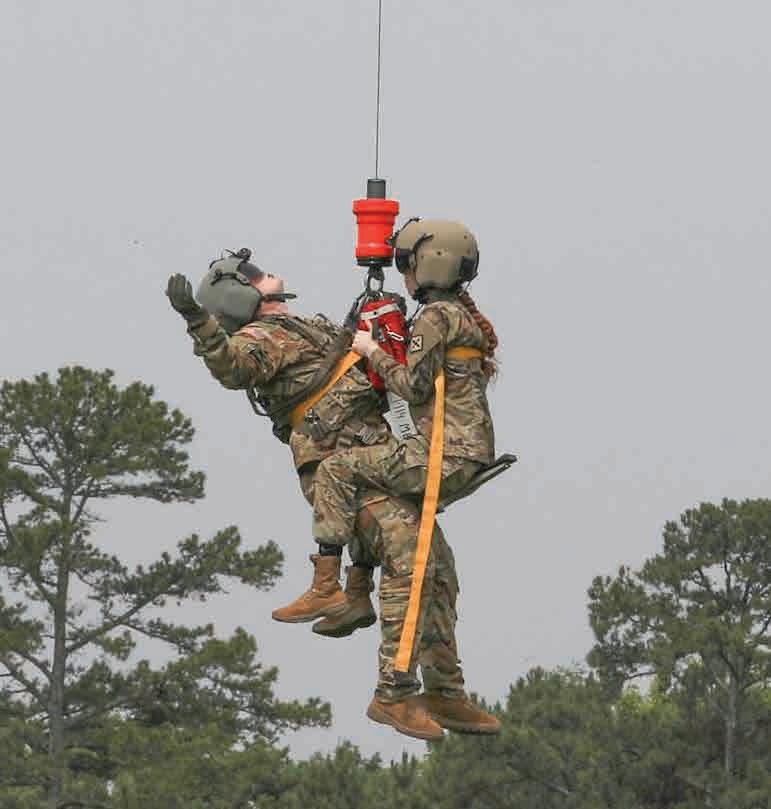
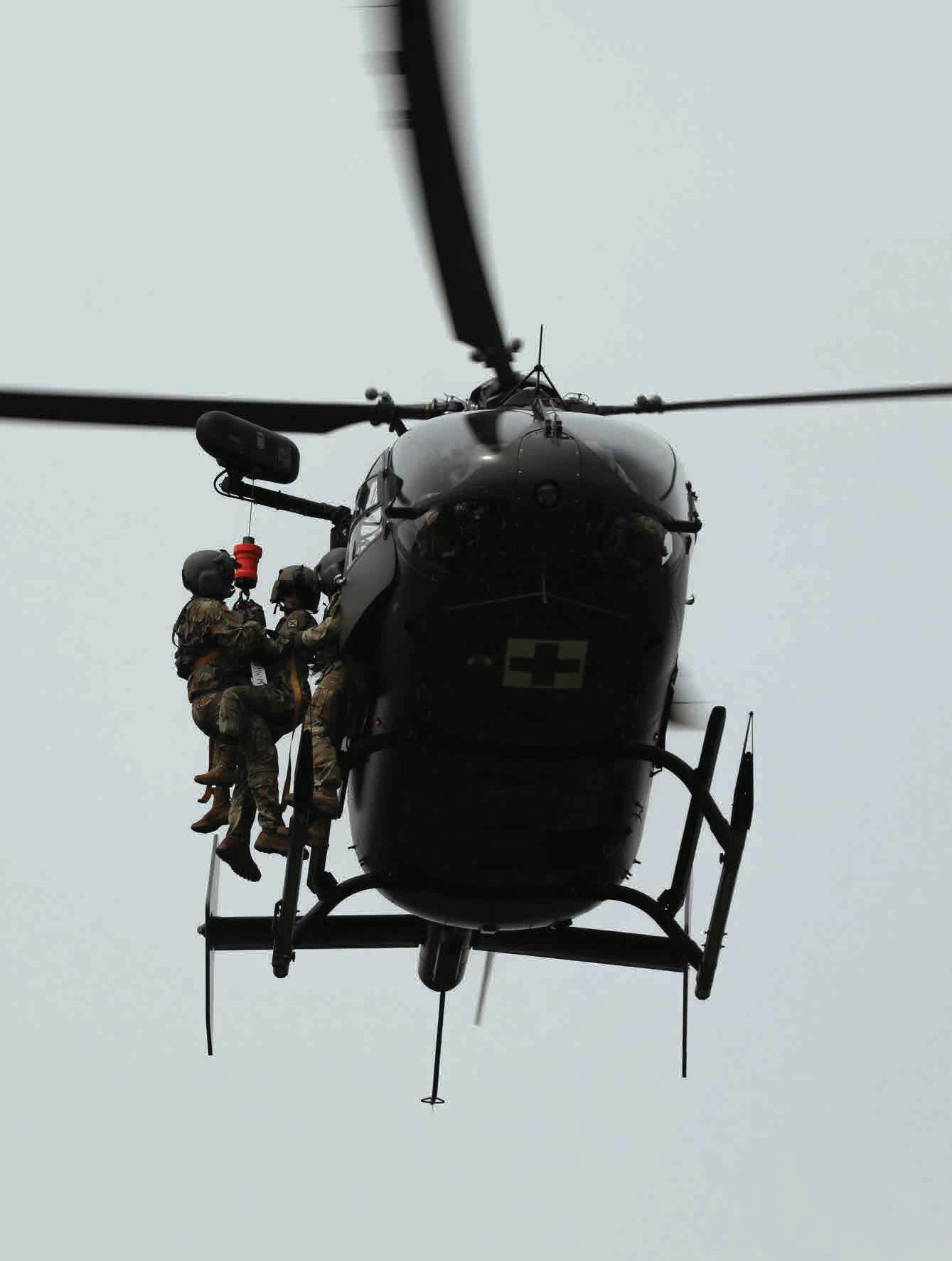
The comprehensive hoist training ensures seamless coordination between pilots and crew members, enabling them to work as a synchronized team in high-pressure situations. Such readiness is a testament to the 77th Combat Aviation Brigade’s commitment to excellence and their unwavering dedication to safeguarding lives.
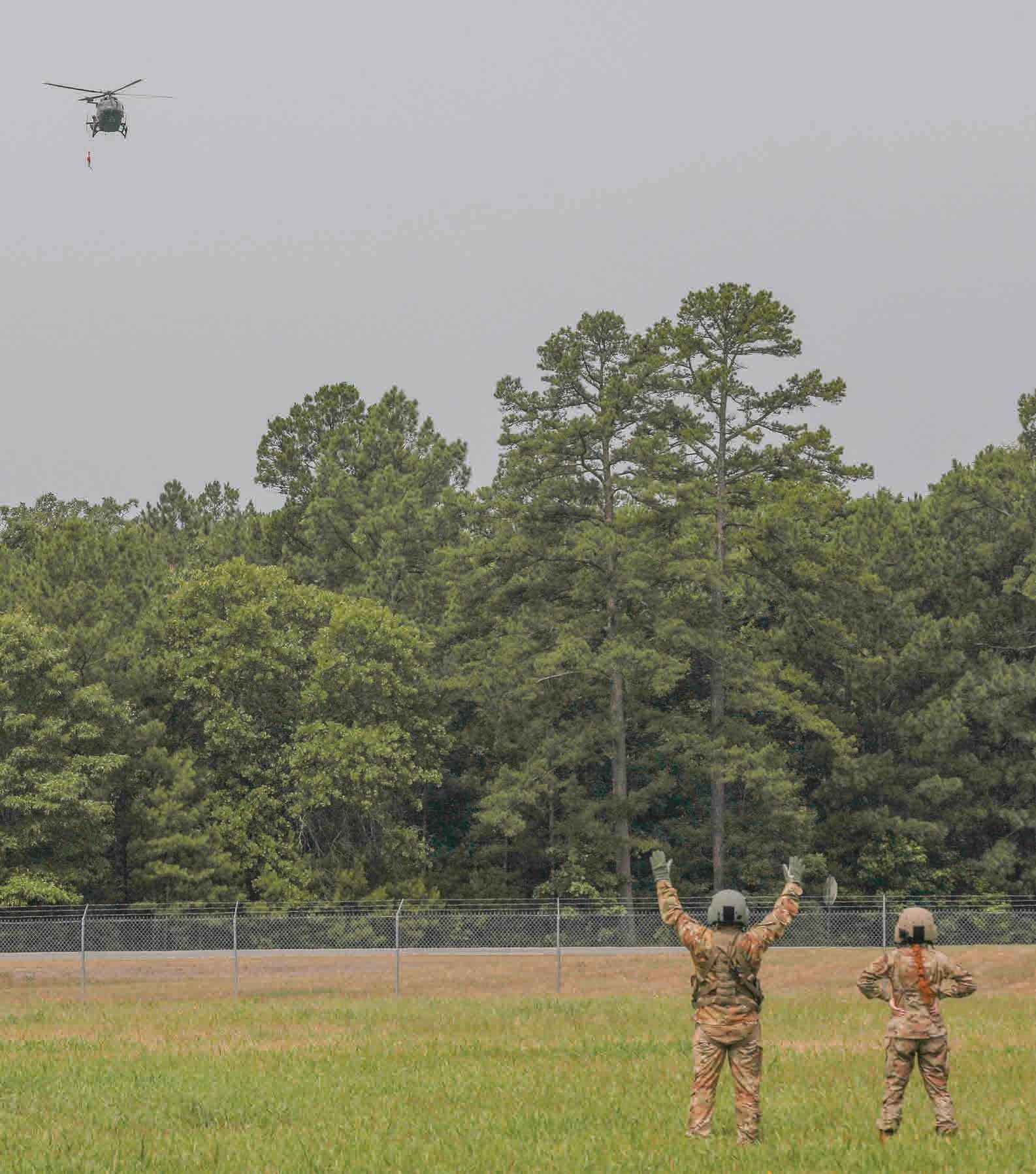
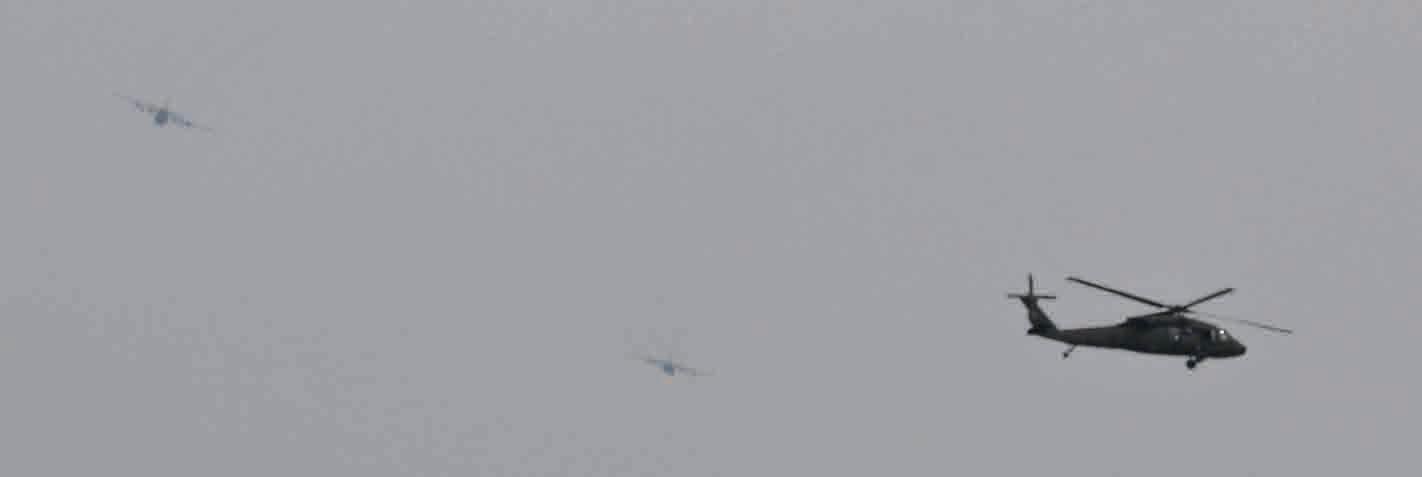
Furthermore, the hoist training reiterates the Army’s continous efforts to evolve and adapt to dynamic challenges, as soldiers must remain prepared for any eventuality they may encounter in the line of duty.
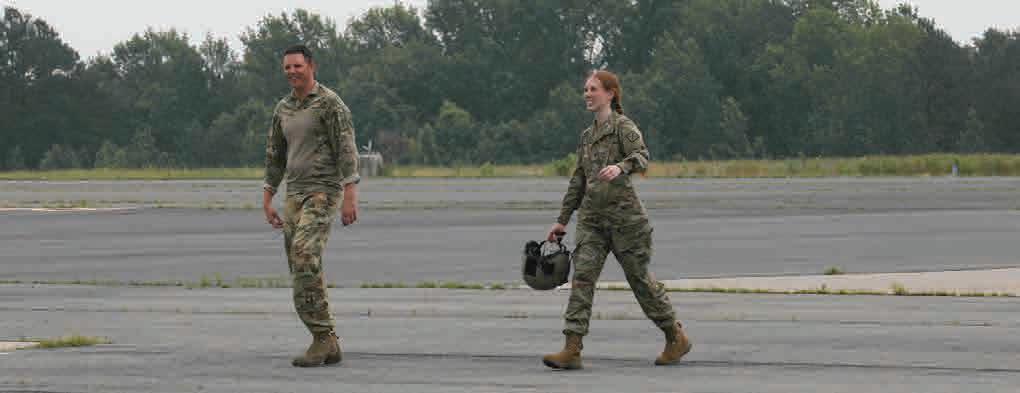
As the training session concluded, the soldiers of the 77th walked away with increased confidence in their abilities and a heightened sense of purpose. Their dedication to continous improvement and exellence ensures that they remain at the forefront of emergency response operations, ready to answer the call whenever and whereever it may arise.
28
(Photos by Sgt. Jake Bailey)

29
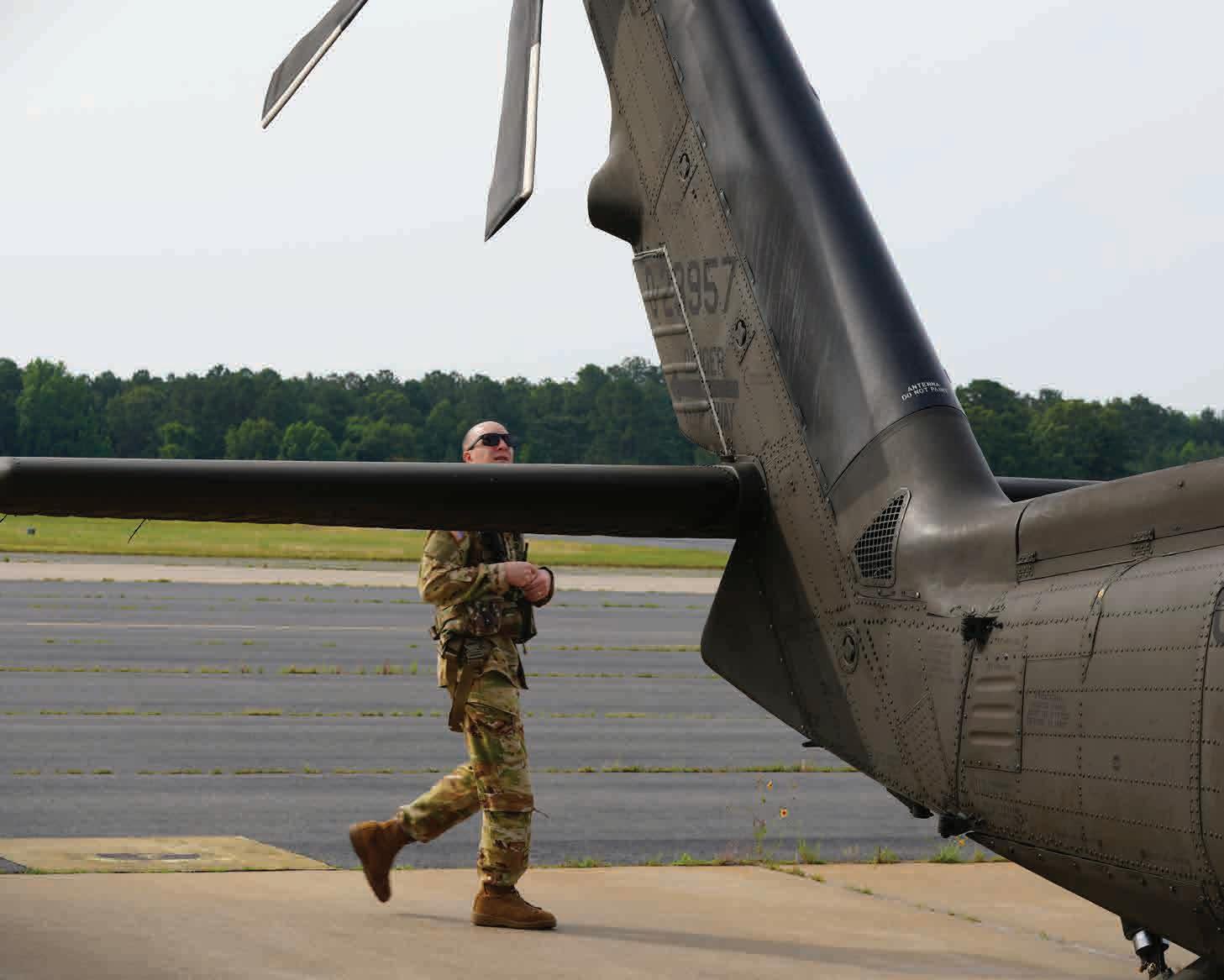
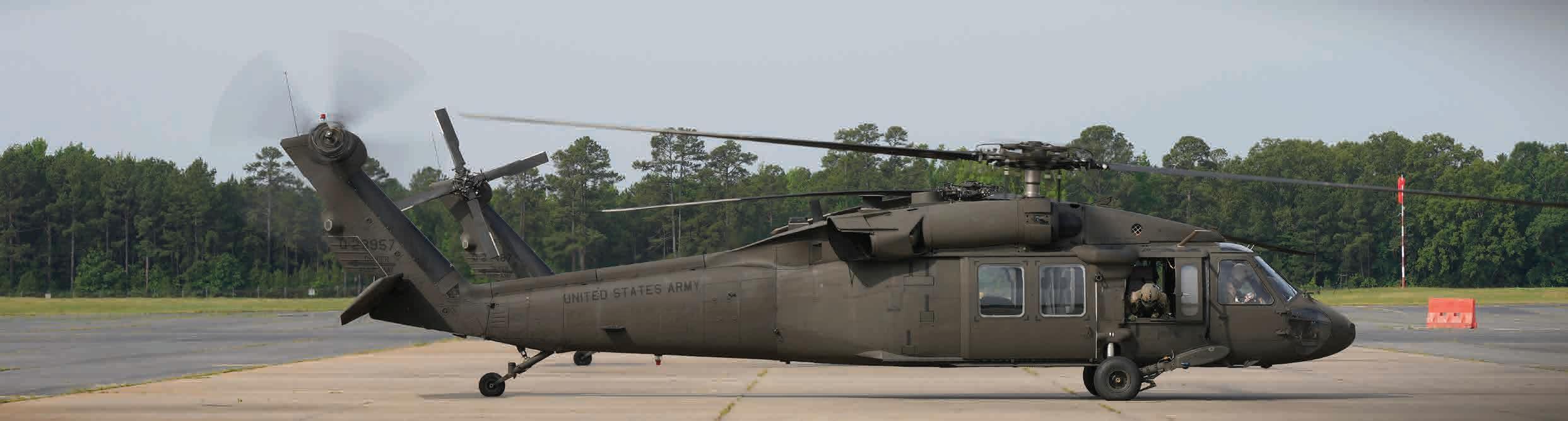
Blackhawk Preflight Checks
Flying a Black Hawk helicopter requires extensive training and experience. It is typically a task performed by trained military pilots. A pre-flight inspection, also known as a pre-trip, is crucial before flying any aircraft, including the Black Hawk helicopter. Some general pre-flight inspection steps involve exterior inspection, interior inspection, systems checks, and logbook documentation.
30

31
Graphic Illustration by Spc. Savannah Smith
216th Pistol Qualifications
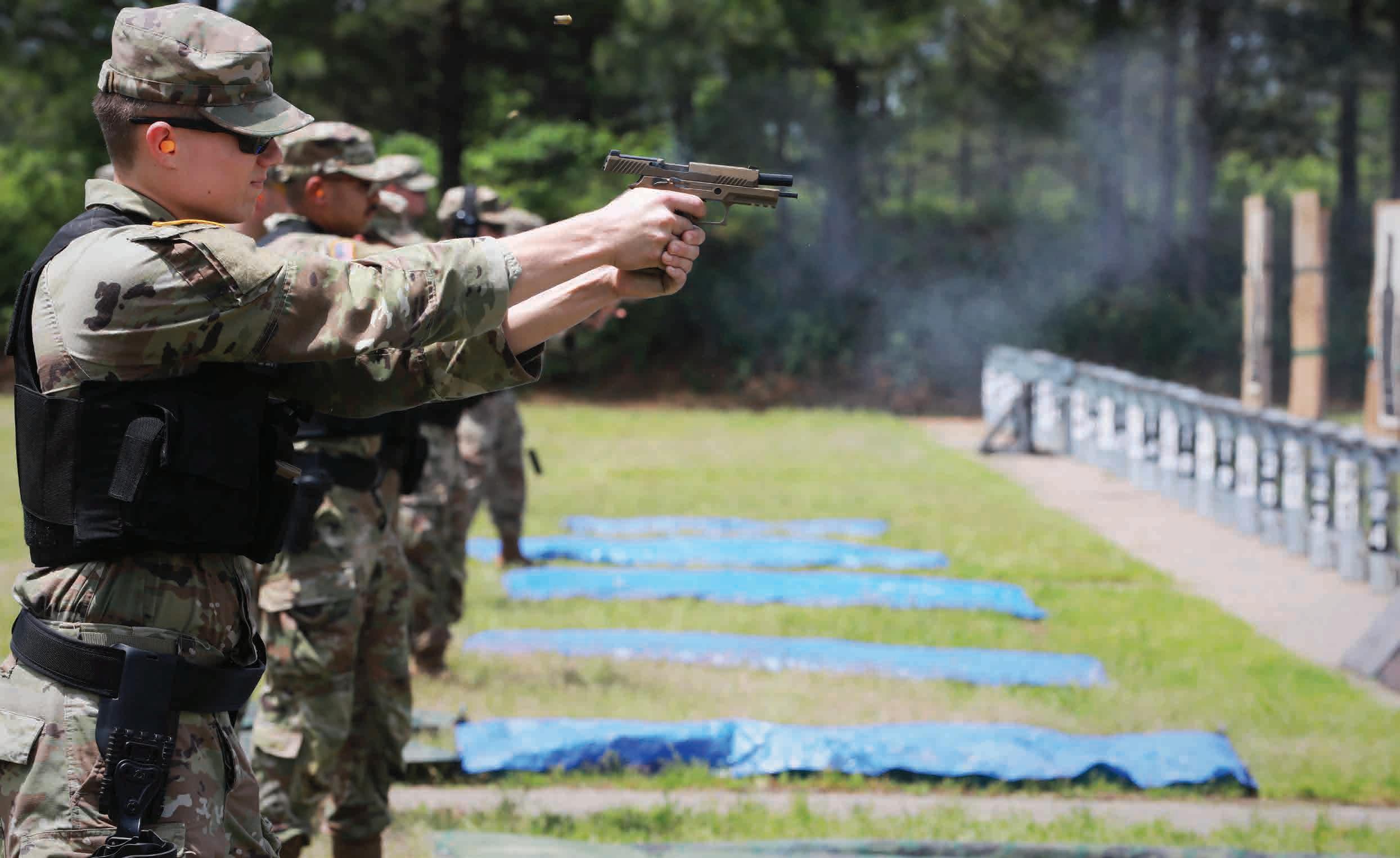
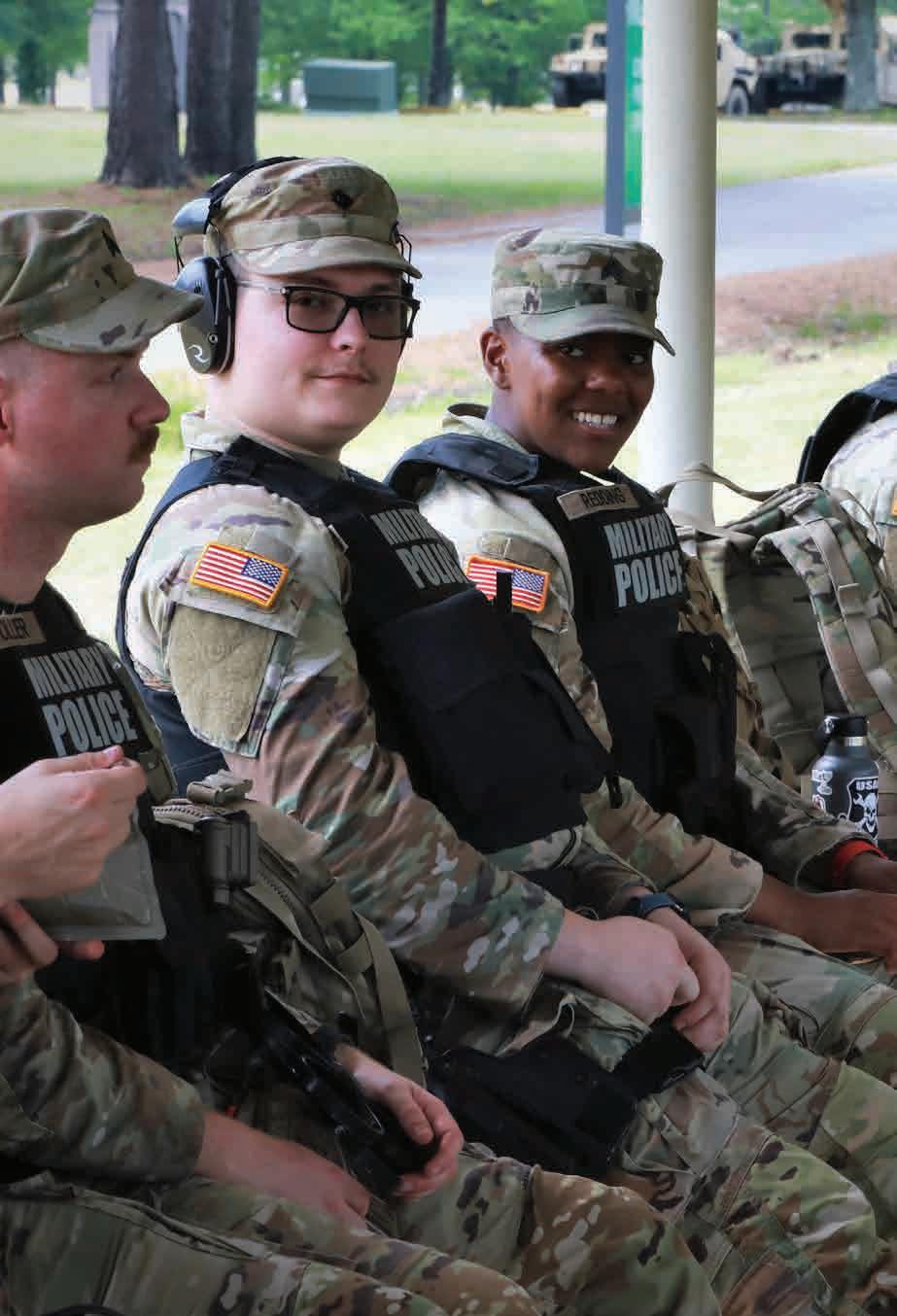
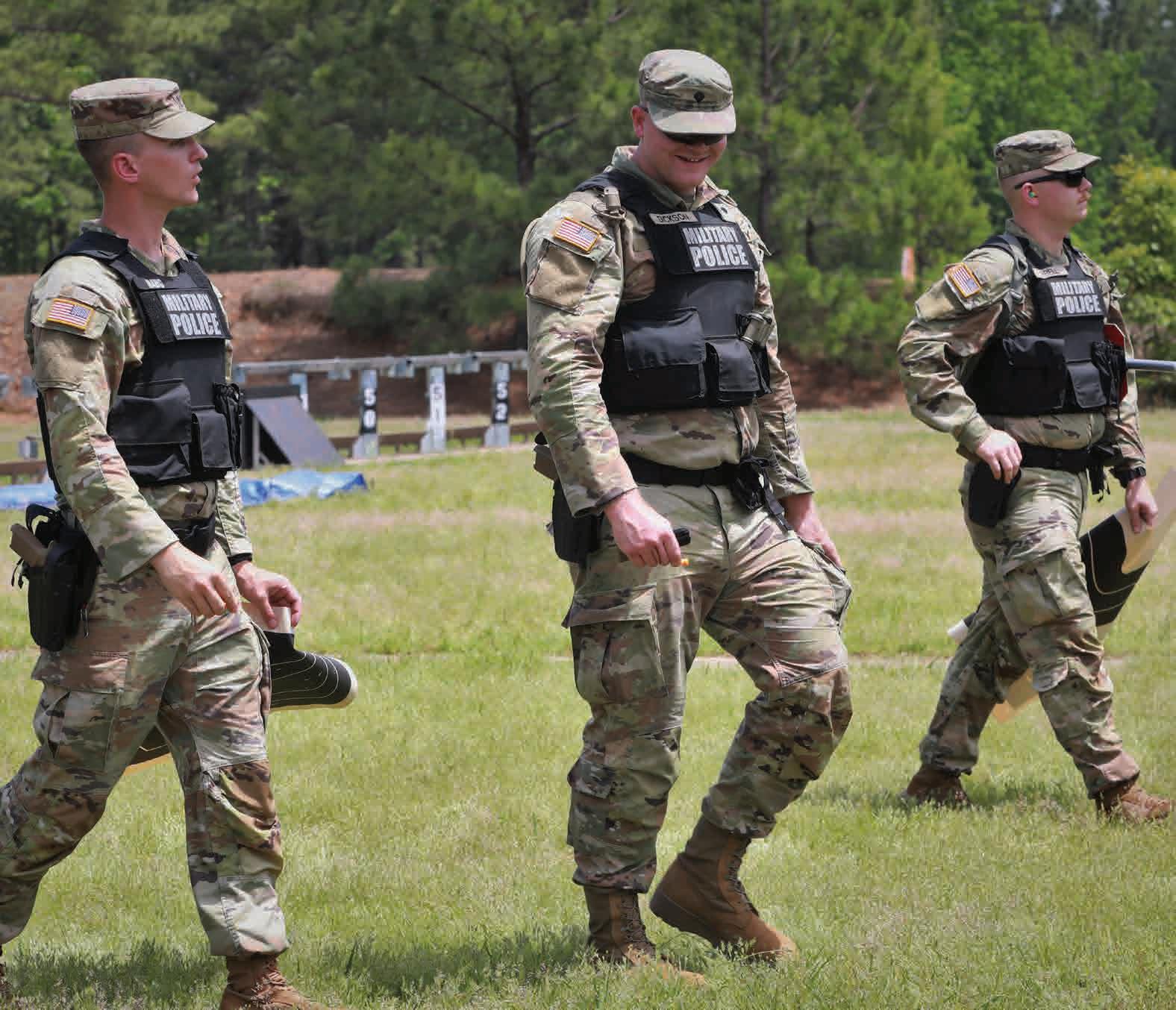
Arkansas National Guard Soldiers from the 216th Military Police Company, 871st Troop Command, 87th Troop Command participate in the Law Enforcement Weapons qualification and training at Camp Robinson Arkansas on May 13, 2023. The LEWTAQ is the standard weapons qualification for the Army’s Military Police Units.
32
Tasers and Pepper Spray
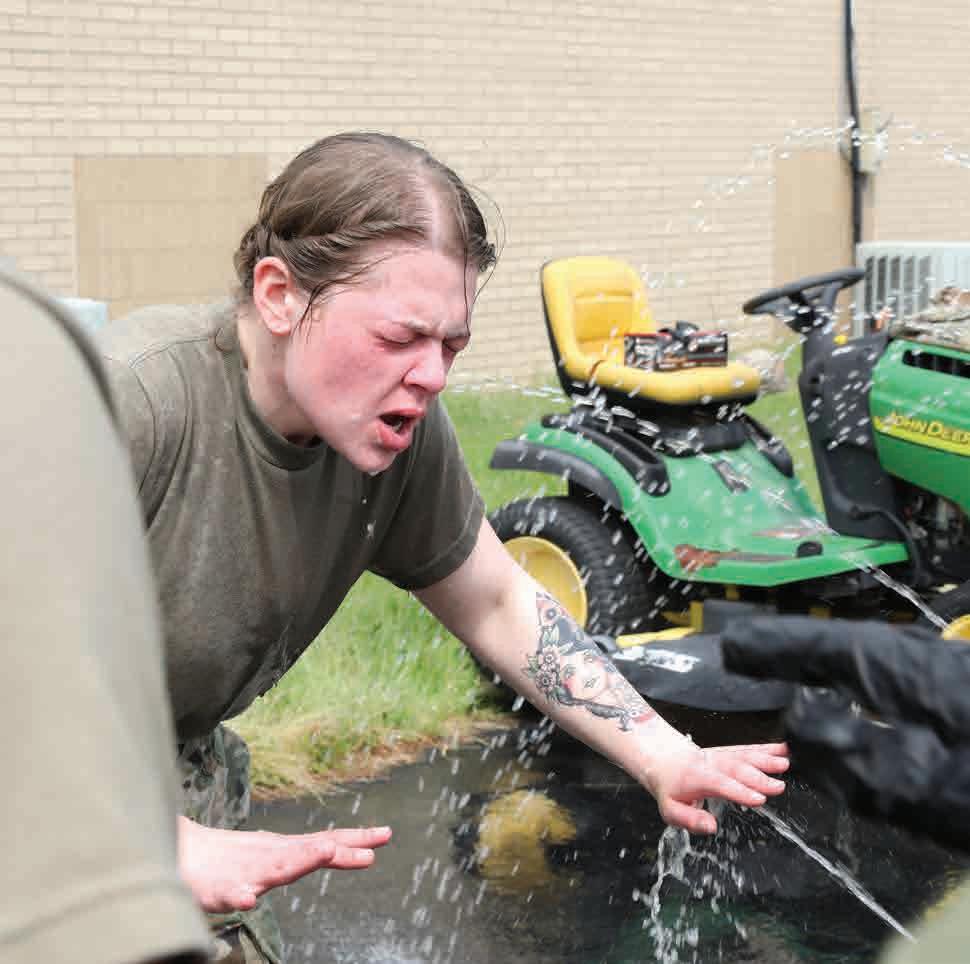
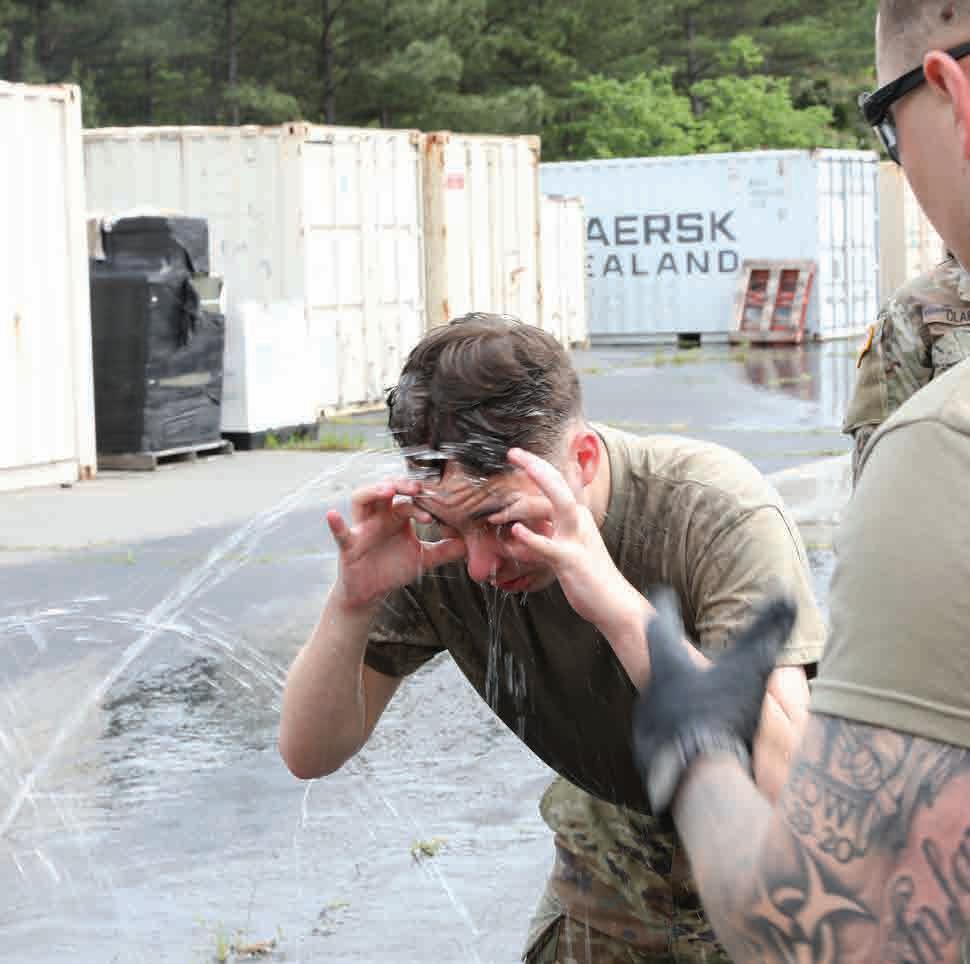
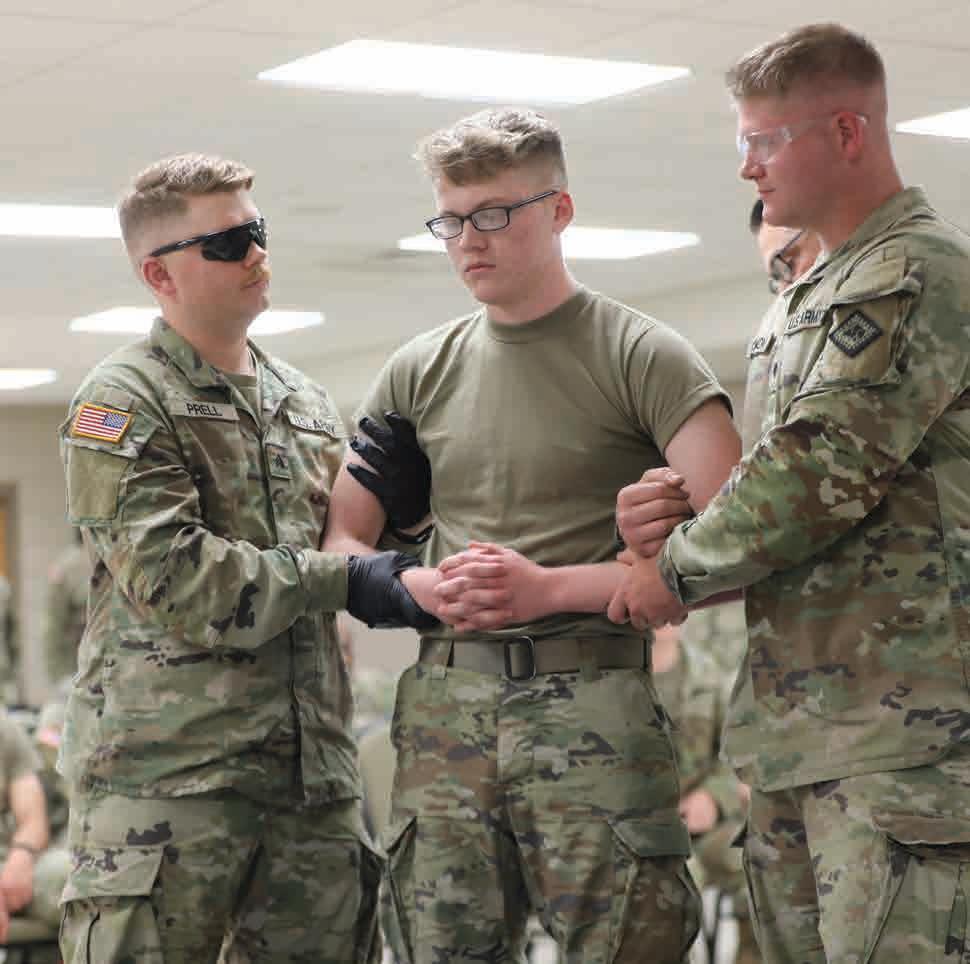
The 216th Military Police Company recently concluded their Annual Training event with a rigorous exercise aimed at preparing Soldiers to respond effectively to civil unrest. Located at Camp Robinson, the unit showcased their readiness and dedication to maintaining peace and order within their communities. Soldiers from the 216th MP Company engaged in intense training scenarios, honing their skills in crowd control, de-escalation techniques, and maintaining a strong presence in the face of challenging situations. The company’s commitment to excellence was palpable throughout the exercise.
“We don’t know when the next mission might come through, it might be tomorrow, it might be two weeks from now. We can’t control what happens in the real world” said Prell. “It’s important that we’re effective and we’re ready to go today.”
The training incorporated realistic scenarios, with Soldiers faced with a simulated mob of unruly individuals, chanting slogans and brandishing placards. The 216th MP Company demonstrated their expertise in handling such situations, employing a combination of non-lethal tactics and effective communication to disperse the crowd.
This exercise provided an opportunity for the 216th MP Company to prove their mettle and their commitment to upholding law and order. With each passing scenario, the Soldiers grew more confident and better equipped to face the challenges that may arise in their future deployments or domestic operations. With their training complete, the 216th MP Company stands ready to respond to any civil unrest that may threaten the peace and security of their communities. Their exemplary performance during this culminating event serves as a testament to their unwavering dedication and their commitment to serving the nation both at home and abroad.
33
Holistic Health & Fitness
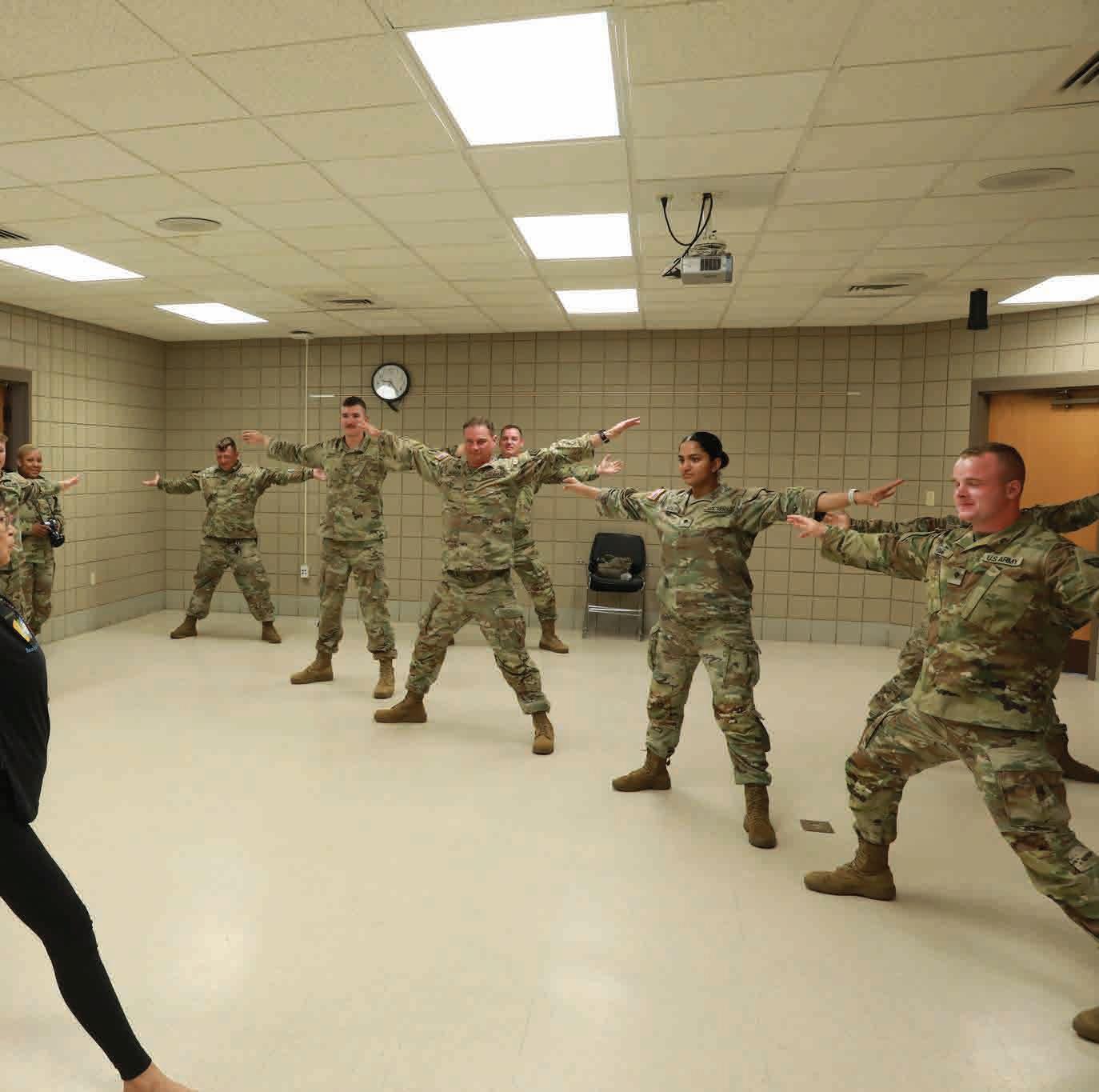
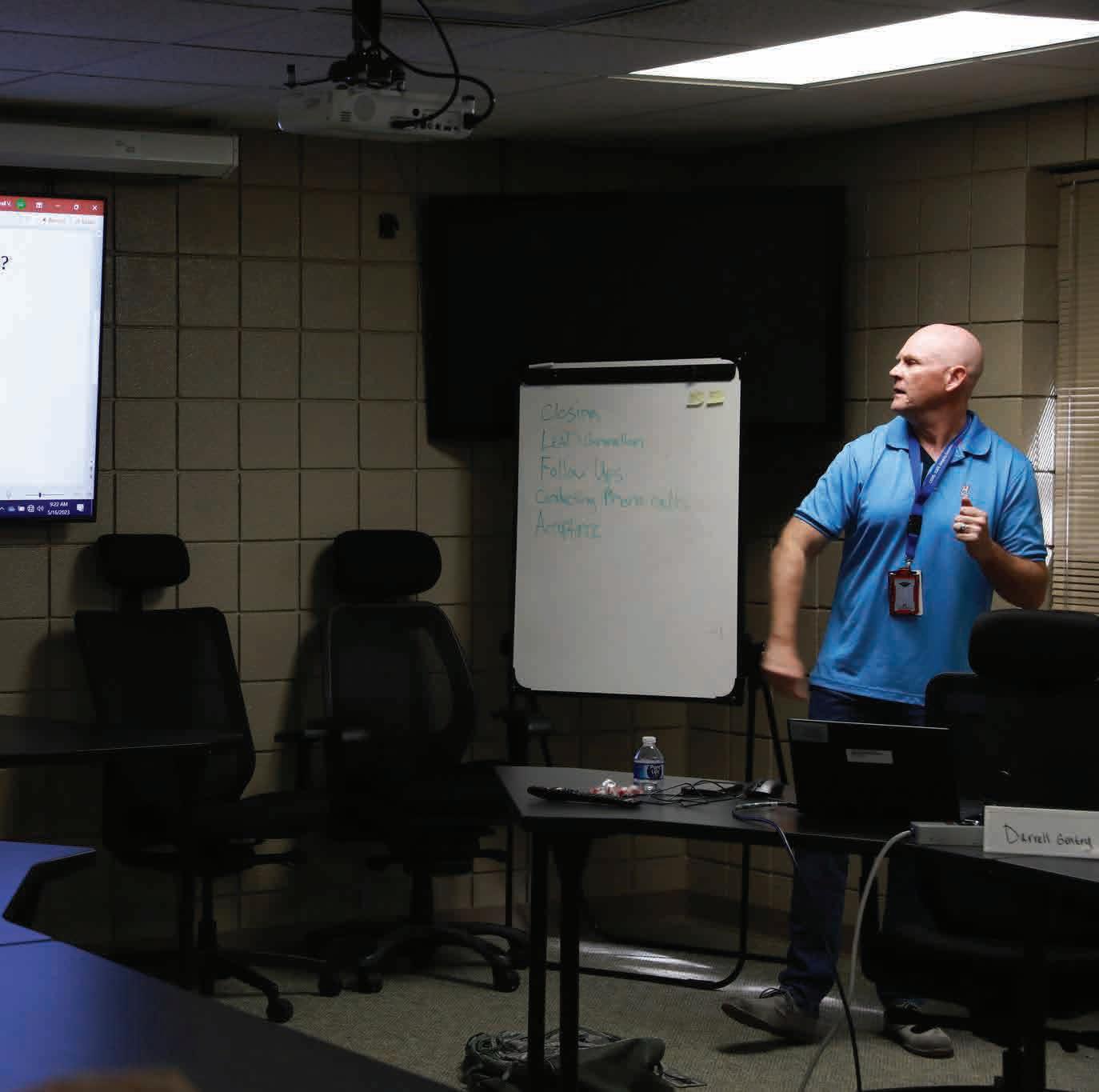
The 87th Troop Command is taking active steps to ensure that when faced with the mission or mental health, Soldiers don’t have to choose.
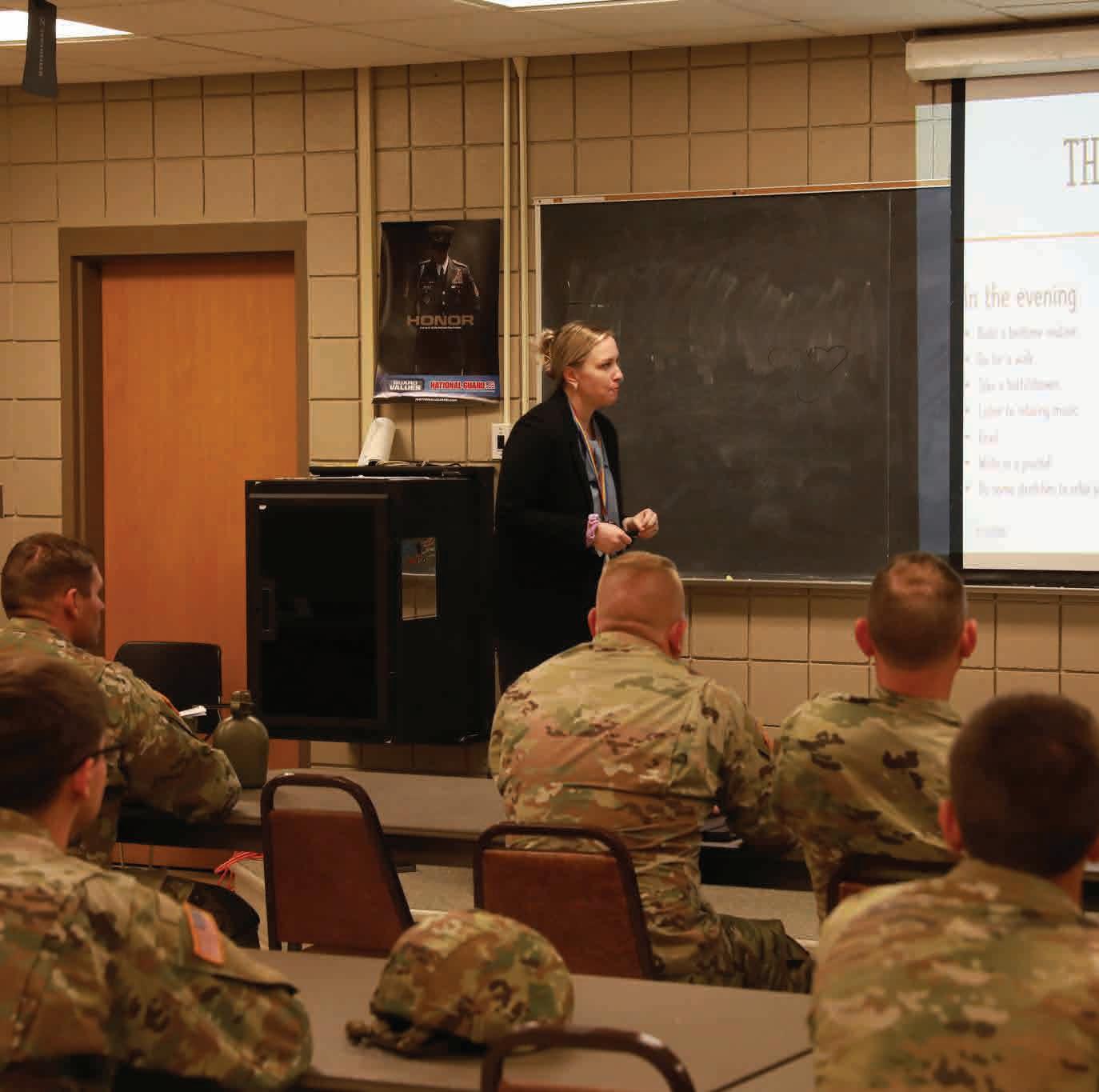
Comprehensive wellness training focuses on some of the largest stressors the Guardsmen face both in and out of uniform by offering material to grow mental, physical, spiritual, and financial health. To assist in their mission of supporting the wellness of the Citizen Soldier, the 87th Troop Command has called upon professionals from several fields to guide their Soldiers toward readiness and peace of mind on several fronts.
“You’ve got to make sure your own cup is full before you can fill others. You’re always going to be your number one customer. You’ve got to take care of you,” says Lamanda Blackman, a wellness expert assisting in the training. Many of the experts assisting the 87th Troop Command Soldiers in wellness training are veterans themselves and understand the challenges faced by today’s National Guardsmen both in the field and at home.
With tools like this in the arsenal of Arkansas National Guardsmen the 87th Troop Command can be sure they have equipped their Soldiers with skills that will undoubtedly empower the modern Citizen Soldier in and out of the field.
34
(Photos by Sgt. Bryce Colvert)
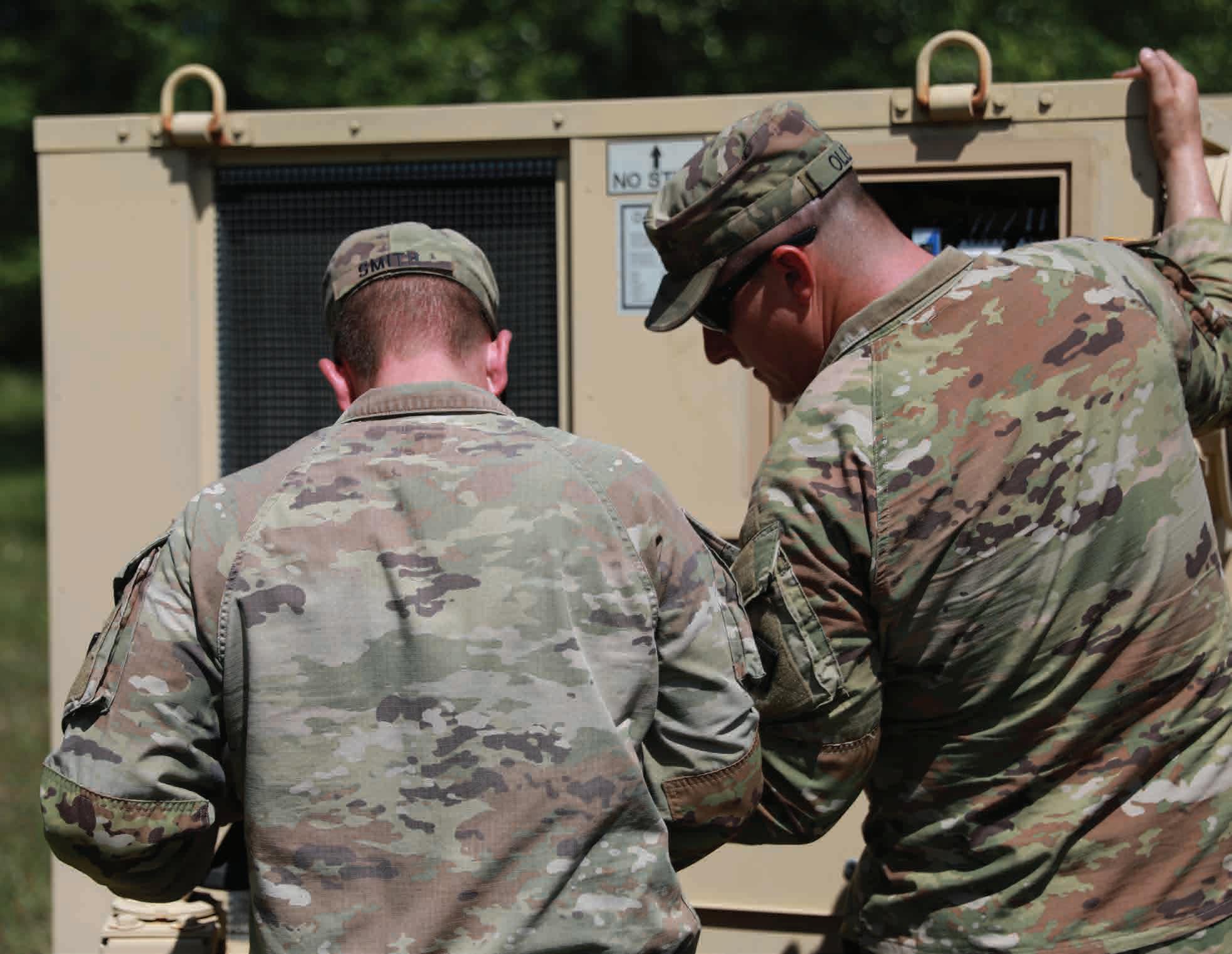
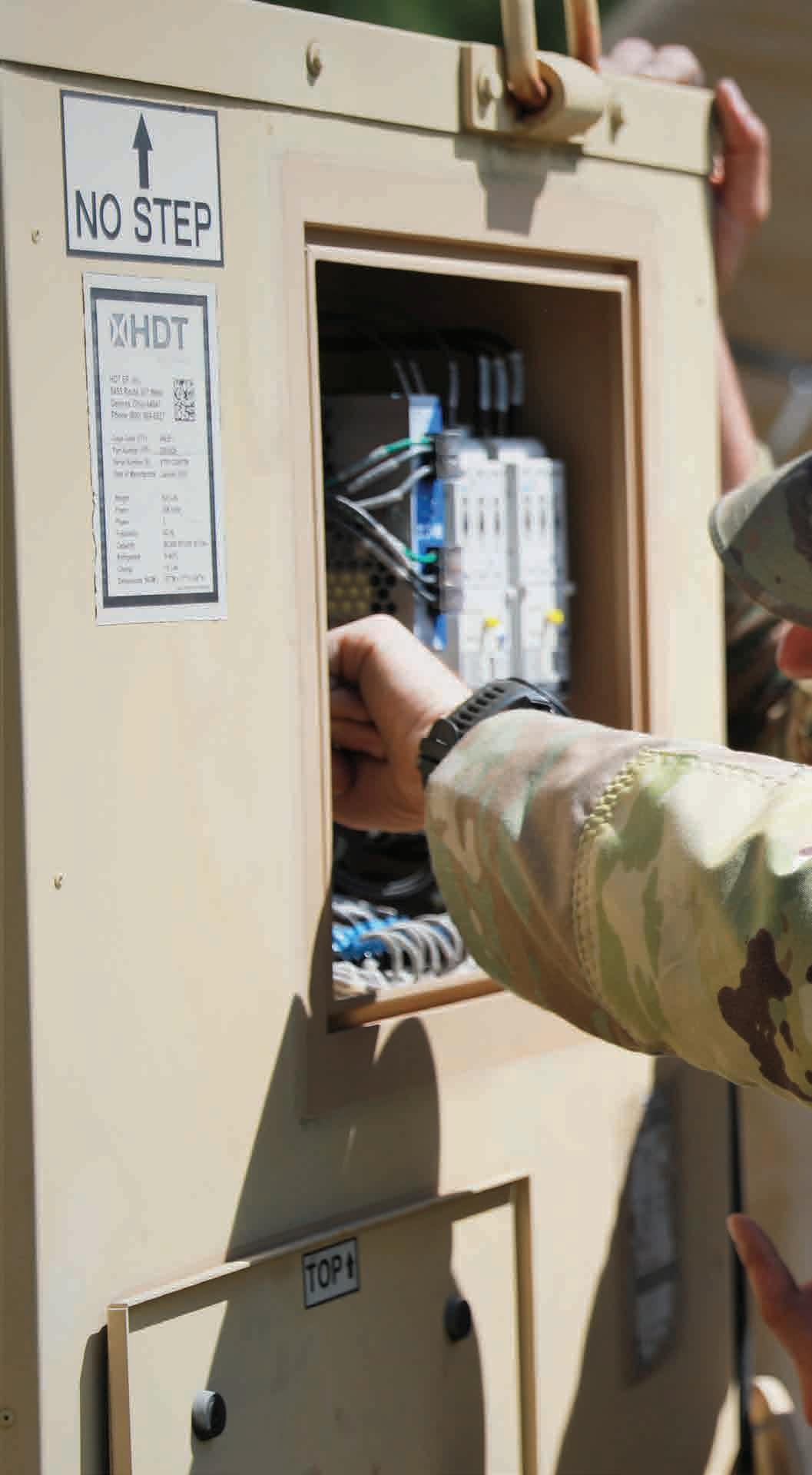
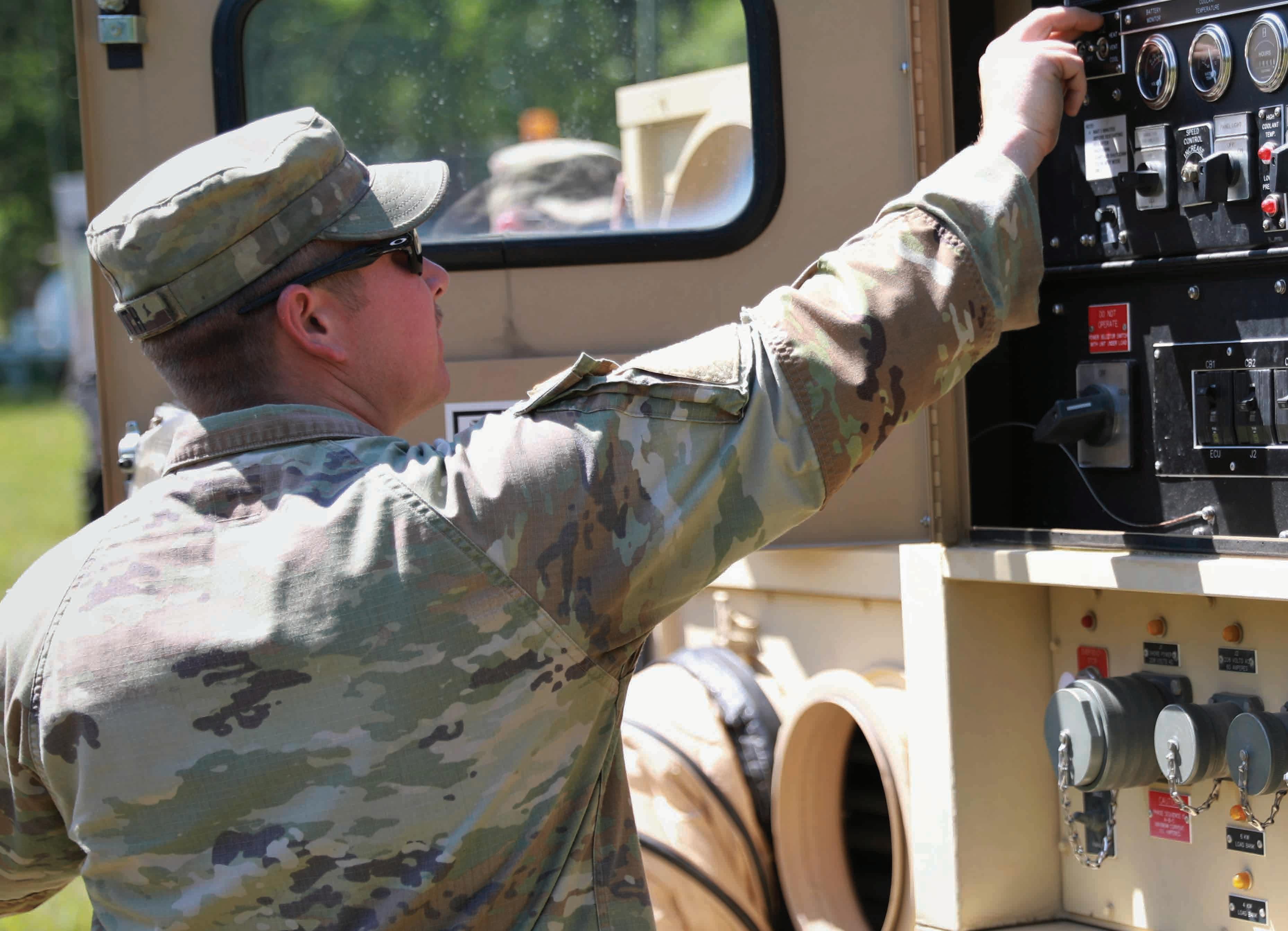
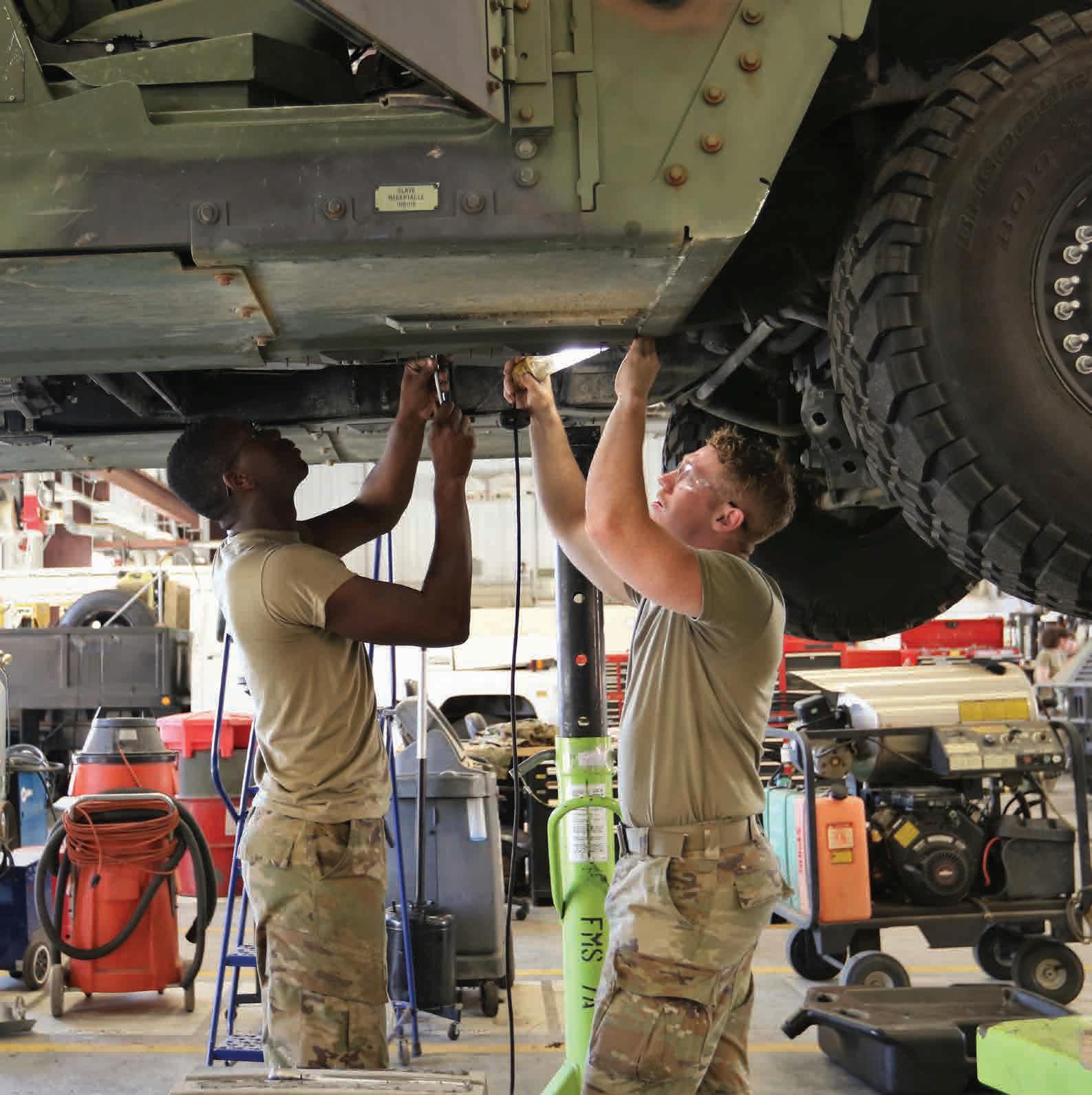
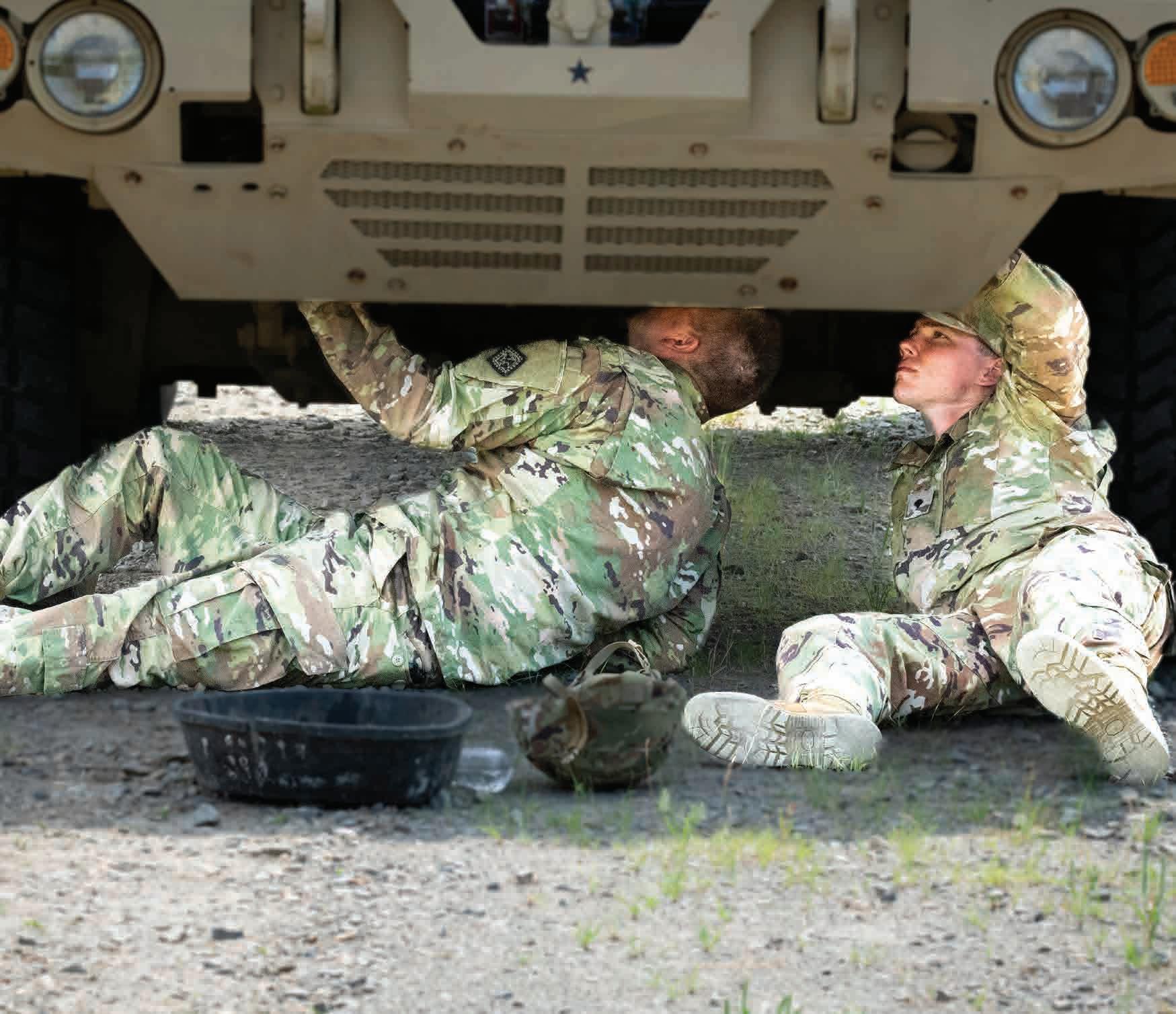
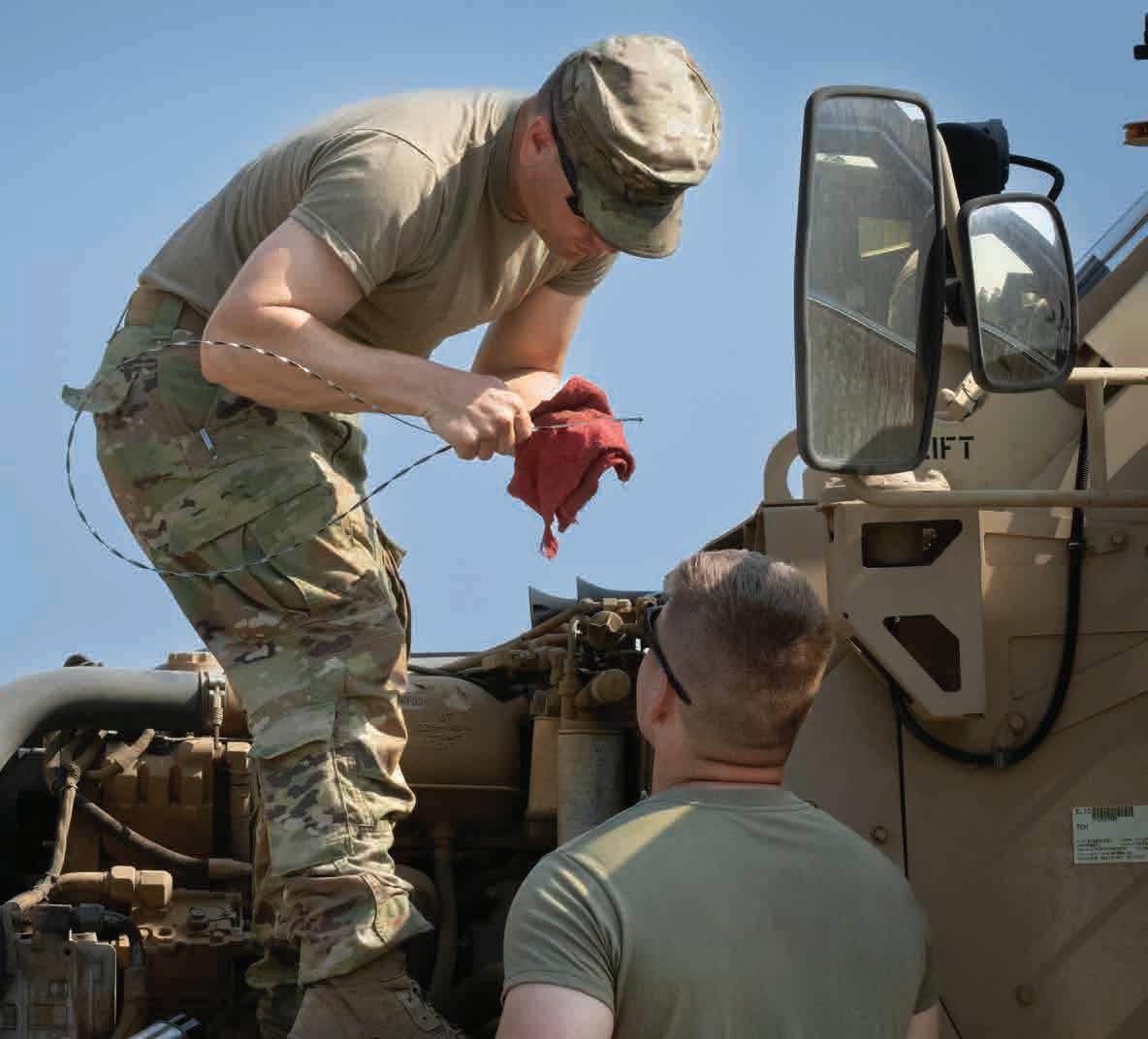
Maintenance Company 224th

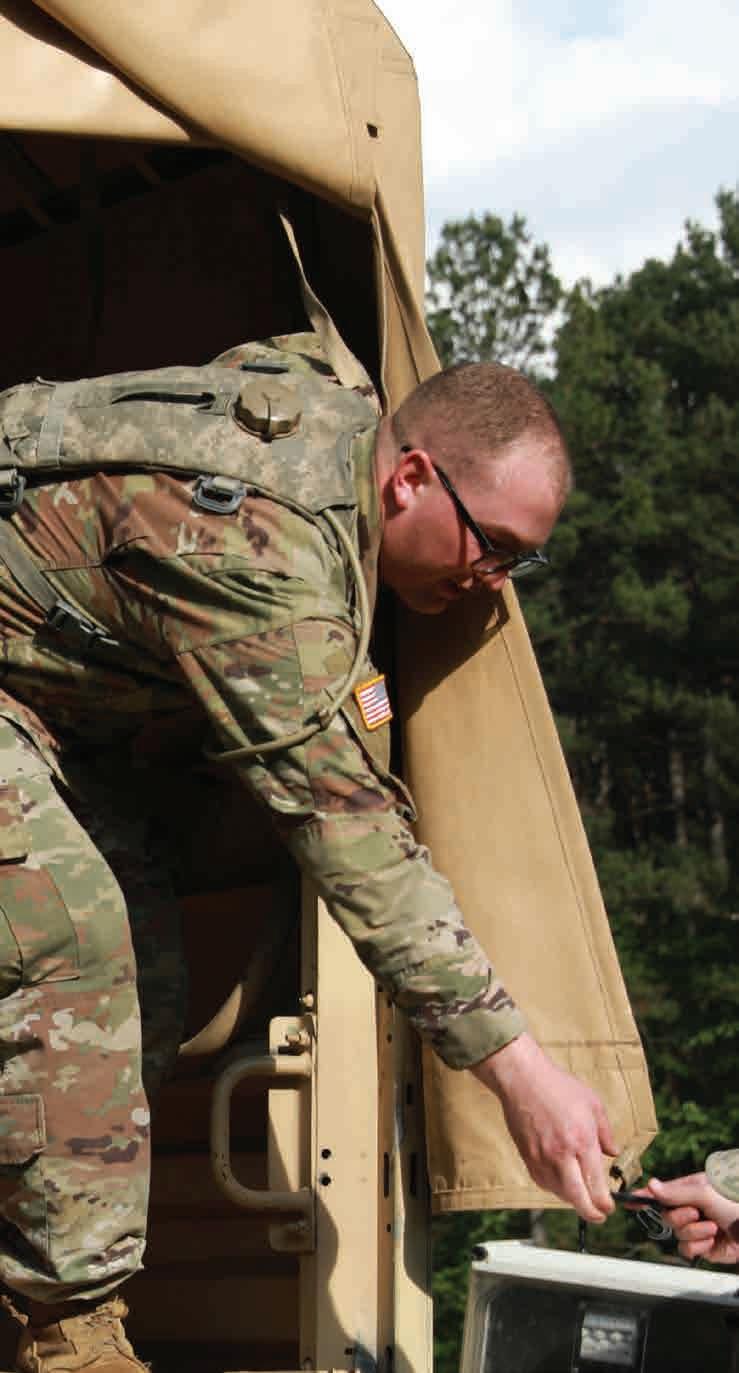
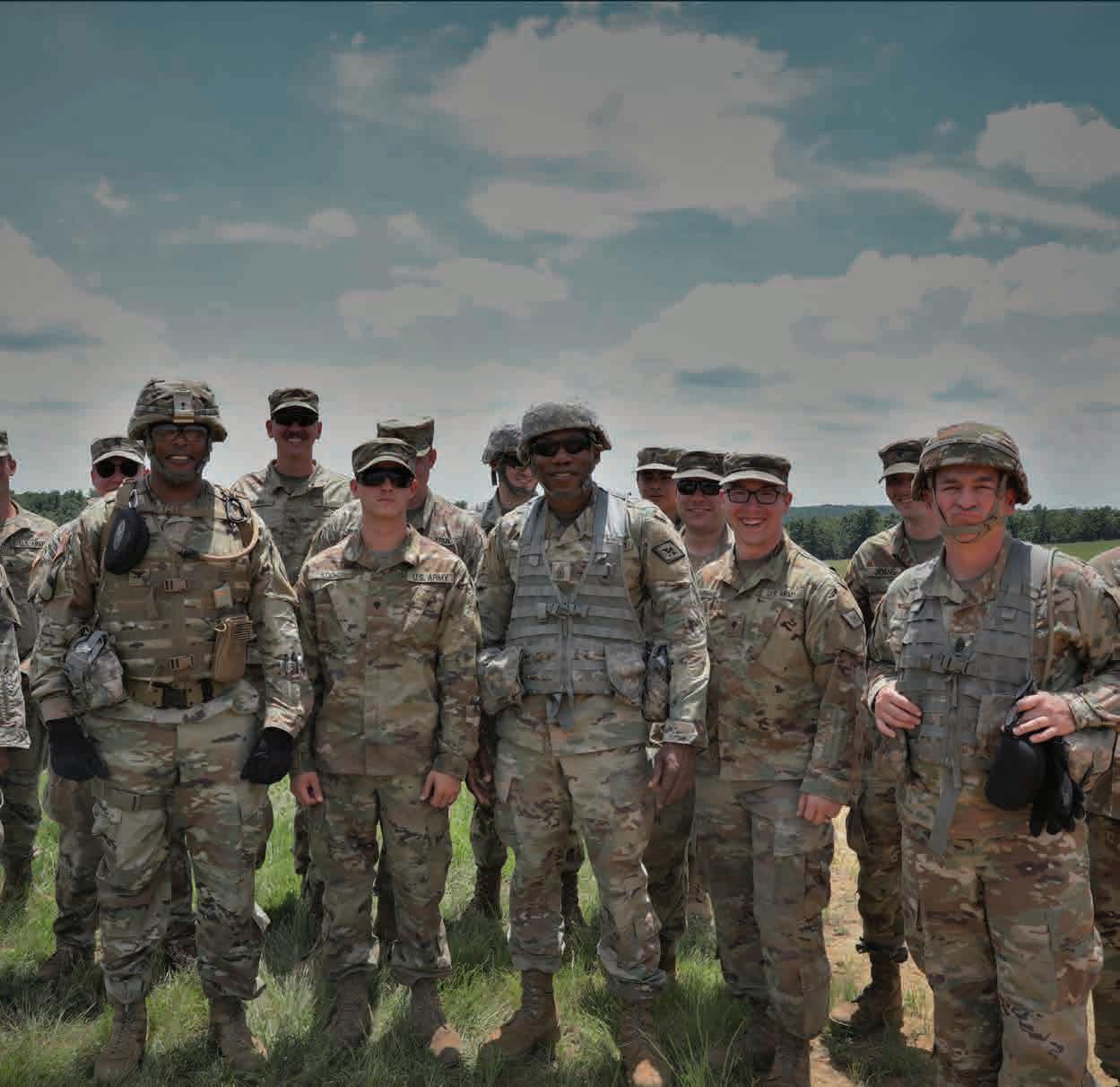
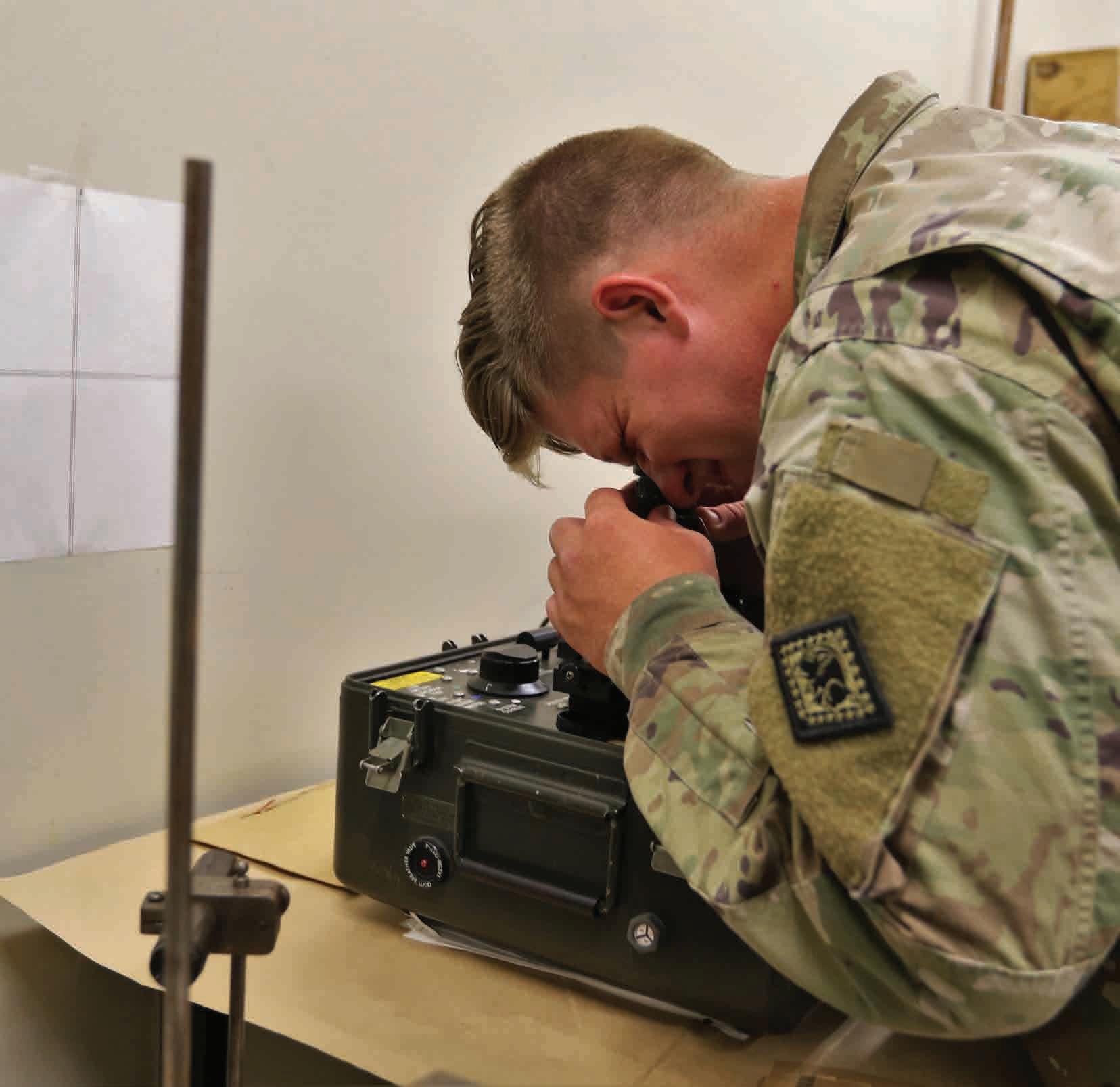
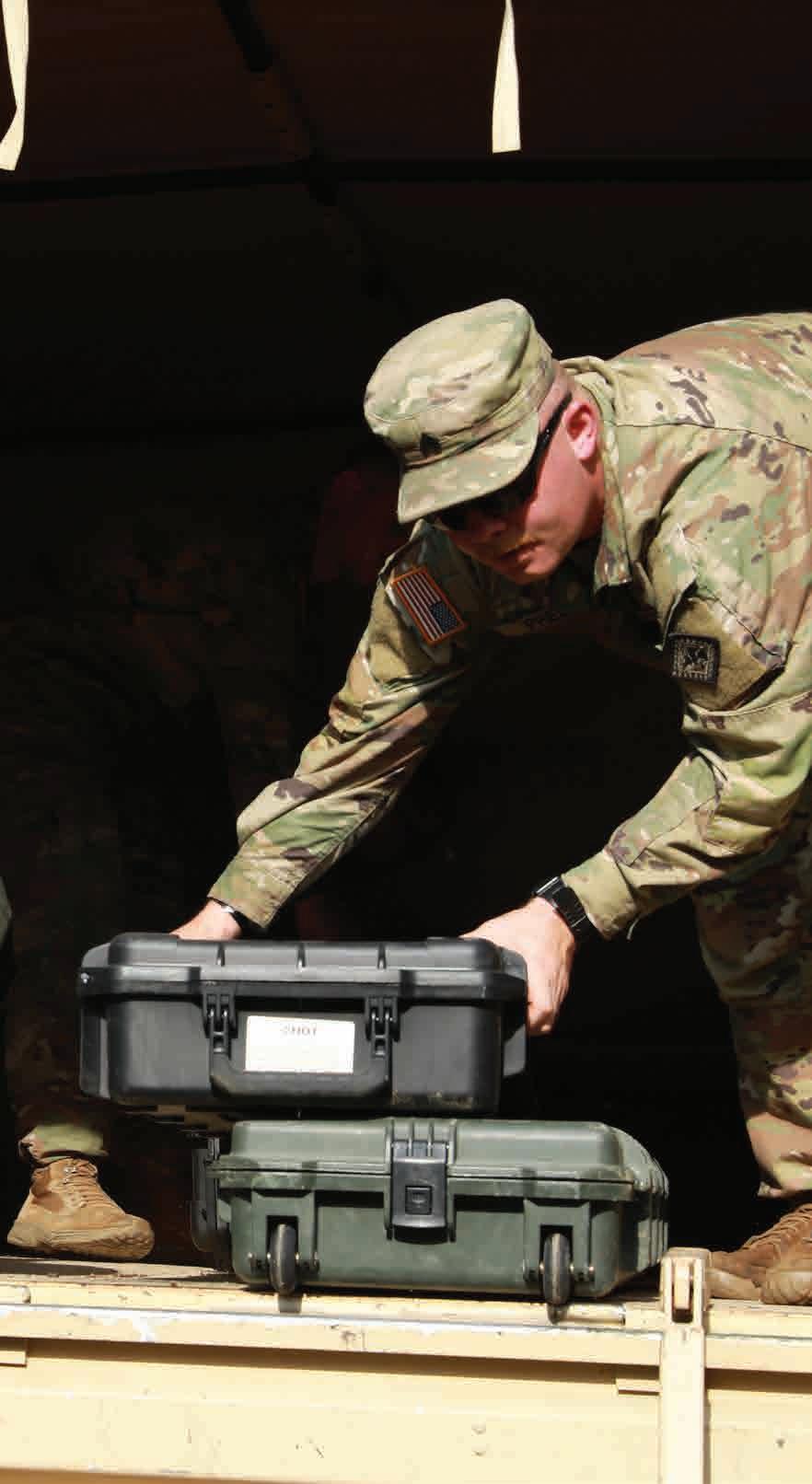
35
36
37
38
Detonation Range

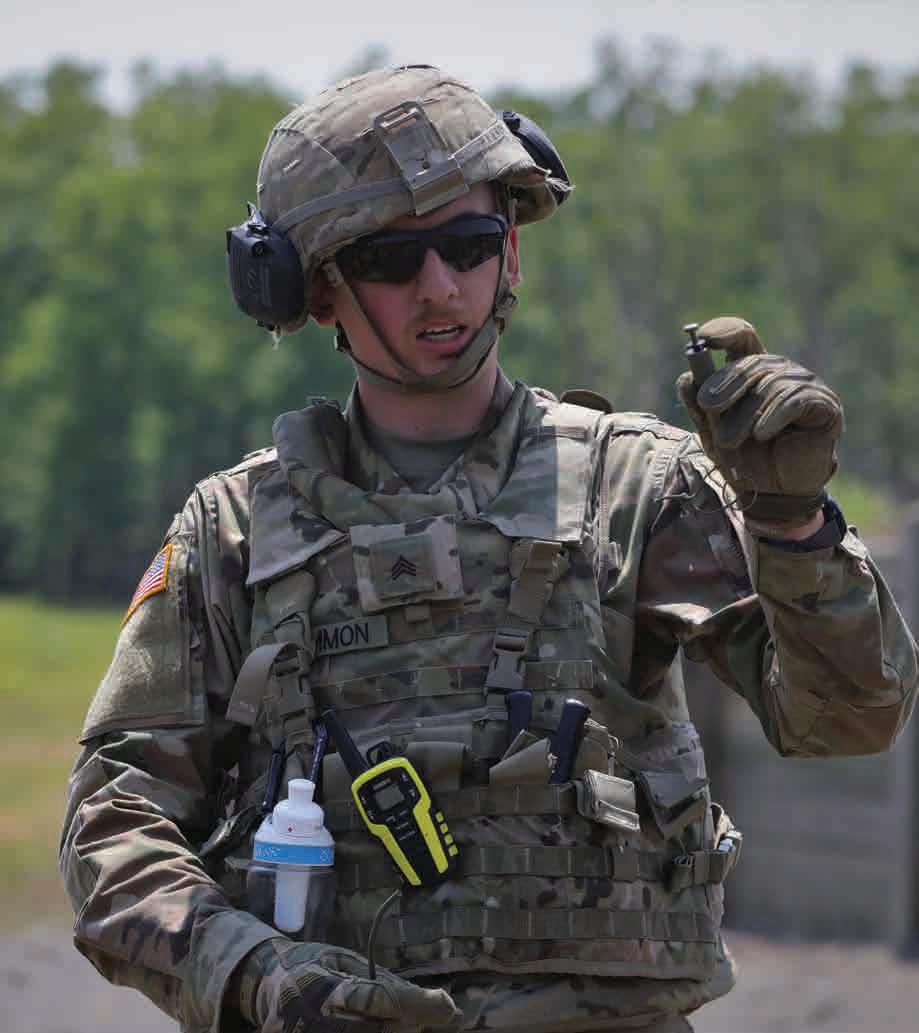
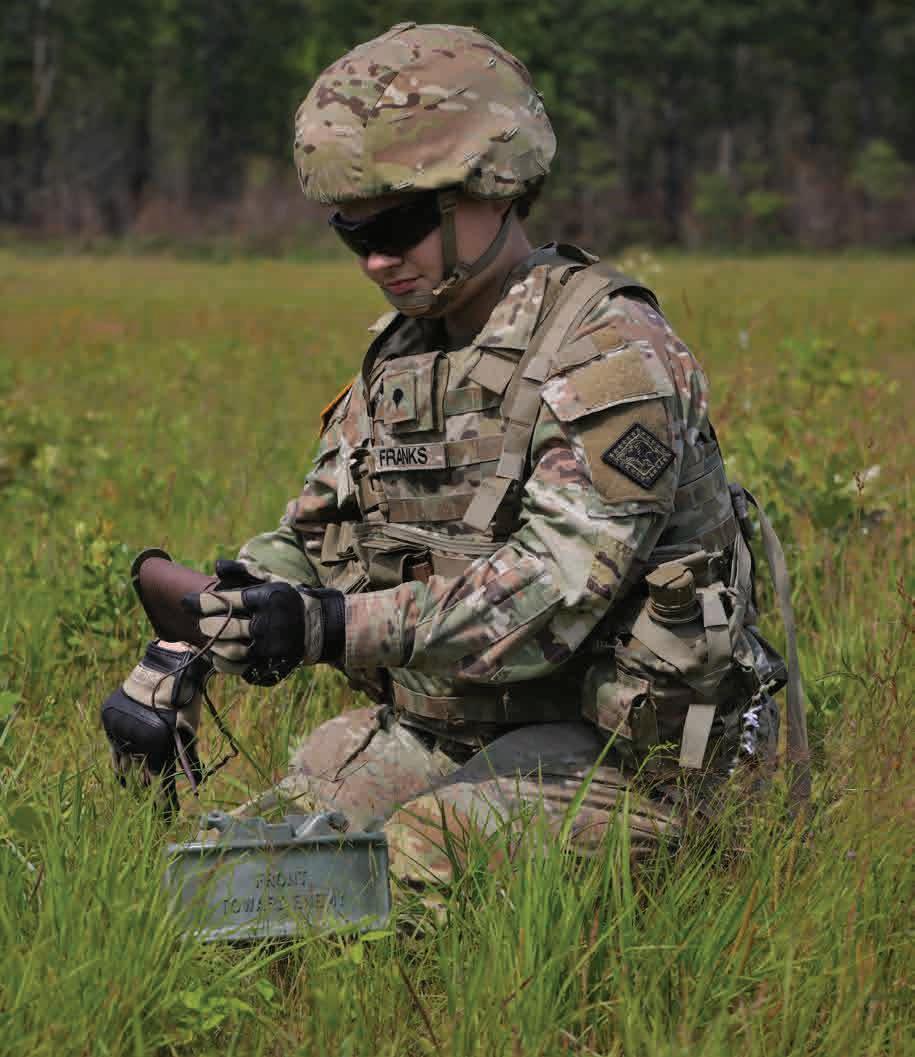
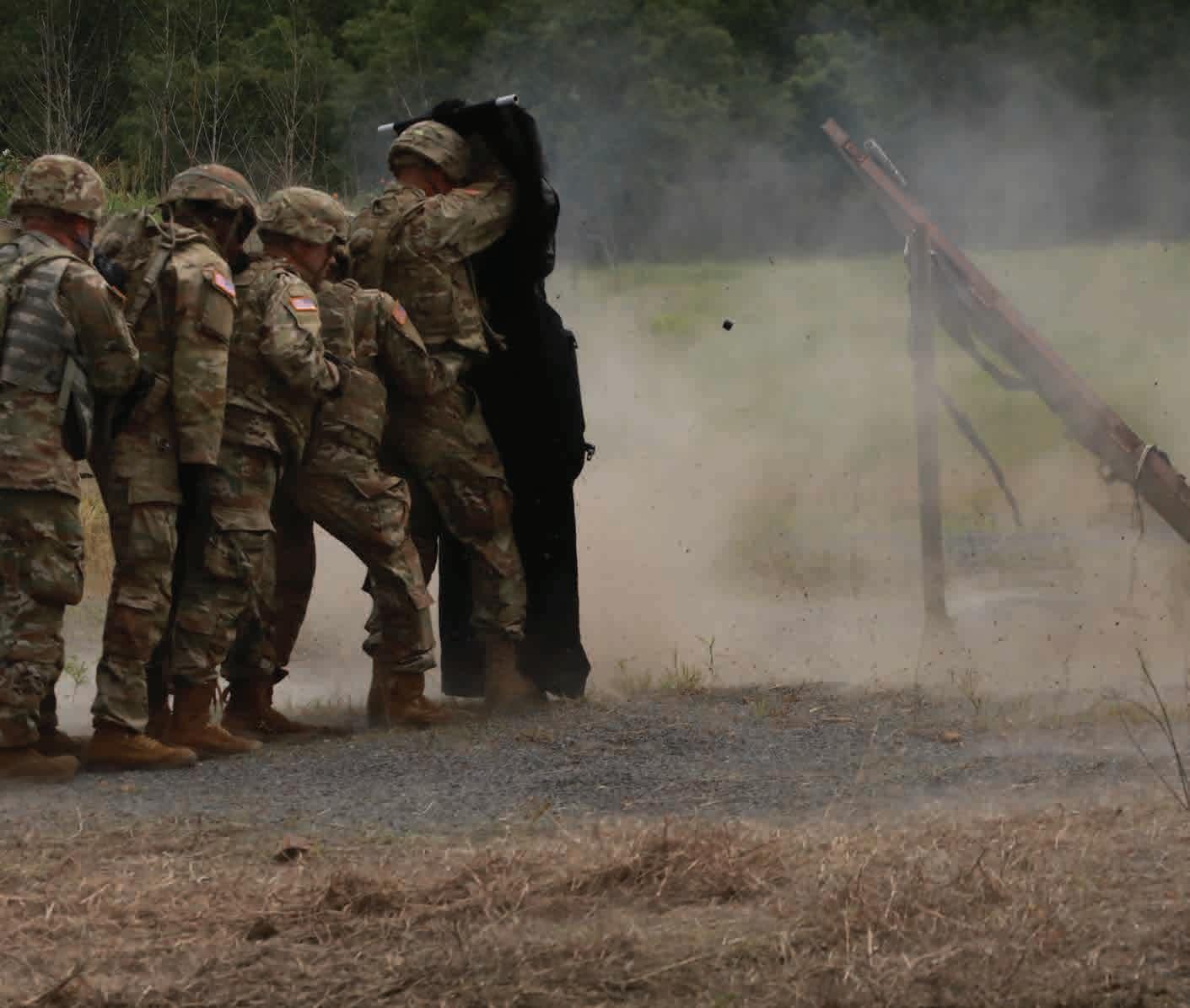
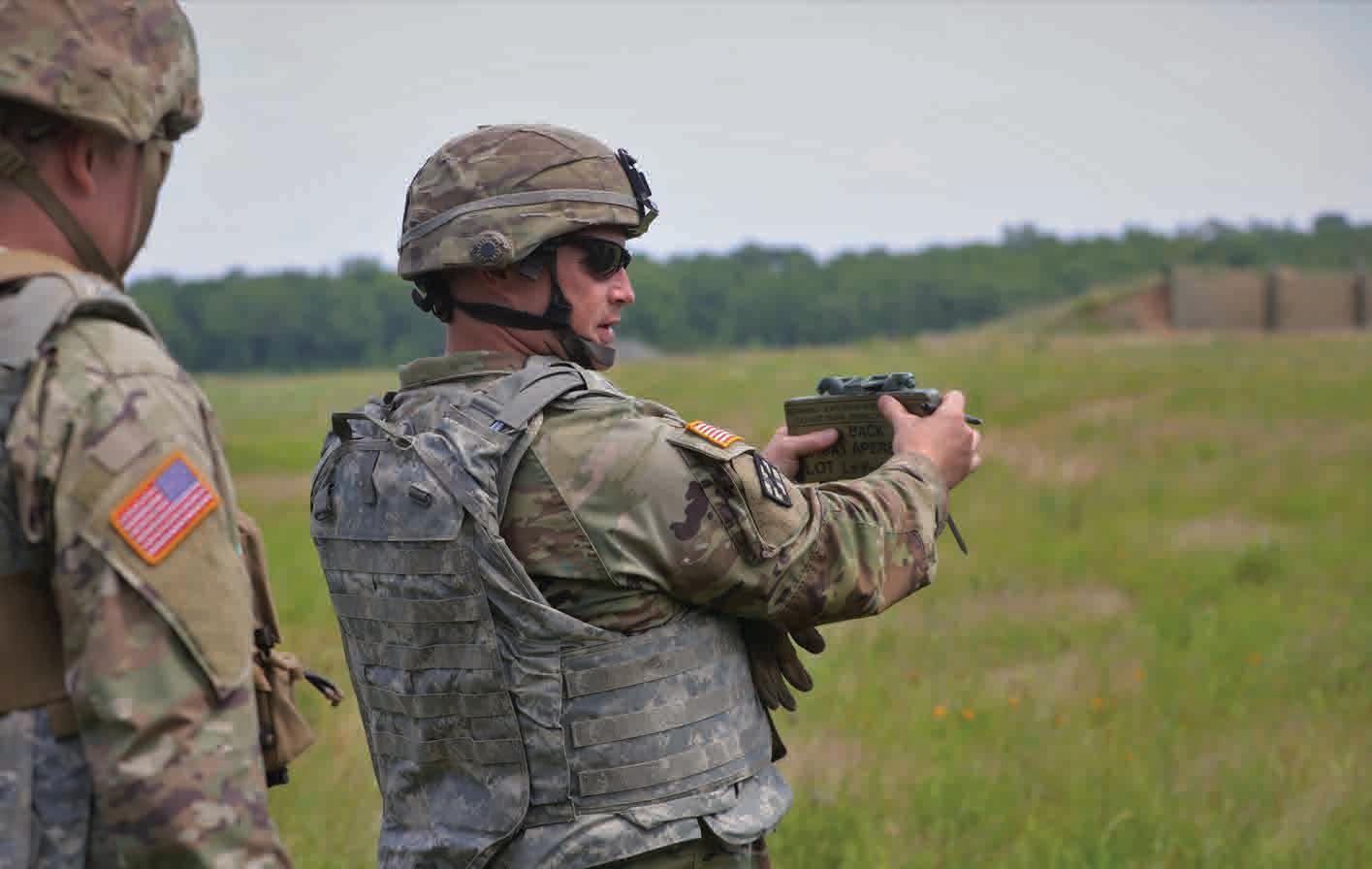
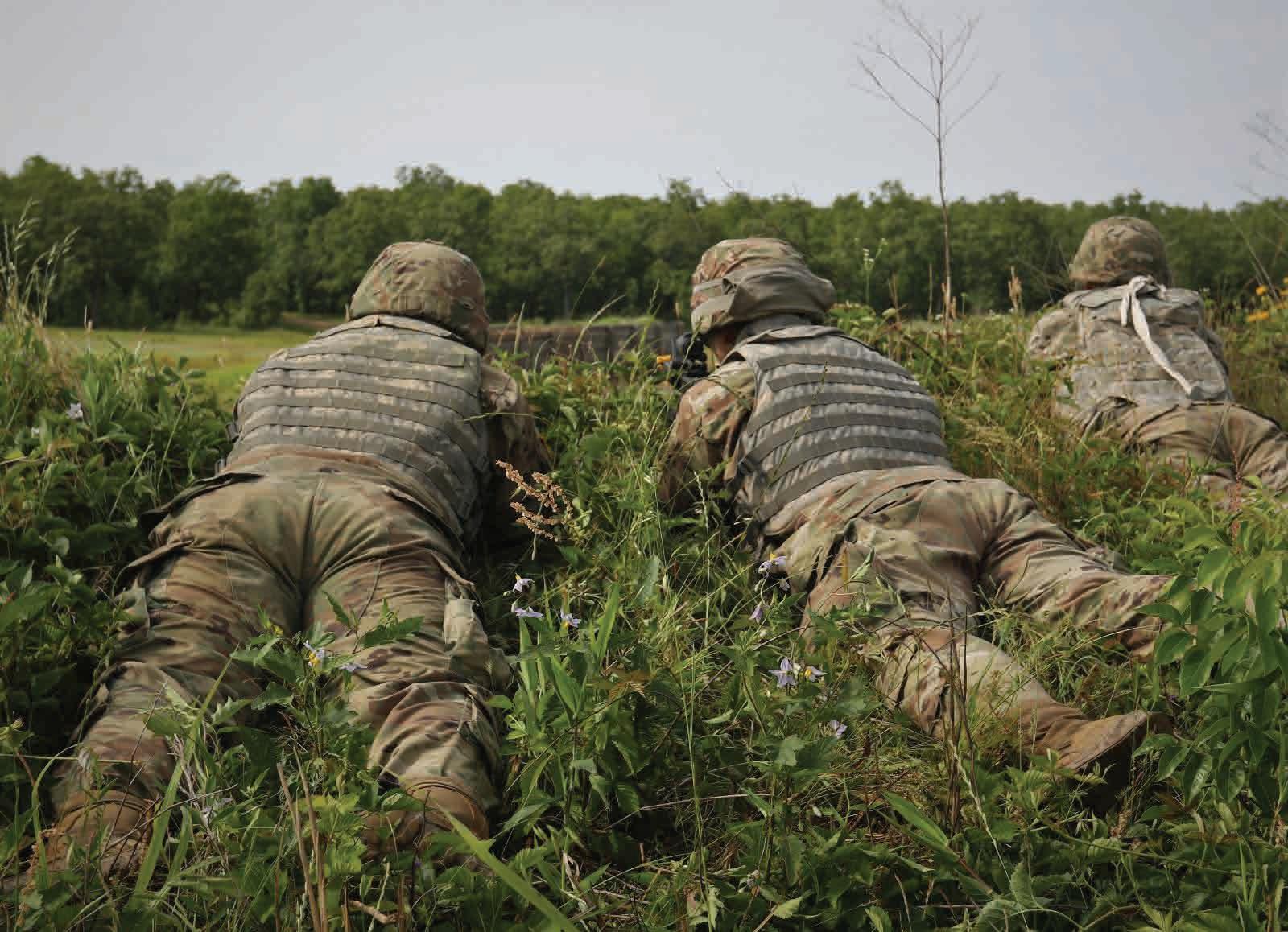
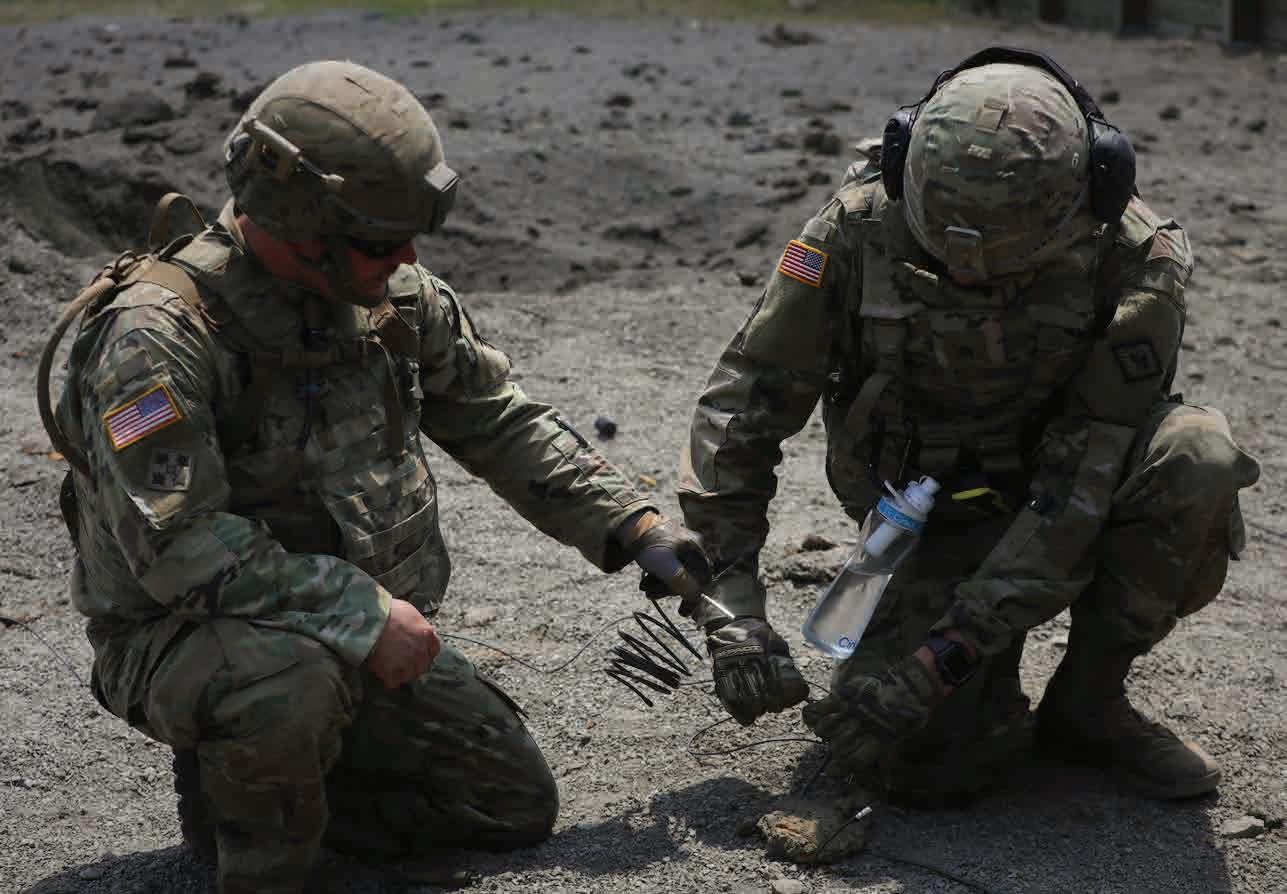
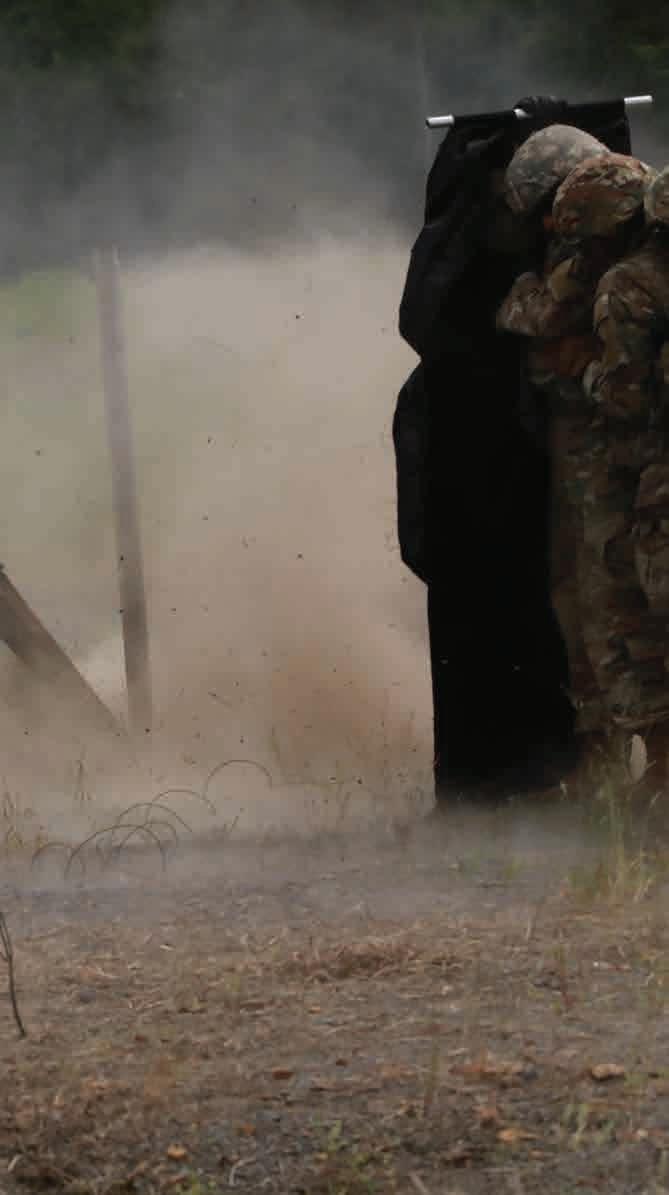
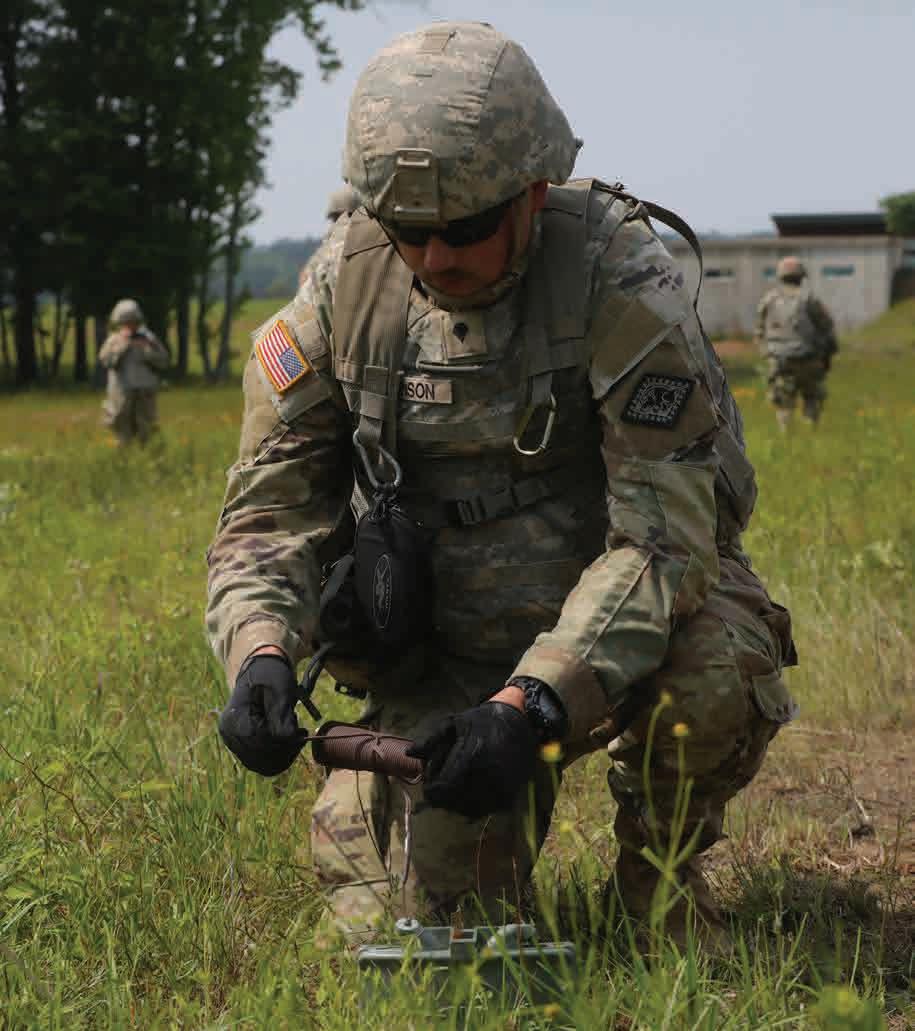
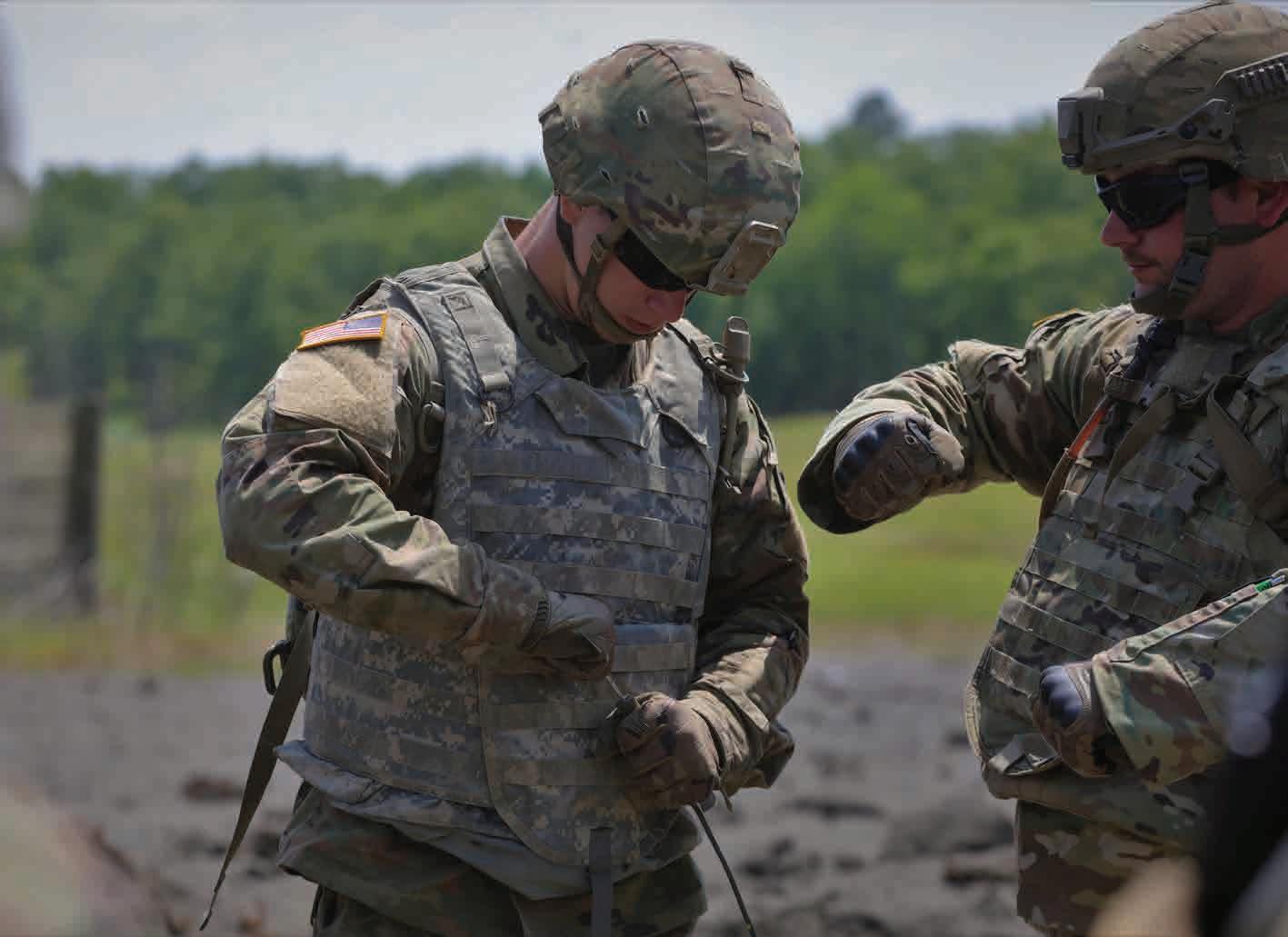
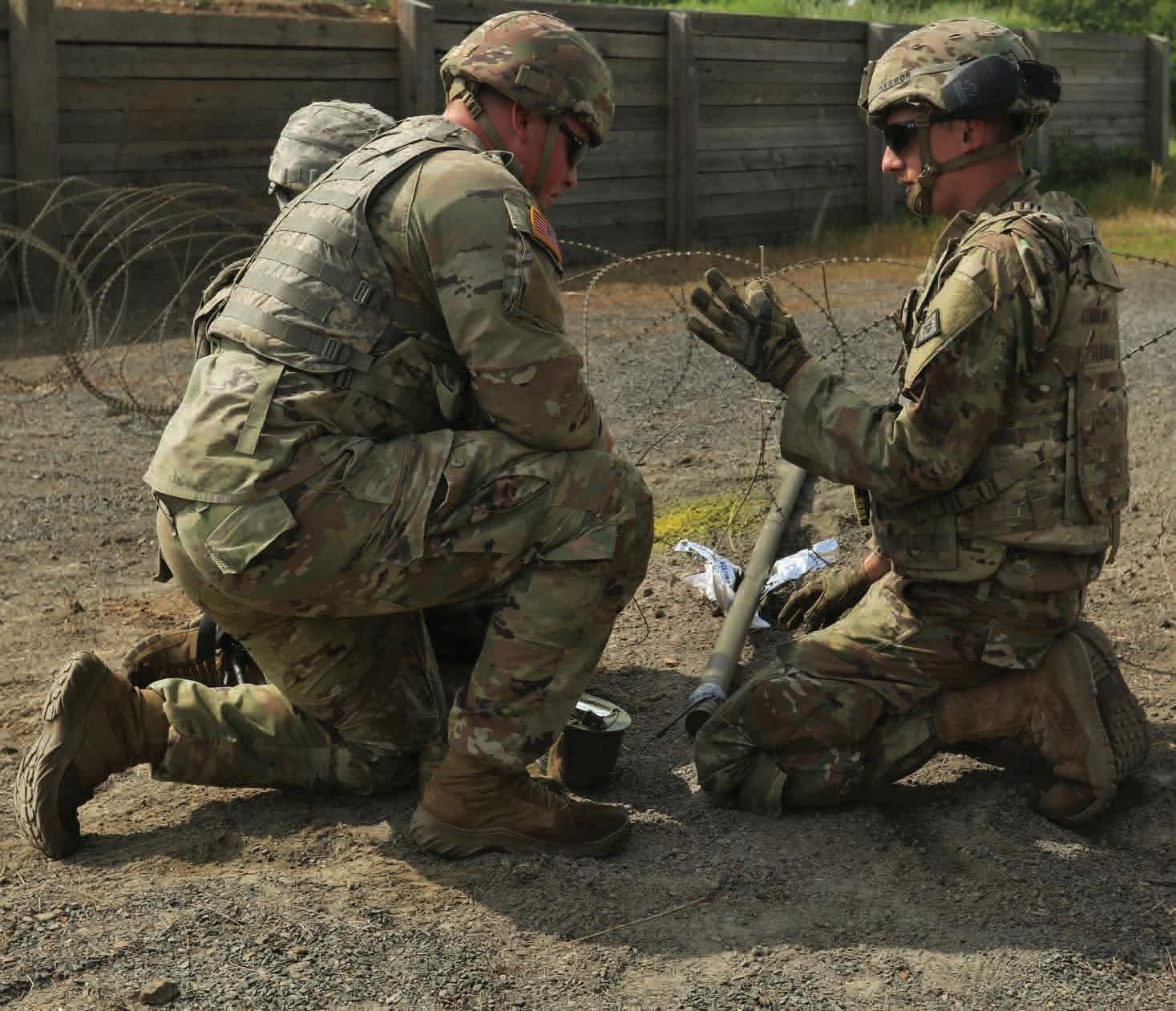
Soldiers from the 1037th Engineer Company trained on and detonated on various explosive devices at Camp Robinson, Arkansas on May 20, 2023. The 1037th got the opportunity to train on claymore mines this year, learning on this tool and others gives the 1037th the confidence to deploy these explosives in austere environments.
39
(Photos by Sgt. Patrick Gillam, Bryce Colvert, and Sgt. Kristy Browning)
40
Confidence Course

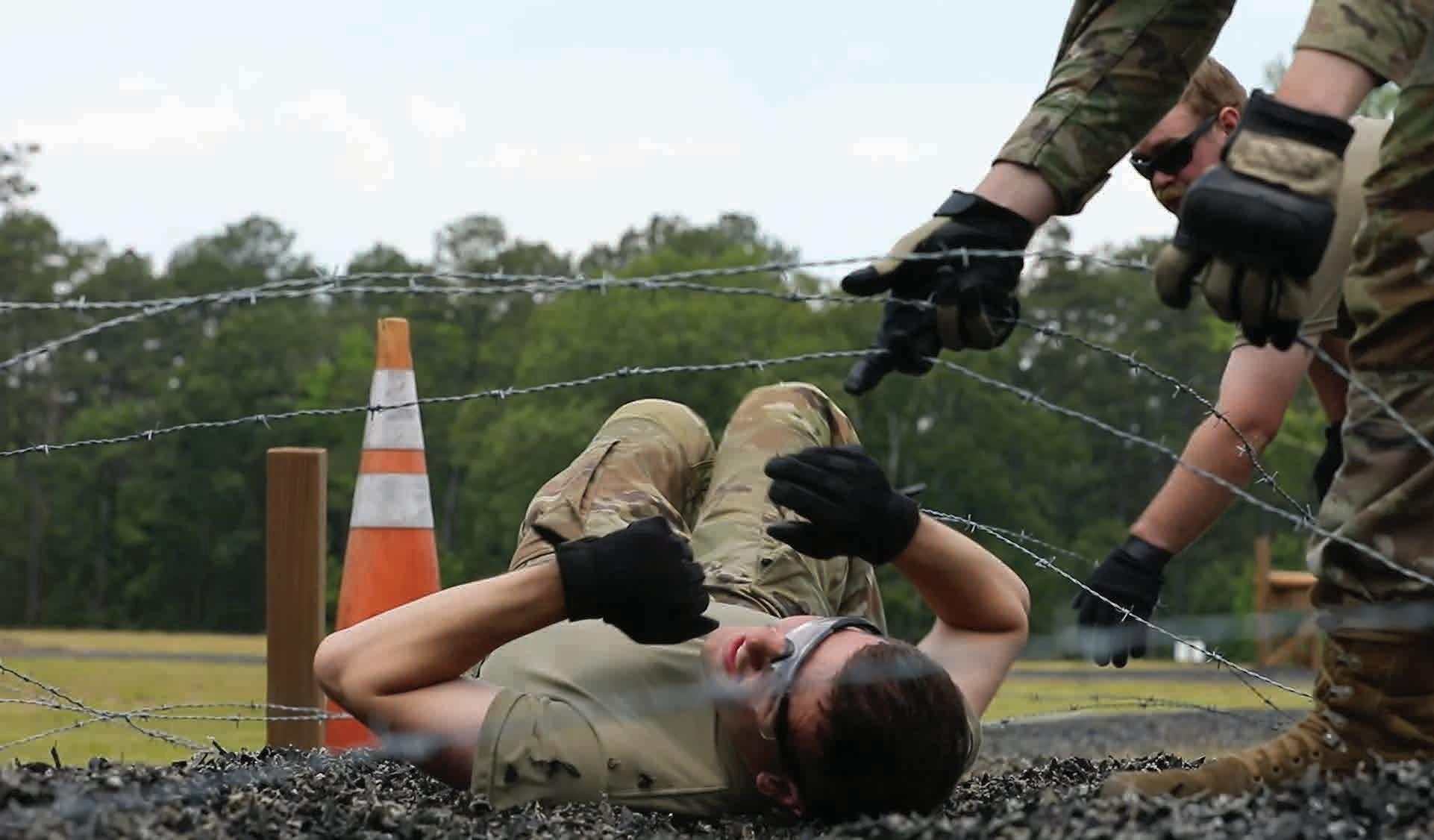
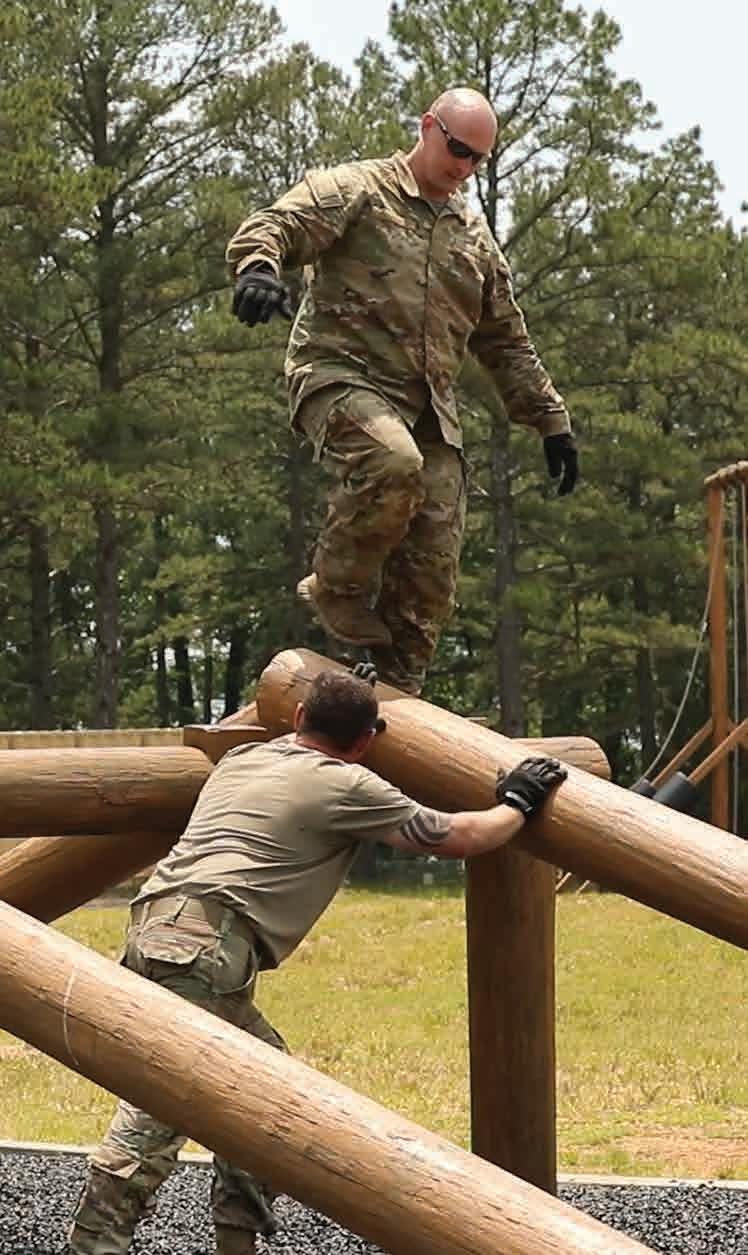
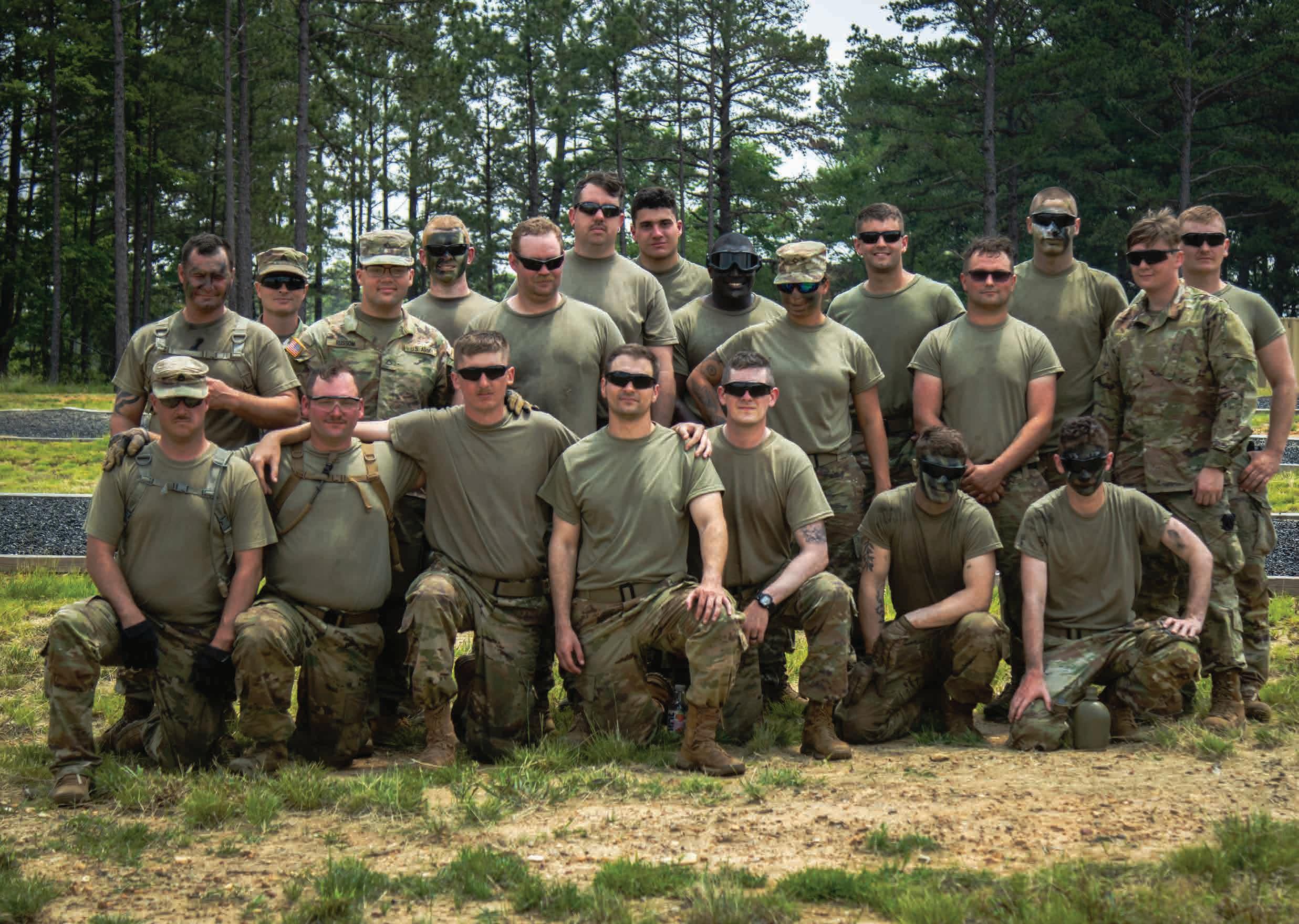
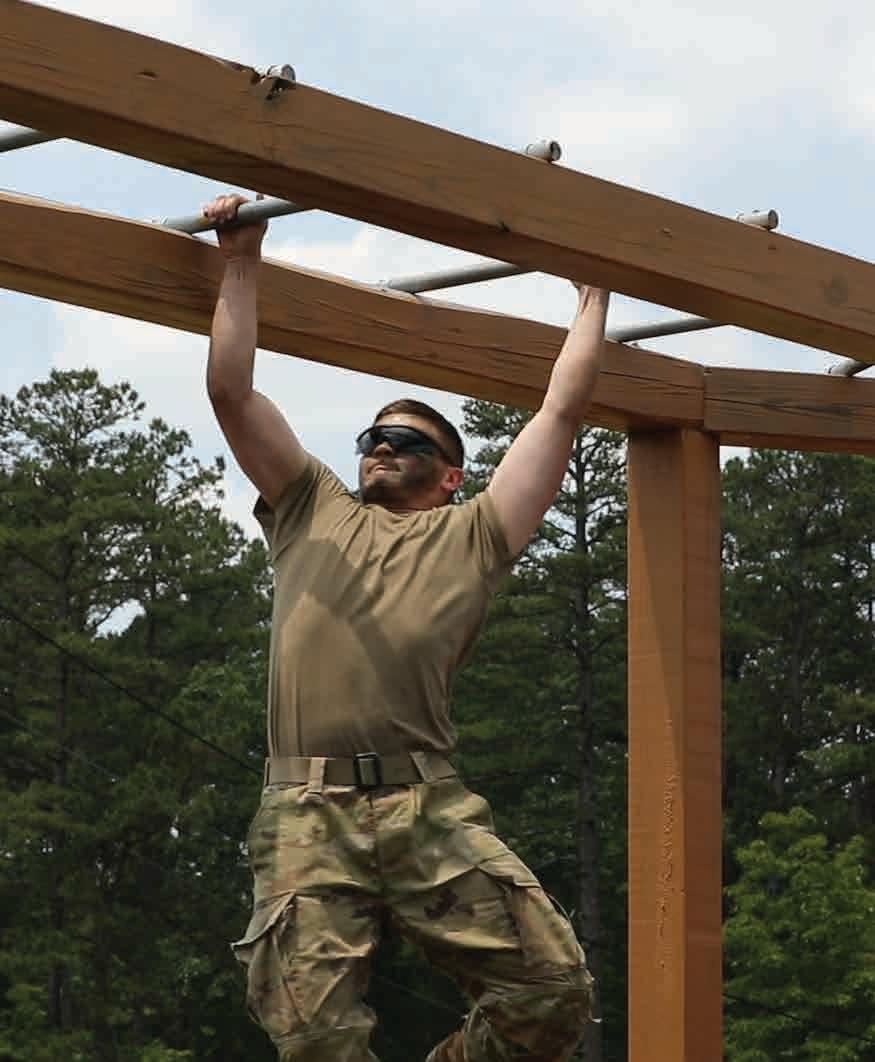
Soldiers from the 1036th and 1037th Engineering Companies from the 875th Engineer Battalion participated in the confidence and conditioning course as a concluding morale event post Annual Training. This challenging course isn’t just about physical strength- it’s about building strong team bonds and lifting everyone’s spirits.
By tackling hurdles as a team, they learned to communicate better, trust each other more, and work together seamlessly in a more relaxed environment than which they had just spent the previous two weeks. These skills are like gold on the battlefield, where split-second decisions and unity can make all the difference.
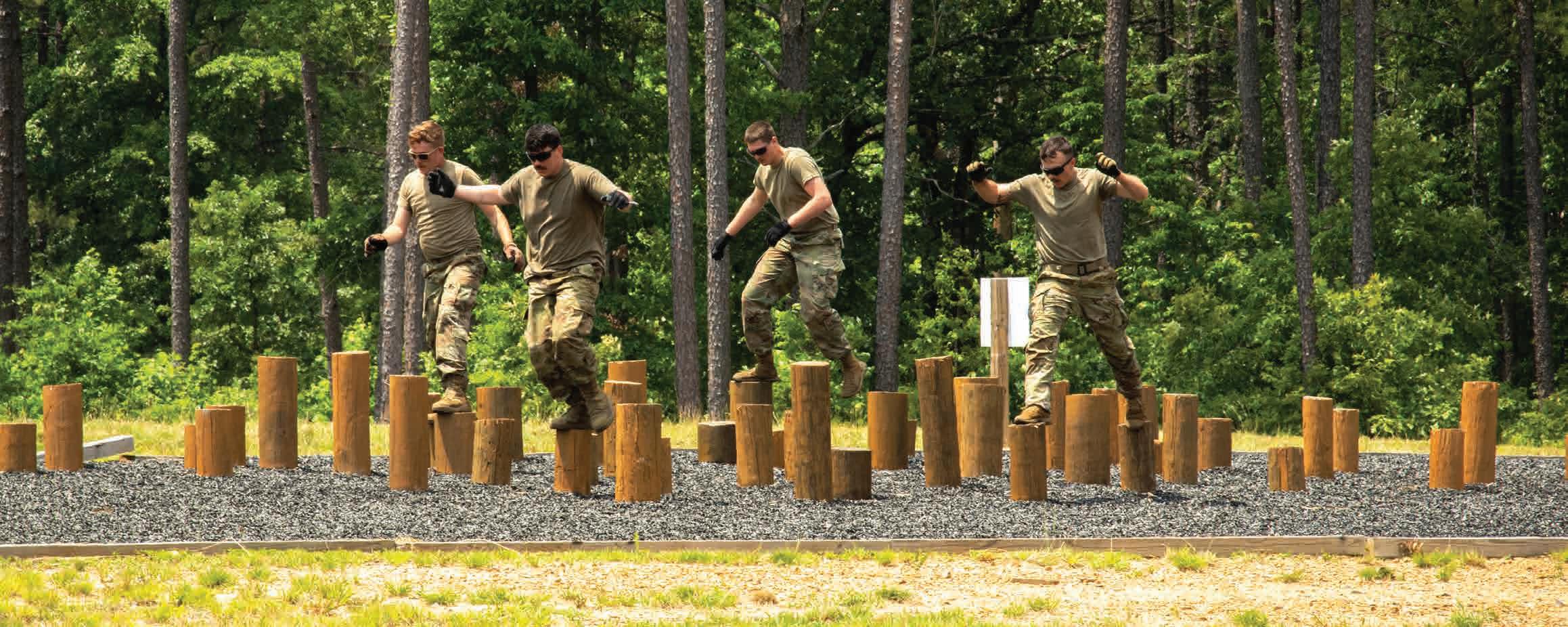
The soldiers who completed this course show us that by working together and pushing their limits, they’re not just getting stronger individually--they are building a foundation of unity in the Arkansas National Guard that will support them in all their future missions.
 (Photos by Spc. Thomas Pate)
43
Graphic Illustration by Spc. Savannah Smith
IED Defense


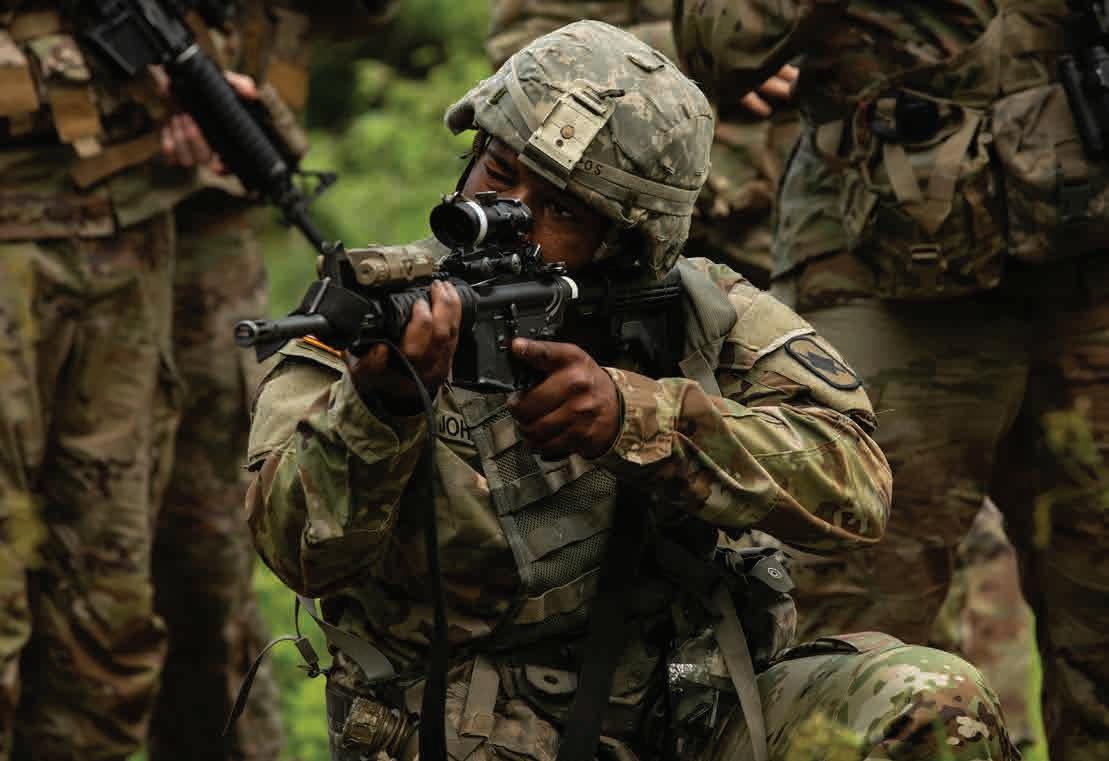
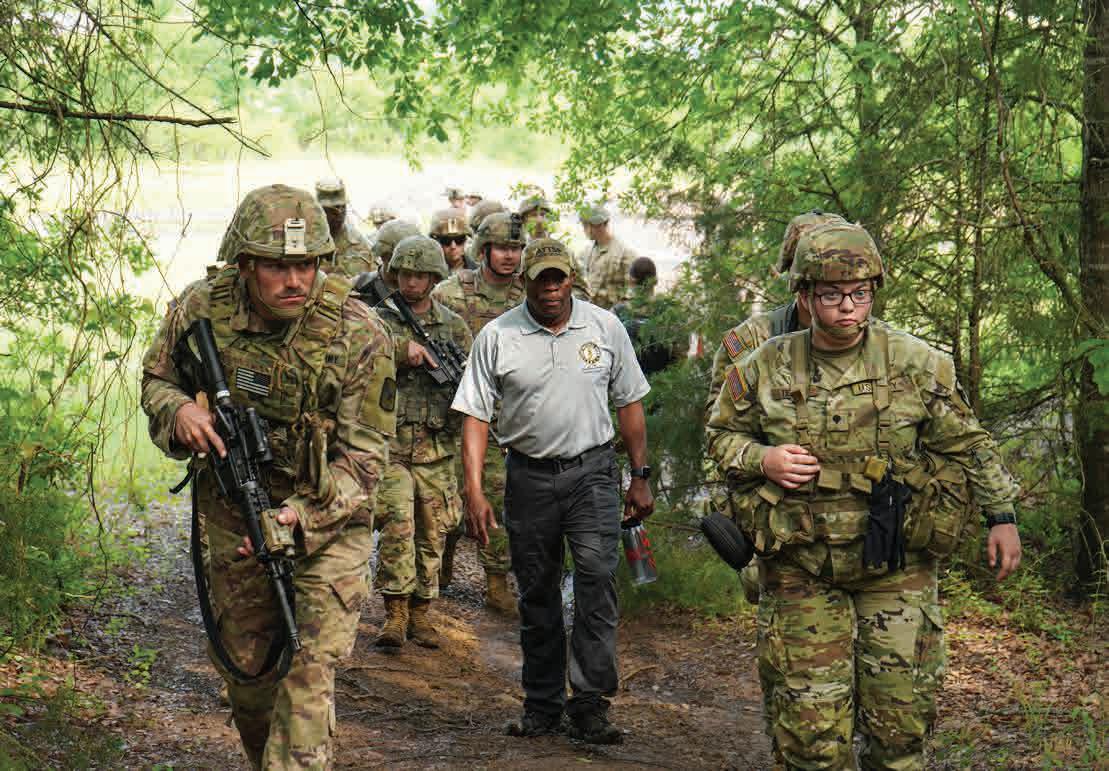
Soldiers from the 1st Battalion, 153rd Infantry Regiment, 39th Infantry Brigade Combat Team, conduct intense Improvised Explosive Device (IED) training through the Asymmetric Threat Training Center, May 13, 2023. This training included both classroom instruction, and practical field exercises, to included simulated IEDs placed in a controlled environment. Of the 140 Soldiers undergoing pre-deployment training, more than 40 are Missouri National Guardsman, who are deploying with 1st Battalion, 153rd Infantry Regiment for Operation Spartan Shield.
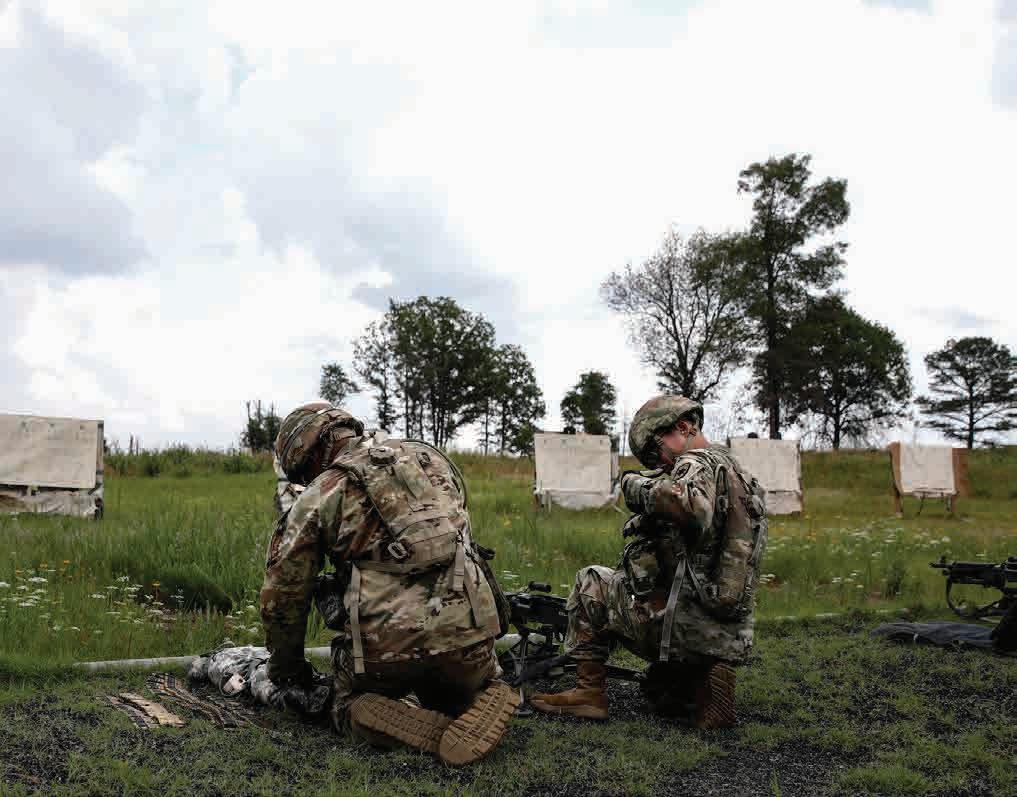
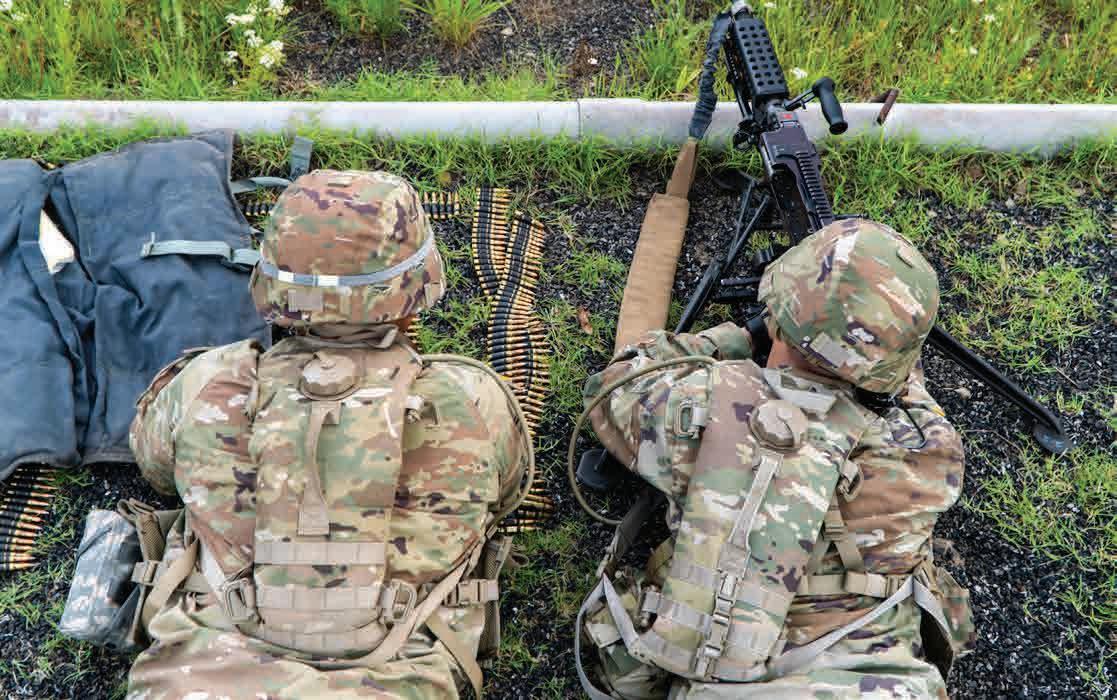
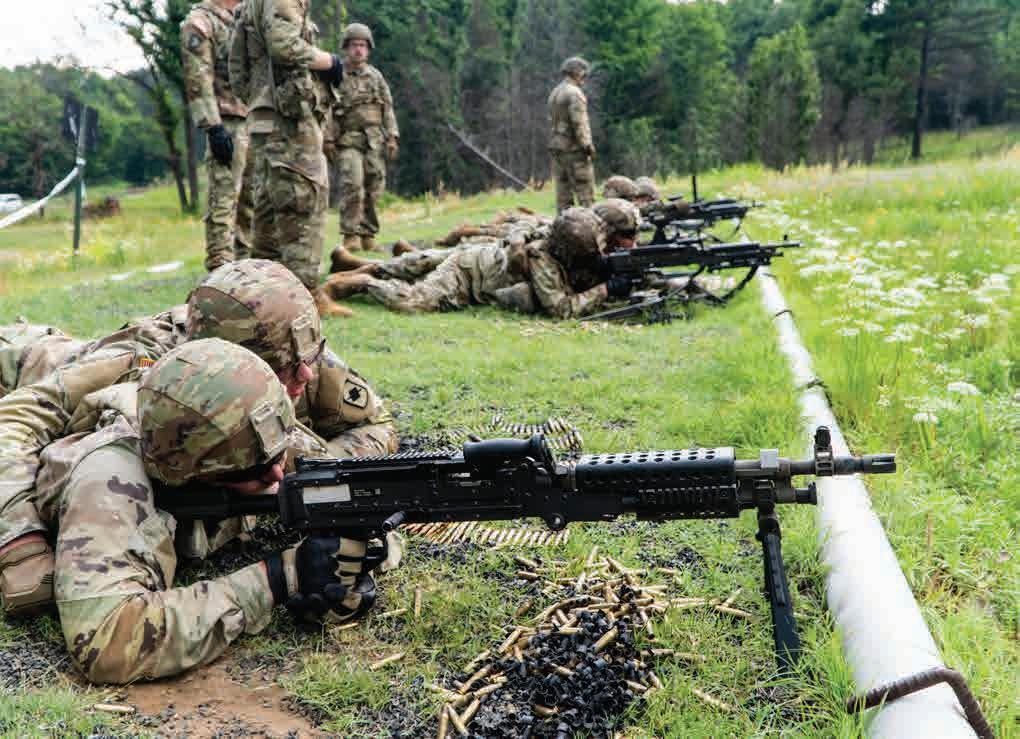
Soldiers of the 239 Brigade Engineer Battalion (BEB) spent time over the last two days qualifying on the M240L light machine gun. The M240L is designed to provide fire support and it can be used to suppress enemy fire, engage targets at long ranges and provide covering fire for the squad to maneuver. The M240L is a team weapon and requires teamwork between the gunner and the A-gunner to operate effectively. To ensure that the M240L is always ready to fire, the gunner and Agunner must communicate effectively with each other. Firing up to 200 rounds per minute, the M240L is fed with 200-round ammunition belts. With such a rapid rate of fire, A-gunners need to be prepared for anything.
M240L Qual 44
Photos by Spc. Thomas Pate; Spc. Savannah Smith
Photos by Cadet Alex Chrisco; 1st Sgt. Heather Peters
1-206th Live Fire
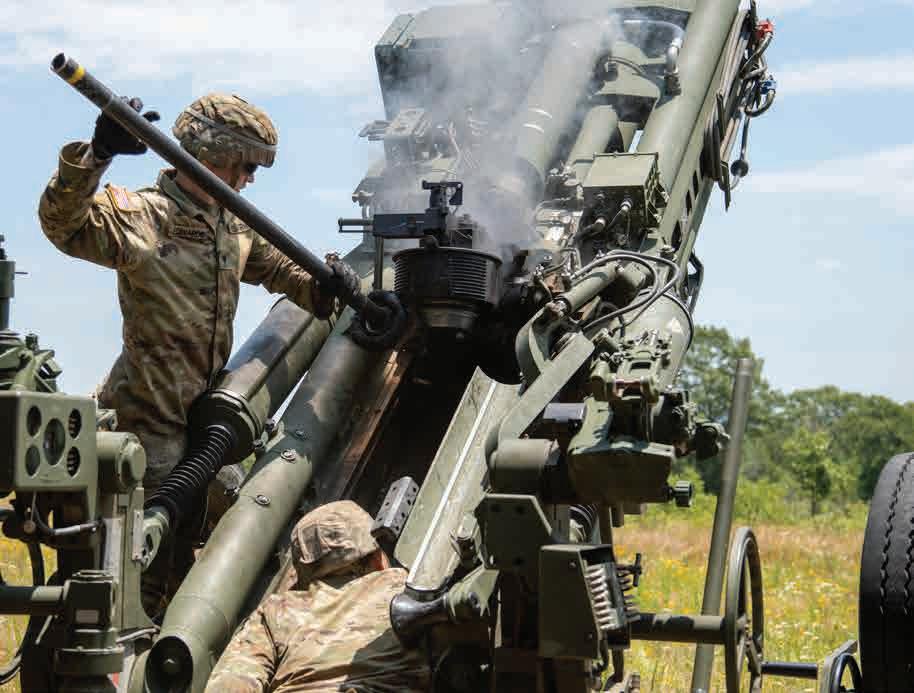
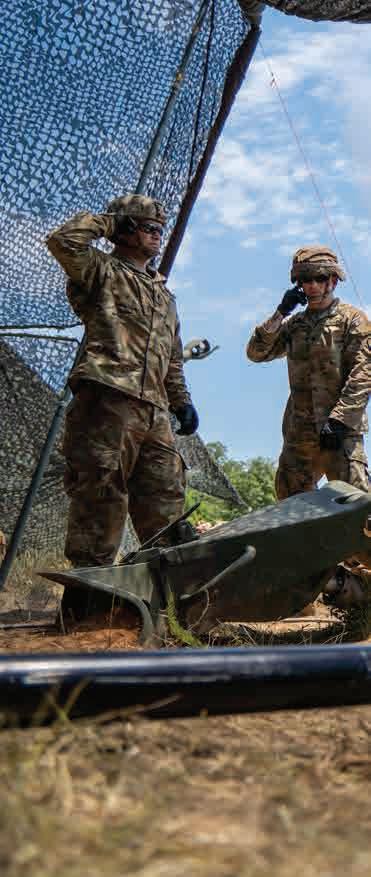
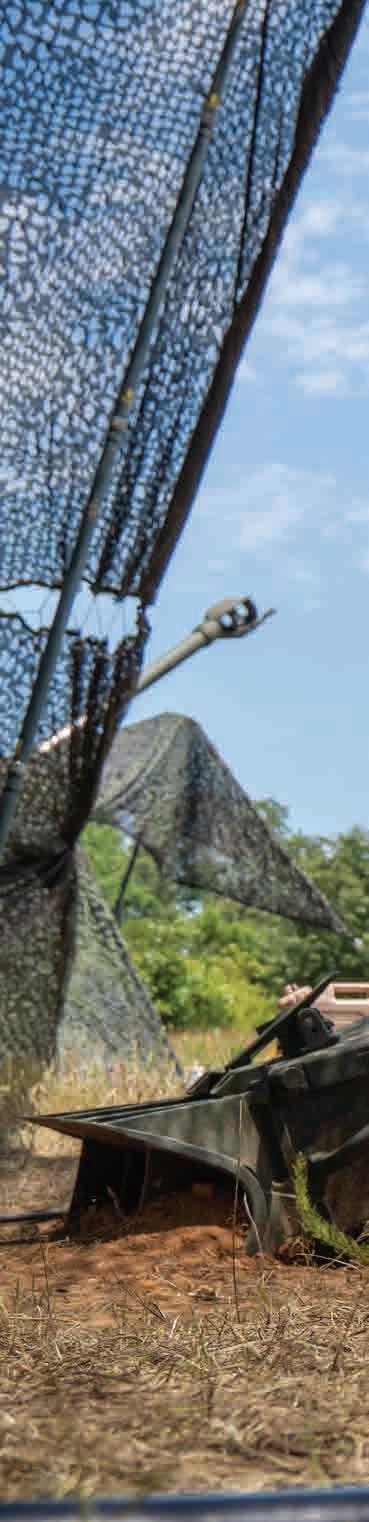
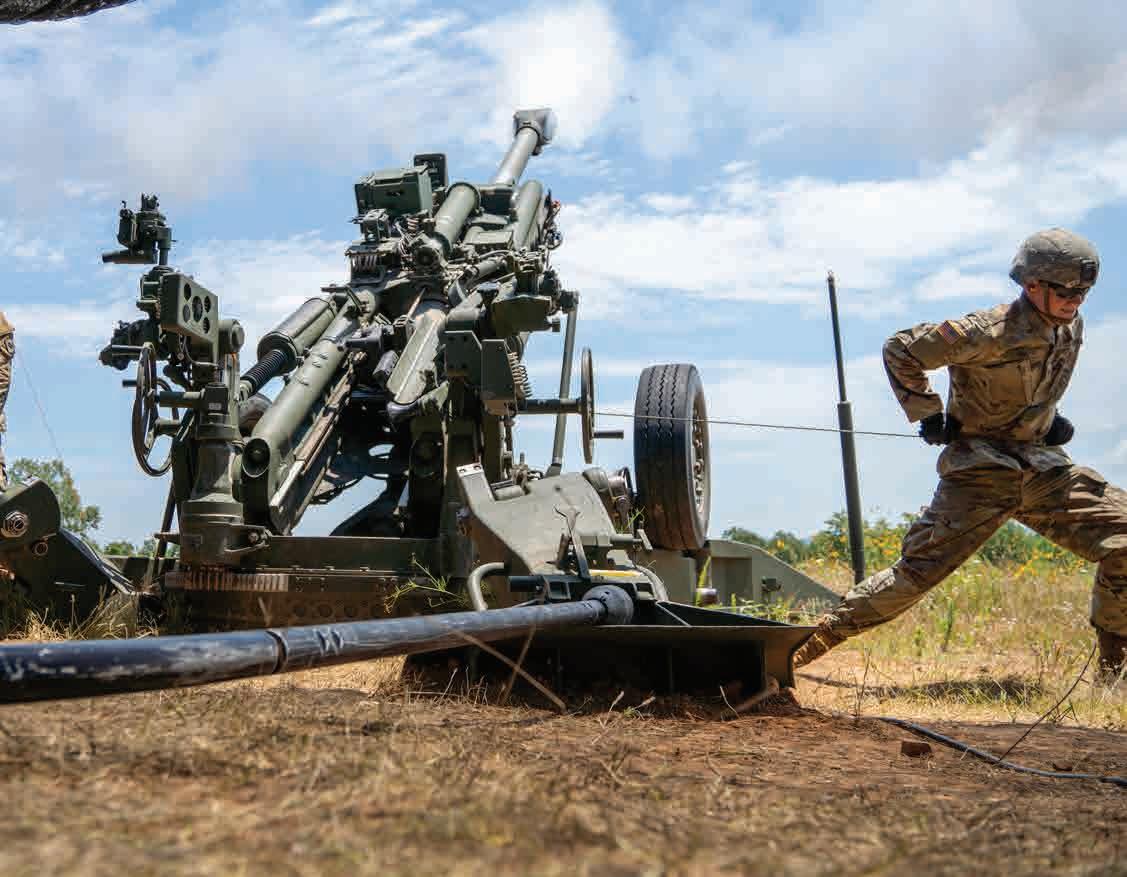
Under the scorching sun, the soldiers of Alpha Company, 1-206th Field Artillery Regiment, 39th Infantry Brigade Combat Team, braved the heat and embarked on live fire exercises, showcasing their formidable artillery capabilities. These dedicated crew members set up their equipment, diligently aiming to achieve their objective while enduring the demanding conditions.
Spc. Kyle Jackson, a crew member in the unit, provided valuable insights into the unit’s objectives and the camaraderie they share. “Our main objective is to fire rounds downhill, so I mean just to put warheads on foreheads pretty much,” Jackson explained, emphasizing the precision and effectiveness with which they engage their targets. The soldiers of Alpha Company understand the critical role they play in providing fire support and ensuring the success of their unit’s missions.
The live fire exercises serve to show the exceptional training and proficiency of the 1st-206th. Their ability to deliver accurate and devastating firepower is a direct result of their continuous preparation and relentless commitment to honing their skills. Each crew member performs their designated role with precision, synchronizing their actions to ensure seamless execution.
Moreover, the strong bonds and camaraderie that develop within the unit create a supportive and cohesive environment, ensuring optimal performance and fostering a sense of brotherhood. “You create a good bond with everybody you work with. Like I said, when it comes down to work, the work’s done, but when it comes down to having fun, we definitely do that too. It’s good brotherhood,” Jackson reflected. This sense of unity and trust is crucial, as it fosters effective communication and collaboration during critical operations.
The heat and demanding environment only add to the challenges faced by the soldiers. Setting up artillery in unfavorable conditions requires resilience and adaptability. Through their sheer determination, they overcome the physical and mental obstacles that arise, demonstrating their readiness to fulfill their duties in any situation.
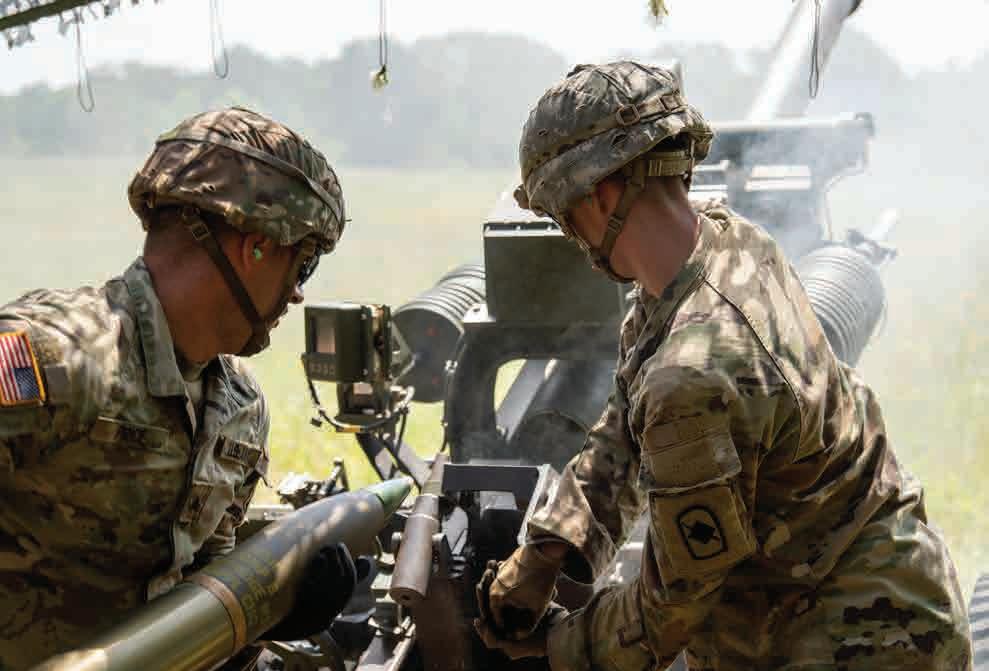
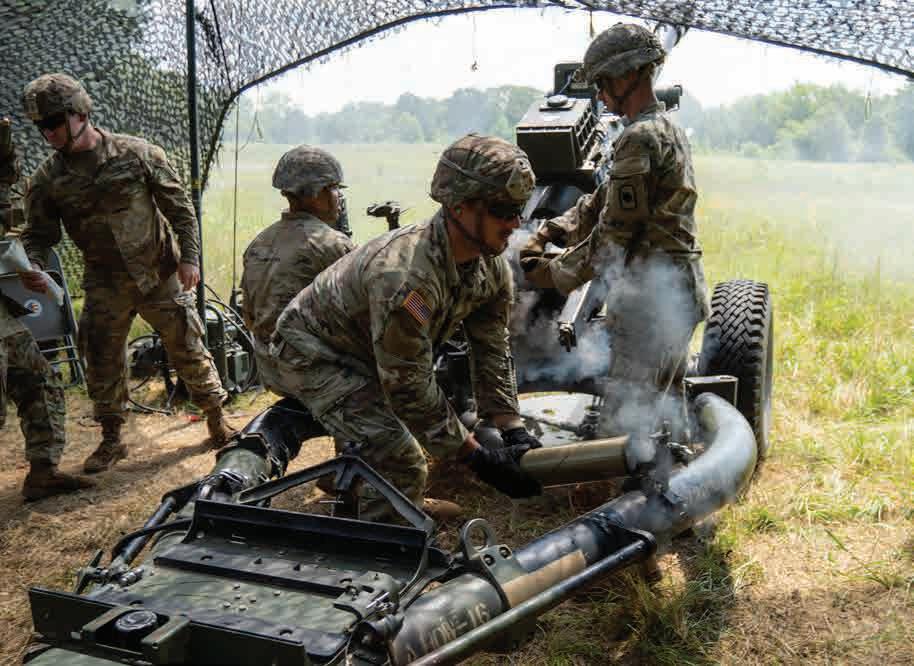
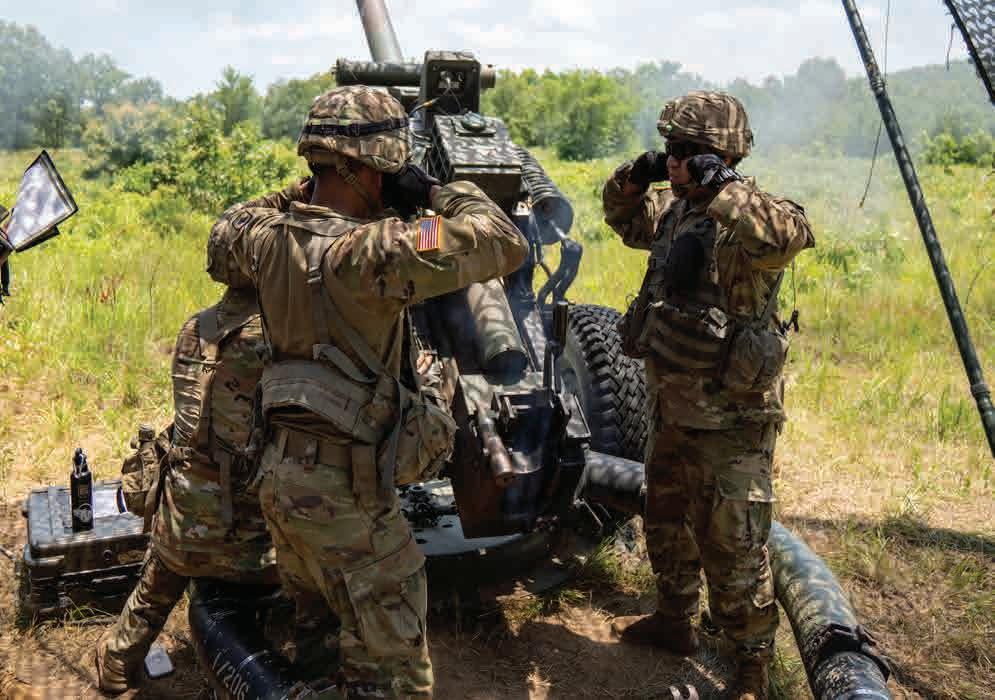
As the sun sets on the live fire exercises, the soldiers of Alpha Company can take pride in their accomplishments. Their commitment to excellence and their ability to work as a team in challenging conditions are a testament to their unwavering spirit, and their dedication to the mission and the bond they share highlight the remarkable qualities of the artillery soldiers who stand ready to defend and support their comrades on the battlefield.
45
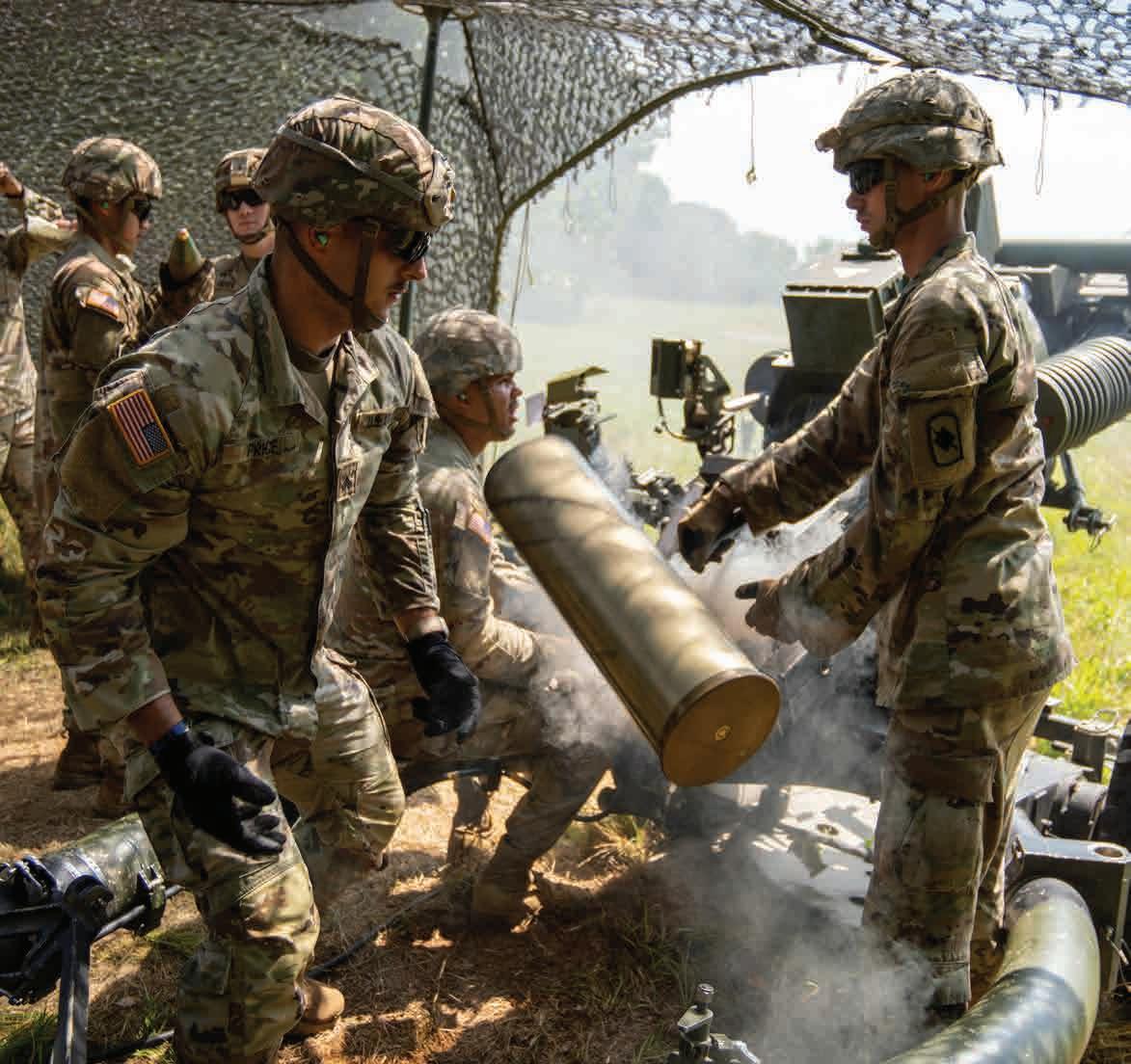
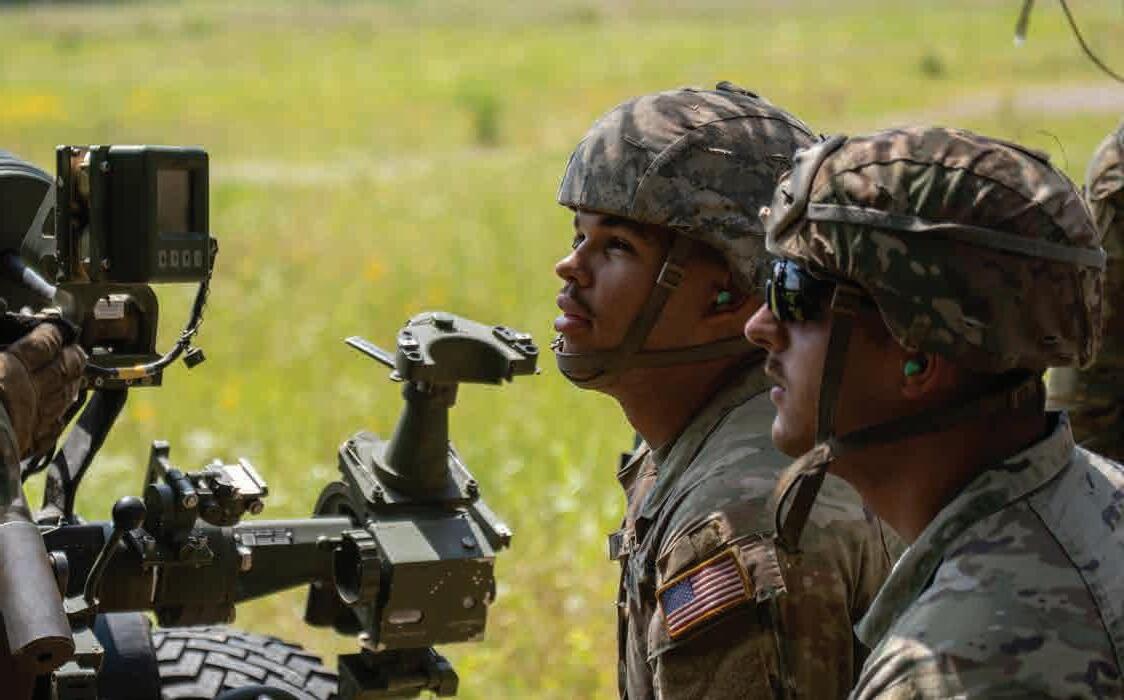
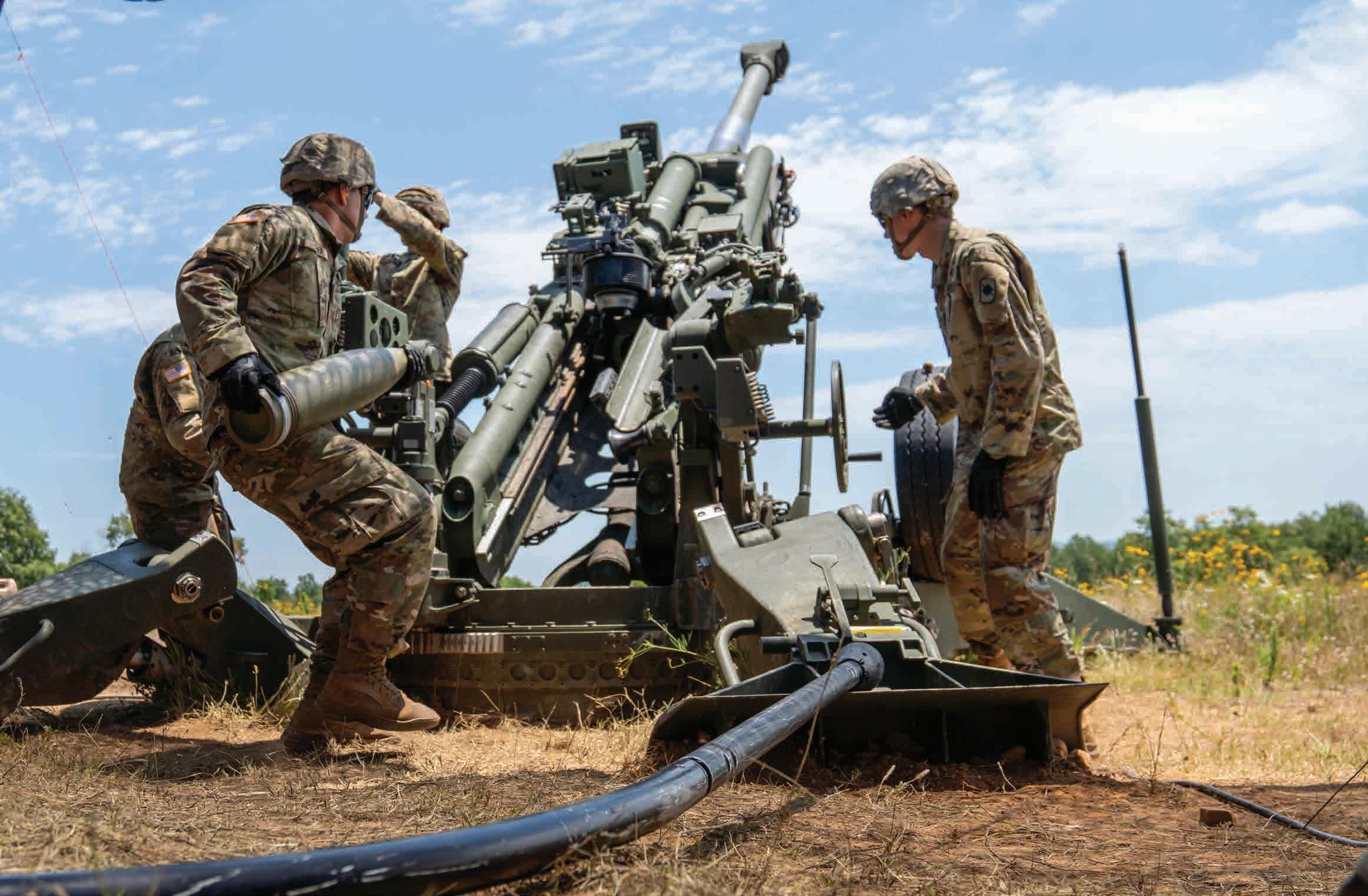
The battle ground roared to life as the Charlie Battery of the 1st-206th Field Artillery Regiment, 39th Infantry Brigade Combat Team, plunged into a captivating live fire exercise, June 11, 2023. Demonstrating their precision and expertise, the soldiers unleaded a formidable display of artillery firepower. with resounding blasts and trails of smoke, they showcased their readiness and effectiveness in delivering accurate and impactful fire support, further enhancing their combat capabilities.
46
The Warhammer Stakes
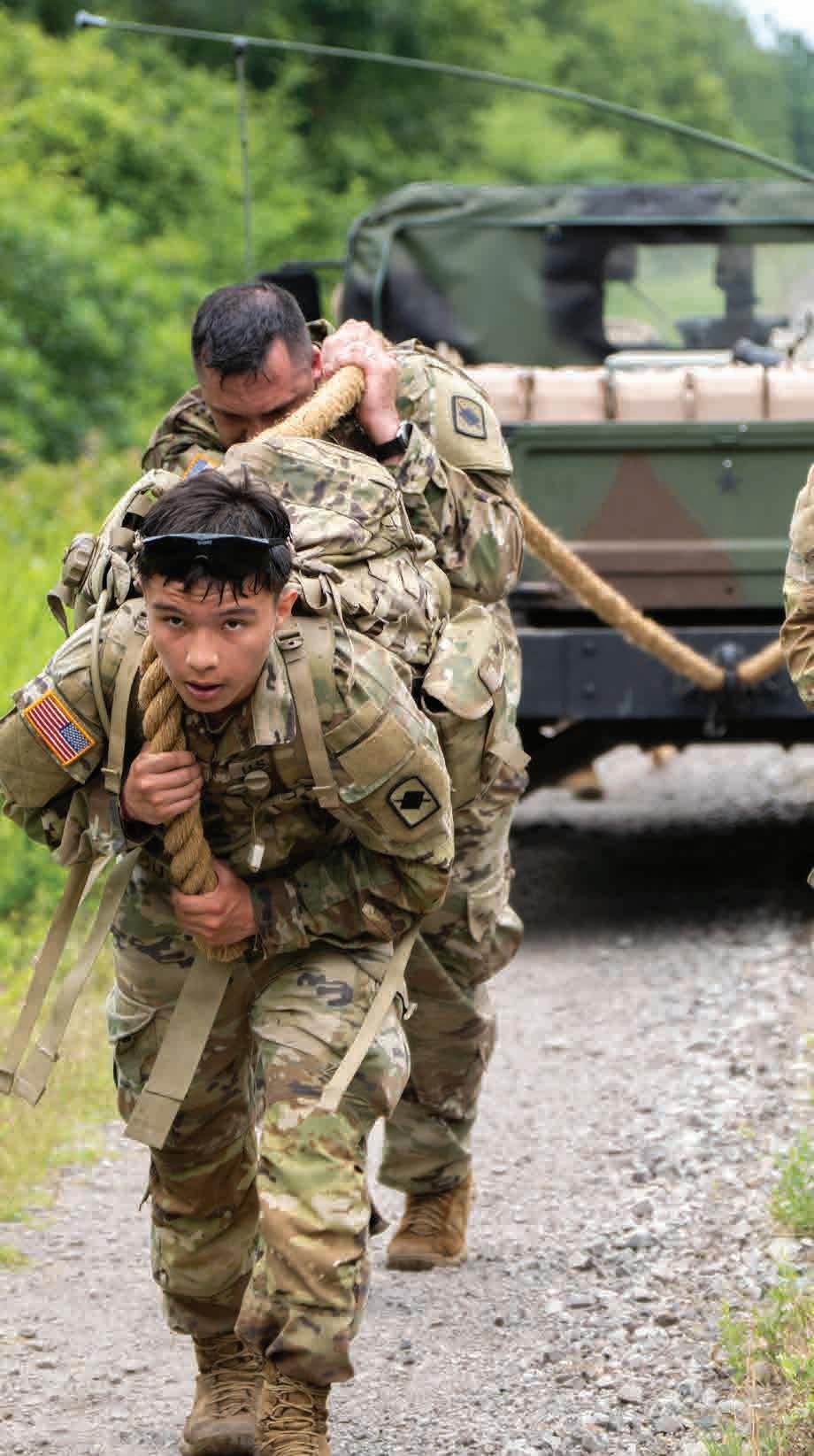
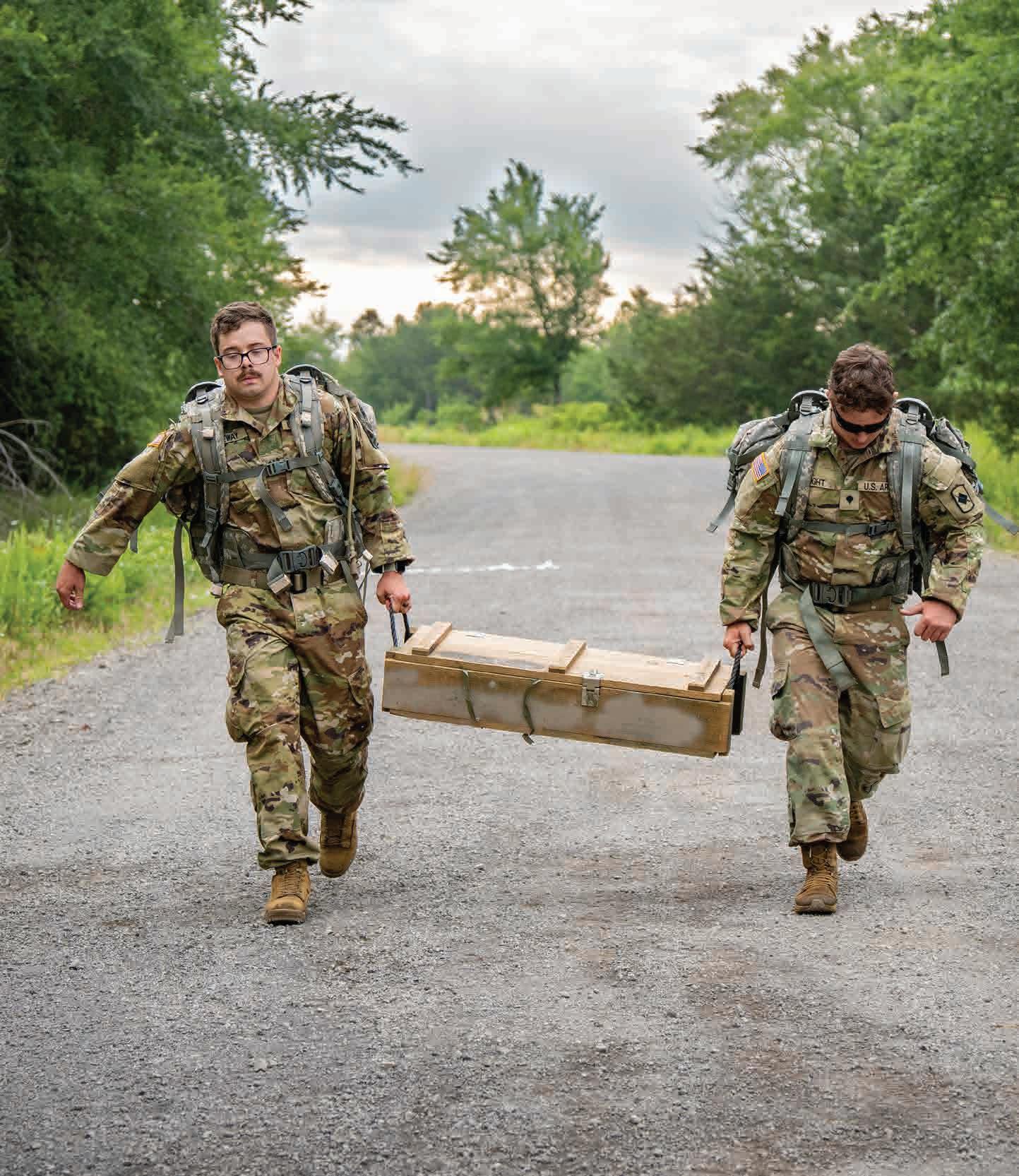
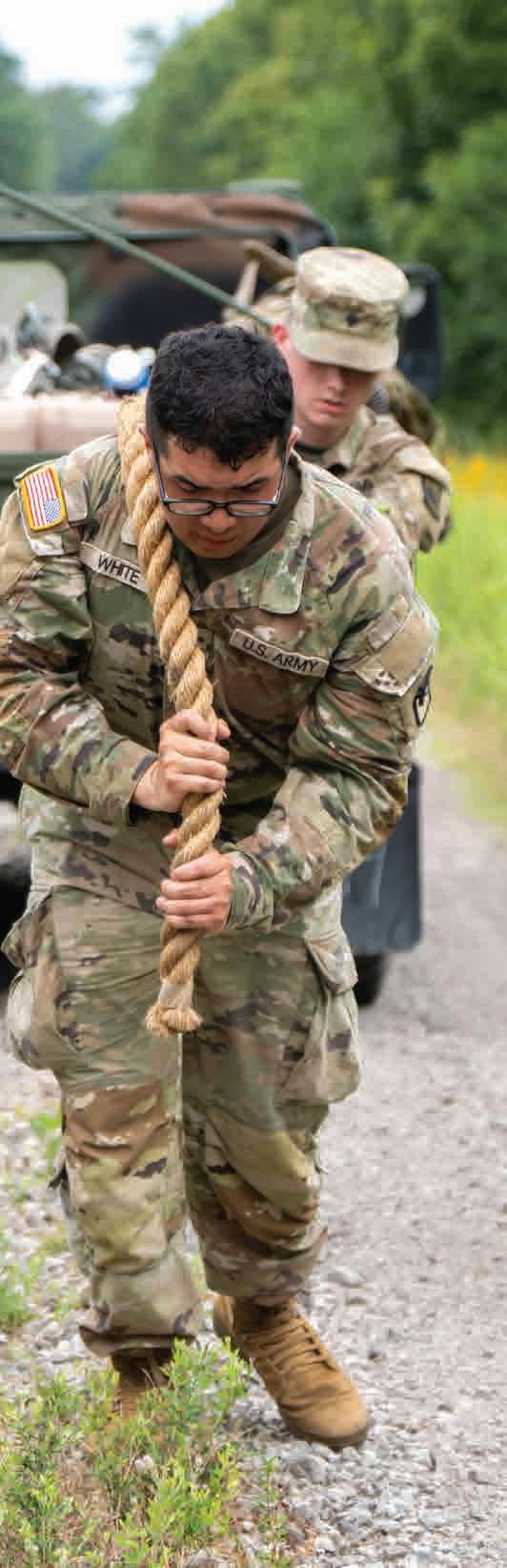
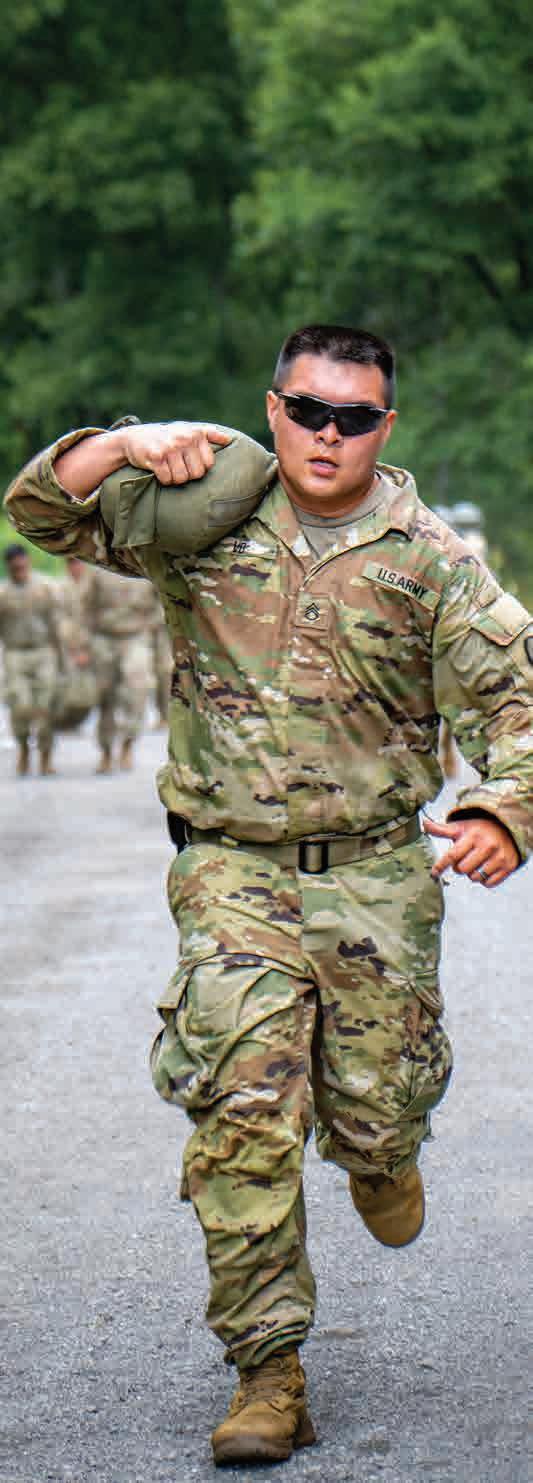
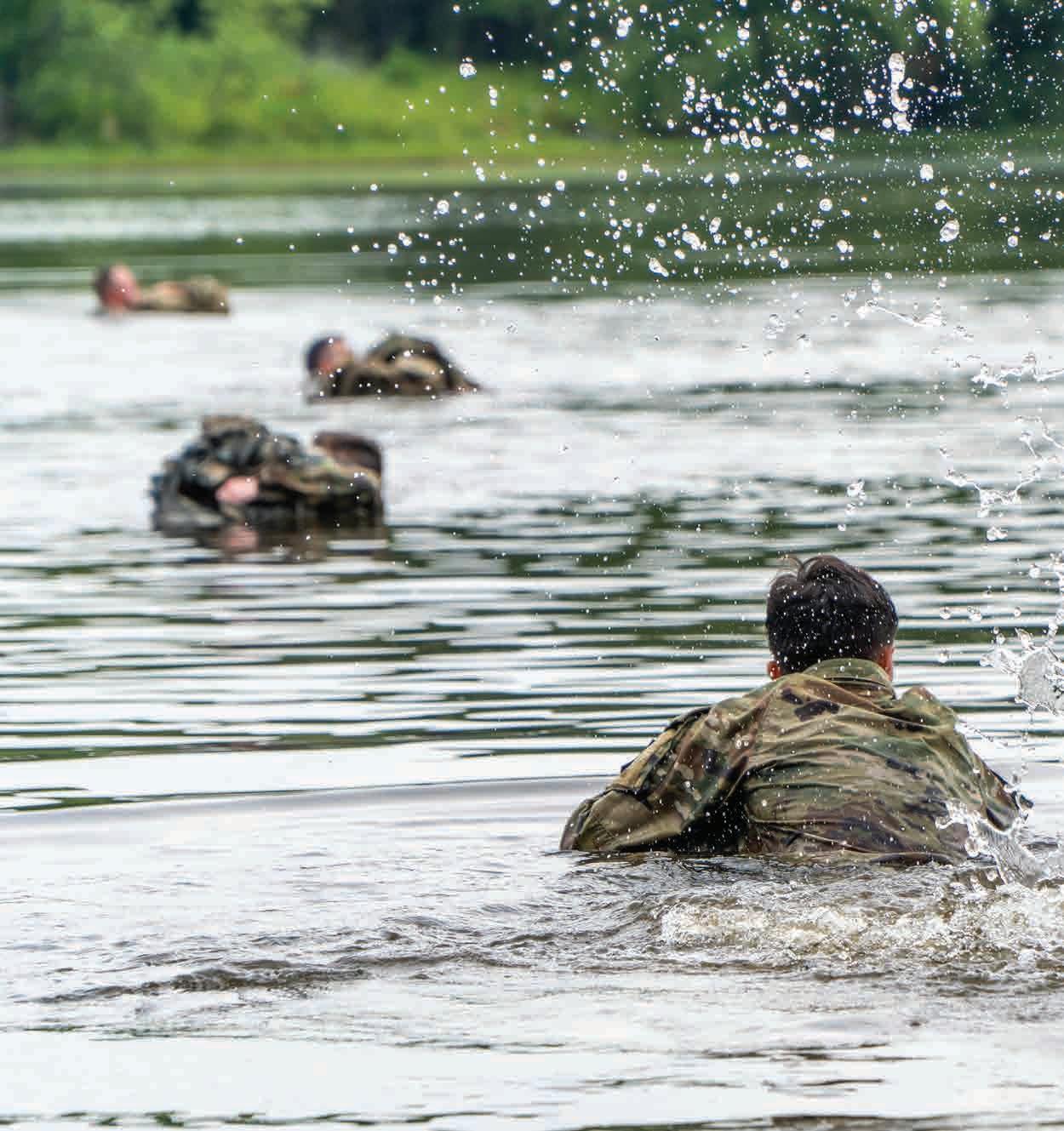
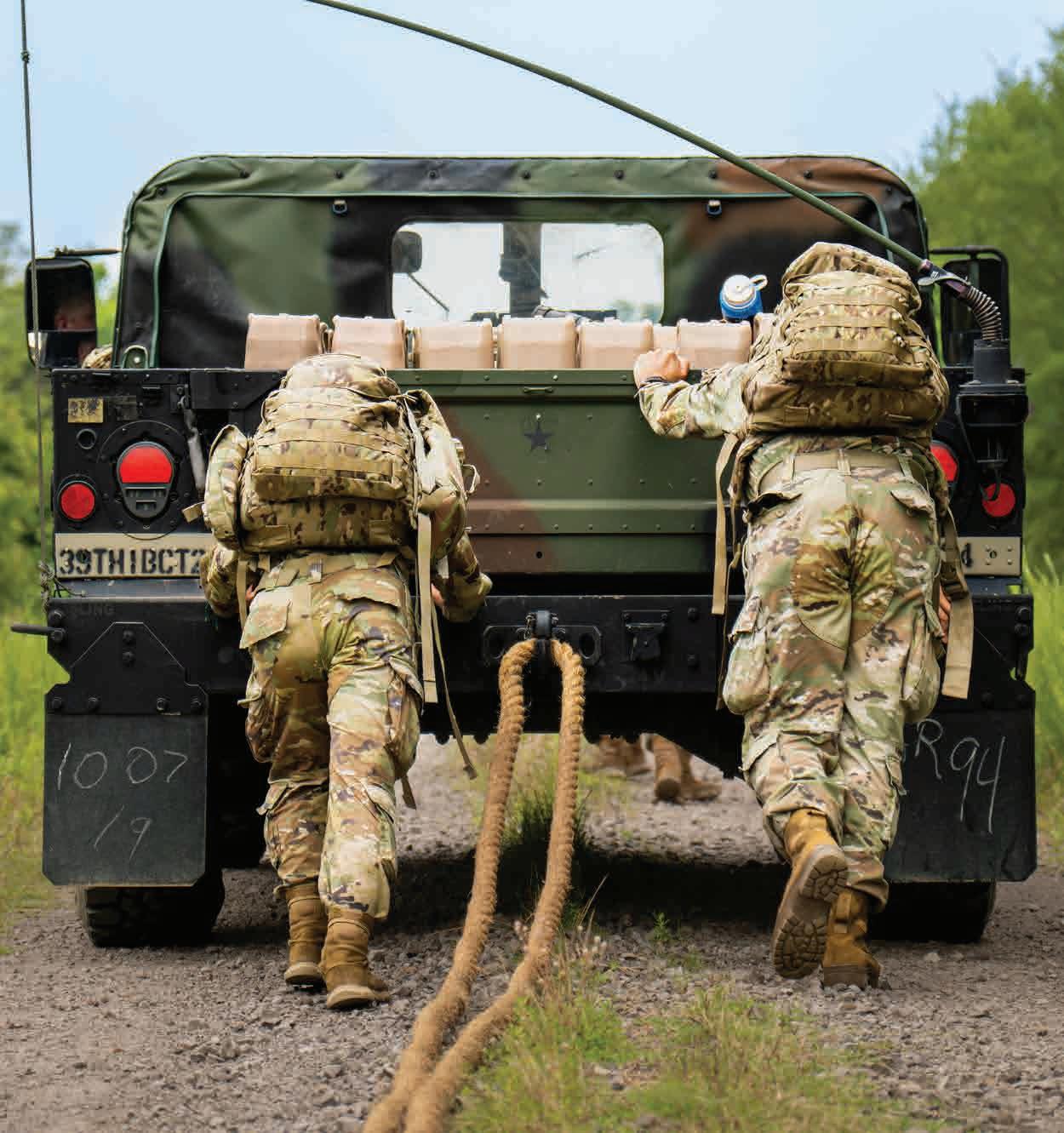
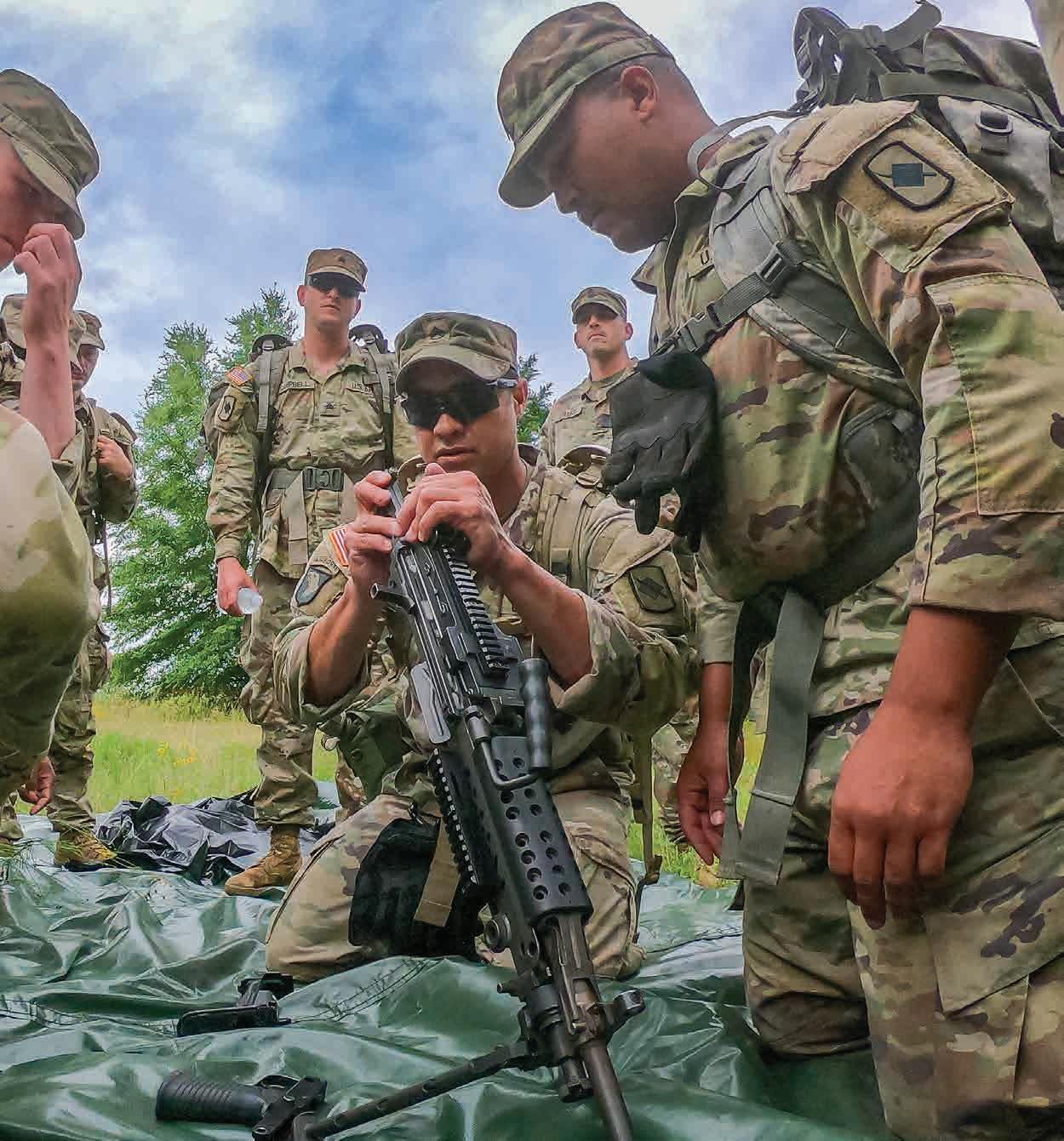
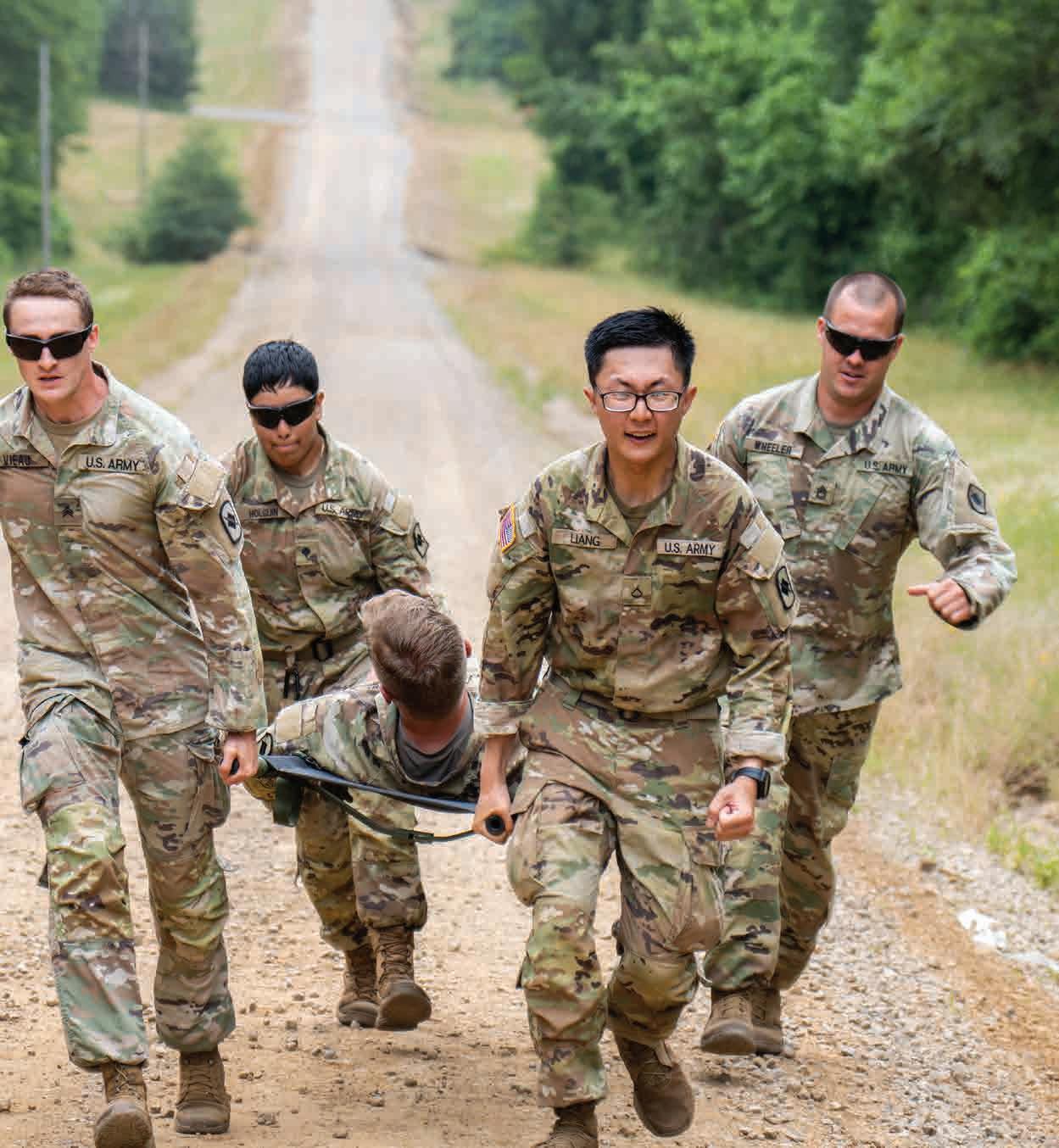
The Warhammer Stakes, a competition organized by the 239th Brigade Engineer Battalion - BEB., 39th Infantry Brigade Combat Team, reaches its pinnacle on the second-to-last day, June 12, 2023. Participants engage in a grueling ruck march, weighing 30-35 lbs, along with a series of team activities including a litter carry, humvee drag, sandbag run, Bangalore supply box carry and weapons assembly lane. The day culminates with the challenging ruck swim across Engineer Lake, testing the endurance and camaraderie of the competing squads.
As the sun rose on the second-to-last day of the Warhammer Stakes, anticipation filled the air. The competition, organized by the 239th Brigade Engineer Battalion (BEB), 39th Infantry Brigade Combat Team, had been an intense test of physical and mental strength for the participating squads. Now, with the culmination of the event drawing near, the atmosphere was charged with excitement and nervous energy. The squads gathered at the starting line, their faces etched with determination. Each participant carried a rucksack weighing between 30 to 35 pounds, a testament to their endurance and resilience. The ruck march would be the first challenge of the day, a grueling trek through rugged terrain that would push the Soldiers to their limits.
Feet pounded against the ground as they set off, their footsteps creating a rhythmic cadence. The path ahead was arduous, filled with steep inclines and uneven terrain, but the squads pressed on, their resolve unyielding. At various checkpoints along the way, the squads faced team activities designed to test their cohesion and problem-solving skills. The litter carry required them to transport an ‘injured soldier’ on a stretcher, simulating the challenges they might face in the field. The humvee drag demanded strength and teamwork as they harnessed their collective power to move the heavy vehicle.

The sandbag run pushed their endurance further, with each squad member shouldering weight. Beads of sweat trickled down their faces, mingling with the determination etched on their brows. They knew that only by pushing through their physical and mental barriers could they hope to claim victory. The Bangalore supply box carry tested their coordination and precision. Working in unison, they maneuvered the bulky and unwieldy boxes through an obstacle course. The tension was palpable as they navigated the course, inching closer to the final challenge of the day.
As the sun reached its zenith, the squads arrived at the shores of Engineer Lake, the azure water glistening under its rays. The ruck swim awaited them—a daunting task that would require both endurance and camaraderie. Stripping off their gear, they entered the water, their bodies instantly enveloped by its cool embrace. One by one, they emerged from the water, triumphant and exhausted. The ruck swim across Engineer Lake marked the end of a journey that had tested their limits, pushing them beyond what they thought possible.
The competing squads gathered their bodies battered and bruised, but their spirits soaring with pride. While they knew that while only one squad would be crowned the champion, the true victory lay in the bonds they had forged and the unwavering spirit they had shown throughout the Warhammer Stakes. They had been through an extraordinary journey together, and the memories created would last a lifetime.
The Warhammer Stakes had not only tested their physical prowess but had also honed their resilience, teamwork, and determination. As the last rays of sunlight vanished over the horizon, the participants left the competition grounds, carrying with them a newfound sense of accomplishment and the unbreakable bonds of brotherhood. The legacy of the Warhammer Stakes would continue to inspire future generations of soldiers, reminding them of the strength that lies within when faced with the toughest challenges.
Photos by Cadet Alex Chrisco

47
48
Expert Infantryman Badge Lanes
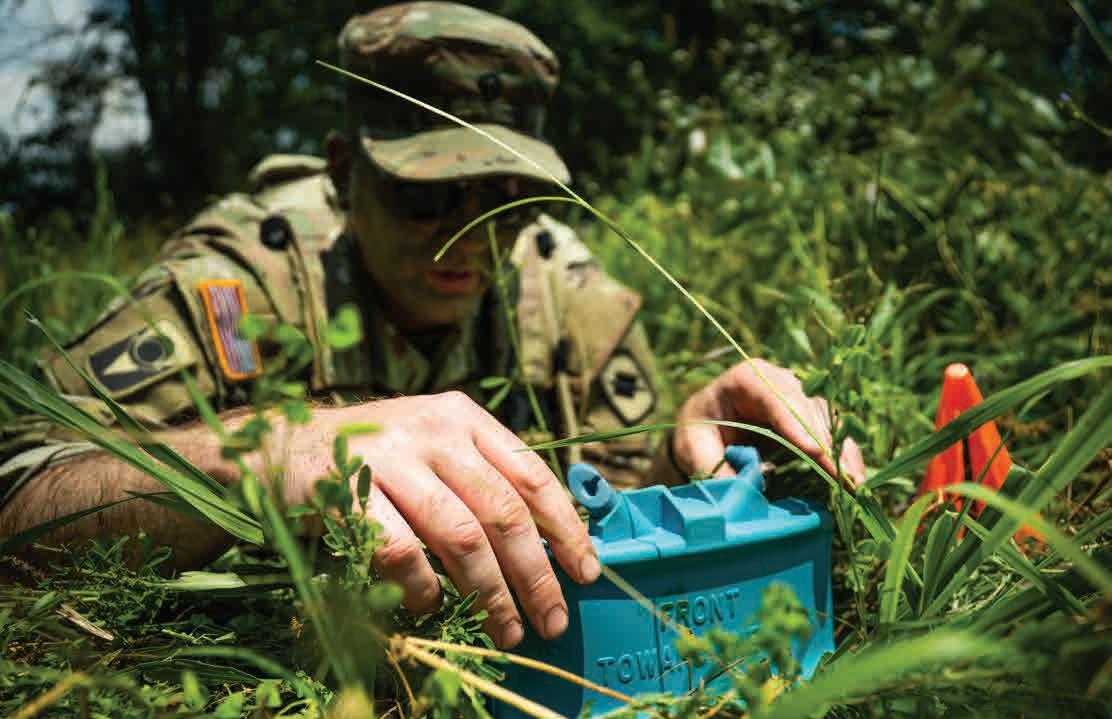
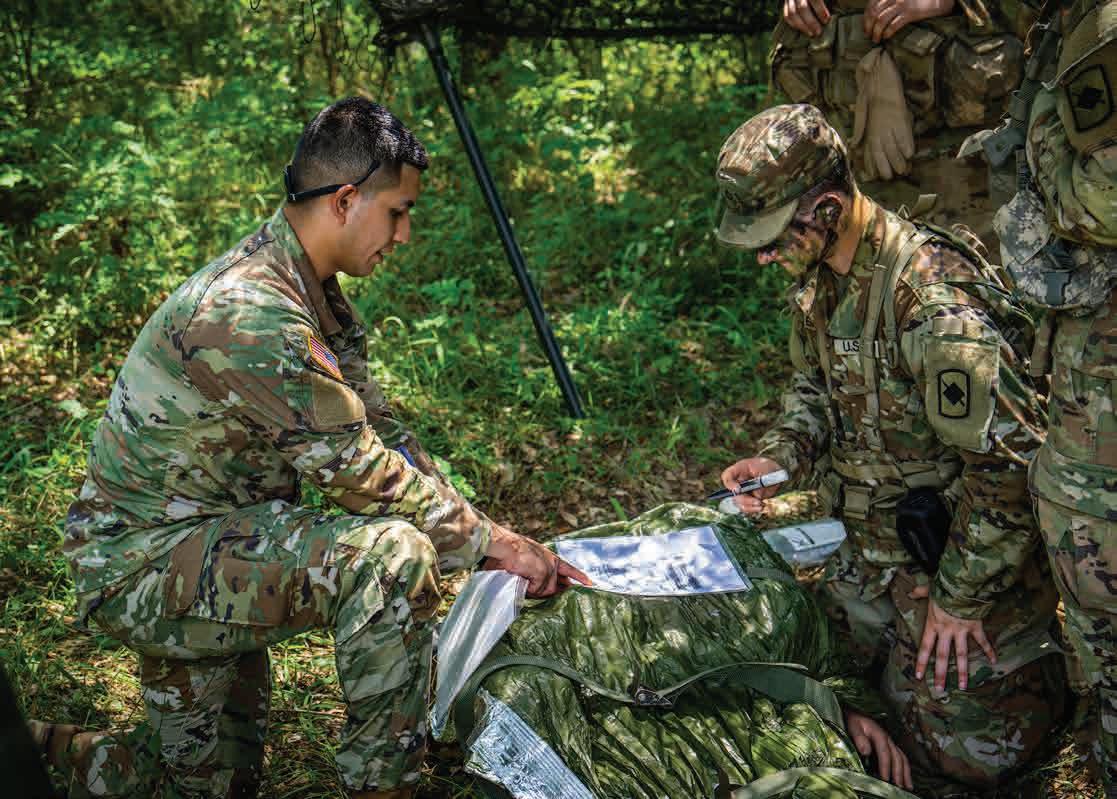
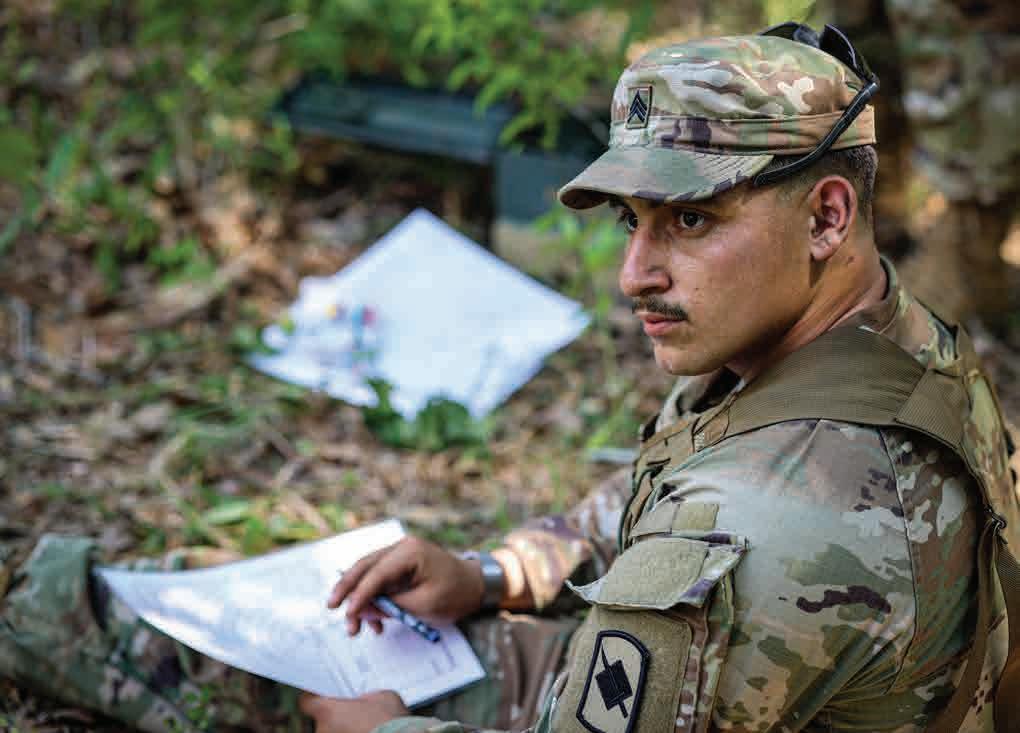
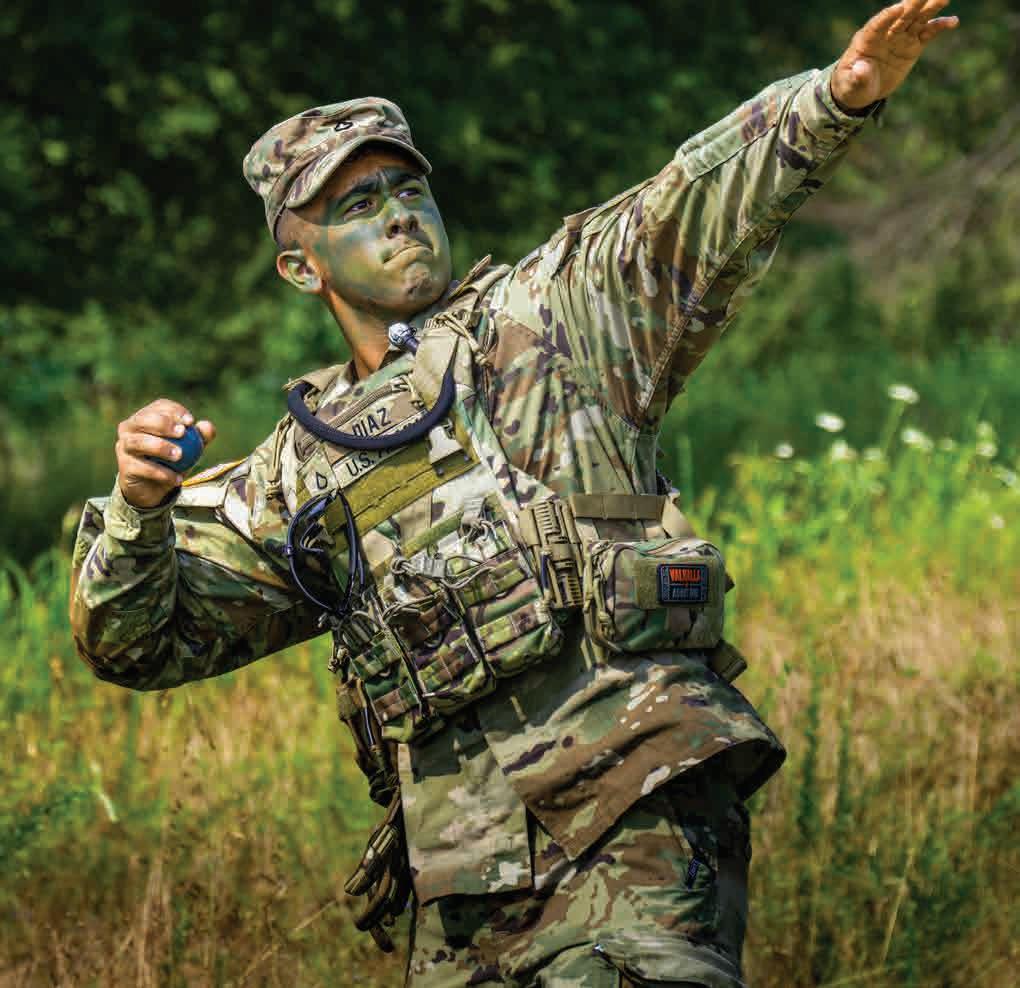
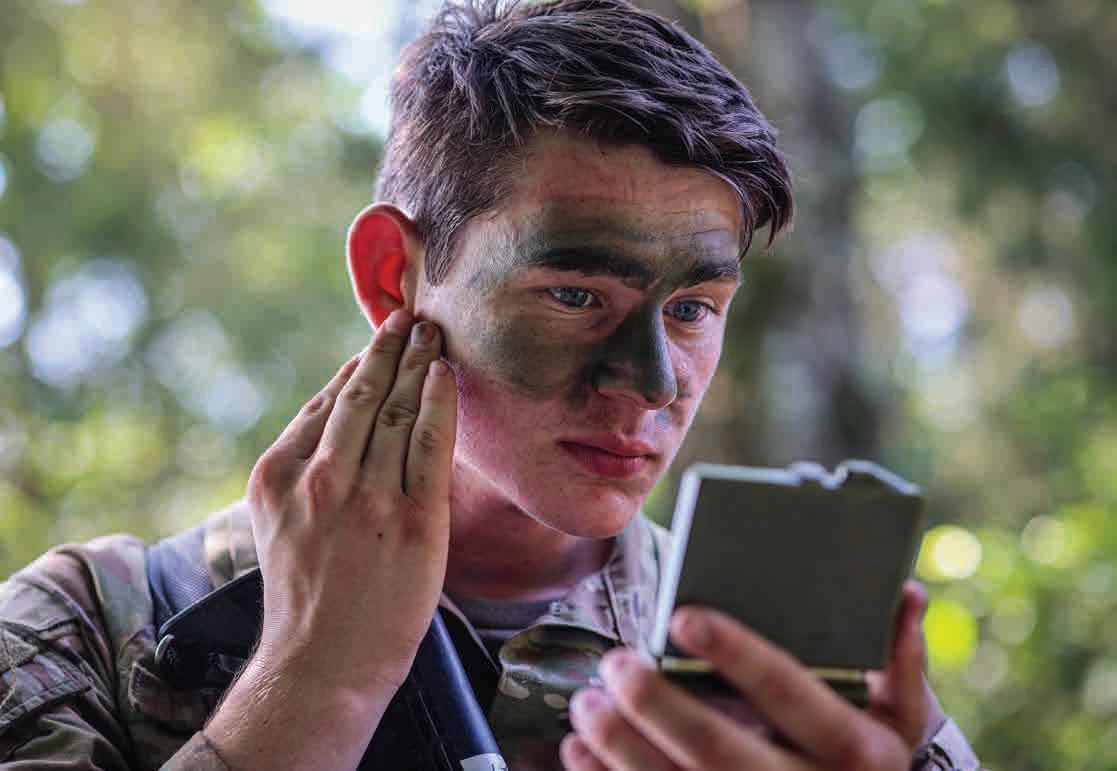
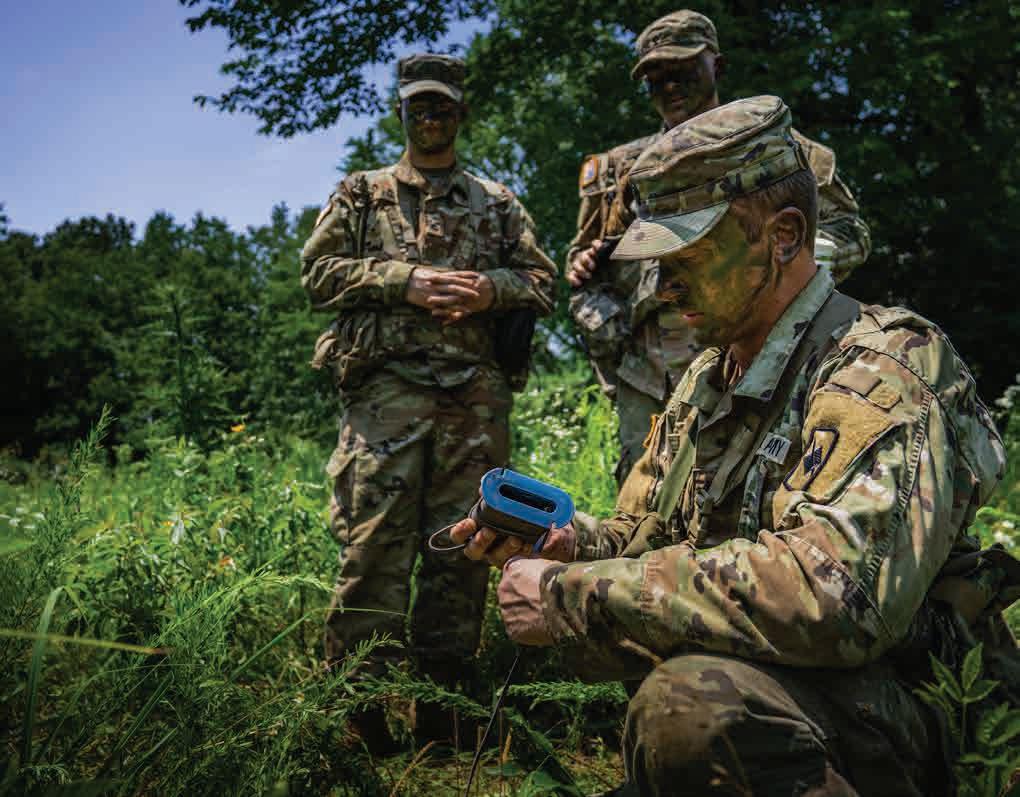
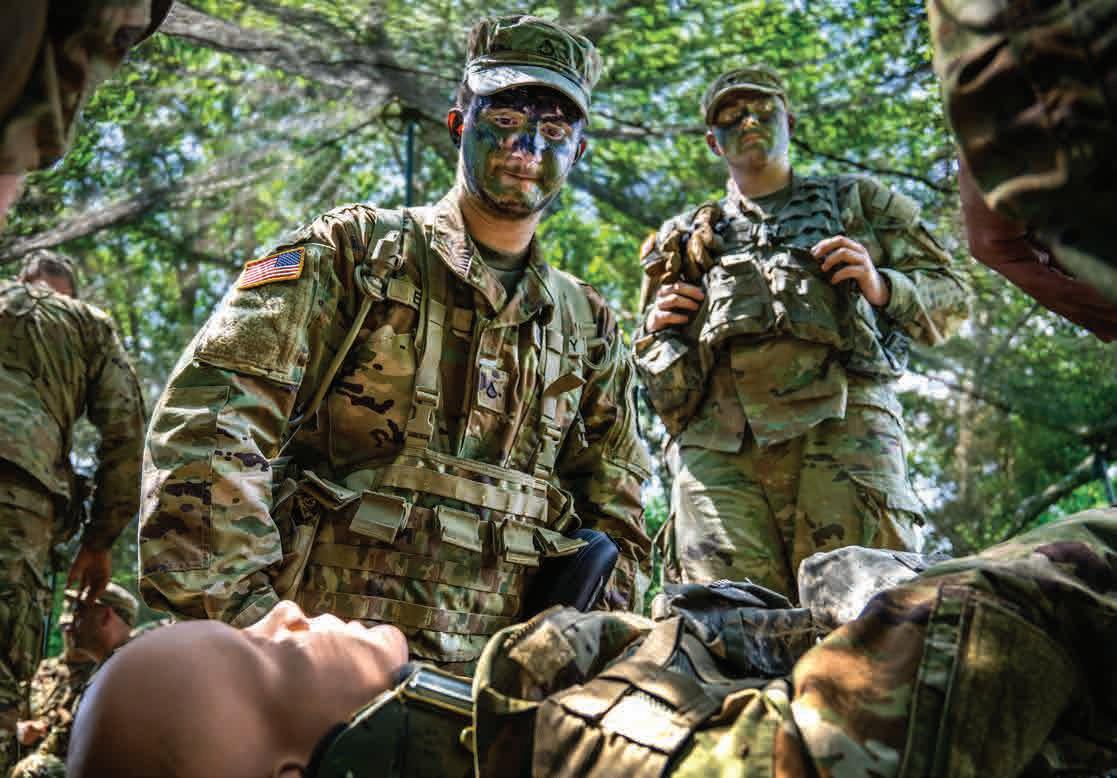
The 1-138th continued training on the Army Warrior Tasks (AWTs) the infantrymen need in order to achieve an Expert Infantryman Badge (EIB). Today, the focused onM4 and Light grenade launchers, pistol and shotguns, request medical evacuation, provide care under fire and move a casualty, adjust indirect fire, and move under direct fire.
49
Photos by Cadet Alex Chrisco and Sgt. Dennis Johnson
Demolition Range Qualifications

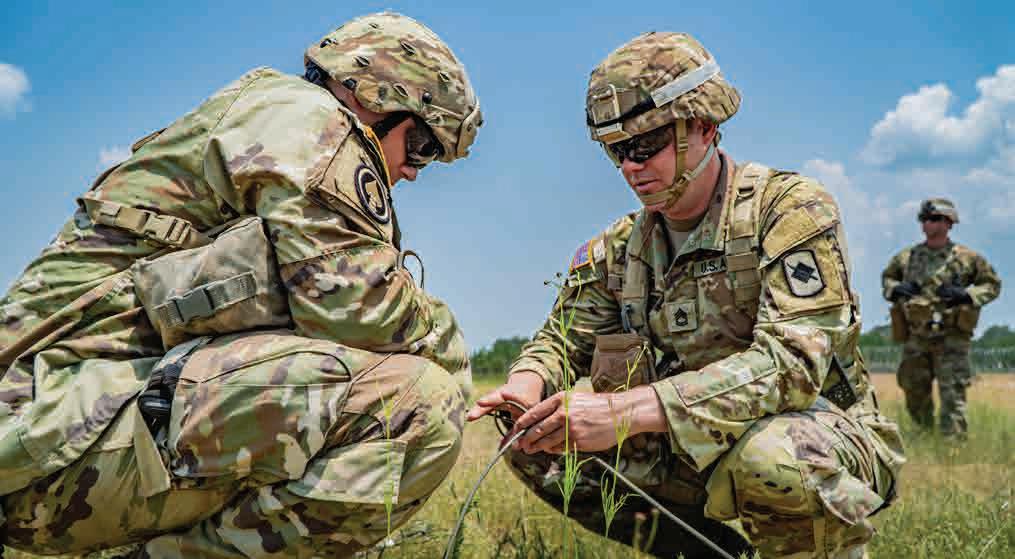
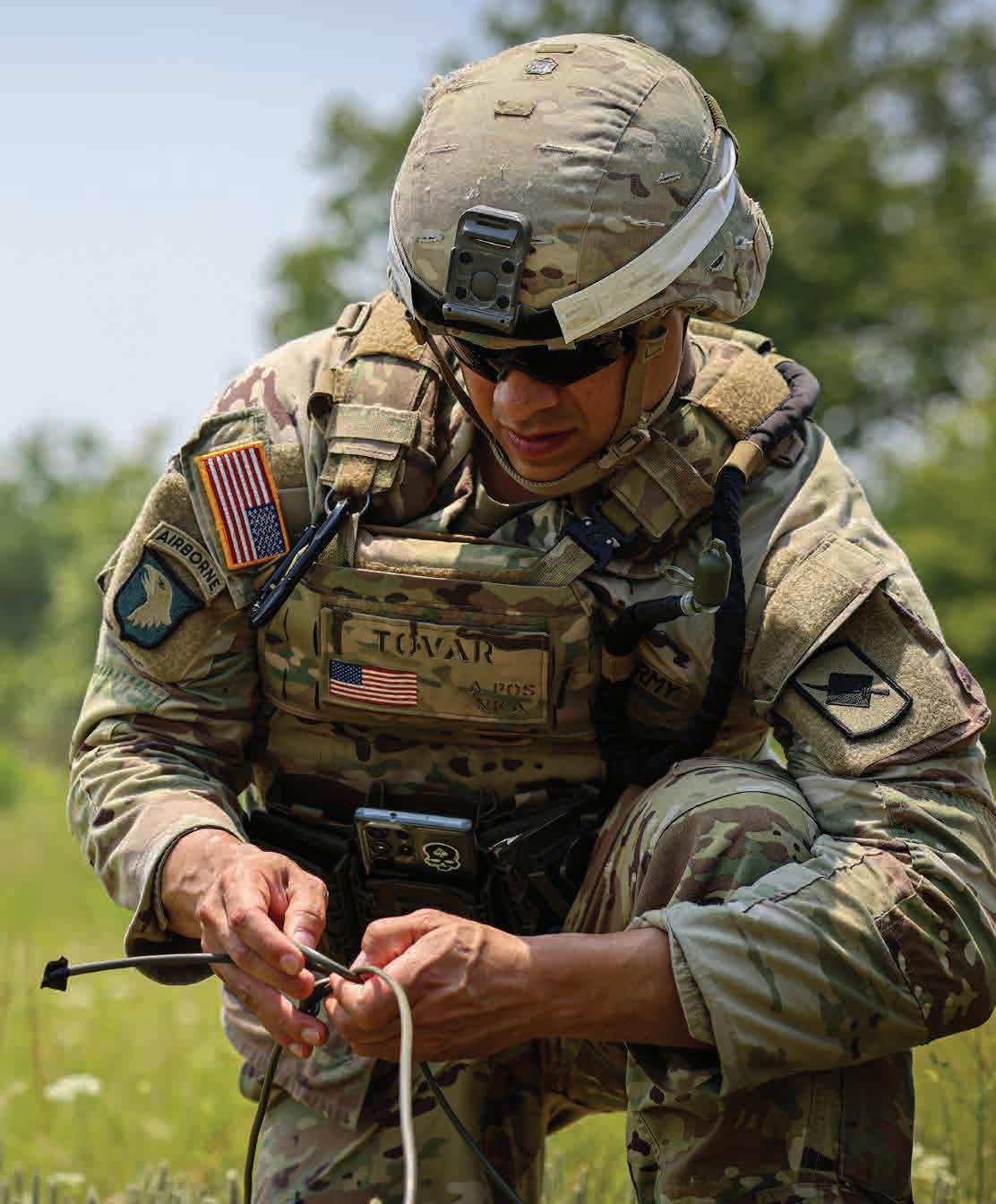
Soldiers of Alpha Company, 239th Brigade Engineer Battalion of the 39th Infantry Brigade Combat Team, demonstrated their expertise during an intensive demolition qualifications exercise. Once prepared for action, the soldiers were deployed to the range, where they unleashed their prowess by skillfully navigating through a series of demanding objectives, punctuating the air with thunderous detonations that reverberated across the installation.
With qualifications triumphantly completed, the focus shifted to urban breaching tactics, with a special emphasis on the effective utilization of breech blankets. Engaged in comprehensive training, the soldiers mastered the intricacies of calculating net explosive weight and determining minimum standoff distances.
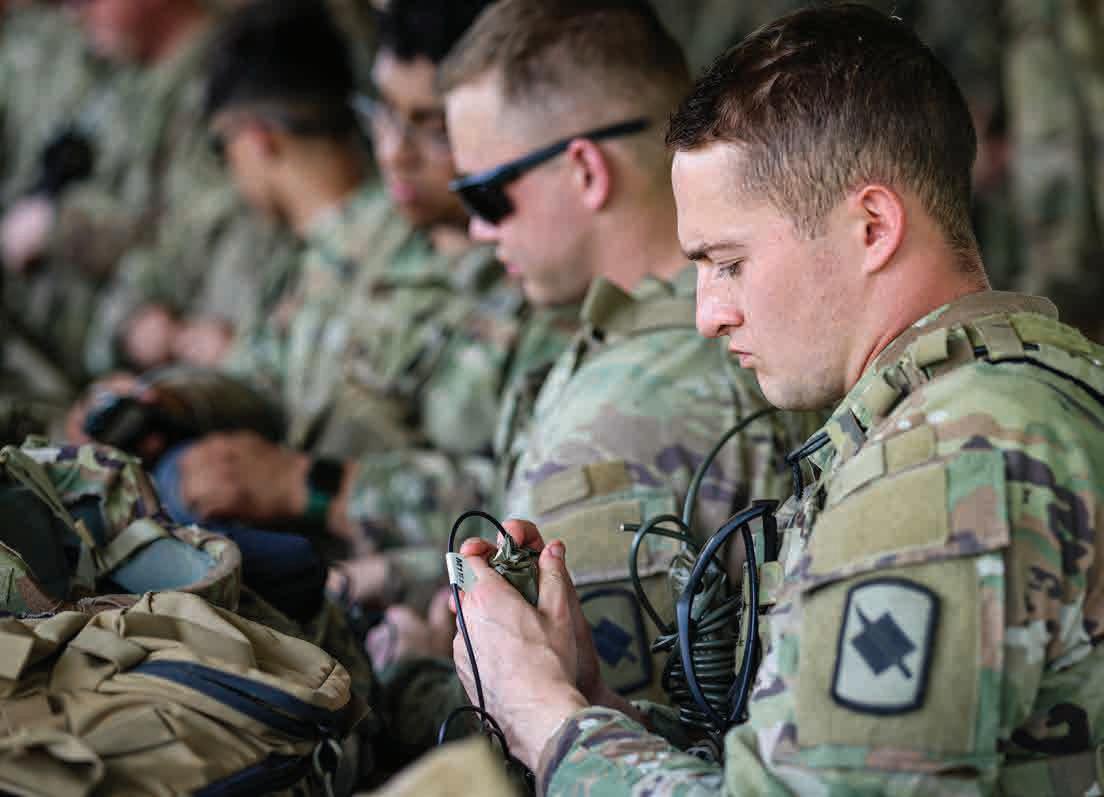
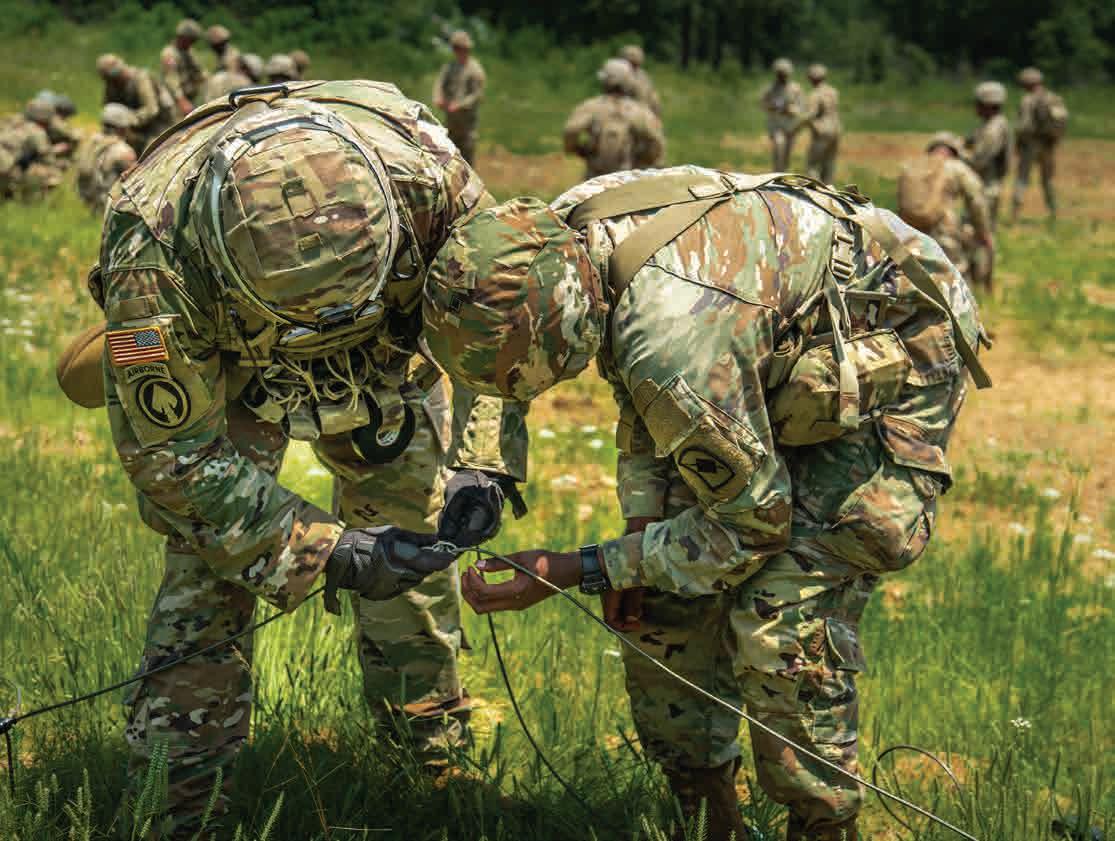
For many soldiers, this immersive training experience marked their inaugural venture into the realm of urban breaching techniques. The comprehensive urban breaching training encompassed simulated roadblock scenarios, empowering the soldiers to identify optimal explosives for each situation, gauge the required safety distances, and flawlessly execute their assigned tasks. Such training not only bolstered their individual capabilities but also positioned them for future leadership roles as they advance through their military careers.
The successful completion of the demolition qualifications stands as a testament to the soldiers’ remarkable proficiency, with each individual triumphantly meeting the rigorous standards. This achievement holds special significance for fresh recruits who recently completed basic training, allowing them to seamlessly transition into their roles while immersing themselves in the exhilaration and challenges that accompany combat engineering.
As Alpha Company continues to refine its skills through relentless training and unwavering dedication, they epitomize the true essence of service and excellence. Their pivotal role as combat engineers empowers other units to accomplish their objectives while guaranteeing the safety and triumphant success of every mission they undertake.
50
Photos by Cadet Alex Chrisco and Sgt. Dennis Johnson
Army Combat Fitness Test
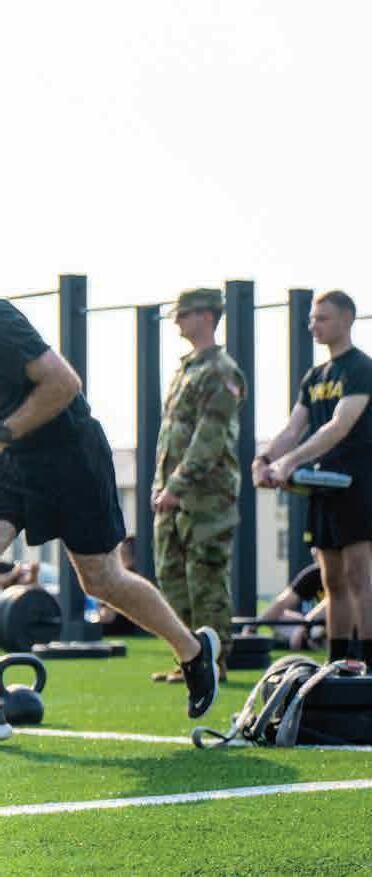

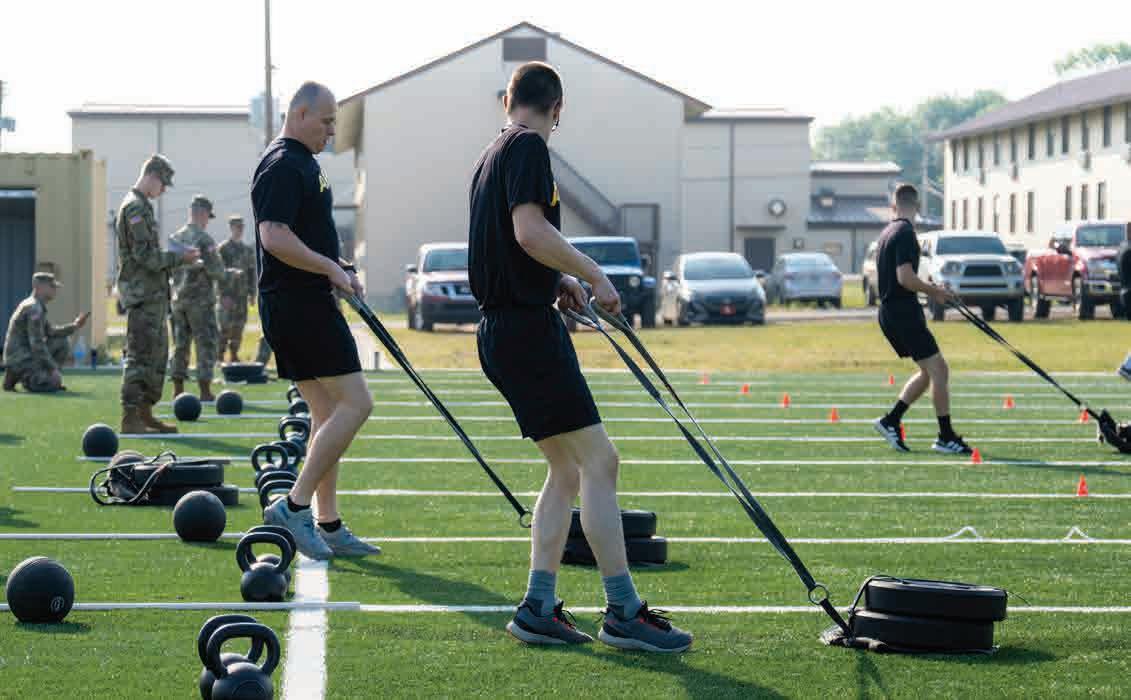
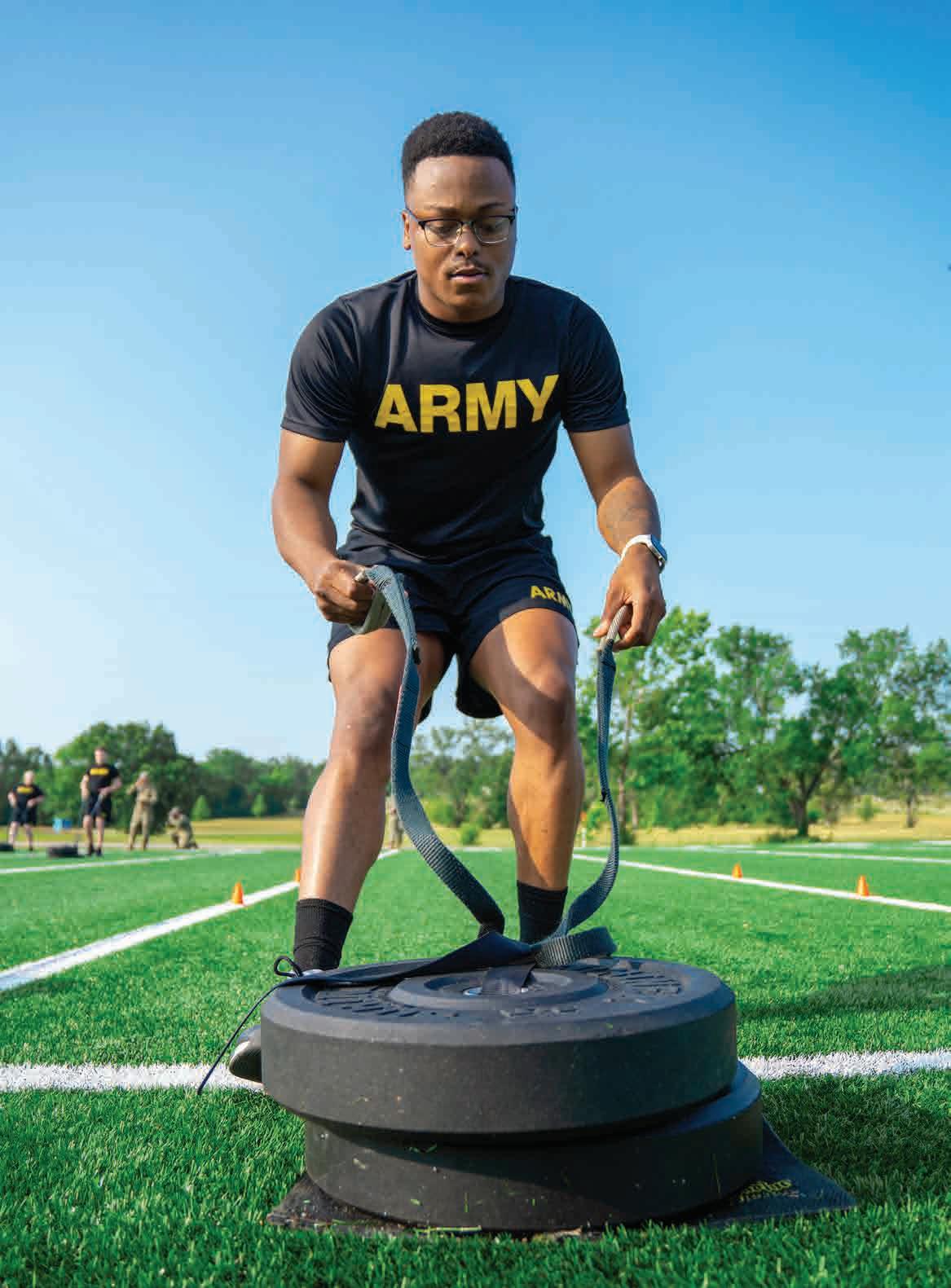
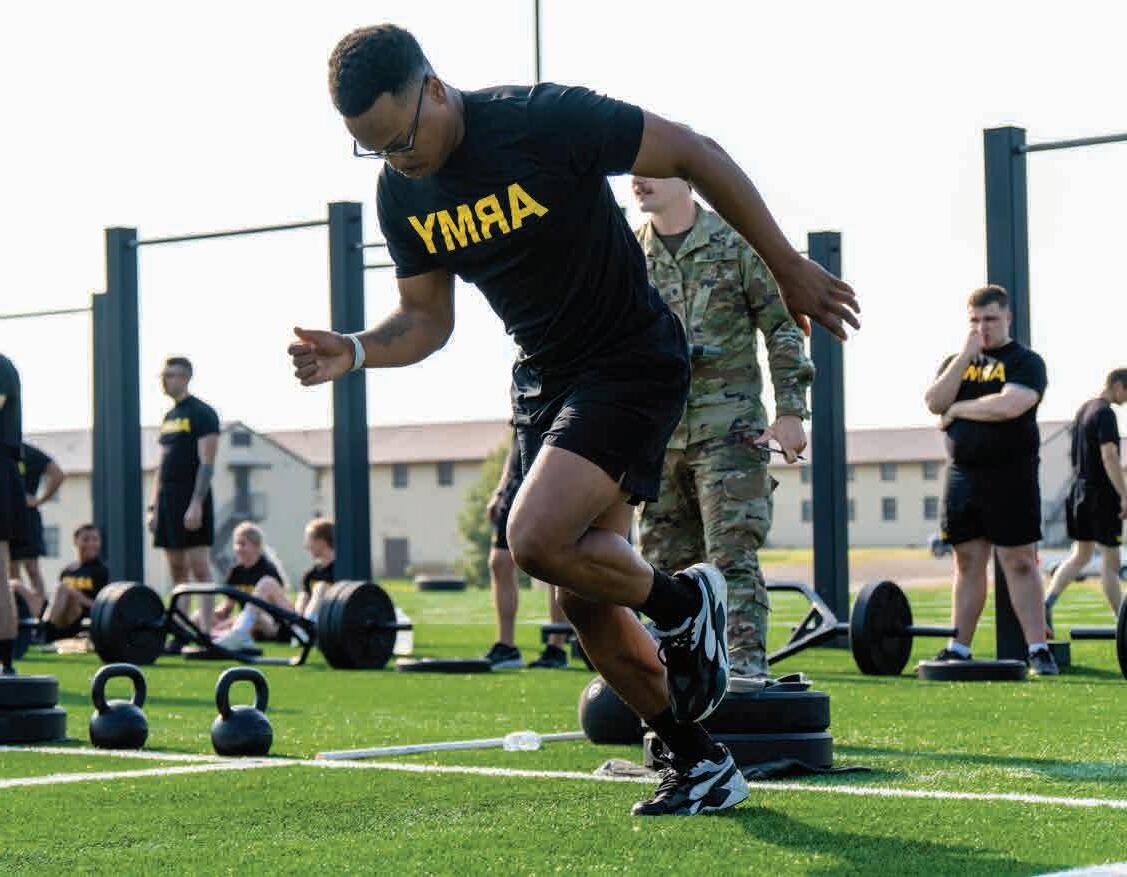
Throughout the course of Annual Training, the Soldiers of the 39th Infantry Brigade Combat Team will take the Army Combat Fitness Test (ACFT). Designed to ensure our troops are physically prepared for the challenges ahead, this fitness test puts our warriors to the ultimate test of strength, agility, and endurance.
Each Soldier completes six events:
3-Repetition Maximum Deadlift: This assesses the Muscular Strength component of fitness by measuring a Soldier’s lower body, grip, and core muscular strength. It requires well-conditioned back and leg muscles and helps Soldiers to avoid hip, knee, and lower back injuries.
Standing Power Throw: This assesses the Power component of fitness by measuring a Soldier’s ability to generate quick, explosive movements with their upper and lower body. Secondary components of fitness assessed by the SPT include Balance, Coordination and Flexibility.
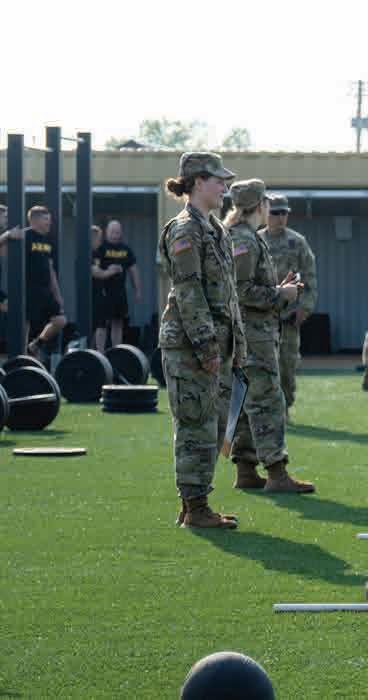
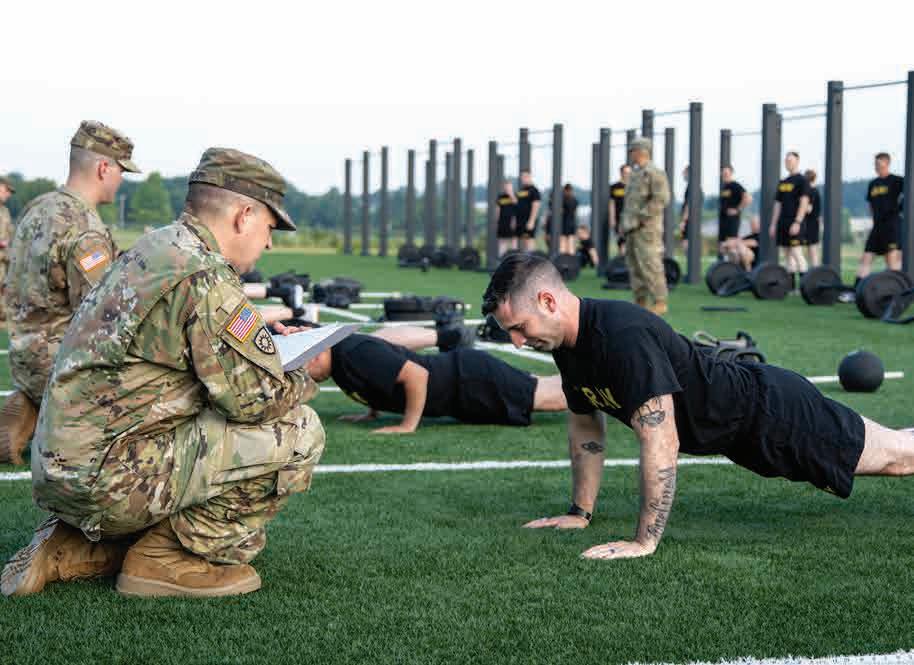
Hand-Release Push-Up: This assesses the Muscular Endurance component of fitness by measuring a Soldier’s upper body endurance. The HRP is a strong driver for upper body and core strength training.
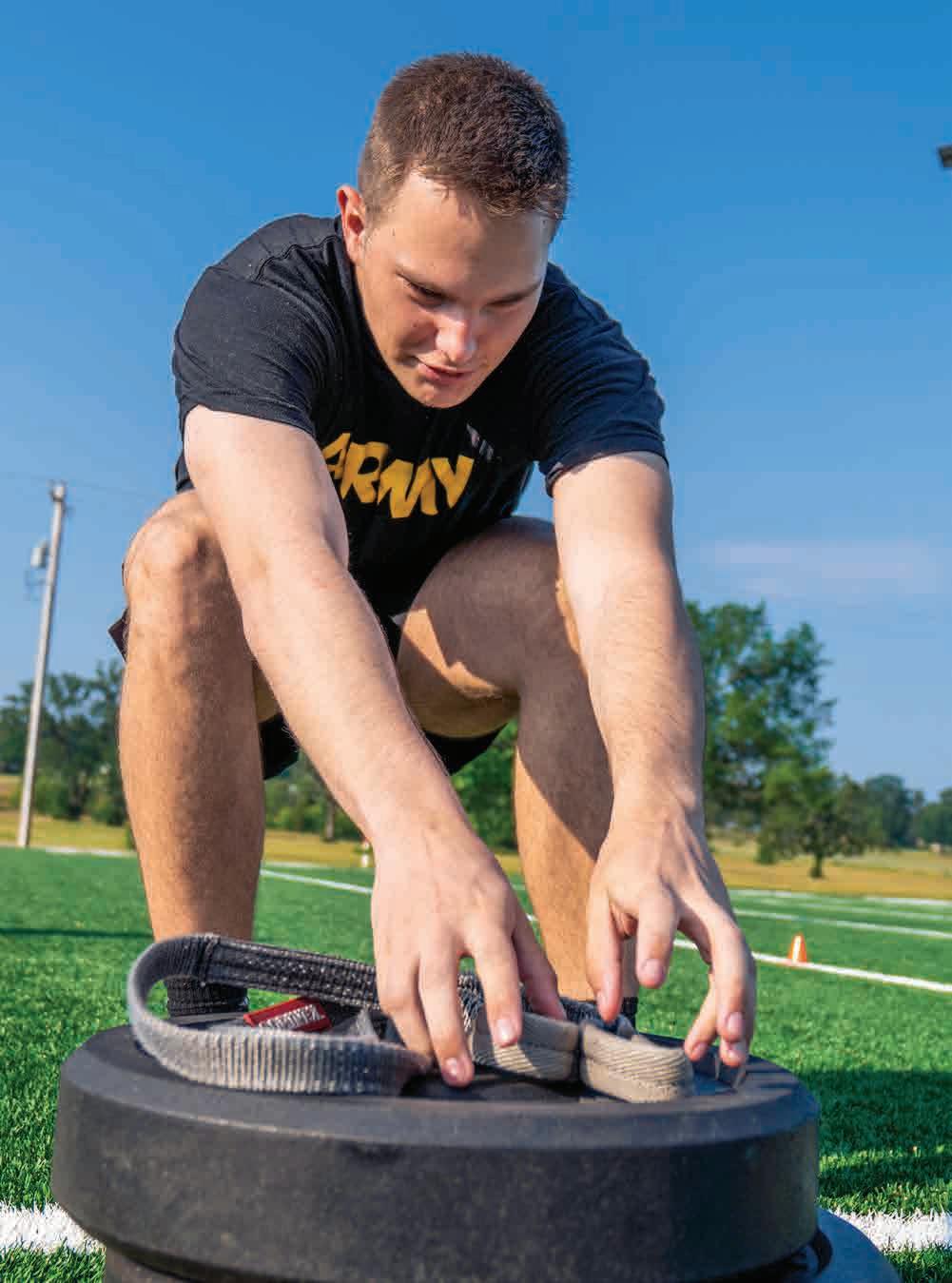
Sprint-Drag-Carry: This assesses the Muscular Endurance, Muscular Strength, Anaerobic Power and Anaerobic Endurance components of fitness by measuring a Soldier’s ability to sustain moderate to high intensity muscular work over a short duration.
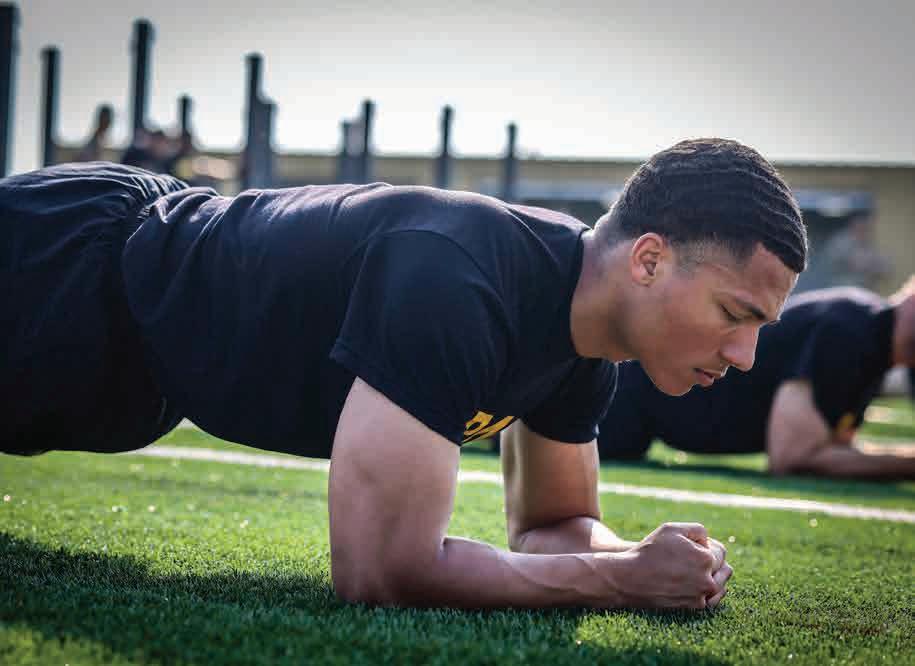
Static Plank Hold: This assesses the Muscular Endurance component of fitness by measuring a Soldier’s core strength and endurance. Balance is a secondary component of fitness assessed by the PLK.
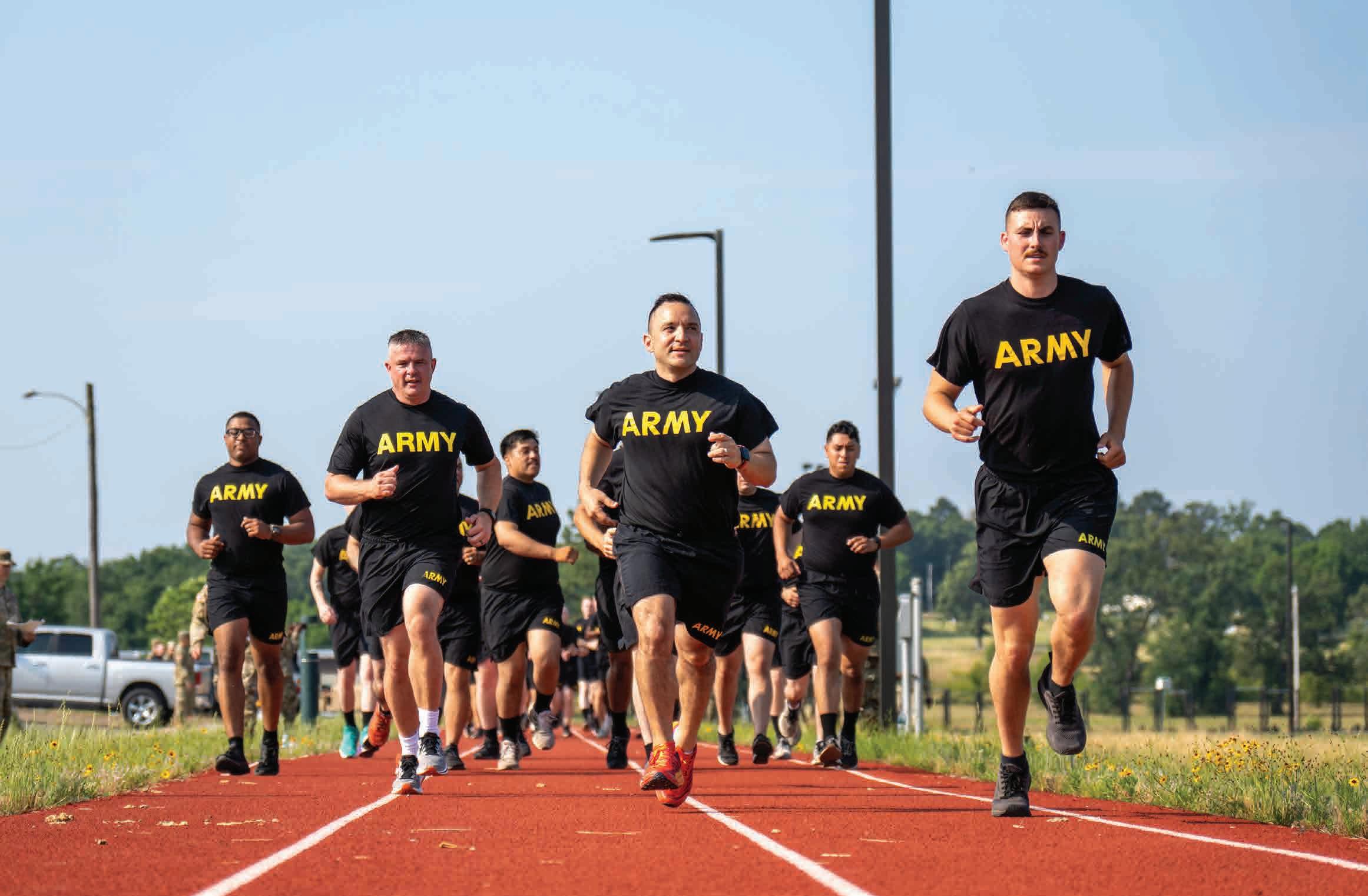
2-Mile Run: This assesses the Aerobic Endurance component of fitness. Higher aerobic endurance allows a Soldier to work for long periods of time and to recover more quickly when executing repetitive physical tasks.
51

52
Photos by Cadet Alex Chrisco and Sgt. Dennis Johnson
Command Message
“I am thrilled to be a part of this organization. I had the opportunity to visit with many of the Soldiers today, and it was very eventful. I was very impressed with the camaraderie, the excitement, and the enthusiasm that these [Soldiers] have. The pride I have for this organization comes from hearing the active-duty Soldiers speaking about the Guard. When they engage with Guardsmen, they are truly surprised in a very pleasant way. That thrills me. They’re surprised by our competency, our discipline, and our ability to make it happen. I just couldn’t be more proud of them. The PAO team has also done a fantastic job supporting the different units during this annual training. They are fully engaged. They make sure to stay true to the story and be as accurate as possible, that way it won’t be challenged in the future. I just take such pride in knowing that I am a leader in this organization.”
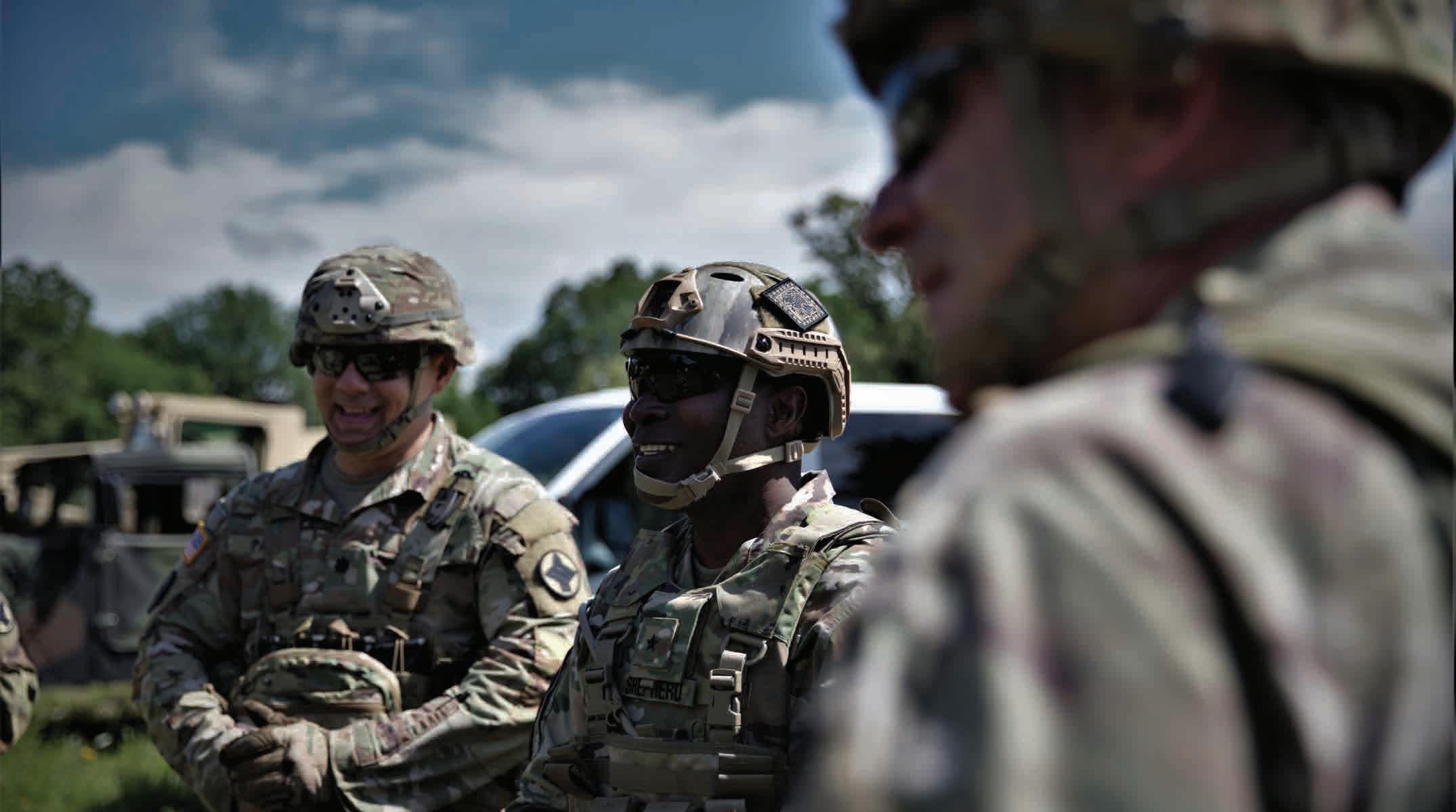 - Brigadier General Leland “Tony” Sheppherd
53
54
Soldiers of the 119th MPAD