Libretto
NEWS from BEHIND the BLUE CURTAIN
SPRING 2026 | ISSUE 165
BY MARINA HARSS
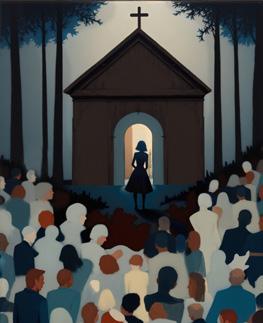
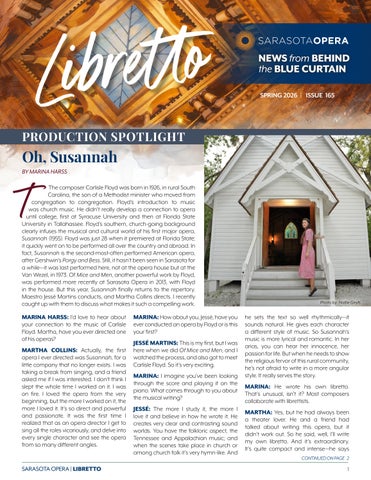
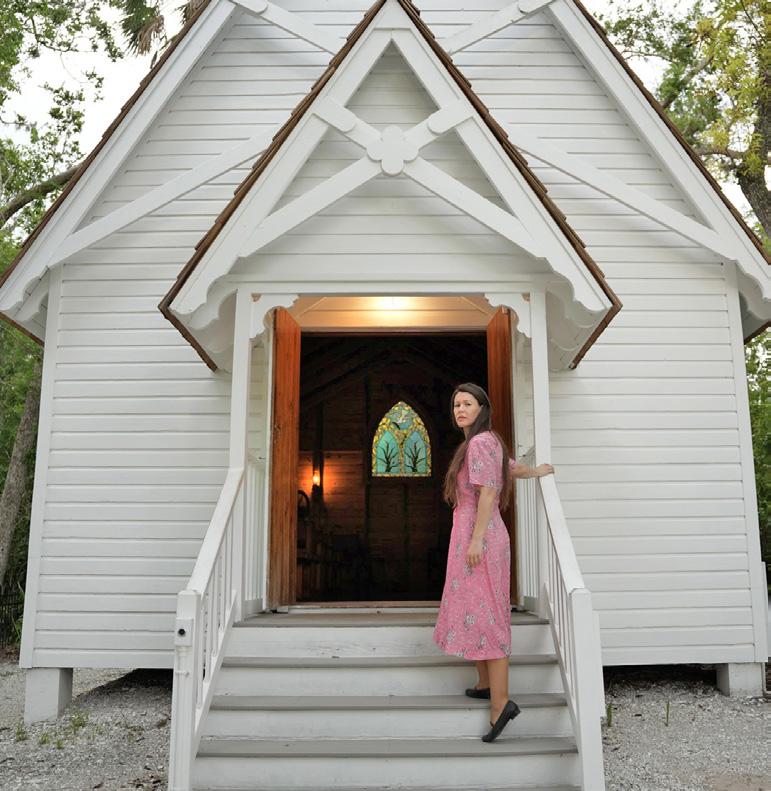
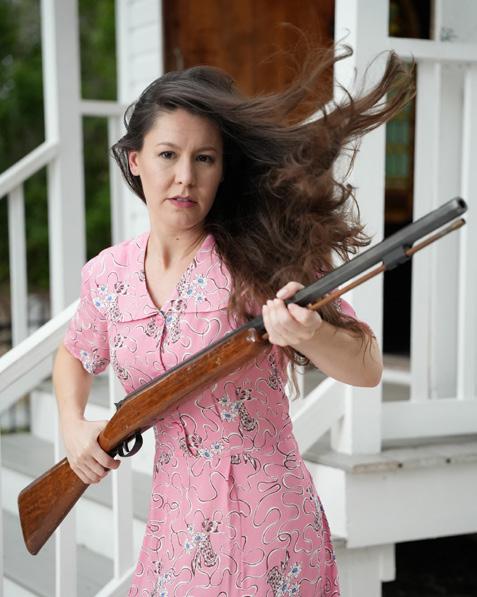
The composer Carlisle Floyd was born in 1926, in rural South Carolina, the son of a Methodist minister who moved from congregation to congregation. Floyd’s introduction to music was church music. He didn’t really develop a connection to opera until college, first at Syracuse University and then at Florida State University in Tallahassee. Floyd’s southern, church-going background clearly infuses the musical and cultural world of his first major opera, Susannah (1955). Floyd was just 28 when it premiered at Florida State; it quickly went on to be performed all over the country and abroad. In fact, Susannah is the second-most-often performed American opera, after Gershwin’s Porgy and Bess. Still, it hasn’t been seen in Sarasota for a while—it was last performed here, not at the opera house but at the Van Wezel, in 1973. Of Mice and Men, another powerful work by Floyd, was performed more recently at Sarasota Opera in 2013, with Floyd in the house. But this year, Susannah finally returns to the repertory. Maestro Jessé Martins conducts, and Martha Collins directs. I recently caught up with them to discuss what makes it such a compelling work.
MARINA HARSS: I’d love to hear about your connection to the music of Carlisle Floyd. Martha, have you ever directed one of his operas?
MARTHA COLLINS: Actually, the first opera I ever directed was Susannah, for a little company that no longer exists. I was taking a break from singing, and a friend asked me if I was interested. I don’t think I slept the whole time I worked on it. I was on fire. I loved the opera from the very beginning, but the more I worked on it, the more I loved it. It’s so direct and powerful and passionate. It was the first time I realized that as an opera director I get to sing all the roles vicariously, and delve into every single character and see the opera from so many different angles.
MARINA: How about you, Jessé, have you ever conducted an opera by Floyd or is this your first?
JESSÉ MARTINS: This is my first, but I was here when we did Of Mice and Men, and I watched the process, and also got to meet Carlisle Floyd. So it’s very exciting.
MARINA: I imagine you’ve been looking through the score and playing it on the piano. What comes through to you about the musical writing?
JESSÉ: The more I study it, the more I love it and believe in how he wrote it. He creates very clear and contrasting sound worlds. You have the folkloric aspect, the Tennessee and Appalachian music; and when the scenes take place in church or among church folk it’s very hymn-like. And
he sets the text so well rhythmically—it sounds natural. He gives each character a different style of music. So Susannah’s music is more lyrical and romantic. In her arias, you can hear her innocence, her passion for life. But when he needs to show the religious fervor of this rural community, he’s not afraid to write in a more angular style. It really serves the story.
MARINA: He wrote his own libretto. That’s unusual, isn’t it? Most composers collaborate with librettists.
MARTHA: Yes, but he had always been a theater lover. He and a friend had talked about writing this opera, but it didn’t work out. So he said, well, I’ll write my own libretto. And it’s extraordinary. It’s quite compact and intense—he says
only what is needed. And it’s poetic. Like when Susannah sings: “The sky’s so dark and velvet-like, and it’s all lit up with stars. It’s like a great big mirror reflecting fireflies over a pond.”
MARINA: It’s poetic, but not high-falutin’.
MARTHA: Yes, and when he has to get to the point, as with the Elders of the church, he knows how to do that too. I mean, he knew these people. Floyd said that he had a mentor at university who advised him to write what he knew, and that’s certainly what he did here.
MARINA: Would you say the musical language is melodic?
JESSÉ: You definitely get a lot of music that people would consider melodic. But then you also have moments where Floyd goes in the other direction, always in service of the story and the characters. Some people refer to Susannah as a folk opera, because he infused it with so much Appalachian and Protestant music.
MARINA: I’ve read that Floyd’s operas, and Susannah in particular, have been compared to Italian verismo, the late 19thcentury style that portrayed real people living intense but everyday experiences, operas like Cavalleria rusticana and La bohème. Do you think it’s a valid comparison?
JESSÉ: I do. The verismo movement was about trying to create operas that were closer to their contemporary audience in terms of story, in a musical language that spanned the Romantic era and the early 20th century. Floyd’s music fits that description perfectly. And as Martha
said, the economy of the structure and libretto serves the realism of the story.
MARTHA: He referred to it as a musical drama. He wanted the realism and immediacy of theater, which he loved.
JESSÉ: And he truly wanted to write American opera. He was fascinated with our history. Often his operas are based on the American South.
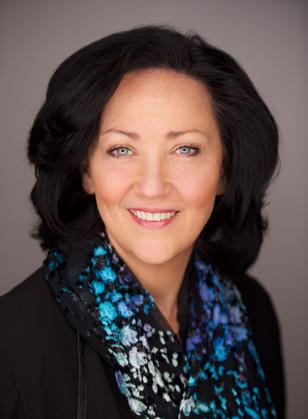
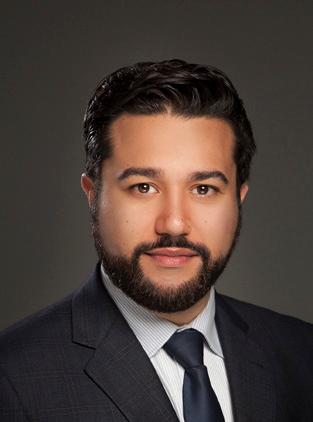
MARINA: Let’s talk about the story. It’s based on the biblical story of Susanna and the Elders, right? About a woman who is falsely accused of being a “loose woman” by men who claim to be virtuous. Floyd translated it to Appalachia. In the biblical story, she is vindicated, but the opera has a darker ending. What, at its most essential, do you think Floyd was trying to get at in his opera?
MARTHA: I think he was trying to depict and decry hypocrisy in society and in those who claim to be religious.
JESSÉ: And also the dangers of blind faith, and how, often, perception is reality. Not even the person whom the community should trust the most, the priest, is believed when he says Susannah is innocent. Their opinion of her is already formed at the beginning of the opera.
MARINA: It was written at the height of McCarthyism, when the House UnAmerican Activities Committee was persecuting people for trumped-up charges of being Communist Party members. Did that influence Floyd’s approach to the story?
MARTHA: He said many times in interviews that he was not consciously writing against McCarthyism, but he also says he was completely surrounded by it at the university, that there were people losing their jobs and being accused of all kinds of things. So he acknowledges that he was reacting against the idea of scapegoating and mob mentality. He felt that it destroyed people.
MARINA: What are the challenges of directing this opera?
MARTHA: It’s all about portraying the authenticity of these rigid, self-righteous, condescending, hypocritical people. You have to really understand them and know their motives. And to show their humanity. There has to be an authenticity to everything the singers do onstage, in their physicality, in how they embrace the accent, in their movements, in their emotions. A lot of that comes through in the music as well. So much of this score is almost cinematic.
MARINA: Who will be singing the role of Susannah, and how do you see her in the role?
MARTHA: Hannah Brammer [who has sung Pamina in The Magic Flute and Gilda in Rigoletto in Sarasota] is Susannah. Hannah is open and sweet and warm and kind. She’s perfect for the role. That is really going to be very special.
MARINA: Is there a particular moment that you find especially effective and that you’re looking forward to seeing onstage?
MARTHA: The revival scene is very powerful because it’s so believable. Getting the chorus to be fervent in their almost demonic efforts to manipulate Susannah. It’s very powerful writing.
JESSÉ: One moment that is very simple musically is this moment when Susannah can’t understand why all this is happening to her and why people don’t believe her. She asks Sam what it’s all about, and he sings, “It must make the good Lord sad.” It’s so simple, so honest. In a way it’s the most religious moment, the most aligned with God, in the whole opera. It could almost be Puccini.
BY RICHARD RUSSELL
ven though we are just at the beginning of our 2026 Winter Opera Festival, we have just announced our 2026-27 Season, subscriptions for which will go on sale on March 16.
That season will be the first in forty-four years without Maestro DeRenzi and his absence will be keenly felt. Nevertheless, the company that he created will continue. Sarasota Opera is one of the strongest and best-run companies in the country with resources that our colleagues’ envy — not least of which is our wonderful Opera House. As he always did, we will continue to operate under the belief that the composers and librettists who wrote the operas that we love were great people of theater and that these works are valid on their own terms and don’t need any reinterpretation to make them relevant for today.
The season that we’ve planned attempts to honor our history while including some new things. Apart from one new work to our repertoire, the operas that we’ve programmed have not been given by the company in at least ten years.
The fall season will once again feature a full-length opera Engelbert Humperdinck’s Hansel and Gretel which will open on October 30. Based on the Grimm fairy tale, this opera is a perfect run-up to the holiday season. It is accessible for families, with memorable melodies, and a musical
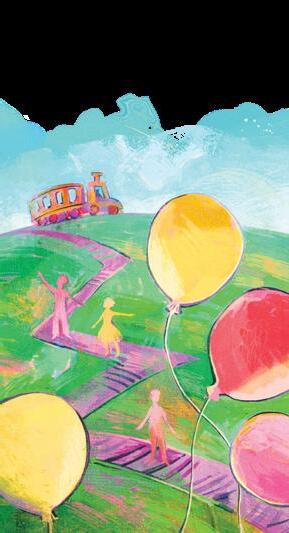
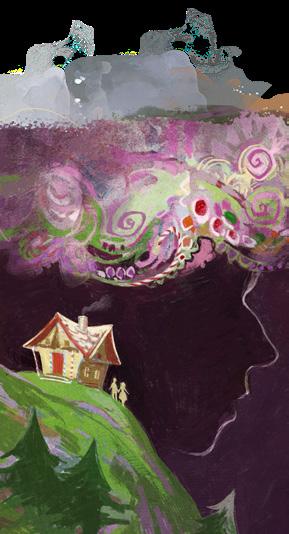
sophistication and rich orchestration that opera-lovers value. Sarasota Opera last performed this opera in 2010 when it was conducted by Anthony Barrese who will return to lead it again in the fall. The set was originally designed for New Orleans Opera by Steven C. Kemp, who created our sets for The Merry Widow this season, among many others. Howard Tsvi Kaplan, our resident costume designer and Ken Yunker, our resident lighting designer will round out the production team for this and all the operas of the season.
The youth opera for next fall is Rachel J. Peters’ Rootabaga Country. Based on stories of Carl Sandburg, this opera was commissioned by Sarasota Youth Opera in 2017 and will return this season conducted again by Jessé Martins and directed by Martha Collins.
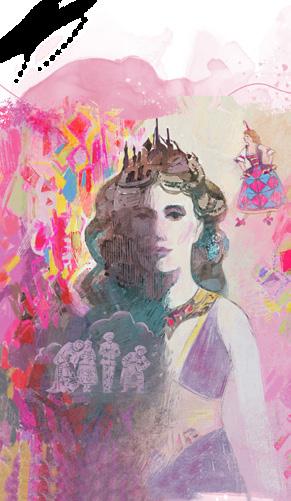
The Sarasota Opera Winter Opera Festival will open on February 3 with a favorite work by Giuseppe Verdi, La traviata Although we last performed it in the fall of 2017, it has not been part of our winter festival since 1998. Conductor Marcello Cormio will be at the podium and the production will be directed by Marco Nisticò. Steven C. Kemp will be designing the new set for this production. Soprano Virginia Mims will be singing the title role of Violetta. This will be a role debut for her, but she is continuing a family tradition. Her mother, Marilyn Mims, sang Violetta in opera houses across the world, including the Metropolitan Opera. She in turn
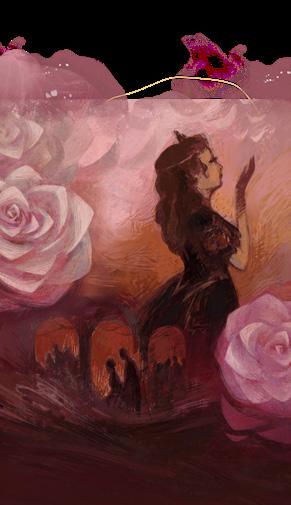
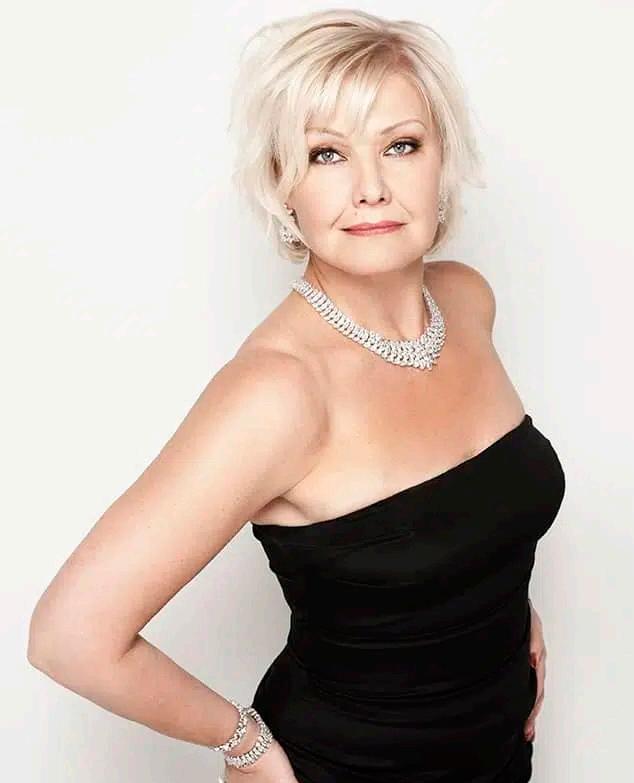
studied with the great Romanian soprano Virginia Zeani, who sang the role over 600 times during her astonishing career. Luke Norvell will be her lover Alfredo. He was last at Sarasota Opera in the fall of 2025 as Ferrando in Così fan tutte. Baritone Luke Sutliff will make his company debut as his father Giorgio Germont.
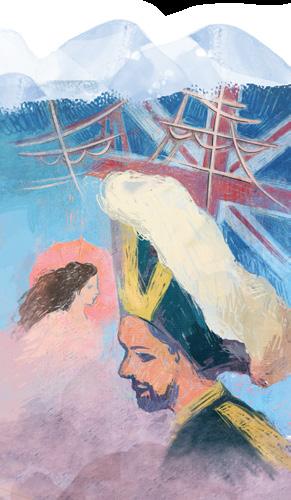
The second work of the winter opera festival will be new to Sarasota Opera. H.M.S. Pinafore has never been performed by the company, and this will be the first production of a work by Gilbert and Sullivan in our history. John Spencer IV will return to conduct after several seasons working in opera companies in Germany. Hanna Brammer will sing the role of Josephine with Jake Stamatis playing her father Captain Corcoran. Tenor Derrek Stark will be making his company debut in the role of Ralph Rackstraw and Alissa Anderson, a former studio artist with Sarasota Opera, will return in the role of Little Buttercup.
CONTINUED ON PAGE 5
BY MARINA HARSS
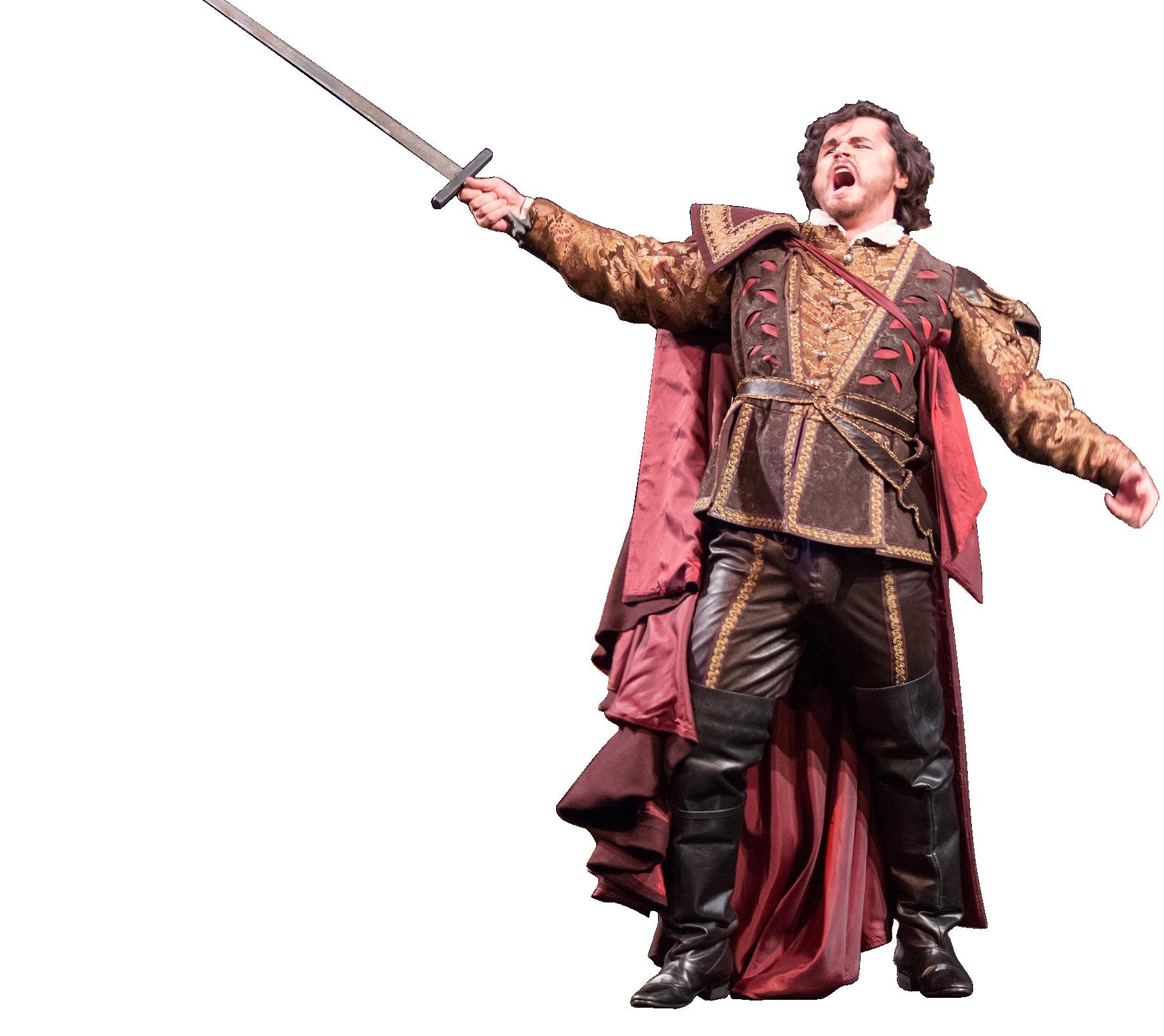
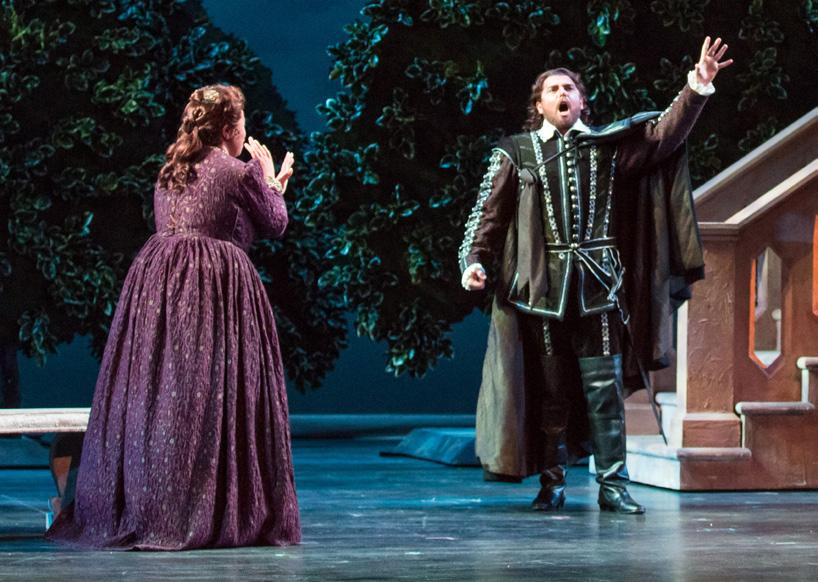
arco Nisticò has a long history at Sarasota Opera, first as a singer, and more recently as artistic administrator from 2020-2025. Along the way, he also began directing operas. At Sarasota Opera, he has directed d’amore, in 2020; L’infedeltà delusa 2025. This season, he returns to direct Giuseppe Verdi’s Martha Collins recently spoke about what makes that opera special (especially to a baritone!), and more generally about Verdi, and Marco’s relationship to the music of the great composer. (Their conversation has been edited for clarity and concision.)
MARTHA: Welcome back, Marco. You will be directing Il trovatore at Sarasota Opera this season. I was wondering if you could tell me, off the bat, a little bit about your history with Verdi?
MARCO: Well, as you know, I grew up in Italy, in the city of Naples. In fact, I grew up in a home where opera and singing were ever-present. My dad, now retired, was an opera singer and a teacher at the conservatory, and then he also became my voice teacher. One of the very first things he taught me was a Verdi aria from Un ballo in maschera. This was because he believed that Verdi was not only a great composer, but also a great teacher of the voice. Verdi teaches you everything from how to produce a sound to how to tell a story through the voice. I grew up loving the physical feeling that a singer gets when singing Verdi. It’s a special way of feeling the music in your body.
also having to embody a very elderly man, and a historic figure. All of that factors into finding a physicality that is believable and brings the character to life. Do you have memories of your first exposure to Il trovatore?
MARCO: It contains some of the most popular music that Verdi ever wrote—the tunes are extremely familiar. Of course there is the famous “Anvil Chorus,” that everybody knows. Even if people don’t know exactly what it is, they immediately recognize it because Verdi’s music has seeped into popular culture.
MARTHA: What, to you, is special or particular to Il trovatore?
MARTHA: What was your first Verdi role?
MARCO: Actually, my very first Verdi role was at Sarasota Opera with you, Martha, directing in 2008! It was Francesco Foscari, the Doge of Venice, in an early Verdi opera called I due Foscari, or The Two Foscari. It was an incredibly interesting challenge for me. It was quite challenging to sing. But it was an incredibly wonderful learning experience. Also thanks to you, Martha, I have to say. You taught me a lot about how to be on stage, and how to embody that kind of character.
MARTHA: What a challenging one to start with! Incredibly difficult music, but
MARCO: To me, it is an opera that is focused on storytelling through the music. Salvatore Cammarano, the person who wrote the libretto, wrote in a letter to Verdi that Il trovatore would work just as well in a concert as on the stage because the music is so incredibly gripping. Most of the story is told through people recalling something that happened in the past. Even so, there is this incredible forward motion that is typical of all Italian opera.
MARTHA: These characters, to me, jump off the page with their emotions and dramatic situations.
MARCO: Absolutely. Verdi was so good at capturing the depth of humanity through music. The music is immediately appealing and easy to understand. In just one page, he can paint a basic human emotion, or a very complex human situation. He had a difficult life, especially
when he was younger. He suffered terrible loss, which I think contributed to his understanding of human suffering. [While still a young man, he lost his wife and two children.] People felt a very direct connection to his music. That’s also why he became so important during the unification of Italy. His music was so full of patriotic ardor which, they felt, could express their own personal feelings. That’s the magic of great geniuses, right?
MARTHA: What would you say drives the characters in Il trovatore?
MARCO: The characters tend to be incredibly driven by something—generally one thing. Leonora is driven by this sudden love that she feels for Manrico. Manrico is driven by his love for her, and also by duty and honor. Il Conte di Luna is driven by an almost insane love. For me, the most complex character is Azucena. This gypsy woman—as she’s described in the opera—who has suffered what we would now refer to as a profoundly traumatic experience. She saw her mother burned at the stake as a witch. And just before dying, her mother said, avenge me! Imagine a kid seeing and hearing that. It’s ingrained in her soul. Verdi wrote music that describes the struggle inside her.
MARTHA: And it all happens in less than three hours. Each character has a dramatic, compelling story arc of their own. How do you envision putting together that puzzle?
MARCO: I’m lucky to have an incredible cast and to be working with Maestro DeRenzi, who knows Verdi and this opera like no one else. I’ve worked with some of the singers before, like Ricardo Rivera, who will sing Il Conte di Luna. Il trovatore was written when Verdi had developed his mature style. He had just composed Rigoletto, quite a revolutionary opera in its way. After that he wrote La traviata, which is a domestic drama. I recently had the chance to direct that opera for the first time, in Denver. Trovatore in between these two. It has a heightened feeling the entire time. You can relate to the characters’ emotions, but they are slightly more abstract. I feel that this needs to be depicted in an almost pictorial way. We will work on making the production visually compelling. There is a sense of magic and mystery that we can really work on.
MARTHA: In your previous life as a singer, you sang the role of the Conte di Luna. Are there particular moments that you can’t wait to work on?
MARCO: I am definitely looking forward to working with Ricardo José Rivera on what is possibly the most famous aria for baritone, “Il balen del suo sorriso.” Ricardo has a beautiful voice and wonderful technique and I am really looking forward to hearing him sing that, and on working together to find ways to make it as interesting as it can be, for us and for the audience. It needs to be interesting for us, onstage, in order to make it interesting for the audience. And the choruses. I’m looking forward to that because Verdi was a master of the chorus. It’s easy to think that they stop the story, but in reality they create such a heightened moment.
MARTHA: This will be Maestro DeRenzi’s last Verdi opera at the Opera House. Under his guidance and leadership, Sarasota Opera is the only company in the world to have performed every single note Verdi ever wrote. What does it mean to you to be a part of his final experience at the Opera House?
MARCO: I’m very attached to Maestro DeRenzi. He gave me the chance to sing Verdi, which has been a very important part of my artistic career. I remember that before the opening of I due Foscari, there was a public event, and someone asked him, “How do you know that he can sing Verdi?” And Maestro said, “I don’t know yet. We will see on opening night.” It was funny, but also generous on his part to take a chance on somebody who hadn’t sung Verdi before. After that, we did many Verdi operas together. So it will be emotional.
2026-27 SEASON ANNOUNCE CONTINUED FROM PAGE 4
The third opera of the season will be Richard Strauss’s Ariadne auf Naxos, which has not been seen at Sarasota Opera since 2002. This blend of comic opera and mythological drama takes place in the house of the richest man in Vienna who demands that the entertainment he has hired perform a brand new opera and a comic farce, simultaneously. Jessé Martins will conduct with Martha Collins directing. The title role will be sung by Mary Evelyn Hangley, who was an Apprentice Artist with us in 2015. Bacchus will be sung by Jeremy Brauner with Alexander Boyd as the Music Master. Tessa Fackelmann, who was Cherubino in Sarasota Opera’s production of The Marriage of Figaro in 2025 will return as the Composer. Abigail Raiford, another former apprentice artist will sing the challenging role of Zerbinetta, the leader of the comedians.
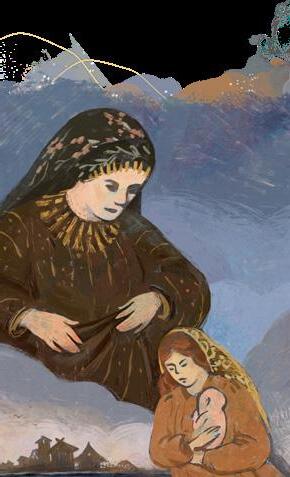
The final opera of the season will be the powerful work by Czech composer Leoš Janáček, Jenůfa. This opera was last performed by Sarasota Opera in 1998. It is the story of a young woman living in a Moravian village whose life is controlled by her stern stepmother Kostelnička. She is the object of desire of two halfbrothers: the carefree Števa, whom Jenůfa loves, and the brooding Laca. When Laca slashes her face, Števa abandons her, unwilling to marry a woman he sees as disfigured, leaving her with their illegitimate child. Kostelnička’s attempts to ensure a future for Jenůfa lead to tragic consequences.
David Neely, who has led many operas for us including Tiefland and Of Mice and Men will return to conduct. Katherine M. Carter who directs this season’s production of The Merry Widow will direct, with sets designed by Steven C. Kemp. Kathryn Henry, who has sung the title role with Lyric Opera of Chicago will make her company debut. Victor Starsky (Manrico in Il trovatore this season) and Christopher Oglesby (Edgardo in Lucia di Lammermoor in 2024) will sing the two half-brothers Števa and Laca.
The dramatic role of Kostelnička will be portrayed by the world-famous Finnish soprano Karita Mattila. A great star of the Metropolitan Opera (where she has sung both Jenůfa and Kostelnička) as well as most of the world’s leading opera houses, Ms. Mattila will also be the company’s first Artist-in-Residence, coaching and giving master classes to our Apprentice and Studio Artists.
Next season also includes a return of the Artists Concert, our principal artists choosing some of their favorite pieces across genres to entertain our audiences. New to the season will be the Emerging Artists Showcase Concert with our Apprentice Artists and the Sarasota Opera Orchestra.
The 2026-27 Season will mark the beginning of a new era, while continuing a tradition of excellence! We hope that you will be part of it.
BY JANET STERN SOLOMON
s opera more than talented women “screaming” in foreign languages? Certainly, Peter and Melody Kretzmer think so! Growing up in New Jersey with a father who loved classical music, Peter and his sister, Wendy, heard a lot of music. As a young man, he didn’t fully appreciate the operatic voice but rather heard “screaming.” With grandparents who had played the piano and violin, plus regular Saturday Metropolitan Opera broadcasts, Peter loved orchestral music before he grew to love and appreciate opera. When his father Ernie, and stepmother Alisa started coming to Sarasota, Peter visited them and was introduced to the thriving cultural community they had embraced.
As Peter moved to Sarasota, he met Maestro DeRenzi and General Director Richard Russell and really enjoyed getting more immersed in the opera community. He particularly loves that the Opera House also stages orchestra and ballet performances and that the performing
arts work together in our town. He grew to love the cultural world, which was very different from his past focus of economics and finance.
After the end of the pandemic, his father, Ernie, could no longer attend concerts in person and Peter often went alone. In 2021, Sarasota Opera friends Russell and Margarete Wiltshire introduced him to their friend, Melody, an accomplished lawyer who had just moved to Port Charlotte. As they dated, Peter introduced her to many of the cultural events he loved. Melody developed a strong appreciation of opera.
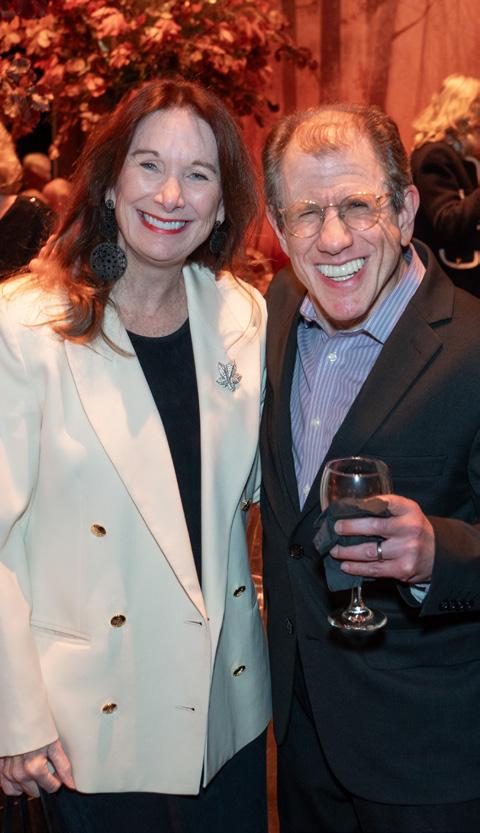
The Kretzmer Legacy Society is proudly named after his father who has been extremely generous to Sarasota Opera, as well as other performing arts organizations. Peter and Melody, who were recently married at the Sarasota Opera House, are now Kretzmer Legacy Society members, Co-Producers, and strong supporters of the company’s mission and programs.
At Sarasota Opera, every note sung and every curtain raised is made possible by the unwavering support of our generous donors. To recognize those who have stood by us year after year, we are proud to present the Encore Club—a special circle of supporters who have made a philanthropic gift for five consecutive years.
Encore Club members are the heart of our opera family. Their steadfast commitment ensures that Sarasota Opera continues to thrive, bringing world-class performances, enriching educational programs, and transformative community outreach to audiences of all ages. In appreciation of this enduring support, Encore Club members receive exclusive benefits, including invitations to behind-thescenes events, recognition in our publications, and opportunities to engage more deeply with the artists and productions they help bring to life.
Encore Club is more than a milestone—it’s a celebration of your legacy and a testament to the power of consistent generosity. Whether you’ve supported us through thrilling premieres, timeless classics, or inspiring youth initiatives, your dedication helps shape the future of opera in our community.
We invite you to continue your journey with us and enjoy the rewards of being a part of this distinguished group. Thank you for making Sarasota Opera’s encore possible—your support deserves a standing ovation. Thank you!
A gift to the Sarasota Opera Tribute Fund is a beautiful way to memorialize a loved one, honor a friend, or celebrate a special occasion. A tribute card is sent to a family member or the honoree and is published in this newsletter.
IN MEMORY OF OUR MEMBER BILL ANDERSON
Manatee Opera Guild
IN HONOR OF KATHERINE BENOIT AND JOHN BROOKS
Dr. Bernadette K Meisenheimer
IN MEMORY OF FRANK CLARK
Richard Russell and Cynthia Bydlinksi
Steve Booth
Mary Jo Clark
Victor DeRenzi and Stephanie Sundine
Howard Kaplan
Lisa Kaplan
John Marshall
Barbara Warkmeister and Kathleen Tegtmeyer
IN HONOR OF MAESTRO VICTOR DeRENZI
Paul and Mary Neuhauser
IN MEMORY OF JANE R. NEWMAN
Nancy and Bill Newman
IN MEMORY OF NINO PANTANO
Judy Pantano
IN HONOR OF DEBORAH REDA
Lou and Rosanne Martorella
IN MEMORY OF ROGER D. SANTORA
Roger and Shannon Santora
Gifts listed were received from October 29, 2025 – February 15, 2026
To have a tribute listed, please send a contribution of $25 or more to: Sarasota Opera, Attn: Tribute Fund 61 N. Pineapple Ave., Sarasota, FL 34236, or online at: SarasotaOpera.org/tribute-gifts.