Muesum | Tourism | Art Production | Public Gathering
SMITH CONNECTION
Addition | Adaptive Reuse | Campus Planning
SYRACUSE MODULAR HOUSING
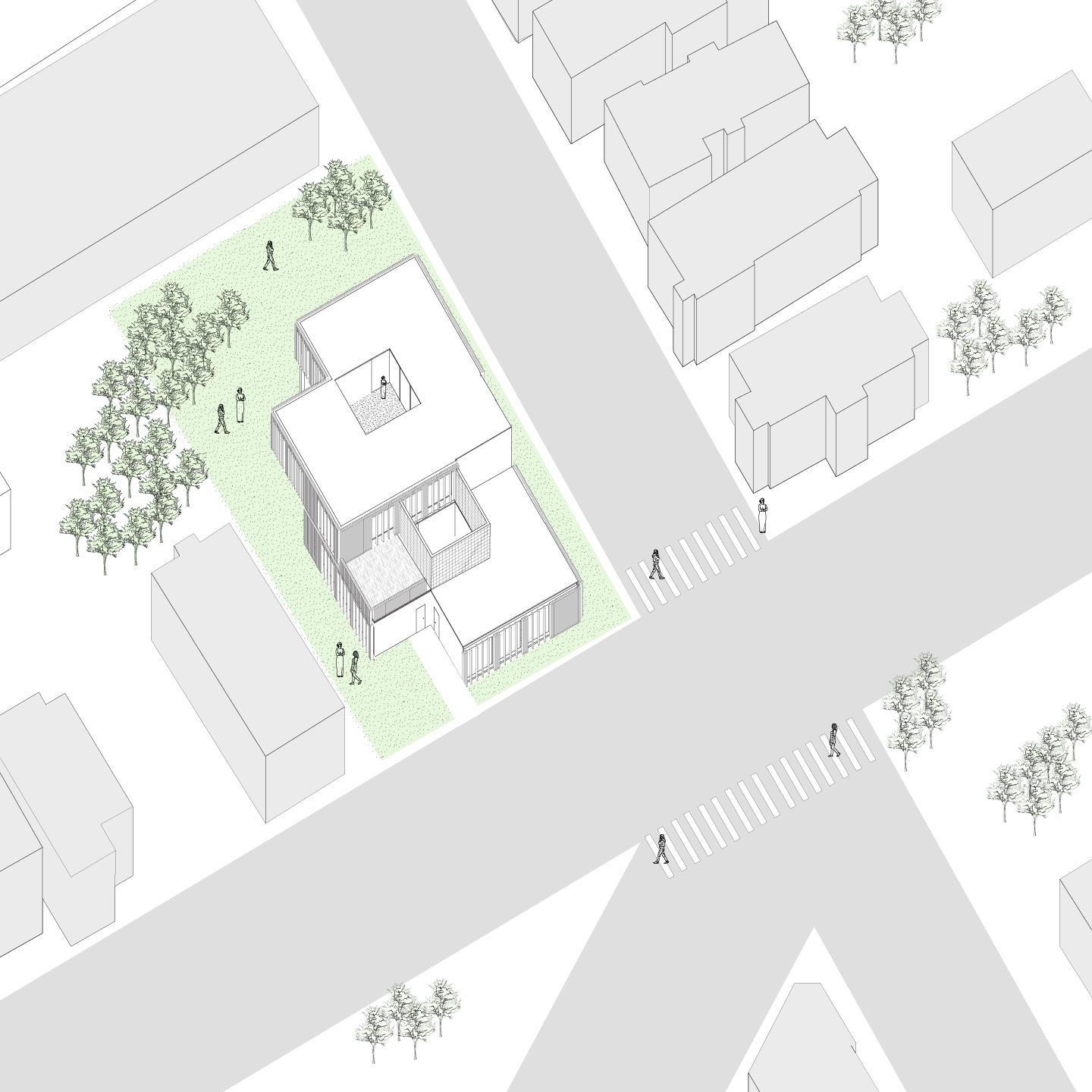
Housing | Living Building Challenge | Flex and Adapt
PROFESSIONAL WORK
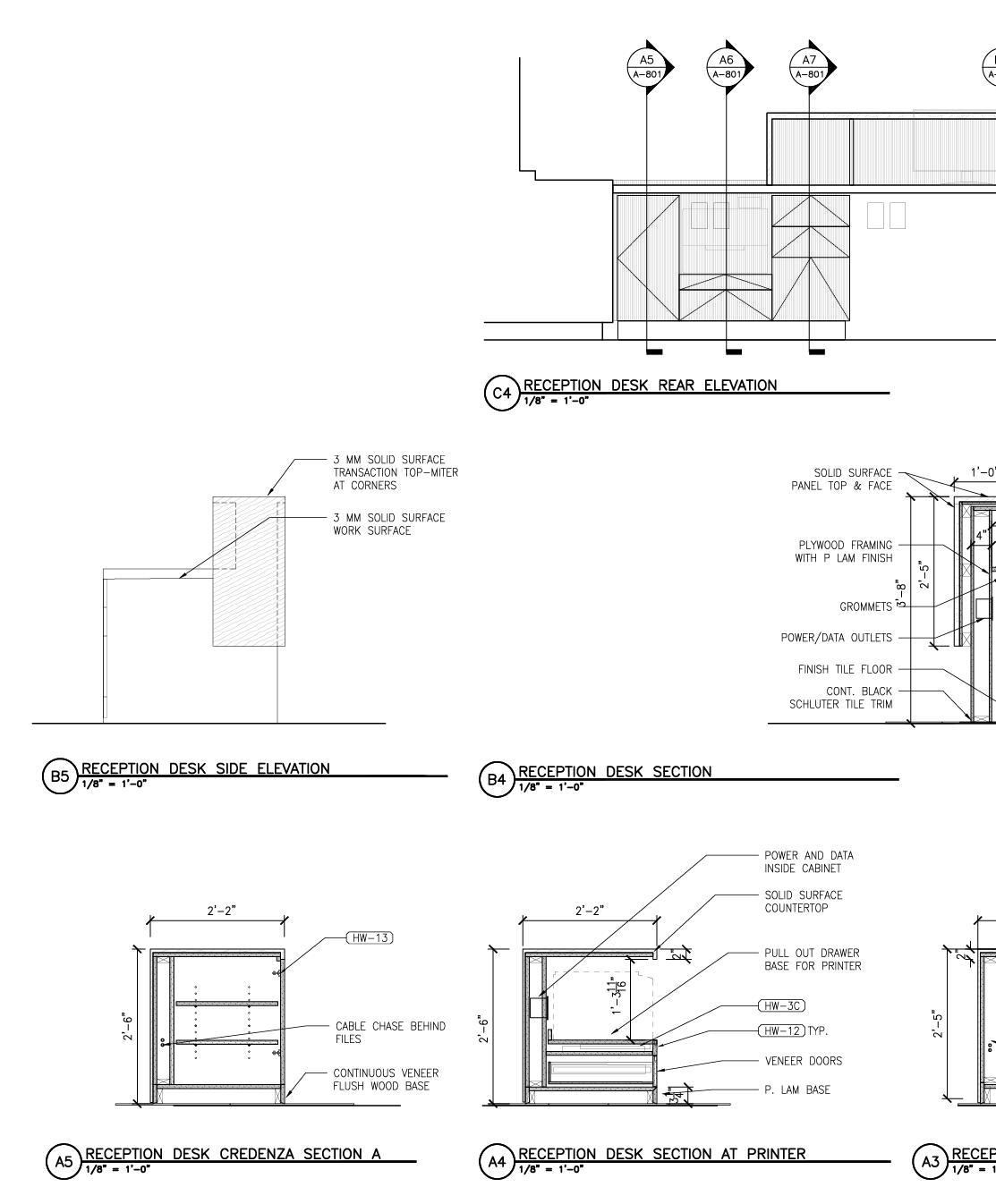
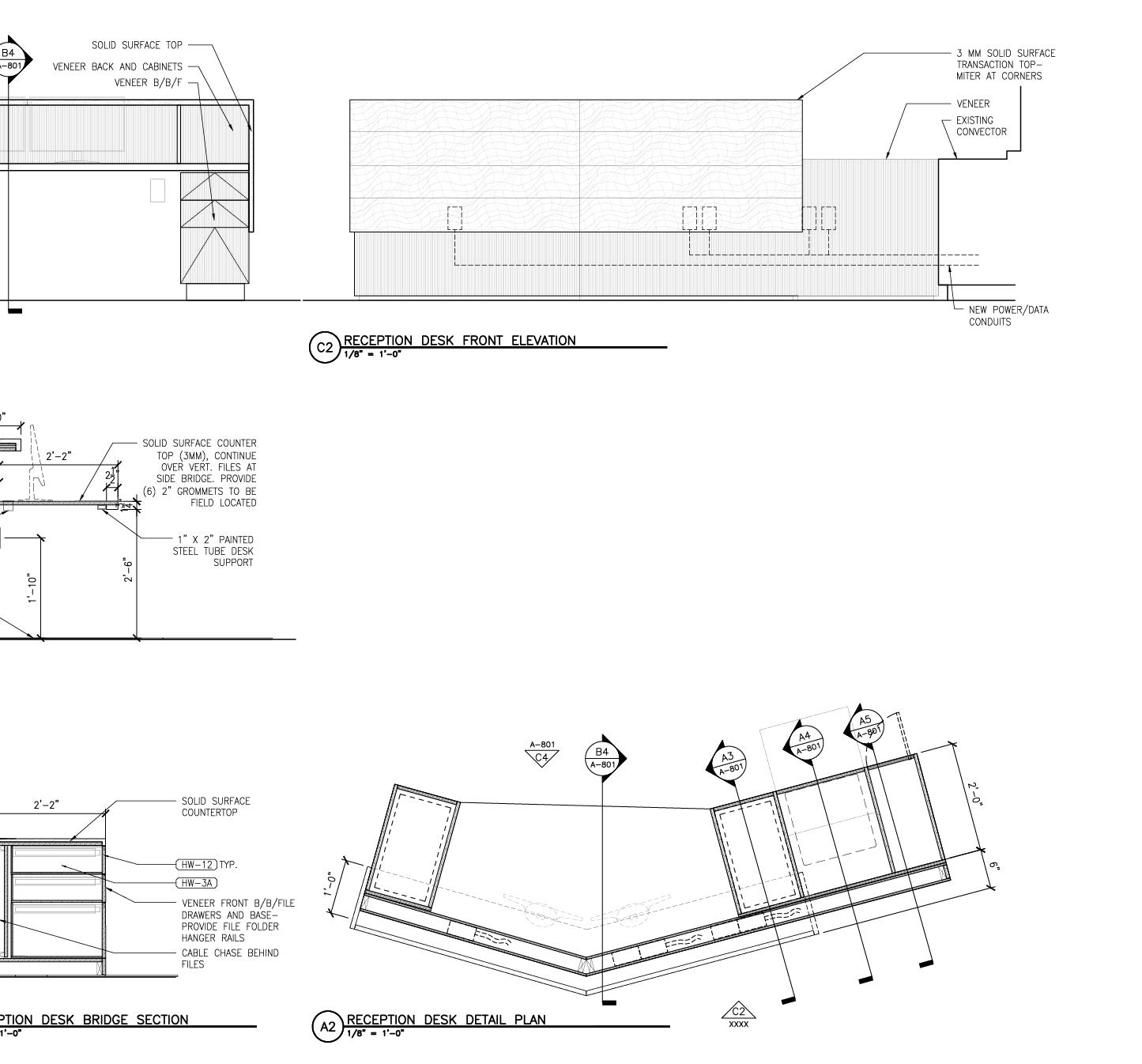
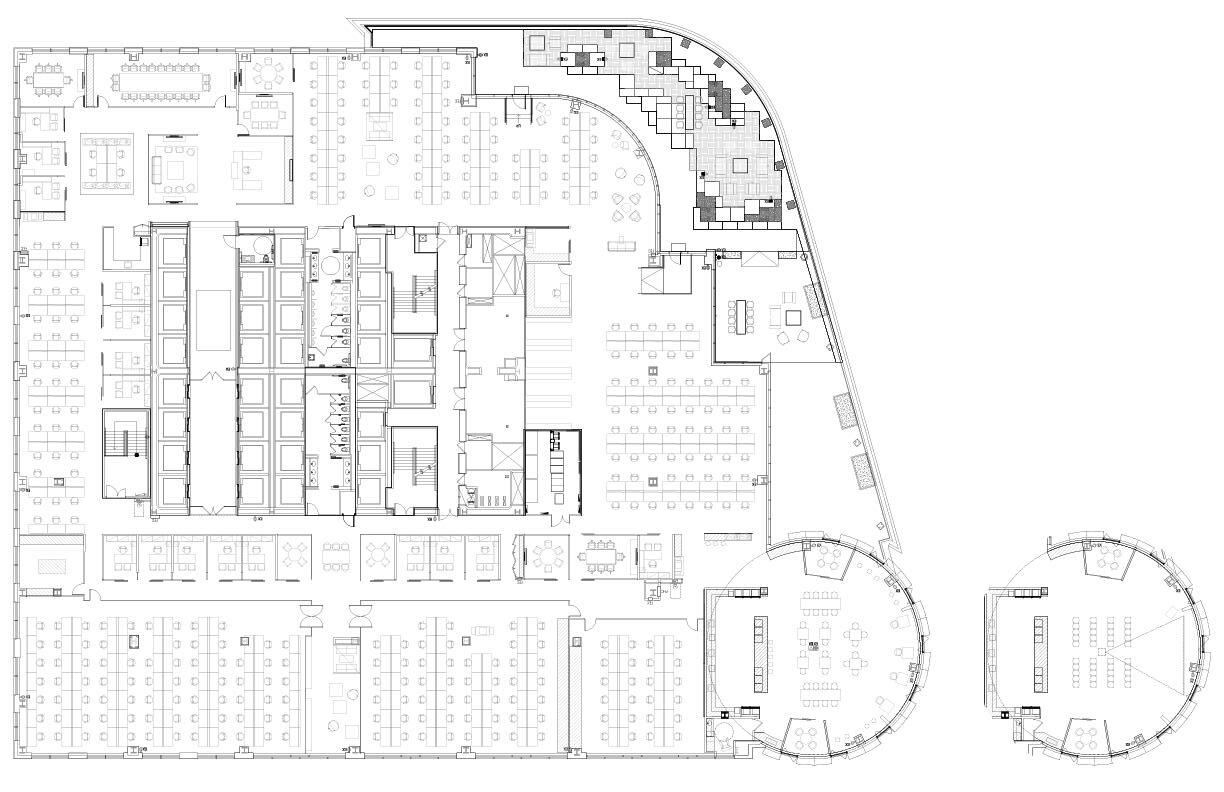
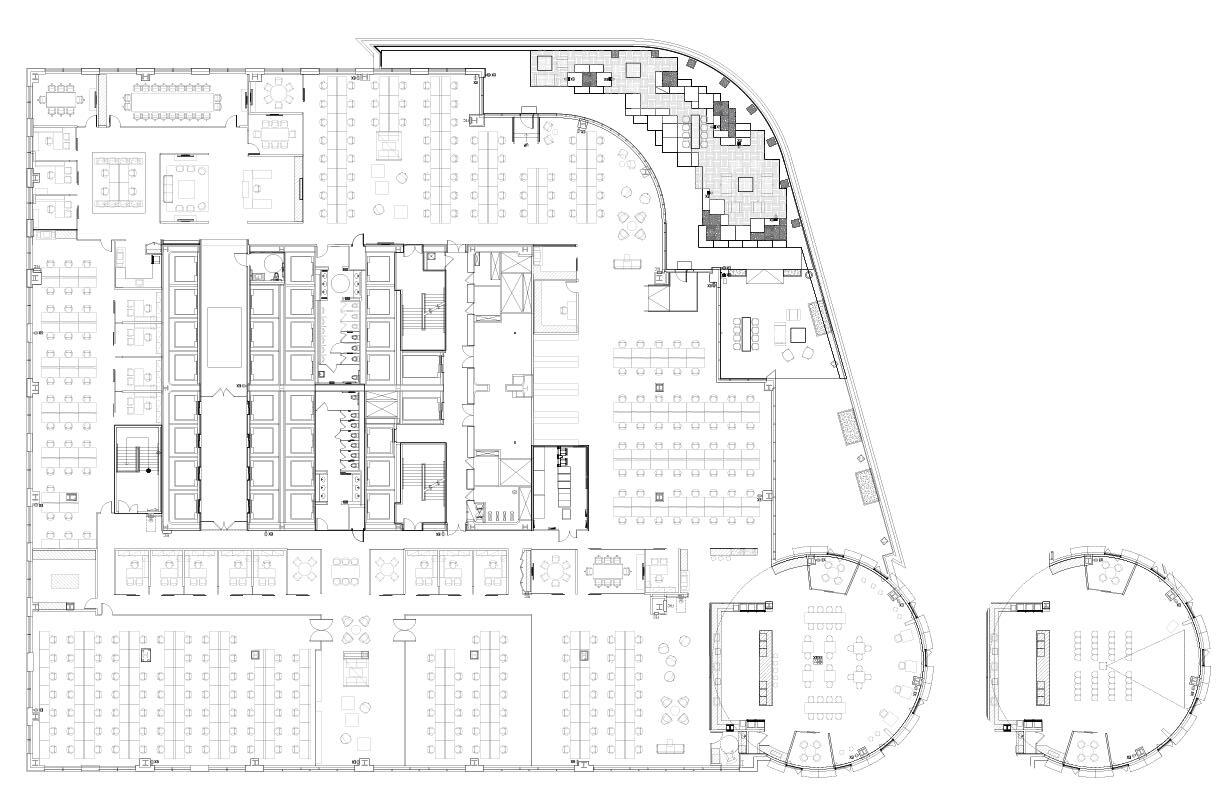
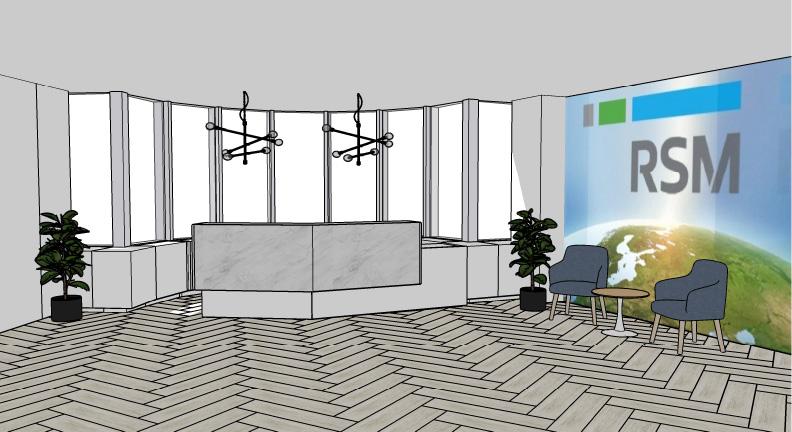
Details | Renders | Test Fits
TUMBLING TEQUILA
Syracuse, NY
Professor Valeria Herrera, Spring 2023
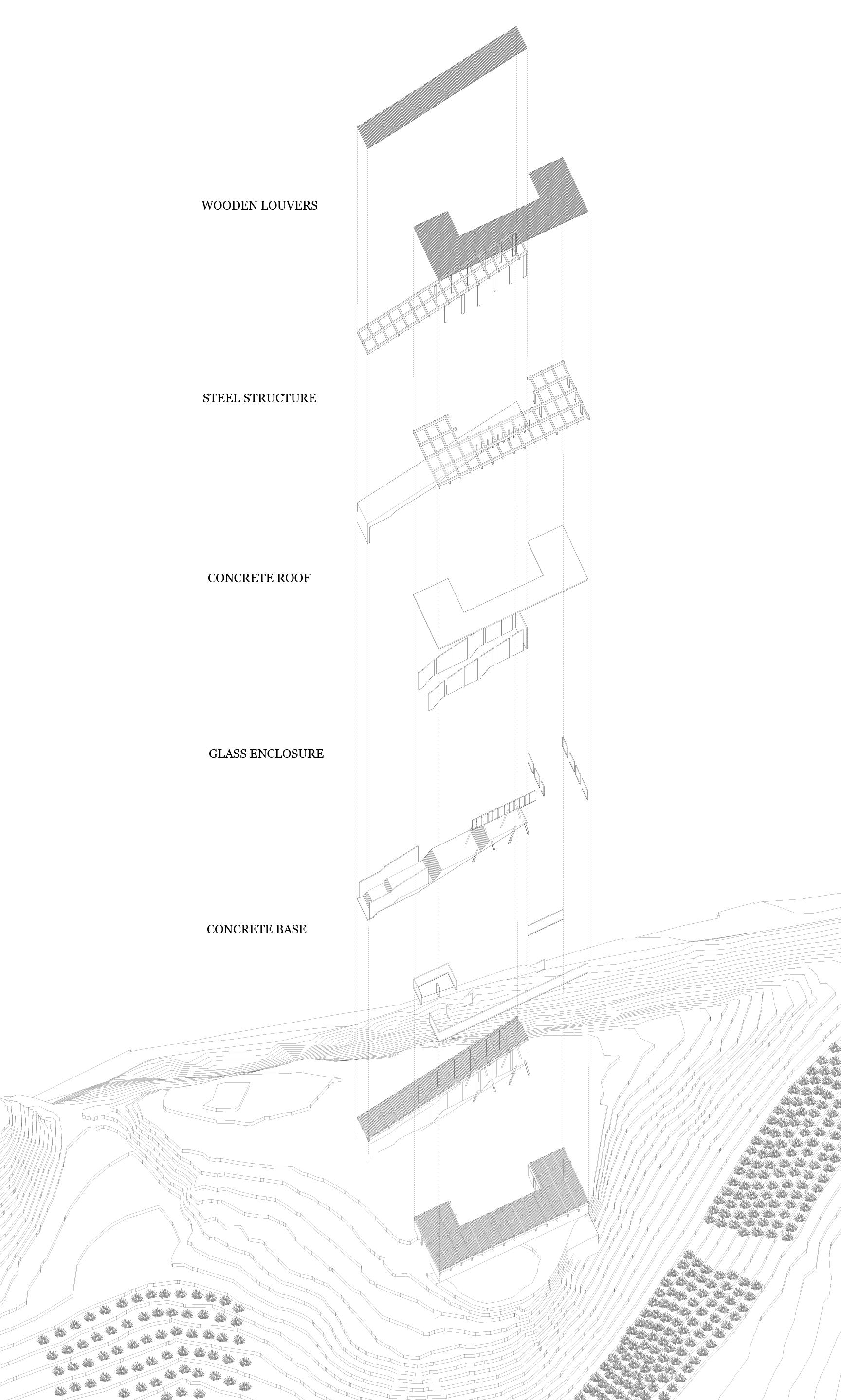
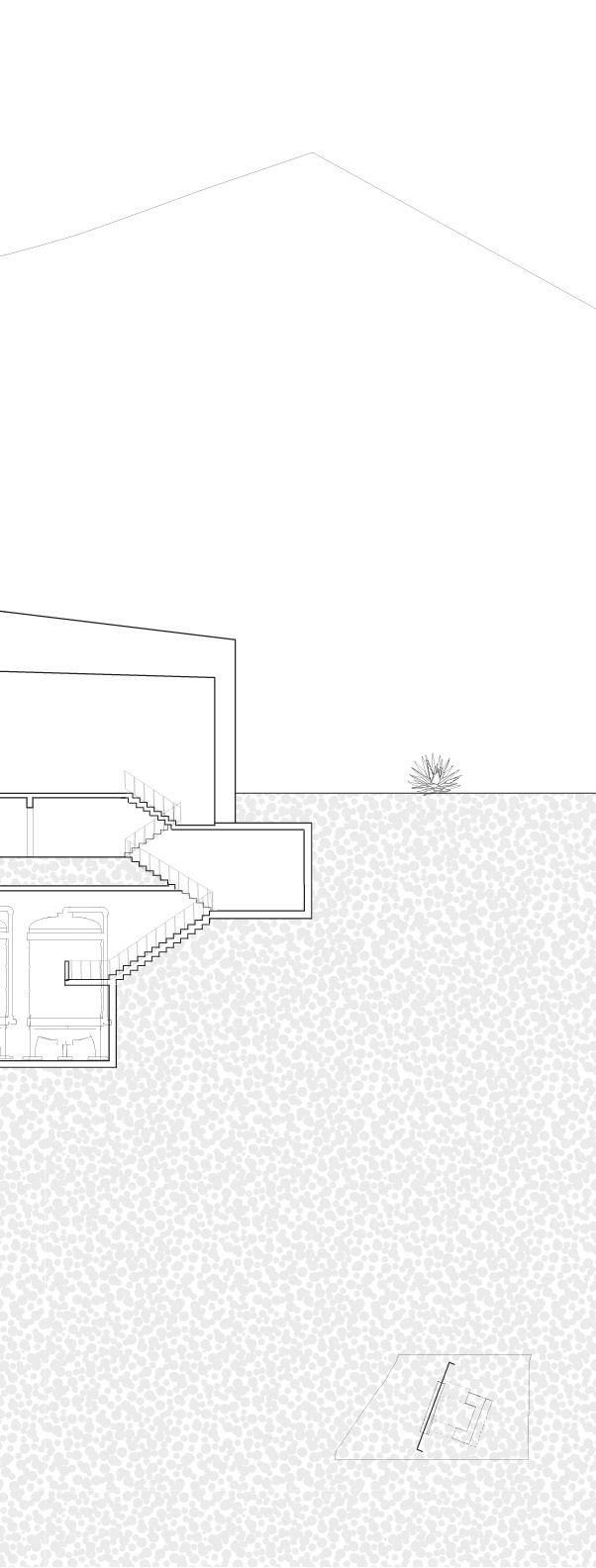
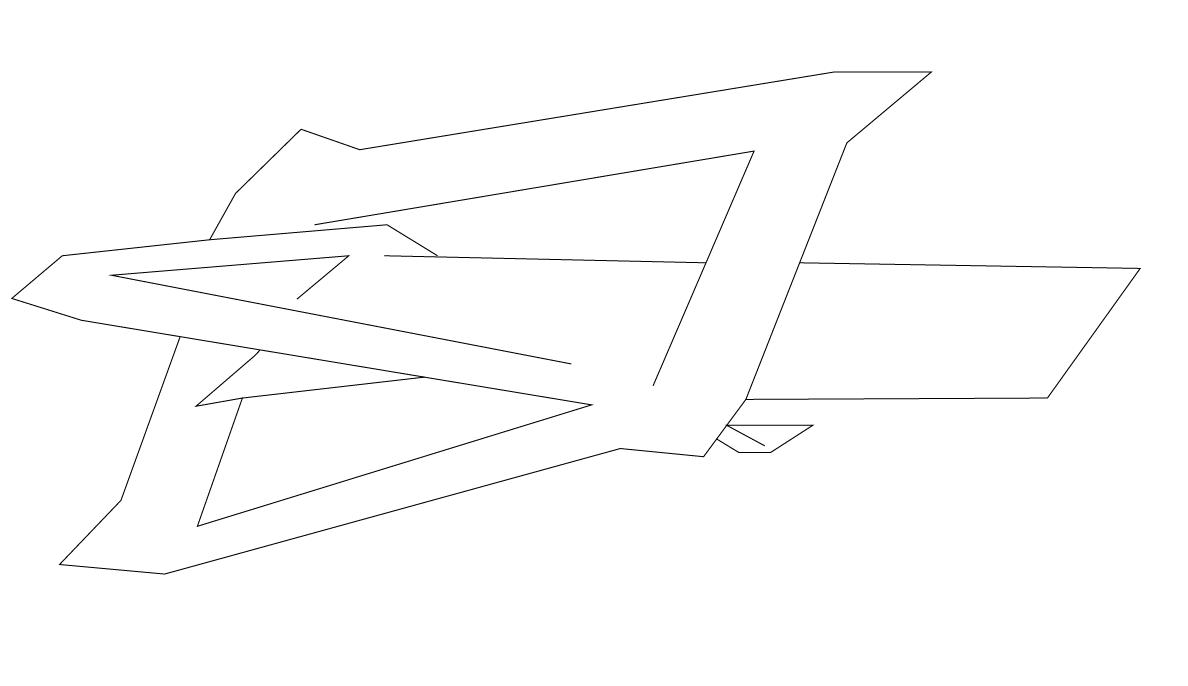
Tumbling Tequila began with an in-depth exploration of the tequila-making process, focusing on how gravity could be harnessed to influence and enhance the flow of this system. The project’s form was initially conceived through an iterative process of cutting and folding a continuous piece of paper. This hands-on approach allowed for the development of a scheme that naturally integrated gravity as a guiding principle.
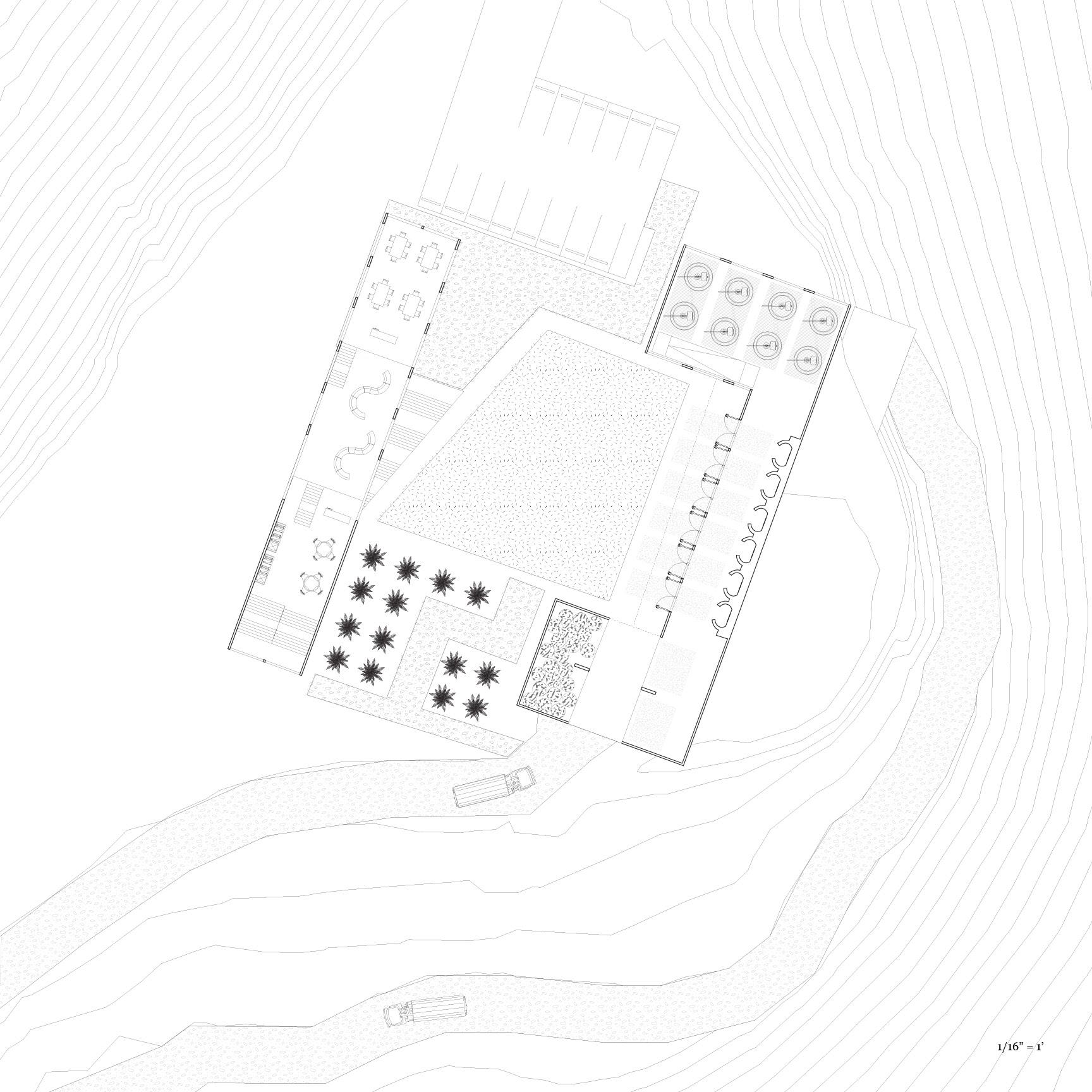
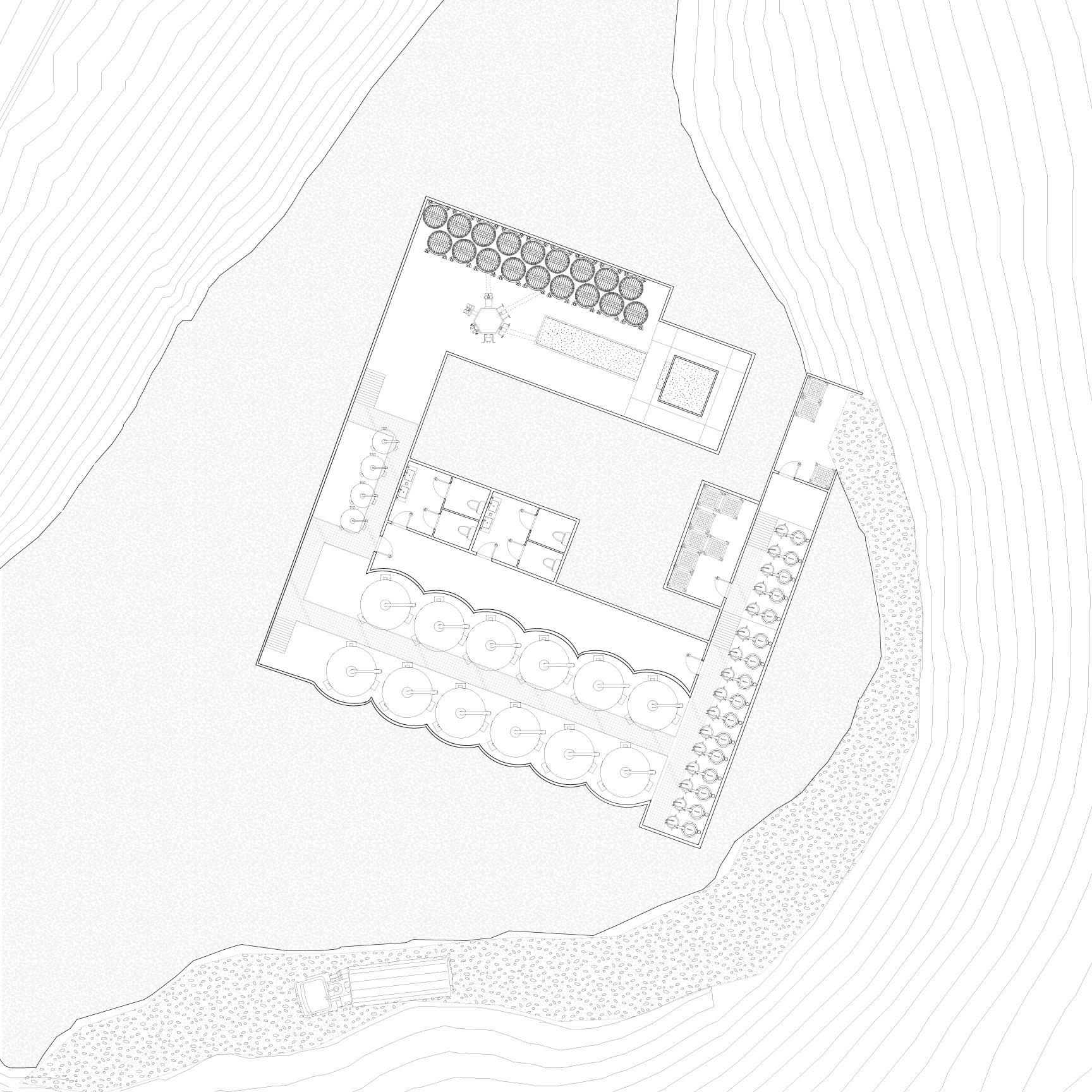
The final design centers around a terraced layout, with a central terrace surrounded by both inner and outer loops. These loops were envisioned to accommodate different stages of the program, creating a clear organizational structure that facilitated the separation and sequencing of functions. The cascading nature of the form enabled a seamless integration of gravity into the production process, allowing materials to flow naturally from one stage to the next.
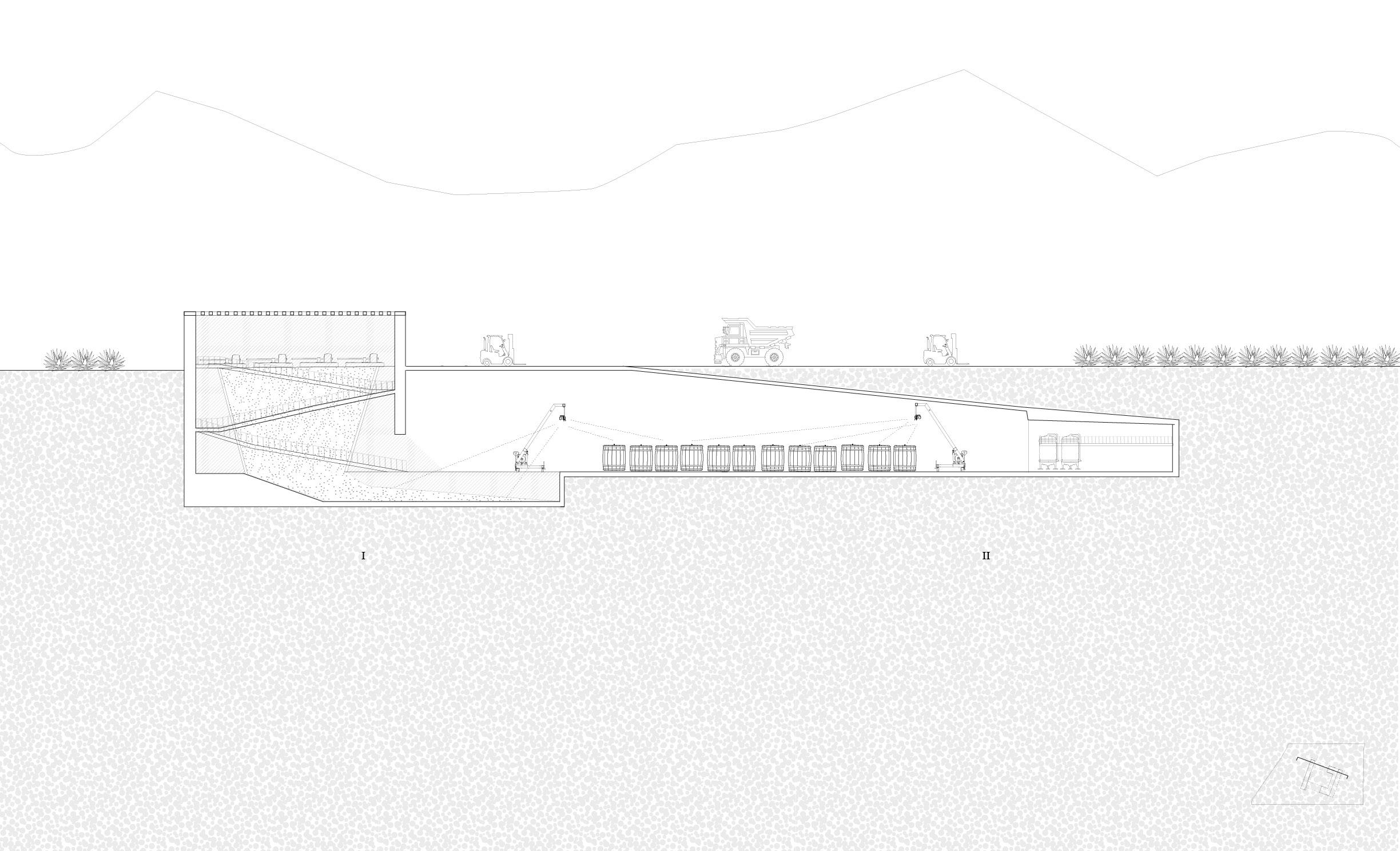
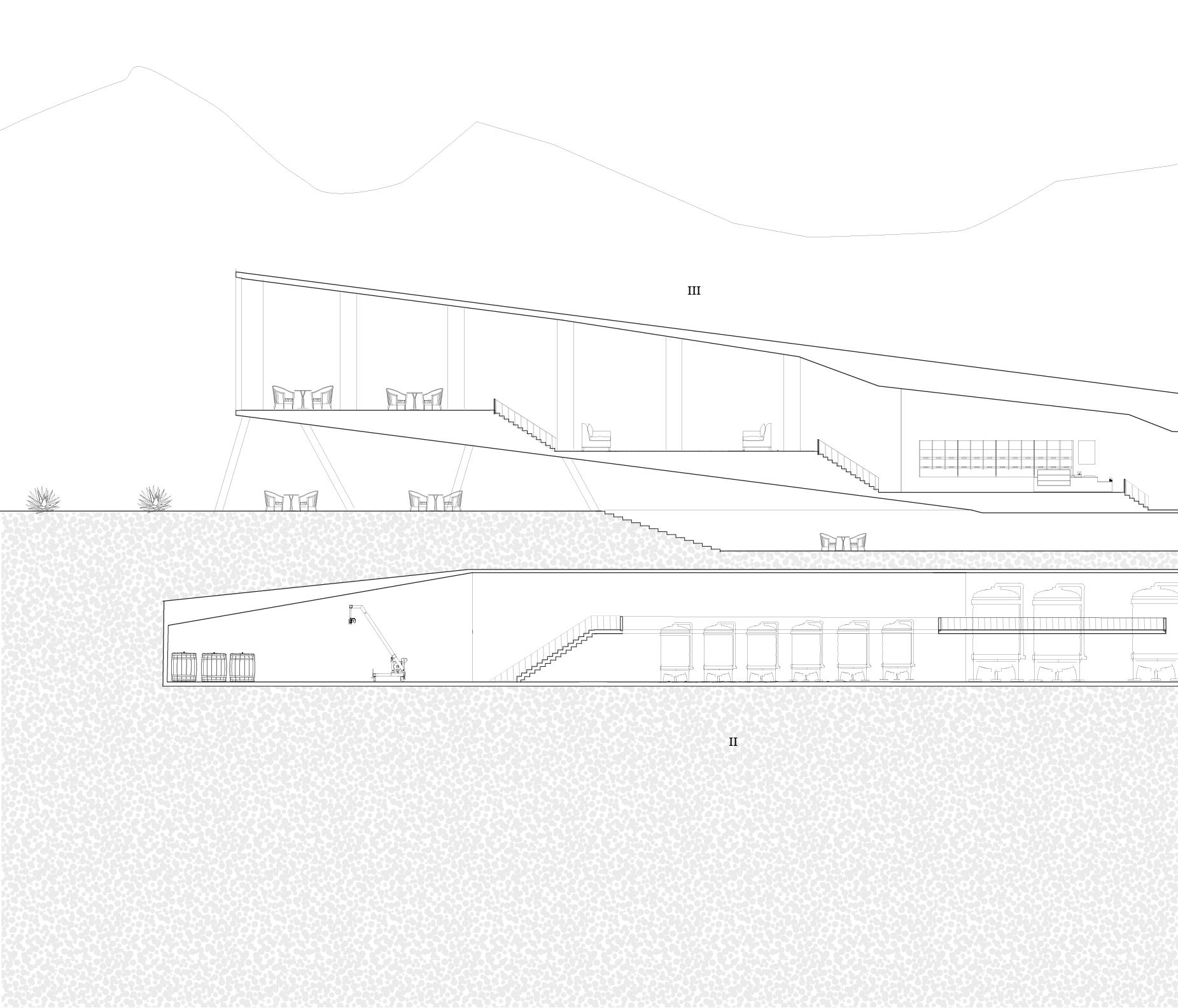
In this imagined project, blue agave—the foundational plant in tequila production—is delivered to the highest point of the site. From there, the production process unfolds as the agave transitions through various stages, each carving deeper into the landscape. This gravity-fed system concludes at the base of the hill, where the final product is collected and distributed. This vertical progression not only optimizes the production process but also emphasizes the relationship between the architecture and the natural terrain.
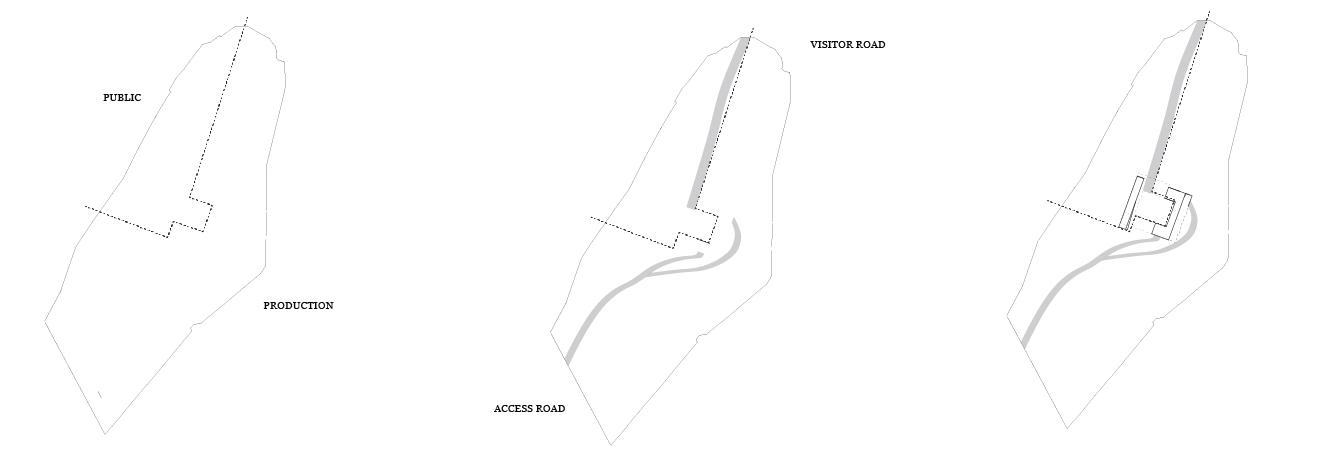
The site’s dual access points offered an additional layer of complexity and opportunity for the design. These two distinct entrances informed the development of a public-versus-operative site strategy, ensuring that visitors and production processes remain separate yet interconnected. This division allowed for the creation of dedicated spaces for public engagement, such as tours or tastings, while preserving the efficiency and functionality of the operational areas.
Through its thoughtful integration of gravity, landscape, and program, Tumbling Tequila presents a design that is both practical and experiential, offering a unique lens into the tequila-making process while celebrating the natural environment and its role in production.
Site Diagrams
Section
TUMBLING TEQUILA
THE LOOP
Florence, Italy
Professor Olivia Gori, Spring 2024
In Collaboration With Peyton McGarry and Sarah Crawford
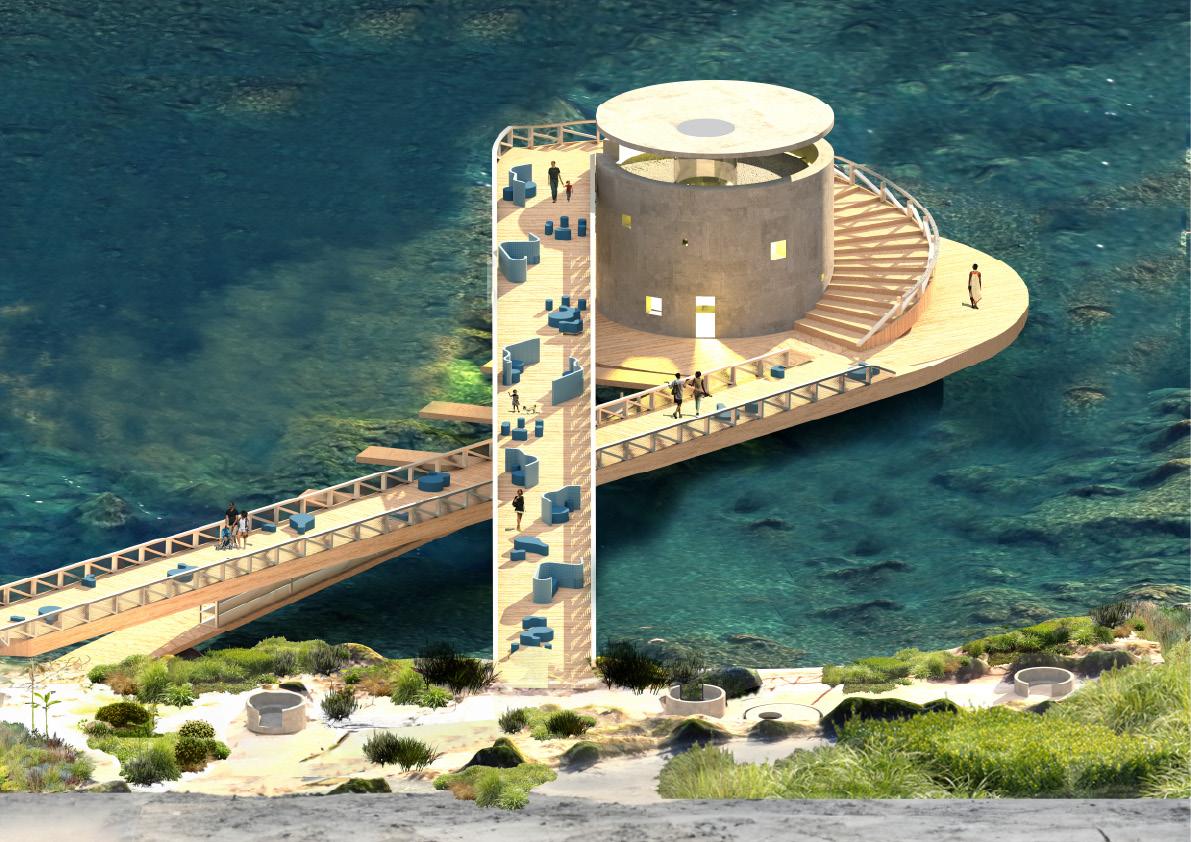
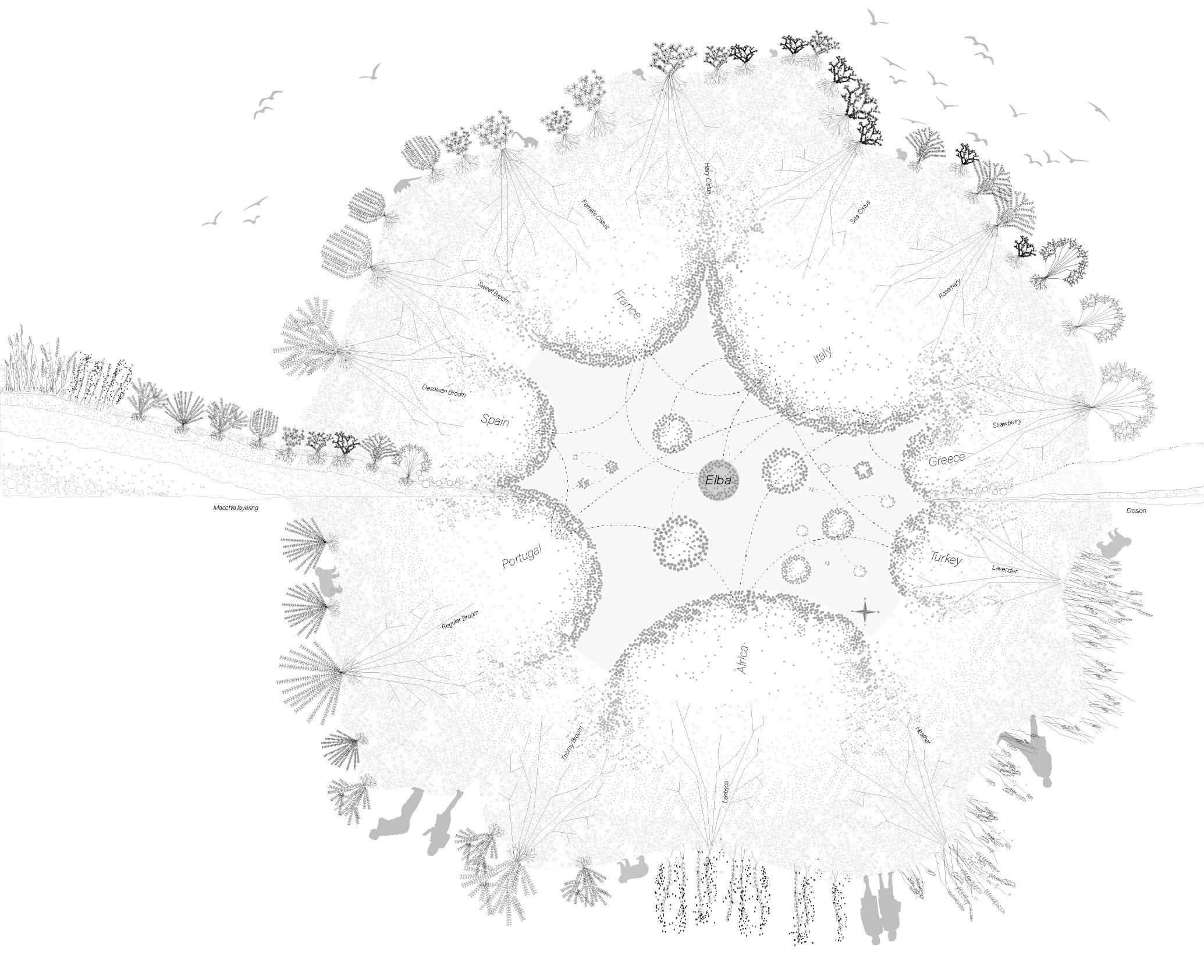
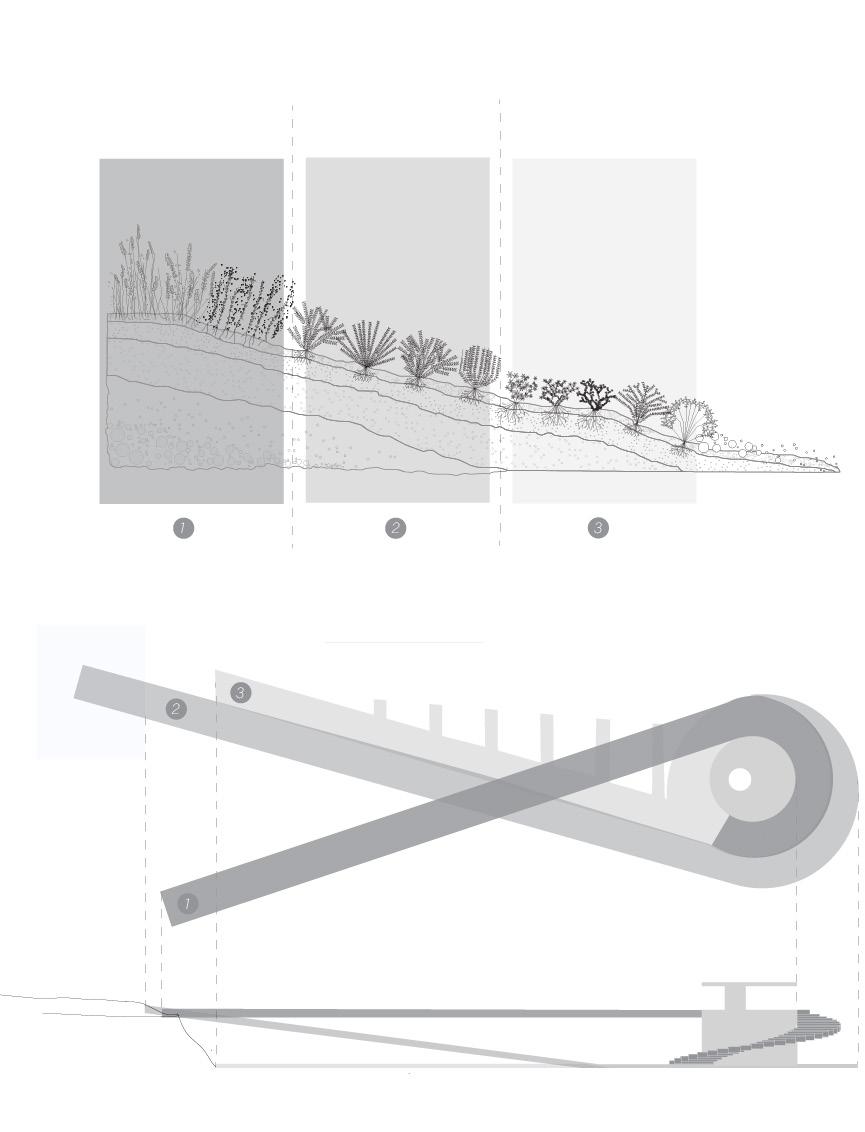
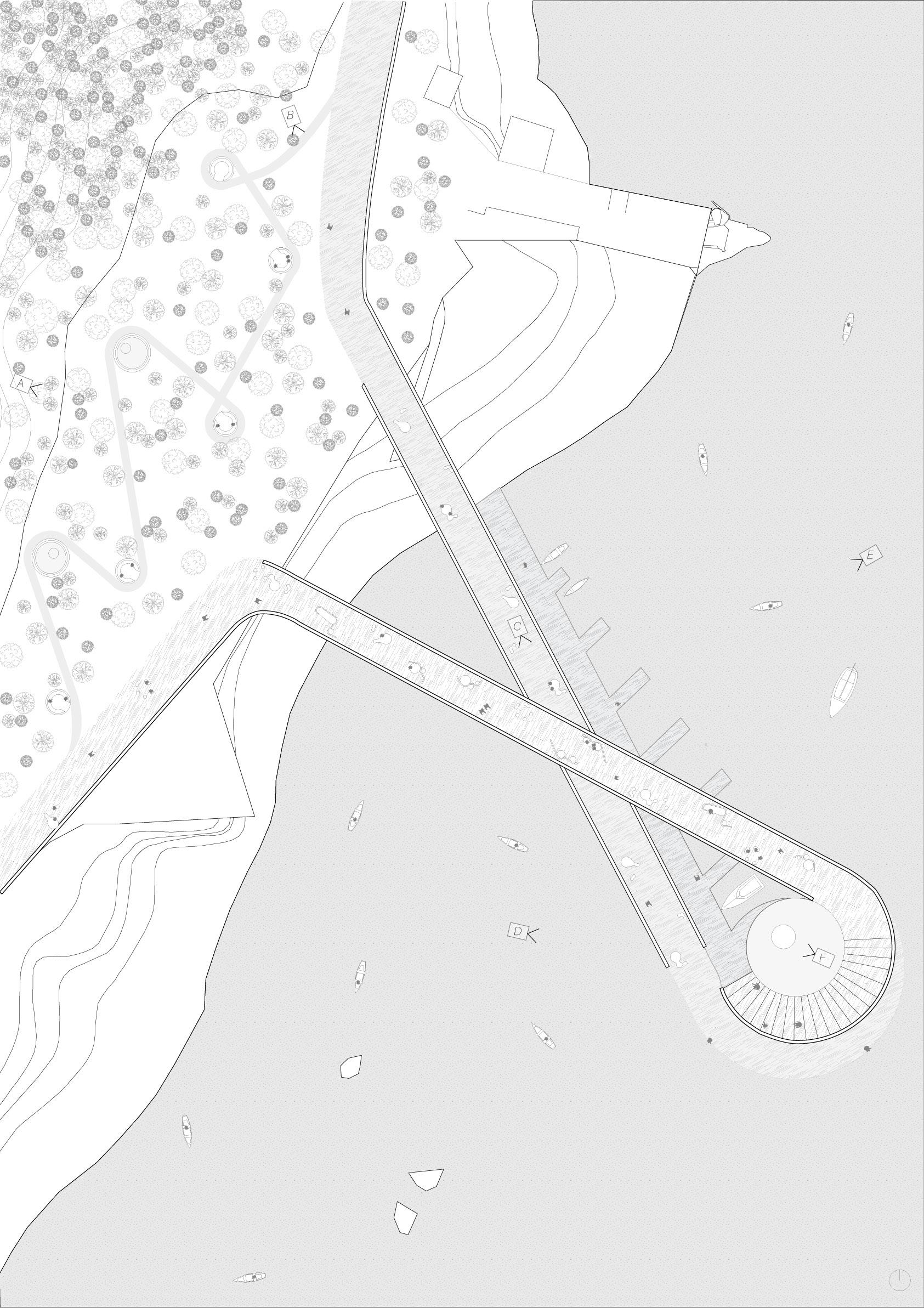
Our project began with an exploration of Elba, focusing on the island’s vegetation, particularly the macchia Mediterranea. This study revealed that the macchia was threatened by tourism, wildlife, and wildfires. We sought to reclaim the site using this vegetation while mimicking the macchia’s tiered systems along the coastline. These tiers informed our design, with the top layer representing active life, the middle layer bridging connections, and the bottom layer engaging with the water. This concept guided both the program and the form of the design.
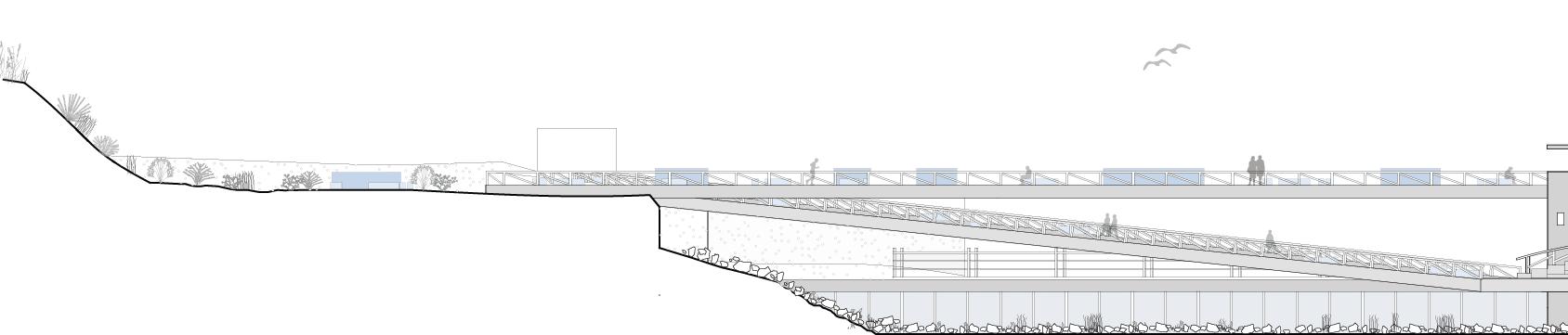
Through further analysis of Rio Marina, we discovered significant gaps in its infrastructure, particularly the lack of a high school, forcing students to commute 40 minutes by boat to the other side of the island. Our program addresses this issue by creating a dual-purpose pier that serves as a transportation hub for students and a community resource for the town. This pier connects to existing infrastructure, integrating seamlessly into the fabric of Rio Marina while offering year-round utility for locals and tourists.
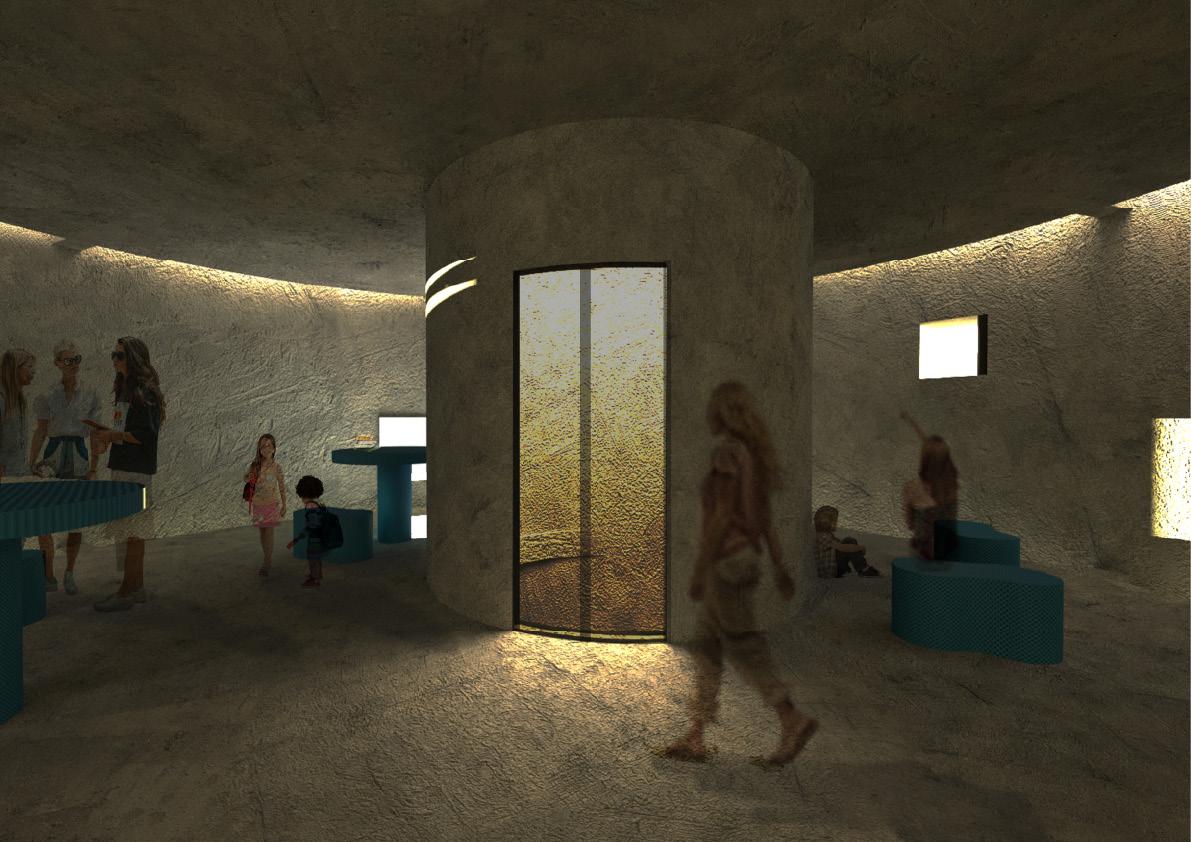
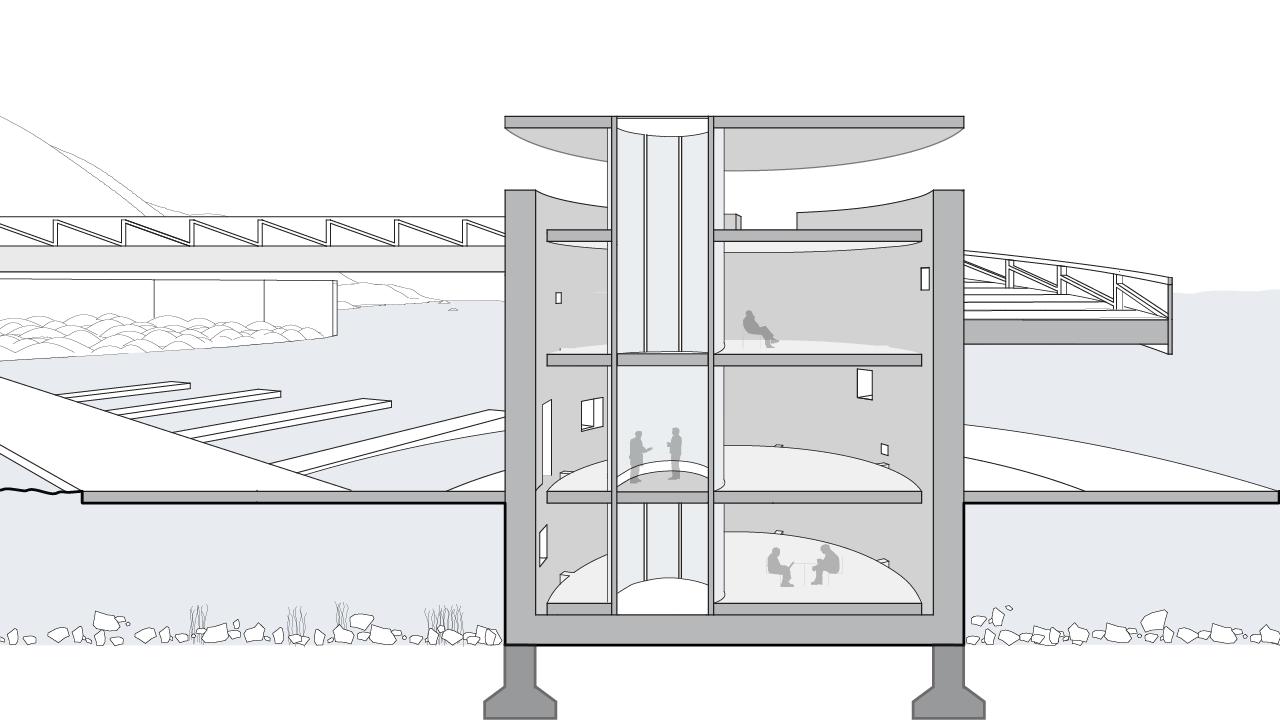
A looping pathway forms the backbone of the design, linking to existing walkways and organizing various programs. At its center is a circular volume, functioning as a hub for students to study and gather. Surrounding this are distinct pathways: the lower levels serve transportation and boat docking, while the upper layers are designed for after-school activities, gathering spaces, and seating.
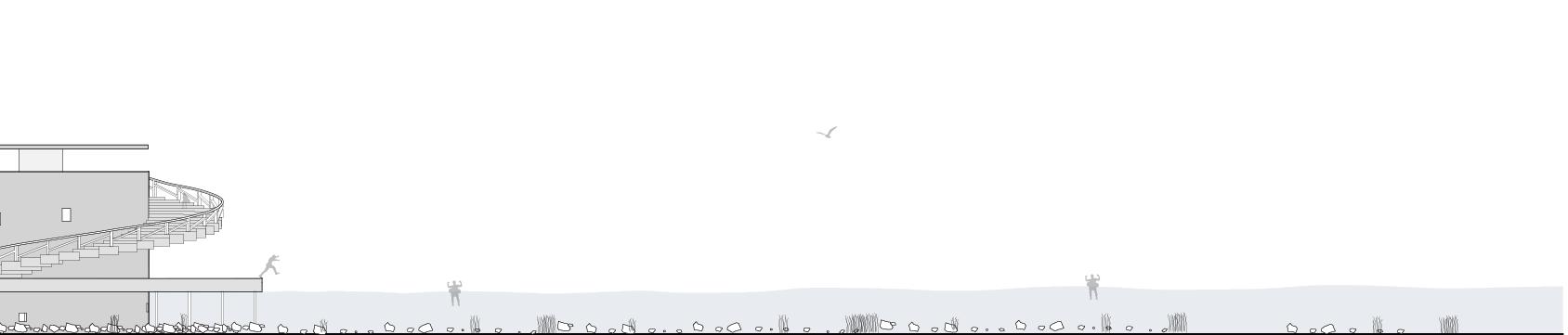
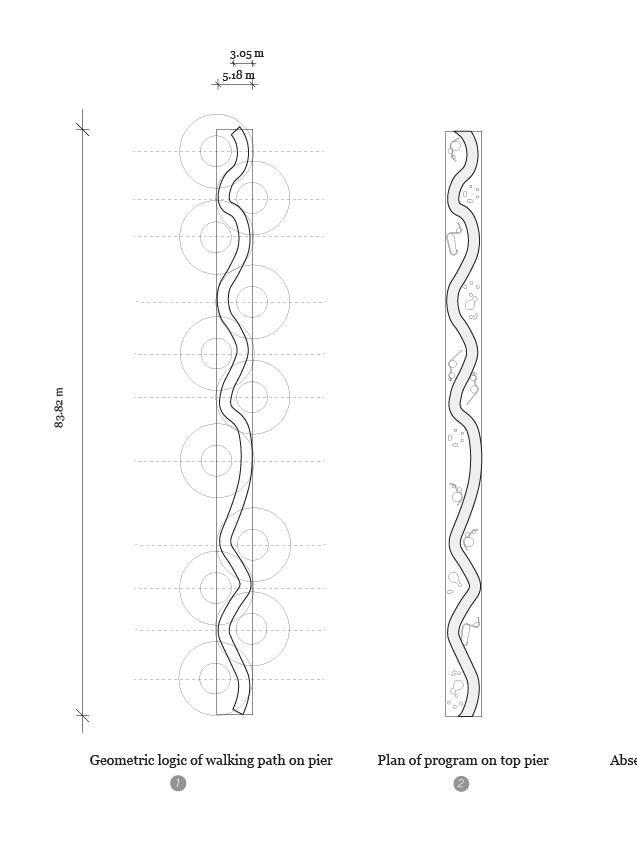
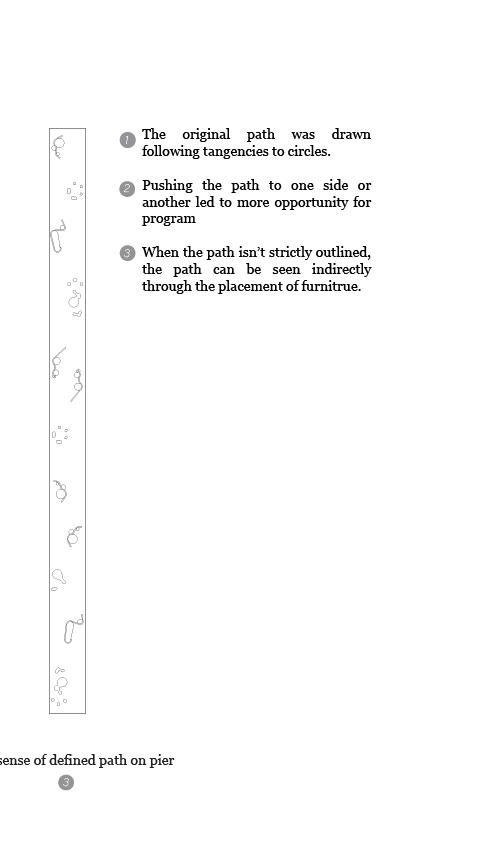
Furniture and pathways follow a geometric logic, with circular seating divided by tangent lines to create flexibility for different-sized gatherings or individual use. The design also contrasts open, bright outdoor spaces with the enclosed, immersive interior of the circular hub, which extends below the waterline to provide underwater views of the existing pier’s remnants. By addressing programmatic needs and enhancing connectivity, the project creates a dynamic space that benefits both Rio Marina and the island as a whole.
Narrative Drawing of Macchia
Pier Elevation
Diagram of Macchia to Pier Design
Interior Perspective of Student Hub
Student Hub Section Perspective
Geometric Logic of Pier Design
PIXELATED
Syracuse, NY
Professor Joseph Godlewski, Spring 2022
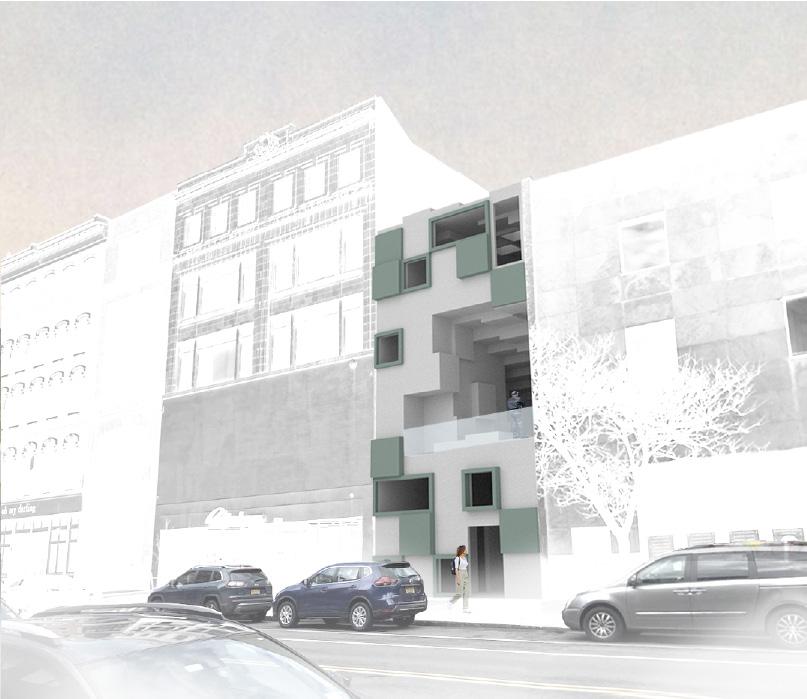
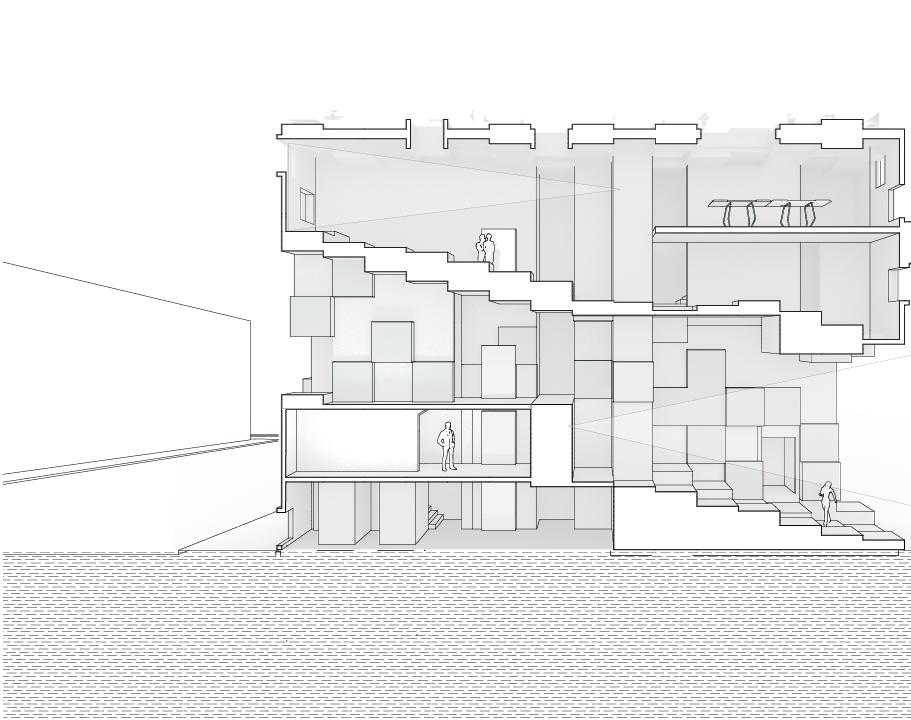
Pixelated bridges the world of the artist and the consumer through digital art, creating a dynamic interplay between private creation and public consumption. The design is anchored by a bottom-heavy structure that houses administrative functions, ensuring the smooth operation of the space. Above this, the upper volume is dedicated to artist studios, providing secluded areas for the creative process. These two dense volumes are connected by a transitional space, where people are invited to experience and engage with the artist’s work in a vibrant public environment.
What sets Pixelated apart is its ability to extend the reach of the artwork beyond the confines of the structure. Digital art is projected into an adjacent alley, turning it into an open-air gallery and inviting passersby to become part of the experience. This creates a ripple effect, blending the boundaries between the building and the broader public space, making art accessible to a larger audience.
This interplay highlights a deliberate contrast between the private and public realms of art. While the studios are enclosed, fostering the introspection and focus necessary for creation, the consumption of the work takes place in open, communal spaces. The design emphasizes the journey of art—from the intimate, hidden labor of the creator to its final, shared expression with the world. By celebrating this duality, Pixelated offers a space that honors both the artistry behind creation and the communal joy of experiencing it.
Perspective of Building in Site
Section Perspective
SMITH CONNECTION
Syracuse, NY
Professors Katherine Hogan and Vincent Petrarca, Fall 2024
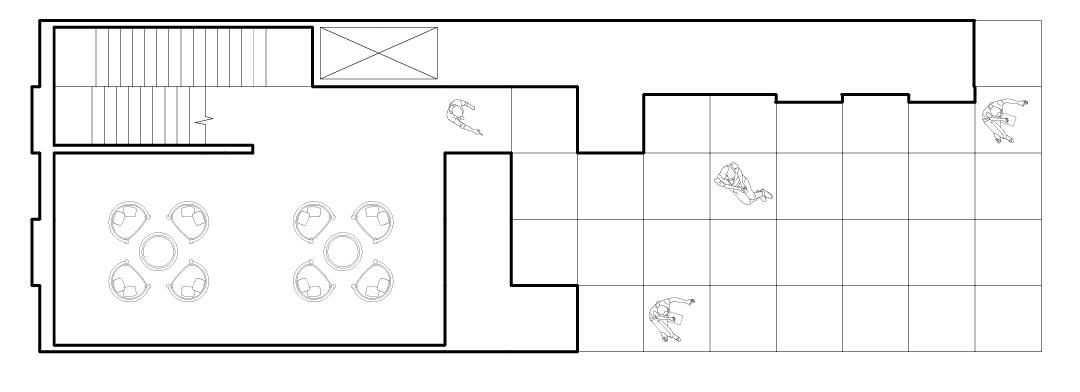
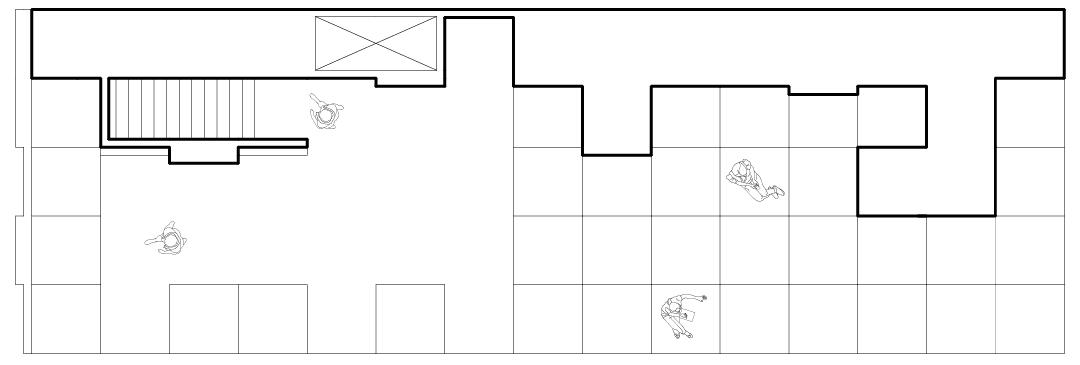
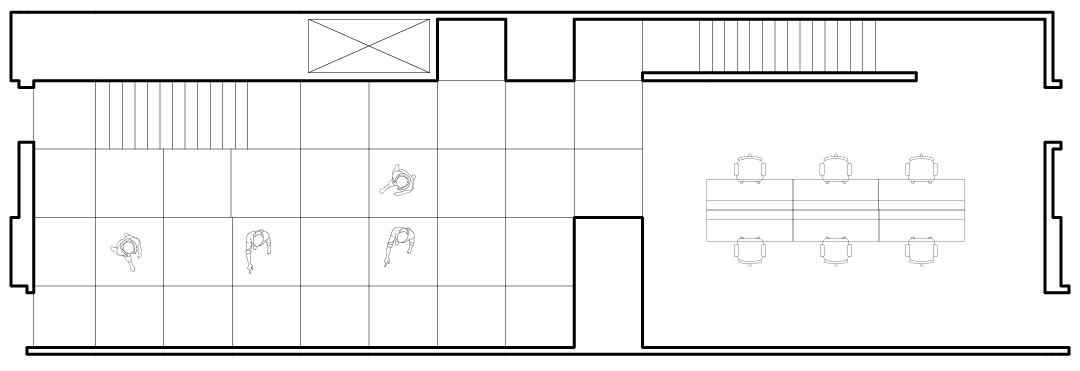
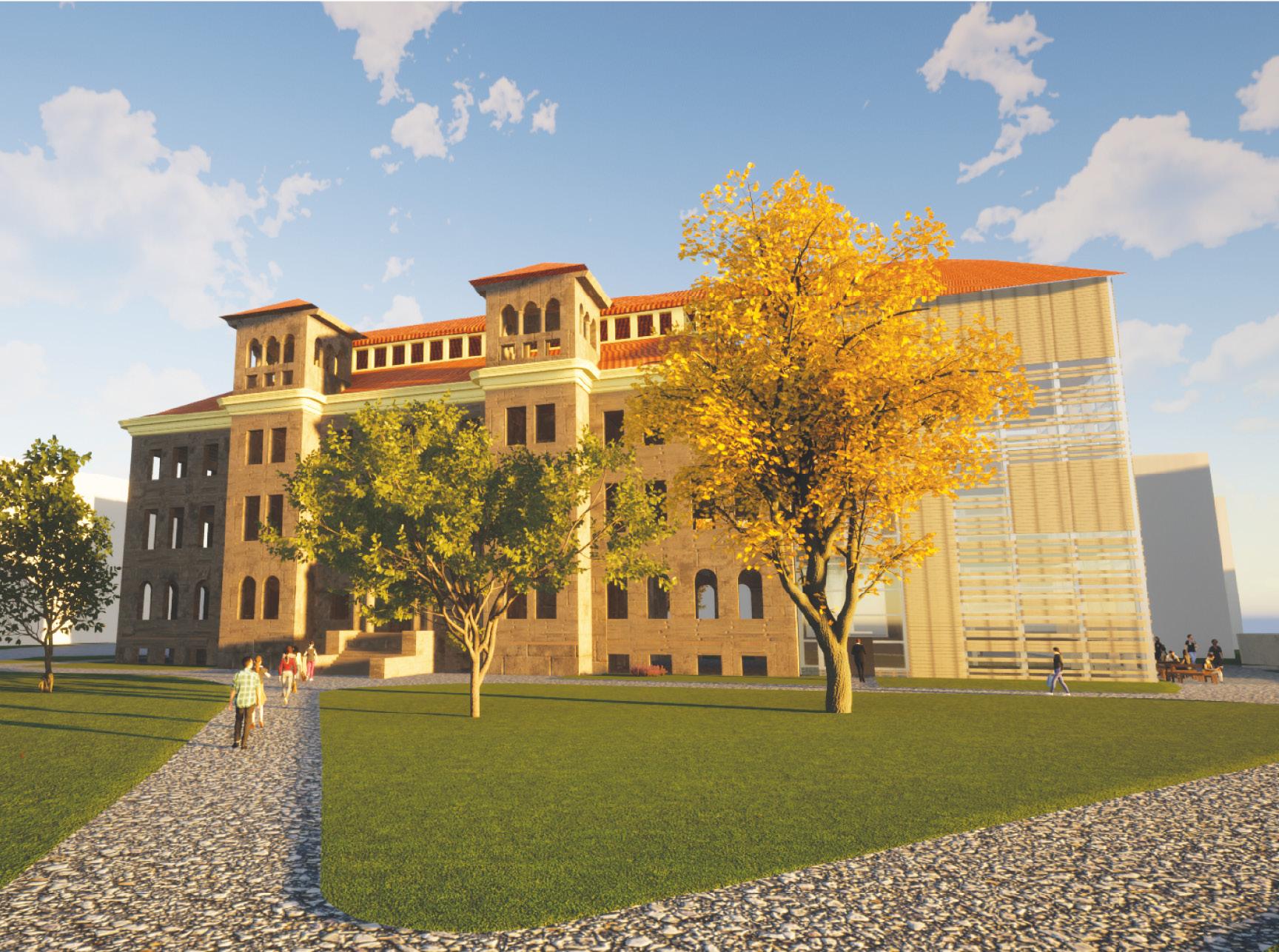
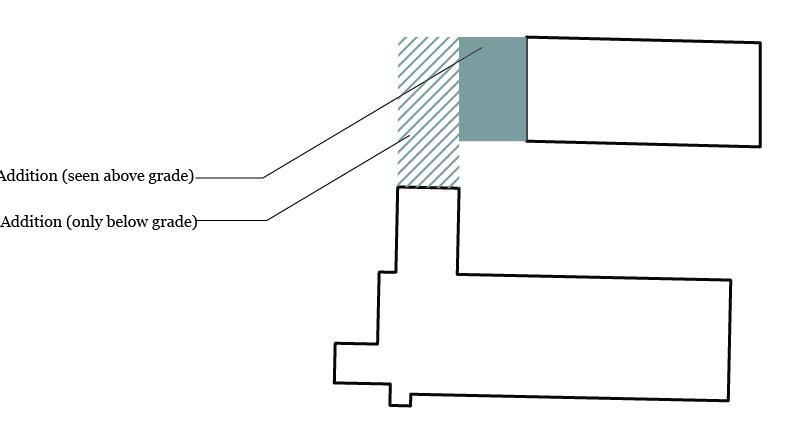
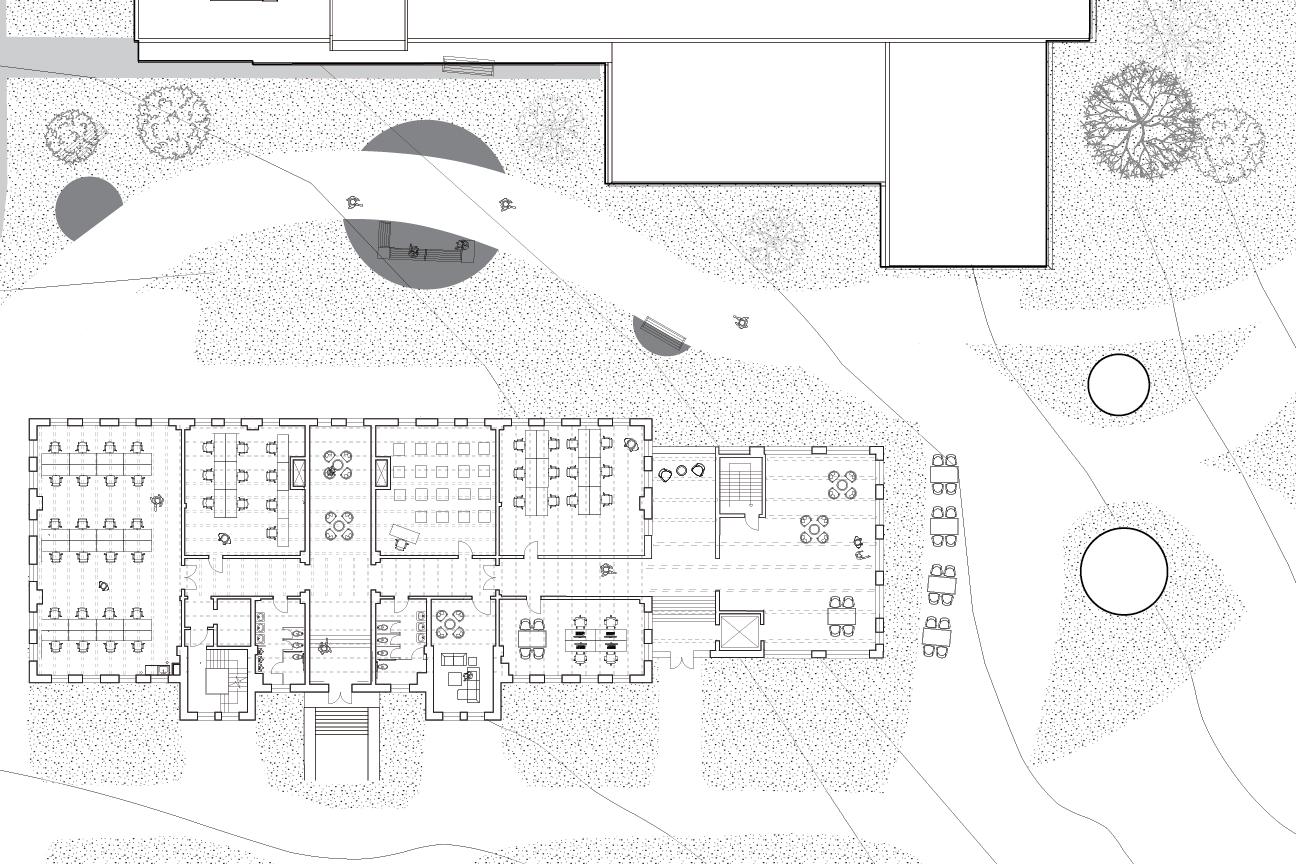
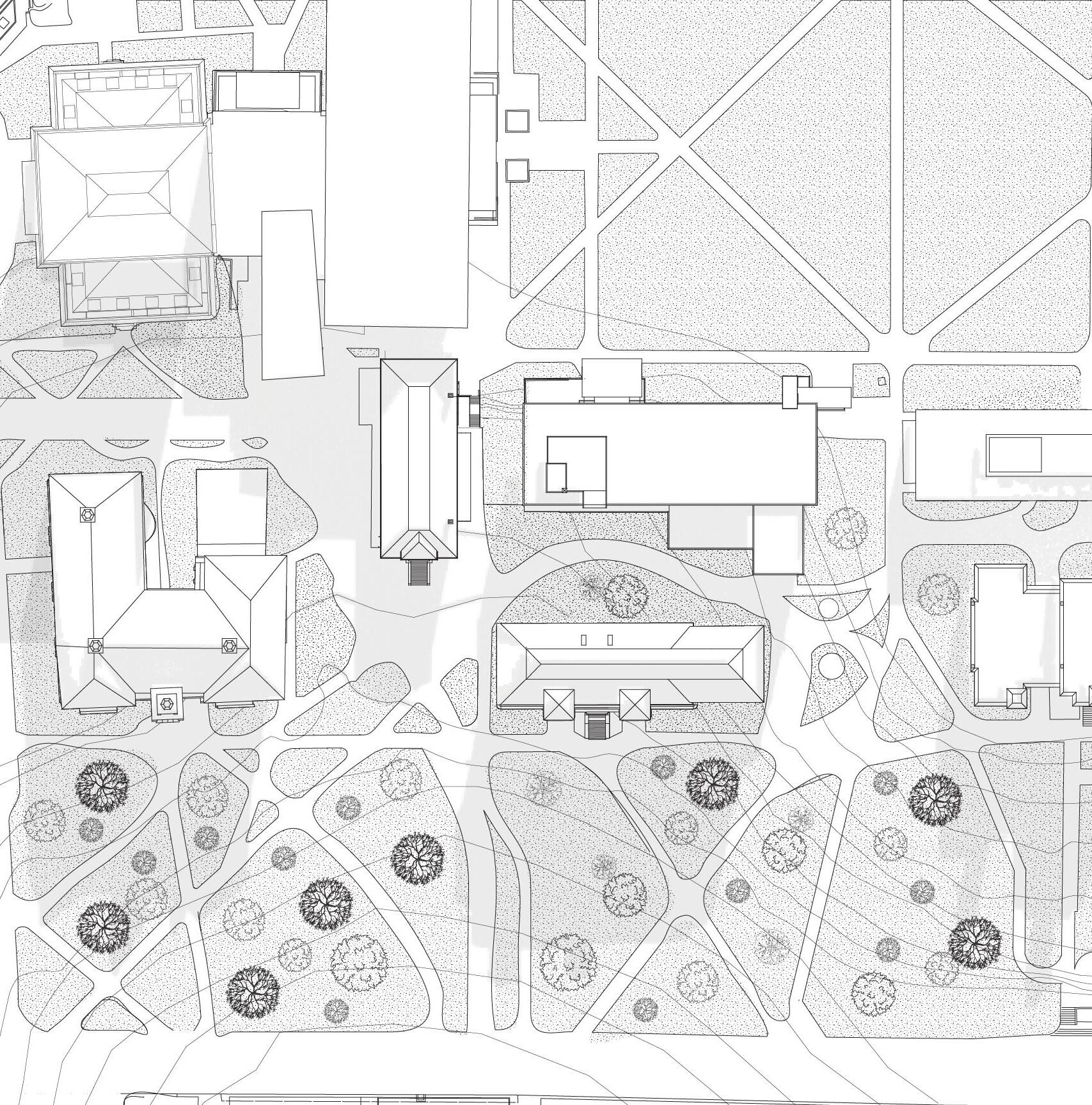
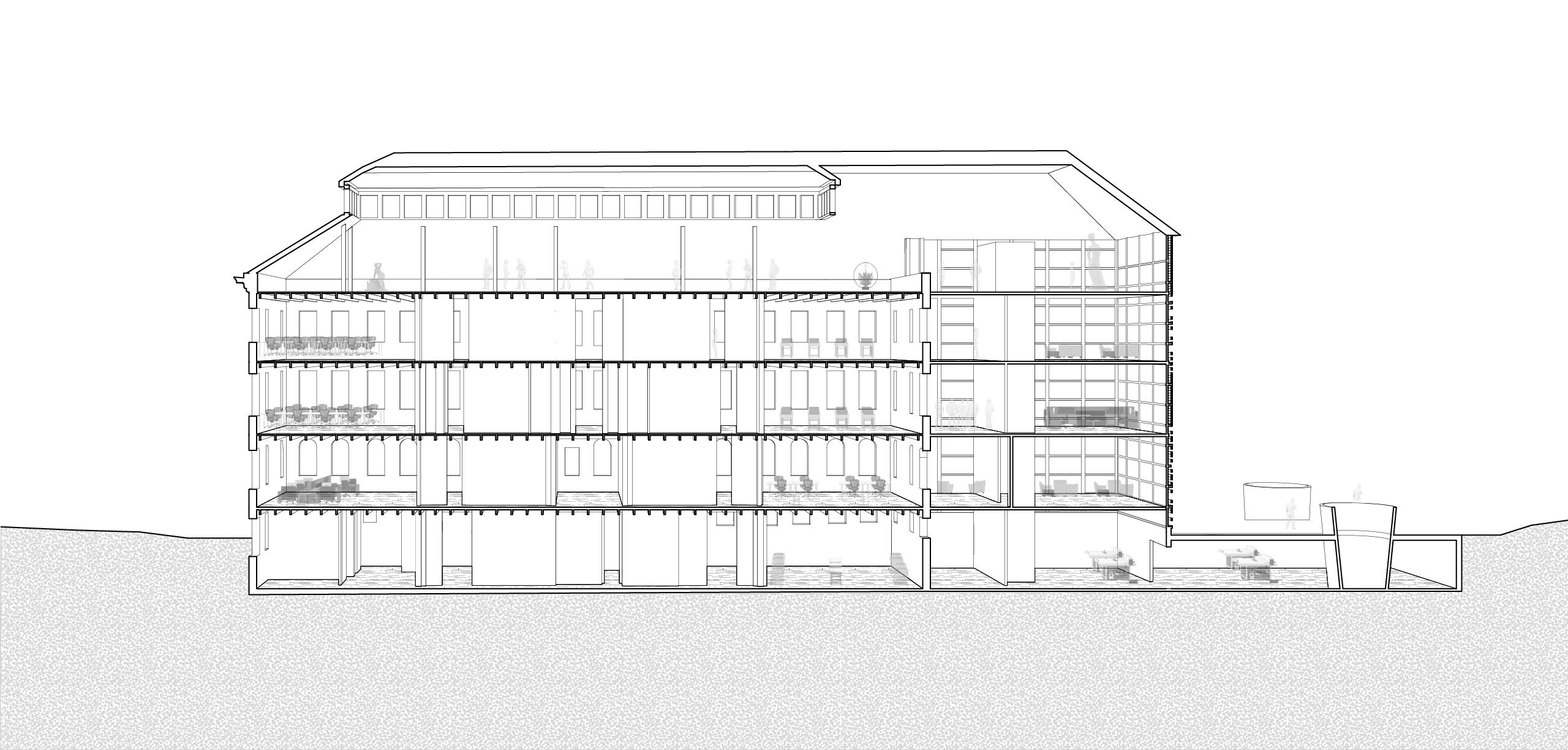
Built in 1902, Smith Hall is a historic building on Syracuse University’s campus, currently housing parts of the Visual and Performing Arts (VPA) programs, the School of Architecture, and general backfill spaces. This proposed addition transforms Smith Hall into a hub for interdisciplinary collaboration, connecting the VPA, the School of Architecture, and the iSchool. By extending the building underground and redesigning the surrounding landscape, the project creates a vibrant mini-campus that encourages interaction between these programs while enhancing the functionality of Smith Hall.
Underground, the addition introduces maker spaces tailored for cross-disciplinary collaboration. These spaces are integrated into the site through a new landscape, which allows students to traverse the campus while engaging with the creative activity below. Skylights embedded in the terrain bring natural light into the underground levels and provide views into the maker spaces, blending interior and exterior elements to highlight the creative process. Above ground, new studio and pin-up spaces expand the building’s capacity, fostering opportunities for interaction and collaboration.
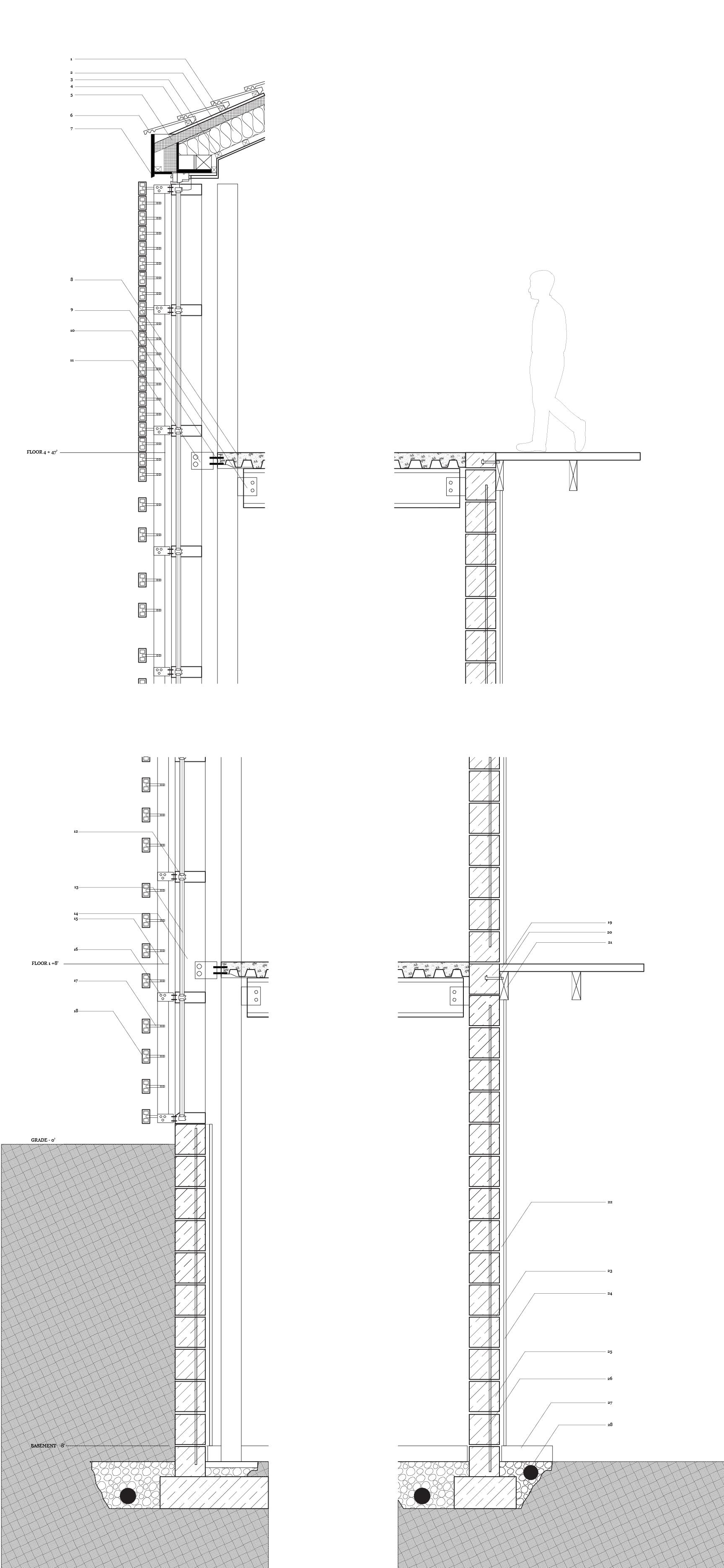
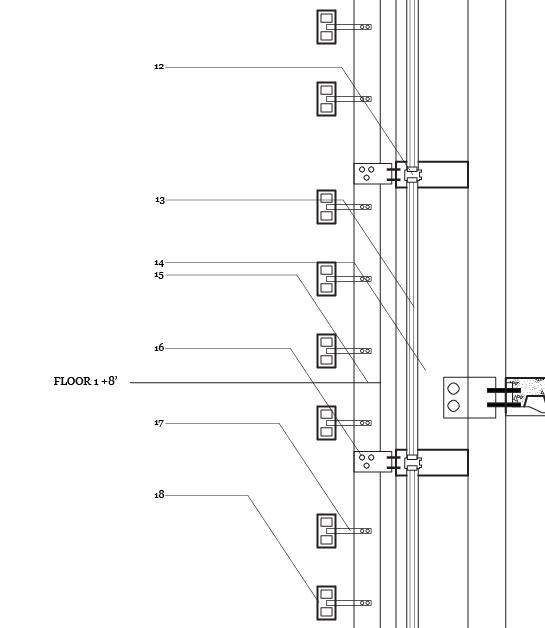
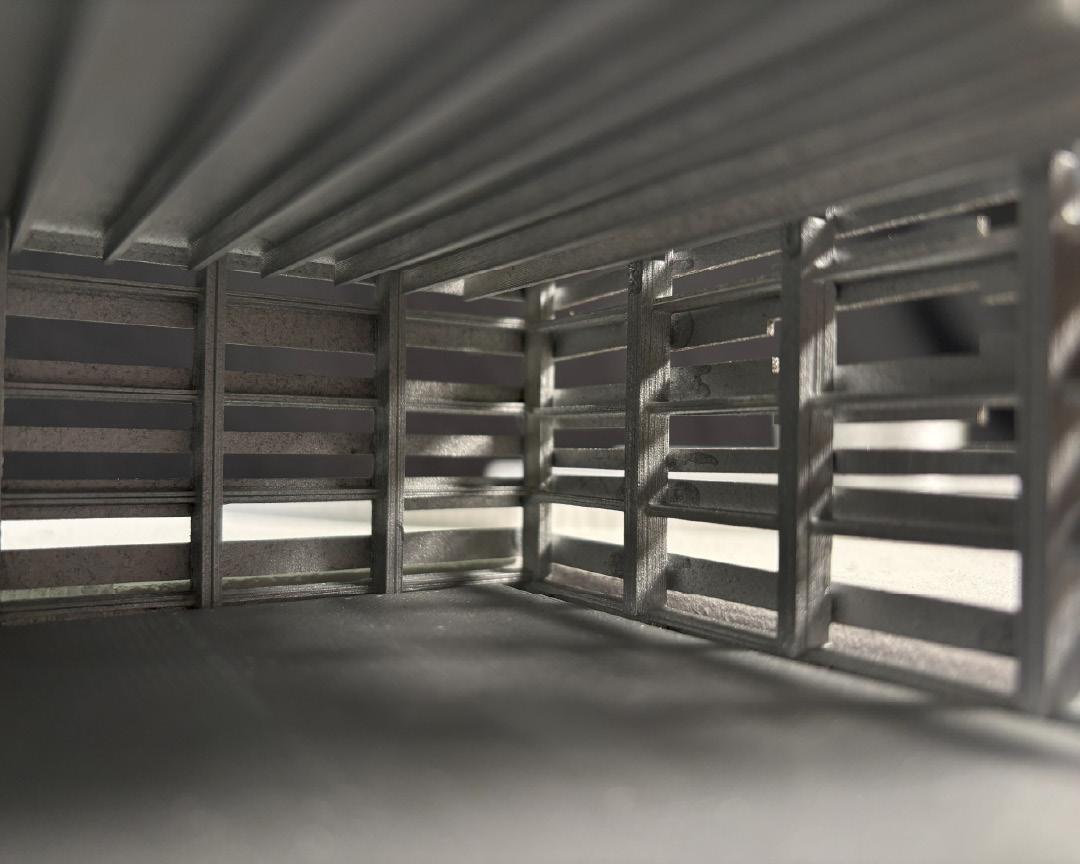
The addition also addresses longstanding functional issues within Smith Hall. A new elevator and stairwell improve circulation and accessibility, modernizing the historic building to better serve its users. The façade of the addition establishes a dialogue between old and new with a terracotta rainscreen that nods to the original stone façade. The terracotta louvers are patterned to control natural light, with varying densities tailored to the needs of each program, defining the addition as a distinct yet harmonious complement to the historic structure.
By linking disciplines and creating spaces that celebrate collaboration, the Smith Hall addition transforms the building into an interdisciplinary hub that supports Syracuse University’s commitment to innovation, creativity, and education.
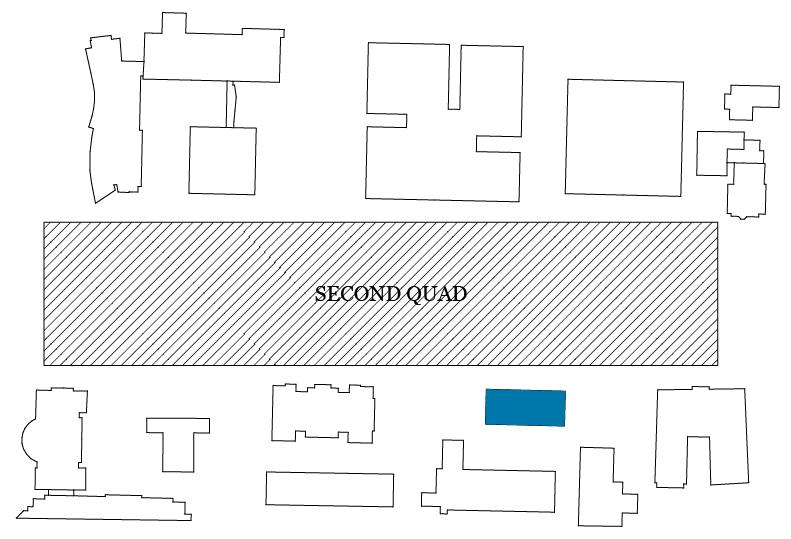
Diagram of Addition Building in Relation to Second Quad Entry
Interior Model Photo
SYRACUSE MODULAR HOUSING
Syracuse, NY
Professor Brian Longsway,
Fall 2023
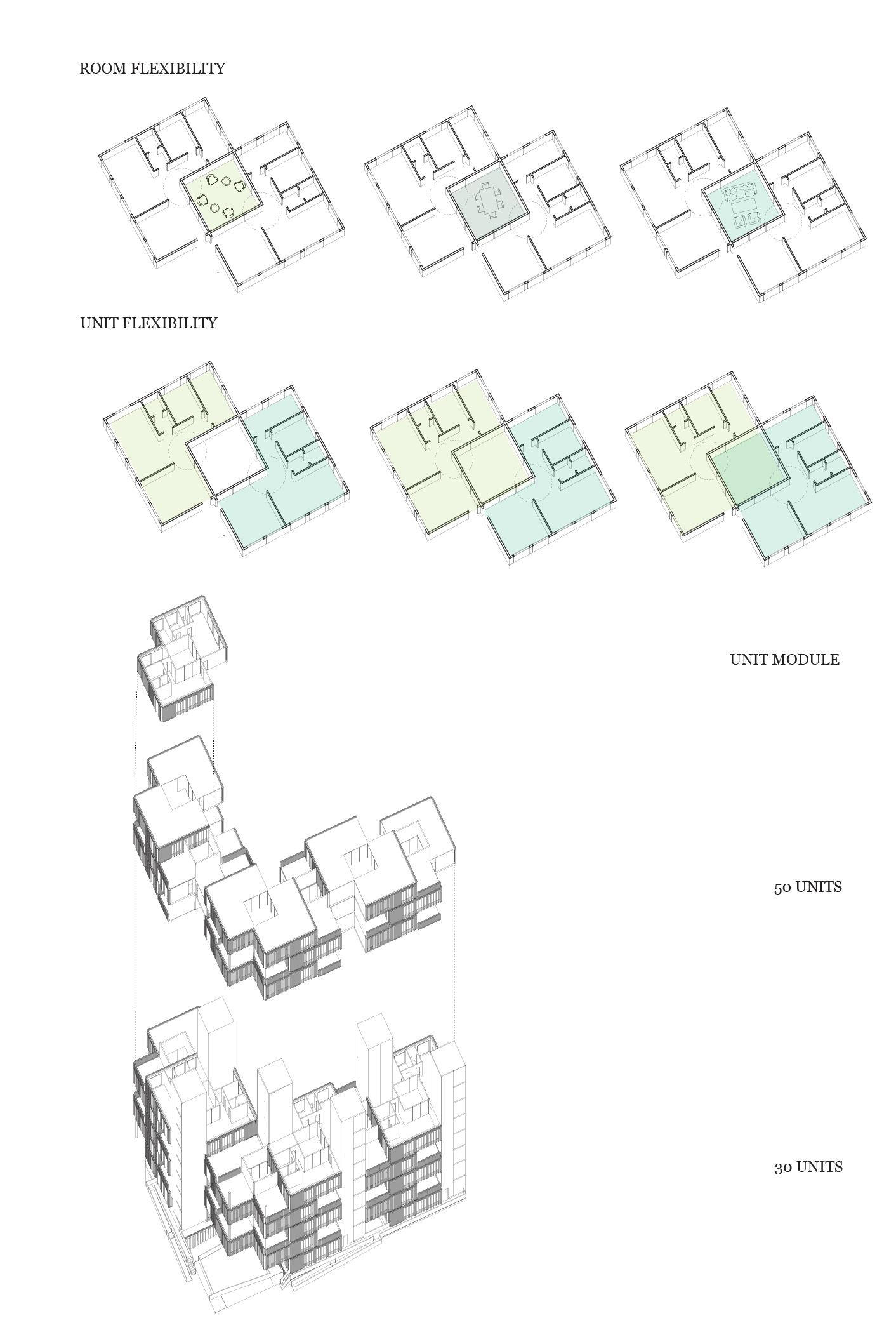
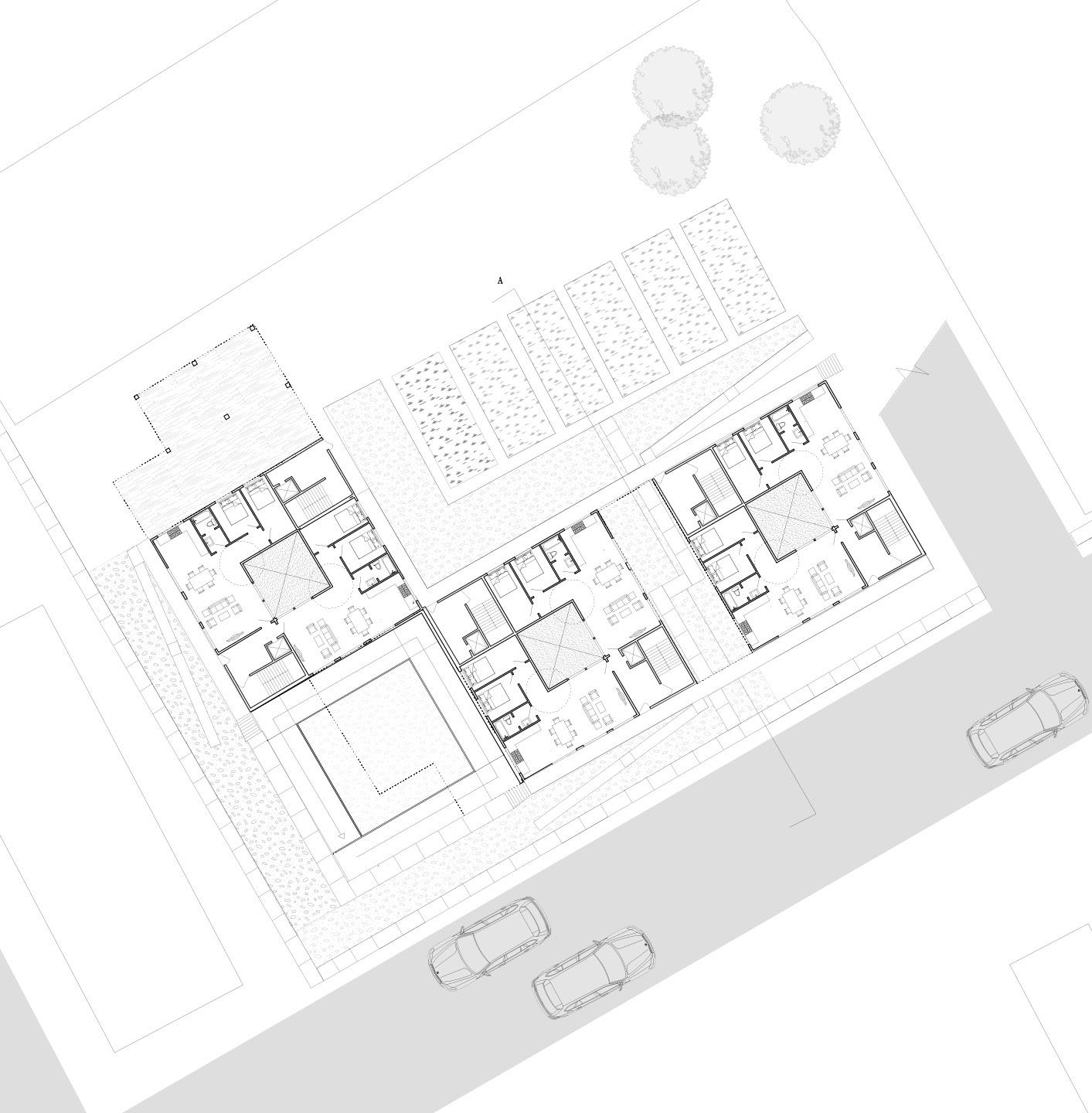
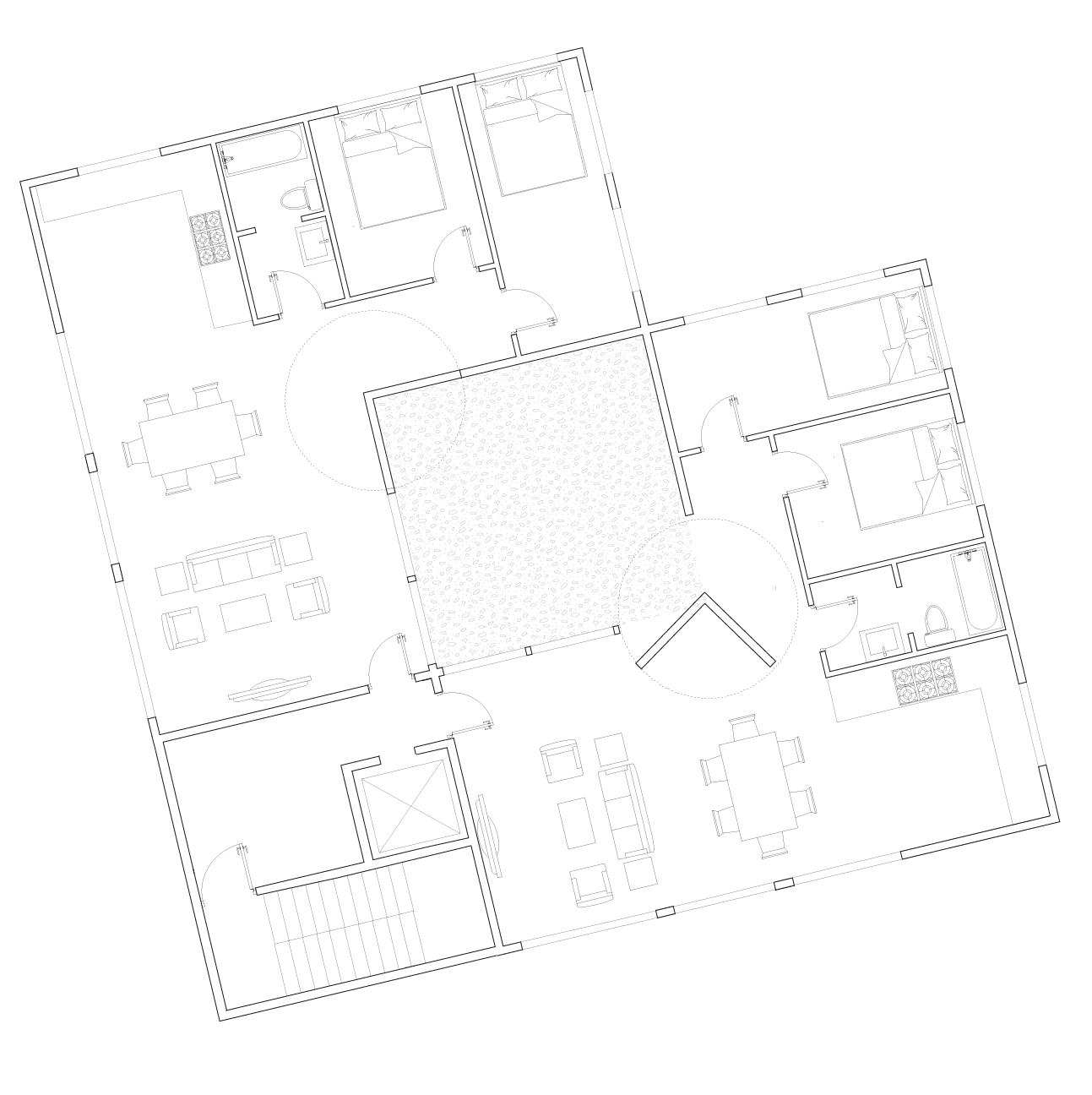
This semester’s focus was on developing a design that emphasizes flexibility and adaptability while adhering to code, zoning, and Living Building Challenge (LBC) requirements. My approach began with the creation of a module consisting of two units connected by a shared central courtyard. This courtyard became the heart of the design, fostering interaction and promoting a connection to nature. The module’s flexibility was achieved through rotating walls at the corners of the courtyard, allowing the space to be configured dynamically. These walls could open the courtyard to one, both, or neither of the adjoining units, offering a range of possibilities for use and privacy.
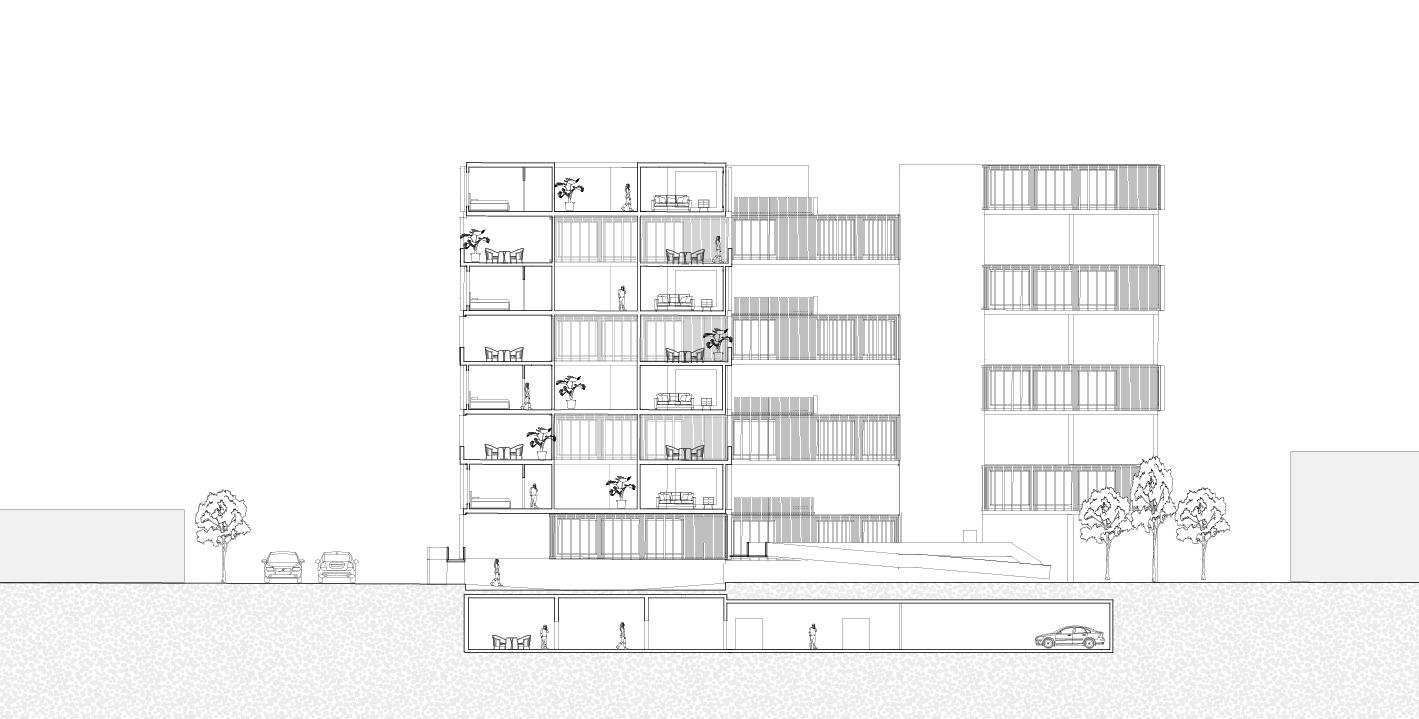
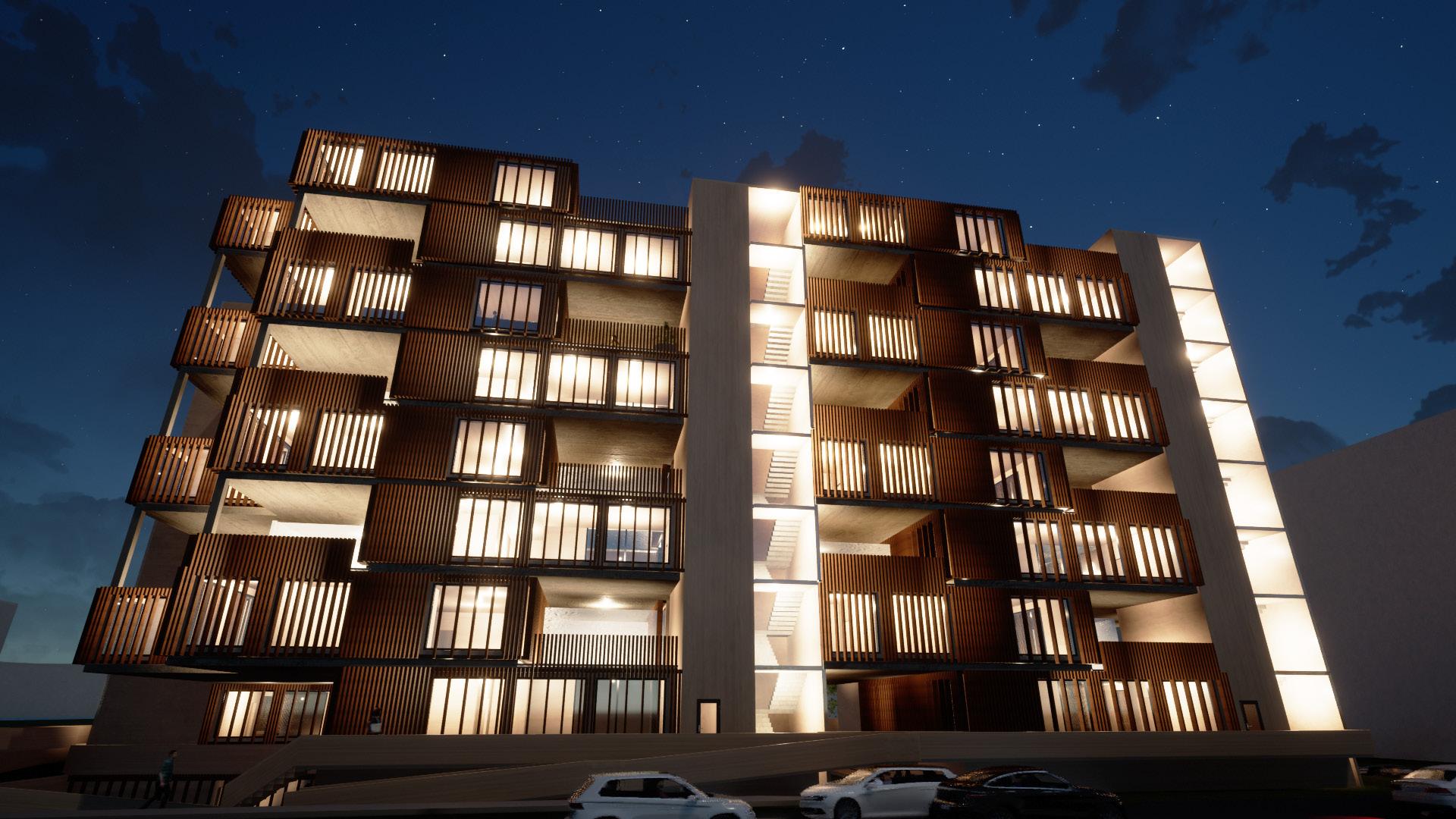
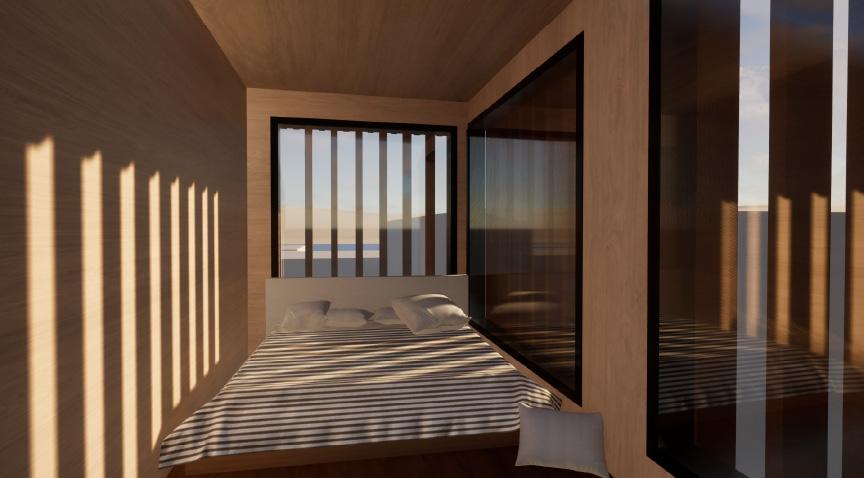
As I developed the design further, I explored how this modular system could be scaled and adapted across different levels. When stacking the modules, I ensured that only the extreme left and right triads of the units overlapped. This strategy allowed the central courtyard to transform into a double-height space, enriching the spatial experience and maximizing access to natural light. The staggered stacking also created opportunities for balconies off each unit, strengthening the connection between residents and the outdoors. This integration of nature into the design became a key principle, aligning with LBC requirements and enhancing the living experience.
Flexibility was not limited to the courtyard but extended to the unit, room, and building scales. Early iterations tested different configurations of rooms within the units and their relationship to the central courtyard. This iterative process ensured that the module could adapt to varying site conditions and programmatic requirements. By prioritizing modularity and scalability, I developed a system that could be deployed in diverse contexts while maintaining design integrity and functionality.
The modular design also allowed for adaptability in meeting rentable square footage requirements. Each module could be repeated and adjusted as needed, making the system highly efficient for various project scales. This repeatable module provided not only architectural flexibility but also economic feasibility, as it streamlined construction and ensured compatibility with different sites and zoning constraints.
Ultimately, the design strikes a balance between adaptability and standardization, ensuring that it can meet the evolving needs of residents and communities. By focusing on modularity, connection to nature, and thoughtful integration of flexible elements, this project embodies a sustainable and innovative approach to housing design. The result is a system that can flex and adapt while fostering a sense of community and meeting rigorous regulatory and sustainability standards.