How did you find your way to the Seattle Art Museum?
I first came to SAM doing my own thing—more like contract work—and at that time it wasn’t totally the right fit for me to be there full-time. Not long after, someone went on maternity leave. She was the lead designer and had been there a long time, and she didn’t come back. Later they offered me her job, and I was actually pregnant then. I remember thinking, “It would be great to have health insurance,” and it was the lead role, and by that point I’d been there long enough to know I liked it. So I took the job and said, “I promise I’ll come back,” when I went on maternity leave. The person I originally filled in for actually filled in for me both times I went on leave, which worked out really well.
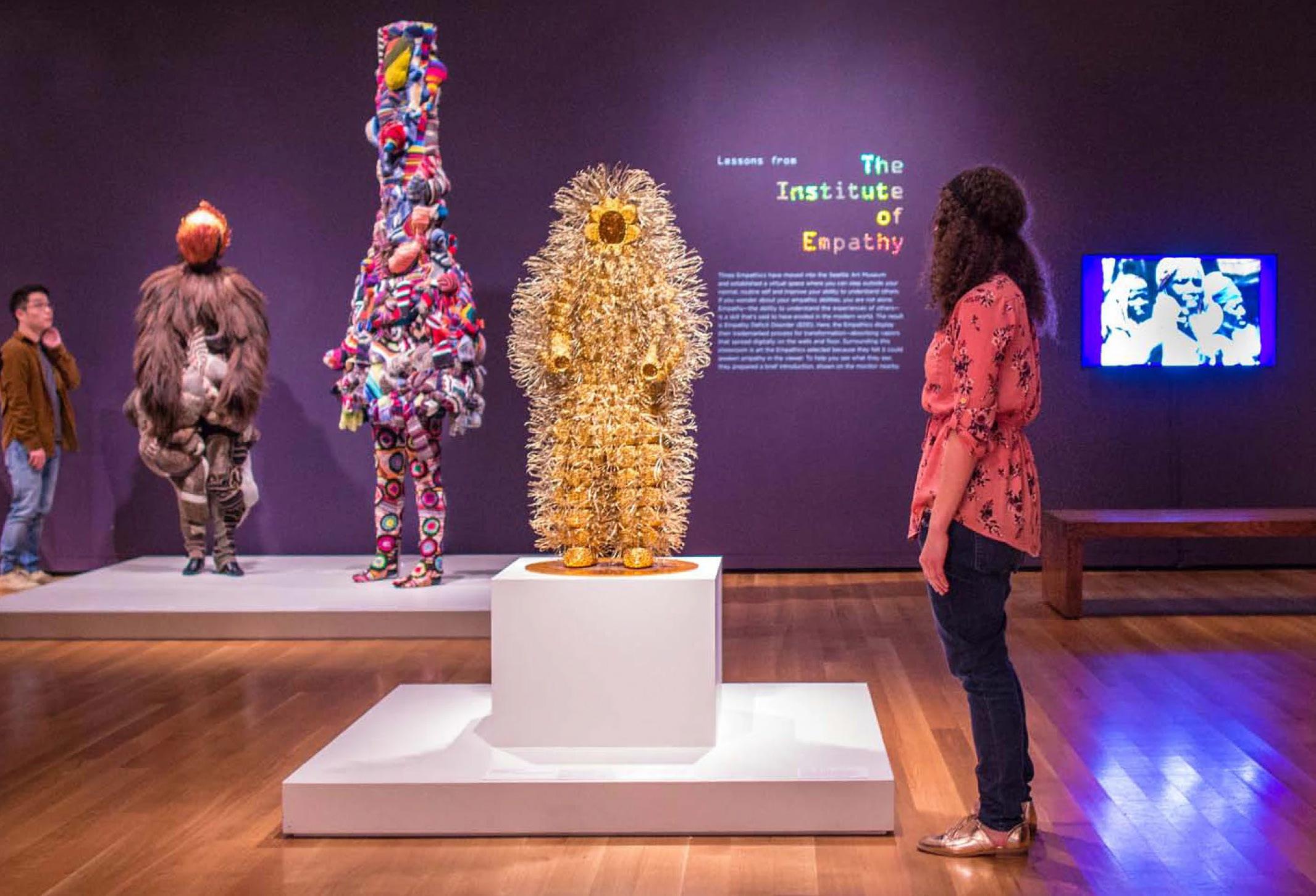
Working at SAM was a different experience—being inhouse. I’d been at a large agency and a tiny agency, and then suddenly I was in-house at an art museum. I really enjoyed the work. I felt strongly about the mission and was inspired by the art. It kind of felt like you were your own little agency. All the different departments at the museum were our clients, and we had projects across the board, but everything still lived under the same brand.
There are three locations—the Asian Art Museum, the main museum downtown, and the Olympic Sculpture Park—and there’s a lot of fun programming at each. I’m still involved in a small way. I still work on the member magazine, which I love because it’s a longer-format publication, and it keeps me connected to what’s coming up and the cool things the museum is doing. I ended up working with SAM for about seven years.
As a museum designer, what did an ordinary day at SAM look like for you?
Every day I’d spend time designing on the computer, but I’d also be in meetings with the creative team or other departments to kick off projects, review work, and get feedback. I might lead a brainstorm with the other designers, select artwork and figure out what restrictions or permissions applied to it (which is more complicated than people think), or select and direct photography.
I led design critiques, gave presentations, and oversaw the design intern. Some days I’d be in the galleries or at the other locations planning things; other days I’d be meeting with vendors or going on a press check. And woven through all of that, I’d attend curator tours, press previews, or other SAM events.
Were there particular SAM projects that felt especially memorable or meaningful to you?
Although I focused mainly on print and brand, my role expanded into managing the team and supporting digital, video, and social. I also worked on wayfinding and exhibition graphics.
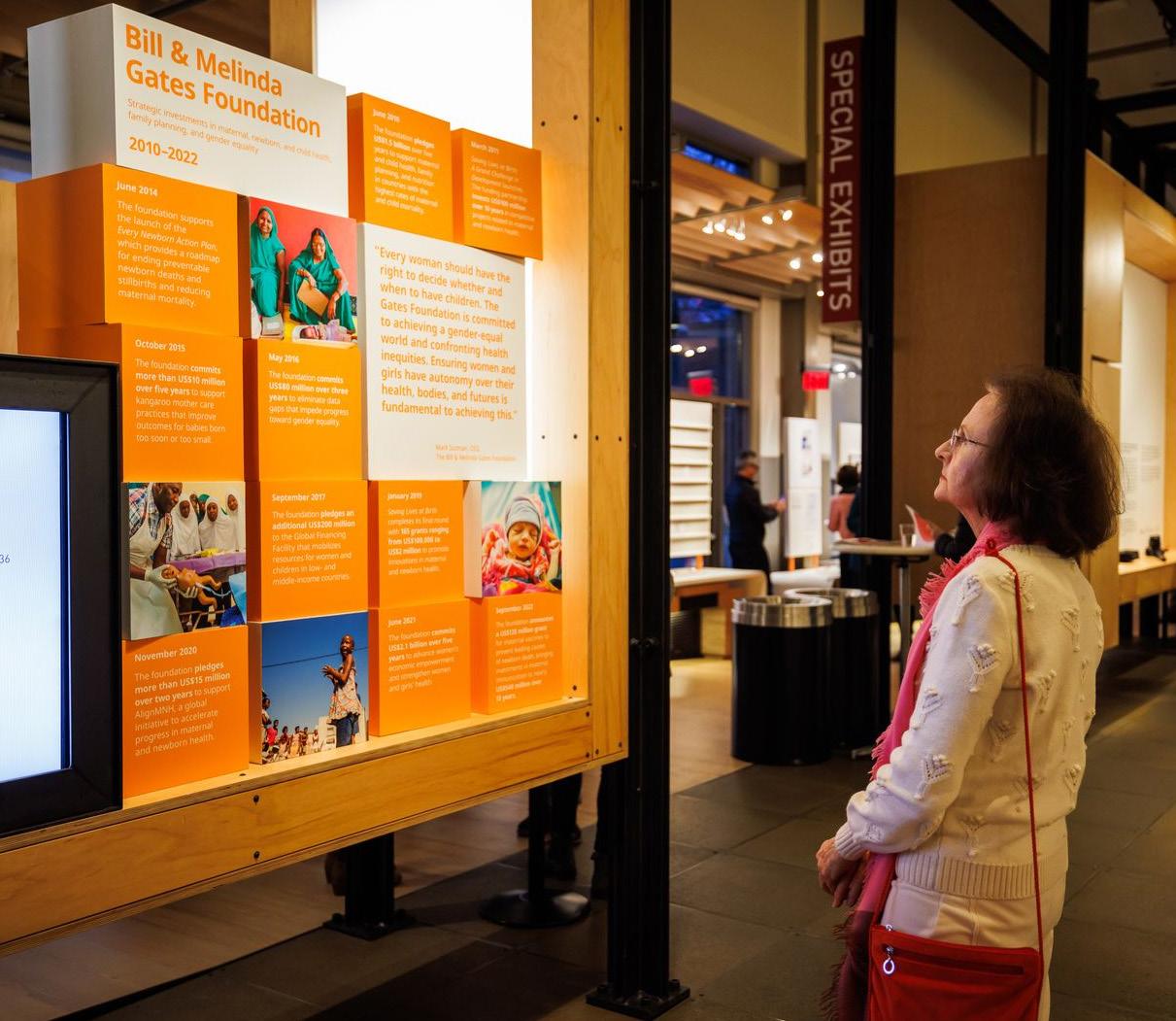
A project that stands out is the exhibition Disguise. Instead of doing the usual text panels, they said they wanted something that looked and felt different. So we collaborated with them to come up with ideas. Because it was Disguise, we did large photos of the artists with quotes printed on fabric that people could lift up and see through a bit. We also created quote pieces throughout the space using translucent papers and different fonts to represent different voices. We got to play around a lot, and it was really fun. It went well, and after that they wanted to do more things like that.
Beyond exhibitions, how did your work at SAM connect to the broader public and community?
For each big special exhibition, our team would create a full campaign. The goal was always to get people excited and bring them into the museum, since those shows are huge draws and really important for revenue. We were always thinking about how to appeal to the public.
They don’t do as much of it anymore, but we made a lot of print materials that would go out into the community—postcards, posters in coffee shops, things like that. And another project I loved was working with the development department. For big fundraising events, we had a little more room to experiment—different print techniques, special papers, different inks—just trying to make the materials feel unique and special so that when someone opened it, they’d think, “Oh, this is really fun, this feels special, I want to go to this event and support the museum.”
SAM also had a ton of events and programs for the education department. Remix was one of them—a latenight party with music, performers in the galleries, art activities, drinks. It was really fun. I love how engaged SAM is with the community and how focused they are on that. And then there were the big summer programs— free events at the Sculpture Park. There was always a lot going on, and it was fun because even though everything lived within one brand, we got to do so many different kinds of projects.
STAY CURIOUS AND DON’T HESITATE TO ASK FOR HELP. REACH OUT, FOLLOW UP, AND LEARN
FROM WHATEVER DOESN’T GO AS PLANNED. “ “
DESIGN-FOR-GOOD COMMUNTIES
How did you begin building community around social impact design once you returned to Seattle?
When I came back from New York, I knew I wanted to keep being involved with AIGA. In New York, I wasn’t on the board, but I volunteered at events and conferences, and I mentored a high school student for three years. So when I got back to Seattle, I thought, okay, I’ll just see what’s happening here and go to some events so I could reintroduce myself to the Seattle design community.
It was spring, and the event they happened to be hosting was the open board meeting, which is really meant to recruit new people to get involved. And I had just moved back—I didn’t know where I’d be working yet, I didn’t know much about the city, and I definitely didn’t feel ready to be on the board. But I had ideas about things I wanted to do and ways I wanted to be involved. They ended up convincing me to become programming director. It was a great way to get thrown right in—figuring out how to put on events, working with the board, and meeting a lot of people. It was really fun.
How did AIGA’s Design for Good and the ChangeMaker Series emerge from that involvement?
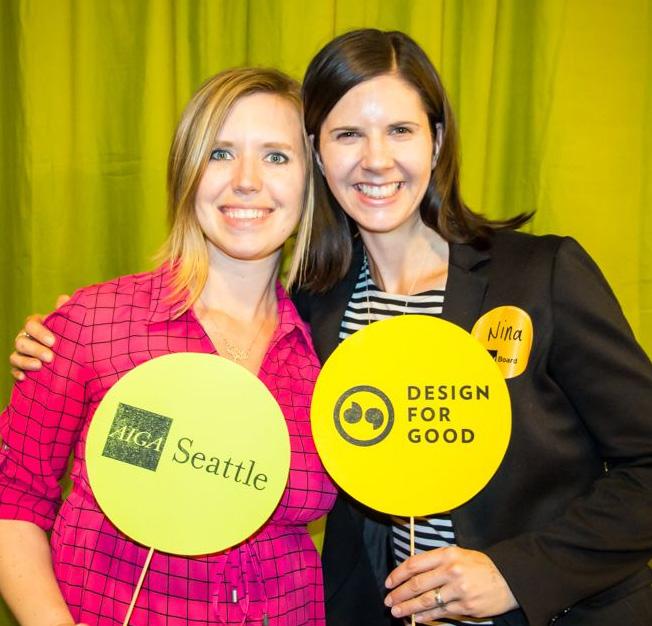
AIGA National had a program called Design for Good, and I remember thinking, that’s exactly the kind of work I want to be doing. Seattle didn’t have anything like that yet. So when they began talking about starting it here, I said I wanted to get involved again, and I came back onto the board in a different role. That’s when we started building what became the ChangeMaker Series. The first thing we did was ask, okay, what does “design for good” actually mean for this community? We organized a panel, and then we put out a survey to learn what local designers wanted—what kinds of events, topics, or opportunities they were most interested in.
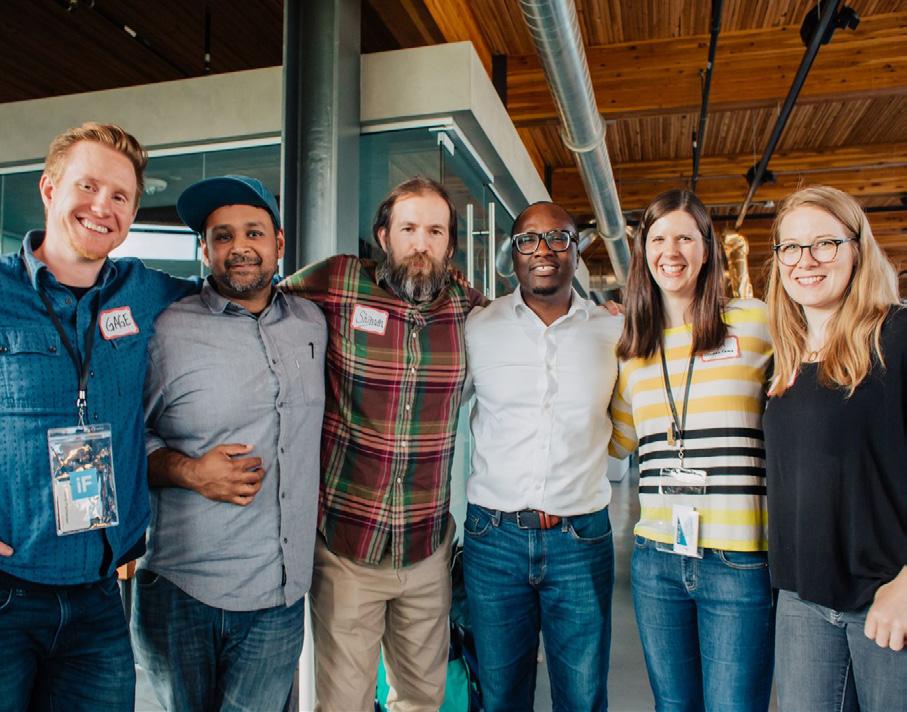
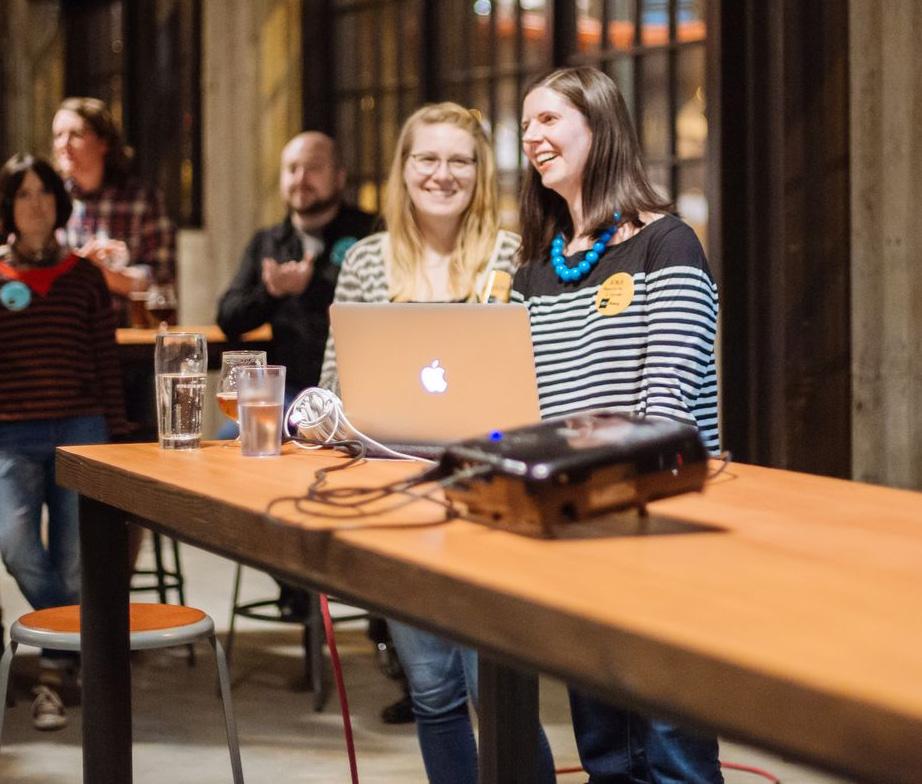
From that feedback, we created ChangeMakers. People would apply, and every year had a different theme. We had a committee that reached out to nonprofits working in that space and asked if they wanted to participate— basically pairing them with designers and interdisciplinary project teams willing to do pro bono work. Each nonprofit served as the client. Teams included designers, strategists, project managers, writers—really a mix of skills.
The teams worked for about three months, meeting with clients, doing research, and delivering whatever outcome had been identified. At the end, we held a showcase where everyone presented their work. Some things were really successful, and in other ways it was a big learning experience. I was involved for about three years, and the program continued for at least two more.
Were there particular SAM projects that felt especially memorable or meaningful to you?
I learned so much—human-centered design, sustainability, co-design, transition design, design systems, circular design, and the idea of designing with people, not for them. When you’re working on big or complex problems, you have to recognize that designers don’t have all the answers and you can’t work in a vacuum. You have to be open to having your assumptions challenged. You have to keep asking questions. And you need other people around you who can broaden your perspective. The people who will be impacted have to be involved in the process. There are definitely things design can change and things it can’t, but it can always be part of the larger process that leads to change.
For students who love print and museums but are entering a very digital industry, what do you want them to understand about realistic career paths?
Print and spatial work aren’t disappearing, but it’s rare to find roles focused solely on them. You’ll need to be well-rounded—comfortable learning new tools, adapting to digital work, and continuing your education long after school.
In-house roles, including SAM internships, can be strong pathways, especially since there are fewer traditional design firms now. Contract work is also worthwhile: it pays the bills, gives real experience, and helps you understand what kinds of workplaces fit you—or don’t. Ultimately, Wcareer growth comes from the people you meet as much as the projects you take on.
If you had to leave current design students with one or two pieces of advice, what would you want them to remember?
Stay curious and don’t hesitate to ask for help. Reach out, follow up, and learn from whatever doesn’t go as planned. Many people are willing to support you if you simply ask, and even if some don’t respond, keep trying. Once you’re in a workplace, build relationships—those connections often circle back in meaningful ways. Several of my own opportunities came directly from people I’d met earlier in my career.
ONCE
YOU’RE IN
A
WORKPLACE, BUILD RELATIONSHIPS. THOSE CONNECTIONS OFTEN
CIRCLE BACK IN MEANINGFUL
WAYS.
When you begin a brand-new project now— whether it’s freelance work or a museum-related commission—what are your first steps?
I usually start with research and words—writing down themes, keywords, and early associations. From there, I make quick sketches before looking for references so the ideas stay my own. Once I have a direction, I experiment to see what holds up; sometimes the original idea works, and sometimes a new option emerges that’s more interesting.
Working independently means balancing exploration with time constraints, so I narrow down to the most promising ideas and begin refining those. And once the work goes to clients, the direction often shifts. They may choose an option you didn’t expect or ask for changes. Part of the job is knowing when to advocate for your decisions and when to adapt, since the work ultimately serves the client and their audience.
For students who care about print and spatial design—especially museums—how do you approach choosing type?
After years of practice, much of it feels intuitive. Sometimes I immediately know the typeface; other times I’m looking for a specific feeling and test options until something fits. Typography shows up early in my ideation process because it’s such a core element of how I think.
For print and spatial work, reviewing it on screen isn’t enough. You have to print pieces out, check scale, and evaluate how they read in real space. At SAM, we always made full-size plotter prints and viewed them from a distance to ensure the typography worked at its intended scale. Over time, you develop an instinct for it.
SARAH TINDELL is a Visual Communication Design student at the University of Washington. Her love for print media and exhibition deign inspired her to reach out to Nina Mettler.
24/7 DESIGN is a series of 19 interviews conducted by students in the Design 376 Typography course at the University of Washington. Each student interviewed a designer and crafted a newspaper spread to convey and highlight these thoughtful journeys.
The name 24/7 Design is inspired by both the work we do in Room 247 at the UW School of Design, as well as the stories that center around how design is all around us all the time. We hope you enjoy discovering what 24/ Design means to us.
“ “
You either have to be able to advocate for your work and argue why. If you feel really strongly that something should be a certain way, don’t be afraid to explain.