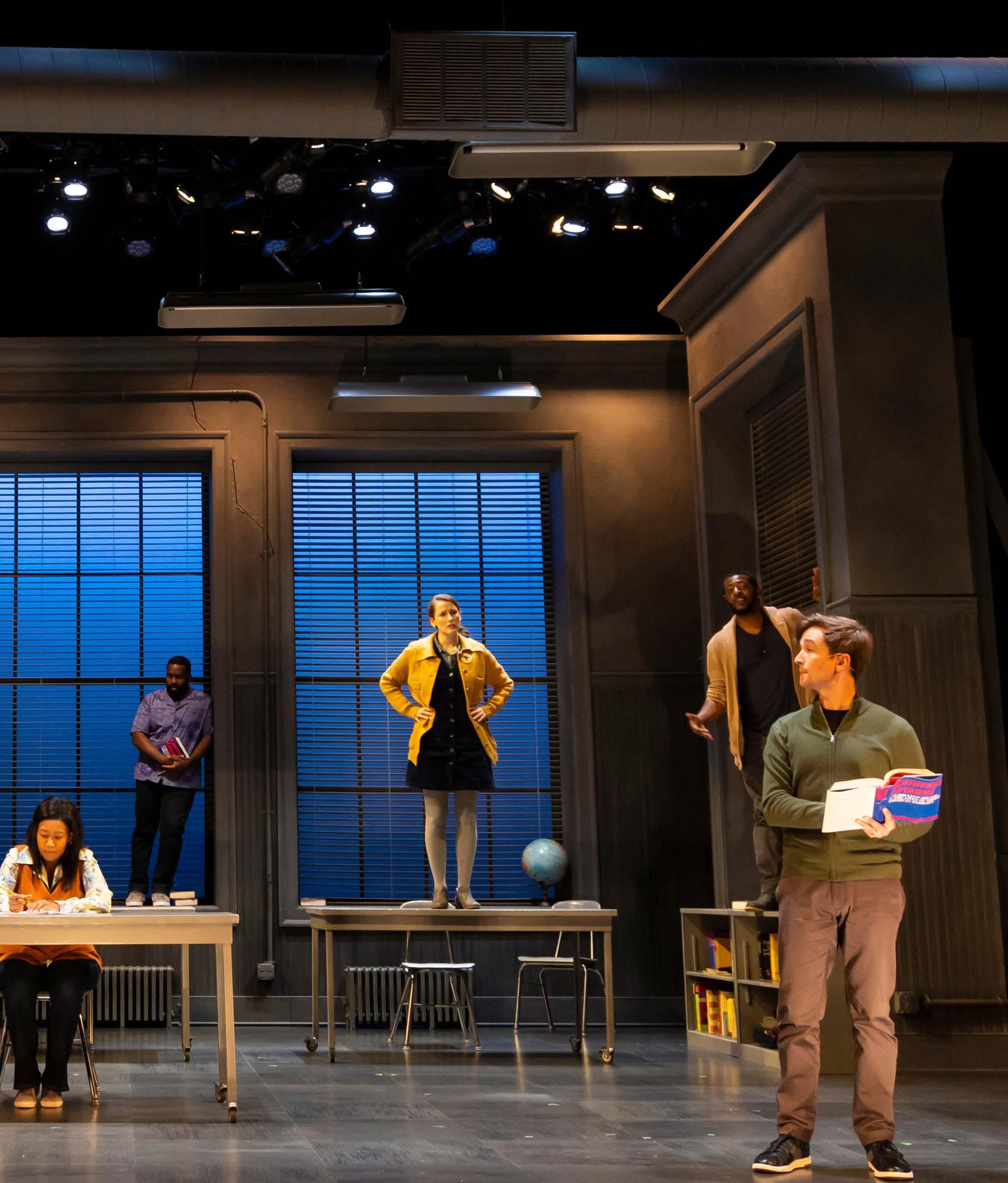
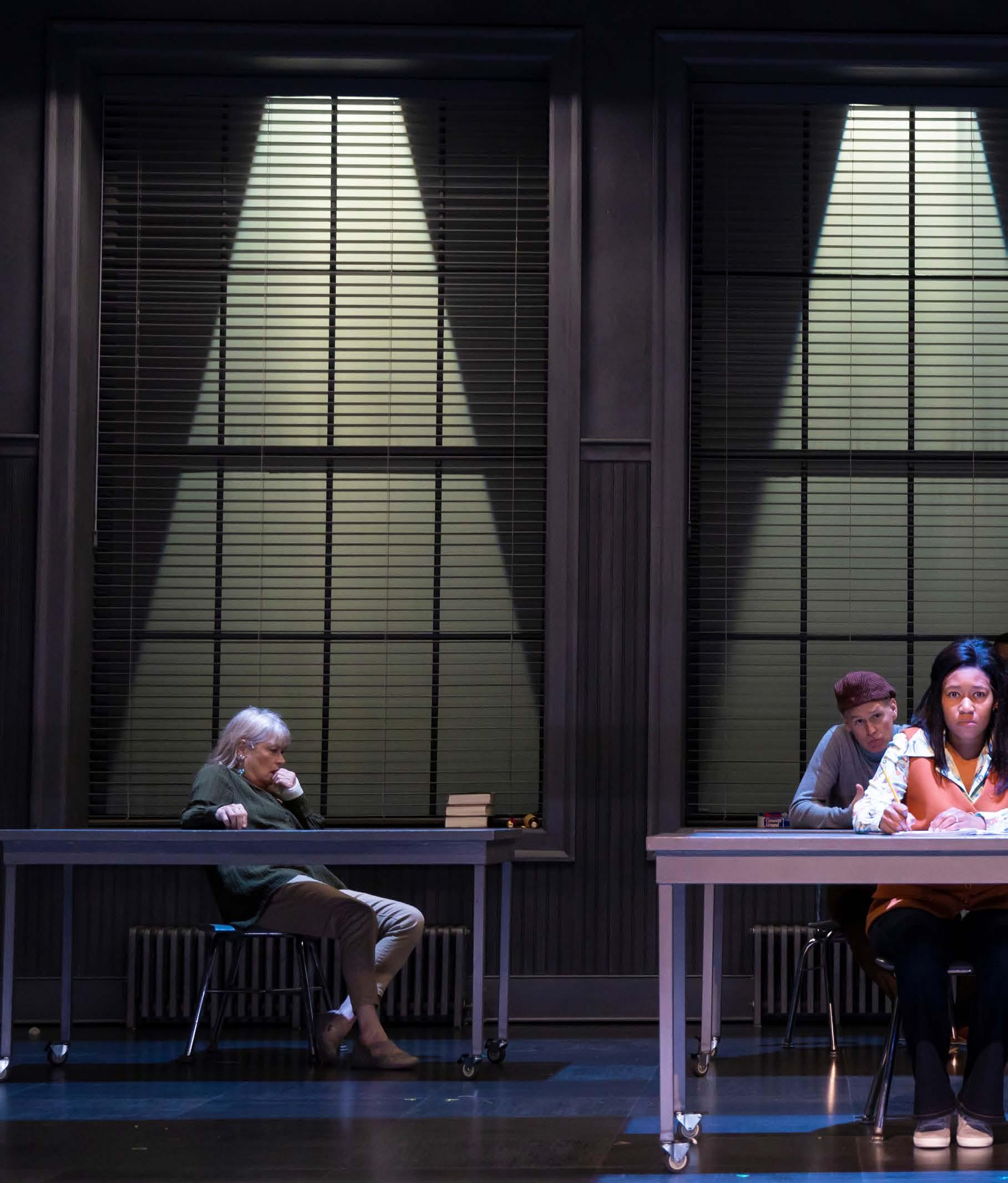
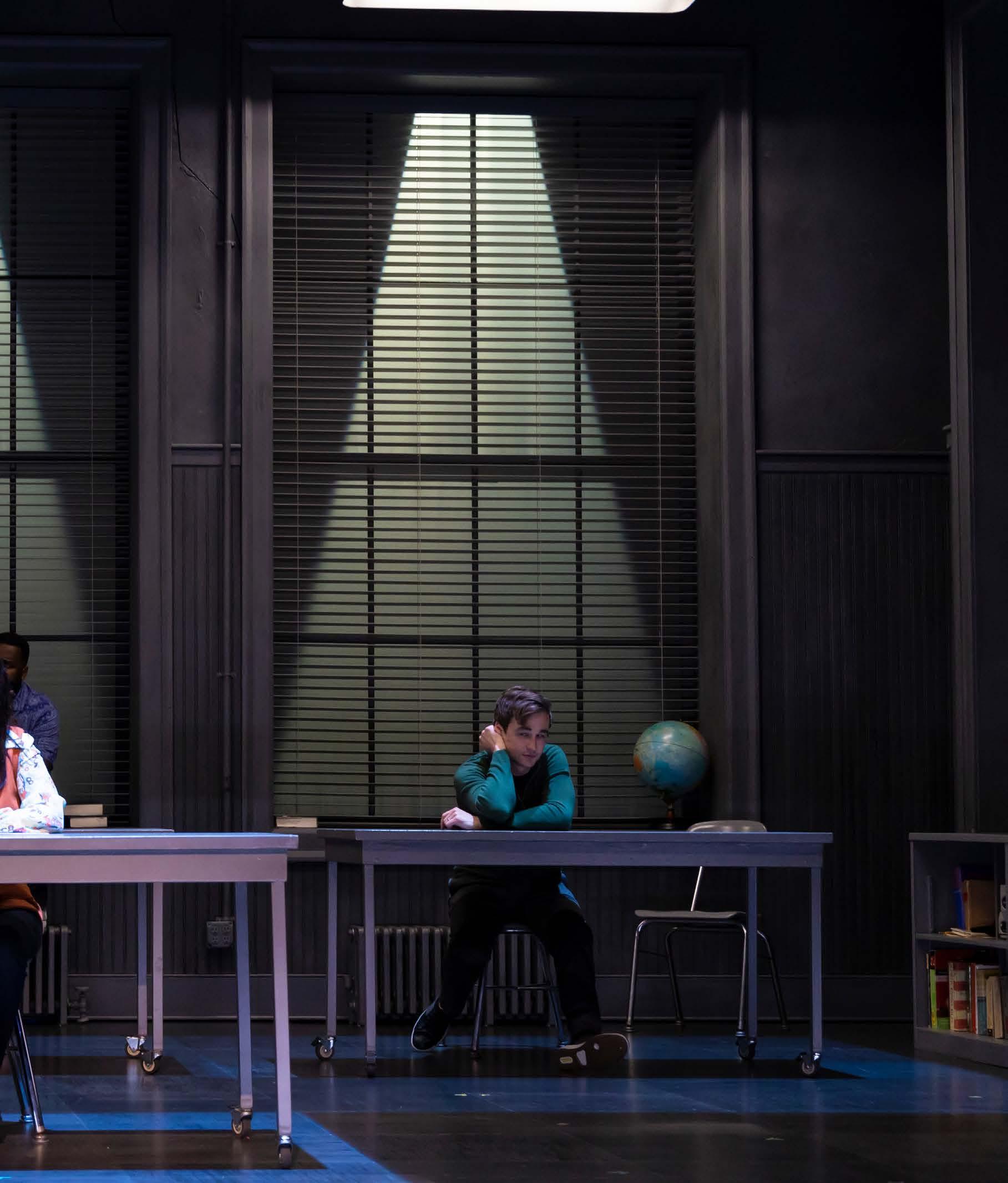
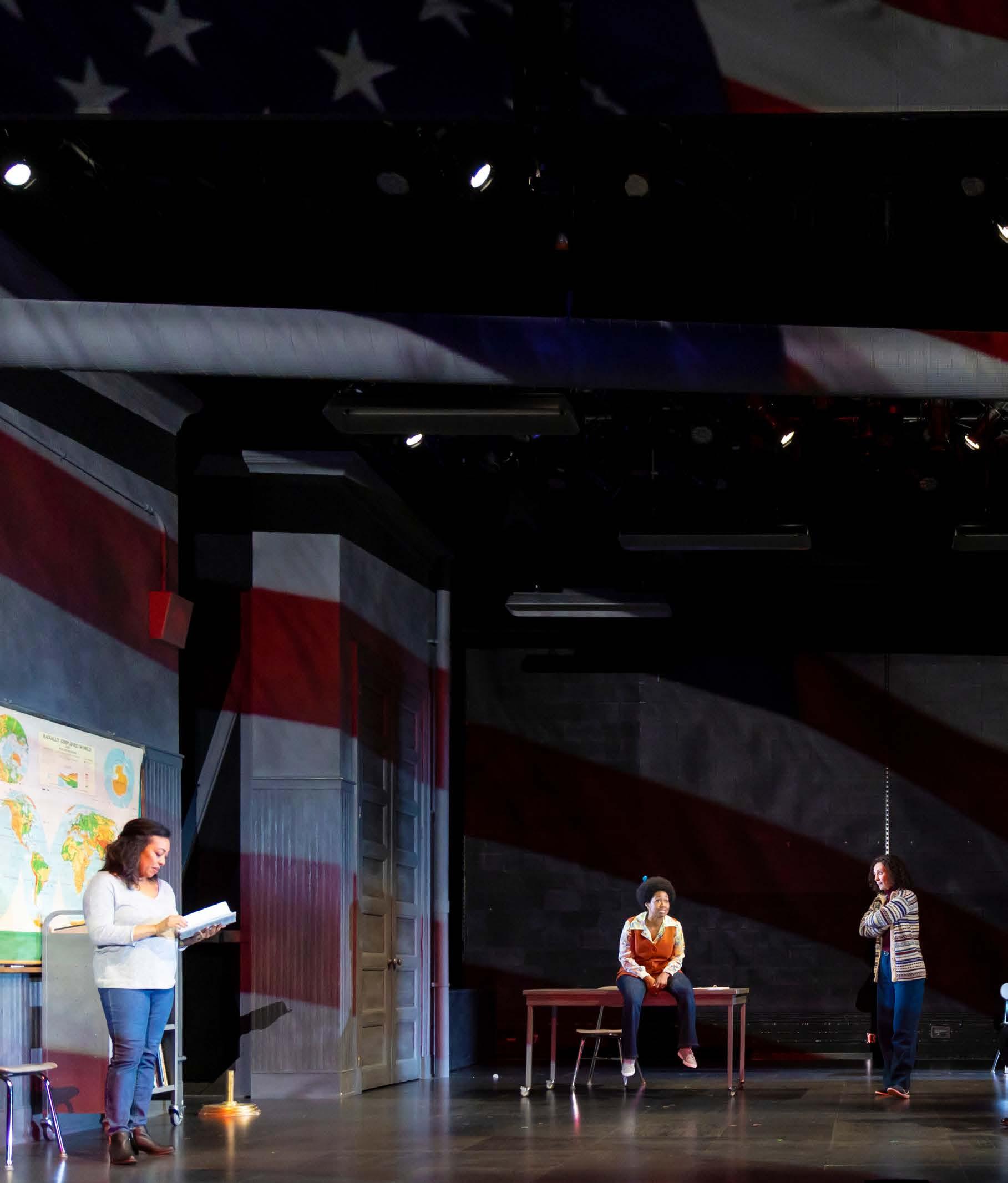
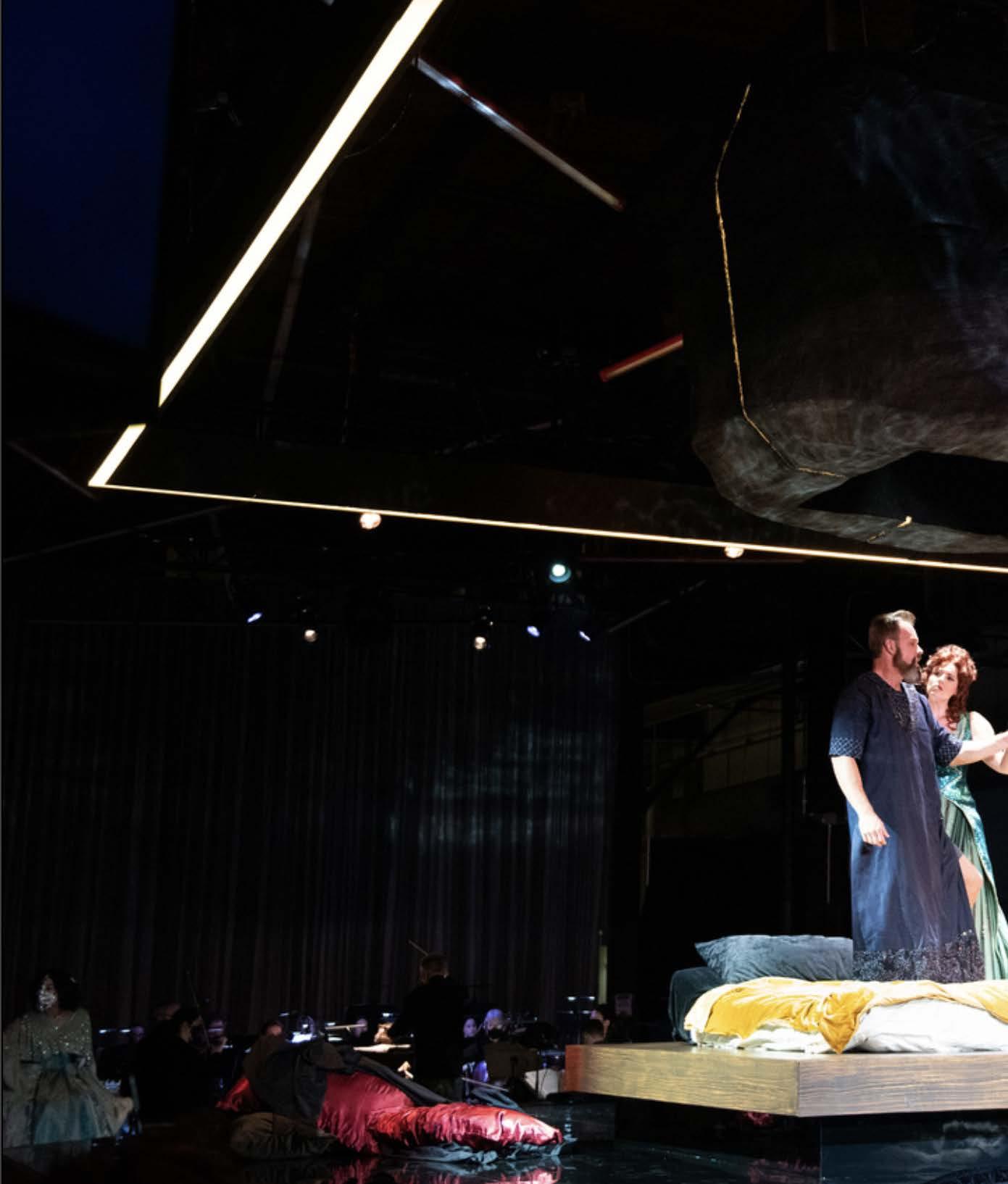
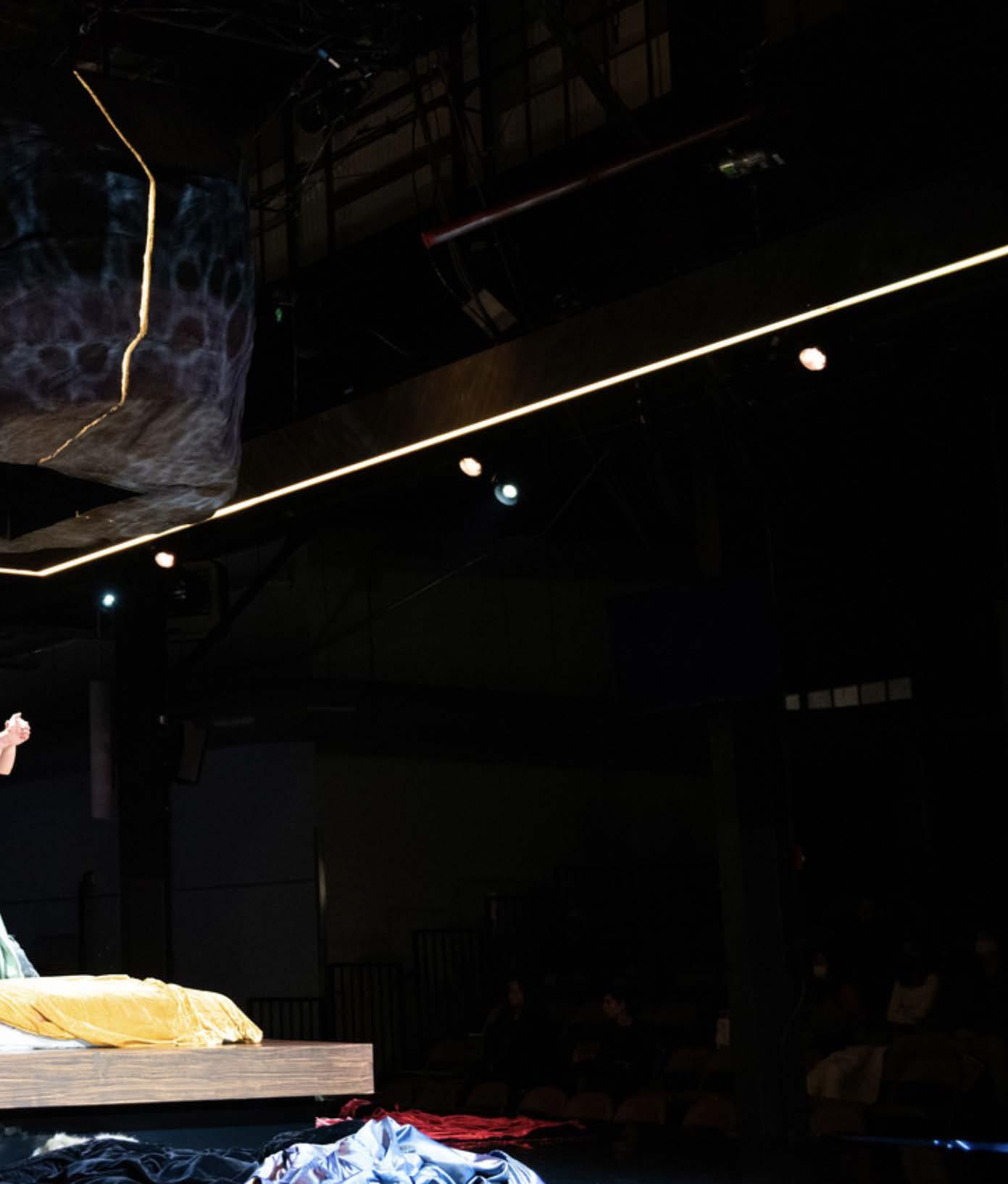
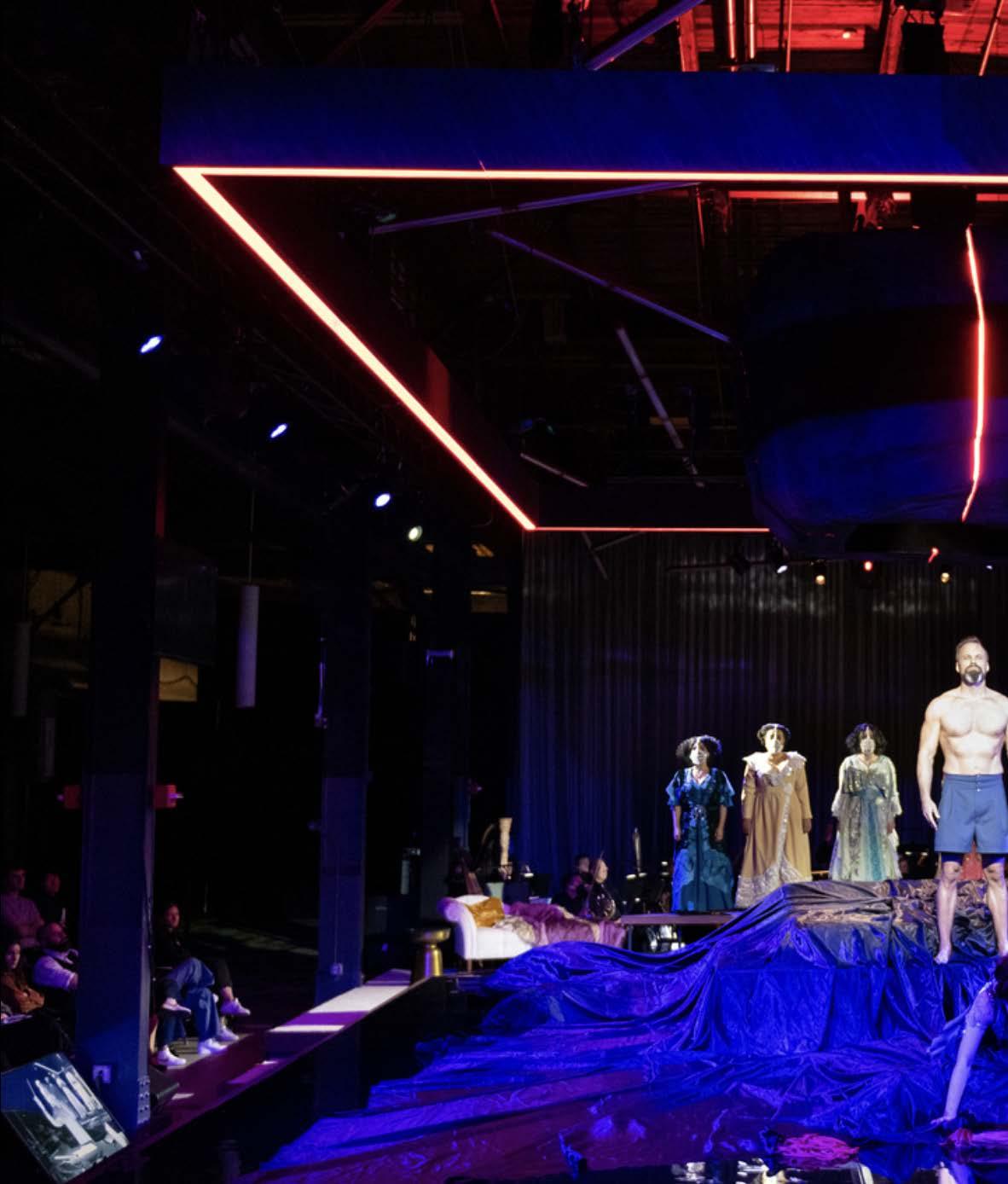
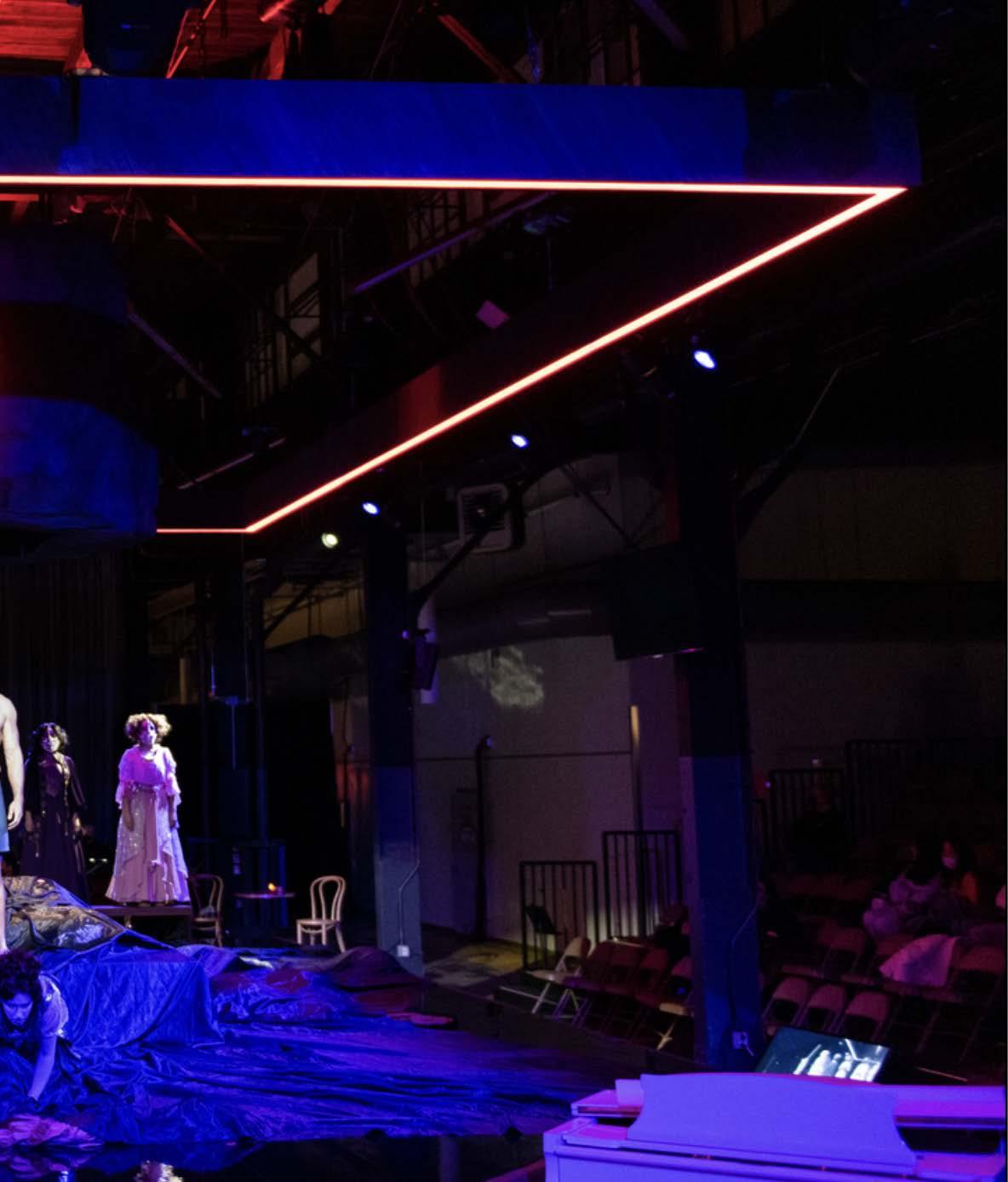
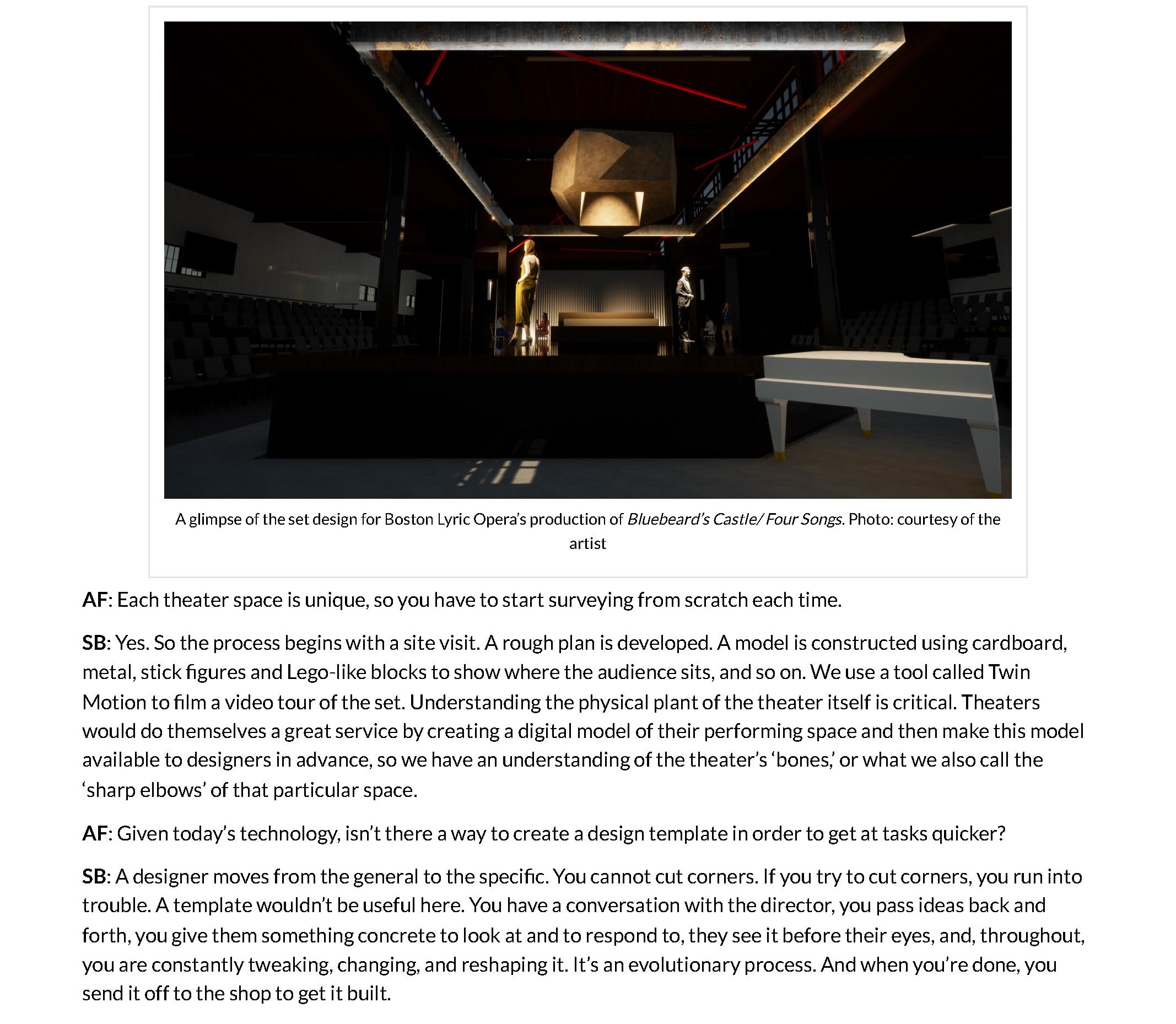
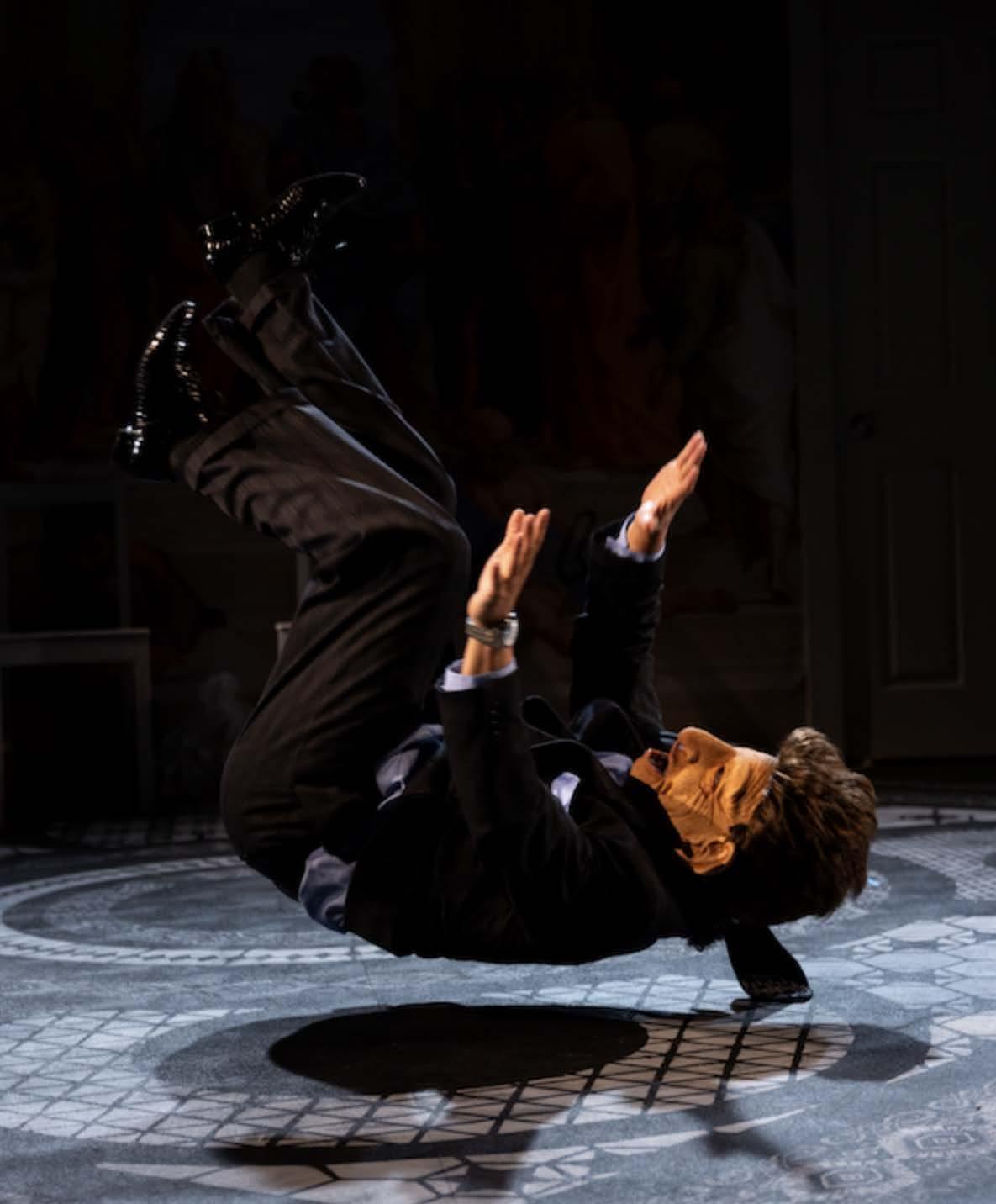
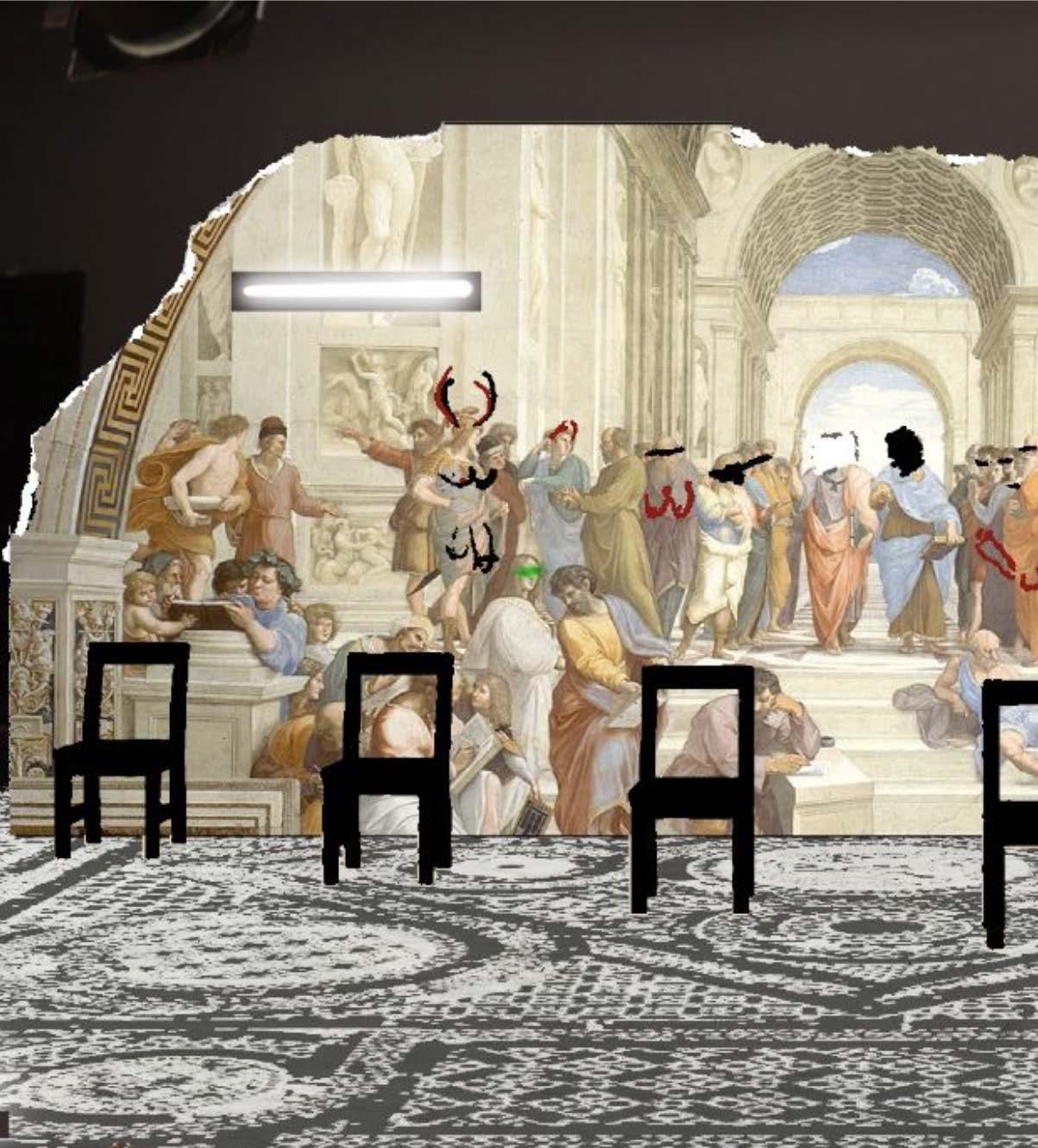
Titles link directly to portfolio pages - The bottom of any page links this Table of Contents
Selected works: October, 2016 - July 2024
The Mother of Us All
Der Freischütz
The Prince of Providence
The Day
Le Rondine
Fellow Travelers
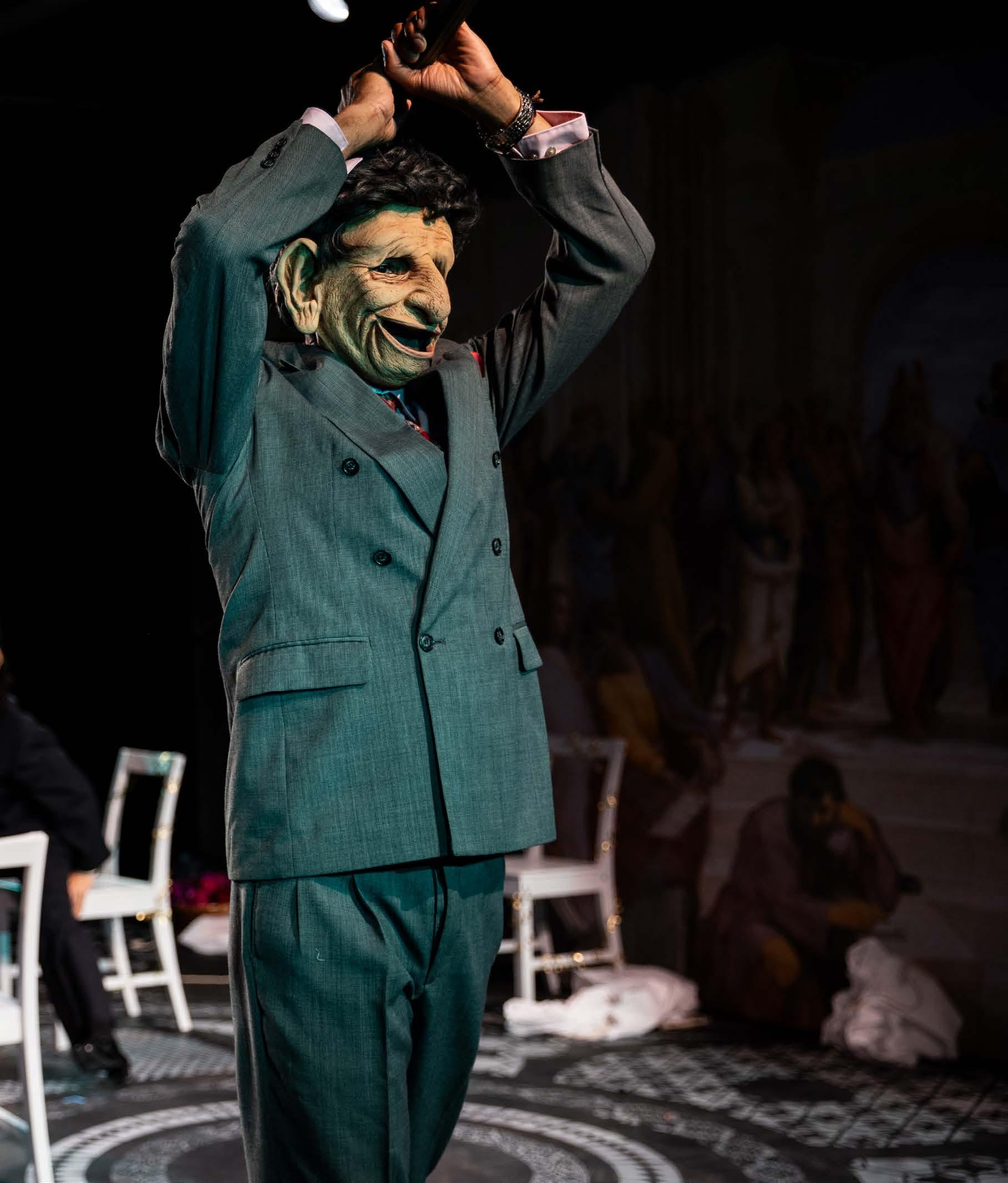
Carmen Appropriate
The Wilma Globe - Theoretical Project
Fat Ham - Film version
Fat Ham - Staged version
The Other Shore
Common Ground: Revisited
The Lehman Trilogy
Aristotle Thinks Again
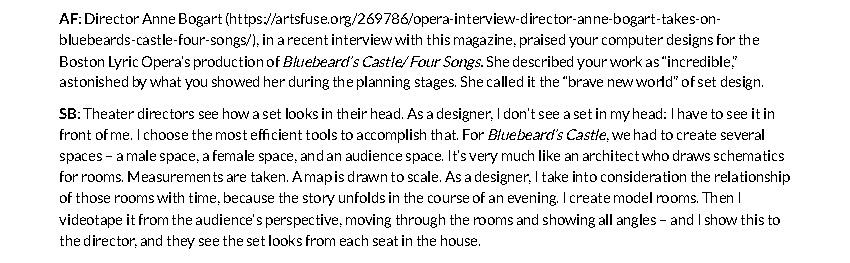
Bluebeard’s Castle | Four Songs
Current projects
Circlusion
Hagoromo
The Brooklyn Academcy of Music Next Wave Festival
Premiere: November 5, 2015 in the BAM Harvey Theater
Composed by Nathan Davis
Libretto by Brendan Pelsue
Directed by David Michalek
Choreographed by David Neumann
Puppetry by Chris Green
Sets by Sara Brown Lights by Clifton Taylor
Costumes by Dries Van Noten
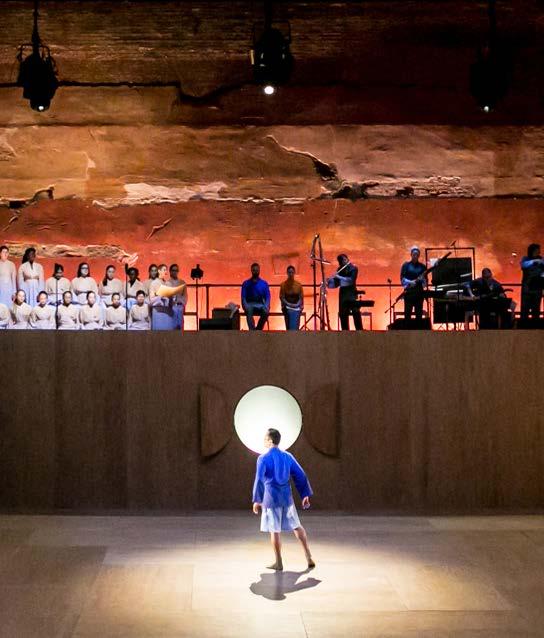
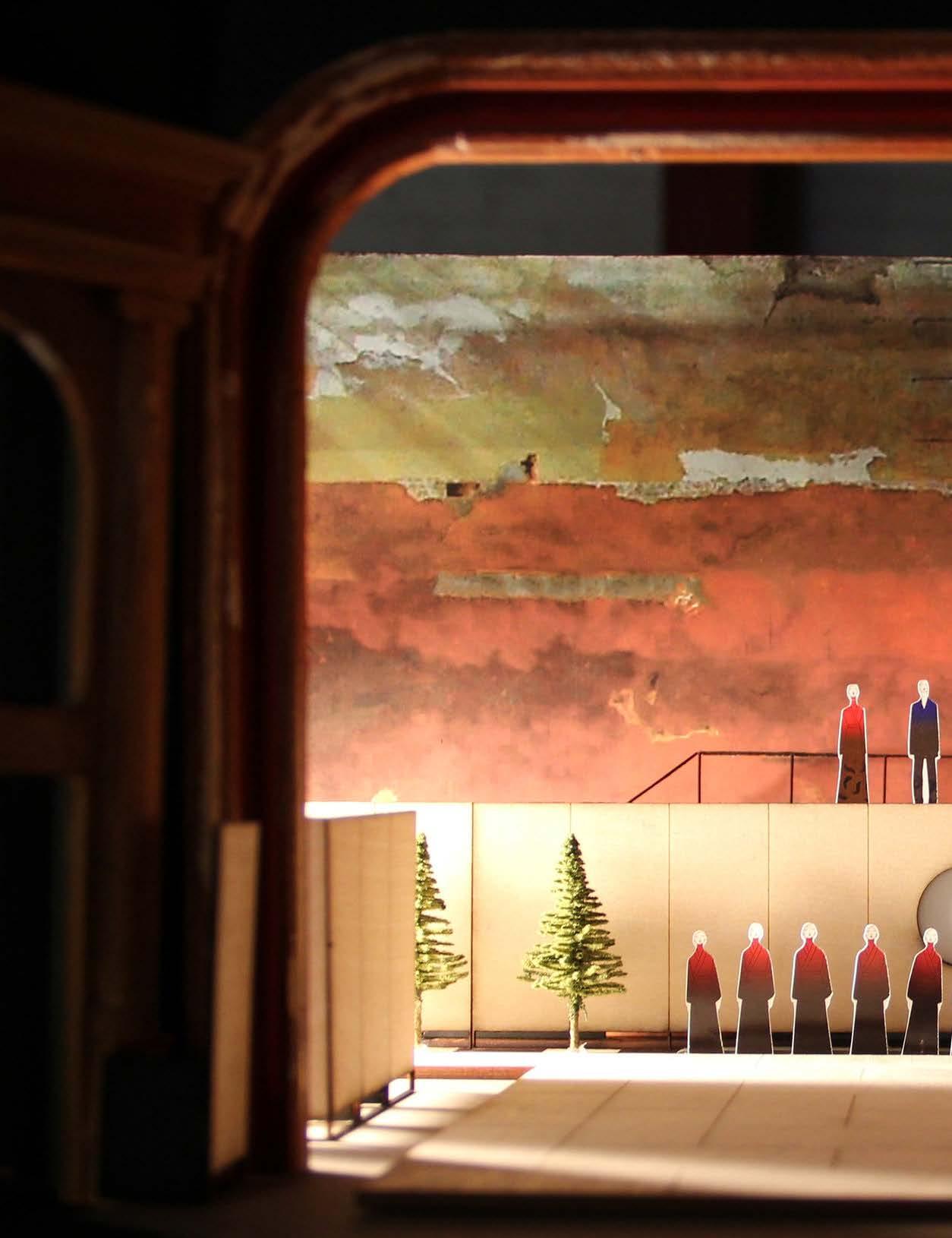
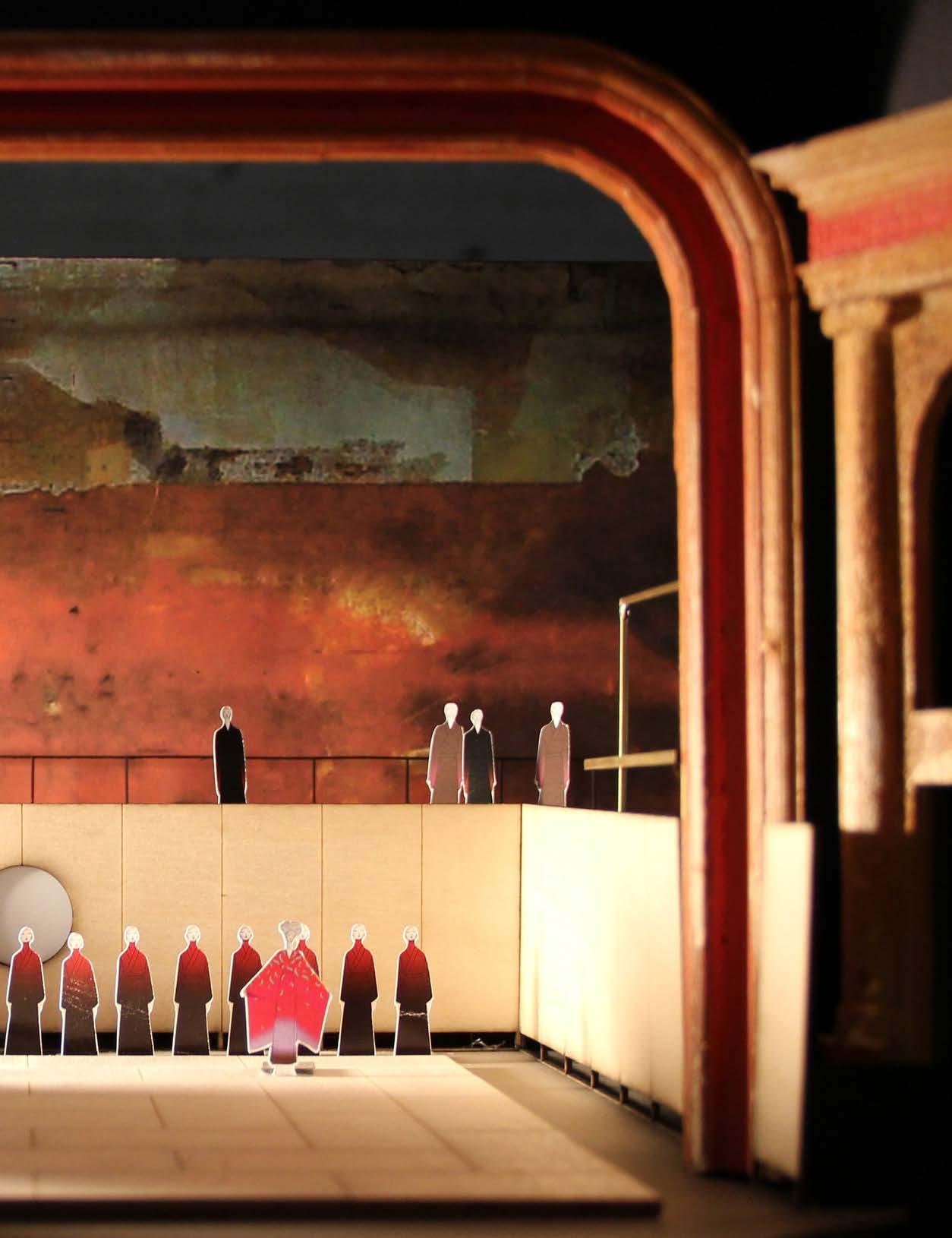
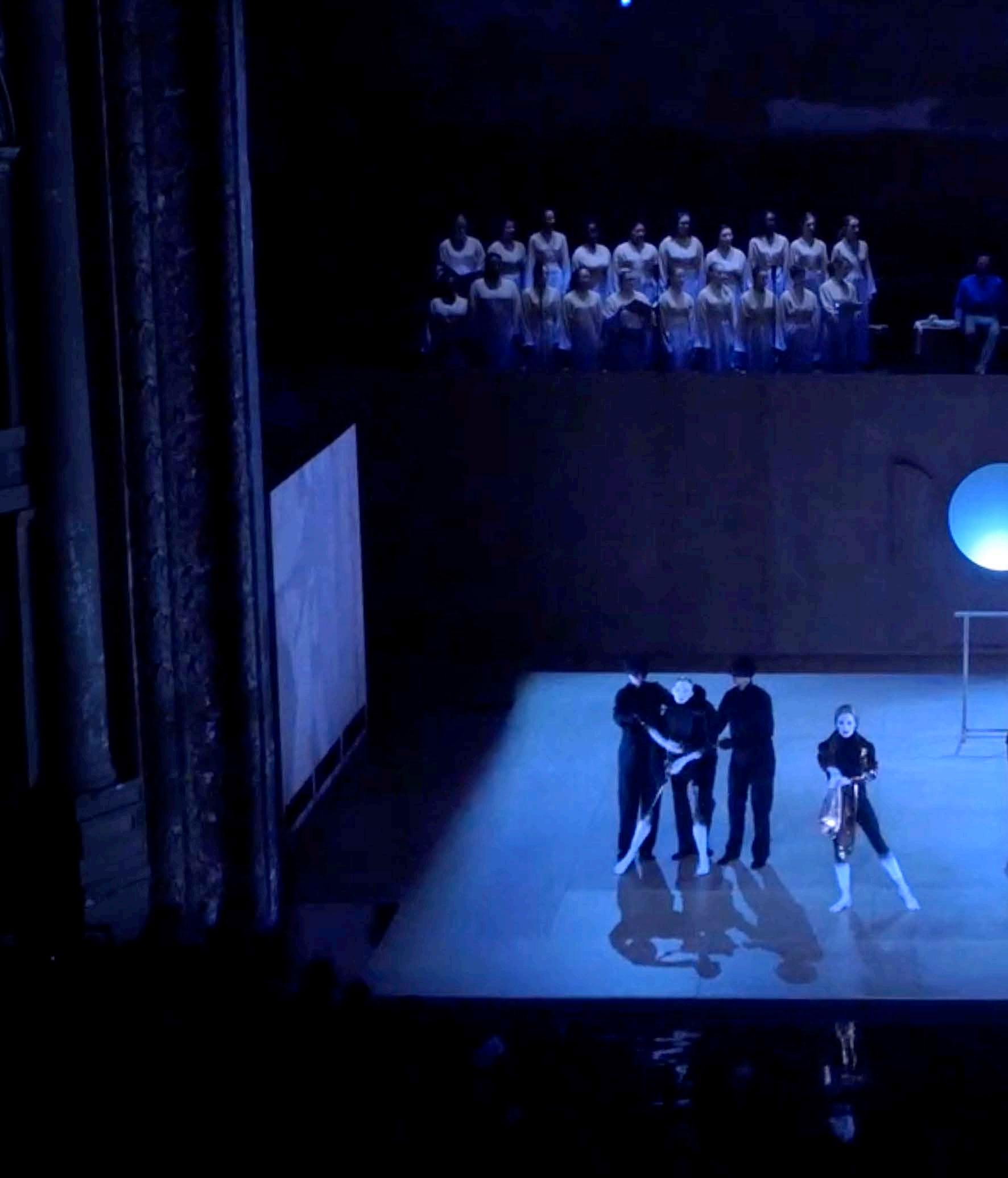
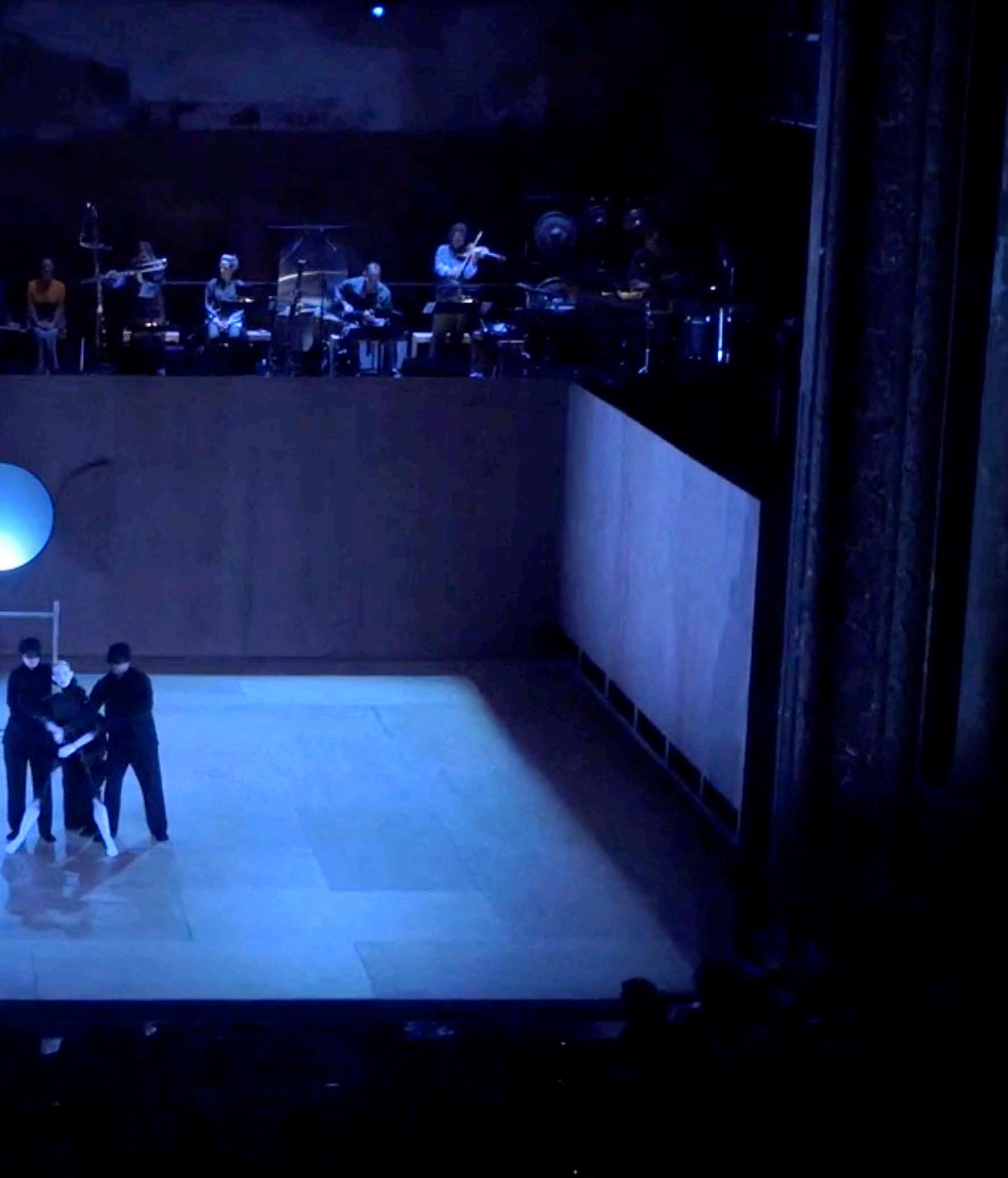
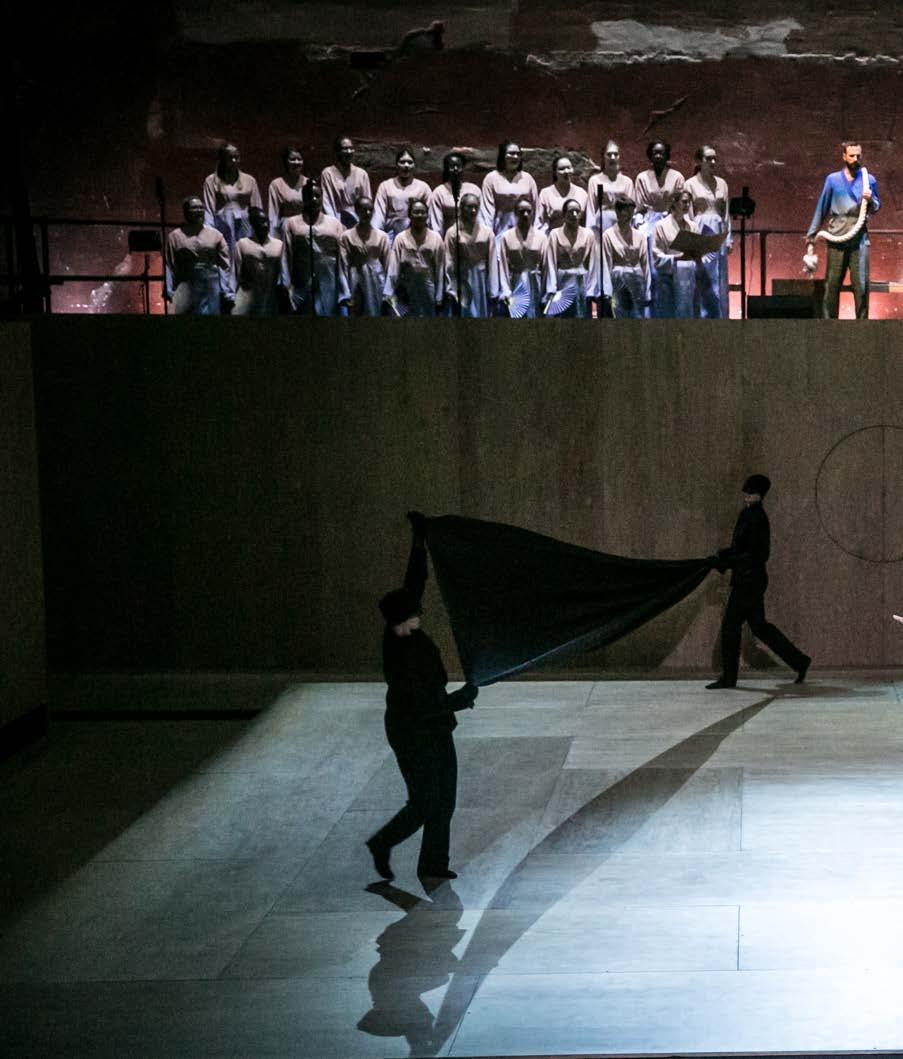
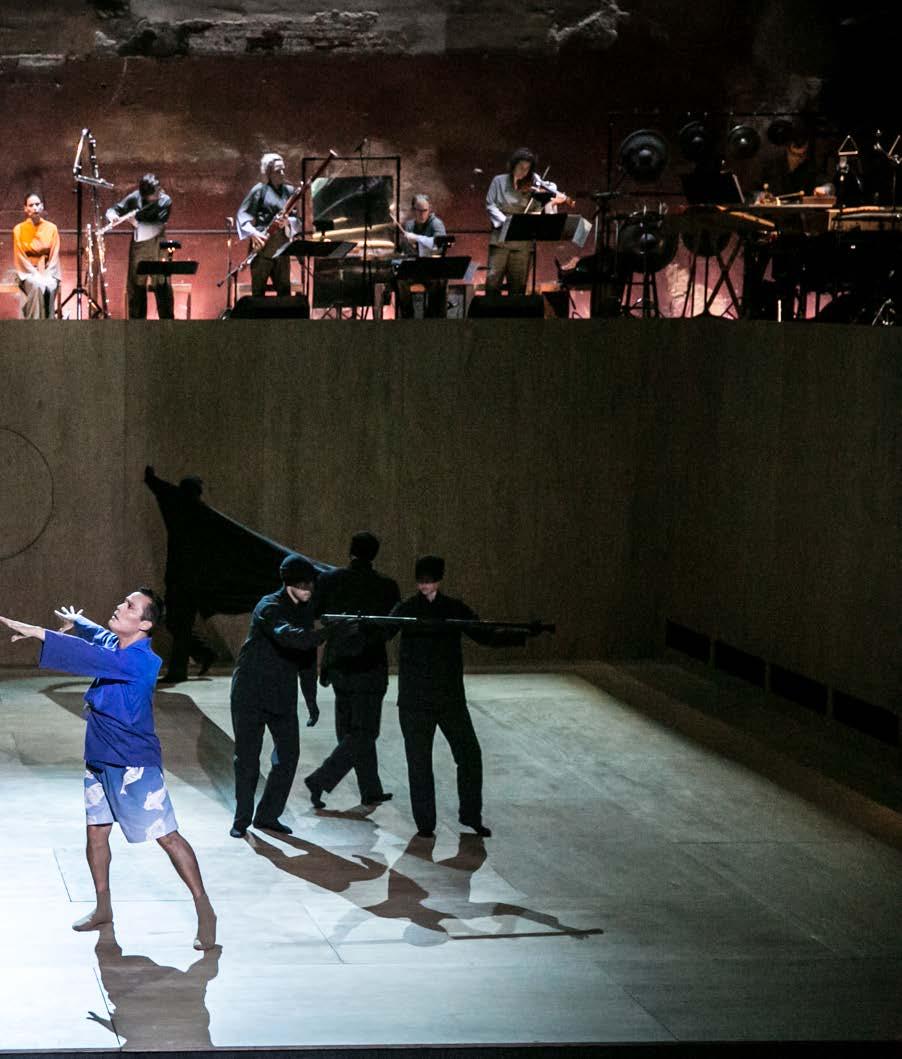
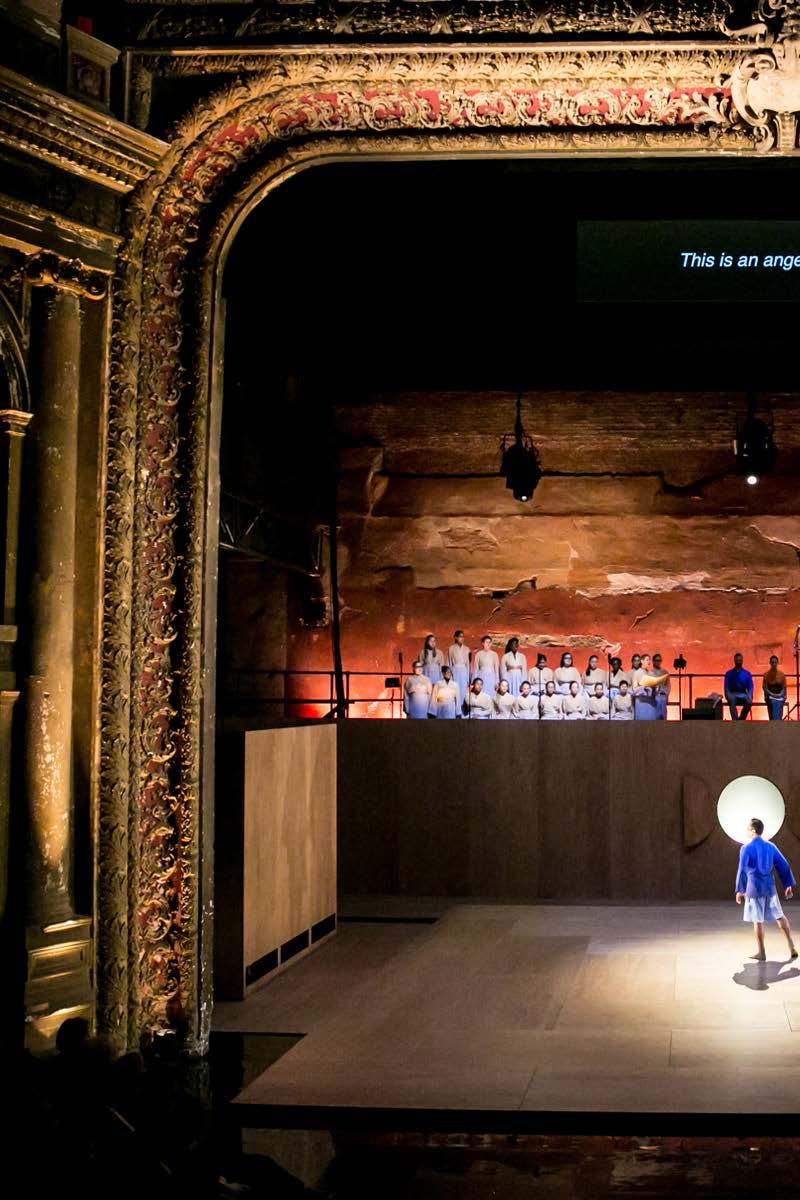
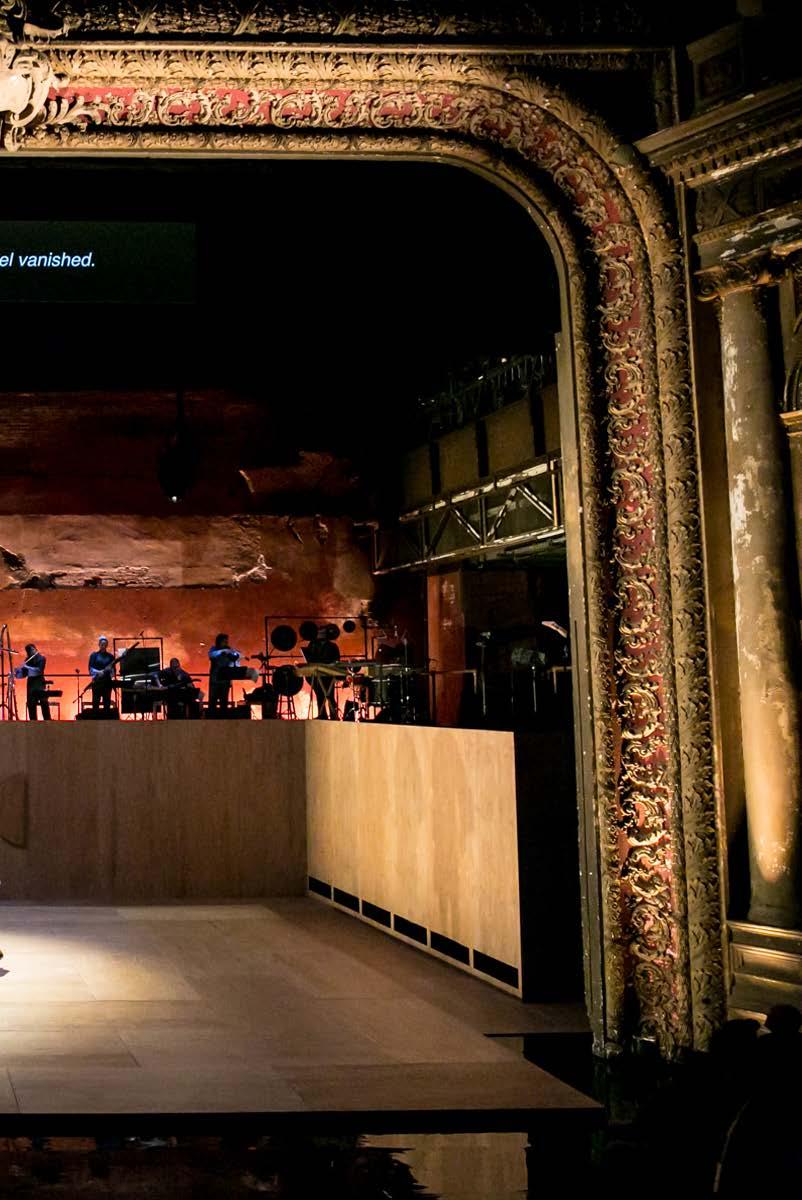
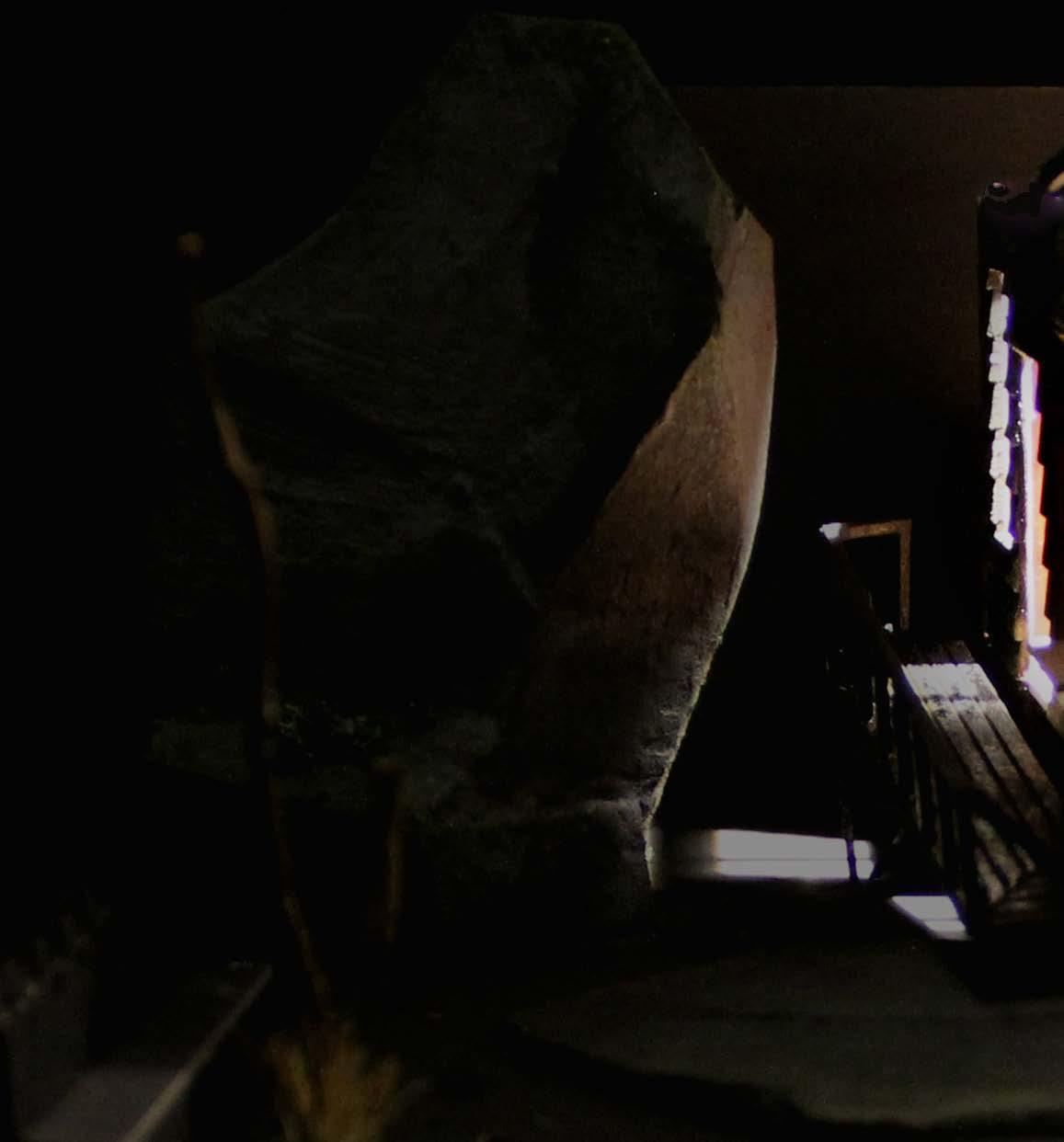
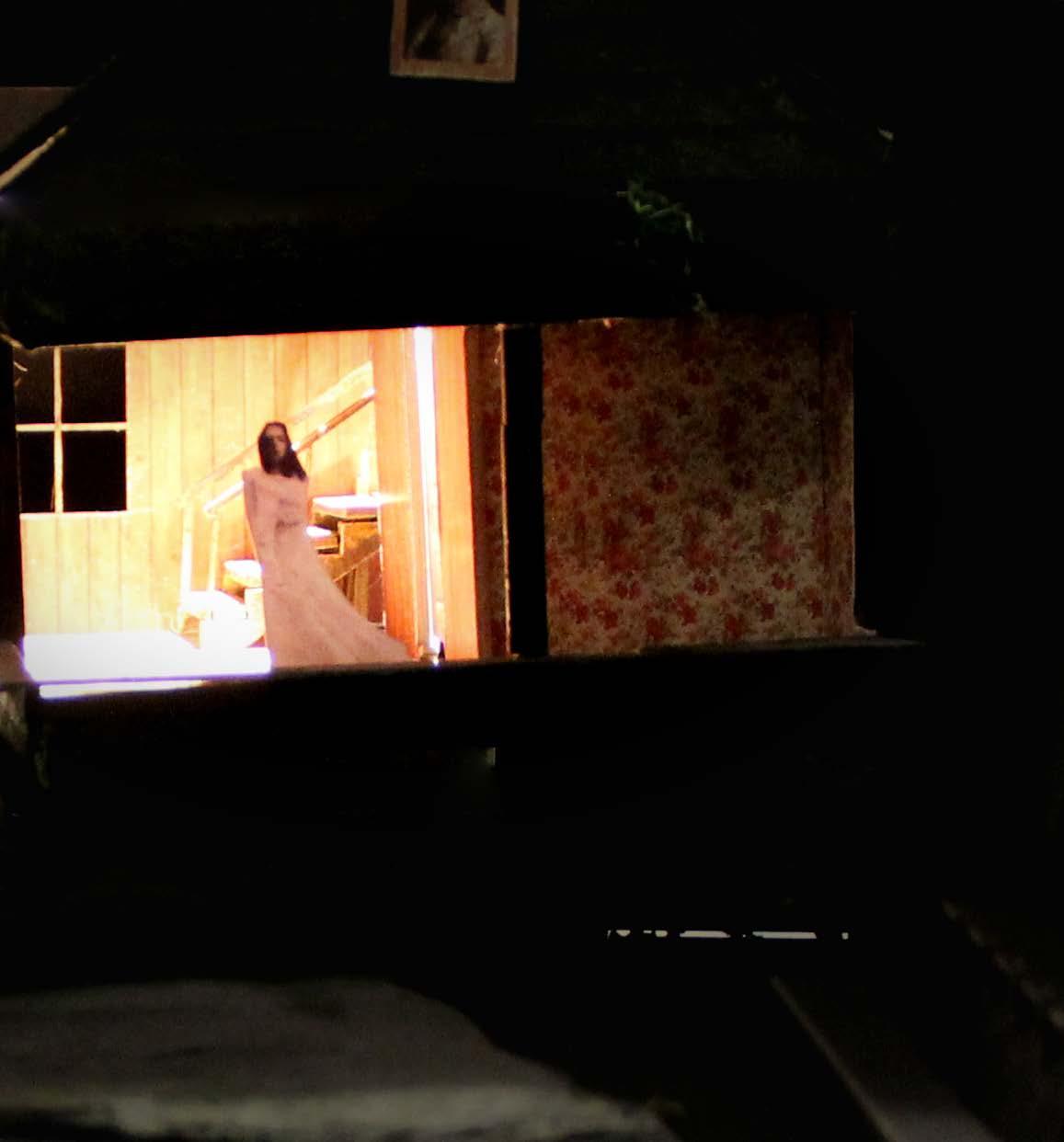
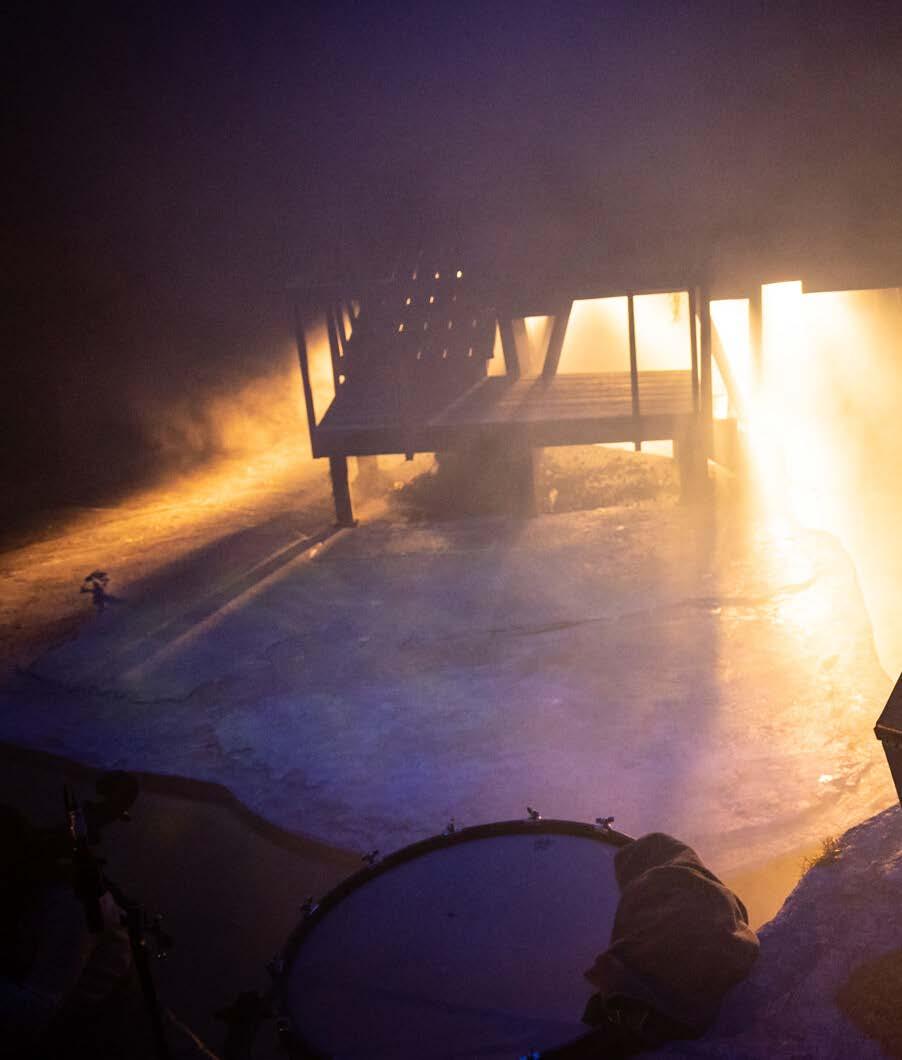
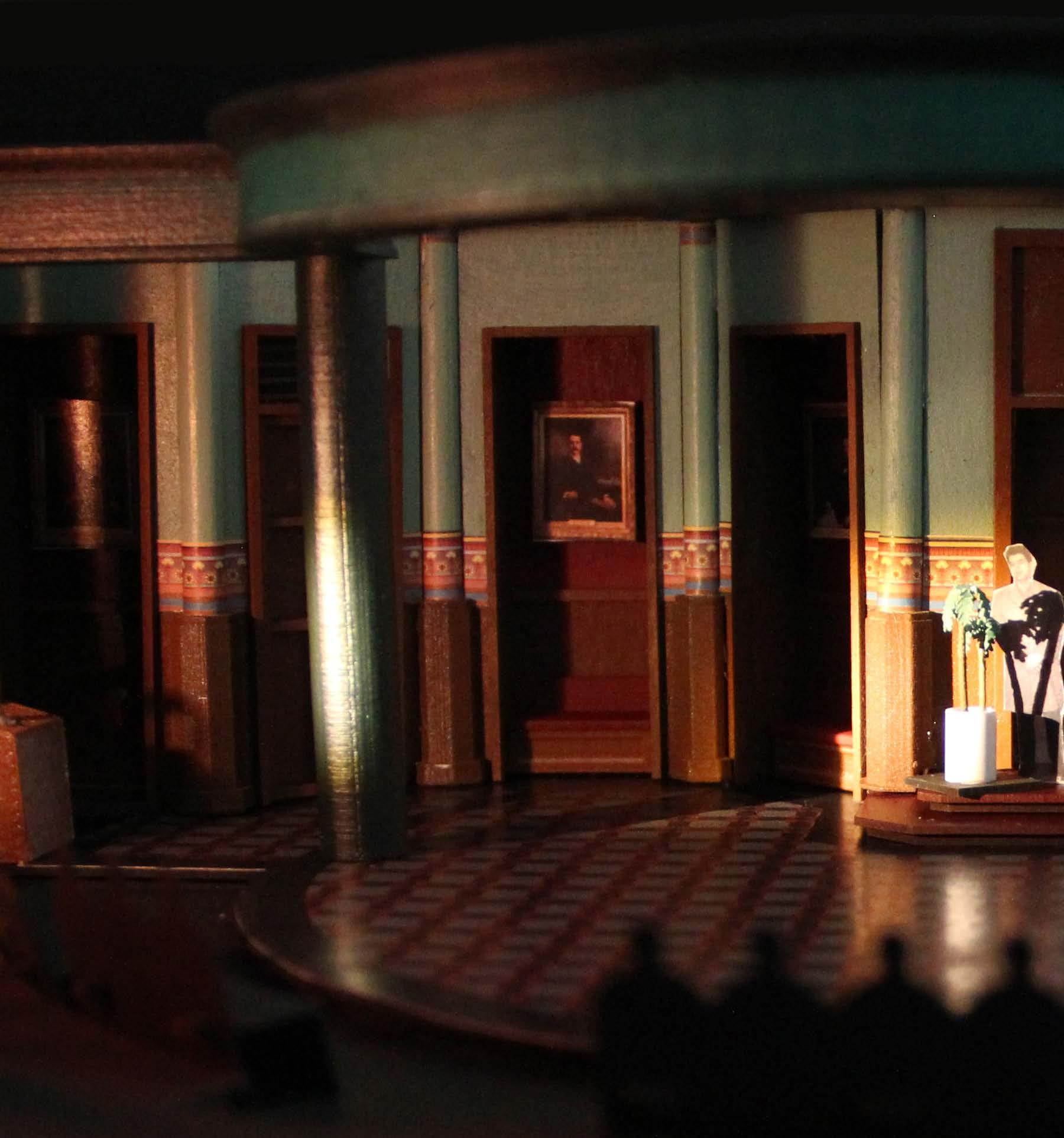
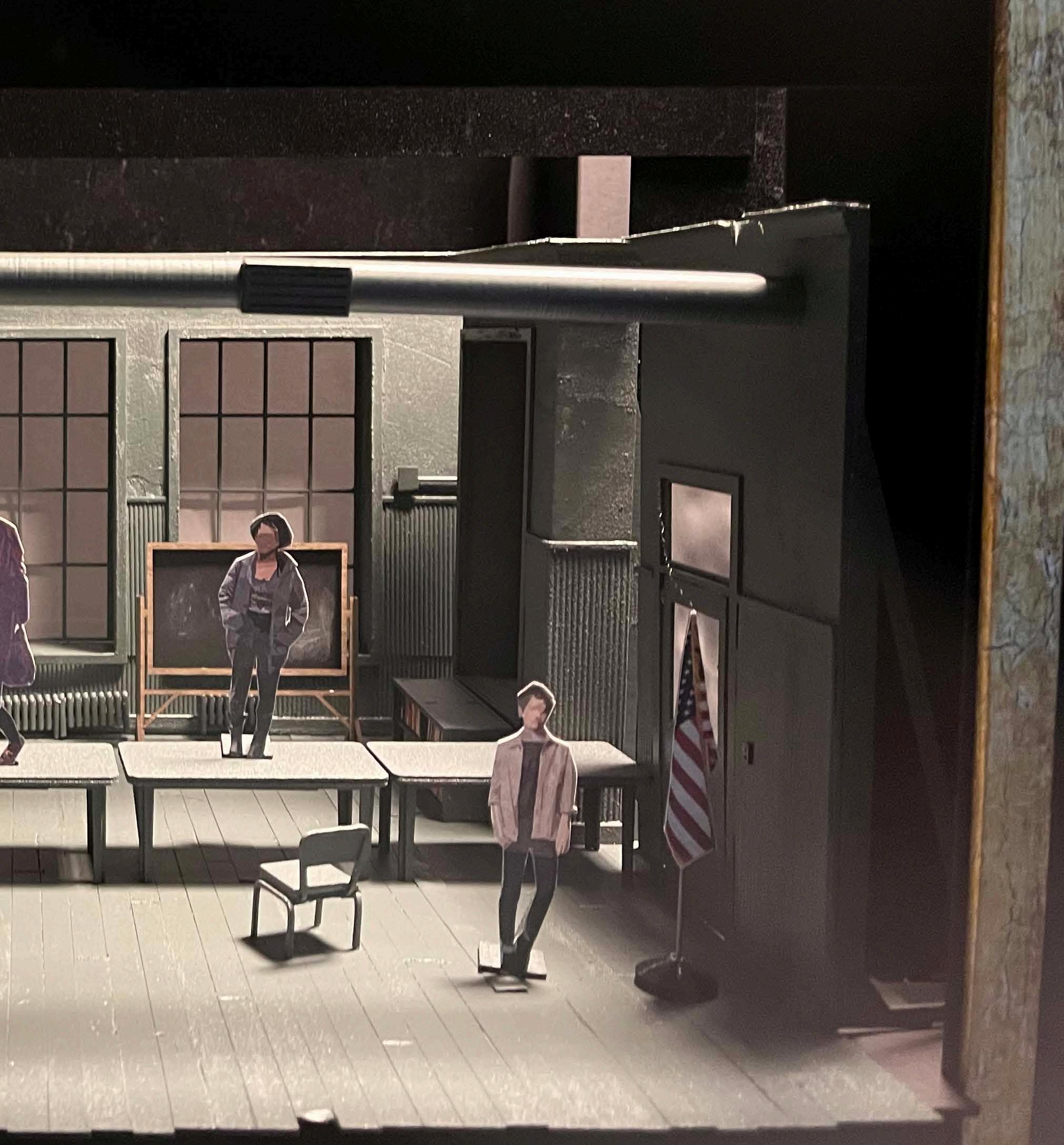
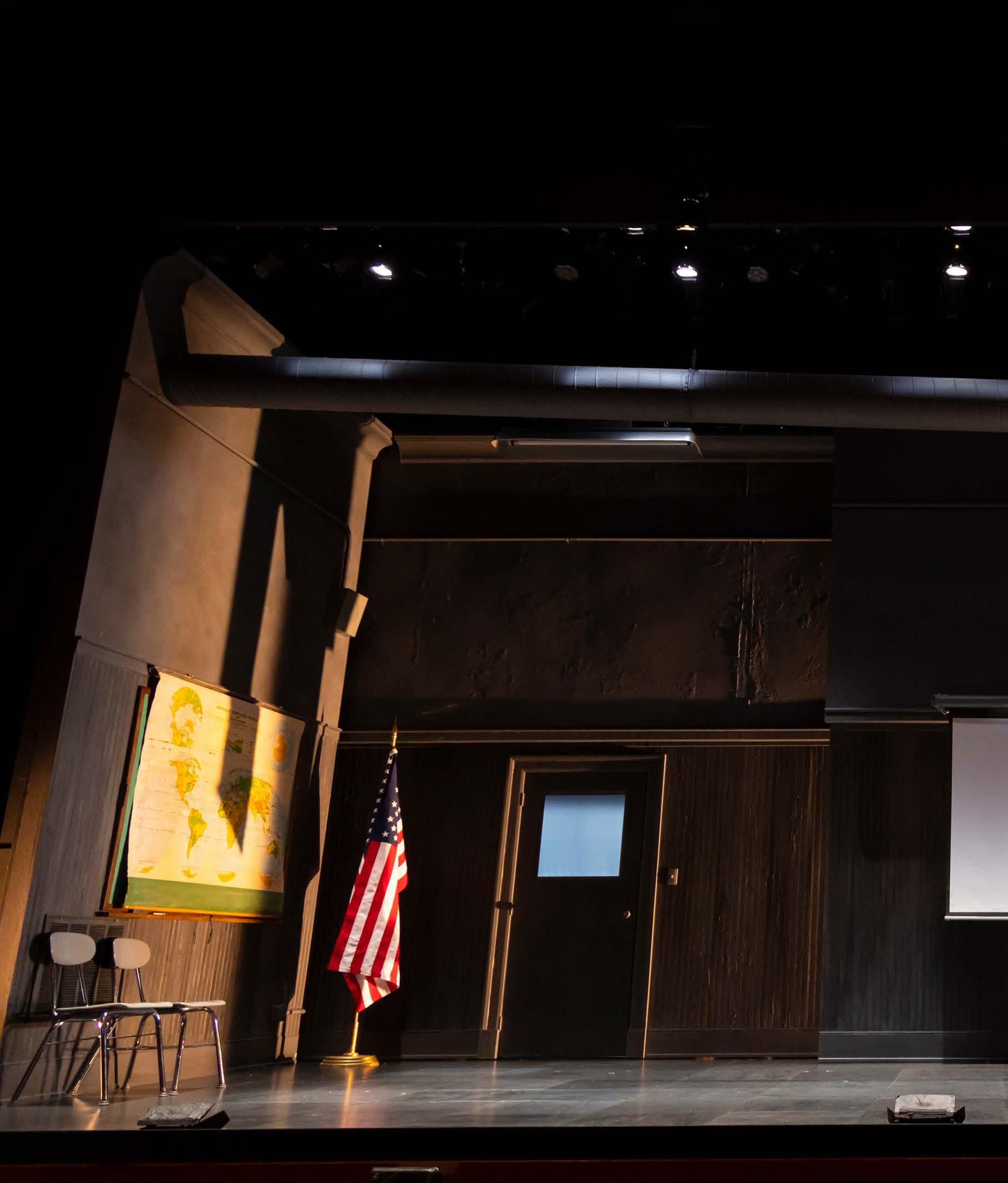
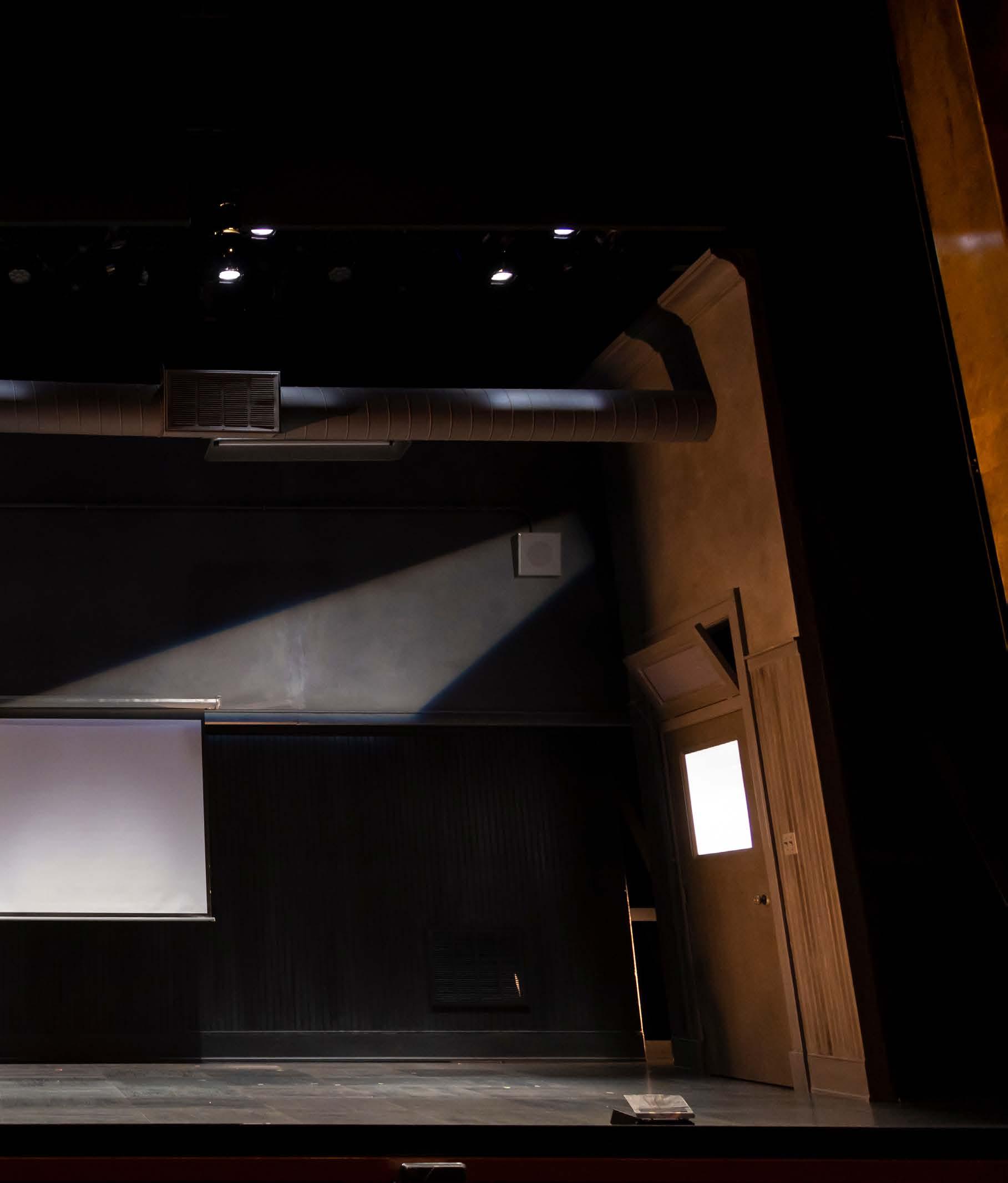
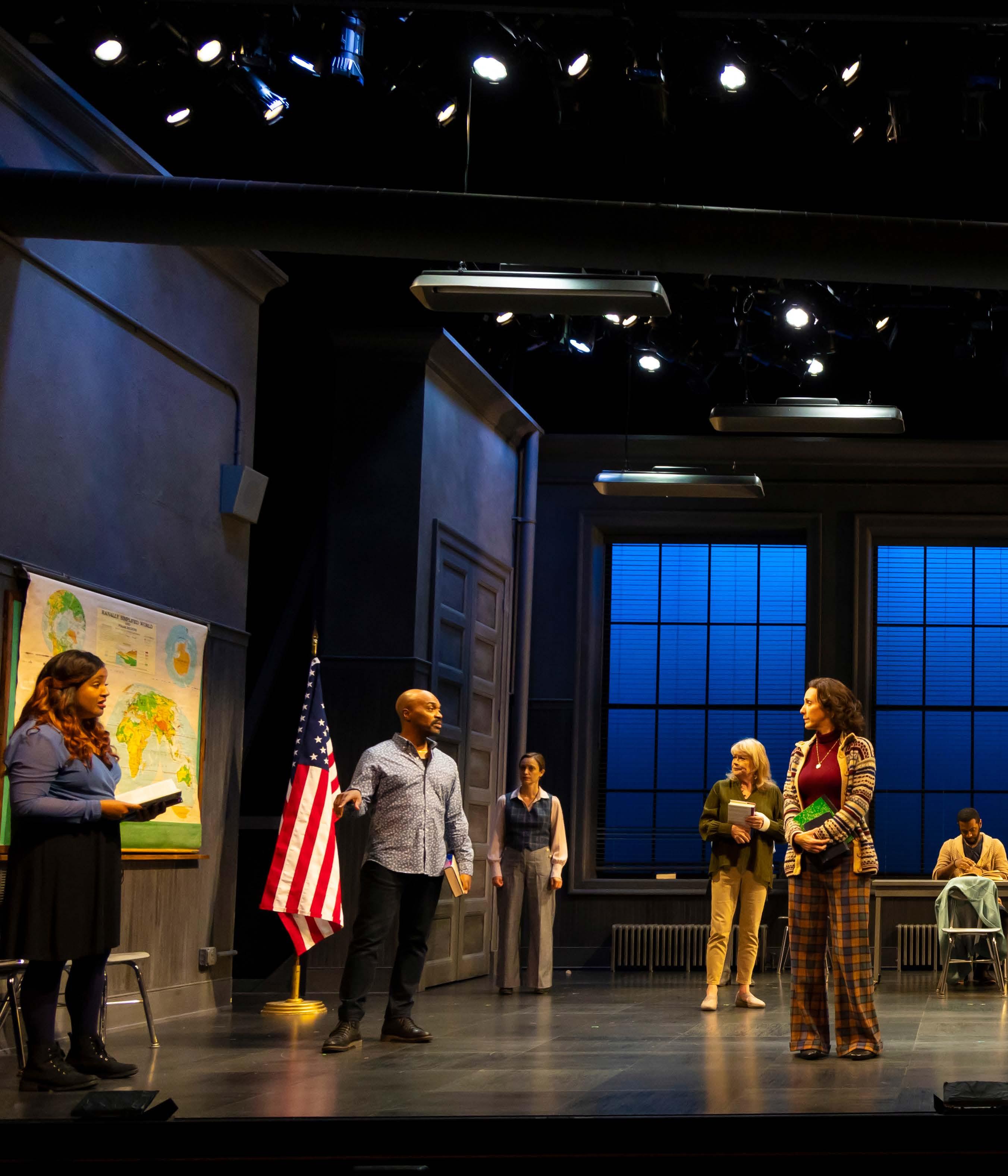
Hagoromo tells the story of an angel that comes to earth to retrieve her magical robe from a fisherman, who asks to see her dance before he will return it. Based on a classic Noh text, it dramatizes the encounter between a sacred being and an earthly one. In order to design Hagoromo, I looked to the ways that the Noh stage defines spaces for performance and viewing. My design lifted the musicians into a heavenly chorus to observe their emissary from the heavens dancing on earth. The unadorned stage stood inside the exposed Harvey Theater at the Brooklyn Academy of Music to provide a framed viewing experience for the audience highlighting the meeting of two separate worlds.
Photographs by Mark Stephen Kornbluth
Model Photograph - Figures created from renderings for Dries Van Noten’s costume design
The Mother of Us All
MetLiveArts, the New York Philharmonic, and The Juilliard School
Premiere: February 8, 2020 in the Charles Engelhard Court at The Metropolitan Museum of Art, NYC
Composed by Virgil Thomson
Libretto by Gertrude Stein
Directed by Louisa Proske
Sets by Sara Brown
Costumes by Beth Goldenberg
Lights by Barbara Samuels
Video by Kit Fitzgerald
Sound by Mark Grey
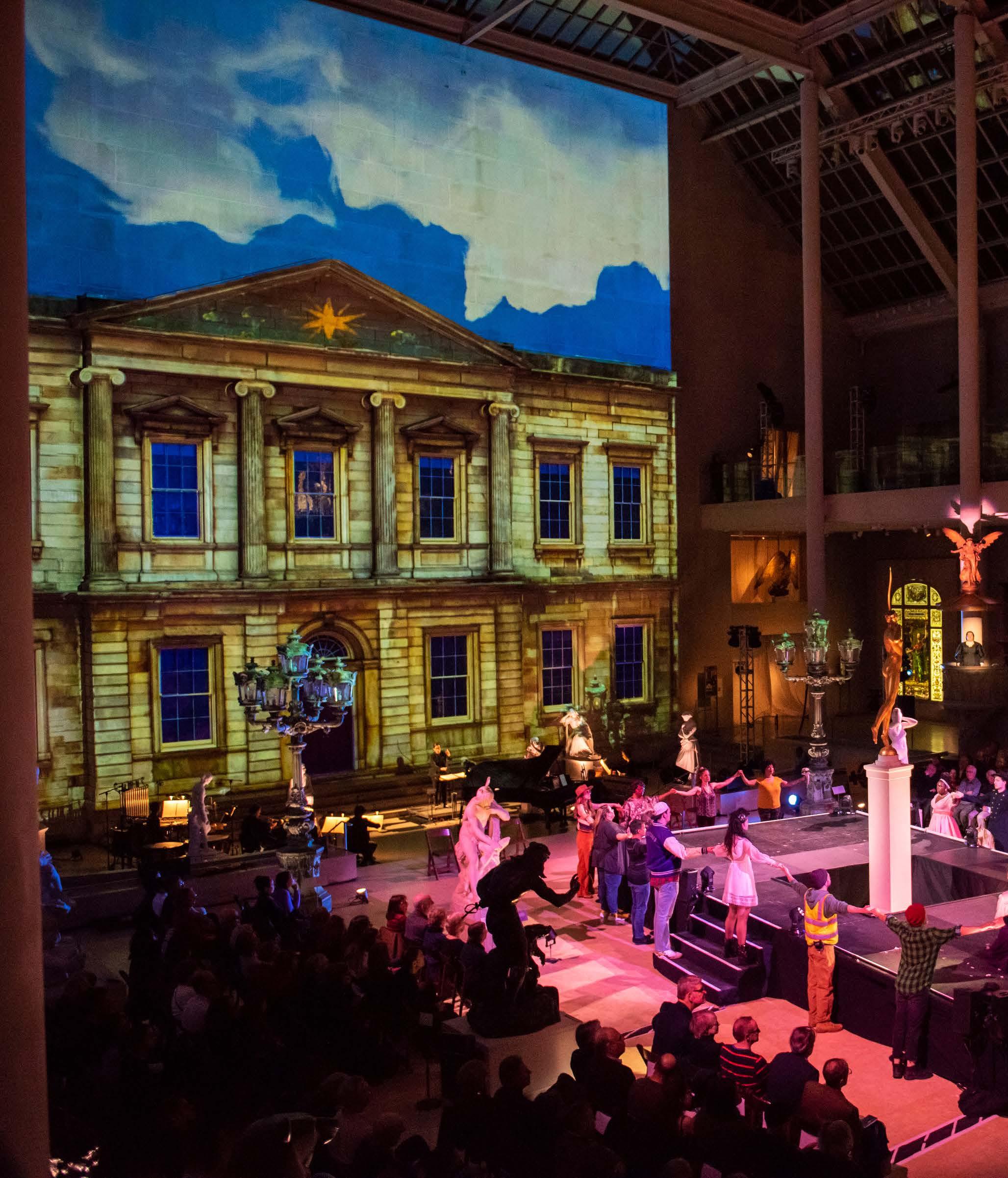
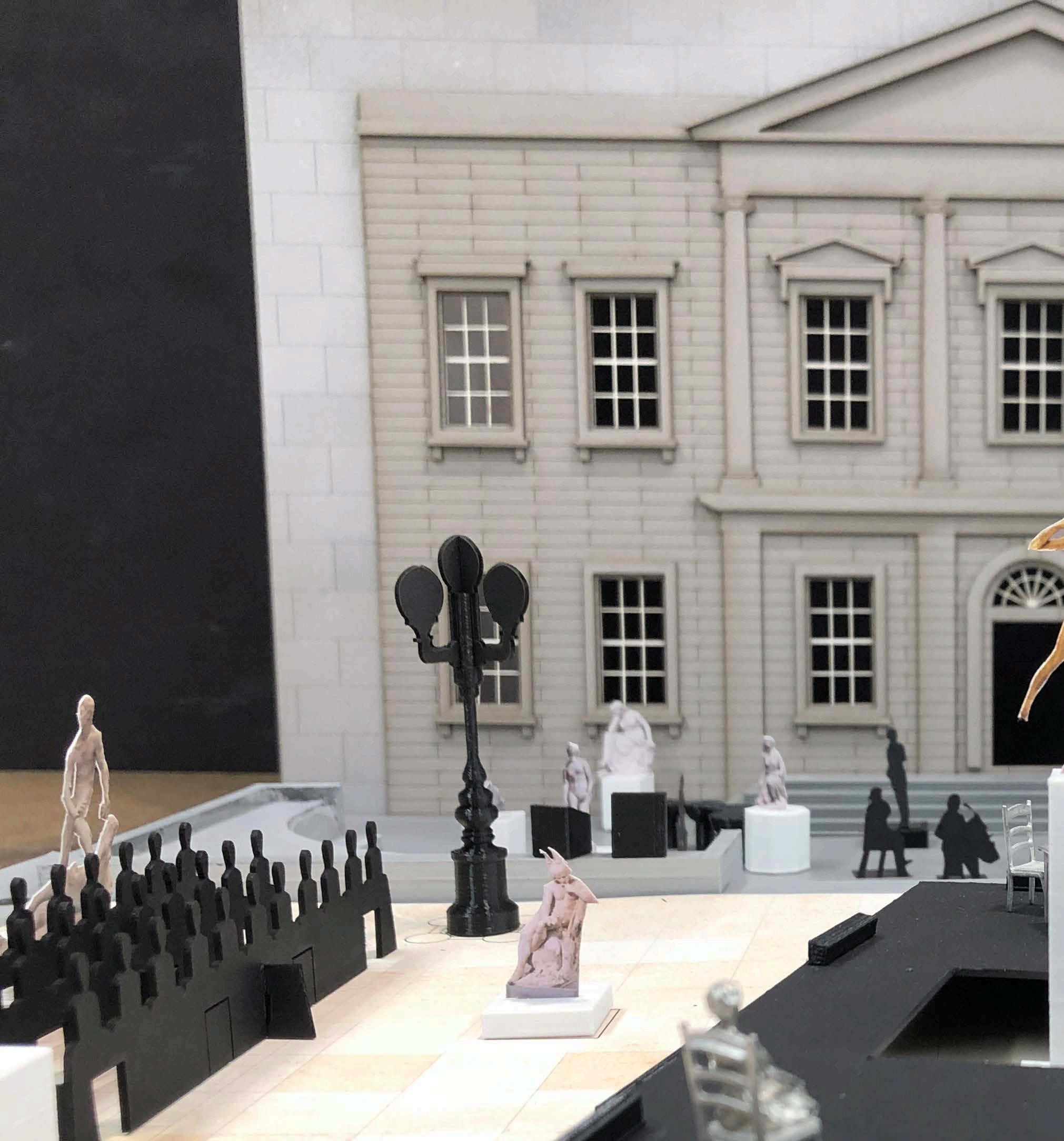
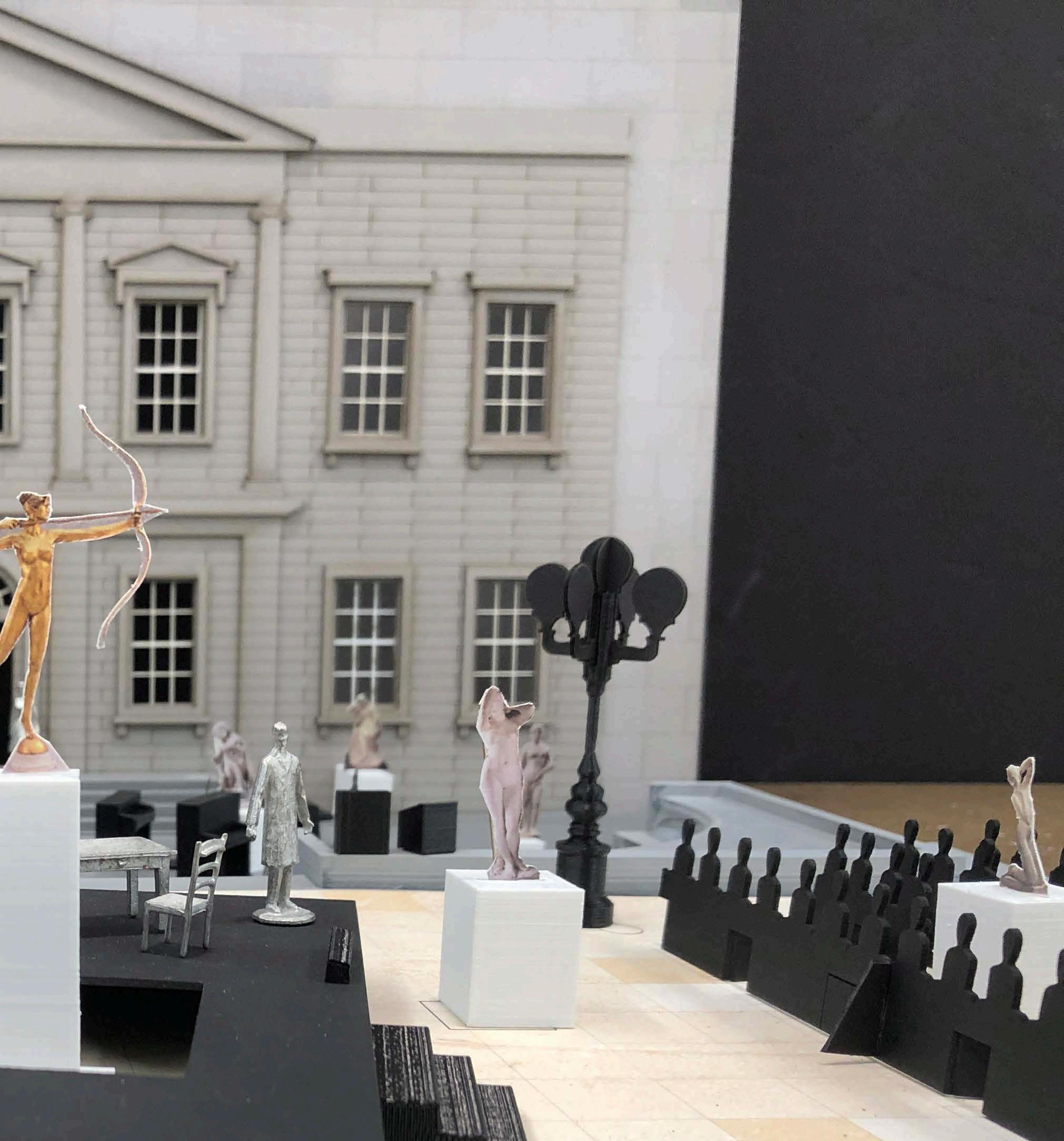
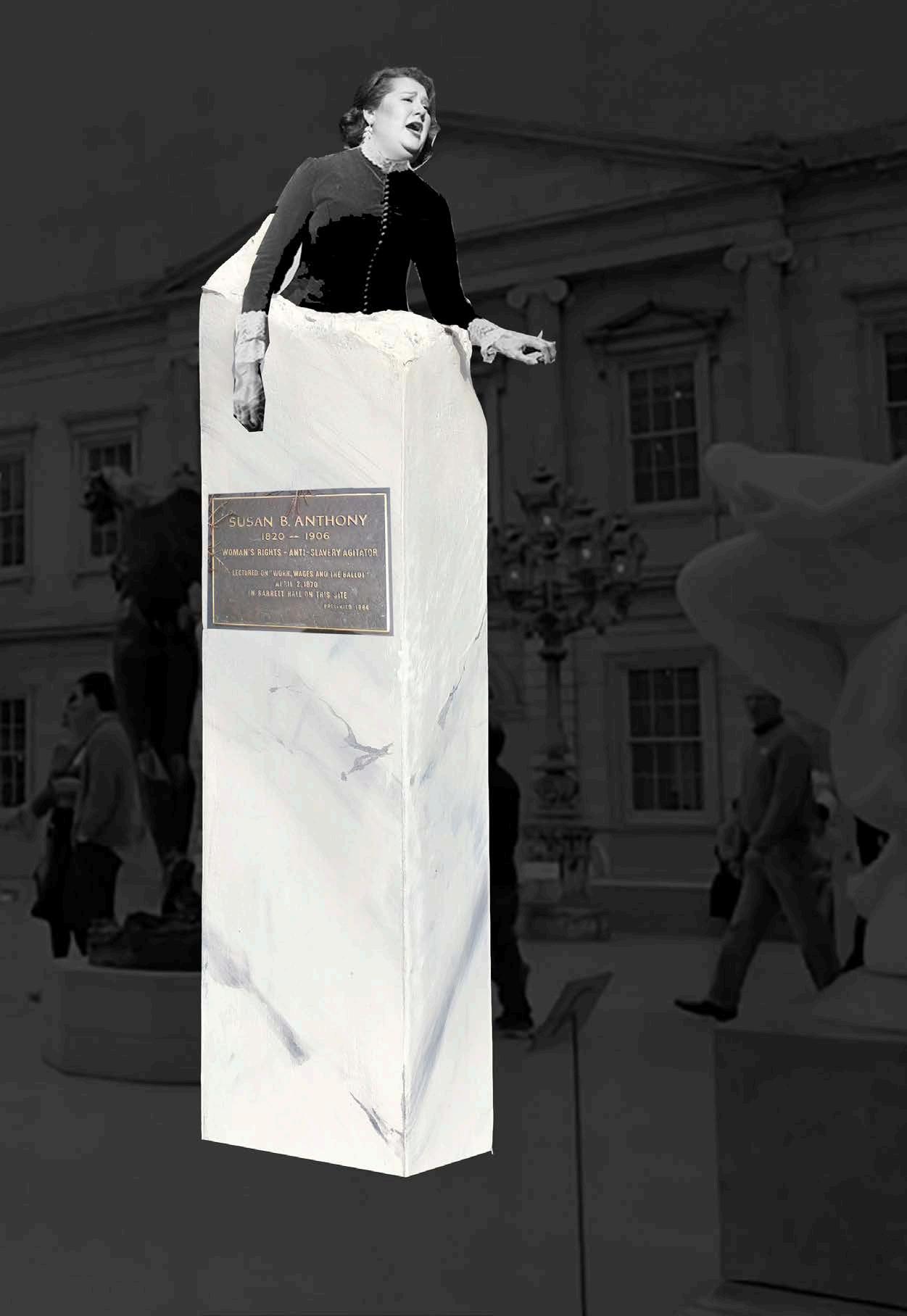
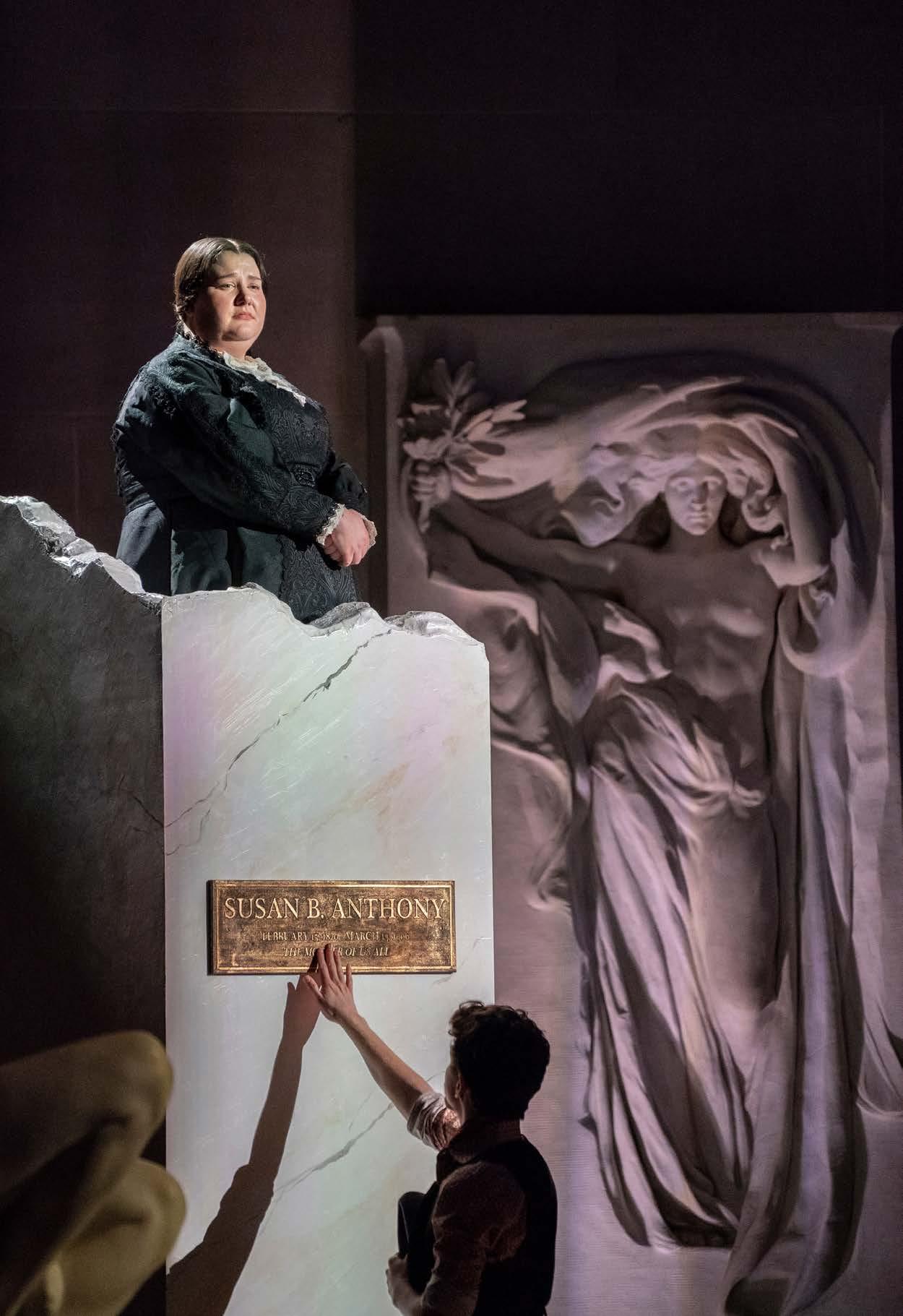
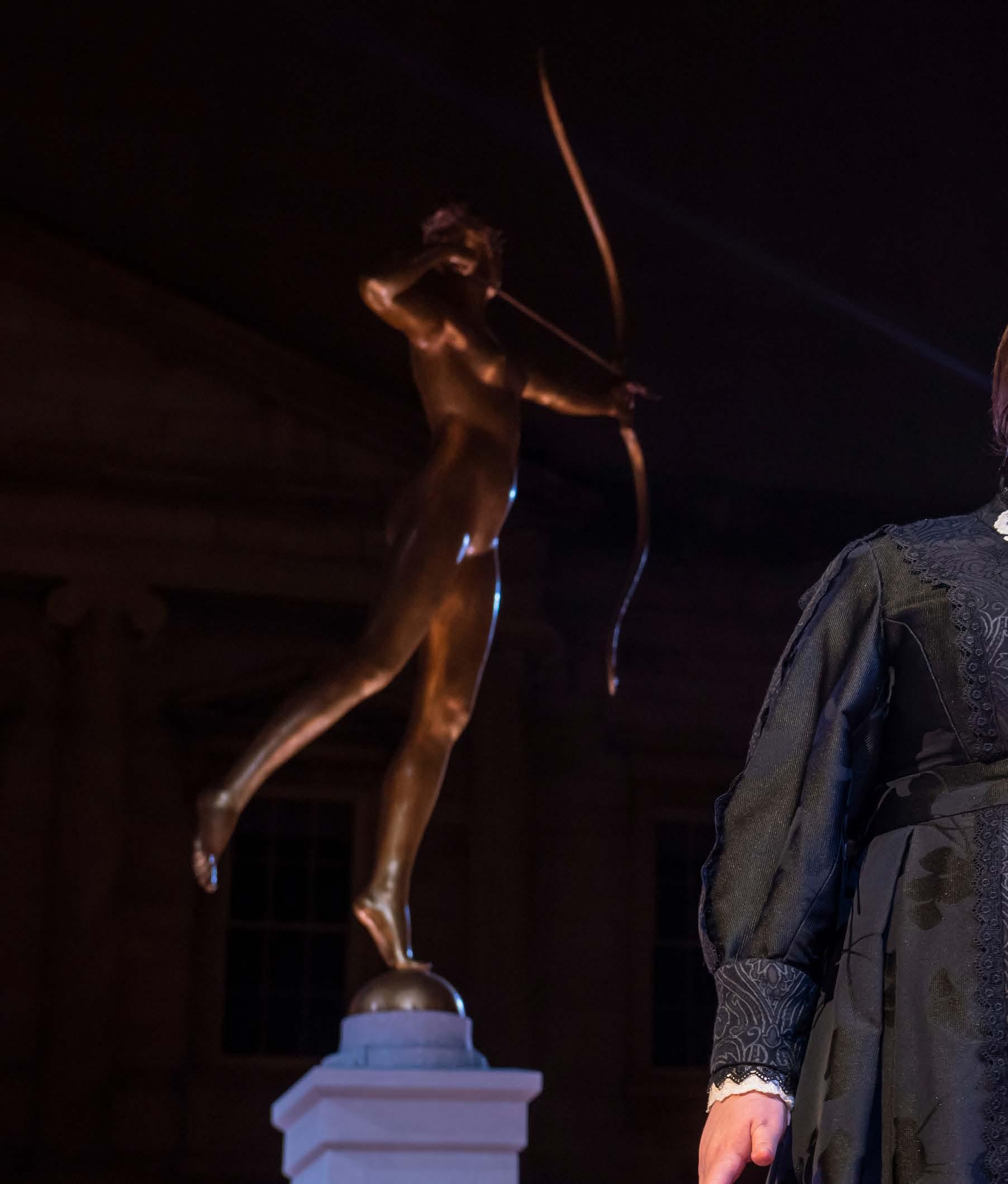
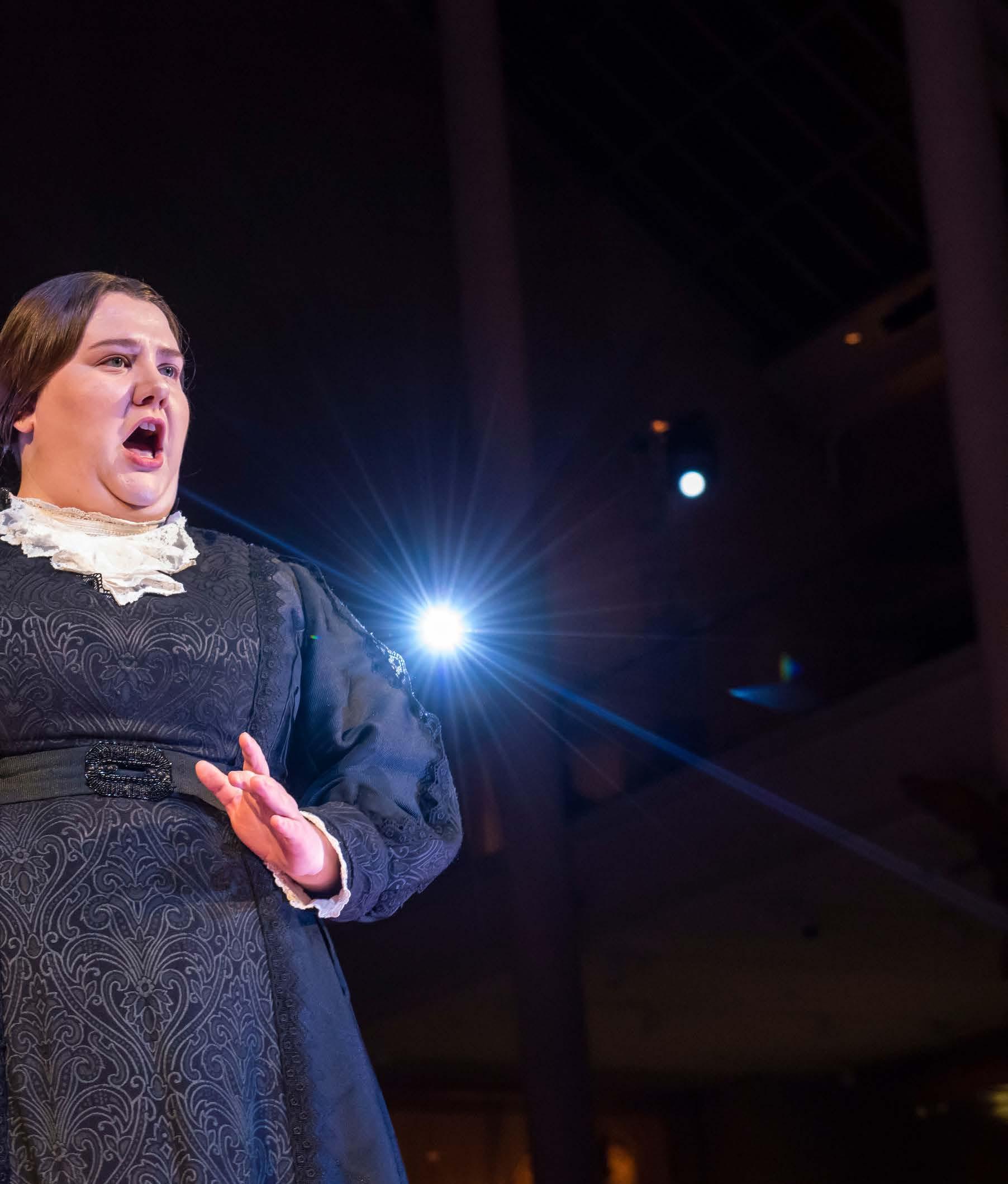
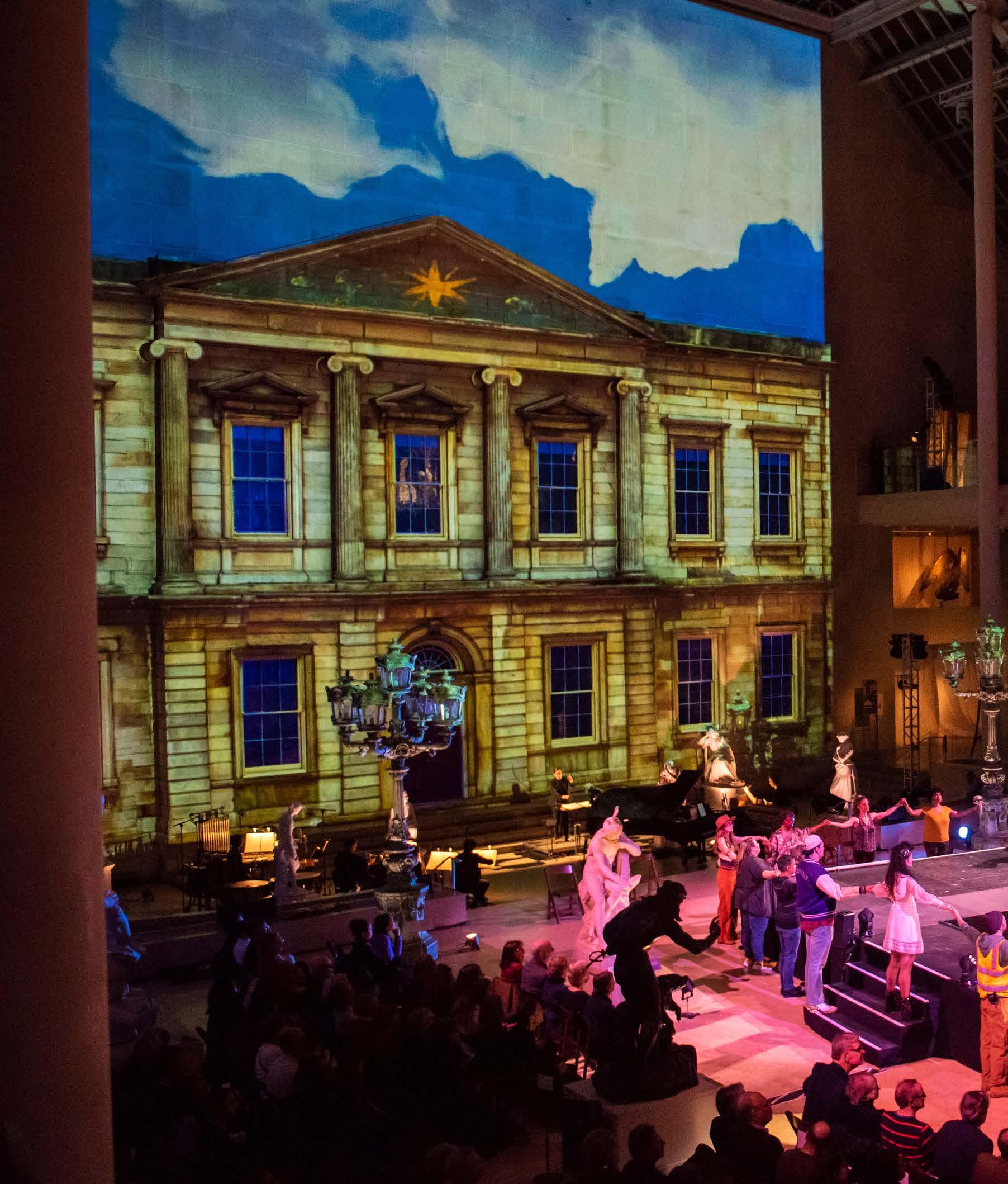
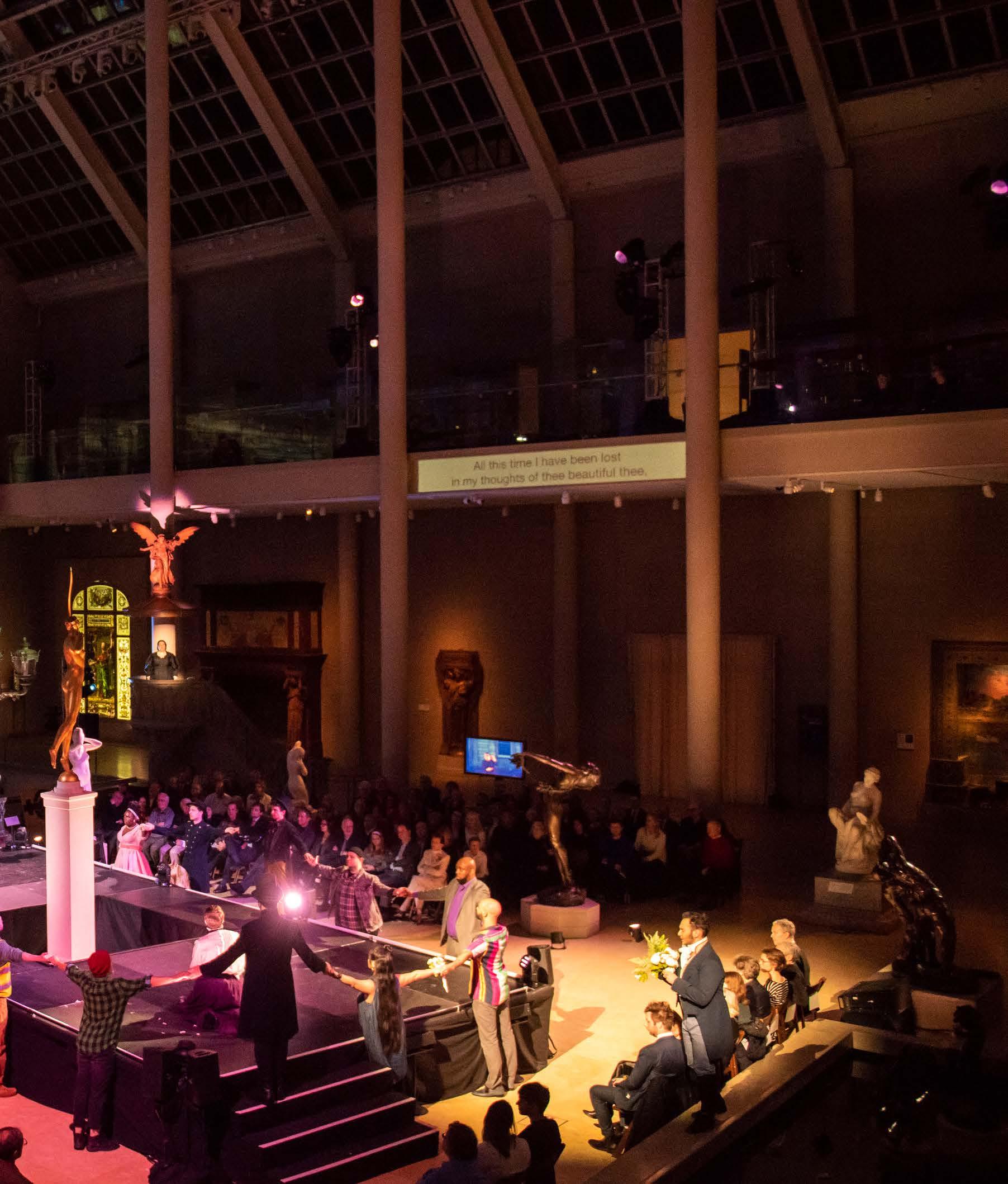
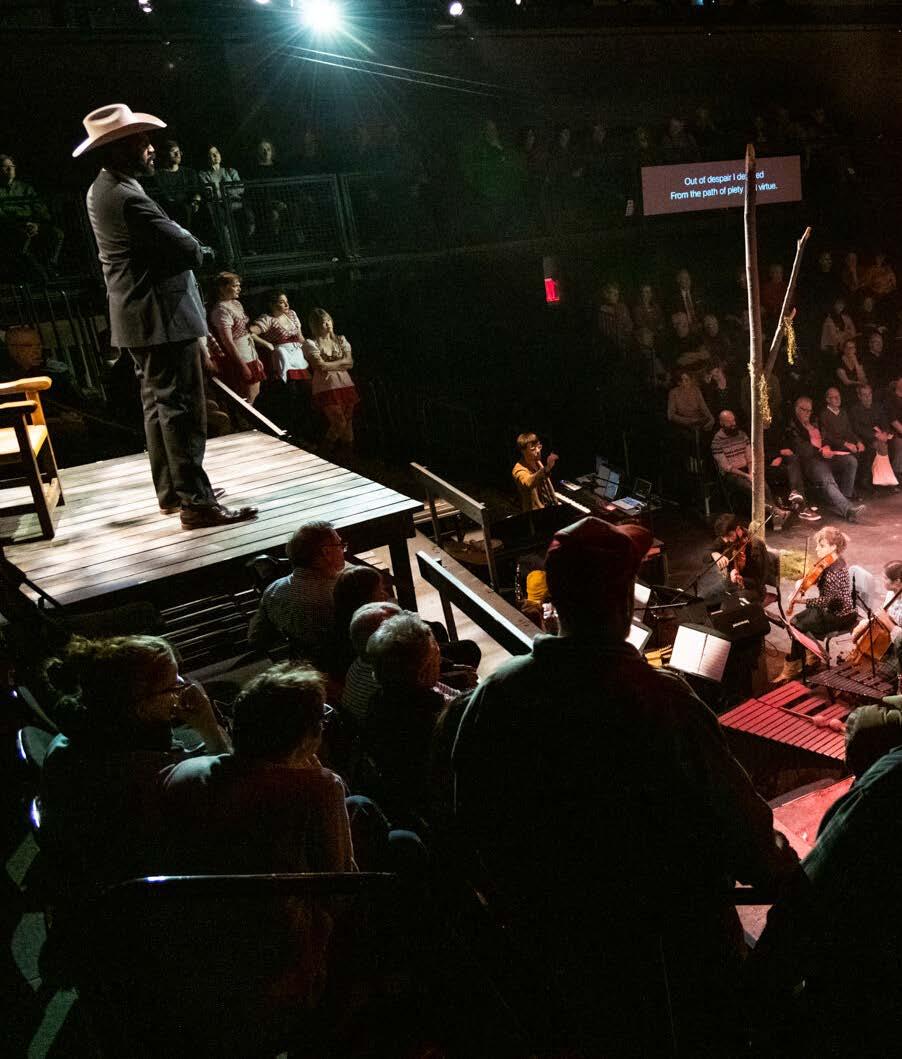
The Mother of Us All chronicles the life of Susan B. Anthony in scenes alternating between private domestic interactions and public engagements. Staged in the MET’s Charles Engelhard Court in the American Wing, I placed the audience around a central platform to create an intimate experience of the opera. The statues in the court were silent relics from America’s past while living recreations of its historical figures sang and danced among them. In the final scene, I designed a broken plinth for the character of Susan B. Anthony to join this silent, marble choir as she sings her final aria.
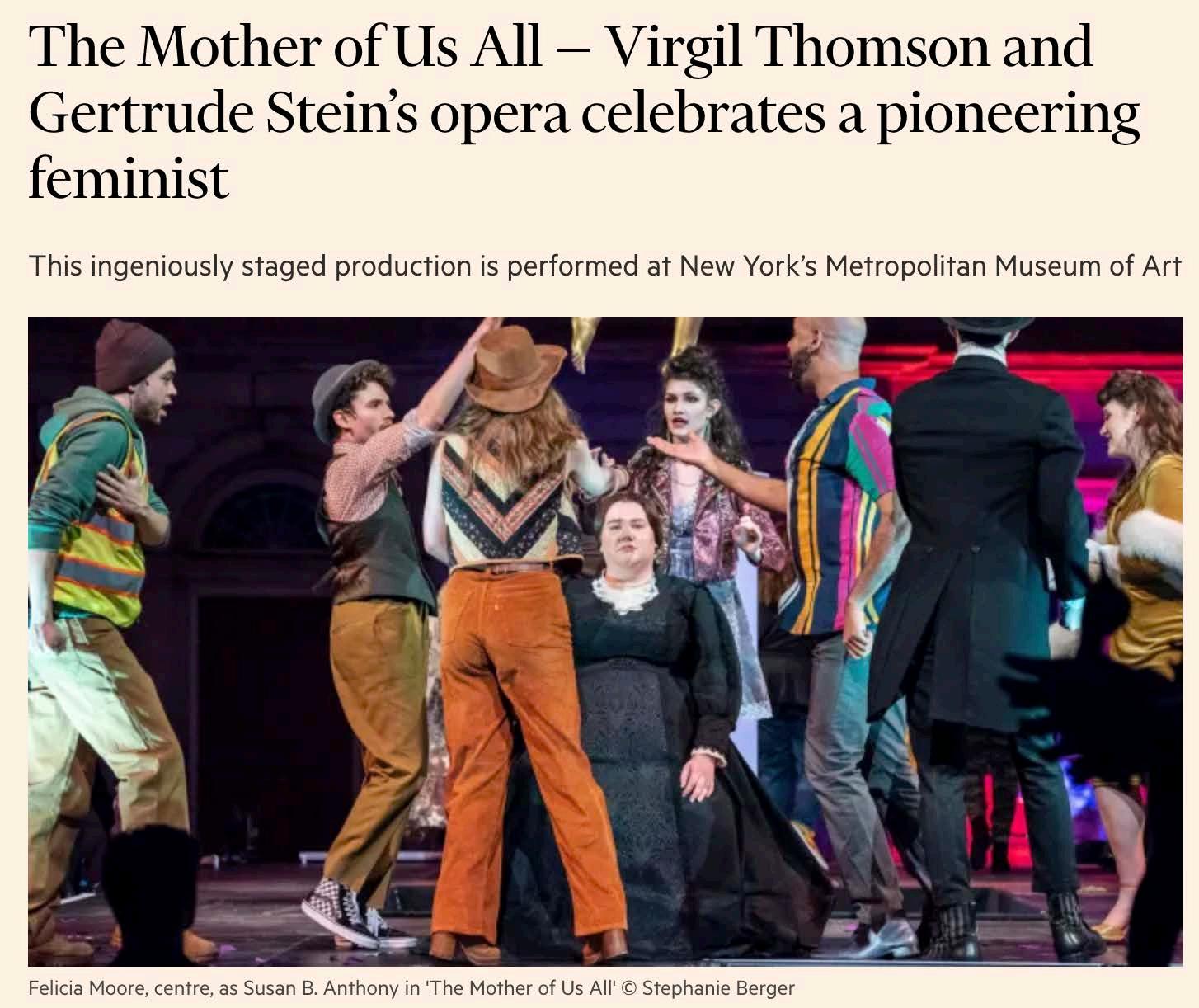
“The audience surrounds a central platform with sculptures remaining in their regular places, their “marble and gold” echoing a phrase from Stein’s libretto. In the middle, appropriately, is the figure of Diana as huntress. “
- John Rockwell, The Financial Times
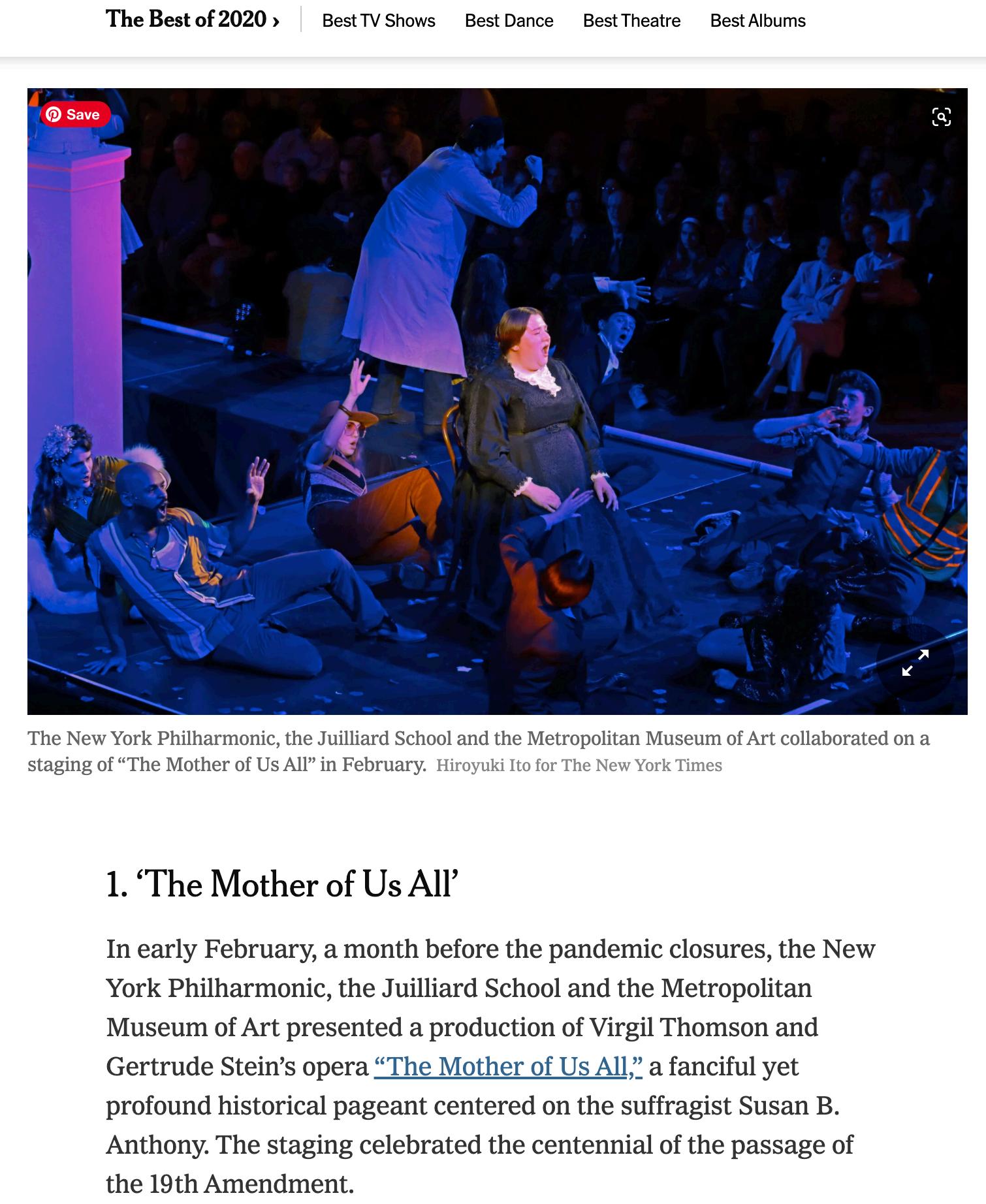
Named a Top Ten Classical Music Event of 2020 by Anthony Tommasini of The New York Times.
Production Photographs by Stephanie Berger
Model Photograph
Sculpture Rendering
Production Photograph
December 2, 2020
February 11, 2020
February 8, 2020
By David Shengold
VIRGIL THOMSON’S 1947 opera The Mother of Us All, a brilliant setting of a wise, moving libretto by Gertrude Stein (who died the year before it had its premiere at Columbia University), remains my candidate for the Great American Opera. Few operas tell us with such pith, wit and wistfulness of what we have accomplished and what not—and at what cost. With the gains in suffrage and equal rights striven for by Susan B. Anthony, the opera’s heroine, under such open attack, the time was right for a pointed new staging, and the opera received a thrilling one from director Louisa Proske, admirably pulling off a three-way cooperation among the New York Philharmonic, the Juilliard School and the Metropolitan Museum. The latter institution’s American Wing’s impressive Engelhard Court proved (literally and figuratively) a resonant place for the production, which opened February 8 for a four-performance run. Would that it could have been longer. And would that the prices charged had been lower, so that the spiritual descendants of Jo the Loiterer—the opera’s impecunious “everyman” foil, voiced with charm, sharp diction and ping by tenor Chance Jonas-O’Toole—could have attended.
Proske’s “in-site” production—smartly utilizing a platform amid the largely female nineteenth-century statuary, video projections of suffragist marches and video screens identifyinging Stein’s cast of characters—could scarcely be preserved on video, which was a real shame: this production managed to parse Stein’s somewhat elliptical but very rich text in a meaningful way, neglecting neither the issues raised nor the human emotions generated. (Nineteenth-century public discourse inspires the piece, through a twentieth-century modernist lens.) Zoe Scofield’s unforced choreography, Beth
Goldenberg’s diverse, telling costumes and Barbara Samuels’s keenly plotted and ravishing lighting guaranteed a veritable visual feast.
The opera’s nonpareil narrative revolves around three couples—Jo the Loiterer and his eventual wife, Indiana Elliott; John [Quincy] Adams and Constance Fletcher, the beloved whom New England propriety keeps him from pursuing; and, most of all, the tireless orator Susan B. and her companion and sometimes unacknowledged support, Anne (American opera’s first same-sex couple). Plot strands addressing race, class and xenophobia surface throughout the evening, although women’s suffrage is the primary focus: the staging began with Andrew Johnson (fine lyric tenor Richard Pittsinger) barring Susan B.’s attempt to vote. Tellingly, Susan B. identifies the roots of male violence in fear—of women, of people of color, of foreigners, of one another. At the opera’s end, after suffrage (a mere 100 years ago) and after a posthumous statue of Susan B. is unveiled in Washington, prompting a kind of “Movement” reunion, she sings her heartbreaking final monologue. All her followers paid her homage and left—but here, the black-clad, top-hatted three V.I.P.s (Adams, Johnson and rival orator Daniel Webster) angrily stomped on the ballot box.
There were acoustical challenges, with close miking and inevitable reverberation, but the text emerged quite clearly, thanks to the sound design of Mark Grey. The gifted Daniela Candillari conducted a half-dozen ace Philharmonic players and a chorus of ten capable professionals, expressively shaping Thomson’s quirky mix of homespun and hymn with Satie- and Nadia Boulanger-imparted texture. All the students displayed vocal talent. In bearing and in ringing sound, tenor Ian Matthew Castro, the production’s Adams, seems destined for such roles as Lensky and Narraboth (both City Opera assignments of Mother’s first Adams, William Horne). Yvette Keong’s slyly inflected performance as Henrietta M. showed clarity and promise, as did Erin Wagner’s touching Anne. Deborah Love’s rich timbre graced Constance Fletcher’s lines, and lyric soprano Jaylyn Simmons, who also moved beautifully, sounded absolutely magical as Angel More.
The whole enterprise centered on Juilliard alumna Felicia Moore, a genuine jugendliche dramatische soprano of exciting potential (and present accomplishment). Giving sharp profile to Susan B.’s moods and utterances, Moore soared through her testing music with stunning beauty and accuracy, heroically anchoring a memorable evening.
Der Freischütz
Heartbeat Opera
Premiere: December 4, 2019 in the Rose Nagelberg Theatre at the Baruch
Performing Arts Center, NYC
Composed by Carl Maria von Weber
Libretto by Friedrich Kind
Concept and Adaptation by Louisa Proske
Directed by Louisa Proske and Chloe Treat
Newly arranged and music directed by Daniel Schlosberg
New English dialogues by Michaël Attias and Louisa Proske
Sets By Sara Brown
Costumes by Beth Goldenberg
Lights by Oliver Wason
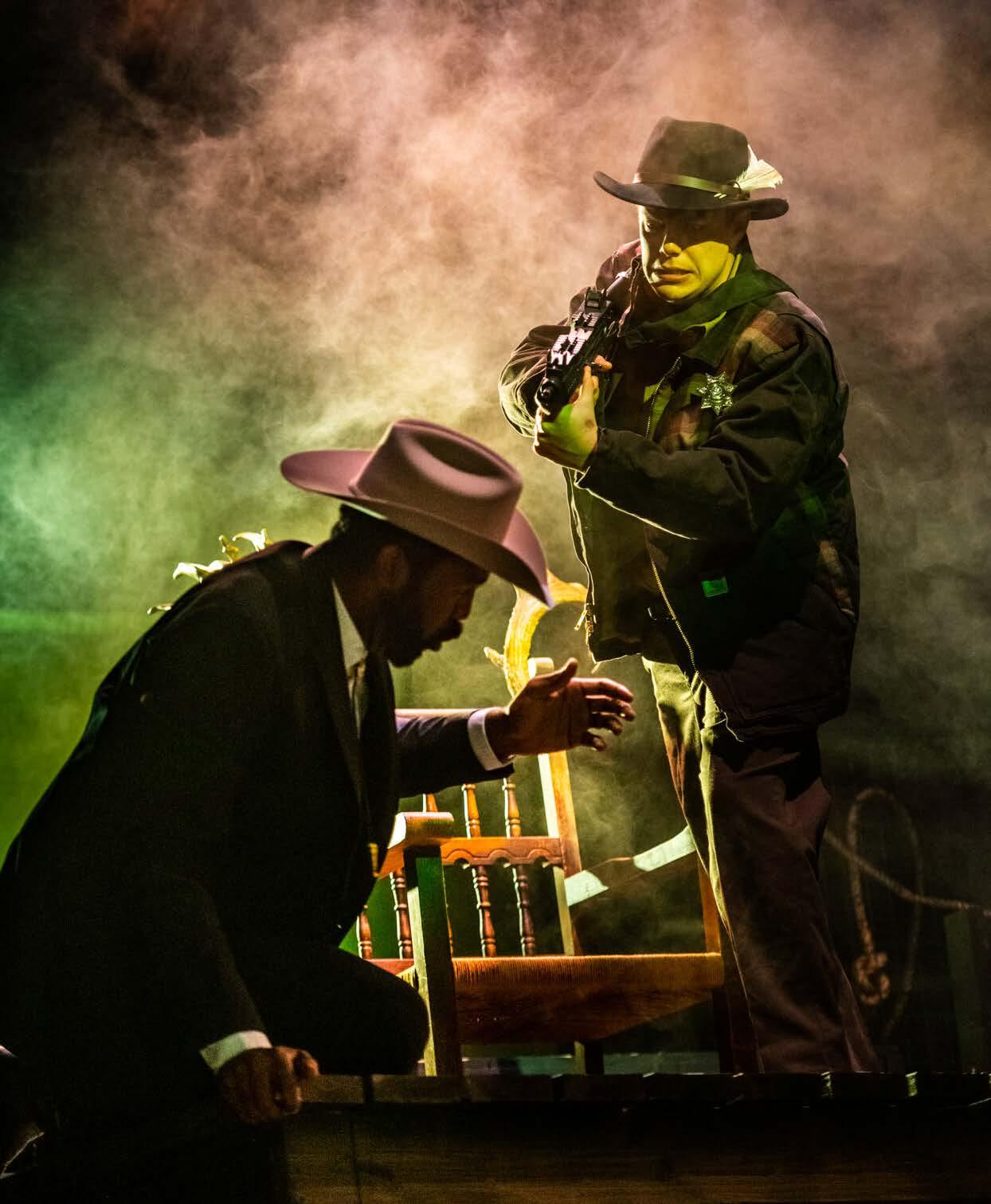
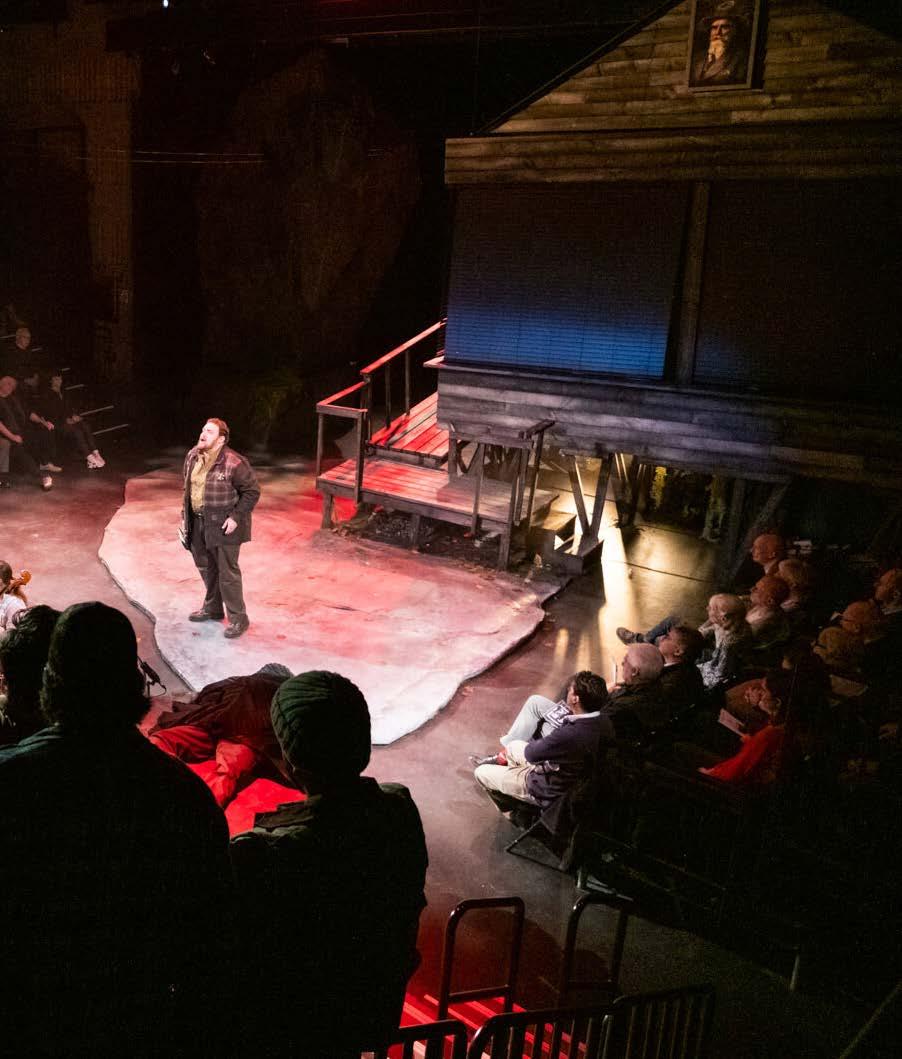
Der Freischütz tells the Faustian tale of a forester who is tricked into making a deal with the supernatural huntsman Samiel in order win the hand of his beloved Agathe.
For Heartbeat Opera’s adaptation of Weber’s romantic opera, I created a landscape in the theater that placed the musicians, singers, and audience in a compressed, intermingled space. I mined the work of rural American photographer Shelby Lee Adams and images by the German Romantic painter Caspar David Friedrich to guide me to create this world ruled by superstition, guns, and blood ties.
“The Texas town we encounter here — centered on a ramshackle tavern, in Sara Brown’s imaginative set — is steeped in toxic masculinity, gun culture and the demonization of outsiders.”
-Anthony Tommasini, The New York Times
Production Photographs by Russ Rowland
Model Photograph
December 5, 2020
By Anthony Tommasini
Before the start of Heartbeat Opera’s production of Weber’s “Der Freischütz,” which opened on Wednesday at the Baruch Performing Arts Center in Manhattan, Louisa Proske, who conceived and co-directed the staging, told the audience that the mission of this small but ambitious company was to present “radical adaptations” of familiar works.
On that count, this inventive “Freischütz” delivered. The story was shifted from a rustic community in mid-1600s Bohemia to a town in contemporary Texas. Yet the updating was actually the least radical element.
“Der Freischütz,” which loosely translates as “The Marksman” and runs at Baruch through Dec. 14, takes place in the aftermath of the Thirty Years’ War. It is a culture in which hunting and marksmanship are rituals of manhood; where rowdy gatherings at the local tavern and sentimental paeans to healthy rural life go hand in hand; and where citizens are prone to superstition and see evil forces at work everywhere.
The translation of this story into contemporary American life was “disturbingly easy,” as Chloe Treat, Ms. Proske’s co-director, said in a recent interview with The New York Times. The Texas town we encounter here — centered on a ramshackle tavern, in Sara Brown’s imaginative set — is steeped in toxic masculinity, gun culture and the demonization of outsiders.
Weber’s main character, Max, is a decent but weak-willed assistant forester who wants to inherit the top job — and with it the de facto leadership of the town — from Kuno, as well as marry Kuno’s winsome daughter, Agathe. But first he must prove himself in a shooting contest. In this staging, Kuno became the town’s sheriff, with Max his earnest but bumbling
deputy, routinely subjected to bullying by the community’s young alpha men. Many opera stagings update works in just this way. But Heartbeat Opera is far more unusual in its tweaking (and trimming) of librettos and its reorchestration of scores. Passages of spoken dialogue in this “Freischütz” have been rewritten and are delivered with salty American slang. And the music director, Daniel Schlosberg, has effectively transformed Weber’s colorful score for seven players, some on multiple instruments.
But that’s not all. For Weber’s most original scene, which takes place in the haunted Wolf’s Glen, Mr. Schlosberg has transformed the orchestration into a collage of electronic and acoustic sounds, in effect a recomposition, set here in the smoky, mysterious Wolf Canyon.
Why not? “Der Freischütz,” a seminal German opera first performed in 1821, remains a rarity in America. Weber dared to mix opulent arias and ensembles with catchy songs and dances, hints of folk tunes and spoken drama, all to conjure a world of both everyday life and fantasy. Heartbeat’s production team wanted to delve into the work’s disturbing, timely subtexts by streamlining and modernizing it. They succeed.
The most daring adaptation concerns the character of Kaspar, Max’s rival, who has made a Faustian pact with a devilish spirit, Samiel (here played by the sinewy dancer Azumi O E). Heartbeat’s Kaspar is a returning Iraq war veteran — a brutish and maniacal but surprisingly sympathetic character, sung on Wednesday by the robust bass-baritone Derrell Acon. (The main roles are double cast for the run.)
Weber’s Kaspar draws on dark spirits to lure Max into a web of darkness. Heartbeat’s version, by contrast, is a cynical realist who knows firsthand what killing involves. Where he has been, marksmanship is not just proof of manliness, but also means of survival.
The husky-voiced tenor Ian Koziara made a vulnerable Max, hamstrung by bullying and desperate to find some means — any means — to prevail. The soprano Summer Hassan brought an ample, dark-hued voice to Agathe. Quentin Oliver Lee as Kilian, a big-shot townsman, and Kevin McGuire, as Kuno, were both excellent. The bright-voiced soprano Jana McIntyre was wonderful as Annchen, Agathe’s sassy cousin.
While the dialogue is spoken in English, all the music is sung in the original German. By keeping the music in the original language and style, the contrast between American ambience and classic Romanticism made a powerful impact. Here was a rare presentation of the work that would define 19th-century German opera, made topical in a way that both respected Weber and stretched him.
The Prince of Providence
The Trinity Repertory Theater
World Premiere: September 12, 2019 in the Sarah and Joseph Dowling, Jr. Theater, Providence, RI
Written by George Brant
Based on the book The Prince of Providence by Mike Stanton
Directed by Taibi Magar
Sets by Sara Brown Lights by Dan Scully
Costumes by Olivera Gajic Sound by Mikaal Sulaiman
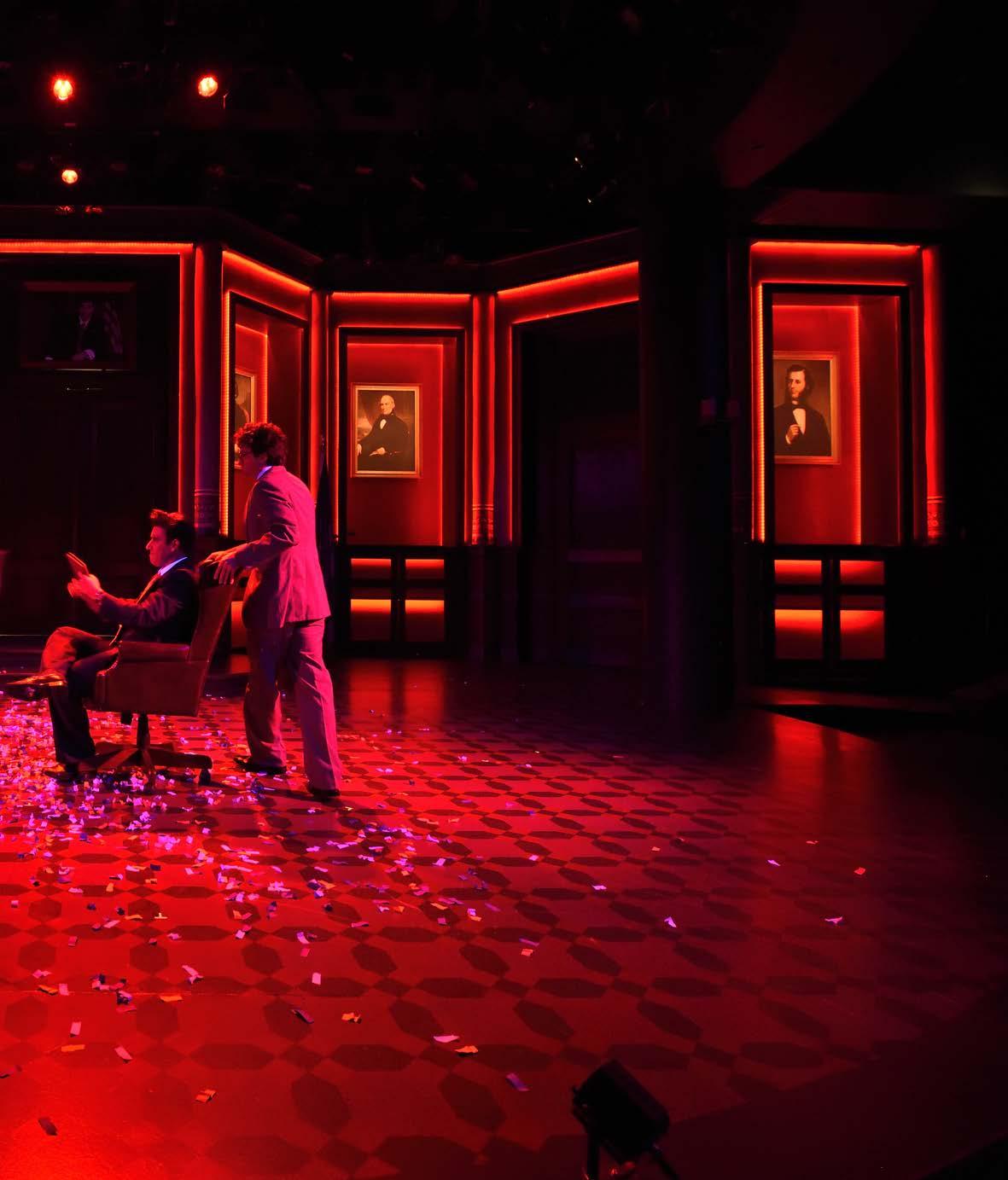
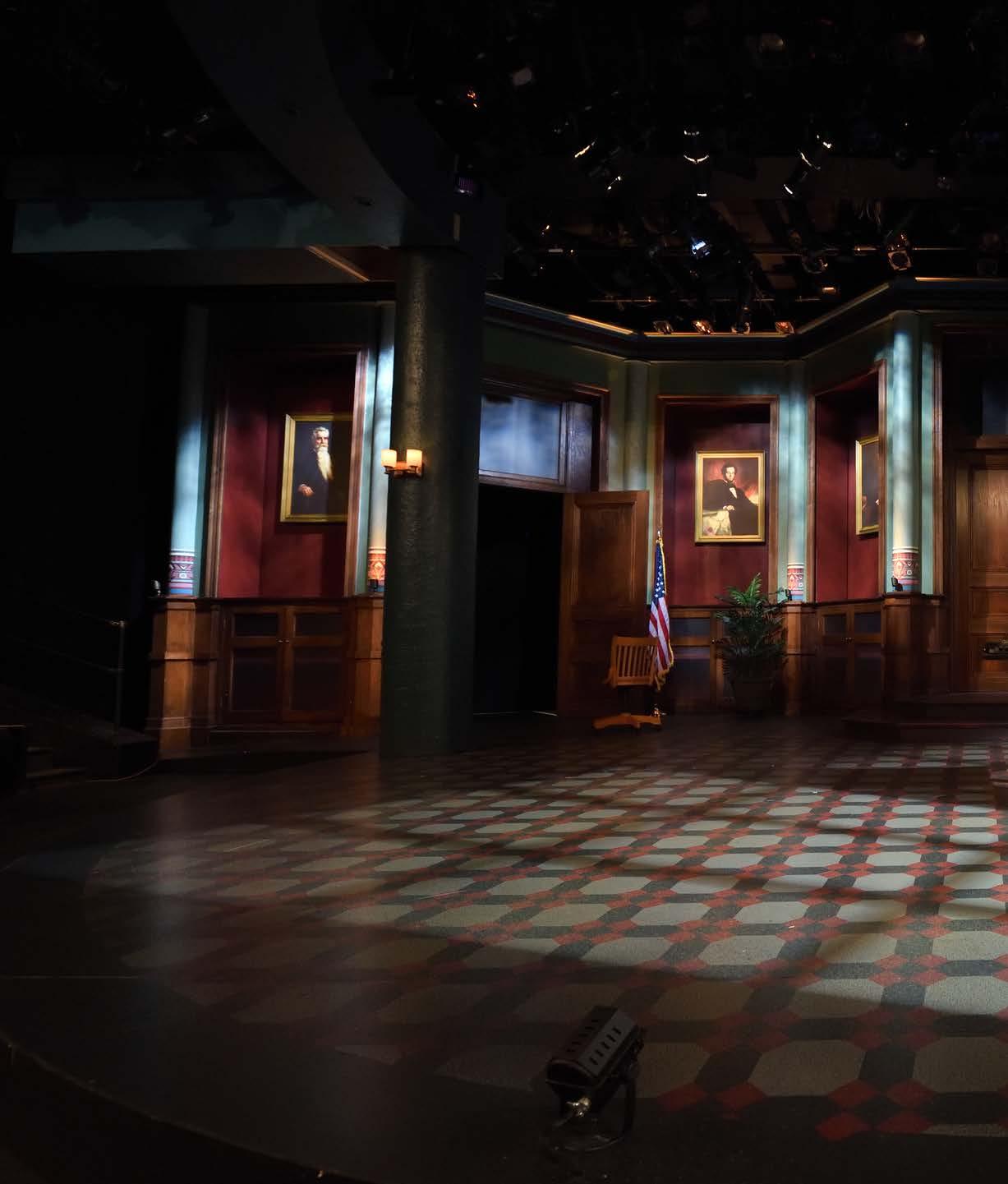
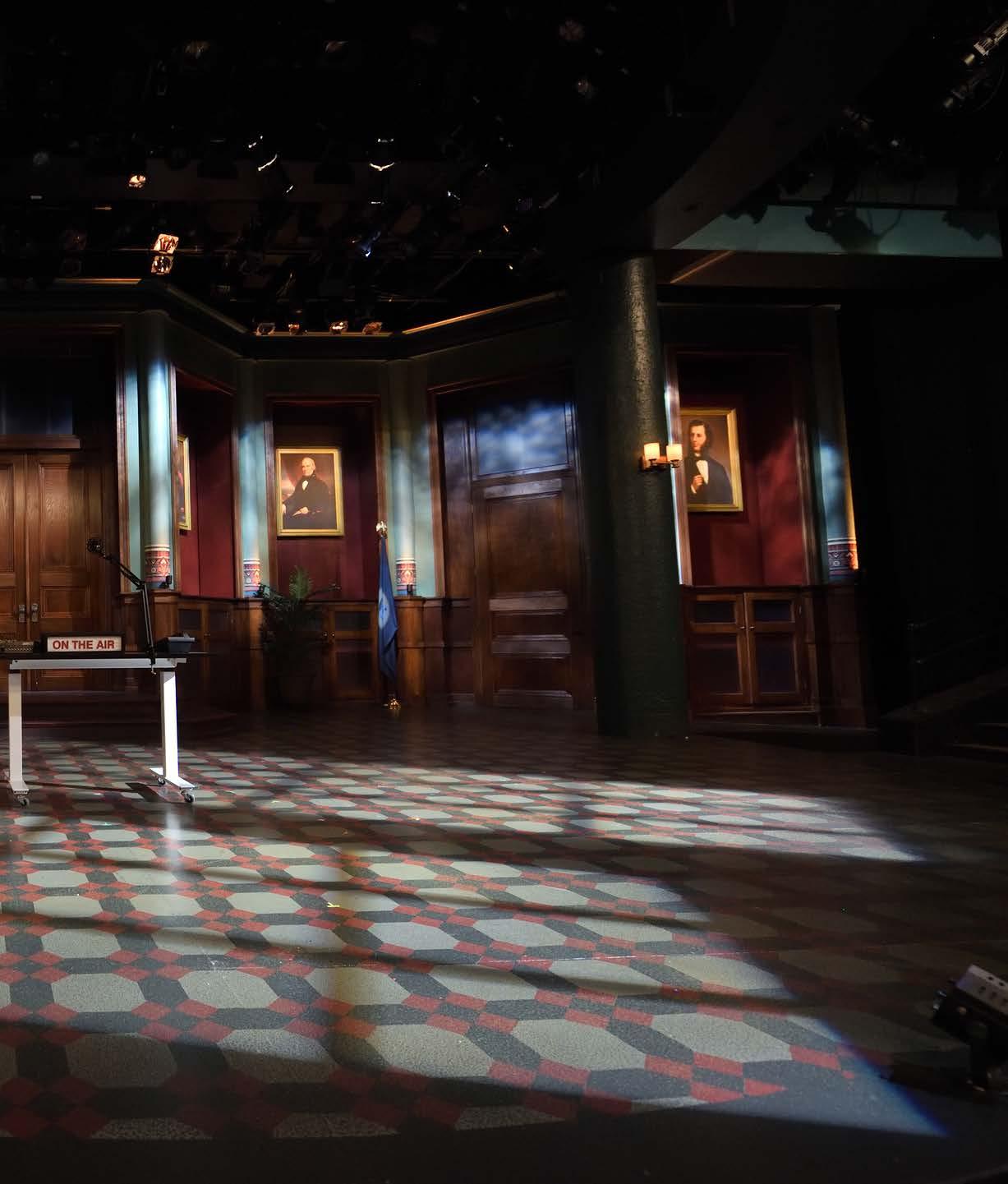
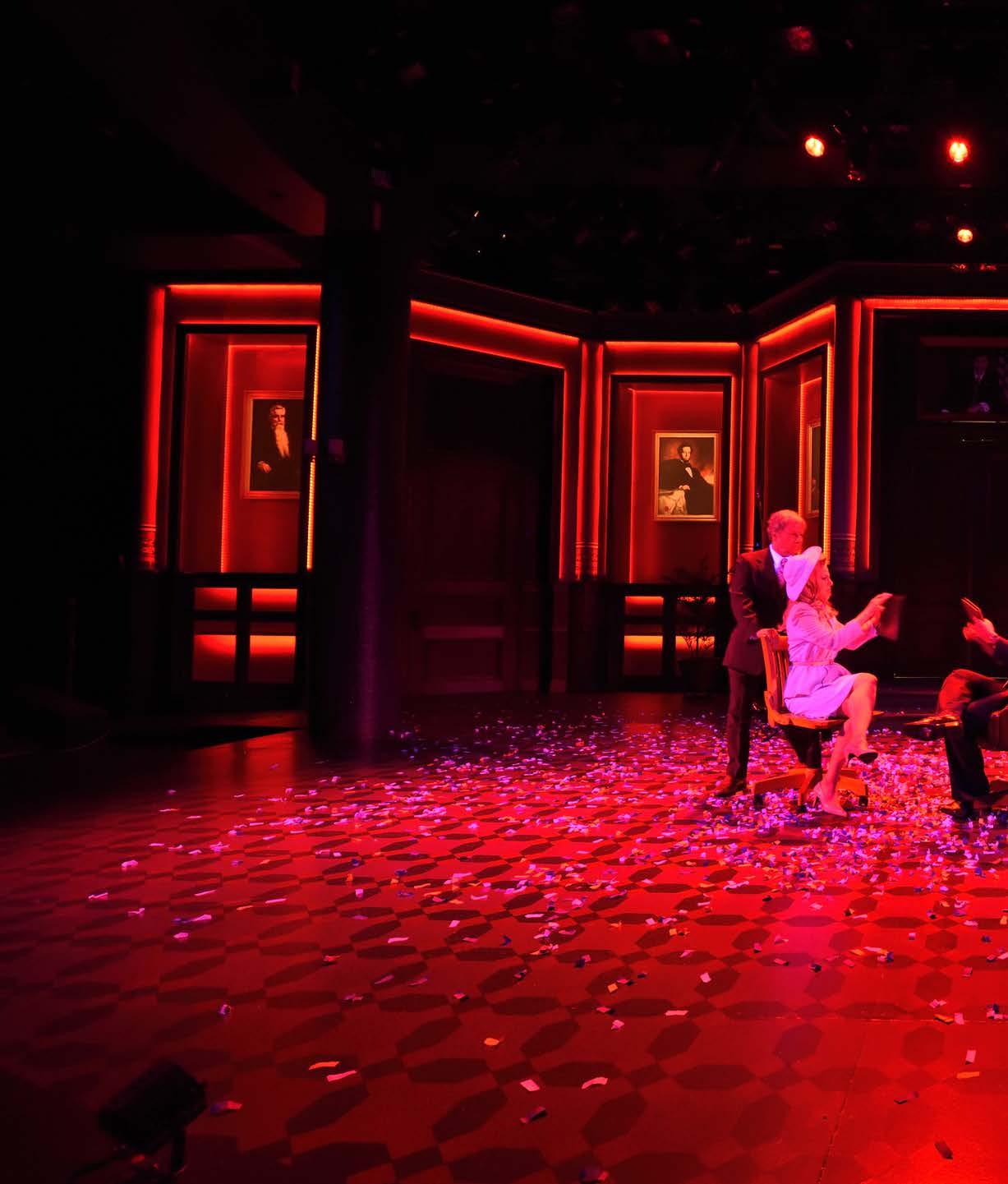
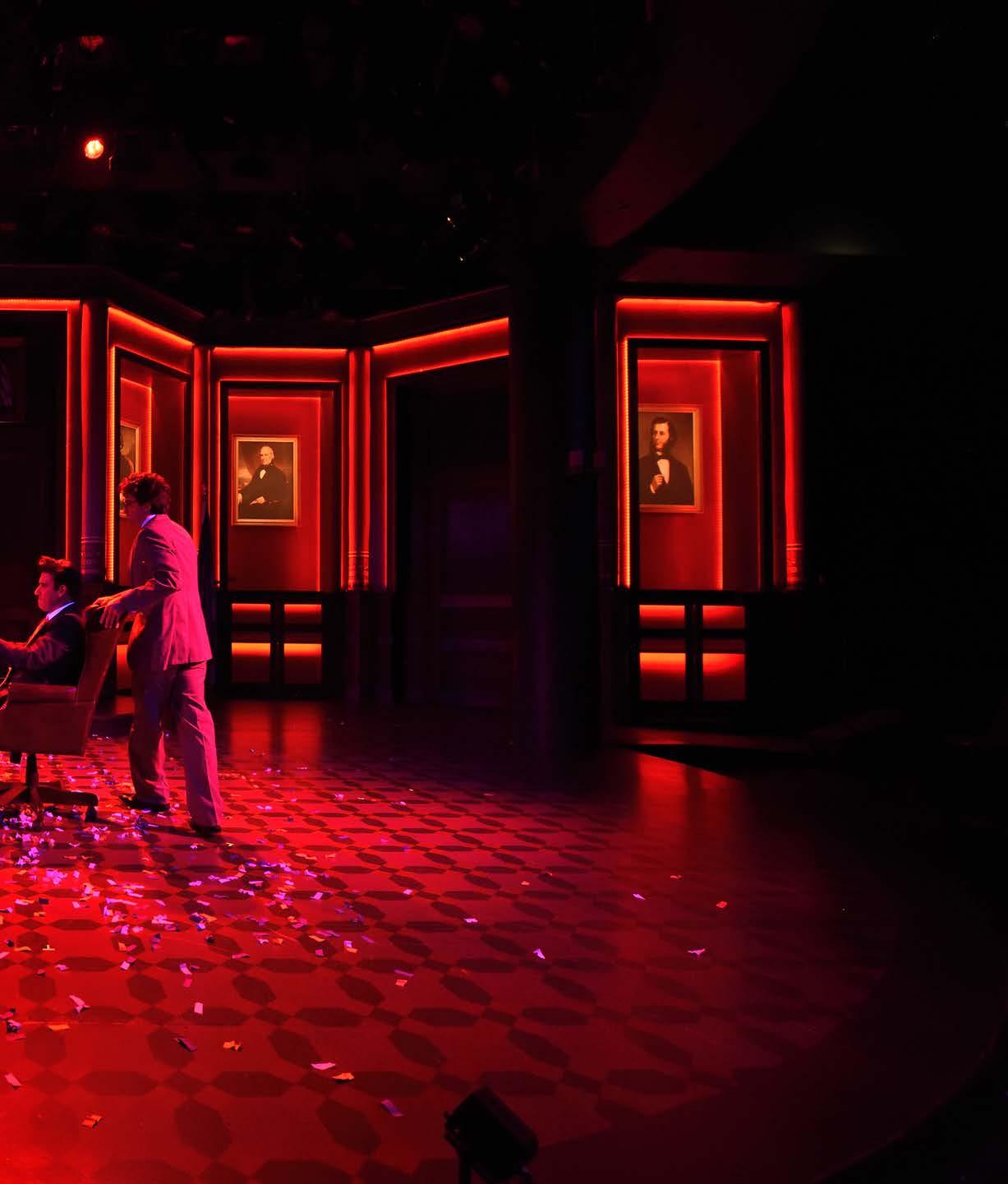
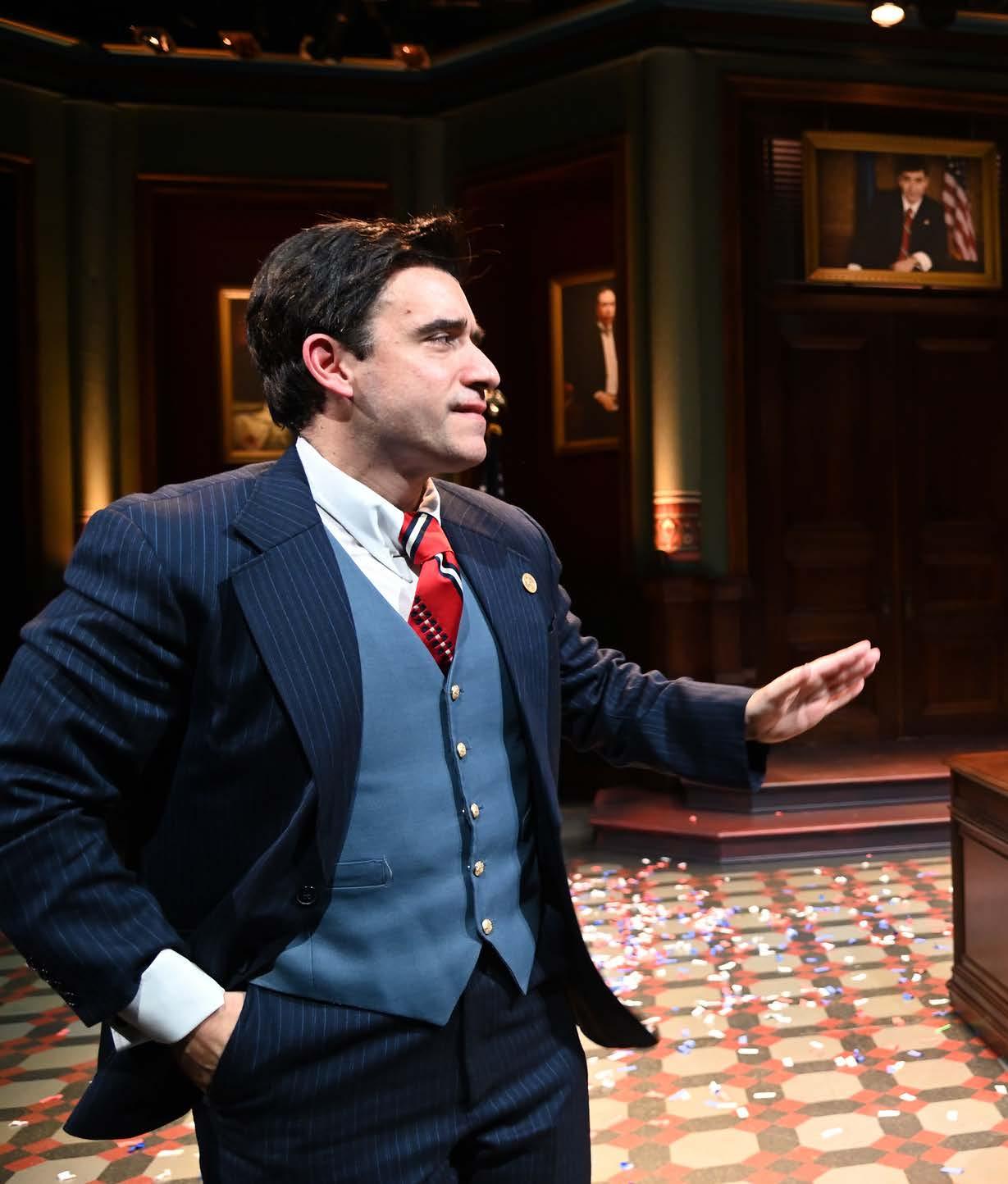
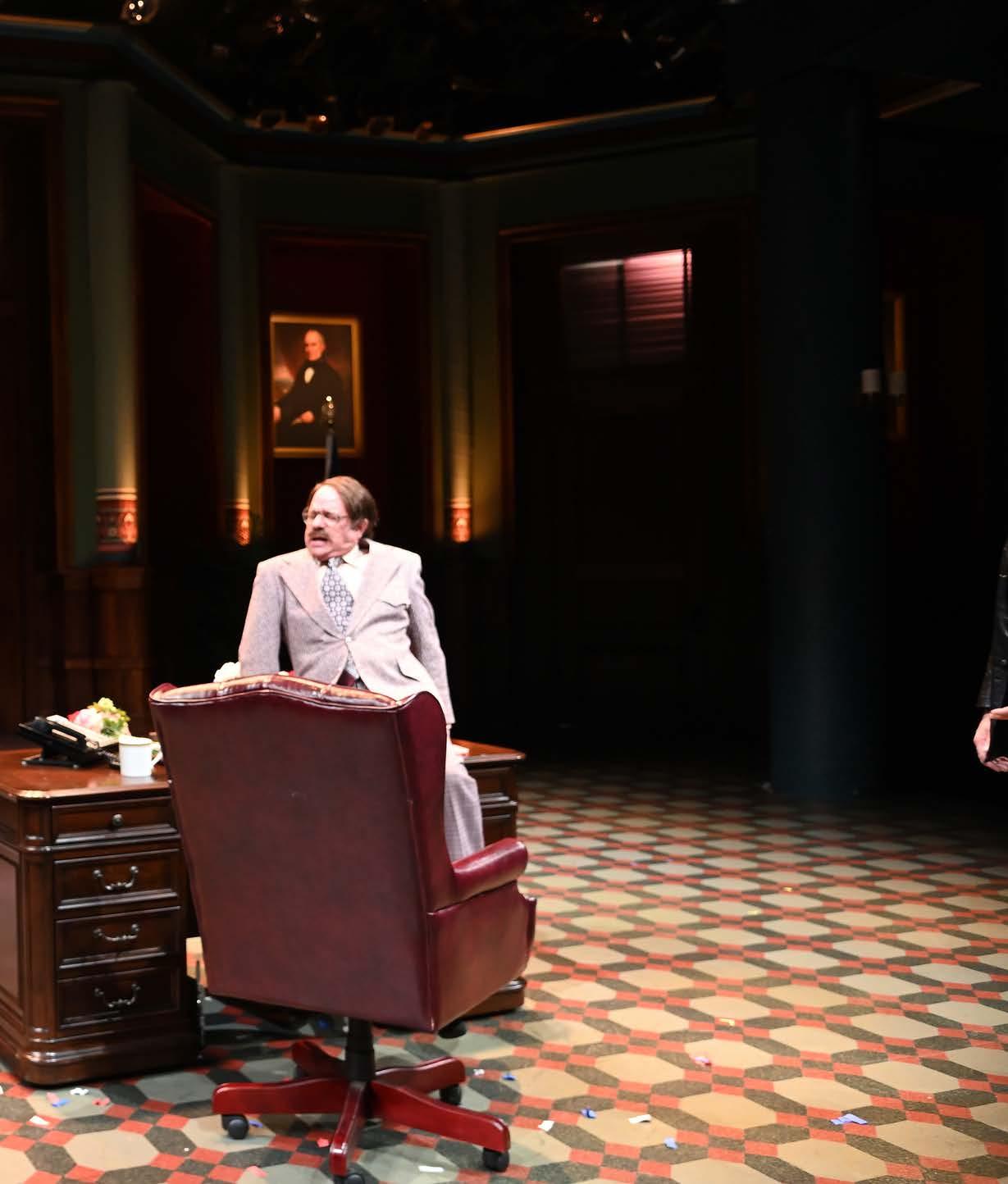
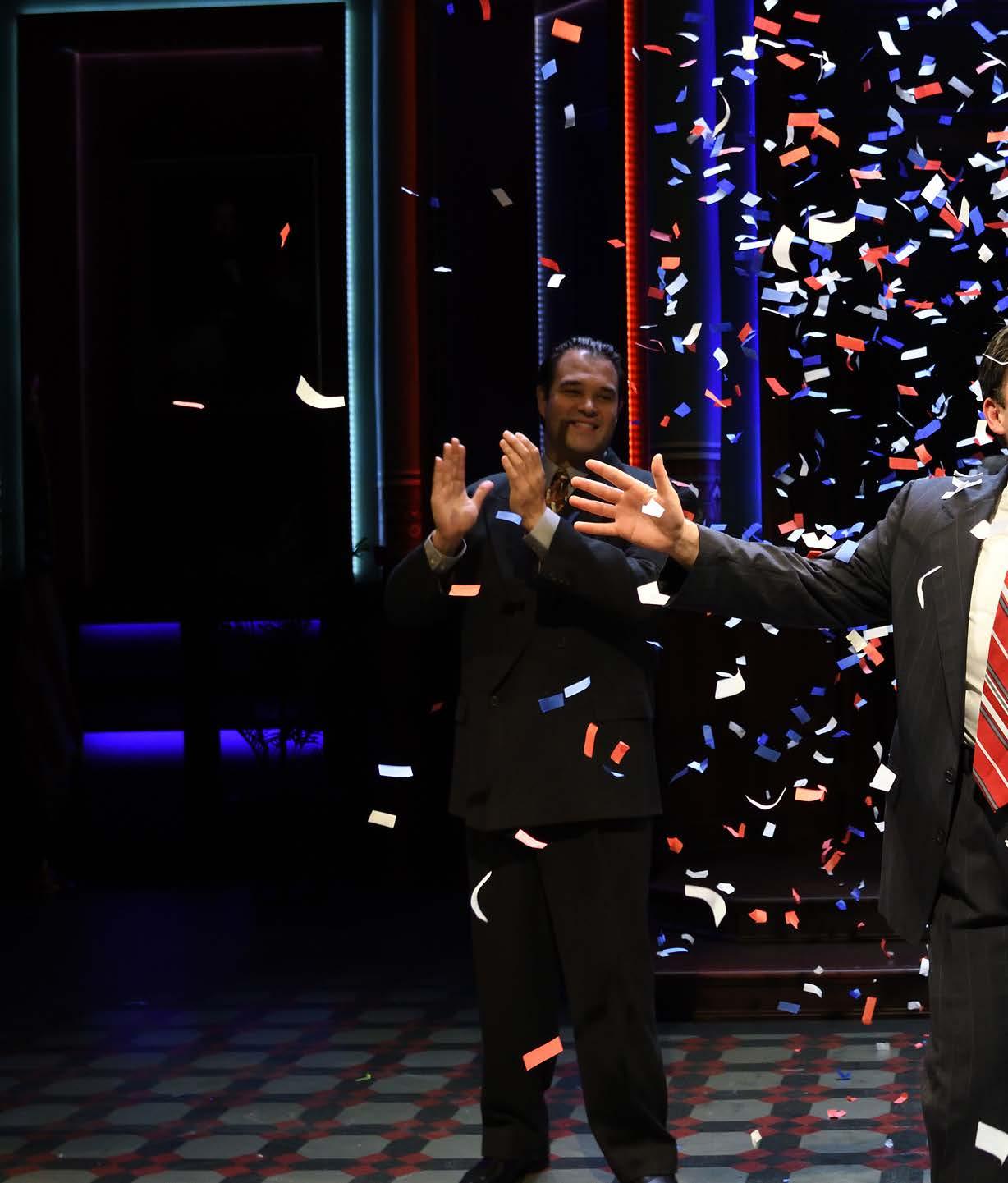
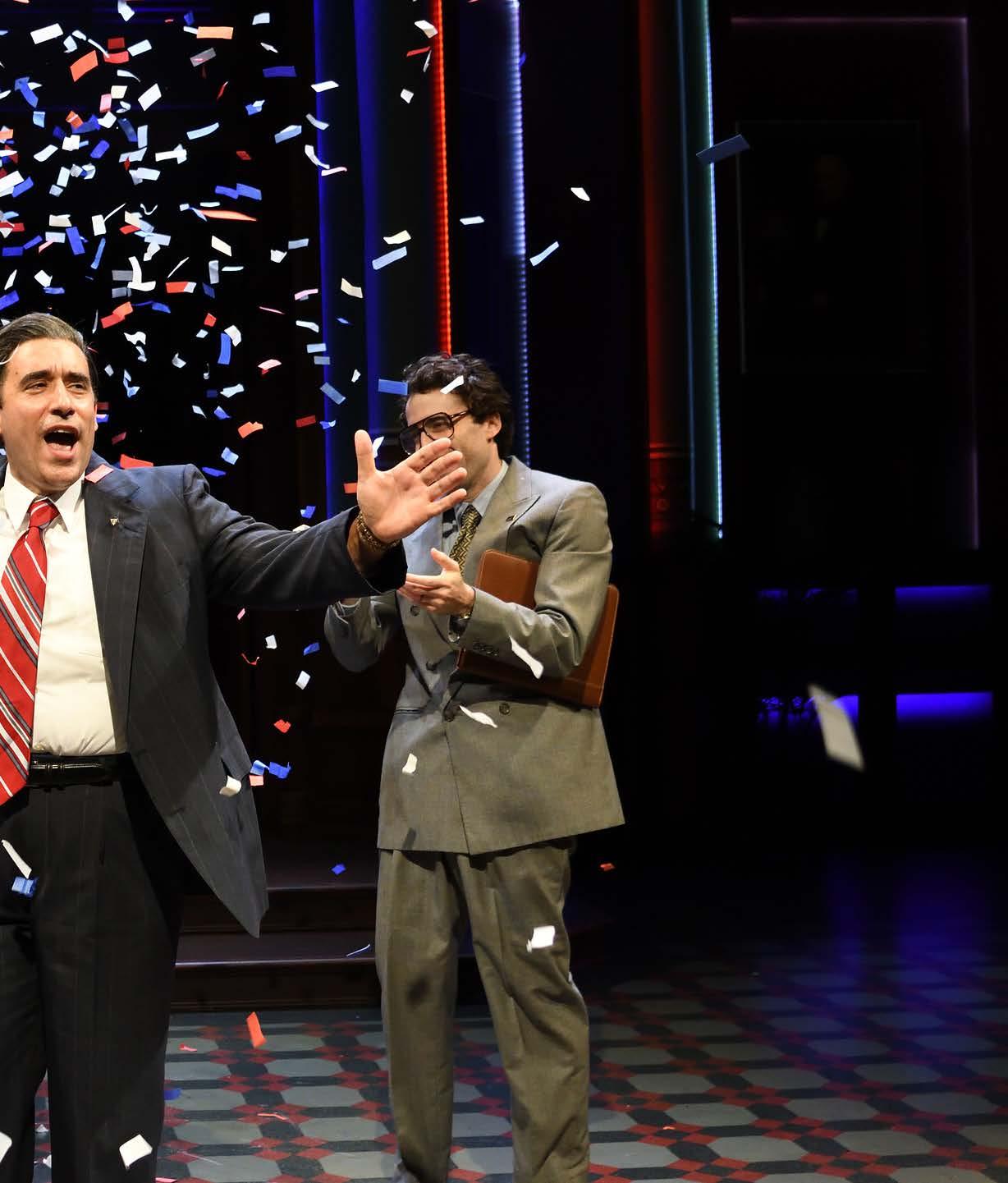
The Prince of Providence tells the epic story of Providence Mayor Buddy Cianci, chronicling his rise to power, his corruption, and downfall. The set was inspired by the Alderman Chambers at Providence City Hall, a Beaux-Arts building completed in the 1870s, and serves as a stately setting of institutional power. Scenes of Cianci’s crimes unfolded on stage while former Mayors of Providence looked down from their portraits.
Production Photographs by Mark Turek
Model Photograph
The Day
World premiere: July 31, 2019 at Jacob’s Pillow in the Doris Duke Theatre, Beckett, MA
Additional presentations held through 2020 at venues including: Carolina
Performing Arts, UCLA, The Joyce Theater, New York City, The Kennedy Center, Théâtre de la Ville at Espace Cardin; Paris, France, San Francisco Performances.
Performed by Maya Beiser and Wendy Whelan
Choreographed by Lucinda Childs
Words and Music by David Lang
Sets by Sara Brown
Lights by Natasha Katz
Video by Josh Higgason
Costumes by Karen Young
Sound by Dave Cook
Creative Producer Maya Beiser
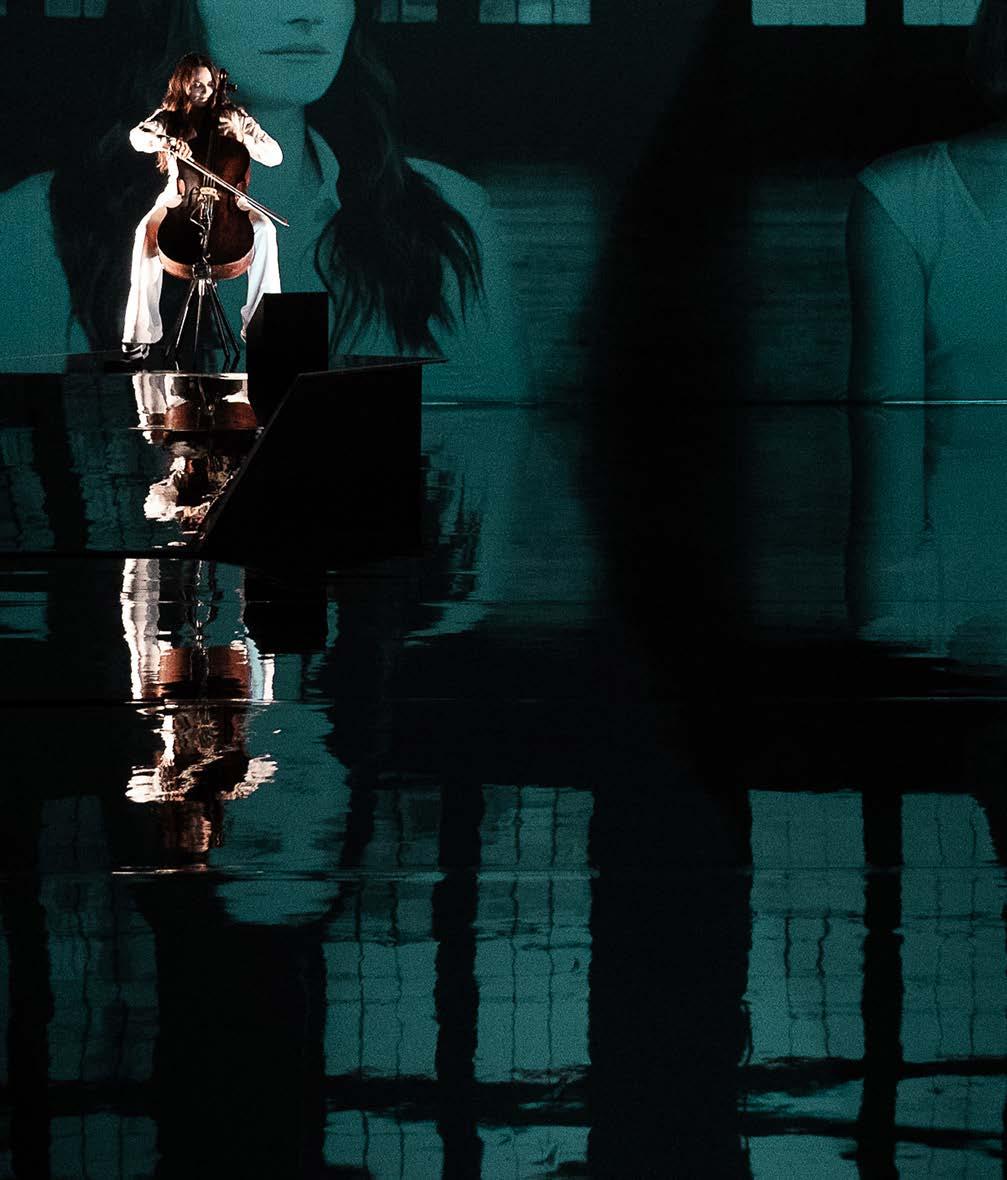
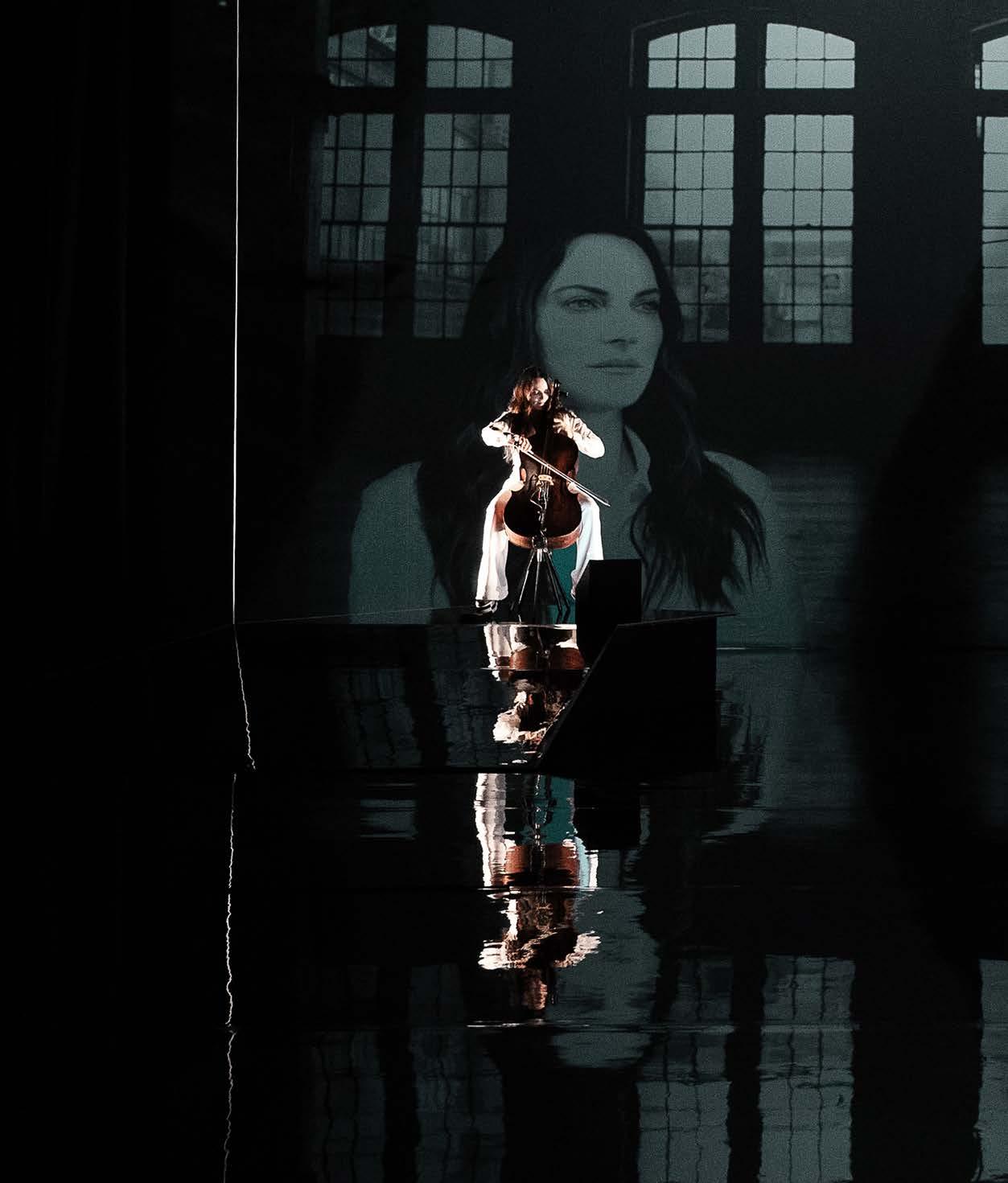
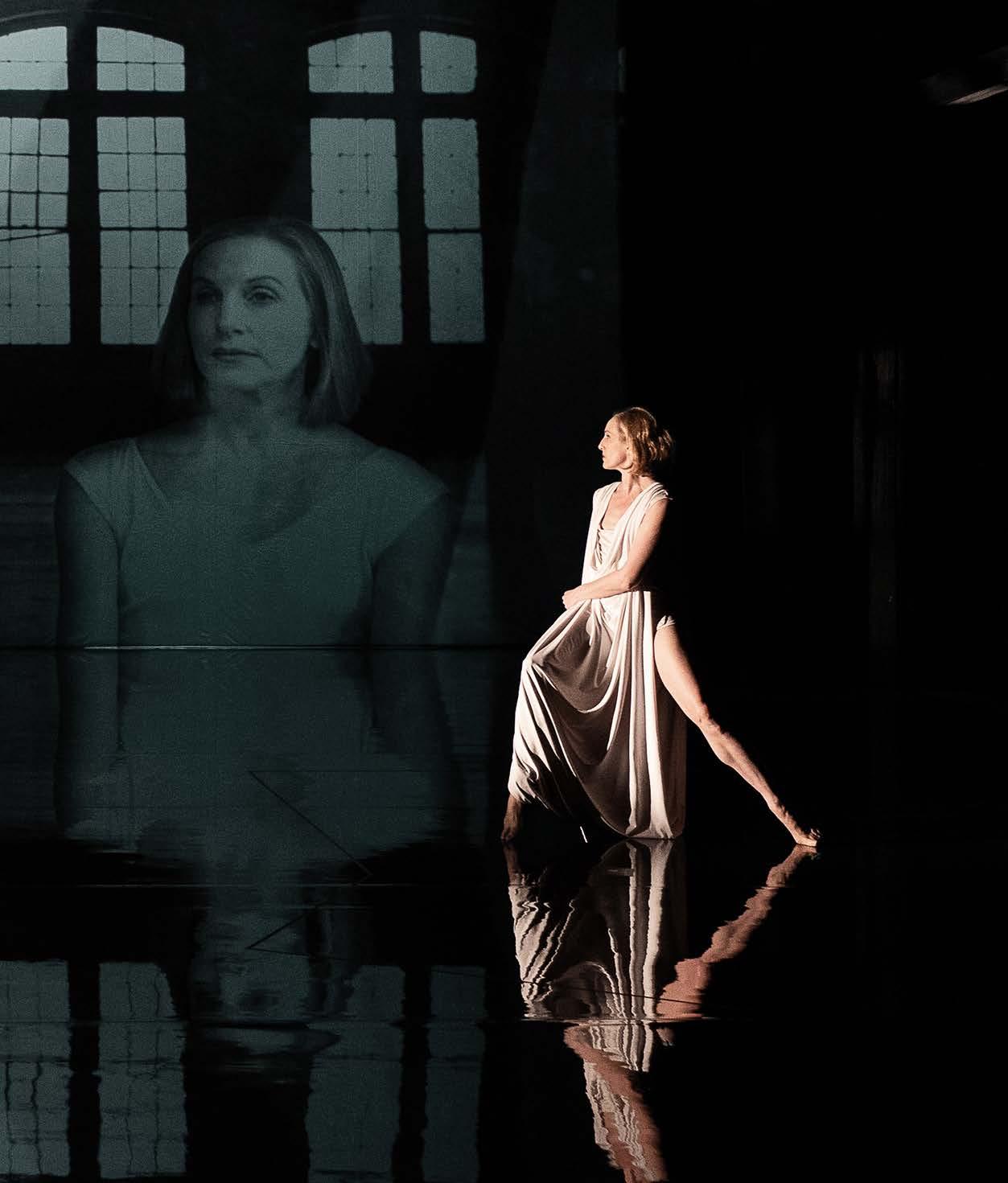
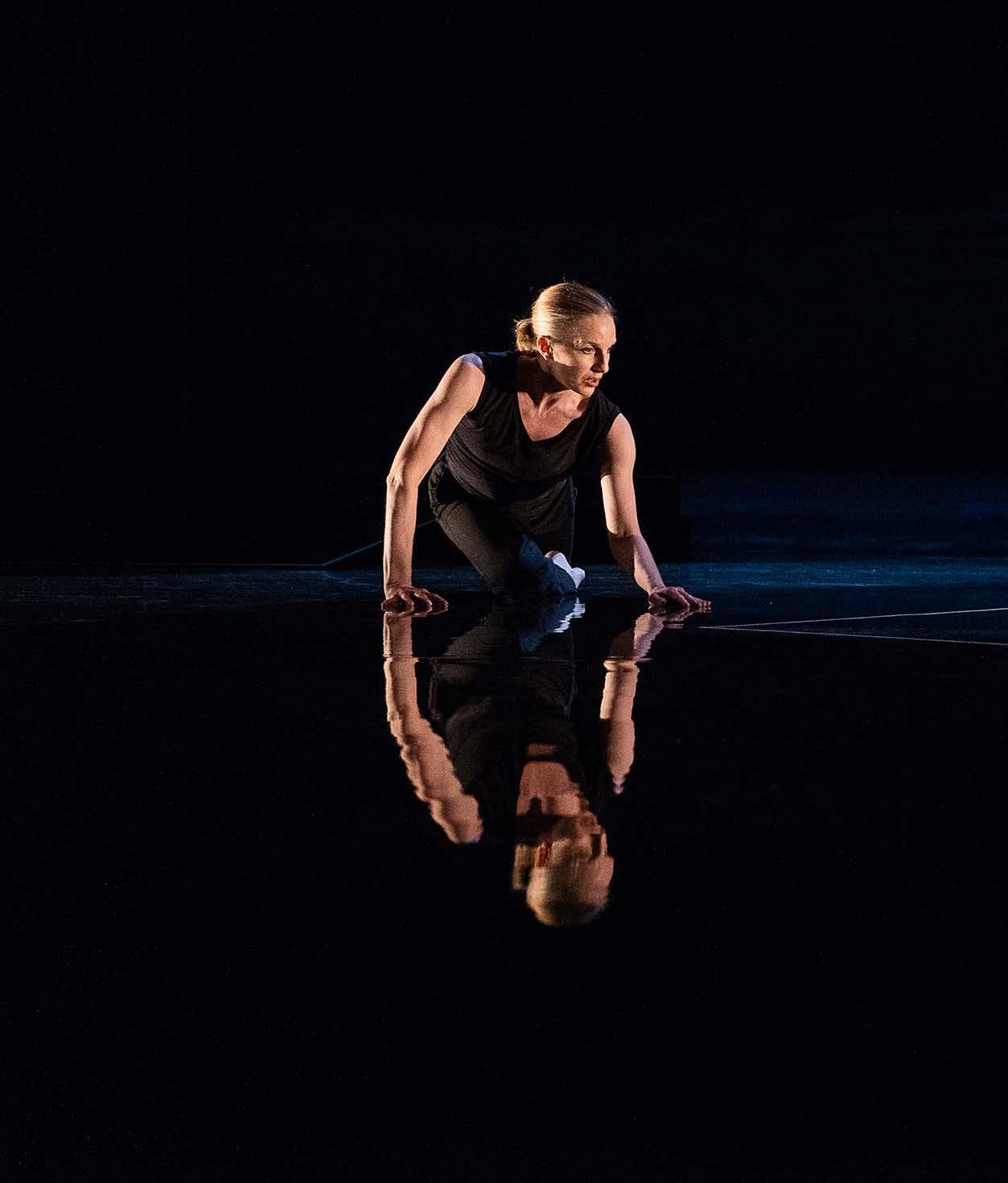
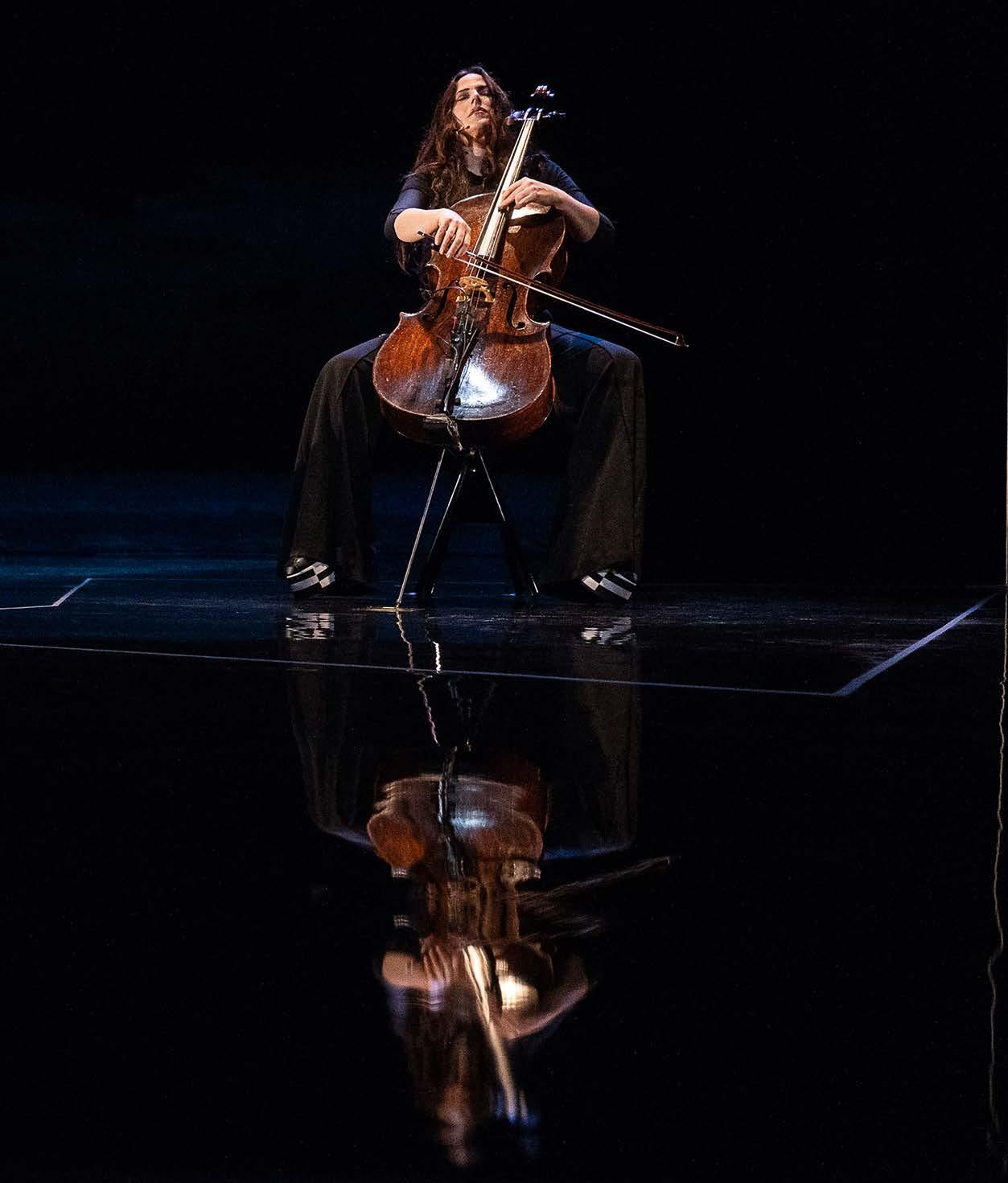
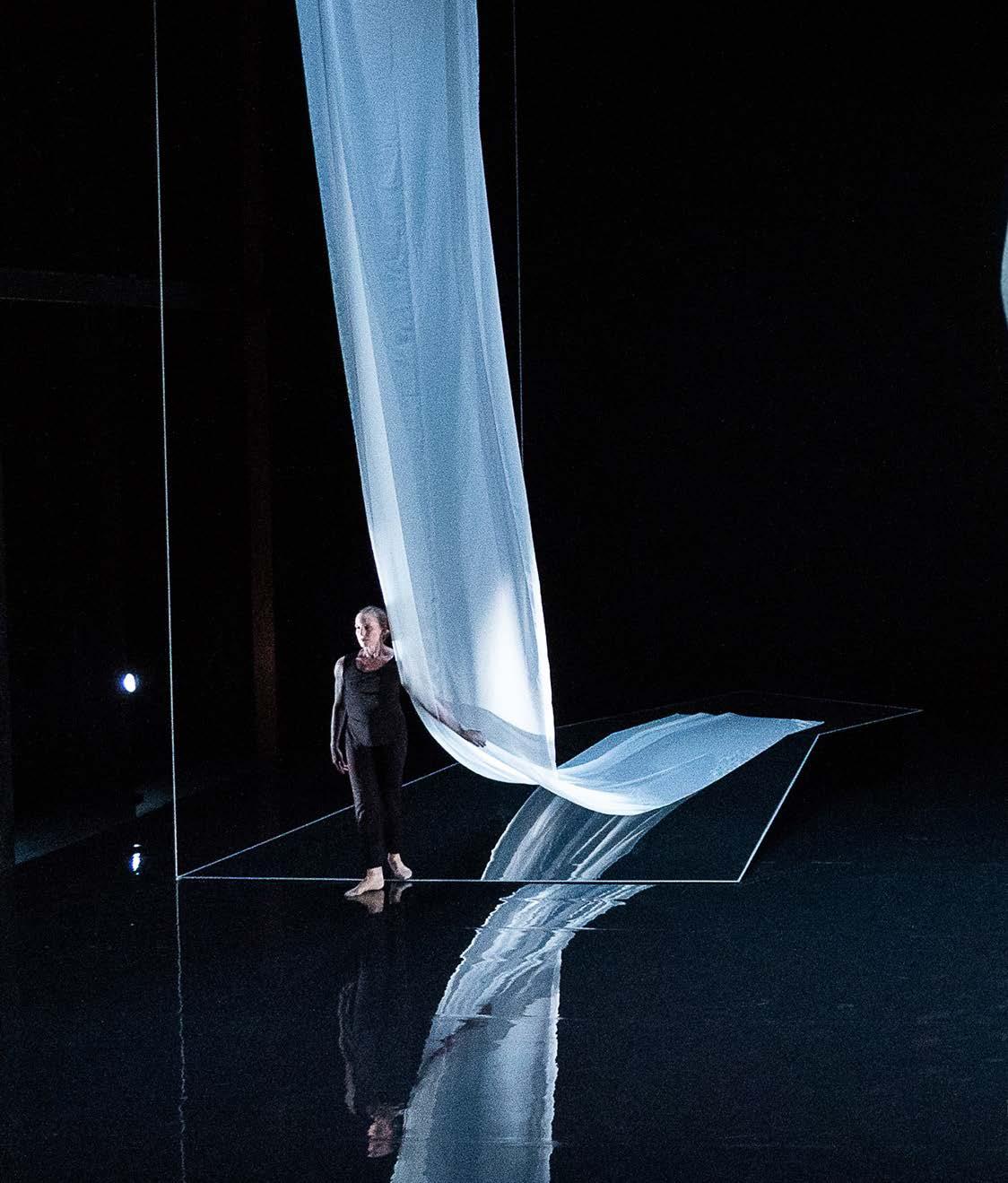
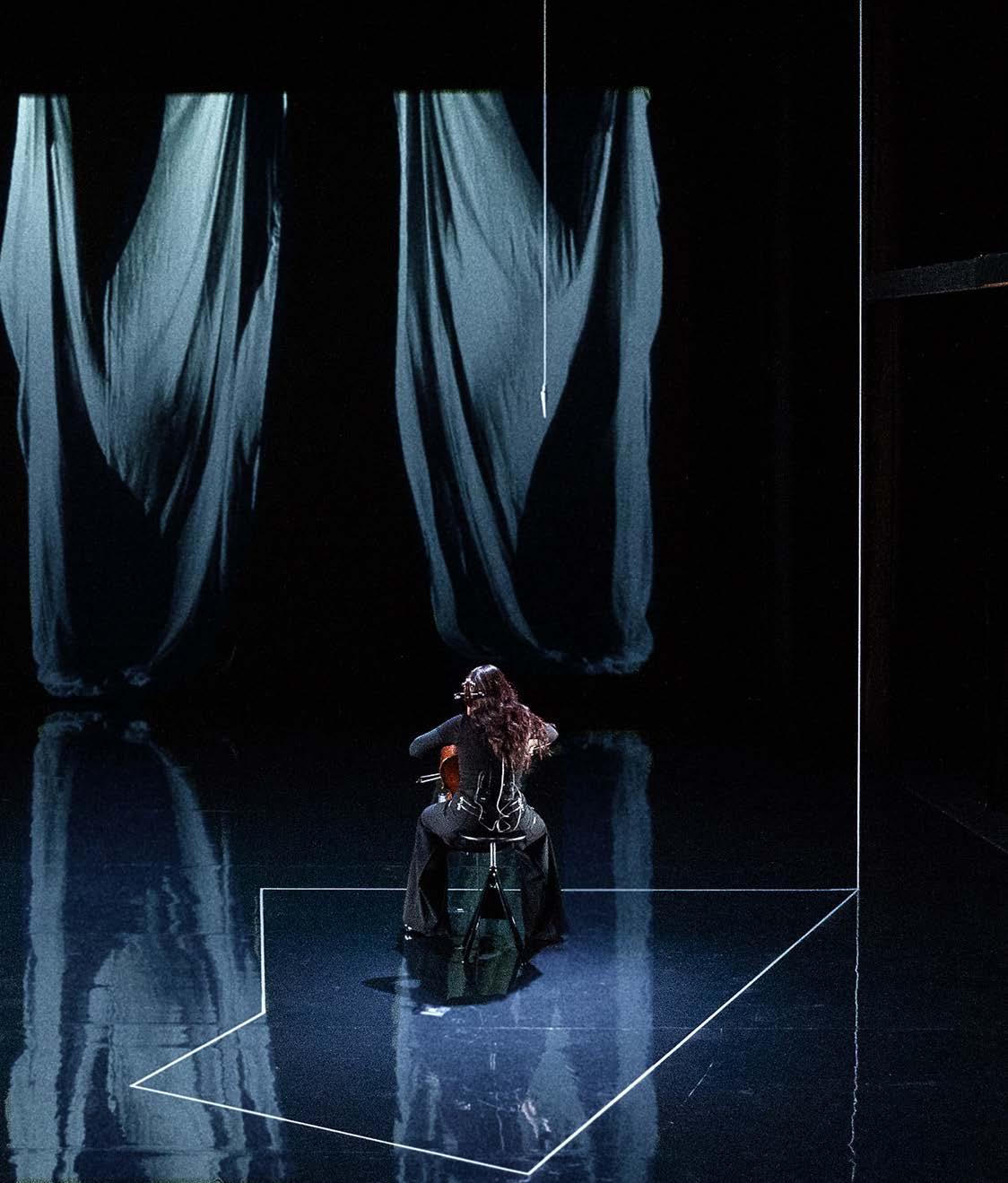
The Day is a contemporary dance and music performance inspired in part by the tragedy of September 11th in New York City. It explores the journey of the soul from life into, “The World to Come”, the title for David Lang’s music for the second section of the piece. In designing The Day, I sought to create a somber and contemplative space to hold this meditative performance. The reflective floor suspended the two performers in space and added depth to the images projected on stage. I added outlines on the floor to define the location for each performer and mirror the plan of the towers of the World Trade Center.
“It is elegant and artful.... The set design by Sara Brown resembles a memorial. The floor gleams like a reflecting pool. Two special zones — like the two waterfalls that now fill the footprint of the twin towers at ground zero — are demarcated, one of them raised, with a ramp. The two women, mostly onstage together, occupy the zones separately, their contrastive presences balanced: Ms. Beiser hot and more sedentary, Ms. Whelan cool but mobile.”
-Brian Seibert, The New York Times
Photographs by Hayim Heron
Model Photograph
La Rondine
Minnesota Opera
Premiere performance: October 6, 2018 in The Ordway Theater in Minneapolis, MN
Composed by Giacomo Puccini
Libretto by Giuseppe Adami
Conducted by Sergio Alapont
Directed by Octavio Cardenas
Sets by Sara Brown
Lights by Jesse Cogswell
Costumes by Montana Levi Blanco
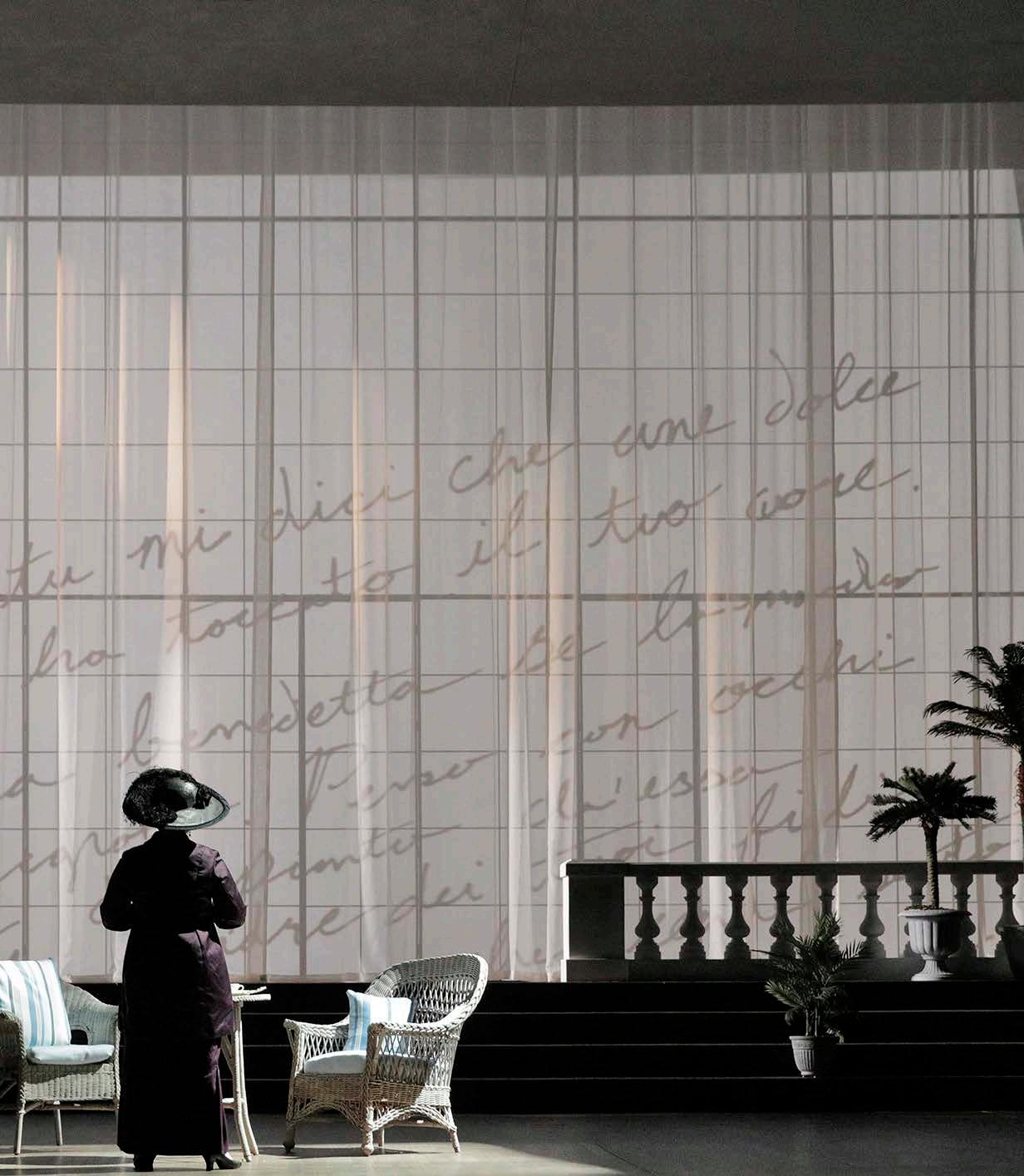
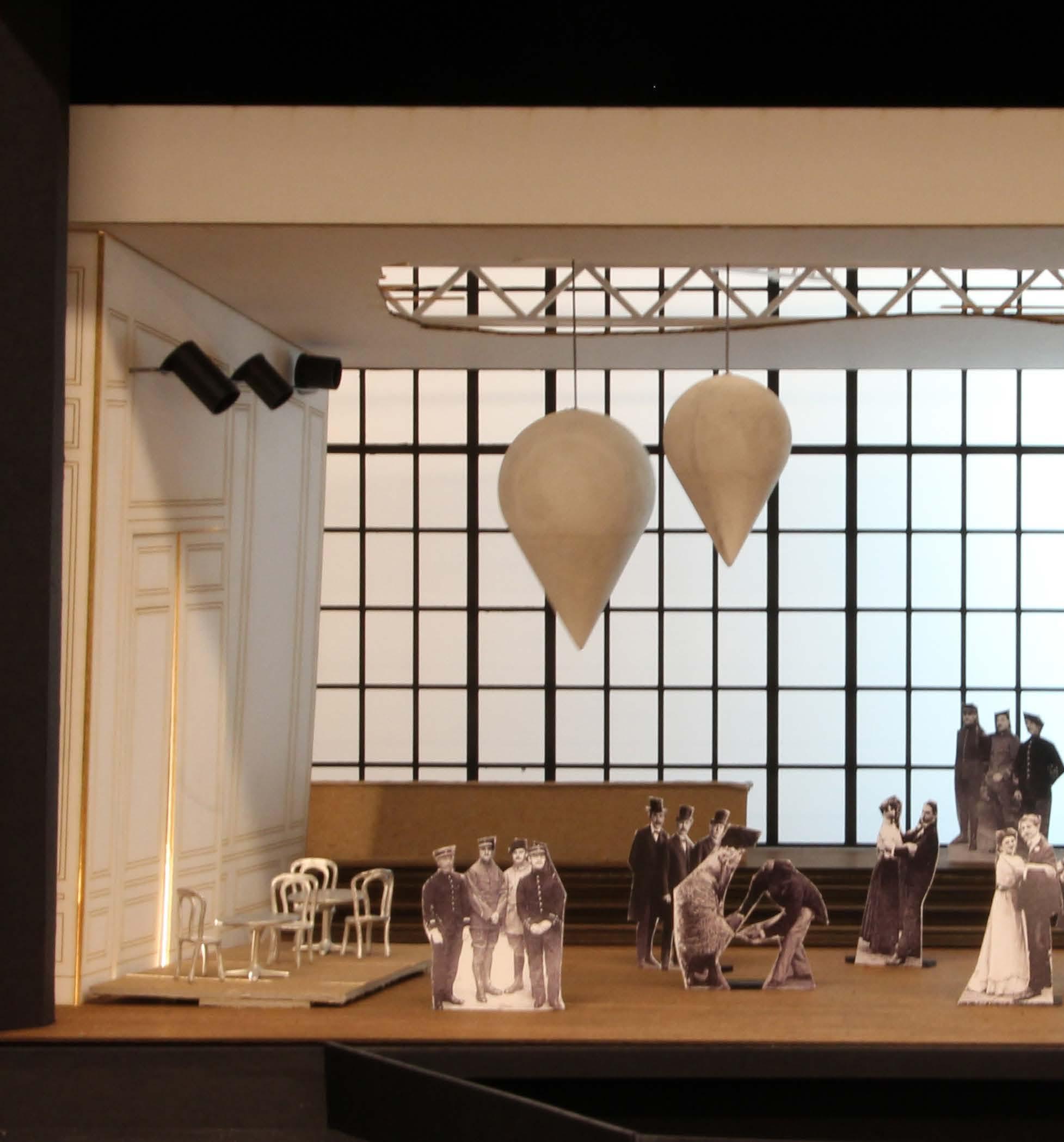
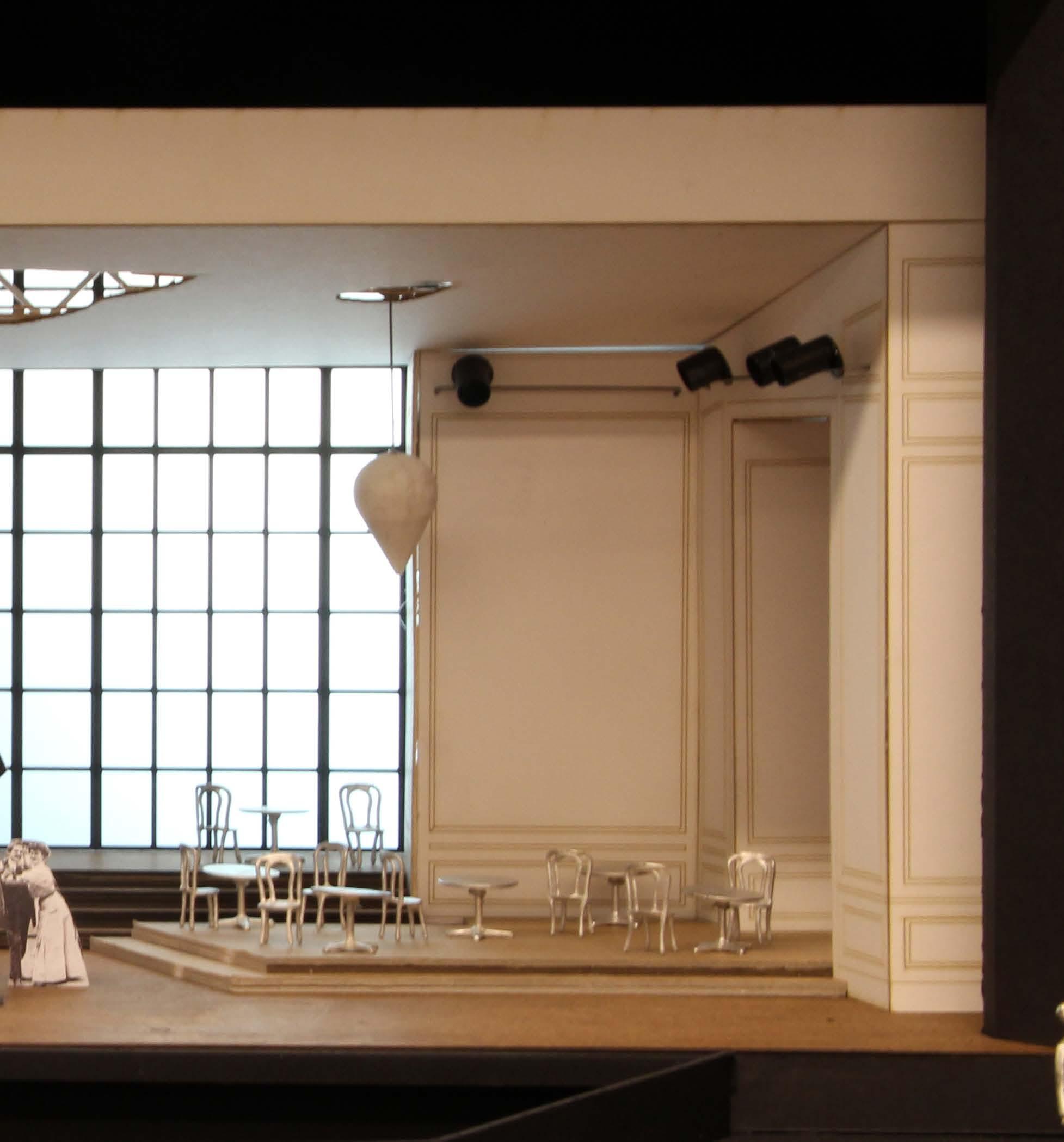
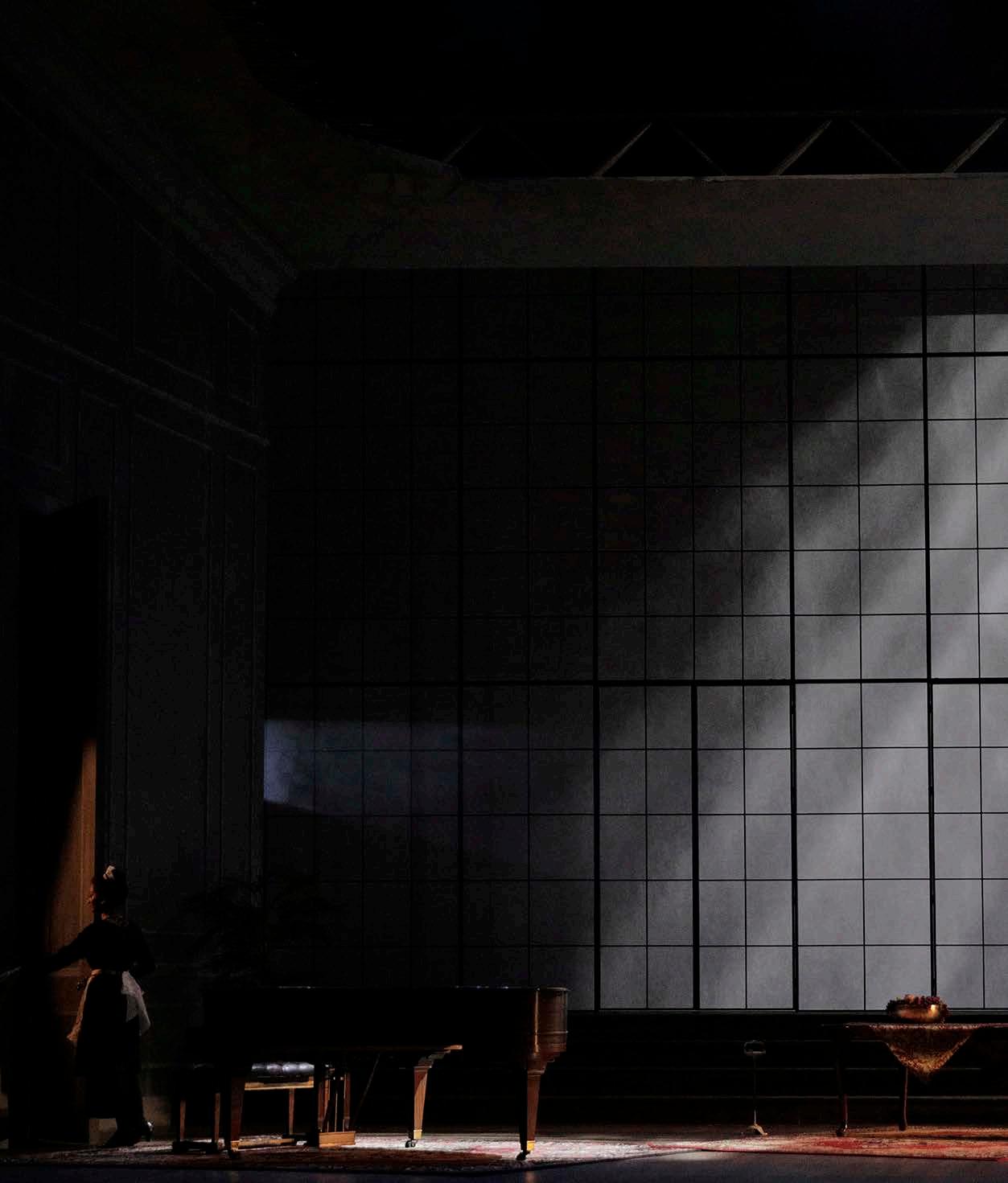
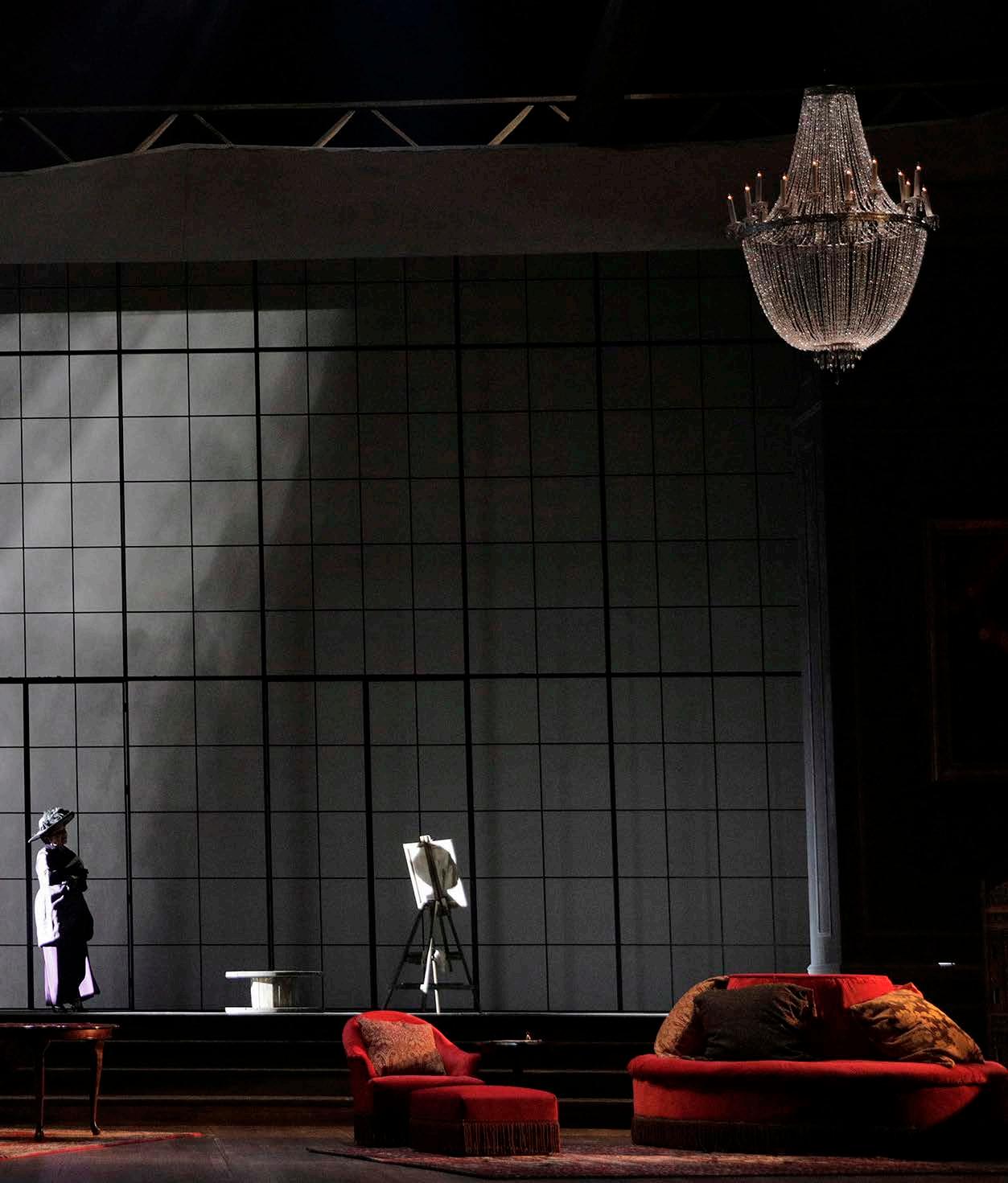
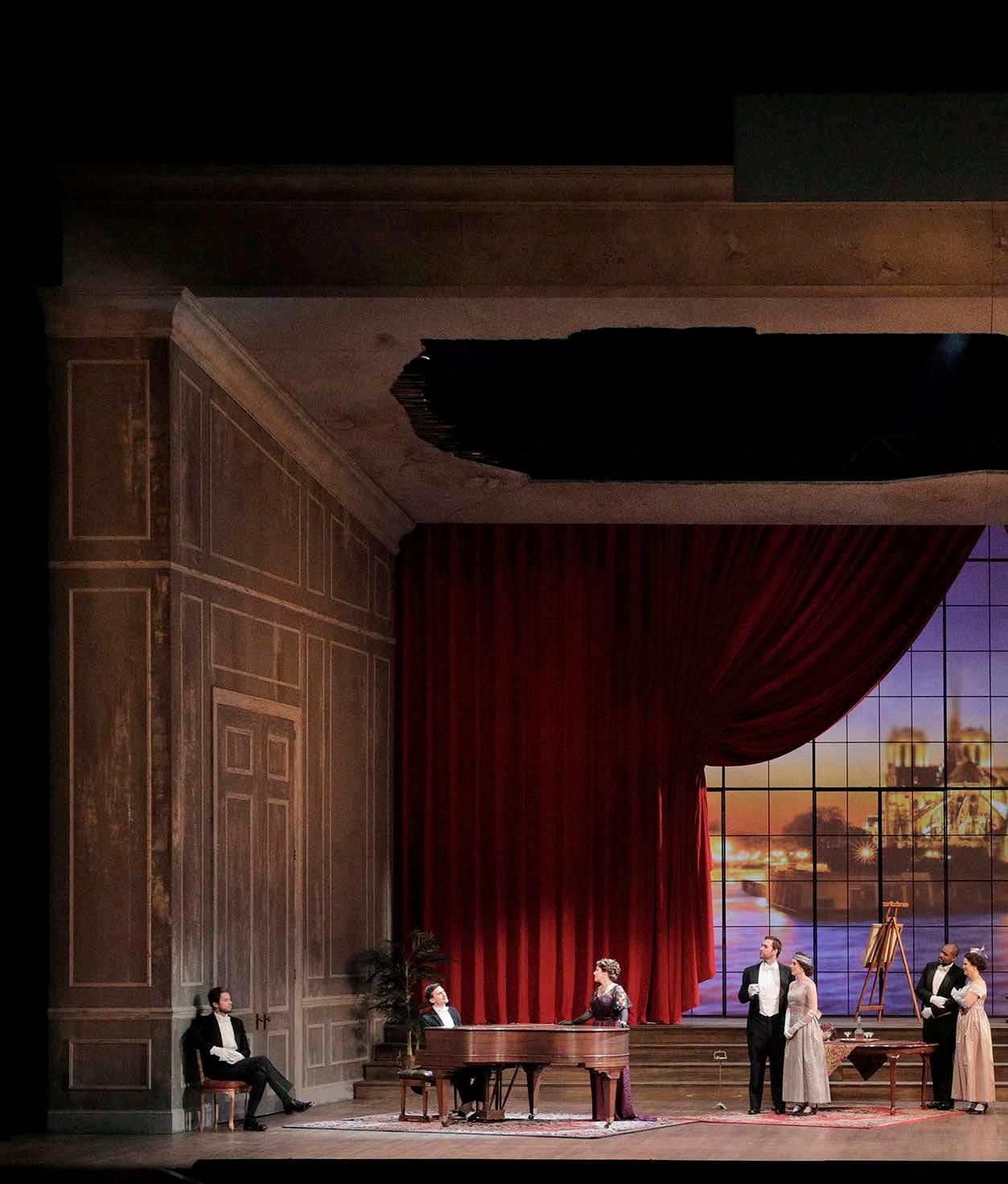
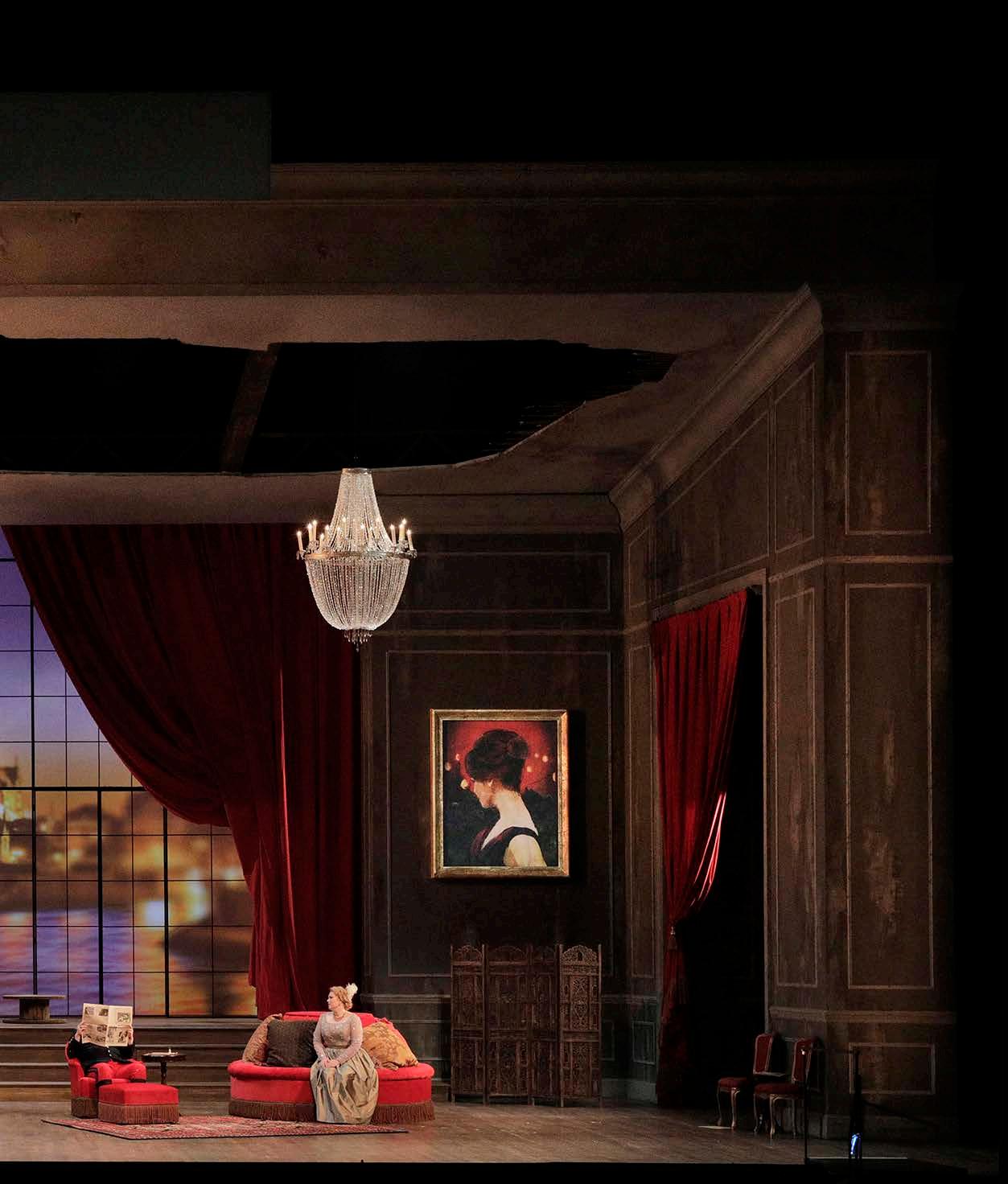
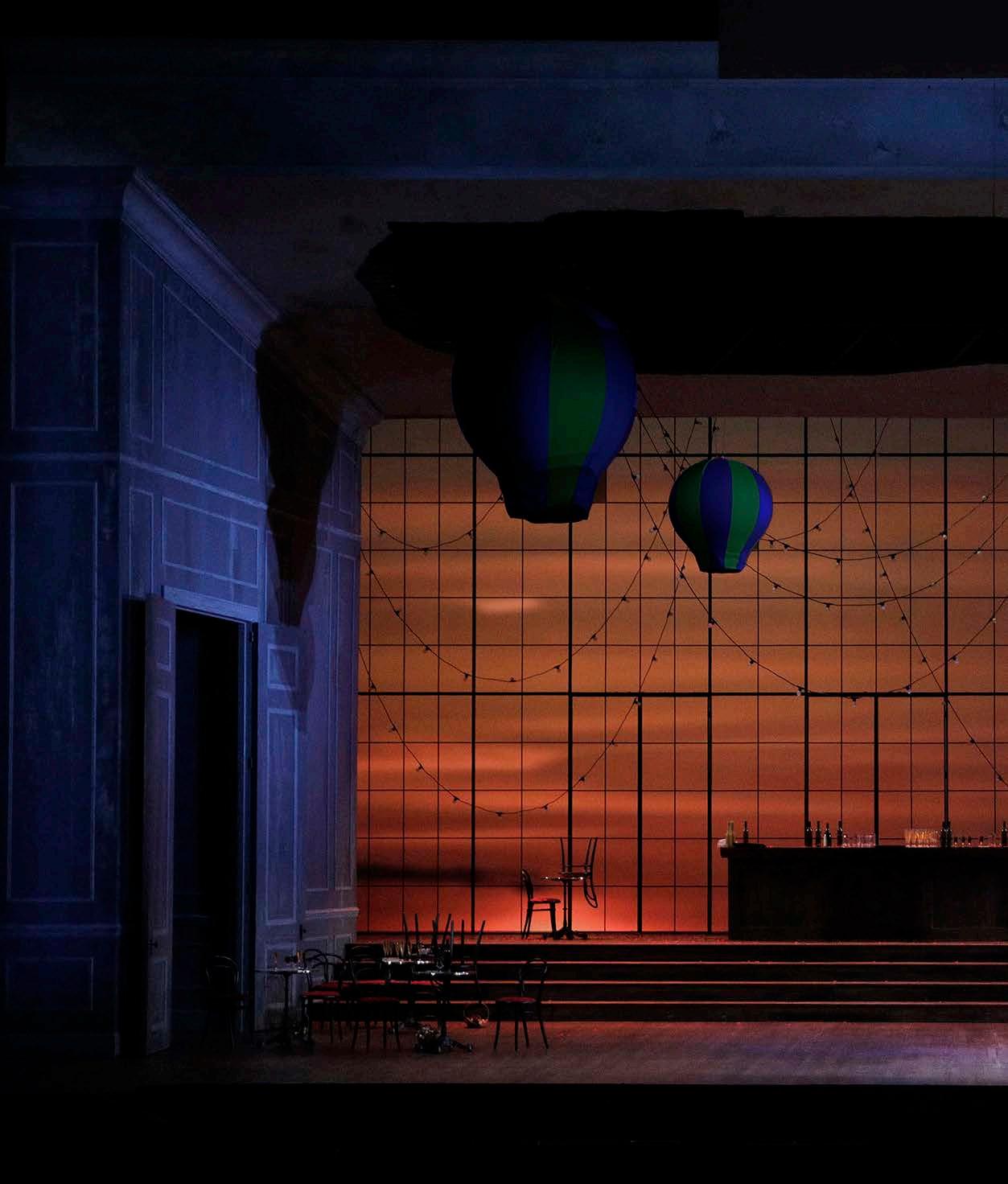
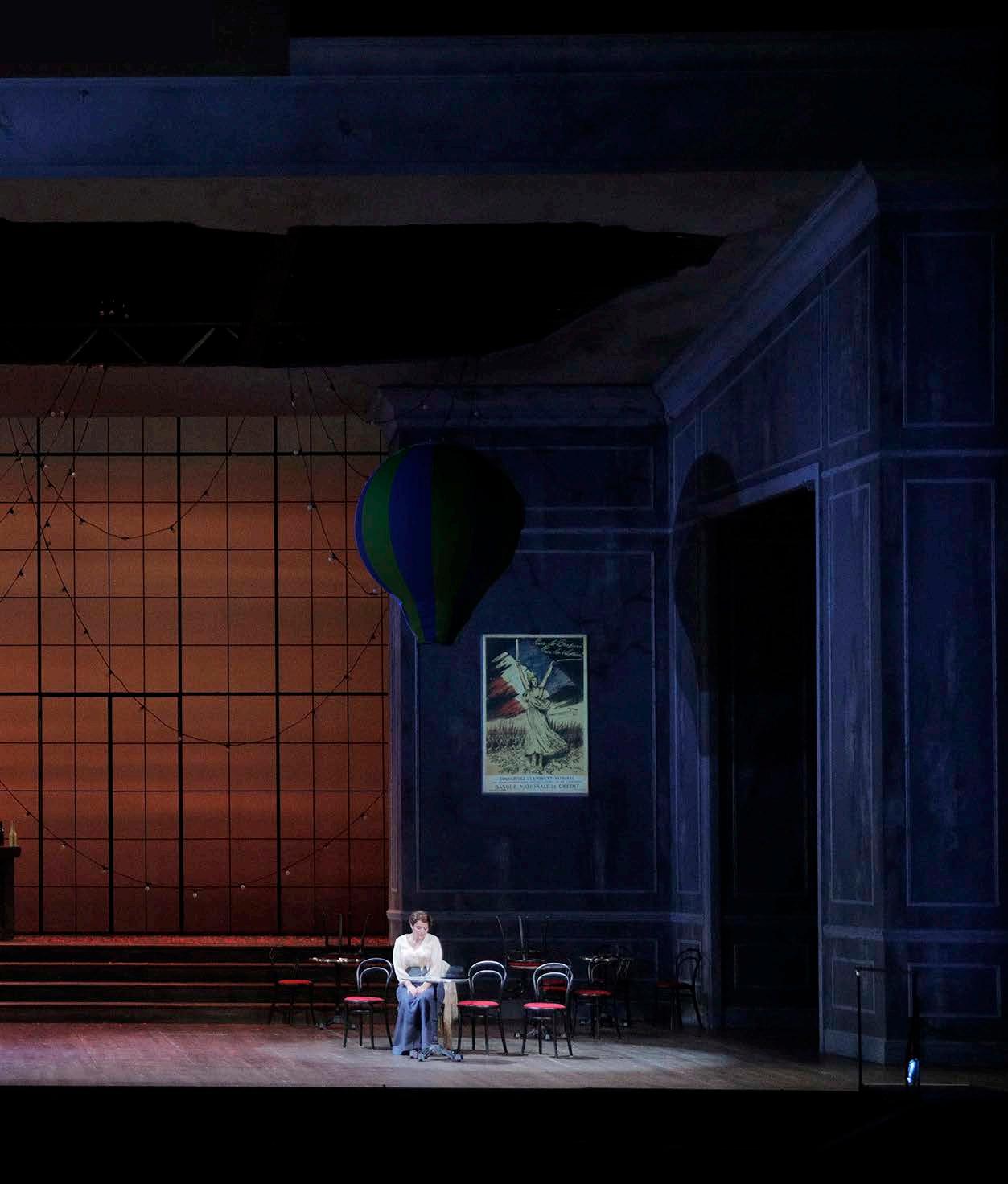
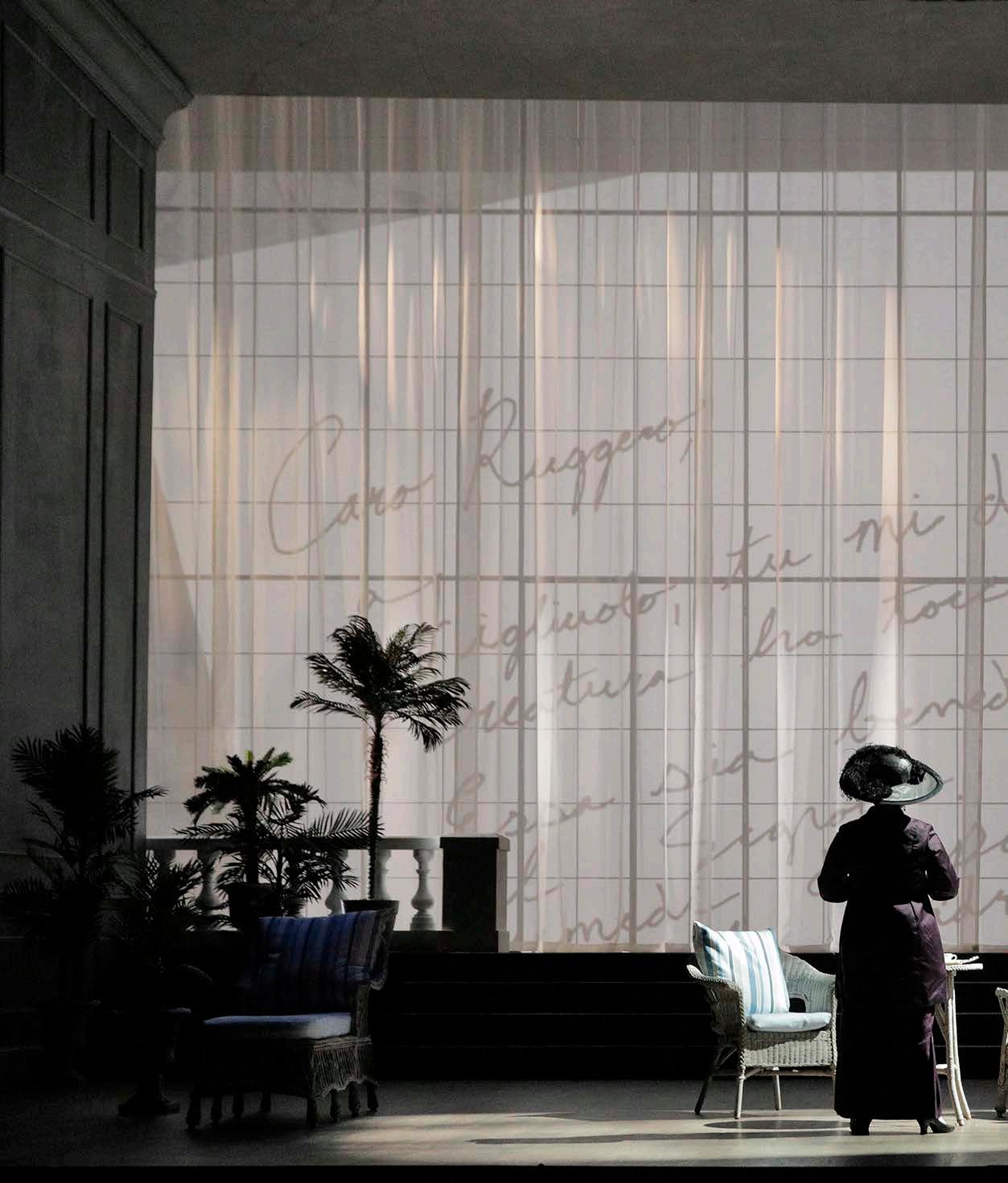
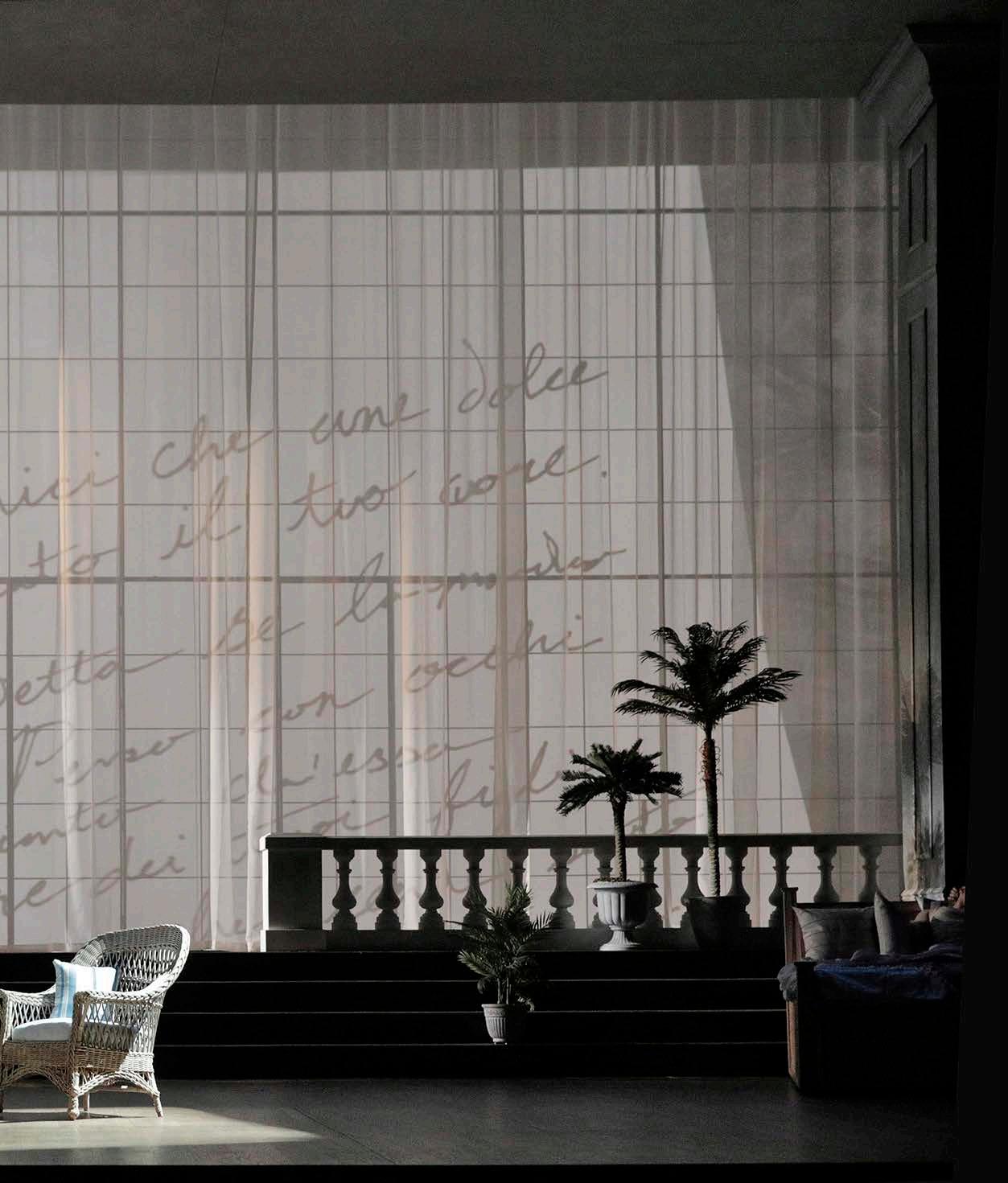
Giaccomi Puccini’s La Rondine premiered in Monte-Carlo during the First World War. In this interpretation for Minnesota Opera, the creative team sought to capture the sense of looming war. To realize stage director Octavio Cardenas’ conception of the opera as a memory of past regret, I designed the opening scene as a dilapidated, war-torn version of Magda’s salon. As the overture ended, the past came to life in the form of a lush party. Images from the past punctuated each act as scenes from Magda and Ruggero’s love affair played out on stage. At the end of the opera, we are returned to the initial image of loss and destruction.
“Even when we leave it, we still find fun-loving folk who carry a little Paris with them. Sara Brown’s meticulously appointed sets, Montana Levi Blanco’s detailed circa-1910 costumes and Joshua Higgason’s eye-catching projections combine to sweep you up in a love letter to the city.”
-Rob Hubbard, The Pioneer Press
Photographs by Cory Weaver
Preliminary Model
October 7, 2018
By Rob Hubbard
Puccini loved Paris. That much is clear from Giacomo Puccini’s opera set among its struggling artists, “La Boheme.” But he adored that town so much that he returned to it 20 years later for “La Rondine,” which is even more of a valentine to the city – and to love — than “La Boheme.”
But it’s much harder to find a production of “La Rondine” than “La Boheme,” and that alone makes Minnesota Opera’s season-opening staging well worth considering. After attending Saturday’s first performance, I can add that you may never experience a more skillfully crafted interpretation of the opera than this. Boasting strong singing throughout the cast and an exquisitely executed concept and design, this is grand opera done grandly, full of spectacle, sweet to the ears, and overflowing with emotion.
Completed in 1917, “La Rondine” can come off like a fusion of “La Boheme” and Giuseppe Verdi’s “La Traviata,” what with the Parisian party feel of the former and much of the basic conflict within the latter: the romance of a naïve young man from the country and a far less innocent woman of the city. (Thankfully, no one gets tuberculosis, so “La Rondine” has a much lighter feel than either of those predecessors.)
While no audience member walks out of an opera humming the concept, Minnesota Opera’s production filled me with admiration for how thoroughly director Octavio Cardenas and his creative team thought through what they wanted to do with this work. They’ve constructed it as the wistful yet rueful reminiscences of its central character, a “kept woman” who considers abandoning a life of luxury in favor of love and poverty. Each act is framed by her wandering through a black-and-white palette that bursts into color as her memories come to life.
And that love of Paris is everywhere. The big bay window of the first act holds an impressionist
portrait of the Cathedral of Notre Dame. The second act’s bustling bar is bursting with flamboyant joie de vivre. Even when we leave it, we still find fun-loving folk who carry a little Paris with them. Sara Brown’s meticulously appointed sets, Montana Levi Blanco’s detailed circa-1910 costumes and Joshua Higgason’s eye-catching projections combine to sweep you up in a love letter to the city.
But it’s also a love letter to love, and the principal singers make that equally palpable. As Magda, the high society mistress of a powerful Parisian, Irish soprano Celine Byrne proves the ideal match for Puccini’s demanding arias. The composer asks for several soft upperregister entrances, and Byrne made each swoon-inducing with her impeccable control and tenderness. As her new love, Leonardo Capalbo proved endearing in his infatuation and passionately stormy when his dreams started to unravel.
As a more comical secondary couple, Christian Sanders and Lisa Marie Rogali can be a bit over-the-top at times, as if director Cardenas may have thought the action too static without some big gestures and mugging. But they sing the roles well and certainly offer memorable characterizations.
While conductor Sergio Alapant and the Minnesota Opera Orchestra play Puccini’s music to heart-tugging effect, there were too many instances when I felt that they were overpowering the singers. Or that the singers (particularly Capalbo) were forced to really belt lines out at maximum volume that might have been more effective with a softer, more intimate approach.
Yet that’s a rare shortcoming in a production full of fun, elegance, love and, eventually, heartache. It does both Puccini and Paris proud.
Fellow Travelers
Minnesota Opera
Developed and Co-Commissioned by G. Sterline Zinsmeyer & Cincinnati Opera
Minnesota Opera Premiere: Jun 16, 2018 at The Cowles Center, Minneapolis, MN
Subsequent presentations at The Boston Lyric Opera and Madison Opera
Composed by Gregory Spears
Libretto by Greg Pierce
Based on the novel Fellow Travelers by Thomas Mallon
Stage Director Peter Rothstein
Conducted by Daniela Candillari
Sets by Sara Brown
Lights by Mary Shabatura
Costumes by Trevor Bowen
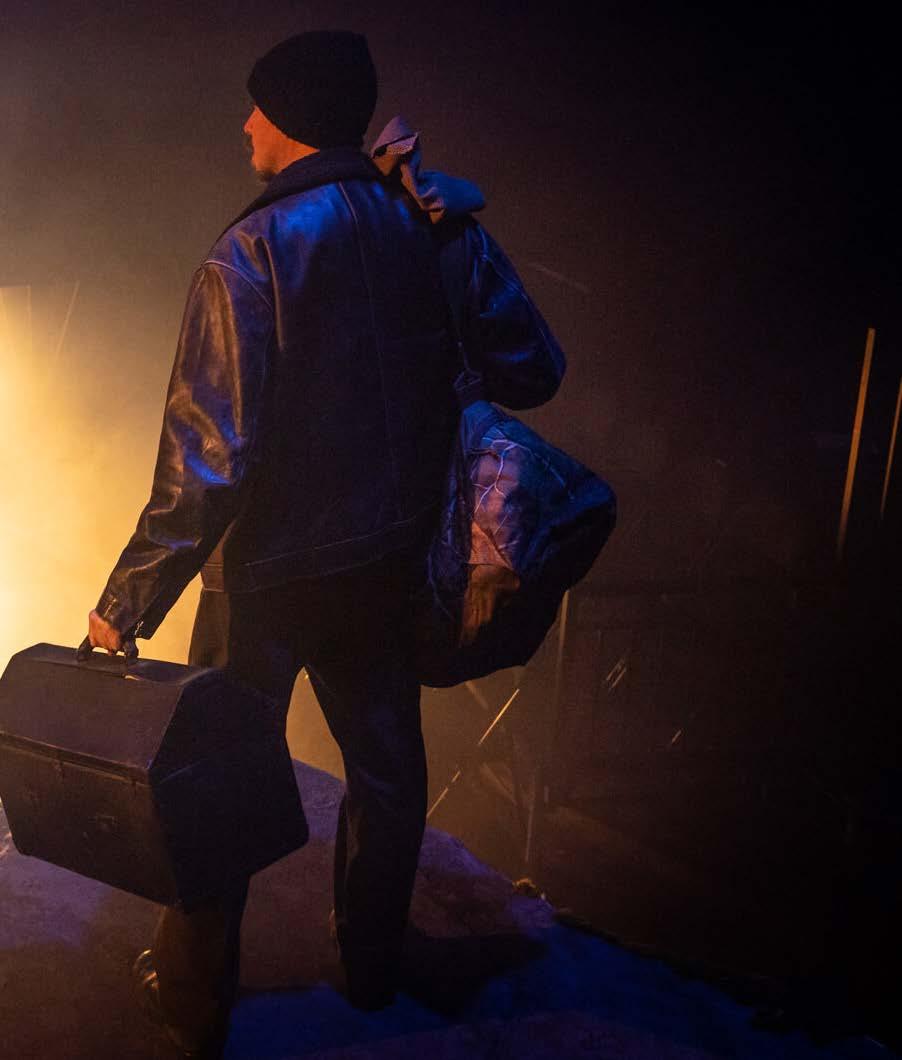
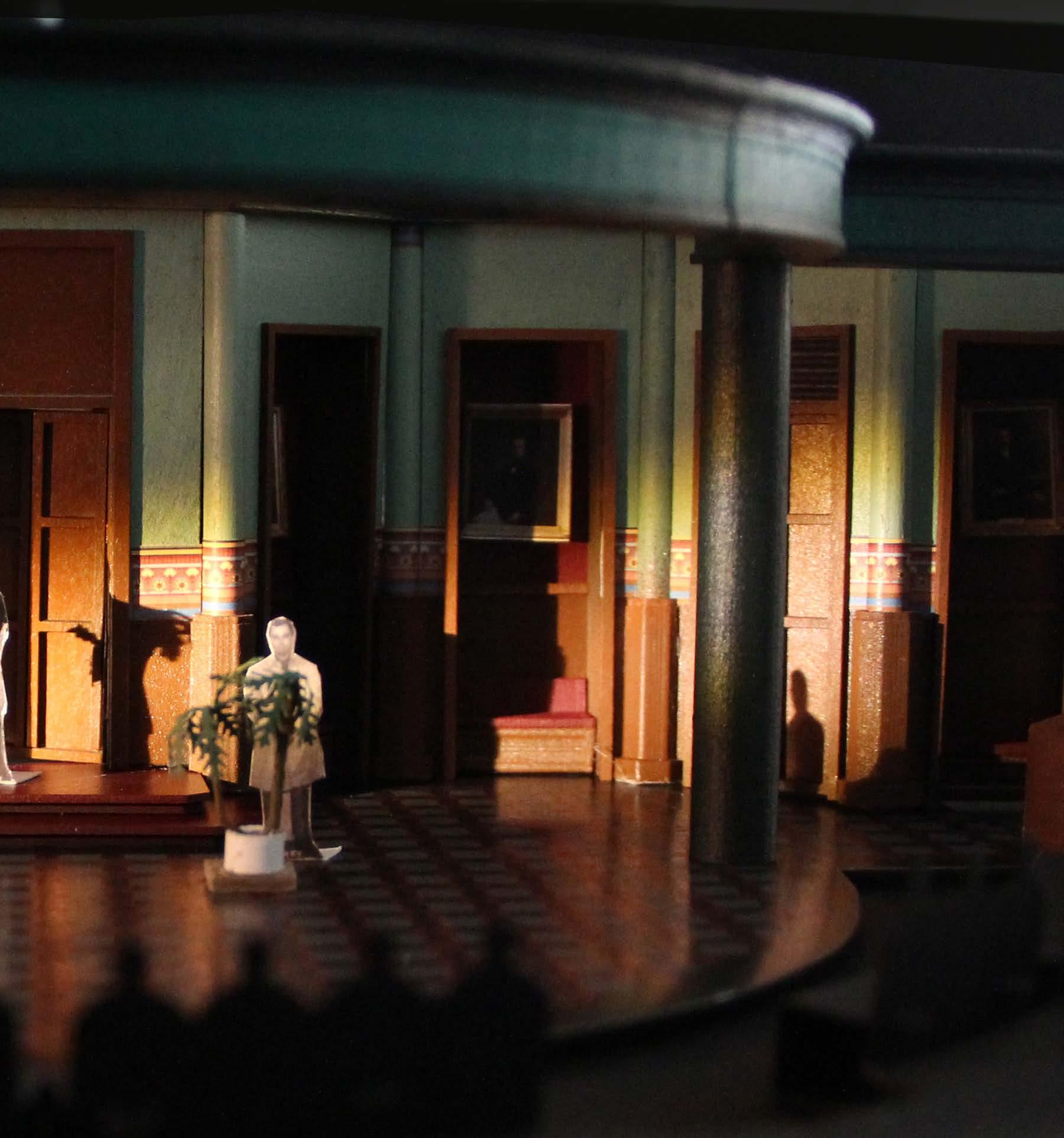
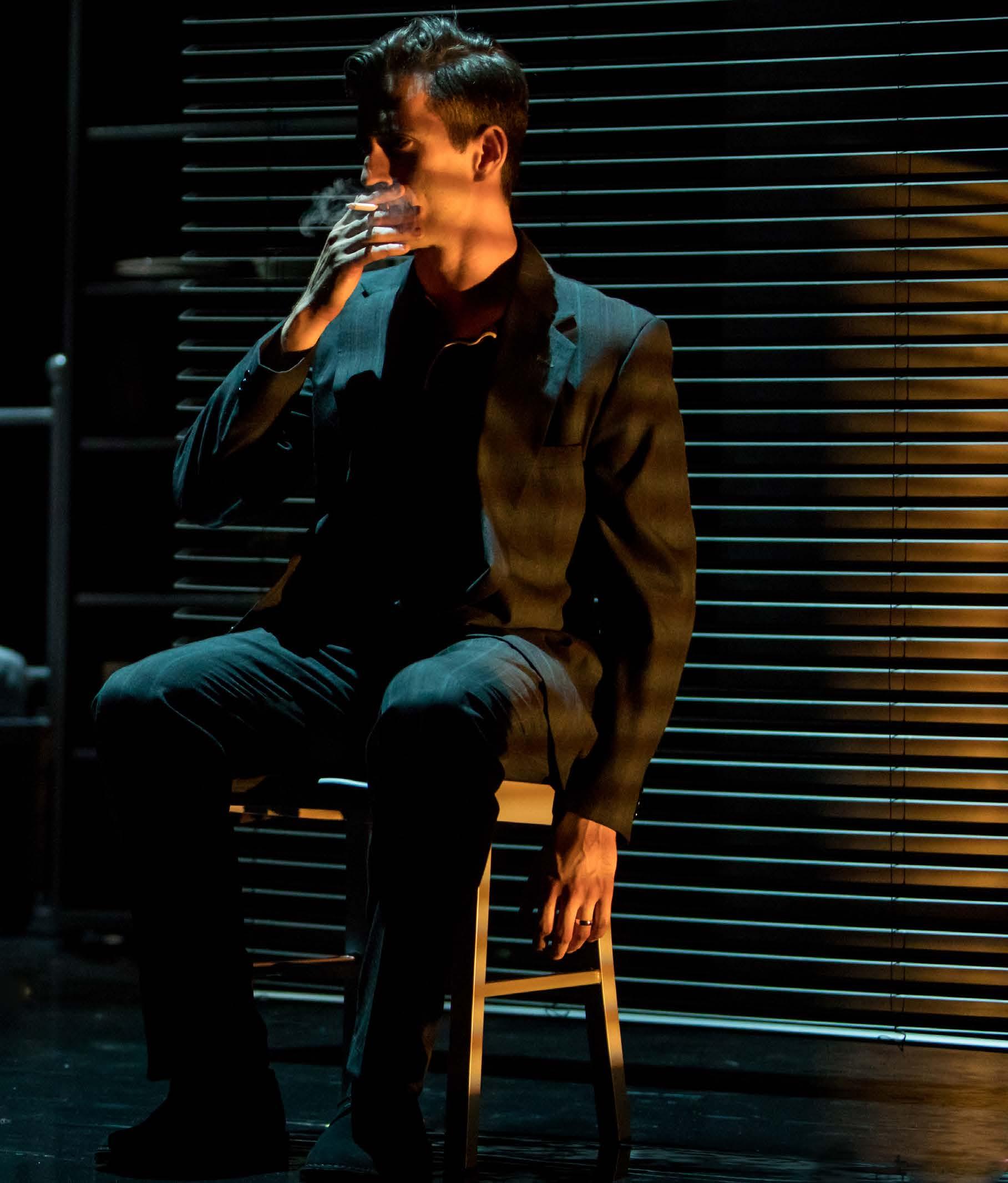
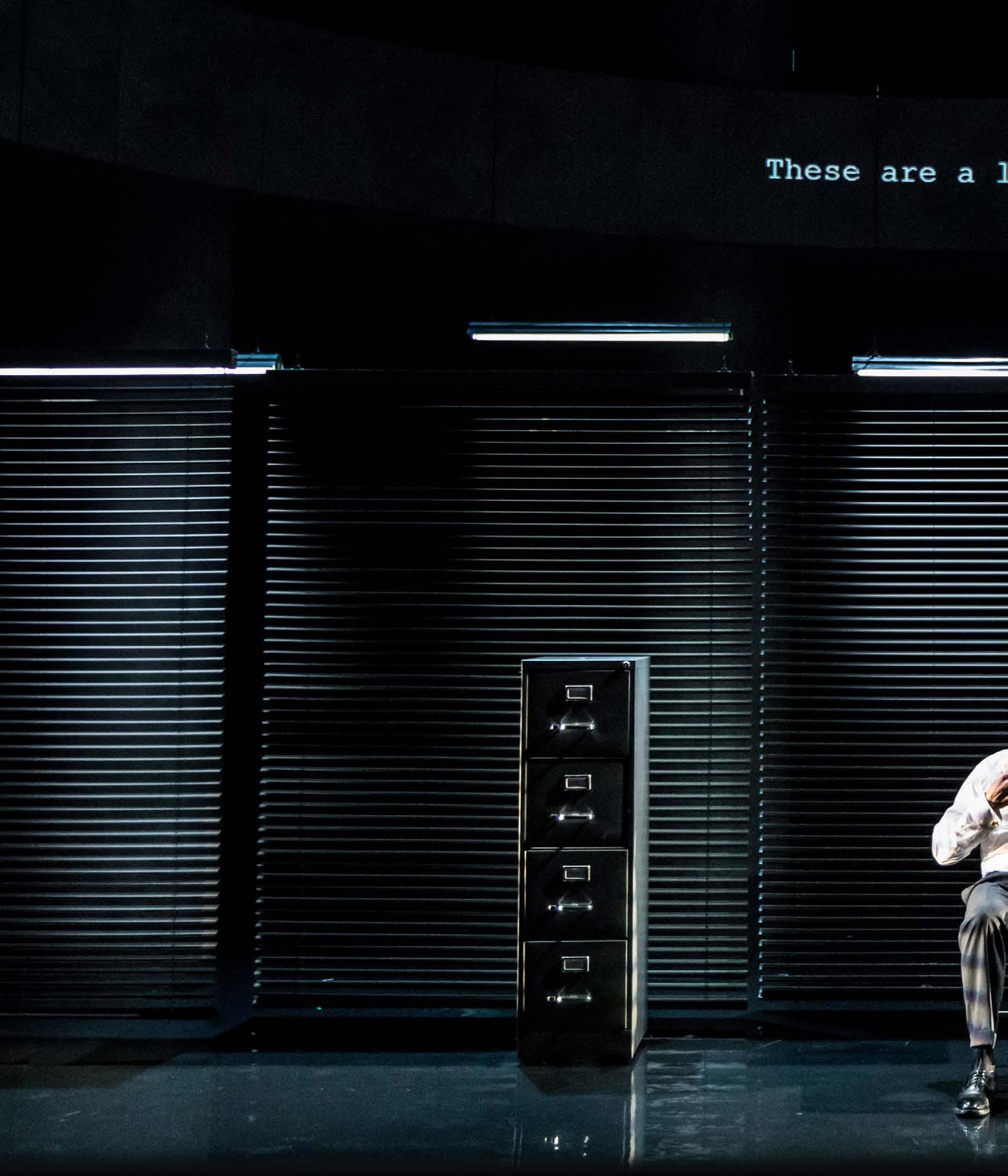
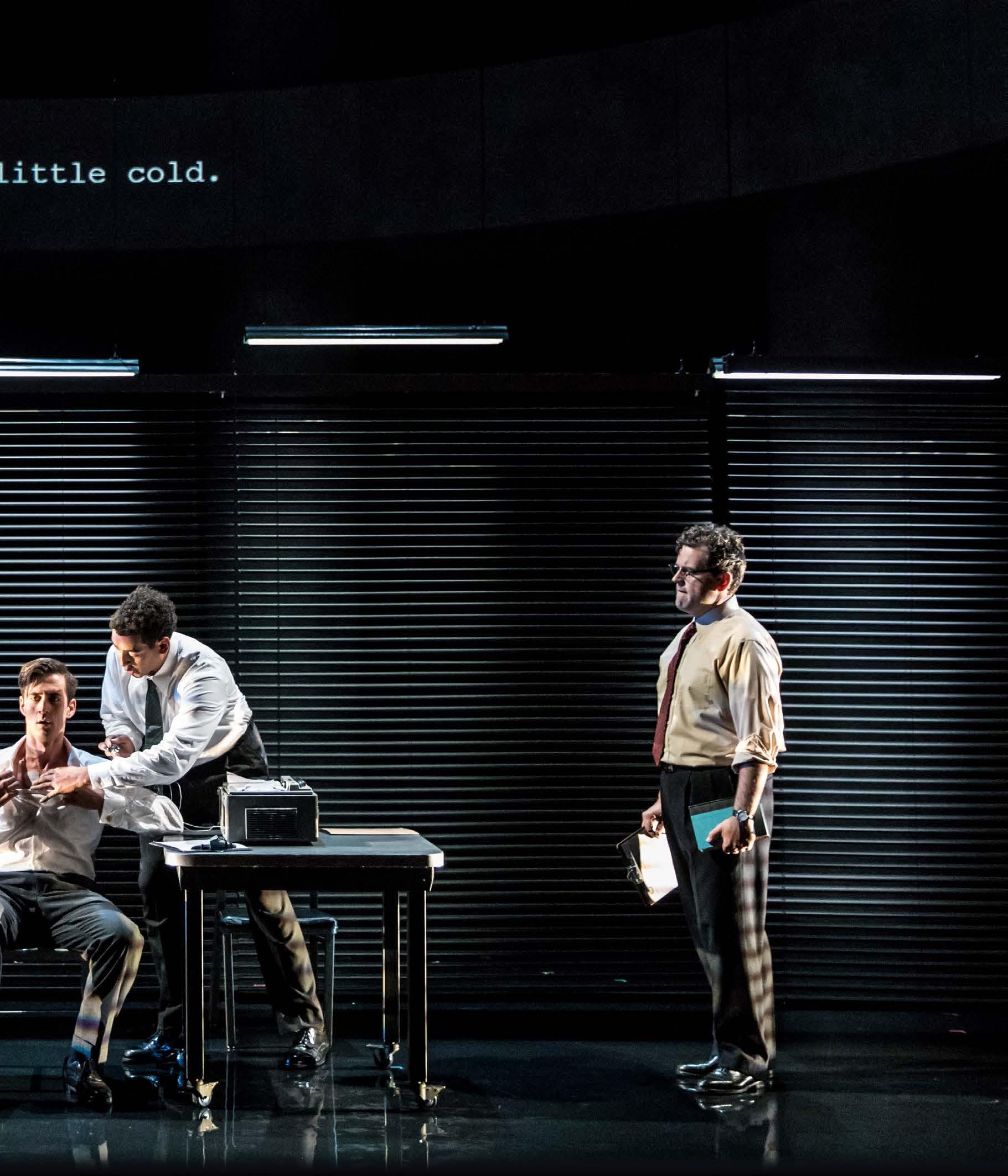
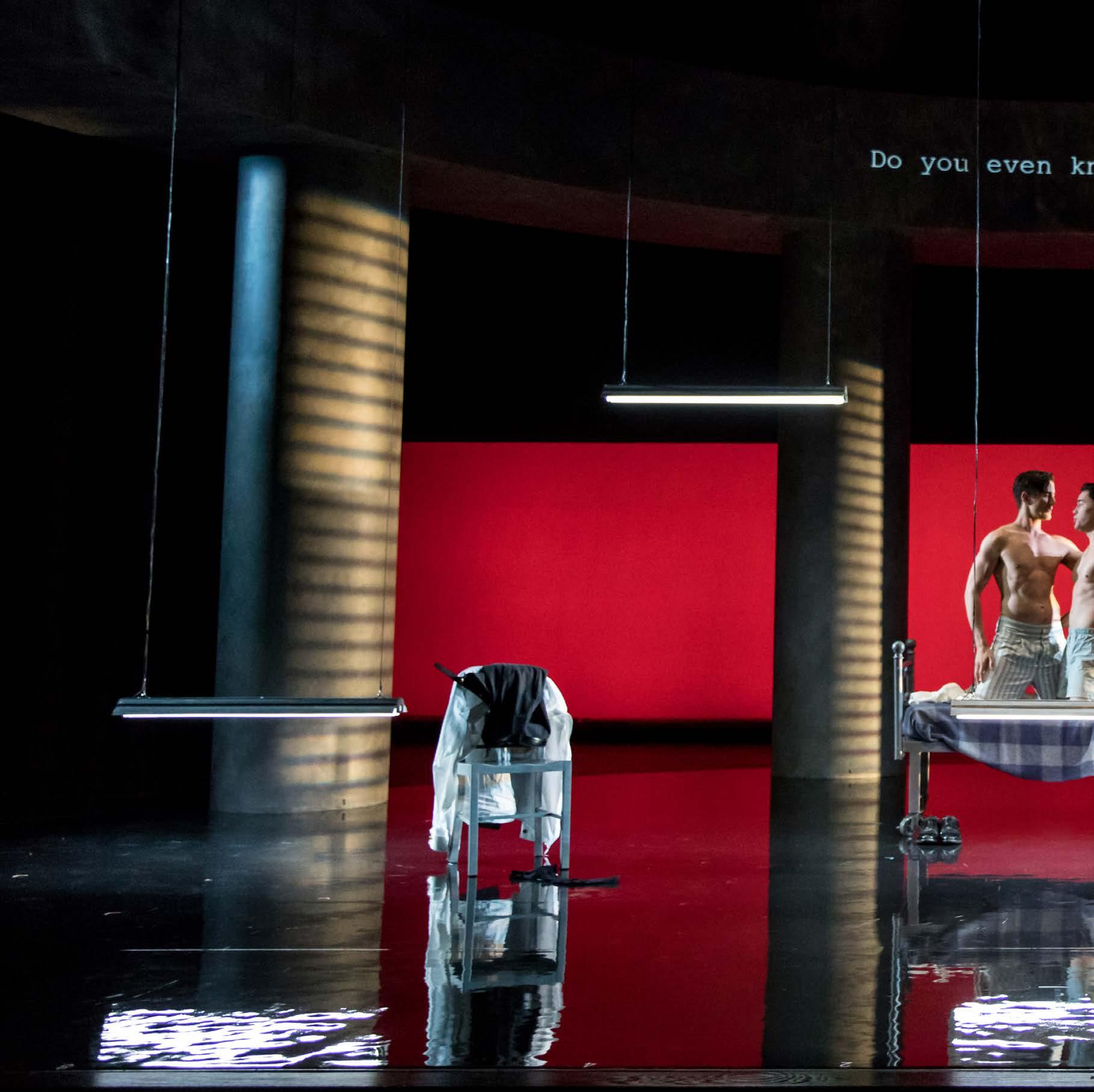
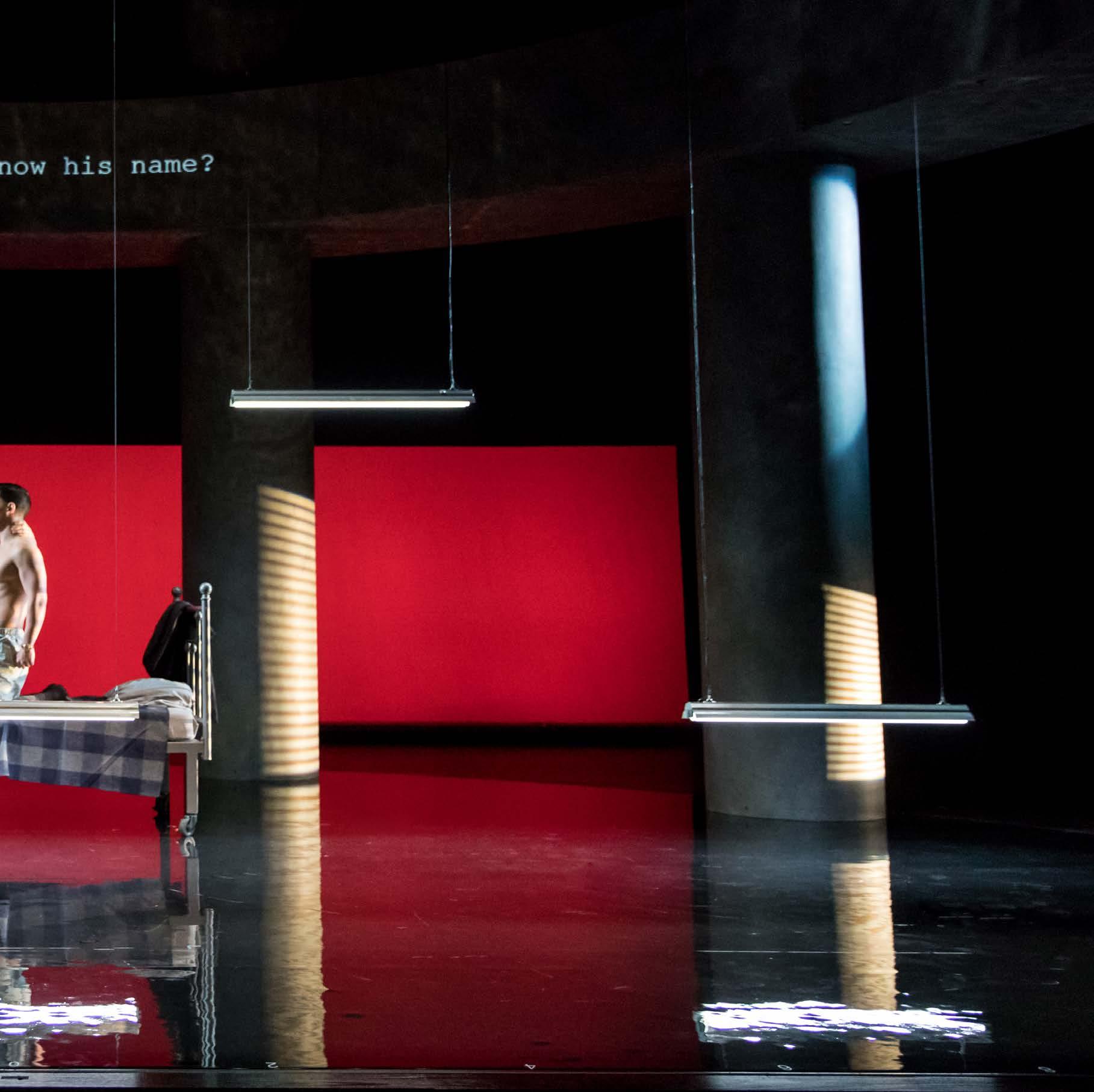
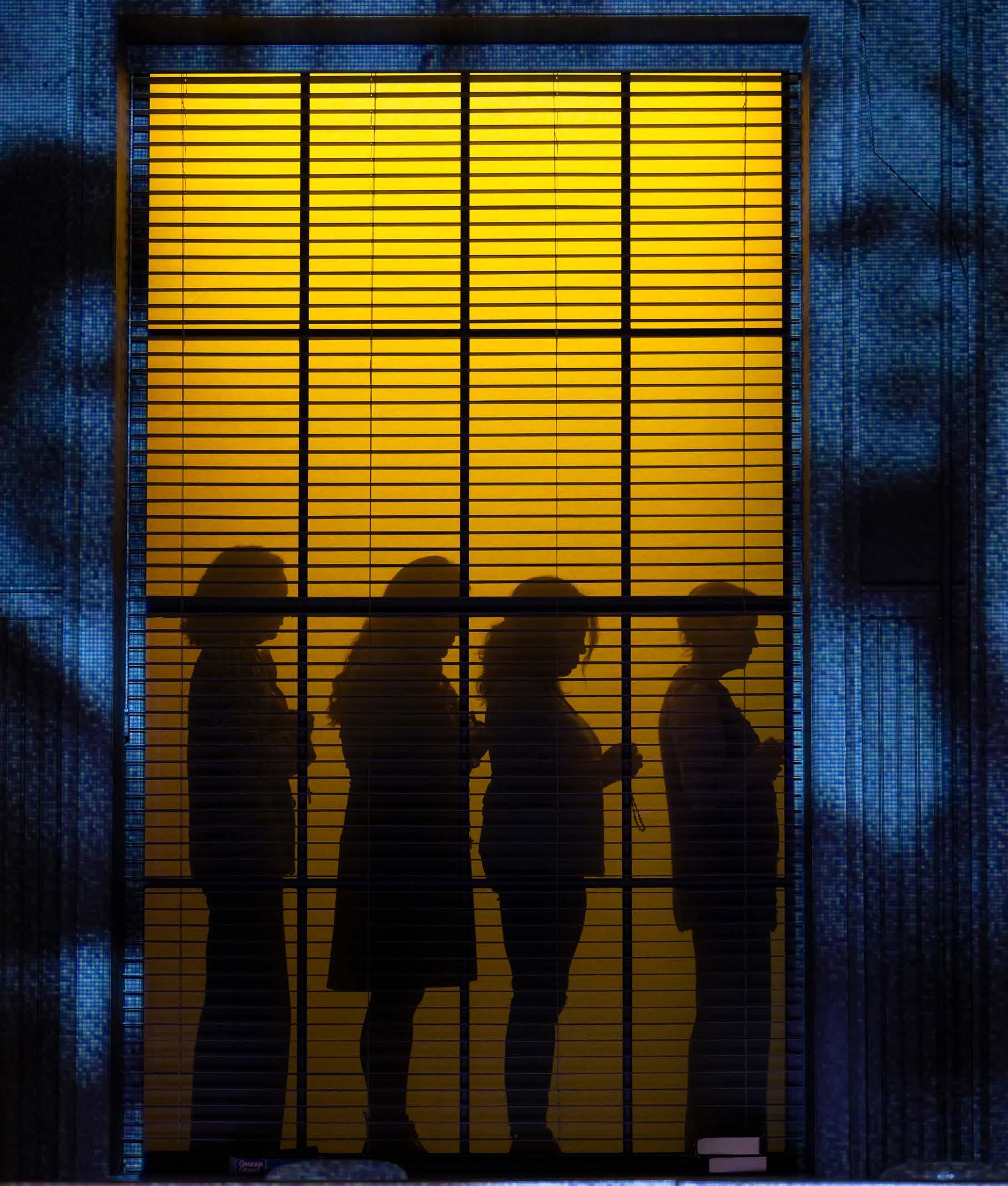
Fellow Travelers follows the lives of two gay men in Washington, D.C. during the beginning of the Cold War and the “Lavender Scare,” when federal employees accused of homosexuality were considered a security threat and banned from working in the federal government. I designed a monumental rotunda structure to loom over the characters’ public and private lives as they navigated a shifting bureaucratic landscape of file cabinets, florescent lights, and metal blinds.
Photographs by Dan Norman
Model of a scene in Senator Joseph P. McCarthy’s Office
Carmen
National Young Arts Foundation
Premiere: June, 2016, on the plaza of the national headquarters of National YoungArts Foundation, Miami, FL
Composed by Georges Bizet
Libretto by Ludovic Halévy & Henri Meilhac
Director and Adaptor Jay Scheib
Music Director Myra Huang
Set Designer Sara Brown
Video & Lighting Designer Josh Higgason
Costume Designer Rachel Dainer-Best
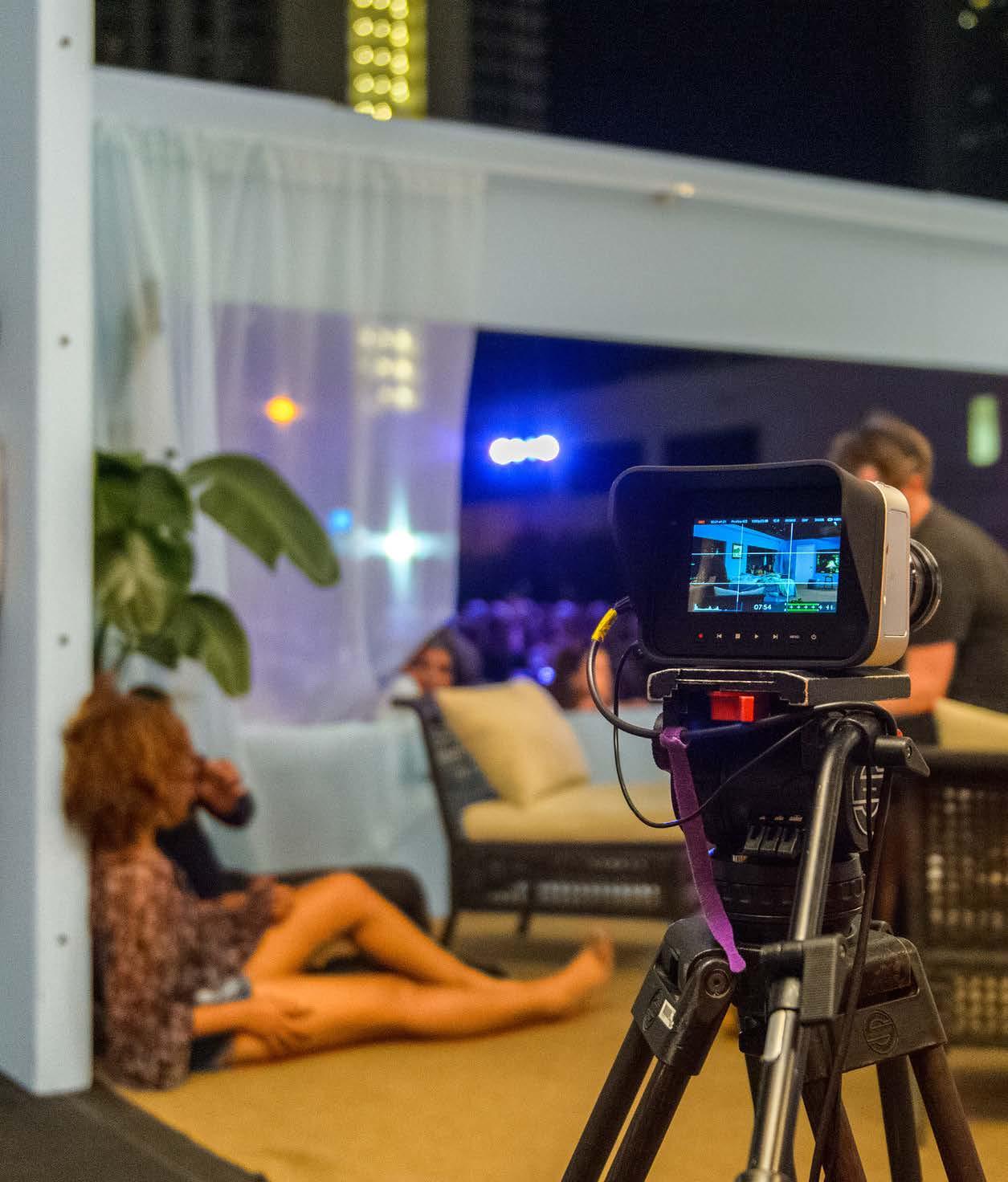
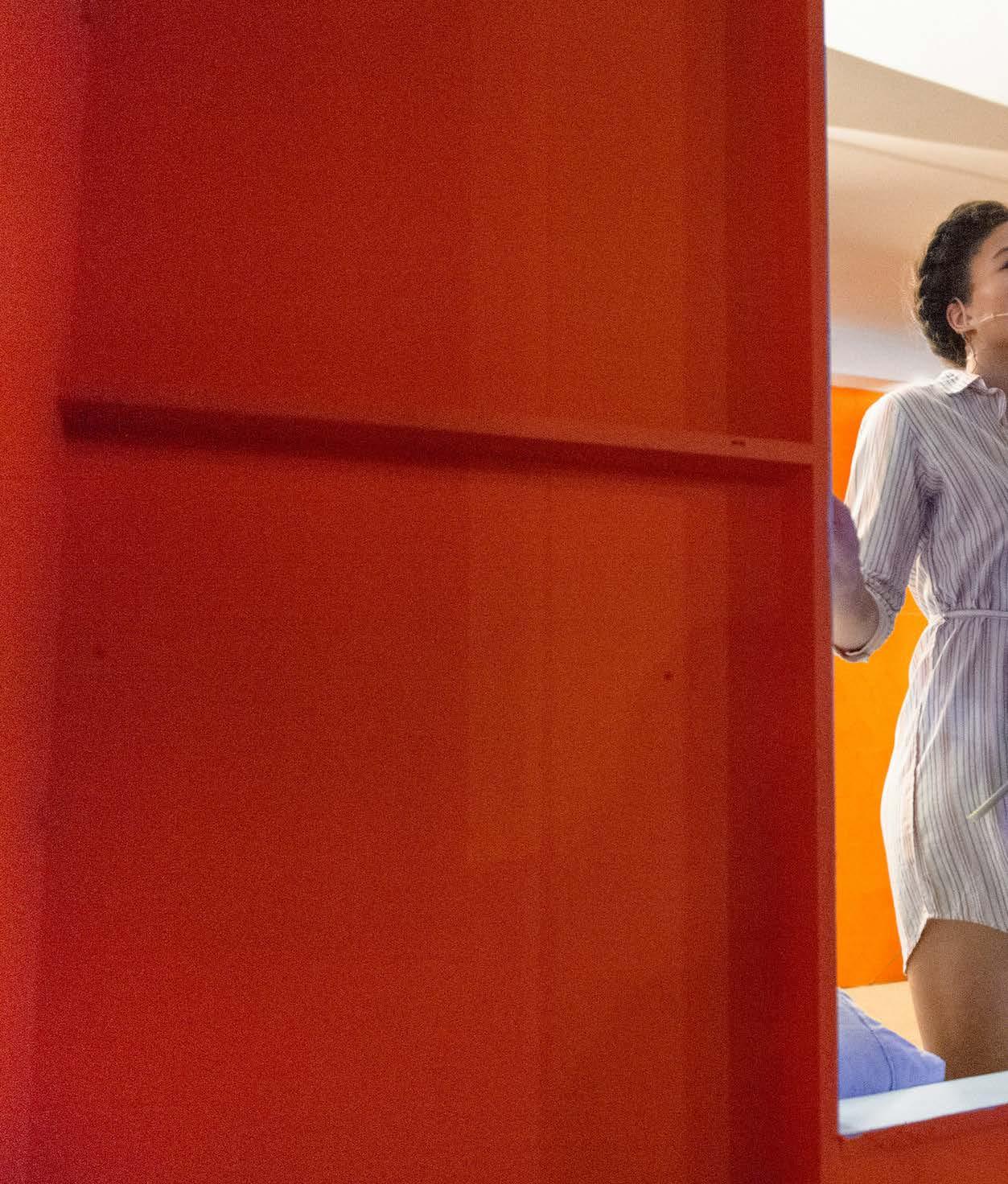
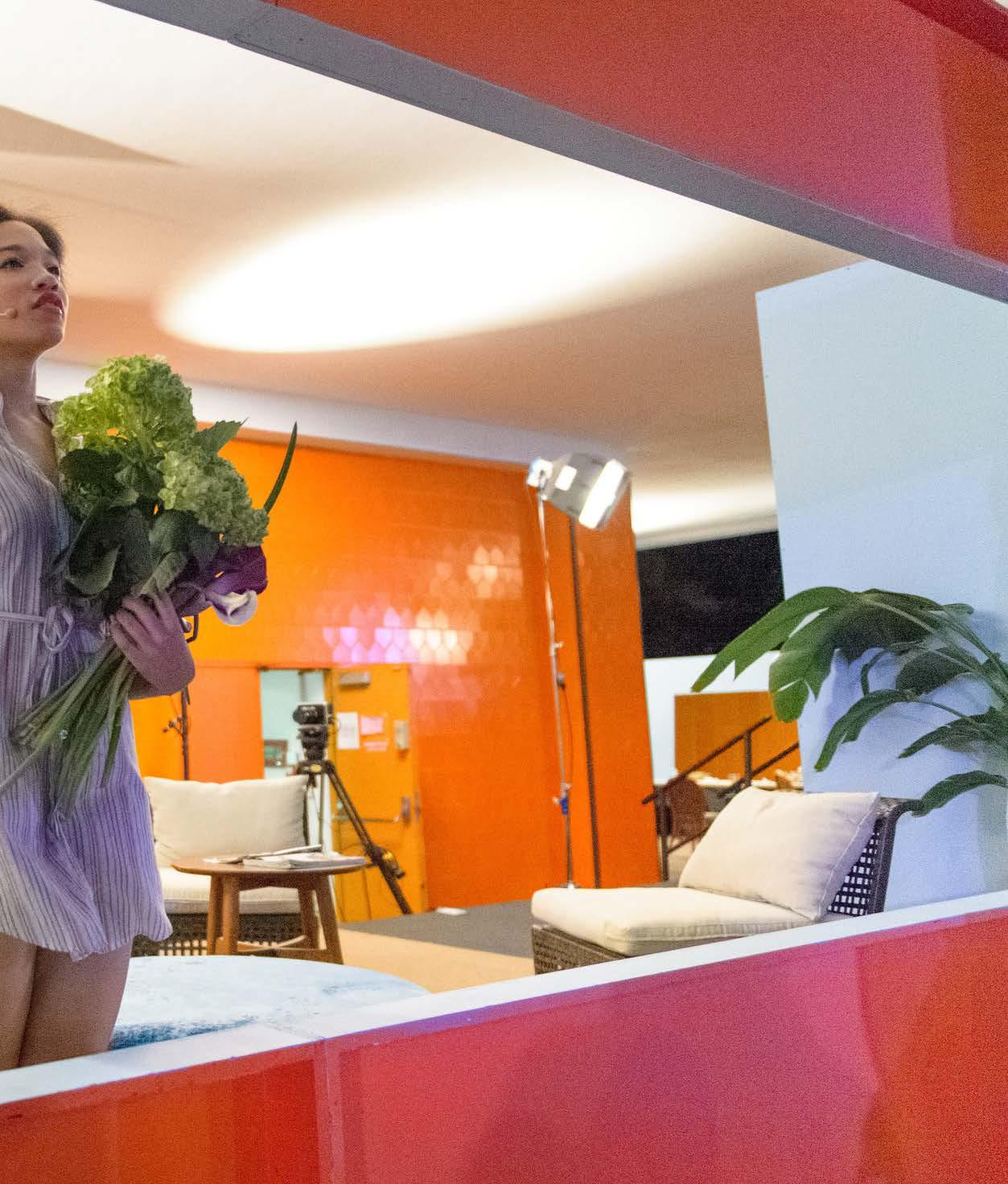
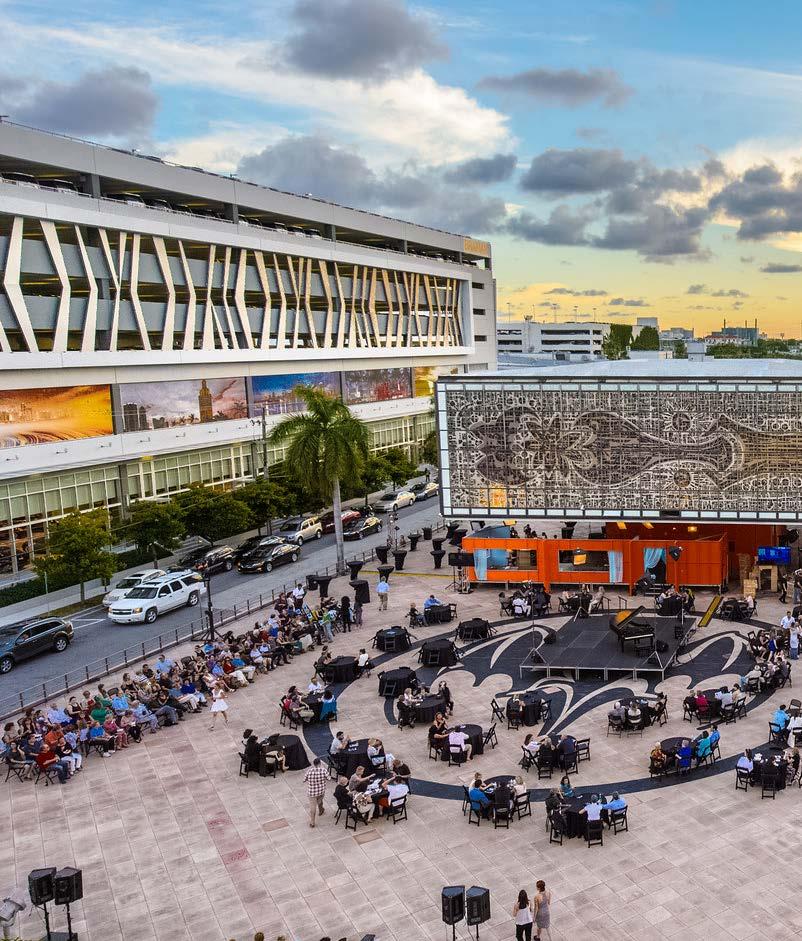
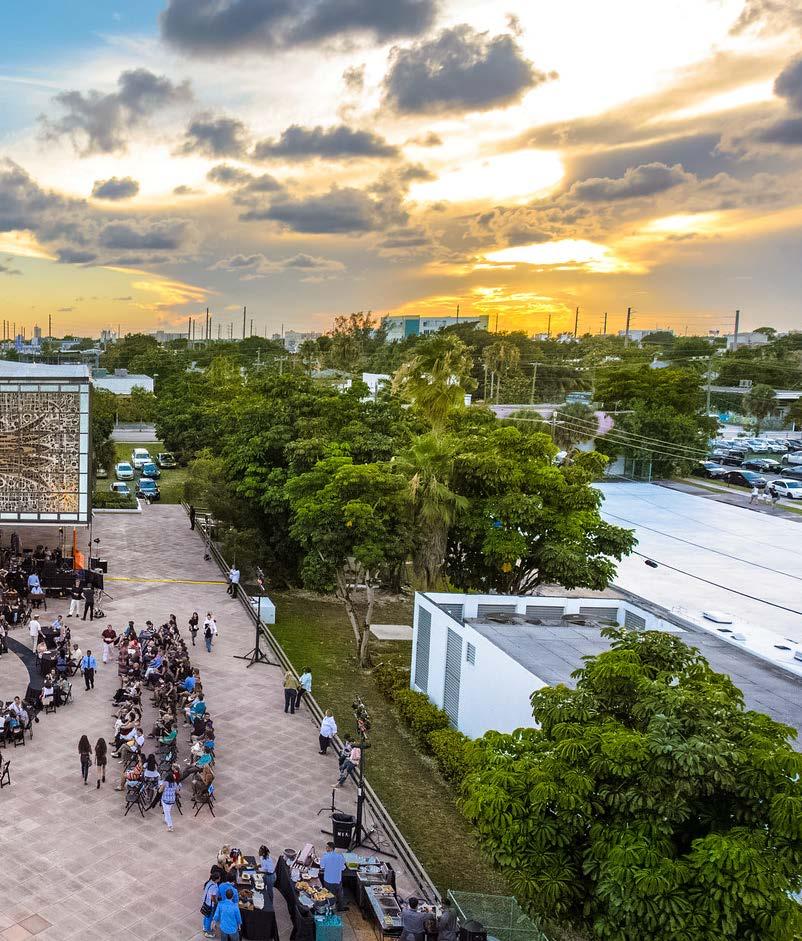
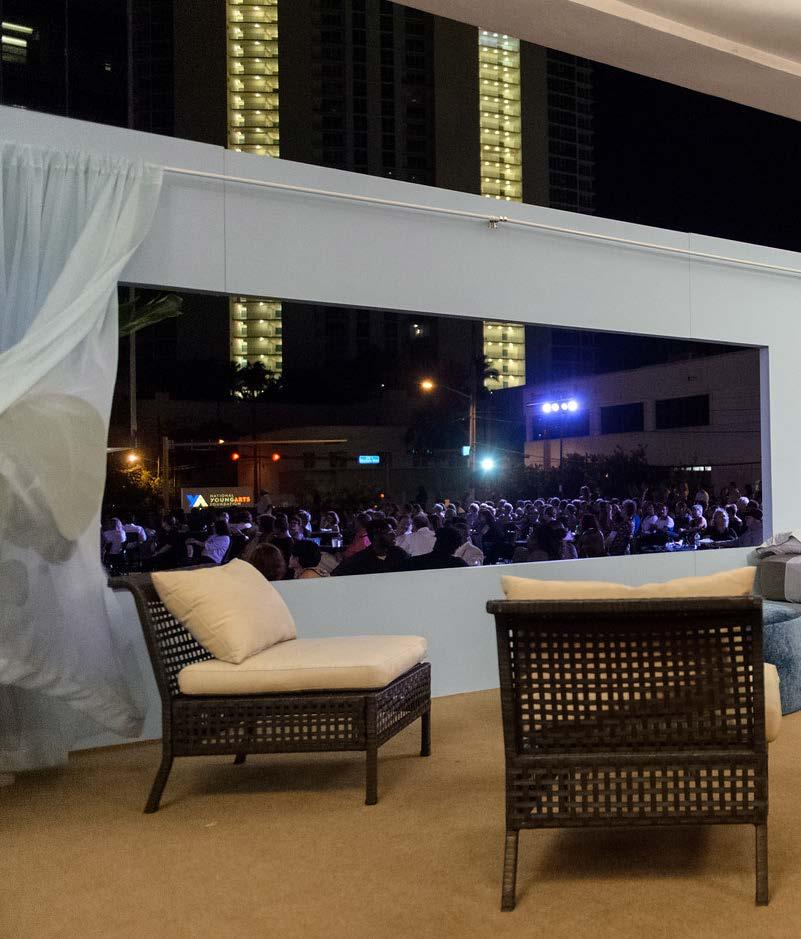
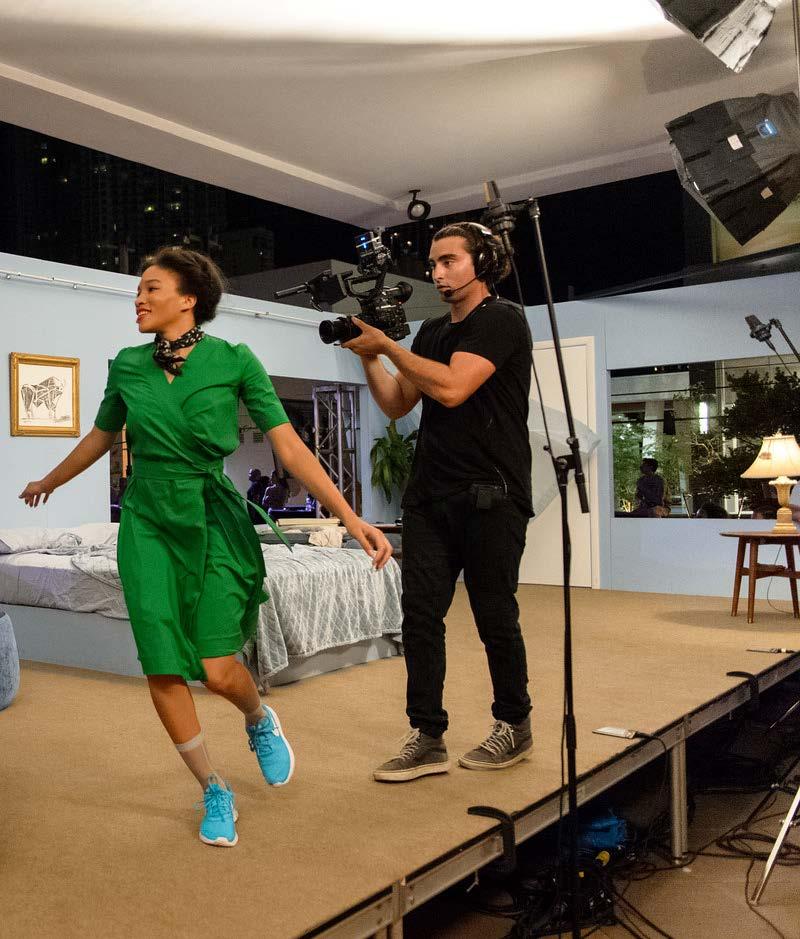
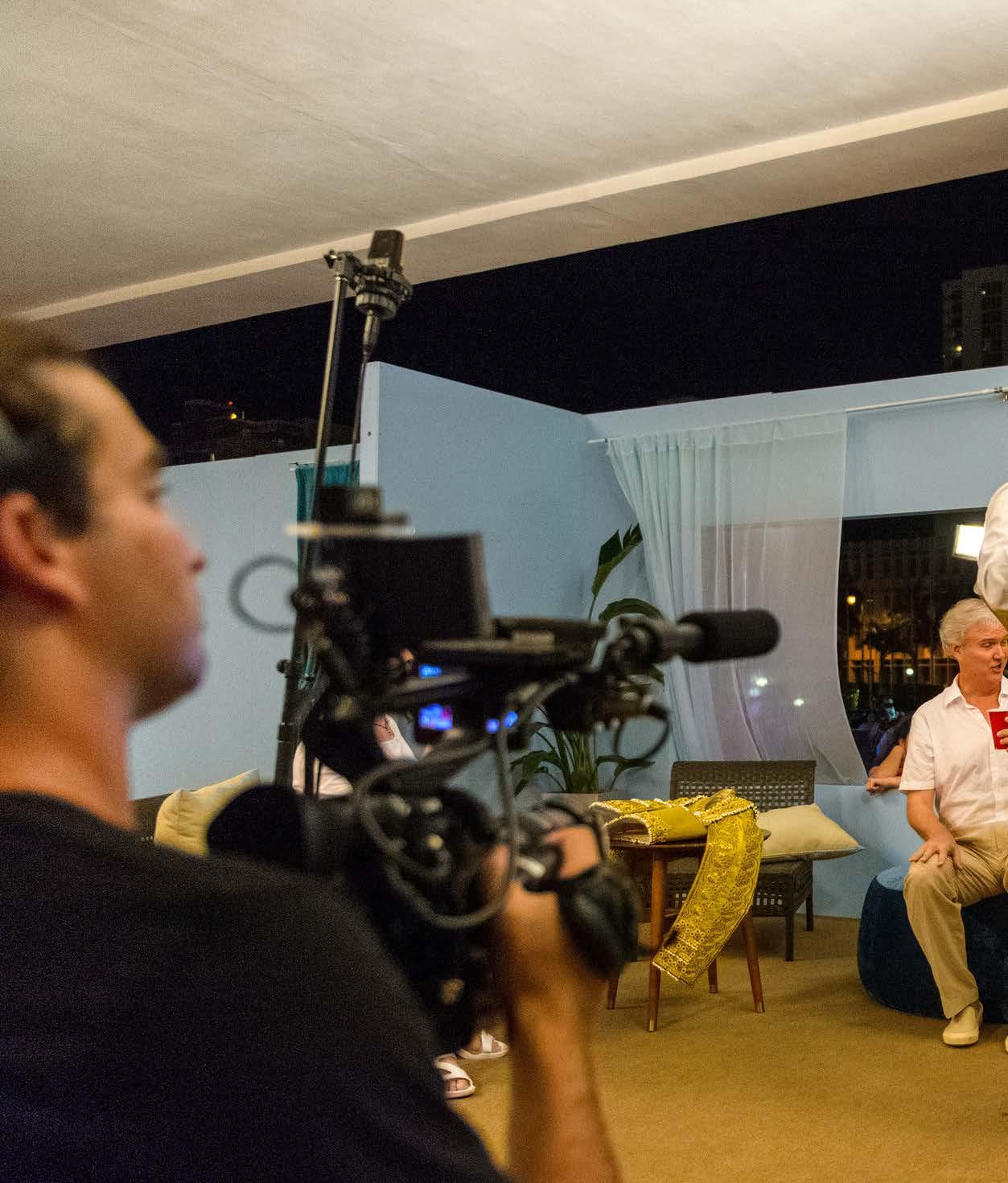
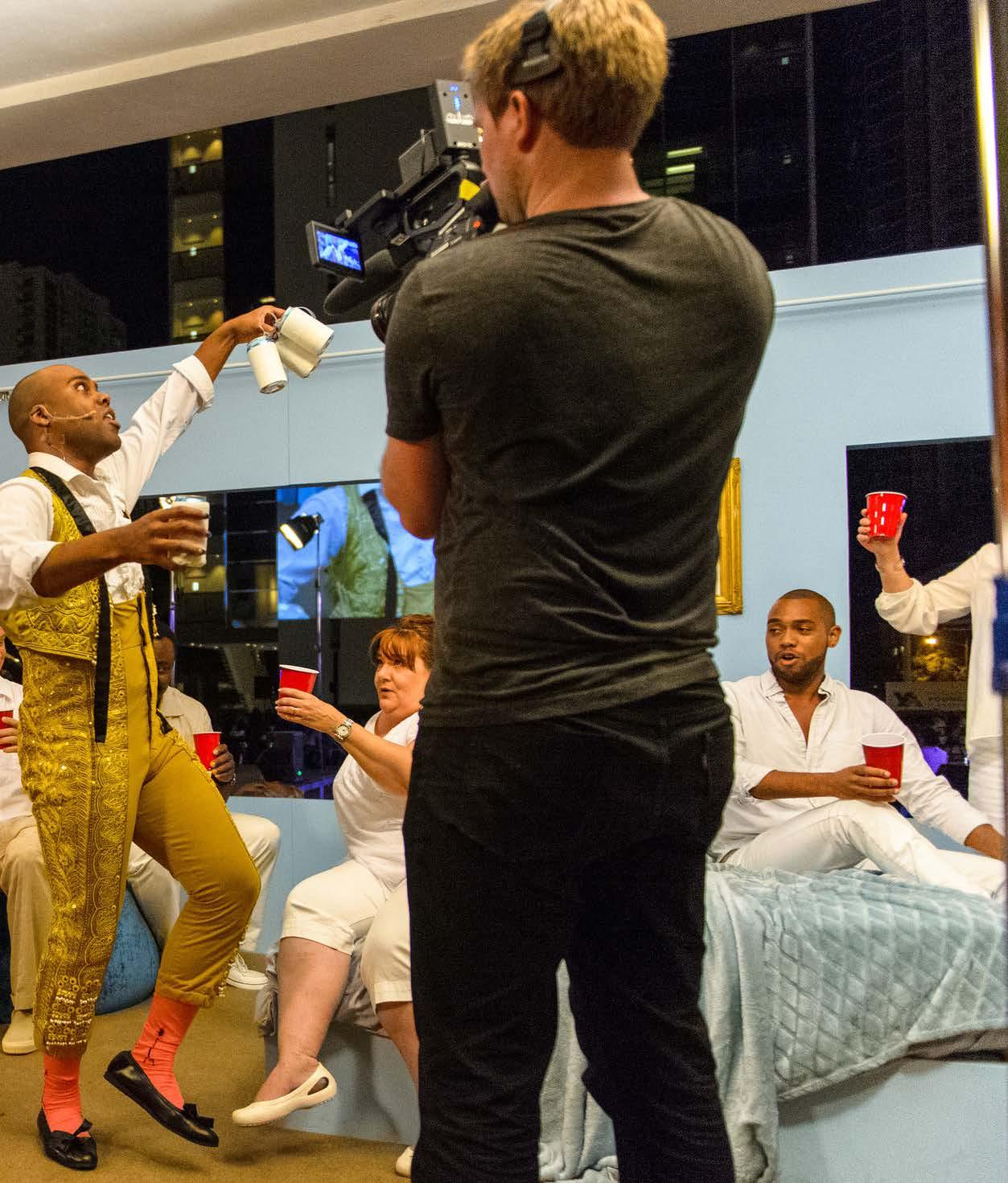
Bizet’s opera Carmen opened to a chilly reception in Paris in 1875, leaving the audience “shocked by the drastic realism of the action” according to critic Earnest Newman. However, the immediacy of Carmen with all its passion and jealousy made the opera a perfect fit for Miami. Conceived and adapted by Jay Scheib as a onenight-only live film event, I looked to the site for inspiration. I aligned the film set physically and visually with the iconic Jewel Box building on the National YoungArts campus. Tables, bars and cigar rollers were distributed around the plaza and audience members were free to watch the action unfold through a projection on the tower opposite the Jewel Box or through the windows as singers performed only a few feet away.
Photographs by Jason Koerner
Appropriate
The Trinity Repertory Company
Premiere: October 6, 2016 in the Sarah and Joseph Dowling, Jr. Theater, Providence, RI
Written by Branden Jacobs-Jenkins
Directed by Brian Mertes
Sets by Sara Brown
Lights by Dan Scully
Costumes by Olivera Gajic
Sound by Daniel Baker
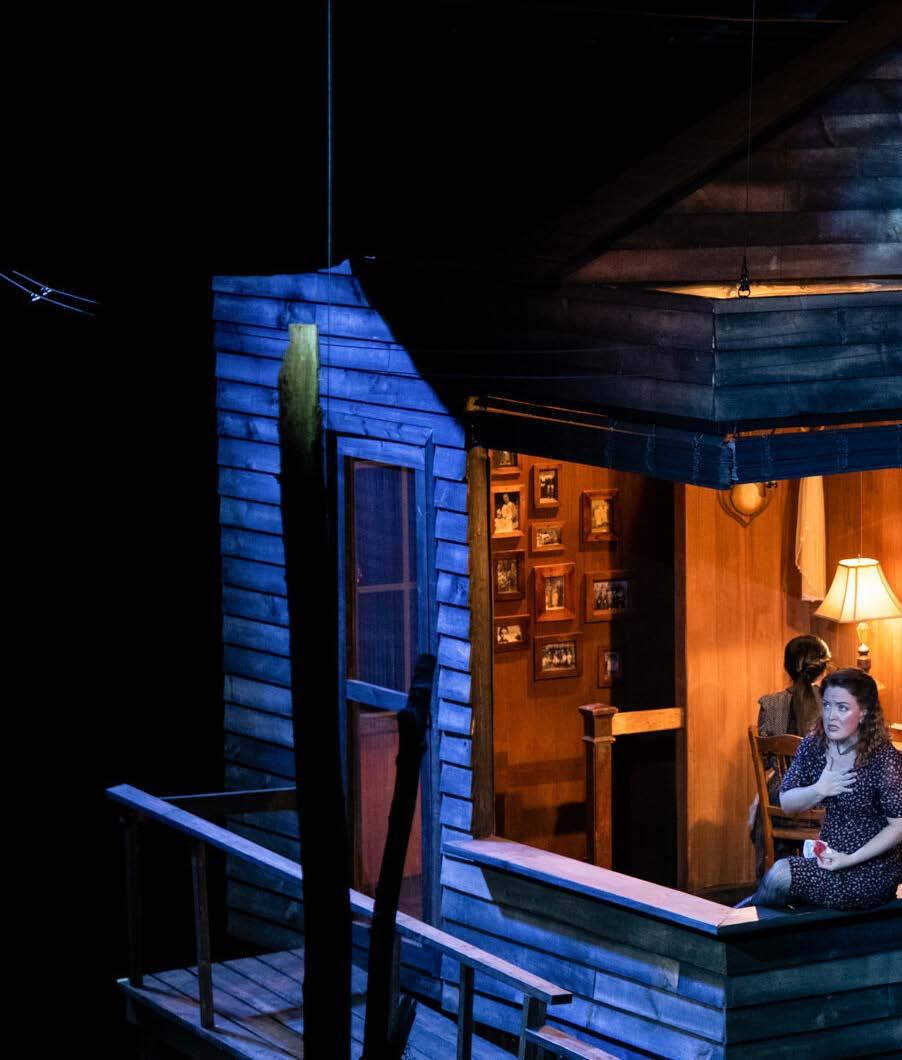
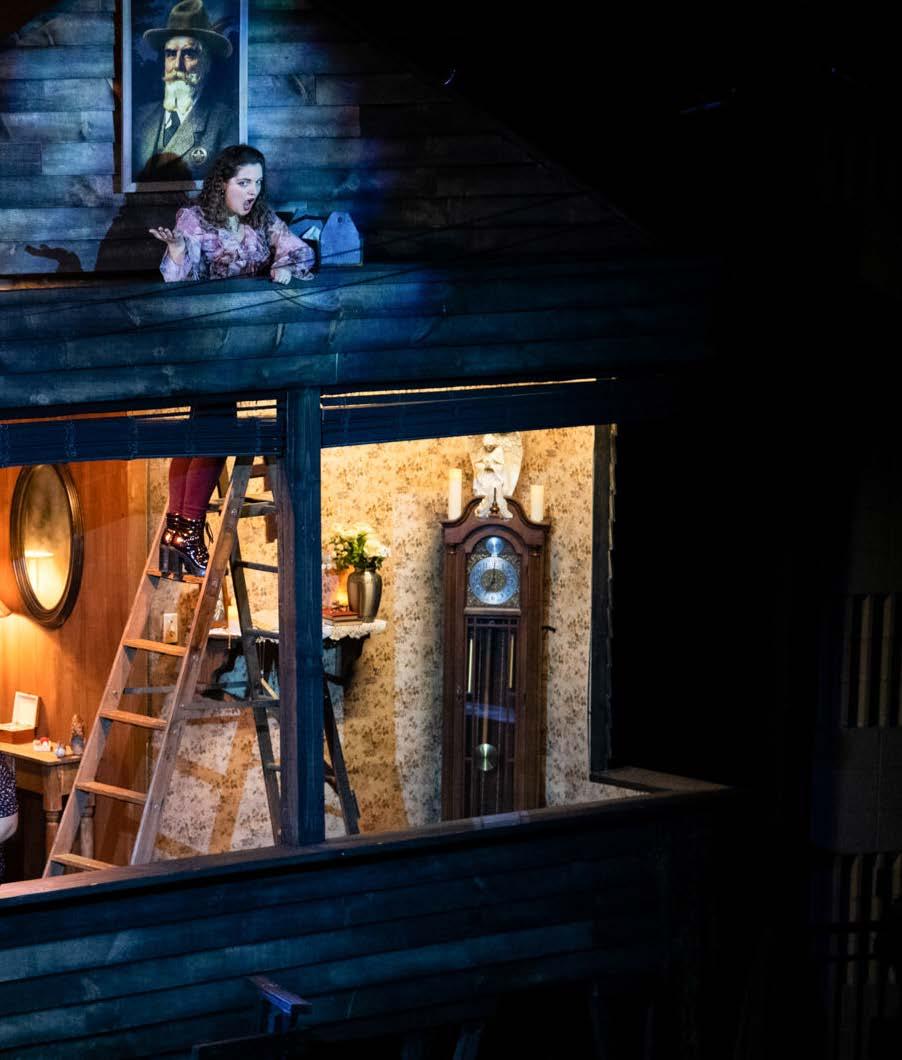
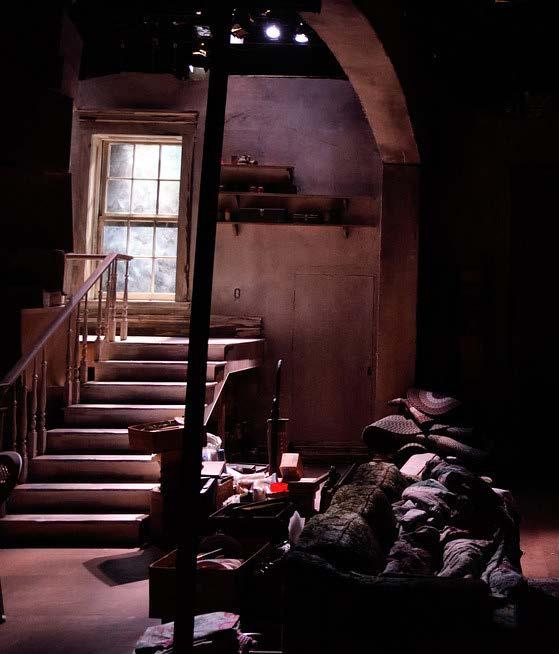
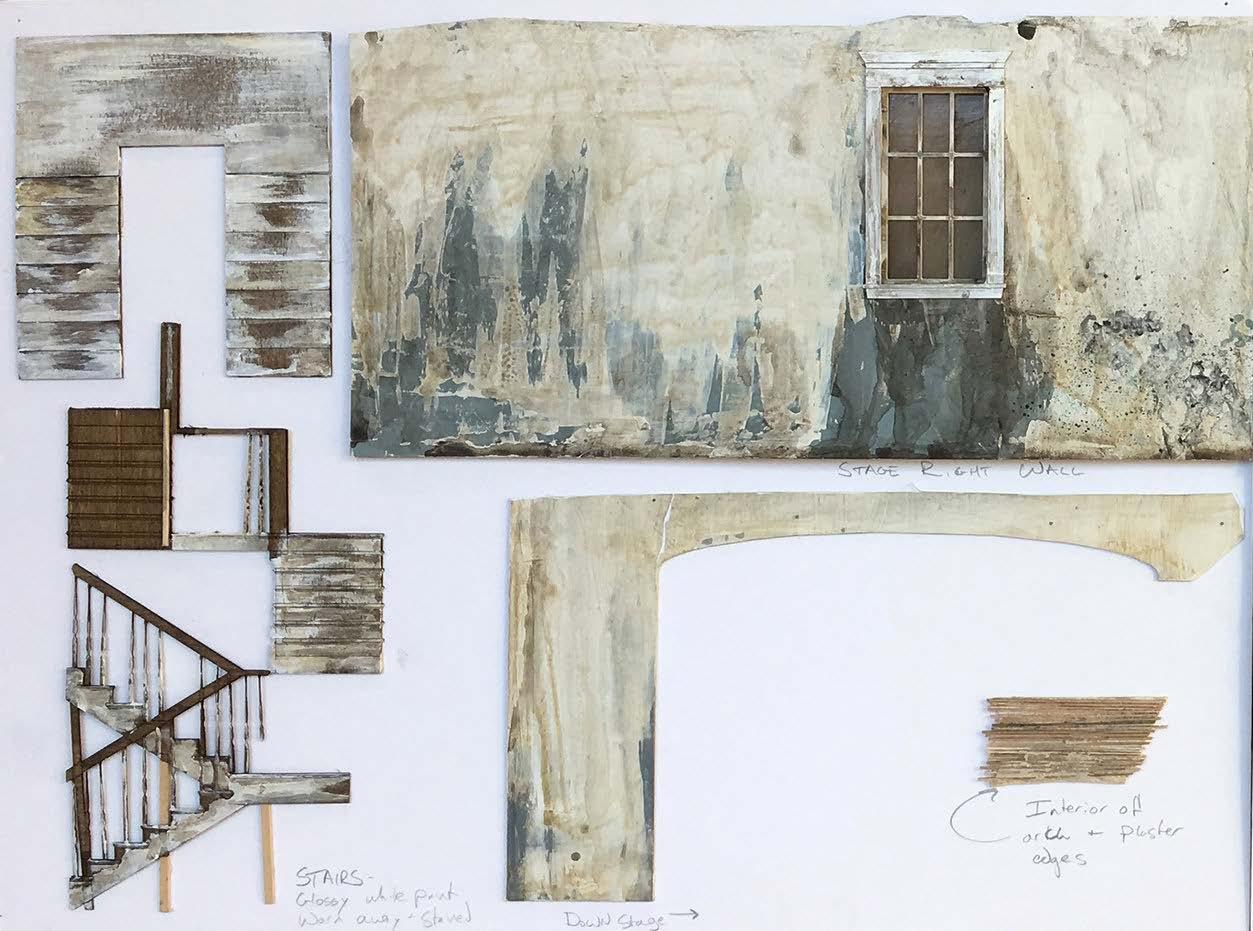
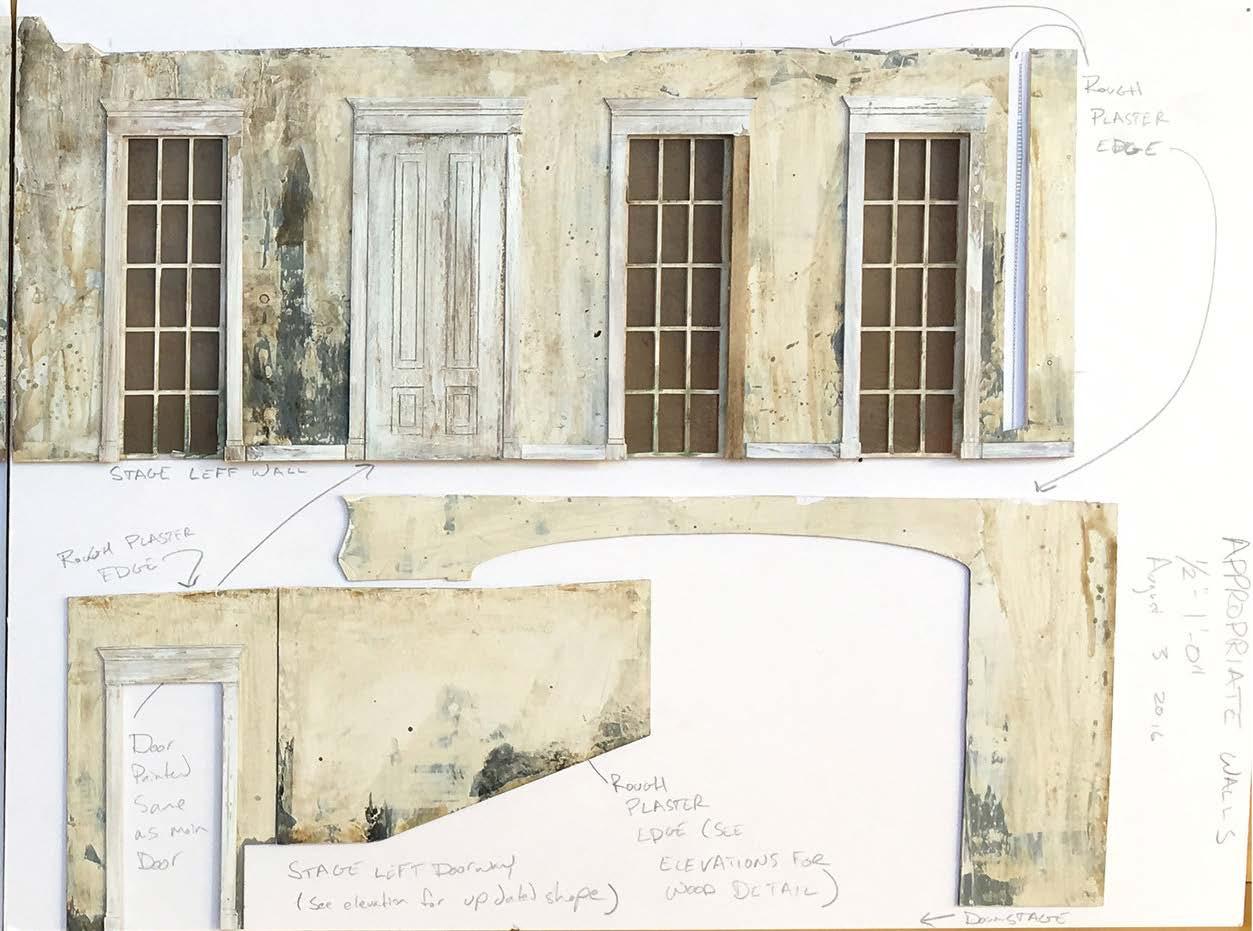
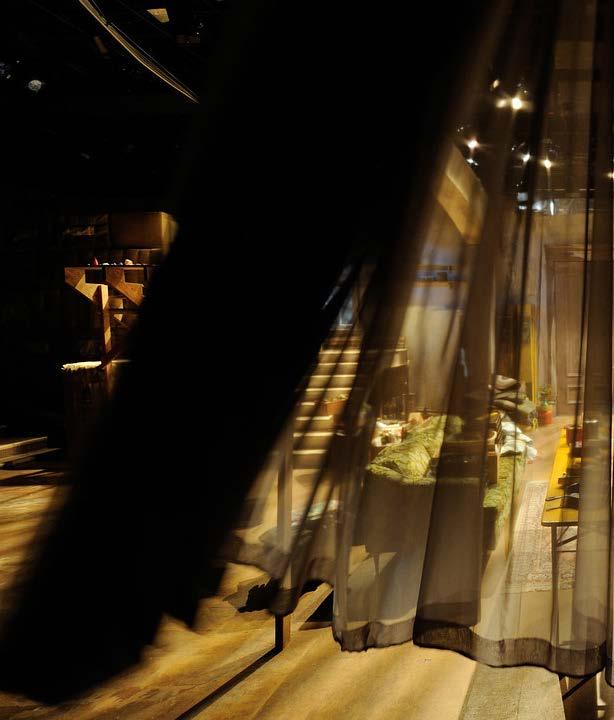
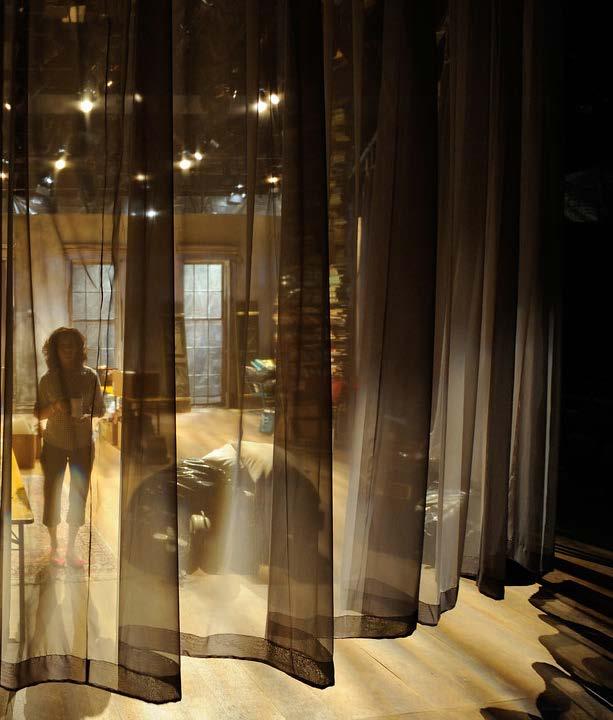
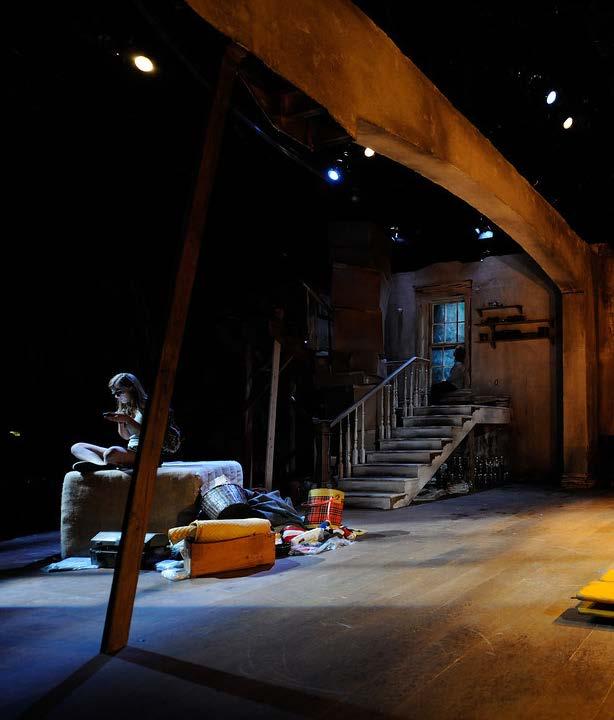
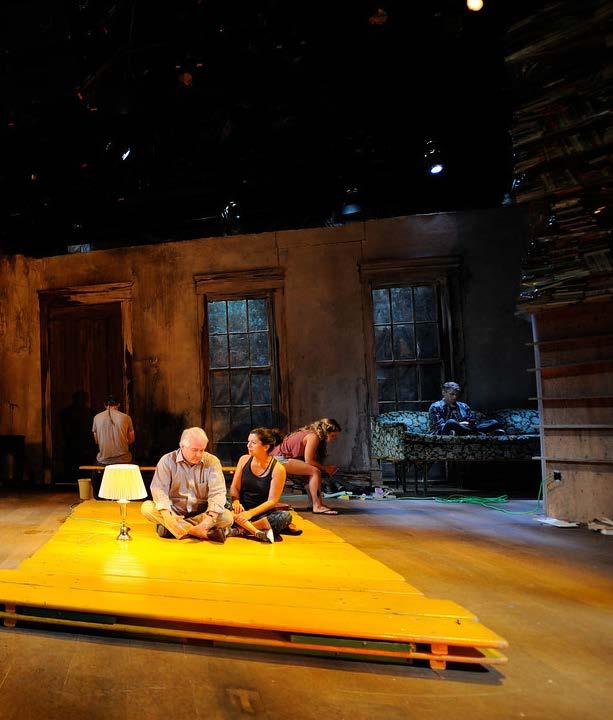
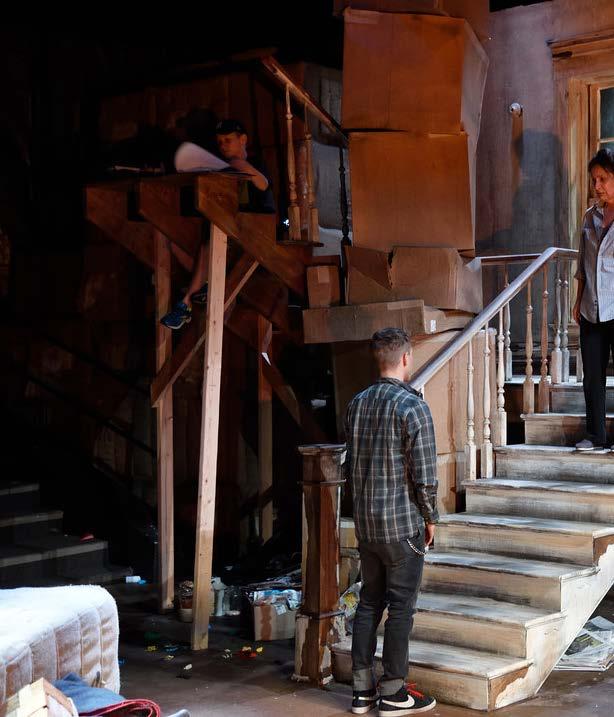
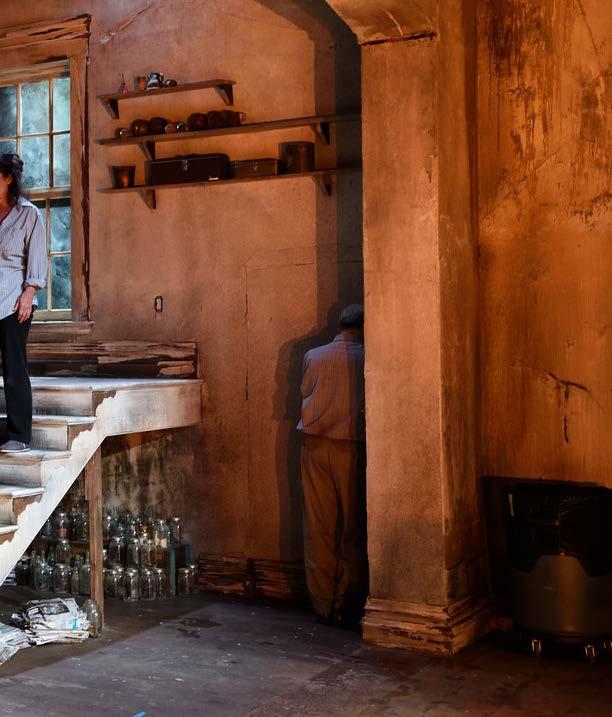
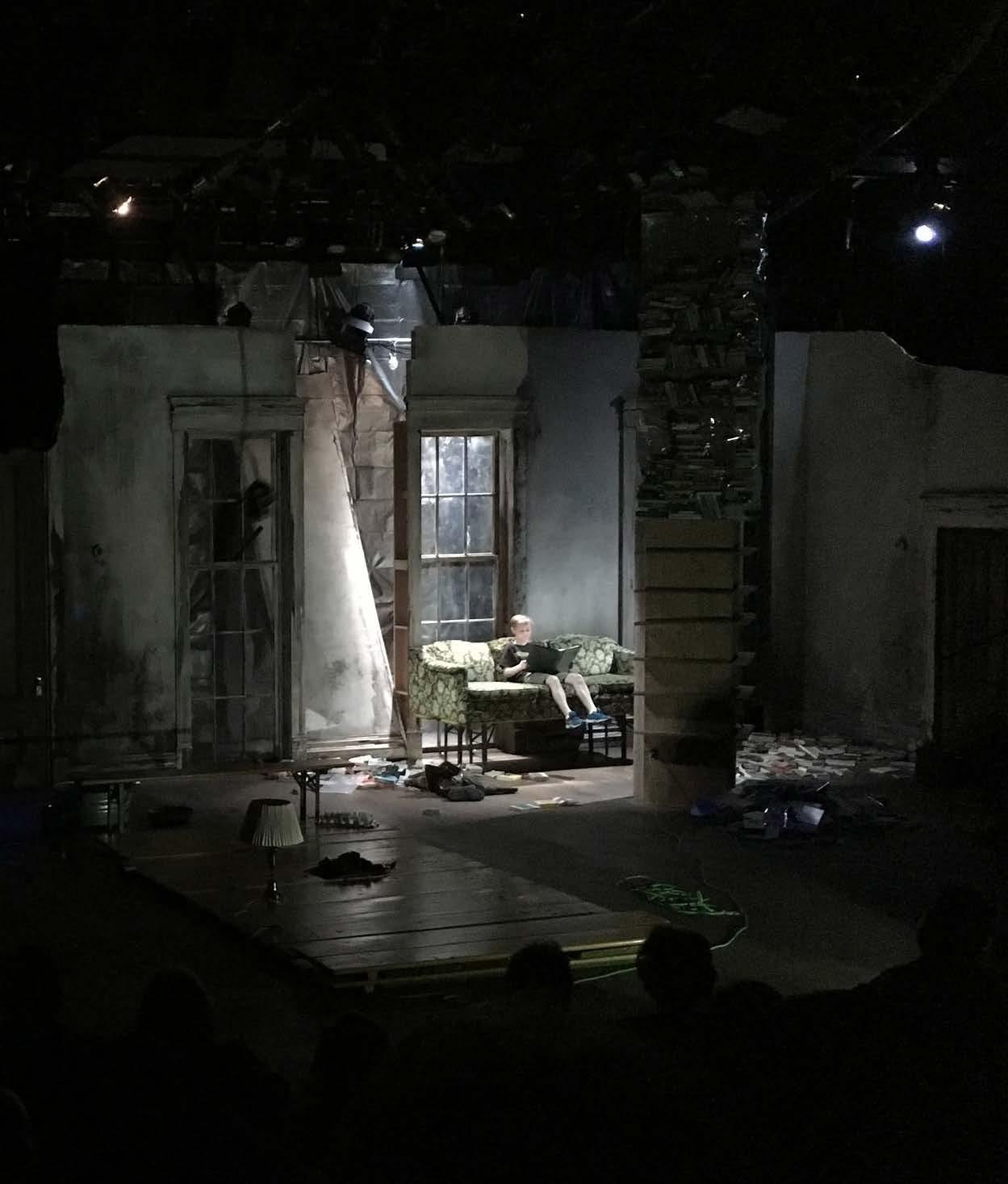
Appropriate follows the disintegration of a white family as they confront evidence of their father’s past perpetration of racial violence. The play is set in a dilapidated plantation house in the American South, where the family gathers in order to go through their father’s belongings. In order to embody the historical significance of the house, I based the design on drawings of the Lakeport Plantation in Chicot County, Arkansas. As the play progressed, I undermined the realistic details of the environment by exposing the set as a constructed fiction.
Photographs by Mark Turek
Paint Renderings of the set’s walls
The Wilma “Globe”
The Wilma Theater
Unrealized design created June, 2020 for The Wilma Theater in Philadelphia, PA
Designed by Sara Brown, Misha Kachman, and Matt Saunders
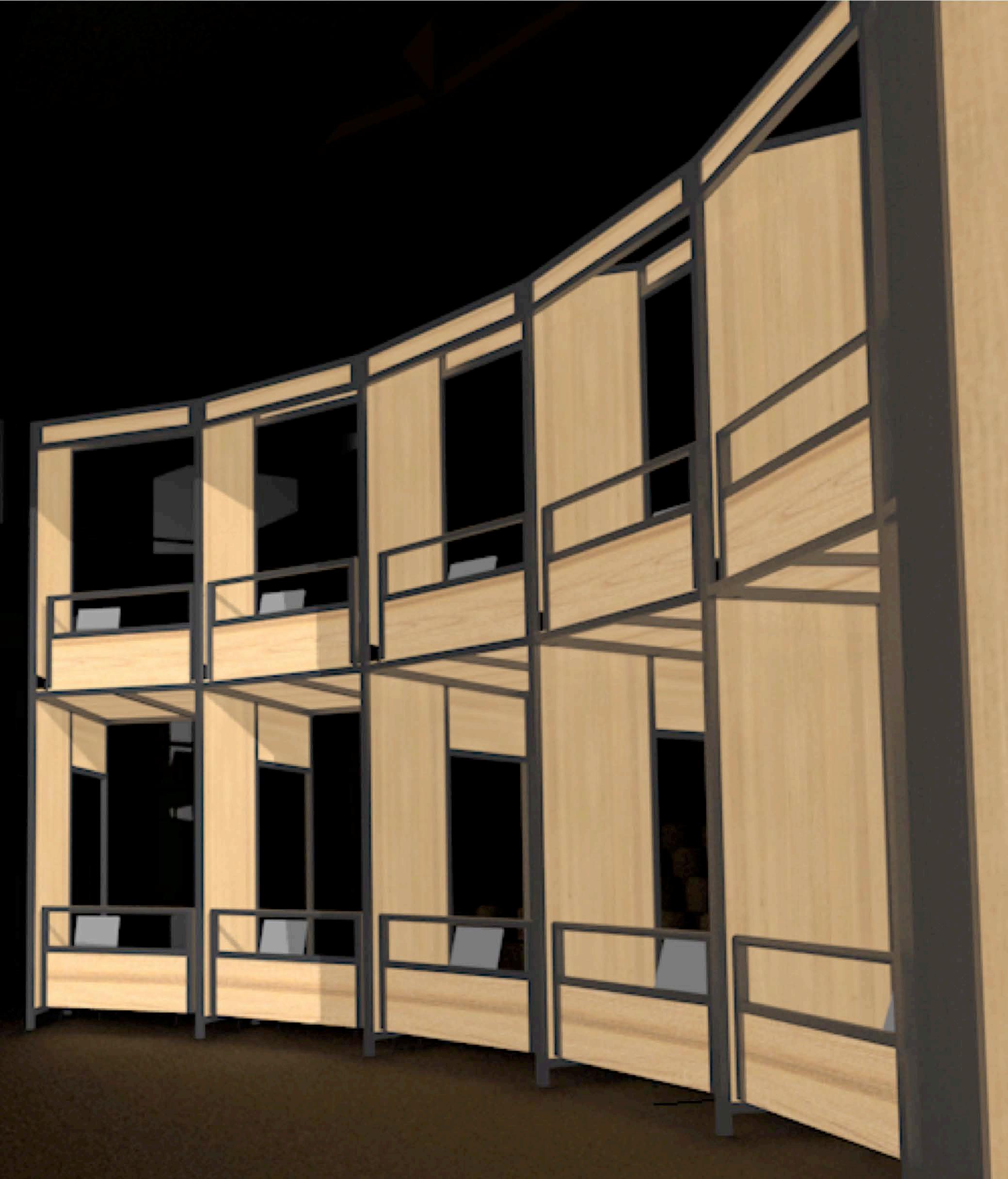
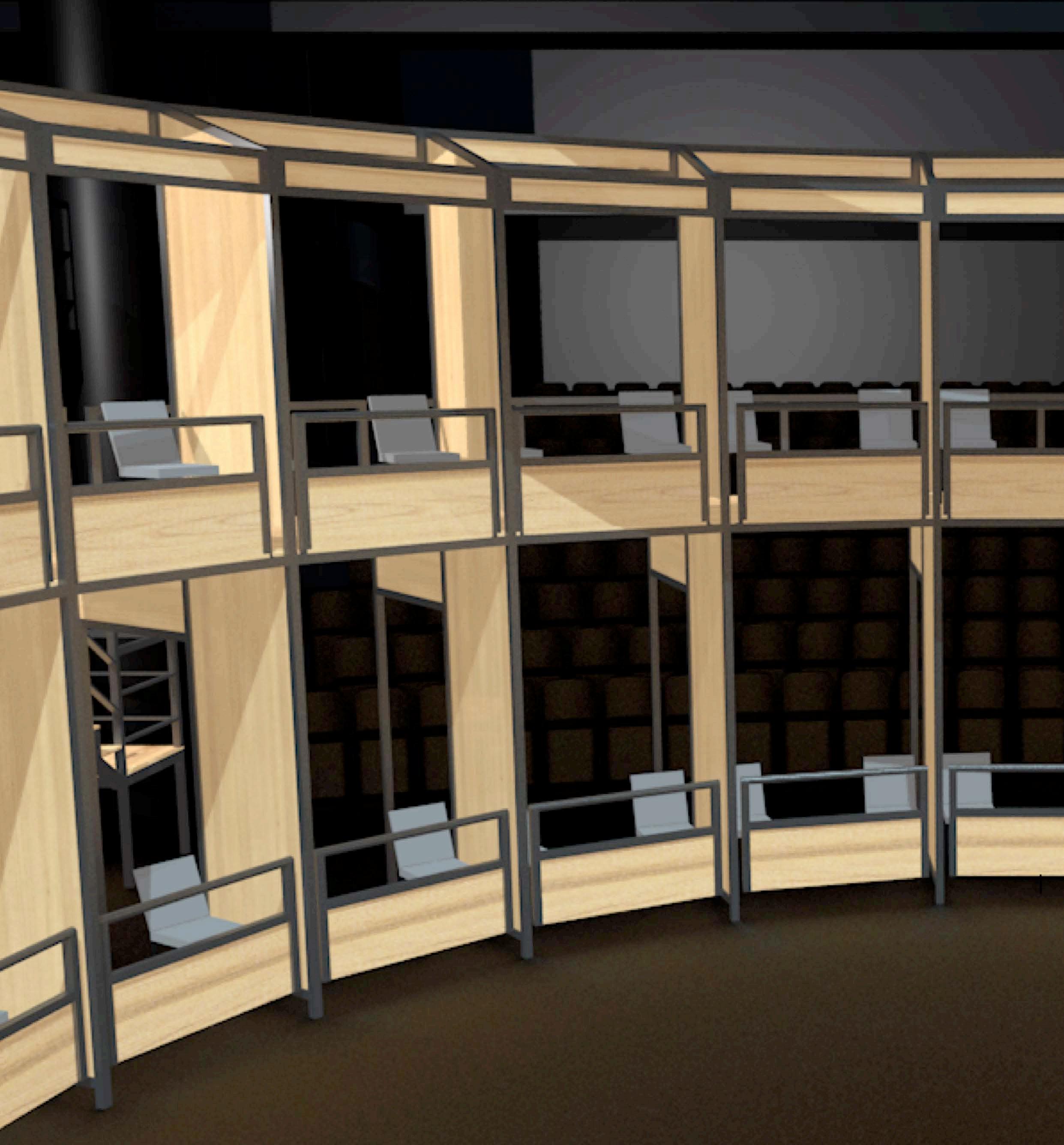
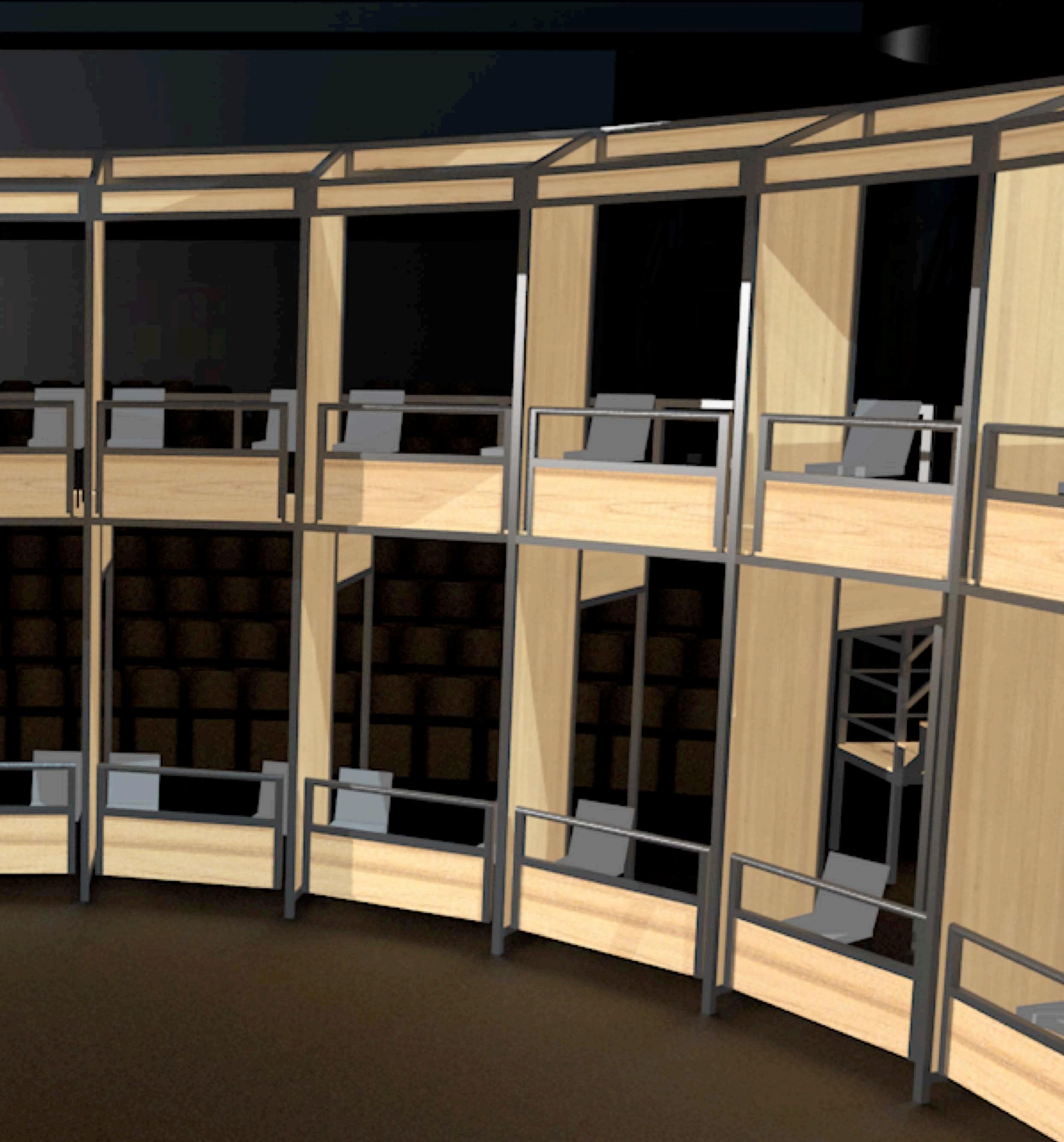
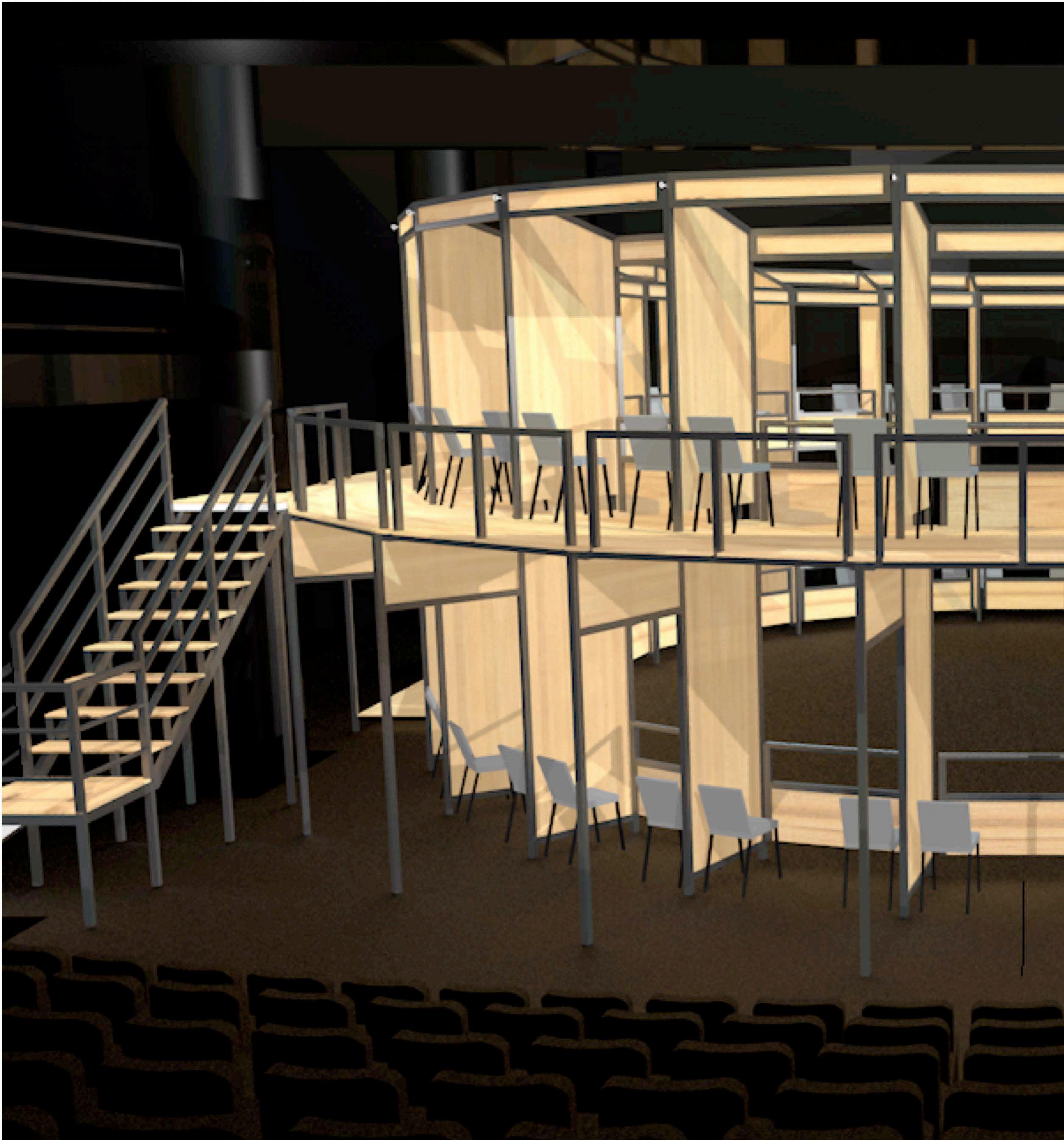
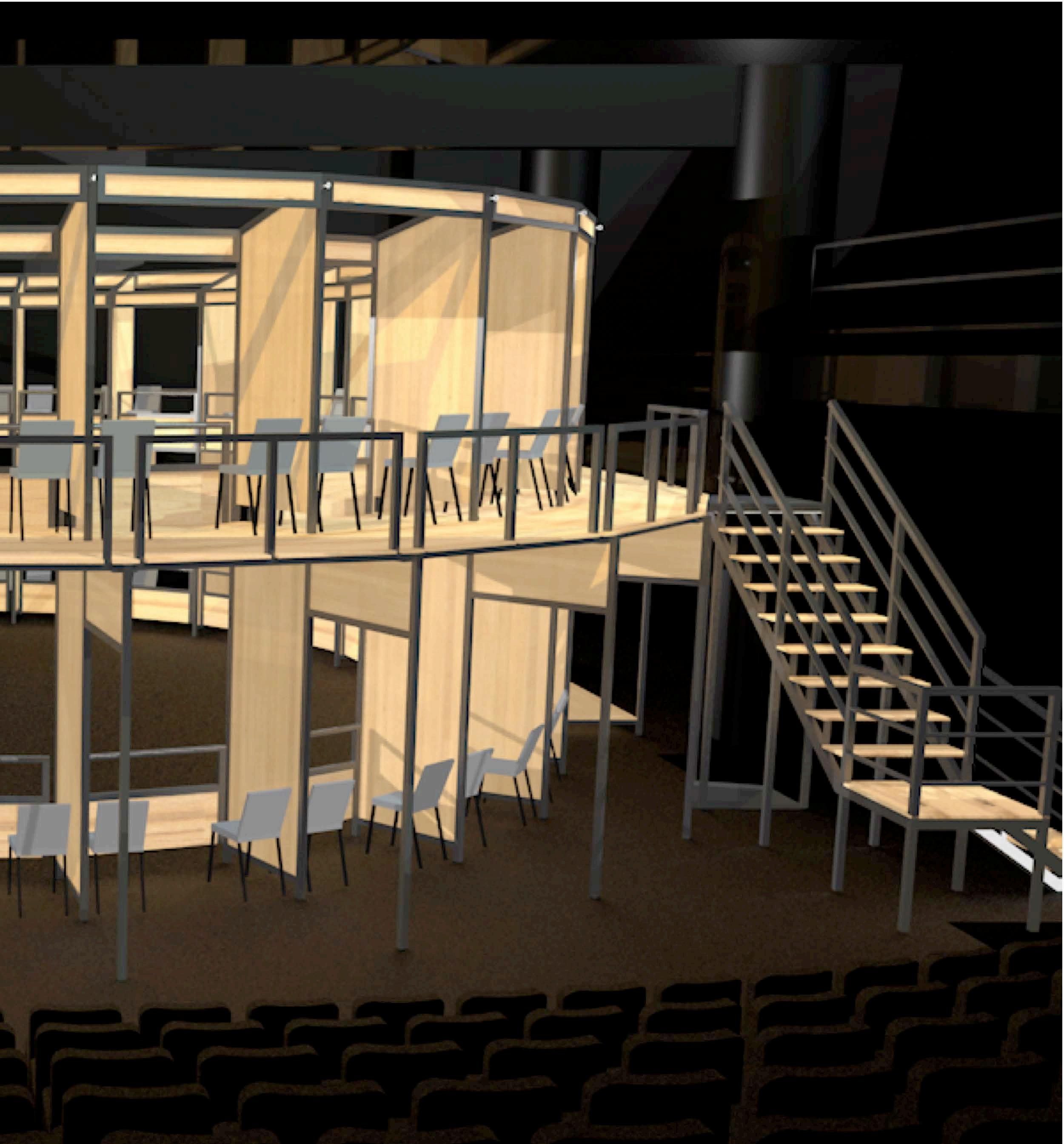
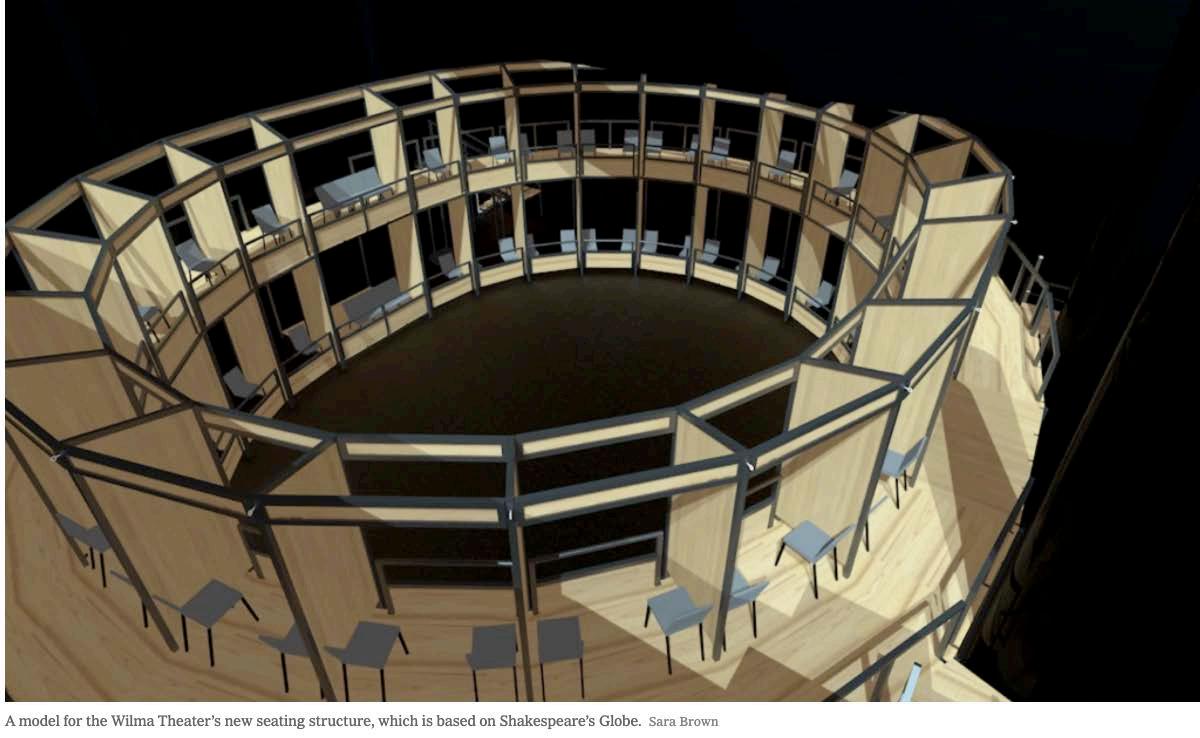
As theaters suspended productions in the spring of 2020 due to the pandemic, the Wilma Theater in Philadelphia explored ways to move forward with its scheduled season. The key challenge was recreating the theatrical experience while maintaining public health protocols. Designer Misha Kachman reached out to me and set designer Matt Saunders to share his idea for a theater within a theater that would keep the audience and performers safe while preserving audience proximity. Together, we designed the Wilma Globe, modelled on the Globe Theatre in London. Although our theatre was not built, this rare collaboration between set designers was a hopeful exercise in adapting to our changed circumstances.
“We’re embracing forward motion. We want to experiment with how we can keep creating and producing, and this feels like the next step of that.”
-Wilma Managing Director Leigh Goldenberg
Digital Rendering of the interior of “The Globe”
Digital Rendering of “The Globe” set on the stage of the Wilma Theater
July 1, 2020
By Michael Paulson
Like most other large regional nonprofit and commercial theaters, the Wilma in Philadelphia plans to stay closed through the fall.
But this theater has an unusual idea for how to reopen when the time comes: it will prevent theatergoers from breathing on one another by separating them with wooden
dividers.
The Wilma, which normally seats 300 people in a traditional auditorium, says it will build a new structure, seating as many as 100 or as few as 35, on its stage. The twotiered structure, which can be configured in the round or as a semicircle, is based in part on Shakespeare’s Globe Theater.
The most distinctive feature is that each party of patrons — whether they be solo or in groups of up to four — is seated in a box, physically separated from all other parties.
“As we were thinking about how to approach next season, and recognizing that even when we gather we would still likely have some sort of distancing and limited capacity, the idea of having everyone spread out in our existing space didn’t feel like it served our work,” said Leigh Goldenberg, the theater’s managing director. “So we looked at other models through history that allowed both distance and intimacy with the artists.”
The structure is expected to cost up to $115,000, which the Wilma said it should be able to afford with its production budget, because it will be spending less on sets. The theater also hopes to be allowed to stream its productions, to recapture some of the revenue lost as a result of having a lower seating capacity.
The theater has not yet decided what other safety measures it will put into place upon reopening, and plans to consult with medical professionals.
The Wilma, established in 1973 as a feminist collective called the Wilma Project, moved into its current theater in 1996.
Earlier this year, it announced an unusual leadership structure, in which four artistic directors are jointly overseeing the organization; their hope for next season is to stage productions of “Fairview,” the Pulitzer-winning play by Jackie Sibblies Drury, “Heroes of the Fourth Turning,” a play by Will Arbery that was a Pulitzer finalist, as well as “Fat Ham” by James Ijames and “Minor Character” from the troupe New Saloon.
“We’re embracing forward motion,” Goldenberg said of the seating plan. “We want to experiment with how we can keep creating and producing, and this feels like the next step of that.”
Fat Ham
The Wilma Theater
Premiere as a streaming film: April 29, 2021
Written by James Ijames
Directed by Morgan Green
Director of Photography Les El Blatino Cineninja
Production Design by Sara Brown
Lights by Xavier Pierce
Costumes by Maiko Matsushima
Sound by Jordan McCree
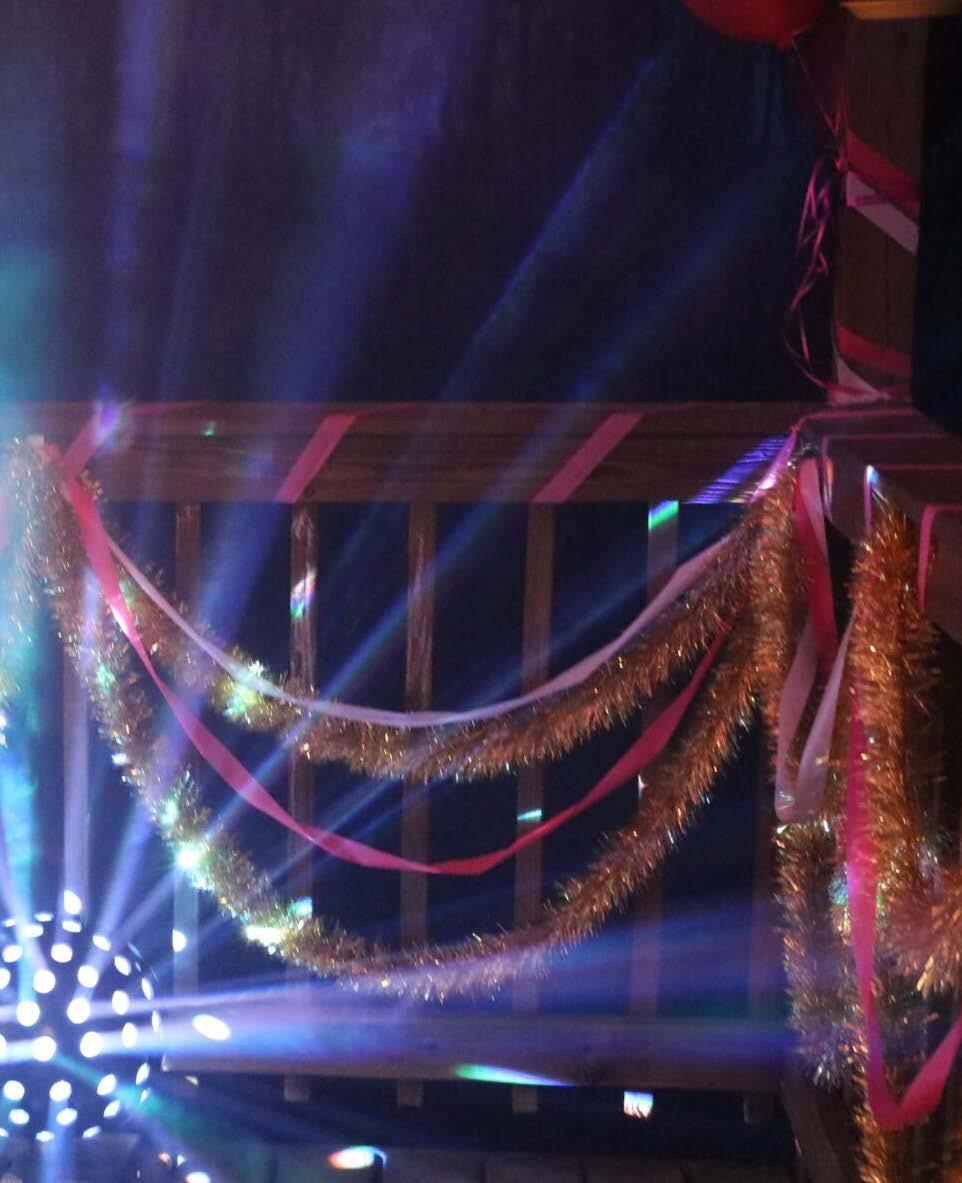
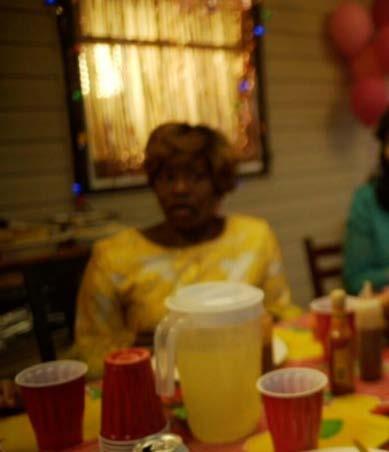
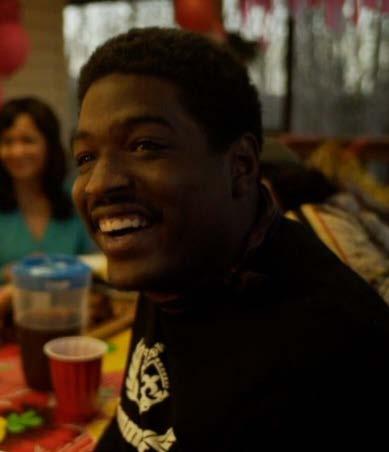
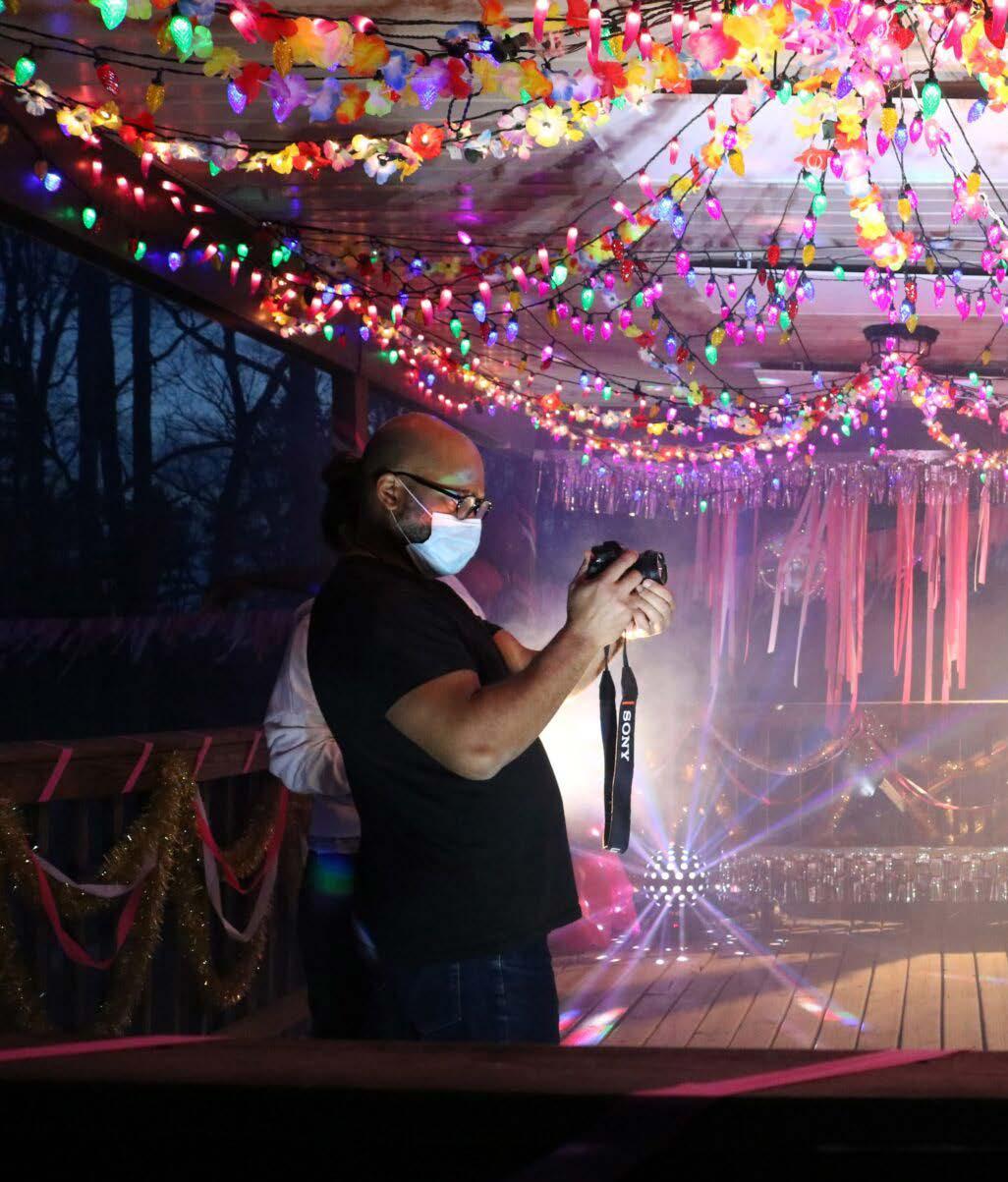
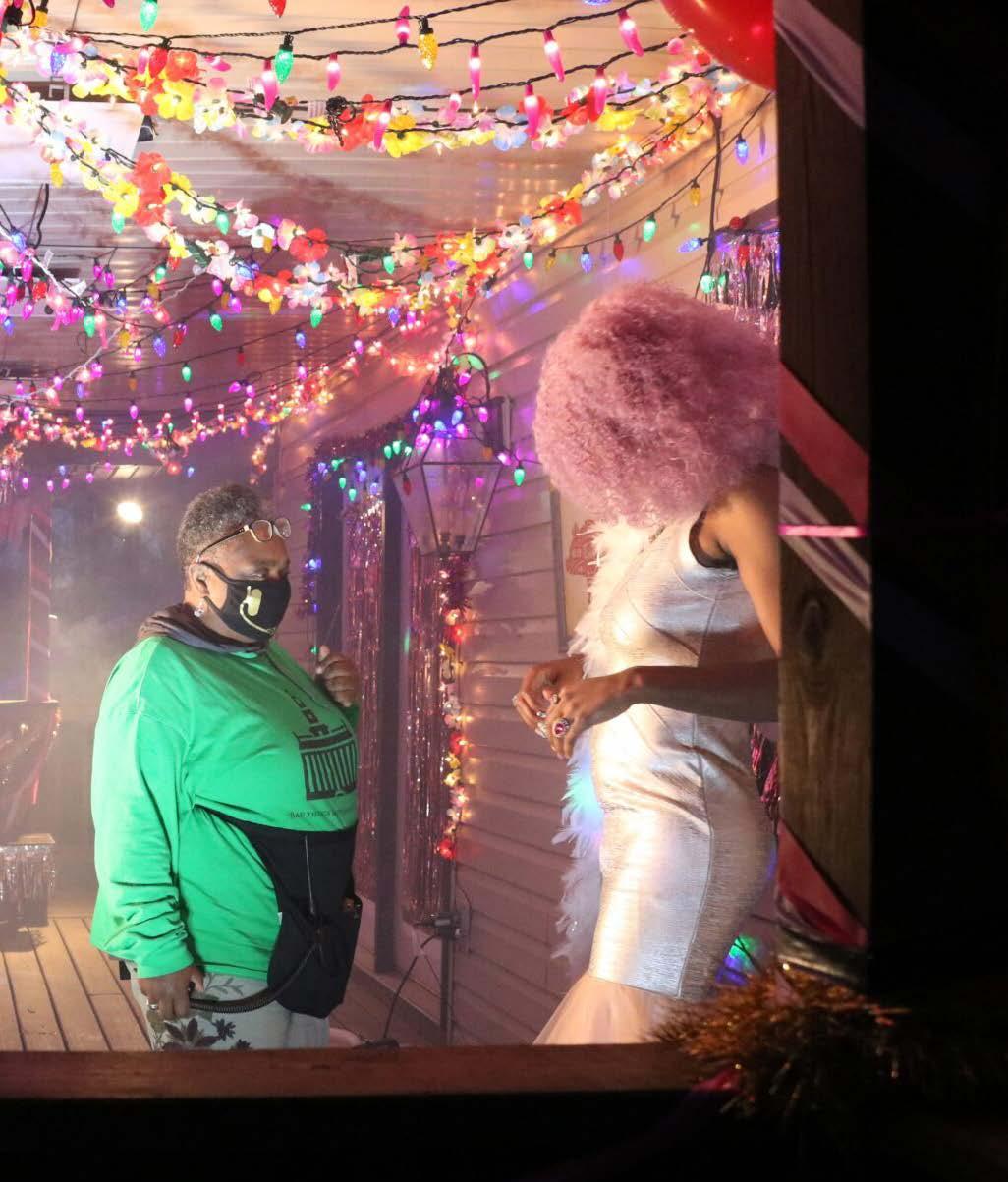
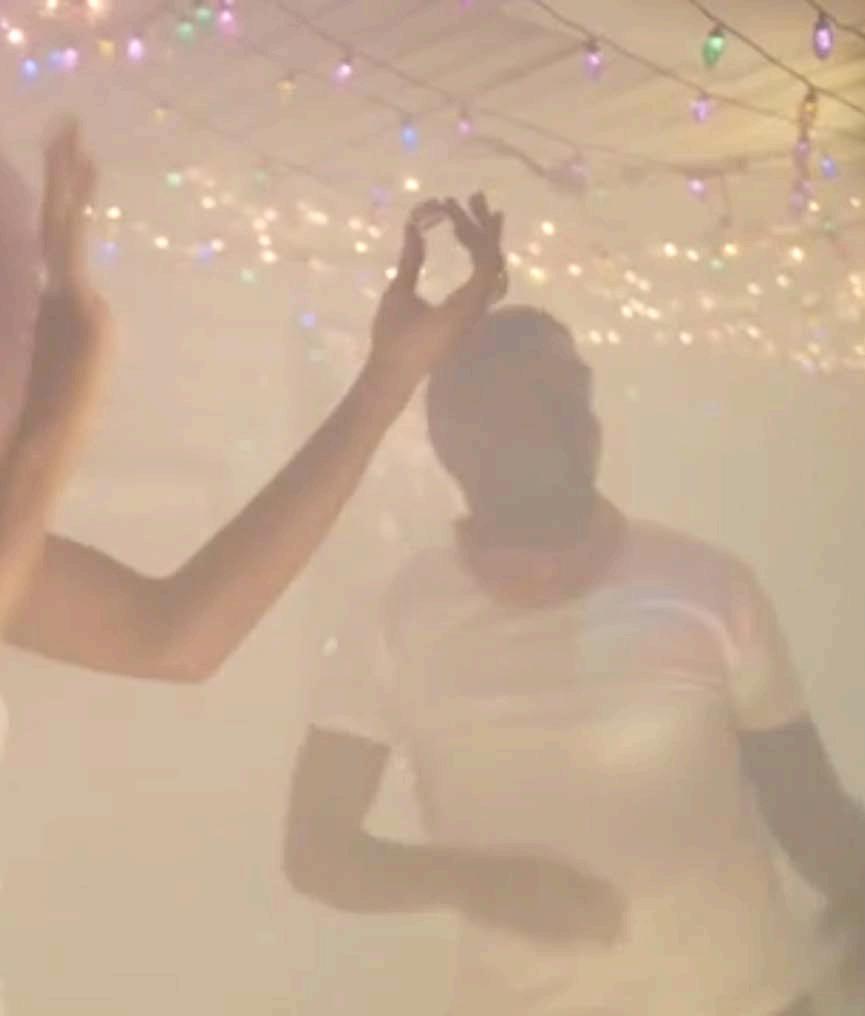
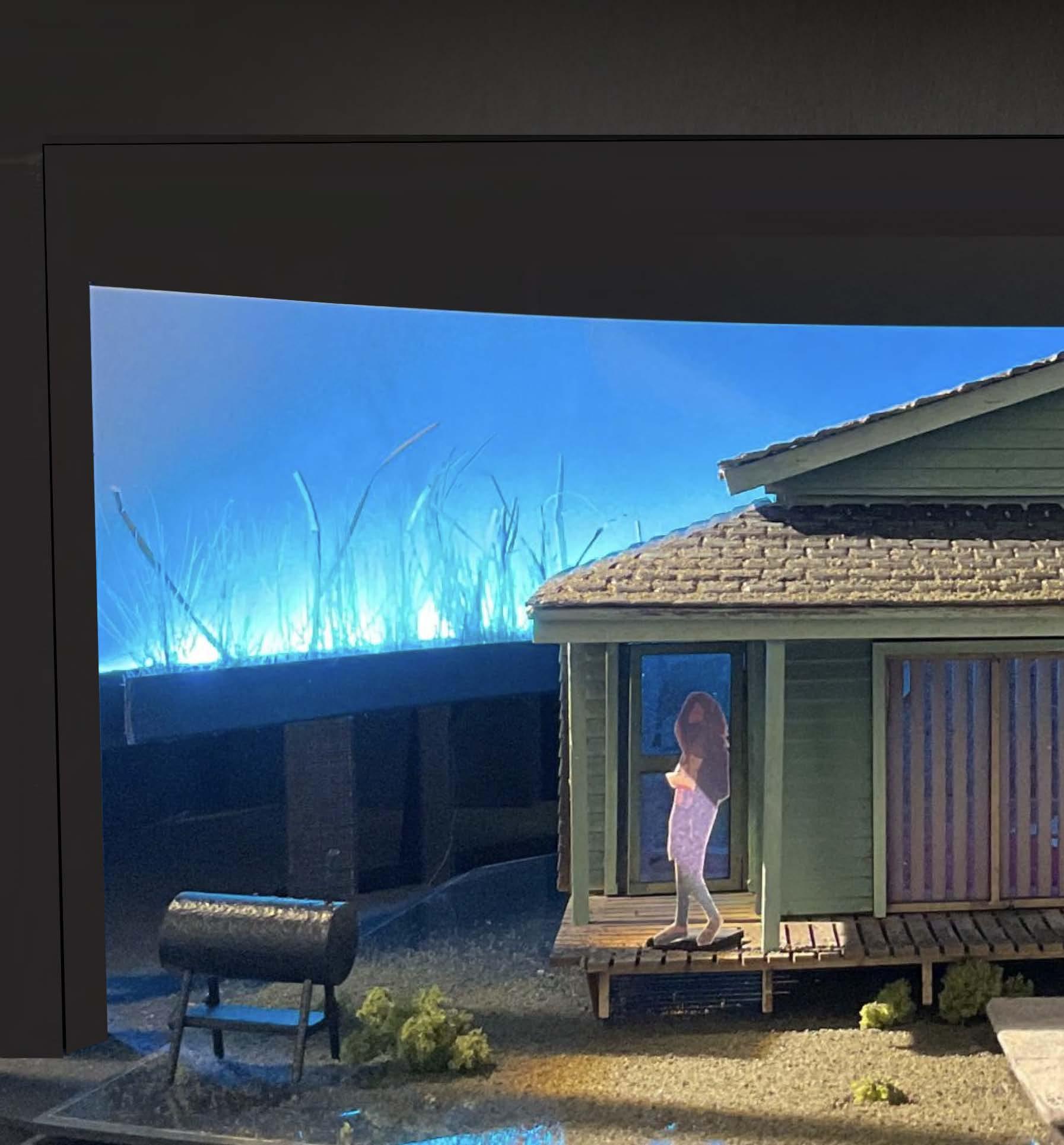
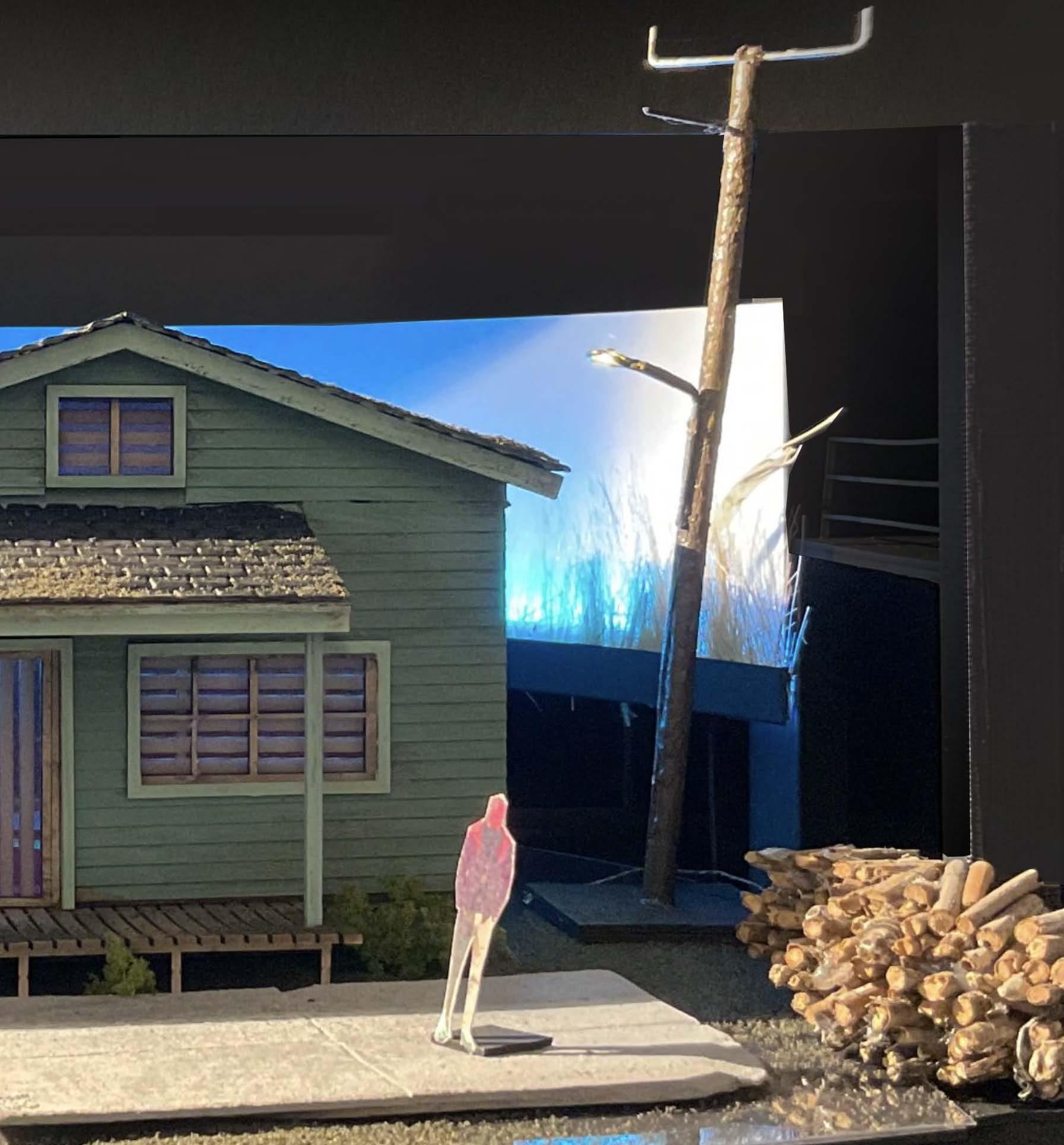
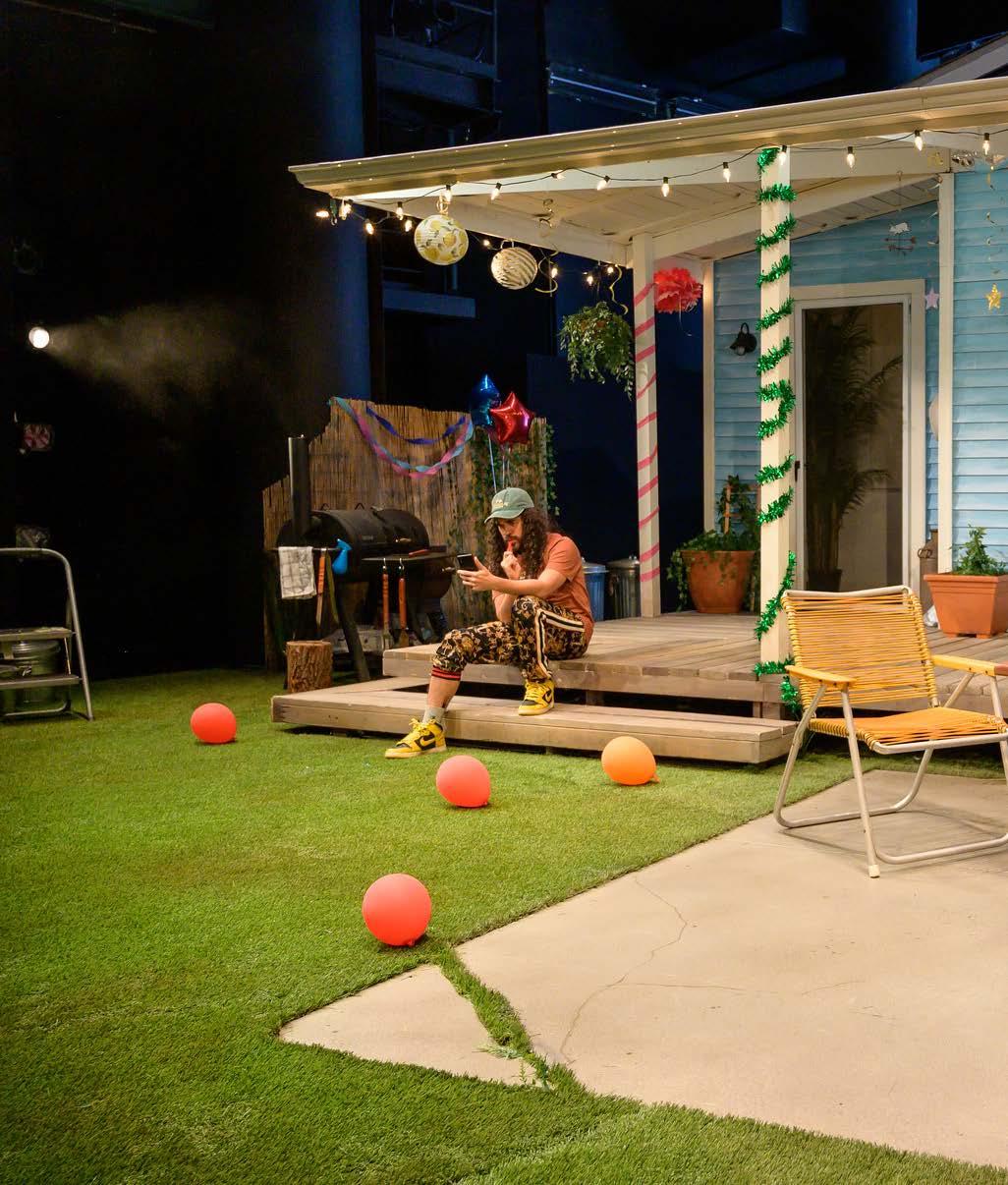
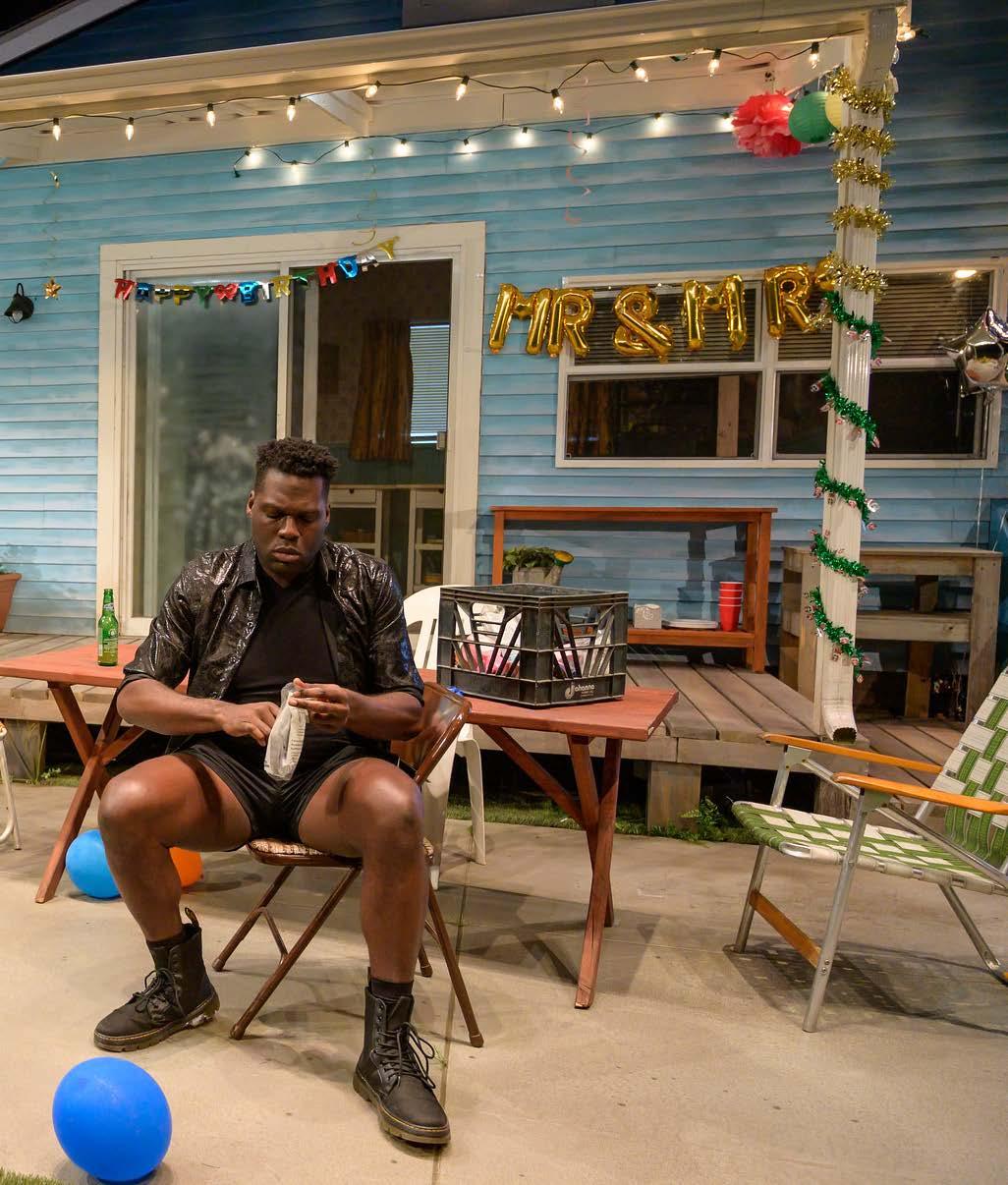
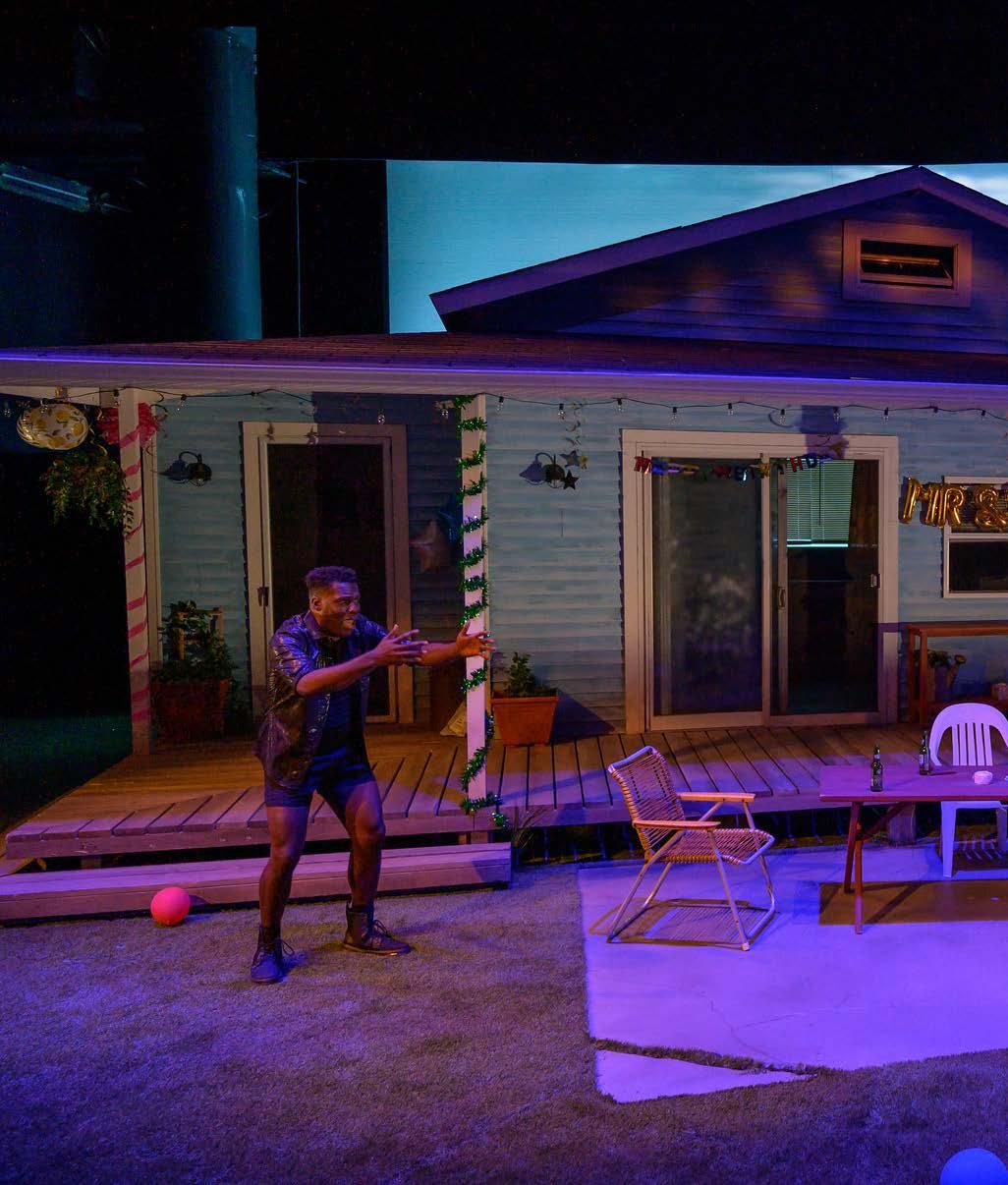
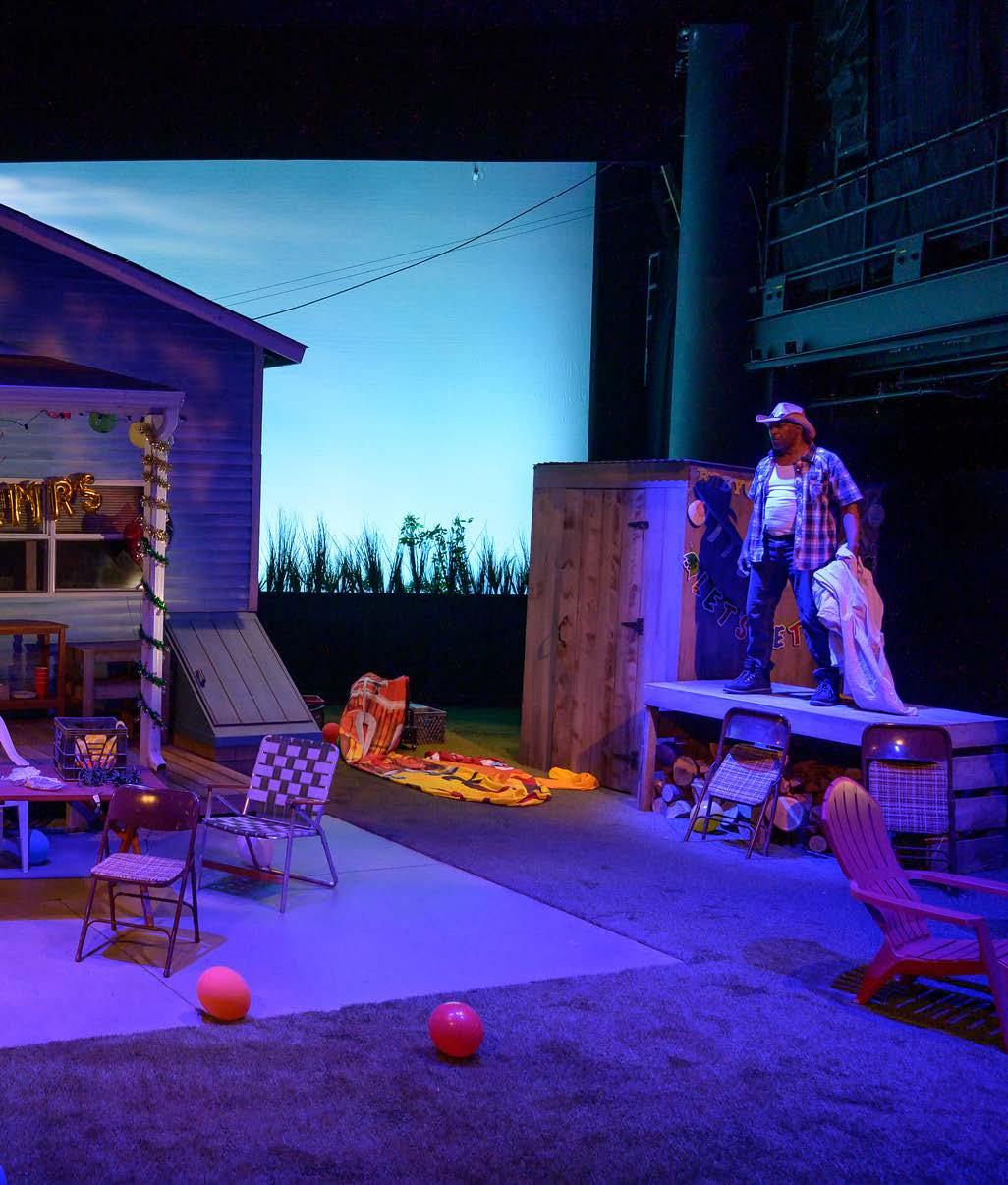
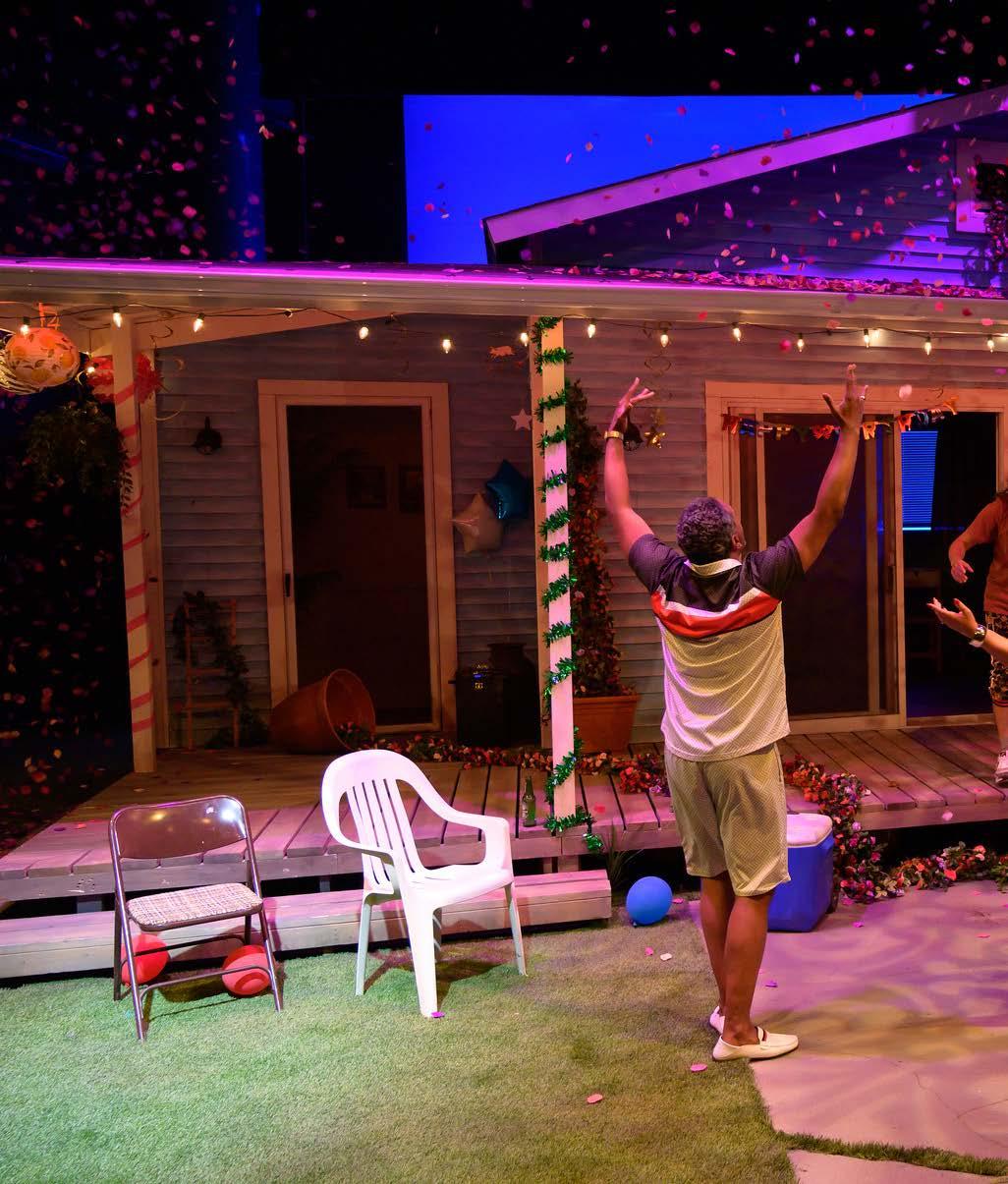
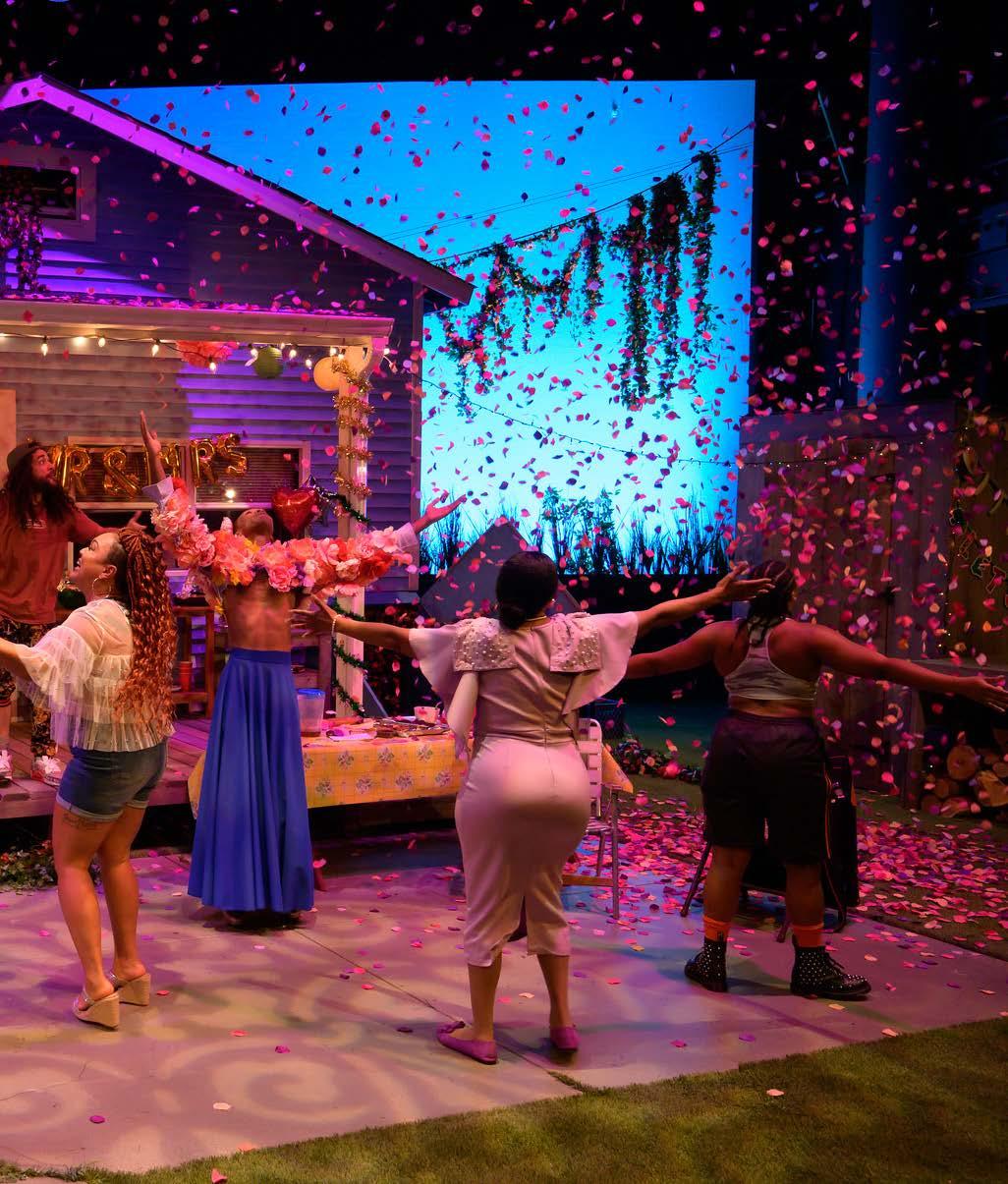
In James Ijames’ creative retelling of Hamlet, the story centers around a barbeque wedding reception. As the production designer for Fat Ham, I worked to honor the playwright’s description of the setting as a “chaotic mass of celebratory kitsch.” Throughout the design process, I relied on the dramaturgical research efforts of Briana Gause and the innate southern food knowledge of stage manager Patreshettarlini Adams to bring this joyful and food-filled world to life.
If Shakespeare’s “funeral baked meats” — the ones that “coldly furnish forth the marriage tables” — never sounded very appetizing, here, at the backyard barbecue following the quickie wedding, you can almost smell the pork shoulder sizzling in the smoker.
Jesse Green, The New York Times
Photographs by Les El Blatino Cineninja and Briana Gause
April 29, 2021
By Jesse Green
Perhaps the real tragedy of “Hamlet” is that it doesn’t end with a dance party; too many of its characters lie dead at the final curtain for anyone to shake a leg.
But if “Hamlet” wallows, “Fat Ham,” the hilarious yet profound new “Hamlet”-inspired play by James Ijames, prefers to mellow. Built on the gnawed bones of its predecessor, and reset in the modern-day South among members of a Black family that runs a barbecue restaurant, “Fat Ham” refuses the tropes of Black suffering even as it engages the seriousness of the Shakespeare. It is the rare takeoff that actually takes off — and then flies in its own smart direction.
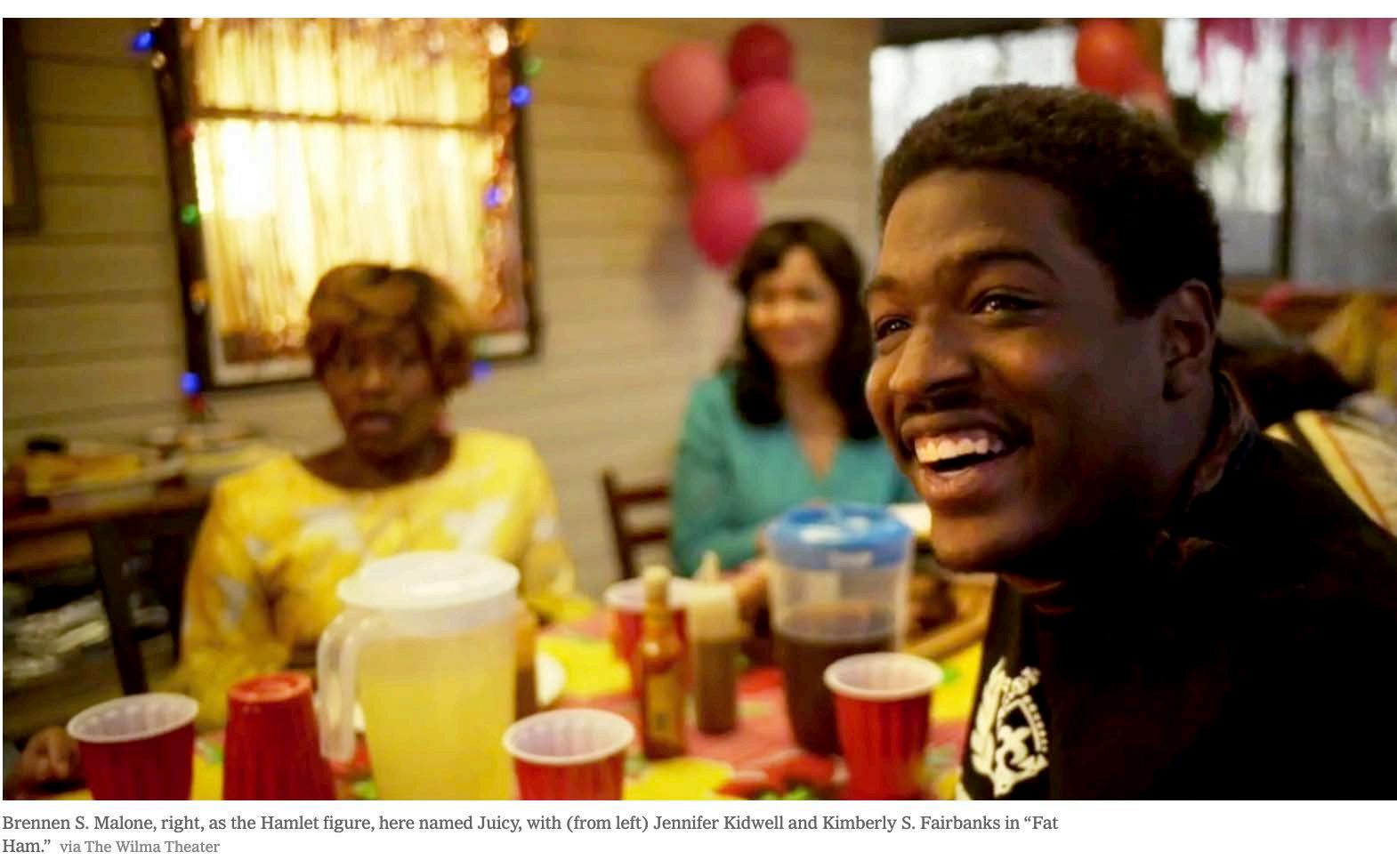
Comedy, karaoke and that disco finale are only part of the menu, though Morgan Green’s filmed production for the Wilma Theater in Philadelphia, available on demand through May 23, leads with the laughs. Juicy (Brennen S. Malone), the Hamlet character, is a young man taking classes in human relations at a for-profit online college, which even the ghost of his late father, Pap (Lindsay Smiling), derides as a scam. “You going to school on a laptop!” he moans.
As in “Hamlet,” Pap has returned to seek revenge on his brother; in “Fat Ham,” he’s Rev (Smiling again), a supposed man of God whose main motives for fratricide seem to be getting his hands on Juicy’s college money, Pap’s wife, Tedra (Kimberly S. Fairbanks), and the family’s restaurant. If Shakespeare’s “funeral baked meats” — the ones that “coldly furnish forth the marriage tables” — never sounded very appetizing, here, at the backyard barbecue following the quickie wedding, you can almost smell the pork shoulder sizzling in the smoker.
The parallels of character and plot, though piquant, aren’t strict. Shakespeare’s Horatio has been reduced to just his last three letters. Tio (Anthony Martinez-Briggs) is a stoner who, unlike the original, has dreamt some pretty strange philosophies, one of them involving a sexually adventurous virtual-reality gingerbread man.
Less adventurous, at least at first, are the Ophelia and Laertes characters; here called Opal (Taysha Marie Canales) and Larry (Brandon J. Pierce), each struggles silently to live honestly in a rotten state. Their sententious parent is not Polonius but a purse-clutching church lady named Rabby (Jennifer Kidwell); the only advice she has for her children is that Opal should put on a dress and that Larry, despite his discomfort, should stay in the
Navy.
That several of the characters are gay is no random plot decoration, any more than “Hamlet” is merely a touchstone text for a playwright to appropriate. Ijames, having written powerfully in “Kill Move Paradise” about the tragedy of Black men in a racist culture, here seeks to use the most violent of plays to find a story that reaches beyond violence. Which is not to say all violence is abjured. Revenge is, of course, courted, and someone does die, though mostly by accident. There are sucker punches and head slams. Juicy, Opal and Larry all think about self-harm or doing harm to others.
But the chain of violence that is a hallmark of “Hamlet” is deliberately severed in “Fat Ham.” Also rejected is the hardening of character that Shakespeare implicitly endorses in dragging Hamlet from vain introspection to the “nobler” action of murder.
Instead, Ijames recommends thoughtfulness, passivity and gentleness in the face of disdain and disappointment. Juicy is in that regard as unusual a hero as Hamlet was, but less for what he might become than for what he already is. Asthmatic and “thicc,” he variously calls himself weird, an empath and “a big ole sissy”; the black T-shirt he wears to the wedding banquet proudly proclaims him a “Momma’s Boy.”
If he is thus a misfit in a world of over-armored men, he is also, in Malone’s lovely, unpushy performance, sexy and sympathetic. Malone delivers Hamlet’s “what a piece of work is man” speech nearly verbatim but in such a conversational tone that you hear its ambivalence (“Man delights not me: no, nor woman neither”) as if for the first time. The rest of the cast plays off him beautifully, Fairbanks’s Tedra teetering from dismay to concern before settling on acceptance, and Pierce’s Larry both drawn to and terrified by the magnetism of his “softness.”
Green’s production, originally planned for the stage, is soft too — in a good way. Though it is nearly a full-fledged movie, it still feels, like the Wilma’s excellent recent production of “Heroes of the Fourth Turning,” handmade and fuzzy at the edges. Especially important here is that it remains theatrical in its long-line construction (the whole play is essentially one scene) and in the way it adapts the original’s soliloquies as direct address to the camera. In those moments, with the actors peering out as if to find us, the frame becomes a proscenium.
Peering out to find us is what theater at its best has always sought to do. In “Hamlet,”
Shakespeare used a family story to alert his audience to the danger of societies that rot from the top. In “Fat Ham,” Ijames heads in the other direction. The larger social problem of violence against Black men need hardly be spoken in this context; Juicy just assumes that stories like his family’s must always end in death. “Cause this a tragedy,” he says. “We tragic.”
Ijames instead shows us how the big hand of society can shape the smaller drama of a family in crisis. And also how a Black man — crucially, a gay one — may resist the cycle of inherited trauma even as it tempts him, whether in the form of a ghost or a literary tradition. “Fat Ham” is thus a tragedy smothered in a comedy. When Tio returns from his encounter with the gingerbread man, he brings with him a message of joy, asking what life might be like “if you chose pleasure over harm.”
On the evidence of “Fat Ham,” that life might be better for everyone; what begins as one man’s liberation may eventually become a liberation for all. Funerals may be quickly succeeded by celebrations. In which case, yes, let the dance party begin!
Fat Ham
The Wilma Theater
December 2023
Written by James Ijames
Directed by Amina Robinson
Set Design by Sara Brown
Lights by Shon Causer
Costumes by Tiffany Bacon
Sound by Larry Fowler
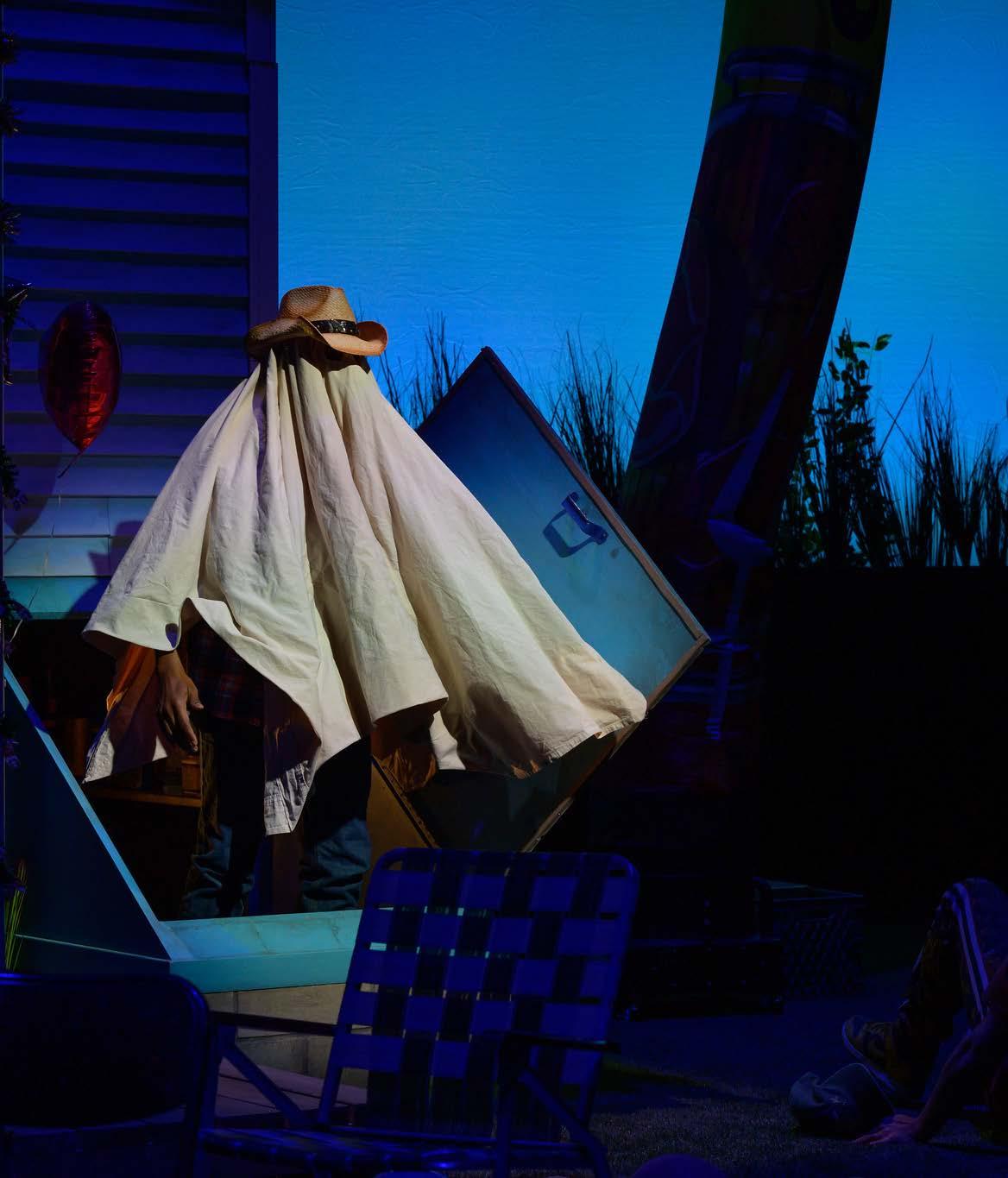
After premeiring a streaming version of the play, Wilma Theater commisioned a new performance to bring to the stage. Returning to design the piece for a live audience with a new creative team was a chance to revisit the screipt with fresh eyes.
Photographs by Johanna Austin
The Other Shore
Zoe | Juniper
Premiered as a remote performance on August 17, 2021 as a co-production of Jacob’s Pillow, On The Boards, and MASS MoCA’
Conceived by Zoe Scofield and Juniper Shuey
Choreography by Zoe Scofield
Video by Juniper Shuey
Sets by Sara Brown
Lights and music by Evan Anderson
Sound design by Bobby McElver
Creative Producer Lilach Orenstein
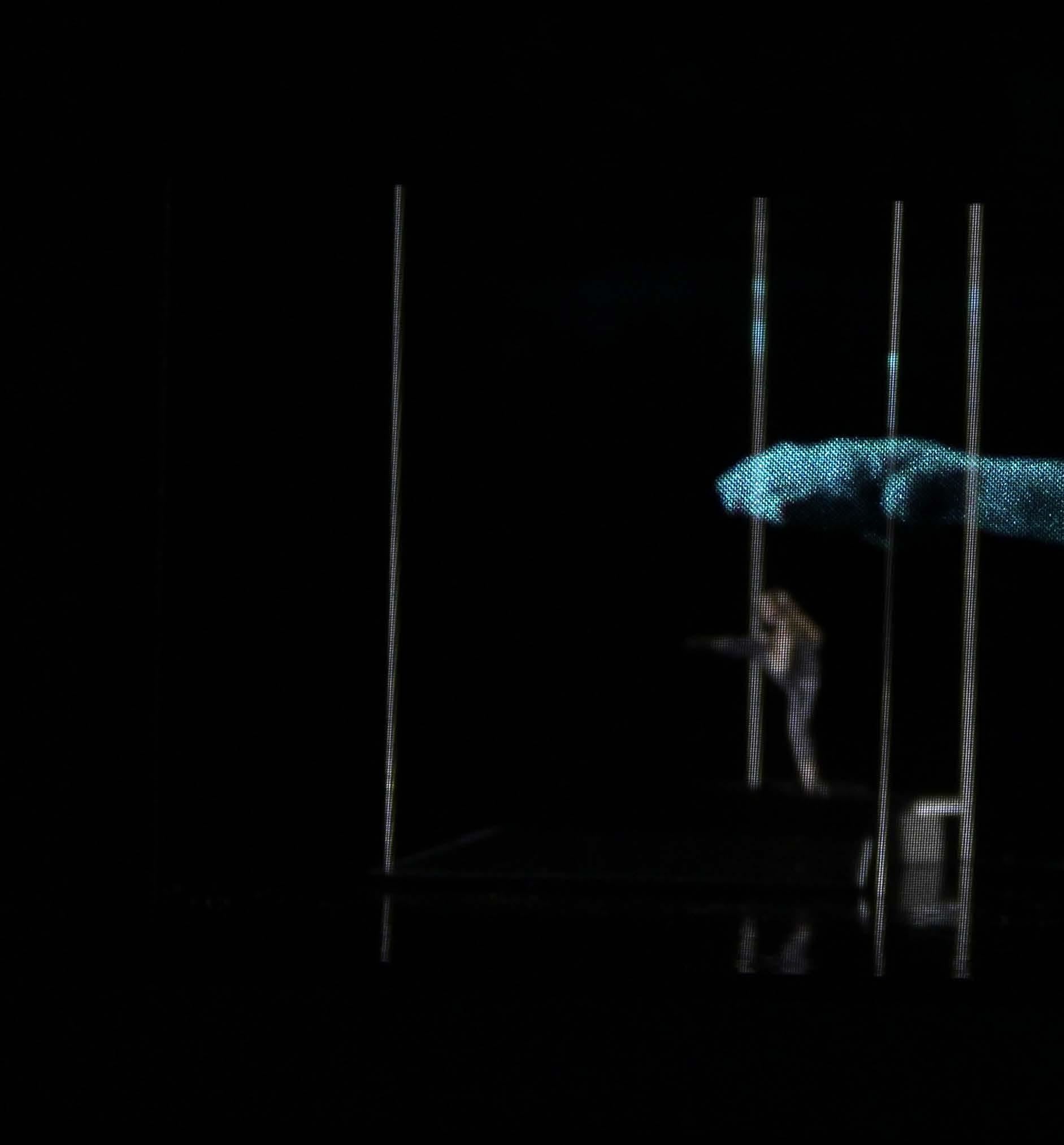
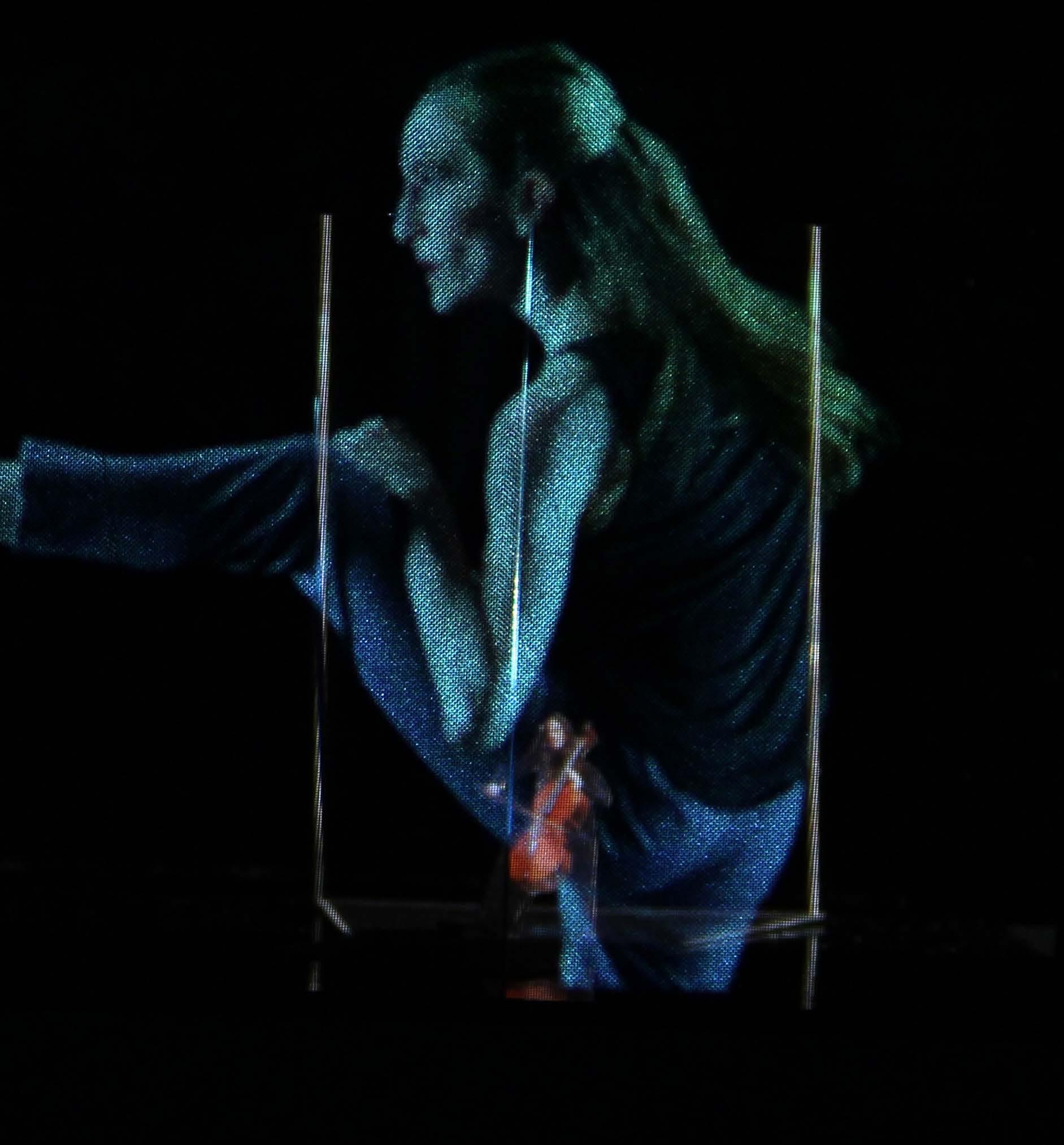
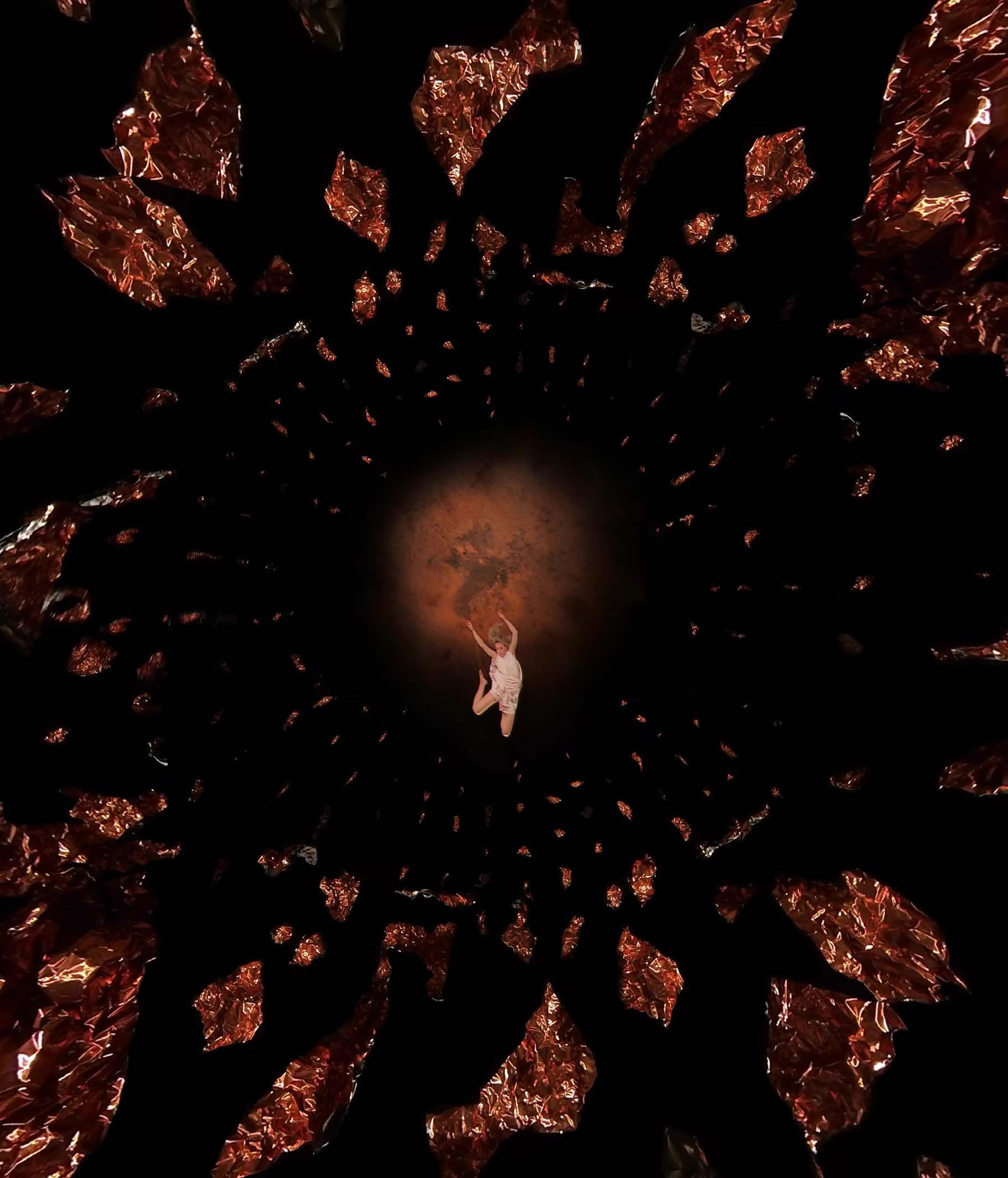
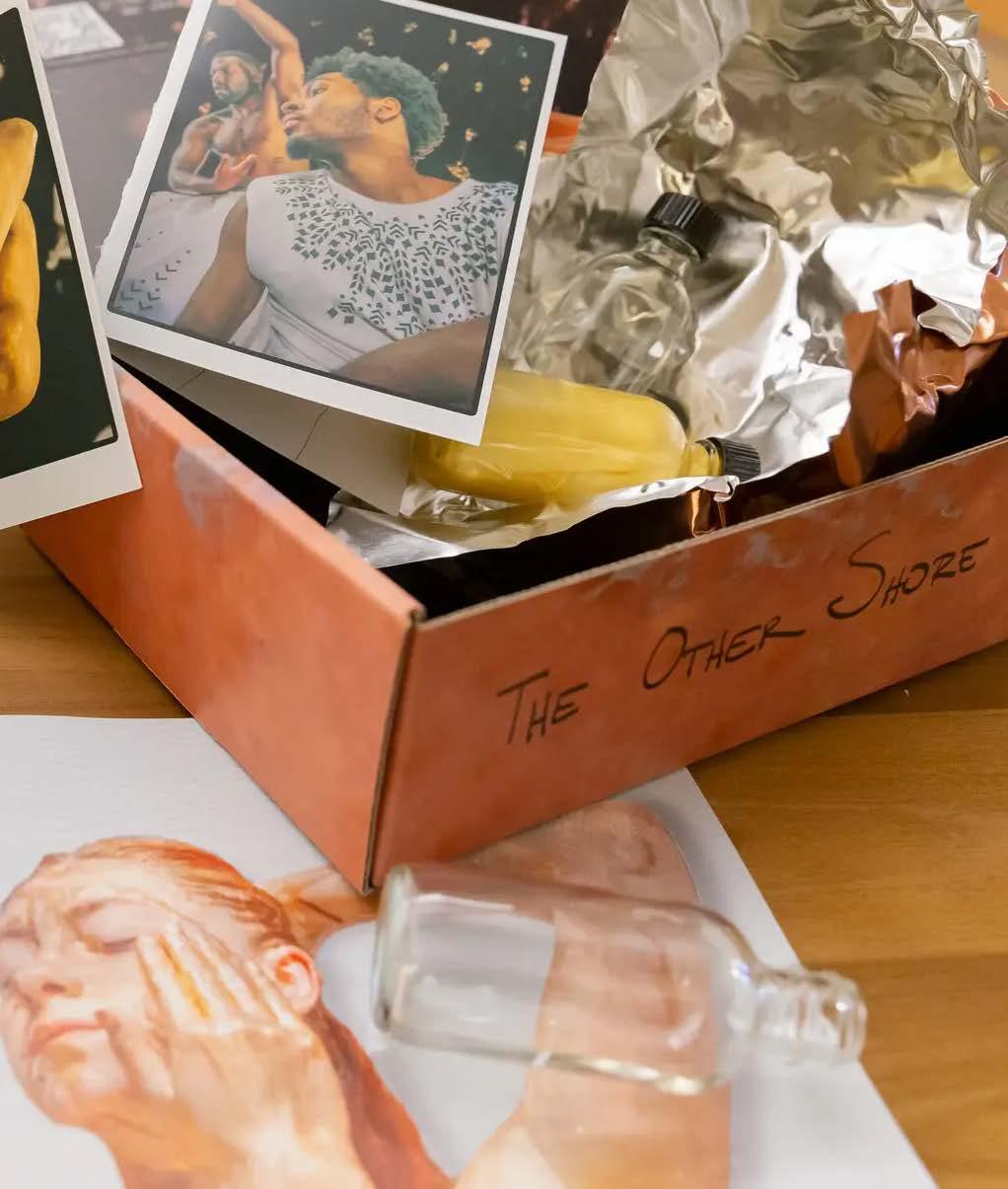
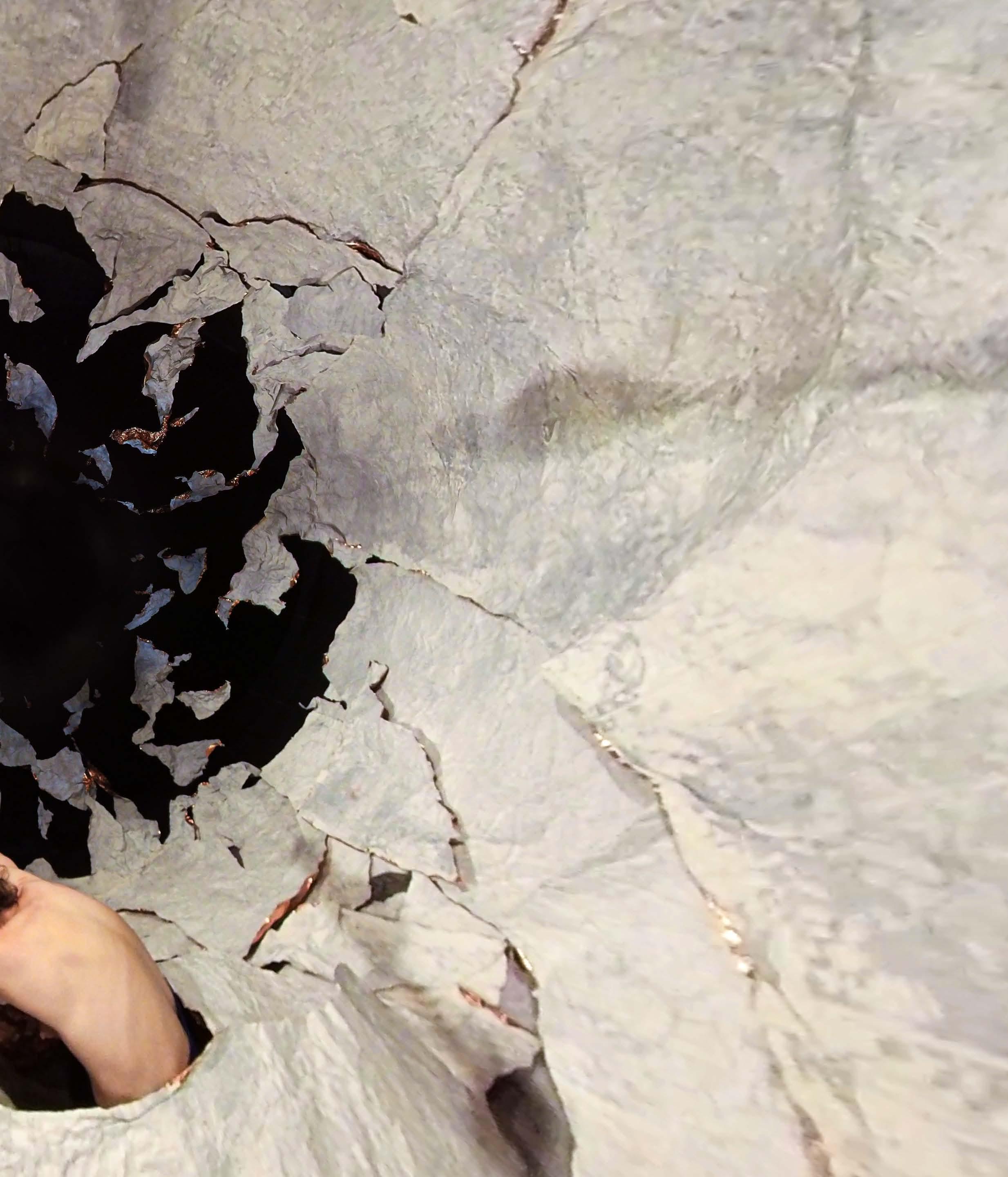
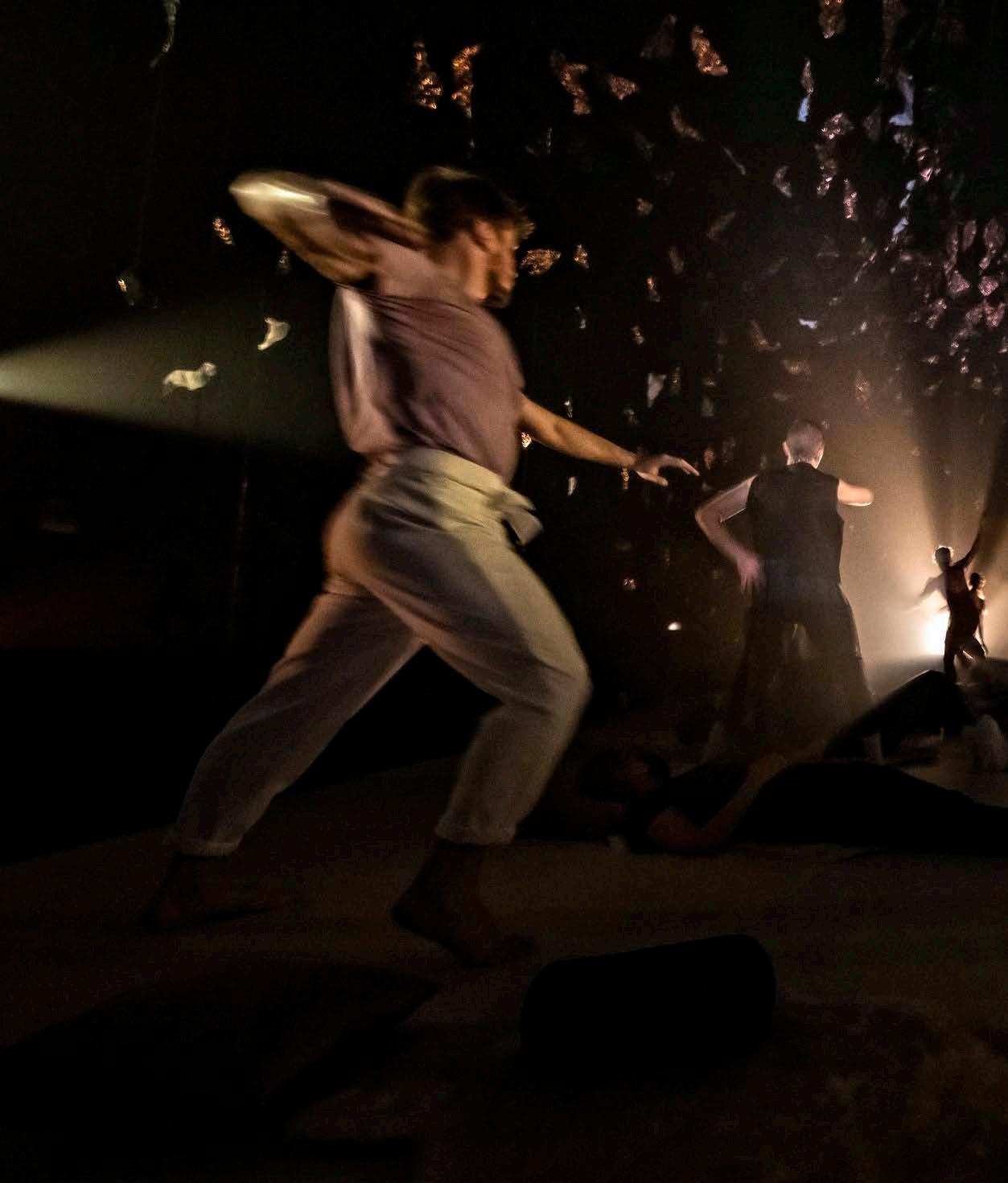
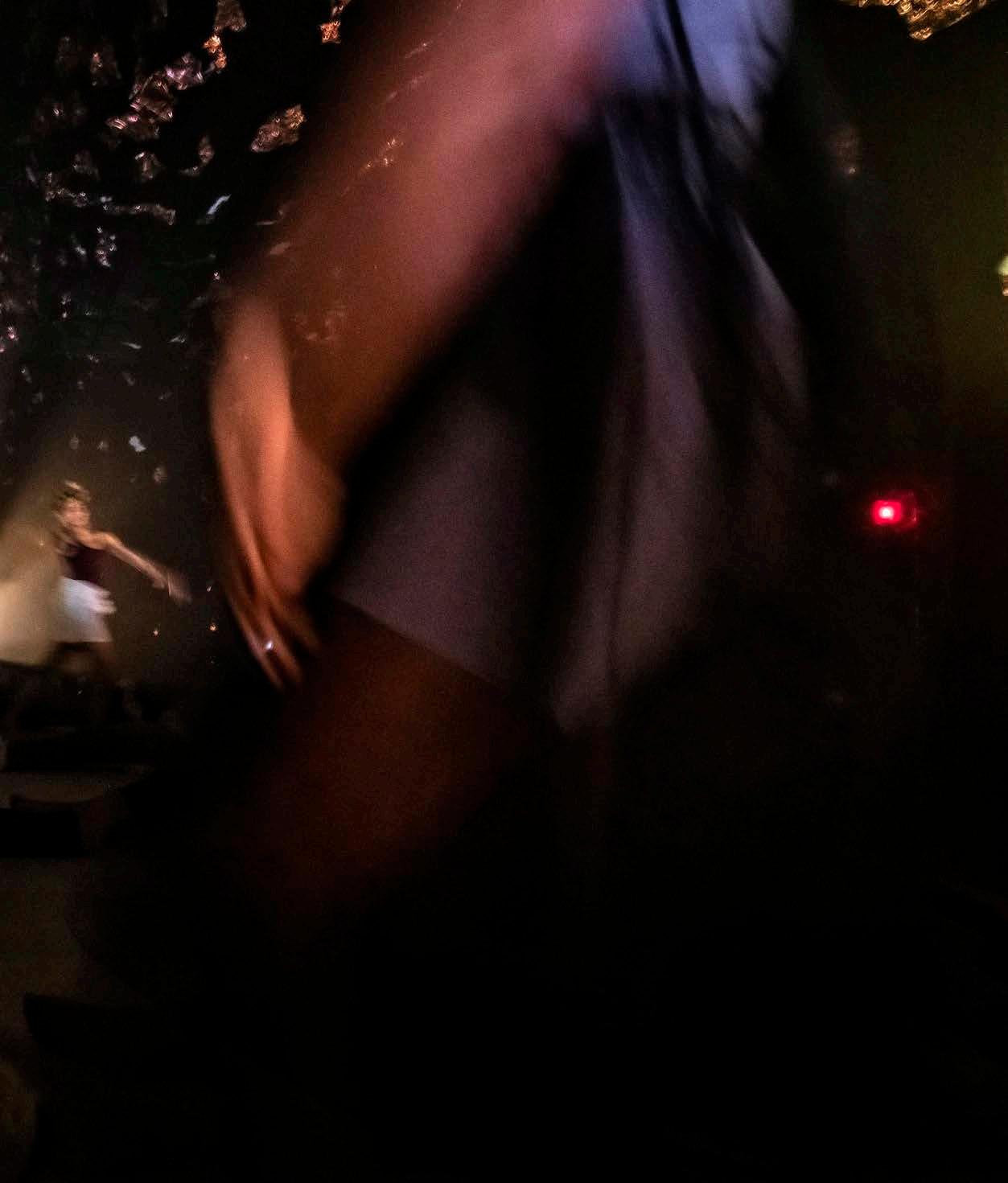
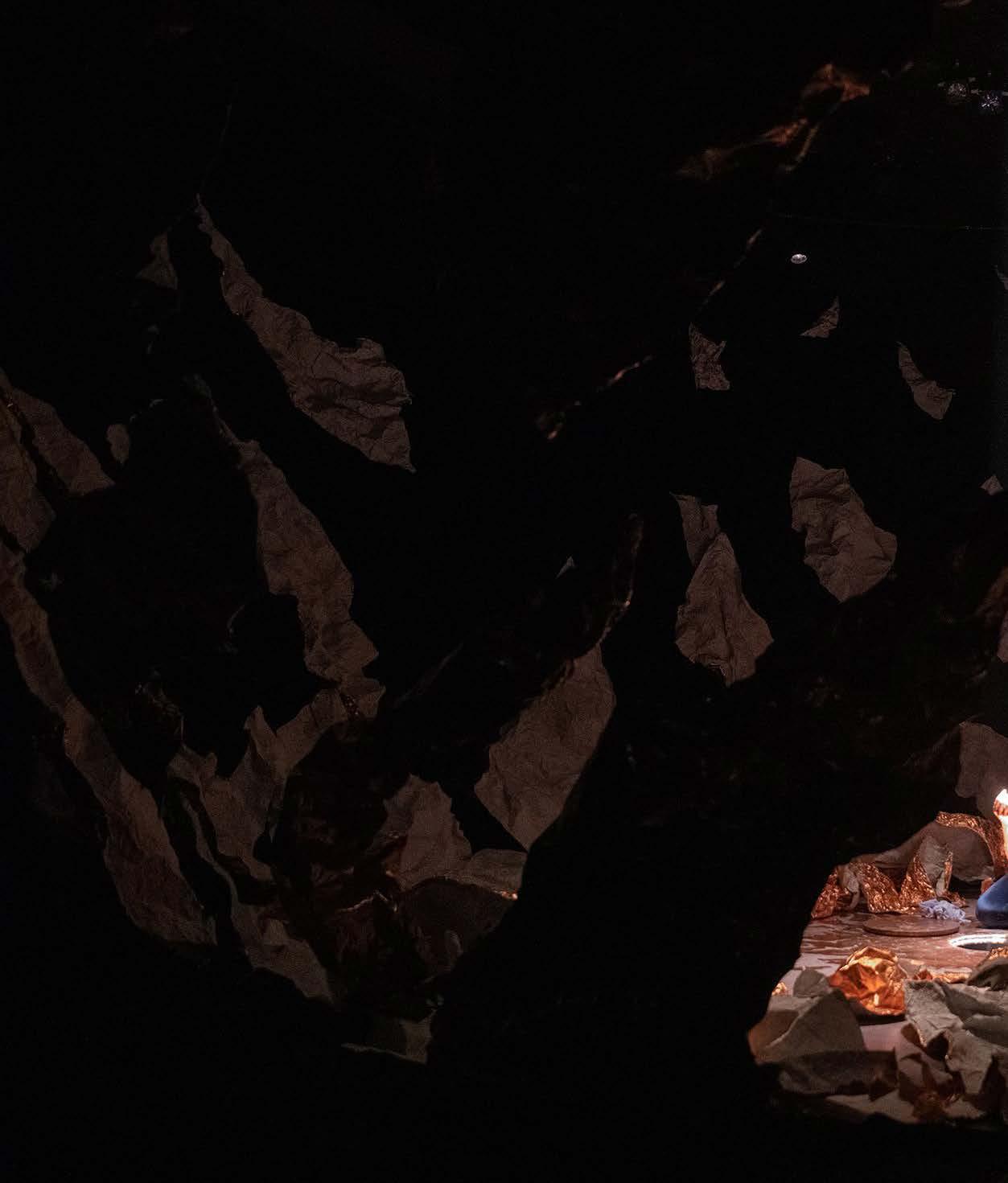
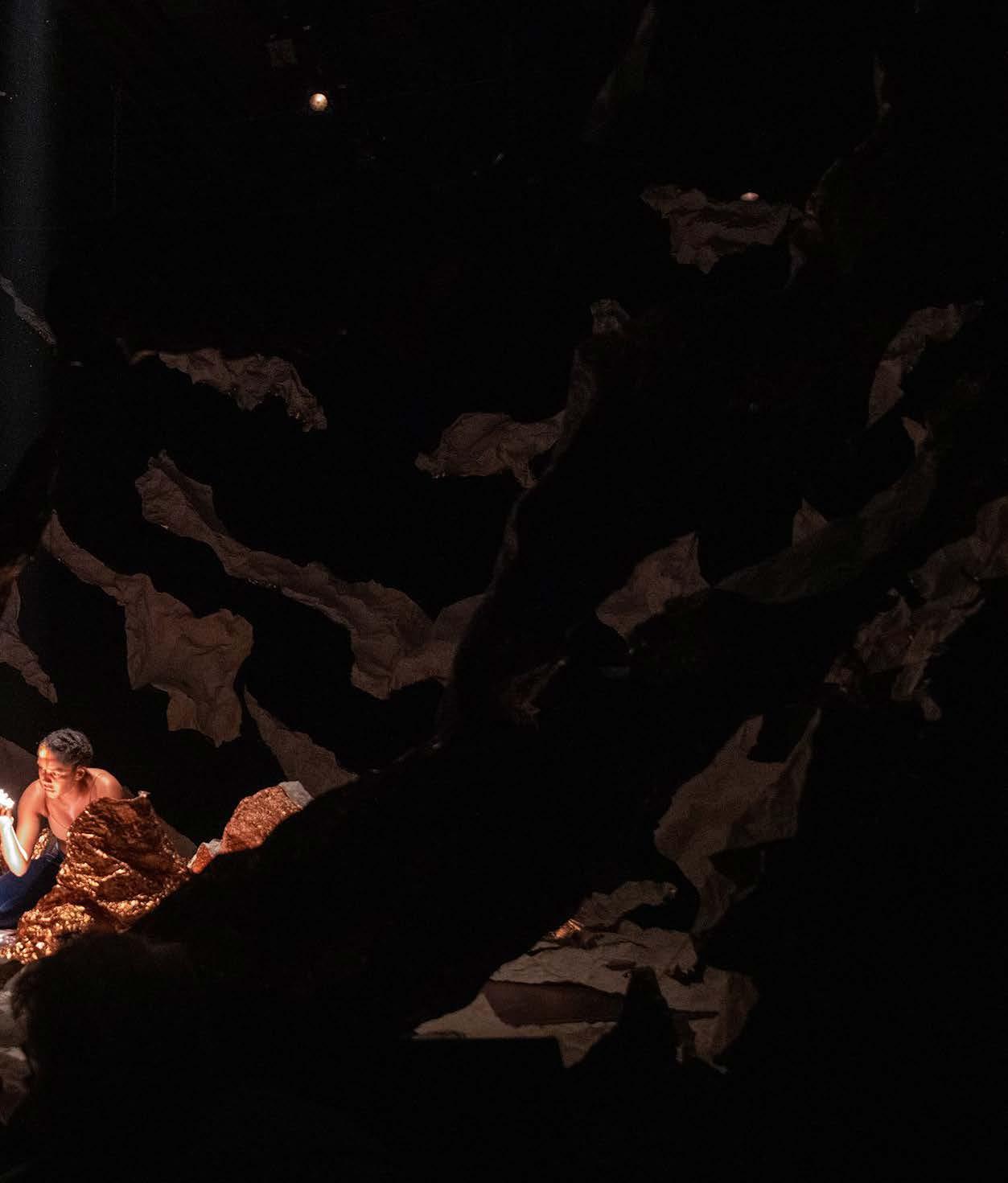
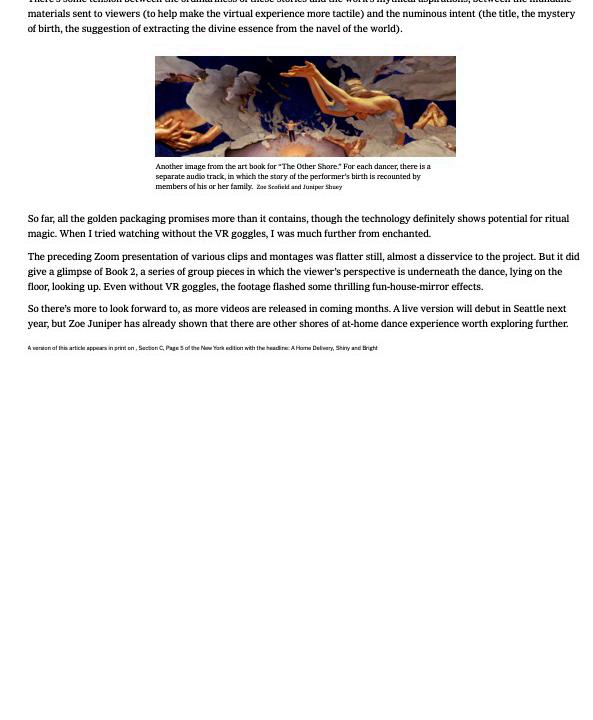
The Other Shore is an interdisciplinary dance work that has had several iterations. It began as a remote dance performance that was delivered to audience through a physical box and was recently presented as a live performance for audiences in Seattle at On the Boards. In each of these iterations, we sought to disrupt the typical the audience dancer relationship. To do this, I designed two immersive spaces comprised of twisted fragments of metal and plaster frozen in time. For the remote performance developed at Massachusetts Museum of Modern Art (MASS MoCA) in May of 2021, a 360 camera captured the spaces from above and below the dancers to shape an intimate and rare perspective into the performance. For the live performance, half of the audience was guided to lie on the floor looking up in one space while the other half stood outside of a enclosed space looking in.
Photographs shown here are from the 360 camera and from the live performance.
Production photographs by Juniper Shuey, Bobby McElver, and Sara Brown
The Lehman Trilogy
Co-Production of The Huntington Theater Company and Repertory Theater of St. Louis
Written by Stefano Massini
Adapted by Ben Power
Directed by Carey Perloff
Sets by Sara Brown
Costumes by Dede Ayite
Lights by Robert Wierzel
Video by Jeanette Oi-Suk Yew
Original Music and Co-Sound Design by Mark Bennett
Co-Sound Design by Charles Coes
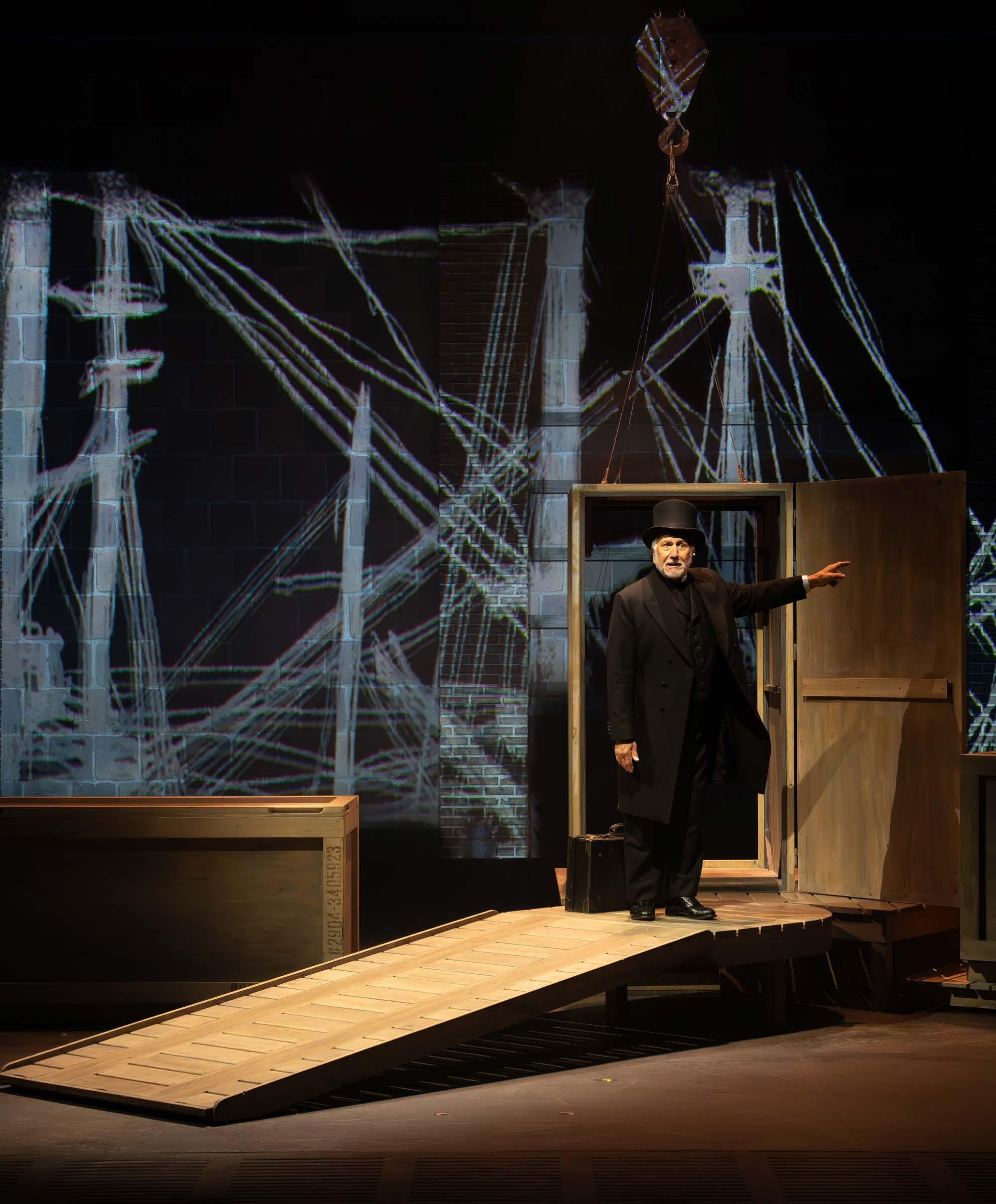
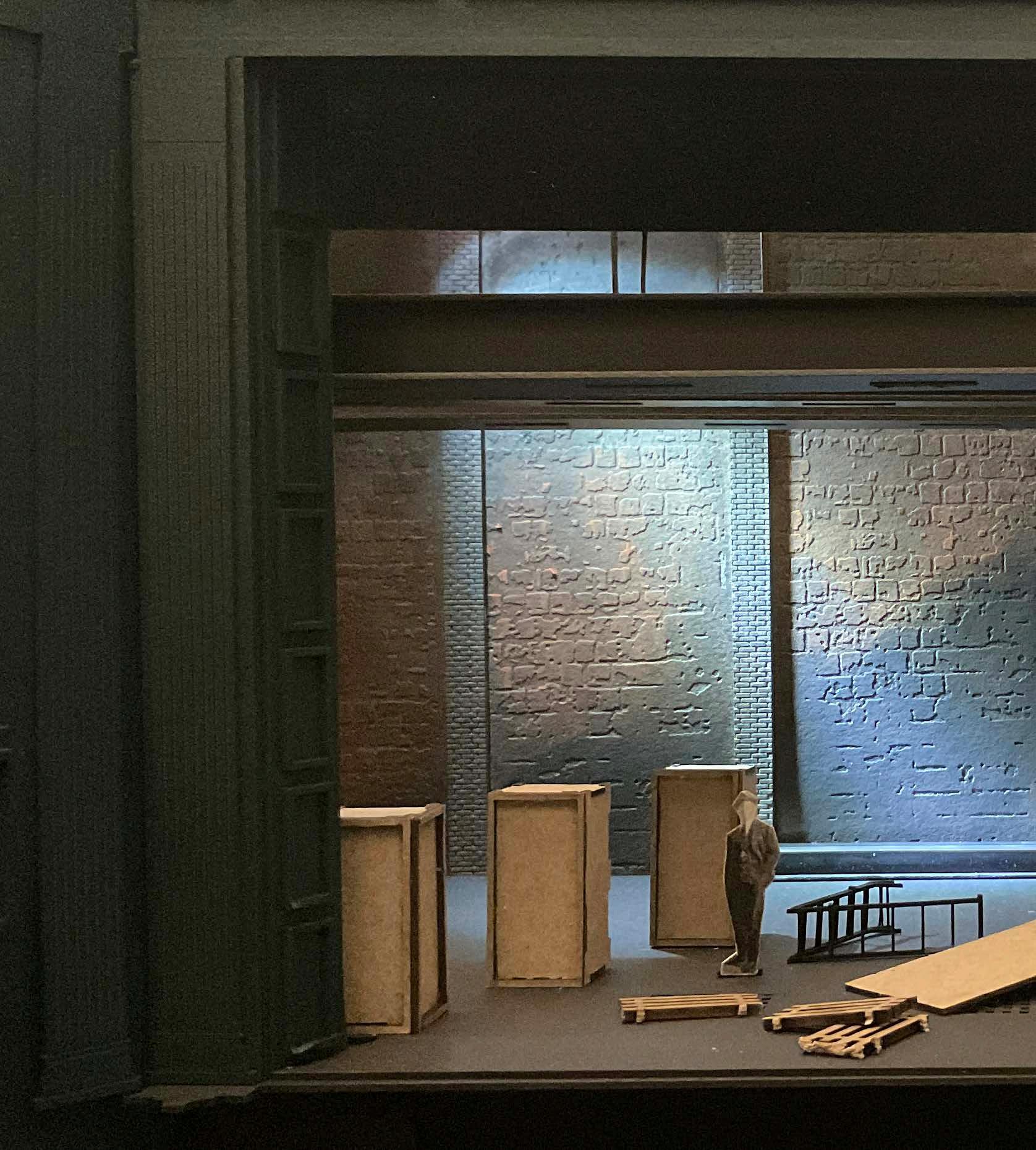
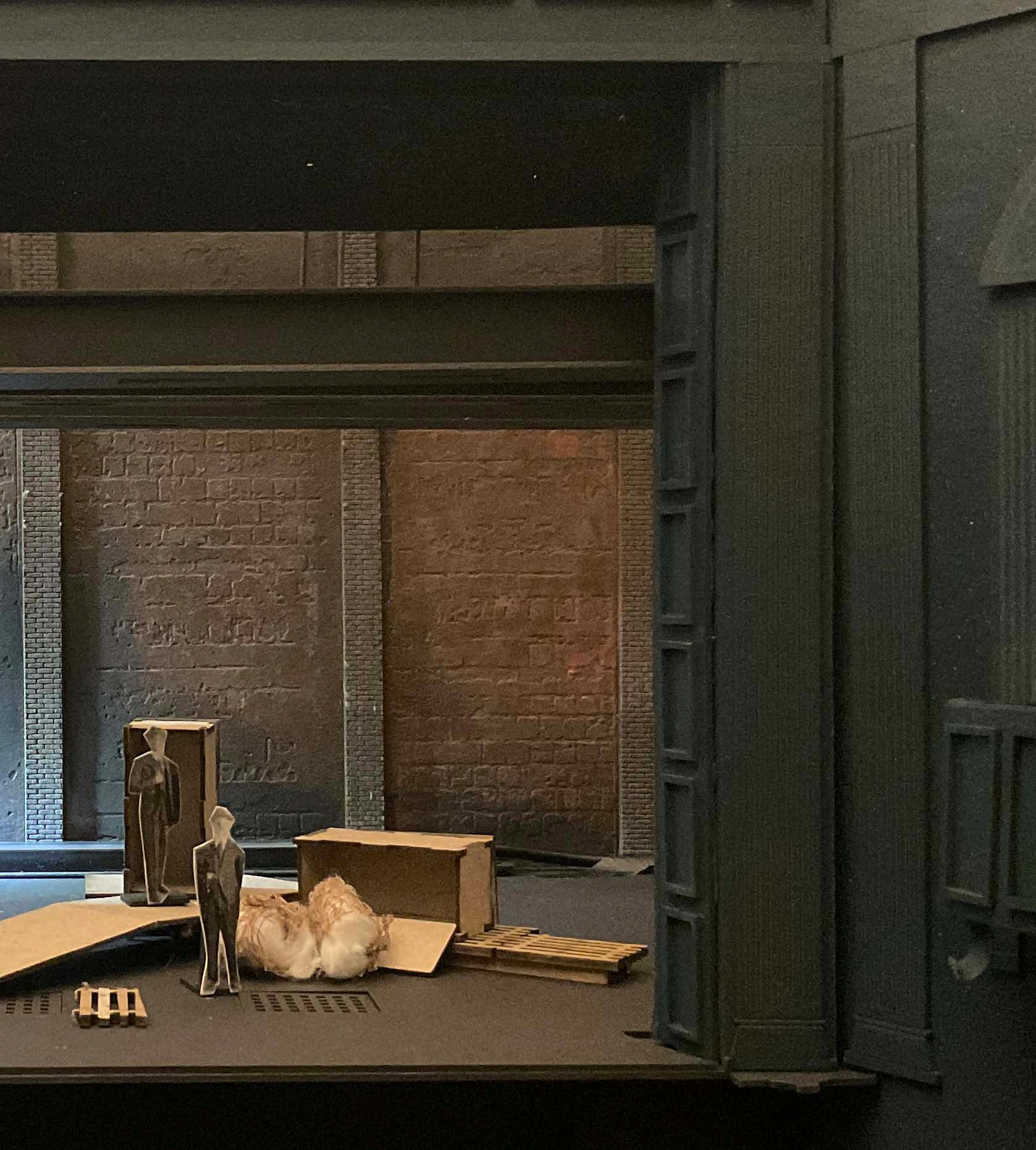
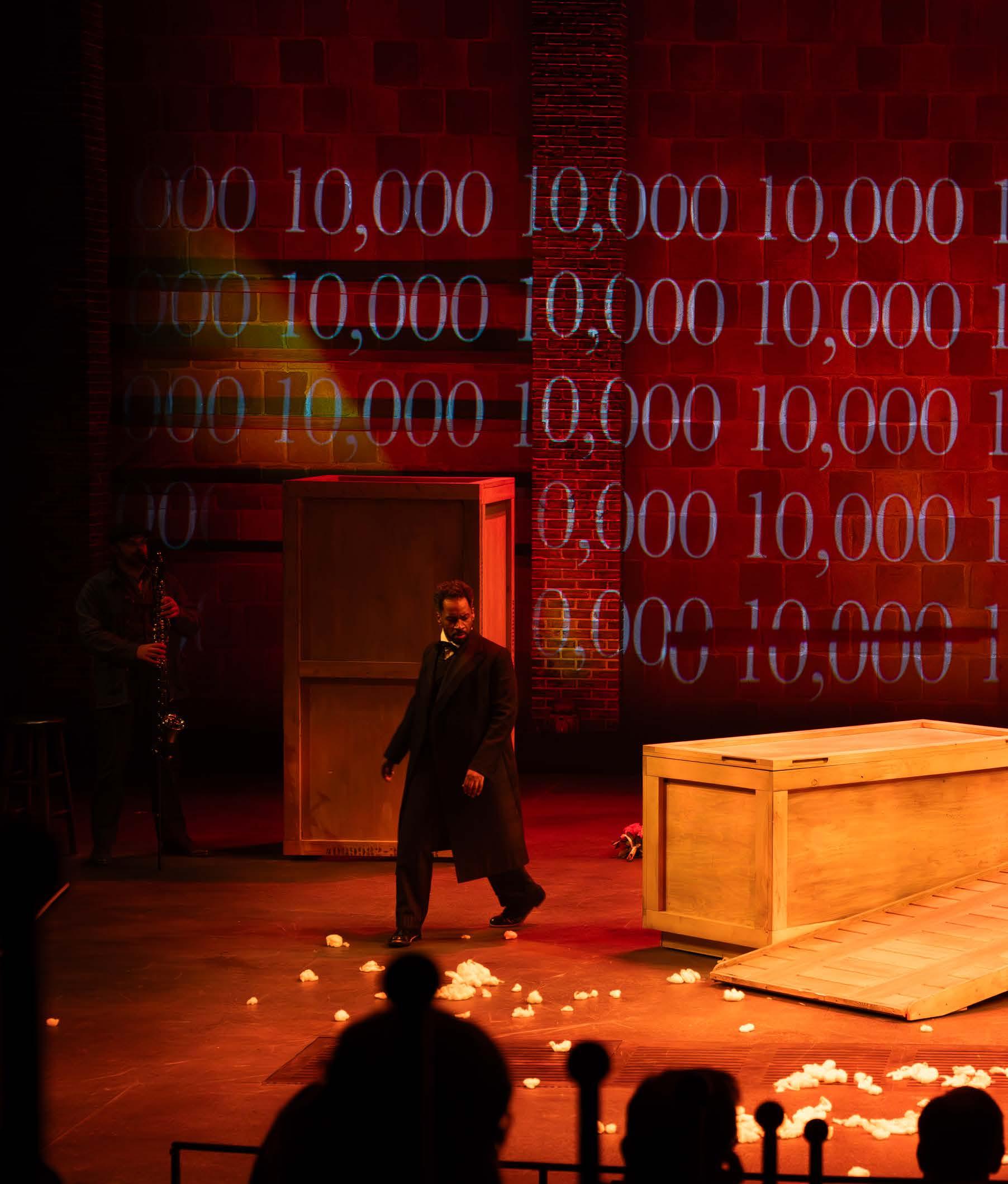
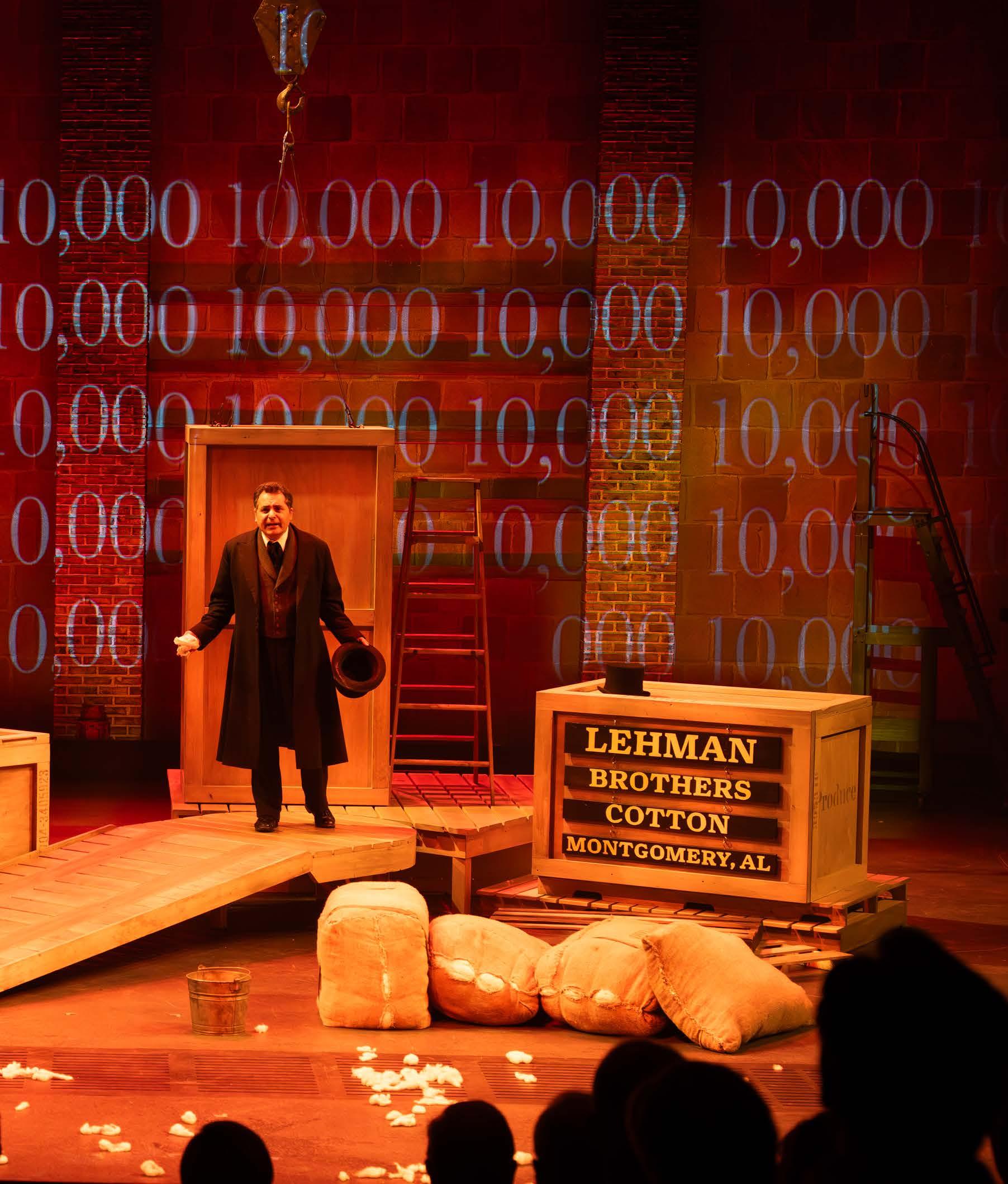
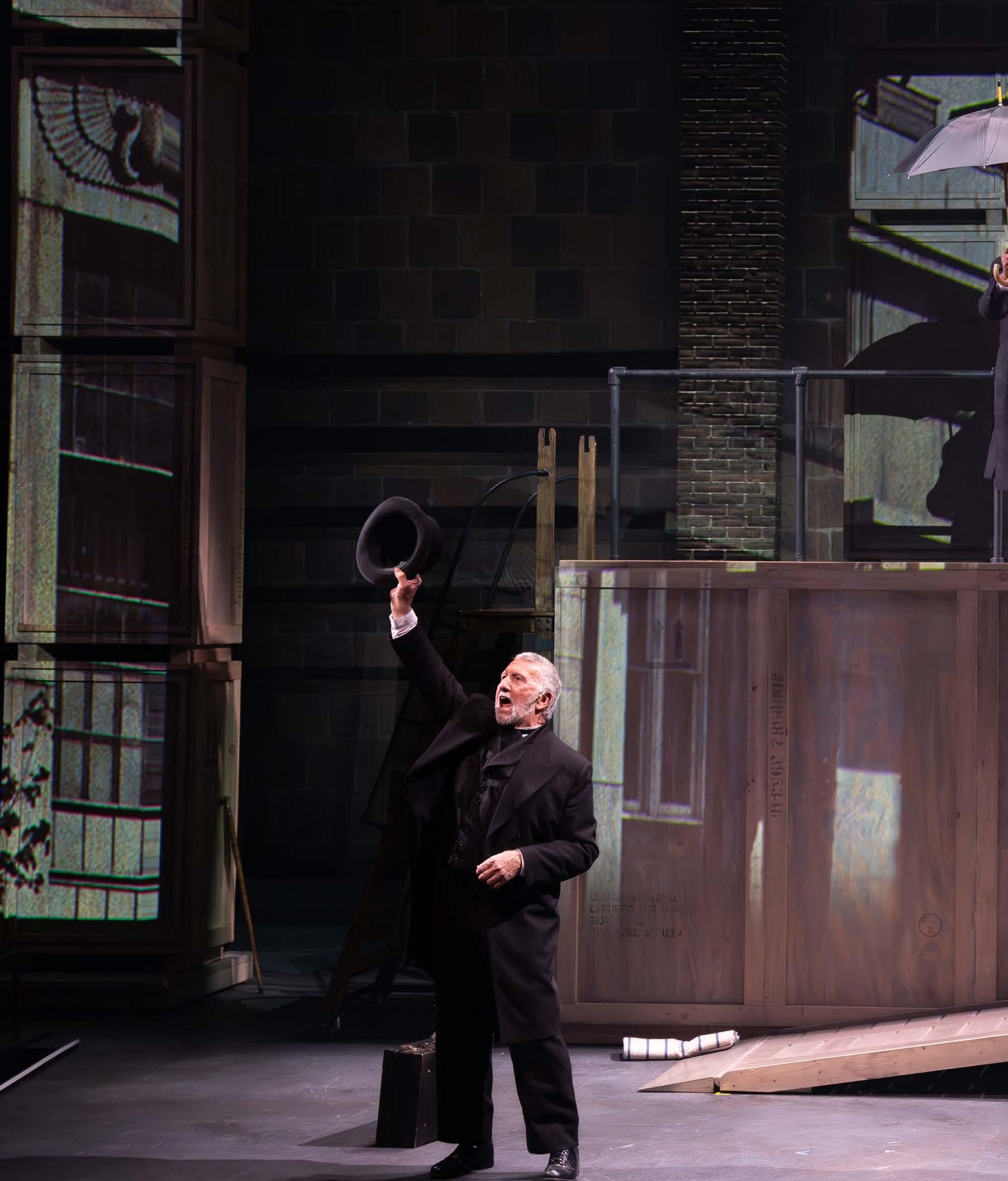
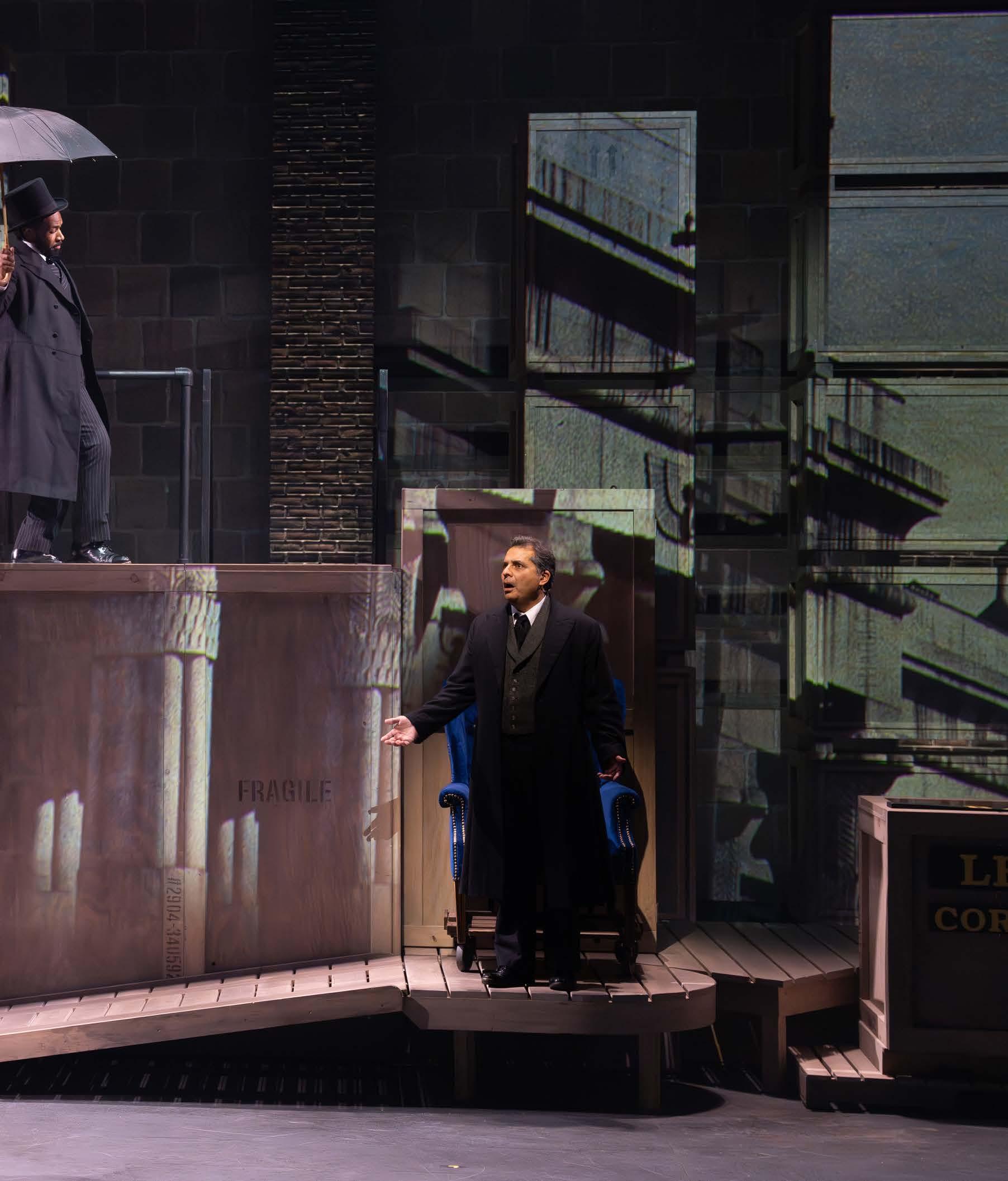
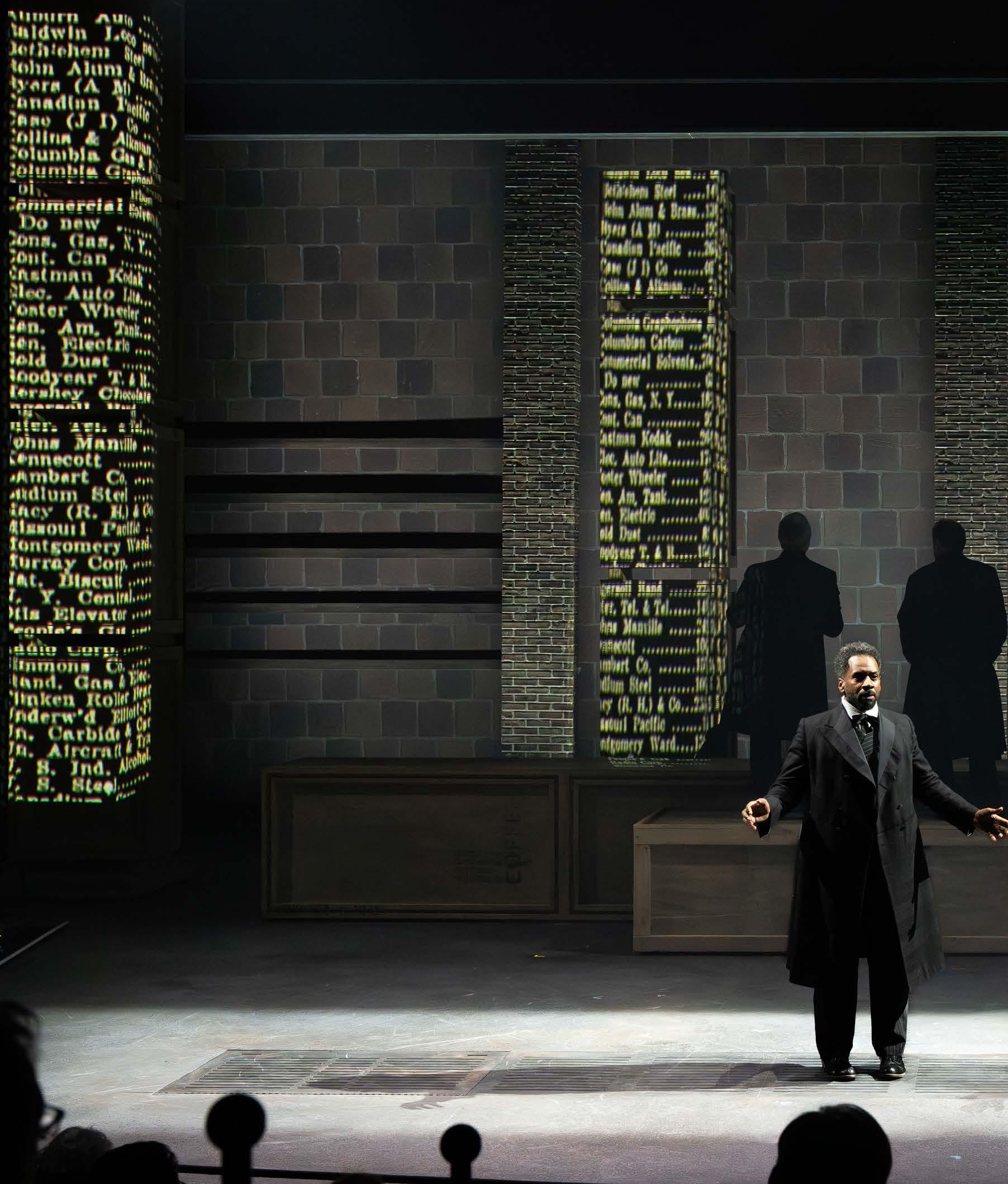
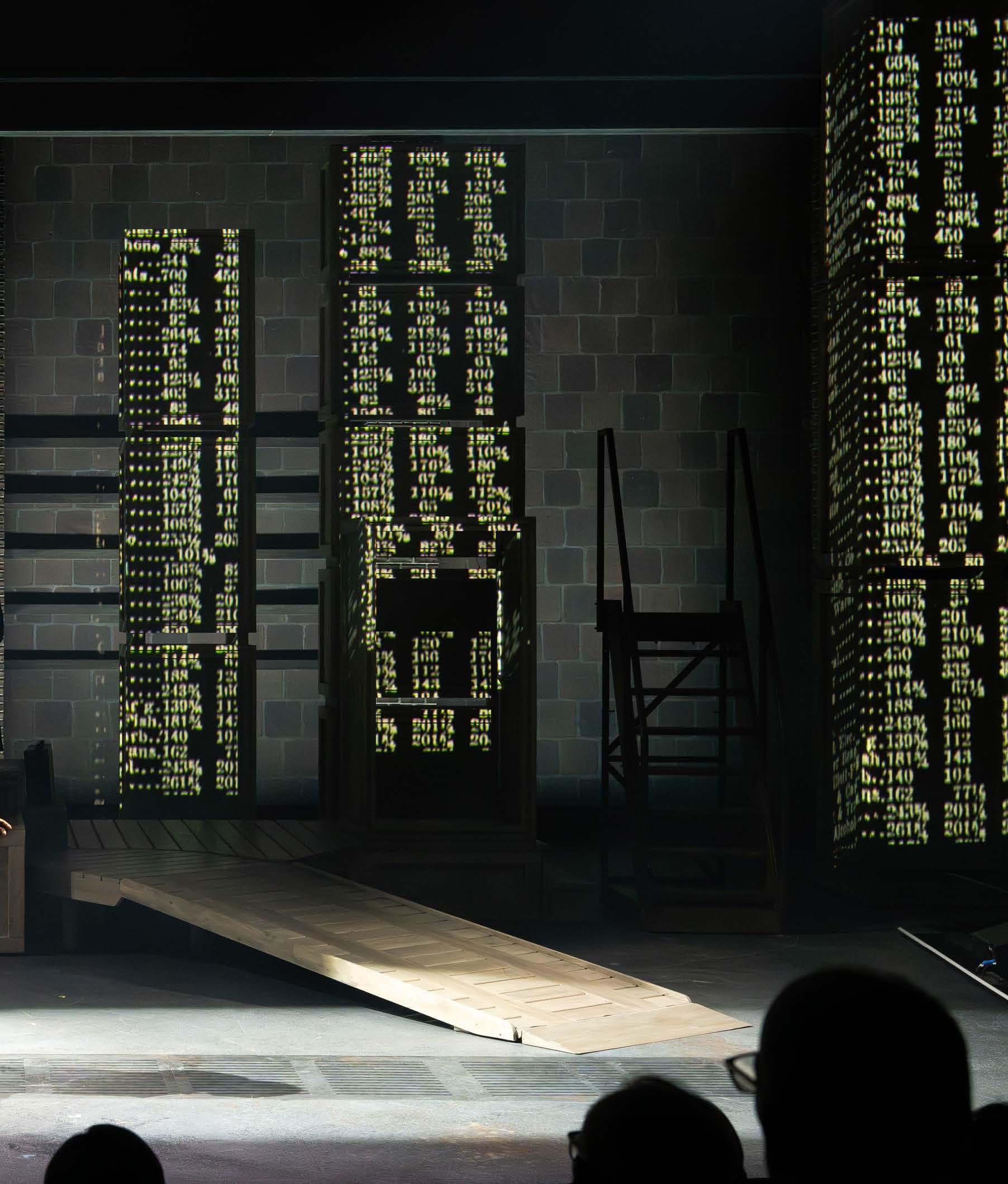
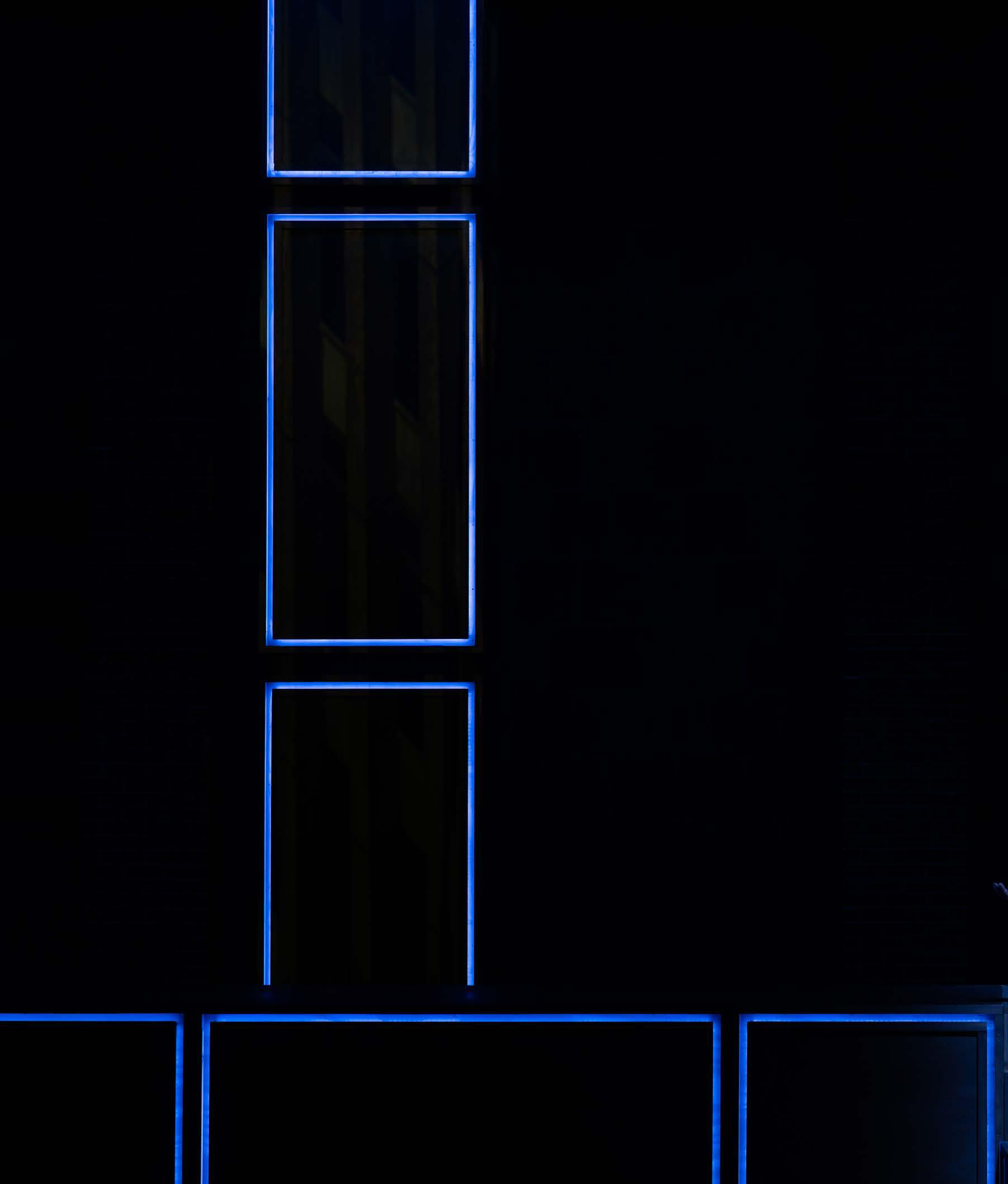
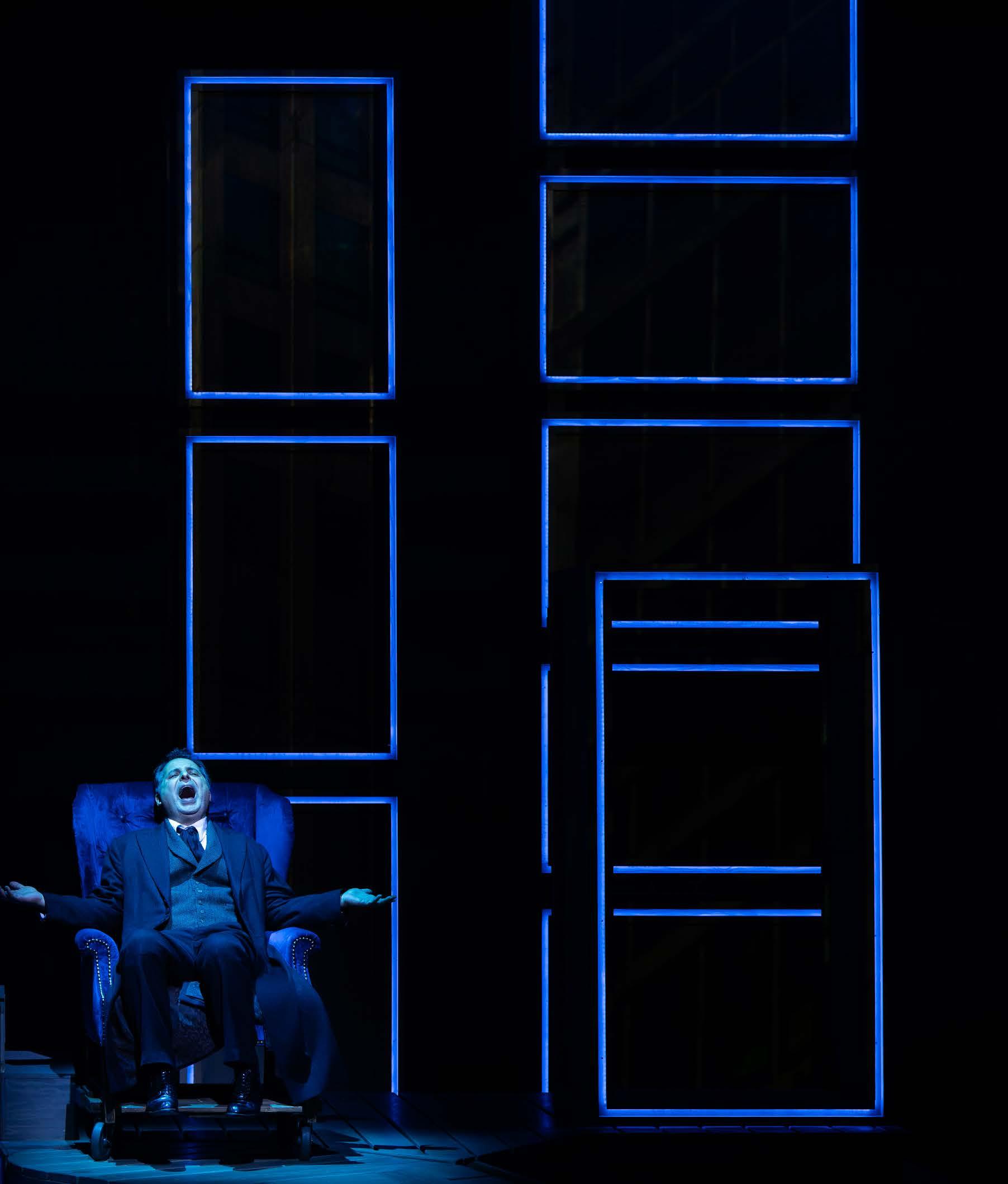
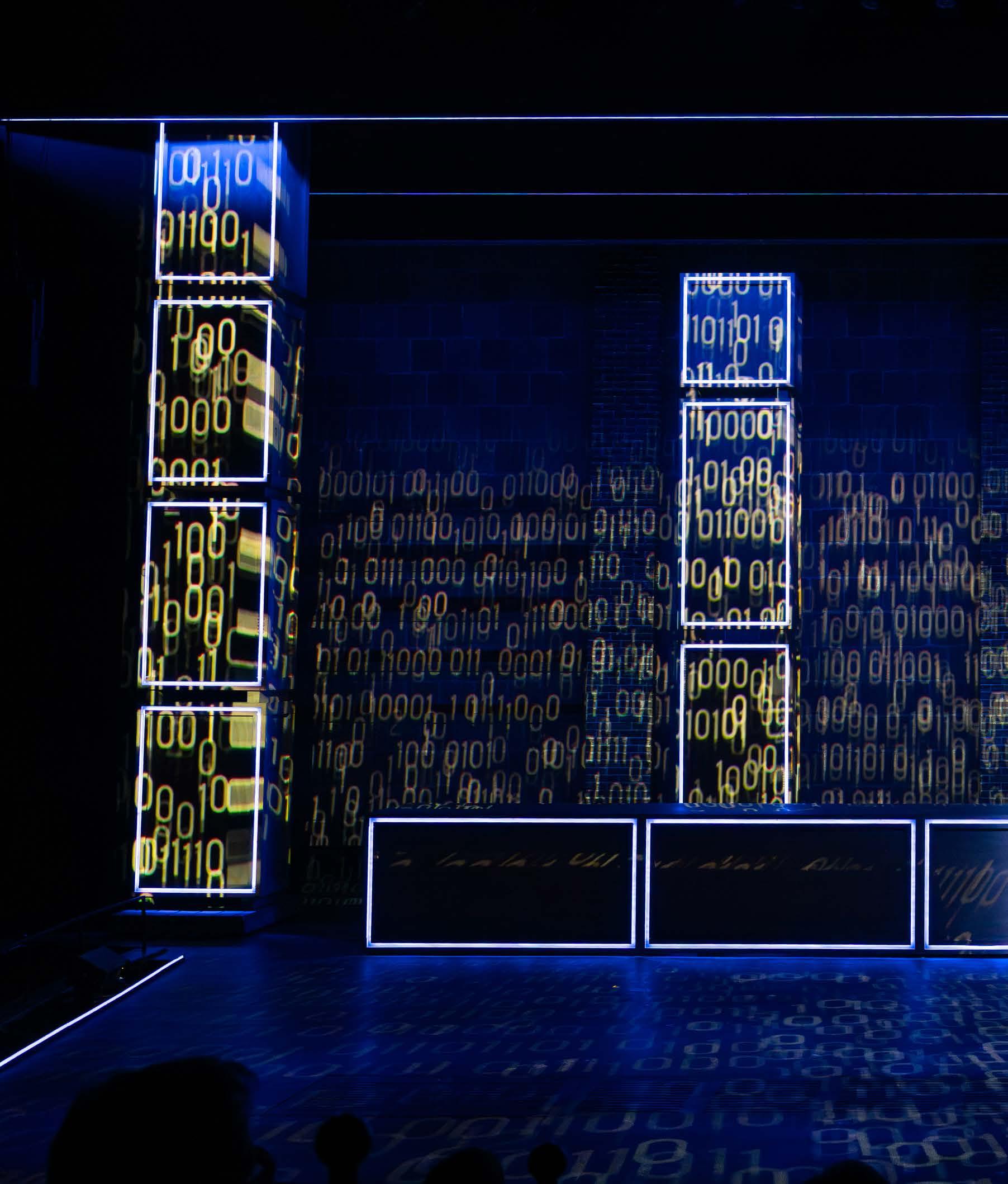
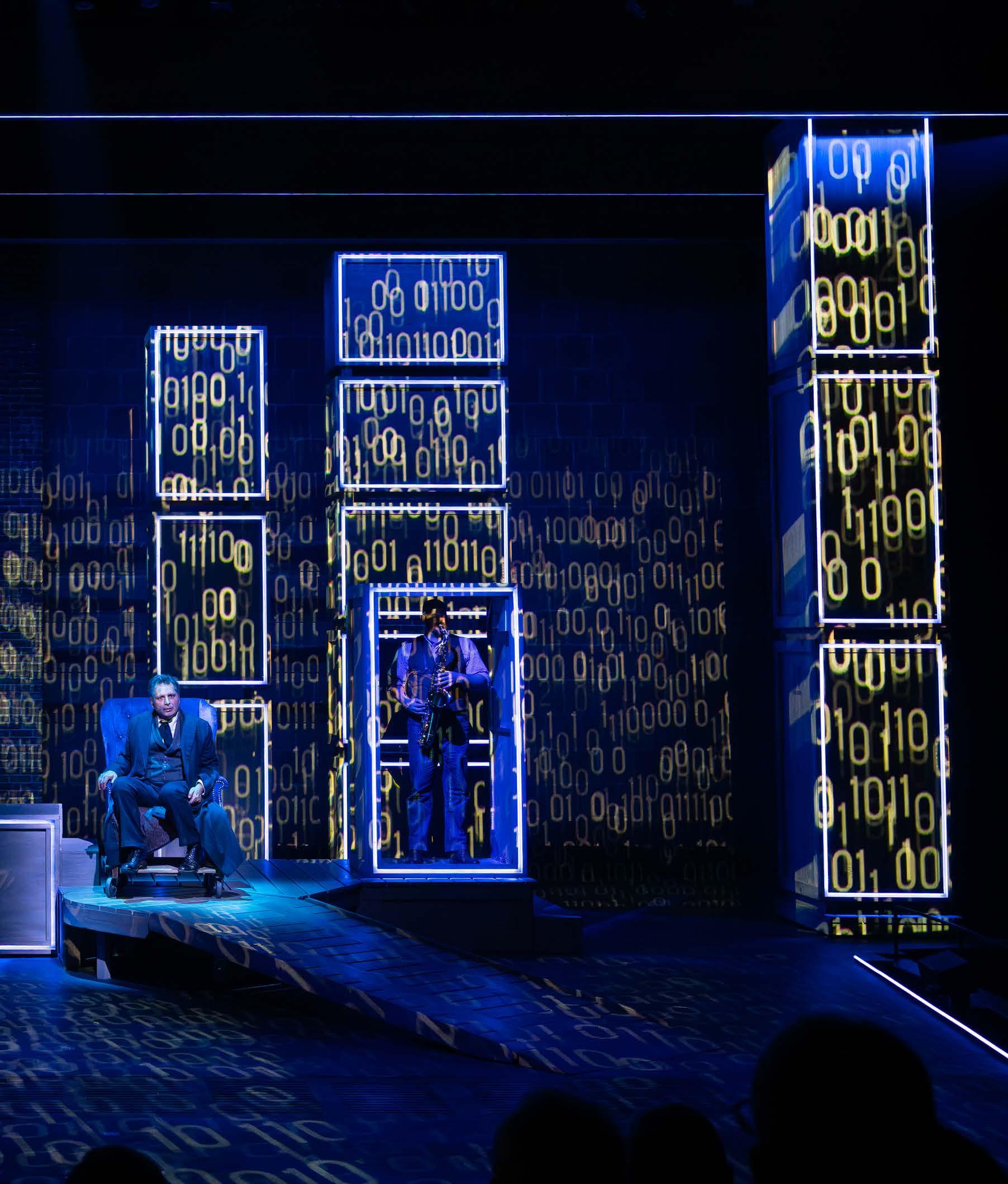
The Lehman Trilogy chronicles the epic story of the Lehman family from their arrival in the United States to the collapse of their financial corporation. The first act takes place nearly entirely in Alabama where the Lehman’s build the foundation of their fortune in the cotton industry fueled by American slavery. As the play progresses, the family fortune becomes increasingly alienated from anything resembling a product to become a storm of 1s and 0s living only in the cloud of ‘the market.” A landscape of crates ground the story in the world of commodities while being a playground for the action of the three performers on stage. At the end of the piece, a wrecking ball is let loose to swing across the back of the stage; a physical collapse to punctuate the destruction of Lehman Brothers’ empire.
“Scenic designer Sara Brown and projection designer Jeanette Oi Suk-Yew have combined their talents to create a visual environment that feels both austere and alive. “
-Don Aucoin, The Boston Globe
Production Photographs are from the Repertory Theater of St. Louis and were taken by John Gitchoff
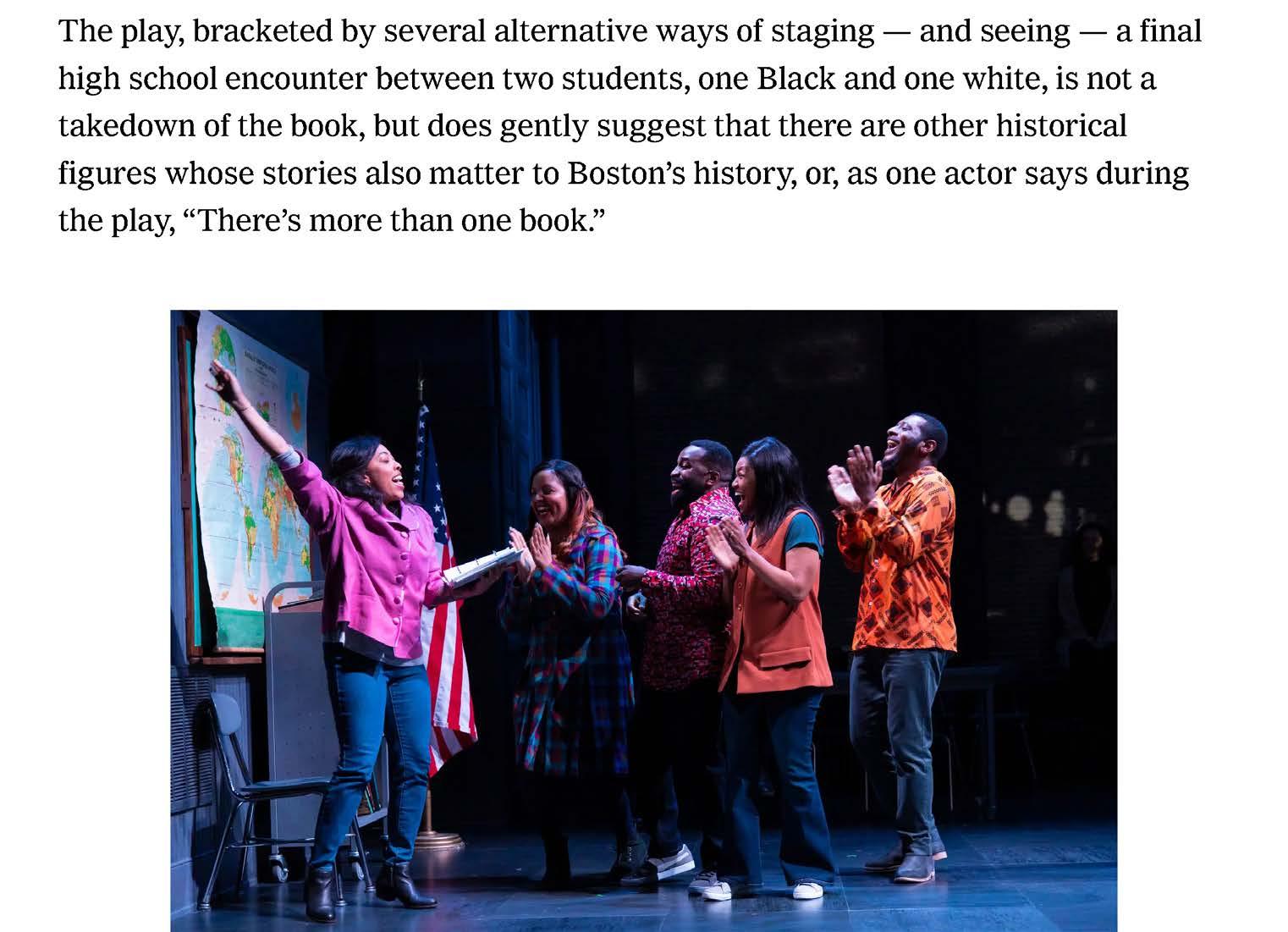
Common Ground Revisited
The Huntington Theater Company
Conceived by Melia Bensussen and Kirsten Greenidge
Playwright Kirsten Greenidge
Director Melia Bensussen
Set Design Sara Brown
Costume Design An-lin Dauber
Lighting Design Brian Lilienthal
Sound Design Pornchanok (Nok) Kanchanabanca
Video Design Rasean Davonté Johnson
Common Ground: Revisited
Production of The Huntington Theater Company
Conceived by Melia Bensussen and Kirsten Greenidge
Playwright Kirsten Greenidge
Director Melia Bensussen
Set Design Sara Brown
Costume Design An-lin Dauber
Lighting Design Brian Lilienthal
Sound Design Pornchanok (Nok) Kanchanabanca
Video Design Rasean Davonté Johnson
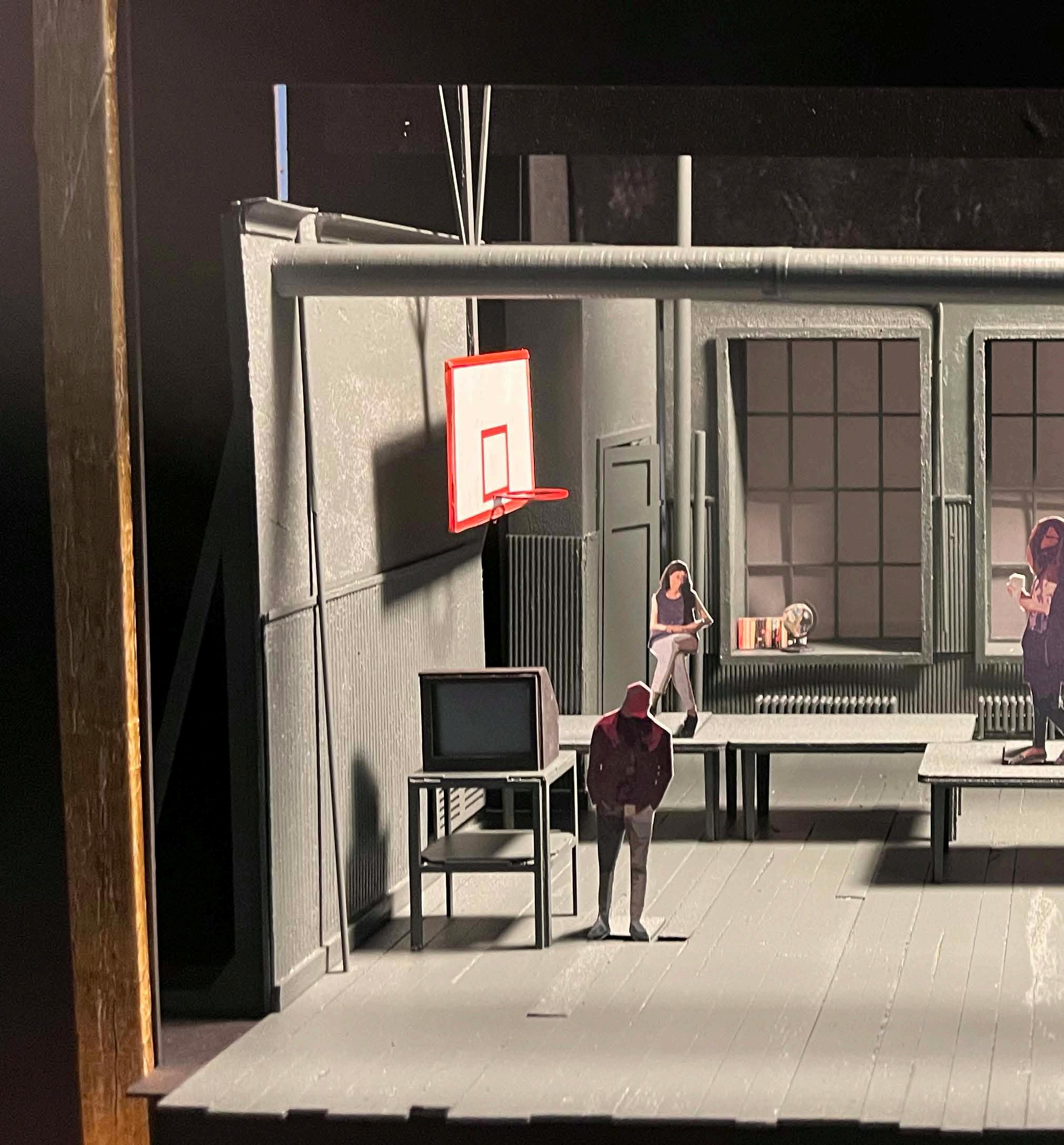
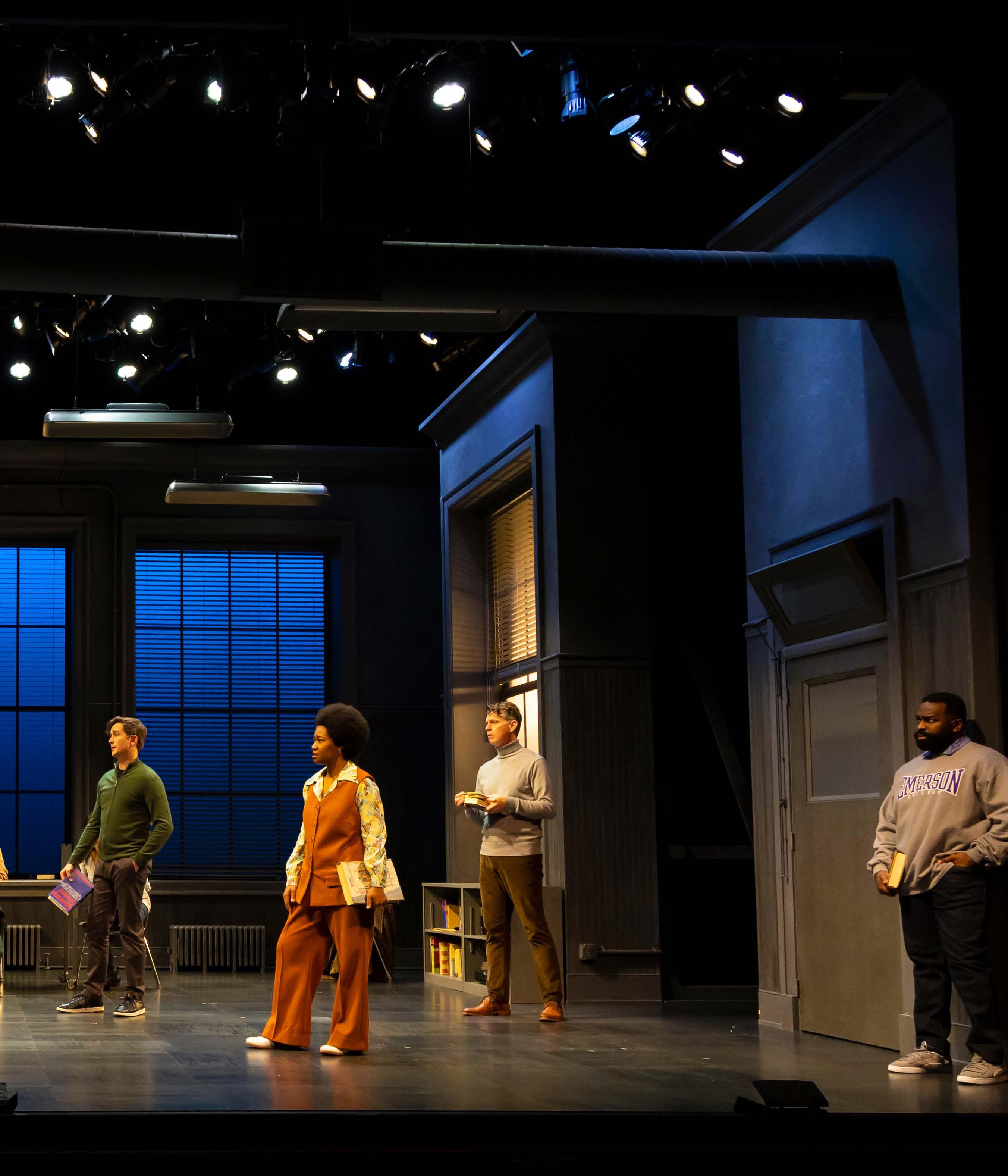
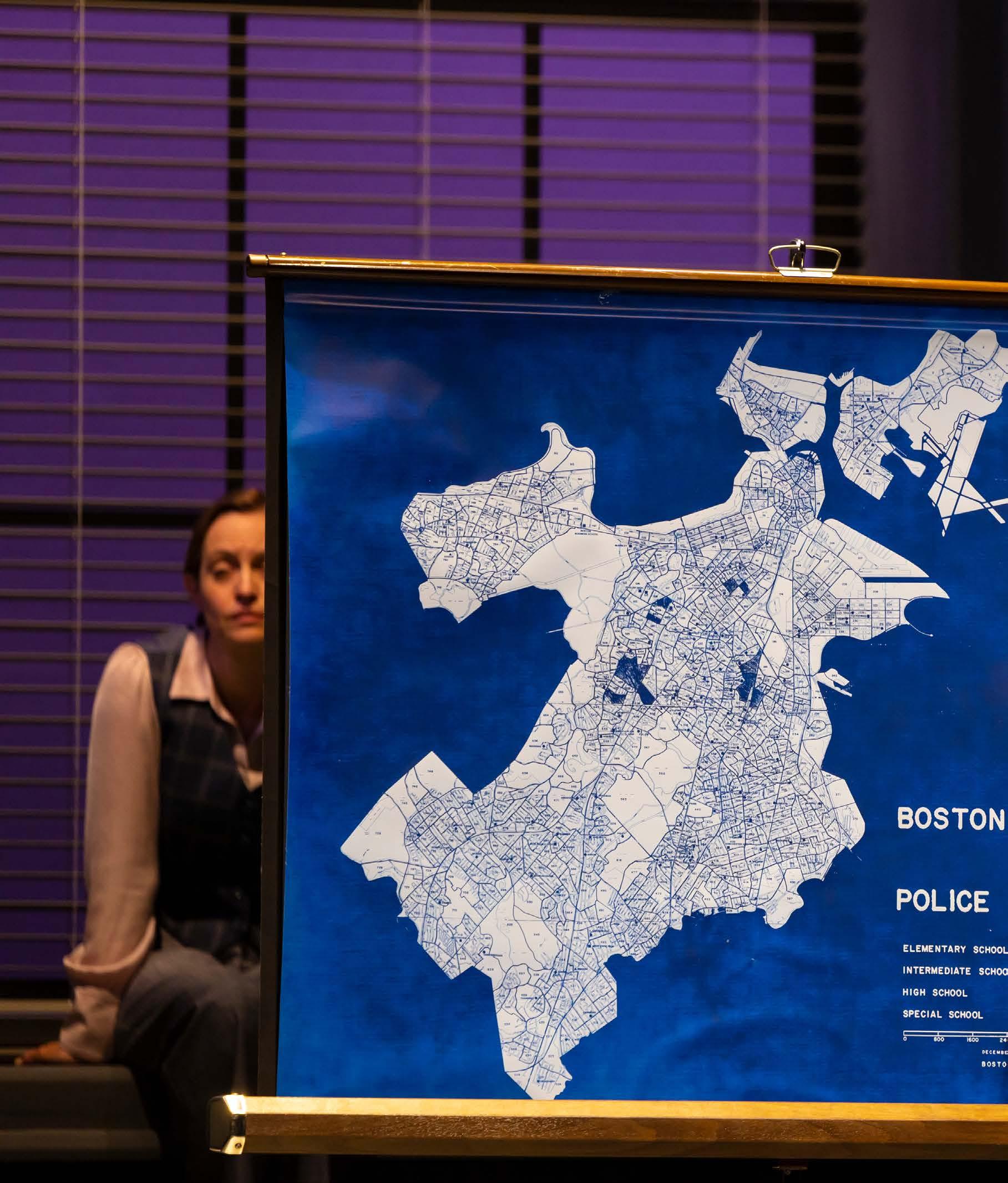
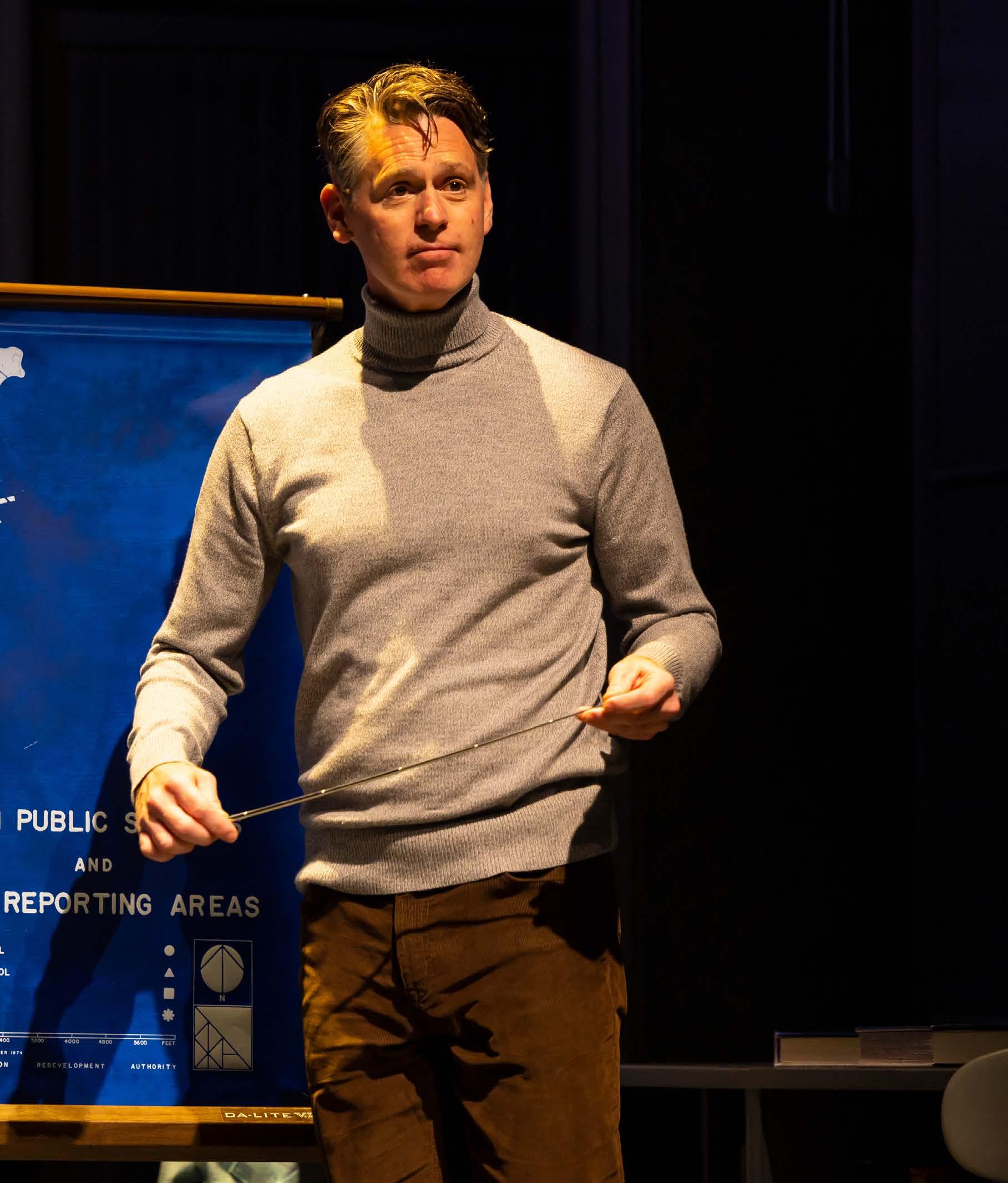
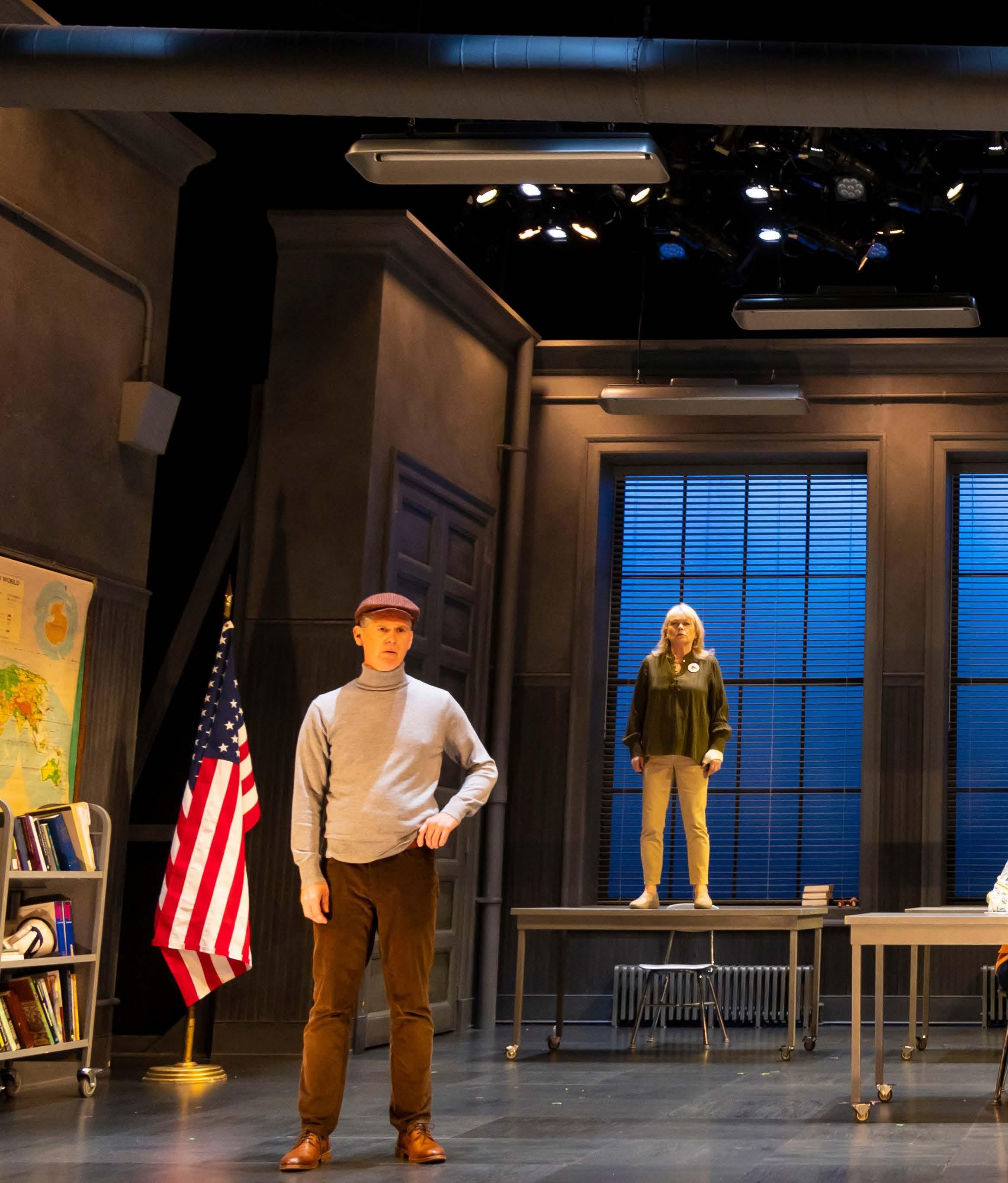
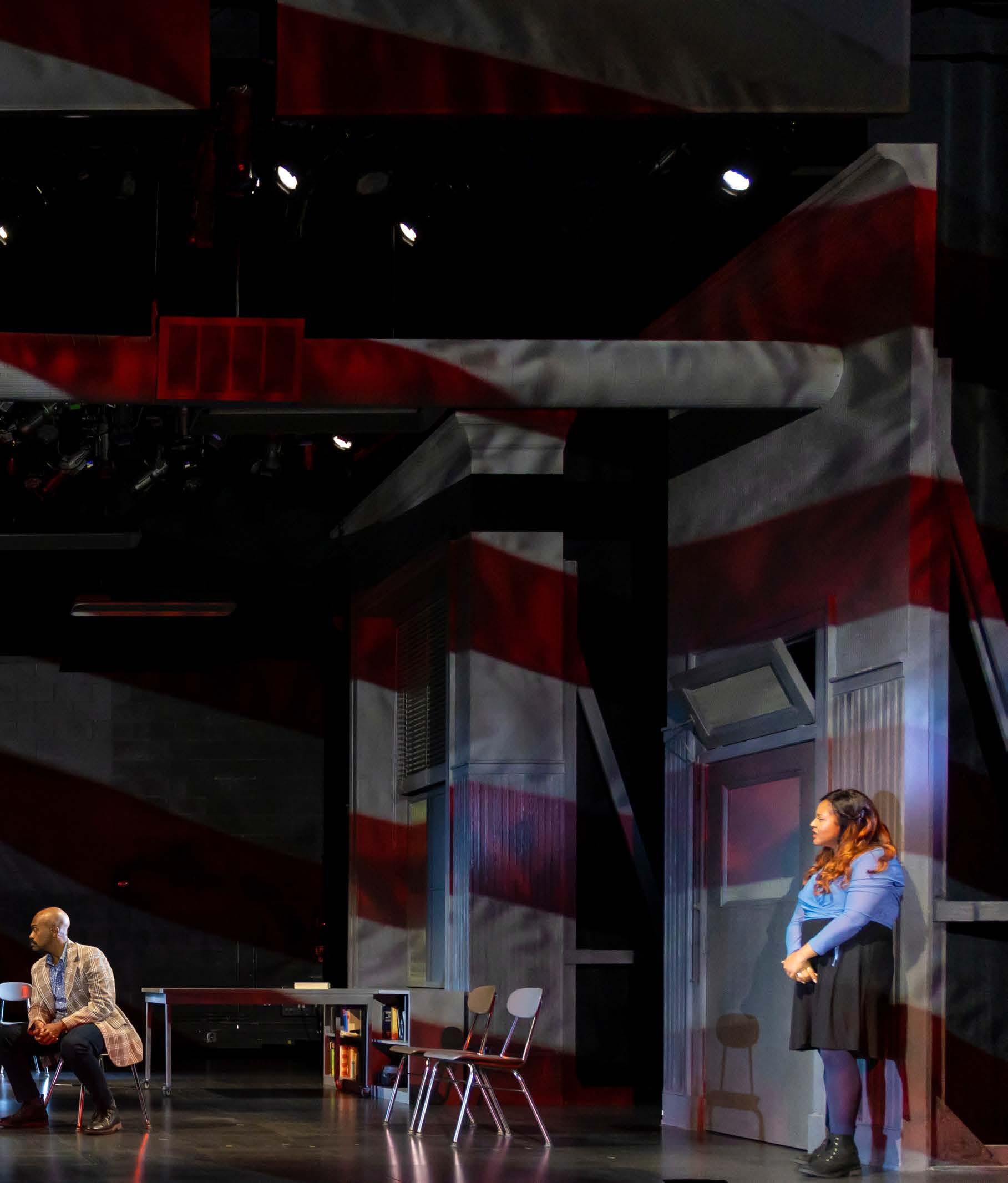
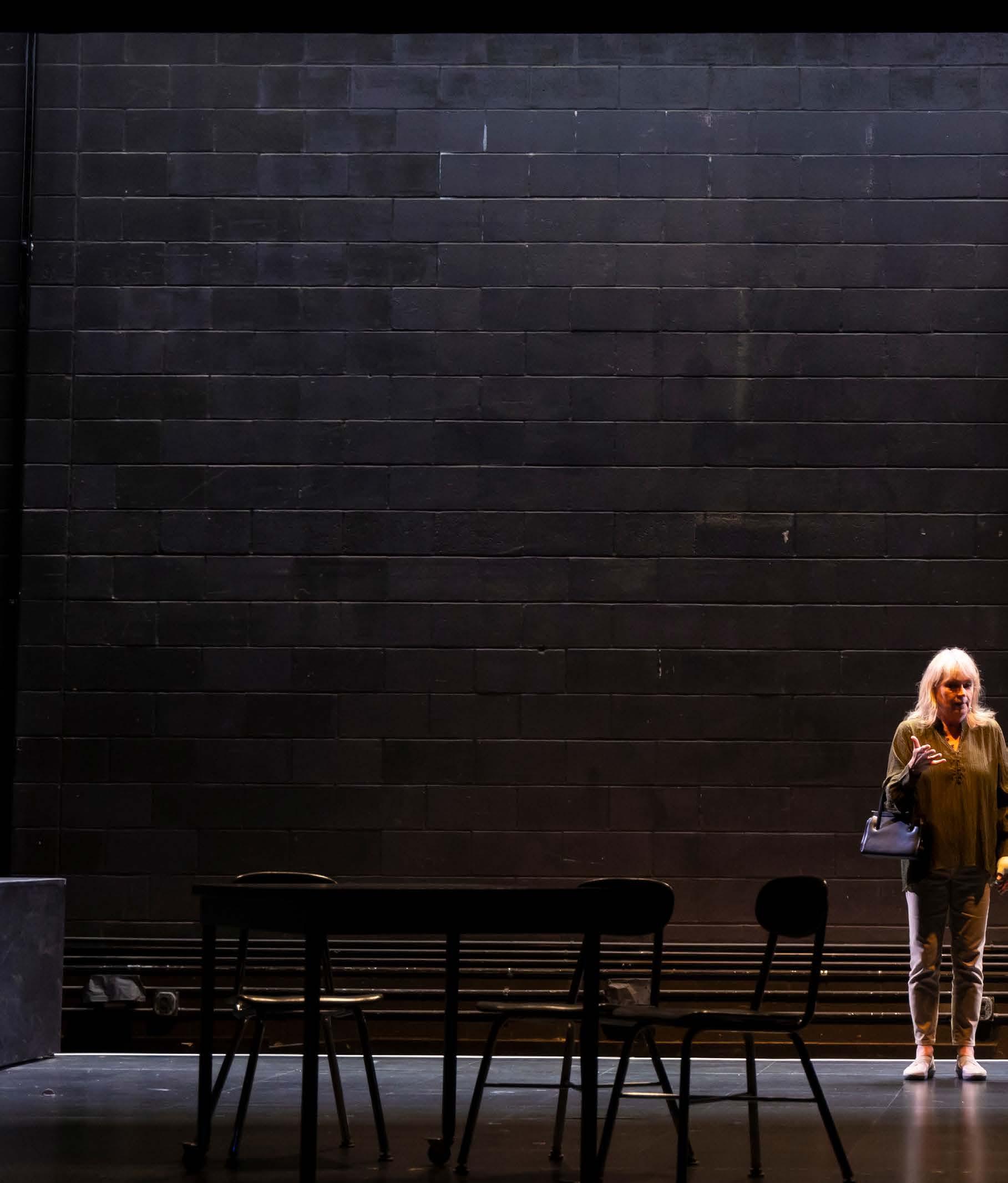
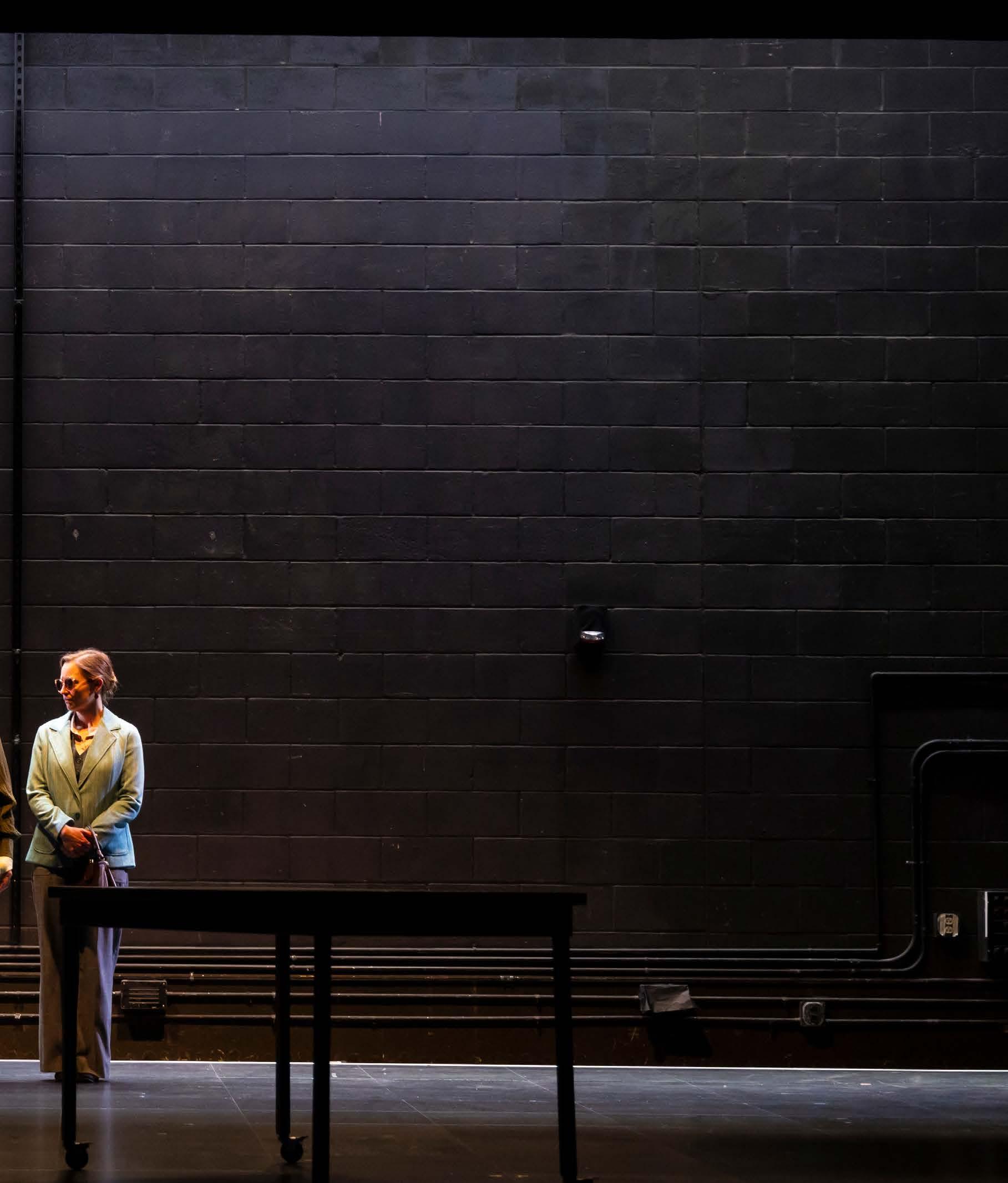
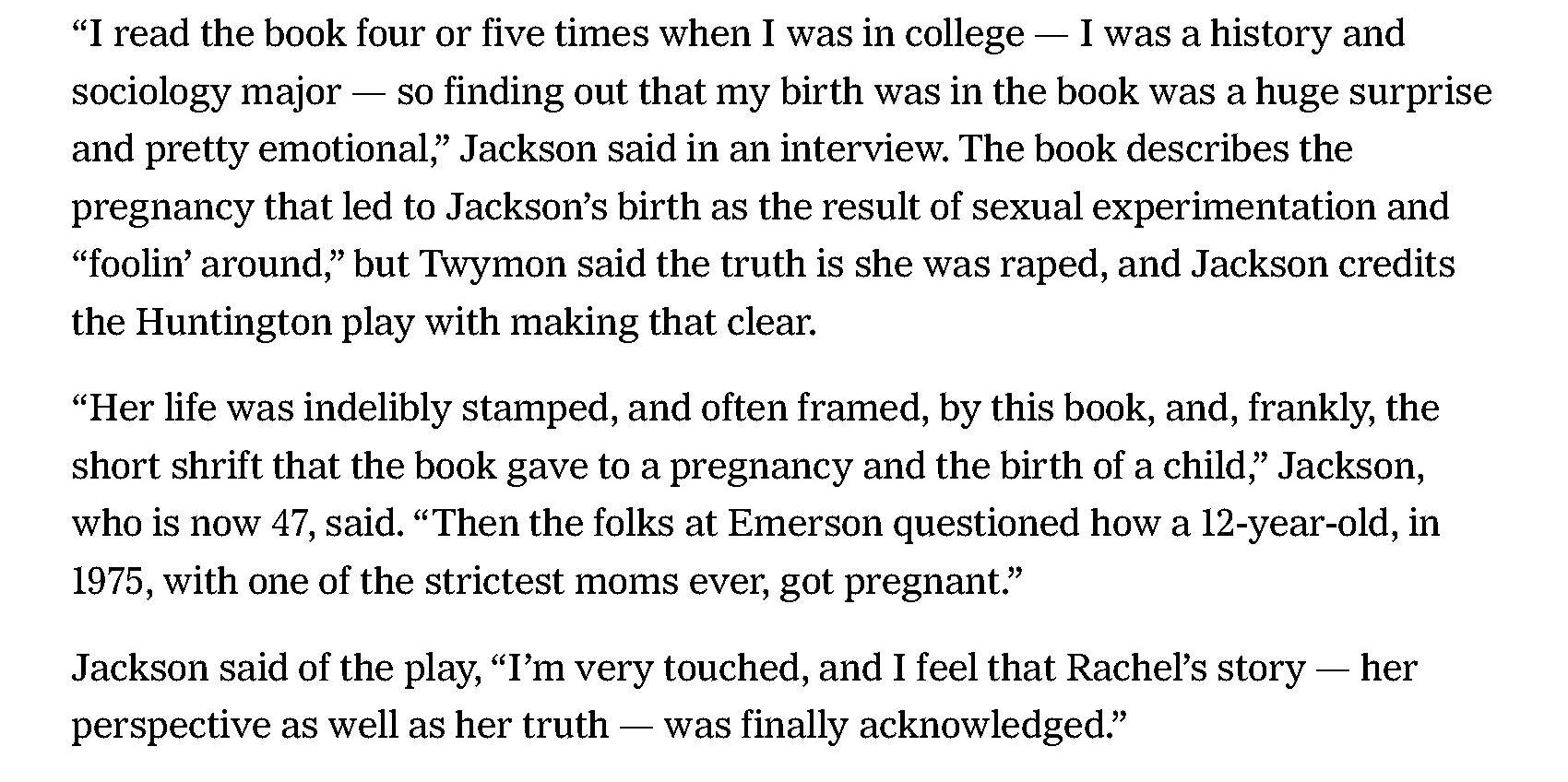
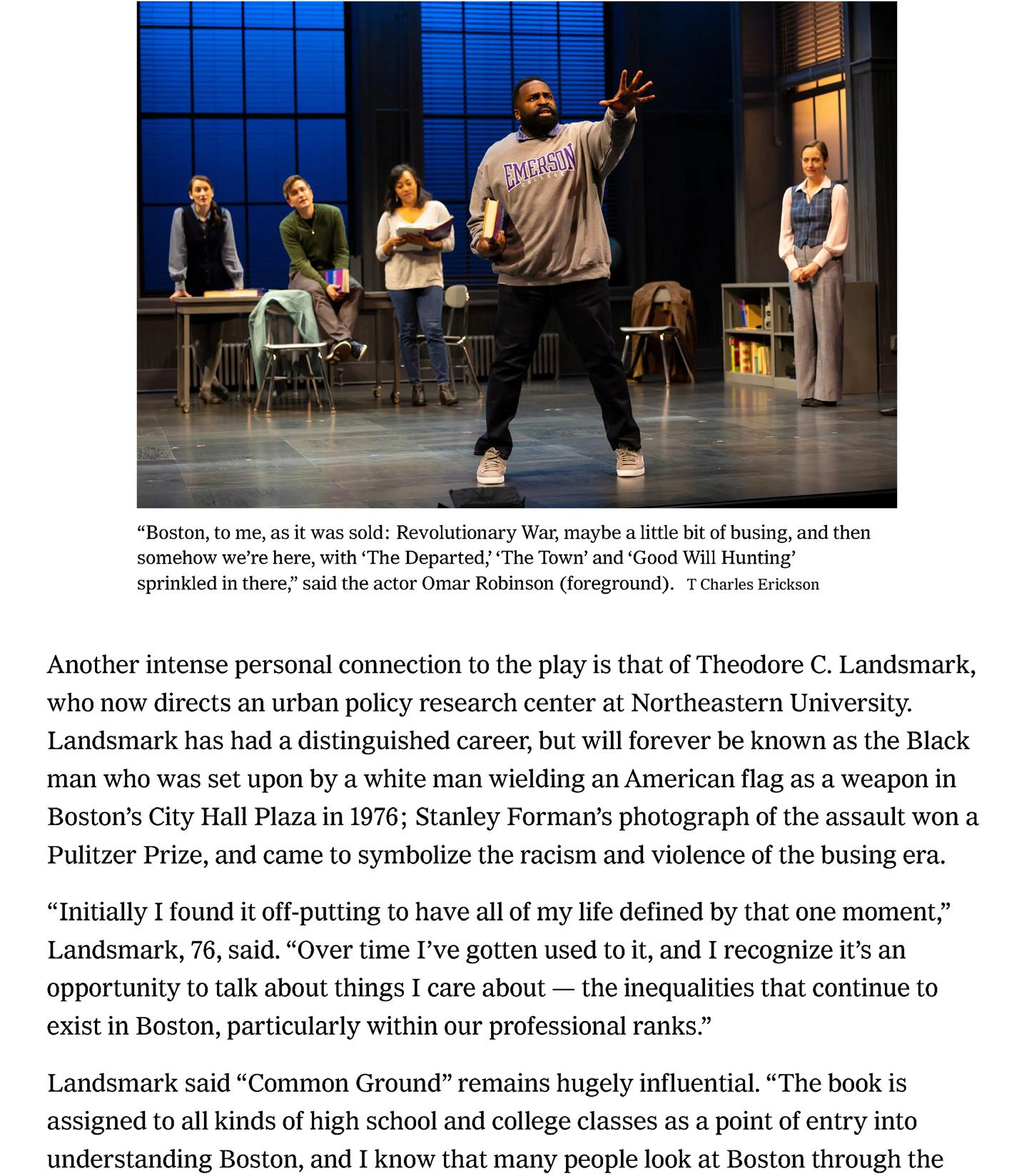
This new work looks back at J. Anthoy Lukas’ book Common Ground that followed three Boston families during the bussing crisis that roiled the city through the 70s and 80s. It parses the past to expose the underlying social and political conditions that created de jure segragation in the Boston schools that persists to this day.
“It’s not often that a play dives this deep into a city’s history, and even rarer that one sets out to foster the kind of dialogue that could — should — help that city better understand itself.”
Don
Aucoin, The Boston Globe
Photos by T Charles Erickson
Bluebeard’s Castle | Four Songs
Boston Lyric Opera
Bluebeard’s Castle
By Béla Bartók
Libretto by Béla Balázs
Arranged by Eberhard Kloke
Four Songs
By Alma Mahler
Conductor David Angus
Directed by Anne Bogart
Choreography by Victoria Awkward
Sets by Sara Brown
Costumes by Trevor Bowen
Lights by Bryan H. Scott
The company’s most recent installation, a production of Bartok’s “Bluebeard’s Castle,” is one of its most compelling in recent memory. Yes, it takes place at Flynn Cruiseport, the departure point for cruise ships, but its success owes more to the ways in which it makes you forget all about these surroundings. The aesthetic is minimalist, the lines are clean, and, taking its cue from Bela Balazs’s symbolist libretto, the action plays out both before your eyes and, even more importantly, on an interior stage.
Jeremy Eichler, Boston Globe
Production Photographs by Liza Voll
Digital Rendering of lobby space
Digital Rendering of performance space
Artistotle Thinks Again
La Mama Experiemental Theater Club
Performed, co-created, and co-choreographed by maura nguyen donohue, John Maria Gutierrez, Valois Mickens, Kim Savarino and Guest Artist Marcus McGregor
Directed/choreographed by Dan Safer
Text by Chuck Mee
Original Music by Julia Kent
Lights by Jay Ryan
Set by Sara Brown
Costumes by Alicia Austin
Sound Design by Attilio Rigotti
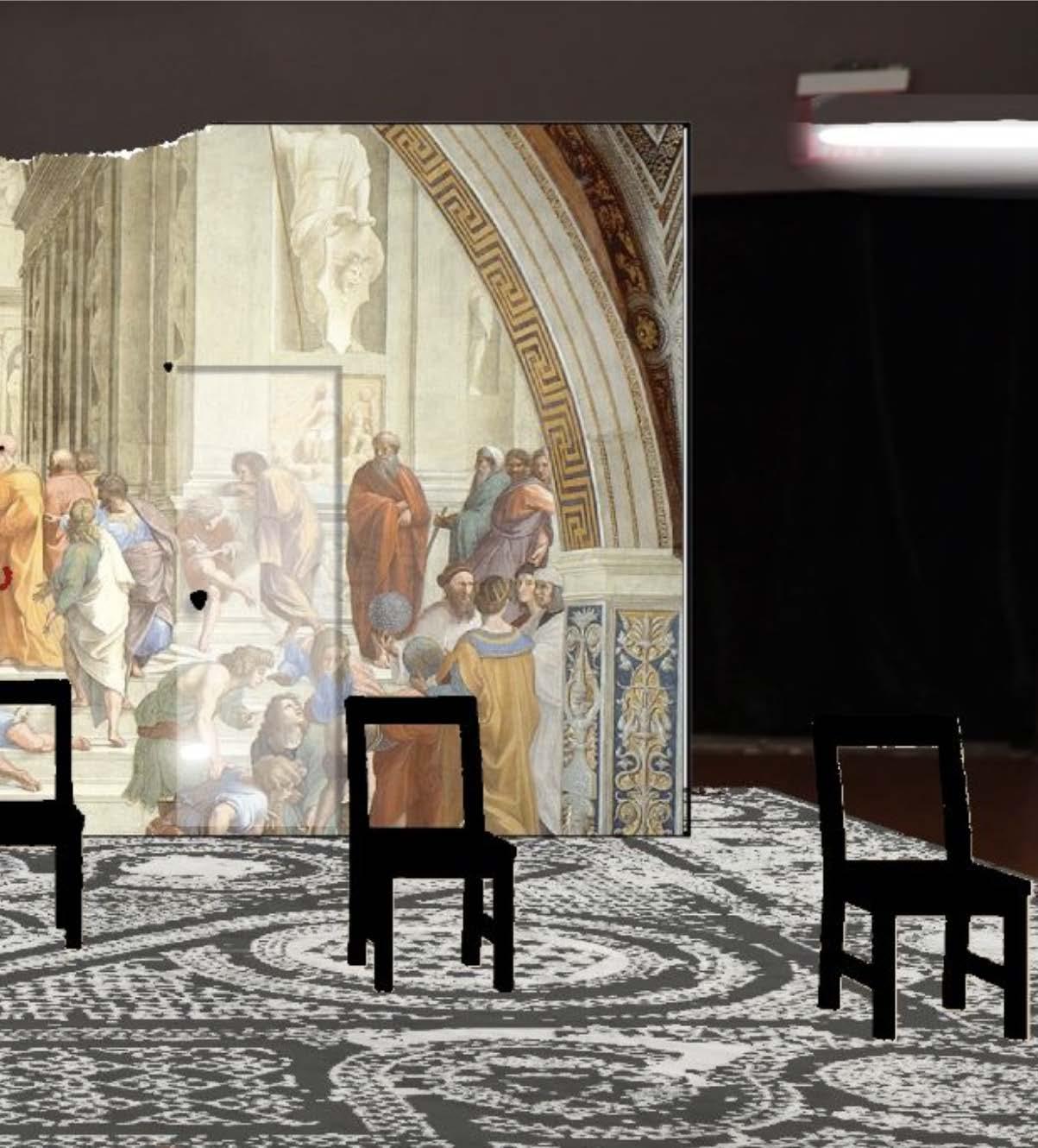
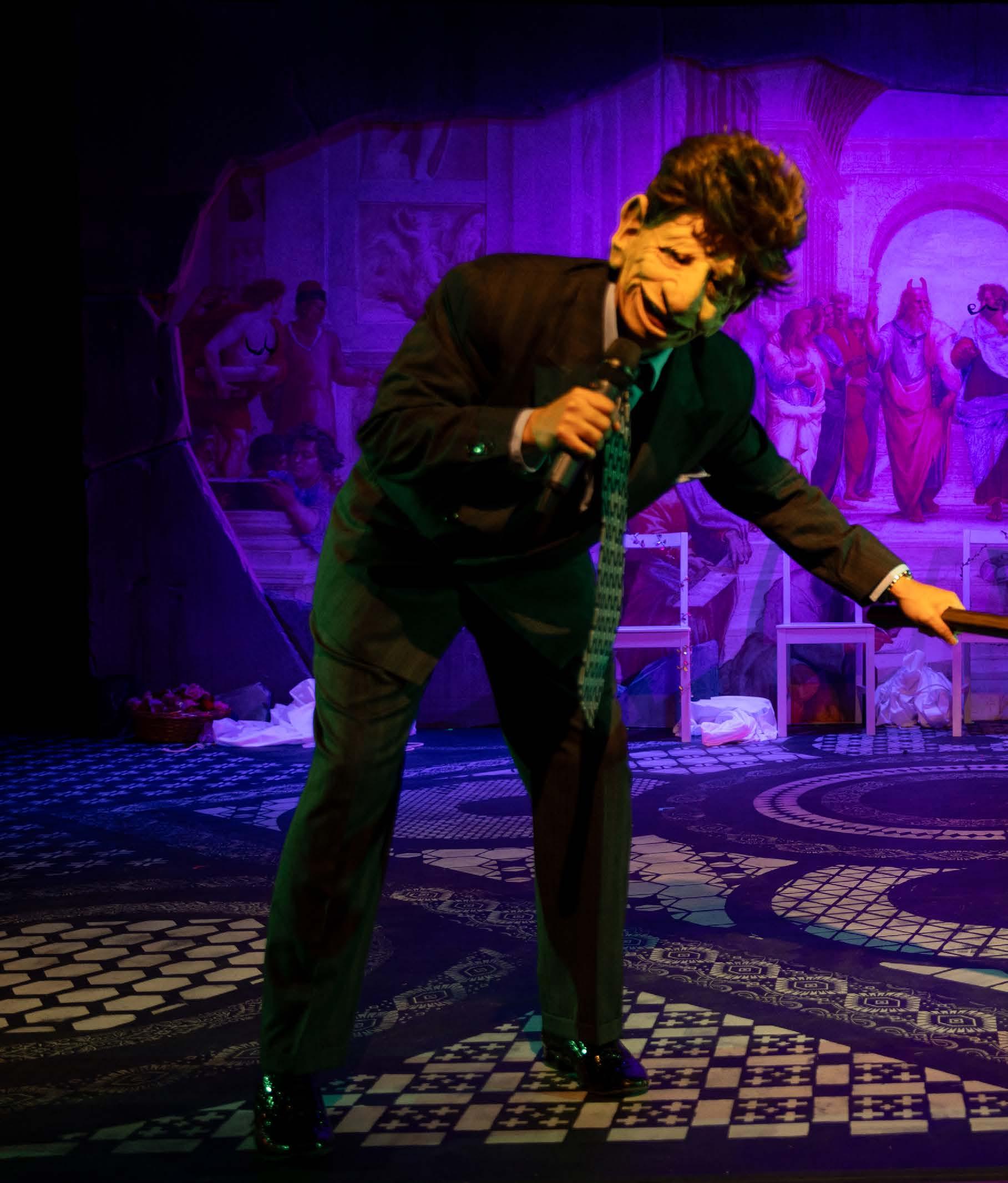
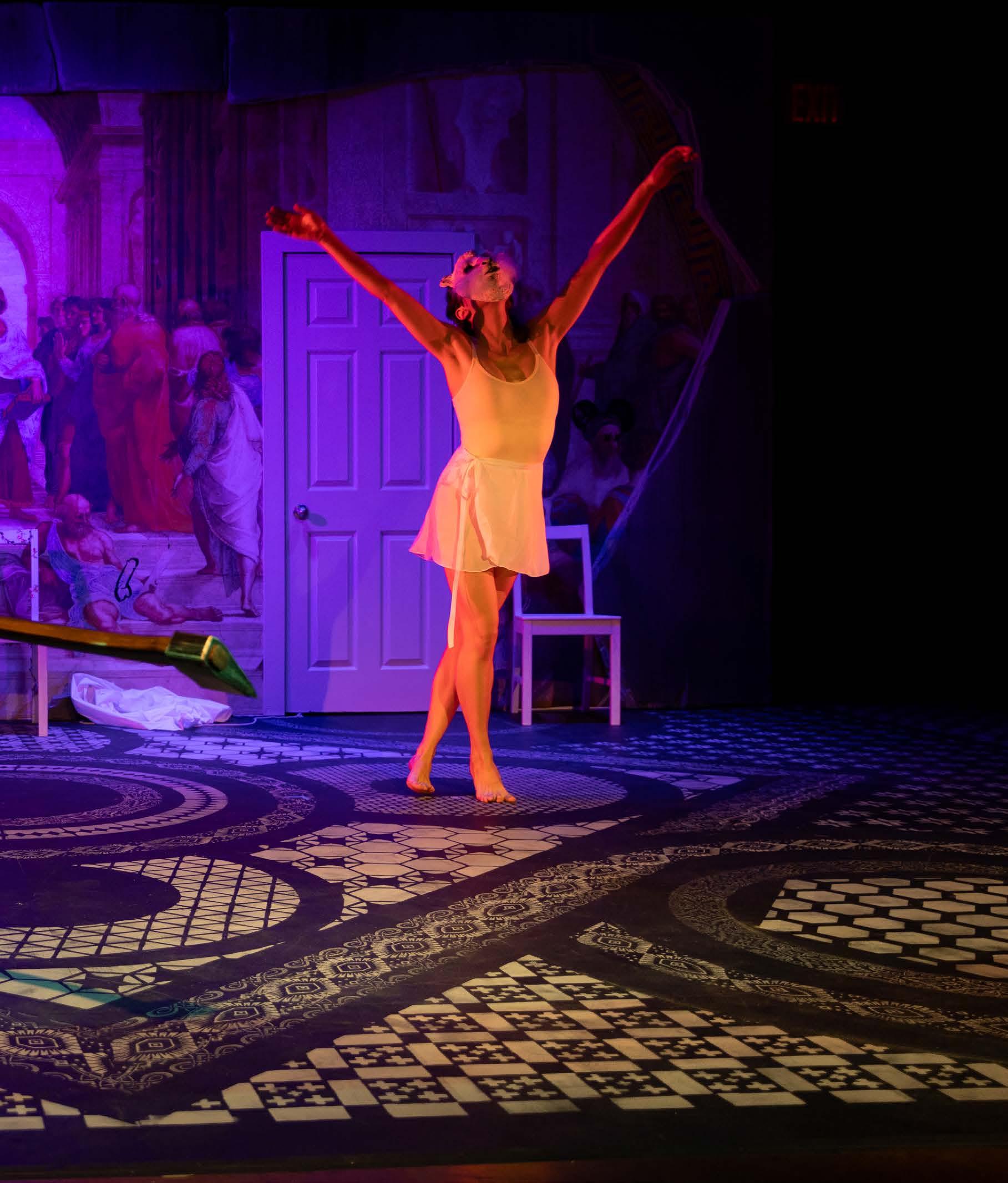
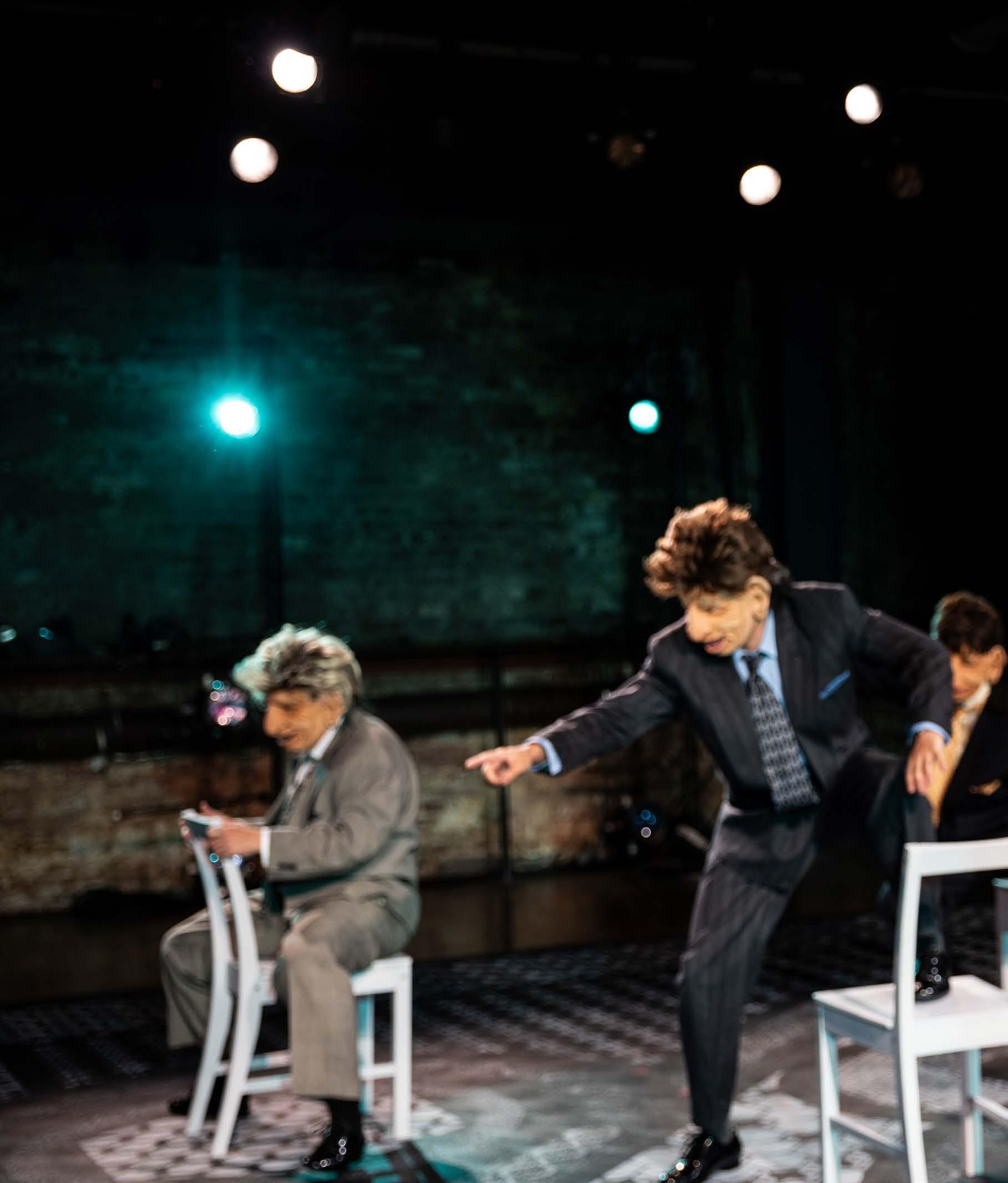
Artistotle Thinks Again brings together stories from the ancient Greeks with contemporary existential dread to create this dance theater experience.
“Aristotle Thinks Again” circles a central question: What if we survive the apocalypse? The answer is clearly to take pleasure in one another, and in the way our miraculous bodies move in space.
Helen Shaw, the New Yorker
Production Photographs by Maria Baranova
Circlusion
Co-Directed by Lilach Orenstein and Sara Brown
Choreography by Lilach Orenstein
Artistic Collaborators and Dancers Mor Mendel and Jennifer Nugent
Sets by Sara Brown
Costumes by Alicia Austin
Original Music and Lights by Evan Anderson
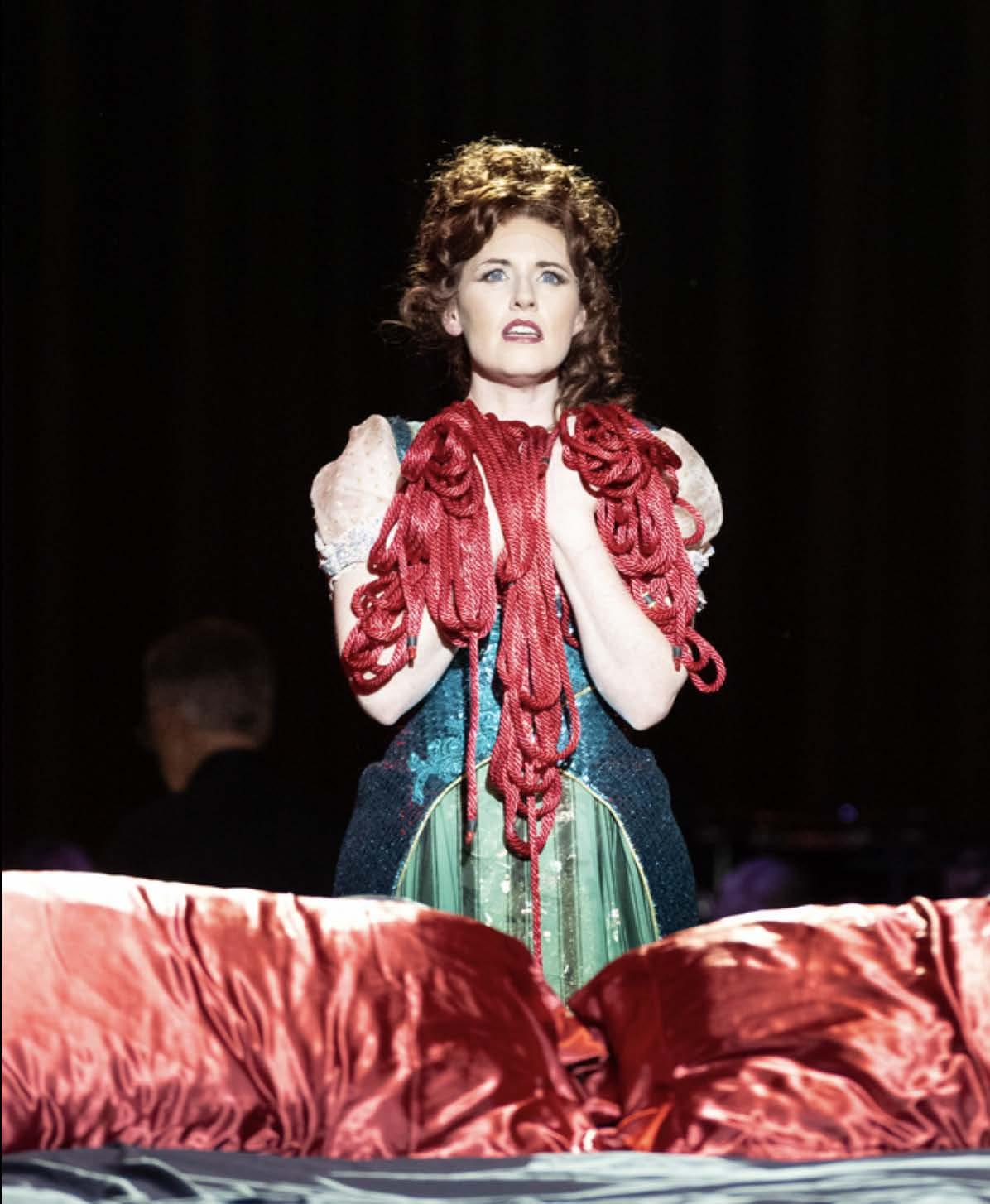
The world is woven with threads that bind women into contorted poses of pleasure, sex, power, and beauty. Circlusion reimagines the adaptive response to this world not as a submission but as an elegant evolutionary strategy. Contorted poses become dance. And that world woven of oppressive threads? We made a new one all our own - and the audience is invited to join us there.
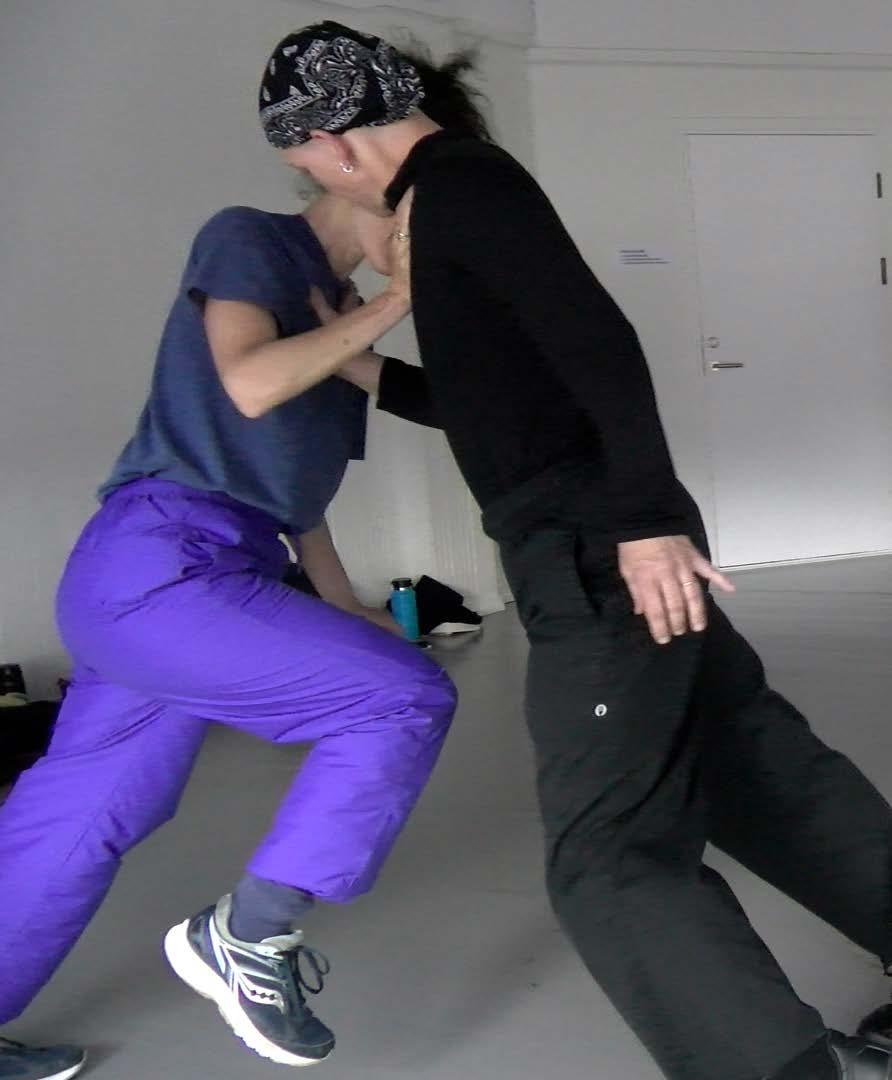
Choreographer Lilach Orenstein weaves deconstructed Kama Sutra’s sex positions with self-defense elements to create the movement score. The piece is an artistic answer to the many ways that sex is used as a tool of oppression and violence, including the weaponization of rape in conflicts throughout the world. The movement evokes pleasure, frustration, burden, care, violence, and power.
Jennifer Neugent and Mor Mendle perform movements that explore dominance, submission, and pleasure. They embody the multifaceted dynamics of love, rivalry, and empowerment.
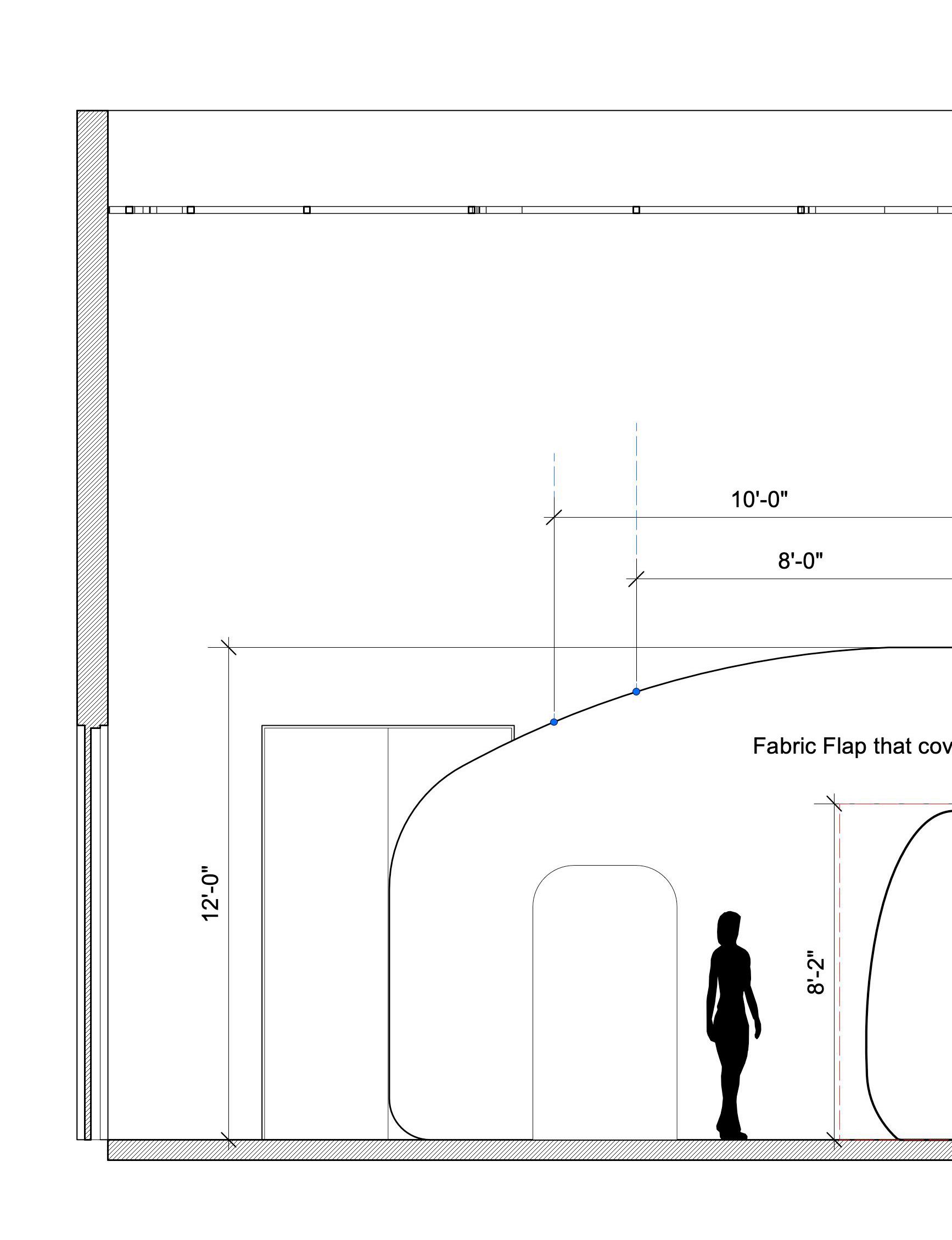
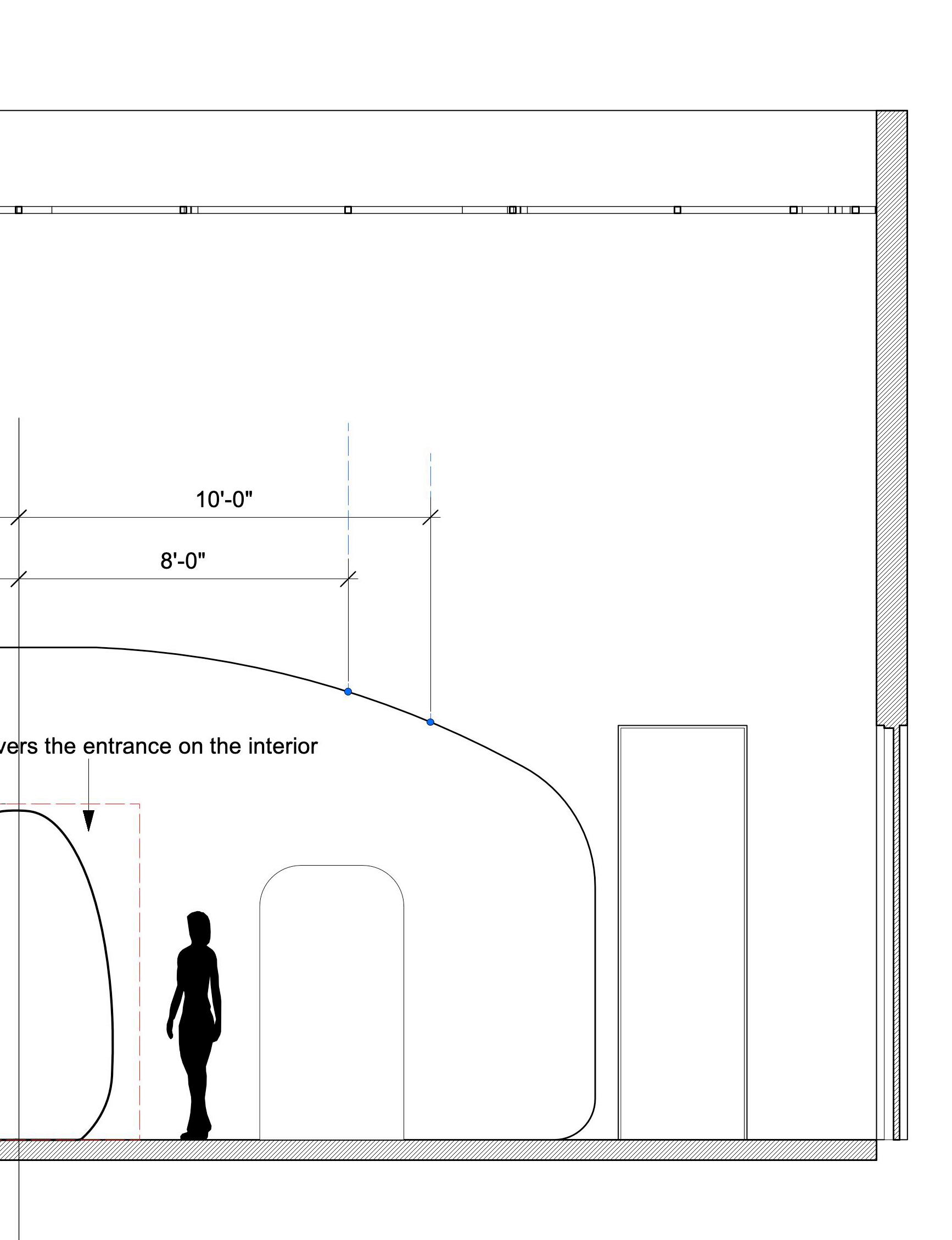
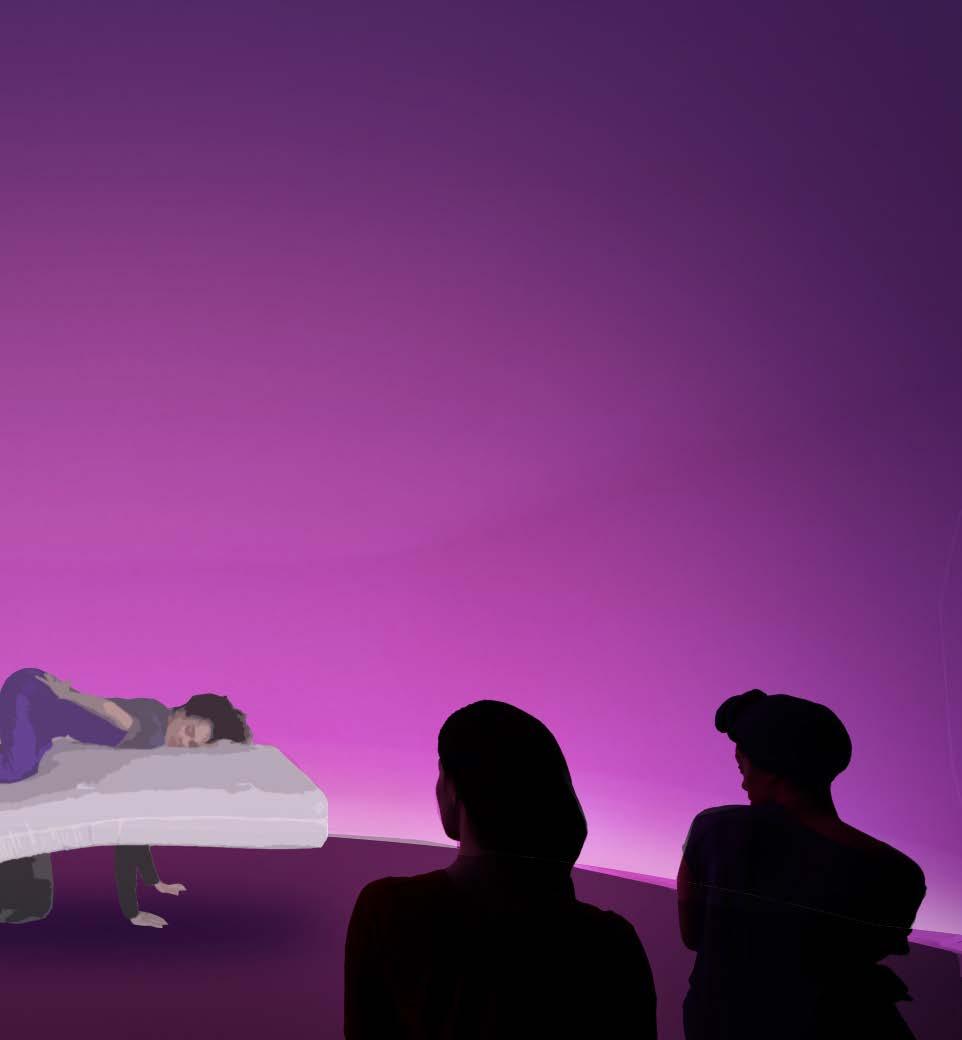
The performance space designed by Sara Brown is a womb-like inflatable dome. The audience leave their bags, phones and shoes behind to crawl into this performance space animated with sound and light by Evan Anderson. This space is a life-raft: a temporary refuge from a chaotic word and a blank slate that invites the audience to imagine new arrangments and possibilities.