Loudon County Publishers, Inc. P.O. Box 310, Lenoir City, TN 37771
Main: 865-635-0847
www.news-herald.net
www.tellicovillageconnection.com
To advertise or to request more copies, please call our office at 865-635-0847. To make comments or offer suggestions, send an email to darrell.richardson@news-herald.net or write to Loudon County Magazine Feedback, P.O. Box 310, Lenoir City, Lenoir City, TN 37771.
Buzz Buzz Buzz
The Science And Art Of Beekeeping
ALYSSA B. MARTIN
alyssa.martin@news-herald.net
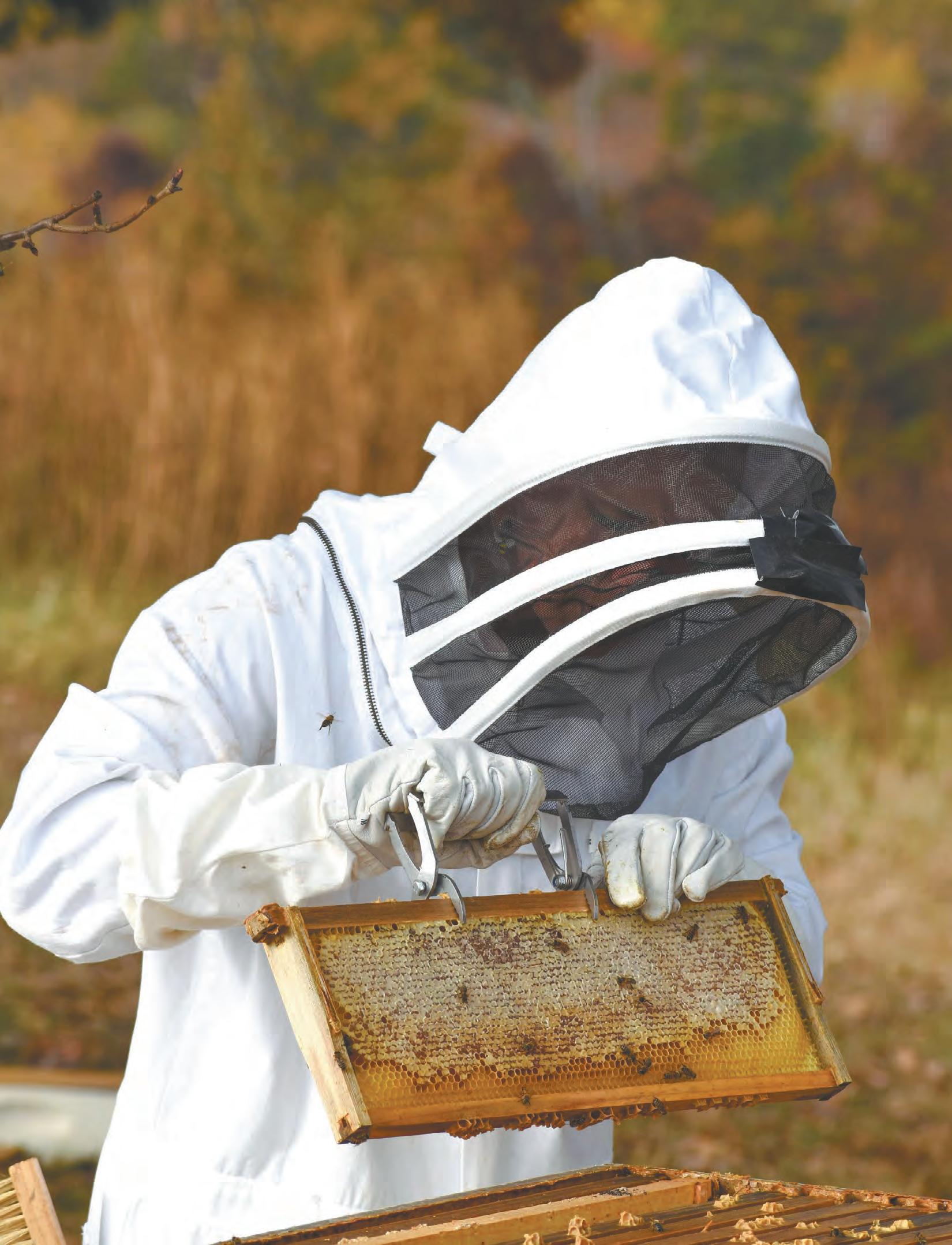
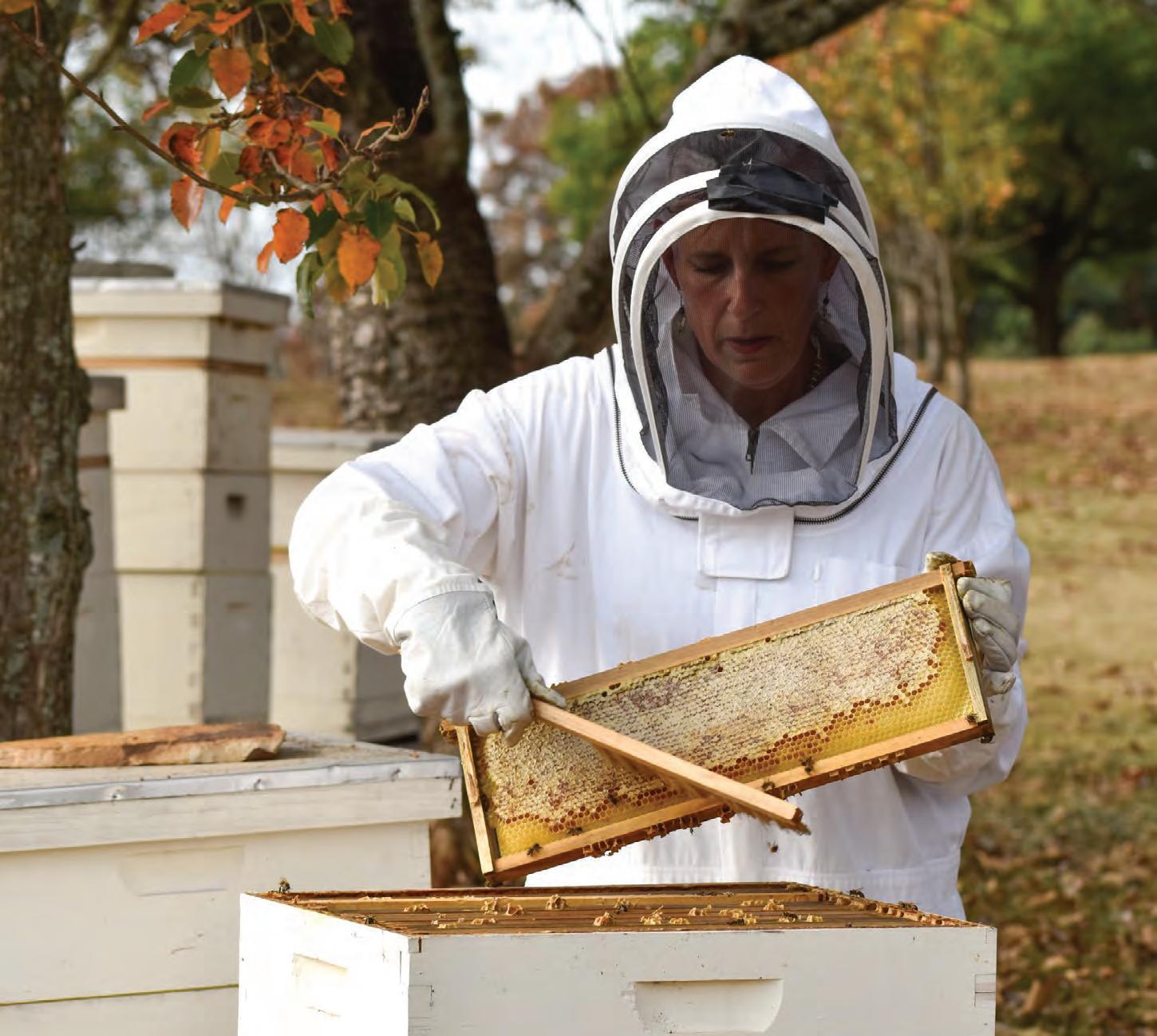
LOUDON, Tenn. — Cindy Jones, Activity Guide and Beekeeper at Windy Hill Farm and Preserve, turned a lesson on ants into a passion for beekeeping.
While Jones has deep ties in many states — growing up in Ohio and attending college at Eastern Kentucky University — she calls Tennessee home and the Promised Land.
While at EKU in the late 1980s and early ‘90s, Jones was part of the school’s Sierra Club, an environmental organization
dedicated to protecting wildlife and wild places, ensuring clean air and water, and fighting climate change.
Although she said the organization is different now than it was when she was involved, it helped fuel her passion for creating a more sustainable and clean environment around her.
“It doesn’t have to be big, political and sweeping, you can make very small changes in your own backyard (to make a big change),” Jones said.
She earned a Public Relations degree from the university and utilized those skills to help the Sierra Club. After graduation, she dove head-first into the corporate world.
Submitted photo
For many years, Jones worked in the publication industry. She wrote and designed newsletters and spent most of her time indoors, looking at a computer screen.
Jones said that this didn’t feel like her, and she eventually broke loose when it made sense for her family.
One of the first notable interests in beekeeping for Jones came while she was homeschooling her children.
Around 23 years ago, at the turn of the century, she was teaching her then-second grader a unit on ants. They learned about the similarities between ants and bees. Both are eusocial, meaning they live in an interworking community, have cooperative care of the young and have division in labor.
Through this unit, she marveled at how great bees are and became fascinated with them.
She didn’t go out and buy bees and immediately begin her beekeeping journey, but it was a catalyst of interest that she carried with her for more than two decades.
Fueling her soul
In October of 2022, the Jones family had just recently moved from Johnson City to Loudon in pursuit of an even slower-paced life and also because of her husband’s work. Jones began looking for work herself.
Reminded of her previous tenureship in the corporate world, she searched for opportunities that would fuel her soul. That’s when she found Windy Hill.
Jones initially applied to be an Activities Guide at the farm, but they only had openings in the kitchen at the time. So she accepted the position, working hard and patiently waiting on her opportunity.
After more than two decades of being interested in bees, she finally was able to turn that interest into something tangible. Jones read every book she could find on bees and beekeeping. The person in the role before her began showing her the ropes, but at a point, it didn’t feel like enough.
She desired a community, a mentor. So she began taking beekeeping classes at Pellissippi State Community College on U.S. Highway 321 and joined the Tennessee Beekeepers Association to not only learn as much as possible about bees and beekeeping but to also surround and immerse herself in the community.
For many people, when they think about beekeeping or other trades as such, they typically assume that it’s a male-dominated hobby. However, Jones contradicted this preconceived notion — stating that most of the classes she’s taken and the meetings she has attended have been a pretty even split among men and women.
After working in the restaurant for a few months, the position she was seeking became available and Jones didn’t hesitate. As an Activities Guide, she assists guests through Wine Hikes — a wine tasting, hiking excursion – learning archery, ax throwing, participating in board games and, of course, beekeeping and honey tasting
“Beekeeping is something I’ve always had an interest in, for many reasons. One was the environmental reasons, they’re fascinating,” Jones said. “It was just last year, about this time, that I started diving into the bees.”
When assuming this role, she was asked if she had an interest in beekeeping and immediately responded, with immense enthusiasm, “Yes!”
Up until this point, she hadn’t even thought about the diversity of the hobby because it is a community dedicated to unifying and helping people learn how to treat, protect and establish a relationship with bees.
“The Beekeeping community is a very welcoming community, they want to see people succeed for all the right reasons — the byproducts are glorious,” Jones said.
Small impacts, big changes
Beekeeping, for Jones, is only one way she has made small impacts for big changes in her life. Although she doesn’t keep bees at home, she does make it a priority to plant pollinators and limit any personal usage of pesticides.
Her family cares for a big garden in their backyard to promote a healthy, clean-eating lifestyle and utilizes refillable water bottles to minimize waste.
Much of what Jones and her family do for the environment, Windy Hill has put into practice as well — only on a slightly different and larger scale.
“The environment has always been important to me and people who take the easy steps toward it,” Jones said. “Windy Hill is doing so much. You don’t have to do a lot of crazy things to protect the environment. Sometimes you just need to do something very simple.
“Out here, they are making a sustainable environment,” she said. “They are turning these lands from cattle pastures back into the grasslands Tennessee actually was. So they’re creating
Submitted photo
an environment that is natural and sustainable and they’re putting their money where their mouth is and making something great here.”
One of the ways the farm is cultivating a sustainable environment is by making everything as organic as possible.
For something to be organic, it cannot contain pesticides, chemicals or any other artificial agents. Garden Supervisor Amanda Webb said that she has many alternatives to choose from before considering an organic pesticide and weed killer — like Neem Oil, which is a temporary fix.
Other alternatives are companion planting, introducing helpful insects like ladybugs and praying mantises.
“The garden and Windy Hill as a whole, I’m always researching, learning,” Webb said. “Everything we do here, I try to make sure it’s backed by research so it is organic. I know a lot of things are labeled organic (but they’re not). It’s an easy process to label something as organic.”
Unbeknownst to some, pesticides and other chemicals are likely in all of the produce and honey consumed day-today. For honey production, bees can fly five miles for food. Although Windy Hill’s team does everything in their power to create a chemical-free and organic environment, it’s impossible to say that the honey produced on the farm is 100 percent organic.
Windy Hill sits on 650 acres of beautiful land in Loudon, across State Route 444. As a whole, the farm is dedicated to providing a stable, sustainable getaway for locals and travelers
Jones said once you enter the gates of Windy Hill, you’re transported to another world where you are encouraged to live peacefully, adults are encouraged to play and everyone has the opportunity to reconnect with themselves and the environment around them.
Often as people age and life’s curveballs get in the way, people forget to take time to reconnect with themselves and nature — something that comes so naturally to children.
“This is a place that is very comfortable, and we’re going to treat people (well),” Jones said. “When you come here, this is a place of rest. It is also a great place to play. I feel like as adults we really forget how to play, and that’s one of the things that actually getting into the beehives does and so many of our other activities that we have here.”
When guests visit the farm and engage in the provided beekeeping activities, they learn all about the hives and colonies. From why they have 10 hives to the hierarchy of the colonies and how they communicate with each other, Jones shares her immense knowledge with anyone willing to listen.
Small but mighty
Since beginning this journey, Jones said her biggest obstacle was overcoming the fear of being stung. While most everyone can agree they don’t want to be stung by a bee, the aftermath is what can cause more problems.
When a bee stings, it releases an alarm pheromone. While humans aren’t able to smell it, this alarm pheromone signals
to other bees that there is a danger — causing them to be on high alert and triggering a defensive mode. Jones said when this happens, bees will start to swarm and create a frenzy. This is the time to practice calming techniques in hopes not to make the situation worse.
Jones described beekeeping as a science and an art. She said that while you can learn the mechanics and all the pieces and parts, the art comes in when you immerse yourself in the experience and continue to learn from those who know more than you.
The key, though, is finding YOUR art and science, according to Jones. Like cooking, after a few times of testing a recipe it eventually starts to have your own additions and you create your own techniques.
Beekeeping is no different.
In the future, Jones hopes to become a Master Beekeeper and continue spreading her knowledge with those who visit the farm and will listen. She hopes to become a one-stop shop at the farm with more hives and colonies.
“I see the Creator in this all the time. Hexagons don’t just happen by accident. Without a doubt, the whole process, I could cry thinking about it,” Jones said. “His creation and how it works in such harmony and how it was created to work is so beautiful. I know people who have come to faith because of beekeeping, because of their experience with it.
“They’re just an insect,” she said. “And yet, what they do and how they work and how they communicate … ‘But God.’ It’s
fascinating.”
For more information on getting involved with the Tennessee Beekeepers Association, visit www.tnbeekeepers.org. More information on Windy Hill Farm and Preserve is available at www.windyhillfarmtn.com.
Fun facts:
There is only one queen bee per colony, but there are an average of 3,000 drones — male bees — and 60,000 female worker bees per colony.
While a queen bee can live up to five years, most drones only live 90 days. Worker bees live one month in the summer and up to six months throughout the winter.
The queen’s job is to lay eggs. The drones’ job is to mate with the queens, although not their own queen. Worker bees’ job is to collect pollen and nectar to produce honey.
It takes nearly 600 worker bees traveling to more than 2 million flowers to make one jar — or one pound — of honey.
Some bee-friendly plants to plant are lavender, sage, thyme, geranium, crocus, snowdrops, sunflower, poppy and calendula. All of these are pollinators and feed bees every day.
Worker bees are also in charge of keeping the hive cool by fanning their wings, collecting nectar and producing the wax comb, guarding and cleaning the hive, and feeding the baby bees and the queen.
NATE TOSADO nate.tosado@news-herald.net
LOUDON COUNTY, Tenn. — Nestled in the heart of East Tennessee sits an ever-growing community of people that call Loudon County home.
While Loudon County’s population has steadily climbed and the county’s urban areas continue to grow, its roots as a rural community remain firmly planted to this day.
It’s no secret that Loudon County’s agriculture and local farms remain a pivotal part of the area. And one of the key organizations which is involved in the maintenance and preservation of Loudon County’s rich agriculture culture is the University of Tennessee Extension Office.
While some may be familiar with the UT Extension Office and its involvement in the community, others may be surprised to learn all the various things the Extension Office does through-
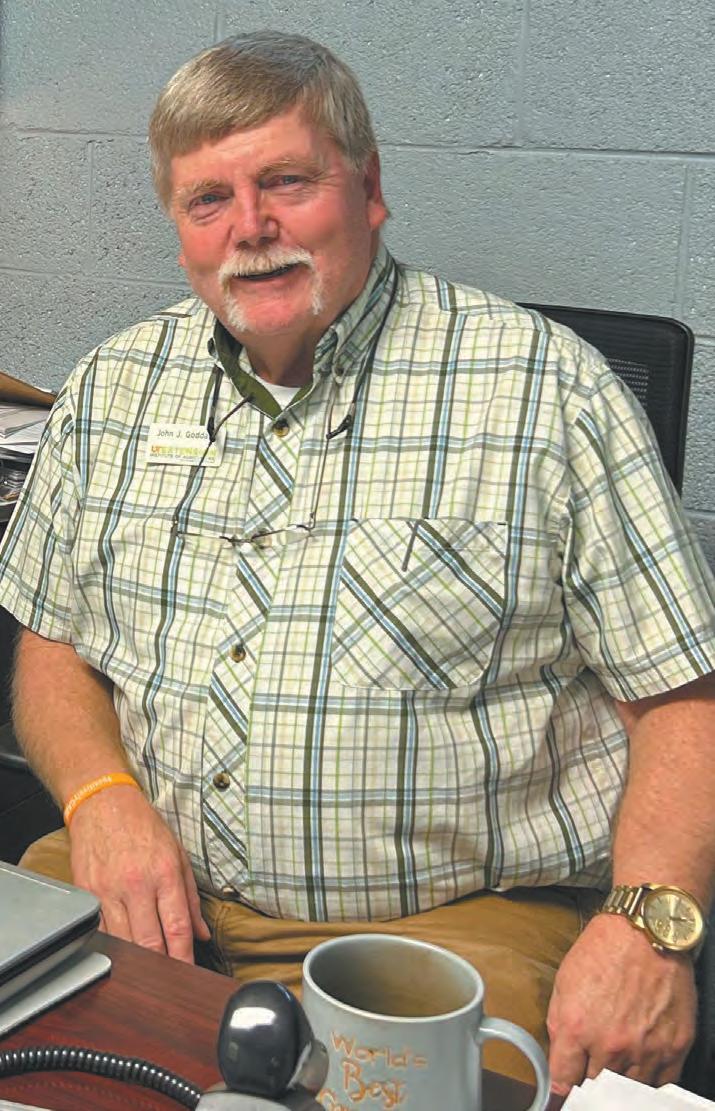
Nate Tosado | Loudon County Magazine Loudon County’s John Goddard, to many ‘the face’ of the UT Extension Office.
out the area and the benefits this wide-ranging organization provides to Loudon County’s farmers, young people and senior adults.
According to its website, the Eastern Region of the University of Tennessee Extension Office comprises 33 East Tennessee counties. The Extension Office is an educational organization — funded by federal, state and local governments — that brings research-based information about agriculture, family and consumer sciences, resource development and youth to the people of Tennessee.
Not just a job but a ‘calling’
To many, the “face” of the UT Extension Office in Loudon County is John Goddard, who has been with the UT Extension Office for more than 30 years. His responsibilities aren’t “just” executive/administrative but Goddard’s additional areas of responsibility include Agricultural and Natural Resources, as well as Community Economic Development.
“We’re strictly information,” Goddard recently stated. “And that’s what extension is. … It’s like an extension cord.
“A cord brings electricity from the wall over to that laptop. I do the same thing over here with the University of Tennessee and all their research and education. We bring that information to Loudon County farmers and homeowners.”
While Goddard does several things for many, many people throughout the county, he says his primary job is simple.
“My particular job is helping people — and I love to help peo-
BuildingLenoir City’sFutureOne StudentataTime
ple,” Goddard said. “I feel like that’s my calling.
“I’d say that 80 percent of my job is helping people with agriculture. Now what is agriculture? It’s anything that lives, breathes and grows basically. Whether it’s plant science or whether it’s food science or animal science … or AG Economics or AG business … people have questions or want to learn more about any of these things.”
Goddard said that while he isn’t an expert in all aspects of his job, he has collected a vast understanding of several things that come up. In addition to being helped by a long list of contacts and connections, he has access to experts at the University of Tennessee who may know more about a specific subject matter.
As aforementioned, another aspect of Goddard’s responsibilities is what he calls “community resource development.”
Though he indicated that this part of his job description involves a variety of general leadership roles that he embraces throughout Loudon County, it also — more simply — can involve showing a mix of local farmers, homeowners and others seeking help from the UT Extension Office what specific programs will help them financially or what classes they might be able to take to raise their awareness of what opportunities and resources are available to them.
The UT Extension Office offers a variety of classes that cater to very specific needs. Some of the courses in Loudon County include a Master Beef course, as well as classes focusing on the care of horses and beekeeping. Either inside or outside Loudon County, the UT Extention Office also offers courses in Master
Gardening (and what surrounding counties as well as Loudon County are working on and working through) in addition to offering Master Sheep and Goat classes.
“We have a lot of sheep and goats in our service area, especially with people that are moving into this county,” Goddard said. “Loudon County wasn’t traditionally a sheep and goat county 20 years ago, but it is now.”
Loudon County is also home to numerous “row crop farmers,” as well. According to Goddard, the county is home to more than 5,000 acres of soybeans and corn.
So it’s no surprise that the UT Extension Office helps with farm management, too. These classes are aimed at farmers who may need help with bookkeeping or transferring the ownership of farms and any and all litigation that goes into those transactions.
An evolving agricultural community
As Goddard has been involved in Loudon County’s agriculture scene over the course of multiple decades, he’s seen first-hand how the UT Extension Office has evolved to not only meet the basic needs of its clientele but to keep up with all of the fascinating technological advances in East Tennessee.
“The No. 1 change is technology,” Goddard said. “When I started this, you had to have it all up here and we didn’t have cell phones. If I was going to be late for a meeting, I had to stop at the gas station and use a pay phone. But today there’s so much information stored in my phone and stored in our laptops (that it’s staggering).”
Technology has now ingrained itself into all aspects of agriculture — big and small … from flying drones to self-driving tractors to electronically tagging cattle across the region.
“We had a grain conference the day before yesterday and we’re now using drones to apply insecticides or pesticides or herbicides to crops,” Goddard said. “That’s how advanced this has become. A drone can fly around and reach an area that’s maybe too wet to get a tractor to or get a sprayer on.”
And just like the UT Extension Office itself … “Loudon County farmers have had to adapt,” Goddard said. “If they’re serious about farming then they’ve got to catch on.
“For example, AI (or artificial intelligence) is huge; they have tractors with no seats on them and you just program the tractor or the planter or the fertilizer spreader or whatever it is. You turn it on, and you sit back as it goes.
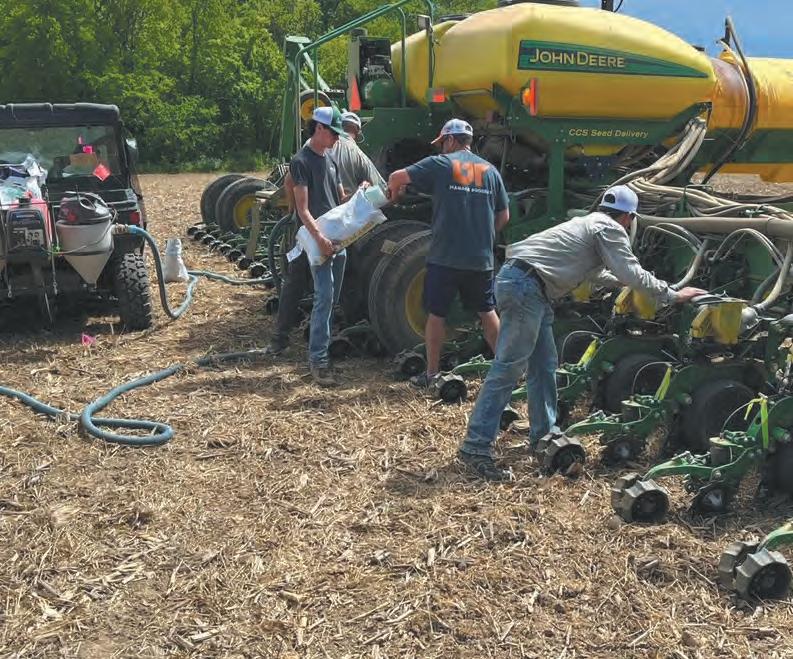
“… The serious farmers have had to embrace that. But some of the small farmers — like me — don’t have GPS on anything and they are still our clientele. We’ve probably got 500 beef cattle farmers who are like me and we still have to educate them.”
‘We do lots of fundraisers’
One of the biggest challenges facing the Loudon County UT Extension Office is maintaining its funding. About half of the UT Extension Office’s funding comes from Loudon County government while the other half comes from the University of Tennessee.
In fact, some of the University’s agricultural funding comes
from the state government and part of it comes from the USDA — federal funding that is channeled through the University of Tennessee.
“We do lots of fundraisers,” Goddard said. “That’s something that was kind of tough on me — being Old School. It used to be that every class I taught was free to the taxpayer but all that has changed now. Our federal funding has dwindled, and those sources have gotten smaller and smaller.”
In addition to the funding dilemma, one of the greatest concerns the UT Extension Office routinely faces is not enough young farmers. That said, Goddard hopes continued awareness will help get the younger generation more involved.
“A lot of these counties around Knoxville are growing and growing and grow-
Submitted photo Loudon County Farmers working on equipment.
ing — and you’re seeing the number of farmers decreasing,” Goddard said. “I have three dairies left in this county, and this is the No. 1 dairy county in the state of Tennessee.
“We have more cows and produce more milk than any other county in the state. We only have three dairy farmers — but those guys have grown and grown and grown and grown.”
As someone who has worked closely with agriculture all his life, Goddard hopes that future generations will continue to help Loudon County’s agriculture community thrive.
“I went up and did a Master Beef program in Sevier County, and met with a lot of those old-timey farmers who are older than me and were attending those classes. They’re just weren’t any young (farmers). There wasn’t anybody in their 20s at the meeting at all … I’d say 55 years old and up.
“4-H helps with getting more (young) people interested so that we can keep this thing going. Because we’re going to run out of farmers and when we run out of farmers, we’re going to run out of food — and then we’re going to have to buy it all from (foreign countries).”
“Loudon County is growing and growing and growing, but the population is getting farther and farther removed from their agriculture roots,” Goddard said. “We do an annual Farm Day and it used to be that for about half of the kids it was the first time they’d been on a farm. And now it’s more like 90 percent of the kids.
“Even a lot of the teachers have never set foot on a farm before; so that’s part of what we do — we try to promote agriculture.”
Speaking of youth development …
As mentioned directly above, another vital area regarding the UT Extension Office’s impact on the residents of Loudon County is related to its 4-H program. As one of the largest youth development organizations in the nation, the 4-H program introduces students to numerous life skills and provides them with a variety of unique agriculture opportunities.
“4-H was originally founded … to start educating the public at a younger age,” said the UT Extension Office’s Marshall Murphey, whose area of responsibility — along with fellow Extension Agent Elizabeth Jackson — is 4-H Youth Development.
Since its founding, 4-H has taken off and remains an important part of the lives and education of students throughout Loudon County and beyond.
“We see 3,200 kids every single month!” Jackson said. “We are probably the only two people in the county who see every school-aged child from fourth to eighth grade every single month.”
Currently, the 4-H program is alive and well in nine local schools.
“One of the big things that I try to get across is that 4-H isn’t nearly as much about agriculture and livestock as it is about life skills,” Jackson said. “With everything that we do, my goal is to hit on those life skills — whether it’s shooting sports, whether it’s livestock shows, whether it’s public speaking … what life skills are you learning through that.”
Submitted photo
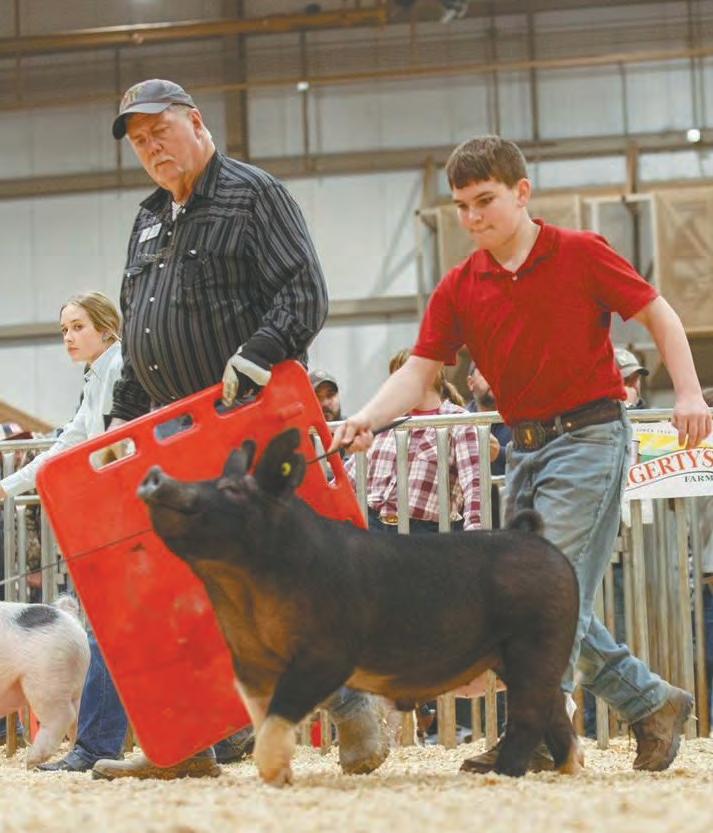
Loudon County UT extension agent John Goddard works with youth at Hog Show.
“We promote leadership,” Jackson added. “… whether that’s through sending kids directly to Congress or if they’re learning a little bit more about how our government works or if they’re presiding over a classroom meeting. And they help lead the Pledge.”
“Nobody really realizes the scope and impact that (the 4-H program has),” Jackson said. “And so that’s been a big part of my job — bringing awareness to more people. These skills translate — not necessarily just into agriculture but whatever job you go into. You have to be prepared.”
‘Everything else …’
One of the final areas of responsibility for the UT Extension Office in Loudon County is Family and Consumer Sciences. Or as Extension Agent Sheila Borders puts it … “Everything else.”
“I teach people life skills on whatever issues are brought to the surface by the needs assessment we do every year,” Borders explained. “In Loudon County, we have a higher than average senior population and with that comes a lot of senior health concerns and senior issues.
“I do a lot of programming around seniors.”
Borders said: “We also have a huge housing discrepancy. We have a really high property tax base — and like our younger residents, (several of Loudon County’s older residents) can’t afford to find a place to live.
“So I do a lot of homebuyer education and financial management on top of that.”
This division casts a large net — helping with family relationships, providing healthy food choices and weight management guidance along with home and financial assistance — to name only part of Borders’ responsibilities.
And, as with many of the other sectors in the Loudon County UT Extension Office, funding remains a focus.
“We were brought about to help people live better lives,” Borders said. “We are paid through tax dollars, but people see the name UT or TSU and think, ‘Oh you’ve got all the money in the world.’
“But even then that only pays a portion of our salaries. Funding is always a good thing to have.”
Despite being aware of the constant funding issues, Borders said that she is proud to do what she does for the community.
“To this day, I have people that will come up to me in the store and say I had you in class in 19 … blah, blah, blah — and it’s always heartwarming when I see people from the past that still put into practice the things they learned from me (years ago).”
So whether it’s helping come up with agriculture solutions for a local family’s farm or helping senior adults with health issues or sharing life lessons with Loudon County’s young people through the 4-H program, the UT Extension Office’s impact is impressive.
And at the core of everything they do, the primary focus remains helping others become better now as well as helping others set themselves up for success in the future.
Davis’ contributions to community drives Memorial Milk Fund in his name
ALYSSA B. MARTIN alyssa.martin@news-herald.net
PHILADELPHIA, Tenn. — Throughout
Randy Davis’ life, he committed all of himself to the Loudon County community, whether through teaching, through coaching or through his dairy farm.
Now, in his absence, his friends and family have dedicated their lives to honoring and carrying on Davis’ legacy.
In 1986, Randy and his brother bought
some land to begin their dairy farm – Davis Brothers Dairy – with only 25 cows. Eventually his brother stepped away to pursue other interests, but Randy dedicated much of his life to the farm.
He established good relationships with local companies, including Mayfield Dairy, whom they still have a great relationship with and send a tanker full of milk to every day for more than 20 years.
Because he worked closely with milk, Randy heard about people holding milk drives across the South. People would set up at grocery
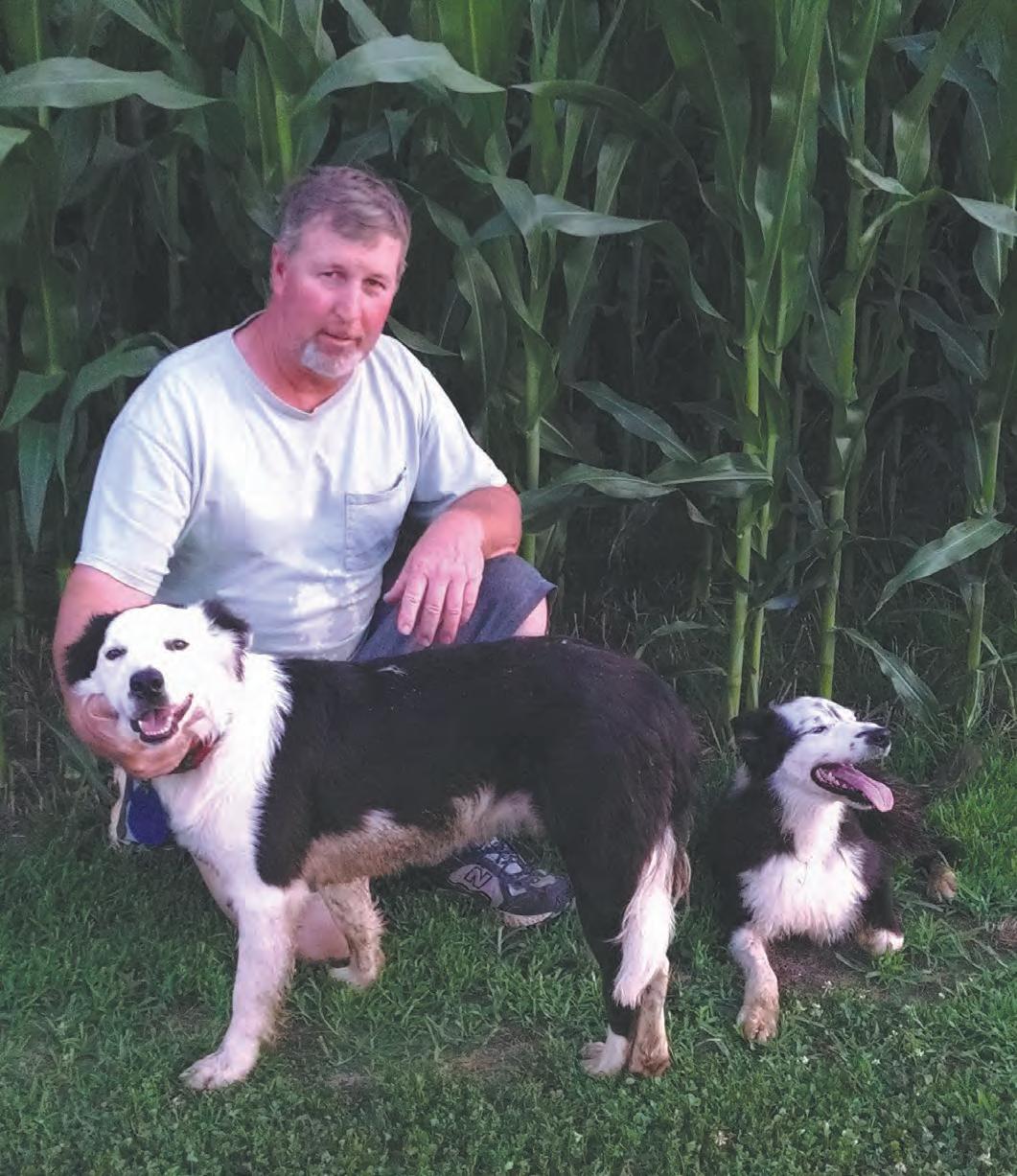
Submitted photo Randy Davis at the farm
stores or gas stations and ask patrons to purchase a gallon of milk while in the store to be donated to a local charity. At the time, there wasn’t anyone hosting milk drives in the immediate area — so Randy started one in Loudon County and would donate the milk to the Second Harvest Food Bank of East Tennessee.
Keeping it local
With his passing, Randy’s daughters, Samantha Craun and Alli Kamper, and his wife, Rita Davis, wanted to carry on this passion of his by creating the Randy Davis Memorial Milk Fund, a 501(c) (3) nonprofit organization, to honor the works of his life and keep his legacy strong.
The fund is set up year-round to donate to; and every few weeks, the women will purchase milk with donation money and give it to local food banks. They’ve participated in the Blairland Baptist Church food drives and partnered with other local churches, as well.
“He was always very giving and loved to take care of people, and he tried to instill that in us, obviously,” Craun said. “We
would go to the milk drives with him and be involved in that.
“It’s been pretty amazing really,” Craun said. “The donations and the amount of milk we’ve been able to donate has been increasing every year. It’s crazy how our community rallies around this, and I think it’s something that they know is local and the milk stays local.
“There’s not a whole lot of nonprofits that keep everything as local as they can. I’m honored to be able to do it in remembrance of Dad. It does take quite a bit of time, but I’m happy to do it.”
‘Our decision, our farm’
Growing up, Craun and Kamper were raised on the farm, learning the ropes, but Randy never forced or persuaded them to buy into the family business. However, he did encourage Craun to visit Virginia Tech University, where she fell in love with their Dairy Science Program and her love of the dairy industry developed.
And yet, her father never pressured her to come home and work on the farm. In fact, she and her husband, Chad Craun,
moved north to work on a farm in Pennsylvania for a few years.
“I think him letting us make our own decision and not pushing us in one direction or another of course he would always give advice but (it) really made it feel like it was our decision to come back here and like it was our farm, and we could contribute to it,” Craun said.
Craun, being a second-generation dairy farmer, said she hopes she can have the same outlook and support for her three boys, although she does hope they will want to stay and become the third-generation farmers of Davis Brothers Dairy.
While her mother and sister help with the nonprofit organization, Craun and her husband run the farm.
Today, the farm has grown to 1200 acres and more than 900 cows with 20 people employed, including Craun and her husband. Between five and 10 calves are born on the farm every day. They even have an employee whose main job is to tend to the baby cows and their moms. With the increased usage of the internet and social media, it’s easier than ever
to grasp onto false messaging and be misinformed. Craun believes this is one of the biggest issues for the general public as consumers, because they’ve been told that milk is bad.
In reality, milk contains 13 essential vitamins and minerals that the human body and brain needs to function properly. She said without them, people are depriving themselves of essential nutrients that cannot be replaced by “almond juices,” according to Craun.
Even the argument of allergies, which she has heard many times, isn’t always valid due to many people believing they are allergic to milk when they’re really not. However, if an allergy is prevalent, lactose free options such as Lactaid and Fairlife are quality substitutes since they are both milk simply stripped of lactose, thus still containing the essential vitamins and minerals.
“I think it’s important, first and foremost, for the general public just to know where their food comes from,” Craun said. “I think we’re seeing a move toward that just in society in general, and I really think that is a good thing.
“That’s why I think it’s important for people to know about dairy farms — and there’s not very many of us left. We’re kind of few and far between.”
The Foundation
In 1977, Randy graduated from Loudon High School — where he was a basketball coach for many years and taught physical education and English from 1982 to 1993.
According to his life-long friend and classmate, Carter Cardwell, Randy put every piece of himself into everything he did — on and off the court and on and off the farm.
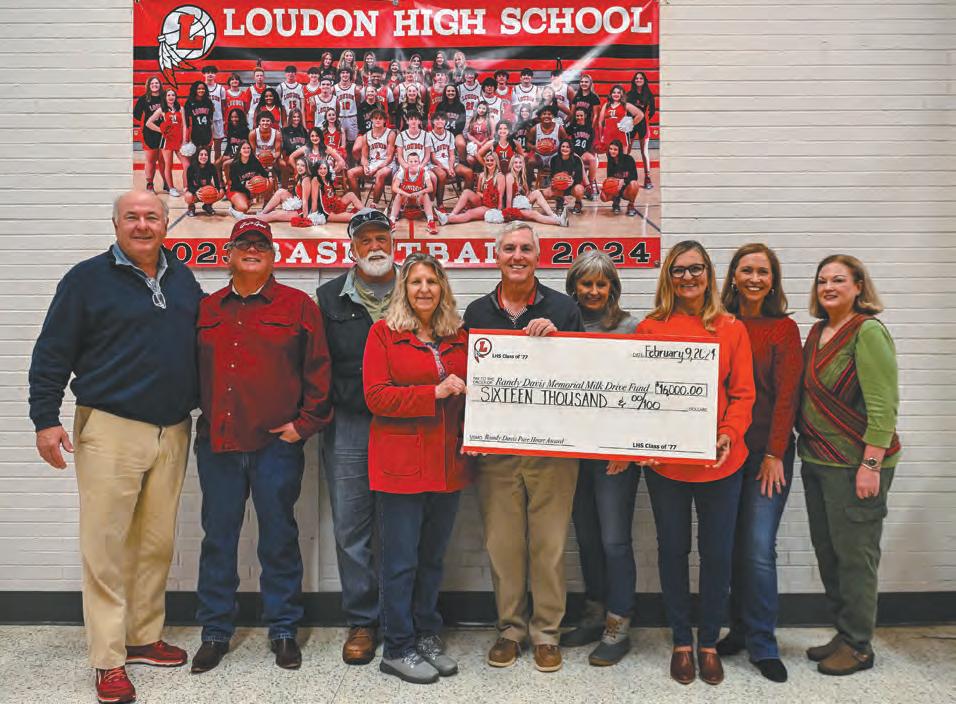
After Randy’s passing in 2016, his Class of ‘77 high school classmates decided they wanted to do something to honor him and his contribution to the Loudon County community as a school teacher, basketball coach and dairy farmer.
They came up with the idea of establishing the Randy Davis Pure Heart Award at Loudon High School, which is awarded to the player who exemplifies Randy’s hard-working, dedicated and team-oriented qualities. According to Cardwell,
Randy was the classic overachiever in everything he did, and he poured every bit of himself into his students, players, farm, friends and family.
Leading up to the award night, the Class of 1977 raises money for the Randy Davis Memorial Milk Fund.
“We wanted to honor Randy’s contributions to the community … but we wanted
to tie it in with some sort of charitable thing to do,” Cardwell said. “Randy had already started this because he had always wanted to provide fresh milk to families that needed fresh milk but couldn’t afford it. Our class just sort of picked up the ball and let it continue.”
Sometime in January of each year, the Class of 1977 will reach out to the girls’
Submitted photo 2024 Pure Heart recipient Noah Eller
and boys’ basketball coaches to ask who they believe has shown Randy-like characteristics so far in the season; and then they coordinate a date to have the award ceremony.
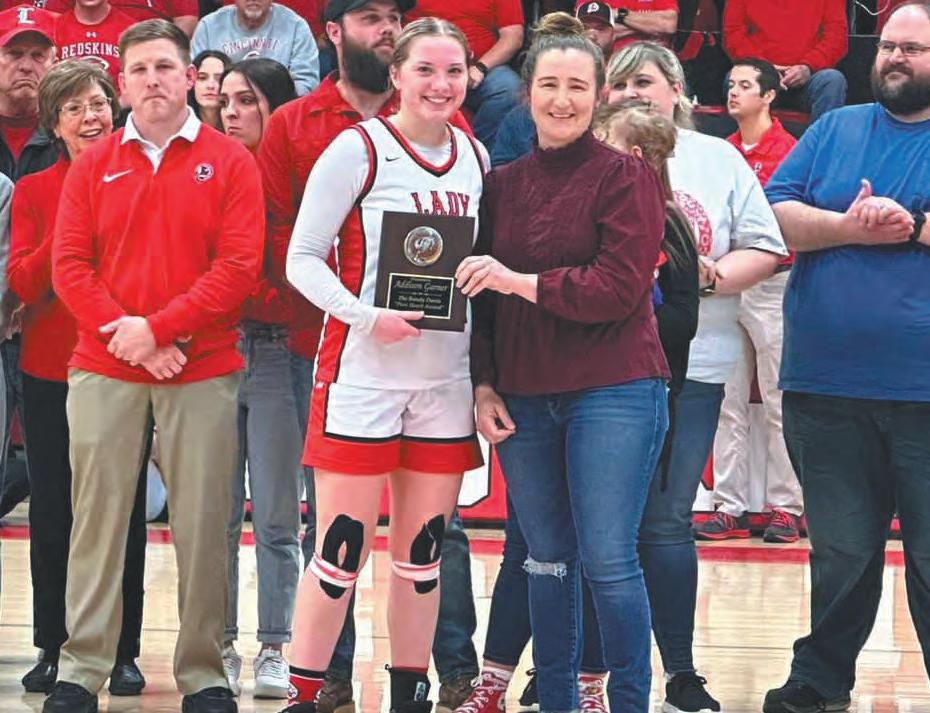
This year, it was Addison Garner and Noah Eller who earned the Pure Heart Award — and the class raised $8,000 for the charity, which was anonymously matched the night of, for a total of
“The good thing about the whole thing is it’s all local,” Cardwell said. “It’s local dairies supplying the local communities with the fresh milk.
“It’s all tied to the community and it’s tied in with area dairies and it’s tied into Randy’s contribution to the community. It helps a whole bunch of people, and it doesn’t take but a little effort to get something really good like this going.”
“Every year we do this, it’s a little bittersweet. We miss our friend,” Cardwell said. “There’s a small tinge of sadness every time, but there’s also a real joy in our class because here’s something Randy has contributed again — and Randy is no longer with us.
“This award has brought our class together even more.”
More information on the Randy Davis Memorial Milk Fund and how to donate can be found on the fund’s Facebook page. Food banks that would like to partner with the nonprofit can reach out to Samantha Craun at scraun05@gmail. com.
Submitted photo
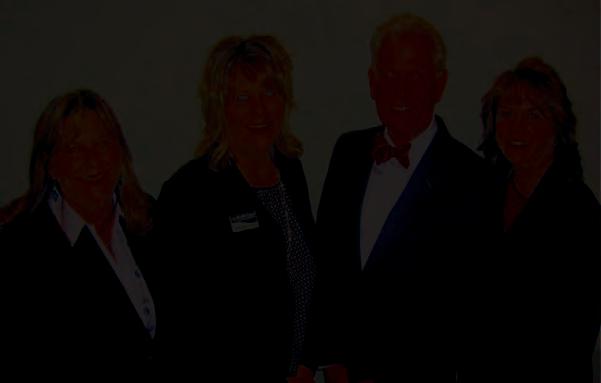
Pictured from left to right are Steve Millsaps, John Delaney, Bryan Curtis, Cindy Curtis, Carter Cardwell, LeeAnn Chihasz, Rita Davis, Susan Orr and Cindy Grissom.
A Glimpse At Area’s Farmers Markets: Fresh Is In The Air
Special place where community comes together, local talent shares its work
NATE TOSADO nate.tosado@news-herald.net
LOUDON COUNTY, Tenn. — In many ways, farmers markets serve as staples of their community and present a small snapshot into what that area offers to local consumers.
Farmers markets have traditionally been places where a community comes together, local talent shares their work and small businesses thrive.
Not too surprisingly, after hundreds of years this tradition is still held intact — and with the spring season in full bloom, more and more farmers markets are starting back up.
One might be surprised to find out just how many farmers markets are located in our own backyard. In fact, Loudon County alone is home to at least five different local farmers markets within her borders.
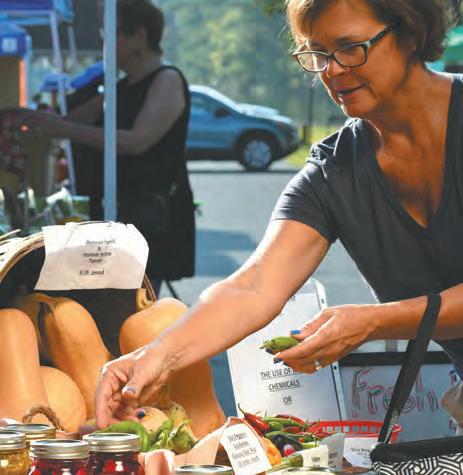
While the county’s farmers markets share similarities … each has its own unique personality that allows it to stand out among the rest. Selections to look over and purchase vary from hand-made wooden signs and toys to fresh produce raised on Loudon County’s very own farms.
Connecting farmers with the community
One of the county’s newest farmers markets was established less than a year ago. The Lenoir City Farmers Market located off Broadway Street has since grown in popularity and has become a favorite destination for locals and non-locals alike.
“It was established last year and I opened a shop in downtown Lenoir City,” Market Manager Karisa Bitner said. “It’s called the Tennessee Homestead Exchange and it connects the farmers with the community.
“I carry products in there from local producers and local farmers. It’s always kind of been my dream to have a farmers market in the town that I had my business in.”
While Bitner’s original plan was to make her dream a reality in 2024, public support and encouragement led her to start a
year early.
“We started a little later last year,” she recalled. “I think we started in July and went until the end of October. …
“It being the first year last year, I actually didn’t turn anyone away,” Bitner said. “As far as vendors were concerned, I got a website created with a vendor application and we did not have a vendor fee last year — just to try and get people on board.
“This year,” she said, “there will be a vendor fee just because I’d like to do some
advertising and get some signs. And I’m also paying for the website out-of-pocket.
LCFM’s goal is to bring local people out to shop in their own community. The Lenoir City Farmers Market operates from 4 p.m. to 7 p.m.
‘Eat better, be better’
“Opening my homestead store was partly because I saw this movement of people who were moving here to Tennessee — or even already lived here — that wanted to be producers rather than just consumers,” Bitner said. “I wanted the community (to be able to) come together and just do life together.
“We’re meant to be in a relationship with one another, but in this digital age we tend to spend a lot of time alone,” she said.
“Farmers markets, I think, are a great way to connect with your community in a way that we can eat better and be better.”
“I would say come on down and just walk around — and bring a bag, because you’re going to want to pick up some goodies along the way,” Bitner said.
“Bringing cash is probably a really good idea. The vendors get charged fees when they have to run cards and those kinds of things — not that you can’t use your card,
Special to Loudon County Magazine
The Tellico Village Farmers Market is most popular during spring, summer and fall. But the TVFM does have regular vendors — and visitors — who come throughout the year.
but cash is definitely appreciated.”
Beef, bread, jewelry or coffee
Another popular farmers market that was started up fairly recently is the Wharf Street Farmers Market, which is put on by the Cook and Craft Academy. Operating out of Historic Downtown Loudon, this market showcases several talented and passionate vendors.
“We don’t charge when we do our weekly market,” said Wharf Street Market manager Christina Deyo. “It’s really important to promote the true art form of growing and crafting and baking — and it’s all art-related.”
“We sell our baked goods at the market — such as homemade pizza flatbreads and scones — and we make homemade bread. For us, It’s important to represent the best of the best and put OUR best foot forward as I think everybody is.”
“One of the dynamics of these farmers markets is that there is something for everyone,” Deyo said. “If you’re looking for grass-fed beef or looking for fresh-baked bread or you’re looking for homemade jewelry or just want a delicious cup of
coffee … you can find such eclectic things at these farmers markets.
The Wharf Street Market is held from 4 p.m. to 7 p.m. Thursday on both Wharf Street and in the parking lot of Cook and Craft. It runs from the end of May through October, and Deyo said June and July are normally when the markets’ vendors have more produce.
Other ‘hidden gems’
While the farmers markets located in the heart of Lenoir City and the city of Loudon may be among the most visible options in the county, there are additional markets to be discovered.
One example is the Tellico Village Farmers Market, which is located behind the Tellico Village Welcome Center and is held each Wednesday from 9 a.m. to noon.
“It is year-round,” said Tellico Village Communication Manager Lisa Farmer. “We have vendors that come from multiple counties. And while spring, summer and fall are the most attended, we do have regular vendors that come all year.
“Items include — but are not limited
to — fresh fruits and vegetables, plants, pastries, jams and jellies, chocolates, art, woodworking, clothing, quilts and blankets, eggs, meat, coffee, flowers, crafts and herbs.”
Back in Lenoir City, yet another local farmers market is hosted by Tractor Supply. Tractor Supply’s market usually operates the second Saturday in March through November from 8 a.m. to noon.
Another unique option is the Greenback Farmers Market. One vendor — Christine Perkins — has been coming to the Greenback Farmers Market for about six years. She operates “The Cookie Lady” and offers home-baked bread, cookies and other sweet treats.
Perkins said at the heart of what she does is her love for baking. She said visiting local farmers markets helps local residents learn a little bit more (or perhaps a lot more) about the community in which they live.
The Greenback Farmers and Craft Market also operates year-round and is open for business every Tuesday from 10 a.m. to 1 p.m.
GROWINGTOBETTER SERVEYOU
IntroducingOurNewest Experts
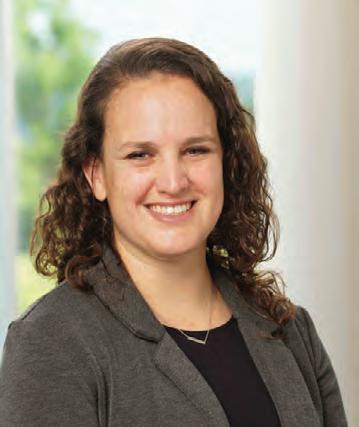
We areproud to welcomethree fellowship-trainedspecialists to ourexceptional teamat UniversityOrthopaedicSurgeons.Aspar tofourdedication to providingcomprehensive andspecializedorthopaedic care, ournewestdoctorseachbringadvancedknowledgeand expertisetoourpractice.