
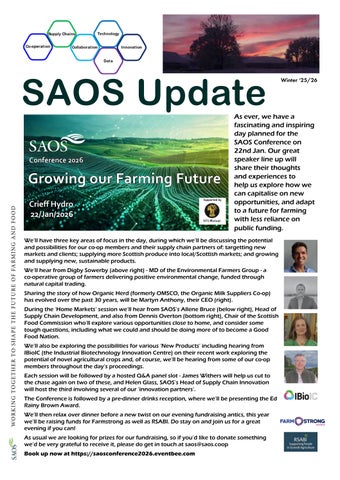

Conference 2026
Crieff Hydro 22/Jan/2026

Winter ‘25/26
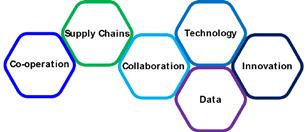
As ever, we have a fascinating and inspiring day planned for the SAOS Conference on 22nd Jan. Our great speaker line up will share their thoughts and experiences to help us explore how we can capitalise on new opportunities, and adapt to a future for farming with less reliance on public funding.
We’ll have three key areas of focus in the day, during which we’ll be discussing the potential and possibilities for our co-op members and their supply chain partners of: targetting new markets and clients; supplying more Scottish produce into local/Scottish markets; and growing and supplying new, sustainable products.
We’ll hear from Digby Sowerby (above right) - MD of the Environmental Farmers Group - a co-operative group of farmers delivering positive environmental change, funded through natural capital trading.
Sharing the story of how Organic Herd (formerly OMSCO, the Organic Milk Suppliers Co-op) has evolved over the past 30 years, will be Martyn Anthony, their CEO (right).
During the ‘Home Markets’ session we’ll hear from SAOS’s Allene Bruce (below right), Head of Supply Chain Development, and also from Dennis Overton (bottom right), Chair of the Scottish Food Commission who’ll explore various opportunities close to home, and consider some tough questions, including what we could and should be doing more of to become a Good Food Nation.
We’ll also be exploring the possibilities for various ‘New Products’ including hearing from IBioIC (the Industrial Biotechnology Innovation Centre) on their recent work exploring the potential of novel agricultural crops and, of course, we’ll be hearing from some of our co-op members throughout the day’s proceedings.
Each session will be followed by a hosted Q&A panel slot - James Withers will help us cut to the chase again on two of these, and Helen Glass, SAOS’s Head of Supply Chain Innovation will host the third involving several of our ‘innovation partners’.
The Conference is followed by a pre-dinner drinks reception, where we’ll be presenting the Ed Rainy Brown Award.
We’ll then relax over dinner before a new twist on our evening fundraising antics, this year we’ll be raising funds for Farmstrong as well as RSABI. Do stay on and join us for a great evening if you can!
As usual we are looking for prizes for our fundraising, so if you’d like to donate something we’d be very grateful to receive it, please do get in touch at saos@saos.coop
Book up now at https://saosconference2026.eventbee.com




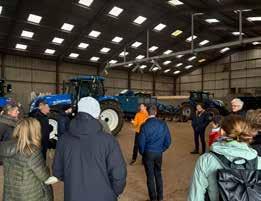
Our latest Meet the Co-ops Day, at the beginning of November, brought together a focused mix of policy, industry and co-operative representatives at Lacesston Farm, Fife, hosted by John Weir and delivered in partnership with the UK Agri-Tech Centre (UKATC).
The theme ‘Agritech in Action: Coops Driving Innovation’ explored how collaboration helps turn agritech into practical change on the ground. From connectivity and data, to soils, diversification and precision tools, the day showcased how co-ops are enabling technology to scale, and delivering real value for farmers.
Speakers included George Noble (SmartRural), Greg Dawson (Scottish Agronomy), Andrew Faichney (East of Scotland Growers), Ross
Robertson (UKATC), Claire Dyce (SAOS) and host John Weir. Each shared insight on how innovation is being trialled, tested and applied within co-operative settings to support productivity, sustainability and better decision making.
With representatives from Scottish Government, Innovate UK, HSBC, Satarla and others joining the discussions, the event highlighted both the progress already happening across the sector, as well as the opportunities that greater collaboration can unlock.
A big thank you to everyone who contributed and attended on a dreich Wednesday in November, the day was a fantastic example of cooperation and agritech working hand in hand.

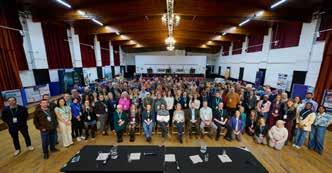
SAOS Project Manager, Paty Rojas Bonzi, shares her reflections here from the recent Scottish Seaweed Industry Association Conference in Oban.
“Rarely do I get the chance to participate in a conference focused on an emerging sector rather than a well‑established one. This time, I was invited to speak about agri‑coops, complementing the work of Co operate Scotland/Joanne Elston with practical examples that helped bring the concept of co ops and co operation to life for the audience, highlighting:
• The similarities between sectors and how challenges faced by the seaweed industry mirror journeys in other industries.
• Why looking at lessons learned and transferable skills is key to building resilience and collaboration.
• Co operation and collaboration must move beyond the utopic ideal into realistic partnerships especially between seaweed and more conservative or closed sectors.
• Seaweed should be incorporated into regenerative aquaculture before regulations force aquaculture to reinvent itself under loosely defined “sustainable practices”, as we’ve already seen in land agriculture. The role of ocean clusters, such as the Iceland Ocean Cluster, is vital in connecting industries, fostering innovation, and accelerating collaboration across the blue economy.
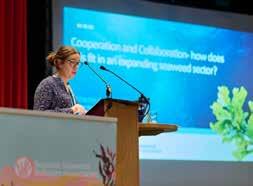
• Scotland can learn from these models to strengthen its own seaweed ecosystem. Understanding the interaction between farmed and wild seaweed is crucial, starting with breaking down barriers between them.
The conference was a reminder that while seaweed is still an emerging sector, its potential lies in collaboration, innovation, and shared learning across industries.
I left the conference with, not only some fantastic new contacts, but also a wealth of fresh insights to continue developing the Scottish seaweed supply chain map* (watch this space!)”
*One of Paty’s roles at SAOS is collating the information for our Supply Chain maps (for over 20 sectors) a key, and highly valued piece of work within industry. You can find out more about them at:
https://saos.coop/what we do/supply chain development/supply chain insights
maps/
Our Head of Co-op Development, Robert Logan, reminds us that although change is never easy, when it is driven by the best intentions for producers it becomes a powerful force for progress and longer term future fitness.
Over the past year, we have aided a number of co-op mergers amongst the SAOS membership. Each one has been a strategic step towards a stronger and more competitive business that is fit for the future needs of farmer members.
Co-op mergers are not uncommon, but this flurry of activity over the last twelve months speaks to wider change in the industry. Each case was driven by a proactive view for
efficiency, to support investment, and to operate more effectively in a marketplace that increasingly demands greater scale to compete.
We are excited by the positioning and prospects of UPC, Ringlink, and BMR. These mergers strengthen competitiveness in a consolidating marketplace and offer greater value to members. Continued success of co-ops unlocks further opportunity and ensures value flows back to the farmer-owners within rural communities rather than financial returns for remote shareholders.
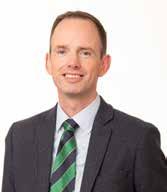
• Scotlean Pigs, Scottish Pig Producers and Thames Valley Cambac merged to create the United Pig Co-operative Ltd (UPC).
• Ringlink (Scotland) and Highland Business Services have merged under the Ringlink banner.
• Borders Machinery Ring (BMR) and Lothian Machinery Ring have merged under the BMR trading name.
Whilst the sweet spot for operational efficiency can be elusive, there is no doubt that costs have increased significantly over the past few years and that maximising value and economies of scale is vital. There is a continued trend of consolidation within agriculture and the down-stream food and drink sector, which means scale is increasingly required simply to remain relevant to customers, and to justify new innovations that set businesses apart from their peers.
Though the recent flurry of mergers may be unusual, it seems inevitable that others will follow and, indeed, other conversations are underway. Whilst not every discussion leads to a merger, each one stems from the best intentions to safeguard services and relevance to producers for the future.
At SAOS, we have a stepped process to help navigate discussions and the formalities. There are ‘off ramps’ at every stage and we understand the importance of trust and strong relationships. Decisions about mergers must be made with care, conducted with integrity, open-mindedness, and always with the membership at the core.
It is also worth noting though that a merger is only one of the options. Alternatives could be a revised co-op strategy and/or greater co-operation amongst co-ops, or even joint ventures. Do get in contact if you would like to discuss, in confidence, a board strategy workshop or any matter of Board governance. Contact: Robert.Logan@saos.coop
With the SAOS ‘group’ having grown so much over the last few years, it’s harder than ever to keep up with what everyone in the wider team is up to.
Early this year, Helen Glass, our Head of Supply Chain Innovation, came up with the great idea of holding monthly lunchtime webinars to help remedy this. So far we’ve heard from team members on fascinating new projects and specific areas they’re involved in. We’ve also been catching up on progress and developments with our sister
organisations: Food Integrity Assurance (FIA), SmartRural and ScotEID.
We’ve had external speakers too, Moira Stalker and Emma Koubayssi gave us a talk on the Scottish Food & Drink Ambassador Programme recently, and we heard from Farmstrong Scotland Director, Alix Ritchie, on their work.
Our most recent talk was from Abbie Robertson on MyHerdStats, the initiative that’s developed over the years from the initial SRDP funded Livestock Performance Programme KTIF project.
As the #IYC2025 draws to a close, we have added another SAOS Co-op Member Focus video to our collection on YouTube. This latest one features Farm Stock Scotland. You can watch it & the others on our YouTube Channel at:
Many of us were blown away at the ease and clarity of this system, accessed by farmers through their existing ScotEID login, as well as its potential, which Abbie demonstrated brilliantly. Coming up in the new year, we look forward to hearing from Professor Lorna Dawson on all things soil science. We’re looking forward to hearing who else Helen has lined up for us. Our thanks go to Helen for this great idea and to everyone who has shared their knowledge with the team.

https://youtu.be/FQJ_mHiNJlY Do please subscribe to the channel to ensure you don’t miss any!
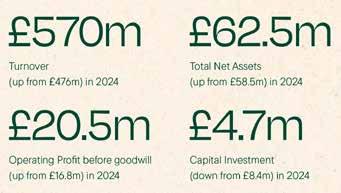
First Milk’s financial report for the year ending March 31, 2025 reveals a 20% increase in turnover to £570 million, with an operating profit of £20.5 million and a total net asset increase to £62.5 million. The co-op also reported a 3.2% reduction in CO2e intensity and has enrolled 89,977 hectares in its regenerative programme, with soil carbon sequestration more than doubling to 203,000 tonnes CO2e.
CEO Shelagh Hancock commented: “Our strong business performance enabled us to achieve our objective of delivering above market total returns to our members through an improved relative milk price, higher profits and an increase in our net asset value.”
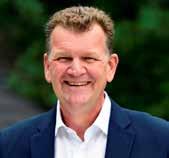
First Milk’s new chair, Hugo Mahoney (pictured right) took over at the beginning of November, he said: “I am delighted to be joining the board of First Milk, a vibrant, progressive co-operative with strong customer relationships owned by farming families across Britain. Nutritious, tasty dairy products are an essential part of many people’s diets and First Milk is making an important contribution to building a high quality, resilient and sustainable UK dairy supply chain with the farming community at its heart. I am looking forward to working on behalf of our members with my new colleagues to build on this progression into the future.”

Find the full report at https://www.firstmilk.co.uk/news/
We heard Iona Finlayson’s story in November as part of Scottish Careers Week and wanted to share it.
Iona started Ringlink’s Land based Pre apprenticeship scheme in 2017, struggled with anxiety and a lack of confidence. Fast forward to 2025 and the 25 year old is now a trainee contracts co ordinator in Ringlink’s Elgin office. Her journey demonstrates how getting stuck into a structured, practical programme can transform not just a career, but someone’s self belief.
Iona has spent seven years getting hands on and logistical experience, and she’s now brought that whole package back to the organisation that first gave her a chance.
Growing up around Beauly, Iona had a passion for farming and the outdoors. After doing her National Certificate (NC) in agriculture at SRUC Craibstone, she decided she’d had enough of textbooks. “I felt I’d done the theory bit, so I wanted a bit more practical experience. I was interested in farming, but without the pre apprenticeship I would probably have just given up on trying to get into jobs because I had no background in agriculture.”
“I just couldn’t face people and talk to them without going into a massive freak out. But there’s a huge difference now to what I was then. Now I rarely shut up!”
The pre apprenticeship threw Iona into the deep end. After some time on a mixed farm in Moray and a stint on pig farms, she got stuck into the main practical part of the scheme with mentor Stephen Mackenzie on a mixed farm at Auchmore, west of Muir of Ord. “He was lovely and taught me a lot of stuff,” she says. “Stephen had the patience to teach me how to do things like reverse a tractor and trailer or to muck out a shed.”

A real high point was when Iona, who had learned how to show cattle in a previous job, was asked to help train the farm’s new pedigree Beef Shorthorn herd for showing. “We ended up getting champion at the Black Isle Show,” she recalls proudly. “The fact that they trusted me to show them how to help with the cattle made me feel like somebody believed in me a bit.”
and people skills. Following this, Iona had been eyeing a farm trader job when she saw a vacancy at Ringlink and applied on a whim, not expecting them to look twice at her CV.
In fact, her mix of practical farm knowledge and logistics was impressive enough for Ringlink to create a new trainee position for her. Now, as a trainee contracts co ordinator, Iona spends her days buying and selling commodities mainly barley and fertiliser for Ringlink members and her experience and confidence shine through on every call. Iona’s story shows the real value of vocational training. It gives young people the technical skills, plus the crucial self belief they need to go out and thrive.
She stresses that as a ‘first step’ the pre apprenticeship programme gave her the confidence to pursue every subsequent industry role. And she’s keen for others to follow her lead.
Find more about the programme (or how to get involved as a mentor) at:
Iona’s anxiety had led her to leave formal education, and she knew she had a big skills gap on the practical side. Looking back at her struggles with talking to people, her development is genuinely inspiring.
After her pre apprenticeship, and turning 18 during her subsequent Higher National Certificate (HNC) in agriculture, Iona worked for herself doing sheep work. (She still manages a small flock with her collie Linn.)
The next stint of three years at a grain store for Simpsons Malt in Keith involved everything from admin to loading lorries, massively boosting her communication
https://ringlinkscotland.co.uk
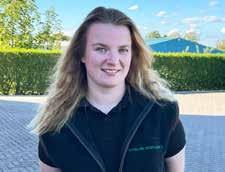
United Oilseeds Managing Director James Warner announced the co operative’s financial results for 2024–25 at its annual Corporate and Press Day in mid November. Despite a significantly smaller national crop and reduced turnover, United Oilseeds reported a profit of £1.2 million.
Reflecting on the results, Mr Warner said: “Despite the well documented pressures within the oilseeds sector, United Oilseeds has strengthened its financial position. These results highlight our ability to adapt to shifting market conditions while continuing to deliver value for our members and building a platform for sustainable growth.”
As we reported last Summer, United Oilseeds gave a rallying call for the industry to unite, with Oil Seed Rape figures showing all too clearly that action was urgently needed:
• The UK had the worst performing OSR yields compared to all 27 EU countries.
• The area sown for harvest 2024 would be the smallest since 1984.
• UK food security on edible oils had plummeted to just 20%.
• For the first time ever, Britain was set to import more oilseed rape than it produced.
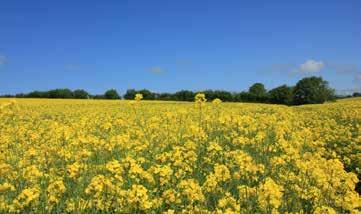
The event repeatedly returned to one core theme: the resilience of UK growers and the urgent need for policy that supports – rather than undermines – their competitiveness. Through the OSR Reboot initiative, United Oilseeds continues to advocate for policies that support the sustainable recovery of UK oilseed rape. As James noted, OSR remains central to healthy rotations, pollinator support, homegrown protein supply and domestic food and feed security.

Alongside the co op’s strong financial performance, James highlighted the power of collaboration across the industry – referencing the remarkable response to the OSR Reboot campaign – and called for fairer policy support for UK growers.
Attendees also heard from AHDB’s Cereals & Oilseeds Sector Director, Sarah Woolford, who outlined the new £750k CSFB (Cabbage Stem Flea Beetle) funding programme and emphasised the importance of industry wide knowledge exchange. Tim Parton, regenerative farming advocate and manager at Brewood Park Farm, shared how a deeper understanding of soil biology has enabled him to produce healthy, profitable crops with minimal inputs.
UK growers continue to show remarkable adaptability and determination, but goodwill alone cannot compensate for structural disadvantage. United Oilseeds is calling for fair, evidence based policy that rewards sustainable production and allows farmers to compete on equal terms.
Unless government acts decisively to level the playing field, the UK risks further undermining the ability to produce oilseed rape domestically, forcing greater reliance on imports and exporting our environmental footprint in the process.
James closed with a clear message: “At United Oilseeds, we will continue to speak up for our members and push for sensible, joined up policy that enables farmers to grow OSR confidently, profitably and sustainably. We’ve already shown through the OSR Reboot what’s possible when the industry pulls together – now it’s time for government to do its part.”
You can find out more on the work and progress of the OSR Reboot at: https://www.unitedoilseeds.co.uk/
Tarff Valley has announced the appointment of Ian Houston as its new Chief Executive Officer. Ian succeeds Rod Sanderson, who announced his intention to retire earlier this year.
Ian has been with Tarff Valley since 2006, serving as Senior Nutritionist/Straights Trader. During this time, he has gained an indepth understanding of the company’s operations and demonstrated strong leadership, particularly within the animal feed division. His knowledge, experience and dedication make him ideally placed to guide the business into its next chapter.
The Board of Directors expressed their thanks to Rod for his ten years of leadership and commitment to the business.
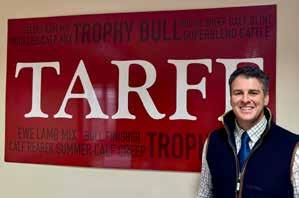
Speaking on his appointment, Ian said: “I am thrilled to take on the role of CEO at Tarff Valley. Having worked here for almost 20 years, I have seen first hand the dedication and expertise of our staff. I look forward to building on our strong, traditional foundations and driving the business forward for the benefit of our staff, members and customers.”
Rod added: “It has been a privilege to lead Tarff Valley and I am delighted to see Ian take on this role. His deep knowledge of the business and the industry will serve the company well and I wish him every success in the future.”
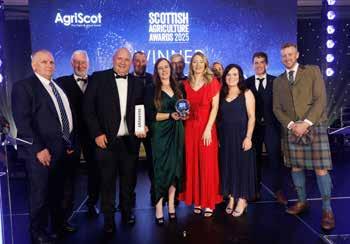

Congratulations to both Tarff Valley and East of Scotland Farmers on their wins at the Scottish Agriculture Awards 2025 which took place in Glasgow at the end of October.
The Tarff team (pictured on the left) was successful in the Animal Health Provider of the Year category and ESF (pictured right) lifted the award for Supplier of the Year. Well done to everyone involved at each of the co ops a great team effort by both!
The Chairs of Borders Machinery Ring Ltd (BMR) and Lothian Machinery Ring Ltd (LMR) are pleased to announce that their proposed merger has been approved. This strategic move has been made to improve operational efficiency, achieve greater benefits of scale for members, and to broaden the provision of services for the future.
Graham Lofthouse, BMR Chairman, said: “We are delighted the merger’s been approved and for the potential this brings; it increases combined membership to some 1,200 members, with a throughput of £11 million, giving us more negotiating power and credibility with suppliers. Importantly, it also opens new service opportunities to member businesses over the core operational area now extending through the Lothians and Borders, Lanarkshire and Northumberland. Both BMR and LMR also have strong training businesses that will complement each other too. I know the combined Board and executive team are keen to get started.”
John McCluskey, Chairman of LMR, added: “Members were highly positive about the merger. It has been a smooth process, testament to the natural fit of both Societies, good relations between the Boards and executive teams, and the support from SAOS’s Robert Logan to navigate the formal steps.”
John continued: “It’s also a moment of reflection to mark the forthcoming retirement of our long-standing Manager, Frank Maxwell. Frank was the engine behind the establishment of Lothians Machinery Ring back in 1991, bringing members together and co-ordinating the services that we have benefited from ever since. It’s positive knowing that Frank’s efforts will continue through BMR and I’m sure it’ll go from strength to strength in the area. On behalf of members, I take this
opportunity to thank Frank for his years of dedicated service.”
Machinery Rings were originally established to help farmers reduce capital costs through co-ordinated sharing of machinery and labour. The concept has since expanded to include training and the supply of commodities, including fuel, straw, livestock feed, fertiliser and electricity to farming and other rural businesses.
A broader range of services will become immediately available, and Members should find a smooth transition. The merged Society will trade as BMR Ltd with a unified Board of Directors who formerly represented both BMR and LMR. Operational management will be led by BMR’s Manager, Michael Bayne, and supported by a combined executive team. Management tasks will be undertaken at BMR’s office in Earlston, with a presence retained in the Lothians in a suitable new location currently under consideration.
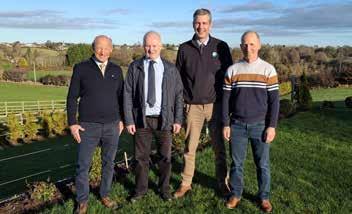
Pictured below are the BMR and LMRs’ Managers and Chairmen, from left to right: John McCluskey (LMR Chair); Frank Maxwell (LMR Manager); Michael Bayne (BMR Manager); Graham Lofthouse (BMR Chair)

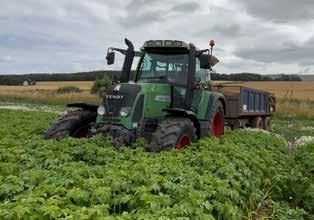
An exciting collaborative project based at Grampian Growers has received funding, through InnovateUK, to explore the untapped potential of potato haulms for producing a high value compound, Solanesol, used in the cosmeceutical, nutraceutical, and pharmaceutical industries.
The project, which involves SAOS, the James Hutton Institute, Aberdeen University and Alder Bio Insights, aims to address the global demand for more ethical and environmentally sustainable solanesol alternatives, traditionally derived from tobacco leaves. Scotland’s seed potato industry produces over 51K tonnes of potato haulms annually as a by product when they are cut to stop tuber growth and usually discarded in the field.
With the capacity to yield up to 120 tonnes of solanesol based on 12,800 hectares of Scottish seed potatoes grown in 2024, solanesol could open new added value streams for farmers and will support a more resilient agricultural model.
Key objectives include developing a resilient, resource efficient manufacturing process to:
• Maximise resource value and minimise waste.
• Use carbon neutral, eco friendly extraction techniques.
• Validate the purity and biological effectiveness of solanesol enriched extracts.
• Provide a scalable solution for potato growers to diversify income.
Sofia Alexou, Project Lead at Grampian Growers, said “This project is significant for Grampian Growers and the wider potato industry too. It offers an opportunity to add value to agricultural by products while addressing key challenges such as waste reduction and economic resilience. By unlocking new revenue streams, the project supports Scottish farmers and enhances the profitability of co operative models, demonstrating the potential of innovation to strengthen rural economies.”
Pilot studies have shown that solanesol levels vary by potato variety, growing region, and harvest method. This project will determine the optimal ways to gather, store, and process haulms for scalable solanesol extraction. By fully exploiting the haulms, the project will provide an additional income stream for farmers, especially during suboptimal harvest years, and create a viable UK based business centred on potato co products.
The project aligns with growing consumer demand for natural, bio based products and addresses the rising global need for solanesol, which has increased from 4,000 tonnes in the early 2000s to 66,000 tonnes by 2022. By leveraging this potential, the project will make more complete use of the potato biomass, reduce waste, and enhance economic opportunities for farmers and the cooperative members.
SAOS’s Project Manager, Paty Rojas Bonzi, who has been closely involved in the project from the start, commented: “We’re excited to be working on this collaboration. It’s always great to find uses for agri byproducts and watching science and innovation, working together with co ops, to unlock great opportunities such as this, right here in Scotland.”
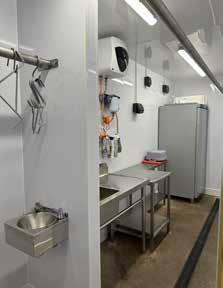
Over 50 applicants have been successful in securing a 50% grant in the second round of the low ground venison supply chain pilot project. Awards have been made for larder and chiller improvements for low ground stalkers to improve their infrastructure and approach to carcass handling, including chillers, as well as processing and packaging equipment.
SAOS administers the scheme and Project Manager, Fergus Younger, tells us: ”By part funding these improvements, the pilot is helping stalkers to professionalise their operations. Previously, many of these stalkers were impacted by poor or
substandard infrastructure which limited the number of carcasses they could process at any one time. These improvements allow stalkers to cull more deer, benefitting the environment and also enabling the venison that they produce to safely enter the food chain.”
The project is funded by Naturescot and delivered by SAOS on behalf of the key representative bodies of Scottish Venison and the Lowland Deer Network Scotland. The project is one of the key actions that are being delivered under the SV strategy ‘Beyond the Glen’ that seeks to help professionalise the venison industry.
Are you prepared for climate change and cybersecurity attacks? Are your key supply partners?
Scotland’s food and drink supply chains are under pressure. Rising energy costs, climate change, and market uncertainty mean resilience isn’t optional - it’s essential.
Over the last year we have been piloting a new Business Resilience Programme designed for leadership teams who want to take control of their future. With help and input from SAOS members we’ve been fine tuning the format and are now ready launch this to the wider food and drink industry.
Here’s what’s involved:
Online self-assessment: As a business, rate your own operations and supply chain against 42 proven indicators of resilient companies. This can be done by the Leadership Team, Management team, Board or even the whole business – whatever works best for you
Tailored in-person workshop: We’ll analyse your team’s responses to identify the areas of weakness and disagreement. These become the focus of a practical, collaborative session where we’ll take you through a series of exercises to explore the issues raised.
Action plan for resilience: Walk away with clear priorities and actions to strengthen your business and supply chain. This programme gives you the space to step back, reflect, and develop practical plans for the future.
There is no cost for participation in the programme before 31st March 2026 but spaces are limited - don’t miss out, let’s build resilience together!
Get in touch with allene.bruce@saos.coop to find out more.
Patrick Hughes, SAOS Strategic Services Director, was our ‘Man in Europe’ recently, representing the Scottish Agri Export Hub and doing a great job spreading the word about Scottish seed potatoes.
The Scottish Agri Export Hub organised a collaborative stand for the Scottish Seed Potato sector to showcase their wares (pun intended!) at Potato Europe in The Netherlands in September. Potato Europe is an annual international trade fair for the entire potato industry, from farm to fork. It rotates between four partner countries in Europe: the Netherlands, Germany, Belgium, and France.
There were eight partners utilising the stand:
• The Seed Potato Organisation
• Alan Twatt Potato Merchants Limited
• J & E Smillie (Growers) Limited
• Grampian Growers Limited
• Greenvale
• James Hutton Institute Scientific Services
• Science and Advice for Scottish Agriculture (SASA)
• GB Potatoes Organisation
Patrick told us: “This was the first time a collaborative stand had been specifically organised for the sector in Scotland and it proved to be hugely successful.
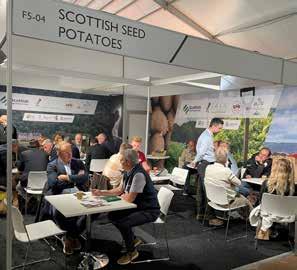
“It turned out to be an amazing couple of days with the stand providing the perfect platform for our exporters to showcase their excellence, meet clients and scope out new opportunities. This major international event attracts buyers from across the world and having a collaborative stand that demonstrates Scotland as a key exporting nation is vitally important. “With so many positive things to shout about our seed potato industry, we shouldn’t be shy in telling the world!” Patrick concluded.
From all of us at SAOS, to all of you, a merry Christmas and very best wishes for a healthy and happy 2026 when it comes.


If you’ve any suggestions for future SAOS Updates, or you no longer wish to receive it, please contact: jennifer.thompson@saos.coop