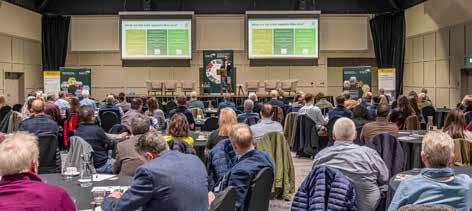
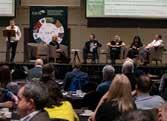
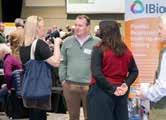
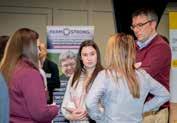
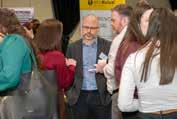
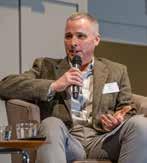
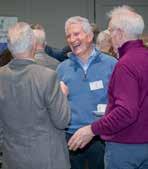
Over 150 attendees braved the storms in January, joining us at Crieff Hydro for the 2026 SAOS Conference.
“Growing our Farming Future” provided plenty of food for thought and we focused on three areas we believe provide possibilities for growth; new markets, developing new opportunities at home, and through new products/crops.
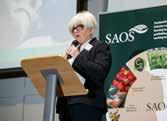
Opening the conference, SAOS Chairman, Rory Christie, talked about the importance of people as a part of our farming future and we showed our latest Growing Tomorrow’s Leaders video (if you or someone in your business is looking to develop their leadership skills check out page 4 for info on recruitment for later this year).
Our first speaker was Oonagh Chesney, Company Secretary of Fane Valley, Northern Ireland, which wasformed in 1903 and now employs over 1,000 people. We’ve long admired their constant focus on the future and continuing ability to explore new markets.
Next we heard from Digby Sowerby, Managing Director of the Environmental Farmers Group a co-operative group of farmers who together are maximising their partnership to create positive environmental change, funded through natural capital trading.
Supported by some of the UK’s leading natural capital specialists, EFG acts as a trusted navigator for farmers and landowners, baselining, planning and monitoring natural capital and ensuring fair financial reward for its members.
We were delighted to have the help of James Withers again to host our panel sessions and field the questions and answers for Oonagh and Digby. After lunch and networking we explored some possibilities ‘at home’.
Allene Bruce, our Head of Supply Chain Development’s presentation focused our current areas of work within the SF&D Partnership, looking at import displacement opportunities and Sourcing for Growth (more on them inside).
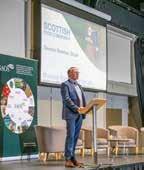
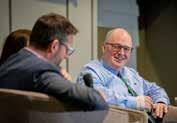
Next up was Dennis Overton, Chair of the Scottish Food Commission*. Dennis’s presentation gave a sobering wake up call regarding the Scottish diet, its impact on our declining health - and the resultant costs to the public purse. Dennis ventured that “expanding home markets is not optional. It is essential” and that, through working together, we have a unique opportunity to improve our food system, and in turn the nation’s health and wealth, by becoming a Good Food Nation.
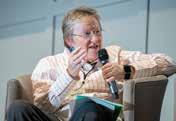
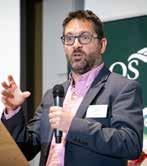
We welcomed the wholesale expertise of John Forteith, and Andy McGowan of the United Pig Co-op brought a co-op’s eye view to this panel Q&A session.
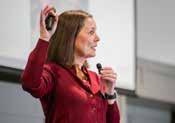
Patrick Hughes, our Strategic Services Director, set the scene for the final session, taking a deeper dive into the possibilities of New Products and Crops, some of which Allene had touched on earlier.
Helen Glass, SAOS’s Head of Supply Chain Innovation hosted the rest of this session which discussed various possibilities for ‘new’ crops. Our panel for this discussion and Q&A by:
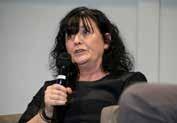
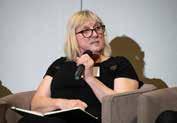
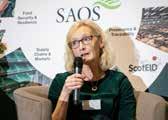
• Liz Fletcher, Director of Impact/ Deputy CEO of IBioIC (Industrial Biotechnology Innovation Centre) Read more from Liz on page 8.
• Professor Wendy Russell, of the Rowett Institute
• Lucy Filby, Head of Agricultural Transition, SOSE (South of Scotland Enterprise) and
• Ally Allan of Grampian Growers
Our Chief Executive, Tim Bailey, closed the afternoon session with a presentation bringing together the threads of the day and stressing the importance and potential for coops and co-operation to overcome many of the hurdles. Tim gave us great examples of supply chain wins, including the success of pea growers’ co-op Scottish Borders Produce.
Our grateful thanks to all our speakers and panellists, to our headline sponsors - NFU Mutual and to IBioIC for their support of this year.
If you’d like to catch up more fully or want a recap, links to PDFs (and now also subtitled videos) of the speakers’ presentations are on our website.
*HUGE kudos to Dennis and Jayne Jones, CEO of the Scottish Food Commission, who saved all the Slido Qs that were unanswered on the day and came back to us on the ones relevant to them. There’s a link to this document from the same conference review web page, click on the link below.
https://saos.coop/whats-new/news/catch-up-here-on-saos-conference-2026
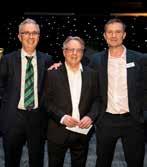
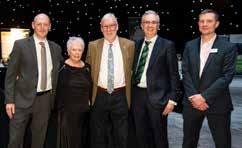
Rod Sanderson, the outgoing Chief Executive of Tarff Valley, was announced as the winner of the Ed Rainy Brown Award, at the SAOS Conference Dinner.
Rod joined Tarff in 2016, following a successful career and postings across Europe with the huge, multi-national organisation, Cargill. At the time, he took over as CEO from another co-op stalwart and ERB award winner, Colin Owen. Under Rod’s leadership, the Tarff business has grown significantly and has developed exciting new areas of service. Rod has been a driving force, empowering his team and embodying the co-operative ethos that benefits Scottish agricultural. He has shown vision and commitment towards shaping the co-op for the future and championing the next generation at Tarff Valley and beyond.
Tarff Valley now has over 1200 farmer members, a turnover of over £100 million, and employs over 120 people at their sites throughout Southern Scotland, Northern England, Ayrshire and on Islay. As Rod steps away from Tarff, he can do so proudly, especially having built a strong team and passing the Chief Executive mantle to Ian Houston who has been with Tarff for 20 years gaining an in-depth understanding of the co-op’s operations.
SAOS’s Head of Co-operative Development, Robert Logan, commented: “It was a tough decision, but I’m delighted that Rod has received this recognition. It’s been a pleasure to work with him over the years. Tarff is very much at the heart of the rural community in the southwest and Rod has helped grow the business whilst maintaining its culture and purpose, for the co-op to support farmers drive productivity and efficiency.
“It speaks volumes that the staff are proud to work at Tarff. This has been in no small part due to Rod’s considered leadership – embracing co-operative values to ensure farmer benefit through a proactive business focus. Rod should be very proud of what he has achieved at Tarff and for the industry, as a
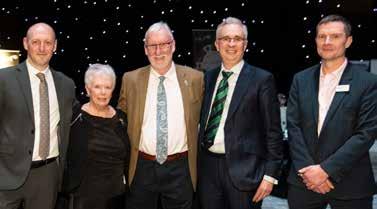
champion for young people entering farming in the southwest through the apprenticeship scheme, as well as directly employing apprentices for the Tarff business.
Rod’s proactive leadership, clarity of vision, and a ‘talk less, deliver more’ approach particularly appealed to the judging panel.”
Nominees for this award are shortlisted by the SAOS Co-op team before the judging panel, comprising NFUS CEO John Davidson, SAOS’s CEO Tim Bailey and Robert Logan, reviews the shortlist before settling on a winner.
Commenting on Rod’s award, NFU Scotland President, Andrew Connon, added: ““Rod Sanderson has been an exceptional leader in Scottish agriculture, consistently putting co-operative principles into practice and championing the next generation of farmers.
“His vision, commitment, and integrity have strengthened Tarff Valley and made a lasting impact on the rural community. This award is a well-deserved recognition of his outstanding contribution to co-operation and the agricultural sector.”
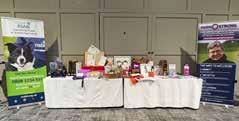
We had a new look to our fundraising antics at the conference dinner this year. We were treated to ‘SAOS network logo bingo’ and a raffle with a truly astonishing array of prizes to be had. We were delighted with the final total raised of £2780, which this year was split between Farmstrong and RSABI. Lots of fun was had and thanks go to everyone who bought tickets and bingo cards, and especially to all those who contributed prizes, we really were quite overwhelmed at your generosity.
Special mention must go to our new light entertainment dynamic duo, Helen “Gala Bingo” Glass and Allene “Brucey Bonus” Bruce - who were helped by a gang of helpers, both in front of, and
behind, the scenes.
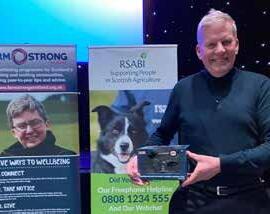
It felt like nearly everyone came away with a prize! Pictured above is our former ‘Fundraising Entertainment Officer’, Bob Yuill, who has of course retired from SAOS and ‘rauctioneering’ and this time around was one of the many raffle prize winners. Bob won one of our much coveted prizes, the My Name’5 Doddie Limited Edition JCB Fastrac donated by Tarff Valley. (Bob will no doubt tell you it’s for his grandson but we’re not so sure.)

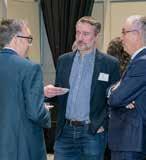
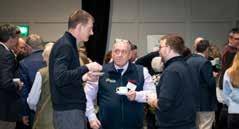
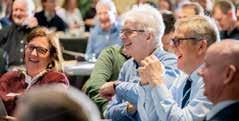
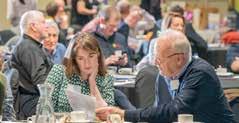
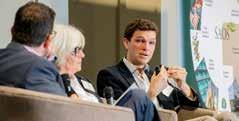
Thanks to all who joined us on the day!



Anyone working in Scotland’s agriculture, food and drink and land-based sectors won’t need reminding that the operating environment is demanding. Market volatility, regulatory change, workforce pressures and succession planning are all now part of the ‘day-to-day’ for those in leadership positions.
We know that developing strong leadership matters now more than ever, for individual businesses, as well as the wider industry. But strong leaders are not formed by accident and investing in leadership and helping tomorrow’s leaders develop a wide ranging skillset is vital.
Now entering its fifth year, Growing Tomorrow’s Leaders (GTL) continues the commitment by SAOS and NFUS to strengthening leadership across Scotland’s rural businesses.
Designed for mid to senior-level professionals in rural businesses, SMEs and farmer co-ops, GTL is particularly suited to individuals already playing a key role and preparing to take on greater responsibilities in operations, governance or strategic leadership.

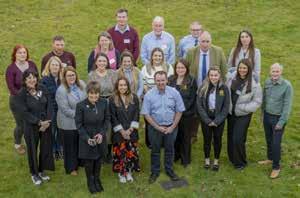
The programme creates structured space allowing participants to step back from day-to-day pressures, think differently and build the awareness, confidence and perspective required to lead effectively in a complex environment.
Stephen Hibbard of Tack TMI Leadership Factory, who leads the training, explains: “Leadership isn’t just about managing people. It starts with understanding yourself. The biggest shift for many leaders comes when they realise that their success depends on how well they understand and work with others.”
SAOS Chief Executive Tim Bailey adds: “Strong leadership doesn’t happen by accident. It requires commitment, collaboration and long-term investment in people. We delevoped our GTL programme to help build stronger leadership for an ever more challenging future, it’s great to see it having an impact.
“When individuals grow, organisations become stronger. When organisations become stronger, the wider industry becomes more resilient and better prepared for the future. That belief sits at the heart of Growing Tomorrow’s Leaders and reflects our long-term commitment to investing in people as the foundation of sector success.”
If you are considering how best to strengthen leadership within your organisation, now is the time to invest! Recruitment is now open for the next cohort, beginning October 2026. Find out more at: https://saos.coop/events-and-training/growing-tomorrows-leaders/ or by emailing emma.koubayssi@saos.coop
Effective businesses are underpinned by good governance. It’s not about rulebooks, it’s about culture and performance.

Our team will review what works well in your boardroom and identify where it could be stronger.
Through Blueprint we also deliver:
• Director training and appraisals
• Strategy development
• Risk register development
• Full internal & external governance reviews
Governance shouldn’t be dry or dull. It’s the heartbeat of an organisation, getting it right ensures clear leadership and delivery.
Get in touch for chat about how Blueprint could support your business, contact: Robert.logan@saos.coop
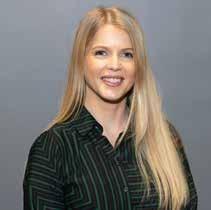
We are delighted to have welcomed Mikaela Linden to SAOS as a Supply Chain Project Manager to help strengthen our expertise and capacity in supply chain collaboration and development, and she joined us in time for the conference which was a great opportunity to make lots of new connections.
Mikaela joined us from food and beverage consultancy, New Nutrition Business, where she oversaw project management, strategy development, and stakeholder relationships within the food and drink industry, in the UK and internationally.
Mikaela will also play a marketing role at SAOS, using her skills in ‘translation innovation’, turning market analysis, and consumer insights into engaging, easily digestable content.
Allene Bruce, Head of Supply Chain Development, said: “We’re delighted to have Mikaela join the team. She brings additional expertise to support our development work and new insights to help strengthen the way we manage and deliver projects across the supply chain. I’m confident she’ll be a valuable addition.”
Mikaela added: “I’m excited to be joining the talented team at SAOS to help with their work to develop stronger, more resilient and more sustainable food and drink supply chains.
“Having worked alongside SAOS on projects in my previous role, I was drawn to the collaborative culture and the incredibly important work that SAOS does in my adopted home country of
Scotland and I’m excited to contribute to this.”
And just to prove that Mikaela has really hit the ground running, she shares her views below on one of our shared frustrations.
How we Think “Why do we import so much of what we can grow here?”
I’m sure we’ve all been there: At the supermarket, picking up a packet of salmon, only to see that it’s been sourced from Norway. Or a pot of yoghurt that turns out to be made with German milk; rapeseed oil that’s been brought in from India; potatoes that were grown in Israel… the list goes on.
Scotland currently imports around 40% of its food, and while there is good reason for some of that (we’re looking at you, bananas) much of the food that we import, as with the examples above, could perfectly well be sourced from within Scotland, reducing food miles and carbon emissions from long distance transportation. Every imported tonne of foods we can grow is a missed opportunity for Scottish farms and food producers.
Research indicates that there is plenty of appetite for more Scottish food in supermarkets; a 2026 report from Scotland Food & Drink found that 84% of Scottish consumers want to buy more Scottish produce when grocery shopping.
Meanwhile, 80% say they would be more likely to buy a food or drink product if it had a Scottish flag on it, compared to only 63% for a UK flag. This should of course be approached with caution; what consumers say they want and what they actually do are often different, but it is difficult to deny that there is a demand there.
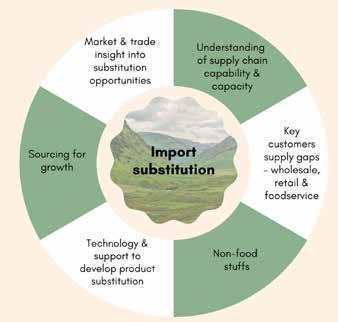
So how can we go about making this happen? This is a big question with many answers, but it can essentially be summarised in two words: Import Substitution. This is a key focus area for SAOS, and something that the Supply Chain team has been working on for many years.
By gathering and interrogating market and trend insights, analysing supply chain capabilities, mapping key supply gaps, exploring nonfood avenues and providing support in product substitution, we’ve been helping to strengthen Scottish businesses and enhance our food security and resilience.
On the right are a few of the opportunities we’ve identified. Most opportunities come with challenges - ranging from pricing and climate, to availability, functionality and route to market; there are often numerous barriers standing in the way, but there are also many ways to overcome them – especially if collaboration and cooperation are at the heart of your business. Import substitution is not about closing doors; it’s about opening new ones.
£132m worth of EGGS & processed eggs were imported into the UK in 2024, most of them from the Netherlands.
We imported DAIRY worth £1.1bn in 2024, mostly from Ireland, Germany and the Netherlands.
Combined imports of fresh PORK, frozen pork & bacon were worth £2.95bn in 2024.
SOYA won’t grow well in Scotland but could be replaced by other options, such as faba beans, peas and hemp, reducing 3 million tonnes of soya we import annually.
To learn more, or if you’ve an issue or an opportunity to highlight, please reach out to me at: Mikaela.linden@saos.coop
Ringlink reported on a year of strong growth and strategic expansion at its AGM in December.
In his address to the 37th AGM, MD Graham Bruce emphasised that the previous year had been all about people, not least with the growth of the Ringlink community following its successful merger with Highland Business Services (HBS).
Membership increased by more than a third to over 4,000 and its annual throughput to over £100million. The Ringlink team is now over 55 members, and there is an additional office in Tore near Inverness.
Graham said: “This will play a huge part in driving the co-operative forward in the Highland area.
“The merger means new people are coming into the business and we’ve also been actively bringing in fresh blood and new talent.
“Grant Ireland joined us in the summer, filling the newly created role of General Manager, and we’ve welcomed another 16 new people to the Ringlink team.”
Anderson, along with intern Lucy Simpson.
At the AGM, Melanie set out the new HR Services, including a range of specialist services to help members navigate the increasing complexity of employment law.

One of those is Head of HR Melanie
The new division will provide payas-you-go support for employment contracts, performance management, redundancy guidance, and specialist employment law advice. A new Ringlink Healthcare Scheme will also be introduced to members.
“Our new HR Services aim to help members stay compliant, confident and cost-effective in managing their teams,” she said.
“We will be rolling out other memberfocused initiatives, including the introduction of outplacement support –helping individuals facing redundancy, seeking to update their CV or preparing for a new career. In addition, sessions on sexual harassment, workplace wellbeing, and ACAS disciplinary and grievance procedures will be delivered this year and into 2026.”
The launch of a new Discussion Group was covered by the group’s facilitator Robert Ramsay who gave an overview of the first meetings. The pilot project is member-led and aims to share knowledge and ideas across the network.
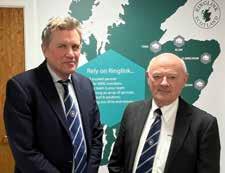
“It was great to see forward-thinking farmers pushing on with this initiative,” said Ringlink Chairman James Porter, having attended one of the meetings.
“The lack of fear and the willingness to share was inspirational.”
Graham summarised the co-op’s achievements in other areas:
• The training division reported a hugely successful year, with over 11,000 attendees benefiting from its wide range of courses, (up from 9,500 in 2024).
• The Land-based Pre-apprenticeship programme continues its success.
£1.8million three-year funding commitment from the Scottish Government, announced earlier this year, allowing the programme to continue and expand its reach.
He also thanked Andrew Stirling, who is standing down from the board after 14 years of service.
Six long-serving ANM Group staff, with a remarkable combined service of 264 years, were recognised in December.
Receiving 50-year service awards, were Alan Donald who began his career at Turriff Mart and Dougie Mitchell who started at Keith Auction Mart, both in 1975.
Marking 40-years were Sandra MacIntosh,
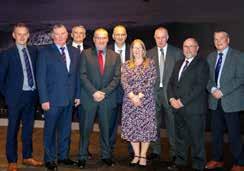
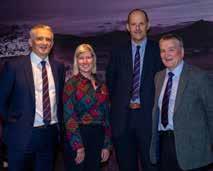
(who actually joined the Group in 1977 as a Typist and then returned after a break to raise her family) and Graham Gibb, who began as a Yardsman in 1985 before moving to Belmont Mart and later joining the Thainstone Yard team. Recognised for more than 40 years of service, were Colin Jamieson started at Kittybrewster Mart in 1983 and Sandy Morrison who began at Huntly Mart in 1984.
John Angus, Head Livestock at ANM said: “Recognising six long-standing members of staff and their remarkable milestones with the Group is a real privilege. It is especially rewarding to celebrate more than 260 years of dedicated and loyal service in one room.”
The event also marked the retirement of two long-standing ANM Board members. Jane Mitchell, who retired from the board in January, and Dave Green, who retired as Deputy Vice Chairman following last year’s AGM.
Grant Rogerson, Chief Executive of ANM Group said: “Jane and Dave have each made a tremendous contribution to the board over many years. They have offered sound judgement, steady guidance and a deep understanding of both our business and the sectors we operate in. I am very grateful for the support they have shown during their time on the Board, and on behalf of the Group I thank them both for their dedication and service.
“I would also like to extend my congratulations and sincere thanks to all our long-service recipients each of whom has made an outstanding contribution to ANM over many decades.”
In our latest Blog, Head of Supply Chain Development, Allene Bruce, shares her takeaways from The Economist’s Future of Food Summit in London where she was one of the speakers.
The world today produces more than enough calories to feed everyone, yet in 2024, 673 million people experienced hunger and 2.6 billion could not afford a healthy diet, according to the UN FAO. Production is not the issue, the main problem is distribution (or more accurately, the lack of it). Nutritious food remains too costly or inaccessible for many of the world’s most vulnerable communities. This imbalance is expected to intensify as the global population heads toward 10 billion by 2050, meaning that 50% more food is required than in 2012, this is further exacerbated by climate change impacts reducing the area of land available with enough water for crops to be grown there.
These challenges set the tone at Economist Impact’s Future
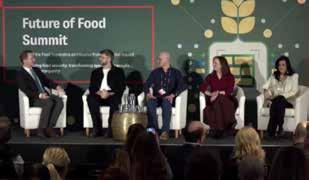
of Food Summit, held in London in February. The event convened more than 600 leaders across farming, agritech, manufacturing, retail, policy, finance, and development, to explore how to build food systems that support human health, economic viability, and planetary sustainability.
Speakers were unexpectedly candid about the gaping voids in the complex, interdependent nature of global food systems and the importance of placing the farmer at the centre of decision making.
For me, three themes stood out across the day’s discussions:
First, the risk and responsibility for transforming the food system cannot rest solely with the farmer; without access to the right finance, policies, or market incentives farmers are too constrained to make significant change. Part of the sharing of risk involves the need for information on retailers’ strategic priorities on sustainability to flow more freely down the supply chain – otherwise farmers are expected to use guesswork to make decisions about investment in new technologies and practices.
Second, there is (thankfully) a growing awareness among decision makers and buyers that no ‘one-size-fits-all’ solution would work with the diversity of global agriculture and the complexity of supply chains. Instead, what’s required is careful tailoring to meet the needs in each case – making for many different answers to solve a huge range of problems, rather than one ‘silver bullet’. Access to solid, reliable data is vital as the starting point for designing solutions that can be precise and effective, but also adaptive.
And third, technology will also be key, Whether it’s methane-reducing cattle feed additives, or vaccines targeting gut microbes, scaling up adoption of these advances requires training, tailored financing, and long-term buyer commitments. The risk and investment in these should be shared fairly across the supply chain.
Ultimately, closing the global nutrition gap requires a collective willingness to confront the structural barriers that hold the food system back. The conversations at the Summit made clear that progress depends on shared responsibility, transparent information flows, and solutions designed with both local nuance and long-term resilience in mind. When farmers are equipped with the correct data, the right incentives, and effective support from every link in the chain, the entire system becomes stronger - capable not only of supporting a growing population, but of doing so sustainably, fairly, and with the adaptability that a changing climate demands.
Business Resilience is not an option - your future profits depend on it!
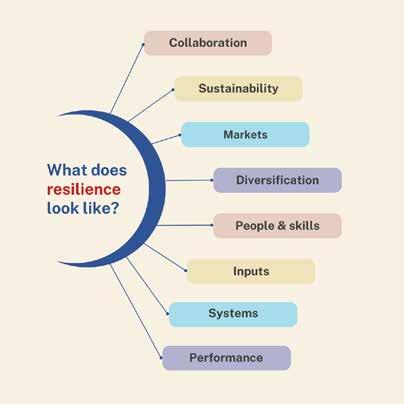
Business resilience isn’t optional – it’s essential. But what does resilience actually look like?
Research from SAOS’s supply chain team found that the features in this graphic are consistent indicators of resilient sectors.
If you want to step back, reflect, and develop practical plans for a more resilient future for your business, join our newly-launched Business Resilience Programme.
There is no cost for participation in the programme before 31st March 2026 but spaces are limiteddon’t miss out!
For more information, get in touch. Contact: allene.bruce@saos.coop
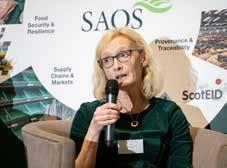
Many of you will remember Liz Fletcher from our conference. She is Director of impact and Deputy CEO at the IBioIC (Industrial Biotechnology Innovation Centre) one of the key innovation partners in the C2Network. Liz writes here for envirotecmagazine.com/
Industrial biotechnology is often portrayed as something that happens solely within controlled lab environments, yet that view misses a significant opportunity. The bioeconomy is far broader than just the science that underpins it, stretching across supply chains, land use and sectors that have not traditionally been considered part of the biotechnology story. However, when attention shifts beyond the lab, a much wider landscape comes into focus, one that is filled with overlooked resources and underused potential, much of which is already being generated through everyday agricultural activity.
Recognising this broader picture, and the possibilities it opens, is the first step toward building a more resilient and regenerative economy for Scotland where biotechnology and agriculture work harmoniously alongside each other. Across the country, farms are already producing materials with the potential to fuel a new wave of sustainable industries, simply through the by-products of food and fibre production. At the same time, interest is growing in planting new crops to supply bio-based manufacturing, adding another layer of value to what Scotland’s land already delivers.
Much of what farmers produce has always had more than one purpose, yet systems have traditionally focused on the primary product and overlooked everything else. Industrial biotechnology shifts this perspective, highlighting significance in materials that have long been treated as low-value, while opening the door to new crops being planted on Scottish farmland.
This shift matters because reliance on petrochemicals touches almost every aspect of daily life, from household products to medicines. Industrial biotechnology offers a cleaner, more sustainable route to many of these essentials by using biomass and microbes to create similar chemicals and materials.
The biotechnology industry is expanding rapidly, and Scotland has the scientific capability, and natural assets, to play a leading role. Achieving that, however, requires stronger connections between those who understand the land and those who understand the technology.
Farmers are already generating products with significant untapped value, and they are well placed to grow new crops that could supply high-value markets. Working with a cooperative organisation, such as SAOS, helps reduce the risks associated with new investments, unlocking access to emerging market opportunities while strengthening farmers’ bargaining power with buyers.
There is also a significant climate opportunity. Industrial biotechnology can support lower-emission farming, improve soil health and reduce reliance on imported materials linked to deforestation. Crops that thrive in Scottish conditions can become both carbon sinks and sources of sustainable feedstock, giving farmers a practical route to contribute to climate targets while strengthening their own businesses. However, this transition does not come without challenges. New markets require new infrastructure, knowledge and confidence. Farmers need clarity on buyers, pricing and quality standards,
as well as assurance that any investments are worthwhile. These are real considerations but should not be insurmountable barriers. Scotland has a long tradition of cooperation and shared investment, and that model is well suited to supporting the growth of the bioeconomy. Government also has an important role to play in helping farmers participate fully in this emerging sector. What is essential now is a shift in mindset and for industrial biotechnology to engage in a new conversation. Many of the possibilities within the bioeconomy are still unfamiliar to those working the land, simply because this is a new language for the sector. Yet the potential is already here, in what Scotland produces today and in what could be grown tomorrow. It is up to those working in industrial biotechnology to engage with farmers to explore new opportunities to work hand in hand to generate these high-value opportunities. Real progress will come from shared ambition, shared investment, and a shared commitment to unlocking the value of Scotland’s land in new ways.
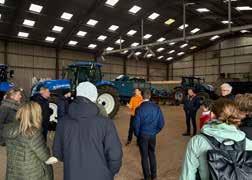
SAOS’s ‘Meet the Co-ops’ days are just one way we’re encouraging collaboration and possibilities for ‘science at scale’.

Sharing our regular focus on innovative food and drink products from around the world that caught our eye.
Truly Desi is a farm-to-bottle dairy brand founded in 2018 by Rupali Kakade and Mohit
Rathod in Pune, India. The brand was born out of a personal health crisis and a desire to offer adulteration-free, traceable dairy products.
It sources milk from its own farm and partner farms with a focus on indigenous Gir cows, organic practices, and sustainable supply chains. Truly Desi has raised $239K in funding and delivers directly to consumers via its own app and other premium platforms
Made from A2 milk sourced from indigenous Gir cows, known for better digestibility and nutritional value - hand-churned cultured buttermilk, using traditional methods, spices and Himalayan pink salt. Rich in probiotics, Vitamin B12, and calcium, it acts as a natural digestive aid, cooling the body and
supporting gut health. Supports local farmers, promotes ethical dairy practices, and focuses on conservation of Indian cow breeds. Products include: A2 Milk, Ghee, Paneer, Curd and Cow Dung Cakes (traditional, eco-friendly fuel sources made by drying cow dung into round, flat cakes). Rich in natural nutrients, they are used in rural areas for cooking, religious rituals, and as an organic fertilizer.
Terra Nostra is a heritage dairy brand founded over 70 years ago in the Azores, now part of Bel Portugal. It began as a cheese brand and has evolved to include milk and butter. The brand is deeply rooted in the landscape, known for its volcanic soil, Atlantic rainfall and lush green pastures.
Terra Nostra works exclusively with certified producers under its Happy Cow Milk Programme, ensuring cows graze outdoors and eat fresh grass 365 days of the year.
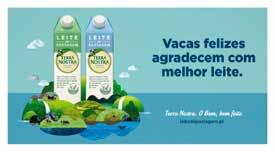
Their ‘Island of Happy Cows’ branding reflects the Azores’ natural purity and biodiversity. First to launch free grazing milk in Portugal, sourced from cows outdoors year-round, its products are made with minimal ingredients and cheese range includes original, light (50% less fat), and gourmet aged formats. It supports local dairy and fair compensation, and is commited to sustainability, animal welfare, and local economic development.
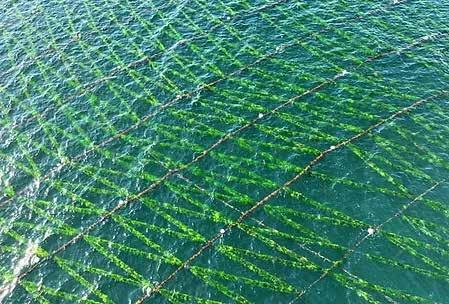
Founded in 2016 by six marine biologists, Nordic SeaFarm is Sweden’s largest seaweed farm. The company specializes in R&D, hatchery, and processing of seaweed for food, biomaterials, cosmetics, and other applications. It produces around 100 tons of seaweed annually, with full traceability from seed to harvest. Nordic SeaFarm also collaborates with other European farms to expand its product offering and ensure sustainable sourcing.
Why It’s Different: It pioneers regenerative aquaculture, using seaweed to improve ocean health and reduce carbon emissions and offering processing services (drying, blanching, freezing, milling) for seaweed and other non-animal products. Multiple EU-funded R&D projects are exploring seaweed’s potential in food, protein alternatives, and biomaterials. Products are KRAV-certified organic and meet EU sustainability standards. Seaweed is used in food, textiles, packaging, cosmetics, pharmaceuticals, and more. They recently launched Manatee Biomaterials, a joint venture to accelerate seaweed-based circular packaging solutions Range include: Seaweed crackers, powders, Biomaterials for packaging and Seaweed-based recipes and culinary ingredients.
Scotland Food & Drink has an event coming up in March for producers and suppliers working across the food and drink sector. The agenda is packed with insights, route to market understanding and expert perspectives from leading UK insight agencies and high profile retailers/food service operators.
Pollock Halls, Edinburgh - Tuesday 17 March
Insights to Impact – Unlocking Routes to Market for Food and Drink Brands
The day will feature a mix of presentations and Q&A sessions giving insights to shopper and consumer behaviours, where growth is coming from and how to turn insights into real business opportunities.
Speakers include Graham MacLean from IGD, Lesley Ann Gray from Worldpanel by Numerator, Rhona Lawson from The Knowledge Bank, Joanne Burns from Food and Drink Federation, Jayne Webb from TWC and Andy Crossan from Lumina Intelligence amongst others.
More information at: https://foodanddrink.scot/events-and-membership/from-insight-to-impact-speakers/

Reminder
We produce four newsletters a year, two of which are only published online/shared electronically, so we hope you’ve made it to here! We still print/send copies of two a year to our Co-op Member Directors (our Summer and Winter editions).
Let us know if you’ve any comments about printed v electronic versions, and also if you’ve any suggestions for content for future SAOS Updates (or if you no longer wish to receive it) please contact: jennifer.thompson@saos.coop