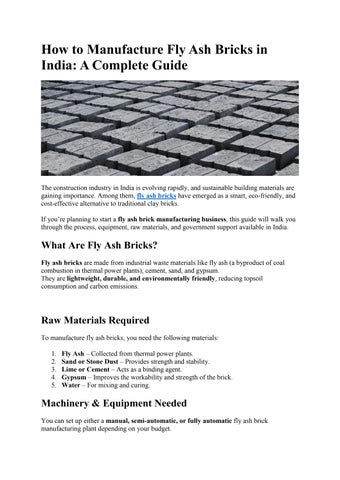
How to Manufacture FlyAsh Bricks in India:AComplete Guide
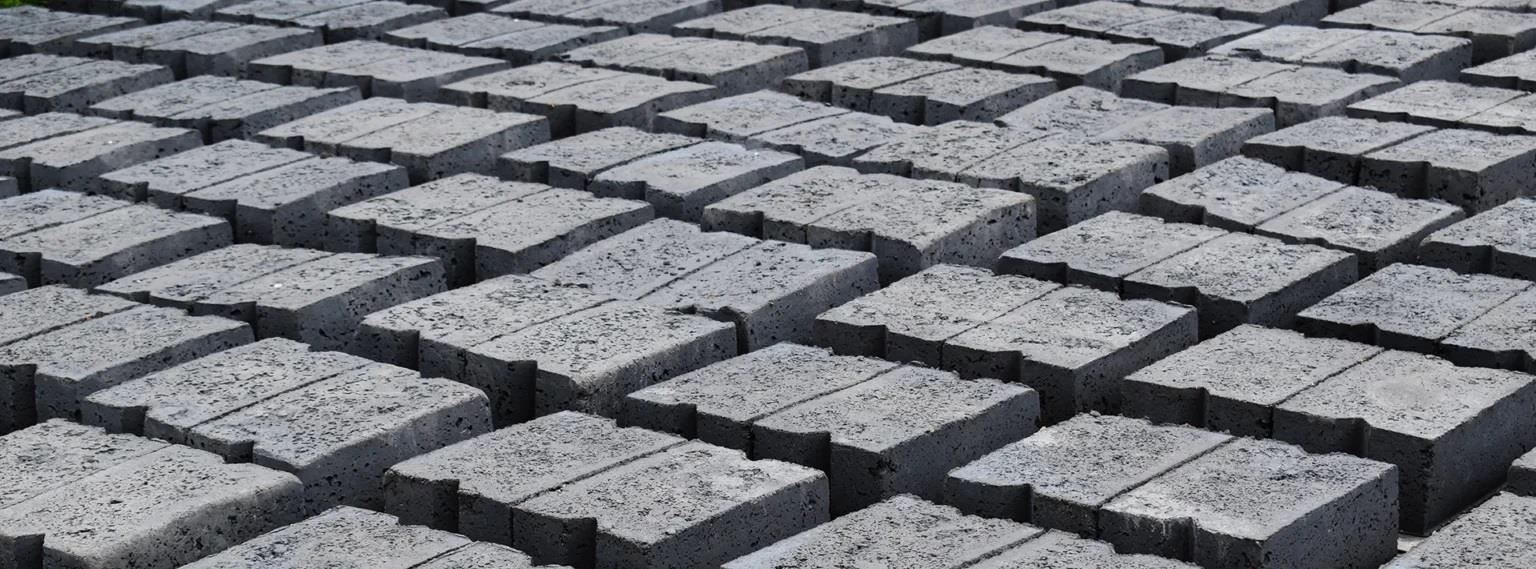
The construction industry in India is evolving rapidly, and sustainable building materials are gaining importance. Among them, fly ash bricks have emerged as a smart, eco-friendly, and cost-effective alternative to traditional clay bricks.
If you’re planning to start a fly ash brick manufacturing business, this guide will walk you through the process, equipment, raw materials, and government support available in India.
What Are Fly Ash Bricks?
Fly ash bricks are made from industrial waste materials like fly ash (a byproduct of coal combustion in thermal power plants), cement, sand, and gypsum. They are lightweight, durable, and environmentally friendly, reducing topsoil consumption and carbon emissions.
Raw Materials Required
To manufacture fly ash bricks, you need the following materials:
1. Fly Ash – Collected from thermal power plants.
2. Sand or Stone Dust – Provides strength and stability.
3. Lime or Cement – Acts as a binding agent.
4. Gypsum – Improves the workability and strength of the brick.
5. Water – For mixing and curing.
Machinery & Equipment Needed
You can set up either a manual, semi-automatic, or fully automatic fly ash brick manufacturing plant depending on your budget.
Basic equipment includes:
Pan Mixer
Conveyor Belt
Brick Making Machine (Hydraulic or Automatic)
Pallets
Curing Chamber
Weighing Scale
Storage Area
Step-by-Step Manufacturing Process
Step 1: Mixing
Combine fly ash, sand/stone dust, lime/cement, and gypsum in the required ratio using a pan mixer until a uniform mixture is obtained.
Step 2: Molding
Transfer the mixture into the brick-making machine’s mold. The hydraulic press compresses the material to form uniform and strong bricks.
Step 3: Drying
Place the freshly molded bricks on pallets and allow them to dry under shade. Avoid direct sunlight to prevent cracking.
Step 4: Curing
Cure the bricks by sprinkling water or using a curing chamber. Proper curing ensures strength and durability.
Step 5: Quality Testing
Test bricks for compressive strength, water absorption, and dimension accuracy to ensure they meet IS 12894:2002 standards.
Step 6: Packaging & Dispatch
Once cured and tested, stack and package the bricks for transport or sale.
Benefits of Fly Ash Bricks
✅ Eco-friendly – Utilizes industrial waste, saves topsoil
✅ Cost-effective – Lower construction cost than clay bricks
✅ Strong & Uniform – High compressive strength and consistent shape
✅ Fire & Sound Resistant – Enhances building safety
✅ Reduces Carbon Footprint – Promotes green construction
Conclusion
Starting a fly ash brick manufacturing unit in India is not only a profitable venture but also contributes to sustainable development. With rising infrastructure demand, government support, and eco-conscious buyers, the future for this industry looks very promising.