ExploratoryTesting:AFlexibleApproach toUncoverHiddenIssues
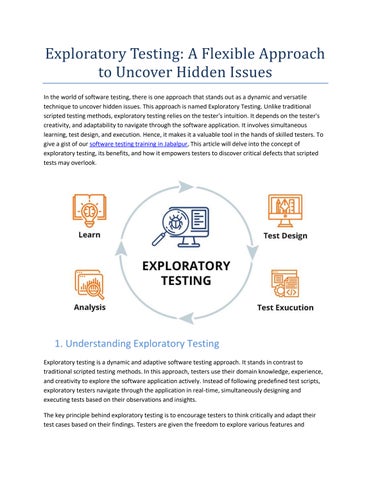
In the world of software testing, there is one approach that stands out as a dynamic and versatile technique to uncover hidden issues. This approach is named Exploratory Testing. Unlike traditional scripted testing methods, exploratory testing relies on the tester's intuition. It depends on the tester's creativity, and adaptability to navigate through the software application. It involves simultaneous learning, test design, and execution. Hence, it makes it a valuable tool in the hands of skilled testers. To give a gist of our software testing training in Jabalpur, This article will delve into the concept of exploratory testing, its benefits, and how it empowers testers to discover critical defects that scripted tests may overlook.
1. Understanding Exploratory Testing
Exploratory testing is a dynamic and adaptive software testing approach. It stands in contrast to traditional scripted testing methods. In this approach, testers use their domain knowledge, experience, and creativity to explore the software application actively. Instead of following predefined test scripts, exploratory testers navigate through the application in real-time, simultaneously designing and executing tests based on their observations and insights.
The key principle behind exploratory testing is to encourage testers to think critically and adapt their test cases based on their findings. Testers are given the freedom to explore various features and
functionalities of the application, probing for potential issues, and identifying critical defects. By applying their expertise, testers can simulate real-world user interactions and scenarios, helping them uncover issues that may not be apparent in scripted test cases.
The primary goal of exploratory testing is to uncover hidden defects, validate assumptions, and gain an in-depth understanding of the software's behavior. Testers focus on exploring edge cases, unexpected scenarios, and areas that are likely to be more prone to defects. By doing so, they can provide valuable insights to the development team and stakeholders, leading to the improvement of the software's quality and user experience.
Exploratory testing is especially valuable in situations where requirements are ambiguous or subject to frequent changes. In Agile and iterative development environments, where flexibility and rapid feedback are critical, exploratory testing aligns seamlessly with the development process. Its adaptive nature allows testers to respond quickly to changing conditions and deliver timely feedback, which can lead to faster bug-fixing cycles and a more efficient development workflow.
To conduct effective exploratory testing, testers must possess strong analytical skills, domain expertise, and a deep understanding of the application's context. They collaborate closely with developers, business analysts, and other stakeholders to gain insights into the application's functionality and requirements. Through constant communication and feedback exchange, exploratory testers can align their testing efforts with project goals and deliver a comprehensive assessment of the software's strengths and weaknesses.
Overall, exploratory testing offers a versatile and invaluable approach to software testing, empowering testers to think creatively, discover hidden defects, and provide valuable feedback to enhance the software's overall quality. By embracing this dynamic testing technique, development teams can achieve greater confidence in their software's performance, user experience, and reliability.
2. Benefits of Exploratory Testing
a) Flexibility and Adaptability:
One of the primary advantages of exploratory testing is its flexibility. Testers can dynamically adjust their test cases based on their findings, allowing them to focus on areas of the application that may be more prone to defects. This adaptability is especially valuable in Agile and iterative development environments, where requirements change frequently.
b) Identifying Hidden Defects:
Exploratory testing is an excellent way to uncover hidden or hard-to-detect defects that scripted tests may miss. Testers' ability to interact with the application in real-time can lead to the discovery of critical issues that might not be apparent in scripted test cases.
c) Faster Feedback:
Since exploratory testing is less reliant on creating and maintaining detailed test scripts, testers can start testing earlier in the development process. This leads to faster feedback on the application's functionality and allows for more rapid bug-fixing cycles.
d) Enhanced Tester Creativity:
Exploratory testing encourages testers to think creatively and critically about the application's behavior. Testers can explore edge cases and unexpected scenarios, leading to a more comprehensive understanding of the software's strengths and weaknesses.
e) Seamless Integration with Agile Practices:
Exploratory testing aligns well with Agile development practices, where requirements and priorities often change rapidly. Its adaptability allows testers to respond quickly to changing conditions and deliver valuable feedback throughout the development lifecycle.