






watching compiled by Ben Olson
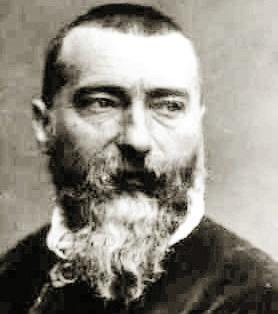


“Some people are always grumbling because roses have thorns; I am thankful that thorns have roses.”
Jean-Baptiste Alphonse Karr French journalist and author
We’re launching a new fiction competition called 208 Fiction, with winning submissions printed in the Christmas edition of the Reader. Here’s how it works: The 208 Fiction contest is open to anyone who lives in Bonner or Boundary County. Submissions need to be exactly 208 words (not including the title) to qualify for entry. We will enlist the help of a few local writers and creative thinkers to judge entries, with the winner taking home $150 cash, as well as prizes for second and third places. You may submit as many pieces as you like. The entry fee will be $5 per submission, which you can pay via PayPal or with a direct check to the Reader. Only paid submissions will qualify for the cash prize. The contest is open to any genre.
Please send entries to stories@sandpointreader.com and mark the subject line “208 Fiction.” The deadline for entry is Dec. 15, with winning stories printed in the Dec. 23 edition of the Reader. Email the above address with any questions.
Let’s see what you come up with, writers!
“For my part, I am almost contented just now, and very thankful. Gratitude is a divine emotion: it fills the heart, but not to bursting; it warms it, but not to fever.”
Charlotte Brontë Novelist and poet
–Ben Olson, publisher

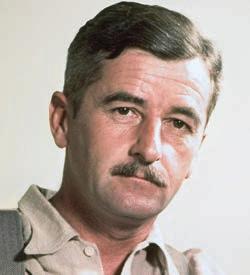
“Gratitude is a quality similar to electricity: It must be produced and discharged and used up in order to exist at all.”
William Faulkner Novelist
“‘Thank you’ is the best prayer that anyone could say. I say that one a lot. Thank you expresses extreme gratitude, humility, understanding.”
Alice Walker Novelist
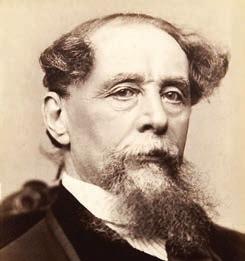
“Reflect upon your present blessings — of which every man has many — not on your past misfortunes, of which all men have some.”
Charles
Novelist
Dickens

111 Cedar Street, Suite 9 Sandpoint, ID 83864 (208)946-4368
www.sandpointreader.com
Publisher: Ben Olson
ben@sandpointreader.com
Editorial: Zach Hagadone (Editor) zach@sandpointreader.com
Lyndsie Kiebert-Carey (News Editor) lyndsie@sandpointreader.com
Cameron Rasmusson (emeritus) John Reuter (emeritus)
Advertising: Jodi Berge
Jodi@sandpointreader.com
Contributing Artists: Racheal Baker (cover), Ben Olson, Bill Borders, Otto Kitsinger
Contributing Writers: Zach Hagadone, Ben Olson, Lyndsie Kiebert-Carey, Lorraine H. Marie, Brenden Bobby, Jason Topp, Marcia Pilgeram
Submit stories to: stories@sandpointreader.com
Printed weekly at: Tribune Publishing Co. Lewiston, ID
Subscription Price: $155 per year
Web Content: Keokee


The Sandpoint Reader is a weekly publication owned and operated by Ben Olson and Keokee. It is devoted to the arts, entertainment, politics and lifestyle in and around Sandpoint, Idaho. We hope to provide a quality alternative by offering honest, in-depth reporting that reflects the intelligence and interests of our diverse and growing community. The Reader is printed on recycled paper using soy-based ink. Leftover copies are collected and recycled weekly, or burned in massive bonfires to appease the gods of journalism. Free to all, limit two copies per person
SandpointReader letter policy:
The Sandpoint Reader welcomes letters to the editor on all topics.
Requirements: –No more than 300 words –Letters may not contain excessive profanity or libelous material. Please elevate the discussion.
Letters will be edited to comply with the above requirements. Opinions expressed in these pages are those of the writers, not necessarily the publishers.
Email letters to: letters@sandpointreader.com
Check us out on the web at: www.sandpointreader.com Like us on Facebook.
About the Cover
This week’s cover photo of Sandpoint’s own Shook Twins was taken by Racheal Baker. Bonus: Do you know which is Katelyn and which is Laurie? The answer is...
(Katelyn on the left, Laurie on the right)
By Zach Hagadone Reader Staff
For those keeping score at home, the Idaho Legislature was in session for more than 300 days this year — pushing the parttime, “citizen Legislature” into an historically long period of policy making, as the House voted to go into a recess rather than adjourn. The full body is due to arrive for its regular session in January.
Both chambers finally adjourned sine die Nov. 17 at about 3 p.m, Pacific Time, after some raucous proceedings that groups such as the Idaho 97 — which opposes extremism in the Statehouse — described as a critical failure of the right-wing Idaho Freedom Foundation bloc.
Posting on Twitter after the adjournment Nov. 17, the group wrote: “And sine die. One IFF darling legislator censured and held accountable. 28 IFF/extremist bills defeated. @theidaho97 29 IFF 0. That’s how it’s done.”
Gathered in Boise beginning Nov. 15, legislators took up a raft of more than 30 bills, focused primarily on pushing back against COVID-19 vaccine and testing mandates as they may affect workplaces and schools.
Most were shunted into committees that won’t meet until January — eliciting consternation among some hard-right lawmakers such ast Rep. Heather Scott, R-Blanchard, who became so angered that she couldn’t handle her microphone and the Idaho Public Television live stream cut off audio Nov. 15 amid “boos” and shouts from the gallery.
Yet, in what a number of longtime Capitol watchers agreed was an early-session litmus test for GOPers, the proceedings opened with a House floor session on whether to censure Rep. Priscilla Giddings, R-White Bird, as well as remove her from the House Human Resources Committee, which the body affirmed 49-19, with two lawmakers (both Republicans) abstaining.
Members of the Ethics Committee in August recommended Giddings face censure and com-
mittee removal for “conduct unbecoming” a legislator after posting links on her Facebook page and constituent email newsletter to a right-wing “Redoubt News” website article divulging the identity of a 19-year-old legislative intern who alleged she’d been raped by now-former Rep. Aaron von Ehlinger, R-Lewiston.
Von Ehlinger resigned from the Legislature in the spring and in October prosecutors in Ada County charged him with two counts of felony rape, then he was taken into custody in Ada County after being summoned by the court from a long sojourn in Central America.
Giddings is an Air Force veteran and firebrand conservative who is seeking the lieutenant governor’s office against House Speaker Scott Bedke, R-Oakley, and former-Coeur d’Alene Republican Rep. Luke Malek in the May 2022 Republican primary. Von Ehlinger was a political ally of Giddings’ in District 6, and her troubles began following her defense of his behavior, which she performed at the latter’s own Ethics Committee hearing in the spring.
There, she told committee members first that she hadn’t shared material naming the teenaged intern; then that she hadn’t actually read the “article,” only shared it; then that she was within her rights to do so.
That prevarication triggered concerns among fellow lawmakers — both Republicans and Democrats — who brought the matter before the committee during the summer.
During Giddings’ hearings, which lasted several days and included more than a dozen witnesses delivering testimony, the legislator was alternately combative and evasive — a description she apparently relished in her Nov. 15 statements before the House, nodding to her Air Force training in tactics of evasion when “being questioned by an enemy,” she said.
As pointed out several times by committee members, Giddings had ample opportunity to answer to the complaints leveled against her — that she acted with “conduct unbecoming” a legislator by sharing the material that identified von Ehlinger’s accuser — but
‘This is not necessary’

chose not to.
Giddings’ refusal to participate triggered a public process, whereas ethics complaints are typically handled behind closed doors among legislative colleagues.
Holding forth to House members Nov. 15, Giddings said her sharing of the so-called “news” article was an attempt to provide “both sides of the story” in service of “due process,” as she put it, presumably meaning von Ehlinger deserved some representation in the court of public opinion. Giddings even went so far as to frame her actions as in keeping with Biblical tenets and compared herself to Dietrich Bonhoeffer, the German Lutheran pastor who was murdered in 1945 by the Nazis for his opposition to the Third Reich’s genocidal policies.
“I would not have done anything differently. I think my intent was pure,” she said.
Lawmakers weren’t having it. Every member of the House Republican and Democratic leadership voted in favor of censuring Giddings, whose case had been overseen by Ethics Committee Chair Rep. Sage Dixon, R-Ponderay, in August.
“If you lie, you lie. If you’re not truthful, you’re not truthful. And that’s really the crux of the issue,” said Rep. Scott Syme, R-Caldwell, during the Nov. 15 floor debate. “So yeah, I’m going to support the [Ethics Committee] report. I saw what happened.”
Rep. Heather Scott, R-Blanchard, spoke forcefully in favor of Giddings, calling the 38-year-old veteran pilot, powerlifter and mother a “war hero” and going on for an extended period of time — “This is the caliber of the person that we’re throwing
under the bus, in my opinion,” she said — ticking off Giddings’ many accomplishments, until Rep. Greg Chaney, R-Caldwell, a lawyer and critic of Giddings, objected.
“Previous accomplishments, while impressive, aren’t relevant,” said Chaney, who earlier this year authored a complaint against the District 6 legislator alleging she broke the law by “doxxing” the 19-year-old intern, though that complaint was dismissed by the committee because it dealt with criminal matters outside the body’s purview.
Other hard right-wing legislators such as Rep. Ron Nate, R-Rexburg, cast aspersions on the Ethics Committee itself, suggesting it had been compromised by politics — specifically, the role played by Speaker Bedke, who he suggested it “appears” has “weaponized” the committee to go after political opponents.
He referred to Bedke as both “speaker” and “candidate,” drawing shouts of “boo” from the gallery.
“Cute, but continue,” Bedke said, not the first time he’d had to warn onlookers about unruly behavior.
“If there is another outburst like that we will clear the gallery,” he said.
Asked if this “special session” (which was actually a continuation of the House session) was “necessary,” Sen. Jim Woodward, R-Sagle, told the Reader in a text message late Nov. 15 that, “the short answer is this is not necessary.”
Woodward said that the gathering in Boise is redundant, given the nature of the anti-vaccine and testing mandate bills.
“The state of Idaho is already
party to two lawsuits opposing the federal mandates. Legal questions must be answered in the court, which is where we are now,” he wrote. “I don’t see any reason for state legislation that creates a catch-22 situation for Idahoans. People shouldn’t have to choose between complying with either federal law or state law, but not complying with both because they are contradictory.”
Dixon told the Reader in a Nov. 8 email that his “hope for the final session of 2021 is that we will provide protections that allow personal medical information to remain confidential, prohibit discrimination based on medical choices, an enact legislation that will prevent Federal Government actions that go beyond the scope of constitutional authority.
“The past year and a half have been, Lord willing, unique for the Legislature. We have encountered situations that were unprecedented, and which exposed deficiencies in our state government structure. This exposure demanded more work be done than normal, and ongoing national pressures added to the need to continue legislative work in what was normally our interim,” he said.
“While the easy argument is to claim that we are moving towards a full-time Legislature, that is not the temperament of a clear majority of the currently elected representatives. Our model of the citizen Legislature is imperative to our republican system of government, and to proper representation throughout the state. A full-time Legislature would change the motivation of candidates, and the interests of those elected once in office.
“As a Legislature, we do need to be able to call ourselves back into session in order to fulfill our obligation of protecting the citizens of Idaho, but it should be a rare occurrence, and not move in the direction of a full-time Legislature.”
The Idaho Legislature will reconvene in January. Follow the action at iptv.org.
By Zach Hagadone Reader Staff
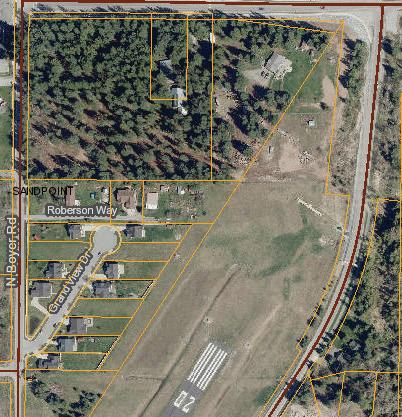
Sandpoint Planning and Zoning Commission members voted 5-2 on Nov. 16 to approve a conditional use permit that would clear the way for 107 multi-family housing units on 8.5 acres of land immediately northwest of the Sandpoint Airport runway.
The property has been in the headlines since 2019, when the Tillberg family, who previously owned it, came forward with a rezone request to a mixed-use designation.
That vote went in the Tillbergs’ favor, after what Maureen Tillberg at the time called a “nightmare” process, and the land is now owned by Coeur d’Alene-based Anton Mini Storage, which is proposing the multi-family housing development.
The live stream from City Hall malfunctioned Nov. 16, the result of power surges related to the severe windstorms that buffeted the region in recent days, so Planning and Zoning Commission Chairman Jason Welker provided the Reader with a follow-up report Nov. 17, saying that, “Ultimately the only real concern came from the airport. The neighbors kind of accepted that it was going to happen.”
He voted in favor of the conditional use permit clearing the way for consideration by the City Council, citing the need for more stock to bring down the cost of housing amid an unprecedented pricing crunch that has pinched local residents in need of a roof over their heads.
“This is valuable real estate,” said Welker.
As in 2019, opponents of the rezone and subsequent development pointed to the proximity of the property to the airport, raising safety concerns as well as worries that it might imperil the airport itself — which speakers at the meeting and after underscored provides about 400 jobs and upwards of $50 million in revenue per year.
“The line that we kept hearing was the airport provides 400 jobs and tens of millions of dollars …
If we jeopardize that with higher density it’s a threat to the economic strength of the community,” Welker said.
Commission member Forrest Schuck — a pilot, Realtor and whose brother, David Schuck, serves as airport manager — expressed the most robust opposition to the CUP. Reached by phone Nov. 17, Schuck said, “It’s never a good idea to have high density around an airport.”
He said the 2019 rezone of the property in question was “really stupid,” as it opened the way for high-density development within the safety areas around the airport, as well as putting in jeopardy the airport’s ability to secure grant funding.
He called the move “inappropriate zoning” and cited bodies such as the Federal Aviation Administration’s stance of “strongly oppos[ing] any residential around airports,” which among other entities shy away from giving funding to facilities that may pose an especial hazard to their surroundings.
Welker told the Reader that
the cow is already out of the barn when it comes to development around the airport, and the benefits outweigh the risks: “’It’s, like, a
fifth of Sandpoint is in the ‘inner critical zone,’” he said, noting that Farmin-Stidwell Elementary is within the airport’s safety zone.
That’s a fact of Sandpoint life, he suggested, underscoring that the Planning and Zoning Commission voted to include a couple of conditions on the CUP, requiring that all lease agreements in the future multi-family development include a fair use disclosure related to noise and air pollution.
“Renting an apartment there, they should expect noise, fumes, — anything that goes along with living next to an airport,” Welker said. “That’s just to provide some protection for the airport.”
Schuck told the Reader that the disclosure agreement was sound and fury amounting to very little, worrying that, “When you get a lot of people moving in around an airport it gets bad. … These complaints [about noise and pollution[ tend to turn into lawsuits,” he said.
“They’re not compatible uses,” he said of residential and airport uses.
“We do not appreciate our airport enough in Sandpoint,” Schuck said, adding that he’s all in for increased housing development, “just not here.”
By Reader Staff
Cases of the novel coronavirus have topped 300,000 in Idaho since the pandemic first began in spring 2020, according to the state’s data-tracking system. However, the latest surge in cases appears to be slowing down, as Idaho health officials shared with reporters in a press briefing Nov. 16 that a steady decline in new cases and COVID-related hospitalizations is indicating statewide moves in the right direction.
Division of Public Health administrator Elke Shaw-Tulloch told reporters that those trends are “relieving at least some of the pressure” on Idaho hospitals, according to KTVB. The state’s health care sector has been operating under crisis standards of care since September, with North Idaho among the first regions to be activated. Crisis standards of care, which is
a mode of operation under which providers are forced to allocate limited resources to those with the most dire needs, have led to the postponement of non-emergency procedures. Idaho Health and Welfare Director Dave Jeppesen estimated Tuesday the number of those procedures around Idaho total somewhere in the thousands.
As for when crisis standards of care will be called off, there is no timeline.
“A decision will be made when the surge of patients being driven by COVID-19 no longer exceeds the healthcare resources available,” Jeppesen told KTVB. “We do monitor the situation daily.”
As of Nov. 17, Idaho reported 847,863 residents fully vaccinated against COVID-19 — roughly 56.2% of the state’s population over the age of 12. The Food and Drug Administration has now approved a pediatric dose of the Pfizer-BioNTech for children ages

5-11, and Idaho health officials shared with KTVB that, as of Nov. 16, more than 8,500 Idahoan children had received at least one shot. However, this data is not yet available on the state’s vaccine data-tracking website.
While Idaho Gov. Brad Little has been a proponent of the vaccine since it was first made widely available in the state, even sharing that he received a booster dose on Nov. 15, he has been adamantly against any vaccine mandate. Idaho has now joined three lawsuits challenging the federal government’s attempts at such actions, as Little argues that President Joe Biden has “no legal authority to force hospitals and other health
care facilities to require their employees to get vaccinated.”
“As I’ve stated before, Biden’s coercive, threatening attempts to increase vaccination rates damage a country already divided,” Little shared in an email newsletter Nov. 17. “He is breeding a level of resentment and distrust of government that will take generations to heal. His actions simply are not good for our country, now or in the long term.”
The governor shared a photo of himself receiving his COVID-19 booster shot in the same newsletter, urging those Idahoans who are also seeking another dose to “talk to your health care provider or visit coronavirus.idaho.gov for more information.”

By Reader Staff
A group of Northwest tribes and conservation organizations joined forces Nov. 10 to sue the state of Montana in district court, demanding that its Department of Environmental Quality enforce the “bad actor” law against Hecla Mining Company and CEO Phillips S. Baker, Jr.
The Montana DEQ filed a bad actor enforcement action against Idaho-based Hecla and Baker in 2018, citing failure to pay for environmental restoration efforts at the Zortman-Landusky, Beal Mountain and Basin Creek gold mines in the Cabinet Mountains just over the border in Lincoln County, Montana. Conservation groups, residents and other stakeholders fear mine waste poses a danger to regional water quality, including in the Lake Pend Oreille watershed.
Hecla pushed back against the enforcement action, stating that Baker had had no liability for the failed clean-up efforts, as they resulted from the bankruptcy of Pegasus Gold, which had developed the mines and Baker served as vice president and chief financial officer at the time.
“If Pegasus failed to perform [clean-up efforts] pursuant to its permit with the department, Pegasus is exclusively liable,” Hecla stated in March 2018.
Beyond the existing environmental damage — which has cost Montana more than $74 million to date — members of the lawsuit are equally concerned about proposed new mines in the Cabinets, which would be developed by Hecla with Baker as its chief executive.
Though Montana DEQ leveled the bad actor violation, it later dropped the case.
“It’s DEQ’s job to enforce the law and prevent corporate polluters from getting off ‘scot-free’ from their cleanup responsibilities,” stated Bonnie Gestring, North-
west program director for Earthworks, which is a party in the new lawsuit, in a media release. “DEQ’s decision to drop this case leaves us no other option than to compel enforcement of our reclamation laws through the courts.”
Also joining the legal action are the Confederated Salish and Kootenai Tribes, Fort Belknap Indian Community, Ksanka Elders Advisory Committee and a number of other conservation groups including the Montana Environmental Information Center, Clark Fork Coalition, Rock Creek Alliance, Montana Conservation Voters, Montana Trout Unlimited and Cabinet Resources Group.
“The Cabinet Mountains hold an important position in the relationship between the Ksanka people and all of creation,” stated Vernon Finley of the Ksanka Elders Advisory Committee and a member of the Confederated Salish and Kootenai Tribes. “The ‘bad actor’ law is the best way to hold people responsible for attempting to heal the wounds inflicted on nature. To simply free someone from their responsibility is to allow them to do it again and is unforgivable.”
Montana’s bad actor law is intended to prohibit senior mining executives and companies from being granted new permits to mine in the state if they’ve failed to clean up operations in the past — unless they reimburse the state for those costs.
“It’s hard to imagine how DEQ’s about-face on ‘bad actor’ enforcement serves Montanans or fits in with the decades-long work to clean up and restore mining-damaged waterways and landscapes,” stated Karen Knudsen, executive Director of the Clark Fork Coalition. “By backing away, DEQ is inviting mining history to repeat itself – and communities, taxpayers, and clean water will be the ones paying the price.”
East, west or beyond, sooner or later events elsewhere may have a local impact. A recent sampling:
The New Orleans-based Fifth U.S. Circuit Court of Appeals recently granted an emergency stay over the OSHA requirement that workers in businesses of 100 or more employees be vaccinated, or mask up and get weekly COVID-19 testing, according to the Huffington Post.
Ten states filed a lawsuit last week to block the vaccine mandate for health care workers, claiming it would cause an “alarming shortage” of health workers, particularly in rural communities, which are currently most vulnerable to COVID-19 outbreaks. Unlike the mandate for businesses with more than 100 employees, health care workers could not continue working if unvaccinated, The Guardian reported. The mandate only applies to health care businesses that accept federal funds. Quitting rather than being vaccinated may not be all that threatening: The police union in New York predicted 10,000 officers would quit due to the mandate, but only 34 declined vaccination — five times as many police officers have died from COVID-19 as compared to the number who died from gunfire, according to CNN.
On Monday the $1.2 trillion Infrastructure and Jobs Act was signed into law; 18 Senate Republicans voted for the bill. Some economists fault the bill for spending too little, and want more spent on the care and green economies, which could occur under the Build Back Better Act currently under consideration. For now the pared-down Infrastructure bill invests in: power grids that will also help carry renewable energy, new rail lines and upgrades to existing ones, high speed internet for hard-to-reach populations, new funding for “climate resiliency” (battling wildfires and for protection against hurricanes and flooding), removing lead water service lines, EV charging stations and grants for rural transportation. President Joe Biden commented, “This law is a blue-collar blueprint to rebuild America.”
The Infrastructure bill, according to White House projections, will add two million jobs a year over the next decade. If the Build Back Better Act also becomes law, the independent economic groups Oxford Economics and Moody’s
By Lorraine H. Marie Reader Columnist
Analytics predict economic growth will be even higher due to greater productivity and more women in the workforce; they claim that will offset any “drag” from tax increases, whatever funding sources those increases are finally determined to be.
A Congressional committee investigating the Trump administration’s handling of the COVID-19 pandemic, using new emails and documents, along with interviews, is revealing the extent of efforts to interfere with the CDC’s warnings about the volatility of the virus, Politico says. There were efforts to block media access to CDC officials and attempts to alter public safety guidance while down-playing the severity of the virus. Of particular concern to the former White House’s COVID-19 task force coordinator, Deborah Birx, was the decision to ease up on COVID-19 testing for the asymptomatic. Birx said she felt that was a “primary reason for the early community spread.” There have been more than 760,000 confirmed U.S. deaths from COVID-19. Worldwide the number exceeds 5 million. Deaths may actually be significantly higher due to under-reporting in most countries, according to the Institute for Health Metrics and Evaluation.
Axios says the economy grew by 5.7% this year and checking accounts grew 50% over pre-pandemic numbers, 6 million jobs were created and earnings were up 5% this year. But, polling shows 57% say the economy is weak, and that appears due to inflation, with consumer prices up by 6.2% in October, which is occurring all over the planet. In the U.S., adjusting for inflation, wages fell 1.2% in the last year. The Nation reported that workers’ paychecks rose 1.8% in 2020; CEO’s rose 16%.
A TV ad portraying the Biden administration as generating chaos actually uses several images that occurred under the Trump administration, CNN discovered. As well, Fox News recently edited the president’s Veteran’s Day speech to indicate use of a racial slur, which The Guardian said did not occur.
Blast from the past: “Congress shall make no law respecting an establishment of religion, or prohibiting the free exercise thereof.” — First Amendment of the U.S. Constitution.
By Kelcie Moseley-Morris Idaho Capital Sun
The Senate State Affairs Committee decided not to advance three bills passed by the Idaho House of Representatives on Nov. 16, effectively killing the bills until at least the next legislative session in January.
The committee met for nearly four hours to hear from bill sponsors and to take testimony from the public on the three vaccine-related bills. Most of the arguments from senators against advancing the bill came down to not having enough time to consider the potential unintended consequences that could arise from the legislation and their contention that much of what was trying to be accomplished with the new bills was already part of existing Idaho law.
Members of the committee, including chairwoman Sen. Patti Anne Lodge, R-Caldwell, said Idaho is already involved in three lawsuits against the federal government over vaccine mandates that will likely be decided in the coming months, and any legislation passed this week could put employers in a position of being forced to violate either federal law or state law.
The committee’s inaction stopped legislation banning mask or vaccine mandates from coming out of the reconvened session like some lawmakers had hoped.
What were the bills about?
House Bill 414, which states that employers cannot question the sincerity of someone’s beliefs when applying for a religious exemption, was first on the list, but senators said it wasn’t clear how “sincerity” would be judged by employers or in a legal sense. Sen. Michelle Stennett, D-Ketchum, said there were no outlines for what thresholds an employer would have to adhere to in order to comply with the law.
“Interestingly, it’s frequently fairly obvious if it’s a religious exemption or not that the person’s applying for,” said Sen. Jim Rice, R-Caldwell, who presented the bill in place of Rep. Mike Moyle, R-Star, whose tractor broke down during his harvest work and delayed his arrival to the Capitol.

“‘I don’t like the vaccine for scientific reasons’ would obviously not be a religious exemption application. … The slippery slope has always been, and the hard thing has always been, how do you gauge the sincerity of someone, because people don’t communicate as well as any of us think we do.”
At the end of the hearing, Sen. Kelly Anthon, R-Burley, motioned to send House Bill 414 to the Senate floor with a recommendation that it pass, but received no second from another committee member.
House Bill 417, which passed with only three “no” votes in the House on Tuesday, received more positive feedback from senators, although it was ultimately still tabled in committee. The bill would add vaccine-related injuries to the existing worker’s compensation law in Idaho so that individuals who were required by an employer to receive a vaccination could be compensated if they had an adverse reaction. The bill did not define what would qualify as an injury, and senators were concerned about language that states employees could be compensated if the injury “may be related” to receiving the vaccine.
Sen. Abby Lee, R-Fruitland, said she thought it was an important bill that could be amended by the next legislative session in January. Anthon said he opposed holding it in committee because he wanted it passed sooner, but that he was happy to work with other
legislators to make amendments.
“I sincerely believe in the intent of this bill,” said Sen. Grant Burgoyne, D-Boise. “… But I have an overriding concern here that … we not impose financial burden on Idaho employers for federal mandates, and I do think that we should instead cover that financial burden in terms of the potential for increased premium costs … that should be paid for from the federal COVID funds that Idaho has received.”
House Bill 419, a one-paragraph bill creating a “don’t ask, don’t tell” type of policy for any person, firm, corporation or other business entity or representative on COVID-19 vaccination status.
Lee asked the bill sponsor, Rep. Ron Mendive, R-Coeur d’Alene, about adding the language to Idaho Code given that Idaho is already fighting the federal mandates in court.
“My concern is adding language that … signals to the citizens of Idaho that we are giving them something that is more than what we already have,” Lee said. “And I’m concerned about offering something that people can say, ‘Look, the statute says this when the constitution already says it,’ and we’re not really giving them anything more than perhaps just, ‘Hey, this feels good,’ because the fight will be had in the courts.”
Mendive said it would give people comfort that Idaho is standing up for the constitution, which he said is being
ignored. The bill would be saying to the federal government that Idaho doesn’t like the COVID-19 mandates, he said.
“Words in our code are things that people who enforce our laws look to, to figure out: is the law clear? Does it tell me exactly what I need to know in order to proceed with my conduct in a legal and appropriate fashion?” Burgoyne said. “When we clutter up the code with feel-good stuff, we create ambiguities that cost people money and create legal uncertainties.”
Mendive’s bill received no motion to send it to the Senate floor. Lodge told Mendive they would look at it again “first thing” in the next legislative session in January.
So far, the only item passed by both the House and Senate is a joint statement saying the Idaho Legislature disapproves of federal vaccine mandates.
This story was produced by the Idaho Capital Sun, a Boise-based independent, nonprofit online news organization delivering in-depth coverage from veteran Idaho reporters on state government and policy. The Idaho Capital Sun is part of States Newsroom, a national nonprofit funded by tax-free donations in 22 states. Learn more and follow daily updates at idahocapitalsun. com and statesnewsroom.com.

Bouquets:
•Three cheers for the Idaho Legislature (for real). After reconvening Nov. 15 to discuss a host of bills mostly targeting vaccine mandates, the House also voted 49-19 to officially censure Rep. Priscilla Giddings, R-White Bird, after she shared a link divulging the identity of a woman who alleged she’d been raped by now-former Idaho Rep. Aaron von Ehlinger, who has been charged with two counts of felony rape. Several lawmakers spoke on Giddings’ behalf, including Rep. Heather Scott, R-Blanchard, but the efforts weren’t enough to avoid a censure of Giddings, who is also running for lt. gov. I hope this shows that it’s never OK to divulge details of rape victims’ identities.
GUEST SUBMISSION:
•“Kudos to the Northern Lights and Avista lineman crews who were able to restore power very early Tuesday morning even while that dangerous storm was still raging. Thanks to all involved.”
— By Ted Wert
Barbs:
• Here’s a big stinky Barb for District 1 Rep. Heather Scott, R-Blanchard, for her performance this week during the unprecedented November session of the Idaho Legislature. Scott not only defended her colleague on the far right Rep. Priscilla Giddings, R-White Bird, for her actions that led to censure (see above), but she also made a general nuisance of herself at the Capitol. There seems to be this idea that the more ornery and obfuscating you are as a lawmaker, the more people respond to you. There comes a point when Idahoans are going to grow tired of people throwing monkey wrenches into the works when most of us just desire a functioning government that actually addresses important issues, instead of partisan causes that only appeal to a shrinking base. The good news? With legislative districts currently undergoing redistricting, Scott may no longer be included in District 1, which means she might not be our district’s embarassment anymore. Fingers crossed.
Dear editor,
It is Veteran’s Day as I write this letter and I am pondering the numerous veterans I know. My father and uncles served during WWII and helped defeat Hitler and Tojo; perhaps that was the last noble war and I am forever grateful for their service and for the freedoms they secured.
To the younger veterans I know, I wish to say thank you for your service. I also want to say I am sorry — I am sorry that our country asked you to fight unnecessary and ignoble wars, sorry that we did not support you when you came home, sorry that even though your war may have been won, our country lost the peace afterwards. We owe you so much more than a flag waving holiday.
I then pondered ways in which we can repay you for your service. The best way I know to thank you for the freedoms for which you fought, would be to exercise those freedoms, particularly the right to vote. Perhaps we should combine the Veteran’s Day holiday with Election Day. Doing so would both encourage voting and help us remember that our voting rights were secured for so many by so few. Thus Veteran’s Day would take on a new, more profound meaning, and not just a day to shop for furniture or get the snow tires mounted.
Daniel Haley Sandpoint
Dear editor, It would be interesting to know what the legal basis was for the executive session held by Bonner County commissioners on recognizing and observing the Juneteenth holiday [Sandpoint Reader; News; “County adopts Juneteenth, with likely name change”; Nov. 11, 2021]. Given the subject matter, such a closed-door meeting would appear to violate Idaho’s open meeting law unless there had been some sort of threat of litigation since the exemptions for matters involving personnel, at least on the surface, don’t seem to apply. It would also be interesting to know what other elected county officials may have attended said meeting, and where they stood on the issue. As for the prospect of having commissioners
rename the holiday as “another way to skin this cat,” really?
Mike Brown Kootenai
Dear editor,
On Nov. 10, 2021, the Bee’s daily coronavirus graphic showed 105 deaths in our county, estimated population of 47,807.
Some people say that coronavirus is “just the flu” and if you have a strong immune system, you’ll be OK. Because they decided not to get vaccinated, we all might have to deal with this for the rest of our lives — however long that is.
One hundred and five deaths are too many for our county. That’s 102 people in one year from one flu virus. They are young and old. That’s not normal. Only 12 people died in Bonner County from the flu or pneumonia in all of 2018 — that number comes from the last Vital Statistics Report for Idaho.
I know health care workers who are exhausted and disheartened from watching people fill up ICU beds and die from a preventable illness. Please do the right thing for your loved ones and our community and get vaccinated.
Mike Murray Sagle
Dear editor, Sandpoint is about to gain its newest eyesore in the form of “luxury condos” going up at the corner of Fifth and Cedar. I couldn’t help but laugh out loud after looking up the real estate listing, and felt better about myself once I envisioned the type of mutant ego it must take to spend $1.6 million for a small apartment with stunning views of a crumbling, derelict surplus store, a Domino’s pizza joint, a gas station and the booming noise of truck traffic along Fifth Avenue.
Shame on our city leaders for approving and capitalizing on this elitist monstrosity — all three stories of it — stuffed onto a shoebox lot and blocking sight of the artistic murals on the historic Fosters Crossing building.
If this is the “affordable housing” they are tirelessly campaigning for then I definitely need a raise. Dollar by dollar, we are losing the heart and soul of our city. Sandpoint doesn’t need million-dollar condos with 10-dollar views, it needs real housing for real people.
Evan Brown Sandpoint
Dear editor,
The 720 acres in the Colburn-Culver and Rapid Lightning Road area requesting a change from 20-acre minimum to 10-acre minimum (plus a 900-square-foot “granny” unit for each site), should be denied. What studies have been done about: water table (impact on all other wells in that area that already exist); road infrastructure (you’re talking about an additional 300 to 1,000 vehicles on these twolane, one-each-direction roads); and loss of the rural Selle Valley area to greed?
We, the people, do not want our beautiful area to become another sprawling Rathdrum/Coeur d’Alene. Development in Bonner County has become a mad scramble for the almighty dollar, with no regard for quality of life.
By the way, how come the “Save Selle Valley” report, worked on by locals for eight-plus months, got thrown in the trash, without review, by our county commissioners?
The Bonner County/Sandpoint area we’ve all come to love and enjoy, is disappearing. Welcome to “Carmel by the Lake and Mountain.” What’s happening here is wrong
Michael Harmelin Sandpoint
It’s beginning to look a lot like (a Christmas tree)

By Reader Staff
Sandpoint Women’s Health providers Dr. Kristin Algoe and Dr. Morgan Morton were recognized for their exceptional teaching in the preceptor program through the University of Washington School of Medicine Regional Campuses (WWAMI).
The WWAMI Medical Education Program is a partnership between the University of Washington School of Medicine and Washington, Wyoming, Alaska, Montana and Idaho. WWAMI allows medical students to train all four years in their home state, increasing their familiarity with rural health care and the needs of their region and state. In addition, this increases the likelihood that students will select further training or practice opportunities in their home state once their training is complete.

medical learner and future physician. It was evident she had a true passion for teaching and made me feel empowered in an educational structure that often doesn’t reinforce this.
A significant part of a student’s education occurs within the WWAMI region in communities, drawing on a combination of full-time and volunteer teachers. In addition, medical students participate in rotations to various clinics and health care systems to increase their learning with hands-on experience under the guidance of preceptors in the program.
Both Algoe and Morton were nominated by a WWAMI medical student for their extraordinary teaching:
“Dr. Algoe was a truly wonderful preceptor during my time at Sandpoint Women’s Health. She was extremely welcoming and supportive from the very start of my rotation. She challenged me to grow and learn in a manner that still made me feel capable and empowered. It was truly an honor to learn from her. I left the rotation confidently, stating that every aspect of my time working with her bettered me as a
“Dr. Morton was integral in me completing my rotation feeling empowered and passionate about the field of obstetrics and gynecology. She dedicated significant time to developing my technical skills and further provided trust in the form of supervised opportunities to exhibit them and gain proficiency. She created a safe environment that nurtured growth in such a way that should be recognized and valued. It was a privilege learning from her.”




By Brenden Bobby Reader Columnist
Lifelong video game fans are no strangers to the gauss rifle. What many people may not realize is that these exist in the real world, and you can actually build them from the comfort of your own home with a small collection of household items, a handful of magnets and some ball bearings.
In video games, gauss rifles are extremely powerful weapons that use focused magnetism to blast enemies into gooey fragments. In the real world, we can explore the basis of how a weapon like this might function, and how we can apply the principles behind it into something more beneficial to mankind than liquefying extraterrestrials.
Let’s start with building our own gauss rifle and explaining why it works later.
Before we start, I need to state that you should treat a gauss rifle as though it were an actual rifle. Never point it at a living thing, especially yourself, your family or your pets. Be mindful of what’s in front of you, where the projectile will travel and what it could impact. Always wear safety goggles.
To build your own gauss gun, you will need a grooved piece of wood (rulers with a groove down the center are the best for this) at least four magnets and nine metal ball bearings, as well as some tape and a receptacle for collecting projectiles.
Tape your magnets to the ruler in equidistant positions — two inches apart works well. Now place two ball bearings to the direct right of each magnet inside the groove of your ruler.
You should have one ball bearing remaining, which you will now set to the far left of the ruler. The ball bearing should move toward the magnet, but if it doesn’t you can give it a little push. Once the ball bearing strikes the magnet, the reaction happens too quickly for your eyes to see, but the ball bearings will all have shifted positions, while the one to the far right has fired off toward your collection receptacle.
You might be left wondering what happened. Buckle up, folks, because I’m about to drop the dreaded four letter word: math.
The gauss rifle is an experiment in the transference of kinetic energy, which can be summed up by the equation of Ke=1/2mv2. That means kinetic energy is equal to one-half of an object’s mass multiplied by its velocity, squared. As energy cannot be created or destroyed, how did the slow-rolling ball bearing produce so much kinetic energy?
The process was aided by the magnets. The first ball striking the magnet was pulled toward the magnet, and upon impact transferred all of its energy to the magnet, which transferred that energy to the next ball bearing, which transferred to the ball bearing after that, which led to the cycle repeating until there were no more magnets present.
Each magnet effectively acted as an accelerator for the second ball in the chain, increasing velocity to produce a scaling effect.
If you were to run this across a very long track, you would eventually see one of these ball bearings produce so much force that it would shatter a magnet in the chain upon impact.
This might seem like a completely frivolous experiment that has no real-world applications, but you’d be surprised. Theoreti-

cally, we could build a very large gauss rifle several miles long that arcs upward to fling objects into orbit. We are presented with the problem of air on Earth, which creates friction as objects push through it. At high speeds, the amount of energy being converted into heat by friction is staggering — you see this happen to meteorites entering Earth’s atmosphere or from a spacecraft during re-entry.
(Bonus fact: a spacecraft uses air identically to how your car uses brakes to slow down, by converting friction into heat energy.)
In an environment without air, there would be no friction to sear our payload or slow it down. That same environment would also have a considerably lower gravitational pull than Earth, meaning a payload launched from its surface would be able to travel farther with less fuel required.
The nearest environment that fits that criteria would be the moon, 238,900 miles away. A magnetic sling could theoretically reduce the need for fuel on an undeveloped body like the moon, if humans were to mine it for resources. It’s possible that this could be applied to the asteroid belt as well.
The mechanics behind a magnetic launcher like this would be a little bit different than a gauss rifle. A railgun is a rifled tube with two metal rails alongside the firing chamber and an armature at the back upon which ammunition is loaded. When an electrical charge is introduced to the rails, they create a powerful electromagnetic field. The more “juice” you give the rails, the more powerful the field and the faster the armature will fling that projectile from the barrel. The
U.S. Army tested a railgun like this and fired an object at mach six, or 4,567 miles per hour — six times the speed of sound.
A .30-06 round from a hunting rifle travels at around 1,900 mph, less than half the speed from the railgun.
The escape velocity of the moon is 5,300 mph, easily achievable in an area where air won’t slow down the payload.
It’s believed that railguns would be considerably safer to
transport and operate than traditional munitions or fuel sources, as you don’t have to worry about them exploding when there’s a change in atmospheric pressure or temperature — or if Private Pyle jostles the crate the wrong way. The potential for transporting small payloads through space with magnetic slings could be revolutionary.
Stay curious, 7B.
• The much derided “Famous Potatoes” slogan first appeared on Idaho license plates back in 1928.
In fact, Idaho and Massachusetts share the distinction of being the first two states to feature advertising on a license plate. The slogan has waffled between “Famous Potatoes” and “World Famous Potatoes” a few times, with a period of two years in the late 1940s when an actual baked potato was placed in the center of the plate. The plates went back to just numbers in 1950 after public outcry claimed the butter atop the baked potato looked like a goose turd.
• Many think potatoes originated in Ireland, but they were actually first domesticated from a wild plant in South America. The rest of the world was ignorant of the tubers until Spain’s invasion of the Americas in the 17th century, when the vegetable was introduced to Europe.
• Hidden among countless other archeological artifacts found in parts of Bolivia and Peru were the remains of a potato from about 4,500 years ago, with some
evidence pointing to domestication of potatoes beginning as far back as 7,000 years ago.
• There are more than 4,000 types of potato, but only a handful of those are widely cultivated. Potatoes with higher starch levels, such as russets, are better suited to being fried or baked in the oven. Lower starch levels in potatoes such as fingerlings gives them a waxy feel, making them more suitable for eating whole in salads and stews. When in doubt, the most “all-purpose” potato remains the Yukon gold, which is good for boiling, roasting, frying and mashing.
• Potatoes were the first vegetable to be grown in space. The University of Wisconsin worked with NASA to achieve this feat in 1995. The team took clippings from a potato plant and sent one half into space aboard the Columbia space shuttle while the other half remained on Earth as a control. The experiment was a great success and there were virtually no differences between the two test subjects.
By Jason Topp Reader Contributor
Hello Bonner County Drivers. It’s beginning to look like that time of year again. The recent rains have played havoc on some of our gravel roads. Grader operators are running hard to get these roads graded up before we have a big freeze to help alleviate the potholes going into winter. Snow is starting to fall and stick in the higher elevations, temperatures are dropping and some of the roads are starting to become slick.
I hope most of you have installed your winter tires on your vehicles.
It is the observation of the Road Department that there appears to be plenty of new residents in the county, and that also means there will be plenty of people unfamiliar with Bonner County plowing protocols. Please remember that county roads are not maintained 24 hours a day, seven days a week, and make sure you have good winter tires on your vehicles. Please be prepared for a steady routine of slippery roads.
Winter road maintenance is expensive, hazardous for operators and time consuming. Bonner County spent nearly $2 million last winter providing safer roads. Snow plowing commences after several inches have accumulated on roadways. Bonner County Road and Bridge operates three districts to maintain around 700 miles of road, but all adhere to
these priorities for our winter maintenance:
•First priority: School bus routes, arterials and major collectors;
• Second priority: All other county-maintained roads after first priority roadways; and
• Third priority: Sanding generally begins after plowing a road is completed. Sand is applied to steeper roadway grades, at intersections, on bridges and other areas determined to be hazardous. It is not standard policy to sand straight stretches of roadway because of the snow floor. Road salt will be used along with sand in a few problem areas this year on our asphalt roadways only. This is new to Bonner County this year. We are very hopeful that this will help alleviate the amount of time we spend on these problem areas and make it safer for the traveling public.
Mailboxes in county road right-of-ways suffer greatly from snow plowing activity and are the responsibility of the owner. Most people underestimate the weight of snow being pushed from the road, so if you can wiggle your mailbox, there is a fair probability that plowed snow will take it down. County operators do not intentionally damage mailboxes but maintain speed to throw snow from the road.
The growing number of garbage cans placed for pickup within the right of way must be kept out of the plowed travel surface be-

cause they will end up in the ditch and create an unsightly mess for which individuals are responsible.
Residents who remove snow from their driveways are reminded that Idaho Code 18-3906 prohibits placing snow or ice on any public road in a manner that impedes traffic or makes it unsafe, and 18-3907 prohibits the placing of snow in any manner that affects the water flow of a ditch line.
If your snow plowing affects the county’s plowing or anyone driving the road, you are breaking the law.
There are ways the public can help make the County’s job more cost effective and safe:
•Vehicles must not be parked on roadways during snow events. Vehicles will be buried in the snow berm and/or towed if interfering with the plow route. Once the berm is in place, it is the resident’s responsibility to shovel their vehicle out. Please remember: Our county roads are not city streets.
•Landscape features such as rocks, fences or planters should be removed from the rights of way for the winter. They may be destroyed by snow plowing, but they can also do substantial damage to snowplows. Owners are responsible for county equipment that is unnecessarily damaged by these types of features.
•Do not push snow over ends of culverts or drainage structures. Rapid warming cycles in
winter could result in overloaded ditches being unable to drain. Local flooding could occur.
•Mailboxes are damaged during snow removal operations. Replacement of damaged mailboxes is the responsibility of the property owner/resident per the Bonner County Road Standards Manual, Section 8.
•Snow removal operations require the use of large and heavy equipment during periods of darkness, usually accompanied by limited visibility caused by falling snow. Bonner County operators are trained and safety is always stressed. Drivers of automobiles should follow at a safe distance where the operator can see you in his or her mirrors.
•Children love to watch the large equipment, noise, lights and activity of snow removal operations. Try to remember the snow being thrown from the snowplows is very wet and heavy. Please keep children a safe distance away. The concentration required for snow removal means that operators may not always be able to see people close by and accidents could result.
Please encourage children not to build tunnels, forts or play in snow berms.
For further information, call the Bonner County Road and Bridge Department at 208255-5681, ext. 1, Monday through Friday, 7 a.m.-4 p.m.
As Bonner County grapples with development, a movement grows to put land use code under the microscope and rural integrity at the forefront
By Lyndsie Kiebert-Carey Reader Staff
When it comes to bureaucratic battles, little else inspires the masses to assemble quite like a land use issue.
One slated to come before the Bonner County Planning and Zoning Commission on Thursday, Nov. 18 is a rezone application for more than 700 acres off Colburn Culver and Rapid Lightning Roads, from 20-acre parcels to 10-acre parcels. The meeting, scheduled to start at 5:30 p.m. at the Bonner County Administration Building, will see a presentation from Planning Department staff and a recommendation by the commission to either deny or approve the file, put forth by applicants “Pack River Partners LLC/Don & Julie Skinner/James & Diane Otis.”
“We’re trying to get people energized for that,” Dave Bowman, chairman of the newly formed Keep Bonner County Rural citizen watchdog group, told the Reader in early November. “We’re hoping to pack that room.”
Energy doesn’t seem to be an issue for the people of Bonner County as of late, at least not when it comes to land use planning issues. Information about upcoming projects populates local Facebook forums and hearings are regularly packed with people waiting to take part in the public comment period.
But what began as bands of neighbors joining forces to put the microscope on issues in their backyards has become a broader movement, led in part by Project 7B — a non-partisan group aiming to make land use issues more accessible to everyday people — and more recently, by Keep Bonner County Rural.
Concern over the Pack River Partners upzone off Colburn Culver Road is just one example
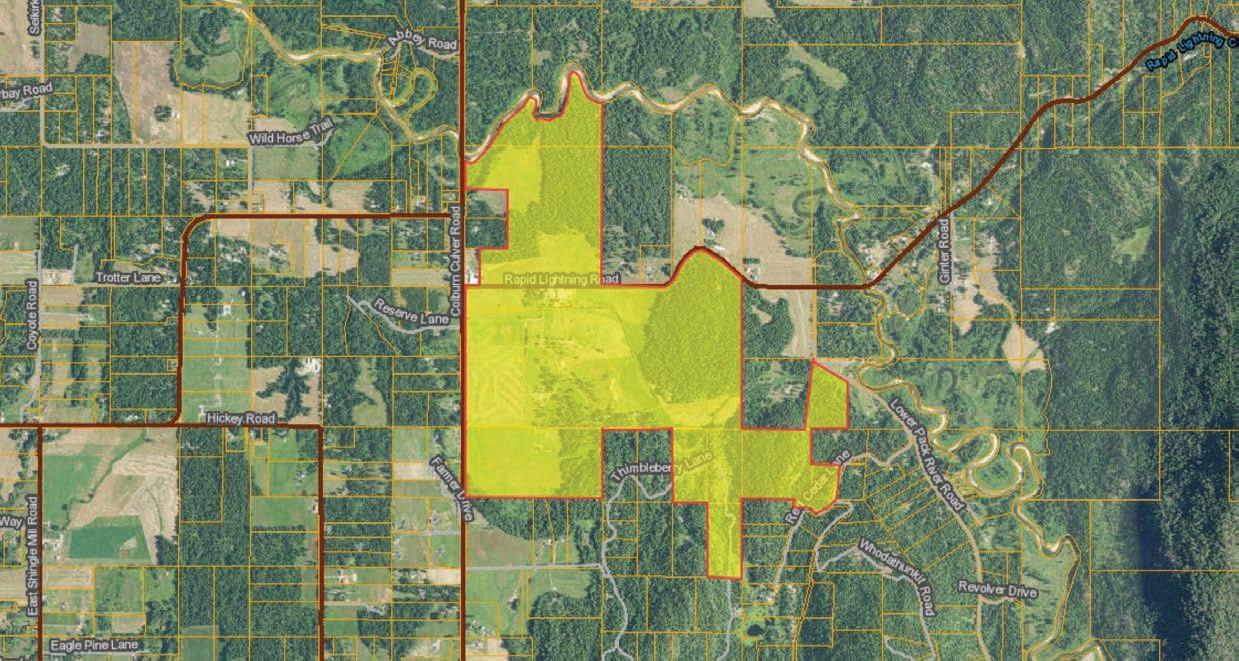
in the ongoing density debate in Bonner County — not a new story, but one that’s reaching a fever pitch with the help of a pandemic-induced population boom and growing appetite for development.
But where, and how, should this development be directed?
That’s the question inspiring a closer look at county land use code, led by groups like Project 7B and KBCR, who were inspired to mobilize thanks to developers circumventing the subdivision process, and larger and larger swaths of land seeking approval for smaller and smaller parcels.
“It started with a group of people from around the county who were just fed up with the stuff that’s been going on — the shenanigans, basically,” Bowman said.
A major case of minor land divisions
Bonner County in 2016 created a land use mechanism known as the minor land division, meant to
“assist the individual owners who were looking to divide land for simple purposes,” according to Bonner County Planning Director Milton Ollerton. An MLD allows for the division of a parcel into four lots “without the public hearings, notifications and agency review” previously required.
“It was never intended to subvert the regular process,” Ollerton told the Reader
However, in the five years since the MLD was adopted into county code, that is exactly what’s happened. Developers began to apply for contiguous MLDs, effectively building subdivisions without public or agency review.
Such has been the case with the Clagstone Ranch development, located northeast of Spirit Lake and already being marketed online as “a 380-acre private, gated community of five-acre homesteads surrounded by 1,000s of acres of public access forest lands.”
Clagstone Ranch has used the
minor land division process to create its parcels: 72 so far, with 18 MLD applications. Because those applications are approved administratively, Project 7B board member Susan Drumheller said that neighbors “had no notice, no opportunity, to have public input on that.”
“The first time you find out about it is when it winds up on the consent agenda at a commissioners’ business meeting,” she said.
Developers were quick to jump on the MLD loophole, especially once the county started to publicly discuss ways to close it in 2020.
“This becomes a sort of green light to anyone looking to take an action prior to a change and move forward to beat the deadline for the change date,” Commissioner Dan McDonald told the Reader
According to public documents obtained by Project 7B in mid-September, 2021 has seen at least 166 MLD applications, with the nonprofit identifying 11 which
“should have required short plat applications, meaning they created 5-10 contiguous lots,” and eight which created 10 or more lots and “should have required subdivision applications.”
Through various drafts and months of work, the county adopted code in August of this year, which states that, “a minor land division shall not be used contiguously to avoid the regular subdivision process.”
“This change is working,” Ollerton said. “The Planning Department has turned away applications that appear to be contiguous and will continue to stop those using multiple applications to avoid the subdivision process.”
However, MLDs filed prior to the code change in August are not beholden to the new standards. Still, motions for reconsideration have been filed to challenge seven
of the Clagstone Ranch MLDs. Project 7B has voiced support and provided financial backing for the action.
“Project 7B is calling for the county to review their decision to approve these MLDs and consider subjecting the development to a proper subdivision process that includes a public hearing,” the nonprofit shared in a Nov. 9 press release. “It’s the only way to ensure that everyone’s property rights are protected.”
Representatives for Clagstone Ranch did not respond to a request for comment.
When Drumheller urged commissioners to table a slate of four Clagstone MLDs at the board’s Oct.19 business meeting, Commissioner Jeff Connolly shared that the code’s loophole prompted him to have a conversation with Ollerton about “being a little bit more nimble when we see that people are taking advantage of our code and using it against us.”
code amendments in their newsletter and on their Facebook page.
A post about the upcoming Pack River Partners 700-acre rezone had amassed nearly 60 shares by Nov. 17 — a testament to what is sure to be a heavily attended meeting.
Critics of the upzone — that is, rezoning an area to allow for more parcels — are quick to point out that splitting the more than 700 acres into 10-acre parcels could lead to more than 70 additional homes in the area, which could diminish the rural character of the neighborhood.
“It started with a group of people from around the county who were just fed up with the stuff that’s been going on — the shenanigans, basically.”
“It didn’t seem like it was happening much, and then suddenly everyone was doing it,” Connolly said. “We learned. And I agree with Susan, that if you created 72 lots overall then you should have been held to a standard that all of this works together and everybody is on the same page.”
— Dave Bowman, on the founding of Keep Bonner County Rural citizen watchdog group, of which he serves as chairman.
That was also the concern earlier this year when a rezone application in the Hoodoo Valley aimed to change 160 acres from agricultural/forestry to rural residential with a five-acre lot minimum. Planning staff recommended denial and the P&Z Commission followed suit, but by the time the file reached the board of commissioners for final approval, the Planning Department had changed its position. The board approved the file on a 2-1 vote. While the rezone has since been appealed and sent back to the P&Z Commission, that case sowed distrust in people like KBCR chairman Dave Bowman.
“I don’t know how I have the authority to go against what the ordinance says,” Ollerton said.
“You don’t. It’s not that I’m trying to disagree with that,” Connolly replied. “I’m just trying to say that we got schooled.”
Upzoning uproar
Connolly’s comment from the end of that Oct. 19 discussion has stuck with Drumheller.
“I appreciated that, because we’ve all been schooled a little bit,” she told the Reader, in reference to the extensive use of contiguous MLDs. “In a way, it doesn’t surprise us, but it wasn’t something that we were super aware of.”
“Awareness” continues to be a guiding concept for Project 7B, which regularly shares information about upcoming rezones and
By Reader Staff
North Idaho’s crafters will have their best holiday creations on display at the 2021 Bonner County Fairgrounds Christmas Craft Fair on Saturday, Nov. 20 and Sunday, Nov. 21, with the fair open from 9 a.m. to 3 p.m. each day.
Apart from the wide variety of holidays goods for sale, the Christmas Craft Fair will also feature food, coffee, treats, “Santa’s Workshop” kids’
activities and daily visits from Santa noon-2 p.m. on both Saturday and Sunday.
The 2021 fair also includes the fourth annual Gingerbread House Contest, which benefits the Bonner Community Food Bank. Participants are asked to bring two non-perishable items along with their completed gingerbread house to the fairgrounds Thursday, Nov. 18 or Friday, Nov. 19 11 a.m.-5 p.m. in order for their delectable creations to be on display
“The zoning is not meant to be a menu system from which you can come in and pick the one that you want your property to be,” he said, adding later: “It’s become a sham.”
Whether they be contiguous MLDs or widely opposed rezones, these concerns come down to one central conflict: Those who aim to protect the rural integrity of the county’s broader landscape, and a Planning Department that is seemingly willing to upzone, in Drumheller’s words, “anywhere and everywhere.”
“What [Bonner County is] hearing loud and clear is that people want to try to protect their rural way of life,” she said. “They want to protect this agricultural, forestry heritage, and they’re getting pushback on that.”
By Reader Staff
The Kinnikinnick Native Plant Society program’s “Scotchman Peaks Update,” presented by Friends of Scotchman Peaks Wilderness Executive Director Phil Hough, will take place Saturday, Nov. 20 at 10 a.m.
This presentation, co-sponsored by Sandpoint Parks and Recreation, will be presented live on Zoom and recorded for later viewing. When viewed live, there will be opportunities for audience Q&A. To register for this program, go to: us02web.zoom. us/meeting/register/tZwsf-iqrzgiGtHWRueQB1xRNmYpG2efEVb3.
According to organizers, the Friends of Scotchman Peaks Wilderness are committed to connecting the people of North Idaho and Northwest Montana with the wild backyard that straddles their common border. The Friends’ mission is to make sure this rugged land is saved for our children and grandchildren. Join us to learn about what’s going on, what’s
throughout the Christmas Craft Fair weekend.
Due to the annual event’s popularity, vendor spots are dedicated exclusively to craft vendors, meaning that the goods for sale are truly handmade.
Learn more and find applications to be a vendor at bonnercountyfair.com. Those with questions can reach the fair office at 208-263-8414 or fairgrounds@bonnercountyid. gov.
new and why there are now more than 10,000 Friends of Scotchman Peaks Wilderness.
Hough is one of the founding board members of Friends of Scotchman Peaks Wilderness, as well as a founding board member of the Idaho Trails Association, and now serves on their advisory board. He is a past president of the Kinnikinnick Chapter of the Idaho Native Plant Society. He is a former chair of the Bonner County Aquatic Invasive Species Task Force. Hough is a member of the Idaho Panhan-
dle Forest Collaborative and a member of the North Idaho Resources Advisory Council. For his conservation work, Hough was awarded the Idaho Conservation League’s highest award for environmental activism for his work to save the incredibly wild Scotchman Peaks.
For more information, visit nativeplantsociety.org.
By Ben Olson Reader Staff
If Dan Wimberly had his way, every family in Bonner County who needed a home would have access to one. Until then, he’ll just have to keep building them one at a time.
Wimberly serves as president of the Idaho Panhandle Habitat for Humanity, a volunteer-led nonprofit organization which just completed its 22nd home in Bonner County since 1991, when founder Mike Schissler launched the local chapter. Shissler has since passed away, but Wimberly and his team carry the torch forward, dedicated to their mission to provide families in need with a forever home.
The organization averages about one house a year, usually completing the work in time to get a family into their new home before Christmas time.
“People say, that’s only one family a year, but it’s more than just one family,” Wimberly told the Reader. “That’s one more family now paying property taxes to Bonner County or the city of Sandpoint. That’s also income for local workers, since we hire licensed contractors for HVAC, plumbing and elec-

trical work. We also buy material from local vendors as much as we can.”
The way it works is simple: Families in need of housing solutions can apply through the website iphfh.org, and selections are made about two years in advance of a home being built. Selections are made based on need.
“The way we work is, they have to get some sweat equity in on the house the year before we build theirs,” Wimberly said. “It’s part of the contract for their house. A single mom would need to contribute 300 hours of sweat equity on another home. A married couple would need 500 hours.”
Wimberly said the sweat equity is beneficial as a “buy-in” option, but also helps future homeowners learn to do a bit of maintenance on their own home.
“By the time they’ve been with us for two years, they become part of the family,” Wimberly said. “We also become part of their family. We have a super relationship with the families that we’ve built a house for. I’ve watched kids grow up from just barely walking to graduating from high school.”
Wimberly stressed that Habitat for Humanity isn’t a “giveaway” organization, but rather can be likened to training wheels for future homeowners. Applicants need to prove they have some source of income so they can pay a small mortgage payment.
“We become the lender,” Wimberly said. “So we’ll add it all up, what it cost us to build the house, to pay skilled laborers, building fees, hookup fees, materials and land. That’s what we sell the house to them for, at 0% interest, with no down payment.”
Wimberly said the organization then structures the mortgage as a disincentive to flipping a home by attaching a second mortgage, which amounts to the difference between cost to build and market value.
“If they sell the home before the end of the mortgage period of, say 30 years, they’ll only get credit for the equity they have in the house up to that point,” Wimberly said. “So if you sold it in the first year or so, they might only have generated $10,000 in equity.”
This helps avoid families flipping homes and sticks to the basics of Habitat for Humanity, which is to provide families in need with places to live.
“We also try to mentor our homeowners,” Wimberly said. “We always tell them to keep the lines of communication open with us, because, especially the past couple years with COVID, we would get these calls that they got laid off, or they got COVID, and a lot of our families are hourly employees, so if something happens with their job or them, that’s going to affect their ability to make their mortgage payment. … We’ve never
Local chapter of Habitat for Humanity builds their 22nd home in Bonner County

foreclosed on a house and we never plan to. Even through the recession of 2007-2008 and what we’ve run into now with COVID.”
The Idaho Panhandle Habitat for Humanity is a volunteer-driven organization which generates most of its revenue from donations as well as sales at the ReStore, which accepts donations of furniture, building materials and appliances and sells them directly to the public.
“When you shop at the ReStore, you benefit Habitat for Humanity. It’s also the best place in Sandpoint to buy used appliances,” Wimberly said. “All appliances donated here are tested to make sure they work and then they get cleaned and put out for resale.”
The ReStore is always accepting used furniture, appliances, cabinets, building materials and the like, but they do not accept clothing, shoes or kitchen items.
The ReStore has about 3-4 employees working for hourly wages and the same number of people working as volunteers. When items need to be disposed of, Wimberly said his crew tries to take as much as they can to Pacific Steel to keep it from going to the dump.
While it usually takes the volunteer crew about 9-10 months to build a home from the ground up, the past year was marred by supply chain issues due to COVID.
“Normally we start when load limits are off the roads, and we usually finish by December,” Wimberly said. “This year, it has been like the perfect storm. … I have to take my hat off to the volunteers who have helped build the houses. We worked all last winter, set trusses on Nov. 5, then it snowed
and we were fighting snow to get the roof on, to get the shingles on. We were working in a house that was single digits some mornings, and through the summer when it was over 100 degrees and smoky. None of us are paid — this is all volunteer driven. These guys came out and built. It’s really great. There are a lot of them, and they all believe in this. They know there’s a need for affordable housing here in Bonner County.”
Wimberly also mentioned the Idaho Panhandle Habitat for Humanity is currently seeking people to serve on the board of directors. Interested parties should contact the ReStore at 208-265-5313.
After completing their 22nd Habitat for Humanity home, Wimberly said the crews will take the winter off after the tough stretch last year. Standing outside the newly completed home, Wimberly looked over with pride at what his crew did together.
“It’s a great thing to finish one so the family can be in the house before Christmas,” he said. “This year, we just closed last Thursday and they moved in over the weekend. It’s a single mom with three children who are all elementary school aged. Another family in a home.”
To volunteer for Habitat for Humanity, or to apply for a future home of your own, visit the website iphfh.org. Donate any used building materials, furniture or appliances to the ReStore at 1519 Baldy Park Dr.
By Reader Staff
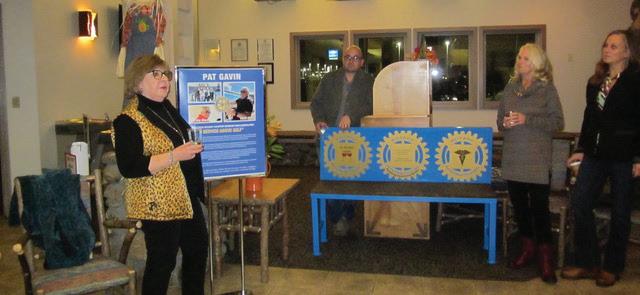
The Rotary Club of Ponderay Centennial unveiled a hand-crafted bench in honor of Patrick R. Gavin, a charter member of the club who exemplified “Service Above Self” throughout his life, in and out of Rotary. The bench will reside in the lobby of the Ponderay Mountain West Bank until it is placed along Sand Creek in a celebration next spring.
Gavin’s nickname was “The Big Woofie.” Despite seeming low key, he always filled the room with his large presence and dove into everything he did. He loved to spend time with his family. He loved to cook, eat and drink good wine. He loved boating, skiing, fishing, traveling and spending time with his dogs.
The service organization underscored that, “Gavin was invaluable to Ponderay Rotary. He was smart, generous, kind and witty.” What’s more, he played a critical role in the creation and success of the club’s scholarship program.
“He was passionate about our scholarship process and cared deeply about encouraging talented students to go forward towards their career goals,” stated Nanci Jenkins, Ponderay Rotary scholarship chair,
in a news release.
Gavin also threw himself into teaching others — not only through his veterinarian and radiology skills, but in numerous other areas.
“He and Kathy contributed a lasting legacy to Ponderay Rotary,” stated JP Carver. “Their ‘Changing of the Guard’ parties for many years, and his culinary skills with brisket, were unsurpassed — especially served with a nice glass of wine.”
Gavin was born on Feb. 14, 1947 in Laramie, Wyo. He graduated high school in LaGrande, Ore., attended Oregon State University, then Washington State University where he graduated with a doctorate in veterinary medicine. He then spent three years in the Army as a captain in the Veterinary Corps. Gavin married Kathy Kortekass on Dec. 23, 1978.
Gavin was dedicated to his career as a veterinarian; served as a professor at the WSU College of Veterinary Medicine for 29 years; and his radiology skills were well
By Reader Staff
Ting Internet, a division of Tucows, recently announced that fiber internet is now available for residents and businesses in Dover — specifically within Dover Bay and surrounding areas.
While Ting brings high-speed, reliable fiber internet to customers across the country, it places special importance on connecting communities where access to dependable internet has been challenging in the past.
“We’ve been active members in the greater Sandpoint community for over three years now and have been proudly providing Ting Internet in Sandpoint and Ponderay,” stated Kari Saccomanno, Ting manager for the greater Sandpoint area, in a news release. “There has been a tremendous response to our service and today we’re thrilled to add
respected in the field. He authored more than 200 papers and wrote the textbook, Practical Small Animal MRI. Gavin, 72, passed away June 26, 2019 at his home in Sagle after a battle with prostate cancer.
“We are happy to have had Pat as a Ponderay Rotary leader and will try our best to carry forward his passion for helping others.” Jenkins stated. “We all miss his smile, laugh and positive attitude. We hope this bench, which offers a resting place for community members while walking and chatting in any weather, would make him happy.”

Dover to our serviceable regions.”
The company will continue to expand its serviceable neighborhoods in Dover throughout 2021, with construction in surrounding regions actively ongoing while the weather permits.
Ting also provides bulk service to homeowners associations, apartment complexes and other multi-dwelling units. Locally, the Dover Bay Property Owners Association worked with Ting to secure a bulk internet package, providing fiber internet to nearly 300 homes within the region.
Locals can now visit ting.com/greatersandpoint to get more information and search their address to either order or pre-order Ting Internet.
For more information on Ting Internet, its services and pricing, or to find regular updates, visit ting.com/internet.
By Reader Staff
The Kinnikinnick Native Plant Society is offering a grant of up to $500 for a group, class or individual to carry out a project in Bonner County designed to promote awareness and appreciation of our native plants.
The application must be mailed to the KNPS Grant Committee, P.O. Box 1092,
Sandpoint, ID 83864 no later than Feb. 28, 2022. A follow-up report that outlines your accomplishments should be submitted by Dec. 31, 2022. Recipients are invited to present their findings at a monthly KNPS meeting.
Questions may be directed by email to the grant coordinator at grant@nativeplantsociety.org






By Zach Hagadone Reader Staff
It has been both a boon and a curse to historians that their field of study has become one of the chief fronts in our ever-spiraling culture wars. That’s perhaps putting it a little too diplomatically — history is most often carved into a cudgel with which to bludgeon contemporary ideological opponents. The “boon” in all this is that people seem to care a lot about history all of a sudden; the curse is that they frequently don’t care too much about actually studying it, preferring to fix on interpretations that fit their partisan lens.
Into the fray now steps The Dawn of Everything: A New History of Humanity, by anthropologist David Graeber and archaeologist David Wengrow. Published in October, the almost-700page tome is as iconoclastic as it is ambitious, synthesizing more than 100 years of scholarship on everything from paleolithic mammoth hunters to 20th-century African bushmen in service of a radically different view of how “civilization” has developed from prehistory to the so-called Enlightenment and beyond.
Even if we never paid attention in history class, we all have at least a rough idea of this story: In the misty past, as far back as 30,000 to 40,000 years ago, humans lived in small bands of hunter-gatherers, roaming the earth in something like an egalitarian “state of nature.” They lived that way mostly unchanged until about 5,000 years ago, when they started planting crops. With more abundant and stable food production came surpluses that fueled social hierarchies, with kings, priests, merchants, warriors and great masses of peasants clustered in the first cities — in other words, as human society grew more complex and productive it became more stratified and inherently unequal. New technologies of transportation and communication rose to further what
we blandly refer to as “progress,” and from there it was an inexorable march through various ages of “advancement” resulting in greater and greater concentrations of wealth and power in the hands of fewer and fewer individuals and states. Indeed, the predominant narrative goes, structural inequality is not only the price we’ve paid for civilization, it’s civilization’s defining feature.
The upshot of that near-universally accepted vision of human social development is that it presupposes certain power structures (like the one we have, rooted in private property and techno-industrial wealth accumulation) are somehow intrinsically more evolved than the “primitive” forms that came before.
Graeber and Wengrow argue that we have this upside down. The so-called “archaic” societies of hunter-gatherers didn’t live in a blissful state of nature, nor did they struggle through anarchic lives that were “solitary, poor, nasty, brutish and short.” Rather than muddling through tens of thousands of years of near-animal subsistence before the so-called “Agricultural Revolution,” when “civilization” literally and figuratively sprouted from the ground, the authors contend that our prehistoric ancestors were constant experimenters with social organizations, confronting ideas of freedom, order and equality with every bit as much intellectual vigor and clarity as the philosophes of 18th-century Europe (in fact, those philosophes got many of their ideas about freedom, order and equality from Indigenous thinkers).
This reassessment centers on a couple of deceptively revolutionary premises: our distant ancestors weren’t stupider that us and they didn’t live in hunter-gatherer societies because they couldn’t imagine another way — they chose those social forms on purpose, fully recognizing and understanding the tradeoff between hierarchy and freedom. They weren’t “stuck” in millennia of ignorant savagery, we’re the ones

who are stuck in an unimaginative, rigid social order that protects inequality as necessary and somehow preferred as a marker of high-functioning political and economic systems.
There is much in The Dawn of Everything to make a reader steeped in the “march of civilization” narrative recoil — but Graeber and Wengrow marshal a vast amount of evidence, including archaeological discoveries that are only now being analyzed around the world, to make their impeccably sourced and convincing case.
More important, the book requires the sensitive reader to confront their biases — why is it so unfathomable to
think that people living 40,000 years ago were our cognitive and intellectual equals? Why is it “provocative” to suggest that Indigenous communities were self-conscious, politically sophisticated and capable of grasping a multitude of ways to organize authority? How could we alter our society if we were as flexible, imaginative and self-possessed as these supposedly backward peoples?
How we answer these questions could have huge implications not only for how we understand the past, but navigate our present and approach our future.
November 18-25, 2021
THURSDAY, november 18
Live Music w/ Aaron Golay
6-8pm @ Idaho Pour Authority
Boise singer-songwriter bringing powerful and soulful roots and rock
CASA Annual Purse Party
4-7pm @ Pend d’Oreille Winery
Support CASA by shopping for slightly loved handbags and purses! powine.com
Ladies Homestead Gathering Herb Night
6:30pm @ Sandpoint Senior Center
Join us to learn all about mint, its uses and create and herbal make and take. Free! All women 16+ are welcome
Bingo!
6-8pm @ Sandpoint Senior Center
Ten games for just $10. Food available for purchase. 208-610-9898
FriDAY, november 19
Live Music w/ Okay, Honey Duo
5-8pm @ Pend d’Oreille Winery
Folk duo with fiddle, guitar and harmonies
POAC pre-concert reception
5-7pm @ POAC Gallery
Complimentary wine served
Live Music w/ Dario Re Trio
7pm @ Eichardt’s Pub
POAC presents Barrio Manouche
7:30pm @ Panida Theater
San Francisco-based acoustic ensemble with international roots and a unique fusion of cultures and musical backgrounds. Tickets: artinsandpoint.org
Live Music w/ Luke Yates & Chrissy Lee
6:30-9:30pm @ MickDuff’s Beer Hall
SATURDAY, november 20
Live Music w/ BareGrass
6-8pm @ Idaho Pour Authority
A fun local group playing progressive bluegrass and Americana
Christmas Craft Fair
9am-3pm @ Bonner Co. Fairgrounds
Featuring handmade crafts, vendors, unique gifts, treats and more!
Honoring Bonner Co. Veterans event
2pm @ Sandpoint Events Center
Guest speakers, snacks and coffee. Hosted by the Wild Horse Trail Chapter of the Daughters of the American Revolution
Shook Twins ‘Giving Thanks’ Concert
7:30pm @ Panida Theater
Join Shook Twins for their annual ‘Giving Thanks’ concert, with special guests Little Wolf. Doors open at 6:30pm, show starts at 7:30pm. Vaccination or proof of negative COVID-19 test required for entry
Hope Marketplace Co-Op (Sat & Sun) @ Hope Marketplace
An exciting new local shopping venue open Sat-Sun through Christmas where you can shop for art, jewelry, fiber, pottery, wood and more for the holiday season
Live Music w/ Son of Brad
5-8pm @ Pend d’Oreille Winery Favorites from every decade, 1950s to now
SunDAY, november 21
Sandpoint Chess Club
9am @ Evans Brothers Coffee
Meets every Sunday at 9am
Christmas Craft Fair
9am-3pm @ Bonner Co. Fairgrounds
Featuring handmade crafts, vendors, unique gifts, treats and more!
monDAY, november 22
Monday Night Blues Jam w/ John Firshi
7pm @ Eichardt’s Pub
Lifetree Cafe • 2pm @ Jalapeño’s Restaurant “On the Brink: Islam and the Middle East”
Outdoor Experience Monday Night Group Run – All levels welcome 6pm @ Outdoor Experience
tuesDAY, november 23
wednesDAY, november 24
Live Music w/ Bright Moments Jazz
6-8pm @ Idaho Pour Authority

Live Music w/ John Firshi
7pm @ Eichardt’s Pub
ThursDAY, november 25

By Ben Olson Reader Staff
Thanksgiving just wouldn’t be the same without the annual “Giving Thanks’’ concert by Sandpoint’s homegrown musical stars Shook Twins at the Panida. Last year, due to COVID-19, the group chose to play their show virtually, but this year they’re back on the Panida main stage Saturday, Nov. 20. Doors will open at 6:30 p.m. and the show begins at 7:30 p.m.
Katelyn and Laurie Shook will be joined by bandmate Niko Slice to play as a trio for most of the evening, but will be joined by Justin Landis on drums and Kyle Volkman on bass for the last portion of the show.
Best described as indie folk-pop, Shook Twins’ music fluctuates from haunting harmonic ballads to poppy dance tunes; a mix that has taken them around the country on various tours big and small for more than a decade. The intuitive vocal harmonies between twin sisters Laurie and Katelyn is only matched by the infectious energy of utility man Niko Slice, who also writes and leads songs on occasion.
Opening for Shook Twins is local indie folk duo Little Wolf, which features Sandpoint songwriter Josh Hedlund and Landis. Hedlund’s prolific songbook has earned him a loyal following of listeners over the years, and Landis is the quintessential go-to musician who is apparently able to play every instrument put in front of him.
As a special treat during the Little Wolf set, a music video for their song “Crickets” will be premiered on the big screen. Shot by Willie Witte, who hails from Sandpoint and has made a name for himself variously as director, editor and cinematographer for the TV series Roadtrip Nation, the video features Katelyn Shook and Kyle Volkman as actors.
“Willie asked a few couples if they wanted to be the stars, but they couldn’t do it, so he asked Kyle and I and I was super into it,” Katelyn told the Reader. “I wanted to be part of something creative because I respect his cinematography so much. We filmed it over three days in October. It’s creepy and awesome.”
Katelyn said the main event will feature a mix of new and old songs, touching on more “mellow vibes” while playing as a trio with Laurie and Niko, and picking up the pace when Landis and Volkman join on stage.
The show will serve as the first event at the Panida Theater under its vaccination policy, which states an event can be booked to full occupancy if audience-goers and event organizers show proof of COVID-19 vaccination or a negative test result. The other option, without

a vaccination or negative test proof, would be limited to around 200 capacity.
Dozens of anti-vax members of the community weighed in their opinions on the Panida’s Facebook page, pushing back on the policy, but Shook Twins are undeterred.
“Some of the arguments online are saying, ‘Why don’t vaccinated people need to take a test, since they can spread it also?’,” Katelyn said. “Our defense would be we’re just looking at, with all the data we have out there, having this protocol in place. It’s not foolproof, but we’re at least keeping people out of the hospital. That’s important to us to ensure we can keep doing our shows next month and feel safe about it. We’d just much rather have the one thing we know we can do at a show that makes it a little safer.”
Attendees will be required to show proof of a COVID-19 vaccination, or display negative test results, at the door. COVID-19 tests can be obtained at the testing facility by Bonner General Health on the corner of Fourth Avenue and Alder Street.
Shook Twins will be selling commemorative posters along with other merchandise at the show with proceeds donated to the Panida Theater. They’ll also pass around a hat to collect donations for the historic theater, which recently completed renovations on the marquee.
“I feel like the Panida is on an upward trajectory,” Katelyn said. “Working with the new staff members while rolling out the show has been night and day from our past experience. They’re really on top of it and really supportive of our safety. We feel heard and I just appreciate them.”


By Marcia Pilgeram Reader Columnist
here to remind you: Put that second bag back and step away from the produce shelf. One bag is enough.
Trigger Warning: The cranberries are coming! Chances are, you’ll have an offering of these lip-puckering-tart berries gracing your Thanksgiving table. Whether you’re a diehard, slide the gelatinous mass out of the Ocean Spray can-type of person, a canned, whole-berry-sauce enthusiast or a made from scratch specialist, I see cranberries in your future.
Even before I became a Pilgeram, I had (more than) my share of cranberries at Thanksgiving. I still remember my mom and grandma sorting out the puny rejects, then rinsing and simmering the rest on the stovetop until they popped and thickened to a magnificent ruby red.
We were always encouraged (forced) to add a big spoonful to our holiday dinner plate, and every plate after that until the leftovers were gone. It seemed like they lasted until Christmas when once again they were cooked up, cooled down and served from a lead crystal bowl (sadly, my mom once poured hot cranberries into the ornate bowl, and it cracked in half. So she glued it back together and, after that, it held holiday nuts in the shell — occasionally, it still does, but in my home now).
Once I got married and began making my own Thanksgiving feast for family and ranch crew, I too became guilty of preparing too many cranberries. One package just never looked like enough, but I am
It was about that time when I decided if I was to continue the cranberry tradition; I would learn how to make them taste good. It was the early 1980s, and I was ripe to welcome Martha Stewart’s new and fabulous inaugural book, Entertaining, into my ranch home.
Much to my mother-inlaw’s chagrin, armed with my excellent new book, I became a bold culinary ingénue. I began to experiment with countless accrutements, like cinnamon, fresh ginger, powdered ginger, maple syrup, citrus zest, orange juice, diced apples, Grand
Marnier and even a dash of chili powder. Some of these enhancements were bold and pleasing game changers for my holiday cranberry sauce. Unfortunately, some were not.
Until my children decided there was no reward great enough to suffer through yet another year of, “Who can eat the most cranberries contest,” I could count on them to consume copious quantities of the leftover tart delight.
Cranberries are no longer just pretty eye candy for the holiday table. Cranberries are one of Mother Nature’s best superfruits, full of essential nutrients and many health benefits. You’ll find them all over the grocery store — dried ones
for cereal or snacking, canned whole berries or jellied, fresh bags in the produce department, bottled juice on shelves and fresh juice in the coolers.
We all know that some of the best cocktails start with cranberry juice and vodka, like the Cape Cod, and if you add a splash of Cointreau, you’ll have yourself a Cosmopolitan (garnish either with cranberries dipped in egg white and rolled in coarse sugar).
Cranberries, fresh or dried, can be slow-simmered with other diced fruits, onions, sugar, vinegar and spices to make a delicious chutney, served on a cheese board or as a meat condiment.
This year, we divvied up
the Thanksgiving food preparations, and with many items falling to the oldest child, Ryanne, who’s in charge of the cranberries. I gave her my blessing to create them any way that inspires her culinary imagination. I’m hopeful that she only buys one bag. Otherwise, I’m sure to be drafted into the cranberry eating competition (wish me luck).
Meanwhile, don’t bog yourself down with all the cranberry choices. If you aren’t inspired to cook some up, this salad (that includes the other provocative holiday food — Brussels sprouts) is a delicious side for any table, in any season.
With apricots and pecans. Serves six. Don’t add the dressing until serving time.
•1 1/2 pounds Brussels sprouts, cleaned and finely shredded
•3/4 cup dried cranberries
•1/3 cup dried apricots, thinly sliced
•1/3 cup pecans, chopped and toasted (set a few aside for garnish)
•1/3 cup crumbled blue cheese
Dressing Ingredients:
•2 tbs honey
•1 tbs whole grain mustard
•1/4 cup Best Food Mayonnaise
•1/4 cup Greek yogurt
•2 tbs apple cider vinegar
•1 orange, zested and juiced
•1 tsp sea salt
•1 tsp black pepper
Trim excess leaves and ends off of the Brussels sprouts and shred finely with a sharp knife.
Zest and juice the orange, set aside. Combine the shredded Brussels sprouts, cranberries, dried apricots toasted pecans, blue cheese and orange zest.
Whisk honey, whole grain mustard, mayonnaise, orange juice, yogurt, apple cider vinegar. Continue whisking until well smooth and creamy. Add salt and pepper to taste. Chill the salad and dressing separately.
Just before serving, toss the dressing with the cranberry and Brussels sprouts mixture.
Spoon into serving piece and garnish with a few more pecans.
(For non-vegetarians, it’s delicious with an addition of 1/2 cup of crumbled bacon).


By Lyndsie Kiebert Reader Staff
When asked to describe his band’s music in only a few words, Barrio Manouche frontman Javi Jimenez falls silent. Then, he laughs.
“It is really hard for me to do that,” he told the Reader, “but I will try.”
His attempt includes descriptors like “gypsy jazz,” “flamenco,” “latin” and “a little bit of rock.” Perhaps the only accurate way to understand the band is to listen, and more importantly, to feel. It’s a experience possible in Sandpoint on Friday, Nov. 19, as the Pend Oreille Arts Council presents Barrio Manouche at the Panida Theater at 7:30 p.m.
The San Francisco-based acoustic ensemble features the backgrounds and passionate playing of musicians from Spain to France to Brazil — a collaboration of international caliber.
“It’s a representation of what the world should be,” Jimenez said. “We are all brothers and sisters, and there’s no room to fight over nationalities or the color of skin or a way of singing. There is space for everyone.”
It is within that diverse space that Barrio Manouche’s unique sound has taken shape. Jimenez said that each band member brings different aspects — or, “different feelings” — from their musical backgrounds, and the result is a nontraditional glimpse into a handful of world cultures, high-

This week’s RLW by Zach Hagadone

lighting the parts most loved by the band’s counterparts.
“We just play and play and play. That’s what we want to do,” Jimenez said, “and we find a lot of people, a lot of musicians, and we collaborate.”
That collaboration has led to a large cast of talented artists, including Jimenez’s brother Luis on cajon; Alex Zelnick on guitar, Gary Johnson on bass, Cyril Guiraud on saxophones and caxixi; and Magali Sanscartier on violin. Also slated to join Barrio Manouche at their Panida show is Colombian musician Ivan Rondon. Jimenez serves as vocalist, guitarist and lead songwriter for the band.
Though they won’t be present at the Sandpoint performance, Barrio Manouche also features two female dancers — Fanny Ara and Emaye Ama Mizani. Jimenez said he appreciates near-equal representation of gender in the band.
“It is kind of balanced, and I like that. We are a big family,” he said, adding later: “We just love to do this. We love to play music and share this with the rest of the

When it comes to dynamic harmonies and infectious melodies, the Spokane duo Okay, Honey nails it. Featuring Sarah Jean of the popular regional band The Powers and Joel Haugen, this male and female duo plays a mix of thoughtful Americana and indie folk that has earned them acclaim. Jean’s flawless fiddle merges well
with Haugen’s acoustic guitar, but the magic comes through their vocal harmonies and passion for music.
— Ben Olson
5-8 p.m., FREE. Pend d’Oreille Winery, 301 Cedar St., powinery. com.
humans.”
It is Jimenez’s goal to make that love apparent with each and every Barrio Manouche performance, and leave the audience with a sense that they were part of something special.
“We want people who come to our show to leave the show blown away, because that’s what I like when I go to see a band,” he said. “That’s what I like the most — they made me think, they made me feel. I feel, maybe, a little different.”
Also as part of their visit to North Idaho, Barrio Manouche is teaming up with POAC’s Ovations Program to perform at Sandpoint Middle School. Jimenez said the band enjoys interacting with students and using the opportunity to hopefully instill an interest in art and creation.
“It always turns out fantastic because the kids just don’t have the filters that we grown-ups have,” he said. “It is straight communication to their souls, to their hearts.”
Barrio Manouche’s trip to Sandpoint is also bringing the story of one Sandpoint child full circle. Max O’Leary, a Sandpoint High
School graduate, is the music agent who coordinated with POAC to bring Barrio Manouche — a band he represents — to the panhandle.
“It really means a lot to be a part of bringing a band of this caliber to my hometown,” O’Leary told the Reader. “My journey into the world of music — which eventually led to becoming my career — all began while attending SMS and SHS. So it’s nice to come full circle and help contribute to the live music community that got me started.”
Listen to Barrio Manouche and learn more about the band at barriomanouche.com. Tickets to this performance are $22 and can be purchased online at panida.org, at artinsandpoint.org, over the phone by calling 208-263-6139 or at the POAC Art Gallery (110 Main Street, Suite 101). Everyone is invited to a pre-show reception 5-7 p.m. at the POAC Art Gallery, where visitors can peruse artwork on display by local artists while enjoying a glass of wine before heading to the Panida for the concert. Doors open at 7 p.m.
Based in the Boise area, singer-songwriter Aaron Golay is on a “Northern Idaho Run,” with dates at Idaho Pour Authority on Thursday, Nov. 18, Capone’s on Friday, Nov. 19 and Eichardt’s Pub in Sandpoint on Saturday, Nov. 20.
Golay’s sound is intimate and dynamic, with harmonic guitar riffs and “ear tingling vo-
cals.” Check out his full-length 2020 album Love Lust Heartache with more info at aarongolaymusic.com. Better yet, go see Golay at IPA.
— Zach Hagadone
6 p.m., FREE. Idaho Pour Authority, 203 Cedar St., 208597-7096, idahopourauthority. com.

Author Gary Shteyngart has set a high bar with the first of what’s sure to become a tsunami of big-name “pandemic novels.” His fifth book, Our Country Friends, published Nov. 2 to instant acclaim, debuting on the NYT Bestseller’s list. In his signature humane-yet-mordant style, Shteyngart explores the fraught psychologies of a handful of friends quarantining together in Upstate New York. Don’t want to shell out for a hardback? Check out any of Shteyngart’s other, stellar, works, notably Absurdistan and Super Sad True Love Story.
The Idaho Legislature reconvened Nov. 15 in a special session targeted almost entirely at pushing back against federal COVID-19 vaccine and testing mandates — packing its agenda with nearly 30 bills on the topic. They adjourned on Nov. 17 (their regular session starts in January), but in the meantime catch up on the proceedings at idahoptv.org/ shows/idahoinsession.

Midway through its third season, the HBO series Succession has cemented itself with critics as among the best shows on what passes for “TV” in the streaming era. Revolving around the trials and tribulations (nearly all self-inflicted) of the billionaire Roy family of media magnates, Succession only gets more satirical, cringey, absurd and dark-hearted as its episodes unfold. Gleefully skewering the pathologies of the ultra-rich, it’s a Bonfire of the Vanities for our times.

From Northern Idaho News, Nov. 7, 1907
The regular meeting of the city council was to have been held Tuesday night but there were but four present, Meers, Coons, Walker, Ames and Martin. Owing to the fact that there was not a quorum present and a few matters were discussed informally.
It was reported that some of the business men of the city were buying up the city warrants as fast as they could be obtained, the purchases being made for the interest. The interest is 7%.
William Hubbard and A.M. Brown were in attendance representing the Hubbard-Brown Amusement company, who desire to establish a moving picture show in this city and wished to know what the license fee would be. They stated that the show would be strictly first class and the entertainment wholesome, so that even the most fastidious might attend and find enjoyment.
Messrs. D.M. Williams and H.Caldervale were present and asked the council about their project for the numbering of the houses of town. The plan proposed by them was briefly this: That the council should order the numbering of all residences and places of business in town and give them permission to do the numbering, the price charged to be 50 cents for the numbering. The plan as outlined would cost the city nothing and was viewed favorably by the council. It will be necessary, however, for the council to pass an ordinance requiring all houses to be numbered in order to make the plan uniform and to insure that all houses are numbered.

By Lyndsie Kiebert-Carey Reader Staff
There is a brief moment, between deep sleep and being fully awake, when time and space cease to exist.
This is a rather lofty way of saying that waking up is weird. Location is often a mystery: Am I in my own bed or a sterile, white hotel room? Time can also seem ambiguous: Have I woken for the day or simply from an afternoon nap?
The only things that seem certain upon waking are the temperature in the room, the feeling of the bed or the couch, or the ground beneath your back, possibly the smells around you. It is a state of complete vulnerability.
It was this on my mind as I drove home from a recent yoga class.
In the early summer, my local community center hosted a weekly beginner’s yoga course. I’ve dabbled in yoga, but by no means qualify for anything beyond a simple sun salutation. Luckily, these classes fit the bill, and I met with a friend for a couple of the classes.
It is now that I should reveal that I was extremely tired during these weeks. I tend to accept that I am always going to be a little tired, whether from work or family obligations or plain ol’ chronic anxiety. But looking back, I spent a good portion of the late spring and early summer very, very tired.
This particular class, which focused mostly on deep breathing and simple stretches, was going well. As is customary in many yoga classes, we ended in shavasana (also known as corpse pose), lying on our backs in meditation.
I recall the instructor telling us to take our time getting back to a seated position, recommending we roll onto our sides and press our bodies slowly upward. My next


memory happens in the mist of awakening. The ground was hard under my left shoulder and hip. The room was warm. I acknowledged that I didn’t know where I was, but without panic or concern. I was comfortable in the way I hadn’t been since childhood, so worn out that a nap on the floor was a common occurrence. That’s when I heard my friend’s voice.
“Hey Lynds, wake up.”
I stirred and sat up, suddenly aware of the quiet chatter and shuffle of yoga mats being rolled up. I had definitely been sleeping.
As it turned out, when I didn’t sit up after shavasana, I drew the attention of the class. When my friend informed them that it looked like I’d fallen asleep, the instructor told her to let me be. The rest of the class namaste’d and ended the session as I entered dreamland, drooling on my yoga mat.
I apologized to the instructor after class, but she told me that wouldn’t be necessary.
“If someone falls asleep in class, they obviously need that rest,” she told me with a smile.
I am forever thankful for the grace ev-

eryone showed me that day. Especially as the holidays approach, it is important to remember that we’re all tired. During a time of year when family time and relaxation supposedly reign supreme, let’s make that true. Take a note from my friend, instructor and all the kind people doing yoga that day, and let people rest. They probably need it.


With every new sunrise, there is a new chance. But with every sunset, you blew it.
By Bill Borders

[adjective]
1. given to or characterized by gross excess in drinking or eating.
“It was a crapulous afternoon at the buffet thanks to buy one get one free coupons.”
Corrections: All good in the hood!
1.Jazz style
6.Proven information
10.Shock
14.Small egg
15.Dwarf buffalo
16.Wild goat
17.Small finch
18.Habit
19.“Your majesty”
20.Science of cold temperatures
22.Smell
23.Sheeplike
24.Seize
25.It forms on a wound
29.Alkalizer
31.Producing a strong effect
33.Genuine
37.Trim
38.Three times
39.Wander aimlessly
41.Kit for a baby
42.Watered down
44.Writing table
45.Delete
48.Magicians
50.Finest
51.Intangible
56.Savvy about
57.Awestruck
58.Vibes
59.Lascivious look
60.Curved molding

Solution on page 22
61.Postage
62.Askew
63.Catches
64.Cash
1.Pear variety
2.Always
3.Entomb
4.Hodgepodge
5.Former Hungarian monetary unit
6.Servile
7.Bless
8.Hide
9.Makes lace
10.Disarrayed
11.Remain
12.Naughts
13.Put forth, as effort
21.Gospels
24.Strong flexible twig
25.Flower stalk
26.Formally surrender
27.Seaweed
28.The triforium of a church
30.Stronghold
32.An independent film company
34.Liturgy
35.Does something
36.Scallion
40.Search haphazardly
41.Emissaries
43.A type of lever
45.African virus
46.Regenerate
47.Daisylike bloom
49.Muscle contraction
51.Weightlifters
pump this
52.Car
53.Fiber source
54.Disabled
55.Catch a glimpse of