The filing deadline for statewide and legislative candidates in the Tuesday, May 19 primary election came and went Feb. 27 and we’re now in the process of making sure we get them all in the paper. Meanwhile, the filing deadline for county races opened March 2 and will close at 5 p.m. on Friday, March 13. We’ll get to providing more detail on those races in an upcoming paper. Until then, if you’re feeling the civic itch to get involved, find all the pertinent information — including filing forms — at run.voteidaho.gov.
The Doomsday Machine
Amid the barrage of war news over the past week or so, three stories jumped out at me — and caused me to jump out of my skin.
The first, published Feb. 26 by the New Scientist, centered on GPT-5.2, Claude Sonnet 4 and Gemini 3 Flash being pitted against one another in 21 simulated war scenarios, ranging from international standoffs to border disputes, resource competition and “existential threats to regime survival.” The bots took 329 turns in total and were given an “escalation ladder,” which let them select options spanning from diplomatic protests and complete surrender to full strategic nuclear war. They selected that last action 95% of the time. The lead researcher said that the frequency with which the bots nuked each other — with almost no consideration of the human cost — was “sobering.”
Then, on March 3, reports went out throughout the media of alleged comments by military leaders framing the U.S. assault against Iran as a “Biblically-sanctioned war” that must be as unrestrained as possible in its violence. (Secretary of War Pete Hegseth has also called for a “crusade” by the West against Islam and said the U.S. will not be restrained by “stupid rules of engagement.”)
Finally, into that cauldron or worst-case developments, OpenAI CEO Sam Altman contractually obligated his company to hand the Pentagon one of those AI bots that prefers nuclear war 95% of the time to be used “for any lawful purpose” by the military. Presumably that includes war planning. The move came after AI company Anthropic refused to sign the same agreement and was promptly declared a “supply-chain threat” by the Trump administration.
In Fortune on March 3, Altman was quoted as writing on X the weekend before: “I think you should be terrified of a private company deciding on what is and isn’t ethical in the most important areas. Seems fine for us to decide how ChatGPT should respond to a controversial question. But I really don’t want us to decide what to do if a nuke is coming towards the U.S.”
Well, I guess, smoke ’em if you got ’em.
DEAR READERS,
I remember when I was 10 years old and my dad came rushing into the house from work and turned on the TV. “What’s going on?” I asked and he said, “We’re at war.” It was the first day of the Gulf War in Iraq and I remember feeling sick to my stomach that people were dying somewhere across the world while I watched it on TV and ate ice cream.
I feel the same dread every time I see military action gearing up, no matter who the players are. It’s especially sickening, though, when it’s my country acting as the aggressor.
Lately, day after day seems to be filled with stories of greed and corruption. I’ve grown so weary watching as another bolt comes out of the mechanism every damn time I look around. It’s a wonder the machine keeps turning at all.
I’m not hopeful for much, but I do hold space for the idea that someday cooler heads will prevail and bring us back to something resembling normalcy... but I’m not holding my breath.
–Ben Olson, publisher
111 Cedar Street, Suite 9 Sandpoint, ID 83864 208-946-4368 sandpointreader.com
Editors Emeriti: Lyndsie Kiebert-Carey Cameron Rasmusson John Reuter
SATURDAY, MARCH 21
Advertising: Ben Olson ben@sandpointreader.com
Contributing Artists: Ben Olson (cover), Bill Borders
Contributing Writers:
Zach Hagadone, Ben Olson, Soncirey Mitchell, Lorraine H. Marie, Brenden Bobby, Kyle Pfannenstiel, Katie Botkin, Rev. Catherine Lyle, Pat Meyers, Marcia Pilgeram
Submit Stories To: stories@sandpointreader.com
Printed Weekly At: Tribune Publishing Co. Lewiston, ID
Subscription Price: $200 per year
Website Designed By: Keokee
The Sandpoint Reader is a weekly publication owned by Ben Olson and Keokee. It is devoted to the arts, entertainment, bluster, politics and lifestyle in and around Sandpoint, Idaho.
We hope to provide a quality alternative by offering honest, in-depth reporting that reflects the intelligence and interests of our diverse and growing community.
The Reader is printed on recycled paper using soy-based ink. Leftover copies are collected and recycled weekly, or burned in bonfires to appease the gods of journalism. For back issues, contact the publisher. Free to all, limit two per person, please.
Letter to the Editor Policy:
We welcome letters to the editor on all relevant topics. Please, no more than 200 words, no excessive profanity or libelous statements and no trolls. Please elevate the discussion and stay on topic. Letters will be edited to comply with the above requirements. Opinons expressed in these pages are those of the writers, not necessarily the publisher. Send to: letters@sandpointreader.com
About the Cover:
This week’s cover was designed by Ben Olson
Sandpoint P&Z discusses downtown code changes
By Zach Hagadone Reader Staff
Sandpoint Planning and Zoning commissioners met March 3 to further discuss proposed zoning changes in the downtown area — part of an ongoing project touching on land uses, building heights and historic preservation.
Deputy Director of Planning and Community Development Bill Dean framed the discussion by describing downtown as “the city’s living room. We want to increase its emphasis and be top of mind for how we can drive investment.” Specifically, he summarized the thrust of the proposed changes as encouraging “walk, shop, eat” development.
Following several previous discussions both at P&Z and the City Council, Dean presented a slate of new concepts for consideration, which included past input from city officials.
Broadly, the zone changes would create an “inner” downtown core and “outer core,” with a historic overlay in the inner core. One of the most controversial aspects of the draft plan was the inclusion of restrictions on office spaces on the ground floor of the inner core — specifically related to real estate offices.
Dean told P&Z commissioners that after receiving copious feedback, both for and against the restriction, the revised plan makes that prohibition more general.
While no one land use “is going to make or break downtown,” Dean said, a lot of offices can be “dead spaces.” The idea of restricting them from the ground floor in the inner core is intended to encourage “activity generating” uses.
Meanwhile, current code restricts residential from the ground floors throughout downtown, but the revised proposal allows that use in the outer core.
Overall, Dean described the zoning changes as a “liberalization of land use
regulation,” aside from that one restriction on inner core, ground-floor offices.
“It is sound and consistent with the objectives, with the downtown core principles and purpose, that we don’t allow offices on the ground floor — that we allow them above that,” said Commissioner Scott Torpie.
Meanwhile, the other high-profile discussion point in the proposed changes relates to height restrictions. Current code allows for buildings up to 65 feet tall, though as Dean pointed out, in the 20 or so years since that ordinance passed few if any new developments have gone that high in the immediate downtown area and none in the inner core.
The proposed changes would lower that limit to 35 feet in the inner core and allow up to 45 feet in the outer core with an approved conditional use permit.
Dean noted that most of the current structures downtown don’t even reach the 35foot level — the Panida Theater, for instance, is 28 feet tall — and the Church Street apartments are representative of a 45-foot-tall building.
Based on those apartments and the nearby Bernklau Cafe, the latter which is about 35 feet tall, Commissioner Reid Weber suggested allowing
buildings up to 45 feet in the outer core without the need for a CUP, since that height range “fits the context of the area.”
Commission Vice Chair Wayne Benner said that while redevelopment in the inner downtown core is “going to be a wall” regardless, he argued that sticking with 35 feet would be more consistent with the current streetscape.
“This is a good step in that direction,” he said.
Going even further, Commission Chair Mose Dunkel suggested setting the heights in the inner core at 30 feet.
“I can’t believe I’m saying this, but the downtown looks really good right now, and I think if it looked like that in 50 years, I think that’d be a success,” he said.
Commissioners also discussed the overall size of the proposed downtown zones, with Benner repeatedly arguing that the inner core as represented in the new draft plan is too big, saying it should be the size of a “small mall,” measuring a block or two long and the same distance wide.
However, Planning and Community Development Director Jason Welker reminded the commissioners that the city is also gearing up for Phase 3 of downtown revitalization, which is intended to position the core
and surrounding areas for expected population growth to upward of 16,000 residents by 2040. Following that, Welker said the land uses established between now and then will extend for 50 to 75 years.
“We’re planning now for the end of the 21st century,” he said.
The proposed zoning changes are far from approved, however, with a review of Commercial A changes and design standards
scheduled for the Tuesday, March 17 P&Z meeting, followed by historic preservation code review in April, more commercial zoning design review in May, a public hearing in June, and the goal of bringing a final draft to the council sometime between July and August.
“We’re not in a hurry — we want to get this right,” Dean said.
Idaho secretary of state won’t give Justice Dept. sensitive voter info
DOJ has sued 29 states for refusing to turn over voter roll data
By Kyle Pfannenstiel Idaho Capital Sun
Idaho’s top election official recently said he will not give the Trump administration access to sensitive personal information about 1 million Idaho registered voters.
In a letter to the U.S. Department of Justice last week,
Idaho Secretary of State Phil McGrane turned down the the Justice Department’s offer for a deal to share the information, which would include Social Security numbers, driver’s license numbers and birth dates.
The move to decline sharing Idaho’s full voter roll comes as the Justice Department has
sued more than two dozen states for refusing its demands.
In December, a DOJ attorney hinted that the federal government could sue Idaho for not complying, according to public records obtained by the Idaho Capital Sun.
McGrane wrote in his letter that the Justice Department had recently revealed
in a separate federal lawsuit filing that sensitive personal information, including Social Security numbers, were shared from federal systems “to unauthorized persons.”
“That development reinforces the importance of
< see VOTER ROLL, Page 5 >
An image showing proposed zone changes in Sandpoint. Courtesy image
BOCC denies CUP for Elmira communication tower
By Soncirey Mitchell Reader Staff
After a series of meetings spanning two months, the Bonner County Board of Commissioners unanimously denied a conditional use permit application for a communication tower near Highway 95 in Elmira. The Feb. 26 decision comes after the BOCC denied a similar proposal in Oldtown, which has resulted in yet-unresolved litigation with Verizon Wireless.
Property owners James and Sandy Dolyniuk submitted the original application for the 140-foot tower in 2023, which would have been built by Harmoni Towers and managed by Verizon Wireless. The proposed site was located on a 20-acre parcel more than 500 feet from the nearest existing structure and 40 feet from the
property’s mapped wetlands. Developers intended to use the tower to improve cell service in the Elmira area, which Radio Frequency Engineer Steven Kennedy of the Arizona-based Biwabkos Consultants, representing the applicants, argued constituted a “significant gap” in coverage.
The BOCC approved the CUP in 2024; however, after 20 nearby landowners filed for judicial review, the court vacated the decision and remanded the matter to the county. The court did not rule against the applicants, but stated that, “Harmoni has failed to offer probative evidence sufficient to support its claim that the proposed tower will be compatible with the surrounding community,” according to the Bonner County staff report.
The commissioners heard the application “de novo” —
that is, from the beginning, free from previous decisions — across two, four-hour meetings on Jan. 15 and Feb. 11, reconvening Feb. 26 for another two-and-a-half hours of deliberation. The BOCC ultimately voted to deny the CUP, ruling that the proposed tower conflicted with the Bonner County Comprehensive Plan.
“I find that the proposed CUP is in conflict with the Comprehensive Plan, since the plan seeks to ‘preserve the rural character’ of our county and placing a [140-foot] tall cell tower in the ... view of the neighboring properties will neither preserve nor enhance the rural character of those rural-residential and agricultural-forestry designated parcels that are near the subject parcel,” said BOCC Chair Brian Domke.
“For me, also, the pro-
posed cell tower is not visually similar to the power lines that exist on the subject parcel or in the surrounding area,” he added. “Instead, the proposed CUP will negatively impact the rural character of those parcels by introducing a new and unique commercial infrastructure that is inconsistent and out of character with the existing rural context.”
At the Jan. 15 and Feb. 11 meetings, homeowner Joan Esnayra and attorney Norm Semanko, of Boise-based Parsons, Behle and Latimer, argued on behalf of the appellants that instead of building a new tower, Verizon could collocate on an existing tower, identify a new site or reduce the proposed tower’s height.
Kennedy argued that the existing towers would either not meet Verizon’s needs or are already at capacity for the number of satellites in use;
however, the commissioners found that the applicants did not consider all available towers in the area.
“By contrast, the appellant provided an alternative site for collocation that was not identified and evaluated by the applicant, which is the Round Mountain Tower site owned by EL Internet [Northwest],” said Domke, arguing that, because an alternative site exists, the BOCC’s denial does not violate the Telecommunications Act of 1996 by “materially inhibit[ing]” Verizon’s ability to provide cell service.
The applicants now have the opportunity to appeal the decision, relocate the tower or file a legal challenge. As of press time, their counsel, Josh Leonard, of Boise-based Clark Wardle, LLP, did not respond to a request for comment on his clients’ next steps.
careful stewardship of sensitive voter information. While I appreciate the Department’s representation that Idaho’s data will be safeguarded, I cannot take that now-apparent risk in the absence of clear legal duty to do so. Ultimately, my concern is for the privacy rights of Idahoans who have registered to vote, as secured under Idaho law,” McGrane wrote to the Justice Department’s Civil Rights Division’s Voting Section Acting Chief Eric Neff in a Feb. 26 letter.
The letter didn’t specify how that data was shared. But in January, the Justice Department disclosed in a court filing that employees of the federal Department of Government Efficiency, or DOGE, shared Social Security data on an unsecured third-party server, The New York Times reported.
A DOJ spokesperson declined to comment on McGrane’s letter.
In a statement, Idaho Sec-
retary of State’s Office spokesperson Joe Parris said, “Idaho law clearly protects the release of private voter information. We have full confidence in the integrity and accuracy of Idaho voter rolls through consistent voter information confirmation and will continue to ensure only American citizens are voting in the 2026 election.”
How we got here: DOJ says it sought info for election security
McGrane’s office already gave the Justice Department a copy of Idaho’s publicly available voter registration list, which scrubs that sensitive personal information, the Idaho Capital Sun previously reported.
In early January, McGrane told the Sun in an interview that his office was still in talks with the Justice Department over whether and how to share Idaho’s full data, which he portrayed as a complex legal issue.
The Justice Department has said it wants Idaho’s data
to ensure election integrity. But as the Trump administration has ramped up immigration enforcement, some fear how the federal government will use the data. Trump has falsely claimed that droves of noncitizens vote, a crime which is actually rare nationally and in Idaho.
In September, the U.S. Justice Department asked Idaho — like it had asked other states — to turn over its full voter registration records with identifiable, sensitive information on registered voters.
SOS tells DOJ his office doesn’t have legal duty to turn over full voter roll
McGrane, a Republican who’s running for reelection, also told the Justice Department that he doesn’t believe his office is required under “a clear legal duty” to share Idaho’s full voter roll with the federal government.
“My responsibility as Idaho’s Secretary of State is to administer elections in accordance with state and federal
law and to safeguard the sensitive information entrusted to this office by Idaho citizens,” McGrane wrote in the letter to Neff. “Idaho law strictly governs the disclosure of voter information. In the absence of a clear legal requirement that Idaho provide a copy of its complete, unredacted voter list, and in light of my responsibility to protect Idahoans’ personal information, my office will not provide the requested data.”
The DOJ has sued 29 states for refusing to turn over their voter registration lists with sensitive information, according to the Brennan Center.
But federal judges dismissed the Justice Department’s lawsuits against Oregon, California and Michigan.
The three rulings dismissing lawsuits, McGrane wrote, concluded that neither the National Voter Registration Act, the Help America Vote Act or the Civil Rights Act — three federal laws the Justice Department has cited in its demands — “authorize the
Department to require a disclosure of a state’s full voter registration list on request. This indicates that the Department lacks a legal basis to demand personal information otherwise protected under Idaho law.”
“As a result, after further consultation with the Idaho Attorney General’s Office and additional review of Idaho law, I must inform you that Idaho will not provide additional personally identifiable information from its voter registration system, including dates of birth, Social Security numbers or driver’s license numbers,” McGrane wrote.
This story was produced by Boise-based nonprofit news outlet the Idaho Capital Sun, which is part of the States Newsroom nationwide reporting project. For more information, visit idahocapitalsun.com.
< VOTER ROLL,con’t from Page 4 >
County names Kendra Smith new planning director
By Soncirey Mitchell Reader Staff
Five months after the departure of former-Bonner County Planning Director Jake Gabell, landscape architect and longtime planner Kendra Smith has taken over the position. Smith began the onboarding process the first week of March with the help of Alex Feyen, who has been serving as interim planning director since September.
“I’ve had a second home in Bonner County since 2006 and was able to finally call it ‘home’ in 2022 when I moved here full-time,” Smith told the Reader. “I continued to work outside of the area until recently, when I saw the announcement for the Bonner County planning director position. With planning as a passion, I applied.”
Smith previously served as the planning director for La Conner, Wash., and the co-planning and assistant planning director for Skagit County, Wash., which she found shares many of the same traits as Bonner County.
“Skagit County and Bonner County are similar in the following ways: both have a dominant land base consisting of natural resources (forest, agriculture, water); both face development pressures from growth, bringing with it with diversified options for the future; both offer outstanding recreational opportunities; both have tribal cultures; and both have amazing landscapes offering us a slice of paradise.”
During her tenure in Washington, Smith developed a focus on the preservation of natural resources, beginning with the state’s Growth Management Act, “which included many unfunded mandates requiring major
comprehensive plan amendments and related code changes.” The 1990 law sought to manage urban sprawl in growing cities and counties.
“It morphed into the Natural Resource Lands Policy director role, where I was involved in farmland protection through the purchase of development rights and the development of local and state forestry policies and regulations on both state and private lands,” she said.
Smith joins Bonner County amid an yearslong update to the county’s Comp Plan, which deals with property rights, land use regulations and infrastructure — among other issues — helping the county anticipate and shepherd future development. The Bonner County Board of Commissioners has yet to adopt any permanent changes and intends to schedule public workshops on the update, to be held on yet undisclosed dates.
“I am very excited to be part of the Planning Department team and look forward to working with our clients of Bonner County,” said Smith.
Bits ’n’ Pieces
From east, west and beyond
Israel and the U.S. launched a bombing campaign against Iran early Feb. 28, resulting in the death of the country’s 86-year-old supreme leader, Ayatollah Ali Khamenei alongside other top Iranian security officials. Some in Iran cheered Khamenei’s death, while others dressed in black.
Two hours after the strikes began, President Donald Trump posted that, “Iran tried to interfere in the 2020 and 2024 elections to stop Trump and now faces renewed war with the U.S.”
According to legal analyst Joyce Vance, the U.S.-Israel attack is on thin ice, having bypassed congressional war declaration policies and ignoring the U.N. Charter’s use-of force-policy.
Israeli Prime Minister Benjamin Netanyahu has urged Trump to strike Iran since December. At the time there were anti-regime protests in Iran, prompting a crackdown killing thousands. On social media, Trump urged protesters to take over. U.S.Iran meetings followed, with threats of a military strike against if there was not “real progress on a real deal very quickly.” The stated aim was for Iran to give up a nuclear enrichment program, a ballistic missile program and financing of regional militant groups.
Secretary of State Marco Rubio stated the U.S. knew there would be an Israeli “action” that would precipitate an attack on American forces, so by not acting preemptively “we would suffer higher casualties.”
After the bombing, a senior Iranian official “signaled” there would be no negotiations with the U.S.
On March 1, the Pentagon told Congress that Iran had no attack plans for U.S. military personnel or Persian Gulf bases unless Israel struck first. Israeli officials said Israel would not have made a move against Iran without Trump’s approval.
In 2015, then-President Barack Obama negotiated a “Plan of Action” limiting Iran’s nuclear capabilities. Trump withdrew from it in 2018 and Iran began ignoring the plan’s limitations.
Iran has vowed revenge for the airstrikes, which killed an initial 200 Iranians. The Associated Press reported there is potential for a prolonged conflict enveloping the Middle East, a contrast to Trump campaigning on no “forever wars.” Trump said “Operation Epic Fury” could last four to five weeks — or longer.
Targets in Iran included hospitals,
By Lorraine H. Marie Reader Contributor
medical facilities, a school and cafes. Regarding casualties, U.S. War Secretary Pete Hegseth said at a press conference, “No stupid rules of engagement, no nation building quagmire, no democracy-building exercise, no politically correct wars. We fight to win ...”
Some commentators support the attack, such as Fox News’ Sean Hannity, who said the bombing would be one of history’s “great military victories.” Meanwhile, former-U.S. intelligence analyst Harrison Mann said “you’re already being bombarded by lies from the White House.” Various international media reported there’s no evidence Iran is on the verge of developing a nuclear weapon, and the country does not have weapons that can strike the U.S. — excuses used by Trump to justify the attacks. In the Federalist, John D. Davidson indicated Trump’s nuclear excuses make no sense: We were told the U.S. “totally obliterated Iran’s nuclear capabilities” eight months ago.
Russia called the attacks “a preplanned and unprovoked act of armed aggression against a sovereign and independent U.N. member state.” European leaders called for restraint and diplomacy.
Former Labor Secretary Robert Reich suggested the real reason for the attacks on Iran are to serve as a distraction from the economy, ICE raids and murders, Trump’s increasing unpopularity and dodging the full release of the Epstein files. Some analysts argued that the aggression is about capturing Iran’s oil. U.S. oil producers have pledged to “help stabilize Iran” if the Iranian regime fails. The conflict is expected to raise oil prices.
Experts, including Thomas Friedman, who published an opinion piece in The New York Times, argued that Iran’s clerical rulers may be “too deeply entrenched” for citizens to topple, even while Iranians are the “most naturally pro-Western in the region.”
Just one in four Americans support U.S. strikes on Iran, a Reuters/Ipsos poll found.
The initial death toll in Iran: 555 (likely an undercount), including 180 at a girls’ elementary school; six U.S. soldiers; and at least 31 in Lebanon following an Israeli strike.
Blast from the past: “If you are patient in one moment of anger, you will escape a hundred days of sorrow.” — Found in a fortune cookie
Kendra Smith. Courtesy photo
Who’s running for office?
Candidates file for LD1 Statehouse seats
Ballots will feature names familiar from past primary, general elections
By Zach Hagadone Reader Staff
With the filing deadline to seek office in the Tuesday, May 19 primary election passed, voters in Idaho Legislative Dist. 1 will have a full slate of candidates to choose from.
Every legislative seat in the state is up for election this cycle, as well as all constitutional offices and three of Idaho’s four congressional seats, with more than 1,200 candidates filing to run statewide as of March 5.
In LD1, all three incumbent legislators face challengers in the primary. Sen. Jim Woodward, R-Sagle, will face off with Scott Herndon, also of Sagle, in the GOP primary — the fourth time they’ve sought the same Senate seat since 2018.
Herndon, a homebuilder and current chair of the Bonner County Republican Central Committee, lost to Woodward in all but one of those contests, when he secured a primary and general election win to serve a two-year term from 2023-2024. Woodward, a marine construction and excavation business owner and retired Navy commander, returned to defeat Herndon in that year’s primary, and is seeking a second consecutive term for 2026 (which would be his fourth term overall).
Woodward bested Herndon in the 2024 primary — which
ended up being one of the most expensive primary races in recent memory, with both candidates raising in excess of $100,000 — by a relatively close margin of 51.94% to 48.06%, respectively.
Woodward serves as a co-chair on the Legislature’s powerful budget-setting Joint Finance-Appropriations Committee, as well as on the Education Committee.
Steve Johnson, a Sagle resident who has sought several elected offices in recent years, filed to run for the LD1 Senate seat as an Independent.
A lifelong local resident with decades of experience as an educator and farmer, Johnson filed to run as a Democrat for the Dist. 1A House seat in 2022, then dropped out to re-register as an Independent writein Senate candidate against Herndon. He again ran for Idaho Senate as an Independent in 2024, but withdrew to put his name on the ballot for Bonner County commissioner against Dist. 1 Commissioner Brian Domke, who ultimately prevailed at the polls.
As an Independent, Johnson will not appear on the primary ballot,, moving directly to the general election in November.
Other names on the ballot will be familiar to voters in LD1 — which encompasses most of Bonner County and all of Boundary County.
Two Republicans will vie for their party’s nomination for the House 1A position: incumbent Rep. Mark Sauter, R-Sandpoint, who is seeking a third term, and challenger Jane Sauter (no relation) in a repeat of their faceoff in 2024.
Mark Sauter, a longtime former fire services leader in California and North Idaho, won his last primary race by a handy margin of 49.8% against BCRCC-endorsed Jane Sauter’s 31.6% and fellow GOP challenger Spencer Hutchings.
Sauter serves on the Legislature’s Agricultural Affairs, Education, and Resources and Conservation committees.
Karen Matthee, a former journalist and nonprofit communications director who serves as the chair of the Bonner County Democrats, will again seek the House 1A seat under her party’s banner, following an unsuccessful general election bid in 2024, where she took 22.3% of the vote compared to Mark Sauter’s 77.7%. She will not face an opponent on the May primary ballot.
The House 1B race will also look familiar to voters who participated in the 2024 election, with incumbent Rep. Cornel Rasor, R-Sagle, again facing GOP challenger Chuck Lowman. Rasor, a lifelong resident, owner of the local Army Surplus and longtime figure in Idaho conservative politics, is running for a third
Idaho Congress hopefuls in 2026?
term after his appointment by Gov. Brad Little to fill the vacancy left by Sage Dixon, who retired from office fewer than two months before the November 2024 election. He serves on the Legislature’s Business, Local Government, and Revenue and Taxation committees.
Prior to that, Rasor won the primary against Lowman with nearly 52% of the vote to just more than 48%, respectively. Lowman served as a U.S. Army chaplain before returning to Idaho, where he has worked as a biologist, pastor and business owner.
Finally, Kathryn Larson will repeat her 2024 challenge for the House 1B seat in 2026, though this time filing as an Independent. A strategy and management consultant with international experience and post-graduate work in education and organizational development, Larson previously sought the seat as a Democrat. She took 28.7% of the vote in that race against Rasor’s 71.3% in the general election.
The deadline to withdraw from the primary is Friday, March 6 at 5 p.m. (MT), which is also the deadline for write-in candidates to enter the race. Find all election-related info at run.voteidaho.gov.
Pick up future editions of the Sandpoint Reader for more candidate profiles and questionnaires heading into the May 19 primary.
By Kyle Pfannenstiel Idaho Capital Sun
All members of Idaho’s congressional delegation who are up for reelection are running, and they are facing primary election challengers.
This year, three of Idaho’s four congressional seats are up for election — one seat in the U.S. Senate and both of its seats in the U.S. House.
First, candidates with a declared party will vie for the party’s bid in the Tuesday, May 19 primary election. Then, winners of the races will ultimately be determined in the Tuesday, Nov. 3 general election.
Only registered Republican voters can vote in Idaho’s closed GOP primary elections. Here’s a look at who’s running to represent Idaho in Congress. Find the full list of candidates for all offices online in the Idaho Secretary of State Office’s candidate database.
The deadline to declare candidacy for Idaho’s federal, statewide and legislative offices was Feb. 27. Candidates have until 5 p.m. (MT) Friday, March 6 to withdraw their candidacy, or to declare their intent to be a write-in candidate.
U.S. Sen Jim Risch faces three Republican challengers
U.S. Sen. Jim Risch, 82, is running for a fourth six-year term. The Republican was first elected to the seat in 2008 and now chairs the U.S. Senate Foreign Relations Committee.
He faces three Republican challengers in the May primary election: Denny LaVe, Joe Evans and Josh Roy.
Three candidates — David Roth, Brad Moore and Nickolas 007 Bonds — are running as Democrats. Roth has previously unsuccessfully run for an Idaho congressional seat.
Two candidates have filed Incumbent Republicans all facing primary challengers
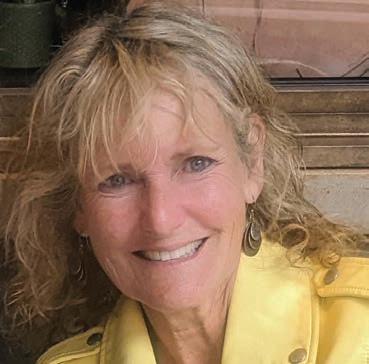
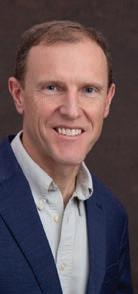
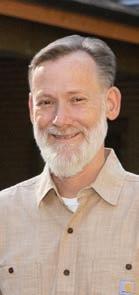
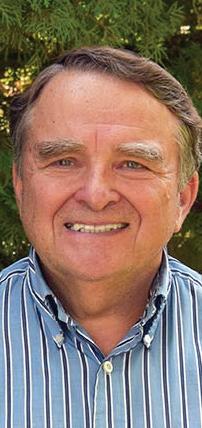
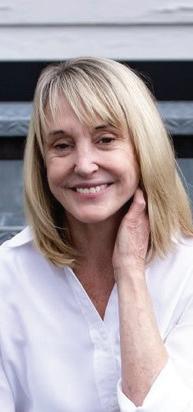
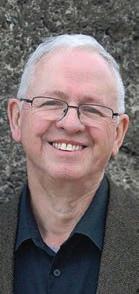
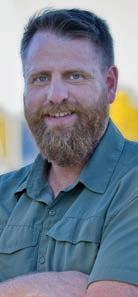
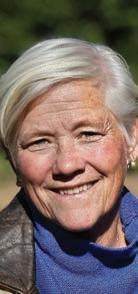
(L-R): Jim Woodward, Scott Herndon, Steve Johnson, Mark Sauter, Jane Sauter, Karen Matthee, Cornel Rasor, Chuck Lowman and Kathryn Larson. File photos
All the candidates who filed for Idaho constitutional offices in the 2026 election
By Kyle Pfannenstiel Idaho Capital Sun
Republican incumbents in all of Idaho’s statewide constitutional offices — the governor, attorney general, secretary of state and more — are all running for reelection, and are largely not set to face Republican challengers, with the governor’s race being one exception.
This year, all statewide constitutional offices — such as governor, lieutenant governor and attorney general — are up for election as well as all 105 seats in the Idaho Legislature. Three of Idaho’s four congressional seats will also be on the ballot in the May primary and November general elections.
First, candidates with a declared party will vie for the party’s bid in the Tuesday, May 19 primary election. Then, winners of the races will ultimately be determined in the Tuesday, Nov. 3 general election.
But in Idaho, Republican primary elections often decide major elections. Idaho voters last elected a Democrat to statewide office in 2002. Since 1992, Republicans have held a supermajority in both chambers of the Idaho Legislature. Only registered Republican voters can vote in Idaho’s closed GOP primary elections.
Here’s a look at who’s running to represent Idaho in statewide offices including offices for the governor, attorney general, secretary of state, state controller, state treasurer and superintendent of public instruction, as well as key legislative races.
Find the full list of candidates for all offices online in the Idaho Secretary of State Office’s candidate database.
Idaho Gov.
Brad Little faces seven Republican challengers
Idaho Republican Gov. Brad Little is seeking reelection to a third four-year term. He’s set to face seven Republican challengers in the May primary election: Daniel C. Fowler, Ethan Giles, Justin R.Plante, Lisa Marie, Ron James, Sean Calvert Crystal and Mark Fitzpatrick, who owns State Street Saloon in Eagle and organized the Hetero Awesome Fest in downtown Boise in 2025.
Four candidates have filed to run as Democrats: Chanelle Torrez, Jill C. Kirkham, Maxine Durand and Terri Pickens, an attorney who ran unsuccessfully for lieutenant governor in 2022.
Two candidates filed to run as Libertarians: Paul Sand and Melissa-Sue Robinson.
Retired Idaho Supreme Court Justice John Stegner filed to run for governor as an independent. One candidate, who legally changed his name to ProLife, filed under the Constitution Party.
Little, a rancher from Emmett, was first elected governor in 2018 after previously serving as lieutenant governor and a member of the Idaho Senate.
The May Republican primary election for governor is set to be an eight-way race between Little, Fowler, Giles, Plante, Marie, James, Calvert Crystal, and Fitzpatrick.
The winners of the May 19 primary elections will advance to the Nov. 3 general election.
Republican Lt. Gov Scott Bedke faces no primary challenger in his bid for reelection. Eric Myricks is running as a Democratic candidate for the lieutenant governor’s office.
All constitutional offices in Idaho are elected separately — including the governor and lieutenant governor.
Idaho Attorney General Raúl Labrador is sole Republican candidate
Republican Idaho Attorney General Raúl Labrador faces no primary challenger in his bid for a second four-year term as the state’s top attorney.
Lori Hickman filed to run as a Democrat in the attorney general’s race. Hickman is an Idaho attorney with two decades of experience, and has served as board chair of Mormon Women for Ethical Government, the Idaho Democratic Party announced in a news release.
Labrador and Hickman are not set to compete against each other until the Nov. 3 general election.
The attorney general’s office is responsible for providing legal representation for the state of Idaho, including its state agencies, offices and boards to protect the state’s legal interests. It is part of the executive branch.
In 2022, Labrador defeated the state’s longtime Republican attorney general, Lawrence Wasden, in the primary election. Born in Puerto Rico, Labrador was the first Hispanic member of Idaho’s congressional delegation and a founding member of the U.S. House Freedom Caucus.
Idaho Secretary of State Phil McGrane is sole Republican candidate
Republican Idaho Secretary of State Phil McGrane faces no Republican challenger in his bid to be reelected to a second four-year term.
Shawn Keenan, who lives in Coeur d’Alene and unsuccessfully ran as a Democrat for Secretary of State in 2022, also filed to run as a Democrat.
The Secretary of State’s Office manages the state’s elections, runs an online campaign finance transparency
database and manages business filings. McGrane and Keenan will face off in the November general election.
School superintendent, treasurer, controller candidates face no primary challengers
Republican Superintendent of Public Instruction Debbie Critchfield faces no primary challenger in her bid for a second four-year term leading the office that administers the state’s K-12 public school system.
Becky Sundin, a Nampa resident named 2018 Idaho Teacher of the Year, is running as a Democrat, Idaho Education News reported. Teresa Roundy filed as a Constitution Party candidate.
Republican Idaho State Controller Brandon Woolf faces no primary challenger in his bid for reelection. He has served in the office since being appointed in 2012, and was first elected in 2014. But in the November general election, Woolf is set to face a Democratic challenger who is well known in Idaho state politics.
Rakesh Mohan, a longtime director of an independent state watchdog agency, filed to run for state controller as a Democrat. Mohan retired from leading the Office of Performance Evaluations in June 2024.
Republican State Treasurer Julie Ellsworth faces no primary challenger in her bid for reelection. Kevin A. Jones, who lives in Boise, filed to run as a Democrat.
This story was produced by Boise-based nonprofit news outlet the Idaho Capital Sun, which is part of the States Newsroom nationwide reporting project. For more information, visit idahocapitalsun.com.
independent bids for U.S. Senate: Natalie M. Fleming and Todd Achilles, who resigned in June 2025 from a state House of Representatives seat as a Democrat to challenge Risch.
Matt Loesby is the sole Libertarian Party candidate.
In announcing his reelection bid in an April 2025 post on X, Risch touted an endorsement from U.S. President Donald Trump.
U.S. Sen. Mike Crapo, a Republican serving his fifth term, is not yet up for reelection. His six-year term began in 2023.
U.S. Rep. Russ Fulcher faces two Republican challengers
U.S. Rep. Russ Fulcher, 63, is
running for a fifth two-year term. The Republican has represented Idaho’s 1st Congressional District since 2019.
He faces two Republican challengers in the May primary election: Joseph P. Morrison and Andy Briner.
Two candidates have filed Democratic bids for the U.S. House seat: Kenneth Brungardt and Kaylee Peterson, who unsuccessfully challenged Fulcher in 2022 and 2024. Sarah Zabel is running as the sole Independent candidate. Brendan J. Gomez is the sole Constitution Party candidate.
Idaho’s 1st Congressional District — home to roughly 1 million people — splits Ada County, includes some of Boise and spans the state’s western border through the Idaho panhandle in the north.
Since 2000, only one Democrat has been elected to represent the district, for one term. Fulcher did not face a Republican challenger in the 2024 primary election.
U.S. Rep. Mike Simpson faces two Republican challengers
U.S. Rep. Mike Simpson, 75, is running for a 15th two-year term. The Republican has represented Idaho’s 2nd Congressional District since 1999 and chairs the House Interior and Environment Subcommittee on Appropriations.
He faces two Republican challengers: Brian Keene and Perry Shumway. Ellie Gilbreath and Julie Wiley are running as Democratic candidates. Emre Houser and Tripp Charles Hutchinson are running as Indepen-
dent candidates.
Will Johanson is running as the sole Libertarian candidate. The sole Constitution Party candidate is C. Sierra — ID Law — Idaho Lorax.
Idaho’s 2nd Congressional District — home to almost 1 million people — splits Ada County, includes most of Boise, and spans central and eastern Idaho.
Simpson has widely won reelection bids.
This story was produced by Boise-based nonprofit news outlet the Idaho Capital Sun, which is part of the States Newsroom nationwide reporting project. For more information, visit idahocapitalsun.com.
< CONGRESS, con’t from Page 8 >
Science: Mad about
By Brenden Bobby Reader Columnist
Maple trees are one of the most striking additions to any outdoor vista, providing striking color, cooling shade and in some cases delicious syrup.
Maple trees are famous for two reasons: Canada’s flag and maple syrup. You can’t just go around jamming a tap into any old maple tree to flavor your flapjacks, though. You need a specific type of maple tree, which we’ll examine later.
Maples are of the genus Acer, which is in the Sapindaceae family, including soapberries such as lychee. Maples are closely related to Dipteronia, which is another genus of tree native to China that has similar winged fruit for aerial transmission of seeds.
Aside from how their seeds are grown and delivered, maples and Dipteronia also share a similar evolutionary timeline, with the fossil record showing the emergence of both trees during the Paleocene epoch, which began around the time the Chicxulub asteroid impact triggered the extinction of the dinosaurs.
Maples have a wide range of lifespans that vary from tree to tree. Sugar maples are the longest-lived with a lifespan that can reach up to four centuries, while red maples will live up to 150 years. External factors in the environment can drastically alter this longevity, such as the availability of water or presence of pests and other stressors.
Sugar maples are the tree from which we extract maple
maple trees
syrup. Maple syrup begins as maple sap, which is a sticky liquid substance extracted from the tree in winter and early spring via a metal tap. The sap is collected in containers and boiled to remove the water and condense the sugar that provides its famous flavor.
Tree sap serves similar functions to blood in animals. In animals, blood circulates through the body and carries with it oxygen, nutrients, hormones and heat to regulate biological functions. This is accomplished by the heart acting as a fluid pump to push blood through the veins and arteries. Trees don’t have a heart to do this, and they don’t need one.
Trees have a vascular system that differs substantially from animals. During the growing season, transpiration is the primary method of moving water through plant structures. Water evaporates from the stoma in the leaves, creating negative pressure and suction that draws water up from the roots. It’s effectively the same thing as sucking on a straw to pull water from a lower area to a higher one.
Maple trees take this a step further during the winter months. The tree will go dormant and shed its leaves as temperatures drop, but it isn’t just idly hibernating for spring — its internal structures are working mechanically. Air freezing at night causes air to contract, most notably affecting the xylem, which are like the tree’s veins. This contraction causes suction that pulls in water. As the air warms and expands, it pushes nutrients through the tree using its sap.
Sap has the added benefit of acting as a resinous seal in the event the tree is damaged. Our blood functions similarly by sealing a wound and coagulating to create a barrier from external bacteria while the wound heals. In a sense, maple tapping is kind of like donating blood. It’s done with the tree’s health in mind so that it isn’t sucked dry and left to die.
A sugar maple isn’t able to produce syrup for the first 30 to 40 years of its life. This is why the tree needs to be carefully tended and not drained immediately. Imagine waiting 30 years to put syrup on your pancakes.
A collection of maple trees for tapping is called a sugar bush and it is organized similarly to other plantations. A sugar bush takes up a tremendous amount of space, with one of the largest in the world currently being Sweet Tree Holdings in Island Pond, Vt. The company operates more than 24,000 acres and can produce in excess of 35,000 gallons of maple syrup annually. At an average of $75 per gallon, that means this company alone produces at least $2.6 million worth of delicious tree blood per year.
One of the most interesting things a maple tree is capable of is hydraulic lift. Maple trees move an immense amount of water using the methods described above. A single sugar maple can draw upward of 150 liters of water from its deepest roots to the shallow lateral roots at its base. It seems to do this for two reasons. The primary reason is to give the tree extra reserves of water during times of drought or potential
drought. The tree doesn’t know when water may dry up, so it builds itself to maintain moisture in the soil just in case the weather may take a turn for the worse for an extended period of time.
The second is to promote growth of symbiotic organisms in its own environment. This includes grasses, fungi and low-lying shrubbery that serve multiple ecological roles. These other organisms
provide food and shelter for insects and other animals that will use the tree for shelter and protect it from pests that would aggressively feed on it. It also provides more shade around the tree’s roots, which helps hold that water at the ground level while equalizing the tree’s overall ability to regulate its ability to transport water and nutrients.
Stay curious, 7B.
Random Corner
•Polar bears, or Ursus maritimus, have been known to travel as far inland as 124 miles from the shoreline, but they mostly live close to or on the ice during winter months.
•They live across the circumpolar Arctic, in Canada, the U.S., Russia, Norway and Greenland.
•Polar bears are the only bear species to be considered a marine mammal, as they spend most of their time on sea ice.
•Polar bear skin is black, but they appear white because their fur is translucent and reflects the light from the sun, making them appear white.
•Due to their huge paws acting as paddles and feet held up like rudders to steer, polar bears can swim continuously for hours and sometimes days.
•Polar bears mainly eat seals, as well as smaller animals like birds. When food is scarce, they scavenge carcasses, eggs and vegetation.
•There are about 26,000 polar bears in the wild, as of a 2019 count. Their population is divided into 19 subpopulations and only one of those is on the incline. Five are stable and four are in decline, while the remaining nine populations are uncertain.
•Polar bears are the largest land carnivores in the world, weighing around 1,700 pounds and growing to around 9.8 feet long. The largest specimen ever recorded was 2,209 pounds. Females are half as large as males.
•Climate change is heavily affecting the polar bear population because they rely on sea ice to hunt seals. Their numbers are expected to decline 30% by the year 2050.
•A pregnant polar bear will dig a den in the fall where she’ll give birth to cubs. After digging the den, snow will cover up the entrance and she won’t emerge until about eight months later, all without eating a single meal.
NEWS FEATURE
Idaho bill would require local law enforcement to work with ICE BoCo
By Zach Hagadone Reader Staff
The Idaho House of Representatives twice delayed hearing floor debate on a bill that would require all local law enforcement in the state to enter into agreements with the U.S. Department of Homeland Security, which oversees Immigration and Customs Enforcement, in order to work more closely with those federal agencies.
House Bill 659 passed the Local Government Committee on a 12-4 vote Feb. 26 — with Dist. 1B Rep. Cornel Rasor, R-Sagle, in support — seeking to add a section of Idaho Code “to require local and county law enforcement agencies to apply for a memorandum of agreement with U.S. Immigration and Customs Enforcement pursuant to section 287(g) of the Immigration and Nationality Act.”
The bill however contains an opt-out clause, stating that if a law enforcement is “unable” to enter into the 287(g) MOA it must “publish a statement declaring the reasons” for its inability and describe “any efforts made to establish alternate cooperation with enforcement and removal operations of immigration and customs enforcement.”
The legislation had advanced to a full reading in the House, but was tabled on March 3 and March 4 — along with all other bills on the third-reading calendar — and could be taken up as early as Thursday, March 5.
If approved by the full House and Senate and signed by Gov. Brad Little, the bill introduced by Reps. Dale Hawkins, R-Fernwood, and Kyle Harris, R-Lewiston, would go into effect July 1 and “require agencies to look into programs that include but are ‘not limited to’ the jail enforcement model and warrant service model,” the Idaho Capital Sun reported.
According to the Sun, “The jail enforcement model allows local law enforcement to identify and process people who are in local jails who may be deported by ICE authorities. The warrant service office program allows local law enforcement to serve warrants to undocumented residents in jails. There are additional models, including ‘task force,’ which allow officers to perform limited immigration enforcement in the field.”
Bill co-sponsor Hawkins told the committee on Feb. 26 that H.B. 659
Sheriff Wheeler: Agreements would make his office ‘subservient to ICE’
isn’t overreach, it’s the people of Idaho who “want to see change, they want to see transparency, they want to see their state take action ... That’s what this is about. ... This is answering a call that the people have given, this isn’t answering anything that I have dreamed up on my own.”
Prior to casting his vote in favor on Feb. 26, Rasor described H.B. 659 as “a targeted accountability focus push for immigration enforcement cooperation between the state and federal government in an arena that satisfies some of the concerns that I always have: this is constitutional.”
Also testifying before the committee Feb. 26, and speaking for the Idaho Sheriffs’ Association, Canyon County Sheriff Kieran Donahue called the bill “an attack on the office of sheriff in so many ways,” the Sun reported.
“We are a constitutional office,” he added, according to the Sun. “We do not do the [federal] government’s work. We do the state government and our constitutional duties.”
The Idaho Chiefs of Police Association also came out against the bill, citing similar concerns, which Sandpoint Police Chief Corey Coon shared.
Coon told the Reader in an email that throughout his career he’s “encountered significant challenges regarding the role of Immigration and Customs Enforcement in assisting local law enforcement with immigration-related matters.”
Meanwhile, he wrote, “following a recent change in leadership, there is now a demand for us to enter into a memorandum of understanding, despite the fact that they have refrained from providing assistance over the past 30 years.”
That’s also despite local authorities already cooperating with ICE without a “mandate,” Coon added.
Bonner County Sheriff Daryl Wheeler told the Reader in an email that while he has “always supported closing our borders to illegal immigration” and “also oppose[es] sanctuary cities,” he joined the Sheriffs’ Association in pushing back against agreements under the 287(g) program.
“I would never agree to sign this MOA,” he wrote. “This program is one of the first steps taken by the federal government in the creation of a federal and state law enforcement agency. I love the 10th Amendment
and would never consent to such an agency.”
That said, Wheeler — who has long identified himself as a “constitutional sheriff” — added that he has “a great working relationship with our local U.S. Border Patrol agents,” and told the Reader that Bonner County has held 30 individuals arrested by ICE in its jail since Jan. 1, 2025.
According to a billing statement for “U.S. Customs/ Border & Protection” obtained from the Bonner County Sheriff’s Office in a public records request by the Reader, 32 inmates were held from Jan. 1, 2025 to present and for a cost of $4,750.
the memorandum of agreement,” he told the Reader. “There would be no benefit to Bonner County if my office participated in the program. More importantly, I would never consent to give up my autonomy as the elected sheriff of Bonner County.”
“This program is one of the first steps taken by the federal government in the creation of a federal and state law enforcement agency. I love the 10th Amendment and would never consent to such an agency.”
— Bonner Co. Sheriff Daryl Wheeler
Despite that collaboration, Wheeler said, “Local law enforcement agencies enforce Idaho state laws and ICE enforces federal laws. I will not start enforcing federal laws, and I do not want federal agencies to enforce Idaho state laws.”
Sandpoint Mayor Jeremy Grimm told the Reader in an email that while, “Collaboration with state and federal agencies makes good sense, and as far as I am aware already takes place,” he expressed hesitation about “‘requirements’ coming from federal or state officials, mainly because the practical reality is that seldom do ‘requirements’ come with associated funding.”
Grimm wrote that Sandpoint is “a small community struggling to pay for and maintain even the most basic services. Adding the potential requirement to coordinate — which could cause overtime, disruption of standard services or include other costs — is nothing I am keen to see. Seems like a solution looking for a problem, as they say.”
According to an email Wheeler said he’s received from “approximately 35 persons from around the state” encouraging him to support H.B. 659, the only counties signed up for the 287(g) program so far are Bingham, Bonneville, Gooding, Kootenai, Owyhee, Power and Washington, in addition to the Idaho State Police.
“I seriously don’t think that those who wrote to me have actually studied
In a copy of the 287(g) MOA shared with the Reader, Wheeler included numerous highlighted sections accompanied by his specific concerns, summarized by one comment that H.B. 659 “nationalizes the local police.
The sheriff gives up authority as the chief law enforcement officer of the county and becomes subservient to ICE.”
Wheeler, as with other Idaho law enforcement leaders, expressed worries that signing a 287(g) agreement with DHS and ICE would shackle municipal authorities with onerous training and program-related expenses without funding support from the federal government.
Boise Democratic Rep. Monica Church said at the Feb. 26 committee meeting that H.B. 659 represents “an unfunded mandate.”
“The bill does not require that the feds pay for anything related to the costs, both up front and then to our communities by losing officers through all this training, and then, more importantly, maybe for this body, it does not even require that the state take the federal money if it were to be given to us,” she said, according to the Sun. Church and fellow Boise Democratic Rep. Steve Berch opposed the bill in committee, alongside Republican Reps. Rick Cheatum, of Pocatello, and Josh Wheeler, of Ammon.
Sheriff Wheeler underscored one section of the MOA related to training and assignments that requires local law enforcement officers to “successfully complete mandatory training on relevant administrative, legal and operational issues tailored to the immigration enforcement functions to be performed as provided by ICE instructors and therefore pass exam-
< see ICE, Page 13 >
How federal agent immunity affects North Idaho
By Katie Botkin Reader Contributor
In 1992, North Idaho became synonymous for clashing with federal agents when the FBI shot and killed two members of Randy Weaver’s family on their property in Boundary County after Weaver failed to appear in court for a case involving the sale of a sawn-off shotgun. The incident is colloquially called “Ruby Ridge,” and because it was widely recognized that federal agents acted improperly, Weaver and his remaining family received more than $3 million in damages from the federal government. The incident also sparked reform at the federal level.
However, these reforms are meaningless if, as Vice President JD Vance claimed last month, federal agents have “absolute immunity.”
What is absolute immunity?
Absolute immunity means that your immunity from prosecution is absolute, or total. In other words, it means
that you cannot be prosecuted, even if you act maliciously or do something illegal. This is only ever applied to things done while on duty in some official capacity. The Supreme Court, for example, ruled in 2024 that U.S. presidents have absolute immunity when they’re acting as president in “core” executive functions. President Donald Trump has argued that acts committed in his private life are also covered by absolute immunity, but the Court disagreed.
Do police or federal agents have absolute immunity?
No. Officers of the law have “qualified immunity,” meaning that they are shielded from some types of prosecution, but they cannot violate the Constitution, even in their official capacity as agents. This is why the Weavers were ultimately awarded money in a civil settlement — the federal agents were not subject to absolute immunity.
However, because the agents did have qualified immunity, a Boundary
County prosecutor declined to pursue criminal charges, reasoning that it would be difficult to get a conviction for something an FBI agent did while on duty.
Why would the Trump administration claim that federal agents have “absolute immunity”?
There are two possibilities: either they’re not listening to legal experts, or they’re planning on getting federal agents to do things that would require absolute immunity to avoid prosecution, and they hope to get public and political buy-in on the idea.
Could JD Vance have been misspeaking?
Possibly, but then the Department of Homeland Security issued a written statement via social media platform X claiming that federal agents “have immunity to perform your duties, and no one — no city official, no state official ... can prevent you from fulfilling your legal obligations and duties.”
If you’re claiming that federal agents don’t need to listen to local and state laws or lawmakers, you’re arguing that federal agents have the type of immunity that is absolute.
What do the courts say about federal agent use of force?
Courts have consistently ruled that federal agents are not above the law and must follow the Constitution. A federal judge ruled in January that federal officers cannot use pepper spray “or similar non-lethal munitions” on protesters, and they also may not stop and detain drivers “where there is no reasonable articulable suspicion that they are forcibly obstructing or interfering” with
federal agents.
That particular case was brought after six people alleged that federal officers “subjected them to the use of chemical irritants, intimidation, including by pointing firearms at them, detention and arrest, in violation of their First and Fourth Amendment rights.”
If federal agents acted in North Idaho with ‘absolute immunity,’ what would that look like?
It would mean that anything a federal agent did while on duty would be immune from any kind of prosecution — for trespassing, use of lethal force, trafficking or anything else. Presumably, the agent could be fired or internally disciplined for not following protocol, but the public would have no legal recourse.
What do I do if I’m worried that the federal government is trying to establish absolute immunity for federal agents?
Exercise your First Amendment rights: petition the government by contacting your lawmakers and peaceably assemble for a redress of grievances. If your lawmakers do not seem proactive in preventing government overreach, vote them out and vote in new lawmakers who insist that federal agents need to follow the Constitution and be held accountable if they do not.
Katie Botkin moved to Boundary County in the 1990s with her homeschooling family. She has a master’s degree in linguistics, and writes everything from legal explainers — for Best Lawyers magazine — to local news for the Inlander, Spokesman and others.
Protecting the sacred: Faith and freedom
By Rev. Catherine Lyle Reader Contributor
As a reverend of Sandpoint United Methodist Church and interim pastor for the First Presbyterian Church of Sandpoint, I’ve been reflecting on the enduring tension between faith and governance — a tension deeply rooted in the very foundation of our nation.
On July 4, 1776, the Declaration of Independence wasn’t just a statement of separation; it was a deliberate reaction to the overreach of religious power seen across Europe — a legacy echoing even within my own Irish Catholic family’s history. The 1704 Popery Act in Ireland, forcing Catholics to divide their land or pretend Protestantism, helped fuel a desire for a government built on individual liberty rather than dictated by religious preferences.
Our Founding Fathers recognized this danger and designed a system prioritizing the “free choices of the people.” They trusted in the “Spirit of God” to be present in America, contingent on our respect for each other’s autonomy and rights.
This concept is deeply intertwined with the teachings of Jesus, particularly his emphasis on loving our neighbors as ourselves. Thomas Jefferson, in The Life and Morals of Jesus of Nazareth, articulated this powerfully, arguing that judging others in our lifetime contradicts the core belief of God’s ultimate judgment.
Jefferson was emphasizing Matthew 13:29, when Jesus instructs the new disciples not to separate the thistles from the wheat. Pulling the weeds would disrupt the newly growing wheat that God had planted. Thus, reminding the followers of Jesus that it is not up to them to weed out others, even if planted by an enemy.
As Christians practice their faith, they need to trust God and let others be free to grow where they are planted.
This foundational principle — the separation of church and state — blossomed over time, extending protections to Indigenous populations, immigrants from other countries besides Europe, women and eventually children. By fostering a diverse landscape of belief, and demanding respect for differing viewpoints, we’ve cultivated a safe society for people to connect with God when they are ready and in a way
that feels most authentic to them.
This delicate balance is being challenged again by the rise of “Christian nationalism” — the belief that American identity is inherently tied to a specific, often conservative, interpretation of Christianity. This seeks to dismantle this separation, imposing and/or forcing religious values onto the public.
This movement in our community threatens religious freedom as it advocates for limiting the rights and protections of the larger population.
Religious authoritarianism creates instability as political leaders limit the rights of the populous and/or are hypocritical on whom the penal laws are enforced. The natural combative response that follows from those whose religious rights are no longer protected by their government finds causes to initiate a holy war of sorts. They can then claim that dismantling the government (and/or overtaking) is their moral objective and ordained by whomever they worship with whatever means their doctrine permits.
Without their rights to worship as they see fit, an unending religious/political tug of war ensues so long as one religion is favored and/or weaponized over the others.
Many local clergy, along with the Bonner Human Rights Task Force, faithfully and with reverence for our country strongly support the separation of church and state, upholding the wisdom of our Founders. They understand that a healthy society requires protecting institutions — religious and secular — from undue influence
Christian nationalists may try to silence dissenting voices, but we will not be deterred. We believe that our Founders were wise to keep religion and government separate, and we will continue to uphold this principle for generations to come.
Join us in this endeavor and, together, let us protect the institutions of religion and government from extremist influences.
I invite you to join us at Sandpoint UMC (711 Main St.) on Saturday, March 7 at 3 p.m. for a discussion regarding these deep issues with a panel of local faith leaders.
Rev. Catherine Lyle is a pastor at Sandpoint United Methodist Church.
< ICE, con’t from Page 11 >
inations equivalent to those given to ICE officers.”
In the margin, he noted, “Required mandatory training that has not been vetted by POST [Peace Office Standards and Training] or the elected sheriff to confirm that training follows Idaho state laws.”
He went on to write that sheriffs who perform extra duties under the agreement are not compensated for that work, and “would be creating reports for ICE, instead of performing regular duties.”
What’s more, the MOA specifically states that local law enforcement would “carry out designated functions at [their] expense, including salaries and benefits, local transportation and official issue material.” That would be in addition to DHS/ICE installing its own IT infrastructure, which includes security policies, practices and accreditation for which additional training is required and — again — the costs for which local agencies would be responsible for bearing.
Meanwhile, ICE would control “information obtained or developed”
as a result of the agreement, and local law enforcement would be required to “cooperate with any federal investigation related to this MOA to the full extent of its available powers, including providing access to appropriate databases, personnel, individuals in custody and documents.”
“This is not a task force, but instead, sheriff’s deputies are under the direct supervision and direction of ICE,” Wheeler wrote, later adding, “Complaints made against ICE and sheriff’s deputies are investigated by ICE, not the elected sheriff.”
Coon also expressed his discomfort with the conversion of a previously voluntary program into a required agreement, and, “Moreover, Section 2 states that agencies shall participate in any future program or successor to an existing program pertaining to non-citizens, which is undefined and unknown.”
In addition, he questioned “the hidden costs” associated with the agreement and whether it is, in fact, “an unfunded mandate.”
“There are too many unknowns for my support for a state statue,” Coon wrote.
Bouquets:
GUEST SUBMISSION:
• “A bouquet to everyone who showed up for the Feb. 23 BOCC/ PHD meeting — even though it was frustrating and didn’t unfold the way many hoped. Your presence still sent a clear message: Women’s health care matters in Bonner County, and our community is paying attention.”
— By Cynthia Dalsing
GUEST SUBMISSION:
• “Recently Smithwright Co. moved into the corner building on Cedar and Second, previously occupied by Heavenly Latté coffee shop from Oct. 1995-Oct. 2016.
“According to her son, Yvonne Fontaine (now 80 years old) owned and ran Heavenly Latté as a solo owner until she sold her business.
“The coffee shop’s metal sign of a coffee mug held by a smiling gal with angel wings continuously occupied its post on the corner, until recently when it was removed to be replaced with the current owners’ business sign.
“The Heavenly Latté’s metal sign was preserved and has been gifted back to a very happy Yvonne by Smithwright Co.”
— By J. Fraser
Barbs:
• I have a headache from rolling my eyes so far back in my head after listening to dorks like “Secretary of War” Pete Hegseth talk in that faux tough guy voice while giving updates on the U.S. military actions in Iran. The fact that American service members in every branch of the military have been told that the U.S.-Israel war on Iran is intended to induce “Armageddon” should concern all of us. Commanders told troops that Trump “has been anointed by Jesus to light the signal fire in Iran to cause Armageddon and mark his return to Earth,” according to a complaint filed by a non-commissioned officer whose identity was kept anonymous to avoid retribution. The officer’s complaint is one of more than 200 filed from across 50 military units concerned about preserving religious freedom for members of the U.S. military.
‘Before Billie there was Mildred’…
Dear editor, I recently saw on PBS evening news that our U.S. predator’s gestapo-like ICE agents are stopping, questioning and frightening the hell out of Native Americans on the outskirts of tribal reservations whose residents settled America countless centuries before Trump, his ICEmen or totally incompetent leg-humping cabinet appointments were even a glint in some late-arrival dude’s eyes.
To counter such Gestapo-like actions and current erasure of honest and essential American history like the ongoing slaughter of Native Americans as we white folks stole their land (and a belief that “music hath charms to soothe a savage breast”) I suggest listening to recorded classics by one the world’s first and greatest jazz vocalists, Mildred Bailey. Her 1930’s hits included “All Of Me,” “St. Louis Blues,” “Georgia on My Mind,” “Darn That Dream” and other jazz evergreens. Ms. Bailey wasn’t Black, like fellow legends Billie Holiday, Sarah Vaughan or Ella Fitzgerald. Nor was she white, like Peggy Lee, Madeleine Peyroux or Diana Krall. She was brown and famous long before they were. Like it not, ICE goons, Ms. Bailey was a Native American member of the Coeur d’Alene Tribe. And proud of it. Me too.
Tim H. Henney Sandpoint
‘Church
basement schools’...
Dear editor, Scott Herndon wants to eliminate property taxes, not raise any other taxes and still fund public education. Now, I may be a bit confused, but this seems to be another ploy to eliminate public schools and funnel money to church basement “schools.”
Ted Wert
Sagle
‘What
is Christian nationalism?’...
Dear editor,
“For the entire law is fulfilled in keeping one command: ‘Love your neighbor as yourself.’”
— Galatians 5:13-14
Here’s what I think: Nationalism is love not just of country but of political power. My country’s in charge, right or wrong. Unforgiving. Is this the Christ who loves his neighbors, his enemies, animals, birds, fish, worms, bugs and slime? Who bids us be kind to those who hate us?
Because I want to expand my understanding of the impacts of Christian nationalism in Idaho, I will go to hear to our local Christian lead-
ers discuss it at the Bonner County Human Rights Task Force’s roundtable at 3 p.m. on Saturday, March 7 at Sandpoint United Methodist Church, 711 Main St., Sandpoint. Please join me.
Nancy Gerth Sandpoint
‘Wonderful
story’...
Dear editor, I want to thank Ben and the Reader for the wonderful story about the Priest River Experimental Forest that was featured in the Feb. 19 edition. When I worked for the Priest River Times, I often interviewed Bob Denner, then superintendent, for stories. I never saw one about the forest in any paper other than the Times unless I’d written it, and I wondered why. I’ve always appreciated the work and accomplishments of the facility and interested in the science conducted there.
It was a great story. Thank you.
Marylyn Cork Priest River
‘Memories
popping up’...
Dear editor, I enjoyed the memories popping up as I read Ben Olson’s “A lake is a lake is a…” [Junk Drawer, Feb. 26, 2026]. I remembered our “Wagon Bridge” we drove across so many
years before they replaced it. More times than I can remember. The Pend Oreille River was on the far right when you were driving toward today’s Sagle. When returning, that side of the water was called Pend Oreille Lake or just “the lake.”
Later when people started pouring into Sandpoint areas we all started calling this “the Long Bridge.”
Jerri Stevens Sandpoint
‘An unapologetic RINO’…
Dear editor, Can’t miss North Idaho Voter Services half-page advertisement on Page 2 of the Feb. 26 issue! I fully agree with their basic premise: “Vote Primary, Maximise Your Vote, Register Republican.” I have been promoting this for years! I vote for Sen. Jim Woodward and Rep. Mark Sauter every chance I get. I am an unapologetic RINO and that is the only way I can make my independent vote count in this ruthlessly GOP-controlled state. I recommend everyone do the same.
Open primaries would give everyone a fair opportunity to participate in elections and attain a representative government serving all our citizens in the future! Leading to Page 7, where Scott Herndon
announces his intent to seek the GOP Dist.1 Senate seat. His last attempt to do so resulted in the most expensive campaign in the state, which he funded significantly by out-of-state contributors. Beating Herndon in the primary could not only save a lot of money, but spare our state the absurdities found on Page 7. If Herndon feels that living in Bonner and Boundary counties “have become horrifically unaffordable,” I suggest the obvious... leave the good people of Idaho alone and go elsewhere.
Sincerely,
Jay Omundson Cocolalla
Got something to say? Write a letter to the editor. We accept letters up to 200 words that are free from libelous statements and excessive profanity. Please elevate the conversation. Trolls will be ignored and forgotten. Send submissions to: letters@sandpointreader.com.
POAC hosts opening reception for monthlong exhibit Her Mark: ATribute to Women
By Reader Staff
The Pend Oreille Arts Council invites the community to experience Her Mark: A Tribute to Women, on display from Friday, March 6 through Monday, March 30 at the POAC Gallery ((313 N. Second Ave., in downtown Sandpoint).
The exhibition opens with a reception on March 6 from 5-7 p.m. during First Friday.
Now in its second year, Her Mark returns following last year’s deeply moving and widely celebrated debut. Presented in honor of Women’s History Month, the exhibition invites artists to reflect on the strength, creativity, resilience, complexity and stories of women. The theme remains intentionally open to interpretation, allowing artists the freedom to explore portraiture, narrative, symbolism, abstraction and beyond.
This year’s exhibition features 16 local artists: Alison Barrows-Young, Jenni Barry, Judy Baird, Mary Berryhill, Molly Gentry, Daris Judd, Suzanne Jewell, Kathryn Larson, Bill Mather, Judy Minter, Holly Pennington, Teresa Ran-
court, Eli Sevenich, Amy Stephensen, Lucy West and Parise Whitley.
Working across a wide range of mediums, with a strong presence of mixed media, the artists offer perspectives that range from joyful celebration to thoughtful examinations of the challenges women face. Some works honor the beauty and vitality of womanhood, while others explore identity, resilience, and lived experience. Together, they create a rich and layered tribute that speaks to both personal and collective narratives.
According to organizers, POAC’s mission is to create meaningful arts experiences that enrich the community, and Her Mark reflects that commitment by fostering dialogue, reflection and connection through visual art.
The public is encouraged to attend the opening reception on March 6 or visit the gallery throughout the month to spend time with the exhibition. Admission is free. For more information, visit artinsandpoint.org or contact the Pend Oreille Arts Council at 208-263-6139.
Empty Bowl Fundraiser fights food insecurity
By Reader Staff
Local students, restaurants and community members will once again come together on Friday, March 6, for the annual Empty Bowl Fundraiser, benefiting the Bonner Community Food Bank. Hosted by Marigold Cafe (414 Church St., in Sandpoint), the event will run from 12:30-2 p.m. and feature a silent auction, local art and food donated by Winter Ridge, Spuds, Marigold and Super 1 Foods to help fight local food insecurity.
As part of the fundraiser, Sandpoint High School students have created more than 250 unique ceramic bowls that are both food- and dishwasher-safe.
“I believe it is essential to invest in
the wellbeing of our communities and to dedicate time to giving back,” said SHS art teacher Zabrielle Dillon. “By teaching the next generation to step forward and serve others, we cultivate compassionate, engaged citizens who understand the value of shared responsibility and collective care.”
Guests will each choose a bowl to keep and dish up a hearty helping of soup and rolls. Plus, Evans Brothers Coffee will provide the drinks. Attend with a suggested donation of $20. For more information, visit bonnerfoodbank.org.
“We never know when we ourselves may need to rely on the strength and support of those around us — so it is only right to pay that generosity forward,” said Dillon.
Panel discussion with local faith leaders focuses on separation of church and state
By Reader Staff
The Bonner County Human Rights Task Force is hosting a panel of local pastors Saturday, March 7 to discuss the impacts of growing Christian nationalism throughout the country.
Titled “Faith Leaders Who Support the Separation of Church and State,” the free, public event begins at 3 p.m. at the Sandpoint United Methodist Church (711 Main St.) and will include audience questions in addition to the panel.
“The BCHRTF believes that the growing acceptance of Christian nationalist ideology undermines the laws and principles that help make our country secure and protect the rights and dignity of all,” the organization stated in an event announcement.
“Their beliefs, if acted upon, would violate the human rights of a large portion of our populace,” BCHRTF added. “Most certainly that of women,
members of the LGBTQ+ community, most immigrants, non-Christians and even many progressive Christians.”
According to a 2023 study conducted by the Public Religion Research Institute, and cited by BCHRTF, 10% of the population are adherents of Christian nationalism and another 20% sympathize with the idea. Another study conducted in 2024 found that Christian nationalism is associated with believing that voting is a privilege rather than a right, thus providing a foundation for Christian nationalists to be aligned with policies that restrict who can vote and who is deemed a citizen.
As BCHRTF stated, “The Civil Rights movement in the 1960s was strongly supported by a number of churches. Churches again are opposing a movement that defines Christianity in a way that counters basic principles that define our democracy.”
Lost Apple Project founder to speak at Sandpoint library
By Reader Staff
The Lost Apple Project — a nonprofit organization dedicated to finding and preserving heirloom apple varieties — will host a free presentation with founder David Benscoter on Saturday, March 7, from 3-5 p.m. at the Sandpoint branch of the East Bonner County Library (1407 Cedar St.).
The talk will cover the history and diversity of apples throughout the Pacific Northwest.
As documented in his book Lost Apples: The Search for Rare and Heritage Apples in the Pacific Northwest, Benscoter and his organization study the region’s historic records to discover abandoned homesteads and nurseries from the 19th and early 20th century. With help from locals, the researchers catalog and identify endangered apple
varieties and preserve and propagate the surviving trees.
The March 7 event will focus on how early homesteading in the Northwest led to hundreds of apple cultivars scattered across the region — including in the Sandpoint area.
“I hope people will learn how vital apples were for the survival of early homesteaders,” said Benscoter in a recent news release.
“Some nurseries in those settlement days carried over 200 different apples.”
For more information, or to report heritage apple trees, visit lostapples. wiki.
“We’re looking at some apples that may be lost, and we hope for continued community support to let us know where old trees are hiding,” added Benscoter.
David Benscoter. Courtesy photo
Send event listings to calendar@sandpointreader.com
Line dancing lessons
6:30pm @ The Hive
Weekly pool tournament
6pm @ Roxy’s Lounge
Live Music w/ Courtney & Company
7pm @ Eichardt’s Pub
Live Music w/ Zach Simms
5-8pm @ Pend d’Oreille Winery
Live Music w/ Double Shot Band
5pm @ Connie’s Cafe
Live Jazz w/ Bright Moments
6-8pm @ Baxters on Cedar
Live Music w/ The Bakerwood Brothers
6-8pm @ Smokesmith BBQ
Live Music w/ Ian Newbill
6-9pm @ 1908 Saloon
Live Music w/ Dag Zaggenz
8-11pm @ St. Bernard (Schweitzer)
Multi-instrumentalist, danceable grooves and psychedlic soundscapes
Live Music w/ Isaac Smith
5-7:30pm @ Matchwood Brewing Co.
Live Music w/ The Cole Show
5-8pm @ Pend d’Oreille Winery
Live Music w/ Old Time Fiddlers
2-4pm @ Sandpoint Senior Center
Free to attend, and if you play an instrument, please join
Sandpoint Chess Club
9am @ Evans Brothers Coffee
THURSDAY, March 5
Cribbage tournament
6pm @ Connie’s Cafe Bingo night
6-8pm @ Idaho Pour Authority
FriDAY, March 6
The Follies fundraiser variety show
8pm @ Panida Theater
The final Follies, presented by Angels Over Sandpoint. panida.org
Live Music w/ Monarch Mountain Band
5:30-8:30pm @ Barrel 33
Live Music w/ Picked Up Pieces
6:30-9:30pm @ MickDuff’s Beer Hall
Live Jazz w/ Bright Moments
6-8pm @ Baxters on Cedar
SATURDAY, March 7
The Follies fundraiser variety show 8pm @ Panida Theater
The final Follies, presented by Angels Over Sandpoint. panida.org
Live Music w/ Austin Carruthers 6-8pm @ Smokesmith BBQ
Live Music w/ Oak Street Connection
5:30-8:30pm @ Barrel 33
Live Music w/ Holly & Michael
6-9pm @ MickDuff’s Beer Hall
Live Music w/ Courtney and Co. 6pm @ Connie’s Cafe
7pm @ Embody Center, 823 Main St. No partner needed. $15
Live piano w/ Peter Lucht
5-7pm @ Pend d’Oreille Winery
Community open house:
Cedar Street Restoration Project
Noon-2pm & 4-7pm @ Sandpoint Library
Learn more about this upcoming project in Room B at the library
Line dancing lessons
6:30pm @ The Hive
March 5-12, 2026
Open Irish jam night
5:30pm @ Connie’s Cafe
Hosted by Seamus Divine. Come to listen, or bring an instrument and join
Food Bank Empty Bowl fundraiser 12:30-2pm @ Marigold Bistro
Raising funds for the food bank. $20 sugg. donation at door, includes lunch
POAC First Friday Opening Reception:
Her Mark: A Tribute to Women
5-7pm @ POAC Gallery, 313 N. 2nd Ave.
Meet the artists and see their work
Annual Gun ’n’ Horn Show
Noon-6pm @ Bonner Co. Fairgrounds
Buy, sell and trade guns, hunting accessories, knives, hides and more
Annual Gun ’n’ Horn Show
9am-6pm @ Bonner Co. Fairgrounds
Lost Apple Project free presentation 3pm @ Sandpoint Library
Join Lost Apple Project founder David Benscoter for a free presentation on rare and heritage “lost” apples
Friends of the Library monthly book sale 10am-2pm @ Sandpoint Library
Spring cleaning sale! Everything half price except children’s books, media and specially priced items
Live Music w/ Brian Jacobs 6-8pm @ Baxters on Cedar
Annual Gun ’n’ Horn Show 9am-2pm @ Bonner Co. Fairgrounds
monDAY, March 9
Outdoor Experience group run
6pm @ Outdoor Experience 3-5 miles, all levels welcome
tuesDAY, March 10
Karaoke with Big Rock Karaoke 9pm-midnight @ Roxy’s Lounge
wednesDAY, March 11
Family Night & live music w/ John Firshi
5-7:30pm @ Matchwood Brewing Co. Good tunes, good food, good vibes
Trivia with Toshi ($5/person) 7pm @ Connie’s Cafe
ThursDAY, March 12
Artist reception for SHS art students
5-7pm @ Pend d’Oreille Winery
See art pieces from SHS art students, with a live string instrument musical performance during reception
Live Music w/ Bryan Carson 3-5pm @ Idaho Pour Authority
Trivia w/ Miranda
6-8pm @ Idaho Pour Authority
Return of the Geezer Forum
2:30pm @ Marigold Bistro, 414 Church St. Paige McMaster will share experiences about longevity and intentional aging
Bonner Co. Amateur Radio Club
6-8:30pm @ VFW Hall, 1325 Pine St.
Meets the second Wednesday of every month. k7jep.org for more details
Open Mic Night (hosted by BioBeat) 7pm @ Eichardt’s Pub
Open bluegrass jam night
5:30pm @ Connie’s Cafe
Hosted by Jim Rosauer. Come to listen, or bring an instrument and join
Weekly pool tournament
6pm @ Roxy’s Lounge
Update from Friends of the WaterLife Discovery Center
By Pat Meyers Reader Contributor
During the statewide Master Naturalists rendezvous in Boise at the end of September, Pend Oreille Chapter
President Debbie Crain and other chapter members visited the MK Nature Center and discovered how the Friends of the MK Nature Center helped in enhancing the facility via grants and donations to the nonprofit organization. Inspiration gained from the visits to the MK Nature Center led to Crain forming a nonprofit called the Friends of the WaterLife Discovery Center in the Sandpoint area. Located at the old Idaho Fish and Game fish hatchery across the river from Sandpoint at 1591 Lakeshore Drive in Sagle, the WaterLife Discovery Center’s new nonprofit Friends organization announced its first slate of board members and officers, including President Pat Meyers, Vice President Bill Andree, Treasurer Debbie Crain and
Secretary Kim Andree. Additional board members include Amy Anderson, Idaho master naturalist and executive director of the Selkirk Conservation Alliance; Dan Haley, IMN; Ken Dueis, IMN; Perky Smith-Hagadone, IMN volunteer chair; Christine Sandahl, IMN and board member of the Lake Pend Oreille Idaho Club; and Erin Plue, Idaho director for Trout Unlimited.
Bylaws were developed and approved, following input from the Friends of the MK Nature Center, the Friends of Scotchman Peaks Wilderness, Friends of the Kootenai National Wildlife Refuge and the Kinnikinnick Native Plant Society. Following board meetings, including one with IDFG representatives, the Friends of the WaterLife Discovery Center secured an agreement for desired projects and improvements at the WDC, which is operated as an IDFG facility. The projects have been assembled into a five-year plan, separated by short-, medium-
The Follies throws one final hurrah
By Reader Staff
After 21 raunchy years, Angels Over Sandpoint will host its final installment of the R-rated variety show The Follies, beginning at 8 p.m. on Friday, March 6, and Saturday, March 7 at the Panida Theater (300 N. First Ave.).
more information, visit angelsoversandpoint.org.
The beloved adults-only show will have its usual singing, dancing, comedy and plenty of innuendo, with a special “farewell to the Queen,” celebrating longtime heckling host Kate McAlister.
and long-term designations. Short-term projects will be prioritized in 2026, pending funding via donations or grants. Those projects include:
• Signage on Highway 95 directing the public to the WaterLife Discovery Center (Idaho Transportation Dept is proceeding with this);
• Crosswalk across the road to the wetlands walk, including speed limit and crosswalk signs;
• A new riding lawnmower for the grounds;
• Replacement of split-rail fencing with cedar rails and single rows of posts;
• Creation of animal silhouettes for public education;
• A monarch butterfly photo booth;
• Adding a bench, shade tree and native plants to an area near the outlet stream from the pond;
• Reattaching flagstones honoring WDC development donors to a display area;
• Replacing concrete picnic table and one bench with wooden table and two benches;
• Installation of a pedestrian bridge over a portion of the pond for feeding and viewing fish.
Other potential mediumand long-term projects include replacing an existing garage and adjacent shed with a new building, new windows and painting of the main cabin building, upgrading or replacing the dock in the river, making the pond a “put and take” fishing pond for the public, expanding the pond for public fishing and upgrading the hatchery building for public use.
To learn more about the Friends of the WaterLife Discovery Center and donate, go to friendsofwdc.org.
Pat Meyers is president of the Friends of the WaterLife Discovery Center
Return of the Geezer Forum
By Reader Staff
Sandpoint Area Seniors is relaunching its Geezer Forum, a popular monthly session featuring speakers on diverse topics, including travel, health, area history and more. The forum will be held at 2:30 p.m. on Tuesday, March 10 at Marigold Bistro (414 Church St., in Sandpoint).
Paige McMaster, who studies longevity and intentional aging, will be sharing her experiences, including recent time in Okinawa, Japan, learning from researchers and elders about what contributes to long, fulfilling lives.
McMaster is vice president of Sustainable Strategies at Cordia Senior Living and is a Bridge the Gap Senior Living Podcast ambassador. She enjoys bringing conversations about purpose, celebration and meaningful living to groups like the Geezer Forum.
The Geezer Forum is offered at no cost. Donations are accepted.
The two-hour, irreverent performances showcase local, over-the-top talents while raising money for the nonprofit’s mission to bolster the community.
This is the biggest fundraising event for the Angels, which dedicates thousands of dollars and volunteer hours each year to support local back-to-school programs, scholarships and grants. For
As the Angels say, The Follies are “not for the easily offended.” Be sure to snatch up tickets for the final Follies performance to see what other mischievous acts the Angels’ troupe has in store.
Tickets are SOLD OUT for Saturday’s performance. Friday’s entry is $33 for general admission or $50 for VIP early access at panida.org.
By Marcia Pilgeram Reader Columnist
I had a houseful of family over the weekend and, with St. Patrick’s Day right around the corner, I first mused about making a recipe to honor our ancestors. Instead, after helping several clients with upcoming trips to Italy and recently watching Nonnas on Netflix (which I highly recommend), I was inspired to honor International Women’s Day (Sunday, March 8)in an Italian style.
In Italy, it’s a major celebration honoring women. Traditionally, they receive large yellow mimosa flowers — symbols of strength and resilience — from loved ones.
What I love most about Italian food isn’t just the flavors; it’s how the family comes together. Little hands dusted in flour and steady older ones guiding them through each step. I love how a kitchen table becomes a gathering place. Around my table, we prepped and cooked, while I shared memories of kitchen time spent with my own mother and grandmother — how they rolled their egg noodles, cut them into ribbons and carefully laid them on the wooden dowels of our clothes rack to dry. Stories for them to hold — and fold into their own recipes.
I can easily recall my first pasta-making class 20 years ago in Parma, Italy,
The Sandpoint Eater The power of pasta
and my instructor’s description of how I would know the dough was ready to rest: “It should feel soft, like a newborn baby’s bottom.”
My grandchildren perched impatiently on kitchen stools as we prepared the pasta. Simple ingredients — flour and eggs — bring comfort. At first, the dough stuck to fingers, boards and clothes, but my grandchildren excelled. They kneaded, laughed and poked the dough until it turned soft and silky beneath their small palms. Roll, fold, roll again, until it
feels like a baby’s bottom. Now, children, we will let it rest.
Italian families have long understood that cooking together isn’t just about dinner; it’s about belonging. Their kitchens are the heart of the home, where stories are an integral part of the recipe. Though we are Irish to our bones, we’ve always admired that devotion to gathering around food. We recognize it.
If ever there were a dish that feels like a tribute to women, it might be handmade pasta. Historically, it was women who rolled it
out on long wooden boards, who stretched dough thin enough to see light through, who fed generations with flour, eggs and ingenuity. Pasta is humble but powerful — much like the sturdy women who made it.
This column is for them. For the grandmothers who taught by doing. For mothers who stirred sauce with one hand while balancing babies with the other. And for daughters and granddaughters learning to shape dough and shape their own futures.
And for my own small
apprentices, who proudly declared, “We made this ourselves.”
We paired our fresh fettuccine with tender, savory meatballs. Italians often serve meatballs as a separate course, but in our kitchen, we happily plop them atop ribbons of pasta and ladle sauce generously over both. Traditions evolve — maker’s choice.
Here are the recipe(s) we made together. Add family and conversation (and maybe some wine), and make it your own.
Homemade fettuccine and meatballs
These three easy components come together to create one memorable meal! The more helpers, the more fun. If you’re feeding vegetarians, simply divide the sauce and add meatballs to only half. Yield: 4-6 servings
INGREDIENTS: DIRECTIONS:
Fettuccine:
• 3 cups all-purpose flour (plus extra for dusting)
Fettuccine: Pour the flour onto a clean work surface and form a well in the center. Crack the eggs into the well. Add the olive oil and salt. Using a fork, gently beat the eggs, slowly incorporating flour from the edges. When the mixture becomes too thick for a fork, use your hands to bring the dough together. Knead for 8-10 minutes, until smooth and elastic. If sticky, add a little flour; if too dry, lightly dampen your hands and continue kneading. Wrap in plastic wrap or cover with a bowl and let rest at room temperature for at least 30 minutes (do not refrigerate). Roll out the dough by hand or with a pasta
machine until thin but not tearing. Lightly fold and cut into ribbons about ¼ inch wide. Dust with flour, form into small nests, and let rest while you prepare the sauce. Cook in well-salted, rolling-boiling water for 2-3 minutes, until al dente. (Note: Fresh pasta cooks very quickly!)
Red sauce:
Heat olive oil in a large saucepan over medium heat. Sauté the onion until soft and translucent, about 5 minutes. Add garlic and cook for 30 seconds until fragrant. Stir in crushed tomatoes, tomato sauce, salt, pepper, sugar, and oregano (if using). Simmer gently for 30 minutes, stirring
occasionally. Taste and adjust seasoning. Stir in fresh basil just before serving.
Meatballs: Combine all ingredients gently in a bowl — do not overmix. Roll into ping pong-sized balls. Sauté in a skillet over medium heat until lightly browned on all sides. Transfer meatballs to the simmering sauce and cook gently for 2025 minutes, until cooked through.
To serve: Toss fresh fettuccine with a generous amount of sauce. Plate, top with meatballs, and sprinkle liberally with freshly grated Parmigiano Reggiano and torn basil.
MUSIC
POAC presents St. Paddy’s show with Derina Harvey Band
By Reader Staff
Get ready to ignite your St. Paddy’s Day spirit on Friday, March 13 at 8 p.m. with an evening of Celtic Rock presented by the Pend Oreille Arts Council and featuring the award-winning Derina Harvey Band at The Hive (207 N. First Ave., in downtown Sandpoint).
Led by the dynamic Derina Harvey, whose vibrant personality, humor and world-class vocals earned her a 2025 Canadian Folk Music Award nomination for “Contemporary Singer of the Year,” imagine a “rockier” version of Canada’s Great Big Sea, fronted by an Adele-level powerhouse vocalist.
With more than 70 million streams for the viral hit “The Last Shanty,” the Derina Harvey Band also won the 2024 East Coast Music Award for “Fans’ Choice Entertainer of the Year.”
“We invite Sandpoint to celebrate St. Paddy’s Day with us at The Hive, the perfect place to have fun and dance the night away,” stat-
ed POAC Executive Director Tone Stolz. “This band is taking the U.S. by storm, and you’ll have a front-row view of the action.”
Derina Harvey Band
Friday, March 13; doors at 7 p.m., show at 8 p.m.; general admission $30; 21+. The Hive, 207 N. First Ave., 208-920-9039, livefromthehive.com/events.
General admission tickets are $30, along with opportunities for reserved seating —
options include sound booth table reservations for $115, reserved tables for $228 and VIP booths to celebrate with friends. Email vip@livefromthehive. com to inquire about VIP booths (while supplies last).
Tickets are available at artinaandpoint.org, at the POAC Gallery (313 N. Second Ave., in downtown Sandpoint) or by calling 208-263-6139. Also get tickets at livefromthehive.com/ events. This is a 21+ event. Doors will open at 7 p.m.
A snapshot of notable live music coming up in Sandpoint
Dag Zaggenz, St. Bernard, March 7
Darren Wilson, a.k.a. Hamilton, Mont.-based Dag Zaggenz, really brought down the house the last time we heard he played at Schweitzer’s St. Bernard. His brand of indie-pop electronica fueled by groovy-trippy live looping on keyboard and guitar — à la one-man band — is the perfect soundtrack to a Saturday night party on the mountain. Bonus: It’s his wife Chelsie’s 40th birthday
weekend, so the theme is retro après-ski style: think bold, bright ’80s hues and other “funky garb” to set the tone. It might not have been the most stellar winter up on Schweitzer, but this late-season show will make up for a lot.
— Zach Hagadone
8-11 p.m., FREE. The St. Bernard, 479 NW Passage on Schweitzer, 208-920-5521, thestbernard479.com. Listen on Spotify.
Austin Carruthers, Smokesmith BBQ, March 7
It’s easy to hear multi-instrumentalist Austin Carruthers’ passion for songwriting in each of his original performances. Coming from a musical lineage, the Spokane-based artist lends his voice and guitar to a variety of genres, most prominently blues and soft pop à la Jack Johnson and John Mayer. His unique stylings even landed him an opening spot for The Steve Miller Band. At his solo acoustic show at Smoke-
This week’s RLW by Ben Olson
READ
There are no perfect novels, but there are fine examples that come really close. One that I’ve always admired for its round, accessible plot and flawless narrative rhythm is Stoner, by John Williams. Written in 1965, the book is about a farm boy-turned-English professor named William Stoner who uses his love of literature to deal with an unfulfilling personal life. It’s a novel that explores failure and lonesomeness that we’ve all experienced from time to time. Find it at the library.
LISTEN
smith, expect to hear a diverse selection of original and cover songs that run the gamut from country to hard rock to show tunes, many reflecting his Seattle roots (cough, cough, Pearl Jam).
— Soncirey Mitchell
6-8 p.m., FREE. Smokesmith BBQ, 102 S. Boyer Ave., 208920-0517, smokesmithidaho.com. Listen on austincarruthersmusic. com.
With a unique blend of folk, alt-country and soul, Bill Callahan is one of those songwriters who has always captured my attention. First releasing music under the name Smog in the late ’80s, Callahan’s painfully intimate songs have a bare-bones quality to them that has always evoked images of a sparse, warm, sepia-toned America we all know is out there somewhere, buried beneath the heartbreak and bullshit. I like his 2009 Sometimes I Wish We Were An Eagle best.
WATCH
I’m drawn to stories of humans achieving unbelievable goals despite odds stacked against them. The documentary film Unknown: Cosmic Time Machine follows a team of engineers and scientists as they prepare to launch the James Webb Space Telescope into orbit. It turned out to be one of the most complicated and risky space missions ever undertaken. There are three other films in the Unknown series that cover lost pyramids, a cave of ancient bones and a deep exploration of what AI warfare will look like. All of them are fantastic. Watch on Netflix.
The Derina Harvey Band. Courtesy photo
From Northern Idaho News, March 4, 1913
NEW STATE IN NORTH IS FAVORABLY RECEIVED
Yesterday’s SpokesmanReview contained the following dispatch from Boise:
“Sentiment for the division of the state of Idaho for the purpose of creating the state of northern Idaho and eastern Washington is growing rapidly and more than ever it appears that such a resolution will pass.
“The resolution is being prepared by north Idaho members of the house and is practically ready for introduction. When it does appear it will be signed by practically every north Idaho legislator and a number from the south. It will take a two-thirds vote to get the resolution introduced, but a majority will pass it after it is introduced. No opposition has been found from south Idaho, where the opposition was expected, and if the south Idaho men stay true to their promises the resolution will be passed.”
There is a lot of genuine sentiment in the Idaho legislature in favor of the creation of a new state taking in eastern Washington and the Panhandle of Idaho. This sentiment is not confined to one particular section. Legislators from both north and south realize that there is little in common between southern Idaho and northern Idaho and that a new state is the logical solution. While a resolution looking to this is likely to be introduced in the senate, there is little chance that it will pass, due simply to the old prejudice against cutting loose of anything.
BACK OF THE BOOK Spring in the air
By Soncirey Mitchell Reader Staff
Spring is painting North Idaho green, with grass and buds popping up alongside the first crocuses, violets and Idaho trillium sprouts. Still, it hasn’t exactly been a white winter, and so it’s hard to say if this is a typical Idaho “false spring” or if we’re in for an early and unseasonably warm seasonal shift. The birds would know better than us — and their singing seems to herald the return of balmy weather.
During the last few sunny days, I’ve heard the distinct call of Poecile atricapillus, or the black-capped chickadee, which only sings this particular song in spring and summer. You’ve heard it before — a sound like “eeeeee-er-er,” which gives it the nickname the “cheeseburger bird.”
These chickadees have large, round black heads and tiny, fluffy tan-and-white bodies. Unlike other species associated with the warm months, chickadees stay in the area — and in their native homes throughout Canada, Alaska and the rest of the northern U.S — year-round. To survive these harsh climates, they grow thick winter coats and conserve energy by entering a state of regulated hypothermia, lowering their body temperature by 12-22 degrees Fahrenheit. They live off of insects and seeds — many of which they hide in the fall. During that time, the size of the birds’ hippocampuses increase to help them remember where they’ve stored their food.
STR8TS Solution
Though they’re here throughout the year, chickadees save their showy calls for the plentiful seasons when they must attract mates and build their nests. When the forest becomes full of tiny voices calling out for “cheeseburgers,” that means spring is here to stay.
Another sign of the shifting season is the appearance of Turdus migratorius, or American robins. Though they can also stay in North Idaho yearround, these birds predominantly head south for the winter and return only for the breeding season, according to eBird. The red-breasted songbirds are a common sight throughout North America, and spotting one hunting for worms in the lawn is one of the first indicators of spring.
Robins often congregate on mountain ash trees, eating the hardy red-and-orange berries that survive the winter. As they freeze and thaw, these berries can ferment, leading to the occasional buzzed bird. If you see a particularly uncoordinated robin fall from a tree or run into a building, place them inside a bird-sized drunk tank — a warm, dark box lined with a towel — to sober up.
If you’re a fan of these sweet spring songbirds, both chickadees and robins enjoy suet and mealworms, which provide the calorie-dense meals necessary after a lean winter or long migration. Unfortunately, leaving out tasty treats can attract the wrong kind of attention. If, like many old, rural houses in North Idaho, you struggle with mice, leaving out any kind of food
Sudoku Solution
source will only feed the problem, whether they climb to the feeder or eat the scraps dropped by birds. For a safe alternative that still benefits our avian friends, but doesn’t attract wasp nests like birdhouses, try fiber “nesters.” These are small cages made from wire or metal fencing and filled with natural fibers like wool, moss, bark strips and cattail fluff, which the birds can draw from to line their nests. You can add a bit of natural food dye to the material to help track where it goes, but remember that these are wild animals, so anything artificial or brightly colored will endanger them.
The black-capped chickadee. Courtesy photo
Laughing Matters
Solution on page 22 Solution on page 22
By Bill Borders
CROSSWORD
ACROSS
1.Light wood
6.Bleats
10.Portent
14.Nimble
15.Beige
16.Was a passenger
17.Hearsay
18.Overlook
19.Ship workers
20.Biblical blessings
22.Gammons
23.Rose dye
24.Postpone
25.Jetty
29.Periods of 10 years
31.Waits upon
33.Make milk
37.Rejection of a request
Solution on page 22
62.Dregs
[noun]
1. a person who insists on doing things in an incorrect way
Corrections: We misspelled the headline in last week’s “Emily Articulated” column, by Emily Erickson. It was the fault of Reader staff during the editing process, not the author. Apologies for the error. —BO mumpsimus /MUHMP-suh-muhs/
38.Ball
39.Superficial amount
41.Filters
42.Otalgia
44.Body of water
63.Jury member
64.Writing tables Word Week of the
“Even after being corrected, the mumpsimus continued to write ‘for all intensive purposes’ instead of ‘for all intents and purposes.’”
45.Necklace item
48.Joint of the lower arm
50.Murres
51.Trickiness
56.Hitching place
57.Hue
58.Scoundrel
59.Inactive
60.Border
61.Ancient Roman
magistrate
DOWN
1.Stinging remark
2.Chills and fever
3.Capital of Peru
4.Coin opening
5.Eagle’s home
6.Bewilders
7.Having a low pH
8.Armory
9.Figure out (British)
10.Composed for an orchestra
11.Honorable
12.Swelling
13.Paperboy
21.A young child
24.Interior layout and furnishings
25.Flat masses of soft material
26.Detail
27.Europe’s highest
volcano
28.Restates
30.Most idiotic
32.Birth-related
34.Dogfish
35.Armored combat vehicle
36.Otherwise
40.Untanned animal skin
41.Gearstick
43.Shrink in fear
45.Student
46.Wear away
47.A long narrow passage
49.Fatigued
51.Stair
52.Connecting point
53.Auspices
54.Mope around
55.Observes
**Murphy Cabinet Bed
The Murphy Cabinet Bed is a truly instant guest bed. Convert it from a handsome cabinet to a comfy queen bed in less than a minute. When all closed up it just takes 10 square feet of floor space with a premium gel memory foam mattress. Perfect for a loft area or bonus room. Easy to use, easy to love.