


ABSTRACT
DIPLOMACY & POWER
EXPLICIT & IMPLICIT POWER
CHAPTER I : POLITICAL HIERARCHY
CHAPTER II : SOCIAL INTIMACY
CHAPTER III : 'VOYEURISM'
CHAPTER IV : CIVITAS
DESIGN OUTCOME
"The thought of security bears within it an essential risk. A state which has security as its sole task and source of legitimacy is a fragile organism; it can always be provoked by terrorism to become more terroristic."
-Giorgio Agamben, ON SECURITY AND TERROR
Architecture is a metaphor for power. Power is not exercised as a physical existence that constrains and occupies, but like a ghost that lurks in the metaphors of things that subtlely manipulate people's psyche and their behavior.
Through the Edifice Complex: The architecture of power (Sudjic 2011), which refers to the relationship between architecture and Power, Money and Politics, it is revealed how architecture exists as an implicit symbol or form in political architecture.
1. Independent, “The Edifice Complex by Deyan Sudjic | the Independent,” The Independent, June 30, 2005, https://www.independent.co.uk/arts-entertainment/books/reviews/the-edifice-complex-bydeyan-sudjic-5346268.html.
Russia is neither part of the West nor part of the East, it is like an isolated existence from the world.
The thesis analyzes the “Dualism” of the Russian national reality and reveals the dual mechanism of Explicit and Implicit Power operations in Russian society. The Less transparent the government is, the more pronounced are its internal contradictions and concentration of power. In Russia, this “transparency” is not absolute, but relative[2].
Russia's religious traditions and philosophy have influenced this paradigm, rendering explicit power a means of maintaining power stability while influencing public perception in the non-political sphere through the appearance of openness and transparency. Beneath this appearance, it remains in the service of hidden power. Formal opacity creates a social “Void” [3].
In the context of this Design project, I intend to explore the relationship between explicit and implicit power through architectural form and hierarchy. Considering the ' Duality' of posture, How did the Russian Embassy build an embassy in culture-sensitive Indonesia? The form of the ''Condenser'' portrays a dual identity for the functioning of the nation's diplomatic authorities, bridging cognitive differences with open communication, while implicitly establishing a deeper mode of political diplomacy to command and centralize power.
2.3.ibcom.org. “On Security and Terror - Giorgio Agamben,” n.d. https://libcom.org/article/securityand-terror-giorgio-agamben.
How does Power Operate within the Political Architecture?
Russian Embassy in the new capital of Indonesia, a building of politics and diplomacy between the two countries, while it is materialized power. When we describe a building of Power, we often use the words “ Grand” and “ Magnificent” to visualize the manifestation of power in the form of a building, where those in power, the architects and the politicians are complicit in making the building political with their ideas and intentions.
As an instrument of politics and diplomacy, the embassy's main function is to exercise the nation's diplomatic policy and to seek bridges of communication and cooperation with the country of assignment, which means that it has a ''Double face'' in terms of its political purpose.
‘Architecture serves as a visual metaphor for the ideologies running the institution it represents.’ [4] We need to understand the different Diplomatic and Political Dimensions of Russia and Indonesia's comprehension and perception of the relationship between the two countries, as well as dissecting Russia's own society and realities that have established a connection with the political framework to demonstrate the embodiment of the consciousness of power, and its declarations can be either explicitly or implicitly ......
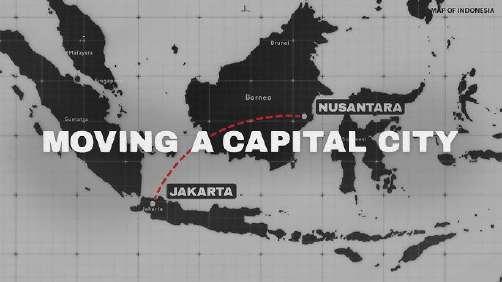
The proposed site of the building is located in Nusantara, the new capital of Indonesia. This ambitious plan to relocate the Capital is not just about easing the pressure on the old Capital, Jakarta, but also about the fact that Indonesia needs to present a whole new image in the global community.
4. “Architecture as a Political Instrument,” Rethinking the Future, n.d., https://www.rethinkingthefuture.com/designing-for-typologies/a3327architecture-as-a-political-instrument/.
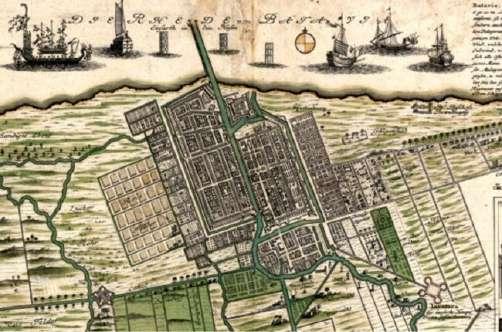
Jakarta (Batavia) was first established by colonists (the Dutch East India Company), which proposed a city grid separated by canals along which townhouses would be built, but over time the canals would build up and reduce the flow of water. Even though a centralized water supply system was built within the grid, the pipeline works were mainly concentrated in the Dutch residential areas, and residents in the surrounding areas had to pump groundwater, which led to continuous land subsidence, resulting in environmental problems such as flooding and water pollution caused by the colonial legacy of urban planning.
Nusantara, this new city on the island of Borneo will replace Jakarta as Indonesia's new national capital, relocating the current seat of government some 800 miles away to a more central location within the Archipelago. The new capital relocation plan aims to respond to the respective environmental challenges faced by the old capital, the uneven regional development of the country, and the equitable development of the economy as a whole, since the new capital's location in East Kalimantan is farther away from the coast and above sea level, and therefore less affected by climate change, such as Sea Level Rise and Flooding.
Karen Davids and Karen Davids, “Segregation: Jakarta, a Sinking City Muddied by a Colonial Legacy - Salience,” Salience - Thoughtful Student Journalism (blog), June 4, 2023, https://www.salienceatsydney.org/blog/2021/08/24/segregation-a-sinkingcity-muddied-by-a-colonial-legacy/.
Cambridge University, “Moving a Capital City,” November 14, 2023, https://www. youtube.com/watch?v=INuSVsB2X54.
Karen Davids and Karen Davids, “Segregation: Jakarta, a Sinking City Muddied by a Colonial Legacy - Salience,” Salience - Thoughtful Student Journalism (blog), June 4, 2023, https://www.salienceatsydney.org/blog/2021/08/24/segregation-a-sinkingcity-muddied-by-a-colonial-legacy/.
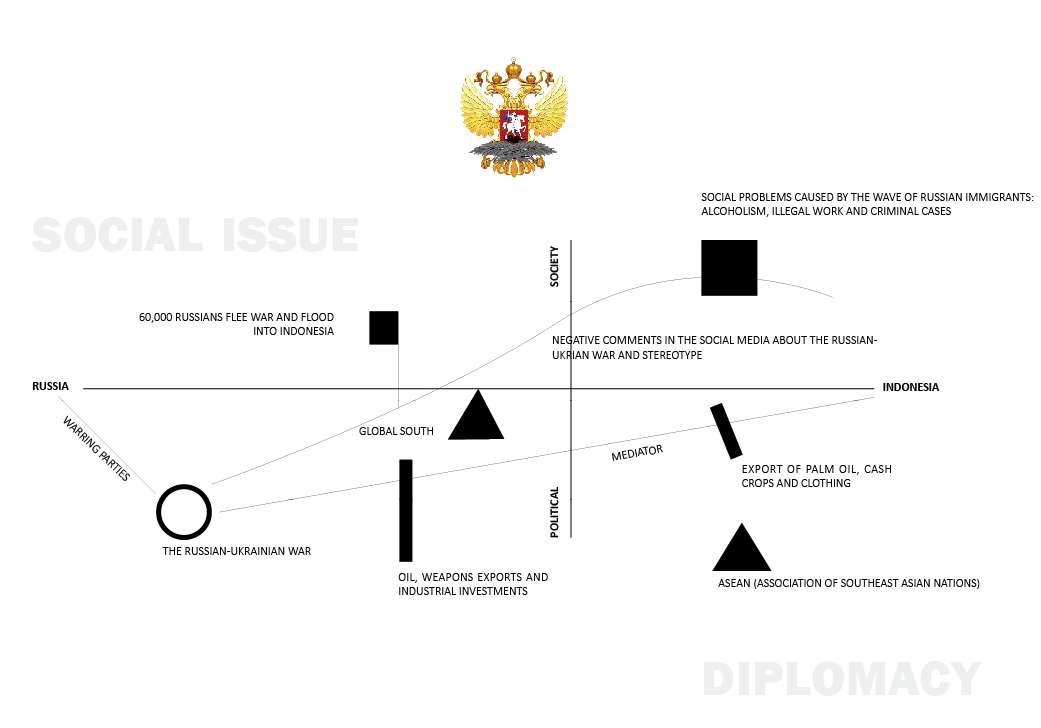
ANALYTICAL DIAGRAM: simple analysis of diplomatic, economic and social relations between Russia and Indonesia
Wikipedia contributors, “Indonesia–Russia Relations,” Wikipedia, November 10, 2024, https:// en.wikipedia.org/wiki/Indonesia%E2%80%93Russia_relations.
Political objectives of the Embassy are based on the practical relations between the two countries.
Diplomacy as an instrument for pursuing the objectives of the country's Foreign Policy and maintaining and developing national interests.
Diplomatic relations between Indonesia and the former Soviet Union were established in February 1950, with a large number of infrastructure projects and weapons exports from the USSR bringing relations to a honeymoon period during the Sukarno era, with the two countries engaging in intensive infrastructural and military-technical cooperation. Until Suharto's takeover, 'due to Indonesia's anti-communist policy under Suharto following the controversial communist coup attempt and the subsequent mass murder of thousands of alleged leftovers', relations between the two countries reached a honeymoon period during the Sukarno era. subsequent mass murder of thousands of alleged leftists.'[5]
Relations between the two countries rapidly deteriorated. And that was the case until the break-up of the Soviet Union and the establishment of a relatively stable diplomatic relationship between New Regime Russia and Indonesia.
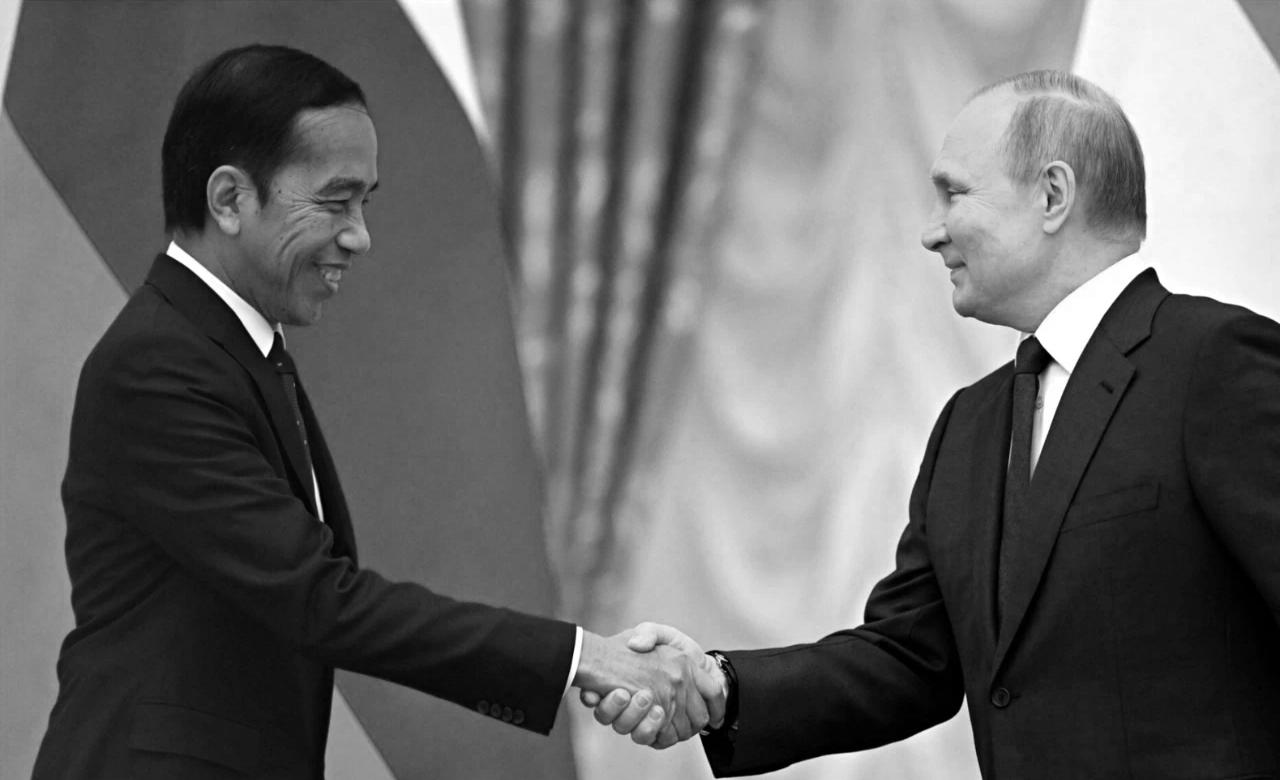
Economic and trade cooperation between Indonesia and Russia is more centered on commodities:
According to the United Nations COMTRADE database, Indonesia's exports to Russia in 2021 amounted to $1.49 billion, while Russia's exports to Indonesia amounted to $680.98 million in the same year, with bilateral trade already amounting to about $3.26 billion. Indonesia's main exports to Russia are palm oil, coconut oil and steel products, while Russia exports semi-finished iron, briquettes and potash to Indonesia.
At first, Russia tried to actively incorporate itself into the Western-dominated international Order, while the West's responses did not meet Russia's expectations and attempts were concerted towards one goal - the progressive weakening of Russia's international position and the return of Russia to collapse.[6]
As the Crimean crisis and the Russian-Ukrainian conflict grew, Russia faced unprecedented international isolation and external pressures. Although the Russian economy was relatively homogeneous and lacking in diversification support before the outbreak of the war, under the pressure of sanctions, Russia has rapidly driven the expansion of domestic demand and quickened its reliance on the energy industry.
In the face of the economic blockade and military threats from the West, Russia has an increasingly urgent need to break away from its dependence on and oppression of the Western-dominated trade system, and actively seeks to cope with its current hardships by strengthening cooperation and securing diplomatic support with nonWestern countries.
Indonesia, an important country in Southeast Asia, takes a relatively neutral position and has played a major role as a Mediator in the Russian-Ukrainian conflict. Indonesia is wealthy in agricultural resources and foods, and has a competitive relationship with Russia's Oil and Gas industry, especially in the context of the current tensions in the Global Energy Market. Indonesia has chosen to continue to maintain cooperation with Russia, which not only benefits its own economic development, but also demonstrates its position of safeguarding its independence and counterhegemony in regional and international affairs. Through deepening diplomatic relations with Russia, Indonesia intends to expand its influence in the international stage while expressing its opposition to any form of interference by external powers.
https://www.facebook.com/CNNIndonesia, “Putin Minat Bangun Nuklir Di Indonesia
Dan Investasi Di IKN,” Ekonomi, July 1, 2022, https://www.cnnindonesia.com/ekono mi/20220701084445-92-815856/putin-minat-bangun-nuklir-di-indonesia-dan-investasi-di-ikn.
“Putin’s Created an Economic Crisis and Left Moscow No Easy Way Out,” Wilson Center, n.d., https://www.wilsoncenter.org/publication/putins-created-economic-crisis-and-left-moscow-noeasy-way-out.
The Editors of Encyclopaedia Britannica, “Russian Language | Origin, History, Dialects, & Facts,” Encyclopedia Britannica, July 20, 1998, https://www.britannica.com/topic/Russian-language.
TRADING ECONOMICS, “Indonesia Exports to Russia - 2024 Data 2025 Forecast 1992-2023 Historical,” n.d., https://tradingeconomics.com/indonesia/exports/russia#:~:text=Indonesia%20 Exports%20to%20Russia%20was,updated%20on%20November%20of%202024.
However, Russia's international image in these conflicts is negatively affected in Indonesian society. Therefore, it is important for Russia to strengthen its cooperation with Indonesia on limited common interests in order to rebuild its national image.
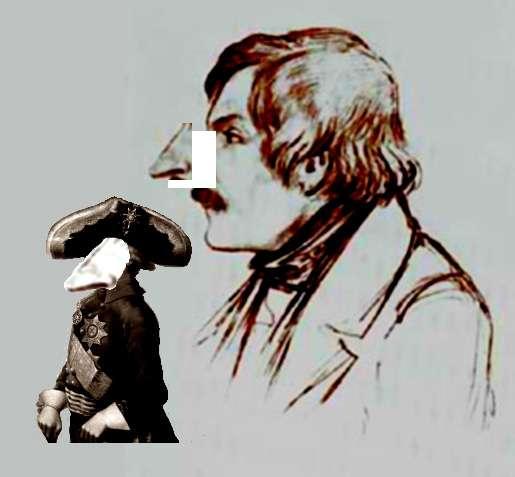
Gogol's Novel 'The Nose'
IMAGE, Jessica Vizuette, “The Essence of Culture in Gogol’s ‘The Nose,’” Arcadia (blog), June 10, 2022, https://www.byarcadia.org/post/the-essence-of-culture-in-gogol-s-thenose.
IMAGE, “THE NOSE by Nikolai Gogol,” Father Theo’s Blog, July 16, 2011, https://fathertheo. wordpress.com/2011/03/05/the-nose-by-nikolai-gogol/.
6. Nikolai Gogol, “The Nose,” in Gogol, Diary of a Madman and Other Stories, by Penguin Books, trans. Ronald Wilks, 1987, 42–70, https://www.yorku.ca/creet/satire/documents/ thenose.pdf.
7. Zhuang Xiaohui, Hou Junsheng, Chinese Journal of society, “The Social Transformation and Social Stratification in Russia” n.d., http://html.rhhz.net/society/html/2008-02-006. htm.
We must recognize the reality and philosophy of Russian society
"UTTERLY NONSENSICAL Things happen in this world. Sometime there is absolutely no rhythem or reason of them
-BUT all the same, when you think about it, there really is somethings in all this. Whatever anyone says, such things happend in this world; rarely, but they do."[4]
-Gogol, "The Nose"
The story focuses on Major Kovalyov's insane search for his missing ''Nose'', the loss of his social status brings about low self-dignity and panic mentality, the loss of his ''Nose'' causes him to keep a humble attitude in front of the 5th grade civil officer by calling him “Mr. Kind”, the presence of 'Nose' in this criticizes the Hypocrisy and Pandering of the society. And what does ' The Nose' mean to Major Kovalyov? It represents a Social Symbol, a symbol of Power, and its appearance only grants a superficial criterion for determining social status, and a deeper revelation of the legacy of deeply rooted bureaucracy and hierarchy in Russian society.
With the Soviet Union's rise to power, there was a brief period of democracy, then 'Shock Therapy', and now Putin's 'Yправляемая демократия' system is a system of 'Controllable Democracy' whose purpose is to achieve the inner The perfect unity of relative centralization and external democratic forms[7], these are essentially the coats worn by 'The Nose'. It hopes that people will see the appearance it wants people to see, but in fact the 'Coat' Behind it lies the solidified class concept and centralization ideology. In this design project, we do not propose a grand political narrative, but hope to trace back to the essence and reflect the pure Russian political ecology and social reality.
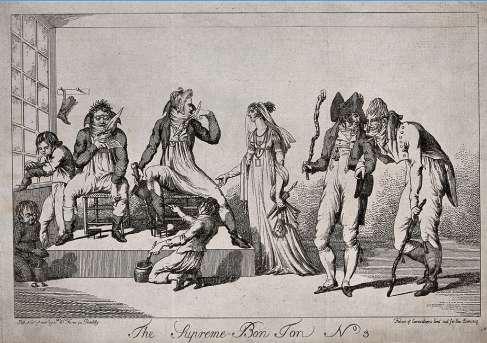
Men and woman in fashionable dress
IMAGE, “Men And Woman in Fashionable Dress Sit and Stand Around as Boys Polish the Men’s Boots. Etching, 1801.,” Wellcome Collection, n.d., https://wellcomecollection.org/works/zzj2zap8.
8.“Liberalism in Pre-revolutionary Russia: An Interview With Susanna Rabow-Edling | Toynbee Prize Foundation,” Toynbee Prize Foundation, n.d., https://toynbeeprize.org/posts/liberalism-inrussia/.
9. Liu, Congying, “The History and Current Status of the Development of Russian National Consciousness,” May 2014, https://oyyj-oys.ajcass.com/UploadFile/Issue/2d3yjzo1.pdf.
The philosophy behind Gogol's 'The Nose' further elaborates on the actual 'Dual opposition' of the Russian national character, which cannot be controlled by a single regime. Its formation is influenced by the nation's long-term history, culture and events, and is the embodiment of the overall national will behind it. This design project explores our social cognition of the unique 'Duality' of the Russian nation, involving the obvious dual opposition philosophy in the operation and thinking behind Russian diplomatic affairs. The building needs to be rooted in the most authentic representation of the country's political power and social structure.
Russia's national identity determines the duality of its political aims
The reality of Russian society today is influenced by the religious beliefs that have been in place since the time of the Tsars, one being a sense of communalism and social justice based on the Orthodox religion, while the other is a sense of individualism and liberalism brought about by Western society. Historically, the social ideology of the country has shifted between these two opposing ideologies, with the liberal and nationalist ideologies causing confusion and disorder, 'In order to survive in the modern world, states had to be imperialist. In that period, nationalism, liberalism, and imperialism were seen as necessary for Russia to modernise.' (Susanna 2020)
'Contemporary Russian national consciousness is aimed at the revival of the Russian state and the enhancement of Russia's international status.' (Congying 2014) It means that the opposing ideologies of the ism make it possible to reach the common purpose of creating the dual existence of a broad sense of Nationalism and the Liberalism of the independent individual within the society and to communicate the common values of mankind to the outside world through the dialogue of different values.
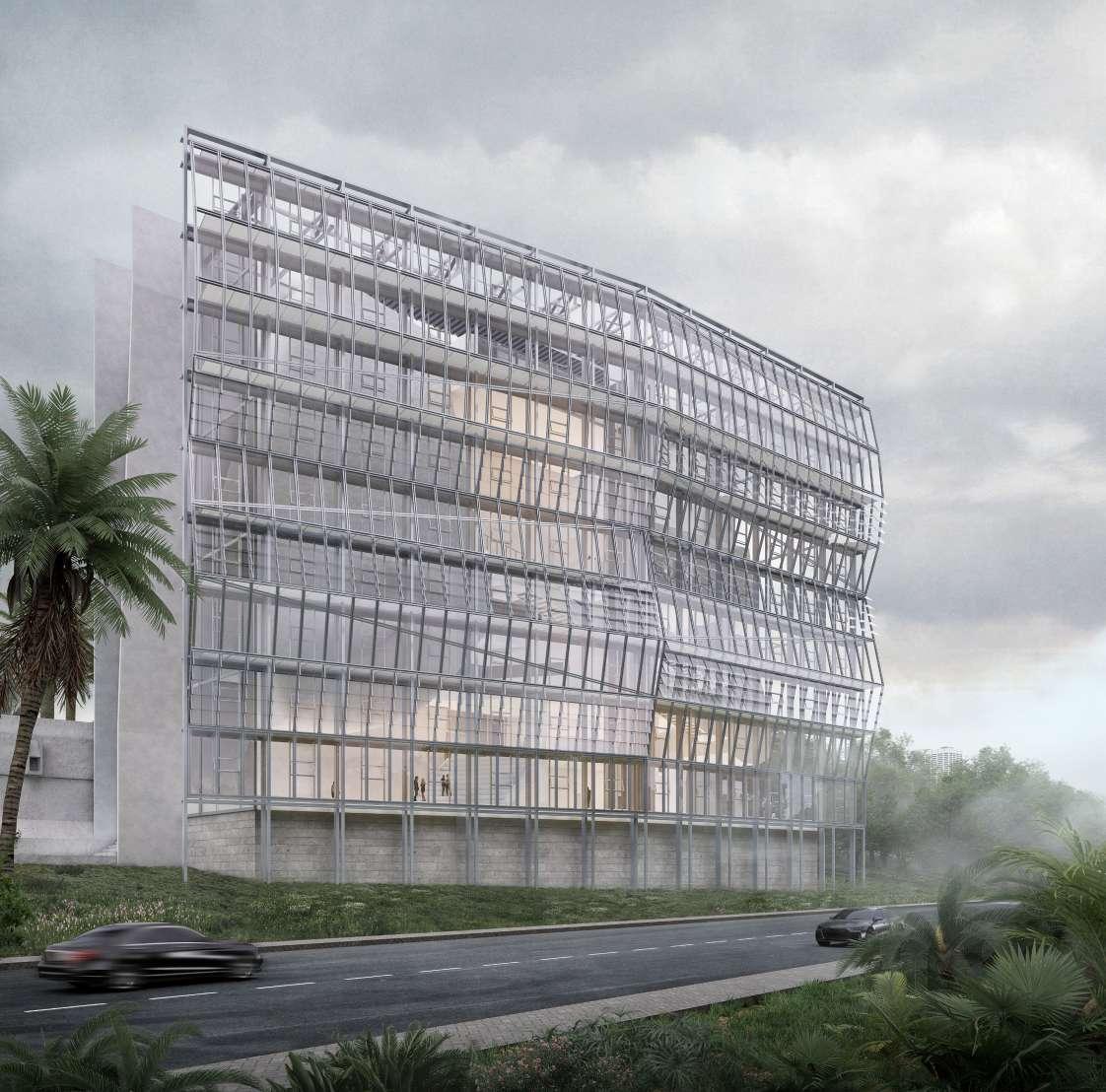
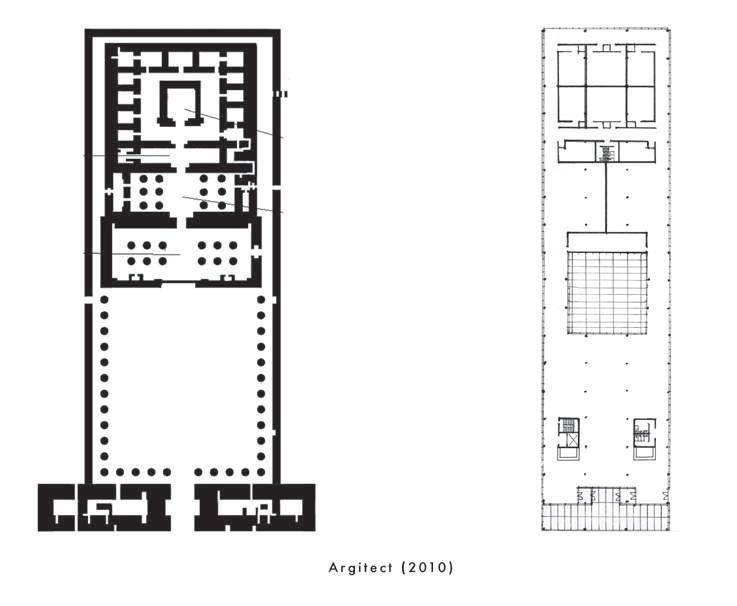
IMAGE: Floor Plan of Egyptian Temple and DAM museum
Argitect, “The Lying Truth,” The Lying Truth, n.d., https:// thelyingtruthofarchitecture.wordpress.com/page/2/.
In my Final Design Proposal: It explore the Dualistic forms of Explicit and Implicit power in Political Architecture: Explicit power is manifested through hierarchically strict organizational structures and architectural language; Implicit power, on the other hand, establishes an invisible hierarchy of social intimacy from the bottom up through the Organic Product of Constraints.
Through the dualistic analysis of form and site condition construction, The case study of the Ancient Egyptian temple proposes a linear transition from ' Light to Darkness' to control people's potential ' Voyeurism' for the Dark space, and the sense of comfort for the Light space to portray the different architectural forms to shape the visual and psychological impact of different architectural forms on humans. 'In the Egyptian Temple this light to dark is a hierarchy that leads up to the most holy place.’ (argitect 2021) resulting in the overall building presents a ''Linear Transformational Symmetry'' of power and hierarchy.
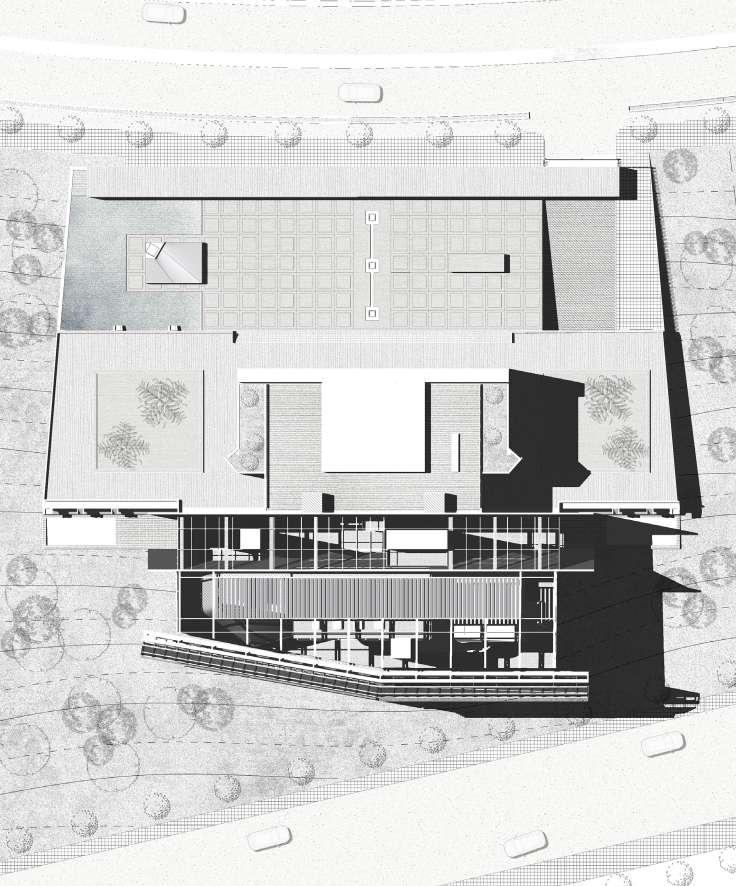
SITE PLAN:
Overview of ‘Anthem of Dualism’
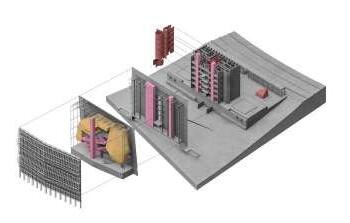
AXONOMETRIC:
Exploded view of the overall structure of ‘Anthem of Dualism’
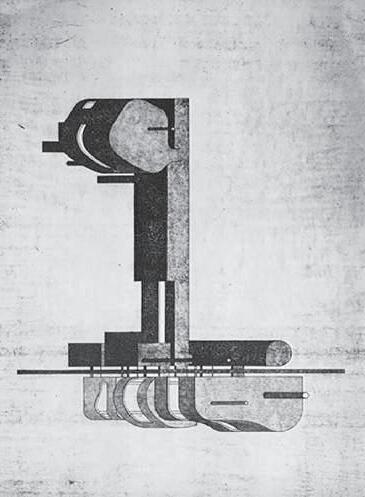
https://archleague.org/article/200-years-john-hejduk/.
Through the Casestudy of Hejduk's Wall house series, 'and rooms and circulation systems are extracted from the enclosed volume and stand as isolated circulation system. ' (Deborah 2014). The large wall becomes a significant element that separates the different components of the space and reinforces its meaning, while the interior creates a circular movement that needs to cross the wall, which results a distinctly dualist deconstructive model.
In terms of manifesting explicit and implicit power at the spatial hierarchy, the Wall serves as a principal structure to section off and define the space, divided into three main strategies:
SITE:The site is connected to the road on the North and South sides, with the North side as the main pedestrian and vehicles entrance and exit, and the open green space on the South side separating the Embassy from the road to form an open separation zone.
DUAL: Functionally divided into: Explicit areas of power ( Consular services, Main office areas, Ambassadors' offices and residences) and Implicit areas of power (Open Library - Meditation space - Amphitheatre - Multi-functional exhibition space - Private clubs), the establishment of these hierarchies is presented through different levels.
TRANSITION & SQUARE: The in-fill of the civic square for civic engagement; the intervention of Transition Space in the middle of the Explicit and Implicit Power Spaces for vertical or latitudinal circulation, resulting in a multi-layered Linear Spatial Form.
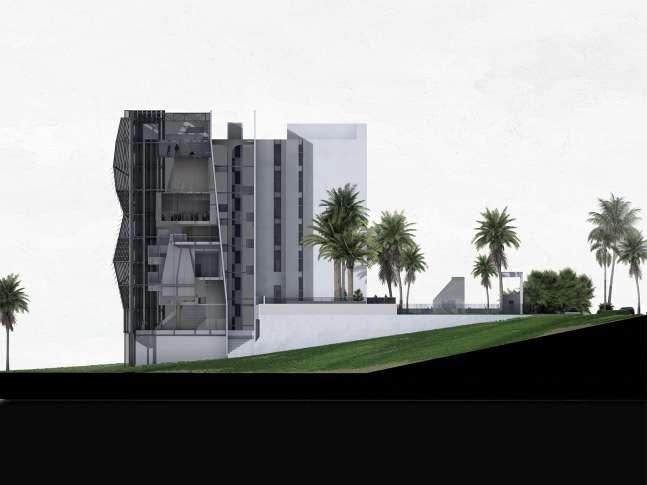
The existing site has a North-South elevation difference of nearly 7-8 meters, with the parking area at the bottom to support the multi-layered building structure above to form a large volume, and the contrast between the real and virtual multi-layer façade to manifest the explicit and implicit power of the dichotomy of the relationship.
DIAGRAMS:
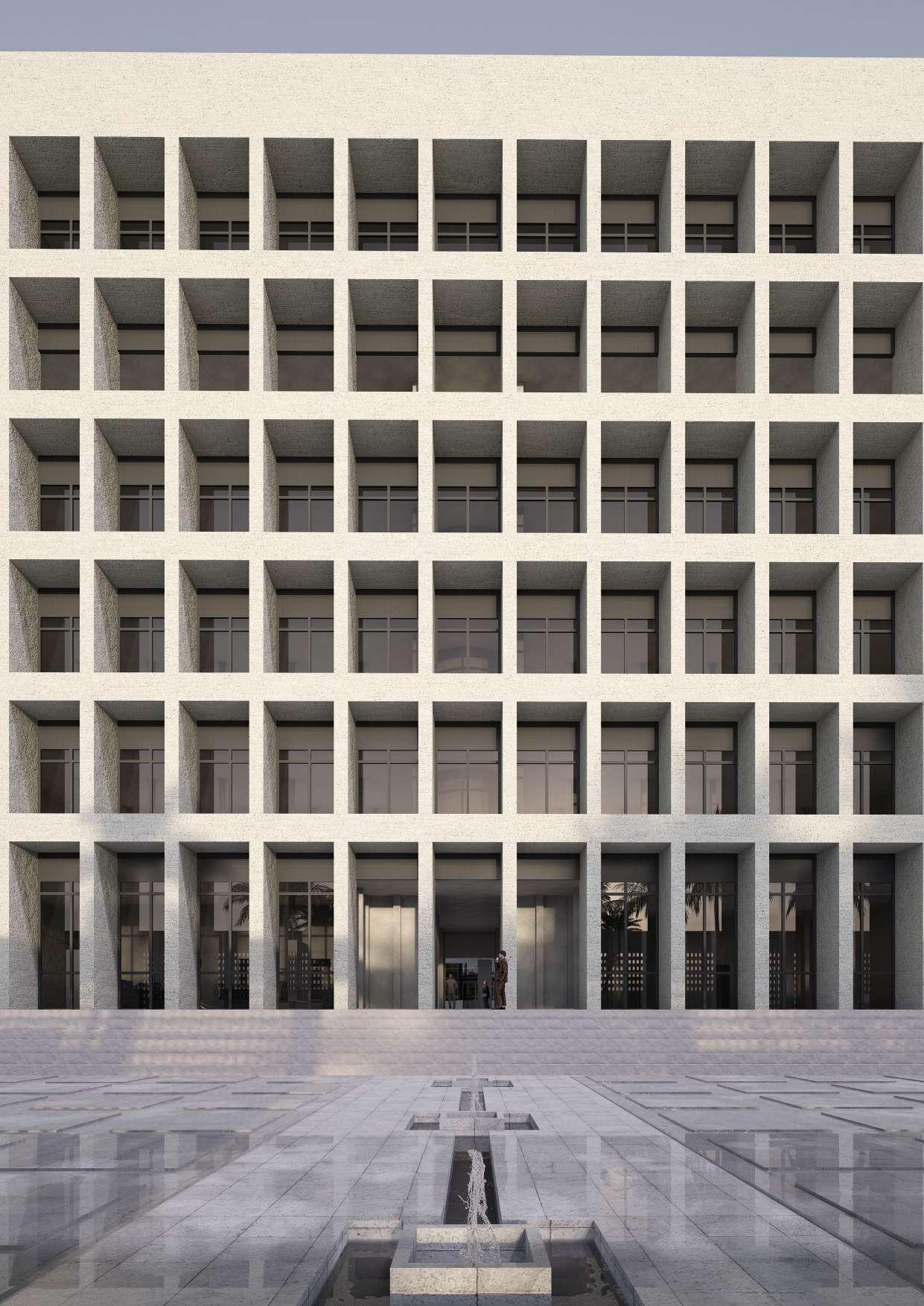
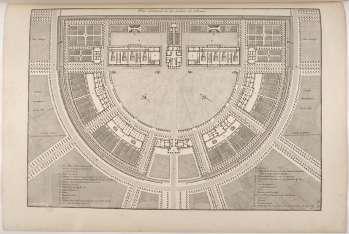
IMAGE: General Plan of Chaux Saltworks 1774
Russians worship ‘Strongman politics’, and the failed democratic reforms of the Yeltsin era doomed the country to move towards centralization.And the current state of the political situation requires Russia to present a Serious Image of Centralism, depicting a spatial form that manifests the embodiment of explicit power in response to dogma and hierarchy.
The Explicit Power, It is the embodiment of absolute order and control. Circle is a spiritual symbol that reflects power control. It is centripetal, causing things to gather toward the absolute center; on the contrary, it proves that it can conduct an all-round view from the center to the entire arc. Ledoux's Chaux Saltworks, which built in 1778. The dot is the center of power, illustrating the absolute power of the work order, and means the concentration and supervision of power.
AMBASSADOR RESIDENCE
AMBASSADOR OFFICE
OFFICE
CONSULAR
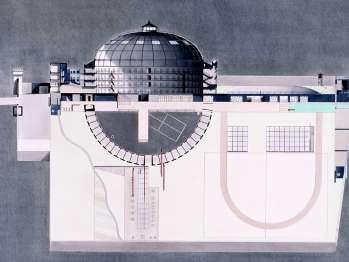
IMAGE: General Plan of Chaux Saltworks 1774
IMAGE. Mariabruna Fabrizi, “The Ideal City of Chaux by Claude-Nicolas Ledoux (1773-1806),” SOCKS (blog), February 9, 2018, https://socks-studio.com/2016/11/09/the-ideal-city-ofchaux-by-claude-nicolas-ledoux-1773-1806/.
IMAGE. André Patrão, “What Architects Do With Philosophy: Three Case Studies of the Latetwentieth Century,” ARENA Journal of Architectural Research 8, no. 1 (March 24, 2023): 1, https://doi.org/10.55588/ajar.309.
“OMA RE: OMU | Cornell Journal of Architecture,” Cornell Journal of Architecture, n.d., https://cornelljournalofarchitecture.cornell.edu/issue/issue-8/oma-re-omu/.
‘the Panopticon Principle, with its mechanistic ideal – the naked power exercised by the authority in the centre over the subjects in the ring’ (Koolhaa 2004) The manifestation of explicit power is in the metaphorical nature of the building, there are a series of spatial forms resulting in the impact on the human psyche, heavy support columns, large architectural volume and symmetry, people through the open Civic Square, the image of a solemn and strict environment to realize people's reverence for the architecture as a metaphor.
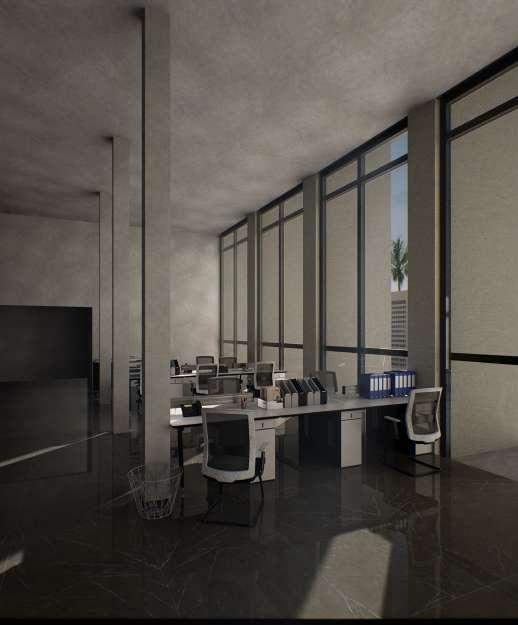
In vertical dimension, the space is divided into three different levels of hierarchy ( the Consular- Office- Ambassadors' Office and Residence), which forms a strict hierarchical metaphor from the Bottom Up. The façade is arranged in a super-scaled columnar arrangement, which allows the outside world to only perceive the hierarchy of the structure but not the actual internal structure.
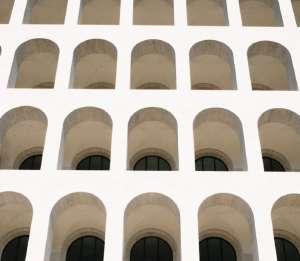
The emergence of power is linked to its ideology. Palazzo della Civiltà Italiana makes extensive use of arched structural elements in an attempt to awaken people's memory and commemoration of ancient Rome, and through this technique is linked to the rise of the fascist regime. It explains the concepts of 'Romanità (or Roman-ness)' engaged on a number of levels as a teleological foundation for the advent (and eternity) of Fascist rule.[10] Through strong recognition and political aesthetics To strengthen the image and authority of their own regime.
The symmetrical arrangement of multi-columns forms a simple, large-scale façade to demonstrate an architectural aesthetic of Control and Power, a metaphor for the formalization and hierarchization of architecture as a political tool to establish a strict hierarchy.
The large depth and expansive glass windows ensure the Embassy's privacy from the outside world, while at the same time allowing enough sunlight to enter the interior and also preventing vertical radiation from the mid-day Sun.
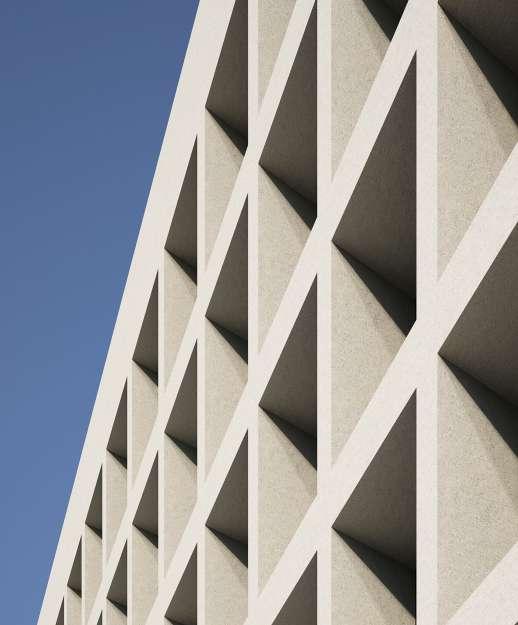
IMAGE, Anton Dee, “The Dark Side of Rome’s Architecture,” Anton Dee, July 7, 2017, https://antondee.com/ archive/exploring-eur-dark-side-romes-architecture.
10. Alan Josef Alexander Mair, “THE ‘SQUARE COLOSSEUM’: ARCHITECTURE AS METAPHYSICAL SCULPTURE - an Acknowledgement of Artistic Value of the Palazzo Della Civiltà Italiana,” Www.Academia.Edu, January 27, 2016, https://www.academia.edu/20957469/THE_SQUARE_COLOSSEUM_ARCHITECTURE_AS_METAPHYSICAL_ SCULPTURE_An_acknowledgement_of_artistic_value_of_the_Palazzo_della_Civilt%C3%A0_Italiana.
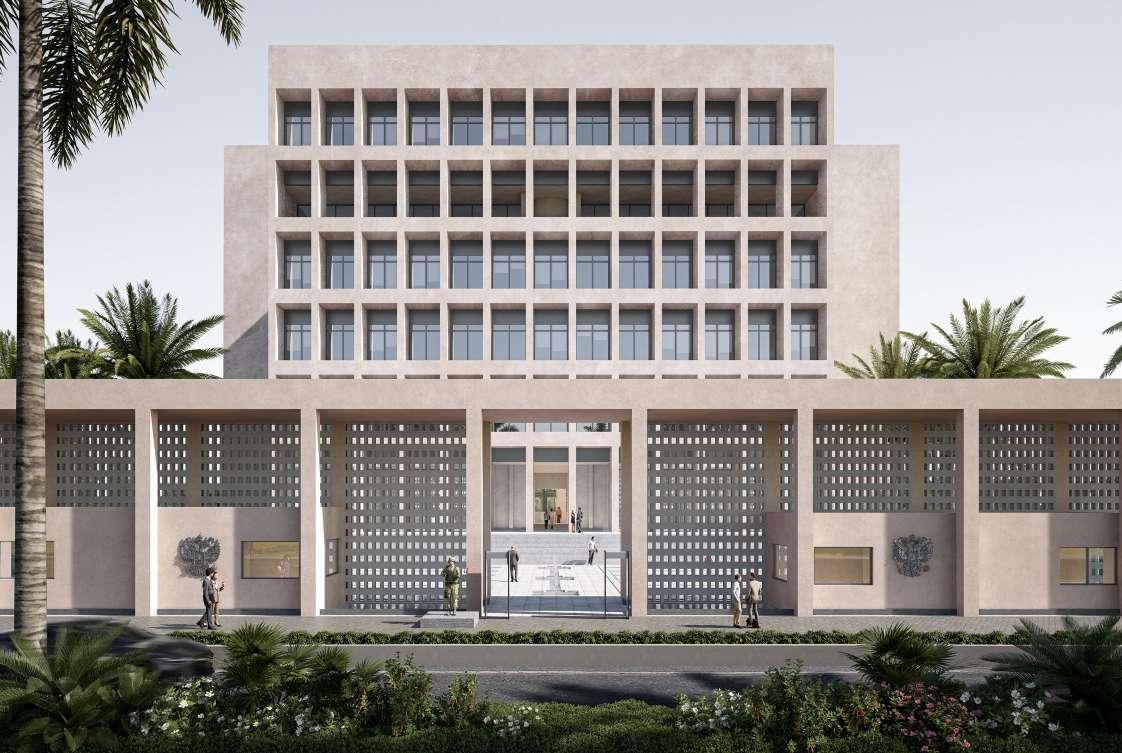
Embassies serve as temporary overseas territories of the country to which they belong and as shelters in times of war. Resistance to Car Bomb Attacks and Illegal Trespasses have become important security considerations in the design of embassies, in the case study of the former U.S. Embassy in London, 'the building surrounded with a plethora of raised concrete flower beds, six-foot- high blast walls, guard shacks, and traffic-blocking structures, transforming . . into a militarized scene worthy of Baghdad.' [11] Whereas the North side of the building acts as the principal manifestation of explicit power, the large-scale column structure combined with the security features would create anxiety and panic for pedestrians on the street if they were to come into direct contact with the street frontage.
In order to dissolve the direct contact between the explicit power space and the frontage of the street, a square colonnade, perforated concrete walls create a visual separation between pedestrians and the internal site to make the transition, and symmetrically arranged Security Rooms control the different regulation of pedestrians and vehicular traffic diversion. To a large extent, the security needs of the embassy are ensured while the visual aggressiveness of the building itself to the street is weakened.
IMAGE, “Moscow scolds Irish envoy after truck driven into Russian embassy gates,” Unionleader, March 8, 2022, https://www.unionleader.com/news/back_ page/moscow-scolds-irish-envoy-after-truck-driven-into-russian-embassy-gates/ article_7acf183b-2a51-557f-a2a3-d966208c20bf.html.
11. “Fortress London: The New US Embassy and the Rise of Counter-Terror Urbanism - Harvard Design Magazine,” Harvard Design Magazine, June 13, 2023, https://www.harvarddesignmagazine.org/articles/fortress-london-the-new-usembassy-and-the-rise-of-counter-terror-urbanism/.
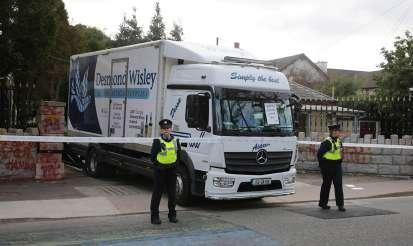
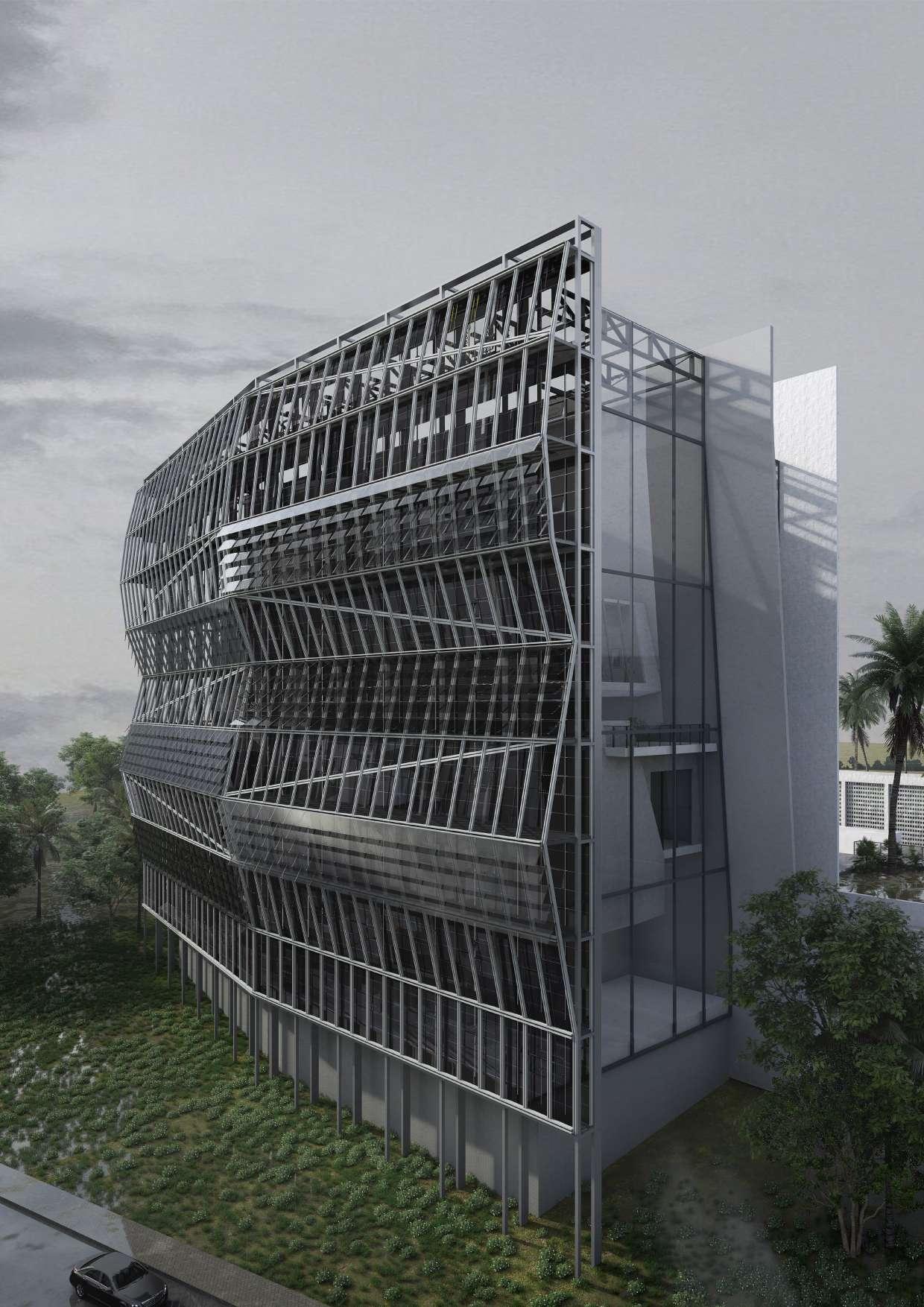
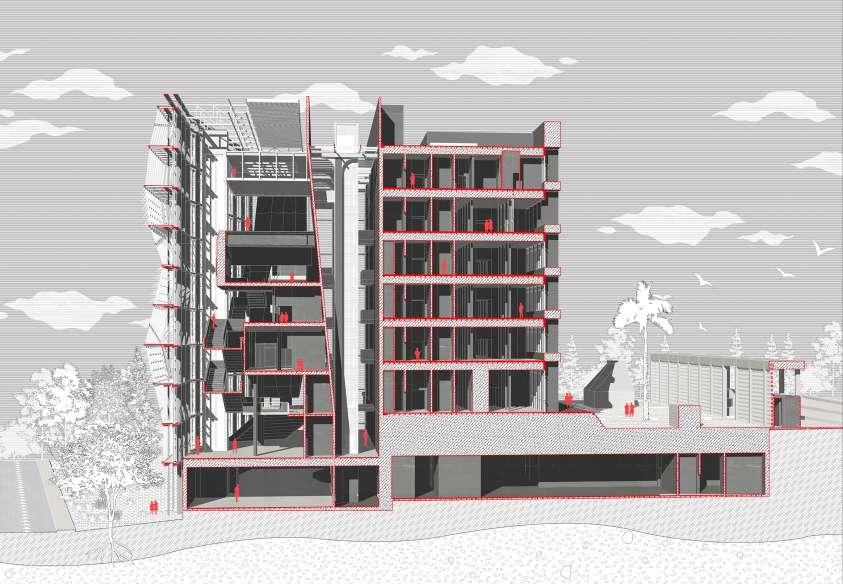
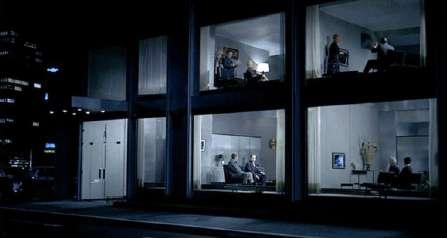
IMAGE: Movie scene from 'Playtime' (1967) by Jacquens Tati
Lebbus Woods' LW04, Part of "War and Architecture", embodies the purity of architecture through organic forms. ‘these will be their main products, the result of a lifestyle driven by the need for clarity in an ephemeral and changing landscape.’ [12] These organisms are not bound by fixed frameworks, blurring the boundaries between public and private spheres and parasitizing each other on an open facade.
This design project explores the relationship between utopian ideal materialization and power, dispelling people's resistance to absolute power space, and implicitly parasitizing the power structure in a Power ‘Void’ space. An implicit hierarchy is formed through the establishment of different social levels. It is not bound by norms, and the appearance of freedom and openness creates a False image of openness for the public.
Transparency does not mean freedom. Tati‘s Playtime states that ‘buildings are adorned with glass windows, clearly suggestive of the level of transparency that exists in a modernized world.’[13]
IMAGE,Sandra E. Lim, “Playtime (Jacques Tati, 1967),” January 1, 2023, https://www. sensesofcinema.com/2017/1967/playtime/.
12.Mark Gerwing, “Lebbeus Woods, 1940 - 2012 — M. Gerwing ARCHITECTS,” M. Gerwing ARCHITECTS, September 19, 2018, https://mgerwingarch.com/m-gerwing/2012/11/01/ lebbeus-woods-1940-2012.
13.RTF Architectural Reviews, “An architectural review of Playtime (1967),” Rethinking the Future, n.d., https://www.re-thinkingthefuture.com/rtf-architectural-reviews/a7089an-architectural-review-of-playtime-1967/.
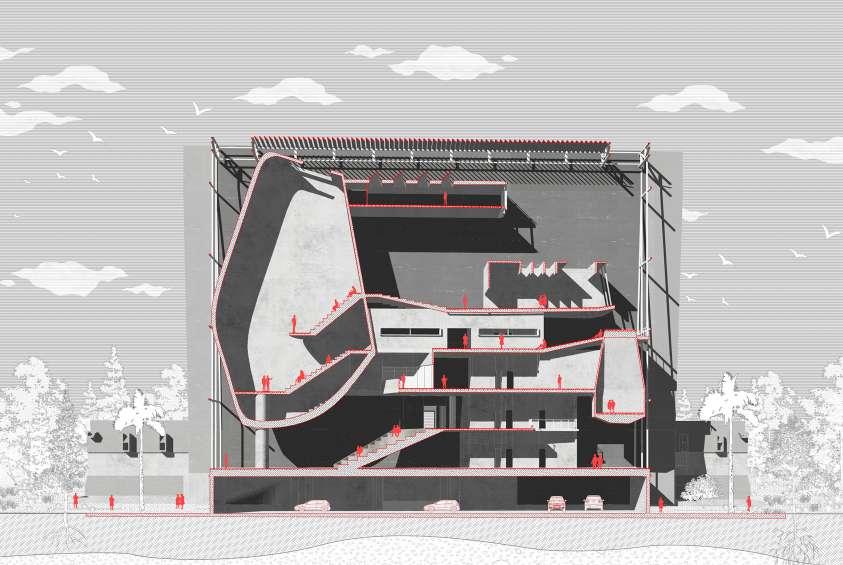
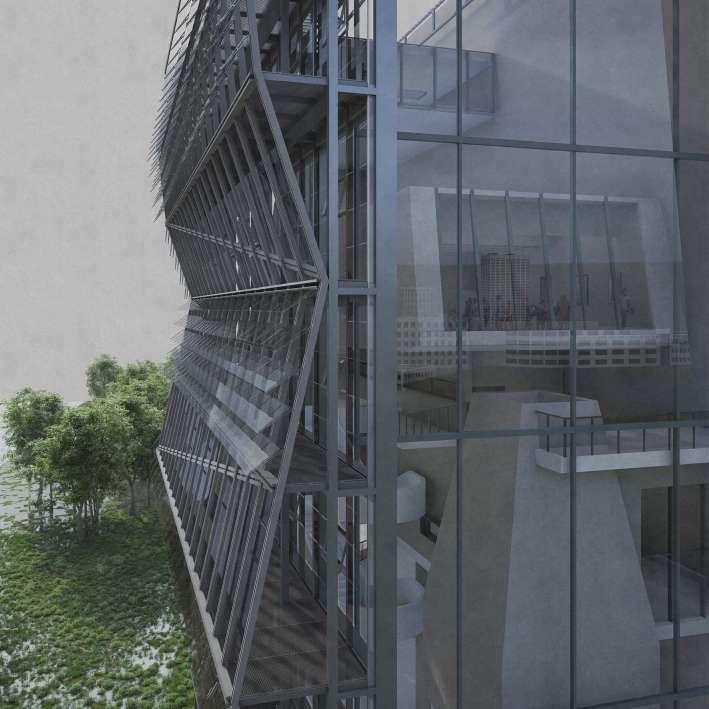
It is absurd, anti-functional, a non-confrontational public space that allows all citizens to participate and drive the public space. The discrete organic form can be redefined as citizens experience and understand it. People can perceive the image of the surrounding environment through the transparent curtain wall, while the outside world can peek into the special social power hierarchy of the internal environment. People inside cannot perceive the potential control of power, creating an illusory effect of space.
Architectural structure both limits and controls us, even if it forms a free plan organization that allows the interaction of a series of overlapping activities within a limited space, architecture is only a democratizing tool of this power space to absorb citizens and spontaneously follow a network of power relations without perception.
The Implicit Power Space is required to portray Russia's openness to the outside world, and the Implicit Power Hierarchy is determined by different levels of social intimacy. Through the medium of Russia's wealth of culture and art, there are three levels of social hierarchy ( Open Library and Meditation Space - fully open to the public, Amphitheatre and Multi-Purpose Exhibition Space - open to embassy invitees, and Private Clubs - open to ambassadors or those with diplomatic needs).
On a vertical scale, different hierarchies of socialization (bottom-up and becoming more and more private) create a sense of boundaries depending on the intimacy of the socialization, guaranteeing the privacy of different diplomatic activities.
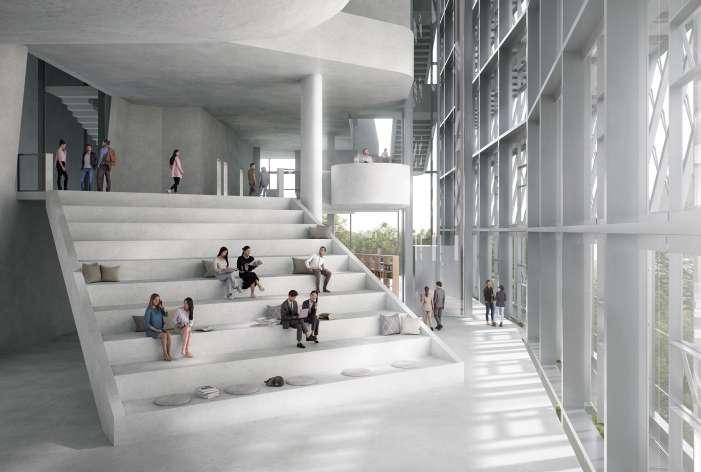
Open Library:
The Open floor space on the elevated Ground Floor allow the public to freely organize their different social activities within the space. Libraries, as an open existence, provide the public with a comfortable space for temporary office work and reading.
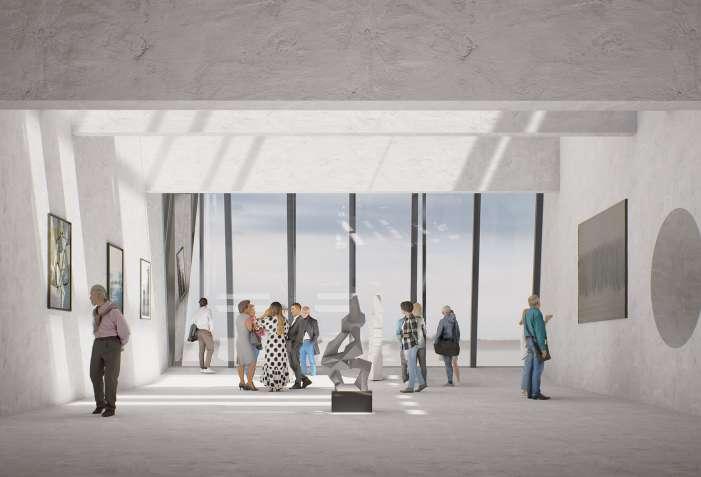
As diplomatic events require different cultural exchangesArt exhibitions, Ballet, temporary conferences, etc, a flexibly organized multi-functional exhibit space allows for social interactions among the invited groups.
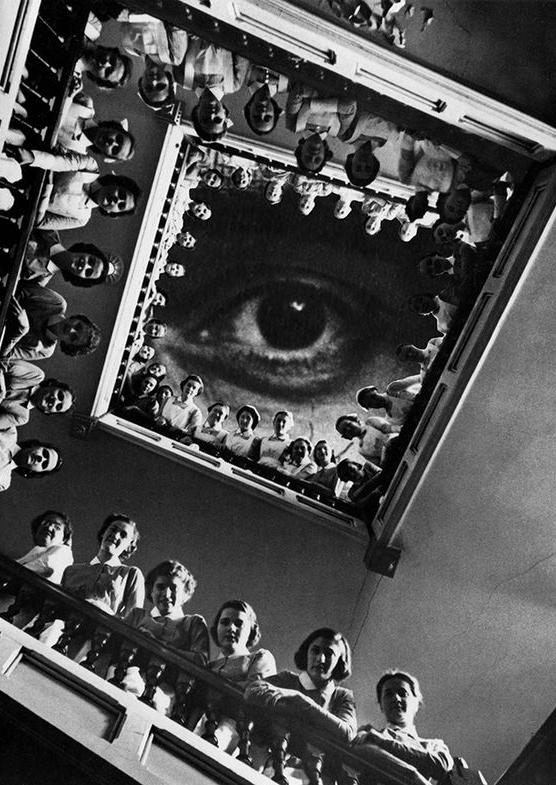
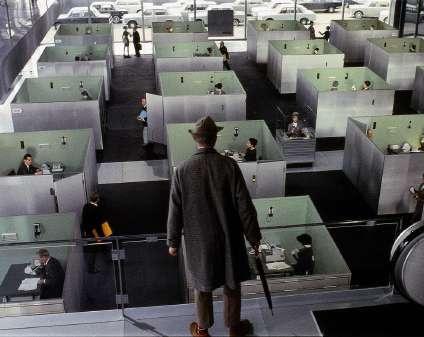
Voyeurism, in the French voir which means "to see"[14]. 'mostly represented a kind of usurping of power, a desire to cross the bottom of the hierarchy, and they emitted a view from the bottom up.' (Shengqi 2023) It serves as an implicit manifestation of power in the form of architectural space, where voyeurism is aimed at the control of matters and activities on the bottom level or within the field of view, which establishes a Subject-Object relationship within the space.
Through the movie 'Playtime' scene, the lens language of people looking down from a high position, the transparency and standardization of space, people in high positions can clearly understand the differentiated information in the preset scenes, and achieve a certain degree of success through monitoring and control. power structure.
IMAGE, Outer Space, “Film Club: Simone Hine — Outer Space,” Outer Space, April 20, 2021, https://www.outerspacebrisbane.org/program/film-club-simone-hine.
14.Wikipedia contributors, “Voyeurism,” Wikipedia, November 8, 2024, https:// en.wikipedia.org/wiki/Voyeurism.
15.Shengqi Ming, “The Entanglement of Voyeurism and Power - ProQuest,” n.d., https://www.proquest.com/openview/f043f8858c32ab5a8aa70556174a9fce/1?pqorigsite=gscholar&cbl=18750&diss=y.
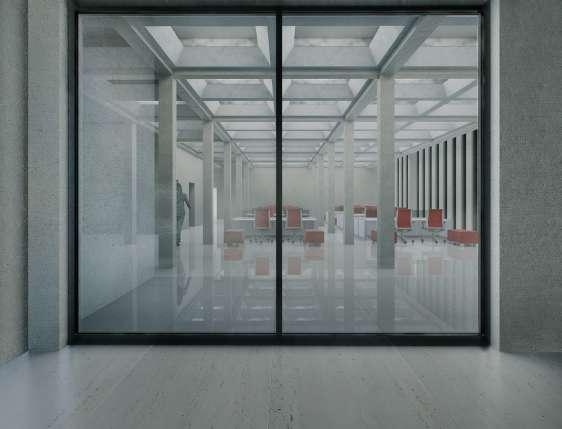
It is a manifestation of power, it serves efficiency, but sacrifices human comfort.The design project requires exploring how power is an efficient social structure, at the expense of controlling human psychological impact, the focus of architectural concepts has shifted to the establishment of a strict political institution, authority and position hierarchy.
The Central Head's Office is designed to monitor the symmetrical perspective, subjecting the activities within the architectural space to the voyeurism and supervision of the people in power. The workspace is completely transparent and visualized to people in Power, creating a hierarchy within the realm.
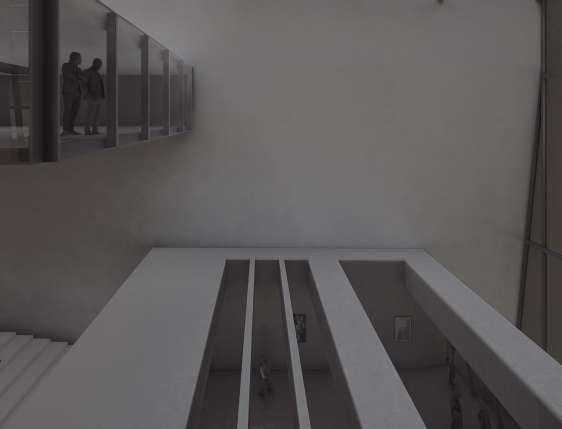
The top-down 'Oligopticon' is a three-dimensional ' Open View' of the specific activities in the bottom space into a pure ' Voyeurism'. Spying at different heights enables people to perceive the implicit social hierarchies constructed within the space, and 'politicizes' the space through controlling people's different levels of visibility.
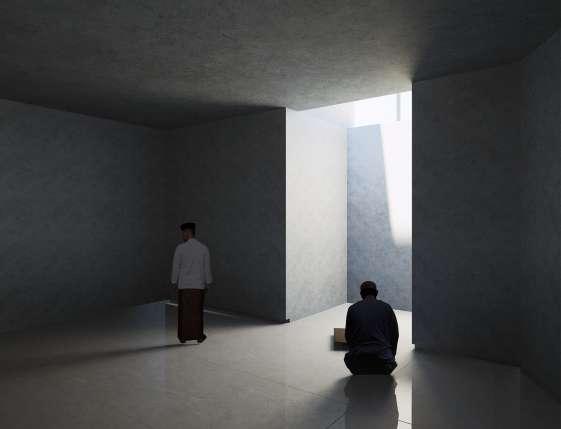
Enclosed spaces with minimal skylights allow for Divine voyeurism through light. From the perspective of looking up, a focal point of concentration is established at the center of the vision, a metaphor for divinity through a religiously subjective consciousness.
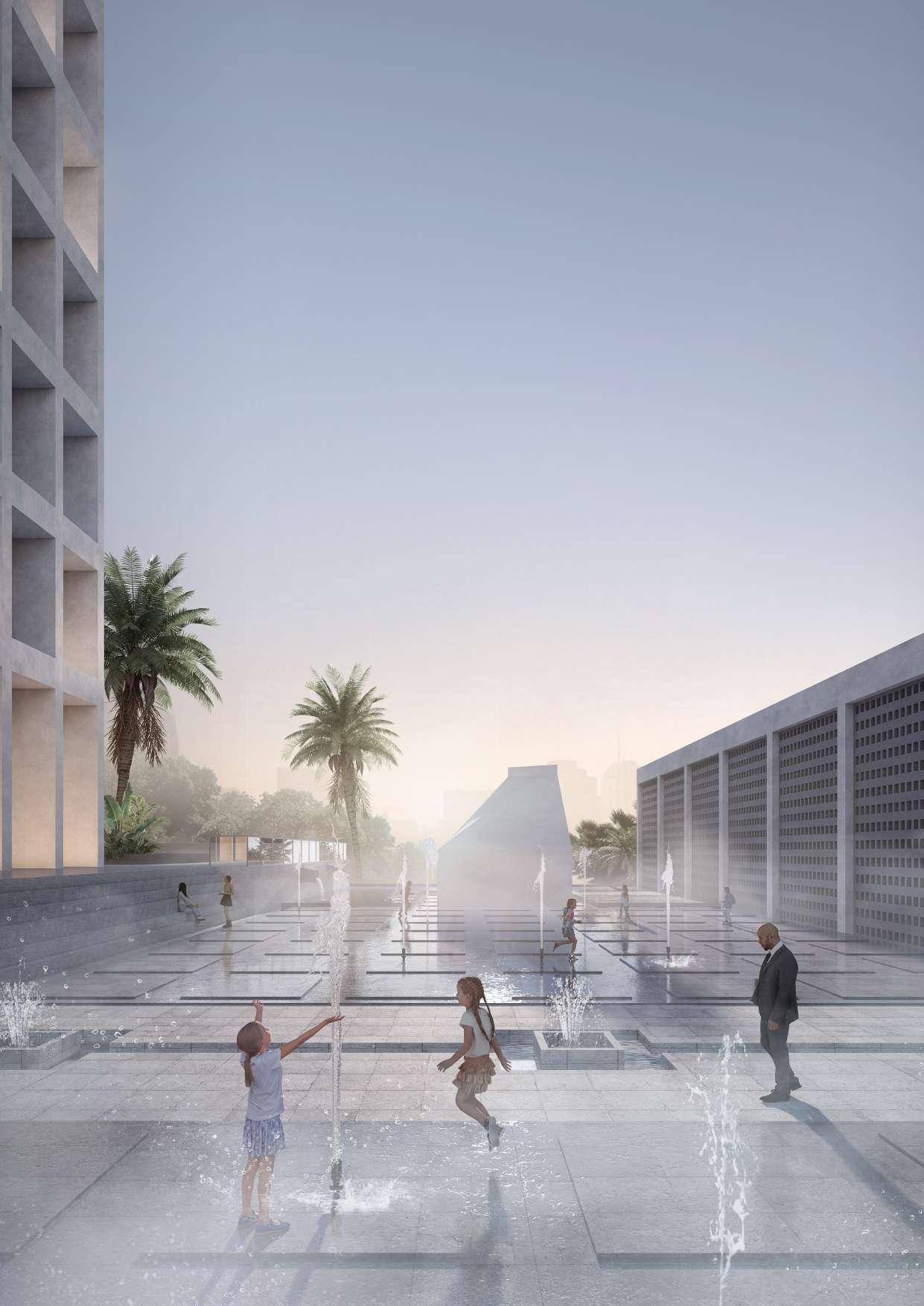
16. Javanologi, “Sacrality of Water in Javanese Culture | PUI JAVANOLOGI,” August 26, 2021, https://javanologi.uns.ac.id/en/2021/08/26/sacrality-of-water-in-javaneseculture/.
In Indonesian culture and religion, 'the existence of water is an absolute thing and cannot be separated. ' [15]. The order of Power established by the Embassy does not mean isolation from the citizen, but rather it needs to awaken the citizen 's sense of self- power, so that they develop the selfperception to fully realize their environmental power within the framework of an implicit power structure.
A civic Square, A civic square, through its connection to Indonesian Water Culture (Nusantara is located in a hot and humid climate and recycles and stores rainwater through the rainy season and reuses it in the landscape.) Power is expressed through ritualized places associated with water, balancing the everyday and the interactive, forms a place for human interaction and the construction of Social Cohesion, essentially a Political Landscape to reclaim the civic aspect of the square.
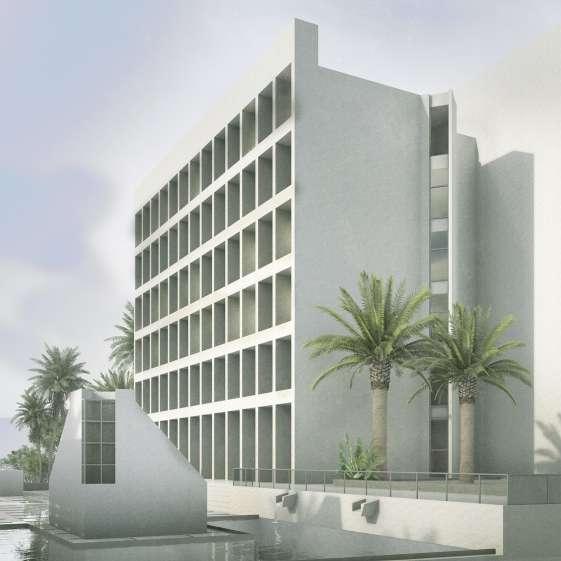
The whole process of the Research revolves around 'the relationship between Explicit and Implicit Architectural Power and Political Architecture': Embassy, as the medium through which I explored this research, I needed to think about the actual political purposes and considerations that should go into that type of architecture. And how should practical power work in this type of architecture? It is not only the manifestation of power that needs to be visualized, but also how the architect implicitly incorporates the actual intentions of those in power into the architecture of the building.
Through analysis of diplomatic relations between countries and social realities, the core of the Embassy presents the essence of a '' dualism '' - both as a political tool to construct a strict hierarchy of power, but also the need for openness to promoting diplomatic relations, which means to seek a form of dualism in the two conflicting political regimes of Centralism and Liberalism. The design of this dualism is embodied in the construction of implicit and explicit political power: Explicit power forms a bottom-up hierarchical metaphor through large-scale architectural language, Linear Symmetry, and strict hierarchical organization. The implicit power is realized by the different social hierarchies, which are not directly controlled, but psychologically created through the ''voyeurism'' and ''transparency'' of the internal space.
UNDERGROUND CARPARK SCALE 1:200
UNDERGROUND CARPARK + OPEN LIBRARY SCALE 1:200
CONSULAR+CANTEEN+TRANSITION ZONE SCALE 1:200
ADMIN OFFICE + THEATRE + MEDITATE SCALE 1:200
ADMIN OFFICE + THEATRE
SCALE 1:200
ADMIN OFFICE + MULTI-FUNCTION EXHIBIT
SCALE 1:200
AMBASSADOR OFFICE + THEATRE SCALE 1:200
AMBASSADOR RESIDENCE + SOCIAL CLUB SCALE 1:200
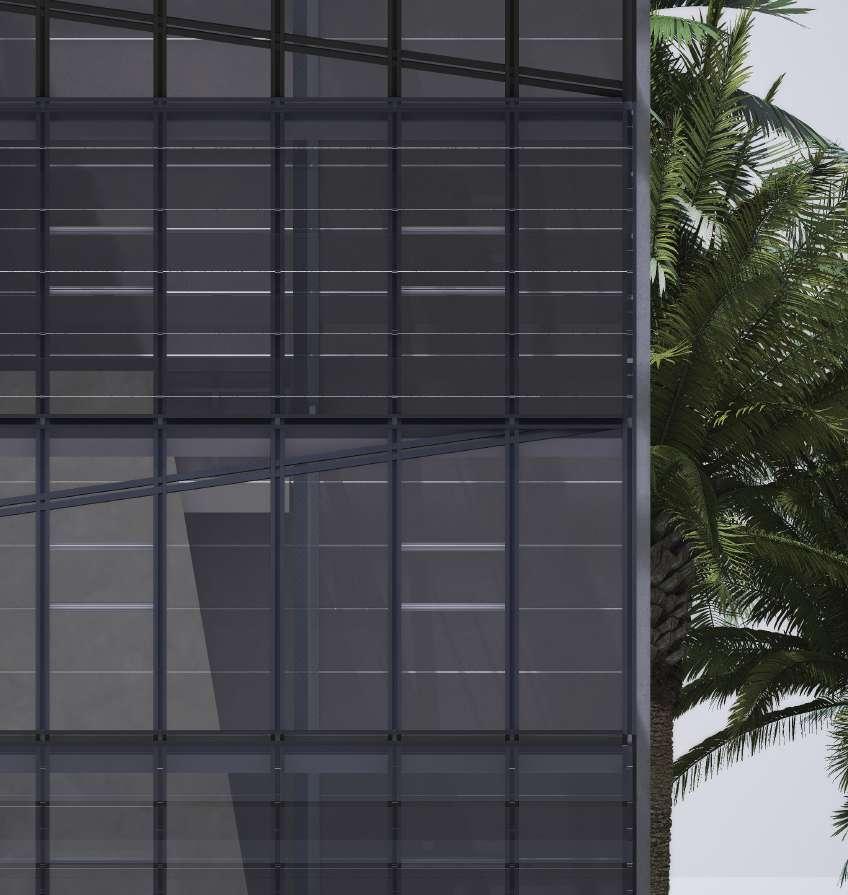
CONTROLLABLE LOUVERED GLASS DOUBLE CURTAIN WALL
SCALE 1:20
1. Independent, “The Edifice Complex by Deyan Sudjic | the Independent,” The Independent, June 30, 2005, https://www.independent.co.uk/arts-entertainment/books/reviews/the-edificecomplex-by-deyan-sudjic-5346268.html.
2.3.ibcom.org. “On Security and Terror - Giorgio Agamben,” n.d. https://libcom.org/article/security-and-terror-giorgio-agamben.
4. “Architecture as a Political Instrument,” Rethinking the Future, n.d., https://www.re-thinkingthefuture.com/designing-for-typologies/a3327architecture-as-a-political-instrument/.
Karen Davids and Karen Davids, “Segregation: Jakarta, a Sinking City Muddied by a Colonial Legacy - Salience,” Salience - Thoughtful Student Journalism (blog), June 4, 2023, https://www. salienceatsydney.org/blog/2021/08/24/segregation-a-sinking-city-muddied-by-a-colonial-legacy/.
Cambridge University, “Moving a Capital City,” November 14, 2023, https://www.youtube.com/watch?v=INuSVsB2X54.
Karen Davids and Karen Davids, “Segregation: Jakarta, a Sinking City Muddied by a Colonial Legacy - Salience,” Salience - Thoughtful Student Journalism (blog), June 4, 2023, https://www. salienceatsydney.org/blog/2021/08/24/segregation-a-sinking-city-muddied-by-a-colonial-legacy/.
Wikipedia contributors, “Indonesia–Russia Relations,” Wikipedia, November 10, 2024, https://en.wikipedia.org/wiki/Indonesia%E2%80%93Russia_relations.
https://www.facebook.com/CNNIndonesia, “Putin Minat Bangun Nuklir Di Indonesia Dan Investasi Di IKN,” Ekonomi, July 1, 2022, https://www.cnnindonesia.com/ekono mi/20220701084445-92-815856/putin-minat-bangun-nuklir-di-indonesia-dan-investasi-di-ikn.
“Putin’s Created an Economic Crisis and Left Moscow No Easy Way Out,” Wilson Center, n.d., https://www.wilsoncenter.org/publication/putins-created-economic-crisis-and-left-moscow-no-easyway-out.
The Editors of Encyclopaedia Britannica, “Russian Language | Origin, History, Dialects, & Facts,” Encyclopedia Britannica, July 20, 1998, https://www.britannica.com/topic/Russian-language.
TRADING ECONOMICS, “Indonesia Exports to Russia - 2024 Data 2025 Forecast 1992-2023 Historical,” n.d., https://tradingeconomics.com/indonesia/exports/russia#:~:text=Indonesia%20 Exports%20to%20Russia%20was,updated%20on%20November%20of%202024.
IMAGE, Jessica Vizuette, “The Essence of Culture in Gogol’s ‘The Nose,’” Arcadia (blog), June 10, 2022, https://www.byarcadia.org/post/the-essence-of-culture-in-gogol-s-the-nose.
IMAGE, “THE NOSE by Nikolai Gogol,” Father Theo’s Blog, July 16, 2011, https://fathertheo.wordpress.com/2011/03/05/the-nose-by-nikolai-gogol/.
6. Nikolai Gogol, “The Nose,” in Gogol, Diary of a Madman and Other Stories, by Penguin Books, trans. Ronald Wilks, 1987, 42–70, https://www.yorku.ca/creet/satire/documents/thenose.pdf.
7. Zhuang Xiaohui, Hou Junsheng, Chinese Journal of society, “The Social Transformation and Social Stratification in Russia” n.d., http://html.rhhz.net/society/html/2008-02-006.htm.
IMAGE, “Men And Woman in Fashionable Dress Sit and Stand Around as Boys Polish the Men’s Boots. Etching, 1801.,” Wellcome Collection, n.d., https://wellcomecollection.org/works/zzj2zap8.
8.“Liberalism in Pre-revolutionary Russia: An Interview With Susanna Rabow-Edling | Toynbee Prize Foundation,” Toynbee Prize Foundation, n.d., https://toynbeeprize.org/posts/liberalism-inrussia/.
9. Liu, Congying, “The History and Current Status of the Development of Russian National Consciousness,” May 2014, https://oyyj-oys.ajcass.com/UploadFile/Issue/2d3yjzo1.pdf.
Argitect, “The Lying Truth,” The Lying Truth, n.d., https://thelyingtruthofarchitecture.wordpress.com/page/2/.
“John Hejduk - the Architectural League of New York,” The Architectural League of New York, February 26, 2018, https://archleague.org/article/200-years-john-hejduk/.
IMAGE. Mariabruna Fabrizi, “The Ideal City of Chaux by Claude-Nicolas Ledoux (1773-1806),” SOCKS (blog), February 9, 2018, https://socks-studio.com/2016/11/09/the-ideal-city-of-chaux-byclaude-nicolas-ledoux-1773-1806/.
IMAGE. André Patrão, “What Architects Do With Philosophy: Three Case Studies of the Late-twentieth Century,” ARENA Journal of Architectural Research 8, no. 1 (March 24, 2023): 1, https:// doi.org/10.55588/ajar.309.
“OMA RE: OMU | Cornell Journal of Architecture,” Cornell Journal of Architecture, n.d., https://cornelljournalofarchitecture.cornell.edu/issue/issue-8/oma-re-omu/.
IMAGE, Anton Dee, “The Dark Side of Rome’s Architecture,” Anton Dee, July 7, 2017, https://antondee.com/archive/exploring-eur-dark-side-romes-architecture.
10. Alan Josef Alexander Mair, “THE ‘SQUARE COLOSSEUM’: ARCHITECTURE AS METAPHYSICAL SCULPTURE - an Acknowledgement of Artistic Value of the Palazzo Della Civiltà Italiana,” Www. Academia.Edu, January 27, 2016, https://www.academia.edu/20957469/THE_SQUARE_COLOSSEUM_ARCHITECTURE_AS_METAPHYSICAL_SCULPTURE_An_acknowledgement_of_artistic_value_ of_the_Palazzo_della_Civilt%C3%A0_Italiana.
IMAGE, “Moscow scolds Irish envoy after truck driven into Russian embassy gates,” Unionleader, March 8, 2022, https://www.unionleader.com/news/back_page/moscow-scolds-irish-envoyafter-truck-driven-into-russian-embassy-gates/article_7acf183b-2a51-557f-a2a3-d966208c20bf.html.
11. “Fortress London: The New US Embassy and the Rise of Counter-Terror Urbanism - Harvard Design Magazine,” Harvard Design Magazine, June 13, 2023, https://www.harvarddesignmagazine. org/articles/fortress-london-the-new-us-embassy-and-the-rise-of-counter-terror-urbanism/.
IMAGE,Sandra E. Lim, “Playtime (Jacques Tati, 1967),” January 1, 2023, https://www.sensesofcinema.com/2017/1967/playtime/.
12.Mark Gerwing, “Lebbeus Woods, 1940 - 2012 — M. Gerwing ARCHITECTS,” M. Gerwing ARCHITECTS, September 19, 2018, https://mgerwingarch.com/m-gerwing/2012/11/01/lebbeuswoods-1940-2012.
13.RTF Architectural Reviews, “An architectural review of Playtime (1967),” Rethinking the Future, n.d., https://www.re-thinkingthefuture.com/rtf-architectural-reviews/a7089-an-architecturalreview-of-playtime-1967/.
IMAGE, Outer Space, “Film Club: Simone Hine — Outer Space,” Outer Space, April 20, 2021, https://www.outerspacebrisbane.org/program/film-club-simone-hine.
14.Wikipedia contributors, “Voyeurism,” Wikipedia, November 8, 2024, https://en.wikipedia.org/wiki/Voyeurism.
15.Shengqi Ming, “The Entanglement of Voyeurism and Power - ProQuest,” n.d., https://www.proquest.com/openview/f043f8858c32ab5a8aa70556174a9fce/1?pq-origsite=gscholar&cbl=18750 &diss=y.
16. Javanologi, “Sacrality of Water in Javanese Culture | PUI JAVANOLOGI,” August 26, 2021, https://javanologi.uns.ac.id/en/2021/08/26/sacrality-of-water-in-javanese-culture/.