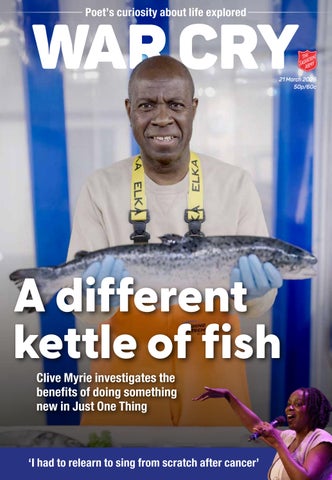
A different kettle of fish
Clive Myrie investigates the benefits of doing something new in Just One Thing
‘I had to relearn to sing from scratch after cancer’
Clive Myrie investigates the benefits of doing something new in Just One Thing
‘I had to relearn to sing from scratch after cancer’
The Salvation Army is a Christian church and registered charity seeking to share the good news of Jesus and nurture committed followers of him. We also serve people without discrimination, care for creation and seek justice and reconciliation. We offer practical support and services in more than 700 centres throughout the UK. Go to salvationarmy.org.uk/find-a-church to find your nearest centre.
What is the War Cry?
The Salvation Army first published a newspaper called the War Cry in London in December 1879, and we have continued to appear every week since then. Our name refers to our battle for people’s hearts and souls as we promote the positive impact of the Christian faith and The Salvation Army’s fight for greater social justice.
‘All the world’s a stage,/ And all the men and women merely players.’ So said the character of Jaques in William Shakespeare’s As You Like It. Whether or not that’s true, the stage and the arts feature significantly in this week’s issue of the War Cry
In one article we note that next Friday (27 March) is World Theatre Day, which aims to highlight live performances, while also supporting creative communities and encouraging people to value the arts.
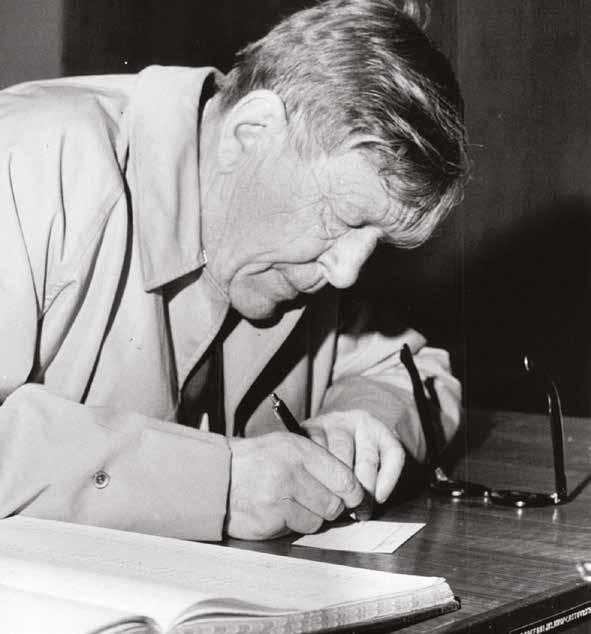
Meanwhile, to mark World Poetry Day on Saturday (21 March), we find out more about the life of the poet WH Auden from Richard Harries, who included Auden among the 20 modern writers he profiled in his book about faith and literature, Haunted by Christ
Auden’s faith ‘suffused all his poetry’, Richard tells us in an interview.
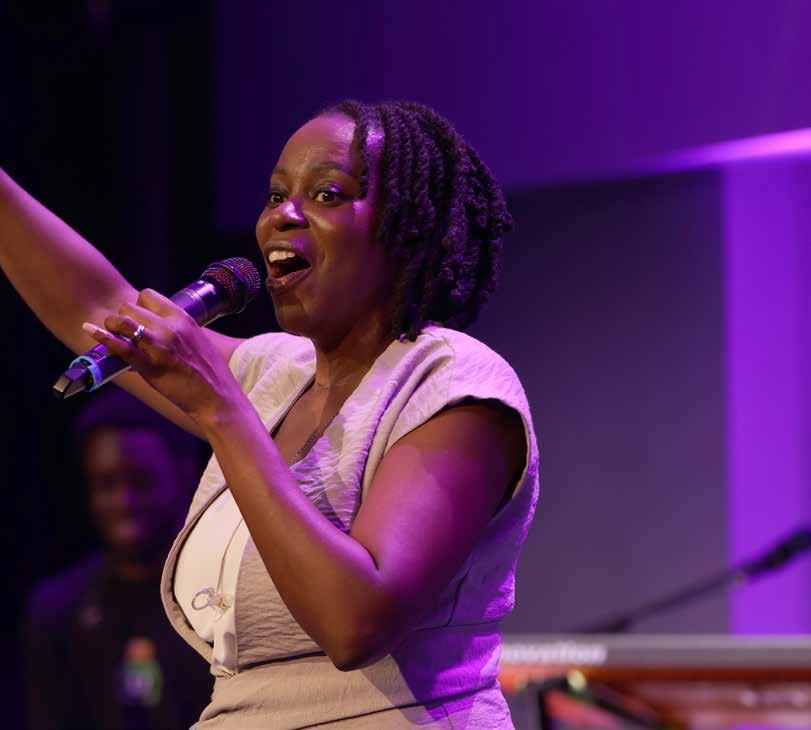
Also in this issue, we discover the impact that faith had on Mobo-nominated singer Sarah Téibo when cancer treatment meant that she lost her voice.
‘God had to remind me that in order to experience him as my healer, I needed to come to him with a need for healing,’ she tells us as she describes how God helped her during her illness and recovery.
Editor: Andrew Stone, Major
Managing Editor: Philip Halcrow
Staff Writer: Emily Bright
Staff Writer: Claire Brine
Staff Writer: Ewan Hall
Editorial Assistant: Linda McTurk
Graphic Designer: Mark Knight
Graphic Designer: Natalie Adkins
Email: warcry@salvationarmy.org.uk
The Salvation Army
United Kingdom and Ireland Territory
1 Champion Park London SE5 8FJ
Tel: 0845 634 0101
Subscriptions: 01933 445445 (option 1, option 1) or email: subscriptions@satcol.org
Founders: Catherine and William Booth
International leaders: General Lyndon Buckingham and Commissioner Bronwyn Buckingham
Territorial leaders: Commissioners Jenine and Paul Main
Editor-in-Chief: Major Julian Watchorn
0043-0226
The Salvation Army Trust is a registered charity. The charity number in England, Wales and Northern Ireland is 214779, in Scotland SC009359 and in the Republic of Ireland CHY6399.

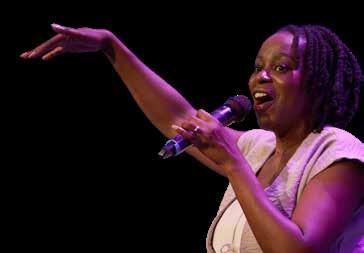
‘Probably one of the hardest seasons I’ve been through,’ she says, ‘resulted in a miracle, a testimony and hopefully the encouragement of others who might be going through a similar situation.’
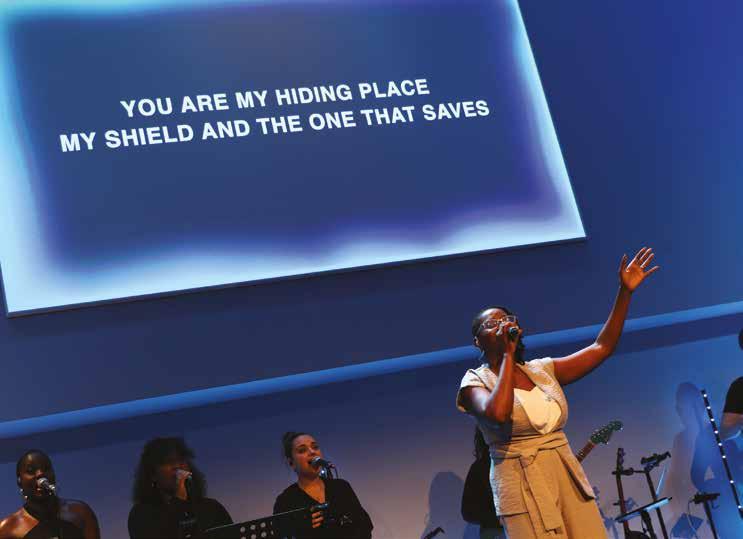
Her voice regained, she is once again performing her music on stage.
It’s encouraging to hear Sarah talk of how God can make a difference for good in our lives, whatever we are going through. Whether we are experiencing health concerns, financial worries or a relationship breakdown –God can help.
That’s because he loves and values us. To God, we are far more than mere players on a stage. We are his cherished children, and he wants to guide us into a meaningful relationship with him so that we can experience a fulfilling and purposeful life.

TV preview: Just One Thing BBC1 and iPlayer
By Emily Bright
If you could make a tweak in your life, what would it be? Radio 4 programme
Just One Thing – originally hosted by the late journalist Dr Michael Mosley – makes its TV debut on Monday (23 March), asking people to make ‘one small change for big benefits’.
Radio DJ Zoe Ball and TV presenters Clive Myrie and Roman Kemp take it in turns to host episodes of the 12-part series, which suggests lifestyle choices such as dancing, drinking black tea, eating dark chocolate, digital detoxing and gardening.
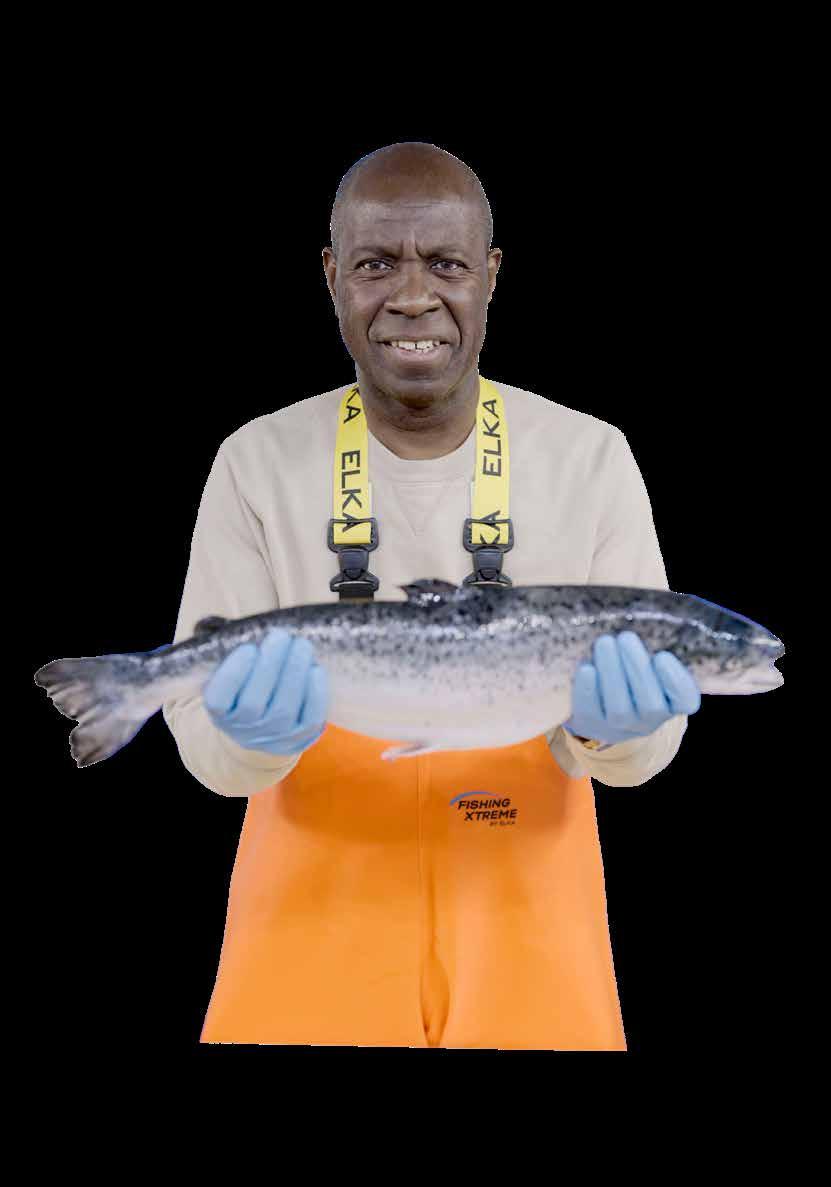
In the first episode, Clive visits Rye, a fishing port in East Sussex, to highlight how oily fish – and the omega-3 healthy fats it contains – can boost our brainpower, reduce inflammation and improve heart health.
He meets mother of two Sam, who is juggling childcare with freelance marketing work. After undergoing surgery for her endometriosis, a chronic condition which has caused her fatigue for years, she is determined to stay healthy.
Sam has learnt that good nutrition can help to prevent the condition’s return while also boosting her brain function.
Clive challenges Sam and her friends to consume three portions of oily fish a week. He teaches her the acronym ‘smash’ to guide her in which fish to choose – salmon, mackerel, anchovies, sardines and herring.
He also reassures

vegetarian viewers that there are other ways to increase their intake of omega-3, such as through seaweed, seeds and vitamin supplements.
For inspiration, the group head down to Rye Fish Market, where they meet fisherman Adam, and help him to ice up his catches. Later, chef Alan teaches the friends how to fillet fish and serves them barbecued mackerel. Clive also gives Sam his tried-and-tested recipe of smoked mackerel and tomato pasta. While the group is initially sceptical
about eating more fish, their stance softens. But only time will tell if their change in diet lasts – and if it brings the expected benefits.
Deciding to change things in our lives can make a big difference, whether we are introducing a food into our diet, increasing exercise or pursuing a new pastime.
To some people, making life-changing decisions can feel like an act of faith.
Two thousand years ago, a couple of fishermen made one change which would transform their futures – and then stuck by it, day by day.
The Bible recalls that ‘as Jesus walked beside the Sea of Galilee, he saw Simon and his brother Andrew casting a net into the lake, for they were fishermen. “Come, follow me,” Jesus said… At once they left their nets and followed him’ (Mark 1:16–18 New International Version).
The brothers left their comfort zone to follow Jesus, not knowing where he would lead them. But through him, they discovered life in all its fullness – knowing that they were cared for, finding comfort and strength for their tough times as well as receiving forgiveness for all their mistakes.
We too can be transformed by Jesus – if we take just one step and invite him into our lives.
Emily Bright gives her take on a story that has caught the attention
This could be the beginning of beautiful friendships. The BBC has commissioned a new six-part TV series, Will You Be My Friend? Due to be filmed this summer, the documentary will seek to help five to eight-year-olds who are struggling socially.
‘Enter the Friendship Centre,’ declares the BBC press release. ‘Here, a team of psychologists help children build the confidence and social skills to form real, lasting connections with other kids. Each child is then sensitively matched on a play date with a potential new friend from their local area.
‘Six weeks later, we return home to see how their new-found courage has helped at school, in the playground and beyond.’
The BBC’s interim head of commissioning for documentaries, Emma Loach, says: ‘The longing to connect, to be seen, and to belong is universal. Whether you’re 5 or 55, I defy anyone to watch these children without seeing a little bit of themselves reflected.
‘In a world that can feel increasingly disconnected, this series shows that the simplest gestures – a smile, a shared joke, a tentative “Will you be my friend?” – still have the power to change everything.’
It sounds as if it will be a heart-warming series. And Emma is right. Most humans desire connection and belonging – whether they’re young, old or somewhere in between.
I also agree that the smallest gestures can make the biggest difference. In the hardest times of my life, a friend offering to listen, pray or even cook for me has gone a long way.
While I’m thankful to have great people supporting me, who give me a sense of belonging, there is a friendship that I value above all others – the one I have with Jesus, the Son of God. He understands me completely, loves me completely and gives me strength and encouragement in the most challenging circumstances.
He once told his disciples, ‘I call you friends’ (John 15:15 The Voice). And that’s the case for anyone who follows him today. We can belong to him and experience his life-transforming love for ourselves. The only question we have to ask is: Will we be his friend?
A British Army veteran who attends a Salvation Army church has received a national award for his mental health campaigning work.
Kevin Russell was given the Veteran Storyteller of the Year award by charity Combat Stress for speaking publicly about his experiences of post-traumatic stress disorder.
Kevin worked as a military medic for five years. In 2005, he witnessed two suicide bombings in Afghanistan.
After returning to the UK, he lived with PTSD for 17 years before finding support in 2022 from Combat Stress, a mental health charity for former armed forces personnel.
Kevin, who is a Christian and attends Basildon Salvation Army, told the War Cry that receiving the award was ‘a surprise and a real honour’. He also spoke about the impact of PTSD on his faith and the comfort he found in knowing that his church had been praying for him.
He said: ‘One of the things I discovered when I was ill was how often I just couldn’t pray, how I was struggling to know what to say, and at those moments people were prompted to pray for me, time and time again.
‘My relationship with God is still there and strong. That church family listening to God’s prompting is a constant reminder of God’s love.’
The role of King Herod in Jesus Christ Superstar will be shared among six stars when it opens at the London Palladium this summer.
Joining the cast alongside singer Sam Ryder – who is playing Jesus in the rock opera – will be actors Simon Russell Beale, Richard Armitage, Layton Williams and Jesse Tyler Ferguson, singer Boy George and comedian Julian Clary. On selected dates, each performer will take to the stage to sing ‘King Herod’s Song’ in a scene that depicts the trial of Jesus.
Written by Andrew Lloyd Webber and Tim Rice, Jesus Christ Superstar follows events in the life of Jesus Christ, as seen through the eyes of his disciple Judas.
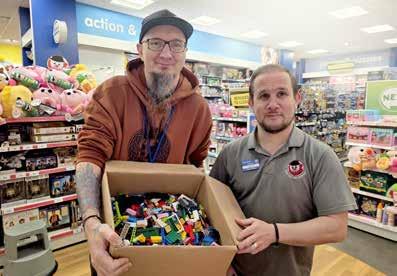
Jay Wiles, a worker at Booth House, receives the Lego at The Entertainer

Layton Williams will play Herod
The Entertainer toyshop in Swindon has donated 6kg of Lego to a Salvation Army centre for people experiencing homelessness.
The donation is intended to provide a therapeutic outlet for residents of the town’s Booth House Lifehouse, many of whom are seeking to overcome addictions, mental health challenges or financial hardship.
As a way to aid residents’ wellbeing, the centre recently launched a Lego club, but it also wanted to make the bricks available in its communal area so that people could use them whenever they wanted.
Chloe Kirwan, programme manager at Booth House, says the toyshop’s gift will help residents during the evenings, when they ‘don’t want to be alone in their rooms’.
She said: ‘Lego is frequently requested because it keeps them busy, occupies their minds and provides a meaningful way to engage with others. Many describe it as mindful. The repetitive sorting and assembling helps reduce stress, improves focus and creates a calm, screen-free activity.
‘It also blends skills like design, problem-solving and structural thinking – skills that are essential when moving on from homeless accommodation and maintaining independent living.’
Churches play an important role in supporting their communities, Marsha de Cordova told her fellow MPs during a debate in the House of Commons.
Ms de Cordova – who as second church estates commissioner is responsible for acting as a link between the Church of England and parliament – said: ‘Across the country, churches are delivering around 31,000 community projects, including 8,000 food banks, 4,000 parent and carer groups, 5,000 lunch clubs and 3,000 community cafés.
‘These programmes offer practical support, companionship and advice to those facing hardship, demonstrating the Church’s ongoing commitment to serving and standing with all our communities nationwide.’
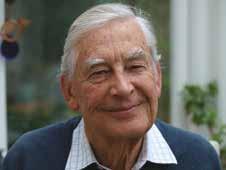
To celebrate World Poetry Day, which takes place on Saturday (21 March), author RICHARD HARRIES explains how faith ‘suffused’ the works of 20th-century poet WH Auden
Interview by Emily Bright
‘Ithink he’s the most talented poet of the 20th century,’ author Richard Harries says of WH Auden. ‘He had a verbal dexterity which meant he could produce varieties of form with the most incredible wit. His poems are always fun, arresting and accessible. His work is there to be enjoyed.’
World Poetry Day, which takes place on Saturday (21 March), is an opportunity to delve deeper into the life of Auden, whose works include ‘September 1, 1939’, ‘Funeral Blues’ – which generated renewed interest in the poet when it featured in the film Four Weddings and a Funeral – and ‘As I Walked out One Evening’.
Richard, a former bishop of Oxford and a fellow of the Royal Society of Literature, is well acquainted with Auden’s work and included him in his 2018 book Haunted by Christ, an exploration of how 20 modern writers have grappled with faith and spirituality.
He says that Auden was brought up in a Christian household, and then rediscovered faith as an adult.
‘Auden said in his autobiography that he turned away from the faith when he was 15, quite simply, to follow the world and the flesh,’ Richard tells me. ‘I think it was a teenage thing. But come 1940, two things made him think differently.
‘One, he had a powerful, mystical experience. He was with some friends, and something took hold of him – he felt that everybody who was with him was somehow loved and of eternal value.
‘But no less significant was Auden’s realisation that the world had a lot of evil in it. He said that it was the rise of Hitler,
as much as anything, that turned him back to the Christian faith. Like TS Eliot, who also turned to Christianity, Auden realised that life just isn’t about nice people getting nicer. There are streaks of horror to account for as well.’
Richard says that one way in which Auden’s faith manifested itself was his practice of listening to Christian liturgy. He loved the Book of Common Prayer and would go to traditional church services where it was read, ‘simply to enjoy the language and the theology of it’.
Richard adds that ‘the love of neighbour was absolutely fundamental to Auden’ and that ‘he went to Holy Communion regularly, as part of his personal pilgrimage’.
He had a curiosity about everything in life
Yet academics have sometimes overlooked the influence of religion in Auden’s life – perhaps because of his reluctance to write explicitly about it.
‘It’s easy for people to ignore his faith,’ Richard explains, ‘because he didn’t like to be known as an obvious Christian poet and was reticent about that side of him being on display. But he did write a poem, “Friday’s Child”, which was obliquely about Jesus. It shows how Good Friday was important to him.’
Although Auden generally kept his faith private, Richard believes that it ‘suffused all his poetry’.
He says: ‘His poetry and Christian faith came together in different ways. First of
all, in his awareness of evil. In one of his lines, which is so pertinent, he says: “You shall love your crooked neighbour/ With your crooked heart.”
‘Secondly, there was his personal sadness. It’s well known that he was homosexual at a time when it was illegal, and he felt very unhappy about his sexuality.
‘When he was fairly young, in America in 1940, he fell violently in love with Chester Kallman, who was promiscuous. Chester was the love of Auden’s life, but it wasn’t fully reciprocated. That was a source of great pain.
‘But Auden realised that, however angry he felt with life and with God, he had to accept his situation. In the poem “Precious Five”, he says that you can shake your fist in anger at the sky. But in the end, you hear this singular voice which says: “Bless what there is for being.”’
Richard describes Auden’s ‘deep sense of gratitude for existence’ as ‘another fundamental aspect of both his poetry and Christian faith’.
He says: ‘A deeply moving poem called “Lullaby”, which was one of his last, has the line: “Let your last thinks all be thanks.” Despite his unhappiness, he wanted to offer praise and thanks for his existence.’
Auden expressed thanks for many different things through his writing.
‘What distinguished him from so many other poets was his curiosity about everything in life,’ says Richard. ‘There was nothing too small to interest him. He gathered into his poetry the most extraordinarily wide range of things to praise God for. He loved the Yorkshire countryside and things that other people might find rather strange, like old mine workings. He even wrote a wonderful poem in praise of limestone.’
In praise of the art form itself, practised by Auden and others and being celebrated on World Poetry Day, Richard says: ‘A poet might very well spend half their lifetime producing a single sentence or verse. It comes out of a great deal of deep feeling and intellectual struggle. Poets can renew and refresh language, giving it a vitality which can express something really significant.’
l Haunted by Christ is published by SPCK
Ahead of the Mobos on Thursday (26 March), SARAH TÉIBO, who has twice been nominated for an award, describes how she became a singer and songwriter – and how a cancer diagnosis led to her being told that she may never sing again
Interview by Sarah Olowofoyeku
‘Istarted singing when I was 10 in the kids’ choir at church, and people picked up that I was gifted,’ Sarah Téibo recalls when she speaks with me on the phone from her home in south London. ‘When I was a teenager, I always wanted to be a recording artist, but it wasn’t a conversation that I could have with my parents.’
Sarah explains that growing up with a Nigerian background meant that there were ‘certain expectations of careers and professions, and being a singer was not one of them’. So she went on to pursue a career in finance, got married and had children.
But one morning in 2014, Sarah woke up with the feeling that she needed to go on a religious fast for 40 days to hear more clearly from God. And during that period, she sensed God telling her that it
was time to become a singer.
‘Over the course of those 40 days,’ says Sarah, ‘God gave me a blueprint of how to go about a debut music project. I’d only ever sung in church up to that point, so being a recording artist and sharing my music with the world was a completely different kettle of fish. I didn’t want to be thinking about strategy and marketing, I just wanted to sing. But God showed me how to do it in such a way that I wasn’t compromising my faith or losing my vision.
‘I got some mentoring, and I received advice, wisdom and tips from people who had done it before me. I made lots of notes, put the advice I was given into action and, by the grace of God, I released my first album, Walk with Me, which went on to be Mobo-nominated. I didn’t set out to achieve that, I was just
following instruction. But it has been an exciting journey and very humbling.’
Sarah was nominated for the Mobo award for best gospel act in 2016 and in 2022, won the Premier Gospel awards best album in 2017 and reached No 3 on the Christian and gospel album chart with her sophomore album Keep Walking in 2018. She has now released four studio albums, and one of her tracks, ‘Love’, has reached a million streams on Spotify.
‘Getting the Mobo nomination the first time was a pleasant surprise, because I didn’t expect that recognition that early on,’ she says. ‘It motivated me to keep doing more and keep getting better with the music that I put out.’
On top of those accolades, Sarah cherishes some other personal career highlights.
‘The things that excite me are probably
not the things you might expect,’ she says. ‘My highlights are when I meet people who tell me how my music has blessed them. It’s a great achievement to get a million streams, but I don’t know all those million people. It doesn’t hold a candle to when one person comes up to me and says that they were going through something and that one of my songs helped them.’
A few years ago, Sarah herself went through something that she had never expected. It began at Christmas 2022, when her sister visited.
‘My sister is a doctor, and she noticed a swelling on my neck,’ Sarah recounts. ‘I’d had it for a good few years, but I ignored it because I wasn’t unwell and didn’t have any pain swallowing or anything. But in the new year, I went to my GP and told them about the swelling.
The doctor said they would do some scans.
‘From the scans, they identified that there were two tumours on my thyroid. The one that was visible – that my sister had noticed – was actually benign. But there was another that was hidden. They told me that it was cancerous. The visible one had been a signpost to something else that was going on.’
I had to relearn to sing from scratch
After the discovery, Sarah’s treatment needed to progress quite quickly, so two weeks after her official diagnosis at the end of April, she underwent surgery for a thyroidectomy.
While physically she was undergoing
challenges, the mental strain was also significant.
‘I sound a bit light-hearted when I speak about it now,’ she says, ‘but it was the most traumatic time of my entire life. Growing up, you’re told: don’t smoke and don’t drink, then you won’t have cancer.
‘I didn’t do any of that, but there I was, being treated for cancer. I was very upset and anxious. It took a toll on my mental health – especially because I was told that a side-effect of the surgery could be that I lose my voice.
‘First and foremost I had to navigate accepting the fact that I did have cancer, because I refused to say the words at first. God had to remind me that in order
Turn to page 10 f
From page 9
for me to experience him as my healer, I needed to come to him with a need for healing – with a sickness. It was a turning point for me to admit that I did have cancer, and after that I had to have surgery very quickly.
‘Then came the second ordeal, because I did lose my voice. I had to relearn to sing from scratch. It took me months. I couldn’t make basic sounds. In some instances, I couldn’t even call out to my kids in the next room.
‘Most nights after the surgery, I would go to bed crying. Singing wasn’t even on the table at that point – I was just trying to express myself.’
Sarah went through months of vocal therapy, relearning how to sing by exercising her vocal cords, her diaphragm and every part of her body that she used in singing.
But through it all, her faith remained strong. One of the ways in which she maintained her faith was by being honest with God. She describes how she followed the example of the figure of David in the
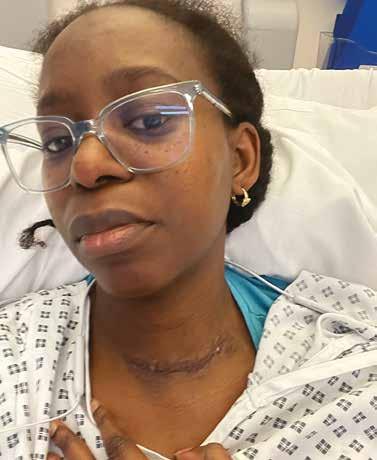
In hospital after the surgery which resulted in her losing her voice
of your life, lamenting is healthy,’ she says. ‘It’s good to be vulnerable with God. It’s OK to complain to him. And David did a lot of that in the psalms – the songs – that he wrote. If you read some of them, he says things like: “My God, why hast thou forsaken me?” and “Why are thou downcast, O my soul?”
‘These are the words of a depressed person, of somebody who is not in a good place mentally. But he expresses himself to God. And then he finishes these psalms with the words, “Yet I will trust you.”
‘It’s OK to express your frustration to God, to let all that steam out to him, and then you can say: “You know what, God, I know that you’re sovereign in all of this. I can’t be in control because I don’t know everything. You are in control and so I trust you.”
‘While I was at the very early stages with cancer, I had to do exactly that. I opened the notes app on my iPhone and I poured out my heart, every single feeling that I was going through. I wrote it all down, but it was to God. He already knows how we’re feeling, so there’s no point trying to hide. We can express how we feel and surrender, knowing that he is in control, however it works out. It’s humbling, because it
means we have to forfeit the desire to to be in control and to know everything.’
She declared that even if she never sang again, she would still worship God. ‘My life itself is for worship,’ she says.
In the storm of her health challenges, Sarah found that her commitment to God was a firm foundation. She refers to a story that Jesus told about two men who built houses – one on the sand and one on a rock – and what happened to them when a storm came.
She says: ‘Whether you’re a Christian or not, you will experience challenges. But the wise man who built his house on the rock saw that his house stood in the storm. So what kept me standing firm was having that foundation, having my house built on the rock which is the word of God.’
Sarah’s advice to anyone who wants to be steady through life’s storms is to read the ‘word of God’ – the Bible – and in doing so understand more about him.
‘When you read the Bible, you might not understand everything,’ she explains. ‘You will probably be confused, but don’t give up. Be patient, pray to God and find Christians you can ask for help. It’s rewarding, because as we continue reading the word, we find so many references to how God is good and faithful, how he loves, how he keeps his promises – and these are things that we then hold on to when we go through challenges.’
In 2023, three weeks after her surgery, Sarah honoured a pre-made studio booking and sat down with some of her writing team to pen new songs, which would be songs that testified to her healing from cancer.
‘Probably one of the hardest seasons I’ve been through,’ she says, ‘resulted in a miracle, a testimony and hopefully the encouragement of others who might be going through a similar situation.’
By October of that year, having already received the all-clear from cancer, Sarah had enough vocal strength to record those new songs, and in January 2024, she was discharged from vocal therapy.
In November last year, she performed a sold-out show in which she celebrated 10 years of her music career. And now, she plans to continue pursuing her God-given vision to share her voice with the world.

The War Cry invites readers to send in requests for prayer, including the first names of individuals and details of their circumstances, for publication. Send your Prayerlink requests to warcry@salvationarmy.org.uk or to War Cry, 1 Champion Park, London SE5 8FJ. Mark your correspondence ‘Confidential’.
Becoming a Christian
There is no set formula to becoming a Christian, but many people have found saying this prayer to be a helpful first step to a relationship with God
The missionary Paul had visited Thessalonica as part of his ambitious plans to spread the Christian faith across the Roman Empire. In this second letter to the church that he helped to establish, he tries to clarify his thinking on the return of Jesus.
In his first letter, Paul said that Jesus would gather those believers who had died and those who were alive to be with him for ever. Paul refused to speculate on the date and time of Christ’s return. Instead, he warned that the church should not be taken unawares (see 1 Thessalonians 4:13 to 5:10).
In this later letter, Paul addresses reports – allegedly from him – saying that the day of Christ’s return had already happened. Some prophecy, report or letter supposed to have come from Paul and his friends has led some believers to become ‘unsettled or alarmed’ (2 Thessalonians 2:2 New International Version).
Lord Jesus Christ,
I know that I have done things in my life that are wrong and I’m sorry. Thank you that I can ask you for forgiveness because of the sacrifice you made when you died on the cross.
Please forgive me and help me to live a better life in the future as I learn how to love you and follow your way of living.
Thank you, Lord Jesus.
If you’ve prayed this prayer, scan the QR code or contact us using the coupon on this page

Paul now sets the record straight. Christ’s return has not happened. Although he is not party to the complete timetable – not even Jesus knew (see Matthew 24:36) – he does know that certain events will happen as a prelude to the Second Coming.
There will be a rebellion against God. There will be the emergence of ‘the man of lawlessness’ (2:3). The mention of such an apocalyptic figure is reminiscent of Jesus’ reference to the ‘abomination that causes desolation’ in Matthew 24:15. Other letters in the New Testament describe the ‘antichrist’ and ‘beast’.
Paul says this man will oppose everything that is holy and proclaim himself to be God (2:4). Whoever this man is, he is not Satan. Through the power of Satan, however, he will work counterfeit miracles, signs and wonders and deceive many people (2:9–11).
On the day of his return, Christ will destroy him (2:8). Also on that day, God will judge righteously those who oppose his people and those who disobey the gospel (1:5–10).
Until that day, believers are to stand firm against opposition and hold fast to the teaching they have received (2:15).

Or email your name and postal address to
To receive basic reading about Christianity and information about The Salvation Army, complete this coupon and send it to
War Cry 1 Champion Park London SE5 8FJ

1 2 3 4 5 6
Which Beatles album is named after a London street?
In which decade was satirical TV show Have I Got News for You first broadcast?
Which major river runs through the Grand Canyon?
In business, what do the initials ROI stand for?
Sanae Takaichi is the first female prime minister of which country?
Which country won this month’s ICC Men’s T20 World Cup?

ANSWERS
Feature by Ewan Hall
‘To be, or not to be – that is the question.’ And next Friday (27 March) theatre groups and potential audience members are asked ‘to be’ part of the celebrations as World Theatre Day takes centre stage.
Created in 1961 by the International Theatre Institute, the day promotes live performances worldwide, supports communities in sharing their work and encourages people to value the creative arts.
An important part of World Theatre Day is a message written each year by a prominent theatrical figure. The first was delivered by French poet and playwright Jean Cocteau.
This year’s message comes from American film and theatre actor Willem Dafoe. In his video posted on YouTube, he says: ‘Theatre as a total art form can make us see what was, what is and what our world could be.’
Live performances have been a steady presence throughout history – whether the ancient Greek tragedies, Shakespeare’s plays or today’s musicals. As Dafoe points out, the performing arts often hold up a mirror to the world, showing us the good and the bad.
But theatre doesn’t reflect only society – it can also reflect our individual lives. Watching a story or performers can remind us of the roles we slip into, the flaws we personally carry or the parts of our lives we would rather keep offstage. Life can feel like a performance without a script, and – behind our own masks – we can fear judgement.
Christians, though, take solace in the fact that God knows everything about them and still chooses to love them.
In the Bible, one writer acknowledges to God, ‘Lord, you have examined me and you know me. You know everything I do’ – but then he also celebrates having the reassurance of knowing that, wherever he might go in life, ‘you would be there to help me’ (Psalm 139:1, 2 and 10 Good News Bible).
If we put our trust in God, we will discover the company of someone who sticks with us even when the world focuses on our mistakes. He loves us for who we are, supporting us through life’s dramas and tragedies as well as its comic moments.
In all scenarios, his love will empower us to be the person we truly want to be.
ACROSS
1. Pastime (5)
4. Kit out (5)
8. Peculiar (3)
9. Goodbye (5)
10. Perfect (5)
11. Seize (3)
12. Small branch (5)
13. Most lengthy (7)
16. Safe (6)
19. Degrade (6)
23. Odd piece (7)
26. Bury (5)
28. Manipulate (3)
29. Flinch (5)
30. Awaken (5)
31. Ocean (3)
32. Accumulate (5)
33. Automobile (5) DOWN
2. Prickly shrub (5)
3. Not as old (7)
4. Eatable (6)
5. Coalition (5)
6. Part (5)
7. Apportion (5)
9. Donkeys (5)

14. Adhesive (3)


solution starts on the coloured cell and reads clockwise round the number
15. Health resort (3)
17. Before (3) 18. Vase (3)
20. Pithy saying (7) 21. Tend (5)

22. Tension (6)
23. Sculled (5)
24. Obsession (5)
25. Stadium (5)
27. Have faith in (5)
Sturdy. 5. Insult. 6. Saturn.
Rowed. 24. Mania. 25. Arena. 27. Trust. HONEYCOMB 1. Iguana. 2. Animal. 3. Litter.
2. Briar. 3. Younger. 4. Edible. 5. Union.
Wince. 30. Rouse. 31. Sea. 32. Amass. 33. Motor.
Demean. 23. Remnant. 26. Inter. 28. Rig.
Longest. 16. Secure.
Sprig.

Look up, down, forwards, backwards and diagonally on the grid to find these words associated with spring


For the confit
2 x 400g cans chickpeas, drained
400g can tomatoes
1 large red pepper, deseeded and sliced
Fresh ginger, peeled and cut into thin strips
2 red chillies
½ tsp chilli flakes
½ tsp ground turmeric
1tsp ground coriander
1tsp cumin seeds, roughly crushed
Pinch sugar
100ml olive oil
½ tsp salt
Freshly ground black pepper
150g blackberries
For the couscous
120g giant couscous
Mint, coriander and parsley leaves

METHOD
Preheat the oven to 170C/Gas Mark 3.
Add all the confit ingredients, except the seasoning and blackberries, to a large ovenproof casserole dish.
Season with the salt and pepper, then stir to combine the mixture well, breaking up any whole tomatoes. Cover and cook for 1 hour 20 minutes, stirring halfway through. Add the blackberries to cook in the final 10 minutes.
Meanwhile, place the couscous in a pan and cover with boiling water. Simmer for 10 minutes. Drain and allow to cool slightly.
Roughly chop a handful of the herbs and stir into the couscous with some seasoning.
Serve the couscous with the confit.
8 sausages
2 small red onions, quartered
2 parsnips, sliced lengthways
2 carrots, sliced lengthways
Handful blackberries
Olive oil
Salt and pepper
Thyme
1tbsp gravy granules
Preheat the oven to 180C/Gas Mark 4.
Roast the sausages in a tray for 10 minutes, then add the onions, parsnips, carrots and blackberries. Add a generous amount of olive oil and season with salt, pepper and a few sprigs of thyme.
Return to the oven for a further 20 minutes, until everything is cooked through.
Meanwhile, cook the gravy granules according to the packet instructions.
Serve the sausage tray bake with the gravy.