What’s
Film features the life of bees
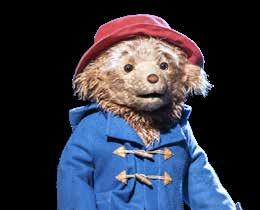
‘We can all learn from Paddington’

Film features the life of bees
‘We can all learn from Paddington’
The Salvation Army is a Christian church and registered charity seeking to share the good news of Jesus and nurture committed followers of him. We also serve people without discrimination, care for creation and seek justice and reconciliation. We offer practical support and services in more than 700 centres throughout the UK. Go to salvationarmy.org.uk/find-a-church to find your nearest centre.
The Salvation Army first published a newspaper called the War Cry in London in December 1879, and we have continued to appear every week since then. Our name refers to our battle for people’s hearts and souls as we promote the positive impact of the Christian faith and The Salvation Army’s fight for greater social justice.
Editor: Andrew Stone, Major
Managing Editor: Philip Halcrow
Staff Writer: Emily Bright
Staff Writer: Claire Brine
Staff Writer: Ewan Hall
Editorial Assistant: Linda McTurk
Graphic Designer: Mark Knight
Graphic Designer: Natalie Adkins
Email: warcry@salvationarmy.org.uk
The Salvation Army United Kingdom and Ireland Territory 1 Champion Park London SE5 8FJ
Tel: 0845 634 0101
Subscriptions: 01933 445445 (option 1, option 1) or email: subscriptions@satcol.org
Founders: Catherine and William Booth
International leaders: General Lyndon Buckingham and Commissioner Bronwyn Buckingham Territorial leaders: Commissioners Jenine and Paul Main
Editor-in-Chief: Major Julian Watchorn
Published weekly by The Salvation Army
© The Salvation Army United Kingdom and Ireland Territory ISSN 0043-0226
The Salvation Army Trust is a registered charity. The charity number in England, Wales and Northern Ireland is 214779, in Scotland SC009359 and in the Republic of Ireland CHY6399.
He has raised the profile of marmalade sandwiches to unimaginable heights, while also having tea with the late Queen and starring in countless books, TV programmes and feature films. Aunt Lucy would undoubtedly be very proud of Paddington Bear.
In this week’s issue of the War Cry
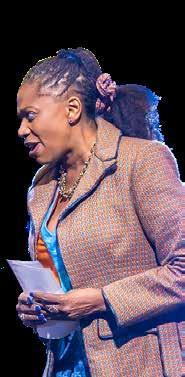
Brenda Edwards, who performs alongside the duffel coat-wearing bear in Paddington the Musical – and we discover the impact that the star of the show has had on her.
‘Paddington is about kindness and acceptance,’ she tells us. ‘He can get himself into a bit of trouble sometimes, but he’s an institution and such a warm character. I find myself searching how I can be more like him, and I think a lot of people can learn from his personality.’
Paddington is a work of fiction, but many of us will have had real people in our lives who have been a role model and an inspiration. For Great Britain wheelchair basketball player Amy Conroy, who lost a leg to cancer, that person is her father.
‘We lost my mum to cancer as kids,’ she says in an interview this week. ‘Dad was taking care of her for a few years while she was dying, and then he was raising two daughters, aged seven and five, while working full-time, and he never let it affect him.’
Amy also describes how she saw her dad draw on his Christian faith.
‘I saw it so much over the years,’ she recalls. ‘It would probably be very easy to become bitter and lose faith if you’ve lost your wife and soulmate to cancer and then your daughter gets cancer. But he used his faith to give him strength.’
God offers the support that he gave to Amy’s dad to each one of us. No matter what circumstances we are facing, he can give us the ability to get through those challenges in a way that will take our lives to heights that may seem unimaginable now.
When you’ve read

Printed by CKN Print, Northampton, on sustainably sourced paper




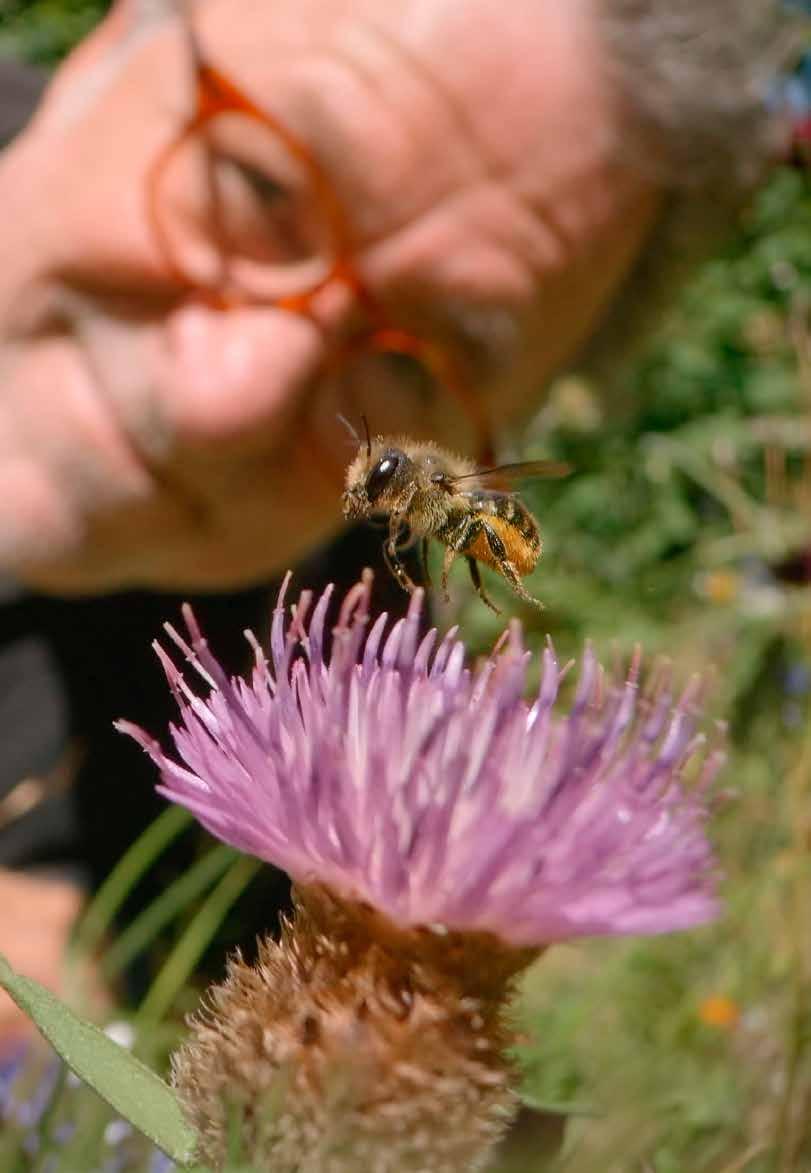
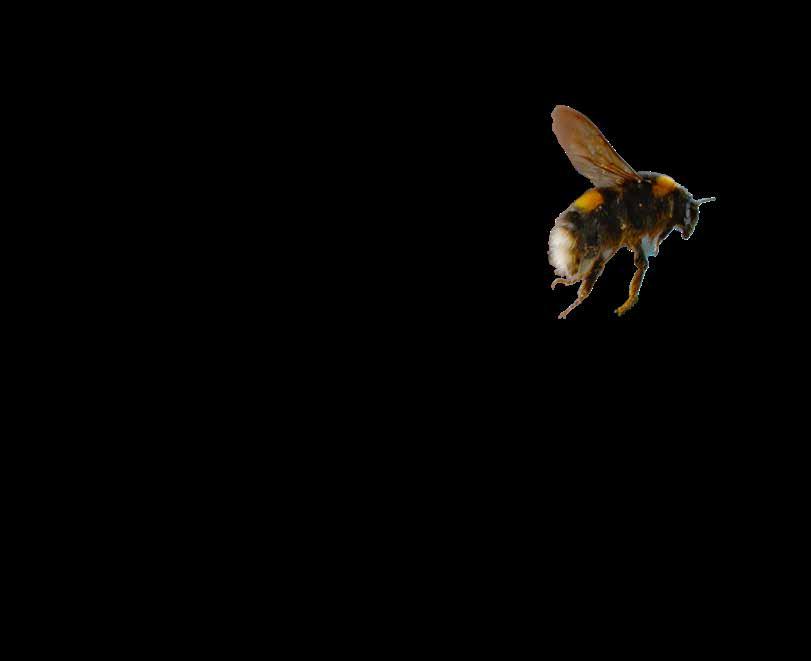
Martin observes a bumblebee as it hovers over a dandelion
TV preview: My Garden of a Thousand Bees BBC4 and iPlayer
By Claire Brine
What’s the buzz? It’s coming from the garden of Martin Dohrn, a wildlife film-maker who’s busy observing the behaviour of bees.
In the BBC4 documentary My Garden of a Thousand Bees, Martin sets out to record the variety of wild bees living in the back garden of his home in Bristol. Using one-of-a-kind camera lenses (forged on his kitchen table), he manages to count more than 60 species of bee on his land, from giant bumblebees to teeny tiny scissor bees, roughly the size of a mosquito.
As well as identifying the various types of bees, Martin finds himself becoming riveted by their behaviour. His camera captures fascinating moments in which bees get into fights, find a mate and build their nests.
In summer, Martin films an area of his garden that he has stacked with old bits of wood, calling it ‘bee city’. He drills some holes into the wood, hoping to make ‘a proper bee hotel’. It isn’t long before his first guests are checking in. One bee in particular, a leafcutter
bee, catches his eye. He notices that she has a nick in her wing, so names her Nicky. Watching film of her in slow motion, Martin is able to observe her cutting leaves and using them to line her tunnel home so that it’s ready for her to lay her eggs.
It’s astounding to see her cutting pieces of leaves which fit her tunnel’s dimensions exactly.
As the days go by, Martin compares Nicky’s placid behaviour with the actions of some of her neighbouring bees, who get into fights frequently. He notices that Nicky isn’t the brawling sort. She works hard. He marvels at the different creatures’ individuality.
‘What surprised me about my observations of bees was the realisation that they have minds,’ Martin tells the War Cry. ‘The mind of a bee bears similarities to the mind of a blackbird. This changed the way I see the world, simply because if that is the case, then perhaps we should all look upon invertebrates and small creatures generally in a very different way.’
When a surprising encounter prompts us to look at the world through a new lens, it can be a refreshing experience. Perhaps we open ourselves to feeling emotions that we’ve never been able to name before. Or it becomes possible for us to look at our circumstances from a more hope-filled perspective.
Many people find that their view of the world changes when they get to know Jesus. His teachings about God’s unconditional love motivates them to love others better, including the people they find difficult. And knowing that God is willing to forgive their past mistakes helps them to try forgiving others in the future.
One Bible writer whose life was changed by coming to faith described the experience by writing: ‘When anyone belongs to Christ, they become a new person. Their old way of life has gone. Their new life has begun’ (2 Corinthians 5:17 Easy English Bible).
When we follow Jesus, and allow God’s love to transform the way we see the world, we’re on our way to becoming the best kind of people that we can bee!
Claire Brine gives her take on a story that has caught the attention of War Cry reporters
In a new Radio 4 series, Life Without, Alan Davies explains that he has been given a ‘delete button’ for the universe. ‘I press it, and one thing in our lives disappears,’ he says.
In each episode, the presenter conducts a thought experiment, exploring the effects on humankind after something essential has vanished from the world. Last week, he discussed with a scientist and an artist the consequences of living on Earth without the moon.
I don’t know who I’d be
In the second episode, he considers a more random idea: what would happen in a world without rats.
‘Nothing’s off limits,’ Alan says in the programme’s introduction. ‘I can take it all away: sex, sleep, North America.’
Naturally, the programme’s subject matter has caused me to ponder the things in my life that I wouldn’t want to be without. Perhaps some of my choices sound a bit trivial: teabags, hair straighteners, chocolate. Others are certainly more meaningful: my family, enough money to live on, the NHS.
Then there’s the big foundational stuff – the things I hope I never have to face life without: love, hope, peace, joy, faith.
My Christian faith has always been a huge factor in my life. It’s not perfect. It has had ups and downs. I’ve faced joyful and doubtful times because of it. But I genuinely don’t know who I’d be – or how I’d live – without it.
If faith in God was deleted from the universe, I would have no one to turn to when I’m facing situations that I can’t talk about with anyone else. I’d wonder what the purpose of my being here was. I’d question the point of moral living. I wouldn’t know that I’m forgiven for the worst parts of my character.
Having a relationship with God brings my life meaning – even if I can’t always understand it. I believe that life can be eternal because of him. I know in my heart that love has to be the right way to live. By considering a godless existence and a world empty of faith, I can see just how much God’s presence makes my life feel full. It is the everything.And I’m thankful that I never have to face a single minute without him.
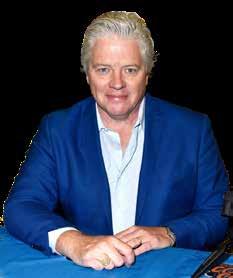
On the Inside of You with Michael Rosenbaum podcast, actor Tom Wilson – who played Biff in the Back to the Future trilogy of films – revealed how his Christian faith influences him.
When the Smallville actor and podcaster Michael asked Tom to describe himself in one word, he replied: ‘I think I’m kind. I think my heart goes out to people.’
Tom went on to explain that being kind stemmed from his desire to live out his beliefs, saying: ‘I’m a Christian. That means a lot to me. I don’t wear it on my sleeve but just trying to live that life, trying to actually do it, trying to really live it and say it less.
‘St Francis of Assisi said: “Live the gospel always. If necessary, use words.” So I try to not use words as much as I use actions and love.’
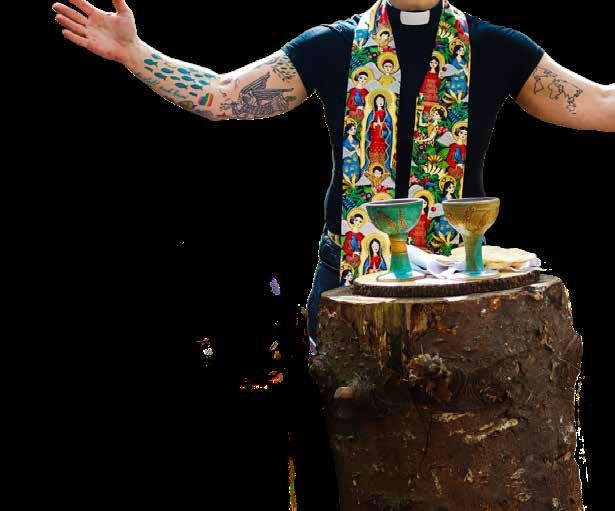
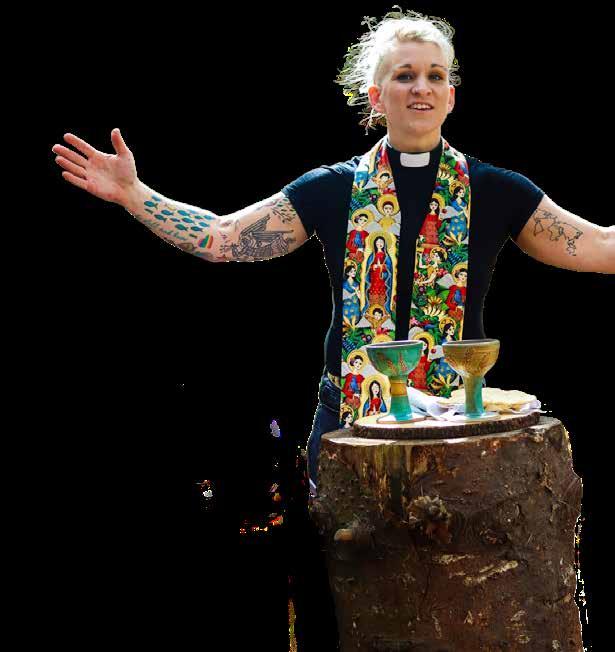
A priest from Darlington who was appearing as a contender on BBC1’s Gladiators spoke on the show of how God had changed her life.
‘I became a Christian in 2012 in Afghanistan, when I was serving with the army,’ said the Rev Rachael Phillips in her introduction video at the start of the programme. ‘About a year after that, I felt this calling to become a vicar.’
The video went on to show Rachael leading worship at Magdalene Community Church, which meets outdoors in Chopwell Woods.
Before taking on any of the Gladiators in the games, Rachael considered her approach to the competition, saying: ‘At the centre of my faith is that Jesus shows us mercy, but on be showing none.’
After winning five points in Duel – the game in which a contender and Gladiator try to knock one another off a raised platform by wielding a giant pugil stick – Rachael raised the subject of faith again, joking to presenter Bradley Walsh: ‘Jesus says: “Turn the other cheek.” And I did – and I got battered there as well!’
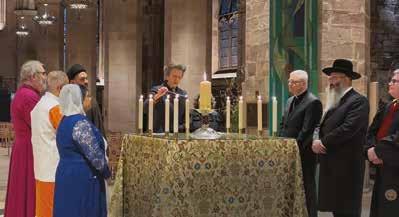
The Princess Royal joined faith leaders in lighting candles for peace and unity at a ceremony in Edinburgh.
Representatives of various religions and civic leaders gathered with Princess Anne at St Giles’ Cathedral to highlight the importance of co-operation, respect and social harmony.
‘All around us powerful people are trying to sow division amongst nations and faiths,’ said the Most Rev Mark Strange of the Scottish Episcopal Church, who attended the event. ‘The world feels a bit less secure every day. Yet here in this small corner of the world the faith communities are willing to come together in friendship and to stand together in prayer.’
A school chaplain’s dance routine at a high-school basketball game in America went viral after being posted online.
Father Nonso Ohanaka, chaplain of Pope Saint John Paul II Preparatory School in Tennessee, shocked spectators with his energetic half-time performance.
The school shared the dance on Instagram with the comment: ‘Father O brought out the moves at half-time of the JPII vs Father Ryan’s men’s basketball game!’
More than 396,000 viewers have liked the video of Father Ohanaka in a full cassock dancing to NSync’s ‘Bye Bye Bye’.

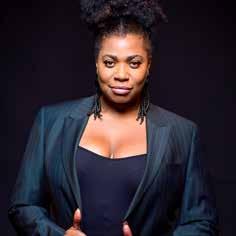
Brenda Edwards
Actress and broadcaster
BRENDA EDWARDS, who is starring in Paddington the Musical in the West End, explains how the bear’s message of kindness resonates with her own faith
Interview by Emily Bright
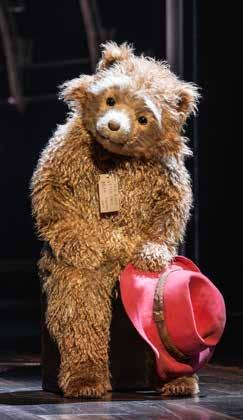
He’s had tea with the late Queen, starred in a cinematic franchise and featured in books which have sold more than 35 million copies worldwide. Not bad for a bear.
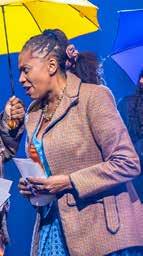
His latest success is Paddington the Musical at the Savoy Theatre in London’s West End. Brenda Edwards, who plays Tanya – a close friend of the Brown family who adopt Paddington – says that being a part of the production has been a ‘wonderful experience’. She has loved the Peruvian-British bear for many years.
Paddington is such a warm character
‘Igrew up watching Paddington,’ she recalls. ‘I remember when I was six or seven years old, running home to see it on TV. Paddington is about kindness and acceptance. He can get himself into a bit of trouble sometimes, but he’s an institution and such a warm character. I find myself searching how I can be more like him, and I think a lot of people can learn from his personality.’
Bringing Michael Bond’s bear to life on stage has been a complex project.
‘Our rehearsals ran from August to November, the longest process I’ve had,’ says Brenda. ‘There are so many different elements to putting the whole show together, and we all work so hard to come together as a community.
‘But everyone’s so supportive – it’s really nice to be a part of something where the message of kindness isn’t just on stage.’
The bear necessity at the centre of
Brenda as Tanya in ‘Paddington the Musical’
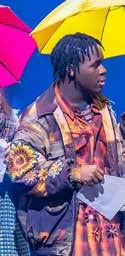
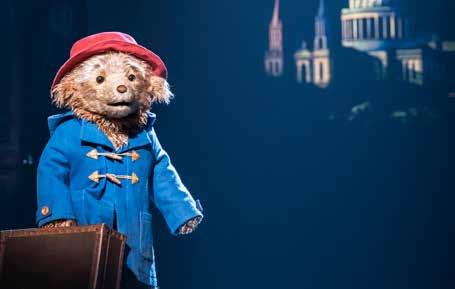
the show is able to charm audiences thanks to a fusion of talents. Arti Shah performs in a state-of-the-art bear costume on stage, and James Hameed speaks for Paddington and remotely operates the puppetry of the costume.
Several months after joining the cast, Brenda is still amazed to see the bear blinking and talking. ‘James and Arti synchronise his movements beautifully,’ she says.
Brenda’s character, cardiac surgeon Tanya, crosses paths with Paddington because she lives in his neighbourhood.
‘Tanya is part of the community, and has a son, Tony,’ explains Brenda. ‘She’s good friends with the Browns – she and Mary, or Mrs Brown, have known each other since school, and they have decided to live next to each other. Tanya likes to bring everybody together, which isn’t far from me as a person really.’
Brenda particularly enjoys performing the songs in the show that carry important messages.
‘For instance,’ she says, ‘I sing “The Rhythm of London”, which is so poignant and relevant to the society we’re living in today. It’s about acceptance, everybody coming together, and giving back to the community.
‘Music brings me peace,’ Brenda adds. ‘I’ve been singing for as long as I remember and it helps me to settle and get through any grief I’ve gone through.’
As well as playing Tanya, Brenda takes on the role of Paddington’s Aunt Lucy.
‘It’s not a big part, but it’s important in sending a message about reaching out to
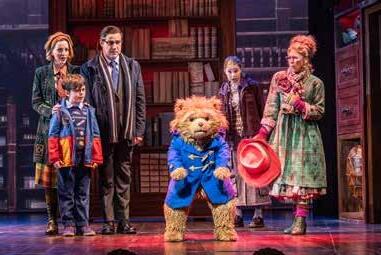
Paddington changes the lives of the Brown family and their housekeeper Mrs Bird
your loved ones,’ she says. ‘Even though they might not be with you, they’re always in your thoughts.’
In addition to a stellar West End career, performing in shows such as Chicago and Carousel, Brenda has appeared as a panellist on ITV talk show Loose Women for the past seven years. On the programme, she has spoken about subjects such as her experiences of cancer and coping with grief at the death of her son.
‘I like to use my platform to raise awareness on many topics,’ she says of her TV appearances. ‘Sometimes I get messages from people saying, “Thank you for sharing your story. I’ve been feeling that same way”, or “You’ve helped me”. ‘It was through speaking to somebody
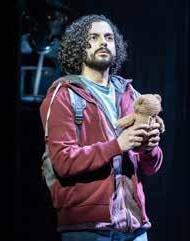
James Hameed introduces the story
that I realised that I had breast cancer in the first place. That just goes to show how important it is to share your experiences, because somebody else might be going through it, not knowing what to do. If I can use my platform for good, then that’s exactly what I’m going to do.’
Whether she is singing her heart out on stage or appearing on daytime TV, Brenda applies the same life philosophy, which is inspired by her Christian beliefs.
‘One of the main things I take out of my faith,’ she says, ‘is to do unto others as you would do unto yourself. Kindness, treating people well and having time for them is part of it. I believe that the world can be a better place.
‘And with musical theatre,’ she adds,
circling back to Paddington the Musical, ‘I want to bring joy to people. We get that across with not only the story, but also the performances that each cast member brings to the table. It takes all of us to put a magical show together, and I feed off the cast’s positive energy.’
Brenda is thankful to be a part of Paddington’s uplifting story.
‘You never know what you’re going to wake up to in a day,’ she says, ‘but I’m grateful that I can express myself through the creative arts in this way. I doubt anybody will come into that theatre, watch Paddington and leave without feeling high-spirited.
‘There’s this positive message of: please look after this bear, please look after everybody.’
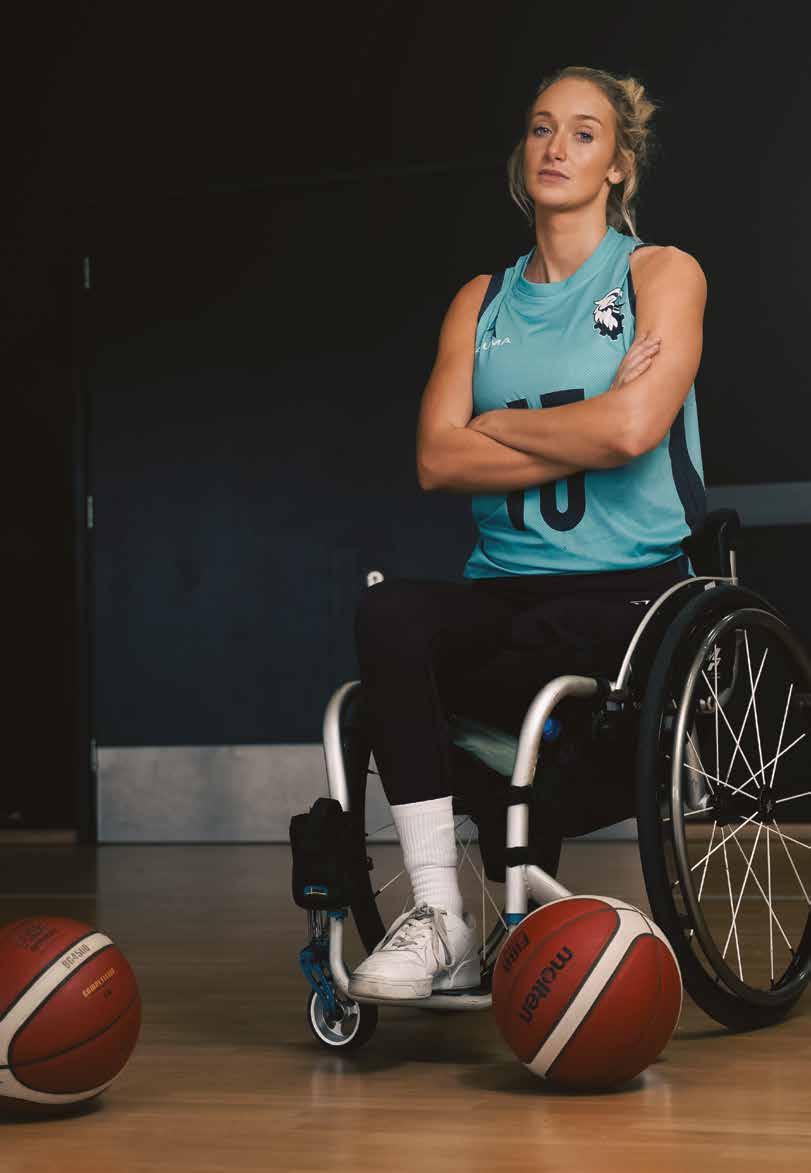
Great Britain wheelchair basketball player AMY CONROY describes how her discovery of sport changed her life, reveals why she is backing a project that supports disabled children in Uganda – and remembers how a prayer with her dad helped her at one of the toughest moments of her life
Interview by Philip Halcrow
Amy in action at the Paris 2024 Paralympics

Since her international career tipped off in 2010, wheelchair basketball player Amy Conroy has represented Great Britain in major tournaments around the world. She became a Paralympian at London 2012 and has competed at every Games since.
She has scored medals with the GB women’s team at the World Championships and at the European Championships, most recently last year – though she says with a laugh that finishing the 2025 tournament as runners-up was ‘not even bittersweet. We were aiming for gold and we’ve lost to the Dutch a few times in finals, so I’ll say it was just bitter.’
When reflecting on the highlights so far of her sporting career, Amy mentions something other than just a particular game or competition. She also mentions someone.
‘I’ve won some good medals,’ says Amy, who plays her club basketball in London, having moved to the capital from

her native Norfolk, ‘but I don’t even think they would be the main highlight. A lot of what I appreciate is the life journey that has got me to where I am – and my dad has been there since day one.’
Amy’s dad has played a key part in many areas of her life, on and off the court. He helped to get her participation in the sport under way by taking her to a wheelchair basketball taster event. Before that, he supported her through some times when it was ‘touch and go’ whether she would live.
I couldn’t get in the classrooms at my school
‘I
was always a really sporty kid in the two-leg days,’ she says. ‘Then I had a pain in my knee, and it just got worse and worse in the course of a year. Doctors thought it may be sports strains or flat feet. But it got to the point where I started
collapsing and couldn’t walk any more. My dad demanded that they give me an x-ray, and it turned out that it was cancer.
‘It was found quite late. It had started in the knee and spread up the femur, a bit on my spine and in my lungs.
‘The odds weren’t great, but my dad has a strong faith, and he was an absolute role model in that year. I was very sick, but that meant the chemo was doing its trick.
‘Eventually, I had my leg amputated.’
When Amy left hospital, she faced further challenges.
‘I was still very weak and in this big wheelchair,’ she says. ‘I couldn’t get in my own house by myself. I was the first kid at my school in a wheelchair. I couldn’t get in the classrooms.
‘I relied on people for everything. I looked at the future and thought it was
Turn to page 10 f
always going to be the same or worse.
‘It was amazing how just one ramp – how just being able to get into a classroom to socialise with kids that I hadn’t seen in years – changed so much for me.
‘Then meeting other people with disabilities through sport helped me to realise that disabilities don’t have to hold you back. With the right support, you can still go out and do anything. Finding wheelchair basketball changed a lot.’
It was Amy’s dad who helped her make the discovery by taking her to a taster event.
‘I love it when I hear athletes say that they fell in love with a sport from the first moment – but if I said that, it would be a lie,’ says Amy. ‘I didn’t enjoy it, and I was
terrible. But my dad kept taking me back.
‘Slowly I started to see that it was fun. I saw the GB women competing on TV, and they seemed so confident, powerful and talented – the polar opposite of me at that time. It lit a fire in me. I thought if they could do it, why couldn’t I.
‘I became a bit less self-conscious about my leg. I used to train with my prosthetic leg on in my chair, but it was quite cumbersome and held me back. A coach persuaded me that I was going to have to take it off to play. I remember being mortified, thinking that I didn’t want anyone ever to see me without it.
‘But then I took it off – and obviously no one cared, because everyone there had missing limbs. Without it, I started being lighter and faster in my chair. Fast-
forward four Paralympics, and I have been playing in front of 20,000 people with no prosthetic leg.
‘It’s amazing how a mindset – your own and other people’s – can change everything.’
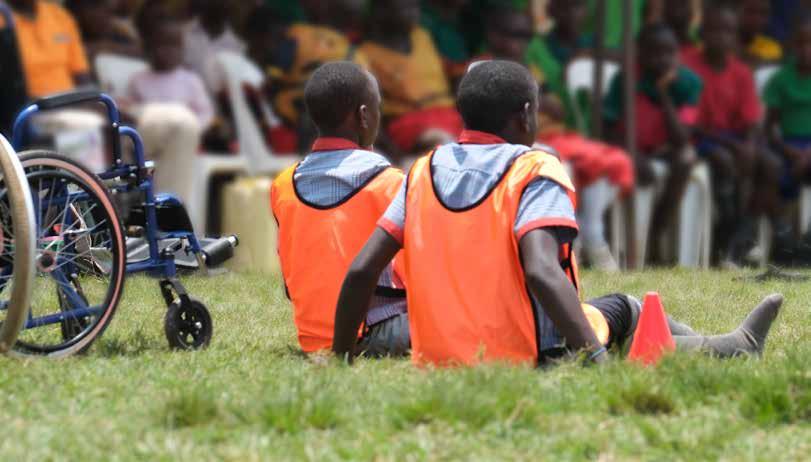
Amy’s experience of the power of sport has led her to become an ambassador for a global Christian charity which is running sports-based activities as part of its Disability Inclusion Project in Uganda. Through the project, International Needs aims to enable more children to participate in sport, transform attitudes and build inclusive communities in a country where many children with a disability do not have access to state education.
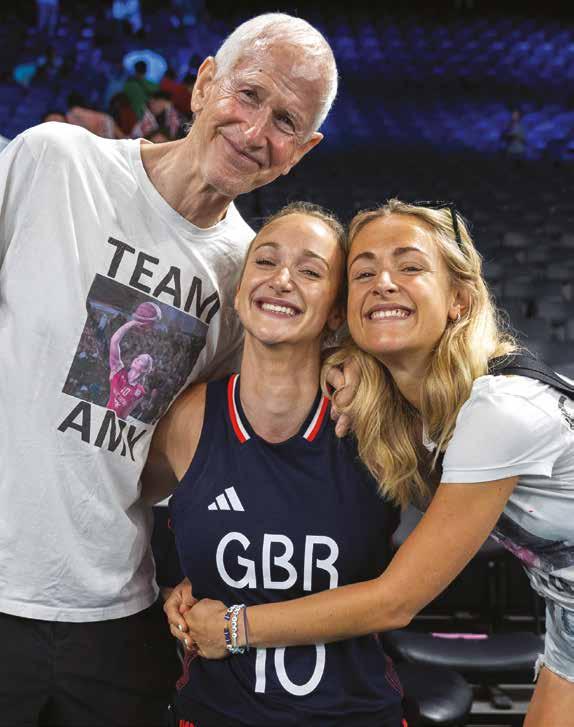
with dad Chris and sister Alice
‘What first drew me to International Needs,’ says Amy, ‘is that they are doing everything from tackling physical barriers to changing attitudes so that disability isn’t seen as something that’s a curse or should be hidden away.
‘They are providing wheelchairs and crutches and improving schools, putting in disabled toilets and ramps so that kids can just get into the building. They are also changing mindsets by running inclusive sports festivals and by helping teachers understand how they can be more inclusive.
‘When I first lost a leg to cancer, I wasn’t part of PE lessons. I was throwing a ball against a wall by myself. But through accessible sport, I went from being ashamed of having one leg to completely accepting it and changing my whole view of disability.’
Amy’s progress from her discovery of wheelchair basketball to her appearances at major competitions was marked, she says, by ‘a lot of hard work, a lot of setbacks, a lot of questioning what would happen if – despite all the sacrifices I was making –training three times a day, I didn’t make it’. When she faced difficulties, her dad and her sister encouraged her. She remembers how they would be with her when she was practising on outdoor
courts in the rain.
‘So now,’ says Amy, ‘when I look up at the stands and they’re there with their “Team Amy” T-shirts and GB flags, it is always a special moment. No matter how big the crowd, I can always pick them out, and I reflect on the journey we’ve been on together. They have picked me up when I have wondered whether it was worth carrying on.
‘I have been playing for about 15 years now, so in that time there has been a lot of hard work and a lot of times when I’ve had to pick myself back up – but getting through tougher times is where you get resilience.’
Amy says that her dad’s support has also encouraged her to explore another area of life.
‘We lost my mum to cancer as kids,’ she says. ‘Dad was taking care of her for a few years while she was dying, and then he was raising two daughters, aged seven and five, while working fulltime, and he never let it affect him. He remained kind and strong – and he didn’t give up on his faith.
‘I saw it so much over the years. It
would probably be very easy to become bitter and lose faith if you’ve lost your wife and soulmate to cancer and then your daughter gets cancer. But he used his faith to give him strength.
I remember just having this feeling of peace
‘He would pray with me. And it wouldn’t necessarily be to ask for things, because you could pray a lot for cancer to go away and it wouldn’t necessarily happen. But he’d encourage me to pray for strength – and that did help.’
Amy says that she has been aiming to make faith more of a priority in her own life. She is glad to have teamed up with International Needs and she recently completed an Alpha course, a series of sessions which explore the Christian faith.
She adds that her dad talks with her about prayer – and she has not forgotten a particular moment in her life when she prayed with him.
‘I remember the night before my amputation,’ she says. ‘I was this 12-year-old kid who’d been through a fair bit and was just really scared. My dad sat and prayed with me. We’ve spoken a lot since about what happened that night: I remember just having this unexplainable feeling of peace, calm and inner strength.
‘We can’t put it down to anything. It wasn’t the drugs – I wasn’t on any new medication. We just prayed, and we were up the whole night giggling and joking around. I had this overwhelming feeling that everything was going to be fine. And as I was wheeled down to surgery, I felt so calm.
‘I haven’t overanalysed what happened that night, and I’ve never had that experience since. I’ve just looked on it as something special.
‘I think it’s what my dad has always taught me about prayer – that you are not alone, that you have someone who is looking out for you and who will give you strength.’
l For more information visit ineeds.org.uk
Your prayers are requested for Ashton, Oscar and Henry.
The War Cry invites readers to send in requests for prayer, including the first names of individuals and details of their circumstances, for publication. Send your Prayerlink requests to warcry@salvationarmy.org.uk or to War Cry, 1 Champion Park, London SE5 8FJ. Mark your correspondence ‘Confidential’.
Becoming a Christian
There is no set formula to becoming a Christian, but many people have found saying this prayer to be a helpful first step to a relationship with God
and
The apostle Paul’s years in Ephesus (in modern-day Turkey) are recorded in Acts 19. While there, he caused a near-riot when he challenged the worship of the Greek goddess Artemis. In doing so, he threatened the livelihoods of the many silversmiths who made shrines to the goddess. The city was in uproar.
In this letter, which Paul writes to the Christians in Ephesus, it is clear that he still has great affection for them. Perhaps remembering the city’s artisans, he describes his readers as being God’s ‘handiwork’ (2:10 New International Version).
He is thankful for knowing them and wants God to give them the spiritual wisdom and revelation they need to stay faithful and spread the good news of Jesus in an antagonistic society (1:15–23). Above all, he prays that God will give them the power of the Holy Spirit to withstand opposition and to grow in numbers and maturity (1:19; 3:16–20).
Such power, he says, comes only through a relationship with Jesus. It is a relationship not based on good works, but a personal commitment of faith to Jesus (2:8 and 9).
Lord Jesus Christ,
I know that I have done things in my life that are wrong and I’m sorry. Thank you that I can ask you for forgiveness because of the sacrifice you made when you died on the cross.
Please forgive me and help me to live a better life in the future as I learn how to love you and follow your way of living.
Thank you, Lord Jesus.
If you’ve prayed this prayer, scan the QR code or contact us using the coupon on this page

Paul also reminds them that Christ’s death and resurrection has changed them. Because of their sin, they were condemned to eternal death. But now, because of Jesus, they have a place with God in Heaven. Jesus is a bridge between humankind and God so they, who were once far away from God, are now close to him (chapter 2).
As well as spiritual power, there is also strength in unity. He urges the Ephesians to be united and sure of the tenets of their new-found faith (4:1–16).
Their behaviour must inspire others to want to know Jesus. They are to be kind, compassionate and forgiving (4:32). They must not give in to the habits of their former life, such as lying, stealing, rage, sexual immorality and drunkenness (5:3–18). Being filled with the Holy Spirit will prevent them from falling back into their old ways and help them to be ‘imitators of God’ (5:1 English Standard Version).
Their spiritual relationship with God is to be reflected in their human relationships. Paul offers advice to married couples, parents, and masters and slaves (5:22 to 6:9). It is, he concludes, only by clothing themselves in spiritual armour that they will be able to stand firm in their faith and win others to Jesus (6:10–17).

Or email your name and postal address to
To receive basic reading about Christianity and information about The Salvation Army, complete this coupon and send it to
War Cry 1 Champion Park London SE5 8FJ

1 2 3 4 5 6
In which century did the artist Rembrandt live?
Who plays straight-talking mum Liz in the BBC sitcom Motherland?
Which European country’s flag consists of an off-centre white cross against a red background?
What is the name of the podcast presented by twins and doctors Xand and Chris van Tulleken?
Which chemical element has the symbol Pb?
Which planet in the solar system is closest in size to the Earth’s moon?
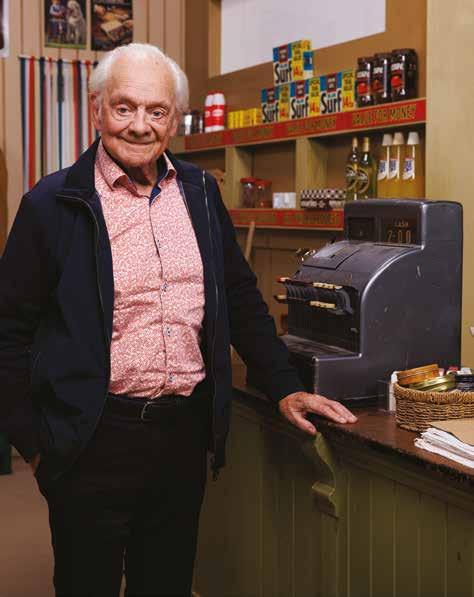
David Jason is appearing in a U&Gold documentary about ‘Open
Feature by Emily Bright
Sitcom Open All Hours emerged as a one-stop talent shop when its first full series, written by Roy Clarke, was aired 50 years ago this yesterday (20 February).
Ronnie Barker – previously known for sketch show The Two Ronnies and sitcom Porridge – played miserly, tight-fisted and stammering shopkeeper Albert Arkwright. The character delighted in bossing around his put-upon nephew Granville (David Jason) while running his corner shop.
The pair’s high jinks included fleecing customers, attempting to outwit a troublesome cash register and trying to impress the ladies. Arkwright flirted tactlessly with nurse Gladys Emmanuel (Lynda Baron), while young Granville clumsily navigated his crush on the milk delivery woman (Barbara Flynn).
Critics weren’t initially sold on the show. But over time, the warmth of the characters and the cast’s strong performances won the hearts of the nation.
The sitcom, which was filmed in Doncaster, shut up shop after its fourth series in 1985. In 2013, David reprised the role of Granville in a sequel, Still Open All Hours. Having inherited his uncle’s corner shop, Granville set about teaching his son Leroy (James Baxter) the tools of the trade.
Later this year, David will be reminiscing about his character in a feature-length documentary, Open All Hours: Inside Out, which will be aired on U&Gold. Together with other cast members, he will talk about his happiest memories of the sitcom and its spin-off. A new scene will also reveal how life has turned out for the shopkeeper since Still Open All Hours ended.
There’s something comforting about remembering happier times, particularly during difficult circumstances.
Centuries ago, a writer who felt his life was going off-script looked back on God’s goodness of previous years. He wrote: ‘I will remember your great deeds, Lord; I will recall the wonders you did in the past’ (Psalm 77:11 Good News Bible).
By reminiscing about God’s care for him in the past, the writer could see hope for what God could do in the future.
His message wasn’t just relevant then. The punchline is that God’s goodness is available to us all today, free of charge – if we’re open to a relationship with him.

1. Deduce (5) 4. Examine accounts (5)
8. Tot up (3) 9. Acquire knowledge (5)
10. Concise (5) 11. Master (3) 12. Artery (5) 13. Utmost (7) 16. Difficult (6) 19. Appear (6)
23. First course (7) 26. Seat (5)
28. Writing fluid (3) 29. Entice (5)
30. Problem (5)
Male offspring (3)
Rendezvous (5)
Style of dress (3-2)
Natural aptitude (5)
Plunder (7)
Worshipped (6)
First appearance (5)
Hackneyed (5)

7. Firearm (5) 9. Smallest (5)
Cereal plant (3)
Drinking vessel (3)
Decay (3)
Motor vehicle (3)
20. Taunting (7)
21. Weird (5)
22. Clergyman (6)
23. Fabric (5)
24. Confess (5)
25. Untidy (5)
27. Strength (5)
Each solution starts on the coloured cell and reads clockwise round the number







Look up, down, forwards, backwards and diagonally on the grid to find these words associated with courage

INGREDIENTS
METHOD
Preheat the oven to 170C/Gas Mark 3.

1.5kg potatoes, peeled and chopped
50g butter
50ml milk
Salt and ground black pepper
30ml vegetable oil
300g onion, roughly chopped
3 garlic cloves, roughly chopped
300g mushrooms, roughly chopped
1tsp dried mixed herbs
300g carrots, roughly chopped
1kg minced beef
500g chopped tomatoes
100ml beef stock
Boil the potatoes in a pan of water until soft. Once ready, drain and mash with the butter, milk and some salt and pepper. Set aside.




Heat the oil in a pan over a medium heat and sauté the onion and garlic until soft. Add the mushrooms, mixed herbs and carrots, then stir. Add in the minced beef and cook until browned.
Pour in the chopped tomatoes and beef stock. Simmer for 30-40 minutes, until the beef is cooked and the sauce has reduced. Season to taste with salt and pepper.
Pour the mince mixture into an oven dish. Top with the mashed potato and cook in the oven for 20-30 minutes, until golden and crispy on

INGREDIENTS
1tbsp vegetable oil
200g white onions, peeled and roughly chopped
500g courgette, roughly chopped
500ml water
25g vegetable bouillon
500g peas
10g basil, finely chopped
Salt

Heat the oil in a pan over a medium-to-high heat and sauté the onions for 10 minutes, until they start to soften. Add in the courgette and cook for a further 5 minutes.
Pour in the water and add the vegetable bouillon. Lower the heat and simmer for 10-15 minutes, until the courgette is tender. Add the peas and bring to the boil, then simmer for another 10 minutes to cook the peas through.
Remove from the hob and stir in the basil. Whizz the mixture in a blender until smooth. Season with salt, to taste, before serving.

It is better to trust in the Lord than to depend on human beings